Lenny.com
Explore
Create
ActivitiesNewMathEnglish Language ArtsScience & EngineeringSocial StudiesGlobal LanguagesHealth & Physical EducationSpecial EducationCounseling & Life SkillsArts & CreativityESL
Lenny.com
Lenny.com
Explore
Create
ActivitiesNewMathEnglish Language ArtsScience & EngineeringSocial StudiesGlobal LanguagesHealth & Physical EducationSpecial EducationCounseling & Life SkillsArts & CreativityESL
Lenny.com
Lenny.com

Solutions

Lenny for EducatorsLenny for SchoolsLenny for Districts

Product

ExploreSign inCreateSupportAbout

Resources

Getting startedMTSS Acceleration Program

© 2026 Lenny Learning Inc.

TermsPrivacyAccessibility
LinkedInInstagramX
Lenny

Shades of Meaning

Distinguishes between closely related synonyms by examining intensity, nuance, and connotation. Develops vocabulary precision through comparative analysis and contextual application.

English Language ArtsPhonics & Reading FoundationsLetter IdentificationLearn Letters A-ZLowercase and Uppercase LettersConsonants and VowelsLetter-Sound AssociationsLetter-Sound Associations: LowercaseLetter-Sound Associations: UppercaseBeginning and Ending SoundsRhymingBlending And SegmentingShort VowelsShort Vowel SoundsConsonant BlendsConsonant DigraphsBlends, Digraphs, and TrigraphsDigraphs, Blends, and Silent LettersLong Vowel SoundsLong Vowel PatternsShort and Long VowelsShort and Long Vowel PatternsSilent EVowel SoundsVowel TeamsR-Controlled VowelsDiphthongs: Oi, Oy, Ou, OwVariant VowelsVariant, Diphthong, And R Vowel PatternsSoft G And CSight WordsIrregular WordsWord RecognitionSyllablesSyllable TypesTwo-Syllable WordsMultisyllabic WordsPhoneme ManipulationDecodable TextsVocabularyAction WordsQuestion WordsNouns and AdjectivesClassify WordsCompound WordsSynonyms and AntonymsHomophonesHomophones and HomonymsShades of MeaningContext CluesPrefixes and SuffixesGreek and Latin RootsAnalogiesIdioms and AdagesForeign Words and ExpressionsWord Choice and UsageReference SkillsReading ComprehensionRead-Along Literary TextsRead-Along Informational TextsReality vs. FictionStory ElementsCharacterSequenceMain IdeaCause And EffectCompare And ContrastReading StrategiesText StructureAuthor's PurposeAuthor's Purpose And ToneAuthor's PerspectivePoint Of ViewThemeInference And ThemeInference And AnalysisPoetry ElementsLiterary DevicesAnalyzing LiteratureAnalyzing Informational TextsComparing TextsAudience, Purpose, And ToneBusiness DocumentsNovel StudyNonfiction Book StudyGrammar & MechanicsSentencesNounsVerbsAdjectivesPronounsCapitalizationPunctuationContractionsConjunctionsPrepositionsArticlesAdjectives And AdverbsVerb TypesVerb TensePronouns And AntecedentsPronoun TypesSubject-Verb AgreementDirect And Indirect ObjectsSentences, Fragments, And Run-OnsPhrases And ClausesCommasSemicolons, Colons, And CommasDashes, Hyphens, And EllipsesSpellingAbbreviationsFormattingVerb Tense And MoodMisplaced ModifiersWritingDescriptive DetailsCreative WritingOpinion WritingTopic SentencesOrganizing WritingLinking WordsSentence VarietyIntroductions And ConclusionsPersuasive And Opinion WritingExpository WritingPersuasive StrategiesDeveloping And Supporting ArgumentsTopic Sentences And Thesis StatementsSummarizingResearch SkillsEditing And RevisingActive And Passive Voice=Writing Clearly And ConciselyDebate & Public SpeakingPublic Speaking BasicsPersuasive TechniquesClaims and EvidenceTypes of ArgumentsReasoning TypesLogical FallaciesTopic ResearchOrganizing EvidenceDebate Speech OrganizationAttacking and Defending ArgumentsClash and EngagementImpact CalculusQuestioning and Cross-ExaminationCritical ThinkingInformal LogicFormal LogicInductive Reasoning

Videos

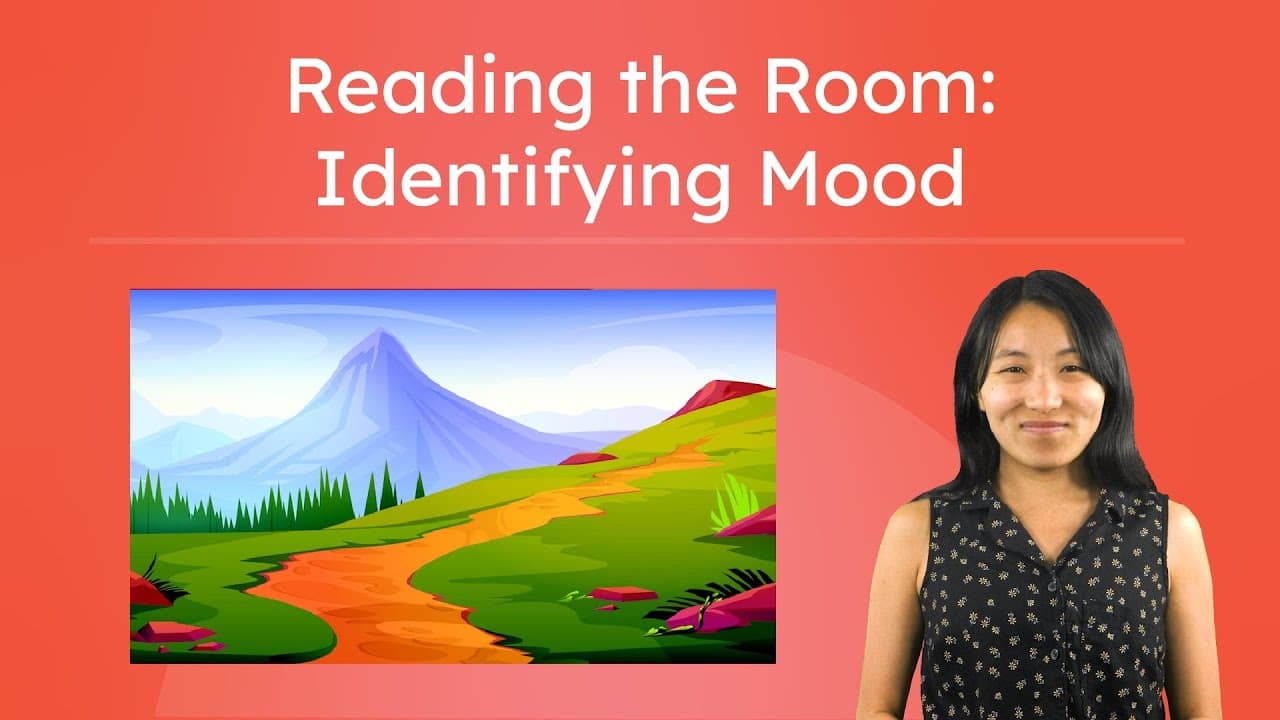
Reading the Room: How to Identify Mood in Stories

Reading the Room: How to Identify Mood in Stories

In this engaging Language Arts adventure, viewers join a narrator and her robot companion, Mia, on a quest through the "Valley of Vibes." To succeed, they must face the "Vibe Master" and pass a series of "vibe checks" by correctly identifying the mood of various narrative passages. The video combines a fantasy storyline with direct instruction to teach students how to analyze literature, moving beyond simple emotional descriptors to more precise literary vocabulary. The video focuses on the concept of "mood" in narrative writing, defining it as the emotional atmosphere an author creates for the reader. It systematically breaks down how writers construct mood using specific tools: characterization, setting, conflict, and word choice. The lesson guides students through three distinct examples, transitioning from guided analysis to independent practice, and introduces sophisticated vocabulary words such as "melancholy," "exuberant," "triumphant," and "foreboding" to replace simpler terms like "sad," "happy," or "scary." This resource is highly valuable for upper elementary and middle school classrooms as it models the thought process behind literary analysis. By explicitly highlighting text evidence—such as "plodded" versus "strode" or "gloomy" versus "emerald grass"—it shows students exactly how to locate and interpret clues within a text. The video includes built-in pause points for student reflection and participation, making it an excellent tool for interactive whole-class instruction or self-paced learning stations focused on reading comprehension and author's craft.

Miacademy & MiaPrep Learning ChannelMiacademy & MiaPrep Learning Channel

10mins 49s

Learning Vocabulary with Moon Goblin Detectives

Learning Vocabulary with Moon Goblin Detectives

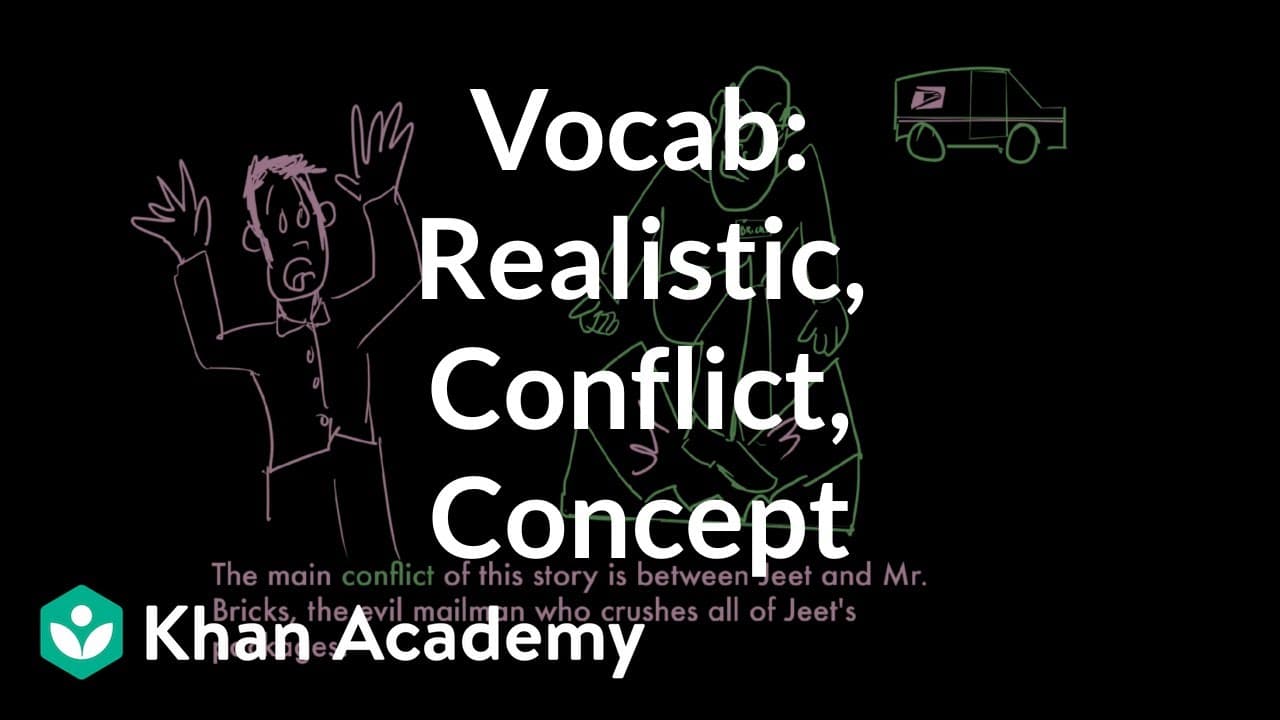
In this engaging vocabulary lesson, the narrator, David, turns a moment of personal disappointment into a learning opportunity. After receiving a rejection letter from a publisher for his fictional novel, 'Moon Goblin Detectives: Life on the Dark Side,' David analyzes the editor's critique to teach three high-utility academic vocabulary words: concept, conflict, and realistic. The video uses a humorous narrative framework to contextualize these terms, making abstract definitions concrete and memorable for students. The video breaks down each word individually, exploring their parts of speech and specific meanings. It specifically highlights the nuance of the word 'conflict,' explaining how its pronunciation and meaning shift when functioning as a noun versus a verb (heteronyms). The lesson also defines 'concept' as a general idea and 'realistic' as an adjective describing things true to life. The definitions are reinforced through whimsical animated examples, including dinosaurs on Mars and an evil mailman named Mr. Bricks. Teachers can use this video to introduce essential literary and academic vocabulary. It is particularly useful for English Language Arts units focused on story elements, as it defines 'conflict' in a literary sense. The video also supports instruction on context clues, word usage, and the difference between fantasy and realistic fiction. The humorous tone and simple visual animations keep students engaged while effectively delivering direct vocabulary instruction.

Khan AcademyKhan Academy

3mins 43s

How Word Choice Changes Meaning: Connotation Explained

How Word Choice Changes Meaning: Connotation Explained

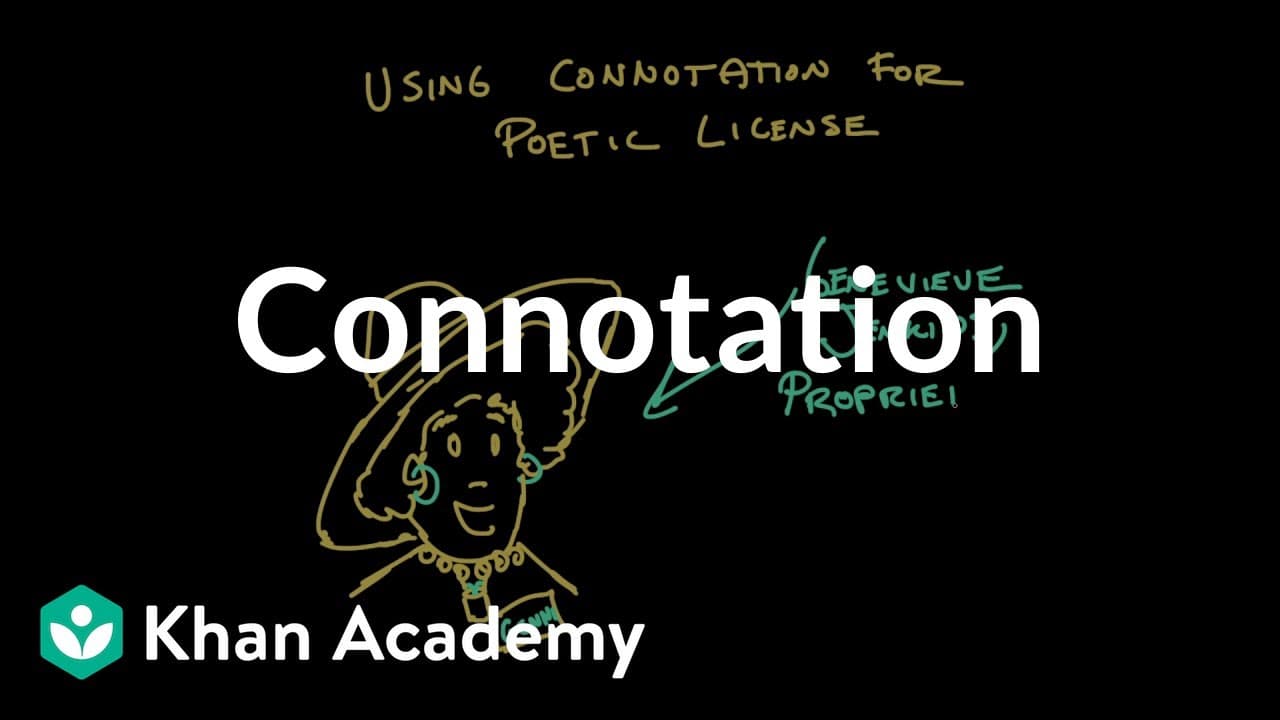
This engaging instructional video explores the concept of connotation—the emotional and cultural associations words carry beyond their literal dictionary definitions (denotation). Through clear analogies, such as water flowing around a rock, and relatable examples like "companion" versus "buddy," the narrator illustrates how synonyms can mean the same thing factually while conveying entirely different feelings or levels of formality. The video delves into key literary concepts including tone, author's intent, and the spectrum of positive, negative, and neutral connotations. It uses a detailed example of a fictional character, Genevieve Jenkins, to demonstrate how specific word choices (like "flourished" and "roots") can build a thematic motif. The narrator also distinguishes between cultural connotations shared by many and personal connotations derived from individual experiences, using a humorous personal anecdote about basketball. For educators, this resource is an excellent tool for teaching vocabulary nuances, literary analysis, and creative writing. It helps students move beyond basic comprehension to understanding *why* authors choose specific words. The content directly supports standards related to analyzing the impact of specific word choices on meaning and tone, making it highly applicable for English Language Arts classrooms from upper elementary through high school.

Khan AcademyKhan Academy

5mins 22s

How Similar Words Are Different: Shades of Meaning

How Similar Words Are Different: Shades of Meaning

This engaging animated video introduces students to the concept of 'shades of meaning'—the subtle differences between similar words (synonyms). Hosted by a friendly animated teacher character, the video explains that while two words might refer to the same general idea, they often have different intensities or specificities. Through clear visual comparisons and humorous examples, students learn that choosing the precise word is important for clear communication. The video explores several key word pairs to demonstrate this concept, including 'boat vs. ship,' 'look vs. stare,' and 'cold vs. frozen.' It uses a mix of animation, stock footage, and funny skits—such as a man staring intensely at himself in a mirror—to make the definitions stick. Following the instructional segment, the video transitions into an interactive game show format where viewers are challenged to identify the correct word based on questions about intensity (e.g., 'Which is quieter?' or 'Which is faster?'). For educators, this resource serves as an excellent introduction to vocabulary nuance, addressing Common Core standards related to distinguishing shades of meaning among verbs and adjectives. It is perfect for visual learners and provides immediate formative assessment through the built-in quiz section. Teachers can use this video to launch lessons on synonym gradients, creative writing, or word choice, helping students move beyond basic vocabulary to more descriptive language.

Homeschool PopHomeschool Pop

7mins 3s

Mastering Vocabulary: Survive, Endure, and Extreme

Mastering Vocabulary: Survive, Endure, and Extreme

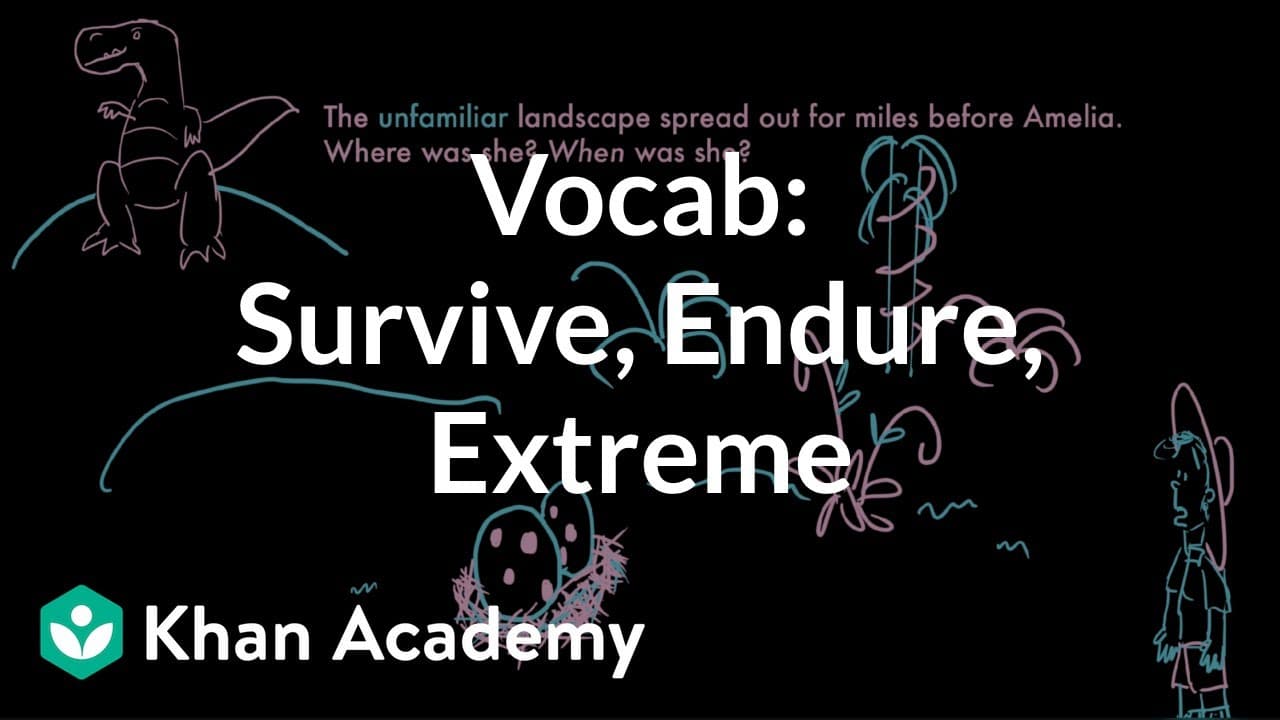
This engaging vocabulary lesson explores the definitions, usage, and origins of three interconnected words: "survive," "endure," and "extreme." Through the use of a digital whiteboard style, the narrator breaks down each word's part of speech, provides clear definitions, and illustrates their meanings with humorous and memorable examples. The video also introduces related word forms like "survival," "endurance," and "extremely," helping students build word families. A key highlight of the video is the "Word Origin Corner," which dissects the etymology of "survive." By analyzing the prefix "sur-" (meaning over or beyond) and the root "vive" (meaning to live), students learn how breaking down words can reveal their deeper meanings. Connections are made to other languages like Spanish and French, as well as related English words like "surpass" and "revive." Ideally suited for upper elementary and middle school English Language Arts classrooms, this video supports vocabulary acquisition and morphological awareness. Teachers can use it to introduce a unit on adventure stories, survival literature (like "Hatchet" or "Island of the Blue Dolphins"), or to teach specific strategies for understanding word roots. The humorous examples—such as enduring a boring uncle's lecture or surviving a shipwreck—provide excellent anchors for classroom discussions on the nuances between similar terms.
Khan AcademyKhan Academy

4mins 13s

How Word Choice Changes Tone and Meaning

How Word Choice Changes Tone and Meaning

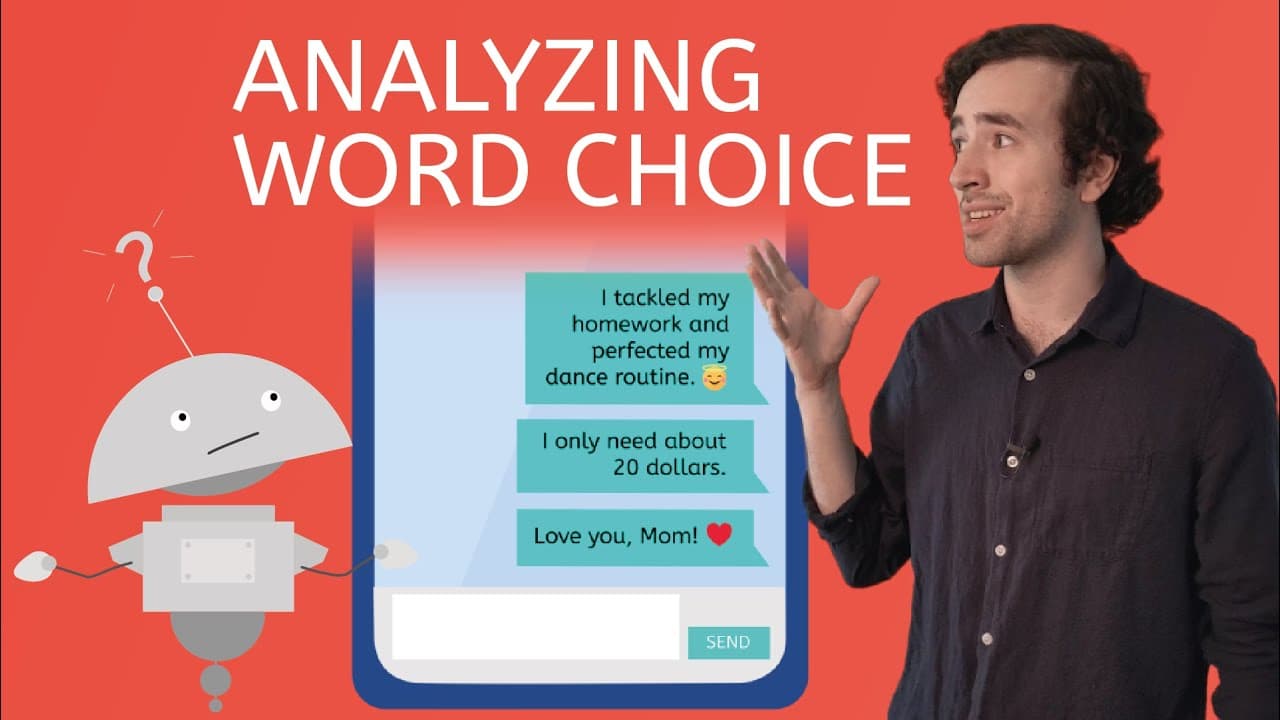
This engaging video lesson illustrates the critical impact of word choice on tone, meaning, and persuasion through a relatable real-world scenario. By analyzing a series of text messages sent by a student named Liz—first to her mother asking for money, and then to a friend—the video demonstrates how subtly changing specific words (like switching "Mom" to "Mommy" or "did" to "tackled") can completely alter the reception of a message. The narrator guides viewers through the revision process, highlighting how strategic vocabulary selection allows writers to soften requests, emphasize effort, and tailor communication to specific audiences. The content explores key themes of rhetoric, audience awareness, and the difference between denotation and connotation. It provides concrete examples of how synonyms are rarely perfectly interchangeable and how context dictates appropriate vocabulary. The video contrasts formal, persuasive language used for authority figures with casual, direct language used among peers, helping students understand code-switching and tonal shifts. For educators, this video serves as an excellent hook for units on persuasive writing, revision, or narrative voice. It effectively bridges the gap between students' daily digital communication habits and academic writing skills. The visual breakdown of text message editing offers a clear, scaffolding model for how students can critically evaluate and improve their own writing, moving them from simple statements to more nuanced, impactful expression.

Miacademy & MiaPrep Learning ChannelMiacademy & MiaPrep Learning Channel

4mins 31s

Materials

Vocab Showdown Slides

Vocab Showdown Slides

An interactive 10-slide whole-class vocabulary deck covering the 10 Grade 5 Unit Launch words through choral reading, turn-and-talk challenges, 4-corner voting prompts, and a changemaker application challenge.

JJ

Julie Johns

Word Palette Reflection Worksheet

Word Palette Reflection Worksheet

A scaffolded 2-page reflection worksheet for 'The Color of Words' by Krista Legge, featuring prominent fill-in-the-blank sentence frames with dedicated handwriting blanks, categorized emotion word banks, and structured color-word reflection prompts.

EG

Emily Gianni

Sequences

Lesson Plan 1 Introduction

Literary Device Detectives

A comprehensive multi-unit sequence for 3rd and 4th grade students covering key literary devices: Introduction to Figurative Language, Onomatopoeia, Similes, Metaphors, Personification, and Idioms. Each unit provides 5 lesson plans, interactive notebook resources, and a wide variety of activities and stories designed to improve descriptive writing and reading comprehension.

JS

Janette Sullivan

105
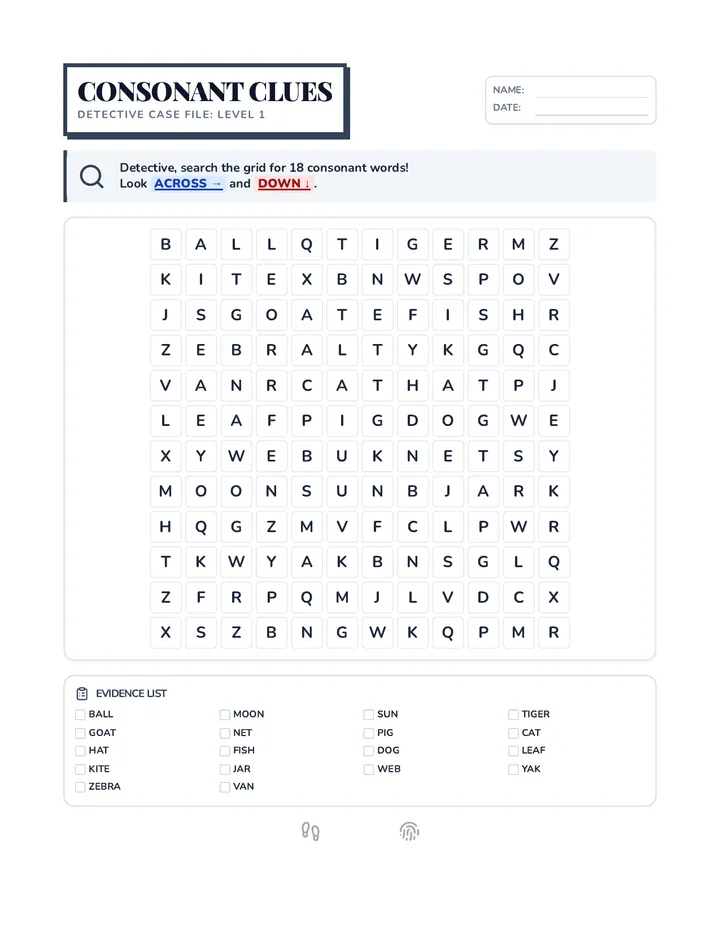
Consonant Clues Word Search

Sound Detective Workbook

A complete phonics journey covering letter-name alphabetic spelling stages, featuring randomized word sort practice through interactive sentence completion.

N

nmack

57
I Sit I Tap Slides

Reading Foundations

A collection of decodable passages and activities aligned with UFLI Foundations, focusing on systematic phonics and heart word acquisition. Each lesson centers on a specific phonics skill and accompanying "heart words" to build reading fluency.

N

npowers

54
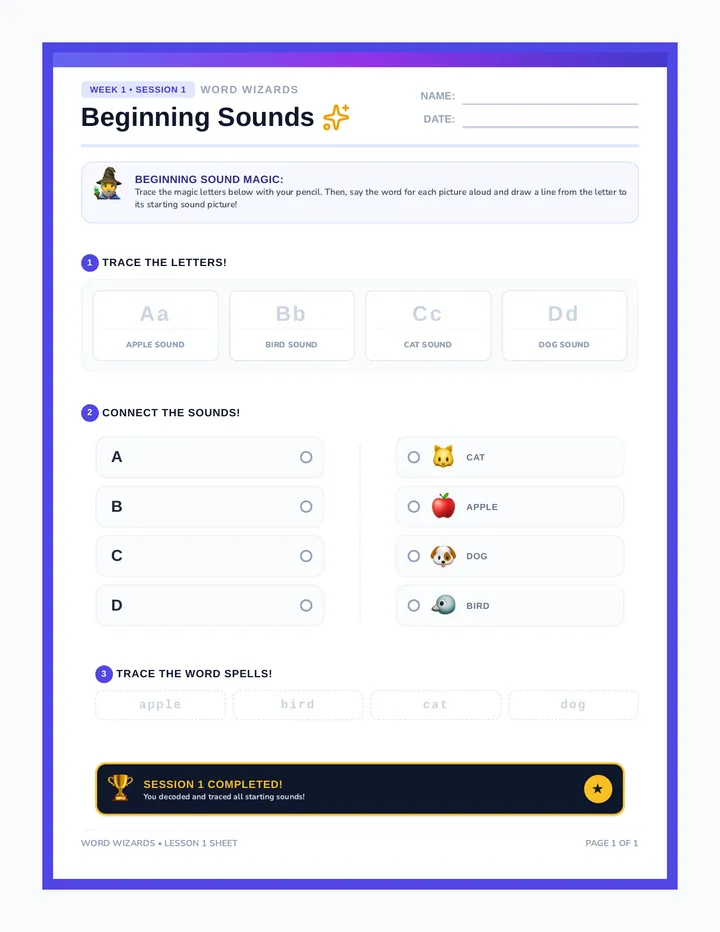
Beginning Sounds Worksheet

Word Wizards

An engaging, high-impact 4-week literacy skills program for young learners. Features highly visual, fun printable worksheets focusing on beginning letter sounds, CVC phonics blending, sight word reading, and short stories.

Z

ziad

18
Lab Safety Brief Do Now

Lexicon Labs

A comprehensive unit focusing on vocabulary acquisition and word relationships (L.4 and L.5). Students act as 'Lexicon Engineers' to decode meanings, analyze affixes, and master figurative language through a high-tech laboratory lens.

MW

Mr Whitfield

17
Copenhagen Clues Slides

Resistance Chronicles

A 9-day novel study for Number the Stars centered on 4th Grade ELAR TEKS, focusing on character development, plot analysis, and historical context through the lens of a Resistance Secret File.

LH

Lucy Hellerman

38

Lessons

Heart of Gold Reading Activity

Heart of Gold

A reading comprehension lesson for 5th graders focusing on identifying and analyzing character traits like loyalty, compassion, honesty, and caring through a short narrative passage.

LA

Lauren Alben

3
Hoosier Poet Slides

Hoosier Poet Portfolio

An extensive exploration of Indiana's "Hoosier Poet," James Whitcomb Riley, featuring dialect analysis of "Little Orphant Annie" and "When the Frost is on the Punkin." Students create a comprehensive lapbook and write original verse as a summative assessment.

MG

Matthew Gaudin

12
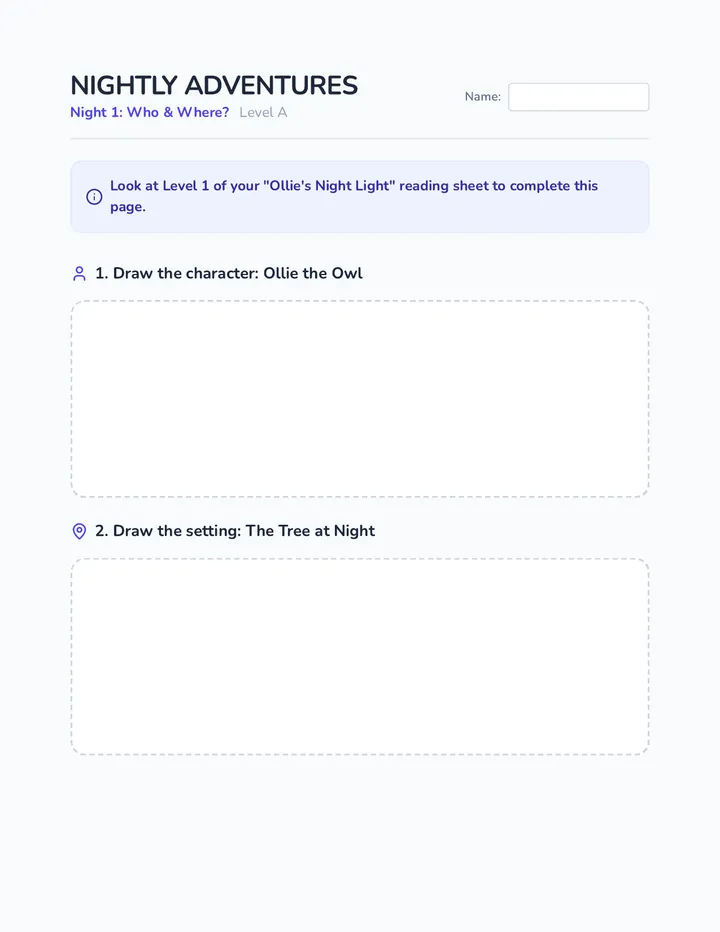
Night 1 Level A Worksheet

Ollies Nightly Adventures

A comprehensive 3-night homework sequence based on 'Ollie's Nightly Adventures'. Each grade level (K, 2, 4) has three distinct assignments focusing on character/setting, sequencing, and inference/summarization using the same story text for the week.

JJ

Julie Johns

12
Jungle Journey Slides

Jungle Journey

A leveled reading comprehension lesson based on Chapter 1 of 'Jane Goodall and the Chimpanzees of Gombe'. Students practice making predictions and identifying key details about Jane's arrival in the jungle across three different learning levels.

EE

Erin Esswein

11
Word Lab Slides

Word Lab Investigations

A comprehensive investigation into word meanings, context clues, figurative language, and word relationships. Students will become 'Language Scientists' as they dissect text to uncover hidden meanings.

MW

Mr Whitfield

8
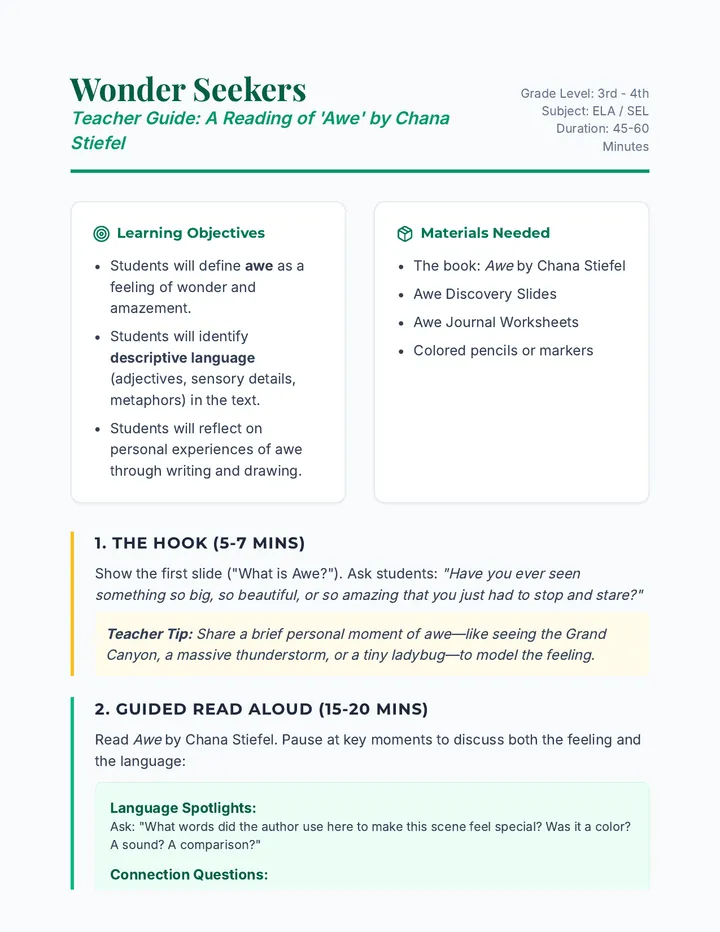
Wonder Seekers Teacher Guide

Wonder Seekers

A lesson exploring the emotion of awe and descriptive language through the book 'Awe' by Chana Stiefel, designed for 3rd and 4th-grade students.

KD

Kimberly Dykstra

6