Lenny.com
Explore
Create
ActivitiesNewMathEnglish Language ArtsScience & EngineeringSocial StudiesGlobal LanguagesHealth & Physical EducationSpecial EducationCounseling & Life SkillsArts & CreativityESL
Lenny.com
Lenny.com
Explore
Create
ActivitiesNewMathEnglish Language ArtsScience & EngineeringSocial StudiesGlobal LanguagesHealth & Physical EducationSpecial EducationCounseling & Life SkillsArts & CreativityESL
Lenny.com

Foreign Words and Expressions

Common loanwords and phrases integrated into English from sources like Latin, French, and Spanish. Builds vocabulary through the examination of etymology, pronunciation, and appropriate usage in formal and informal contexts.

Lenny.com

Solutions

Lenny for EducatorsLenny for SchoolsLenny for Districts

Product

ExploreSign inCreateSupportAbout

Resources

Getting startedMTSS Acceleration Program

© 2026 Lenny Learning Inc.

TermsPrivacyAccessibility
LinkedInInstagramX
Lenny
English Language ArtsPhonics & Reading FoundationsLetter IdentificationLearn Letters A-ZLowercase and Uppercase LettersConsonants and VowelsLetter-Sound AssociationsLetter-Sound Associations: LowercaseLetter-Sound Associations: UppercaseBeginning and Ending SoundsRhymingBlending And SegmentingShort VowelsShort Vowel SoundsConsonant BlendsConsonant DigraphsBlends, Digraphs, and TrigraphsDigraphs, Blends, and Silent LettersLong Vowel SoundsLong Vowel PatternsShort and Long VowelsShort and Long Vowel PatternsSilent EVowel SoundsVowel TeamsR-Controlled VowelsDiphthongs: Oi, Oy, Ou, OwVariant VowelsVariant, Diphthong, And R Vowel PatternsSoft G And CSight WordsIrregular WordsWord RecognitionSyllablesSyllable TypesTwo-Syllable WordsMultisyllabic WordsPhoneme ManipulationDecodable TextsVocabularyAction WordsQuestion WordsNouns and AdjectivesClassify WordsCompound WordsSynonyms and AntonymsHomophonesHomophones and HomonymsShades of MeaningContext CluesPrefixes and SuffixesGreek and Latin RootsAnalogiesIdioms and AdagesForeign Words and ExpressionsWord Choice and UsageReference SkillsReading ComprehensionRead-Along Literary TextsRead-Along Informational TextsReality vs. FictionStory ElementsCharacterSequenceMain IdeaCause And EffectCompare And ContrastReading StrategiesText StructureAuthor's PurposeAuthor's Purpose And ToneAuthor's PerspectivePoint Of ViewThemeInference And ThemeInference And AnalysisPoetry ElementsLiterary DevicesAnalyzing LiteratureAnalyzing Informational TextsComparing TextsAudience, Purpose, And ToneBusiness DocumentsNovel StudyNonfiction Book StudyGrammar & MechanicsSentencesNounsVerbsAdjectivesPronounsCapitalizationPunctuationContractionsConjunctionsPrepositionsArticlesAdjectives And AdverbsVerb TypesVerb TensePronouns And AntecedentsPronoun TypesSubject-Verb AgreementDirect And Indirect ObjectsSentences, Fragments, And Run-OnsPhrases And ClausesCommasSemicolons, Colons, And CommasDashes, Hyphens, And EllipsesSpellingAbbreviationsFormattingVerb Tense And MoodMisplaced ModifiersWritingDescriptive DetailsCreative WritingOpinion WritingTopic SentencesOrganizing WritingLinking WordsSentence VarietyIntroductions And ConclusionsPersuasive And Opinion WritingExpository WritingPersuasive StrategiesDeveloping And Supporting ArgumentsTopic Sentences And Thesis StatementsSummarizingResearch SkillsEditing And RevisingActive And Passive Voice=Writing Clearly And ConciselyDebate & Public SpeakingPublic Speaking BasicsPersuasive TechniquesClaims and EvidenceTypes of ArgumentsReasoning TypesLogical FallaciesTopic ResearchOrganizing EvidenceDebate Speech OrganizationAttacking and Defending ArgumentsClash and EngagementImpact CalculusQuestioning and Cross-ExaminationCritical ThinkingInformal LogicFormal LogicInductive Reasoning

Videos

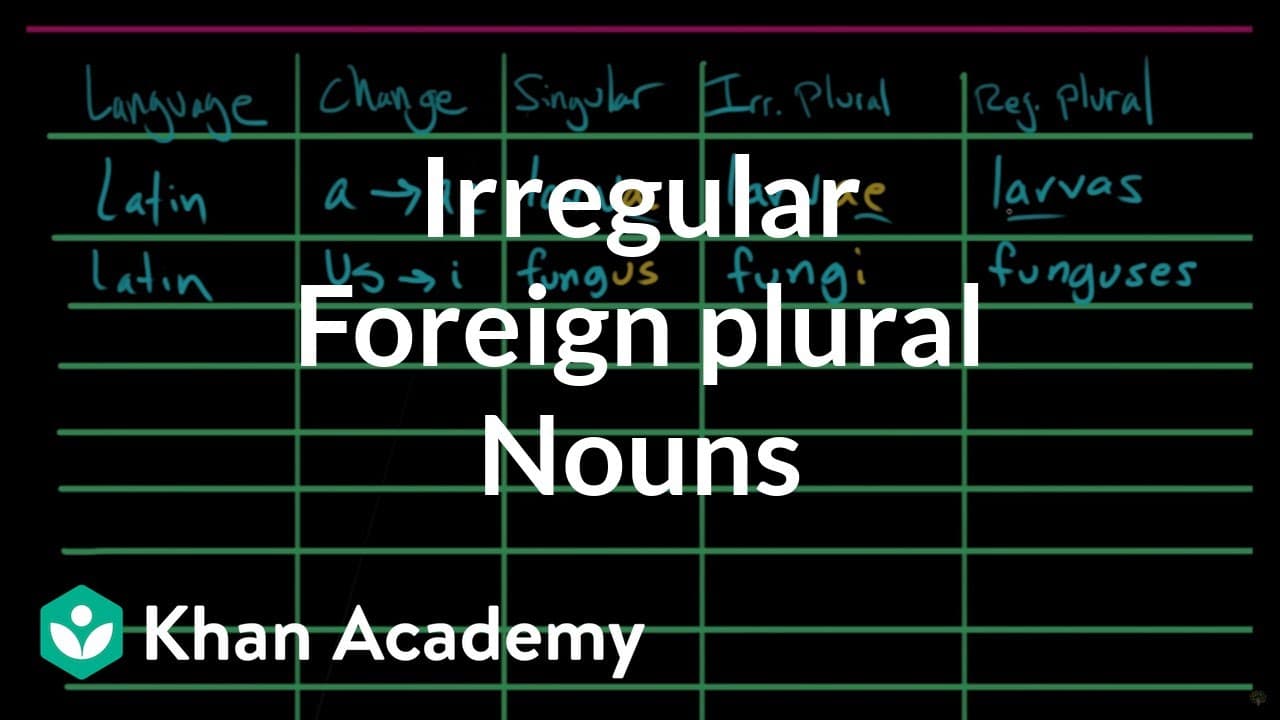
Mastering Irregular Plurals from Latin and Greek

Mastering Irregular Plurals from Latin and Greek

This educational video provides a clear and approachable guide to mastering foreign plural nouns in English, specifically those borrowed from Latin and Greek. The narrator explains that while English often regularizes these words over time (e.g., "funguses" vs. "fungi"), understanding the traditional rules is crucial for formal academic and scientific contexts. Through a hand-drawn chart, the video breaks down six specific patterns for pluralizing loanwords, offering a practical "cheat sheet" for students navigating complex vocabulary. The content explores key grammatical themes including irregular plurals, loanwords, and the evolution of language. It distinguishes between descriptive usage (how people actually speak in casual settings) and prescriptive rules (formal standards), using examples like "cactus/cacti" and "data/datum" to illustrate how English is constantly changing. The video emphasizes that one does not need to speak ancient languages to master English grammar, but rather that recognizing these patterns helps decipher unfamiliar words. For educators, this resource is invaluable for teaching advanced vocabulary, spelling rules, and scientific terminology. It serves as an excellent bridge between English Language Arts and science curricula, where words like "larvae," "fungi," and "hypotheses" appear frequently. The video demystifies intimidating words and empowers students to confidently use formal language in their writing and presentations while reassuring them that making mistakes is part of the learning process.
Khan AcademyKhan Academy

4mins 56s

The History and Origin of the Apostrophe

The History and Origin of the Apostrophe

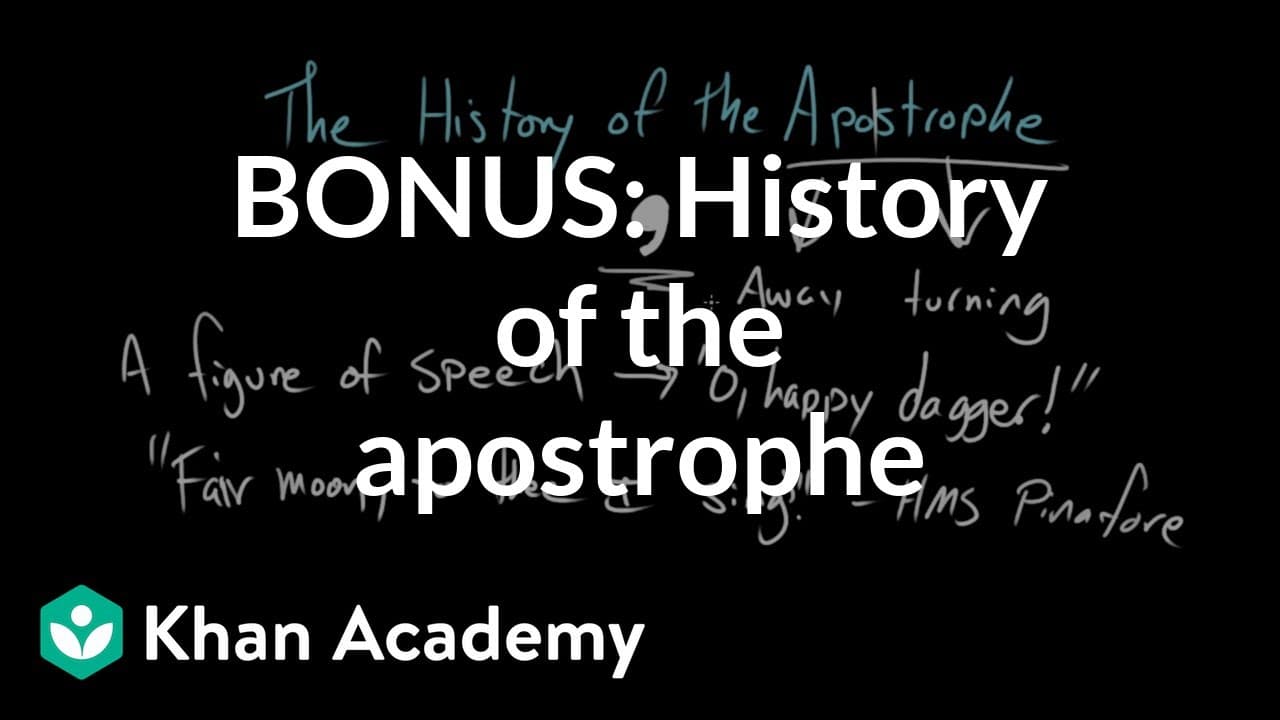
This educational video explores the fascinating history and etymology of the apostrophe, tracing its journey from a Greek rhetorical device to a common English punctuation mark. The narrators explain the word's Greek roots meaning "turning away" and how it originally described a figure of speech where a speaker addresses an absent person or inanimate object. The video then moves into the historical introduction of the symbol itself, credited to the French humanist Geoffroy Tory in the 16th century. It explains how the mark was used to indicate omitted letters (elision) in French before migrating to the English language following centuries of French linguistic influence after the Norman Conquest. Teachers can use this video to deepen student understanding of punctuation by providing historical context, making grammar rules feel less arbitrary. It connects English Language Arts with history and foreign languages, demonstrating how English has evolved through cultural exchange and offering a logical explanation for why apostrophes are used in contractions to replace missing letters.

Khan AcademyKhan Academy

5mins 40s

Sequences

Prophecy and Power Slides

Shadows and Crowns

A series of lessons exploring Shakespeare's Macbeth, specifically designed for 10th-grade emergent bilingual students to master complex characterization and thematic elements.

DC

Dylan Clark

30
History Through Time 30 Day Handwriting Worksheet

Handwriting Toolbox Series

A series of thematic handwriting programs designed to improve fine motor skills and penmanship through daily practice sessions centered around fascinating educational topics like biology and history.

AC

Andrew Casini

14
The Bard's Legacy Handout

Ambition and Power Unit

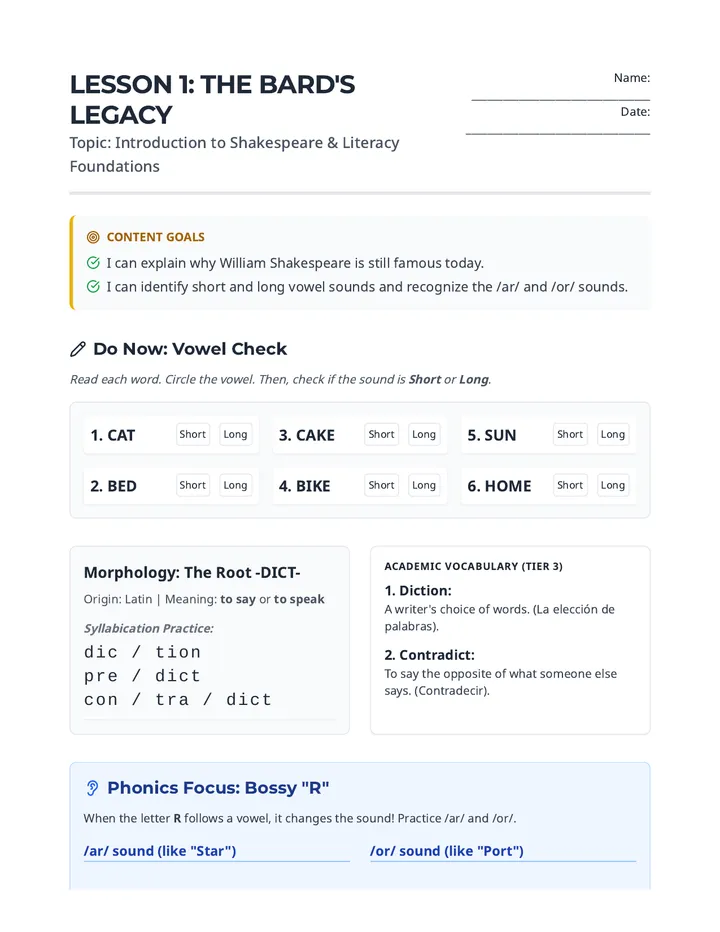
A 10-lesson thematic unit for 9th-grade ESOL students focusing on Shakespeare's Macbeth, integrating systemic language instruction, morphology, and phonics (R-controlled vowels) with high-school level analysis.

AP

Alexis Paolini

108
Butterfly Hill Chapter Summaries

Belonging and Identity Journeys

An in-depth middle-grade literature unit exploring complex themes of home, family ties, displacement, and emotional healing across different cultural settings.

I

isaac_daigle

12
ELA Regents Overview Document

Regents Mastery ELL Sequence

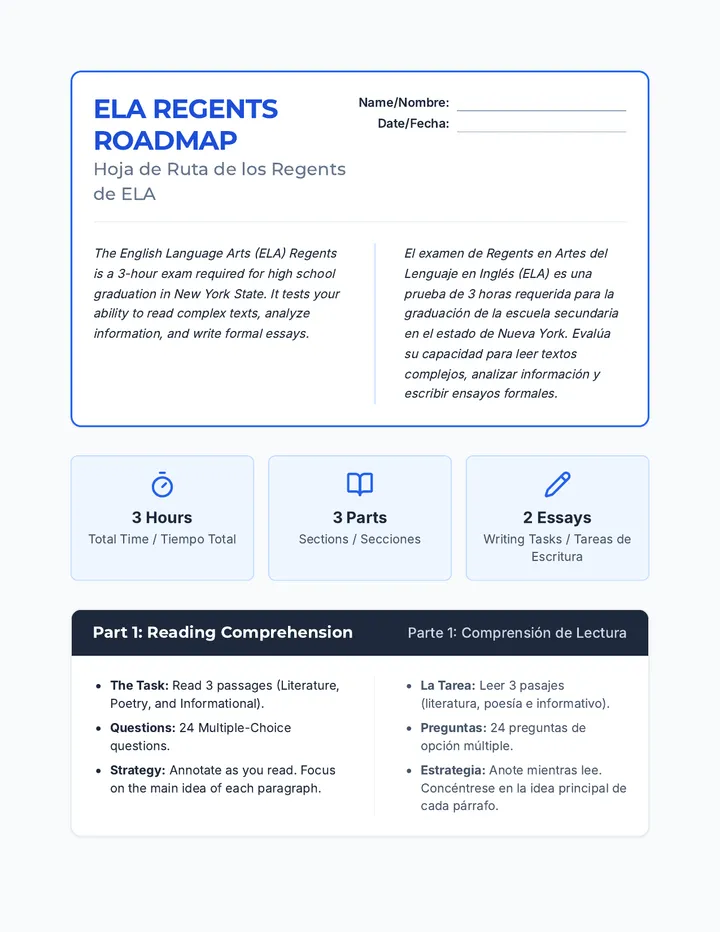
A comprehensive Regents preparation sequence for ELL students, covering exam structure, argumentative writing, and advanced reading strategies like inference and implicit meaning analysis.

AP

Alexis Paolini

20
Midway Mastery Assessment

Cosmic Carnival of Language

A comprehensive unit on figurative language set in the whimsical world of a Cosmic Carnival, covering nine key literary devices through interactive slides, a QR code scavenger hunt, and a rigorous mastery assessment.

RH

Rami Hamed

7

Lessons

Narrative Navigator Slides

Journal Journey Cultural Bridge

An advanced 8th-grade ELA lesson exploring the intersection of Filipino and American identities through personal narrative. Students analyze the immigrant experience, master advanced vocabulary via a 'Quiz Bee,' and draft narratives that bridge their cultural heritage with their current journey.

V

vivianbelarmino

13
Game Day Notes Worksheet

Rez Ball Breakthrough

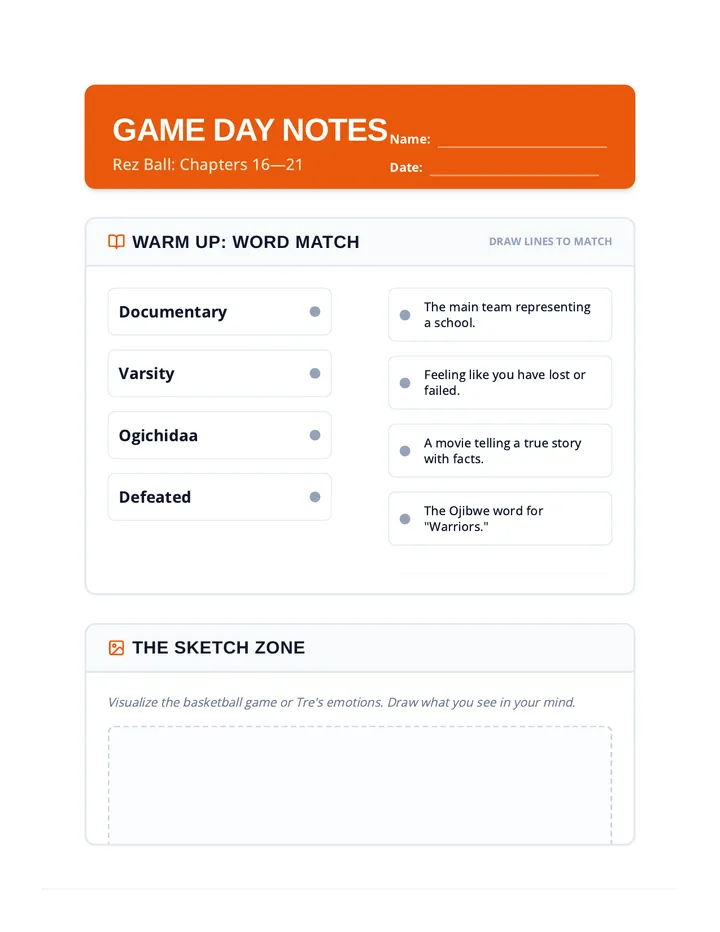
A reading guide and comprehension worksheet for Chapters 16-21 of 'Rez Ball', designed for 7th-grade Resource Room students to use during a class read-aloud.

MR

Melissa Ramirez

10
Lexicon Large Print Part 1 Reference

The Bards Cipher

A hands-on activity where students learn to decode and encode Shakespearean language by writing secret messages or insults, then swapping them with peers to translate.

AP

Alexis Paolini

17
Central America Travels Reading

Central America Travels

A 9-paragraph reading and CER analysis focused on identifying the author's purpose in the context of tourism across Central America.

GJ

Gerardo Jimenez Ramirez

8
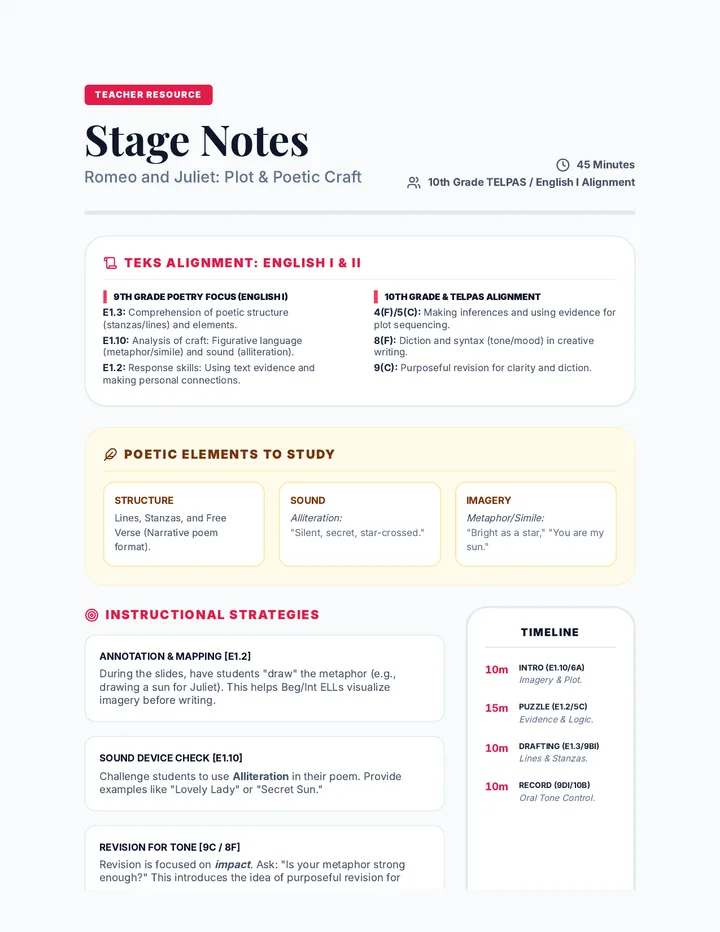
Stage Notes Teacher Guide

Star Crossed Lovers

A scaffolded lesson for 10th-grade TELPAS students (low proficiency) to explore the plot of Romeo and Juliet, sequence major events, and plan a creative poem and avatar recording.

KB

Kathleen Basoco

5
Word War Slides

Word War 1066

A lesson exploring the Battle of Hastings and its profound impact on the English language, tracing how the Norman Conquest introduced French vocabulary and transformed Old English into the ancestor of modern English.

LJ

Lisa Jones

3