Lenny.com
Explore
Create
ActivitiesNewMathEnglish Language ArtsScience & EngineeringSocial StudiesGlobal LanguagesHealth & Physical EducationSpecial EducationCounseling & Life SkillsArts & CreativityESL
Lenny.com
Lenny.com
Explore
Create
ActivitiesNewMathEnglish Language ArtsScience & EngineeringSocial StudiesGlobal LanguagesHealth & Physical EducationSpecial EducationCounseling & Life SkillsArts & CreativityESL
Lenny.com
English Language ArtsPhonics & Reading FoundationsLetter IdentificationLearn Letters A-ZLowercase and Uppercase LettersConsonants and VowelsLetter-Sound AssociationsLetter-Sound Associations: LowercaseLetter-Sound Associations: UppercaseBeginning and Ending SoundsRhymingBlending And SegmentingShort VowelsShort Vowel SoundsConsonant BlendsConsonant DigraphsBlends, Digraphs, and TrigraphsDigraphs, Blends, and Silent LettersLong Vowel SoundsLong Vowel PatternsShort and Long VowelsShort and Long Vowel PatternsSilent EVowel SoundsVowel TeamsR-Controlled VowelsDiphthongs: Oi, Oy, Ou, OwVariant VowelsVariant, Diphthong, And R Vowel PatternsSoft G And CSight WordsIrregular WordsWord RecognitionSyllablesSyllable TypesTwo-Syllable WordsMultisyllabic WordsPhoneme ManipulationDecodable TextsVocabularyAction WordsQuestion WordsNouns and AdjectivesClassify WordsCompound WordsSynonyms and AntonymsHomophonesHomophones and HomonymsShades of MeaningContext CluesPrefixes and SuffixesGreek and Latin RootsAnalogiesIdioms and AdagesForeign Words and ExpressionsWord Choice and UsageReference SkillsReading ComprehensionRead-Along Literary TextsRead-Along Informational TextsReality vs. FictionStory ElementsCharacterSequenceMain IdeaCause And EffectCompare And ContrastReading StrategiesText StructureAuthor's PurposeAuthor's Purpose And ToneAuthor's PerspectivePoint Of ViewThemeInference And ThemeInference And AnalysisPoetry ElementsLiterary DevicesAnalyzing LiteratureAnalyzing Informational TextsComparing TextsAudience, Purpose, And ToneBusiness DocumentsNovel StudyNonfiction Book StudyGrammar & MechanicsSentencesNounsVerbsAdjectivesPronounsCapitalizationPunctuationContractionsConjunctionsPrepositionsArticlesAdjectives And AdverbsVerb TypesVerb TensePronouns And AntecedentsPronoun TypesSubject-Verb AgreementDirect And Indirect ObjectsSentences, Fragments, And Run-OnsPhrases And ClausesCommasSemicolons, Colons, And CommasDashes, Hyphens, And EllipsesSpellingAbbreviationsFormattingVerb Tense And MoodMisplaced ModifiersWritingDescriptive DetailsCreative WritingOpinion WritingTopic SentencesOrganizing WritingLinking WordsSentence VarietyIntroductions And ConclusionsPersuasive And Opinion WritingExpository WritingPersuasive StrategiesDeveloping And Supporting ArgumentsTopic Sentences And Thesis StatementsSummarizingResearch SkillsEditing And RevisingActive And Passive Voice=Writing Clearly And ConciselyDebate & Public SpeakingPublic Speaking BasicsPersuasive TechniquesClaims and EvidenceTypes of ArgumentsReasoning TypesLogical FallaciesTopic ResearchOrganizing EvidenceDebate Speech OrganizationAttacking and Defending ArgumentsClash and EngagementImpact CalculusQuestioning and Cross-ExaminationCritical ThinkingInformal LogicFormal LogicInductive Reasoning
Lenny.com

Solutions

Lenny for EducatorsLenny for SchoolsLenny for Districts

Product

ExploreSign inCreateSupportAbout

Resources

Getting startedMTSS Acceleration Program

© 2026 Lenny Learning Inc.

TermsPrivacyAccessibility
LinkedInInstagramX
Lenny

Persuasive Strategies

Rhetorical appeals, evidence-based reasoning, and counter-argument techniques for constructing compelling arguments. Develops skills in audience analysis and crafting persuasive calls to action.

Videos

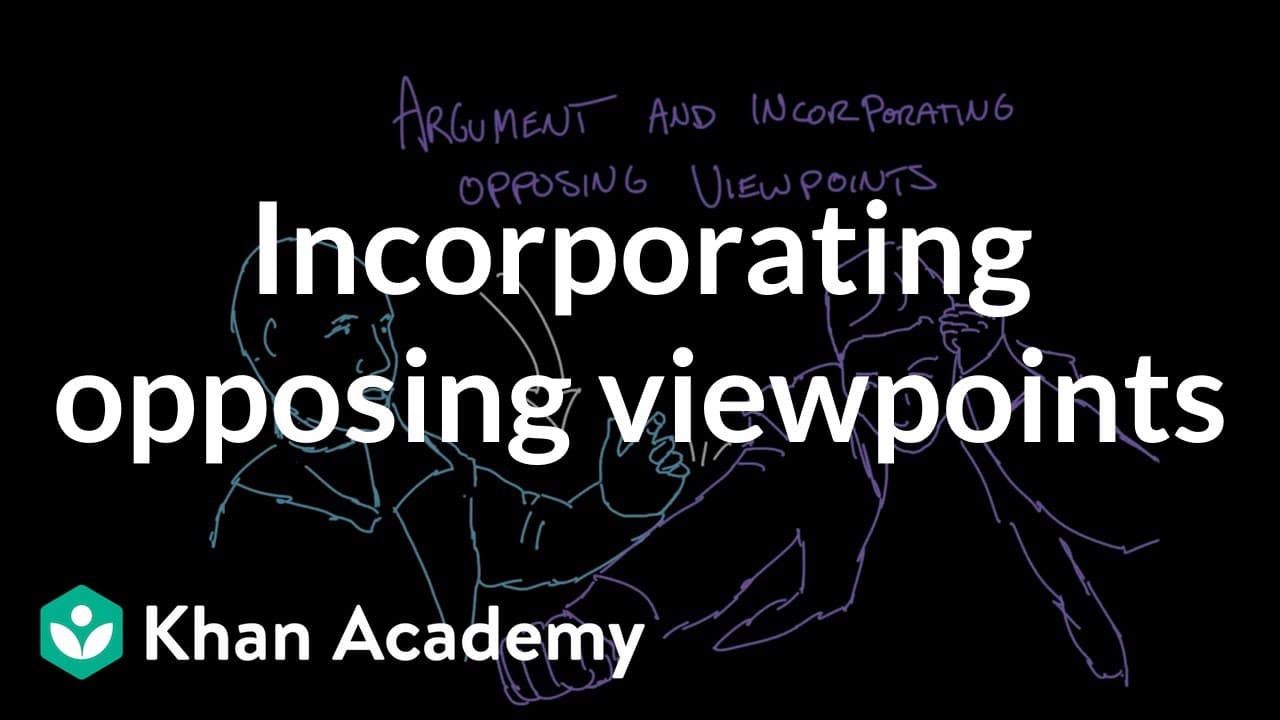
Strengthening Arguments by Addressing Opposing Viewpoints

Strengthening Arguments by Addressing Opposing Viewpoints

This video explores the rhetorical strategy of acknowledging and incorporating opposing viewpoints to strengthen argumentative writing. Using a martial arts analogy, the narrator explains that effective arguments do not simply "steamroll" opposition but rather engage with it constructively. The video outlines two primary applications for this technique: maintaining neutrality in journalistic reporting and fortifying persuasive arguments by anticipating and dismantling counter-claims. The video uses two distinct examples to illustrate these concepts. First, a humorous dispute over stolen cookies between fictional characters (Ms. Adeyemi and Mr. Dupont) demonstrates how to describe a conflict neutrally without injecting personal bias. Second, the historical mystery of the Lost Colony of Roanoke is used to show how addressing alternative theories (like disease or violence) and refuting them with evidence actually supports the author's main thesis that the colony's fate remains unknown. This resource is highly valuable for English Language Arts classrooms focusing on persuasive writing, debate, and media literacy. It provides a concrete framework (the "Block and Strike" method) for students to understand the function of counter-arguments and rebuttals. It also encourages critical reading by teaching students to be suspicious of authors who ignore opposing viewpoints entirely.

Khan AcademyKhan Academy

5mins 35s

How to Win Arguments Using Claims and Evidence

How to Win Arguments Using Claims and Evidence

This engaging video lesson breaks down the components of a persuasive argument using a relatable scenario: a teenager negotiating with her mother via text message for a new phone. The narrator analyzes the conversation in real-time, highlighting how the character, Liz, effectively uses rhetorical strategies to make her case. The video transforms a common daily interaction into a clear model for argumentative thinking. The content focuses on three core concepts of argumentation: Claims (stating a position), Evidence (providing specific facts to support the position), and Counterclaims (anticipating and addressing opposing arguments before they are fully raised). It specifically highlights how to evaluate the strength of different types of evidence, demonstrating why connecting the problem to schoolwork is more persuasive to a parent than connecting it to gaming. For educators, this video serves as an excellent hook or modeling tool for units on argumentative writing or speech. It takes abstract terms like 'counterclaim' and 'preemptive argument' and grounds them in a context every student understands. It is particularly useful for visual learners who benefit from seeing the argument structure unfold as a text message thread.

Miacademy & MiaPrep Learning ChannelMiacademy & MiaPrep Learning Channel

4mins 50s

How to Identify Evidence and Support Claims

How to Identify Evidence and Support Claims

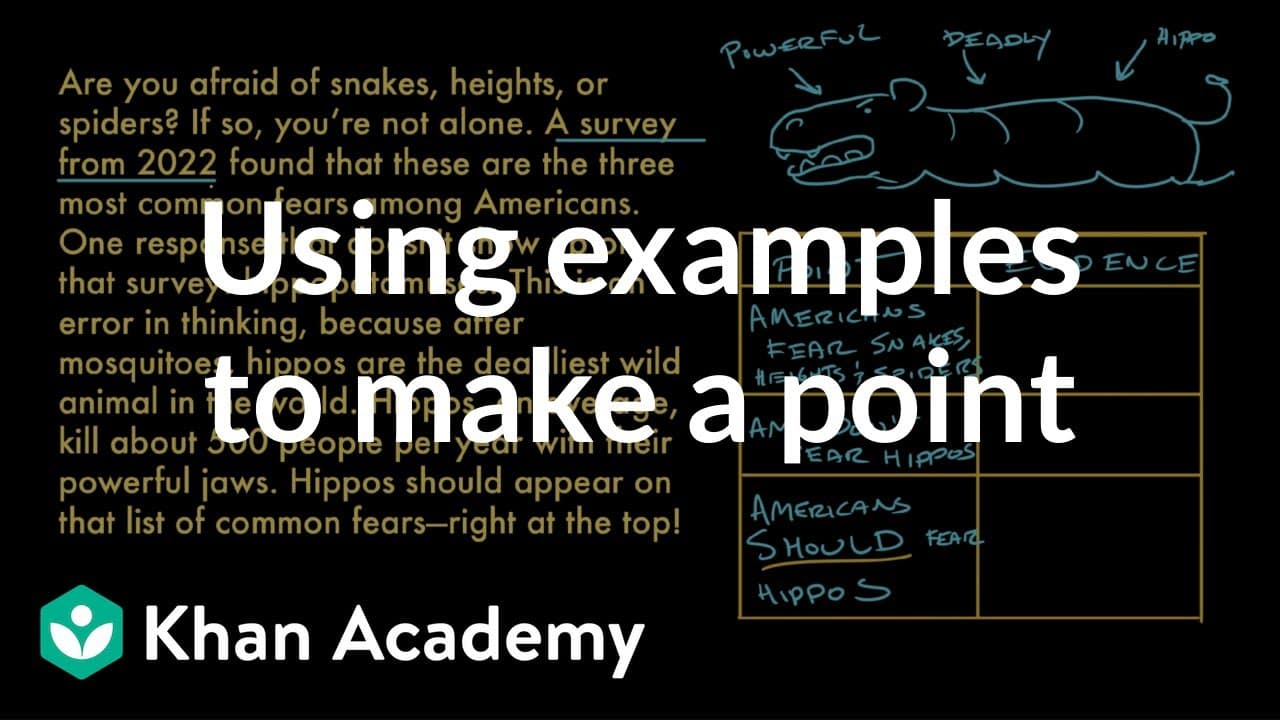
In this engaging educational video, narrator David introduces students to the concept of textual evidence through a fictional game show called "Prove It!" The video breaks down the abstract concept of argumentation into a clear, three-step process: identifying the author's main point, locating the specific evidence provided, and drawing connections between the two. Through humor and relatable examples, students learn that writers cannot just make claims; they must support their ideas with facts, statistics, or logic. The video uses two distinct examples to illustrate these concepts. First, it uses a simple, funny comparison between fictional movies ("Lil Tony 3" vs. "Lil Tony 4") to show how box office numbers or reviews serve as evidence. Then, it transitions to a more complex informational text about common fears versus actual dangers (specifically involving hippopotamuses). This progression from simple to complex helps scaffold the learning, allowing students to practice the skill of linking claims to data in real-time. For educators, this video is an excellent tool for introducing or reviewing standards related to reading informational texts and argumentative writing. It provides a shared language ("Prove It!") that teachers can adopt in the classroom when asking students to support their answers. The visual demonstration of mapping points to evidence in a t-chart offers a concrete strategy that students can replicate in their own reading and writing assignments.
Khan AcademyKhan Academy

4mins 4s

How to Identify Explicit and Implicit Arguments in Writing

How to Identify Explicit and Implicit Arguments in Writing

This educational video introduces high school students to the foundational concept that all academic writing is inherently argumentative. Through a humorous opening skit parodying a vague news broadcast, the presenter illustrates why specificity and point of view are essential for communication. The video breaks down the definition of academic writing, asserting that whether an essay is persuasive, expository, or analytical, it always contains an underlying argument that the writer wants the audience to consider.

Miacademy & MiaPrep Learning ChannelMiacademy & MiaPrep Learning Channel

9mins 1s

How Authors Develop Claims and Arguments

How Authors Develop Claims and Arguments

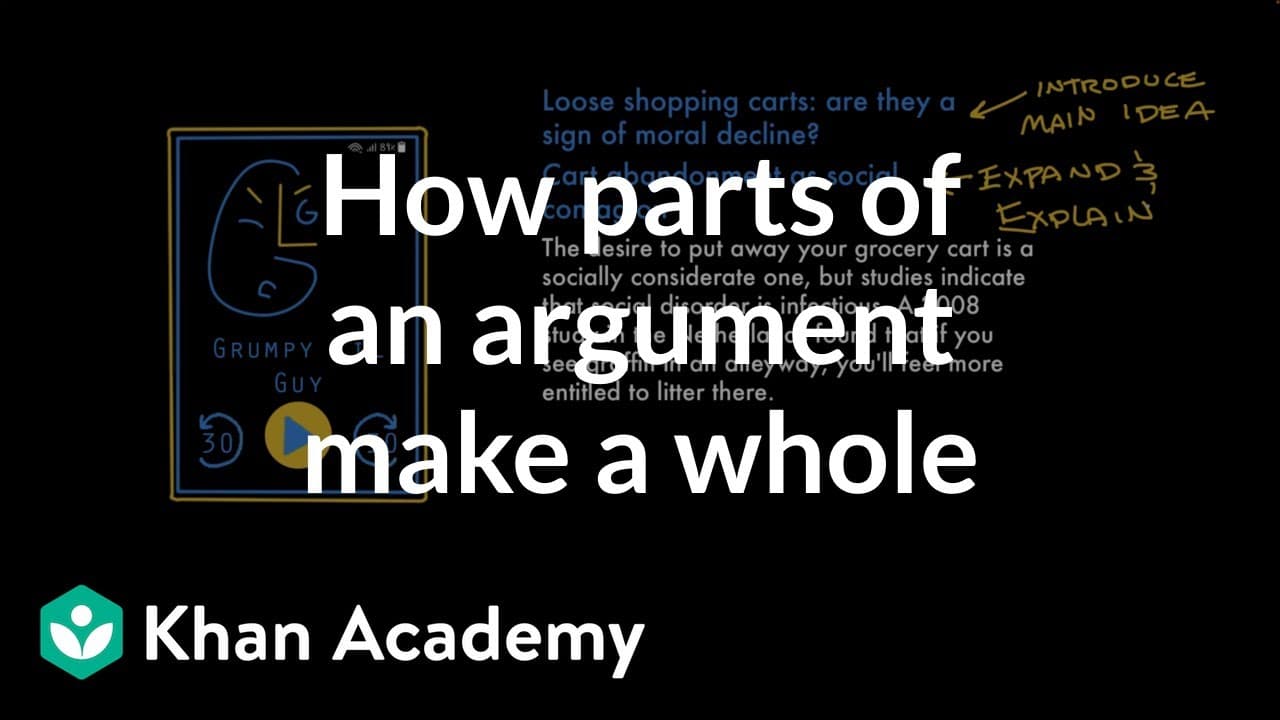
This engaging video lesson uses a fictional podcast called "Grumpy Lil Guy" to teach students how authors structure arguments and develop claims across a text. The narrator breaks down the podcast episode into distinct sections, analyzing how the host introduces a claim, expands on it with research, provides specific examples, and addresses counter-arguments. By treating the text analysis as a "pause and discuss" session, the video makes abstract rhetorical concepts concrete and accessible. The core themes explore rhetorical structure, argumentative writing, and critical reading. It specifically focuses on identifying the function of different paragraphs within a larger text—moving from the "what" (the claim) to the "why" (explanation), the "proof" (examples), and the "defense" (counter-arguments). It also touches on the concept of civic responsibility through the humorous example of returning shopping carts. For educators, this video is an excellent tool for Middle and High School ELA classrooms. It models the exact type of analytical thinking required for standardized testing and essay writing but does so with humor and a relatable format. Teachers can use this to introduce the components of a strong argument before asking students to write their own or to help students visualize how to trace an author's line of reasoning in informational texts.

Khan AcademyKhan Academy

4mins 33s

Using Evidence to Support Claims

Using Evidence to Support Claims

This educational video introduces students to the concept of "evidence" through two engaging scenarios: a courtroom trial determining the legality of cookies and a close reading analysis of a student's excuse for missing a homework assignment. Narrated by David, the video defines evidence as the facts or proof that establish the truth of a claim. It emphasizes that whether in a legal argument or academic writing, any claim made must be supported by specific details found in the source material. The video explores key themes of reading comprehension, critical thinking, and argumentation. It demonstrates the direct link between making a claim (e.g., "I didn't do my homework because...") and providing the proof (e.g., citing specific lines from a text). The courtroom analogy helps abstract the concept of "citing text evidence" into a concrete, high-stakes situation where a judge requires proof to make a ruling, making the concept more tangible for young learners. For educators, this video is an excellent hook for lessons on citing textual evidence, close reading, or persuasive writing. It models the exact thought process students should use when answering reading comprehension questions: locating specific words and phrases that justify their answers. The visual demonstration of underlining and connecting text to answers serves as a clear model for students learning to annotate texts and support their ideas with rigorous evidence.

Khan AcademyKhan Academy

4mins 23s

Materials

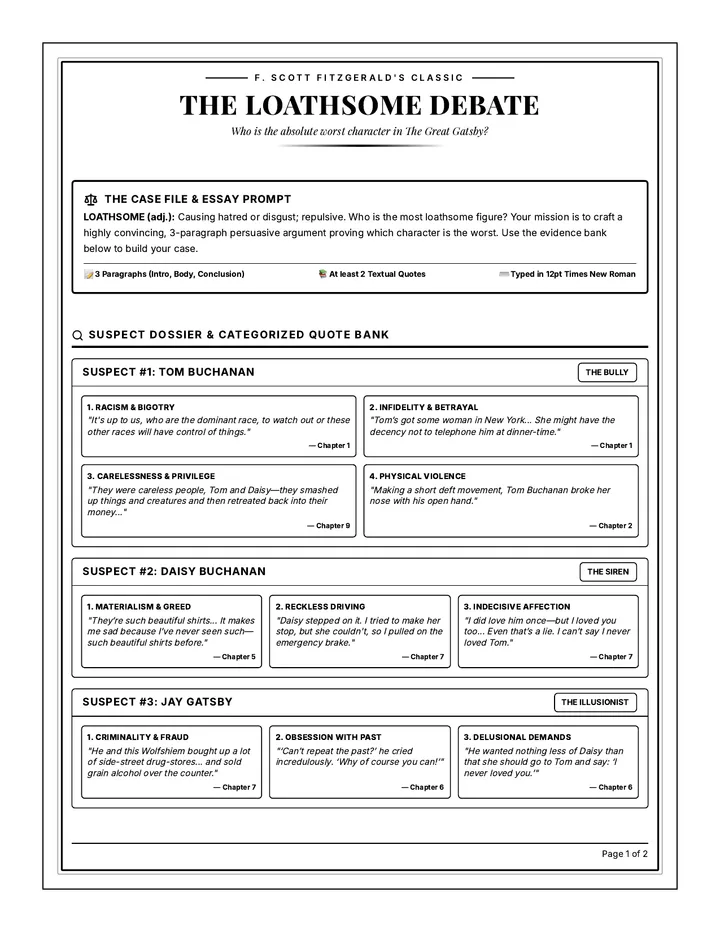
Gatsby Loathsome Character Blueprint

Gatsby Loathsome Character Blueprint

A two-page printable graphic organizer and quote bank in a high-contrast black-and-white theme with zero color or gray fills. Page 1 presents the 'Suspect Dossier' with clear borders, white backgrounds, and pure black text, while Page 2 features the highly structured essay outline and sentence starters with solid black-and-white print-friendly writing guides and page numbers.

KR

Kirstin Reed

Argument Pro Rubric

Argument Pro Rubric

A comprehensive 100-point rubric for 10th-grade argumentative essays, featuring detailed criteria for claims, evidence, analysis, and counter-claims. Designed with a clean, professional aesthetic for easy grading and clear student feedback.

D

dmclaurin

Outdoor Time Argument Worksheet

Outdoor Time Argument Worksheet

A two-page 7th-grade ELA worksheet featuring the 'Why School Should Have More Outdoor Time' text, claim identification, a 2-item evidence sorting organizer, evidence evaluation, challenge & extension tasks, and a white-background Boston Tea Party exit ticket.

AN

Austin Nowak

E-Book Title Tagline Worksheet Revision

E-Book Title Tagline Worksheet Revision

A print-optimized brainstorming worksheet for Grade 5 students to draft e-book titles and taglines. It maximizes writing space with 3 full-width sections and a final reflection, featuring generous handwriting lines and a clean professional layout for sharp printing.

BJ

Brandon Jackson

Character Verdict Handout

Character Verdict Handout

An ELL Level 2 friendly Graphic Organizer Handout to scaffold a 3-paragraph persuasive character essay. It features pre-writing questions to help students choose between the 'Loathsome' or 'Pitiful' prompt, structured quote planners with sentence frames, a paragraph-by-paragraph outline, and a checklist matching the user's requirements. This version has been updated to remove all background color fills, gray boxes, and color highlights for a clean, ink-friendly black-and-white layout.

KR

Kirstin Reed

Argument Architect Anchor Chart

Argument Architect Anchor Chart

An explicit anchor chart designed as a visual drafting blueprint. It introduces the "B.U.I.L.D." cognitive strategy for planning and structuring persuasive essays, featuring a visual building blueprint mapping essay parts to structural components and detailed actionable prompts for student writers.

M

mike.poole

Sequences

Question Anatomy Slides

Insight Investigators

A 6-week reading intervention unit for 5th graders focused on making inferences, analyzing questions, and using text evidence. Themes include mysteries, sports (baseball and basketball), and dragons to engage high-interest readers.

MK

Meg Keene

48
Master Pacing Guide Teacher Resource

Literacy Mastery Lab

A comprehensive year-long intervention sequence for 8th-grade literacy, focusing on STAR 360 and OSAS benchmark skills. The sequence follows a 3-day weekly instructional cycle (Instruction, Practice, Application) to supplement 2 days of choice reading.

SA

Senta Agnello-Shelton

60
Burger Builder Slides

Paragraph Foundations

A foundational paragraph writing unit designed for early writers and SpEd students to master core paragraph structures through narrative, opinion, and informational writing with heavy visual scaffolding.

E

ecreamer

23
Crime Scene Slides

Detective Diaries

A comprehensive English Language Arts unit that uses a mystery-investigation theme to develop reading, writing, listening, and speaking skills. Students act as detectives to analyze evidence, interview witnesses, and present their final case.

AP

AMANDA PAULA ALEXIUS KPM-Guru

11
Argument Ace Slides

Argument Ace

A comprehensive 3-lesson unit designed to prepare HSED/GED students for the RLA Extended Response by teaching them how to analyze opposing arguments, evaluate evidence, and craft a high-scoring argumentative essay.

VL

V Lundgren

14
Literary Dossier Packet

The STAAR Files Web Quest Extended Mission

A comprehensive 380-minute digital web quest for STAAR English 2 preparation, divided into 9 high-intensity missions of 45 minutes or less, covering the top five most tested TEKS.

LF

Lindsey Foulks

13

Lessons

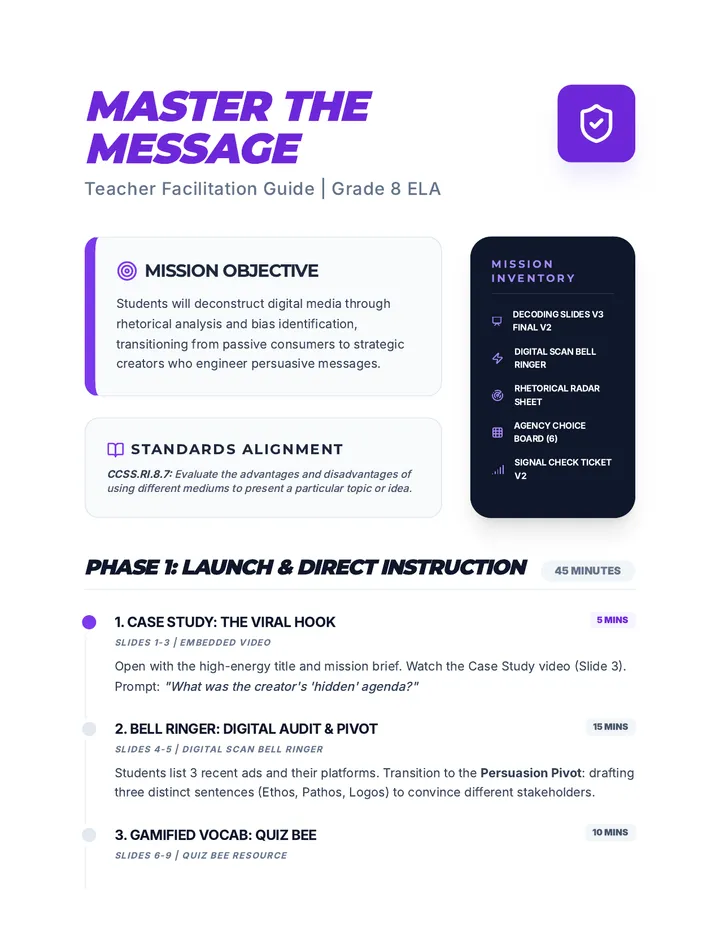
Master the Message Teacher Guide v2

Media Message Mastery

An 8th-grade ELA lesson focused on deconstructing digital media messages through the lens of rhetorical appeals (ethos, pathos, logos) and identifying bias in various online formats. Students transition from passive consumers to critical analysts of news clips, social media, and advertisements.

V

vivianbelarmino

36
Awakening Words Bell Ringer

Stolen Seconds

A comprehensive lesson exploring Tanith Lee's 'Awake,' a subversion of Sleeping Beauty, focusing on structural choices and source material transformation (RL.5 and RL.9). Students will analyze character conflict and the concept of 'the gift of time.'

V

vivianbelarmino

25
Cosmic Frontier Assessment

Starbound Bridge Assessment

A summative assessment package focused on middle school ELA standards (RL.6/RI.6) through the lens of a persuasive text regarding NASA funding and its historical impact.

J

jtiburcio

7
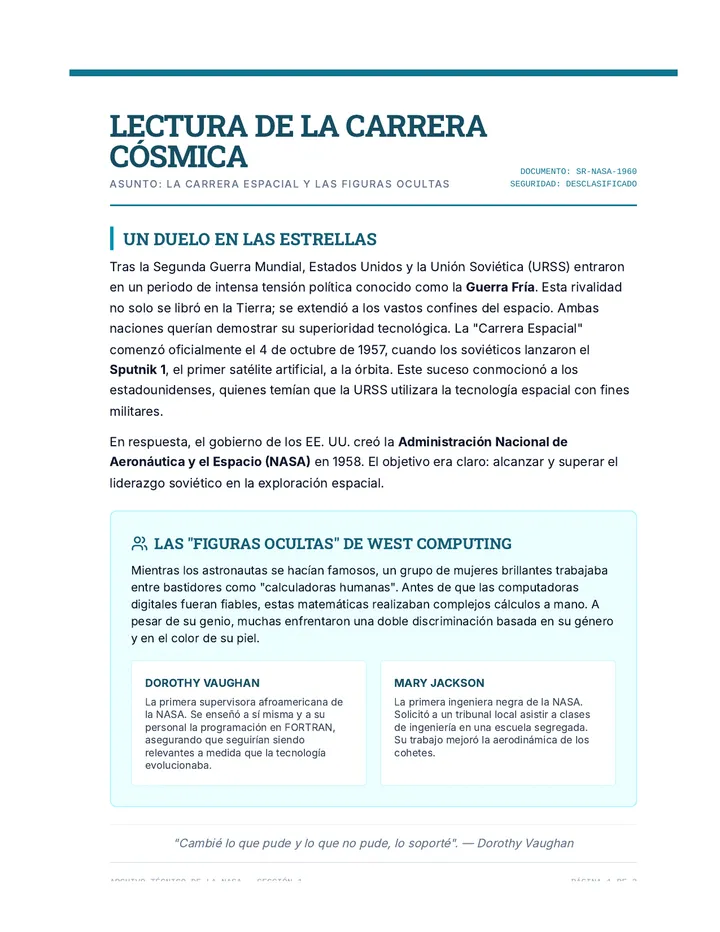
Cosmic Race Reading Text

Stellar Rivalry

A comprehensive exploration of the Space Race, highlighting the technological competition between the US and USSR, the essential contributions of African American women at NASA, and the international agreements that keep space a peaceful frontier.

RM

Robyn MacDonald

16
Precision Prose Teacher Guide

Precision Prose

A 60-minute ELA lesson focused on analyzing author's diction and drawing logical inferences using excerpts from the Grade 7 Interim Assessment. Students will explore how specific word choices shape meaning and tone through guided and independent practice.

RC

Rachel Cohen

9
Truth Hunter Teacher Guide

Truth Hunter Propaganda

This lesson equips 8th-grade students with the tools to identify and analyze propaganda techniques across various media formats. Students will investigate the 'Big 7' propaganda devices, evaluate source credibility, and practice 'unmasking' persuasive rhetoric in real-world examples.

V

vivianbelarmino

4