Lenny.com
Explore
Create
ActivitiesNewMathEnglish Language ArtsScience & EngineeringSocial StudiesGlobal LanguagesHealth & Physical EducationSpecial EducationCounseling & Life SkillsArts & CreativityESL
Lenny.com
Lenny.com
Explore
Create
ActivitiesNewMathEnglish Language ArtsScience & EngineeringSocial StudiesGlobal LanguagesHealth & Physical EducationSpecial EducationCounseling & Life SkillsArts & CreativityESL
Lenny.com
Lenny.com

Solutions

Lenny for EducatorsLenny for SchoolsLenny for Districts

Product

ExploreSign inCreateSupportAbout

Resources

Getting startedMTSS Acceleration Program

© 2026 Lenny Learning Inc.

TermsPrivacyAccessibility
LinkedInInstagramX
Lenny

Classify Words

Semantic categorization, part-of-speech identification, and grouping by shared attributes. Strengthens vocabulary organization and linguistic pattern recognition.

English Language ArtsPhonics & Reading FoundationsLetter IdentificationLearn Letters A-ZLowercase and Uppercase LettersConsonants and VowelsLetter-Sound AssociationsLetter-Sound Associations: LowercaseLetter-Sound Associations: UppercaseBeginning and Ending SoundsRhymingBlending And SegmentingShort VowelsShort Vowel SoundsConsonant BlendsConsonant DigraphsBlends, Digraphs, and TrigraphsDigraphs, Blends, and Silent LettersLong Vowel SoundsLong Vowel PatternsShort and Long VowelsShort and Long Vowel PatternsSilent EVowel SoundsVowel TeamsR-Controlled VowelsDiphthongs: Oi, Oy, Ou, OwVariant VowelsVariant, Diphthong, And R Vowel PatternsSoft G And CSight WordsIrregular WordsWord RecognitionSyllablesSyllable TypesTwo-Syllable WordsMultisyllabic WordsPhoneme ManipulationDecodable TextsVocabularyAction WordsQuestion WordsNouns and AdjectivesClassify WordsCompound WordsSynonyms and AntonymsHomophonesHomophones and HomonymsShades of MeaningContext CluesPrefixes and SuffixesGreek and Latin RootsAnalogiesIdioms and AdagesForeign Words and ExpressionsWord Choice and UsageReference SkillsReading ComprehensionRead-Along Literary TextsRead-Along Informational TextsReality vs. FictionStory ElementsCharacterSequenceMain IdeaCause And EffectCompare And ContrastReading StrategiesText StructureAuthor's PurposeAuthor's Purpose And ToneAuthor's PerspectivePoint Of ViewThemeInference And ThemeInference And AnalysisPoetry ElementsLiterary DevicesAnalyzing LiteratureAnalyzing Informational TextsComparing TextsAudience, Purpose, And ToneBusiness DocumentsNovel StudyNonfiction Book StudyGrammar & MechanicsSentencesNounsVerbsAdjectivesPronounsCapitalizationPunctuationContractionsConjunctionsPrepositionsArticlesAdjectives And AdverbsVerb TypesVerb TensePronouns And AntecedentsPronoun TypesSubject-Verb AgreementDirect And Indirect ObjectsSentences, Fragments, And Run-OnsPhrases And ClausesCommasSemicolons, Colons, And CommasDashes, Hyphens, And EllipsesSpellingAbbreviationsFormattingVerb Tense And MoodMisplaced ModifiersWritingDescriptive DetailsCreative WritingOpinion WritingTopic SentencesOrganizing WritingLinking WordsSentence VarietyIntroductions And ConclusionsPersuasive And Opinion WritingExpository WritingPersuasive StrategiesDeveloping And Supporting ArgumentsTopic Sentences And Thesis StatementsSummarizingResearch SkillsEditing And RevisingActive And Passive Voice=Writing Clearly And ConciselyDebate & Public SpeakingPublic Speaking BasicsPersuasive TechniquesClaims and EvidenceTypes of ArgumentsReasoning TypesLogical FallaciesTopic ResearchOrganizing EvidenceDebate Speech OrganizationAttacking and Defending ArgumentsClash and EngagementImpact CalculusQuestioning and Cross-ExaminationCritical ThinkingInformal LogicFormal LogicInductive Reasoning

Videos

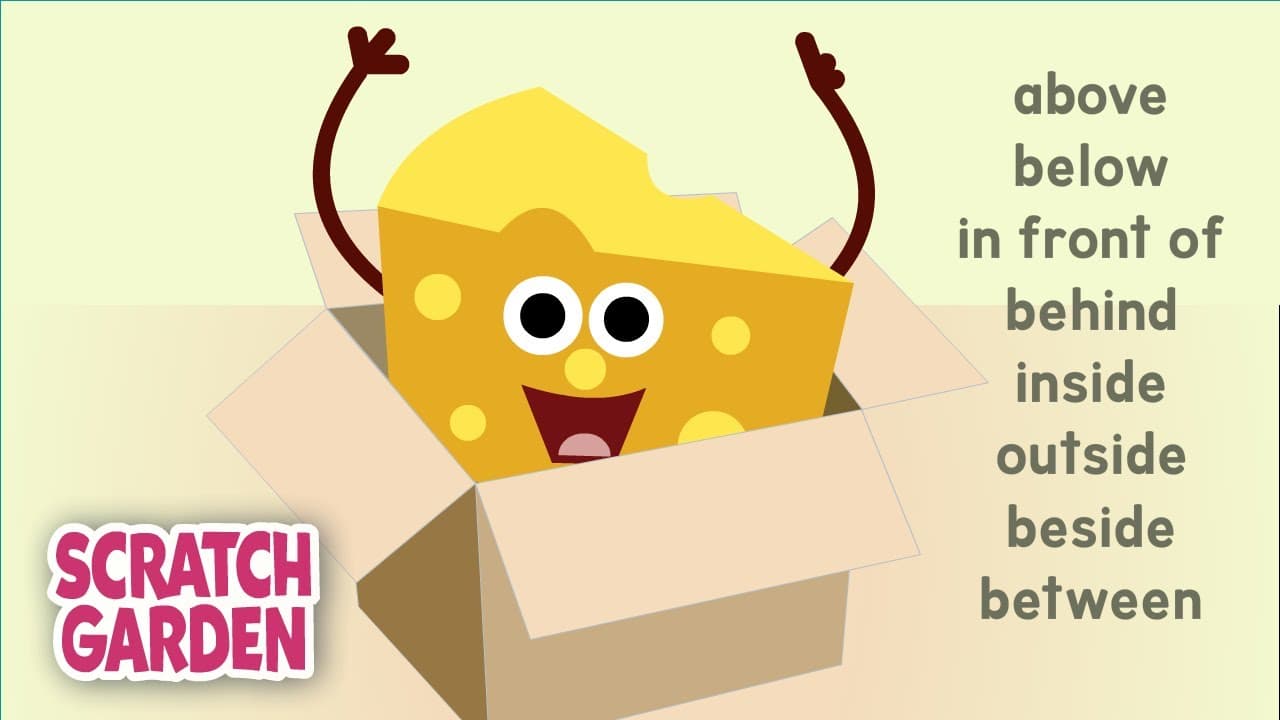
Learning Spatial Prepositions: Above, Below, Inside, and Outside

Learning Spatial Prepositions: Above, Below, Inside, and Outside

This engaging animated music video introduces young learners to fundamental spatial prepositions through catchy rhymes and clear visual demonstrations. Hosted by a friendly cheese character, the video uses a cast of colorful animals (a cat, bat, rat, and fox) and simple props like boxes and blocks to illustrate pairs of positional words including above/below, in front of/behind, inside/outside, and beside/between. The content is structured into two main musical verses, each followed by an interactive "sing with me" section that encourages active participation. The first half focuses on relative vertical and horizontal positioning (above, below, in front, behind), while the second half explores containment and proximity (inside, outside, beside, between). The repetitive nature of the song reinforces memory retention of these vocabulary terms. This video is an excellent resource for early childhood classrooms, ESL/ELL instruction, and special education settings to teach spatial awareness and basic grammar. Teachers can use it as a high-energy hook to start a lesson, a movement break where students act out the positions, or a review tool for positional vocabulary. The clear isolation of concepts against simple backgrounds makes it easy for students to focus on the specific spatial relationships being demonstrated.
Scratch GardenScratch Garden

2mins 20s

Mastering Sight Words Set 3: Reading Practice with Music

Mastering Sight Words Set 3: Reading Practice with Music

This engaging musical video introduces students to a specific set of high-frequency sight words (List 3), combining auditory and visual learning styles to support reading fluency. Set to an energetic beat, the video systematically presents each word individually, followed by a simple sentence that uses the word in context. This structure helps early readers not only memorize the spelling and pronunciation of the words but also understand how they function within a sentence structure. Key themes include reading readiness, vocabulary development, and sentence comprehension. The video covers over 40 essential sight words ranging from simple two-letter words like "if" to more complex words like "together" and "laugh." By repeating the pattern of Word -> Sentence -> Reading, it reinforces recognition through repetition and context, which are critical strategies for developing literacy skills in young learners. For educators, this video serves as an excellent tool for daily warm-ups, transition activities, or a fun review session for spelling and reading blocks. It transforms rote memorization into a rhythmic activity that encourages active participation. Teachers can use this resource to support differentiated instruction, allowing students to practice reading along with the narrator or challenging them to read the words before the audio cue.

Have Fun TeachingHave Fun Teaching

4mins 4s

Mastering High-Frequency Sight Words Through Song: List 3

Mastering High-Frequency Sight Words Through Song: List 3

This engaging educational music video is designed to help early elementary students master a specific set of high-frequency sight words often found in "List 3" of common sight word curriculums. Through a catchy, rhythmic song, the video visually presents each word on a colorful background while the narrator sings the word clearly multiple times. This multisensory approach helps reinforce word recognition, spelling, and pronunciation for developing readers. The video focuses on key literacy themes including reading fluency, word recognition, and vocabulary development. It covers a diverse list of functional words ranging from number words like "six" and "seven" to common verbs like "grow," "laugh," and "carry," as well as abstract concepts like "about" and "if." The repetition built into the song structure ensures that students have ample opportunity to encode these words into their visual memory. For the classroom, this video serves as an excellent warm-up, transition activity, or center station for literacy blocks. It supports differentiated learning by providing auditory cues for students who struggle with traditional flashcards. Teachers can use this video to introduce new vocabulary, review previously taught words, or as a fun "brain break" that keeps the focus on learning. The steady pacing allows students to read along, making it a valuable tool for building confidence in reading aloud.

Have Fun TeachingHave Fun Teaching

4mins 5s

Rapping the First 100 High-Frequency Sight Words

Rapping the First 100 High-Frequency Sight Words

This energetic educational music video transforms high-frequency word practice into an engaging rap battle between two animated microphones. Hosted by a slow-speaking sloth in a foggy forest, the video transitions into a fast-paced musical performance that integrates 100 common sight words into rhyming verses. As the characters rap, the lyrics appear on screen with the specific target sight words highlighted in bright white text against a darker sentence structure, helping students distinguish and focus on the key vocabulary. The content focuses entirely on early literacy and reading fluency, specifically targeting the 'Fry' or 'Dolch' high-frequency word lists commonly used in primary education. The video explores phonological awareness through rhyming couplets and demonstrates how these standalone words function within the context of full sentences. The contrast between the sloth's slow introduction and the rapid-fire rap offers a unique lesson in pacing and fluency. For teachers, this video serves as a high-energy review tool or a 'brain break' that reinforces literacy skills. It is particularly useful for auditory learners who benefit from rhythm and rhyme to memorize spelling and pronunciation. The 'rap battle' format encourages students to read quickly and builds automaticity—the ability to recognize words instantly without sounding them out—which is a critical step in developing reading comprehension.

Scratch GardenScratch Garden

2mins 44s

Rhythmic Reading: High-Frequency Sight Words in Context

Rhythmic Reading: High-Frequency Sight Words in Context

This educational music video features a high-energy, rhythmic song designed to teach early readers common sight words (high-frequency words) that often cannot be sounded out phonetically. Through a structured call-and-response format, the video introduces words individually, pronouncing them clearly, and then immediately places them into a simple, relatable sentence to demonstrate proper usage and context. The content covers a vast array of essential sight words found in early literacy curriculums (like Dolch and Fry lists), grouped into color-coded sections (Blue, Pink, Green, and Orange backgrounds) to help with visual categorization. Key themes include reading fluency, vocabulary acquisition, sentence structure, and word recognition. The repetition and catchy beat utilize the 'earworm' effect to aid memorization. For educators, this video serves as a versatile classroom tool. It can be used as a daily warm-up to build reading confidence, a transition activity to settle students, or a direct instructional tool for introducing new vocabulary. The consistent visual pattern—word, then sentence—makes it accessible for non-readers to follow along, bridging the gap between isolated word recognition and fluent reading comprehension.

Have Fun TeachingHave Fun Teaching

18mins 12s

When to Use Less Versus Fewer: A Grammar Guide

When to Use Less Versus Fewer: A Grammar Guide

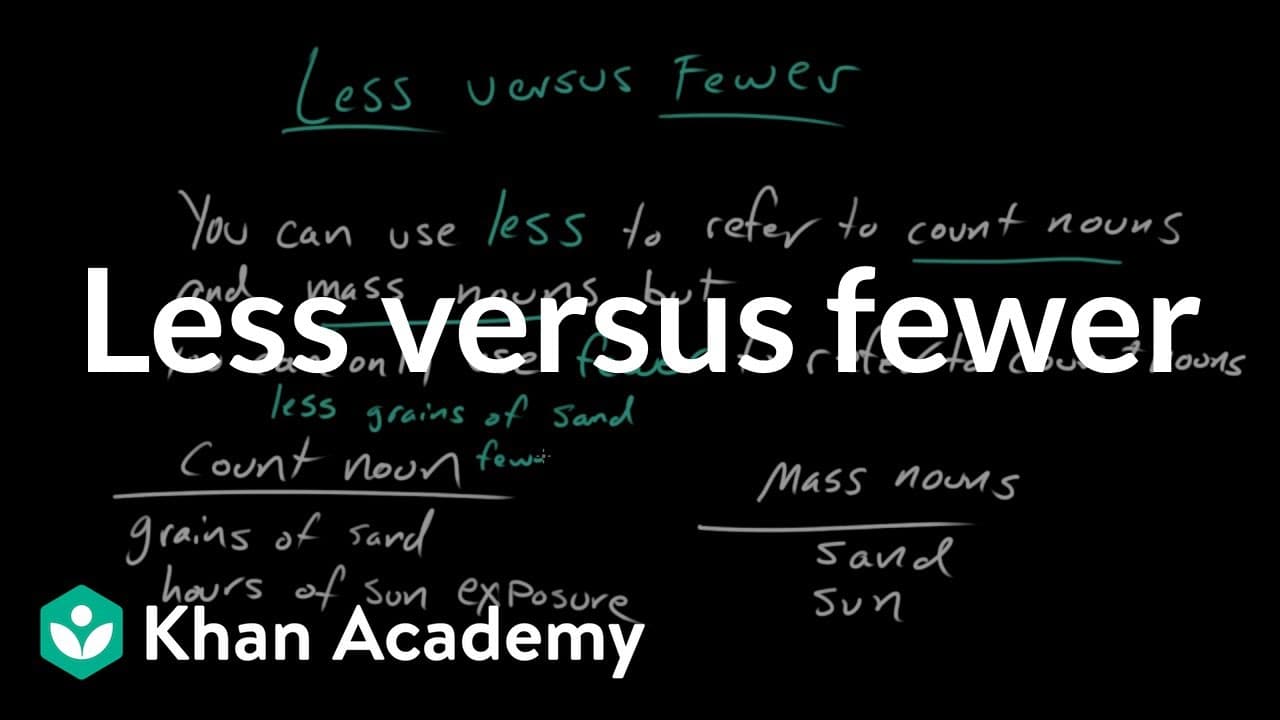
In this engaging grammar exploration, two narrators, David and Rosie, debate the rules surrounding the usage of "less" versus "fewer." While many people believe there is a strict rule separating the two, the video reveals a more nuanced reality involving count nouns and mass nouns. Rosie argues that while "fewer" is restricted to countable items, "less" has historically been used for both, challenging common grammar superstitions. The video dives into the technical definitions of count nouns (like grains of sand or hours) versus mass nouns (like sand or sun). Through clear examples written on a digital whiteboard, the narrators demonstrate how these noun types interact with the words less and fewer. The discussion highlights how native speakers naturally distinguish between these categories, even if they can't explicitly define them. Crucially, the lesson explores the historical origins of this grammar rule, tracing it back to a personal preference expressed by Robert Baker in 1770 rather than an inherent law of language. This historical context turns a dry grammar lesson into a fascinating discussion about how language evolves and how rules are made. It concludes with practical advice: while the strict rule might be arbitrary, adhering to it in formal writing remains a marker of "strictly proper" standard English.

Khan AcademyKhan Academy

7mins 12s

Materials

Category Crunch Sorting Cards

Category Crunch Sorting Cards

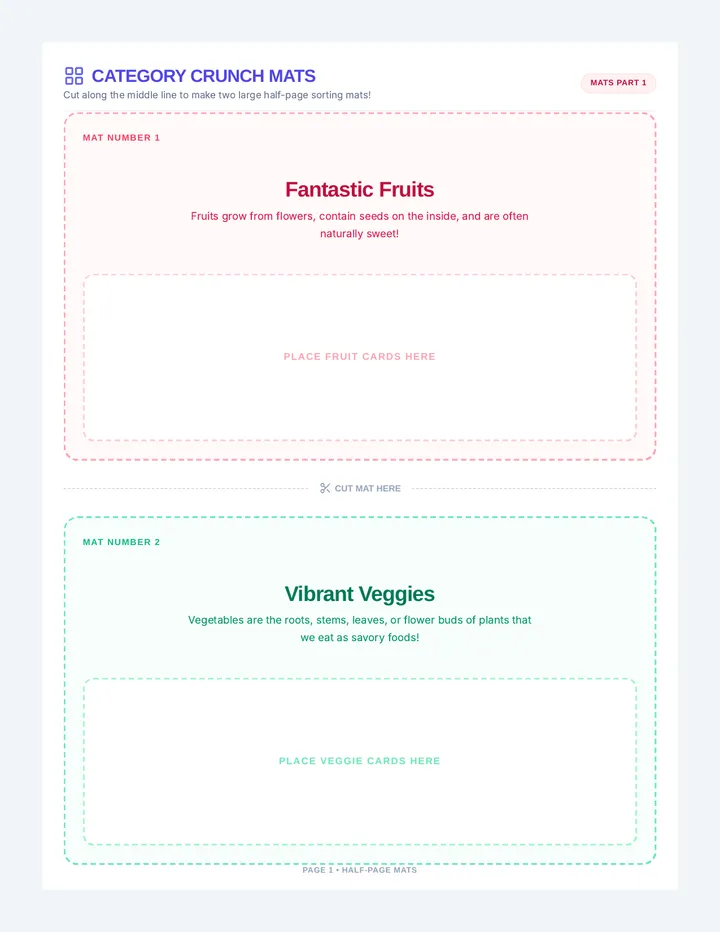
An expanded 18-page modular printable category sorting card pack. Features a beautiful custom CSS bookshelf, nightstand, wingback armchair, raincoat, celery, lemonade, and cinnamon roll illustrations, 10 clean half-page sized sorting mats without helper emojis, 80 large pre-made cards, 8 customizable cards, a companion detective worksheet, and an answer key.

AA

Ashley Aldaco

Spring Search Worksheet

Spring Search Worksheet

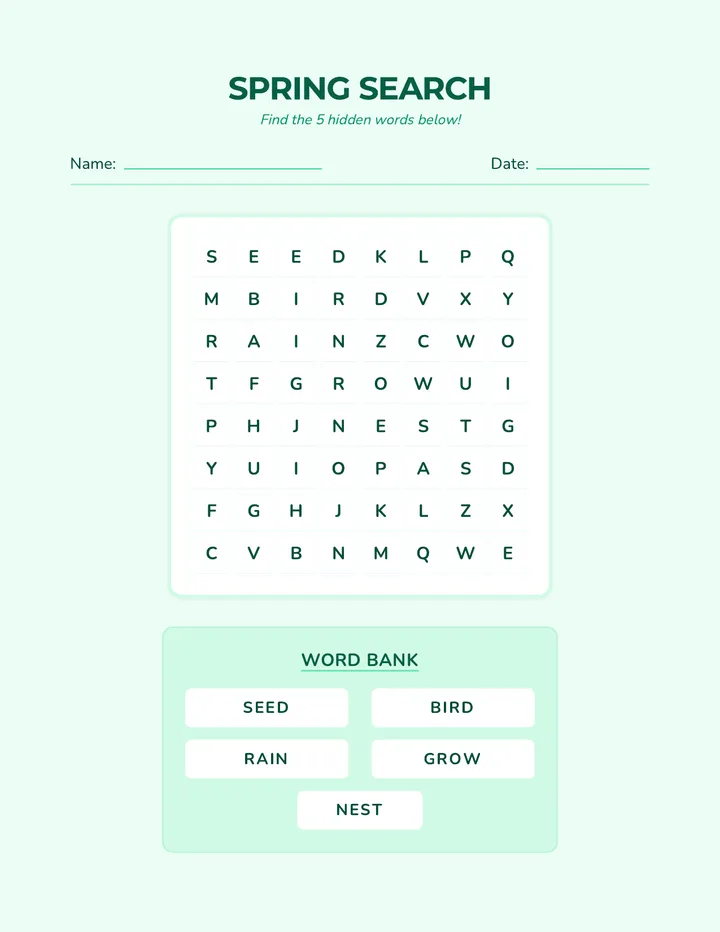
A compact spring-themed word search for students, featuring five easy words (SEED, BIRD, RAIN, GROW, NEST) in an 8x8 grid. Optimized for printing on a single page.

C

cedaniels

Noun Verb Showdown Worksheet

Noun Verb Showdown Worksheet

A print-ready, high-contrast grayscale first-grade student worksheet for sorting 10 simple nouns and verbs (including CVC words 'dog' and 'den', and active verb 'kick'). Features a classic, clean black-and-white layout with check-off boxes, primary handwriting lines, and custom visual icons including a running person for verbs.

JB

Julia Butz

Word Palette Reflection Worksheet

Word Palette Reflection Worksheet

A scaffolded 2-page reflection worksheet for 'The Color of Words' by Krista Legge, featuring prominent fill-in-the-blank sentence frames with dedicated handwriting blanks, categorized emotion word banks, and structured color-word reflection prompts.

EG

Emily Gianni

Super Traits Poster

Super Traits Poster

An updated, vibrant anchor chart poster for second graders featuring an expanded list of 35 positive character traits and 35 physical adjectives. The layout uses a clear two-column grid within each section to maintain legibility while maximizing vocabulary.

JK

Juli Kibbe

Galactic Grammar Packet

Galactic Grammar Packet

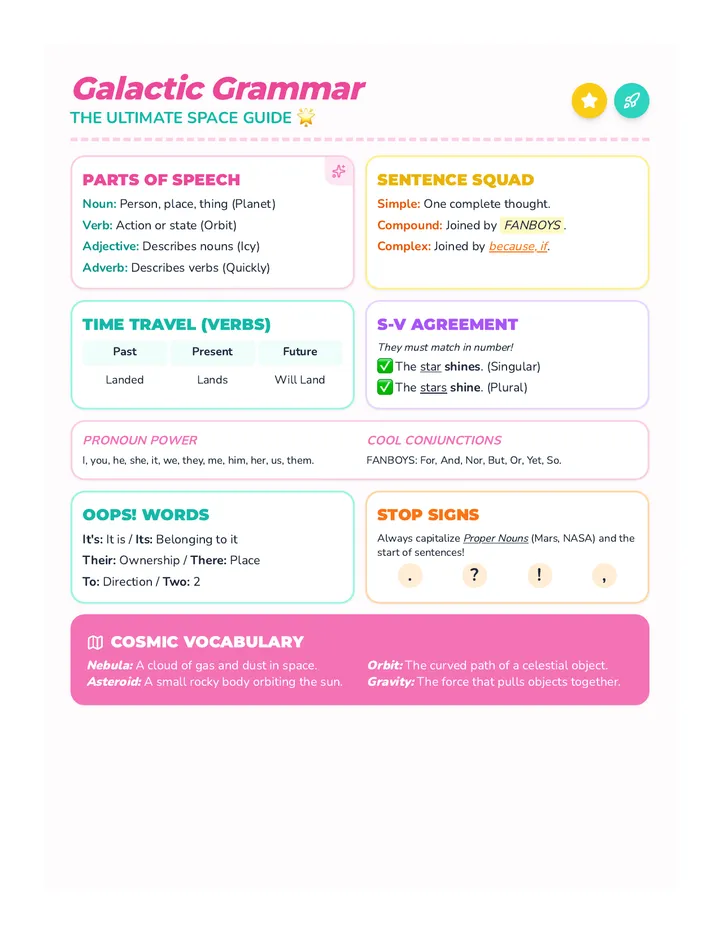
A two-page 5th-grade grammar packet featuring a 'Galactic Grammar' reference guide and a 'Mission Control' practice worksheet. The material uses a bright, preppy aesthetic with space-themed vocabulary and comprehensive coverage of parts of speech, sentence structure, and punctuation.

MA

Madelyne Ashbaugh

Sequences

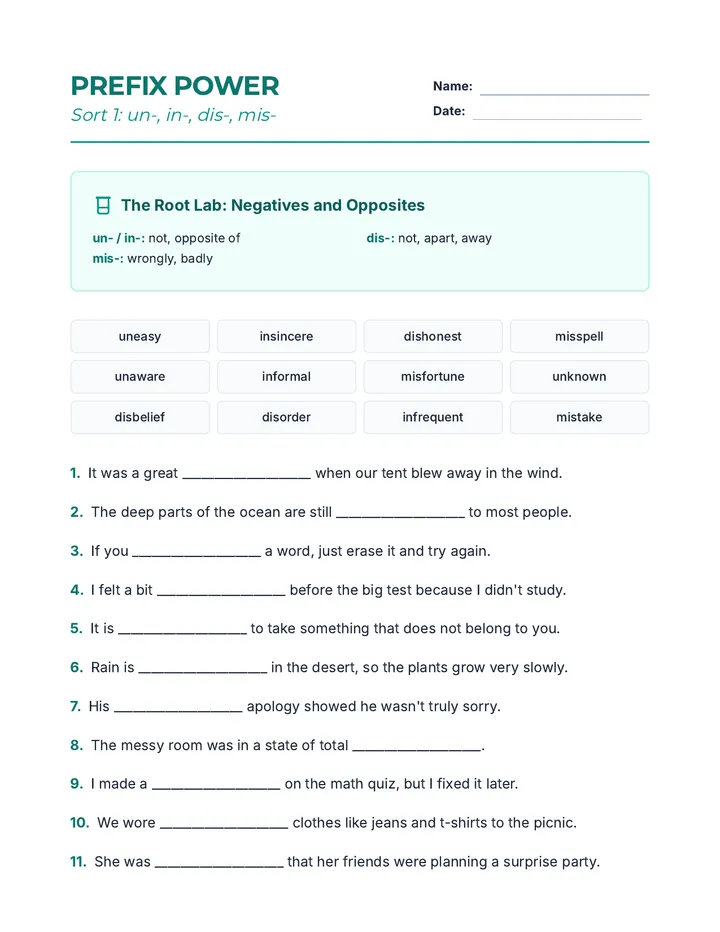
Prefix Power Sort 1 Worksheet

Word Wizard Packet

A comprehensive vocabulary and morphology curriculum covering prefixes, suffixes, Latin roots, and Greek roots through fill-in-the-blank exercises and engaging word puzzles.

N

nmack

137
Lesson Plan 1 Introduction

Literary Device Detectives

A comprehensive multi-unit sequence for 3rd and 4th grade students covering key literary devices: Introduction to Figurative Language, Onomatopoeia, Similes, Metaphors, Personification, and Idioms. Each unit provides 5 lesson plans, interactive notebook resources, and a wide variety of activities and stories designed to improve descriptive writing and reading comprehension.

JS

Janette Sullivan

105
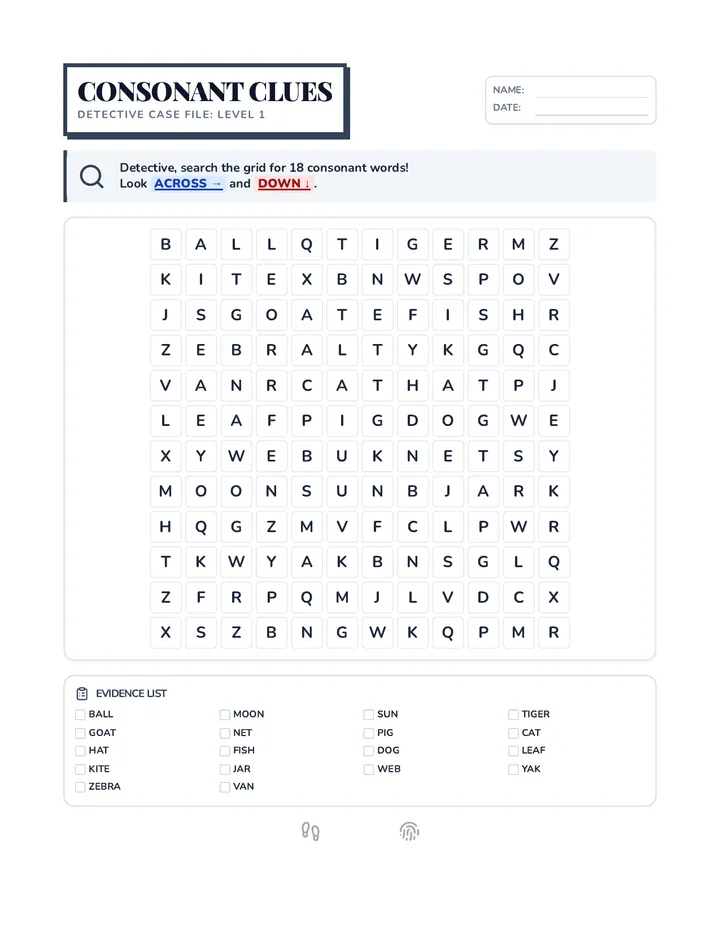
Consonant Clues Word Search

Sound Detective Workbook

A complete phonics journey covering letter-name alphabetic spelling stages, featuring randomized word sort practice through interactive sentence completion.

N

nmack

57
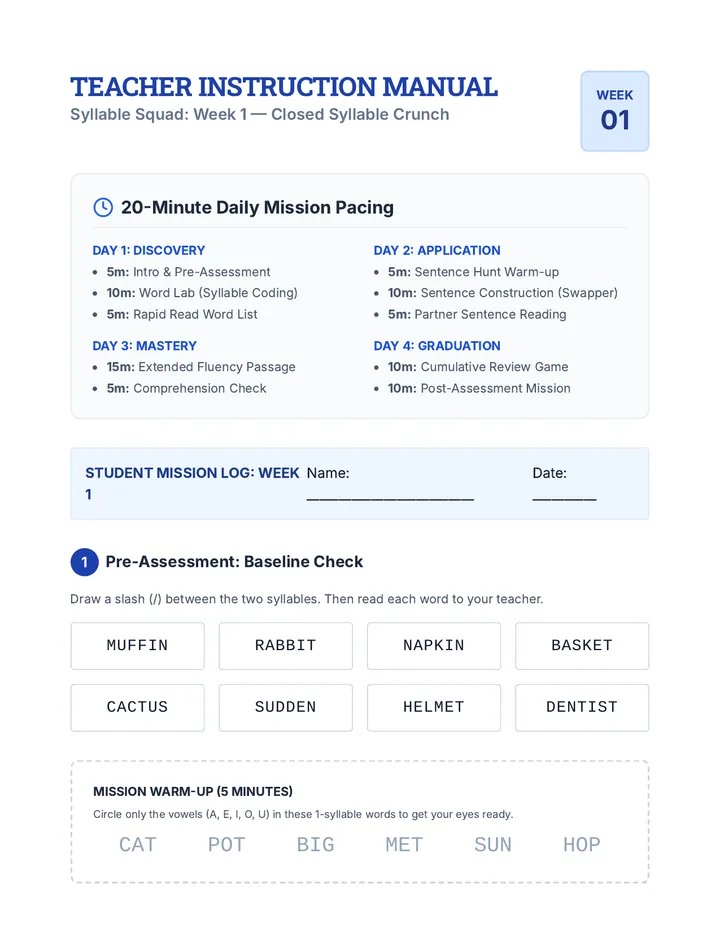
Week 1 Closed Syllable Manual

Syllable Squad Decoding Mission

A comprehensive 5-week phonics intervention focused on decoding two-syllable words across five major syllable types. Each week includes a pre-assessment, daily lessons with specific targets, student practice sheets, and a post-assessment.

KJ

Kelsey Jacobs

29
Detective Nutmeg Story Document

Story Investigators

A series of lessons focused on developing reading comprehension through mystery stories, with tiered assignments for different grade levels.

JJ

Julie Johns

30
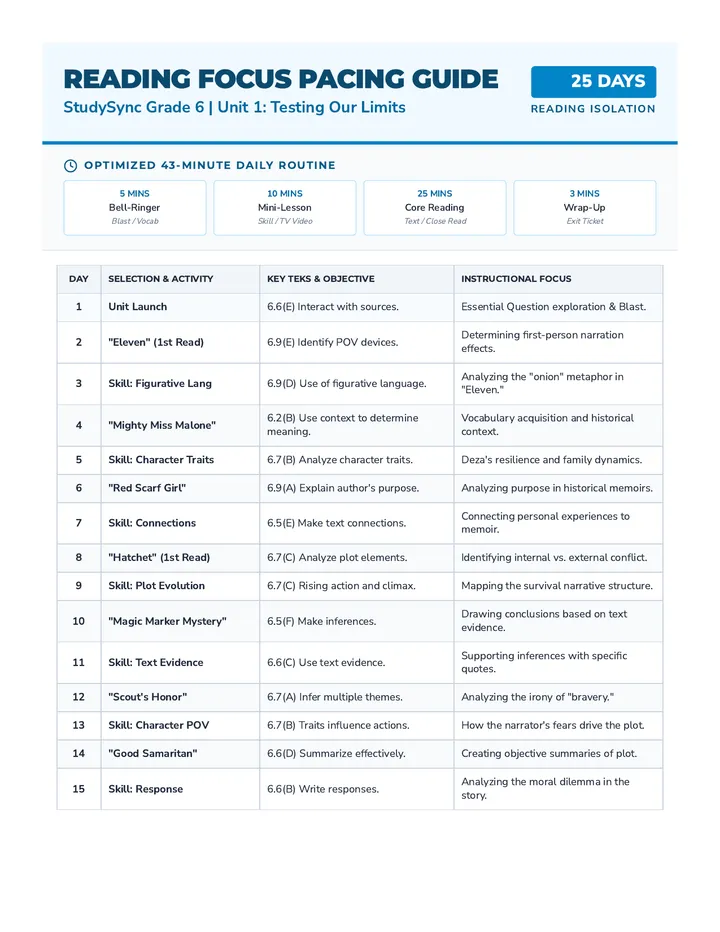
Reading Focus Pacing Guide

Testing Our Limits Unit

A 25-day comprehensive unit for StudySync Grade 6 that explores the theme of courage and resilience through isolated reading and writing tracks, aligned to ELA TEKS.

DM

Dawn Mustian

79

Lessons

Awakening Words Bell Ringer

Stolen Seconds

A comprehensive lesson exploring Tanith Lee's 'Awake,' a subversion of Sleeping Beauty, focusing on structural choices and source material transformation (RL.5 and RL.9). Students will analyze character conflict and the concept of 'the gift of time.'

V

vivianbelarmino

25
Narrative Navigator Slides

Journal Journey Cultural Bridge

An advanced 8th-grade ELA lesson exploring the intersection of Filipino and American identities through personal narrative. Students analyze the immigrant experience, master advanced vocabulary via a 'Quiz Bee,' and draft narratives that bridge their cultural heritage with their current journey.

V

vivianbelarmino

13
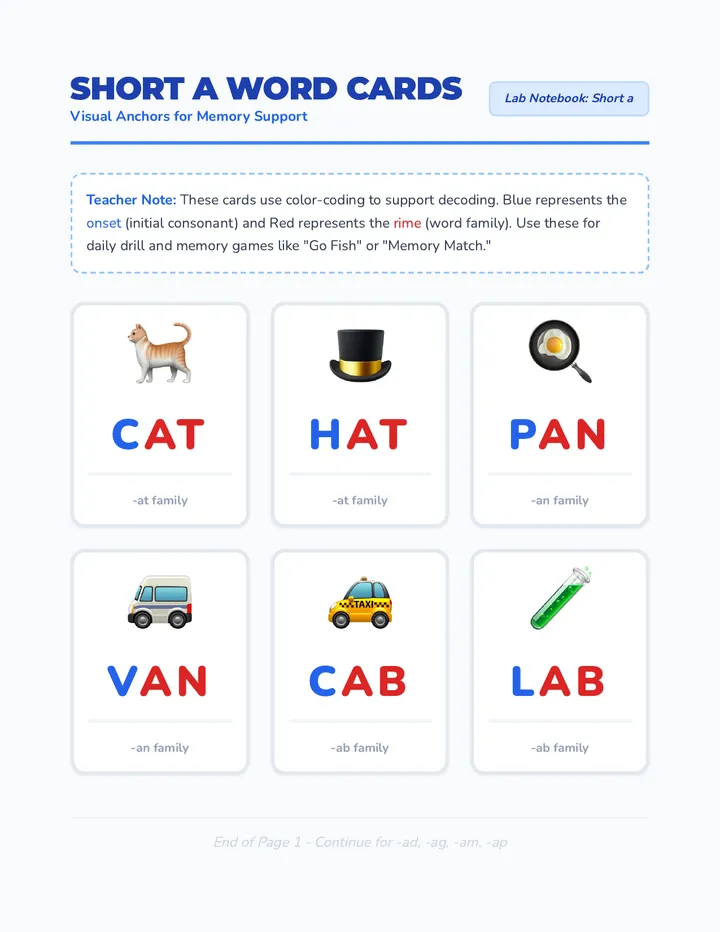
Short a Word Cards

Short a Mastery

A foundational literacy lesson focusing on decoding and encoding short 'a' word families (-at, -an, -ab, -ad, -ag, -am, -ap) through visual association and color-coded patterns.

C

cnduffy

15
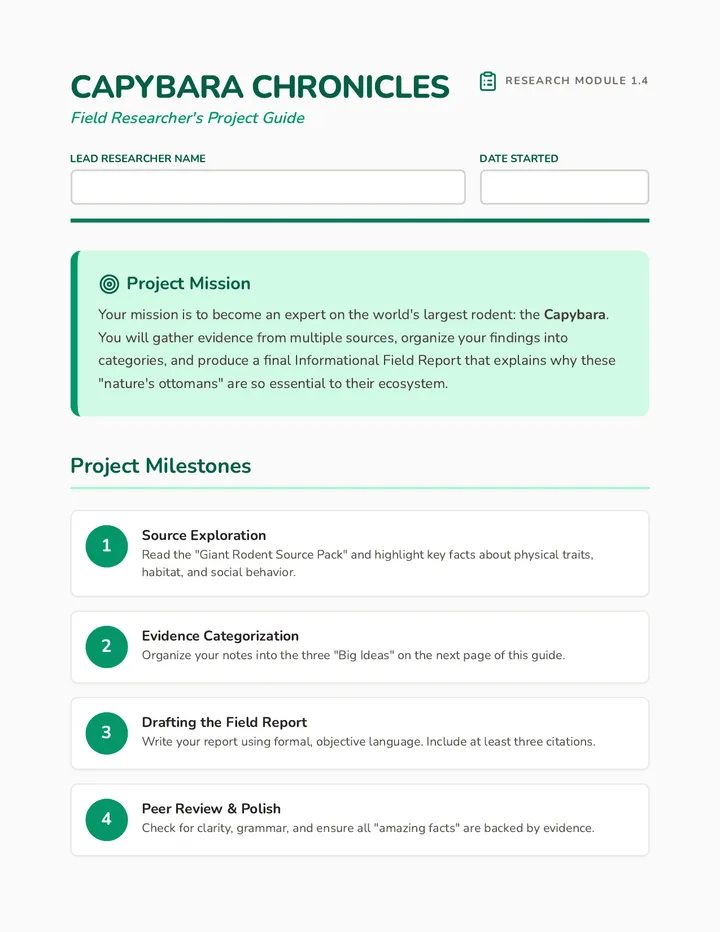
Capybara Chronicles Project Guide

Capybara Chronicles

A comprehensive research project where students explore the life, habitat, and unique behaviors of capybaras while developing informational writing and citation skills.

CG

Christopher Goossens

4
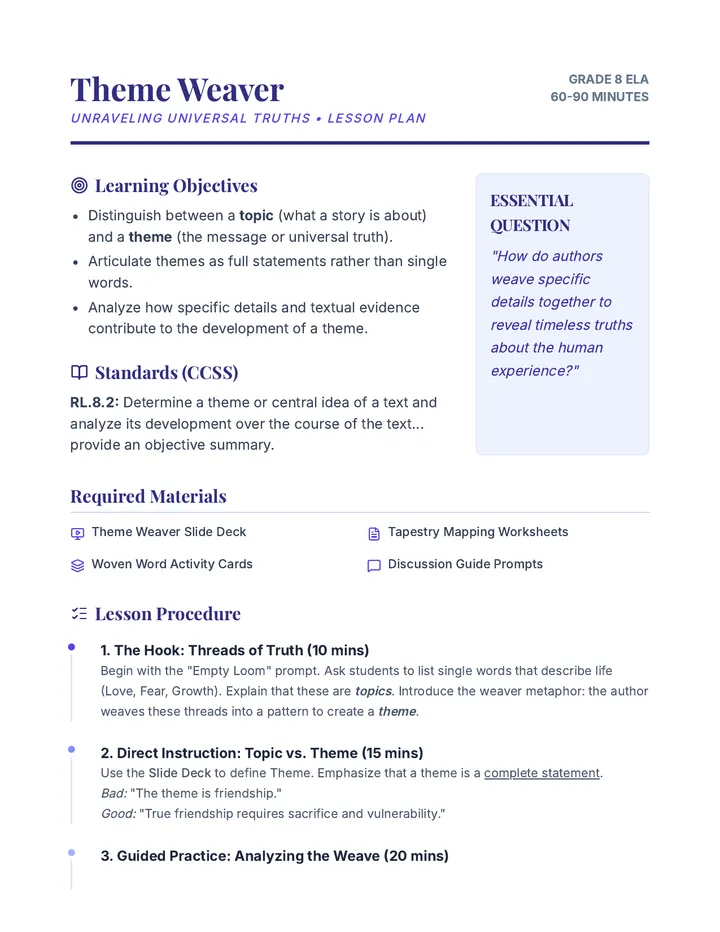
Theme Weaver Teacher Guide

Theme Weaver

An 8th-grade ELA lesson where students become 'theme weavers' to uncover universal truths in literature. They will learn to distinguish between topic and theme, identify thematic statements, and support their findings with textual evidence.

V

vivianbelarmino

24
Mind Map Presentation v3

Mind Map Masterclass

An 8th-grade ELA lesson connecting Howard Gardner's Theory of Multiple Intelligences to the story 'Flowers for Algernon'. Students explore media analysis, vocabulary, and literary characterization through a differentiated choice board and a self-assessment of their own learning strengths.

V

vivianbelarmino

9