Audio-narrated stories and poems paired with highlighted text. Builds reading fluency and vocabulary through multisensory engagement with literature.
A foundational literacy sequence designed for grades K-2, using engaging, simple rhyming poems to reinforce key reading skills, seasonal themes like Spring, phonics word families, and sight words. Students build fluency, word recognition, and reading comprehension through interactive reading, illustrating, and text-based questions.
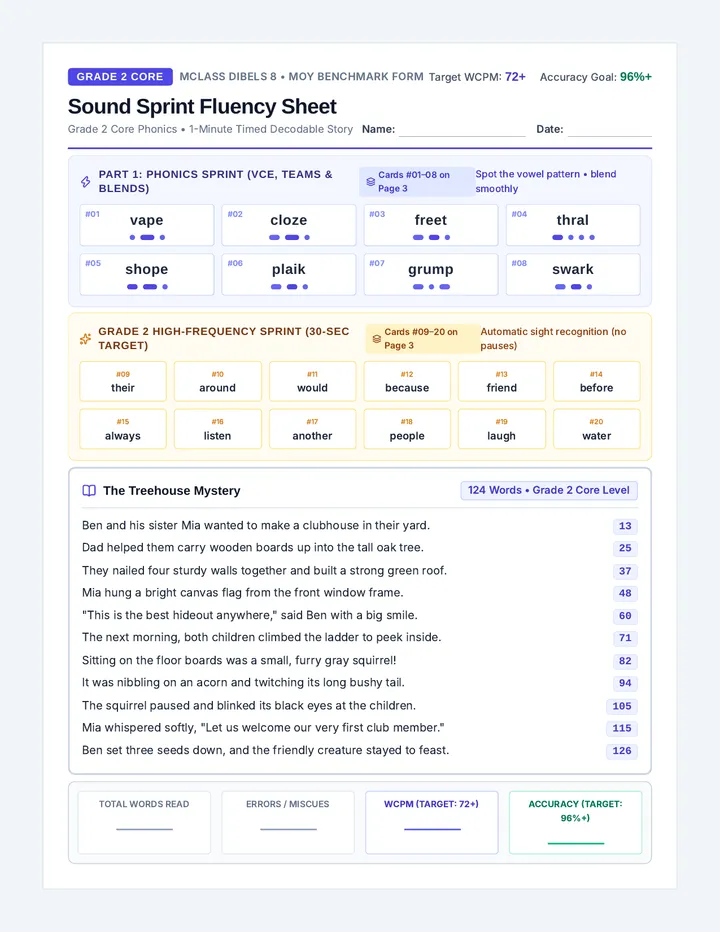
A comprehensive set of decodable fluency passages across grade levels, focusing on nature, wildlife, and ecosystems to build reading stamina and accuracy.
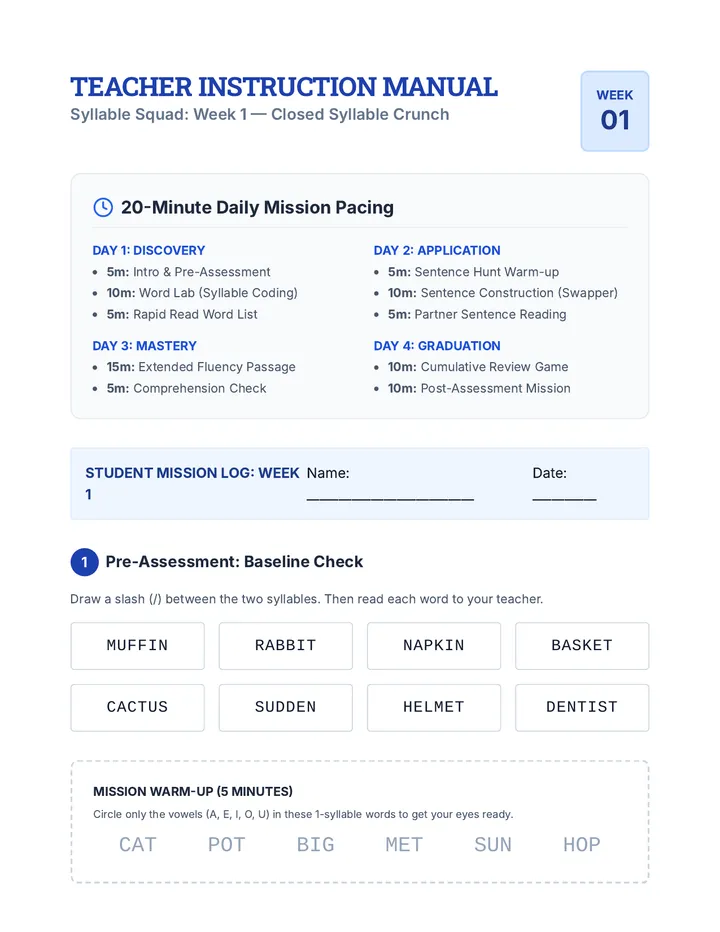
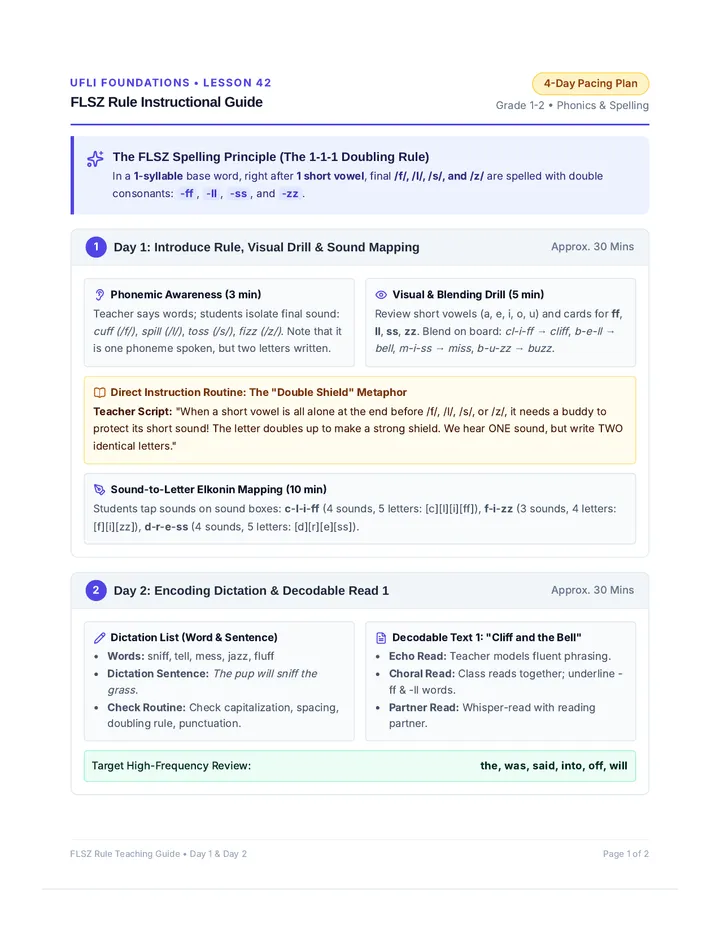
A comprehensive 5-week phonics intervention focused on decoding two-syllable words across five major syllable types. Each week includes a pre-assessment, daily lessons with specific targets, student practice sheets, and a post-assessment.
A foundational Pre-K sequence introducing the concepts of beginning, middle, and end through interactive read-alongs. Students learn to identify narrative structure, spot story problems, and sequence events using visual aids.
This sequence focuses on developing oral reading fluency and expression in 1st-grade students using read-along tools. Students learn to differentiate between monotone and expressive reading, match their voice to emotions and punctuation, and perform stories with prosody.
This 3rd-grade sequence explores how imagery, rhythm, and sound devices create meaning in poetry through a multisensory read-along approach. Students progress from visualizing sensory details to analyzing structural elements and finally synthesizing their understanding by creating their own audio-enhanced poetry experiences.
A 2nd-grade sequence focusing on developing oral reading fluency and prosody using audio-narrated literary texts. Students progress from listening for emotion to recording their own expressive readings, bridging the gap between decoding and comprehension.
This Kindergarten ELA sequence focuses on developing oral fluency and prosody by exploring how voice modulation (pitch, volume, speed) conveys emotion and meaning in read-aloud literary texts. Students progress from identifying emotions in tone to practicing character voices and punctuation-based intonation, culminating in their own expressive reading performances.
A Kindergarten ELA sequence focused on analyzing character and setting through audio-narrated stories, helping students build listening comprehension and visualization skills.
A 3rd-grade ELA sequence focused on rhythm, rhyme, and performance in poetry. Students learn to analyze the auditory elements of poems and perform them in a 'Poetry Cafe' setting.
A project-based sequence where 3rd-grade students use auditory cues from read-along texts to strengthen their visualization and story mapping skills. Students progress from sketching settings and characters to creating a full storyboard synchronized with audio narration.
A 2nd-grade ELA sequence focused on rhythm, rhyme, and mood in poetry through read-along experiences. Students explore how the musicality of language enhances meaning and practice recitation.
An individual student worksheet featuring a simple, engaging 'st-' consonant blend poem, a large space for the student to illustrate the scene, a guided word-tracing exercise, and simple text-based reading comprehension questions designed for early readers in grades K-2.
An individual student worksheet featuring a simple, engaging '-ug' word family poem, a large space for the student to illustrate the scene, a guided word-tracing exercise, and simple text-based reading comprehension questions designed for early readers in grades K-2.
A printable, half-page mini-booklet featuring three simple phonics poems (-at, -og, -ig families). Designed with dotted cut-lines, custom illustrations, and reading trackers, students can color, assemble, take home, and read with their families.
An individual student worksheet featuring a simple, engaging '-og' word family poem, a large space for the student to illustrate the scene, a guided word-tracing exercise, and simple text-based reading comprehension questions designed for early readers in grades K-2.
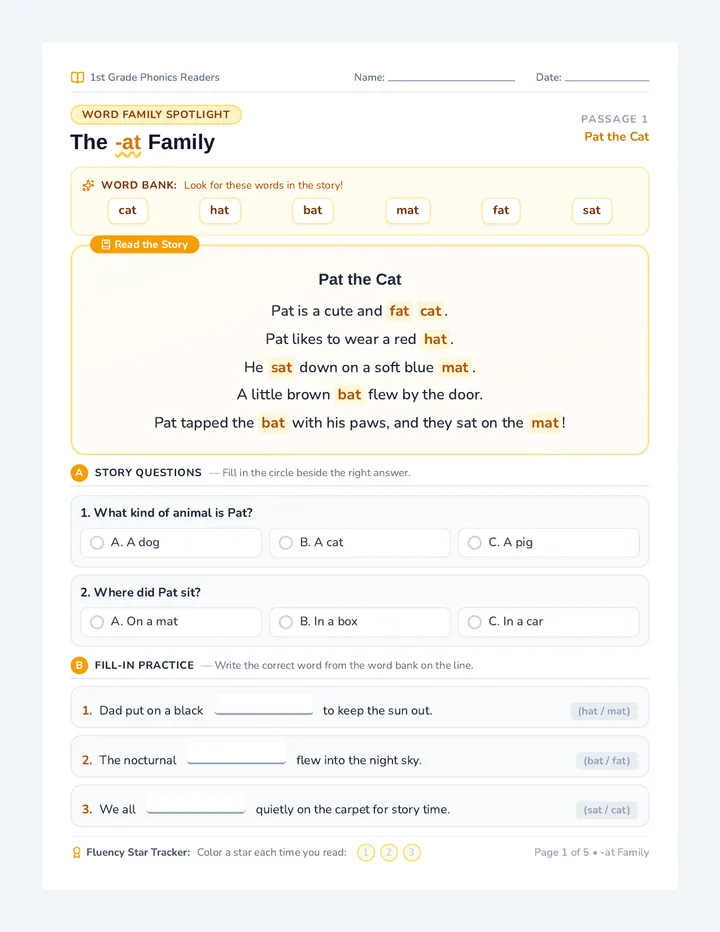
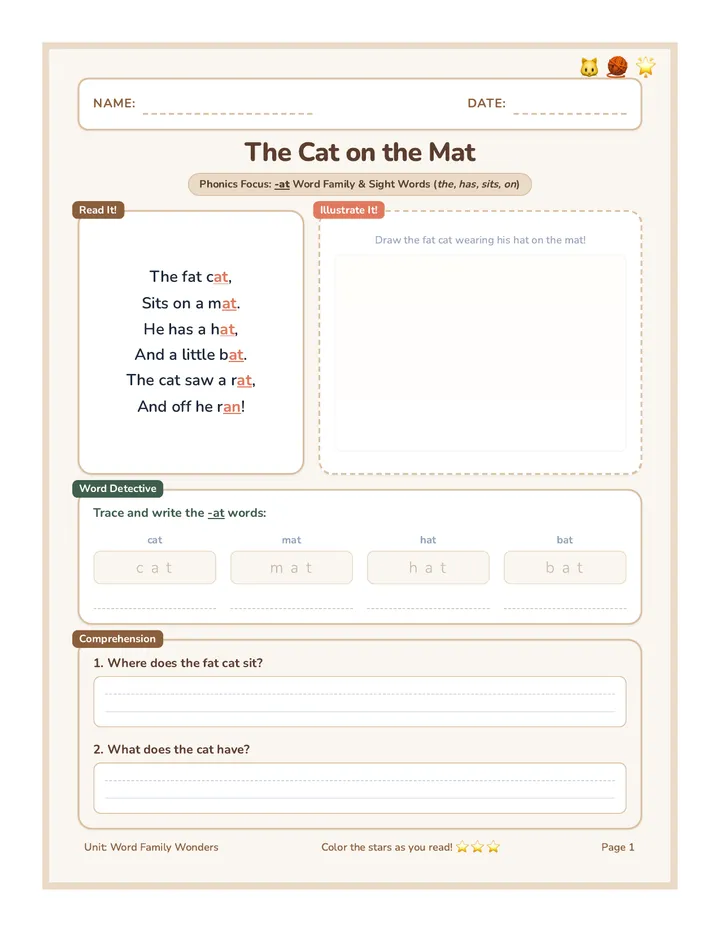
An individual student worksheet featuring a simple, engaging '-at' word family poem, a large space for the student to illustrate the scene, a guided word-tracing exercise, and simple text-based reading comprehension questions designed for early readers in grades K-2.
Expanded Chapter 6 of 'Needle & Claw' Volume 2: The Moth King's Hunger. Mabel and Arthur navigate the Silk Maze to rescue Shadow and Pickle from the Silk-Guardian. This version features 15 full pages of narrative text and a student workspace, maintaining Hi-Lo style for high school students with strict single-spaced formatting and consistent characterization. Revised for maximum text density.
Expanded Chapter 5 of 'Needle & Claw' Volume 2: The Moth King's Hunger. Mabel and Arthur return to the village to find the people 'harvested' of their memories. Shadow finds a secret map, leading them to the heart of the Silk Maze. This version features 15 full pages of narrative text and a student workspace, maintaining Hi-Lo style for high school students with strict single-spaced formatting and consistent characterization. Revised for maximum text density and consistency.
Chapter 4 of 'Needle & Claw' Volume 2: The Moth King's Hunger. Mabel and Arthur climb the Giant's Needle to mend the Sky-Breach. This version features 15 full pages of narrative text and a student workspace, maintaining Hi-Lo style for high school students with strict single-spaced formatting and consistent characterization. Revised for maximum text density and consistency.
Expanded Chapter 3 of 'Needle & Claw' Volume 2: The Moth King's Hunger. Mabel and Arthur join the Lace Resistance to mend the 'First Fold'. This version features 15 full pages of narrative text and a student workspace, maintaining Hi-Lo style for high school students with strict single-spaced formatting and consistent characterization. Revised for maximum text density and consistency.
Expanded Chapter 2 of 'Needle & Claw' Volume 2: The Moth King's Hunger. Mabel and Arthur enter the Felted Flats to rescue Shadow and discover the 'Heart-String' magic. This version features 15 full pages of narrative text, maintaining Hi-Lo style for high school students with strict single-spaced formatting and consistent characterization. Revised for maximum text density and consistency.
Expanded Chapter 1 of 'Needle & Claw' Volume 2: The Moth King's Hunger. Mabel and Arthur encounter a reality-eating silver moth in the Sunrise Senior Living Center and are pulled into a portal within Mr. Henderson's trunk. This version features 15 full pages of narrative text, maintaining Hi-Lo style for high school students with strict single-spaced formatting and consistent characterization. Revised for maximum text density and consistency.
A continuation of phonics exploration focusing on the '-ug' word family and the 'st-' consonant blend. Students practice decoding, visualizing, and writing through hands-on worksheets.
A classroom lesson focused on the '-at' and '-og' word families. Students read simple, rhythmic poems, highlight word family members, illustrate the scenes to show comprehension, and answer simple text-based questions.
A creative story outline and character guide for a high-interest, low-readability (Hi-Lo) novel featuring an elderly protagonist in a fantasy world.
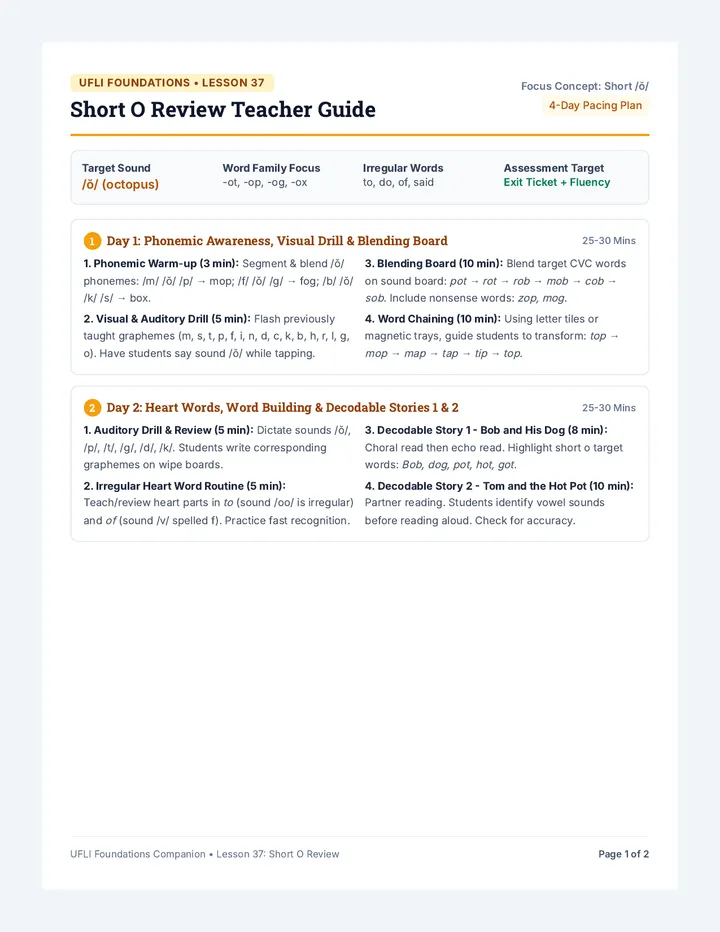
A foundational phonics lesson focusing on identifying and reading words with the digraphs wh, sh, ch, and ck within a beach-themed narrative. Students will practice oral reading fluency and basic reading comprehension.
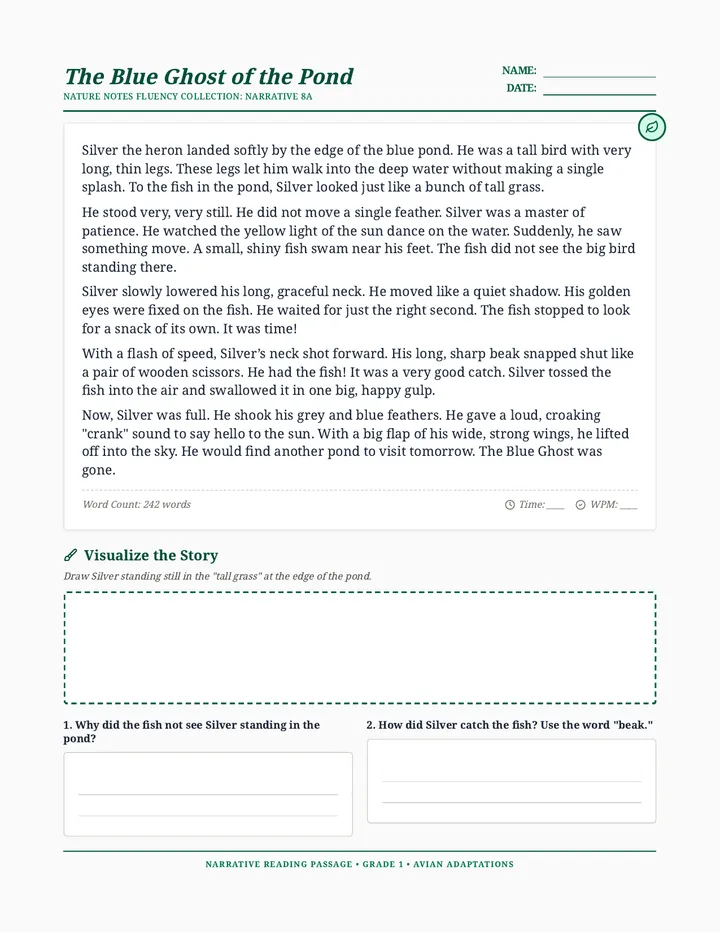
A collection of Grade 1 decodable passages focusing on bird adaptations, specifically beaks and feathers, featuring common North American and exotic birds.
A dedicated hub for sequence-level evaluations, including the Placement Mission (pre-assessment) and the Final Graduation (post-assessment).
Week 5 concludes the series with the consonant-le syllable type. Students learn the rule of counting back three letters from the end of the word to find the syllable break.
Week 4 explores r-controlled syllables (ar, er, ir, or, ur). Students identify how the 'r' changes the vowel sound and practice decoding multi-syllabic words with these patterns.
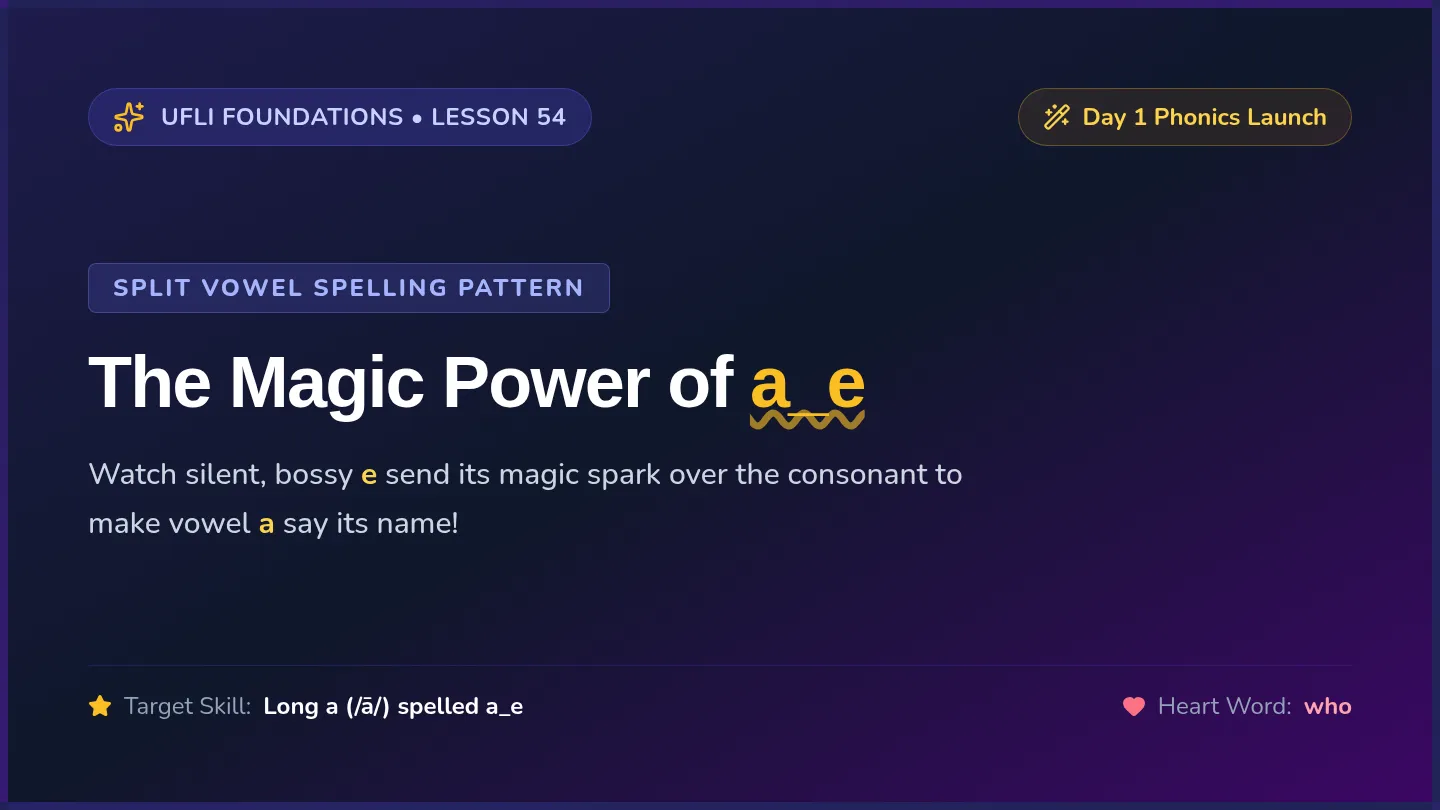
Week 3 focuses on the Magic E (VCE) syllable type in two-syllable words. Students learn to spot the silent 'e' and apply long vowel sounds across syllable boundaries.
Week 2 introduces open syllables (V/CV pattern). Students practice dividing after the first vowel to create a long vowel sound in the first syllable.
Week 1 focuses on closed syllables (VC/CV and VCC/V patterns). Students learn to identify two consonants between two vowels and divide the word accordingly to maintain short vowel sounds.
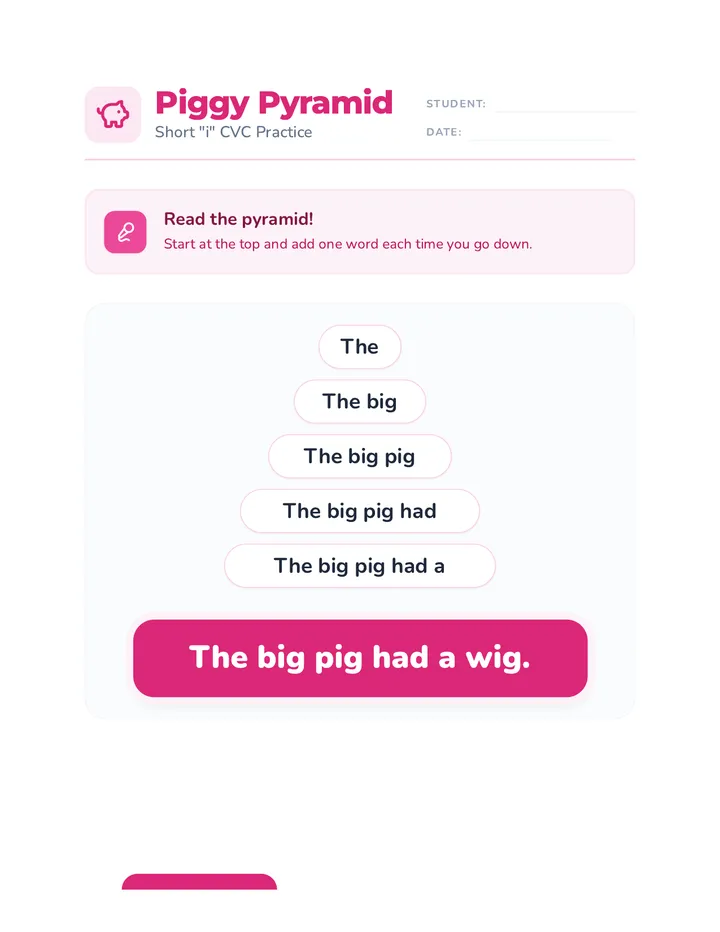
A phonics lesson focusing on short 'i' CVC words through a structured fluency pyramid and comprehension questions.