Lenny.com
Explore
Create
ActivitiesNewMathEnglish Language ArtsScience & EngineeringSocial StudiesGlobal LanguagesHealth & Physical EducationSpecial EducationCounseling & Life SkillsArts & CreativityESL
Lenny.com
Lenny.com
Explore
Create
ActivitiesNewMathEnglish Language ArtsScience & EngineeringSocial StudiesGlobal LanguagesHealth & Physical EducationSpecial EducationCounseling & Life SkillsArts & CreativityESL
Lenny.com
Lenny.com

Solutions

Lenny for EducatorsLenny for SchoolsLenny for Districts

Product

ExploreSign inCreateSupportAbout

Resources

Getting startedMTSS Acceleration Program

© 2026 Lenny Learning Inc.

TermsPrivacyAccessibility
LinkedInInstagramX
Lenny

Text Structure

Organizational patterns including cause and effect, compare and contrast, and chronological sequencing. Strengthens comprehension by analyzing how authors arrange information to clarify relationships between ideas.

English Language ArtsPhonics & Reading FoundationsLetter IdentificationLearn Letters A-ZLowercase and Uppercase LettersConsonants and VowelsLetter-Sound AssociationsLetter-Sound Associations: LowercaseLetter-Sound Associations: UppercaseBeginning and Ending SoundsRhymingBlending And SegmentingShort VowelsShort Vowel SoundsConsonant BlendsConsonant DigraphsBlends, Digraphs, and TrigraphsDigraphs, Blends, and Silent LettersLong Vowel SoundsLong Vowel PatternsShort and Long VowelsShort and Long Vowel PatternsSilent EVowel SoundsVowel TeamsR-Controlled VowelsDiphthongs: Oi, Oy, Ou, OwVariant VowelsVariant, Diphthong, And R Vowel PatternsSoft G And CSight WordsIrregular WordsWord RecognitionSyllablesSyllable TypesTwo-Syllable WordsMultisyllabic WordsPhoneme ManipulationDecodable TextsVocabularyAction WordsQuestion WordsNouns and AdjectivesClassify WordsCompound WordsSynonyms and AntonymsHomophonesHomophones and HomonymsShades of MeaningContext CluesPrefixes and SuffixesGreek and Latin RootsAnalogiesIdioms and AdagesForeign Words and ExpressionsWord Choice and UsageReference SkillsReading ComprehensionRead-Along Literary TextsRead-Along Informational TextsReality vs. FictionStory ElementsCharacterSequenceMain IdeaCause And EffectCompare And ContrastReading StrategiesText StructureAuthor's PurposeAuthor's Purpose And ToneAuthor's PerspectivePoint Of ViewThemeInference And ThemeInference And AnalysisPoetry ElementsLiterary DevicesAnalyzing LiteratureAnalyzing Informational TextsComparing TextsAudience, Purpose, And ToneBusiness DocumentsNovel StudyNonfiction Book StudyGrammar & MechanicsSentencesNounsVerbsAdjectivesPronounsCapitalizationPunctuationContractionsConjunctionsPrepositionsArticlesAdjectives And AdverbsVerb TypesVerb TensePronouns And AntecedentsPronoun TypesSubject-Verb AgreementDirect And Indirect ObjectsSentences, Fragments, And Run-OnsPhrases And ClausesCommasSemicolons, Colons, And CommasDashes, Hyphens, And EllipsesSpellingAbbreviationsFormattingVerb Tense And MoodMisplaced ModifiersWritingDescriptive DetailsCreative WritingOpinion WritingTopic SentencesOrganizing WritingLinking WordsSentence VarietyIntroductions And ConclusionsPersuasive And Opinion WritingExpository WritingPersuasive StrategiesDeveloping And Supporting ArgumentsTopic Sentences And Thesis StatementsSummarizingResearch SkillsEditing And RevisingActive And Passive Voice=Writing Clearly And ConciselyDebate & Public SpeakingPublic Speaking BasicsPersuasive TechniquesClaims and EvidenceTypes of ArgumentsReasoning TypesLogical FallaciesTopic ResearchOrganizing EvidenceDebate Speech OrganizationAttacking and Defending ArgumentsClash and EngagementImpact CalculusQuestioning and Cross-ExaminationCritical ThinkingInformal LogicFormal LogicInductive Reasoning

Videos

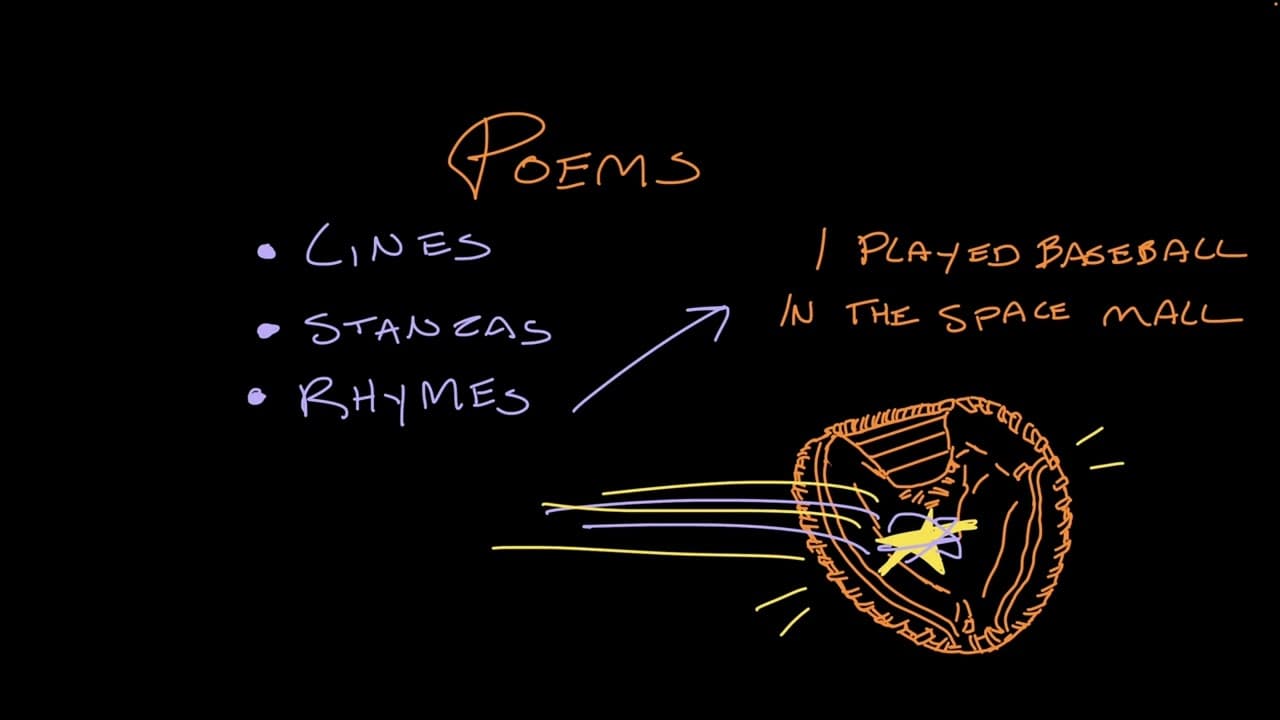
How to Read a Poem: Structure and Meaning

How to Read a Poem: Structure and Meaning

This educational video serves as an engaging introduction to poetry analysis, specifically focusing on how structure contributes to meaning. The narrator, David, welcomes viewers to "The Poem Zone" and breaks down the fundamental building blocks of poetry: lines, line breaks, stanzas, and rhyme. He defines poetry simply as "art made out of words" and explains that while poems play with sound and rhythm, they don't always have to rhyme. The visual style uses a blackboard aesthetic with handwritten text that appears in real-time to illustrate concepts. The core of the video features an original piece titled "Egg Poem," which the narrator reads and then dissects stanza by stanza. Through this close reading, the video demonstrates how a poem's structure can organize ideas and build an emotional arc. The narrator highlights how the poem uses a repeating structure ("Morning is...") to anchor each stanza while progressing from a calm morning to a chaotic one. For educators, this video is a powerful tool for bridging the gap between simply reading poetry and analyzing it. It explicitly teaches students to ask how lines and stanzas build meaning, rather than just identifying them as structural elements. The video introduces the concept of extended metaphor in a highly accessible way by connecting the cooking terms "easy," "medium," and "hard" to both the state of an egg and the speaker's emotional state, providing a clear model for students to use in their own literary analysis.

Khan AcademyKhan Academy

4mins 6s

Baking a Story: Part-Whole Relationships in Literature

Baking a Story: Part-Whole Relationships in Literature

In this engaging educational video, Justin uses a relatable analogy—baking a birthday cake—to explain the complex literary concept of part-whole relationships. The video begins with a narrative about planning a surprise party and segues into a text message conversation between a character named Liz and her mother. As Liz encounters a missing ingredient (buttermilk) while baking, Justin explains the scientific function of that ingredient, setting the stage for a deeper analytical connection.

Miacademy & MiaPrep Learning ChannelMiacademy & MiaPrep Learning Channel

8mins 58s

Identifying Cause and Effect in Texts

Identifying Cause and Effect in Texts

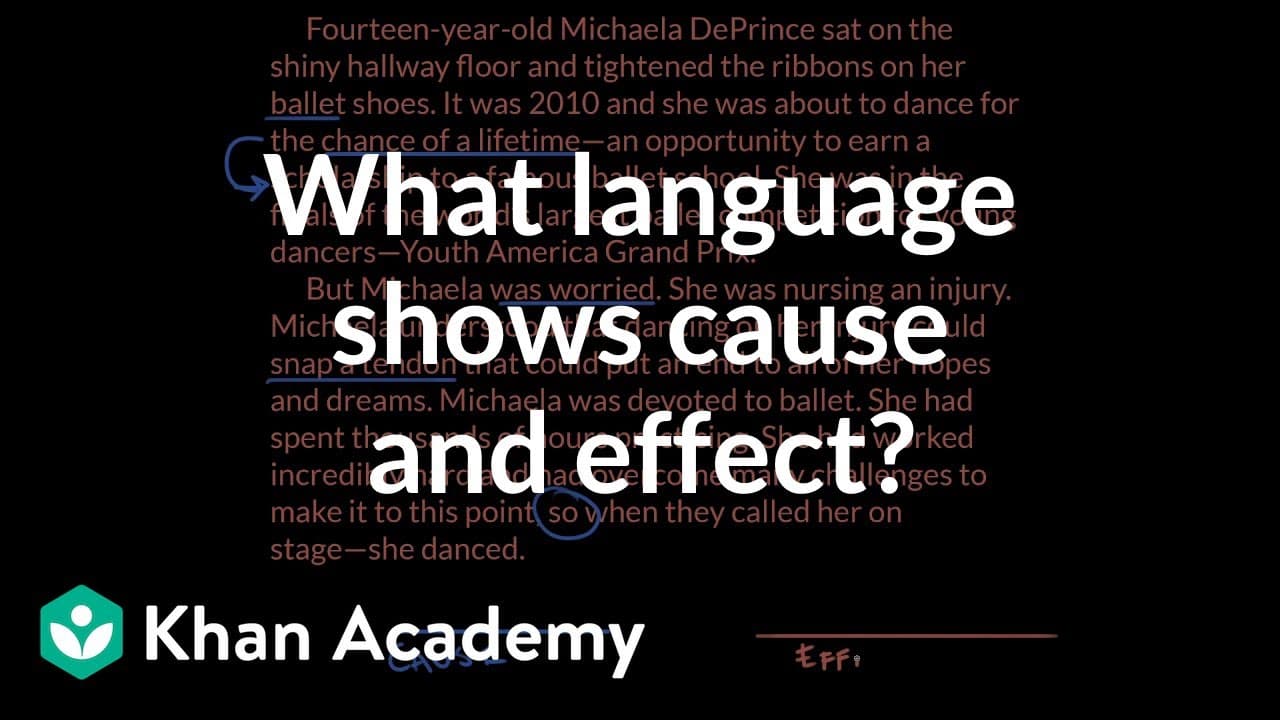
This educational video uses the whimsical machinery of Rube Goldberg to introduce and explain the concept of cause and effect in reading comprehension. The narrator begins by analyzing a complex cartoon machine where one action triggers a chain reaction, providing a concrete visual metaphor for how events are connected. This visual introduction seamlessly transitions into a lesson on identifying these relationships within written text, distinguishing between the 'cause' (why something happens) and the 'effect' (the result). The video covers key themes including logical sequencing, identifying signal words, and critical reading strategies. It explicitly lists common transition words that signal causes (e.g., because, since) and effects (e.g., therefore, consequently). The narrator also addresses the common misconception that cause and effect must follow the order of the sentence, demonstrating how sentence structure can be inverted without changing the logical relationship. For the classroom, this video is an excellent tool for scaffolding reading comprehension skills. It moves from a fun, low-stakes visual example to a rigorous close reading of a nonfiction passage about ballerina Michaela DePrince. By modeling how to annotate a text and ask 'why' questions to uncover hidden motivations and results, the video demonstrates practical strategies students can apply to any complex text to better understand narrative structure and character motivation.

Khan AcademyKhan Academy

7mins 30s

Exploring Storytelling Tools in Comics and Graphic Novels

Exploring Storytelling Tools in Comics and Graphic Novels

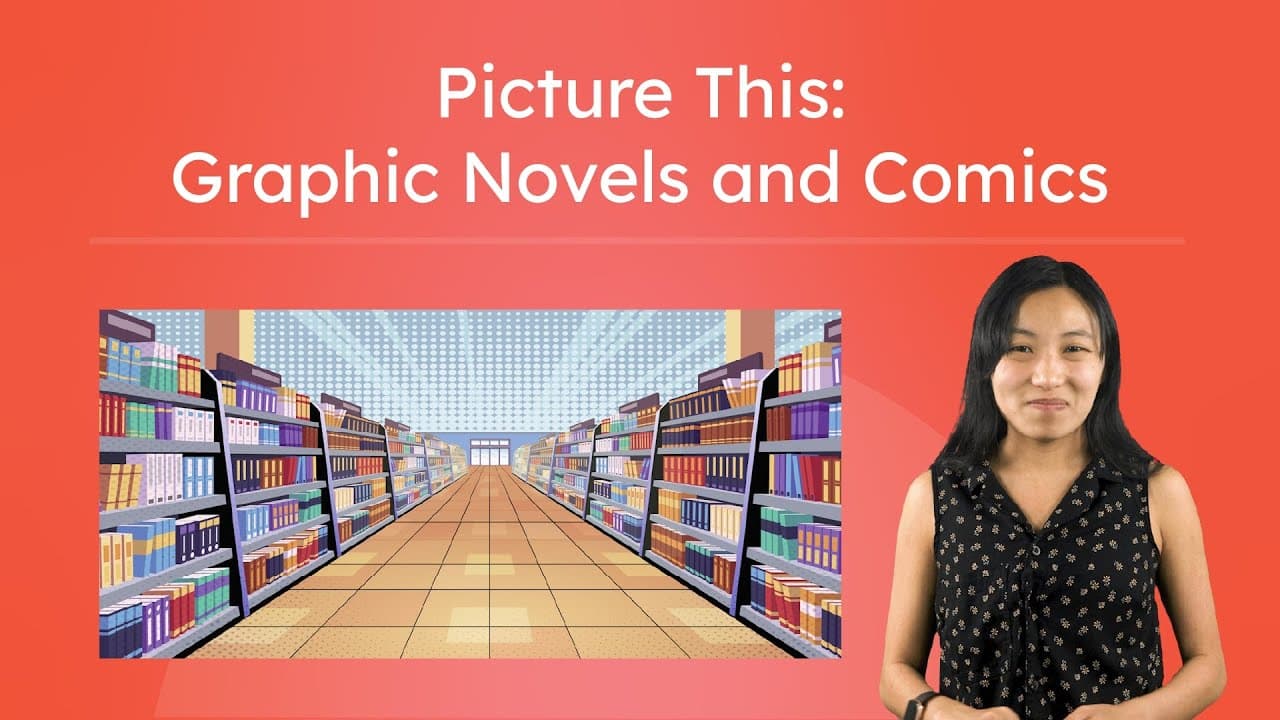
This engaging educational video introduces students to the unique storytelling language of comic books and graphic novels. Set in the fictional city of "Mangatropolis," the host, Caroline, and her robot companion, Mia, guide viewers through the fundamental elements that make comics a distinct medium. The narrative framework involves helping Mia regain her comic-making skills to restore a lost key to the city, adding a playful quest element to the lesson. The video breaks down complex concepts of visual literacy into three main categories: Iconography (how simple images represent complex ideas), Structure (the function of panels and gutters to manipulate time and pacing), and Content Tools (motion lines, sound effects/onomatopoeia, and speech bubbles). Specific examples demonstrate how altering panel width changes the perception of time and how the "gutter" requires the reader's mind to bridge gaps between static images to create motion and narrative. For educators, this resource serves as an excellent foundation for units on graphic novels, narrative writing, or visual arts. It moves beyond simple appreciation to analysis, teaching students how to critically "read" images and layout choices. The video provides clear definitions and interactive pause-points where students can practice drawing and analyzing, making it a perfect launchpad for creative projects where students write and illustrate their own comic strips.
Miacademy & MiaPrep Learning ChannelMiacademy & MiaPrep Learning Channel

10mins 59s

Building Your Essay Around a Strong Thesis Statement

Building Your Essay Around a Strong Thesis Statement

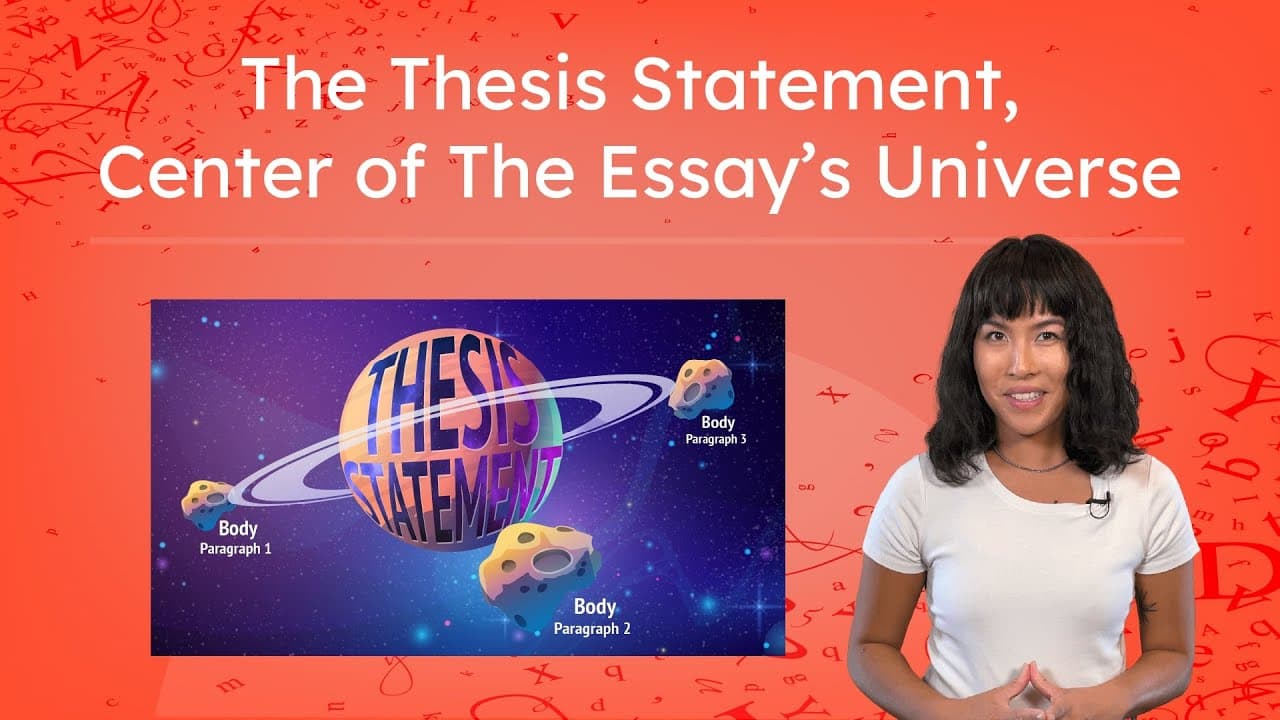
This engaging video lesson uses an extended metaphor of a solar system to explain the relationship between a thesis statement and the body paragraphs of an essay. The narrator guides students through the definition of a thesis statement, emphasizing that it must be the central argument around which the rest of the paper revolves. The video breaks down the criteria for a strong thesis—specifically that it must be arguable and specific—and demonstrates how to construct one using Sandra Cisneros's novel "The House on Mango Street" as a case study. The content dives deep into the structural mechanics of essay writing, showing how a thesis statement serves as a roadmap for the entire paper. It explicitly models how to extract key points from a thesis to create distinct topic sentences for body paragraphs. Through a step-by-step example, the host shows how specific experiences of the protagonist, Esperanza, translate into focused arguments for individual paragraphs, effectively teaching students how to outline their writing before they even begin drafting. This resource is highly valuable for high school English classrooms as it demystifies the abstract concept of "essay flow." By visualizing the thesis as a planet and body paragraphs as moons, it provides a concrete mental model for organization. The video includes built-in pause points for reflection, checks for understanding, and a "growth mindset" check-in, making it an excellent interactive tool for introducing literary analysis essays or argumentative writing units.

Miacademy & MiaPrep Learning ChannelMiacademy & MiaPrep Learning Channel

9mins 51s

Using Giant Robots to Explain Text Structure

Using Giant Robots to Explain Text Structure

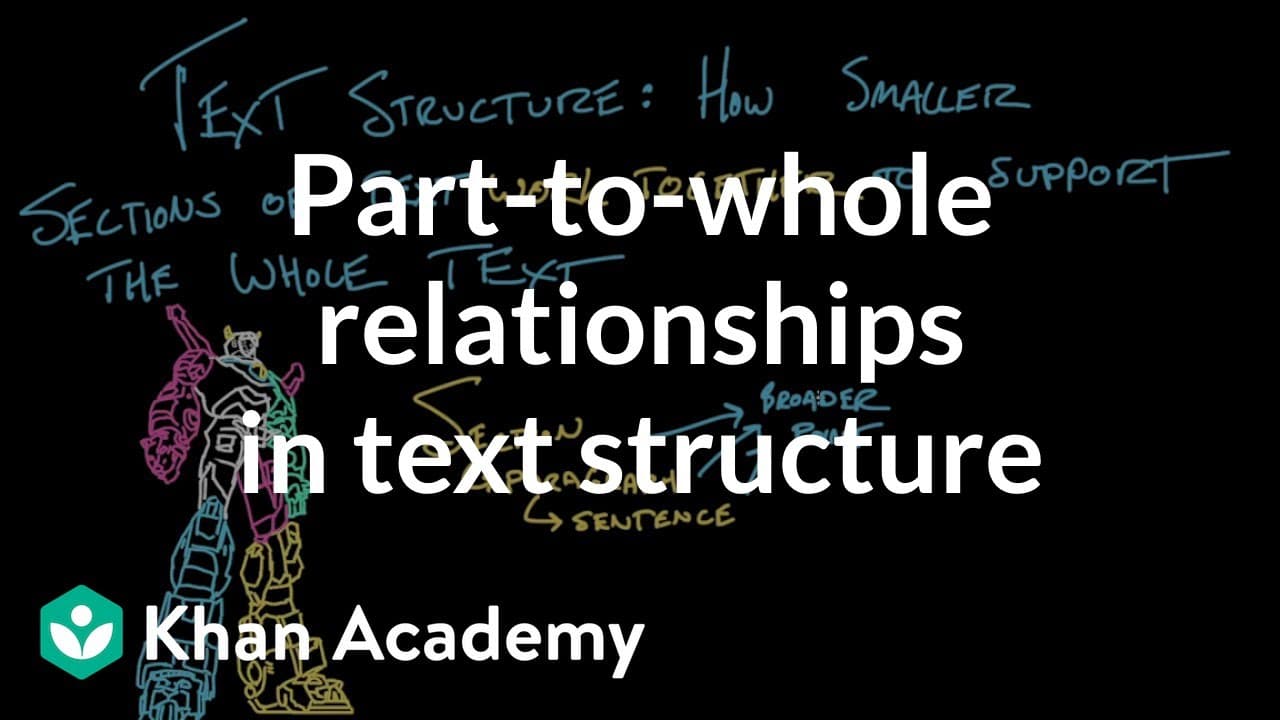
This engaging educational video uses a unique analogy—a giant battle robot named Voltron—to explain the abstract concept of text structure. The narrator demonstrates how smaller sections of a text (sentences and paragraphs) function like the individual limbs and pilots of a robot: distinct parts that must coordinate perfectly to support the text's central purpose. This metaphorical approach simplifies the complex idea of part-to-whole relationships in writing. The video transitions from the robot analogy to a concrete analysis of an informational article about 10th-century Japanese samurai armor (O-yoroi). By dissecting specific sections of the text, such as the descriptions of the cuirass (breastplate) and kusazuri (skirt), the narrator illustrates how specific details—like a gap in the armor for a bow—directly support the article's main idea that this armor was designed for mounted archers. Teachers can use this video to introduce or reinforce standards regarding informational text analysis and structure. The memorable "battle robot" comparison provides a persistent mental model for students struggling to see how individual paragraphs serve a broader argument. It effectively bridges the gap between sentence-level comprehension and holistic text analysis, making it an excellent resource for language arts instruction.

Khan AcademyKhan Academy

4mins 43s

Materials

Paragraph Puzzle Worksheet

Paragraph Puzzle Worksheet

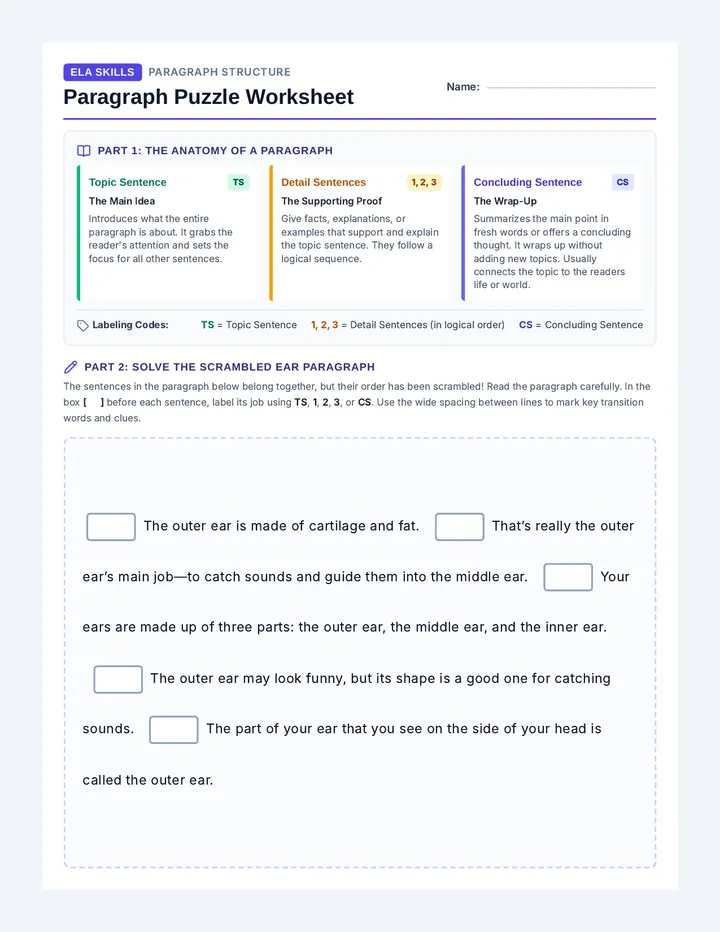
An engaging reading and writing worksheet teaching the roles of topic, detail, and concluding sentences. Students analyze and label a scrambled triple-spaced paragraph about ear anatomy using sentence codes.

LH

Lyndsey Hughes

Las Cebollas Summary Organizer

Las Cebollas Summary Organizer

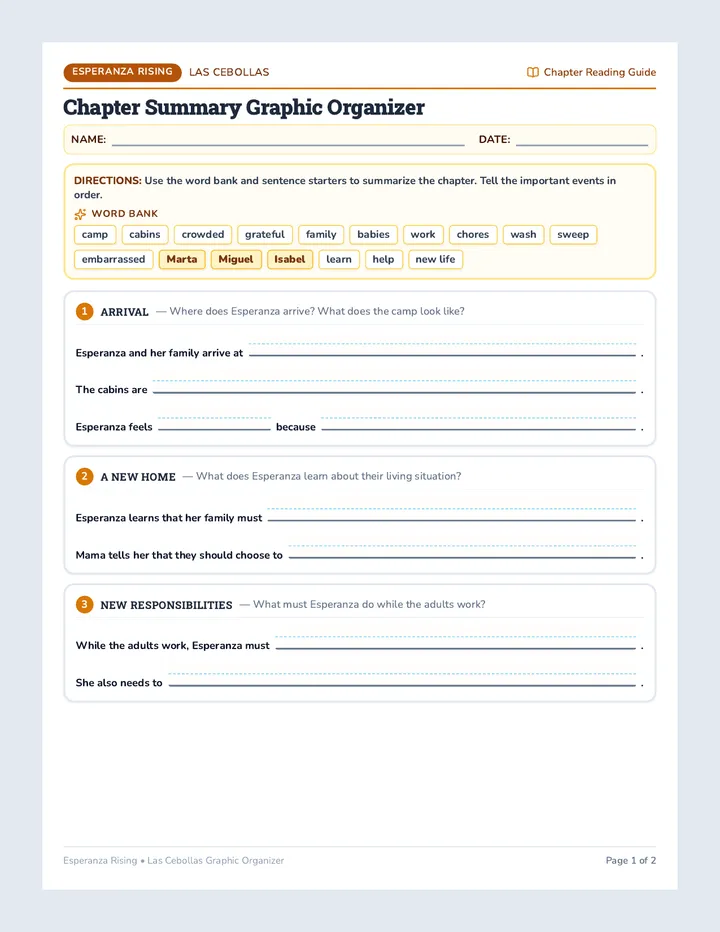
A 2-page print-ready scaffolded chapter summary graphic organizer for *Esperanza Rising: Las Cebollas*, featuring subtle guided handwriting midlines, word bank, Sections 1–6 sentence starters, and a 'Put It All Together' summary section, designed with dignified, grade-neutral language for upper elementary learners needing writing support.

L

lastevens

Text Features Explorer Worksheet

Text Features Explorer Worksheet

A full-page 3rd-grade animal text features worksheet featuring 8 prominent visual picture clues and dedicated answer spaces, with the third column removed to maximize visual clarity and handwriting space.

BA

Becky Arkins

ILEARN Caminos Blueprint Guide

ILEARN Caminos Blueprint Guide

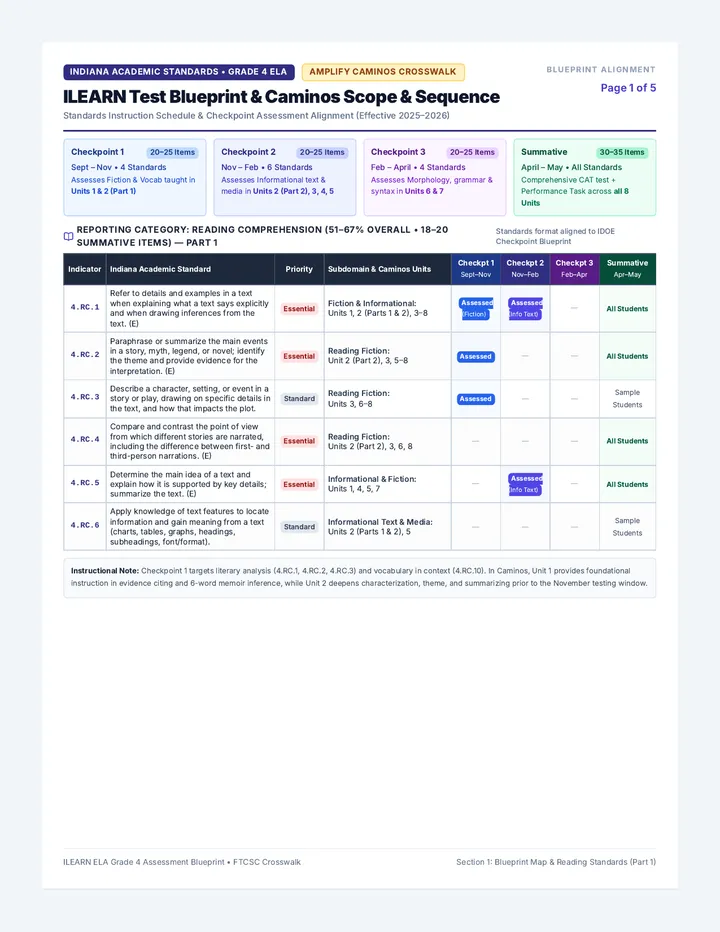
Comprehensive Grade 4 ILEARN Test Blueprint and Amplify Caminos Scope & Sequence crosswalk. Formatted to match the state ILEARN checkpoint blueprint, showing exactly when Indiana Academic Standards (Reading, Vocabulary, Writing, Grammar, and Communication) are taught across Units 1–8 and assessed in Checkpoints 1, 2, 3, and the Summative Assessment.

A

Amy.Hacker

Giver Chapters 14-15 One Pager-REVISED-v2-FINAL

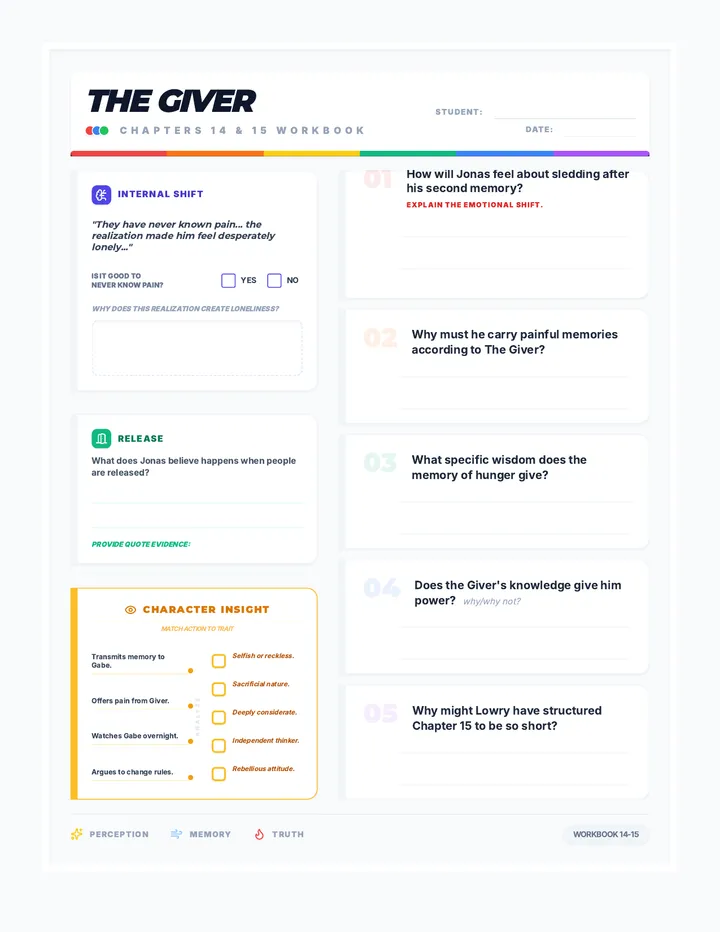
Giver Chapters 14-15 One Pager-REVISED-v2-FINAL

A final, refined one-page workbook for Chapters 14-15 of The Giver. This version has been strictly optimized for height by reducing margins and padding to ensure everything fits perfectly on a single page, while featuring a vibrant full-spectrum rainbow theme to represent Jonas's awakening to color and deep memory.

BC

Brenda Coombs

Las Almendras Summary Graphic Organizer

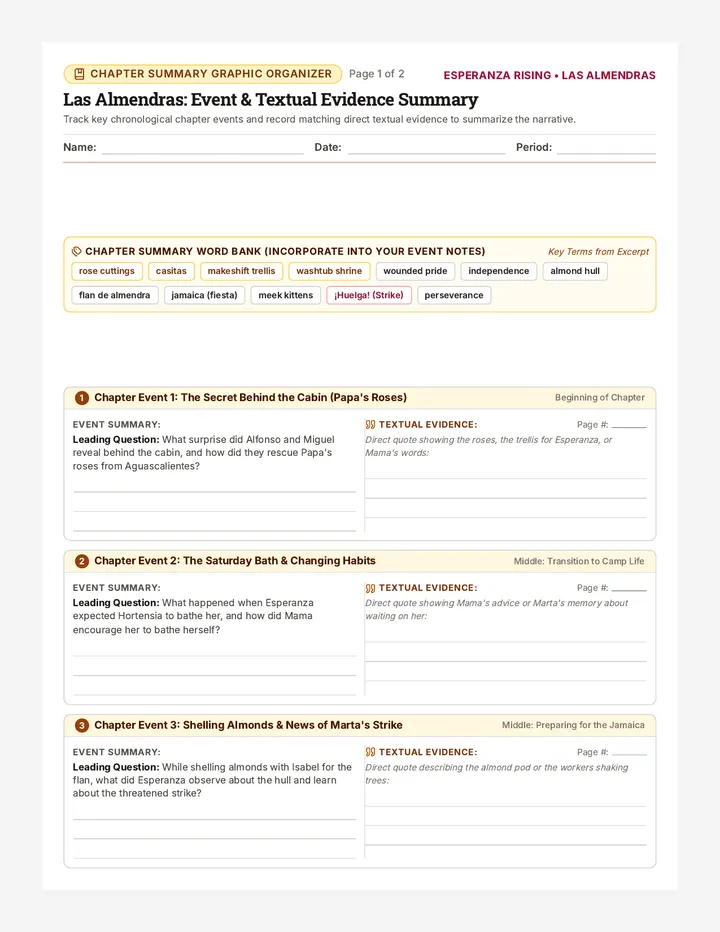
Las Almendras Summary Graphic Organizer

A two-page printable summary graphic organizer for Chapter 8 ('Las Almendras') of Esperanza Rising, structured with paired Event and Textual Evidence sections, leading questions, a chapter word bank, and an essay summary planner featuring the exact required sentence starter.

L

lastevens

Sequences

Invention Quest Slides

Frindle Frenzy Novel Study

A 9-day novel study for 'Frindle' by Andrew Clements, aligned to 3rd Grade ELAR TEKS, focusing on character development, vocabulary, and plot analysis.

LH

Lucy Hellerman

56
Prophecy and Power Slides

Shadows and Crowns

A series of lessons exploring Shakespeare's Macbeth, specifically designed for 10th-grade emergent bilingual students to master complex characterization and thematic elements.

DC

Dylan Clark

30
Virtual Harvest Teacher Guide

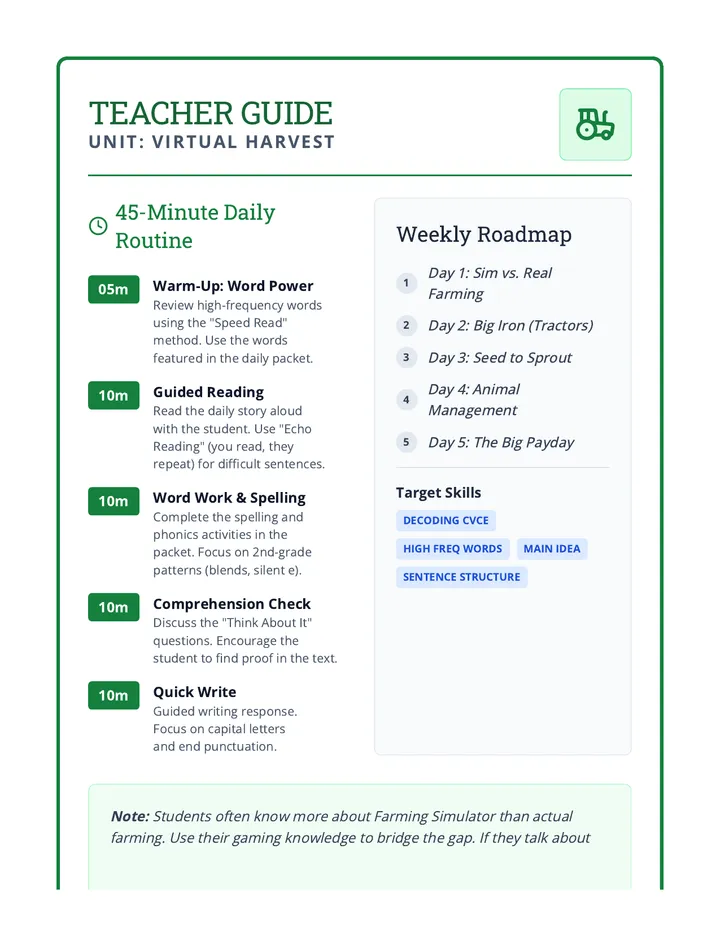
Digital Dirt

A 5-day reading comprehension and writing unit for struggling readers, blending the world of Farming Simulator with real-world agriculture. Focuses on 2nd-grade level literacy skills within a high-interest 5th-grade context.

CM

carley Martin

30
Question Anatomy Slides

Insight Investigators

A 6-week reading intervention unit for 5th graders focused on making inferences, analyzing questions, and using text evidence. Themes include mysteries, sports (baseball and basketball), and dragons to engage high-interest readers.

MK

Meg Keene

48
Copenhagen Clues Slides

Resistance Chronicles

A 9-day novel study for Number the Stars centered on 5th Grade ELAR TEKS, focusing on character development, plot analysis, and historical context through the lens of a Resistance Secret File.

LH

Lucy Hellerman

79
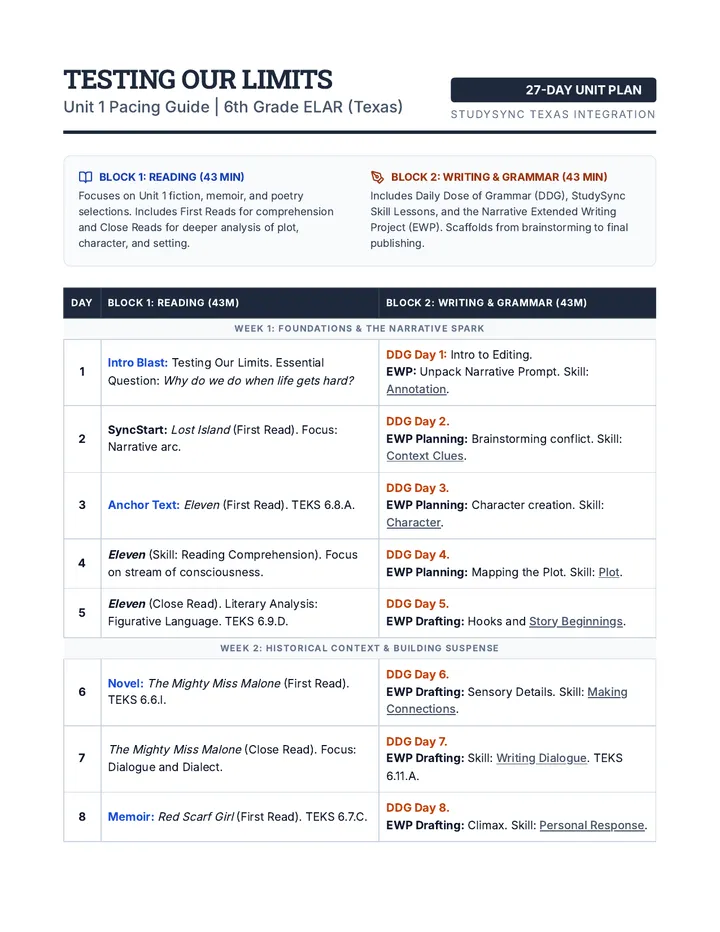
Unit 1 Pacing Guide Document

Testing Our Limits Unit Sequence

A 27-day instructional sequence for 6th Grade ELAR Unit 1: Testing Our Limits, featuring dual blocks for Reading and Writing with daily grammar and skill scaffolding.

DM

Dawn Mustian

81