Advanced techniques for identifying credible sources, evaluating evidence, and organizing information into structured debate briefs. Develops critical digital literacy and data synthesis skills necessary for building evidence-based arguments.
A comprehensive year-long intervention sequence for 8th-grade literacy, focusing on STAR 360 and OSAS benchmark skills. The sequence follows a 3-day weekly instructional cycle (Instruction, Practice, Application) to supplement 2 days of choice reading.
A four-day investigative unit focused on citing textual evidence and making inferences across various genres, including short stories, non-fiction, and poetry. Students act as 'Evidence Detectives' to solve literary and factual mysteries while engaging in collaborative discussions.
A comprehensive 3-lesson unit designed to prepare HSED/GED students for the RLA Extended Response by teaching them how to analyze opposing arguments, evaluate evidence, and craft a high-scoring argumentative essay.
A multi-lesson unit for 4th-grade students with limited literacy, focusing on mastering and applying foundational academic vocabulary words like fact, information, alike, difference, and topic.
A comprehensive 10th-grade ELA unit on Marjane Satrapi's 'Persepolis', focusing on visual literacy, character development, and the historical context of the Iranian Revolution. Students will explore how the graphic novel medium conveys complex emotional and thematic depth.
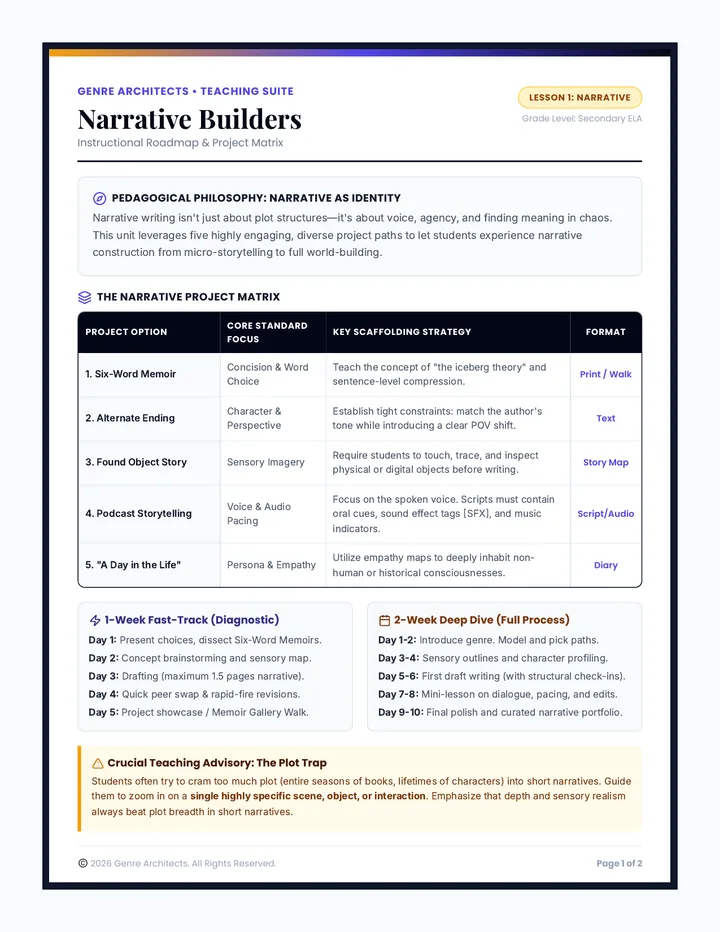
A comprehensive, multi-genre writing project suite that transforms secondary ELA classrooms. This sequence features 25 creative, high-engagement projects categorized into Narrative, Expository, Argumentative, Persuasive, and Multi-Genre masterpieces, complete with teacher guides, student workbooks, and introductory slide decks.
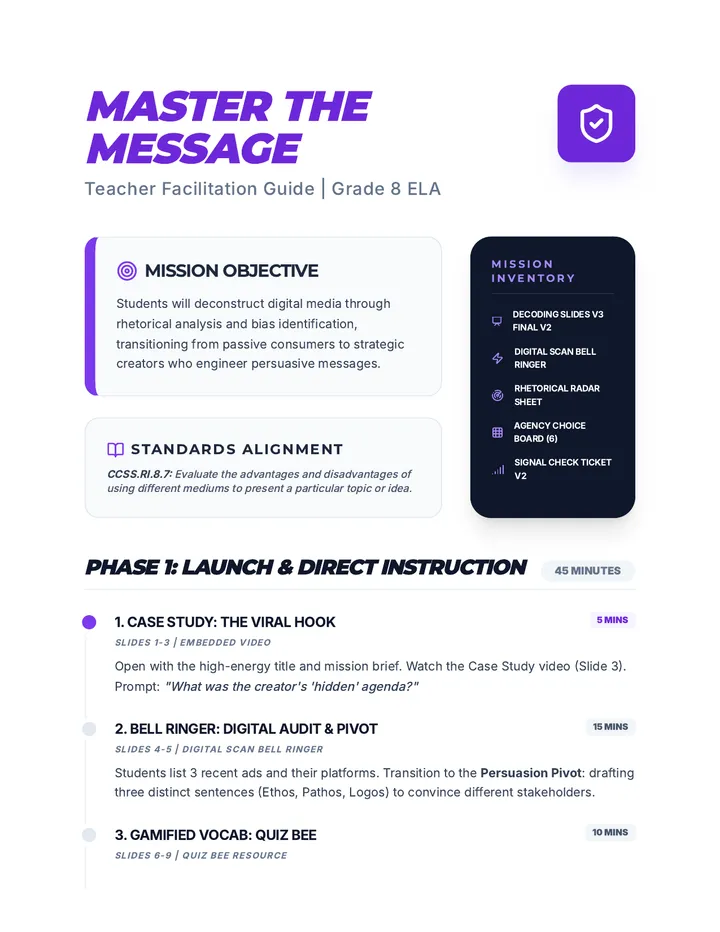
An 8th-grade ELA lesson focused on deconstructing digital media messages through the lens of rhetorical appeals (ethos, pathos, logos) and identifying bias in various online formats. Students transition from passive consumers to critical analysts of news clips, social media, and advertisements.
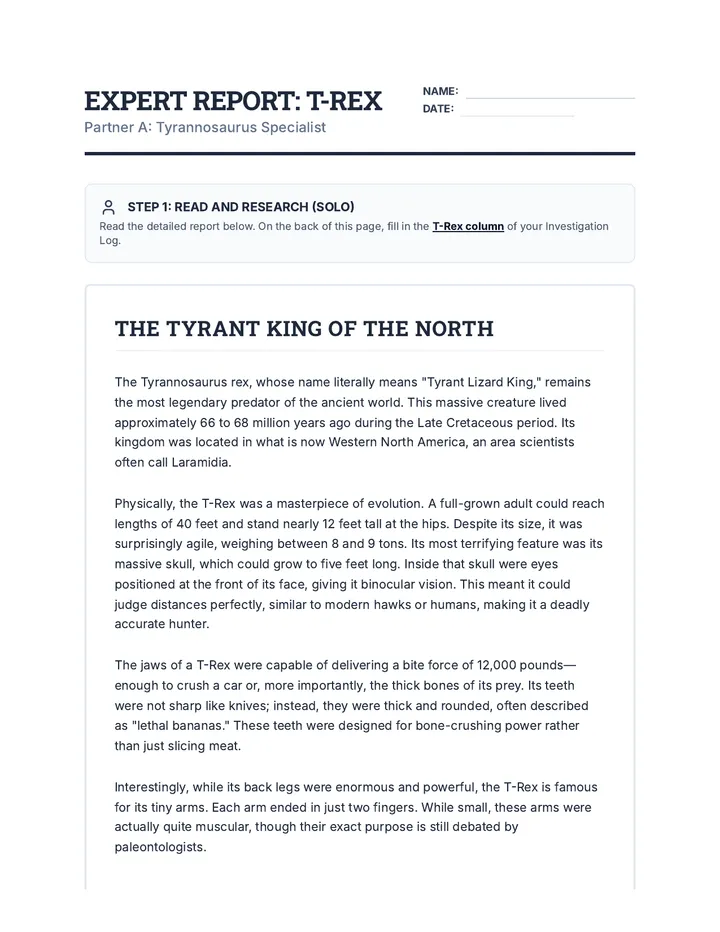
In this lesson, students will work in partners to read two informational texts about famous carnivorous dinosaurs. They will use a Venn diagram to organize their findings and answer standardized test-style questions to demonstrate their understanding of 3.RI.9.
A dynamic lesson where students research the history of their favorite snack and craft a persuasive pitch to 'sell' its greatness. Includes a research organizer, writing prompt, and presentation template.
A choice-based writing lesson where students select an opinion prompt and use provided short articles to gather evidence for their persuasive pieces.
A 45-minute ESOL lesson exploring the Battle of Puebla and Cinco de Mayo. Students analyze informational texts and poetry to answer essential questions about making oneself heard and the value of research, culminating in a sensory writing and speaking activity.
A comprehensive project where students research a Greek mythological figure and create a multimedia presentation demonstrating their understanding of text evidence, summarization, and digital storytelling.