Lenny.com
Explore
Create
ActivitiesNewMathEnglish Language ArtsScience & EngineeringSocial StudiesGlobal LanguagesHealth & Physical EducationSpecial EducationCounseling & Life SkillsArts & CreativityESL
Lenny.com
Lenny.com
Explore
Create
ActivitiesNewMathEnglish Language ArtsScience & EngineeringSocial StudiesGlobal LanguagesHealth & Physical EducationSpecial EducationCounseling & Life SkillsArts & CreativityESL
Lenny.com
Lenny.com

Solutions

Lenny for EducatorsLenny for SchoolsLenny for Districts

Product

ExploreSign inCreateSupportAbout

Resources

Getting startedMTSS Acceleration Program

© 2026 Lenny Learning Inc.

TermsPrivacyAccessibility
LinkedInInstagramX
Lenny

Creative Writing

Narrative structure, character development, and sensory descriptions across fiction and poetry. Strengthens voice and figurative language through specific storytelling techniques.

English Language ArtsPhonics & Reading FoundationsLetter IdentificationLearn Letters A-ZLowercase and Uppercase LettersConsonants and VowelsLetter-Sound AssociationsLetter-Sound Associations: LowercaseLetter-Sound Associations: UppercaseBeginning and Ending SoundsRhymingBlending And SegmentingShort VowelsShort Vowel SoundsConsonant BlendsConsonant DigraphsBlends, Digraphs, and TrigraphsDigraphs, Blends, and Silent LettersLong Vowel SoundsLong Vowel PatternsShort and Long VowelsShort and Long Vowel PatternsSilent EVowel SoundsVowel TeamsR-Controlled VowelsDiphthongs: Oi, Oy, Ou, OwVariant VowelsVariant, Diphthong, And R Vowel PatternsSoft G And CSight WordsIrregular WordsWord RecognitionSyllablesSyllable TypesTwo-Syllable WordsMultisyllabic WordsPhoneme ManipulationDecodable TextsVocabularyAction WordsQuestion WordsNouns and AdjectivesClassify WordsCompound WordsSynonyms and AntonymsHomophonesHomophones and HomonymsShades of MeaningContext CluesPrefixes and SuffixesGreek and Latin RootsAnalogiesIdioms and AdagesForeign Words and ExpressionsWord Choice and UsageReference SkillsReading ComprehensionRead-Along Literary TextsRead-Along Informational TextsReality vs. FictionStory ElementsCharacterSequenceMain IdeaCause And EffectCompare And ContrastReading StrategiesText StructureAuthor's PurposeAuthor's Purpose And ToneAuthor's PerspectivePoint Of ViewThemeInference And ThemeInference And AnalysisPoetry ElementsLiterary DevicesAnalyzing LiteratureAnalyzing Informational TextsComparing TextsAudience, Purpose, And ToneBusiness DocumentsNovel StudyNonfiction Book StudyGrammar & MechanicsSentencesNounsVerbsAdjectivesPronounsCapitalizationPunctuationContractionsConjunctionsPrepositionsArticlesAdjectives And AdverbsVerb TypesVerb TensePronouns And AntecedentsPronoun TypesSubject-Verb AgreementDirect And Indirect ObjectsSentences, Fragments, And Run-OnsPhrases And ClausesCommasSemicolons, Colons, And CommasDashes, Hyphens, And EllipsesSpellingAbbreviationsFormattingVerb Tense And MoodMisplaced ModifiersWritingDescriptive DetailsCreative WritingOpinion WritingTopic SentencesOrganizing WritingLinking WordsSentence VarietyIntroductions And ConclusionsPersuasive And Opinion WritingExpository WritingPersuasive StrategiesDeveloping And Supporting ArgumentsTopic Sentences And Thesis StatementsSummarizingResearch SkillsEditing And RevisingActive And Passive Voice=Writing Clearly And ConciselyDebate & Public SpeakingPublic Speaking BasicsPersuasive TechniquesClaims and EvidenceTypes of ArgumentsReasoning TypesLogical FallaciesTopic ResearchOrganizing EvidenceDebate Speech OrganizationAttacking and Defending ArgumentsClash and EngagementImpact CalculusQuestioning and Cross-ExaminationCritical ThinkingInformal LogicFormal LogicInductive Reasoning

Videos

How to Read a Poem: Structure and Meaning

How to Read a Poem: Structure and Meaning

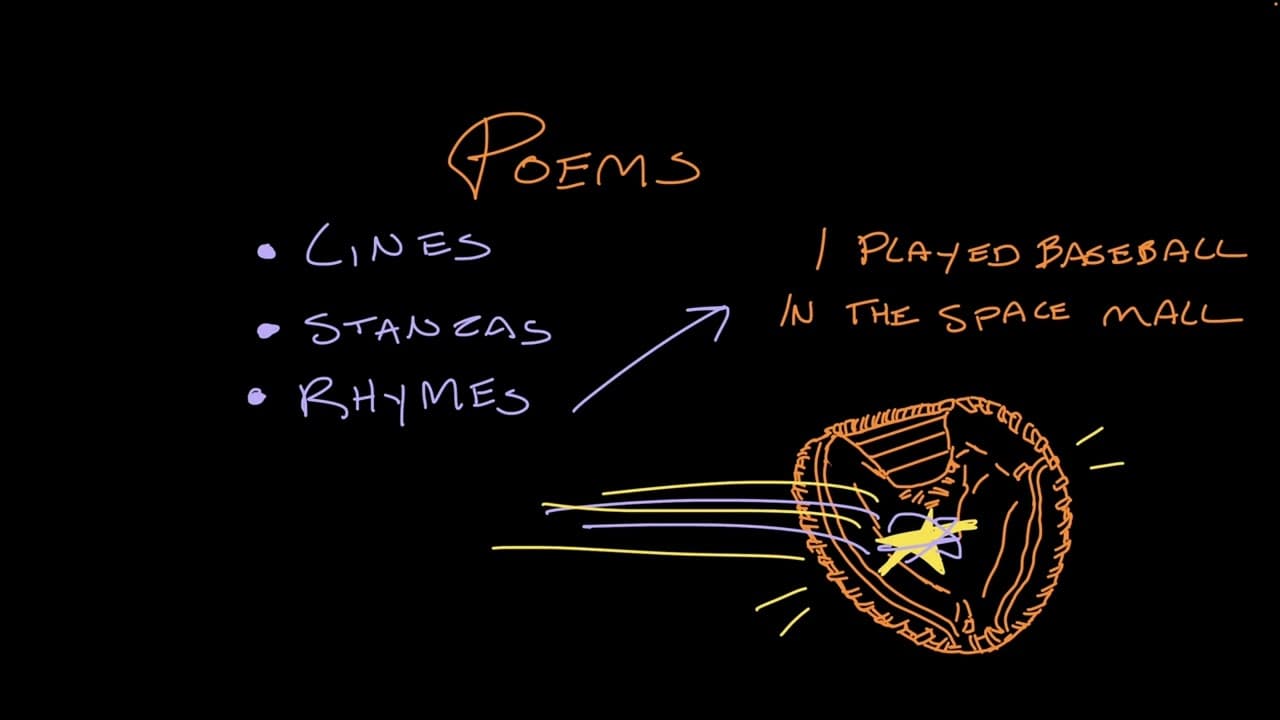
This educational video serves as an engaging introduction to poetry analysis, specifically focusing on how structure contributes to meaning. The narrator, David, welcomes viewers to "The Poem Zone" and breaks down the fundamental building blocks of poetry: lines, line breaks, stanzas, and rhyme. He defines poetry simply as "art made out of words" and explains that while poems play with sound and rhythm, they don't always have to rhyme. The visual style uses a blackboard aesthetic with handwritten text that appears in real-time to illustrate concepts. The core of the video features an original piece titled "Egg Poem," which the narrator reads and then dissects stanza by stanza. Through this close reading, the video demonstrates how a poem's structure can organize ideas and build an emotional arc. The narrator highlights how the poem uses a repeating structure ("Morning is...") to anchor each stanza while progressing from a calm morning to a chaotic one. For educators, this video is a powerful tool for bridging the gap between simply reading poetry and analyzing it. It explicitly teaches students to ask how lines and stanzas build meaning, rather than just identifying them as structural elements. The video introduces the concept of extended metaphor in a highly accessible way by connecting the cooking terms "easy," "medium," and "hard" to both the state of an egg and the speaker's emotional state, providing a clear model for students to use in their own literary analysis.

Khan AcademyKhan Academy

4mins 6s

How to Create Compelling Characters for Your Novel

How to Create Compelling Characters for Your Novel

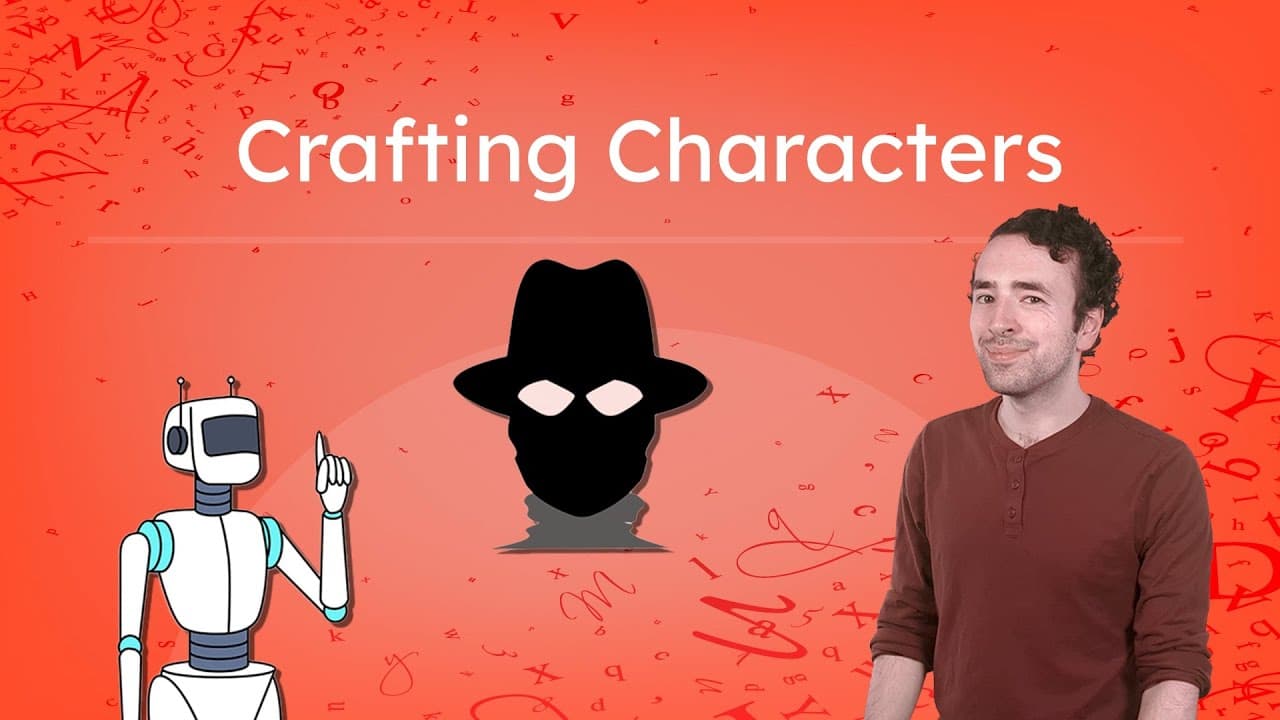
In this engaging creative writing lesson, host Justin introduces aspiring writers to the art of character creation, moving beyond two-dimensional caricatures to develop complex, believable figures. Through a humorous skit involving his own "perfect" alter-ego, Julius, Justin demonstrates the pitfalls of writing flat characters—such as the generic villain "Ante Agoniste" and the sycophantic robot sidekick "Mila"—and explains why characters need flaws, fears, and motivations to resonate with readers. The video explores two primary tools for character development: Character Archetypes and the Character Interview. Students learn how archetypes (like the Reluctant Hero or Wise Mentor) serve as useful starting points that can be expanded into unique personalities. The lesson then models an "interview" process where writers ask their characters deep questions to uncover their hidden depths, demonstrating how this technique transforms a superficial idea into a fully realized persona. Ideal for English Language Arts and creative writing units, this resource provides concrete strategies for planning a novel. It covers essential terminology like protagonist, antagonist, and archetype while offering practical activities like creating Character Sheets. Teachers can use this video to guide students through the pre-writing phase of narrative assignments, helping them organize their ideas and ensure their stories are driven by compelling human experiences.

Miacademy & MiaPrep Learning ChannelMiacademy & MiaPrep Learning Channel

9mins 51s

Mastering Mood and Imagery in Nature Writing

Mastering Mood and Imagery in Nature Writing

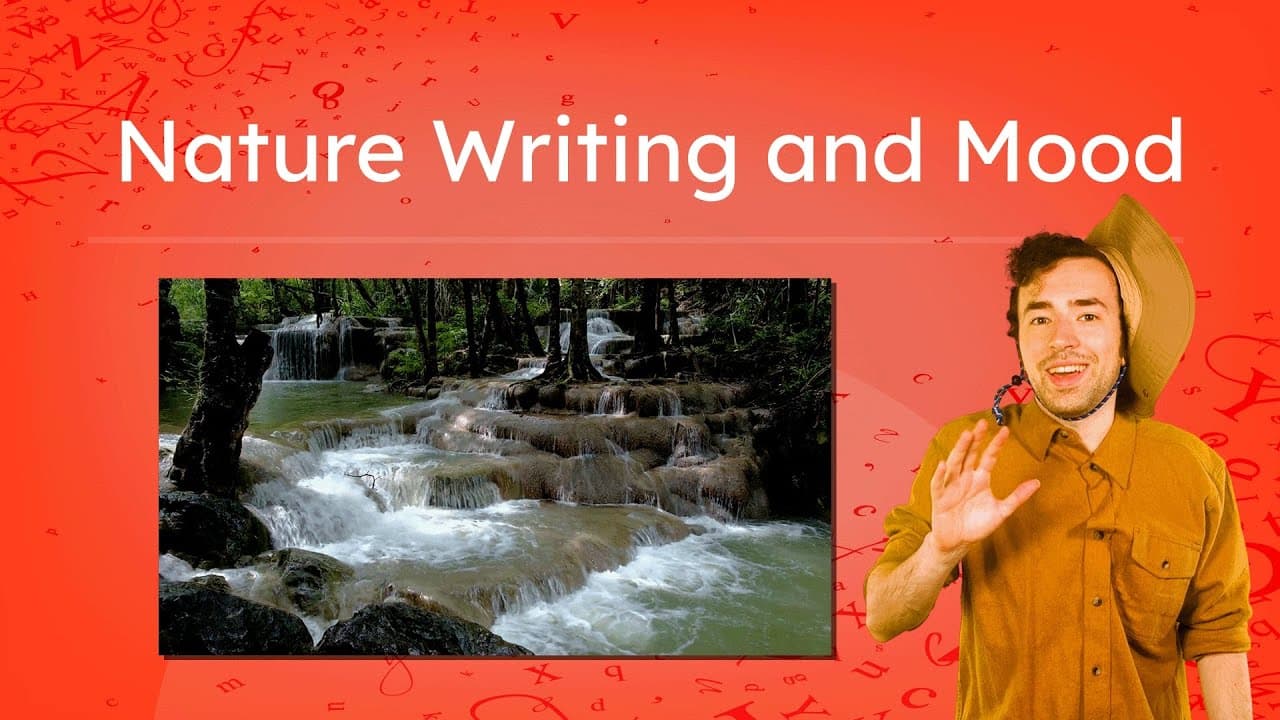
This educational video uses a fun, reality-show thematic frame called "Write on the Money" to teach students about the genre of nature writing. Hosted by a character named Justin who is "stranded" on a desert island, the lesson defines nature writing as creative nonfiction that explores the natural world. It specifically focuses on two literary devices essential to the genre: imagery (sensory language) and mood (emotional atmosphere). The video uses an excerpt from Robin Wall Kimmerer's *Braiding Sweetgrass* as a mentor text to demonstrate how professional writers use these tools to connect with readers. The core themes explored are the definitions and applications of imagery and mood. The video breaks down how writers incorporate environmental themes and personal reflections to give their writing depth. It explains how specific sensory details—sight, sound, touch—build an emotional atmosphere (mood) for the reader, comparing it to setting the vibe for a party. The video distinguishes between simply describing a scene and evoking a specific feeling, using examples of how the same setting can feel "doomed" or "serene" depending on the language used. For educators, this video serves as a complete, self-contained mini-lesson on descriptive writing. It includes built-in pause points with specific writing prompts, allowing students to practice the concepts immediately. It provides a visual stimulus (high-quality footage of a waterfall) for students to write about, ensuring they have immediate subject matter to apply the lesson's concepts. It is an excellent resource for English Language Arts units on creative writing, nonfiction analysis, or descriptive essays.

Miacademy & MiaPrep Learning ChannelMiacademy & MiaPrep Learning Channel

10mins 22s

How Politics Shaped Latin American Literature

How Politics Shaped Latin American Literature

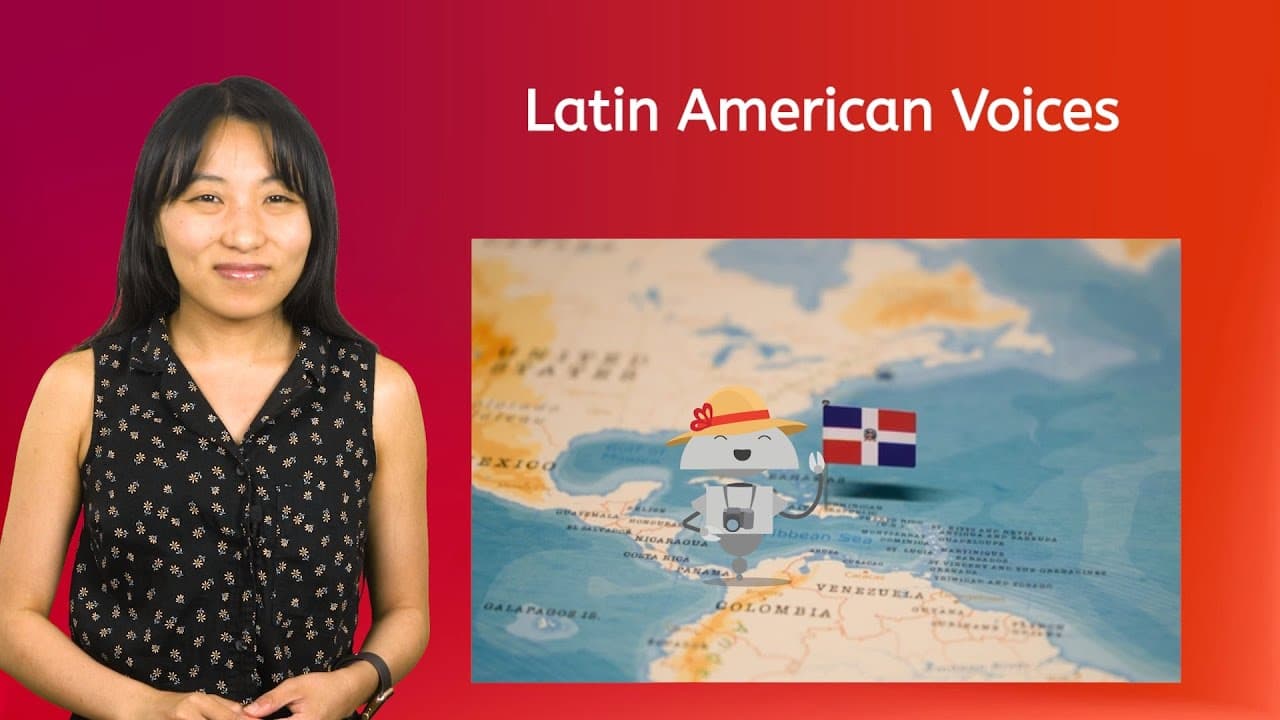
This educational video explores the deep connection between the political history of Latin America and its literature. It guides students through two major historical periods: the colonial era and the post-independence rise of totalitarian regimes. Through the lens of specific literary movements, the video explains how writers like Simón Bolívar, José Martí, and Gabriel García Márquez used the written word to define national identities, fight for independence, and critique oppressive governments. The content breaks down complex political concepts such as colonialism, independence movements, and totalitarianism, contrasting the Latin American experience with that of Africa to highlight unique historical contexts. It introduces the genre of "political literature," splitting it into "Independence Movement Literature" (primarily persuasive nonfiction) and "Anti-Totalitarian Literature" (fiction and nonfiction). Specific works and authors are highlighted to illustrate themes of corruption, power, and resistance. Teachers can use this video to bridge Social Studies and English Language Arts curriculums. It provides a rich context for understanding World Literature, offering concrete definitions and historical examples that help students analyze how societal changes influence artistic expression. The built-in pause points and reflective questions make it an interactive tool for classroom discussion about government systems, freedom of expression, and the power of writing.

Miacademy & MiaPrep Learning ChannelMiacademy & MiaPrep Learning Channel

10mins 56s

Mastering Dialogue: Formatting, Punctuation, and Tags

Mastering Dialogue: Formatting, Punctuation, and Tags

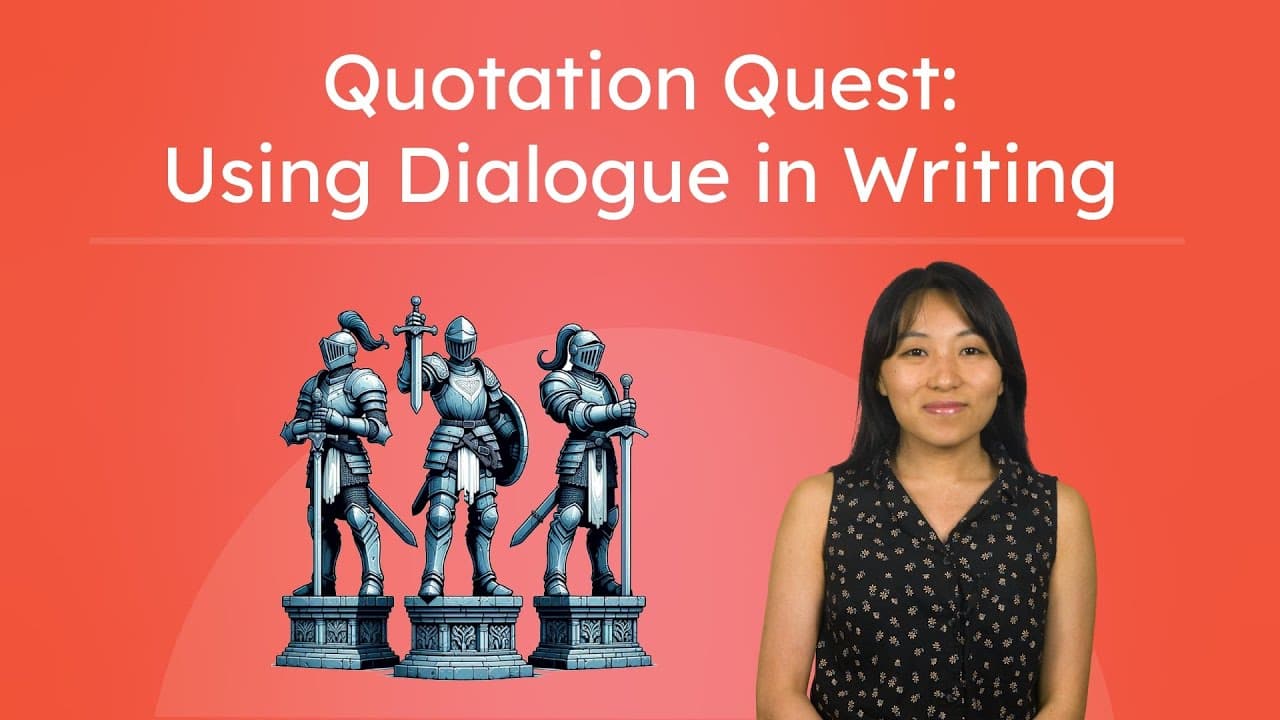
This engaging language arts video invites students into the "Whispering Hall" of Genre Land to master the mechanics of writing dialogue. Through a quest-based narrative featuring three knight statues, the host guides viewers through three distinct challenges: formatting, punctuation, and dialogue tags. The video contrasts confusing, unformatted blocks of text with properly structured dialogue to visually demonstrate the importance of these writing conventions. The content systematically breaks down the technical rules of dialogue writing. Key topics include when to start new paragraphs (paragraph breaks and indentation), how to use quotation marks and other punctuation within speech, capitalization rules for quoted sentences, and the proper use and placement of dialogue tags. It also distinguishes between valid tags (speaking verbs like "said" or "asked") and action beats (like "smiled" or "ran"), clarifying common grammatical errors. This video is an excellent resource for upper elementary and middle school writing workshops. It transforms dry grammar rules into a gamified editing mission, encouraging students to analyze text critically. Teachers can use the specific "bad vs. good" examples to model editing skills, while the clear breakdown of rules provides a solid foundation for narrative writing units. The step-by-step revision of a single story throughout the video offers a cohesive example of the writing process in action.

Miacademy & MiaPrep Learning ChannelMiacademy & MiaPrep Learning Channel

10mins 24s

Understanding the Shape and Sound of Poetry

Understanding the Shape and Sound of Poetry

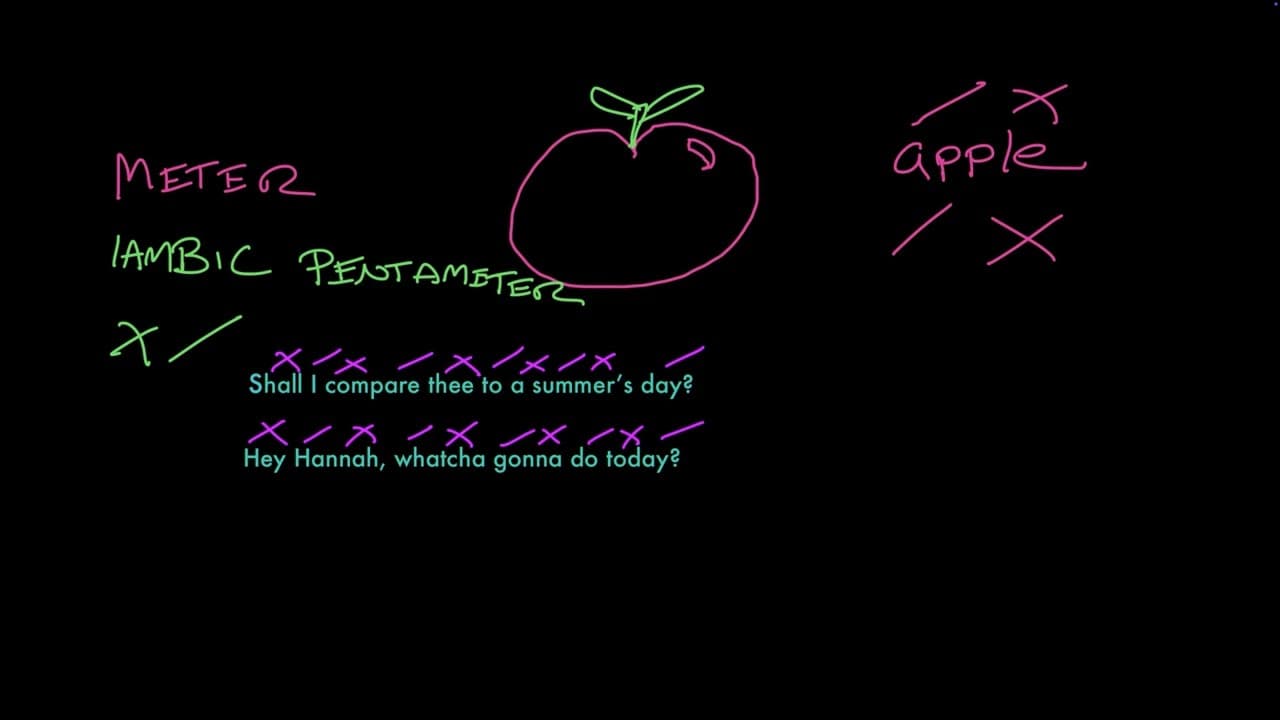
This engaging animated video demystifies poetry by breaking down its fundamental structural elements. Hosts Hannah and David explore the question "How does a poem work?" by contrasting poetry with prose, explaining that while prose relies on sentences and paragraphs, poetry utilizes lines and stanzas to shape the reader's experience. The video emphasizes that poetry is "language art" that plays with sound and shape, making it an accessible medium for expressing feelings about everyday life rather than an elite or overly complex form of writing. The content covers essential poetic devices including rhyme, rhythm, meter, and structure. Specific concepts explained include the difference between lines and sentences, the definition of a stanza, the mechanics of stress and unstress in words (using the word "apple" as a demonstration), and a clear breakdown of iambic pentameter using Shakespeare's Sonnet 18. It also touches on Haiku, challenging the rigid 5-7-5 syllable rule in favor of capturing a specific moment or "vibe," using examples from William Carlos Williams and Yosa Buson. For educators, this video is an excellent primer for a poetry unit. It provides clear, visual definitions of terminology that often confuses students, such as meter and line breaks. Teachers can use the video to introduce scansion, prompt creative writing exercises modeled after the "Post-it note" style of William Carlos Williams, or initiate discussions about when and why writers might choose to break established rules to better serve their artistic intent.
Khan AcademyKhan Academy

5mins

Materials

First Day Feelings Reading Worksheet

First Day Feelings Reading Worksheet

An adapted reading passage of Patty Hansen's 'The First Day of Middle School' with enlarged, readable text scaled to fit each page, complete with chunked passage text, comprehension check, and emoji reflection organizer.

PL

Patrick l

Wild Adventure Log Guest Form Plus Plus Plus Plus Plus

Wild Adventure Log Guest Form Plus Plus Plus Plus Plus

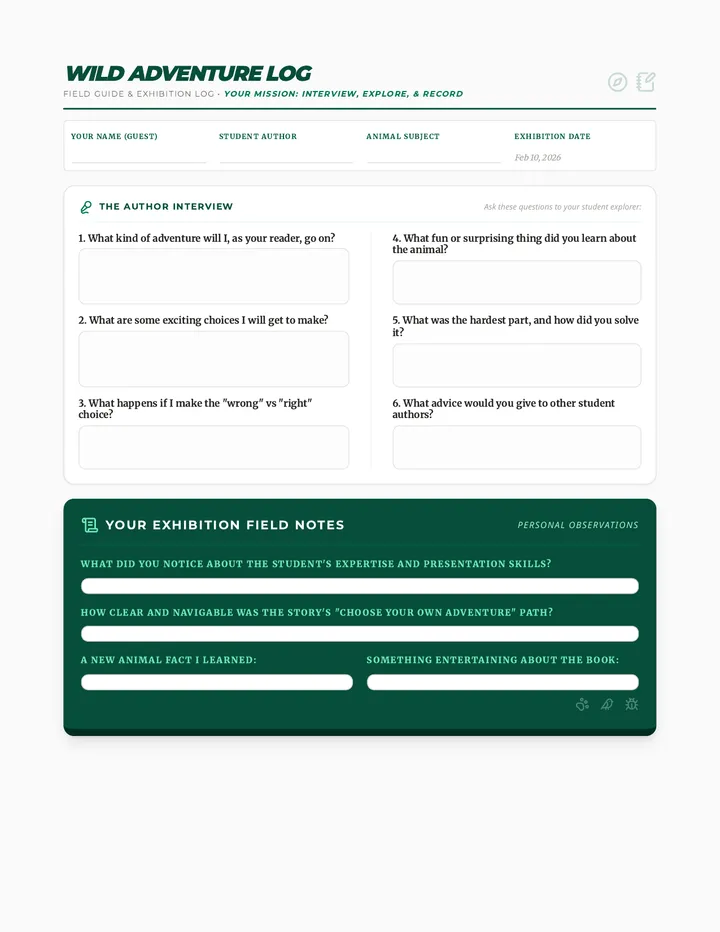
A 2nd-person 'Wild Adventure Log' guest form with maximized writing space. It features a side-by-side author interview/process section and a large Guest Observation area, all designed for comfortable handwriting on a single page.

E

epate

Book Jacket Studio Worksheet

Book Jacket Studio Worksheet

A comprehensive 2-page book jacket and front-matter design worksheet where students craft their own book cover illustration, back cover blurb, endorsements, dedication, table of contents, chapter names, preface, and interior illustration.

MG

MICHELLE GRIMALDI

Story Architect Guide Worksheet

Story Architect Guide Worksheet

A refined three-page story planning guide for senior English. Features a high-contrast architectural blueprint aesthetic with improved visual hierarchy, expanded student work areas, and technical schematic sections for character psychology, plot structure, and dialogue subtext.

JT

Jason Tetlow

Rainforest Adventure Titles Worksheet Project

Rainforest Adventure Titles Worksheet Project

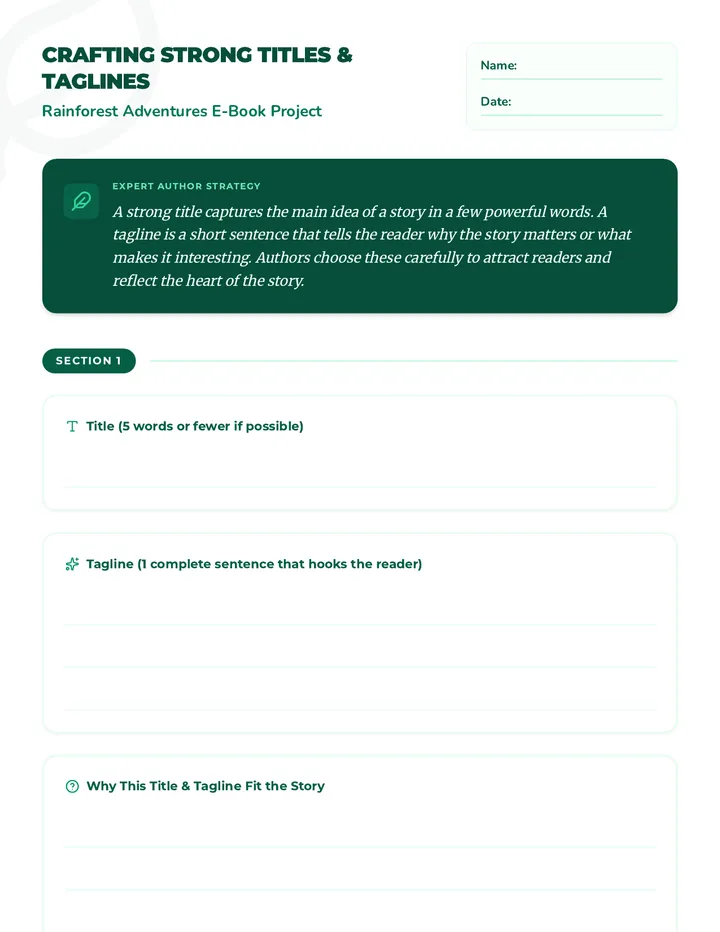
A professional 2-page printable worksheet for student authors to brainstorm and refine titles and taglines for their rainforest-themed e-books. It features a cohesive rainforest aesthetic across two structured pages, providing space for two distinct draft sections and a final synthesis reflection.

BJ

Brandon Jackson

Story Map Organizer

Story Map Organizer

A clean and visually engaging Story Map graphic organizer for elementary students to identify characters, setting, and plot events (beginning, middle, end) with thematic icons and spacious blank work areas.

MS

Madelyn stead

Sequences

Lesson Plan 1 Introduction

Literary Device Detectives

A comprehensive multi-unit sequence for 3rd and 4th grade students covering key literary devices: Introduction to Figurative Language, Onomatopoeia, Similes, Metaphors, Personification, and Idioms. Each unit provides 5 lesson plans, interactive notebook resources, and a wide variety of activities and stories designed to improve descriptive writing and reading comprehension.

JS

Janette Sullivan

105
Prophecy and Power Slides

Shadows and Crowns

A series of lessons exploring Shakespeare's Macbeth, specifically designed for 10th-grade emergent bilingual students to master complex characterization and thematic elements.

DC

Dylan Clark

30
Verse and Veracity Teacher Guide

Media Center Year Curriculum

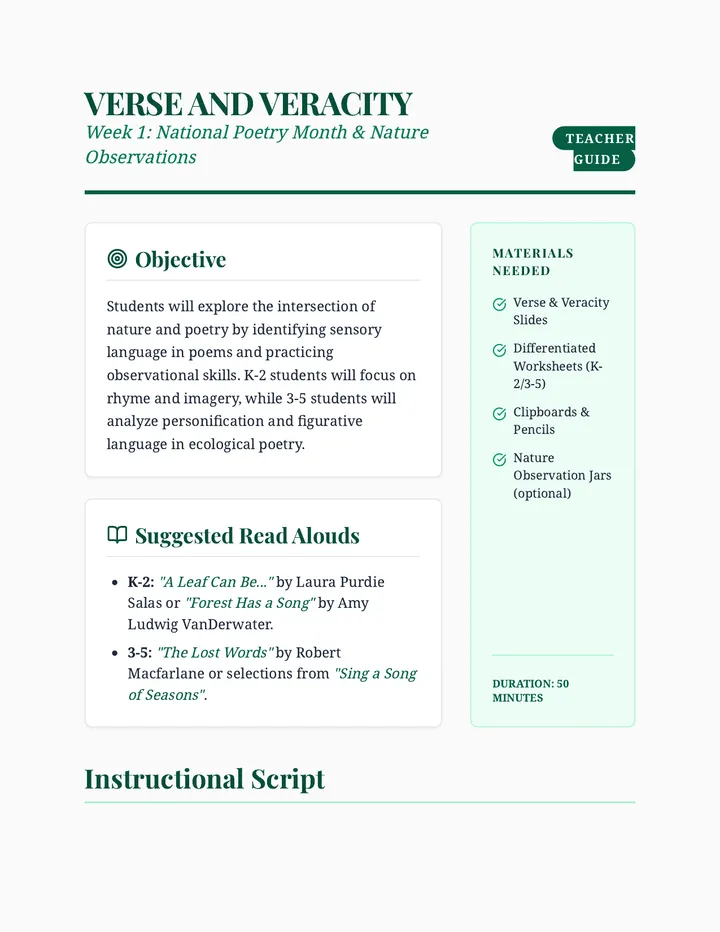
A comprehensive K-5 Media Center curriculum spanning August to May. Each month features a thematic unit integrating library skills (Dewey Decimal System, research, digital citizenship), literacy (poetry, biographies, informational texts), and STEM/Maker Space challenges. Resources are differentiated for K-2 and 3-5.

B

bethany.nied

50
Copenhagen Clues Slides

Resistance Chronicles

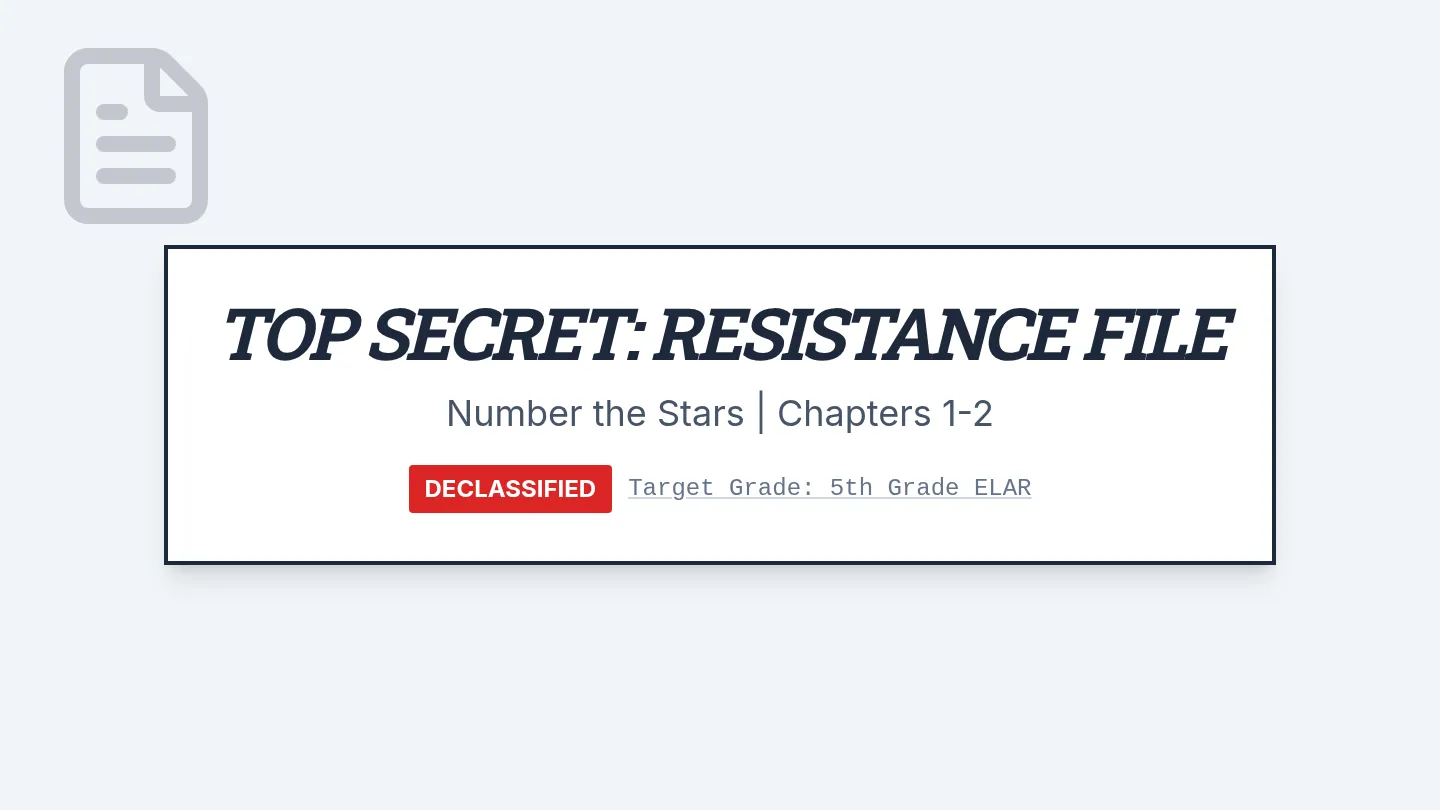
A 9-day novel study for Number the Stars centered on 5th Grade ELAR TEKS, focusing on character development, plot analysis, and historical context through the lens of a Resistance Secret File.

LH

Lucy Hellerman

79
Detective Nutmeg Story Document

Story Investigators

A series of lessons focused on developing reading comprehension through mystery stories, with tiered assignments for different grade levels.

JJ

Julie Johns

30
Unit 1 Pacing Guide Document

Testing Our Limits Unit Sequence

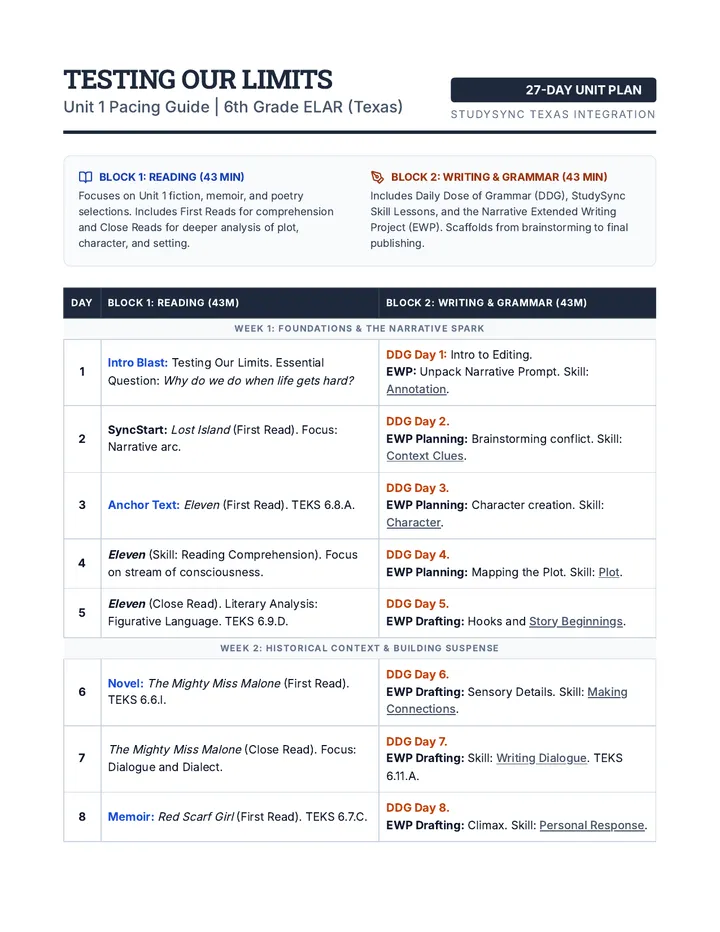
A 27-day instructional sequence for 6th Grade ELAR Unit 1: Testing Our Limits, featuring dual blocks for Reading and Writing with daily grammar and skill scaffolding.

DM

Dawn Mustian

81