Lenny.com
Explore
Create
ActivitiesNewMathEnglish Language ArtsScience & EngineeringSocial StudiesGlobal LanguagesHealth & Physical EducationSpecial EducationCounseling & Life SkillsArts & CreativityESL
Lenny.com
Lenny.com
Explore
Create
ActivitiesNewMathEnglish Language ArtsScience & EngineeringSocial StudiesGlobal LanguagesHealth & Physical EducationSpecial EducationCounseling & Life SkillsArts & CreativityESL
Lenny.com
Lenny.com

Solutions

Lenny for EducatorsLenny for SchoolsLenny for Districts

Product

ExploreSign inCreateSupportAbout

Resources

Getting startedMTSS Acceleration Program

Newsletters

School Funding Newsletter

© 2026 Lenny Learning Inc.

TermsPrivacyAccessibility
LinkedInInstagramX
Lenny

Direct And Indirect Objects

Identification of nouns receiving actions and the recipients of those actions within various sentence structures. Distinguishes between direct and indirect objects to improve grammatical accuracy and sentence complexity.

English Language ArtsPhonics & Reading FoundationsLetter IdentificationLearn Letters A-ZLowercase and Uppercase LettersConsonants and VowelsLetter-Sound AssociationsLetter-Sound Associations: LowercaseLetter-Sound Associations: UppercaseBeginning and Ending SoundsRhymingBlending And SegmentingShort VowelsShort Vowel SoundsConsonant BlendsConsonant DigraphsBlends, Digraphs, and TrigraphsDigraphs, Blends, and Silent LettersLong Vowel SoundsLong Vowel PatternsShort and Long VowelsShort and Long Vowel PatternsSilent EVowel SoundsVowel TeamsR-Controlled VowelsDiphthongs: Oi, Oy, Ou, OwVariant VowelsVariant, Diphthong, And R Vowel PatternsSoft G And CSight WordsIrregular WordsWord RecognitionSyllablesSyllable TypesTwo-Syllable WordsMultisyllabic WordsPhoneme ManipulationDecodable TextsVocabularyAction WordsQuestion WordsNouns and AdjectivesClassify WordsCompound WordsSynonyms and AntonymsHomophonesHomophones and HomonymsShades of MeaningContext CluesPrefixes and SuffixesGreek and Latin RootsAnalogiesIdioms and AdagesForeign Words and ExpressionsWord Choice and UsageReference SkillsReading ComprehensionRead-Along Literary TextsRead-Along Informational TextsReality vs. FictionStory ElementsCharacterSequenceMain IdeaCause And EffectCompare And ContrastReading StrategiesText StructureAuthor's PurposeAuthor's Purpose And ToneAuthor's PerspectivePoint Of ViewThemeInference And ThemeInference And AnalysisPoetry ElementsLiterary DevicesAnalyzing LiteratureAnalyzing Informational TextsComparing TextsAudience, Purpose, And ToneBusiness DocumentsNovel StudyNonfiction Book StudyGrammar & MechanicsSentencesNounsVerbsAdjectivesPronounsCapitalizationPunctuationContractionsConjunctionsPrepositionsArticlesAdjectives And AdverbsVerb TypesVerb TensePronouns And AntecedentsPronoun TypesSubject-Verb AgreementDirect And Indirect ObjectsSentences, Fragments, And Run-OnsPhrases And ClausesCommasSemicolons, Colons, And CommasDashes, Hyphens, And EllipsesSpellingAbbreviationsFormattingVerb Tense And MoodMisplaced ModifiersWritingDescriptive DetailsCreative WritingOpinion WritingTopic SentencesOrganizing WritingLinking WordsSentence VarietyIntroductions And ConclusionsPersuasive And Opinion WritingExpository WritingPersuasive StrategiesDeveloping And Supporting ArgumentsTopic Sentences And Thesis StatementsSummarizingResearch SkillsEditing And RevisingActive And Passive Voice=Writing Clearly And ConciselyDebate & Public SpeakingPublic Speaking BasicsPersuasive TechniquesClaims and EvidenceTypes of ArgumentsReasoning TypesLogical FallaciesTopic ResearchOrganizing EvidenceDebate Speech OrganizationAttacking and Defending ArgumentsClash and EngagementImpact CalculusQuestioning and Cross-ExaminationCritical ThinkingInformal LogicFormal LogicInductive Reasoning

Videos

How to Identify and Use Prepositional Phrases

How to Identify and Use Prepositional Phrases

This engaging educational video introduces students to the concept of prepositional phrases through a clear, memorable analogy of a bridge. The narrator explains that just as a bridge connects two pieces of land, a preposition connects a noun (the object) to the rest of a sentence. The video breaks down the specific components of a prepositional phrase—the starting preposition and the ending object—and demonstrates how to identify them within various sentence structures, including phrases at the beginning, middle, and end of sentences. The content covers key grammatical terminology, including "preposition," "noun," and "object of the preposition." It uses repetitive, step-by-step analysis of example sentences like "We went fishing with Ben" and "Outside the window, the birds are singing" to reinforce learning. Humor is woven throughout to maintain engagement, featuring interruptions from a confused cat named Mr. Whiskers and a tangent about the sounds pelicans make, ensuring the tone remains lighthearted and accessible for elementary students. For educators, this video serves as an excellent core resource for teaching parts of speech and sentence structure. It provides a visual and conceptual framework (the bridge) that helps concrete thinkers grasp abstract grammatical rules. The clear distinction between the preposition itself and the entire phrase makes it valuable for lessons on sentence diagramming, expanding sentences with details (time, place, movement), and improving writing complexity.

Homeschool PopHomeschool Pop

8mins 53s

How to Identify Direct and Indirect Objects

How to Identify Direct and Indirect Objects

This animated grammar lesson provides a clear, step-by-step guide to understanding the difference between direct and indirect objects. Building upon previous knowledge of subjects and verbs, the video introduces the concept of indirect objects as the recipients of the direct object. Through a series of illustrated examples—ranging from a football player kicking a ball to a waitress serving coffee—the narrator breaks down sentences into their component parts to demonstrate exactly how to locate each element. Key grammatical themes explored include sentence structure, parts of speech (nouns, proper nouns, verbs, pronouns), and the specific syntactic pattern of Subject-Verb-Indirect Object-Direct Object (S-V-IO-DO). The video emphasizes the specific rule that an indirect object is always positioned between the verb and the direct object, offering students a reliable strategy for identification. For educators, this video is a valuable tool for scaffolding complex grammar instruction. The content uses a "pause-and-think" pacing strategy that allows teachers to stop the video and ask students to identify sentence parts before the answer is revealed. The visual coding of sentence parts and the humorous examples (like clarifying that a boy didn't throw a dog, but threw the dog a ball) make abstract grammatical concepts concrete and engaging for upper elementary and middle school students.

GrammarSongs by MelissaGrammarSongs by Melissa

5mins 37s

How to Identify Direct Objects in Sentences

How to Identify Direct Objects in Sentences

This instructional video provides a clear, step-by-step guide to identifying direct objects within sentences. Through simple animations and relatable examples, the narrator breaks down the relationship between nouns, verbs, and the objects that receive the action. The video uses a consistent scaffolding method—identifying the subject first, then the action verb, and finally asking specific questions to locate the direct object. The content covers key grammatical concepts including the roles of nouns and proper nouns as subjects, the function of action verbs, and the definition of direct objects. It specifically addresses common pitfalls, such as distinguishing between a direct object and other nouns in a sentence (like objects of prepositions) that do not receive the action of the verb. This resource is highly valuable for elementary and middle school language arts classrooms. Its repetitive, logical structure allows students to practice along with the narrator, reinforcing the mental checklist needed to analyze sentence structure. The visual cues, such as circling and labeling parts of speech, make abstract grammatical rules concrete and accessible for learners.

GrammarSongs by MelissaGrammarSongs by Melissa

6mins 3s

How to Find Subjects, Direct Objects, and Indirect Objects

How to Find Subjects, Direct Objects, and Indirect Objects

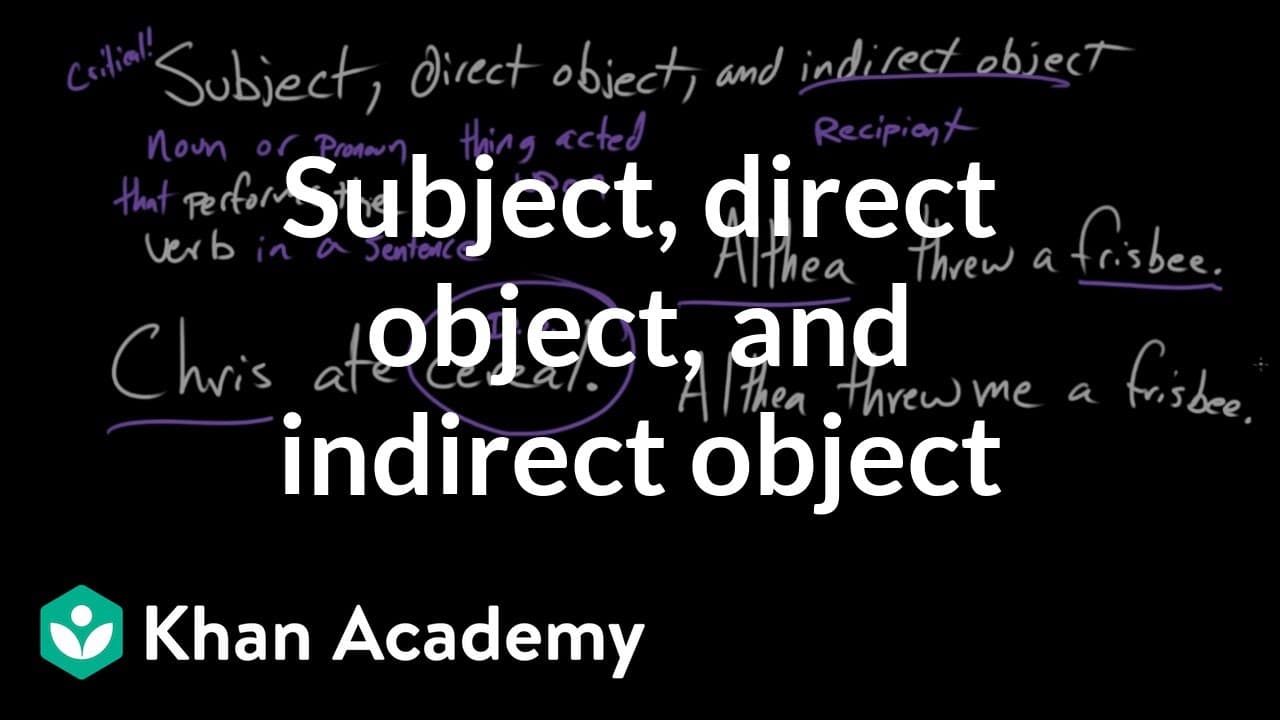
A clear and concise grammar tutorial that breaks down the components of a sentence: subjects, direct objects, and indirect objects. Through a casual dialogue between two narrators, the video uses handwritten examples on a digital whiteboard to visually map out sentence structures. The lesson moves from simple subject identification to the more complex relationship between direct and indirect objects, offering concrete tests to verify which is which. The video explores key grammatical themes including sentence analysis, the roles of nouns and pronouns, and the functional relationships between words. It specifically addresses how action verbs transfer energy to direct objects and how indirect objects function as the recipients of those actions. The narrators also demonstrate how to differentiate an indirect object from a prepositional phrase using a simple transposition test. This resource is highly valuable for English Language Arts classrooms introduced to sentence diagramming or syntax analysis. It clarifies a common point of confusion for students—distinguishing between the thing being acted upon and the recipient of that action. Teachers can use this video to introduce the concept of transitive verbs or as a remediation tool for students struggling with sentence structure and pronoun usage.

Khan AcademyKhan Academy

4mins 43s

Mastering Subject and Object Pronouns

Mastering Subject and Object Pronouns

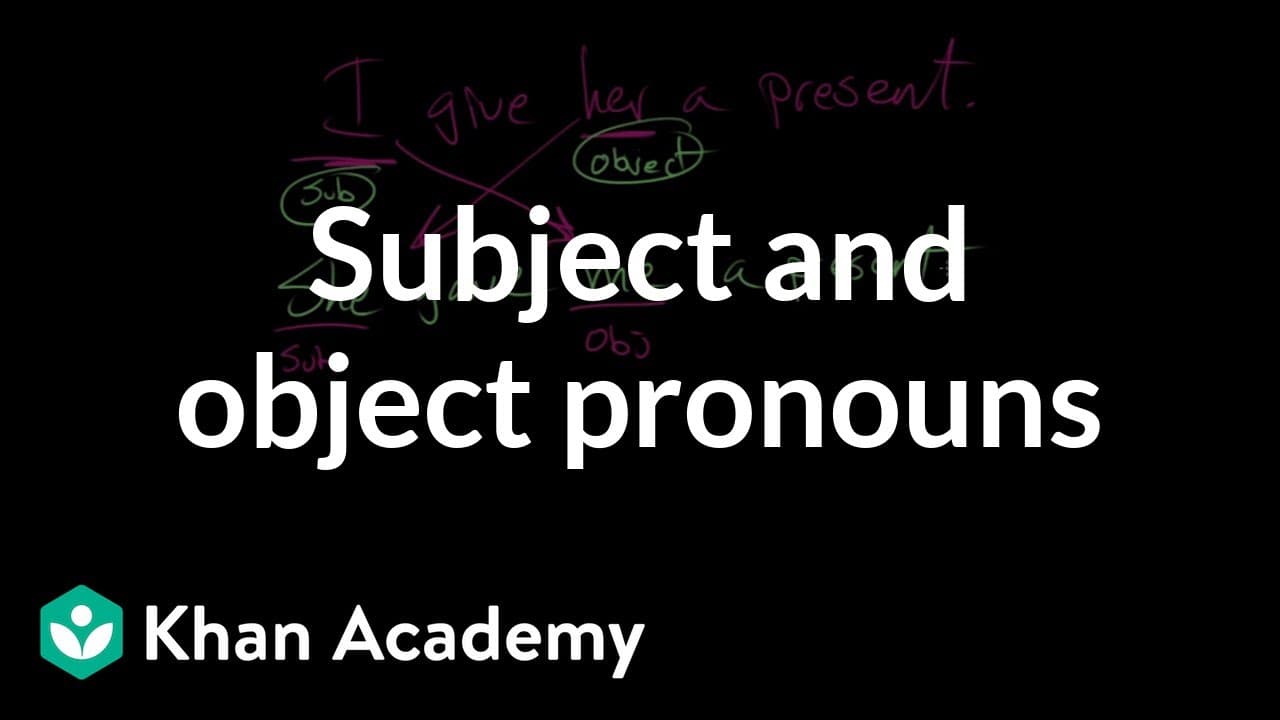
This educational video provides a clear and accessible introduction to the grammatical concepts of subject and object pronouns. The narrator, David, uses a digital blackboard style to visually map out sentence structures, explaining that subjects are the "doers" of actions while objects are the things "acted upon." Through a series of concrete examples, the video demonstrates how nouns can be replaced by specific pronouns depending on their role in the sentence. The content focuses on the mechanics of swapping pronouns like "I/me," "she/her," "he/him," and "they/them." It visually illustrates the "switcheroo" technique—flipping the subject and object of a sentence to show how the pronouns must morph to fit their new grammatical function. The lesson also highlights the exceptions of "you" and "it," which remain constant regardless of their placement. For educators, this video serves as an excellent foundational tool for teaching sentence structure and proper pronoun usage. It simplifies abstract grammatical rules into a visual logic puzzle, making it easier for students to grasp why we say "She gave it to me" rather than "Her gave it to I." It is particularly useful for upper elementary students learning parts of speech or for English Language Learners grappling with case distinctions.

Khan AcademyKhan Academy

5mins 34s

How to Choose Between Who and Whom

How to Choose Between Who and Whom

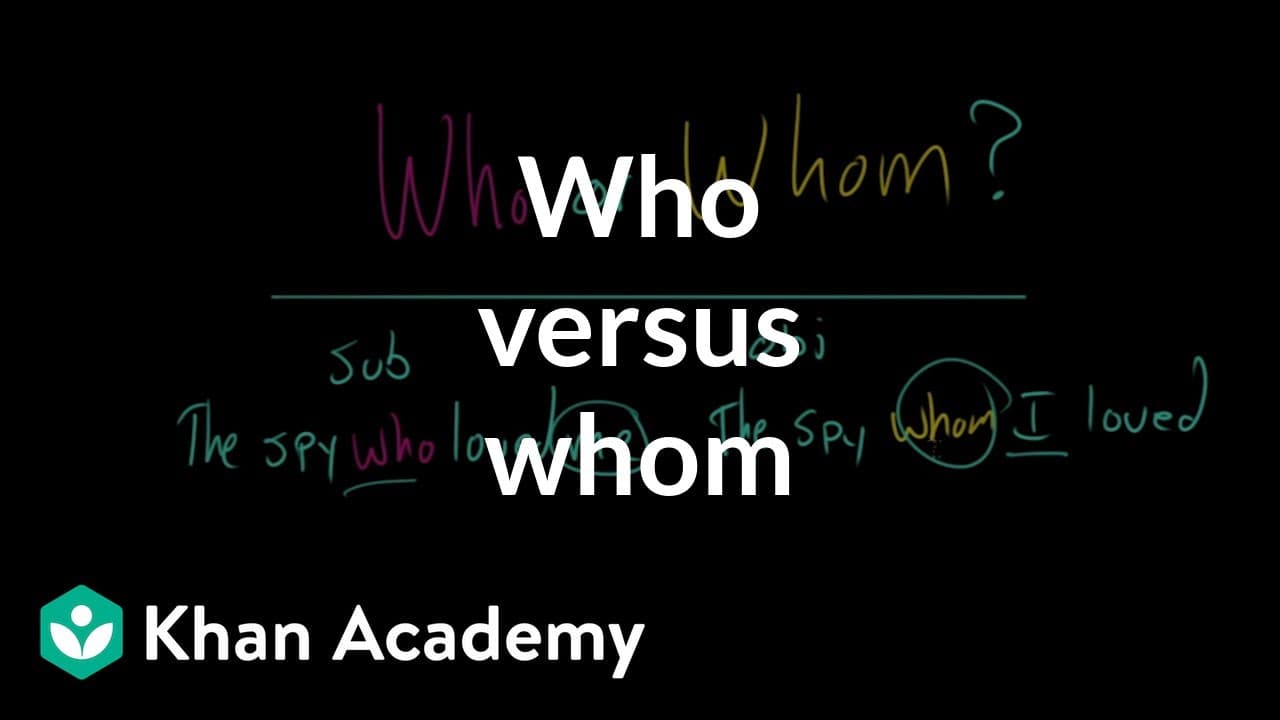
This video provides a nuanced explanation of the grammatical difference between "who" and "whom," moving beyond rigid rules to explore how these pronouns are actually used in modern English. The narrator explains the traditional distinction—that "who" is for subjects (like "he" or "she") and "whom" is for objects (like "him" or "her")—using the memorable example of "The spy who loved me." The lesson uses simple sentence diagrams to visualize the subject-object relationship. The content goes deeper by introducing the concept of linguistic evolution, describing the rule as a "one-way street." It explains that while "whom" is strictly an object pronoun, "who" has expanded to function as both subject and object in casual usage. The video draws a fascinating parallel to the archaic pronoun "whoso," illustrating how language naturally sheds complex forms over time, and predicts that "whom" may eventually disappear entirely from the language. For educators, this resource is valuable because it distinguishes between technical correctness and social acceptability (register). It empowers students to understand that language rules change and helps them navigate the choice between "who" and "whom" based on the desired tone—formal vs. informal—rather than just memorizing a binary rule. It creates a comfortable space for students who find grammar intimidating by validating their natural speech patterns while teaching them the formal structures needed for academic writing.

Khan AcademyKhan Academy

4mins 47s

Materials

Grammaire Double Niveau Progression Guide

Grammaire Double Niveau Progression Guide

Progression annuelle complète de grammaire pour cours double CM1-CM2 conforme au Bulletin Officiel n° 16 d'avril 2025. Structurée sur 36 semaines (5 périodes scolaires à raison d'une heure hebdomadaire), elle détaille les objectifs notionnels, les manipulations syntaxiques et la différenciation spécifique CM1/CM2.

LP

LAURENT PERCHE

Sentence Anatomy Analysis Sheet

Sentence Anatomy Analysis Sheet

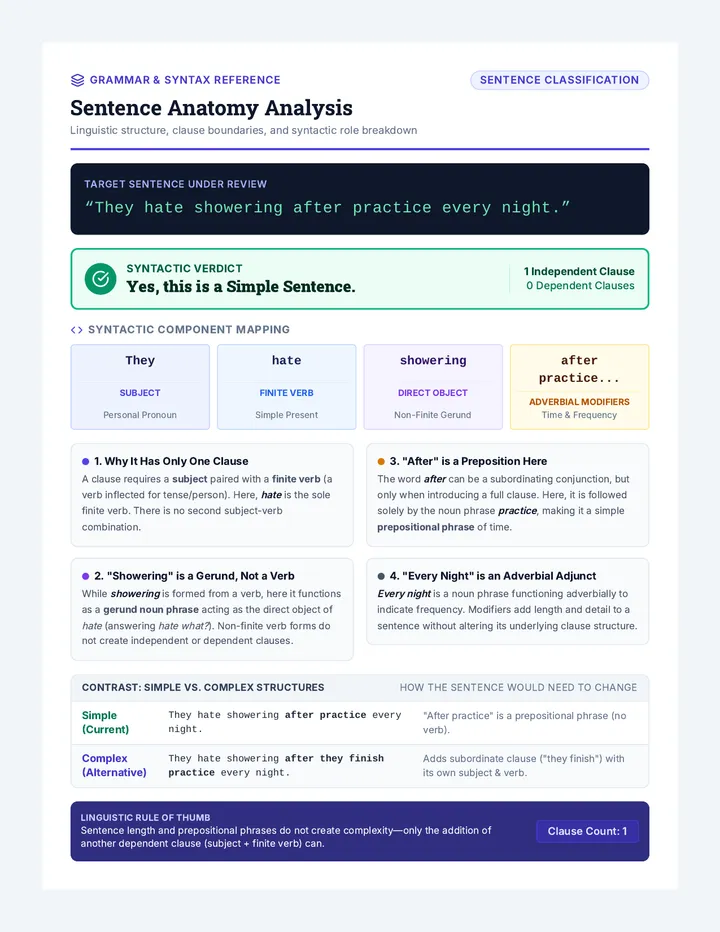
A rigorous syntactic breakdown and reference sheet analyzing the sentence 'They hate showering after practice every night.' It identifies the clause structure, distinguishes finite verbs from gerund phrases, clarifies prepositional vs. subordinating usage, and explains why the sentence is strictly simple.

CT

Chrysa Tinervia

Sentence Anatomy Lab Anchor Chart

Sentence Anatomy Lab Anchor Chart

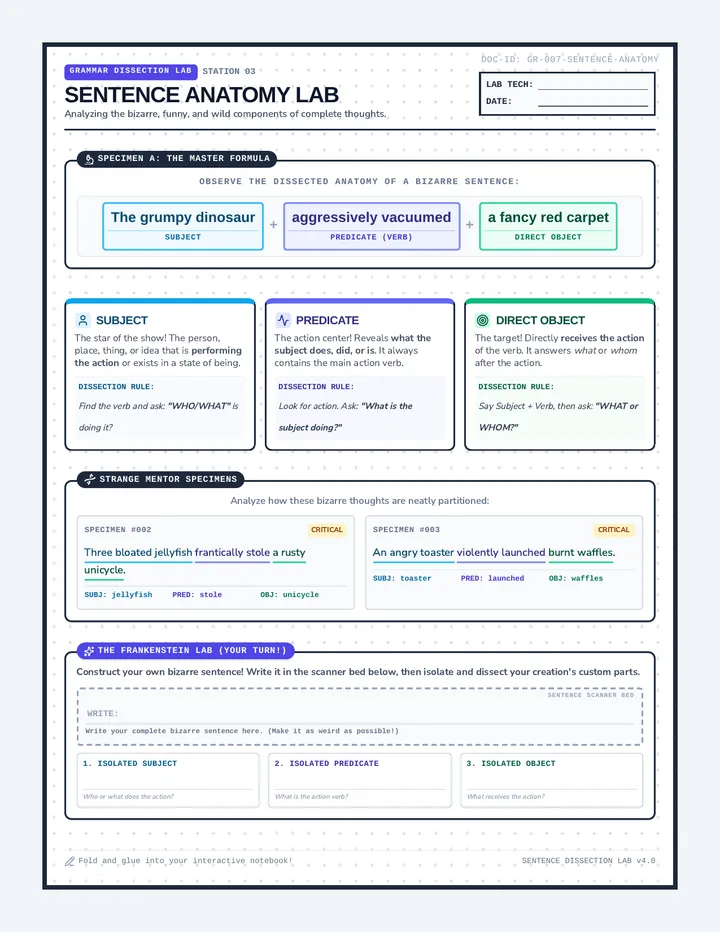
A sentence anatomy anchor chart for 7th-grade interactive notebooks. Uses funny and bizarre mentor sentences to teach subjects, predicates, and direct objects, and features a clean 'Sentence Anatomy Lab' design with blank spaces for student-created bizarre sentences.

SW

Sarah Woodring

Satzglieder Meister Arbeitsblatt

Satzglieder Meister Arbeitsblatt

Ein zweiseitiges Lernziel-, Merk- und Übungsblatt zur formalen und funktionalen Satzgliedbestimmung. Seite 1 fasst alle zentralen Fachbegriffe wie Verbenfächer, Verschiebeprobe, die vier Fälle und Wortgruppen zusammen und bietet eine klare Schritt-für-Schritt-Anleitung. Seite 2 enthält differenzierte Übungen zur direkten Anwendung mit Satzgrenzen, Verbenfächer-Analyse und Bestimmungstabelle.

Sequences

Mission Message Guide Enseignant

Expertise Formation Premier Degré

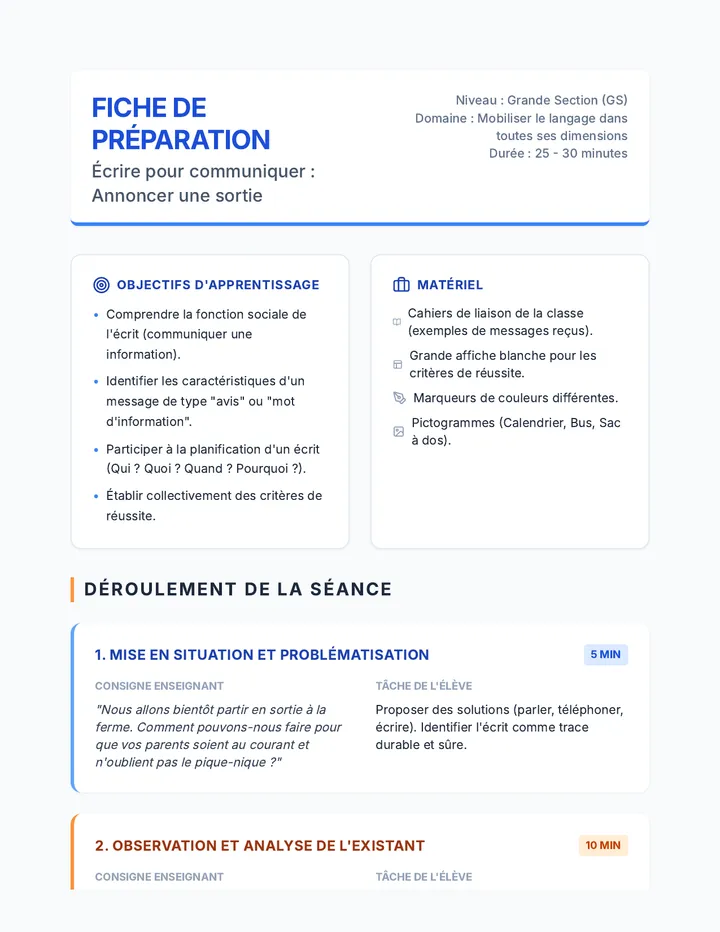
Une série de modules de formation destinés aux conseillers pédagogiques pour renforcer leur expertise en ingénierie de formation continue, spécifiquement appliquée à l'enseignement du français à l'école primaire.

VD

Val Désirée

27
Launch Pad Student Handout

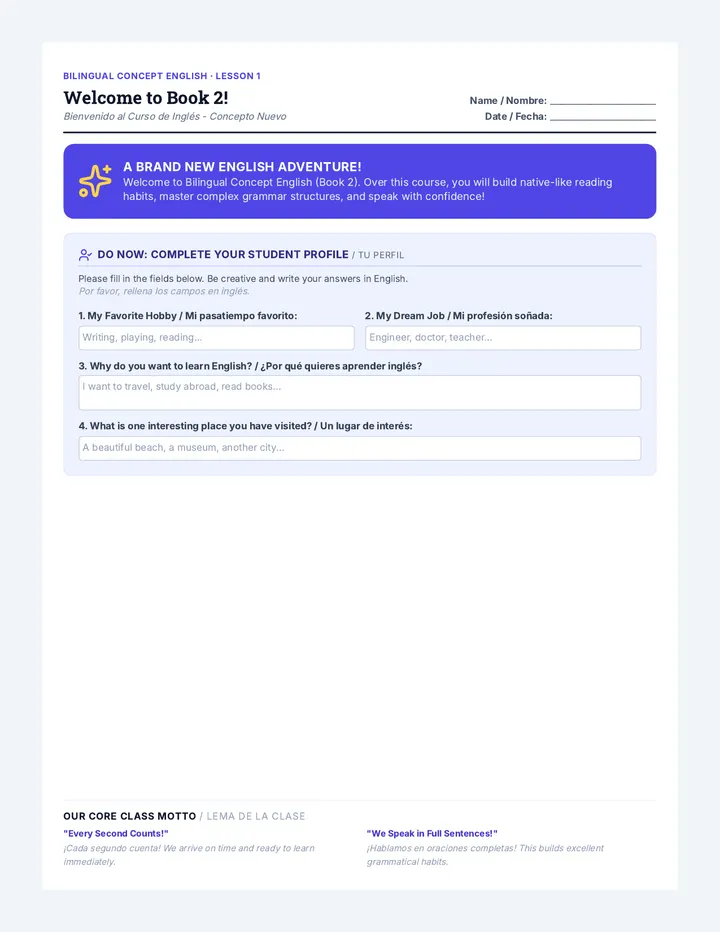
Bilingual Concept English

A comprehensive bilingual English-Spanish series based on New Concept English (Book 2). Each lesson features complete vocabulary guides, contrastive grammar lessons, reading comprehension, and beautifully structured print-ready exercises.

CC

Colin Cumberbatch

20
U9 L3 Do Now Slides

Do Now Mastery Series

A series of five "Do Now" slide decks for Grade 4 RLA, focusing on revising and editing skills aligned with TEKS 4.11. Each deck provides quick, timed practice sessions with original passages and multiple-choice questions.

DF

Denisse Flores

16
Grammar Practice First Semester Slides

Daily Grammar Practice Semester 1

A comprehensive first semester of daily grammar practice focusing on sentence analysis, parts of speech, and diagramming.

D

destiny.lanier

6
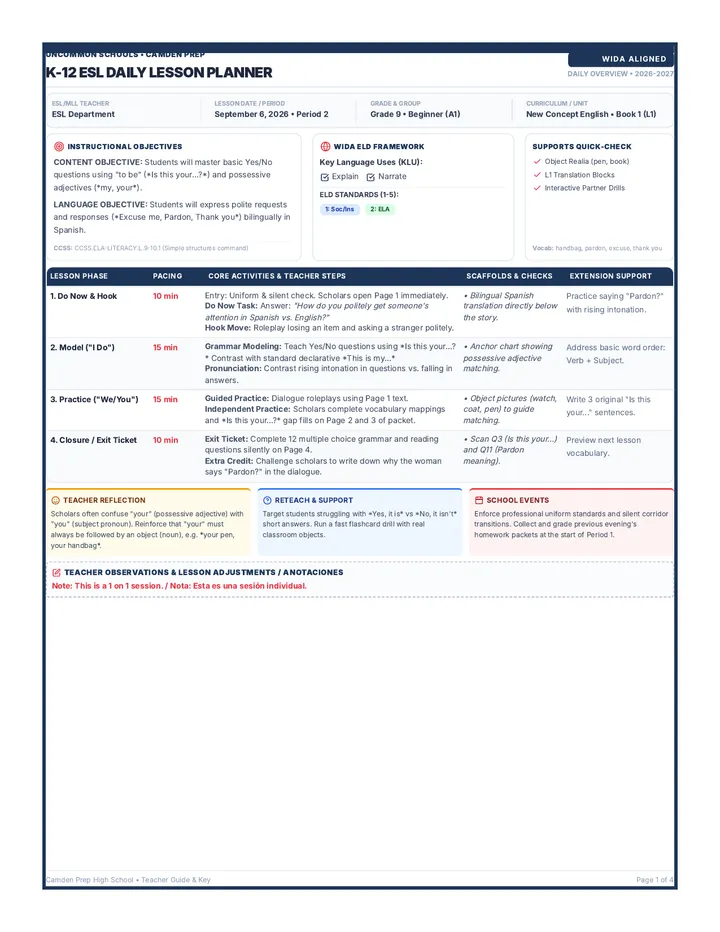
Excuse Me Teacher Guide & Key

New Concept English Book 1

A rigorous, WIDA-aligned ESL curriculum sequence based on New Concept English Book 1 (First Things First), focusing on absolute beginner grammatical structures, possessive pronouns, polite requests, and daily vocabulary.

C

colin.cumberbatch

9
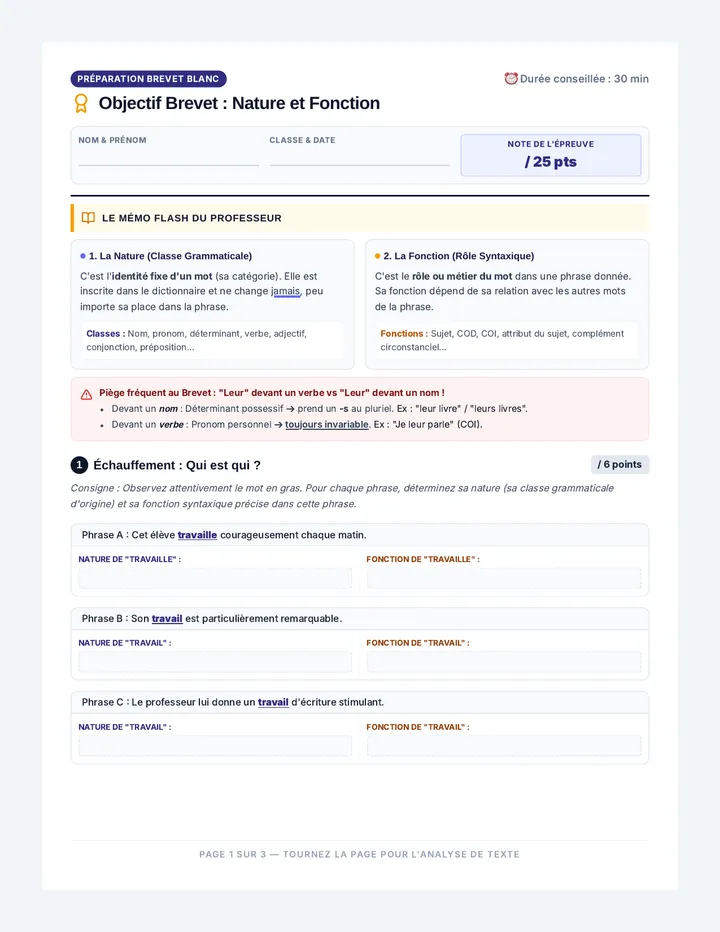
Nature et Fonction Entraînement

Revisions Brevet Express

Un programme complet de révision intensive pour le Brevet, regroupant des fiches, exercices et corrigés détaillés en français et en physique-chimie.

WM

Weber Myriam

9

Lessons

Lexicon Large Print Part 1 Reference

The Bards Cipher

A hands-on activity where students learn to decode and encode Shakespearean language by writing secret messages or insults, then swapping them with peers to translate.

AP

Alexis Paolini

17
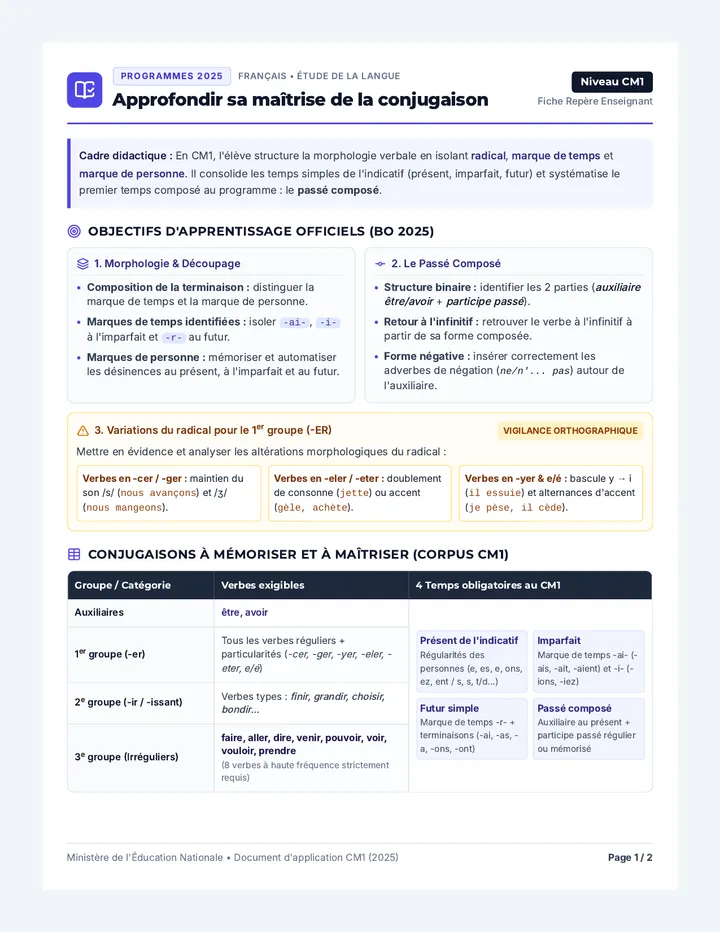
Conjugaison CM1 Guide Repere

Maitrise Conjugaison Cycle 3

Guides repères et référentiels pédagogiques officiels pour l'enseignement de la conjugaison au cycle 3 (CM1 et CM2), conformes aux programmes 2025.

LP

LAURENT PERCHE

13
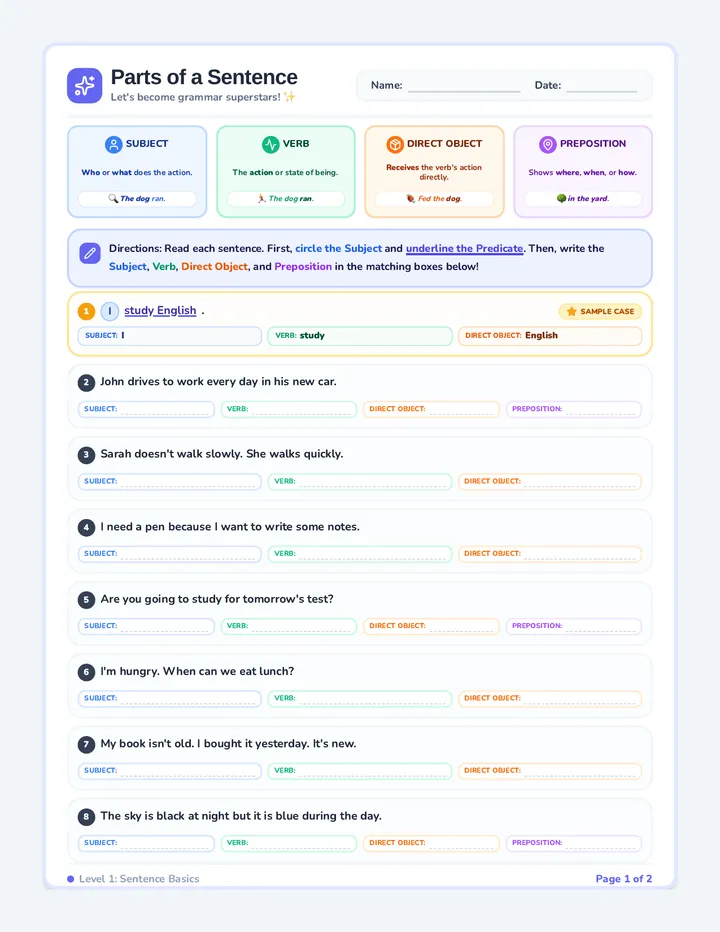
Parts of a Sentence Worksheet

Parts of a Sentence

A simplified, highly visual, student-friendly lesson focused on identifying subjects, predicates, verbs, and direct objects. Includes clean double-page worksheets and matching teacher answer keys with plenty of space for handwriting.

D

destiny.lanier

4
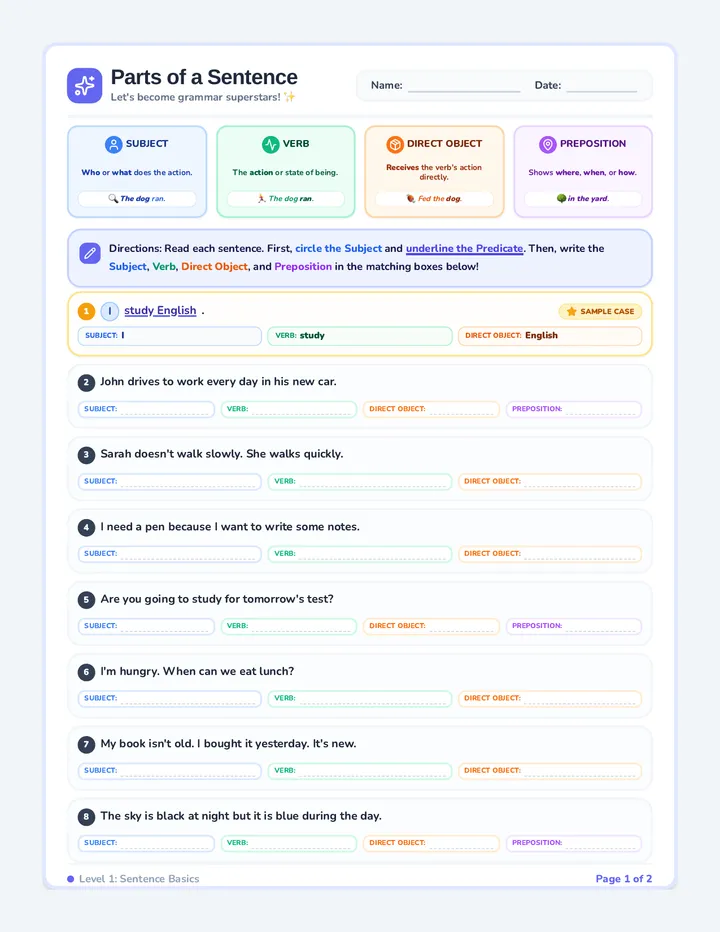
Parts of a Sentence Worksheet

Parts of a Sentence

A simplified, highly visual, student-friendly lesson focused on identifying subjects, predicates, verbs, and direct objects. Includes clean double-page worksheets and matching teacher answer keys with plenty of space for handwriting.

D

destiny.lanier

2
Clause Map Poster

Clause Mapping

A lesson focused on visual exploration and parsing of noun clauses acting as subjects, direct objects, and objects of prepositions.

KC

Kristi Cargile

3