Analysis of text features, main ideas, and supporting details in informational texts. Develops critical thinking through evidence-based questioning and summary skills.
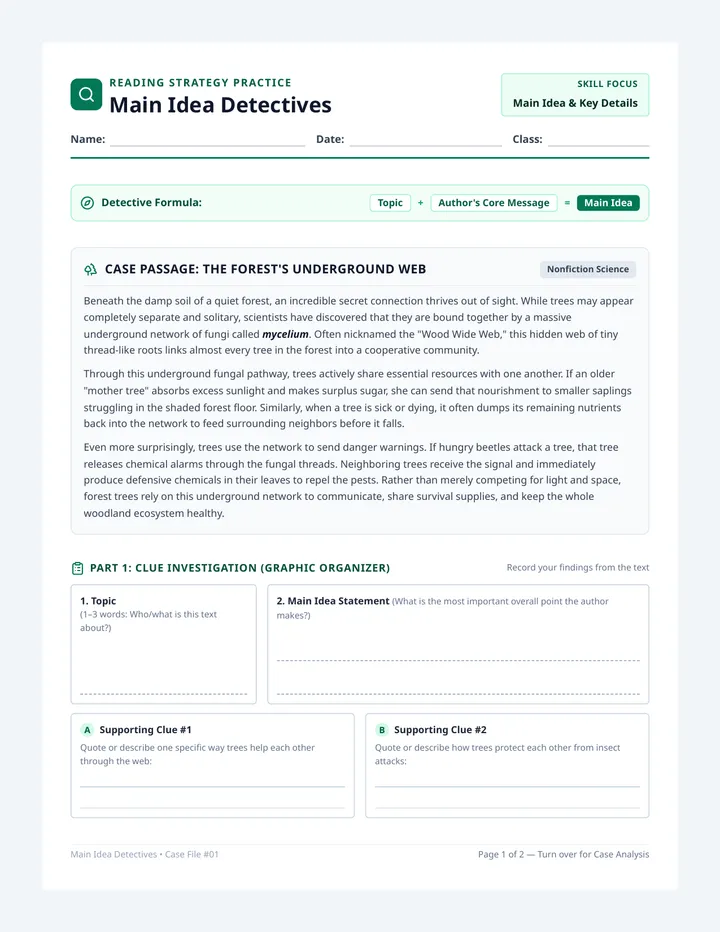
A two-page reading comprehension worksheet focused on identifying main ideas and supporting details. Students read an engaging informational passage about forest fungal networks ('The Wood Wide Web') and complete scaffolded detective-themed graphic organizers, text evidence questions, and written responses.
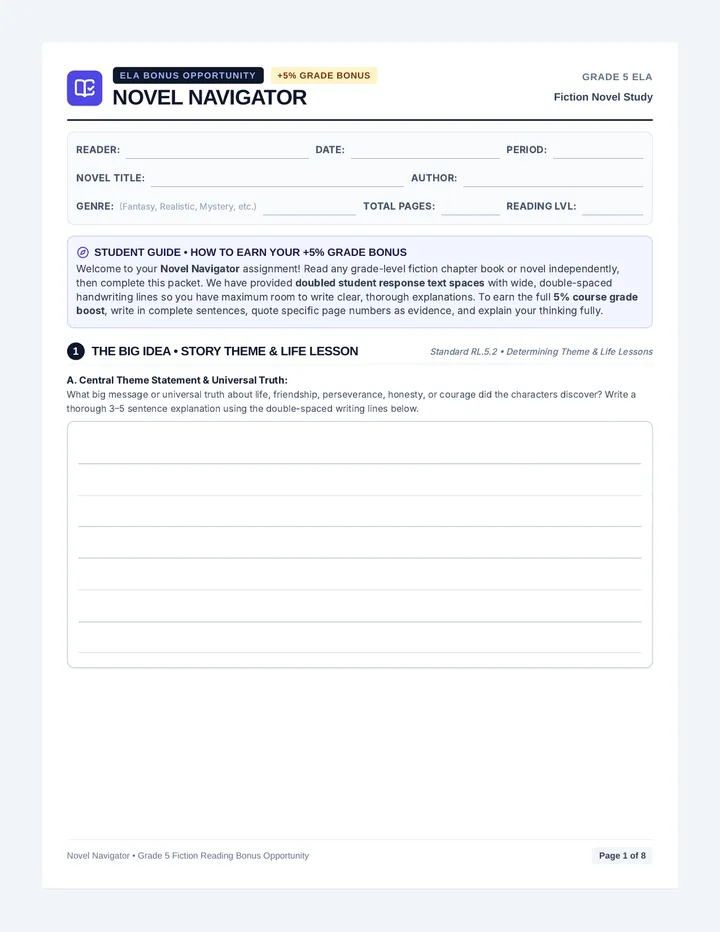
An 8-page comprehensive 5th-grade ELA fiction assignment packet for an ELA Bonus Opportunity, featuring doubled student response text spaces, generous double-spaced handwriting lines, student-friendly directions, story elements analysis, creative writing pitch, and a streamlined evaluation rubric.
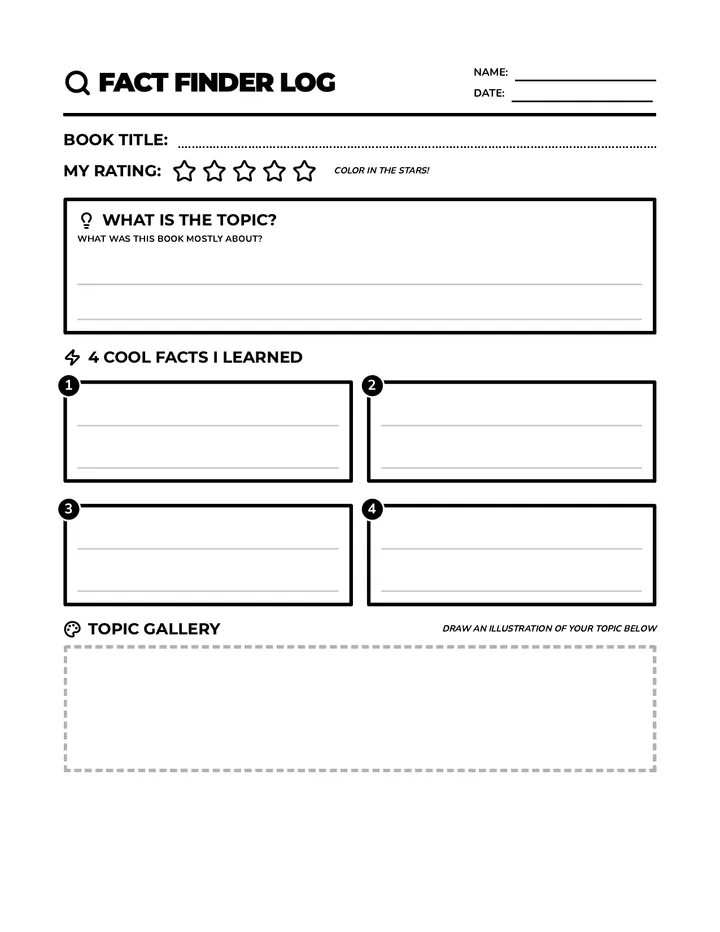
A high-contrast, black-and-white graphic organizer for students to log facts from a book, featuring sections for topic description, four key facts, and a drawing gallery, strictly formatted for a single-sided 8.5x11 page.
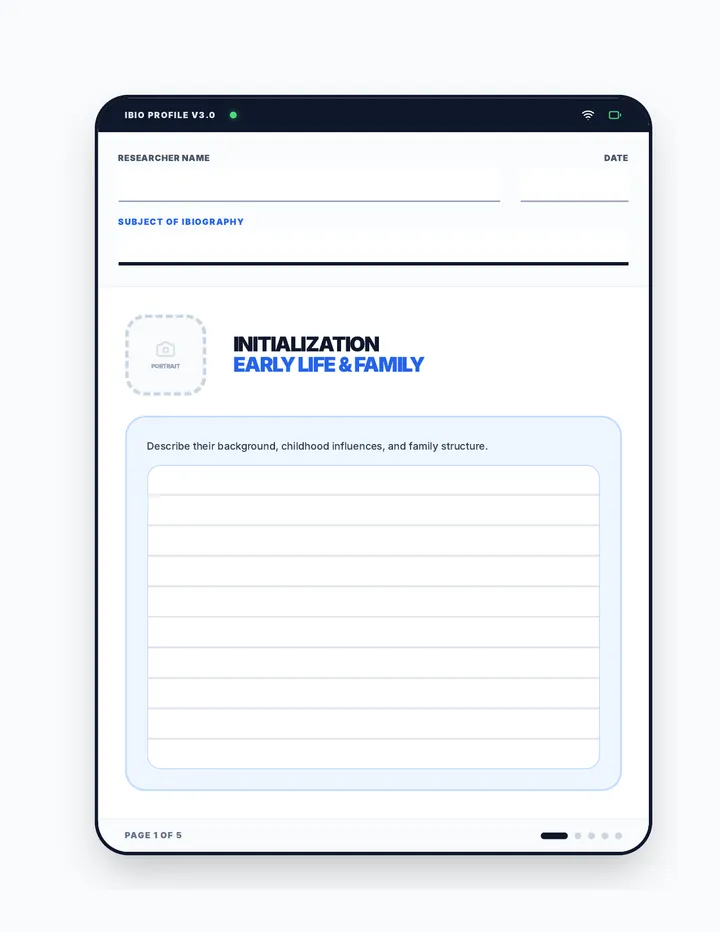
A comprehensive 5-page tech-themed 'iBio' digital-style profile organizer. Each category (Early Life, Accomplishments, Obstacles, Character Traits, and Legacy) has its own dedicated page with expanded writing areas and 36px lines for 6th-grade handwriting. Each page is designed as a standalone tablet interface.
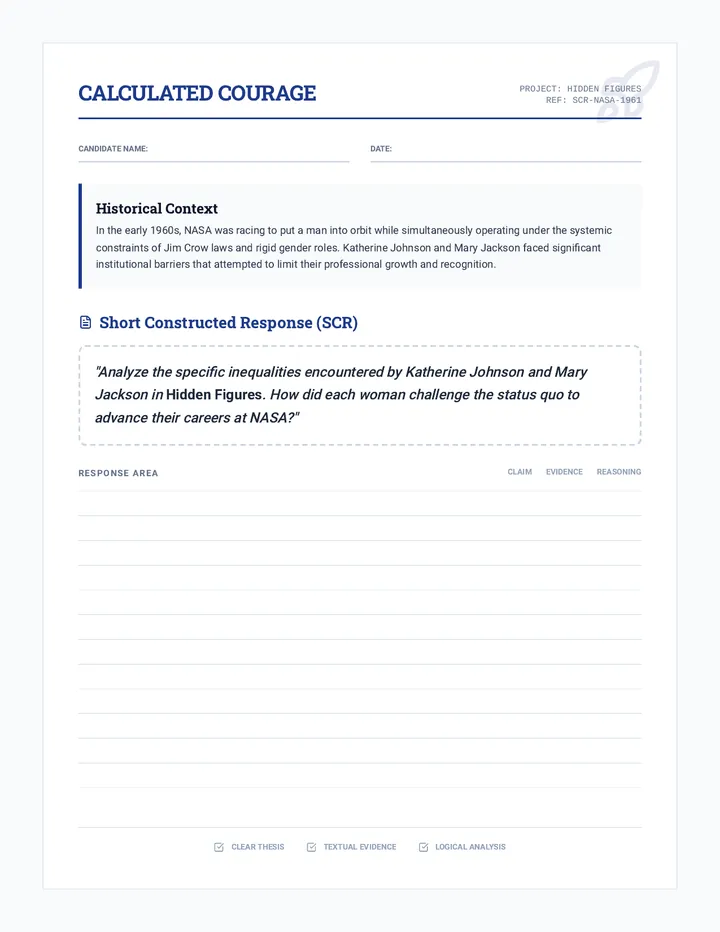
An SCR prompt document for 'Hidden Figures' focusing on the systemic inequalities faced by Katherine Johnson and Mary Jackson. Includes historical context, a clearly defined writing prompt, and a structured response area for student use.
A collection of 5th-grade ELA and Grammar resources focusing on biographical research, summary writing, and language mastery.
A comprehensive unit focused on informational reading and writing skills for elementary students. The sequence guides students through the process of researching high-interest topics, synthesizing information from multiple paragraphs, and drafting professional-quality informational reports.
A comprehensive collection of interactive activities and tools designed to help 4th graders master nonfiction text features, including headings, captions, diagrams, and navigation tools.
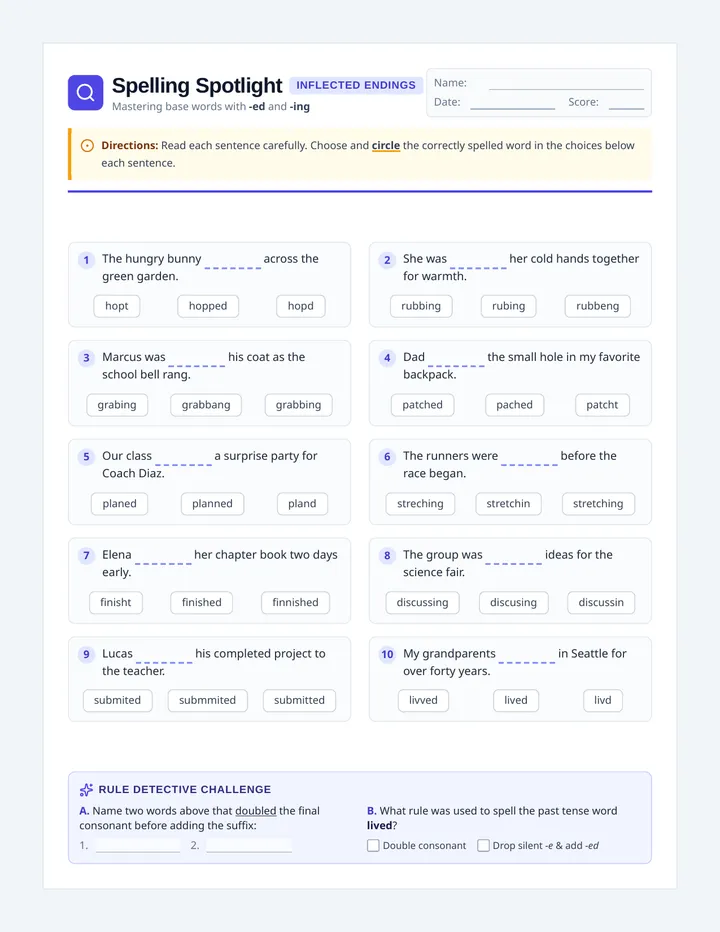
An integrated language arts sequence combining foundational spelling mechanics with literary comprehension and opinion writing development.
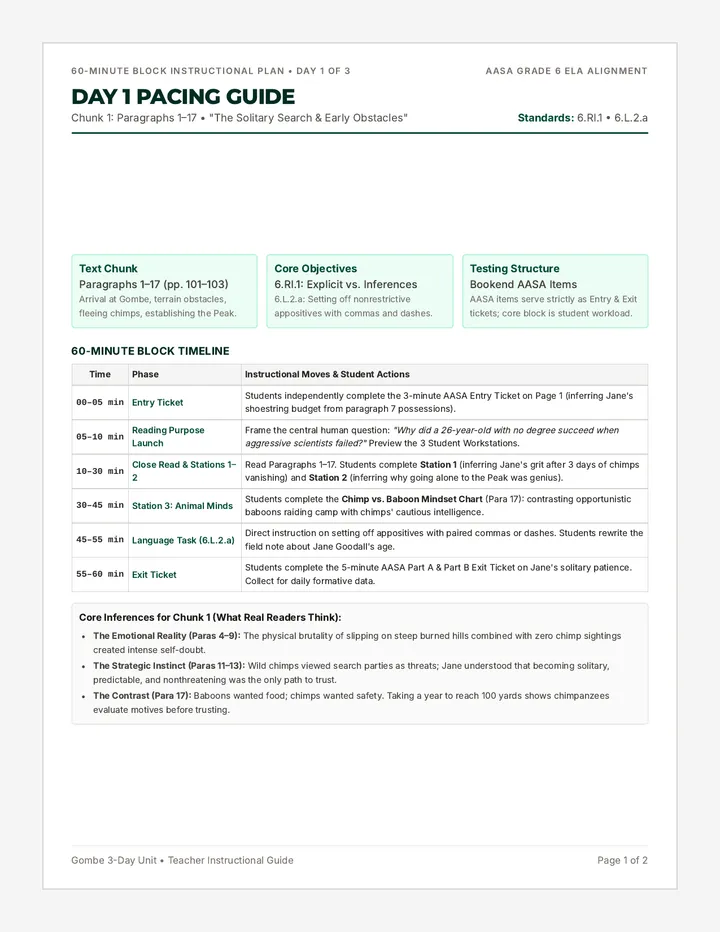
A streamlined 3-day unit for 60-minute blocks, chunking Jane Goodall's *My Life with the Chimpanzees* into three cohesive sections (omitting paragraphs 19–24, 27–30, 50, and 51–53). Masterfully targets 6.RI.1, 6.RI.3, and 6.L.2.a with Pearson/AASA assessment tasks.
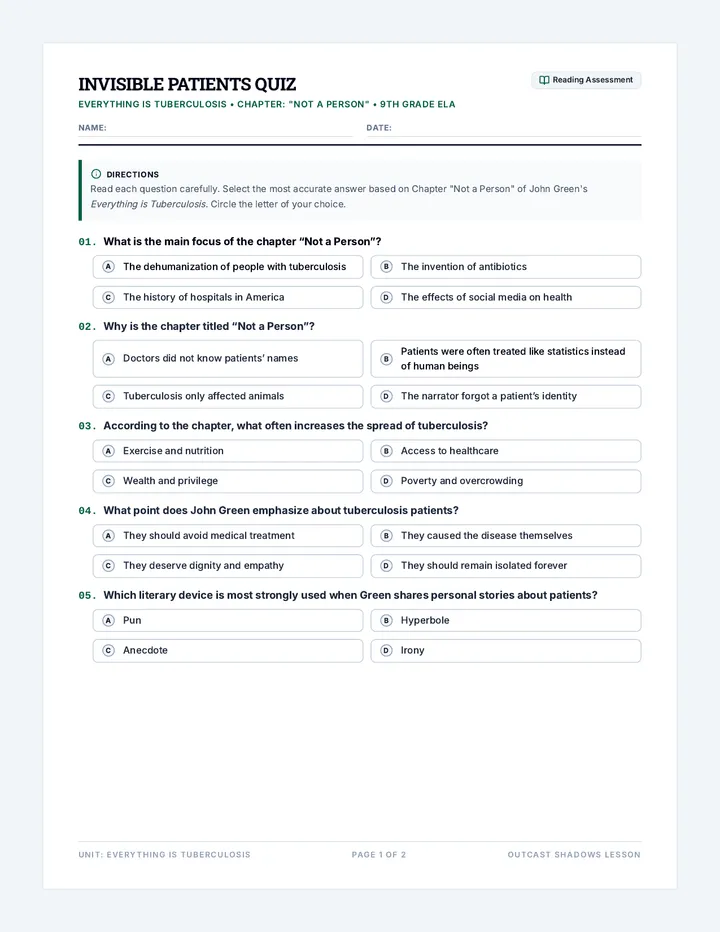
A rigorous high school unit exploring John Green's 'Everything is Tuberculosis', examining historical plague narratives, the biological science of the bacillus, medical ethics, global health policy, and the human side of patient advocacy.
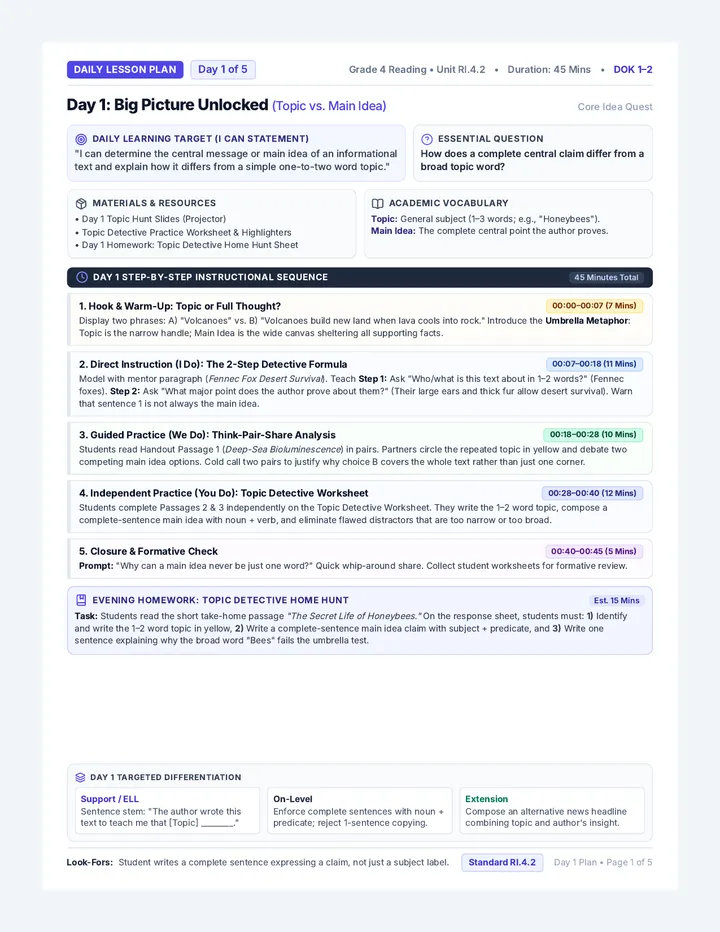
A 5-day Grade 4 informational text unit guiding students through topic vs. main idea, supporting evidence pillars, objective summarizing, and multiple-choice distractor traps.
An 8th-grade ELA lesson focused on central ideas and evidence through the CommonLit text 'Keeping Up with the Joneses'. Students analyze the origins, social impacts, and psychological pressures of status-seeking behavior through vocabulary challenges, media analysis, and collaborative activities.
A leveled reading comprehension lesson based on Chapter 1 of 'Jane Goodall and the Chimpanzees of Gombe'. Students practice making predictions and identifying key details about Jane's arrival in the jungle across three different learning levels.
A comprehensive set of teacher resources for the NY Grade 8 ELA Interim Assessments, including complete answer keys for Book 1 and Book 2 and a detailed 165-minute pacing guide.
A biography research project focused on influential athletes who changed the world. Students use a sports-themed packet to document their subject's career milestones, social impact, and personal mindset.
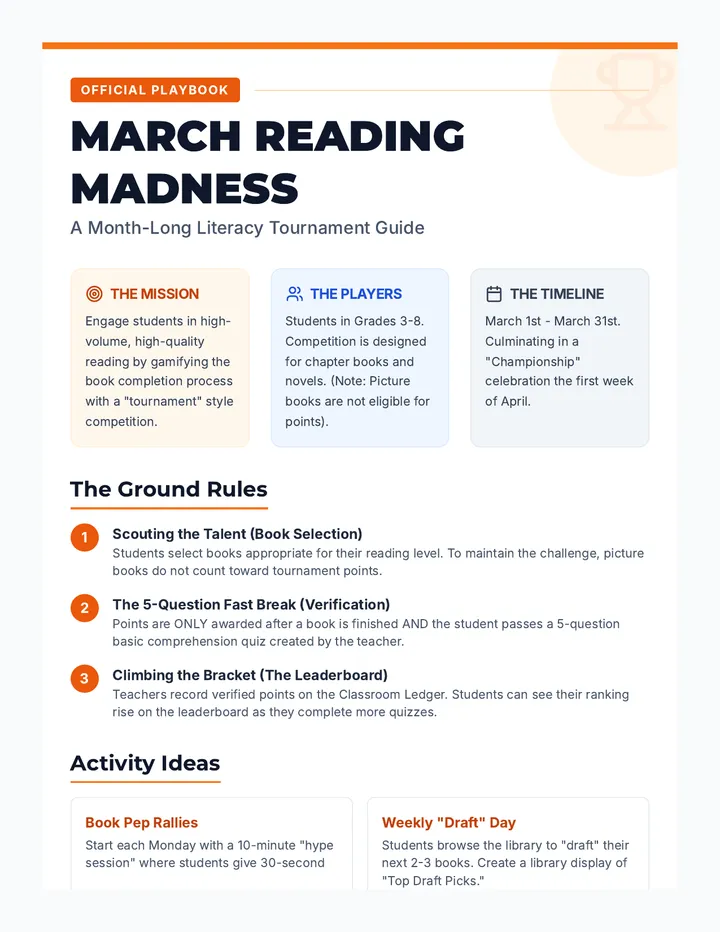
A month-long literacy initiative inspired by basketball tournaments, designed to boost reading volume and comprehension through a competitive, gamified classroom environment.