Media Mashup Slides UNIT: SYNTHESIS
Media Mashup
Comparing Text to Visual Media in Nonfiction Studies
Read It
See It
Compare It
The Sensory Challenge
Option A: The Passage
"The engine roared with a guttural, metallic shriek as smoke, thick and acrid like burnt rubber, billowed from the chassis, obscuring the driver's desperate struggle with the steering wheel."
Option B: The Video
Silent Footage Clip
Which version felt more "true"? Why?
Gains and Losses
Print Media
Interiority: Explains what people are thinking or feeling.
Complexity: Allows for detailed statistics and deep history.
Imagination: Readers must visualize everything themselves.
Visual Media
Immediacy: You see and hear the action as it happens.
Emotion: Facial expressions and music set a tone instantly.
Constraint: Limited to what the camera can actually show.
Critical Lens
When comparing text to video, we aren't just looking for differences. We are looking for emphasis.
Question 1
What details did the author include that the filmmaker left out?
Question 2
How did the background music or camera angles change your perception?
Question 3
Which medium made the event feel more "important"? Why?
Mission: Mashup
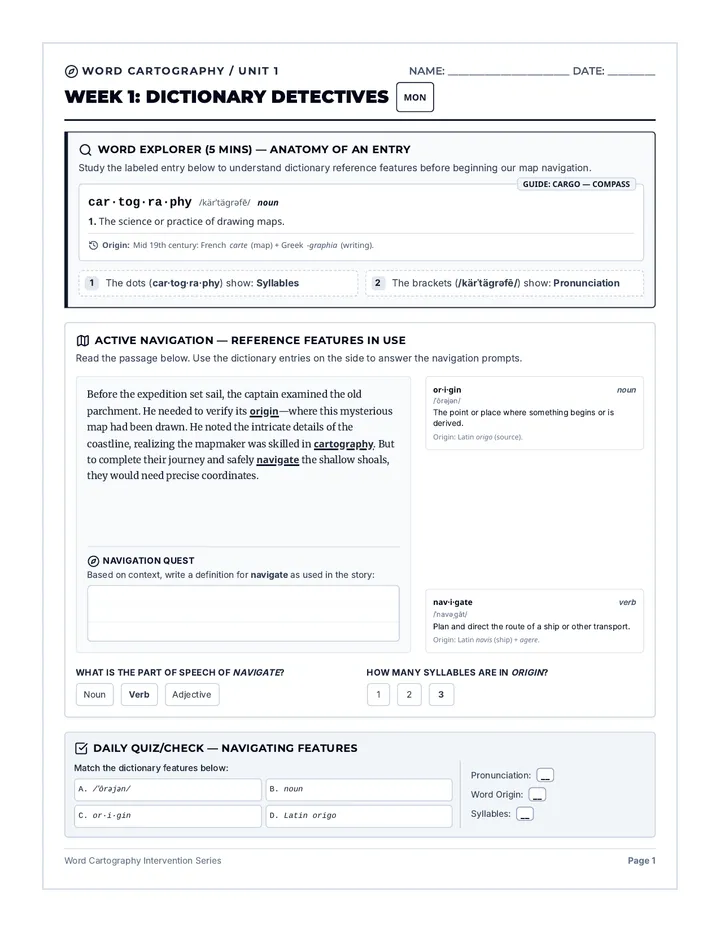
Read the assigned chapter in your nonfiction book.
Watch the provided documentary clip.
Map the overlap and the unique details on your Venn Diagram.
Determine which medium is more effective for this specific topic.
Media Comparison Worksheet Media Comparison Lab
Topic: Synthesizing Text and Visual Media
Name:
Date:
Book Title / Chapter
Video Title / Source
The Comparison Map
Book Only
Video Only
Both
Critical Analysis
1. Identify one specific detail found in the text that was missing from the video. Why do you think the filmmaker chose to leave it out?
2. How did the video's use of audio (music, sound effects, or the speaker's tone) affect your emotional response compared to reading the text?
3. Evaluation: If someone only had 5 minutes to learn about this topic, which medium would you recommend they use? Support your answer with evidence from your Venn diagram.
Synthesis Note
Synthesis isn't just about listing differences. It's about understanding how the strengths of each medium (like the book's depth and the video's speed) combine to give you a fuller picture of the truth.
Source Detective Slides Source Sleuths
Tracing the Origins of Truth in Nonfiction
Primary
Secondary
Know Your Evidence
Primary Source
"The Witness"
First-hand accounts from someone who was actually there.
Interviews Diaries Photos Original Letters
Secondary Source
"The Scholar"
Analyses or summaries created after the event by someone not present.
Textbooks Biographies Articles Documentaries
The "Missing" Piece
Authors choose which sources to include to build their narrative.
What happens when we find a primary source the author didn't use?
Expands
Adds more detail
Challenges
Disproves a point
Humanizes
Shows emotion
Contextualizes
Shows the setting
Analysis Tool: S.O.A.P.
S
Speaker
Who created this? What is their point of view?
O
Occasion
What was happening when this was made?
A
Audience
Who was this originally meant for?
P
Purpose
Why was this created? What's the goal?
Source Sleuth Worksheet Confidential Archive
Case File: Document Analysis
Subject: Primary vs. Secondary Source Evidence
ID: #2026-ELA-7
Detective:
Source Title / Description
Source Type
Primary
Secondary
The S.O.A.P. Investigation
S: Speaker
Who created this? What is their background or point of view?
O: Occasion
When and where was this made? What events were happening?
A: Audience
Who was this originally intended for? How did that shape the tone?
P: Purpose
Why was this created? To inform, persuade, or record an event?
The Narrative Bridge
1. Synthesis: How does this source connect to the information in your book?
Does it support a claim the author made, or does it offer a different perspective? Use specific examples from both texts.
2. The "Missing" Impact: If the author of your book had included this specific source in their narrative, how would it have changed the reader's understanding of the topic?
Investigation Status
Completed files should be submitted to the archive. Ensure all SOAP components are backed by textual evidence.
Fact Checker Slides X
?
!
X
?
!
Simulation Mode
Fact Checker Challenge
When the sources don't agree, who do you believe?
The Problem with Authority
Source A: Your Book
"The mission was a complete success; no casualties were reported during the evacuation."
VS
Source B: News Archive
"Three local guides were seriously injured during the chaotic withdrawal from the site."
Both can't be 100% true. Now what?
How to Reconcile Conflict
Recency
Which source was written closer to the event? Or which has the newest research?
Bias
Does one source want you to feel a certain way? Who funded the research?
Quantity
Do three other sources agree with A or B? Where is the consensus?
The Synthesis Workflow
1
Identify the specific point of disagreement.
2
Research the authors of both sources.
3
Find a "Tie-Breaker" source (Source C).
4
Write a conclusion that acknowledges both views.
Truth Tracker Worksheet Breaking: Source Discrepancy Detected Unit: Synthesis & Media Literacy Ref: 003-Conflict
Truth Tracker
Conflict Resolution Protocol
Analyst:
Book Study:
Phase 1: Identify the Conflict
Claim from the Book
Conflicting Claim (Outside Source)
The core disagreement is:
Phase 2: Source Investigation
Recency
Which source has more up-to-date research or access to new data?
Bias Check
Does either author have a reason to present only one side of the story?
The Tie-Breaker
Does a 3rd source (Source C) exist? What does it say?
Phase 3: Synthesized Conclusion
The Truth, Synthesized:
Write a final paragraph that reconciles the conflict. You should explain why the sources differ and what the most accurate conclusion is based on your research.
Self-Check 1
Did I mention both Source A and Source B by name?
Self-Check 2
Did I explain the reason for the discrepancy (bias, date, etc.)?
Audience Architect Slides Audience Architect
Designing Information for Impact and Accessibility
Simplify
Specify
Persuade
The Power of Translation
True mastery of a topic means you can explain it to anyone.
"If you can't explain it simply, you don't understand it well enough."
— Albert Einstein (attributed)
Adaptation Goals
Keep the core message.
Change the vocabulary level.
Select the best format.
Choose Your Vehicle
Infographic
Best for: Data, timelines, and visual learners.
Use icons and short captions.
Speech
Best for: Emotional impact and persuasion.
Use metaphors and direct address.
Picture Book
Best for: Simplifying complex concepts.
Use analogies and vivid imagery.
Who is your Audience?
The "Newbie"
A 3rd grader who knows nothing about the topic.
Goal: Simplify without being "babyish".
The "Decision Maker"
A city official or school principal.
Goal: Show why this information matters now.
Audience Profile Cards Audience Profile Cards
Cut these out to select your target audience for the translation workshop.
Target: The Newbie
Description
A 3rd grade student who is curious but has zero background knowledge on this topic.
Architect's Constraint
Avoid all technical jargon. Use at least one analogy comparing the topic to a common playground object.
Target: The Skeptic
Description
Someone who doesn't believe the book's claims are important or even true.
Architect's Constraint
Lead with evidence. You must use at least two specific statistics to "prove" your point instantly.
Target: The Busy Pro
Description
A high-powered executive with exactly 45 seconds to listen before their next meeting.
Architect's Constraint
Focus on the "Big Picture". What is the single most important thing they need to know right now?
Target: The Resident
Description
A neighbor who lives near where the events of the book take place.
Architect's Constraint
Make it personal. Explain how this information directly affects their daily life or their family.
Cut along the solid lines
Translation Workshop Worksheet Translation Workshop
Re-Engineering Complex Information
ARCHITECT:
1 The Raw Material
Complex Concept from Book
Selected Target Audience
Original Text Snippet (Direct Quote)
2 The Translation Plan
Core Message
What is the "must-know" point of this concept? Strip away everything else.
Selected Format
Why is an infographic, speech, or comic the best way to reach this person?
3 The Blueprint (Drafting Space)
Draft your content or sketch your visual layout here
Media Lab Finale Slides Mastery Level
Media Lab Finale
Extend your book study into the digital world.
The Challenge
Create a digital artifact that adds value to the book you've been studying.
The Core Requirement
You must synthesize information from the book with at least two outside sources (video, article, or primary source).
Podcast Segment
Explainer Video
Digital Timeline
Interactive Map
Success Criteria
Synthesis
Does the project blend the book's ideas with new outside information seamlessly?
Citations
Are the book and the external sources clearly cited during the presentation?
Creativity
Is the media choice appropriate for the topic and engaging for the audience?
Ready for Launch?
Today we plan. Tomorrow we build. Next week, the world sees your synthesis.
Immediate Goal
Pick your "Outside Info" first. What is the book missing that you want to show us?
Multimedia Project Planner Worksheet Project Planner
Media Lab Finale: Digital Artifact Design
CREATOR:
BOOK:
1. Mission Statement
Selected Media Format
Podcast
Video
Interactive Map
Timeline
Main Extension Topic
What information are you adding that wasn't in the book?
2. Source Synthesis Inventory
Source Type Source Name/Title Key Detail to Include Core Text Book Study: Outside #1 Outside #2
3. The Synthesis Plan
Narrative Hook: How will you grab the audience's attention using your selected media format?
Synthesis Moment: Explain how you will connect a specific fact from the book to a new fact from your outside sources.
4. Digital Citations
List your sources below. Remember to mention these during your artifact (e.g., "According to the article in Scientific American...") or include them as on-screen text.
Media Lab Rubric Media Lab Rubric
Final Assessment: Multimedia Synthesis Project
TOTAL: _____ / 20
Criterion Mastery (4) Proficient (3) Developing (2) Beginning (1) Synthesis of Sources Seamlessly blends the book study with 2+ outside sources to create a new, unified perspective. Connects the book study with outside sources, though connections may feel somewhat separate. Includes outside info but fails to show how it connects to or extends the book study. Only uses one source or provides a summary without any synthesis. Media Alignment Media format perfectly enhances the topic (e.g., video for a visual event). High-quality execution. Media format is appropriate for the topic. Clear effort in production. Media format is used but doesn't necessarily help convey the information better. Media format is distracting or poorly executed, hindering the message. Citing Evidence Explicitly cites the book and all outside sources using proper format and context. Cites the book and outside sources, but some formatting or context is missing. Mentions sources but lacks formal citations or clear attribution. No sources cited or mentioned during the artifact. Content Accuracy All information is factual, well-researched, and demonstrates deep understanding. Information is mostly accurate with minor errors that do not affect the message. Contains multiple factual errors or significant gaps in understanding. Information is largely inaccurate or misleading. Communication Communication is clear, engaging, and professional. Expertly adapted for the audience. Communication is clear and organized. Successfully adapted for the audience. Communication is inconsistent or slightly disorganized. Adaptation is weak. Communication is confusing or unprofessional. No evidence of audience awareness.
Evaluator Comments