Lenny.com
Explore
Create
ActivitiesNewMathEnglish Language ArtsScience & EngineeringSocial StudiesGlobal LanguagesHealth & Physical EducationSpecial EducationCounseling & Life SkillsArts & CreativityESL
Lenny.com
Lenny.com
Explore
Create
ActivitiesNewMathEnglish Language ArtsScience & EngineeringSocial StudiesGlobal LanguagesHealth & Physical EducationSpecial EducationCounseling & Life SkillsArts & CreativityESL
Lenny.com
Lenny.com

Solutions

Lenny for EducatorsLenny for SchoolsLenny for Districts

Product

ExploreSign inCreateSupportAbout

Resources

Getting startedMTSS Acceleration Program

© 2026 Lenny Learning Inc.

TermsPrivacyAccessibility
LinkedInInstagramX
Lenny

Persuasive And Opinion Writing

Techniques for crafting compelling arguments, supporting claims with evidence, and addressing counterarguments. Develops rhetorical strategies to influence readers through logical reasoning and persuasive language.

English Language ArtsPhonics & Reading FoundationsLetter IdentificationLearn Letters A-ZLowercase and Uppercase LettersConsonants and VowelsLetter-Sound AssociationsLetter-Sound Associations: LowercaseLetter-Sound Associations: UppercaseBeginning and Ending SoundsRhymingBlending And SegmentingShort VowelsShort Vowel SoundsConsonant BlendsConsonant DigraphsBlends, Digraphs, and TrigraphsDigraphs, Blends, and Silent LettersLong Vowel SoundsLong Vowel PatternsShort and Long VowelsShort and Long Vowel PatternsSilent EVowel SoundsVowel TeamsR-Controlled VowelsDiphthongs: Oi, Oy, Ou, OwVariant VowelsVariant, Diphthong, And R Vowel PatternsSoft G And CSight WordsIrregular WordsWord RecognitionSyllablesSyllable TypesTwo-Syllable WordsMultisyllabic WordsPhoneme ManipulationDecodable TextsVocabularyAction WordsQuestion WordsNouns and AdjectivesClassify WordsCompound WordsSynonyms and AntonymsHomophonesHomophones and HomonymsShades of MeaningContext CluesPrefixes and SuffixesGreek and Latin RootsAnalogiesIdioms and AdagesForeign Words and ExpressionsWord Choice and UsageReference SkillsReading ComprehensionRead-Along Literary TextsRead-Along Informational TextsReality vs. FictionStory ElementsCharacterSequenceMain IdeaCause And EffectCompare And ContrastReading StrategiesText StructureAuthor's PurposeAuthor's Purpose And ToneAuthor's PerspectivePoint Of ViewThemeInference And ThemeInference And AnalysisPoetry ElementsLiterary DevicesAnalyzing LiteratureAnalyzing Informational TextsComparing TextsAudience, Purpose, And ToneBusiness DocumentsNovel StudyNonfiction Book StudyGrammar & MechanicsSentencesNounsVerbsAdjectivesPronounsCapitalizationPunctuationContractionsConjunctionsPrepositionsArticlesAdjectives And AdverbsVerb TypesVerb TensePronouns And AntecedentsPronoun TypesSubject-Verb AgreementDirect And Indirect ObjectsSentences, Fragments, And Run-OnsPhrases And ClausesCommasSemicolons, Colons, And CommasDashes, Hyphens, And EllipsesSpellingAbbreviationsFormattingVerb Tense And MoodMisplaced ModifiersWritingDescriptive DetailsCreative WritingOpinion WritingTopic SentencesOrganizing WritingLinking WordsSentence VarietyIntroductions And ConclusionsPersuasive And Opinion WritingExpository WritingPersuasive StrategiesDeveloping And Supporting ArgumentsTopic Sentences And Thesis StatementsSummarizingResearch SkillsEditing And RevisingActive And Passive Voice=Writing Clearly And ConciselyDebate & Public SpeakingPublic Speaking BasicsPersuasive TechniquesClaims and EvidenceTypes of ArgumentsReasoning TypesLogical FallaciesTopic ResearchOrganizing EvidenceDebate Speech OrganizationAttacking and Defending ArgumentsClash and EngagementImpact CalculusQuestioning and Cross-ExaminationCritical ThinkingInformal LogicFormal LogicInductive Reasoning

Videos

How to Win Arguments Using Claims and Evidence

How to Win Arguments Using Claims and Evidence

This engaging video lesson breaks down the components of a persuasive argument using a relatable scenario: a teenager negotiating with her mother via text message for a new phone. The narrator analyzes the conversation in real-time, highlighting how the character, Liz, effectively uses rhetorical strategies to make her case. The video transforms a common daily interaction into a clear model for argumentative thinking. The content focuses on three core concepts of argumentation: Claims (stating a position), Evidence (providing specific facts to support the position), and Counterclaims (anticipating and addressing opposing arguments before they are fully raised). It specifically highlights how to evaluate the strength of different types of evidence, demonstrating why connecting the problem to schoolwork is more persuasive to a parent than connecting it to gaming. For educators, this video serves as an excellent hook or modeling tool for units on argumentative writing or speech. It takes abstract terms like 'counterclaim' and 'preemptive argument' and grounds them in a context every student understands. It is particularly useful for visual learners who benefit from seeing the argument structure unfold as a text message thread.

Miacademy & MiaPrep Learning ChannelMiacademy & MiaPrep Learning Channel

4mins 50s

Why We Write: Careers, Personal Growth, and Academic Success

Why We Write: Careers, Personal Growth, and Academic Success

This engaging educational video serves as a comprehensive introduction to a high school writing course, tackling the common student complaint: "Why do I need to learn how to write?" The narrator addresses this by demonstrating the critical role writing plays in various careers—from attorneys and chefs to reporters and architects. It moves beyond professional applications to explore how writing aids in personal emotional processing and mental clarity, validation journaling as a tool for well-being. The video breaks down the three main pillars of writing: professional (communication and strategy), personal (processing thoughts and feelings), and academic (making claims and organizing logic). It clearly defines what academic writing entails in a high school setting, demystifying intimidating terms like "expository" and "analytical." A significant portion of the video is dedicated to the concept of a "Growth Mindset" versus a "Fixed Mindset," emphasizing the power of the word "yet" to encourage resilience in learning new skills. For educators, this resource is an excellent hook to start a semester or a new writing unit. It includes built-in pause points for student reflection and activity, making it an interactive tool rather than a passive viewing experience. By connecting abstract writing assignments to concrete real-world success and personal growth, it helps build intrinsic motivation and sets a positive, resilient tone for the classroom environment.

Miacademy & MiaPrep Learning ChannelMiacademy & MiaPrep Learning Channel

7mins 3s

How to Identify Explicit and Implicit Arguments in Writing

How to Identify Explicit and Implicit Arguments in Writing

This educational video introduces high school students to the foundational concept that all academic writing is inherently argumentative. Through a humorous opening skit parodying a vague news broadcast, the presenter illustrates why specificity and point of view are essential for communication. The video breaks down the definition of academic writing, asserting that whether an essay is persuasive, expository, or analytical, it always contains an underlying argument that the writer wants the audience to consider.

Miacademy & MiaPrep Learning ChannelMiacademy & MiaPrep Learning Channel

9mins 1s

Using Evidence to Support Claims

Using Evidence to Support Claims

This educational video introduces students to the concept of "evidence" through two engaging scenarios: a courtroom trial determining the legality of cookies and a close reading analysis of a student's excuse for missing a homework assignment. Narrated by David, the video defines evidence as the facts or proof that establish the truth of a claim. It emphasizes that whether in a legal argument or academic writing, any claim made must be supported by specific details found in the source material. The video explores key themes of reading comprehension, critical thinking, and argumentation. It demonstrates the direct link between making a claim (e.g., "I didn't do my homework because...") and providing the proof (e.g., citing specific lines from a text). The courtroom analogy helps abstract the concept of "citing text evidence" into a concrete, high-stakes situation where a judge requires proof to make a ruling, making the concept more tangible for young learners. For educators, this video is an excellent hook for lessons on citing textual evidence, close reading, or persuasive writing. It models the exact thought process students should use when answering reading comprehension questions: locating specific words and phrases that justify their answers. The visual demonstration of underlining and connecting text to answers serves as a clear model for students learning to annotate texts and support their ideas with rigorous evidence.

Khan AcademyKhan Academy

4mins 23s

How to Identify Evidence and Support Claims

How to Identify Evidence and Support Claims

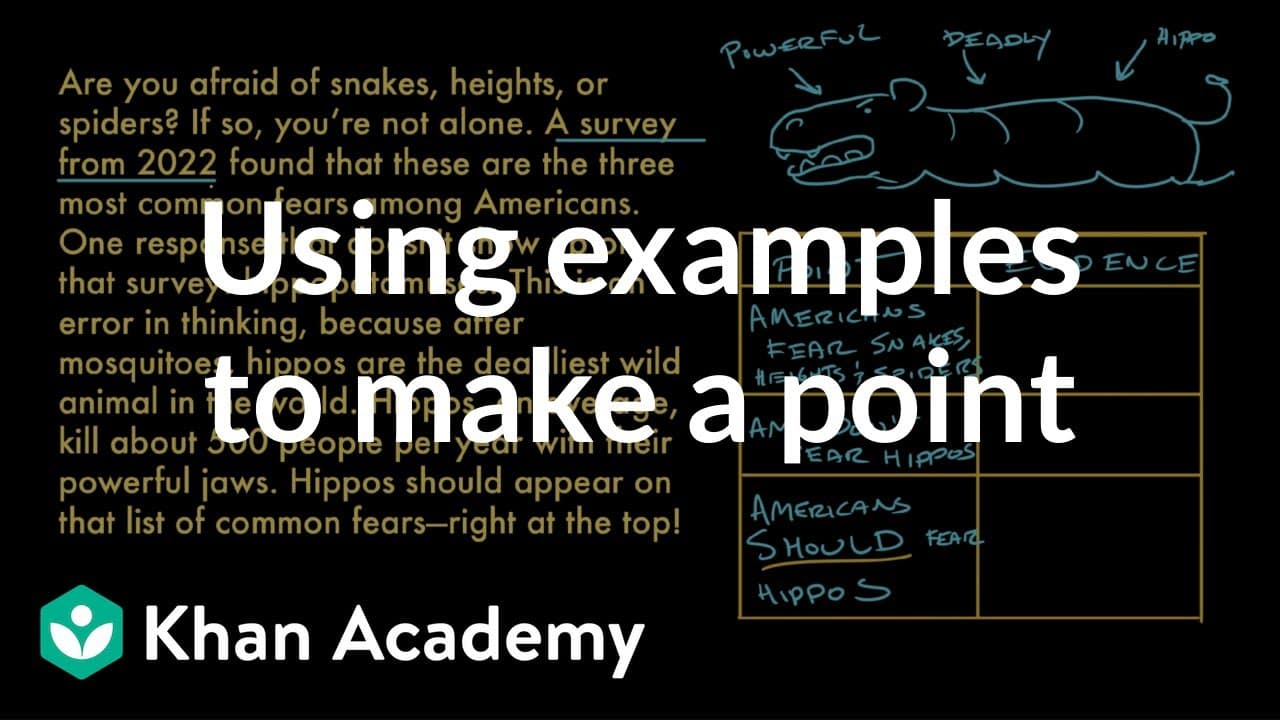
In this engaging educational video, narrator David introduces students to the concept of textual evidence through a fictional game show called "Prove It!" The video breaks down the abstract concept of argumentation into a clear, three-step process: identifying the author's main point, locating the specific evidence provided, and drawing connections between the two. Through humor and relatable examples, students learn that writers cannot just make claims; they must support their ideas with facts, statistics, or logic. The video uses two distinct examples to illustrate these concepts. First, it uses a simple, funny comparison between fictional movies ("Lil Tony 3" vs. "Lil Tony 4") to show how box office numbers or reviews serve as evidence. Then, it transitions to a more complex informational text about common fears versus actual dangers (specifically involving hippopotamuses). This progression from simple to complex helps scaffold the learning, allowing students to practice the skill of linking claims to data in real-time. For educators, this video is an excellent tool for introducing or reviewing standards related to reading informational texts and argumentative writing. It provides a shared language ("Prove It!") that teachers can adopt in the classroom when asking students to support their answers. The visual demonstration of mapping points to evidence in a t-chart offers a concrete strategy that students can replicate in their own reading and writing assignments.

Khan AcademyKhan Academy

4mins 4s

How Authors Develop Claims and Arguments

How Authors Develop Claims and Arguments

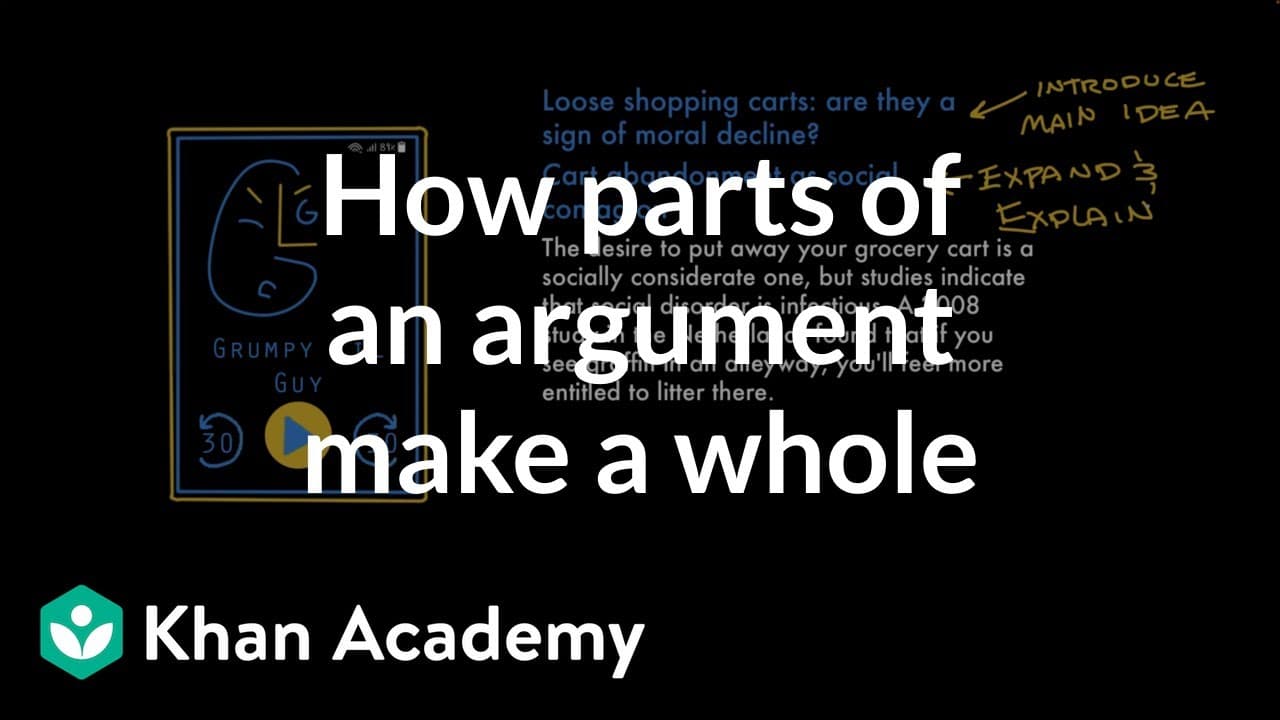
This engaging video lesson uses a fictional podcast called "Grumpy Lil Guy" to teach students how authors structure arguments and develop claims across a text. The narrator breaks down the podcast episode into distinct sections, analyzing how the host introduces a claim, expands on it with research, provides specific examples, and addresses counter-arguments. By treating the text analysis as a "pause and discuss" session, the video makes abstract rhetorical concepts concrete and accessible. The core themes explore rhetorical structure, argumentative writing, and critical reading. It specifically focuses on identifying the function of different paragraphs within a larger text—moving from the "what" (the claim) to the "why" (explanation), the "proof" (examples), and the "defense" (counter-arguments). It also touches on the concept of civic responsibility through the humorous example of returning shopping carts. For educators, this video is an excellent tool for Middle and High School ELA classrooms. It models the exact type of analytical thinking required for standardized testing and essay writing but does so with humor and a relatable format. Teachers can use this to introduce the components of a strong argument before asking students to write their own or to help students visualize how to trace an author's line of reasoning in informational texts.

Khan AcademyKhan Academy

4mins 33s

Materials

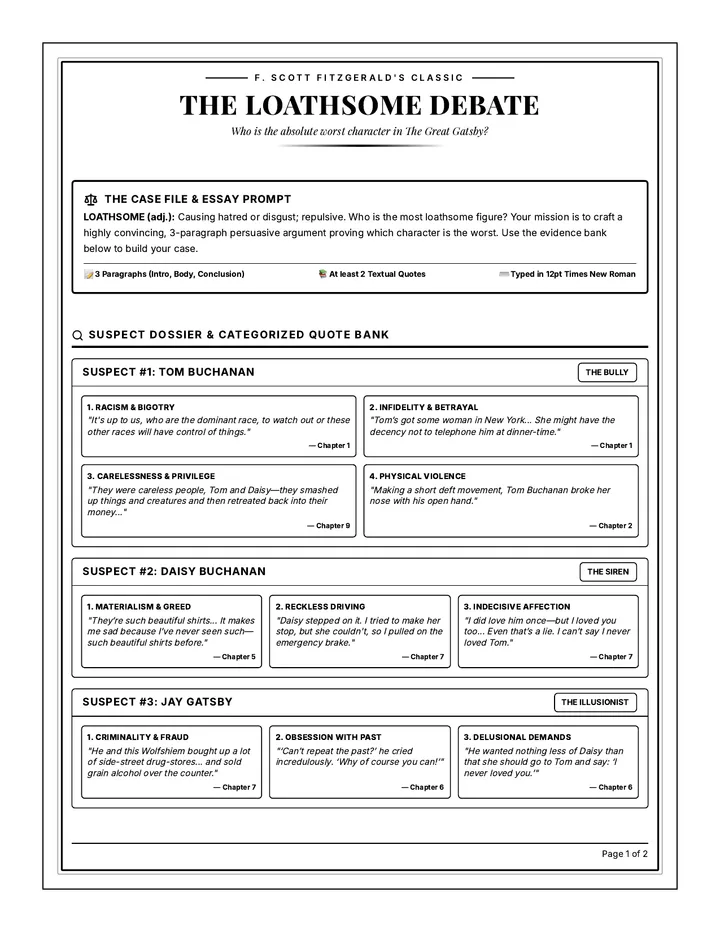
Gatsby Loathsome Character Blueprint

Gatsby Loathsome Character Blueprint

A two-page printable graphic organizer and quote bank in a high-contrast black-and-white theme with zero color or gray fills. Page 1 presents the 'Suspect Dossier' with clear borders, white backgrounds, and pure black text, while Page 2 features the highly structured essay outline and sentence starters with solid black-and-white print-friendly writing guides and page numbers.

KR

Kirstin Reed

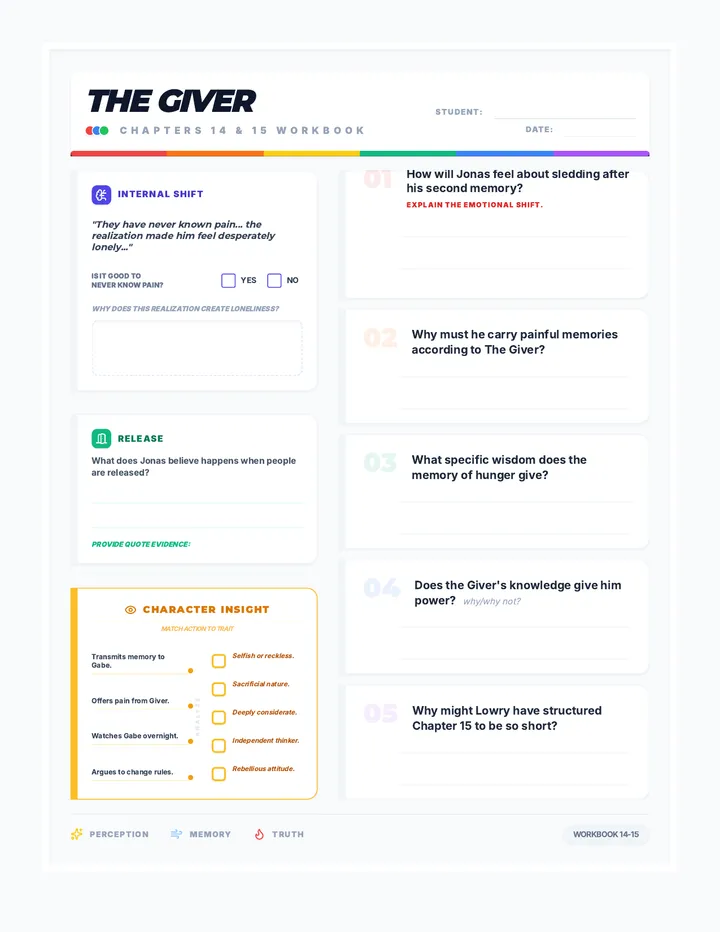
Giver Chapters 14-15 One Pager-REVISED-v2-FINAL

Giver Chapters 14-15 One Pager-REVISED-v2-FINAL

A final, refined one-page workbook for Chapters 14-15 of The Giver. This version has been strictly optimized for height by reducing margins and padding to ensure everything fits perfectly on a single page, while featuring a vibrant full-spectrum rainbow theme to represent Jonas's awakening to color and deep memory.

BC

Brenda Coombs

Argument Pro Rubric

Argument Pro Rubric

A comprehensive 100-point rubric for 10th-grade argumentative essays, featuring detailed criteria for claims, evidence, analysis, and counter-claims. Designed with a clean, professional aesthetic for easy grading and clear student feedback.

D

dmclaurin

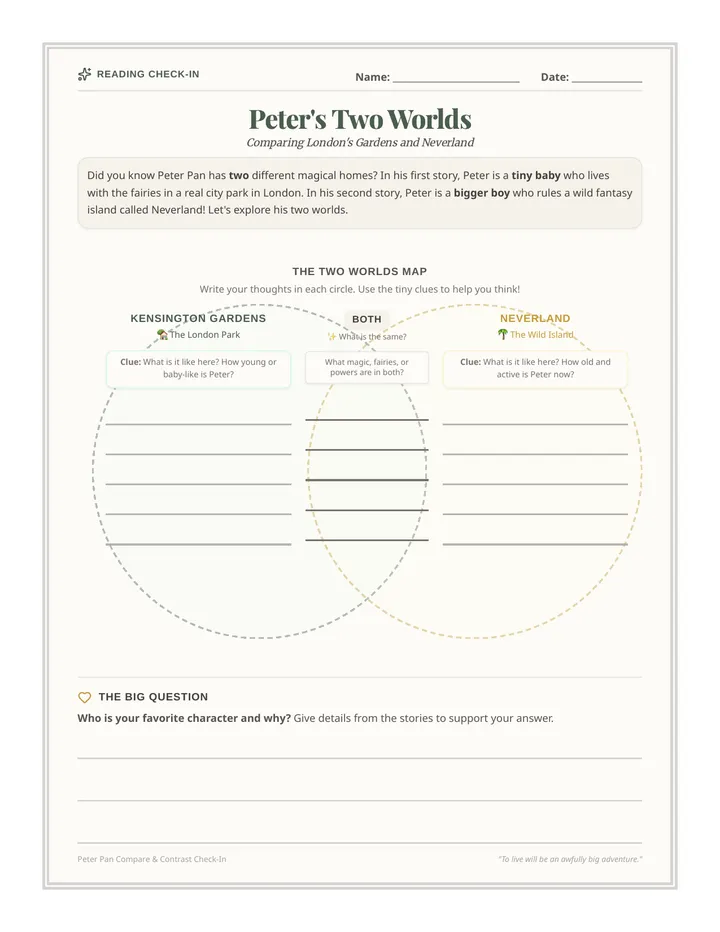
Peter Pan Paradox Exit Ticket

Peter Pan Paradox Exit Ticket

An updated 3rd-grade friendly exit ticket with a large, beautifully aligned Venn diagram where the text and writing lines are positioned in non-overlapping columns. Writing lines are now darker, wider, and increased to 5 lines per column.

SW

Shelley Waller

Outdoor Time Argument Worksheet

Outdoor Time Argument Worksheet

A two-page 7th-grade ELA worksheet featuring the 'Why School Should Have More Outdoor Time' text, claim identification, a 2-item evidence sorting organizer, evidence evaluation, challenge & extension tasks, and a white-background Boston Tea Party exit ticket.

AN

Austin Nowak

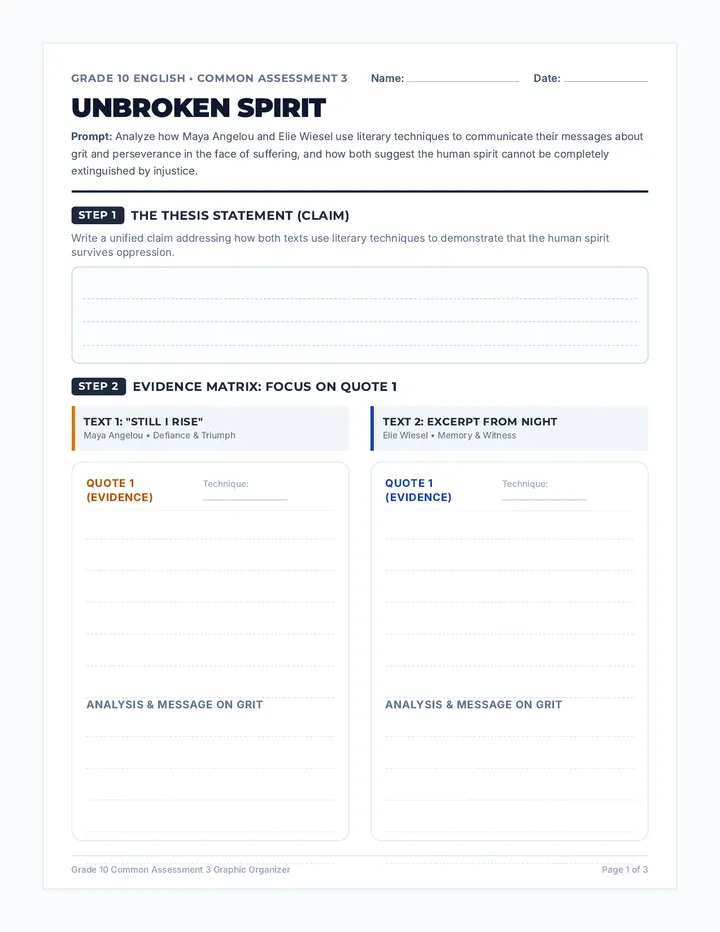
Unbroken Spirit Organizer

Unbroken Spirit Organizer

An expanded, premium 3-page graphic organizer designed for 10th-grade students preparing for Common Assessment 3. Features a highly structured layout with maximized 6-line handwriting boxes for both quotes and analysis across Maya Angelou's 'Still I Rise' and Elie Wiesel's 'Night', followed by a deep synthesis section.

EH

Erin Hofmann

Sequences

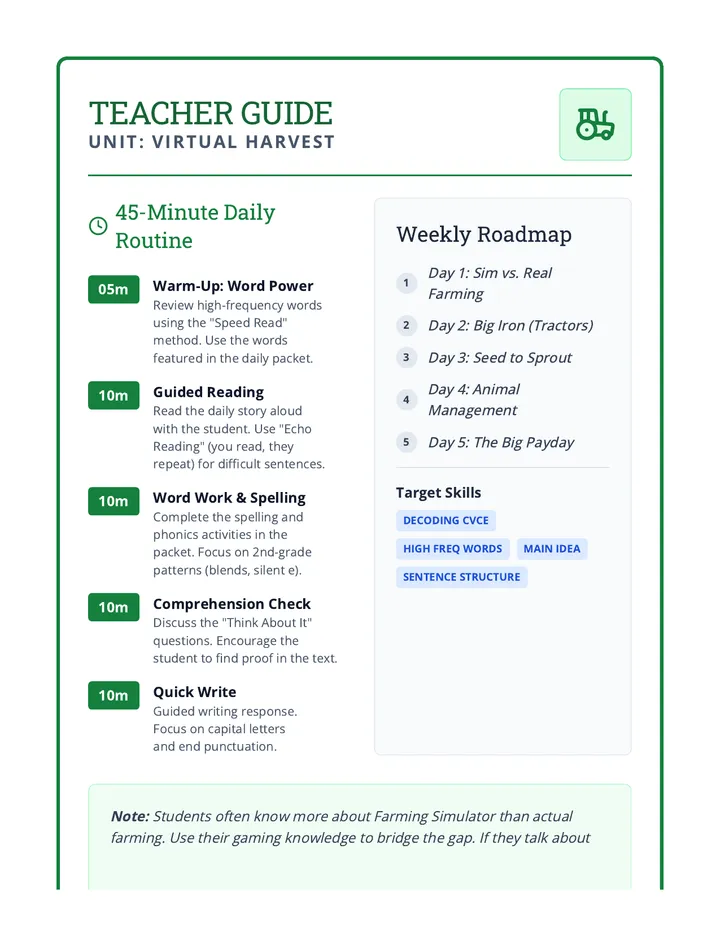
Virtual Harvest Teacher Guide

Digital Dirt

A 5-day reading comprehension and writing unit for struggling readers, blending the world of Farming Simulator with real-world agriculture. Focuses on 2nd-grade level literacy skills within a high-interest 5th-grade context.

CM

carley Martin

30
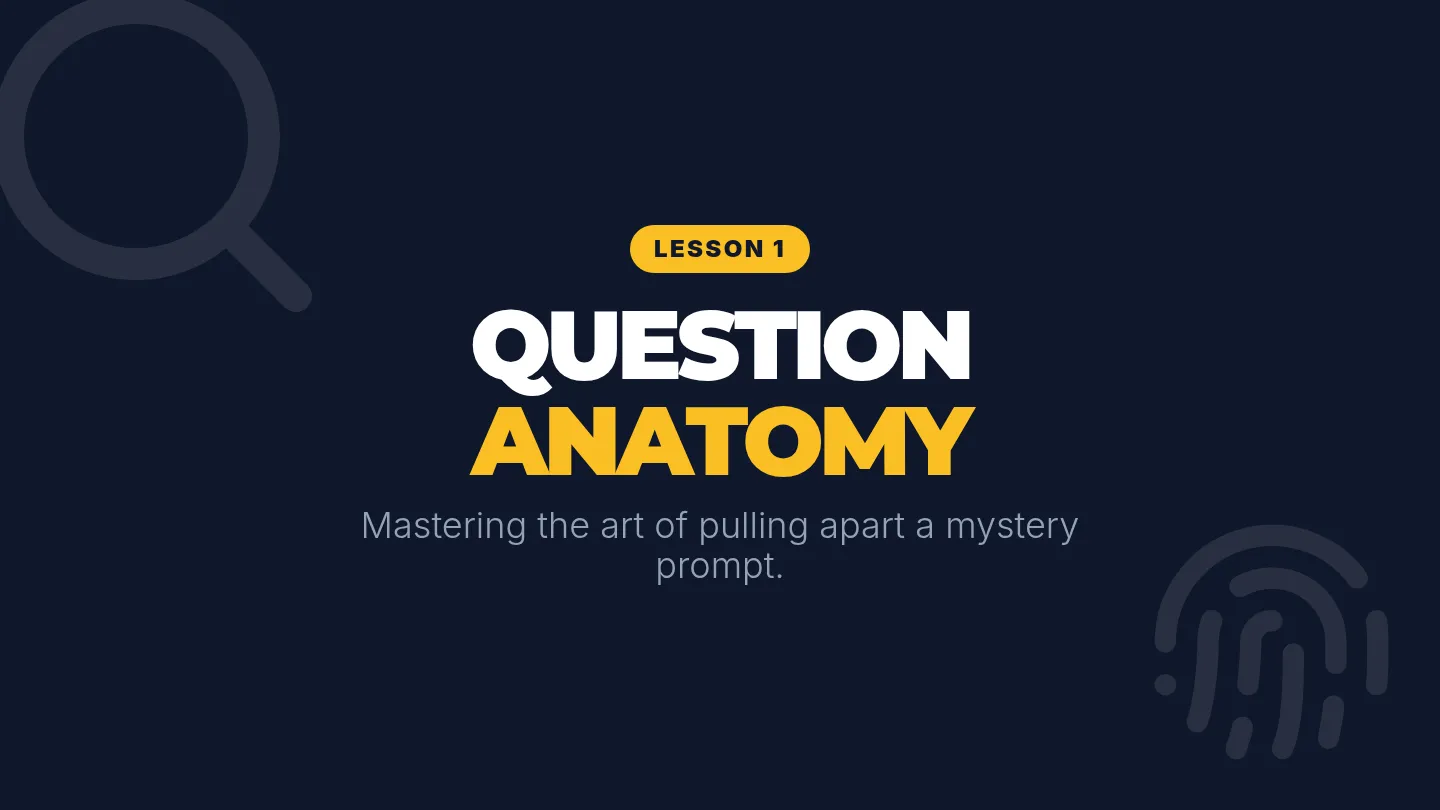
Question Anatomy Slides

Insight Investigators

A 6-week reading intervention unit for 5th graders focused on making inferences, analyzing questions, and using text evidence. Themes include mysteries, sports (baseball and basketball), and dragons to engage high-interest readers.

MK

Meg Keene

48
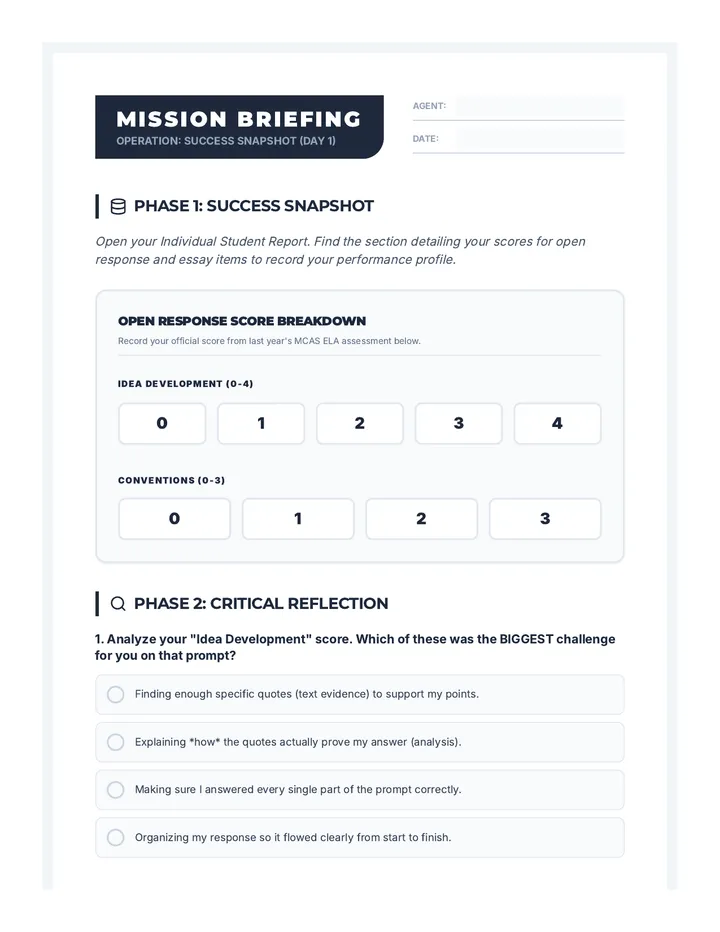
Mission Briefing Worksheet

Mastery Mission

A project-based learning unit designed to help middle school students analyze their past MCAS ELA performance, deconstruct scoring rubrics, and create a personalized strategy playbook for upcoming assessments. Students move from 'investigating' their scores to 'rebooting' their responses and 'finalizing' their test-taking toolkit.

M

mhbutterworth

18
Master Pacing Guide Teacher Resource

Literacy Mastery Lab

A comprehensive year-long intervention sequence for 8th-grade literacy, focusing on STAR 360 and OSAS benchmark skills. The sequence follows a 3-day weekly instructional cycle (Instruction, Practice, Application) to supplement 2 days of choice reading.

SA

Senta Agnello-Shelton

60
Burger Builder Slides

Paragraph Foundations

A foundational paragraph writing unit designed for early writers and SpEd students to master core paragraph structures through narrative, opinion, and informational writing with heavy visual scaffolding.

E

ecreamer

23
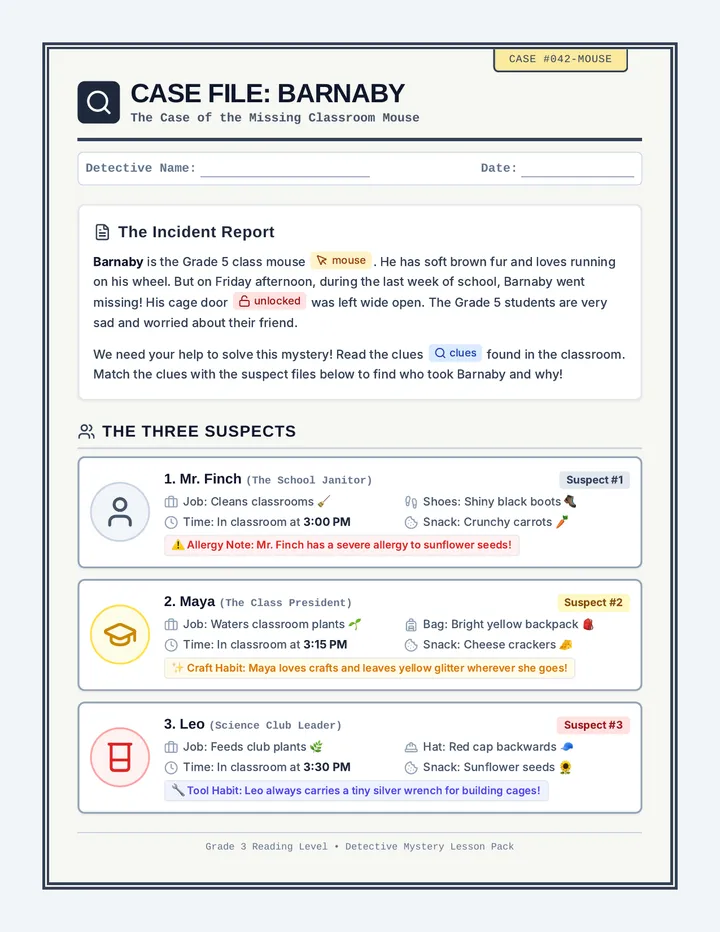
Case File Passage

Classroom Mystery Files

A collection of engaging, highly scaffolded reading comprehension classroom mysteries designed for elementary students to practice evidence analysis and persuasive writing.

C

cedaniels

15