Lenny.com
Explore
Create
ActivitiesNewMathEnglish Language ArtsScience & EngineeringSocial StudiesGlobal LanguagesHealth & Physical EducationSpecial EducationCounseling & Life SkillsArts & CreativityESL
Lenny.com
Lenny.com
Explore
Create
ActivitiesNewMathEnglish Language ArtsScience & EngineeringSocial StudiesGlobal LanguagesHealth & Physical EducationSpecial EducationCounseling & Life SkillsArts & CreativityESL
Lenny.com
English Language ArtsPhonics & Reading FoundationsLetter IdentificationLearn Letters A-ZLowercase and Uppercase LettersConsonants and VowelsLetter-Sound AssociationsLetter-Sound Associations: LowercaseLetter-Sound Associations: UppercaseBeginning and Ending SoundsRhymingBlending And SegmentingShort VowelsShort Vowel SoundsConsonant BlendsConsonant DigraphsBlends, Digraphs, and TrigraphsDigraphs, Blends, and Silent LettersLong Vowel SoundsLong Vowel PatternsShort and Long VowelsShort and Long Vowel PatternsSilent EVowel SoundsVowel TeamsR-Controlled VowelsDiphthongs: Oi, Oy, Ou, OwVariant VowelsVariant, Diphthong, And R Vowel PatternsSoft G And CSight WordsIrregular WordsWord RecognitionSyllablesSyllable TypesTwo-Syllable WordsMultisyllabic WordsPhoneme ManipulationDecodable TextsVocabularyAction WordsQuestion WordsNouns and AdjectivesClassify WordsCompound WordsSynonyms and AntonymsHomophonesHomophones and HomonymsShades of MeaningContext CluesPrefixes and SuffixesGreek and Latin RootsAnalogiesIdioms and AdagesForeign Words and ExpressionsWord Choice and UsageReference SkillsReading ComprehensionRead-Along Literary TextsRead-Along Informational TextsReality vs. FictionStory ElementsCharacterSequenceMain IdeaCause And EffectCompare And ContrastReading StrategiesText StructureAuthor's PurposeAuthor's Purpose And ToneAuthor's PerspectivePoint Of ViewThemeInference And ThemeInference And AnalysisPoetry ElementsLiterary DevicesAnalyzing LiteratureAnalyzing Informational TextsComparing TextsAudience, Purpose, And ToneBusiness DocumentsNovel StudyNonfiction Book StudyGrammar & MechanicsSentencesNounsVerbsAdjectivesPronounsCapitalizationPunctuationContractionsConjunctionsPrepositionsArticlesAdjectives And AdverbsVerb TypesVerb TensePronouns And AntecedentsPronoun TypesSubject-Verb AgreementDirect And Indirect ObjectsSentences, Fragments, And Run-OnsPhrases And ClausesCommasSemicolons, Colons, And CommasDashes, Hyphens, And EllipsesSpellingAbbreviationsFormattingVerb Tense And MoodMisplaced ModifiersWritingDescriptive DetailsCreative WritingOpinion WritingTopic SentencesOrganizing WritingLinking WordsSentence VarietyIntroductions And ConclusionsPersuasive And Opinion WritingExpository WritingPersuasive StrategiesDeveloping And Supporting ArgumentsTopic Sentences And Thesis StatementsSummarizingResearch SkillsEditing And RevisingActive And Passive Voice=Writing Clearly And ConciselyDebate & Public SpeakingPublic Speaking BasicsPersuasive TechniquesClaims and EvidenceTypes of ArgumentsReasoning TypesLogical FallaciesTopic ResearchOrganizing EvidenceDebate Speech OrganizationAttacking and Defending ArgumentsClash and EngagementImpact CalculusQuestioning and Cross-ExaminationCritical ThinkingInformal LogicFormal LogicInductive Reasoning

Story Elements

Identification and analysis of plot, characters, setting, conflict, and resolution. Strengthens reading comprehension by mapping narrative structures and examining how individual components shape a story.

Lenny.com

Solutions

Lenny for EducatorsLenny for SchoolsLenny for Districts

Product

ExploreSign inCreateSupportAbout

Resources

Getting startedMTSS Acceleration Program

© 2026 Lenny Learning Inc.

TermsPrivacyAccessibility
LinkedInInstagramX
Lenny

Videos

How to Find the Theme of a Story

How to Find the Theme of a Story

This educational video provides a clear and engaging guide to understanding literary themes, distinguishing them from plots, summaries, and main ideas. The narrator explains that a theme is a universal message or lesson woven throughout a story that connects the text's action to big ideas about the world. To illustrate this abstract concept, the video uses relatable analogies, such as a humorous anecdote about food poisoning, to differentiate between what happens (plot) and what is learned (theme). The core of the video features a detailed retelling of the West African folktale of Anansi the Spider. In this story, the trickster Anansi attempts to hoard all the world's wisdom in a clay pot, only to be outsmarted by his young son. The narrative serves as a practical case study for the viewer, demonstrating how to apply specific analytical questions—such as "How did the characters grow?" and "What stays with you?"—to uncover the deeper meaning of a text. For educators, this resource is an excellent tool for scaffolding literary analysis skills in upper elementary and middle school classrooms. It offers a concrete framework of "Big Questions" that students can apply to any text to identify themes. The video addresses common confusion between themes and morals, provides a culturally responsive text example, and models the critical thinking process required to move from surface-level comprehension to deeper interpretation.

Khan AcademyKhan Academy

6mins 18s

Unlocking Character Traits with the STEAL Method

Unlocking Character Traits with the STEAL Method

This educational video introduces students to the literary concepts of direct and indirect characterization through a narrative set in "Character Grove." Hosted by Caroline, the lesson features a talking tree character named Timotree who helps illustrate how authors reveal personality traits. The video contrasts direct descriptions with the more subtle "show, don't tell" method of indirect characterization, using specific examples to make the abstract concepts concrete. The core of the lesson focuses on the STEAL acronym (Speech, Thoughts, Effect on others, Actions, Looks) as a tool for analyzing indirect characterization. Viewers are guided through a text excerpt about a "young man" to identify evidence for each category of the STEAL method. The video then moves from identification to interpretation, demonstrating how to infer specific character traits like "caring," "trustworthy," and "practical" based on the text evidence gathered. This resource is highly valuable for Language Arts classrooms as it breaks down a complex analytical skill into manageable steps. It encourages critical thinking by asking students not just to find details, but to interpret what those details imply about a character's internal nature. The use of visual aids, on-screen text, and a memorable acronym makes it an excellent tool for introducing character analysis or supporting students who struggle with making inferences.

Miacademy & MiaPrep Learning ChannelMiacademy & MiaPrep Learning Channel

10mins 16s

How Setting Shapes a Story

How Setting Shapes a Story

This engaging educational video explores the literary concept of "setting" through a fun, sci-fi narrative involving parallel dimensions. The host, accompanied by an animated robot named Mia, encounters three lost versions of Mia from different worlds: a historical lady from London, a festival-goer from contemporary Venezuela, and a survivor from a futuristic wasteland. Through this "World Warp" storyline, students learn that setting is not just a backdrop but a crucial element comprised of time and place that deeply influences characters and plot. The video breaks down the concept of setting into identifiable clues, teaching viewers how to infer time and location from textual details like vocabulary, technology, and cultural references. It uses a visual puzzle piece metaphor to demonstrate how setting interlocks with plot and character development. Specifically, it analyzes three distinct genres—historical fiction, contemporary realistic fiction, and science fiction—to show how the environment creates specific conflicts and challenges for the characters living within them. Teachers can use this video to introduce or reinforce the concept of setting in literature units. It provides a perfect springboard for lessons on making inferences, analyzing story elements, and creative writing. The interactive nature of the video, which includes built-in pause points for reflection and prediction, makes it an excellent tool for active classroom viewing, allowing students to practice being "setting detectives" alongside the host.

Miacademy & MiaPrep Learning ChannelMiacademy & MiaPrep Learning Channel

10mins 31s

Understanding Realistic Fiction: Stories from Everyday Life

Understanding Realistic Fiction: Stories from Everyday Life

This video introduces students to the literary genre of realistic fiction within the context of a thematic journey through "Genre Land." The host finds herself in a seaside village where a sudden rainstorm ruins her beach plans, serving as a perfect metaphor for the everyday problems characters face in realistic fiction. Through this narrative frame, the video defines the genre as stories containing believable characters, settings, and events that could actually happen in real life, distinct from fantasy or science fiction.

Miacademy & MiaPrep Learning ChannelMiacademy & MiaPrep Learning Channel

11mins 52s

Exploring African Folktales and Contemporary Literature

Exploring African Folktales and Contemporary Literature

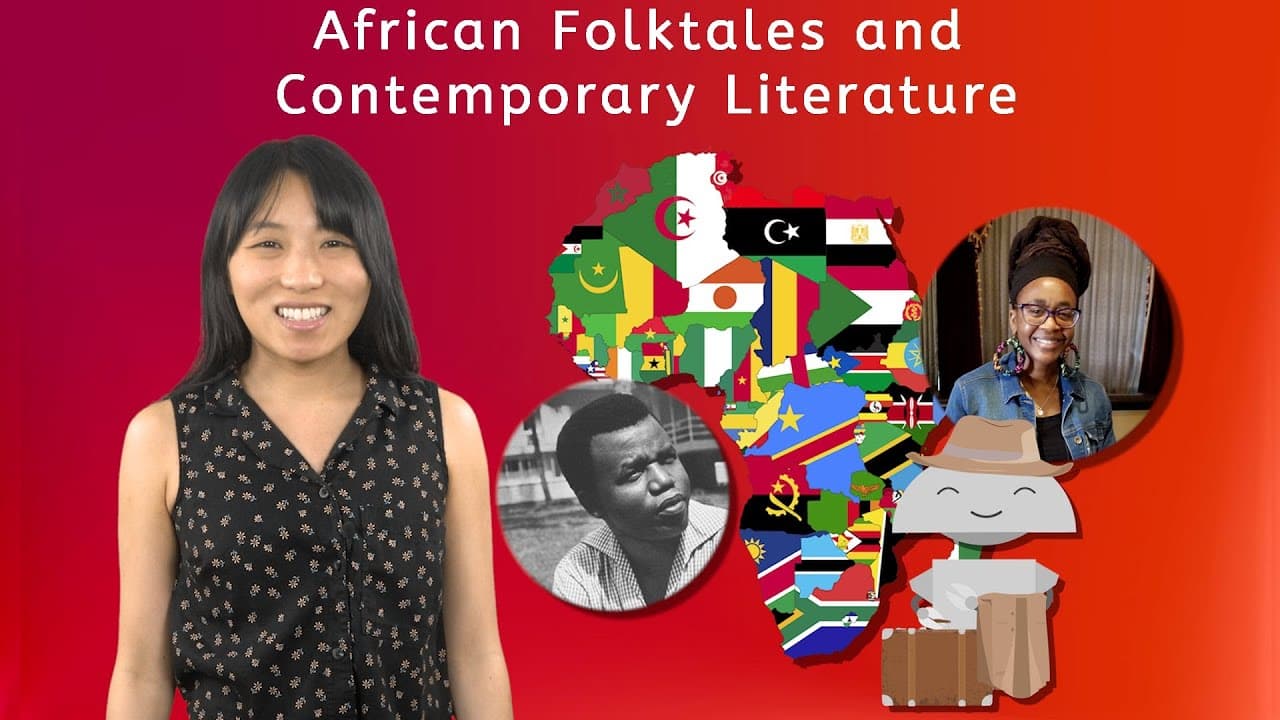
This educational video provides a comprehensive overview of African literary traditions, starting with the oral history of folktales and moving through the colonial, post-colonial, and modern eras of written literature. Set against the backdrop of Lagos, Nigeria, the narrator guides viewers through the cultural significance of storytelling, using the famous trickster character Anansi the Spider as a primary example of folklore that imparts moral lessons and preserves history. The video delves into complex historical themes, explaining how the Colonial and Post-Colonial periods shaped the narratives of African authors. It introduces key literary figures such as Chinua Achebe, Tsitsi Dangarembga, and Chimamanda Ngozi Adichie, categorized by the historical eras they represent. The content breaks down how political events, specifically the struggle for independence and the challenges of rebuilding nations, directly influenced the themes explored in African literature. Designed for middle and high school students, this resource is an excellent tool for Language Arts and World History classrooms. It connects geography, history, and literature, offering students a framework to understand how societal changes impact storytelling. The video includes built-in pause points for reading and reflection, making it ready-made for interactive classroom lessons on world cultures, literary archetypes, and historical analysis.
Miacademy & MiaPrep Learning ChannelMiacademy & MiaPrep Learning Channel

10mins 43s

Mapping the Mountain: How Stories Are Structured

Mapping the Mountain: How Stories Are Structured

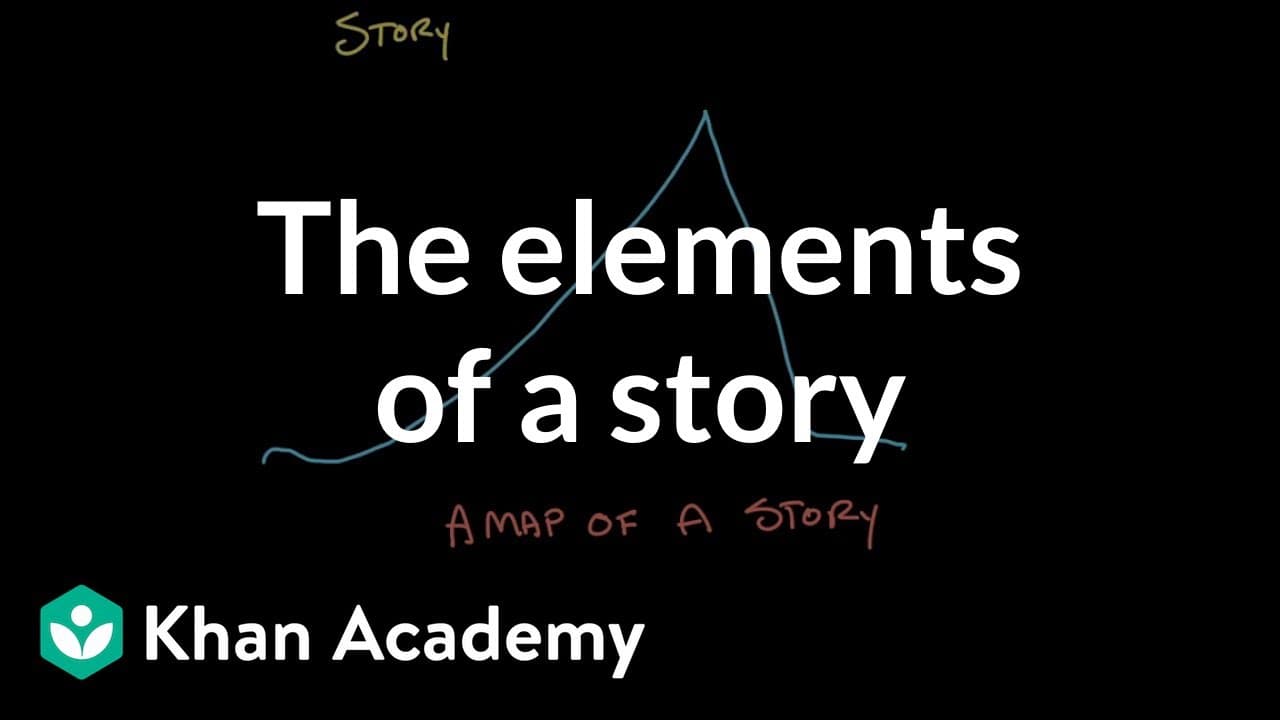
This engaging video introduces students to the core structural elements of narrative fiction using the classic "Story Mountain" diagram. The narrator breaks down the standard plot arc into six key components: Exposition, Conflict, Rising Action, Climax, Falling Action, and Resolution. By visualizing a story as a mountain journey, students can easily grasp how tension builds and releases throughout a narrative. To solidify these abstract concepts, the video applies them to a creative, humorous example: a sci-fi reboot of "The Three Little Pigs" titled "TLP: Starbound." This retelling transforms the classic fairy tale into a space opera, demonstrating exactly how each plot point functions within a familiar yet fresh context. From straw spaceships to a cyborg wolf pirate, the example makes literary analysis memorable and fun. This resource is highly valuable for English Language Arts classrooms, specifically for reading comprehension and creative writing units. It provides a shared vocabulary for discussing literature and offers a clear template that students can use to analyze books they read or structure stories they write. The video effectively bridges the gap between simple storytelling and formal literary analysis.

Khan AcademyKhan Academy

5mins 14s

Materials

Bad Seed Comprehension Worksheet

Bad Seed Comprehension Worksheet

A clean, black-and-white printer-friendly two-page reading comprehension worksheet for *The Bad Seed* by Jory John, featuring expanded multi-line writing spaces for all questions and story elements so students can write in complete sentences.

FT

Faith Timberman

First Day Feelings Reading Worksheet

First Day Feelings Reading Worksheet

An adapted reading passage of Patty Hansen's 'The First Day of Middle School' with enlarged, readable text scaled to fit each page, complete with chunked passage text, comprehension check, and emoji reflection organizer.

PL

Patrick l

Las Cebollas Summary Organizer

Las Cebollas Summary Organizer

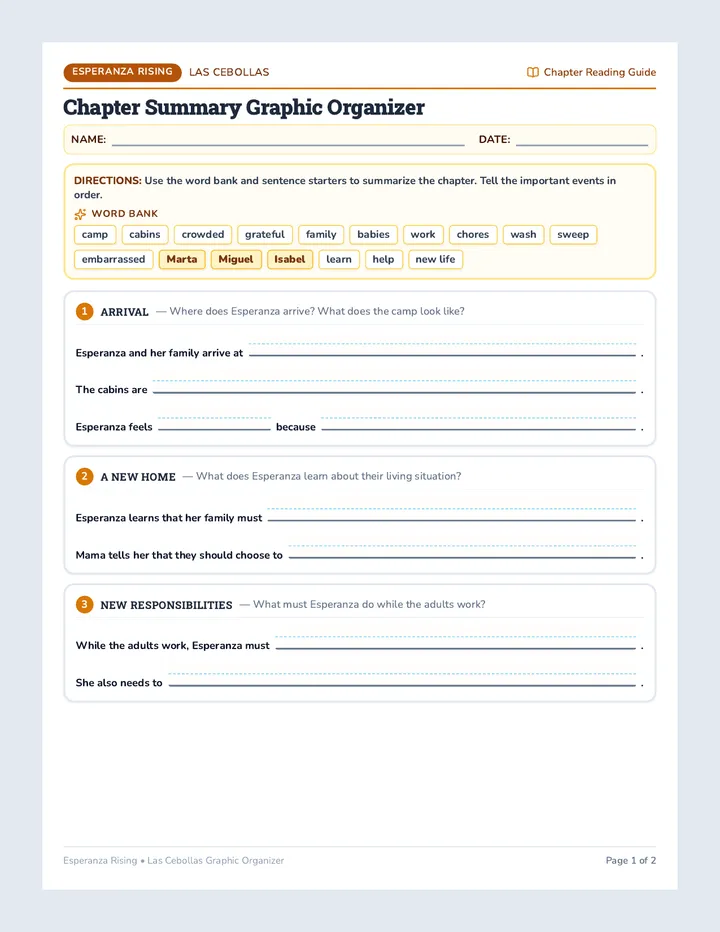
A 2-page print-ready scaffolded chapter summary graphic organizer for *Esperanza Rising: Las Cebollas*, featuring subtle guided handwriting midlines, word bank, Sections 1–6 sentence starters, and a 'Put It All Together' summary section, designed with dignified, grade-neutral language for upper elementary learners needing writing support.

L

lastevens

Mulan Legend Worksheet

Mulan Legend Worksheet

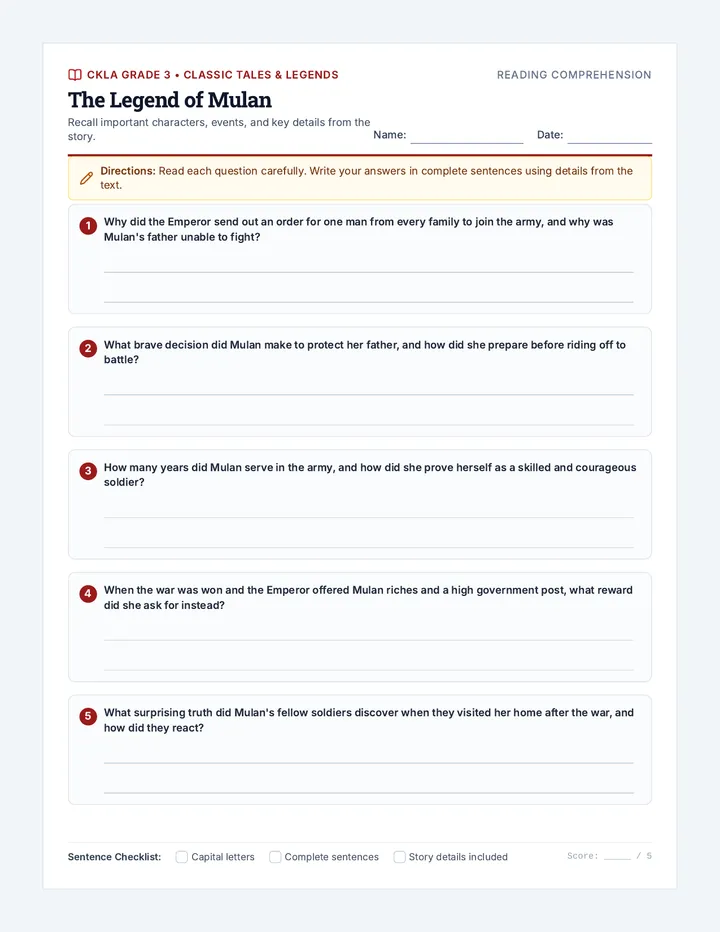
A Grade 3 CKLA reading comprehension worksheet featuring five recall questions on the story of Mulan. Students demonstrate understanding of key plot events, character motivations, and central details with dedicated handwriting lines.

T

tywest

Lost Son Story Slides

Lost Son Story Slides

A 10-slide visual teaching deck adapted for deaf kindergarten listeners, enhanced with Google Slides 16:9 widescreen print and export compatibility CSS for seamless PDF import into Google Slides.

SC

Shelley Carman

Grade 1 ELA Assessment Packet

Grade 1 ELA Assessment Packet

An End-of-Grade-1 ELA Benchmark Assessment Packet featuring late-first-grade sight words, complex initial and final consonant blends, a rich 105-word spring decodable reading passage with open constructed-response comprehension questions, an accommodated visual version, and a teacher running record and scoring rubric aligned to Spring Grade 1 benchmarks.

A

awarner1

Sequences

Invention Quest Slides

Frindle Frenzy Novel Study

A 9-day novel study for 'Frindle' by Andrew Clements, aligned to 3rd Grade ELAR TEKS, focusing on character development, vocabulary, and plot analysis.

LH

Lucy Hellerman

56
Prophecy and Power Slides

Shadows and Crowns

A series of lessons exploring Shakespeare's Macbeth, specifically designed for 10th-grade emergent bilingual students to master complex characterization and thematic elements.

DC

Dylan Clark

30
Monday Sentences Worksheet

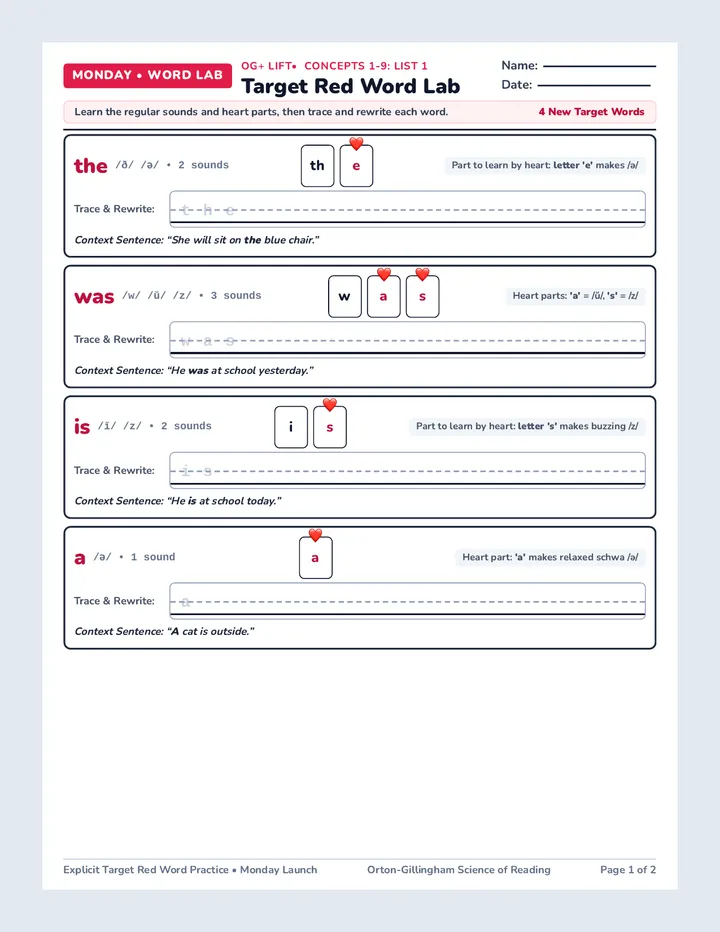
OG+ LIFT: Red word K-Concepts: Book 1

This comprehensive intervention unit features a weekly scope and sequence targeting high-frequency red words, sound-spelling correspondences, and reading comprehension, directly aligned with Orton-Gillingham Kindergarten Book 1 beginning concepts. Designed for self-contained or intervention settings, it pairs decodable readers and comprehension story mapping with explicit daily paraprofessional guides, fluency routines, scaffolded practice, and weekly assessments.

S

Sara

59
Week 1 Closed Syllable Manual

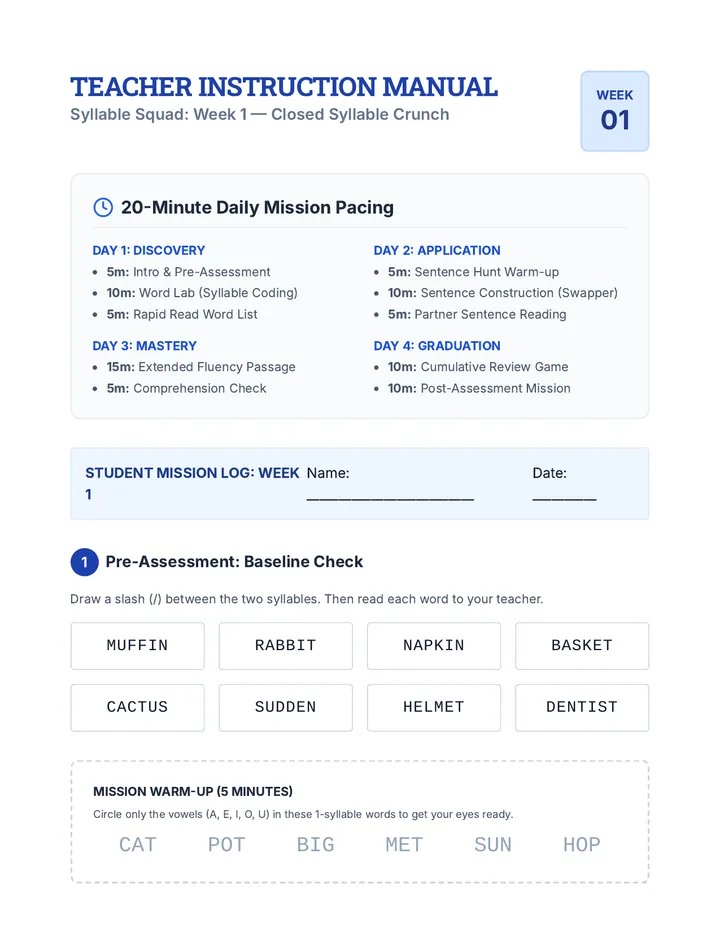
Syllable Squad Decoding Mission

A comprehensive 5-week phonics intervention focused on decoding two-syllable words across five major syllable types. Each week includes a pre-assessment, daily lessons with specific targets, student practice sheets, and a post-assessment.

KJ

Kelsey Jacobs

29
Question Anatomy Slides

Insight Investigators

A 6-week reading intervention unit for 5th graders focused on making inferences, analyzing questions, and using text evidence. Themes include mysteries, sports (baseball and basketball), and dragons to engage high-interest readers.

MK

Meg Keene

48
Copenhagen Clues Slides

Resistance Chronicles

A 9-day novel study for Number the Stars centered on 5th Grade ELAR TEKS, focusing on character development, plot analysis, and historical context through the lens of a Resistance Secret File.

LH

Lucy Hellerman

79