Lenny.com
Explore
Create
ActivitiesNewMathEnglish Language ArtsScience & EngineeringSocial StudiesGlobal LanguagesHealth & Physical EducationSpecial EducationCounseling & Life SkillsArts & CreativityESL
Lenny.com
Lenny.com
Explore
Create
ActivitiesNewMathEnglish Language ArtsScience & EngineeringSocial StudiesGlobal LanguagesHealth & Physical EducationSpecial EducationCounseling & Life SkillsArts & CreativityESL
Lenny.com
English Language ArtsPhonics & Reading FoundationsLetter IdentificationLearn Letters A-ZLowercase and Uppercase LettersConsonants and VowelsLetter-Sound AssociationsLetter-Sound Associations: LowercaseLetter-Sound Associations: UppercaseBeginning and Ending SoundsRhymingBlending And SegmentingShort VowelsShort Vowel SoundsConsonant BlendsConsonant DigraphsBlends, Digraphs, and TrigraphsDigraphs, Blends, and Silent LettersLong Vowel SoundsLong Vowel PatternsShort and Long VowelsShort and Long Vowel PatternsSilent EVowel SoundsVowel TeamsR-Controlled VowelsDiphthongs: Oi, Oy, Ou, OwVariant VowelsVariant, Diphthong, And R Vowel PatternsSoft G And CSight WordsIrregular WordsWord RecognitionSyllablesSyllable TypesTwo-Syllable WordsMultisyllabic WordsPhoneme ManipulationDecodable TextsVocabularyAction WordsQuestion WordsNouns and AdjectivesClassify WordsCompound WordsSynonyms and AntonymsHomophonesHomophones and HomonymsShades of MeaningContext CluesPrefixes and SuffixesGreek and Latin RootsAnalogiesIdioms and AdagesForeign Words and ExpressionsWord Choice and UsageReference SkillsReading ComprehensionRead-Along Literary TextsRead-Along Informational TextsReality vs. FictionStory ElementsCharacterSequenceMain IdeaCause And EffectCompare And ContrastReading StrategiesText StructureAuthor's PurposeAuthor's Purpose And ToneAuthor's PerspectivePoint Of ViewThemeInference And ThemeInference And AnalysisPoetry ElementsLiterary DevicesAnalyzing LiteratureAnalyzing Informational TextsComparing TextsAudience, Purpose, And ToneBusiness DocumentsNovel StudyNonfiction Book StudyGrammar & MechanicsSentencesNounsVerbsAdjectivesPronounsCapitalizationPunctuationContractionsConjunctionsPrepositionsArticlesAdjectives And AdverbsVerb TypesVerb TensePronouns And AntecedentsPronoun TypesSubject-Verb AgreementDirect And Indirect ObjectsSentences, Fragments, And Run-OnsPhrases And ClausesCommasSemicolons, Colons, And CommasDashes, Hyphens, And EllipsesSpellingAbbreviationsFormattingVerb Tense And MoodMisplaced ModifiersWritingDescriptive DetailsCreative WritingOpinion WritingTopic SentencesOrganizing WritingLinking WordsSentence VarietyIntroductions And ConclusionsPersuasive And Opinion WritingExpository WritingPersuasive StrategiesDeveloping And Supporting ArgumentsTopic Sentences And Thesis StatementsSummarizingResearch SkillsEditing And RevisingActive And Passive Voice=Writing Clearly And ConciselyDebate & Public SpeakingPublic Speaking BasicsPersuasive TechniquesClaims and EvidenceTypes of ArgumentsReasoning TypesLogical FallaciesTopic ResearchOrganizing EvidenceDebate Speech OrganizationAttacking and Defending ArgumentsClash and EngagementImpact CalculusQuestioning and Cross-ExaminationCritical ThinkingInformal LogicFormal LogicInductive Reasoning
Lenny.com

Solutions

Lenny for EducatorsLenny for SchoolsLenny for Districts

Product

ExploreSign inCreateSupportAbout

Resources

Getting startedMTSS Acceleration Program

© 2026 Lenny Learning Inc.

TermsPrivacyAccessibility
LinkedInInstagramX
Lenny

Compare And Contrast

Analytical techniques for identifying similarities and differences between two or more subjects. Develops critical thinking skills through the use of Venn diagrams and organizational frameworks.

Videos

How to Evaluate Arguments and Evidence in Texts

How to Evaluate Arguments and Evidence in Texts

This educational video provides a clear, step-by-step guide on how to identify and evaluate arguments within a text. Using a "rhetorical combat" framework, the narrator distinguishes between subjective opinions (like movie reviews) and formal arguments, emphasizing that valid arguments must be supported by verifiable evidence, data, and reasoning rather than just personal preference. The core of the video analyzes two opposing texts regarding a proposed "soda tax." The narrator models critical reading strategies by dissecting the claims made in both texts. He demonstrates how to identify logical gaps, such as a lack of evidence linking a tax to behavioral change, and how to spot potential unintended consequences, such as the disproportionate economic impact on lower-income individuals. He also encourages readers to consider what an author is *not* saying to understand the full scope of an argument. This resource is highly valuable for ELA classrooms focusing on non-fiction analysis, argumentative writing, or media literacy. It moves beyond simple definitions to model the actual metacognitive process of skepticism and critique. Teachers can use this to introduce the standards of tracing and evaluating arguments, helping students transition from reading for content to reading for structure and validity.

Khan AcademyKhan Academy

4mins 37s

Exploring Informative Text Types: Descriptive, Comparative, and Procedural

Exploring Informative Text Types: Descriptive, Comparative, and Procedural

In this engaging Language Arts lesson set in the fictional village of "Informatown," students learn how to analyze and categorize different types of informative non-fiction texts. The video begins by reviewing the general characteristics of informative writing—logical structure, objective central ideas, and precise language—before diving into three specific text structures: Descriptive, Comparative, and Procedural. Through the narrative of organizing a messy library, the host guides viewers in examining three distinct sample texts about Nigerian culture, the Dominican Republic, and Lakota Dreamcatchers. Students learn to identify specific structural clues and transition words that distinguish one text type from another, such as looking for sensory details in descriptive texts, contrasting words in comparative texts, and chronological steps in procedural texts. This video is highly valuable for upper elementary and middle school classrooms as it moves beyond simple reading comprehension to structural analysis. It provides concrete strategies for recognizing how authors organize information to achieve specific purposes. Teachers can use this video to introduce a unit on non-fiction text structures, support lessons on transition words, or as a model for students' own informative writing projects.
Miacademy & MiaPrep Learning ChannelMiacademy & MiaPrep Learning Channel

8mins 48s

Comparing Multiple Accounts of the Same Topic

Comparing Multiple Accounts of the Same Topic

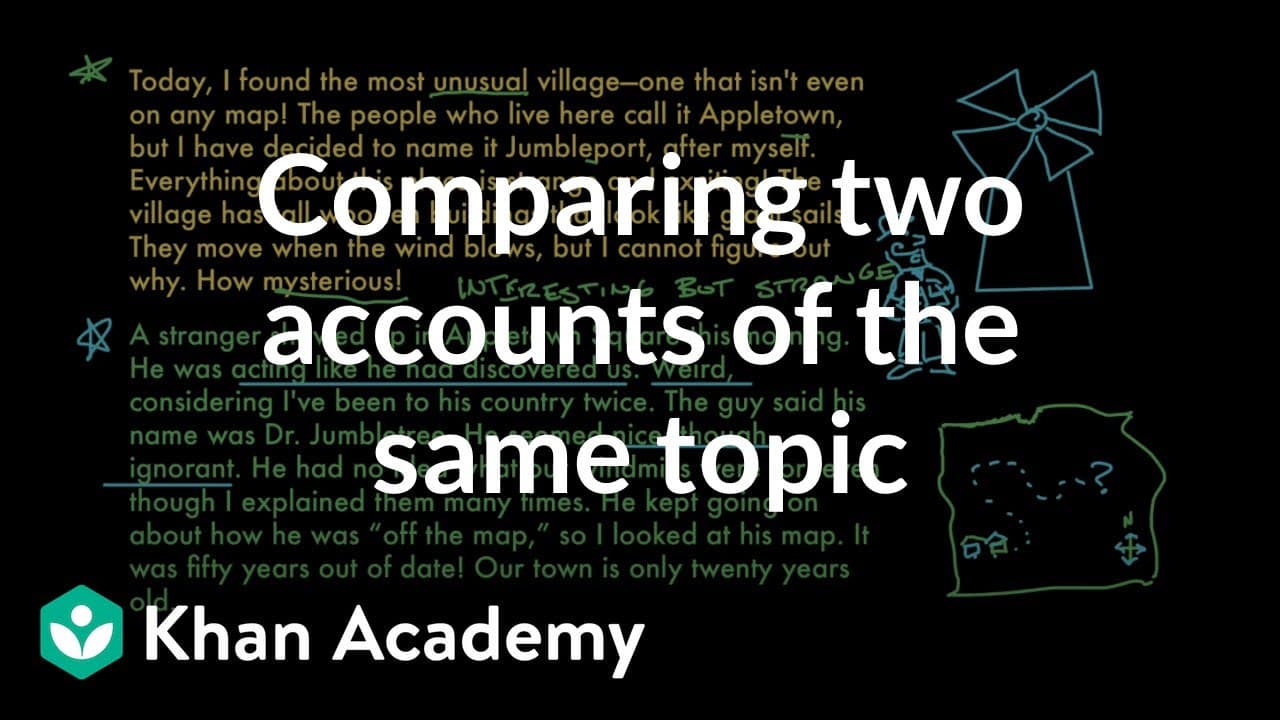
This educational video provides a clear, step-by-step guide on how to analyze multiple accounts of the same topic, a crucial skill for reading comprehension and critical thinking. The narrator explains that every author writes from a specific point of view, influenced by their own opinions and beliefs. By recognizing that no single text holds the complete truth, students learn the importance of consulting multiple sources to get a fuller picture of an event or topic. The video introduces a simple three-step process for analysis: identifying the topic, looking for opinions and beliefs through specific word choices (adjectives), and comparing the different perspectives. To demonstrate this, the narrator uses a humorous, fictional example of two diary entries describing the same village. One account is from an arrogant explorer who sees mystery and strangeness, while the other is from a local resident who sees an ordinary town and a confused visitor. This resource is highly valuable for English Language Arts classrooms, specifically for teaching standards related to point of view and informational text analysis. It helps students move beyond passive reading to active interrogation of texts. Teachers can use the video's concrete examples to show how specific vocabulary indicates bias, making abstract concepts like "author's perspective" tangible and easy to understand for elementary and middle school students.

Khan AcademyKhan Academy

4mins 14s

How Good Readers Connect Ideas in a Text

How Good Readers Connect Ideas in a Text

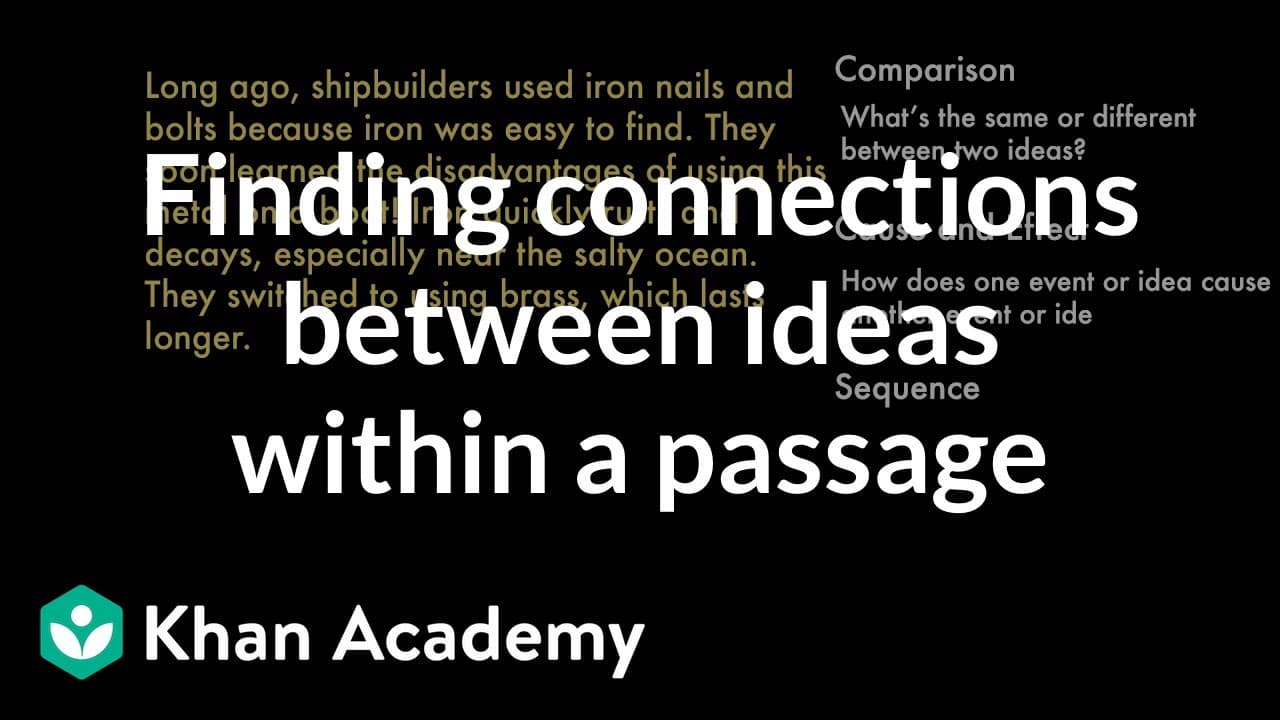
This video introduces the critical reading comprehension strategy of making connections between ideas within a text. Using an accessible analogy of a social network where friends are connected in different ways, the narrator explains how sentences and concepts in a passage relate to one another to build a larger meaning. The video transitions from this analogy to a concrete demonstration using a nonfiction passage about the history of shipbuilding. The content focuses on three specific types of text connections: Comparison (identifying similarities and differences), Cause and Effect (understanding how one event leads to another), and Sequence (tracking the order of events). Through a step-by-step close reading of a paragraph about iron versus brass nails in ships, the narrator explicitly models how to identify these structures using textual evidence. For educators, this resource provides a clear, visual model for teaching text structure and close reading. It moves beyond the common "text-to-self" connection strategy to the more rigorous "text-to-text" internal analysis required for higher-level comprehension. It is an excellent tool for introducing informational text structures or for supporting students who struggle to see the "big picture" when reading complex nonfiction.

Khan AcademyKhan Academy

3mins 3s

How to Identify and Compare Text Structures

How to Identify and Compare Text Structures

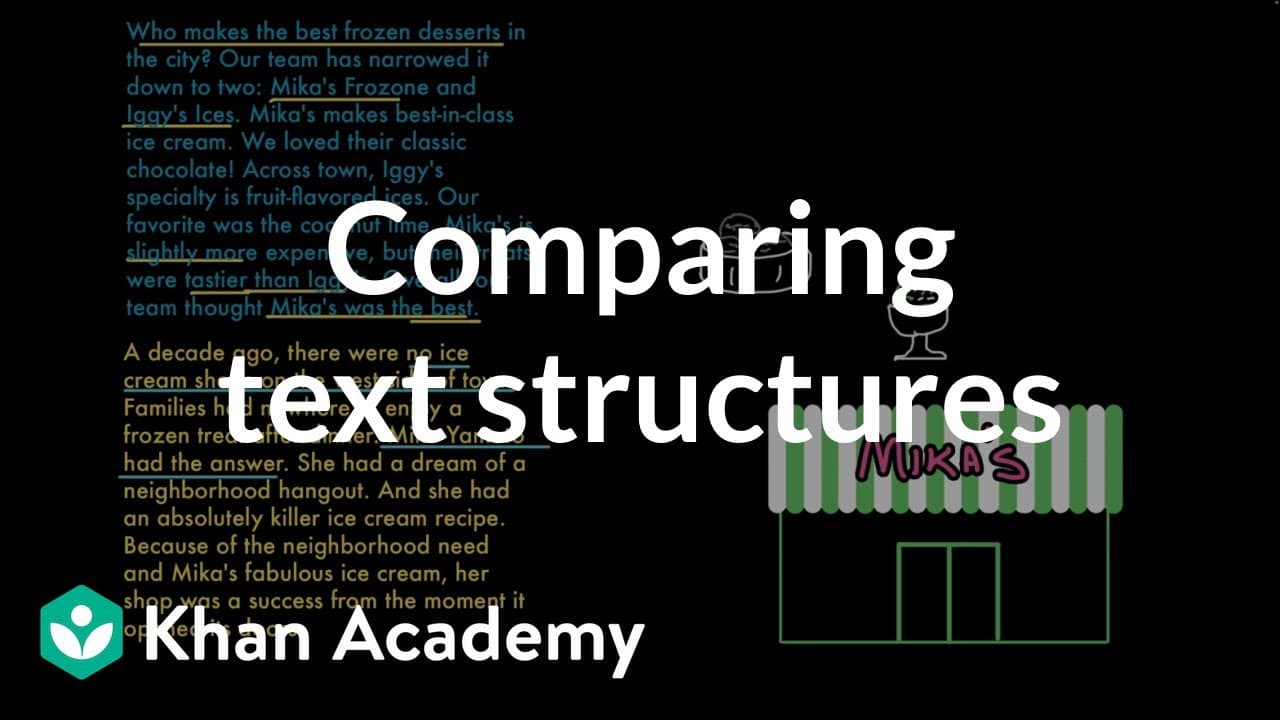
This educational video provides a clear and practical guide to understanding text structures—how authors organize information within a text. The narrator introduces four common types of text structures: Cause and Effect, Chronology, Problem and Solution, and Comparison. Through visual aids and simple definitions, the video explains that recognizing these structures helps readers identify the main ideas and understand how events or concepts connect.

Khan AcademyKhan Academy

4mins 28s

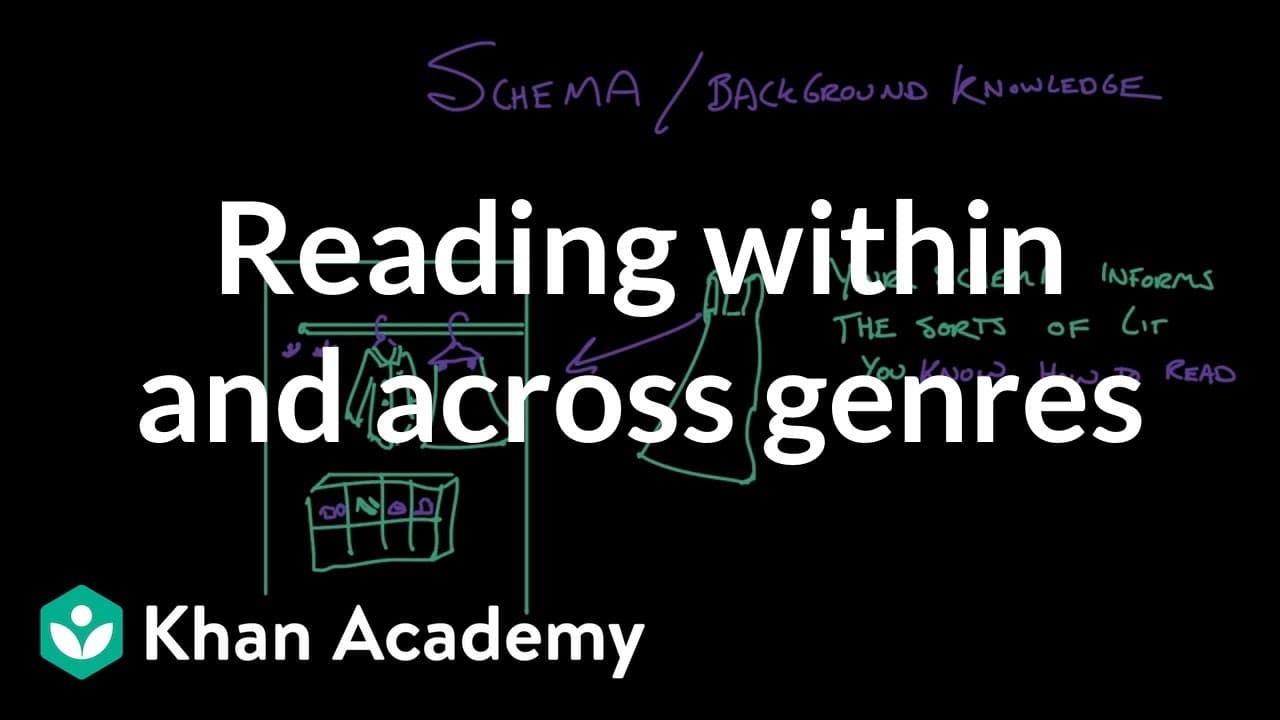
How Genre and Background Knowledge Shape the Way We Read

How Genre and Background Knowledge Shape the Way We Read

This educational video explores the literary concepts of "genre" and "schema," explaining how the types of stories we read shape our expectations and understanding. Using an accessible analogy of the brain as a closet, the narrator illustrates how "schema" acts as the internal infrastructure—like hangers and shoe racks—that allows readers to organize and store new information based on prior knowledge. The video demonstrates how recognized patterns in fiction help us navigate new texts and how reading widely expands this mental framework. The content delves into specific literary themes including tropes, reader expectations, and genre subversion. It uses the classic trope of "the butler did it" to explain how mystery readers form assumptions, and then highlights how Agatha Christie's "Murder on the Orient Express" famously plays against those expectations. Additionally, the video features a comparative analysis segment using a Venn diagram to show the surprising thematic overlaps between the Star Wars franchise and the Western genre, such as bounty hunters, bar fights, and desert settings. For educators, this video is an excellent tool for introducing metacognition and literary analysis. It moves beyond simple definitions to show how background knowledge actively informs reading comprehension. It provides a visual and relatable way to teach abstract cognitive concepts and models comparative thinking, making it a perfect launchpad for lessons on genre study, comparative literature, or creative writing focused on subverting tropes.

Khan AcademyKhan Academy

5mins 24s

Materials

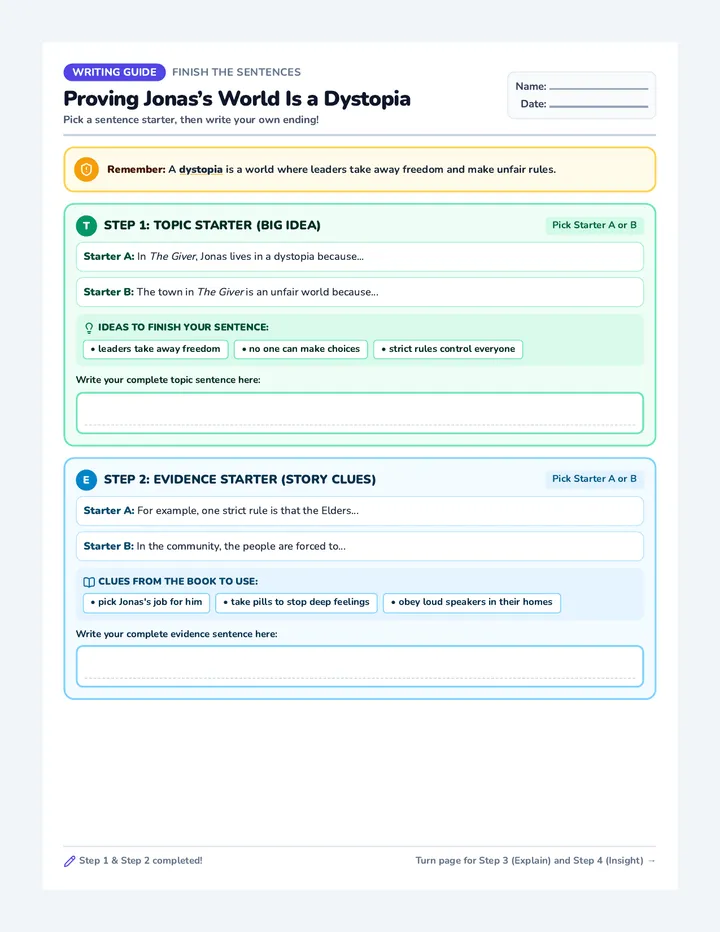
Giver Dystopia Reference Sheet

Giver Dystopia Reference Sheet

A simplified 2-page writing guide for a second-grade reading level. Features structured sentence starters with ending prompt banks and dedicated handwriting lines, allowing students to complete their own analysis to prove The Giver is a dystopian setting.

AM

Ashley McGregor

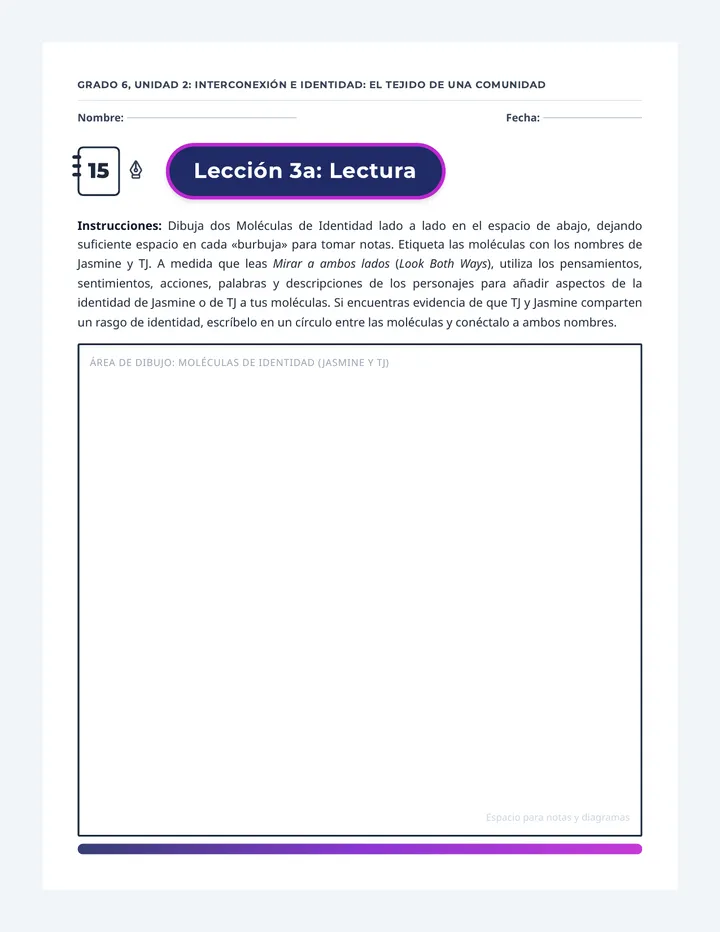
Moléculas de Identidad Hoja de Trabajo

Moléculas de Identidad Hoja de Trabajo

Versión en español con tipografía más oscura, nítida y gruesa (Merriweather / Source Serif 4 y Montserrat en negrita) para maximizar la legibilidad y el contraste tanto en pantalla como en impresión. Incluye el organizador gráfico de Moléculas de Identidad y la consigna de escritura rápida con renglones reforzados.

N

nlewis

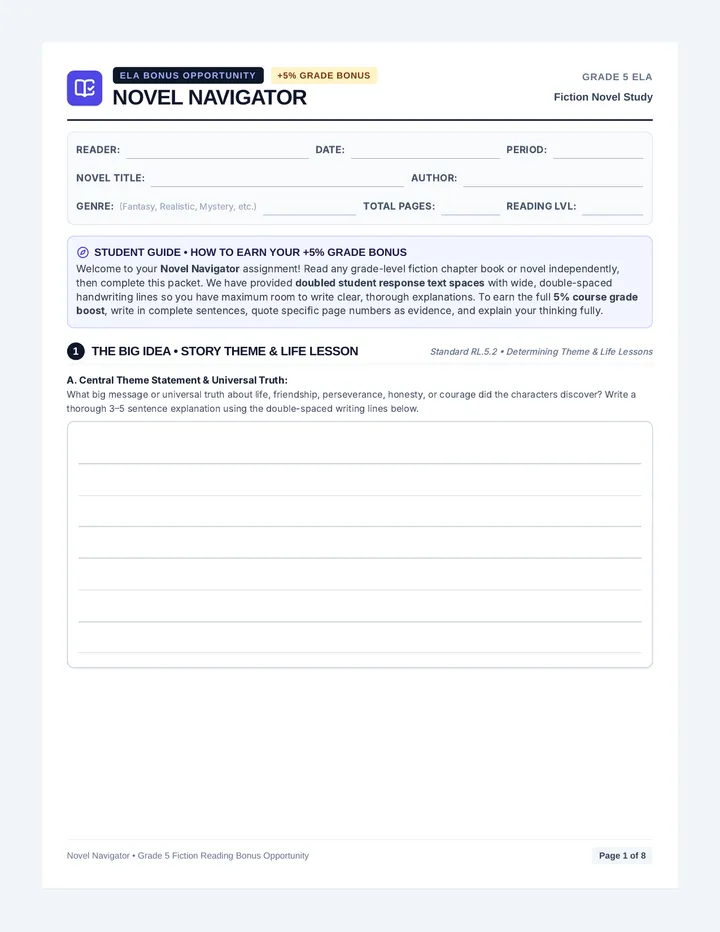
Novel Navigator Assignment Packet

Novel Navigator Assignment Packet

An 8-page comprehensive 5th-grade ELA fiction assignment packet for an ELA Bonus Opportunity, featuring doubled student response text spaces, generous double-spaced handwriting lines, student-friendly directions, story elements analysis, creative writing pitch, and a streamlined evaluation rubric.

TK

Tanya Kovac

Animal Migration Paired Worksheet

Animal Migration Paired Worksheet

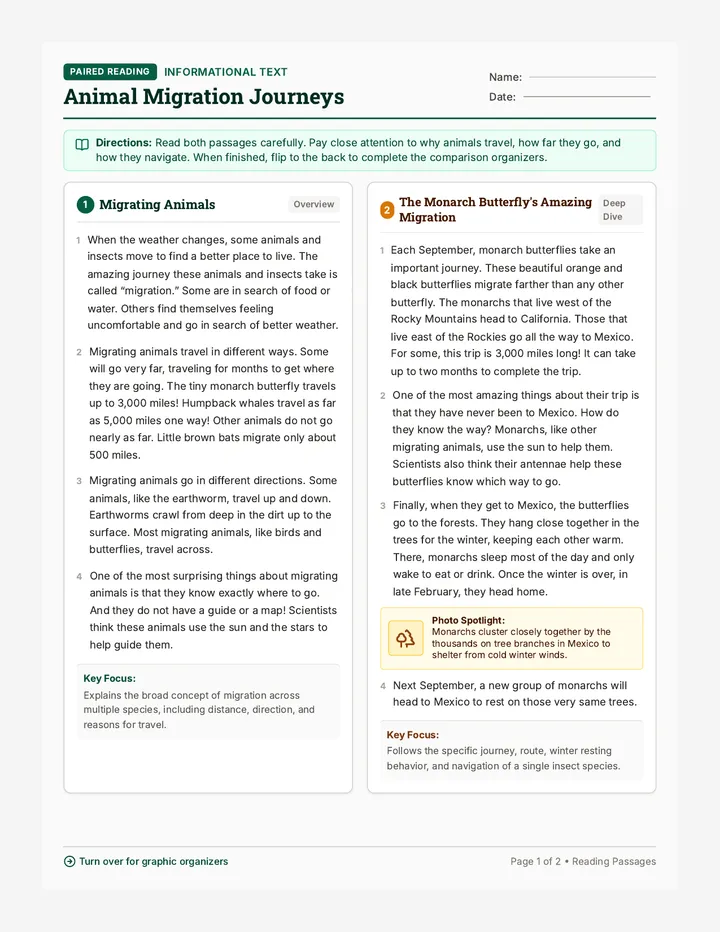
A two-sided paired-text reading worksheet featuring 'Migrating Animals' and 'The Monarch Butterfly\'s Amazing Migration' arranged in two parallel reading columns on page one. Page two provides a comprehensive T-chart and Venn diagram graphic organizer with overlapping visual circles for comparing and contrasting text evidence.

TD

Taylor Doucet

Structure Sleuth Organizer

Structure Sleuth Organizer

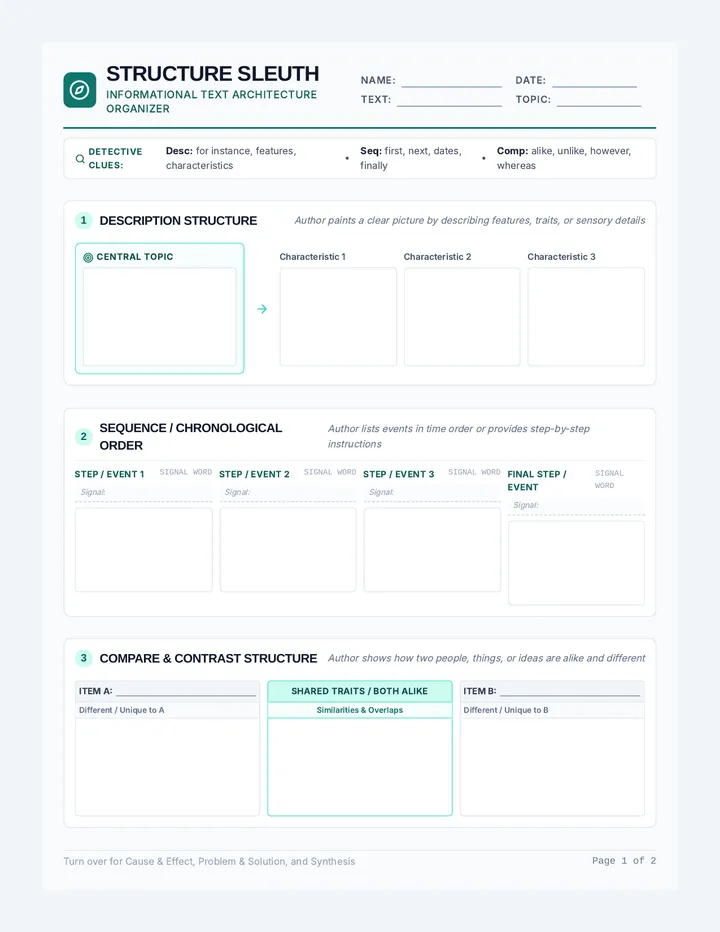
A comprehensive, print-ready two-page graphic organizer covering all five major informational text structures: description, sequence, compare-contrast, cause-effect, and problem-solution. Features dedicated visual organizers, signal word reference guides, generous handwriting areas, and a final text evidence synthesis section.

J

jcasey

Peter Pan Paradox Exit Ticket

Peter Pan Paradox Exit Ticket

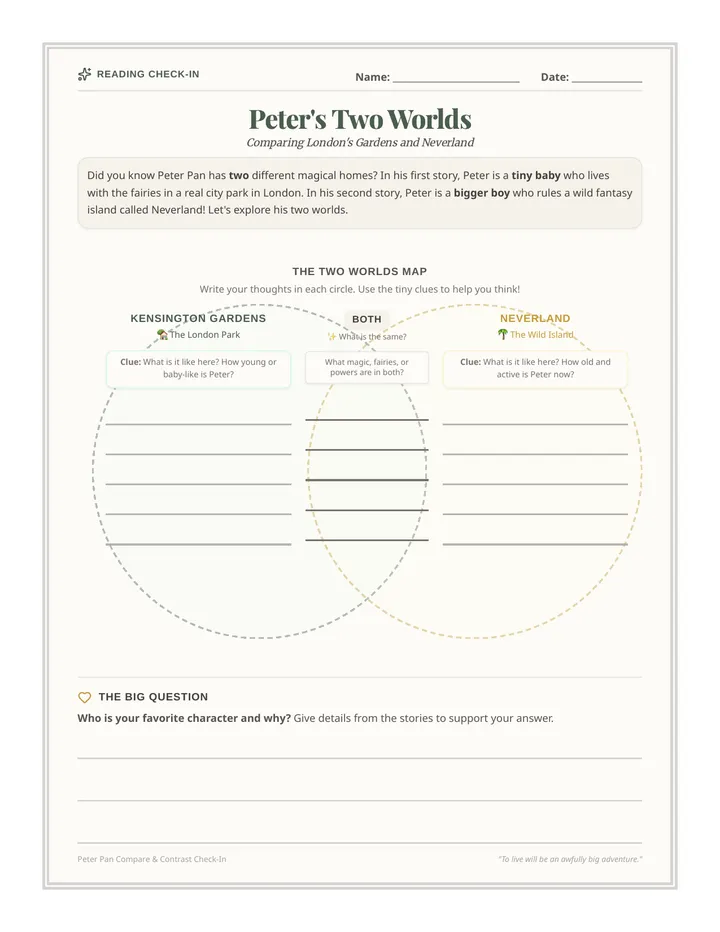
An updated 3rd-grade friendly exit ticket with a large, beautifully aligned Venn diagram where the text and writing lines are positioned in non-overlapping columns. Writing lines are now darker, wider, and increased to 5 lines per column.

SW

Shelley Waller

Sequences

Invention Quest Slides

Frindle Frenzy Novel Study

A 9-day novel study for 'Frindle' by Andrew Clements, aligned to 3rd Grade ELAR TEKS, focusing on character development, vocabulary, and plot analysis.

LH

Lucy Hellerman

56
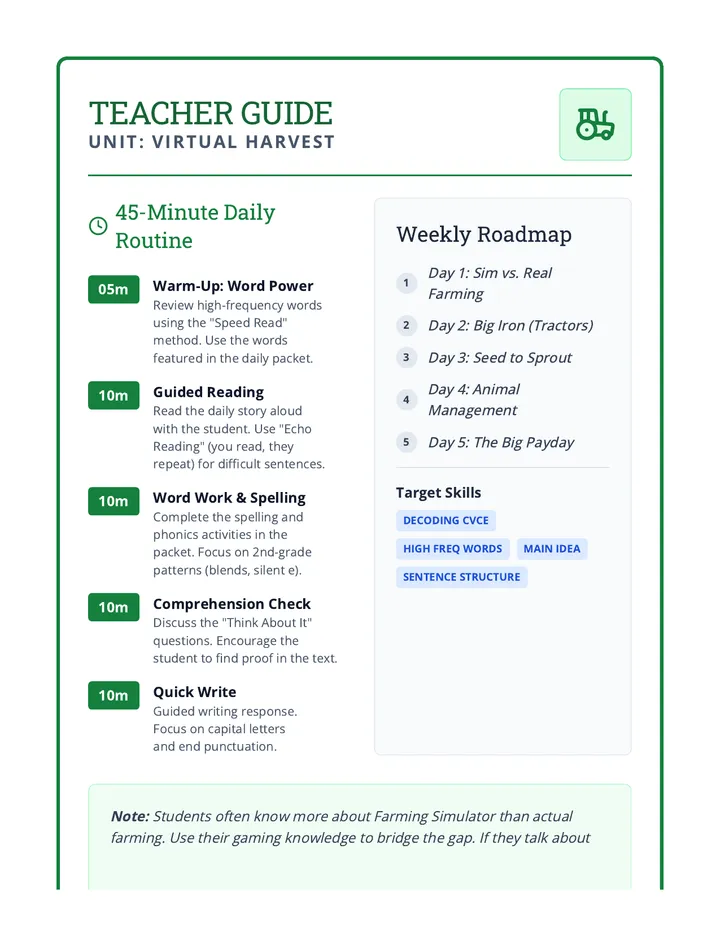
Virtual Harvest Teacher Guide

Digital Dirt

A 5-day reading comprehension and writing unit for struggling readers, blending the world of Farming Simulator with real-world agriculture. Focuses on 2nd-grade level literacy skills within a high-interest 5th-grade context.

CM

carley Martin

30
Copenhagen Clues Slides

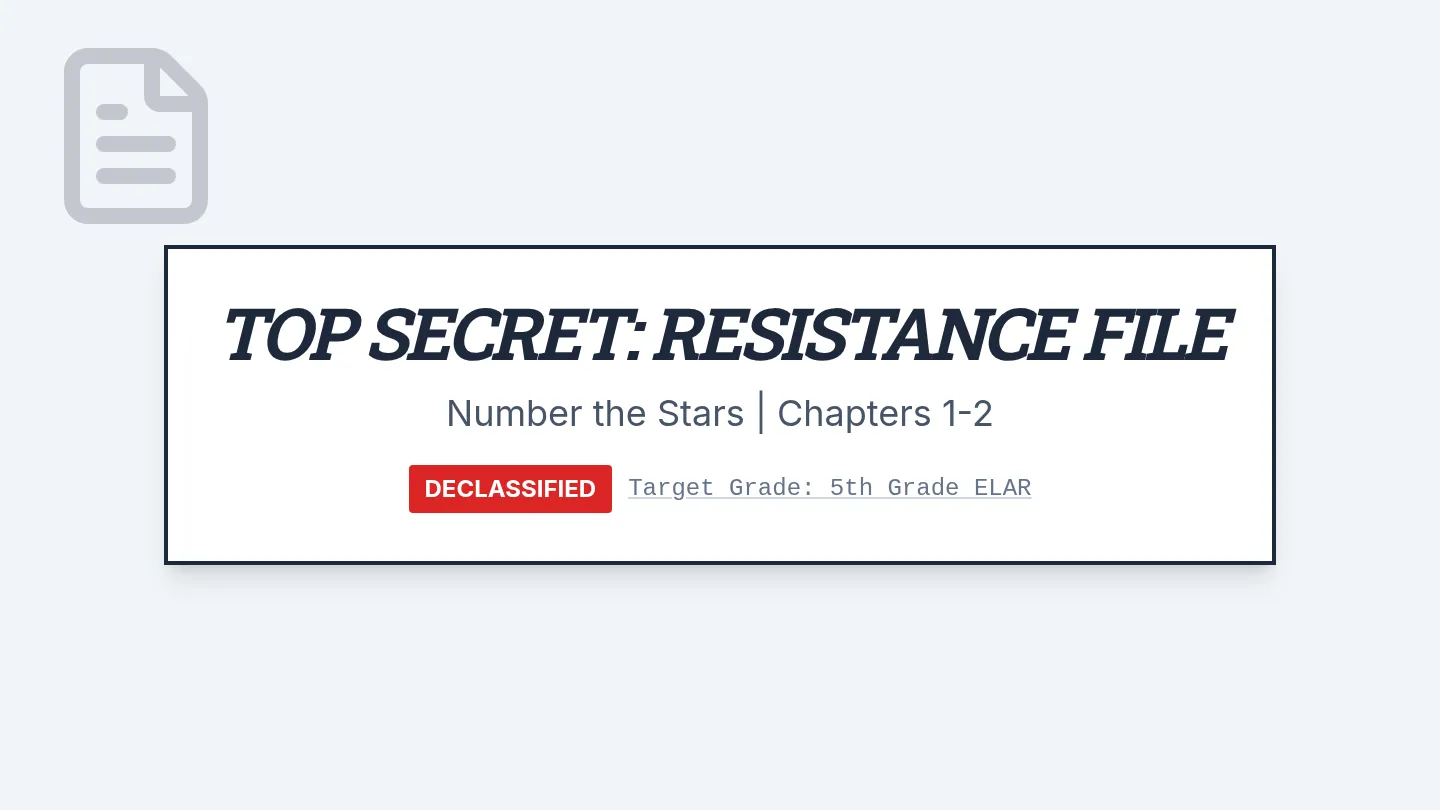
Resistance Chronicles

A 9-day novel study for Number the Stars centered on 5th Grade ELAR TEKS, focusing on character development, plot analysis, and historical context through the lens of a Resistance Secret File.

LH

Lucy Hellerman

79
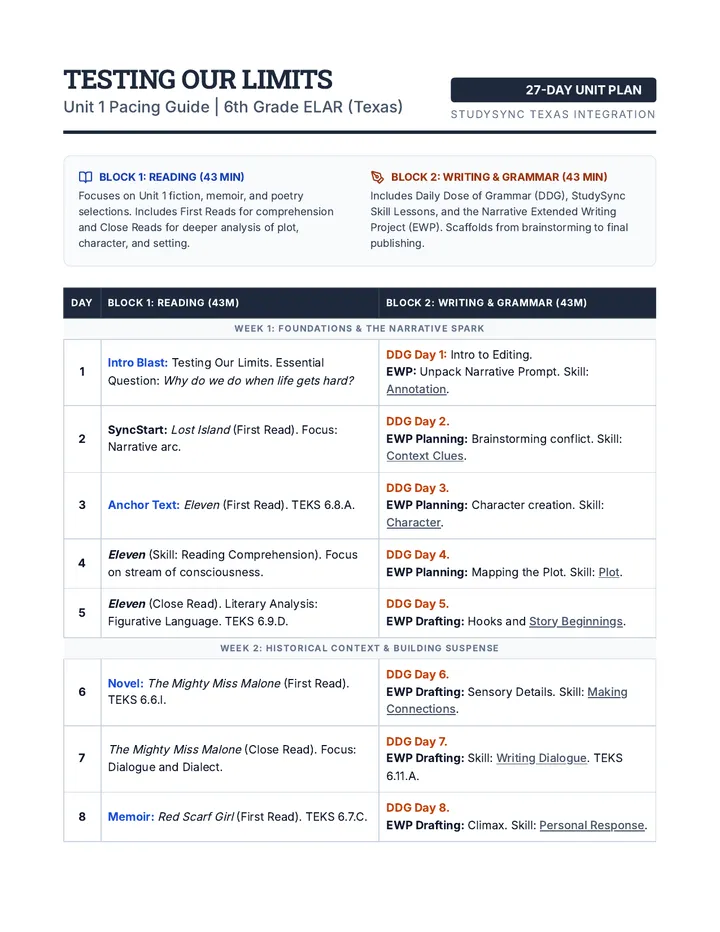
Unit 1 Pacing Guide Document

Testing Our Limits Unit Sequence

A 27-day instructional sequence for 6th Grade ELAR Unit 1: Testing Our Limits, featuring dual blocks for Reading and Writing with daily grammar and skill scaffolding.

DM

Dawn Mustian

81
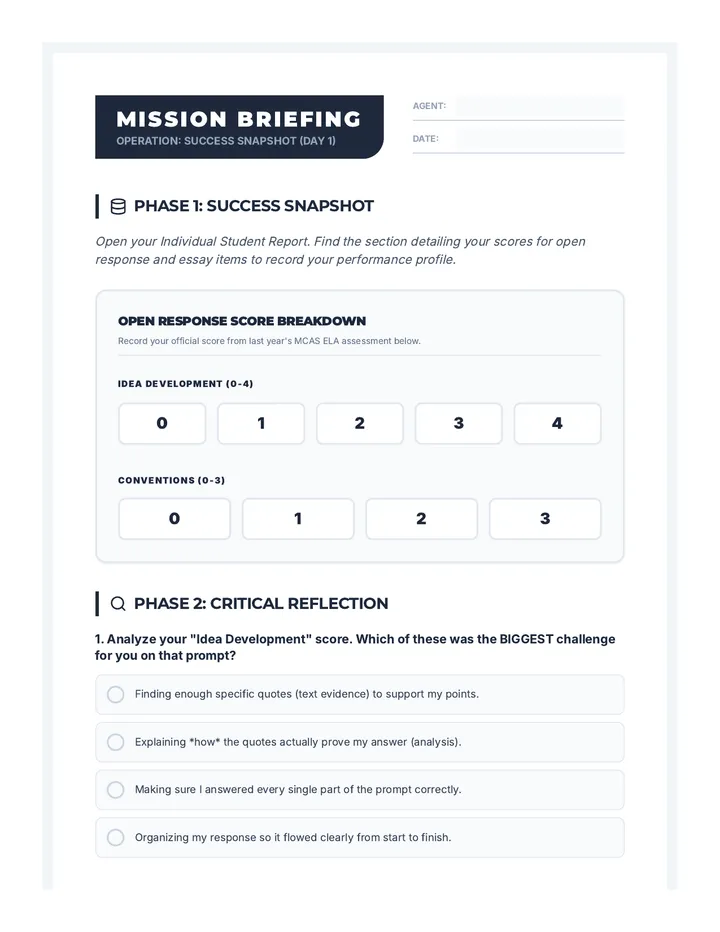
Mission Briefing Worksheet

Mastery Mission

A project-based learning unit designed to help middle school students analyze their past MCAS ELA performance, deconstruct scoring rubrics, and create a personalized strategy playbook for upcoming assessments. Students move from 'investigating' their scores to 'rebooting' their responses and 'finalizing' their test-taking toolkit.

M

mhbutterworth

18
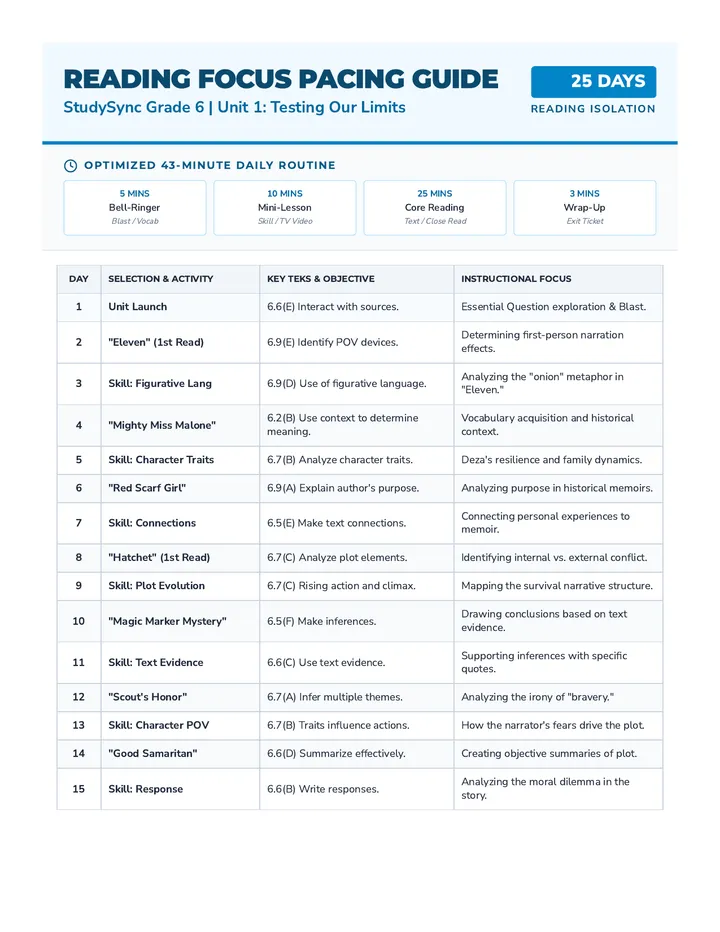
Reading Focus Pacing Guide

Testing Our Limits Unit

A 25-day comprehensive unit for StudySync Grade 6 that explores the theme of courage and resilience through isolated reading and writing tracks, aligned to ELA TEKS.

DM

Dawn Mustian

79