Identification and analysis of flawed reasoning in spoken and written arguments. Categorizes common errors like ad hominem, straw man, and slippery slope to strengthen critical thinking and rhetorical skills.
A 3-week English 10 unit exploring Social Commentary through the lens of Artificial Intelligence. Students analyze how AI reflects societal biases and use it as a collaborative tool to craft their own critiques of modern culture.
A deep dive into the final chapters of George Orwell's *Animal Farm*, focusing on the psychological and rhetorical tools of tyranny. Students analyze the transition from revolution to totalitarianism through the lens of rhetorical appeals, propaganda, and allegorical parallels to the Russian Revolution.
A 4-week unit exploring the construction of heroism and villainy in sports through media analysis, persuasive writing, and investigative interview techniques. Students will analyze how public perception is shaped and ultimately create their own investigative podcast script.
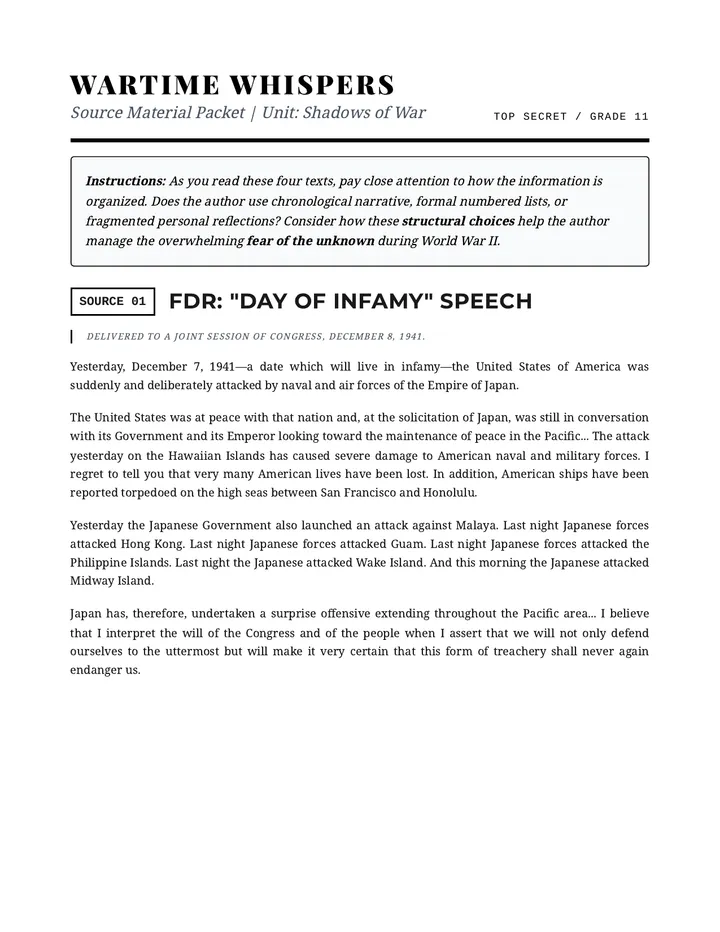
A 4-part unit for 11th-grade English/History analyzing text structure and author's purpose through the lens of fear and the unknown during WWII, examining political rhetoric, legal orders, personal diaries, and wartime superstition.
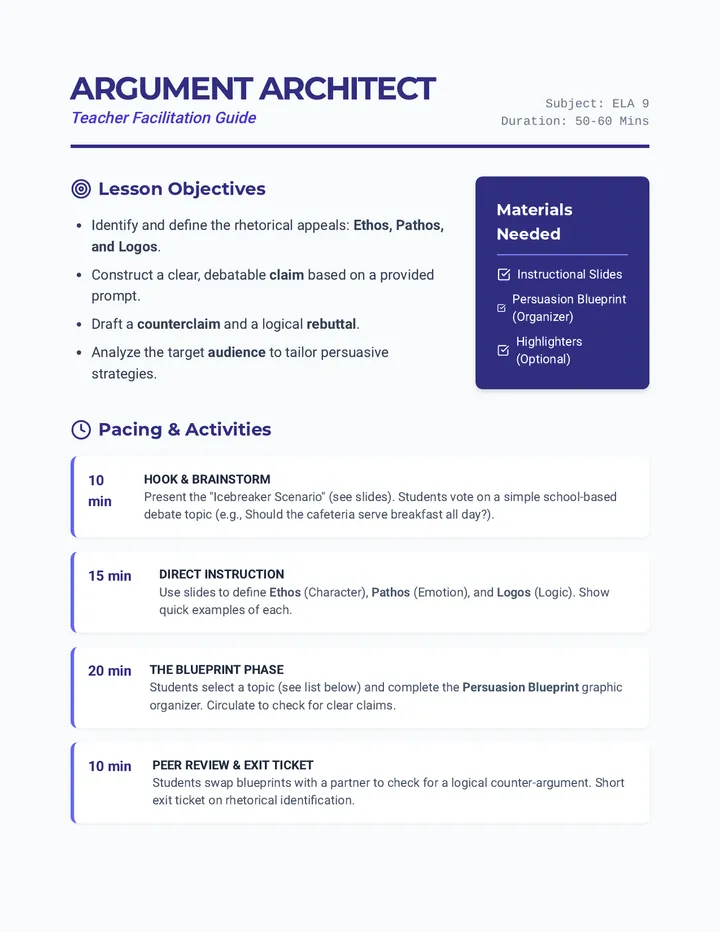
A scaffolded progression of persuasive writing mastery, moving from 9th-grade foundations of Ethos, Pathos, and Logos to 11th-grade advanced rhetorical strategies including Kairos and logical fallacy analysis.
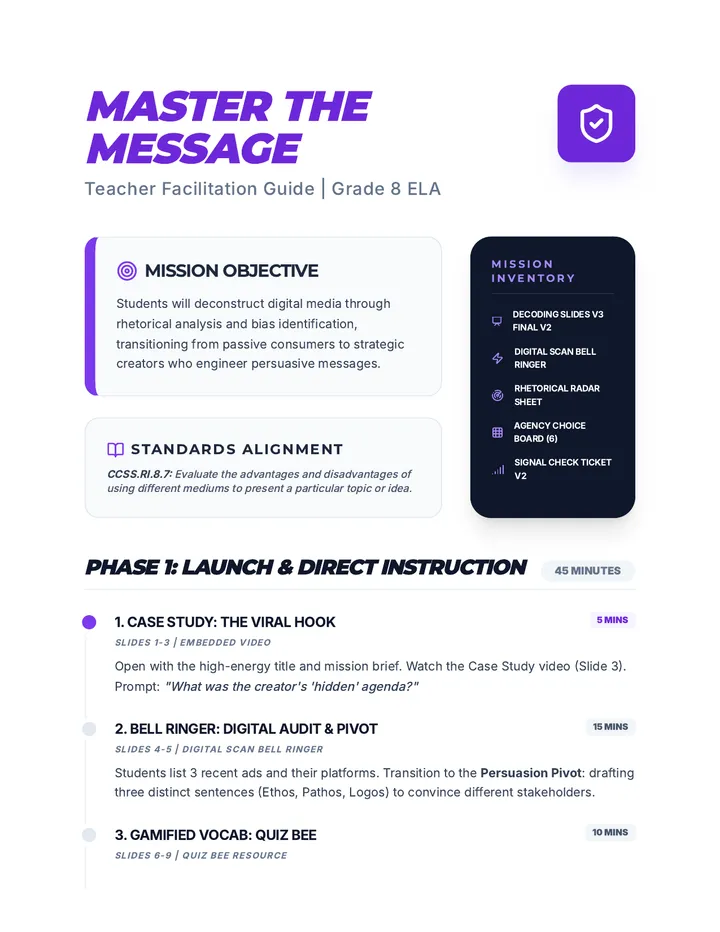
A high-engagement sequence where students evaluate persuasive techniques in modern digital media, practicing active listening and evidence-based argumentation through a Socratic Seminar format. Students analyze the ethics of micro-targeting, influencer marketing, and algorithmic persuasion.
A middle school media literacy unit that turns students into 'Propaganda Detectives.' Students learn to identify persuasive techniques and logical fallacies in modern media, culminating in a creative project to redesign famous ads with 'honest' messaging.
A comprehensive 5-day introductory unit on speech and debate, covering public speaking, argumentation, logic, research, and competitive formats.
A comprehensive 10-day 4th grade unit themed around a detective agency where students learn to distinguish between verifiable facts and subjective opinions through investigation and analysis.
A comprehensive year-long intervention sequence for 8th-grade literacy, focusing on STAR 360 and OSAS benchmark skills. The sequence follows a 3-day weekly instructional cycle (Instruction, Practice, Application) to supplement 2 days of choice reading.
This advanced sequence focuses on the deconstruction of complex academic and professional arguments using sophisticated rhetorical frameworks. Graduate students will engage in deep analysis of seminal texts across disciplines, examining how authors establish authority, select data, and navigate methodological limitations.
A comprehensive unit for undergraduate students on analogical reasoning and comparative argumentation. The sequence moves from the structural mechanics of analogies to their critical application in law, policy, and ethics, culminating in a moot court simulation focused on case precedent.
A visual slide deck designed for reviewing student answers from the Spin Spotters Worksheet. It provides clear, comparative breakdowns of the two LeBron James articles, defining tone and loaded language while exploring fact selection. Now includes a final 3-minute challenge slide to synthesize learning.
A project planning document for students to prepare their podcast segment. It guides them through choosing an athlete, identifying existing media spin, and drafting their own script using tone and loaded language.
A comprehensive guide for teachers to facilitate the Spin Cycle lesson. Includes pacing, instructional strategies, answer keys for the LeBron James article analysis, and high-level discussion prompts.
A document where students analyze two articles about LeBron James's 'The Decision' to identify media spin, tone, and loaded language. Includes comparison tables and reflection questions to prepare for the podcast project.
An updated visual slide deck introducing media spin, tone, and loaded language. Now includes additional examples of Hero/Villain spin and a 3-minute student activity slide to practice using loaded language.
A teacher facilitation guide designed to help educators launch and manage the revised summative podcast project. It includes a weekly action plan, a 'Pivot Strategy' explanation, and a list of high-research subject recommendations. Fixed formatting and page break issues.
An answer key for the Headline Hackers worksheet, providing model analysis for both the positive 'charity' frame and the negative 'hubris' frame. Explains the persuasive strategies and connotative language used in each.
A persuasive writing and media literacy worksheet that uses the provided LeBron James 'charity' article and a counter-perspective op-ed to help students analyze how connotative language and selective facts create 'spin'. Fixed handwriting legibility and box sizing issues.
A teacher facilitation guide designed to help educators launch and manage the revised summative podcast project. It includes a weekly action plan, a 'Pivot Strategy' explanation, and a list of high-research subject recommendations.
A segment-by-segment script storyboard that breaks the podcast into three distinct parts. It provides specific production notes and guided segments for the Hook, the Hot Seat, and the Verdict, ensuring students have a concrete framework for writing.
A highly structured research dossier that provides concrete prompts and 'slots' for students to collect evidence, quotes, and media spin. This removes the vagueness of the research process and prepares them for the scripting phase.
A lesson exploring media spin, tone, and loaded language in sports journalism, using LeBron James's 'The Decision' as a case study to help students prepare for their hero/villain podcast project.
The final project phase. Students research a modern social issue and 'command' the AI to help them construct a high-level commentary, providing a 'Verification Log' of every AI suggestion they rejected.
A deep dive into classic social commentary (Satire/Irony). Students build the 'Internal Library' needed to recognize when an algorithm misses the moral or emotional weight of a message.
Students experience the danger of 'Blind Prompting.' Through a paired simulation, they discover how easily they are misled by AI when they lack prior knowledge of a social issue.
The final project phase where students use AI as a 'sparring partner' to develop, refine, and produce an original piece of social commentary on a topic of their choice.
A deep dive into algorithmic bias. Students audit AI outputs to see what they reveal about human prejudices, using AI as a tool for critical social analysis.
Introduction to social commentary and the concept of 'the mirror.' Students explore how traditional literature and modern AI both reflect and distort societal realities.
Analyzes Chapter 9's ultimate betrayal of the working class (Boxer) and the symbolic return of Moses, reflecting the final abandonment of Animalism's original ideals.
Explores Chapter 8's development of Napoleon's cult of personality, the manipulation of the Commandments (Logos), and the allegorical significance of the Battle of the Windmill.
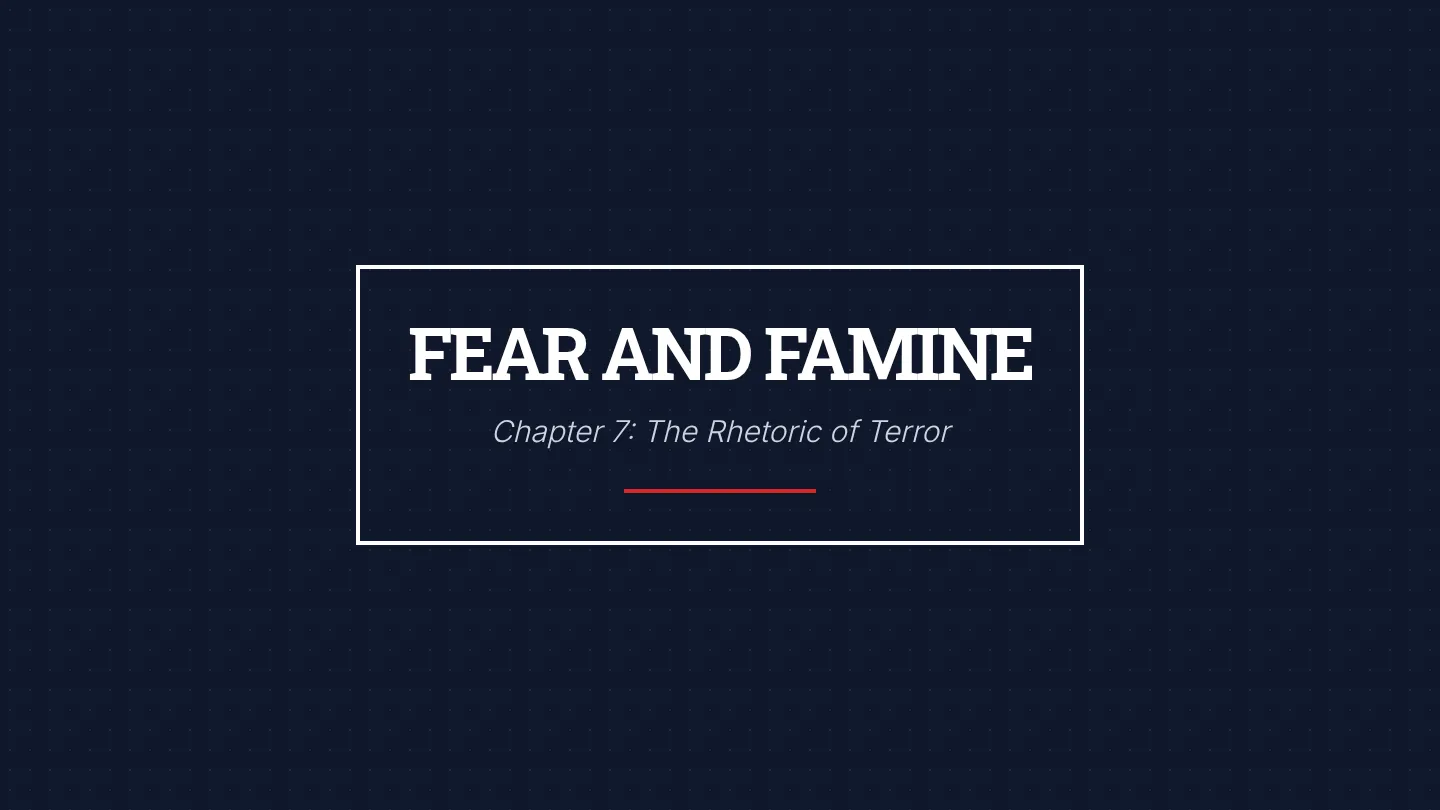
Examines Chapter 7's focus on the atmosphere of terror, the use of rhetorical appeals (specifically Pathos through fear), and the allegorical connection to Stalin's Great Purge through the animal confessions.
The culminating project where students research a controversial sports figure and produce a persuasive investigative podcast script and recording.
Students master the art of the interview, learning to craft hard-hitting questions and analyze verbal cues to uncover the 'truth' behind the athlete's persona.