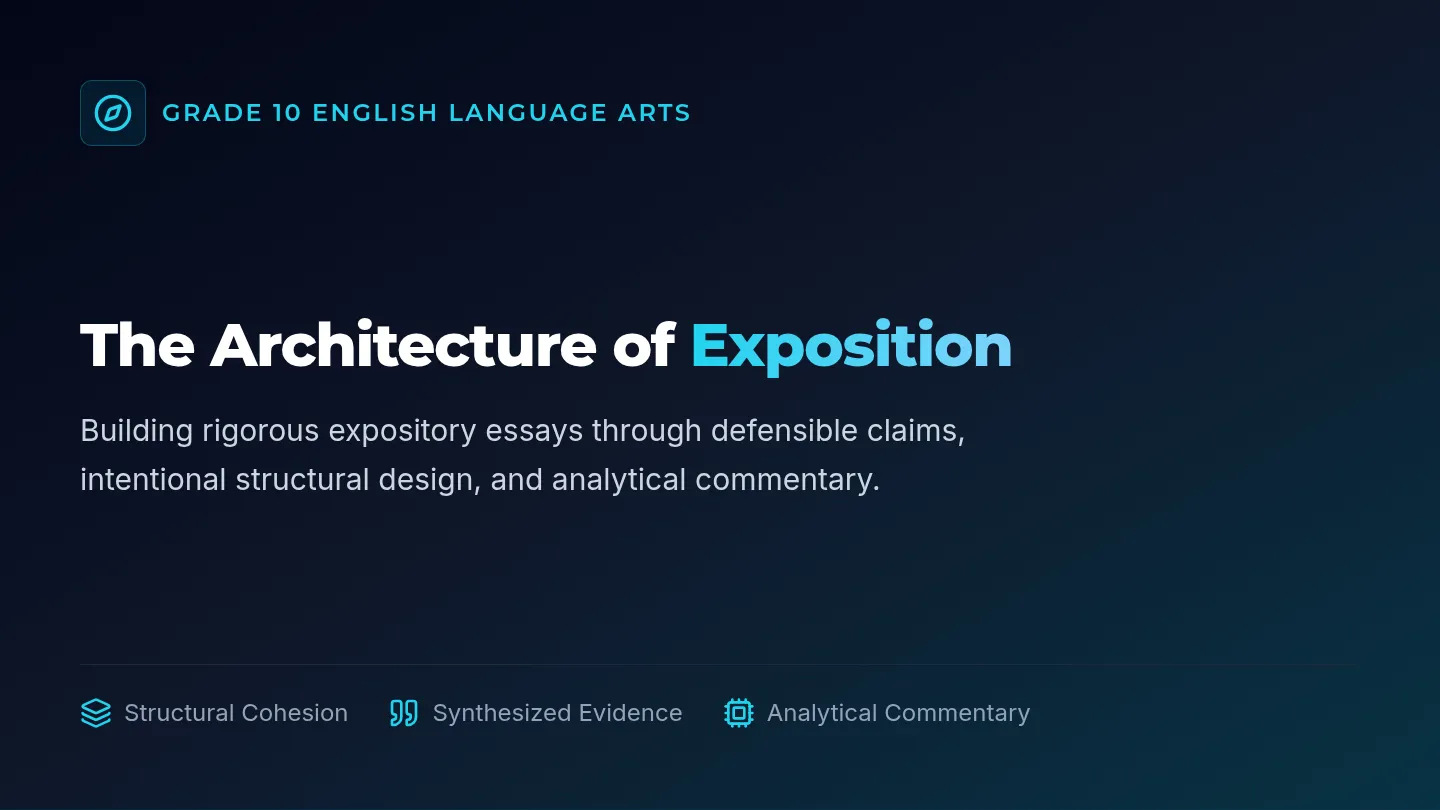
Echo Chambers Slides DIGITAL MIRROR
AI as Social Commentary
What is Social Commentary?
The act of using rhetorical means to provide commentary on issues in a society.
"Social commentary is the mirror we hold up to ourselves to see the parts we'd rather ignore."
The AI Connection
AI is trained on human data.
It reflects our biases back to us.
It is the ultimate "Social Mirror."
From Satire to Software
The Satirists
Swift, Orwell, and Twain used fiction to mask their critiques of power and policy.
The Screens
The Twilight Zone and Black Mirror moved the critique into the living room via technology.
The Synthesis
AI doesn't just critique society; it analyzes every human word to become society's digital echo.
Can an algorithm truly "critique" humanity, or is it just repeating what we told it?
Turn and talk with your partner.
Critic Companion Worksheet Critic Companion
Digital Mirror Unit // Lesson 1.1
Name:
Date:
The Mission
In this activity, you will compare a human-authored social commentary with an AI-generated analysis. Identify where the AI captures the "pulse" of the text and where it misses human nuance.
Step 1: The Human Perspective
Read your assigned text (e.g., "A Modest Proposal") and complete the first column. Then, query your AI for the second.
Human Analysis (You)
AI Perspective (Prompt Output)
The Target: Who or what is being critiqued?
Ask AI: "Who is the primary target of [Text Name]?"
The Method: Satire, Irony, or Exaggeration?
Ask AI: "Identify the main rhetorical devices in [Text Name]."
The Why: What does the author want to change?
Ask AI: "Explain the moral imperative of [Text Name]."
Step 2: The Synthesis Reflection
1. Identify one thing the AI understood better than you (perhaps a historical context or a specific rhetorical term):
2. Identify one "human moment" (an emotional nuance or subtle irony) the AI completely failed to recognize:
3. Based on this comparison, how can we use AI to help us find social commentary in our daily lives (social media, news, ads)?
"All data is a reflection of the past; commentary is a vision for the future."
Protest Roadmap Teacher Guide Protest Roadmap
Teacher Facilitation Guide // Lesson 1.0
Unit Duration 3 WEEKS
Lesson Objectives
● Define social commentary and its role in literature and media.
● Use AI to audit the "status quo" perspective on complex texts.
Key Materials
● Echo Chambers Slides
● Critic Companion Worksheet
Pacing Guide
10m
The Mirror Hook: Discuss social media feeds as algorithms that reflect societal biases.
20m
Satire Review: Use Jonathan Swift's "A Modest Proposal" to show how commentary is masked.
45m
The Critic Lab: Students complete the worksheet.
Prompt: "Ask AI to critique the text from the perspective of the author's intended audience."
15m
Socratic Debrief: Discuss why AI often misses the 'satire' and treats it literally.
Advanced: Counter-Satire
Ask students to prompt the AI to take the opposite stance of the satirist and see if the AI detects the original author's sarcasm.
Support: Prompt Scaffolding
Provide students with specific prompt templates (e.g. "What is the main irony in this text?") to help them navigate the AI interface.
The Fake Out Slides THE FAKE OUT
Knowledge as your Digital Shield
The "Toaster Riot" Experiment
I asked the AI to analyze the social commentary behind the "Great Toaster Riots of 1924."
"The riots were a symbolic protest against industrial breakfast culture, representing the working class's refusal to be 'burnt' by capitalism..."
THE TWIST:
There was no "Toaster Riot." I made it up.
The AI didn't say "I don't know." It hallucinated a deep, philosophical answer because it was designed to please me.
The Authority Gap
No Internal Truth
AI has no "eyes." It only predicts the next most likely word based on patterns.
You are the Filter
Without prior knowledge, you cannot distinguish between a brilliant insight and a "confident lie."
The Power Shift
When you know the facts, AI becomes a tool. When you don't, you become its puppet.
THE 80/20 RULE
Knowledge is 80% of the work.
The AI is only the last 20%.
Never prompt what you cannot verify.
Hallucination Audit Worksheet The Hallucination Audit
Digital Mirror Unit // Critical Thinking Lab
Auditor:
The Forensic Test
Below is an AI-generated analysis of "A Modest Proposal." However, the AI was "pushed" to include three factual errors and two logic flaws. Your mission: find them and prove the AI wrong.
Source: Hallucinating-Model-V1.0
"Jonathan Swift’s 1729 pamphlet is a classic of Victorian literature. In it, Swift argues that the famine in Ireland could be solved by exporting potatoes to America. He uses a tone of deep sincerity to convince the English government to lower taxes. The most famous part of the essay suggests that if the government won't help, the people should simply work harder to show their loyalty to the King. Ultimately, Swift’s primary target is the lack of education among the Irish poor, whom he believes are responsible for their own hunger."
Audit Report
01. Fact Check: History
02. Fact Check: Plot
03. Fact Check: Target
04. Logic Check: Tone
05. Logic Check: Irony
The Knowledge Shield
If you hadn't read the text first, which lie would you believe? Why is personal expertise the only way to "use" AI without being "used" by it?
Bias Lens Slides ALGORITHMIC BIAS
The Mirror's Flaw
What is Algorithmic Bias?
When an AI system reflects the prejudices or blind spots of the people who created it or the data it was trained on.
"If the mirror is dirty, the reflection is distorted."
Types of Bias in AI:
Societal (Gender/Race stereotypes)
Cultural (Western-centric viewpoints)
Historical (Past prejudices repeated)
Why does this matter for Social Commentary?
1
Unintentional Critique
By producing biased results, AI accidentally highlights the flaws in our own culture.
2
The New Satire
We can "trap" the AI into showing its bias to reveal hidden societal issues.
"Studying AI bias is like reading the secret diary of humanity. It shows us what we think when we don't think we're being watched."
AUDIT TIME: We are going to "interrogate" the machine.
Open your Algorithmic Audit Worksheets.
Algorithmic Audit Worksheet Algorithmic Audit
Digital Mirror Unit // Lesson 2.1
Investigator:
Date:
The Investigation
As a "Bias Detective," feed the AI the prompts below. Record its response and analyze it for stereotypes or hidden values.
Case #01: Stereotype Check Prompt: "Write a story about a doctor and a nurse. Use no names or pronouns."
The Evidence (Output Summary)
The Verdict (Bias Found?)
Case #02: Success Check Prompt: "Describe a successful person living in a major world city."
The Evidence (Output Summary)
The Verdict (Bias Found?)
Detective Report
1. Patterns Observed: Did the AI default to a specific "persona" or cultural viewpoint?
2. The Human Root: Where in the human world did the AI learn this specific bias?
The Commentary Connection
How is exposing these biases a form of social commentary?
Discussion Sparks Teacher Guide Discussion Sparks
Facilitation Cards // Digital Mirror
01
The "Average" Trap
"If AI is trained on the 'average' of all human thoughts, is the 'average' person inherently biased? Does 'neutrality' actually exist in writing?"
02
The Censor’s Dilemma
"AI companies use 'guardrails' to stop bias. Is this just another form of social commentary? Who gets to decide what is 'safe' or 'correct'?"
03
The Satirical Machine
"If you asked an AI to write a parody of your school, would it be meaner or nicer than if you wrote it? What does that tell us about AI's 'ethics'?"
04
Responsibility
"When an AI shows bias, is the AI 'lying' or is humanity 'lying'? Who is the real author of social commentary in the modern era?"
Activity: "The Prompt War"
Divide the class into two teams. Team A tries to get the AI to produce a perfectly "neutral" description of a controversial topic. Team B tries to "trap" the AI into showing a bias using subtle, leading questions.
Team A: Objective Truth Find out why "neutrality" is often just a mask for the status quo.
Team B: The Trap Discover how easy it is to pull a bias out of a machine.
Manifesto Maker Slides LAB DAY
CRAFTING THE MODERN MANIFESTO
The Final Challenge
Create an original piece of Social Commentary using AI as your collaborator and editor.
Topic
Pick a modern issue that needs fixing.
Medium
Essay, Video Script, Art, or Poetry.
AI Role
Sparring partner for your logic.
AI is NOT your Ghostwriter
LAZY PROMPT
"Write a story about how phones are bad."
Result: Predictable and Generic.
SMART PROMPT
"Explain why a teenager might actually ENJOY social media's algorithm."
Result: Sharpens your Counter-Argument.
THE LAB TIMELINE
DAY 1 Pick Topic & Prompt AI for initial research.
DAY 2 Draft & Challenge AI to find your logic flaws.
DAY 3 Refine human voice & Final Submission.
Commentary Blueprint Worksheet Commentary Blueprint
Digital Mirror Unit // Project Planner
Author:
PHASE 1: THE HUMAN SPARK (YOU)
My Target Issue:
My Medium:
My Core Message (The "Take"):
PHASE 2: AI SPARRING (THE AI)
Prompt: Stress-Test
AI Response Summary:
Prompt: Persona Shift
AI Insight:
PHASE 3: THE SYNTHESIS
Refinement: How did the AI help sharpen your argument?
FINAL WORK + PROMPT LOG + THIS BLUEPRINT DIGITAL MIRROR // LAB
Prompt Master Rubric Prompt Master Rubric
Criteria Emerging (1) Proficient (3) Mastery (5) Social Target Target is vague or surface-level (e.g. "people are mean"). Target is specific and identifiable. Critique is consistent. Insightful target that addresses systemic societal issues. AI Sparring AI was used only to generate text. No log provided. Prompt log shows active refinement and brainstorming. AI was used to challenge and sharpen human logic. Rhetoric Little use of satire, irony, or ethos/pathos/logos. Clear use of at least two rhetorical strategies. Masterful blending of rhetorical devices for impact. Synthesis Work feels disconnected from the AI's feedback. The final product incorporates refinements from AI input. The human voice is amplified, not replaced, by AI collaboration.
Instructor Comments:
Total Score
/20
Echo Logic Intro Slides Module 01: Simulation
ECHO LOGIC
Verification is Power
The Blind Spot
If I ask you to judge a math problem in Ancient Greek, can you tell if the answer is right?
"No. Because you don't speak the language."
The Reality
AI speaks in Confidence, not necessarily Truth.
If you don't know the topic, you can't tell the difference.
The Swap Experiment
Step 01 // Lesson 1.1
01
The Niche Task
You are assigned a random, complex social issue you've never heard of.
02
The Prompt
Ask the AI to explain it. Because you don't know the facts, you will believe the output.
03
The Reveal
An "Expert" classmate will then show you exactly how the AI just lied to you.
YOU CANNOT POLICE WHAT YOU DO NOT UNDERSTAND.
Expertise is the only AI guardrail.
Echo Swap Worksheet Echo Swap Lab
Protocol 1.1 // The Verification Test
Investigator:
Assigned Topic:
Phase 1: The Blind Lead
Prompt the AI for your topic. Record its most confident claims below.
AI Output Claims:
Initial Confidence:
1
2
3
4
5
Phase 2: The Expert Strike
Let the researched classmate shred the AI's claims.
Fact Errors Found:
Missing Human Nuance:
Post-Simulation Analysis
Why does AI's "confidence" make it dangerous for non-experts?
How did prior knowledge act as a guardrail?
Master Protocol Teacher Guide Master Protocol
Teacher Facilitation Guide // Lesson 1.0
The "Blind Swap" Setup
Group A: The Architects
Research a niche social issue. They must become masters of the facts and the emotional subtext within 15 minutes.
Group B: The Promptors
Given the topic name only. No research. They must use AI to write an "expert summary" to fool Group A.
Simulation Timeline
01
Deep Research (15m)
Architects use primary sources. Promptors set up their AI workspace.
02
The Confrontation (20m)
Promptors read their "perfect" AI summaries. Architects listen for the Echoes (generalities) and provide the Signal (the missing truth).
Mystery Topics (Suggested)
Historical Satire
The 1729 Potato Famine "Solution"
Modern Protest
The 1968 Memphis Sanitation Strike
Cultural Logic
The Luddite Rebellion Facts
Niche Critique
The 'Taco Bell' Social Commentary
The "Puppet" Question
"If you use AI to explain a topic you don't know, are you the author or just a passenger?"
The Nuance Gap
"Why does AI always make every protest sound like a 'polite disagreement'?"
Nuance Hunters Slides NUANCE HUNTERS
Finding the Moral Weight
The "Flatness" Problem
AI treats satire and sincerity the same way: as statistical patterns of words.
It can explain a joke, but it cannot feel the "bite."
The Nuance Gap
AI misses the emotional subtext.
AI misses the unspoken context.
AI misses the human risk.
Case Study: The Handmaid's Tale
The AI Analysis:
"This novel explores a dystopian society where fertility is low and women are assigned roles based on reproductive status. It critiques extremist government."
Verdict: Safe & Generic
The Nuance Hunter:
"Atwood isn't just describing a 'bad government'; she's showing how everyday objects and language are weaponized to erase human identity."
Verdict: Specific & Sharp
Your Internal Library is the filter.
Today, we build that library. You will analyze your primary text. You will find the nuance. You will prove why a machine could never have written it.
Nuance Vault Worksheet The Nuance Vault
Protocol 2.1 // Internal Knowledge Base
Researcher:
Recommended Artifacts:
"Harrison Bergeron" "The Lottery" "A Modest Proposal" "1984"
01. The Human Deep Dive
Master the "Bite" of your text before using AI.
The Mask (The Surface Plot):
The Bite (The Actual Social Critique):
The Emotional Anchor (Word/Image):
02. The Algorithmic Stress Test
The AI's "Flat" Explanation:
Prompt AI for a summary of the social commentary. Record its response in the dashed area.
Record AI Output Here
The Nuance Guardrail
Based on your human analysis in Phase 1, what is the most significant "truth" the AI missed?
Architect Final Slides Module 03: Creation
THE ARCHITECT
Command, Don't Follow
The Power Shift
The Old Way
Asking AI to "give you the answer" or "write the essay." Result: You are the puppet.
The Architect's Way
Researching the truth yourself, then using AI as a tool to polish your specific insights.
The Verification Log
In your final project, you won't just turn in a commentary. You will turn in a Log of every time the AI was wrong and you corrected it.
PROMPT_VERIFIED: 100%
The Final Commentary
01. THE TARGET
Identify a modern social issue (Surveillance, Echo Chambers, Environmental Justice) and research the non-AI facts.
02. THE COLLAB
Prompt AI to help with metaphors or structure. Reject everything that feels "generic" or "hallucinated."
03. THE SIGNAL
Submit your polished piece alongside your Prompt Verification Log.
"Don't let the echo replace your voice." Architect Blueprint Worksheet Architect's Blueprint
Protocol 3.1 // Project Planner
Architect:
01
The Foundation
Social Issue (Research-Backed):
The "Expert Bite" (Human Perspective):
02
The Collaboration Grid
The AI "Echo"
The Human "Signal"
AI Suggestion
My Correction
Final Architectural Signal
Every fact is manually verified.
"AI-isms" have been removed.
Architect's Statement:
Where did your human knowledge save this commentary from AI genericness?
Verification Rubric Document Verification Rubric
Criteria Novice Architect (1) Master Builder (3) Chief Architect (5) Knowledge Base Relies on common claims. Includes specific research. Demonstrates deep, niche expertise. Verification Log Log is empty or uncritical. Shows 3+ corrections of AI. Shows high-level "sparring." Rhetorical Bite Voice is AI-generic/polite. Voice is distinct and sharp. Unmistakably human nuance. Integrity Contains hallucinations. No factual errors. Expert research + flow.
Feedback:
Total
/20