Lenny.com
Explore
Create
ActivitiesNewMathEnglish Language ArtsScience & EngineeringSocial StudiesGlobal LanguagesHealth & Physical EducationSpecial EducationCounseling & Life SkillsArts & CreativityESL
Lenny.com
Lenny.com
Explore
Create
ActivitiesNewMathEnglish Language ArtsScience & EngineeringSocial StudiesGlobal LanguagesHealth & Physical EducationSpecial EducationCounseling & Life SkillsArts & CreativityESL
Lenny.com
English Language ArtsPhonics & Reading FoundationsLetter IdentificationLearn Letters A-ZLowercase and Uppercase LettersConsonants and VowelsLetter-Sound AssociationsLetter-Sound Associations: LowercaseLetter-Sound Associations: UppercaseBeginning and Ending SoundsRhymingBlending And SegmentingShort VowelsShort Vowel SoundsConsonant BlendsConsonant DigraphsBlends, Digraphs, and TrigraphsDigraphs, Blends, and Silent LettersLong Vowel SoundsLong Vowel PatternsShort and Long VowelsShort and Long Vowel PatternsSilent EVowel SoundsVowel TeamsR-Controlled VowelsDiphthongs: Oi, Oy, Ou, OwVariant VowelsVariant, Diphthong, And R Vowel PatternsSoft G And CSight WordsIrregular WordsWord RecognitionSyllablesSyllable TypesTwo-Syllable WordsMultisyllabic WordsPhoneme ManipulationDecodable TextsVocabularyAction WordsQuestion WordsNouns and AdjectivesClassify WordsCompound WordsSynonyms and AntonymsHomophonesHomophones and HomonymsShades of MeaningContext CluesPrefixes and SuffixesGreek and Latin RootsAnalogiesIdioms and AdagesForeign Words and ExpressionsWord Choice and UsageReference SkillsReading ComprehensionRead-Along Literary TextsRead-Along Informational TextsReality vs. FictionStory ElementsCharacterSequenceMain IdeaCause And EffectCompare And ContrastReading StrategiesText StructureAuthor's PurposeAuthor's Purpose And ToneAuthor's PerspectivePoint Of ViewThemeInference And ThemeInference And AnalysisPoetry ElementsLiterary DevicesAnalyzing LiteratureAnalyzing Informational TextsComparing TextsAudience, Purpose, And ToneBusiness DocumentsNovel StudyNonfiction Book StudyGrammar & MechanicsSentencesNounsVerbsAdjectivesPronounsCapitalizationPunctuationContractionsConjunctionsPrepositionsArticlesAdjectives And AdverbsVerb TypesVerb TensePronouns And AntecedentsPronoun TypesSubject-Verb AgreementDirect And Indirect ObjectsSentences, Fragments, And Run-OnsPhrases And ClausesCommasSemicolons, Colons, And CommasDashes, Hyphens, And EllipsesSpellingAbbreviationsFormattingVerb Tense And MoodMisplaced ModifiersWritingDescriptive DetailsCreative WritingOpinion WritingTopic SentencesOrganizing WritingLinking WordsSentence VarietyIntroductions And ConclusionsPersuasive And Opinion WritingExpository WritingPersuasive StrategiesDeveloping And Supporting ArgumentsTopic Sentences And Thesis StatementsSummarizingResearch SkillsEditing And RevisingActive And Passive Voice=Writing Clearly And ConciselyDebate & Public SpeakingPublic Speaking BasicsPersuasive TechniquesClaims and EvidenceTypes of ArgumentsReasoning TypesLogical FallaciesTopic ResearchOrganizing EvidenceDebate Speech OrganizationAttacking and Defending ArgumentsClash and EngagementImpact CalculusQuestioning and Cross-ExaminationCritical ThinkingInformal LogicFormal LogicInductive Reasoning

Research Skills

Information literacy, source evaluation, and proper citation techniques for academic writing. Builds proficiency in database navigation, note-taking strategies, and synthesizing multiple perspectives to support original arguments.

Lenny.com

Solutions

Lenny for EducatorsLenny for SchoolsLenny for Districts

Product

ExploreSign inCreateSupportAbout

Resources

Getting startedMTSS Acceleration Program

© 2026 Lenny Learning Inc.

TermsPrivacyAccessibility
LinkedInInstagramX
Lenny

Videos

Mastering Online Research: Finding and Evaluating Credible Sources

Mastering Online Research: Finding and Evaluating Credible Sources

This video serves as a comprehensive guide for students on how to conduct effective online research and evaluate the credibility of sources. It begins with a relatable skit about a dubious social media health trend to illustrate the necessity of verifying information. The host then breaks down specific search strategies, including keyword selection, using quotation marks for exact phrases, employing Boolean operators (AND/OR), and utilizing Google Scholar for academic research. The second half of the video transitions from finding sources to evaluating them, introducing the concepts of "Green Flags" and "Red Flags" for reliability. It explains the significance of domain extensions (.edu, .gov, .org), the importance of recent publication dates, and how to identify signs of unreliability such as poor grammar, lack of evidence, or biased intent. The lesson concludes by applying these concepts to the initial "smoothie trend" example, debunking it using the red flags discussed. This resource is highly valuable for English Language Arts and Social Studies classrooms, particularly for units on research papers, argumentative writing, or digital literacy. It empowers students to move beyond simple Google searches and think critically about the information they consume. Teachers can use this video to introduce research projects or as a standalone lesson on information literacy to help students distinguish between fact, opinion, and misinformation in the digital age.

Miacademy & MiaPrep Learning ChannelMiacademy & MiaPrep Learning Channel

12mins 29s

Asking the Right Questions: Intro to Research Writing & Bias

Asking the Right Questions: Intro to Research Writing & Bias

This engaging video introduces high school students to the fundamentals of research writing, moving beyond simple definitions to explore the philosophical and practical reasons why we conduct research. It distinguishes between writing that relies on personal experience versus writing that requires gathering external information, using clear examples ranging from scientific articles to historical fiction. The narrator emphasizes that the true purpose of research is to expand our understanding of the world rather than simply proving what we already believe. A significant portion of the video is dedicated to the concept of "confirmation bias," explaining how easy it is to misuse research tools like internet search engines to validate incorrect or unfounded beliefs. Through relatable analogies—such as a bad camping trip and a dog who supposedly talks—students learn how asking the wrong questions can lead to unreliable answers. This resource is highly valuable for English Language Arts and Information Literacy curriculums. It sets the stage for accurate inquiry by teaching students to formulate neutral research questions and remain open to having their minds changed by evidence. It provides a strong foundation for any research project, helping students cultivate the mindset of a lifelong learner who seeks truth rather than validation.

Miacademy & MiaPrep Learning ChannelMiacademy & MiaPrep Learning Channel

6mins 45s

Synthesizing Sources: The Costume Dilemma

Synthesizing Sources: The Costume Dilemma

This educational video uses a relatable narrative about finding a theater costume to teach students the importance of researching and synthesizing information from multiple sources. The host, Justin, shares his initial failure to find a Mozart costume at a thrift store because he lacked specific knowledge about the era. He then observes a text message conversation between two friends, Liz and Rachel, who are successfully researching 1960s fashion for a different play.

Miacademy & MiaPrep Learning ChannelMiacademy & MiaPrep Learning Channel

6mins 54s

How to Evaluate Sources and Detect Bias

How to Evaluate Sources and Detect Bias

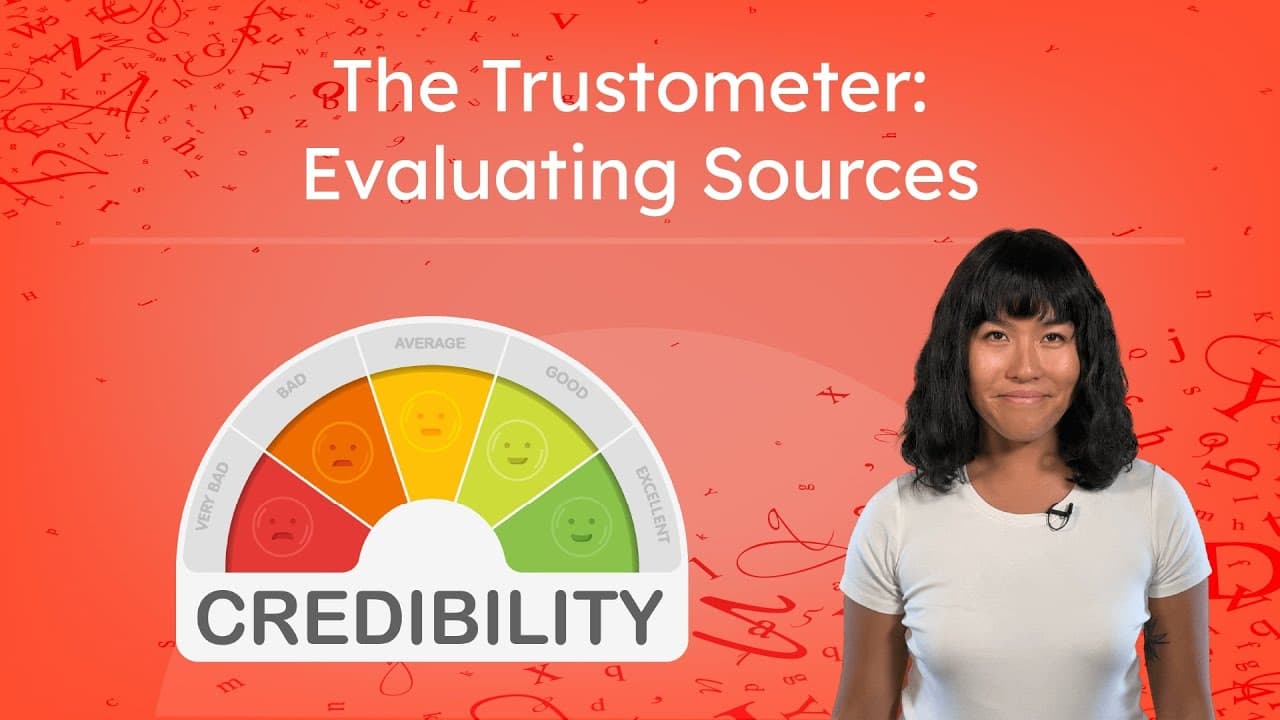
This comprehensive video guide teaches students the essential skills of information literacy, specifically focusing on how to evaluate sources for credibility and how to identify bias. Using a relatable research question about social media's impact on teen mental health, the narrator introduces a fictional tool called the "Trustometer" to demonstrate the critical thinking process required to assess information. The video breaks down source evaluation into four key criteria: Author's Credibility, Purpose, Timeliness, and Accuracy.

Miacademy & MiaPrep Learning ChannelMiacademy & MiaPrep Learning Channel

14mins 8s

Creating Immersive Novel Settings: Research and Worldbuilding

Creating Immersive Novel Settings: Research and Worldbuilding

This engaging video lesson guides students through the process of creating immersive and coherent settings for creative writing projects, specifically novels. Using a humorous skit between the narrator and his skeptical 'clone,' the video critiques common pitfalls in setting design—such as anachronisms and vague descriptions—before introducing three core principles of strong settings: depth, coherence, and relevance. The content breaks down two practical techniques for developing settings: Research and Worldbuilding. It distinguishes between factual research (learning information) and observational research (sensory details), encouraging students to use digital tools like virtual tours if they cannot visit a location. It also introduces the 'Worldbuilding Pyramid,' a framework for constructing fictional elements from large-scale rules (like geography or technology) down to small-scale details (like specific rooms or local customs). Ideal for English Language Arts and creative writing classes, this video serves as both an instructional guide and a workshop starter. It includes built-in pause points for students to brainstorm, reflect on their own reading experiences, and begin drafting their setting ideas. The video helps transition students from vague ideas (e.g., "future stuff") to specific, plot-relevant environments that enhance their storytelling.

Miacademy & MiaPrep Learning ChannelMiacademy & MiaPrep Learning Channel

10mins 27s

Using Graphs and Charts to Support Arguments

Using Graphs and Charts to Support Arguments

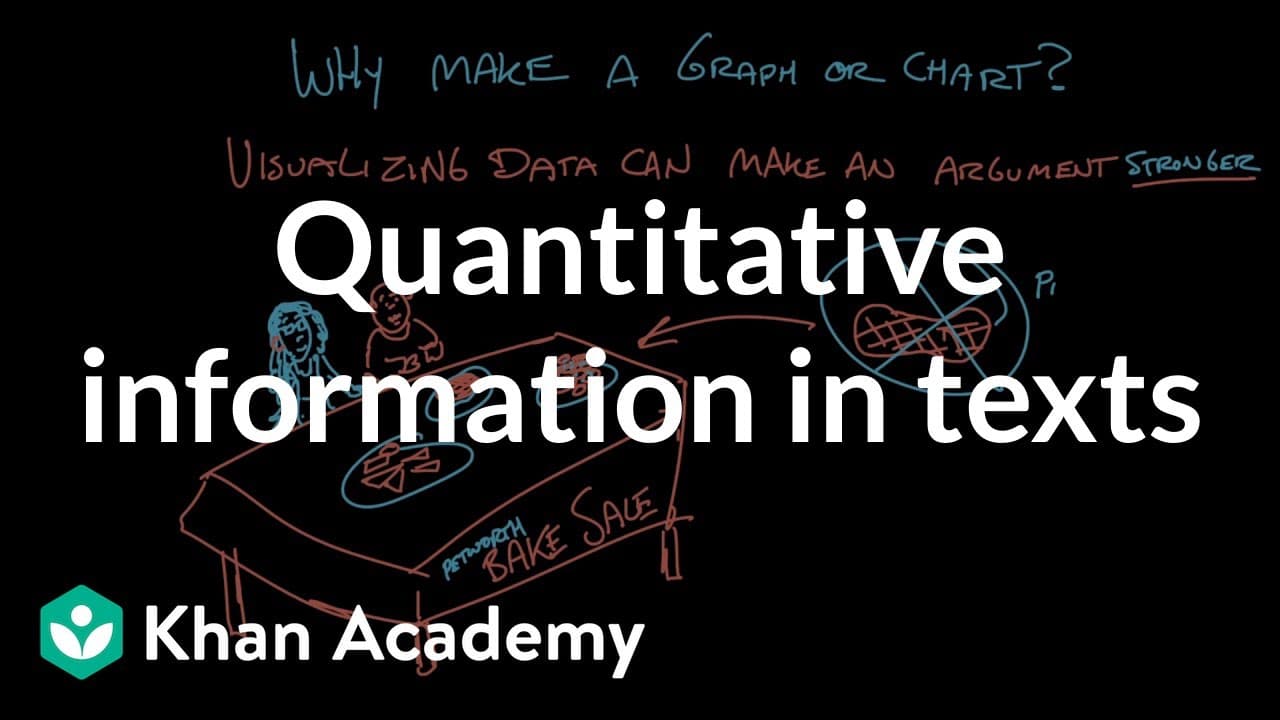
This educational video explores the relationship between written text and quantitative information, specifically demonstrating how graphs and charts can strengthen written arguments. Using a relatable analogy of describing a galloping horse followed by a practical example of a neighborhood bake sale, the narrator illustrates how visual data provides efficiency and clarity that words alone sometimes lack. The video breaks down the specific roles of text versus visuals: text provides context and severity (e.g., the danger of allergies), while graphs provide specific breakdown and prevalence (e.g., exact numbers of people allergic to specific nuts). The key themes include the efficiency of communication, the synthesis of information from multiple sources, and the function of text features in informational writing. It specifically covers how to read and interpret bar graphs and pie charts in the context of a persuasive argument, highlighting how authors use these tools to back up claims with evidence. For the classroom, this video is an excellent resource for bridging English Language Arts and Math skills (data literacy). It helps students meet standards related to integrating information from diverse formats and evaluating the advantages of using different mediums. Teachers can use this to introduce text features, support lessons on persuasive writing, or help students practice synthesizing quantitative and qualitative data to fully understand a topic.

Khan AcademyKhan Academy

4mins 51s

Materials

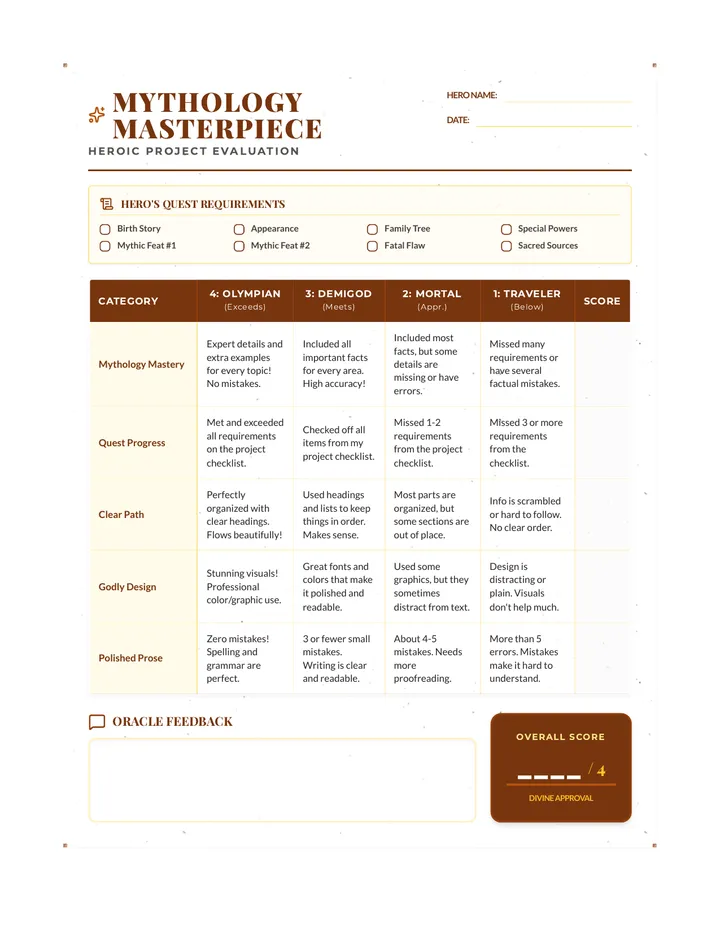
Mythology Masterpiece Rubric

Mythology Masterpiece Rubric

A single-page rubric for the Greek Mythology project, redesigned for space efficiency and readability. It features a horizontal checklist and consolidated footer to ensure the Oracle Feedback and Overall Score sections fit perfectly on one page without sacrificing text size. The final score is now explicitly labeled 'overall score _/4'.

SD

Stephany Durtsche

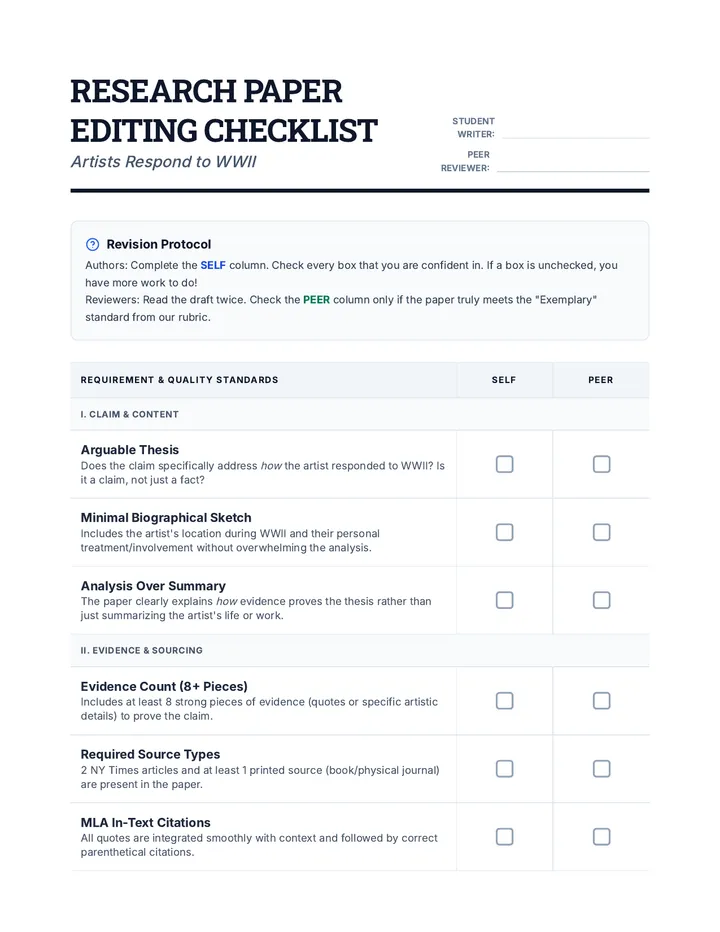
Research Paper Editing Checklist

Research Paper Editing Checklist

A comprehensive self and peer editing checklist for the WWII Artists research paper. The "MLA Format & Length" requirement has been updated to specify that 6 sources are required for the standard research paper.

F

fgraham

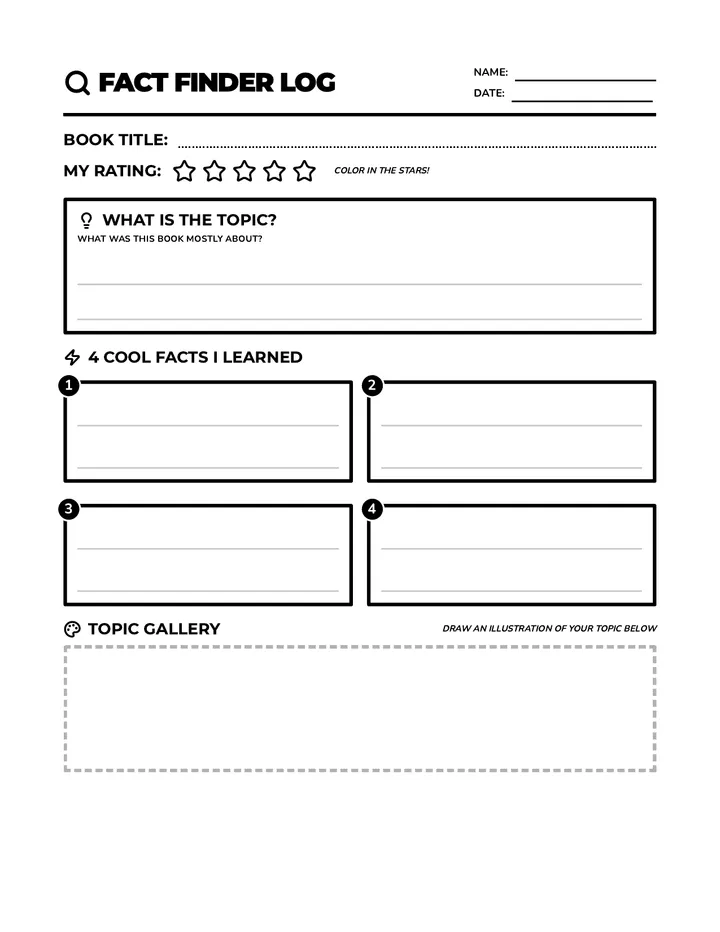
Fact Finder Log Worksheet

Fact Finder Log Worksheet

A high-contrast, black-and-white graphic organizer for students to log facts from a book, featuring sections for topic description, four key facts, and a drawing gallery, strictly formatted for a single-sided 8.5x11 page.

J

Jennifer.Bauman

Argument Blueprint Rubric One Page

Argument Blueprint Rubric One Page

A strictly one-page C-E-R rubric designed for 8.5x11 printing with 0.5-inch margins. It uses a professional "Argument Blueprint" aesthetic with space for feedback and scoring, optimized to eliminate top whitespace.

BB

Bridgette Burdick

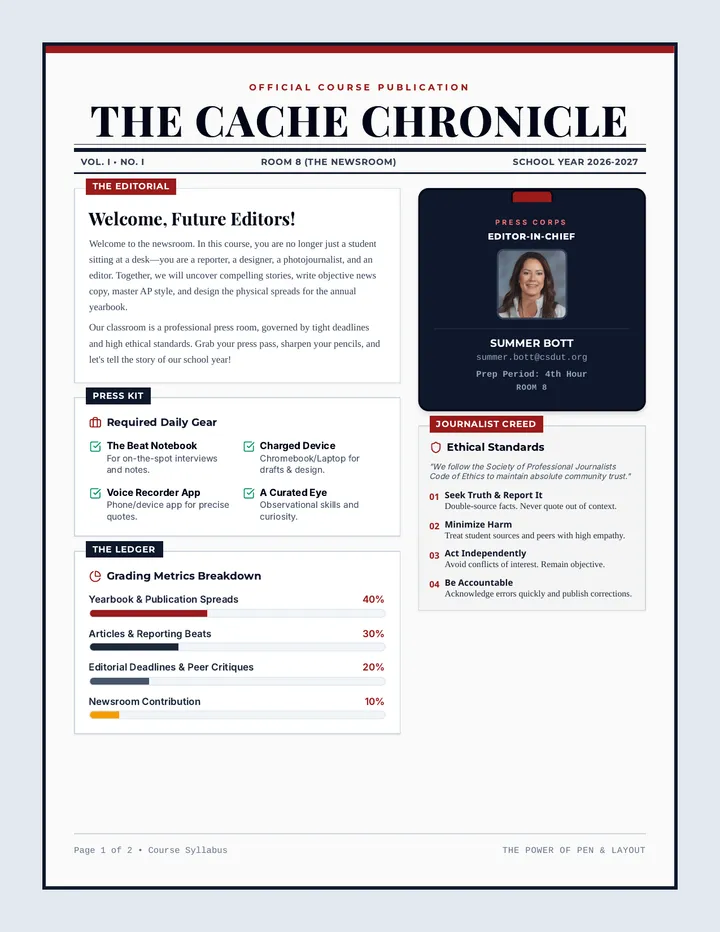
Press Pass Syllabus

Press Pass Syllabus

A stunning, 2-page visual infographic syllabus for Summer Bott's Journalism course at Cache High School. Designed in a classic-meets-modern newspaper style, featuring "The Cache Chronicle" masthead, a custom "press pass" teacher profile with her portrait photo, SPJ ethical standards, a visual grading breakdown, a structured publication timeline, the Cache High cell phone policy, and a newsroom contract signature slip.

S

Summer.Bott

Case File Rubric

Case File Rubric

A detective-themed research paper rubric for 4th-grade students, featuring criteria for introductions, content, organization, sources, and conventions with student-friendly descriptions. Reduced size for single-page printing.

KE

Kathy Edwards

Sequences

Invention Quest Slides

Frindle Frenzy Novel Study

A 9-day novel study for 'Frindle' by Andrew Clements, aligned to 3rd Grade ELAR TEKS, focusing on character development, vocabulary, and plot analysis.

LH

Lucy Hellerman

56
Prophecy and Power Slides

Shadows and Crowns

A series of lessons exploring Shakespeare's Macbeth, specifically designed for 10th-grade emergent bilingual students to master complex characterization and thematic elements.

DC

Dylan Clark

30
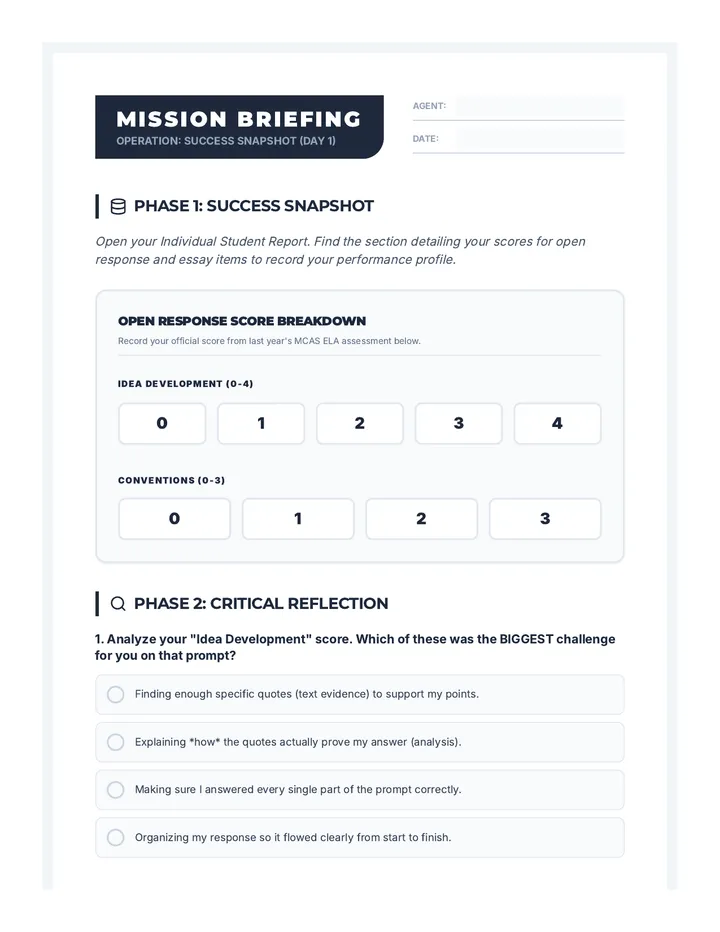
Mission Briefing Worksheet

Mastery Mission

A project-based learning unit designed to help middle school students analyze their past MCAS ELA performance, deconstruct scoring rubrics, and create a personalized strategy playbook for upcoming assessments. Students move from 'investigating' their scores to 'rebooting' their responses and 'finalizing' their test-taking toolkit.

M

mhbutterworth

18
Master Pacing Guide Teacher Resource

Literacy Mastery Lab

A comprehensive year-long intervention sequence for 8th-grade literacy, focusing on STAR 360 and OSAS benchmark skills. The sequence follows a 3-day weekly instructional cycle (Instruction, Practice, Application) to supplement 2 days of choice reading.

SA

Senta Agnello-Shelton

60
Mischief Mastermind Slides

Word Factory Frindle Study

A comprehensive 9-day novel study for Andrew Clements' 'Frindle', focusing on character development, plot progression, and word study aligned with 3rd Grade TEKS.

DF

Denisse Flores

36
Detective Entry Exam Assessment

Defense Detectives

A 10-session Tier 2 intervention for 4th-grade students focused on vocabulary and comprehension, aligned with EL Education Module 2 (Animal Defenses). Students act as 'Defense Detectives' to investigate how animals survive in the wild.

S

svallely

29