Lenny.com
Explore
Create
ActivitiesNewMathEnglish Language ArtsScience & EngineeringSocial StudiesGlobal LanguagesHealth & Physical EducationSpecial EducationCounseling & Life SkillsArts & CreativityESL
Lenny.com
Lenny.com
Explore
Create
ActivitiesNewMathEnglish Language ArtsScience & EngineeringSocial StudiesGlobal LanguagesHealth & Physical EducationSpecial EducationCounseling & Life SkillsArts & CreativityESL
Lenny.com
Lenny.com

Solutions

Lenny for EducatorsLenny for SchoolsLenny for Districts

Product

ExploreSign inCreateSupportAbout

Resources

Getting startedMTSS Acceleration Program

© 2026 Lenny Learning Inc.

TermsPrivacyAccessibility
LinkedInInstagramX
Lenny

Public Speaking Basics

Fundamental techniques for vocal projection, body language, and effective eye contact. Builds confidence through speech structure, delivery exercises, and strategies for managing performance anxiety.

English Language ArtsPhonics & Reading FoundationsLetter IdentificationLearn Letters A-ZLowercase and Uppercase LettersConsonants and VowelsLetter-Sound AssociationsLetter-Sound Associations: LowercaseLetter-Sound Associations: UppercaseBeginning and Ending SoundsRhymingBlending And SegmentingShort VowelsShort Vowel SoundsConsonant BlendsConsonant DigraphsBlends, Digraphs, and TrigraphsDigraphs, Blends, and Silent LettersLong Vowel SoundsLong Vowel PatternsShort and Long VowelsShort and Long Vowel PatternsSilent EVowel SoundsVowel TeamsR-Controlled VowelsDiphthongs: Oi, Oy, Ou, OwVariant VowelsVariant, Diphthong, And R Vowel PatternsSoft G And CSight WordsIrregular WordsWord RecognitionSyllablesSyllable TypesTwo-Syllable WordsMultisyllabic WordsPhoneme ManipulationDecodable TextsVocabularyAction WordsQuestion WordsNouns and AdjectivesClassify WordsCompound WordsSynonyms and AntonymsHomophonesHomophones and HomonymsShades of MeaningContext CluesPrefixes and SuffixesGreek and Latin RootsAnalogiesIdioms and AdagesForeign Words and ExpressionsWord Choice and UsageReference SkillsReading ComprehensionRead-Along Literary TextsRead-Along Informational TextsReality vs. FictionStory ElementsCharacterSequenceMain IdeaCause And EffectCompare And ContrastReading StrategiesText StructureAuthor's PurposeAuthor's Purpose And ToneAuthor's PerspectivePoint Of ViewThemeInference And ThemeInference And AnalysisPoetry ElementsLiterary DevicesAnalyzing LiteratureAnalyzing Informational TextsComparing TextsAudience, Purpose, And ToneBusiness DocumentsNovel StudyNonfiction Book StudyGrammar & MechanicsSentencesNounsVerbsAdjectivesPronounsCapitalizationPunctuationContractionsConjunctionsPrepositionsArticlesAdjectives And AdverbsVerb TypesVerb TensePronouns And AntecedentsPronoun TypesSubject-Verb AgreementDirect And Indirect ObjectsSentences, Fragments, And Run-OnsPhrases And ClausesCommasSemicolons, Colons, And CommasDashes, Hyphens, And EllipsesSpellingAbbreviationsFormattingVerb Tense And MoodMisplaced ModifiersWritingDescriptive DetailsCreative WritingOpinion WritingTopic SentencesOrganizing WritingLinking WordsSentence VarietyIntroductions And ConclusionsPersuasive And Opinion WritingExpository WritingPersuasive StrategiesDeveloping And Supporting ArgumentsTopic Sentences And Thesis StatementsSummarizingResearch SkillsEditing And RevisingActive And Passive Voice=Writing Clearly And ConciselyDebate & Public SpeakingPublic Speaking BasicsPersuasive TechniquesClaims and EvidenceTypes of ArgumentsReasoning TypesLogical FallaciesTopic ResearchOrganizing EvidenceDebate Speech OrganizationAttacking and Defending ArgumentsClash and EngagementImpact CalculusQuestioning and Cross-ExaminationCritical ThinkingInformal LogicFormal LogicInductive Reasoning

Videos

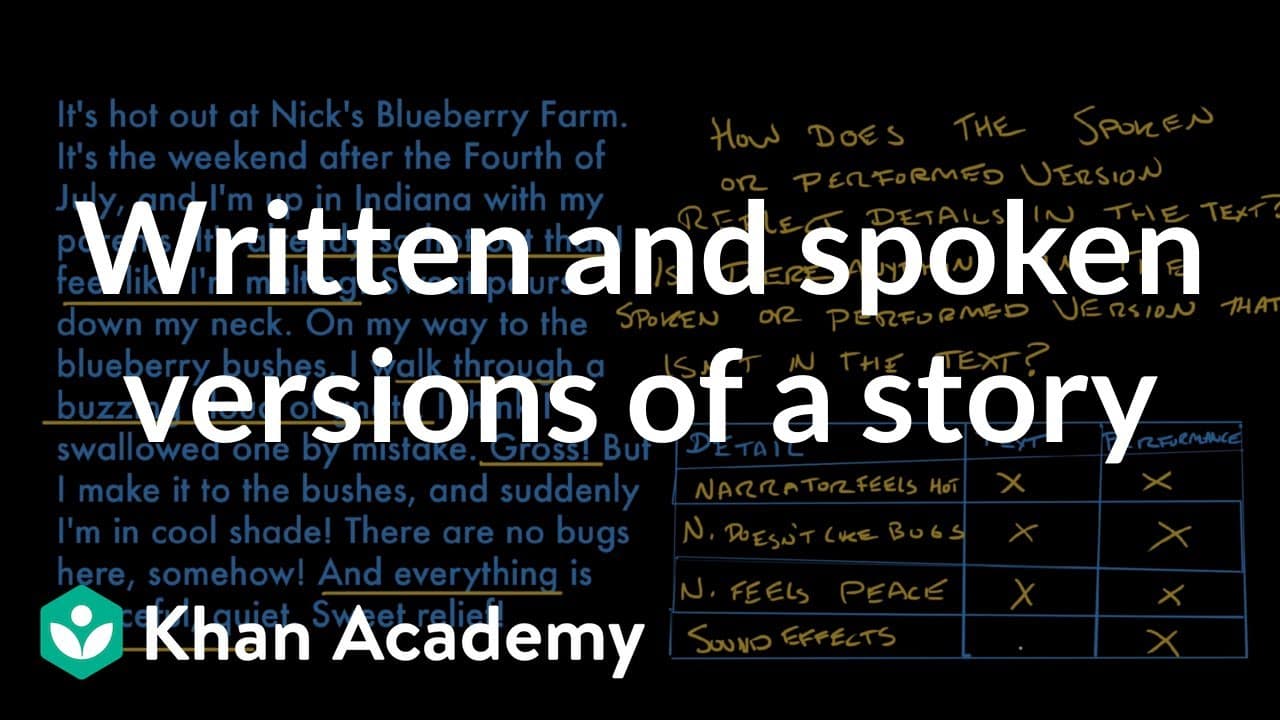
Comparing Written Text to Audio Performance

Comparing Written Text to Audio Performance

This video serves as an engaging English Language Arts lesson that explores the differences between reading a text silently and experiencing it as an oral performance. The narrator guides students through a comparative analysis using a short story set on a blueberry farm, first asking them to read it to themselves, and then performing it with expressive vocal modulation and sound effects. This side-by-side comparison helps illuminate how a reader's internal experience differs from an external performance. The content focuses on key literary and dramatic concepts such as tone, mood, pacing, and sensory details. It specifically highlights how a performer makes creative choices—such as stretching out words to indicate heat or tightening lips to show disgust—to reflect the narrator's feelings. Additionally, the video introduces the concept of non-textual elements, like sound effects, and how they contribute to atmosphere and storytelling without changing the actual words of the text. For educators, this video is an excellent tool for teaching standards related to comparing and contrasting different versions of a story (text vs. audio). It models critical thinking by using a T-chart to map textual details to performance choices, providing a clear framework for students to analyze media. It can spark lessons on reading fluency, the importance of expression in oral reading, and how multimedia elements influence a viewer's understanding and emotional engagement with a narrative.

Khan AcademyKhan Academy

3mins 56s

Why the Earthworm Should Be Our Mascot: A Persuasive Speech

Why the Earthworm Should Be Our Mascot: A Persuasive Speech

This video features a spirited persuasive speech delivered by a young woman advocating for an earthworm to become the new mascot for the fictional town of 'Persuasia'. The speaker systematically addresses potential skepticism about choosing a humble worm, transforming its perceived weaknesses into strengths such as uniqueness, ecological importance, and resilience. She uses a blend of scientific facts—like soil aeration and regeneration—and emotional appeals to community identity to build a compelling case. The content explores key themes of persuasive rhetoric, including the use of logical arguments (logos), emotional connection (pathos), and credibility (ethos). It highlights how to structure an argument by introducing a thesis, supporting it with distinct points (inclusivity, practicality, scientific wonder, and hard work), and concluding with a strong call to action. Additionally, the video touches upon biological concepts regarding the earthworm's vital role in the ecosystem. For educators, this video serves as an excellent model text for teaching persuasive writing and public speaking. It demonstrates clear organizational structure, effective use of rhetorical questions, and the power of reframing a topic. Teachers can use it to have students analyze argument strength, identify transition words, discuss the speaker's delivery techniques, or launch a cross-curricular unit combining English Language Arts with life science.

Miacademy & MiaPrep Learning ChannelMiacademy & MiaPrep Learning Channel

2mins 28s

Understanding and Performing Spoken Word Poetry

Understanding and Performing Spoken Word Poetry

In this engaging Language Arts lesson, students join a narrator on a quest to wake the sleeping "Guardian of Voice" by learning the art of spoken word poetry. The video contrasts a flat, monotonous reading of a poem with a dynamic spoken word performance, vividly demonstrating how delivery transforms meaning. It breaks down the essential components of spoken word, defining it as a performance art that merges poetry with theatrical elements like facial expressions, body language, and vocal modulation. The content dives into specific literary devices common in the genre, such as alliteration, assonance, consonance, and internal rhyme. It explains how these sound devices enhance the musicality of a performance. Students are guided through the specific "tools" a performer has—voice (volume, pacing, pauses), body (posture, gestures), and face (expressions)—to convey emotion and connect with an audience. Ideal for middle school English classrooms, this video serves as both an introduction to the genre and a practical tutorial on public speaking and performance. It encourages students to move beyond merely reading words on a page to embodying them, helping them understand how performance can emphasize emotions, create drama, and bring a poet's message to life.
Miacademy & MiaPrep Learning ChannelMiacademy & MiaPrep Learning Channel

11mins 19s

How Delivery Shapes Meaning in Public Speaking

How Delivery Shapes Meaning in Public Speaking

This video explores the critical role of delivery in public speaking, demonstrating how *how* something is said can be just as important as *what* is said. It begins with a relatable modern example of a text message to illustrate how the absence of tone can lead to misunderstandings, before breaking down specific public speaking techniques including vocal variety, language choice, and physical presence. The narrator explains concepts like monotone vs. dynamic speech, formal vs. informal language, and the strategic use of rhetorical devices like repetition. The second half of the video applies these concepts through a detailed case study of Ann Richards' keynote address at the 1988 Democratic National Convention. The narrator pauses the speech at key moments to analyze Richards' use of gestures to create imagery, her use of props (a folded letter) to establish authenticity, her pacing to convey emotion, and her use of repetition to build persuasive momentum. This practical application bridges the gap between theory and practice. For educators, this resource is an excellent tool for English Language Arts, Speech, and Debate classes. It provides students with a vocabulary for critiquing oral presentations and concrete strategies for improving their own speaking skills. By dissecting a historical speech, it also serves as a model for how students can analyze media and political rhetoric, fostering media literacy and critical listening skills.

Khan AcademyKhan Academy

8mins 54s

Structuring and Presenting Your Research Project

Structuring and Presenting Your Research Project

This educational video guides high school students through the final stages of a research writing unit: structuring the presentation slides and delivering the oral presentation. The host, who initially expresses anxiety about public speaking, uses a friendly robot character named Mia to introduce strategies for overcoming nerves and organizing content effectively. The video is divided into two main sections: a slide-by-slide breakdown of the research presentation structure and a set of practical tips for public speaking.

Miacademy & MiaPrep Learning ChannelMiacademy & MiaPrep Learning Channel

7mins 39s

How to Write a Persuasive Creative Writing Pitch

How to Write a Persuasive Creative Writing Pitch

This video provides a comprehensive guide on how to write a persuasive pitch for a creative writing project, specifically focusing on multimedia formats like movies, plays, or video games. Hosted by an engaging instructor with animated segments featuring "Mr. Mark Up," the lesson defines what a pitch is and why it is a critical skill for writers who want to see their ideas produced. It breaks down the pitch into five essential components: the Hook, Synopsis, Target Audience, Unique Selling Points, and Call to Action. The video uses a concrete example—a dystopian sci-fi adaptation of Romeo and Juliet—to illustrate each component in action. This example helps clarify abstract concepts, showing students exactly what a "unique selling point" looks like compared to a general synopsis. The lesson emphasizes the function of each section, explaining not just *what* to write, but *why* it matters for persuading a producer or audience to invest in the story. Ideally suited for middle and high school English Language Arts and creative writing curriculums, this video serves as an excellent launchpad for project-based learning. It connects creative storytelling with real-world professional skills like persuasion, marketing, and public speaking. Teachers can use this video to introduce a capstone writing project where students must not only write a story but also "sell" it to their peers or a panel, fostering skills in audience analysis and concise communication.

Miacademy & MiaPrep Learning ChannelMiacademy & MiaPrep Learning Channel

9mins 22s

Materials

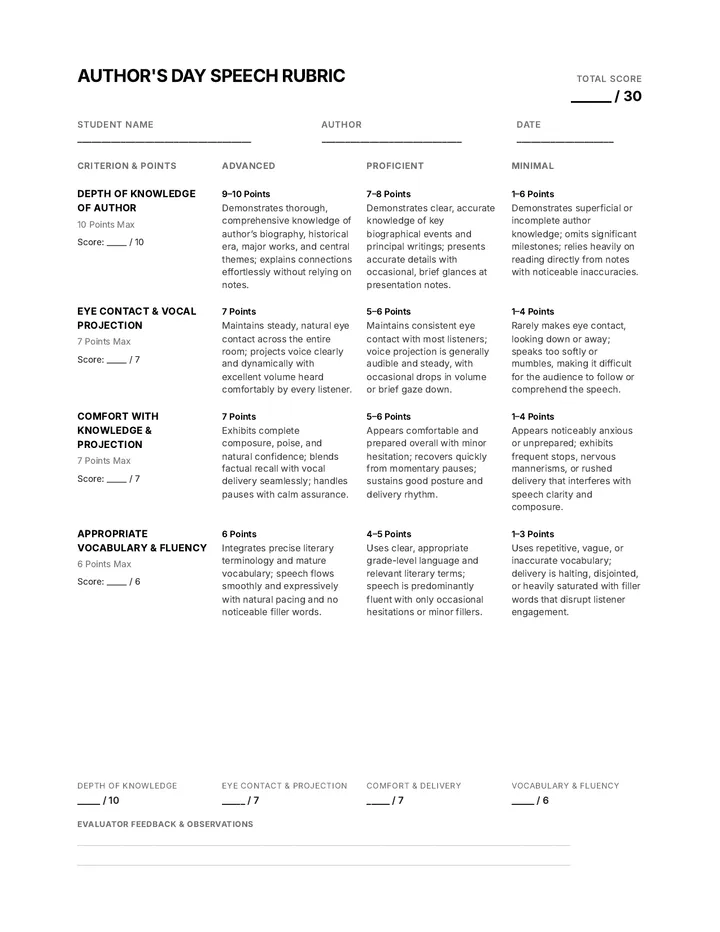
Author Speech Rubric

Author Speech Rubric

A clean, minimalist 30-point speech rubric for Author's Day presentations. Features four criteria evaluating author knowledge, eye contact and vocal projection, comfort and poise, and vocabulary fluency across three achievement levels (Advanced, Proficient, Minimal) using an unadorned typographic layout without colors, lines, or boxes.

KD

kathy dale

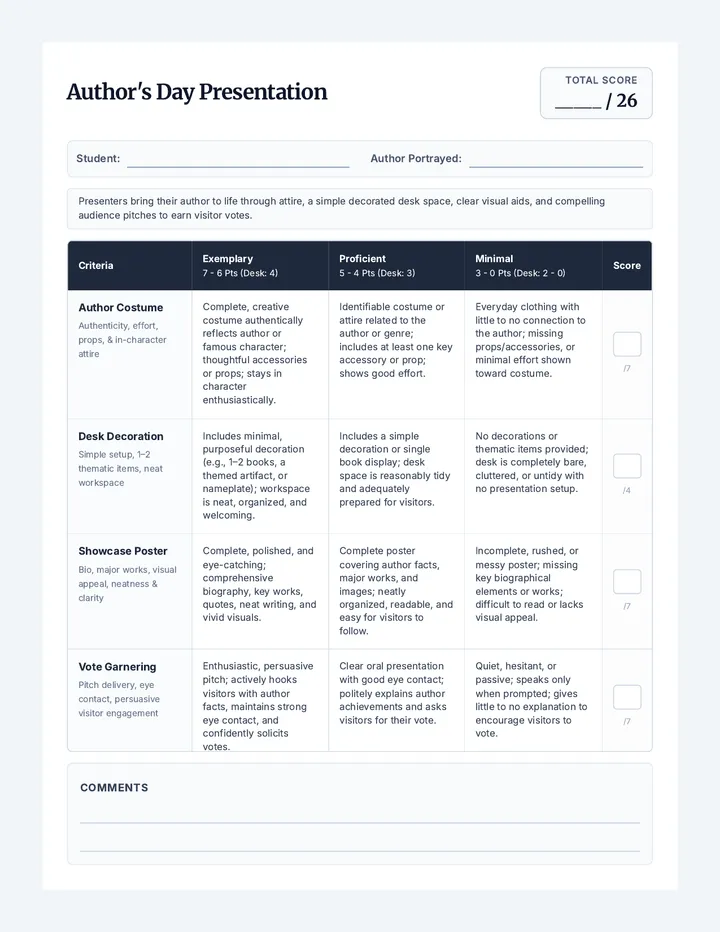
Author Showcase Rubric

Author Showcase Rubric

A 26-point Author's Day presentation rubric with categories weighted at 7 points each and desk decoration at 4 points.

KD

kathy dale

Acronym Showcase Rubric

Acronym Showcase Rubric

A comprehensive 40-point rubric and presentation feedback form for the 'Teach the Class: Early Childhood Education Acronyms' project. Page 1 features an analytical rubric detailing four 10-point criteria across four performance levels, while Page 2 provides a ready-to-print evaluation sheet with component checklists, time tracking, criterion scoring boxes, and qualitative feedback sections.

AL

Alex Levy

Crítica Constructiva Rúbrica

Crítica Constructiva Rúbrica

Hoja de coevaluación para proyectos y exposiciones escolares donde los estudiantes califican a sus compañeros en claridad, interés y contenido general. Incluye rúbrica con descriptores observables, escala de puntaje y espacio para retroalimentación constructiva.

BR

BERKYS RAMIREZ

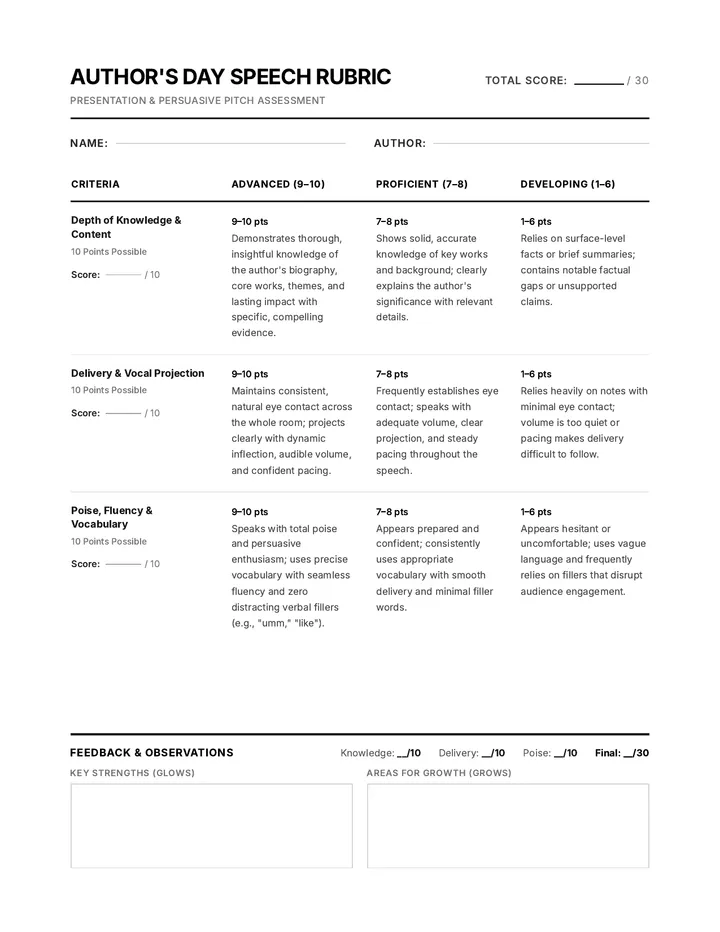
Authors Day Speech Rubric

Authors Day Speech Rubric

A minimalist, monochrome rubric for Author's Day Speech presentations with three 10-point criteria—Depth of Knowledge & Content, Delivery & Vocal Projection, and Poise, Fluency & Vocabulary—for a total of 30 points. Includes streamlined Name and Author fields, score breakdowns, and dedicated feedback space.

KD

kathy dale

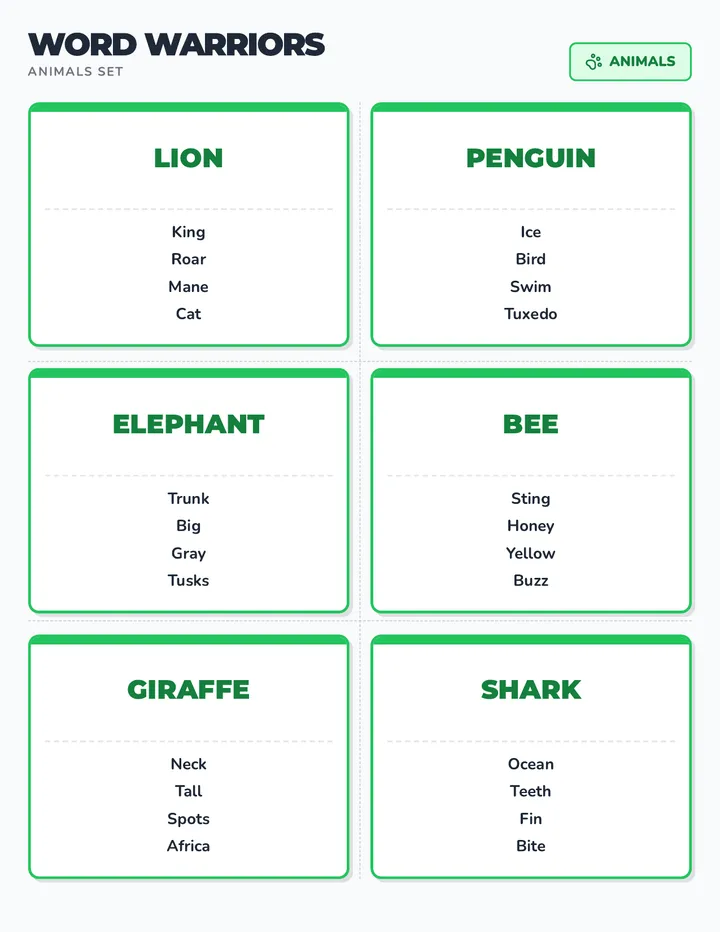
Word Warriors Taboo 100 Pack

Word Warriors Taboo 100 Pack

The complete 100-card "Word Warriors" Taboo pack for 4th graders. Includes 10 categories (Animals, Objects, Sports, Food, Places, Jobs, Nature, Clothing, Tech, Hobbies) with 10 cards each. Features dashed cut guides for easy printing and clear rule summary.

RS

Rebecca Scalise

Sequences

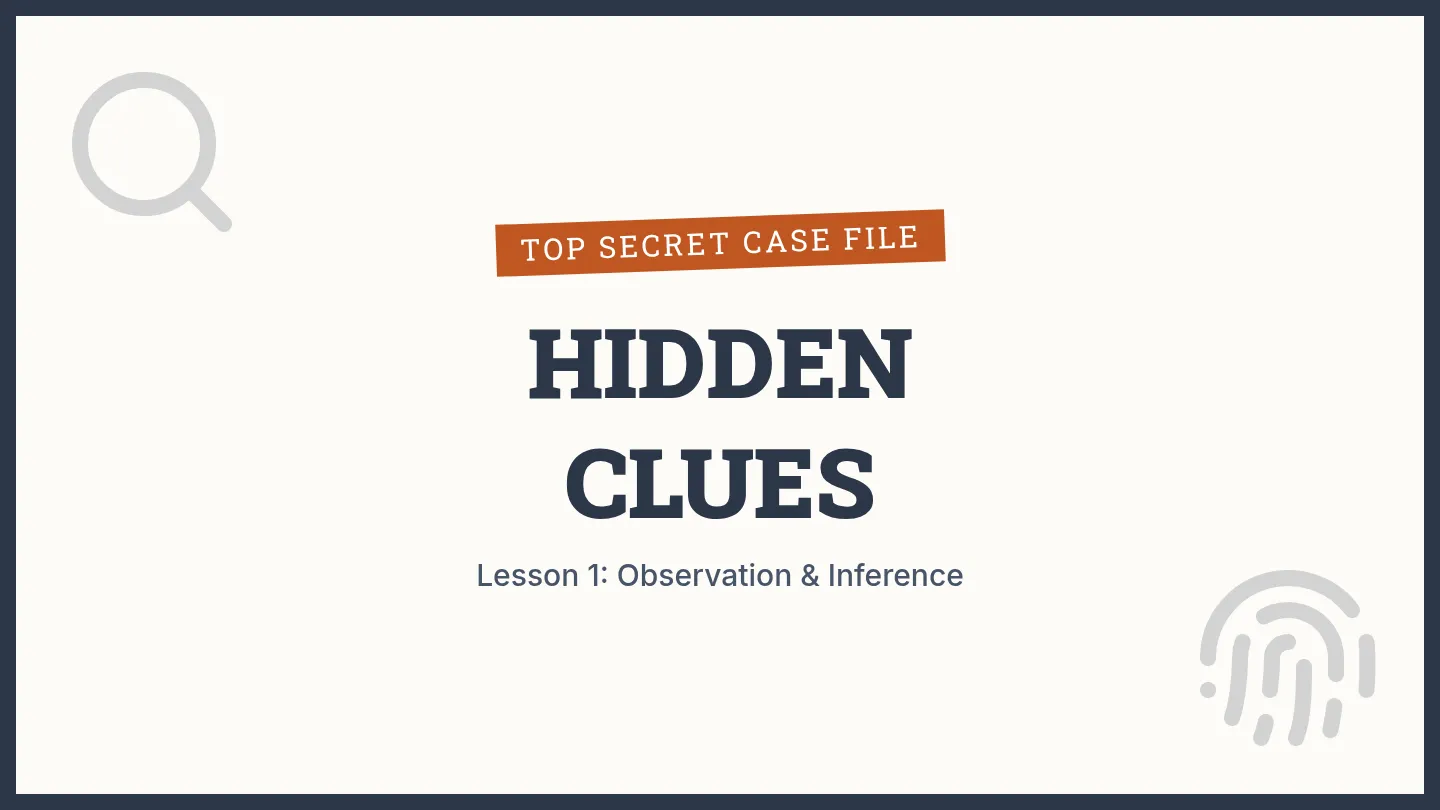
Crime Scene Slides

Detective Diaries

A comprehensive English Language Arts unit that uses a mystery-investigation theme to develop reading, writing, listening, and speaking skills. Students act as detectives to analyze evidence, interview witnesses, and present their final case.

AP

AMANDA PAULA ALEXIUS KPM-Guru

11
Landlady Reading Passage

Evidence Files

A four-day investigative unit focused on citing textual evidence and making inferences across various genres, including short stories, non-fiction, and poetry. Students act as 'Evidence Detectives' to solve literary and factual mysteries while engaging in collaborative discussions.

BR

Brandon Ruffin

26
Midnight Mission Script

Phonics Playhouse Mysteries

A collection of Reader's Theater mysteries and activities designed to reinforce S.P.I.R.E. Level 5 phonics patterns through fluency and performance.

N

Nicole

12
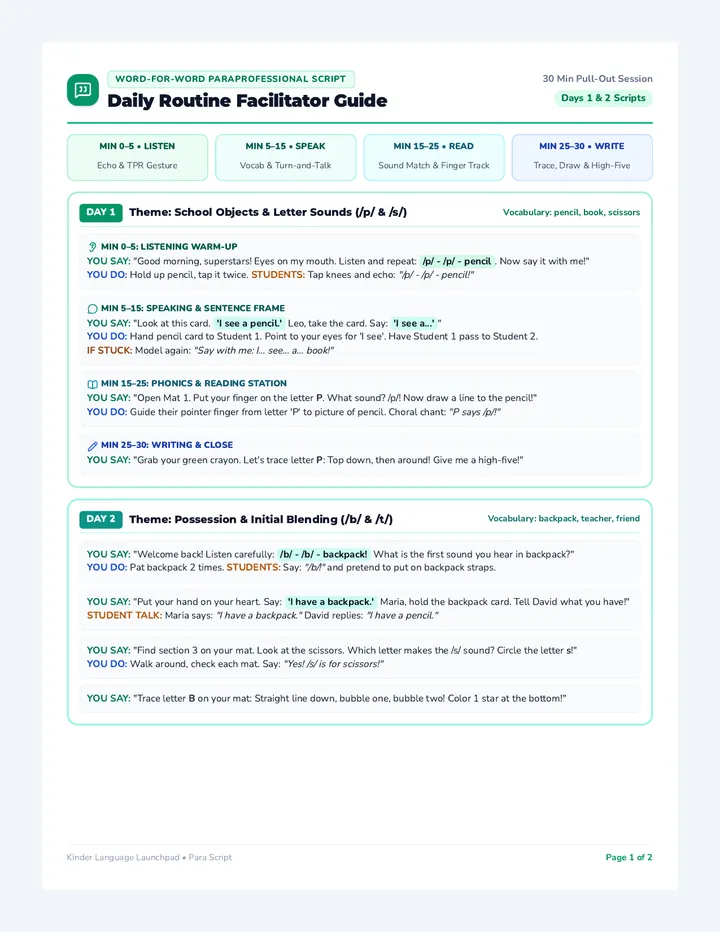
Daily Routine Facilitator Guide

Kinder Language Adventures

A multi-week 4-day structured ESL intervention program for kindergarten English learners developing listening, speaking, reading, and writing through thematic daily routines.

V

vannoyb

17
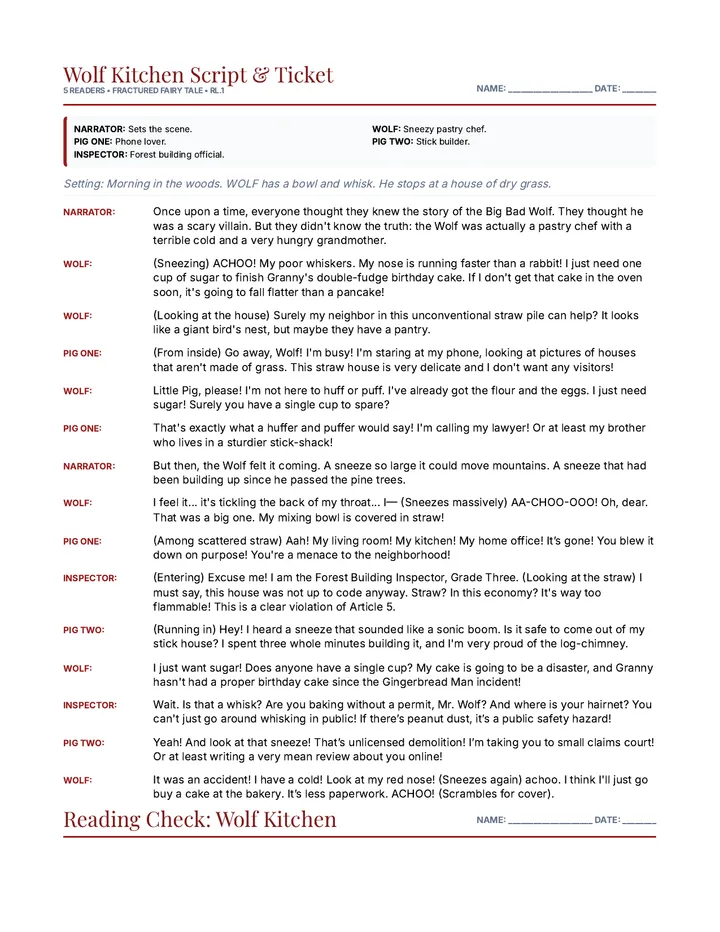
Wolf Kitchen Script & Ticket

Fractured Theater

A collection of five fractured fairy tale reader's theater scripts designed for groups of five students, focusing on fluency, expression, and creative retelling.

DG

Danielle Garland

6
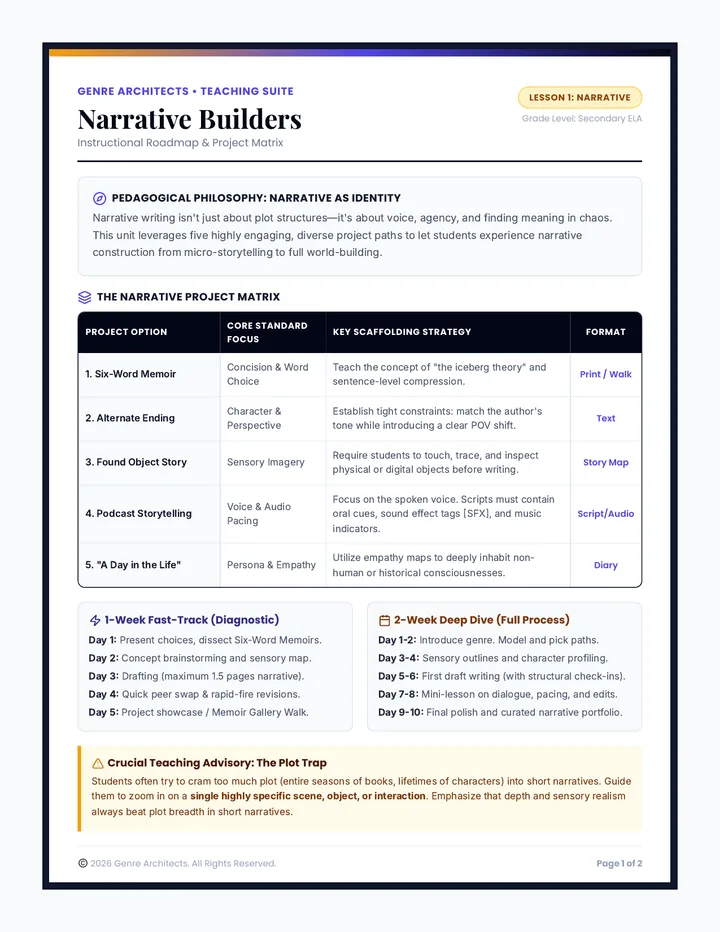
Narrative Builders Teacher Companion

Genre Architects

A comprehensive, multi-genre writing project suite that transforms secondary ELA classrooms. This sequence features 25 creative, high-engagement projects categorized into Narrative, Expository, Argumentative, Persuasive, and Multi-Genre masterpieces, complete with teacher guides, student workbooks, and introductory slide decks.

MC

Makaela Carias

19

Lessons

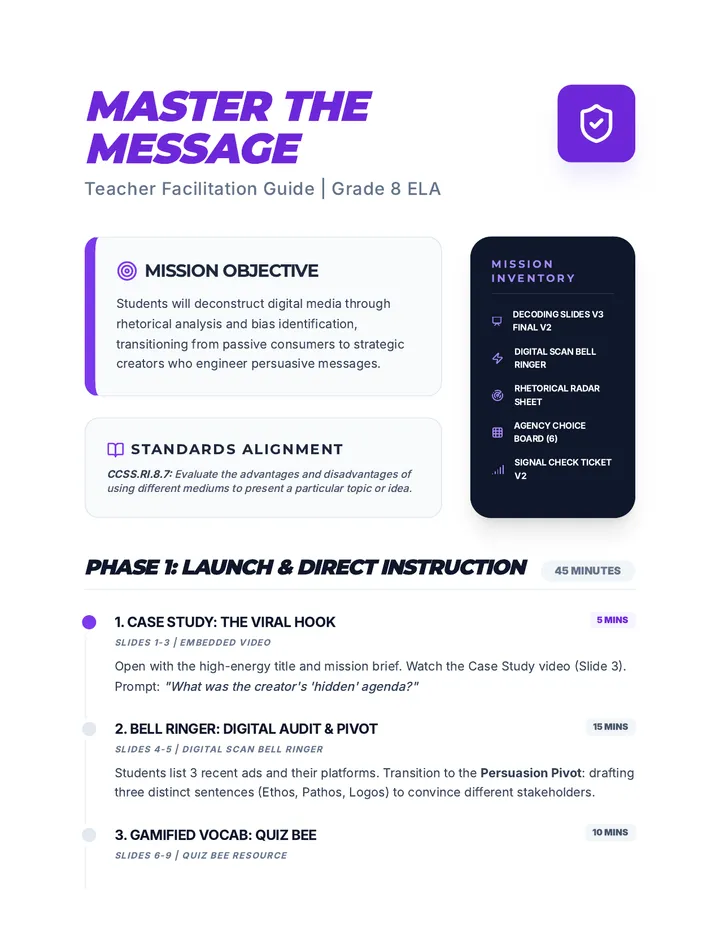
Master the Message Teacher Guide v2

Media Message Mastery

An 8th-grade ELA lesson focused on deconstructing digital media messages through the lens of rhetorical appeals (ethos, pathos, logos) and identifying bias in various online formats. Students transition from passive consumers to critical analysts of news clips, social media, and advertisements.

V

vivianbelarmino

36
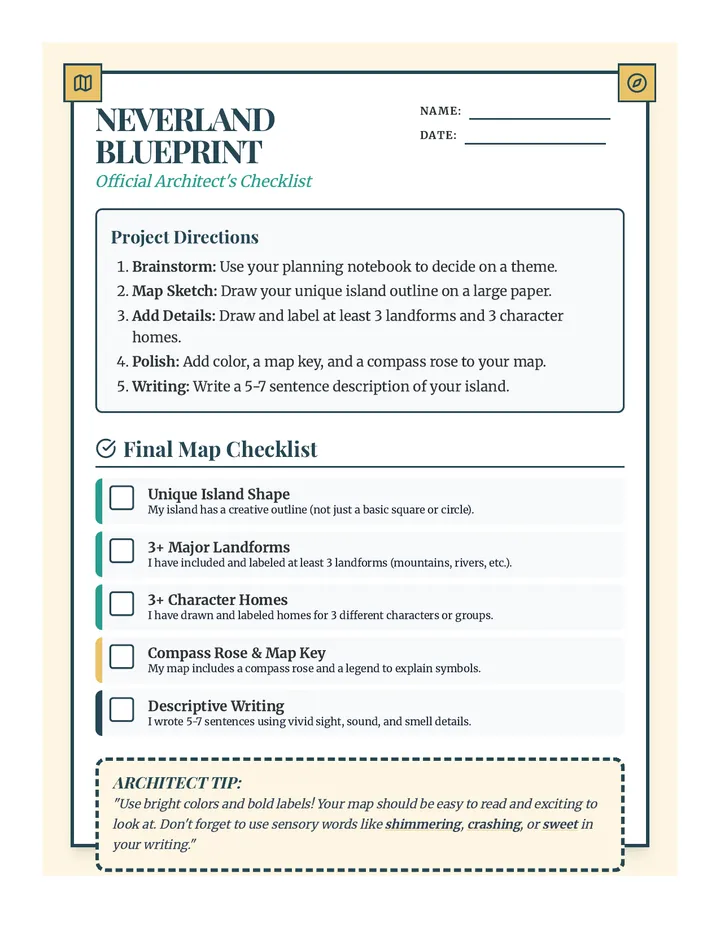
Neverland Blueprint Checklist

Neverland Architect

A creative final project for 3rd graders following the reading of "Peter Pan," where students design their own version of Neverland through cartography and digital storytelling.

C

cfassel

5
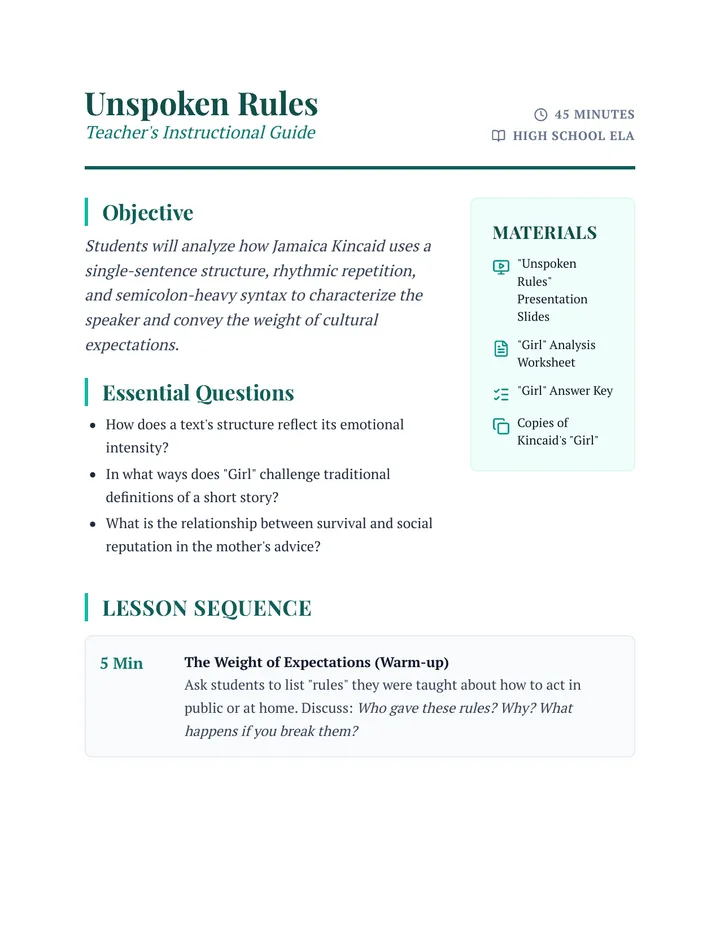
Unspoken Rules Teacher Guide

Unspoken Rules

An introductory lesson on Jamaica Kincaid's 'Girl' focusing on the unique structural choice of a single-sentence narrative, its rhythmic style, and the complex characterization of the mother-daughter relationship.

KJ

Katia Jones

4
Status Struggle Slides

Status Struggle Lesson

An 8th-grade ELA lesson focused on central ideas and evidence through the CommonLit text 'Keeping Up with the Joneses'. Students analyze the origins, social impacts, and psychological pressures of status-seeking behavior through vocabulary challenges, media analysis, and collaborative activities.

V

vivianbelarmino

8
Voice Box Discussion Cards

Voice Box Introduction

An introductory small-group lesson for Grade 3 students focused on distinguishing facts from opinions, using opinion sentence starters, and supporting an opinion with a reason.

A

amagalhaes

7
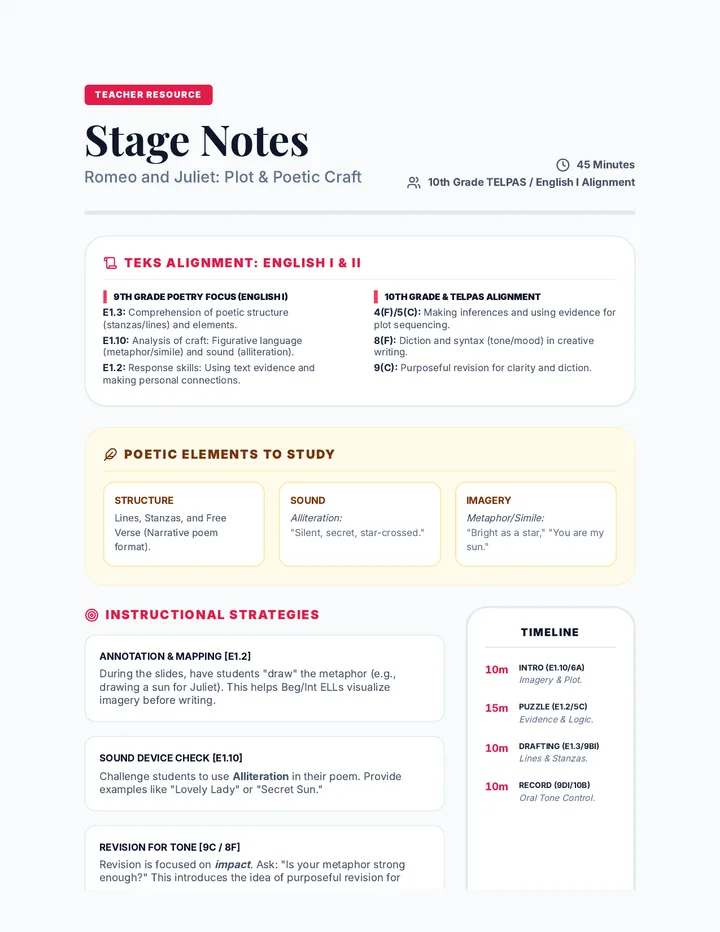
Stage Notes Teacher Guide

Star Crossed Lovers

A scaffolded lesson for 10th-grade TELPAS students (low proficiency) to explore the plot of Romeo and Juliet, sequence major events, and plan a creative poem and avatar recording.

KB

Kathleen Basoco

5