Strategic categorization of research data, logical flow structures, and the claim-evidence-warrant model. Equips speakers to integrate diverse sources into cohesive, persuasive arguments.
This educational video guides high school students through the final stages of a research writing unit: structuring the presentation slides and delivering the oral presentation. The host, who initially expresses anxiety about public speaking, uses a friendly robot character named Mia to introduce strategies for overcoming nerves and organizing content effectively. The video is divided into two main sections: a slide-by-slide breakdown of the research presentation structure and a set of practical tips for public speaking.
7mins 39s
A two-page junior high debate graphic organizer featuring 2-column pro/con brainstorming layouts across four engaging school life and civic ethics topics with structured space for three arguments per side.
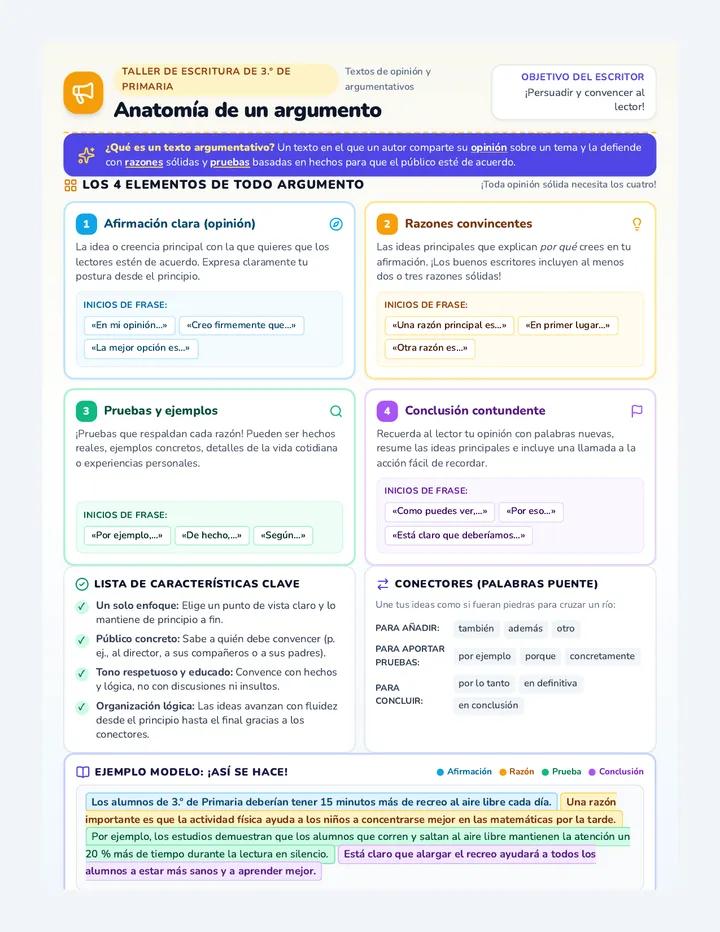
A vibrant, comprehensive 3rd-grade anchor chart detailing the core characteristics of argumentative and opinion writing, featuring the four structural pillars (claim, reasons, evidence, conclusion), signal transition words, and a color-coded mentor text breakdown.
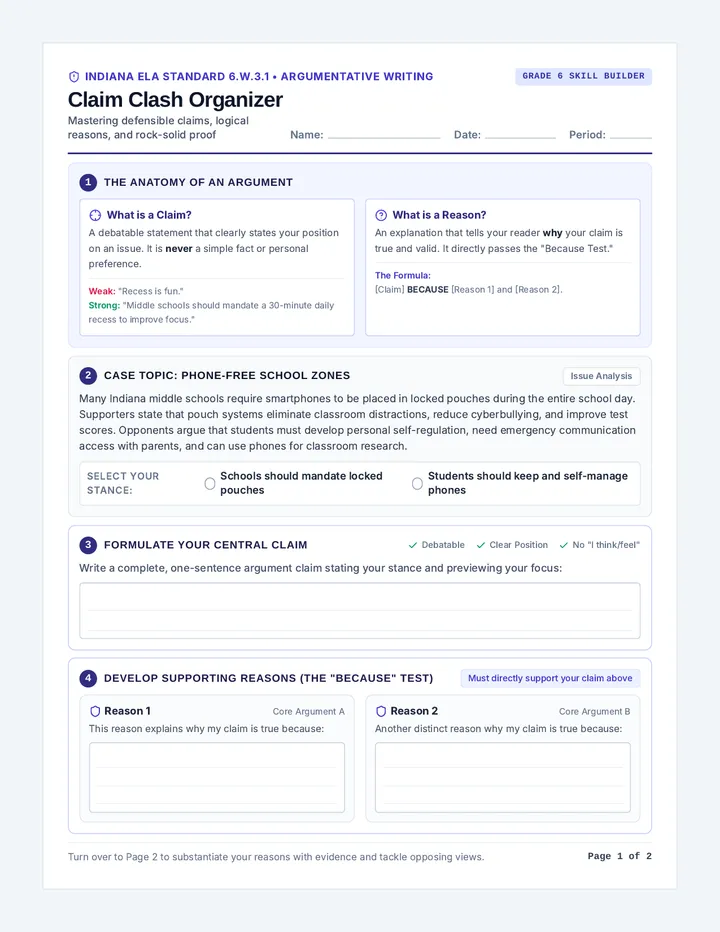
A two-page argumentative writing graphic organizer aligned with Indiana ELA Standard 6.W.3.1. It guides 6th-grade students step-by-step through developing clear, debatable claims, formulating logical reasons, substantiating them with credible evidence, and dismantling counterclaims.
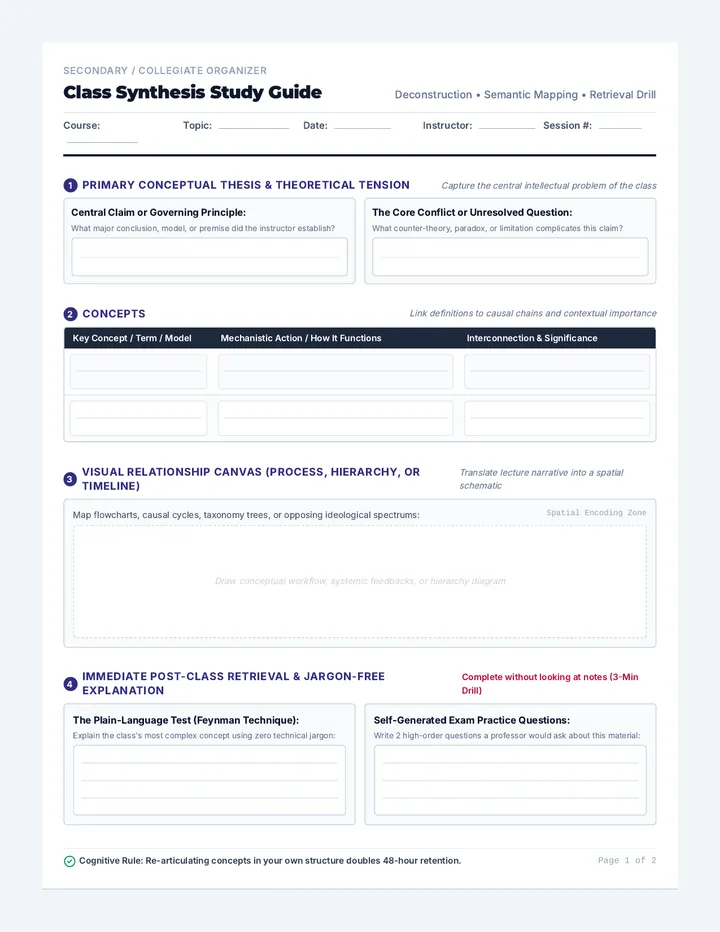
A comprehensive two-page collegiate and secondary study guide format to organize class notes, theoretical mechanisms, seminar debate contributions, discussion notes, and spaced study schedules with lined rulings in student writing sections.
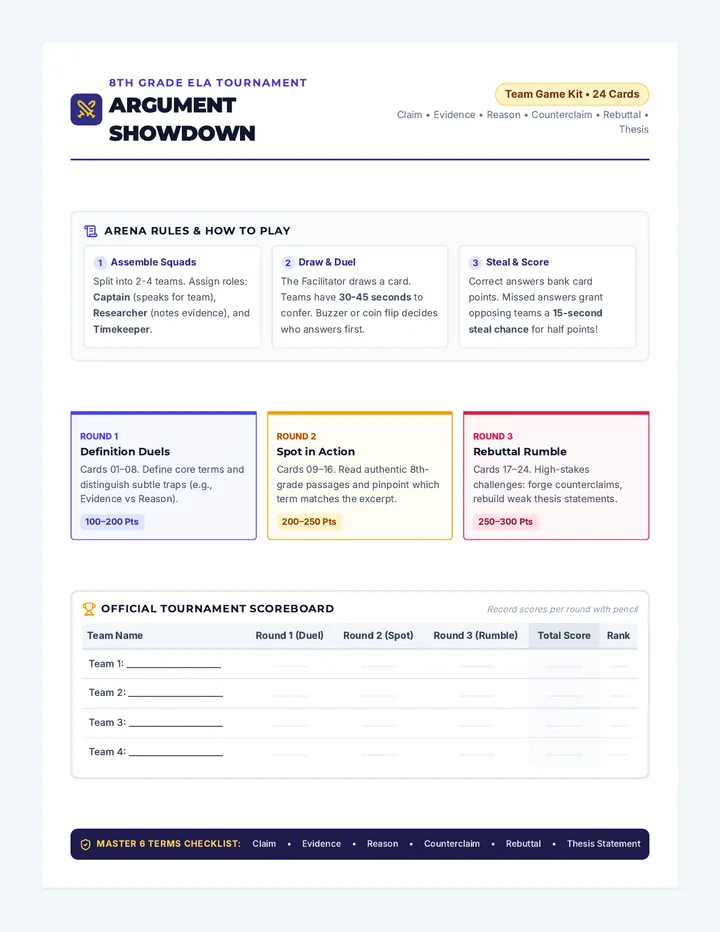
An action-packed 8th grade classroom game kit featuring 24 printable showdown cards, team arena rules, a printable scoreboard, and a comprehensive master judge answer key covering claim, evidence, reason, counterclaim, rebuttal, and thesis statement.
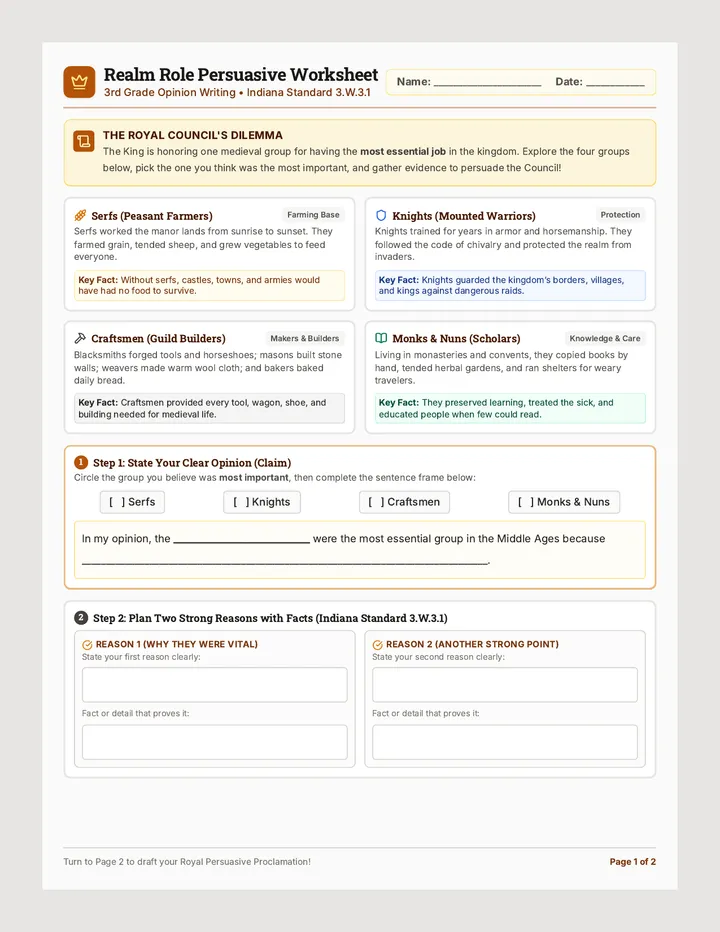
A two-page 3rd-grade persuasive writing worksheet aligned with Indiana Academic Standard 3.W.3.1. Students analyze the vital roles of serfs, knights, craftsmen, and monks or nuns in medieval society, plan their arguments with a structured organizer, and write a persuasive proclamation convincing the Royal Council which group was the most essential.
A comprehensive year-long intervention sequence for 8th-grade literacy, focusing on STAR 360 and OSAS benchmark skills. The sequence follows a 3-day weekly instructional cycle (Instruction, Practice, Application) to supplement 2 days of choice reading.
A four-day investigative unit focused on citing textual evidence and making inferences across various genres, including short stories, non-fiction, and poetry. Students act as 'Evidence Detectives' to solve literary and factual mysteries while engaging in collaborative discussions.
A comprehensive 3-lesson unit designed to prepare HSED/GED students for the RLA Extended Response by teaching them how to analyze opposing arguments, evaluate evidence, and craft a high-scoring argumentative essay.
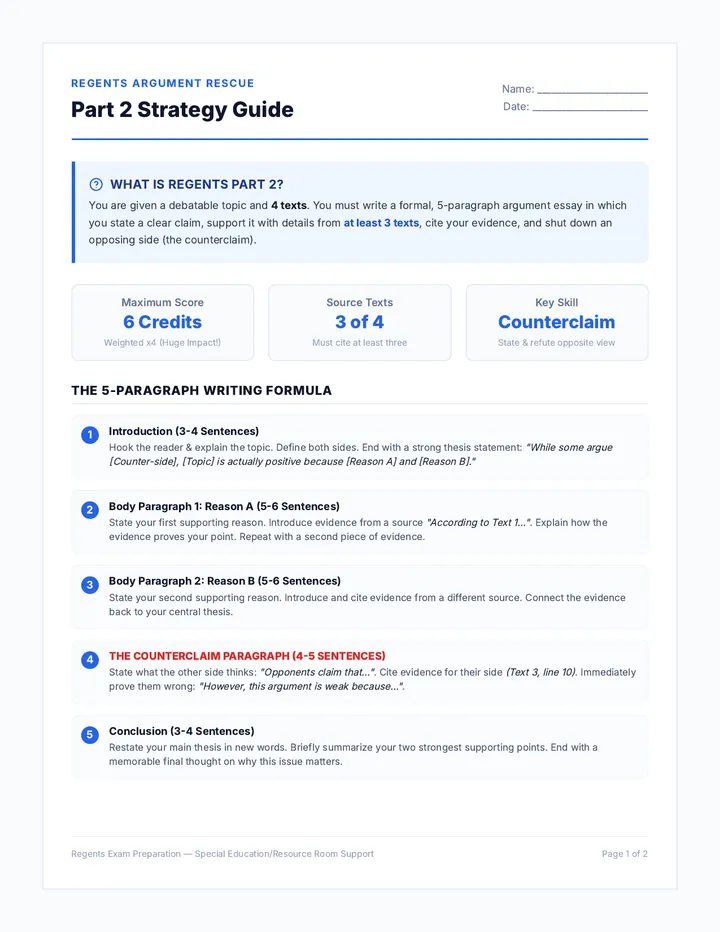
A targeted 2-day curriculum sequence designed for resource room students to master Part 2 (Source-Based Argument) of the ELA Regents Exam, featuring scaffolded texts, step-by-step checklists, planning guides, and an annotated exemplar essay.
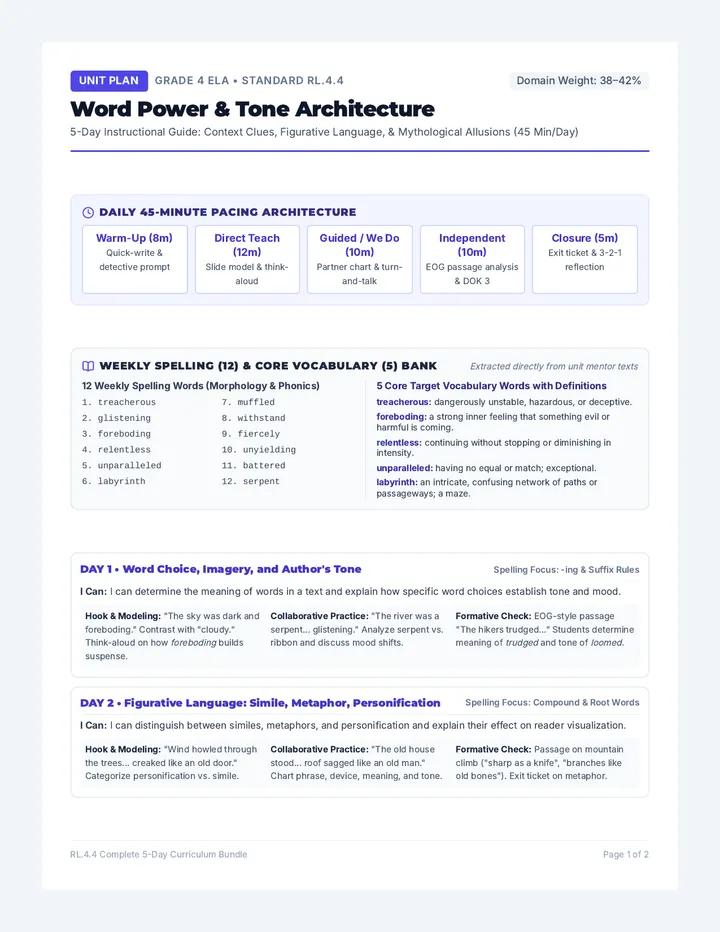
Fourth-grade standards-aligned instructional sequence featuring integrated English Language Arts literary analysis and North Carolina regional geography and historical development.
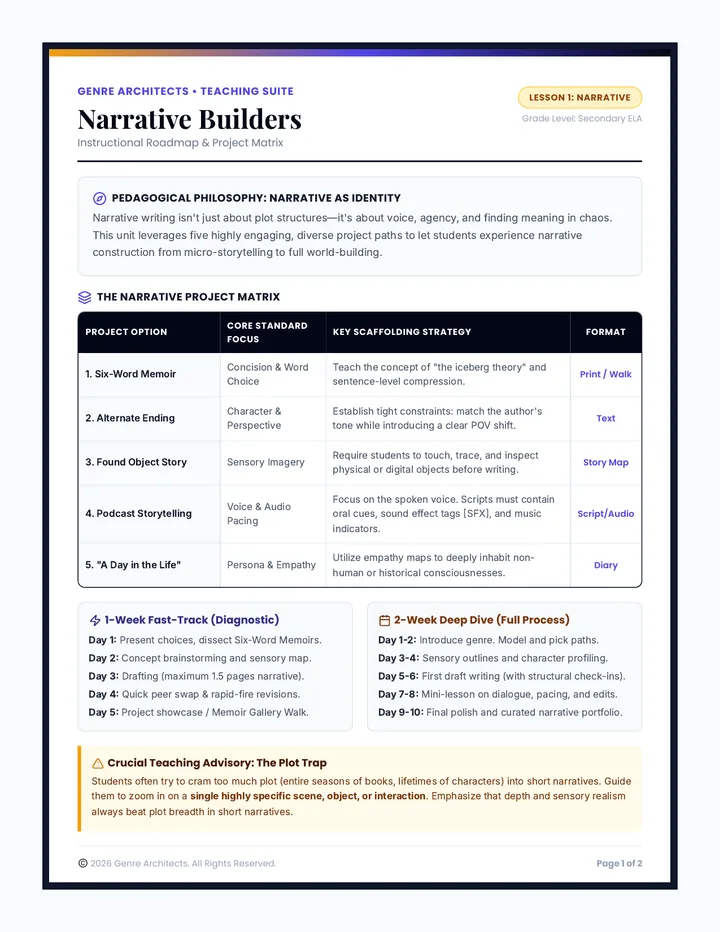
A comprehensive, multi-genre writing project suite that transforms secondary ELA classrooms. This sequence features 25 creative, high-engagement projects categorized into Narrative, Expository, Argumentative, Persuasive, and Multi-Genre masterpieces, complete with teacher guides, student workbooks, and introductory slide decks.
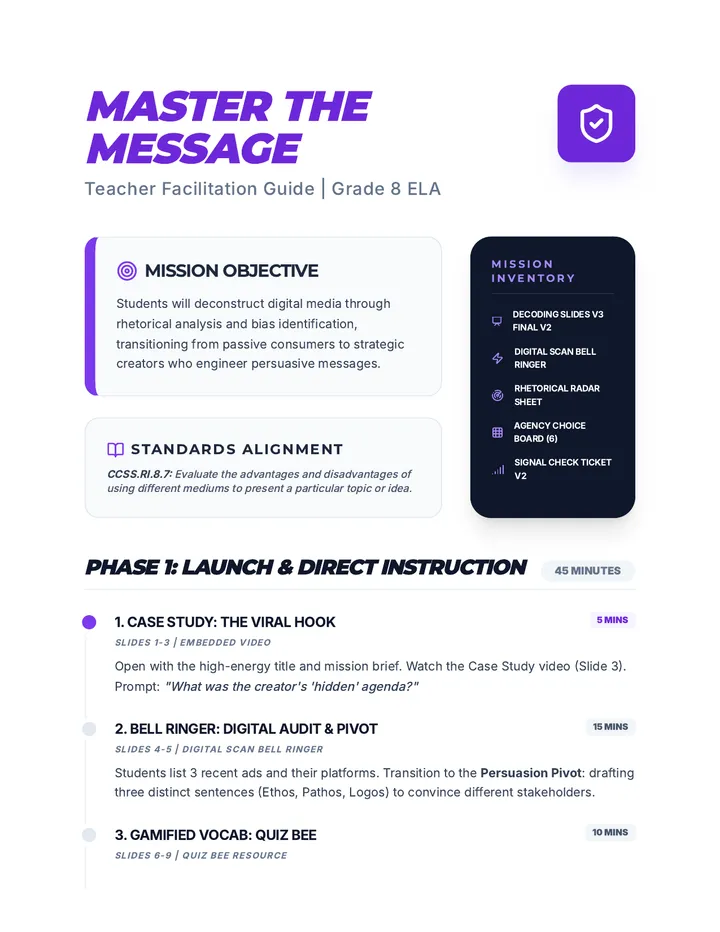
An 8th-grade ELA lesson focused on deconstructing digital media messages through the lens of rhetorical appeals (ethos, pathos, logos) and identifying bias in various online formats. Students transition from passive consumers to critical analysts of news clips, social media, and advertisements.
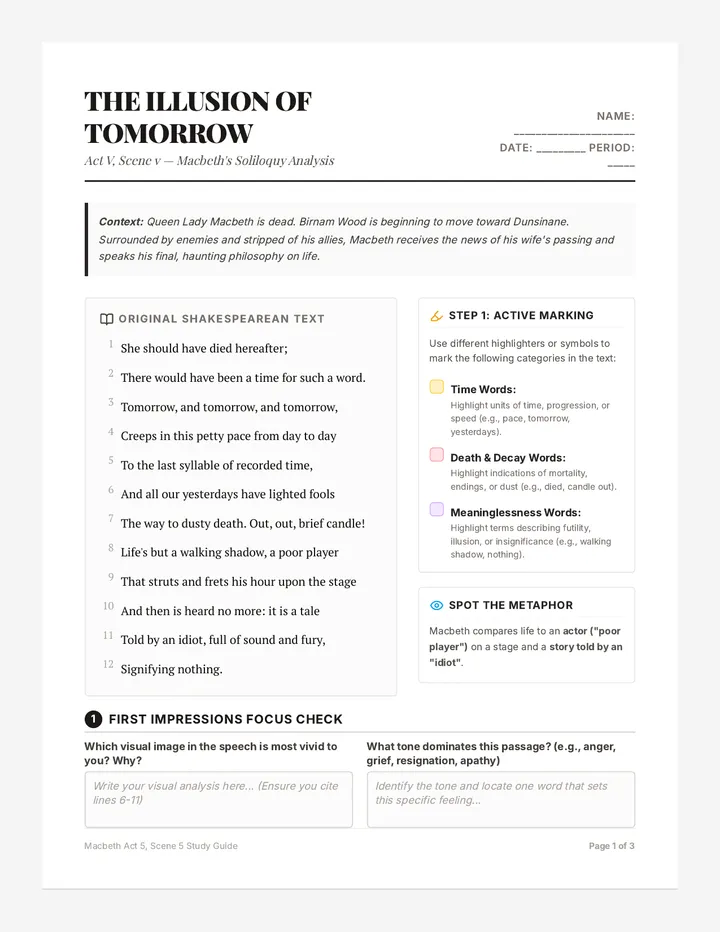
A comprehensive 10th-grade ELA lesson analyzing Macbeth's famous 'Tomorrow, and tomorrow, and tomorrow' speech from Act 5, Scene 5. Students explore Macbeth's psychological state—whether he is depressed, defeated, or finally realizing the truth of his ambitions—using textual annotation, group evidence organizers with scaffolded sentence stems, a Philosophical Four Corners debate, and a reflective exit ticket.
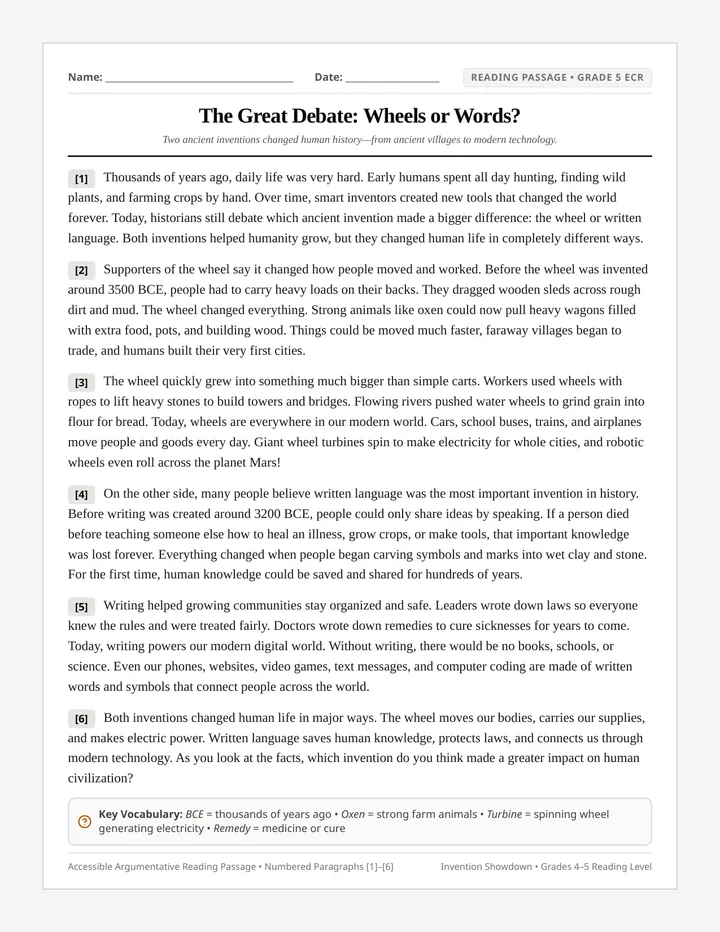
An informational reading and argumentative writing study exploring whether the wheel or written language had a greater impact on human civilization. Students analyze evidence to prepare for a STAAR extended constructed response.
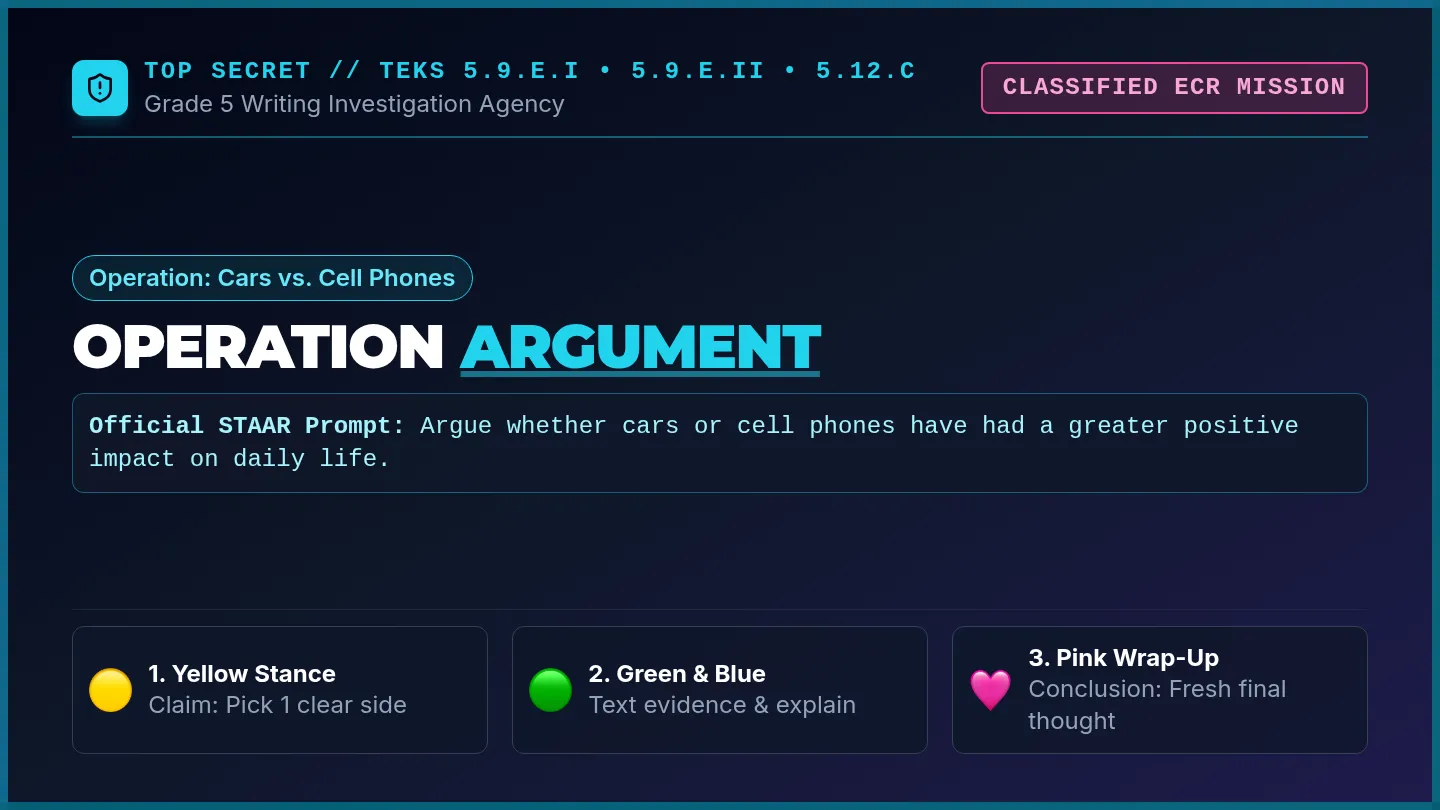
A fast-paced, high-engagement 30-minute mission where struggling 5th graders evaluate colored intelligence cards to assemble a 5-point STAAR argumentative ECR on Cars vs. Cell Phones aligned to TEKS 5.9.E.i, 5.9.E.ii, and 5.12.C.
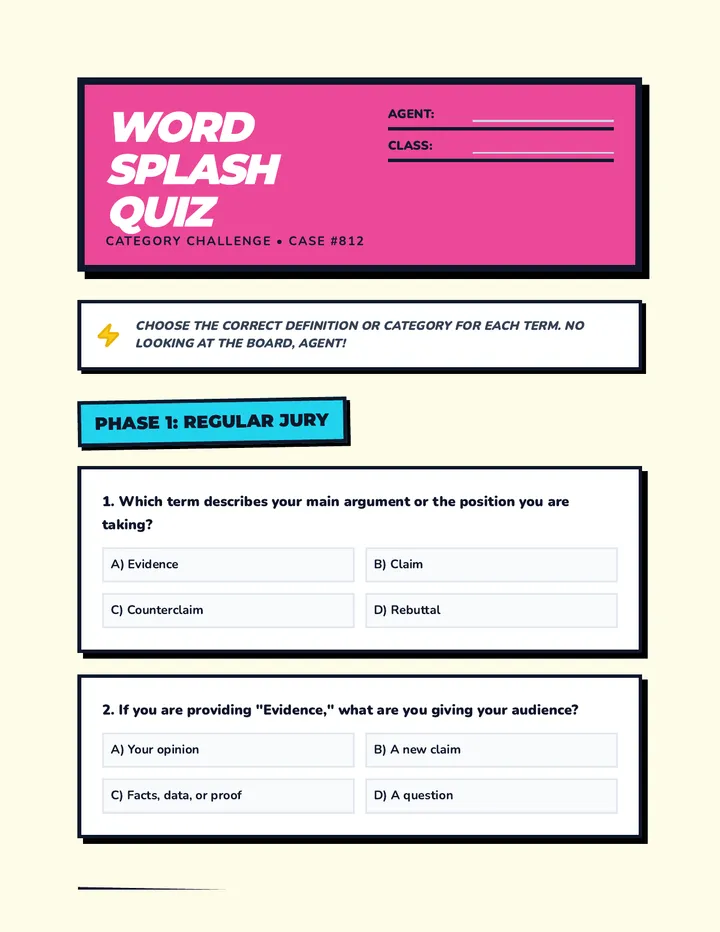
A comprehensive lesson on the structural pillars of argumentative writing, using a courtroom theme to master claims, evidence, and counter-arguments through fast-paced, high-impact activities.
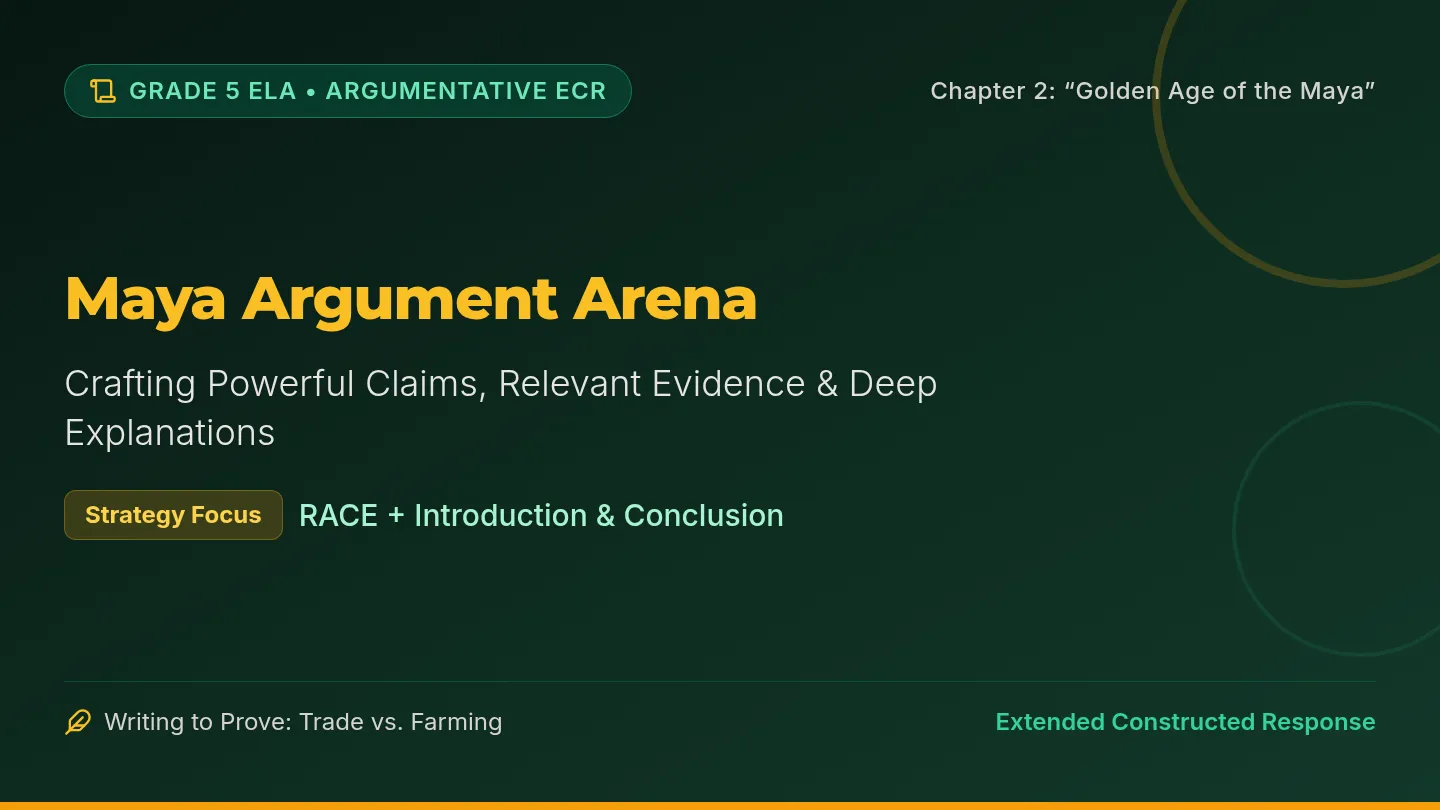
A 5th-grade argumentative Extended Constructed Response (ECR) lesson analyzing whether farming or trade contributed more to the success of Maya society. Students master the RACE + Intro/Conclusion strategy through explicit teacher modeling and guided opposite-side practice.