Lenny.com
Explore
Create
ActivitiesNewMathEnglish Language ArtsScience & EngineeringSocial StudiesGlobal LanguagesHealth & Physical EducationSpecial EducationCounseling & Life SkillsArts & CreativityESL
Lenny.com
Lenny.com
Explore
Create
ActivitiesNewMathEnglish Language ArtsScience & EngineeringSocial StudiesGlobal LanguagesHealth & Physical EducationSpecial EducationCounseling & Life SkillsArts & CreativityESL
Lenny.com
Lenny.com

Solutions

Lenny for EducatorsLenny for SchoolsLenny for Districts

Product

ExploreSign inCreateSupportAbout

Resources

Getting startedMTSS Acceleration Program

Newsletters

School Funding Newsletter

© 2026 Lenny Learning Inc.

TermsPrivacyAccessibility
LinkedInInstagramX
Lenny
English Language ArtsPhonics & Reading FoundationsLetter IdentificationLearn Letters A-ZLowercase and Uppercase LettersConsonants and VowelsLetter-Sound AssociationsLetter-Sound Associations: LowercaseLetter-Sound Associations: UppercaseBeginning and Ending SoundsRhymingBlending And SegmentingShort VowelsShort Vowel SoundsConsonant BlendsConsonant DigraphsBlends, Digraphs, and TrigraphsDigraphs, Blends, and Silent LettersLong Vowel SoundsLong Vowel PatternsShort and Long VowelsShort and Long Vowel PatternsSilent EVowel SoundsVowel TeamsR-Controlled VowelsDiphthongs: Oi, Oy, Ou, OwVariant VowelsVariant, Diphthong, And R Vowel PatternsSoft G And CSight WordsIrregular WordsWord RecognitionSyllablesSyllable TypesTwo-Syllable WordsMultisyllabic WordsPhoneme ManipulationDecodable TextsVocabularyAction WordsQuestion WordsNouns and AdjectivesClassify WordsCompound WordsSynonyms and AntonymsHomophonesHomophones and HomonymsShades of MeaningContext CluesPrefixes and SuffixesGreek and Latin RootsAnalogiesIdioms and AdagesForeign Words and ExpressionsWord Choice and UsageReference SkillsReading ComprehensionRead-Along Literary TextsRead-Along Informational TextsReality vs. FictionStory ElementsCharacterSequenceMain IdeaCause And EffectCompare And ContrastReading StrategiesText StructureAuthor's PurposeAuthor's Purpose And ToneAuthor's PerspectivePoint Of ViewThemeInference And ThemeInference And AnalysisPoetry ElementsLiterary DevicesAnalyzing LiteratureAnalyzing Informational TextsComparing TextsAudience, Purpose, And ToneBusiness DocumentsNovel StudyNonfiction Book StudyGrammar & MechanicsSentencesNounsVerbsAdjectivesPronounsCapitalizationPunctuationContractionsConjunctionsPrepositionsArticlesAdjectives And AdverbsVerb TypesVerb TensePronouns And AntecedentsPronoun TypesSubject-Verb AgreementDirect And Indirect ObjectsSentences, Fragments, And Run-OnsPhrases And ClausesCommasSemicolons, Colons, And CommasDashes, Hyphens, And EllipsesSpellingAbbreviationsFormattingVerb Tense And MoodMisplaced ModifiersWritingDescriptive DetailsCreative WritingOpinion WritingTopic SentencesOrganizing WritingLinking WordsSentence VarietyIntroductions And ConclusionsPersuasive And Opinion WritingExpository WritingPersuasive StrategiesDeveloping And Supporting ArgumentsTopic Sentences And Thesis StatementsSummarizingResearch SkillsEditing And RevisingActive And Passive Voice=Writing Clearly And ConciselyDebate & Public SpeakingPublic Speaking BasicsPersuasive TechniquesClaims and EvidenceTypes of ArgumentsReasoning TypesLogical FallaciesTopic ResearchOrganizing EvidenceDebate Speech OrganizationAttacking and Defending ArgumentsClash and EngagementImpact CalculusQuestioning and Cross-ExaminationCritical ThinkingInformal LogicFormal LogicInductive Reasoning

Operation Argument

A fast-paced, high-engagement 30-minute mission where struggling 5th graders evaluate colored intelligence cards to assemble a 5-point STAAR argumentative ECR on Cars vs. Cell Phones aligned to TEKS 5.9.E.i, 5.9.E.ii, and 5.12.C.

EDEmily Denson

Operation Argument

A fast-paced, high-engagement 30-minute mission where struggling 5th graders evaluate colored intelligence cards to assemble a 5-point STAAR argumentative ECR on Cars vs. Cell Phones aligned to TEKS 5.9.E.i, 5.9.E.ii, and 5.12.C.

EDEmily Denson

Step 1: Check Off the Elements Found in Each Case File

Case FileYellow Claim?Text Evidence?Blue Explain?Pink Conclusion?STAAR Score
Case File AYes   NoYes   NoYes   NoYes   No[   ] Score 5
[   ] Score 3
[   ] Score 1
Case File BYes   NoYes   NoYes   NoYes   No[   ] Score 5
[   ] Score 3
[   ] Score 1
Case File CYes   NoYes   NoYes   NoYes   No[   ] Score 5
[   ] Score 3
[   ] Score 1

Step 2: Cross-Examination Questions (Explain the "Why")

1. In Case File B, look at the reasoning sentence. How did the writer repeat themselves like a parrot instead of explaining new thinking?

2. Case File C told a fun family story about a minivan trip to Buc-ee's. Why did it get a Score 1? What TWO required STAAR pieces were missing?

3. Notice how Case File A introduced its evidence: "In paragraph 4, the text states..." Why does naming the exact paragraph help your score on STAAR?

🛡️ Rule to Remember: Name your paragraph for text evidence, and never repeat your quote in your explanation!

PAGE 2 OF 2

Weak Claim and Development of Ideas Grammar, Spelling, or Punctuation Both

Card B-B: TRAP #2

Weak Claim and Development of Ideas Grammar, Spelling, or Punctuation Both

🩷 PINK SHREDDER (Rejected Conclusions) Spot copy-pastes, drift & misspelled words

🗑️ PINK SHREDDER BIN Stack 2 rejected Pink cards here

Card P-A: TRAP #1

Weak Claim and Development of Ideas Grammar, Spelling, or Punctuation Both

Card P-C: TRAP #2

Weak Claim and Development of Ideas Grammar, Spelling, or Punctuation Both

Agent Verification: 4 Winning Cards Placed + 8 Traps Stacked & Identified! PAGE 2 OF 2

Slide 8

30-Minute Mission Pacing Guide

1. TEACH (8m)

Slides 1–6: Teach ECR basics, Claim model, Anti-Parrot & Editing Radar.

2. SORT & PICK (10m)

Teams inspect Y, G, B, P cards; leave Slide 8 on board for directions.

3. ASSEMBLE (7m)

Place 4 winners in bays on Page 1; stack 8 traps in bins on Page 2.

4. DEBRIEF (5m)

Slide 7 questions: celebrate master agents and review takeaways.

Turn over to Page 2 for Master Solutions & Diagnostic Shredder Explanations. PAGE 1 OF 2

Texas STAAR 5-Point Calibration

CARD SOLUTIONS & SHREDDER KEY

TEACHER MASTER KEY

The 4 Winning Cards (Assembly Board - Page 1)

YELLOW WINNER: CARD Y-B CLAIM

Why it wins: Takes a definitive stance choosing cell phones over cars and previews two clear reasons: emergency help and family connection (TEKS 5.9.E.i). Flawless spelling and punctuation.

GREEN WINNER: CARD G-A TEXT EVIDENCE

Why it wins: Cites the specific paragraph ("In paragraph 4 of 'Connected World'...") and text evidence proving safety with 92% emergency calls and GPS data (TEKS 5.9.E.ii).

BLUE WINNER: CARD B-C EXPLAIN

Why it wins: Explains the real-world consequence: cell phones give families immediate protection before first responders arrive. Does NOT repeat quote words! (TEKS 5.12.C).

PINK WINNER: CARD P-B CONCLUSION

Why it wins: Acknowledges cars fairly, synthesizes core reasons using fresh vocabulary, and avoids lazy word-for-word copy-pasting of the claim (TEKS 5.12.C).

Diagnostic Flaws & Writing Mistakes (Shredder Key - Page 2)

Card Y-A (Yellow)

Flaws: Circular reasoning + run-on sentence, lowercase start, subject-verb ('has'), misspelled 'posotive', 'becuase', 'peaple'.

Card Y-C (Yellow)

Flaws: Fence-sitting + comma splice, subject-verb disagreement ('cars and phones has'), wrong homophone ('to' for 'too').

Card G-B (Green)

Flaws: Irrelevant fact (old 1973 battery) + lowercase start and title, missing comma, misspelled 'erliest', 'easly'.

Card G-C (Green)

Flaws: Floating quote + zero quotation marks, lowercase start, missing end punctuation, misspelled 'dangerus', 'safty'.

Card B-A (Blue)

Flaws: Parrot trap + comma splice, lowercase 'gps', misspelled 'importent', 'becuase', 'immedately'.

Card B-B (Blue)

Flaws: Superficial opinion + lowercase start, missing apostrophe ('everyones'), double negative, homophone 'there' for 'their'.

Card P-A (Pink)

Flaws: Lazy copy-paste + misspelled 'conclution', 'becuase', missing introductory comma, plural errors 'emergencys', 'familys'.

Card P-C (Pink)

Flaws: Off-topic future drift + lowercase start, run-on sentence, misspelled 'tecnology', 'probly', 'vehikles', 'travil'.

Teacher Conferencing Prompts (While Circulating):

• "Look closely at the spelling and quotation marks on that card. Did the author misspell common words or forget quotes?"

• "When stacking cards in Page 2 shredder bins, check whether the card failed because of weak ideas, sloppy writing mistakes, or both!"

  • ✓ Blue reasoning explaining WHY.
  • ✓ Smooth transitions connecting thoughts.
  • ✓ Pink conclusion in fresh words!
  • Airtight Case!

    SCORE 2 COMPROMISED

    • ~ Claim is simple or missing clear reasons.
    • ~ Quote dropped without paragraph number.
    • ~ Parrot trap: merely echoes quote words.
    • ~ Repetitive transitions.
    • ~ Weak summary at the end.

    Needs Practice

    SCORE 1 FAILED

    • ✗ No clear claim; fence-sitting.
    • ✗ Zero facts from the text.
    • ✗ Filled with personal diary stories.
    • ✗ Disorganized and messy.
    • ✗ Missing conclusion; ends abruptly.

    Case Dismissed

    SCORE 0 NO CREDIT

    • ✗ Blank paper or off-topic drawing.
    • ✗ Just copied prompt words.

    Zero Points

    Part 2: Clean Writing Rules: Capitals, Punctuation & Spelling (0 to 2 Points)

    SCORE 2 (Clean Writing)

    Capital letters at the start of sentences, periods at the end, and easy-to-read spelling throughout.

    SCORE 1 (Some Mistakes)

    Some run-on sentences, missing periods, or misspelled common words, but still easy to understand.

    SCORE 0 (Too Many Mistakes)

    Severe spelling and grammar mistakes on almost every line that make the response hard to read.

    AGENT CHECKLIST (Check Off Before Submitting): Check all 4 boxes

    1. Yellow: Did I state a clear claim picking ONE side with 2 reasons? 2. Green: Did I cite text evidence like "In paragraph 4, it states..."? 3. Blue: Did I write "This shows that..." without repeating quote words? 4. Pink: Did I wrap up in fresh words instead of copy-pasting the claim?

    STAAR Formula: Idea Development (0–3 pts) + Clean Writing (0–2 pts) = Total Score: 0 to 5 Points

    PAGE 2 OF 2

    🔵 CARD B-A REASONING OPTION A

    "This shows that cell phones are importent becuase 92 percent of people can contact emergency services immedately, drivers can use gps maps when they get lost on roads."

    ✂ CUT ON DASHED LINE

    🔵 CARD B-B REASONING OPTION B

    "this proves that cell phones make everyones life amazing becuase having a phone in your pocket is awesome and nobody never wants there battery to die when they are out with friends."

    ✂ CUT ON DASHED LINE

    🔵 CARD B-C REASONING OPTION C

    "This demonstrates that cell phones give families immediate protection during dangerous moments, ensuring that people can receive life-saving help long before first responders are able to reach the scene."

    ✂ CUT ON DASHED LINE

    Teacher Tip: Print this page on Blue Paper. Cut on dashed lines. PAGE 3 OF 4

    🩷

    TEKS 5.12.C • Component 4 PRINT ON PINK PAPER

    PINK CLUE CARDS: CONCLUSION

    3 CONCLUSION OPTIONS

    Mission: Cut along the dashed lines. Watch out for copy-pasting, off-topic future drift, and spelling mistakes. Pick the 1 winner to place on your mat!

    🩷 CARD P-A CONCLUSION OPTION A

    "In conclution cell phones have had a greater positive impact on daily life than cars becuase they allow people to call for help instantly in emergencys, and help familys stay connected no matter where they are."

    ✂ CUT ON DASHED LINE

    🩷 CARD P-B CONCLUSION OPTION B

    "Ultimately, while cars made traveling long distances faster and easier, cell phones truly transformed daily life by keeping people safe during crises and uniting communities across the world."

    ✂ CUT ON DASHED LINE

    🩷 CARD P-C CONCLUSION OPTION C

    "even though cars and cell phones are both popular tools today future tecnology will probly replace them both with flying electric vehikles and holograms that make everyday travil way cooler."

    ✂ CUT ON DASHED LINE

    Teacher Tip: Print this page on Pink Paper. Cut on dashed lines. PAGE 4 OF 4
    You might also like

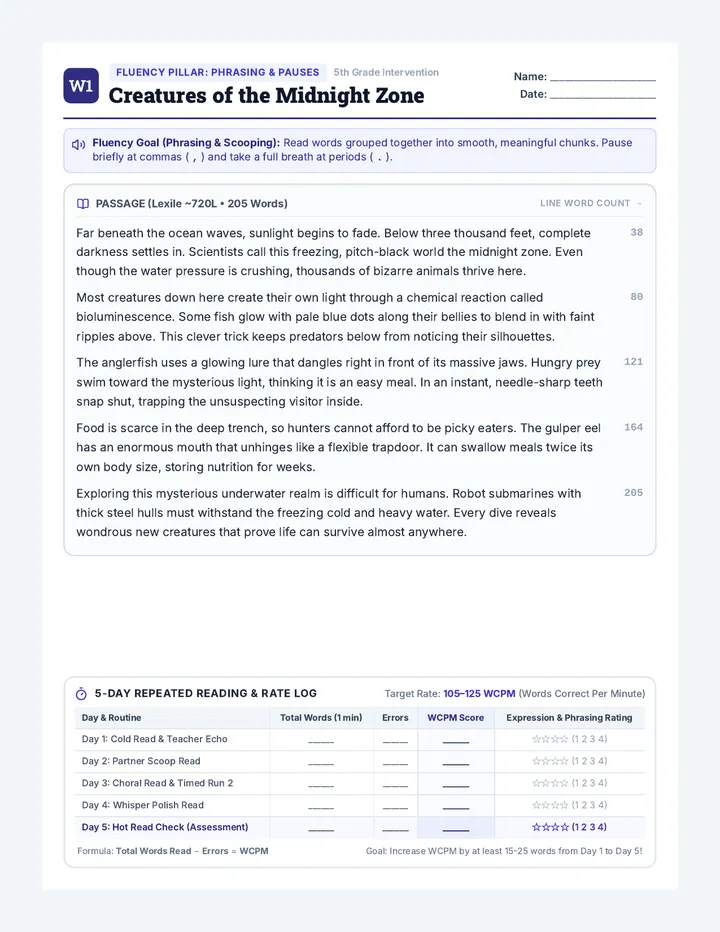
    Ocean Abyss Fluency Passage

    Fluency Flight Academy

    A comprehensive four-week reading fluency intervention sequence designed for fifth-grade students needing targeted support in accuracy, pacing, expression, and comprehension. Each week focuses on an essential fluency pillar paired with high-interest non-fiction passages, structured daily practice routines, and progress-monitoring running records.

    KM

    Kelly Messer

    10
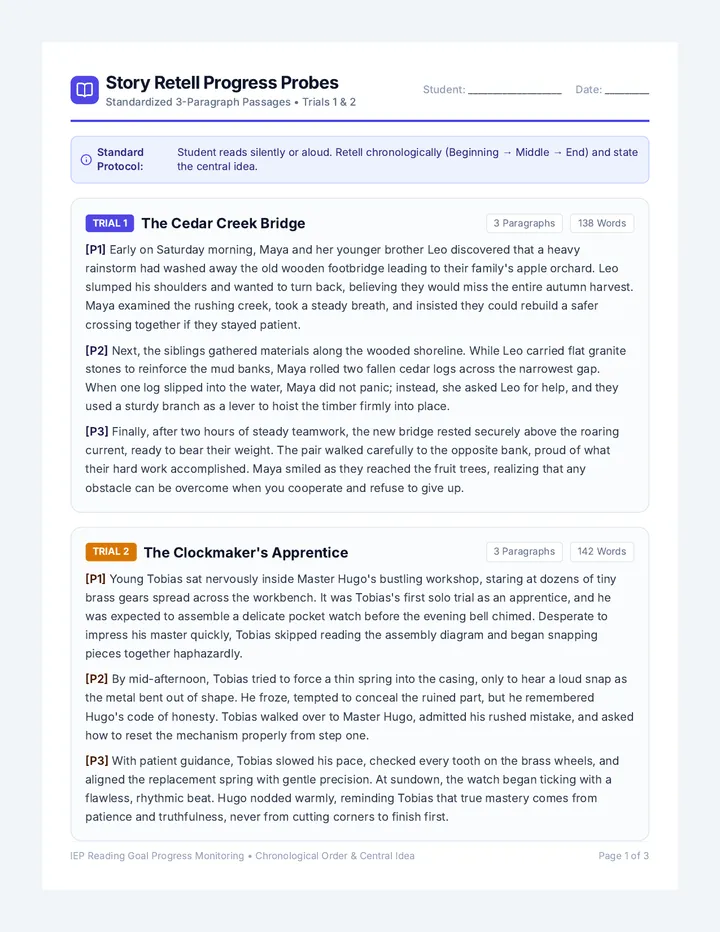
    Story Probes Student Pack

    Retell Mastery

    A complete progress monitoring kit for evaluating independent story retelling in chronological order and central idea identification across 5 trials.

    RC

    Roni Coleman

    3
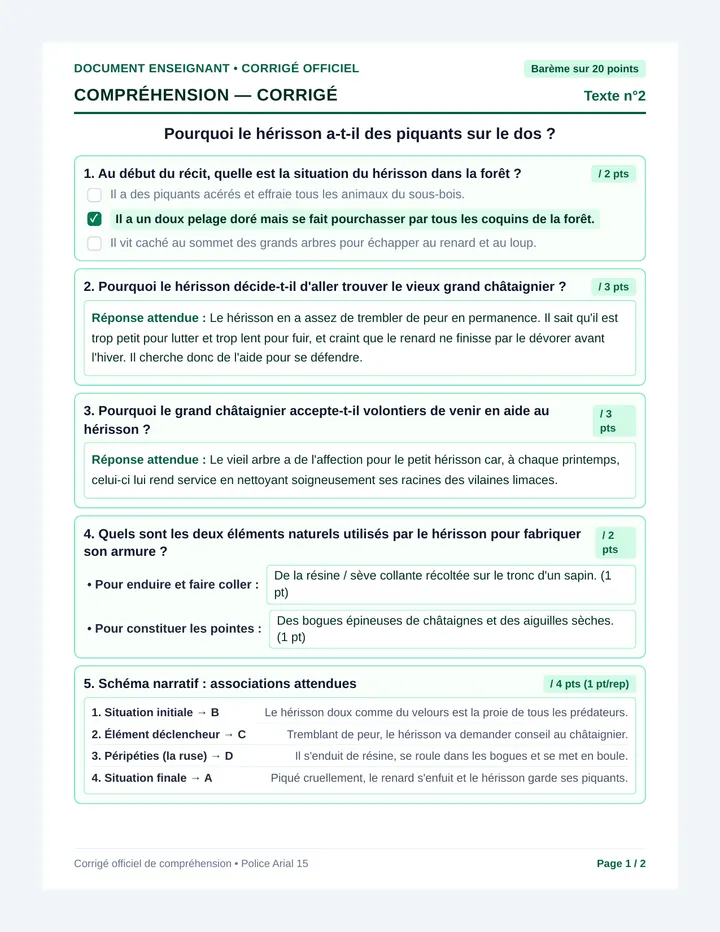
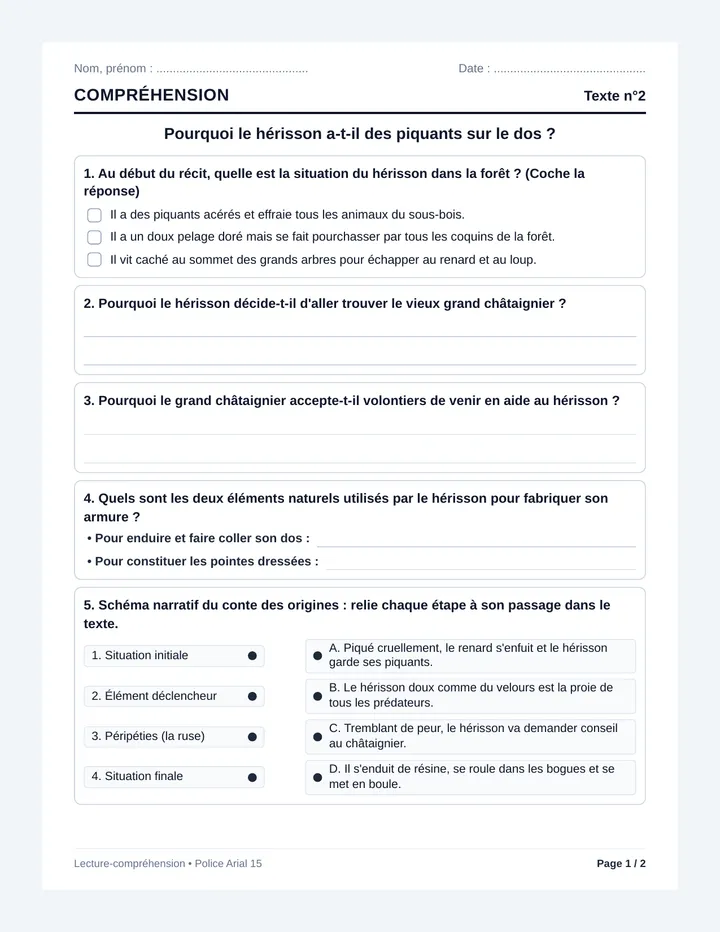
    Herisson Comprehension Fiche Corrige

    Herisson Comprehension Fiche Corrige

    Corrigé officiel détaillé et barème d'évaluation sur 20 points pour la fiche de compréhension du conte des origines « Pourquoi le hérisson a-t-il des piquants sur le dos ? » pour CM1/CM2, conforme au BO du 17 avril 2025, au format Arial 15.

    LP

    LAURENT PERCHE

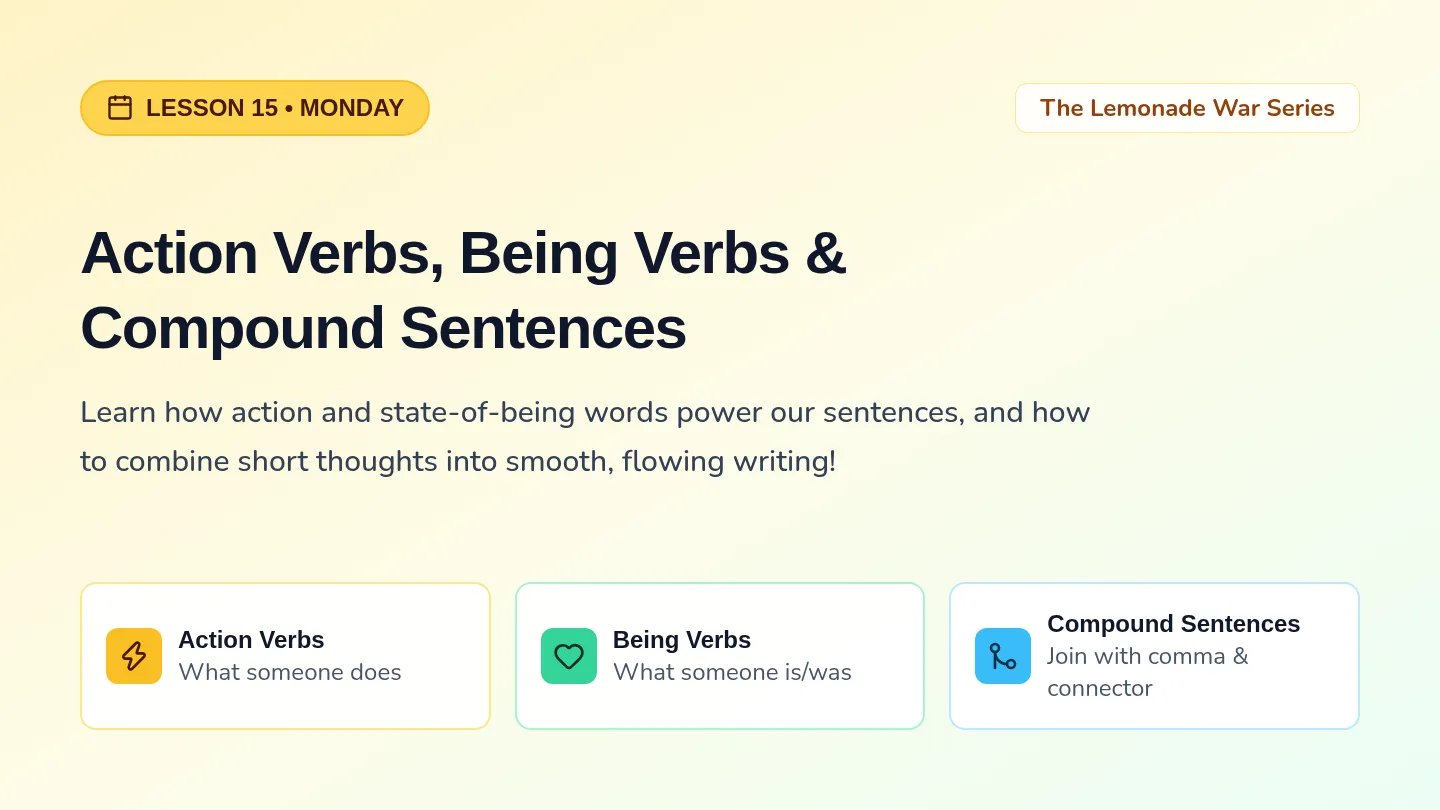
    Lemonade Verbs Slides

    Reading Writing Workshop

    An engaging elementary English Language Arts unit connecting grammar mechanics, mentor texts, vocabulary, and sensory descriptive writing.

    B

    Bhoovaragavaswamym

    8
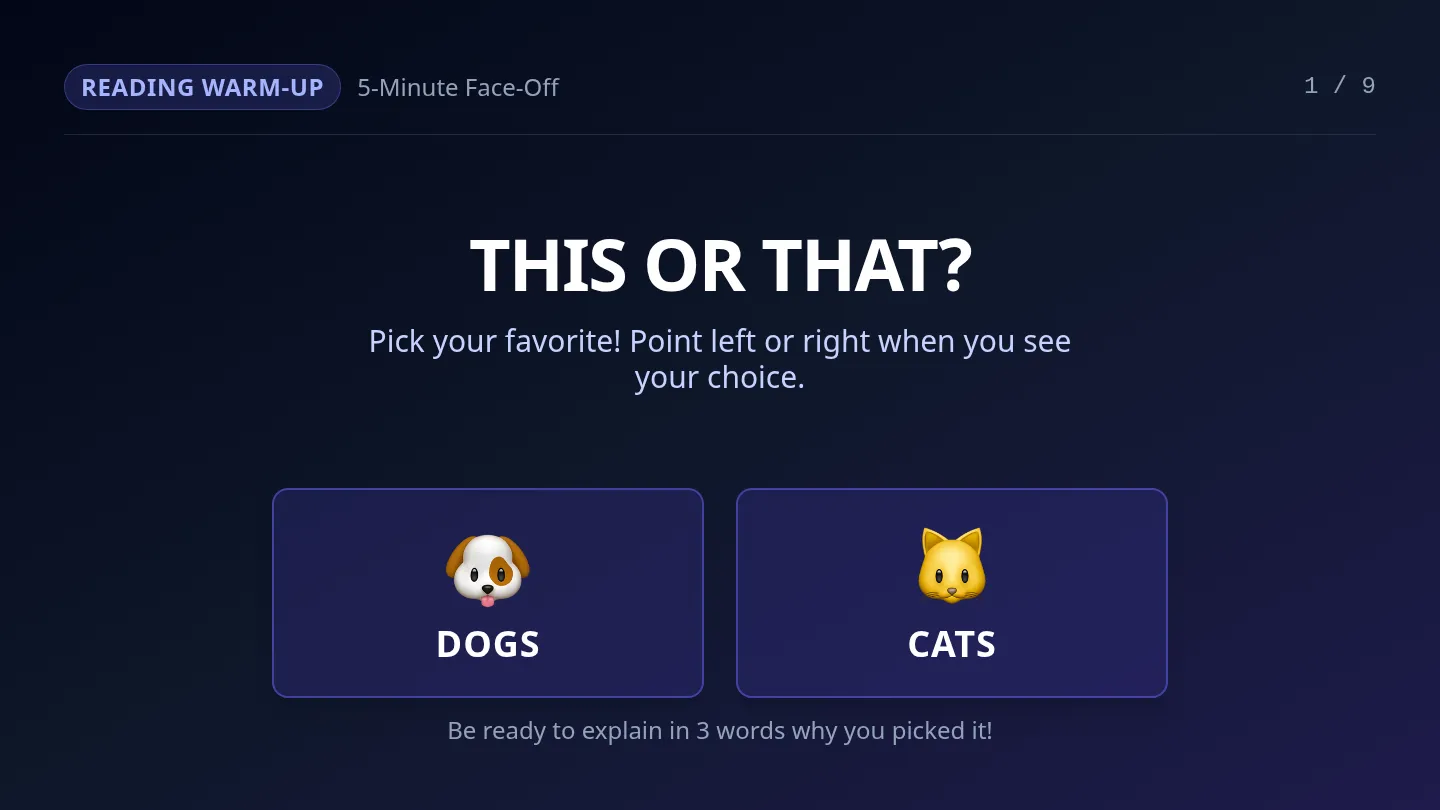
    Choice Spark Slides

    Main Idea Masters

    A targeted, highly scaffolded 50-minute small-group reading lesson for struggling 5th graders focused on identifying main ideas, distinguishing supporting details, and constructing short summaries using concrete, hands-on activities.

    A

    Amy.Cannon

    8
    Herisson Comprehension Fiche Eleve

    Herisson Comprehension Fiche Eleve

    Fiche élève de lecture-compréhension sur le conte des origines « Pourquoi le hérisson a-t-il des piquants sur le dos ? » conforme au BO n° 16 du 17 avril 2025 pour CM1/CM2 (QCM, questions ouvertes de justification, schéma narratif, sentiment/vocabulaire avec dictionnaire, analyse du conte étiologique et barème sur 20) au format Arial 15.

    LP

    LAURENT PERCHE

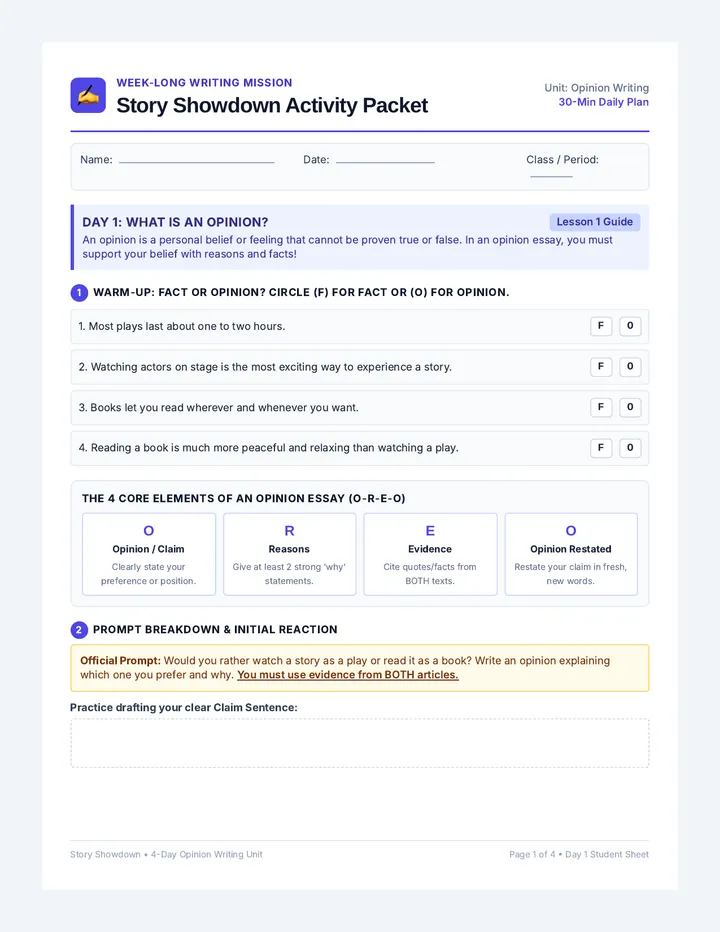
    Story Showdown Activity Packet

    Story Showdown

    A four-day opinion writing unit guiding students through forming claims, analyzing paired texts, and crafting evidence-based essays comparing theatrical plays and books.

    SM

    Samantha McBath

    6
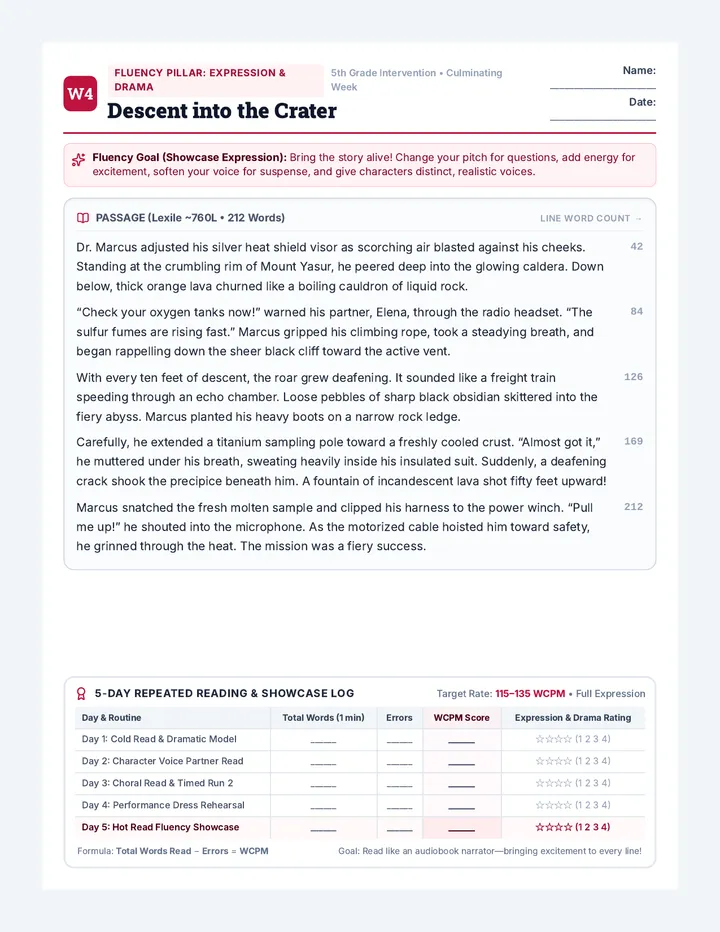
    Volcano Trek Fluency Passage

    Expression and Drama

    Week 4 integrates all fluency elements into dramatic expression and confident performance, emphasizing character voice and emotional inflection. Students read a thrilling narrative about a volcanic expedition and conduct a culminating fluency showcase.

    KM

    Kelly Messer

    2
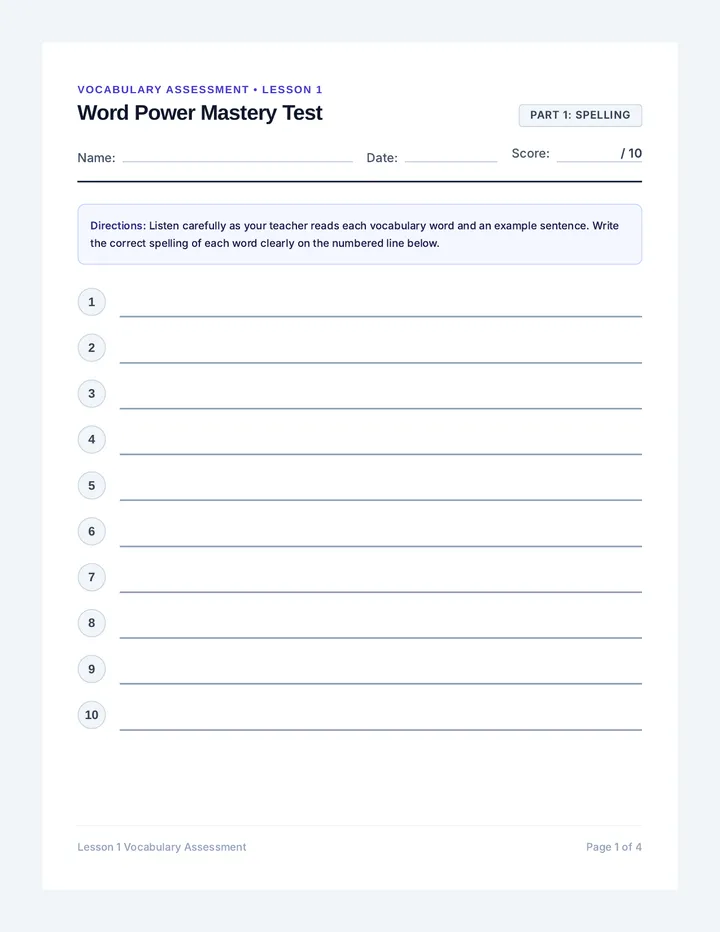
    Word Power Mastery Test

    Word Power Mastery Test

    A comprehensive four-page vocabulary test based on Lesson 1 featuring ten target words (cylinder, examine, fatal, feature, grasp, jet, marine, scar, tentacle, vessel). Includes a ten-line spelling dictation test, a balanced two-column definition writing section, context sentence completions, and a deep-thinking application page covering multiple-meaning words and real-world scenarios.

    AJ

    Amber Jones

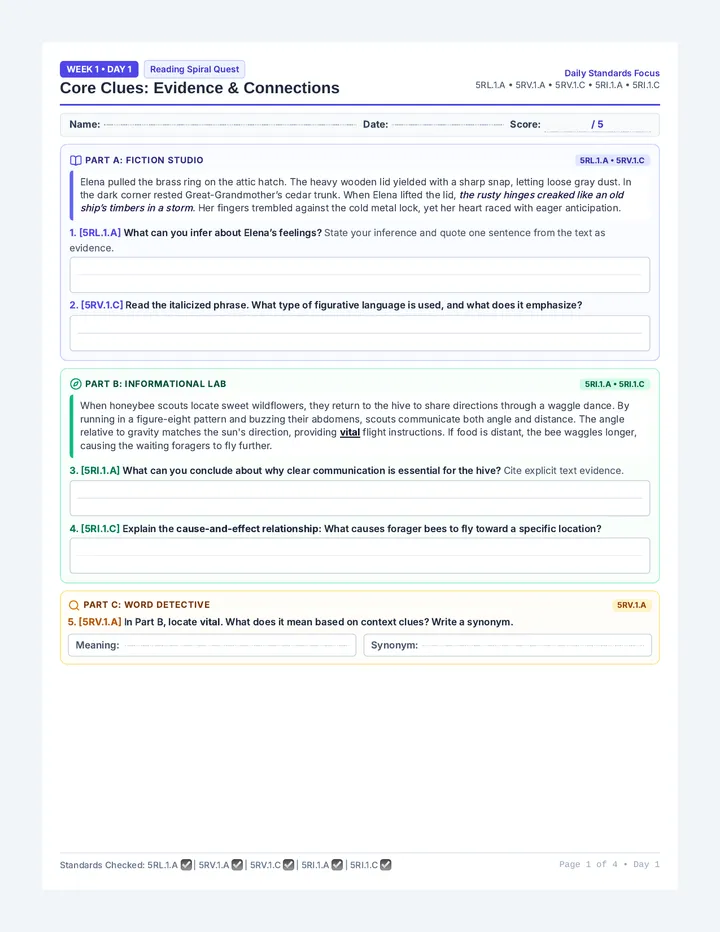
    Core Clues Homework Packet

    Reading Spiral Quest

    A twelve-day, three-week daily reading comprehension and vocabulary homework spiral systematically covering Missouri ELA standards 5RV.1.A, 5RL.1.A, 5RV.1.C, 5RI.1.A, and 5RI.1.C. Each daily task builds critical thinking through paired literary and informational excerpts, targeted evidence-based questions, and rigorous word study.

    TG

    Tolisha Goldston

    6
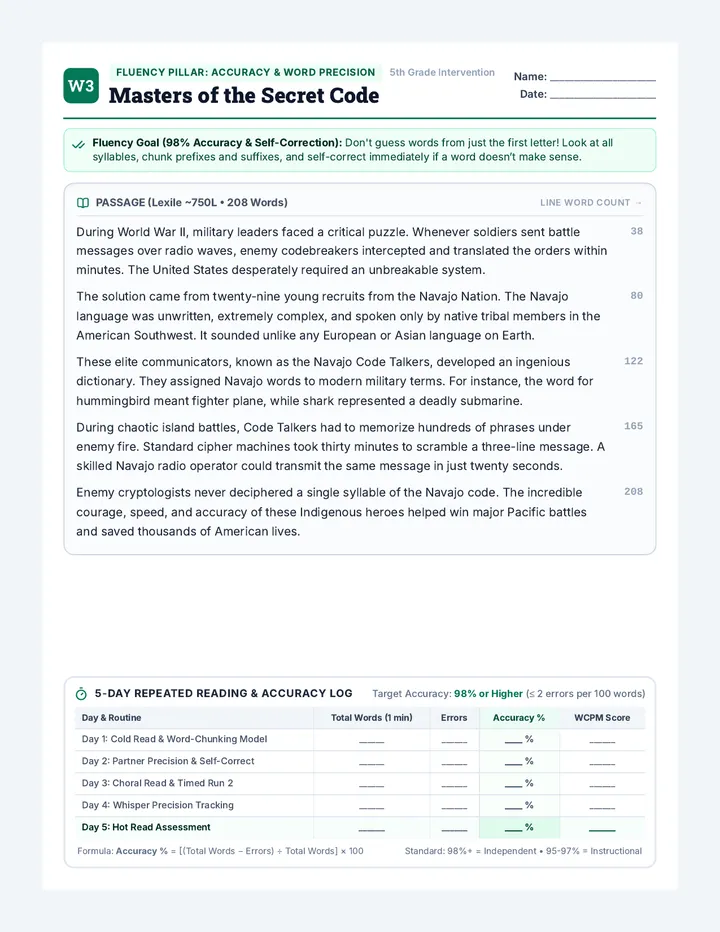
    Secret Codes Fluency Passage

    Accuracy and Precision

    Week 3 hones decoding accuracy and multisyllabic word attack strategies to eliminate word stumbling and self-correct errors smoothly. Students read about ancient secret codes and wartime cipher breakers while practicing word-chunking and precision tracking.

    KM

    Kelly Messer

    2
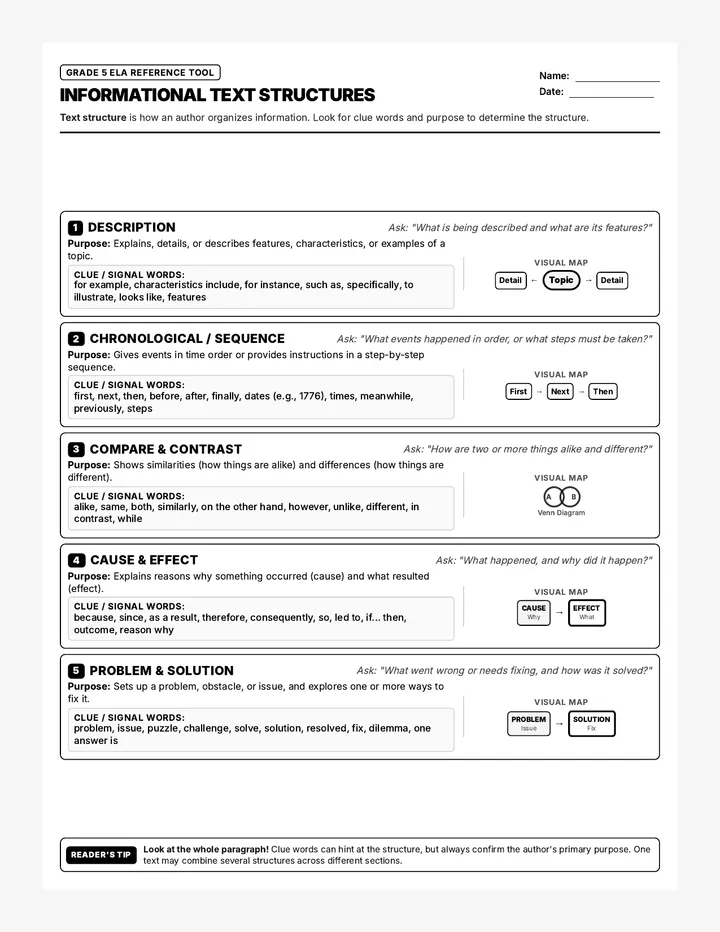
    Text Structure Reference Sheet

    Text Structure Reference Sheet

    A student-friendly reference sheet for 5th grade ELA identifying the five informational text structures with definitions, key questions, visual organizers, and signal words.

    AP

    Amanda Paulson