Lenny.com
Explore
Create
ActivitiesNewMathEnglish Language ArtsScience & EngineeringSocial StudiesGlobal LanguagesHealth & Physical EducationSpecial EducationCounseling & Life SkillsArts & CreativityESL
Lenny.com
Lenny.com
Explore
Create
ActivitiesNewMathEnglish Language ArtsScience & EngineeringSocial StudiesGlobal LanguagesHealth & Physical EducationSpecial EducationCounseling & Life SkillsArts & CreativityESL
Lenny.com
Lenny.com

Solutions

Lenny for EducatorsLenny for SchoolsLenny for Districts

Product

ExploreSign inCreateSupportAbout

Resources

Getting startedMTSS Acceleration Program

© 2026 Lenny Learning Inc.

TermsPrivacyAccessibility
LinkedInInstagramX
Lenny
English Language ArtsPhonics & Reading FoundationsLetter IdentificationLearn Letters A-ZLowercase and Uppercase LettersConsonants and VowelsLetter-Sound AssociationsLetter-Sound Associations: LowercaseLetter-Sound Associations: UppercaseBeginning and Ending SoundsRhymingBlending And SegmentingShort VowelsShort Vowel SoundsConsonant BlendsConsonant DigraphsBlends, Digraphs, and TrigraphsDigraphs, Blends, and Silent LettersLong Vowel SoundsLong Vowel PatternsShort and Long VowelsShort and Long Vowel PatternsSilent EVowel SoundsVowel TeamsR-Controlled VowelsDiphthongs: Oi, Oy, Ou, OwVariant VowelsVariant, Diphthong, And R Vowel PatternsSoft G And CSight WordsIrregular WordsWord RecognitionSyllablesSyllable TypesTwo-Syllable WordsMultisyllabic WordsPhoneme ManipulationDecodable TextsVocabularyAction WordsQuestion WordsNouns and AdjectivesClassify WordsCompound WordsSynonyms and AntonymsHomophonesHomophones and HomonymsShades of MeaningContext CluesPrefixes and SuffixesGreek and Latin RootsAnalogiesIdioms and AdagesForeign Words and ExpressionsWord Choice and UsageReference SkillsReading ComprehensionRead-Along Literary TextsRead-Along Informational TextsReality vs. FictionStory ElementsCharacterSequenceMain IdeaCause And EffectCompare And ContrastReading StrategiesText StructureAuthor's PurposeAuthor's Purpose And ToneAuthor's PerspectivePoint Of ViewThemeInference And ThemeInference And AnalysisPoetry ElementsLiterary DevicesAnalyzing LiteratureAnalyzing Informational TextsComparing TextsAudience, Purpose, And ToneBusiness DocumentsNovel StudyNonfiction Book StudyGrammar & MechanicsSentencesNounsVerbsAdjectivesPronounsCapitalizationPunctuationContractionsConjunctionsPrepositionsArticlesAdjectives And AdverbsVerb TypesVerb TensePronouns And AntecedentsPronoun TypesSubject-Verb AgreementDirect And Indirect ObjectsSentences, Fragments, And Run-OnsPhrases And ClausesCommasSemicolons, Colons, And CommasDashes, Hyphens, And EllipsesSpellingAbbreviationsFormattingVerb Tense And MoodMisplaced ModifiersWritingDescriptive DetailsCreative WritingOpinion WritingTopic SentencesOrganizing WritingLinking WordsSentence VarietyIntroductions And ConclusionsPersuasive And Opinion WritingExpository WritingPersuasive StrategiesDeveloping And Supporting ArgumentsTopic Sentences And Thesis StatementsSummarizingResearch SkillsEditing And RevisingActive And Passive Voice=Writing Clearly And ConciselyDebate & Public SpeakingPublic Speaking BasicsPersuasive TechniquesClaims and EvidenceTypes of ArgumentsReasoning TypesLogical FallaciesTopic ResearchOrganizing EvidenceDebate Speech OrganizationAttacking and Defending ArgumentsClash and EngagementImpact CalculusQuestioning and Cross-ExaminationCritical ThinkingInformal LogicFormal LogicInductive Reasoning

Fluency Flight Academy

A comprehensive four-week reading fluency intervention sequence designed for fifth-grade students needing targeted support in accuracy, pacing, expression, and comprehension. Each week focuses on an essential fluency pillar paired with high-interest non-fiction passages, structured daily practice routines, and progress-monitoring running records.

Phrasing and Punctuation

Week 1 establishes foundational prosody by teaching students how to scoop words into meaningful syntactic phrases and heed punctuation signals. Students read a high-interest passage about mysterious creatures in the ocean abyss while tracking phrasing and expression.

Pacing and Rhythm

Week 2 targets reading rate and rhythm, training students to avoid robot-reading or racing too fast to maintain smooth comprehension. Students read an action-packed passage about storm chasers and use pacing meters to calibrate their words-per-minute target.

Accuracy and Precision

Week 3 hones decoding accuracy and multisyllabic word attack strategies to eliminate word stumbling and self-correct errors smoothly. Students read about ancient secret codes and wartime cipher breakers while practicing word-chunking and precision tracking.

Expression and Drama

Week 4 integrates all fluency elements into dramatic expression and confident performance, emphasizing character voice and emotional inflection. Students read a thrilling narrative about a volcanic expedition and conduct a culminating fluency showcase.

Fluency Flight Academy

A comprehensive four-week reading fluency intervention sequence designed for fifth-grade students needing targeted support in accuracy, pacing, expression, and comprehension. Each week focuses on an essential fluency pillar paired with high-interest non-fiction passages, structured daily practice routines, and progress-monitoring running records.

Speed Racers (>130 WCPM)

Enforce strict punctuation pauses. Challenge student to add vocal expression matching the mysterious tone rather than rushing for higher word counts.

Grade 5 Fluency Intervention • Teacher Master Protocol Turn over for Running Record Scoring Sheet →

Running Record & Assessment Protocol

Student: ____________________ Date: _________

Teacher Copy • Mark miscues: [ / ] misread, [ ◯ ] omitted, [ ^ ] inserted, [ SC ] self-correct Cumulative WCPM

Far beneath the ocean waves, sunlight begins to fade. Below three thousand feet, complete darkness settles in. Scientists call this freezing, pitch-black world the midnight zone. Even though the water pressure is crushing, thousands of bizarre animals thrive here. 38

Most creatures down here create their own light through a chemical reaction called bioluminescence. Some fish glow with pale blue dots along their bellies to blend in with faint ripples above. This clever trick keeps predators below from noticing their silhouettes. 80

The anglerfish uses a glowing lure that dangles right in front of its massive jaws. Hungry prey swim toward the mysterious light, thinking it is an easy meal. In an instant, needle-sharp teeth snap shut, trapping the unsuspecting visitor inside. 121

Food is scarce in the deep trench, so hunters cannot afford to be picky eaters. The gulper eel has an enormous mouth that unhinges like a flexible trapdoor. It can swallow meals twice its own body size, storing nutrition for weeks. 164

Exploring this mysterious underwater realm is difficult for humans. Robot submarines with thick steel hulls must withstand the freezing cold and heavy water. Every dive reveals wondrous new creatures that prove life can survive almost anywhere. 205

Running Record Score Calculation (1 Minute)

Total Words ____

Errors (-) ____

WCPM Score ____

Accuracy Rate: [WCPM / Total Words] × 100 = ____% Self-Corrections: ____

5th Grade ORF Norms (Hasbrouck & Tindal)

Season25th %ile (Intervention)50th %ile (Target)75th %ile (Advanced)
Fall< 94 WCPM121 WCPM146 WCPM
Winter< 109 WCPM137 WCPM162 WCPM
Spring< 118 WCPM150 WCPM174 WCPM

NAEP Fluency & Prosody Qualitative Rubric

Level 1: Non-Fluent

Reads primarily word-by-word. Occasional two- or three-word phrases, but no phrase sense. Disregards punctuation.

Level 2: Weak Prosody

Reads primarily in two-word phrases with some 3-word groupings. Pauses are awkward; ignores punctuation or pauses mid-phrase.

Level 3: Fluent

Reads in 3- to 4-word phrase groups. Pauses at most punctuation. Inflection generally sounds like natural speech.

Level 4: Advanced Prosody

Consistently reads in larger syntactic phrases. Accurately adjusts inflection for expressive tone and sentence structure.

Comprehension Check • Teacher Answer Key

1. Glowing dots on belly: B (Blend in with faint surface ripples so predators below cannot see their silhouettes).

2. Anglerfish prey trapping: C (Lures prey to a glowing light then snaps teeth shut).

3. Gulper eel jaw advantage (Constructed Response Exemplar): “Food is very scarce in the deep midnight zone. An enormous unhinging jaw allows the gulper eel to swallow meals twice its own body size, which lets it store nutrition for weeks between rare meals.” (Award 2 pts: 1 pt for food scarcity, 1 pt for ability to eat large prey for long storage).

Week 1 Assessment • Phrasing & Pauses Fluency Flight Academy • 5th Grade Intervention

2. The 3-Check Rule

Does it look right? Does it sound like real English? Does it make sense in the sentence?

3. Reread with Flow

Once you figure out the word, go back to the start of the phrase and read it smoothly!

MY PERSONAL FLUENCY COMMITMENTS & REFLECTIONS

1. What was the biggest improvement you noticed in your reading from Week 1 to Week 4?

2. What is one reading strategy you will keep using during independent reading time?

☆

OFFICIAL FLUENCY FLIGHT ACADEMY PILOT Certified in Phrasing, Rate, Accuracy, and Dramatic Prosody

Teacher Signature: __________________

Date Completed: __________________

2

Does it sound right? Does it sound like a real English word?

3

Does it make sense? If not, stop and fix it immediately!

Target: 98% Accuracy! Good readers make mistakes, but great readers catch and fix them!


Pillar 4

Expression: Be the Audiobook Star

Week 4 Mini-Lesson Focus

Character Voices

Change your pitch and attitude when characters speak in quotation marks.

“Pull me up!” he shouted.

Volume & Energy

Whisper for secrets and suspense. Boost your energy when dangerous action strikes!

Quiet tension → Loud eruption!

Pitch Inflection

Raise your voice pitch at question marks (?). Drop pitch at period stops (.).

Is it safe? ↗ / Yes, it is. ↘

Fluency Showcase Goal: Read with excitement so your audience hangs on every word!

Ready for Takeoff!

______
______
______
☆☆☆☆ (1 2 3 4)

Formula: Total Words Read − Errors = WCPM Goal: Consistent, conversational flow with zero racing!

Week 2 Skill Practice & Comprehension

Passage: Chasing the Twister

PART A: THE PACING SPEEDOMETER DRILL

Read the sentence three ways with a partner. Circle the box that matches the best talking pace:

Too Fast (Speeding)

“Across-the-open-plains-of-Oklahoma...”

Blurs words; ignores stops.

Too Slow (Robot)

“A-cross . . . the . . . o-pen . . . plains . . .”

Stops between words; loses story.

Just Right (Target Pace)

“Across the open plains / of Oklahoma...”

Clear, smooth, and steady!

PART B: MULTISYLLABIC WEATHER VOCABULARY

Break down these complex technical words into syllables so they do not slow your reading rate:

me • te • or • ol • o • gists

6 syll. • /mee-tee-or-OL-uh-jists/

Scientists who study weather

su • per • cell

3 syll. • /SOO-per-sel/

A rotating thunderstorm

at • mos • pher • ic

4 syll. • /at-mus-FEER-ik/

Related to Earth's air

PART C: COMPREHENSION CHECK

1. What is the primary purpose of Maria’s storm-chasing team?

A. To capture exciting video clips for television news

B. To place sensor probes that gather vital storm data

C. To evacuate farm animals from severe hail

D. To test how strong armored vehicles are in storms

2. Which weather tool alerted the team that a supercell was rotating ten miles ahead?

A. Doppler radar screen

B. An outdoor thermometer

C. A handheld compass

D. A satellite weather balloon

3. How do the measurements collected by the storm probe protect communities? Explain using evidence from the passage:

My Weekly Goal: Did I read at a smooth conversational pace without racing?

Self-Check: □ Too Fast / Slow □ Getting Steady □ Just Right!

Student rushes familiar words but hits a wall on multisyllabic words. Emphasize pre-reading word banks and syllabic chunking before timing.

Grade 5 Fluency Intervention • Teacher Master Protocol Turn over for Running Record Scoring Sheet →

Running Record & Assessment Protocol

Student: ____________________ Date: _________

Teacher Copy • Mark miscues: [ / ] misread, [ ◯ ] omitted, [ ^ ] inserted, [ SC ] self-correct Cumulative WCPM

Across the open plains of Oklahoma, the afternoon sky turns an eerie shade of bruised purple. Warm air from the Gulf of Mexico collides with chilly northern gusts. Maria stares at the computer screen inside her armored storm-chasing van. 40

Her team tracks severe weather using Doppler radar and sensitive barometers. Suddenly, bright red spirals flare across the monitor. A rotating thunderstorm known as a supercell is intensifying just ten miles ahead. Maria radios her driver to speed forward. 80

Giant hailstones slam against the reinforced windshield like thrown baseballs. Rain pours in blinding horizontal sheets. Ahead on the flat horizon, a dark funnel cloud snakes downward from the swirling cloud deck. It violently touches the damp earth. 122

The scientists are not chasing danger for fun. Their mission is placing a heavy sensor probe directly in the twister’s path. The instrument measures wind speeds and atmospheric pressure inside the vortex before the tornado vanishes into thin air. 165

With seconds to spare, Maria bolts the probe into the roadside gravel. As the funnel roars past, valuable data beams instantly to meteorologists. These critical measurements provide earlier storm warnings that save hundreds of lives each spring. 210

Running Record Score Calculation (1 Minute)

Total Words ____

Errors (-) ____

WCPM Score ____

Accuracy Rate: [WCPM / Total Words] × 100 = ____% Self-Corrections: ____

5th Grade ORF Norms (Hasbrouck & Tindal)

Season25th %ile (Intervention)50th %ile (Target)75th %ile (Advanced)
Fall< 94 WCPM121 WCPM146 WCPM
Winter< 109 WCPM137 WCPM162 WCPM
Spring< 118 WCPM150 WCPM174 WCPM

Pacing & Rhythm Qualitative Rubric

Level 1: Erratic / Halting

Frequent stalls (>3 sec). Inconsistent pace characterized by painful stops on unfamiliar words. Rate <80 WCPM.

Level 2: Monotone / Rushed

Either reads like a runaway train ignoring punctuation, or plods slowly without rhythmic inflection. Rate 80-100 WCPM.

Level 3: Steady & Controlled

Consistent conversational rate. Smooth recovery after decoding pauses. Natural pauses at sentence boundaries. Rate 110-130 WCPM.

Level 4: Dynamic Pacing

Expertly modulates speed to mirror the narrative action (e.g. slowing for tension, brisk for action). Rate 125-145 WCPM.

Comprehension Check • Teacher Answer Key

1. Purpose of chasing team: B (To place sensor probes that gather vital storm data).

2. Weather tool alerting to supercell: A (Doppler radar screen showing red spirals).

3. How probe measurements protect communities (Constructed Response Exemplar): “The sensor probe measures wind speeds and atmospheric pressure inside the vortex. This data beams directly to meteorologists, allowing them to issue earlier storm warnings that give people more time to seek shelter and save lives.” (Award 2 pts: 1 pt for measuring wind/pressure, 1 pt for earlier warnings saving lives).

Week 2 Assessment • Pacing & Rhythm Fluency Flight Academy • 5th Grade Intervention

______
______
____ %
______

Formula: Accuracy % = [(Total Words − Errors) ÷ Total Words] × 100 Standard: 98%+ = Independent • 95-97% = Instructional

Week 3 Skill Practice & Comprehension

Passage: Masters of the Secret Code

PART A: AFFIX DETECTIVE & SYLLABLE ATTACK

Break each multisyllabic word into its prefix, base, and suffix. Then read the entire word smoothly:

unbreakable Prefix: un- | Base: break | Suffix: -able

Not able to be broken

transmission Prefix: trans- | Base: miss | Suffix: -ion

Message sent across

deciphered Prefix: de- | Base: cipher | Suffix: -ed

Decoded or solved

PART B: PRONUNCIATION & ACCURACY DRILL

Read these tricky historical words without stumbling. Circle any syllable that gave you pause:

cryp • tol • o • gists

4 syll. • /krip-TOL-uh-jists/

Secret code experts

in • gen • ious

3 syll. • /in-JEEN-yus/

Brilliantly clever

in • dig • e • nous

4 syll. • /in-DIJ-uh-nus/

Originating naturally (Native)

PART C: COMPREHENSION CHECK

1. Why did the United States military choose the Navajo language to create an unbreakable code?

A. It was already printed in widely distributed military textbooks

B. It was unwritten, complex, and spoken only by tribal members

C. It relied on musical whistle tones instead of spoken words

D. It resembled European languages that soldiers already spoke

2. According to the text, what word did the Code Talkers use to represent a fighter plane?

A. Shark

B. Eagle

C. Hummingbird

D. Arrow

3. Contrast the speed of Navajo Code Talkers with standard cipher machines. Why was this speed critical in battle?

My Weekly Goal: Did I read accurately and self-correct words that didn’t make sense?

Self-Check: □ <95% Accuracy □ 95-97% Accuracy □ 98%+ Accuracy!

Grade 5 Fluency Intervention • Teacher Master Protocol Turn over for Running Record Scoring Sheet →

Running Record & Assessment Protocol

Student: ____________________ Date: _________

Teacher Copy • Mark miscues: [ / ] misread, [ ◯ ] omitted, [ ^ ] inserted, [ SC ] self-correct Cumulative WCPM

During World War II, military leaders faced a critical puzzle. Whenever soldiers sent battle messages over radio waves, enemy codebreakers intercepted and translated the orders within minutes. The United States desperately required an unbreakable system. 38

The solution came from twenty-nine young recruits from the Navajo Nation. The Navajo language was unwritten, extremely complex, and spoken only by native tribal members in the American Southwest. It sounded unlike any European or Asian language on Earth. 80

These elite communicators, known as the Navajo Code Talkers, developed an ingenious dictionary. They assigned Navajo words to modern military terms. For instance, the word for hummingbird meant fighter plane, while shark represented a deadly submarine. 122

During chaotic island battles, Code Talkers had to memorize hundreds of phrases under enemy fire. Standard cipher machines took thirty minutes to scramble a three-line message. A skilled Navajo radio operator could transmit the same message in just twenty seconds. 165

Enemy cryptologists never deciphered a single syllable of the Navajo code. The incredible courage, speed, and accuracy of these Indigenous heroes helped win major Pacific battles and saved thousands of American lives. 208

Running Record Score Calculation (1 Minute)

Total Words ____

Errors (-) ____

Accuracy Rate ____%

WCPM: ____ Self-Corrections (SC): ____ (Ratio: 1:____)

Reading Accuracy Standards (5th Grade)

LevelAccuracy %Instructional Implication
Independent98% – 100%Fluent reading; ready for advanced texts.
Instructional95% – 97%Target intervention level; supports decoding growth.
Frustrational< 95%Too difficult; shift to lower Lexile scaffold.

Miscue Diagnostic Checklist

Meaning Cues (Semantics)

Does the error make sense in the sentence? (e.g. reading “warriors” for “soldiers”). Indicates comprehension is active.

Structure Cues (Syntax)

Does the miscue sound grammatically correct in English? (e.g. reading a noun for a noun). Student understands grammar.

Visual Cues (Phonics)

Does the miscue look like the printed word? (e.g. reading “special” for “spoke”). Weak visual decoding needs syllabic drills.

Comprehension Check • Teacher Answer Key

1. Why Navajo language chosen: B (Unwritten, extremely complex, and spoken only by native tribal members in American Southwest).

2. Word for fighter plane: C (Hummingbird).

3. Speed contrast and battlefield importance (Constructed Response Exemplar): “Standard cipher machines took 30 minutes to scramble a three-line message, while a Navajo Code Talker could transmit the same message in just 20 seconds. In chaotic battles under enemy fire, this rapid speed meant commanders received immediate orders, saving lives and coordinating artillery before enemies could react.” (Award 2 pts: 1 pt for 30 min vs 20 sec, 1 pt for rapid battle communication).

Week 3 Assessment • Accuracy & Word Precision Fluency Flight Academy • 5th Grade Intervention

Day 5: Hot Read Fluency Showcase__________________☆☆☆☆ (1 2 3 4)

Formula: Total Words Read − Errors = WCPM Goal: Read like an audiobook narrator—bringing excitement to every line!

Week 4 Skill Practice & Comprehension

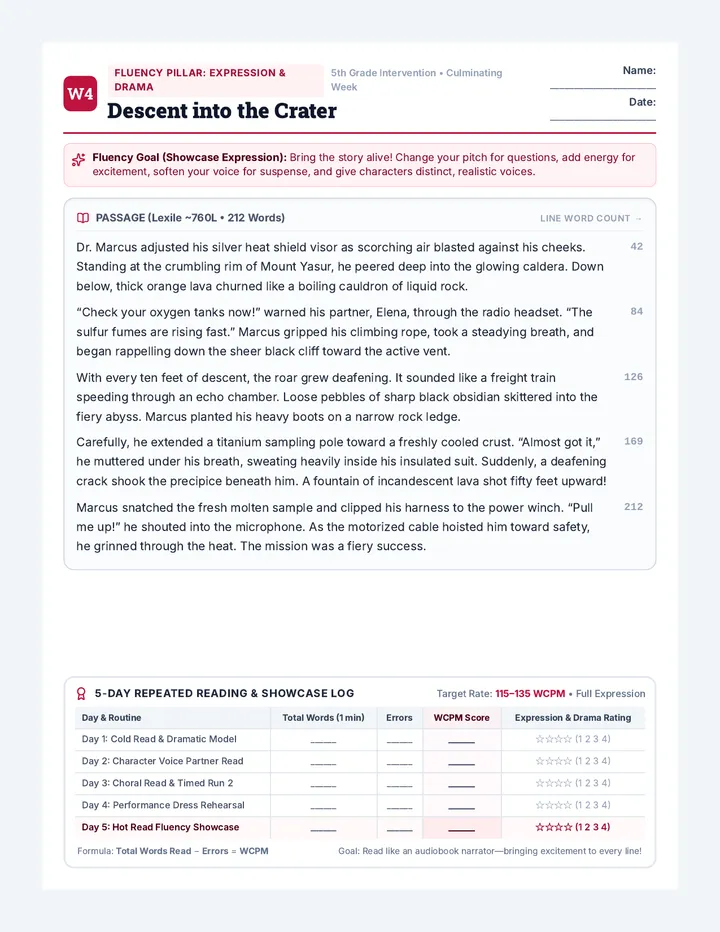
Passage: Descent into the Crater

PART A: DIALOGUE & EMOTIONAL INFLECTION DRILL

Authors use quotation marks and punctuation to tell you how characters sound. Practice reading each line aloud with the matching emotional tone:

Line 1: “Check your oxygen tanks now!”

Tone: Urgent / Warning (High energy)

Line 2: “Almost got it,” he muttered under his breath...

Tone: Tense / Whispered (Quiet focus)

Line 3: “Pull me up!” he shouted into the microphone.

Tone: Explosive Action / Command

PART B: VOLCANO VOCABULARY BREAKDOWN

Pronounce these dramatic geological terms smoothly so your expression stays continuous:

in • can • des • cent

4 syll. • /in-kan-DES-ent/

Glowing with intense heat

prec • i • pice

3 syll. • /PRES-uh-pis/

A very steep cliff edge

sul • fur • ous

3 syll. • /SUL-fer-us/

Choking volcanic gas

PART C: COMPREHENSION CHECK

1. What was Dr. Marcus’s primary objective when rappelling into the volcano’s caldera?

A. To install an underground earthquake sensor

B. To collect a fresh sample of molten volcanic rock

C. To measure the exact depth of the magma chamber

D. To rescue a climbing partner stranded on a cliff

2. What sudden danger forced Dr. Marcus to call for an immediate emergency winch evacuation?

A. His climbing harness snapped loose from the cliff

B. A torrential rainstorm flooded the caldera floor

C. The cliff cracked and a lava fountain shot 50 feet high

D. His radio headset ran out of electrical battery

3. Identify two sensory details the author uses to help the reader experience the volcano. How did you change your voice to convey them?

4-Week Fluency Mastery: Rate, accuracy, phrasing, and dramatic expression!

☆ Fluency Flight Graduate ☆

Showcase Celebration

Record student's Day 5 hot read and play side-by-side with their Week 1 Day 1 cold read so they can tangibly hear their phenomenal progress!

Grade 5 Fluency Intervention • Teacher Master Protocol Turn over for Running Record Scoring Sheet →

Running Record & Culminating Assessment

Student: ____________________ Date: _________

Teacher Copy • Mark miscues: [ / ] misread, [ ◯ ] omitted, [ ^ ] inserted, [ SC ] self-correct Cumulative WCPM

Dr. Marcus adjusted his silver heat shield visor as scorching air blasted against his cheeks. Standing at the crumbling rim of Mount Yasur, he peered deep into the glowing caldera. Down below, thick orange lava churned like a boiling cauldron of liquid rock. 42

“Check your oxygen tanks now!” warned his partner, Elena, through the radio headset. “The sulfur fumes are rising fast.” Marcus gripped his climbing rope, took a steadying breath, and began rappelling down the sheer black cliff toward the active vent. 84

With every ten feet of descent, the roar grew deafening. It sounded like a freight train speeding through an echo chamber. Loose pebbles of sharp black obsidian skittered into the fiery abyss. Marcus planted his heavy boots on a narrow rock ledge. 126

Carefully, he extended a titanium sampling pole toward a freshly cooled crust. “Almost got it,” he muttered under his breath, sweating heavily inside his insulated suit. Suddenly, a deafening crack shook the precipice beneath him. A fountain of incandescent lava shot fifty feet upward! 169

Marcus snatched the fresh molten sample and clipped his harness to the power winch. “Pull me up!” he shouted into the microphone. As the motorized cable hoisted him toward safety, he grinned through the heat. The mission was a fiery success. 212

Week 4 Final Score (1 Minute)

Total Words ____

Errors (-) ____

Final WCPM ____

Accuracy: ____% NAEP Prosody Level: 1 • 2 • 3 • 4

4-Week Intervention Progress Summary

Week & PillarCold WCPMHot WCPMGrowth (+/-)
W1: Phrasing____________+ _____
W2: Pacing____________+ _____
W3: Accuracy____________+ _____
W4: Expression____________+ _____

Comprehensive 4-Pillar Mastery Checklist

1. Phrasing & Pauses

Scoops words into meaningful syntactic clauses; heeds commas & periods consistently.

2. Pacing & Rhythm

Maintains steady conversational rate (110-135 WCPM); neither rushes nor drags robotically.

3. Accuracy & Decoding

Demonstrates ≥98% word accuracy; independently chunks affixes and self-corrects miscues.

4. Expression & Drama

Modulates pitch, volume, and character voice to captivate listeners like an audiobook narrator.

Comprehension Check • Teacher Answer Key

1. Dr. Marcus's objective: B (To collect a fresh sample of molten volcanic rock with a titanium sampling pole).

2. Sudden danger forcing evacuation: C (The cliff cracked and a 50-foot fountain of incandescent lava erupted).

3. Sensory details and vocal adaptation (Constructed Response Exemplar): “The author uses sound (‘deafening roar like a freight train’) and sight/touch (‘scorching air,’ ‘boiling cauldron of liquid rock’). The reader should lower their voice to a tense whisper during the cautious descent and increase volume and urgency when the lava fountain explodes.” (Award 2 pts: 1 pt for accurate sensory details, 1 pt for vocal modulation explanation).

Week 4 Assessment • Expression & Culminating Showcase Fluency Flight Academy • 5th Grade Intervention Complete

You might also like

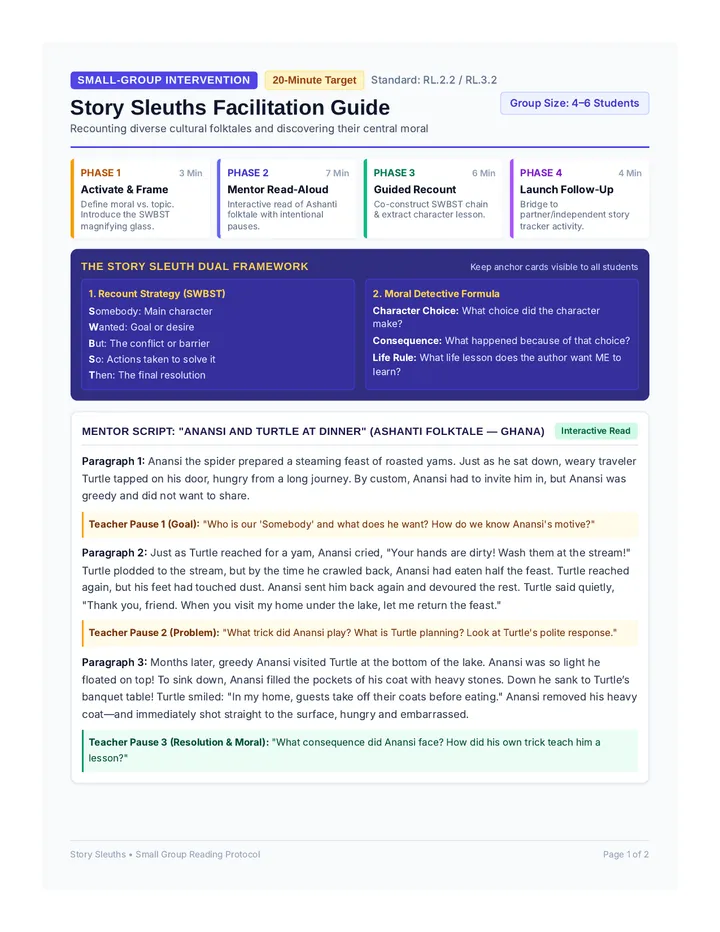
Story Sleuths Facilitation Guide

Story Explorers

An interactive, high-impact reading comprehension unit targeting core foundational literature standards. Students master recounting diverse folktales, extracting central morals, and analyzing how characters respond to major events and challenges.

S

Squiretak

8
Choice Spark Slides

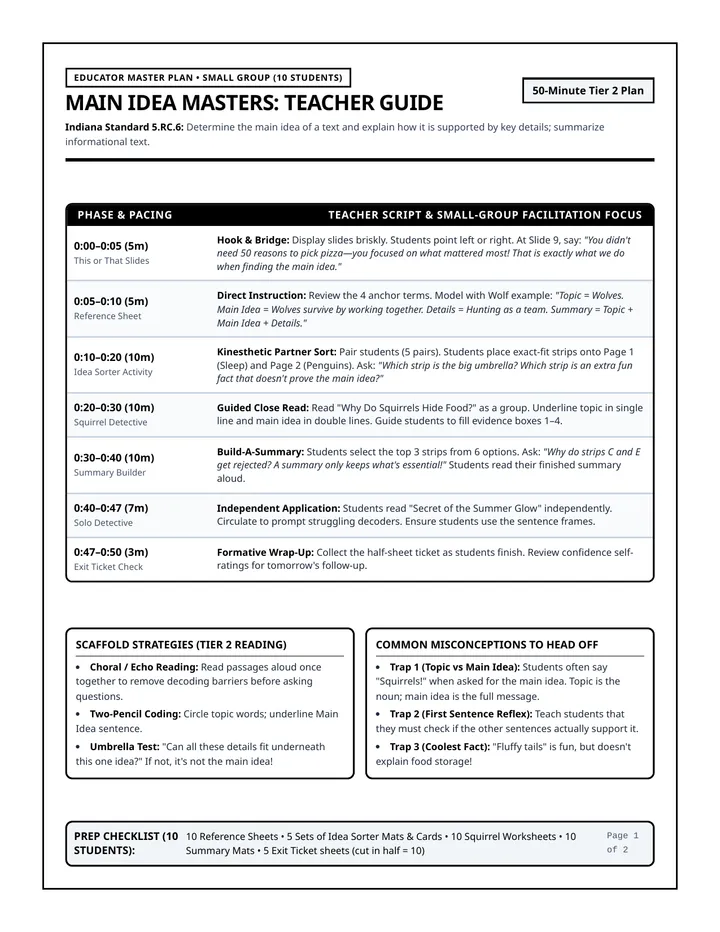
Main Idea Masters

A targeted, highly scaffolded 50-minute small-group reading lesson for struggling 5th graders focused on identifying main ideas, distinguishing supporting details, and constructing short summaries using concrete, hands-on activities.

A

Amy.Cannon

8
Targeted Instruction Teacher Guide

Targeted Instruction Teacher Guide

A black-and-white print-ready two-page teacher facilitation guide featuring a 50-minute pacing schedule, remedial scripting, misconception strategies, and comprehensive answer keys for all lesson materials.

A

Amy.Cannon

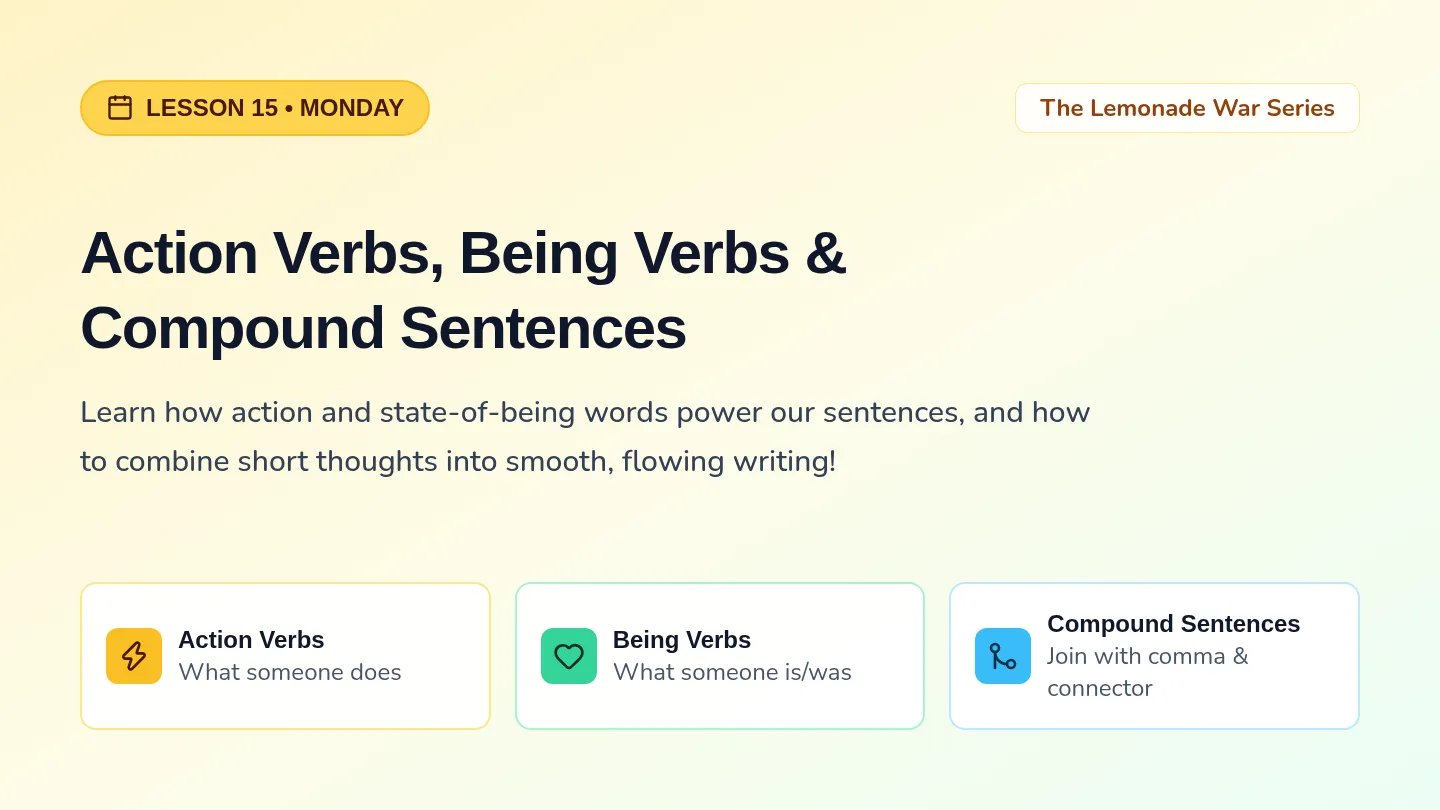
Lemonade Verbs Slides

Reading Writing Workshop

An engaging elementary English Language Arts unit connecting grammar mechanics, mentor texts, vocabulary, and sensory descriptive writing.

B

Bhoovaragavaswamym

8
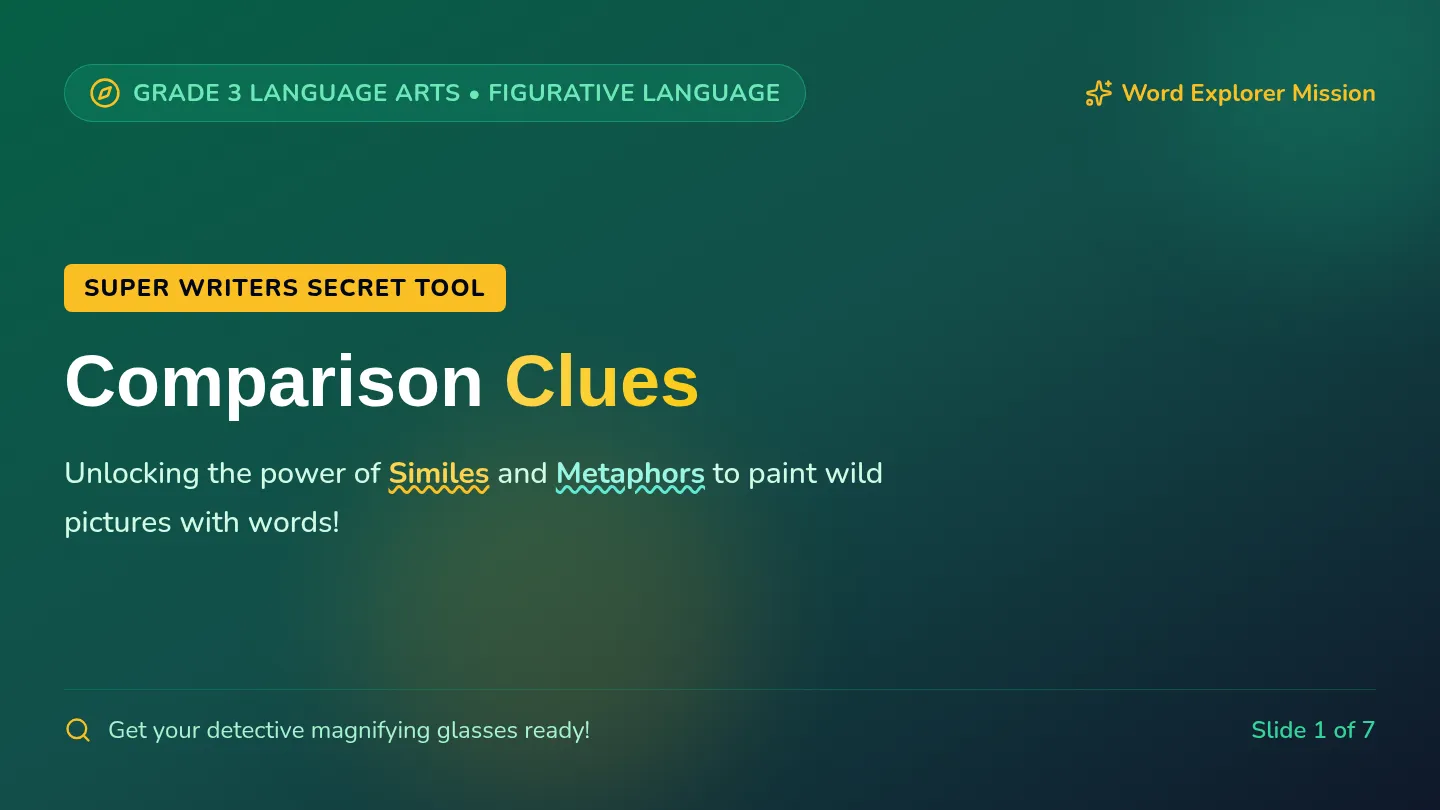
Comparison Clues Slides

Comparison Clues

A comprehensive 3rd-grade language arts lesson exploring similes and metaphors through sensory comparisons, animal imagery, and creative writing exercises. Students learn to spot comparison keywords like and as, decipher hidden meanings, and write vivid comparisons of their own.

MH

Martha Hanson

4
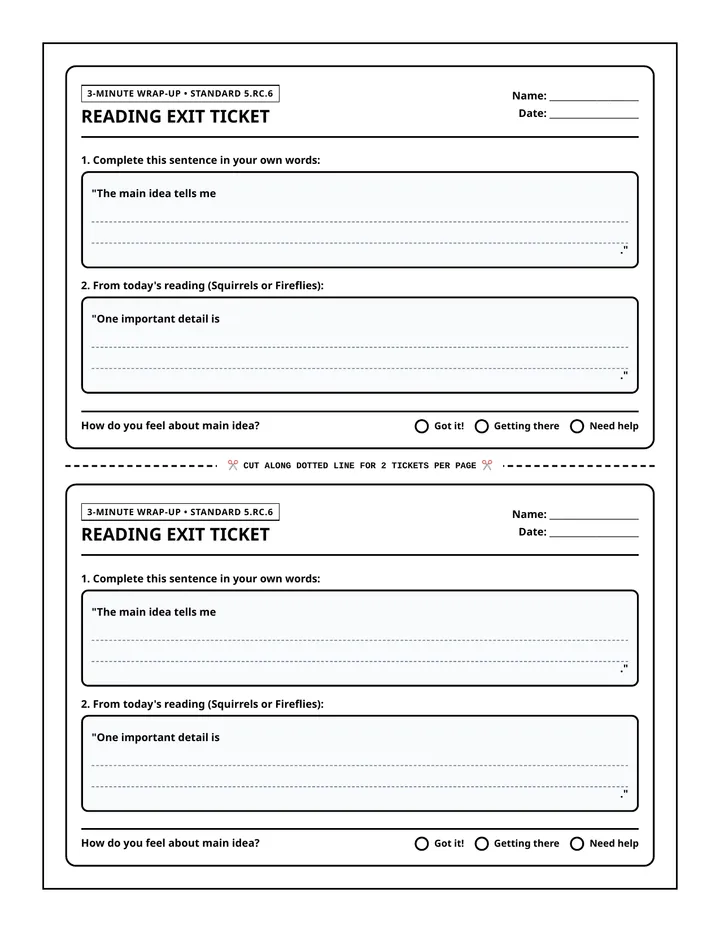
Quick Check Exit Ticket

Quick Check Exit Ticket

A black-and-white print-ready 2-up half-page formative exit ticket for students to articulate the function of the main idea, cite one supporting detail from the lesson, and self-assess confidence.

A

Amy.Cannon

Paw Print Teacher Guide

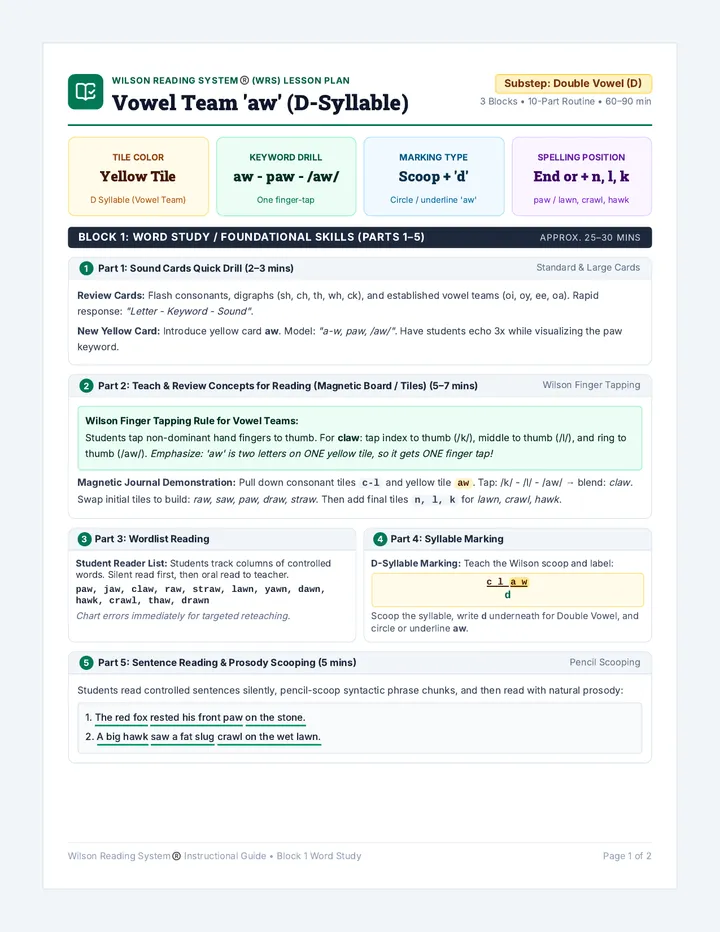
Vowel Team Aw Pathways

A comprehensive structured literacy sequence targeting the vowel team 'aw', offering dual instructional pathways using both the Classic Orton-Gillingham 7-step routine and the 10-part Wilson Reading System (WRS) framework.

KW

Kellie Walsh

10
Vocal Buzz Slides

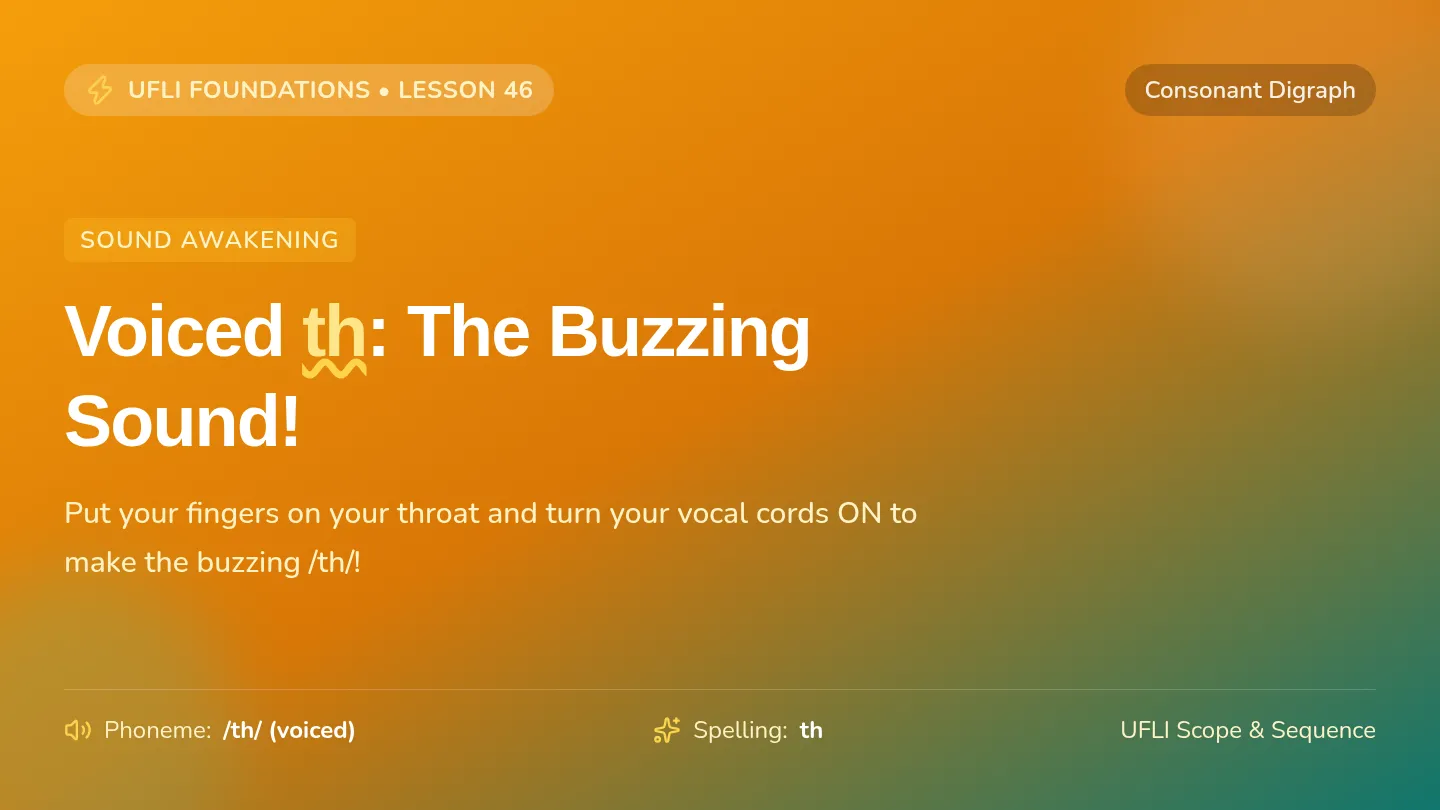
Buzzing Tongue Phonics

A complete phonics lesson targeting UFLI Lesson 46 on the voiced digraph 'th'. Includes instructional slides, three targeted decodable readers, an exit ticket with a 10-word verbal reading check, a fluency passage with comprehension questions, and an educator facilitation guide.

ML

Marti Lushin

7
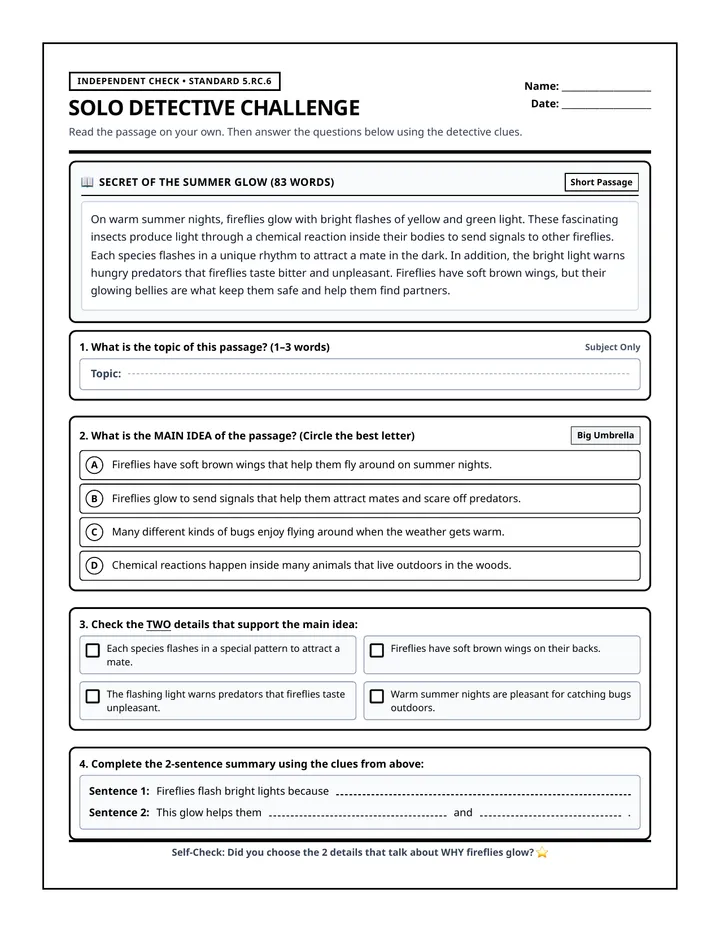
Solo Detective Practice Sheet

Solo Detective Practice Sheet

A black-and-white print-ready independent practice worksheet featuring an 83-word passage on fireflies, a 4-choice main idea question, detail selection, and a guided summary frame.

A

Amy.Cannon

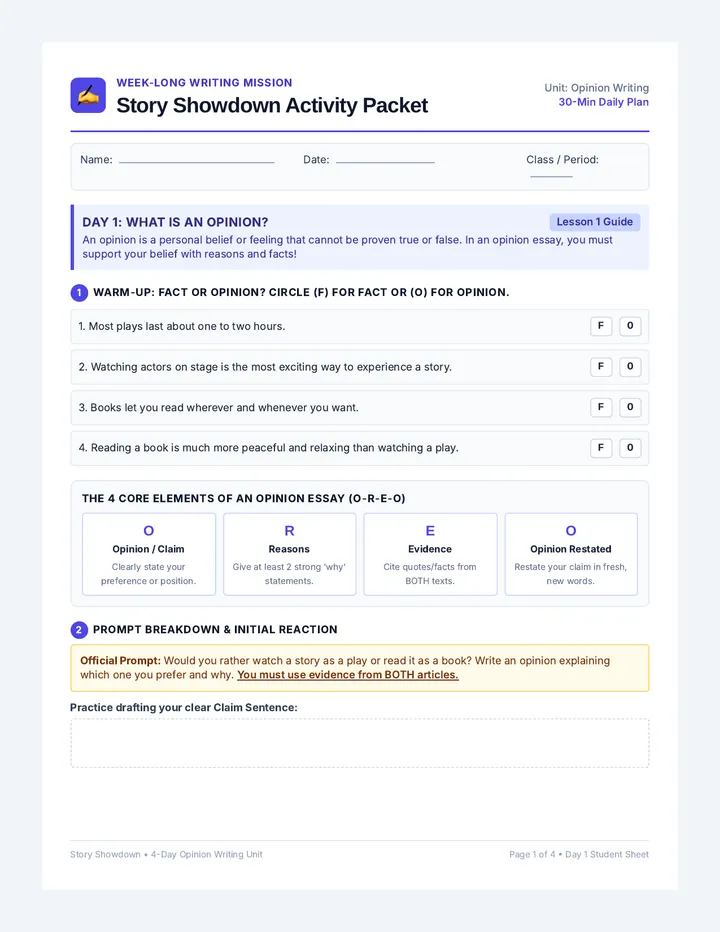
Story Showdown Activity Packet

Story Showdown

A four-day opinion writing unit guiding students through forming claims, analyzing paired texts, and crafting evidence-based essays comparing theatrical plays and books.

SM

Samantha McBath

6
Volcano Trek Fluency Passage

Expression and Drama

Week 4 integrates all fluency elements into dramatic expression and confident performance, emphasizing character voice and emotional inflection. Students read a thrilling narrative about a volcanic expedition and conduct a culminating fluency showcase.

KM

Kelly Messer

2
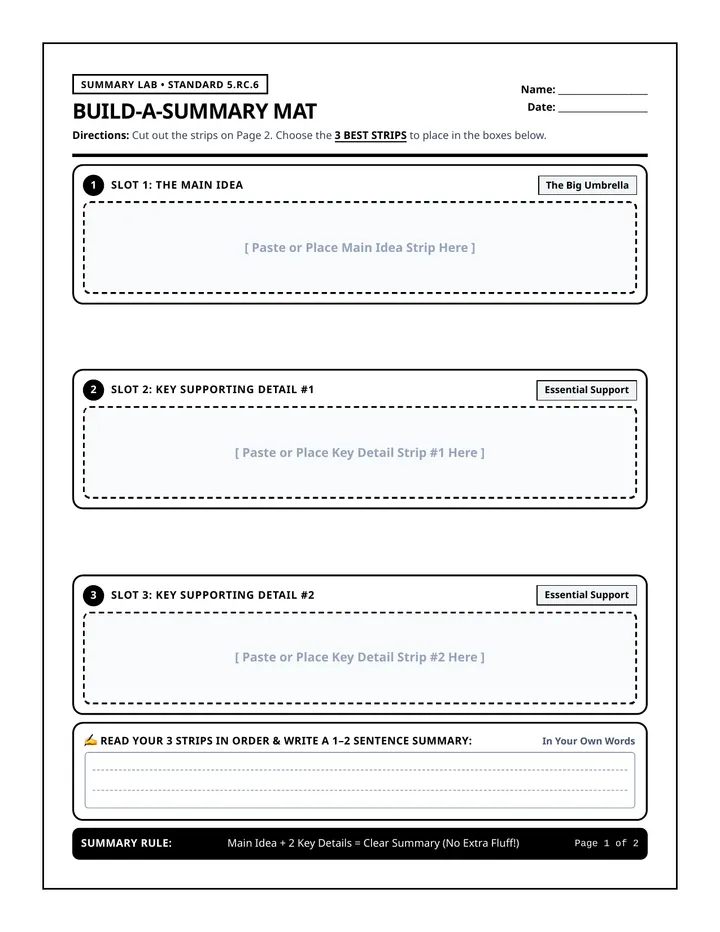
Summary Builder Activity

Summary Builder Activity

A completely redesigned two-page summary builder activity with large, high-legibility sentence strips (16px font with relaxed leading) on Page 2 and matching 105px landing slots on Page 1.

A

Amy.Cannon