Lenny.com
Explore
Create
ActivitiesNewMathEnglish Language ArtsScience & EngineeringSocial StudiesGlobal LanguagesHealth & Physical EducationSpecial EducationCounseling & Life SkillsArts & CreativityESL
Lenny.com
Lenny.com
Explore
Create
ActivitiesNewMathEnglish Language ArtsScience & EngineeringSocial StudiesGlobal LanguagesHealth & Physical EducationSpecial EducationCounseling & Life SkillsArts & CreativityESL
Lenny.com
Lenny.com

Solutions

Lenny for EducatorsLenny for SchoolsLenny for Districts

Product

ExploreSign inCreateSupportAbout

Resources

Getting startedMTSS Acceleration Program

© 2026 Lenny Learning Inc.

TermsPrivacyAccessibility
LinkedInInstagramX
Lenny
English Language ArtsPhonics & Reading FoundationsLetter IdentificationLearn Letters A-ZLowercase and Uppercase LettersConsonants and VowelsLetter-Sound AssociationsLetter-Sound Associations: LowercaseLetter-Sound Associations: UppercaseBeginning and Ending SoundsRhymingBlending And SegmentingShort VowelsShort Vowel SoundsConsonant BlendsConsonant DigraphsBlends, Digraphs, and TrigraphsDigraphs, Blends, and Silent LettersLong Vowel SoundsLong Vowel PatternsShort and Long VowelsShort and Long Vowel PatternsSilent EVowel SoundsVowel TeamsR-Controlled VowelsDiphthongs: Oi, Oy, Ou, OwVariant VowelsVariant, Diphthong, And R Vowel PatternsSoft G And CSight WordsIrregular WordsWord RecognitionSyllablesSyllable TypesTwo-Syllable WordsMultisyllabic WordsPhoneme ManipulationDecodable TextsVocabularyAction WordsQuestion WordsNouns and AdjectivesClassify WordsCompound WordsSynonyms and AntonymsHomophonesHomophones and HomonymsShades of MeaningContext CluesPrefixes and SuffixesGreek and Latin RootsAnalogiesIdioms and AdagesForeign Words and ExpressionsWord Choice and UsageReference SkillsReading ComprehensionRead-Along Literary TextsRead-Along Informational TextsReality vs. FictionStory ElementsCharacterSequenceMain IdeaCause And EffectCompare And ContrastReading StrategiesText StructureAuthor's PurposeAuthor's Purpose And ToneAuthor's PerspectivePoint Of ViewThemeInference And ThemeInference And AnalysisPoetry ElementsLiterary DevicesAnalyzing LiteratureAnalyzing Informational TextsComparing TextsAudience, Purpose, And ToneBusiness DocumentsNovel StudyNonfiction Book StudyGrammar & MechanicsSentencesNounsVerbsAdjectivesPronounsCapitalizationPunctuationContractionsConjunctionsPrepositionsArticlesAdjectives And AdverbsVerb TypesVerb TensePronouns And AntecedentsPronoun TypesSubject-Verb AgreementDirect And Indirect ObjectsSentences, Fragments, And Run-OnsPhrases And ClausesCommasSemicolons, Colons, And CommasDashes, Hyphens, And EllipsesSpellingAbbreviationsFormattingVerb Tense And MoodMisplaced ModifiersWritingDescriptive DetailsCreative WritingOpinion WritingTopic SentencesOrganizing WritingLinking WordsSentence VarietyIntroductions And ConclusionsPersuasive And Opinion WritingExpository WritingPersuasive StrategiesDeveloping And Supporting ArgumentsTopic Sentences And Thesis StatementsSummarizingResearch SkillsEditing And RevisingActive And Passive Voice=Writing Clearly And ConciselyDebate & Public SpeakingPublic Speaking BasicsPersuasive TechniquesClaims and EvidenceTypes of ArgumentsReasoning TypesLogical FallaciesTopic ResearchOrganizing EvidenceDebate Speech OrganizationAttacking and Defending ArgumentsClash and EngagementImpact CalculusQuestioning and Cross-ExaminationCritical ThinkingInformal LogicFormal LogicInductive Reasoning

Comparison Clues

A comprehensive 3rd-grade language arts lesson exploring similes and metaphors through sensory comparisons, animal imagery, and creative writing exercises. Students learn to spot comparison keywords like and as, decipher hidden meanings, and write vivid comparisons of their own.

Comparison Clues

A comprehensive 3rd-grade language arts lesson exploring similes and metaphors through sensory comparisons, animal imagery, and creative writing exercises. Students learn to spot comparison keywords like and as, decipher hidden meanings, and write vivid comparisons of their own.

simile
metaphor

Your Safari Adventure:

Wildlife Snapshot

Draw your animal scene!

Ranger Self-Check: Used LIKE or AS Used IS or WAS Capital letter & period

Page 2 of 2 • Mission Complete!

Part II: Classroom Execution

Application, Scaffolds & Assessment

Pacing: 25 Mins Remaining

2

Guided to Independent Practice (Simile Safari Worksheet • 20 Min)

Partner → Solo

Part 1 & 2: Partner Detective Check (8 min)

Students work with a peer to highlight the bridge words in Part 1. For Part 2 (Decoder), encourage them to use the stem: “The author is saying that [subject] is really [real feeling or action].”

Part 3 & 4: Writer's Safari Workshop (12 min)

Independent drafting. Remind students that metaphors must describe what the animal or setting is or was, without slipping into a simile! Circulate to provide immediate feedback.

Common Misconceptions & Rapid Fixes

Student MisconceptionWhy It HappensImmediate Teacher Fix
“I like pizza” is a simile.Seeing the word “like” without checking for two compared objects.Ask: “What two things are being compared?” If there is no comparison, it's just a preference!
Confusing “as” in time clauses (as I walked).Triggered by the word “as” acting as a time conjunction.Look for the pair: “as [adjective] as [noun]” (e.g., as cold as ice).
Calling literal description a metaphor.Over-identifying sentences with “is/was” (The dog is brown).Check: “Is this an imaginative leap, or plain reality?”

Support & Multilingual Scaffolds

  • Sentence Frames: The animal is as [loud/fast/soft] as a _______.
  • Color Highlighting: Yellow for “like/as” (Simile), Green for “is/was” (Metaphor).
  • Partner Think-Aloud: Discuss image aloud before writing.

Enrichment & Extension Challenges

  • The Transformer: Convert 3 similes into metaphors and compare their tone.
  • Sensory Safari: Write a metaphor using sound or smell rather than sight.
  • Mini-Poem: Compose a 4-line safari poem with alternating comparison lines.

5 MIN

Lesson Debrief & 30-Second Exit Check

Formative Quick-Check

Prompt: Ask each student to whisper or write down on an index card: “Write one simile comparing yourself to any animal right now.” (e.g., “I am as hungry as a bear!”).

Proficient (3): Uses like/as correctly to compare self to animal with shared trait.

Developing (2): Uses like/as but compares literal qualities or misses second object.

Beginning (1): Writes a literal sentence (e.g., “I like dogs”). Pull for 5-min small group.

Grade 3 ELA • Comparison Clues Page 2 of 2 • End of Guide

“...was a shimmering mirror reflecting the pink sky.”

Part 4 Model Student Story (7 pts): Exemplar

“We crept past the tall reeds as the sun went down. Ahead of us, the sleeping lion was as still as a mountain boulder. Suddenly, its eyes opened wide, and its golden gaze was two fiery spotlights piercing the jungle twilight.”
Checklist: Contains clear simile (underlined), clear metaphor (underlined), safari narrative, punctuation.

Grading Scale:

18–20 pts: Master Wildlife Ranger (Advanced) 14–17 pts: Junior Ranger (Proficient) < 14 pts: Ranger in Training (Needs Review)

Grade 3 Figurative Language • Simile Safari Answer Key & Rubric Guide

You might also like

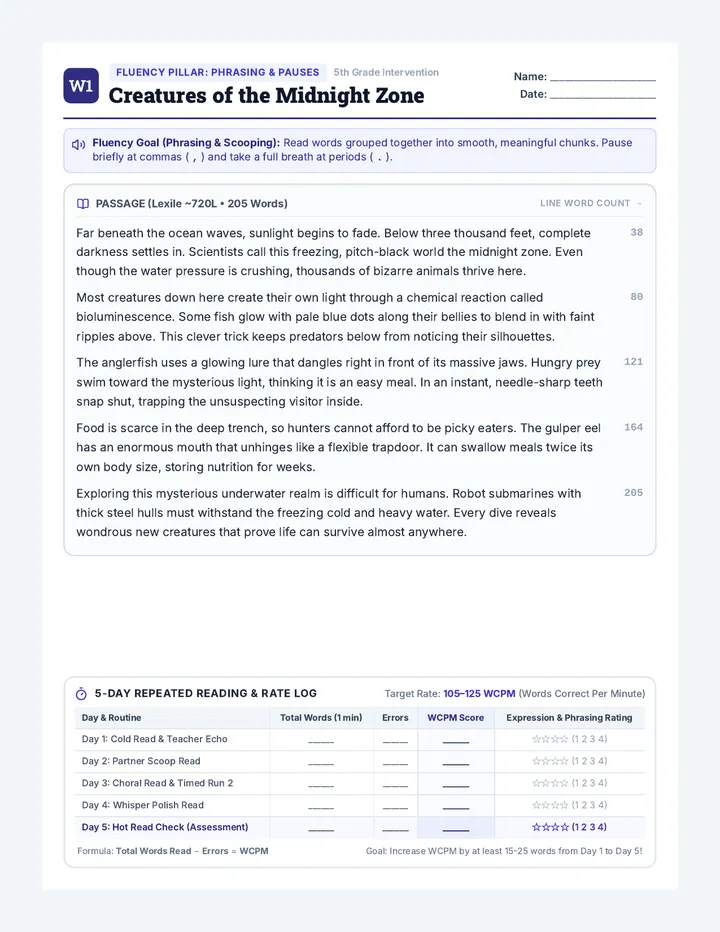
Ocean Abyss Fluency Passage

Fluency Flight Academy

A comprehensive four-week reading fluency intervention sequence designed for fifth-grade students needing targeted support in accuracy, pacing, expression, and comprehension. Each week focuses on an essential fluency pillar paired with high-interest non-fiction passages, structured daily practice routines, and progress-monitoring running records.

KM

Kelly Messer

10
Choice Spark Slides

Main Idea Masters

A targeted, highly scaffolded 50-minute small-group reading lesson for struggling 5th graders focused on identifying main ideas, distinguishing supporting details, and constructing short summaries using concrete, hands-on activities.

A

Amy.Cannon

8
Targeted Instruction Teacher Guide

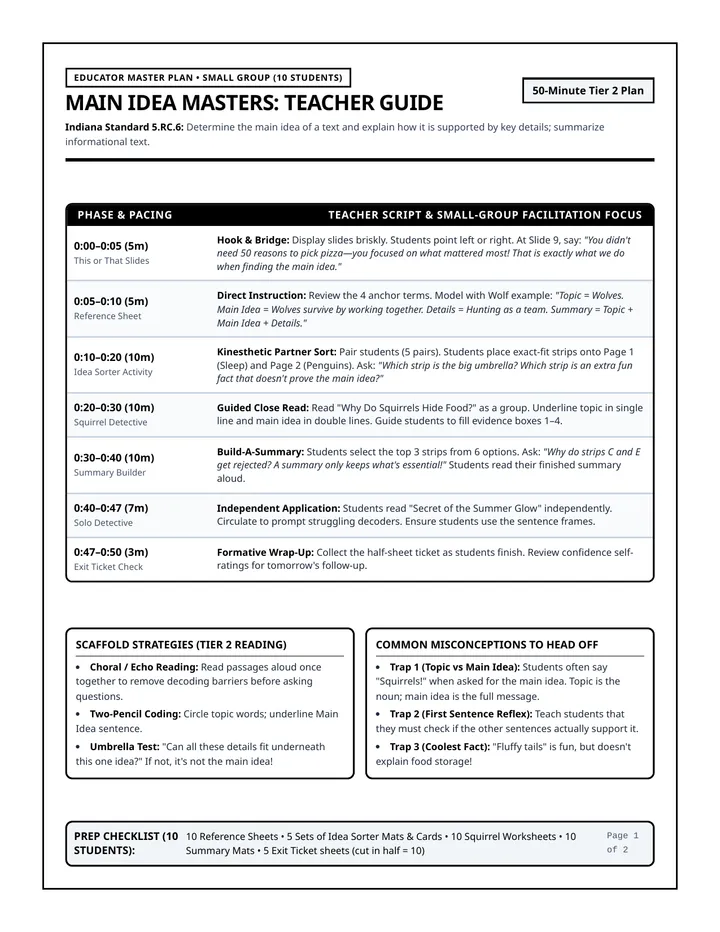
Targeted Instruction Teacher Guide

A black-and-white print-ready two-page teacher facilitation guide featuring a 50-minute pacing schedule, remedial scripting, misconception strategies, and comprehensive answer keys for all lesson materials.

A

Amy.Cannon

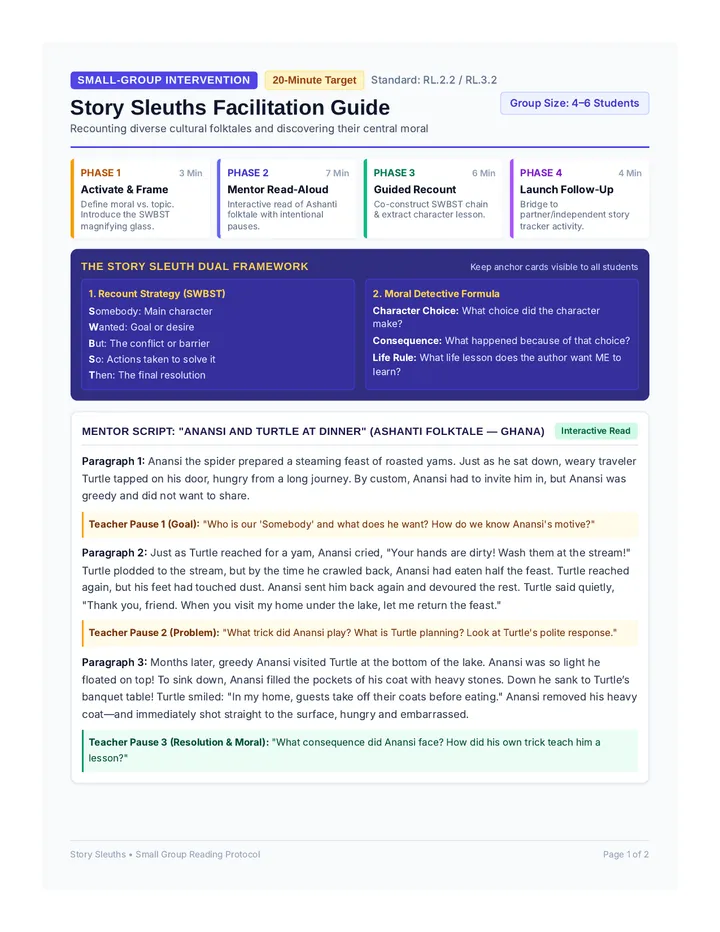
Story Sleuths Facilitation Guide

Story Explorers

An interactive, high-impact reading comprehension unit targeting core foundational literature standards. Students master recounting diverse folktales, extracting central morals, and analyzing how characters respond to major events and challenges.

S

Squiretak

8
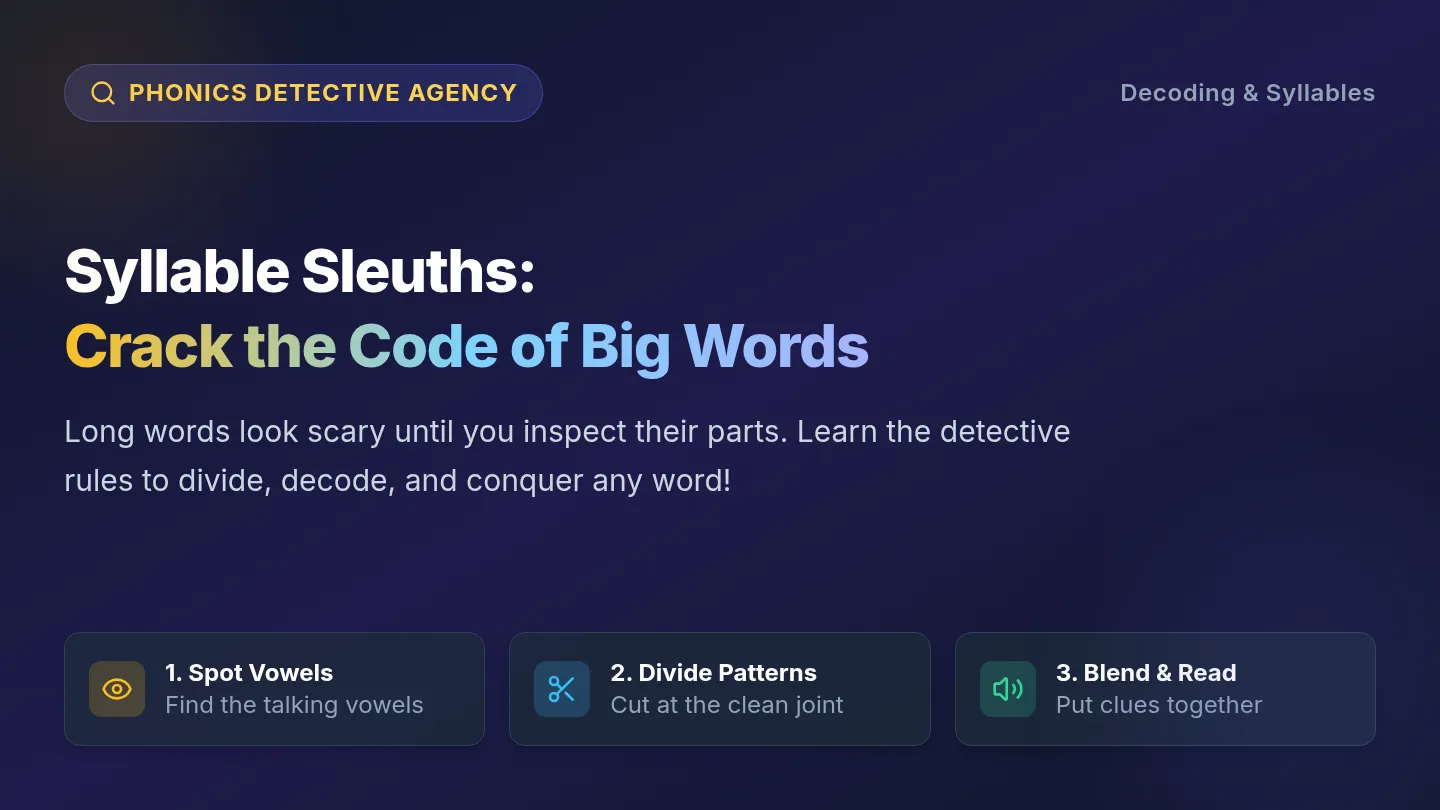
Syllable Sleuths Slides

Syllable Sleuths

A comprehensive phonics lesson targeting syllable types and systematic division rules (VCCV and VCV) to empower students to decode and encode multisyllabic words with accuracy and confidence. Includes explicit teaching slides, a detailed instructional guide, a multi-sensory student practice worksheet, and an exit ticket assessment.

KH

Keisha Harris

4
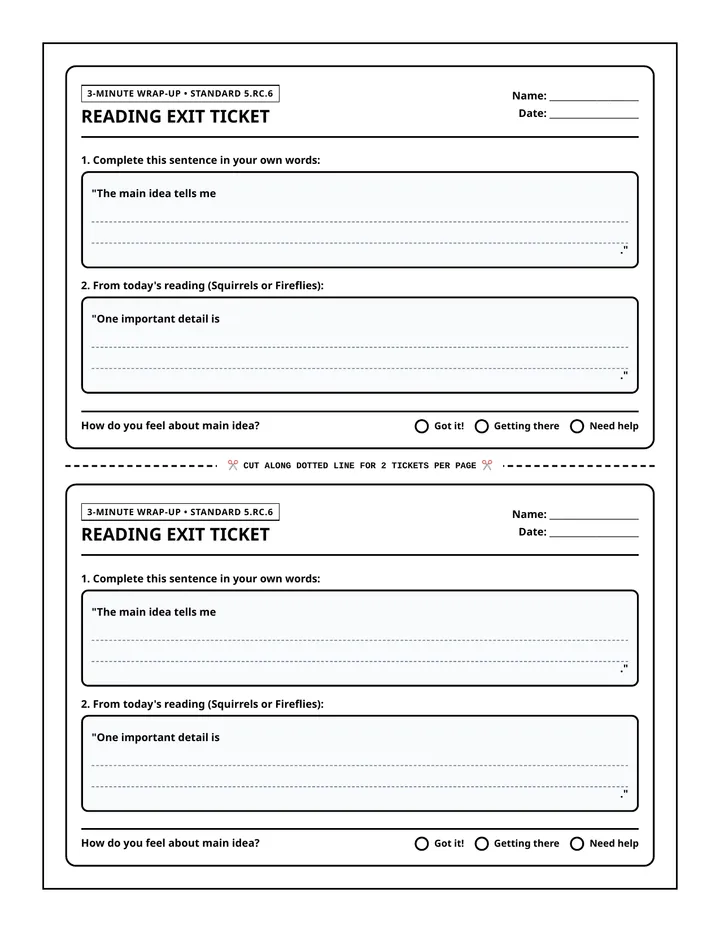
Quick Check Exit Ticket

Quick Check Exit Ticket

A black-and-white print-ready 2-up half-page formative exit ticket for students to articulate the function of the main idea, cite one supporting detail from the lesson, and self-assess confidence.

A

Amy.Cannon

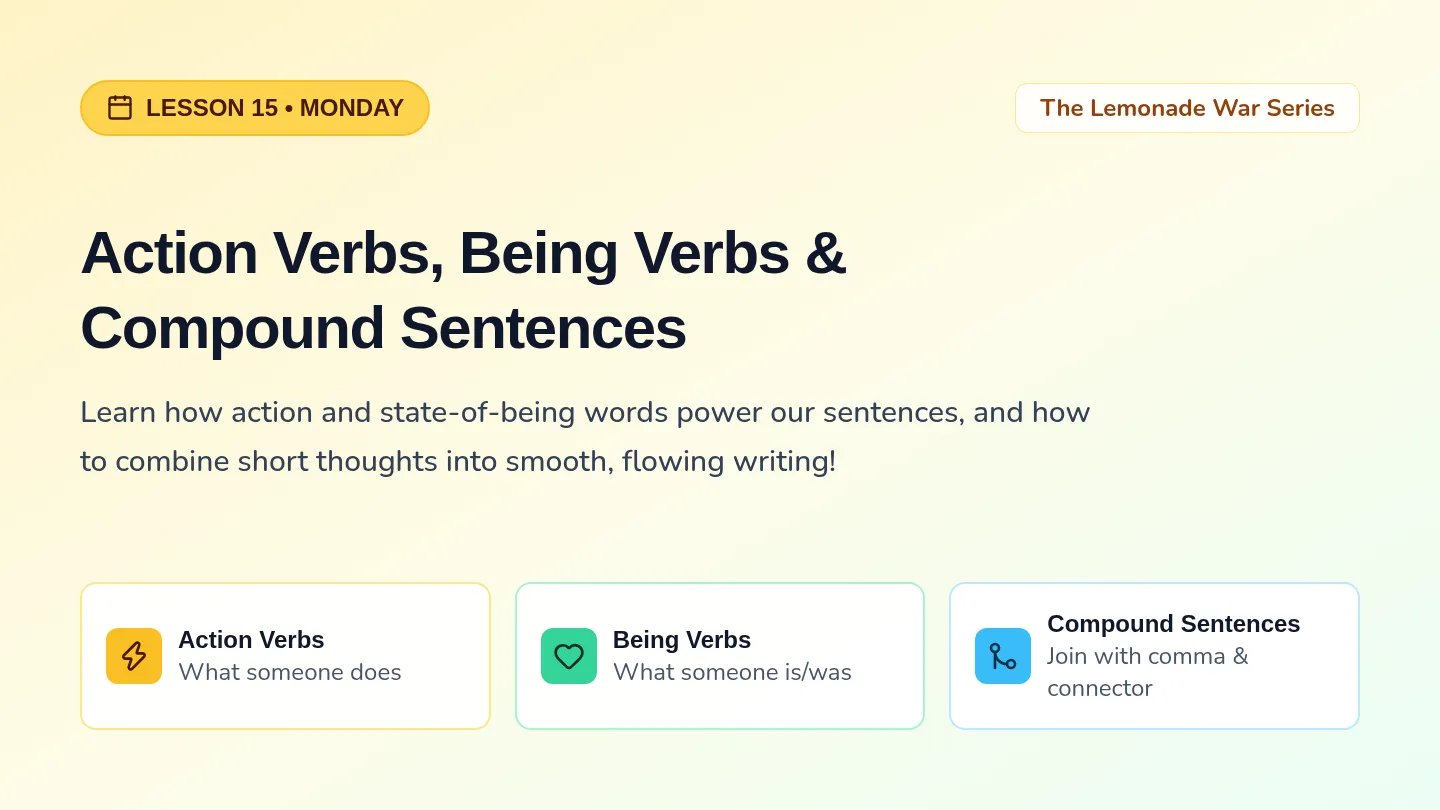
Lemonade Verbs Slides

Reading Writing Workshop

An engaging elementary English Language Arts unit connecting grammar mechanics, mentor texts, vocabulary, and sensory descriptive writing.

B

Bhoovaragavaswamym

8
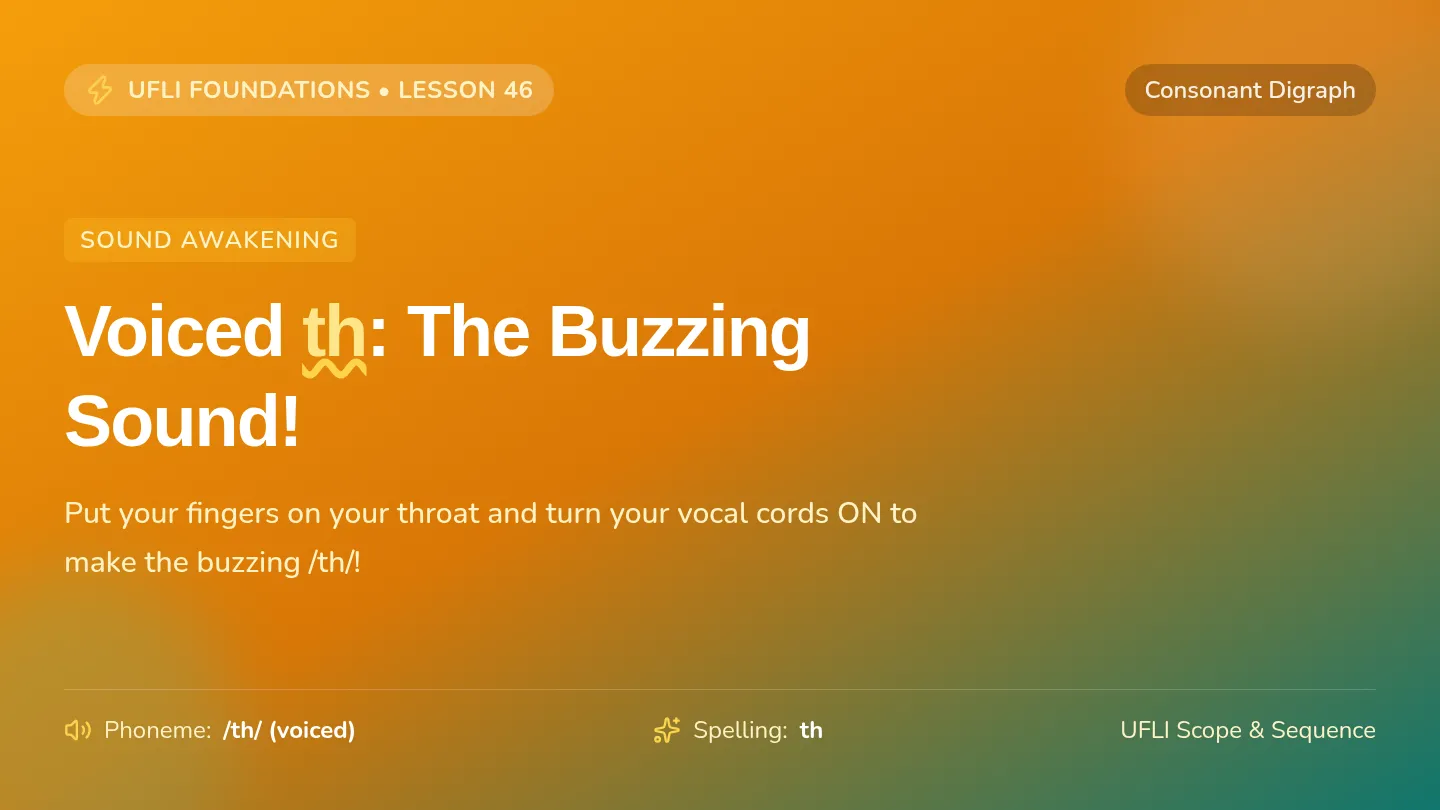
Vocal Buzz Slides

Buzzing Tongue Phonics

A complete phonics lesson targeting UFLI Lesson 46 on the voiced digraph 'th'. Includes instructional slides, three targeted decodable readers, an exit ticket with a 10-word verbal reading check, a fluency passage with comprehension questions, and an educator facilitation guide.

ML

Marti Lushin

7
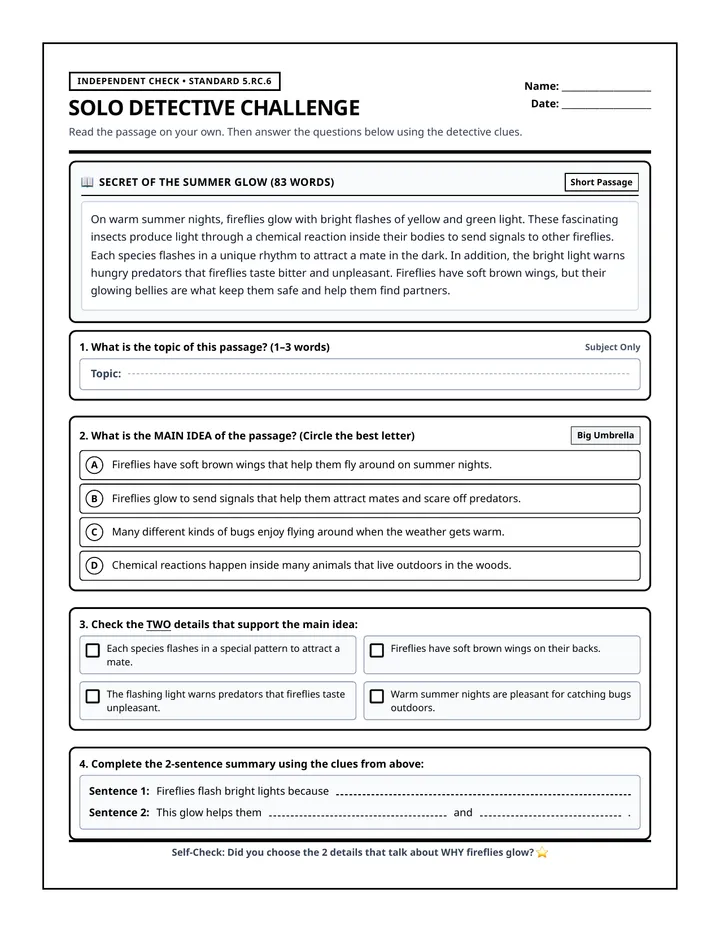
Solo Detective Practice Sheet

Solo Detective Practice Sheet

A black-and-white print-ready independent practice worksheet featuring an 83-word passage on fireflies, a 4-choice main idea question, detail selection, and a guided summary frame.

A

Amy.Cannon

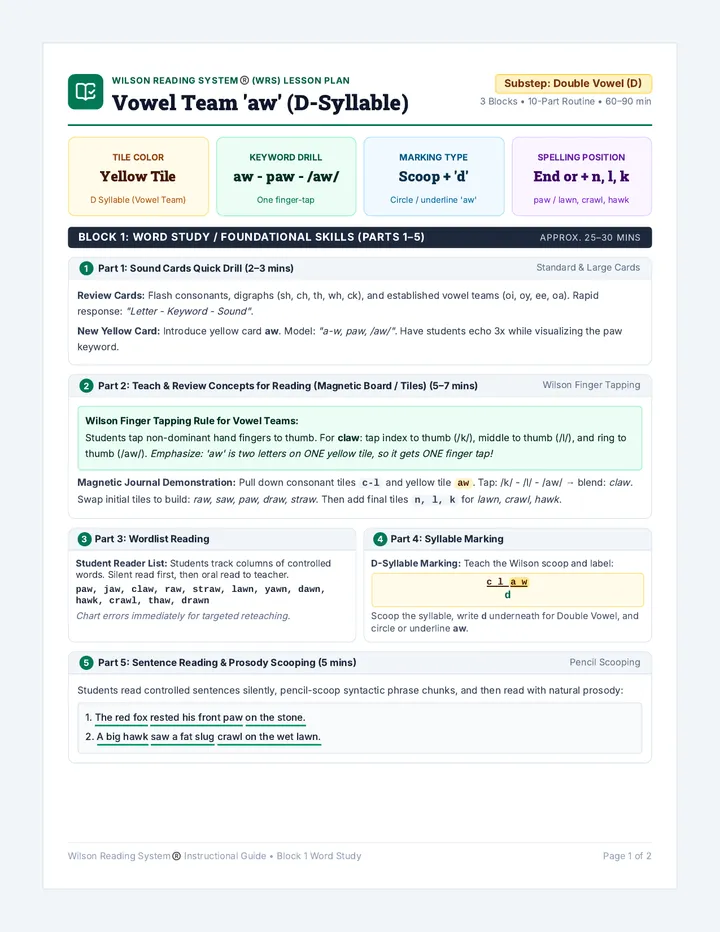
Paw Print Teacher Guide

Vowel Team Aw Pathways

A comprehensive structured literacy sequence targeting the vowel team 'aw', offering dual instructional pathways using both the Classic Orton-Gillingham 7-step routine and the 10-part Wilson Reading System (WRS) framework.

KW

Kellie Walsh

10
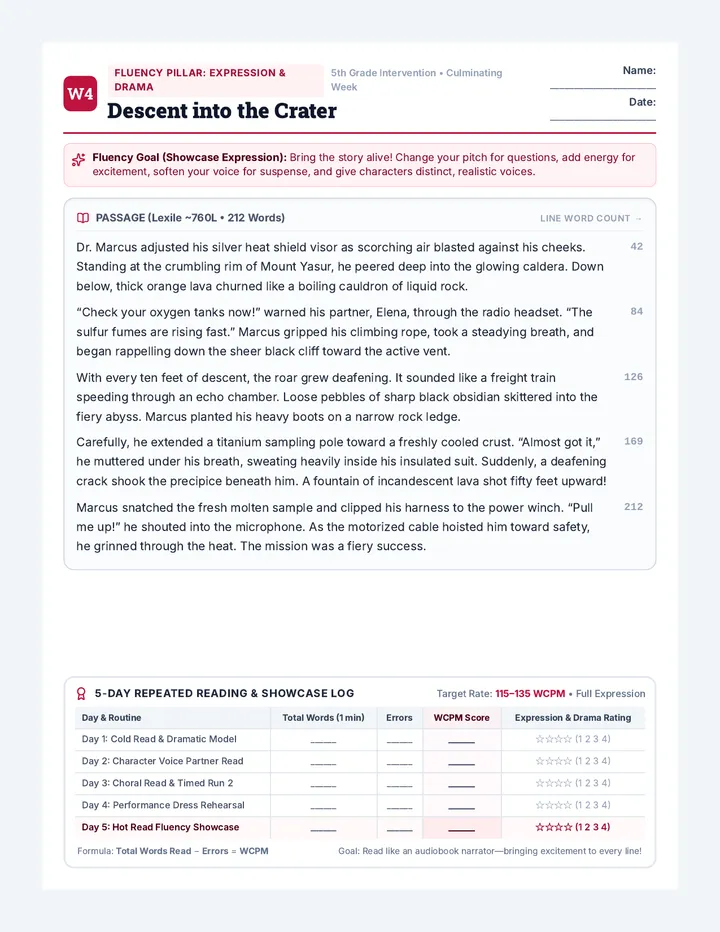
Volcano Trek Fluency Passage

Expression and Drama

Week 4 integrates all fluency elements into dramatic expression and confident performance, emphasizing character voice and emotional inflection. Students read a thrilling narrative about a volcanic expedition and conduct a culminating fluency showcase.

KM

Kelly Messer

2
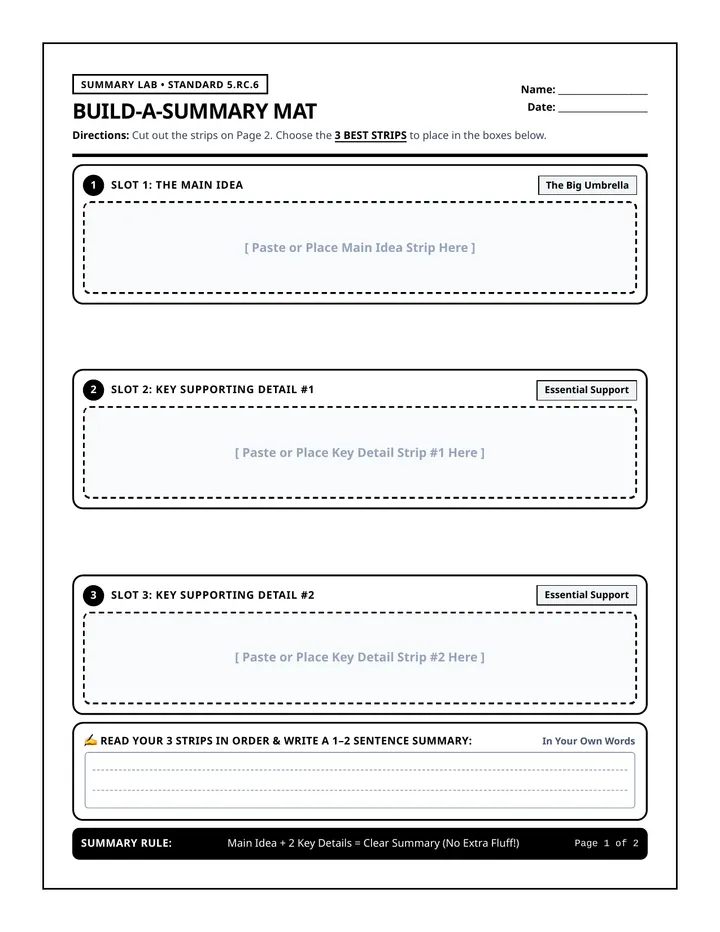
Summary Builder Activity

Summary Builder Activity

A completely redesigned two-page summary builder activity with large, high-legibility sentence strips (16px font with relaxed leading) on Page 2 and matching 105px landing slots on Page 1.

A

Amy.Cannon