Lenny.com
Explore
Create
ActivitiesNewMathEnglish Language ArtsScience & EngineeringSocial StudiesGlobal LanguagesHealth & Physical EducationSpecial EducationCounseling & Life SkillsArts & CreativityESL
Lenny.com
Lenny.com
Explore
Create
ActivitiesNewMathEnglish Language ArtsScience & EngineeringSocial StudiesGlobal LanguagesHealth & Physical EducationSpecial EducationCounseling & Life SkillsArts & CreativityESL
Lenny.com
English Language ArtsPhonics & Reading FoundationsLetter IdentificationLearn Letters A-ZLowercase and Uppercase LettersConsonants and VowelsLetter-Sound AssociationsLetter-Sound Associations: LowercaseLetter-Sound Associations: UppercaseBeginning and Ending SoundsRhymingBlending And SegmentingShort VowelsShort Vowel SoundsConsonant BlendsConsonant DigraphsBlends, Digraphs, and TrigraphsDigraphs, Blends, and Silent LettersLong Vowel SoundsLong Vowel PatternsShort and Long VowelsShort and Long Vowel PatternsSilent EVowel SoundsVowel TeamsR-Controlled VowelsDiphthongs: Oi, Oy, Ou, OwVariant VowelsVariant, Diphthong, And R Vowel PatternsSoft G And CSight WordsIrregular WordsWord RecognitionSyllablesSyllable TypesTwo-Syllable WordsMultisyllabic WordsPhoneme ManipulationDecodable TextsVocabularyAction WordsQuestion WordsNouns and AdjectivesClassify WordsCompound WordsSynonyms and AntonymsHomophonesHomophones and HomonymsShades of MeaningContext CluesPrefixes and SuffixesGreek and Latin RootsAnalogiesIdioms and AdagesForeign Words and ExpressionsWord Choice and UsageReference SkillsReading ComprehensionRead-Along Literary TextsRead-Along Informational TextsReality vs. FictionStory ElementsCharacterSequenceMain IdeaCause And EffectCompare And ContrastReading StrategiesText StructureAuthor's PurposeAuthor's Purpose And ToneAuthor's PerspectivePoint Of ViewThemeInference And ThemeInference And AnalysisPoetry ElementsLiterary DevicesAnalyzing LiteratureAnalyzing Informational TextsComparing TextsAudience, Purpose, And ToneBusiness DocumentsNovel StudyNonfiction Book StudyGrammar & MechanicsSentencesNounsVerbsAdjectivesPronounsCapitalizationPunctuationContractionsConjunctionsPrepositionsArticlesAdjectives And AdverbsVerb TypesVerb TensePronouns And AntecedentsPronoun TypesSubject-Verb AgreementDirect And Indirect ObjectsSentences, Fragments, And Run-OnsPhrases And ClausesCommasSemicolons, Colons, And CommasDashes, Hyphens, And EllipsesSpellingAbbreviationsFormattingVerb Tense And MoodMisplaced ModifiersWritingDescriptive DetailsCreative WritingOpinion WritingTopic SentencesOrganizing WritingLinking WordsSentence VarietyIntroductions And ConclusionsPersuasive And Opinion WritingExpository WritingPersuasive StrategiesDeveloping And Supporting ArgumentsTopic Sentences And Thesis StatementsSummarizingResearch SkillsEditing And RevisingActive And Passive Voice=Writing Clearly And ConciselyDebate & Public SpeakingPublic Speaking BasicsPersuasive TechniquesClaims and EvidenceTypes of ArgumentsReasoning TypesLogical FallaciesTopic ResearchOrganizing EvidenceDebate Speech OrganizationAttacking and Defending ArgumentsClash and EngagementImpact CalculusQuestioning and Cross-ExaminationCritical ThinkingInformal LogicFormal LogicInductive Reasoning

Verb Tense And Mood

Indicative, imperative, interrogative, conditional, and subjunctive moods alongside standard past, present, and future tenses. Targets precise communication by aligning action timing with the speaker's attitude or intent.

Lenny.com

Solutions

Lenny for EducatorsLenny for SchoolsLenny for Districts

Product

ExploreSign inCreateSupportAbout

Resources

Getting startedMTSS Acceleration Program

© 2026 Lenny Learning Inc.

TermsPrivacyAccessibility
LinkedInInstagramX
Lenny

Videos

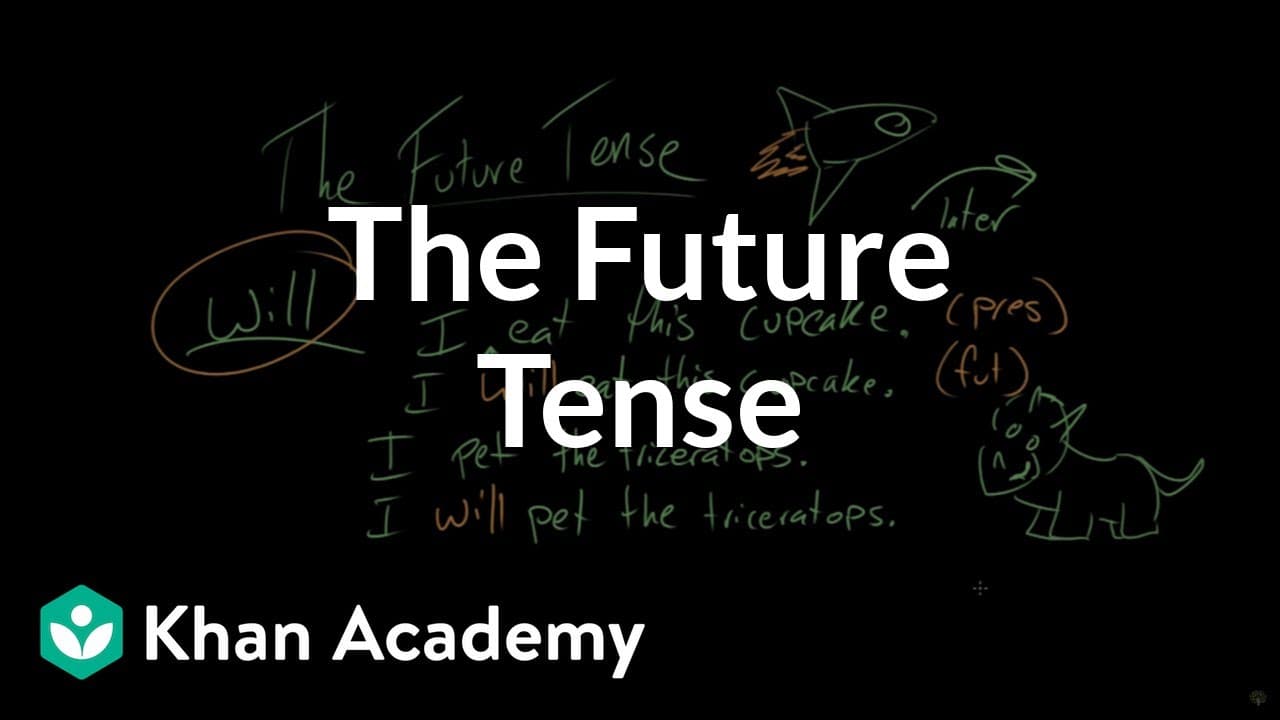
How to Form the Future Tense

How to Form the Future Tense

In this engaging grammar tutorial, David introduces students to the future tense, focusing specifically on how to use the auxiliary verb "will." The video uses a blackboard-style animation to visually demonstrate how sentences change from the present tense to the future tense. Through humorous examples involving cupcakes and triceratops, the narrator simplifies the concept of time in language, distinguishing between what happens now versus what happens later.

Khan AcademyKhan Academy

2mins 50s

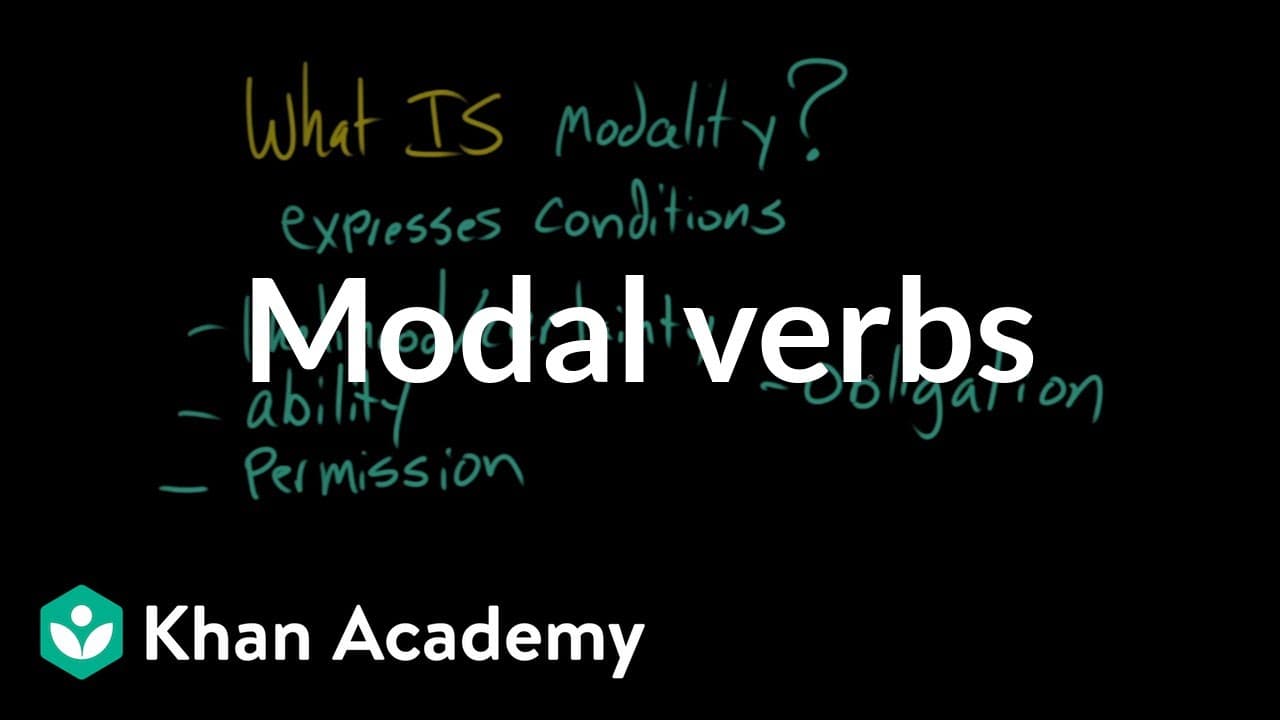
Understanding Modal Verbs: Ability, Permission, and Obligation

Understanding Modal Verbs: Ability, Permission, and Obligation

This educational video provides a clear and engaging introduction to modal verbs, a special class of auxiliary or "helper" verbs in the English language. Narrated by David, the video defines modality as the expression of conditions—such as likelihood, ability, permission, and obligation—and introduces the core list of modal verbs including may, might, must, can, could, shall, should, will, and would. The narrator uses a digital whiteboard to visually map out these concepts, making abstract grammar rules concrete and accessible. The content breaks down the three unique grammatical properties of modal verbs that distinguish them from regular verbs. First, they "agree with everything," meaning they do not change form based on the subject (e.g., no adding 's' for third-person singular). Second, they lack an infinitive form (one cannot say "to can" or "to must"). Third, they indicate specific modalities. Through humorous and relatable examples—like a detective deducing clues or a height requirement for a "Doom-coaster"—the video illustrates how these verbs function in everyday sentences. For educators, this video serves as an excellent foundational tool for teaching parts of speech and sentence structure. It effectively clarifies common student errors, such as incorrect conjugation or using modals as infinitives. The clear visual text and distinct color-coding aid in retention, while the diverse examples provide readymade sentences for classroom analysis. It is particularly useful for upper elementary and middle school English Language Arts curriculums, as well as for English Language Learners (ELLs) mastering the nuances of English verb structures.
Khan AcademyKhan Academy

4mins 53s

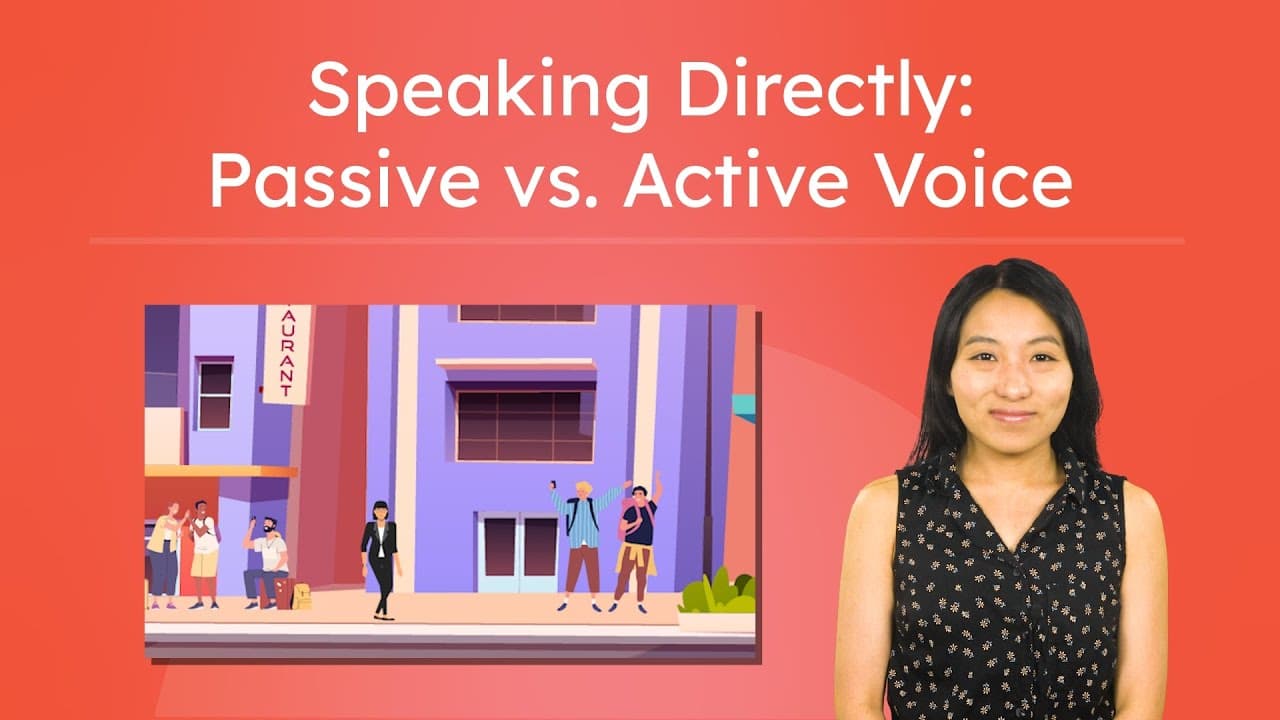
Active vs. Passive Voice: A Grammar Adventure

Active vs. Passive Voice: A Grammar Adventure

This engaging language arts video introduces students to the concepts of active and passive voice through a narrative set in the fictional town of "Verbados." When the town's tourism industry suffers due to confusing grammar, the presenter steps in to help clarify the town's communication. By breaking down the roles of the subject and the verb, the video demonstrates how active voice portrays the subject performing an action, while passive voice shows the subject receiving the action. The lesson uses clear visual metaphors—such as an archer shooting a target—to illustrate the direction of action in a sentence. It provides multiple opportunities for interactive learning, asking viewers to pause and label sentences as active or passive, and later to rewrite sentences from one voice to the other. The content covers not just how to identify the voices, but the stylistic reasons for choosing one over the other, such as using active voice for persuasion and clarity, or passive voice for formality or when the actor is unknown. Ideal for upper elementary and middle school English classes, this video serves as an excellent introduction or review of sentence structure and style. Teachers can use it to help students strengthen their writing by making conscious choices about subject-verb relationships. The narrative approach helps contextualize abstract grammatical rules, showing students practical applications in advertising, official announcements, and storytelling.

Miacademy & MiaPrep Learning ChannelMiacademy & MiaPrep Learning Channel

11mins 29s

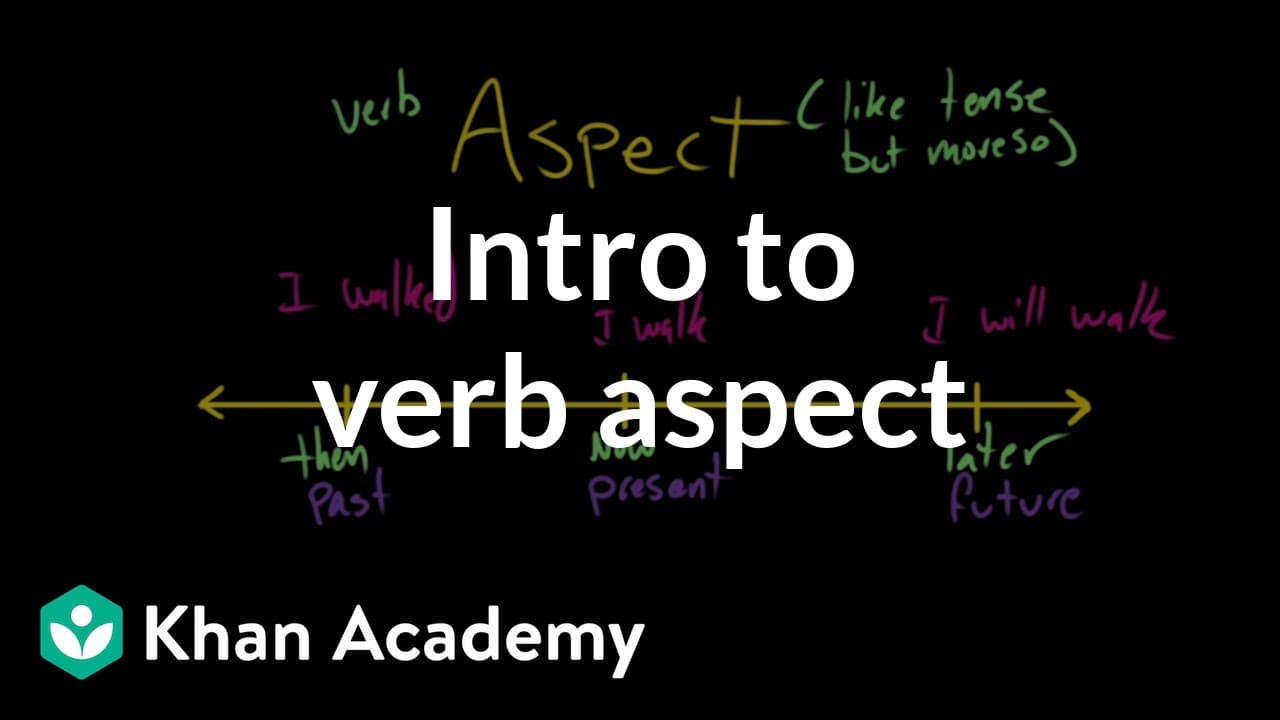
Introduction to Verb Aspect and Tense Nuance

Introduction to Verb Aspect and Tense Nuance

In this concise grammar lesson, David introduces the concept of verb aspect, distinguishing it from basic verb tense. While tense places an action in the past, present, or future, aspect adds nuance to these actions, describing their nature—such as whether they are ongoing, completed, or repetitive. The video uses a clear timeline visualization to demonstrate how aspect functions as a tool to expand expression. The key themes explored include the relationship between time and language, the structure of English verbs, and the idea of grammatical "nuance." Specifically, it introduces the four variations (aspects) that exist within the present tense: simple (I walk), continuous (I am walking), perfect (I have walked), and perfect continuous (I have been walking), referring to them playfully as "mini-tenses." For educators, this video serves as an excellent foundational hook for a unit on advanced verb forms. It moves students beyond simple conjugation into understanding the subtle differences in meaning conveyed by different verb structures. By visualizing these concepts on a timeline, it helps visual learners grasp abstract grammatical rules, setting the stage for more complex writing and analysis tasks.

Khan AcademyKhan Academy

1min 50s

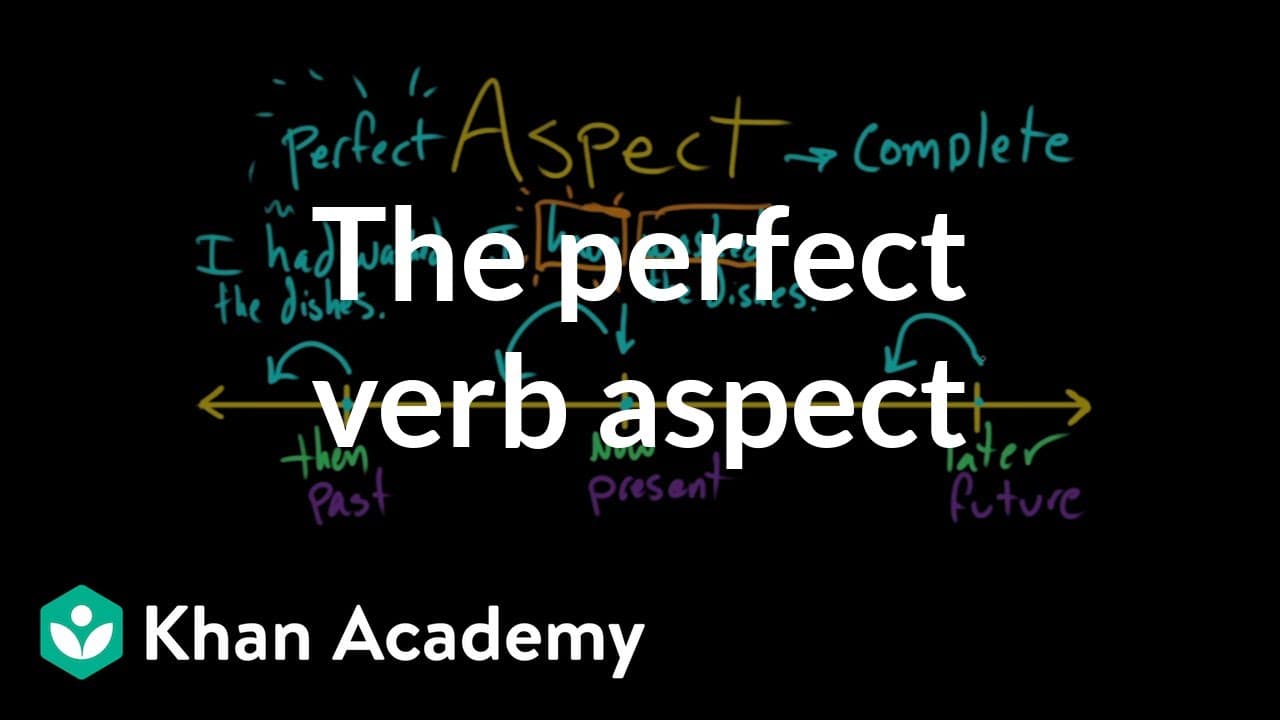
Understanding the Perfect Verb Aspect

Understanding the Perfect Verb Aspect

This video provides a clear and concise explanation of the "perfect aspect" in English grammar. The narrator clarifies that in grammatical terms, "perfect" means "complete" rather than flawless. Using a visual timeline, the video demonstrates how this aspect is used to describe actions that are finished prior to a specific reference point in time—whether that point is in the past, present, or future. The content breaks down the structure of perfect tenses, specifically highlighting the formula: helper verb (have/had/will have) + the past participle of the main verb. Through the specific example of "washing dishes," the narrator illustrates the Present Perfect ("have washed"), Past Perfect ("had washed"), and Future Perfect ("will have washed"), showing how only the helper verb changes while the main verb remains constant. For educators, this resource is an excellent tool for demystifying complex verb tenses. The visual timeline offers a concrete mental model for students who struggle with the abstract concept of time in language. It effectively separates the idea of "tense" (when we are speaking) from "aspect" (the status of the action), making it a valuable asset for middle and high school English Language Arts lessons and ESL/ELL instruction.

Khan AcademyKhan Academy

2mins 31s

Three Types of Sentences Explained

Three Types of Sentences Explained

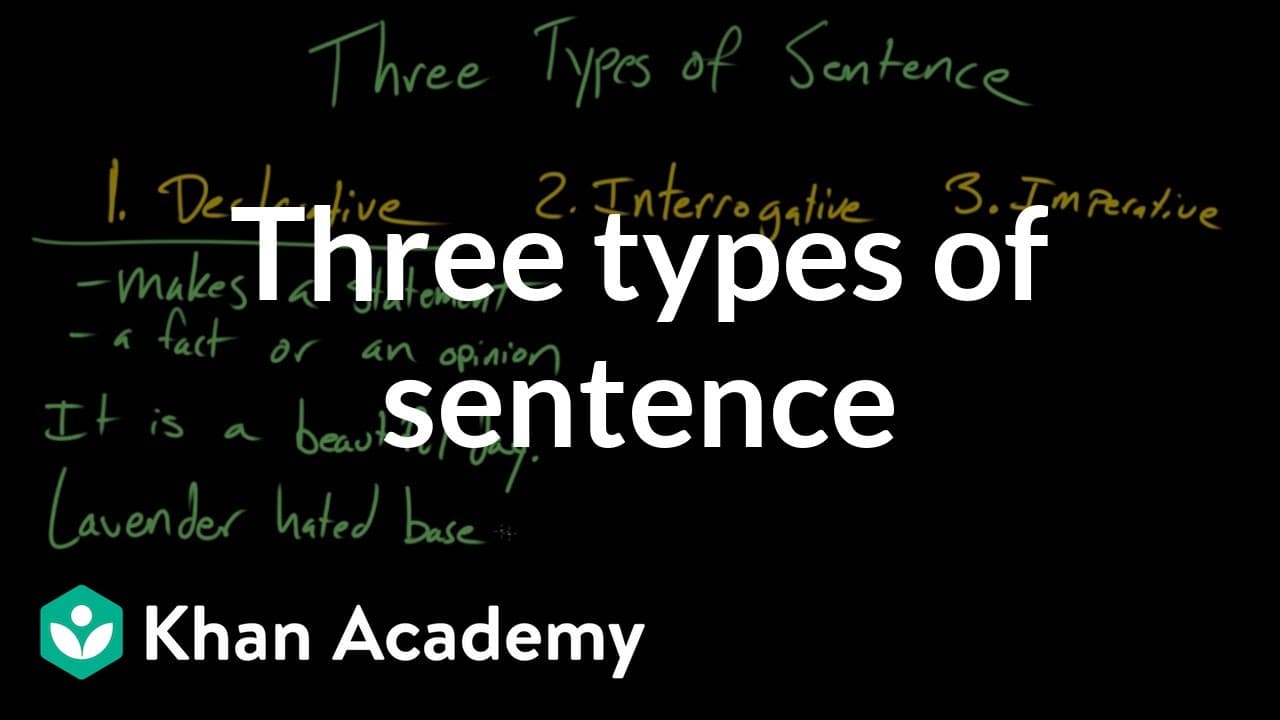
A lively and humorous grammar tutorial that introduces students to the three main types of sentences: declarative, interrogative, and imperative. Through a conversational dialogue between two instructors, David and Paige, the video defines each sentence type, provides clear examples, and explains their specific grammatical functions. The visual format uses a blackboard style where terms and examples are handwritten in real-time to reinforce the concepts. The video covers the specific definitions of each type: declarative sentences for making statements or conveying facts/opinions, interrogative sentences for asking questions, and imperative sentences for issuing commands. A key grammatical concept explored is the "implied subject" in imperative sentences, where the subject "you" is understood but not spoken. The instructors use memorable, sometimes silly examples involving lavender, baseball, cheese, and bunnies to keep engagement high. This resource is highly valuable for elementary and middle school English Language Arts classrooms. It demystifies complex-sounding terminology (like "interrogative") by connecting it to familiar words (like "interrogation"). Teachers can use this video to introduce sentence variety in writing, teach proper end punctuation, or explain the grammatical structure of commands. The final segment, which transforms a single slogan into all three sentence types, offers a perfect model for classroom practice activities.

Khan AcademyKhan Academy

3mins 32s

Materials

Verb Voyagers Anchor Chart Revised

Verb Voyagers Anchor Chart Revised

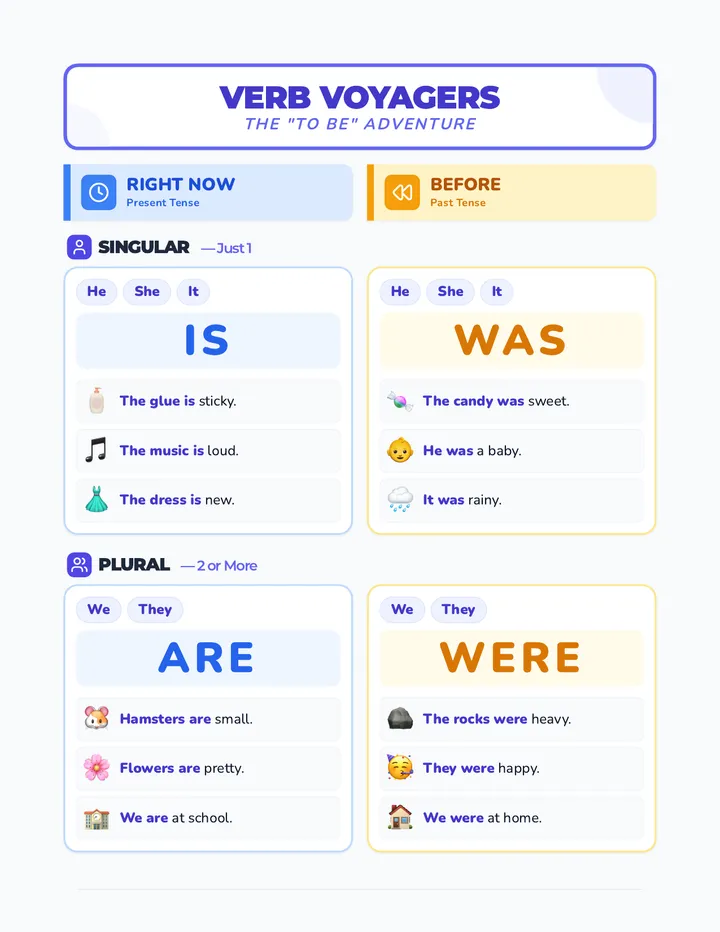
A condensed version of the Verb Voyagers anchor chart, removing student information sections and adjusting spacing and font sizes to ensure it fits perfectly on a single printable page.

T

tdunbar

Style Sculptor Writing Handout

Style Sculptor Writing Handout

A beautifully formatted, printable 2-page student worksheet designed to teach sentence variety and vocabulary elevation. It breaks down the user's draft as a diagnostic case study, provides stylistic tools (such as inverted conditionals and subordinating openers), shows a fully polished version of the user's paragraph, and concludes with a clean practice workspace.

A

ALees

Sequences

Reading Focus Pacing Guide

Testing Our Limits Unit

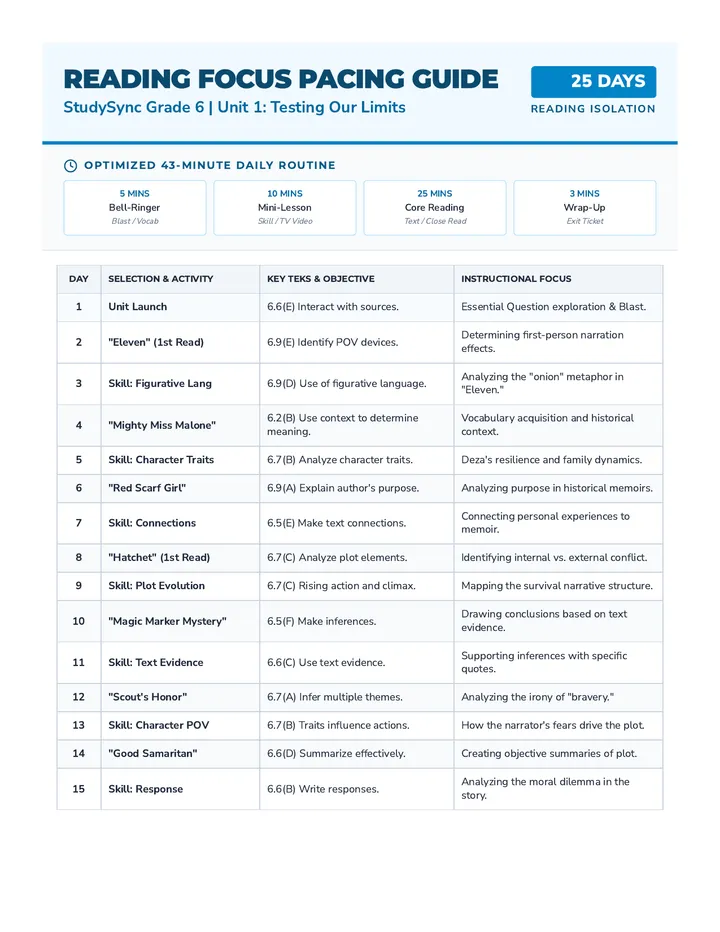
A 25-day comprehensive unit for StudySync Grade 6 that explores the theme of courage and resilience through isolated reading and writing tracks, aligned to ELA TEKS.

DM

Dawn Mustian

79
Life Legacy Organizer

Curators Quest

A collection of 5th-grade ELA and Grammar resources focusing on biographical research, summary writing, and language mastery.

CO

Catherine Onessimo

30
Mission Message Guide Enseignant

Expertise Formation Premier Degré

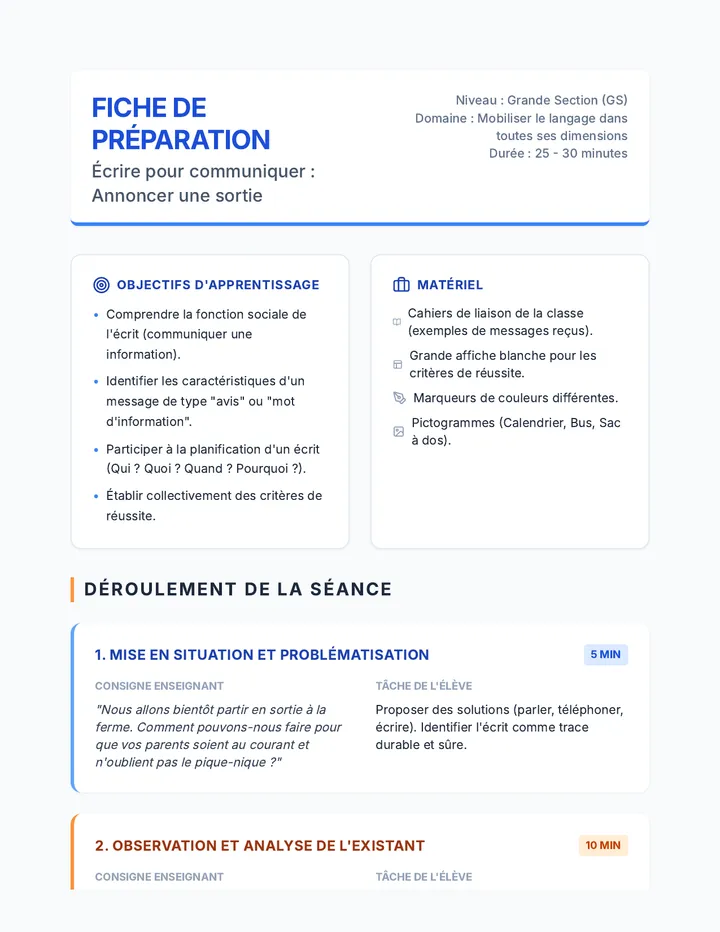
Une série de modules de formation destinés aux conseillers pédagogiques pour renforcer leur expertise en ingénierie de formation continue, spécifiquement appliquée à l'enseignement du français à l'école primaire.

VD

Val Désirée

27
Architecture of Voice Teacher Guide

The Architecture of Voice

An 8-day intensive unit titled 'The Architecture of Voice.' Students analyze four diverse mentor texts—Hurston, de Vaca, Tan, and Cofer—to understand how craft elements like figurative language, imagery, syntax, and diction shape an author's tone and perspective. For each text, students produce a structured paragraph, culminating in a comprehensive autobiographical essay that explores the various forces (culture, challenges, people, and places) that have shaped their own voices.

LF

Lindsey Foulks

24
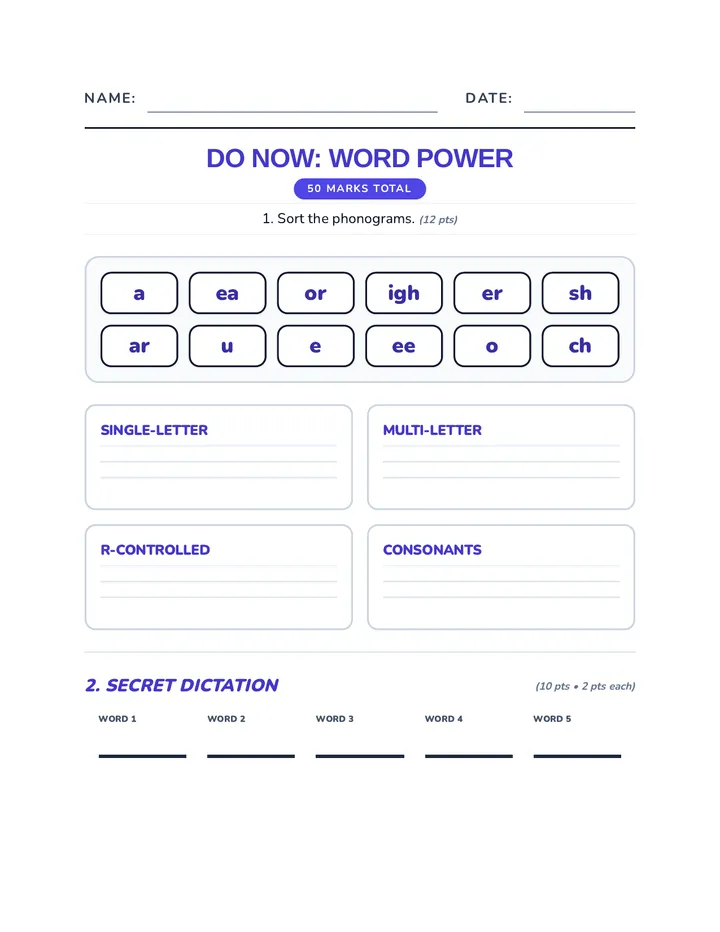
Word Power Worksheet

Summer Power Review

A comprehensive Grade 2 literacy review packet designed for summer practice. It includes anchor charts for spelling rules, vowel types, grammar, and morphology, followed by a detailed review worksheet.

MP

Ms. Patel

23
Legacy Files Teacher Guide

Legacy Files Writing Unit

A 10-session unit for 5th graders focusing on the transition from paragraph to essay writing through the lens of biography. The unit covers sentence variety, chronological sequencing, paragraph structure, and grammar, tailored for small group instruction with differentiated support.

DG

Danielle Gagnon

12