Lenny.com
Explore
Create
ActivitiesNewMathEnglish Language ArtsScience & EngineeringSocial StudiesGlobal LanguagesHealth & Physical EducationSpecial EducationCounseling & Life SkillsArts & CreativityESL
Lenny.com
Lenny.com
Explore
Create
ActivitiesNewMathEnglish Language ArtsScience & EngineeringSocial StudiesGlobal LanguagesHealth & Physical EducationSpecial EducationCounseling & Life SkillsArts & CreativityESL
Lenny.com
Lenny.com

Solutions

Lenny for EducatorsLenny for SchoolsLenny for Districts

Product

ExploreSign inCreateSupportAbout

Resources

Getting startedMTSS Acceleration Program

© 2026 Lenny Learning Inc.

TermsPrivacyAccessibility
LinkedInInstagramX
Lenny
English Language ArtsPhonics & Reading FoundationsLetter IdentificationLearn Letters A-ZLowercase and Uppercase LettersConsonants and VowelsLetter-Sound AssociationsLetter-Sound Associations: LowercaseLetter-Sound Associations: UppercaseBeginning and Ending SoundsRhymingBlending And SegmentingShort VowelsShort Vowel SoundsConsonant BlendsConsonant DigraphsBlends, Digraphs, and TrigraphsDigraphs, Blends, and Silent LettersLong Vowel SoundsLong Vowel PatternsShort and Long VowelsShort and Long Vowel PatternsSilent EVowel SoundsVowel TeamsR-Controlled VowelsDiphthongs: Oi, Oy, Ou, OwVariant VowelsVariant, Diphthong, And R Vowel PatternsSoft G And CSight WordsIrregular WordsWord RecognitionSyllablesSyllable TypesTwo-Syllable WordsMultisyllabic WordsPhoneme ManipulationDecodable TextsVocabularyAction WordsQuestion WordsNouns and AdjectivesClassify WordsCompound WordsSynonyms and AntonymsHomophonesHomophones and HomonymsShades of MeaningContext CluesPrefixes and SuffixesGreek and Latin RootsAnalogiesIdioms and AdagesForeign Words and ExpressionsWord Choice and UsageReference SkillsReading ComprehensionRead-Along Literary TextsRead-Along Informational TextsReality vs. FictionStory ElementsCharacterSequenceMain IdeaCause And EffectCompare And ContrastReading StrategiesText StructureAuthor's PurposeAuthor's Purpose And ToneAuthor's PerspectivePoint Of ViewThemeInference And ThemeInference And AnalysisPoetry ElementsLiterary DevicesAnalyzing LiteratureAnalyzing Informational TextsComparing TextsAudience, Purpose, And ToneBusiness DocumentsNovel StudyNonfiction Book StudyGrammar & MechanicsSentencesNounsVerbsAdjectivesPronounsCapitalizationPunctuationContractionsConjunctionsPrepositionsArticlesAdjectives And AdverbsVerb TypesVerb TensePronouns And AntecedentsPronoun TypesSubject-Verb AgreementDirect And Indirect ObjectsSentences, Fragments, And Run-OnsPhrases And ClausesCommasSemicolons, Colons, And CommasDashes, Hyphens, And EllipsesSpellingAbbreviationsFormattingVerb Tense And MoodMisplaced ModifiersWritingDescriptive DetailsCreative WritingOpinion WritingTopic SentencesOrganizing WritingLinking WordsSentence VarietyIntroductions And ConclusionsPersuasive And Opinion WritingExpository WritingPersuasive StrategiesDeveloping And Supporting ArgumentsTopic Sentences And Thesis StatementsSummarizingResearch SkillsEditing And RevisingActive And Passive Voice=Writing Clearly And ConciselyDebate & Public SpeakingPublic Speaking BasicsPersuasive TechniquesClaims and EvidenceTypes of ArgumentsReasoning TypesLogical FallaciesTopic ResearchOrganizing EvidenceDebate Speech OrganizationAttacking and Defending ArgumentsClash and EngagementImpact CalculusQuestioning and Cross-ExaminationCritical ThinkingInformal LogicFormal LogicInductive Reasoning

Grade 8 ELA Assessment Prep

A comprehensive set of preparation and review materials for the ELA Grade 8 Interim Assessment 3, featuring time-stamped pacing guides, scratch paper exemplars for textual analysis, and a fully annotated answer key.

AOArchie Olson

Grade 8 ELA Assessment Prep

A comprehensive set of preparation and review materials for the ELA Grade 8 Interim Assessment 3, featuring time-stamped pacing guides, scratch paper exemplars for textual analysis, and a fully annotated answer key.

AOArchie Olson
FINISH
165 MIN
Pencils Down - Session 1 End

Proctor Reminders

  • Ensure students are not rushing. 165 minutes is more than enough for 28 MC items.
  • Walk the room and look for active scratch paper use. Prompt students to re-read if they finish before the 60-minute mark.
  • Announce time at 120 minutes, 60 minutes, 30 minutes, and 5 minutes.
160 MIN
Final Verification - All Writing Complete
FINISH165 MINPencils Down - Session 2 End

Writing Focus Reminders

  • Encourage students to spend time revising. A 4-point response requires multiple pieces of evidence and sophisticated analysis.
  • Monitor that students are using the "Planning Page" for Q46 effectively before writing in the final lined space.
  • Be proactive in announcing the 60-minute mark to transition everyone to the writing section.

Q44: Analysis of "Today I am a Poem"

"The phrase 'today I am a poem' reveals María’s transition from a girl wearing a 'conspiracy' of mismatched clothes to a young woman with a profound sense of self-worth. It shows she has moved past the fear of being seen as a 'joke' and instead feels 'elegant.' By walking with her 'head held high,' she embraces her identity as something lyrical and meaningful—a living tribute to the people (Mami, Papi, Abuela) whose items she wears."

Q45: Evan's Characterization through POV

"The third-person limited POV reveals Evan’s deep-seated insecurity and his habit of 'labeling people' as a defense mechanism. For example, he 'envies... their ease with themselves' when watching the boys in black, showing he lacks that same confidence. Furthermore, his inner reaction to Shane’s scars—feeling a 'deep sense of shame' that his own body 'revealed so little history'—uncovers his fear that he is boring or 'unfascinating,' just like the characters he claims to hate in books."

Q46: Paired Text Extended Response Exemplar (4-Points)

Prompt: Compare how María and Evan are affected by conversations with family members. Explain how their reactions are different using details from both stories.

Family conversations often serve as mirrors that reflect a character’s true identity, but those reflections can either empower or diminish them. In Judith Ortiz Cofer's 'Call Me María' and James Howe's 'The Watcher,' both María and Evan face pivotal conversations with family that force them to confront who they are. While María’s grandmother provides a foundation of cultural pride that helps her find confidence, Evan’s parents use labels that deepen his sense of isolation and self-doubt.

María is profoundly affected by her Abuela's supportive and insightful words. When María reveals her mismatched outfit, Abuela does not judge her for being 'extreme.' Instead, she says, 'I know who you are and who you may be if you choose.' This affirmation gives María the permission to be herself. Furthermore, by letting María borrow her mother’s 'prized' shawl, Abuela gives María a physical piece of her heritage to wear. As a result, María goes to school feeling 'elegant' and 'head held high.' Her family’s words act as a catalyst for her to see herself as a 'poem' rather than a 'joke,' illustrating a positive and strengthening effect.

Evan, on the other hand, is negatively affected by his parents’ analytical and pressuring words. His father insists he read 'The Catcher in the Rye,' telling him the book is 'touching something deep inside' him. This comparison to Holden Caulfield, a character Evan 'hated,' feels like an unwanted label that implies Evan is just as cynical or difficult. Additionally, his mother’s repeated bugging about 'making some friends' reinforces his feeling of being a social 'snob.' These conversations do not offer Evan a path to confidence; instead, they make him feel exposed and ashamed. When he speaks to Shane, he is so worried about his mother 'paying attention' that his cheeks grow hot, showing he feels burdened by family expectations rather than supported by them.

The reactions of these two characters highlight their different paths. María reacts to her grandmother’s words with outward expression and grace, choosing to ignore those who 'make fun' of her. Evan reacts with internal shame and further withdrawal. While María uses the 'starry sky' of her grandmother's shawl to find her way, Evan remains lost in his own 'history'—or lack thereof—feeling that his body revealed too little compared to others. Ultimately, María’s family conversation leads to self-actualization, while Evan’s leads to a deeper sense of alienation.

Official Annotated Key — IA3 Grade 8 ELA Assessment Prep Pack
You might also like

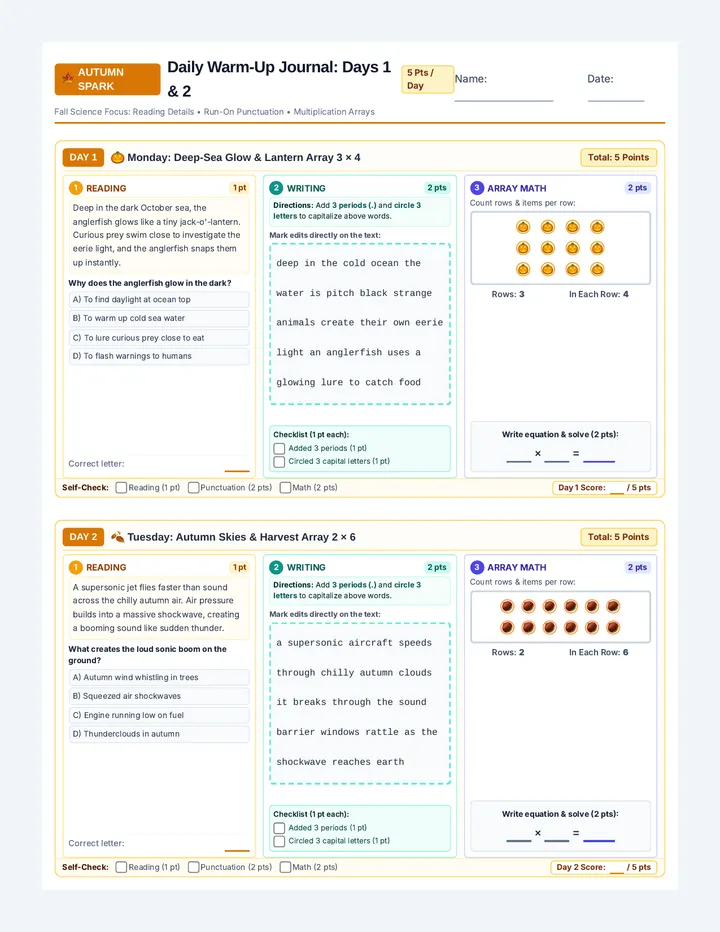
Autumn Warmup Packet

Daily Spark Warmups

A five-day daily warm-up sequence for 8th grade intervention classrooms featuring reading comprehension, sentence mechanics, and multiplication array modeling across three compact print pages.

KS

Kathleen Suther

3
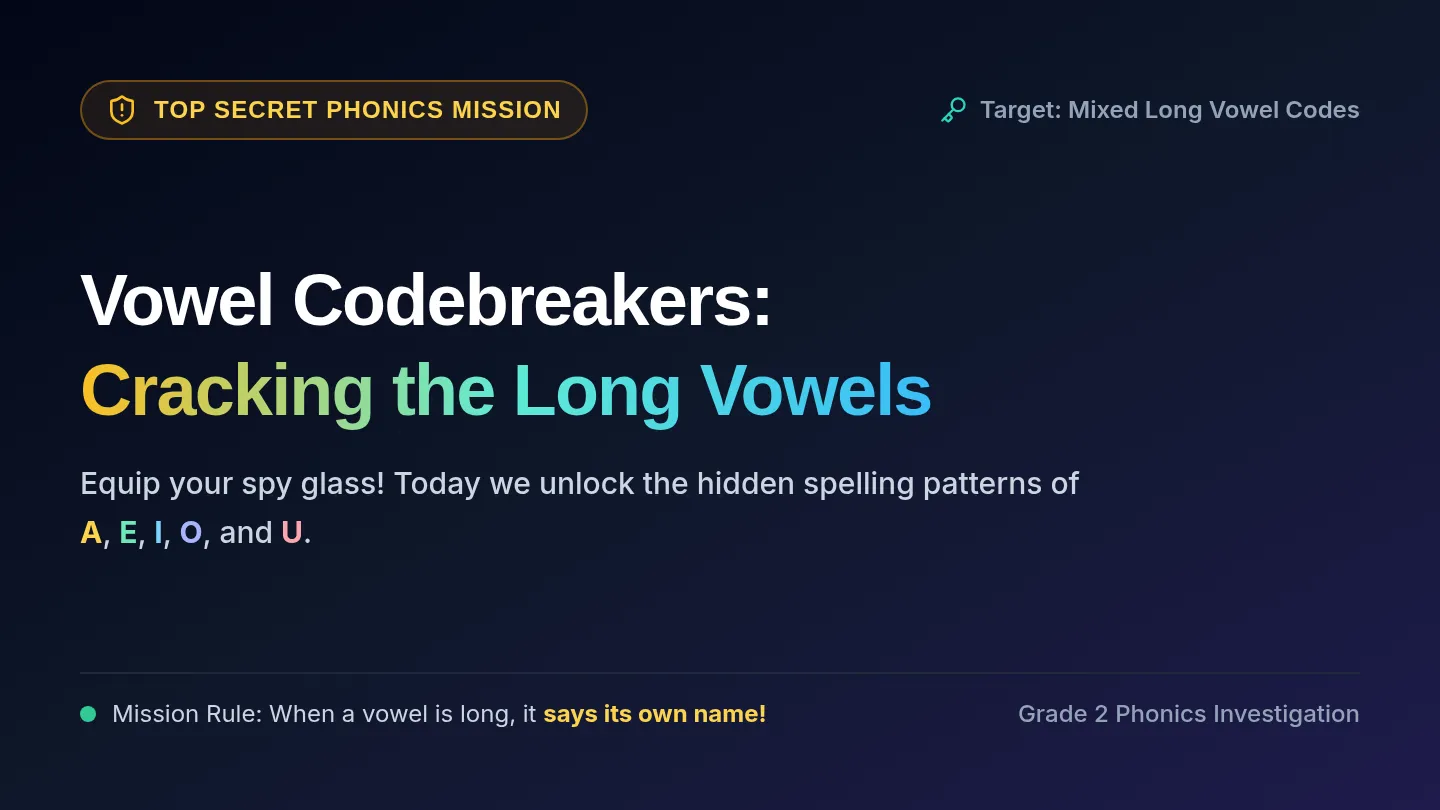
Vowel Codebreakers Slides

Vowel Codebreakers

A comprehensive phonics lesson exploring mixed long vowel spelling patterns across A, E, I, O, and U. Students decode, sort, and apply spelling generalizations through detective-themed missions, visual modeling, and hands-on practice.

MB

Melissa Basilone

4
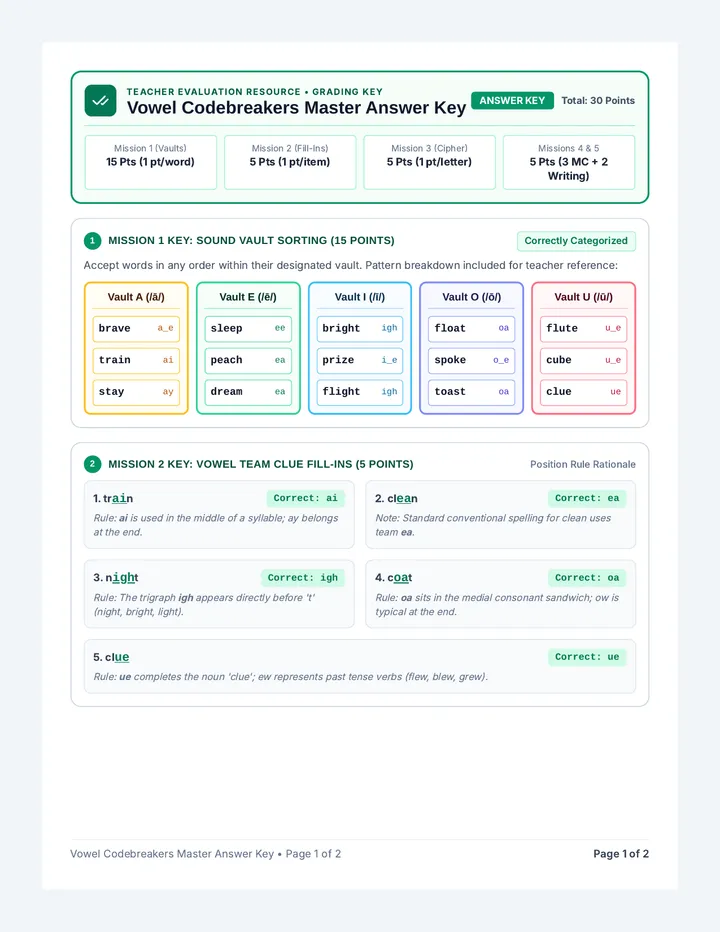
Vowel Codebreakers Answer Key

Vowel Codebreakers Answer Key

A complete 2-page teacher answer key for the Vowel Codebreaker Worksheet. Features filled solutions, phonetic pattern explanations, common distractor analyses, exemplar student sentences, and a quick-score grading rubric.

MB

Melissa Basilone

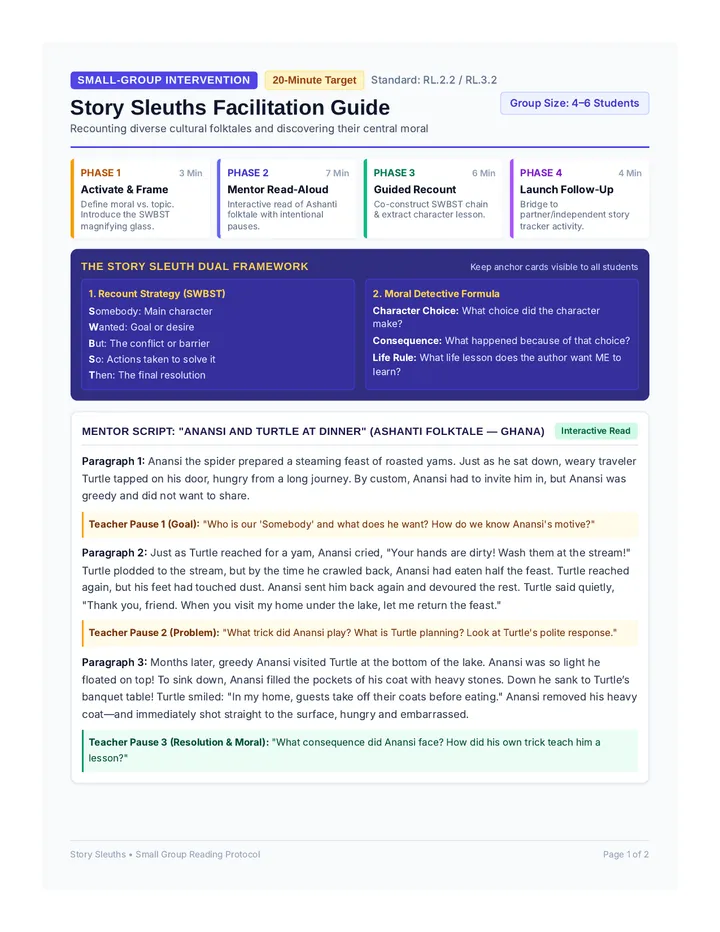
Story Sleuths Facilitation Guide

Story Explorers

An interactive, high-impact reading comprehension unit targeting core foundational literature standards. Students master recounting diverse folktales, extracting central morals, and analyzing how characters respond to major events and challenges.

S

Squiretak

8
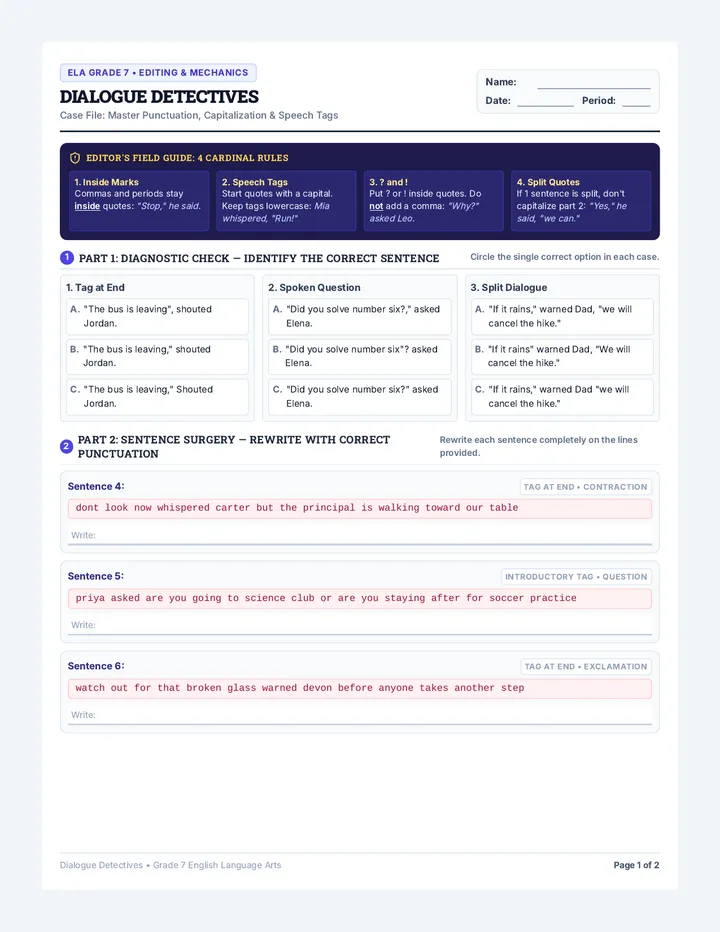
Dialogue Detectives Worksheet

Dialogue Detectives

A comprehensive 7th-grade ELA lesson focused on mastering dialogue punctuation, capitalization, interrupted speech, and speaker paragraphing through targeted editing tasks and manuscript rewriting.

RR

R. rarrigoni

2
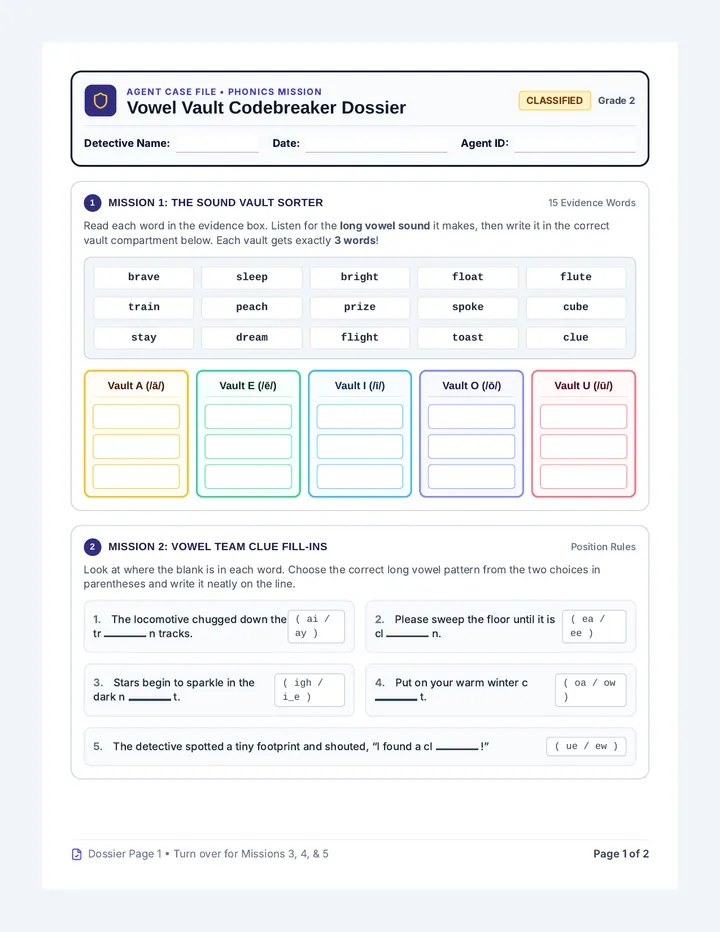
Vowel Codebreaker Worksheet

Vowel Codebreaker Worksheet

A 2-page student practice worksheet featuring 5 detective-themed missions: sound vault sorting, vowel team fill-ins, a secret cipher riddle decoder, sentence proofing, and field report sentence writing.

MB

Melissa Basilone

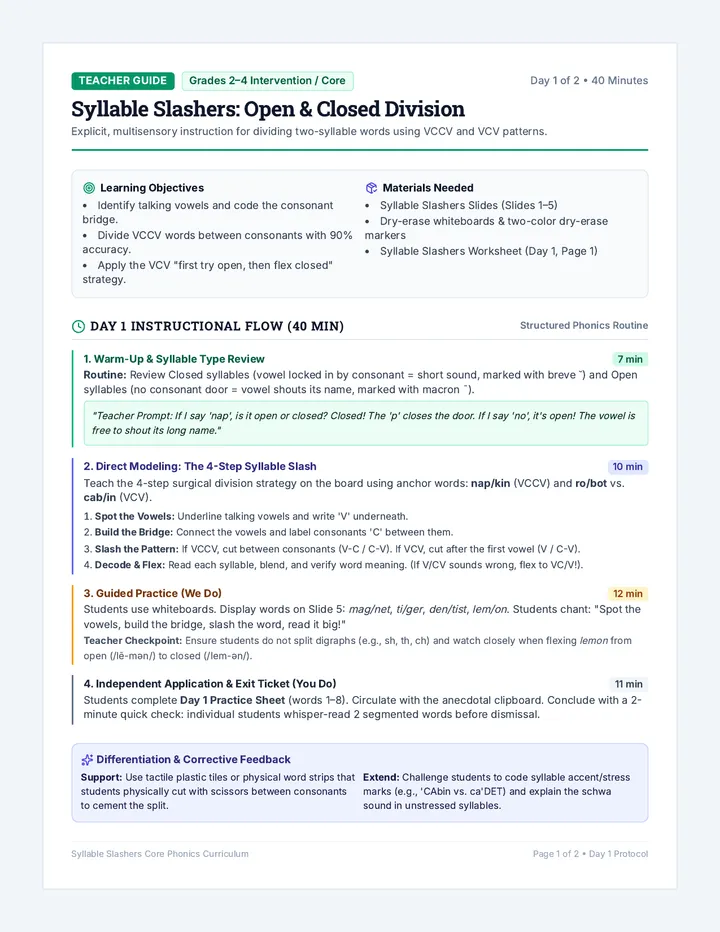
Syllable Slashers Lesson Plan

Syllable Slashers

A comprehensive two-day explicit phonics lesson focused on dividing and decoding two-syllable words featuring open, closed, and magic e syllables. Students learn and apply systematic syllable division routines (VCCV, VCV, and V-Ce) through multisensory coding, oral blending, decodable text practice, and diagnostic progress monitoring.

S

sandra.nii

5
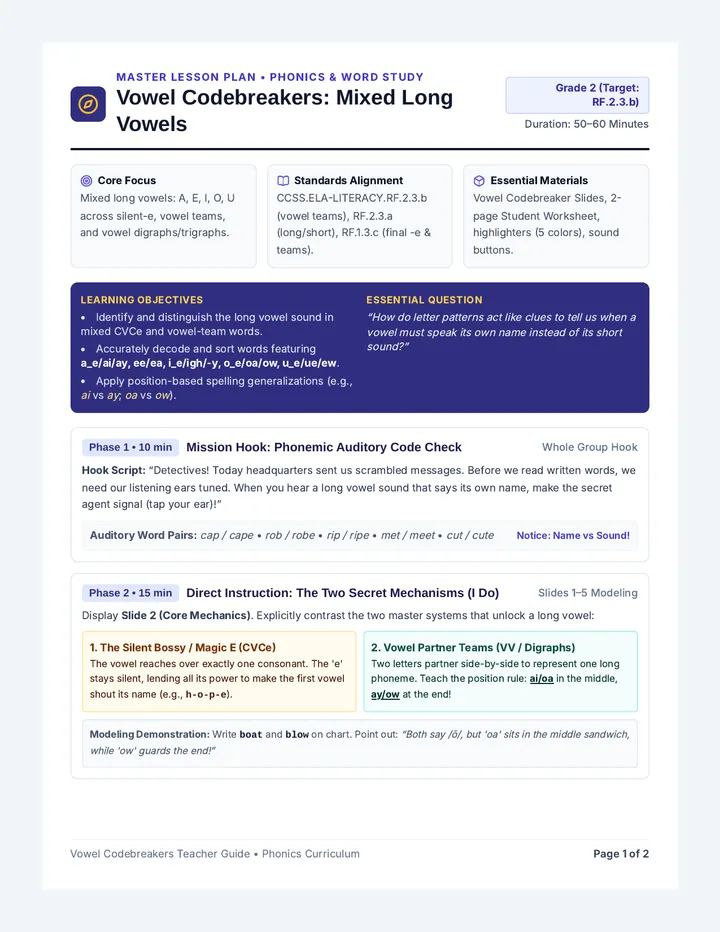
Vowel Codebreakers Teacher Guide

Vowel Codebreakers Teacher Guide

A detailed 2-page teacher guide and instructional lesson plan for teaching mixed long vowel patterns (A, E, I, O, U). Includes CCSS standards, pacing, direct instruction script, guided practice strategies, misconception alerts, and differentiation paths.

MB

Melissa Basilone

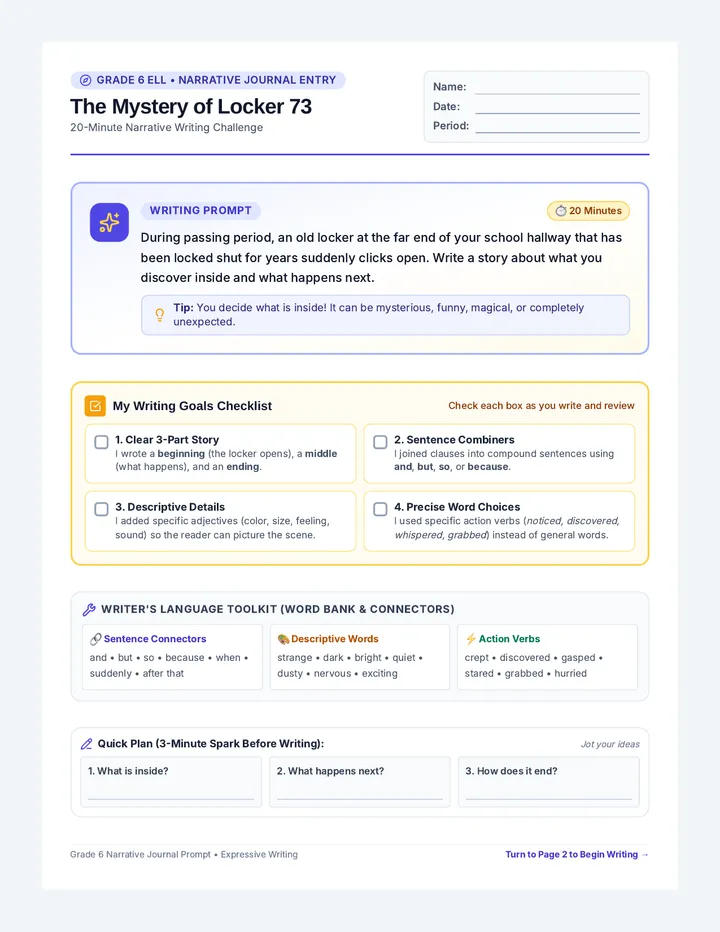
Mystery Locker Journal Prompt

Mystery Locker Writing

A narrative writing lesson for sixth-grade English Language Learners centered around an open-ended mystery locker prompt, featuring scaffolding tools and annotated student writing exemplars.

SM

Shalini Mitchell

2
Vowel Codebreakers Slides

Vowel Codebreakers Slides

A 7-slide visual presentation introducing mixed long vowel spelling patterns for A, E, I, O, and U. Features codebreaker detective themes, clear phonics generalizations, color-coded sound patterns, and guided whole-class decoding missions.

MB

Melissa Basilone

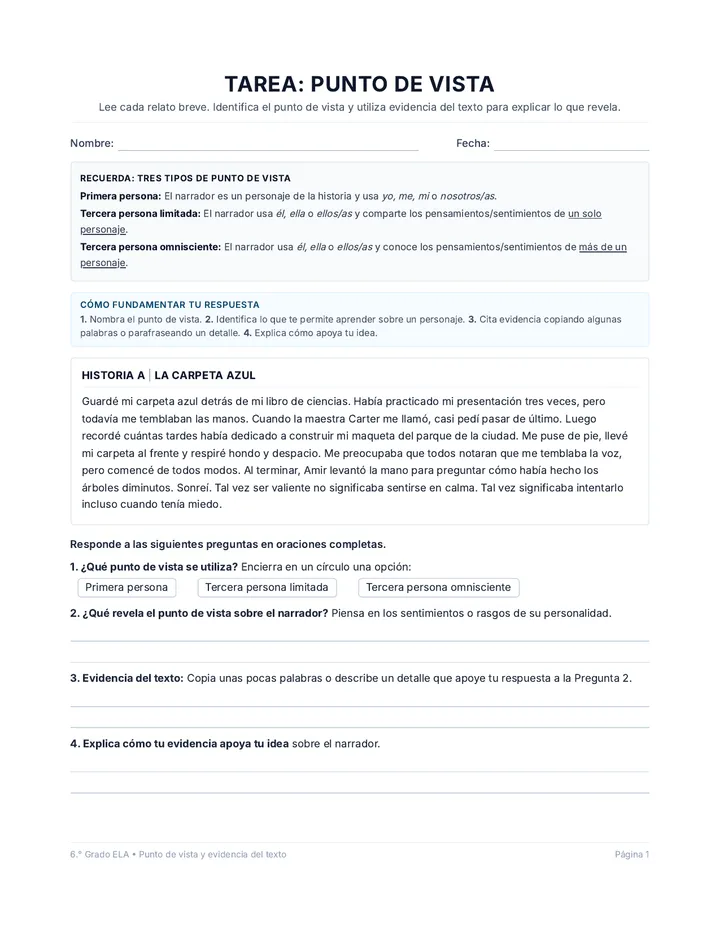
Punto de Vista Tarea

Perspective Detectives

A focused lesson analyzing narrative points of view—first person, third-person limited, and third-person omniscient—through textual evidence and character insight across diverse short stories.

N

nlewis

4
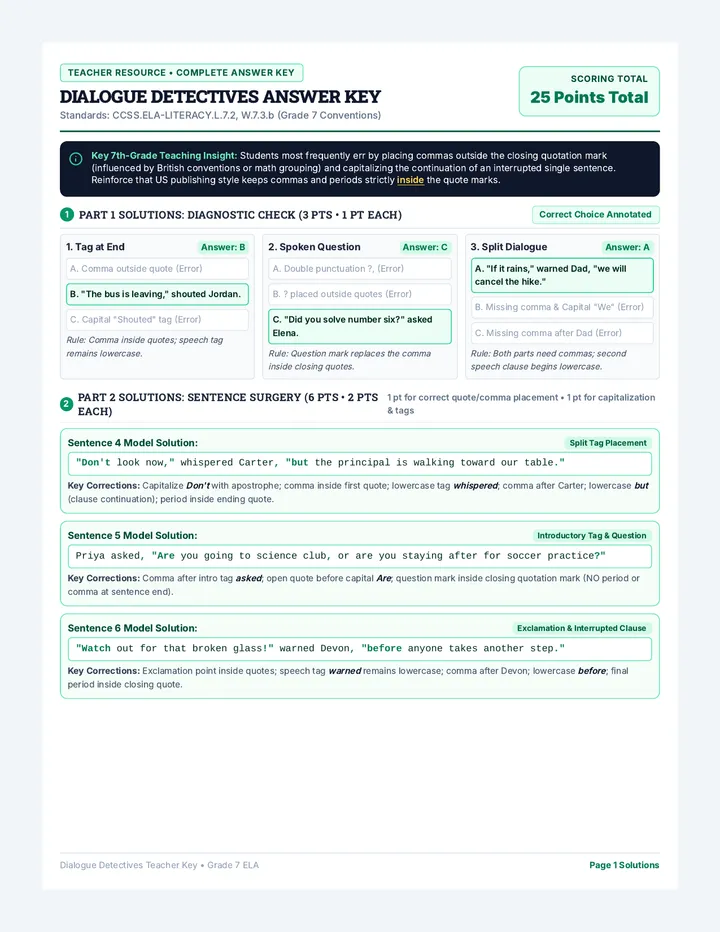
Dialogue Detectives Answer Key

Dialogue Detectives Answer Key

A comprehensive two-page teacher answer key and grading guide providing annotated model solutions, grammatical rationales, common misconception notes, and scoring rubrics.

RR

R. rarrigoni