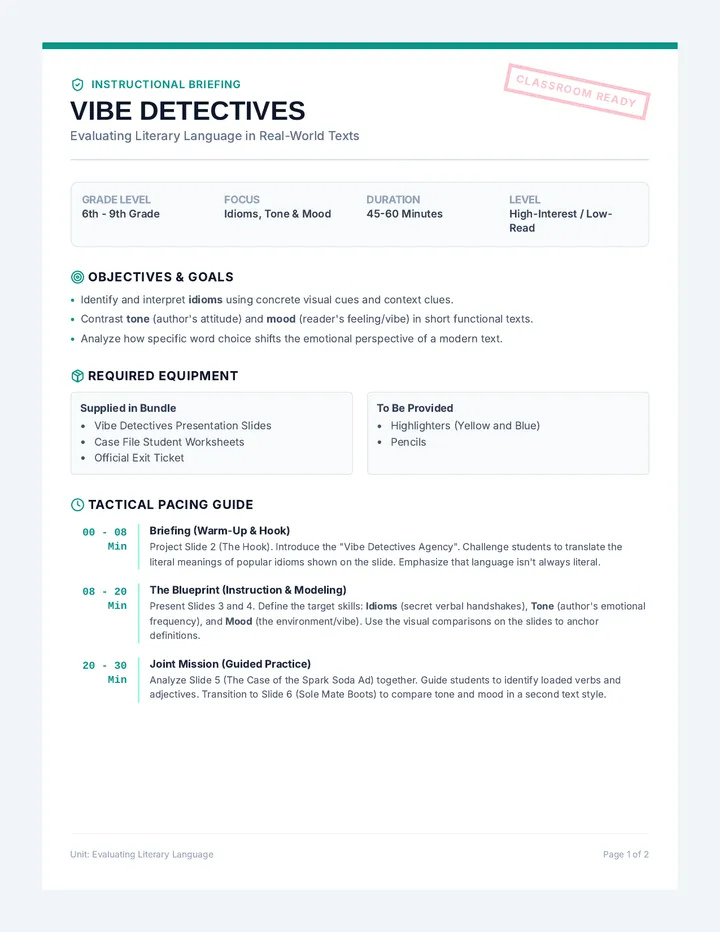
A comprehensive 9th-grade grammar unit focusing on the technical mastery of adjectives and adverbs. Students progress from basic identification in complex structures to correcting advanced syntactical errors like dangling modifiers.
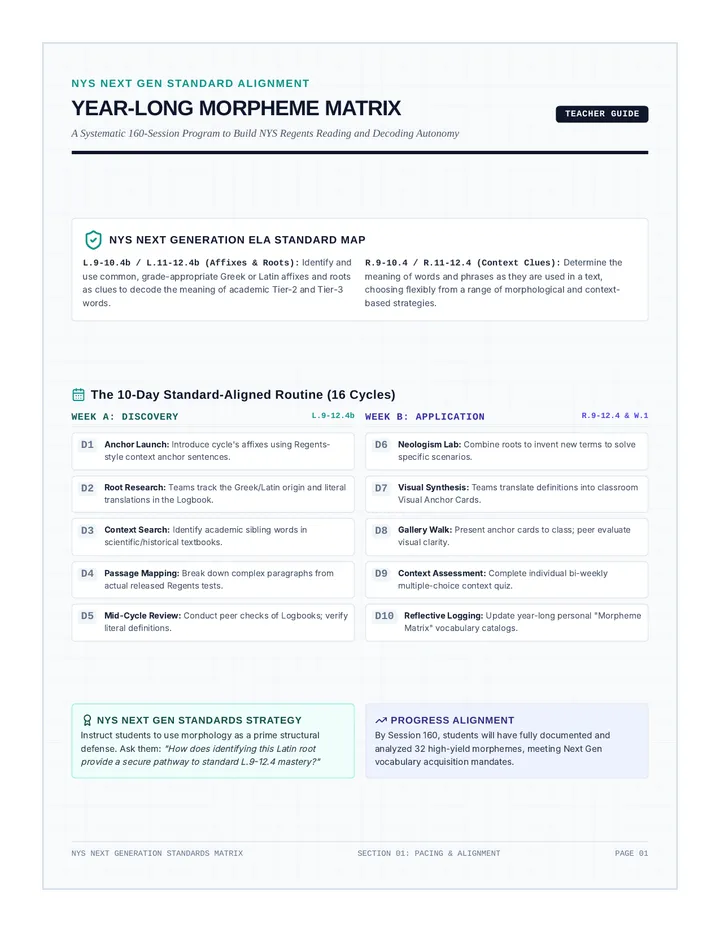
A three-lesson exploration of Kate Chopin's 'The Story of an Hour', focusing on the nuances of 3rd person omniscient point of view, sensory imagery, figurative language, and the ironic twist of the plot. Students analyze how narrative perspective shapes their understanding of Mrs. Mallard's internal transformation.
A high school ELA sequence exploring the psychological concepts of identity, the 'False Self', and social performance through philosophical inquiry and literary analysis.
A lesson sequence exploring Stoic philosophy through visual metaphors, focusing on Marcus Aurelius's teachings. Students analyze animator choices and create their own visual storyboards for abstract virtues.
A lesson sequence focused on the narrative craft of writing high-stakes introductions for interactive survival stories, specifically leading to biological defense mechanism choices.
This sequence explores the literary techniques used by Frederick Douglass in his Narrative, focusing specifically on how he uses irony to dismantle Northern misconceptions about slavery. Students move from vocabulary acquisition to deep rhetorical analysis.
A four-day intensive study of Shakespeare's Macbeth, focusing on characterization and the development of ambition to prepare students for an argumentative essay on Macbeth's worthiness for the throne.
A 9th-grade English RLA unit exploring the physical and emotional intersection of love and pain through scientific analysis and poetic metaphor. Students synthesize Eric Jaffe's 'Why Love Literally Hurts' with Carol Ann Duffy's poem 'Valentine' to craft argumentative synthesis correspondence.
A two-lesson unit focused on analyzing argumentative structures and multimodal features in the text 'Why Everyone Must Get Ready for the Fourth Industrial Revolution.' Students will explore thesis development, evidence, counterarguments, and the impact of graphic features.
A comprehensive 10th-grade ELA unit on Marjane Satrapi's 'Persepolis', focusing on visual literacy, character development, and the historical context of the Iranian Revolution. Students will explore how the graphic novel medium conveys complex emotional and thematic depth.
A 4-day intensive study of Nathaniel Hawthorne's 'The Minister's Black Veil,' focusing on literary analysis, theme development, and argumentative writing through the lens of Dark Romanticism and Puritan values. Students explore the ambiguity of symbols and the complexities of human guilt while mastering appositive phrases and constructing high-quality academic responses.
A two-day exploration of Edgar Allan Poe's 'The Raven', analyzing poetic craft, gothic elements, and the emotional descent of the narrator through creative performance tasks and analytical writing.
A comprehensive unit for Ellen Raskin's 'The Westing Game', focusing on character analysis, main idea, and key details through a mystery-themed lens. Includes slide decks for instruction, chapter-by-chapter exit tickets, and cumulative quizzes for each section of the novel.
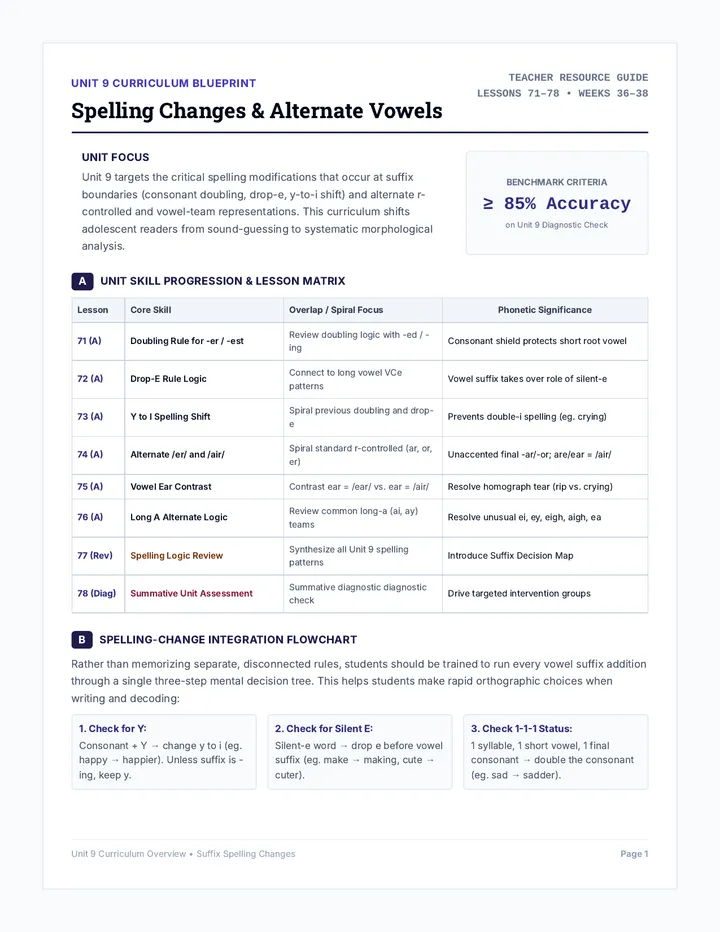
A sophisticated exploration of the Long A vowel clusters (eigh, ei, ey) designed for high schoolers. Focuses on articulatory phonetics, professional communication, and academic vocabulary without juvenile imagery.
A comprehensive two-day exploration of Macbeth Act 1, focusing on the supernatural, ambition, and the psychological shift towards murder. Includes a teacher guide, student workbooks, slide decks, and answer keys.
A 3-day research unit focused on the historical context of Night by Elie Wiesel, specifically covering liberation, concentration camps, and death marches, concluding with student presentations.
A series of lessons focused on advanced sentence structure and syntax for high school writers, emphasizing clarity, flow, and sophisticated punctuation.
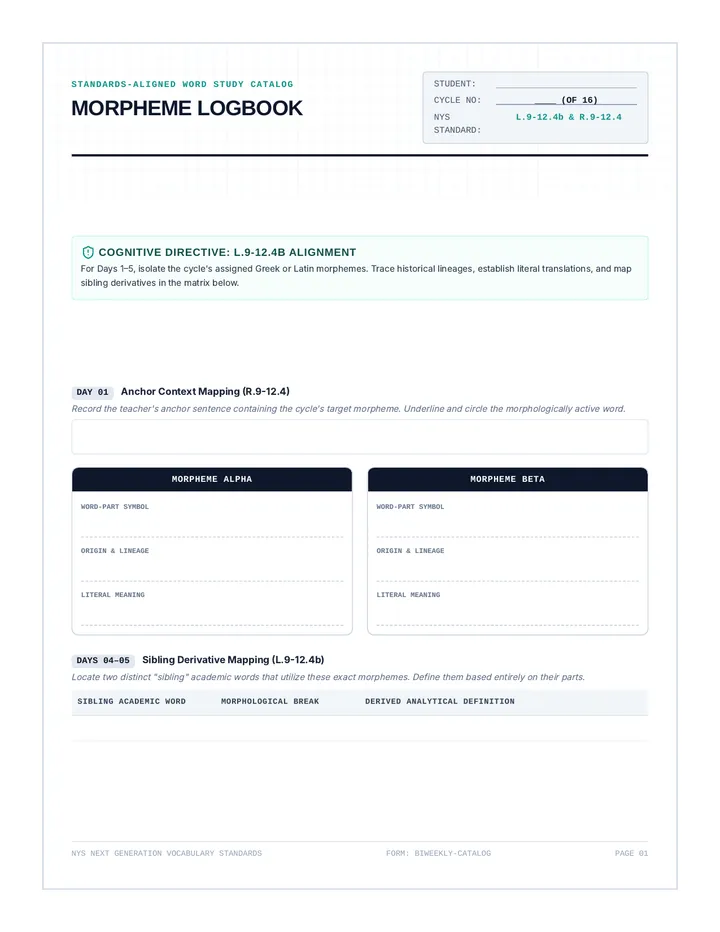
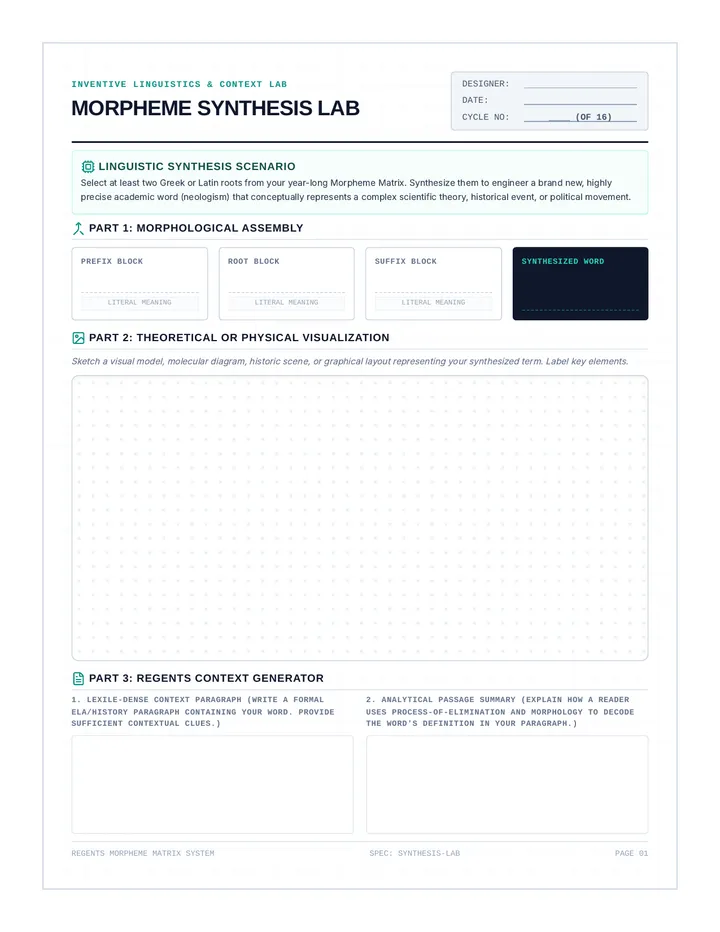
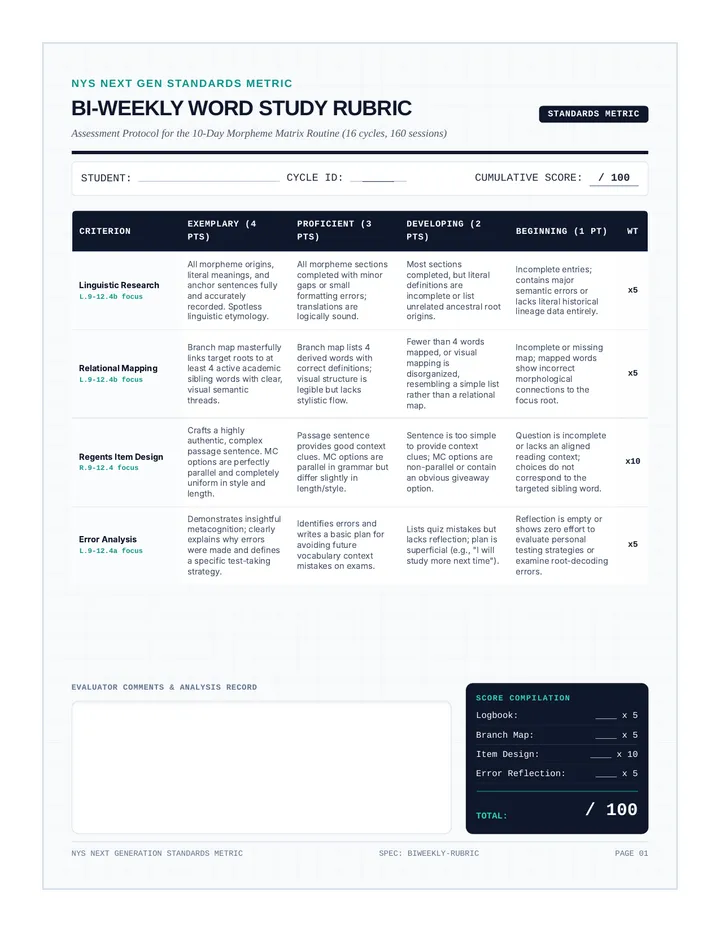
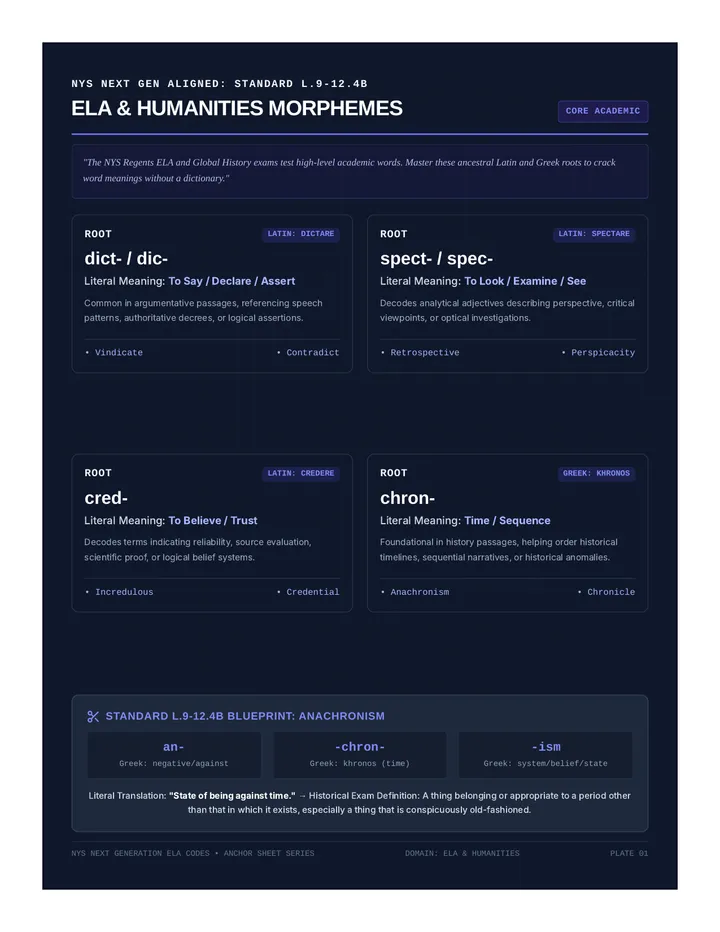
A curriculum development sequence focused on helping teachers bridge ELA and History through linguistics and etymology.
A lesson sequence focused on mastering the three rhetorical appeals (Ethos, Logos, and Pathos) through video analysis and a simulated school debate.
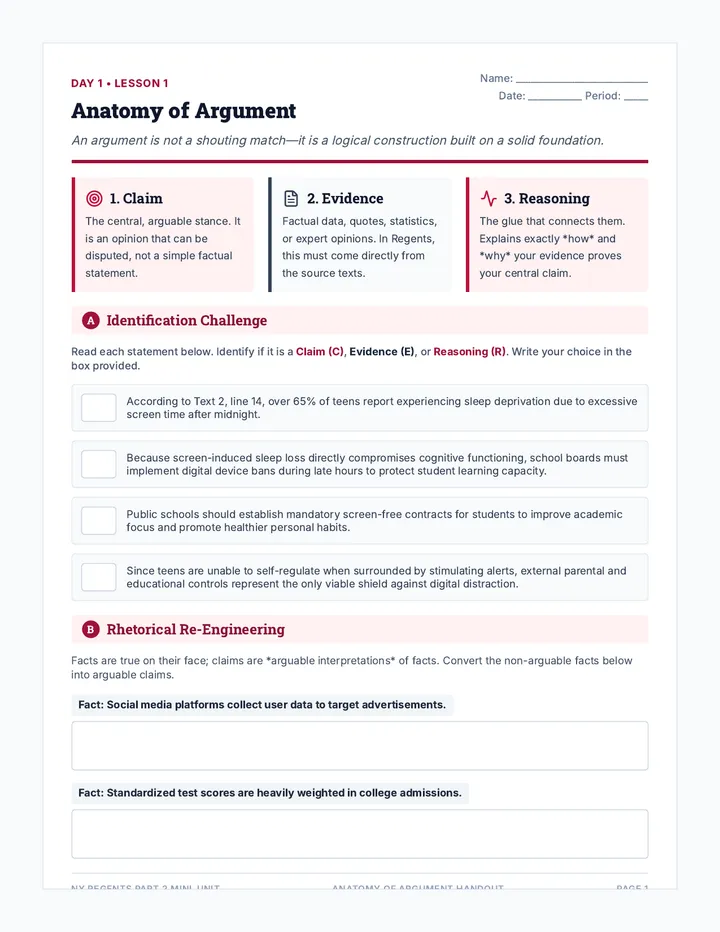
A professional development series focused on empowering educators with concrete frameworks for teaching complex writing and literacy skills.
A short unit focusing on the power of punctuation, specifically the Oxford comma, to prevent ambiguity and the role of appositives in sentence structure.
A lesson sequence for high school ELL students focusing on the Simple Aspect of verbs (Past, Present, and Future) using a timeline-based approach and sentence construction.
A lesson sequence exploring the intersection of civic duty, social contracts, and rhetorical analysis through the lens of the 'Shopping Cart Theory'. Students analyze a structured argument and participate in a Socratic Seminar.
A 10th-grade academic support sequence that transforms students from passive readers to active analysts through the art of marginalia. Students master shorthand symbols, inquiry-based questioning, theme tracking, and summarization to prepare for a text-based Socratic seminar.
A 5-lesson unit for 9th-grade students focusing on transforming reading from a passive activity into an active dialogue through symbols, shorthand, marginal summaries, questioning, and argument tracking.
This workshop-style sequence equips 9th-grade students with essential keyboard shortcuts for academic writing and editing, moving from basic cursor navigation to advanced document formatting and review.
A sequence focused on the critical revision workflow for students using speech-to-text technology. Students learn to identify and fix common errors like homophone confusion, run-on sentences, and informal tone to turn raw dictation into polished academic writing.
A specialized reading intervention sequence designed for 8th-grade students to master visualization strategies for expository and informational texts. Students move from visualizing simple procedural steps to constructing complex mental models of cause-effect relationships and conceptual hierarchies.
A 5-lesson sequence for 9th-grade students focusing on externalizing internal visualizations through verbal processing, 'Think Aloud' strategies, and peer-to-peer scene reconstruction. Students move from observing modeled verbalization to creating their own 'Director's Commentary' for descriptive texts.
A comprehensive sequence for 9th-grade students to improve reading comprehension through visualization and storyboarding, focusing on filtering key information and interpreting abstract concepts.
A 5-lesson sequence designed for 9th-grade academic support, focusing on visualization strategies to improve reading comprehension. Students progress from identifying sensory triggers to constructing complex mental maps of text.
A forensic-themed reading comprehension unit where students act as investigators to master predictions and inferences. Through case studies and evidence tracking, students learn to bridge literal text with deep narrative meaning.