A high school ELA sequence exploring the psychological concepts of identity, the 'False Self', and social performance through philosophical inquiry and literary analysis.
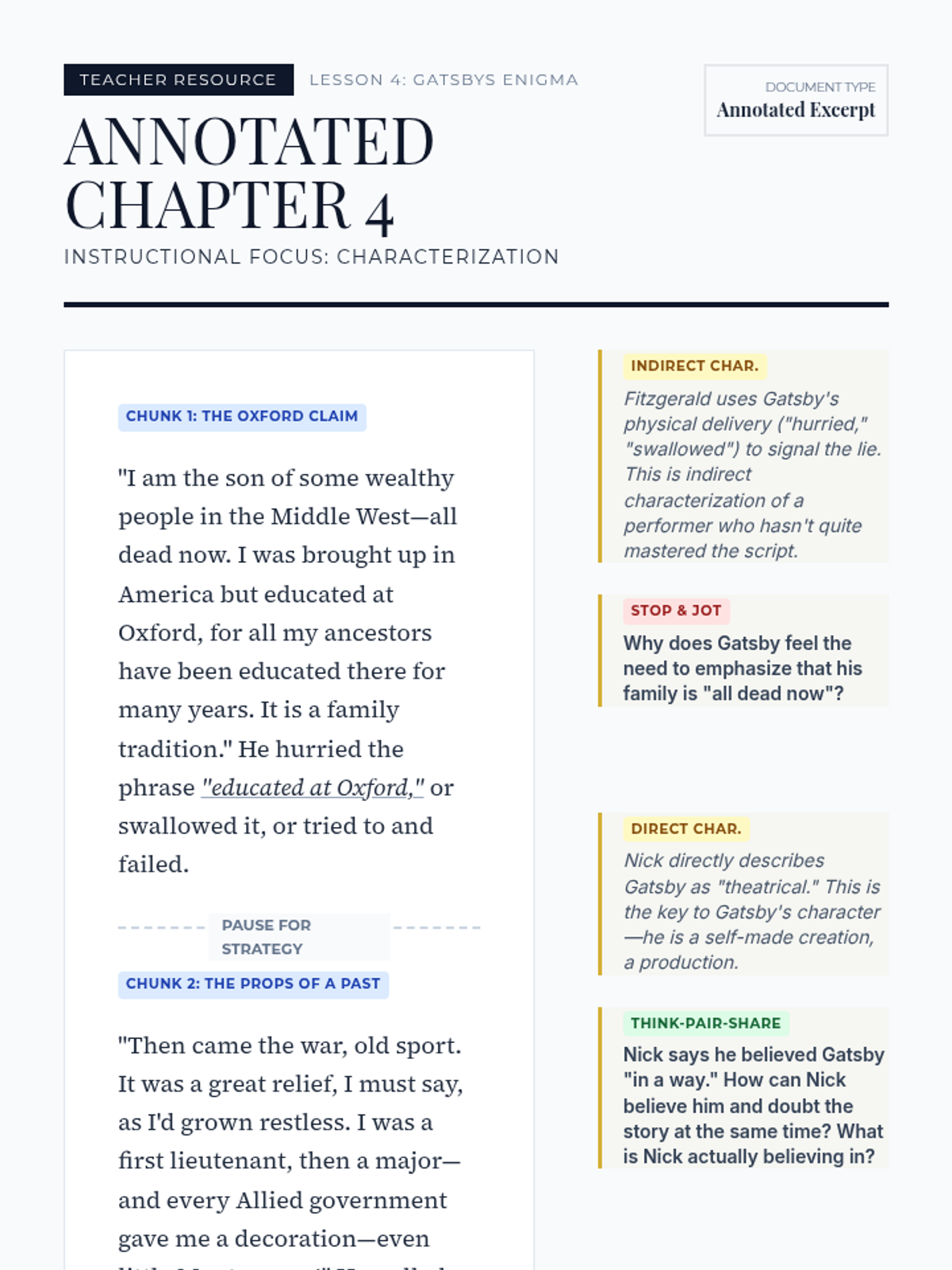
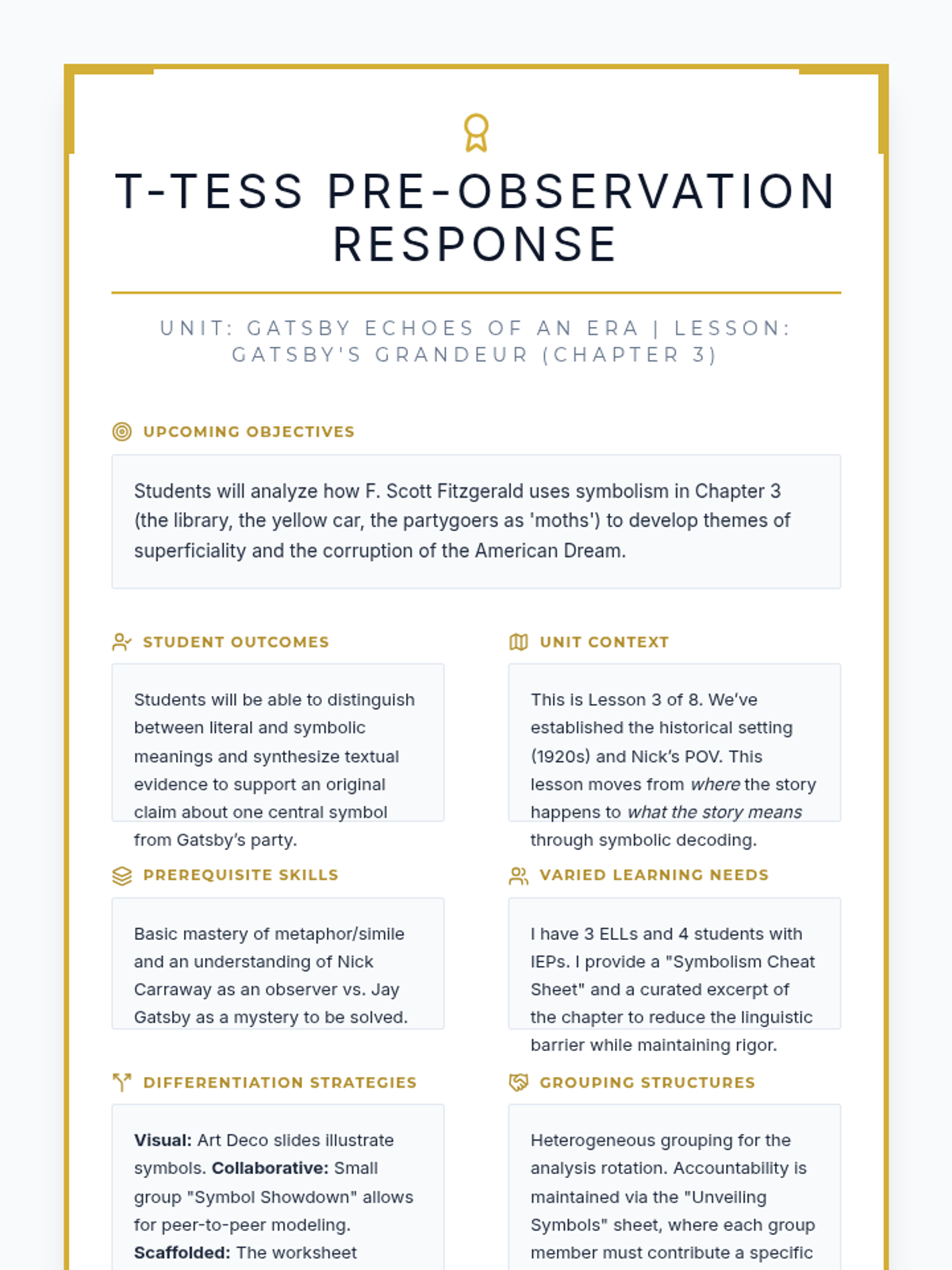
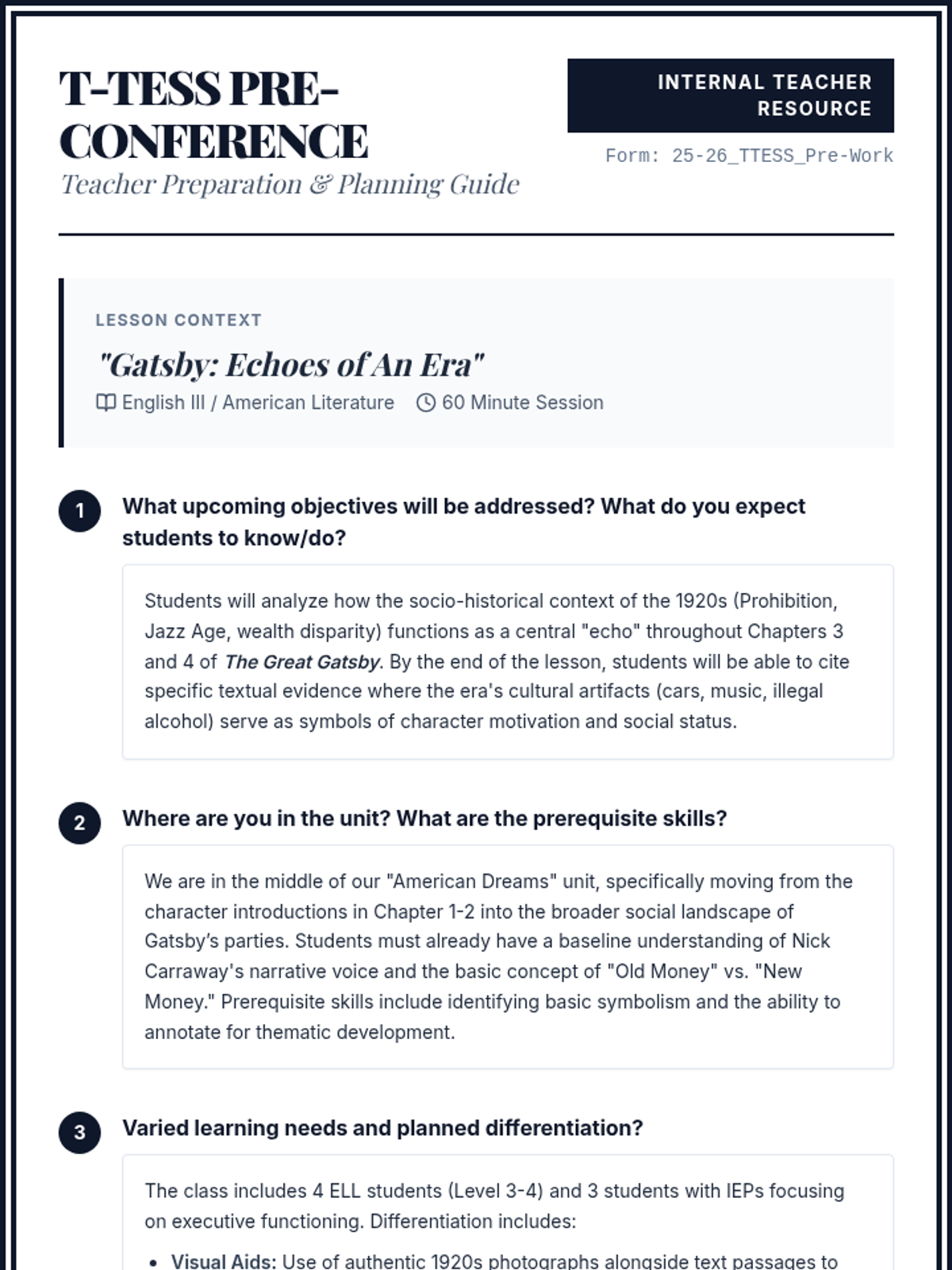
An 8-lesson unit for 11th-grade students exploring F. Scott Fitzgerald's 'The Great Gatsby' through close reading, literary analysis, and historical context. Students investigate themes of wealth, the American Dream, and social class while mastering concepts like tone, point of view, and symbolism.
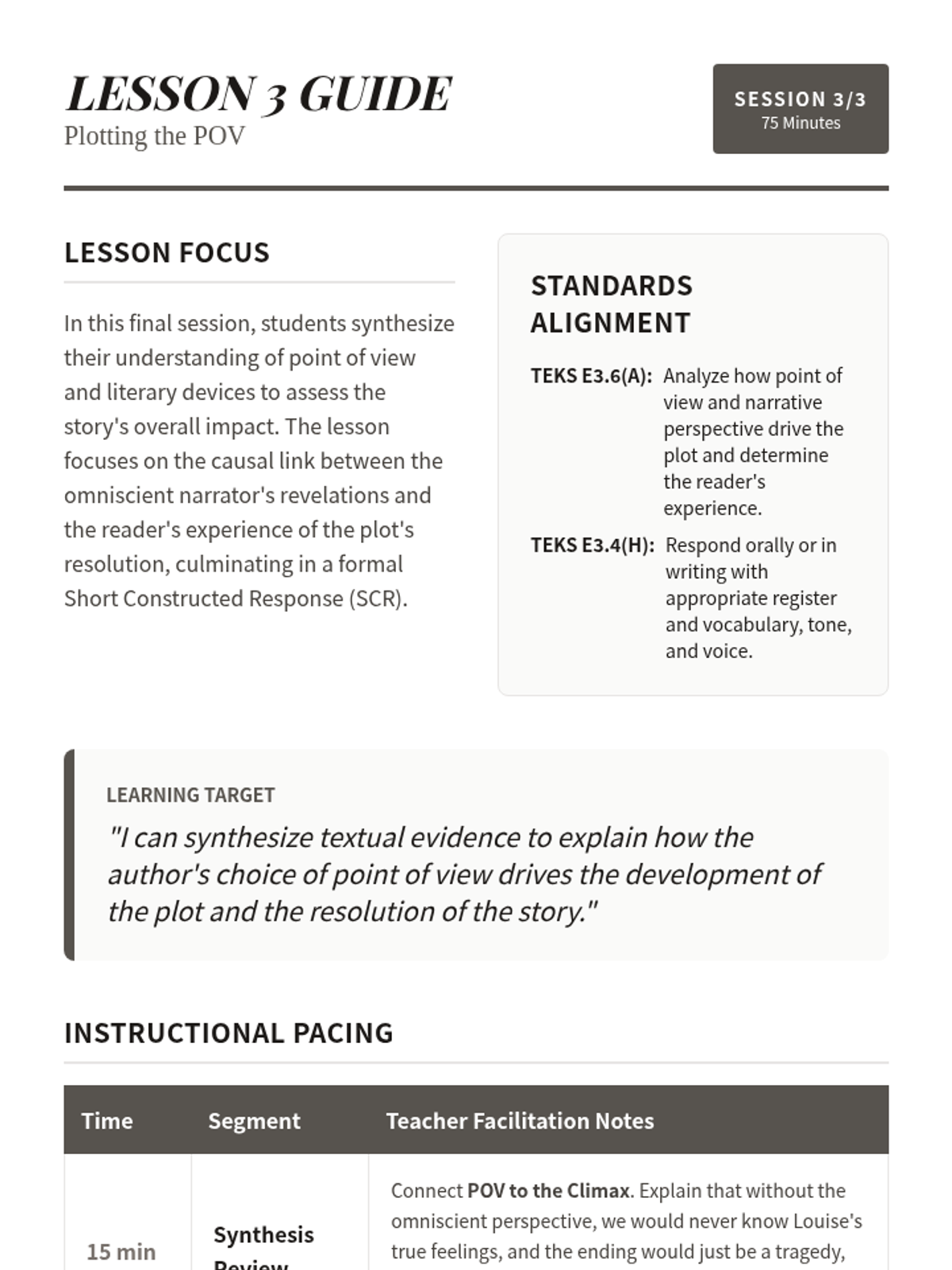
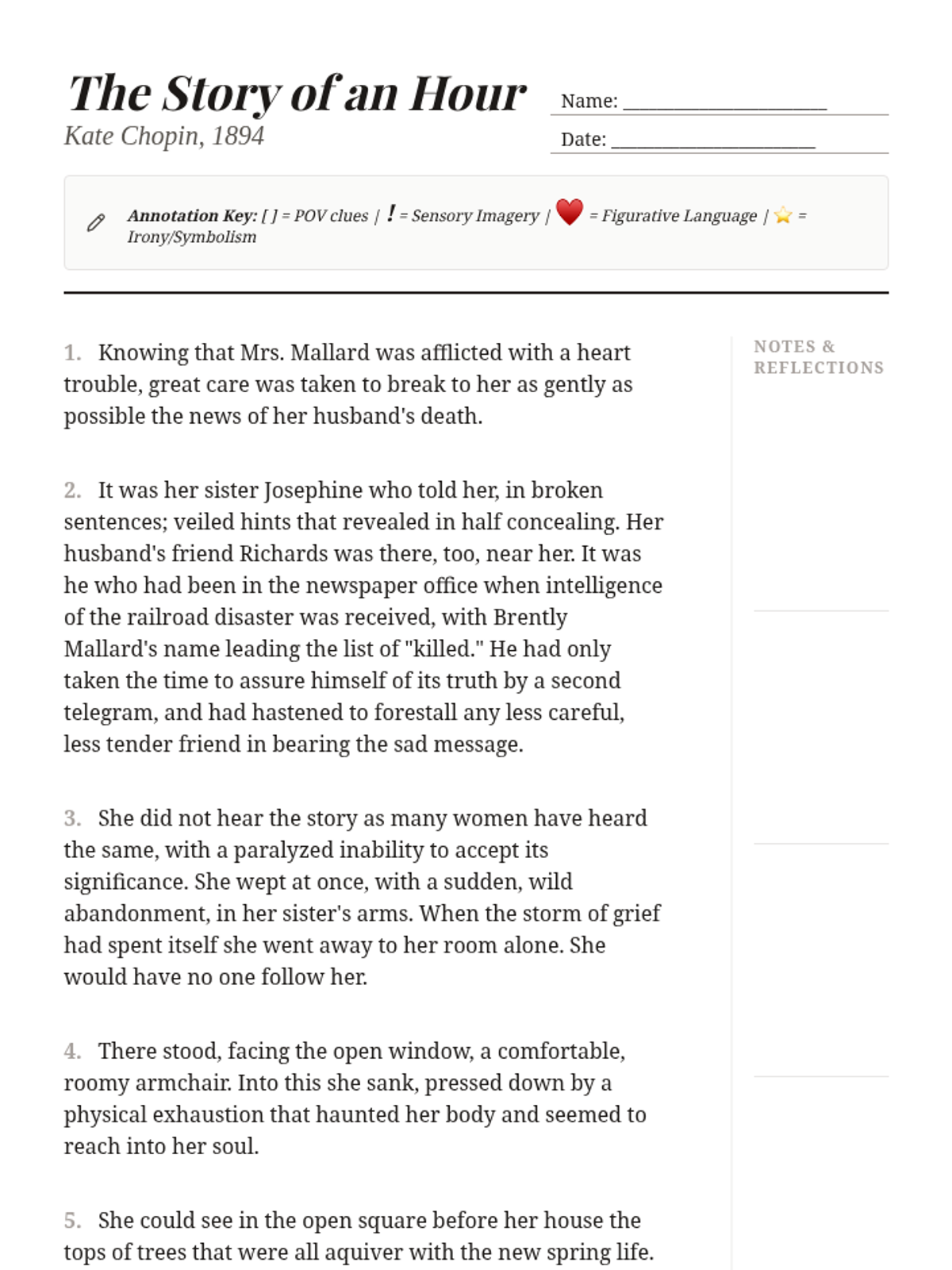
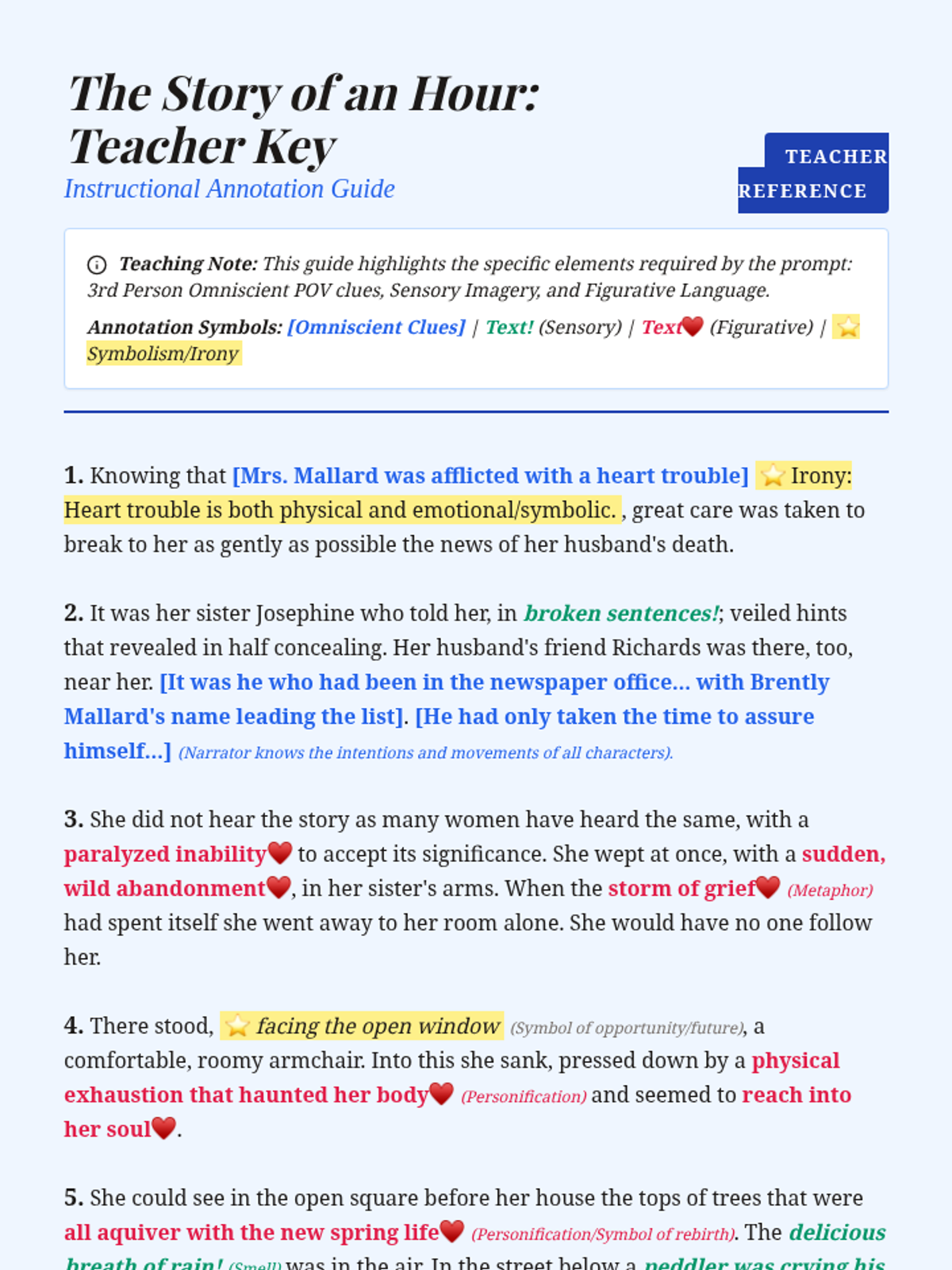
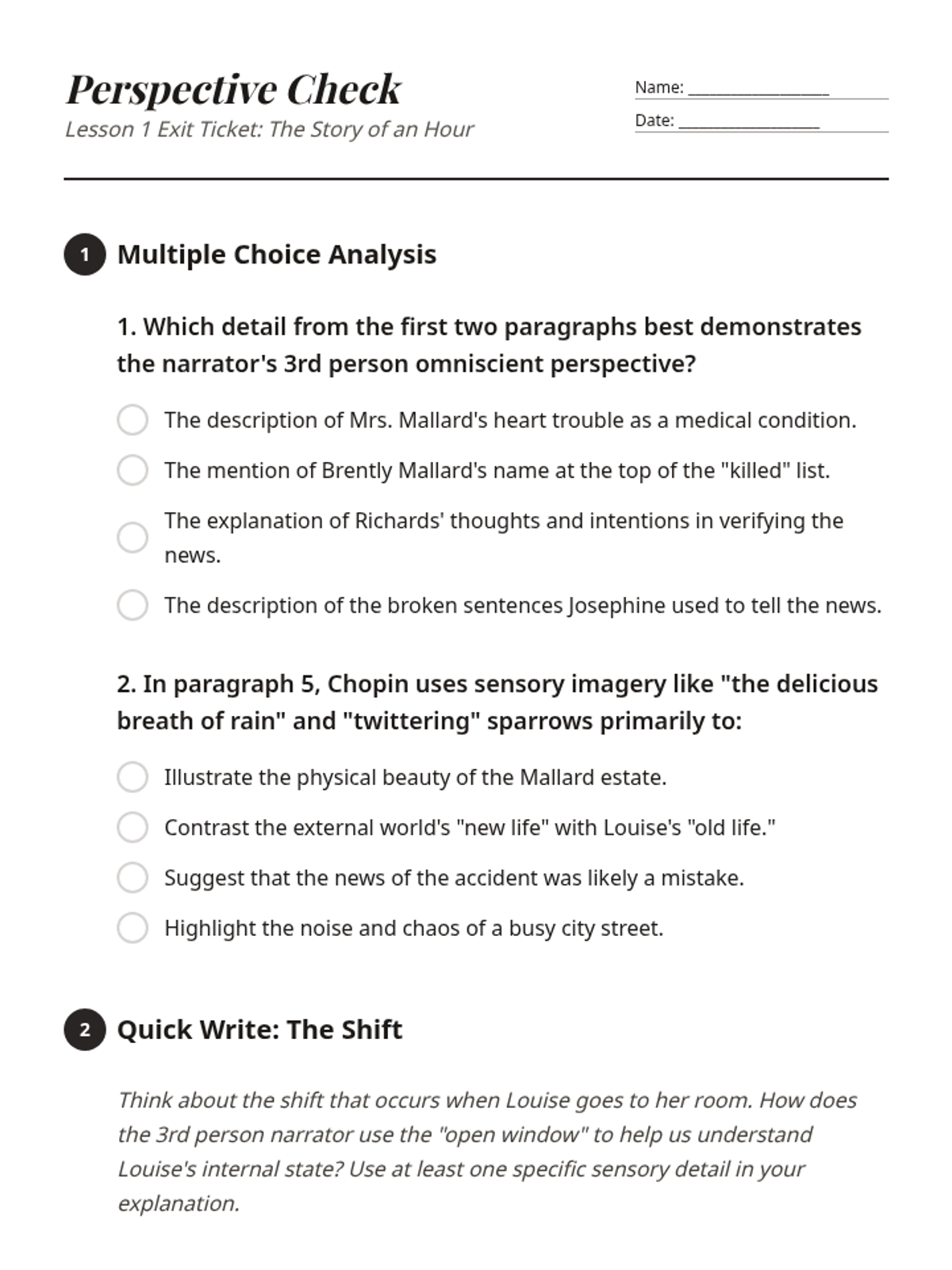
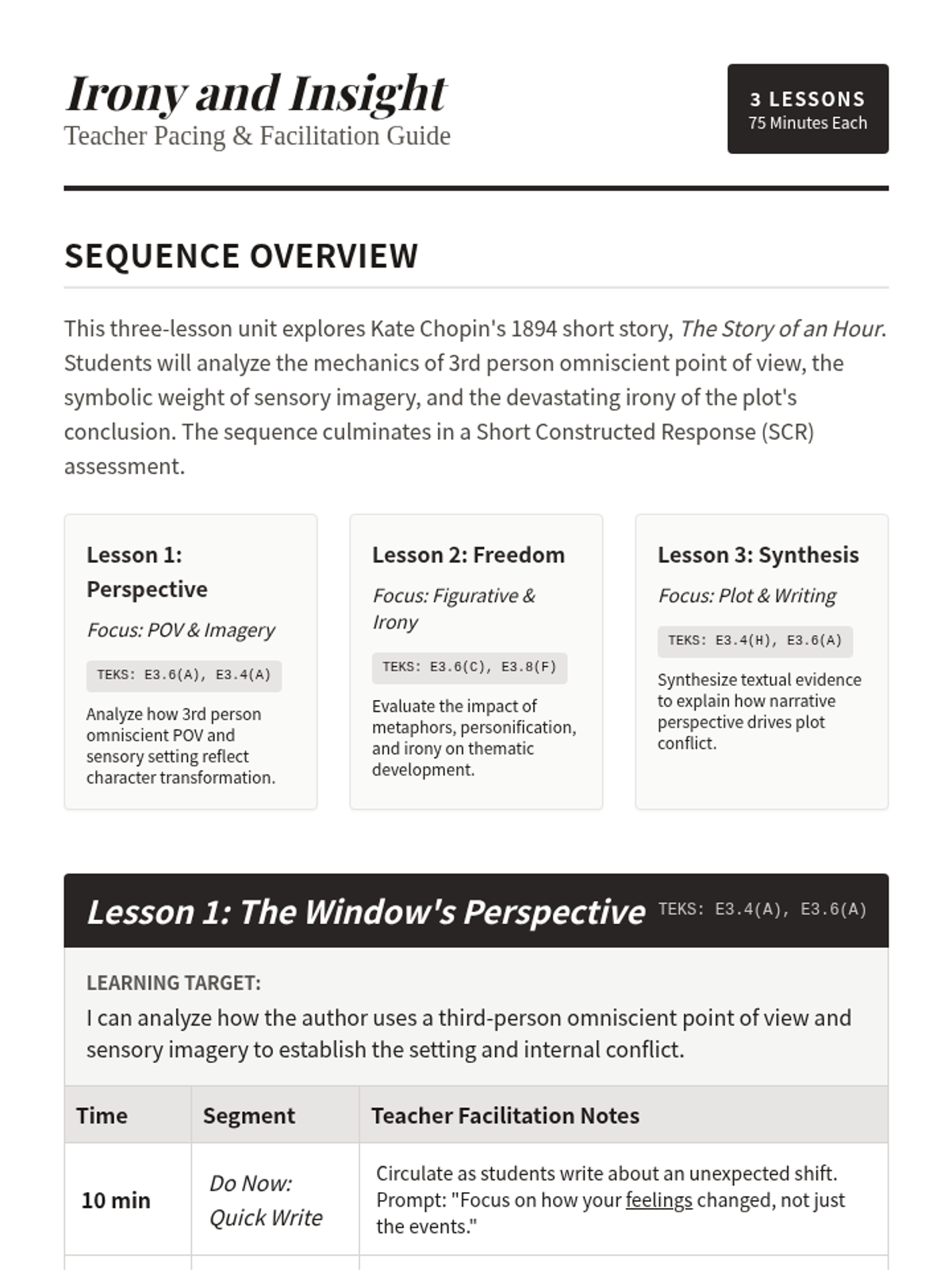
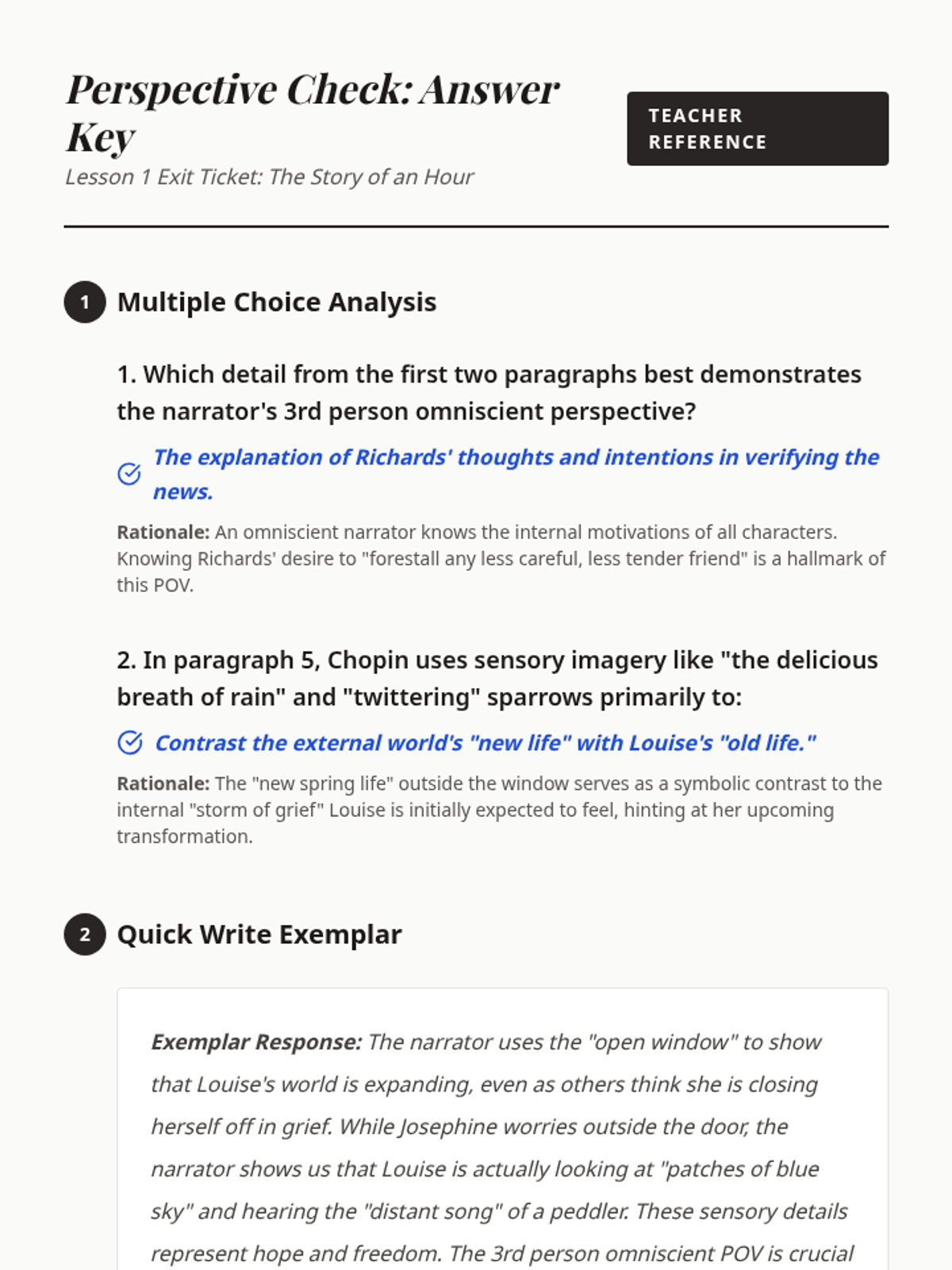
A three-lesson exploration of Kate Chopin's 'The Story of an Hour', focusing on the nuances of 3rd person omniscient point of view, sensory imagery, figurative language, and the ironic twist of the plot. Students analyze how narrative perspective shapes their understanding of Mrs. Mallard's internal transformation.
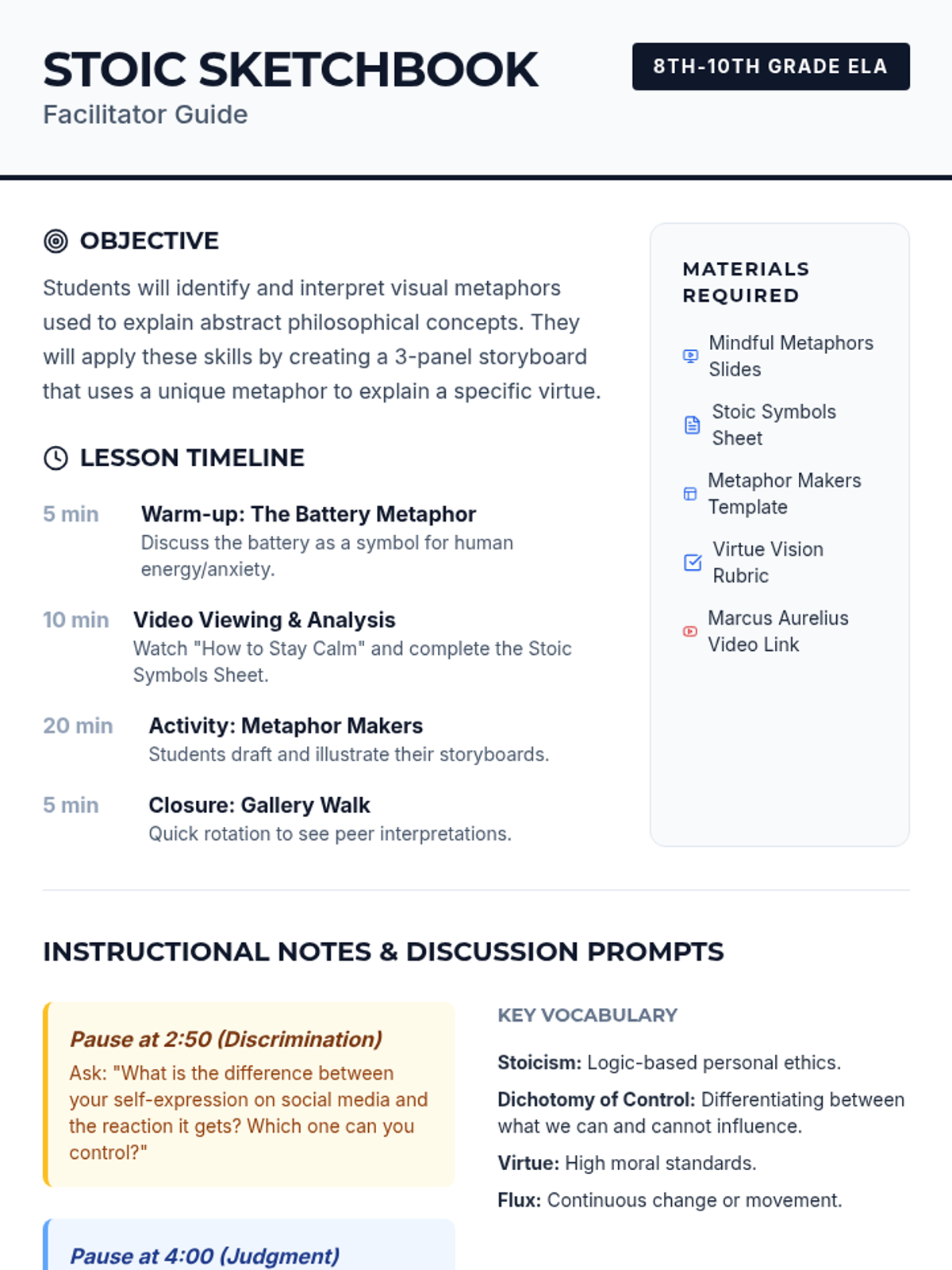
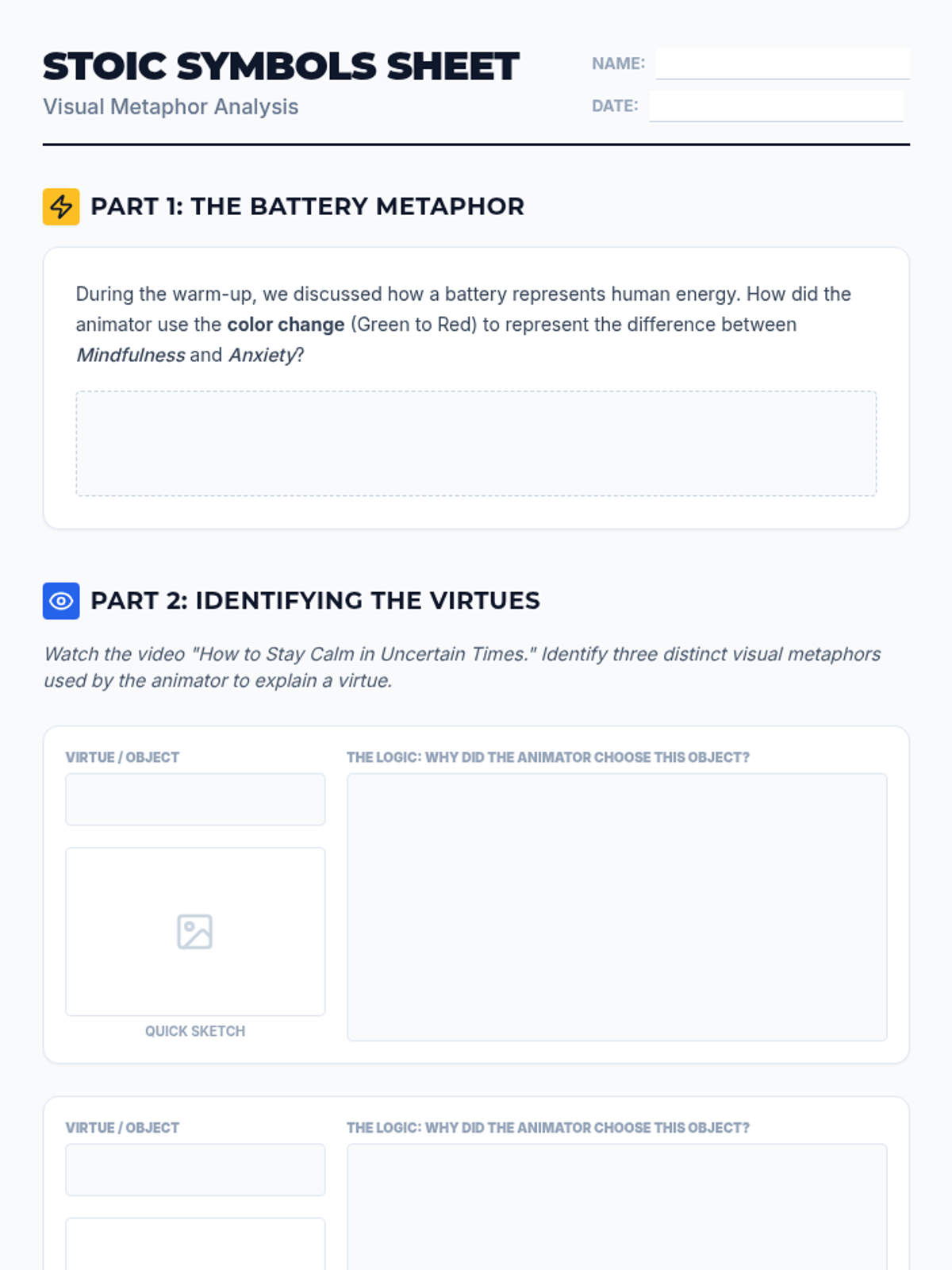
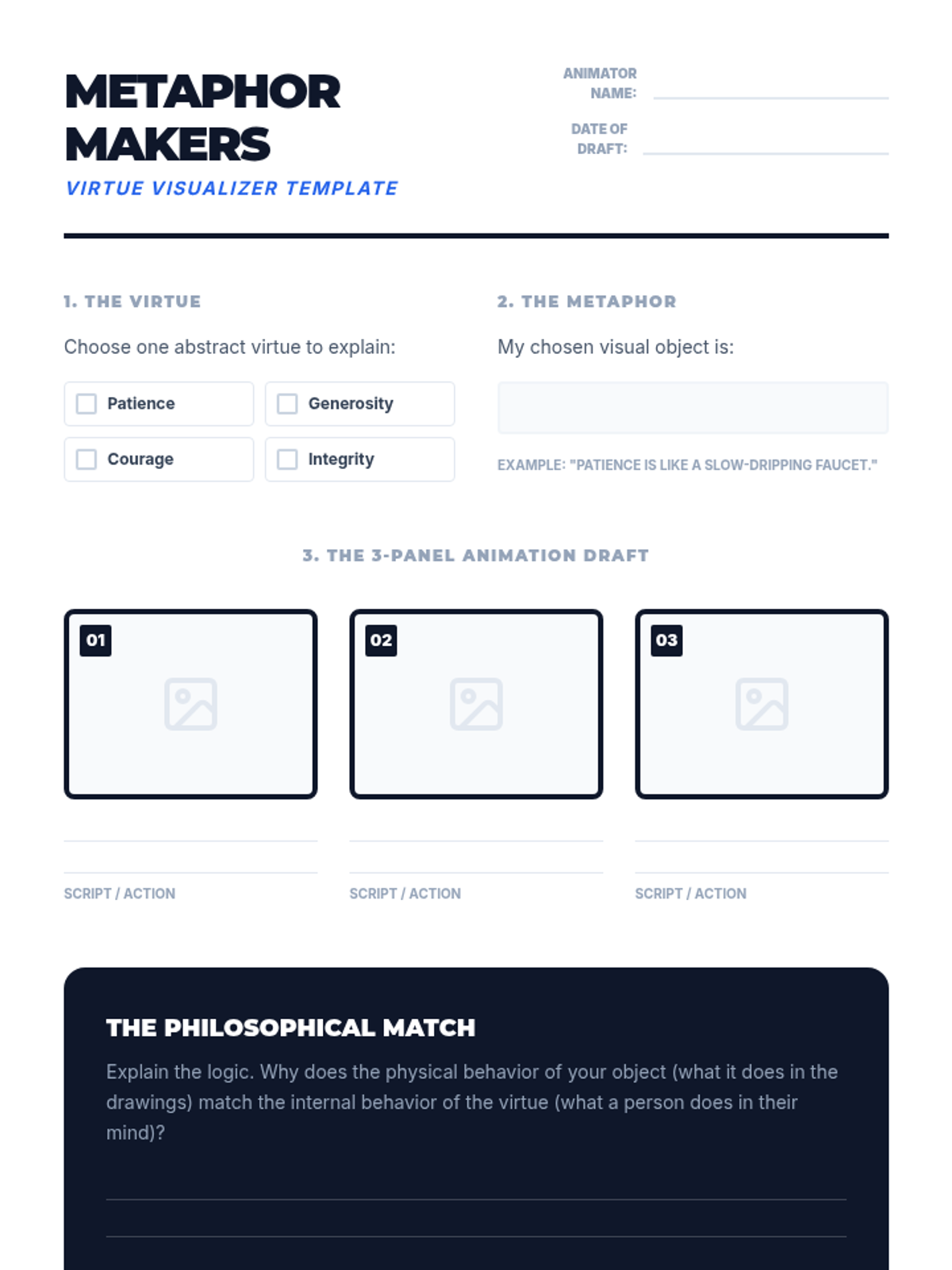
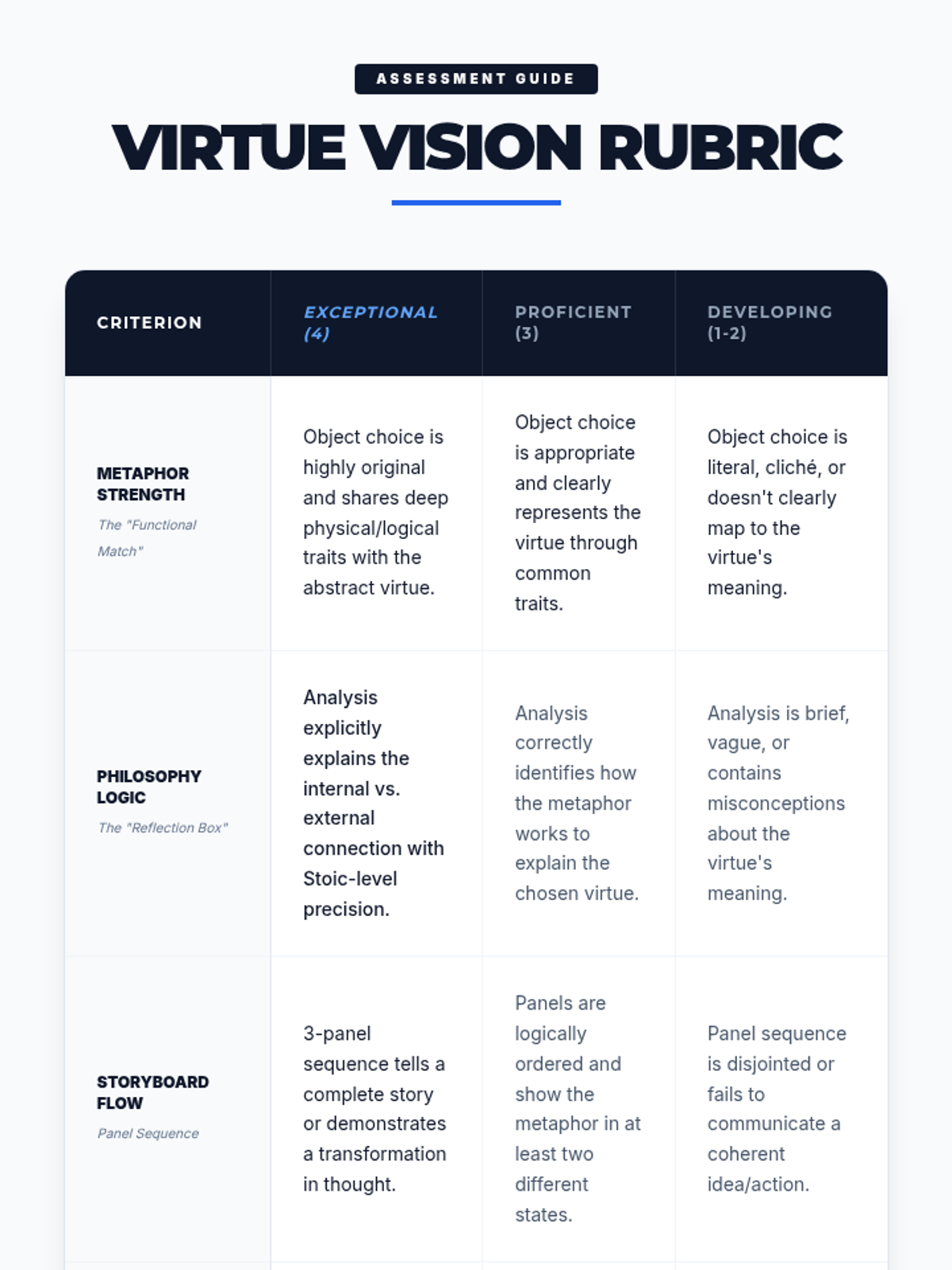
A lesson sequence exploring Stoic philosophy through visual metaphors, focusing on Marcus Aurelius's teachings. Students analyze animator choices and create their own visual storyboards for abstract virtues.
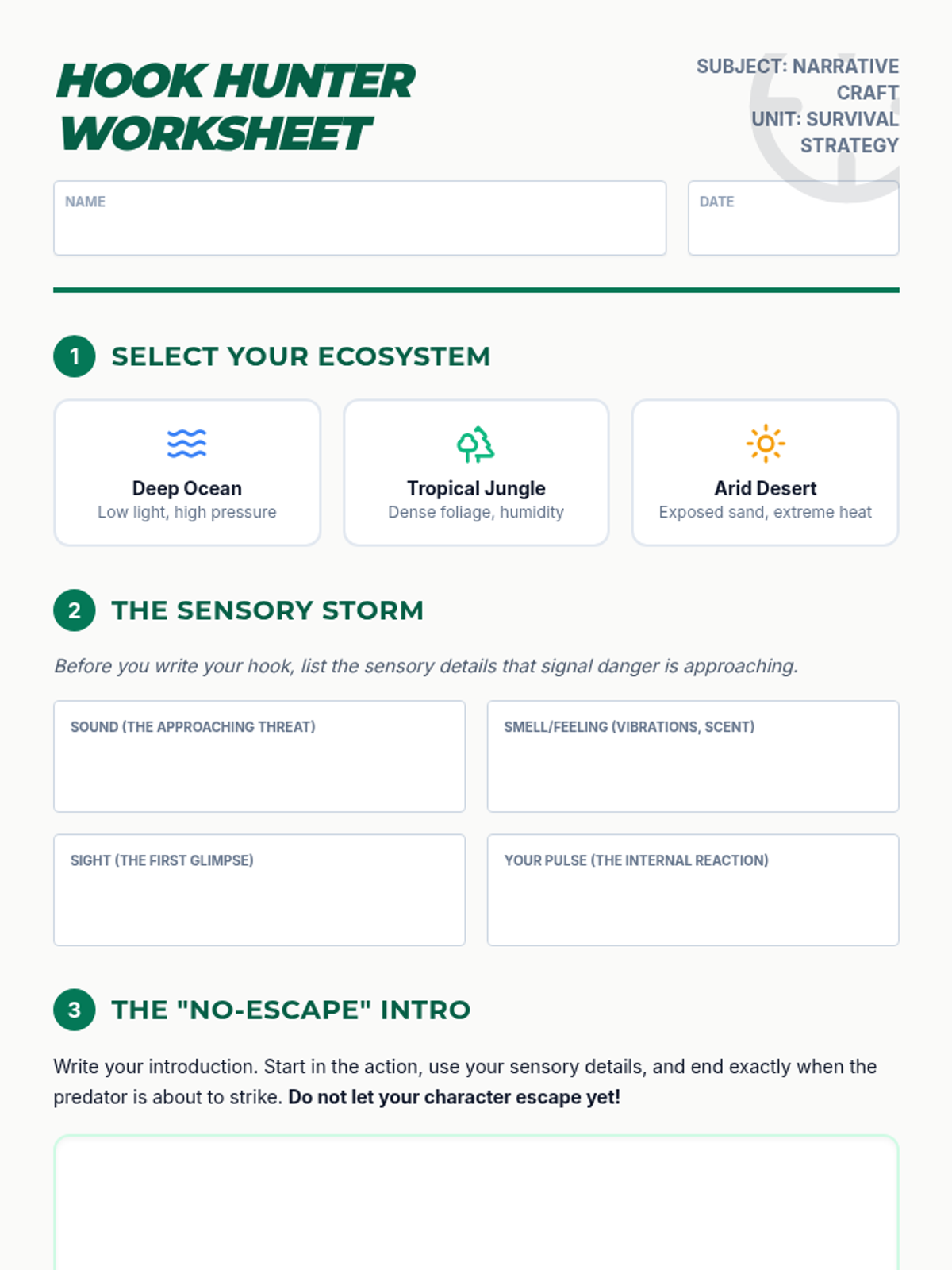
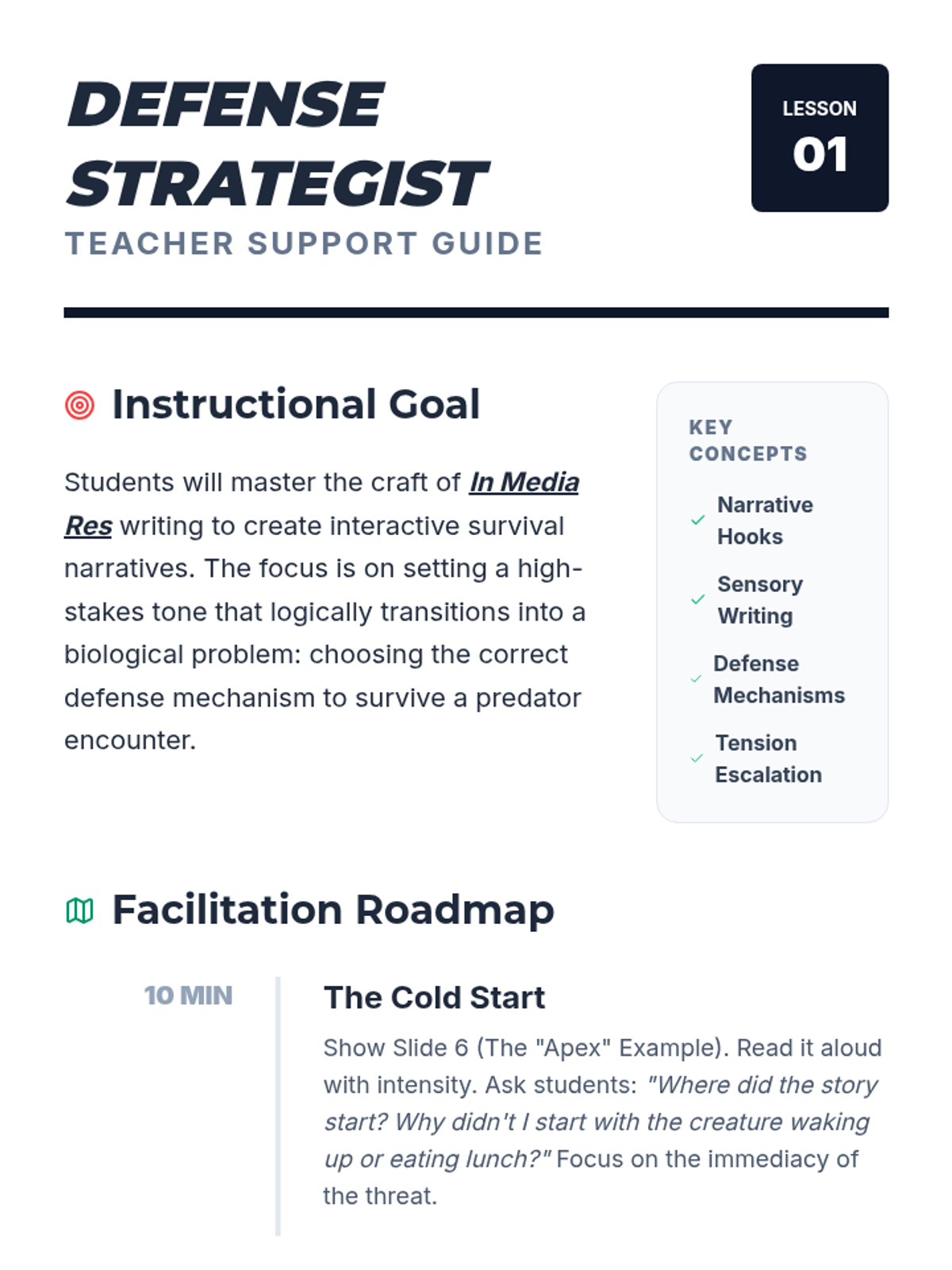
A lesson sequence focused on the narrative craft of writing high-stakes introductions for interactive survival stories, specifically leading to biological defense mechanism choices.
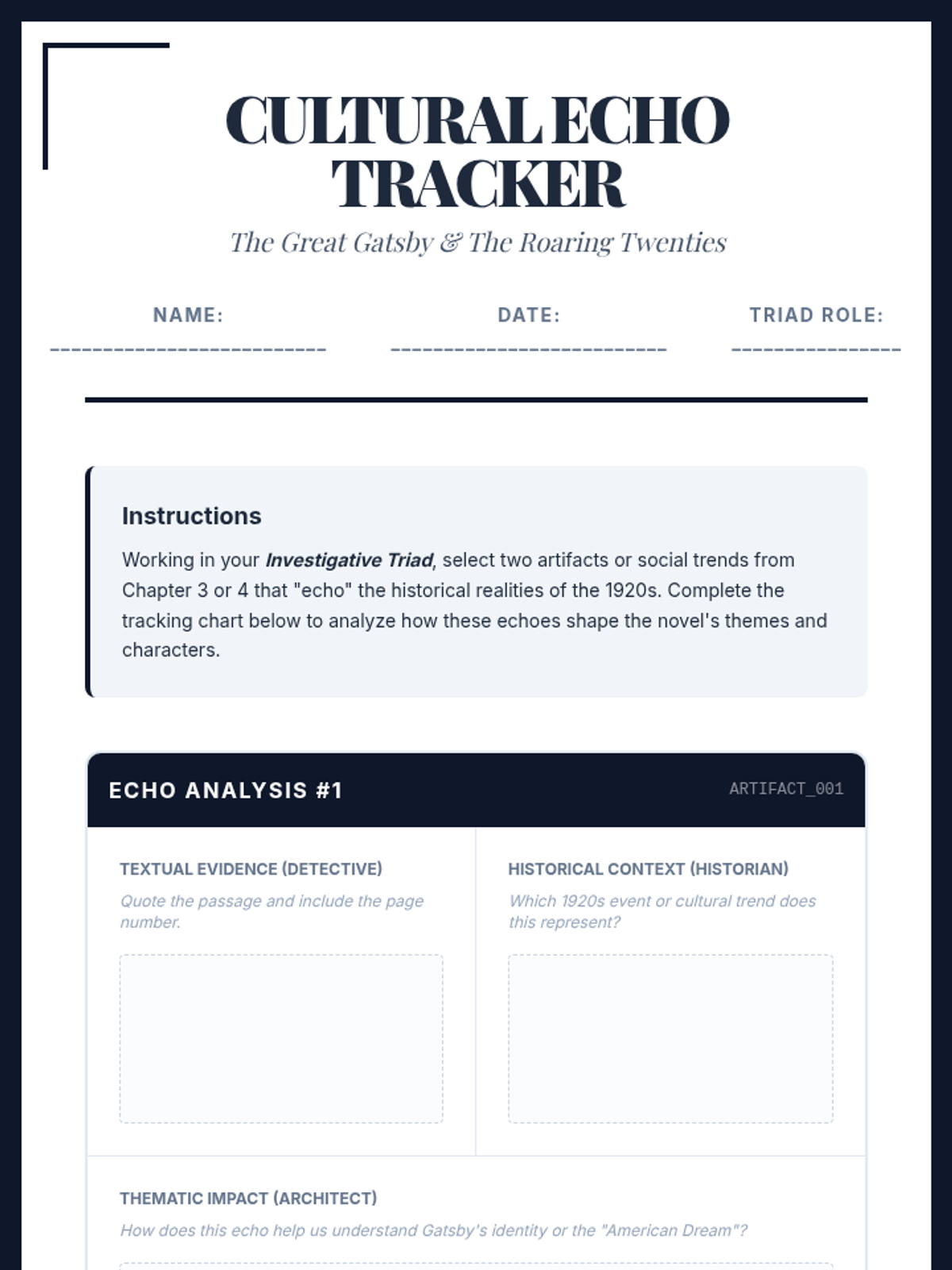
A literary and historical exploration of F. Scott Fitzgerald's classic novel, focusing on the cultural, social, and economic forces of the 1920s and how they shape the American Dream.
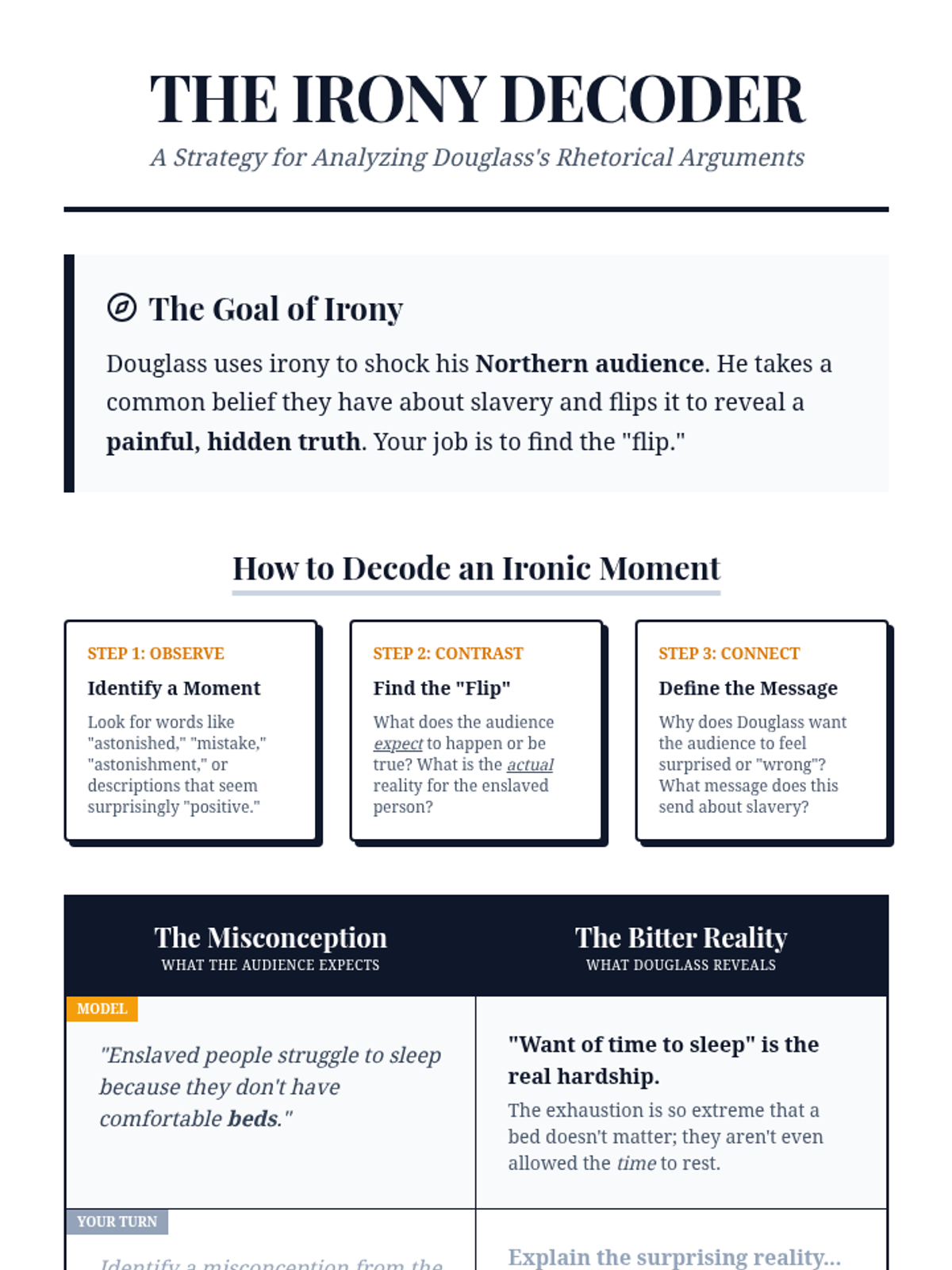
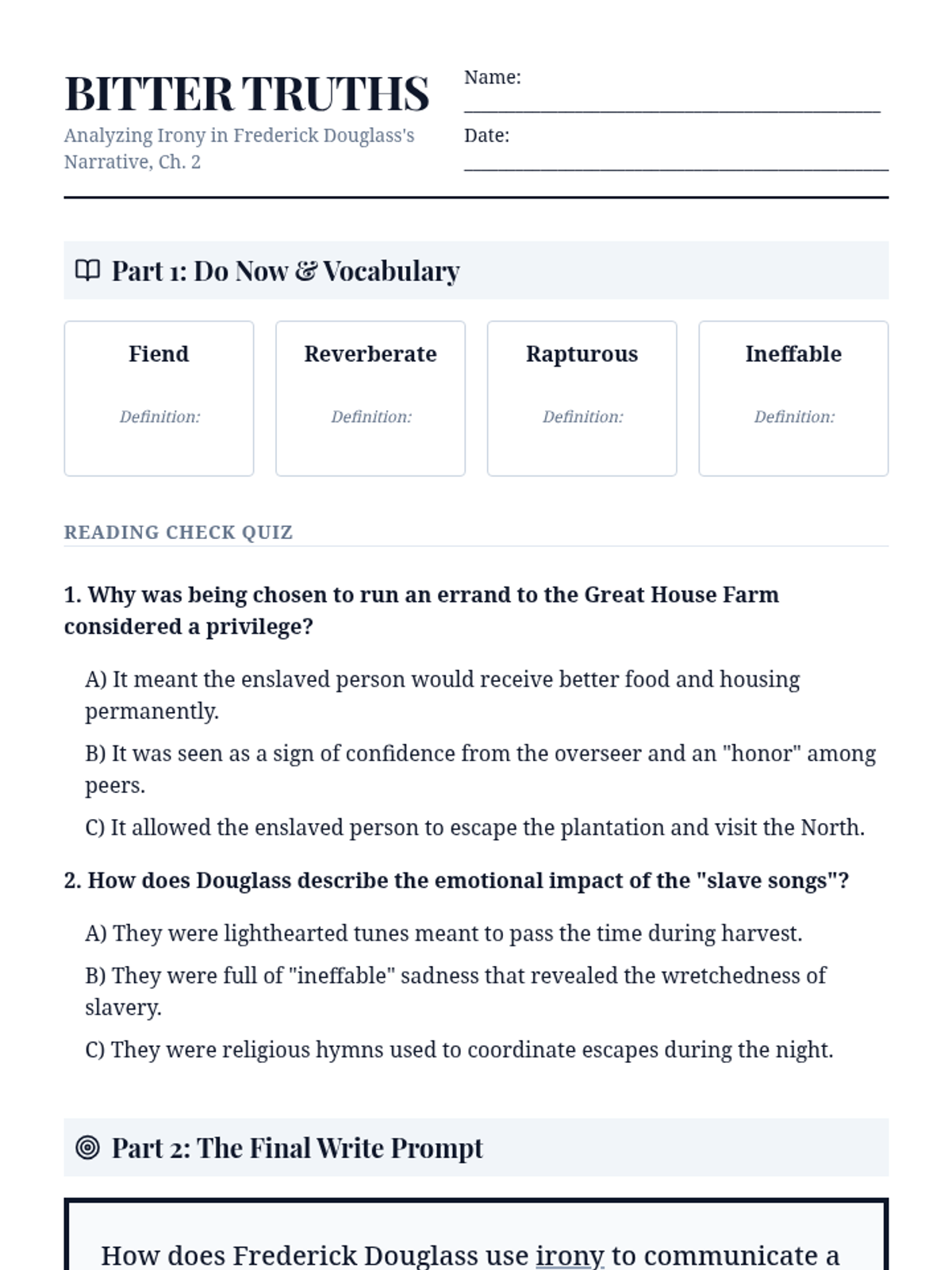
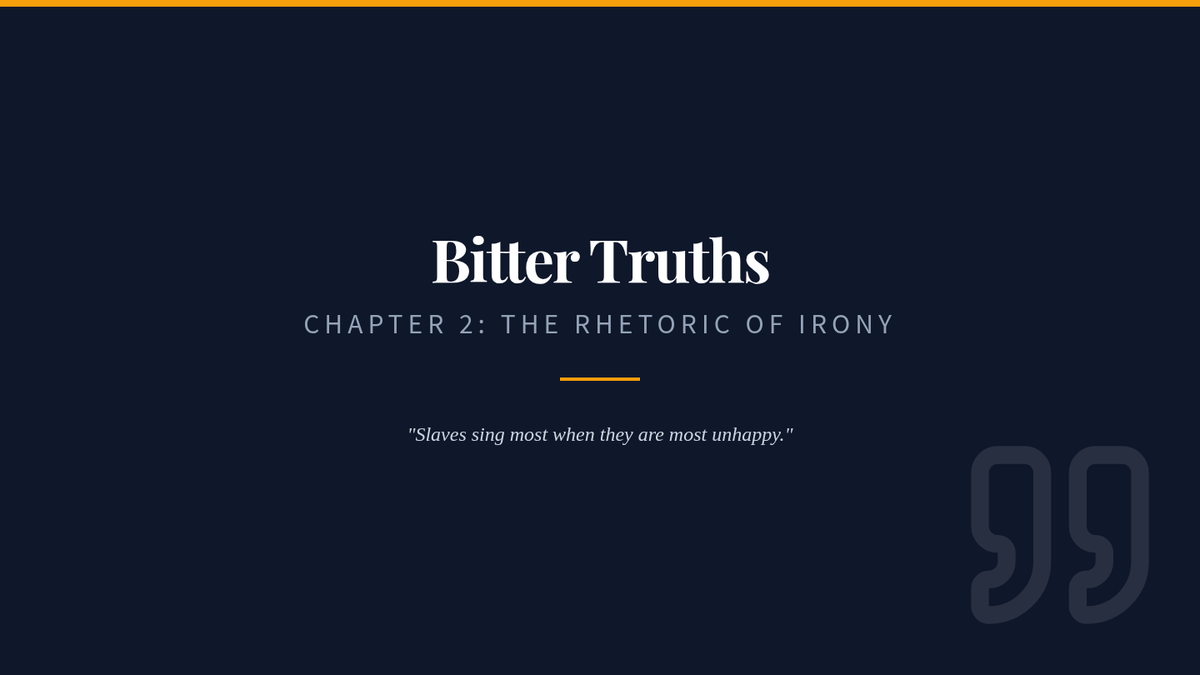
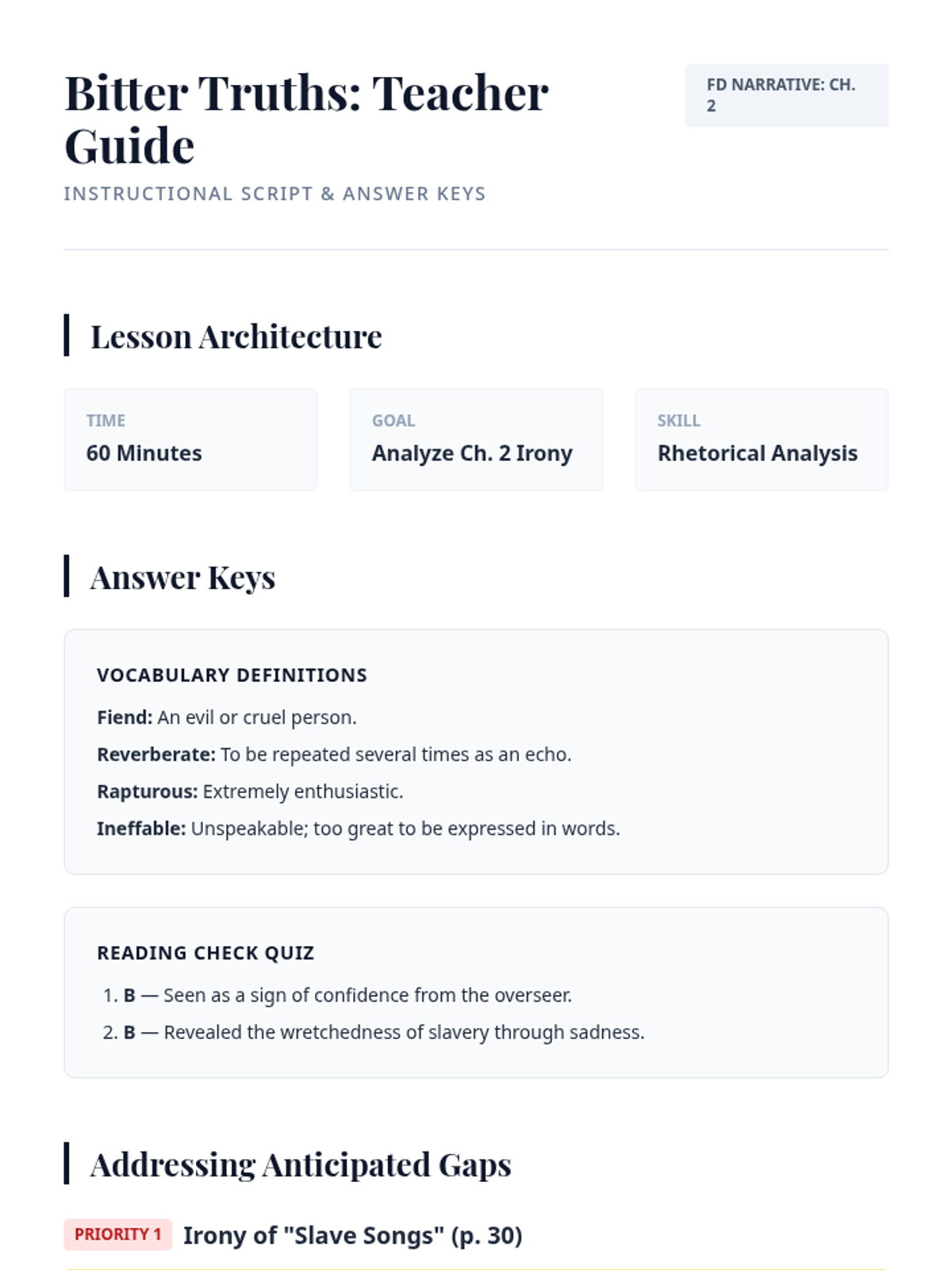
This sequence explores the literary techniques used by Frederick Douglass in his Narrative, focusing specifically on how he uses irony to dismantle Northern misconceptions about slavery. Students move from vocabulary acquisition to deep rhetorical analysis.
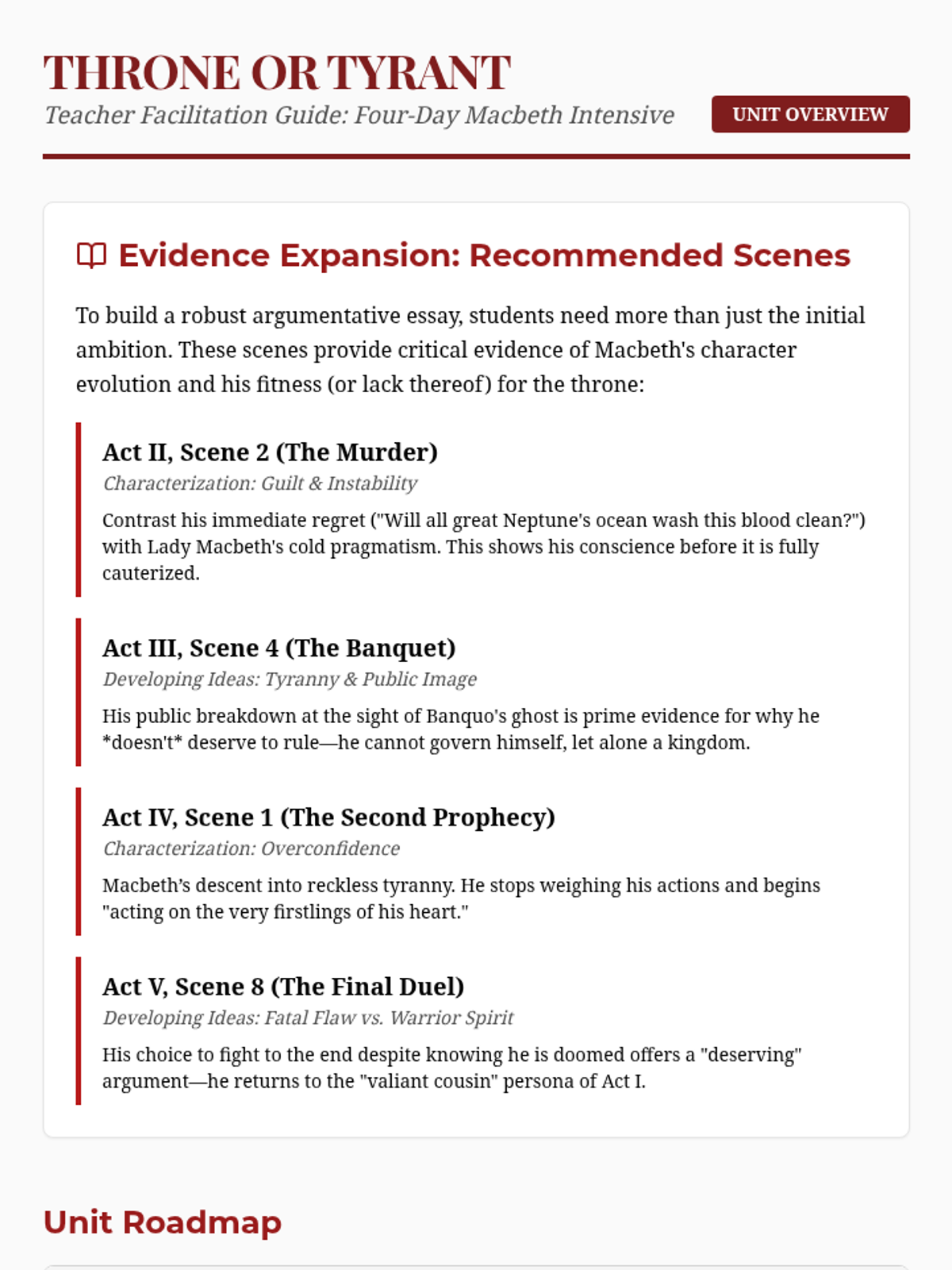
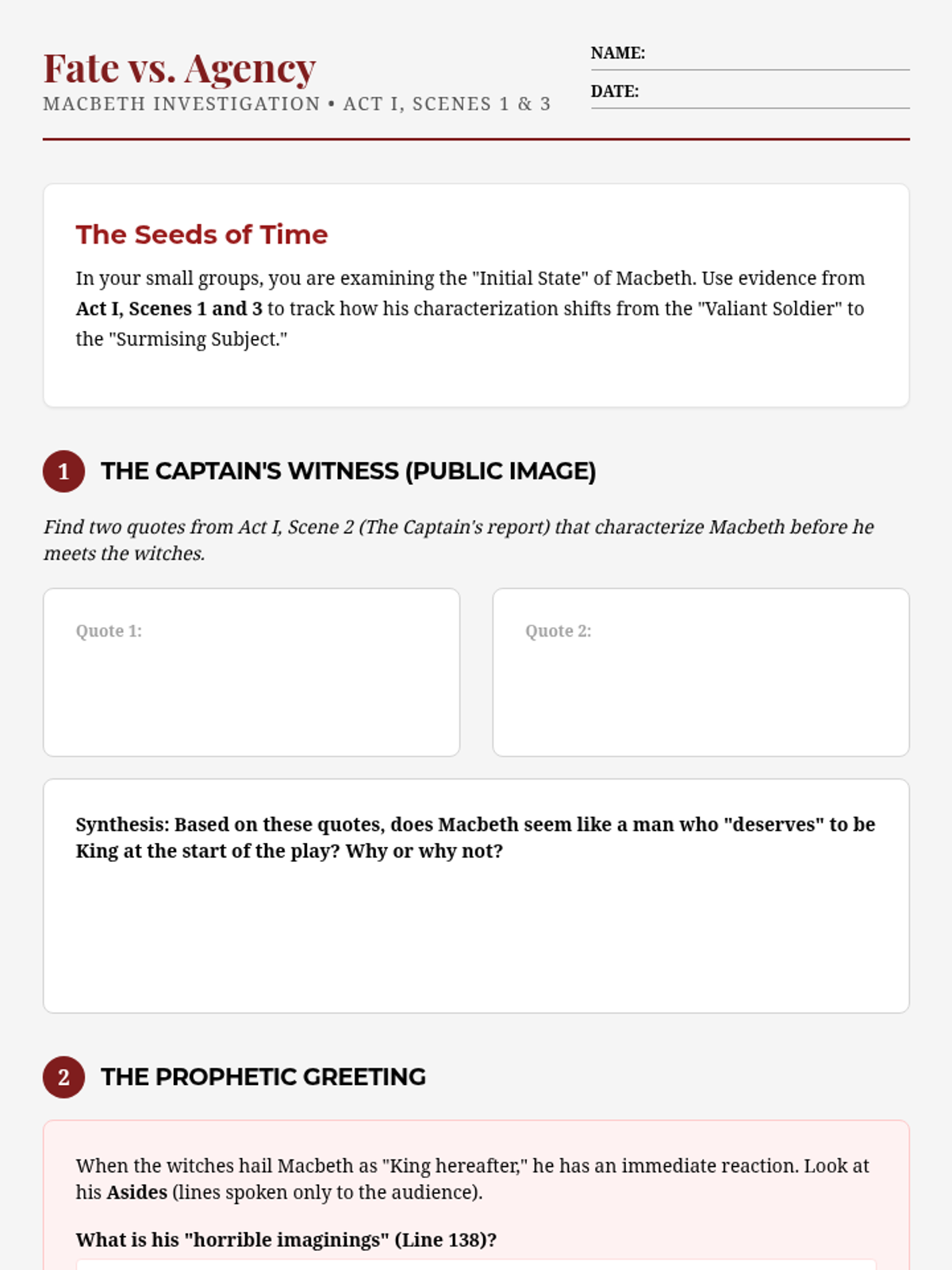
A four-day intensive study of Shakespeare's Macbeth, focusing on characterization and the development of ambition to prepare students for an argumentative essay on Macbeth's worthiness for the throne.