Syllogisms, deductive validity, and the principles of inductive probability for evaluating evidence-based claims. Targets common logical fallacies and the construction of sound, persuasive arguments.
A professional, academic rubric for a fieldwork reflection writing assignment. It includes criteria for research inquiry, evidence coding, collaborative synthesis, and writing style, all aligned to CCSS Grade 11-12 standards. Polished for high contrast and 1-page layout.
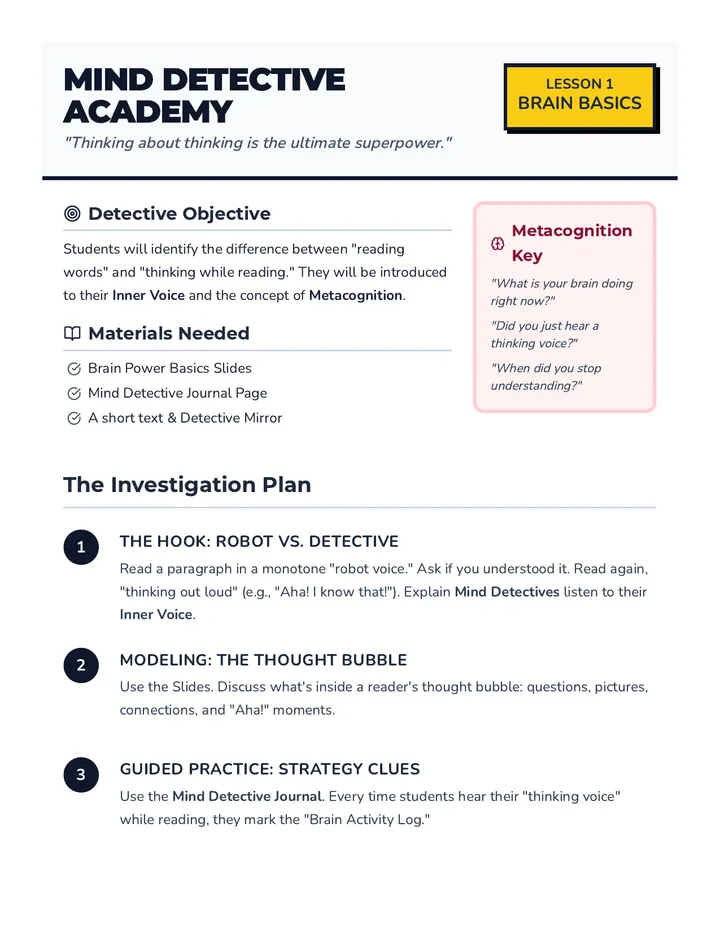
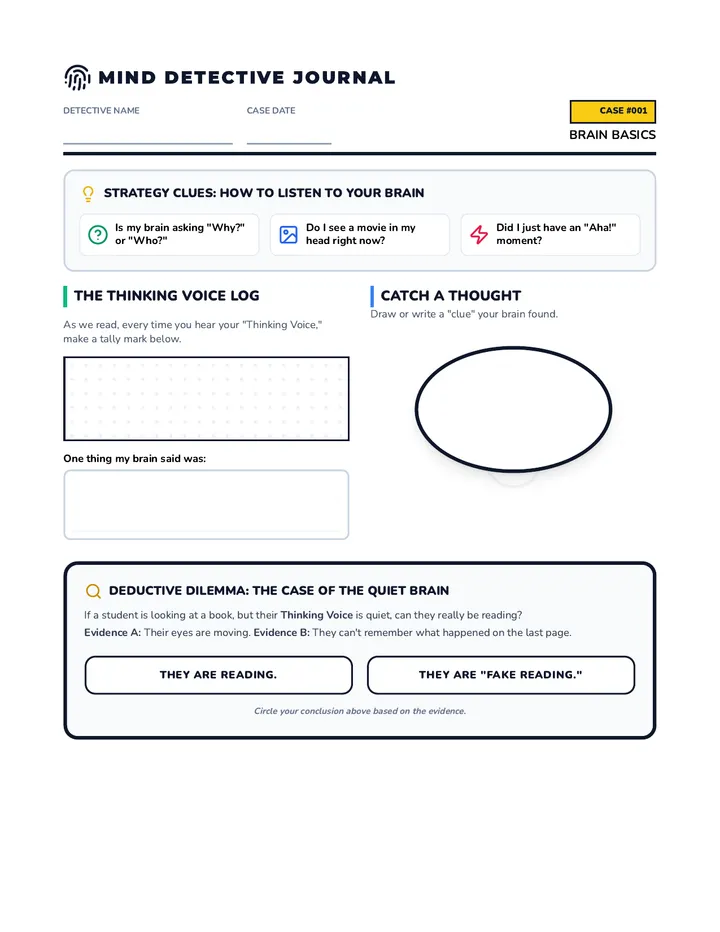
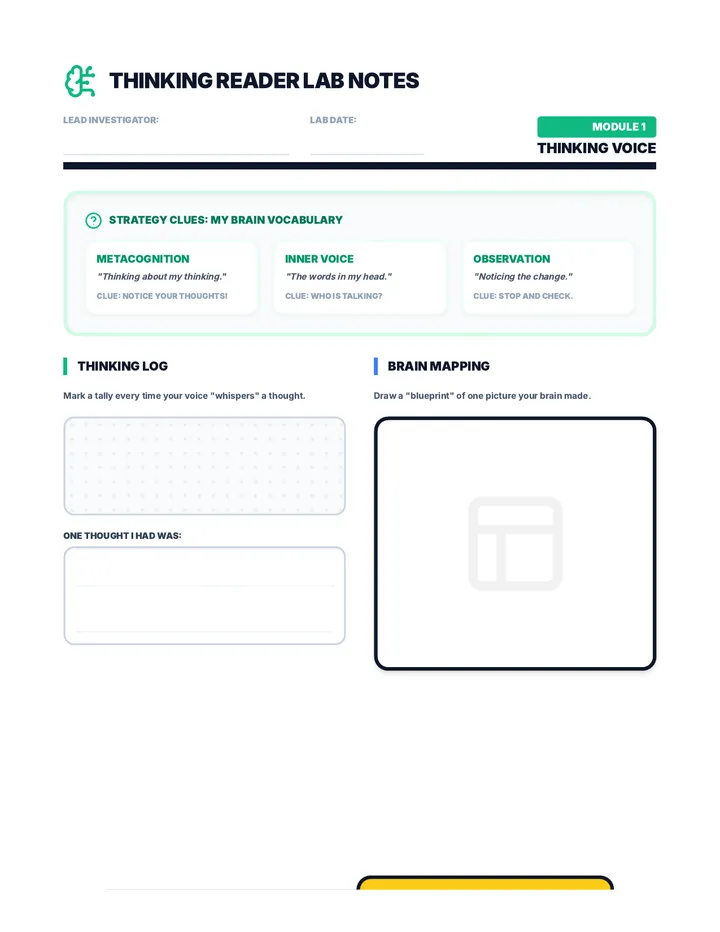
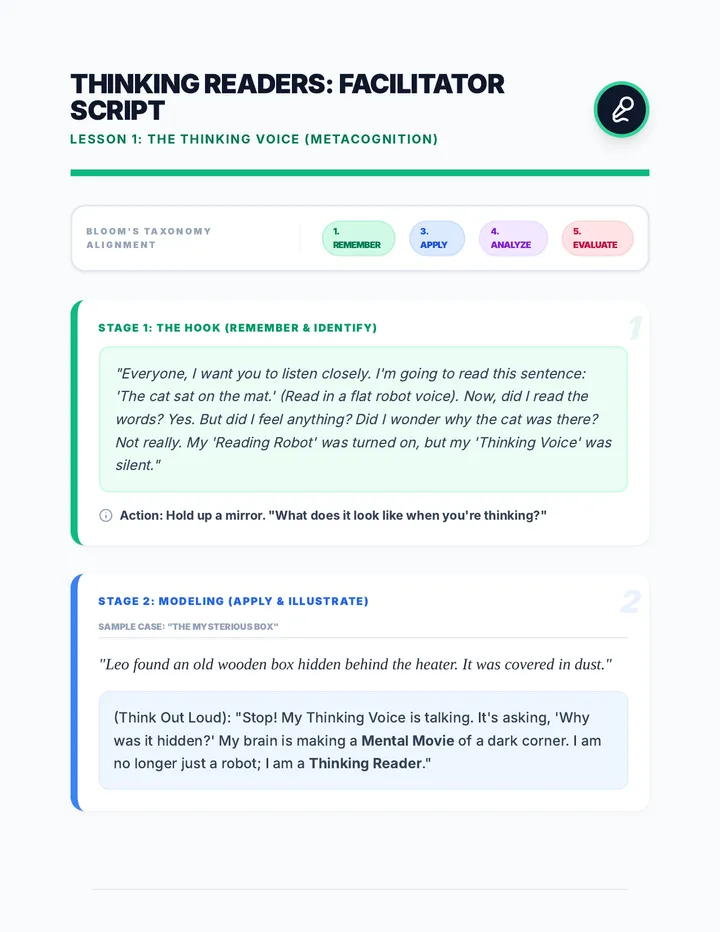
A 12-lesson comprehension mastery program focused on metacognition, reasoning, and evidence-based thinking. Students progress from basic thinking awareness to complex deductive reasoning and synthesis. Inspired by Reading Detective and Comprehension Connections.
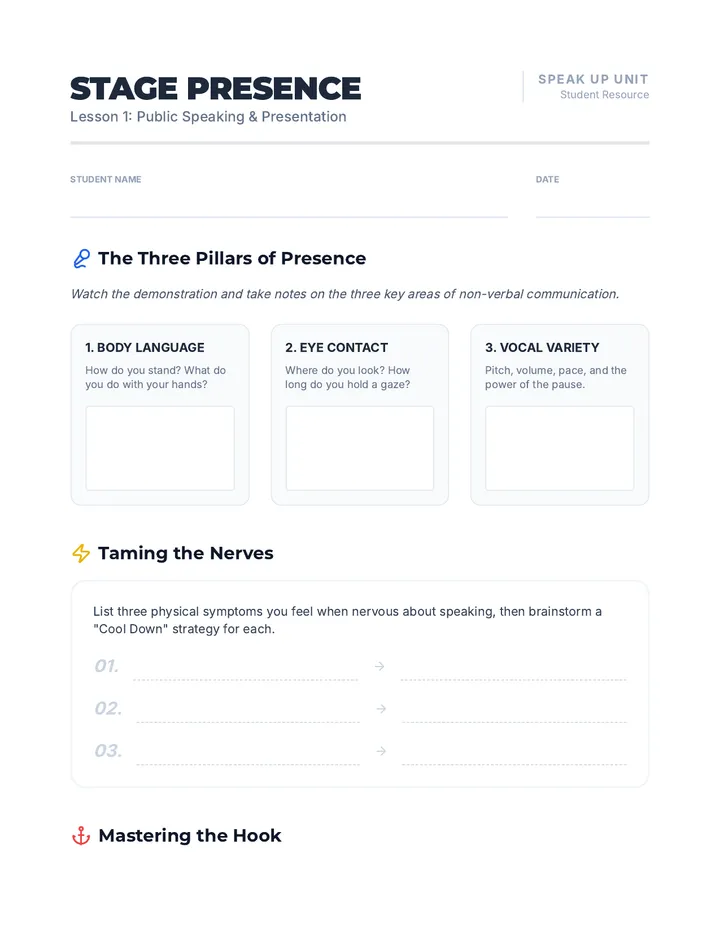
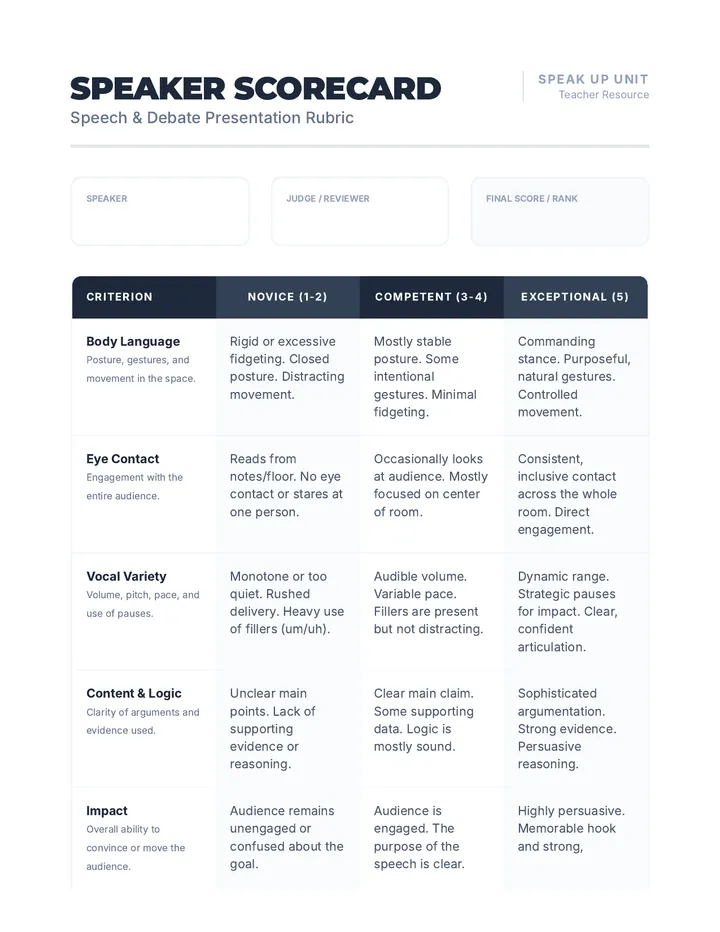
A comprehensive 5-day introductory unit on speech and debate, covering public speaking, argumentation, logic, research, and competitive formats.
A graduate-level sequence focused on integrating deductive, inductive, and analogical reasoning into a cohesive defensive strategy for academic and professional contexts.
A high-intensity vocabulary sequence for 10th graders focusing on the logic of analogies. Students progress from basic pattern recognition to designing their own complex logic puzzles, treating language as a series of solvable equations.
A 12th-grade ELA unit focused on the logical sequencing of ideas within dense informational texts and complex arguments. Students analyze how the ordering of premises and evidence determines the validity and rhetorical impact of a text.
A high-level bridging of English Language Arts and formal logic, focusing on the structural patterns of reasoning through analogies. Students move from basic symbolic notation to complex deductive puzzles, treating language with mathematical precision.
A 9th-grade English Language Arts sequence that bridges formal logic with argumentative writing. Students learn to use valid argument forms like Modus Ponens, Modus Tollens, and Hypothetical Syllogisms as structural blueprints for high-quality, undeniable writing.
A foundational sequence for 9th-grade students on the structures of deductive reasoning, focusing on categorical syllogisms, validity, and soundness to enhance critical thinking and analytical writing.
A high-level ELA unit for 11th graders that bridges formal logic and argumentative writing. Students move from identifying hidden premises (enthymemes) to constructing complex essays built on valid deductive frameworks like Modus Ponens and Modus Tollens.
A comprehensive 11th Grade ELA sequence on formal logic, focusing on identifying structural fallacies (Affirming the Consequent, Denying the Antecedent, Undistributed Middle) and repairing invalid arguments. Students act as 'logic doctors' to diagnose and fix flawed reasoning in various rhetorical contexts.
A high-school ELA sequence that treats argumentative writing like geometric proofs, focusing on formal logic structures like axioms, modus ponens, and proofs by contradiction to build unassailable positions.
A high school ELA sequence focused on identifying structural errors in reasoning. Students learn to distinguish between informal fallacies (content-based) and formal fallacies (structure-based), specifically mastering affirming the consequent, denying the antecedent, and the undistributed middle.
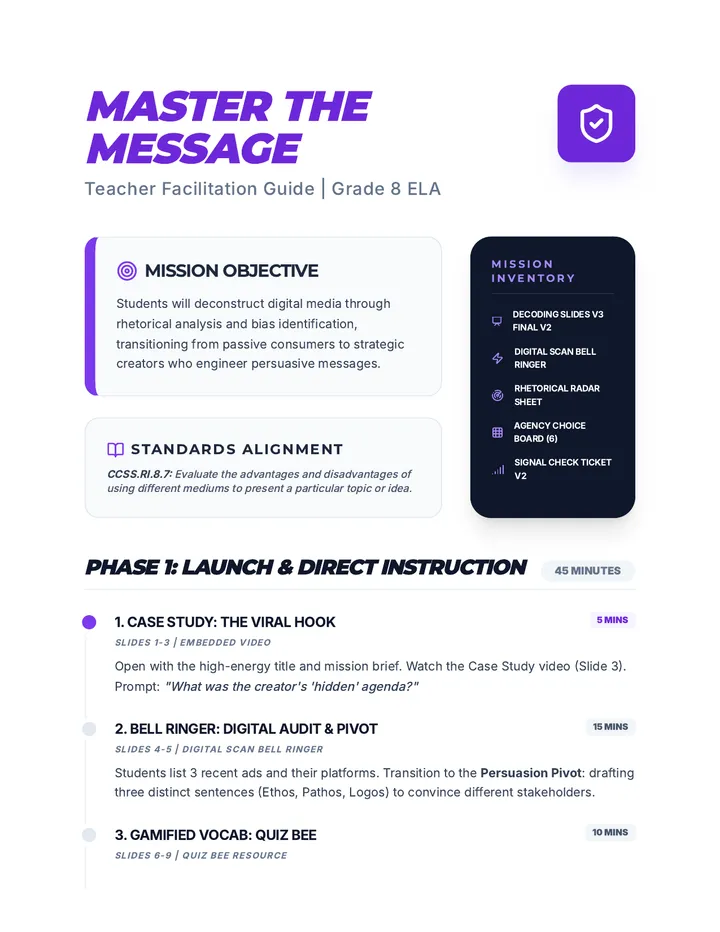
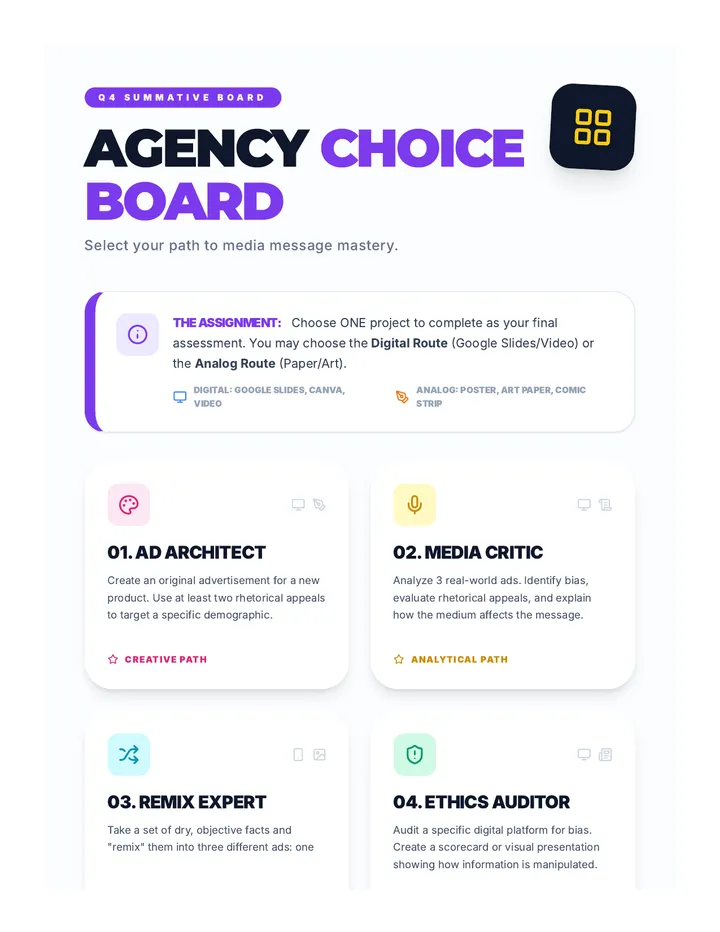
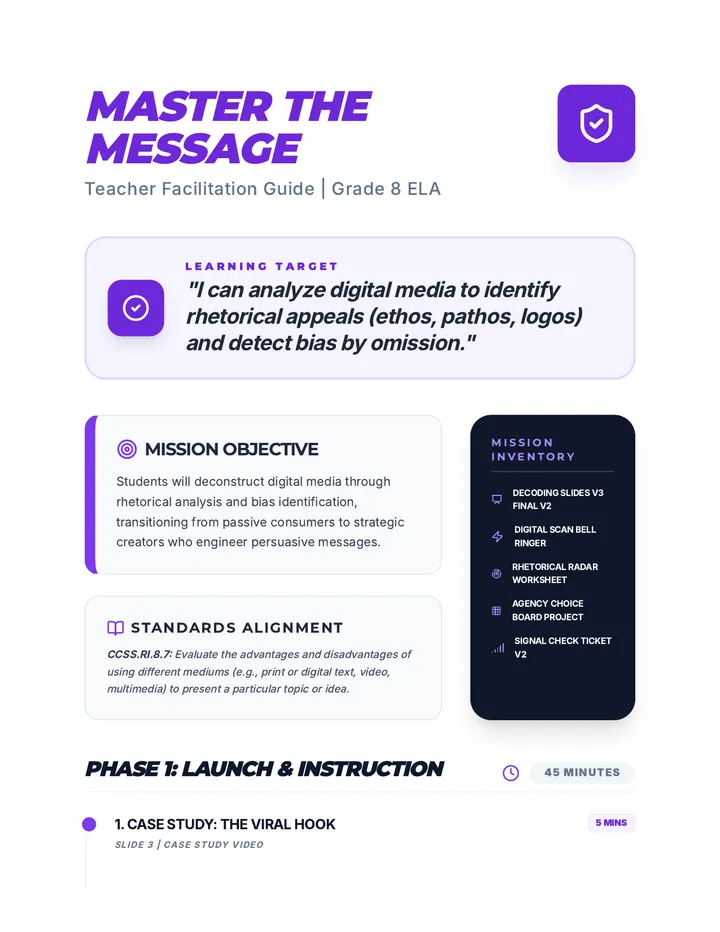
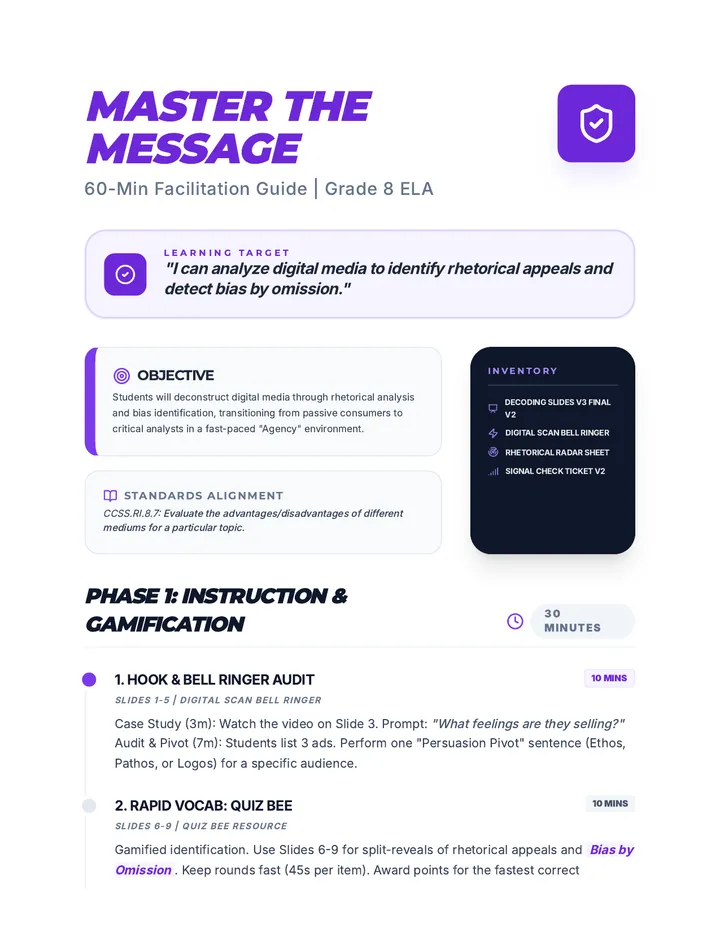
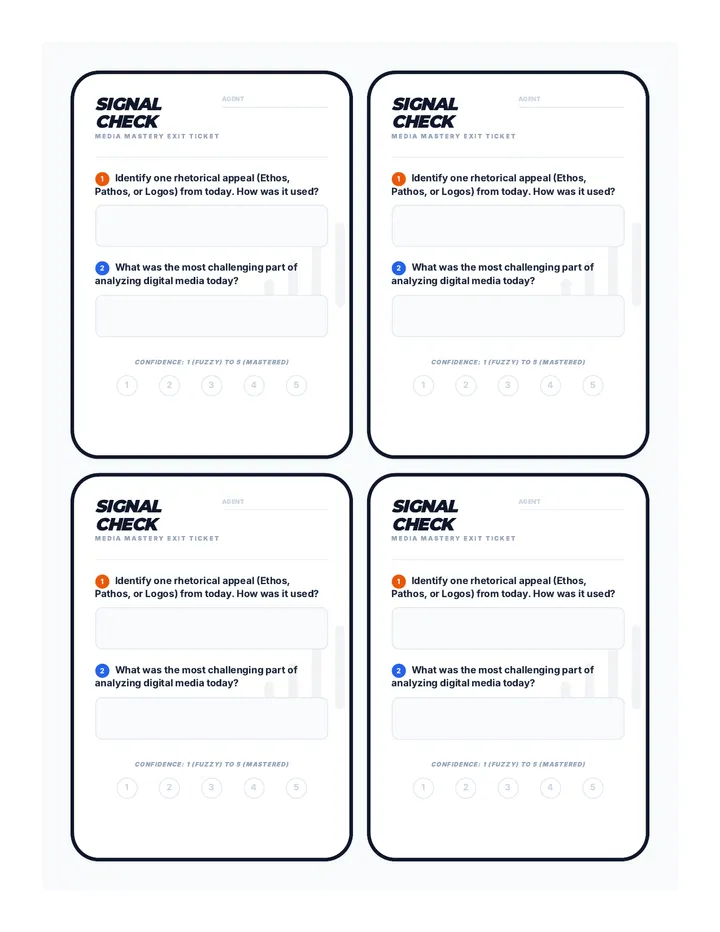
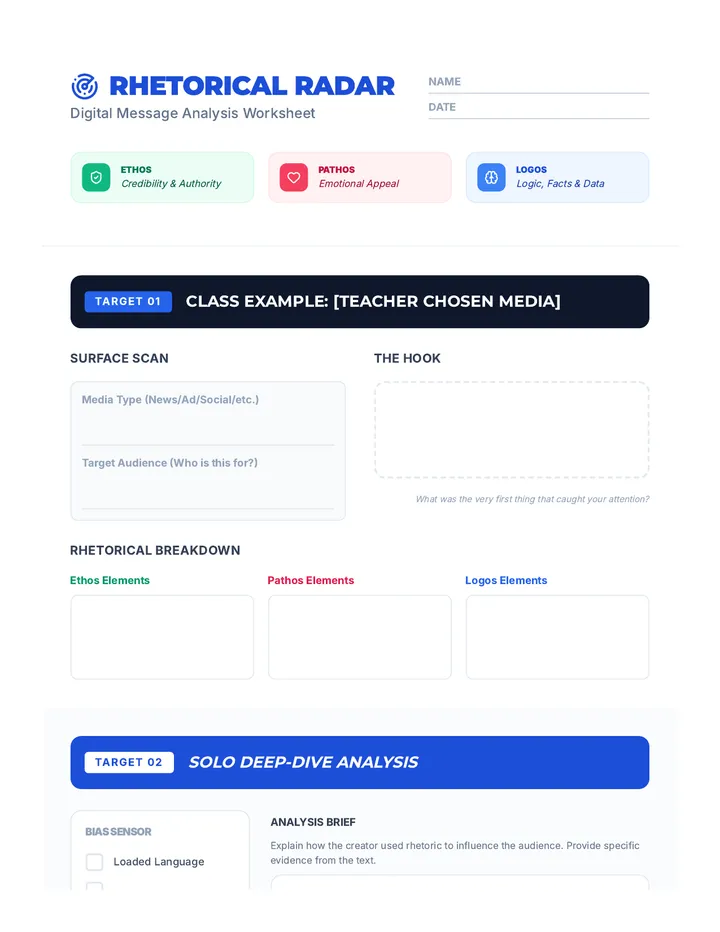
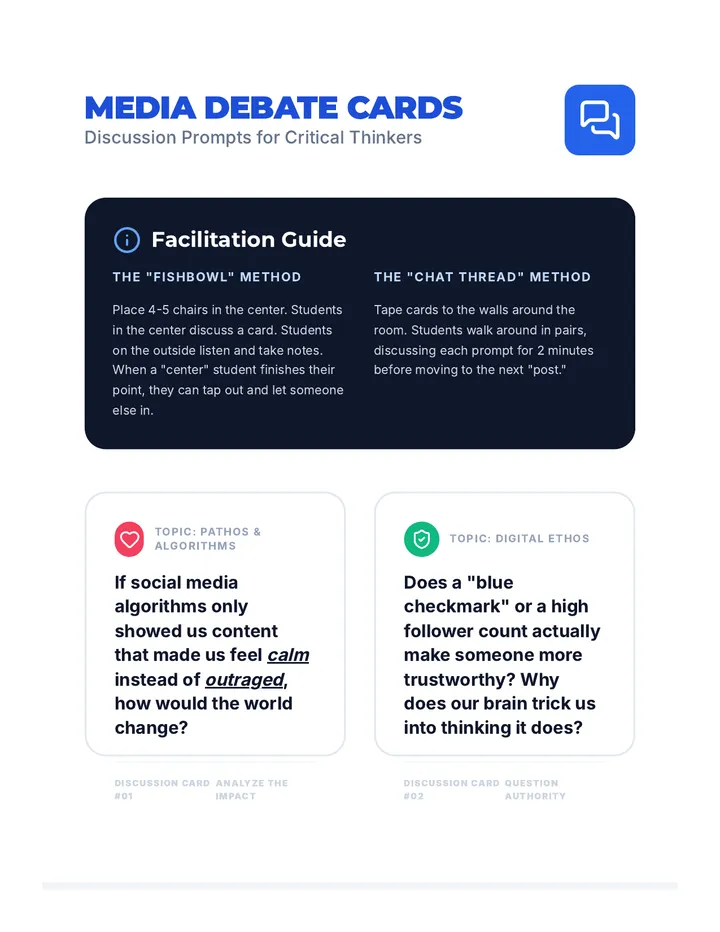
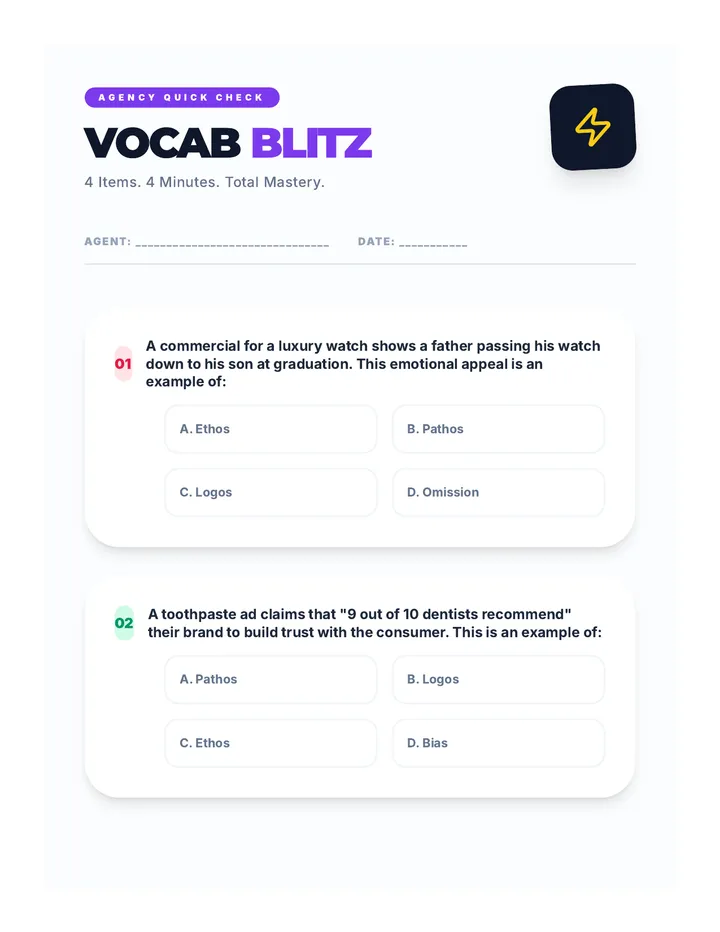
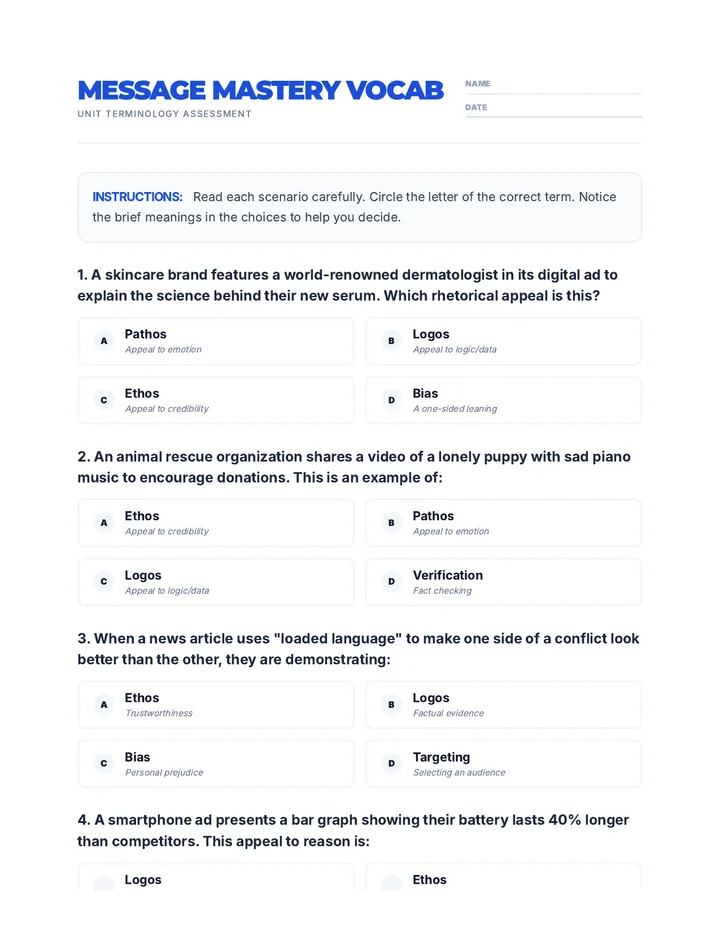
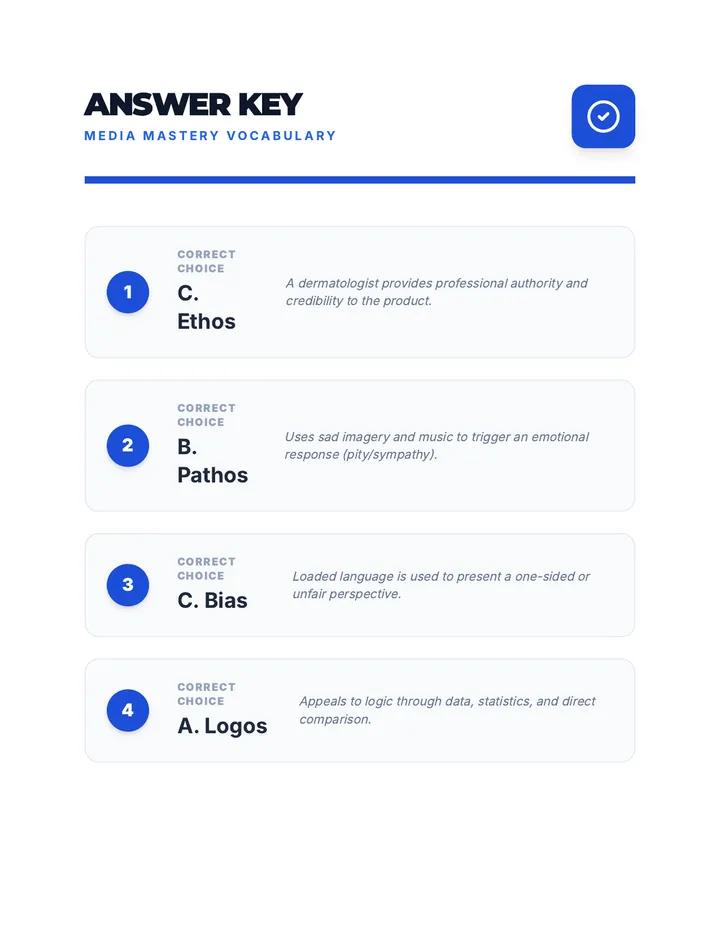
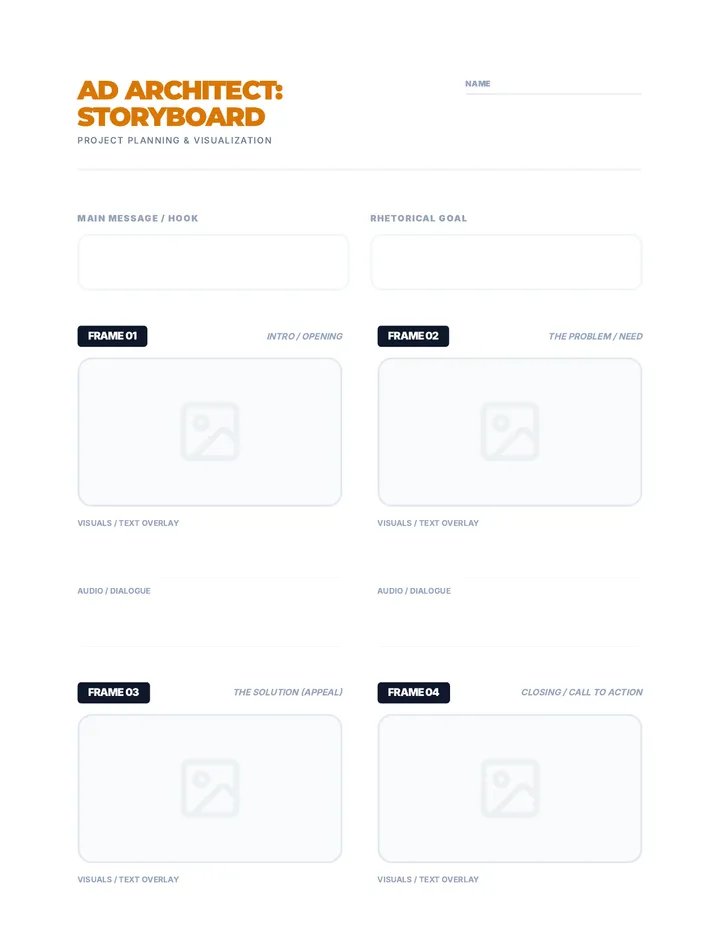
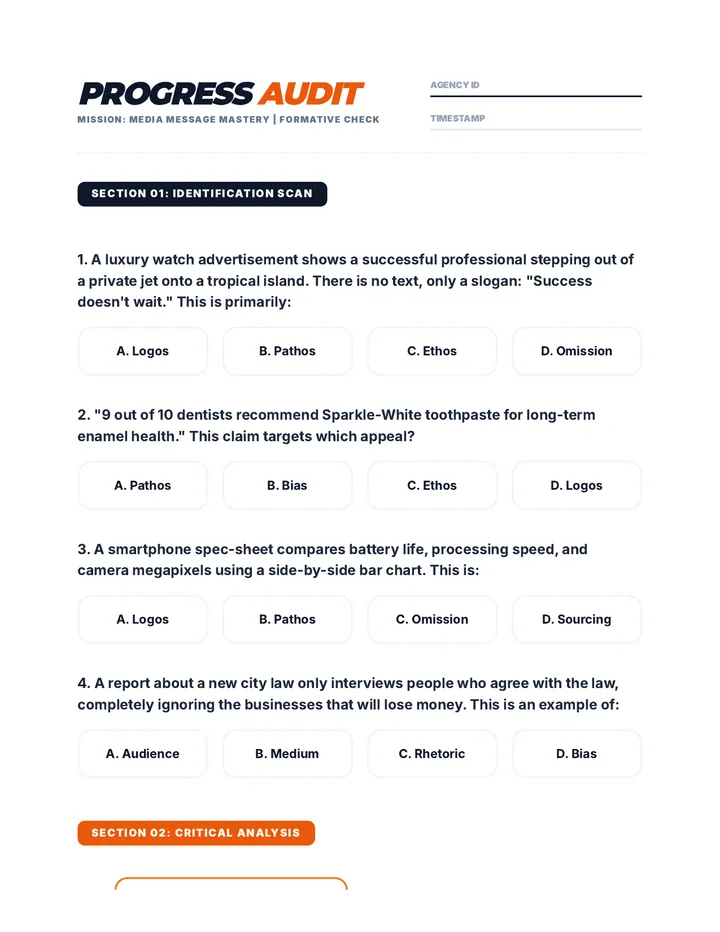
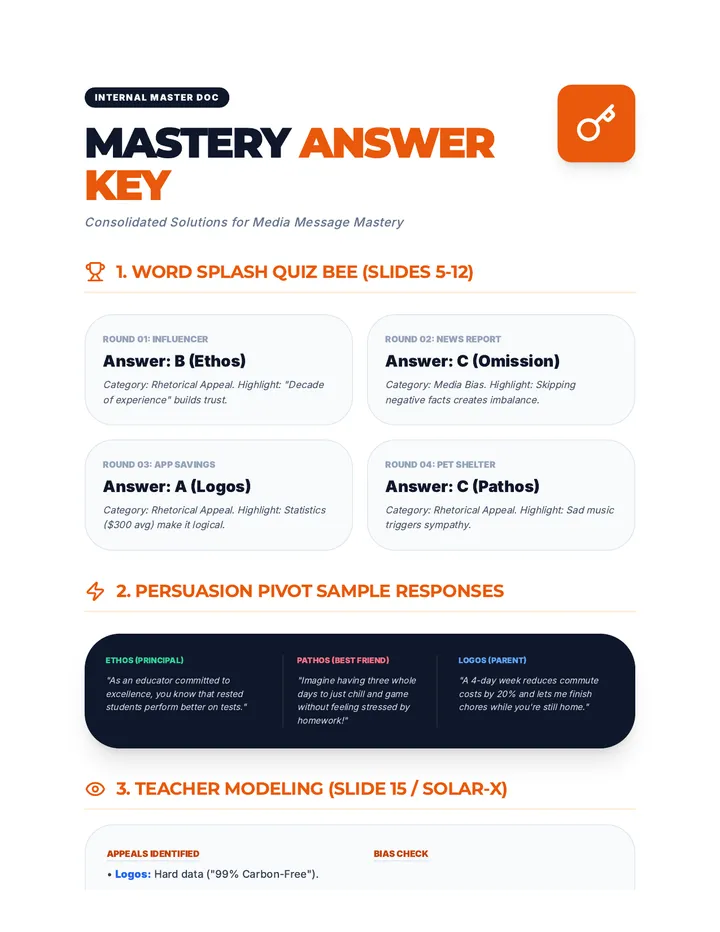
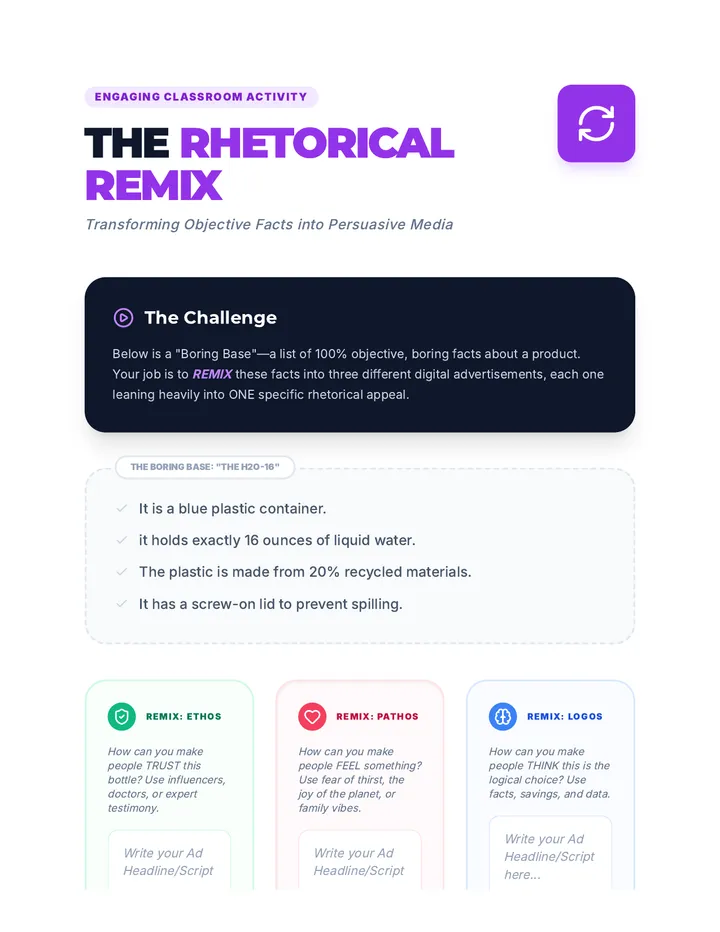
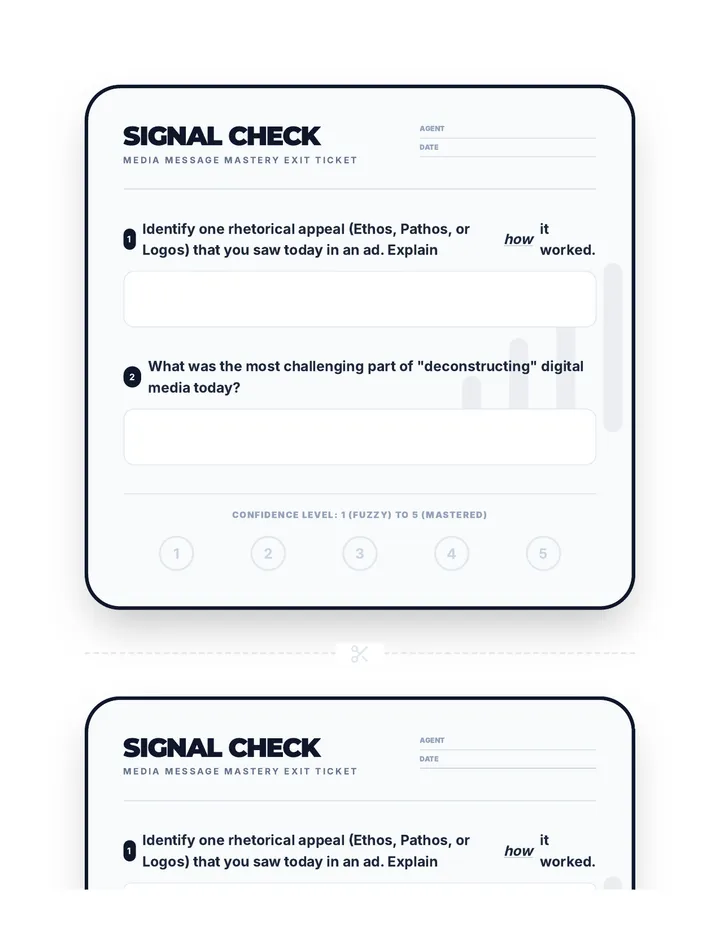
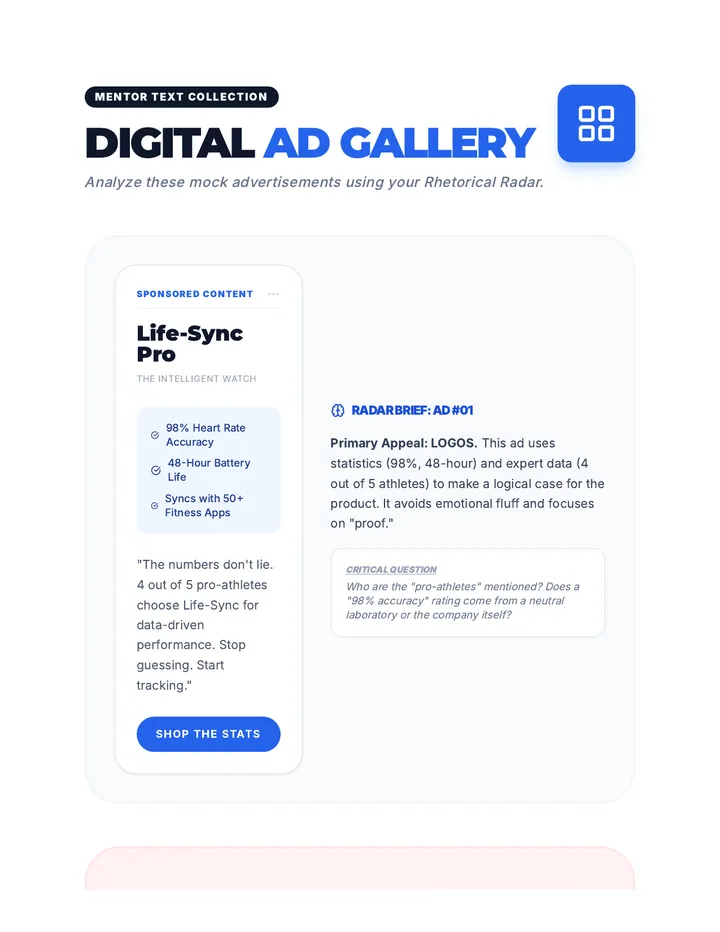
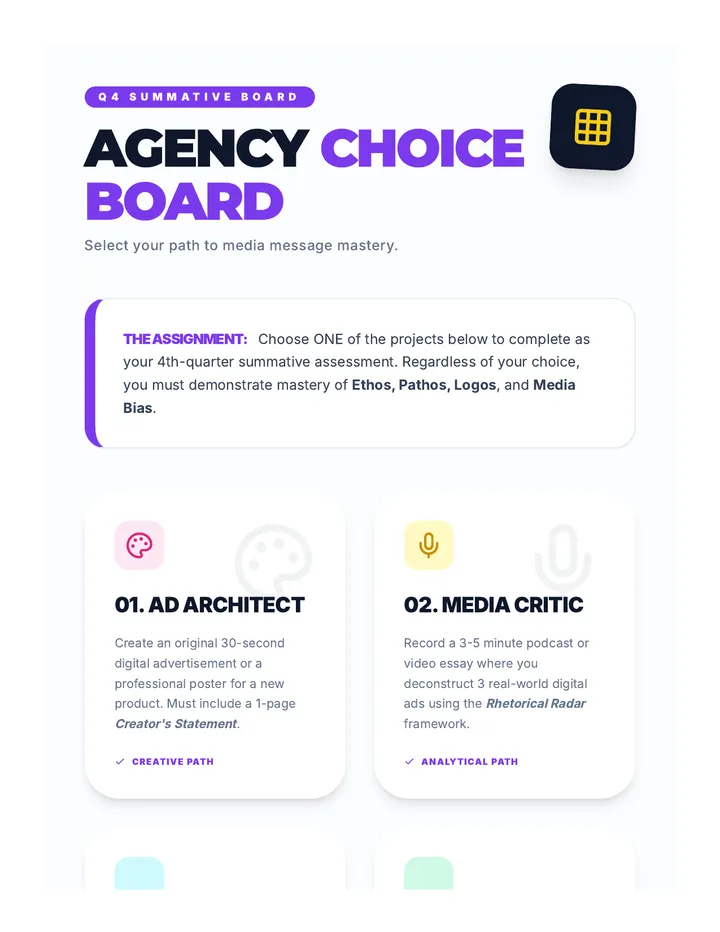
An 8th-grade ELA lesson focused on deconstructing digital media messages through the lens of rhetorical appeals (ethos, pathos, logos) and identifying bias in various online formats. Students transition from passive consumers to critical analysts of news clips, social media, and advertisements.
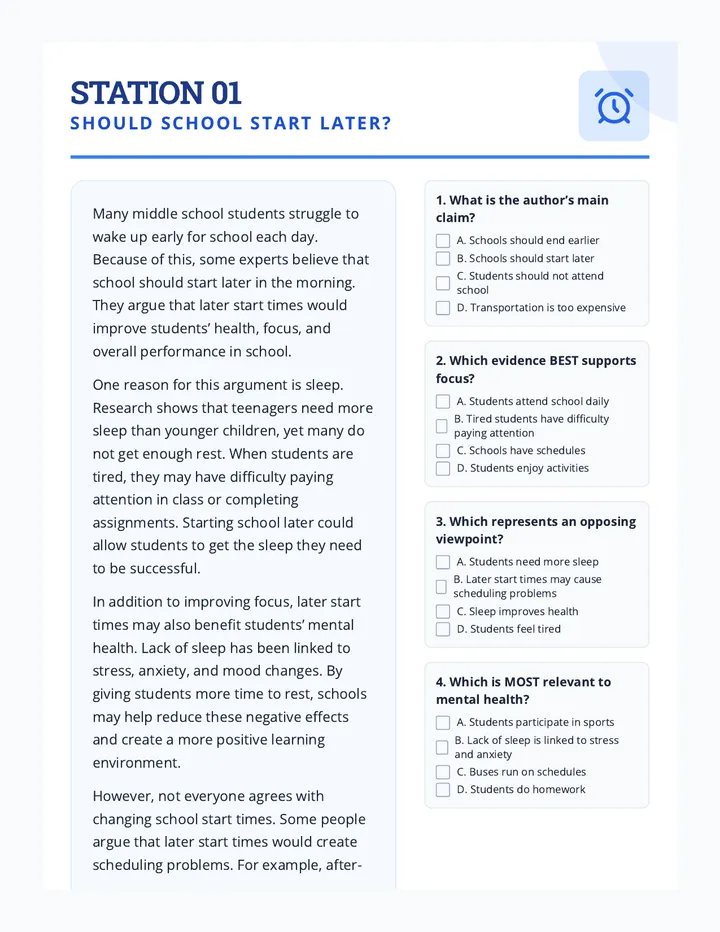
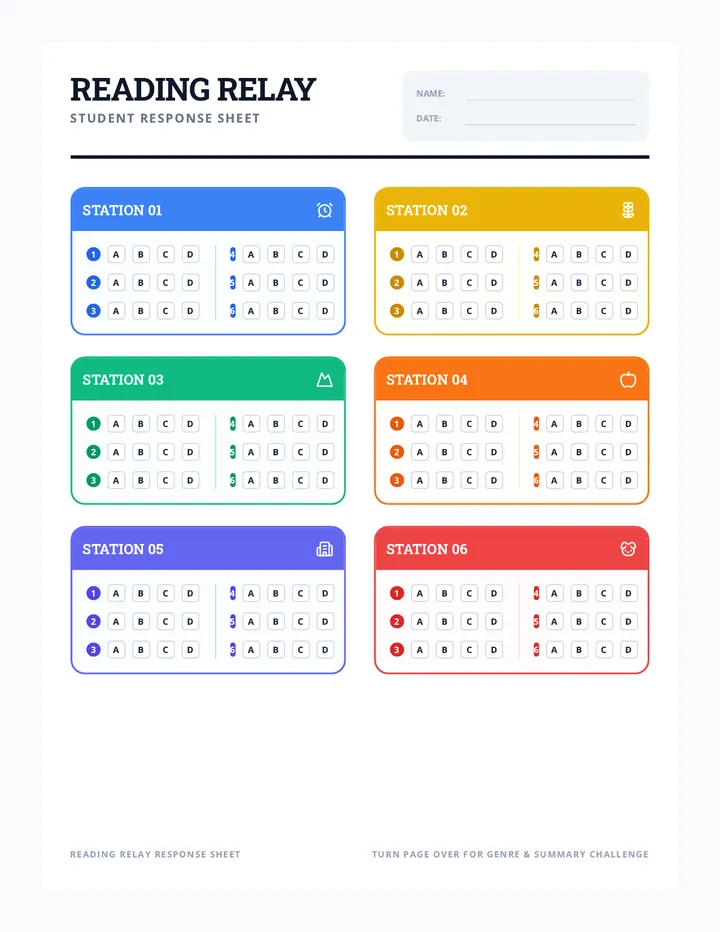
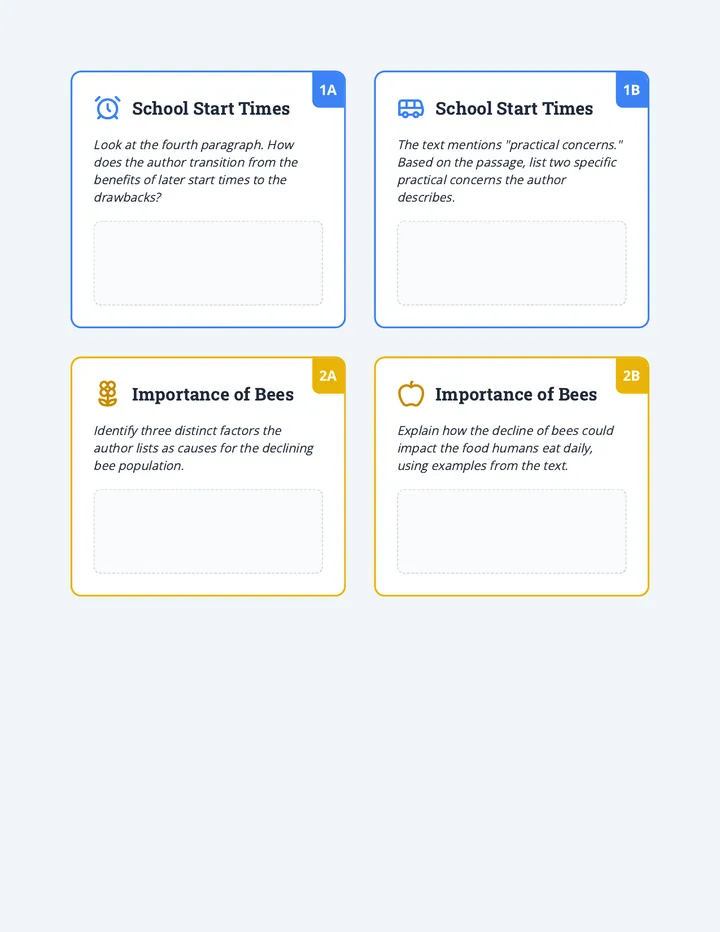
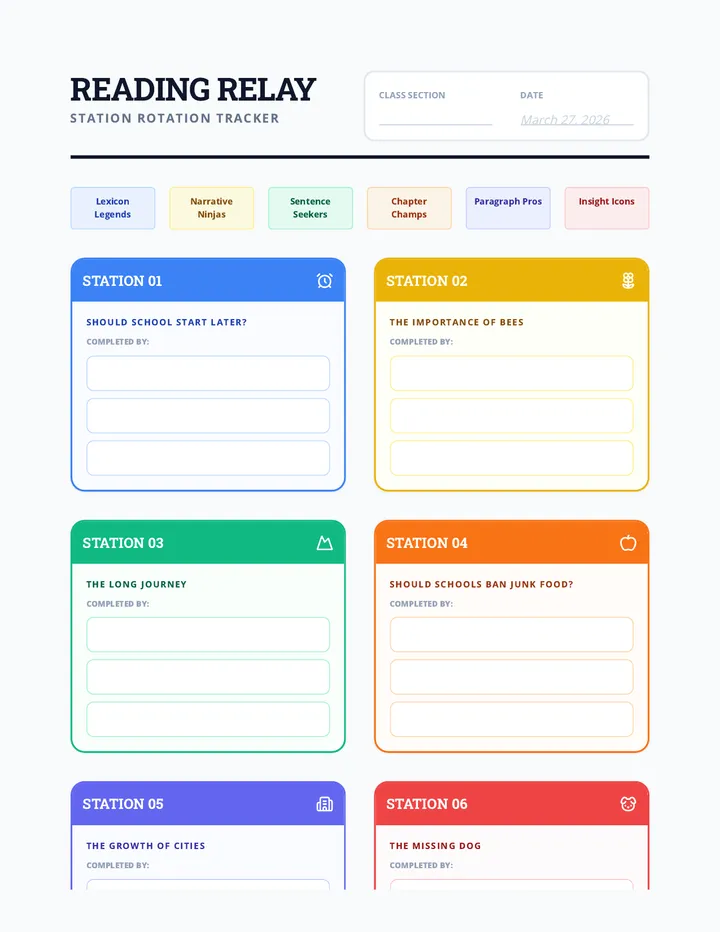
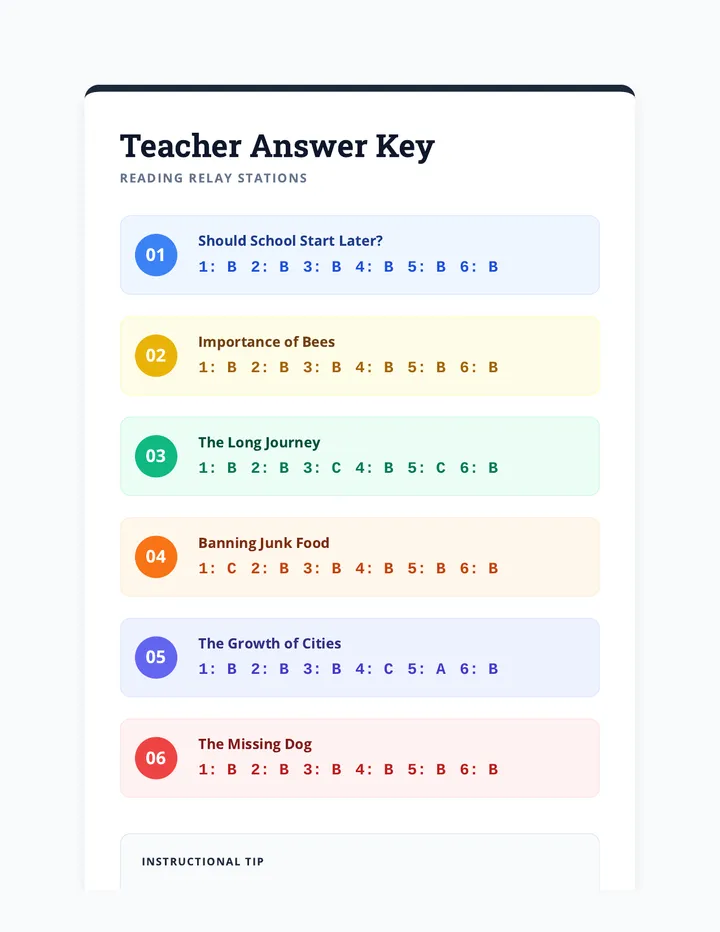
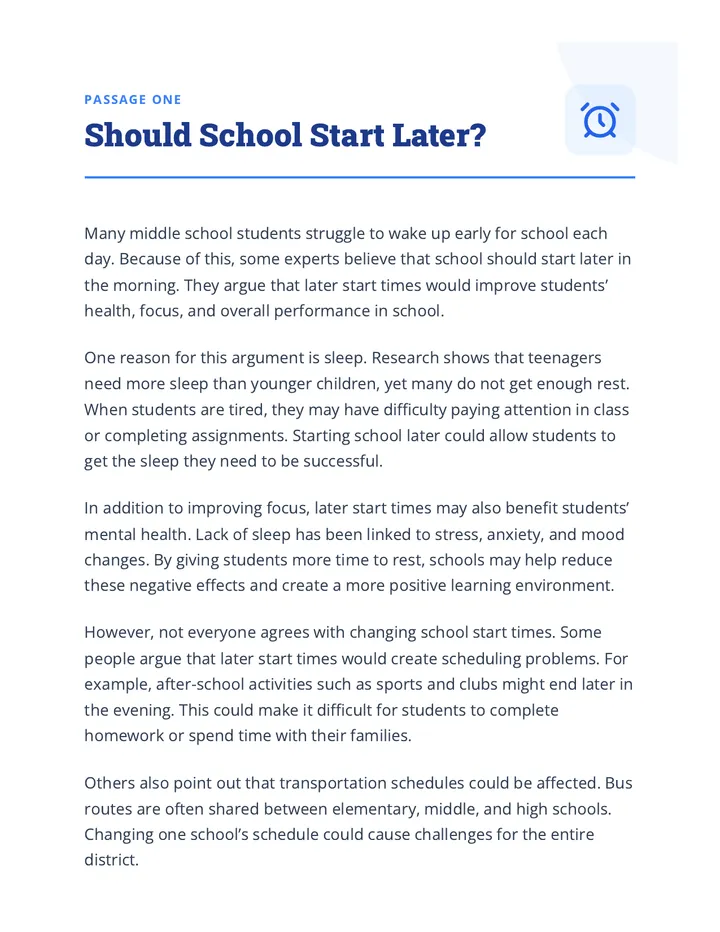
A set of literacy stations designed to build comprehension, argumentative analysis, and theme identification skills through six diverse reading passages.
A comprehensive lesson exploring Tanith Lee's 'Awake,' a subversion of Sleeping Beauty, focusing on structural choices and source material transformation (RL.5 and RL.9). Students will analyze character conflict and the concept of 'the gift of time.'
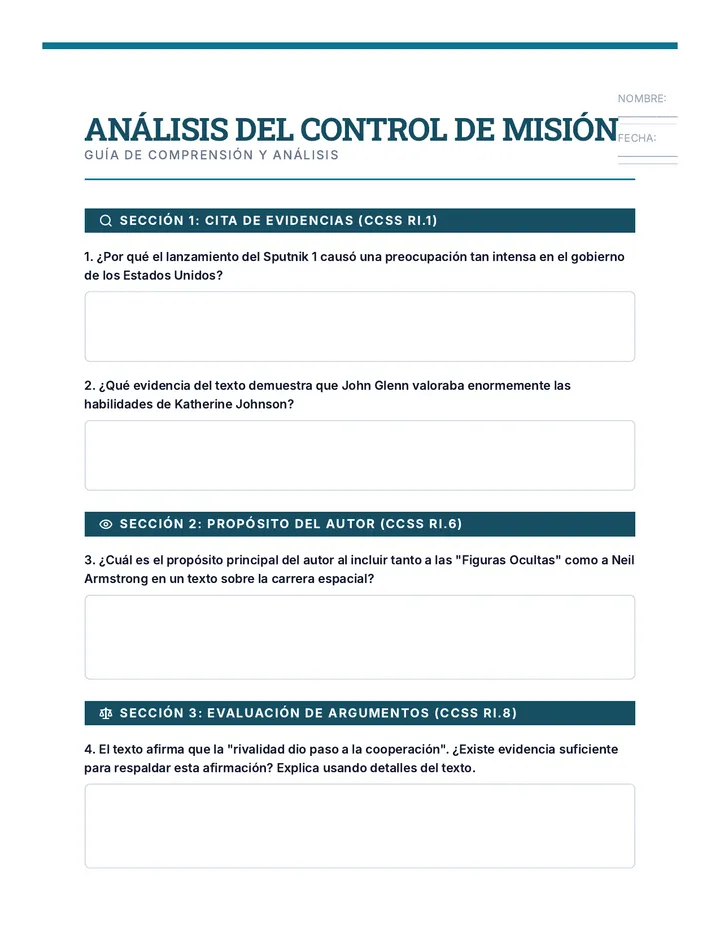
A summative assessment package focused on middle school ELA standards (RL.6/RI.6) through the lens of a persuasive text regarding NASA funding and its historical impact.
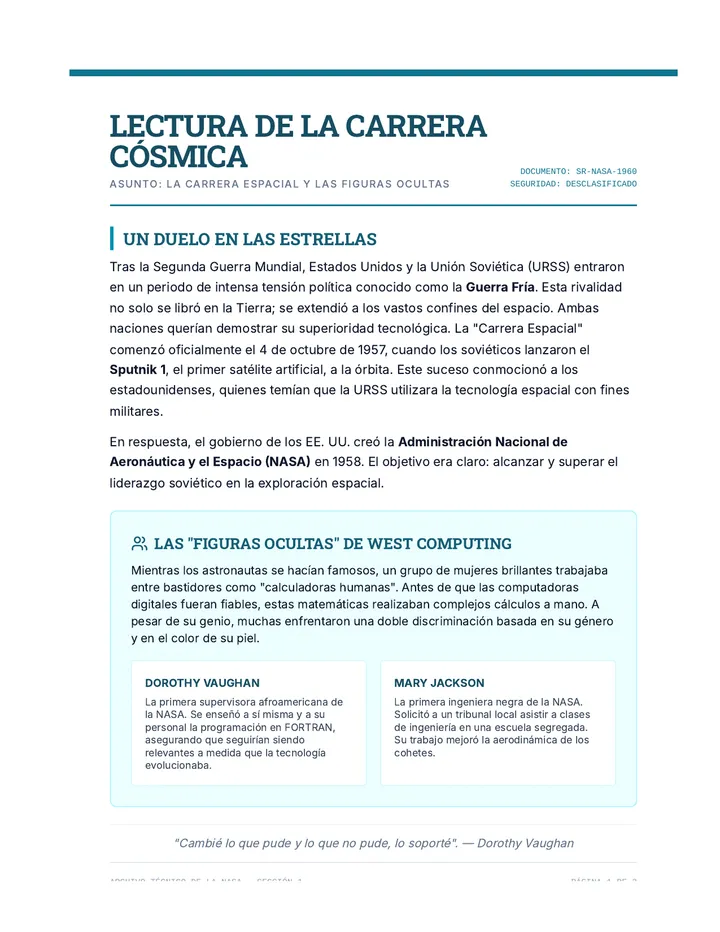
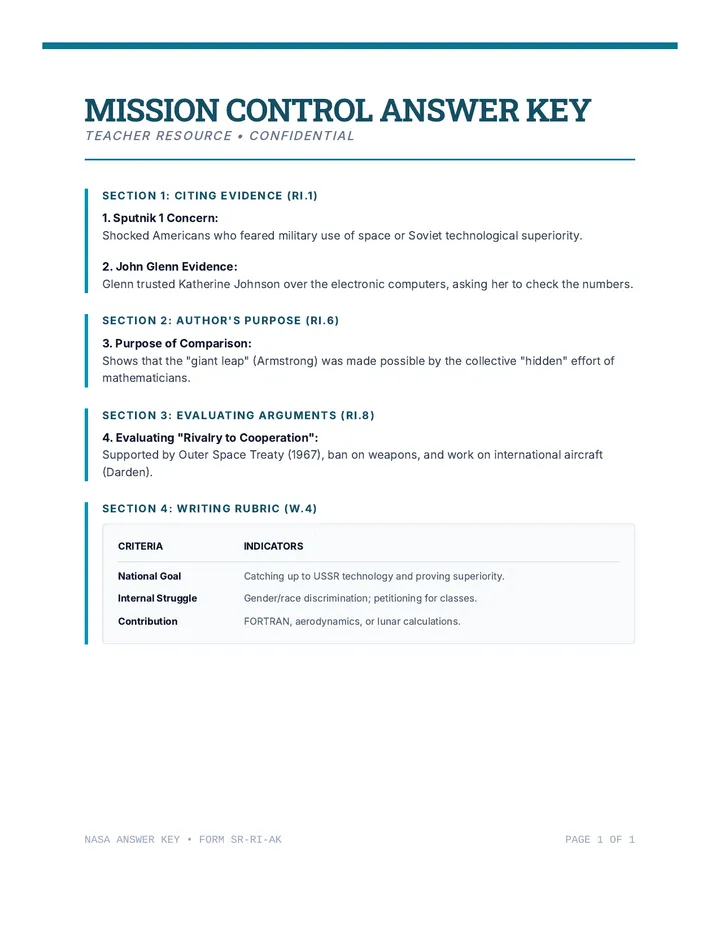
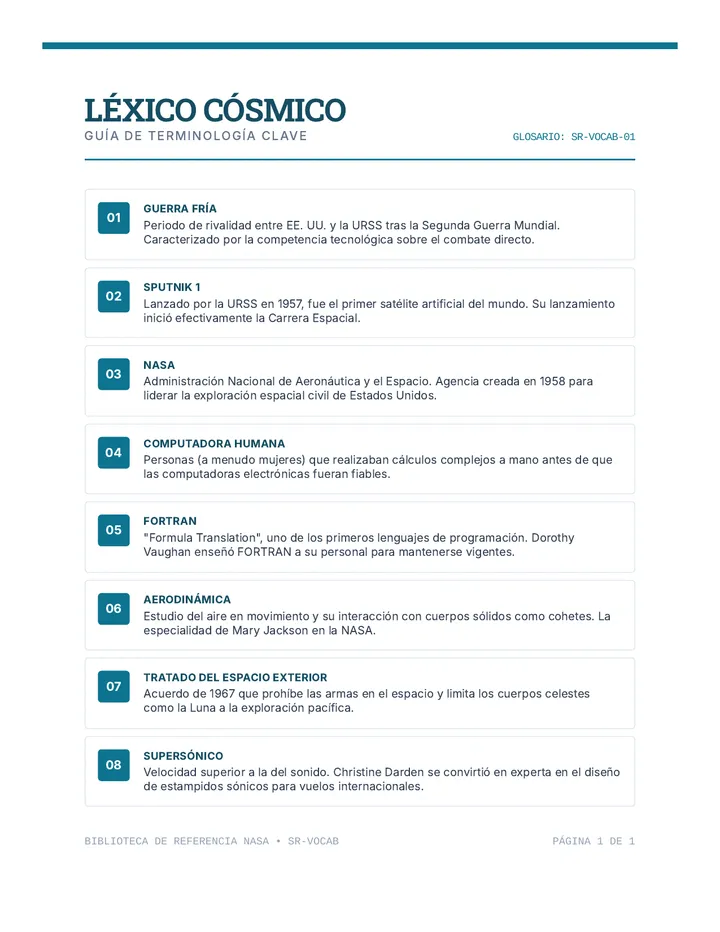
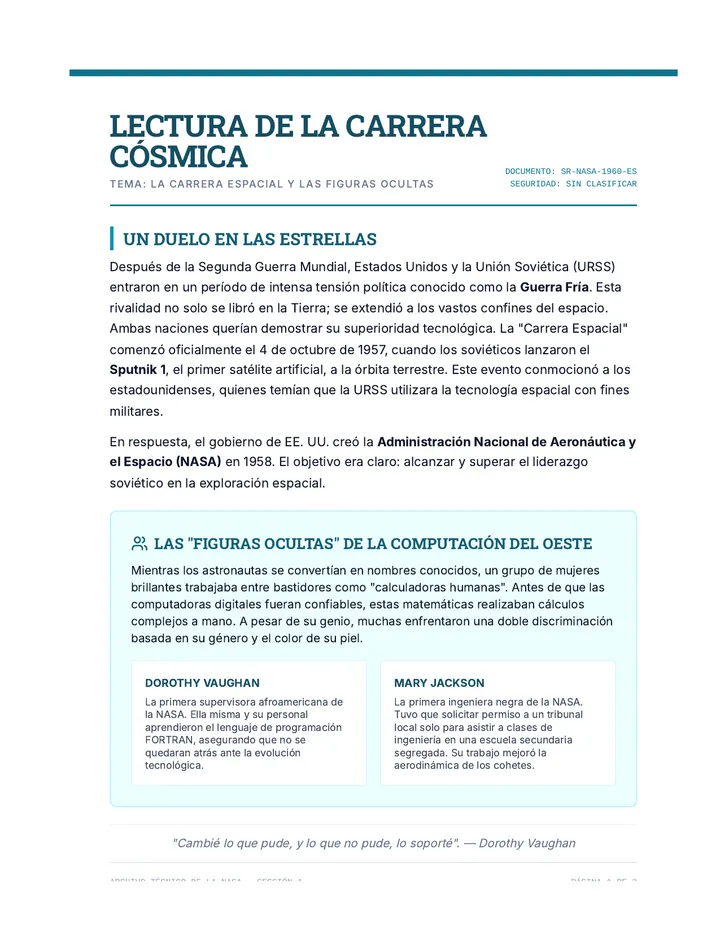
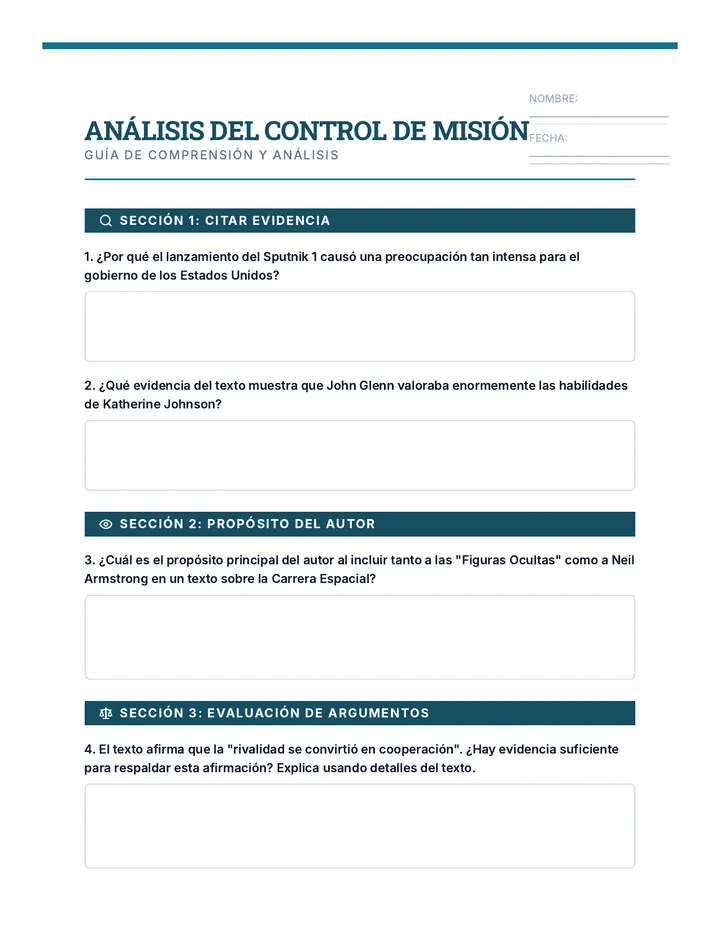
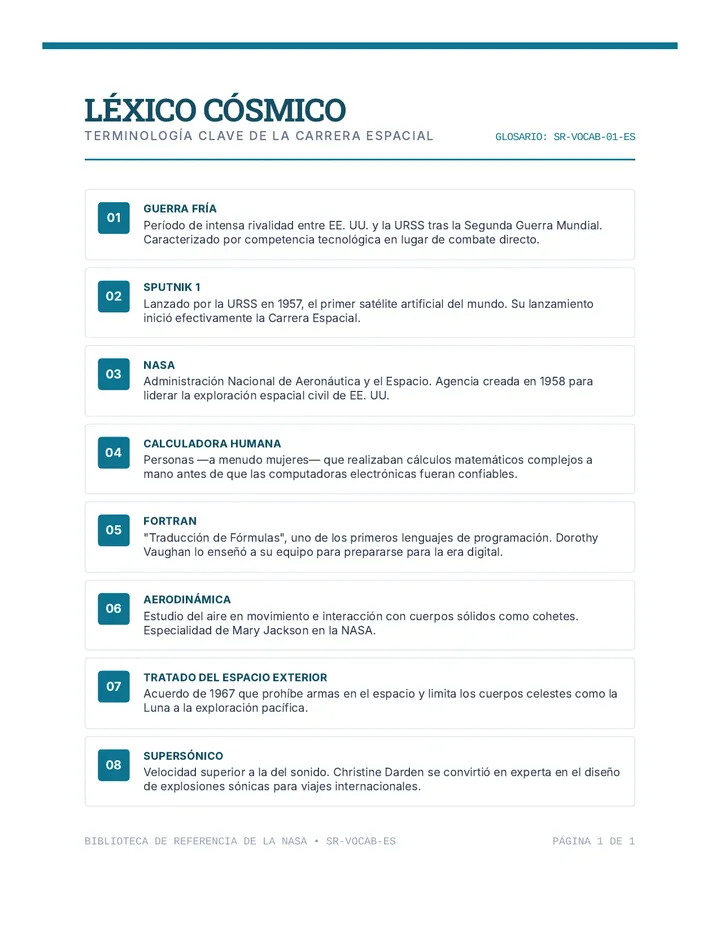
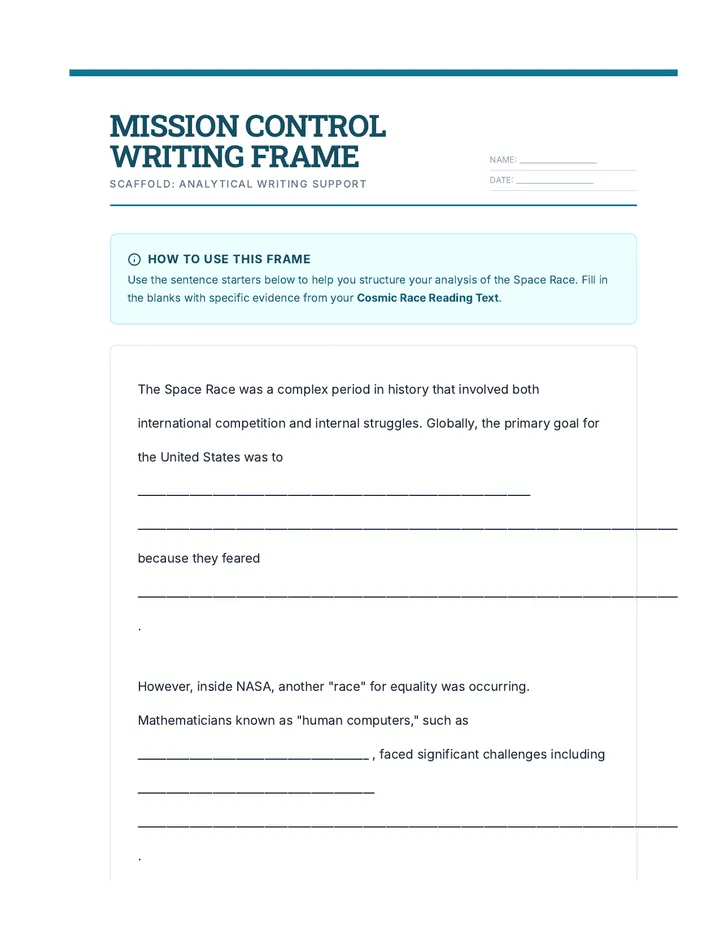
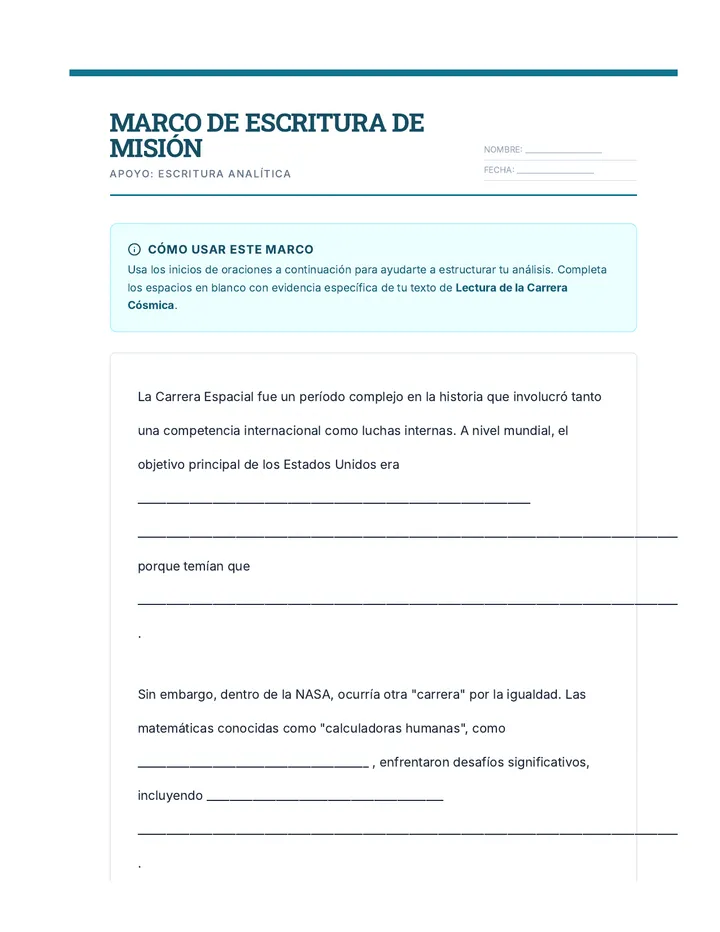
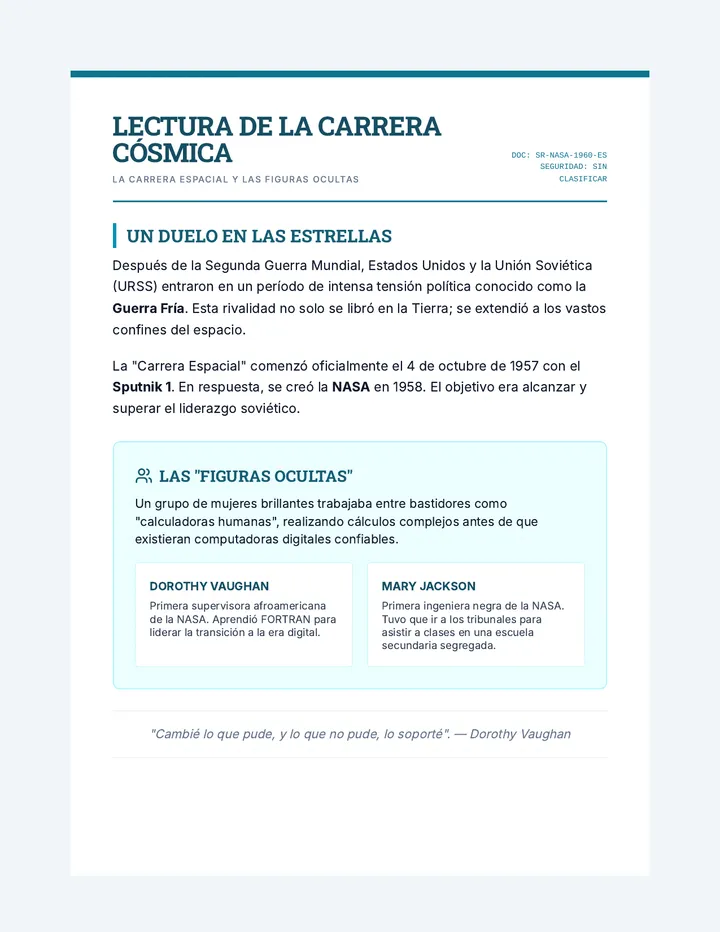
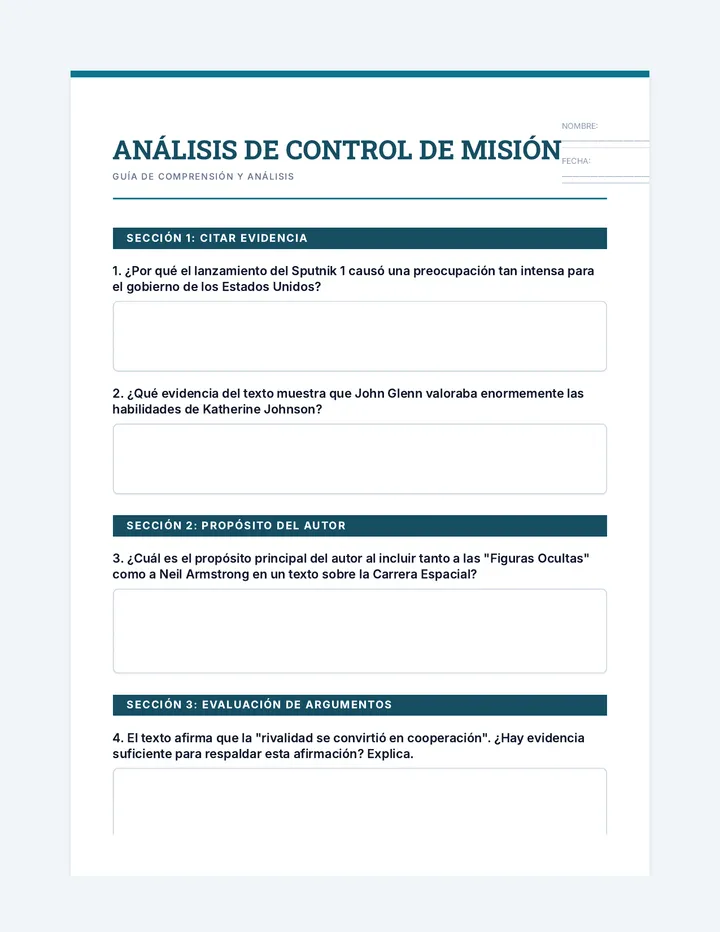
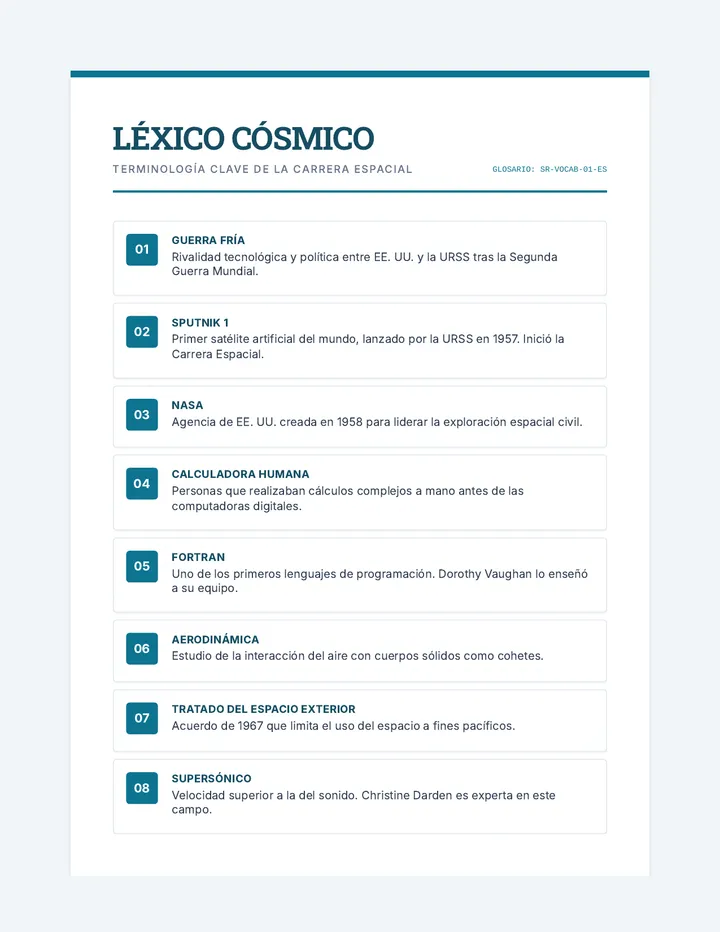
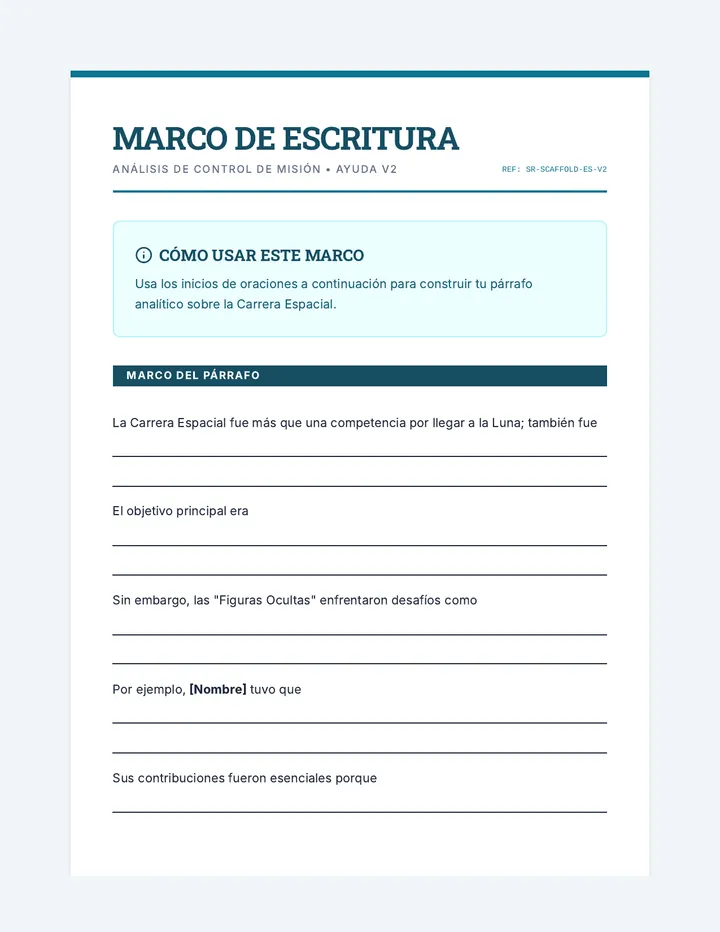
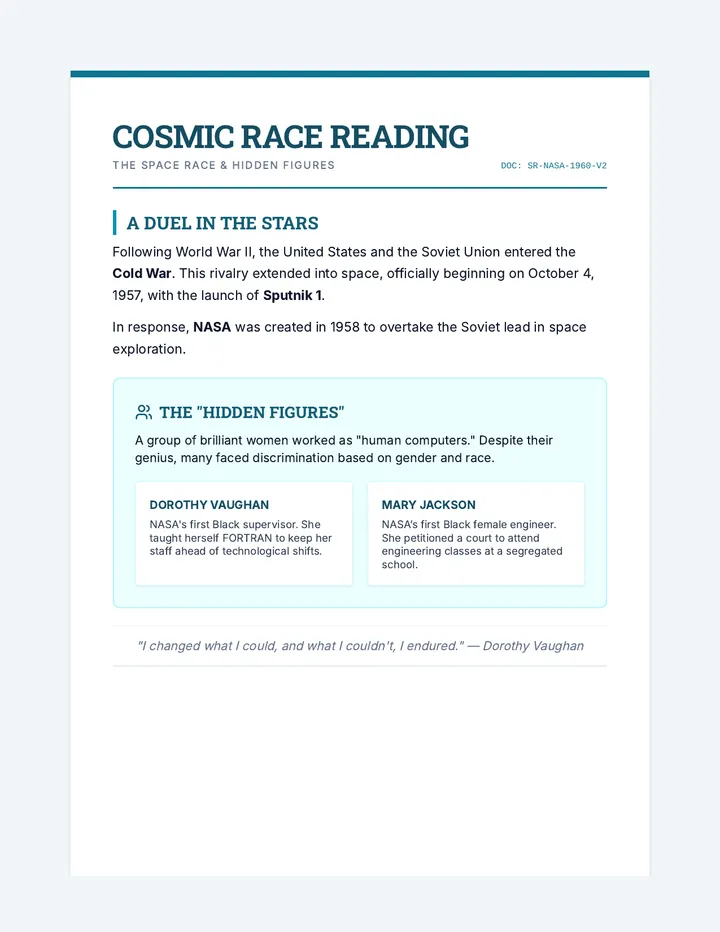
A comprehensive exploration of the Space Race, highlighting the technological competition between the US and USSR, the essential contributions of African American women at NASA, and the international agreements that keep space a peaceful frontier.
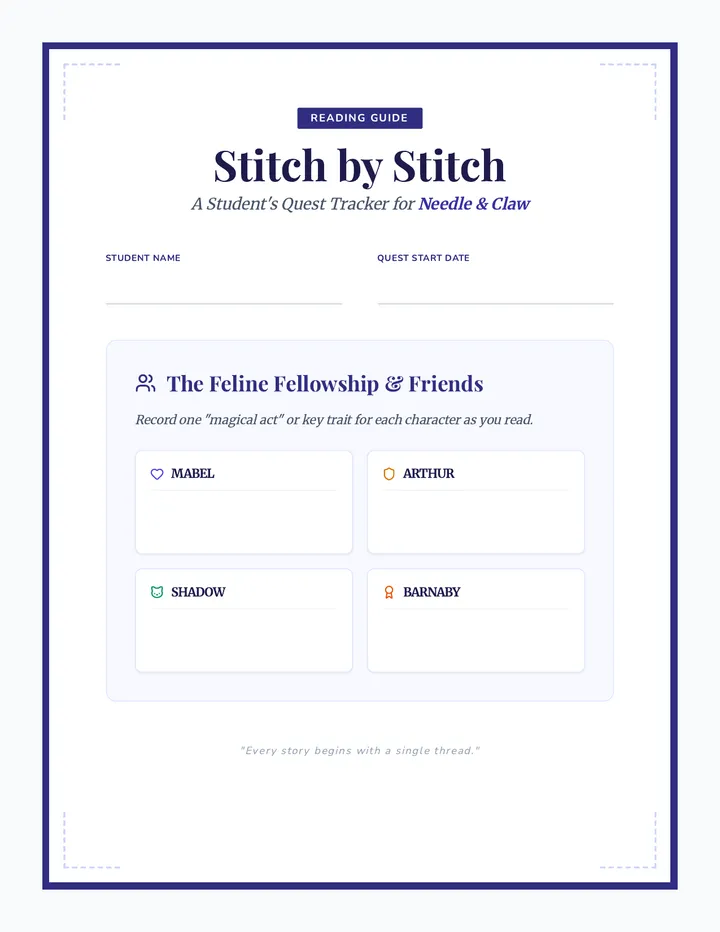
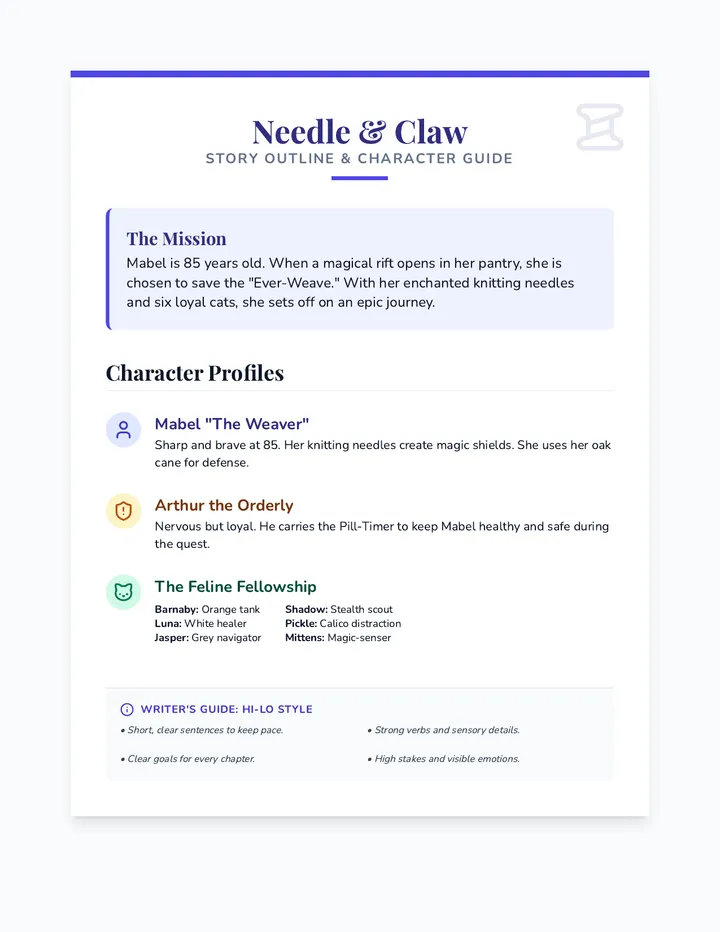
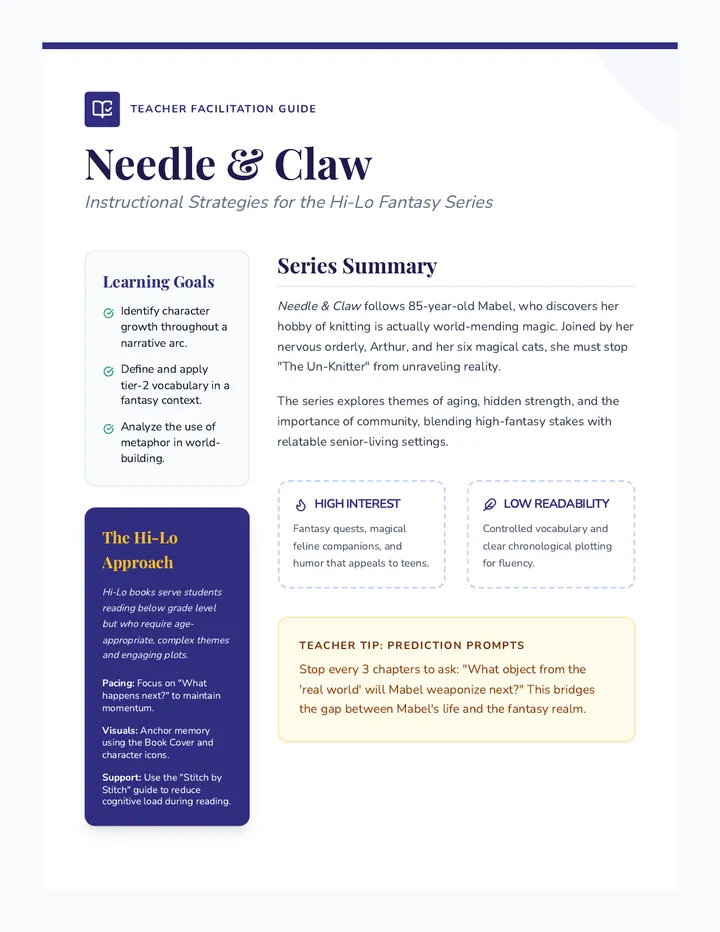
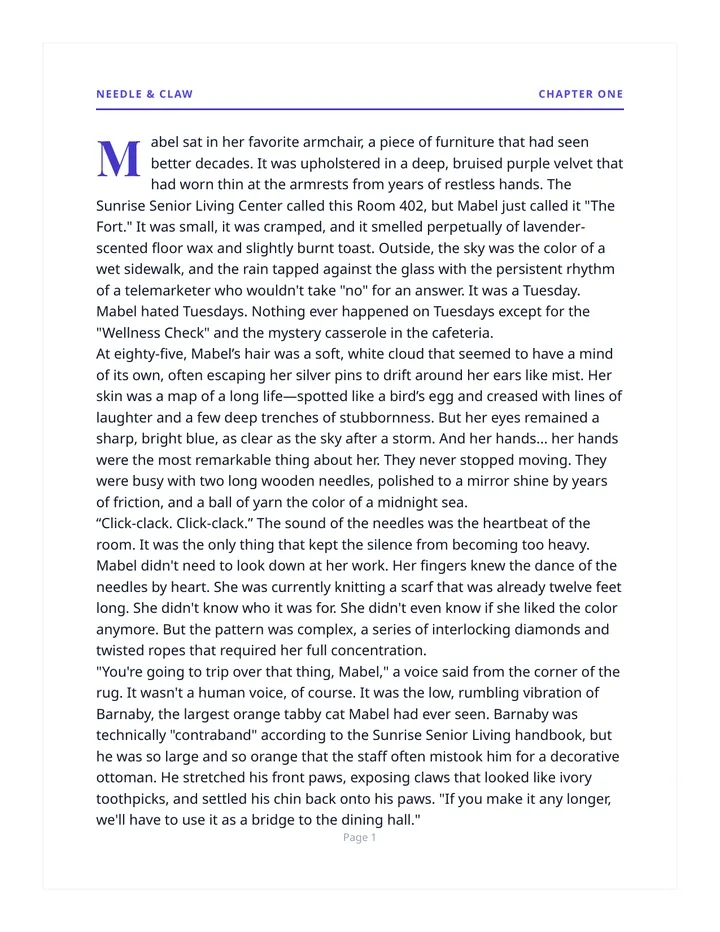
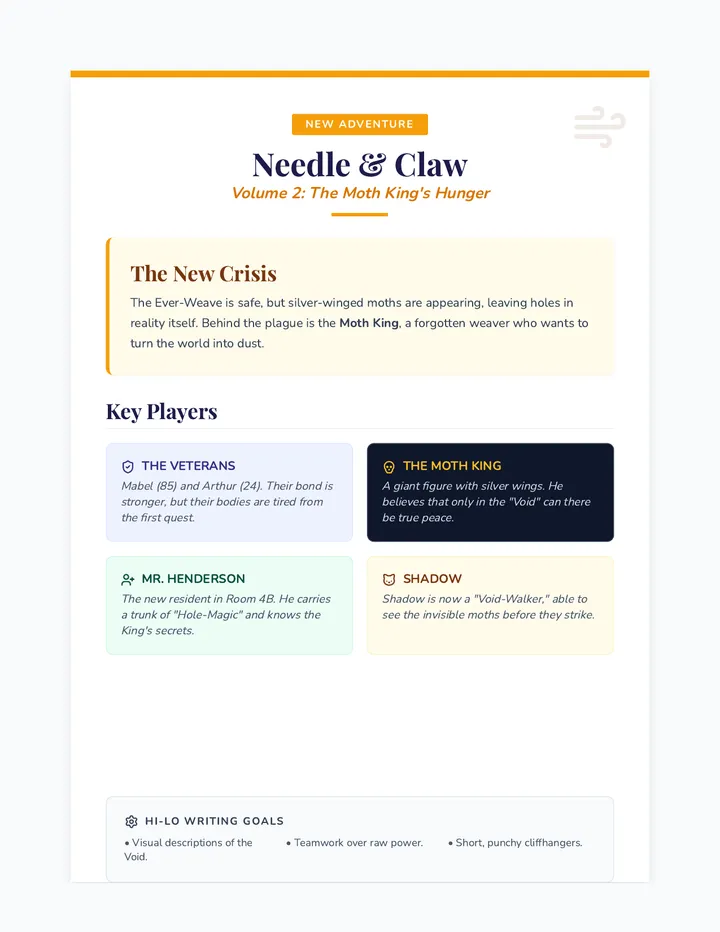
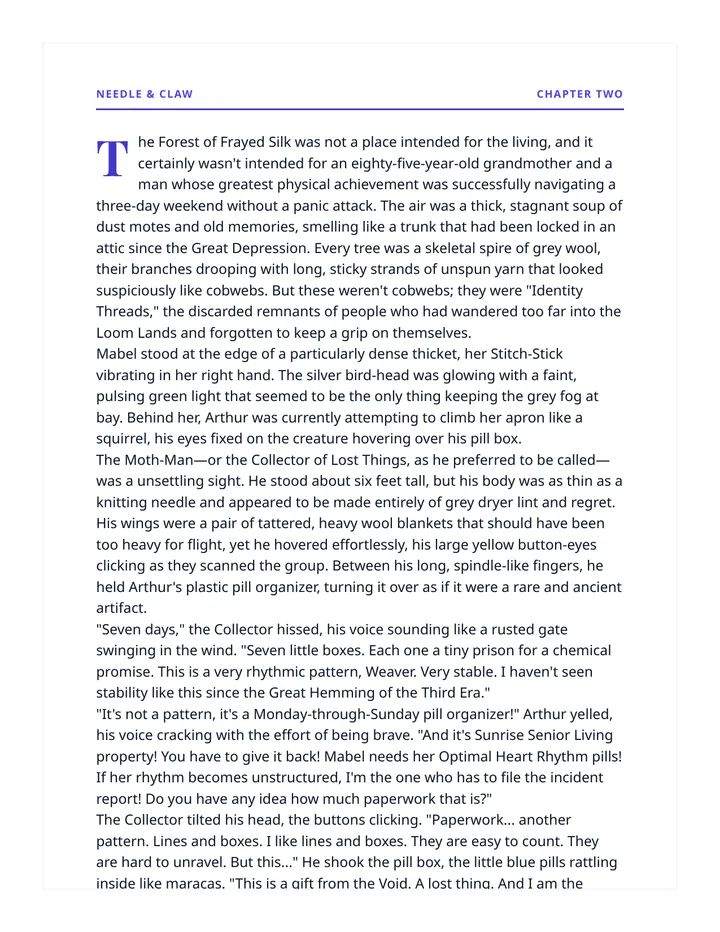
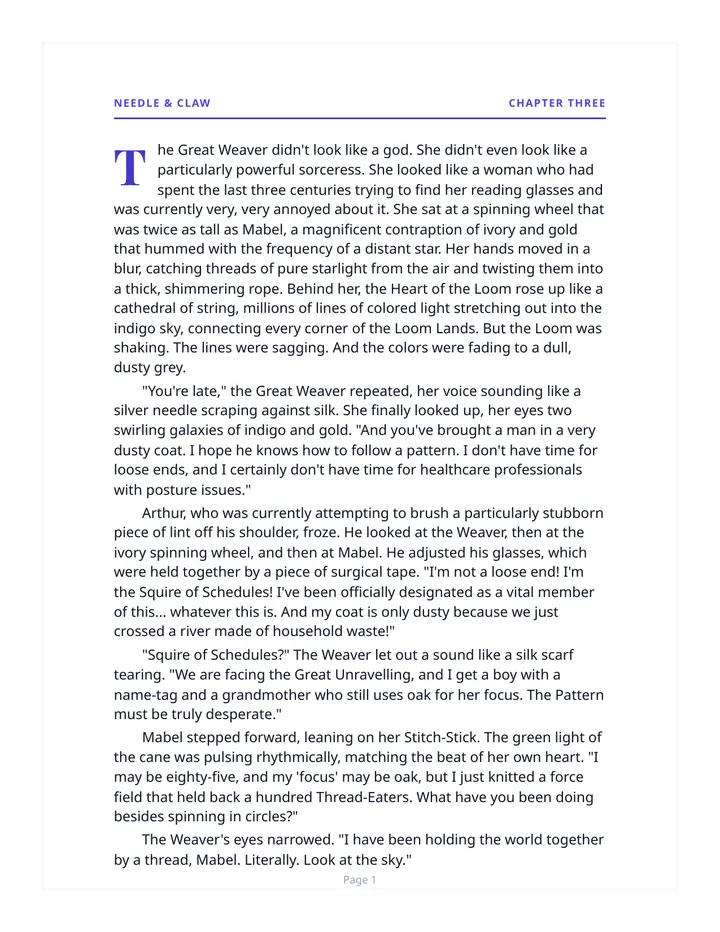
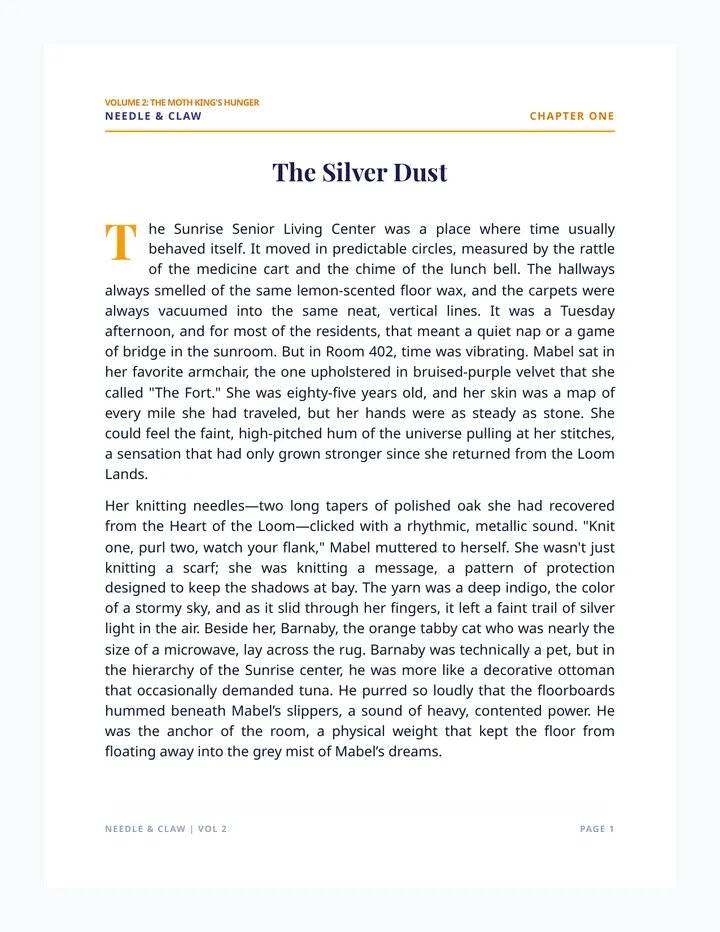
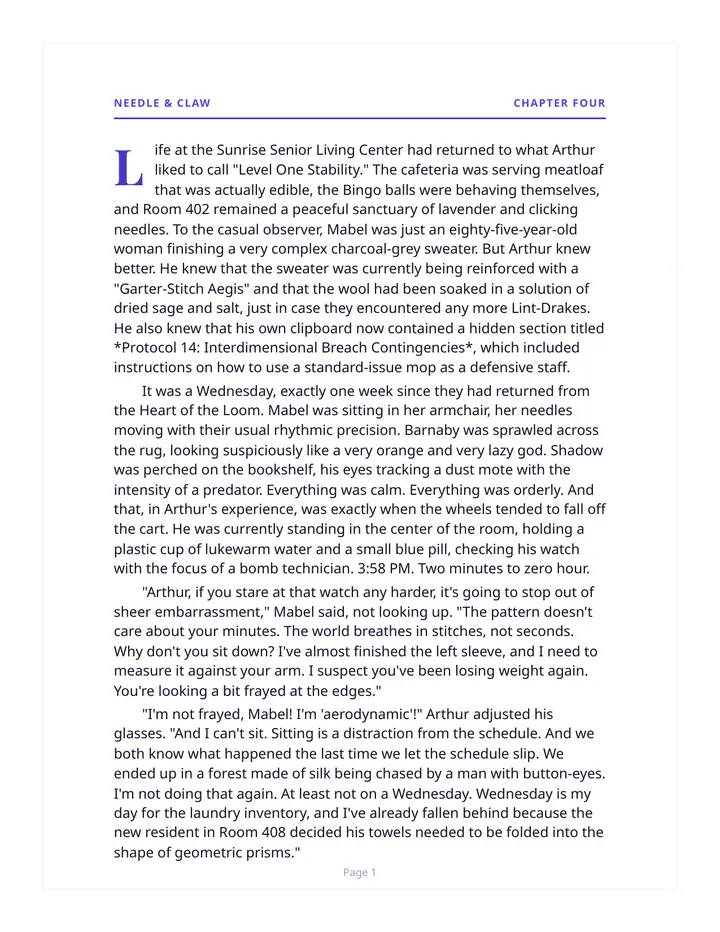
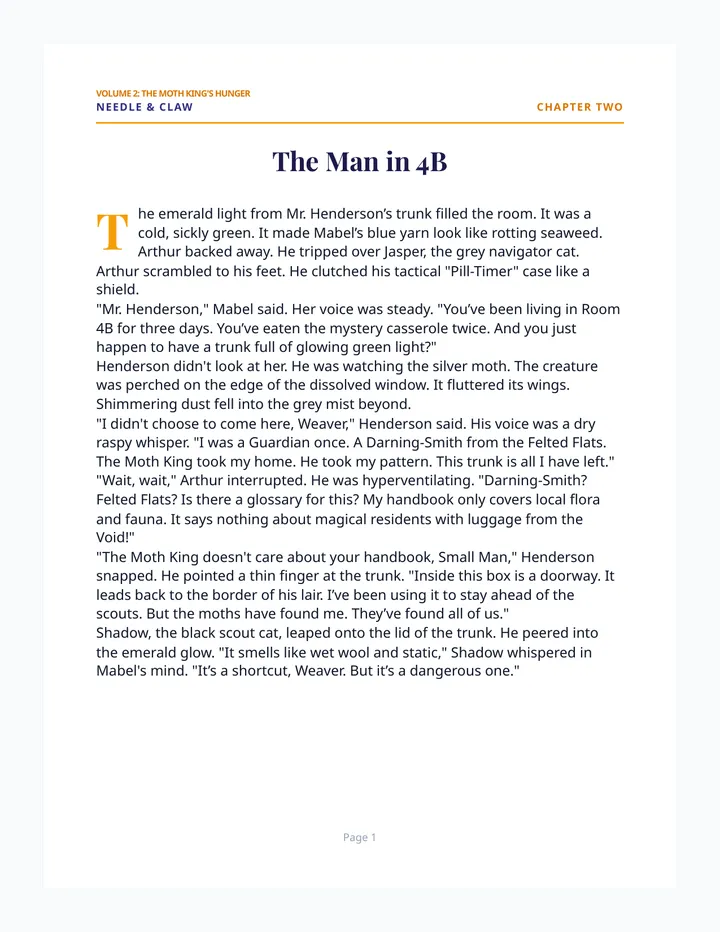
A creative story outline and character guide for a high-interest, low-readability (Hi-Lo) novel featuring an elderly protagonist in a fantasy world.
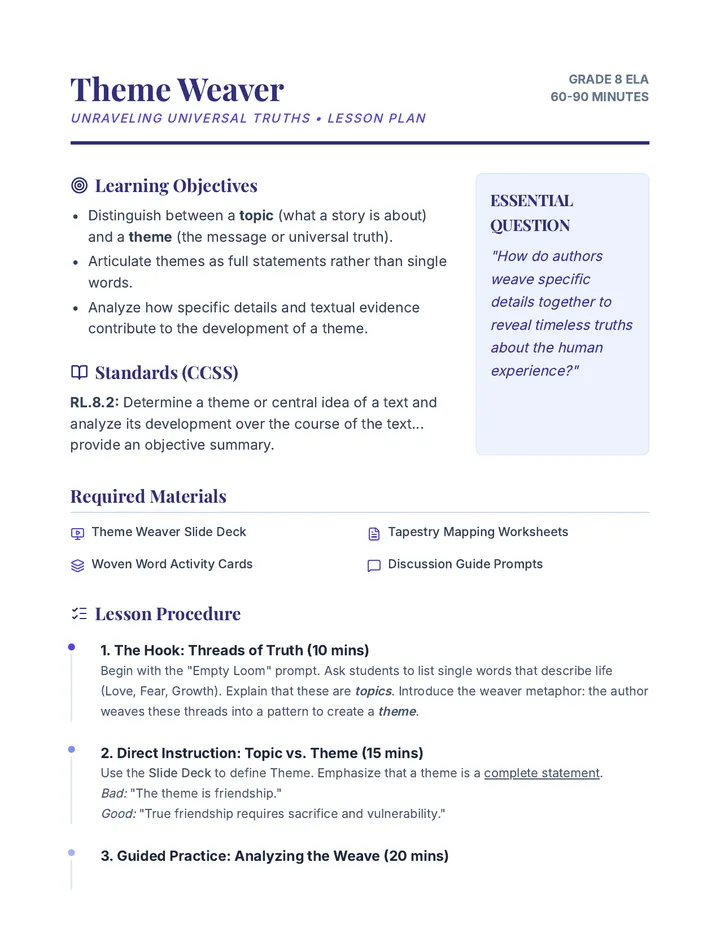
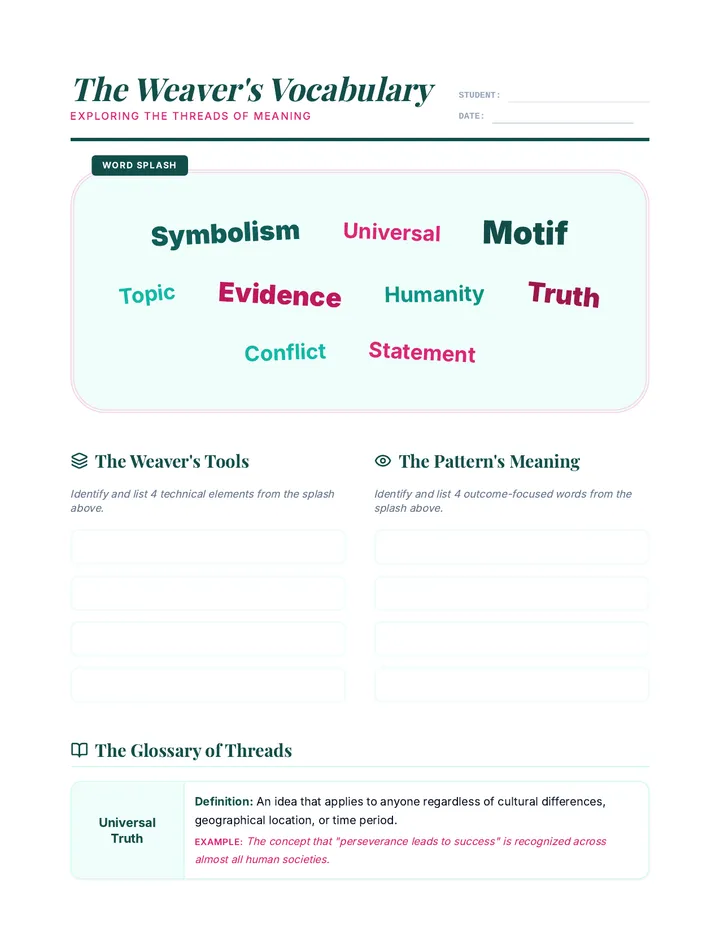
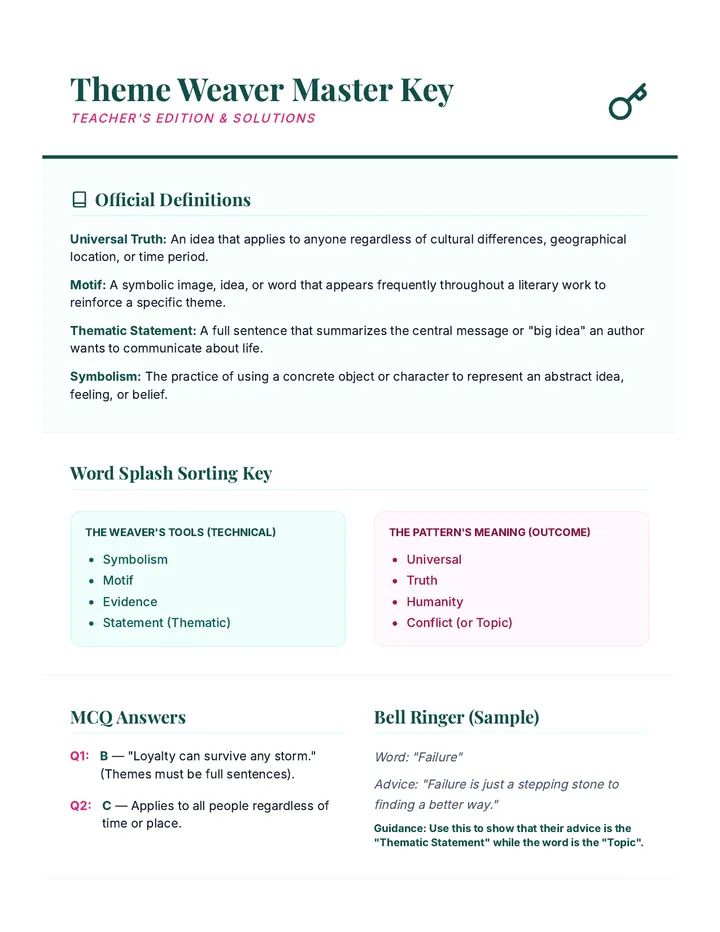
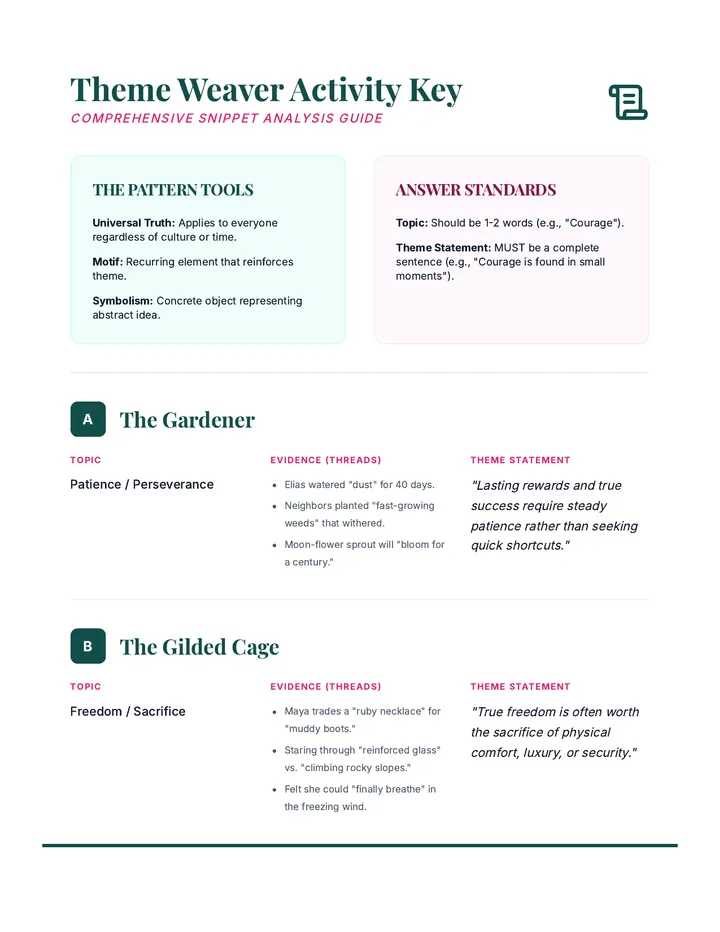
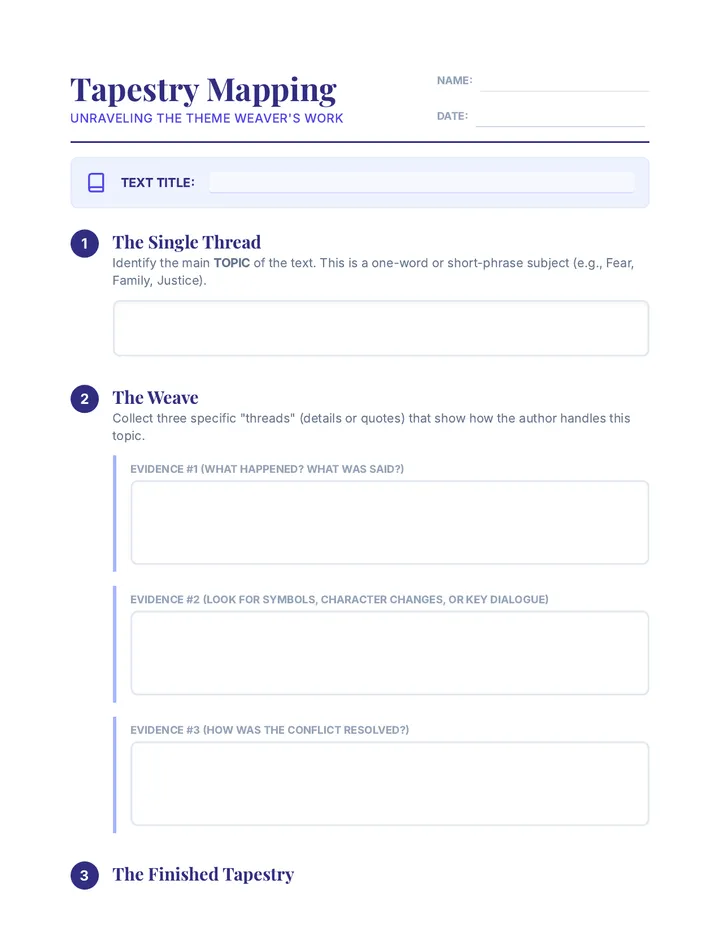
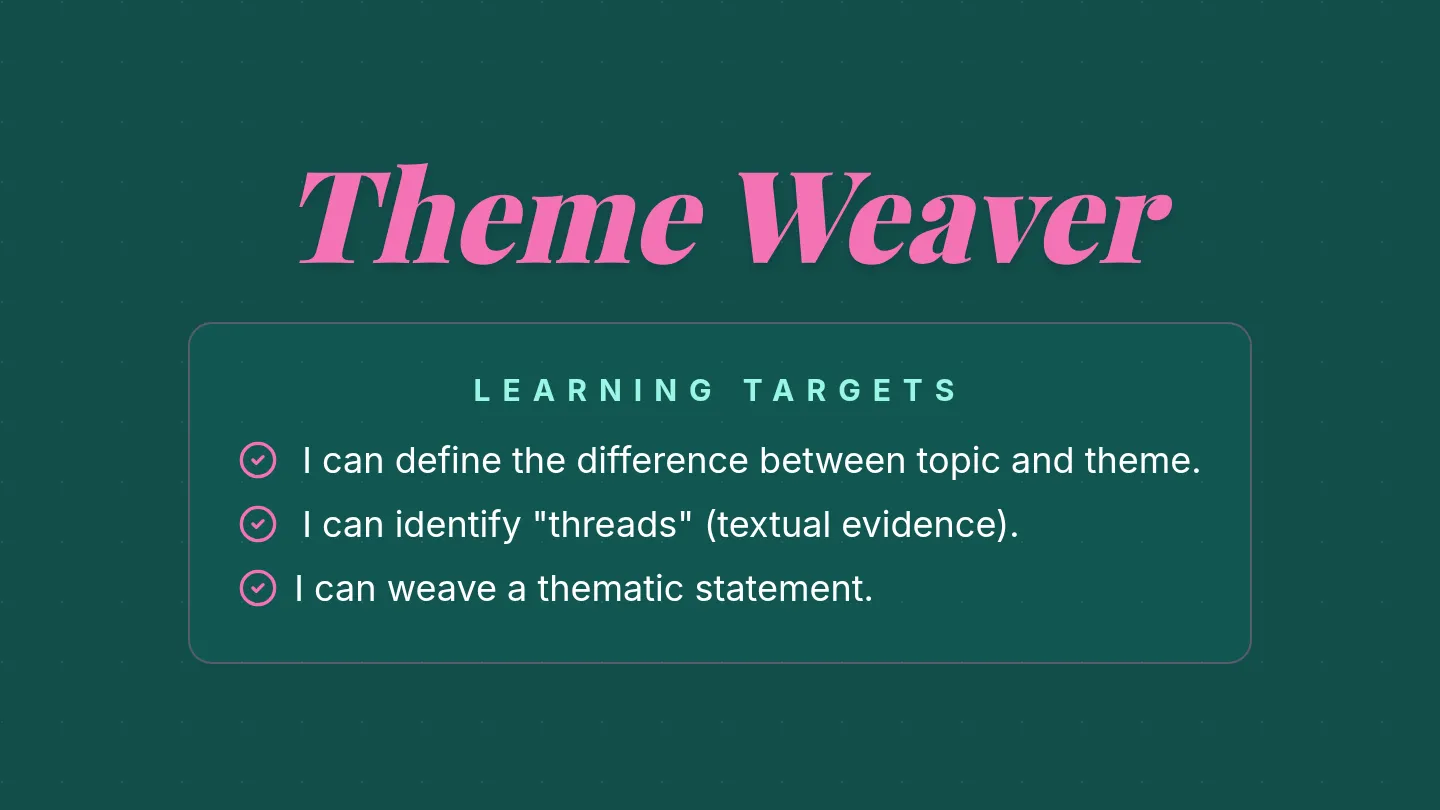
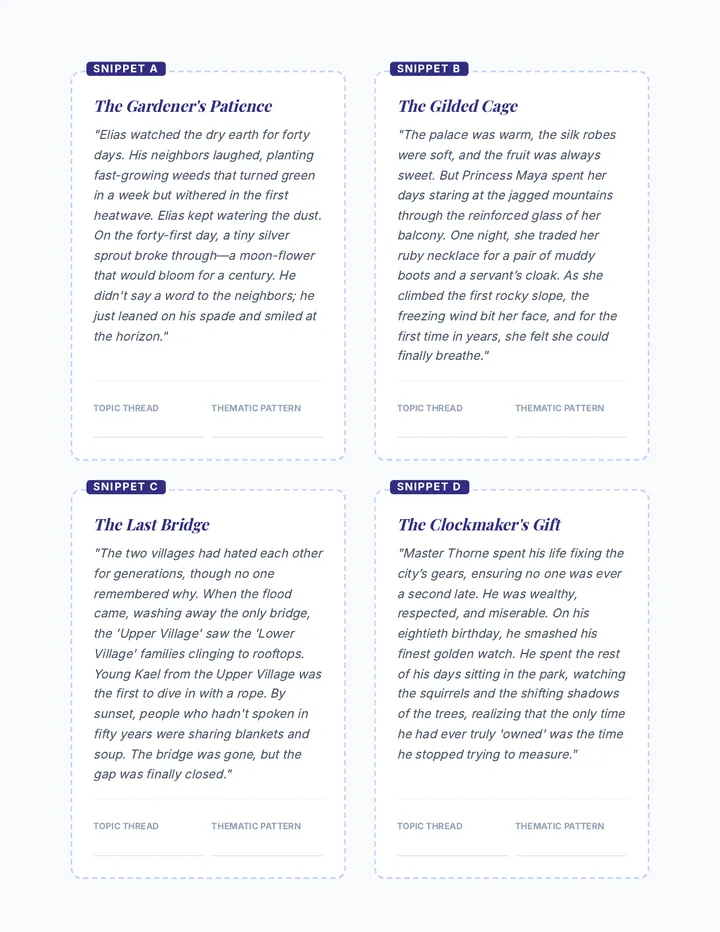
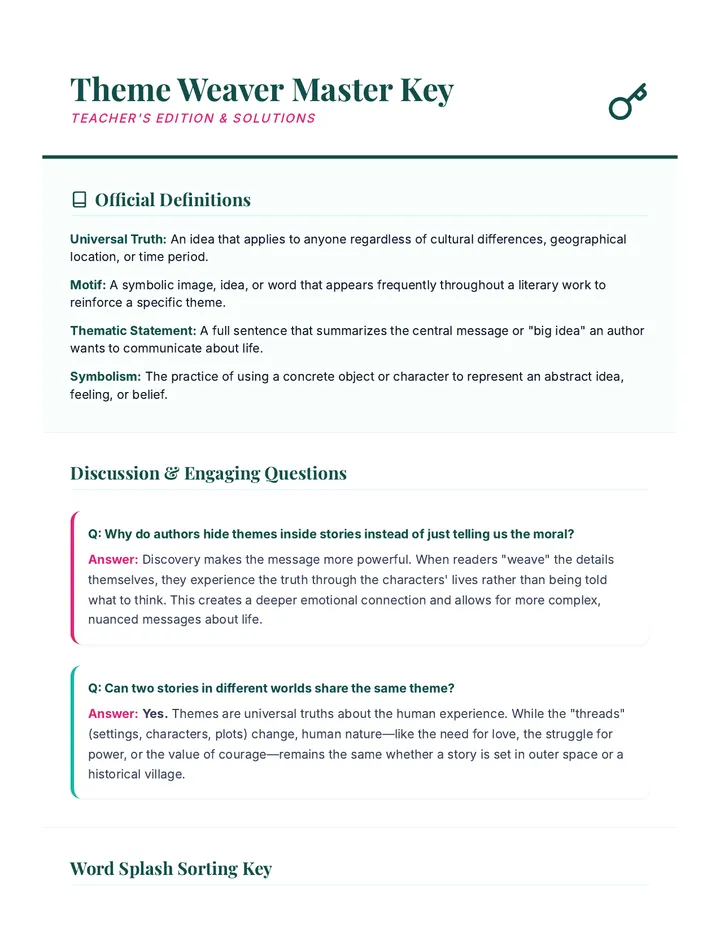
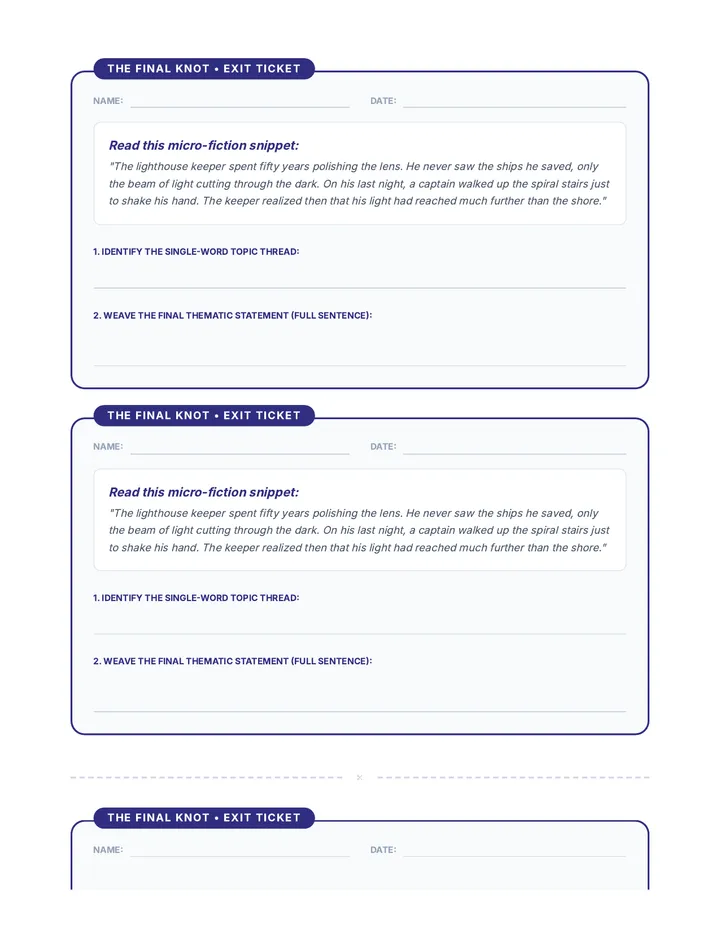
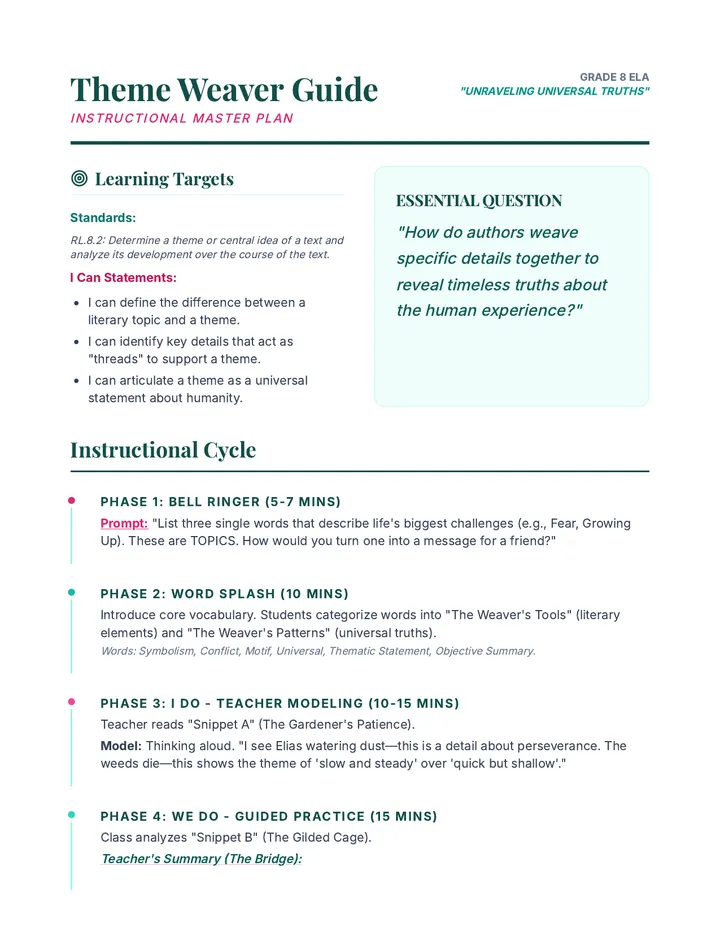
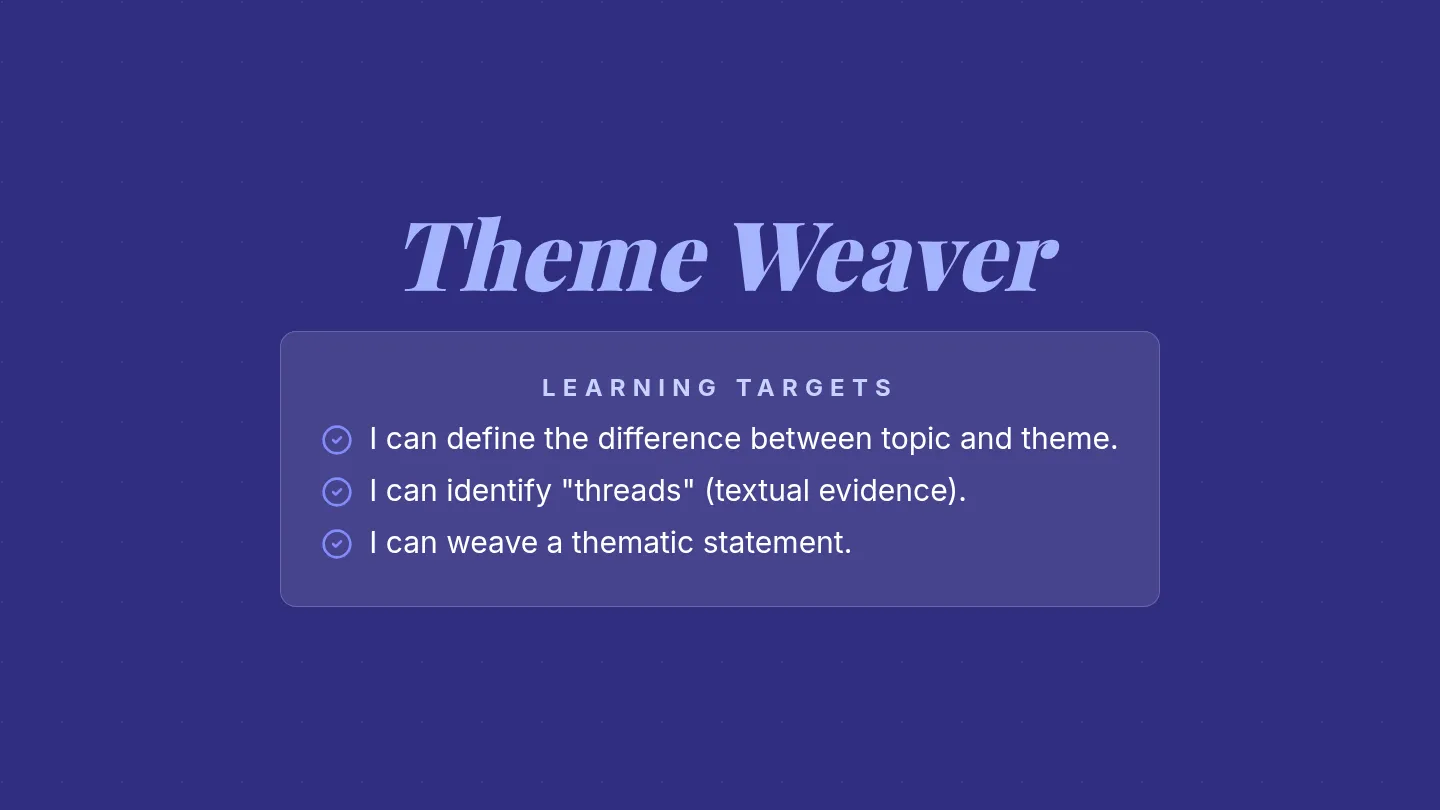
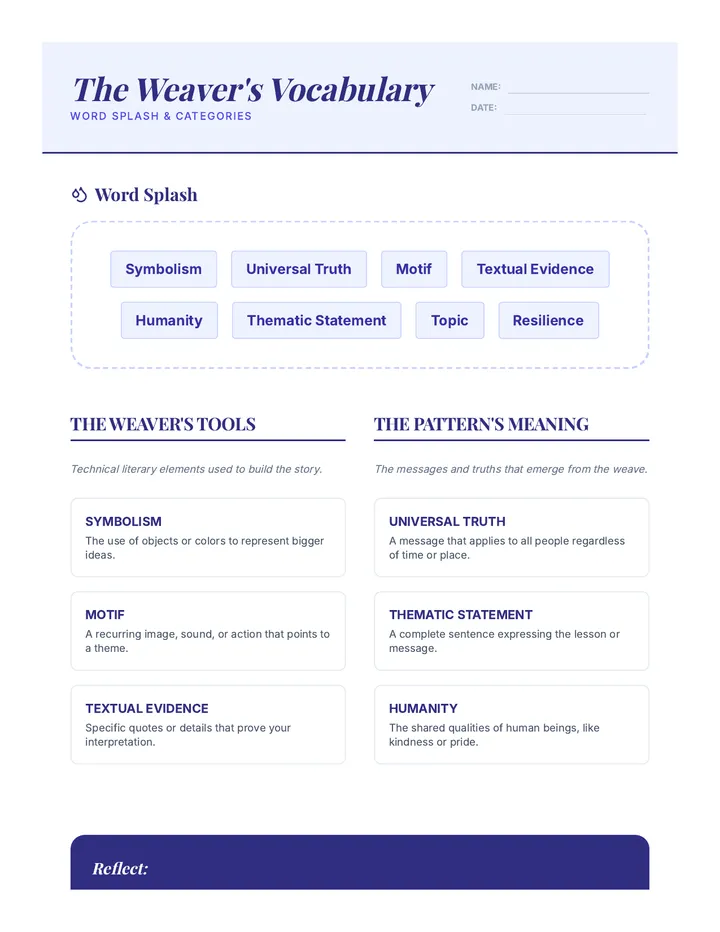
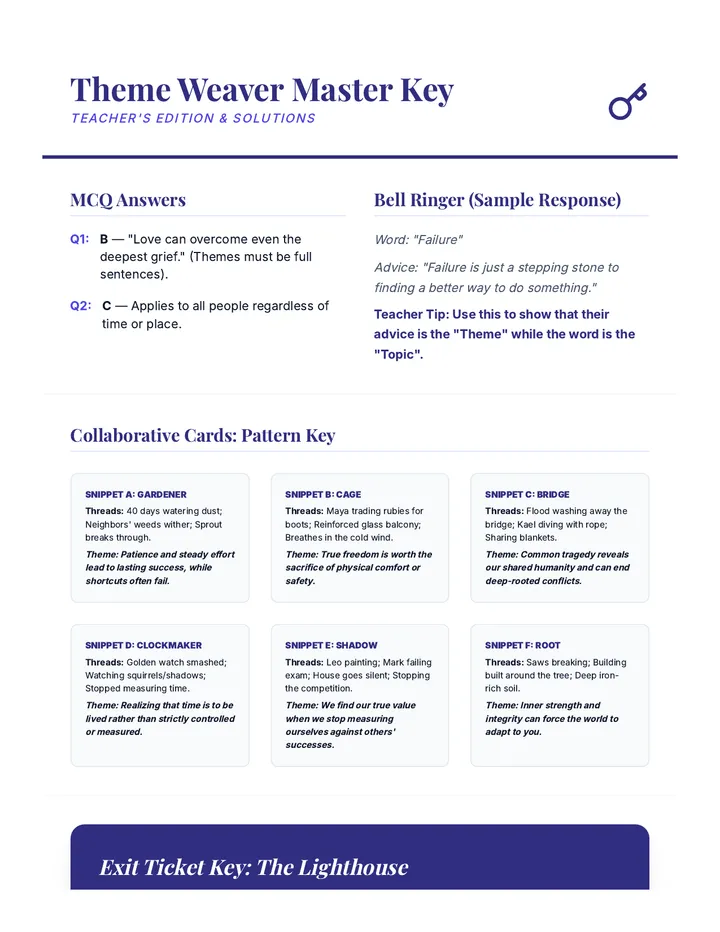
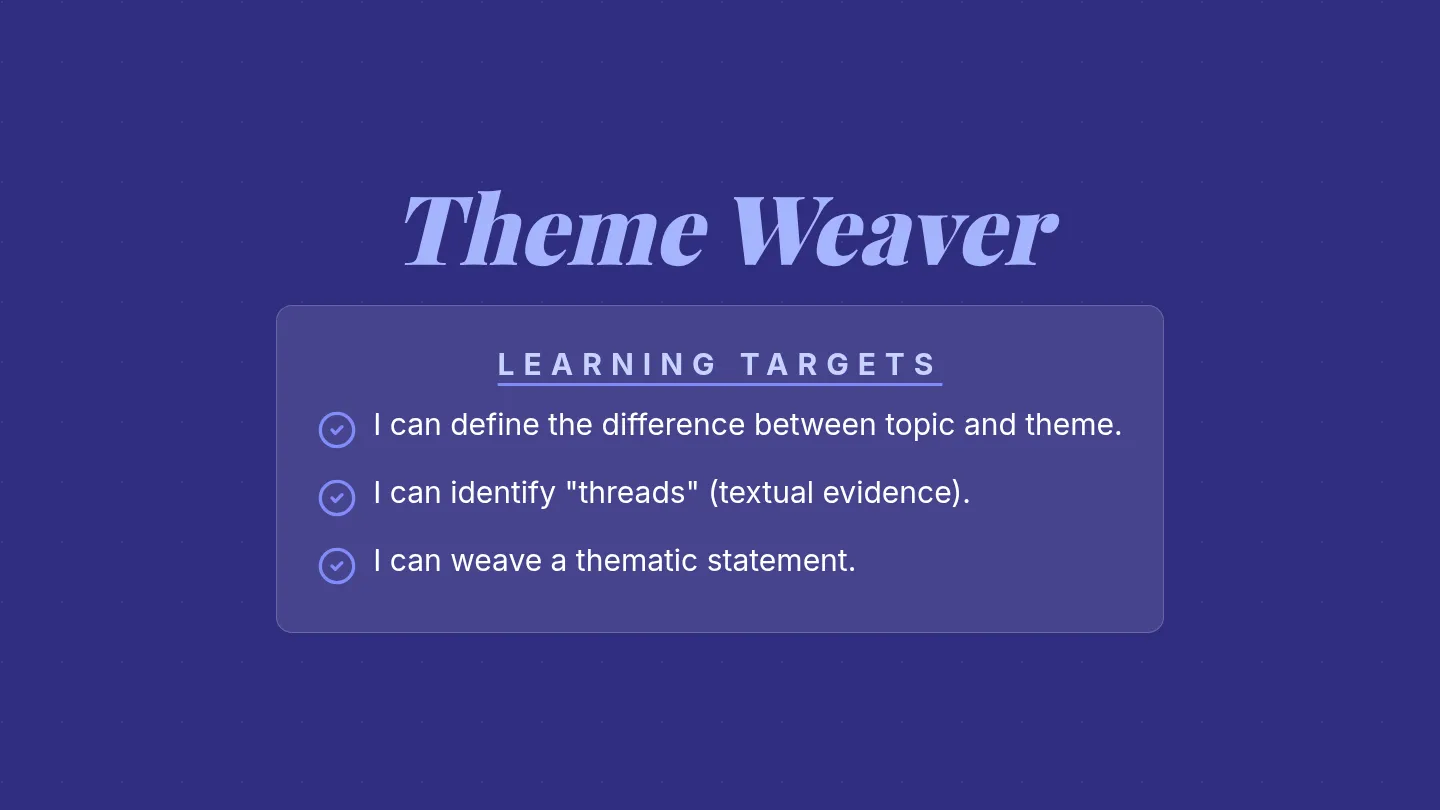
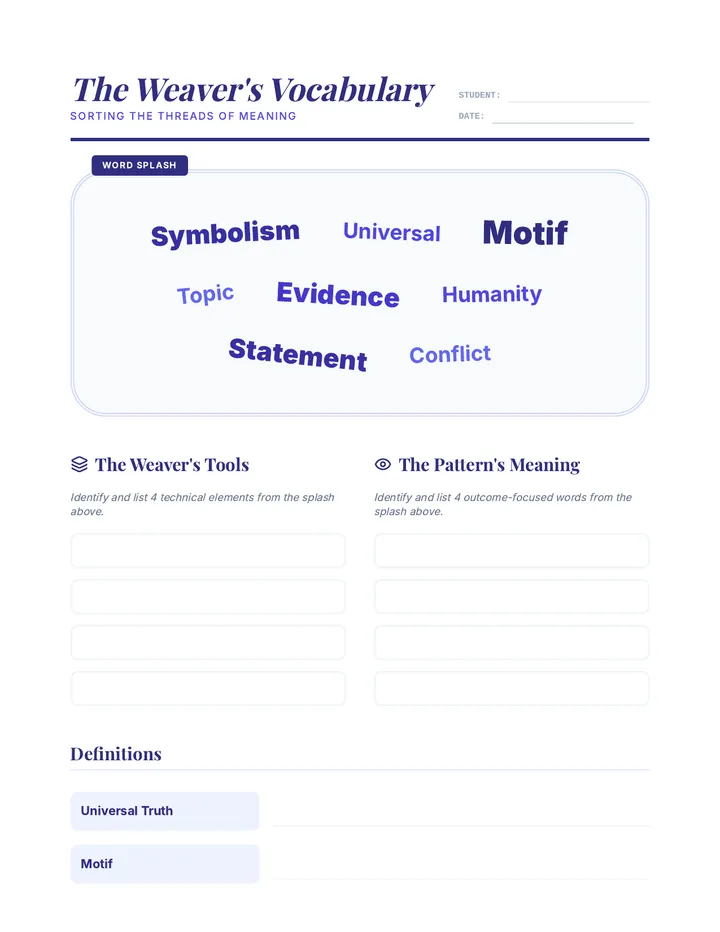
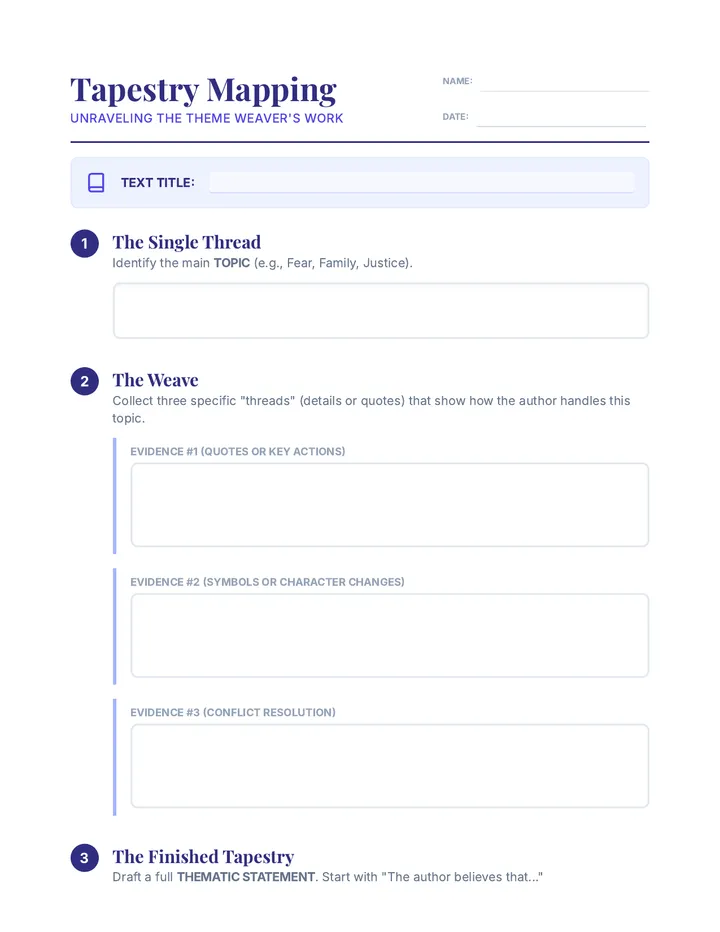
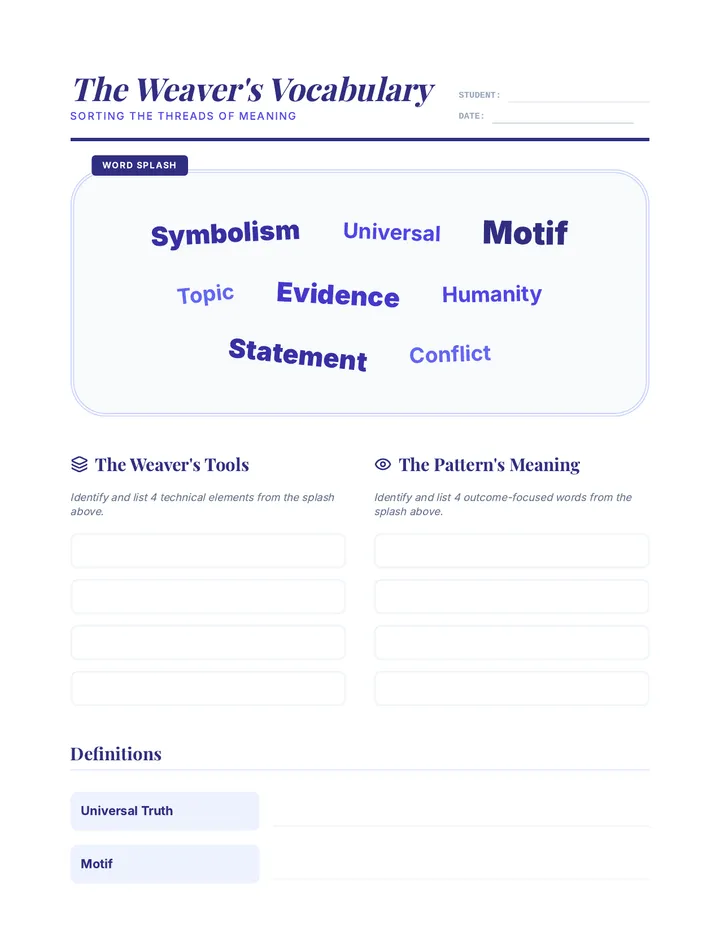
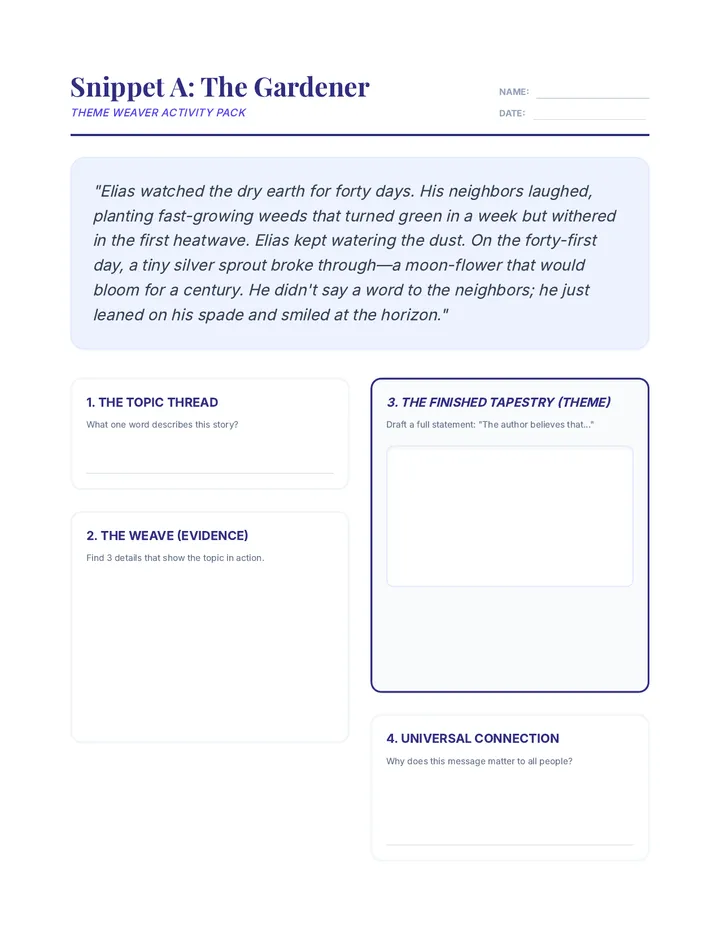
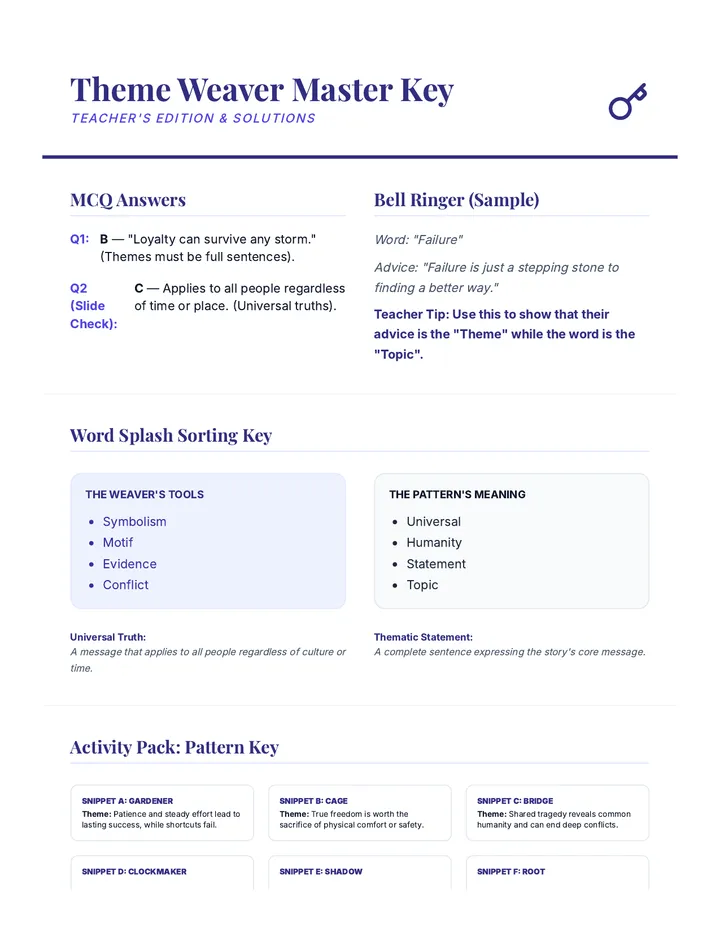
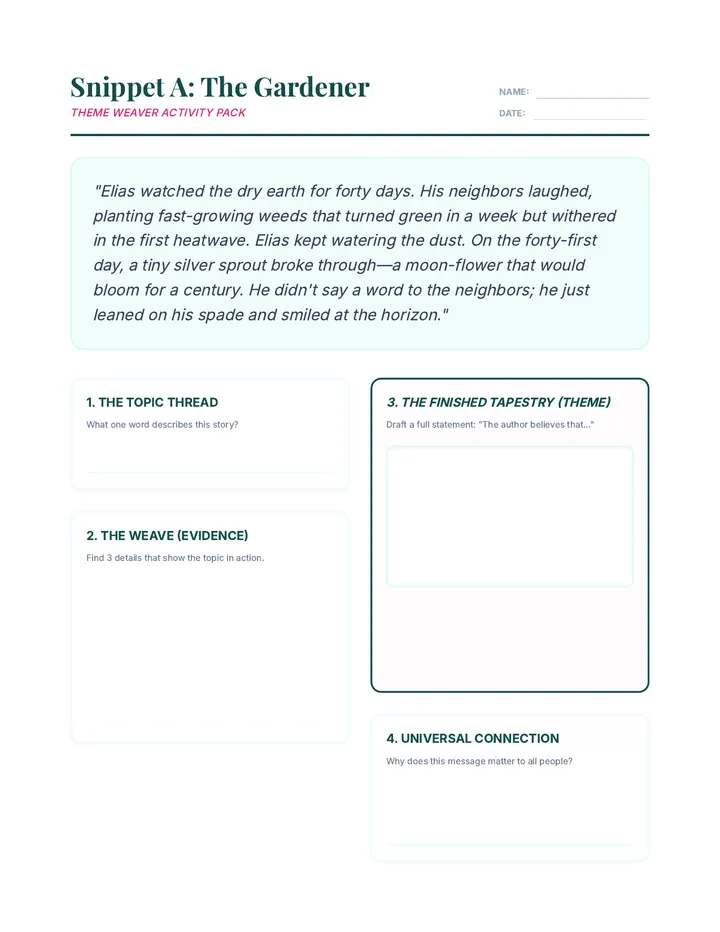
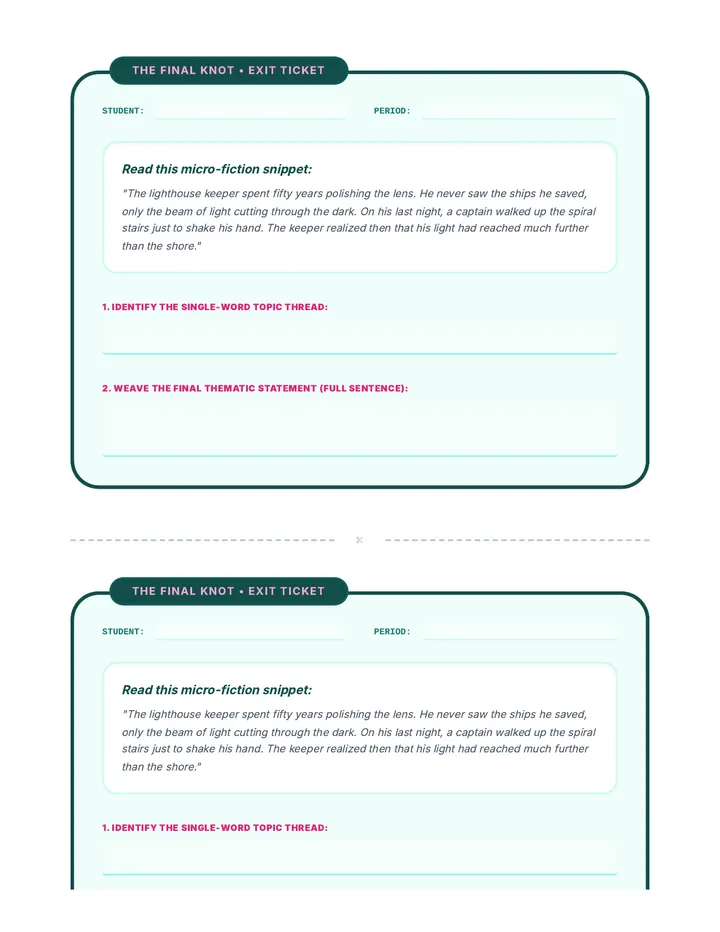
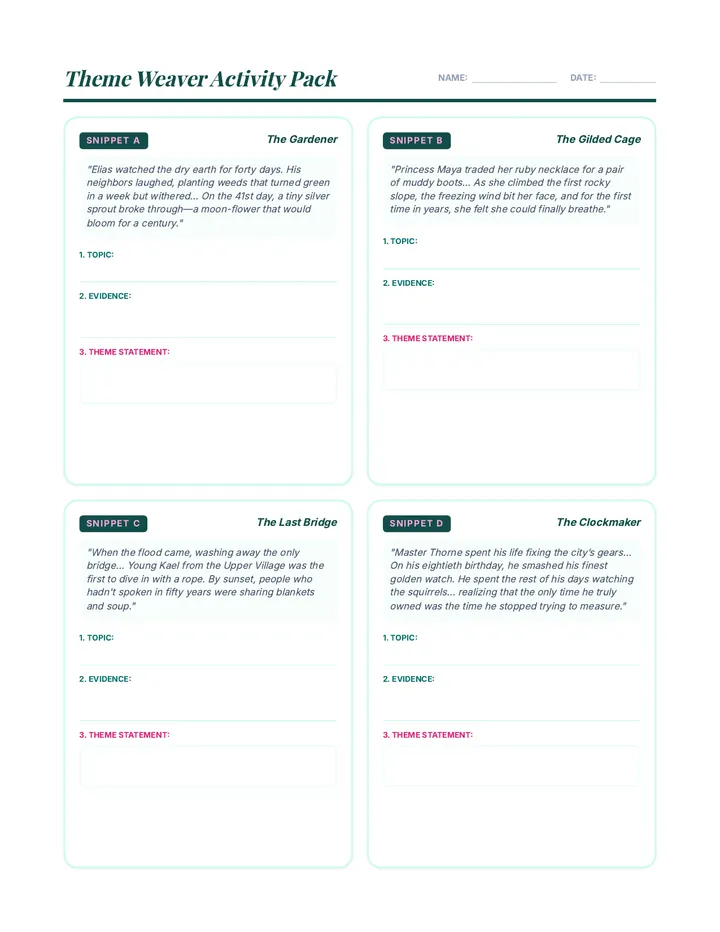
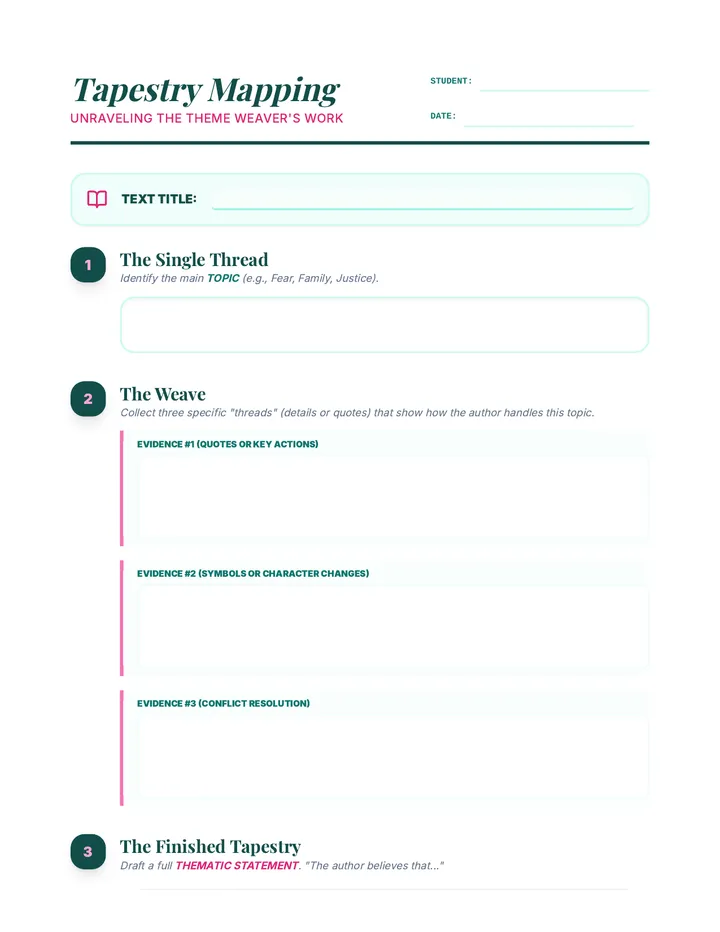
An 8th-grade ELA lesson where students become 'theme weavers' to uncover universal truths in literature. They will learn to distinguish between topic and theme, identify thematic statements, and support their findings with textual evidence.
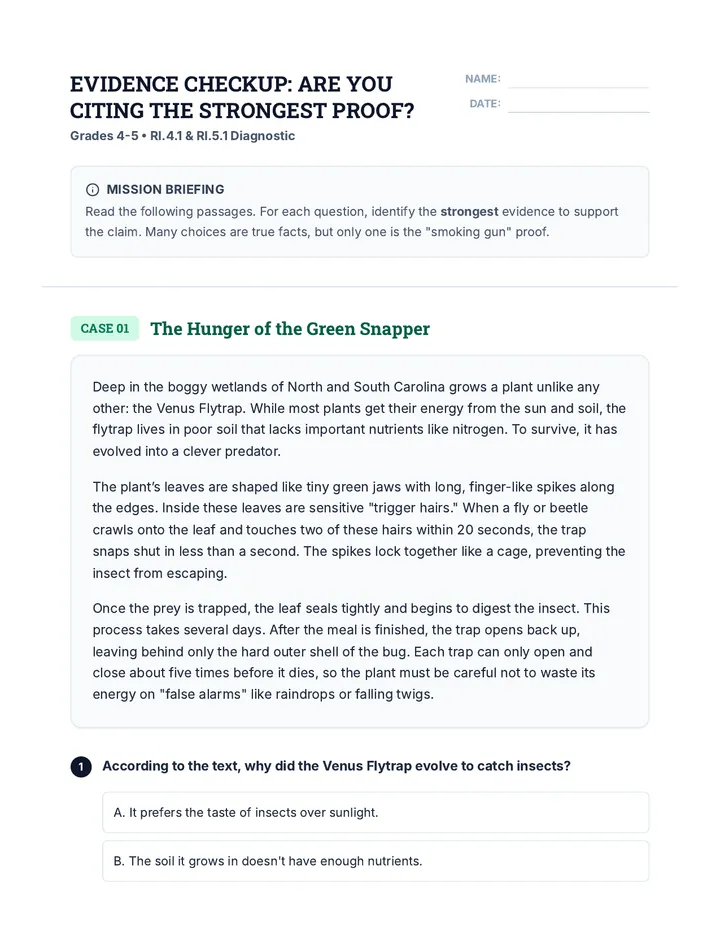
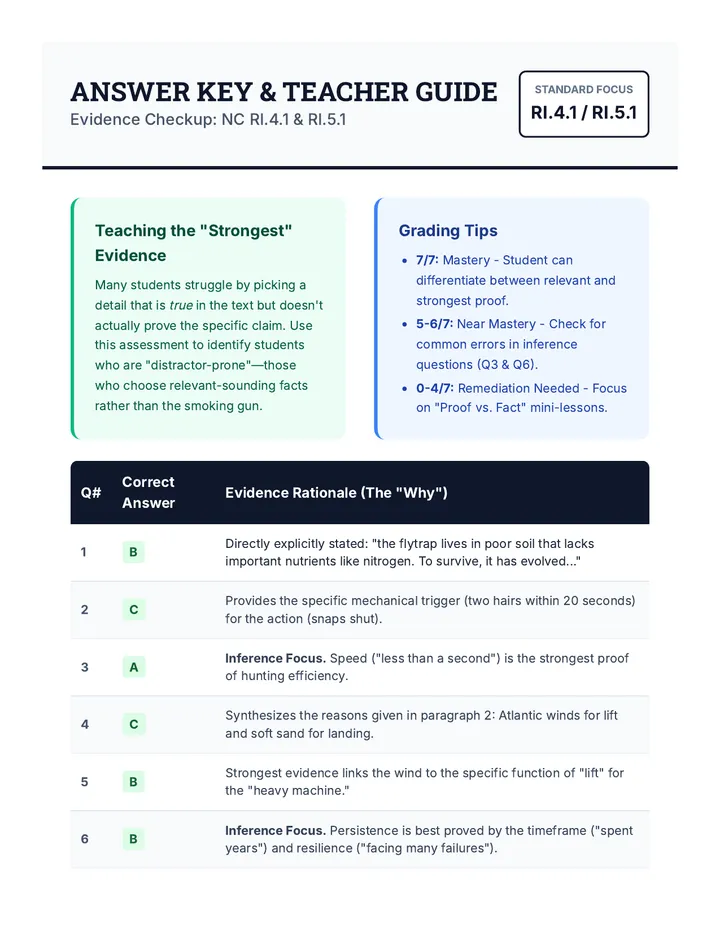
A diagnostic mini-assessment focused on NC Standard RI.4.1 and RI.5.1, requiring students to find the strongest textual evidence to support explicit points and inferences using North Carolina-themed nonfiction passages.
A 60-minute ELA lesson focused on analyzing author's diction and drawing logical inferences using excerpts from the Grade 7 Interim Assessment. Students will explore how specific word choices shape meaning and tone through guided and independent practice.
This lesson equips 8th-grade students with the tools to identify and analyze propaganda techniques across various media formats. Students will investigate the 'Big 7' propaganda devices, evaluate source credibility, and practice 'unmasking' persuasive rhetoric in real-world examples.
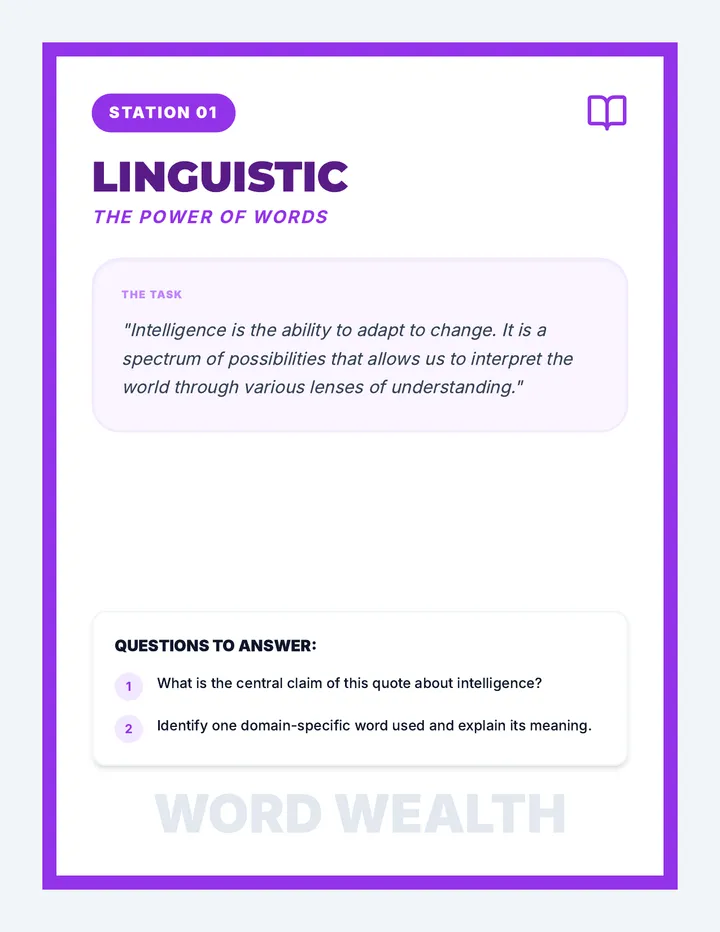
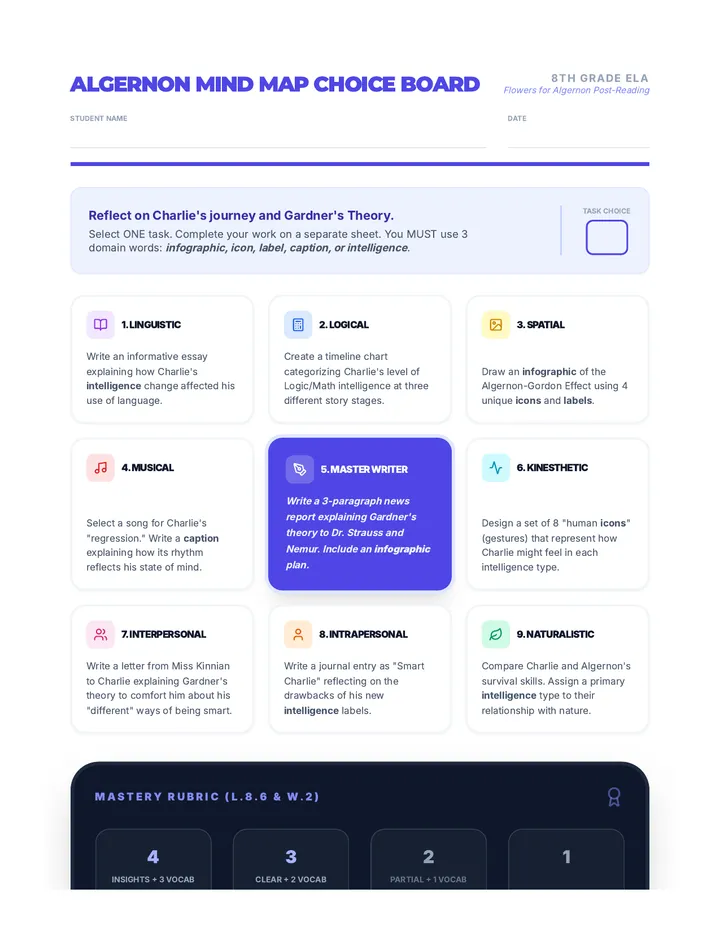
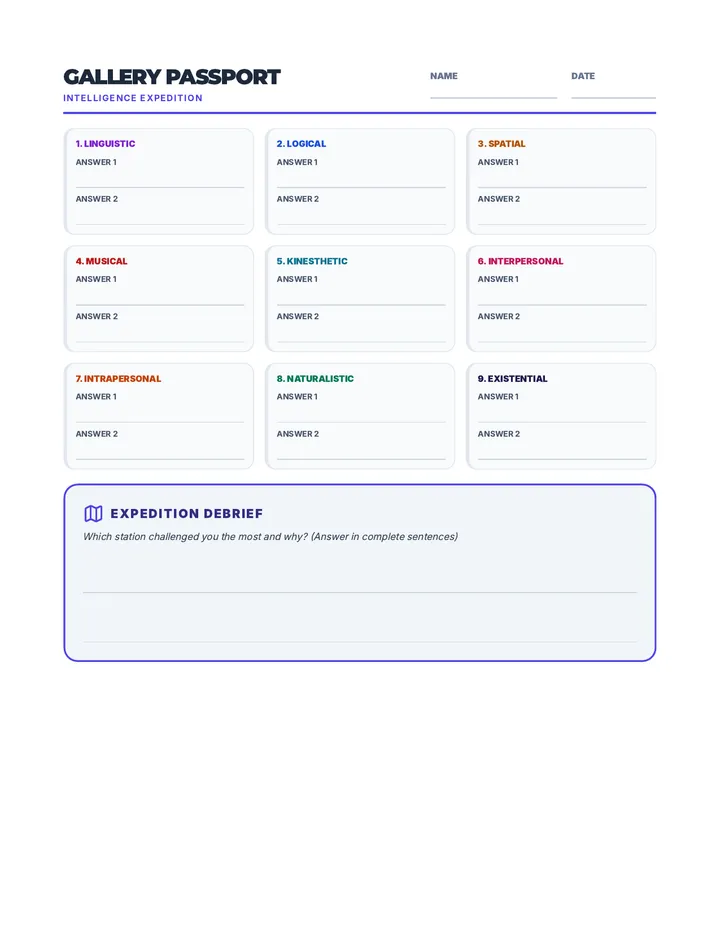
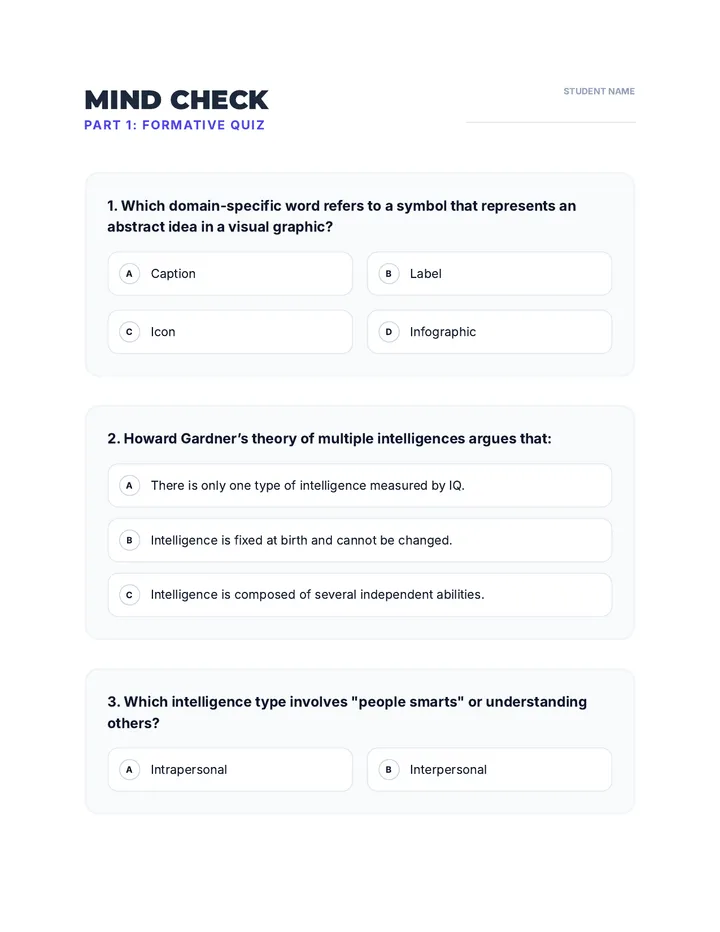
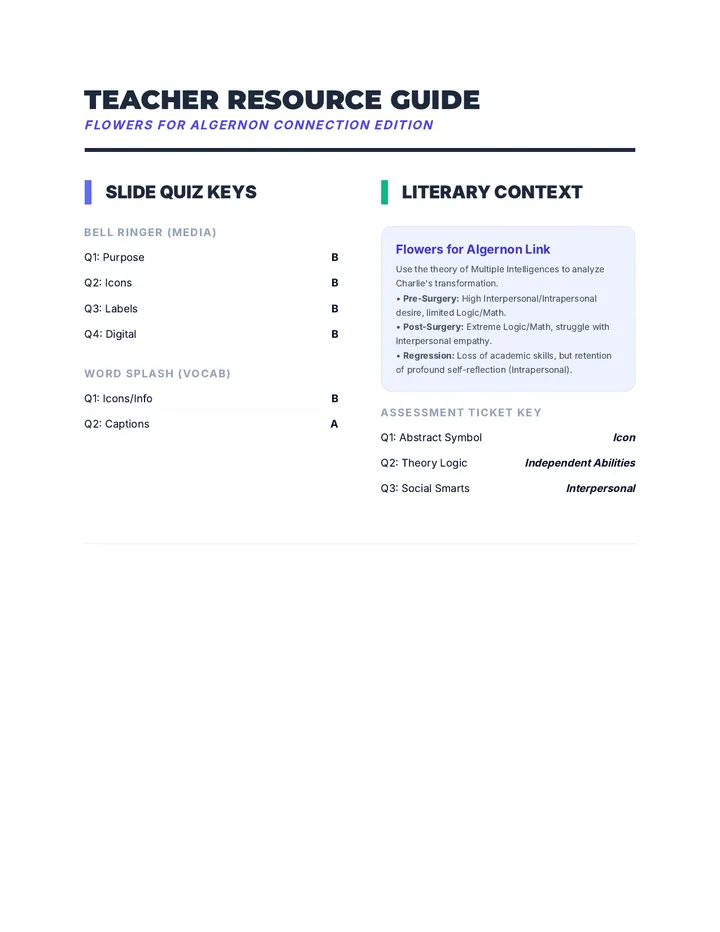
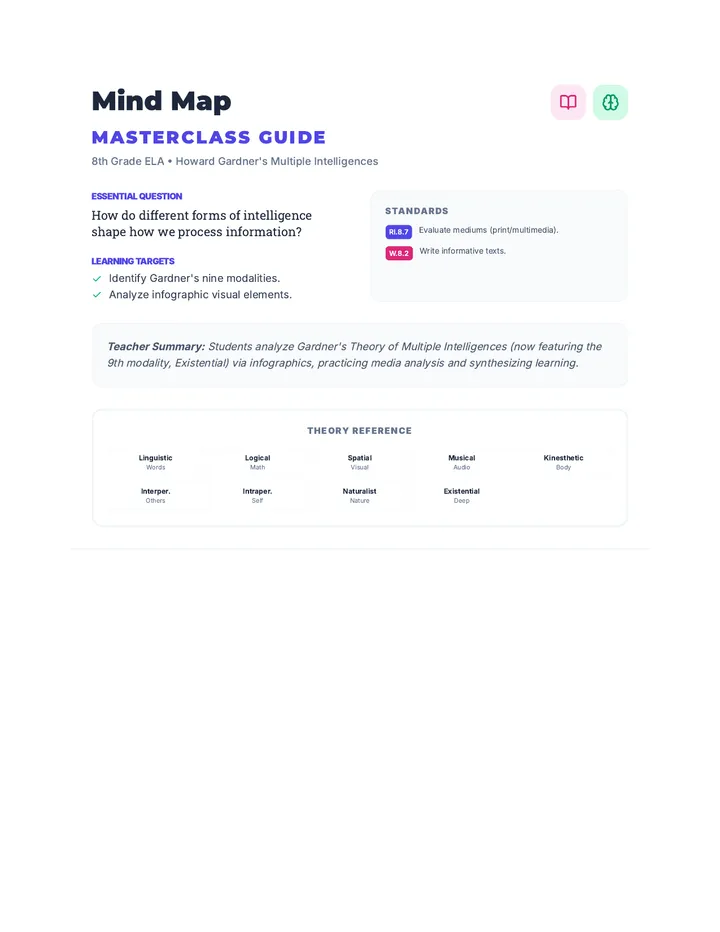
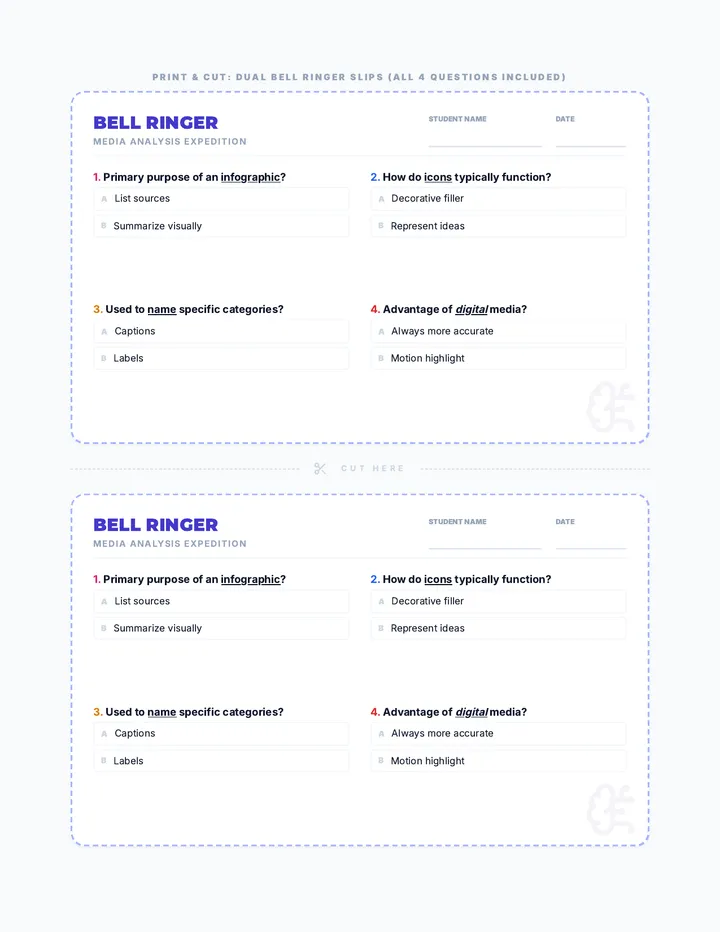
An 8th-grade ELA lesson connecting Howard Gardner's Theory of Multiple Intelligences to the story 'Flowers for Algernon'. Students explore media analysis, vocabulary, and literary characterization through a differentiated choice board and a self-assessment of their own learning strengths.
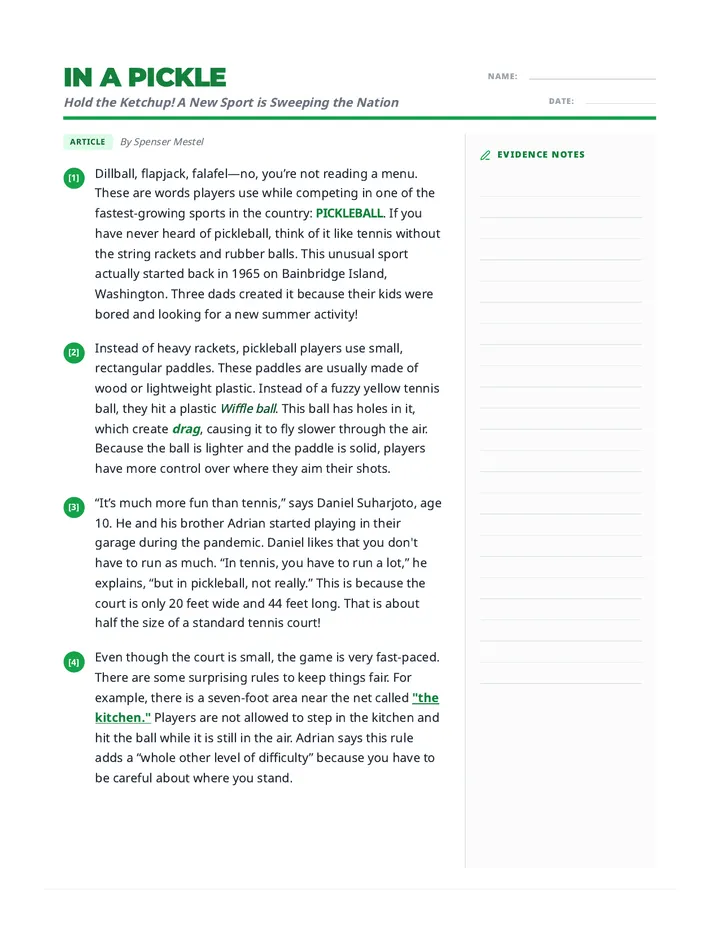
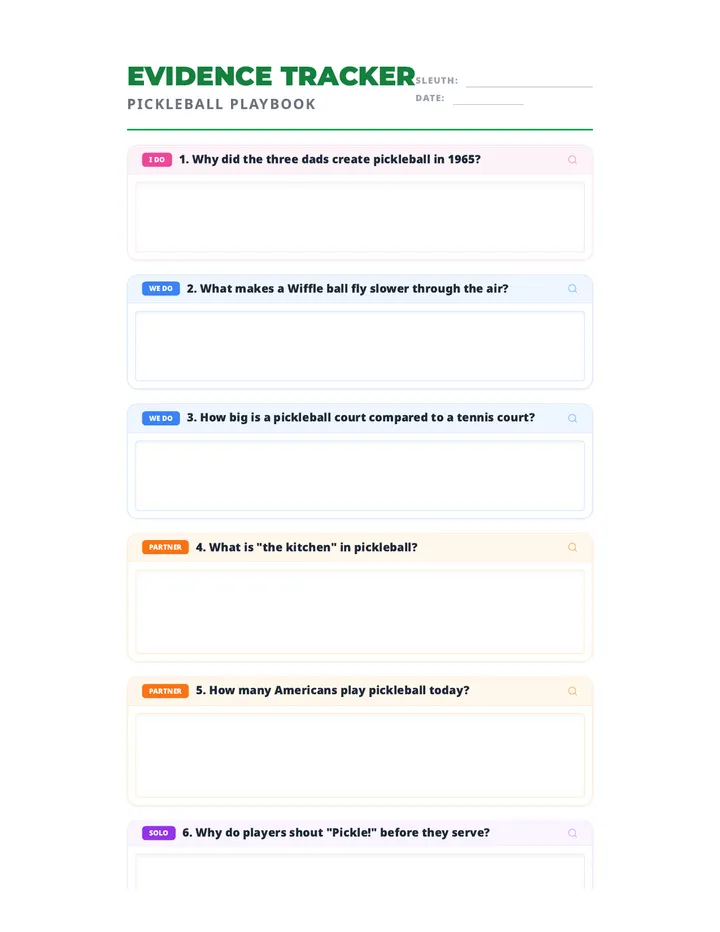
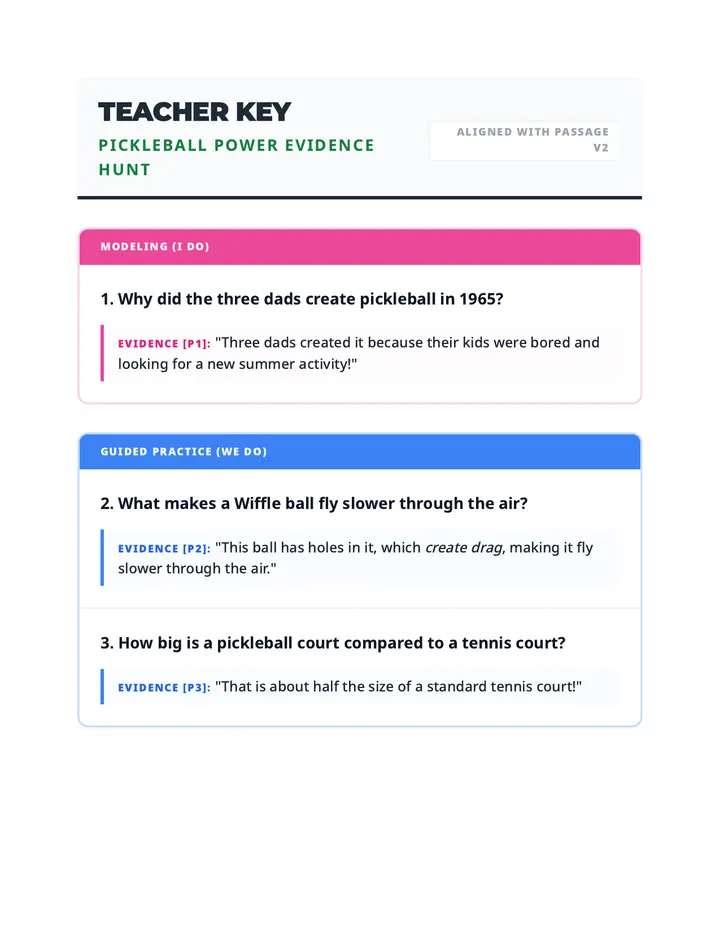
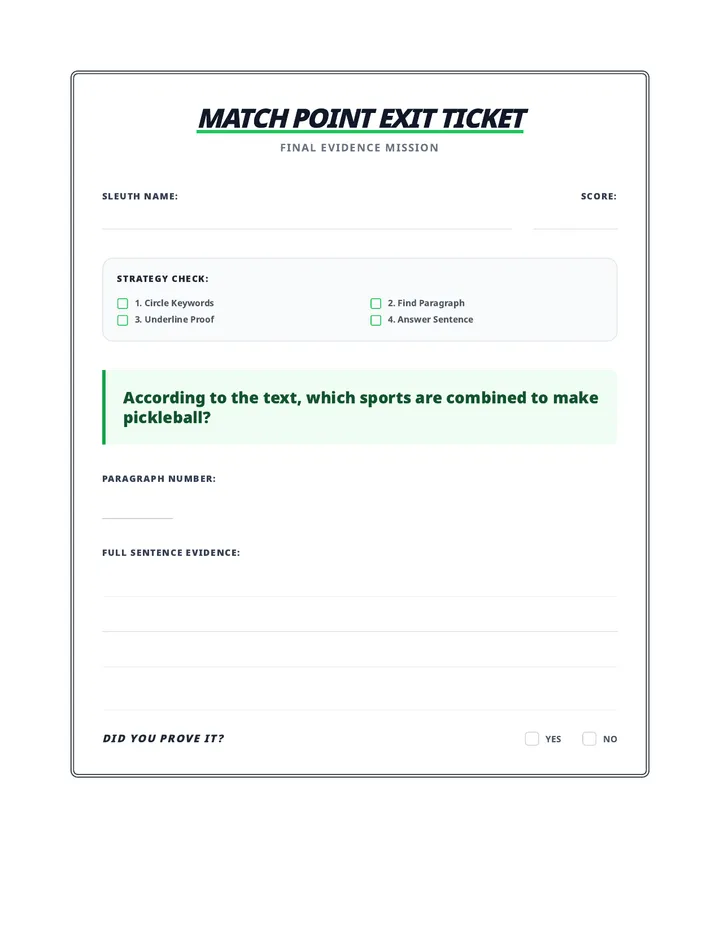
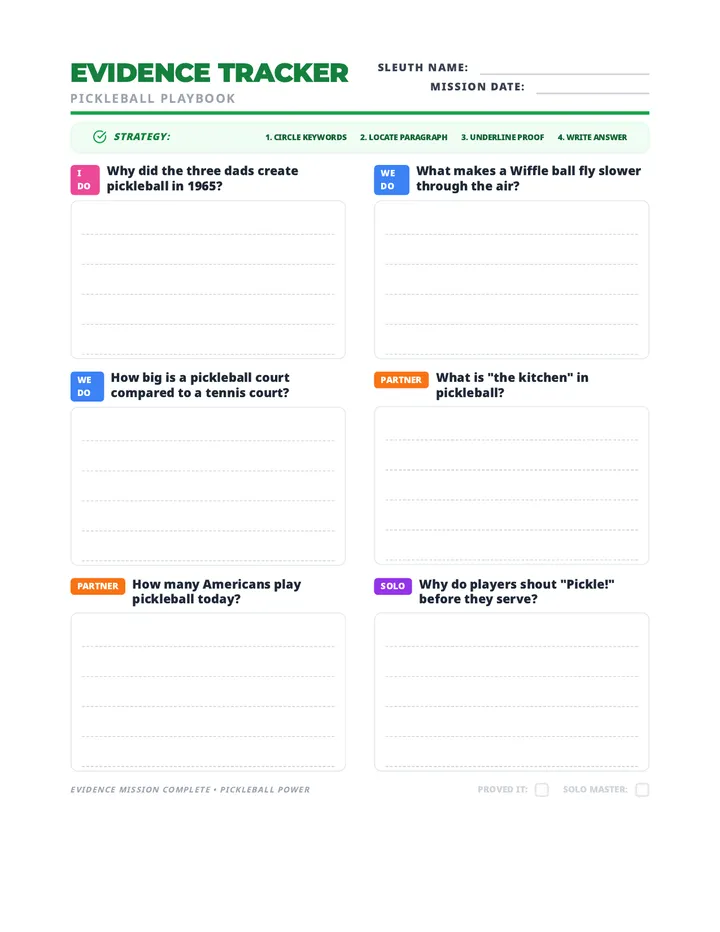
An explicit instruction lesson for 3rd graders on locating text evidence to answer text-dependent questions using an 'I Do, We Do, You Do' model. Students learn to identify keywords in questions and find matching evidence in the text using a five-step checklist.