Standardized shorthand for titles, addresses, dates, and measurements alongside essential punctuation rules. Guides students in recognizing and applying shortened word forms correctly across various writing contexts.
An expanded anchor chart featuring a second page focused on academic articulation. It provides curated lists of formal sentence starters for stating arguments, introducing evidence, and performing deep text analysis, maintaining a professional editorial aesthetic.
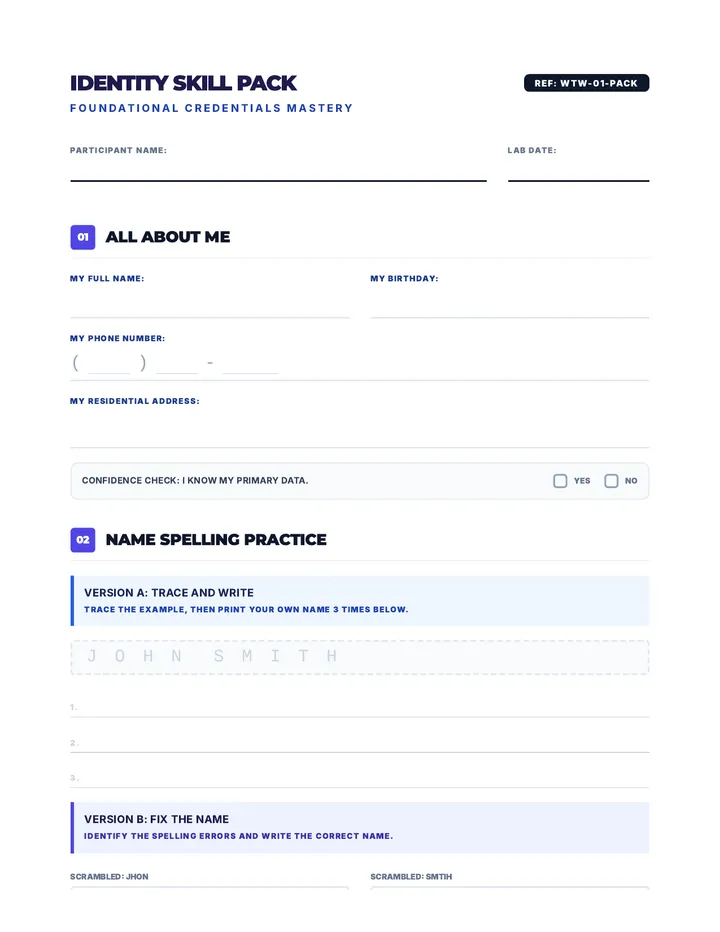
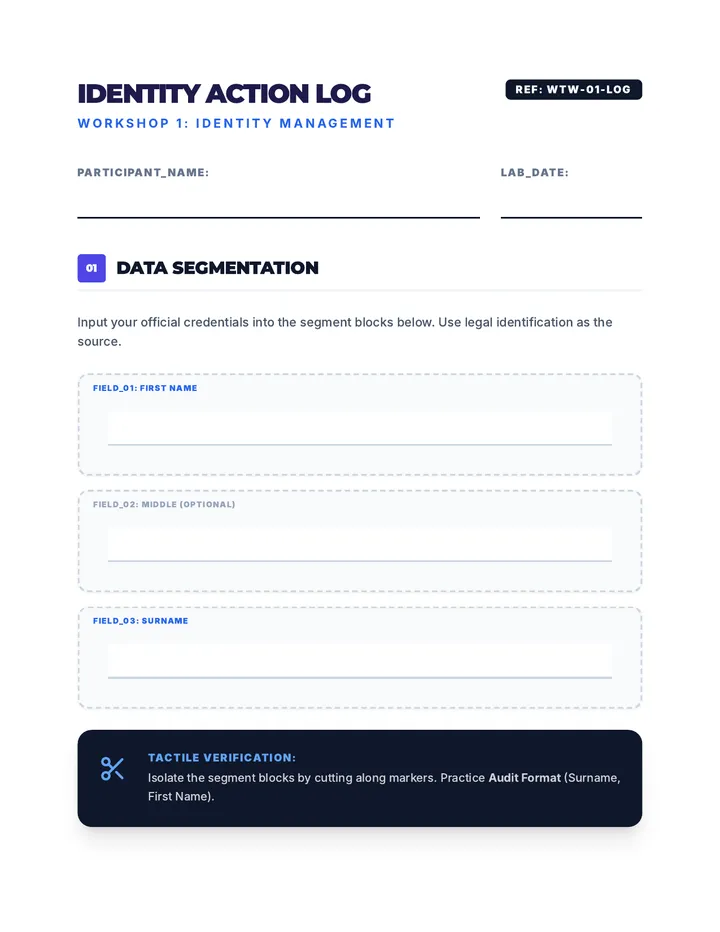
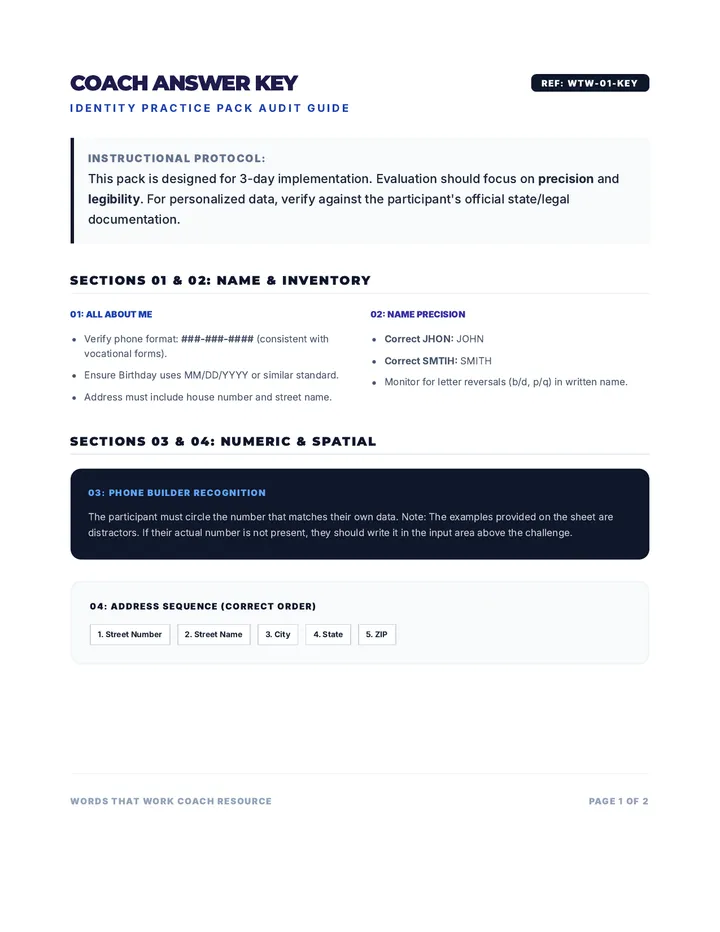
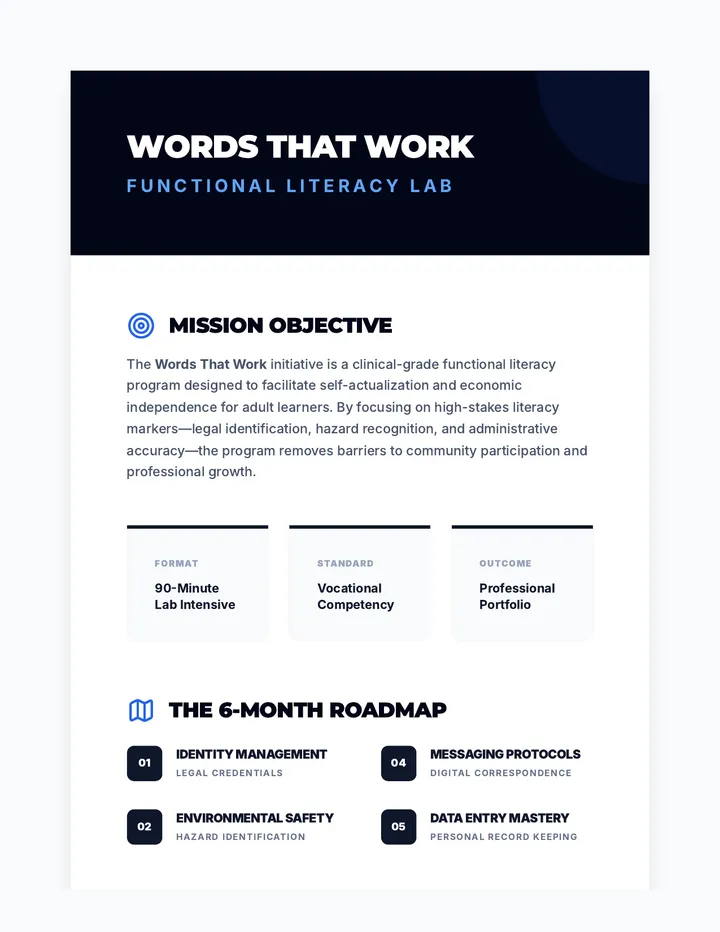
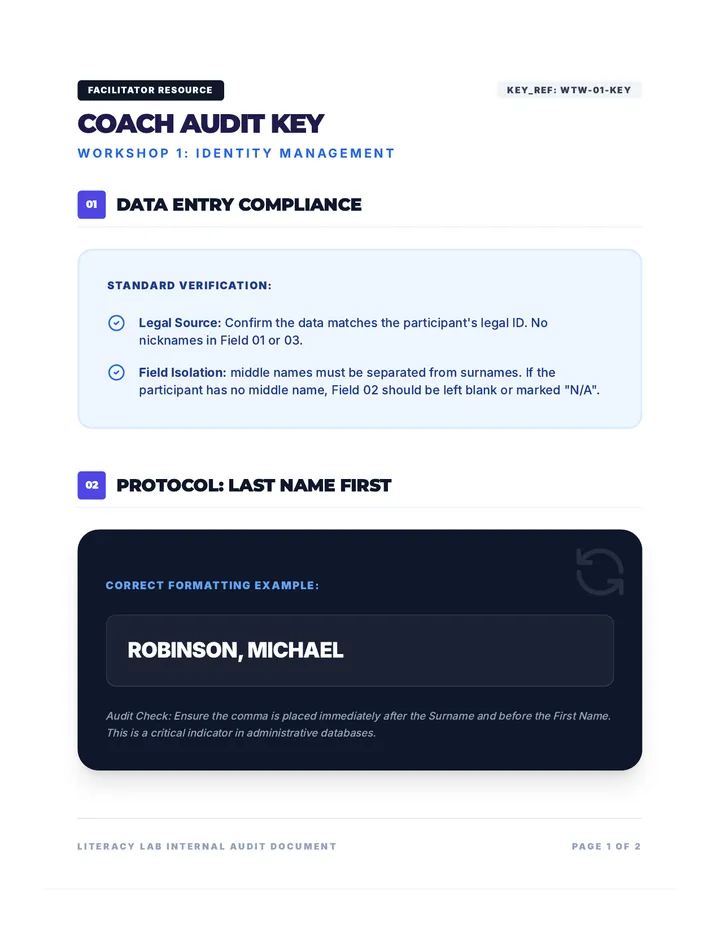
A professional-grade functional literacy program for adults, designed as a vocational training 'do-over'. The curriculum focuses on high-stakes literacy for professional independence, community navigation, and administrative accuracy, utilizing a clinical 'Lab' aesthetic that respects the learner's age and experience.
This sequence teaches undergraduate students how to leverage dictation technology to draft academic papers. It moves from oral brainstorming and outlining to drafting body paragraphs with transitions, managing complex citations via voice, maintaining formal academic tone, and utilizing text-to-speech for final auditory polishing.
A technical grammar sequence for 5th graders focusing on phonetic exceptions for 'a' and 'an'. Students move from basic vowel sound awareness to handling silent letters and acronyms, culminating in a proofreading challenge.
An advanced rhetorical study of foreign words and expressions in professional and literary contexts, focusing on the tension between prestige and alienation. Students move from technical mechanics and common misuses to analyzing code-switching in literature and designing corporate style policies.
This sequence explores the nuances of language through lexicography, etymology, and specialized reference materials, moving from historical word analysis to intentional stylistic choices in writing.
A comprehensive unit for 9th-grade students on integrating Latin phrases into formal writing and argumentation. Students transition from understanding basic abbreviations to applying complex rhetorical and legal terms in a culminating persuasive editorial.
A simulation-based sequence where students act as communications professionals, exploring the real-world impact of homophone accuracy in business and digital environments. Students master common homophones while developing professional writing skills and audience awareness.
A 1st-grade grammar sequence focusing on identifying and writing common abbreviations for titles, days, months, and street names. Students use the 'Word Shrinking Machine' concept to understand how to shorten words while maintaining their meaning.
A comprehensive 1st-grade sequence exploring common abbreviations for titles, days, months, and street names through a "Shortcut Squad" spy theme. Students learn the mechanics of capitalization and punctuation (the period) to decode and encode shorter forms of words.
This sequence transforms students into professional copyeditors by teaching systematic workflows for mechanical formatting. Students move from manual error detection to automated tool mastery, culminating in a high-stakes proofreading simulation.
This mastery-based sequence teaches 5th-grade students the mechanics of editing and proofreading abbreviations, focusing on punctuation, capitalization, and style consistency through a newsroom-inspired 'editor's eye' lens.
This inquiry-based sequence explores the nuances of acronyms, initialisms, and Latin-based abbreviations found in informational text. Students investigate the origins of these terms, distinguish between those pronounced as words versus individual letters, and produce an informational guide for their peers.
Students step into the roles of news editors to master the art of consistency and precision. They will learn foundational AP style rules and practice rigorous fact-checking to ensure their articles are ready for the front page.
In this 45-minute lesson, 6th-grade students step into the role of professional editors to master house style and factual accuracy. They will learn foundational AP style rules and apply fact-checking strategies to polish their articles to a professional standard.
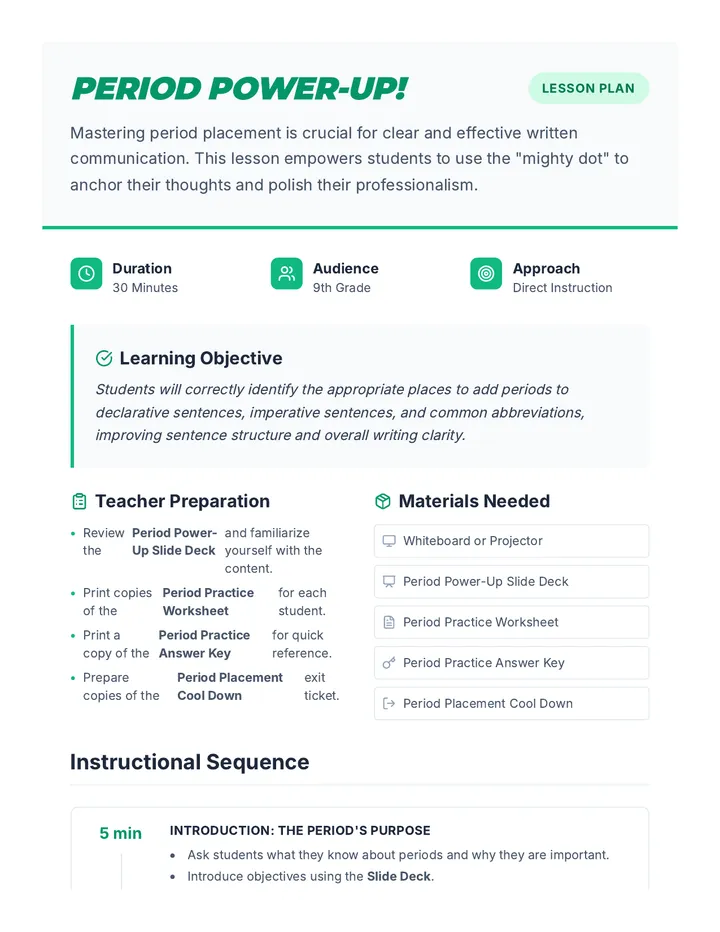
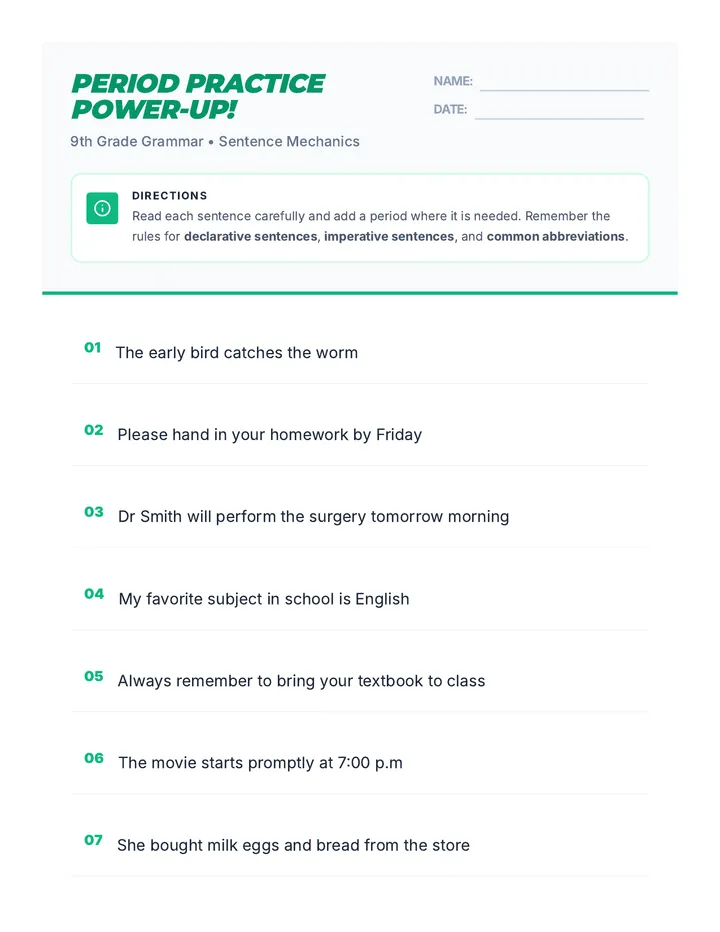
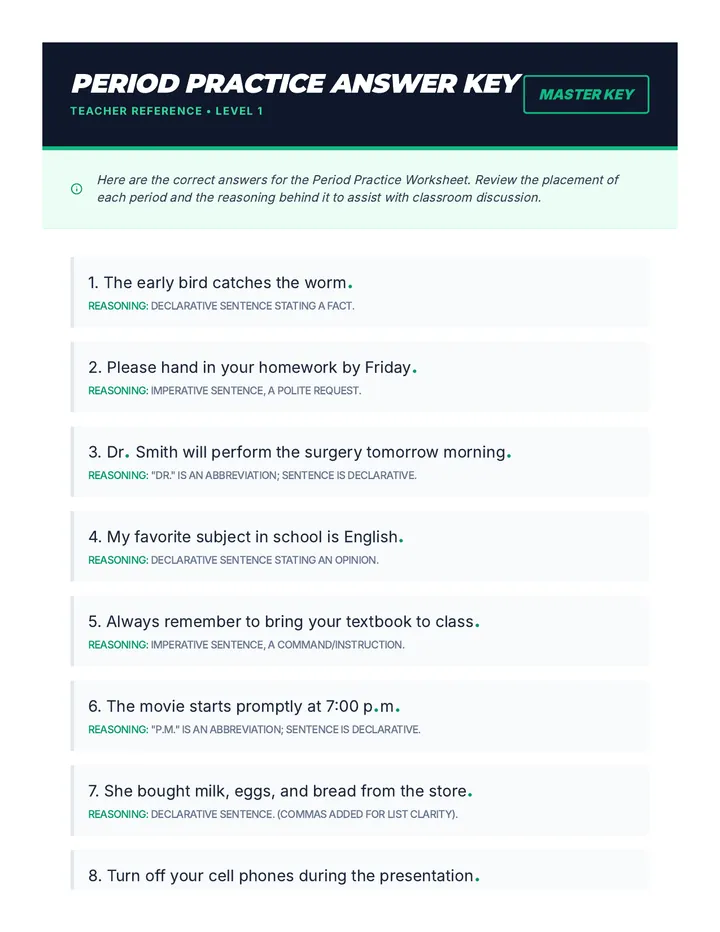
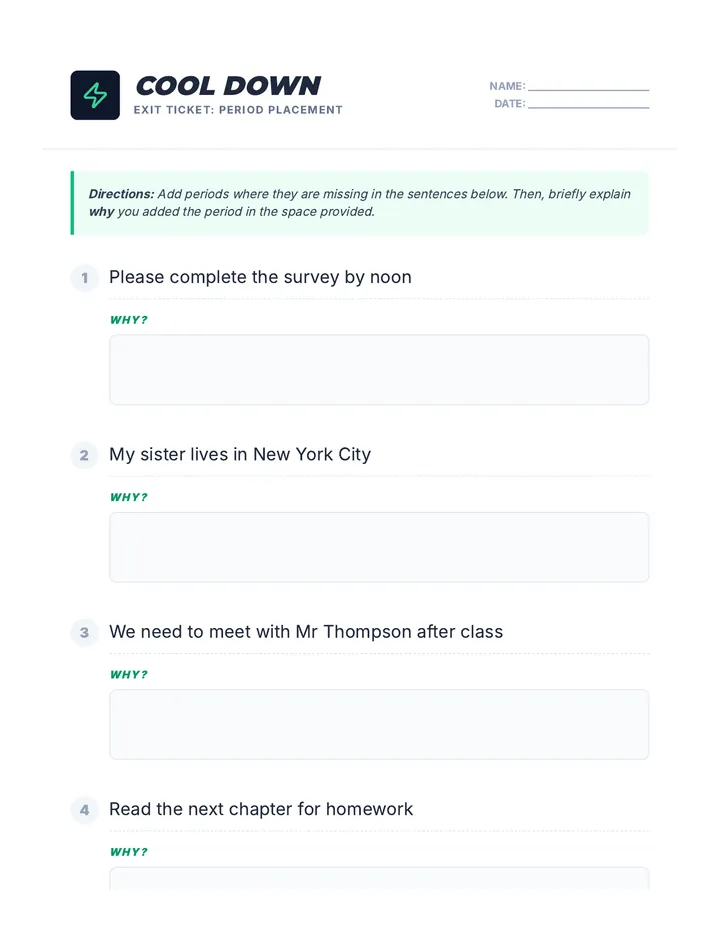
A 30-minute introductory lesson for 9th-grade students on the fundamental rules of period usage in declarative sentences, imperative sentences, and abbreviations.
Students will explore the concept of communication register by analyzing a humorous error in a Mayor's letter and practicing 'rebooting' informal messages into professional, formal correspondence. The lesson includes a video-based discussion, a collaborative translation activity using scenario cards, and a comprehensive student worksheet.
A grammar lesson for 3rd graders focused on mastering capitalization rules for titles (Dr., Mr., Mrs.) and the pronoun 'I' through video analysis and formal letter writing.
This lesson teaches 9th-grade students the fundamental rules for adding periods to sentences, enhancing their writing clarity and grammatical accuracy. It covers declarative sentences, imperative sentences, and common abbreviations.