Deductive reasoning structures, symbolic notation, and truth tables to evaluate argument validity. Identifies formal fallacies and constructs sound logical proofs.
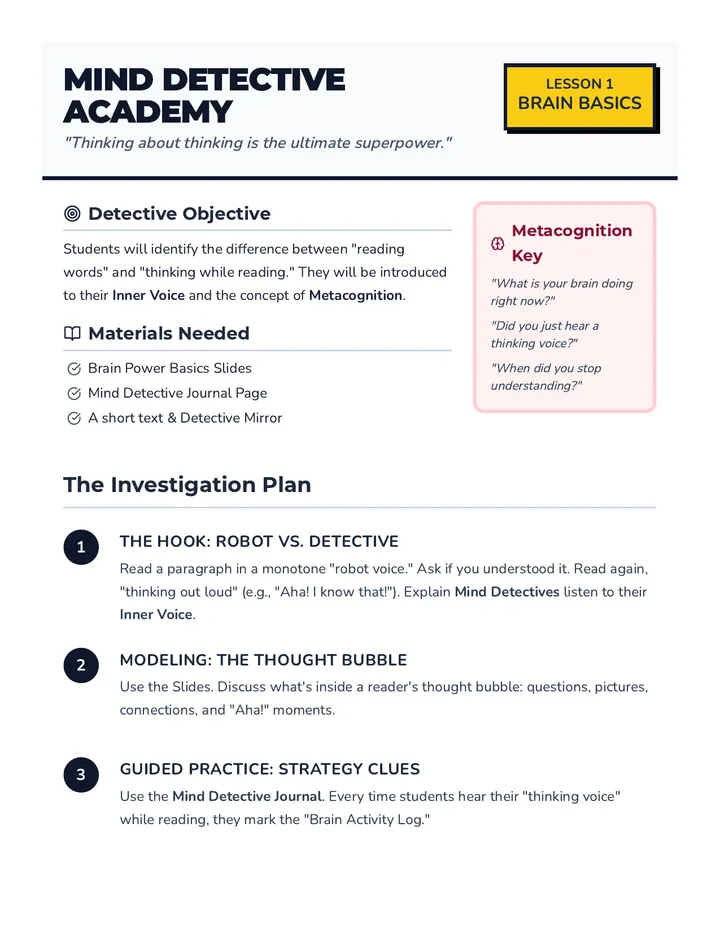
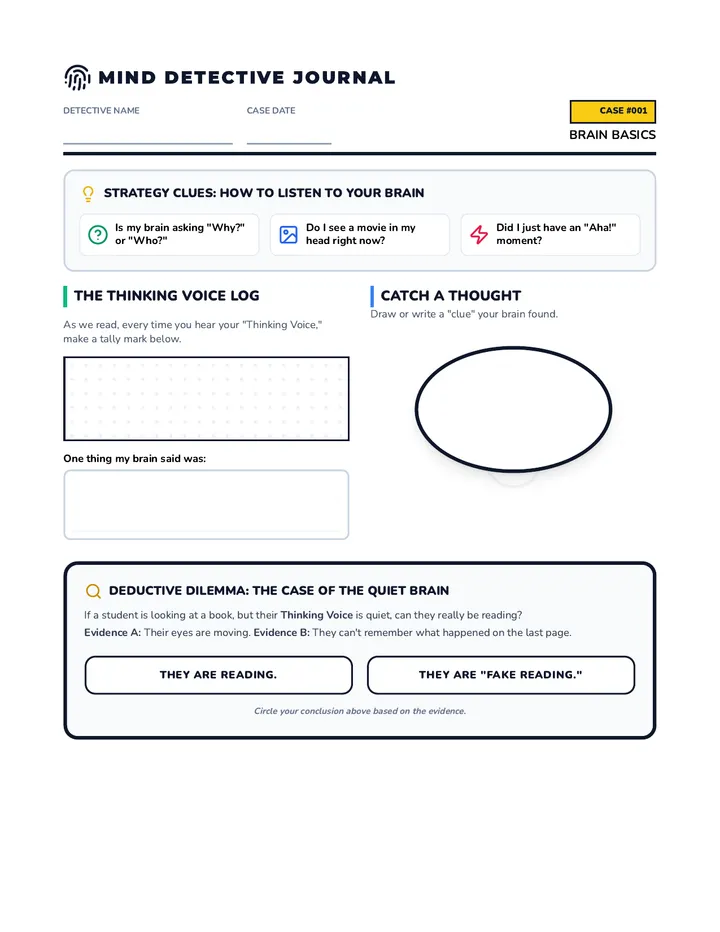
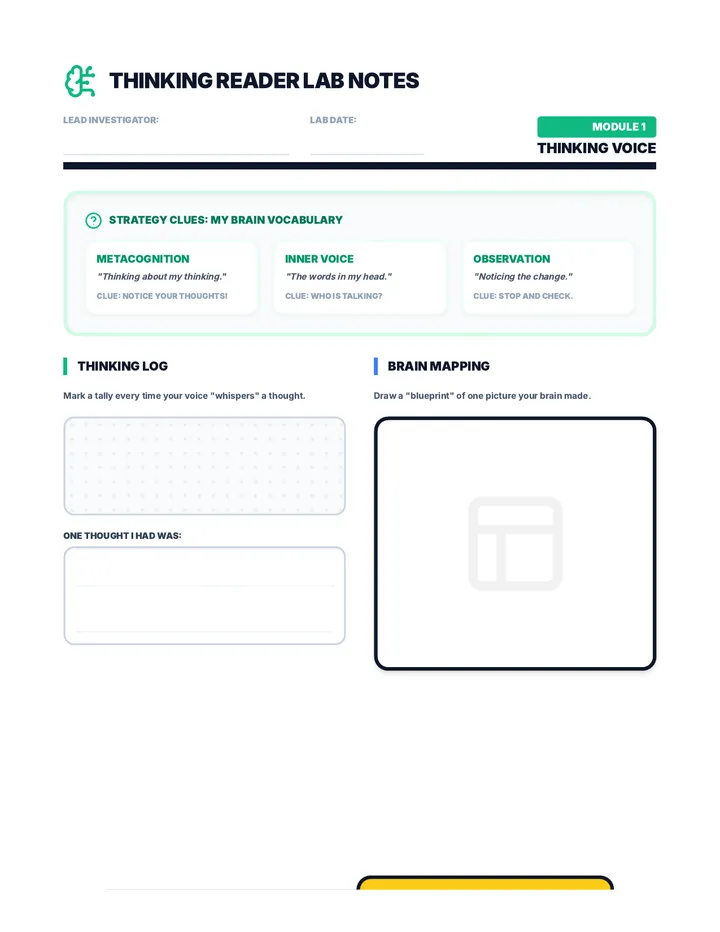
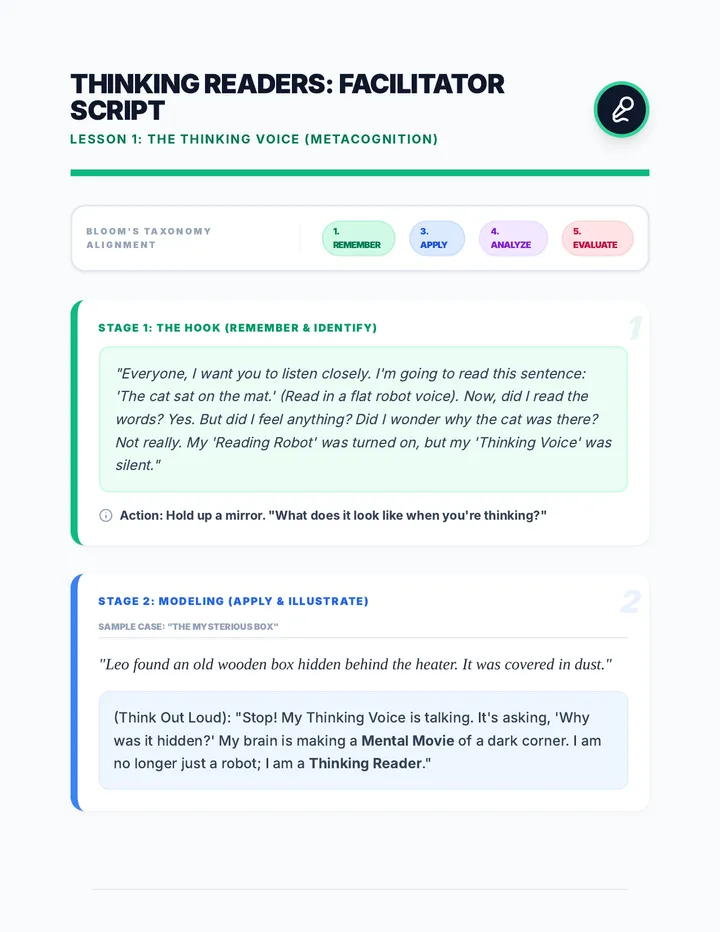
A 12-lesson comprehension mastery program focused on metacognition, reasoning, and evidence-based thinking. Students progress from basic thinking awareness to complex deductive reasoning and synthesis. Inspired by Reading Detective and Comprehension Connections.
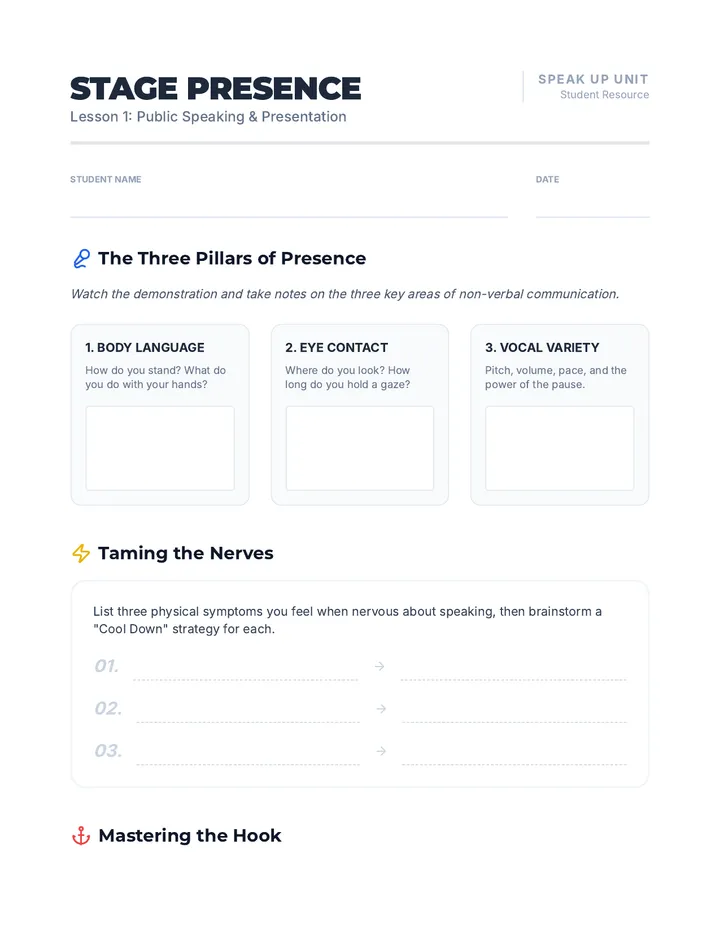
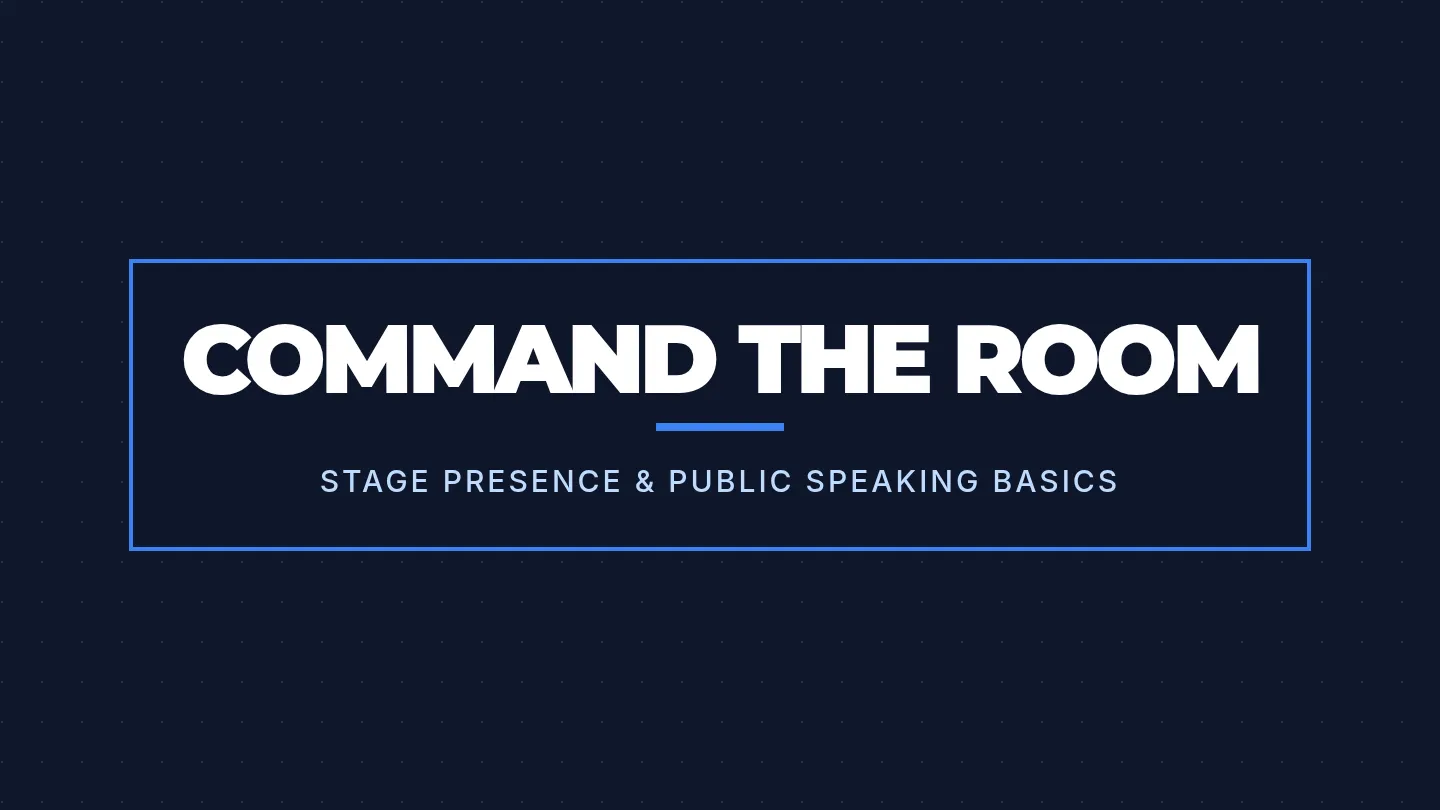
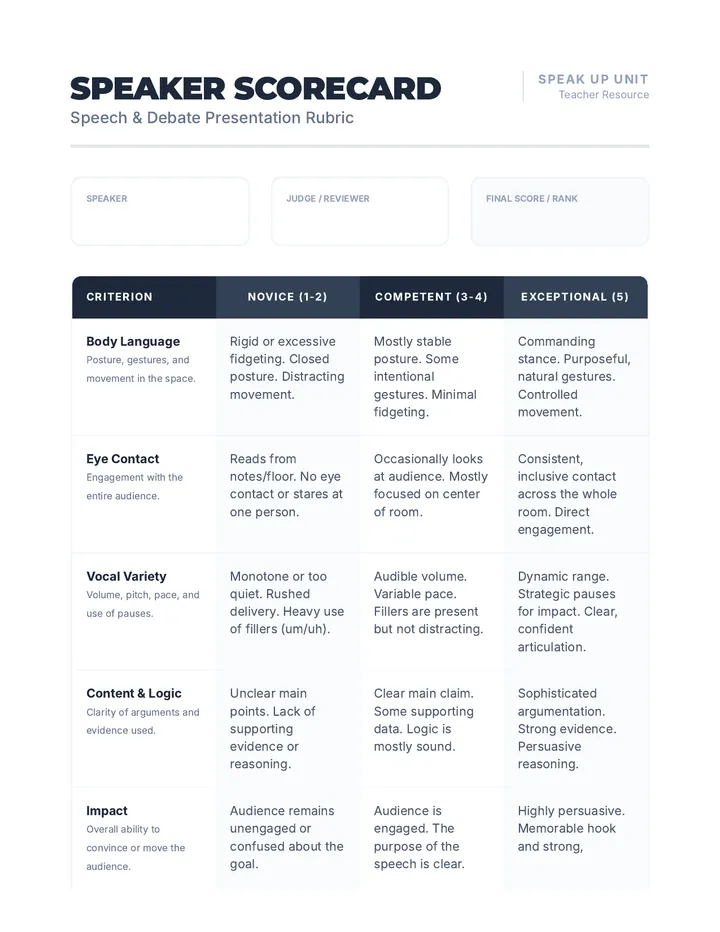
A comprehensive 5-day introductory unit on speech and debate, covering public speaking, argumentation, logic, research, and competitive formats.
A graduate-level sequence focused on integrating deductive, inductive, and analogical reasoning into a cohesive defensive strategy for academic and professional contexts.
A high-intensity vocabulary sequence for 10th graders focusing on the logic of analogies. Students progress from basic pattern recognition to designing their own complex logic puzzles, treating language as a series of solvable equations.
A 12th-grade ELA unit focused on the logical sequencing of ideas within dense informational texts and complex arguments. Students analyze how the ordering of premises and evidence determines the validity and rhetorical impact of a text.
A high-level bridging of English Language Arts and formal logic, focusing on the structural patterns of reasoning through analogies. Students move from basic symbolic notation to complex deductive puzzles, treating language with mathematical precision.
A 9th-grade English Language Arts sequence that bridges formal logic with argumentative writing. Students learn to use valid argument forms like Modus Ponens, Modus Tollens, and Hypothetical Syllogisms as structural blueprints for high-quality, undeniable writing.
A foundational sequence for 9th-grade students on the structures of deductive reasoning, focusing on categorical syllogisms, validity, and soundness to enhance critical thinking and analytical writing.
A high-level ELA unit for 11th graders that bridges formal logic and argumentative writing. Students move from identifying hidden premises (enthymemes) to constructing complex essays built on valid deductive frameworks like Modus Ponens and Modus Tollens.
A comprehensive 11th Grade ELA sequence on formal logic, focusing on identifying structural fallacies (Affirming the Consequent, Denying the Antecedent, Undistributed Middle) and repairing invalid arguments. Students act as 'logic doctors' to diagnose and fix flawed reasoning in various rhetorical contexts.
A high-school ELA sequence that treats argumentative writing like geometric proofs, focusing on formal logic structures like axioms, modus ponens, and proofs by contradiction to build unassailable positions.
A high school ELA sequence focused on identifying structural errors in reasoning. Students learn to distinguish between informal fallacies (content-based) and formal fallacies (structure-based), specifically mastering affirming the consequent, denying the antecedent, and the undistributed middle.
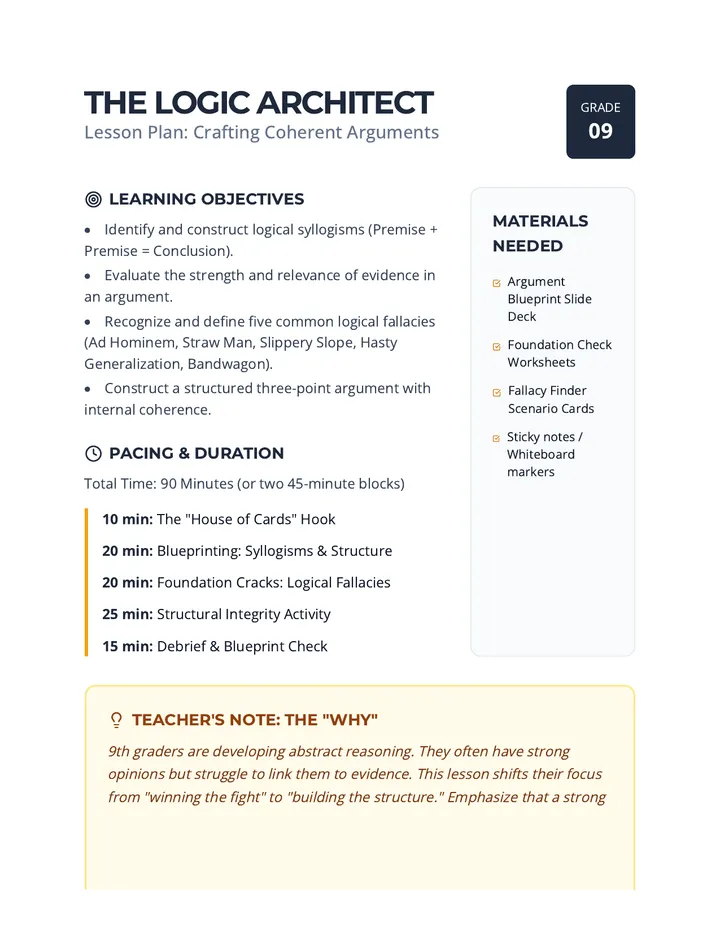
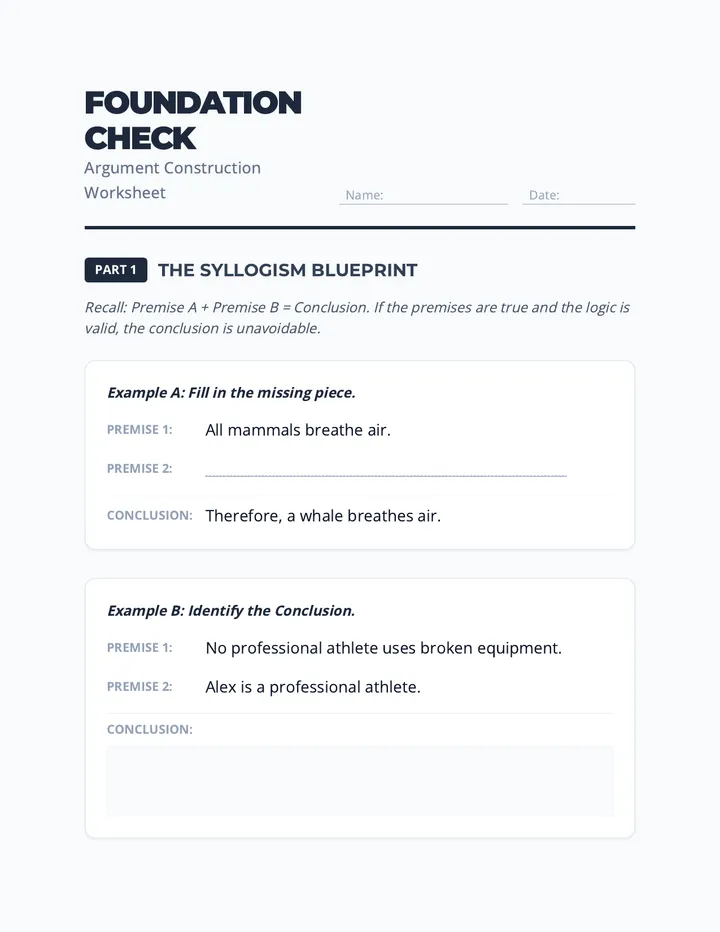
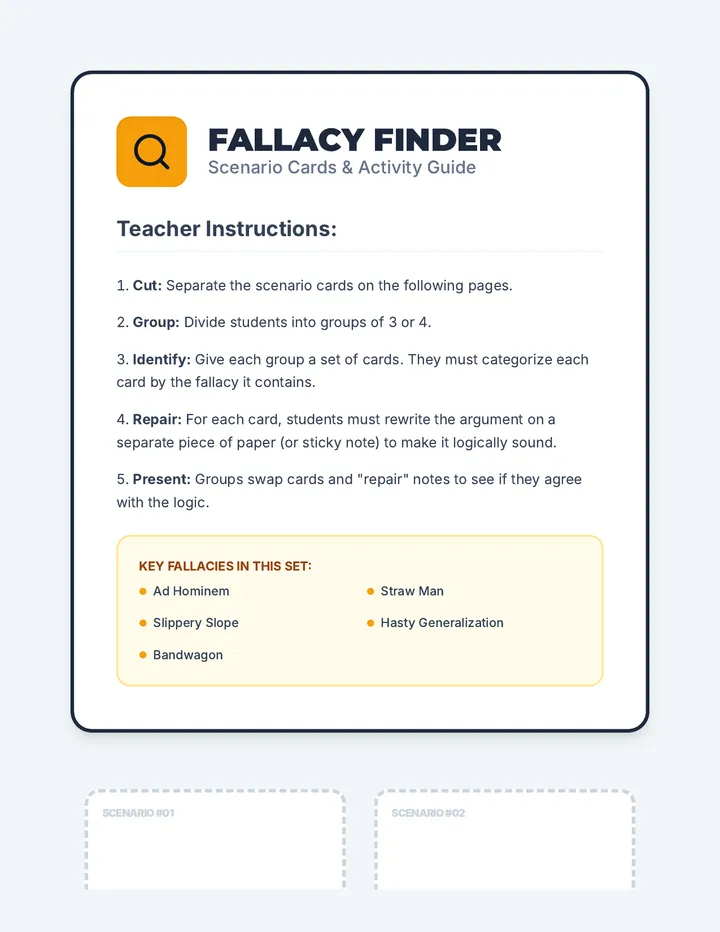
A comprehensive 9th-grade lesson on logical reasoning and argumentation. Students learn to build sound arguments using premises and conclusions while identifying common logical fallacies to strengthen their persuasive writing and speaking skills.
A foundational language and logic lesson for first graders to master the concept of negation ('not') through playful categorization activities.
A high-school level exploration of Sherlock Holmes's methods, focusing on the distinction between observation, inference, and deduction through character analysis.
A critical thinking lesson for 8th Grade ELA focused on the historical origins of inductive and deductive reasoning. Students analyze the contributions of Aristotle and Descartes to the scientific method using video evidence.
Students will learn the fundamental differences between deductive and inductive reasoning, evaluating the strength and certainty of arguments through video analysis and creative writing.