Pain Protocol Worksheet Pain Protocol
Article Analysis: "Why Love Literally Hurts"
Subject File
ENG1-U4-LE4
Student Investigator
Date
Section 01: Structural Scan
"The focus of the text is on the science behind pain, explaining how the brain reacts to and processes physical and social pain."
The Central Thesis
Identify the core argument Eric Jaffe makes about the relationship between physical and social pain.
Evidence Point A: Animal Studies
Reference Panksepp’s research mentioned in paragraphs 4–6.
Evidence Point B: The Cyberball Study
Reference Eisenberger’s research in the later sections.
Section 02: Vocabulary Extraction
Implicit
Implied though not plainly expressed.
Context from text...
Explicit
Stated clearly and in detail.
Context from text...
Behavioral Science
Scientific study of human/animal behavior.
Context from text...
Sentimentalist
One influenced primarily by emotions.
Context from text...
Section 03: Deep Processing
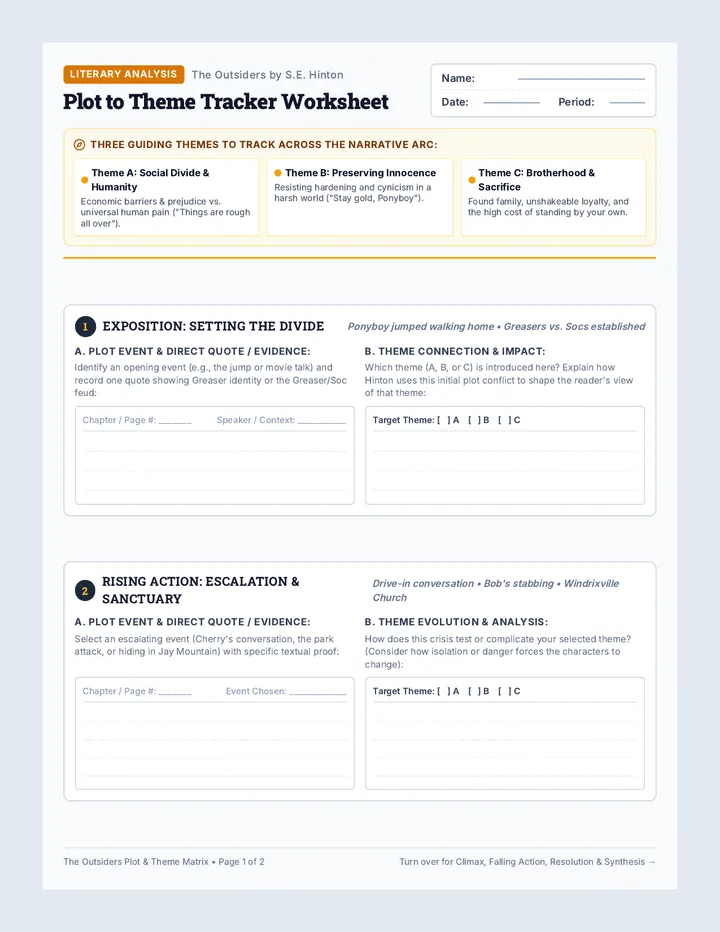
1. Synthesis Check: How does the author bridge the gap between "poetry" (metaphorical heartbreak) and "biology" (actual physical pain)?
2. Evaluation: In your opinion, which study (Panksepp or Eisenberger) provides the most convincing evidence for the thesis? Why?
Output Task: The 30-Word Summary
Summarize the article's main findings in exactly 30 words. No more, no less.
Heartbreak Lab Slides Neural
Heartbreak
Analyzing "Why Love Literally Hurts"
Scientific Analysis
Social Pain
The Hook
"Write about a time that love caused you pain. What happened? How did you overcome it?"
We often use words like broken , crushed , or ached . But are they just metaphors?
Unit Connection
How can love bring both
joy and pain?
Today's Objective
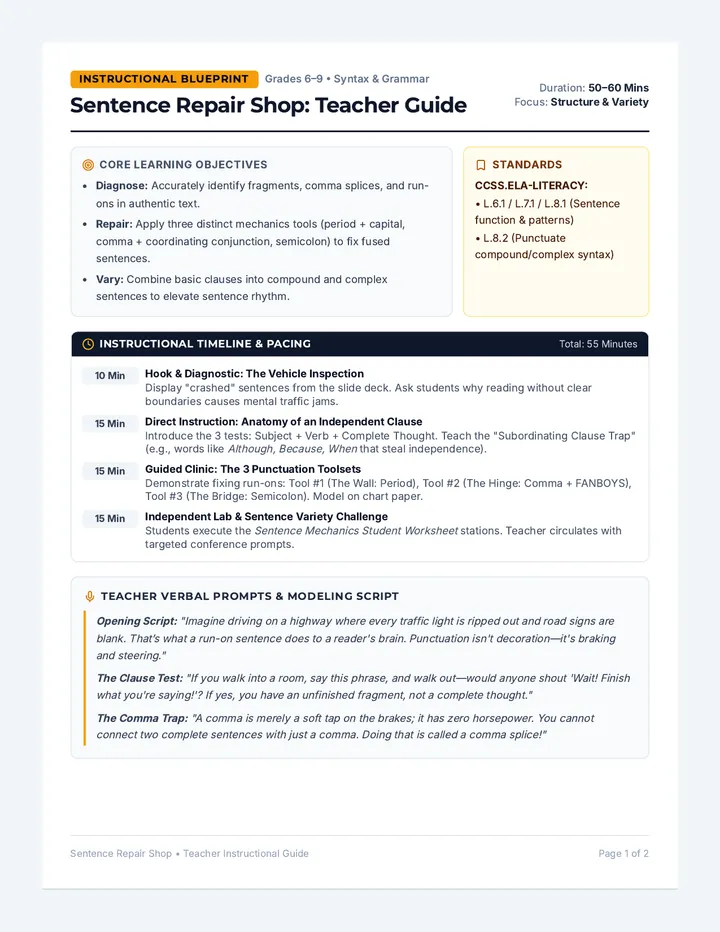
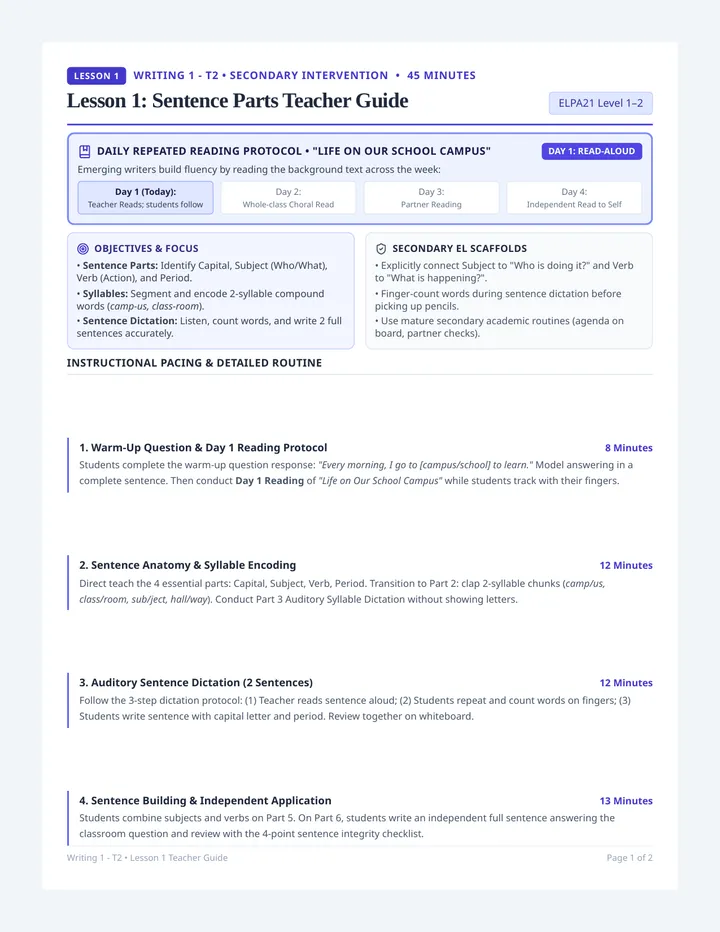
Analyze the characteristics and structural elements of Jaffe's informational text.
Scanning the Data
The Thesis Statement
Usually found in the intro, it's the main claim the author is trying to prove with scientific evidence.
Look at Paragraphs 1-3:
How does Jaffe introduce the connection between metaphorical and physical pain?
The Biological Bridge:
Watch for where he moves from "feelings" to "brain chemistry."
The Evidence Matrix
Panksepp's Lab
Studied animal distress calls. Found that "social loss" activated the same pathways as morphine withdrawal.
Eisenberger's Cyberball
Used fMRI to watch brains during social exclusion. The "social" pain looked just like "physical" pain in the ACC.
If social pain is "literal," how should we treat people with broken hearts?
"The brain doesn't see the difference... why do we?"
Love Hurts Article Student Copy Why Love Literally Hurts
By Eric Jaffe | Association for Psychological Science
Annotation Copy
STUDENT REF: 04-A
Name
Date
01
We’ve all been there. The heavy chest, the hollow stomach, the feeling that your heart has been physically stepped on. We use words like "broken," "crushed," and "ached" to describe our emotional state after a rejection or a breakup. For centuries, poets and songwriters have treated these as metaphors—vivid ways to describe a feeling that isn't actually physical. But modern science is beginning to suggest that these words might be more literal than we ever imagined.
05
Research in behavioral science and neuroscience is showing that the brain doesn’t seem to distinguish much between a "broken heart" and a "broken arm." When we experience social pain—the kind caused by rejection, loss, or exclusion—our brains process it using the same neural circuits that handle physical pain. This isn't just a coincidence of biology; it’s a fundamental part of how we are wired to survive.
10
The connection between social and physical pain first gained traction through the work of Jaak Panksepp, a pioneer in the study of emotions. In the late 1970s, Panksepp noticed something remarkable while studying animal distress calls. Puppies that were separated from their mothers made high-pitched cries that sounded eerily similar to the cries of animals in physical pain.
15
Panksepp discovered that these social distress calls were being regulated by the same brain systems that manage physical pain and opioid levels. When the animals were given tiny doses of morphine—a drug used to treat severe physical pain—their social distress cries stopped immediately. It seemed that "social loss" triggered a reaction in the brain nearly identical to physical injury or morphine withdrawal.
20
Decades later, researcher Naomi Eisenberger took this theory a step further using fMRI (functional Magnetic Resonance Imaging) on human subjects. She developed a digital game called "Cyberball," where participants believed they were tossing a ball back and forth with two other people. Eventually, the other "players" (actually a computer program) would stop tossing the ball to the participant, effectively excluding them from the game.
25
As the participants sat in the fMRI scanner feeling the sting of exclusion, their brains lit up. Specifically, Eisenberger saw increased activity in the anterior cingulate cortex (ACC). The ACC is the same "hub" that processes the emotional distress of physical pain. The more rejected a person reported feeling, the more active their ACC became. To the brain, being left out of the game felt like a physical blow.
30
Why would nature design us this way? From an evolutionary perspective, it makes perfect sense. For our ancestors, being part of a group was essential for survival. A lone human was a dead human. By making social exclusion feel as painful as physical injury, our brains ensure that we stay connected to others. The "sting" of rejection is actually a survival signal, a warning that our social bonds—and therefore our lives—are at risk.
Love Hurts Article Teacher Copy Why Love Literally Hurts
TEACHER ANNOTATION EDITION // UNIT 4: SWEET SORROW
Reference Key
MASTER-04A
01
We’ve all been there. The heavy chest, the hollow stomach, the feeling that your heart has been physically stepped on. We use words like "broken," "crushed," and "ached" to describe our emotional state after a rejection or a breakup. For centuries, poets and songwriters have treated these as metaphors—vivid ways to describe a feeling that isn't actually physical. But modern science is beginning to suggest that these words might be more literal than we ever imagined.
05
Research in behavioral science and neuroscience is showing that the brain doesn’t seem to distinguish much between a "broken heart" and a "broken arm." When we experience social pain—the kind caused by rejection, loss, or exclusion—our brains process it using the same neural circuits that handle physical pain. This isn't just a coincidence of biology; it’s a fundamental part of how we are wired to survive.
10
The connection between social and physical pain first gained traction through the work of Jaak Panksepp, a pioneer in the study of emotions. In the late 1970s, Panksepp noticed something remarkable while studying animal distress calls. Puppies that were separated from their mothers made high-pitched cries that sounded eerily similar to the cries of animals in physical pain.
15
Panksepp discovered that these social distress calls were being regulated by the same brain systems that manage physical pain and opioid levels. When the animals were given tiny doses of morphine—a drug used to treat severe physical pain—their social distress cries stopped immediately. It seemed that "social loss" triggered a reaction in the brain nearly identical to physical injury or morphine withdrawal.
20
Decades later, researcher Naomi Eisenberger took this theory a step further using fMRI (functional Magnetic Resonance Imaging) on human subjects. She developed a digital game called "Cyberball," where participants believed they were tossing a ball back and forth with two other people. Eventually, the other "players" (actually a computer program) would stop tossing the ball to the participant, effectively excluding them from the game.
25
As the participants sat in the fMRI scanner feeling the sting of exclusion, their brains lit up. Specifically, Eisenberger saw increased activity in the anterior cingulate cortex (ACC). The ACC is the same "hub" that processes the emotional distress of physical pain. The more rejected a person reported feeling, the more active their ACC became. To the brain, being left out of the game felt like a physical blow.
30
Why would nature design us this way? From an evolutionary perspective, it makes perfect sense. For our ancestors, being part of a group was essential for survival. A lone human was a dead human. By making social exclusion feel as painful as physical injury, our brains ensure that we stay connected to others. The "sting" of rejection is actually a survival signal, a warning that our social bonds—and therefore our lives—are at risk.
Sweet Sorrow Pacing Guide Mission Roadmap
UNIT: SWEET SORROW // 5-DAY PACING GUIDE
Total Duration
225 MINUTES
Day Lesson Focus Key Deliverables Time 01 Literal Pain Analysis
Introduction to Jaffe's article and the biological bridge.
|
• Annotated Article (Para 1-8)
• Pain Protocol Worksheet
| 45m |
| 02 |
Authors Arsenal Craft
Analyzing punctuation, experts, and sentence structures.
|
• Quote Collector Activity
• Parallelism Practice
| 45m |
| 03 |
Layered Love Poetry
Analyzing Duffy's "Valentine" and the onion metaphor.
|
• Onion Analysis Guide
• Metaphor Mapping
| 45m |
| 04 |
Neural Networks Synthesis
Bridging science and poetry to find universal truths.
|
• Genre Bridge Organizer
• Synthesis Thesis Draft
| 45m |
| 05 |
Final Verdict Writing
Drafting and refining the synthesis correspondence.
|
• Argumentative Correspondence
• Peer Edit Checklist
| 45m |
Unit Essential Question
How can love bring both joy and pain, and how do we use different genres to process it?
Priority TEKS
E1.7(D) E1.8(A) E1.10(C) E1.10(D) E1.4(F)
The "Sweet Sorrow" Formula
Every lesson moves from Direct Observation (what the text says) to Inquiry (why it matters) to Synthesis (how it connects).
Sweet Sorrow Instructional Scripts Instructional Scripts
Teacher Facilitation Guide: Days 1-5
01
Literal Pain Analysis
Hook
"Class, today we’re looking at why we say love 'hurts.' Is it just a metaphor? Or is your brain actually screaming? Look at the 'Pain Protocol' worksheet. Before we read, jot down three words you use when you feel left out or rejected. Do those words sound like emotional words, or physical ones?"
Direct Instr.
"We’re diving into Eric Jaffe’s research. Paragraph 2 is our anchor. He claims the brain doesn't distinguish between a 'broken heart' and a 'broken arm.' As we read, I want you to underline the word 'ACC.' That stands for the Anterior Cingulate Cortex. It’s the hub where your brain says 'Ouch'—whether someone hit you with a ball or someone left you out of the game."
Discussion
"Panksepp found that morphine stops puppies from crying for their mothers. What does that tell us about social pain? Is it a choice? Or is it a chemical reaction?"
02
Authors Arsenal Craft
Hook
"Today we’re looking at the 'Arsenal'—the tools Jaffe uses to make us believe him. He isn't just giving us his opinion; he's bringing in the heavy hitters. Look at paragraph 5. Why does he use quotation marks for 'Cyberball'?"
Direct Instr.
"Authors use parallel structure to create rhythm and importance. Listen to this sentence: 'It triggers physical stress, creates social anxiety, and disrupts focus.' Notice the pattern? Verb-Noun, Verb-Noun, Verb-Noun. It feels scientific because it feels balanced. Today, we’re going to find where Jaffe uses this balance to close his argument."
03
Layered Love Poetry
Hook
"Jaffe said love isn't 'sentimental'—it’s biological. Carol Ann Duffy agrees. She rejects red roses and satin hearts. She gives her lover... an onion. Why an onion? What does an onion do to you physically when you cut it?"
Direct Instr.
"This is an extended metaphor. The onion isn't just a gift; it's love itself. It's 'lethal.' It's 'possessive.' As you read, highlight every word that sounds like it belongs in a crime scene or a hospital. How does this shift the tone from Day 1?"
Synthesis & Verdict (Days 4-5)
Day 4: The Bridge
"Today we bridge the gap. Jaffe gives us the 'fact,' Duffy gives us the 'feeling.' But are they telling the same truth? Use your 'Genre Bridge' organizer to see where the fMRI scan meets the onion layers."
Day 5: The Final Word
"You are now a Scientific Advisor. Your friend is heartbroken. They think they’re dying. Use your knowledge from Jaffe and Duffy to explain to them what’s happening. Be empathetic, but be precise. Your correspondence should prove you’ve mastered both the science and the craft."
Quote Collector Activity Quote Collector
MODULE: CRAFT & CONVENTIONS // ENG1-U4
Status
OPERATIONAL
Student ID
Date
1
Purposeful Punctuation
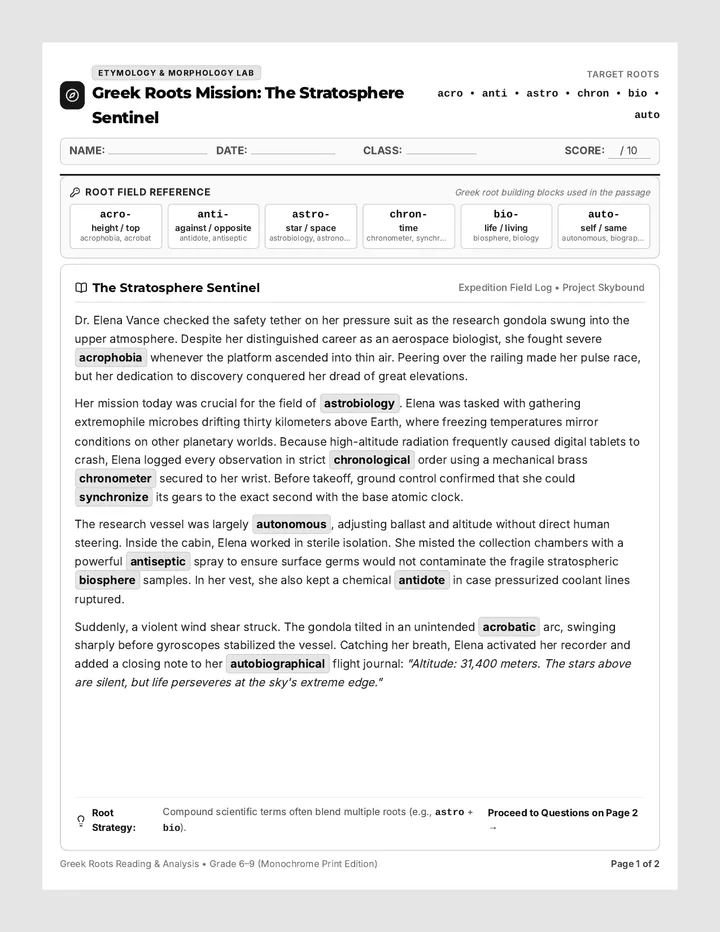
Authors use quotation marks not just for dialogue, but to integrate expertise and signal specific scientific terminology. Scan paragraphs 2, 8, and 10 of "Why Love Literally Hurts."
Found Quote
Purpose of Quotes
2
Structural Integrity
Focus: Parallel Structure
Parallel structure creates rhythm and clarity by using the same pattern of words to show that two or more ideas have the same level of importance.
Identify a sentence in the article that uses parallel structure. Write it below:
Rewrite this "clunky" sentence to use parallel structure:
"The study showed that social pain activates the brain, it is causing stress, and physical reactions were demonstrated."
3
The Participial Phrase
Technical Specs
A participial phrase starts with a participle (ending in -ing or -ed) and acts as an adjective to describe a noun.
Example: "Blinded by the research, the scientists continued the study."
Find one participial phrase in paragraph 4 or 5 of the text. What noun does it modify?
Crafting Mission
Combine these two short sentences into ONE sentence using a participial phrase and parallel structure .
"The brain processes social rejection. It triggers physical pain, disrupts focus, and creates stress."
Purpose and Punctuation Slides Author's
Arsenal
Analyzing Purpose & Style
The Author's Purpose
To Inform?
Reporting scientific findings about the brain.
To Challenge?
Proving that "heartbreak" isn't just a metaphor.
To Suggest?
Opening new ways to treat social/physical pain.
"Reinforce that the author’s purpose is not just to inform, but to challenge assumptions about love by combining science and human experience."
Punctuation with Purpose
Integrating Experts
Why does Jaffe quote Eisenberger and Panksepp directly instead of just summarizing them?
Academic Scaffolding
Quotes build credibility (Ethos). They show the author is standing on "proven ground."
" "
The Power of Parallelism
Parallel structure makes complex science easier to read.
Weak Structure
"He likes running, to swim, and he goes on hikes."
Parallel Structure
"He likes running, swimming, and hiking."
Challenge
Can you find a parallel list in the conclusion of the article?
Mission Check
Identify Author's Purpose
Analyze Quotation Marks
Master Parallel Structure
Onion Analysis Guide Layered Love
Poetry Analysis: "Valentine" by Carol Ann Duffy
Genre
POETRY
Valentine
Not a red rose or a satin heart.
I give you an onion.
It is a moon wrapped in brown paper.
It promises light
like the careful undressing of love.
Here.
It will blind you with tears
like a lover.
It will make your reflection
a wobbling photo of grief.
I am trying to be truthful.
Not a cute card or a kissogram.
I give you an onion.
Its fierce kiss will stay on your lips,
possessive and faithful
as we are,
for as long as we are.
Take it.
Its platinum loops shrink to a wedding-ring,
if you like.
Lethal.
Its scent will cling to your fingers,
cling to your knife.
The Extended Metaphor
Duffy compares love to an onion. List three ways the onion represents love based on the text.
The Bittersweet Tone
How does Duffy use diction (word choice) to shift the tone from romantic to painful? Cite specific words.
Literal vs. Figurative
Look at the word "Lethal." Why is this a pivotal moment in the poem?
Deep Inquiry
Duffy says, "I am trying to be truthful." How does this line challenge the "sentimentalist" view of love discussed in the Eric Jaffe article?
Peeling Metaphors Slides Peeling
Metaphors
Poetry Study: "Valentine"
The Rejection of Cliches
Duffy starts by telling us what love isn't.
"Not a red rose or a satin heart."
Why does she reject these symbols? Are they "truthful" or just "sentimental"?
The Extended Metaphor
The Tears
"It will blind you with tears / like a lover."
Connection to Jaffe: Is this social pain mimicking physical pain?
The Scent
"Its scent will cling to your fingers / cling to your knife."
The "possessive" and "faithful" nature of pain.
The Word: Lethal
Why does Duffy use a word associated with death to describe a "Valentine"?
TEKS Focus: Analyzing Language & Purpose
Science meets Poetry
Next, we will bridge Jaffe’s Scientific Truth with Duffy’s Metaphorical Truth.
Genre Bridge Organizer Genre Bridge
Thematic Synthesis: Love & Literal Pain
Synthesis Phase
04 // ALPHA
Criteria Informational Text (Jaffe) Poetry (Duffy)
Central Message
What is the core "truth" being told?
| | |
|
Form of Evidence
How do they prove their point?
| | |
|
Treatment of "Pain"
How is the pain of love described?
| | |
Direct Synthesis
Explain how Carol Ann Duffy’s phrase "blind you with tears like a lover" illustrates the biological findings mentioned by Eric Jaffe.
Audience & Purpose
Which text do you think is more effective at making a reader "feel" the pain of love? Explain your choice using evidence from both.
Thematic Synthesis Prompt
Argumentative Connection
Does knowing the science behind heartbreak (Jaffe) make the poetry of heartbreak (Duffy) more or less impactful?
Jot down your thesis statement here:
Synthesis Station Slides Synthesis
Station
Merging Genres // Lesson 04
The Cross-Genre Link
In "Why Love Literally Hurts," Jaffe explains that the brain doesn't differentiate between social pain and physical pain.
Connected to...
"Its scent will cling to your fingers, / cling to your knife."
Different Tools, Same Truth
Jaffe's Toolbox
Expert Interviews
Case Studies (fMRI)
Scientific Terminology
Duffy's Toolbox
Extended Metaphor
Sensory Diction
Varied Line Lengths
"I am trying to be truthful."
If Jaffe were to use Duffy’s poem in a scientific paper, where would it fit? Would it make his argument more or less scientific?
Final Mission Preview
Tomorrow, you will write an Argumentative Correspondence synthesizing these two worlds.
Write
Synthesize
Persuade
Sweet Sorrow Essay Final Verdict
ECR: ARGUMENTATIVE SYNTHESIS CORRESPONDENCE
TEKS Focus
E1.10(C), E1.10(D)
The Writing Prompt
Imagine you are a scientific advisor writing a letter to a friend who is currently experiencing a difficult breakup. Using evidence from Eric Jaffe's article "Why Love Literally Hurts" and Carol Ann Duffy’s poem "Valentine," argue whether it is better to view heartbreak through a scientific lens or a poetic lens.
Maintain a professional yet empathetic tone (Correspondence).
Incorporate at least one direct quote from each text.
Use proper quotation marks and at least two instances of parallel structure.
Include a participial phrase in your introduction.
Thesis Strategy
My claim (Scientific focus vs. Poetic focus):
Structural Reminders
Professional Greeting
Context (The Breakup)
Synthesis Argument
Closing / Signature
Draft Space Correspondence Craft Slides Final
Verdict
Crafting the Synthesis Response
The Correspondence Format
The Persona
You are a Scientific Advisor . You are smart, empathetic, and objective.
The Audience
A friend who is hurting. Your tone should be helpful, not robotic.
Checklist
Salutation (Dear...)
Body Paragraphs (Argument)
Synthesis of Evidence
Closing (Sincerely...)
Polishing the Argument
Parallel Structure
Use it to list effects of pain: "The brain triggers physical stress, creates social anxiety, and disrupts focus."
Quotation Marks
Introduce expert voices: As Jaffe notes, "The ACC is the hub of social pain."
Participial Phrases
Add detail: "Sensing your friend's grief, you decide to offer a scientific perspective."
The Synthesis Bridge
Pro-Tip: Don't just summarize both texts separately. Connect them.
"While Jaffe proves that pain is biologically real, Duffy shows that its emotional 'scent' will always cling to us."
Success Criteria
Clear argument regarding scientific vs. poetic lenses.
Text evidence from both "Why Love Literally Hurts" and "Valentine."
Correct use of quotation marks, parallelism, and participial phrases.
Sweet Sorrow Teacher Resource Teacher Guide & Key
UNIT: SWEET SORROW // GRADE 9 RLA
"Why Love Literally Hurts" Key Points
Thesis Strategy
Jaffe argues that social rejection and heartbreak are not just emotional metaphors but biological realities that activate the same physical pain pathways (ACC) in the brain.
Evidence Matrix
Panksepp: Animal distress calls; links social loss to opioid withdrawal.Eisenberger: Cyberball fMRI study; social exclusion = physical pain in ACC.
"Valentine" Analysis Key
Extended Metaphor: The Onion
- Layers: Represents the "careful undressing" of intimacy.Tears: Scientific reality of pain triggered by closeness.Scent/Knife: Love as something possessive, sharp, and lingering.
Tone: Candid, unconventional, slightly clinical yet emotionally heavy.
Pivotal Word: "Lethal" – signals that love has the power to destroy or profoundly change the individual.
ECR Argumentative Rubric (Condensed)
Criteria 3 (Proficient) 2 (Developing) Synthesis Seamlessly merges evidence from both Jaffe and Duffy to support a clear claim. Mentions both texts but treats them as separate entities; connection is weak. Convention Focus Includes participial phrase, parallel structure (2+), and correct quote punctuation. Missing one or more required grammatical elements or contains significant errors. Correspondence Maintains clear persona (Advisor) and appropriate tone for the friend audience. Tone is inconsistent or format lacks salutation/closing.
Differentiation & Scaffolding
Intervention (Tier 2)
Provide sentence stems for the synthesis bridge: "While Jaffe explains the biology of ________, Duffy captures the emotion through ________." Use the Cyberball study as the primary evidence focus.
Extension
Ask students to research "broken heart syndrome" (takotsubo cardiomyopathy) and integrate one more piece of medical evidence into their correspondence.
Sweet Sorrow Exit Tickets Daily Pulse
Exit Tickets: Sweet Sorrow Unit
1
Literal Pain Analysis
EXIT TICKET // DAY 01
Explain the relationship between the ACC (anterior cingulate cortex) and social rejection. Why is this finding "literal"?
2
Authors Arsenal Craft
EXIT TICKET // DAY 02
Identify one reason Eric Jaffe uses parallel structure in his conclusion. How does it affect the reader’s understanding of his main point?
3
Layered Love Poetry
EXIT TICKET // DAY 03
Carol Ann Duffy claims she is "trying to be truthful." How does the onion metaphor achieve "truth" better than a "satin heart"?
4
Neural Networks Synthesis
EXIT TICKET // DAY 04
Complete the synthesis statement: Modern science validates Duffy’s poem because it proves that...
5
Final Verdict Writing
EXIT TICKET // DAY 05
Reflect on your correspondence: How did you ensure your tone remained "professional yet empathetic" as a scientific advisor?