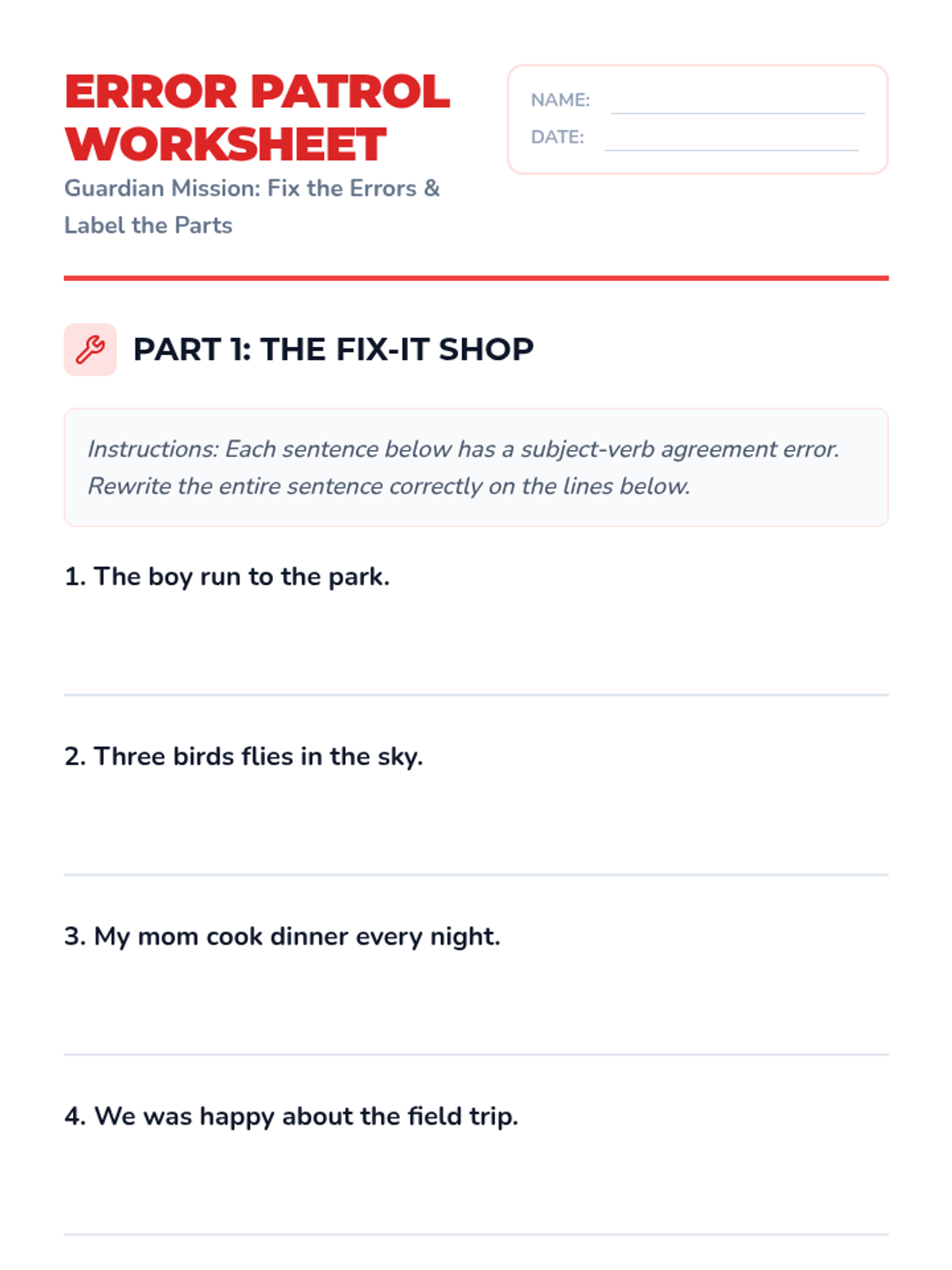
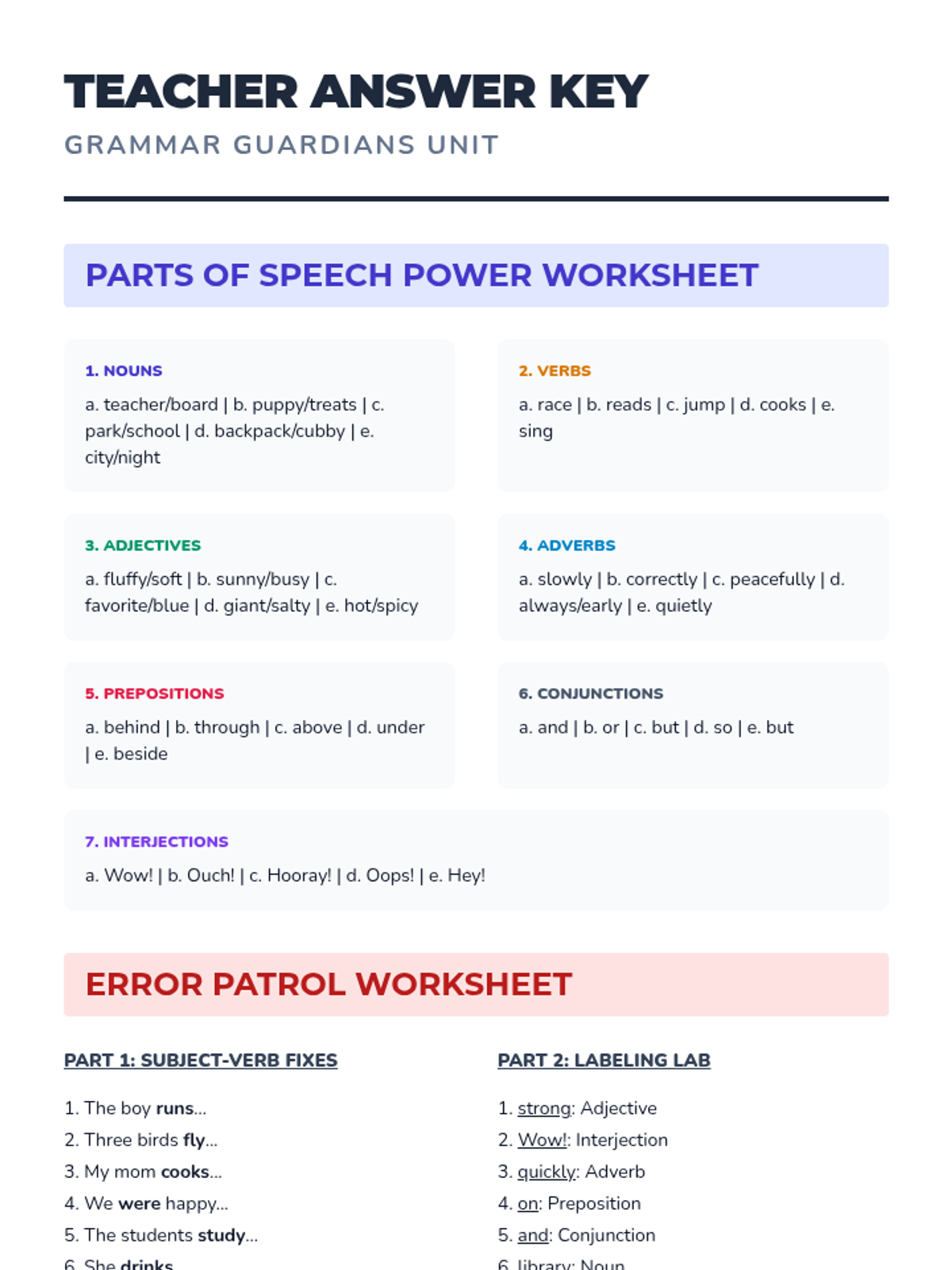
Sentence structure fundamentals, subject-verb agreement, and precise usage of parts of speech including pronouns, conjunctions, and adjectives. Targets technical accuracy through mastery of capitalization, punctuation, spelling, and verb mood.
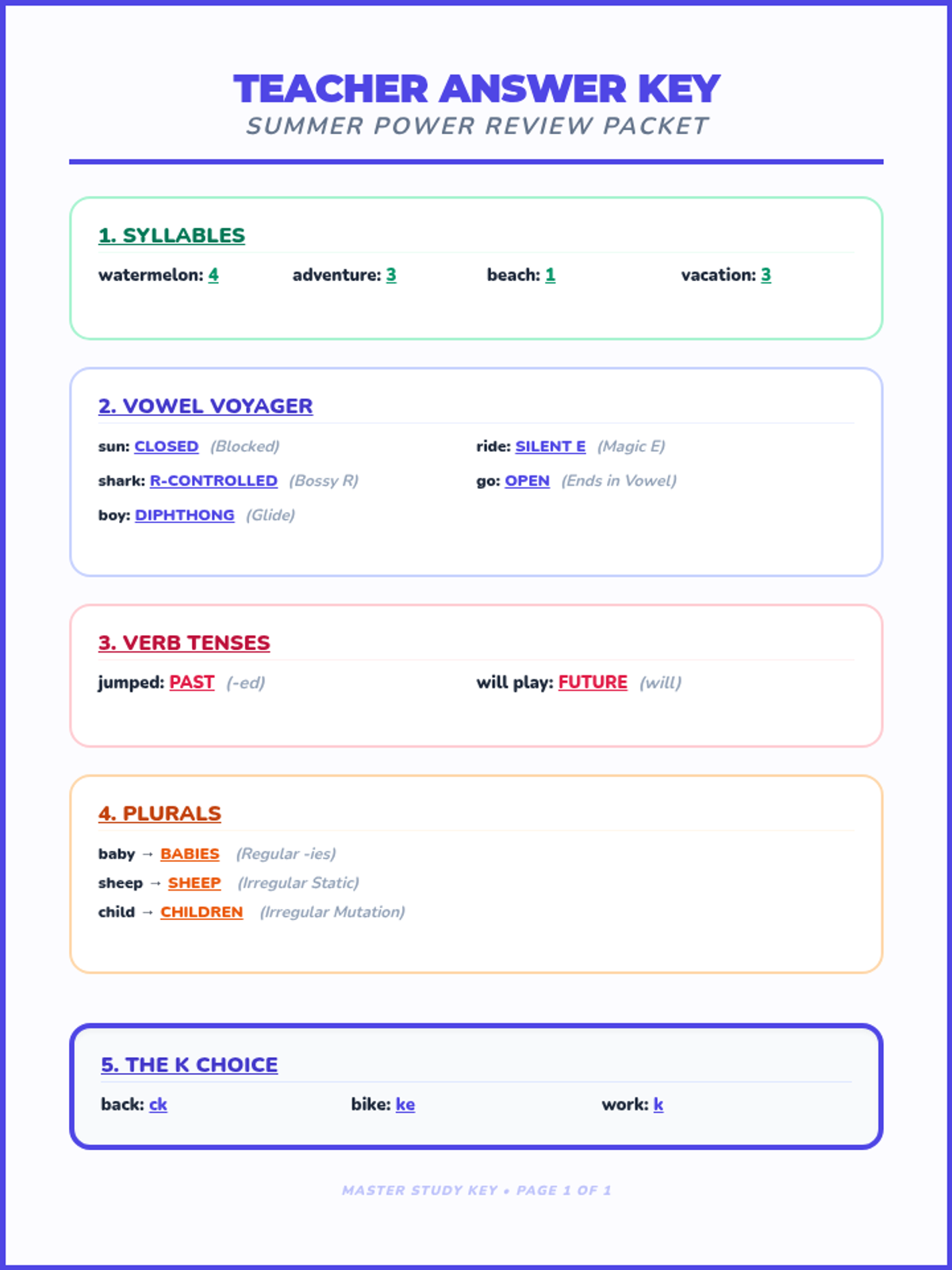
A comprehensive summer review worksheet and answer key covering all topics in the summer packet.
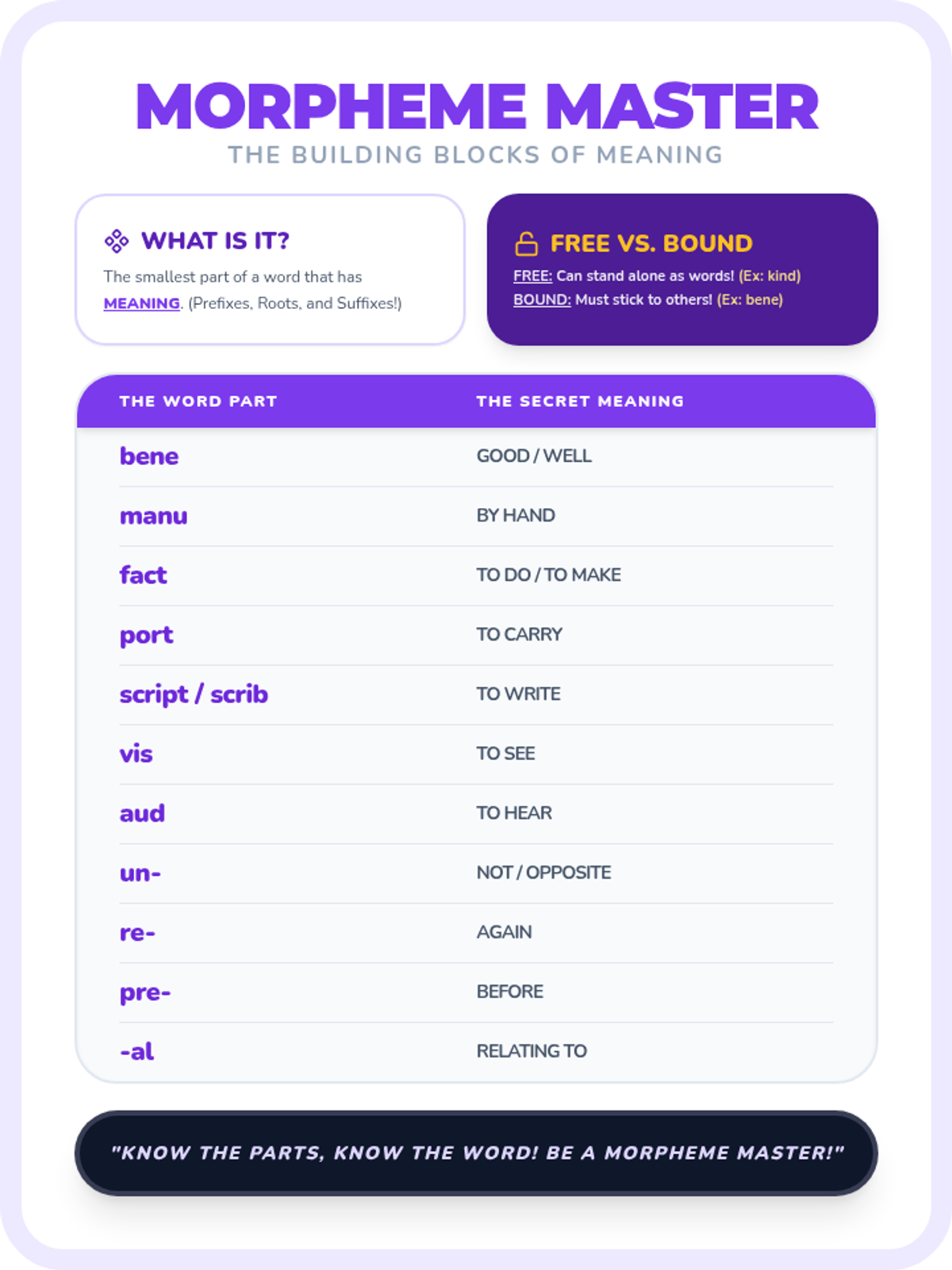
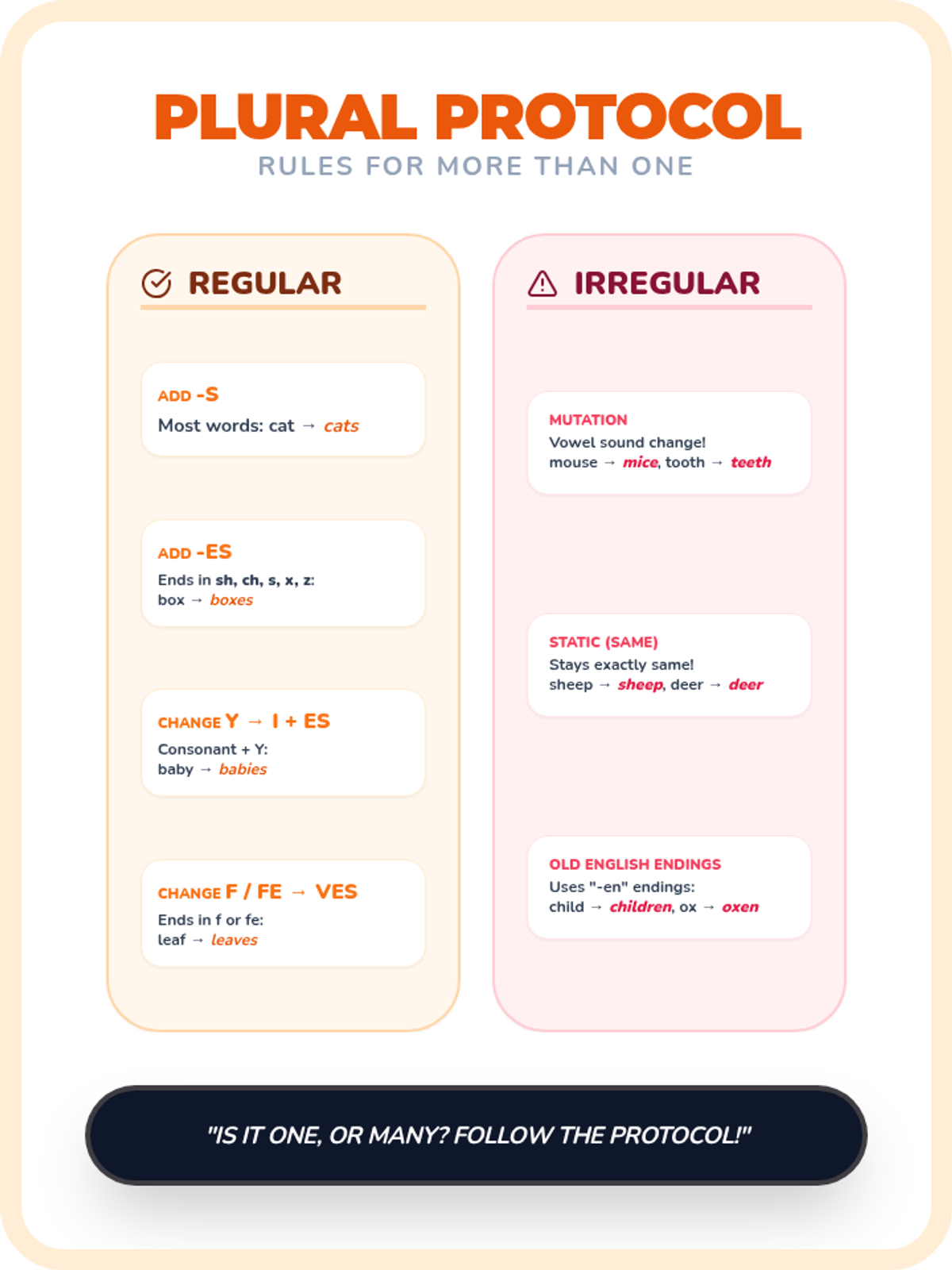
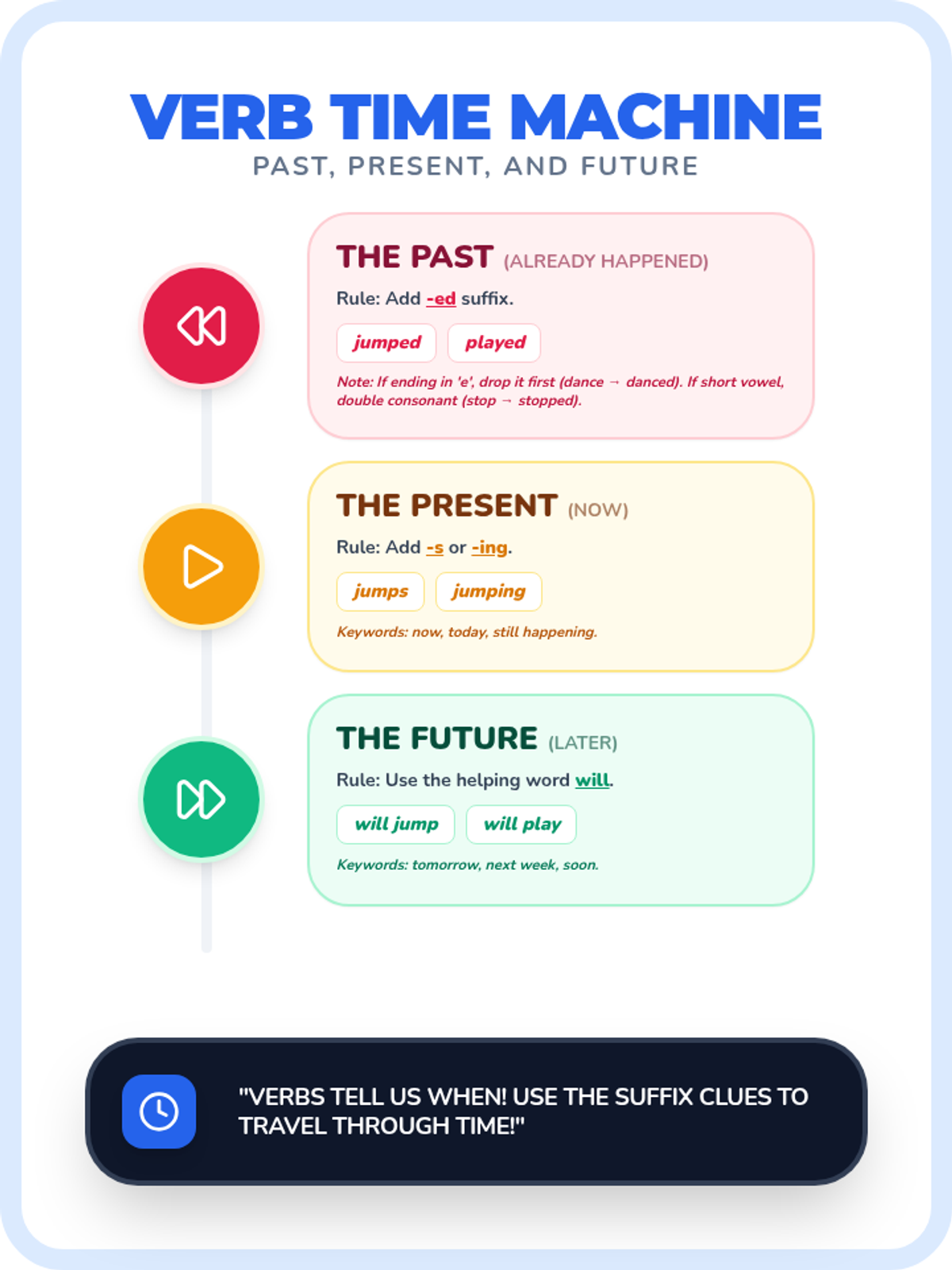
Comprehensive reference charts for morphemes, regular/irregular plurals, and verb tenses.
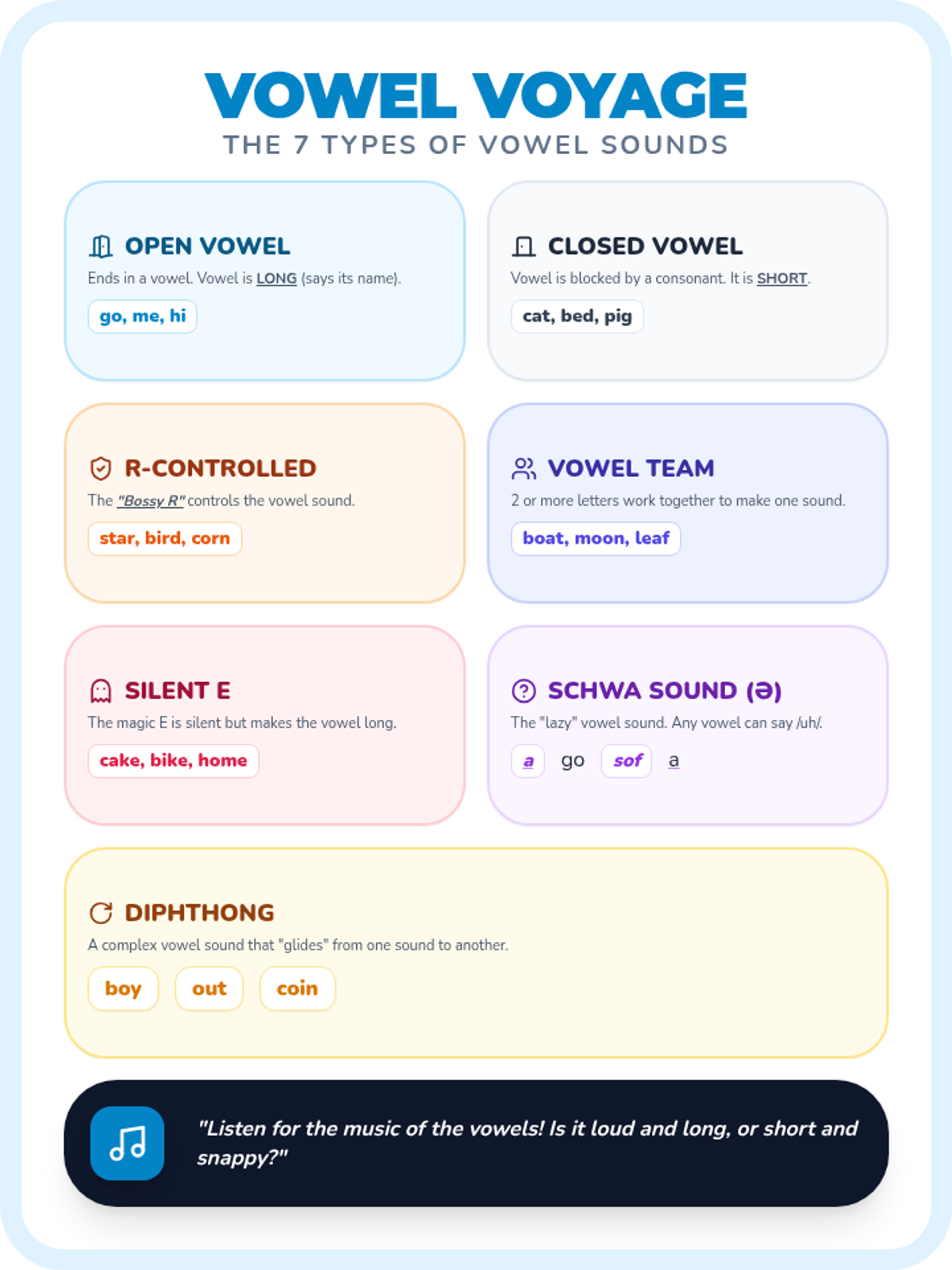
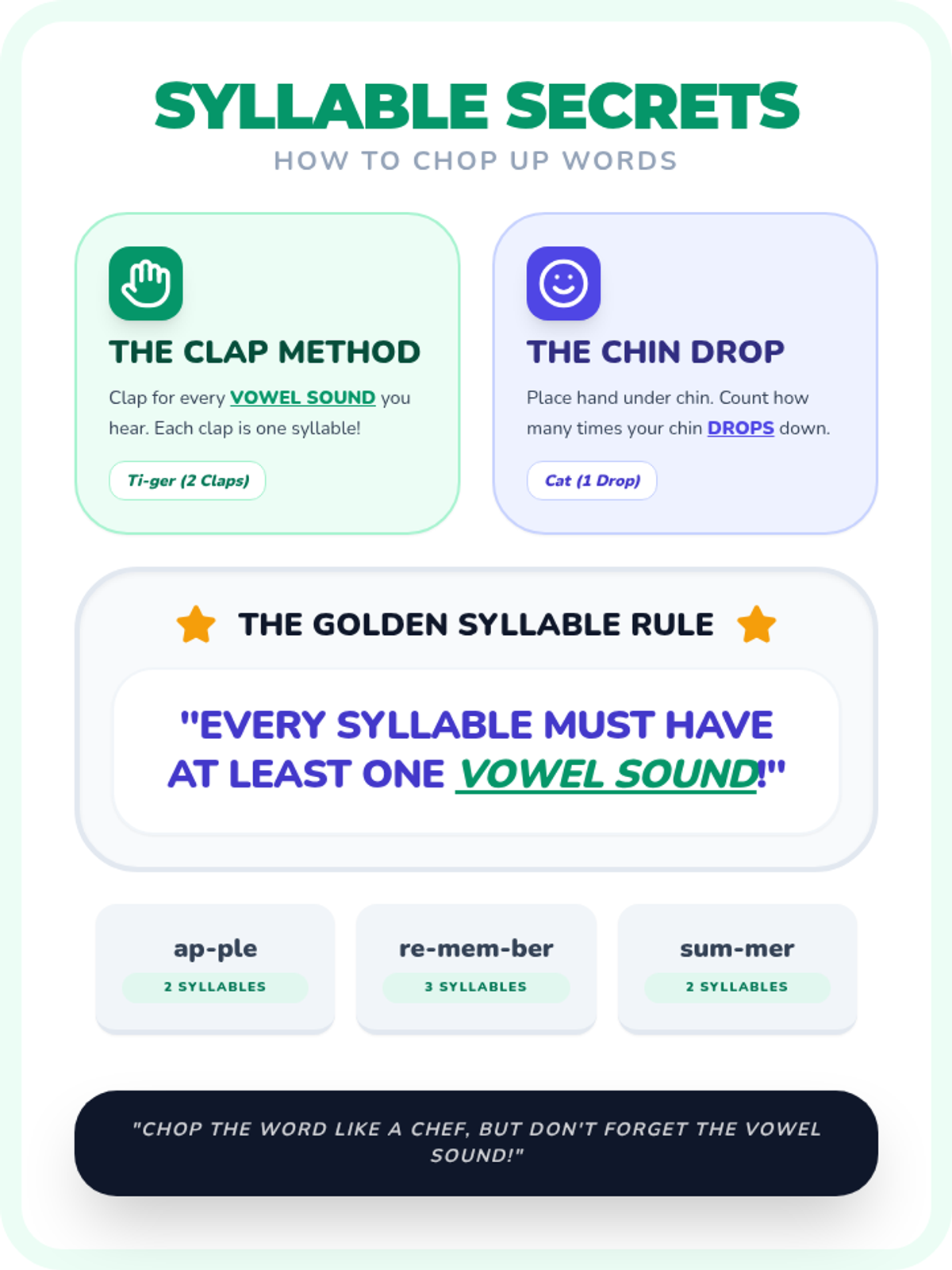
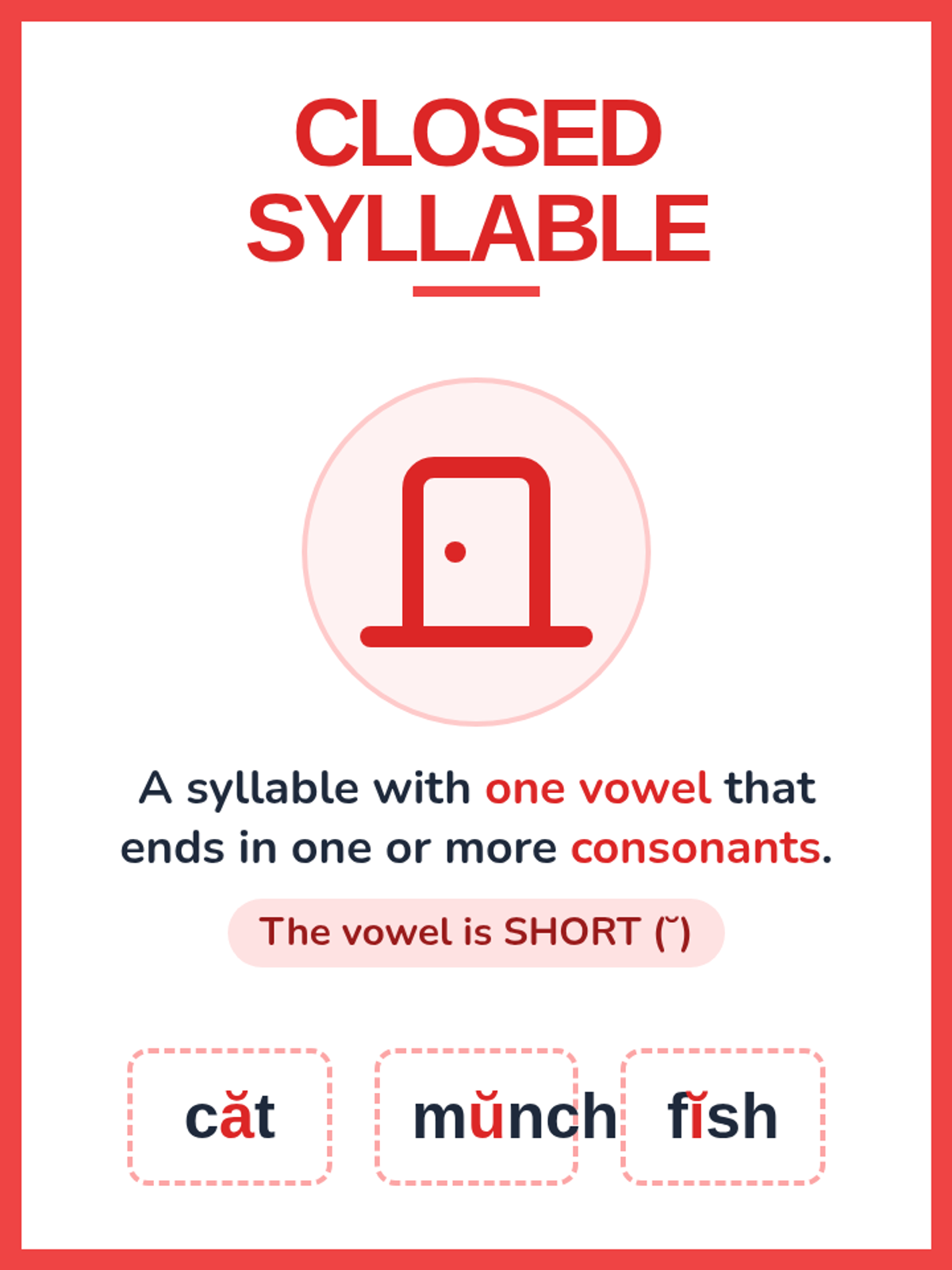
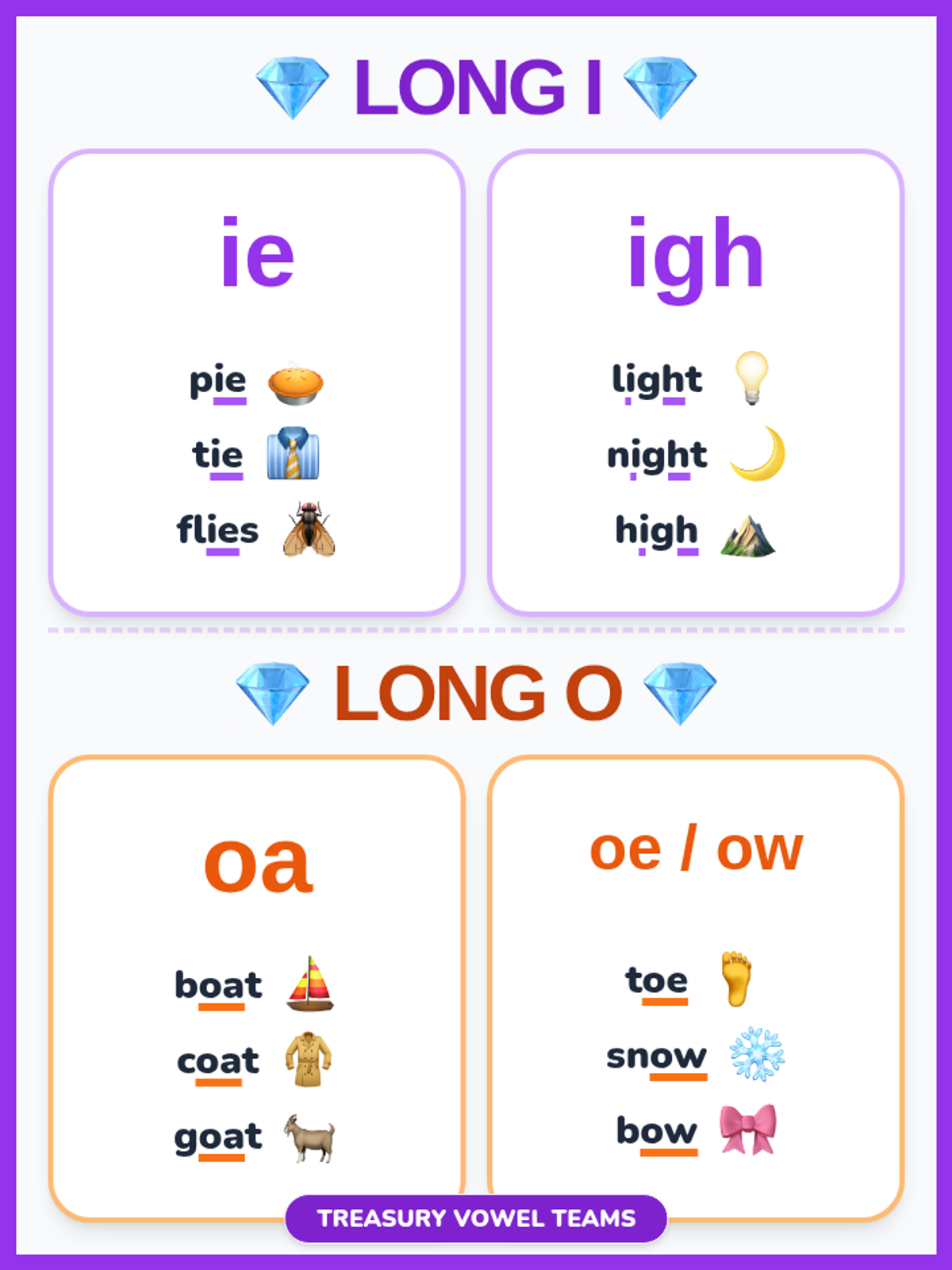
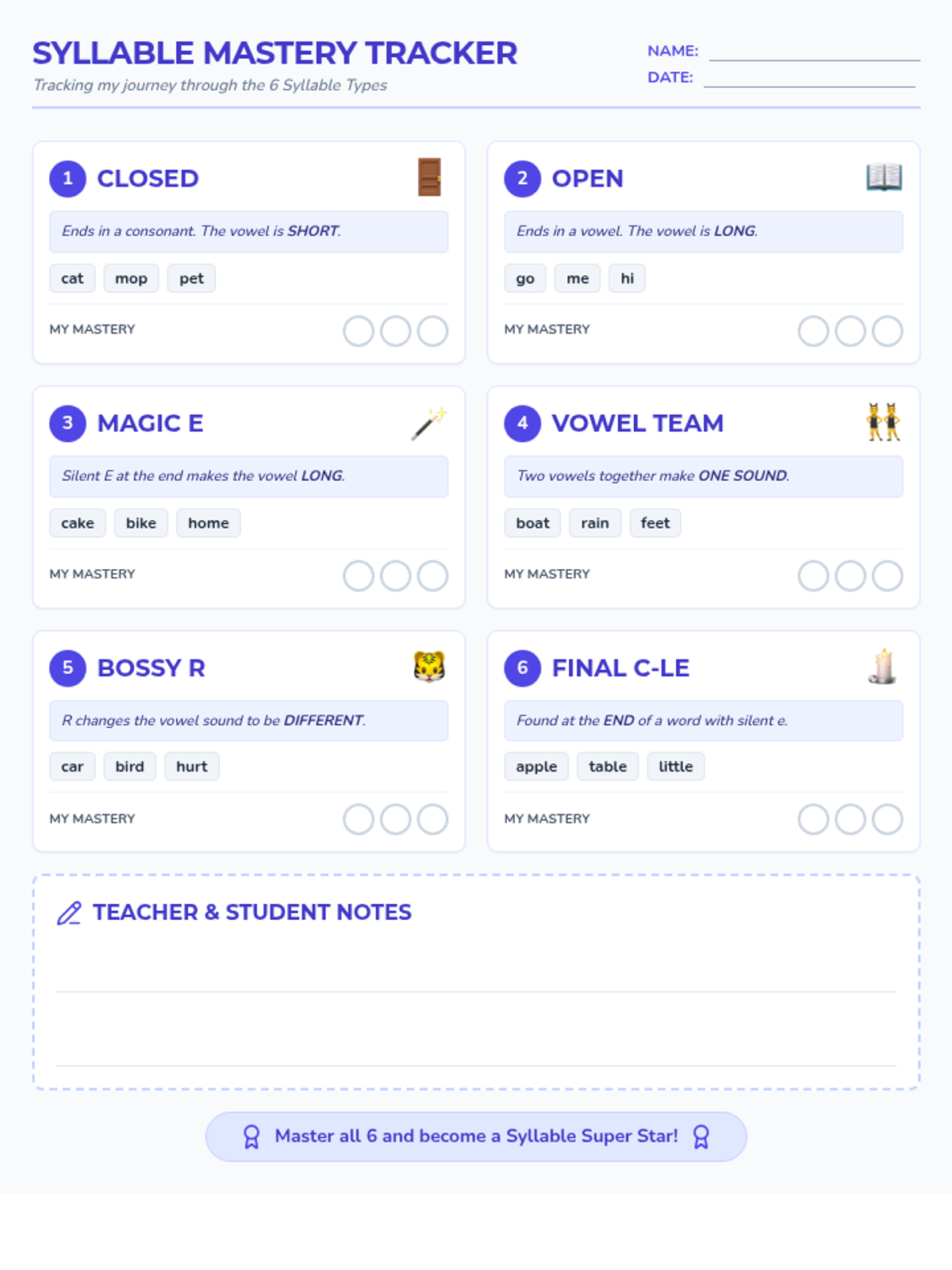
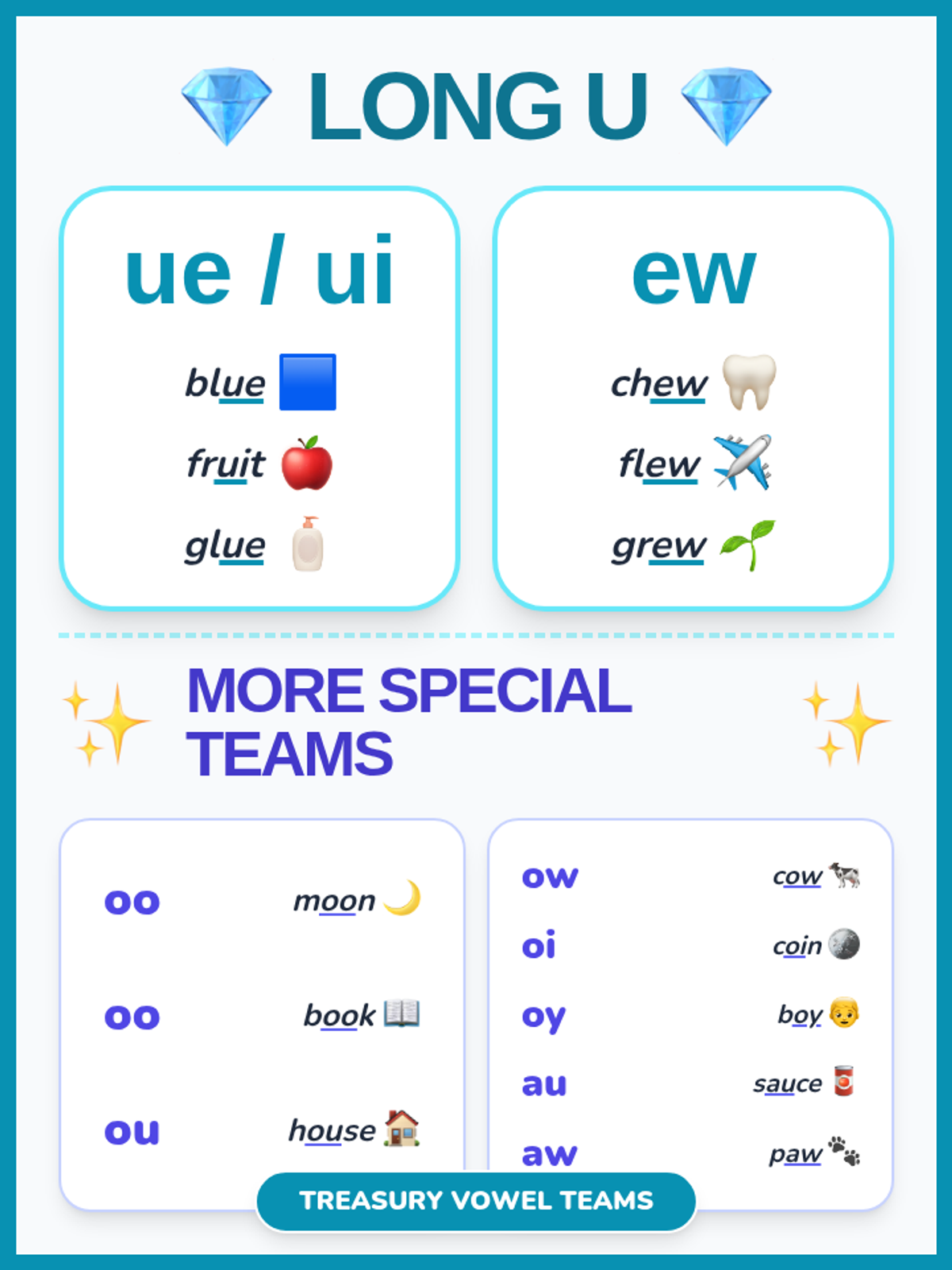
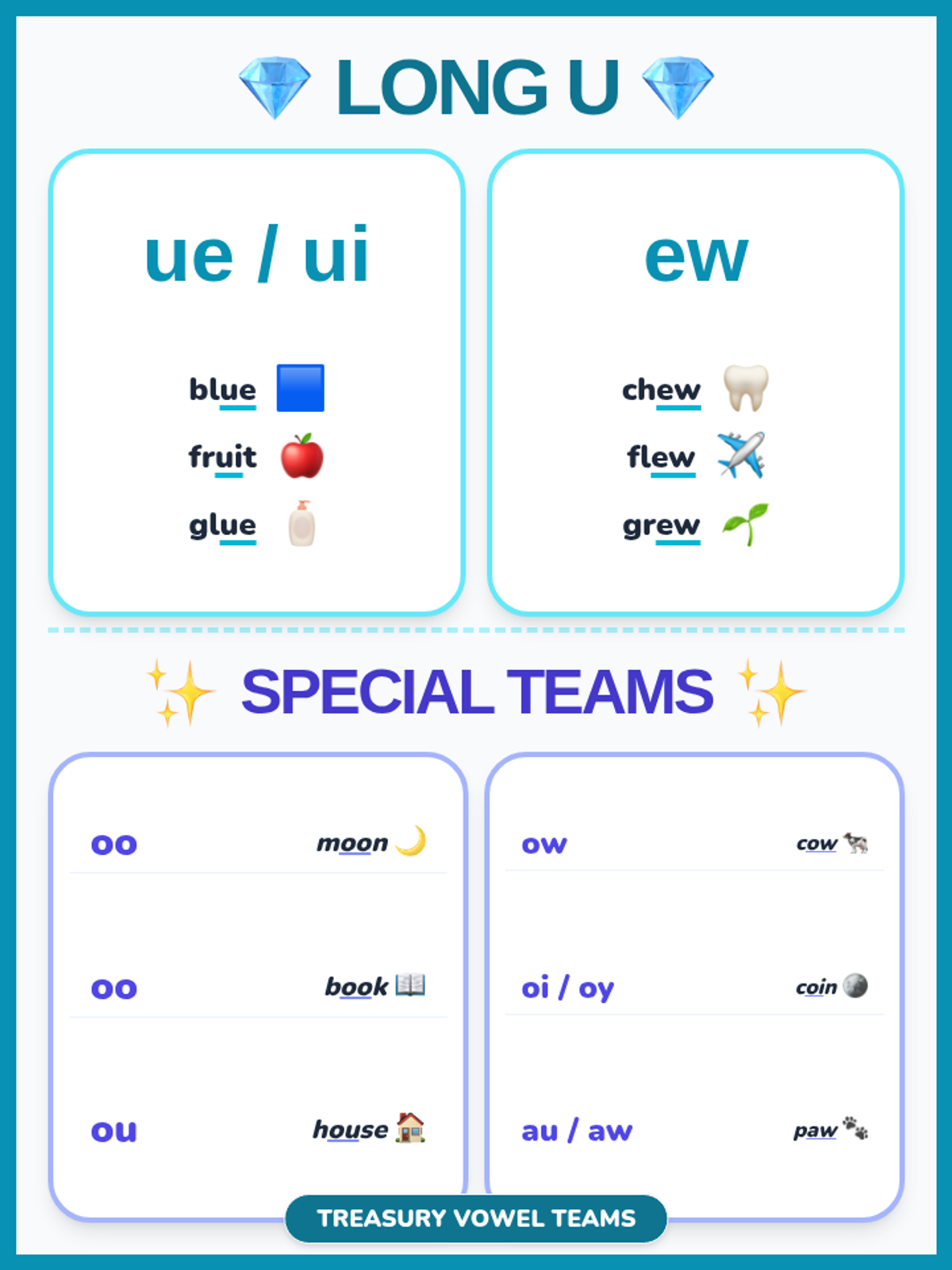
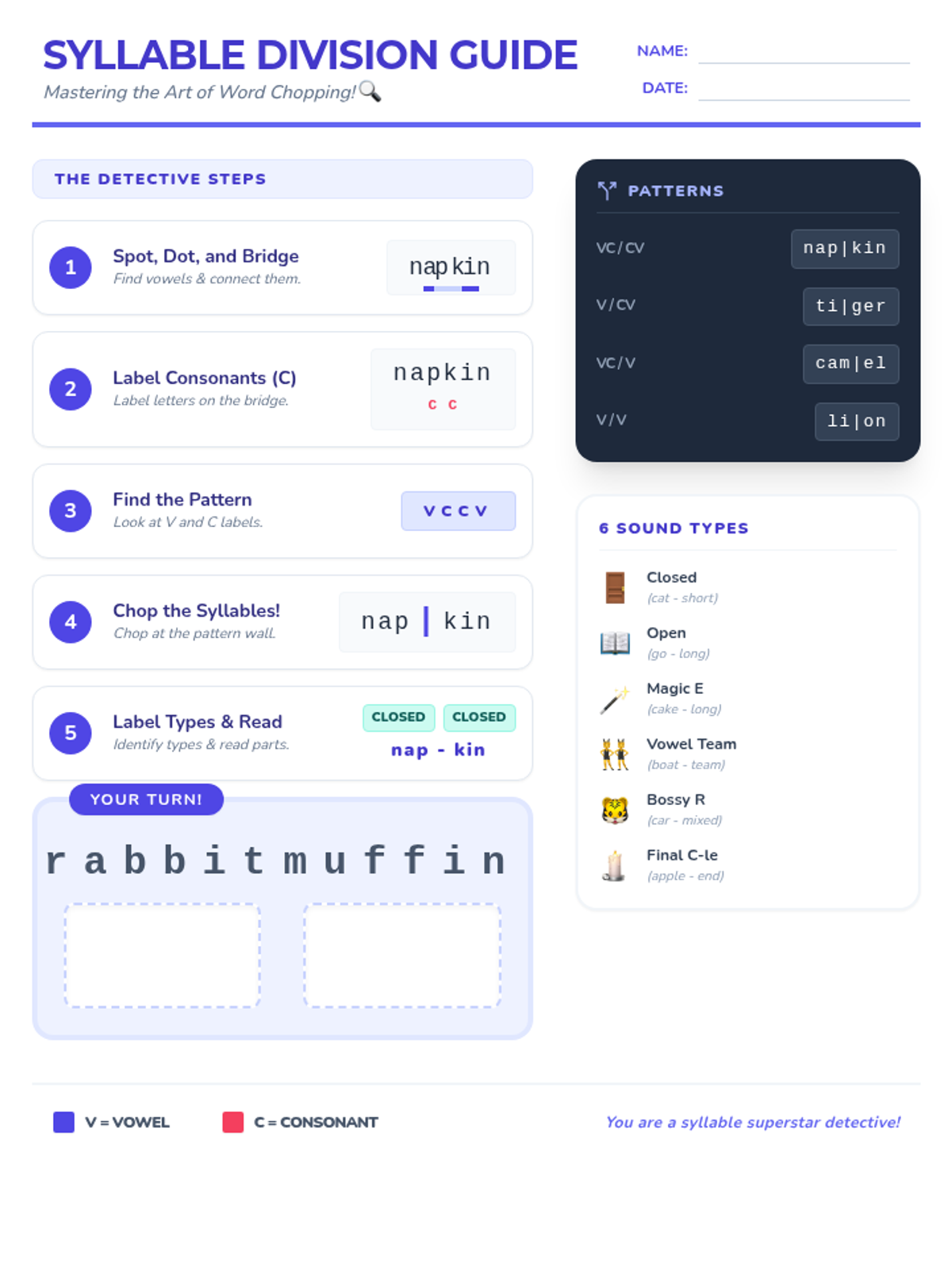
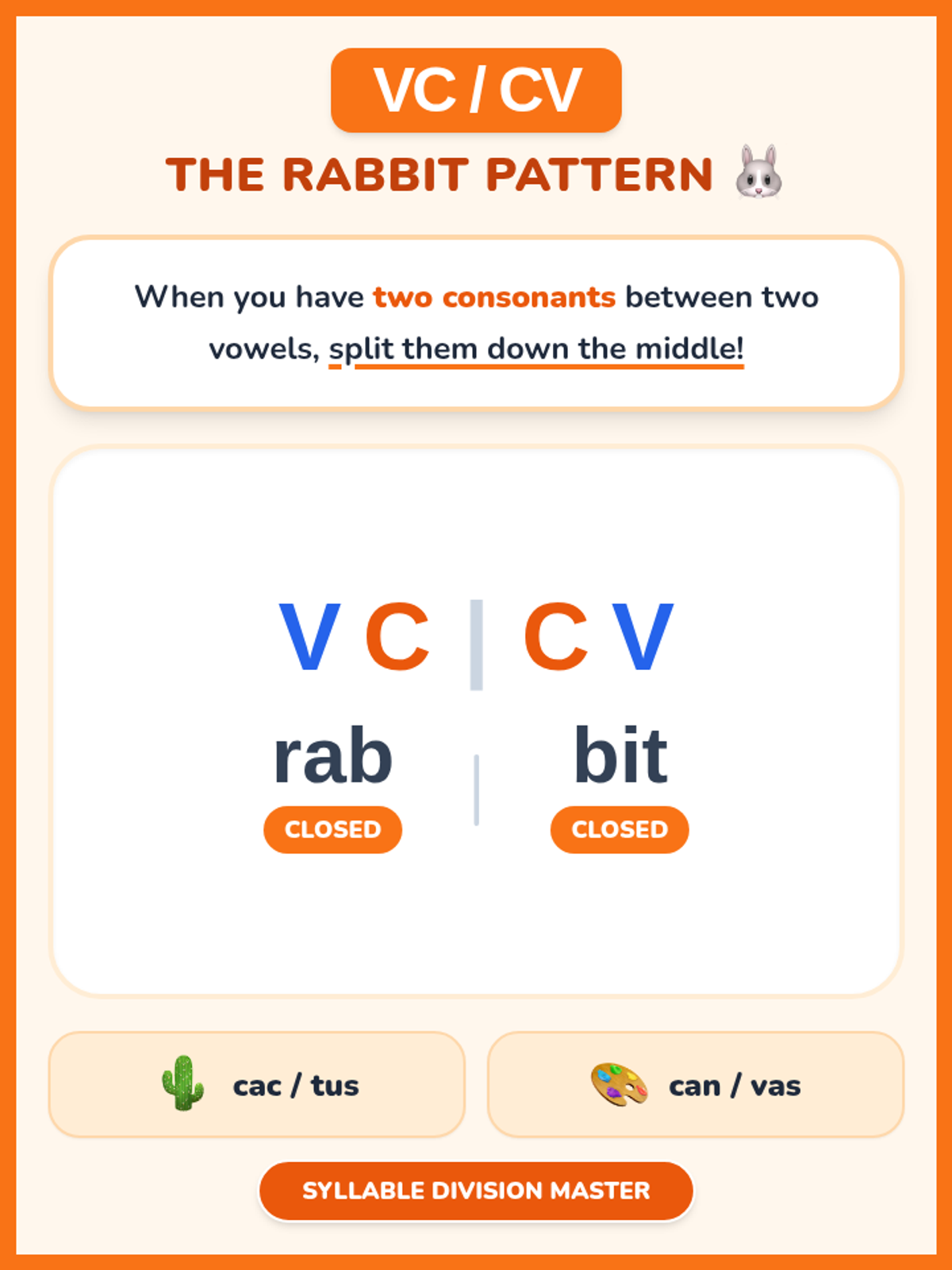
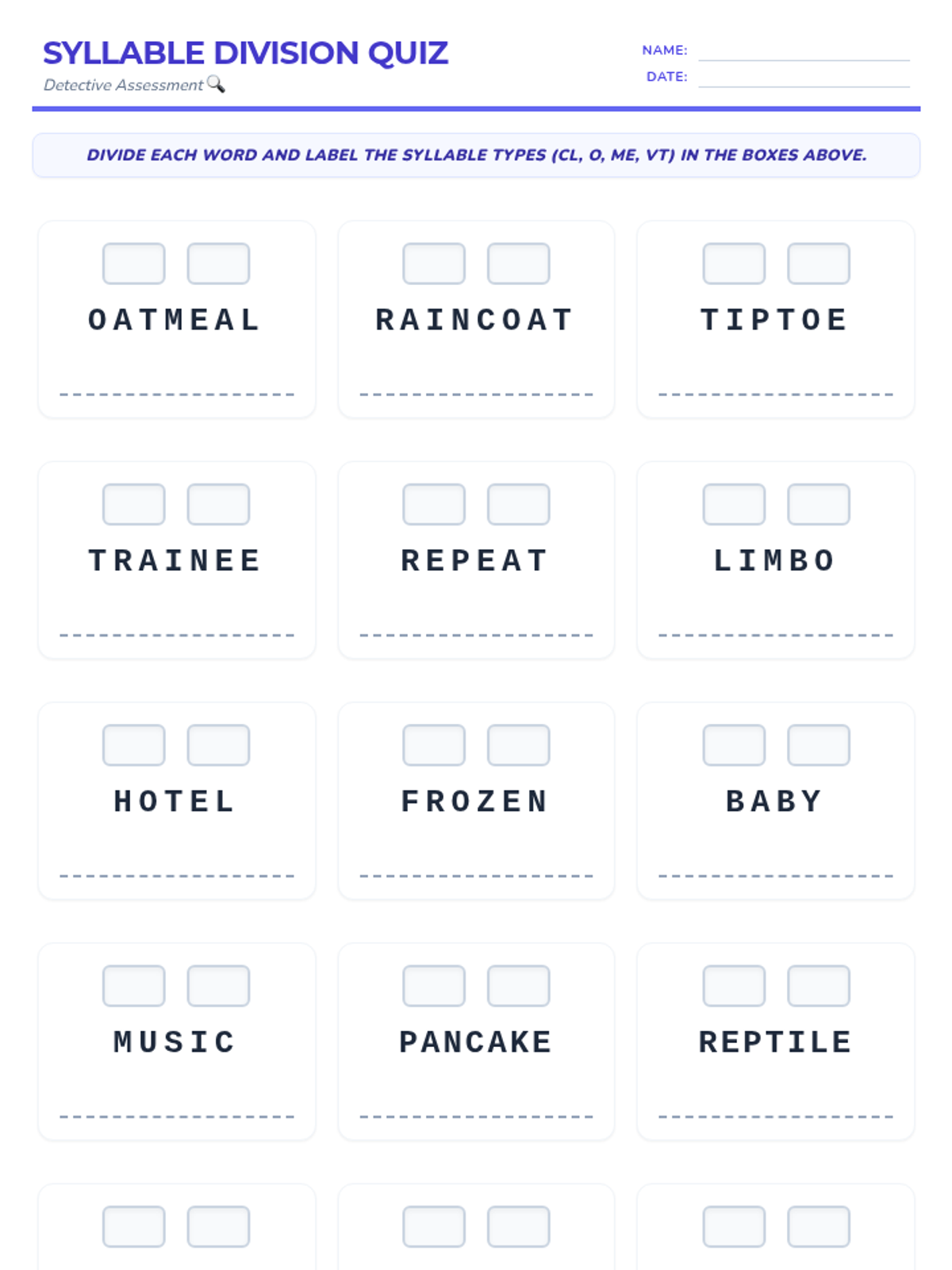
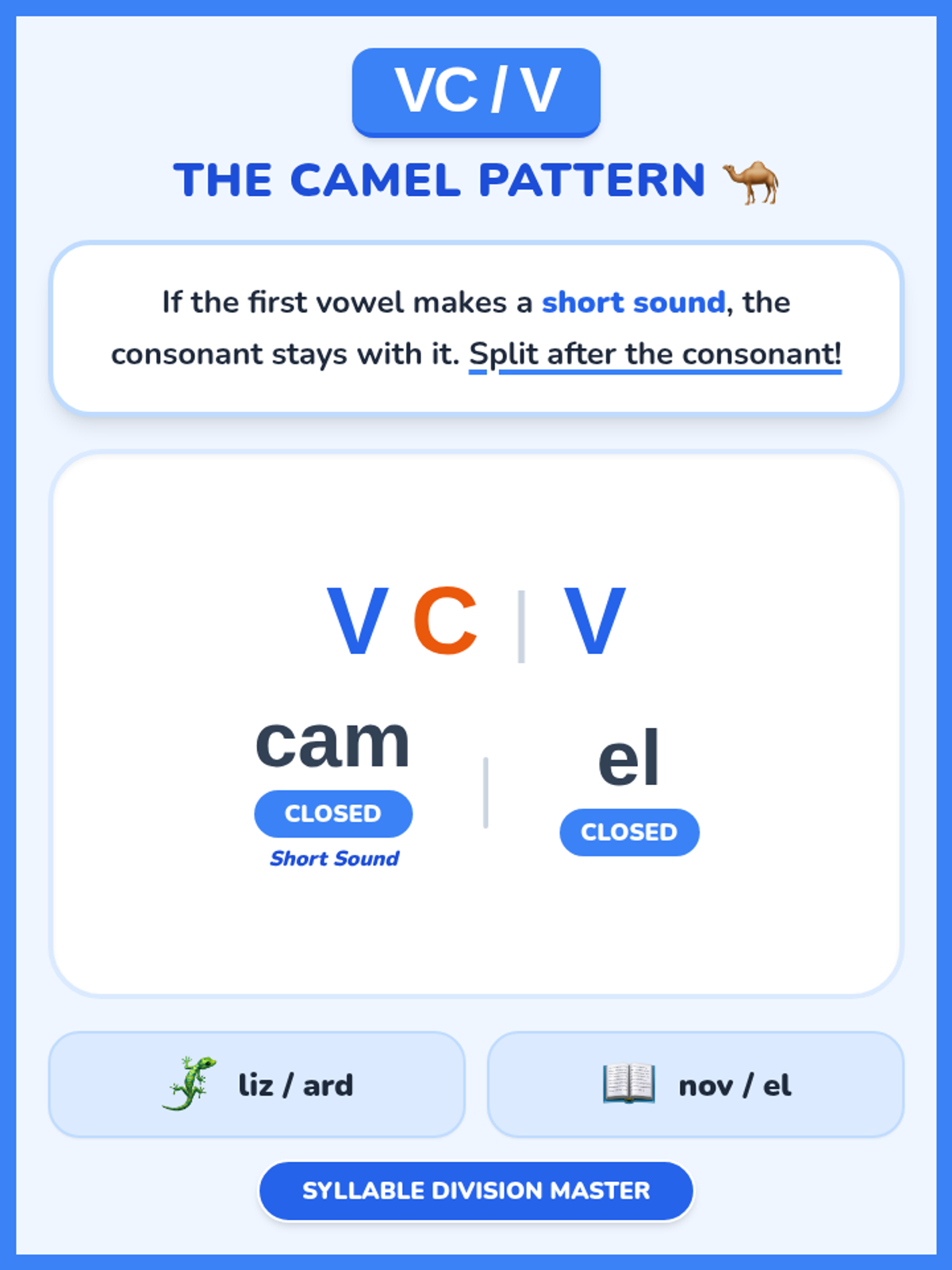
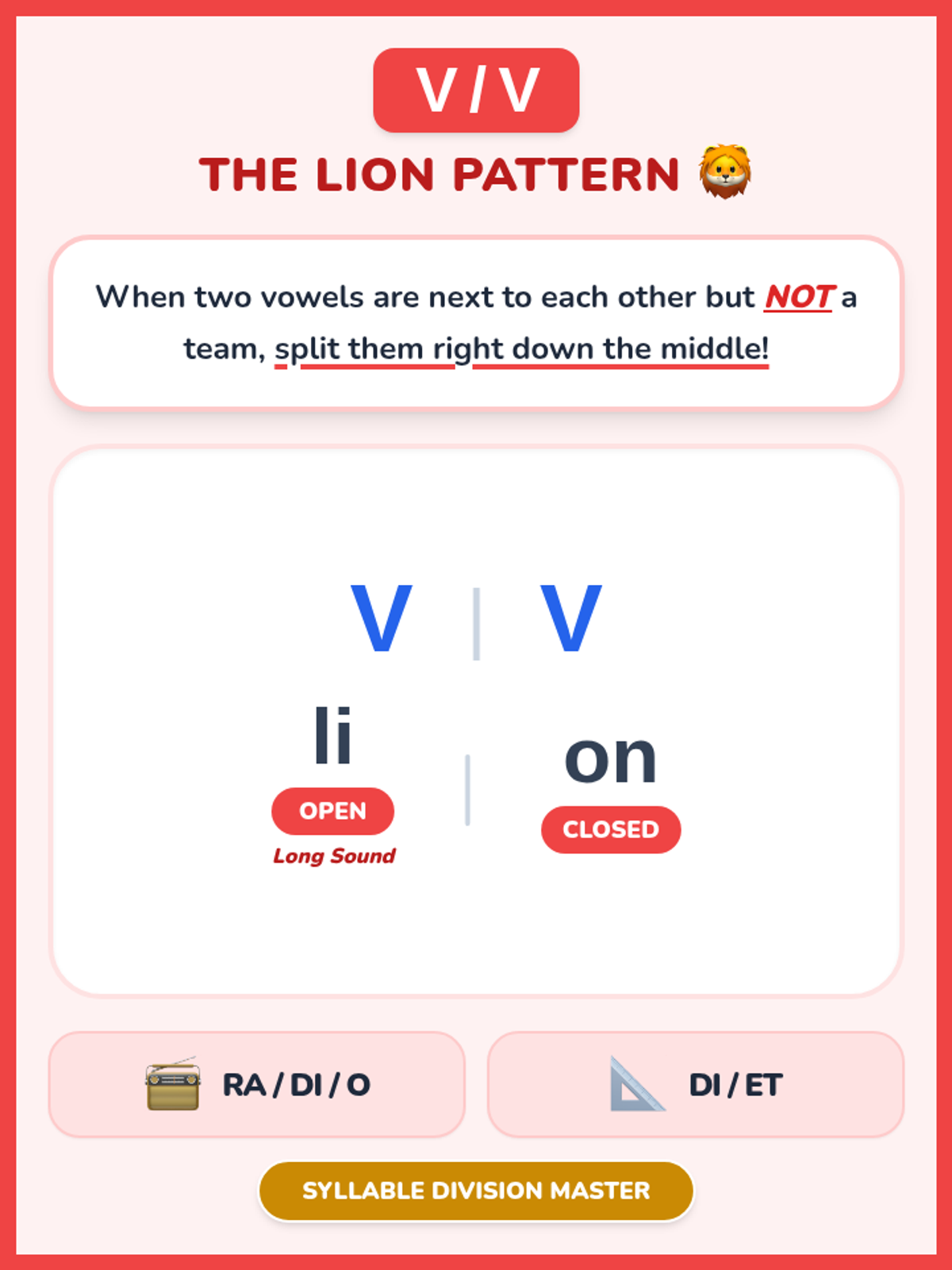
Anchor charts for the 7 vowel types and syllable counting strategies.
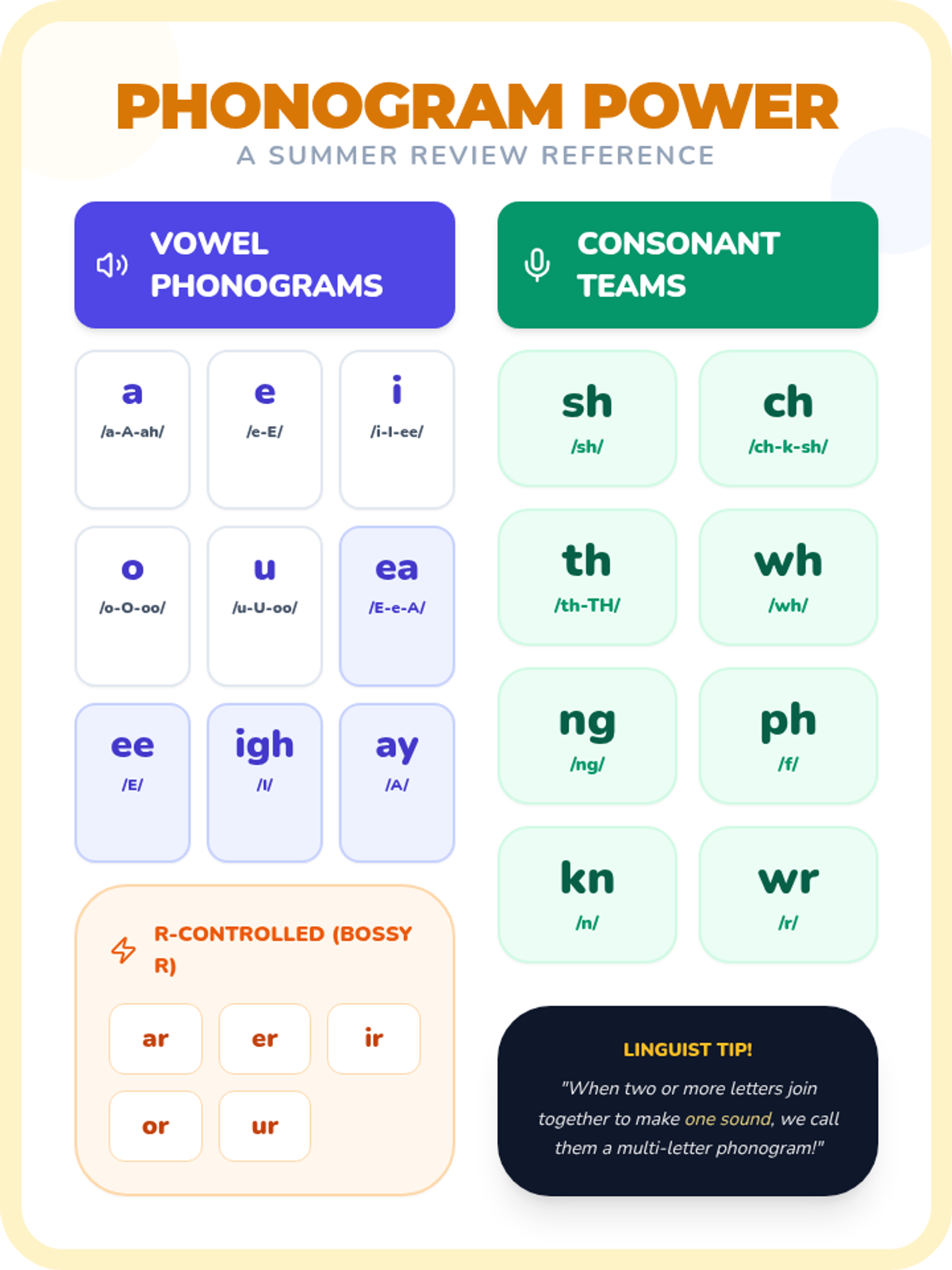
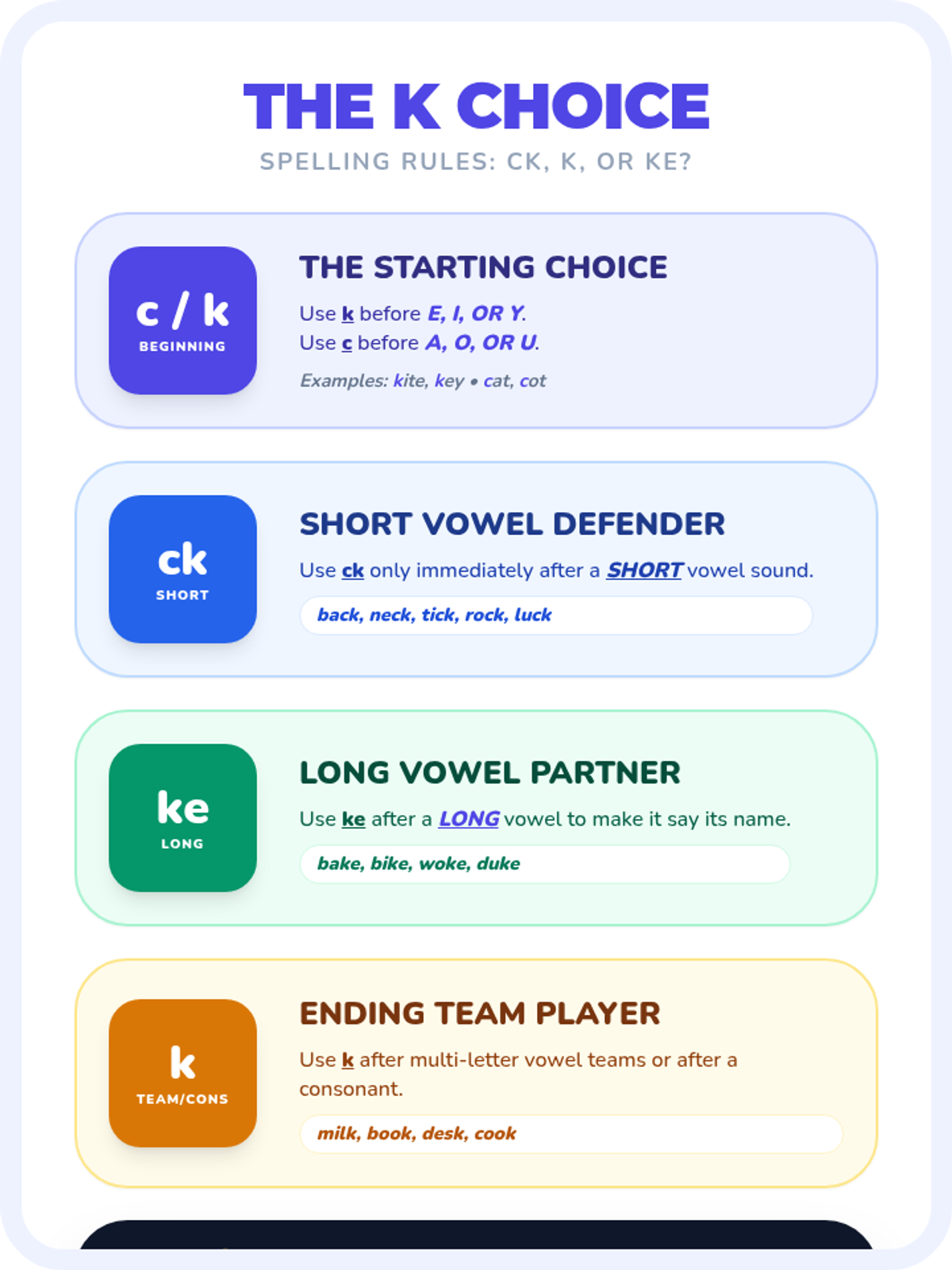
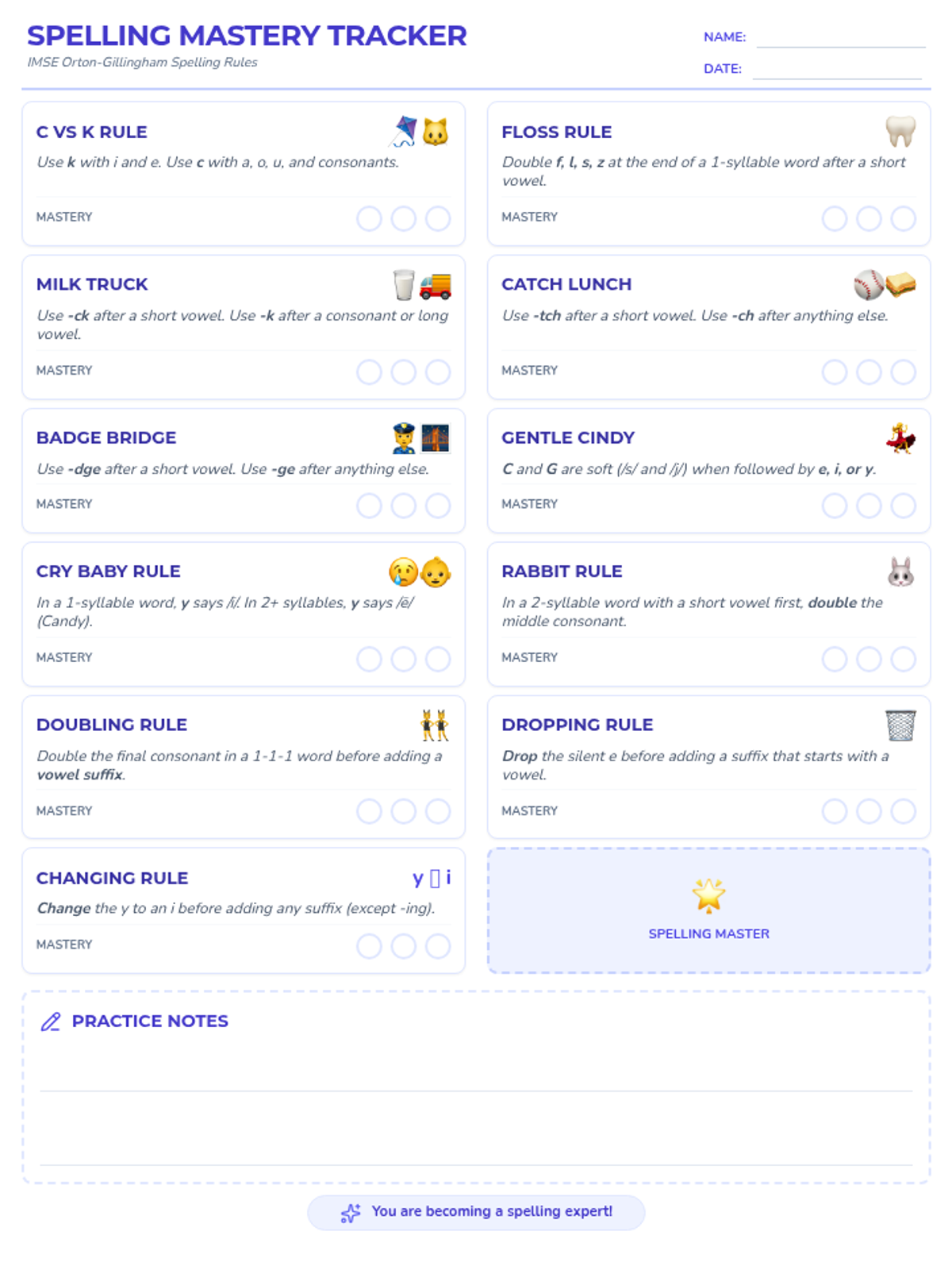
Anchor charts for primary phonograms and the ck/k/ke spelling rules.
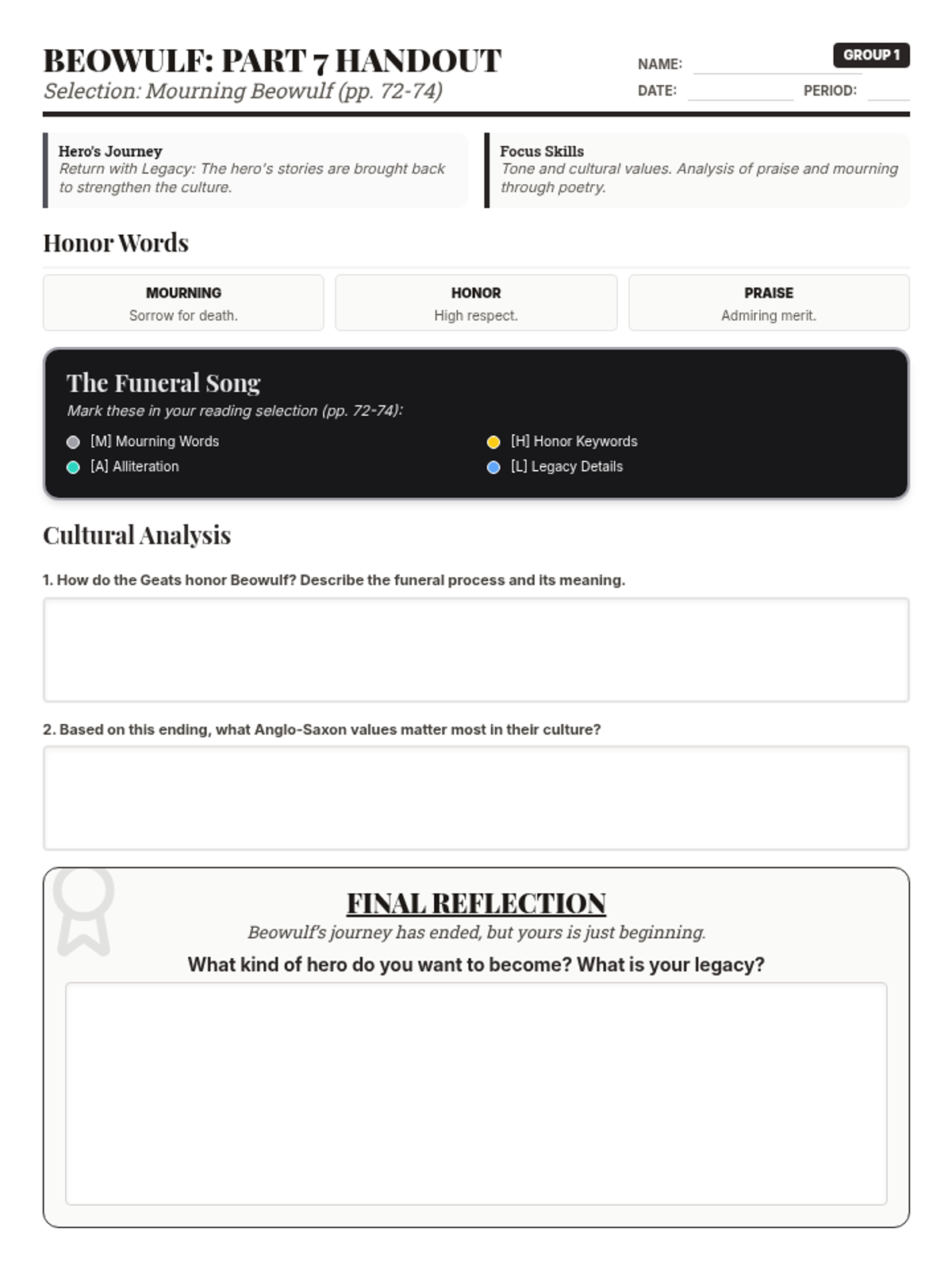
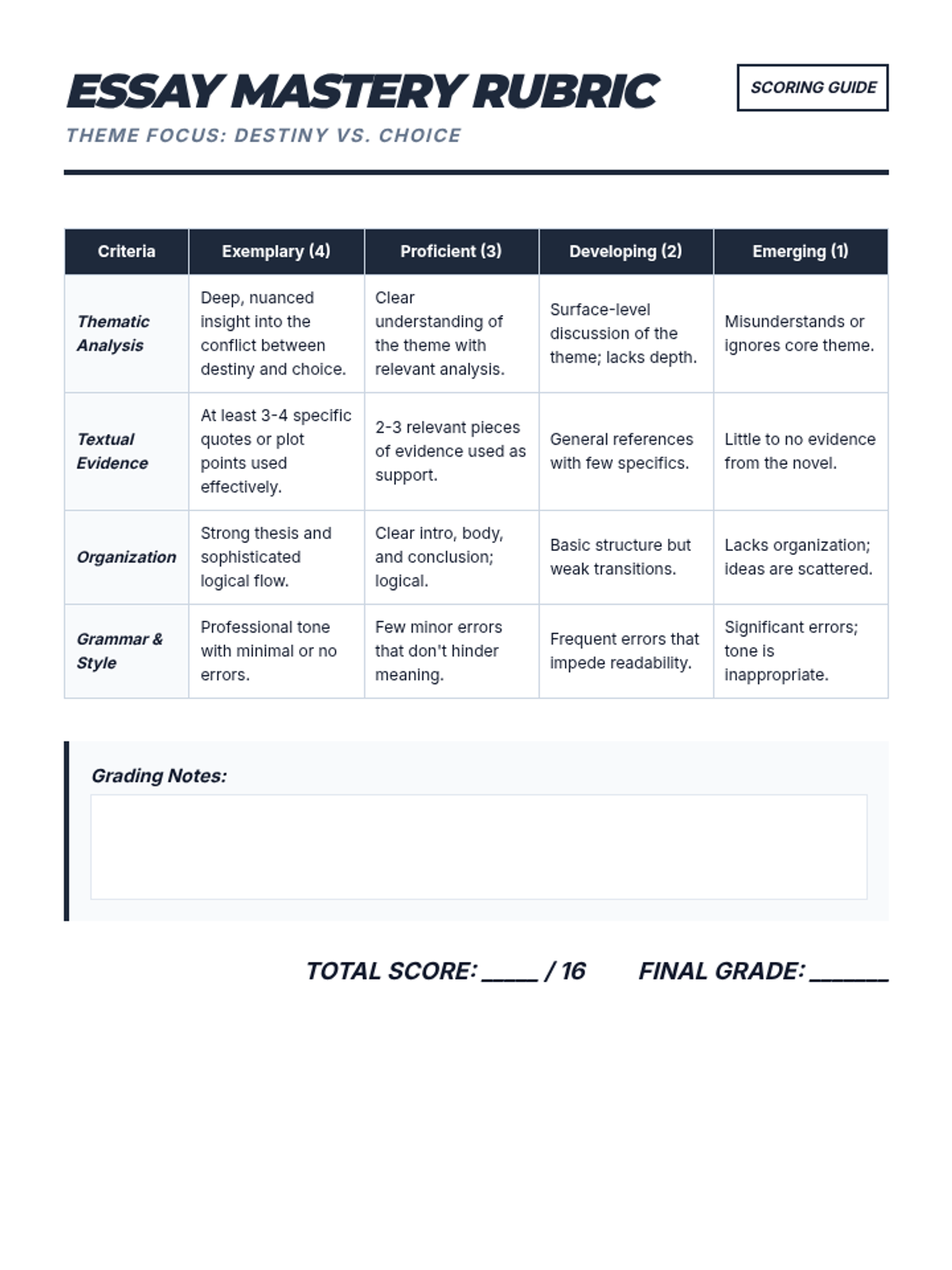
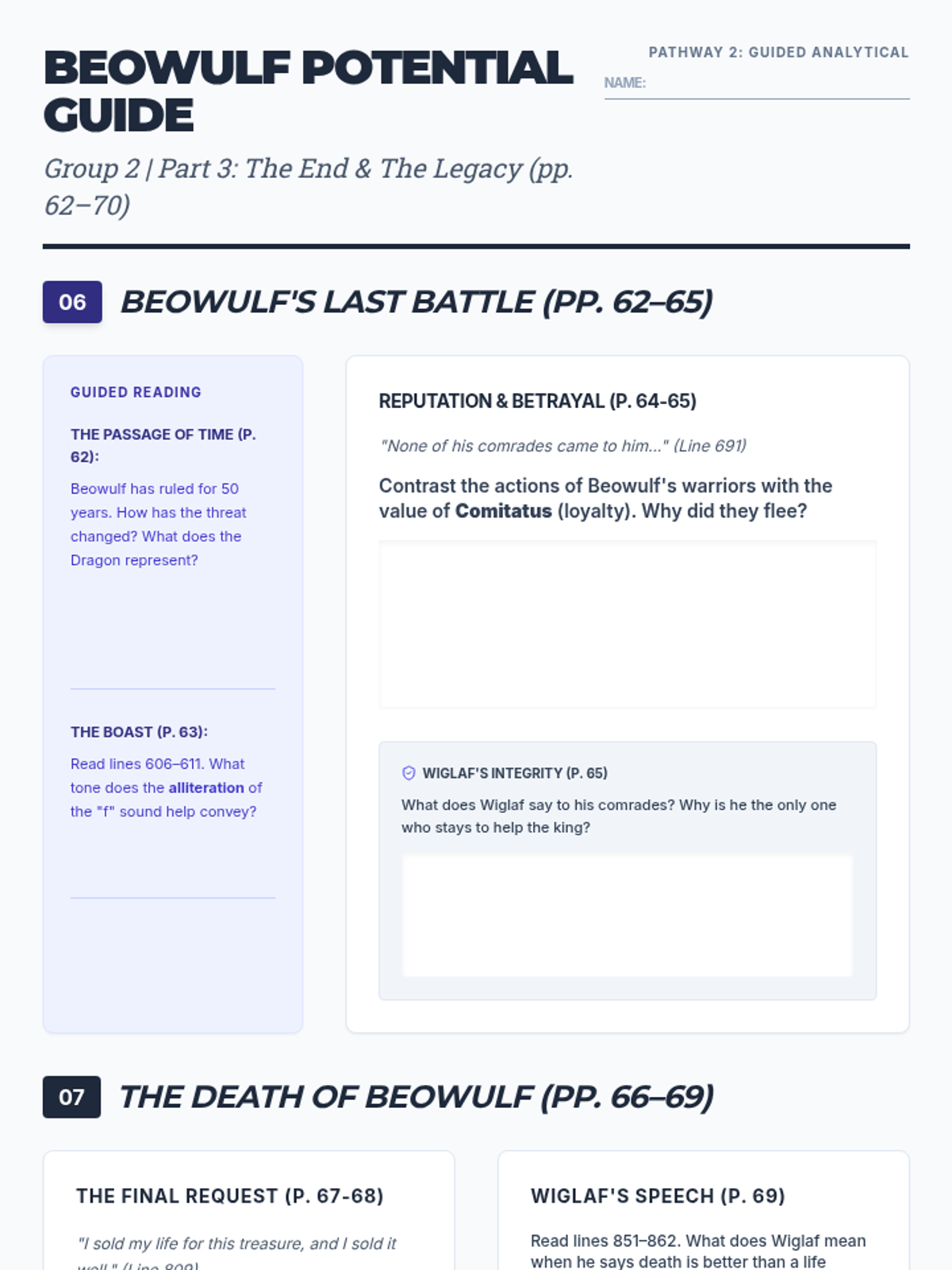
Cultural values of the Anglo-Saxons and how the hero is remembered through mourning and praise.
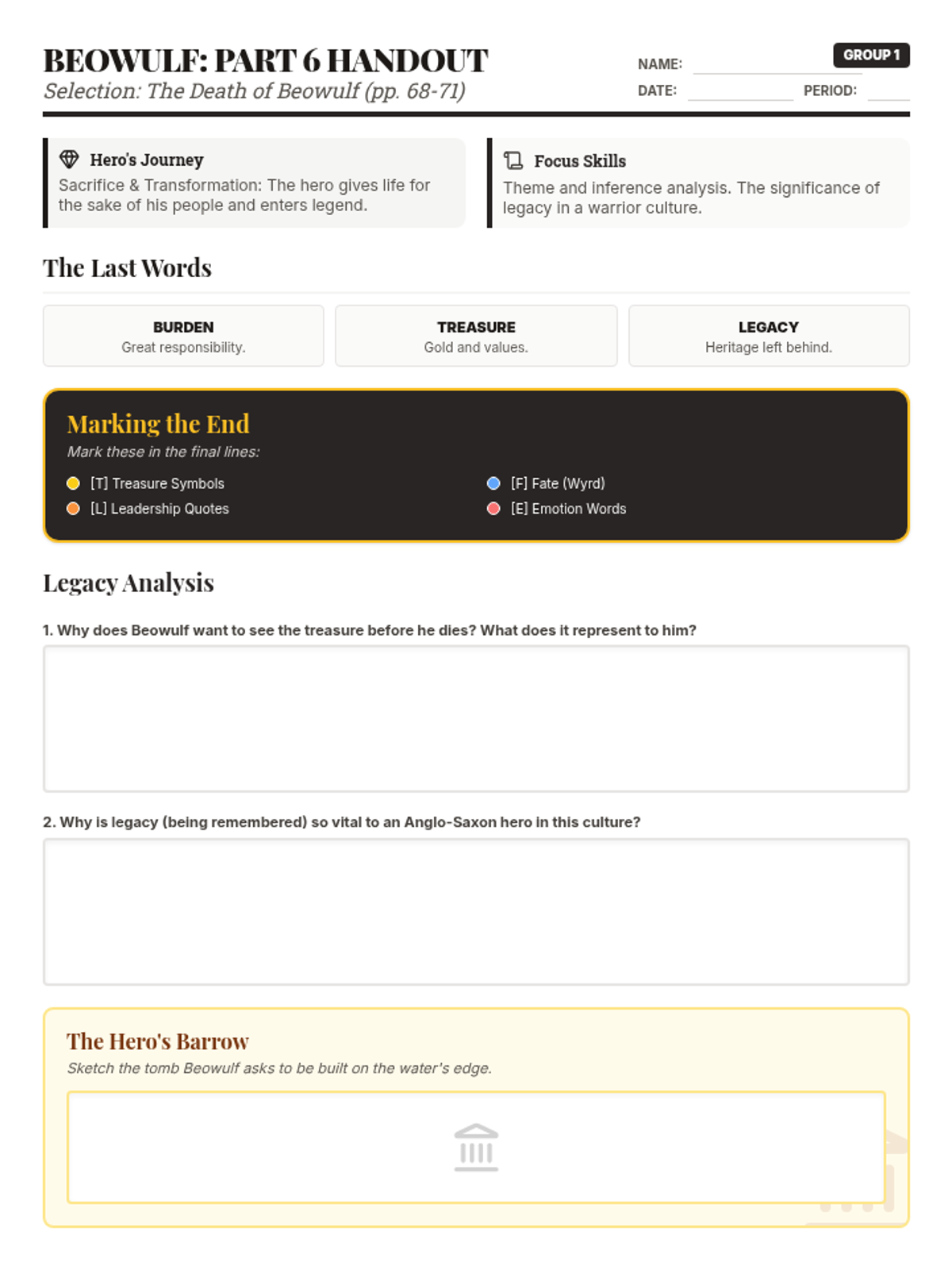
The death of Beowulf and the significance of treasure and legacy in the Hero's Journey.
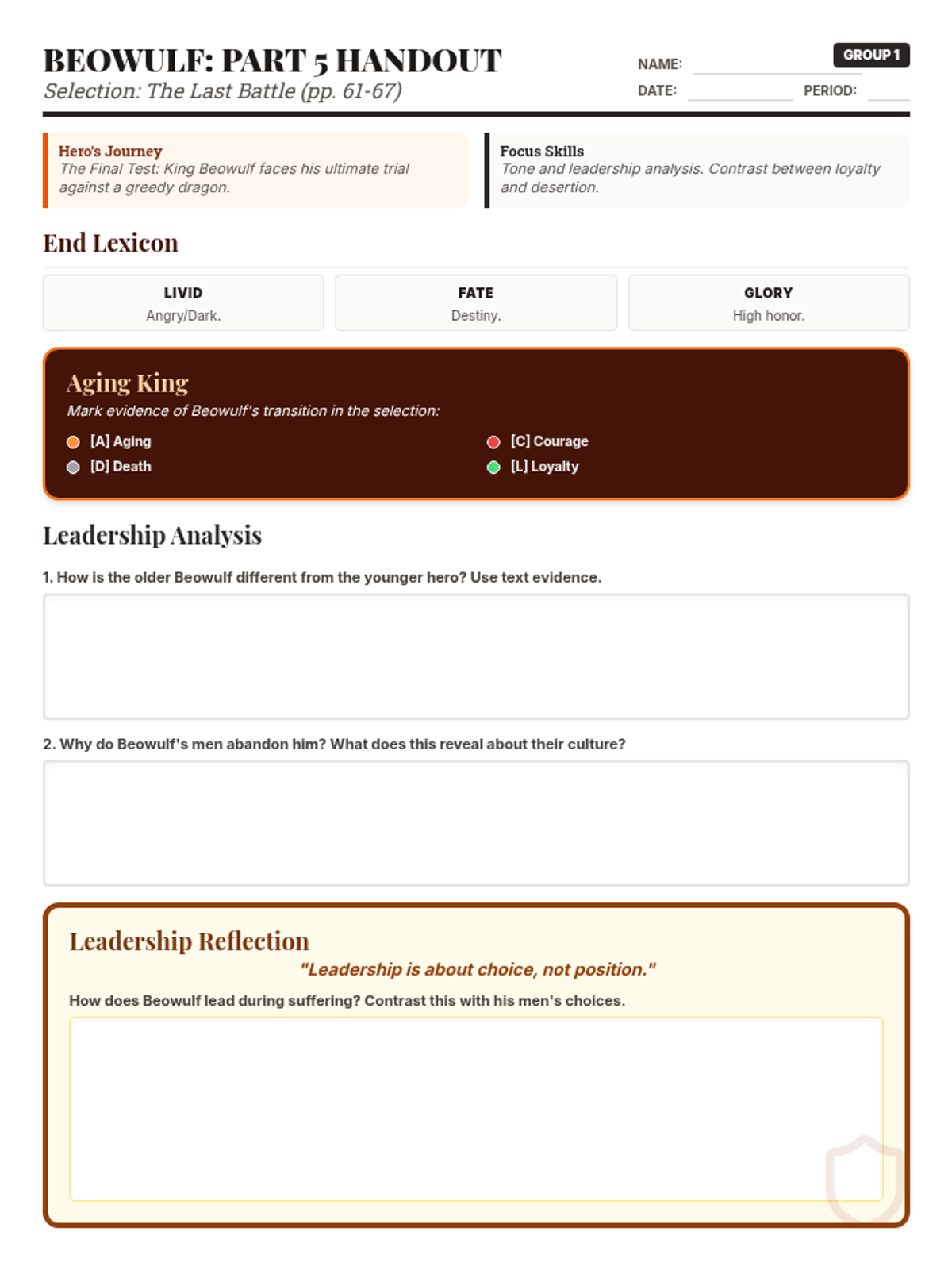
Beowulf's final battle against the dragon, focusing on themes of aging, leadership, and legacy.
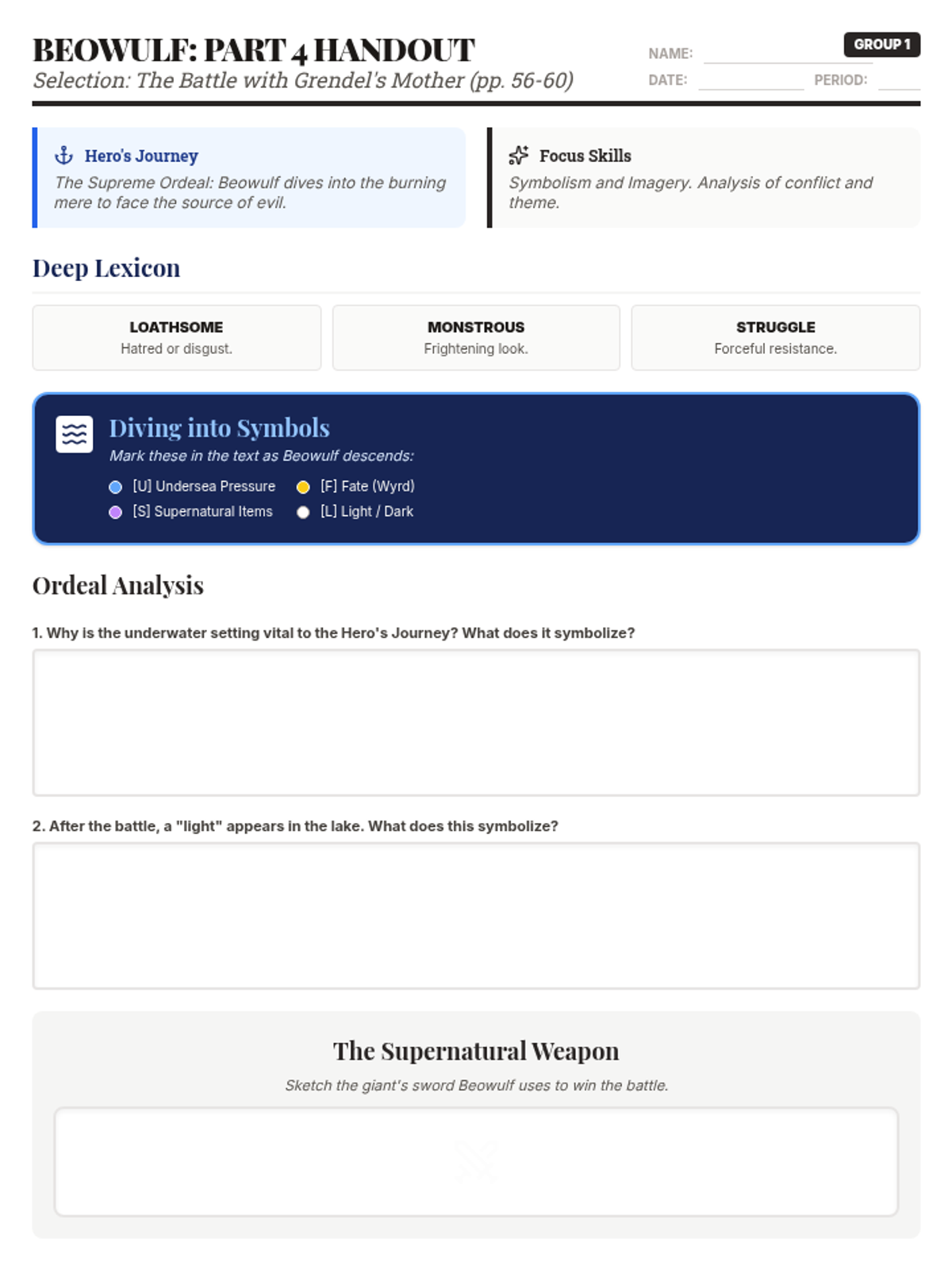
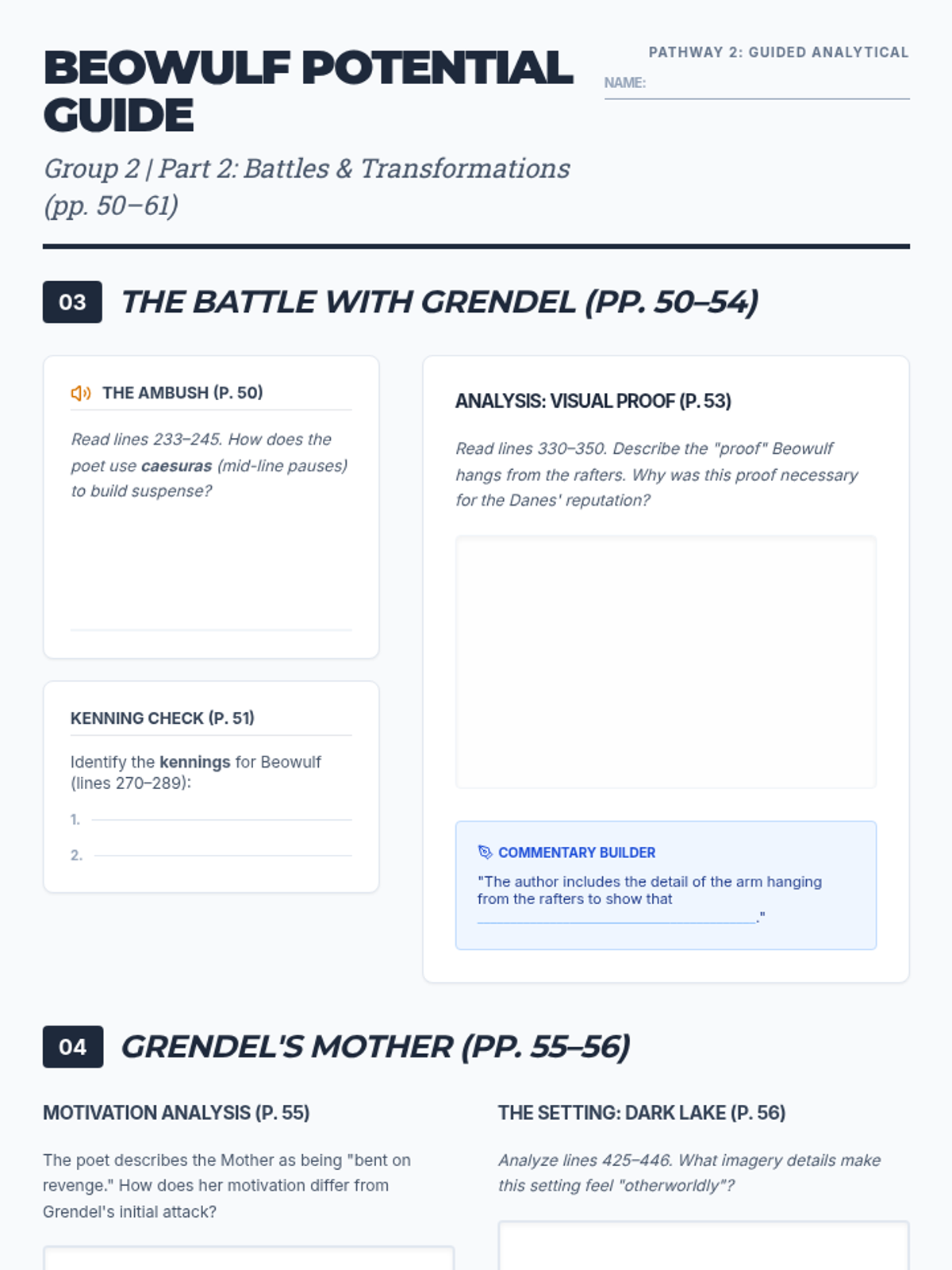
Beowulf's descent into the underwater lair, exploring symbolism and the Supreme Ordeal.
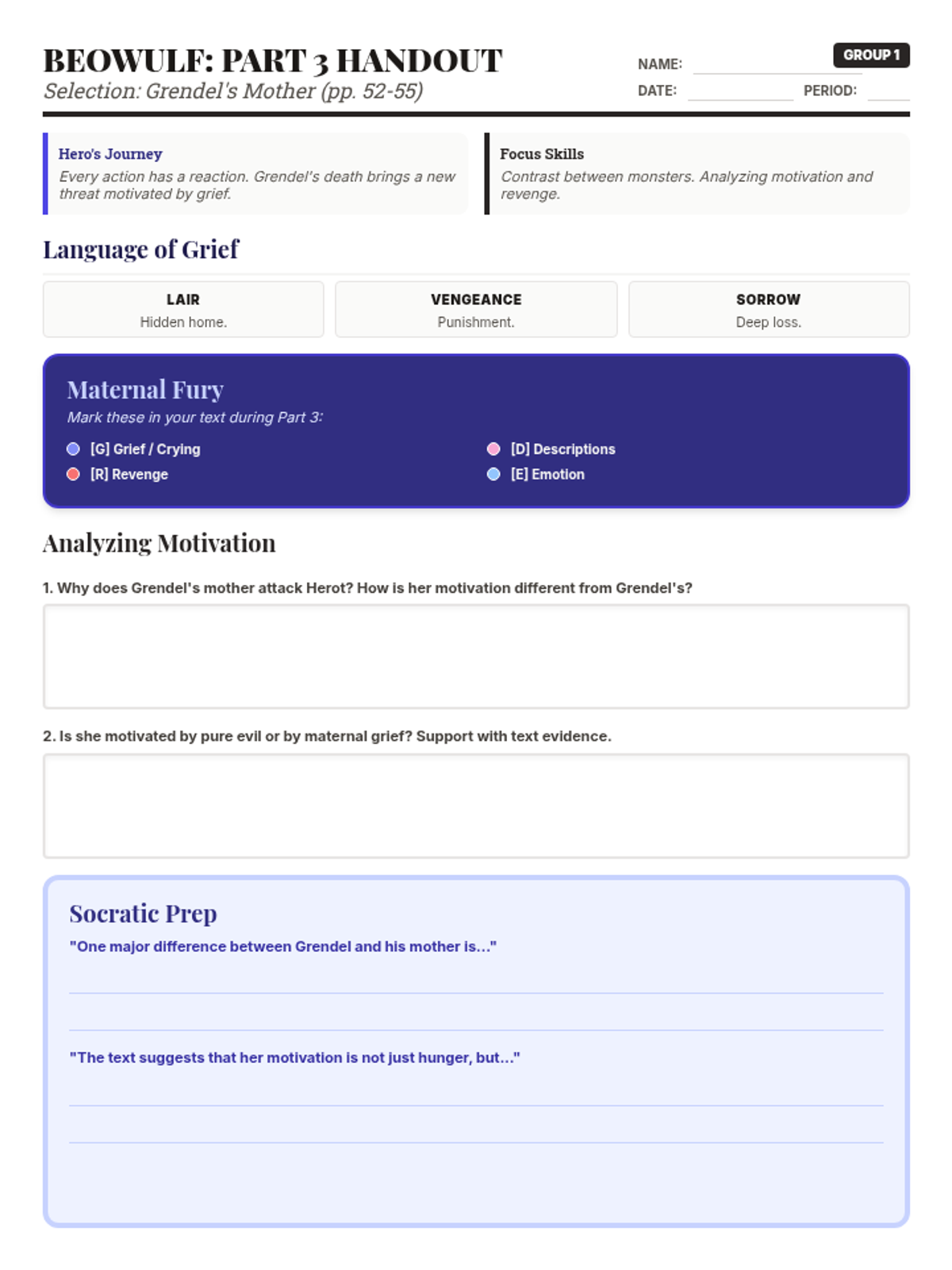
Analysis of Grendel's mother's motivation and the shift in threat, focusing on vengeance vs. evil.
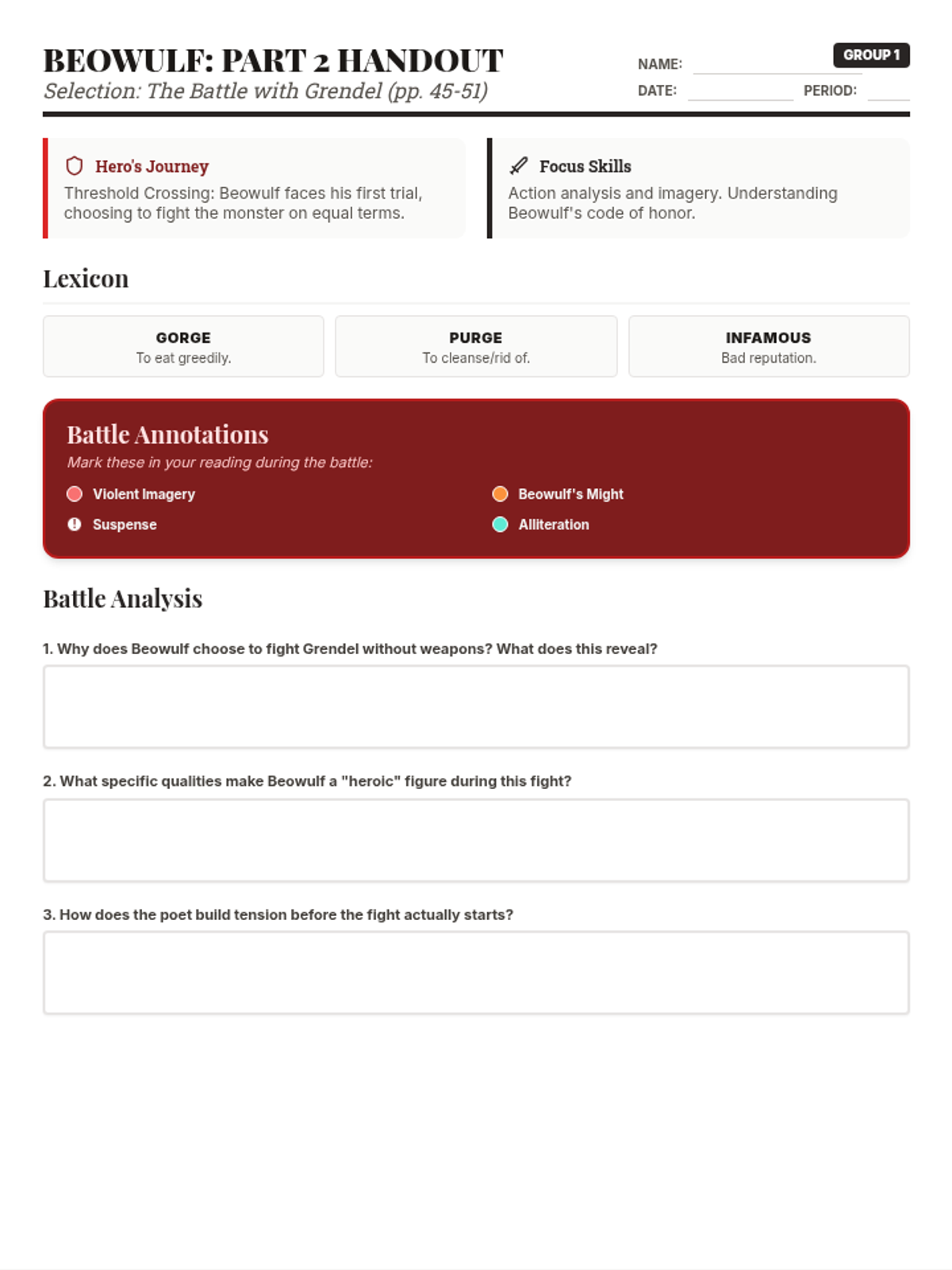
Beowulf's arrival and his first major trial against Grendel, emphasizing imagery, action analysis, and the Crossing of the Threshold.
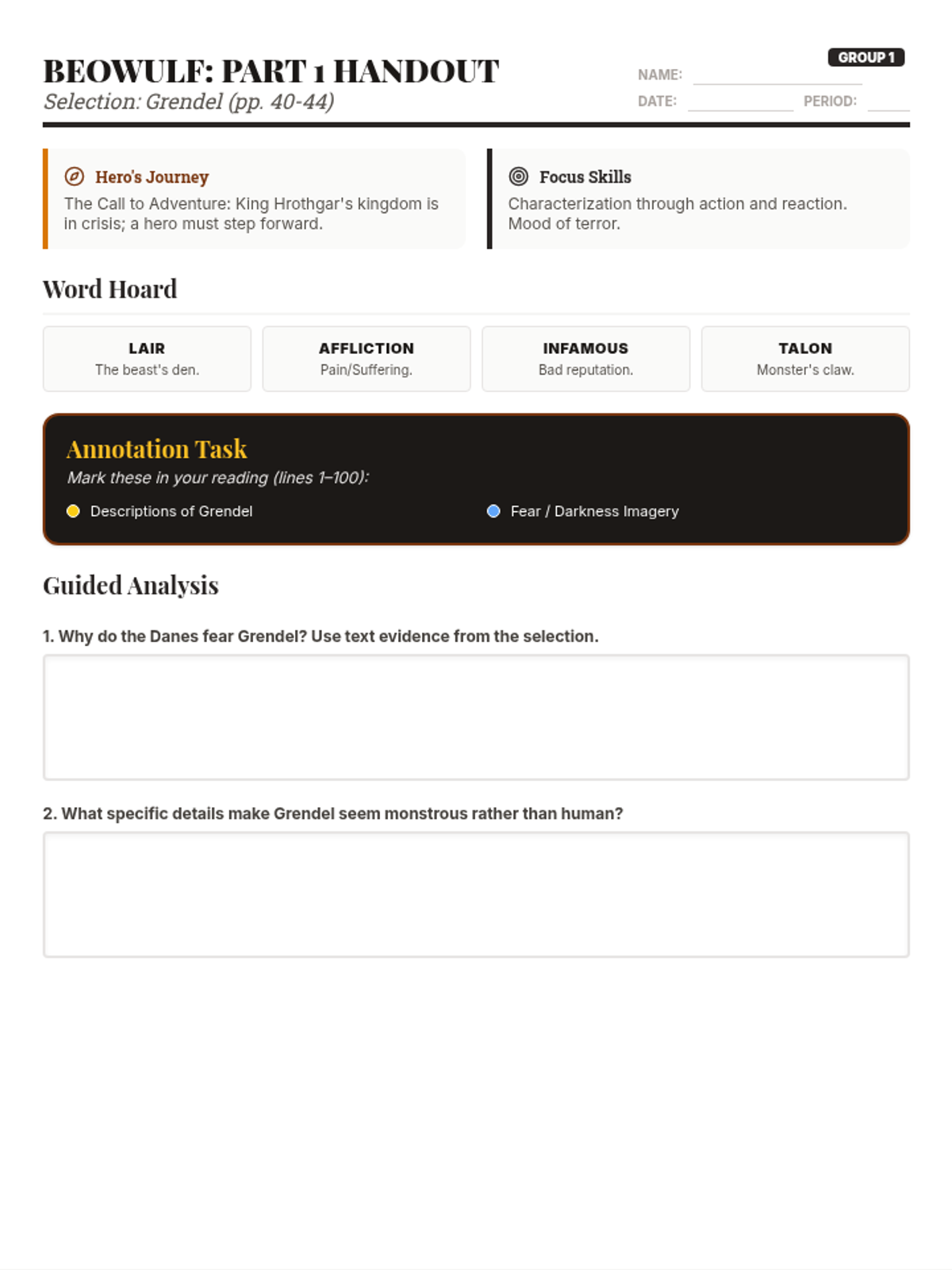
Introduction to Grendel, focusing on characterization, mood, and the initial Call to Adventure in the Hero's Journey.
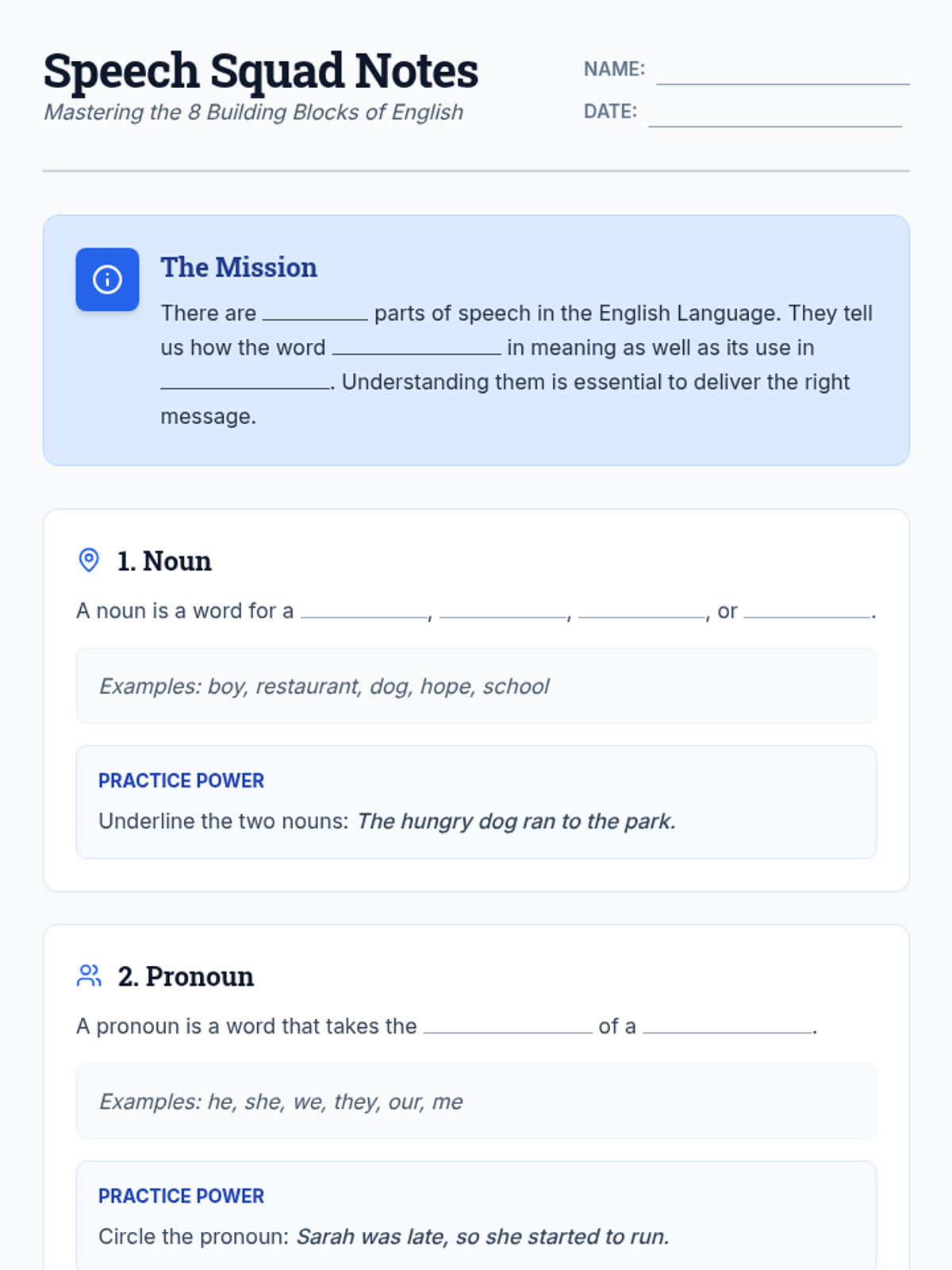
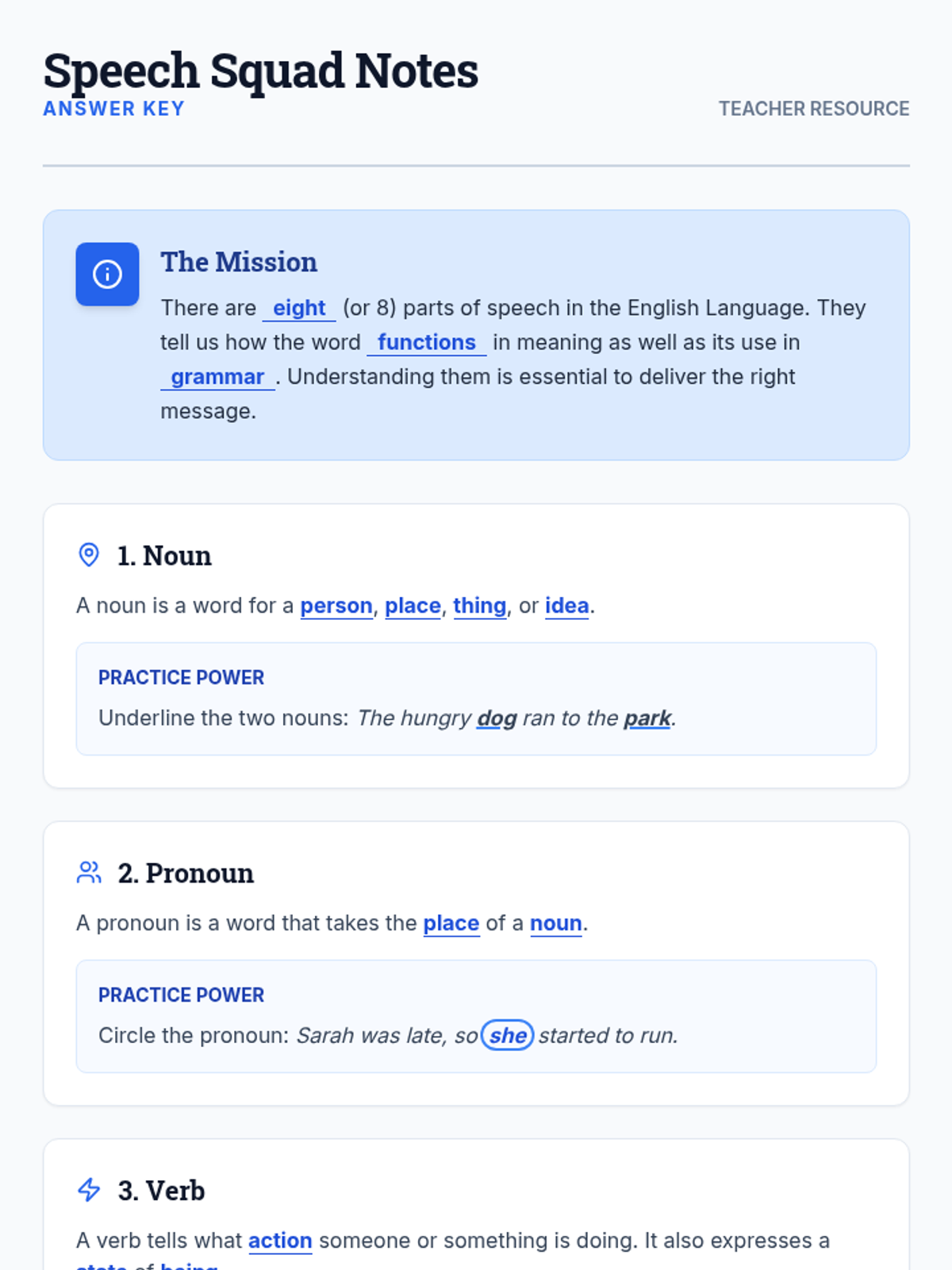
An introductory lesson on the eight parts of speech in the English language, focusing on their definitions, functions, and identification in sentences.
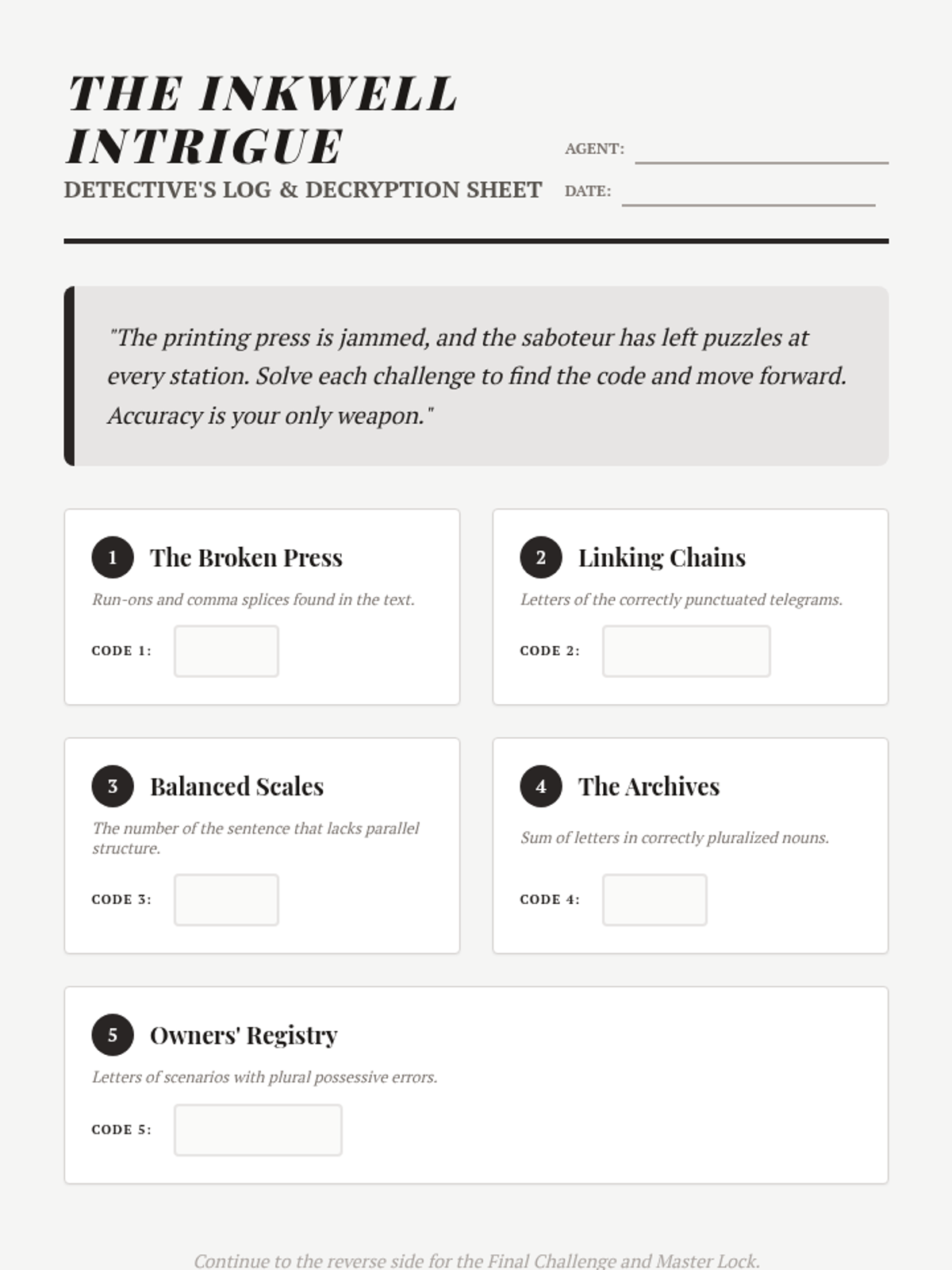
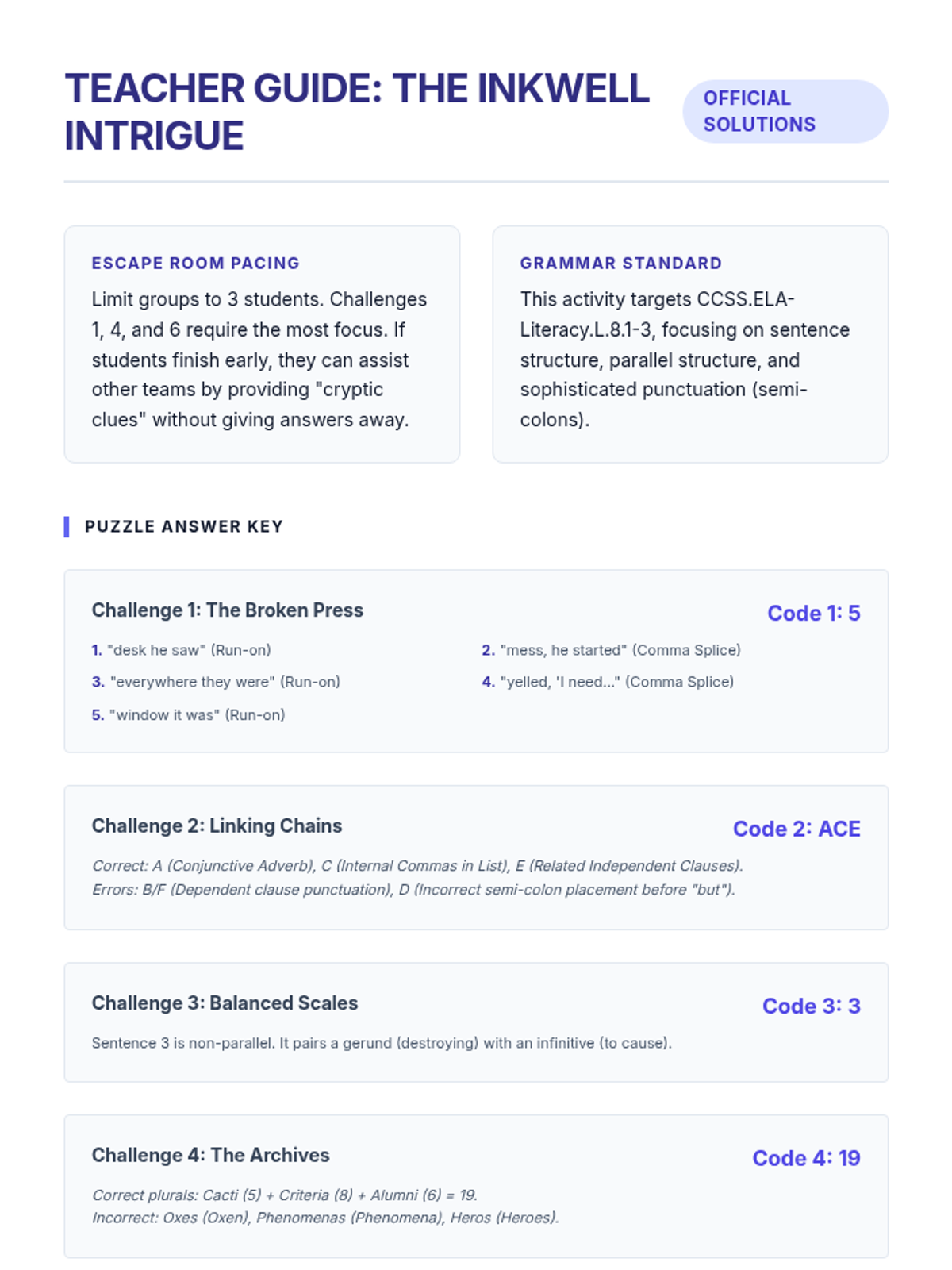
A high-stakes grammar escape room where 8th-grade students solve linguistic puzzles involving comma splices, semi-colons, parallel structure, and complex plurals to unlock the secrets of a mysterious Victorian printing house.
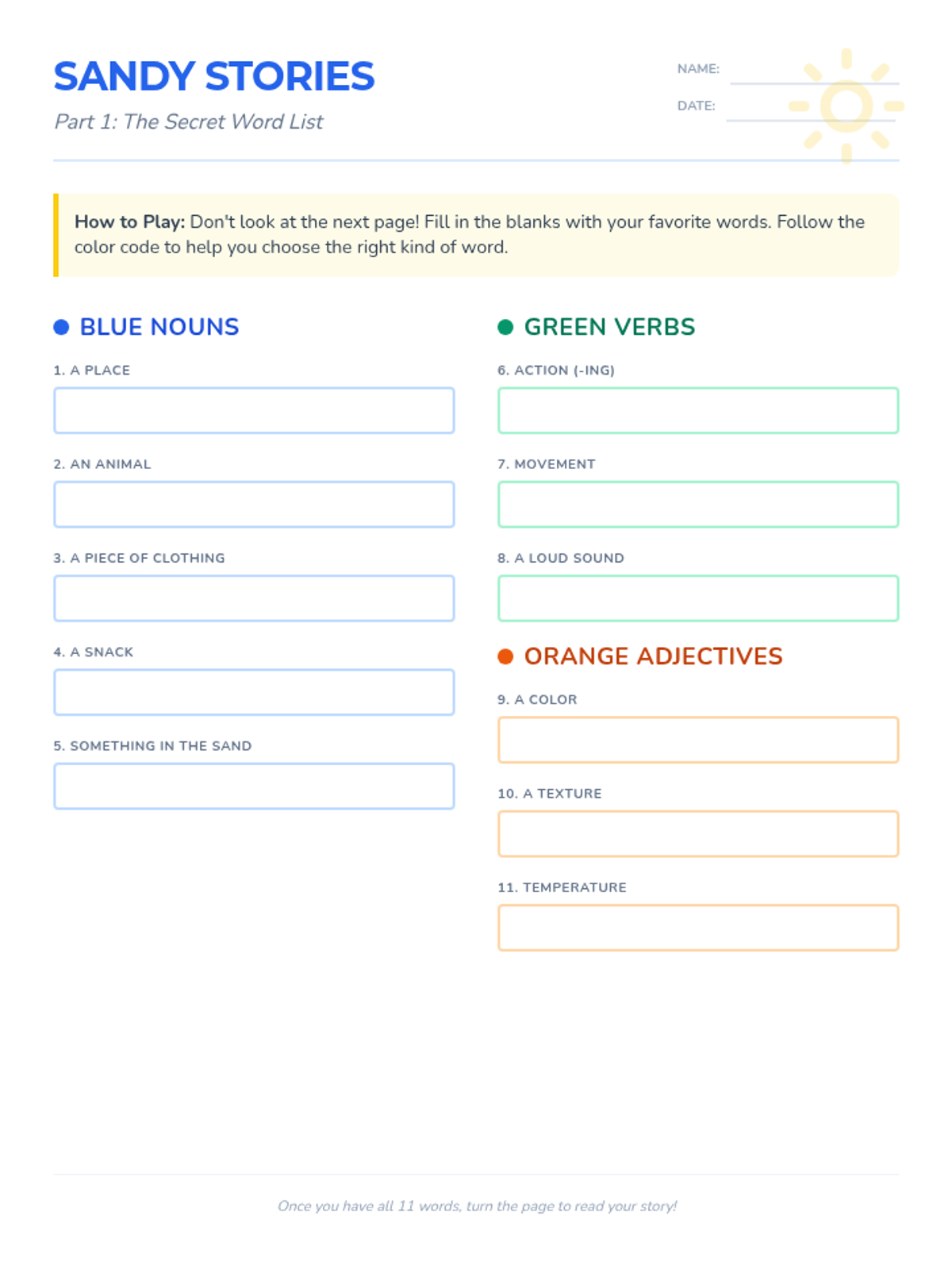
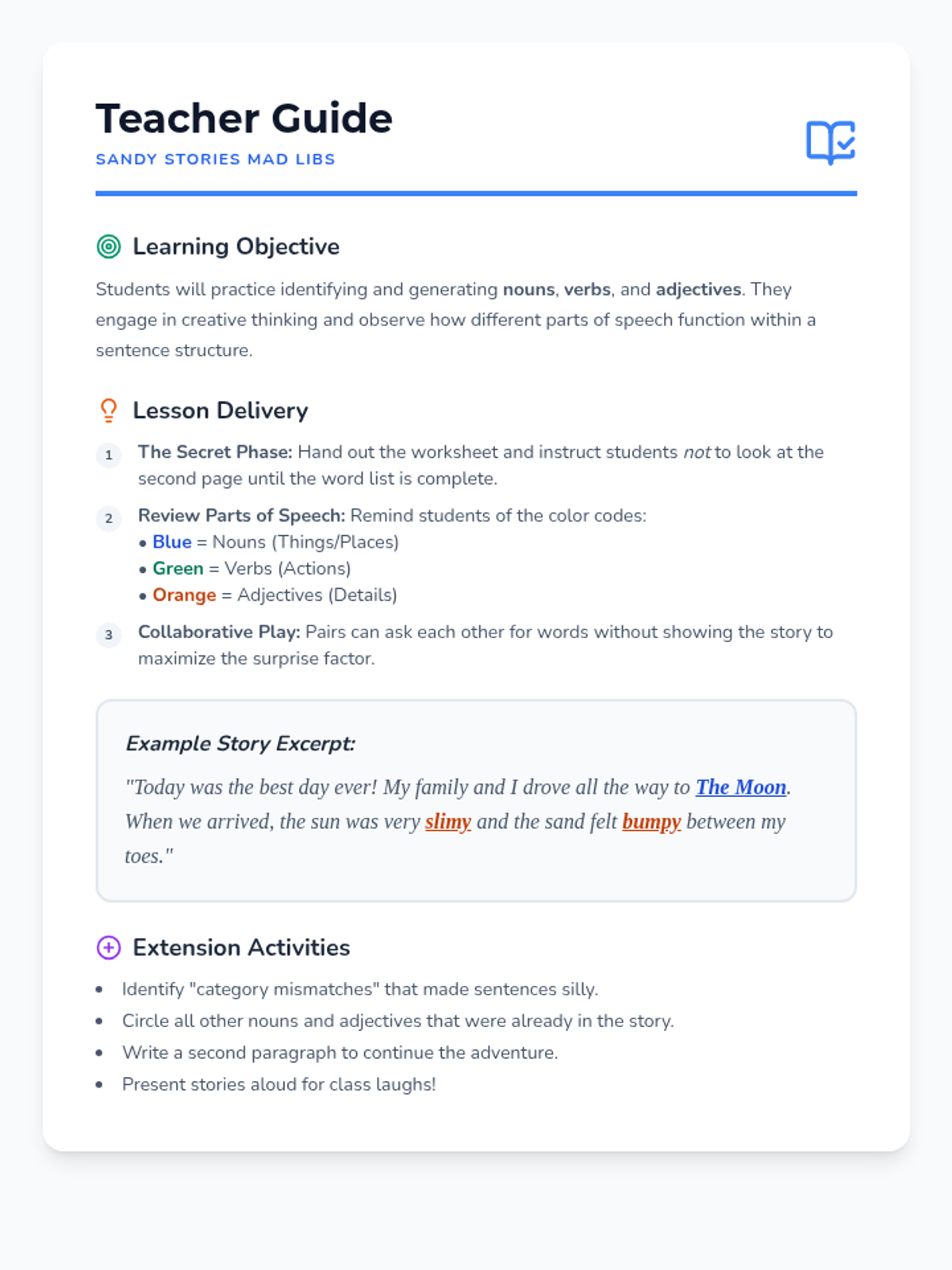
A fun, beach-themed Mad Libs activity for second graders to practice identifying and using nouns, verbs, and adjectives. Includes a word collection list and a two-page story with color-coded blanks.
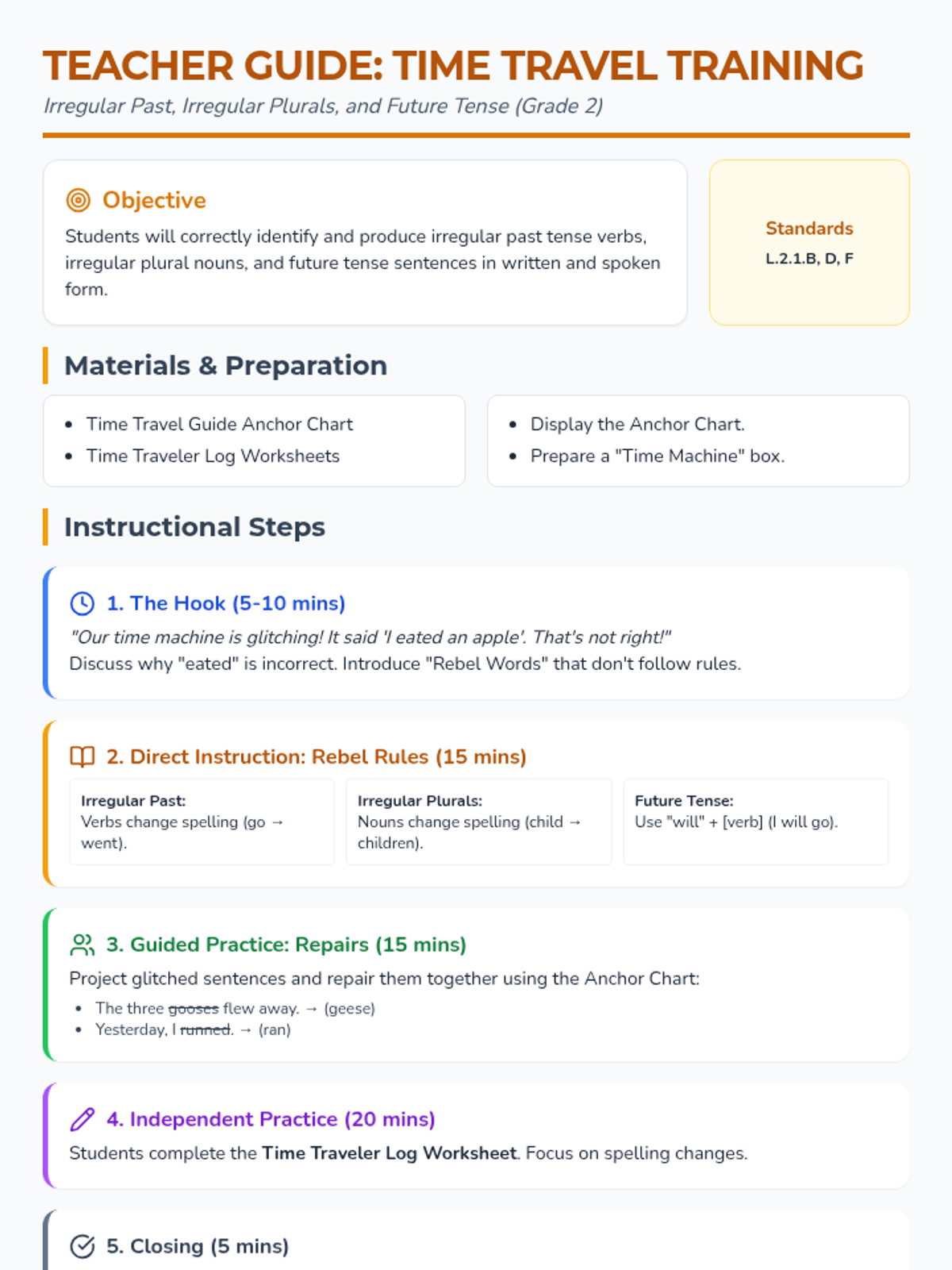
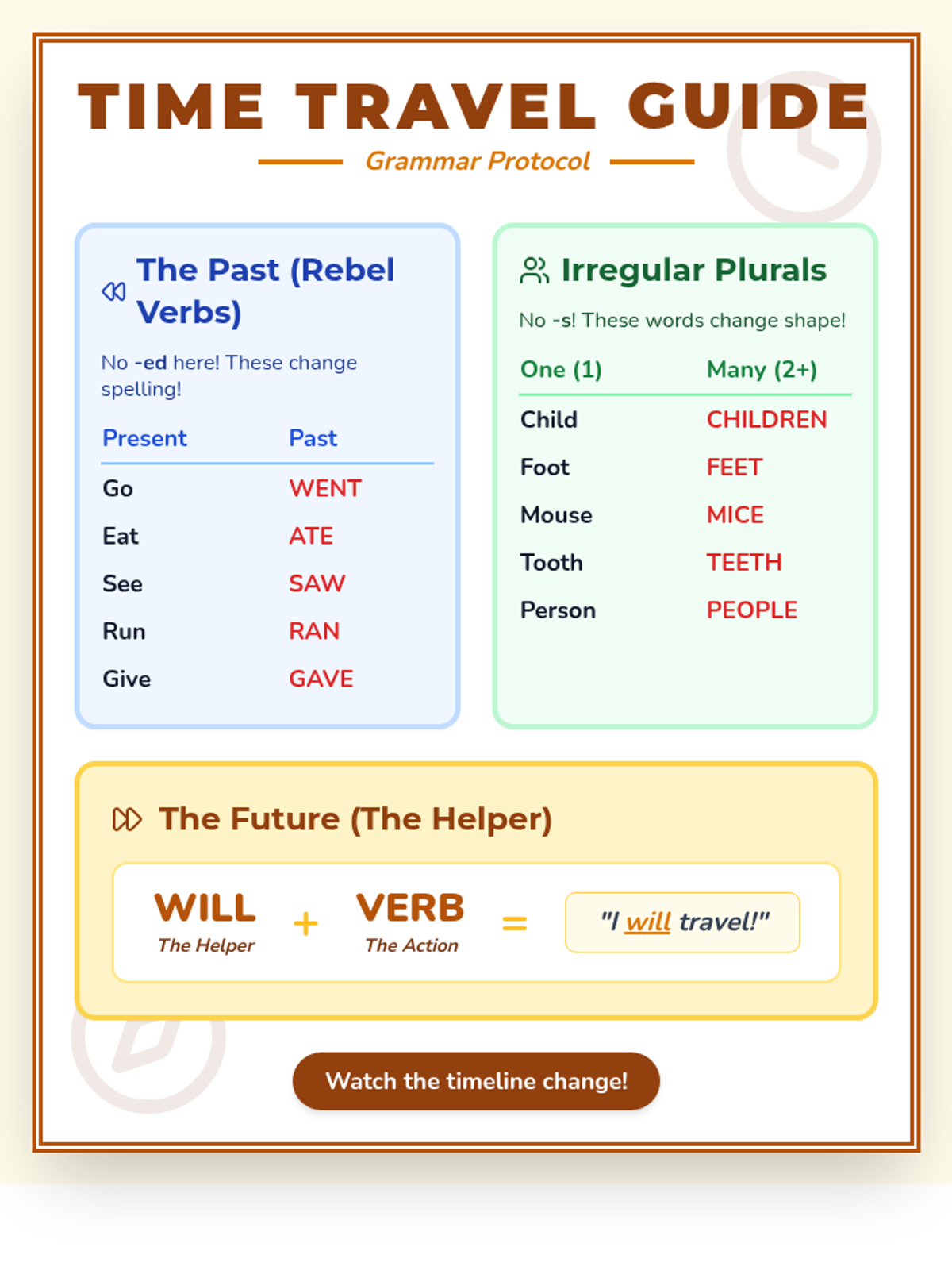
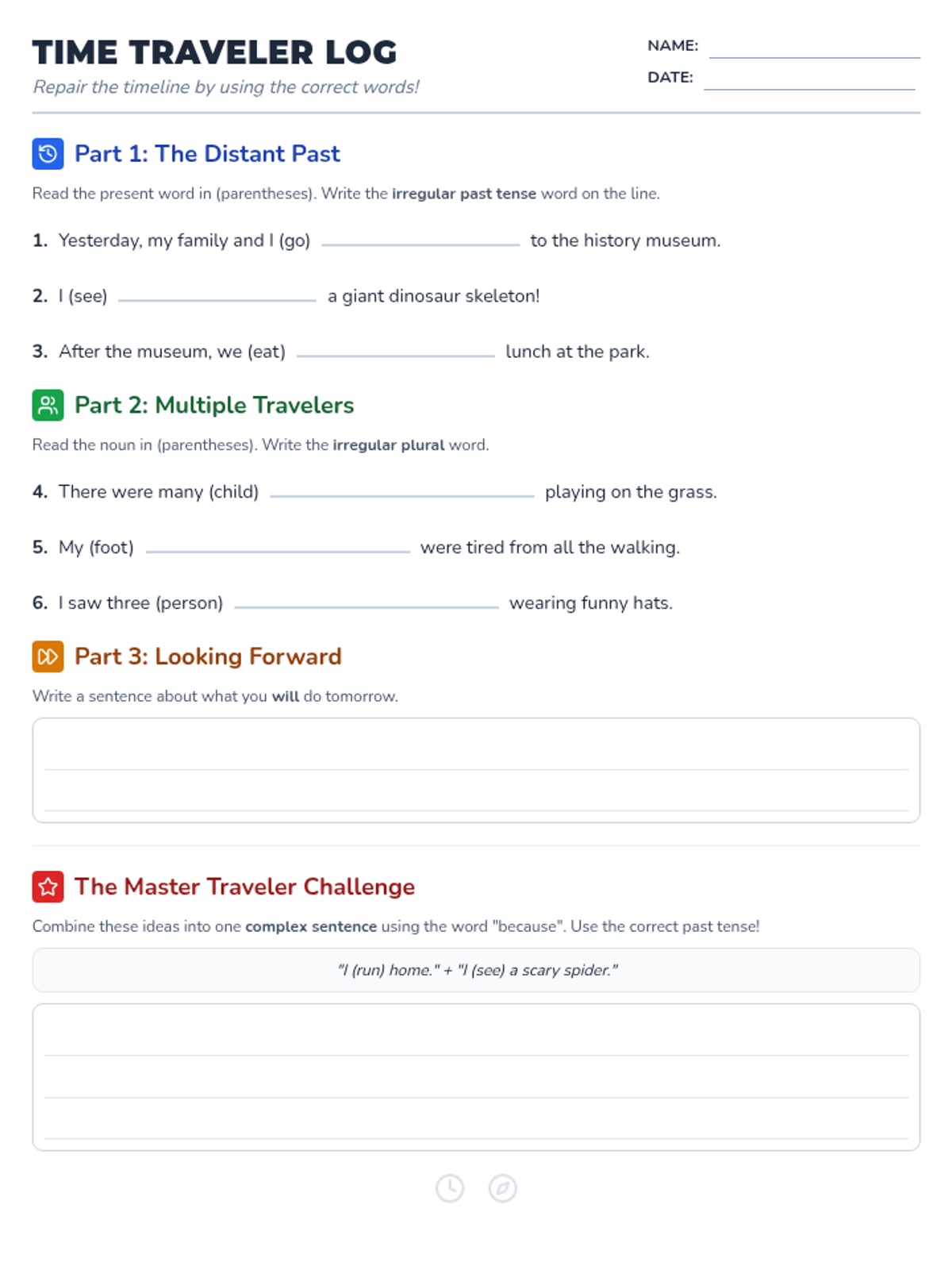
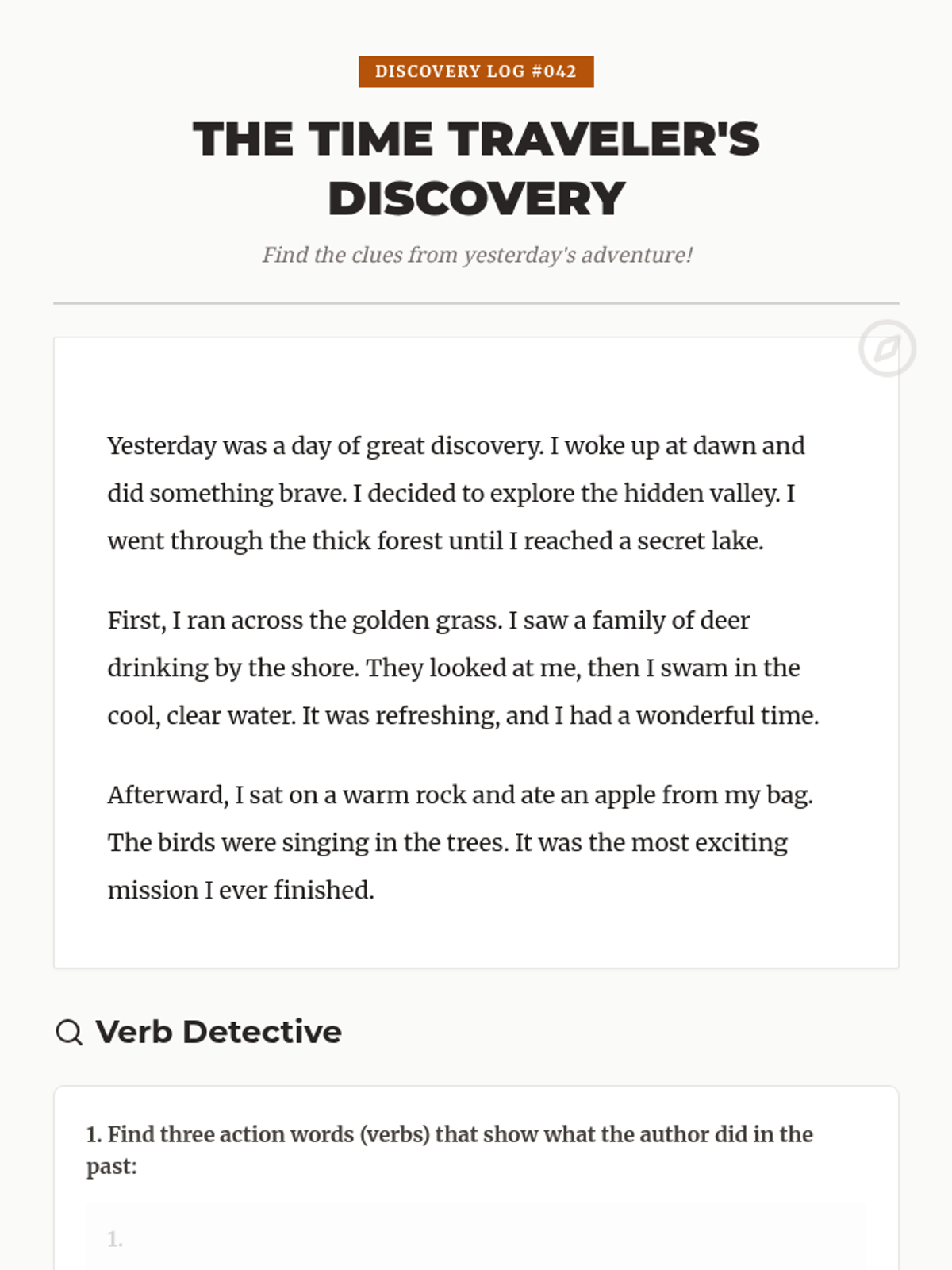
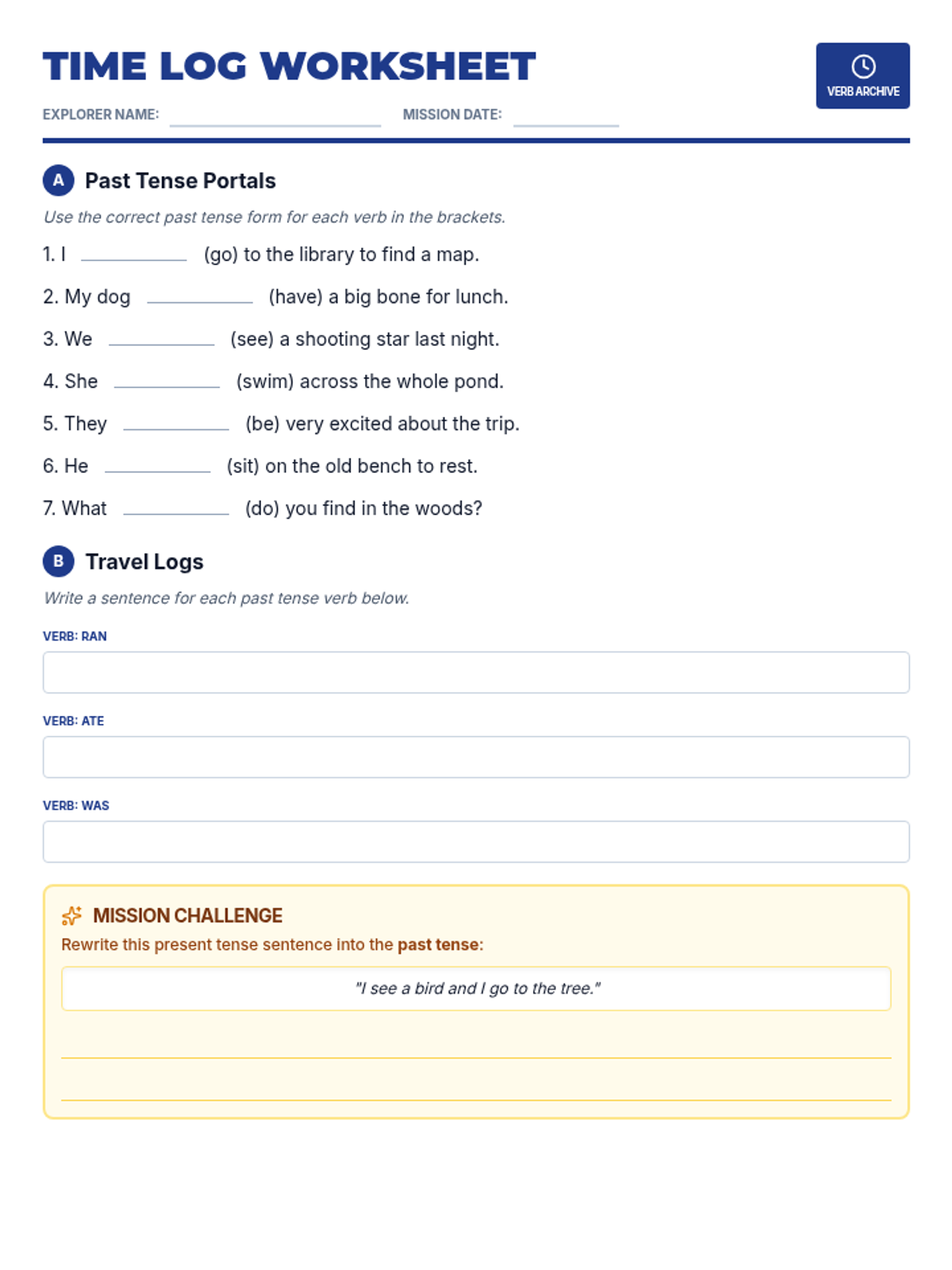
A comprehensive grammar lesson for 2nd graders focusing on the nuances of irregular past tense verbs, irregular plural nouns, and the formation of future tense through a fun 'Time Traveler' theme.
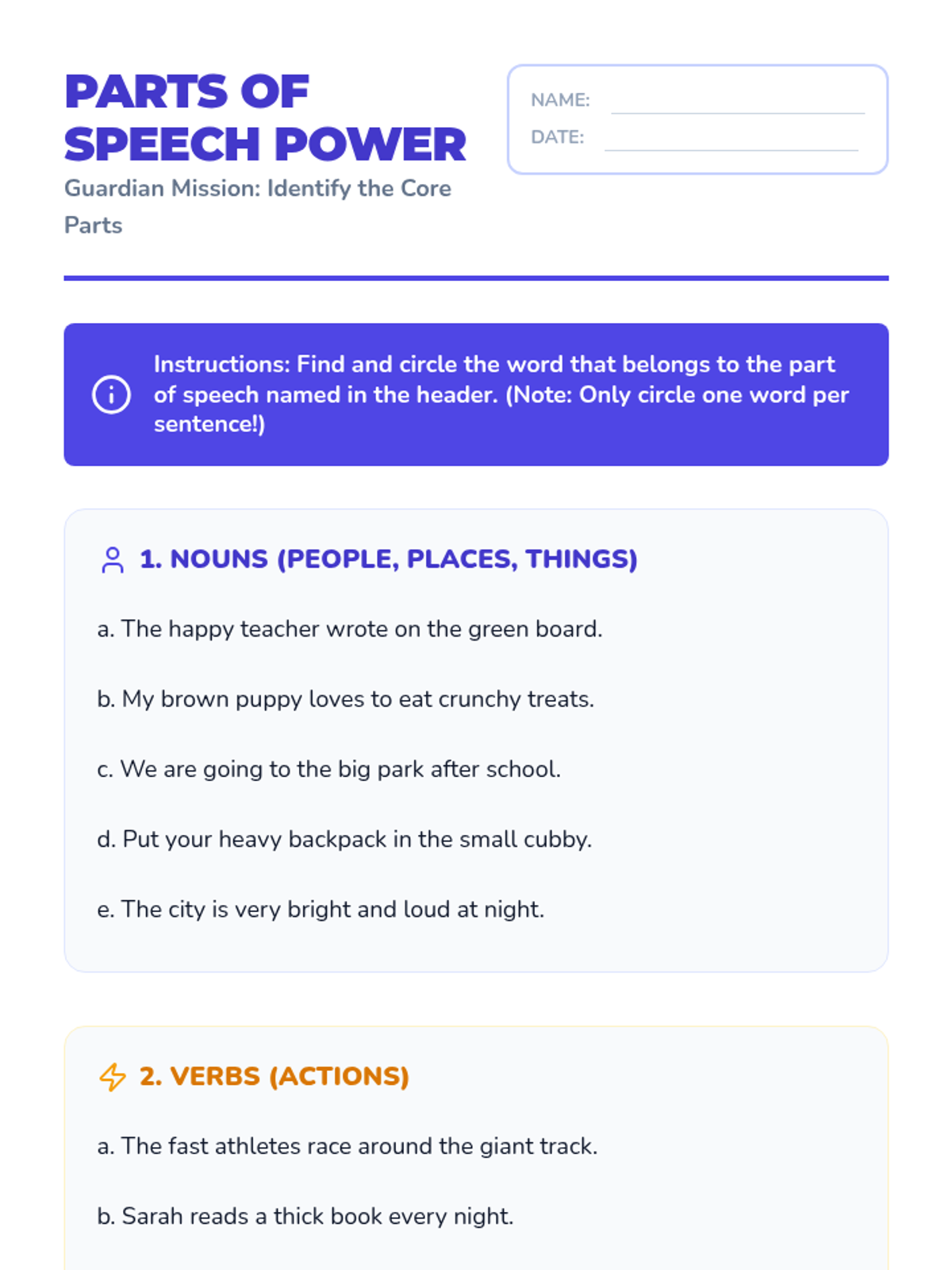
A foundational grammar lesson for 3rd graders focusing on identifying the seven main parts of speech and mastering subject-verb agreement through superhero-themed activities.
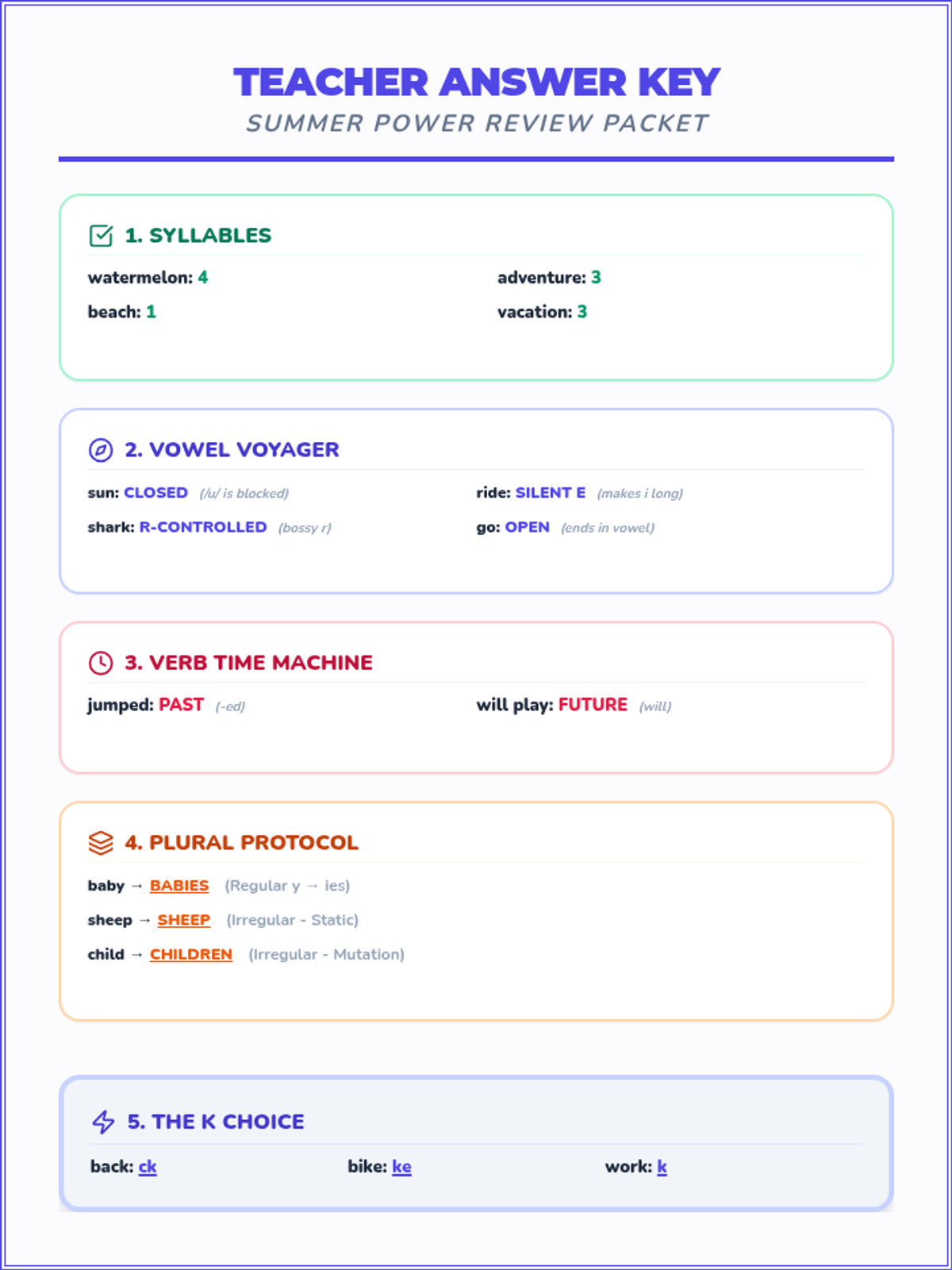
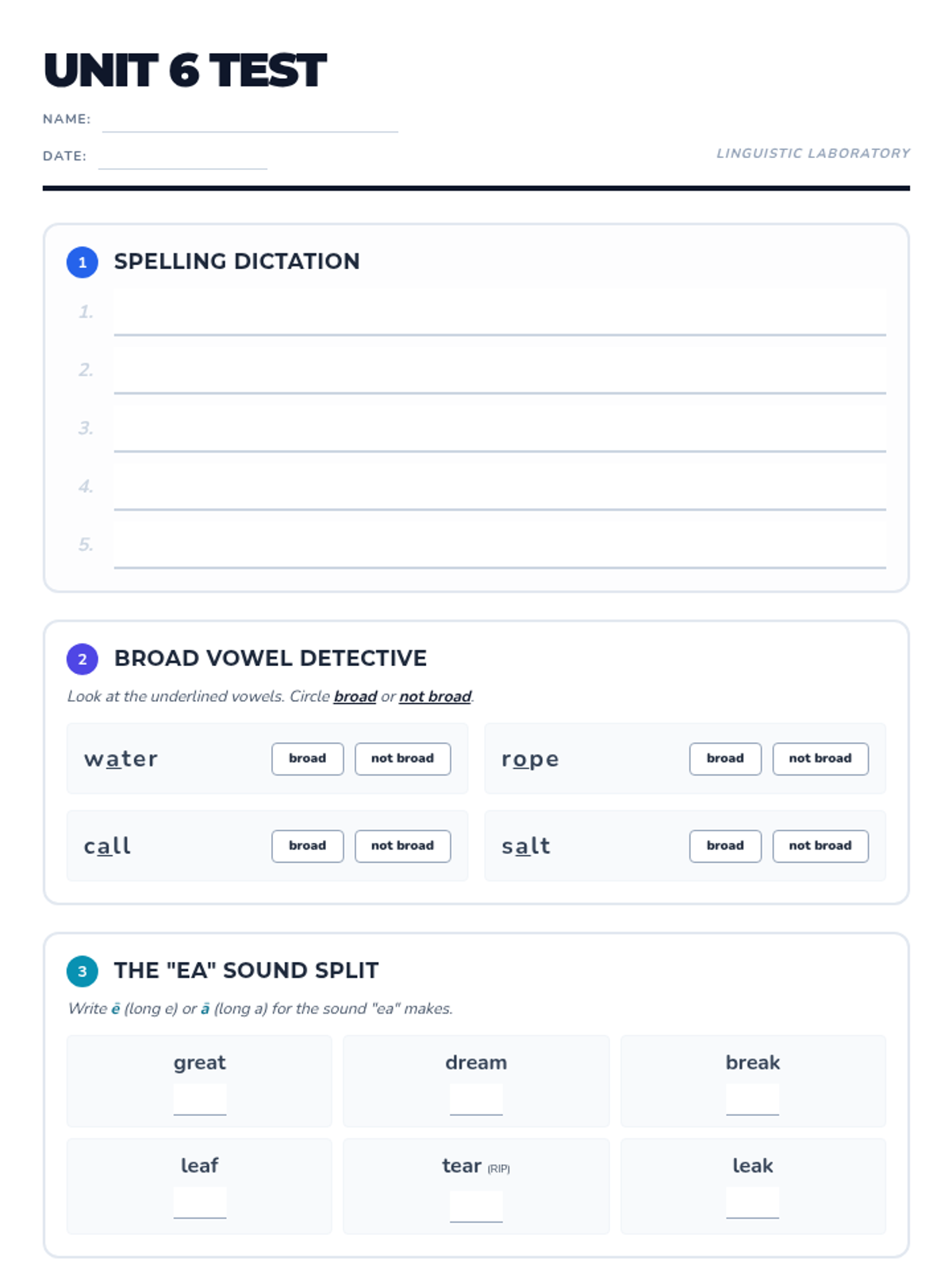
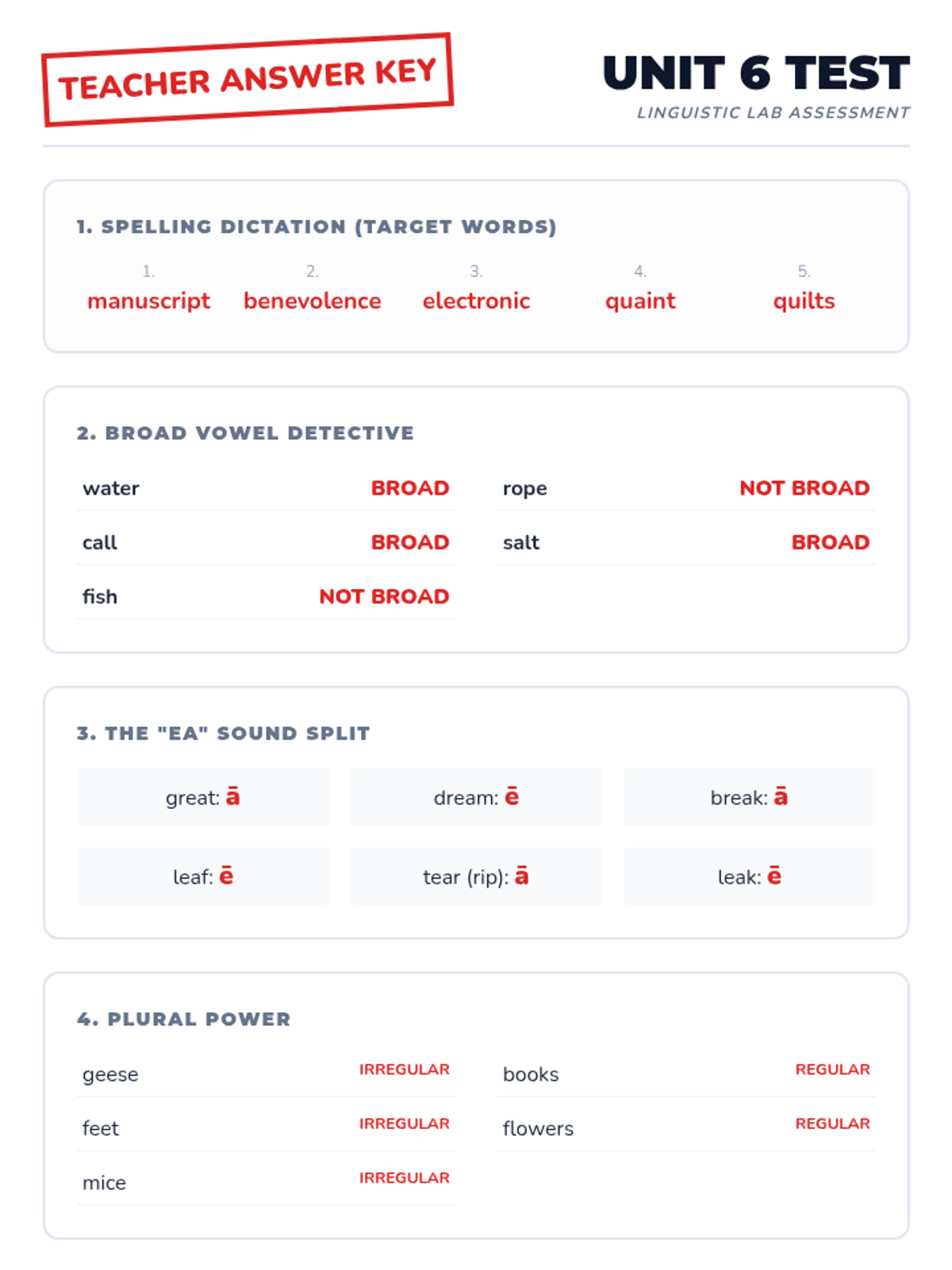
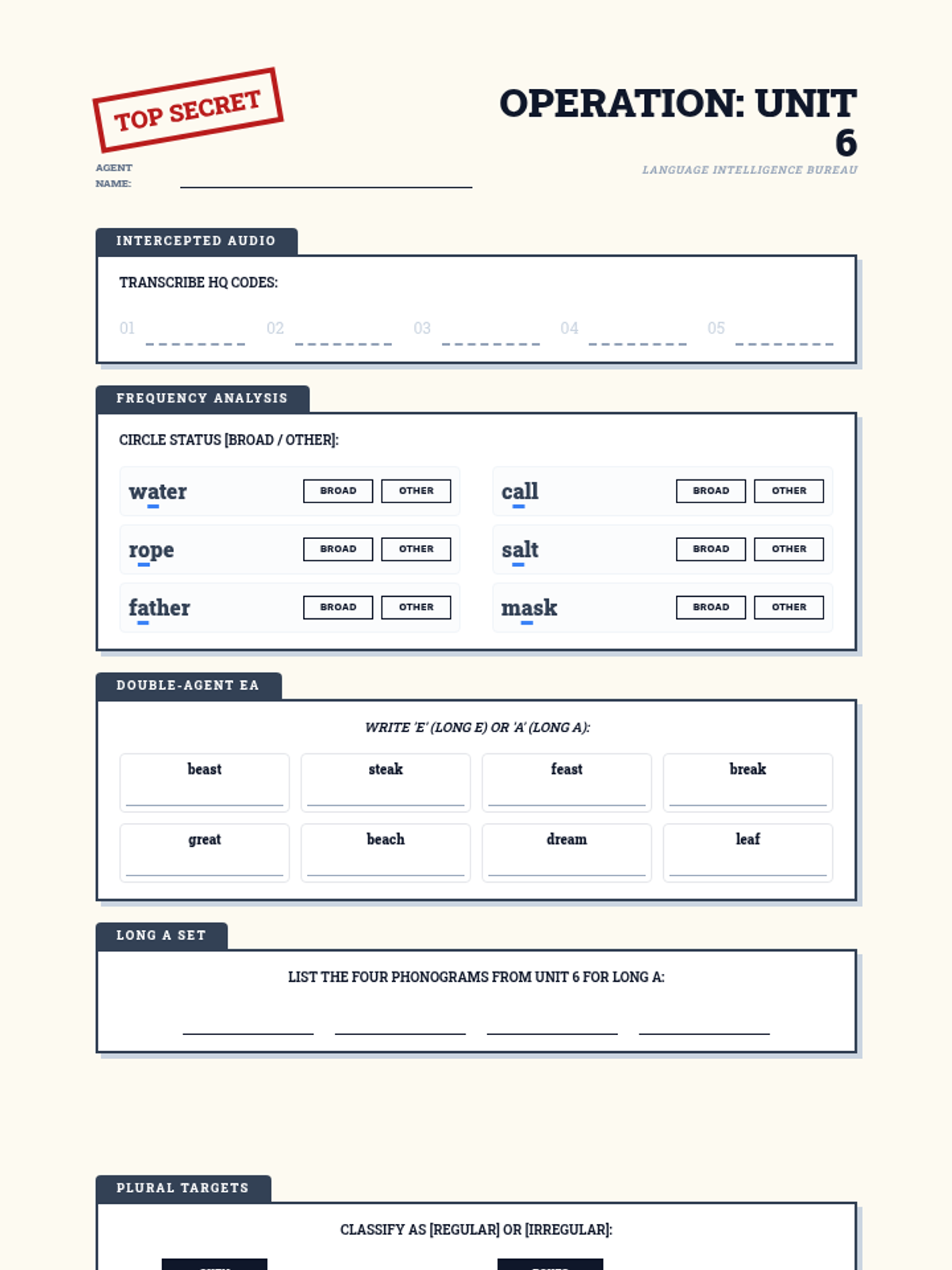
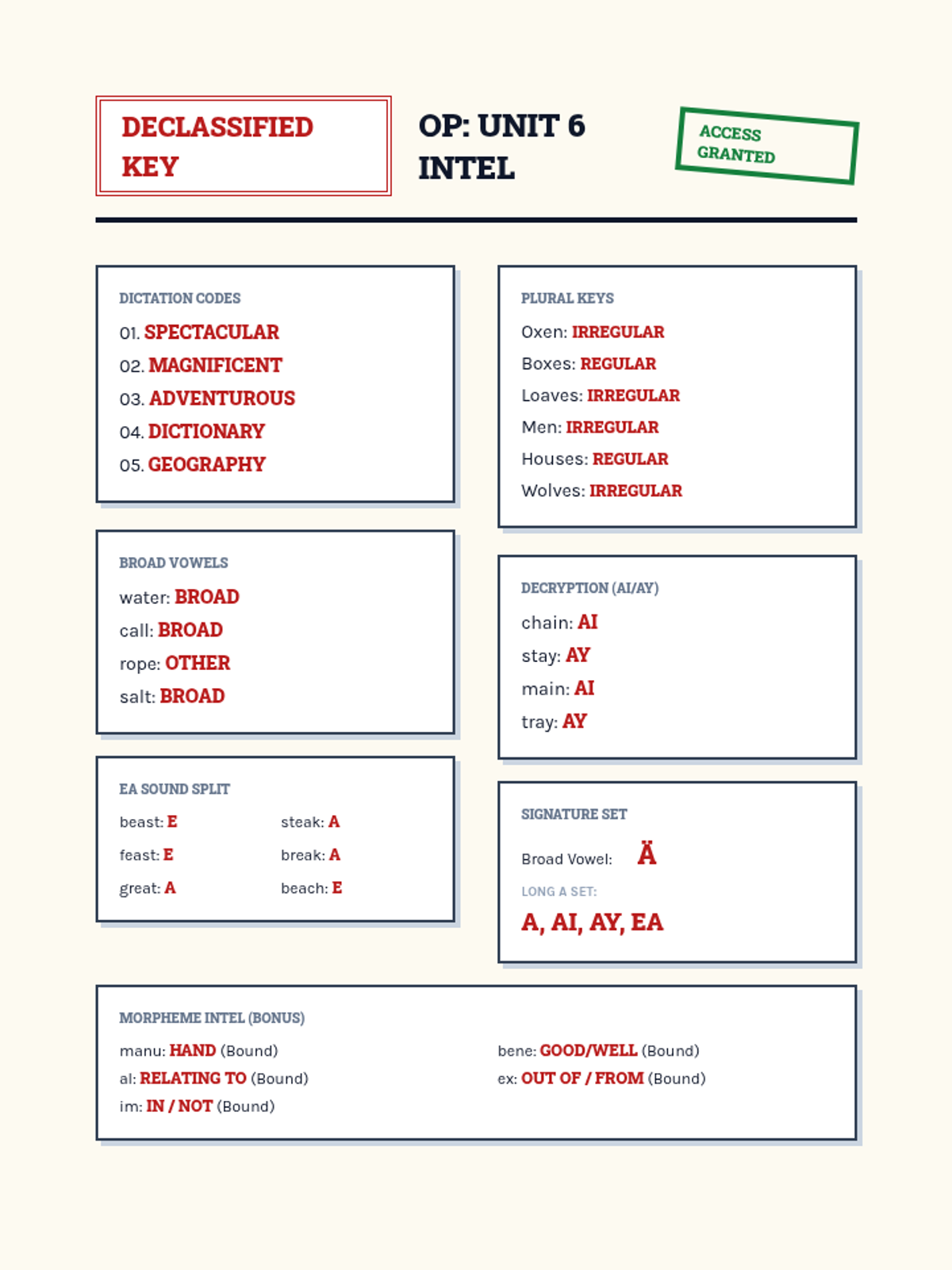
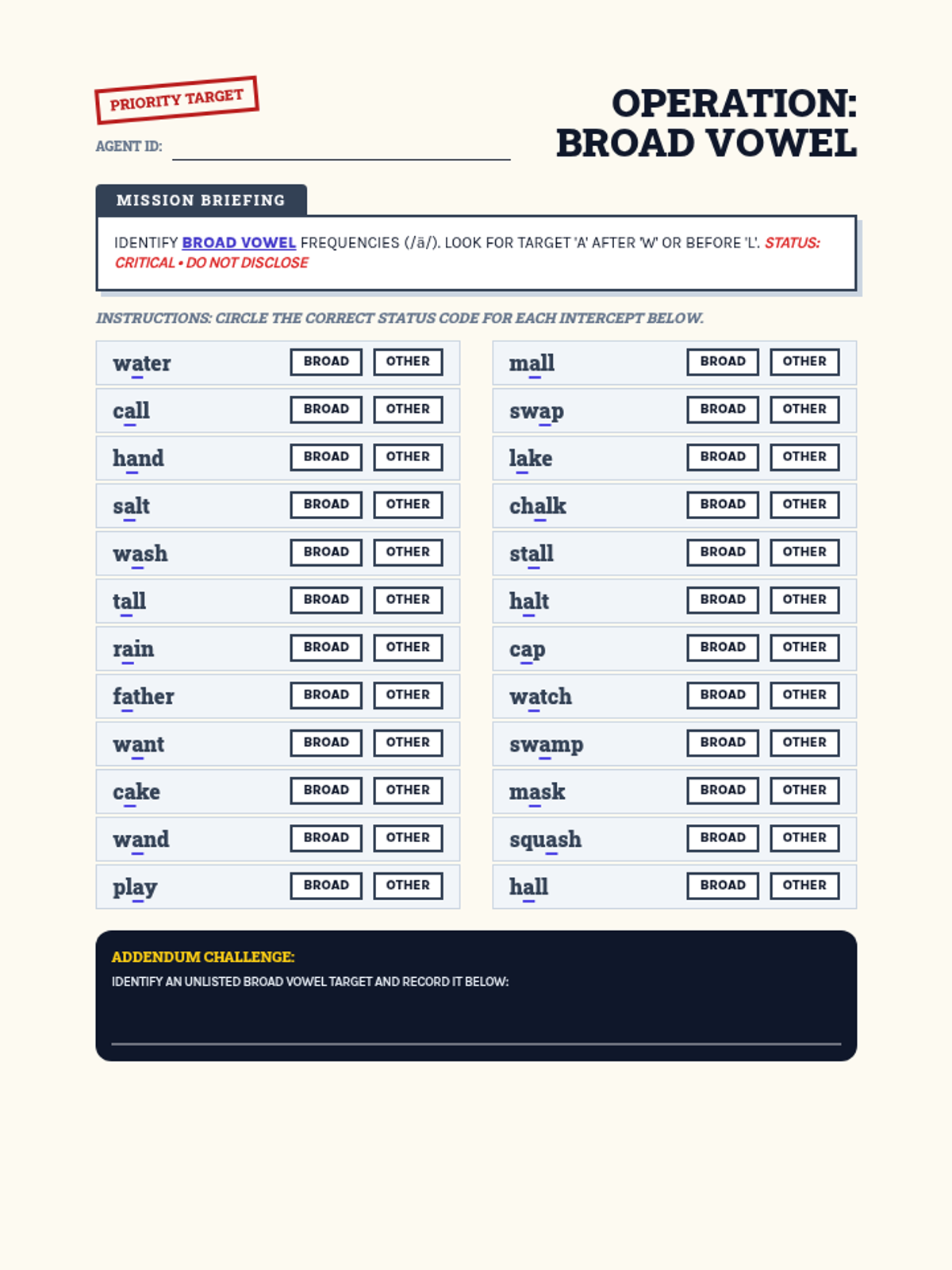
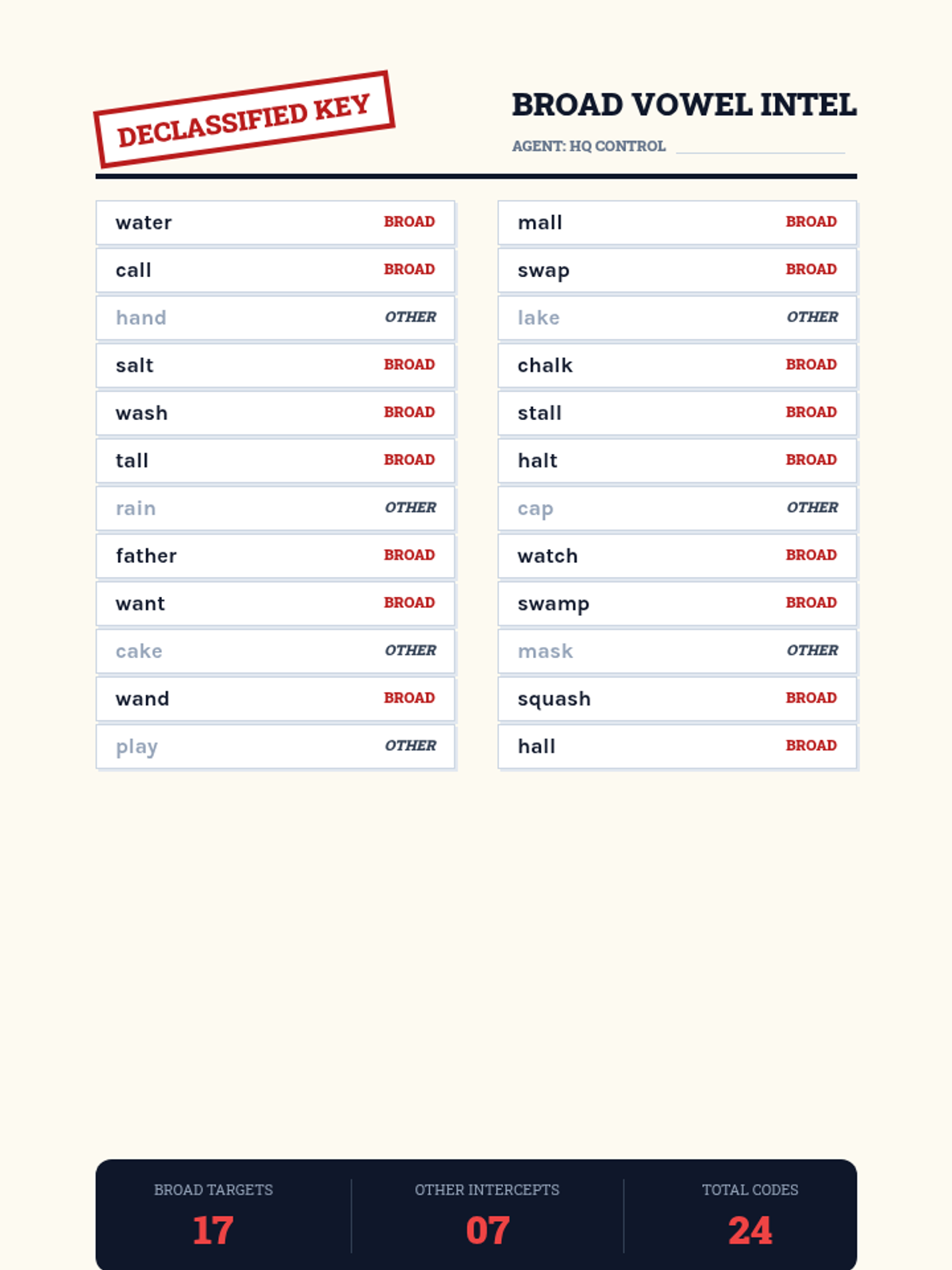
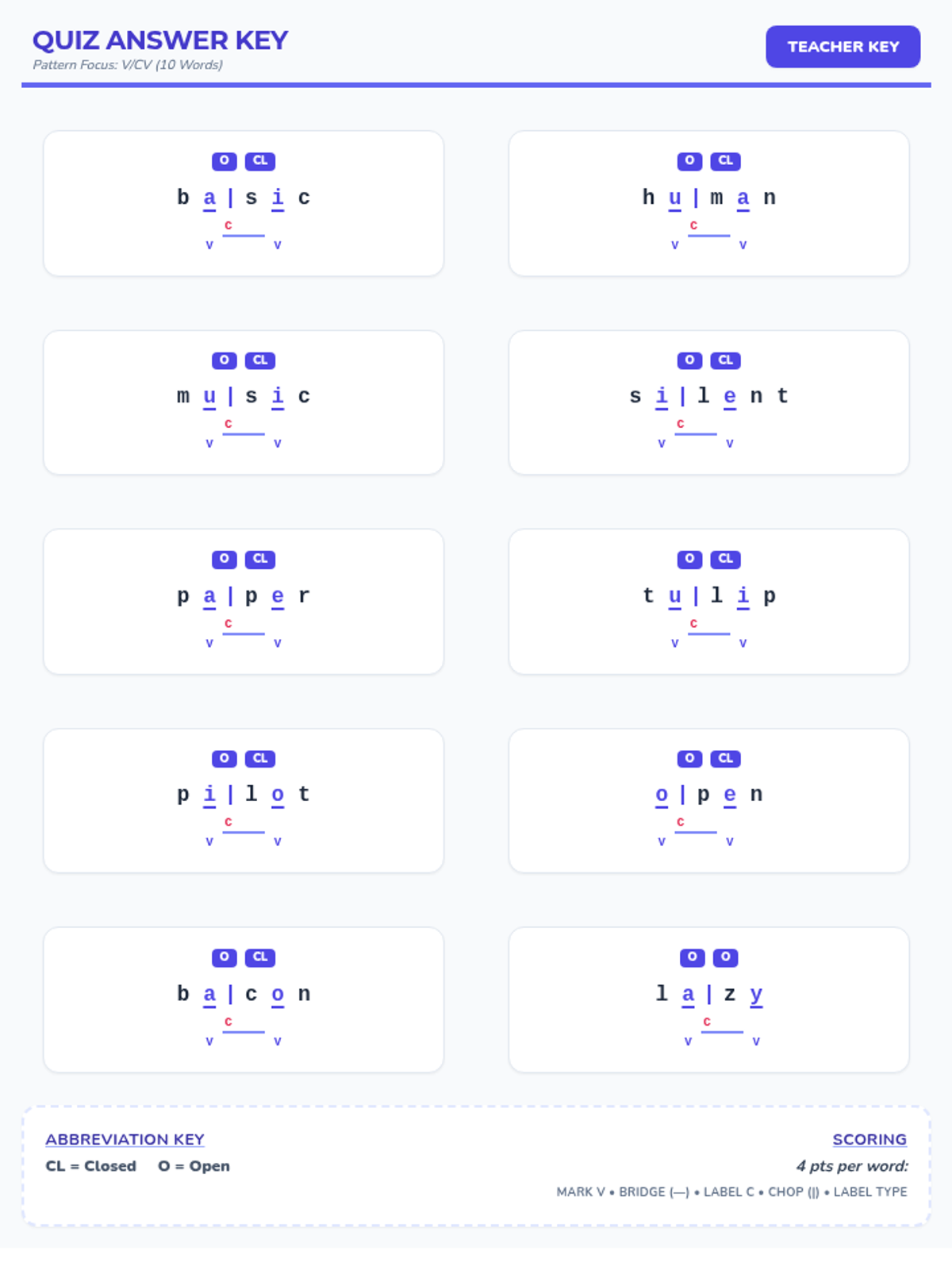
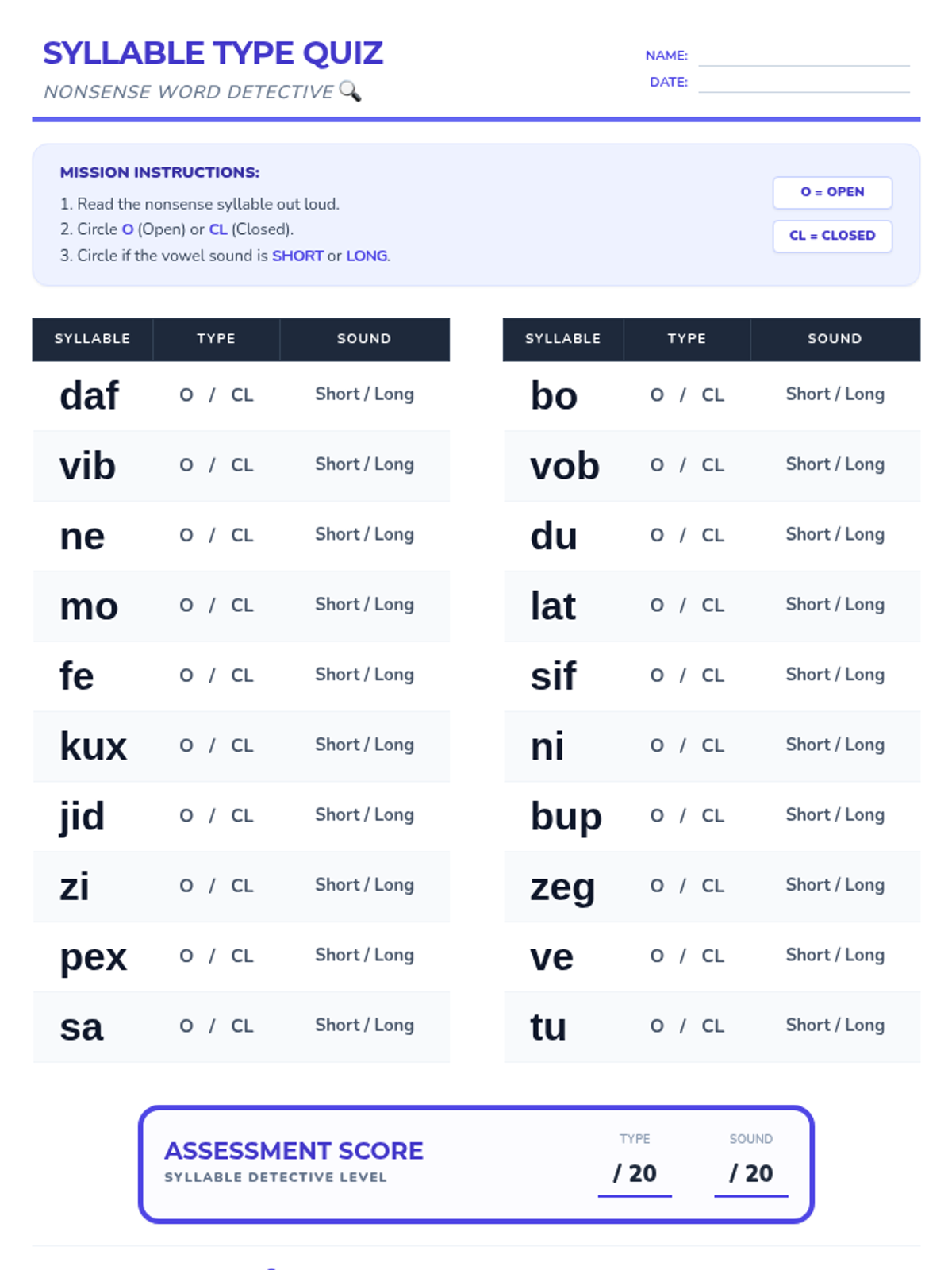
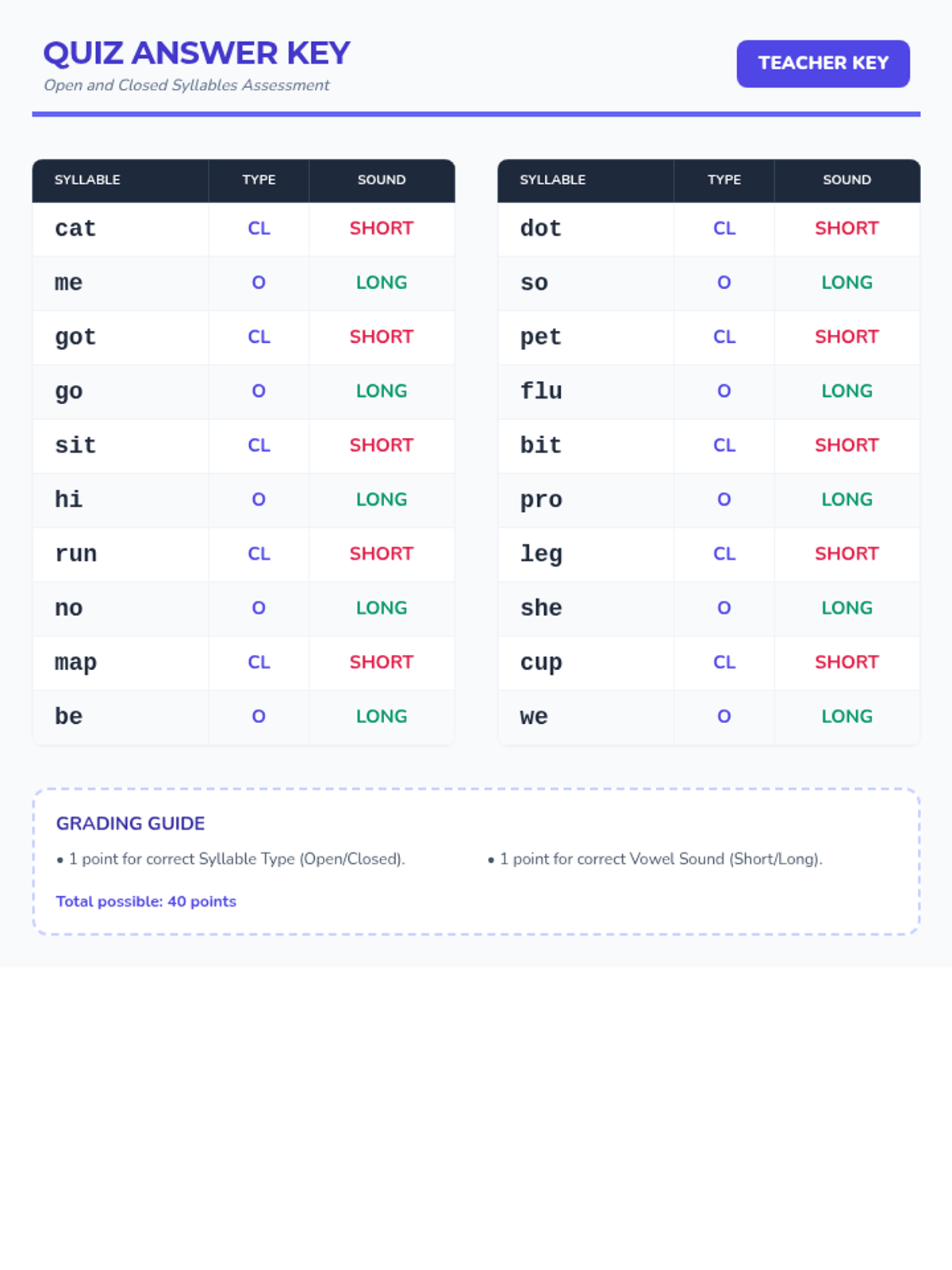
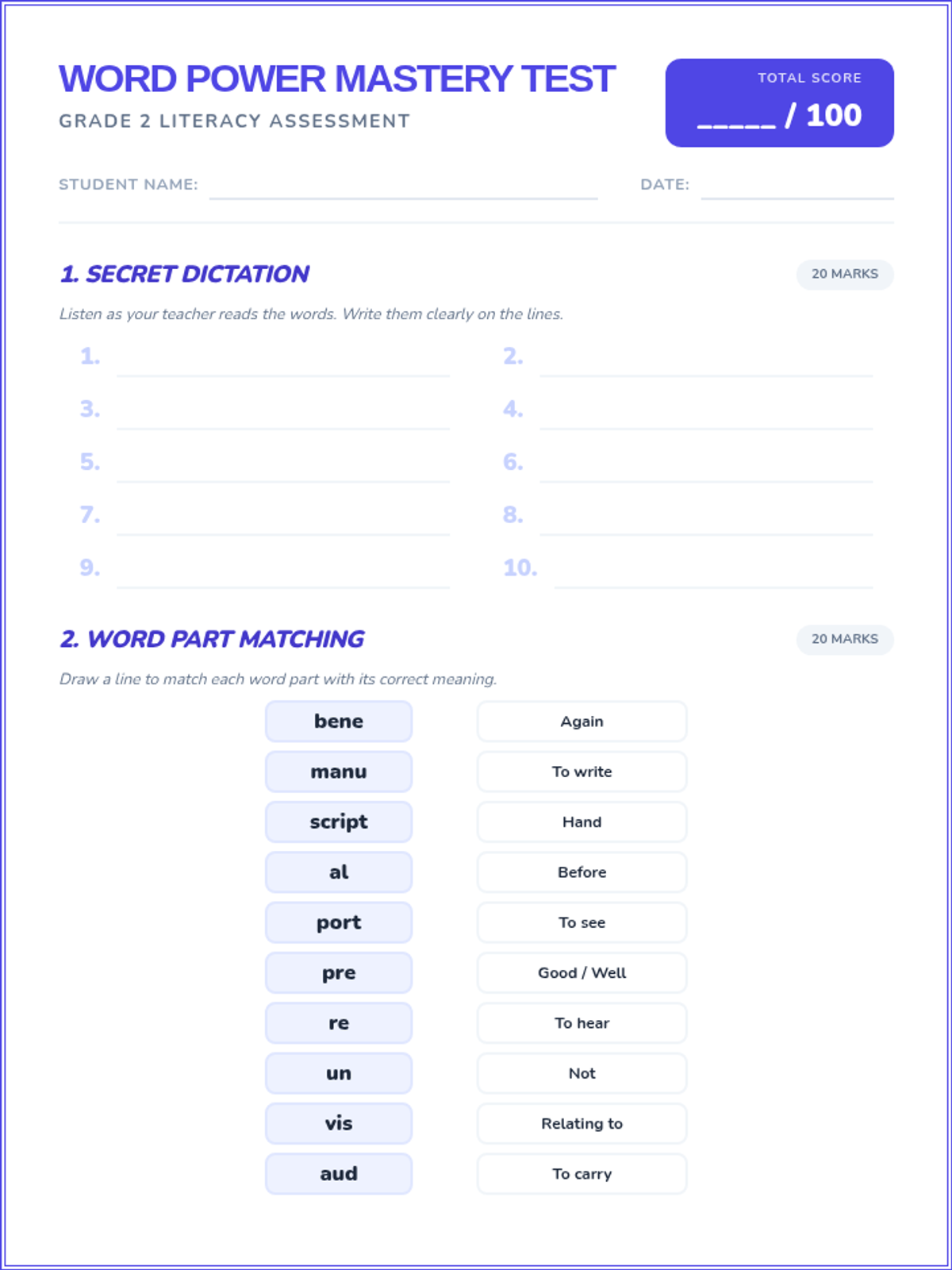
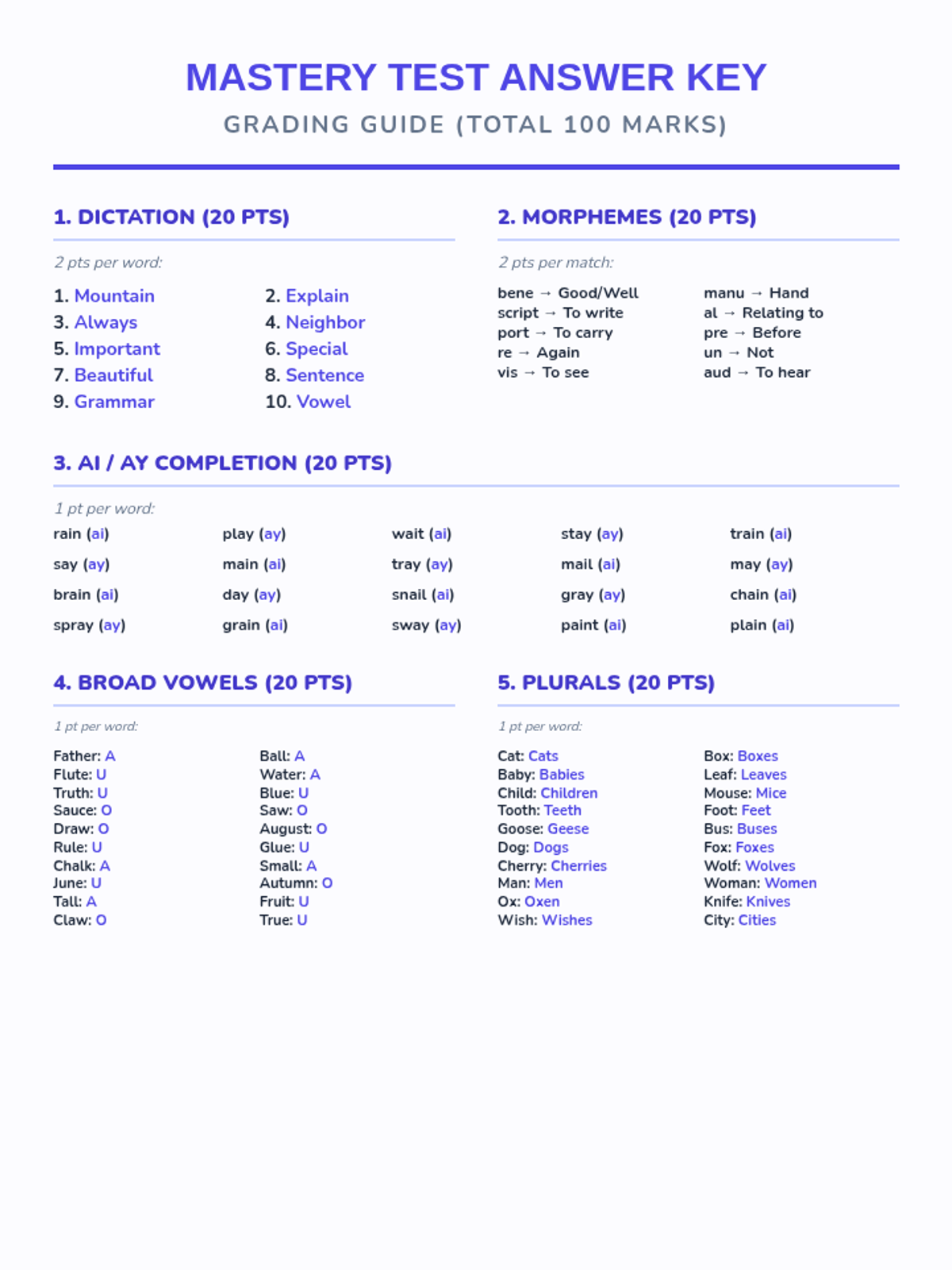
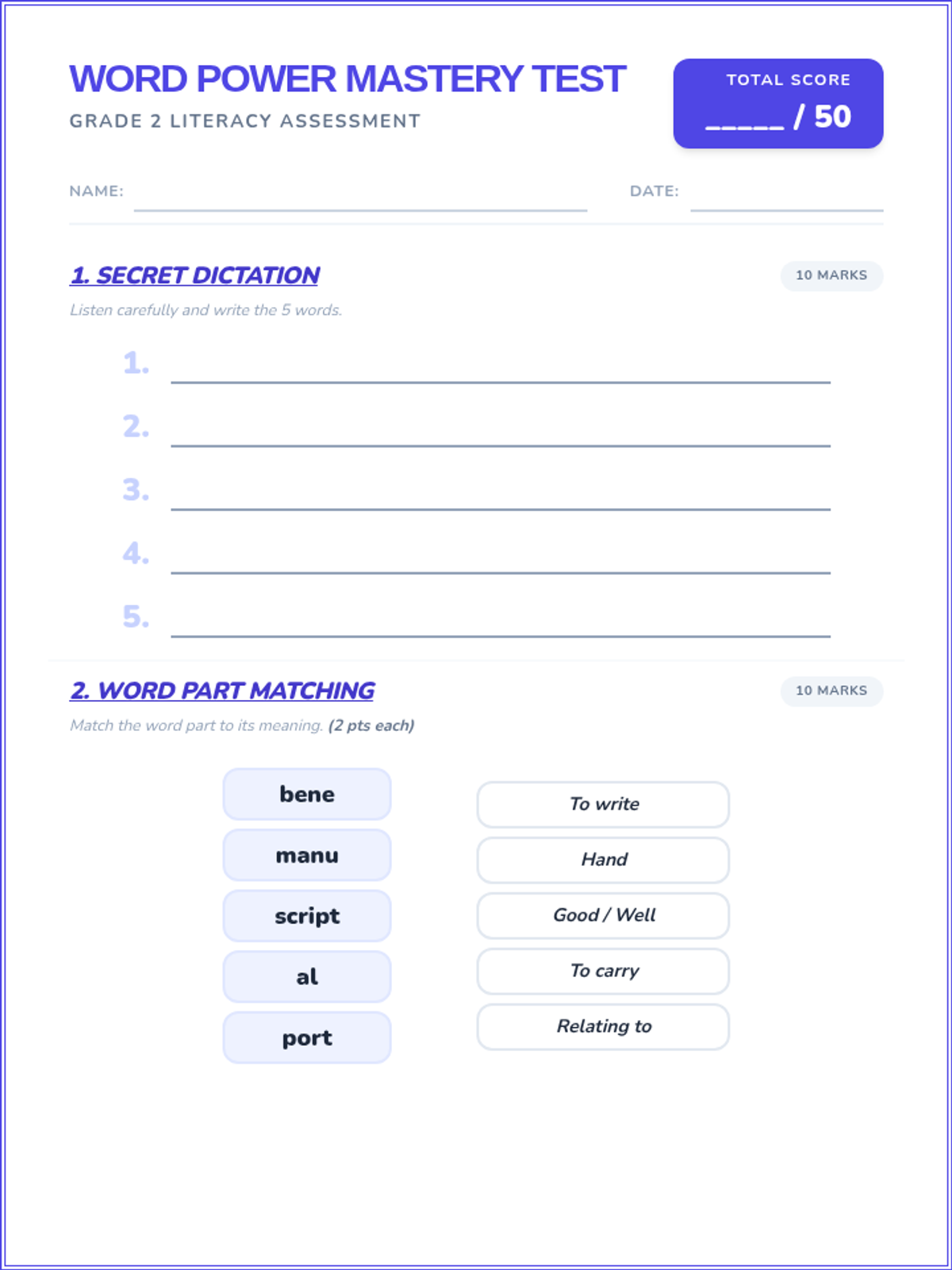
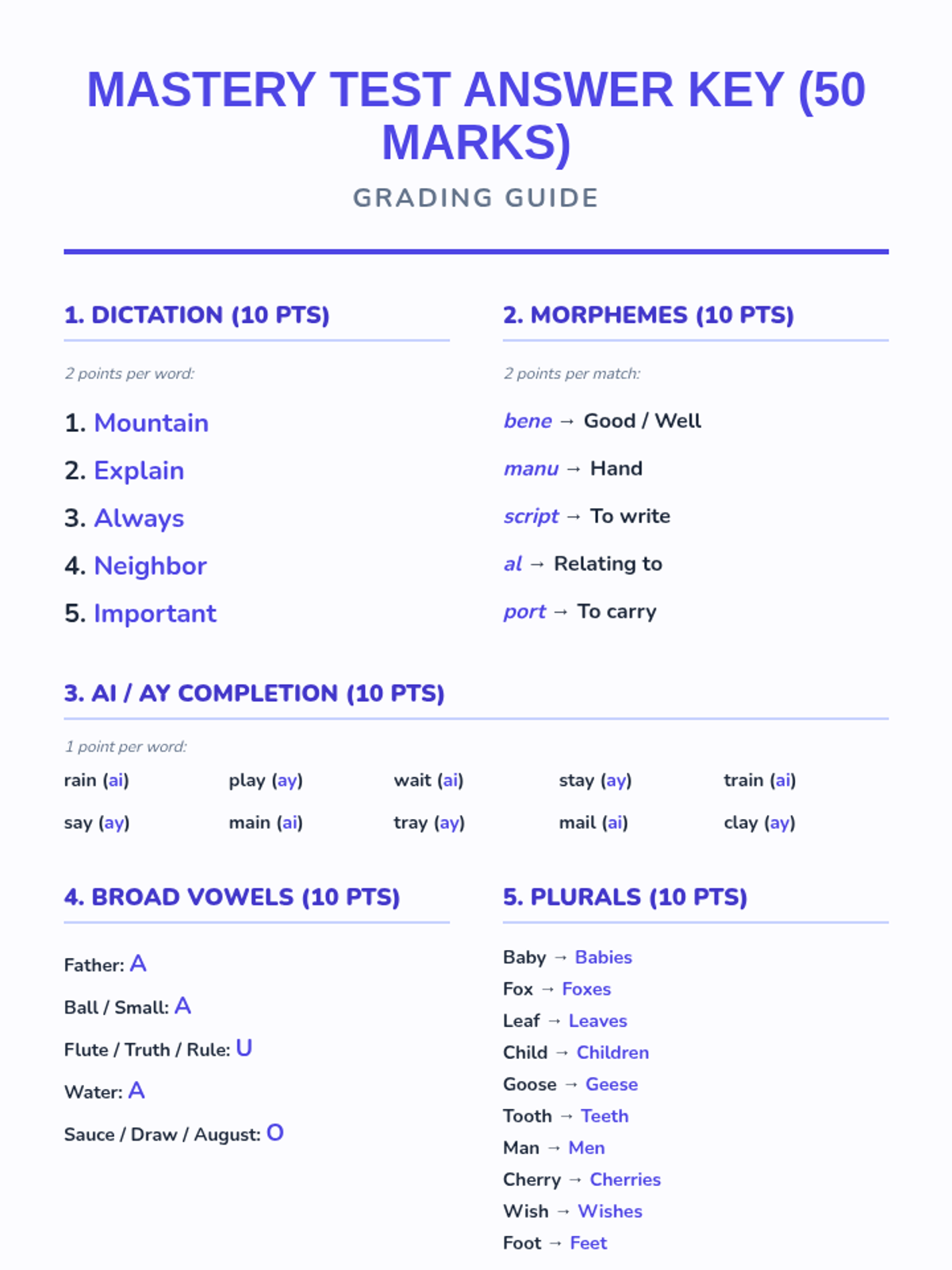
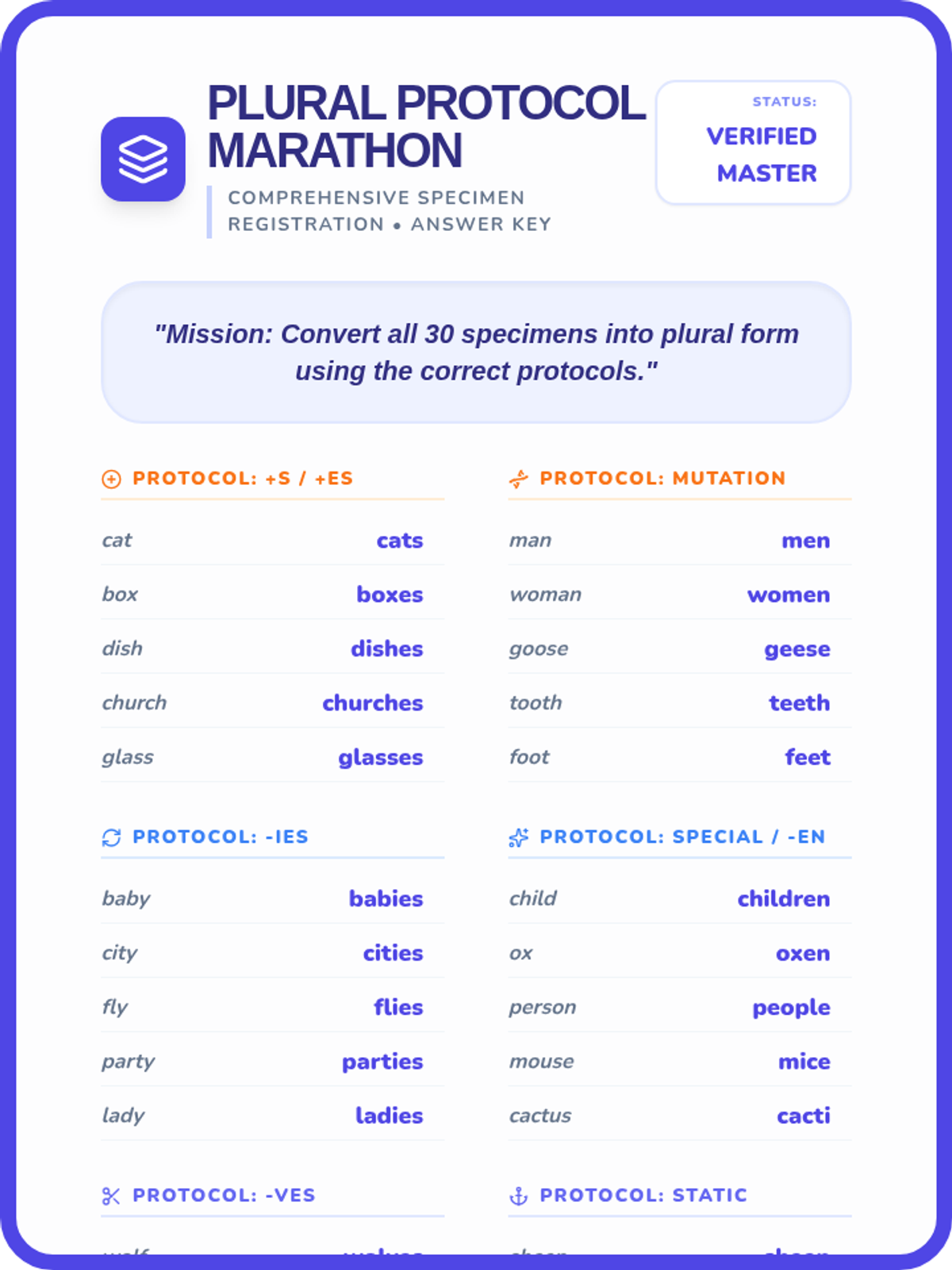
A comprehensive assessment covering phonograms, vowel sounds, plural classifications, and morphemic analysis. This lesson provides both the student test and the teacher answer key to evaluate student mastery of these linguistic concepts.
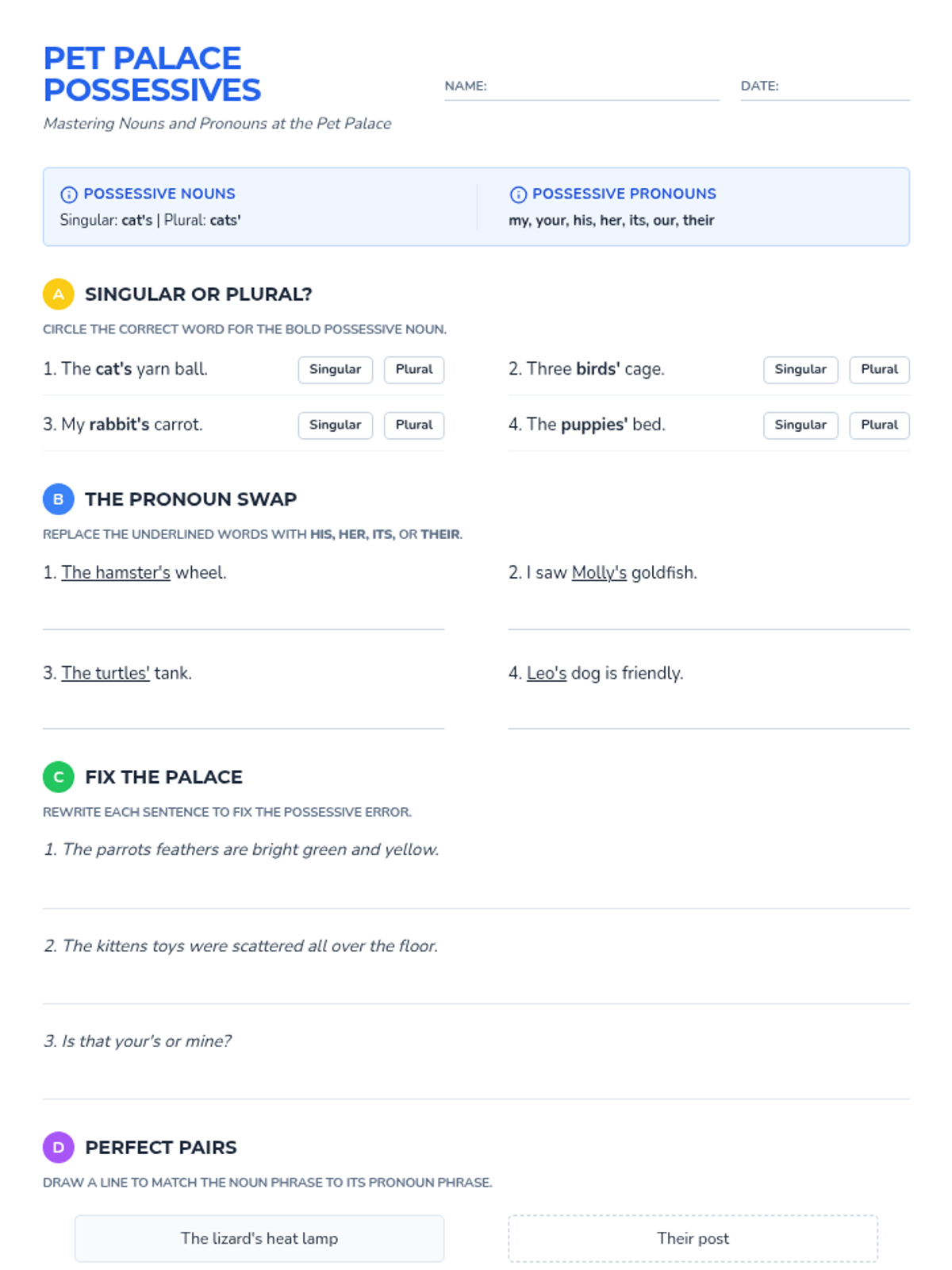
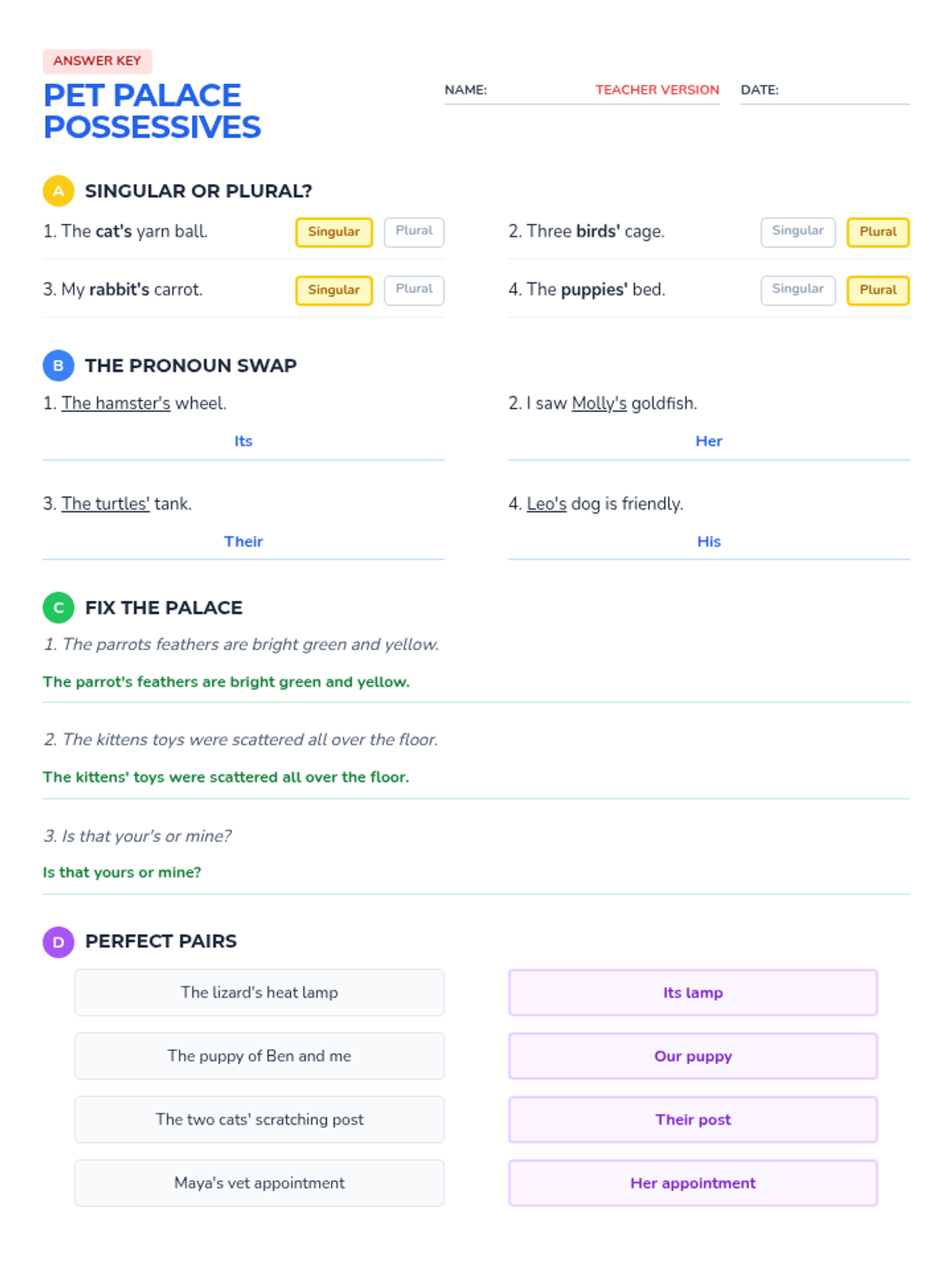
A comprehensive lesson for third graders to master singular and plural possessive nouns, as well as the transition from possessive nouns to pronouns through a fun pet-themed worksheet.
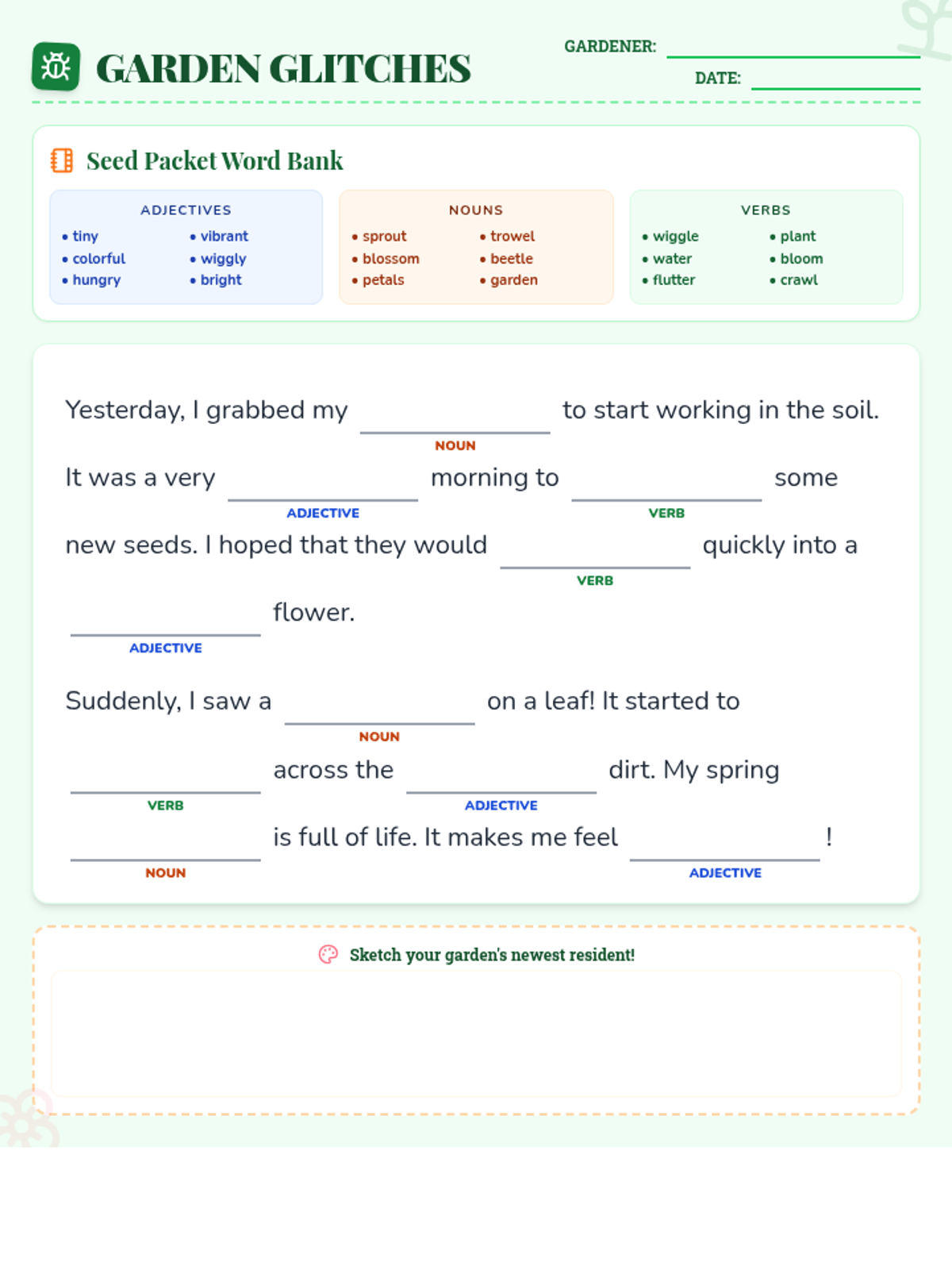
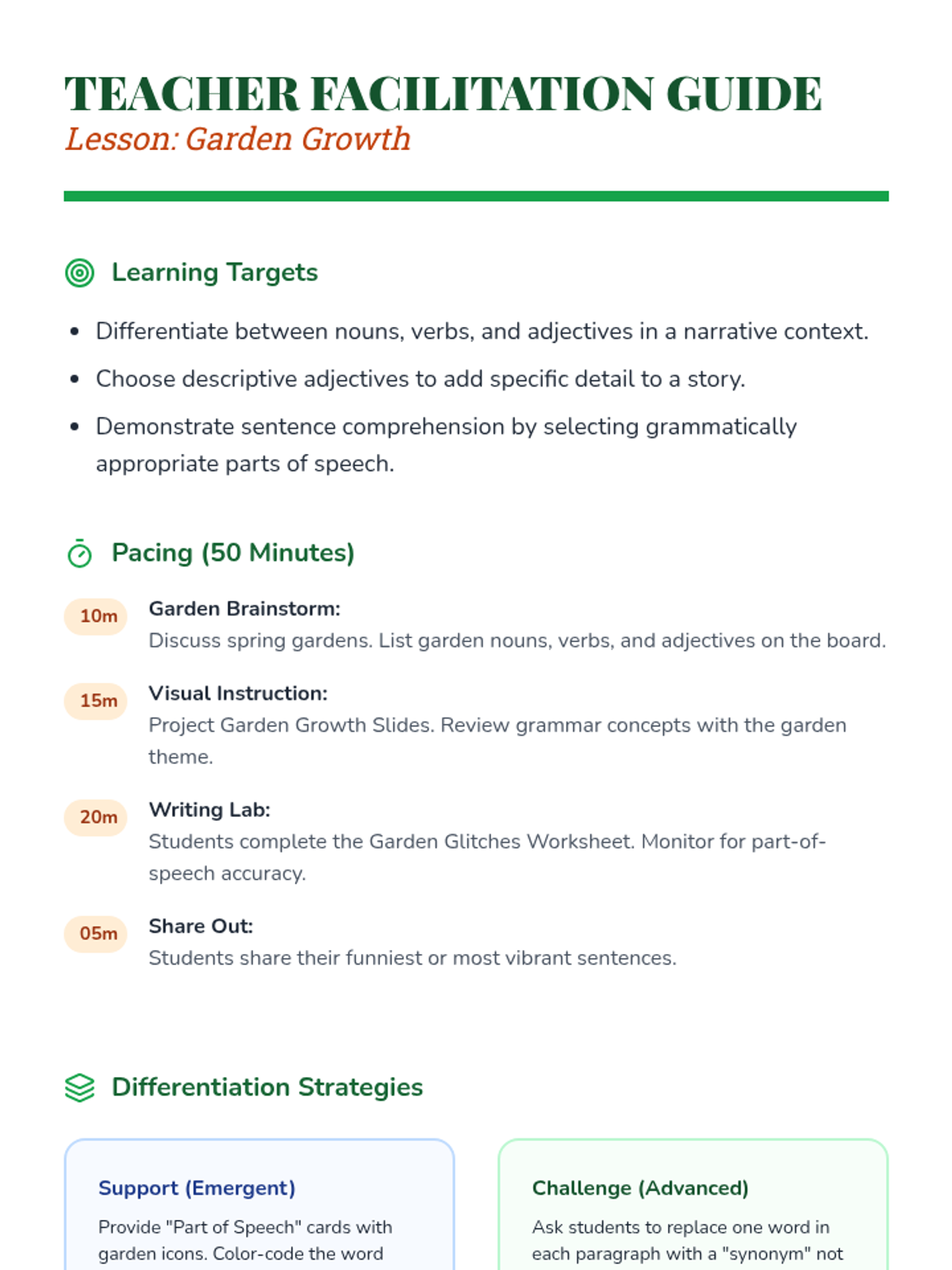
A second-grade focused lesson on nouns, verbs, and adjectives set in a vibrant spring garden. Students will explore descriptive language while filling in a garden-themed story.
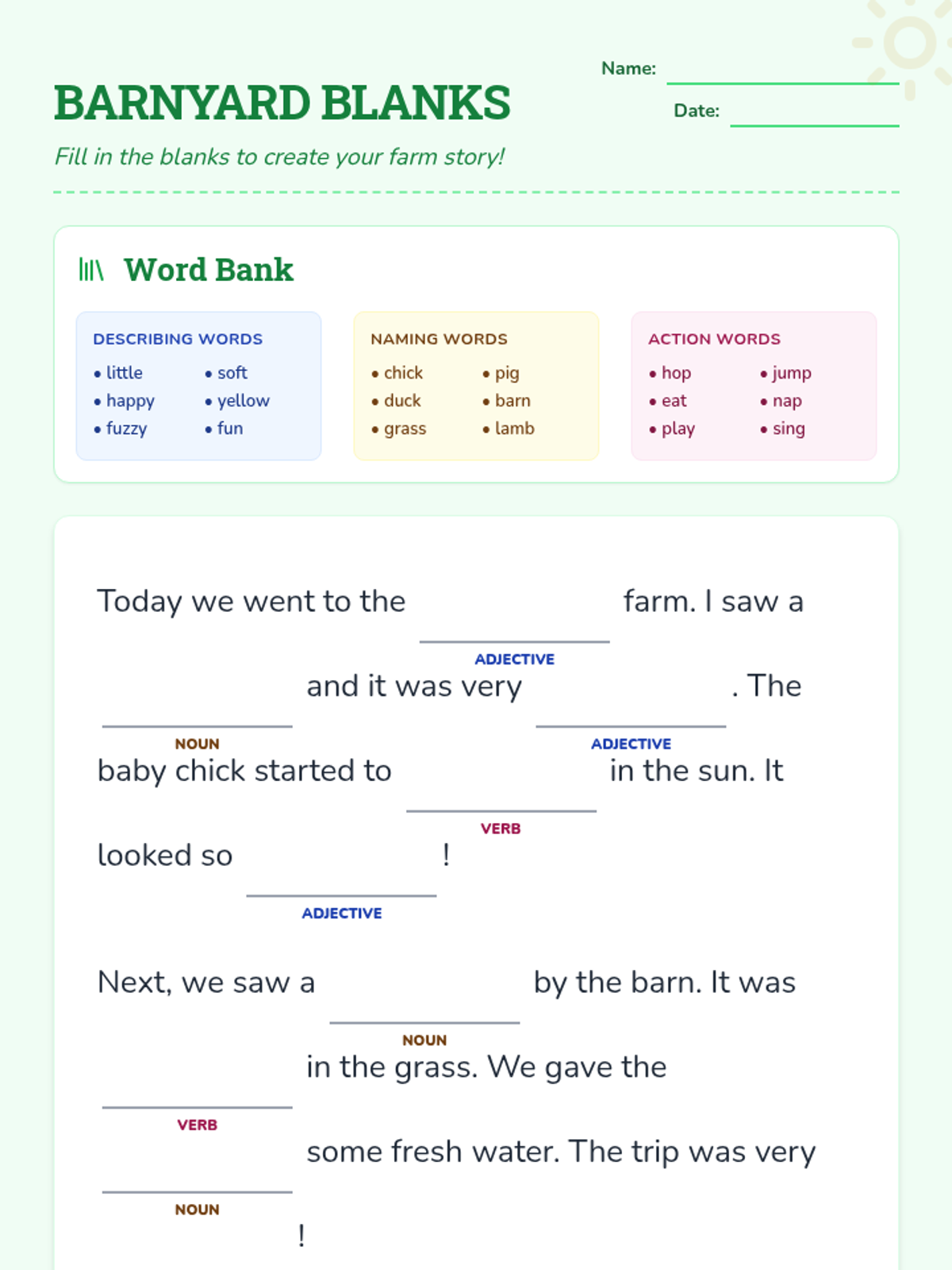
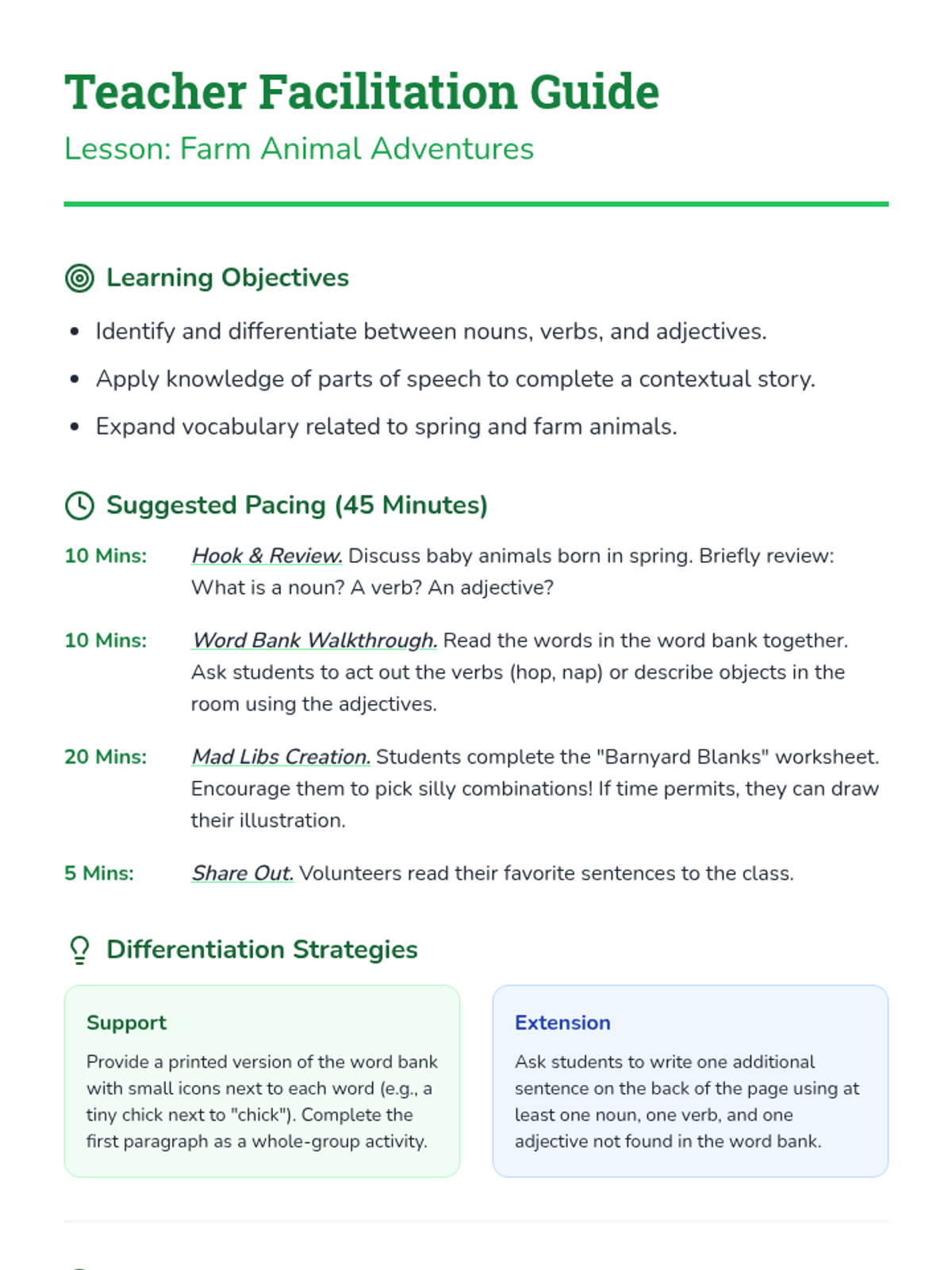
A fun, spring-themed lesson focused on identifying and using nouns, verbs, and adjectives through a baby animal farm story. Students will practice parts of speech while creating their own silly farm adventure.
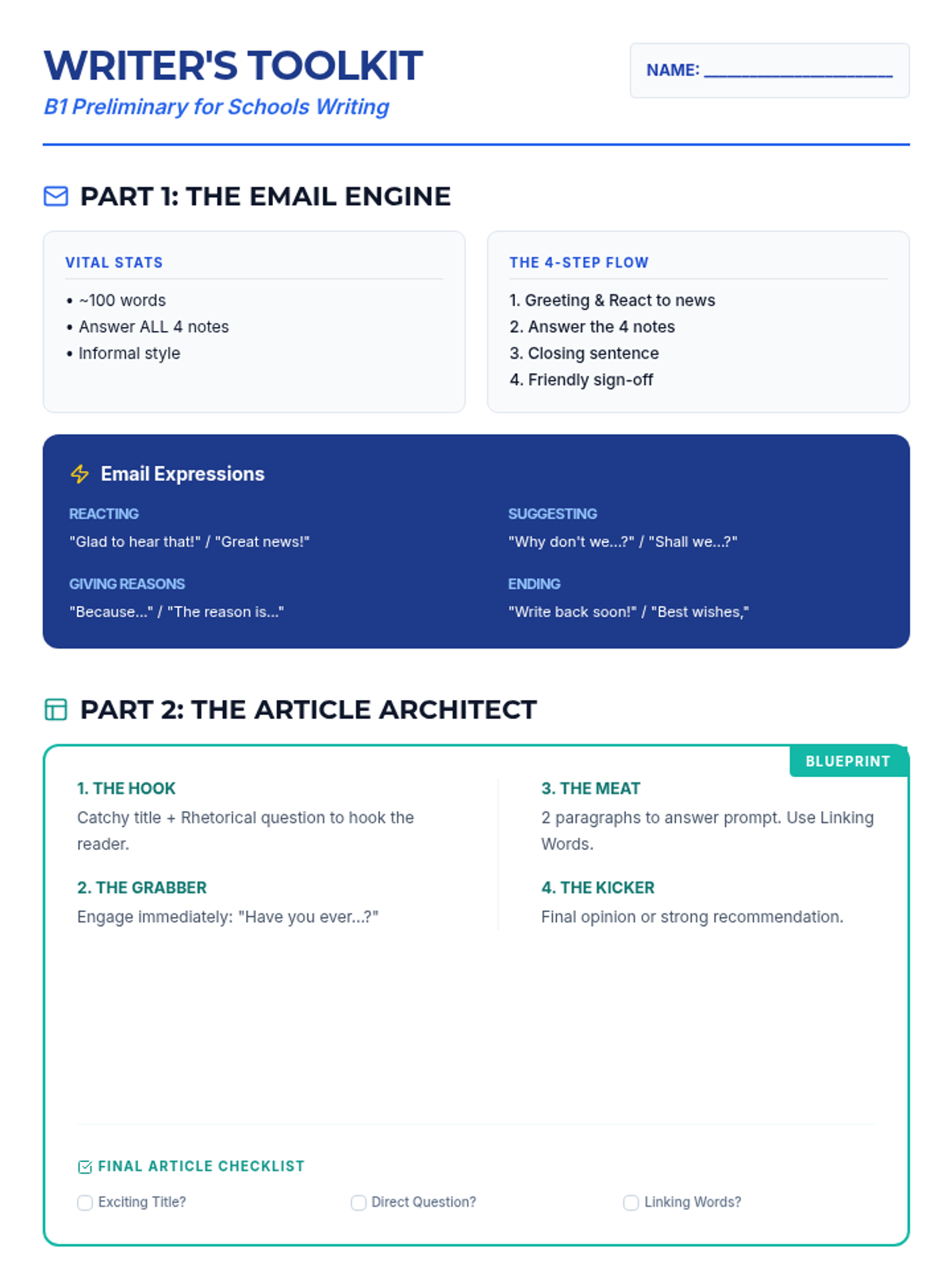
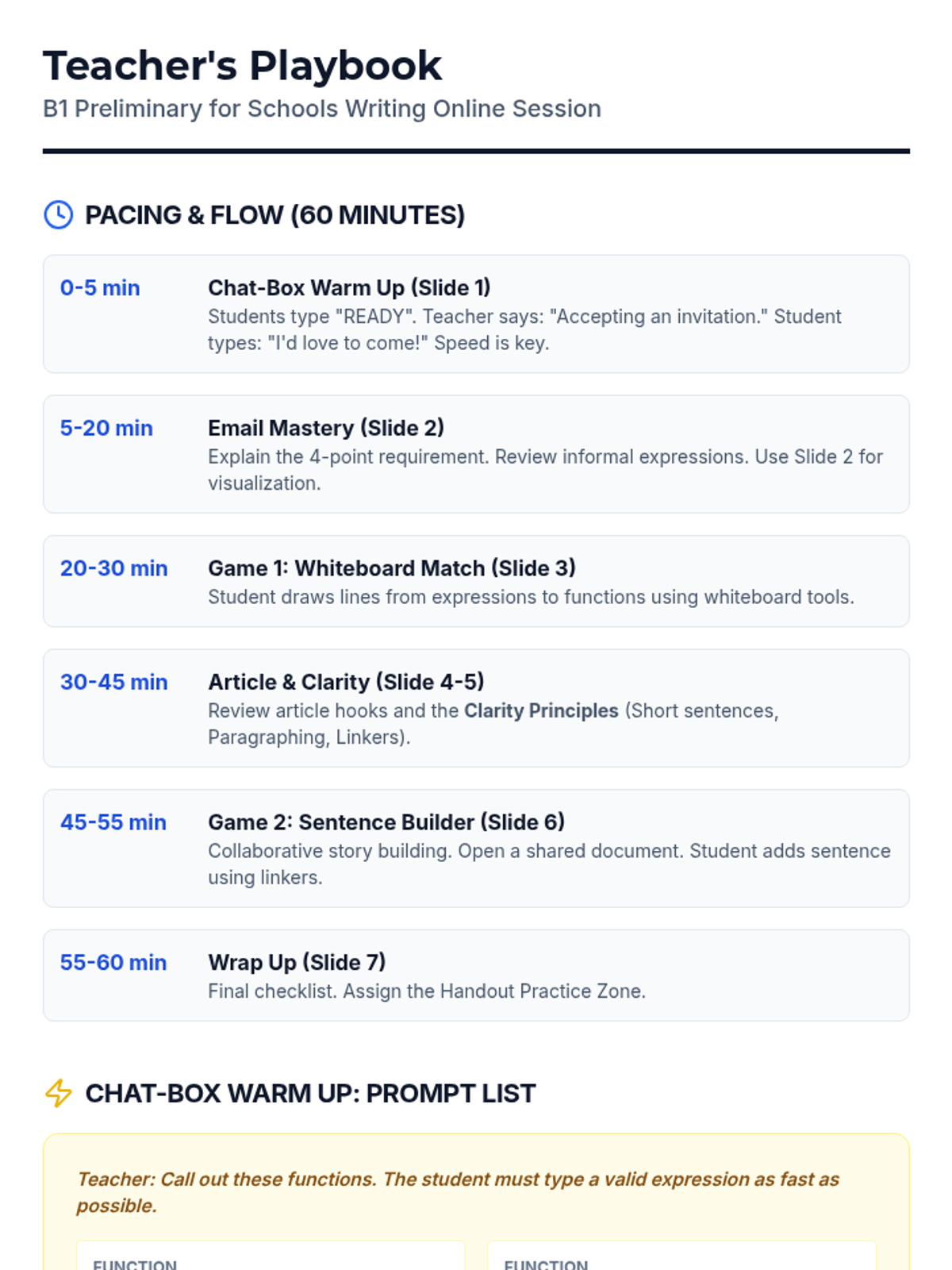
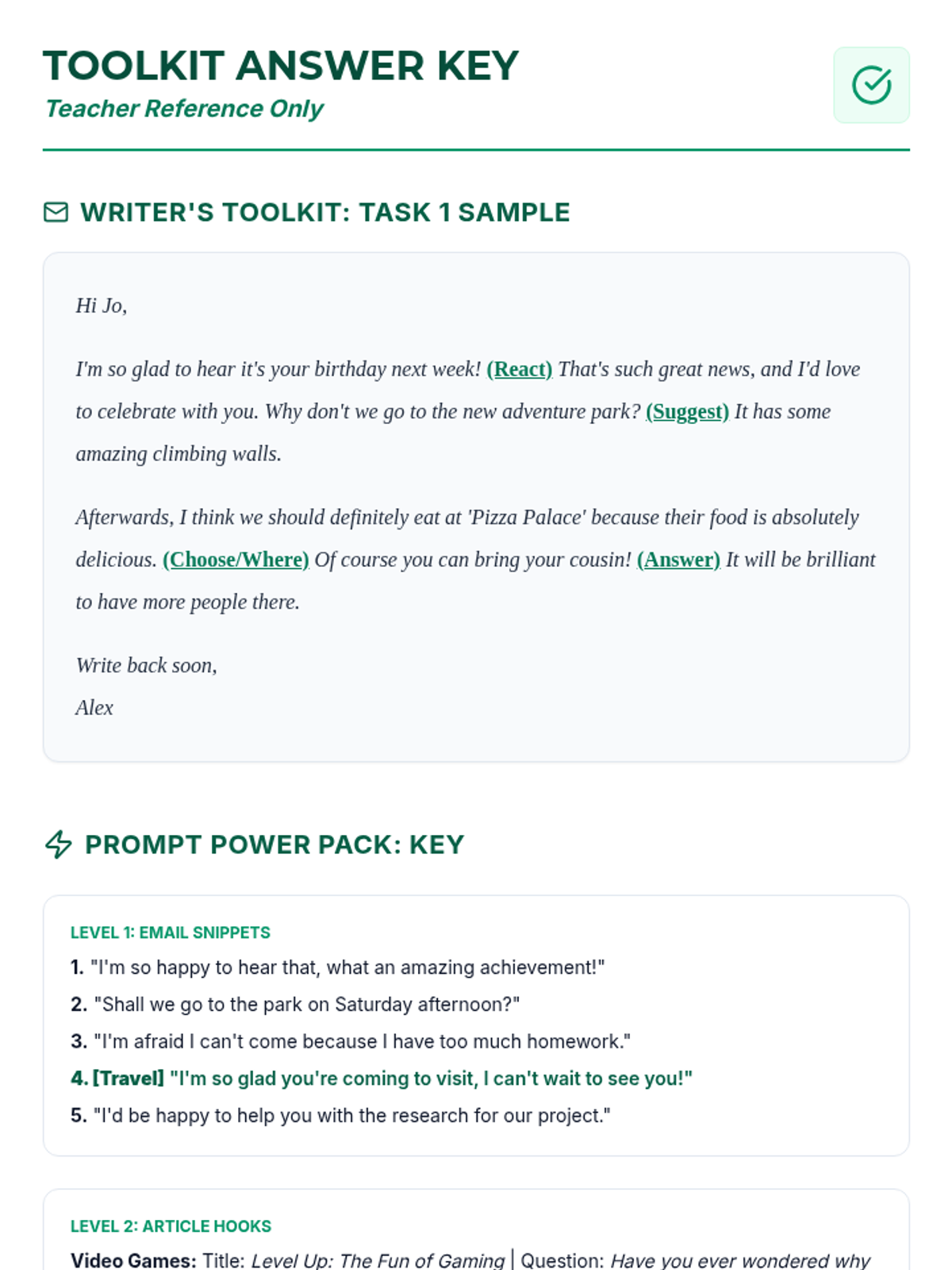
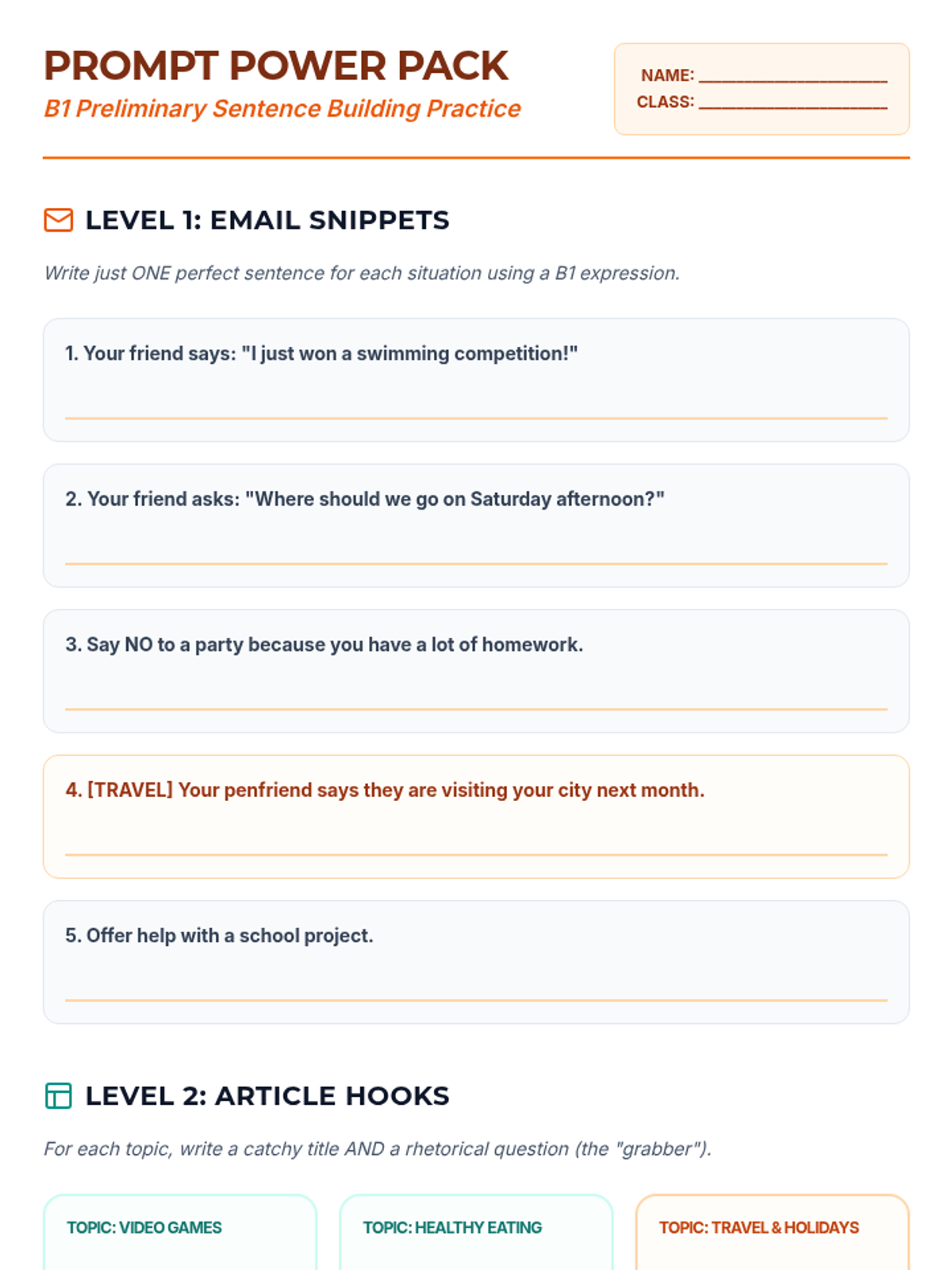
A comprehensive one-hour online lesson designed for 7th graders to master the Cambridge B1 Preliminary for Schools Writing Paper, focusing on emails and articles with interactive digital games.
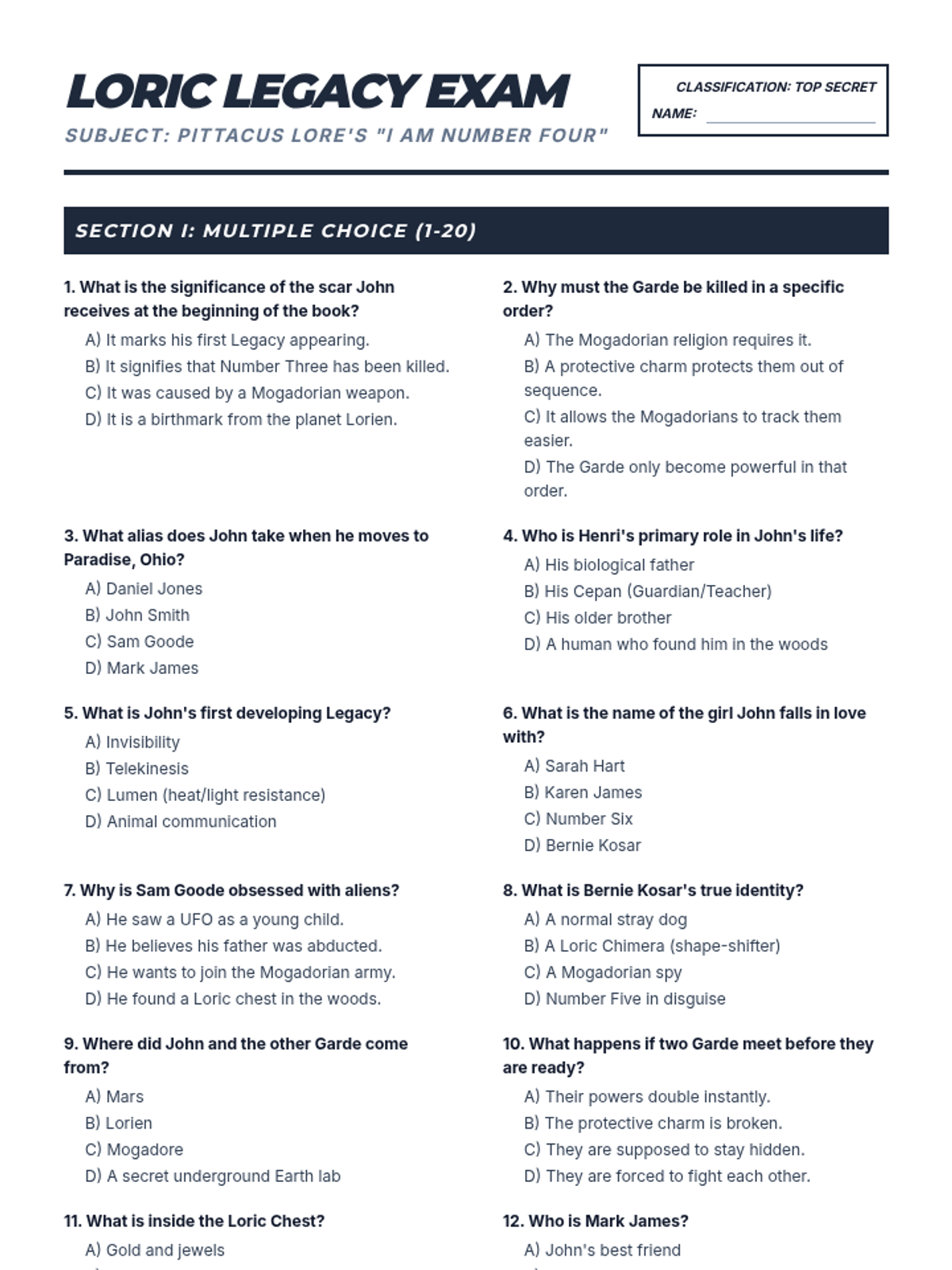
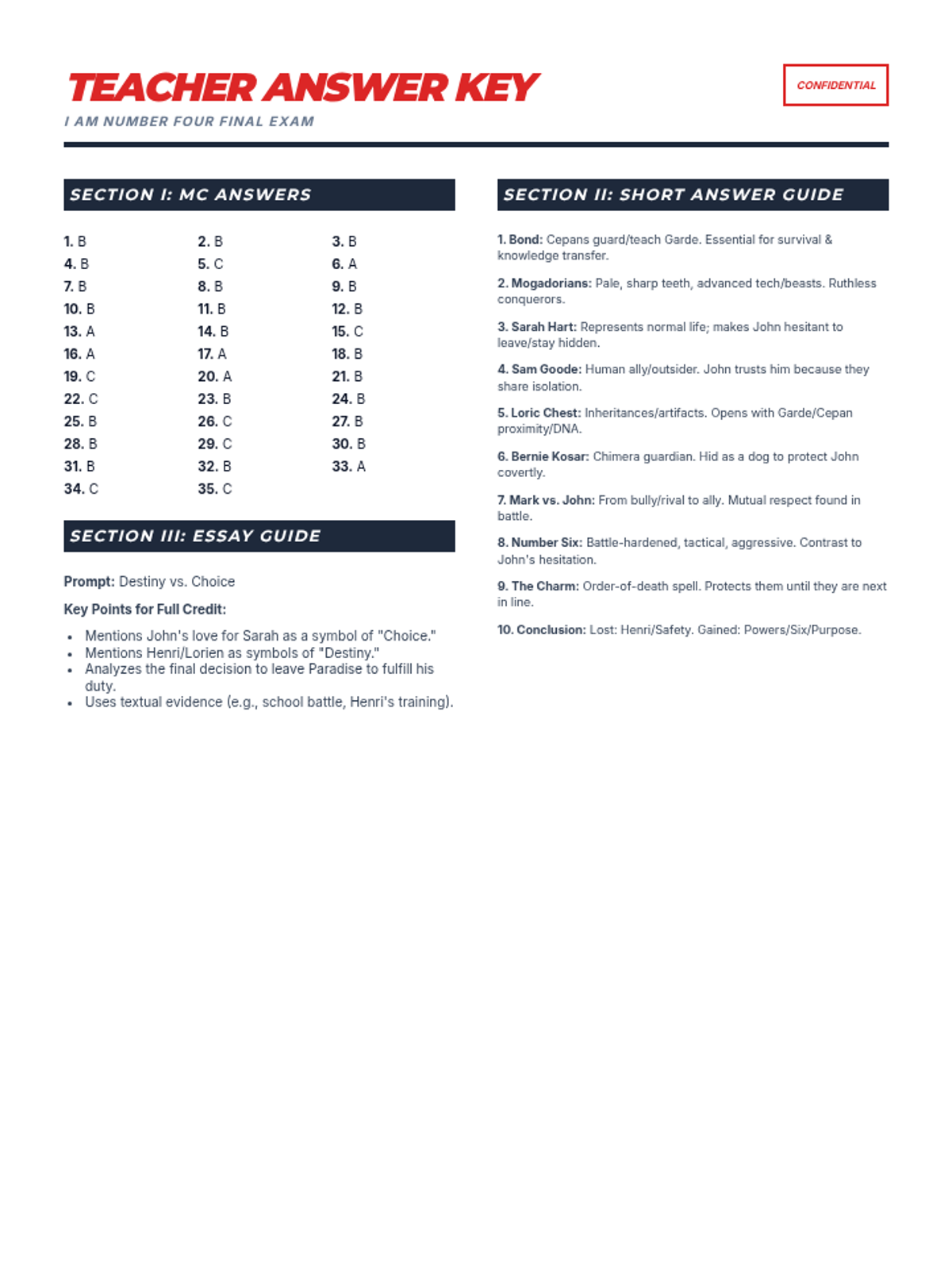
A comprehensive final assessment for the novel 'I Am Number Four', featuring a diverse range of questions and a thematic essay component.
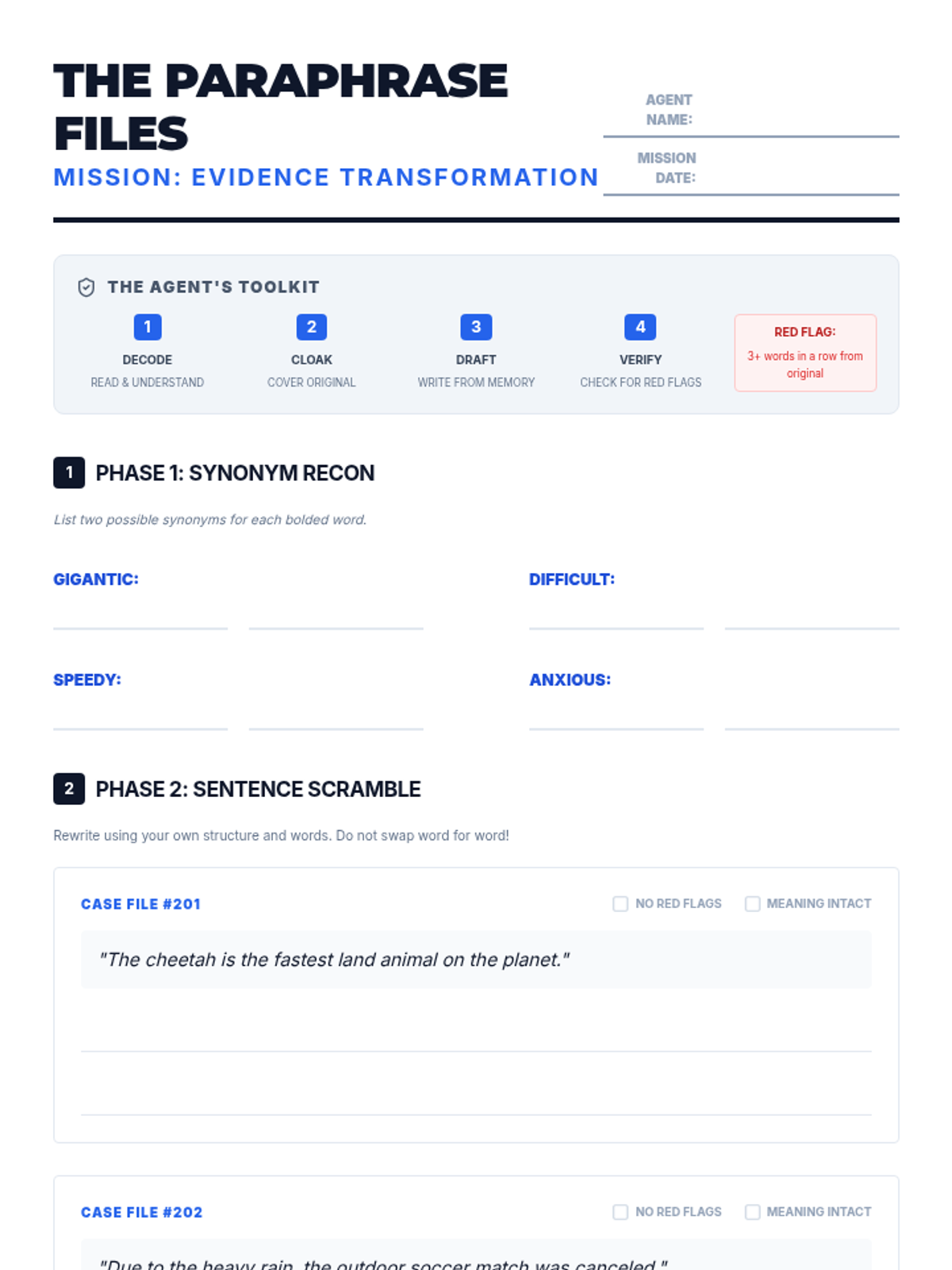
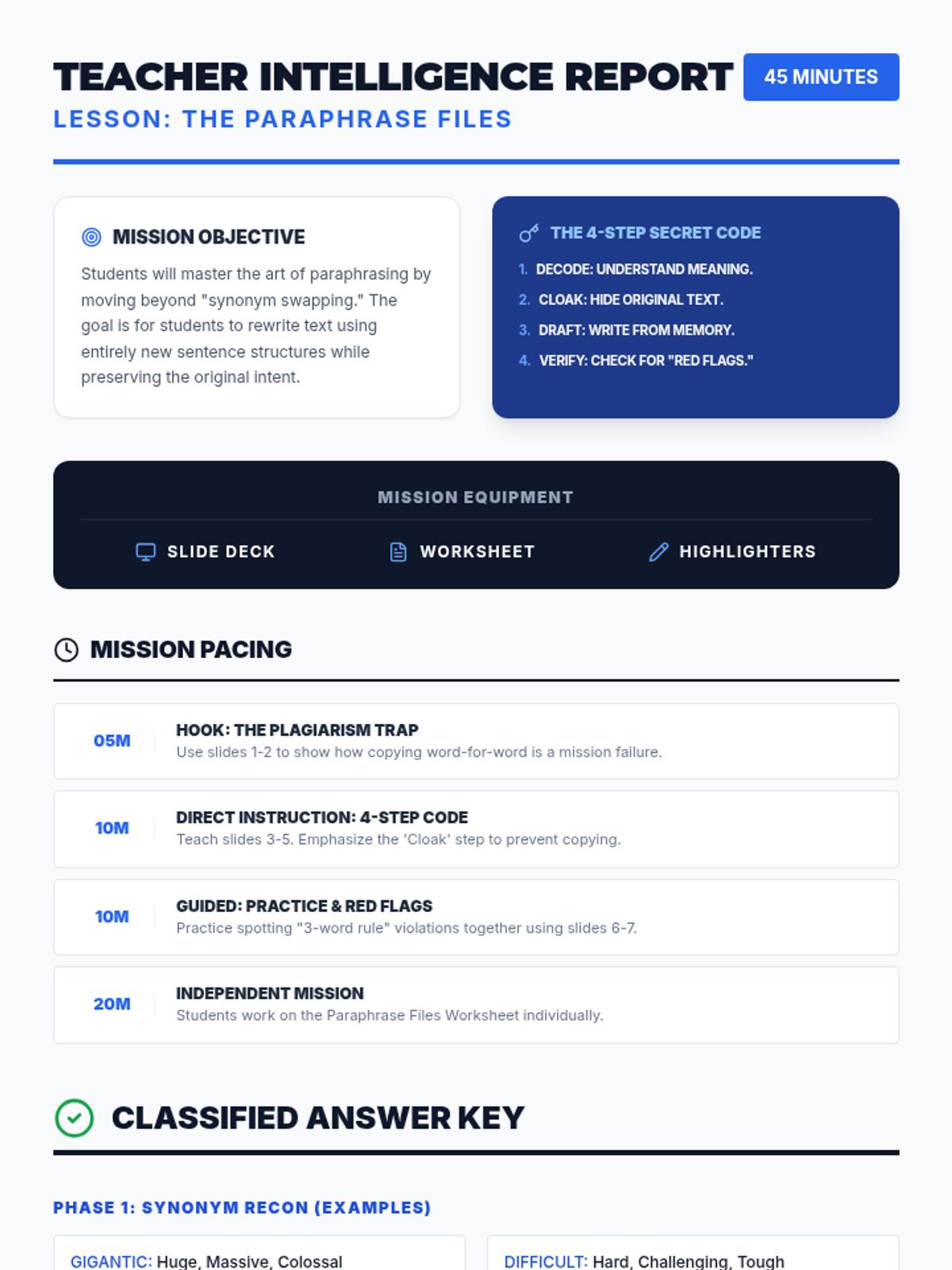
A structured 45-minute introductory lesson designed to help struggling students master paraphrasing using the '4-Step Secret Code' method. Includes direct instruction, guided practice, and independent application.
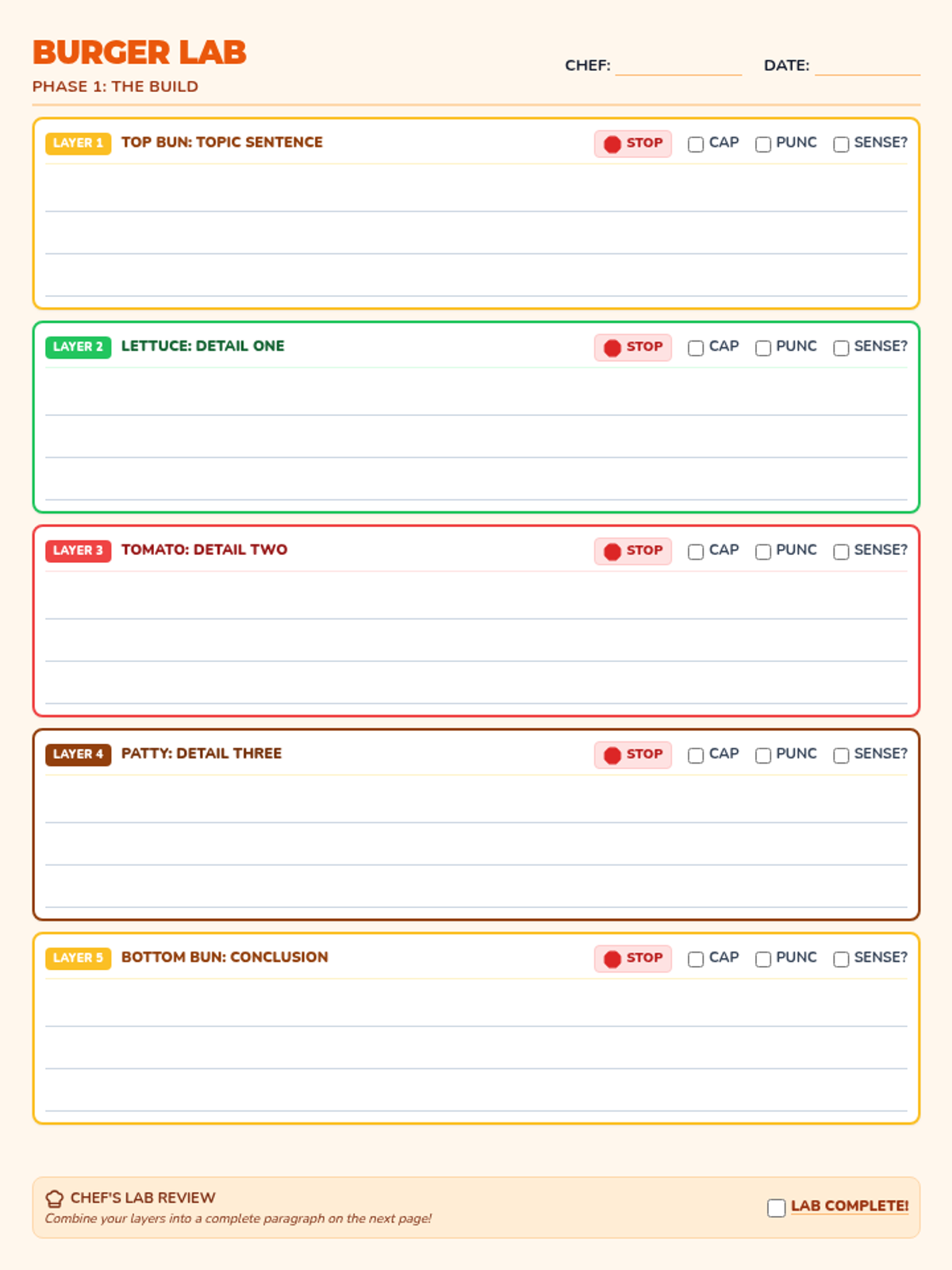
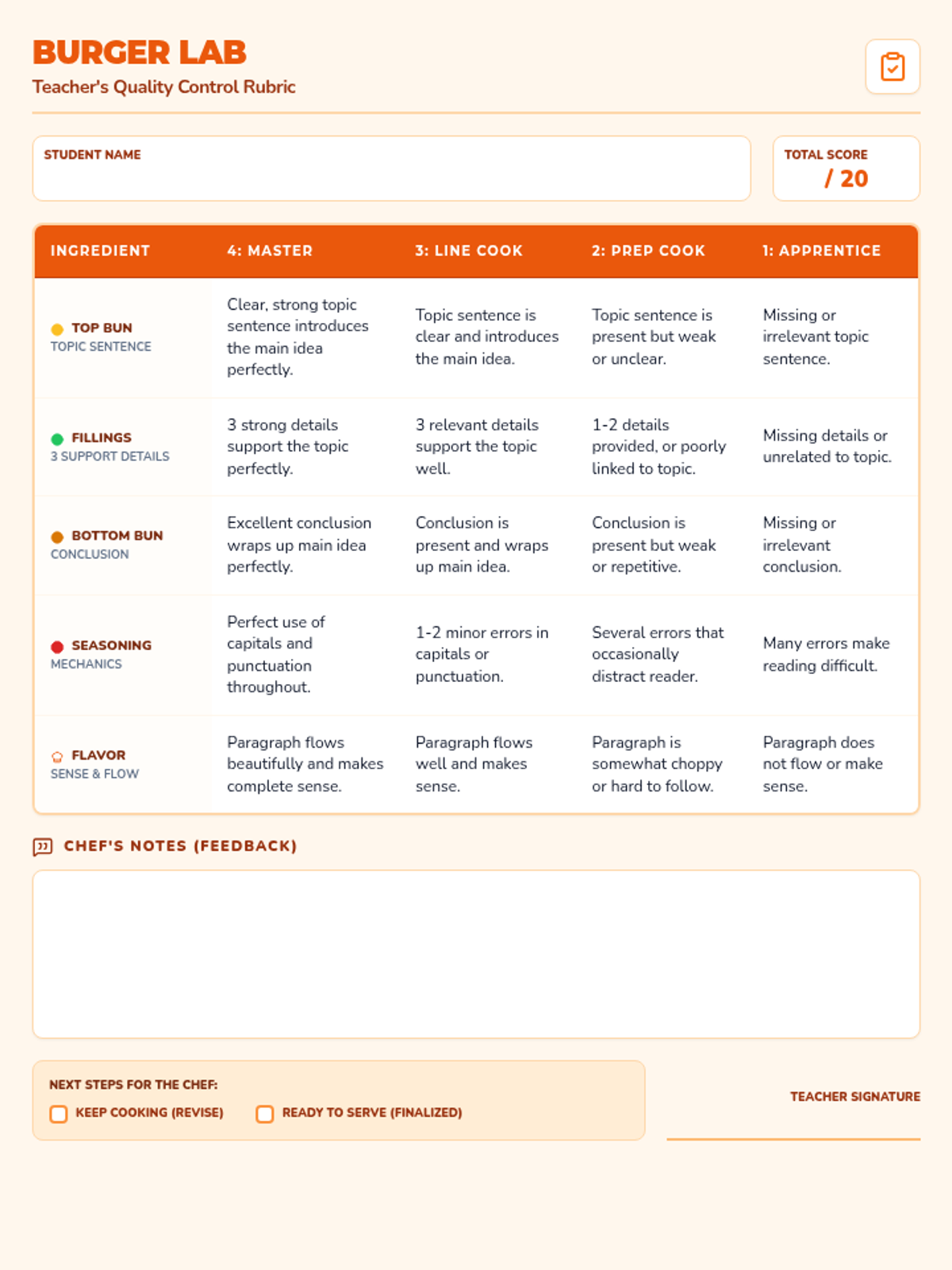
A lesson focused on the 'Hamburger' paragraph structure, emphasizing self-editing and quality control at each step of the writing process.
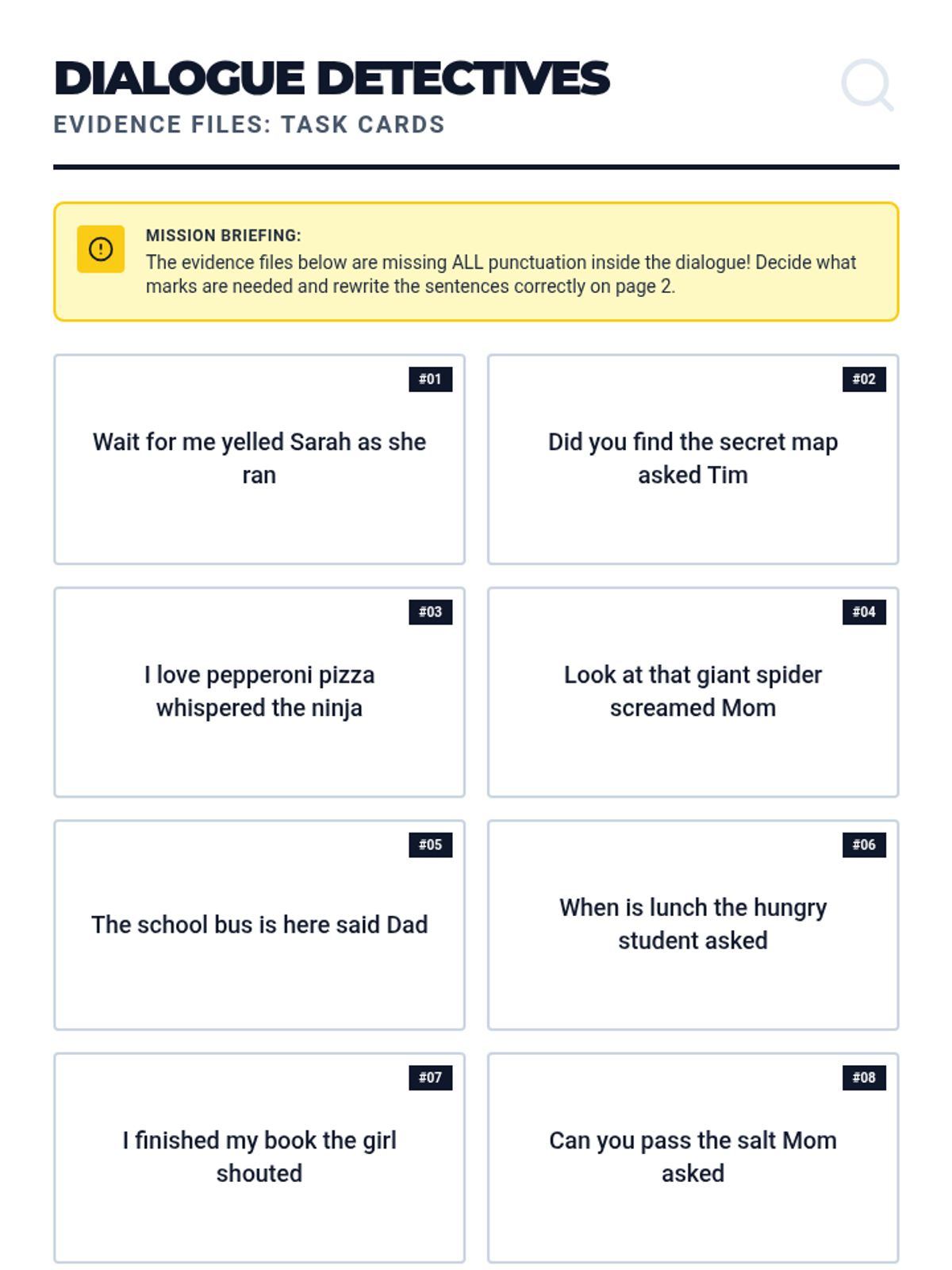
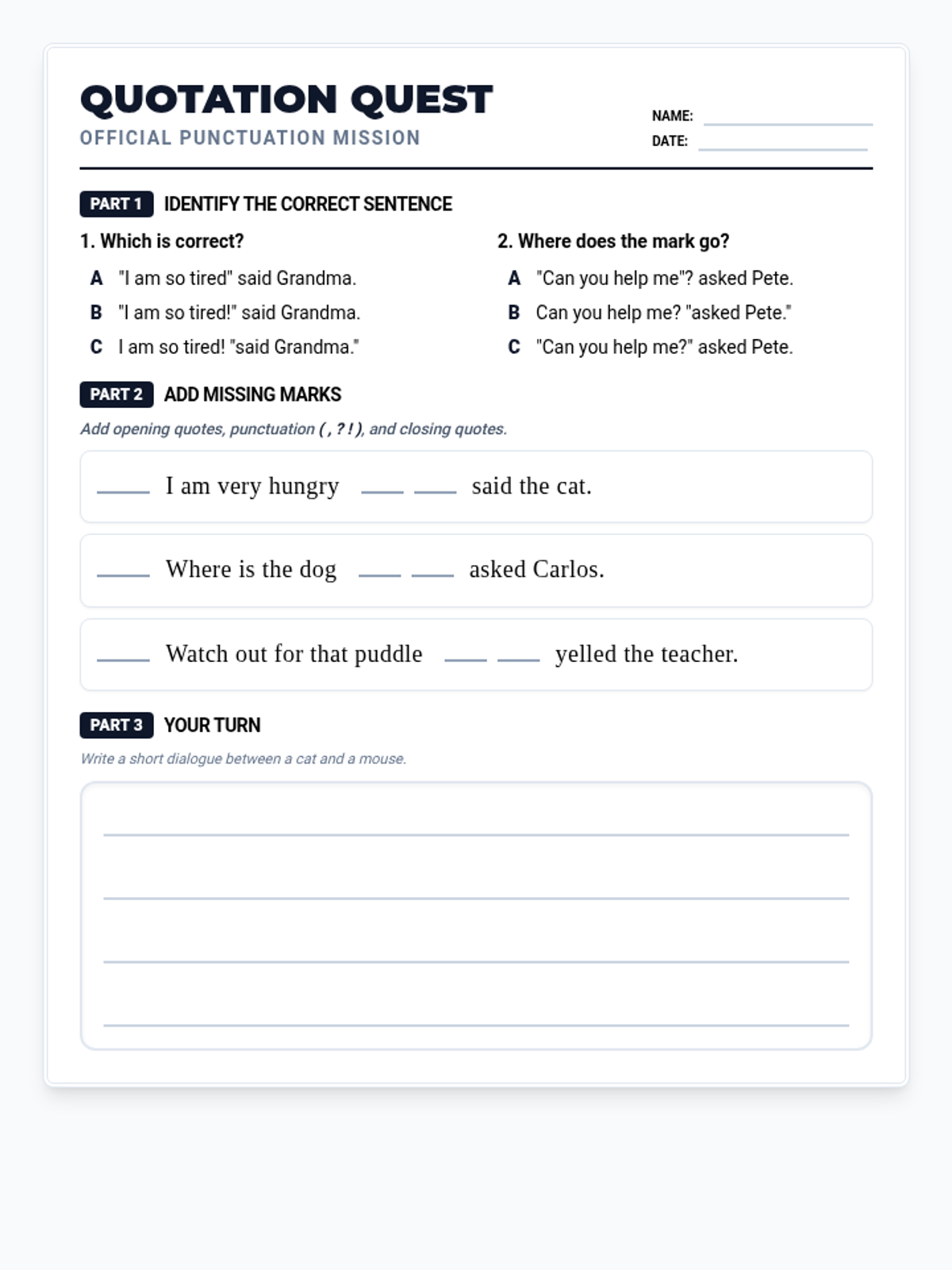
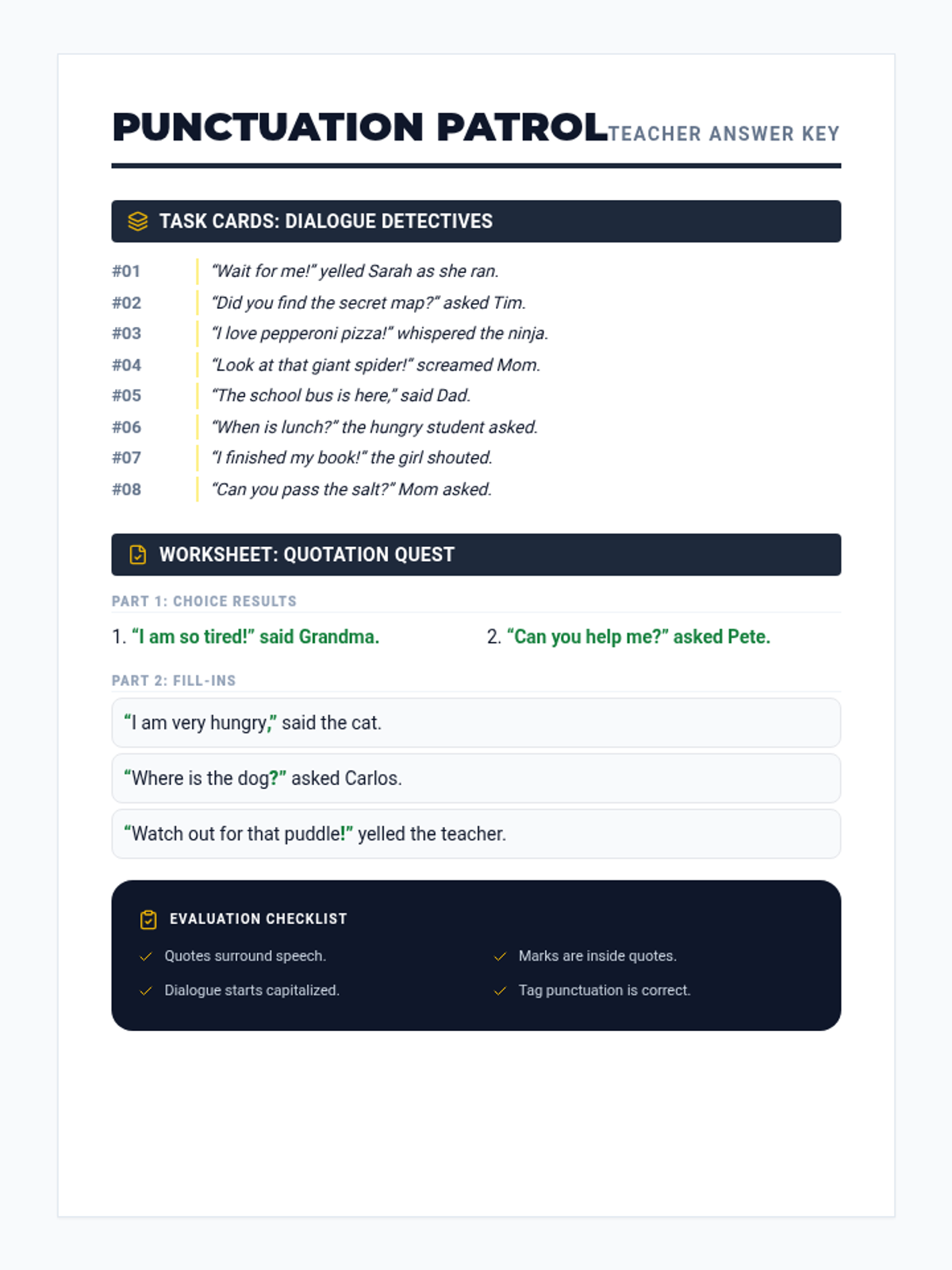
A mystery-themed lesson where students become 'Dialogue Detectives' to master the use of quotation marks and end punctuation in written speech. Students will identify, fix, and create correctly punctuated dialogue.
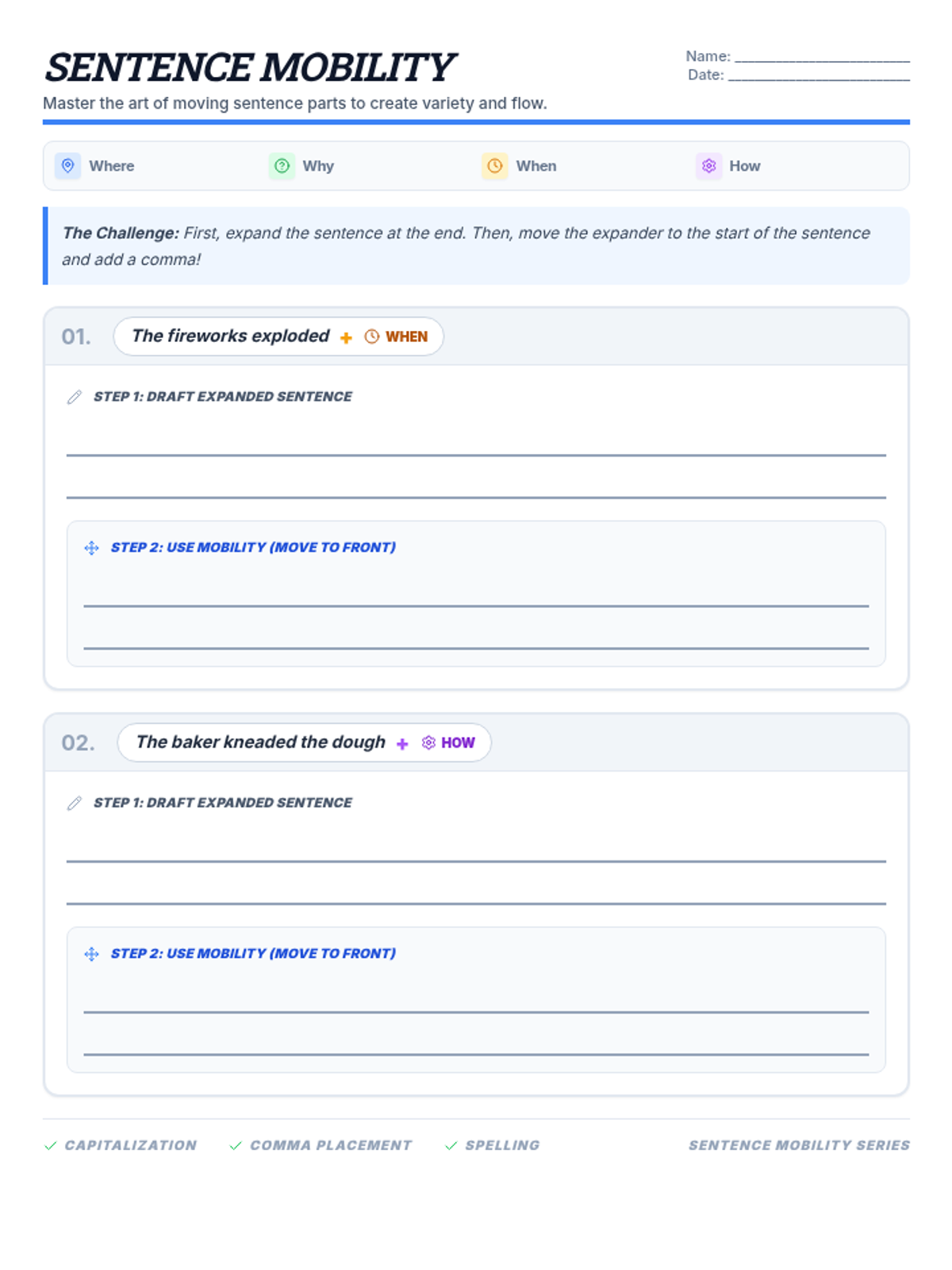
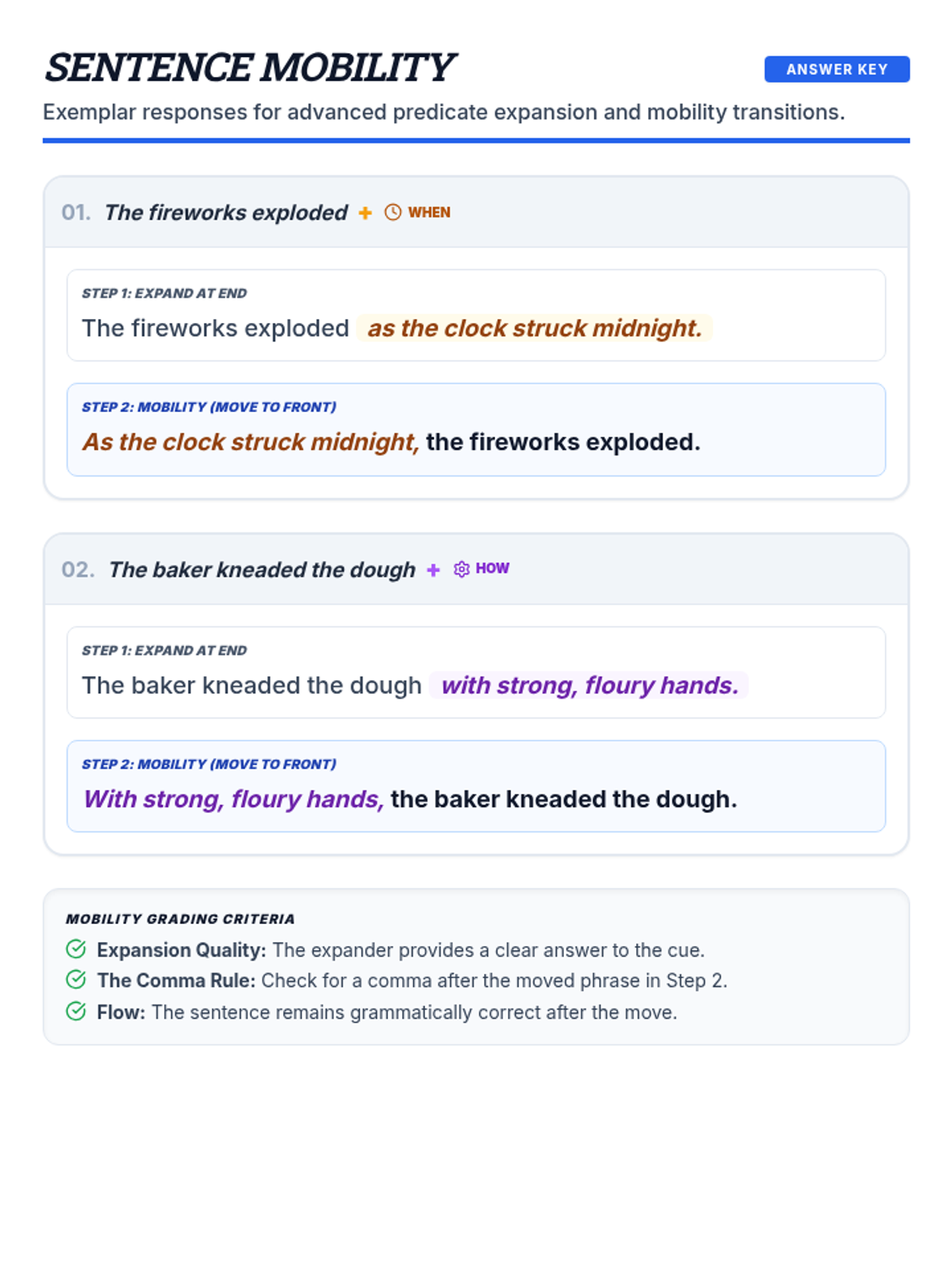
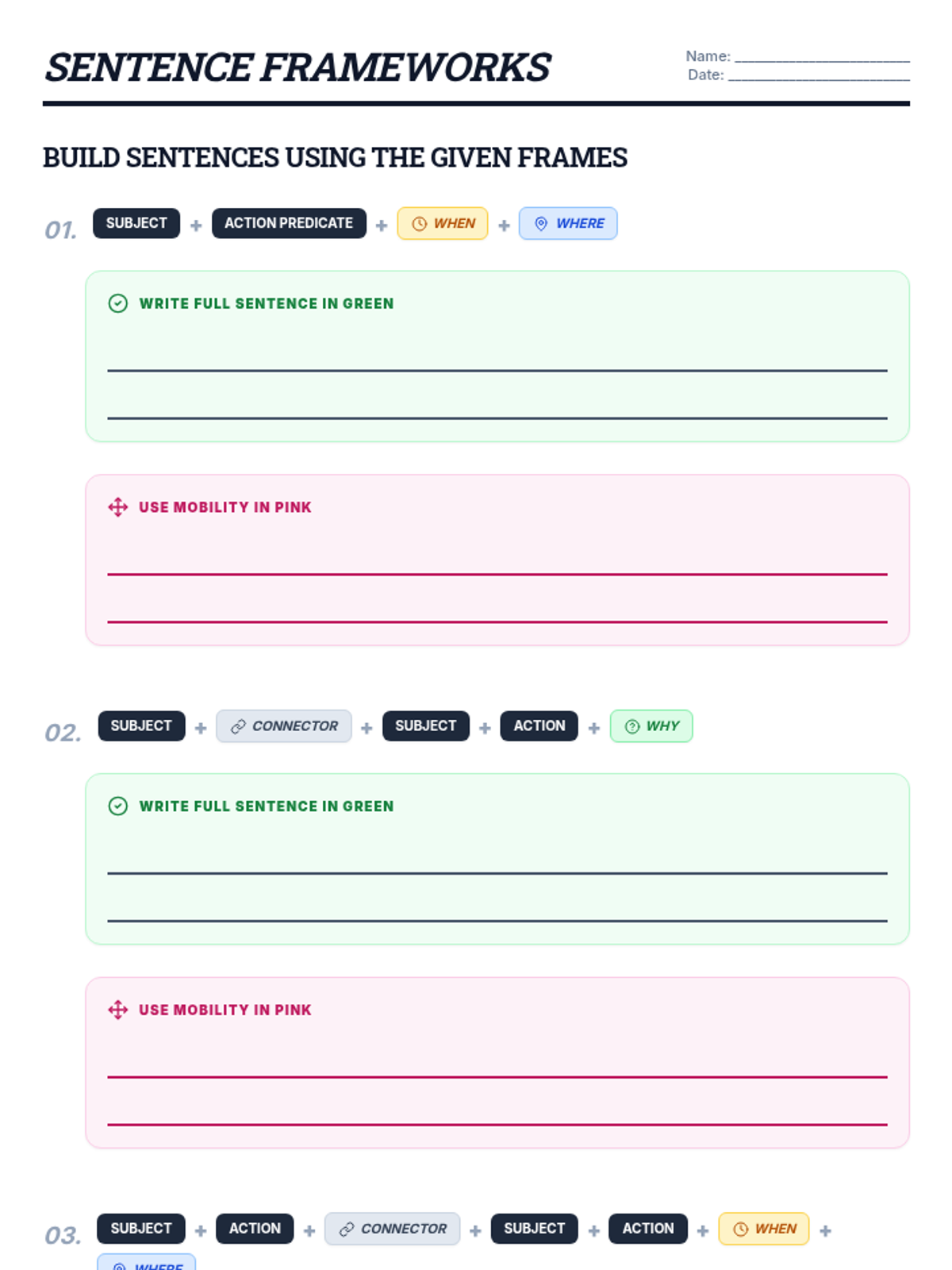
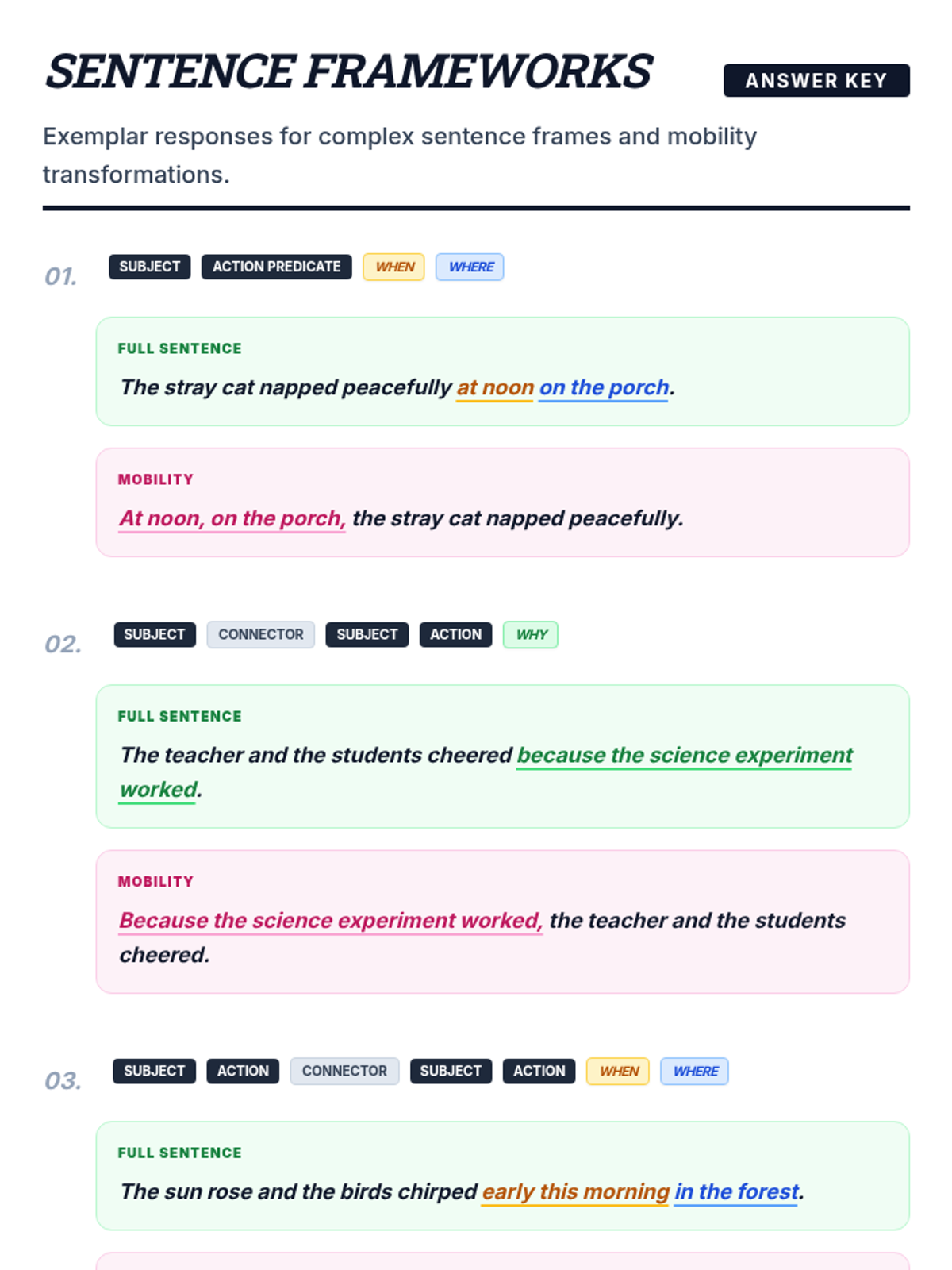
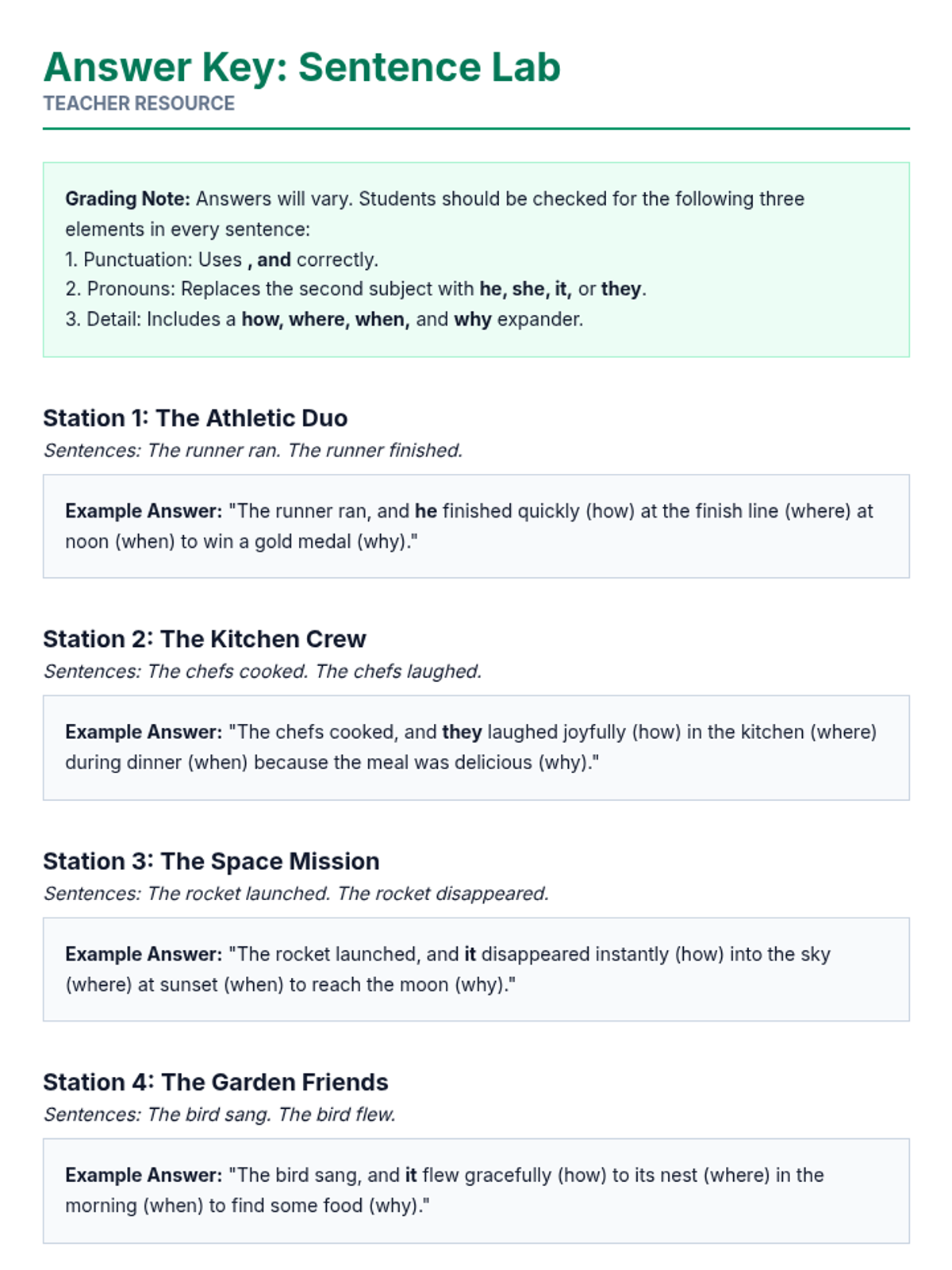
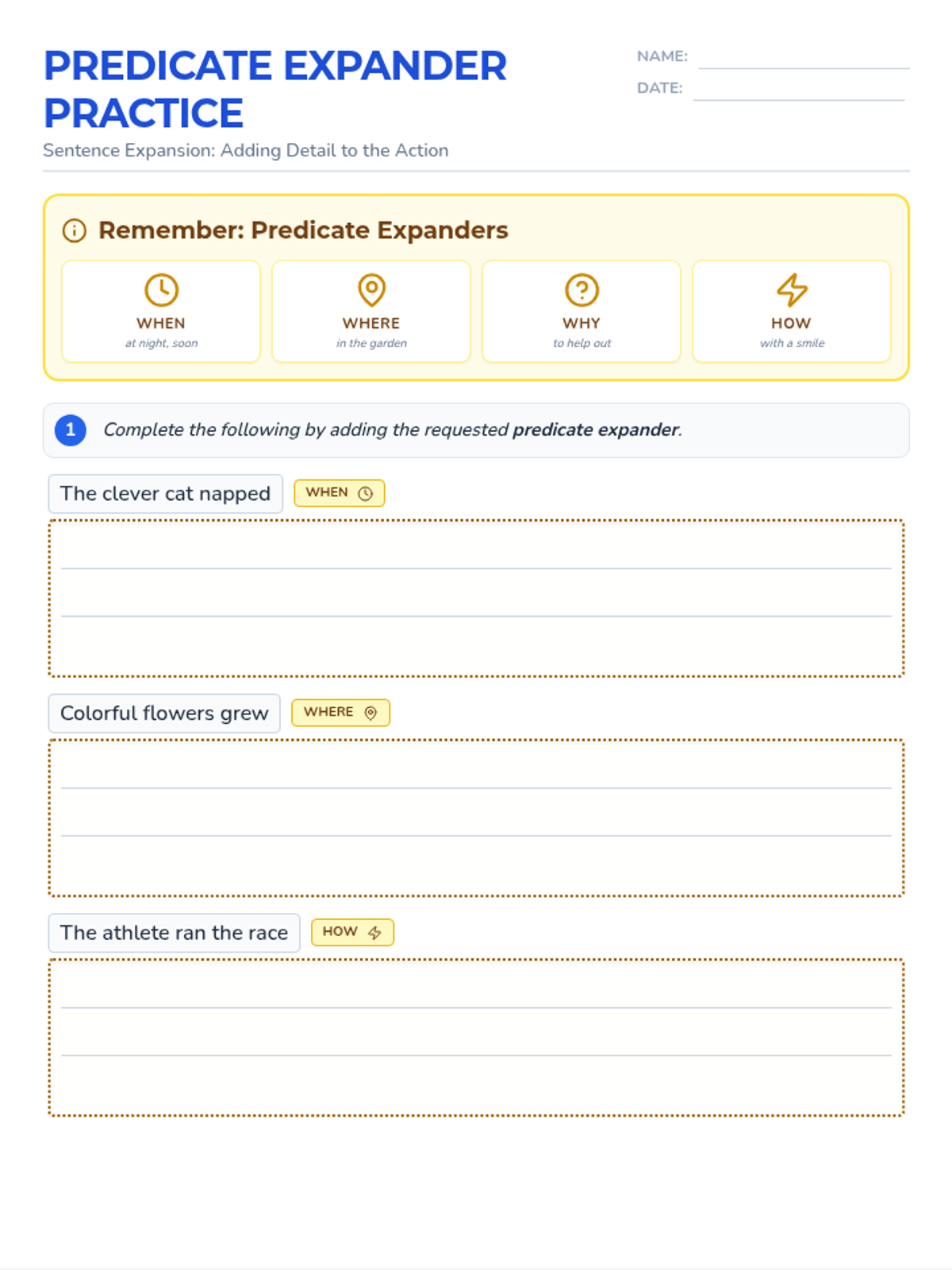
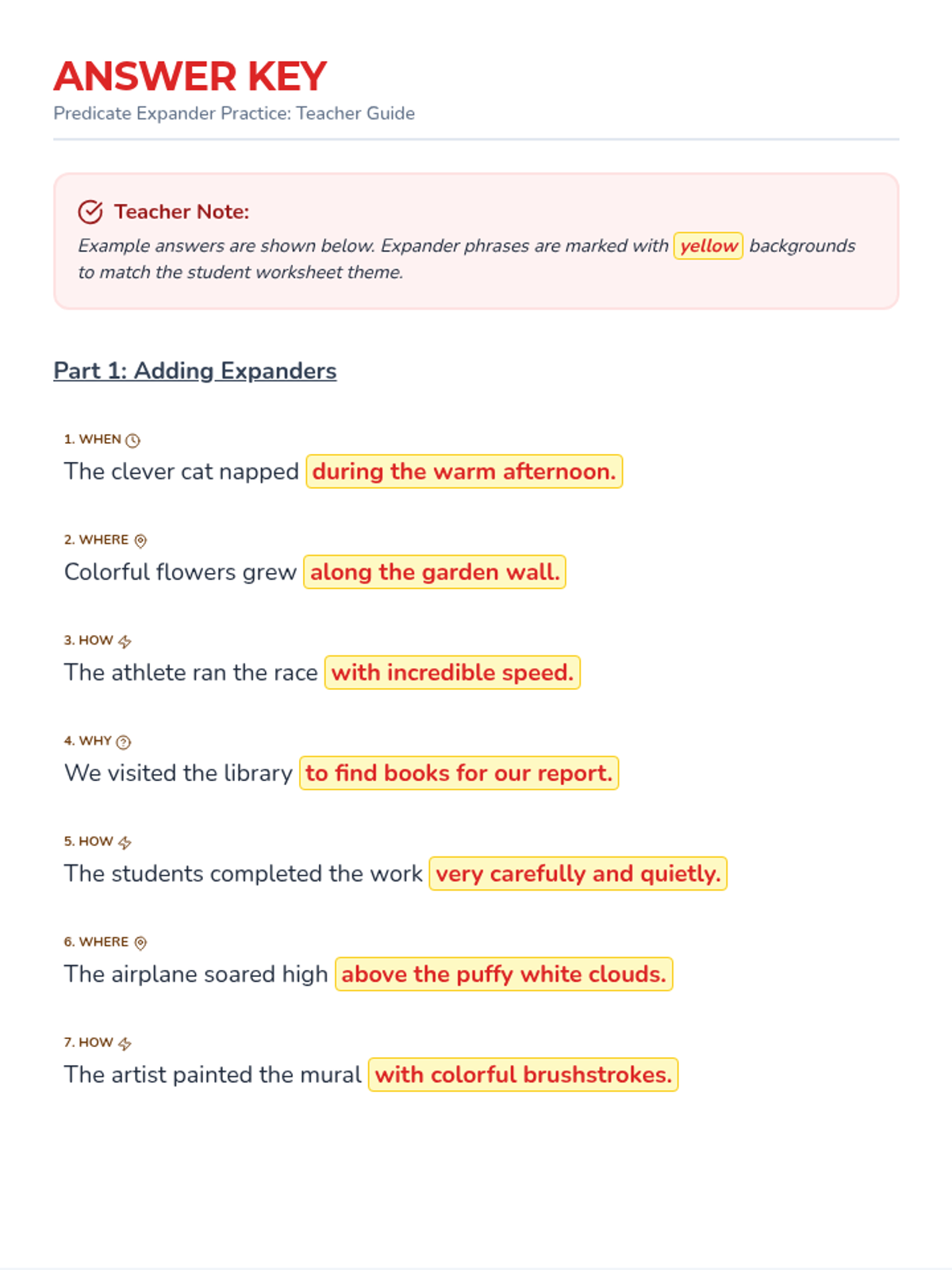
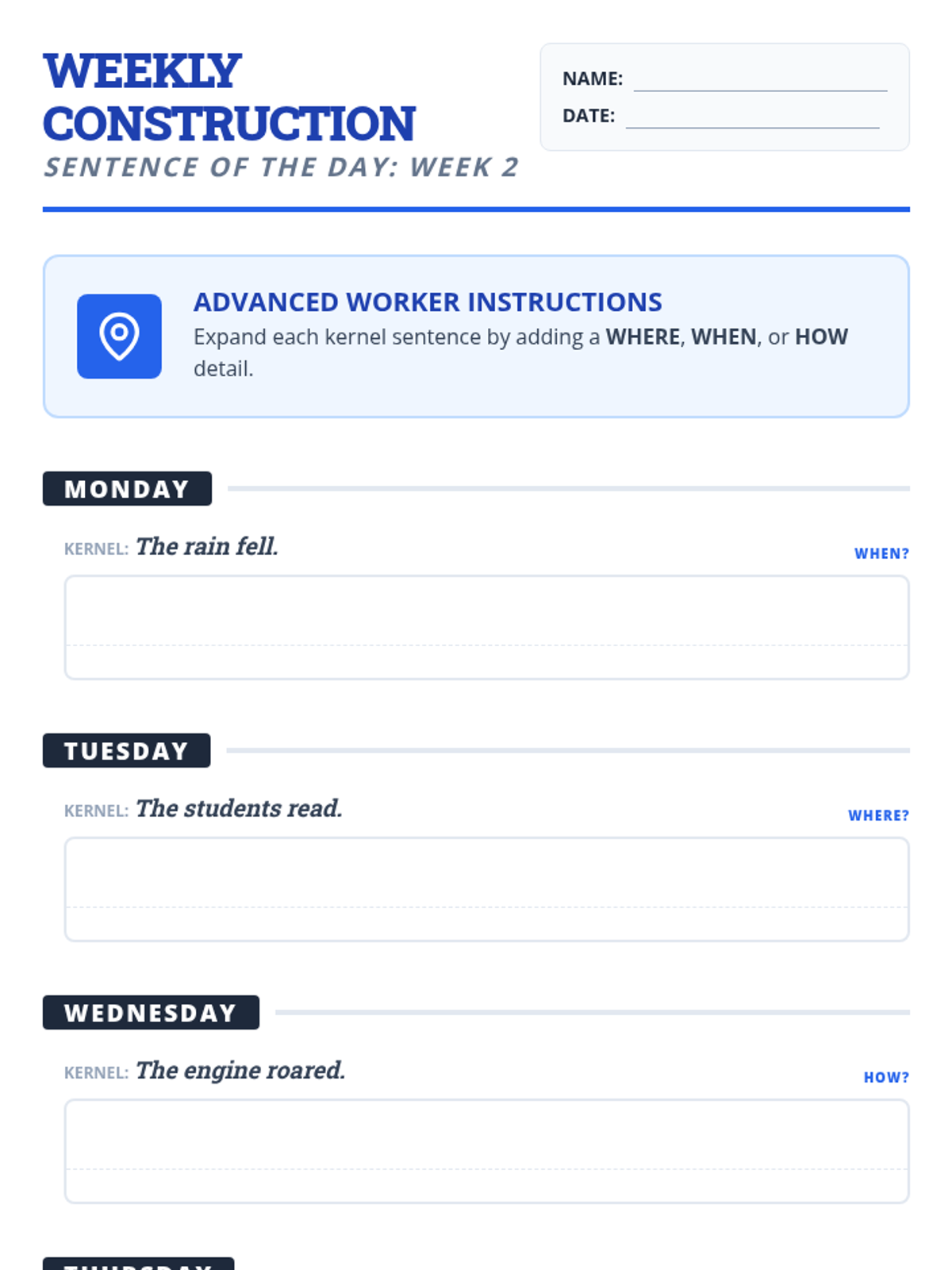
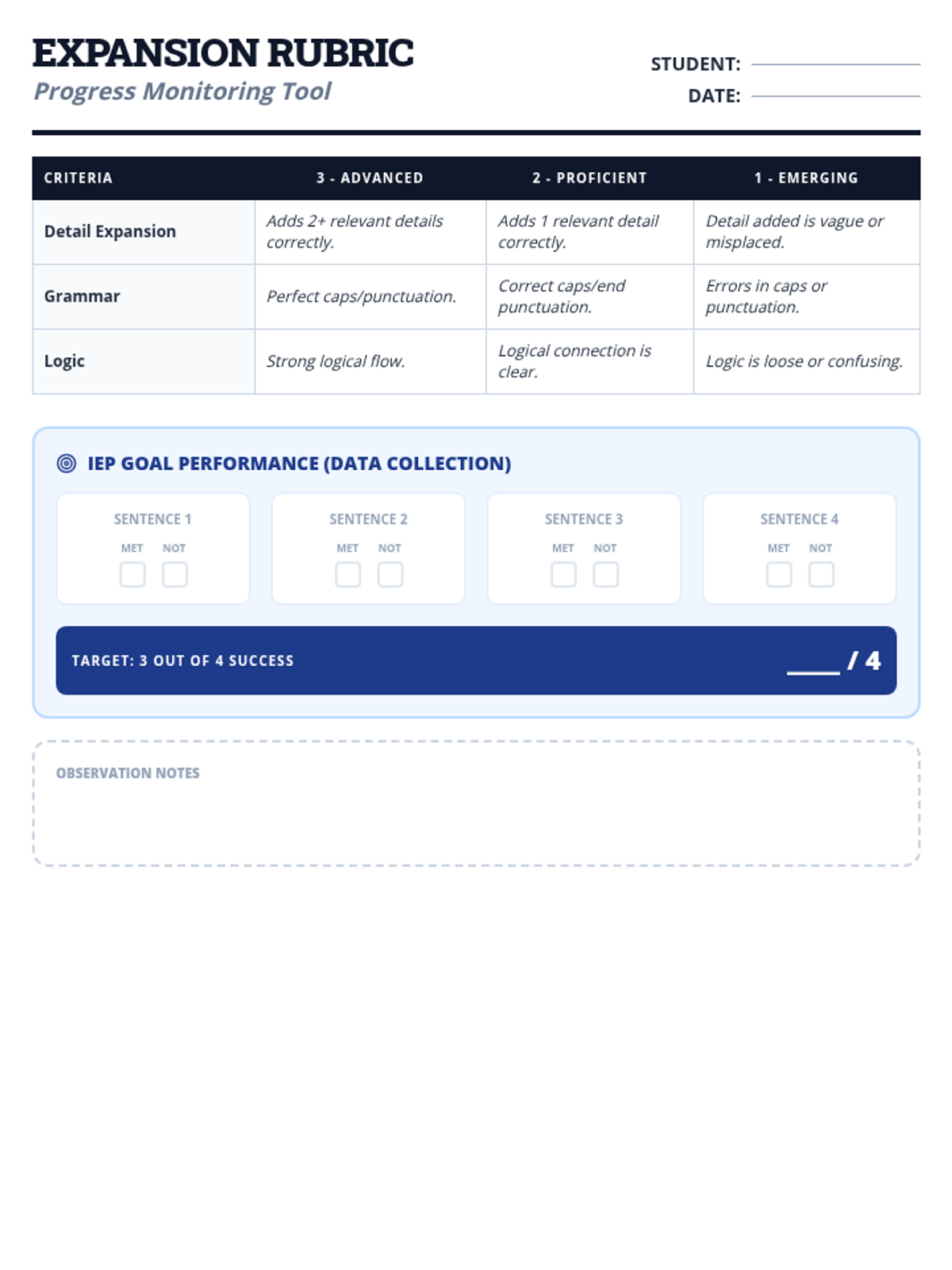
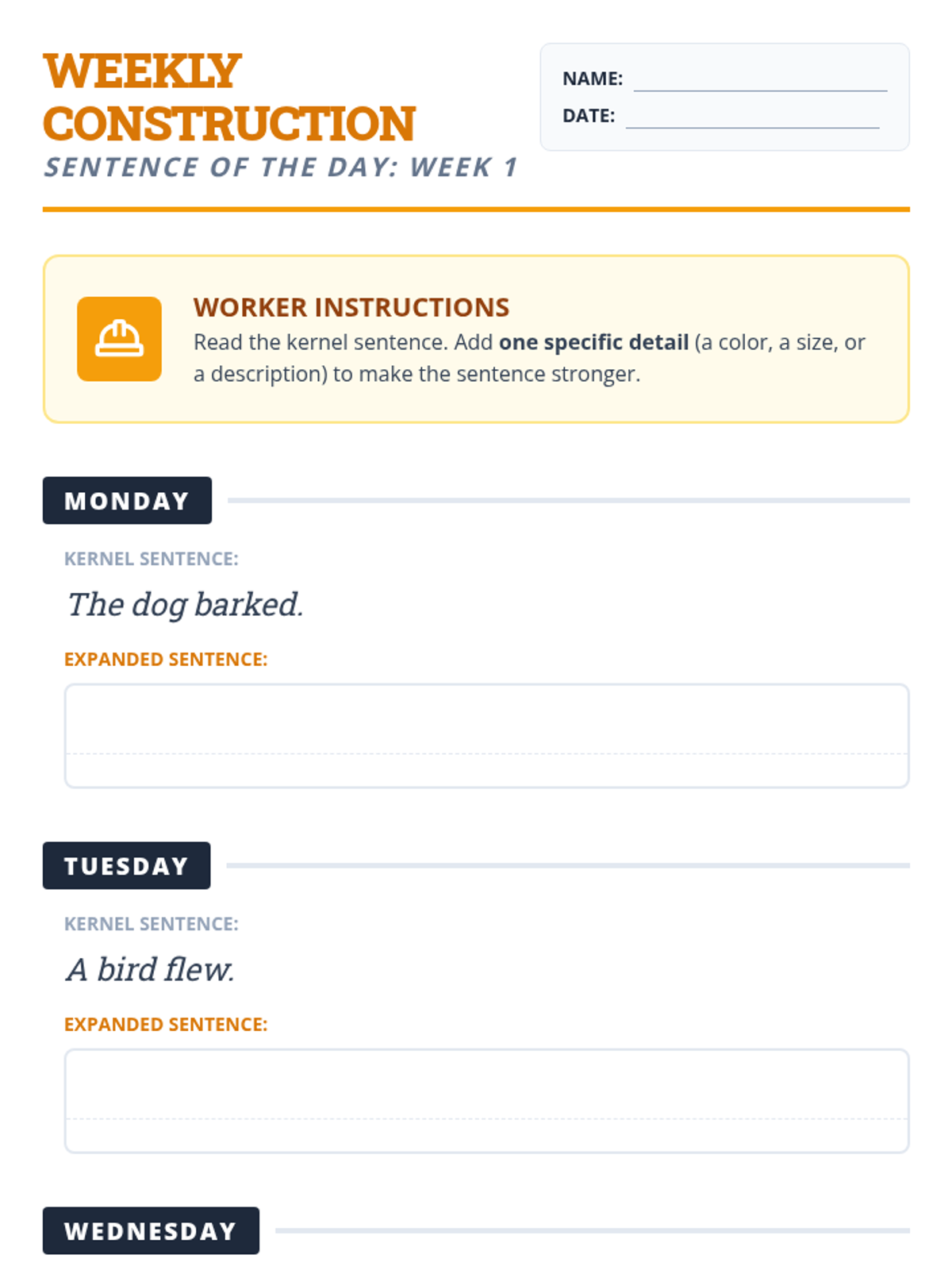
A practice lesson focusing on expanding sentences using 'where', 'why', 'when', and 'how' predicate expanders to add detail and variety.
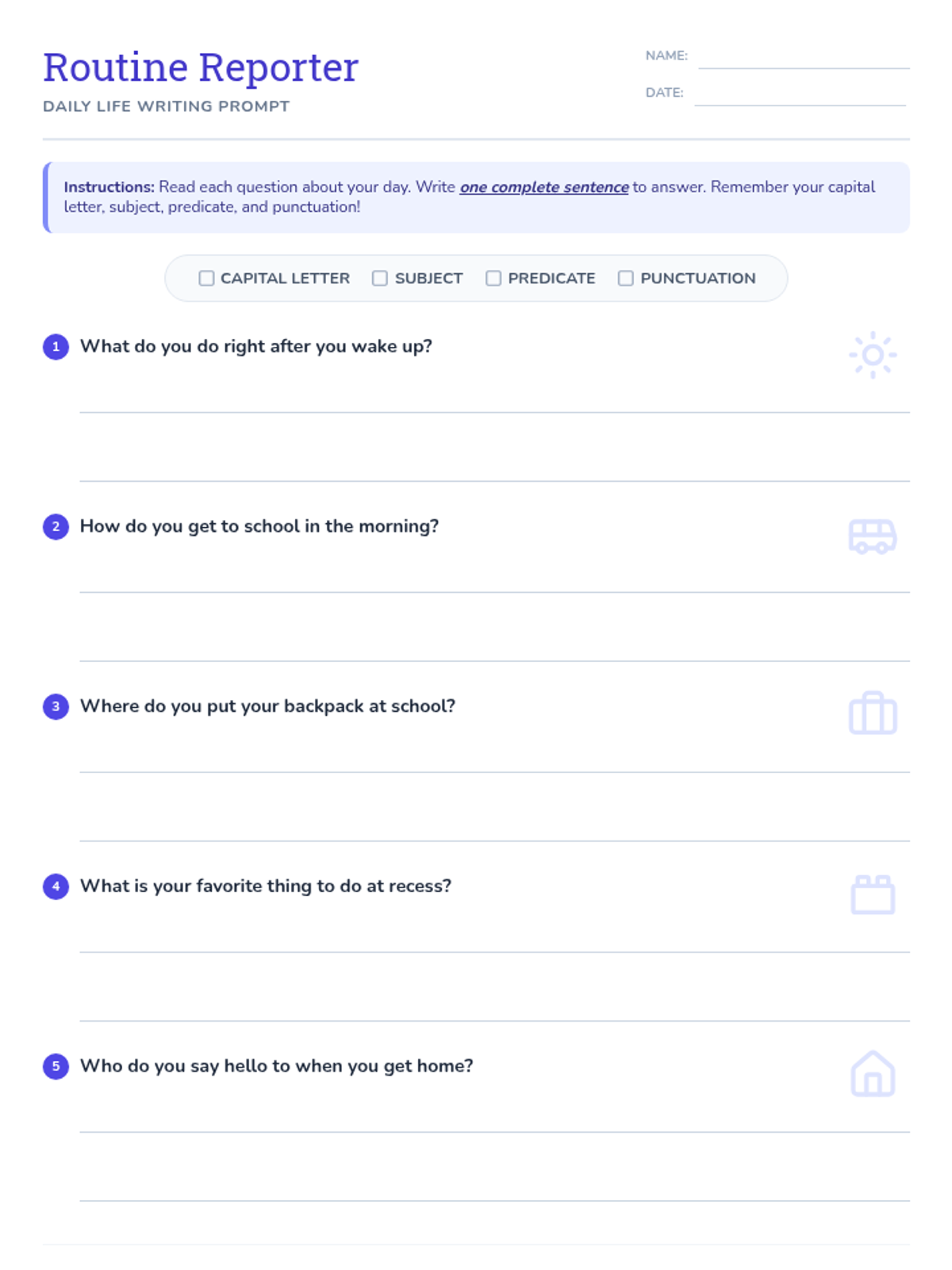
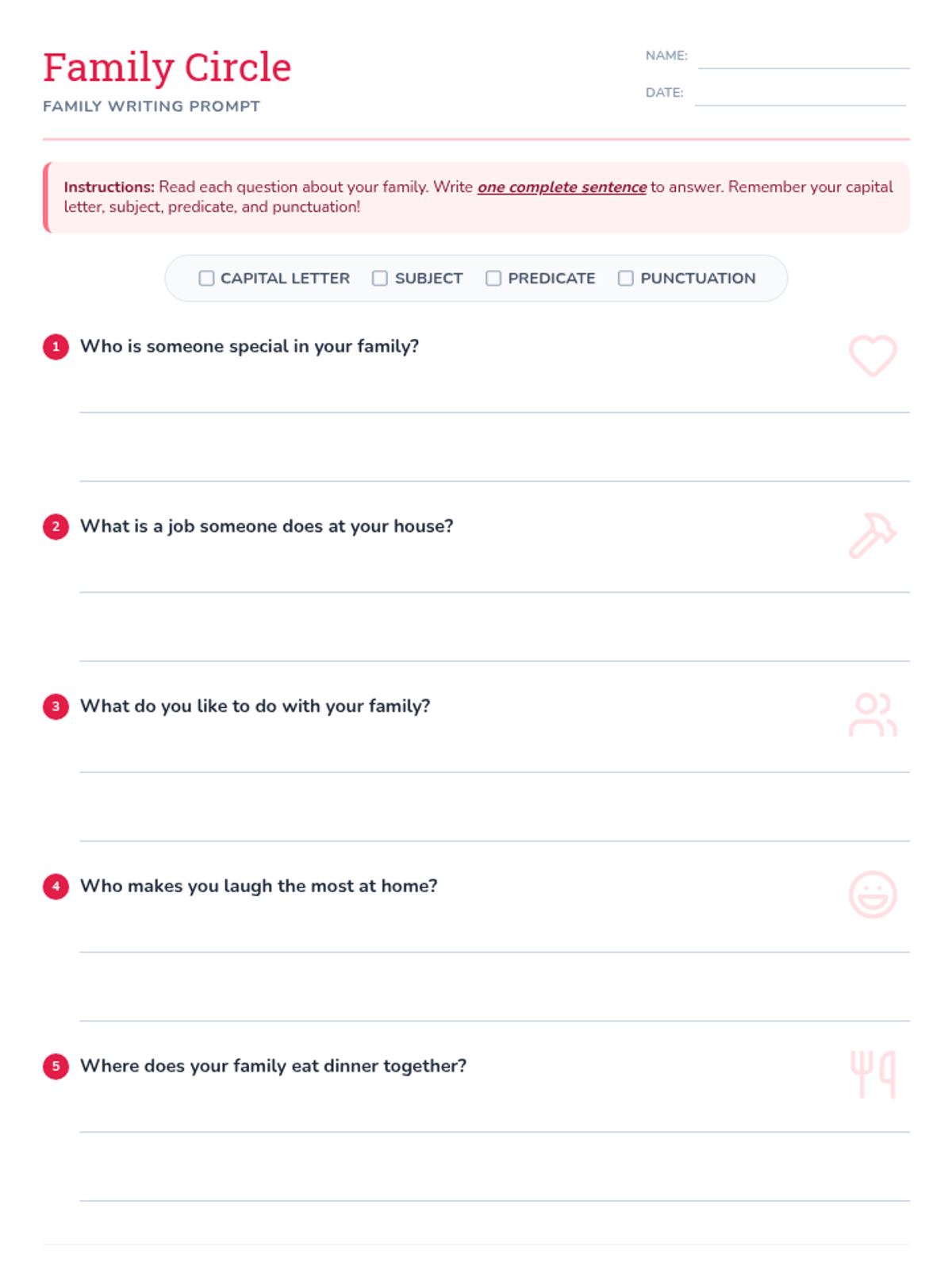
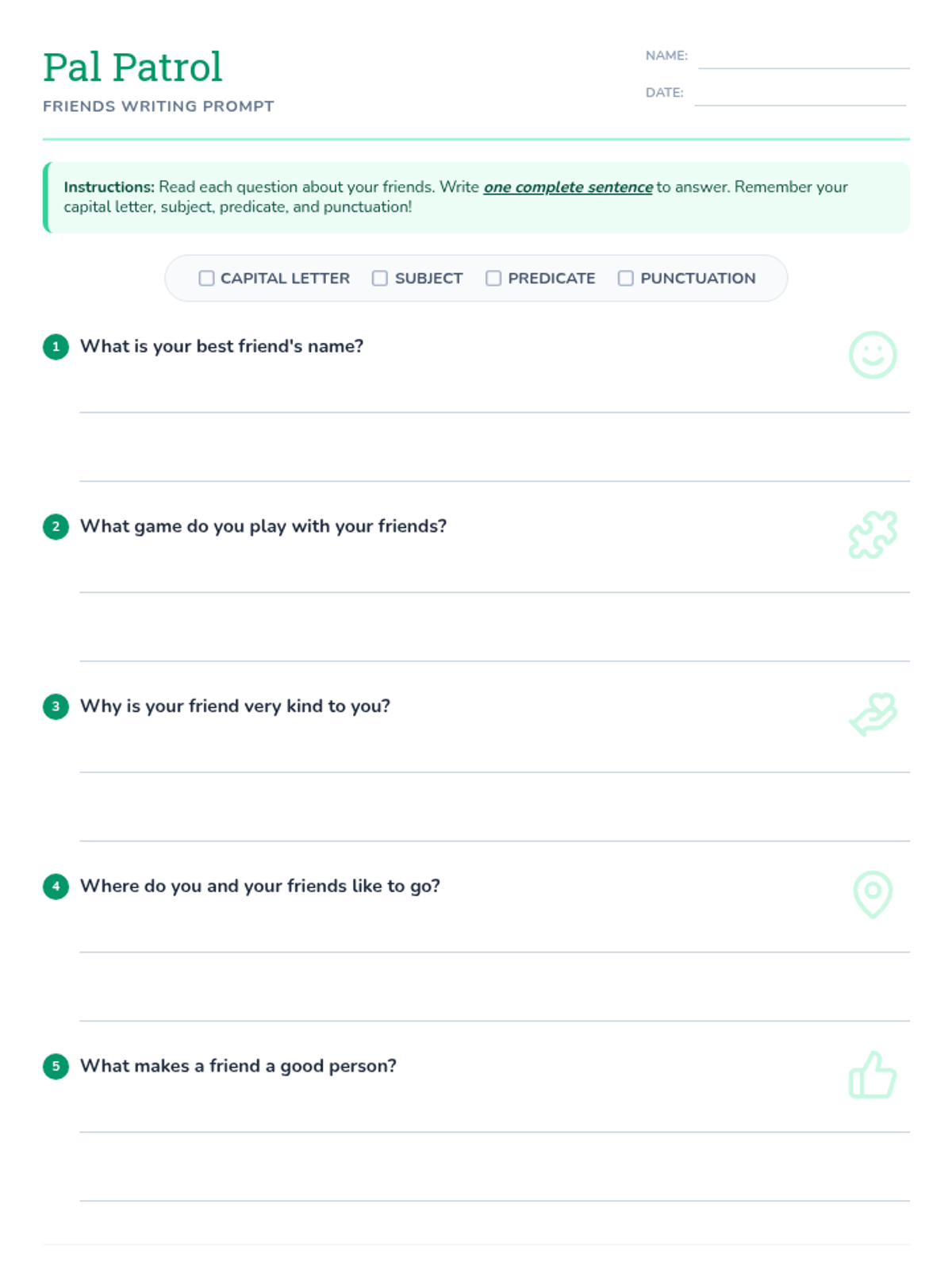
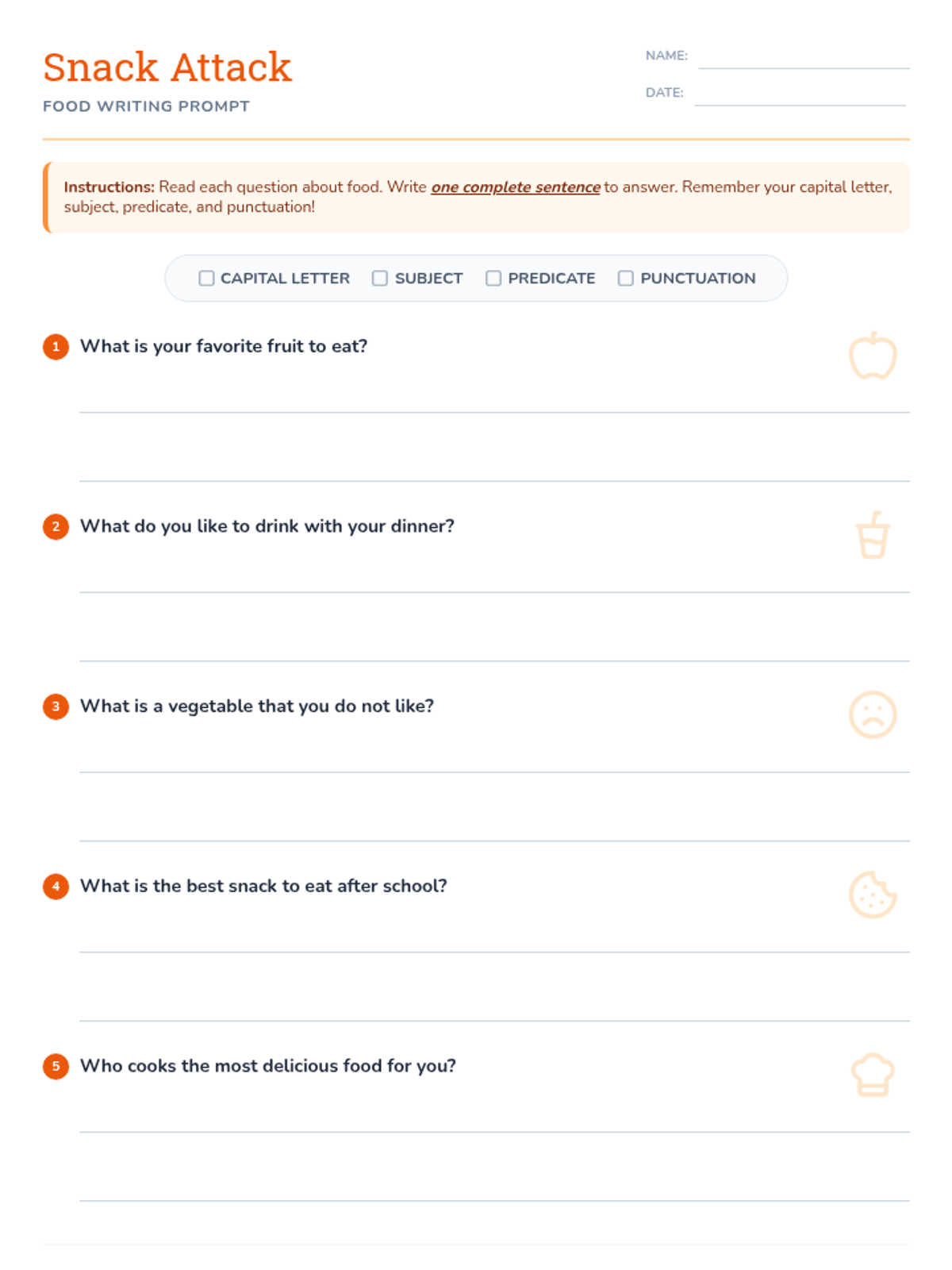
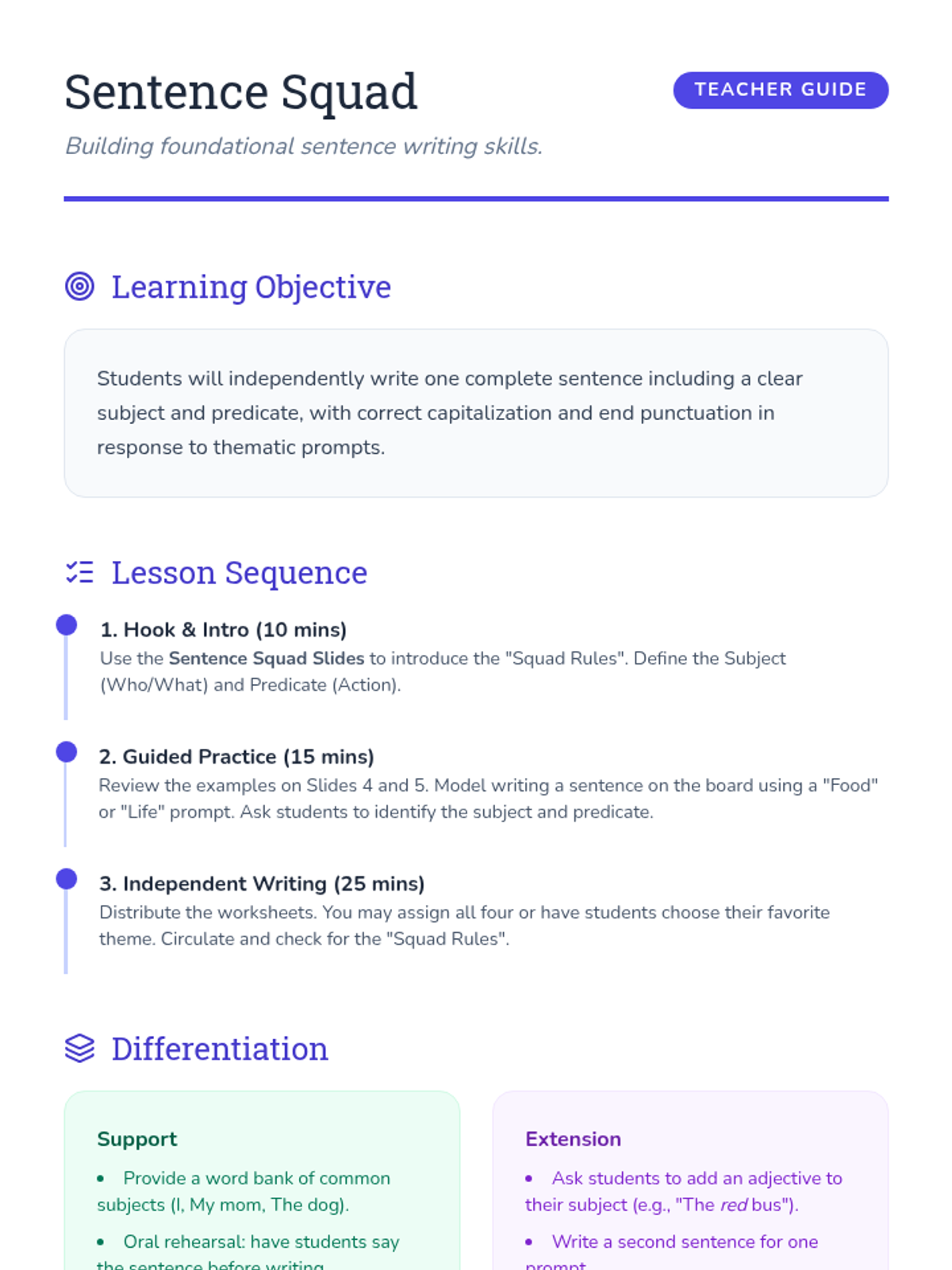
A foundational writing lesson focused on crafting complete sentences with subjects, predicates, proper capitalization, and end punctuation across four relatable themes: daily life, family, friends, and food.
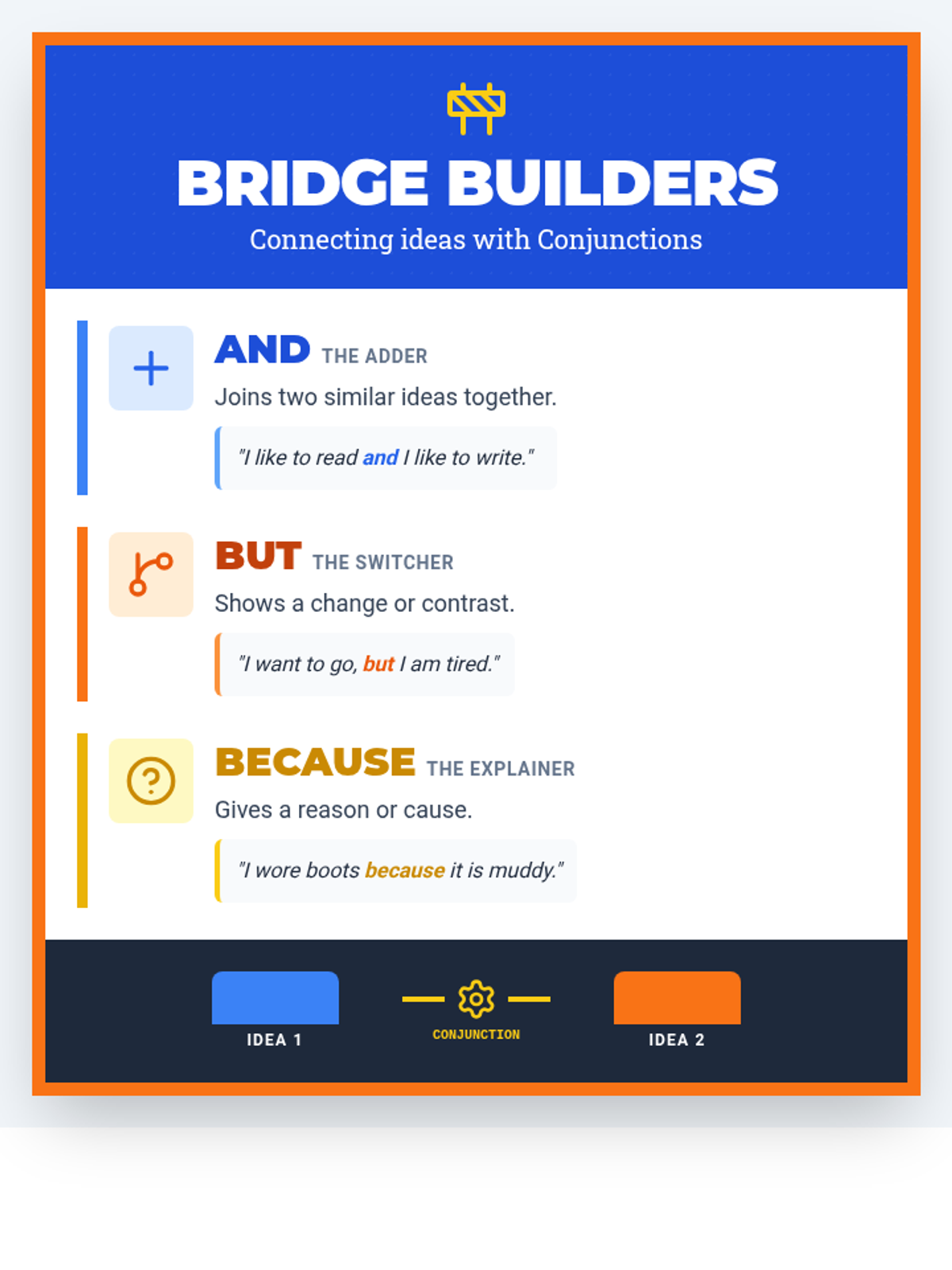
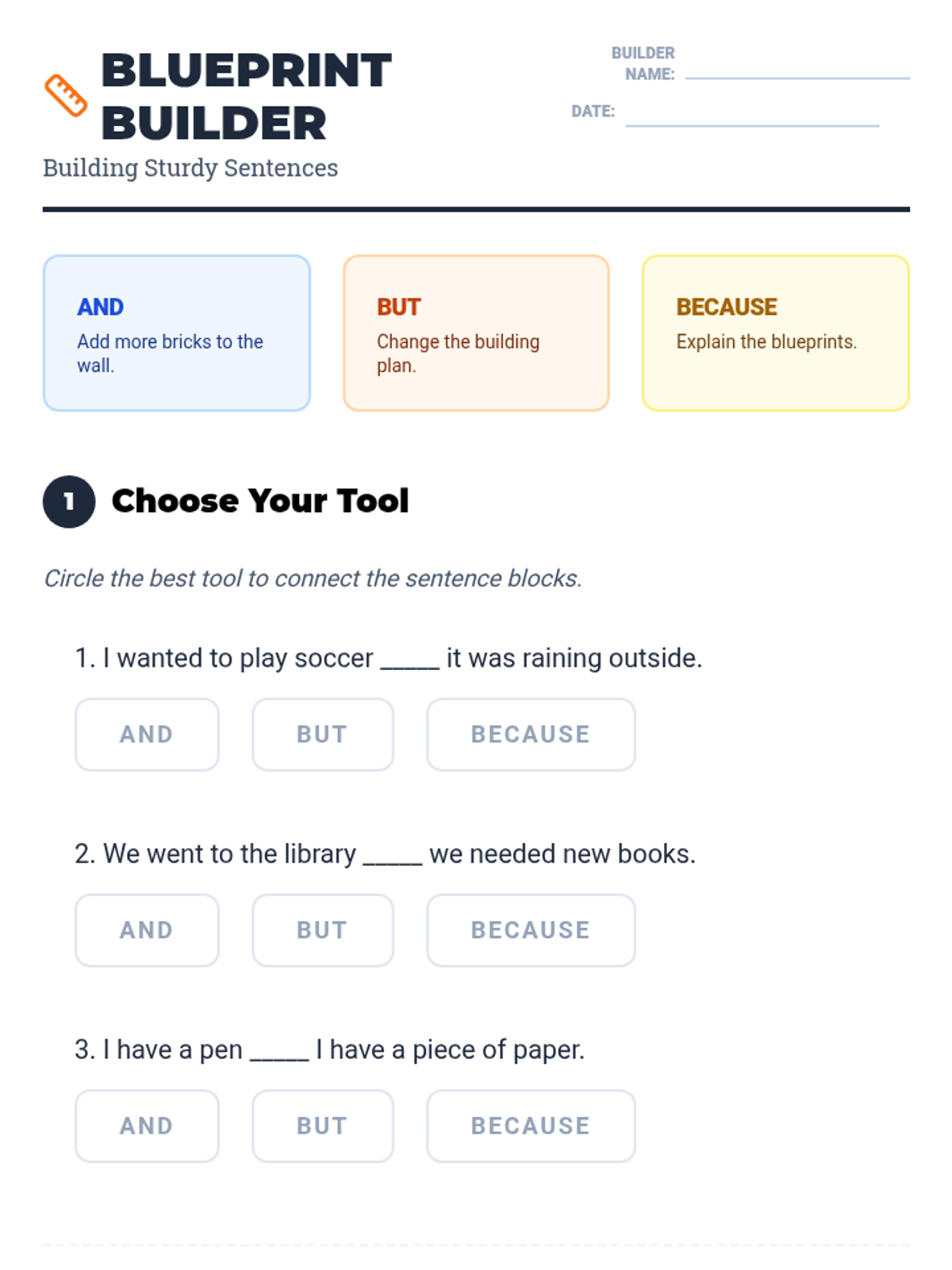
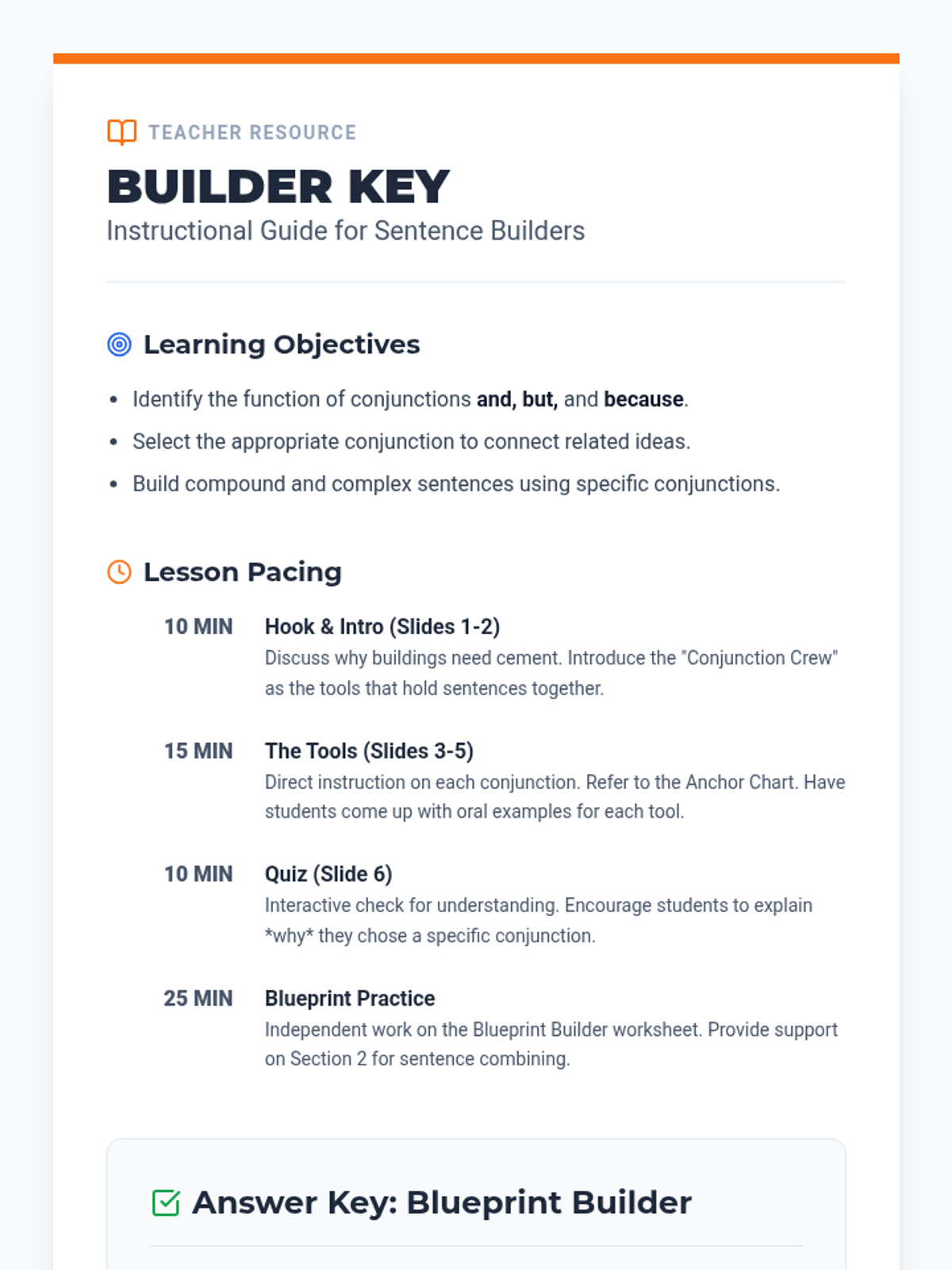
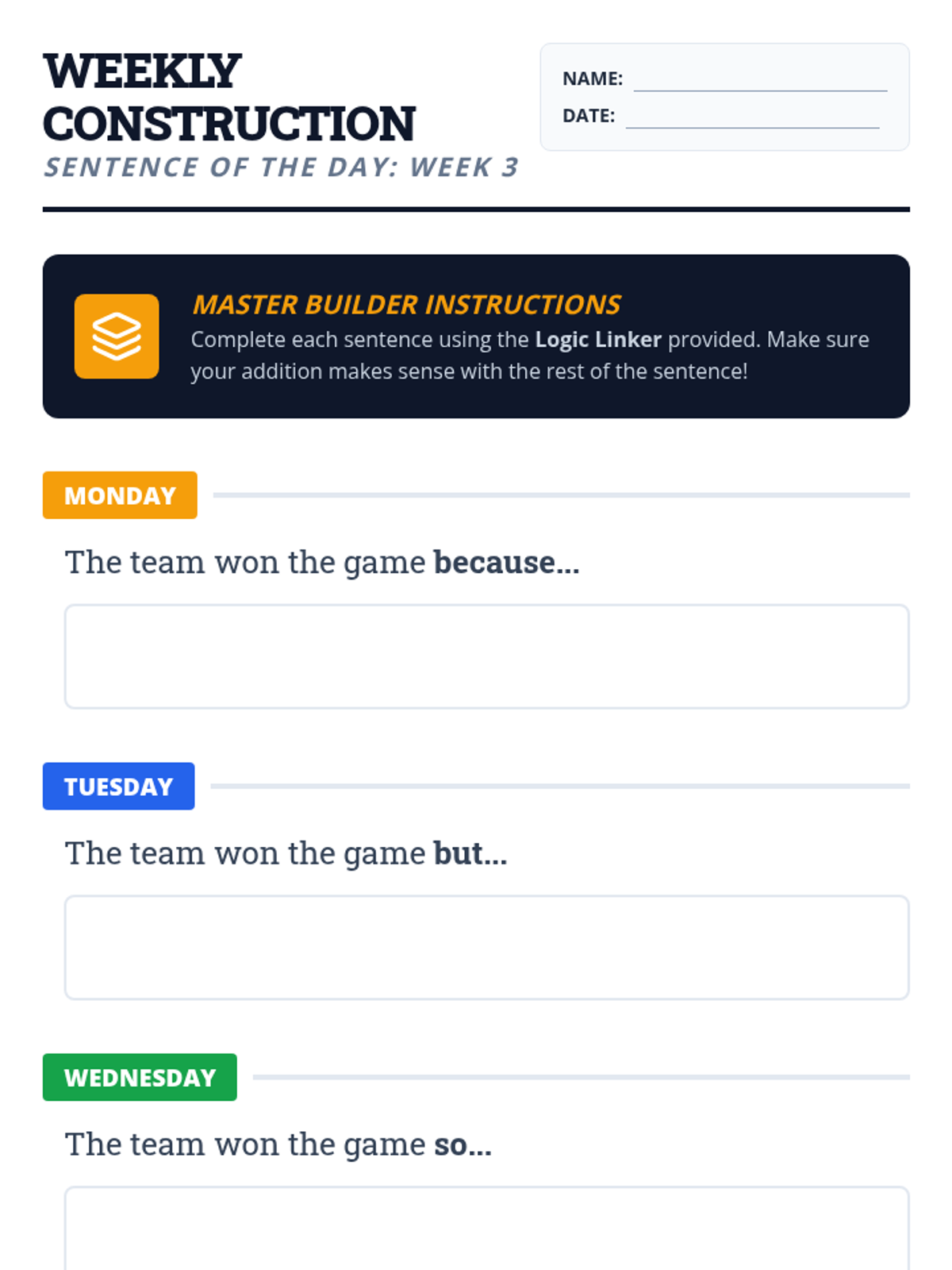
In this lesson, students will learn to use 'and', 'but', and 'because' to connect ideas and create compound and complex sentences. They will explore how these conjunctions change the meaning of a sentence and practice building their own sturdy sentences.
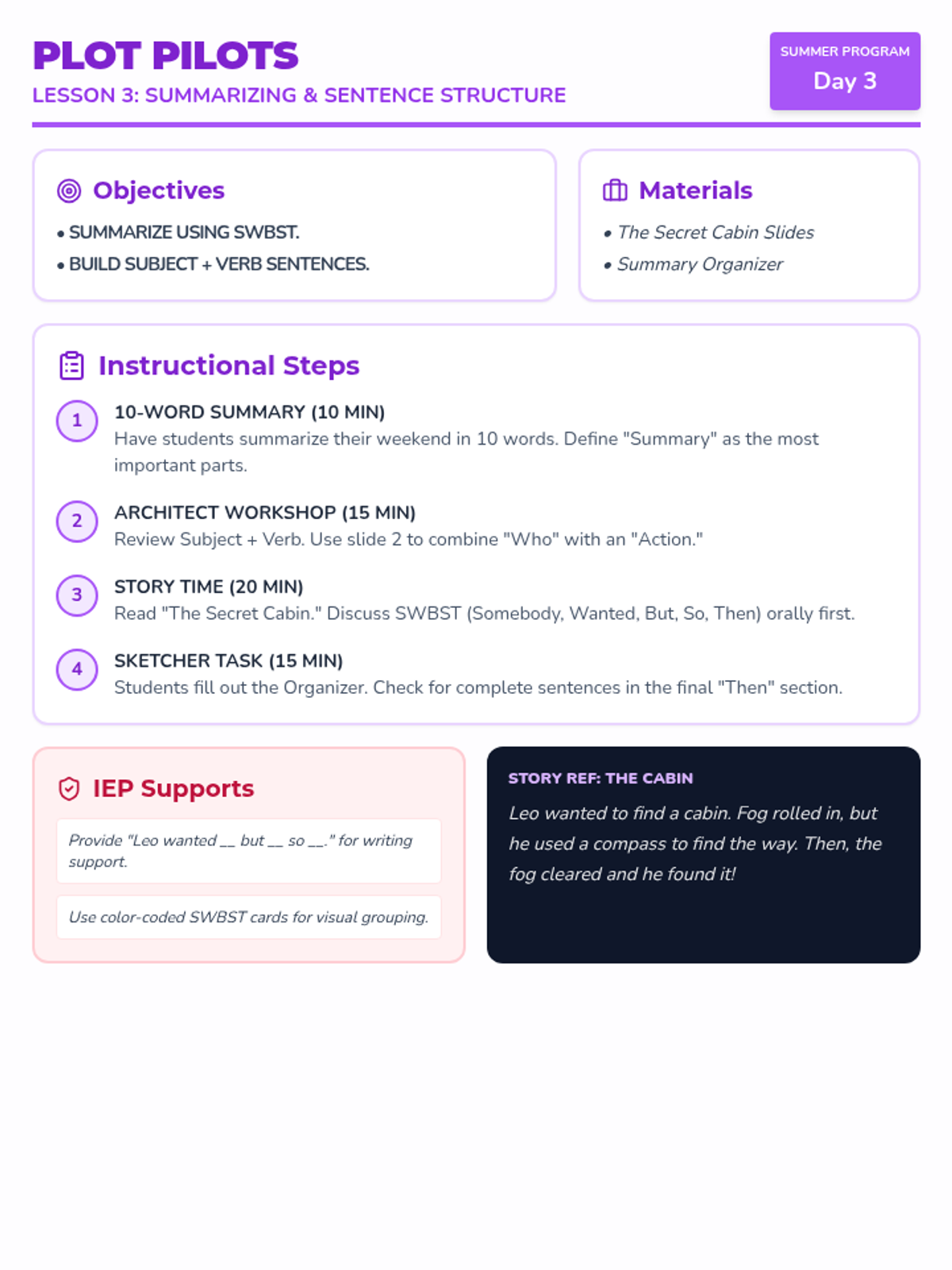
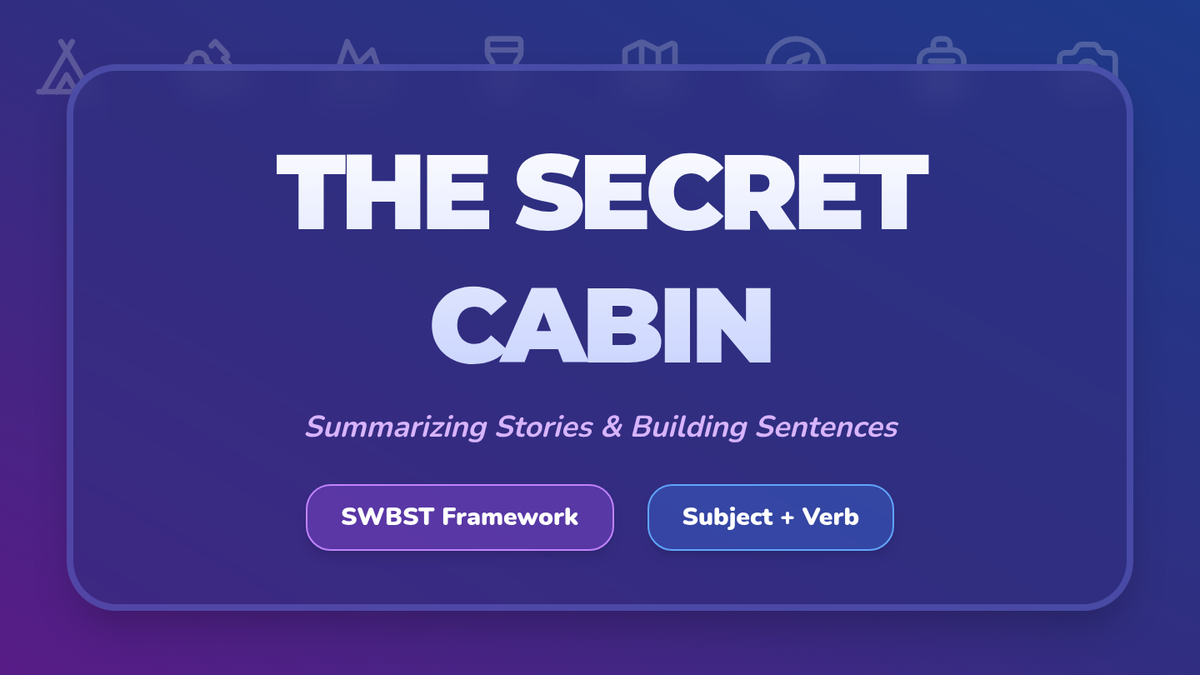
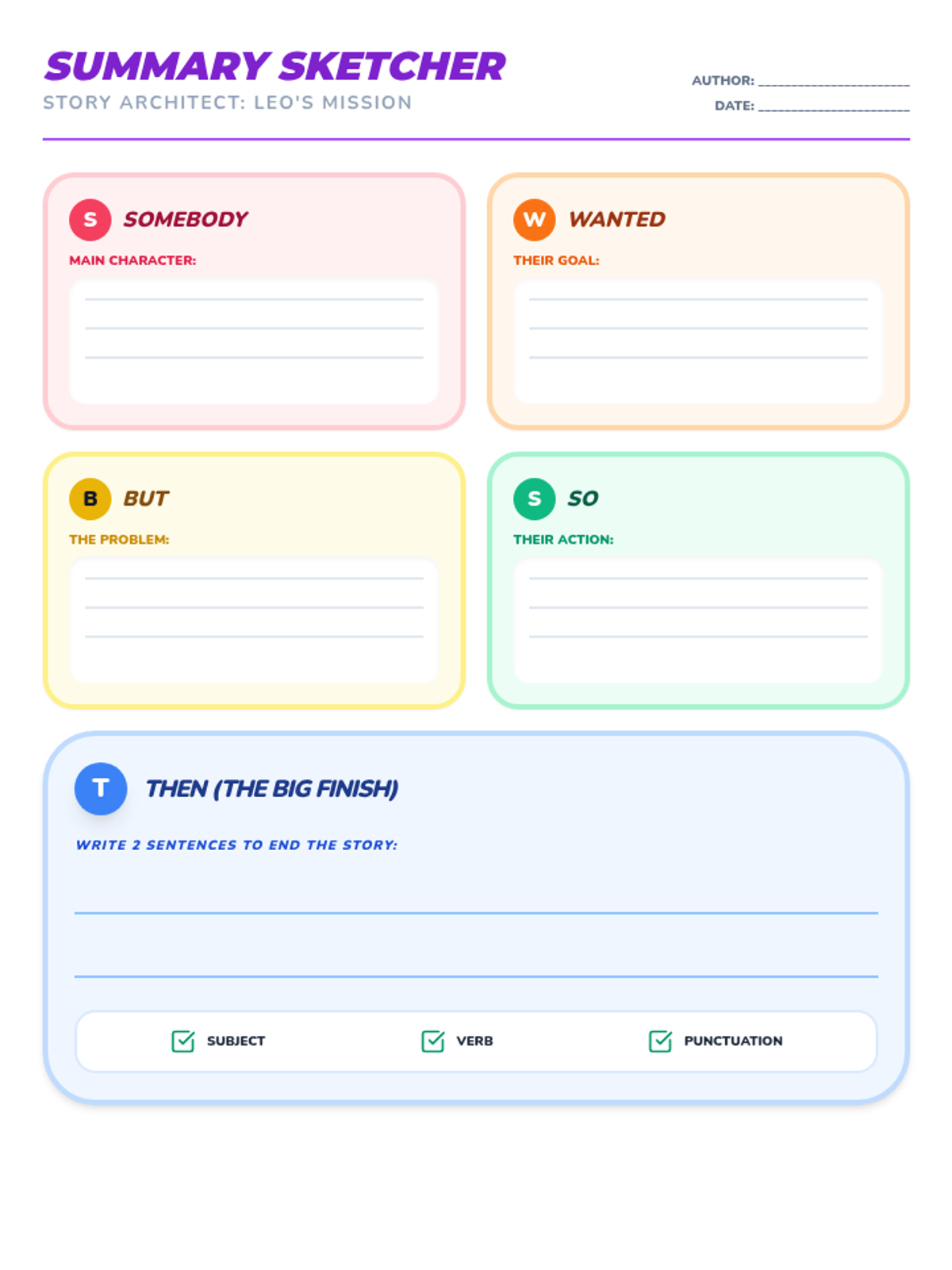
Students will summarize high-interest short stories and practice building complex sentences with proper structure.
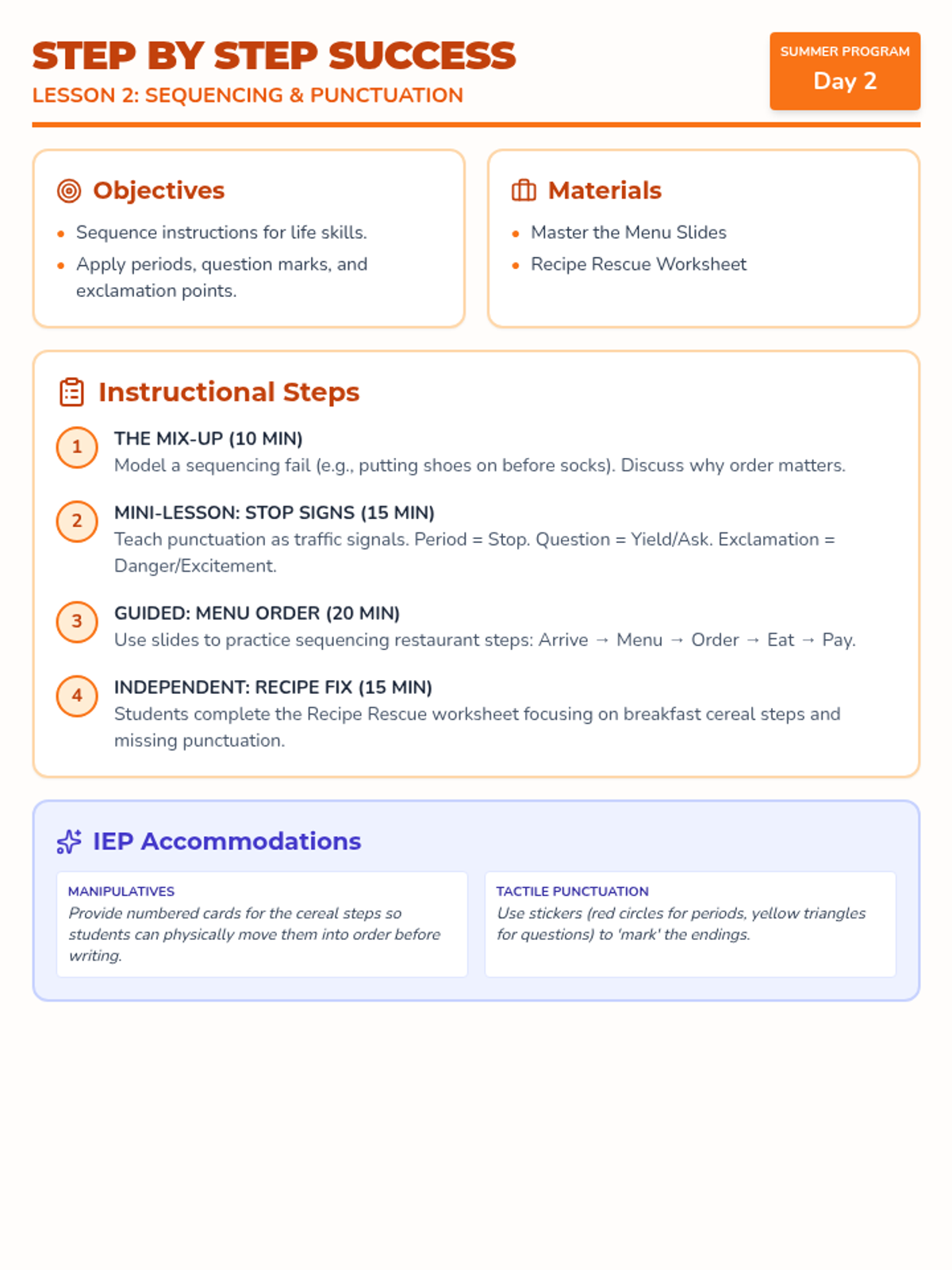
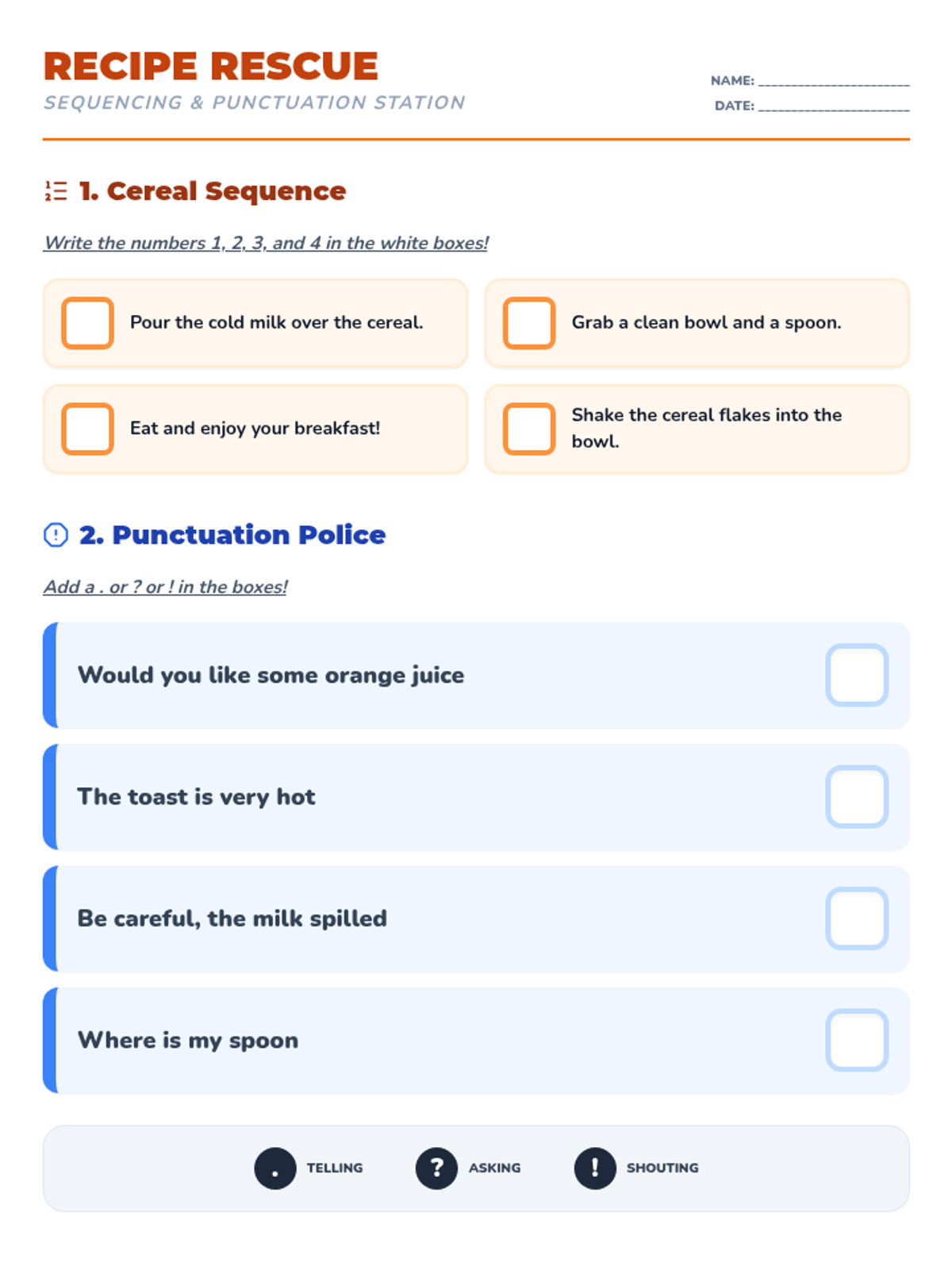
Focuses on sequencing events and using correct punctuation through functional life skills like reading menus and following instructions.
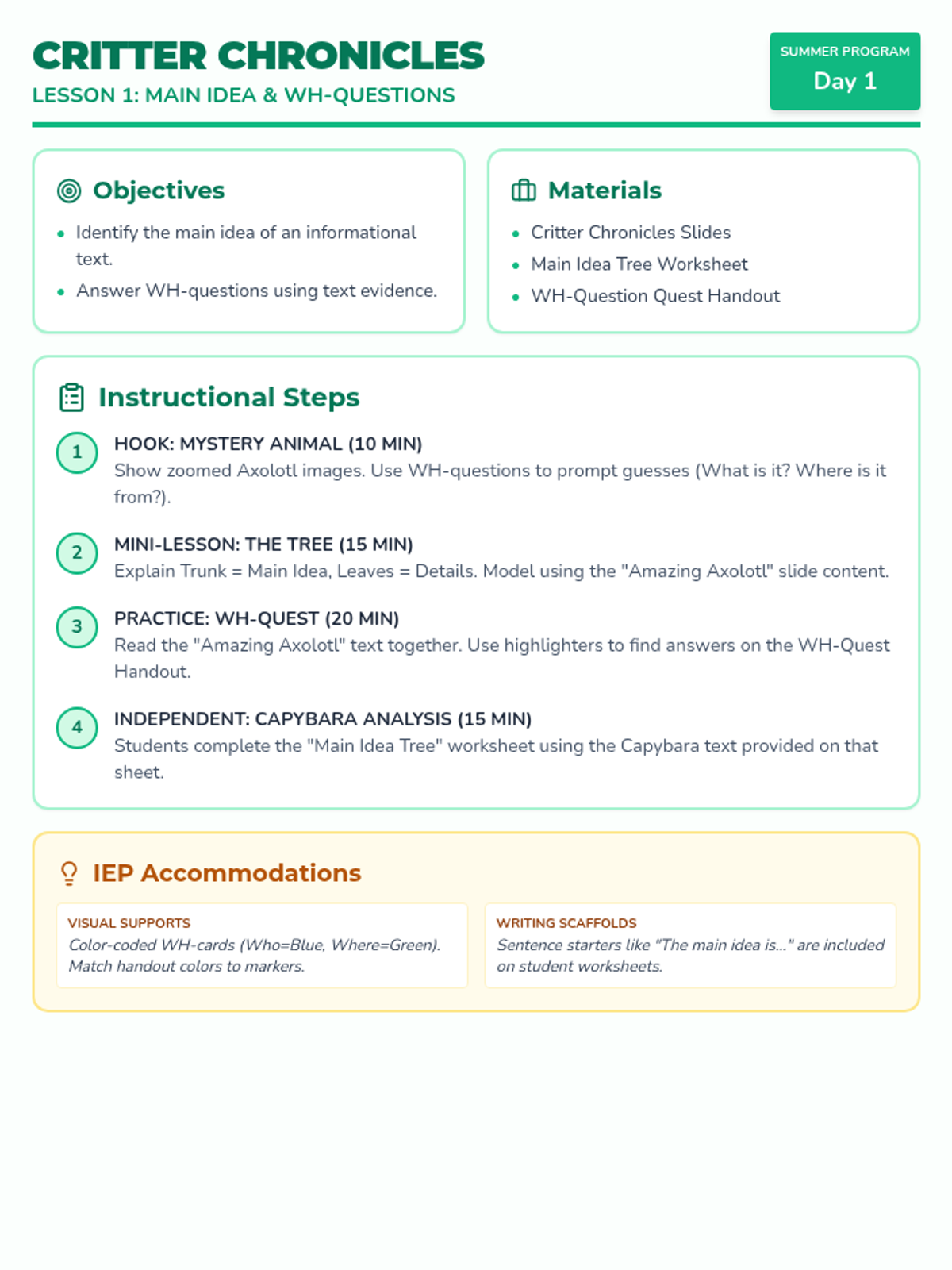
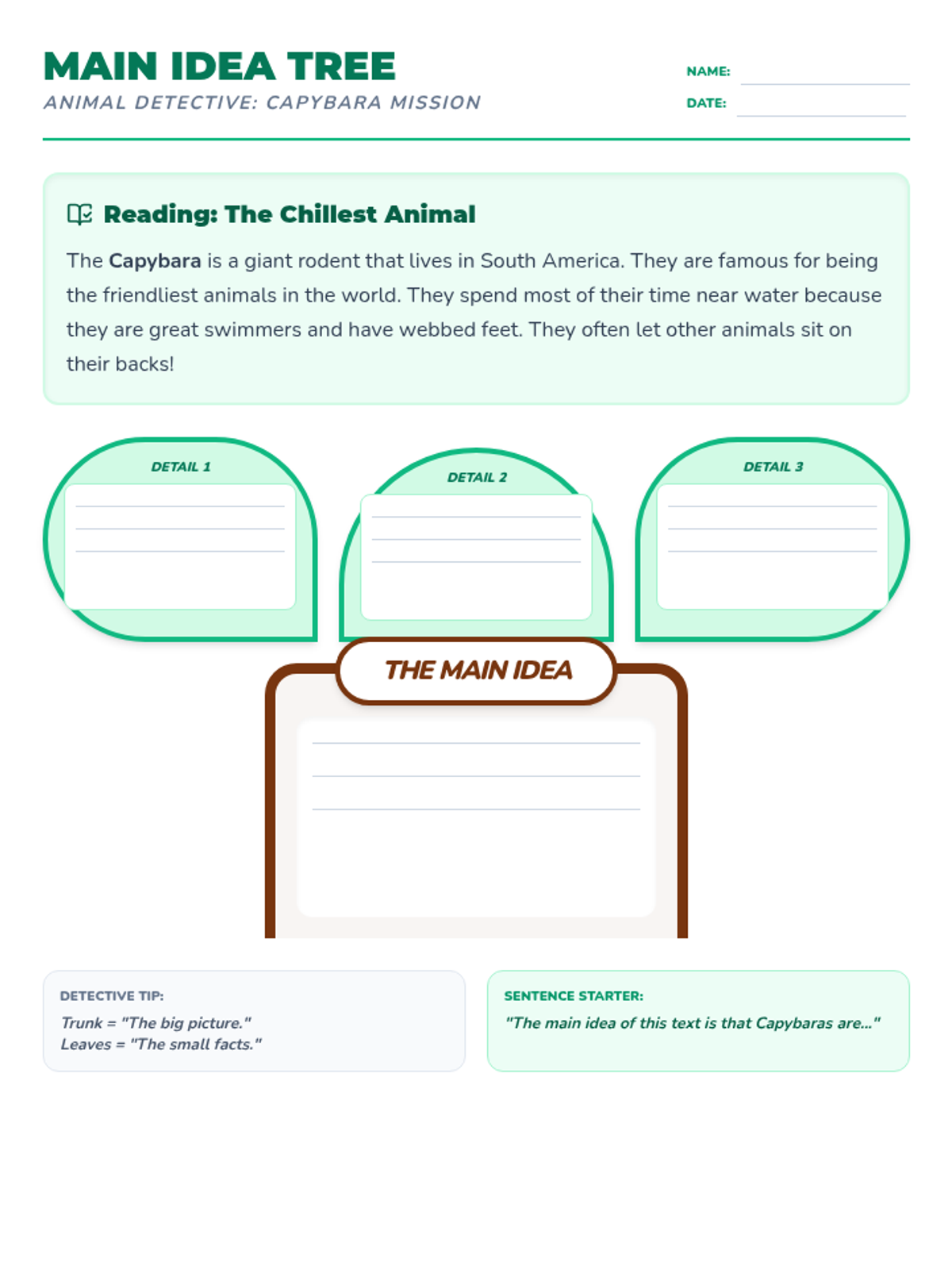
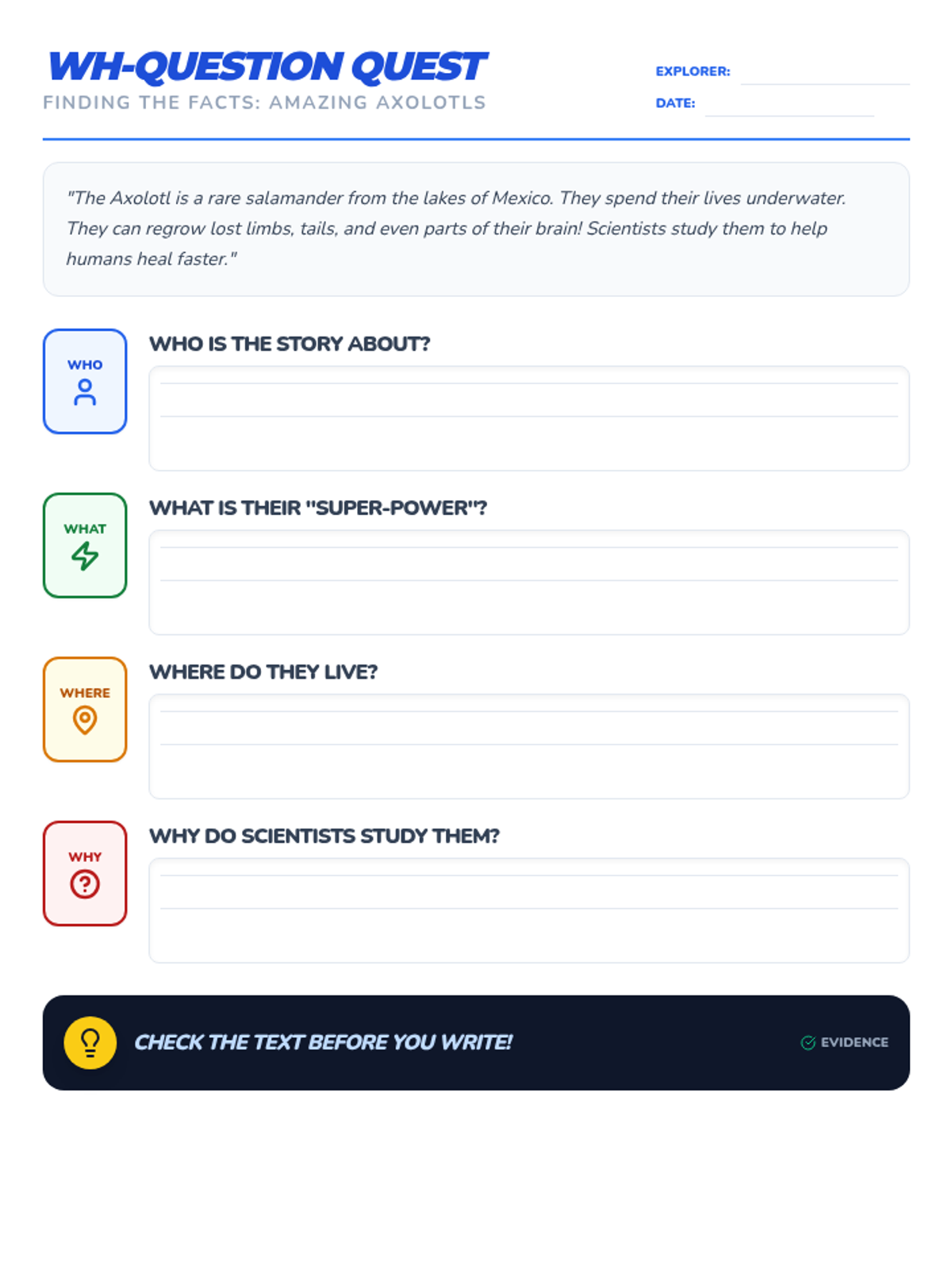
Students will identify the main idea and answer WH-questions using high-interest informational texts about unique animals.
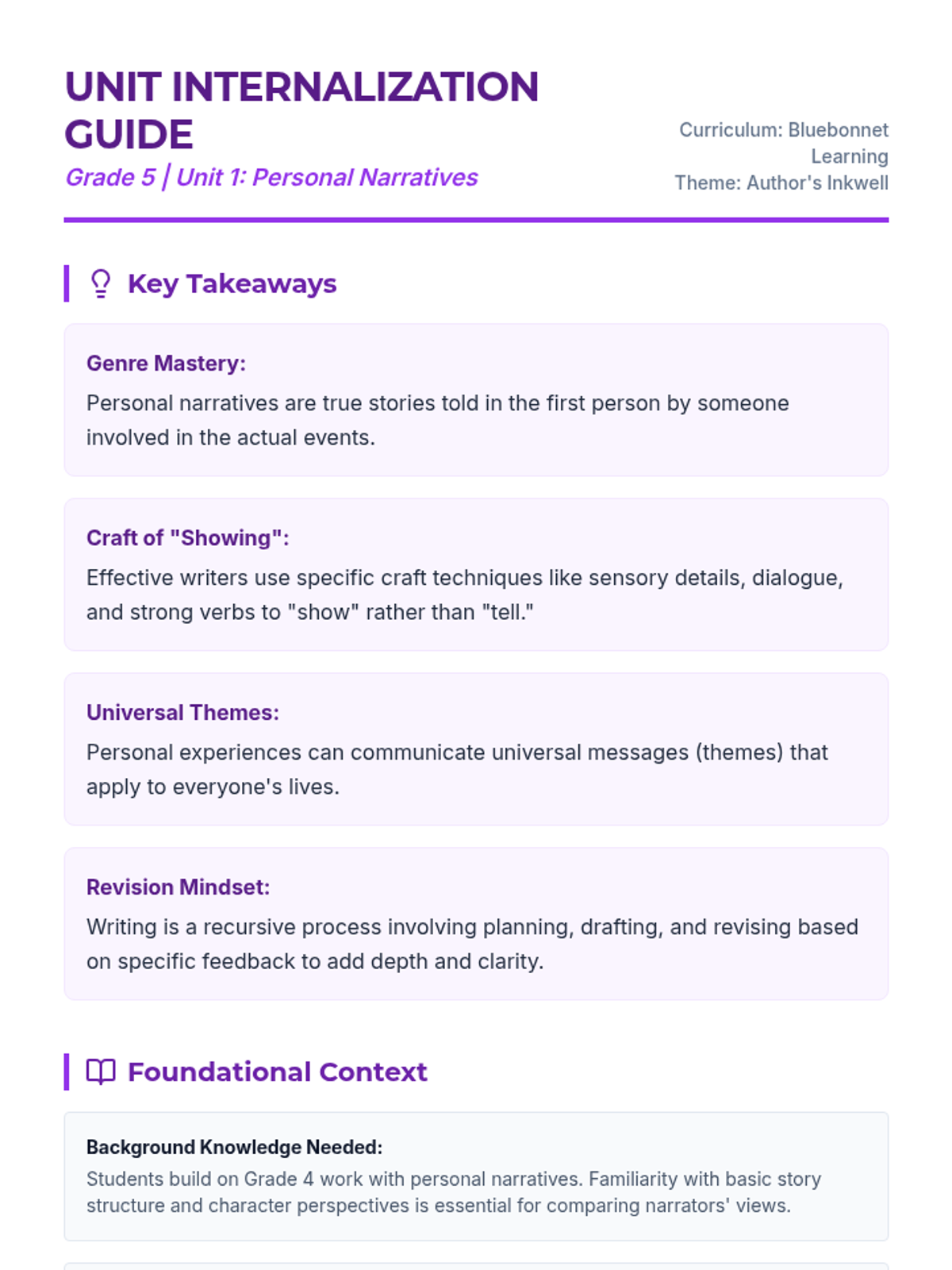
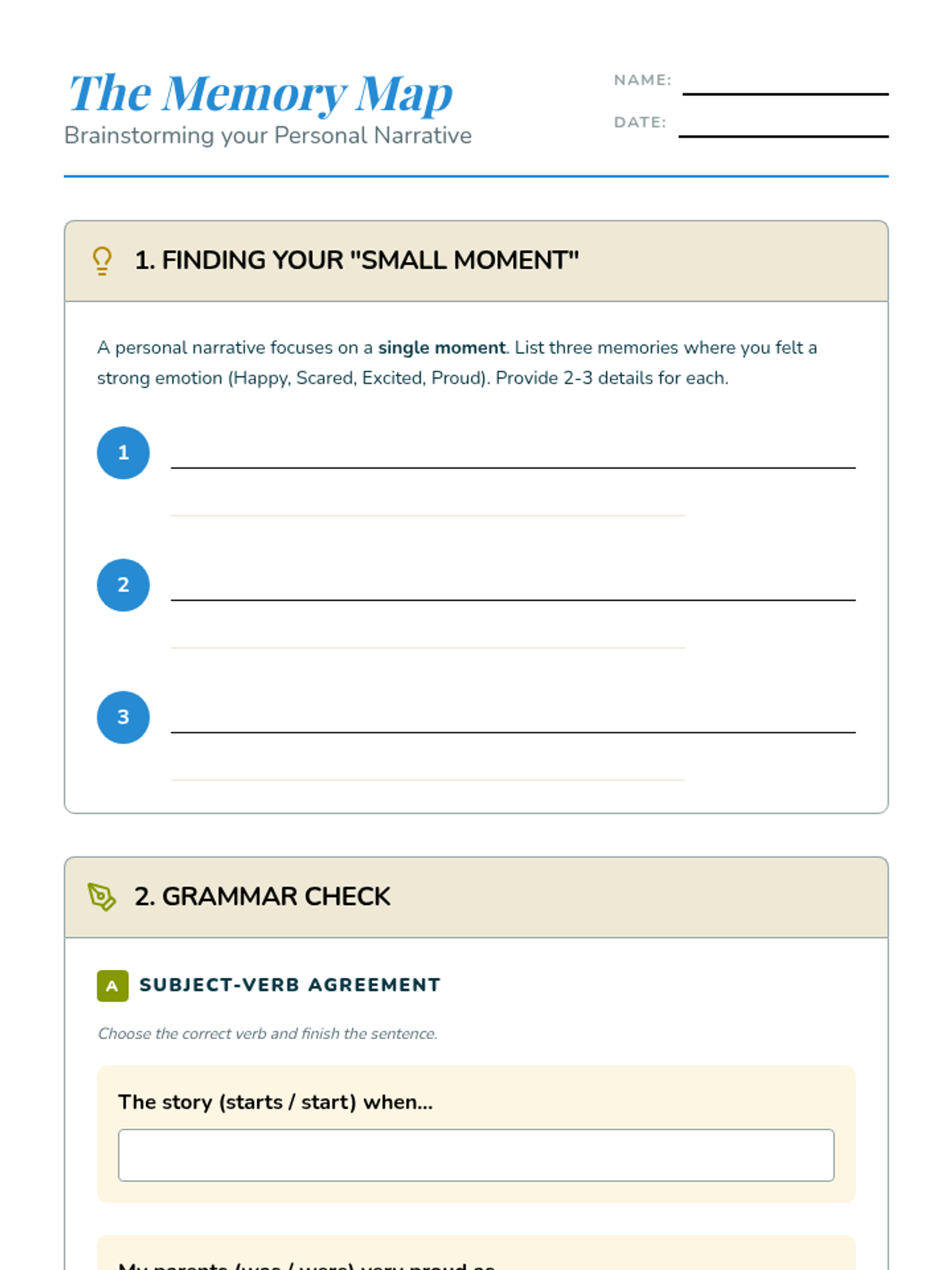
Students define personal narratives, explore the purpose of anecdotes, and draft their first narrative paragraph about a memorable first-time experience.
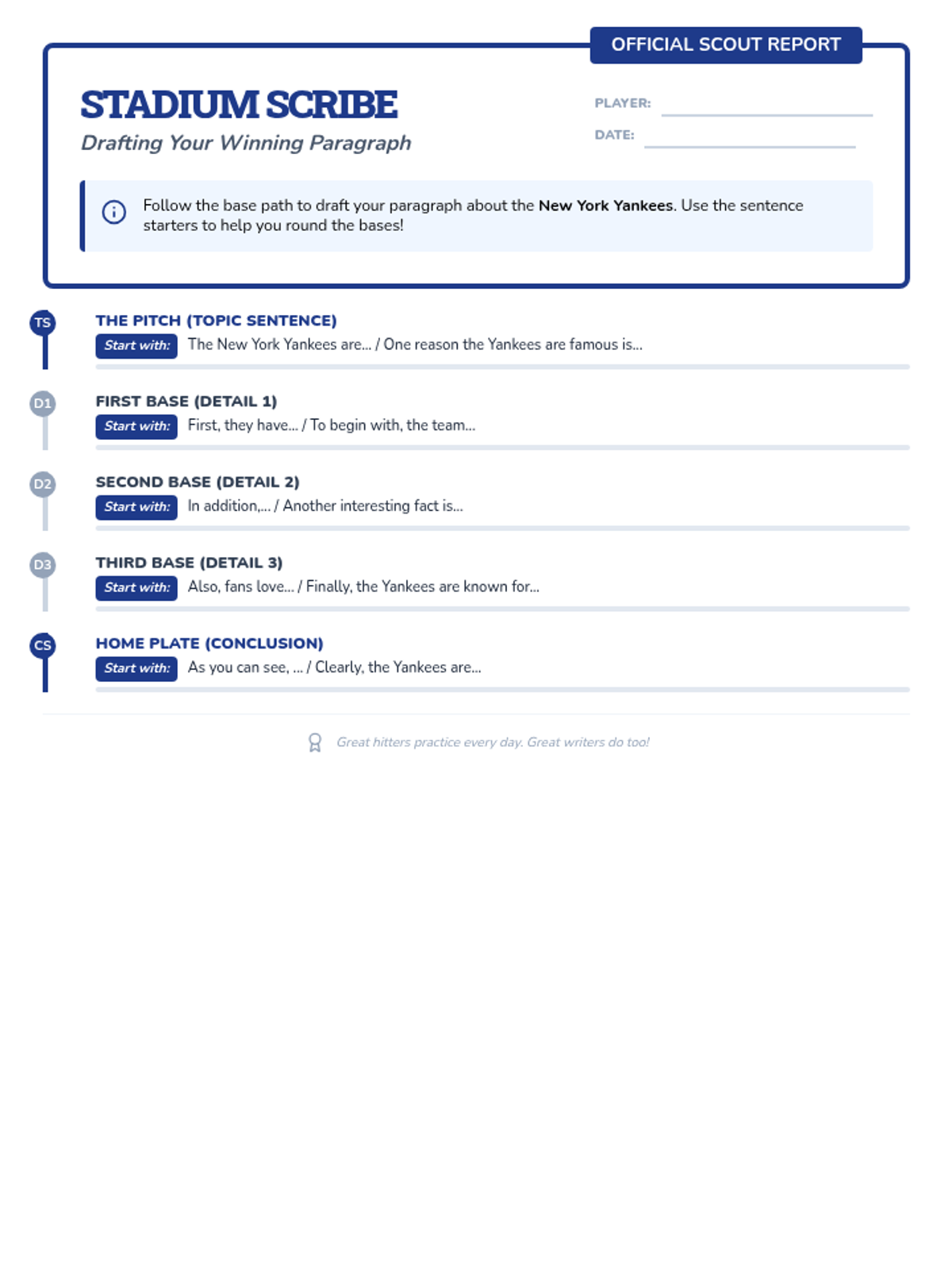
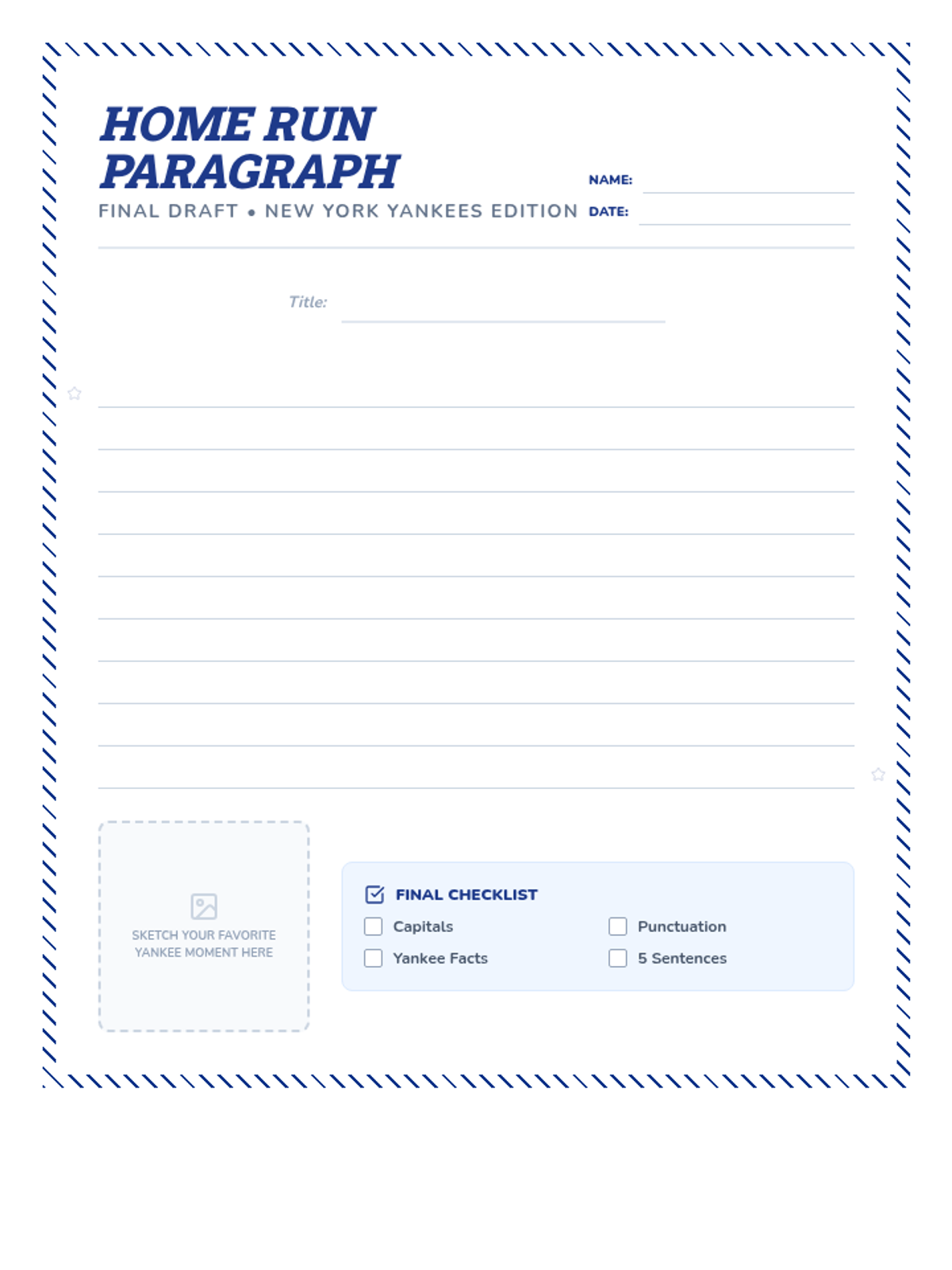
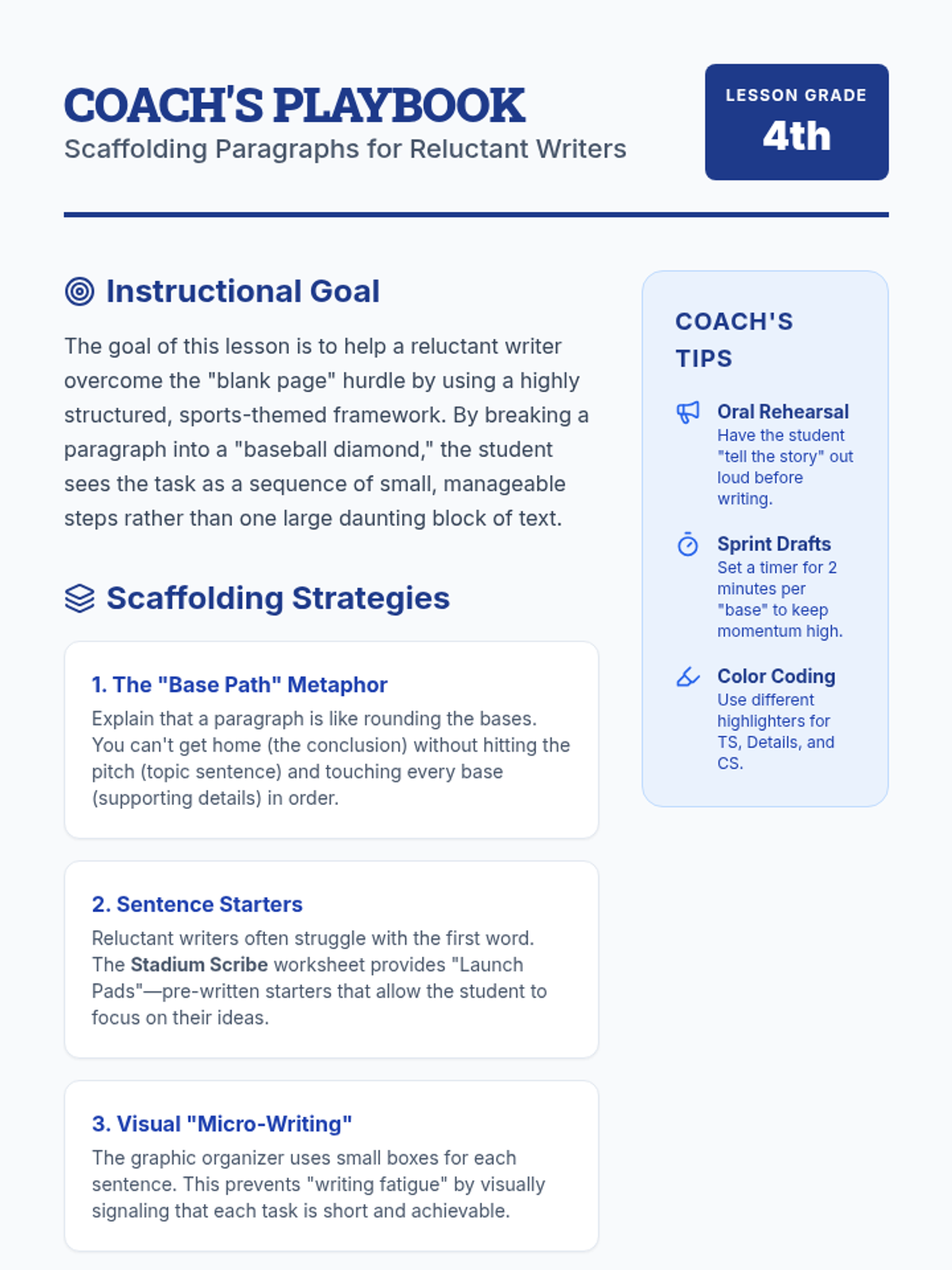
A sports-themed writing lesson that uses a baseball metaphor to help 4th graders master the five-sentence paragraph structure (TS, D1, D2, D3, CS). Students will draft their "starting lineup" of sentences to hit a home run with their writing.
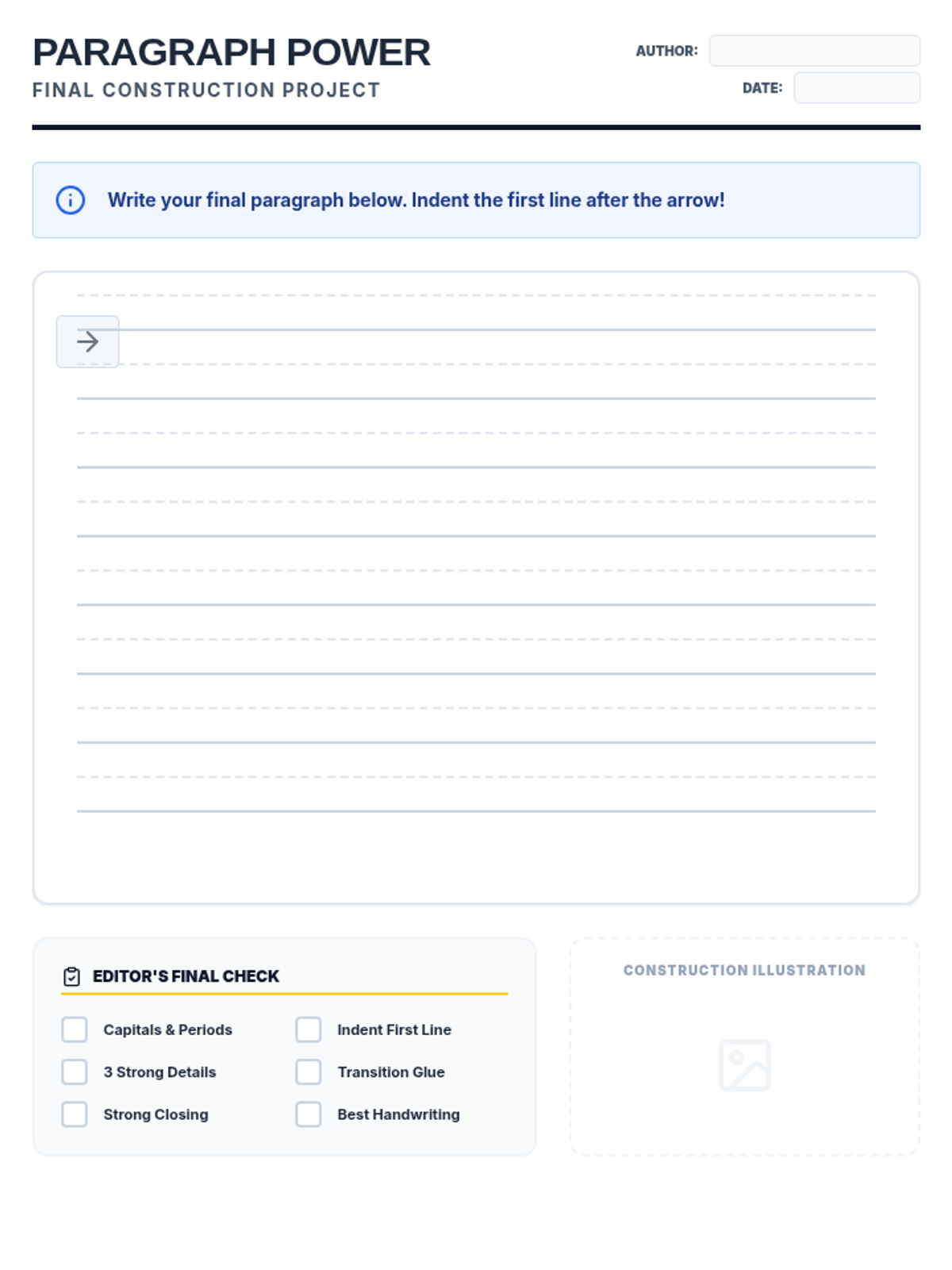
Guides students through writing a cohesive paragraph using their own ideas and a structured checklist.
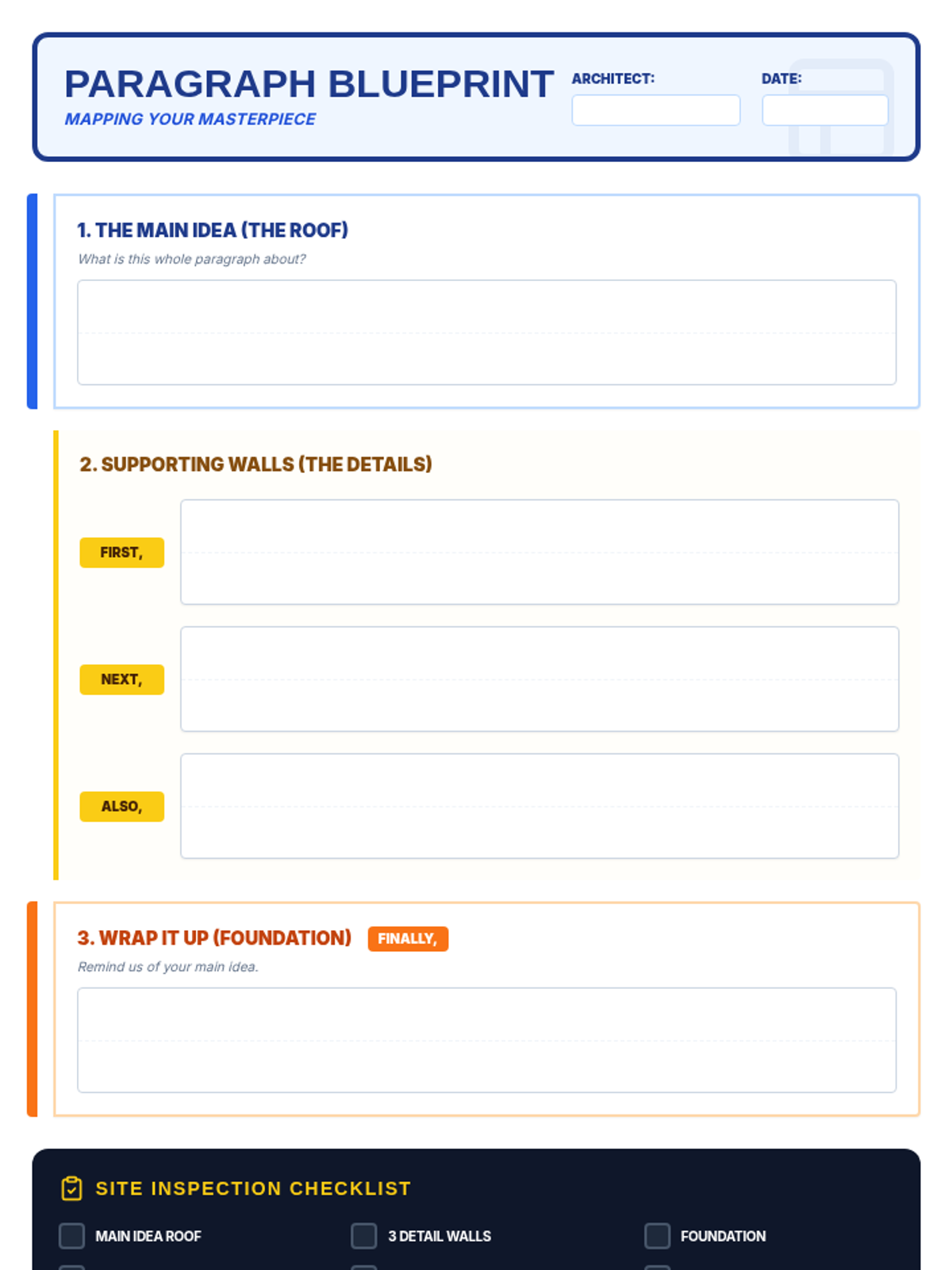
Introduces the structural 'blueprint' of a paragraph: topic sentence, supporting details, and closing sentence.
Focuses on turning fragments and ideas into complete, organized sentences using visual cues.
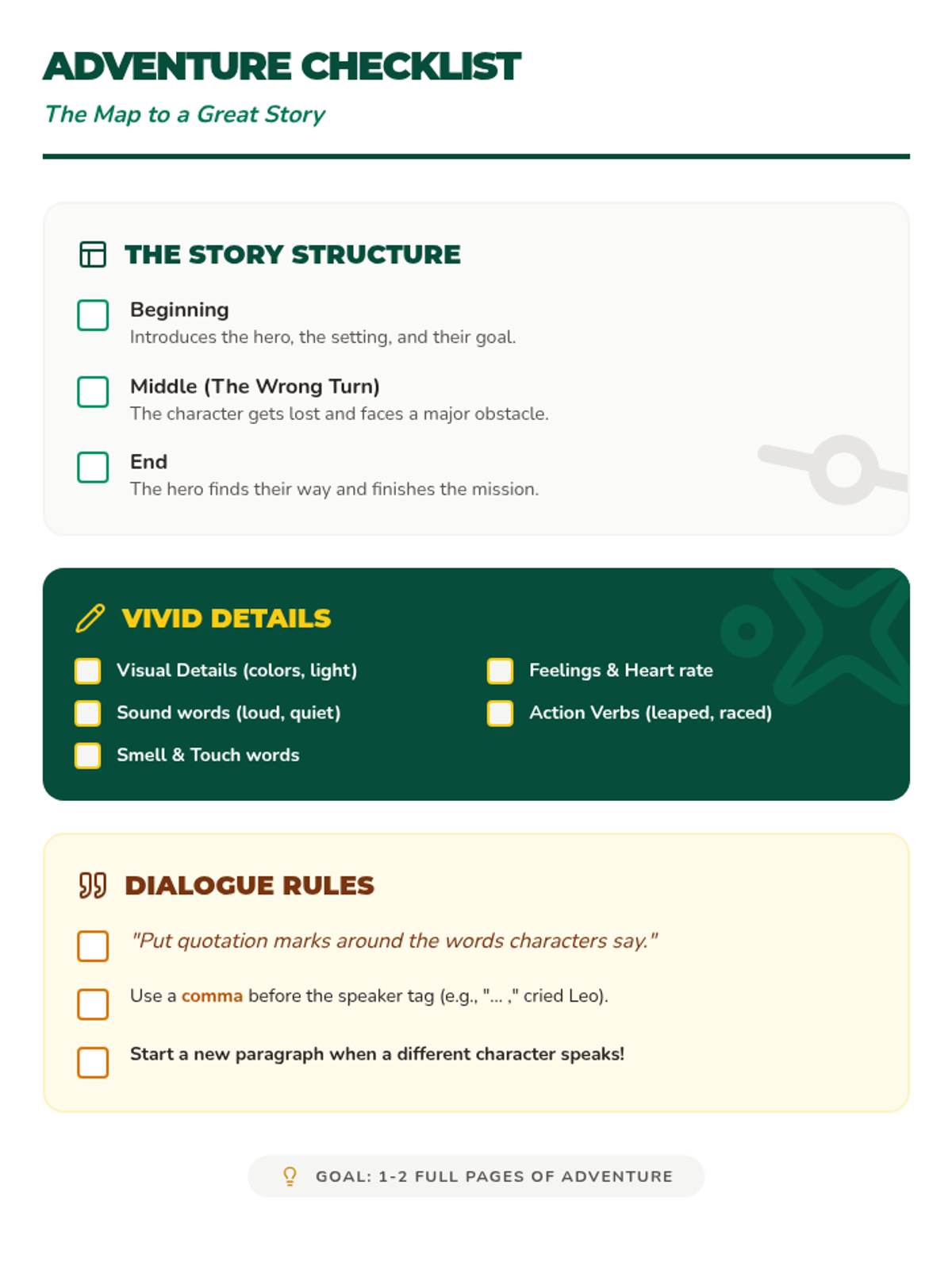
A comprehensive lesson designed to guide 4th-grade students through the planning phase of an adventure story, focusing on structural elements, sensory details, and character development.
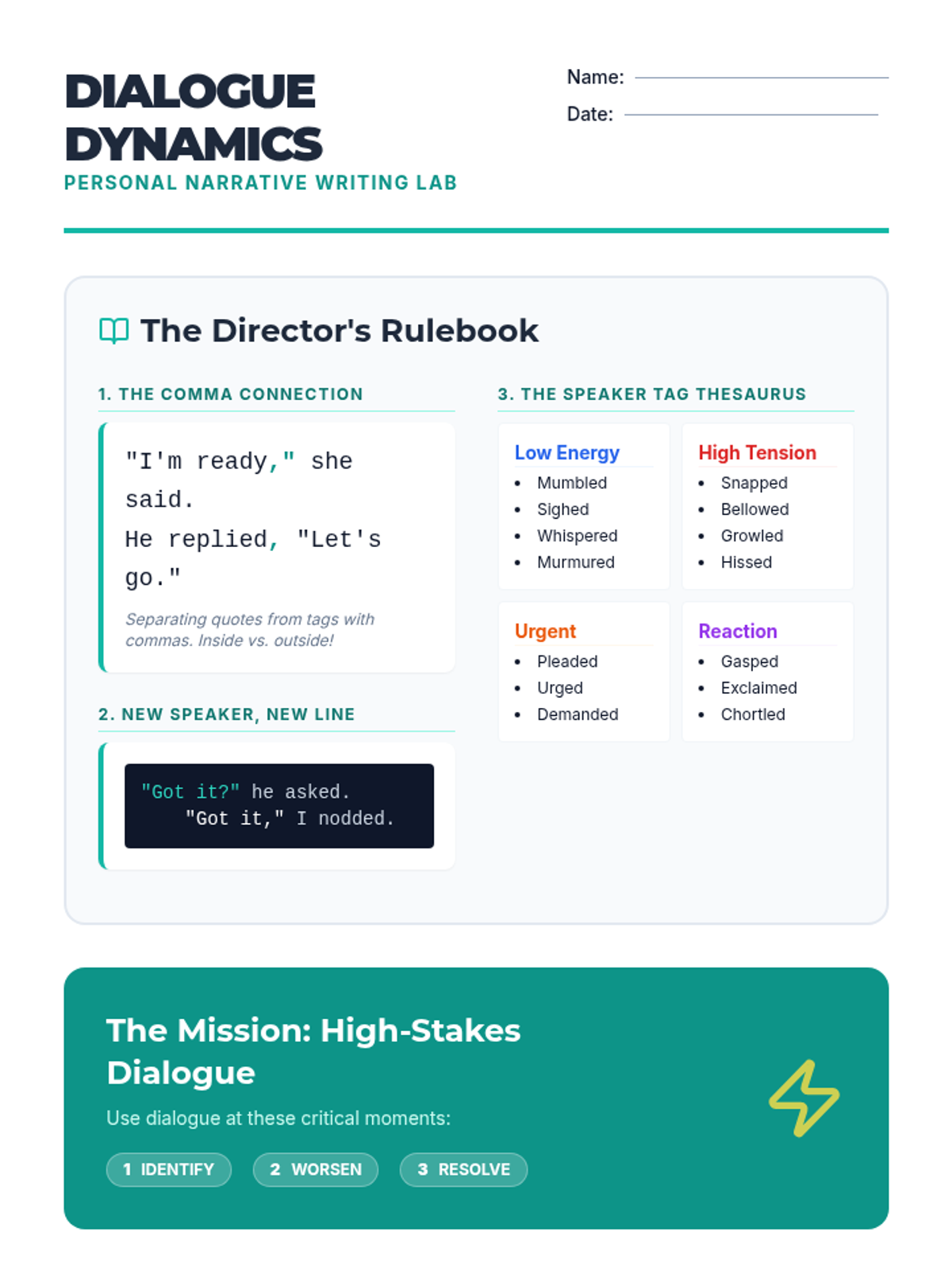
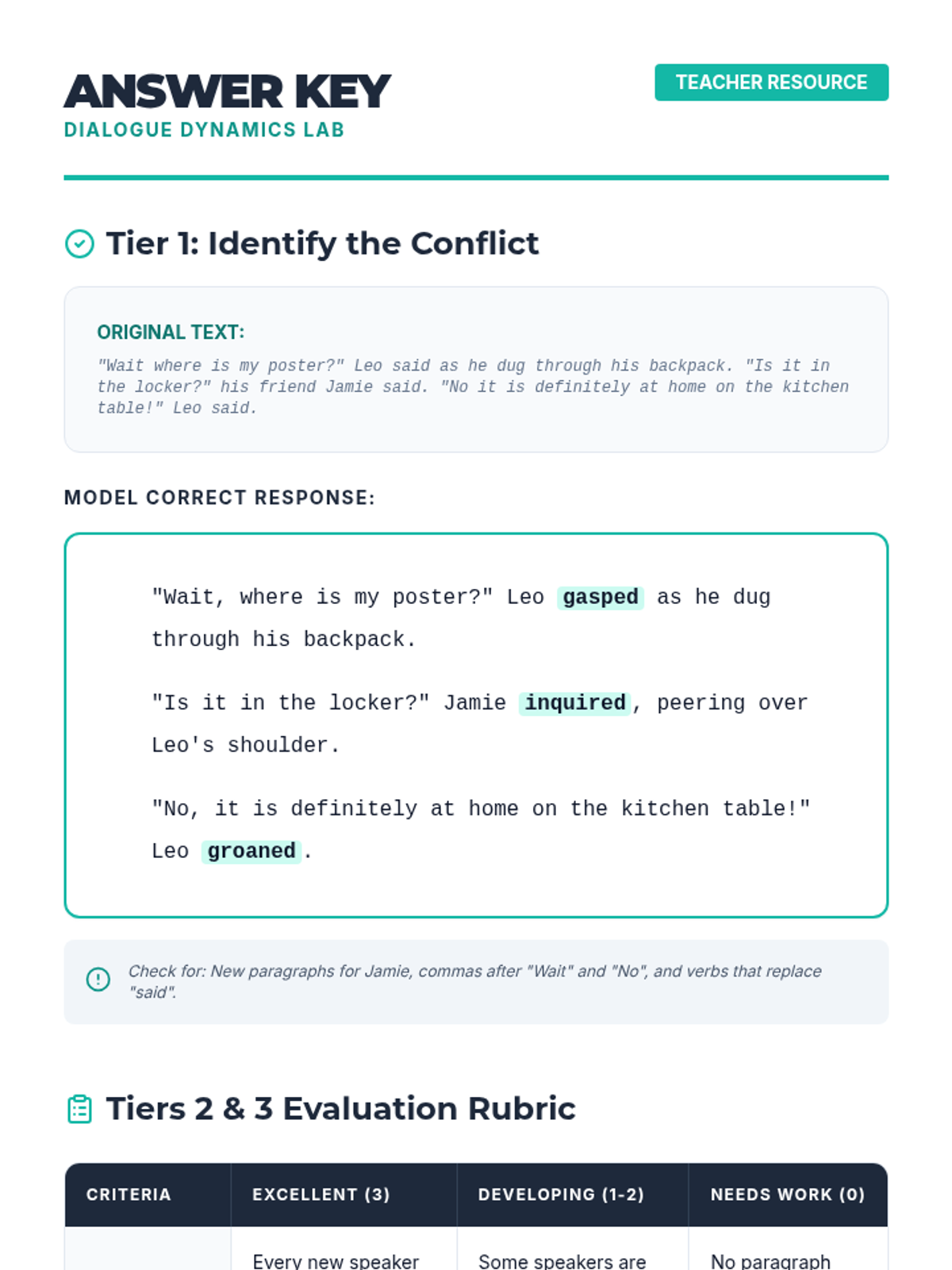
A comprehensive lesson on crafting impactful dialogue for personal narratives, focusing on high-stakes moments, proper formatting, and sophisticated speaker tags. Students learn to use dialogue to drive conflict and resolution while mastering the technical rules of punctuation and paragraphing.
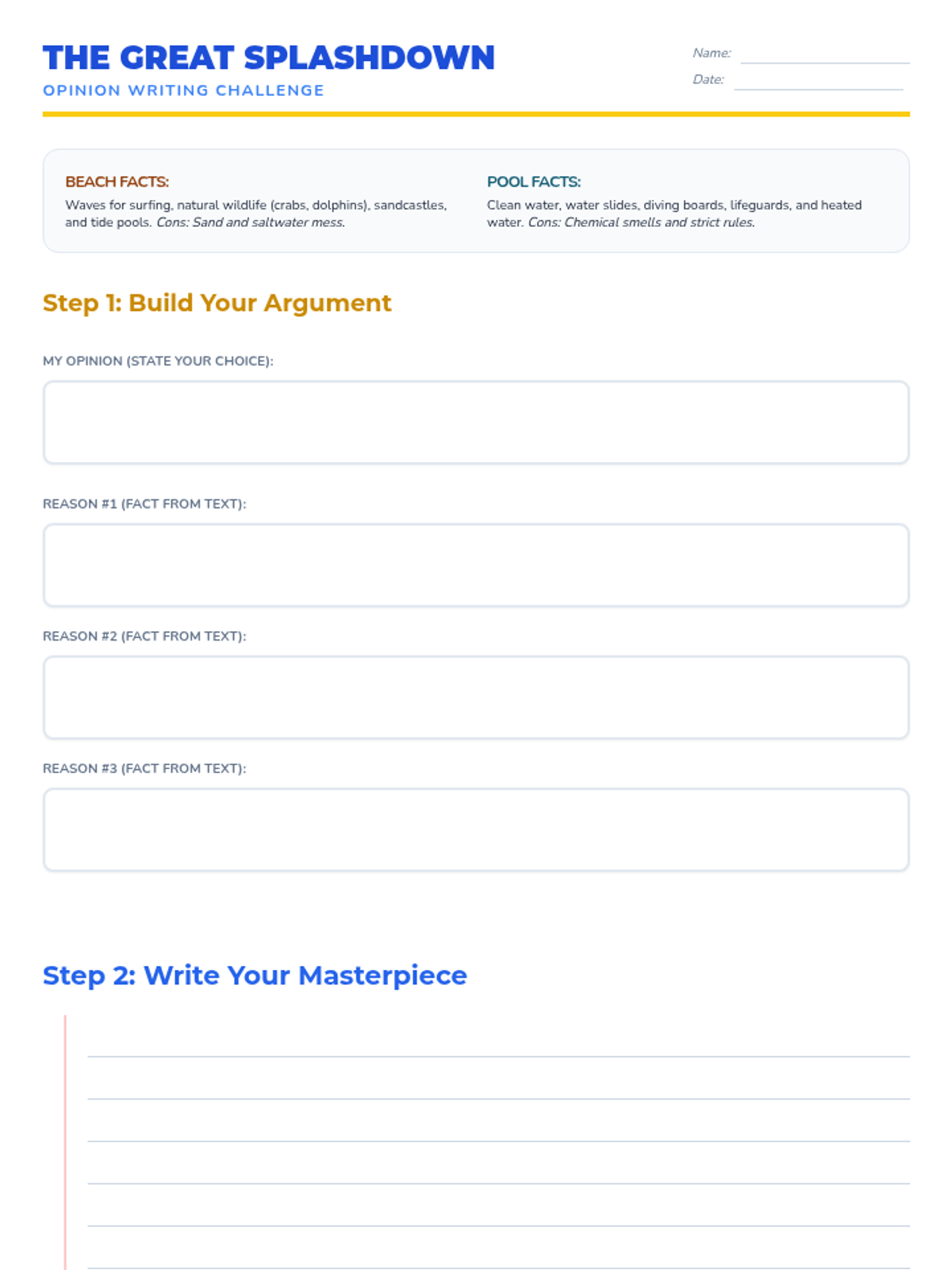
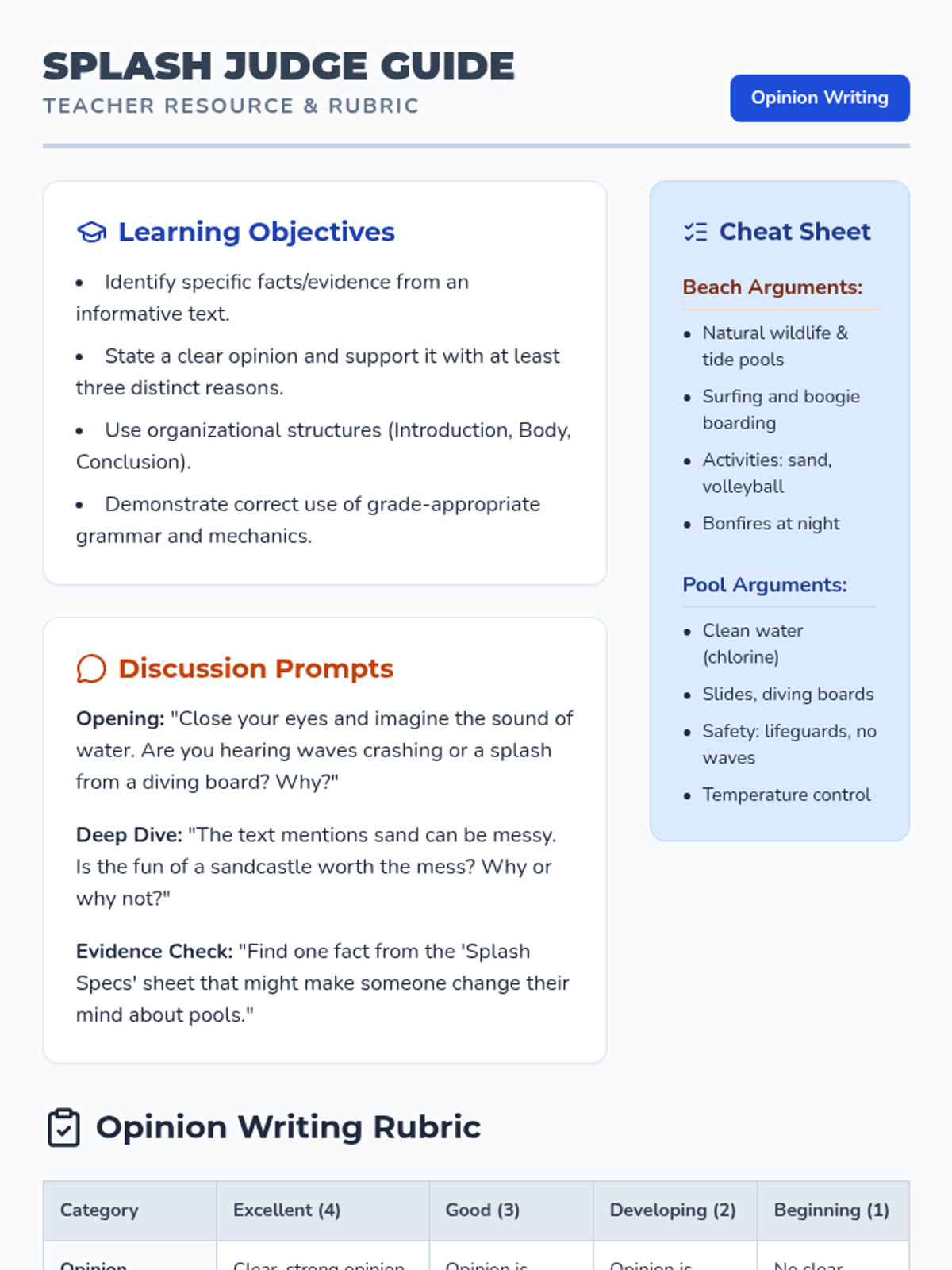
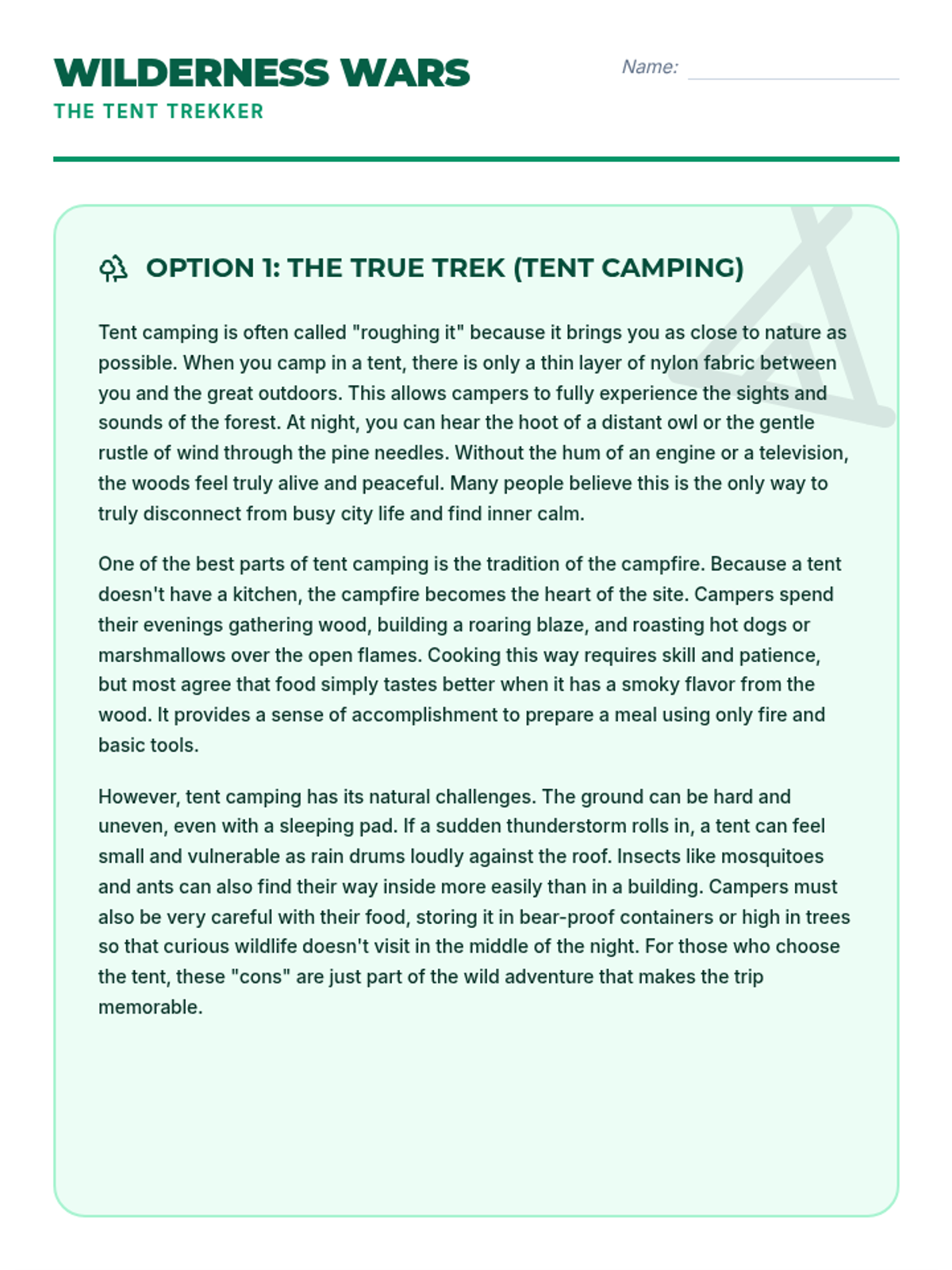
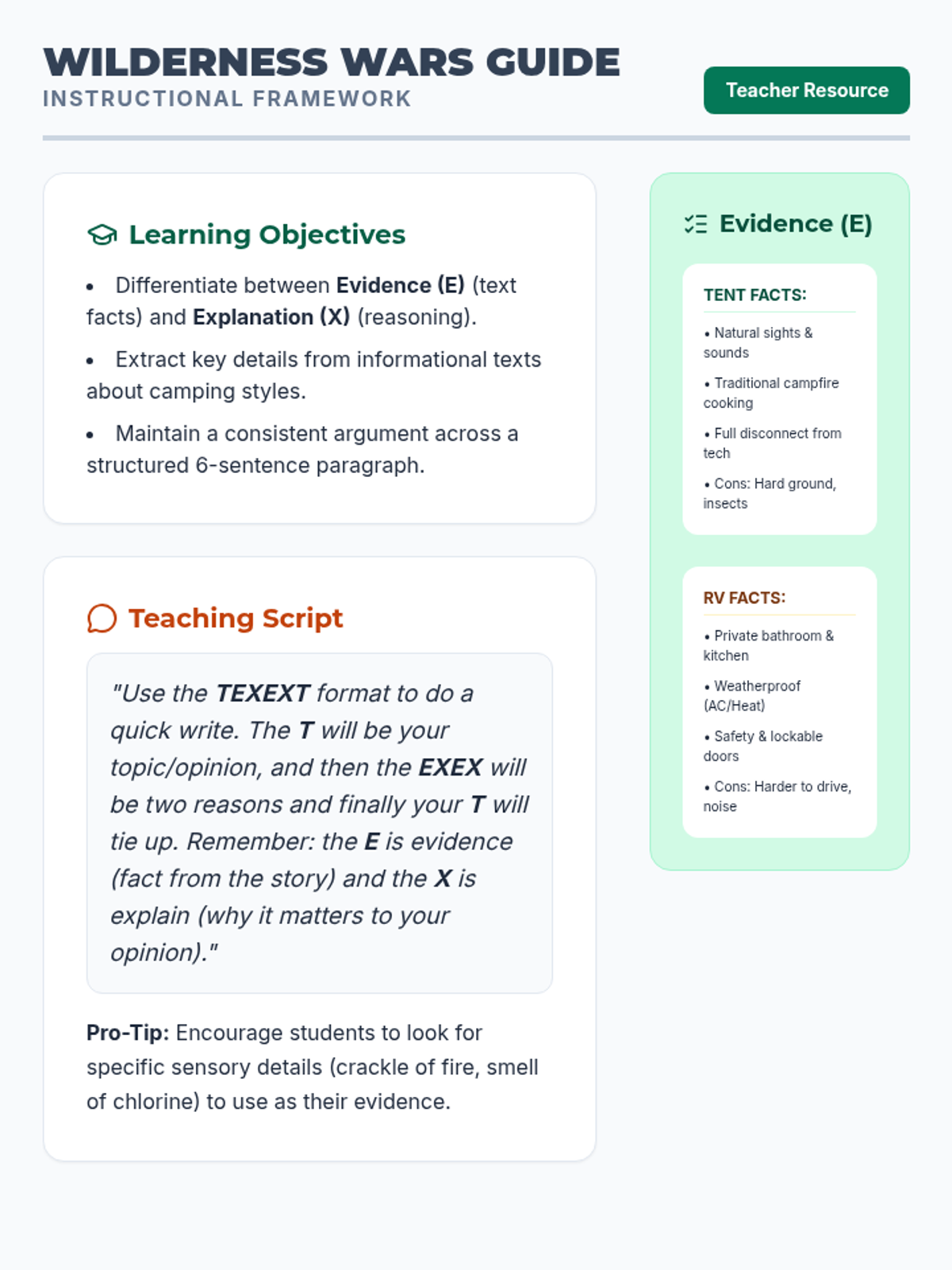
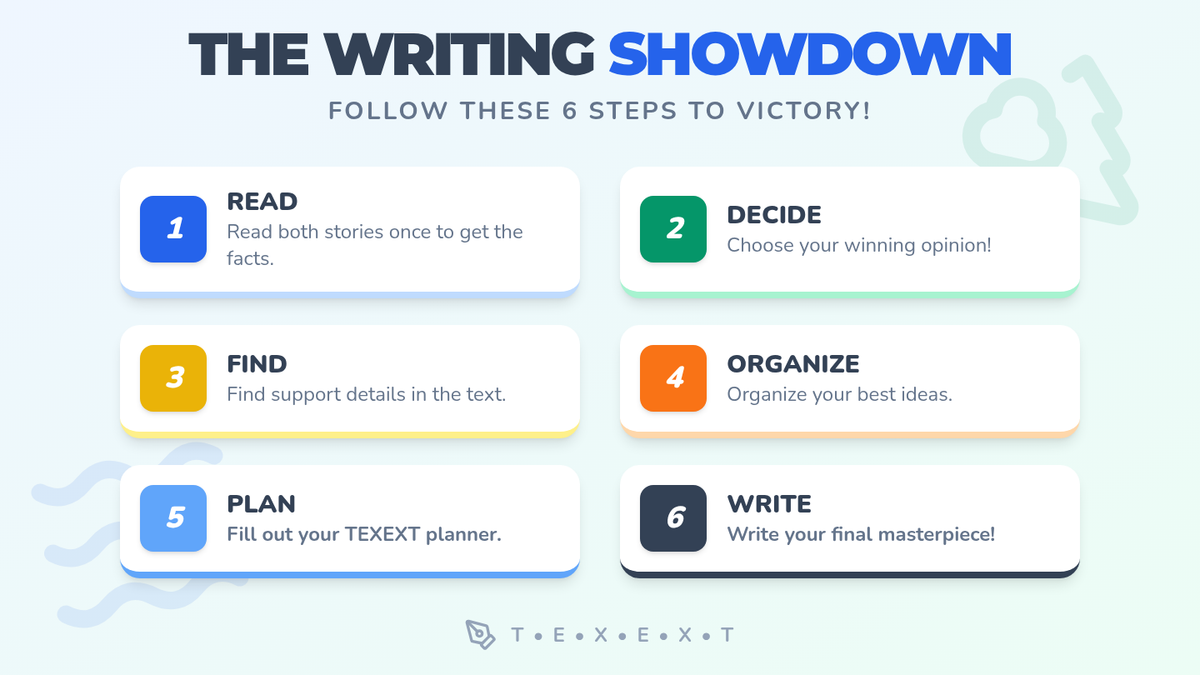
A lesson focused on opinion writing where students compare the benefits and drawbacks of beaches versus pools using informative text. Students will practice evidence-based writing and persuasive techniques.
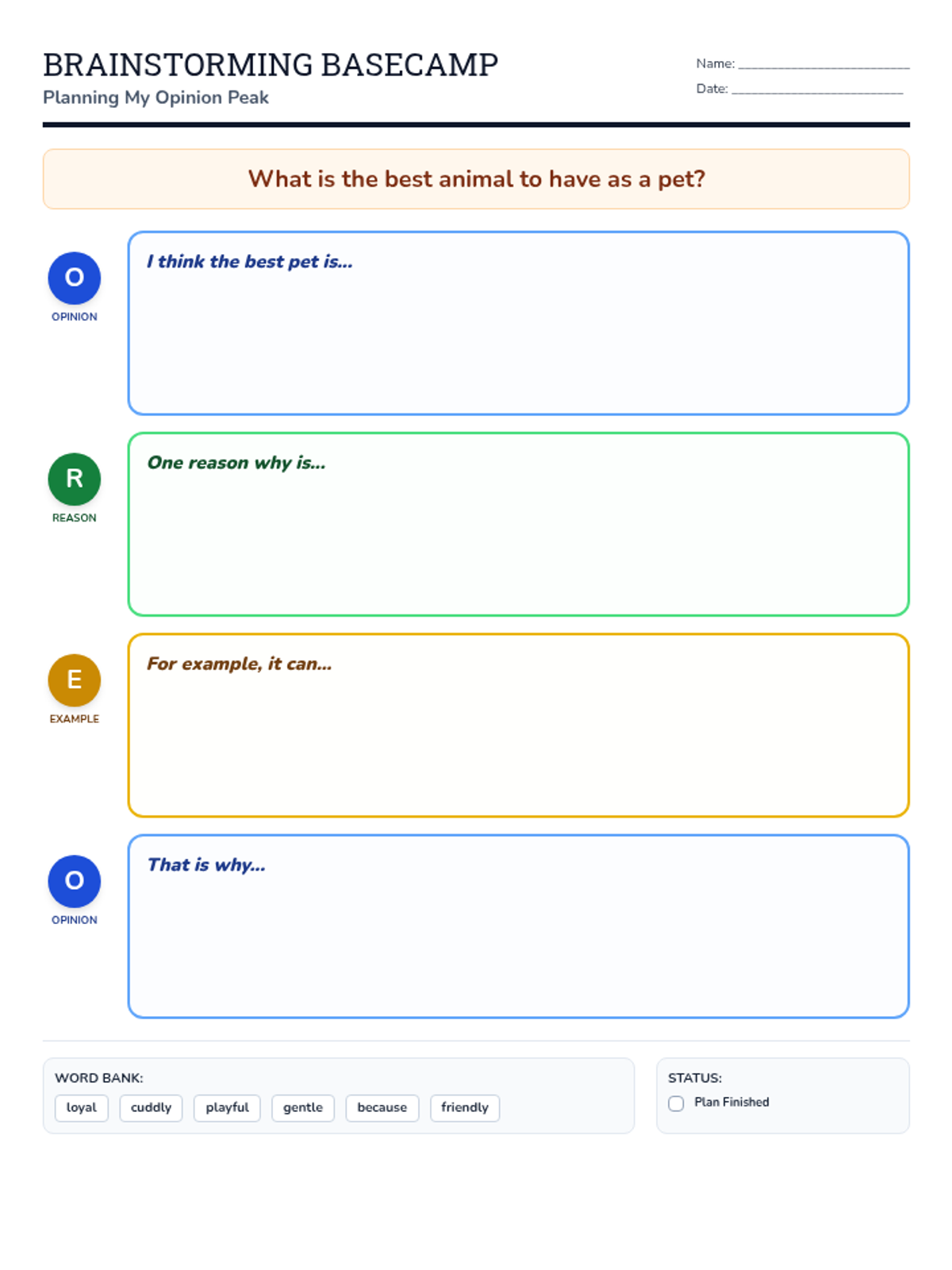
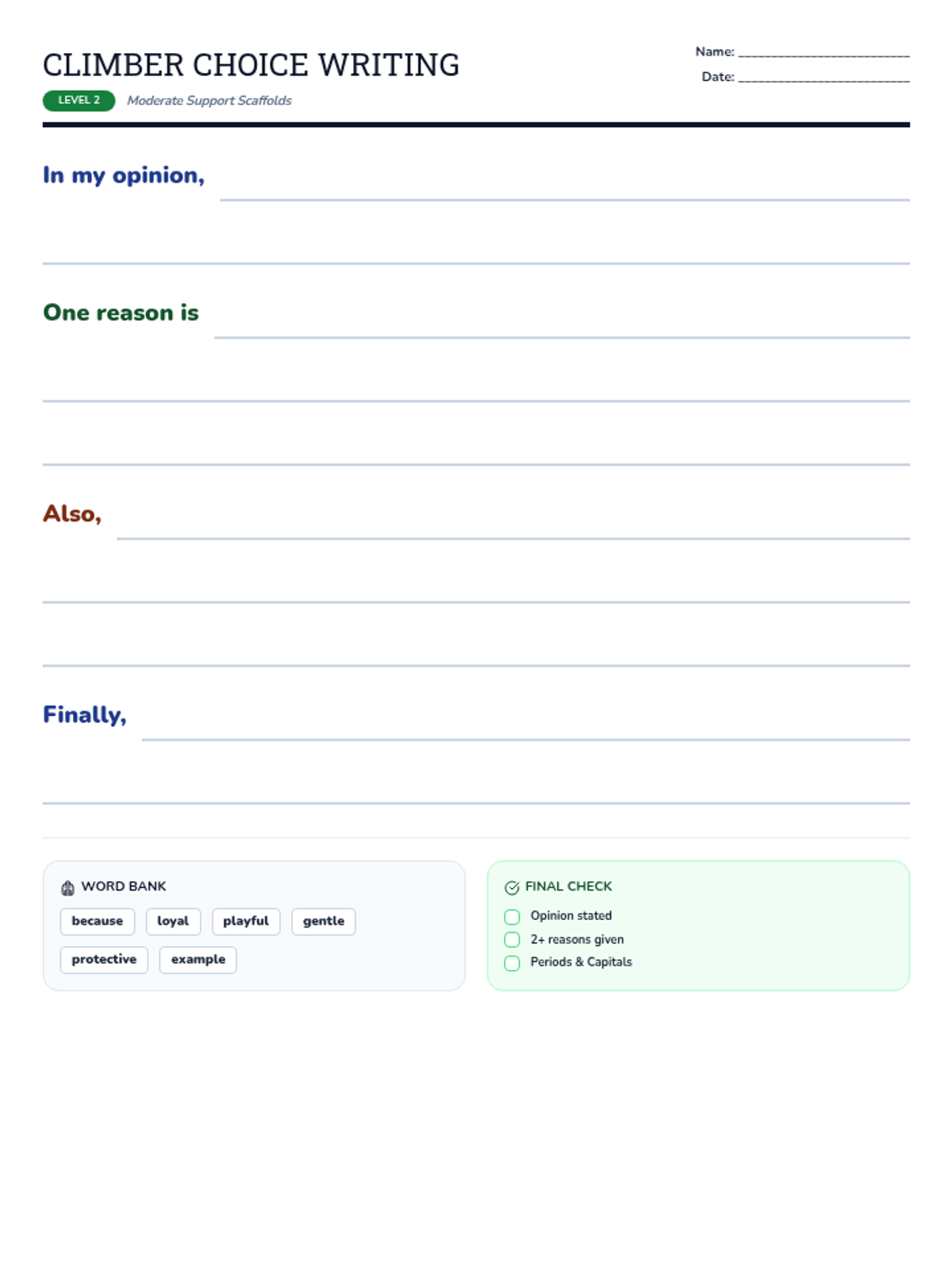
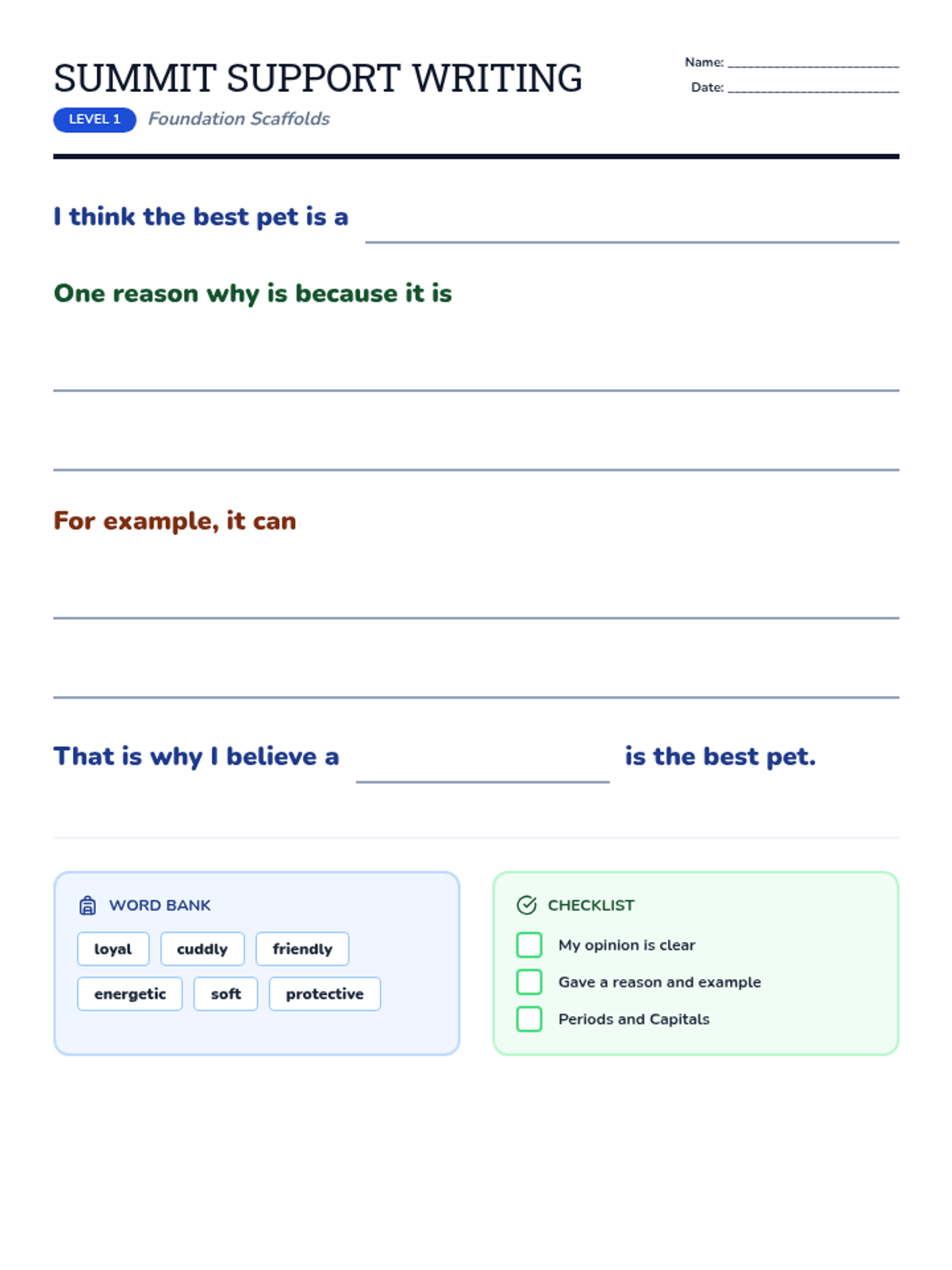
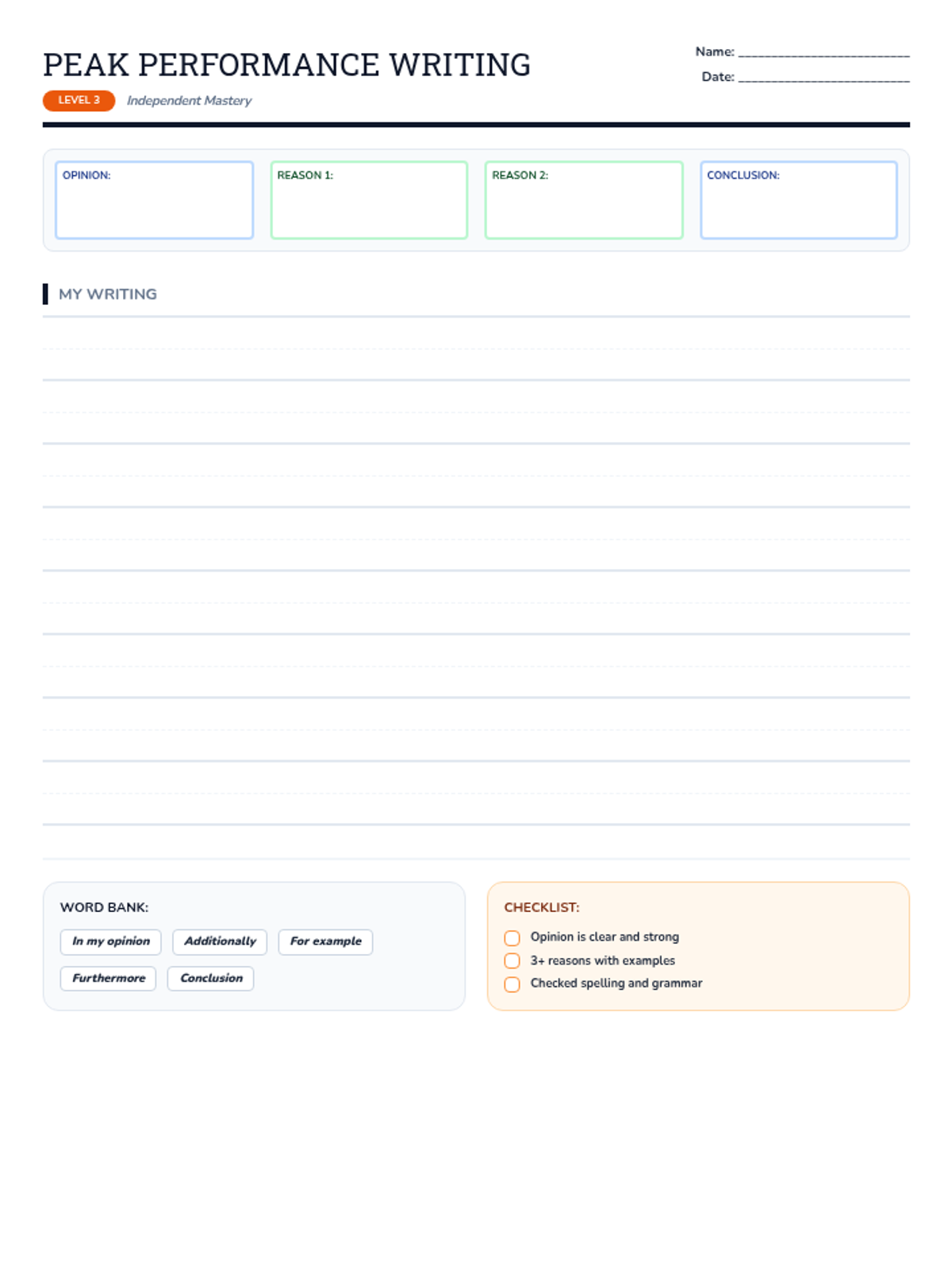
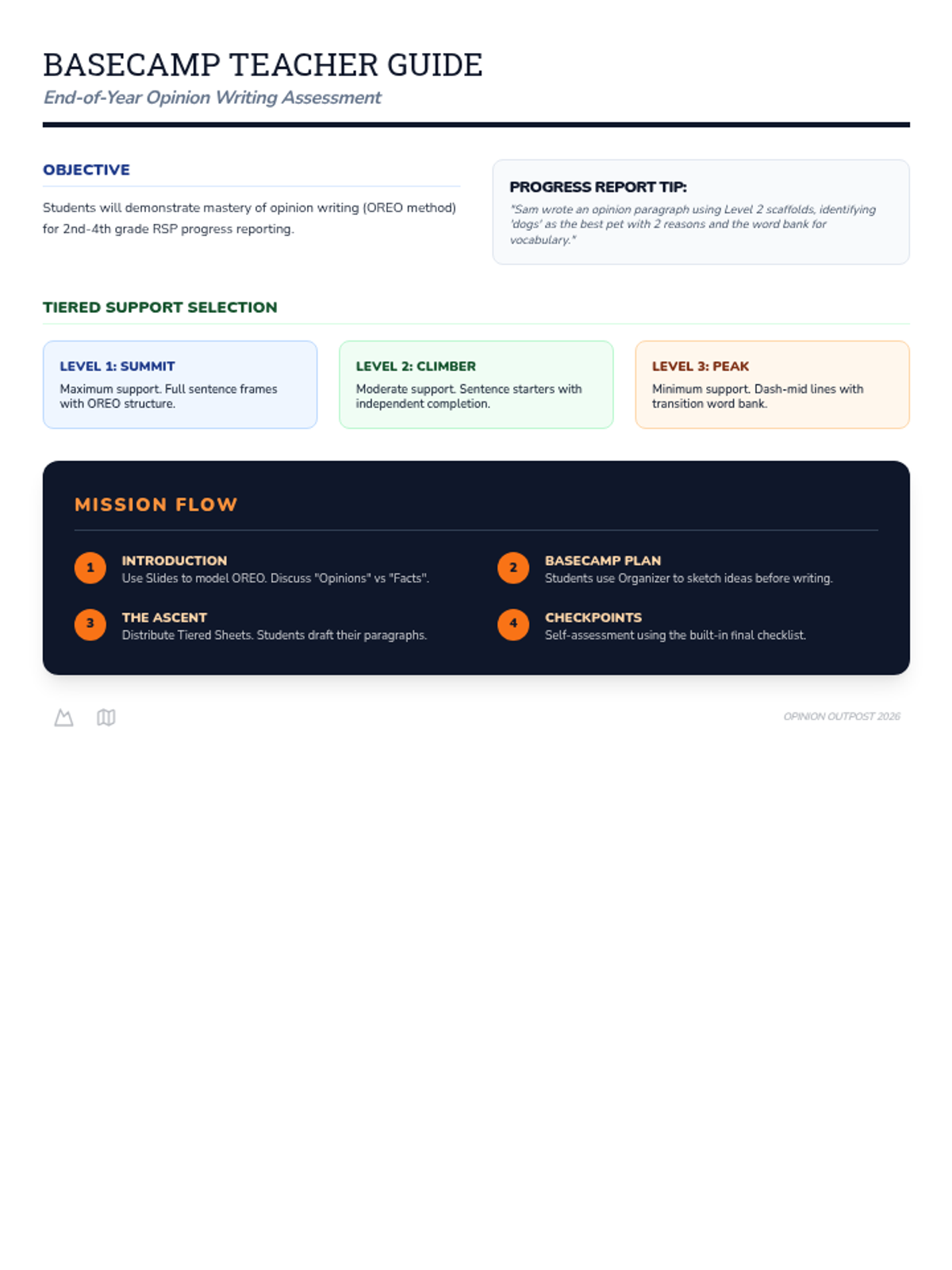
A scaffolded opinion writing lesson focused on 'The Best Pet', designed for 2nd-4th grade RSP students to demonstrate their year-end progress through differentiated writing tasks.
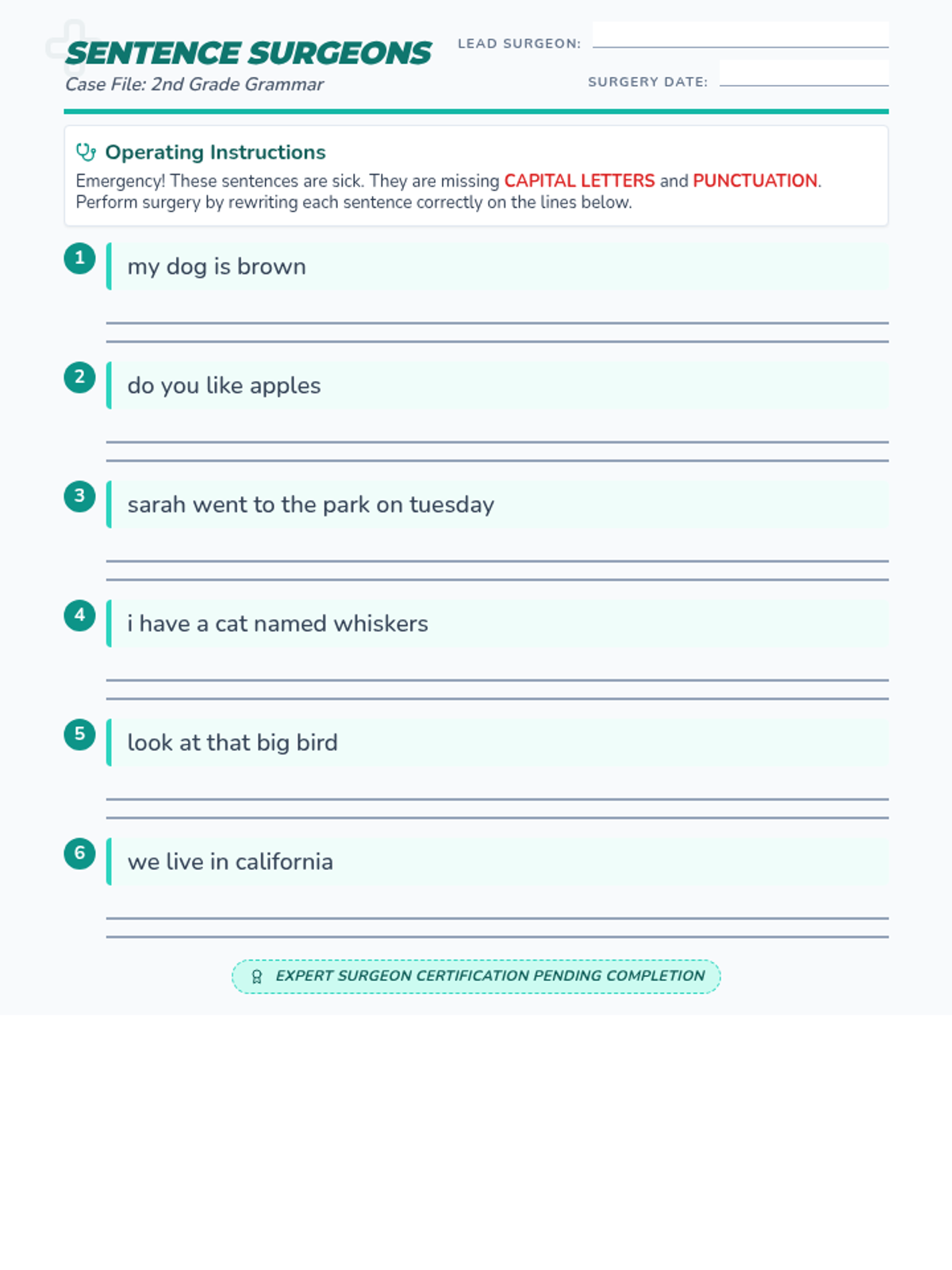
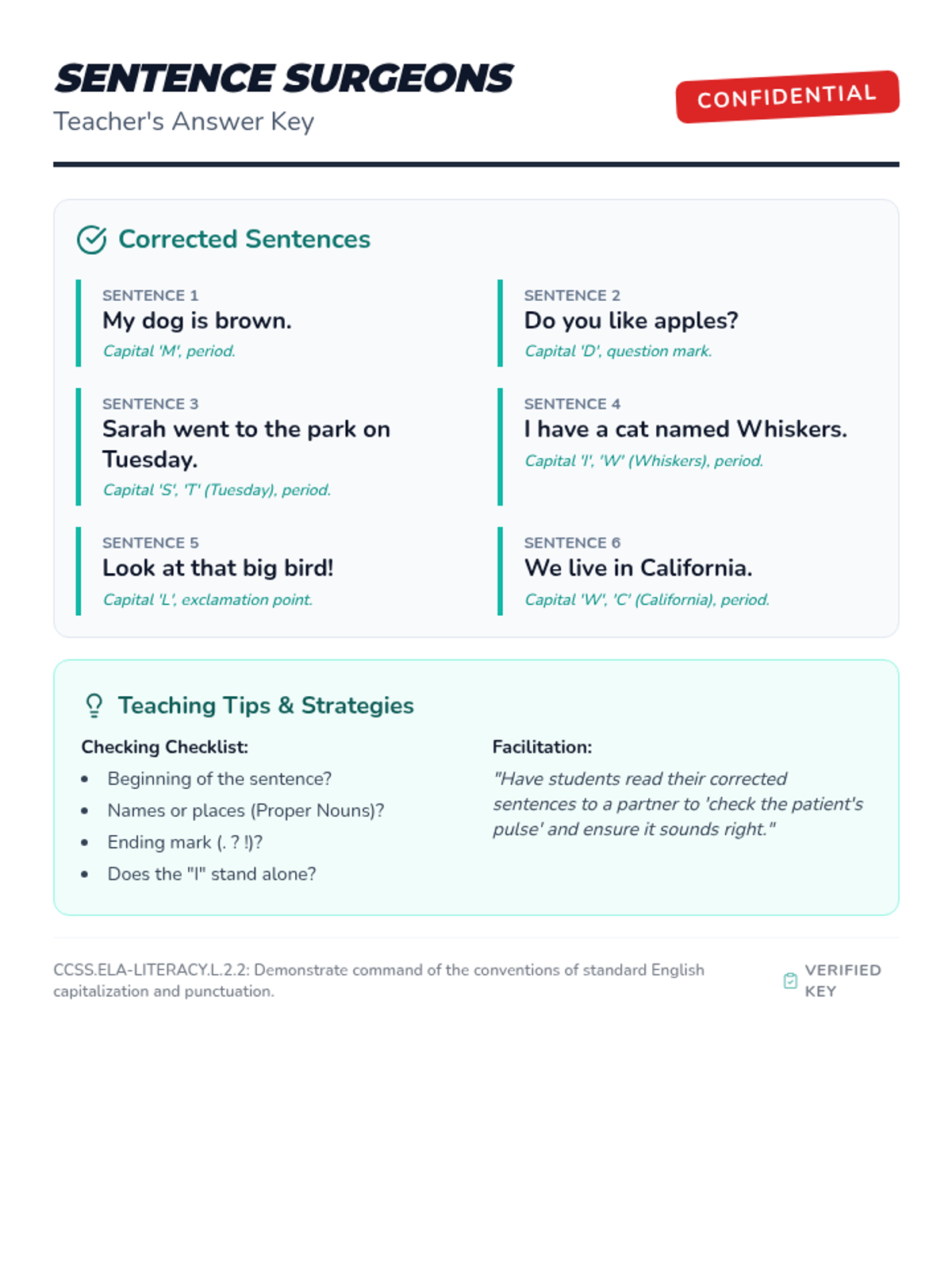
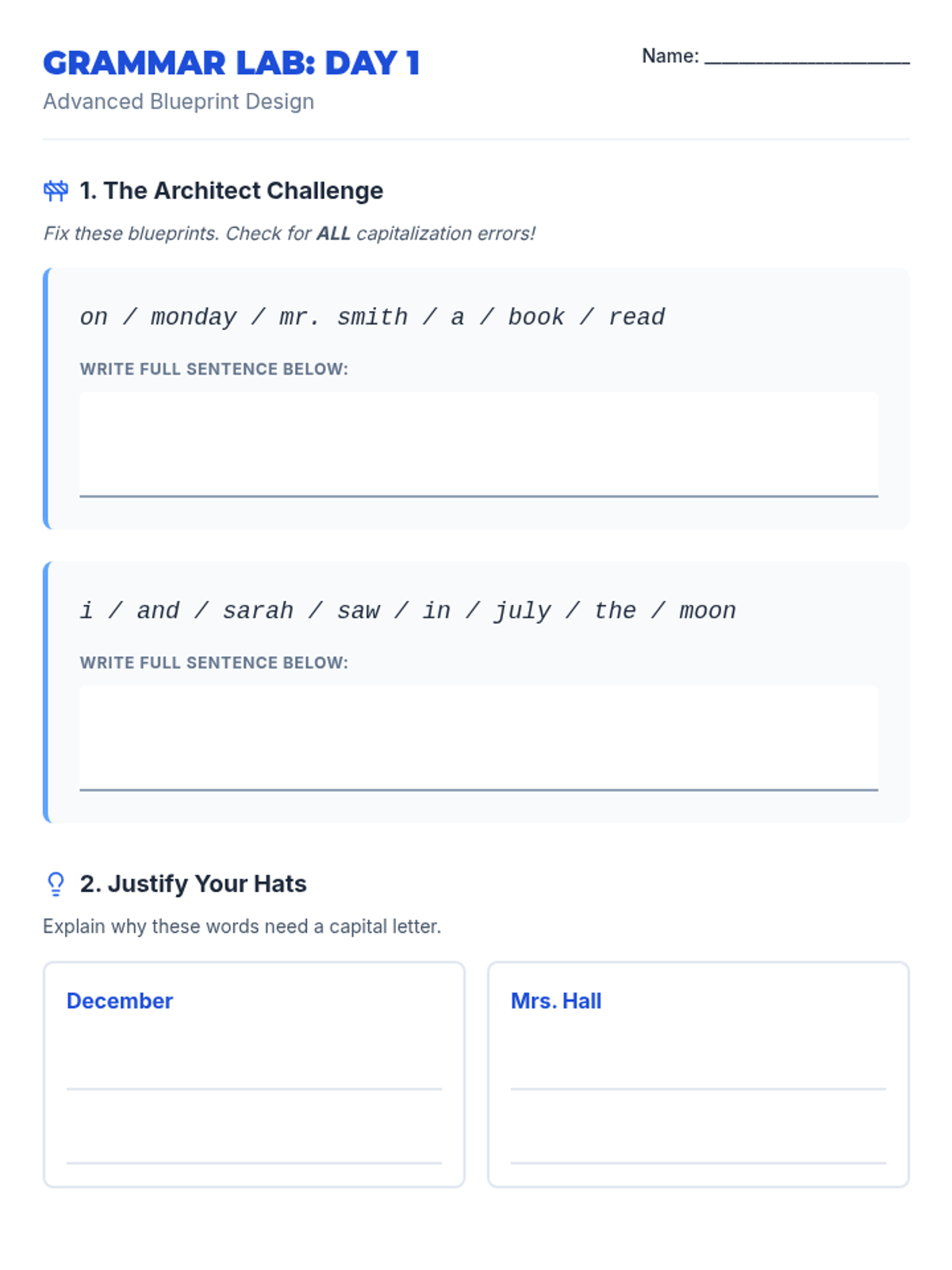
A lesson focused on identifying and correcting capitalization and punctuation errors in simple sentences, designed for 2nd-grade students using a fun medical 'surgeon' theme.
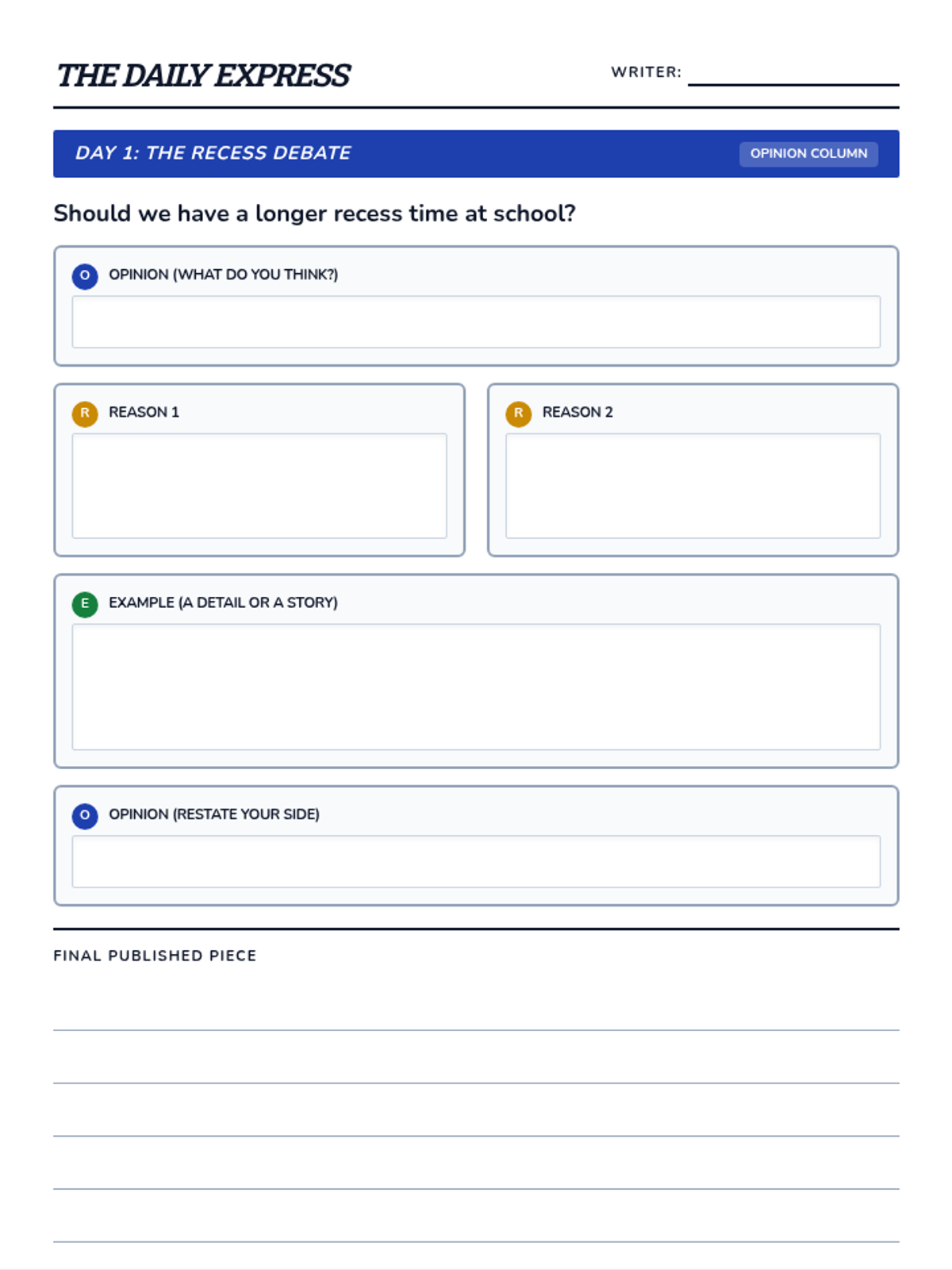
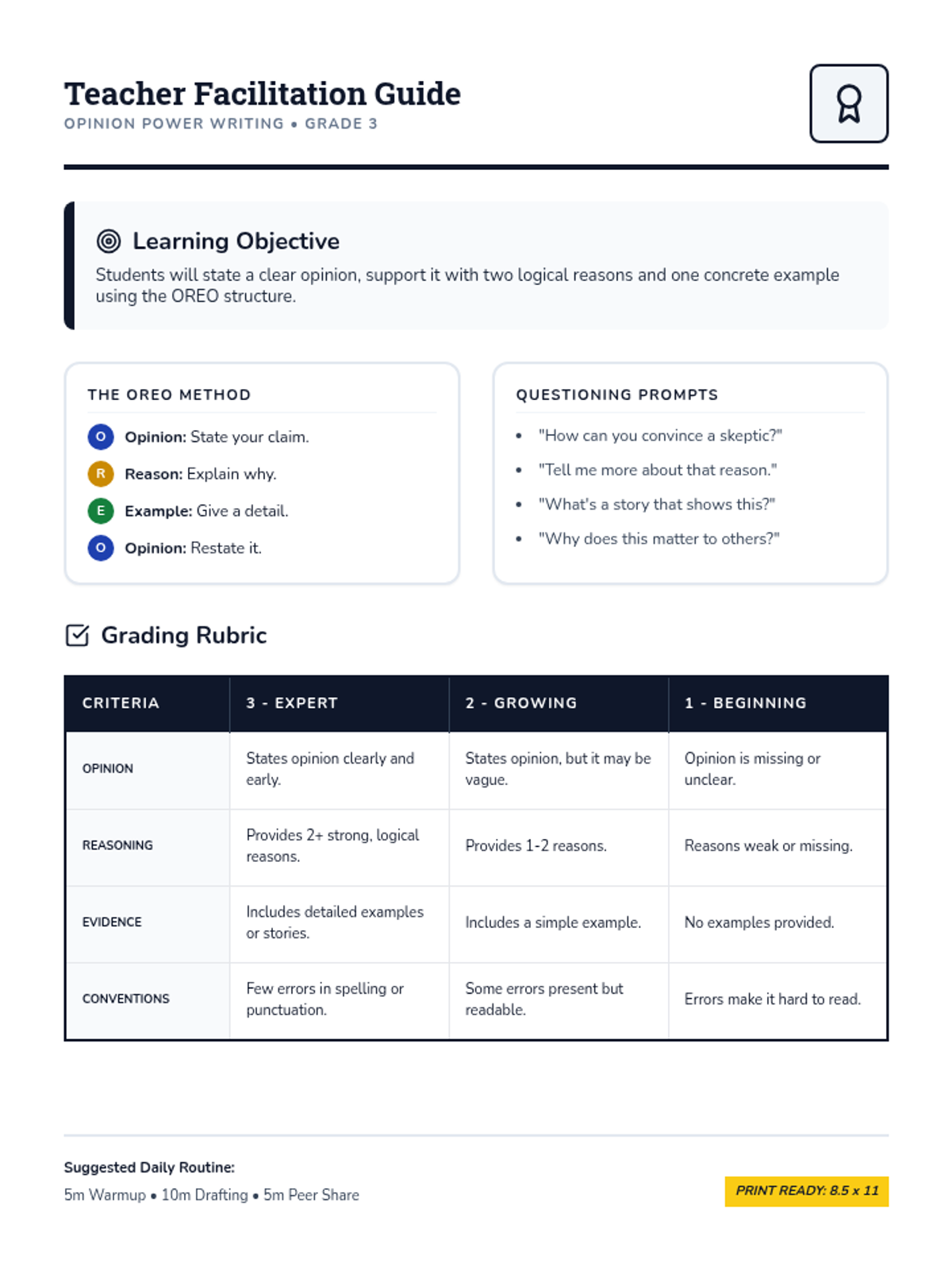
A series of engaging daily opinion writing prompts for 3rd graders, focused on forming strong opinions with supporting reasons and examples using the OREO method.
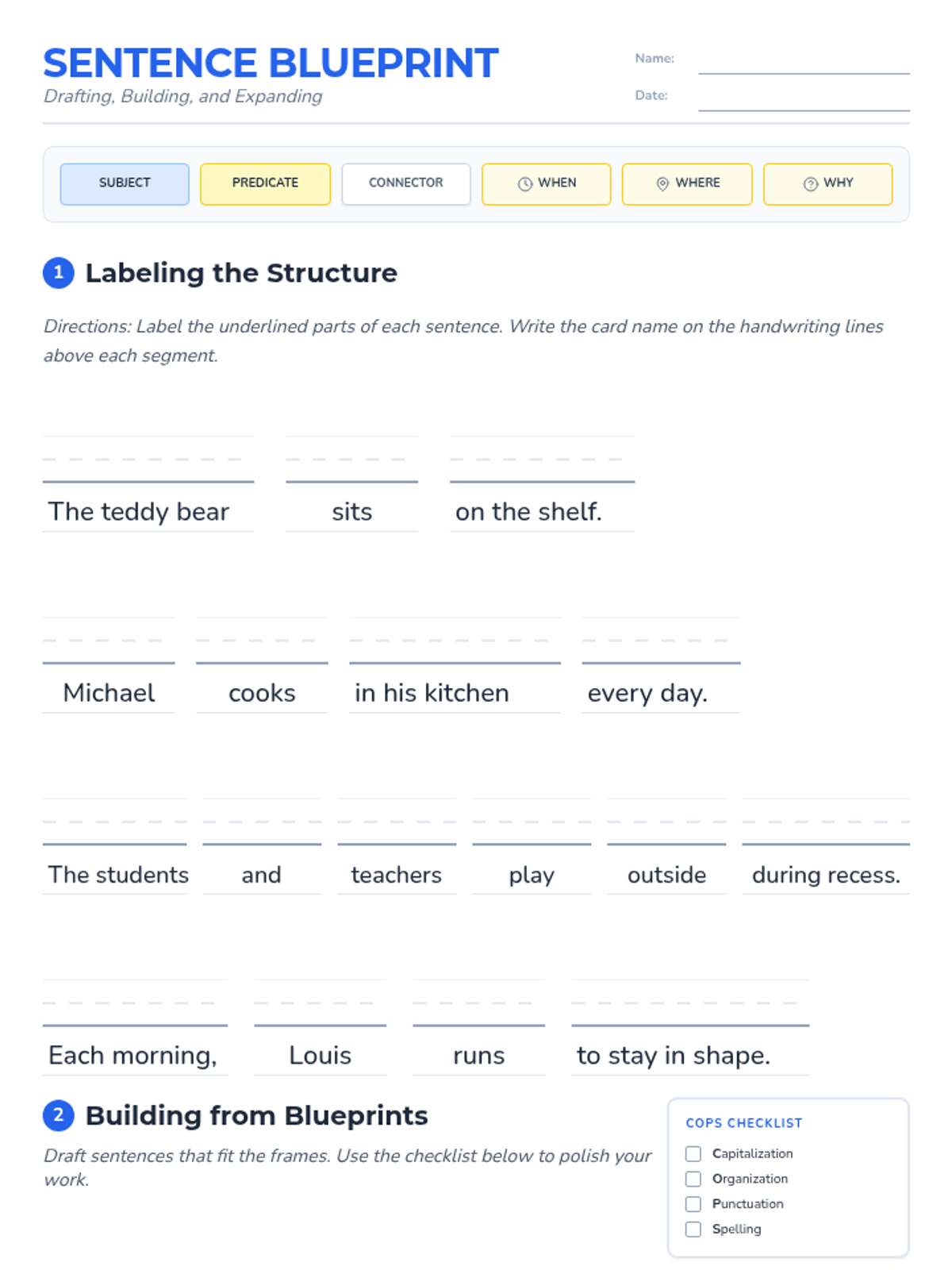
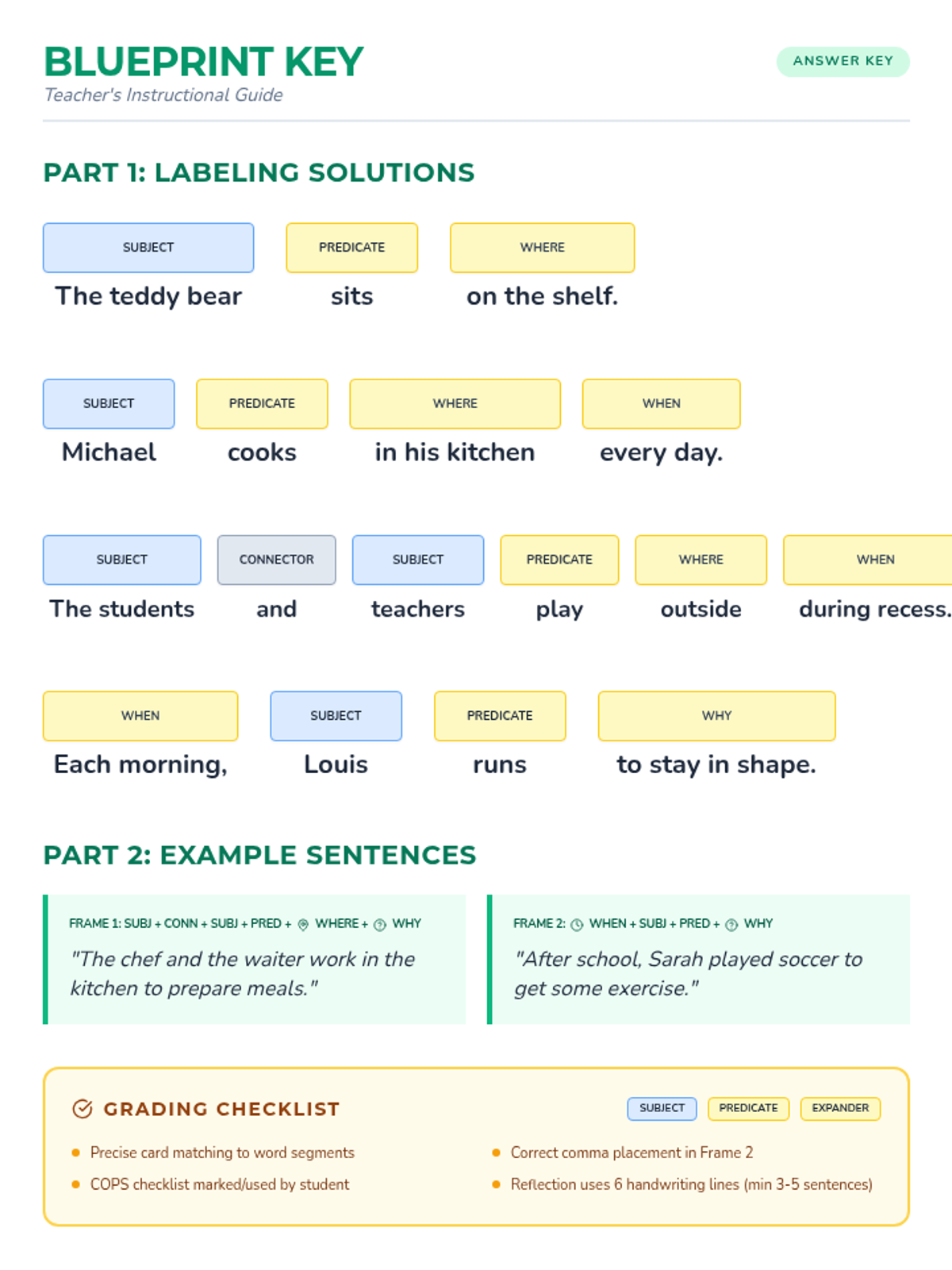
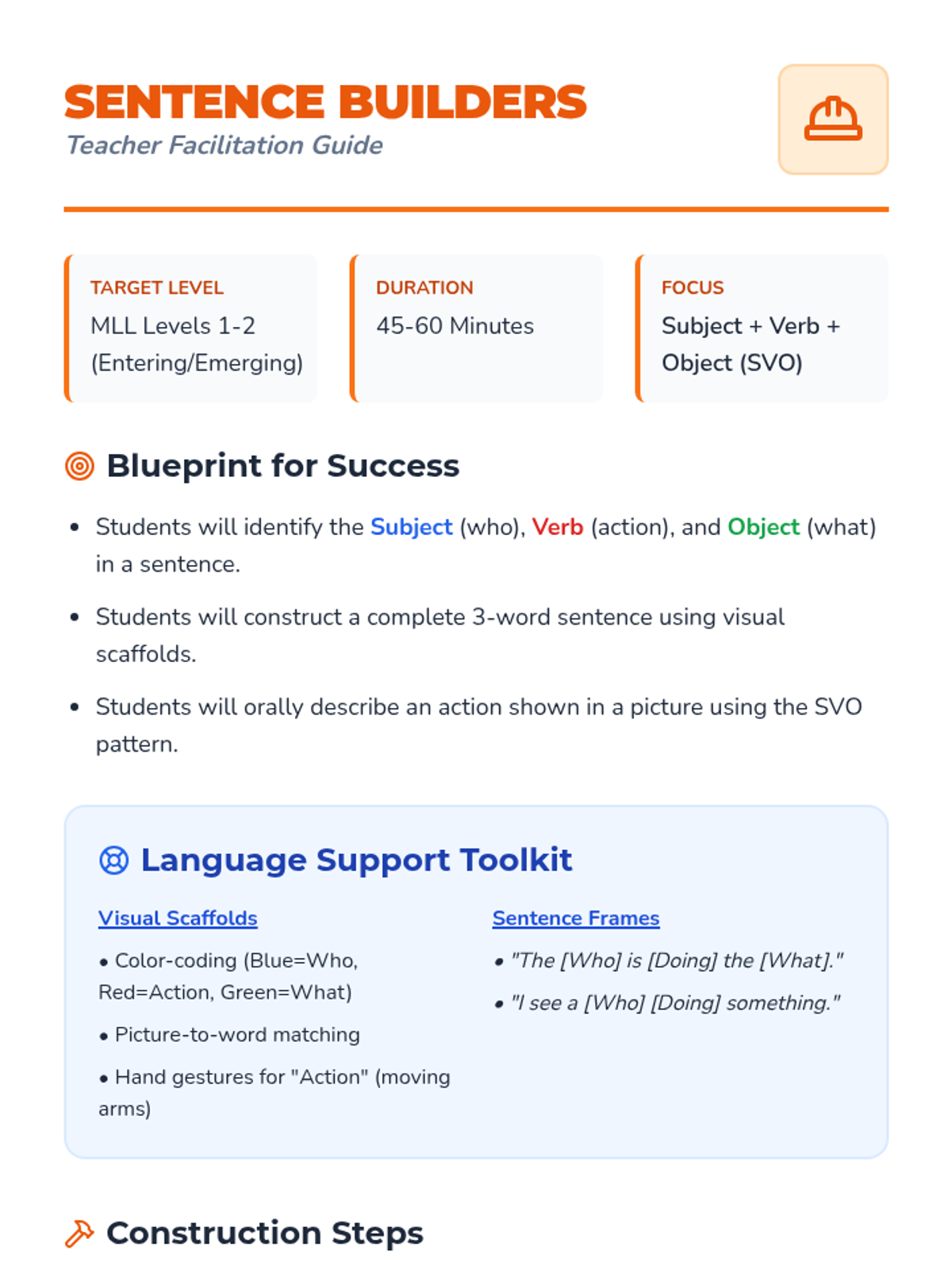
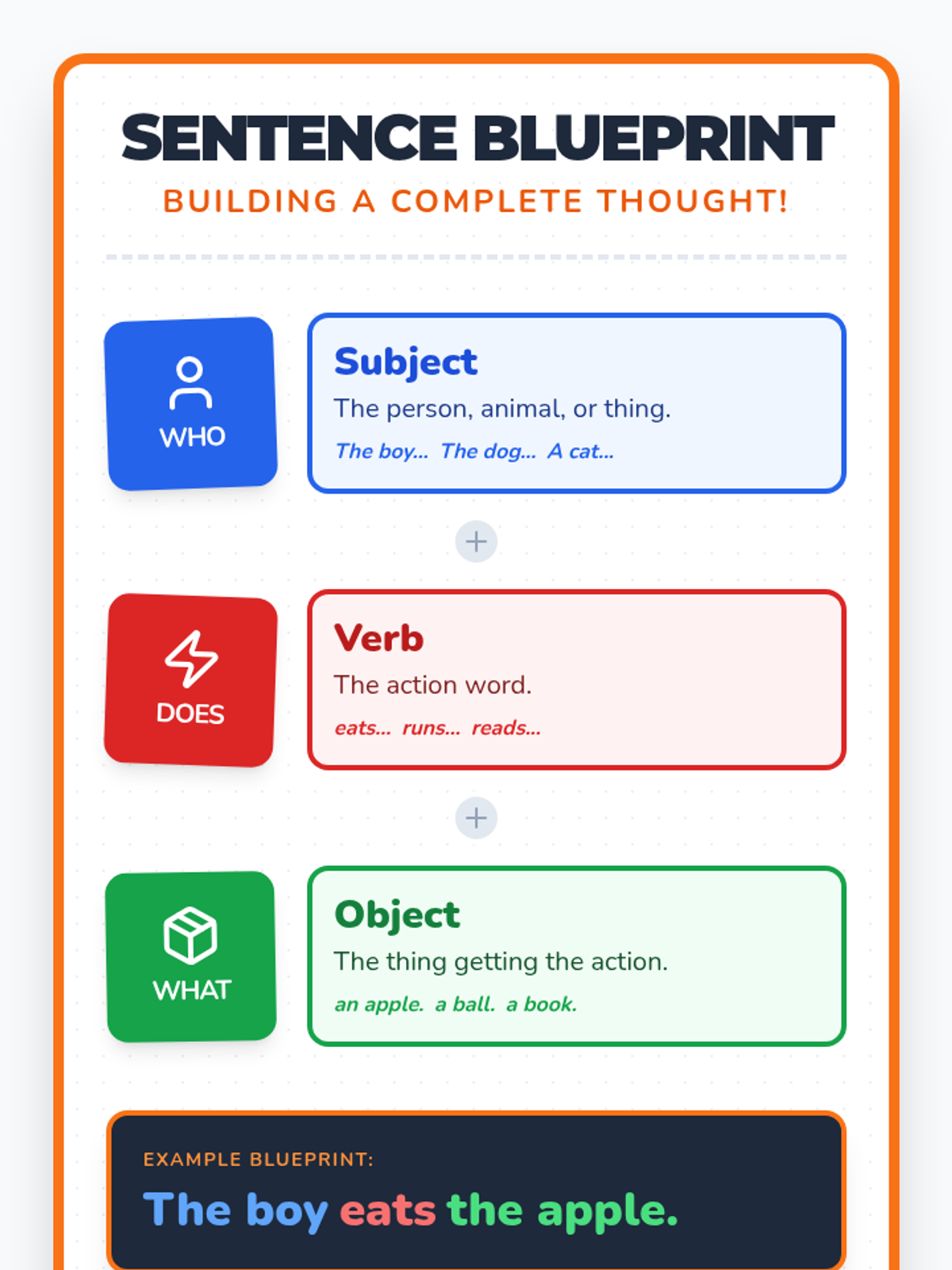
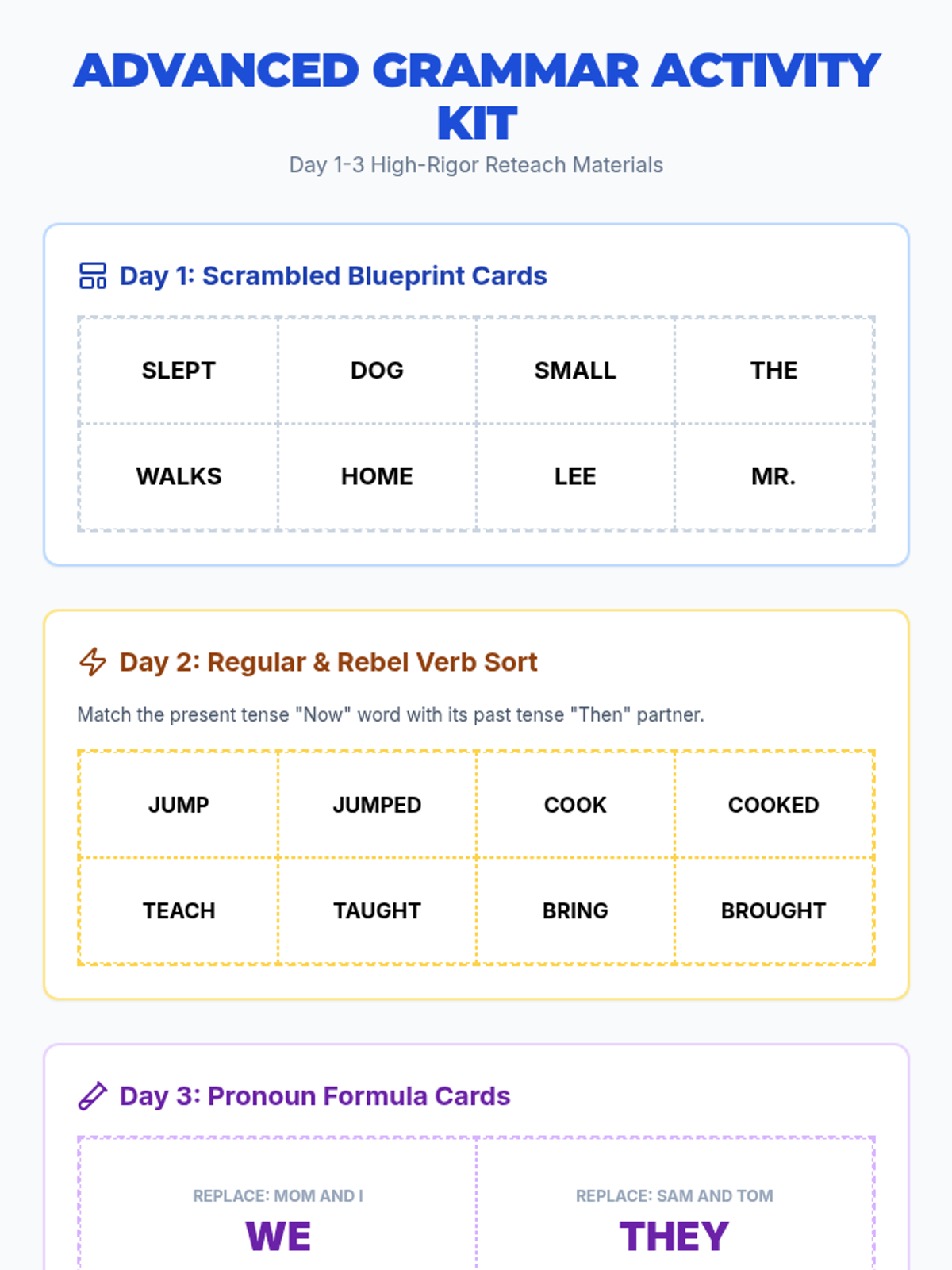
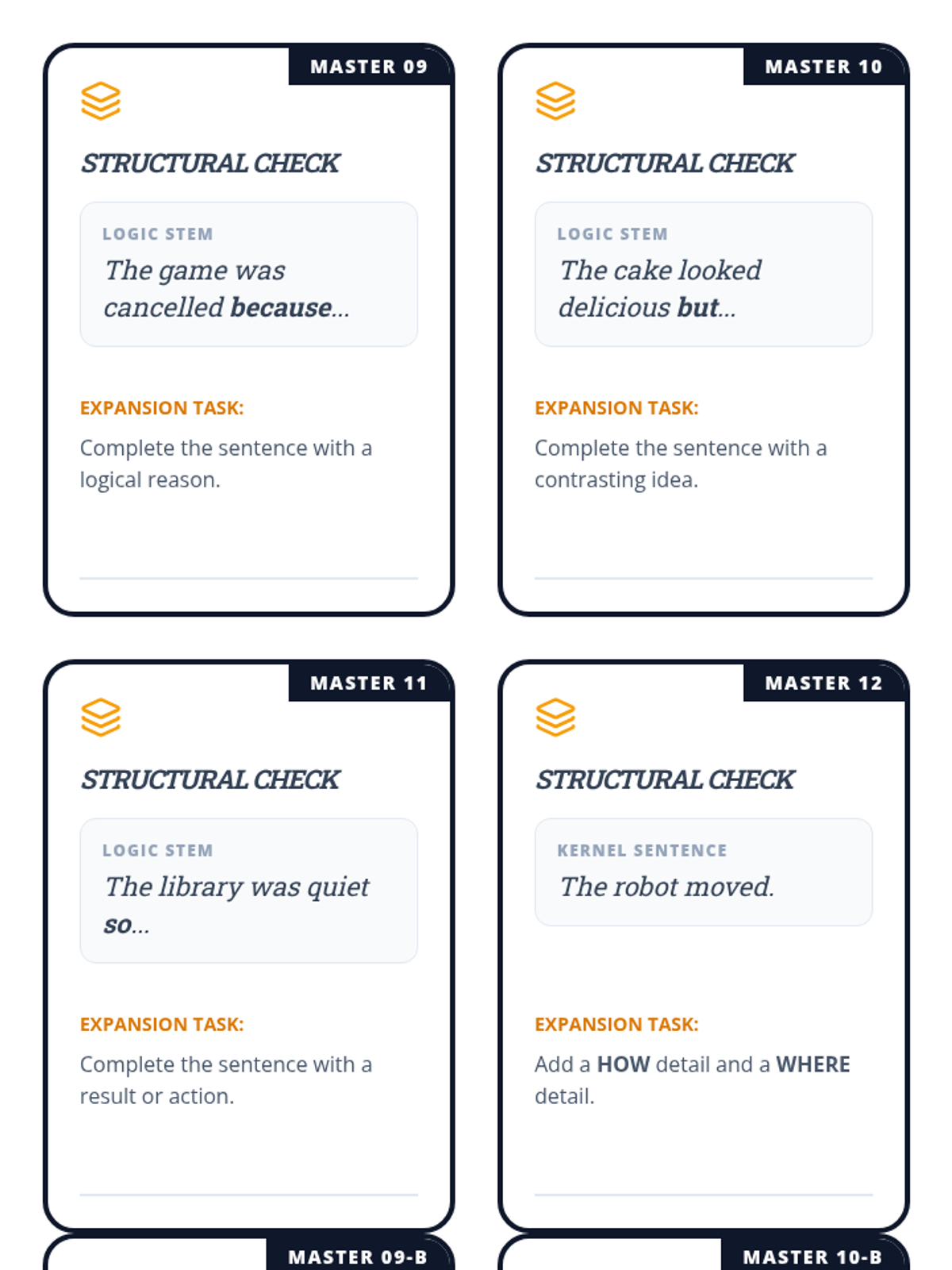
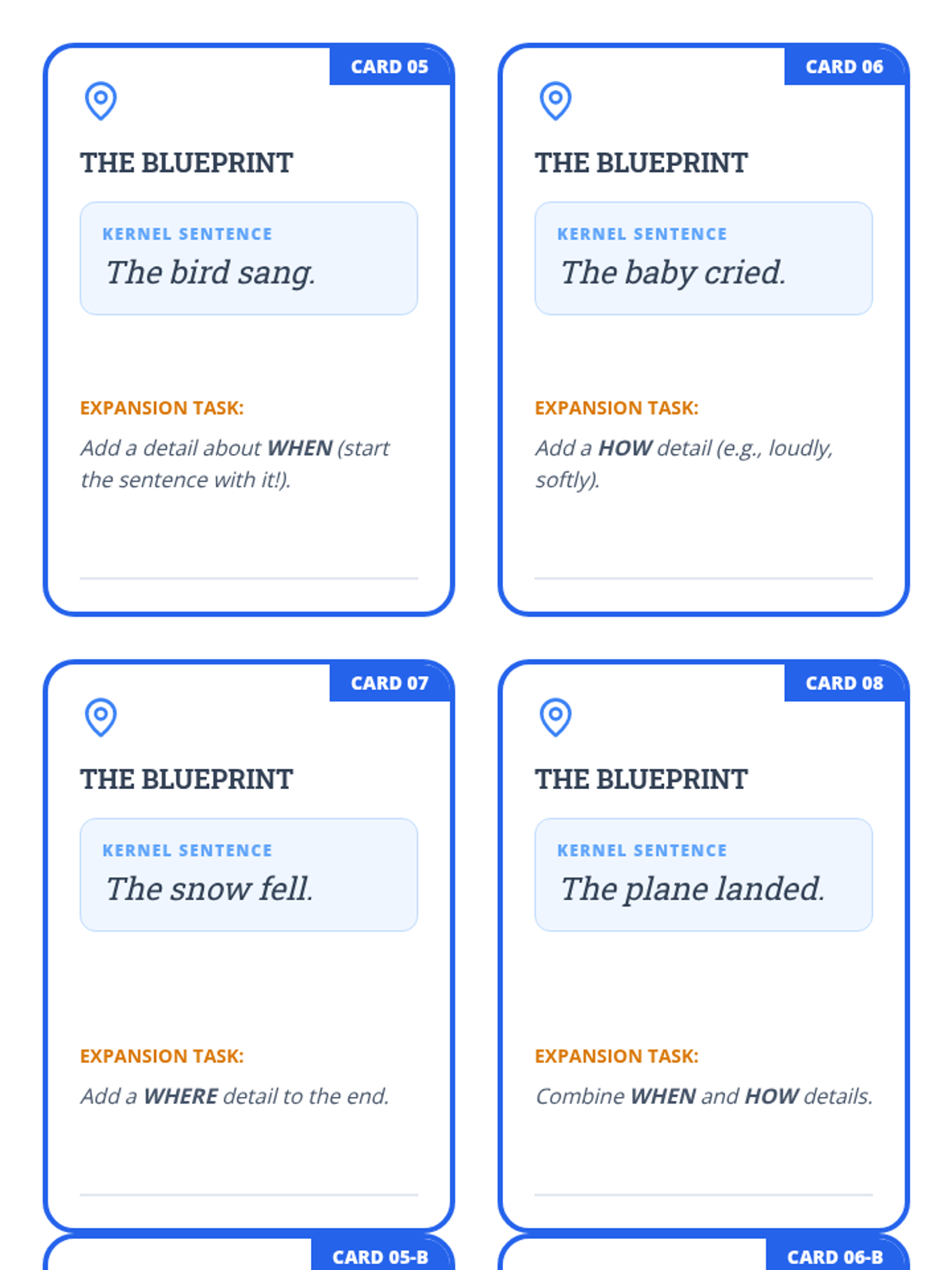
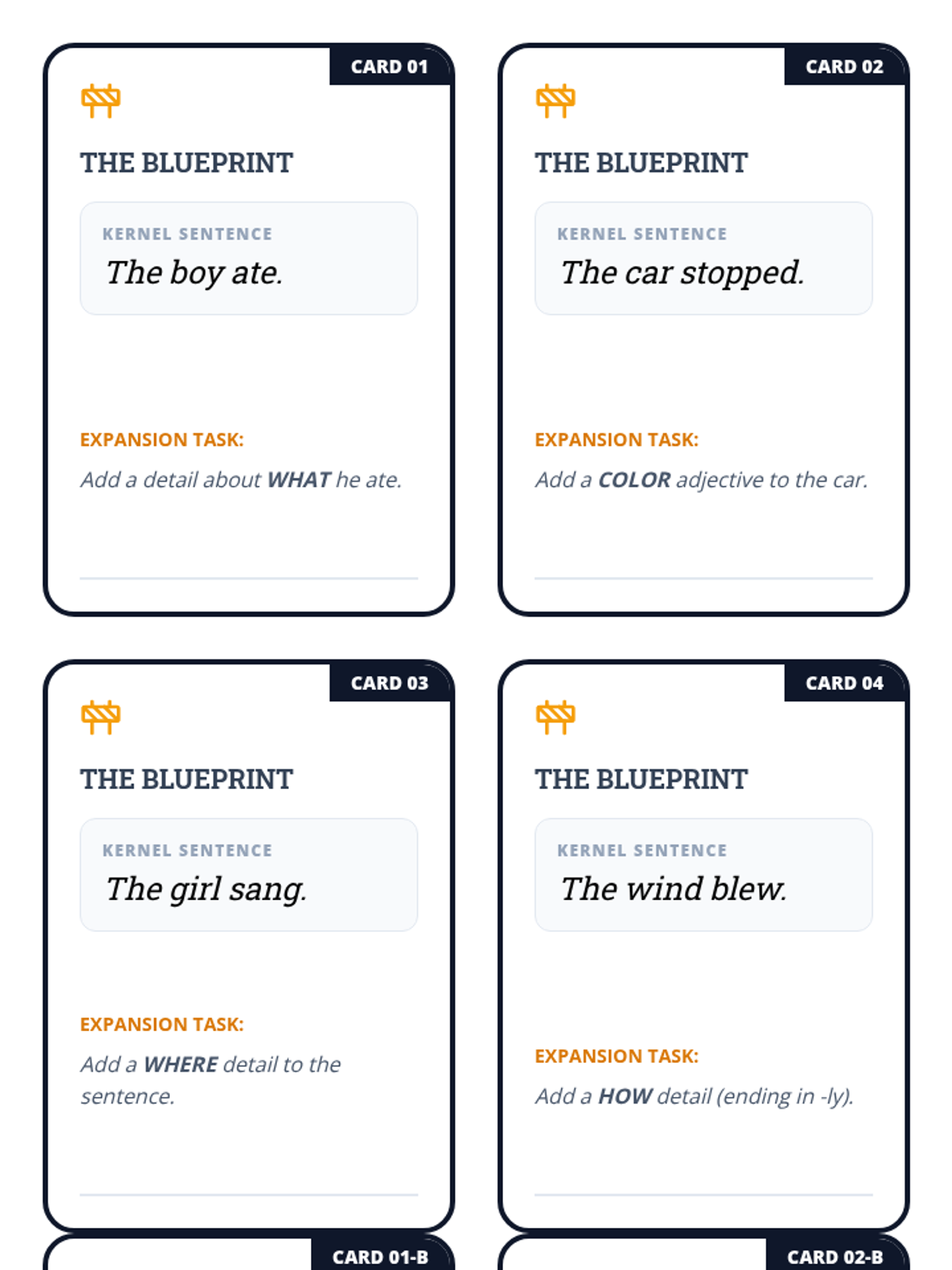
A hands-on lesson for mastering sentence structure using visual blueprint cards to label parts of speech and build complex sentences.
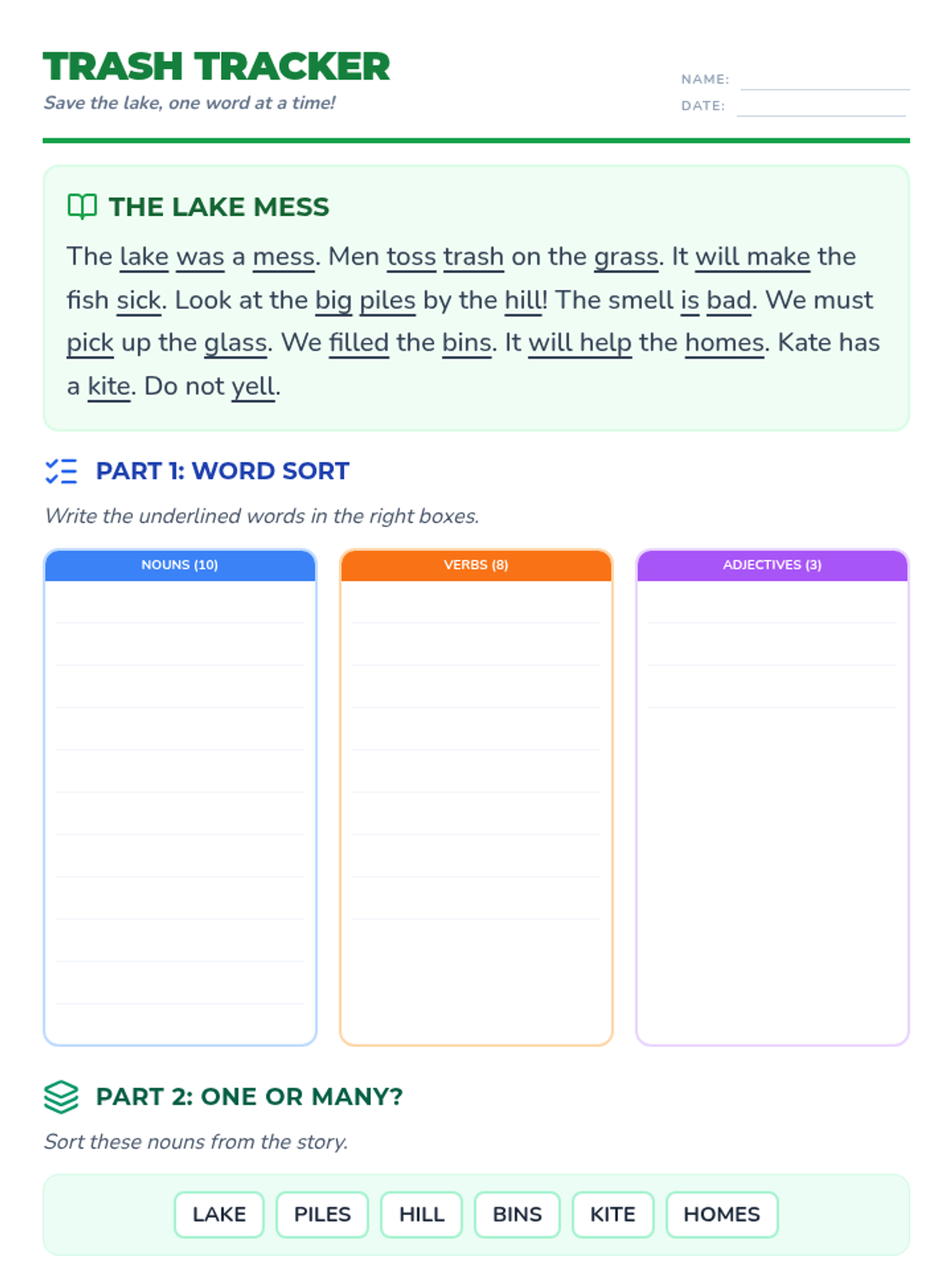
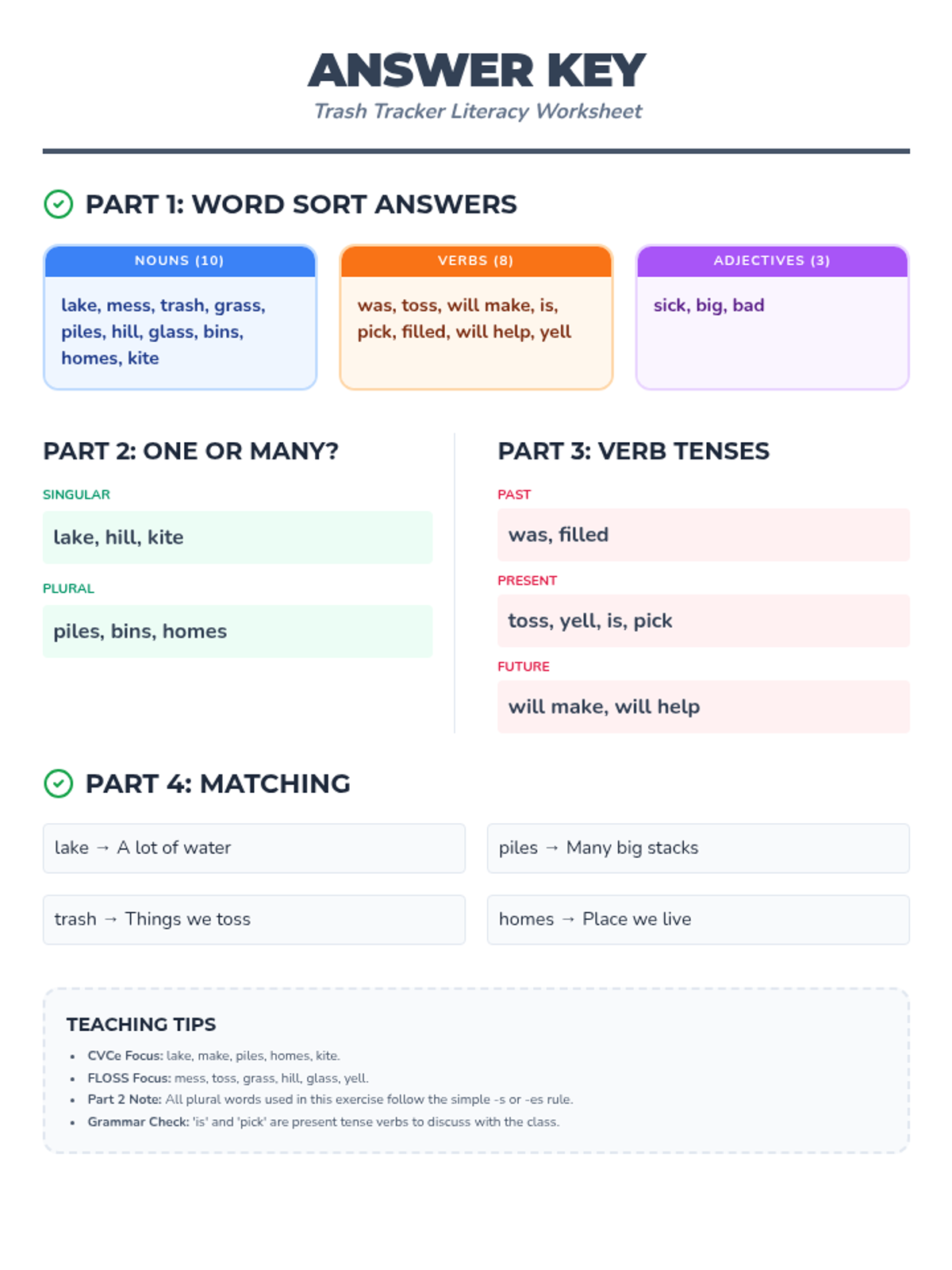
A literacy-focused lesson on the impact of littering, specifically designed for students reading at a first-grade level. Students will practice identifying nouns, verbs, and adjectives, while sorting words by plurality and verb tense using CVCe and FLOSS rule vocabulary.
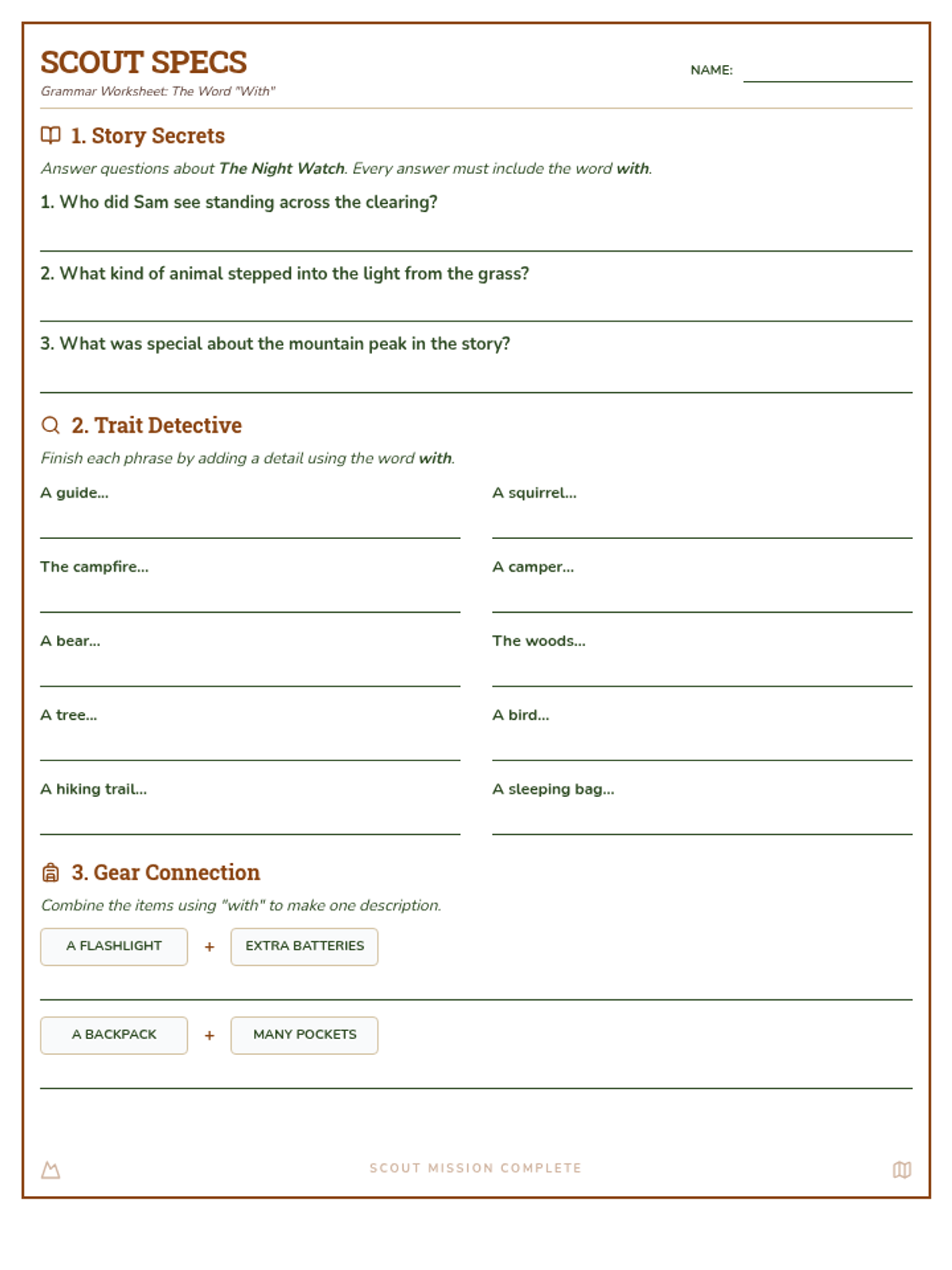
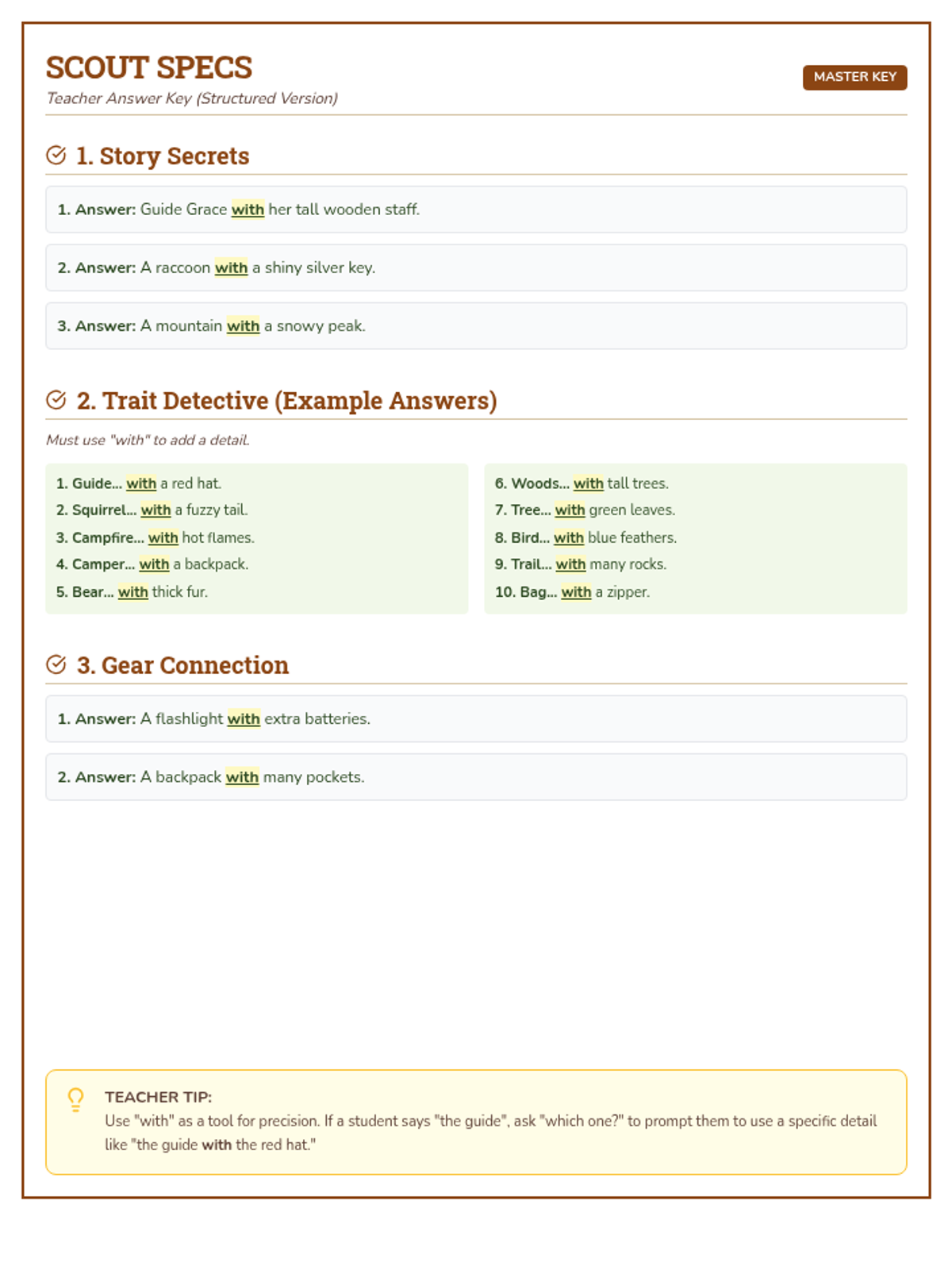
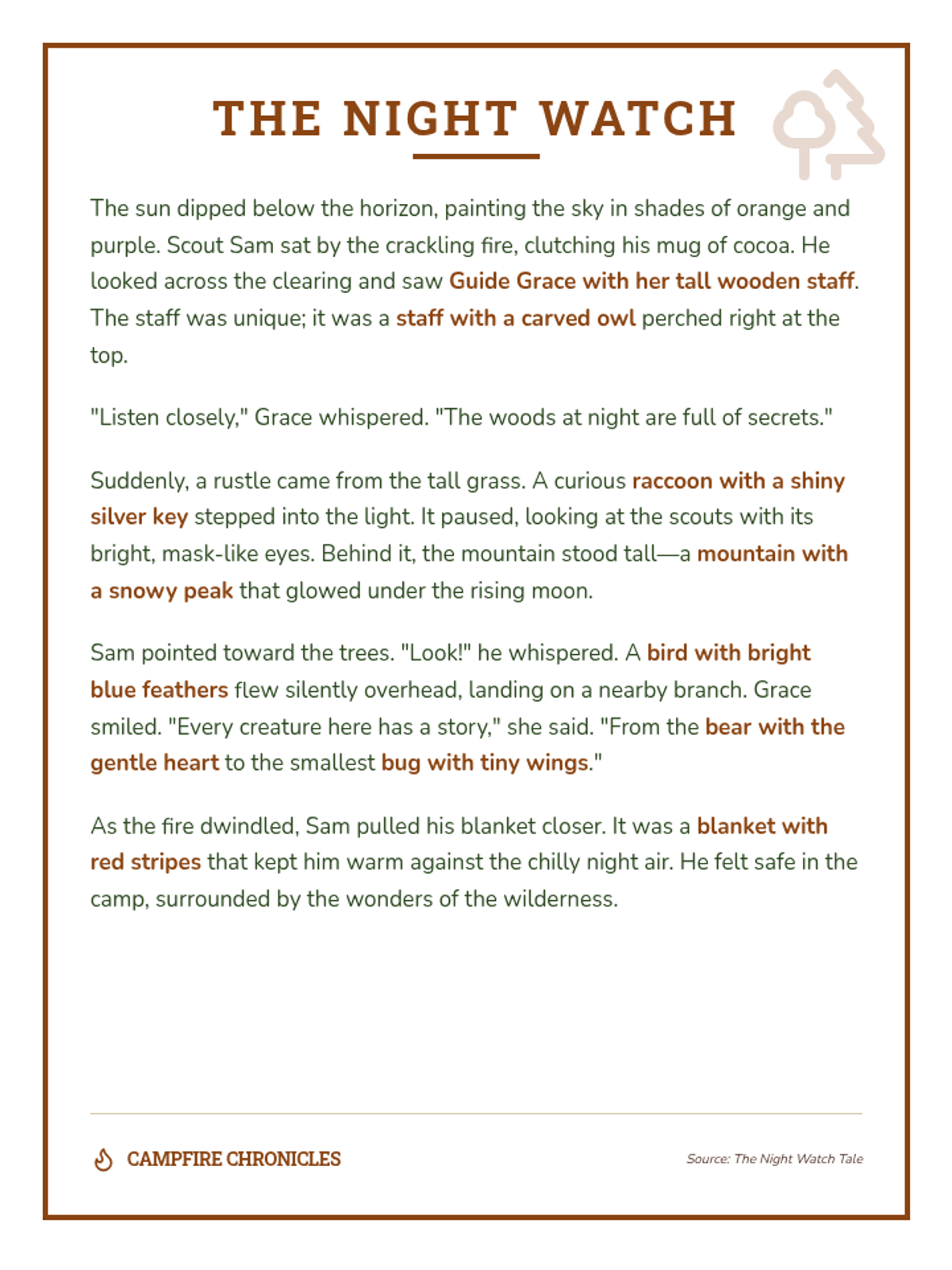
A series of outdoor-themed activities focused on mastering the function word 'with' through describing gear and character traits. Students progress from guided identification to independent sentence construction in a campfire setting.
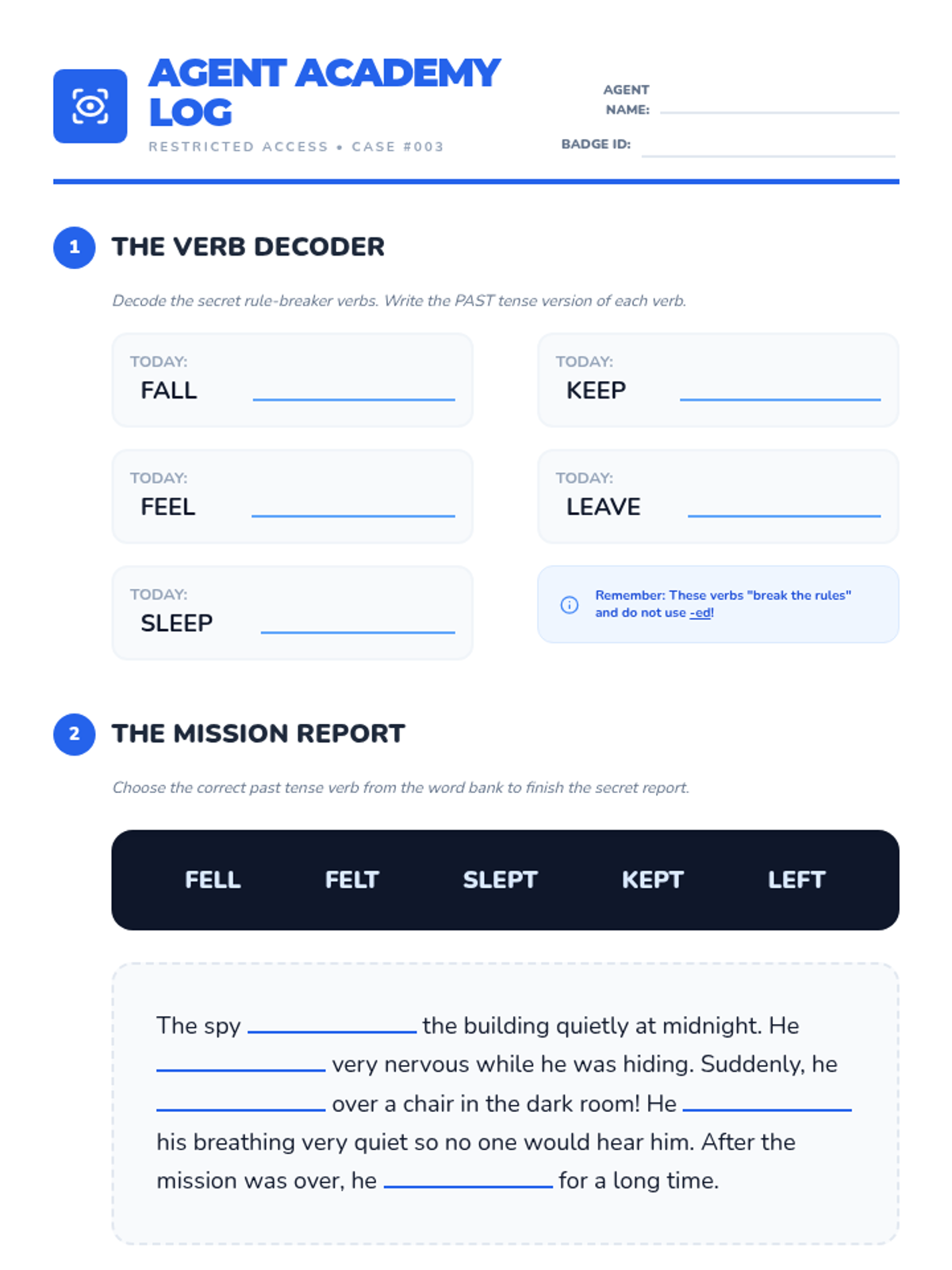
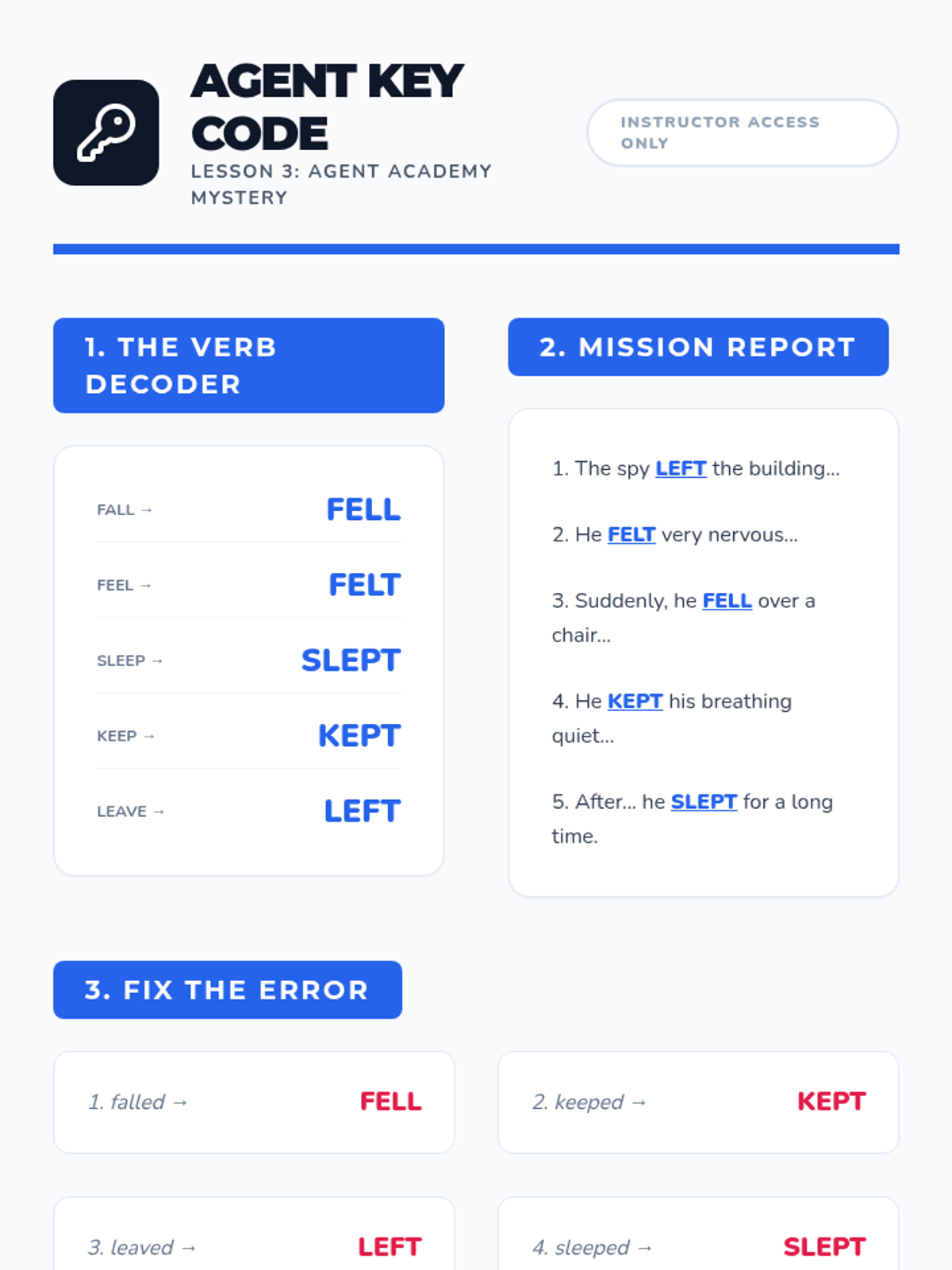
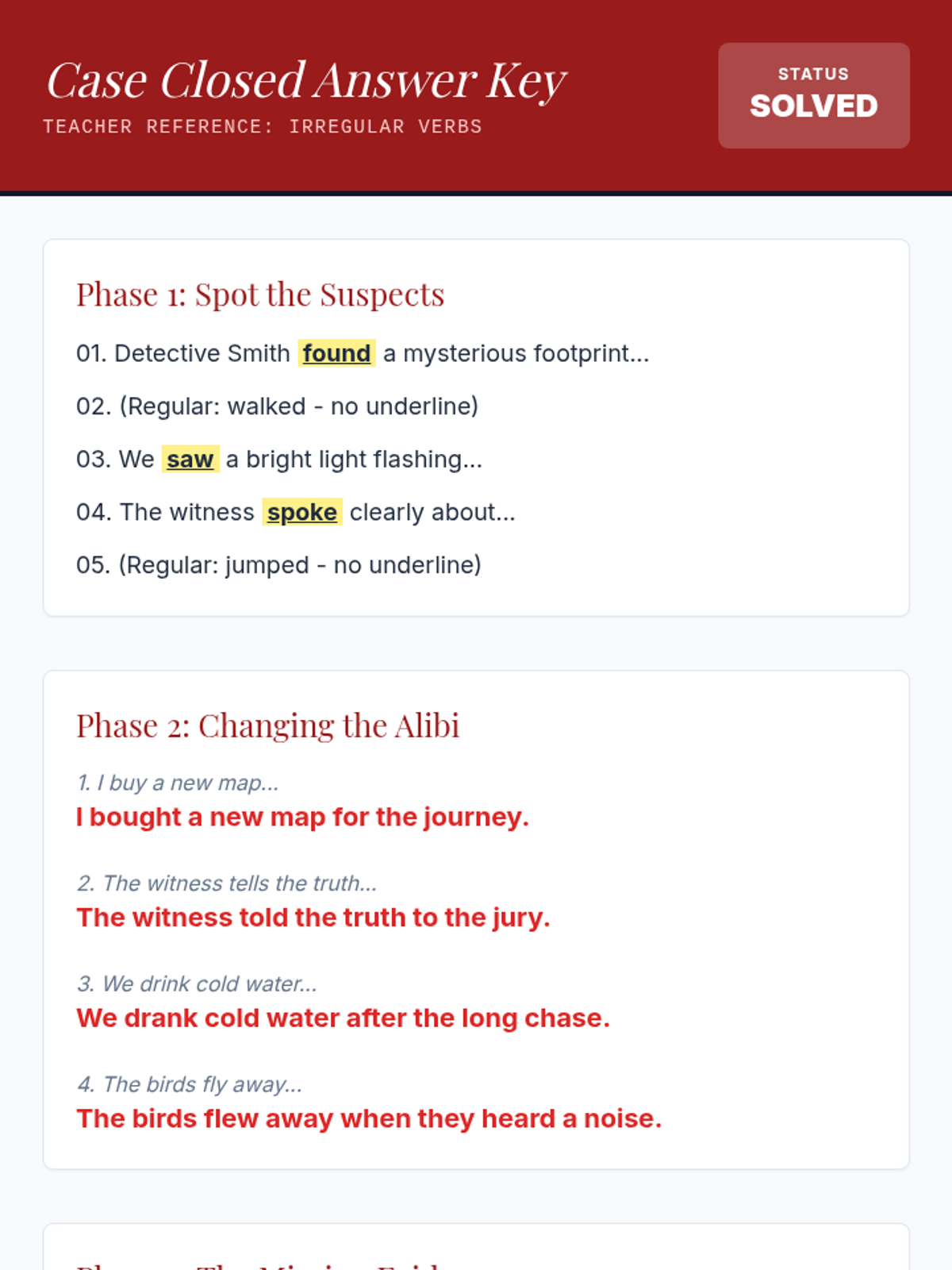
An undercover detective-themed lesson for second graders focusing on a fresh set of irregular verbs: find/found, tell/told, write/wrote, sit/sat, and sing/sang.
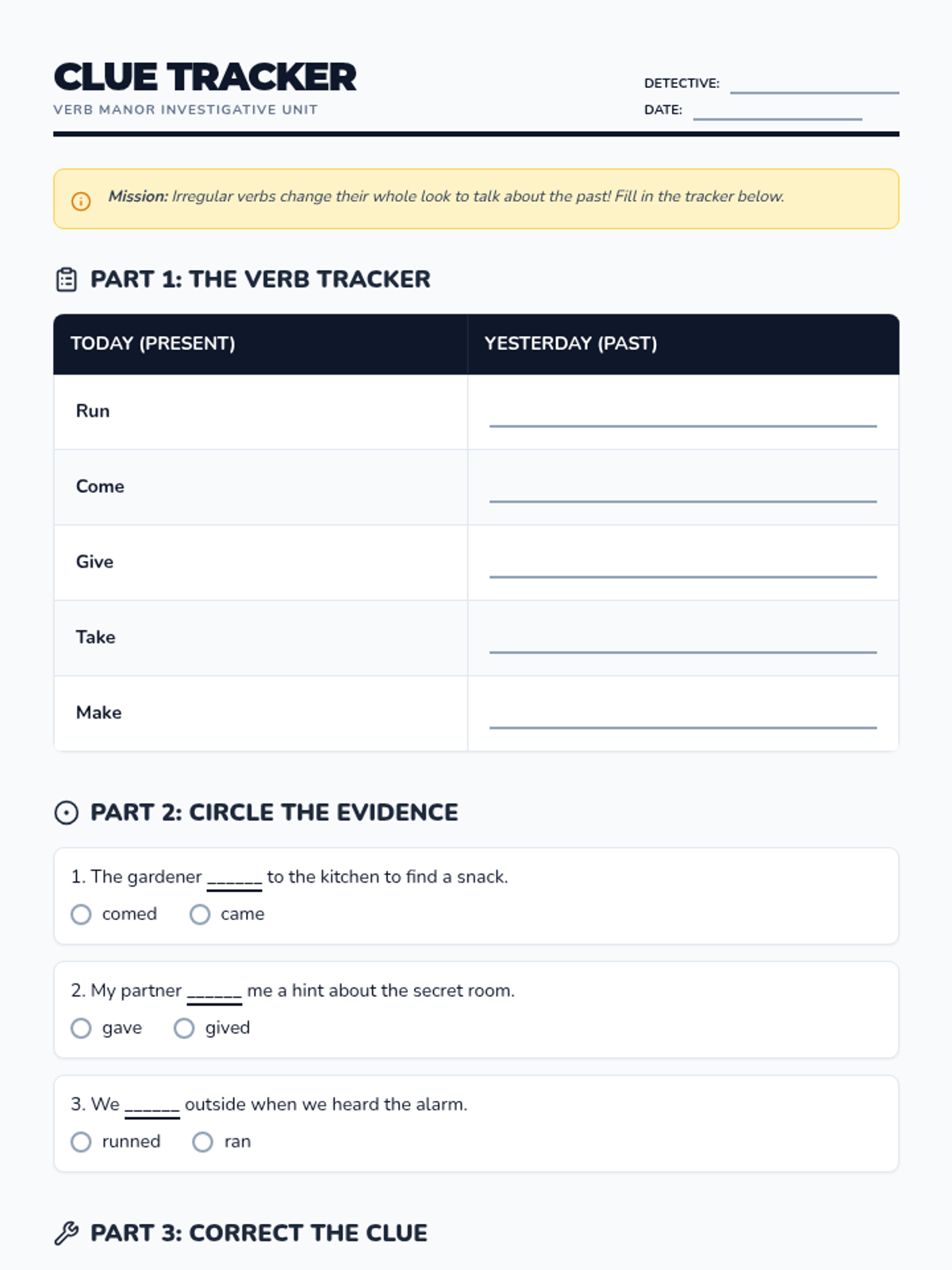
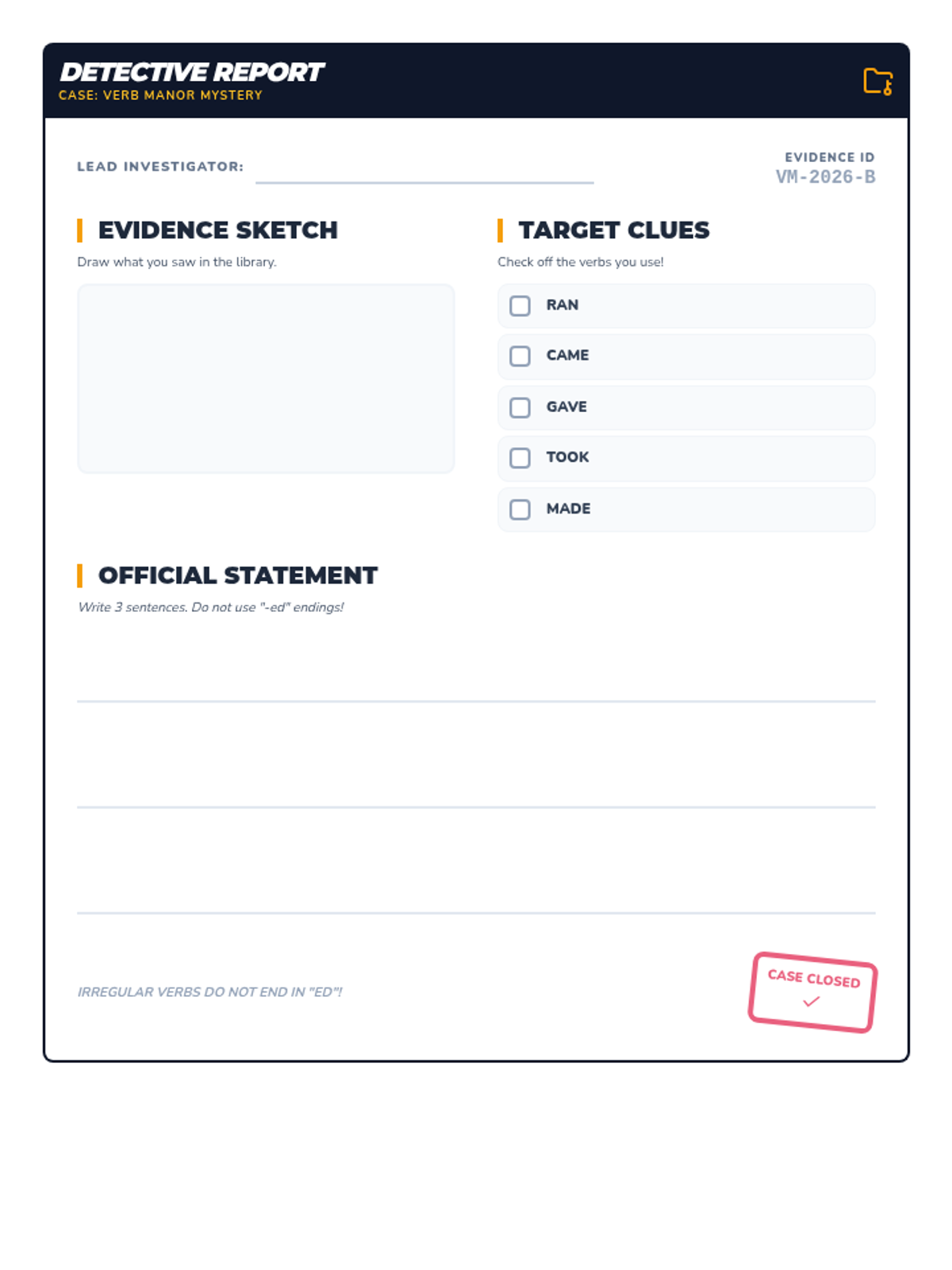
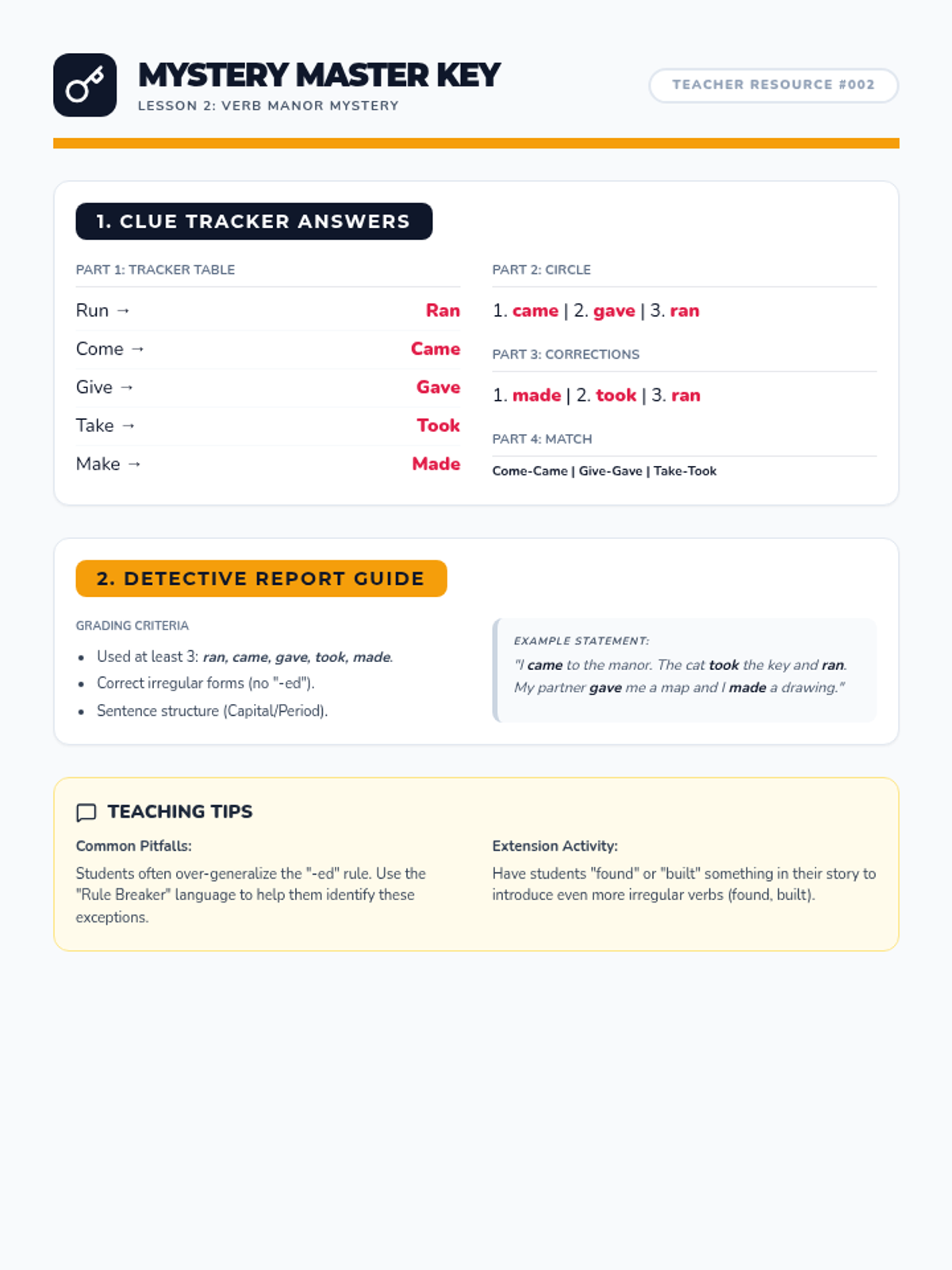
An advanced detective-themed lesson for second graders focusing on a new set of irregular past tense verbs: ran, came, gave, took, and made, set within the 'Verb Manor' mystery.
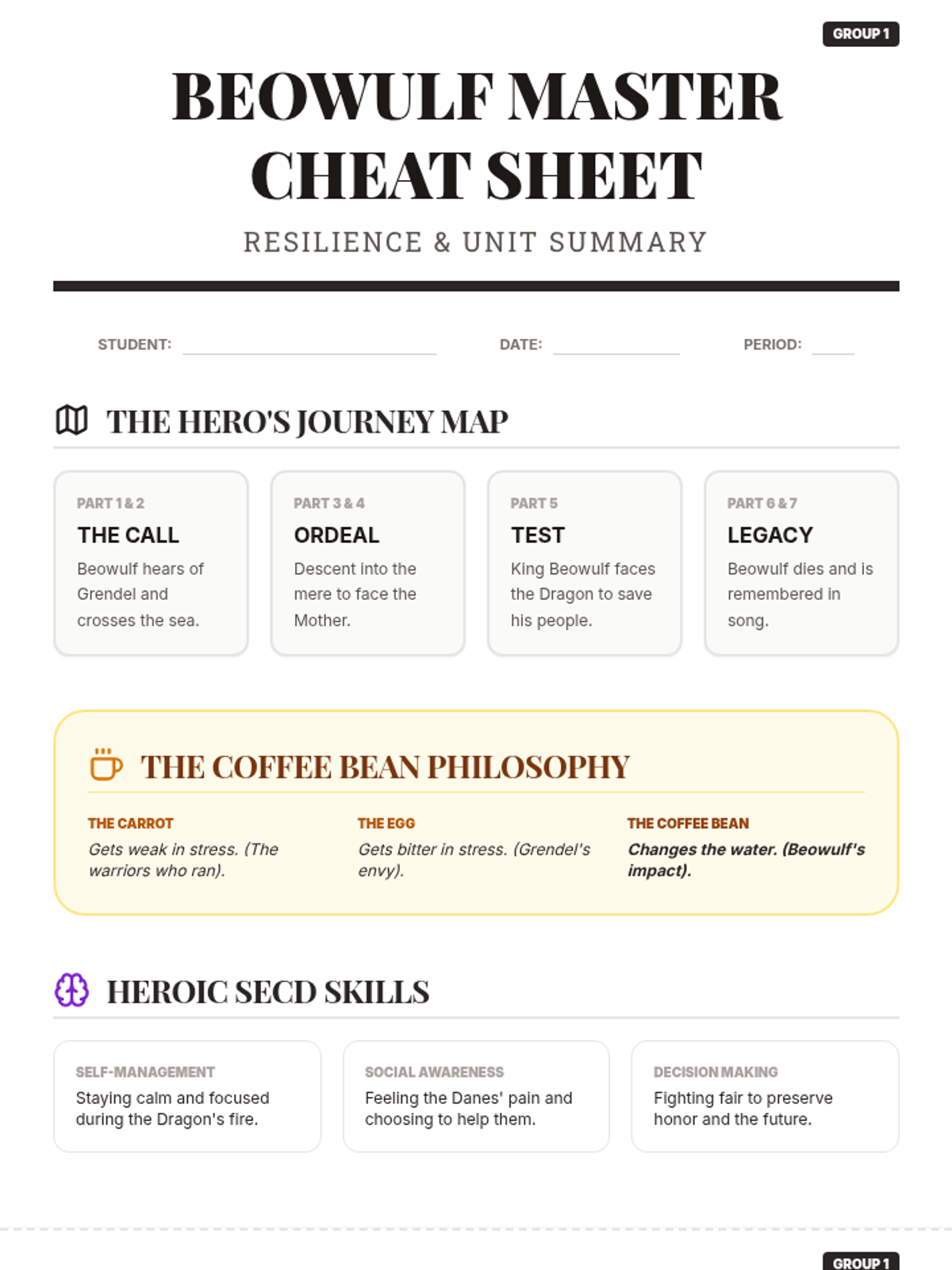
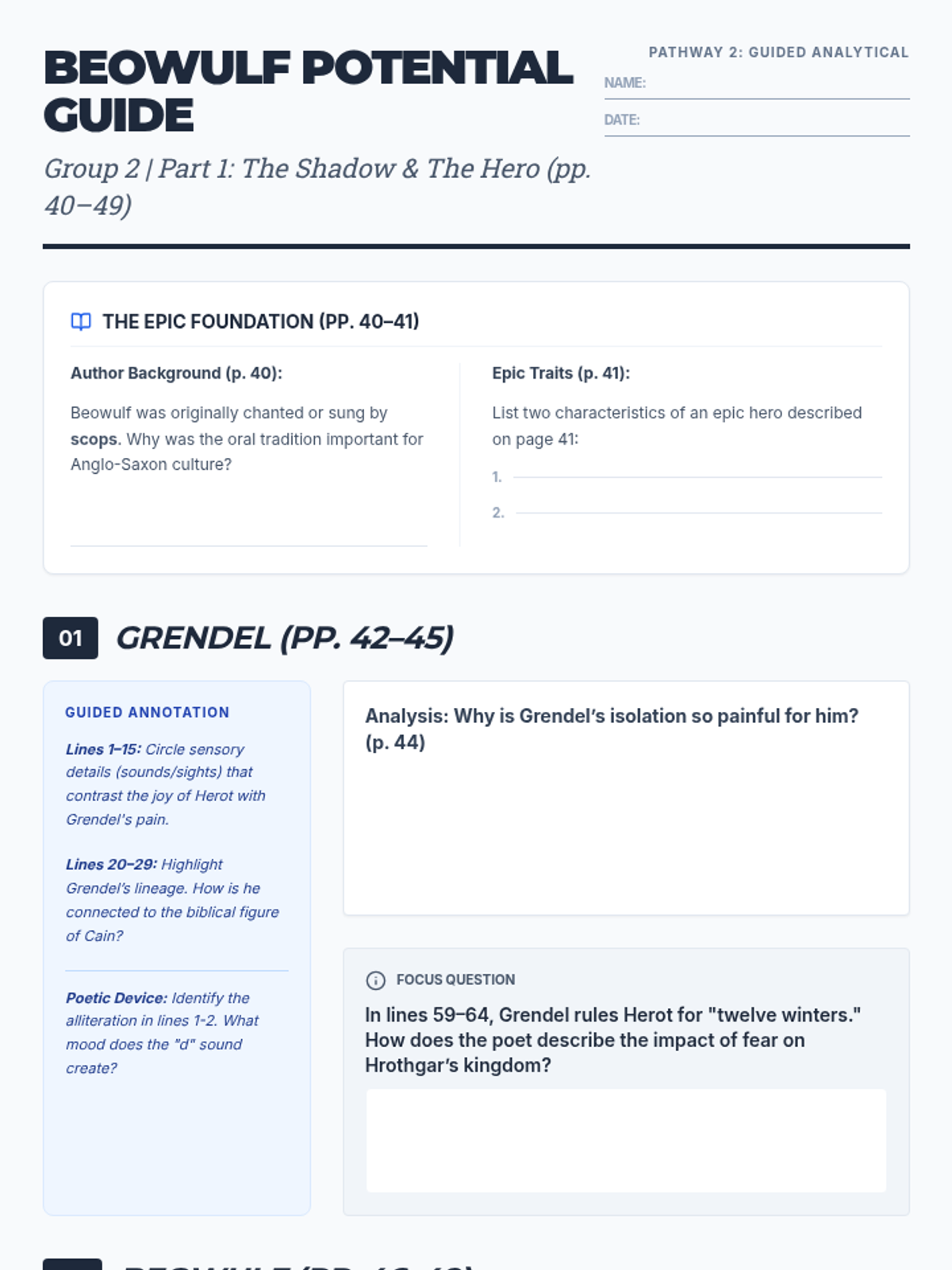
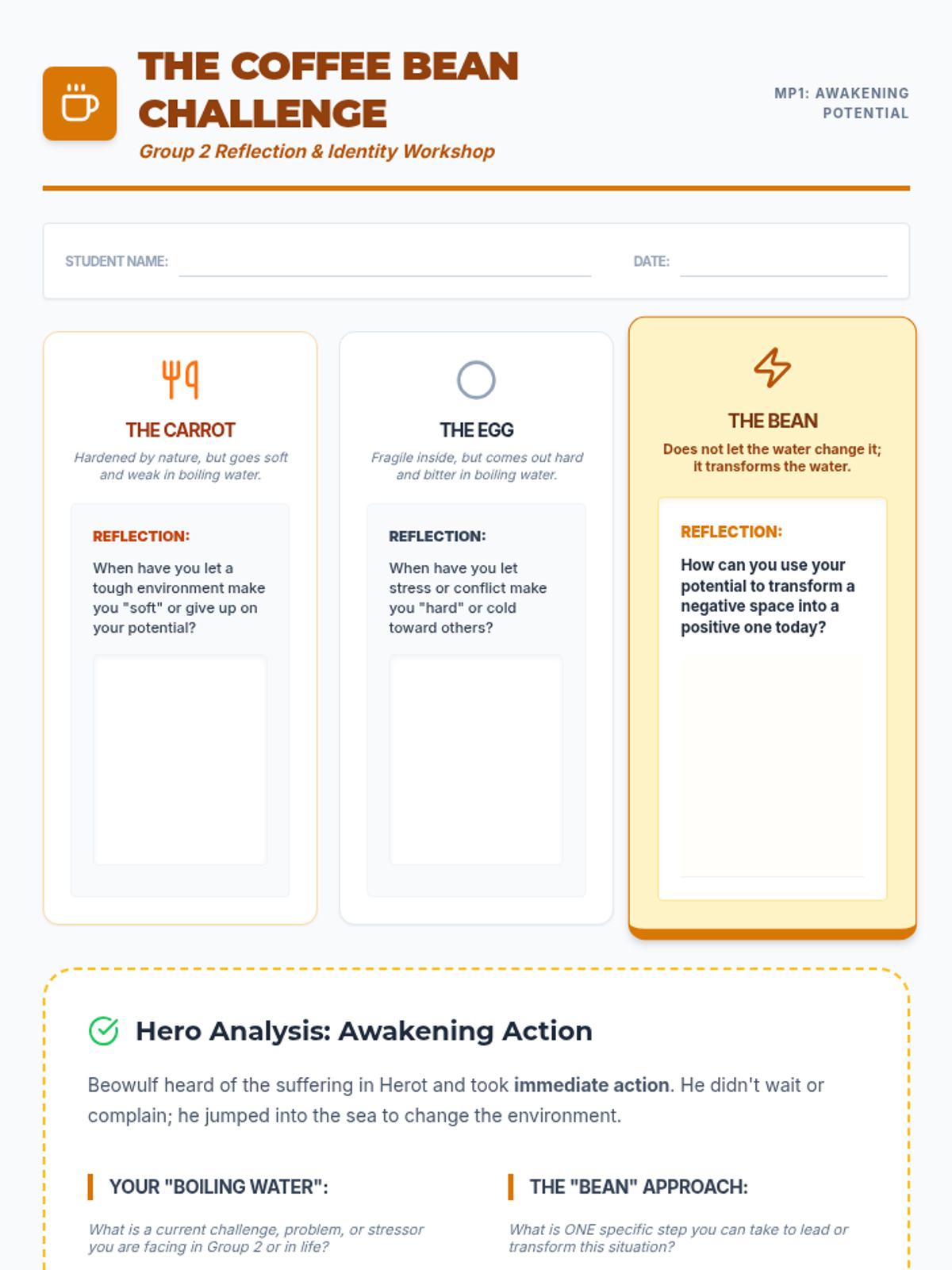
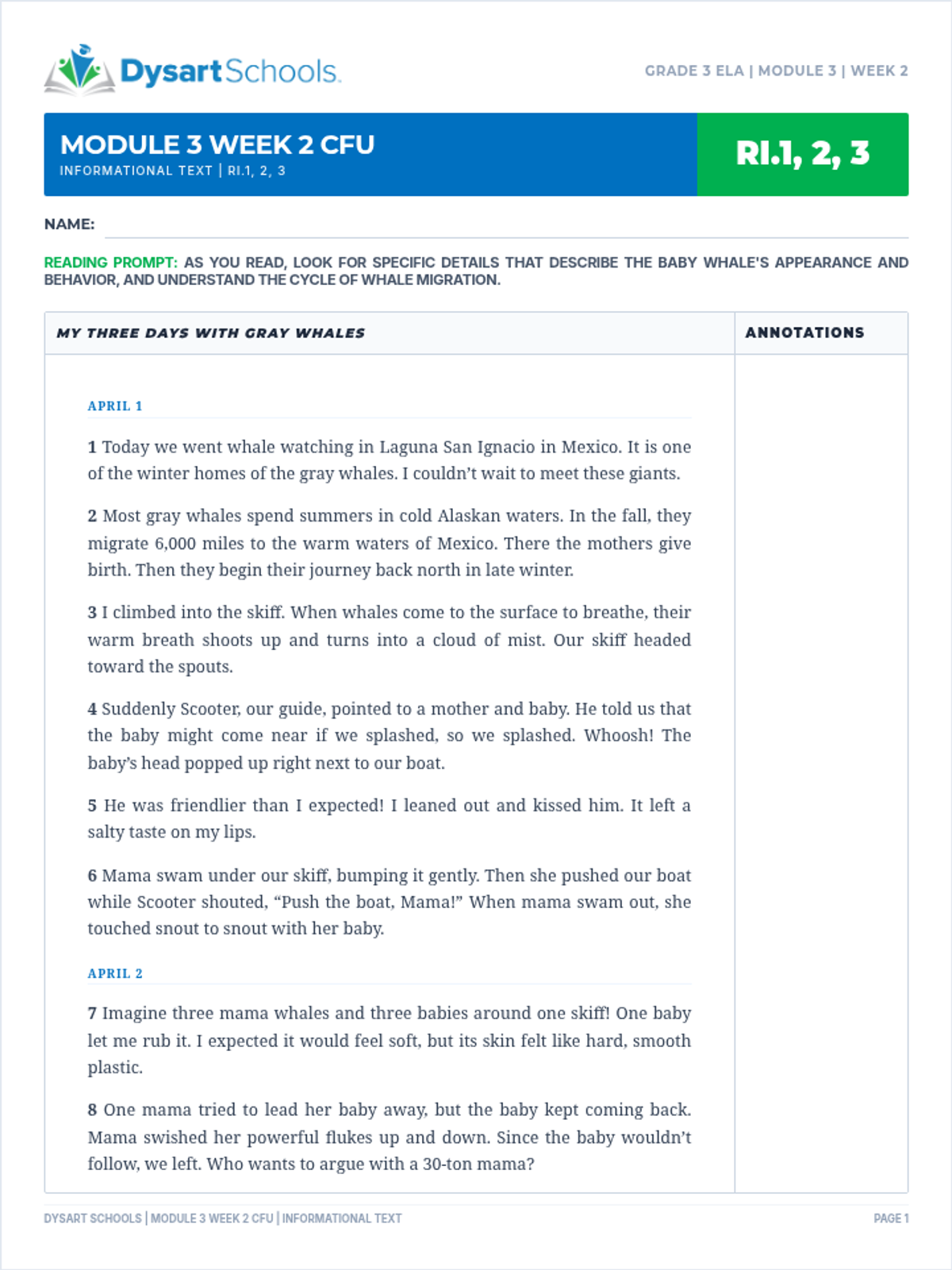
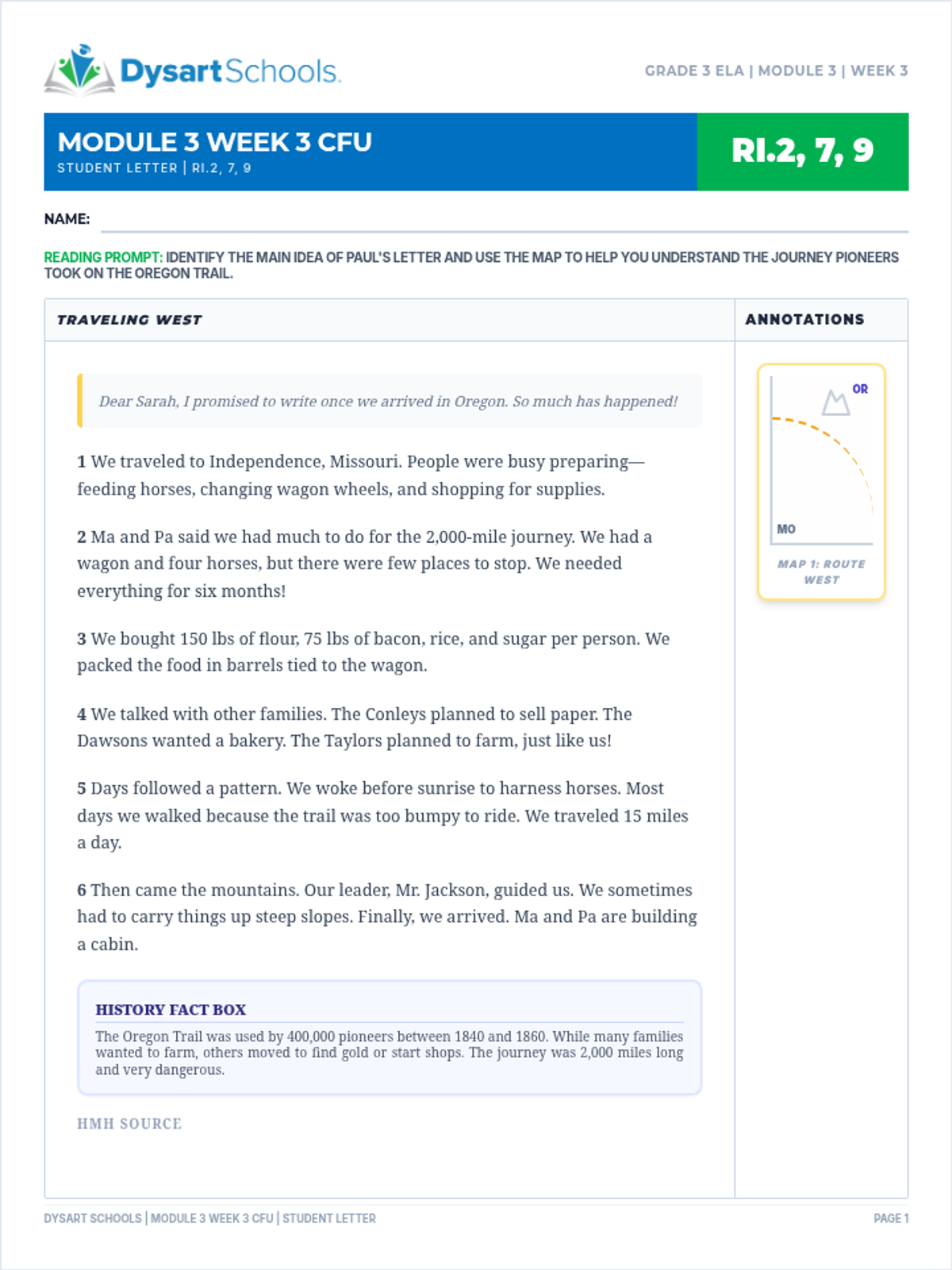
A comprehensive study guide series for Beowulf, focusing on the beginning of the hero's journey, identity, and personal potential. This lesson integrates Jon Gordon's 'The Coffee Bean' and connects Old English epic poetry to modern media archetypes.
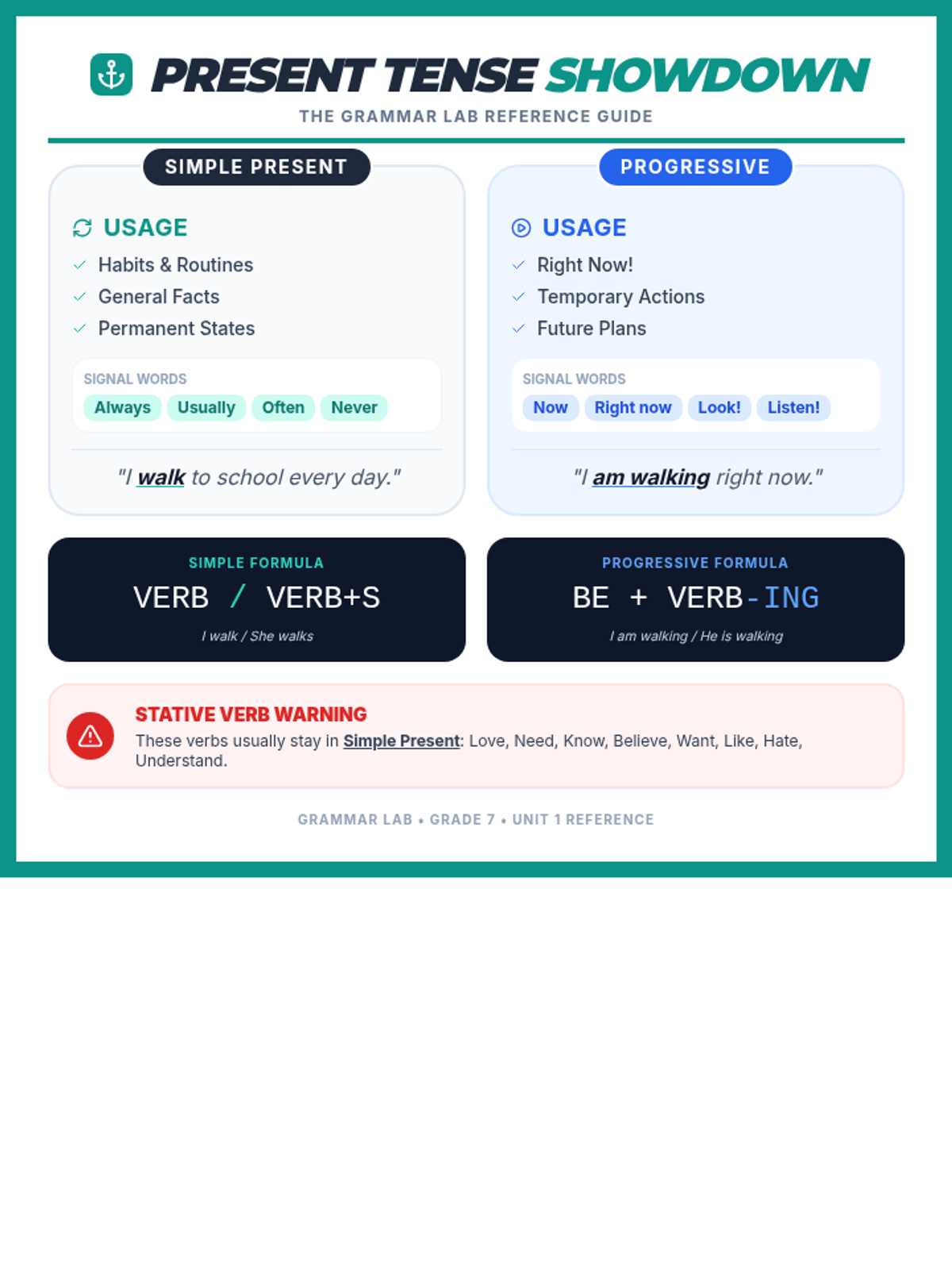
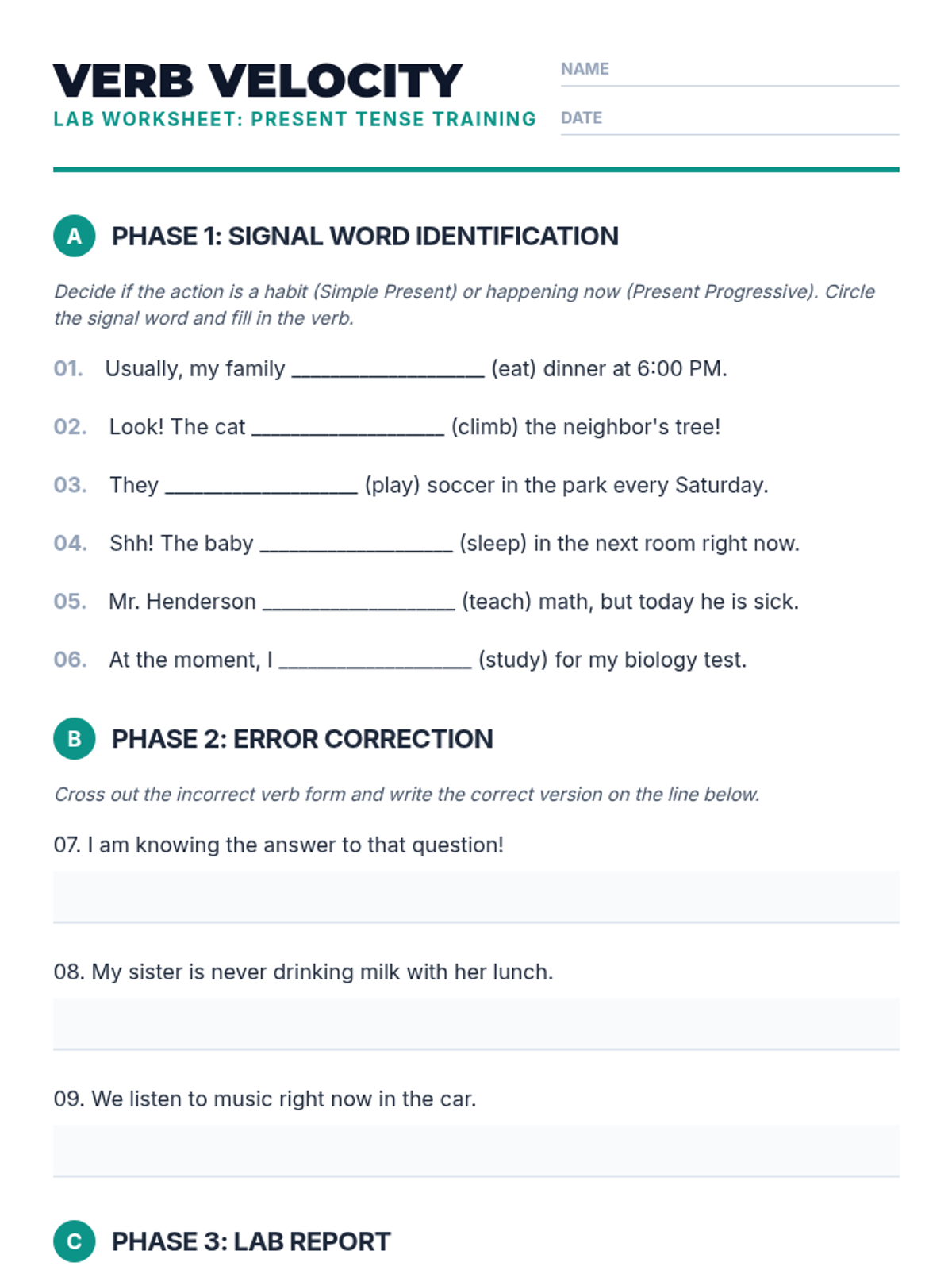
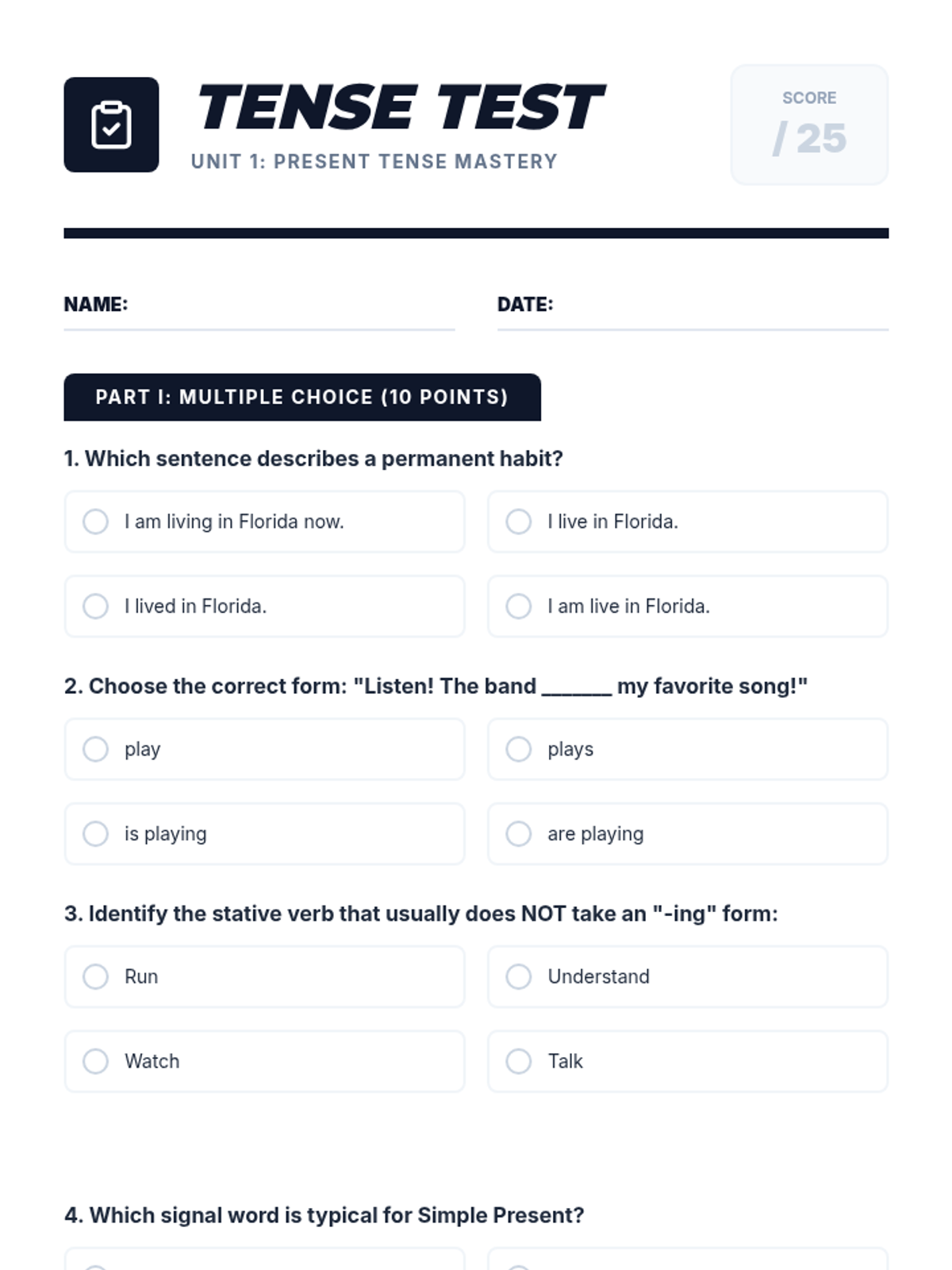
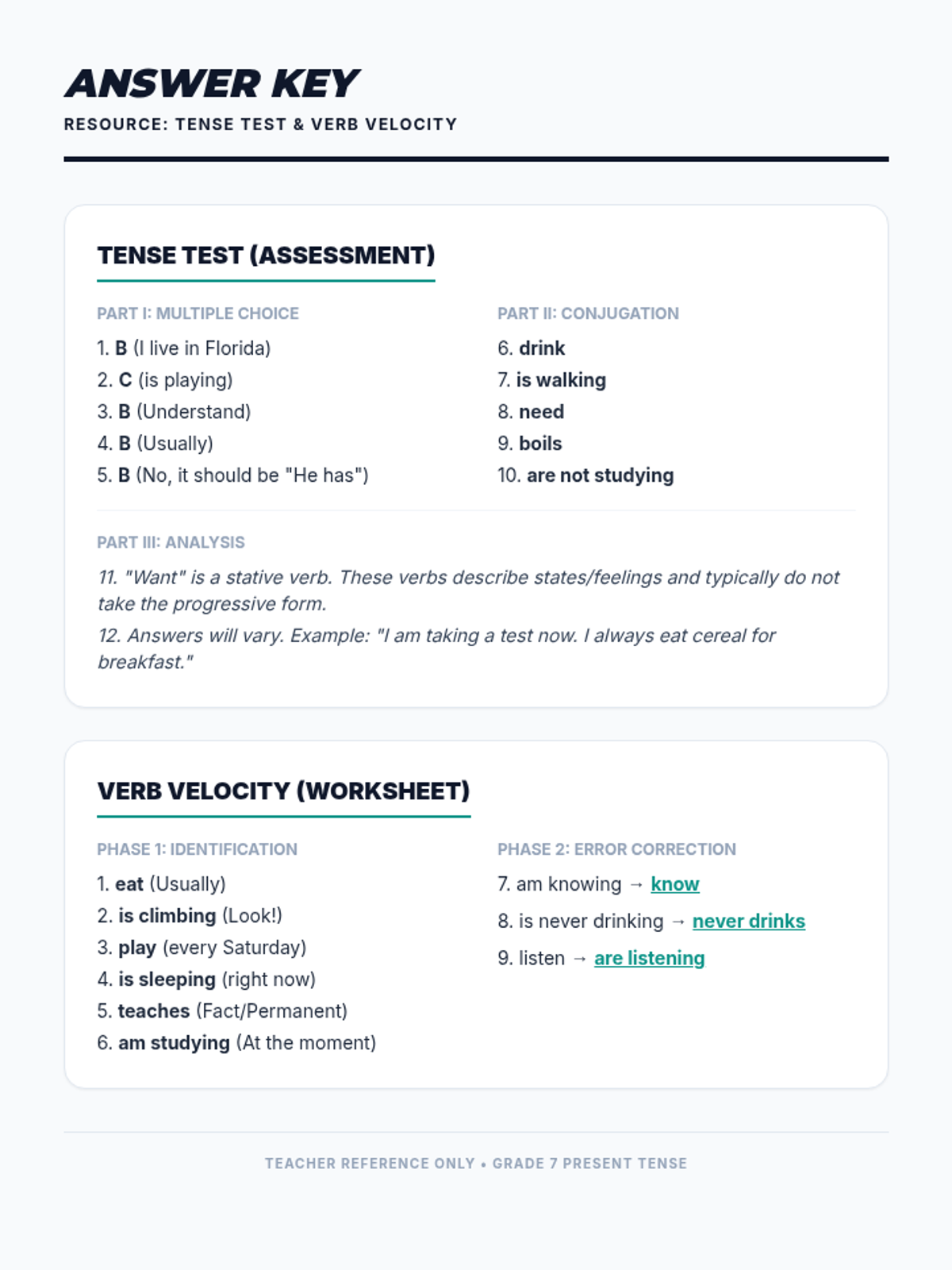
A comprehensive lesson exploring the differences between Simple Present (habits and facts) and Present Progressive (actions happening now). Includes visual aids, guided practice, and formal assessment.
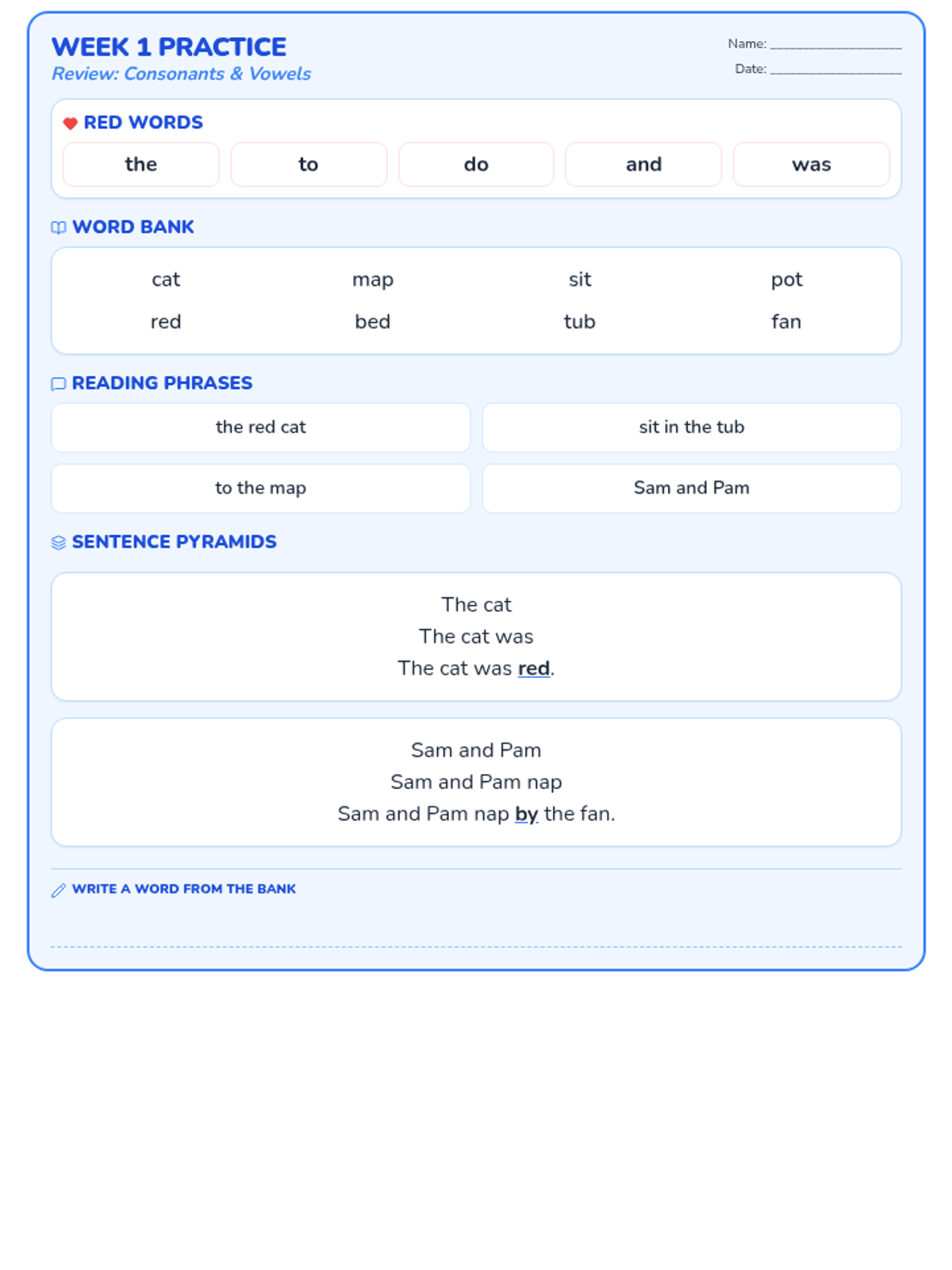
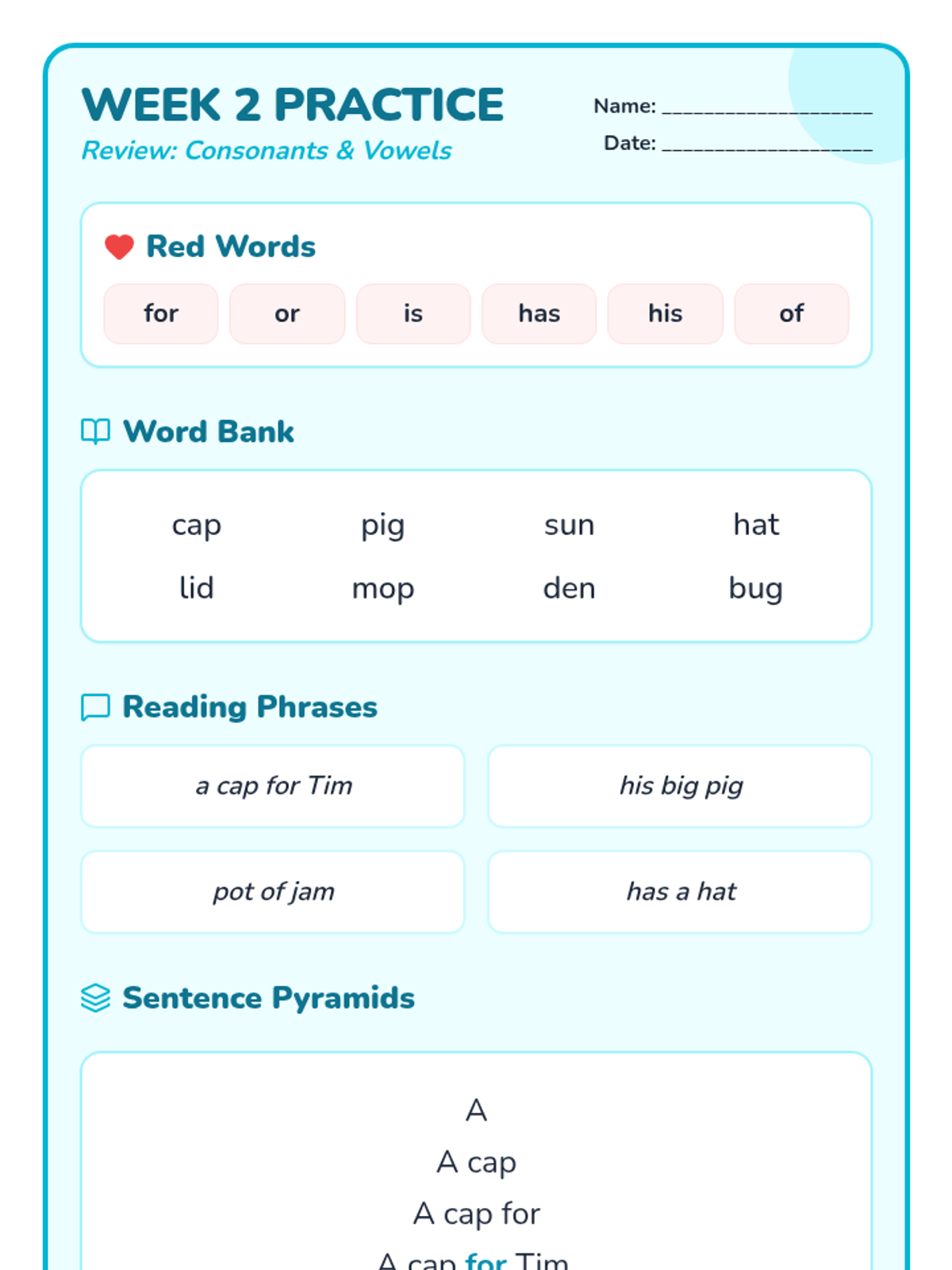
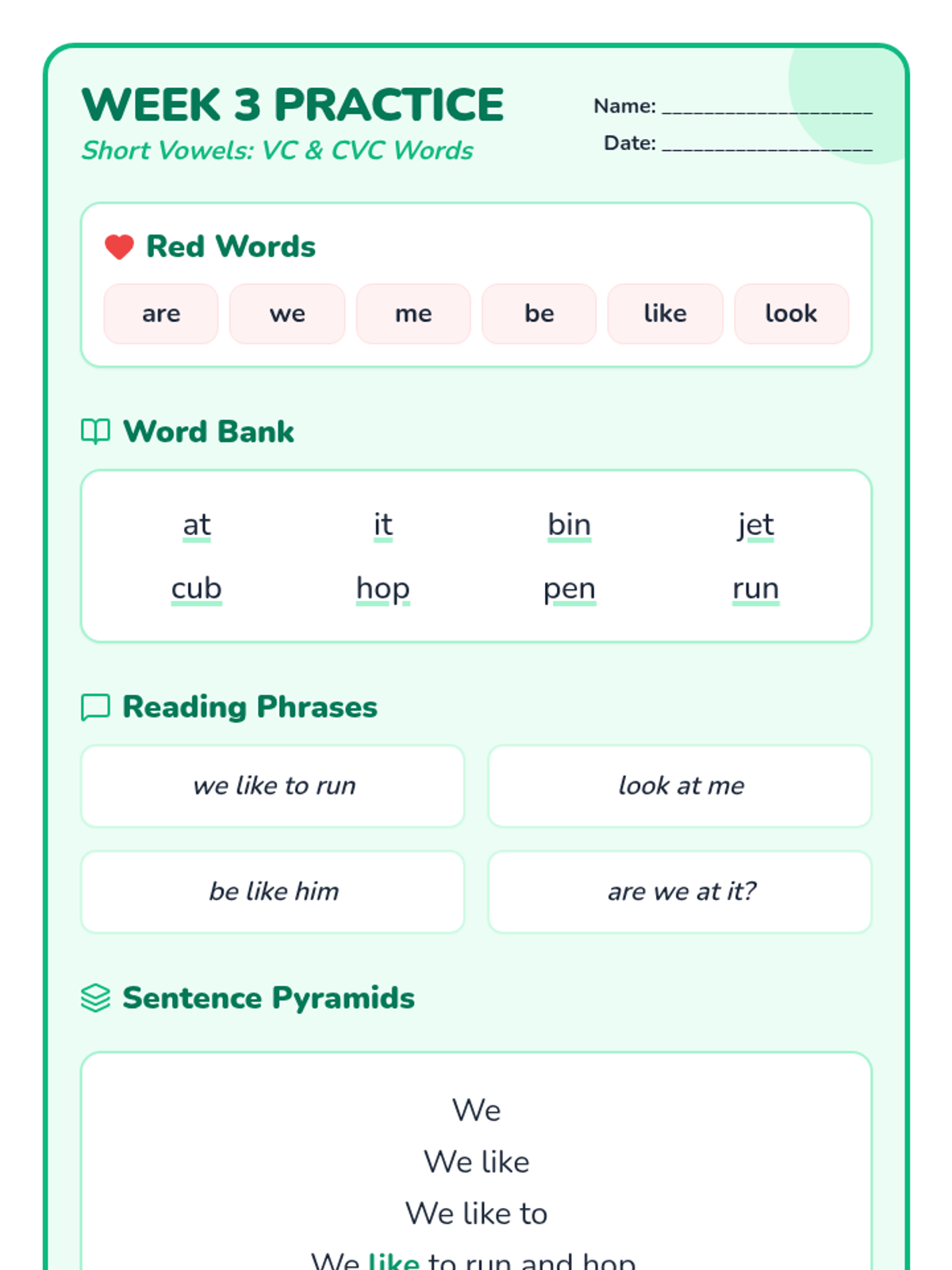
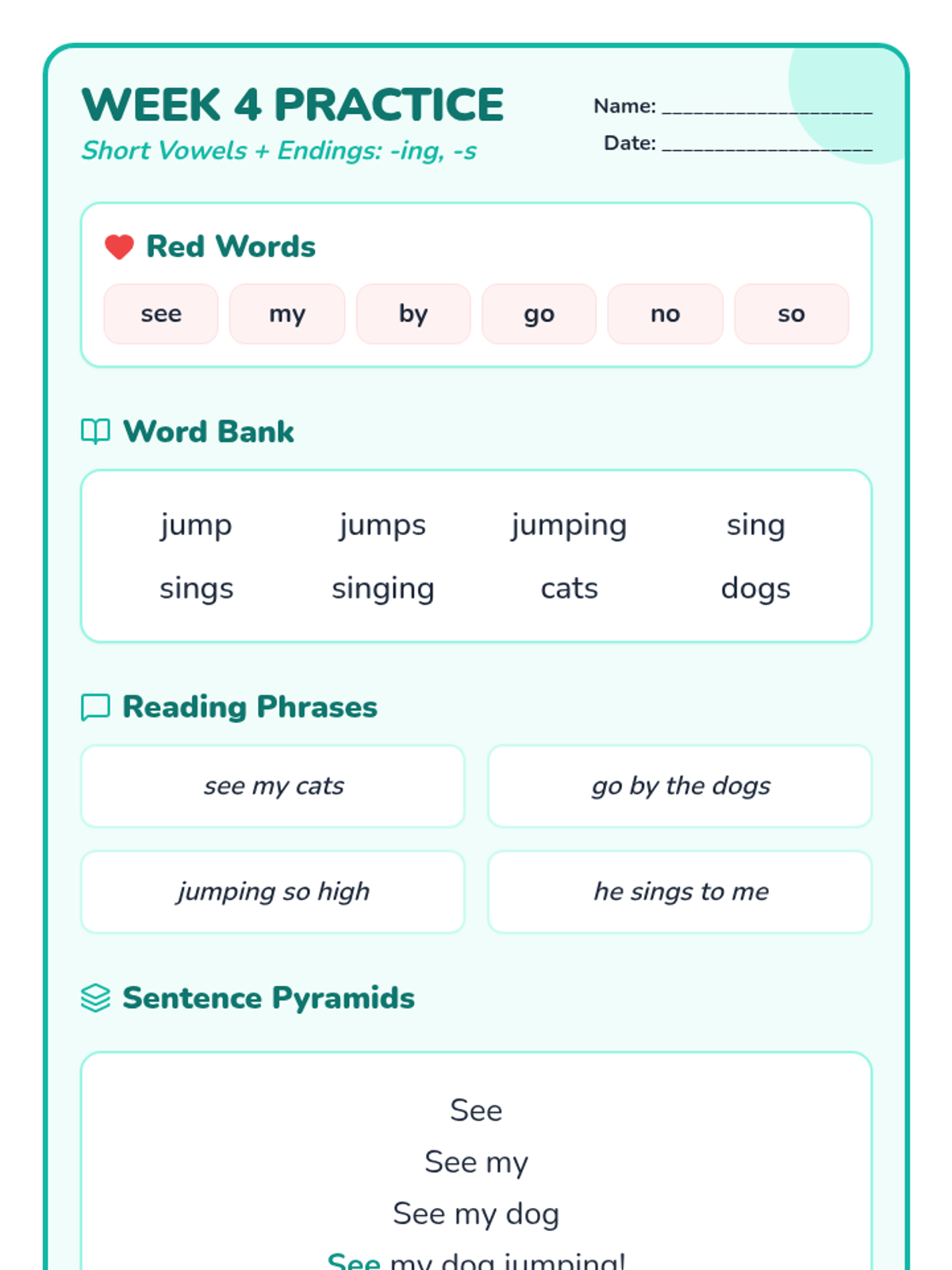
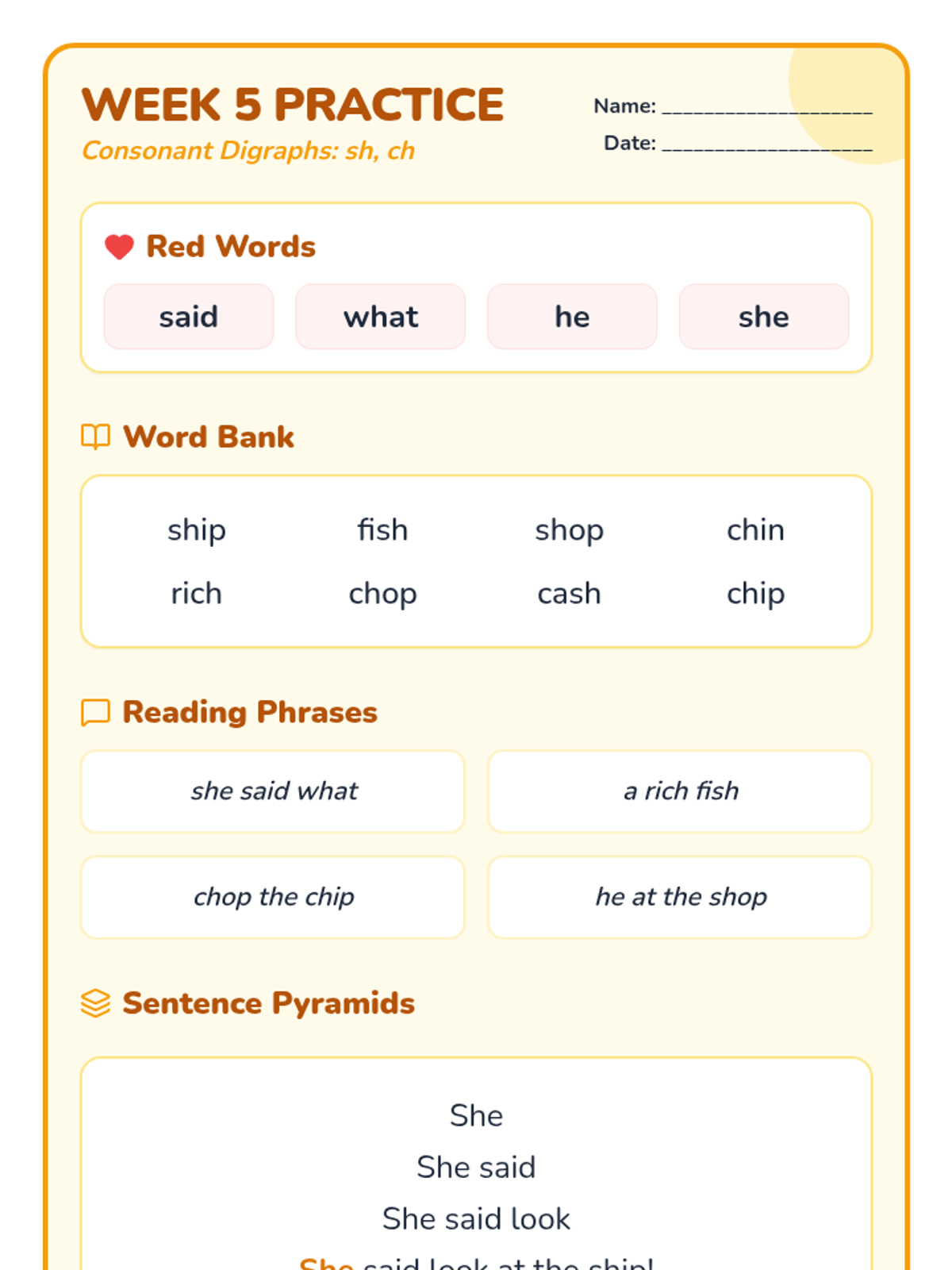
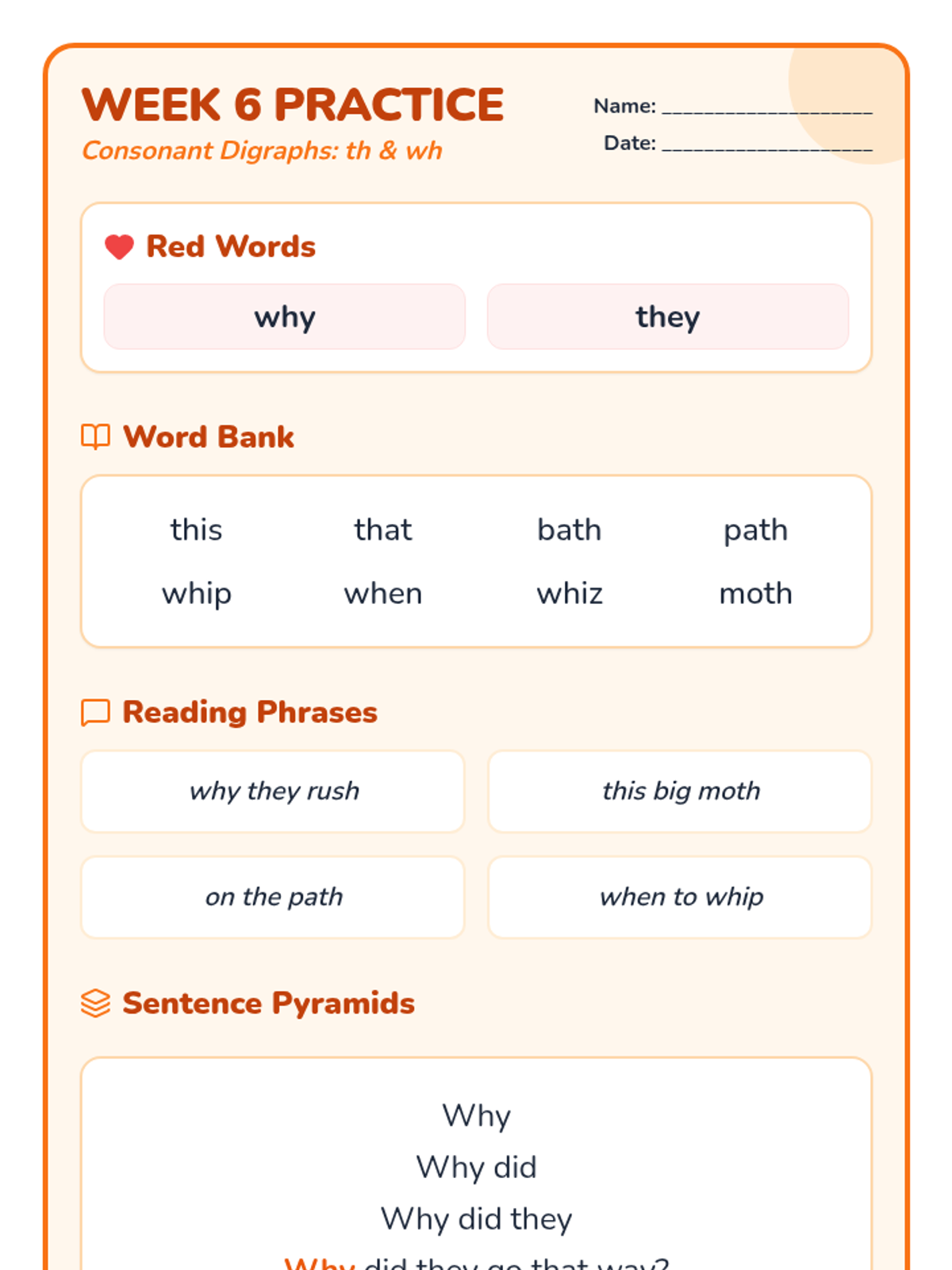
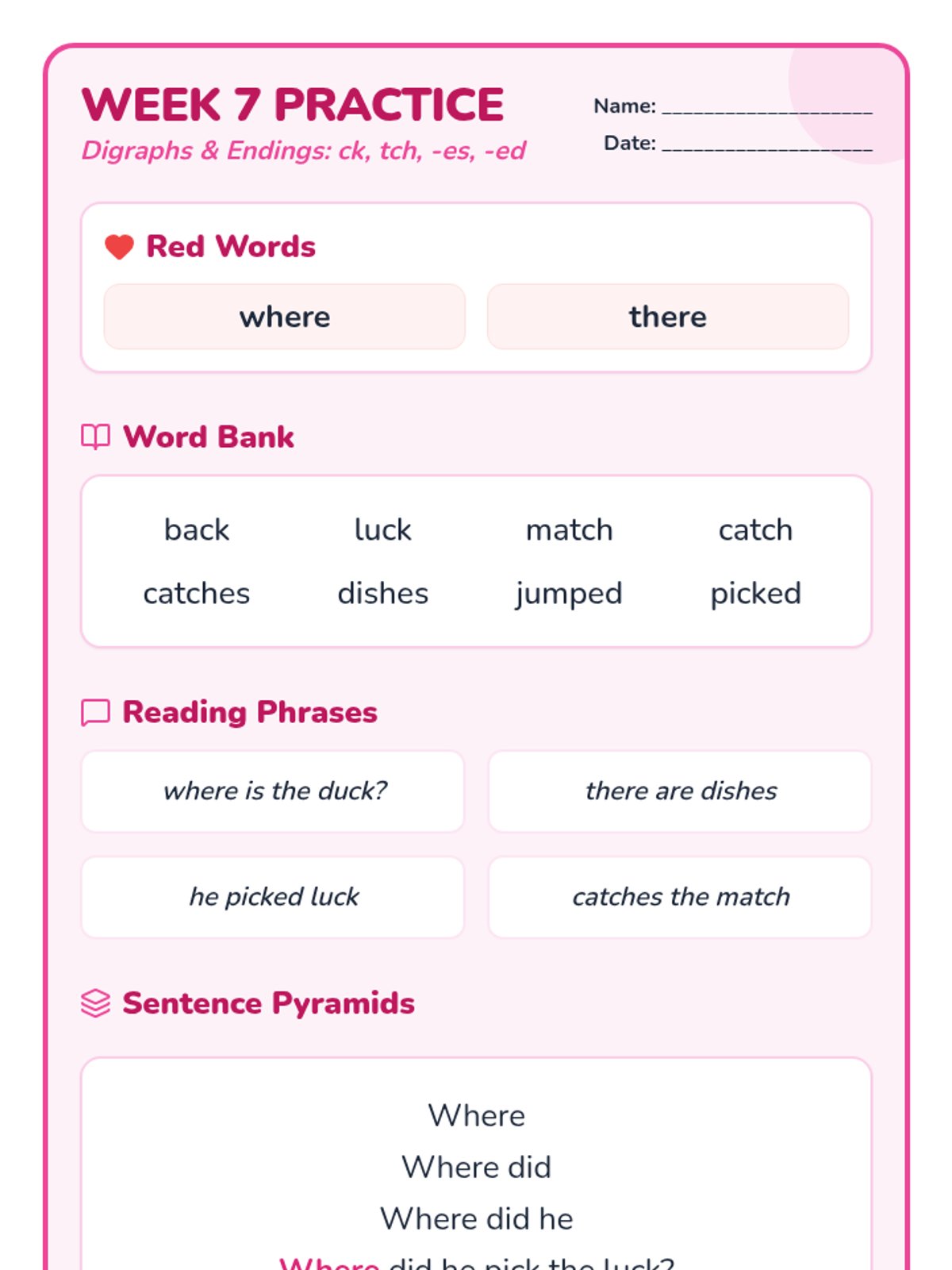
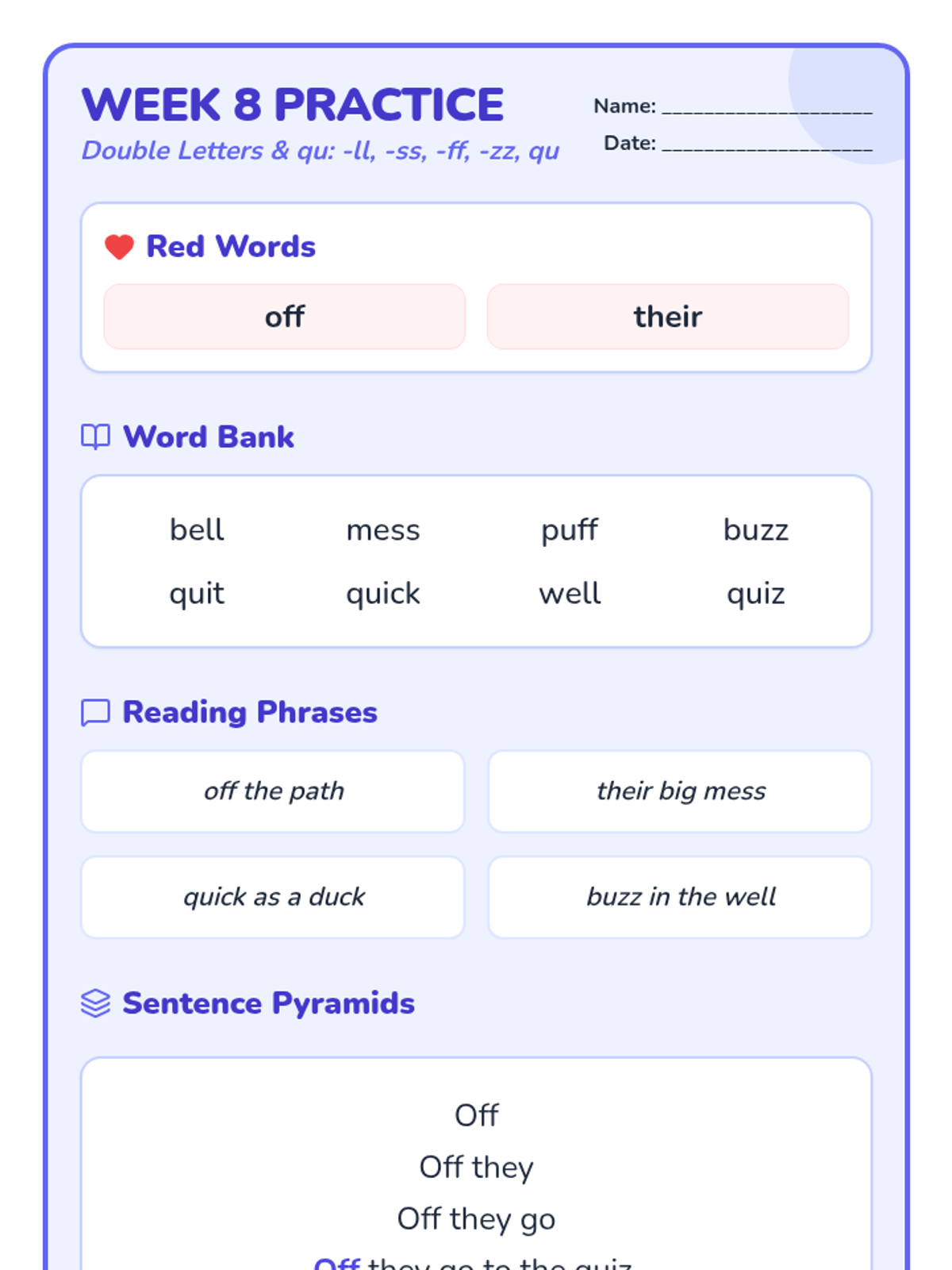
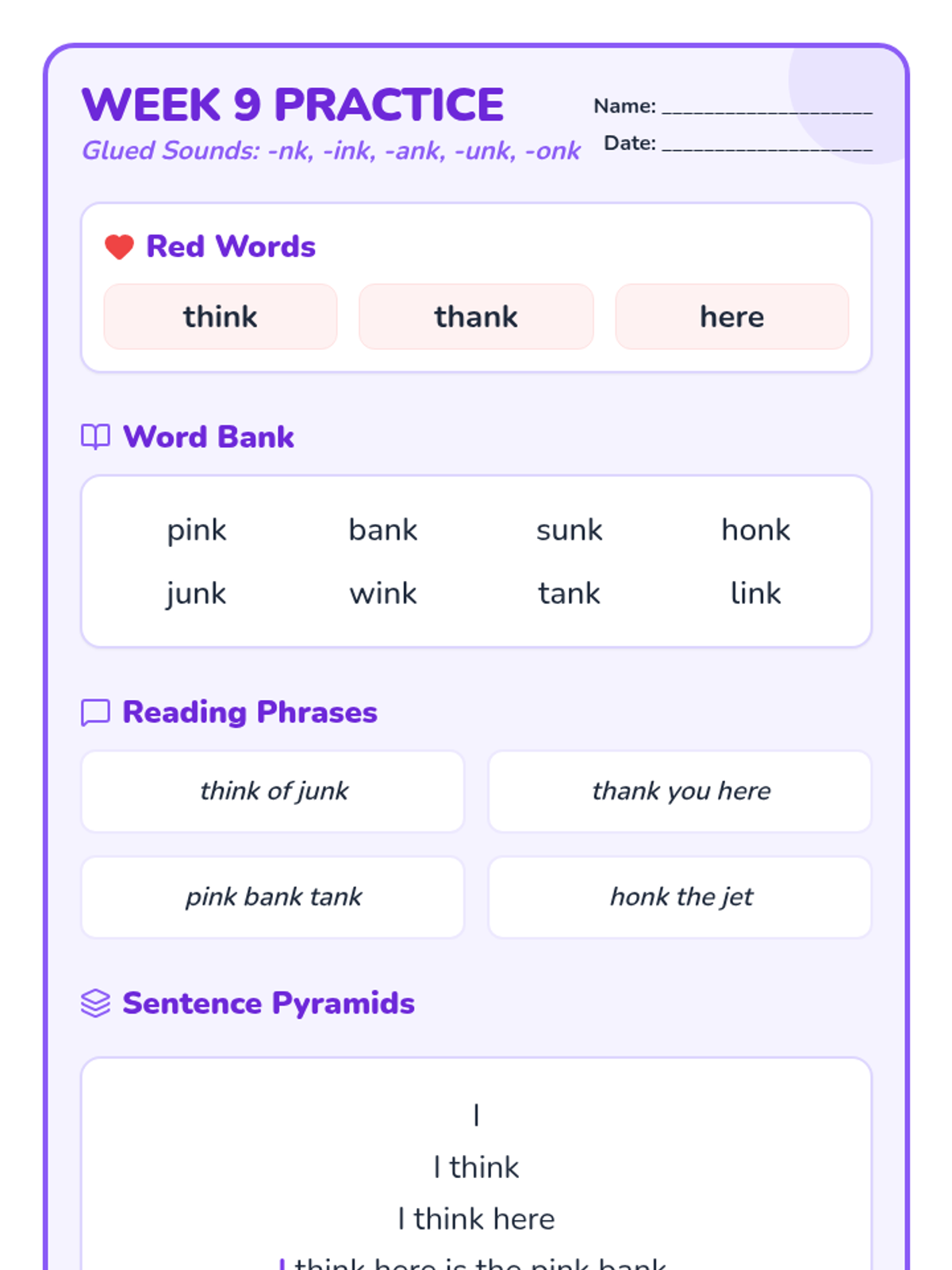
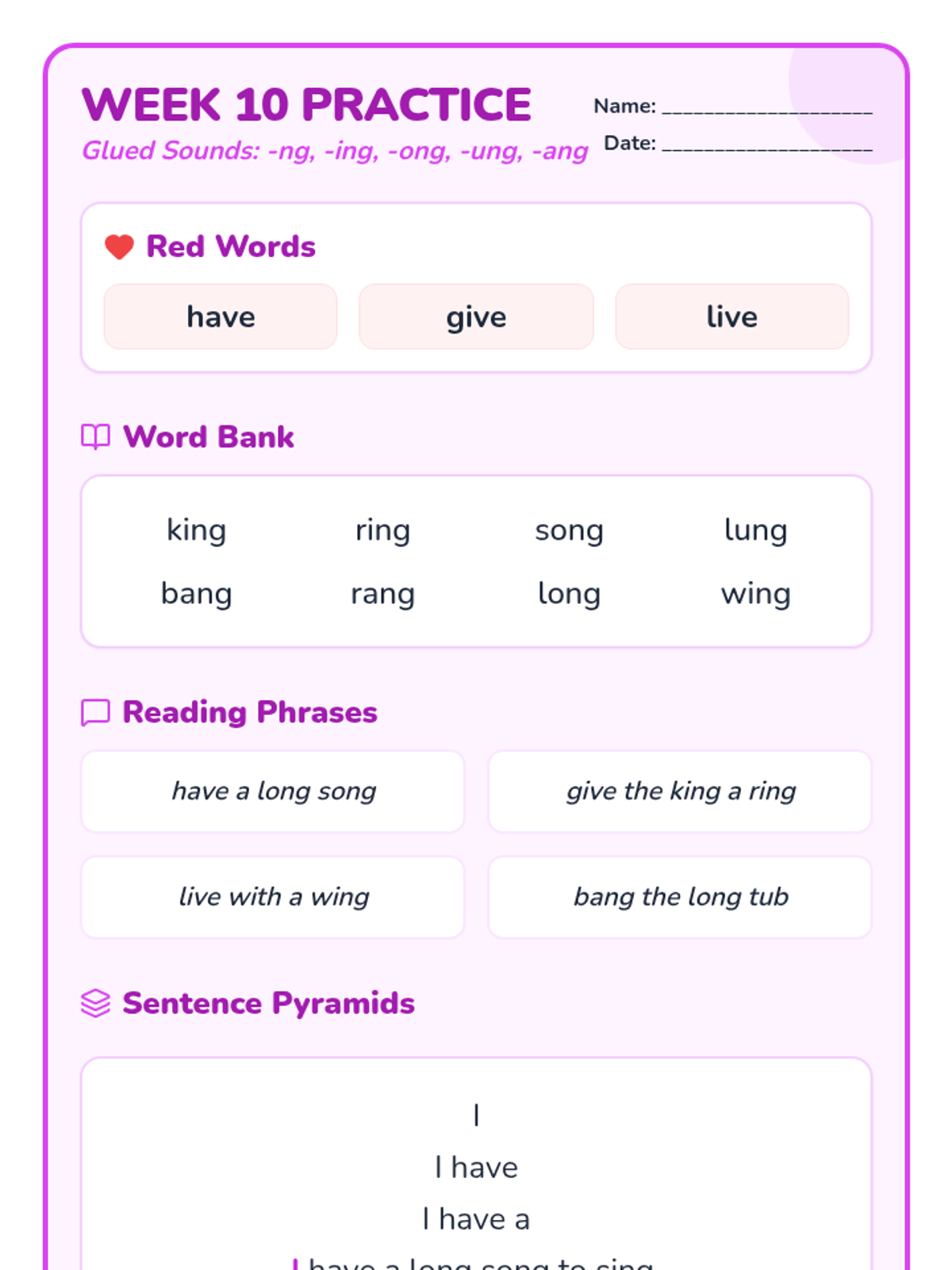
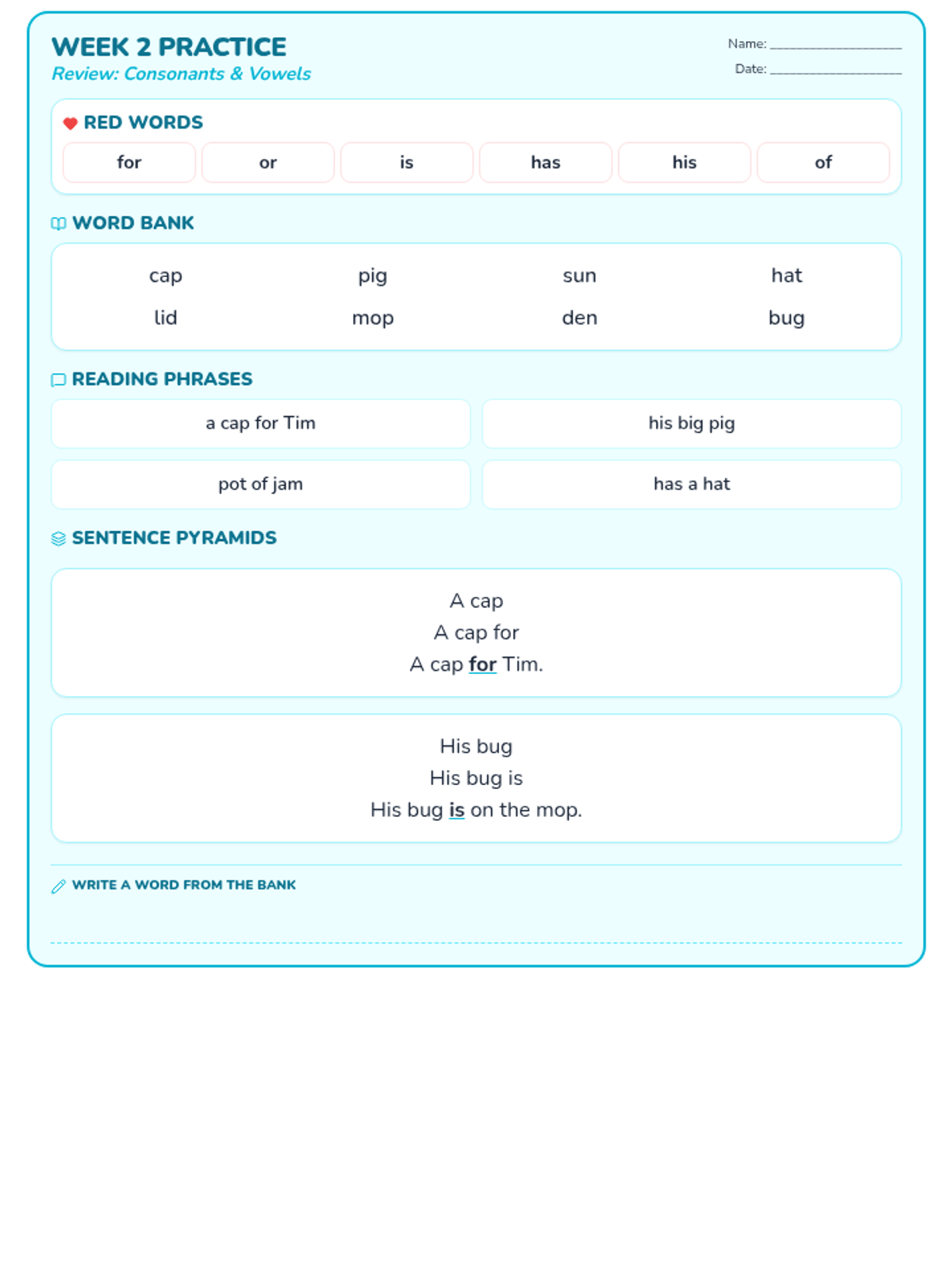
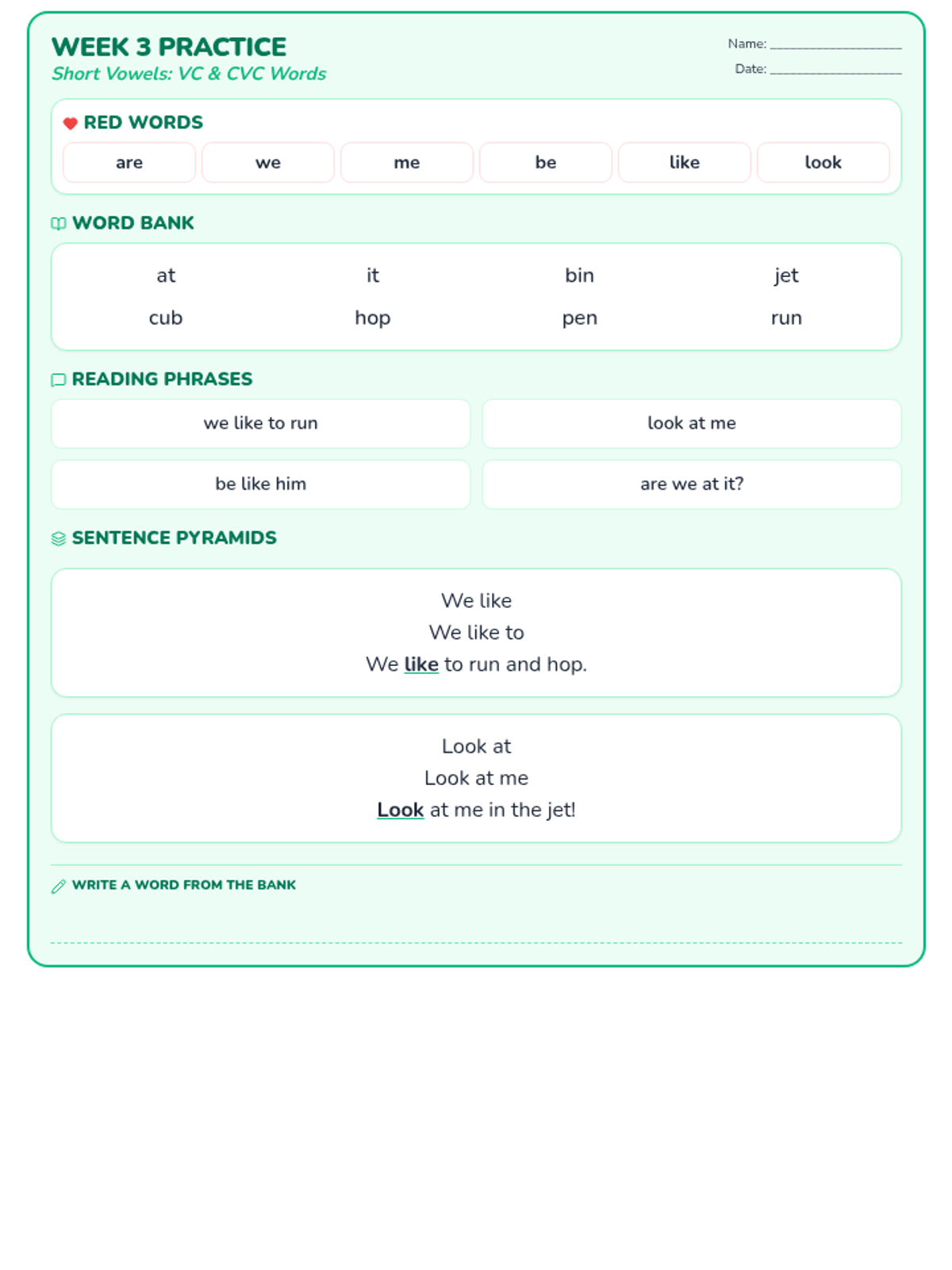
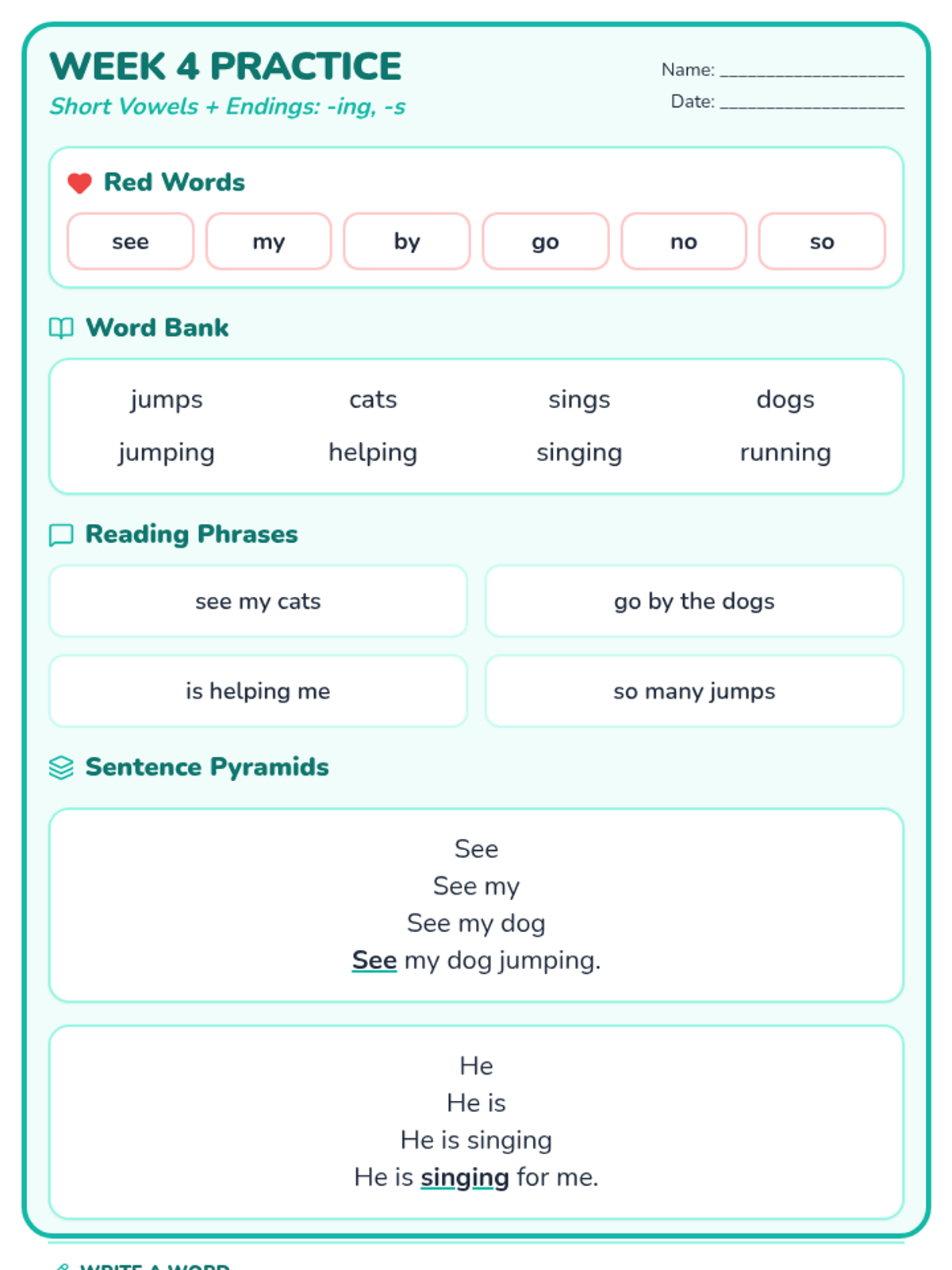
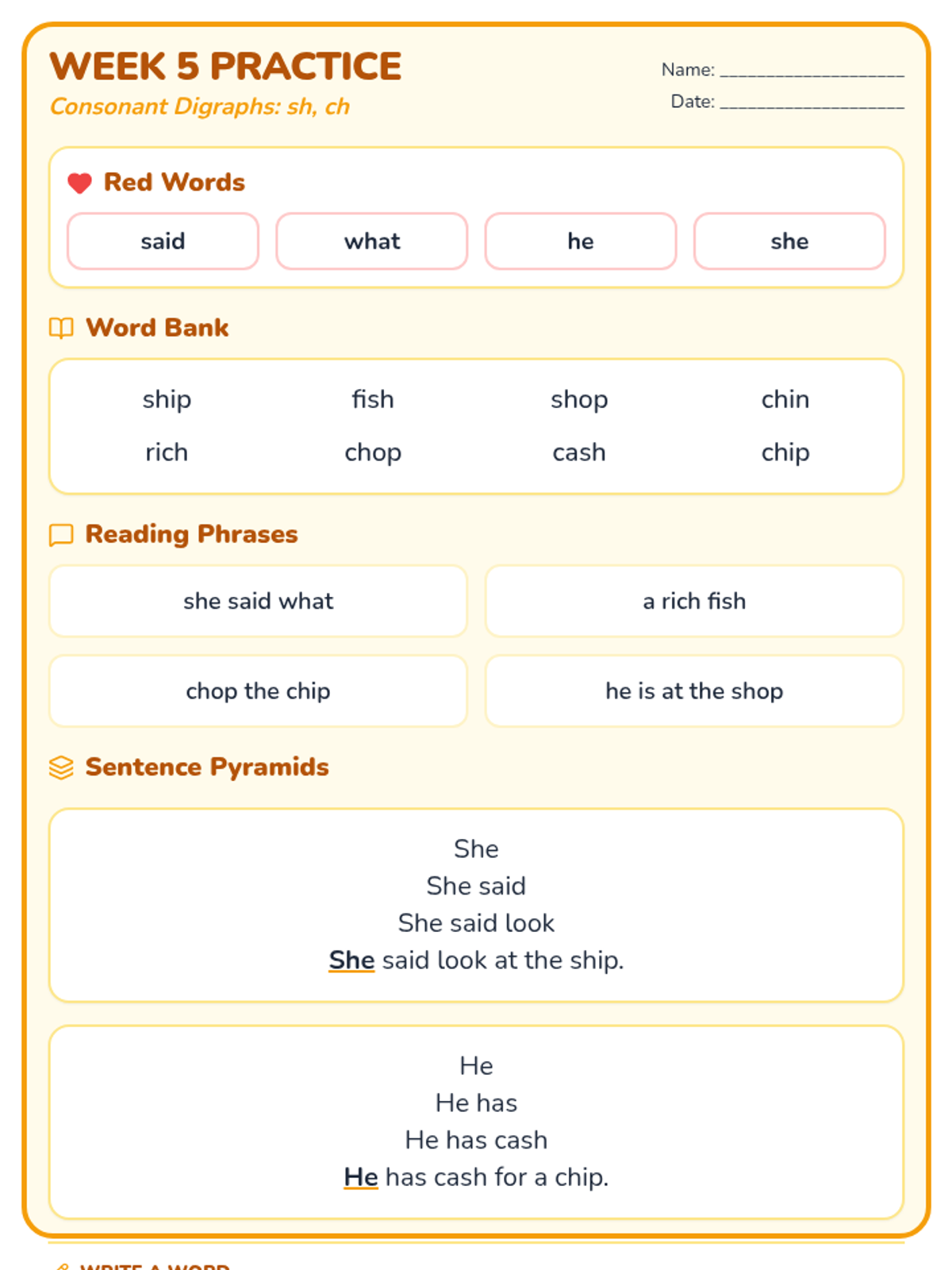
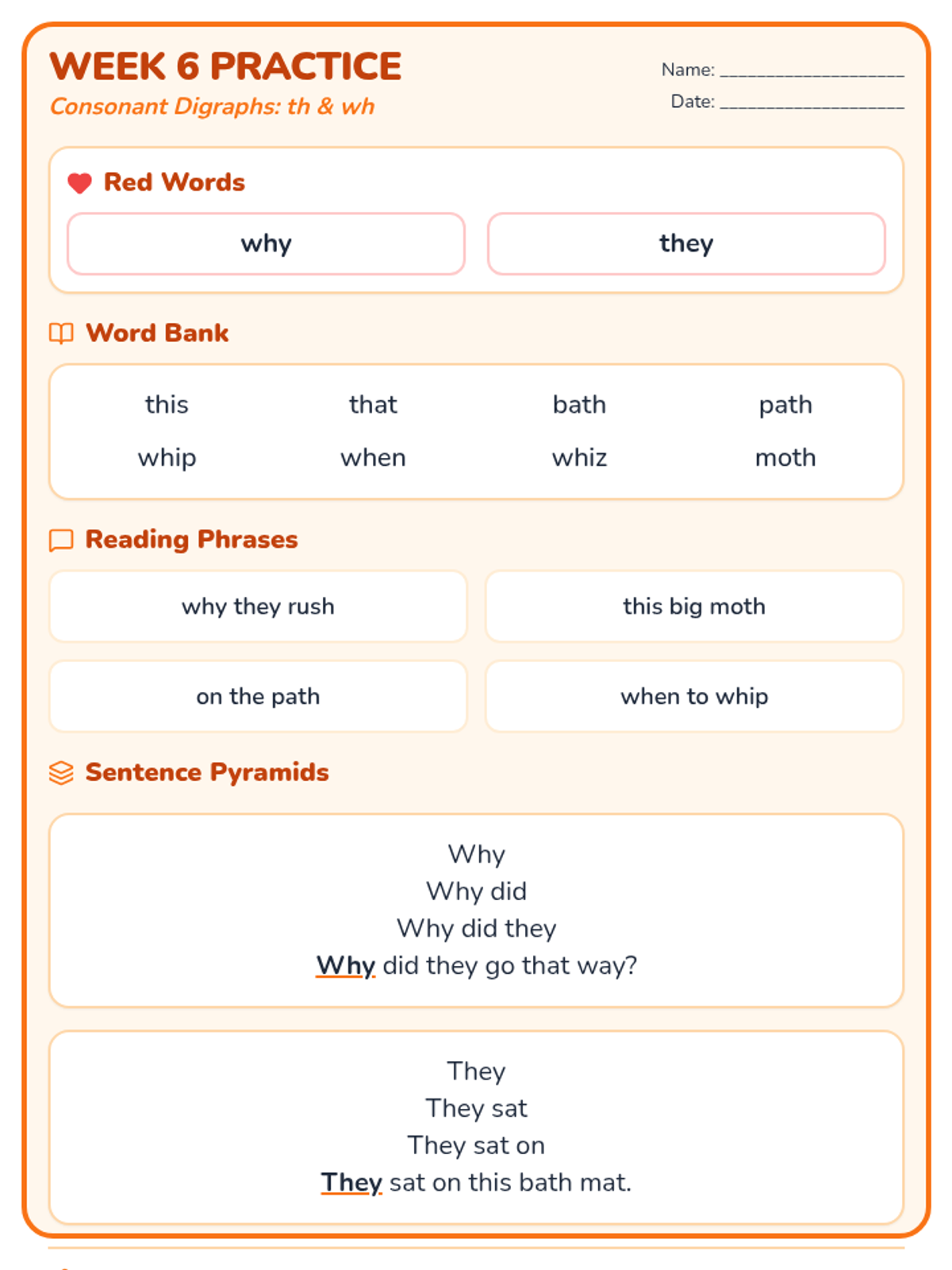
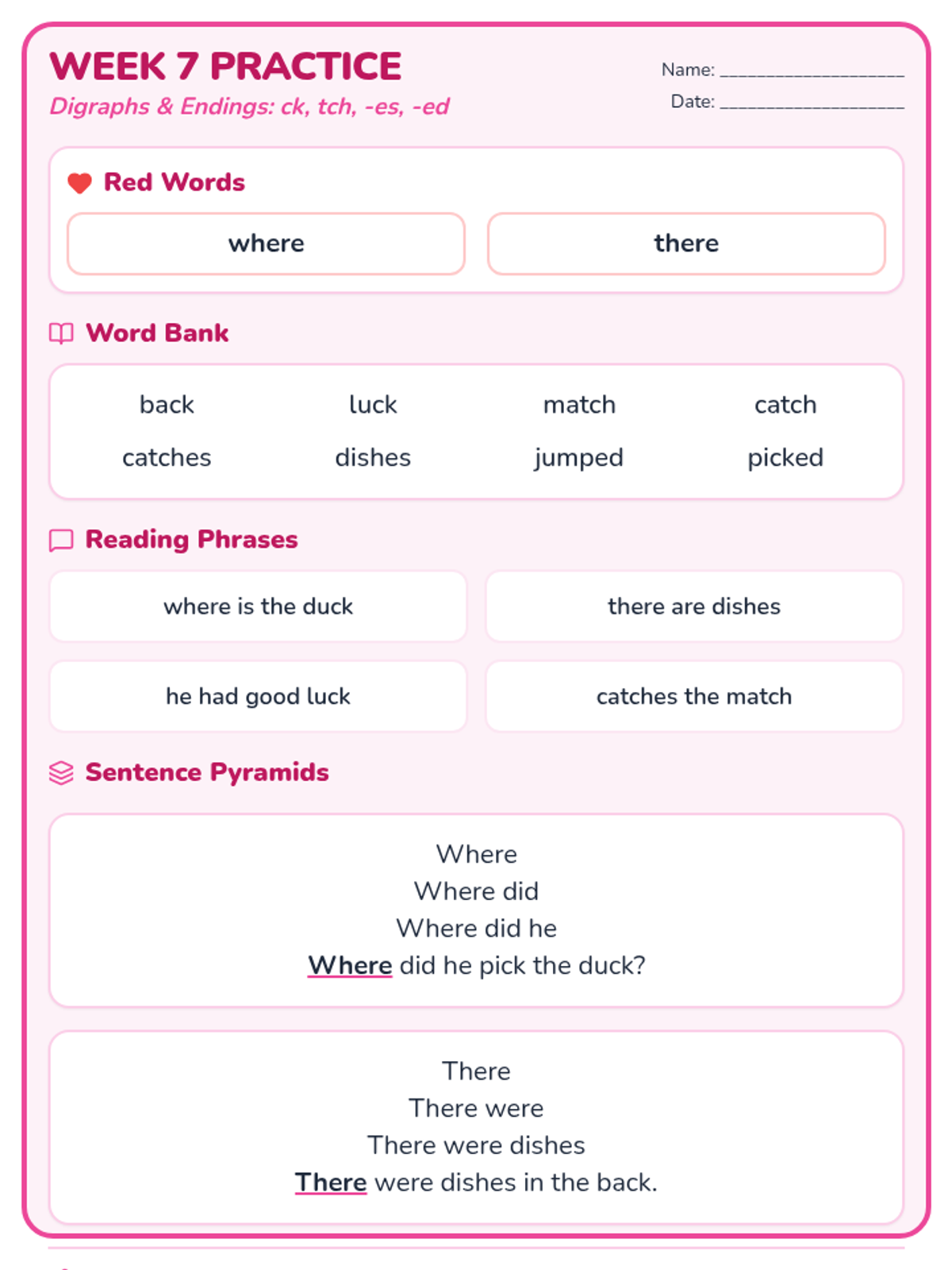
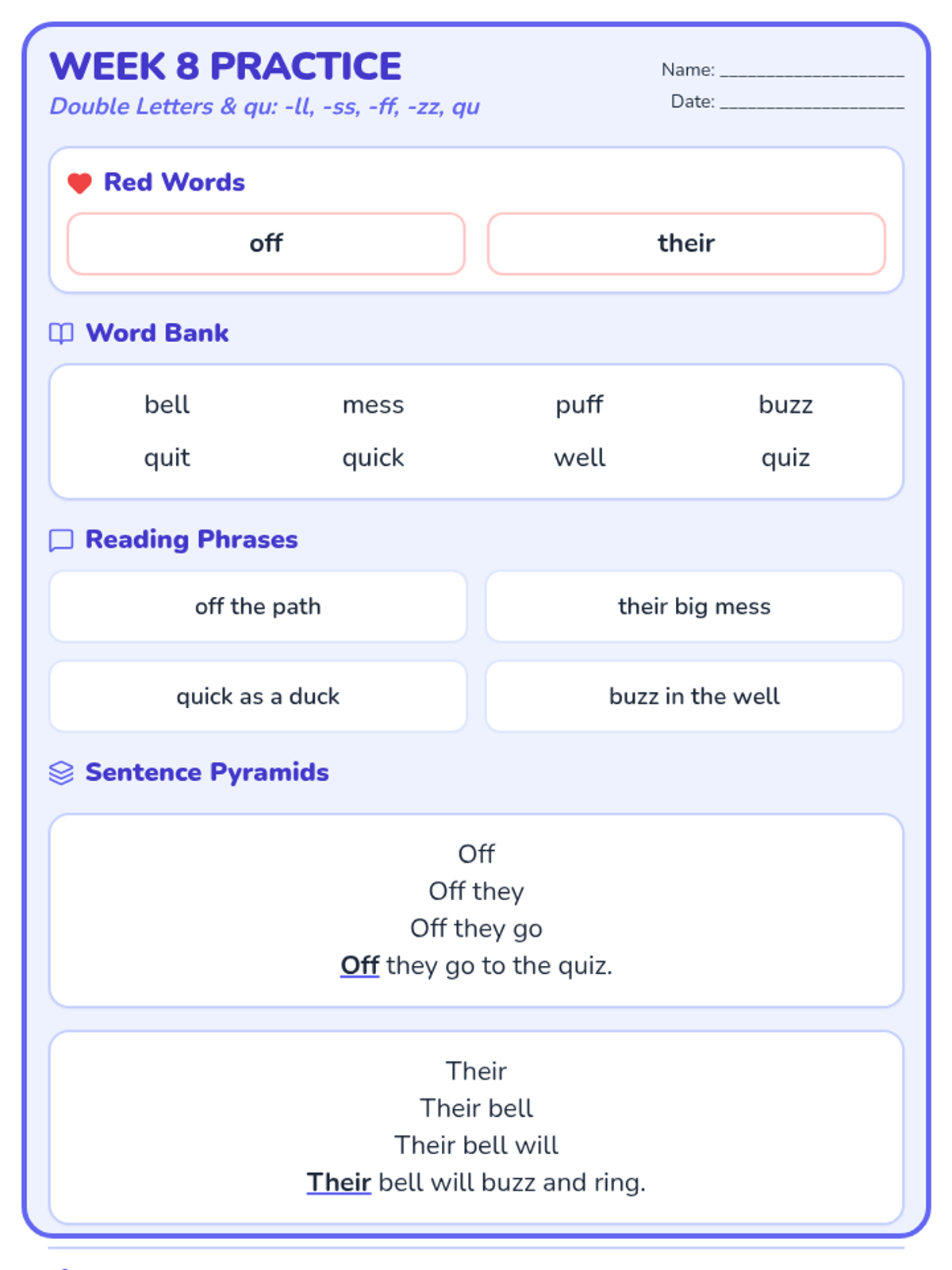
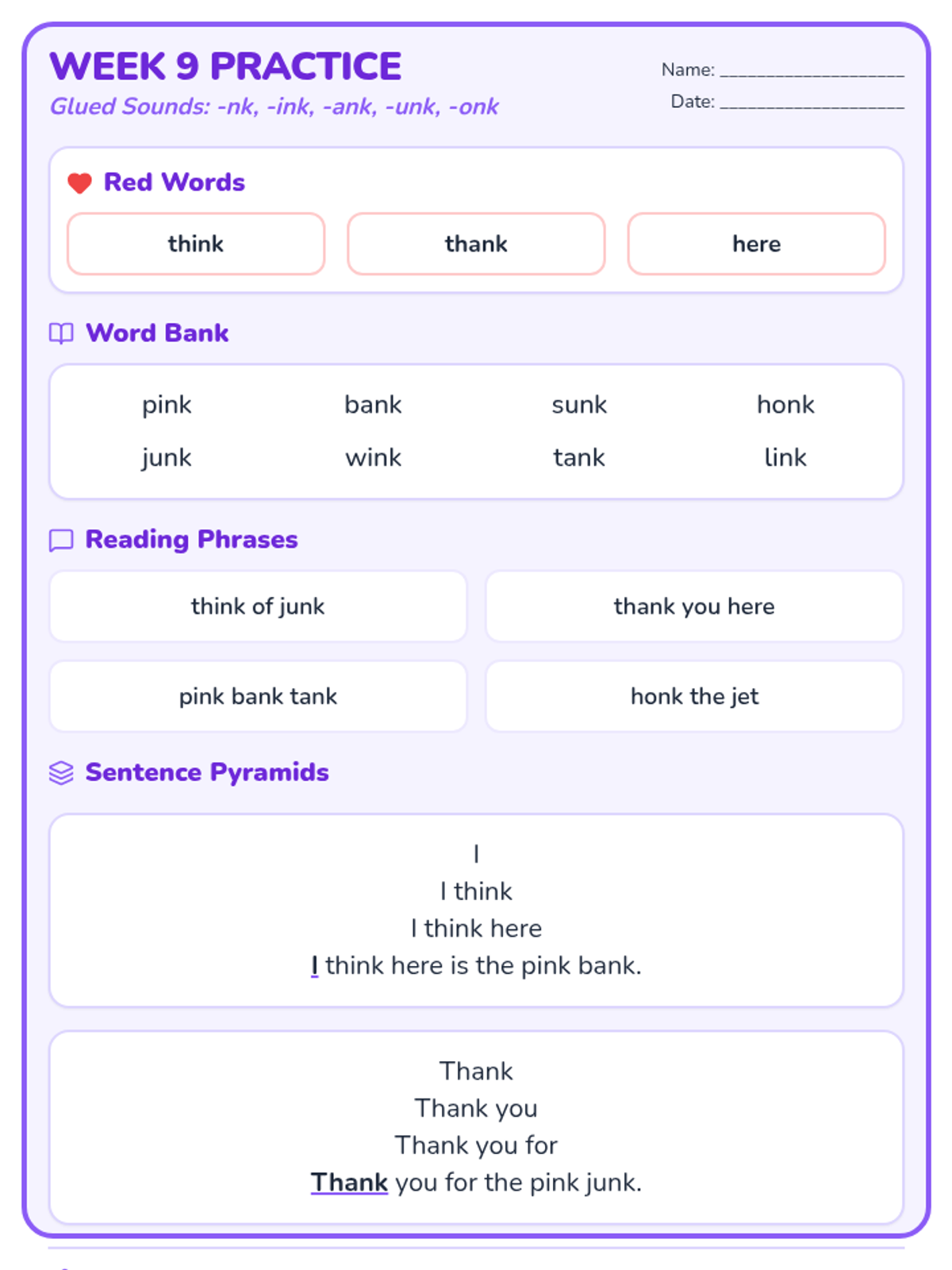
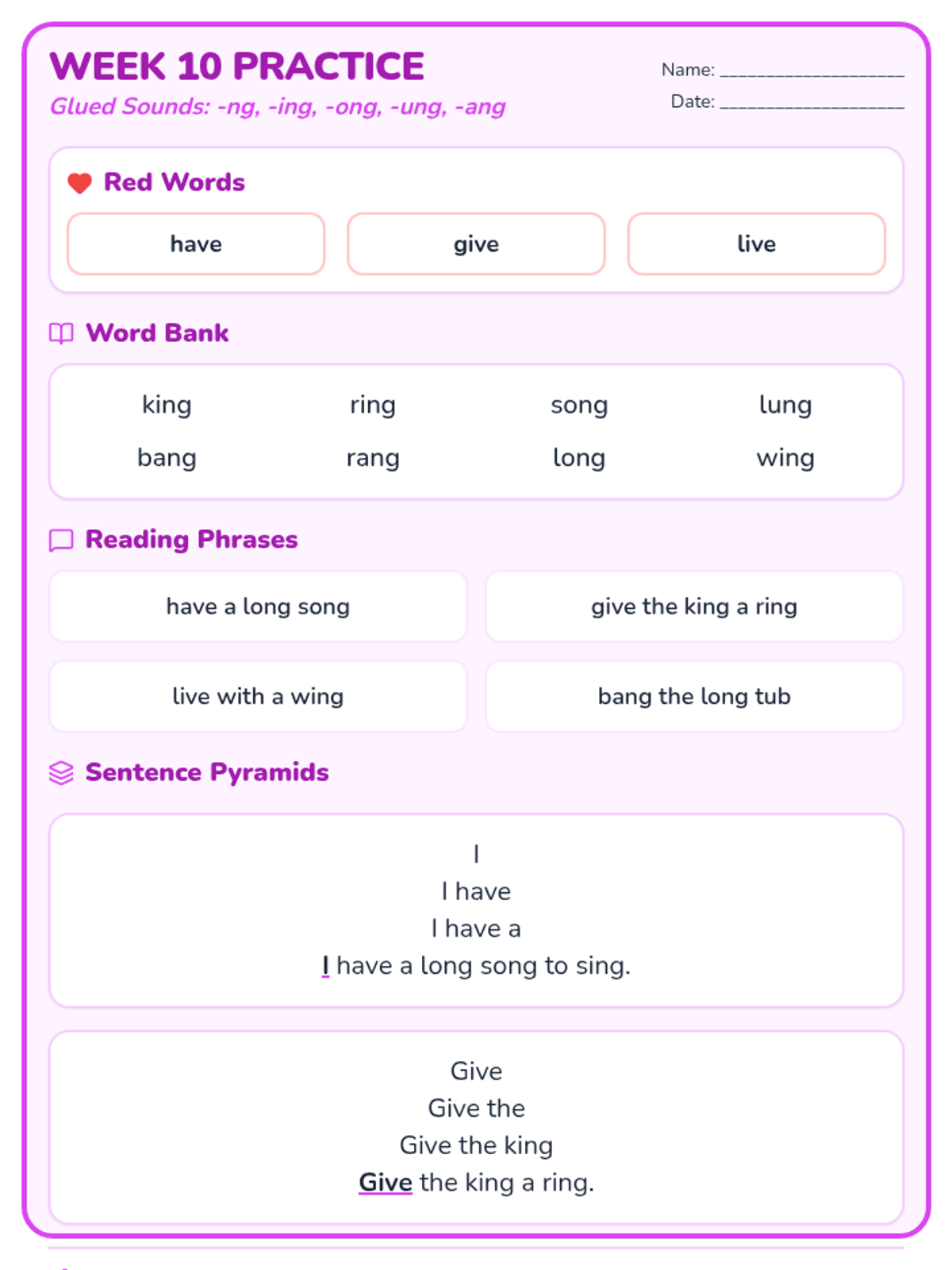
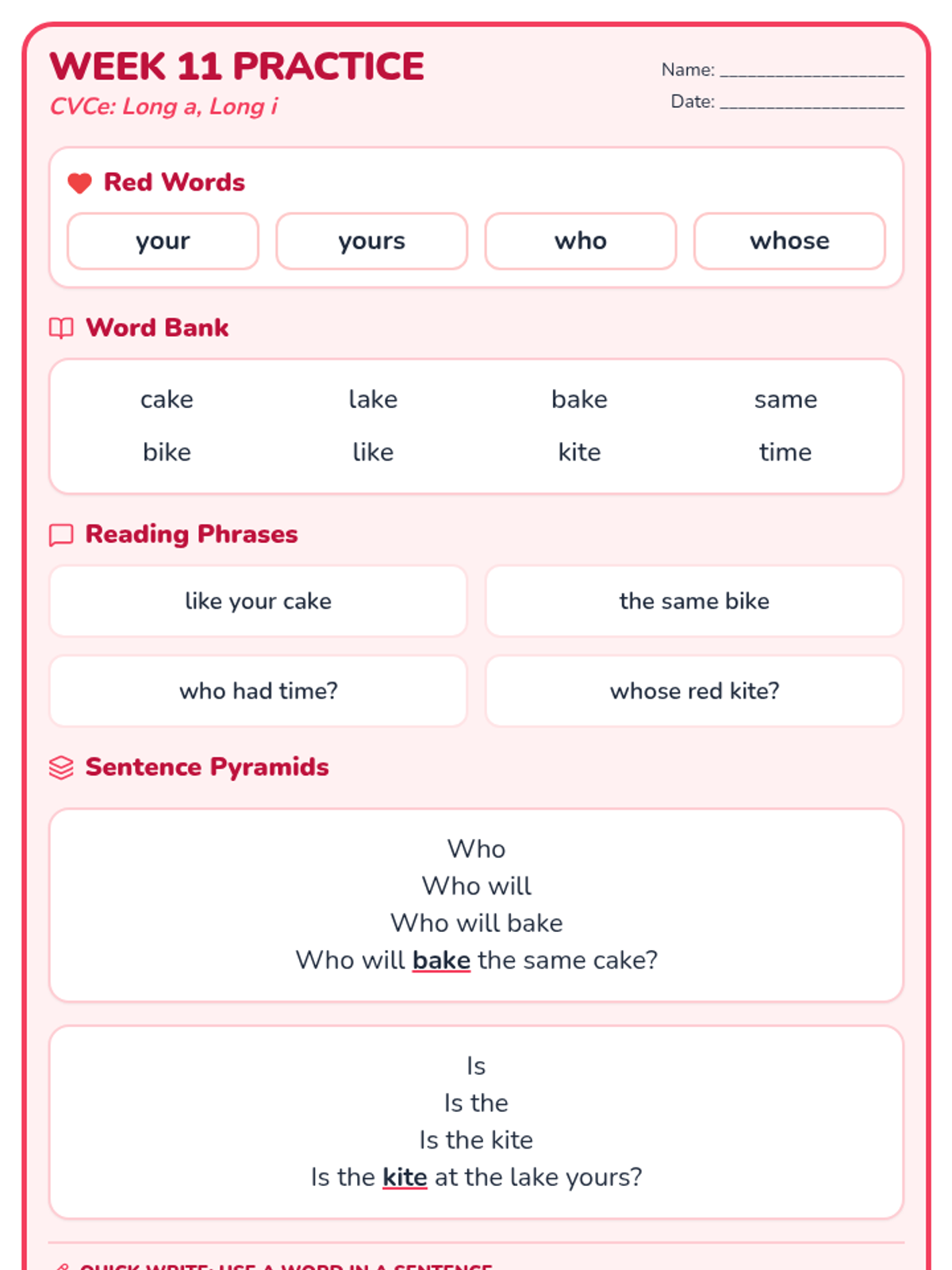
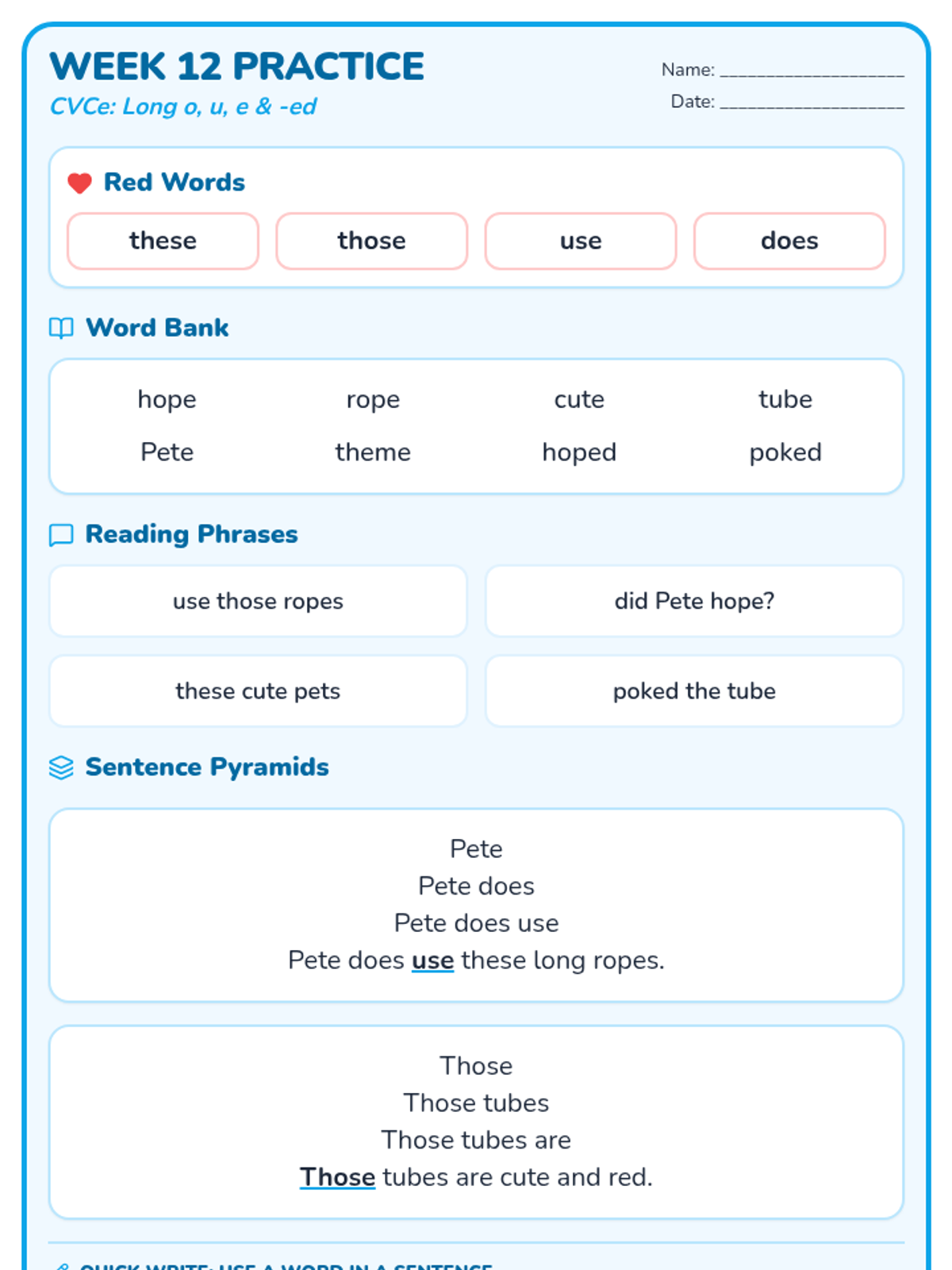
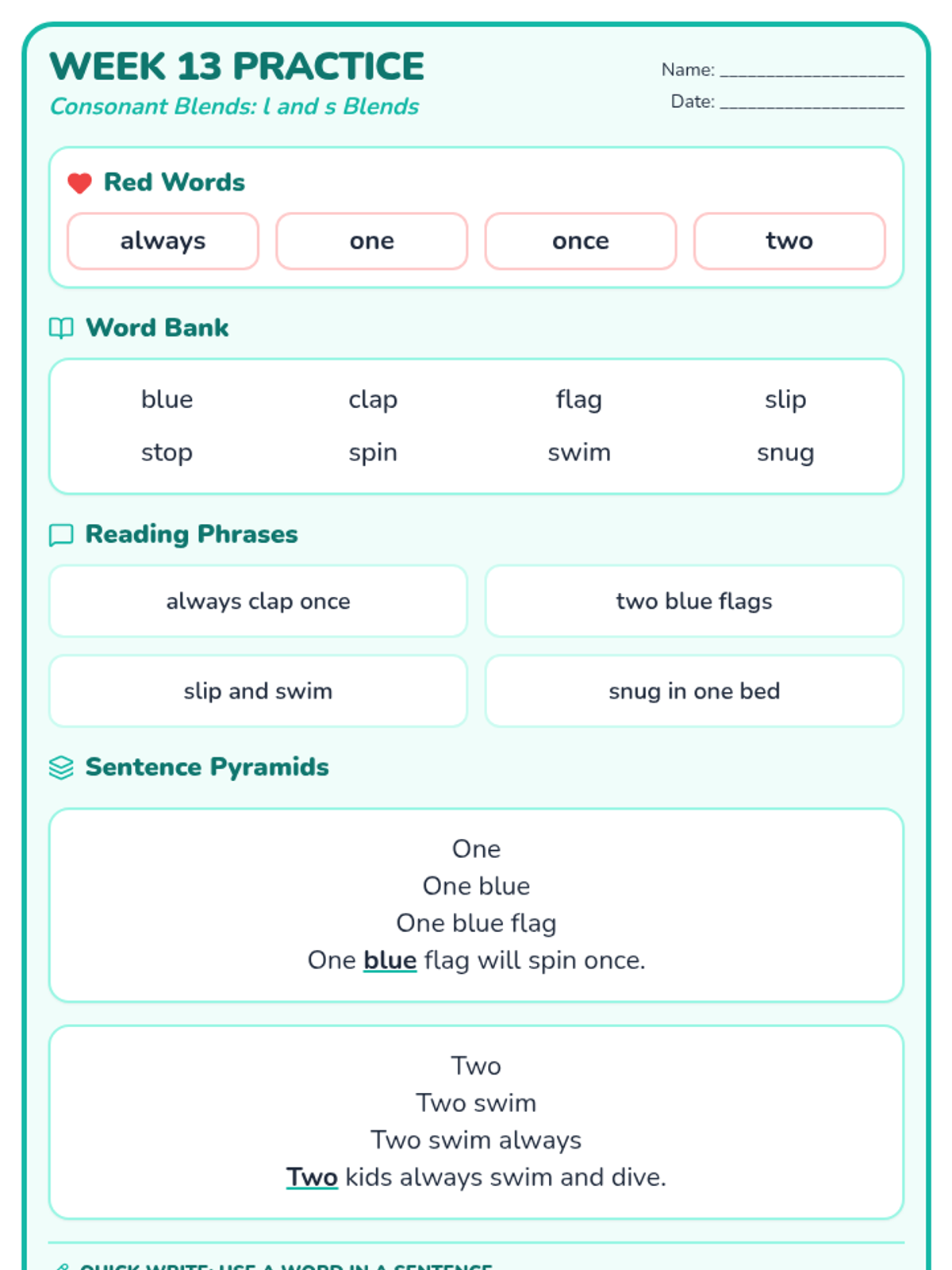
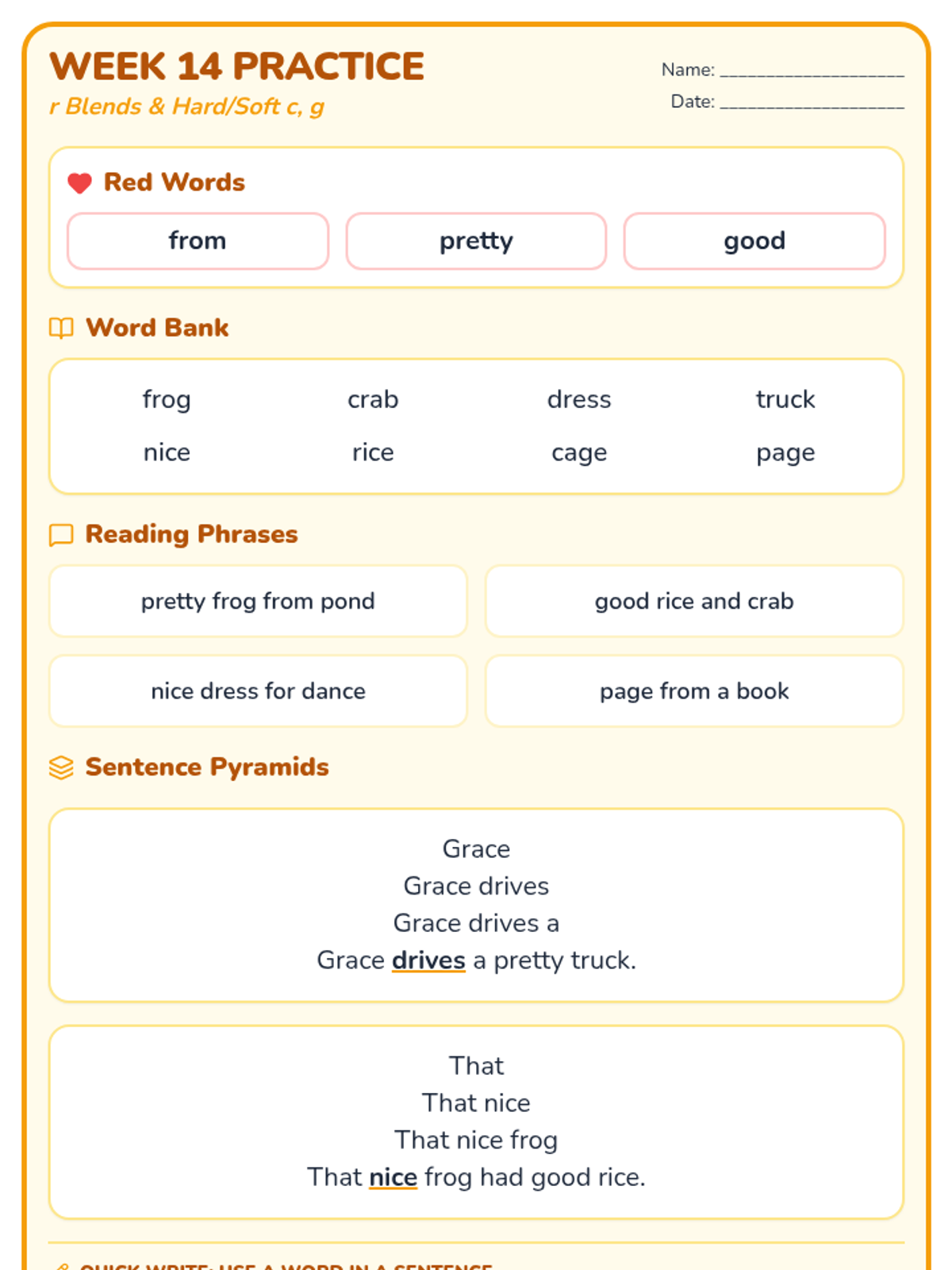
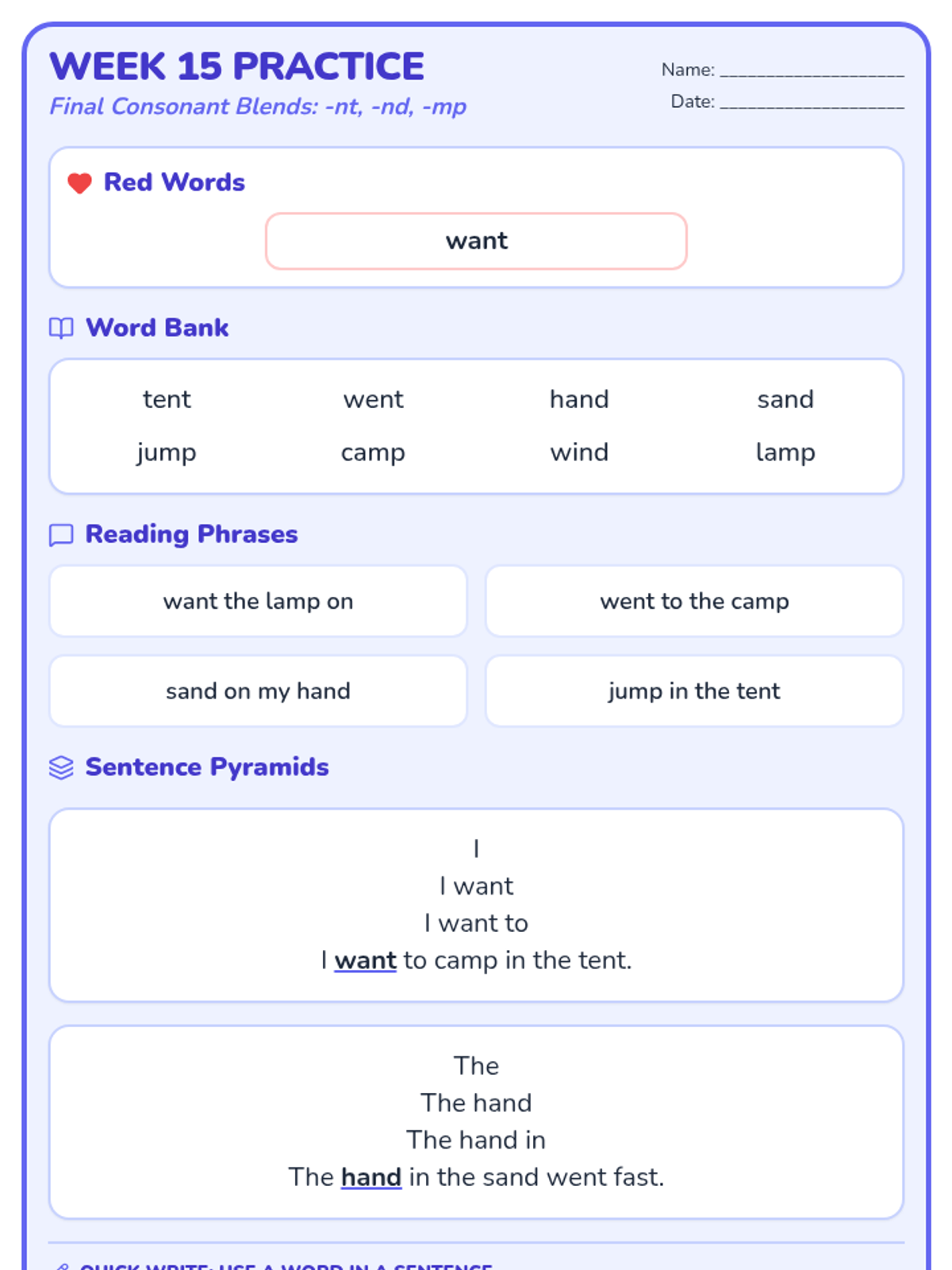
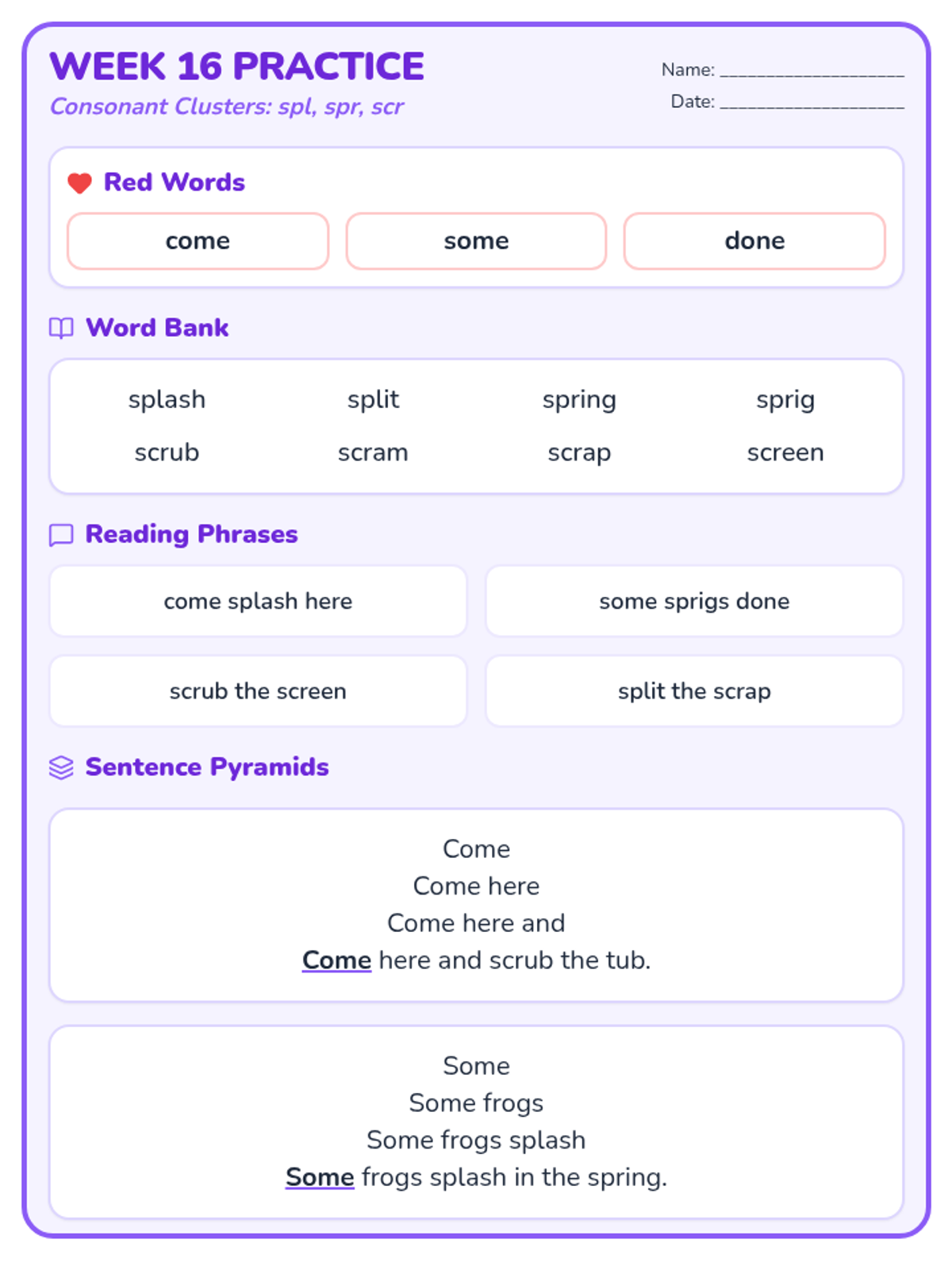
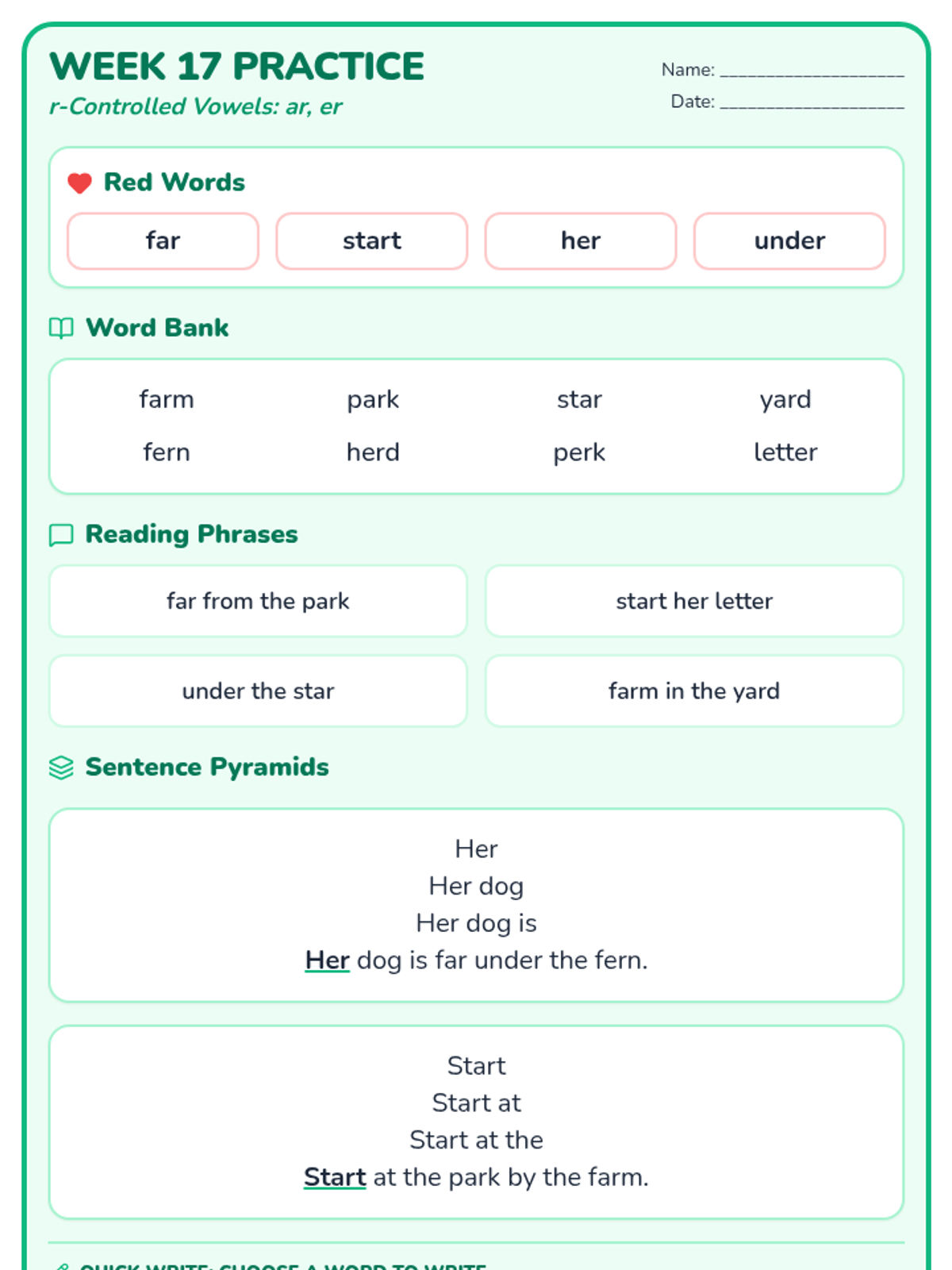
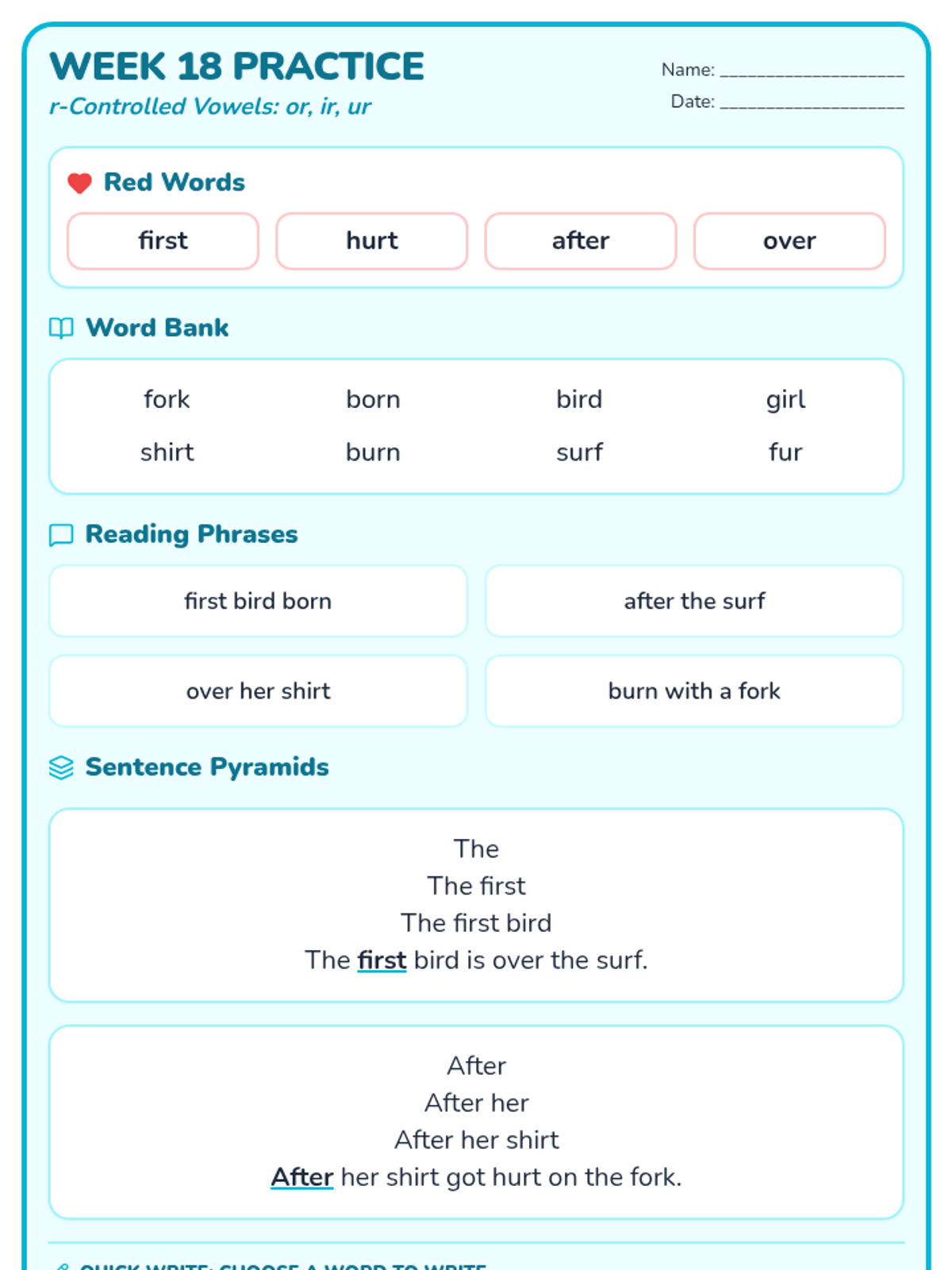
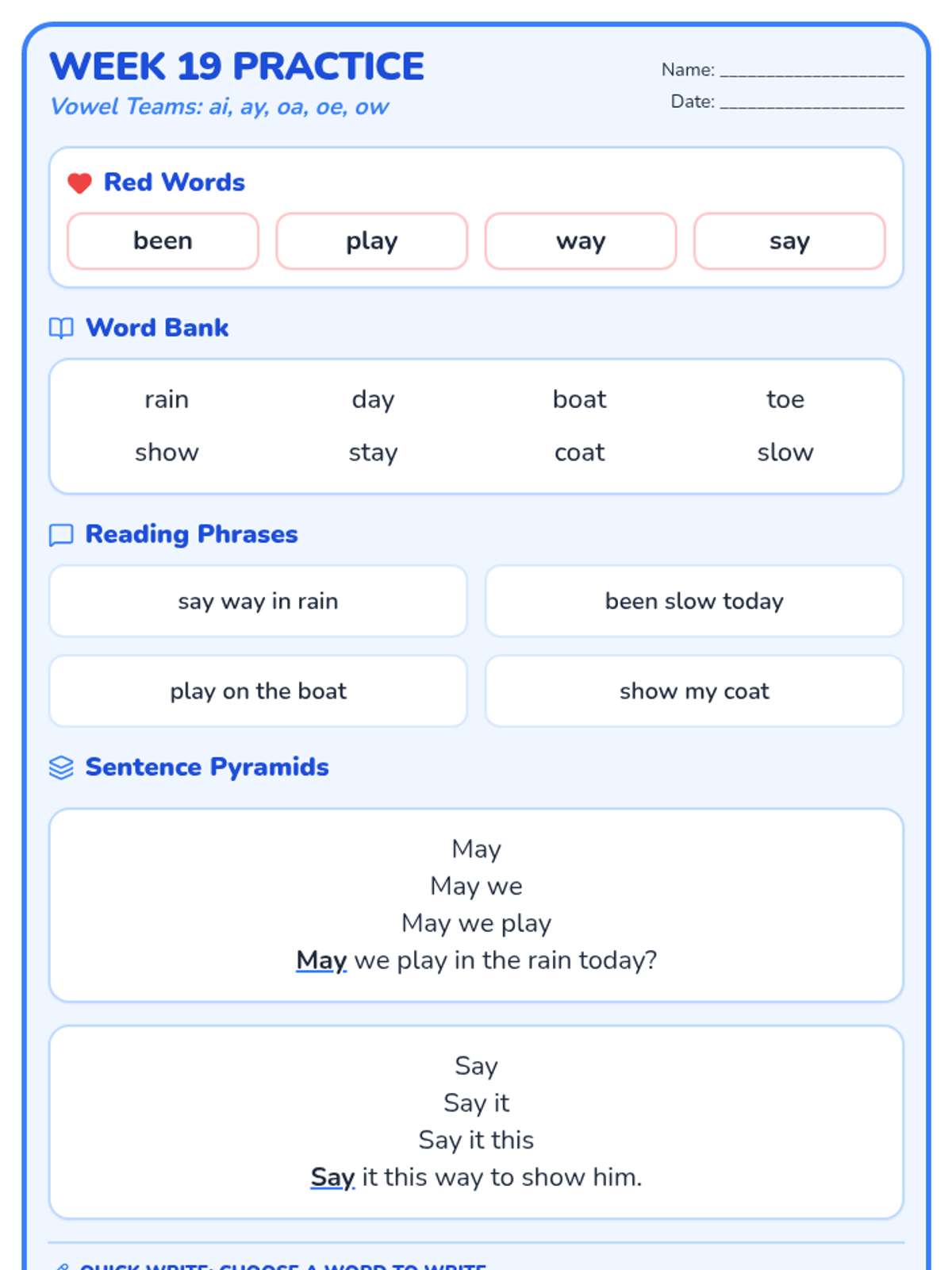
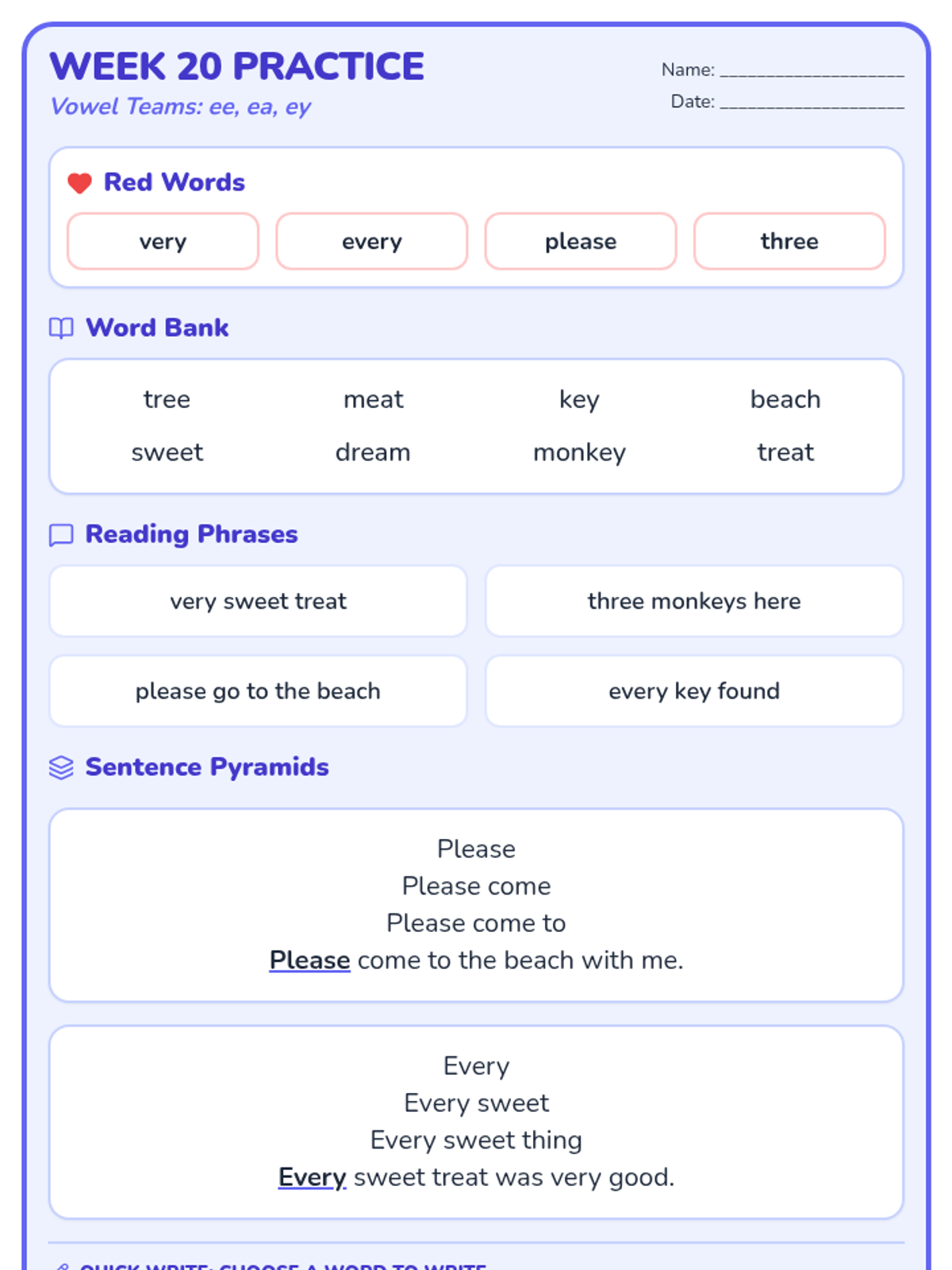
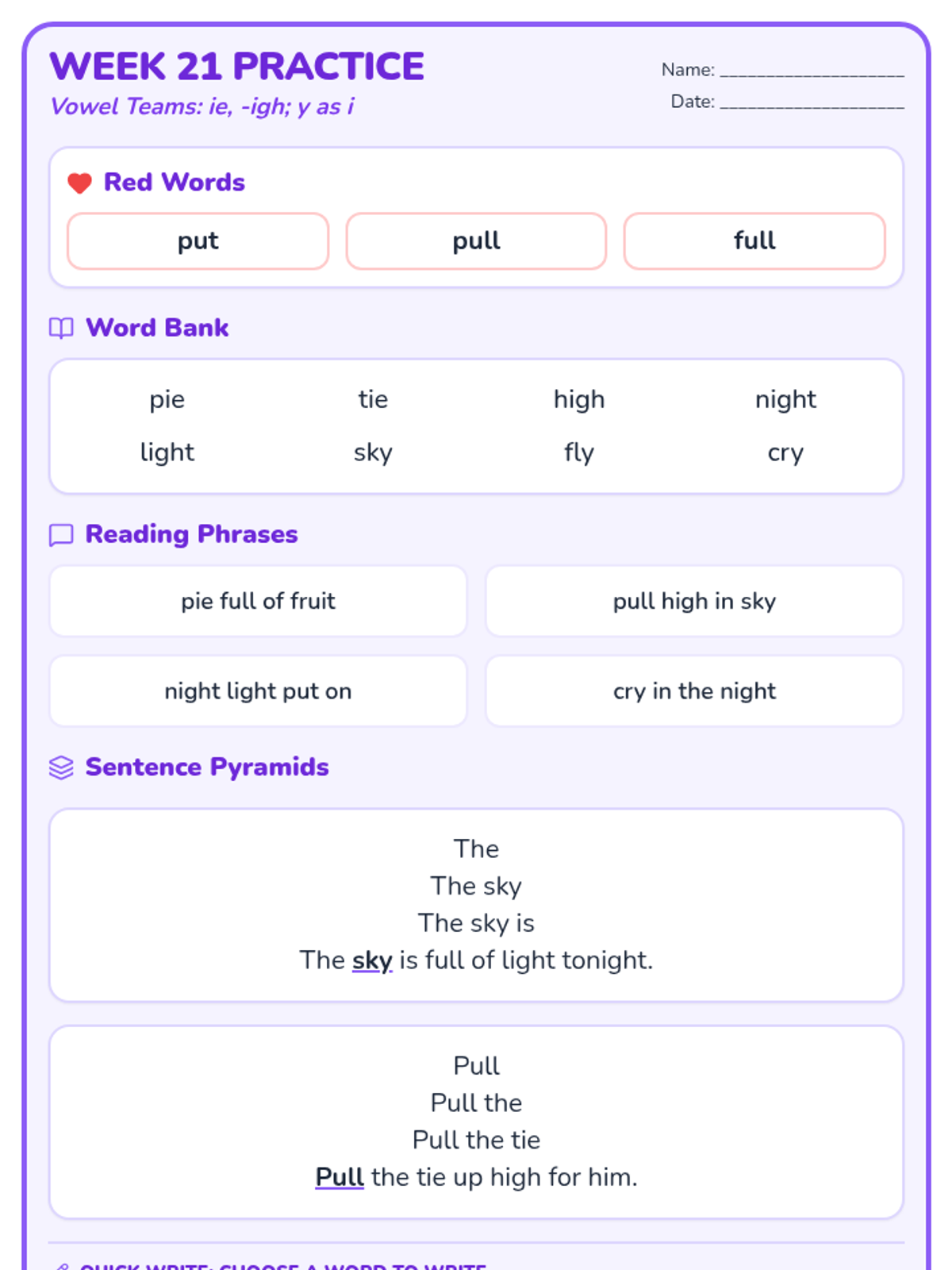
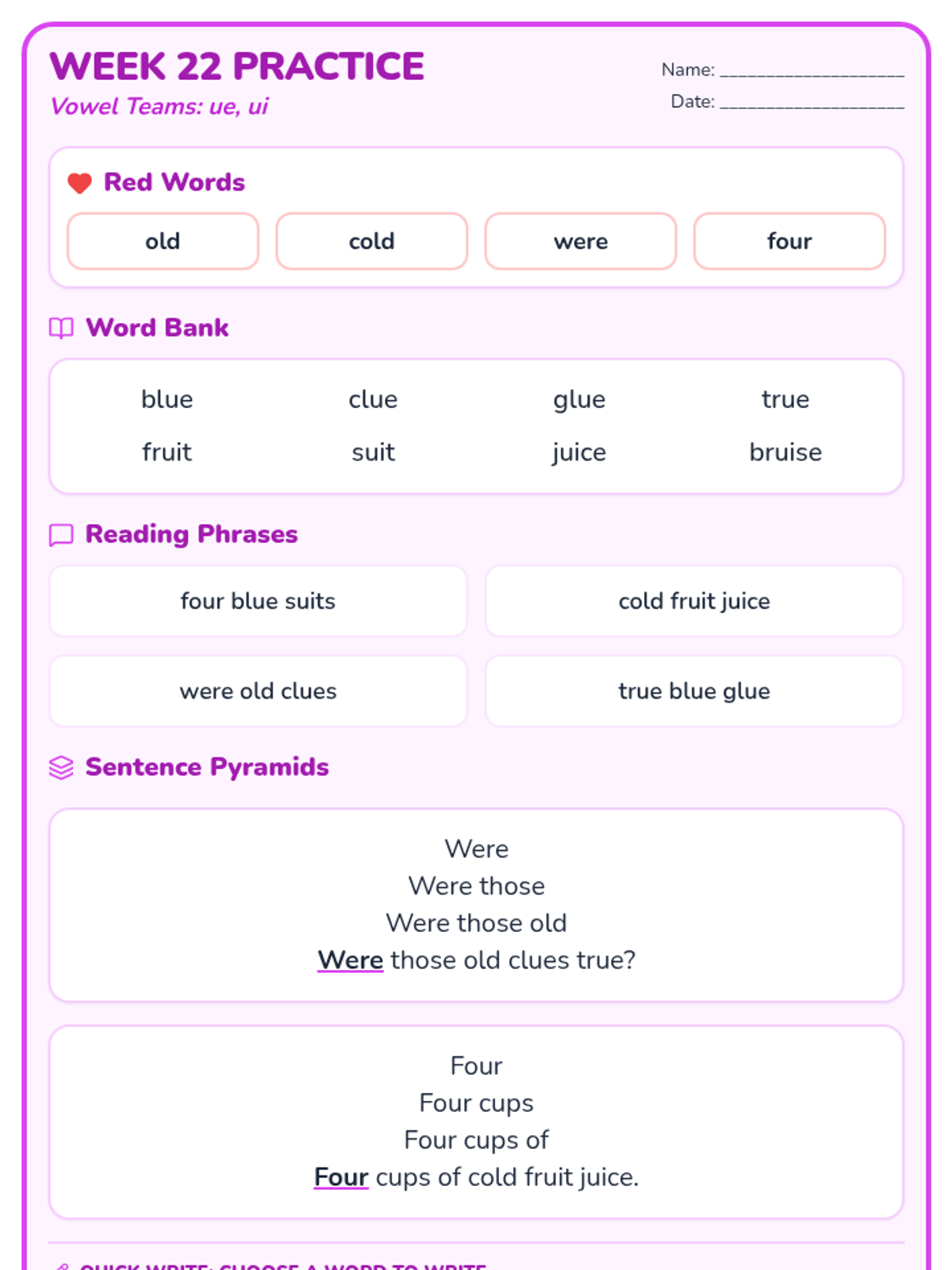
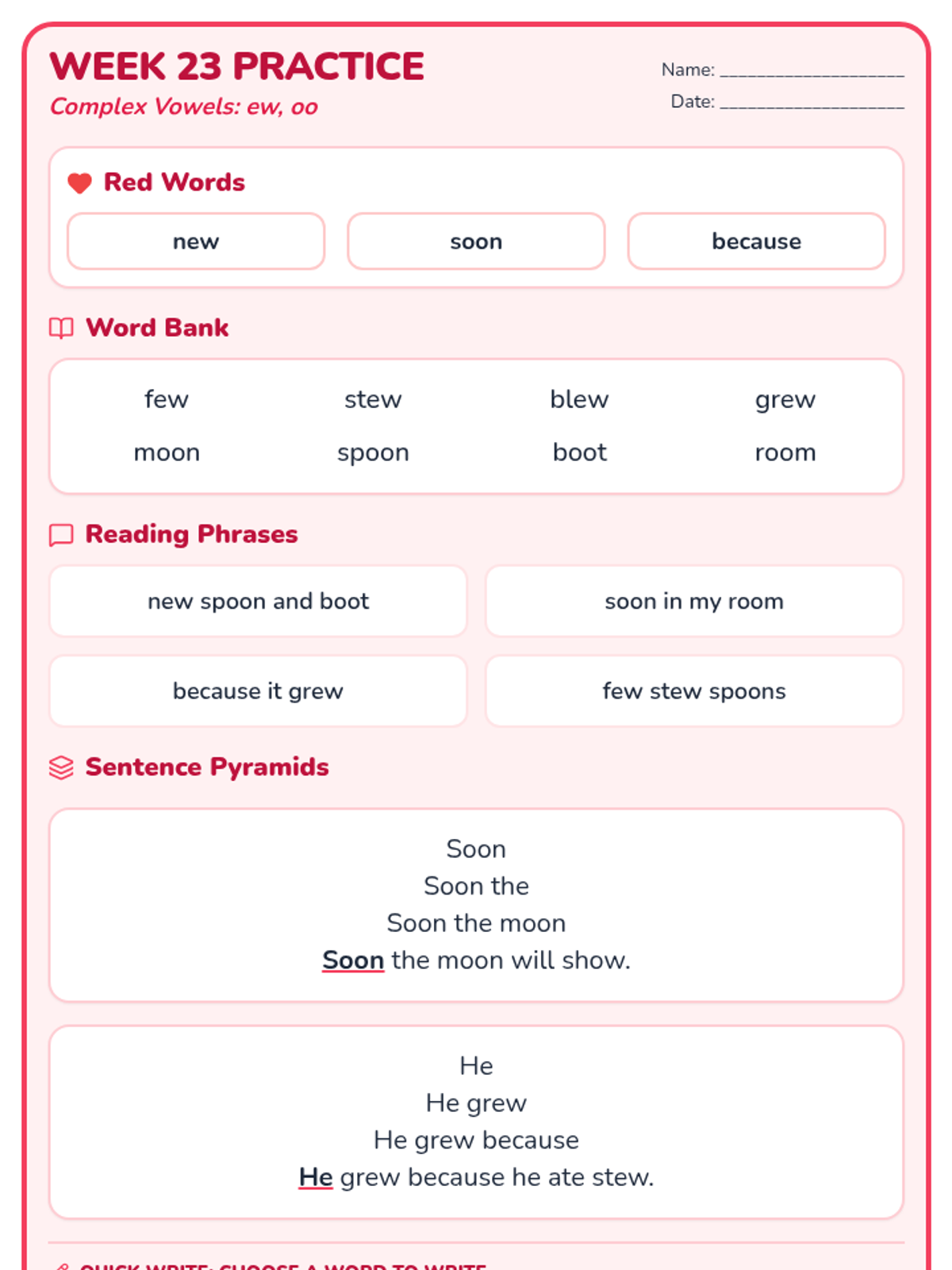
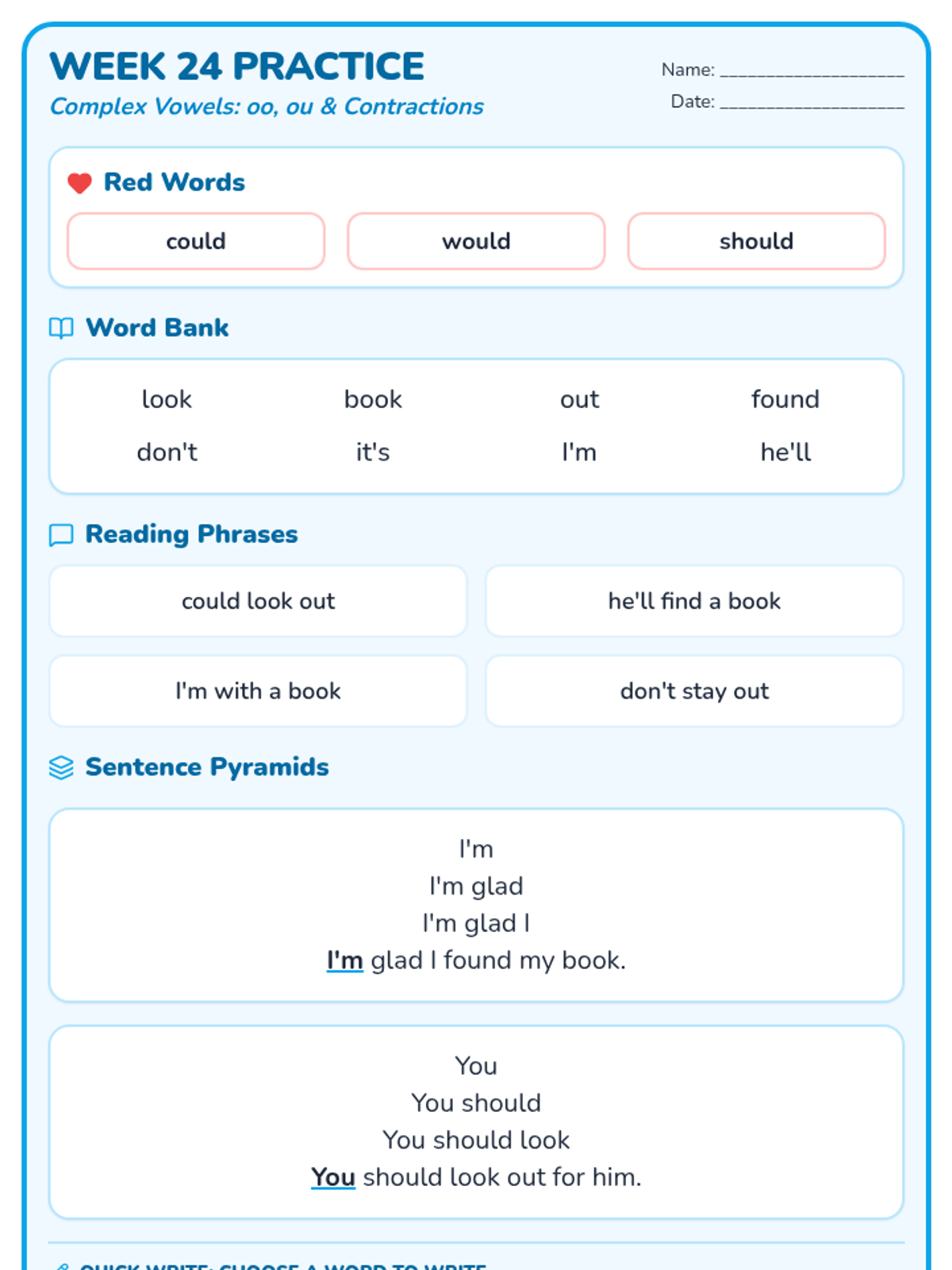
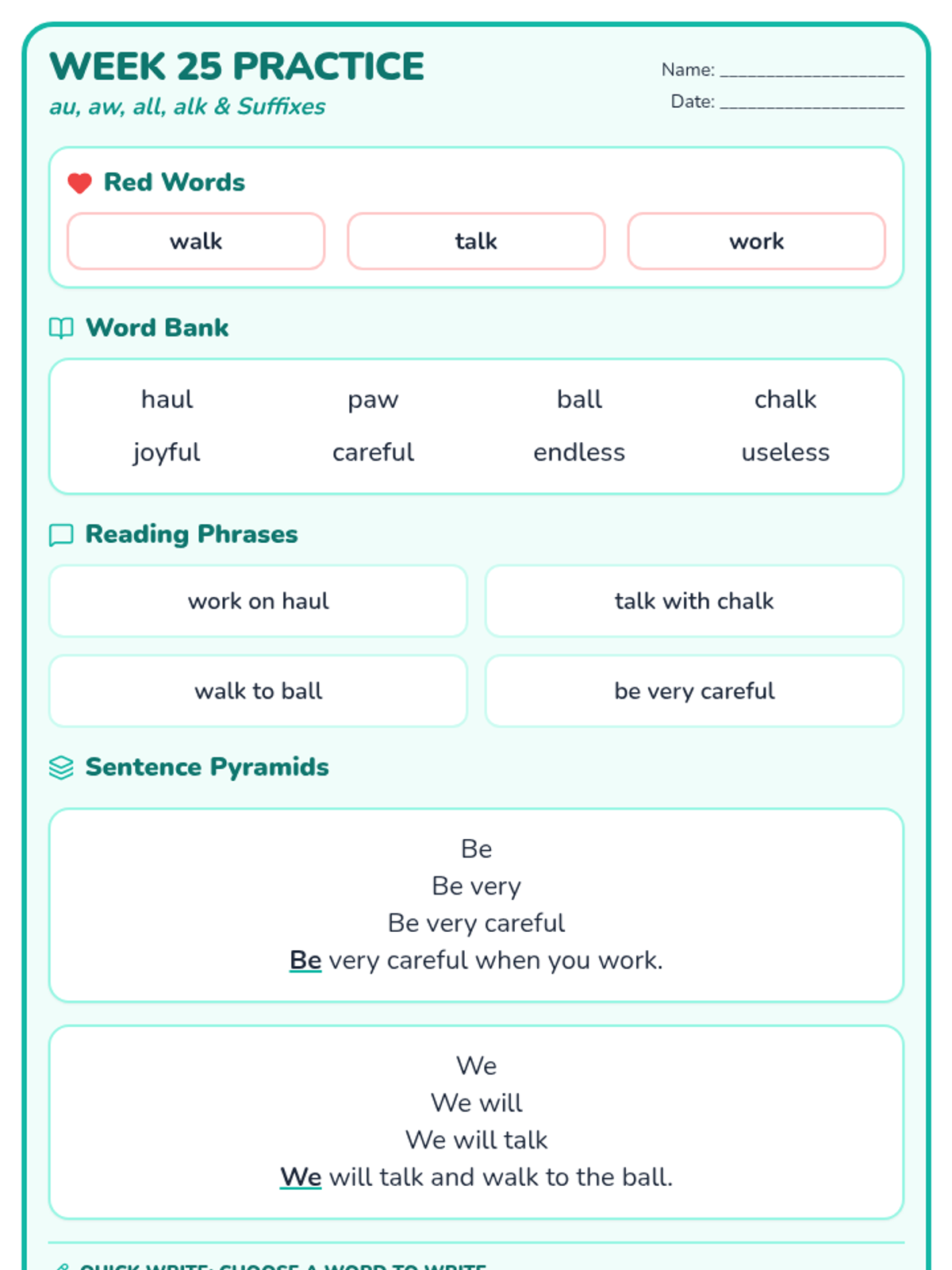
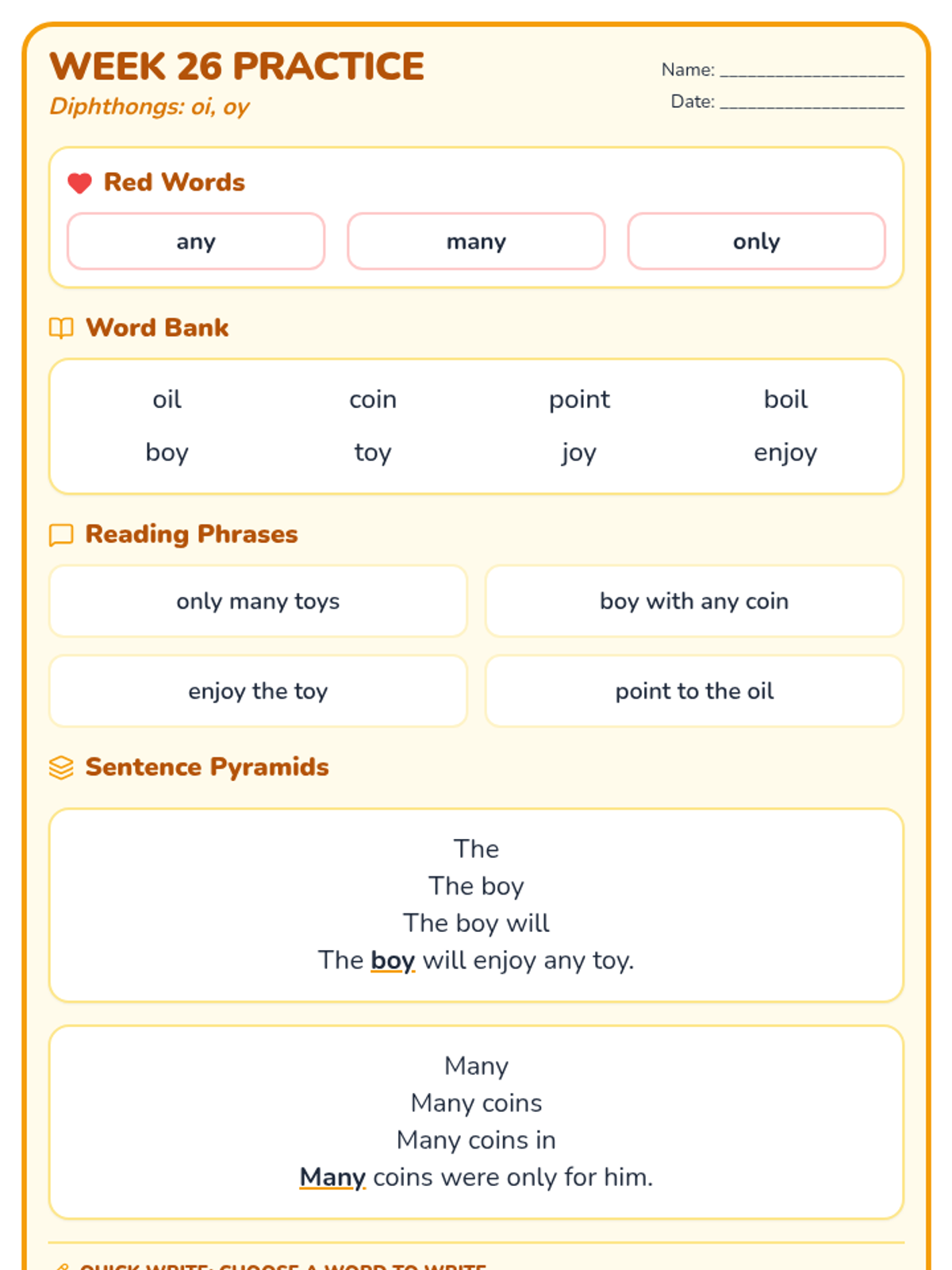
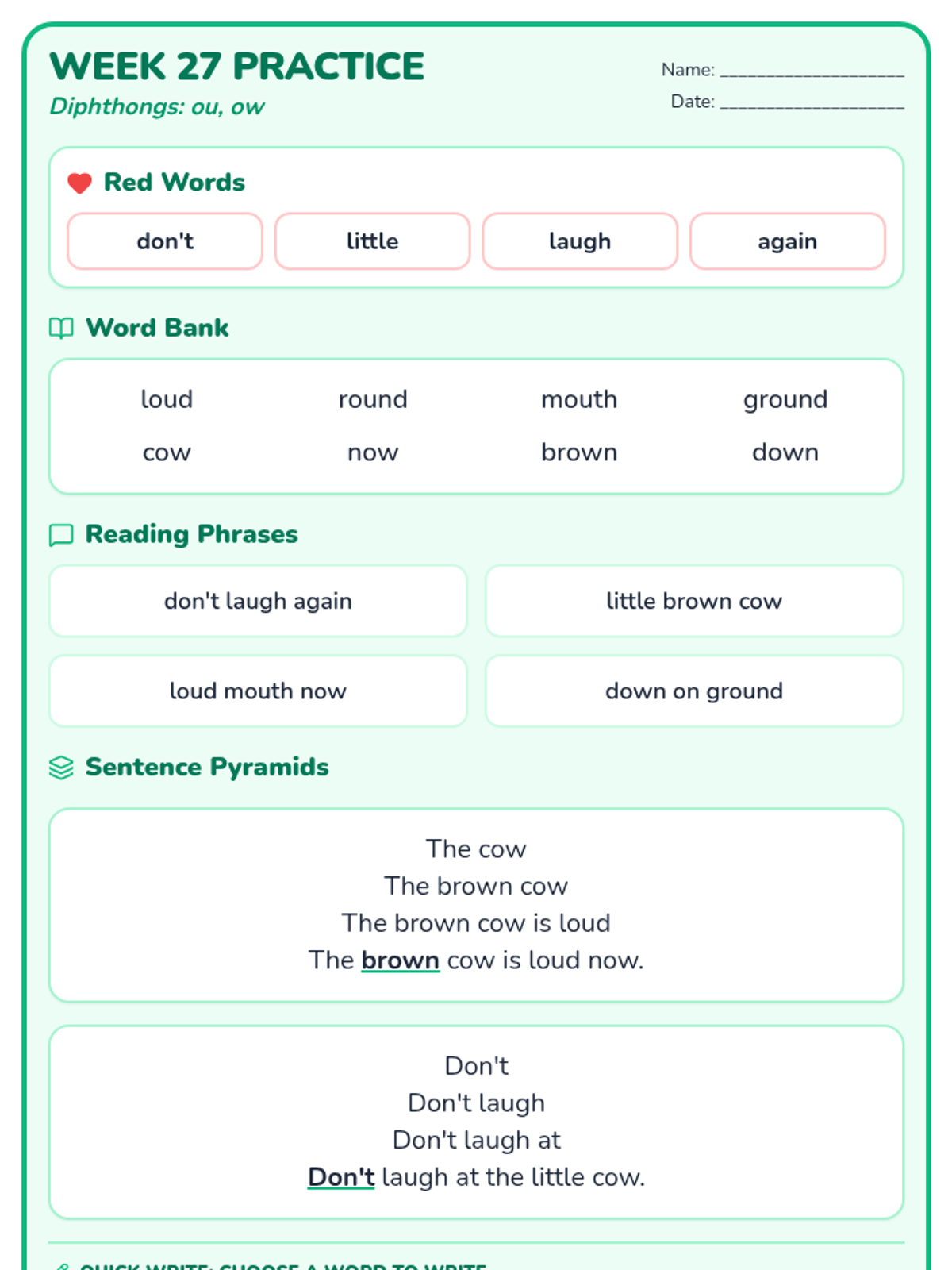
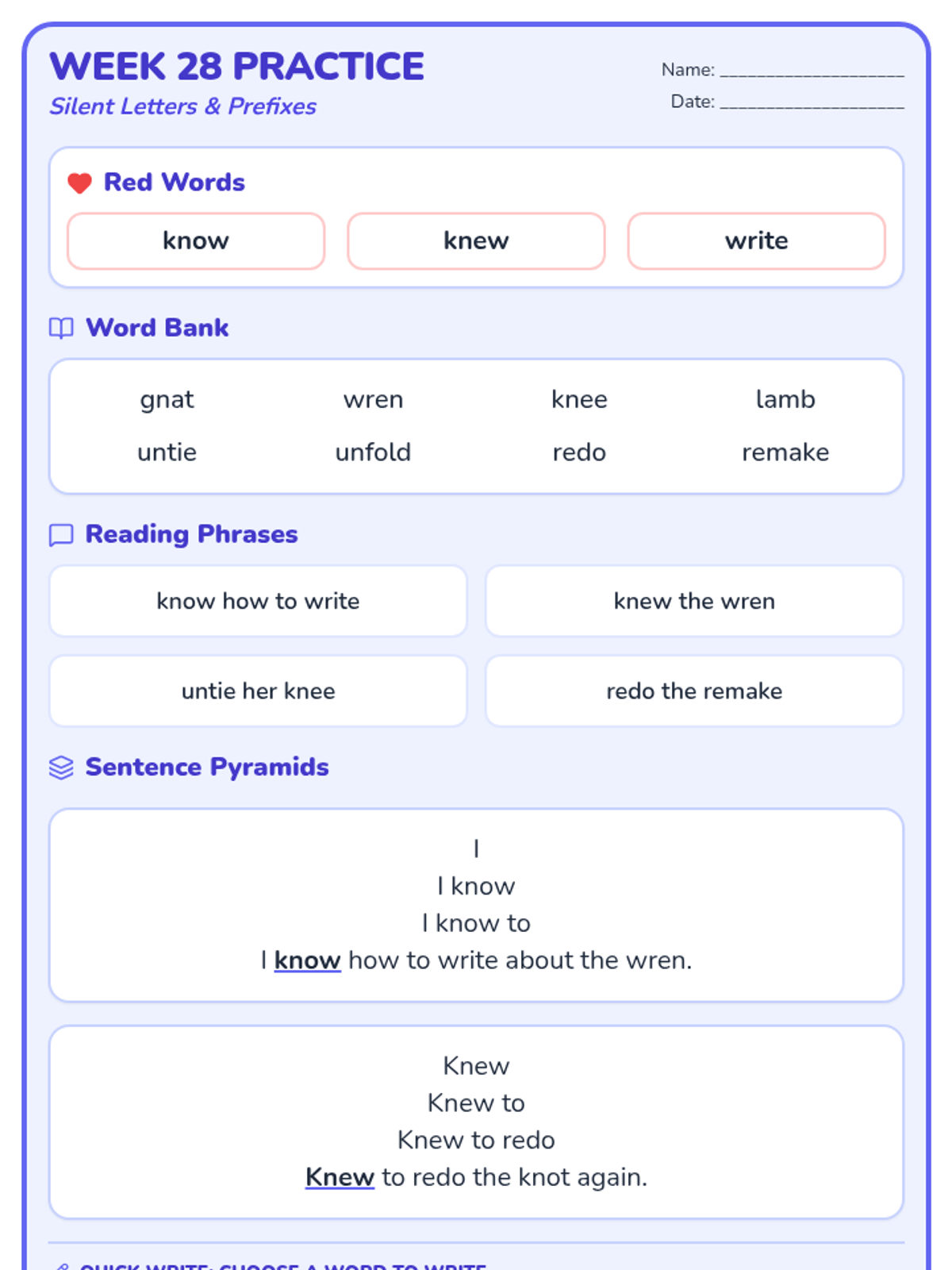
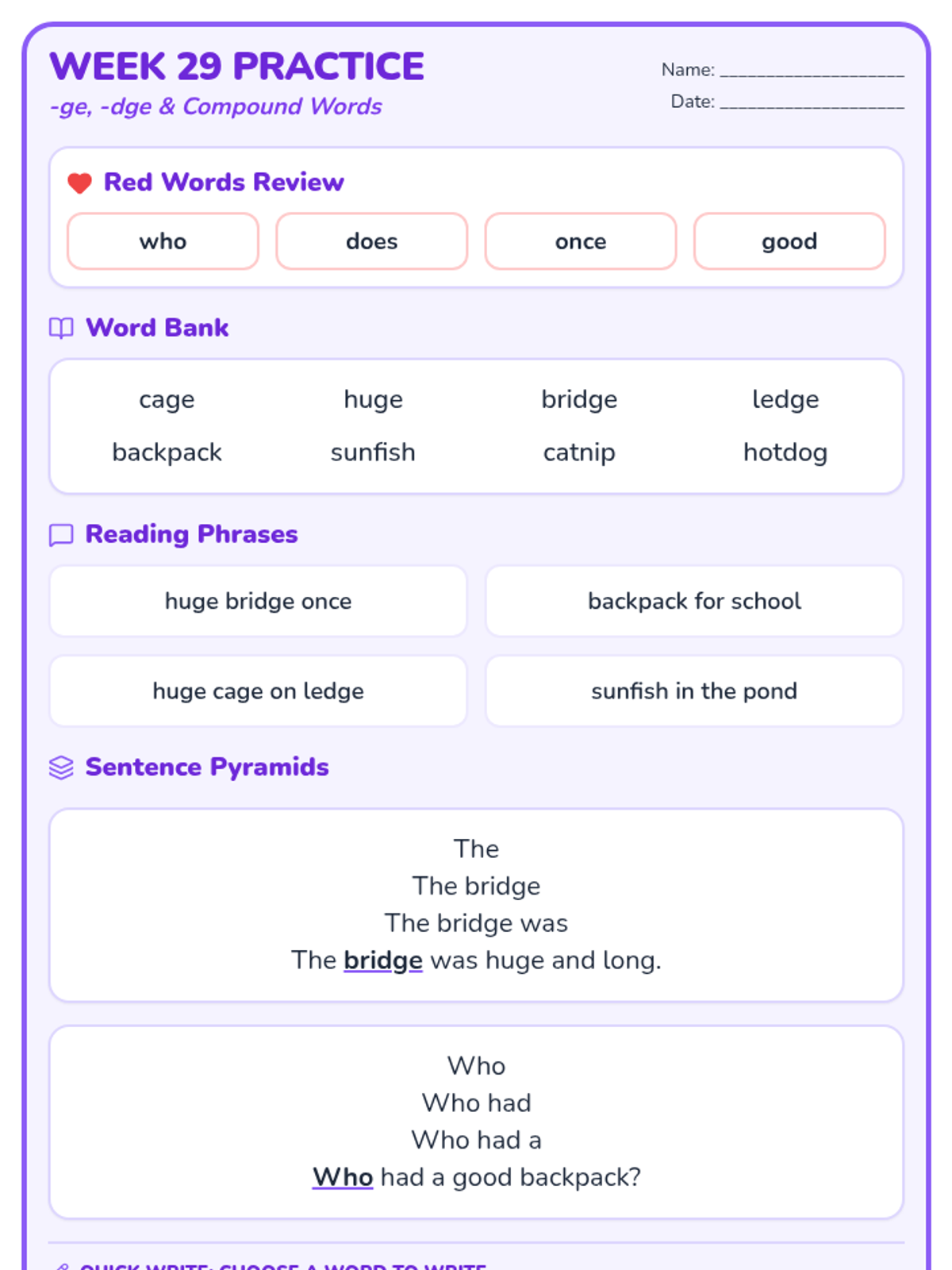
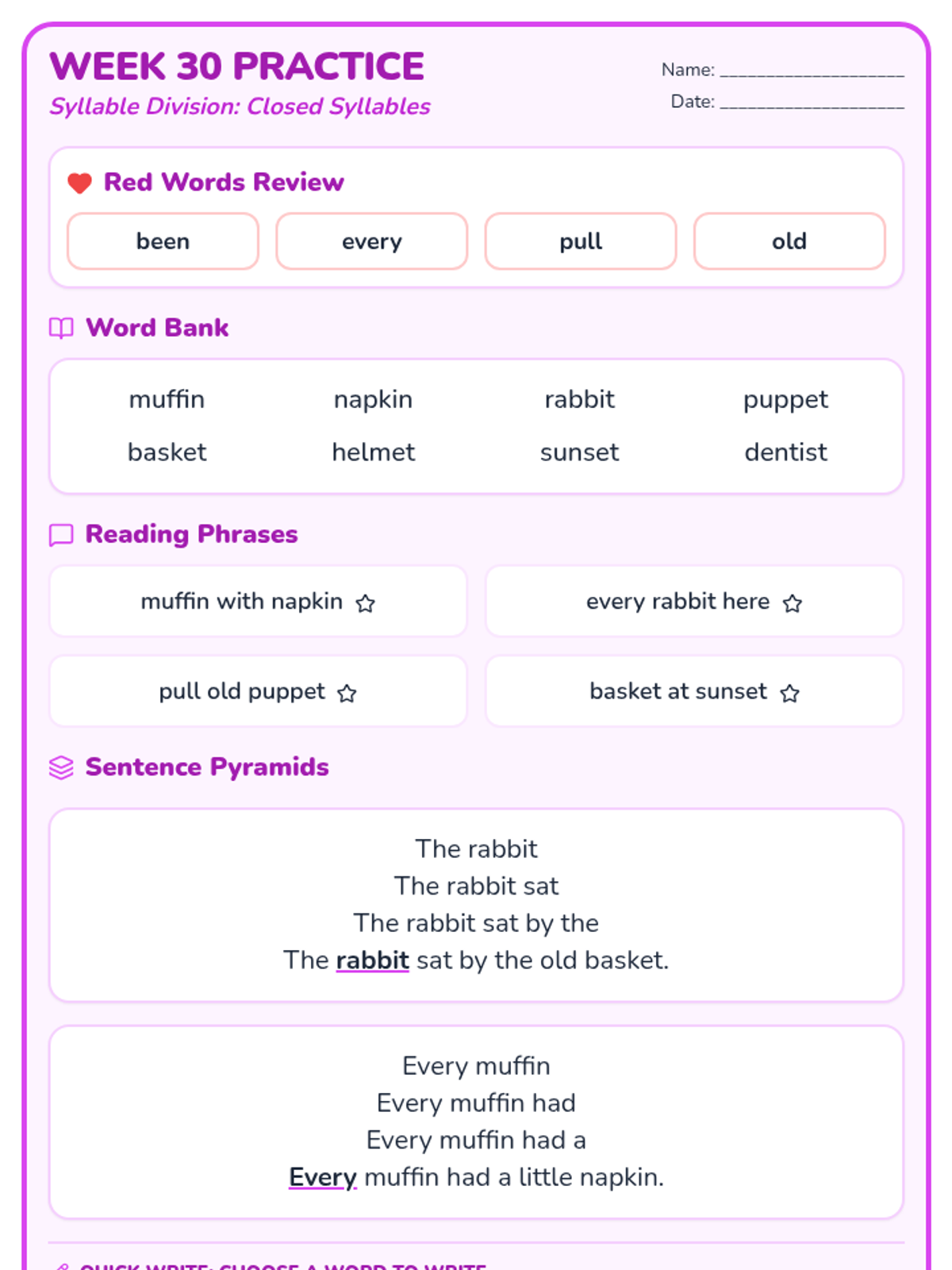
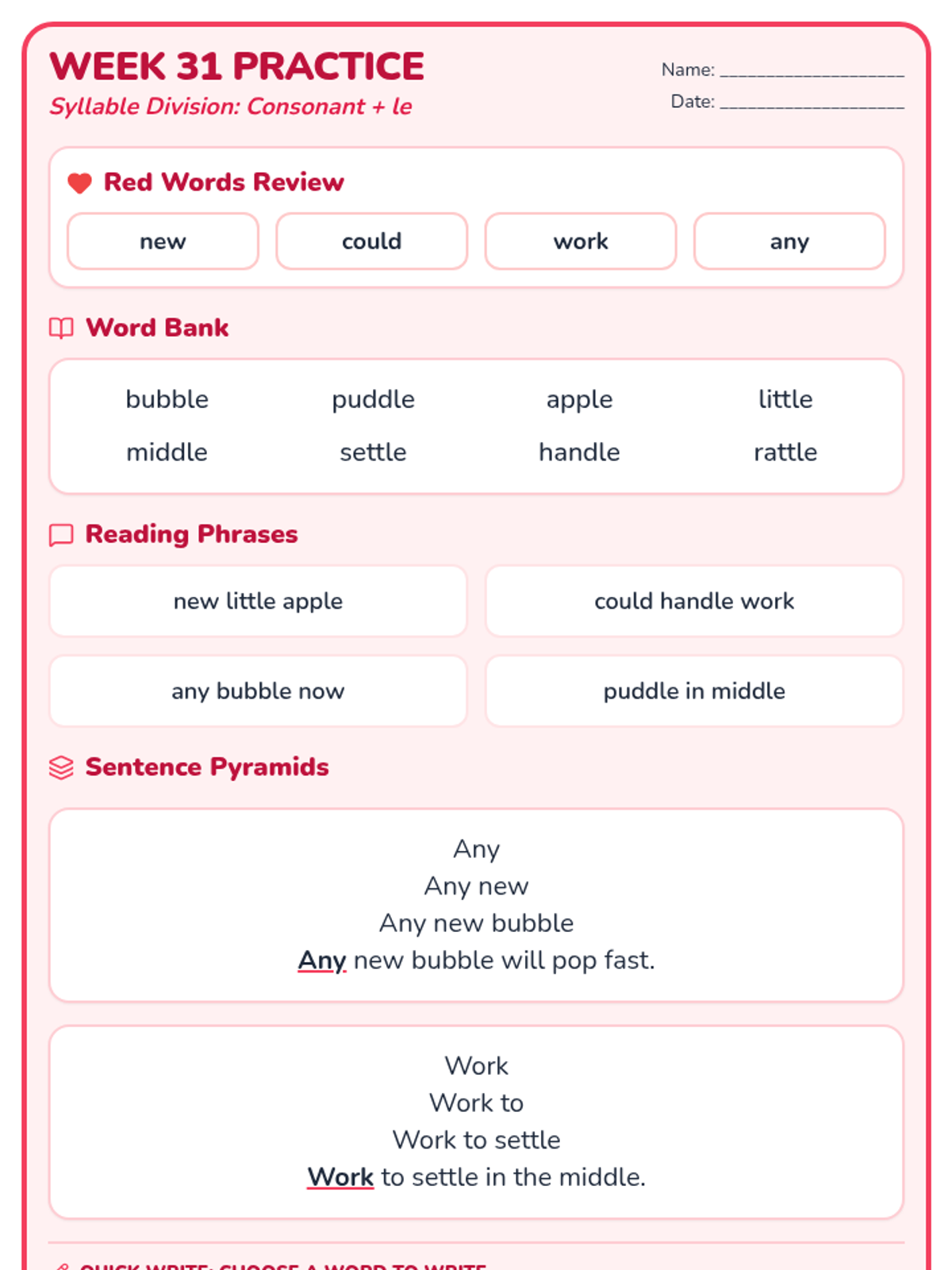
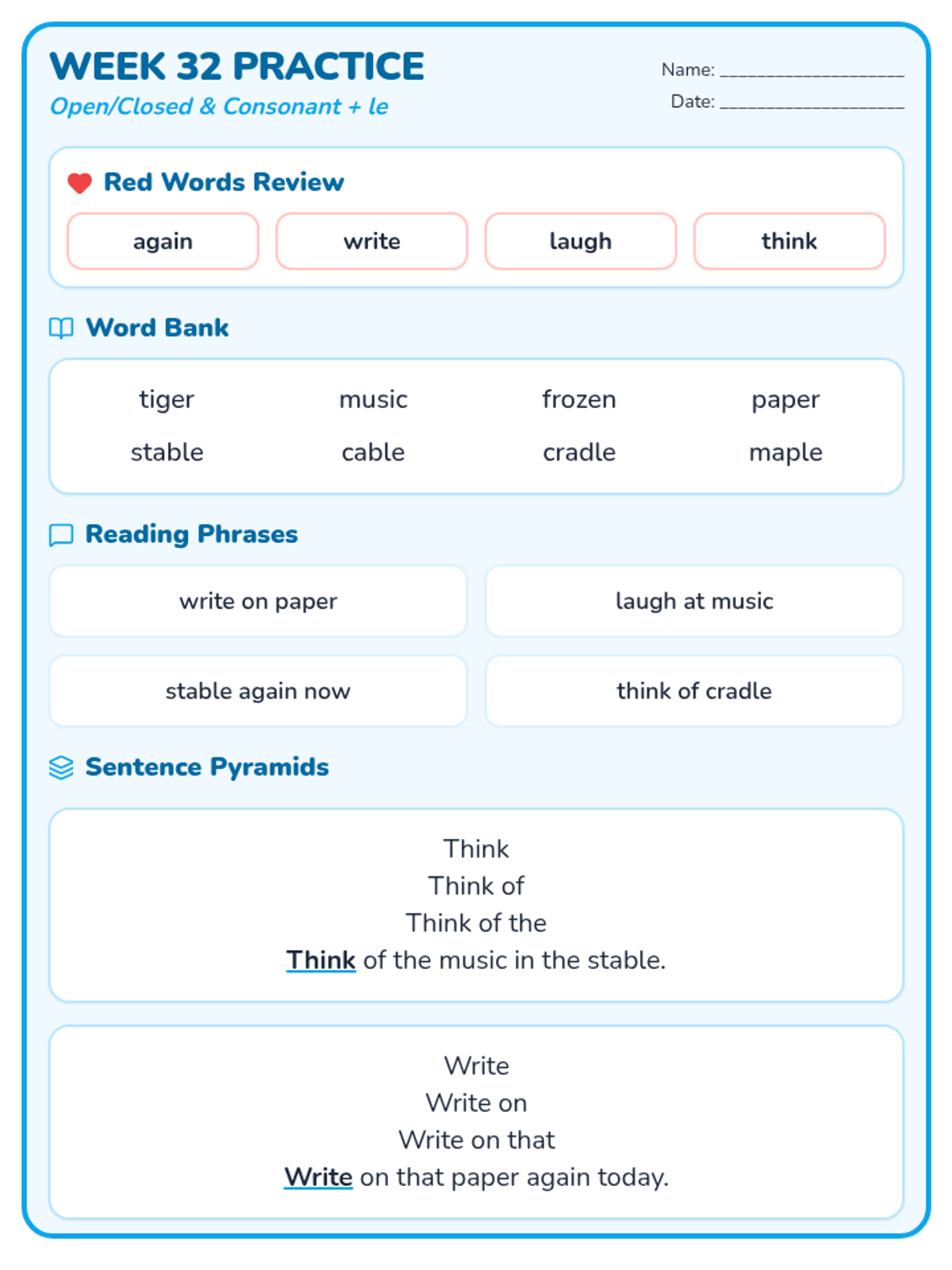
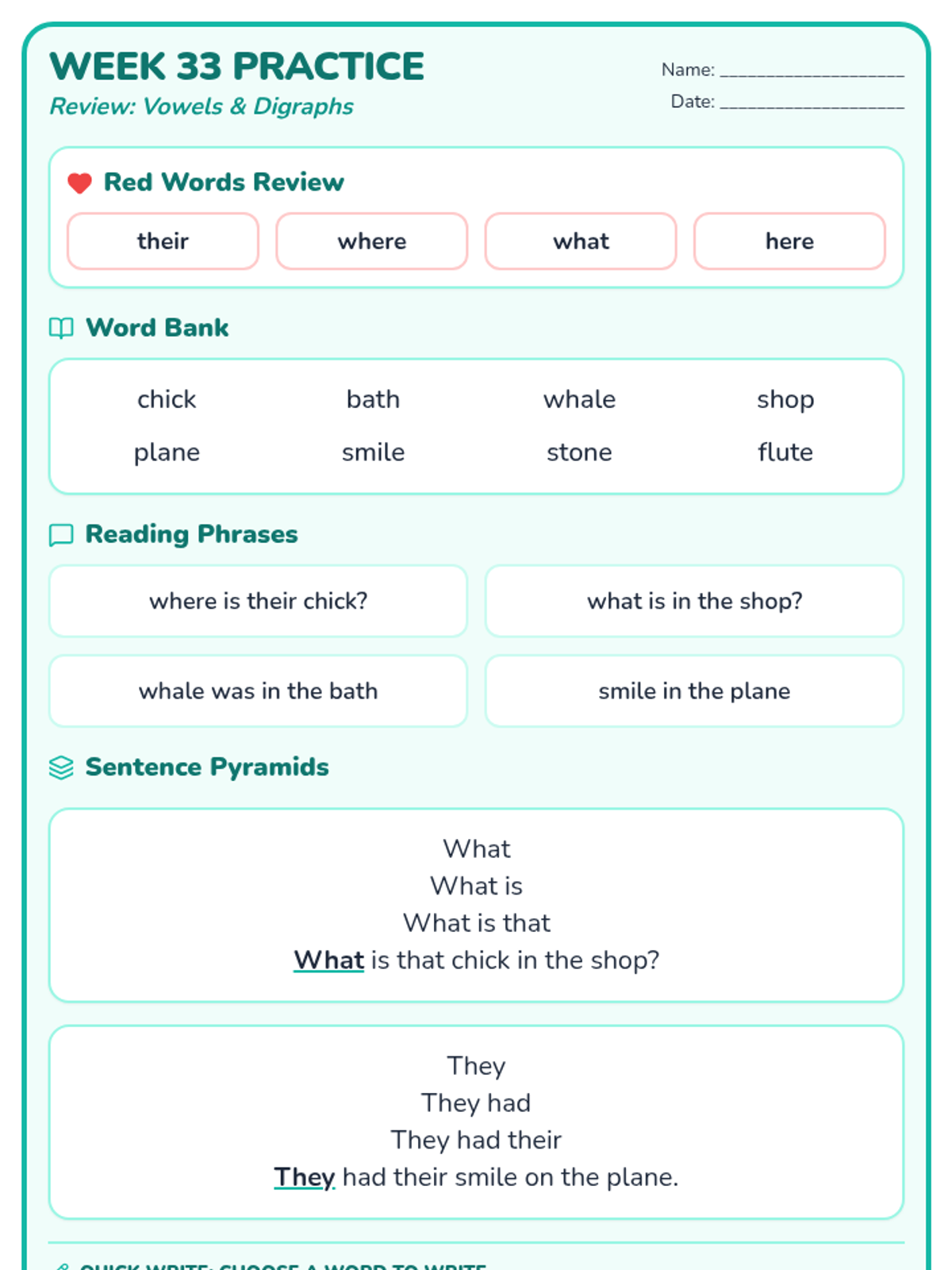
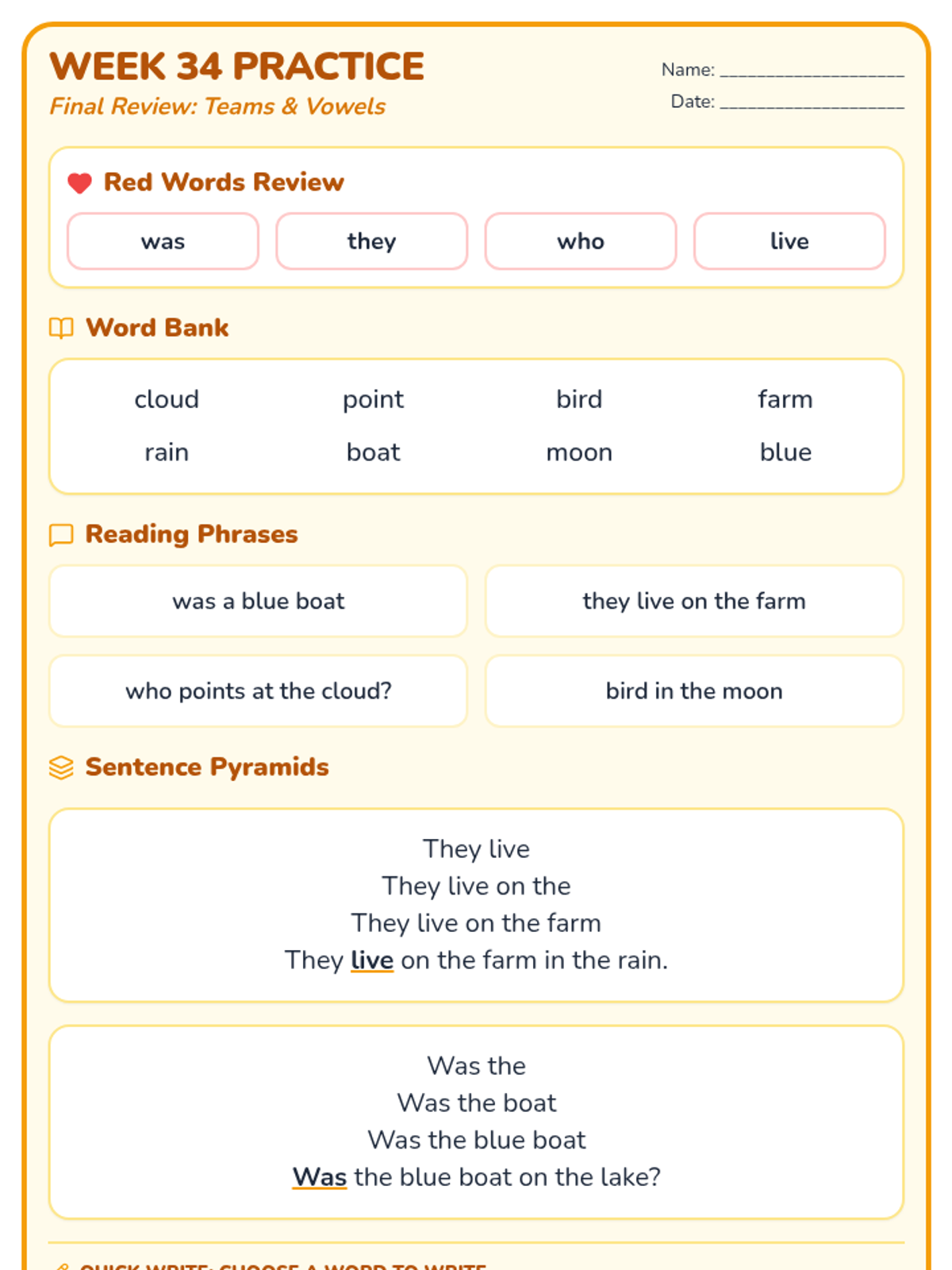
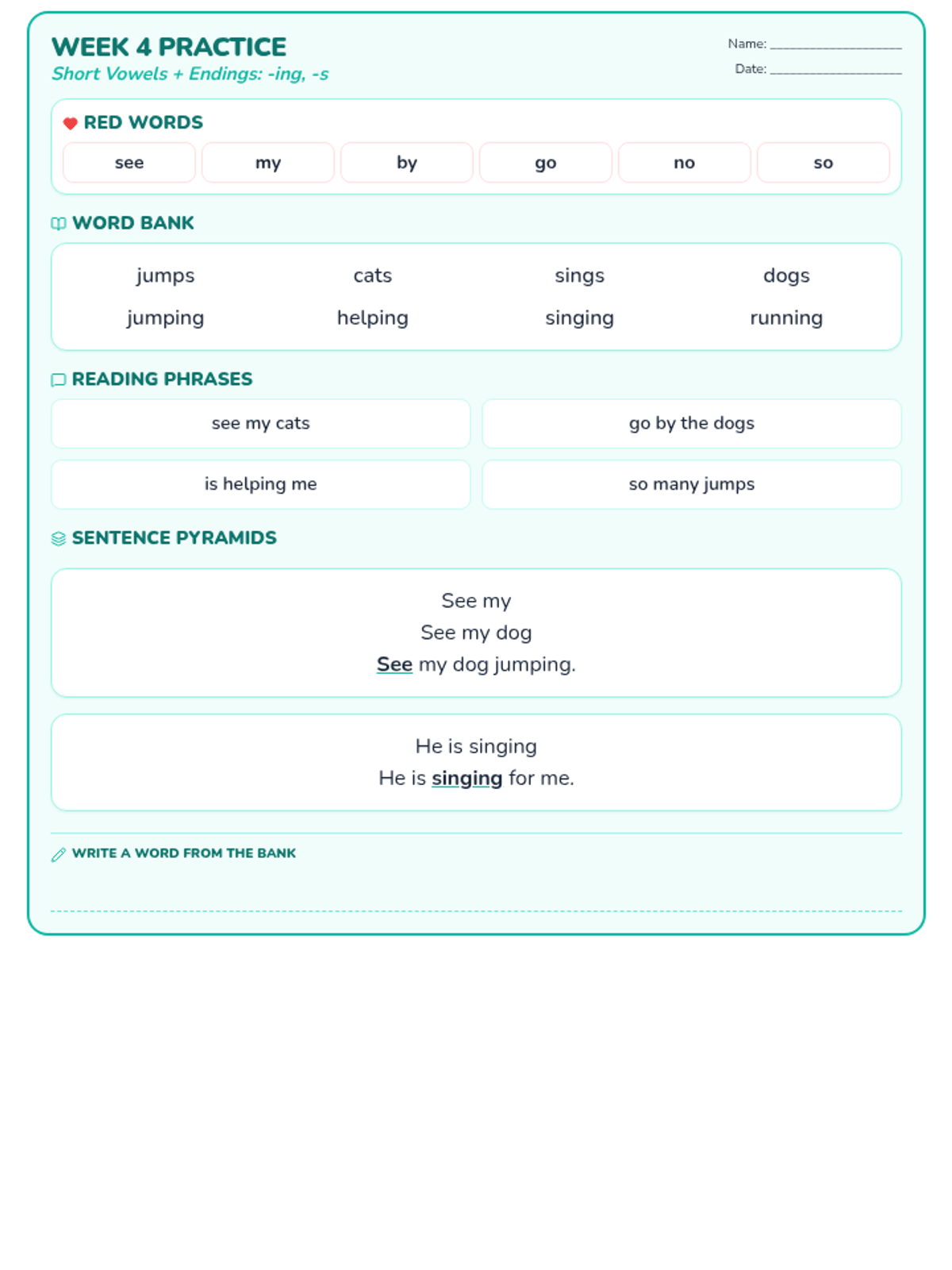
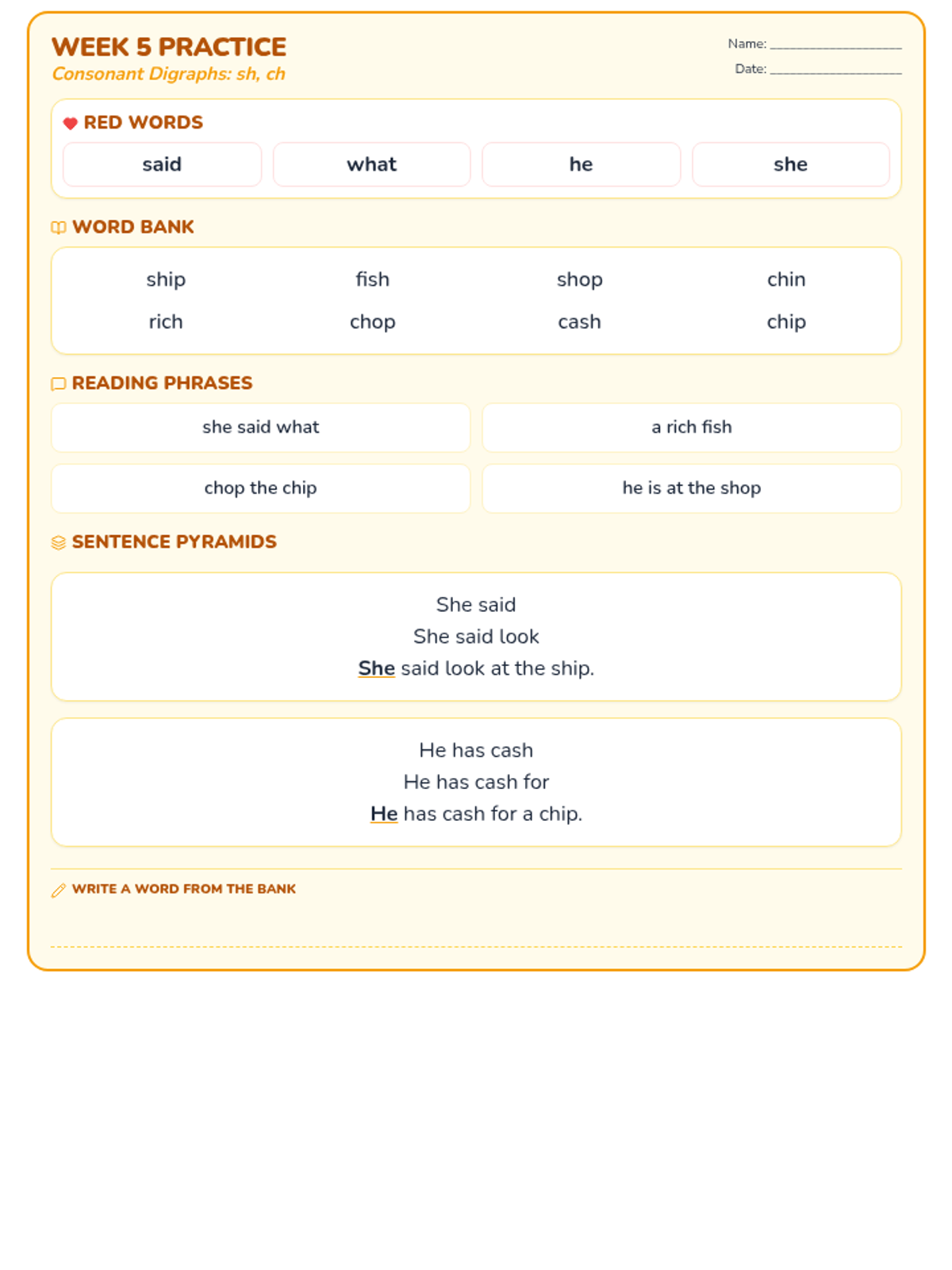
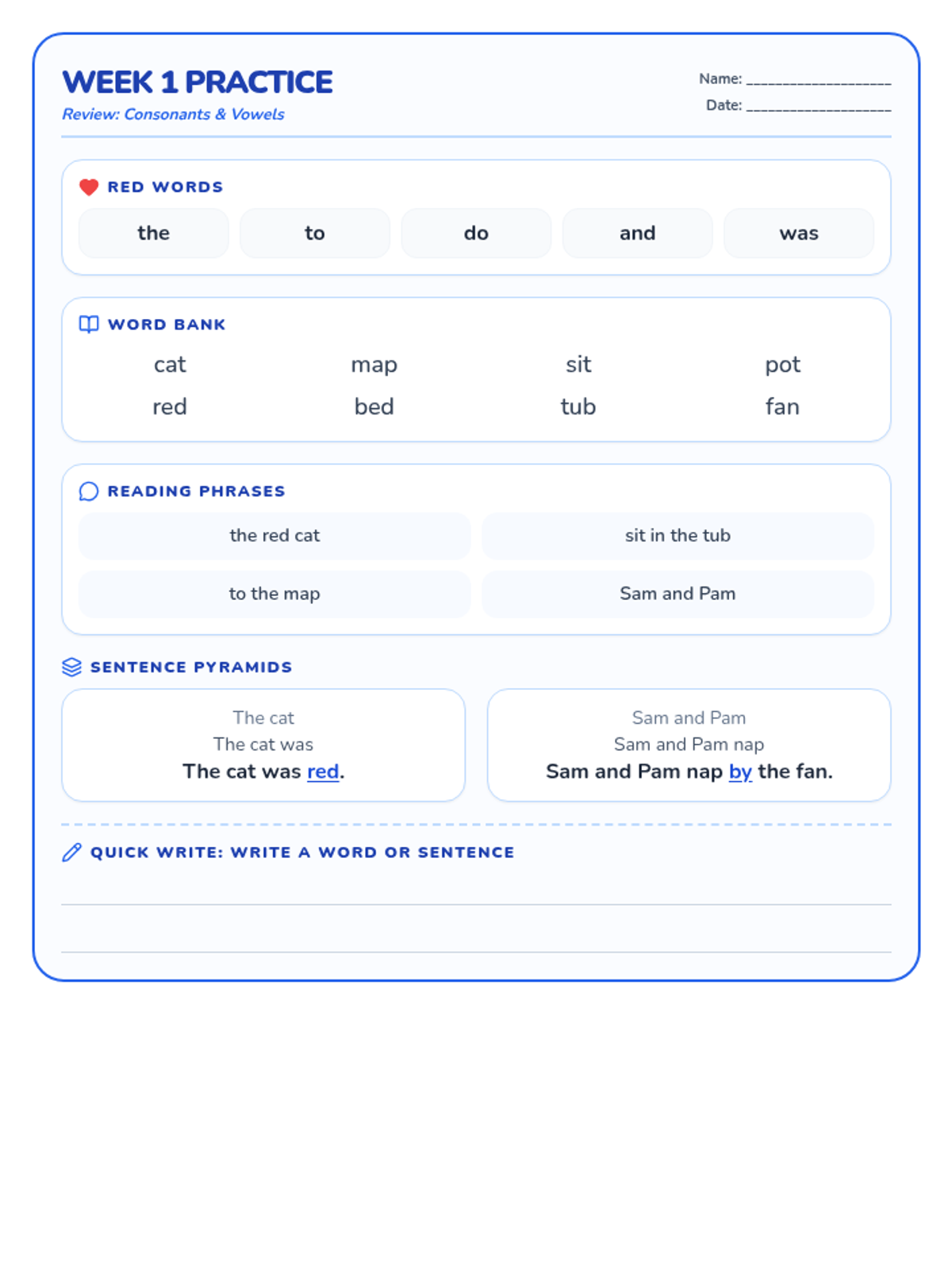
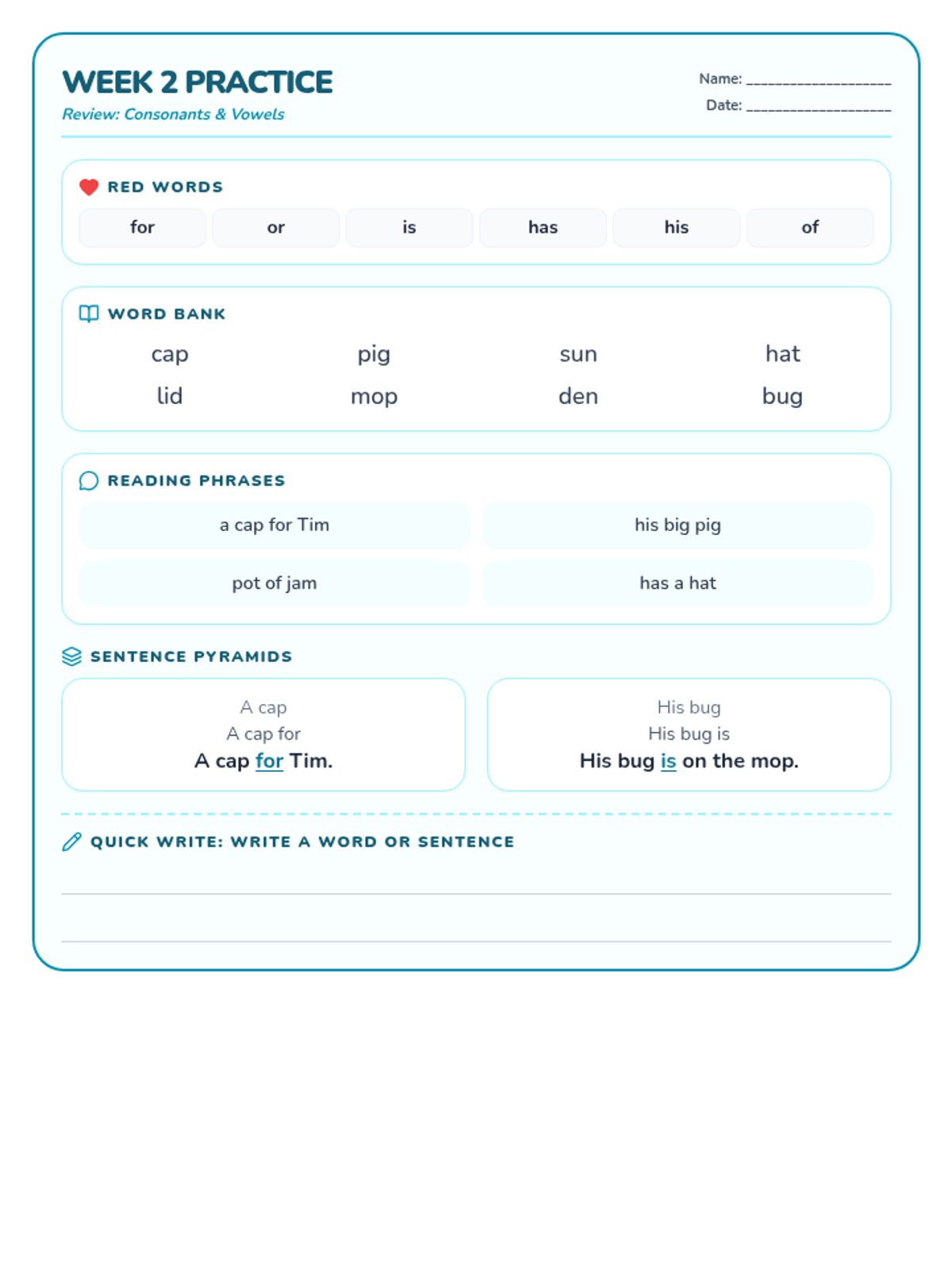
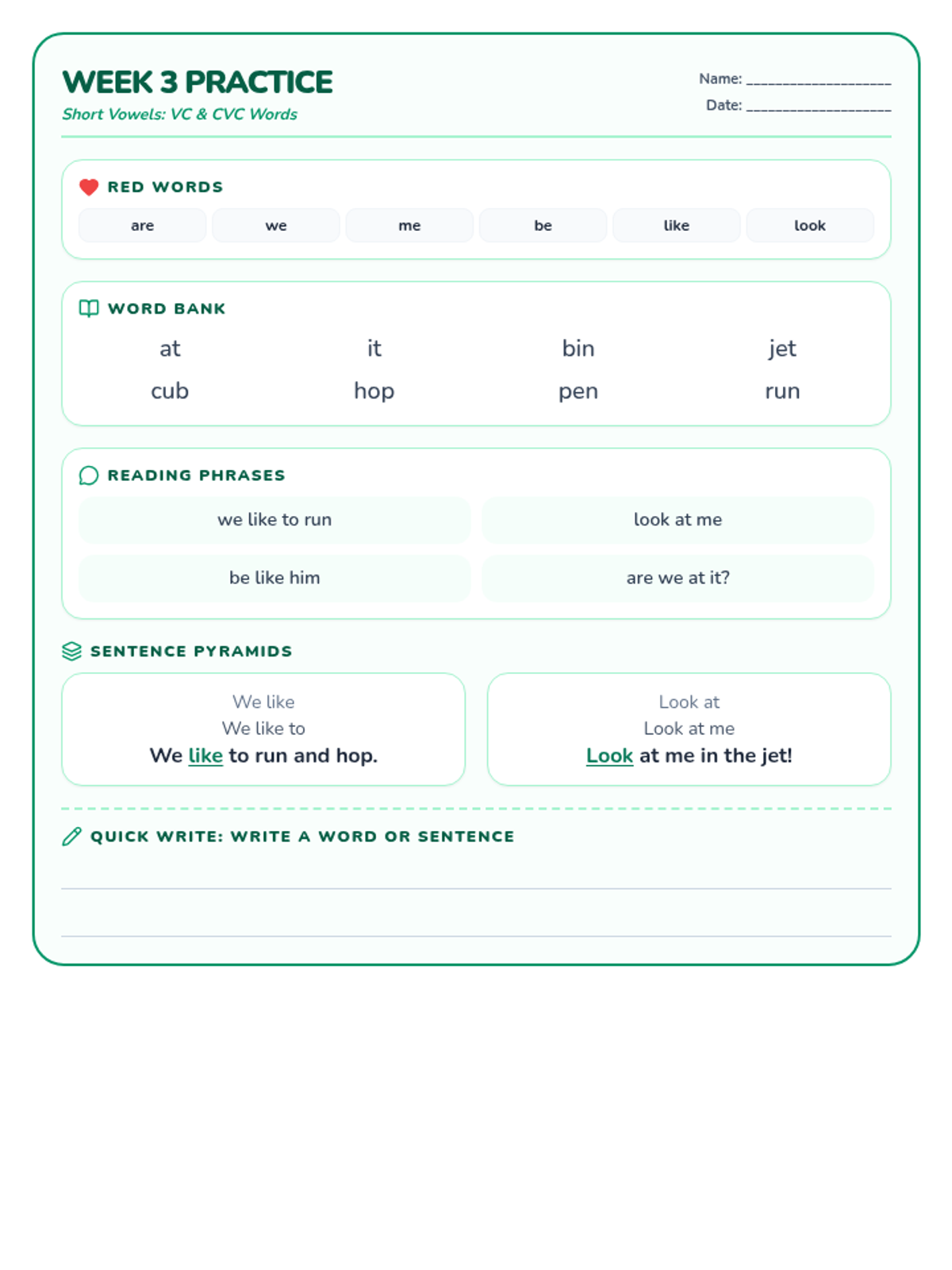
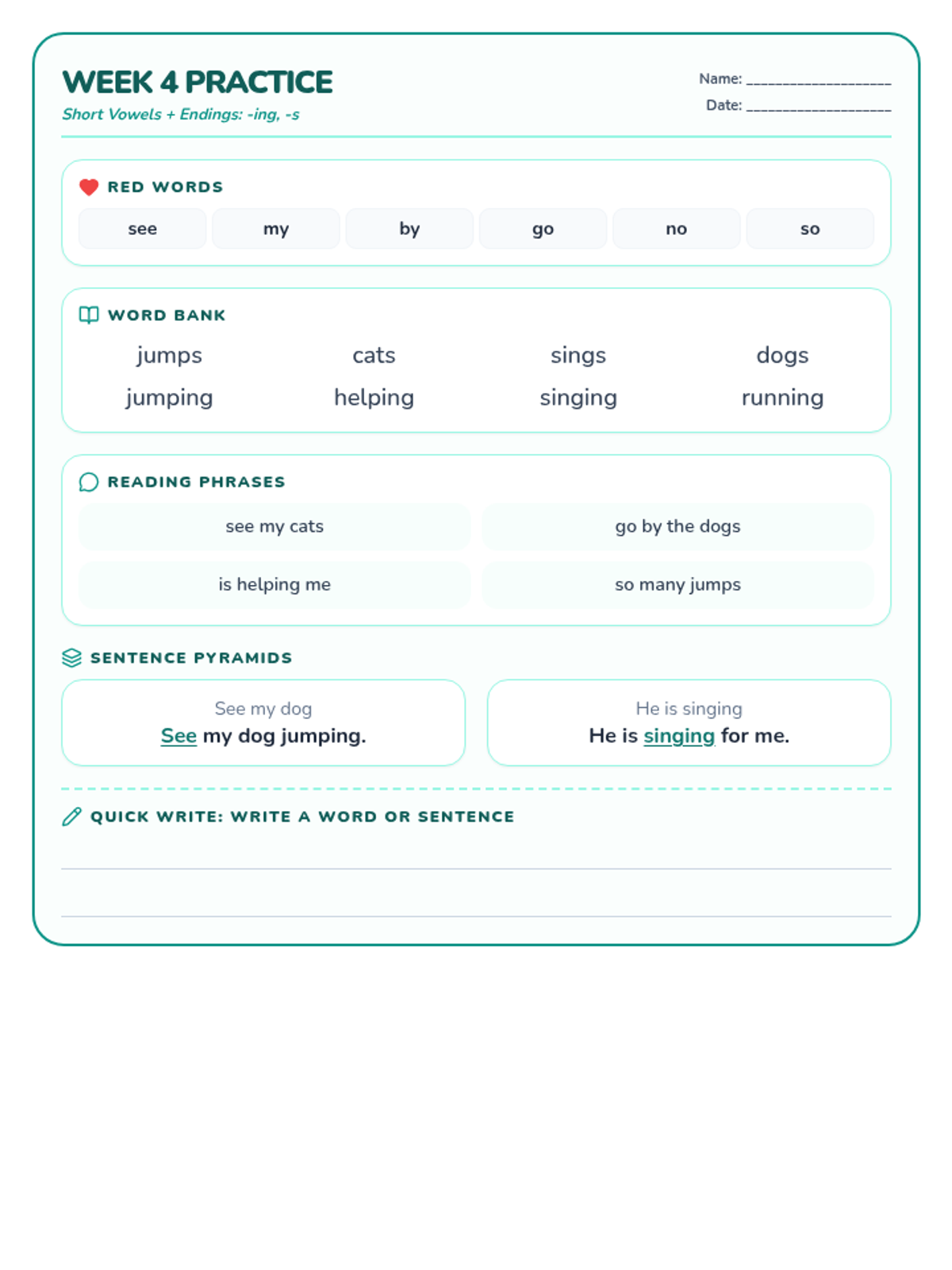
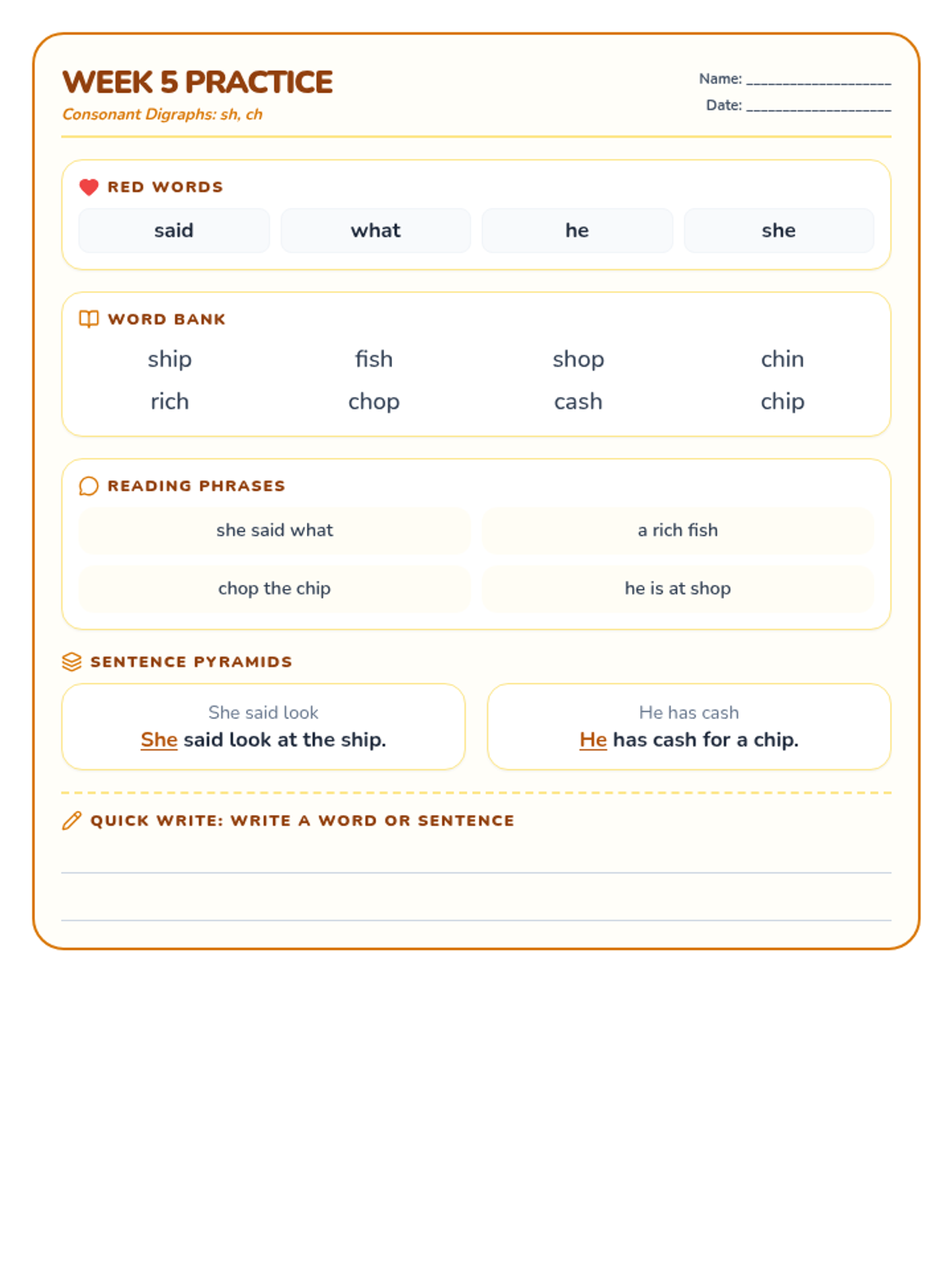
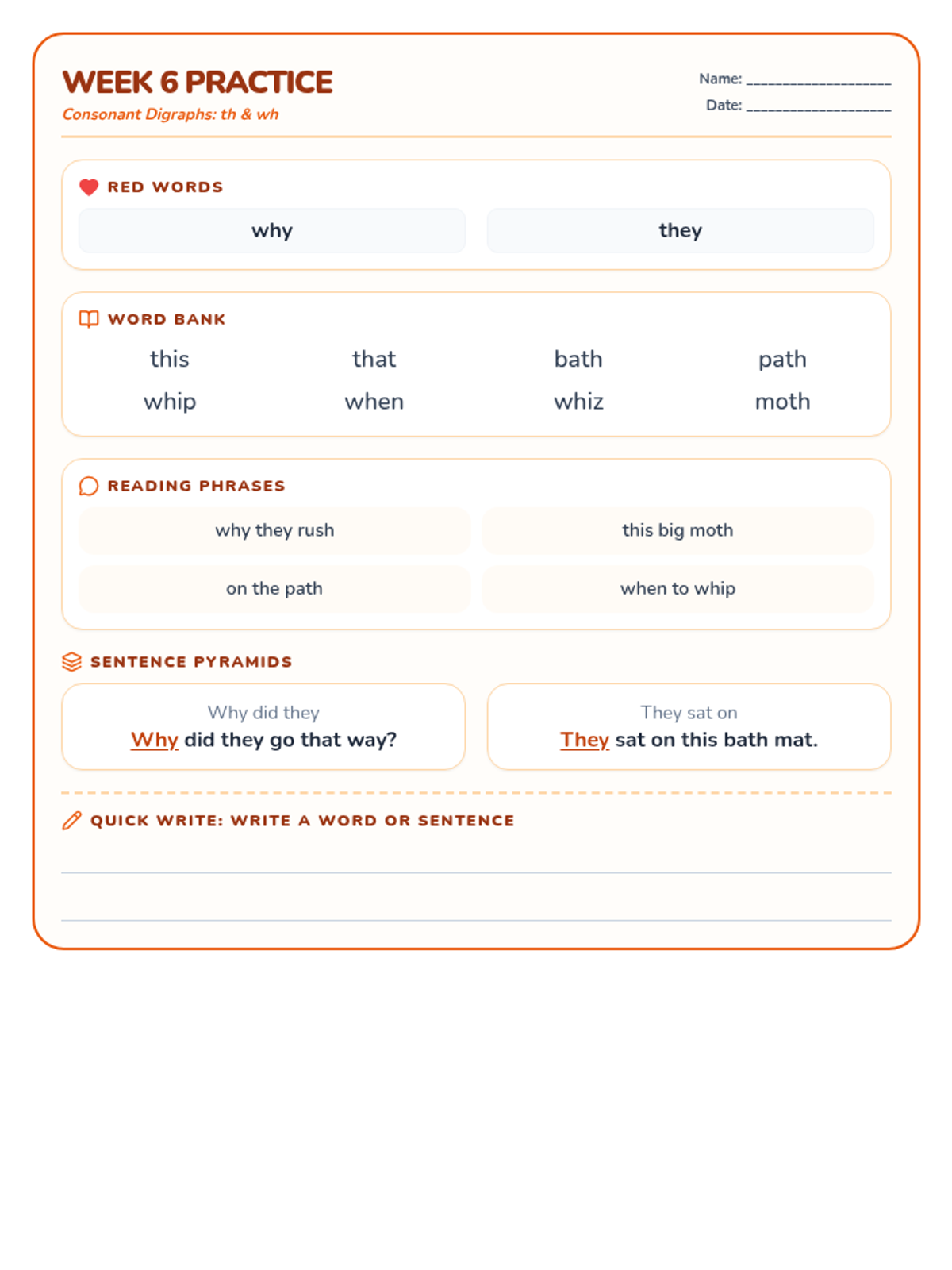
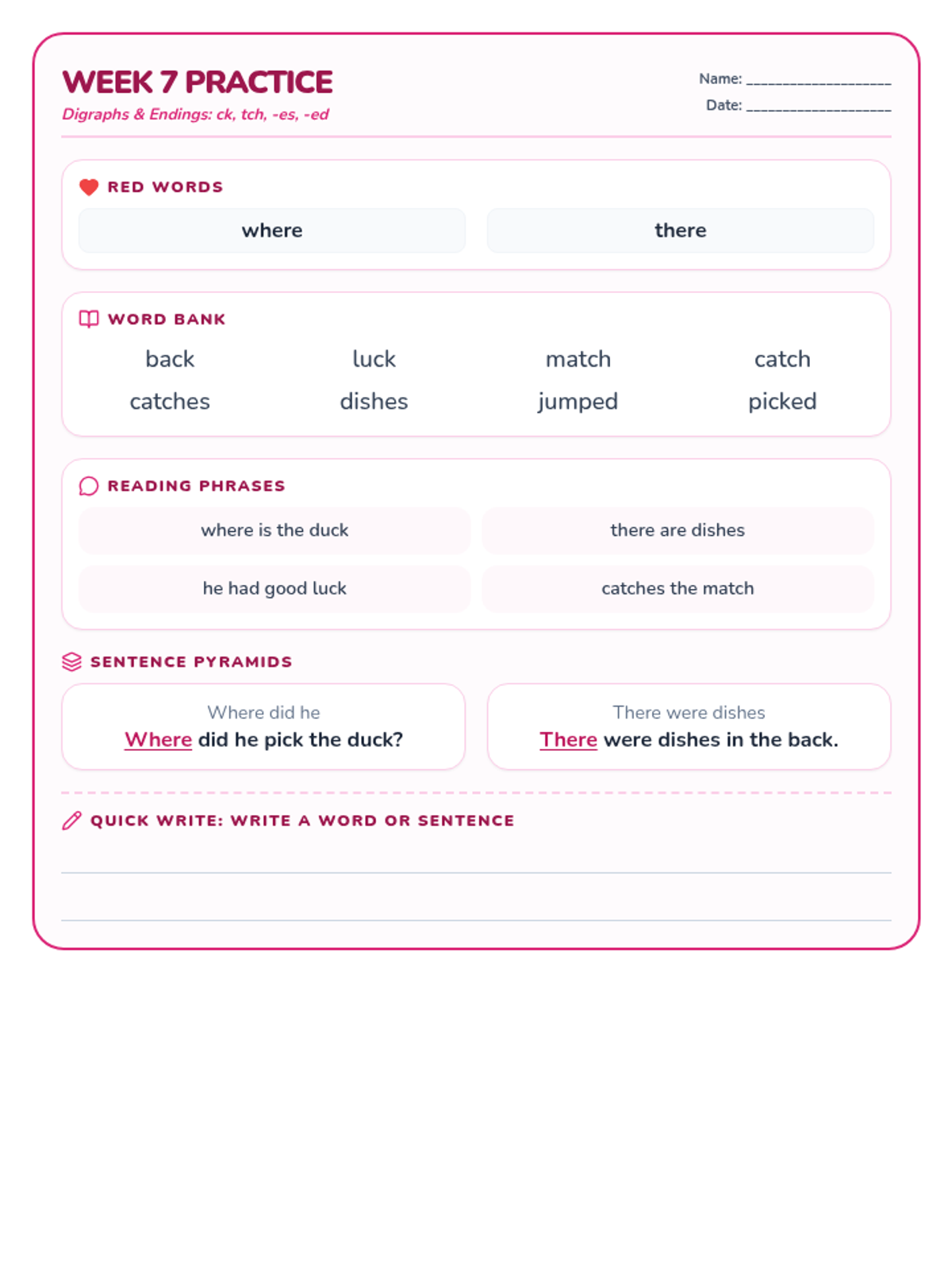
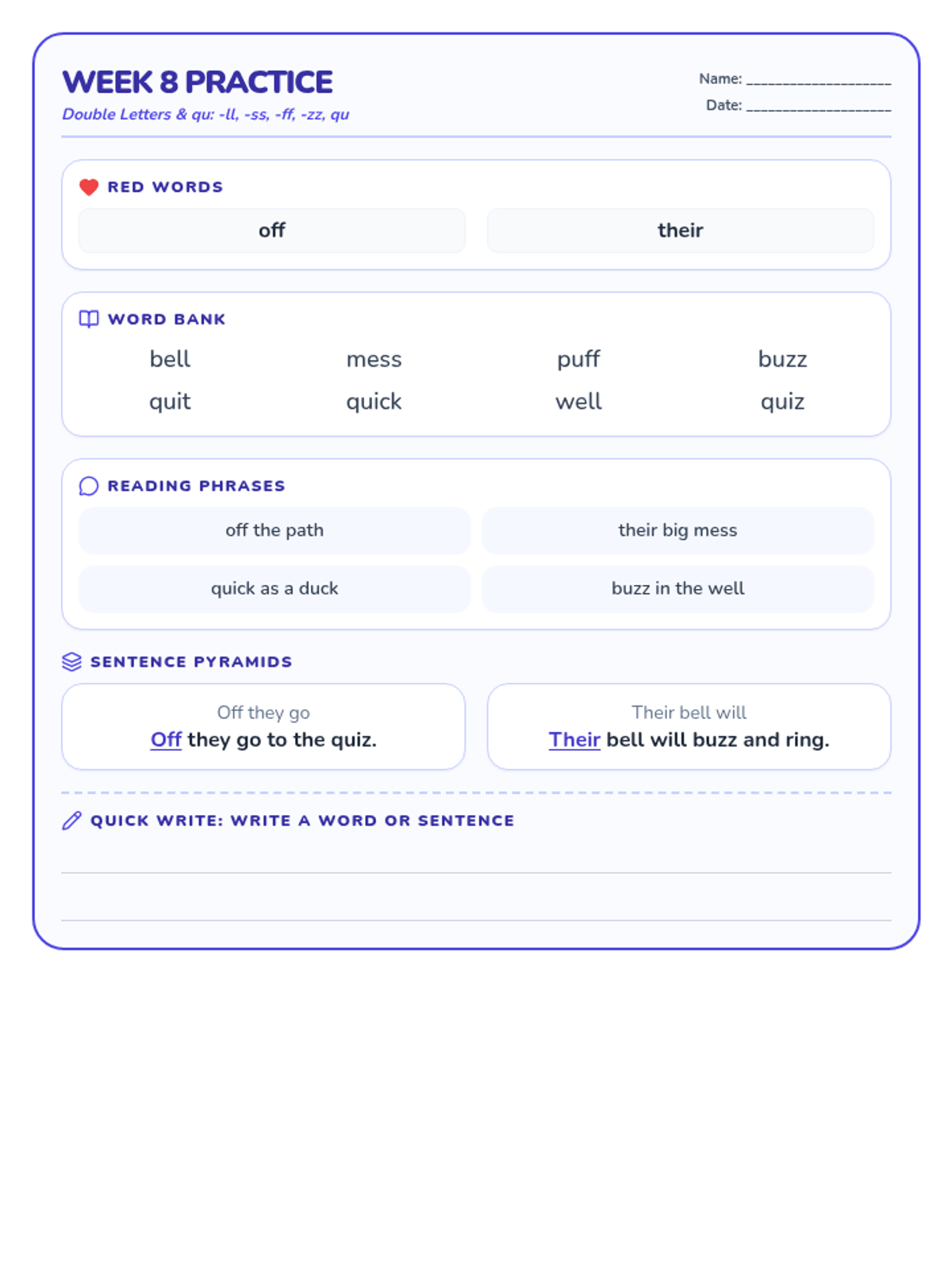
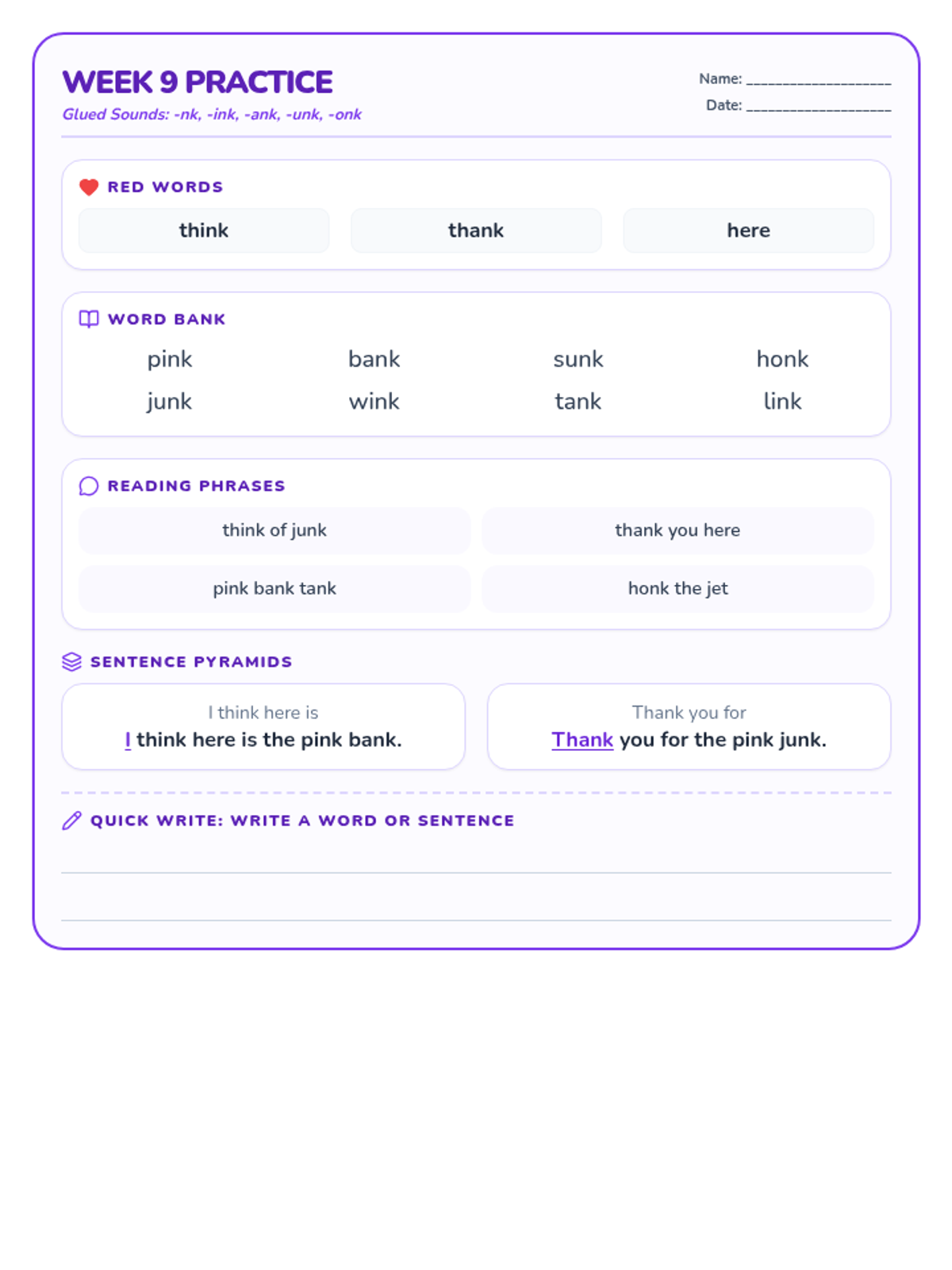
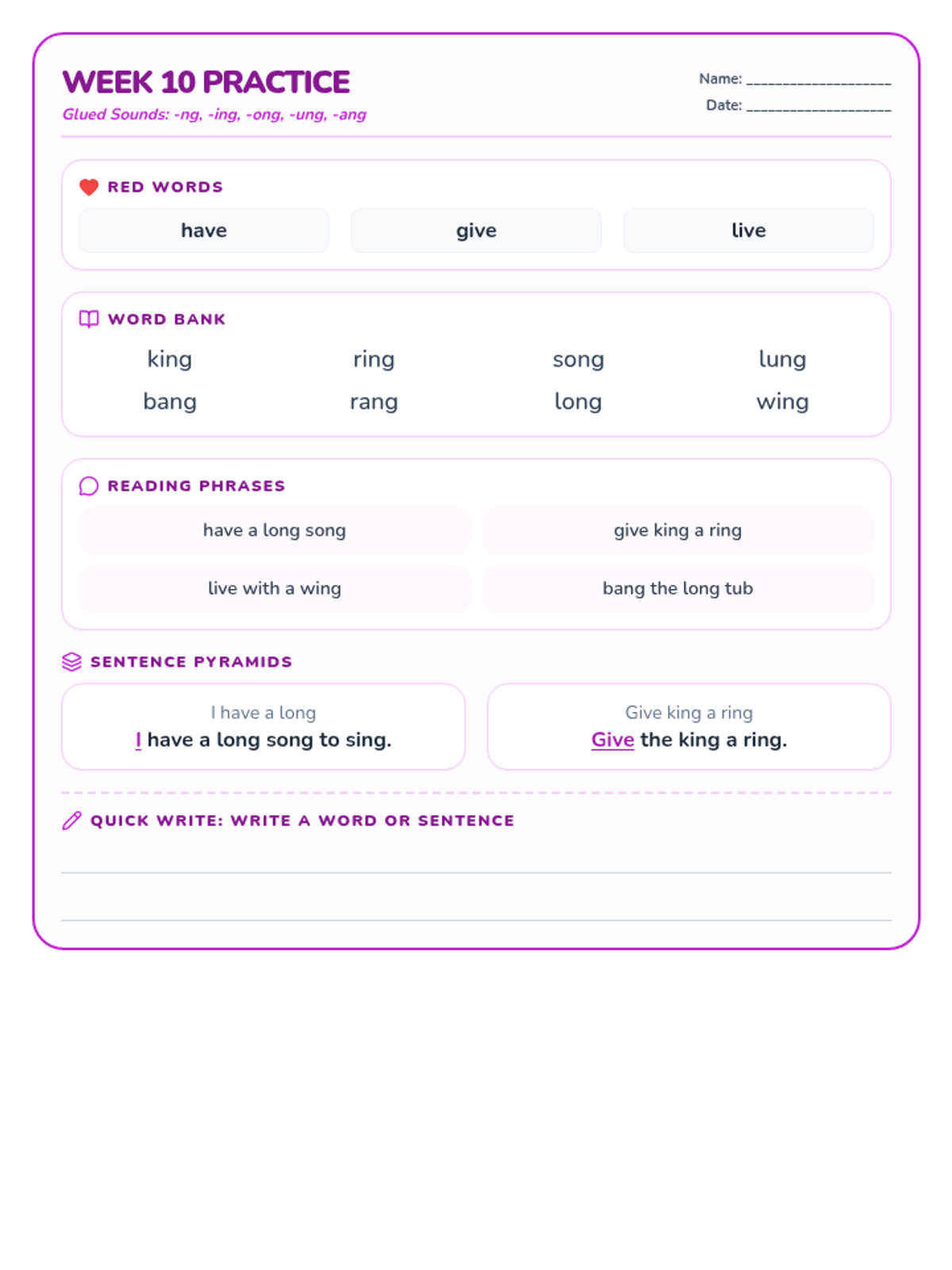
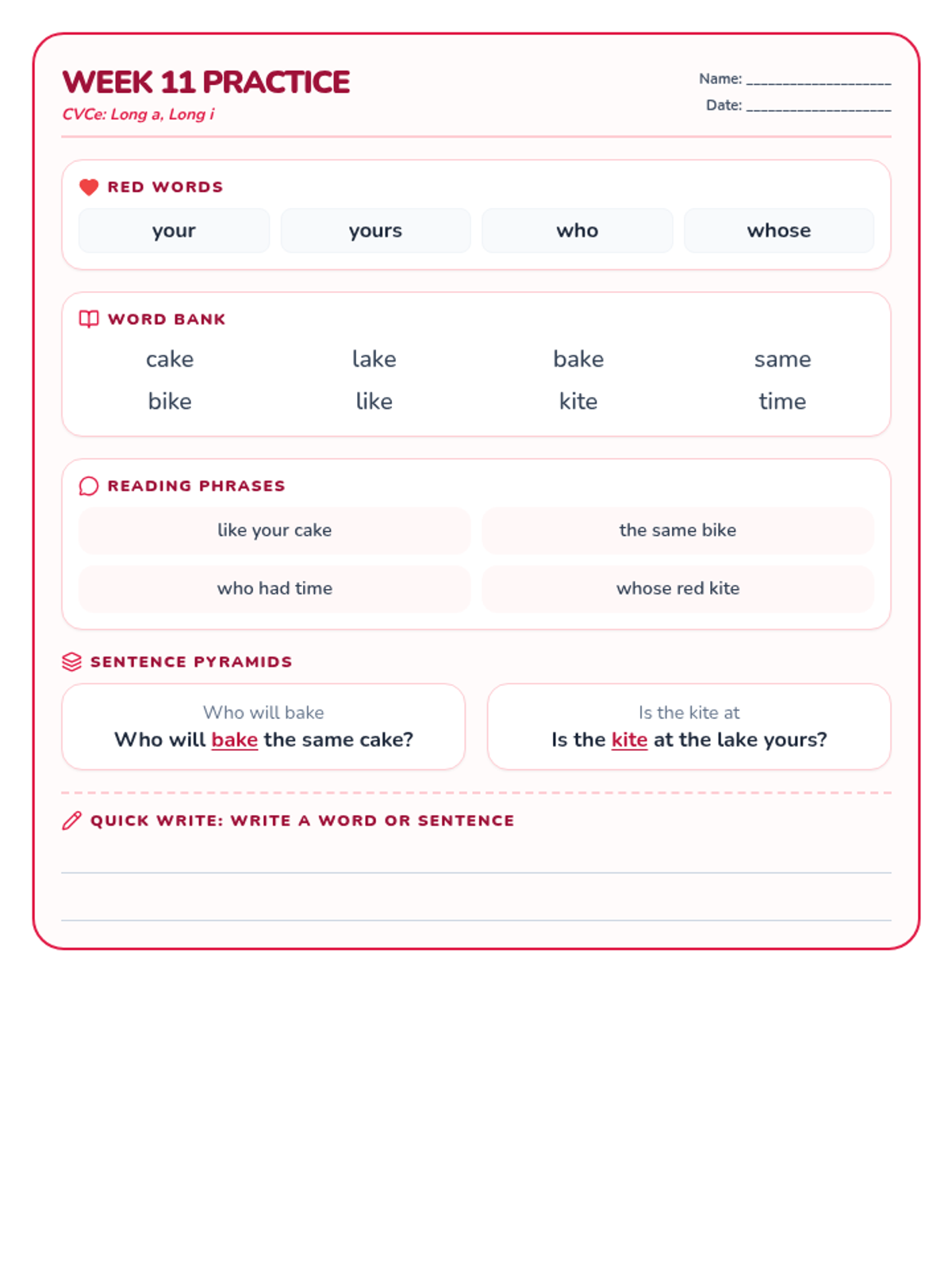
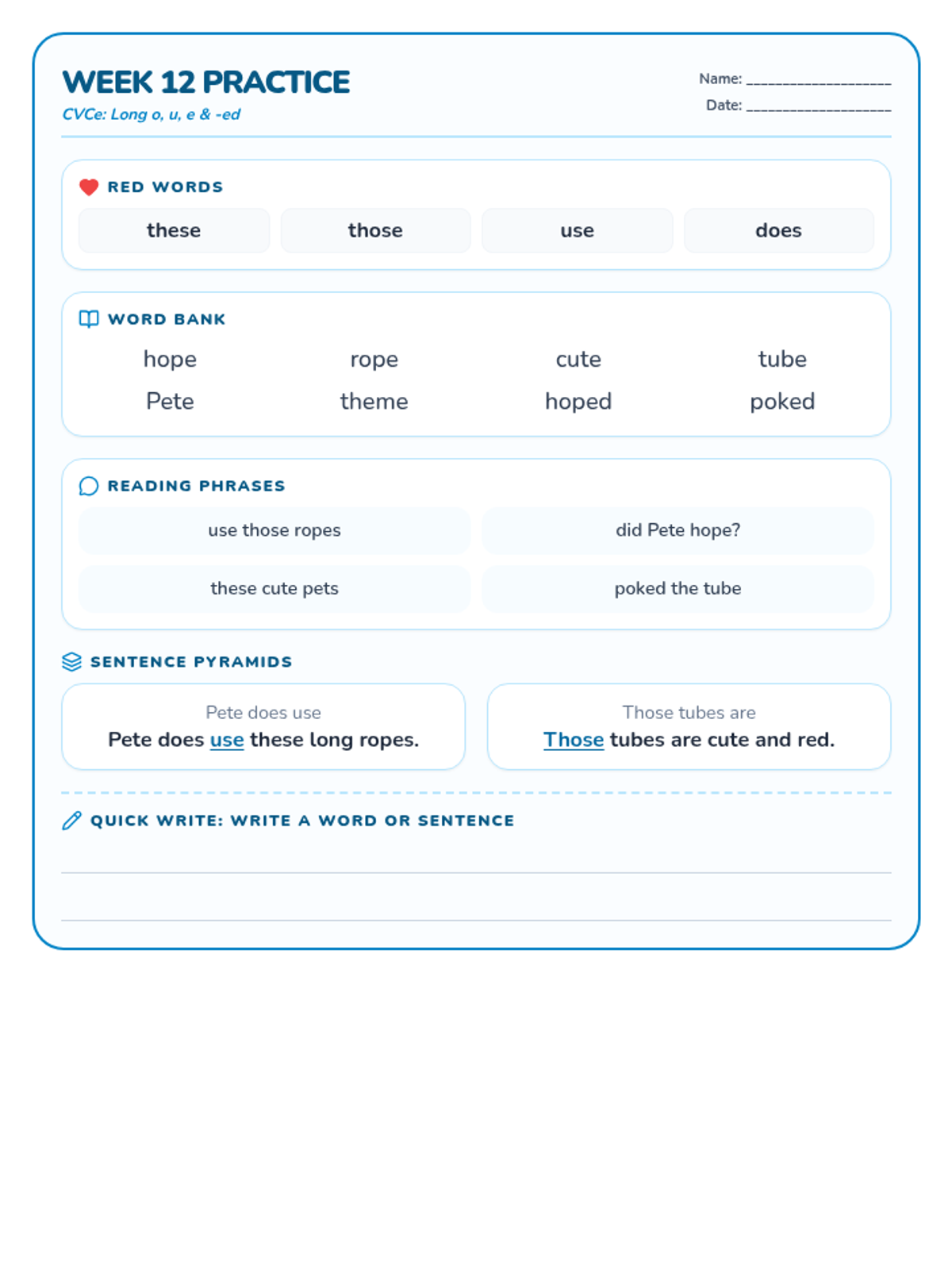
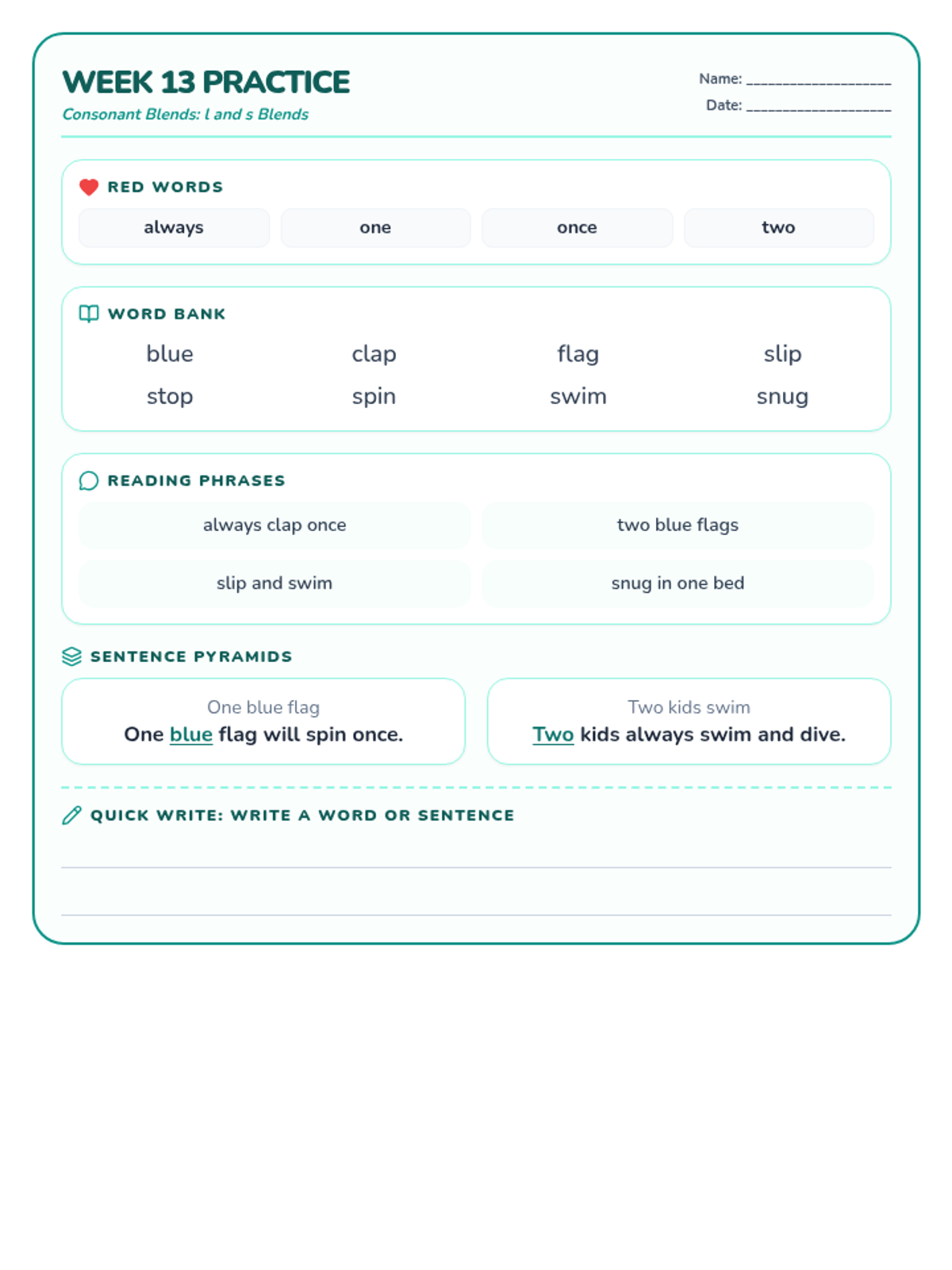
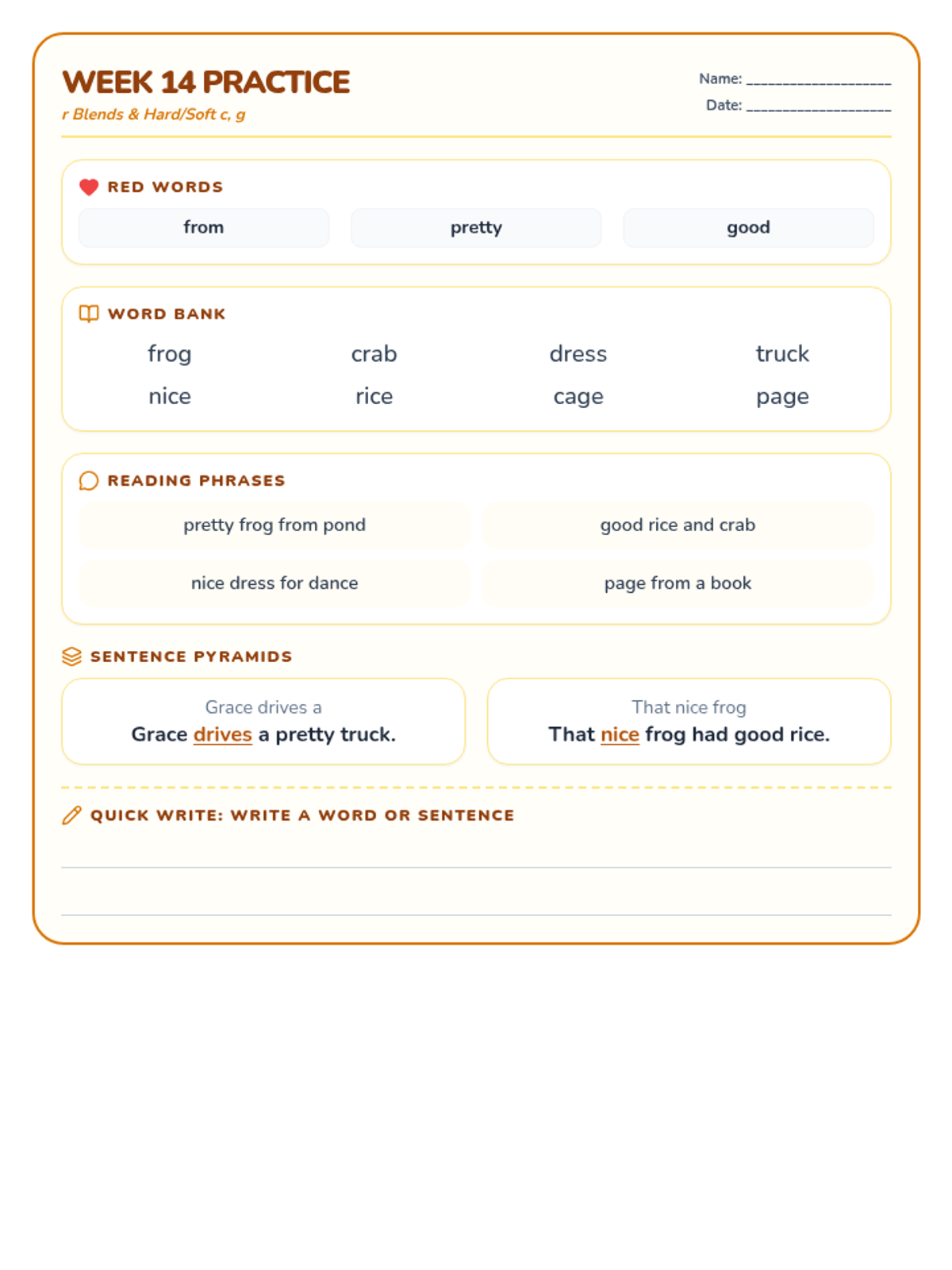
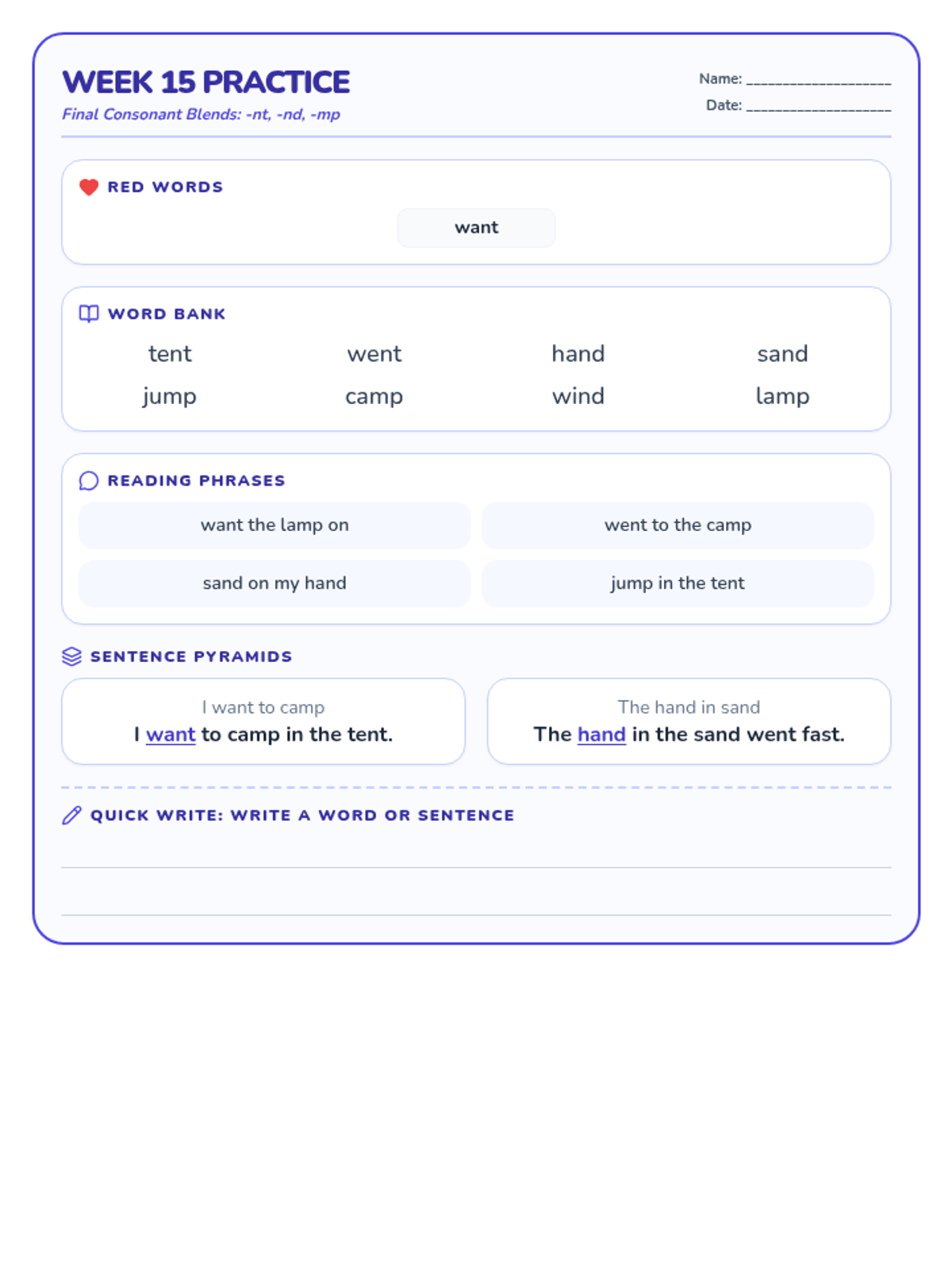
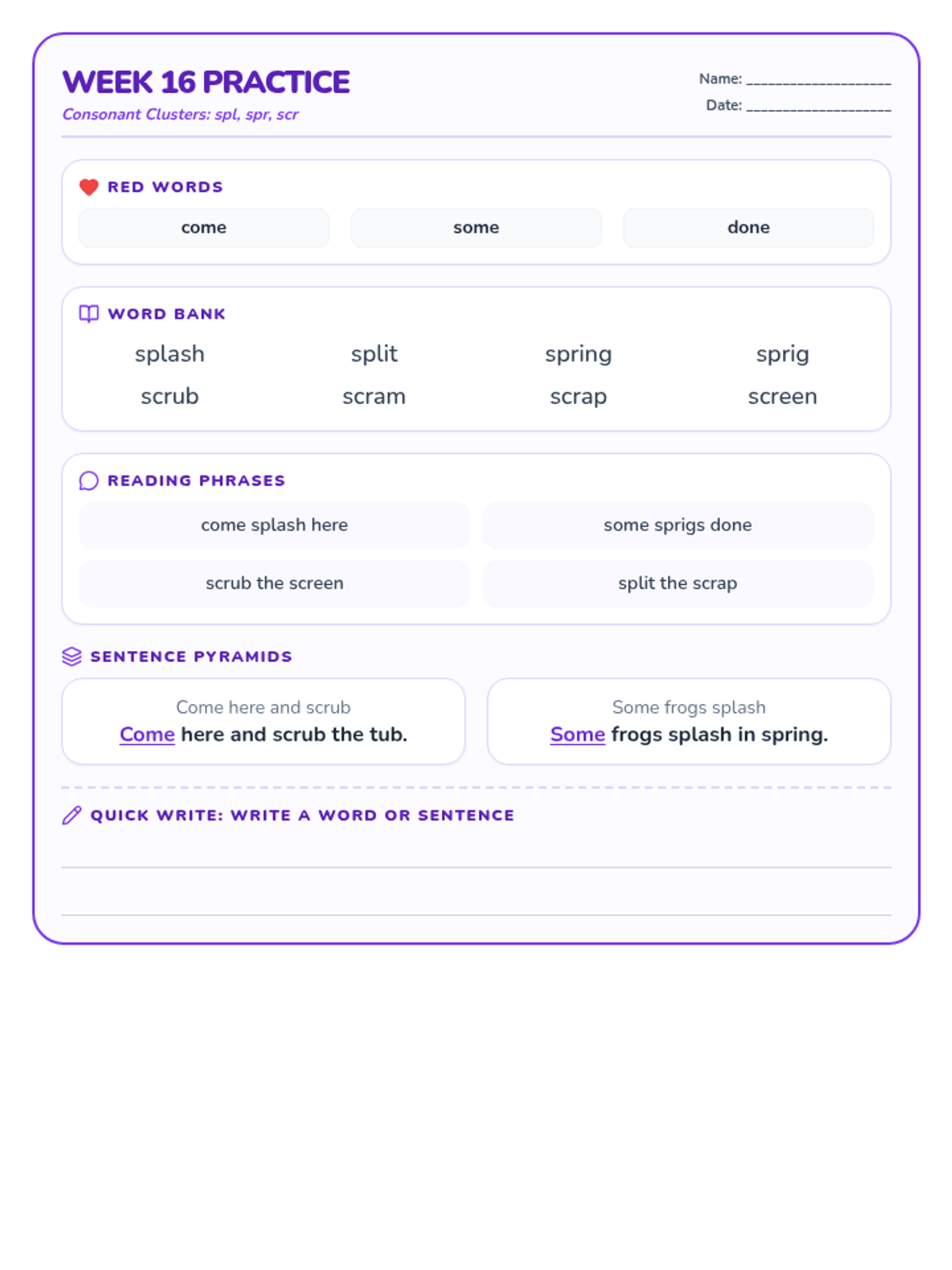
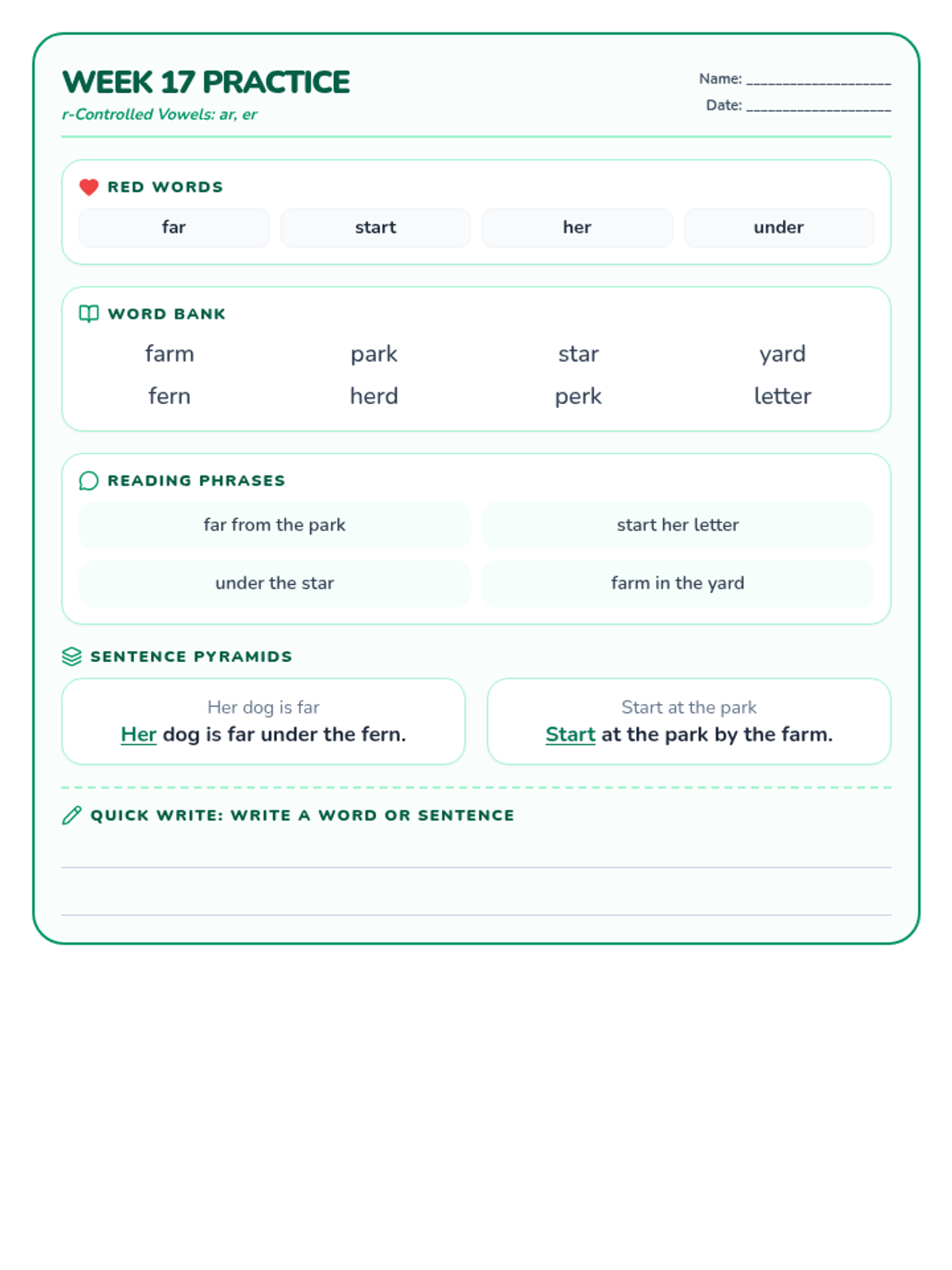
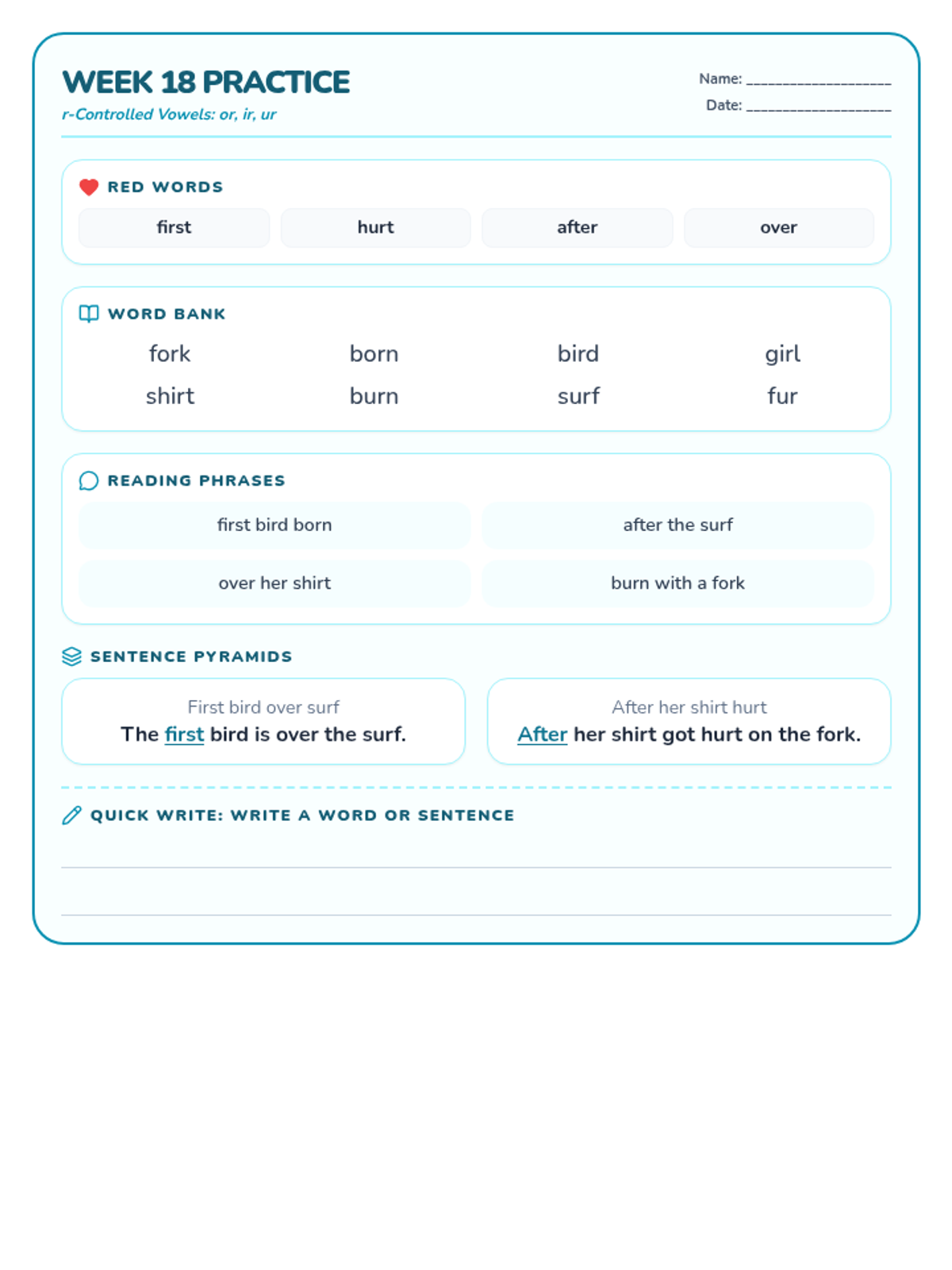
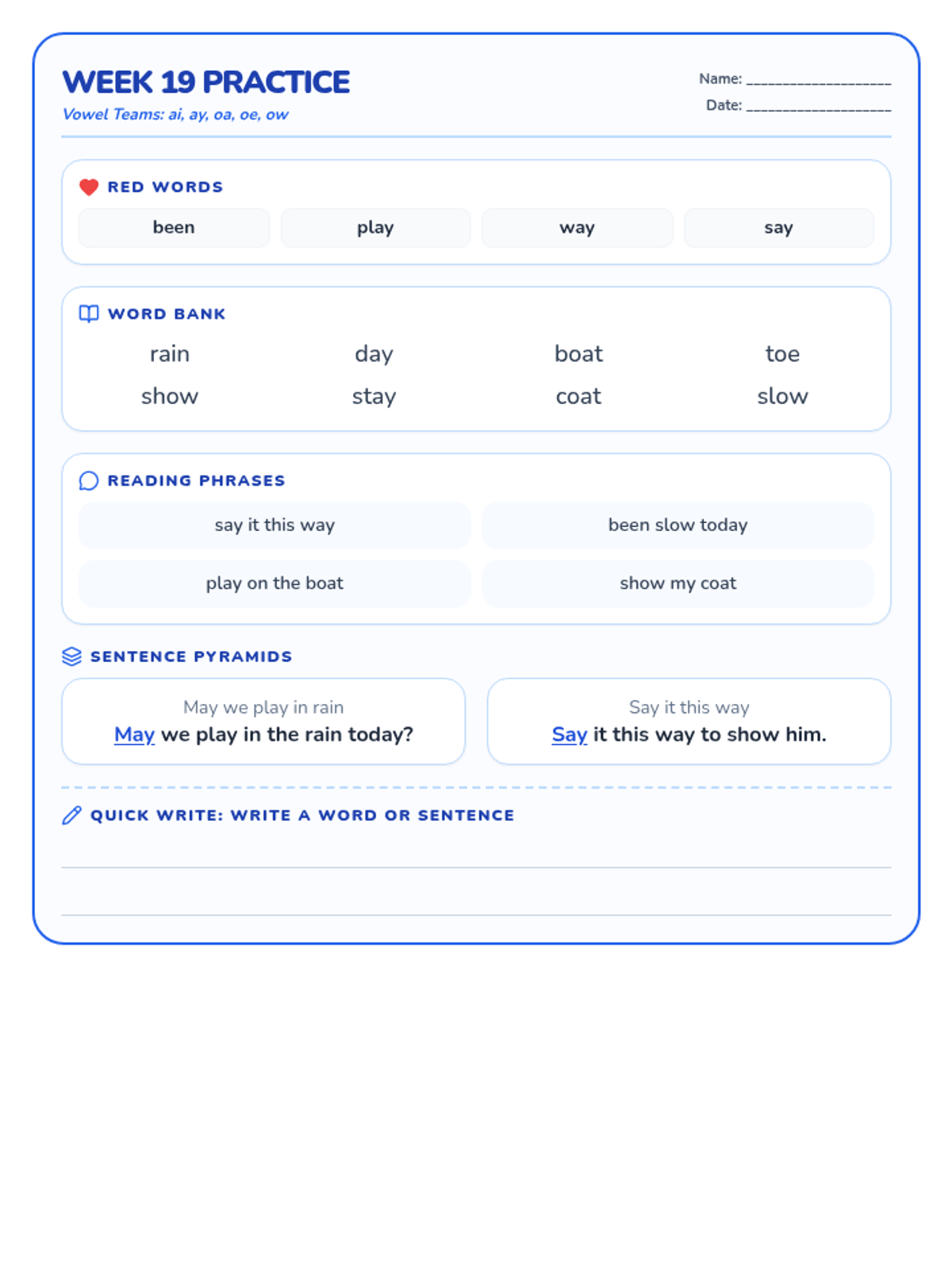
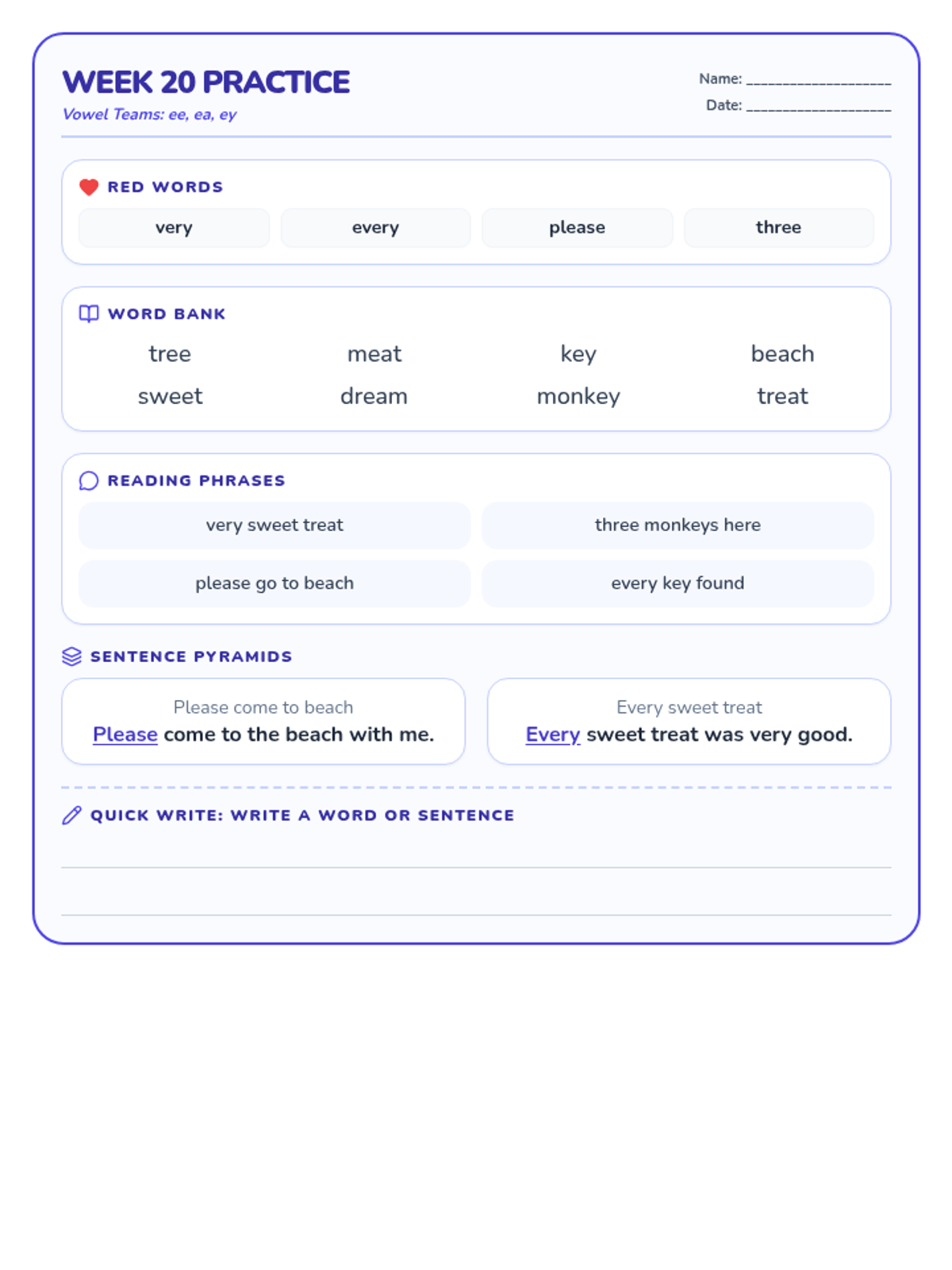
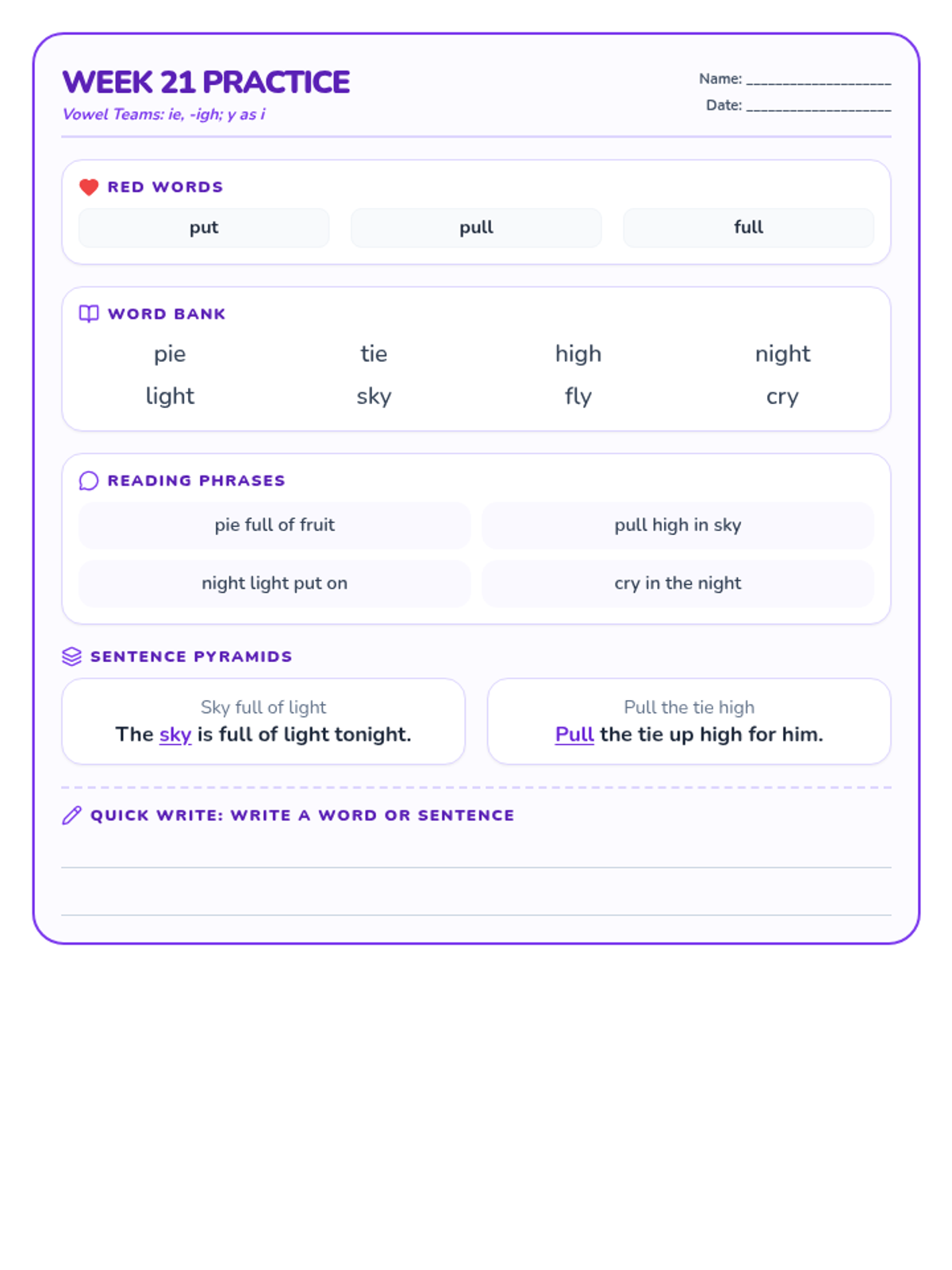
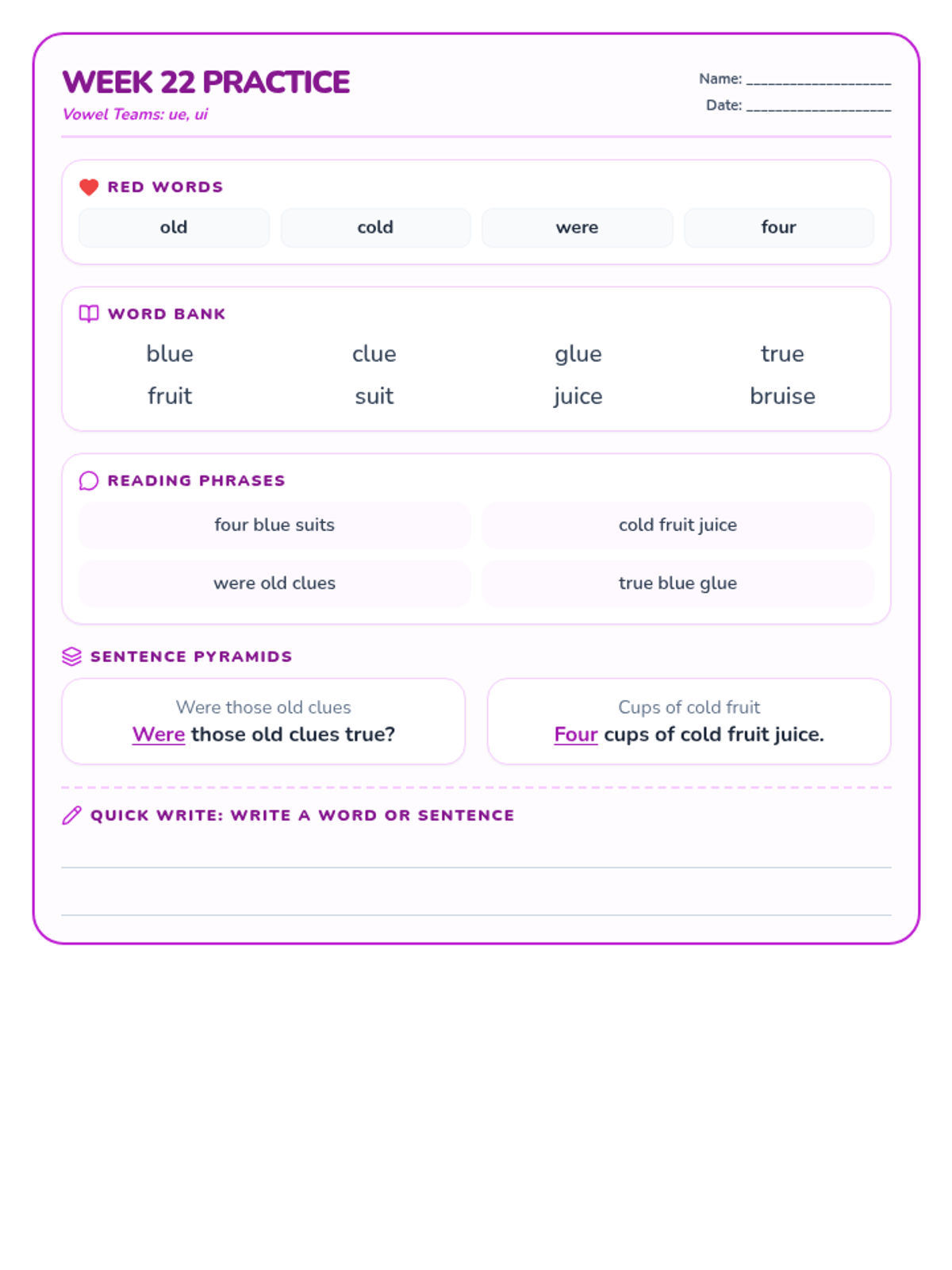
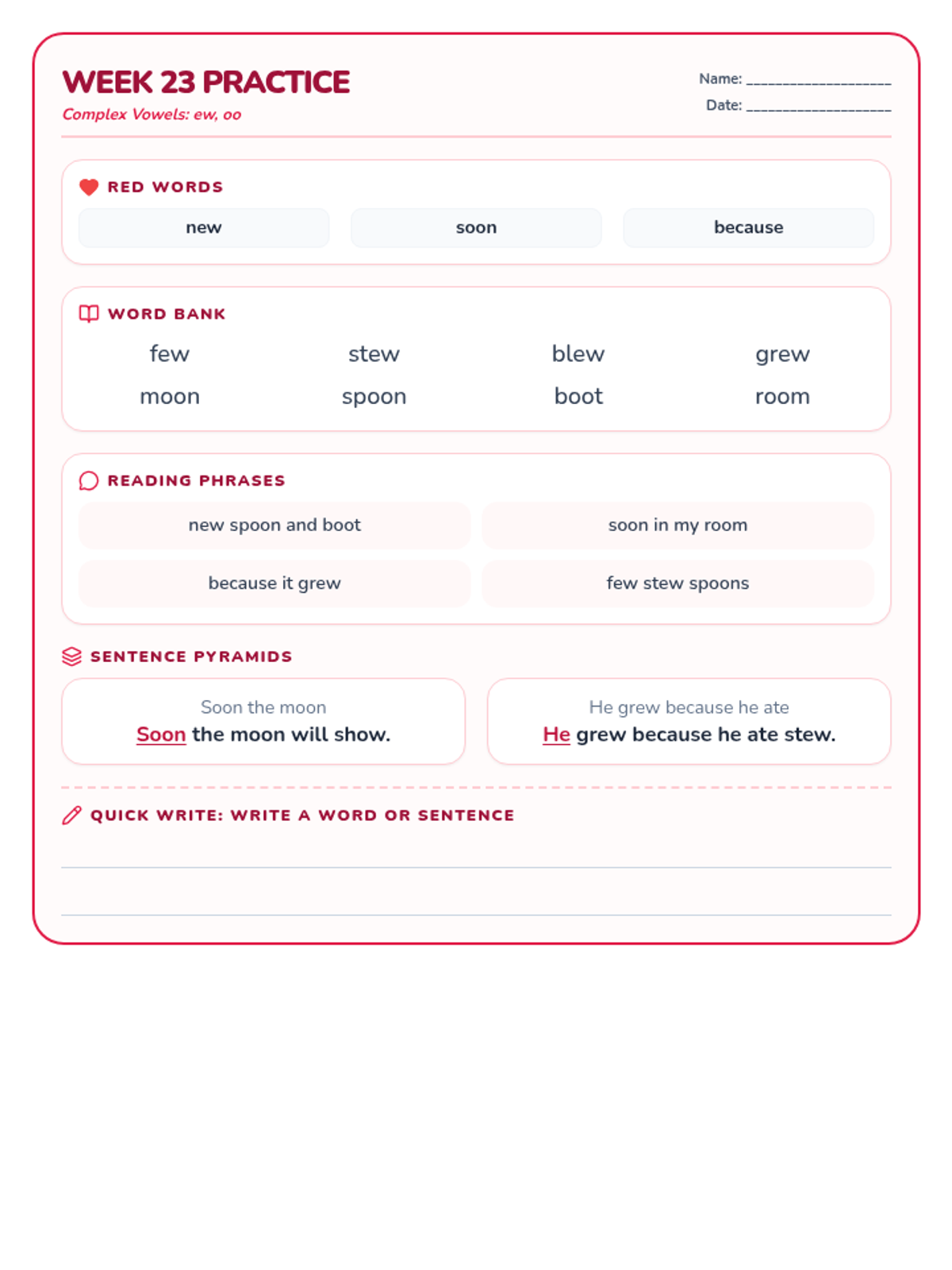
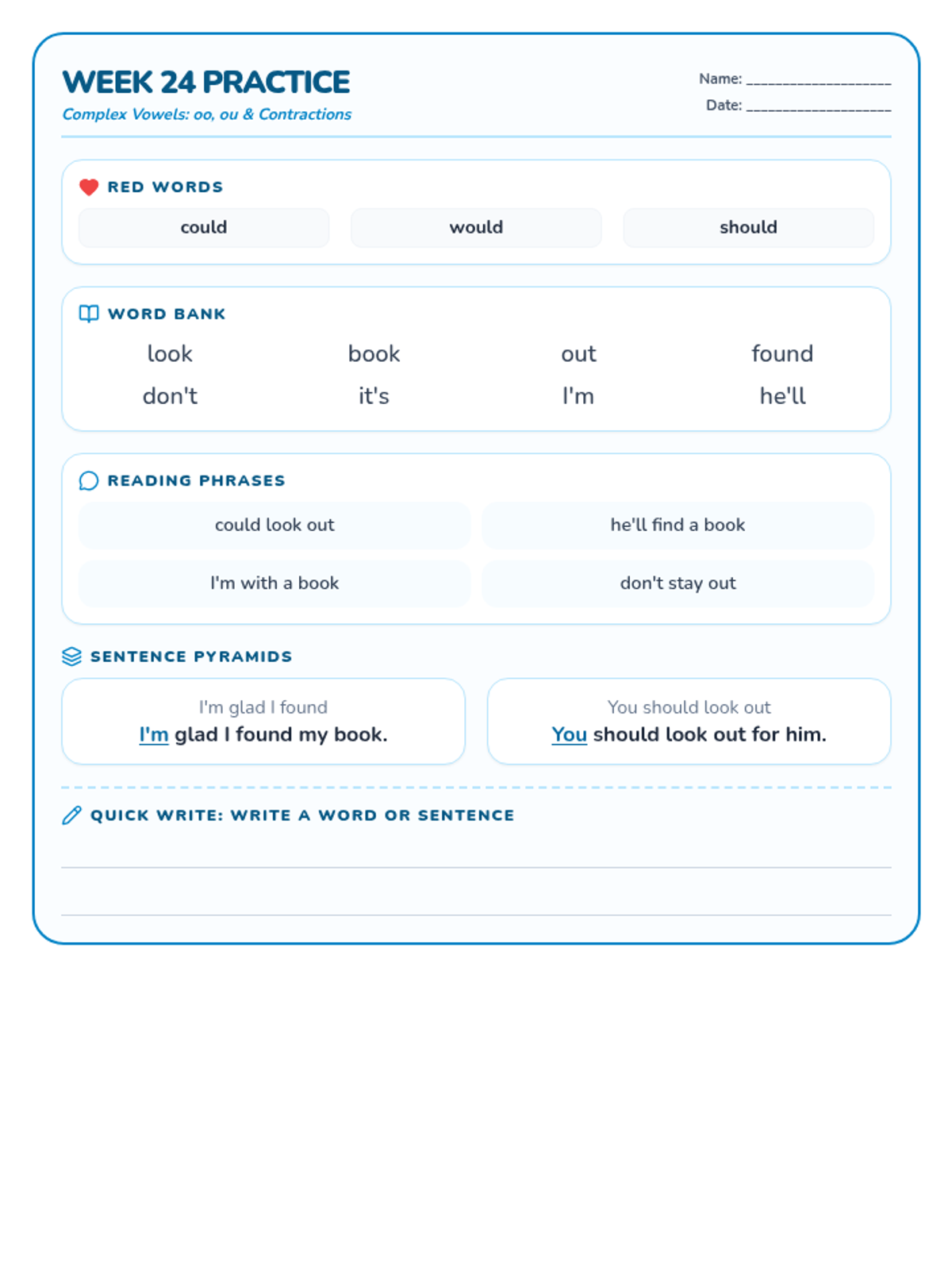
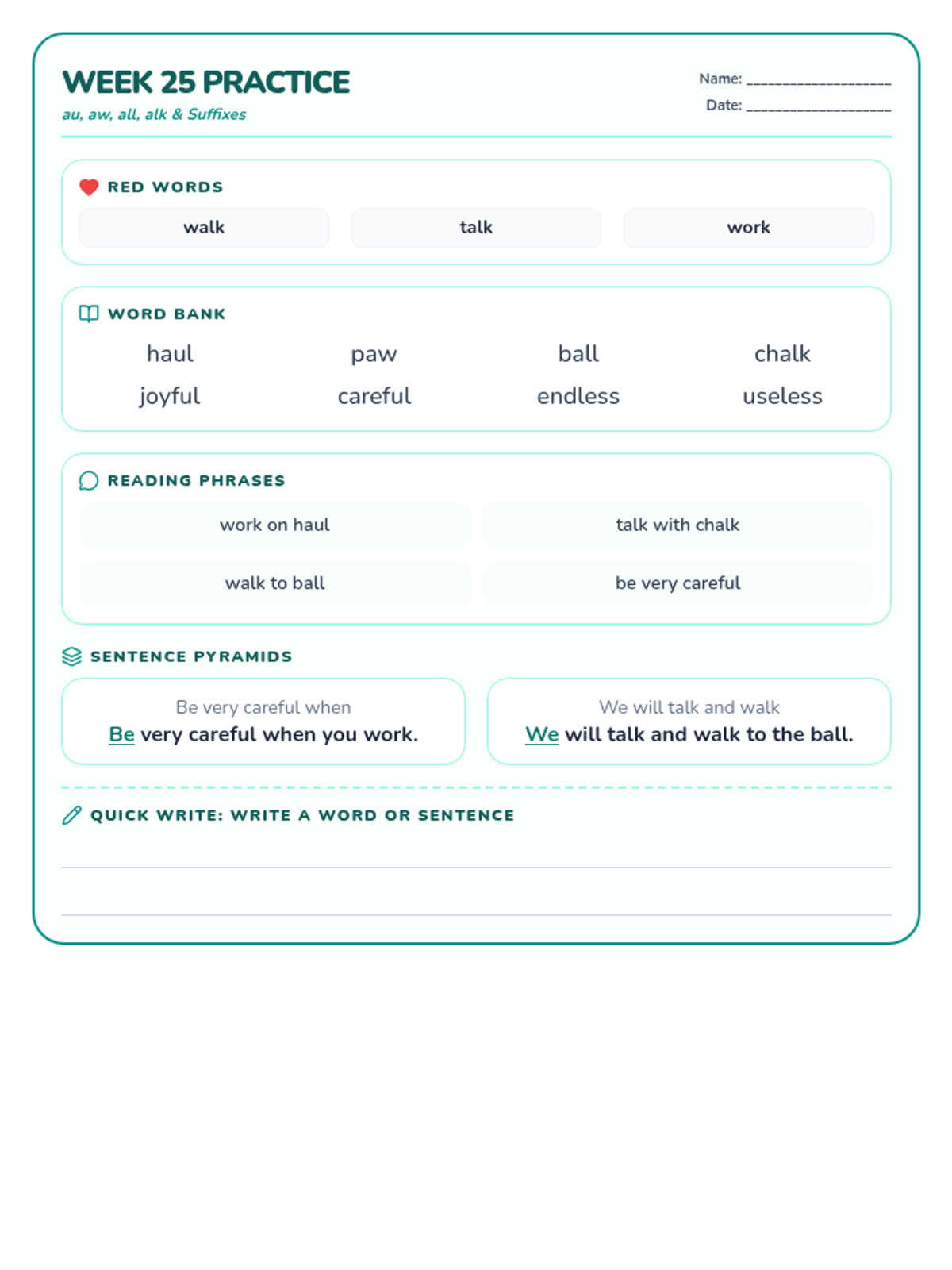
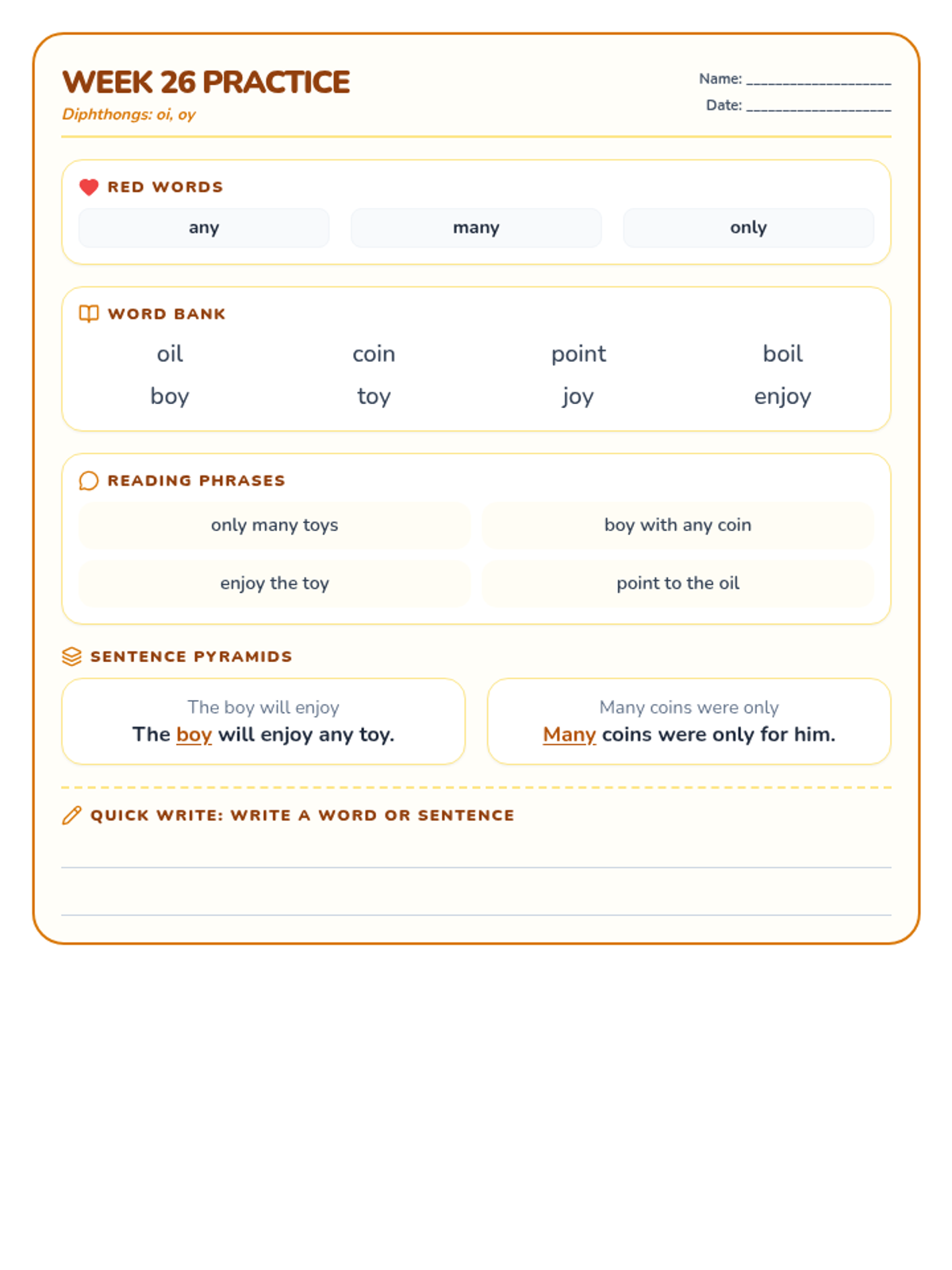
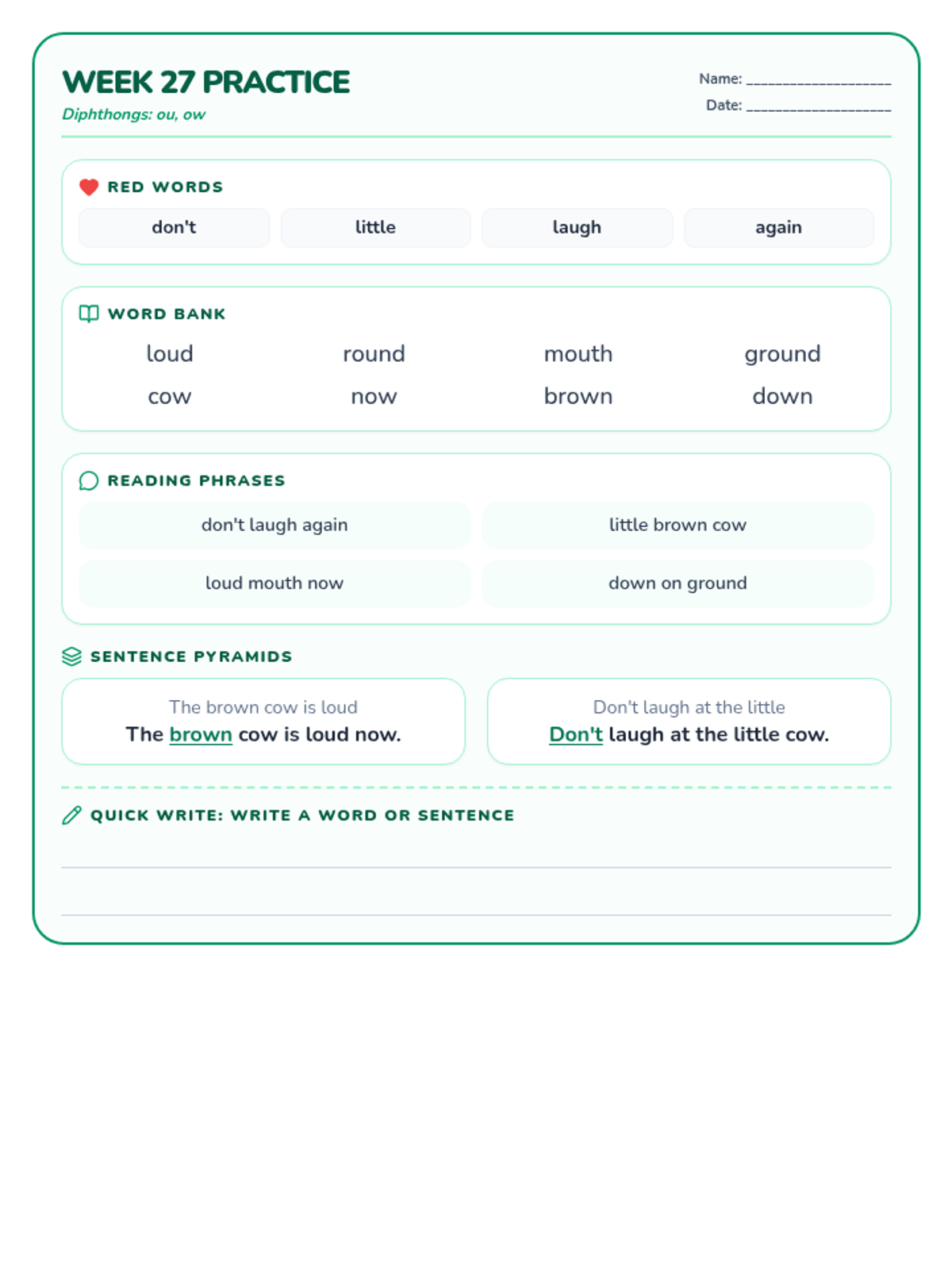
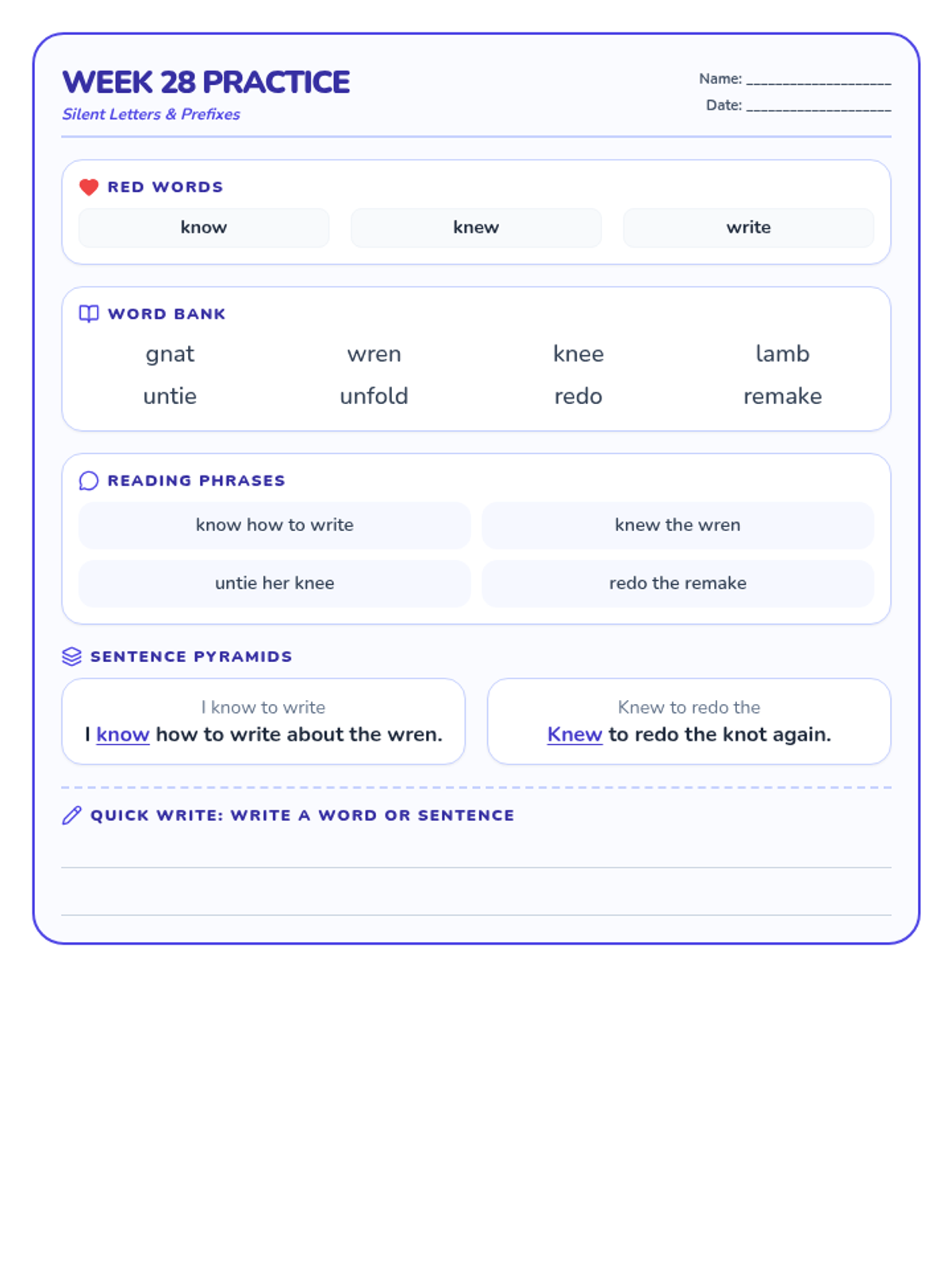
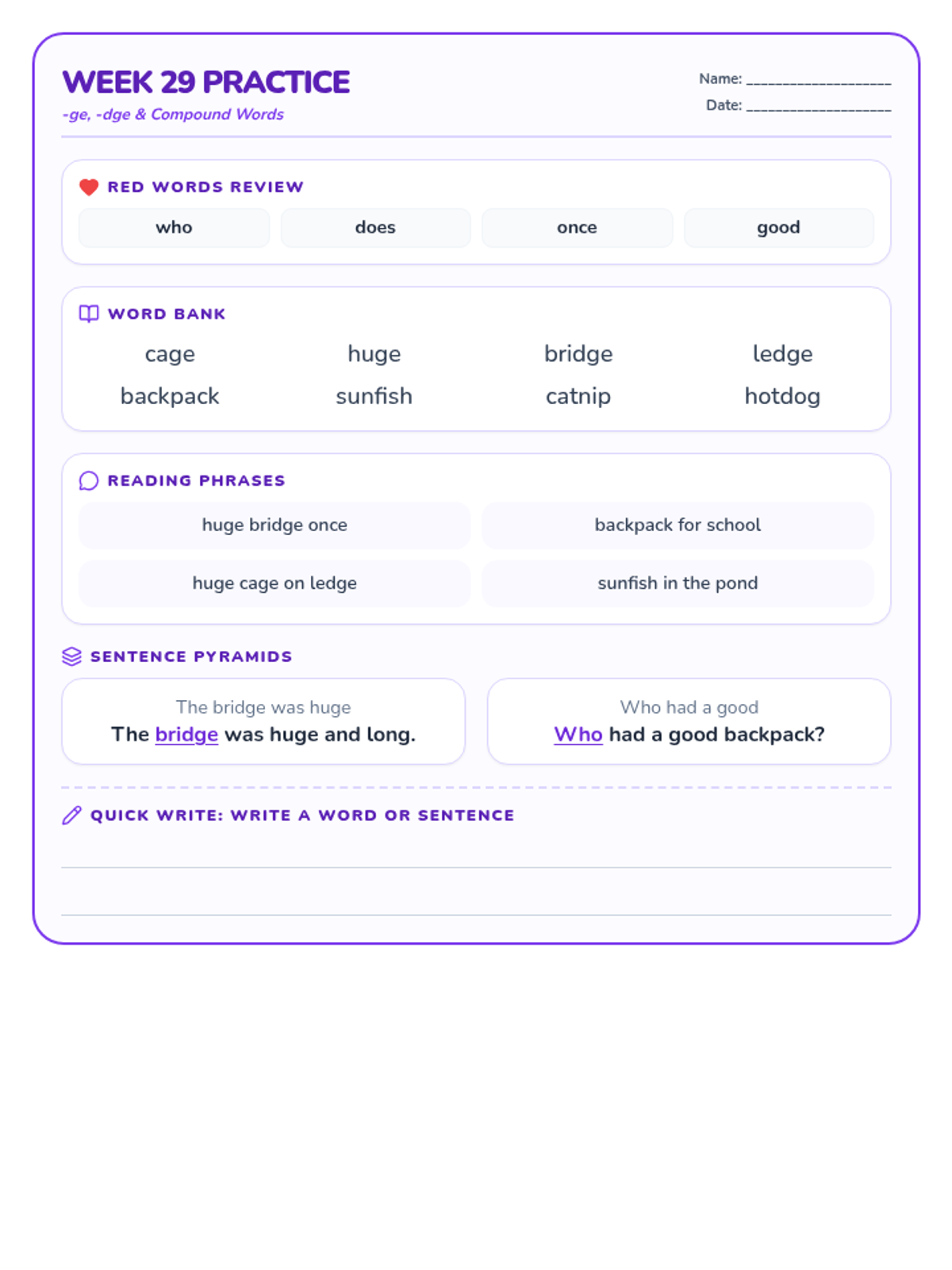
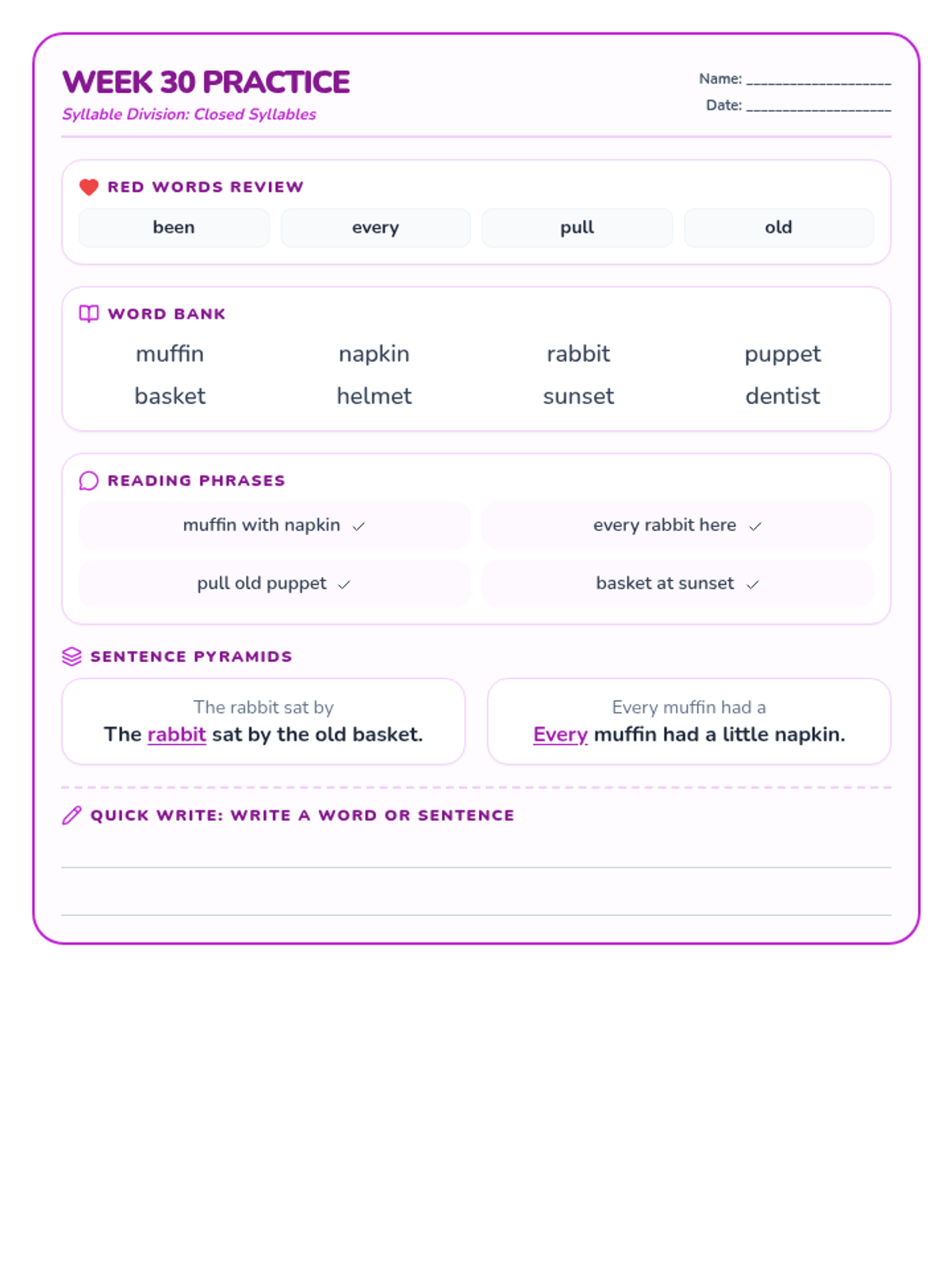
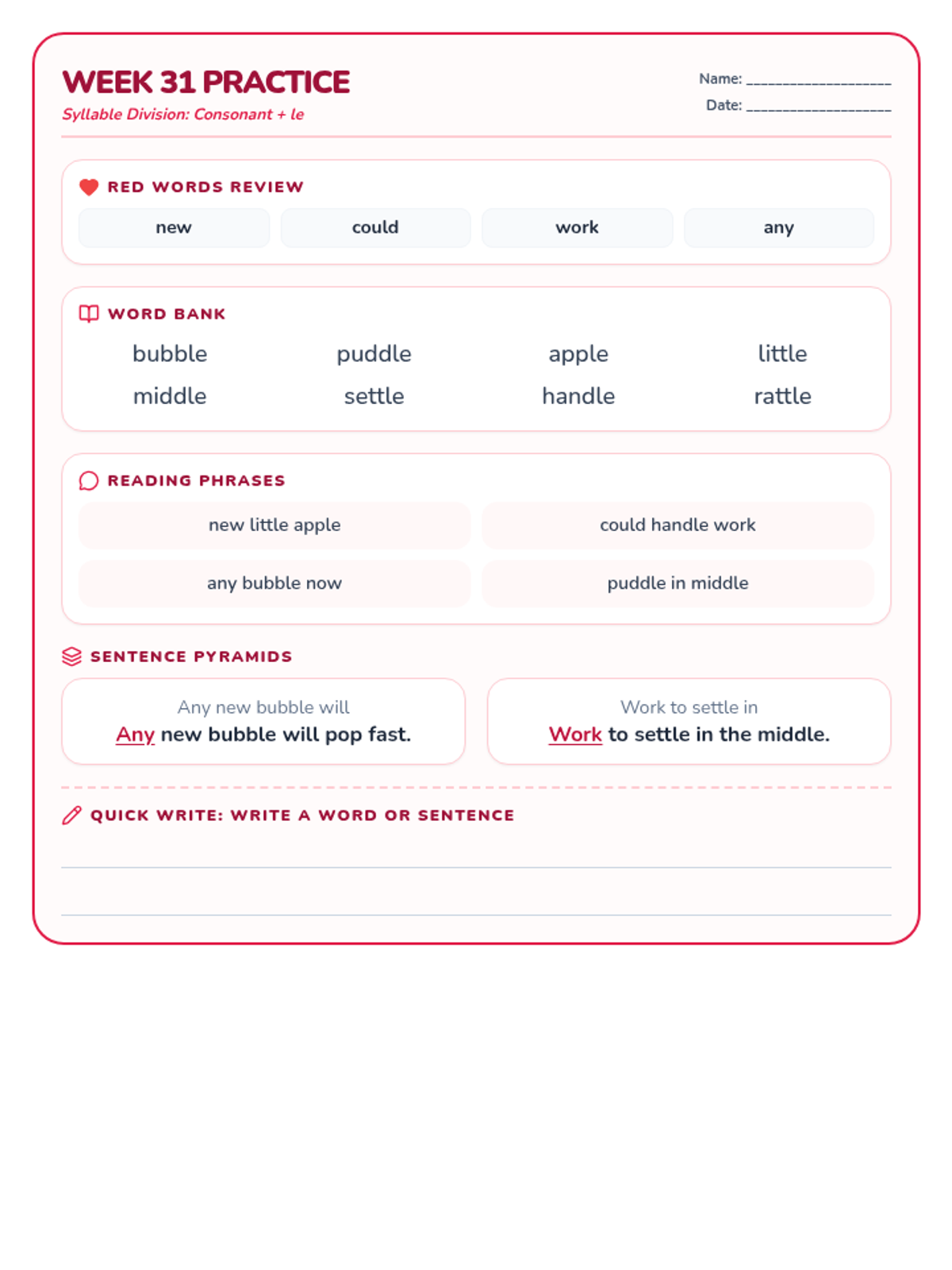
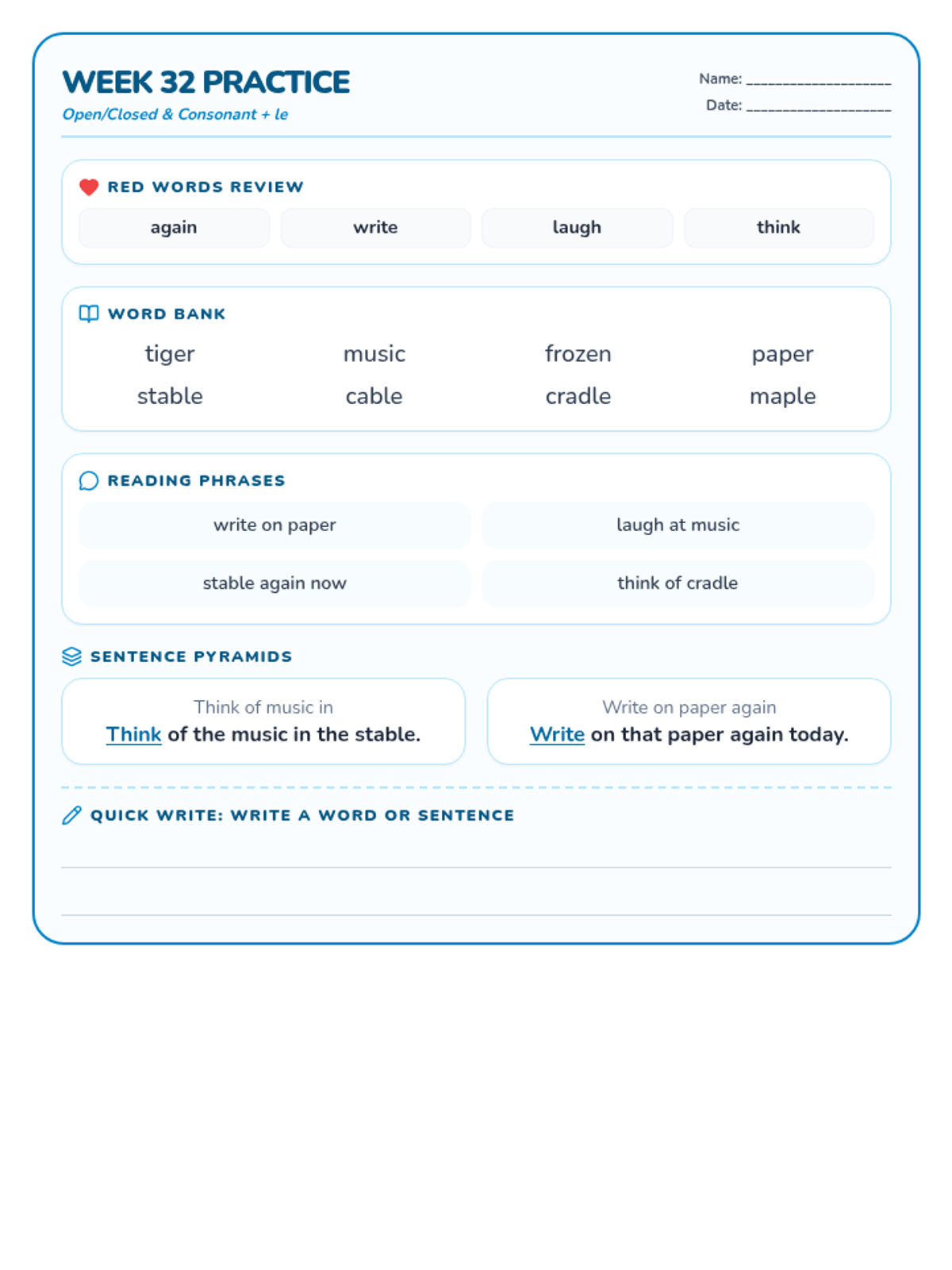
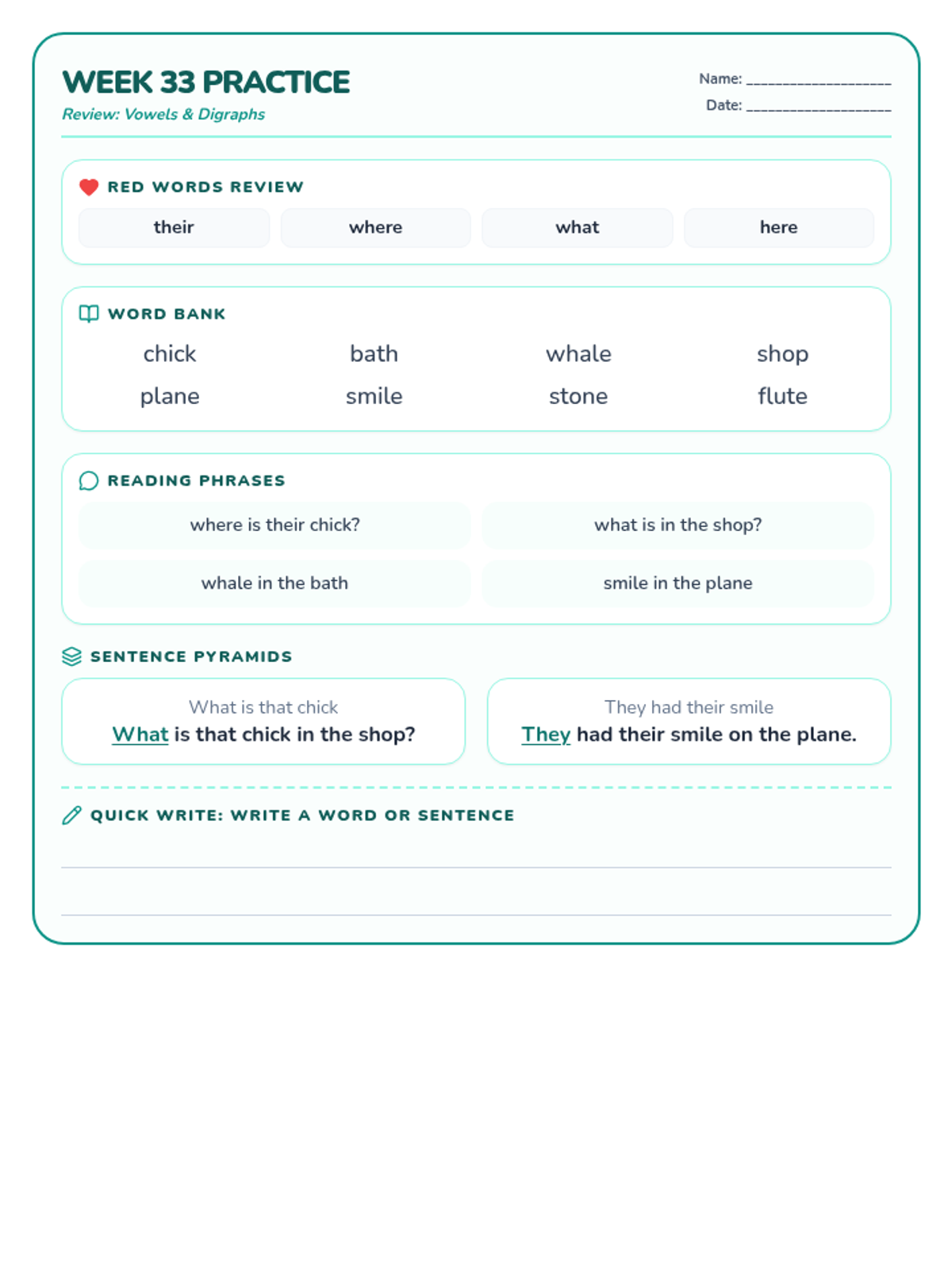
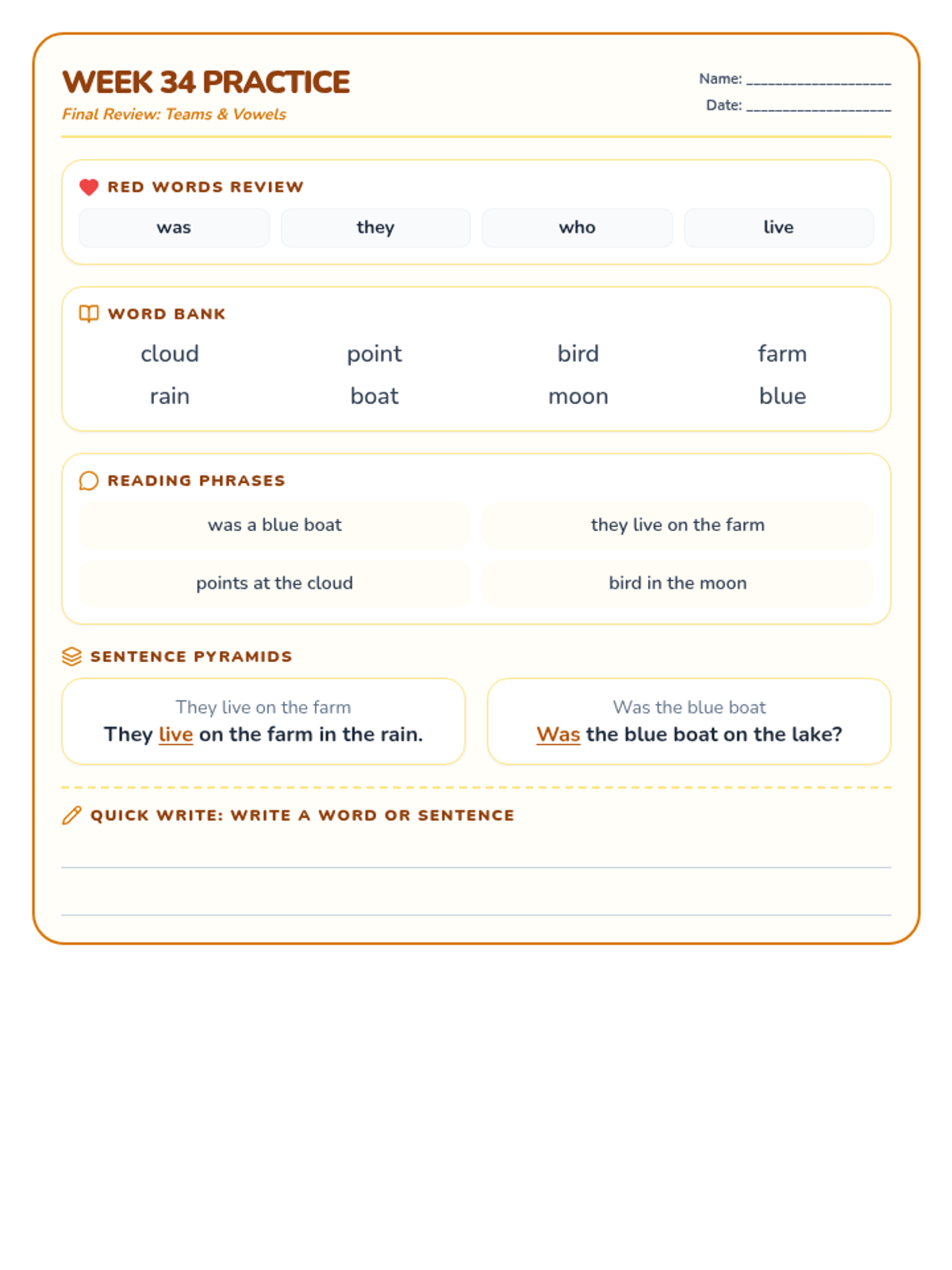
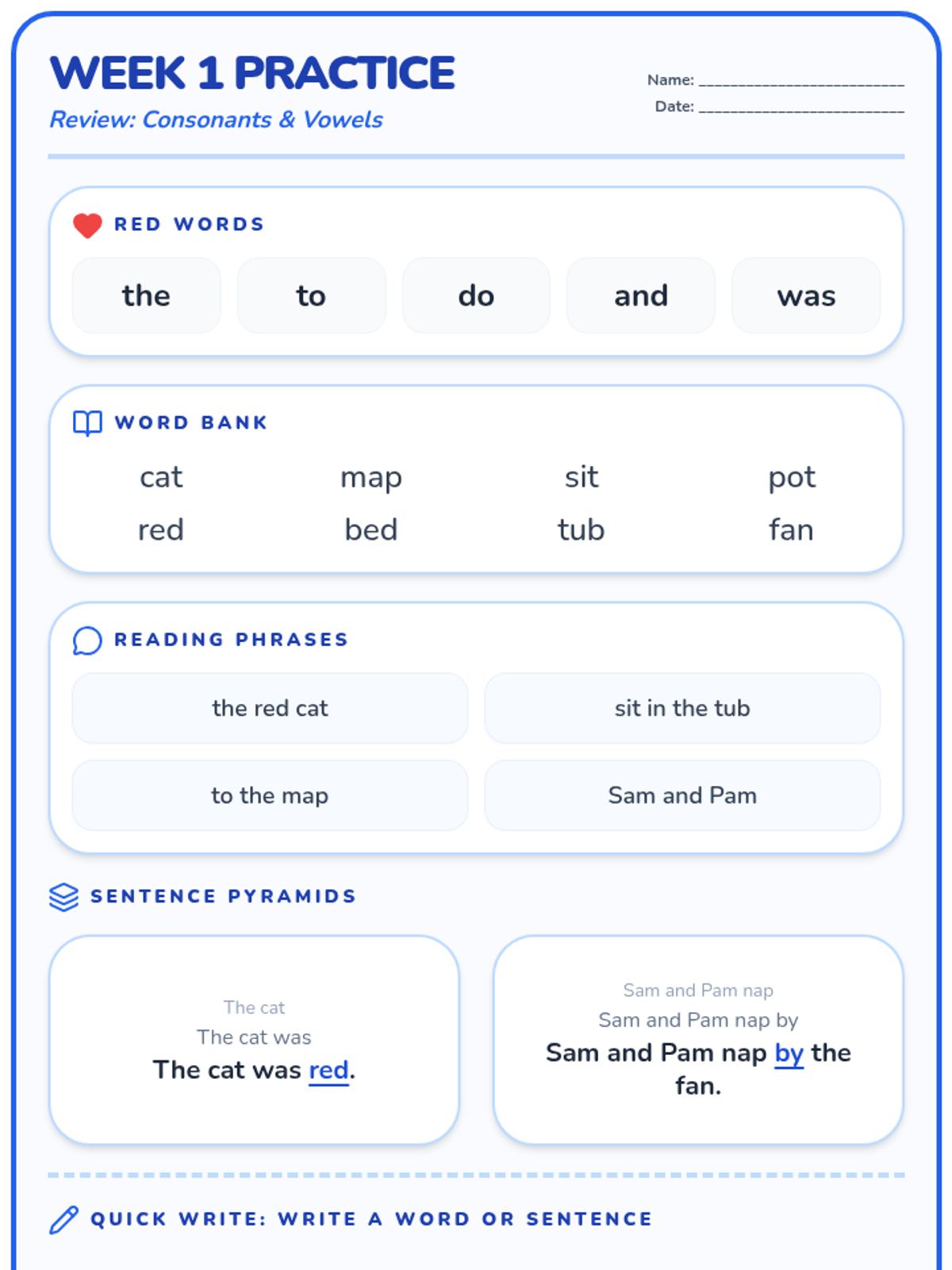
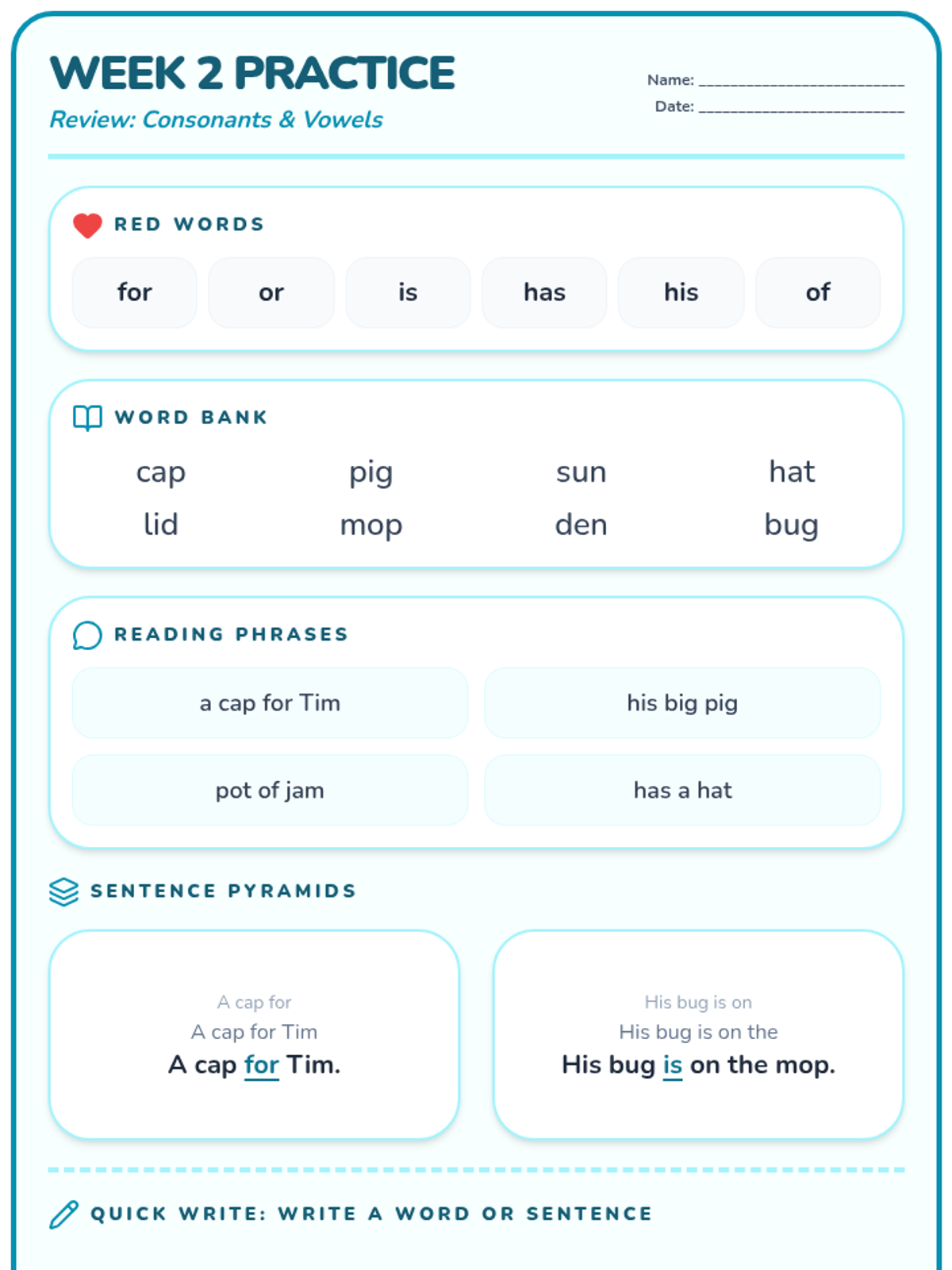
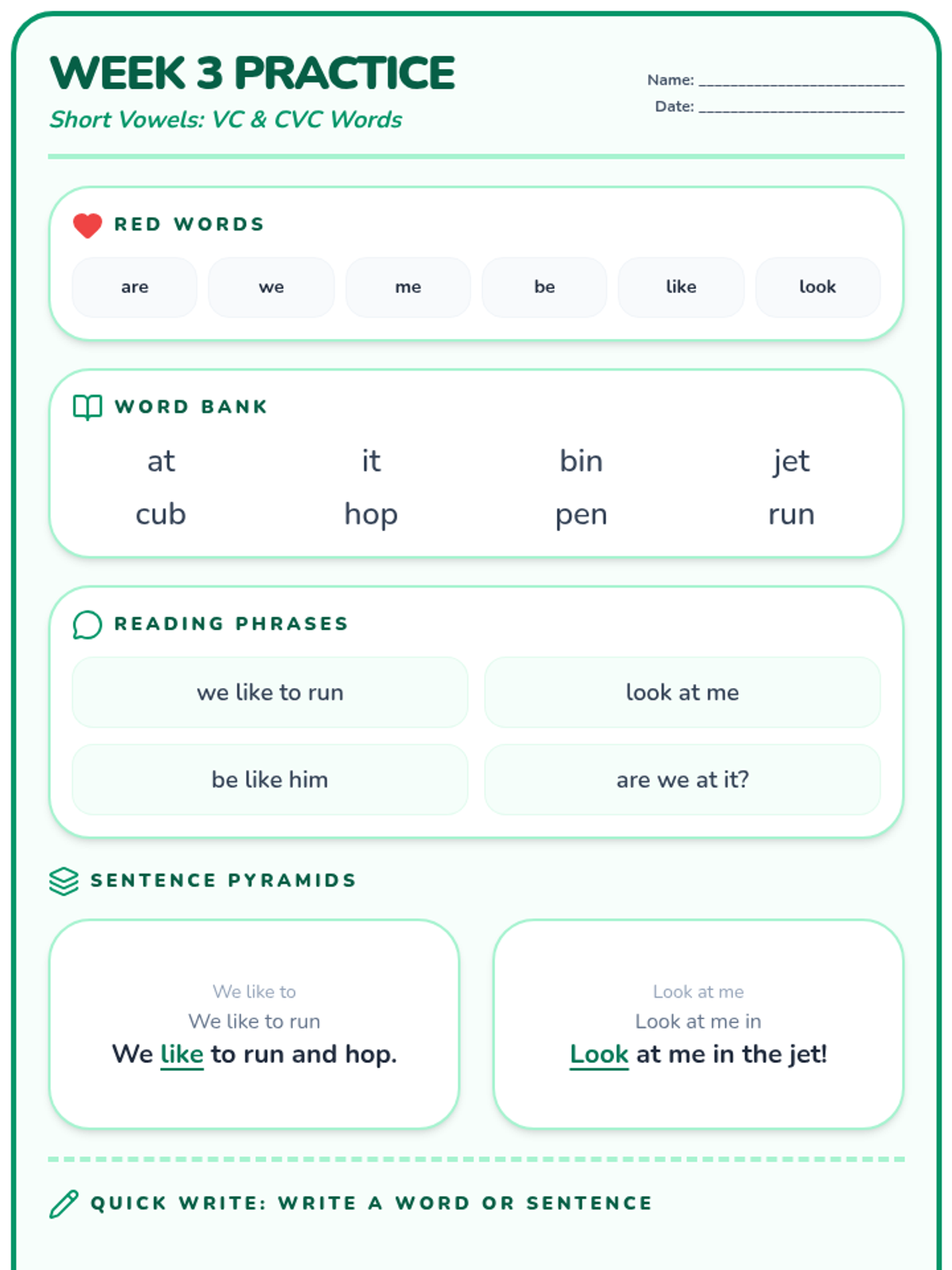
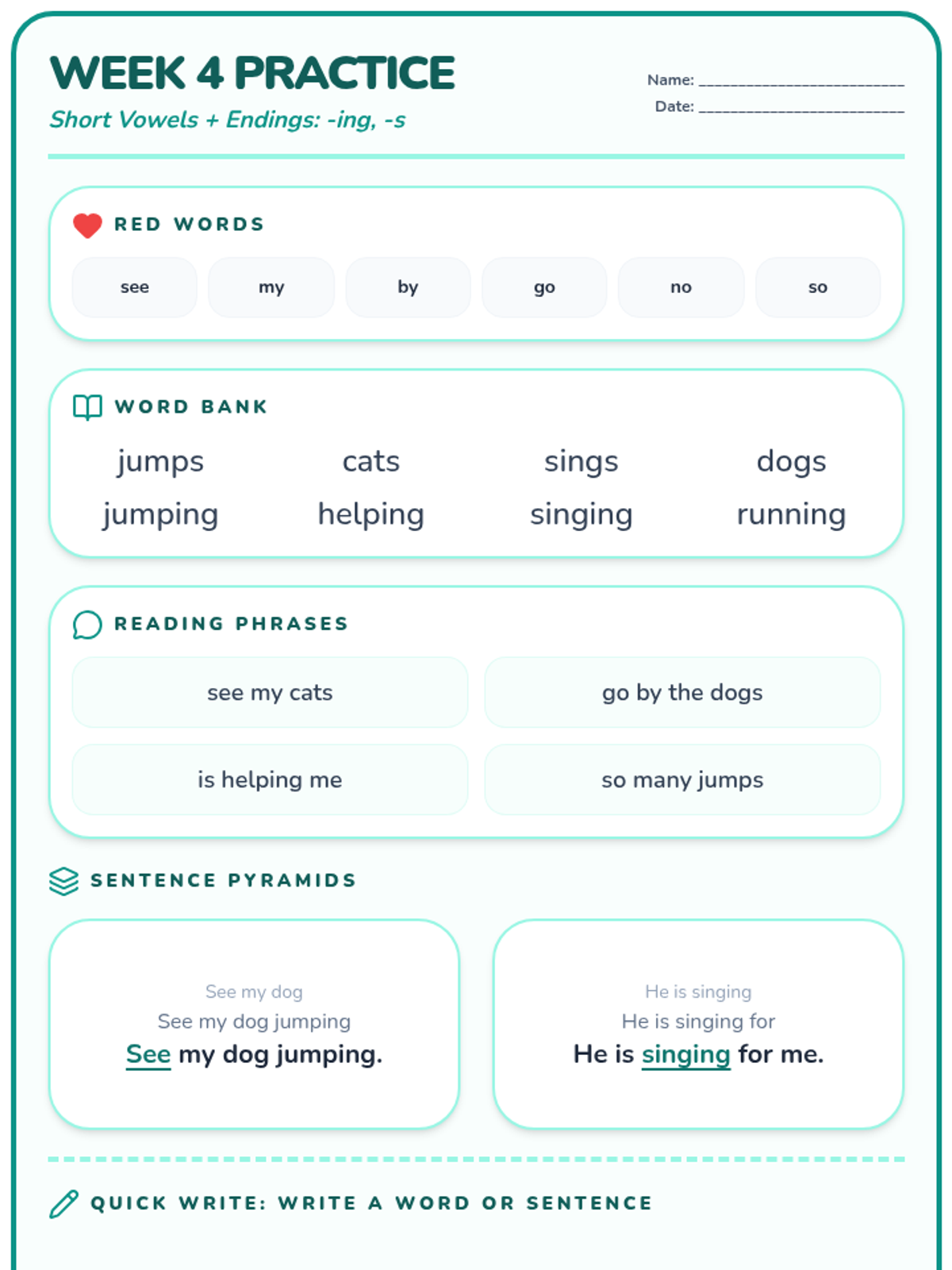
A comprehensive series of phonics practice sheets for 1st grade students covering Units 1 through 6 of the Bridge to Reading curriculum (Weeks 1-34). Each sheet focuses on specific phonics concepts, red words, decodable words, and reading fluency through sentence pyramids, designed for one-page printing.
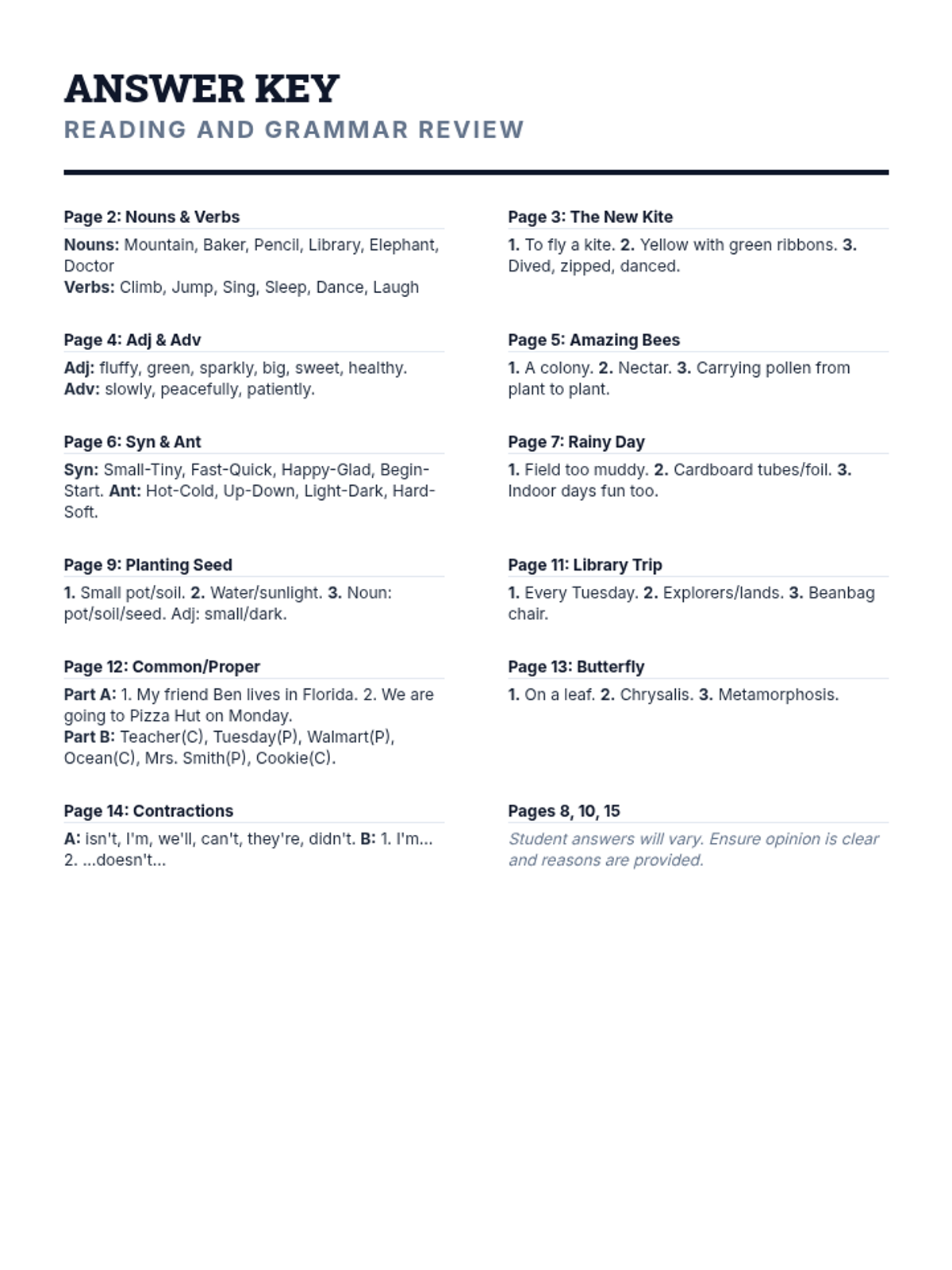
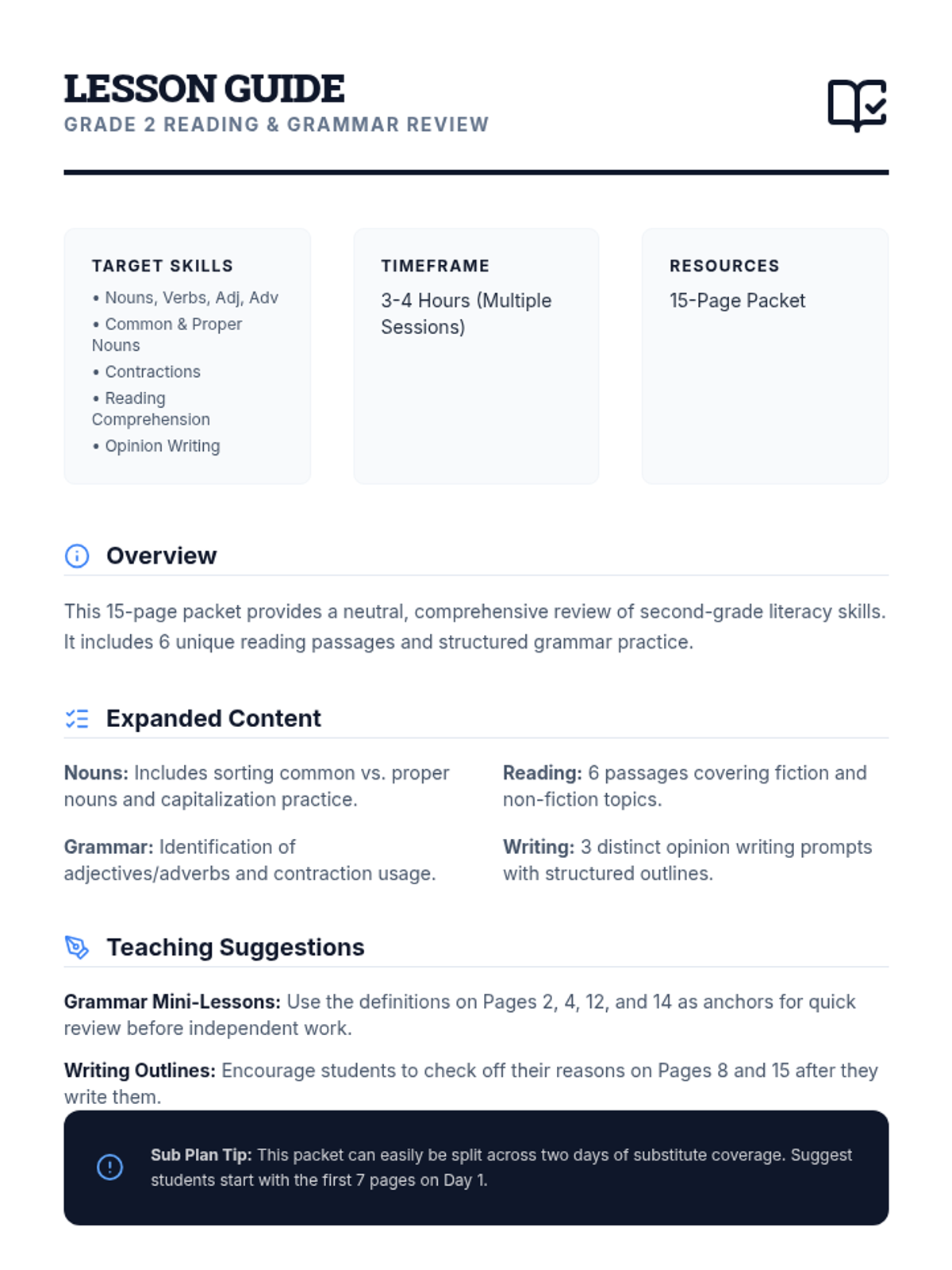
A comprehensive 15-page reading and grammar review packet for 2nd-grade students. This neutral resource covers nouns (common/proper), verbs, adjectives, adverbs, synonyms, antonyms, contractions, reading comprehension across 6 passages, and opinion writing.
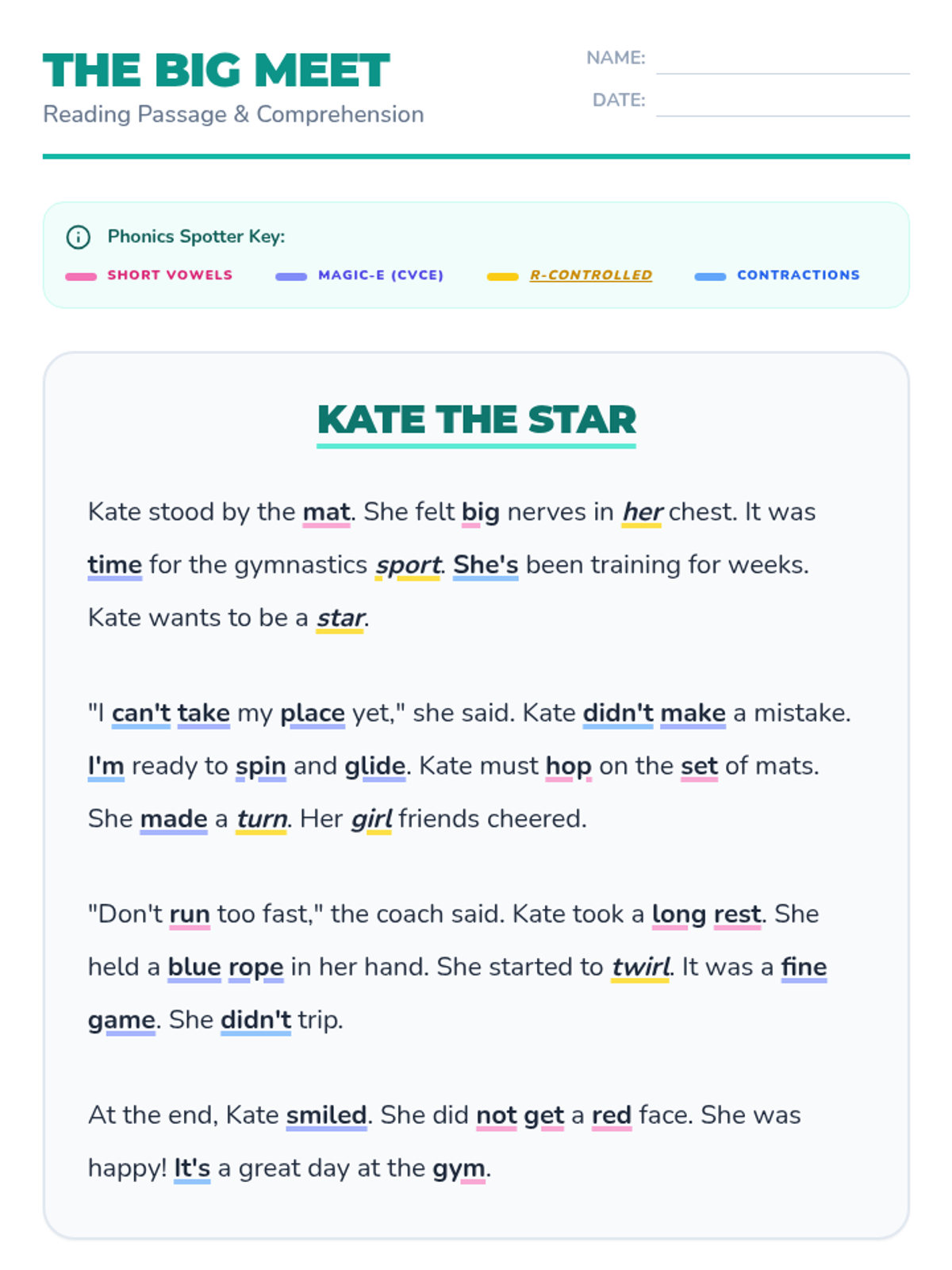
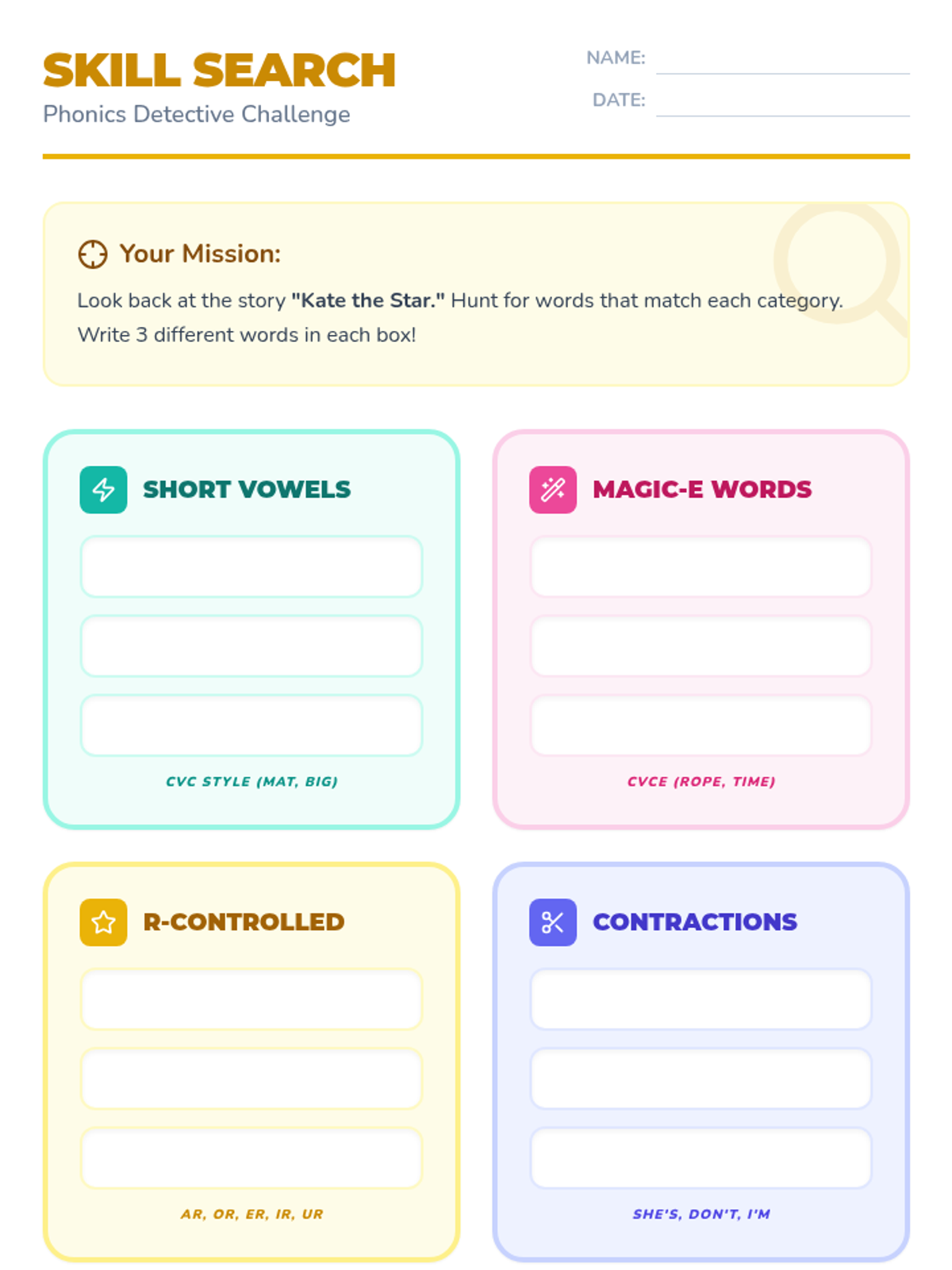
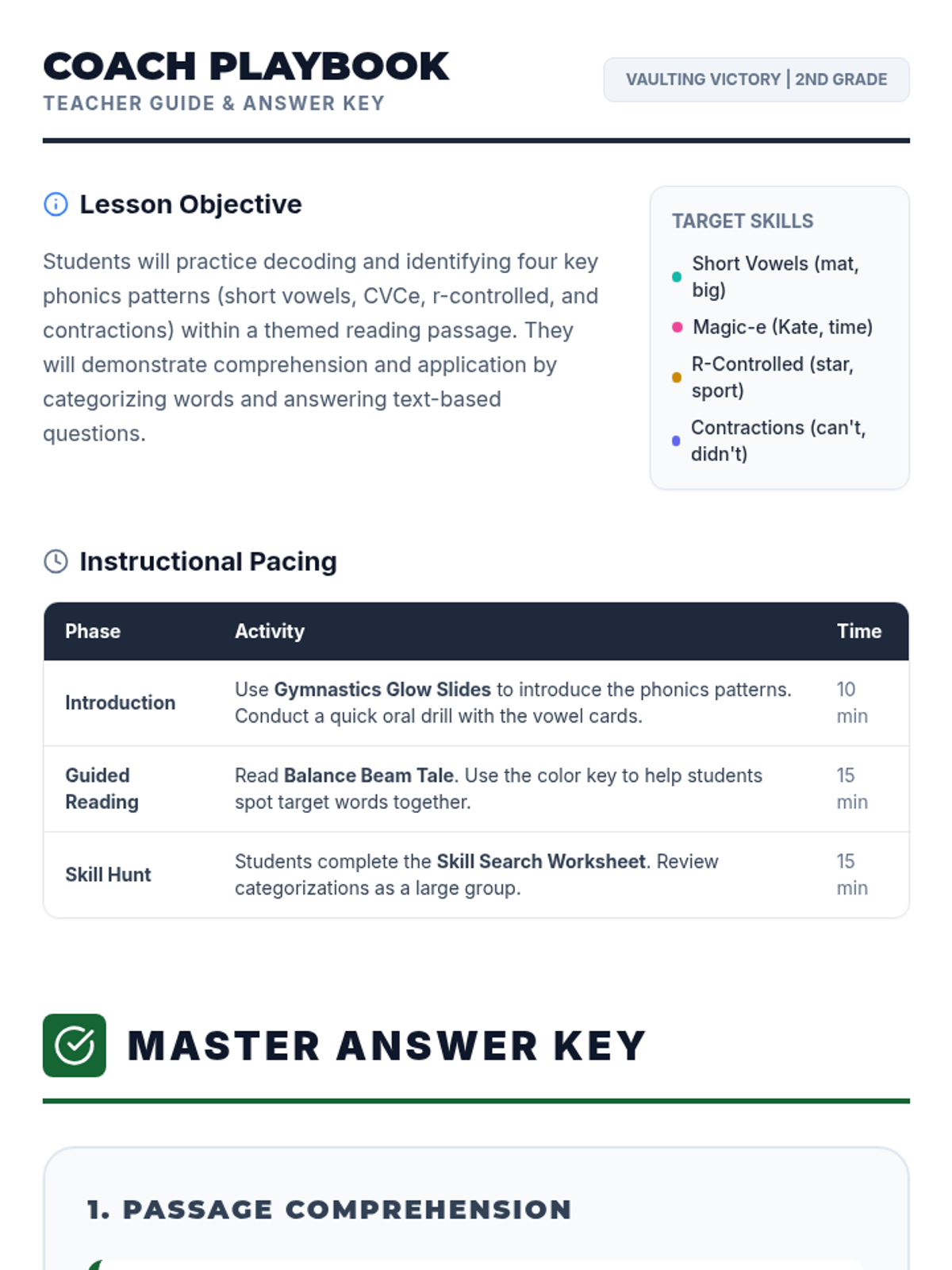
A phonics-focused lesson for second graders centered on gymnastics, targeting short vowels, CVCe patterns, r-controlled vowels, and common contractions.
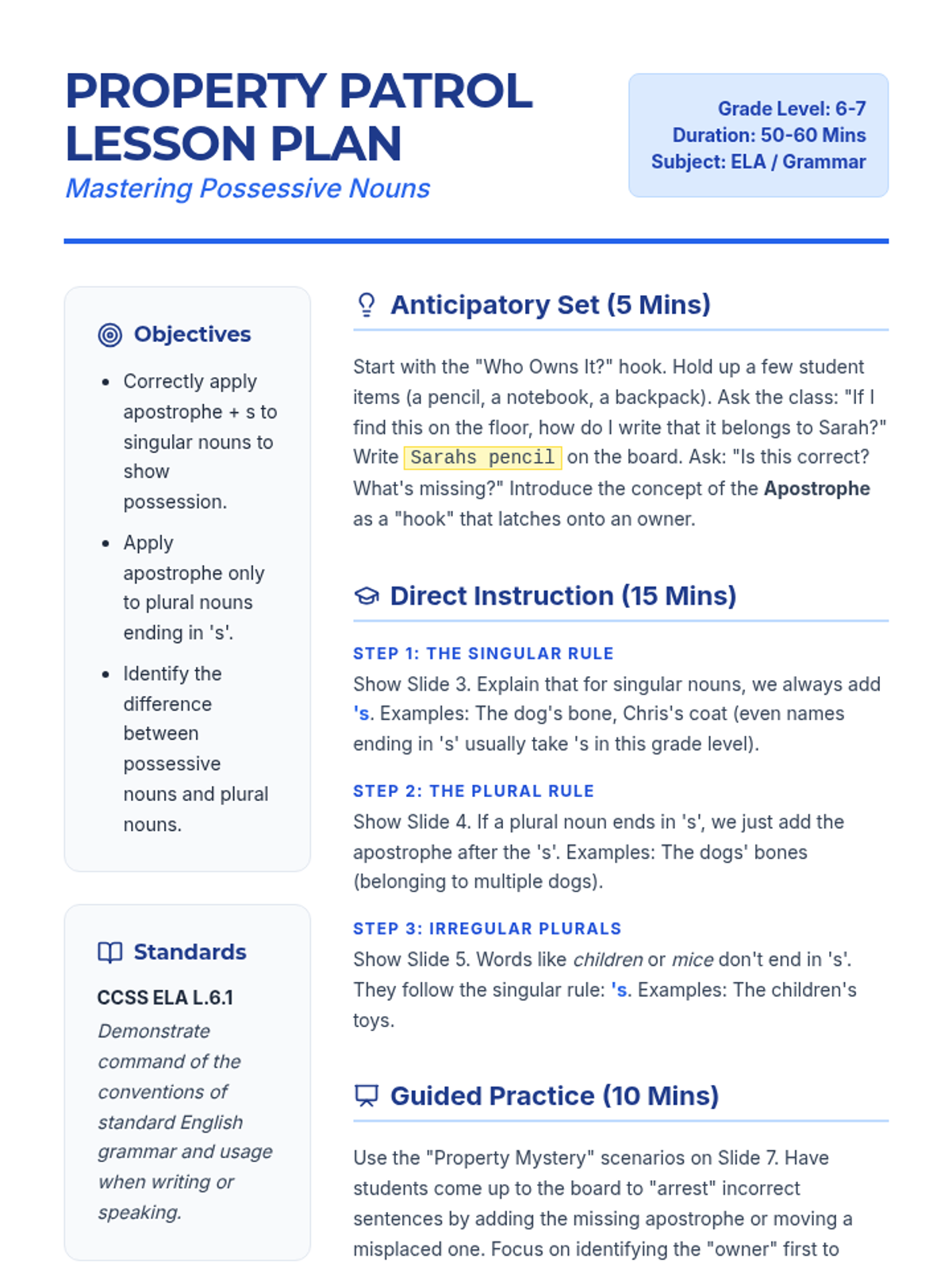
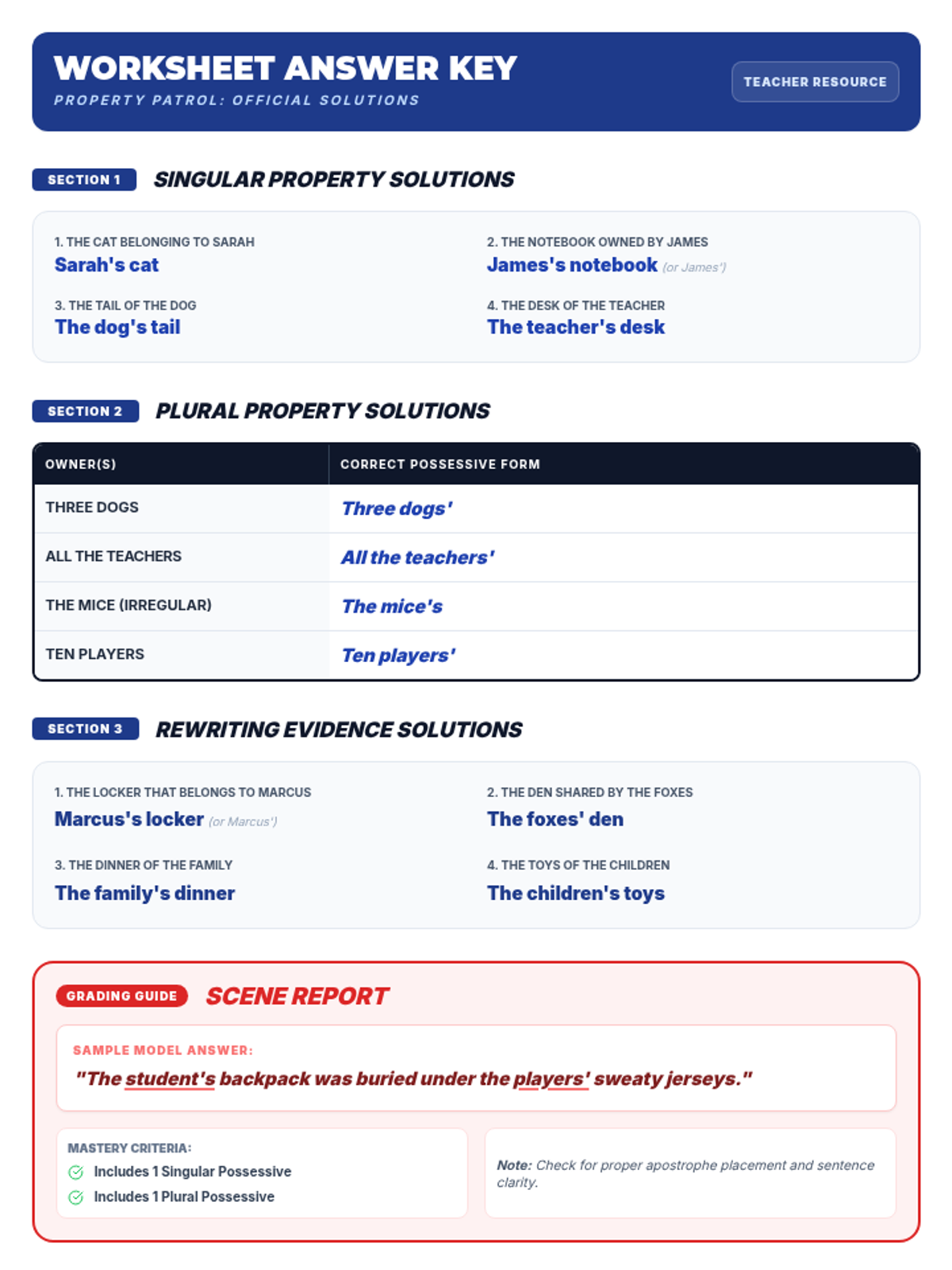
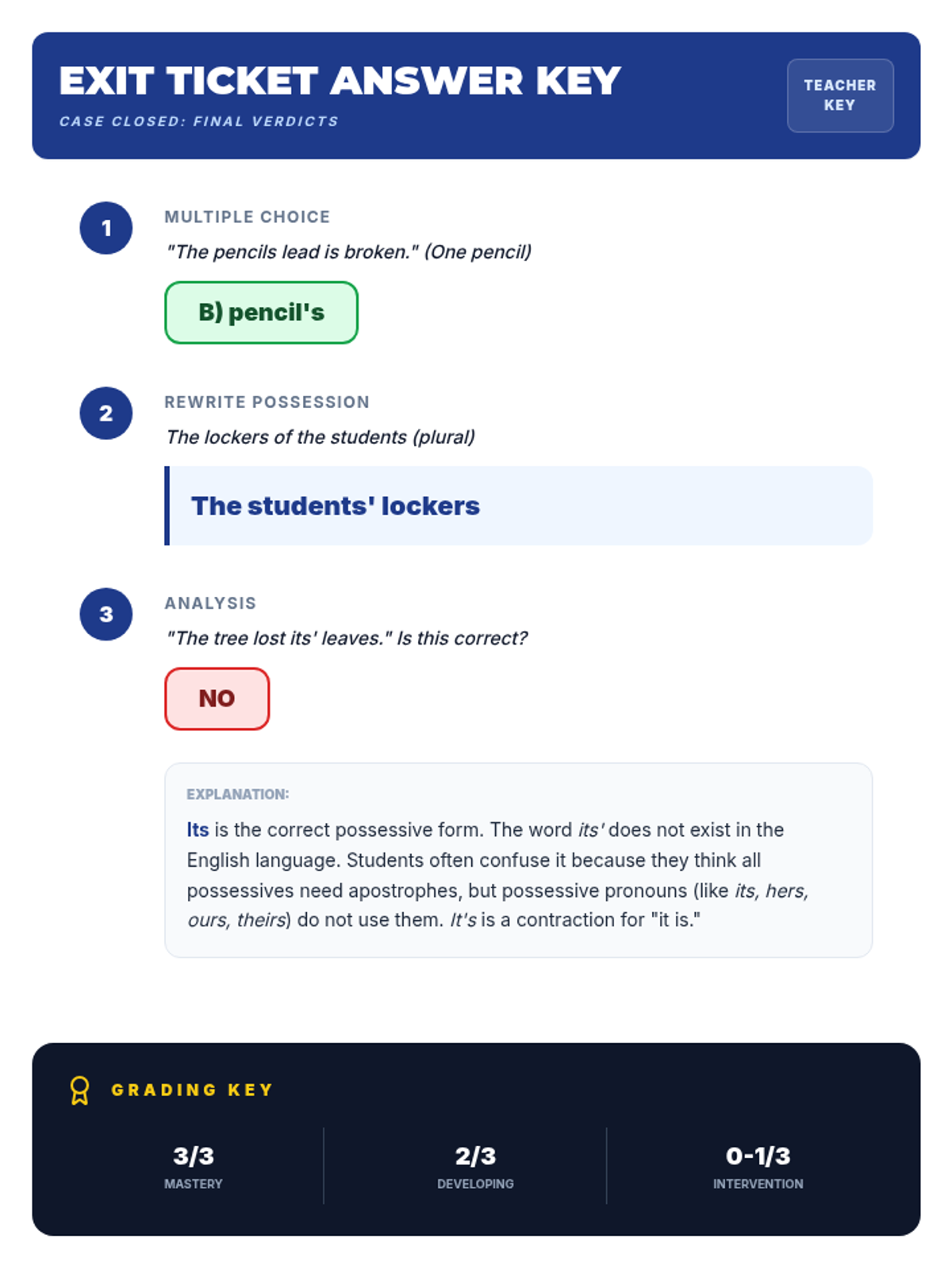
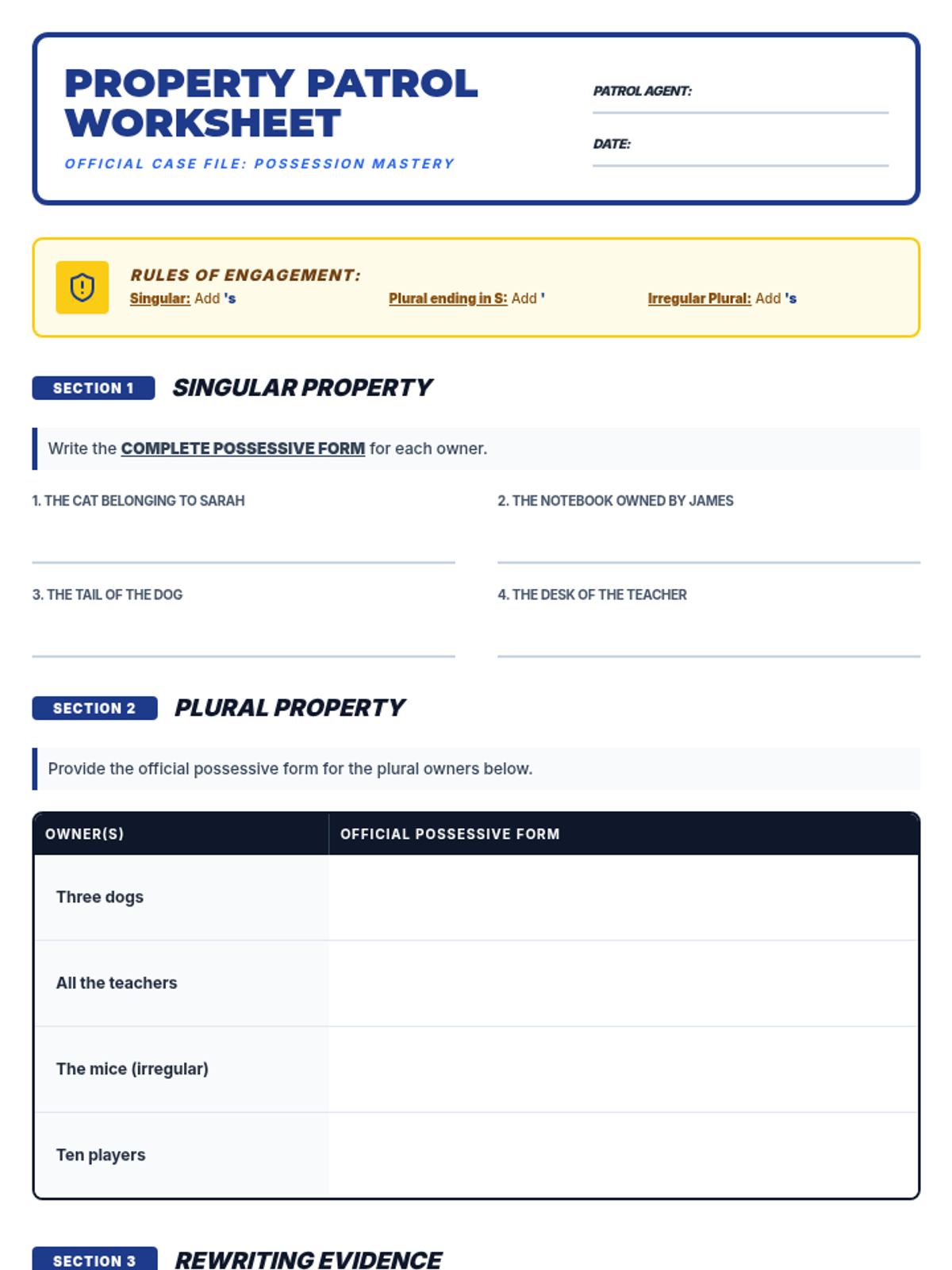
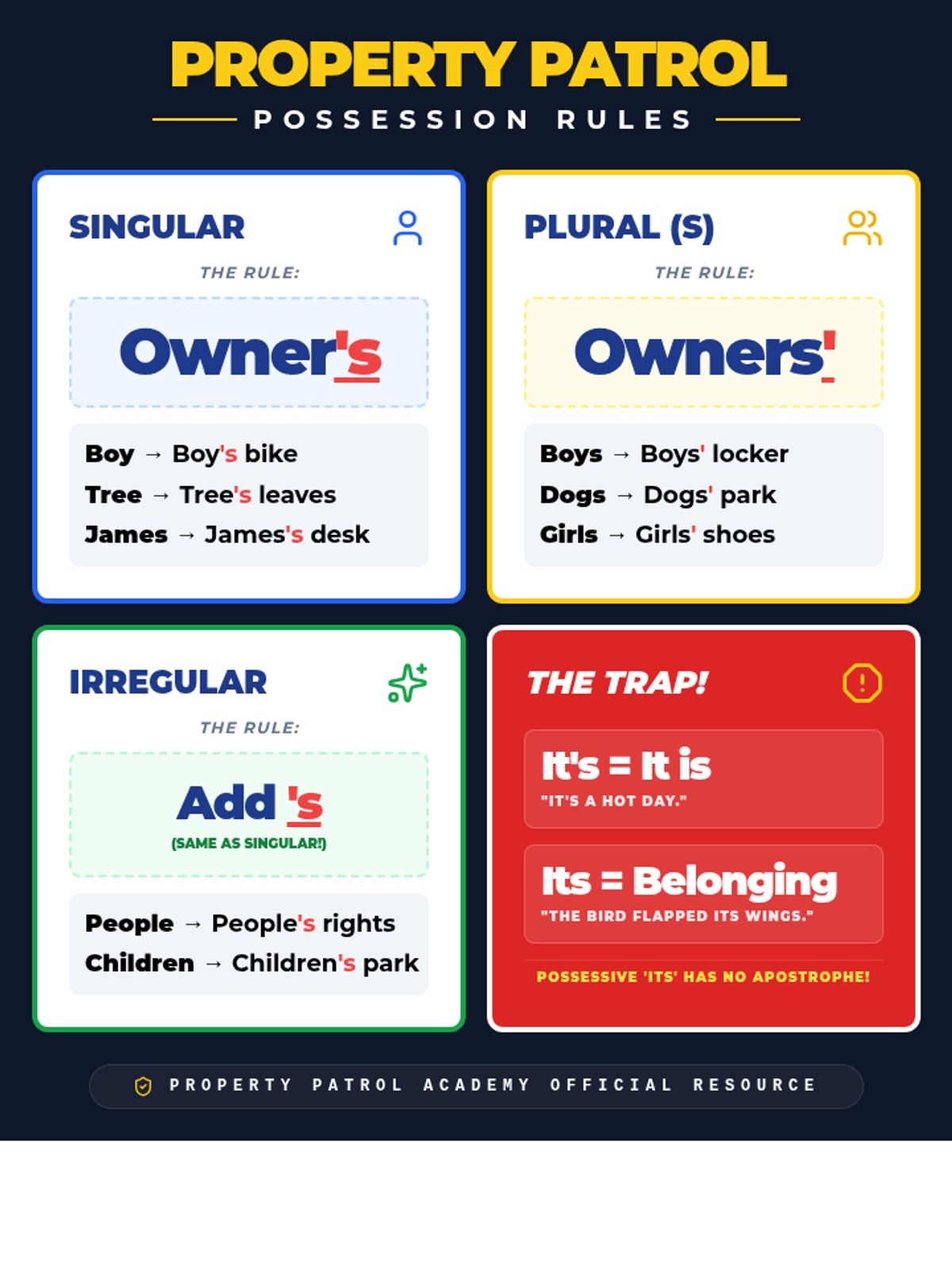
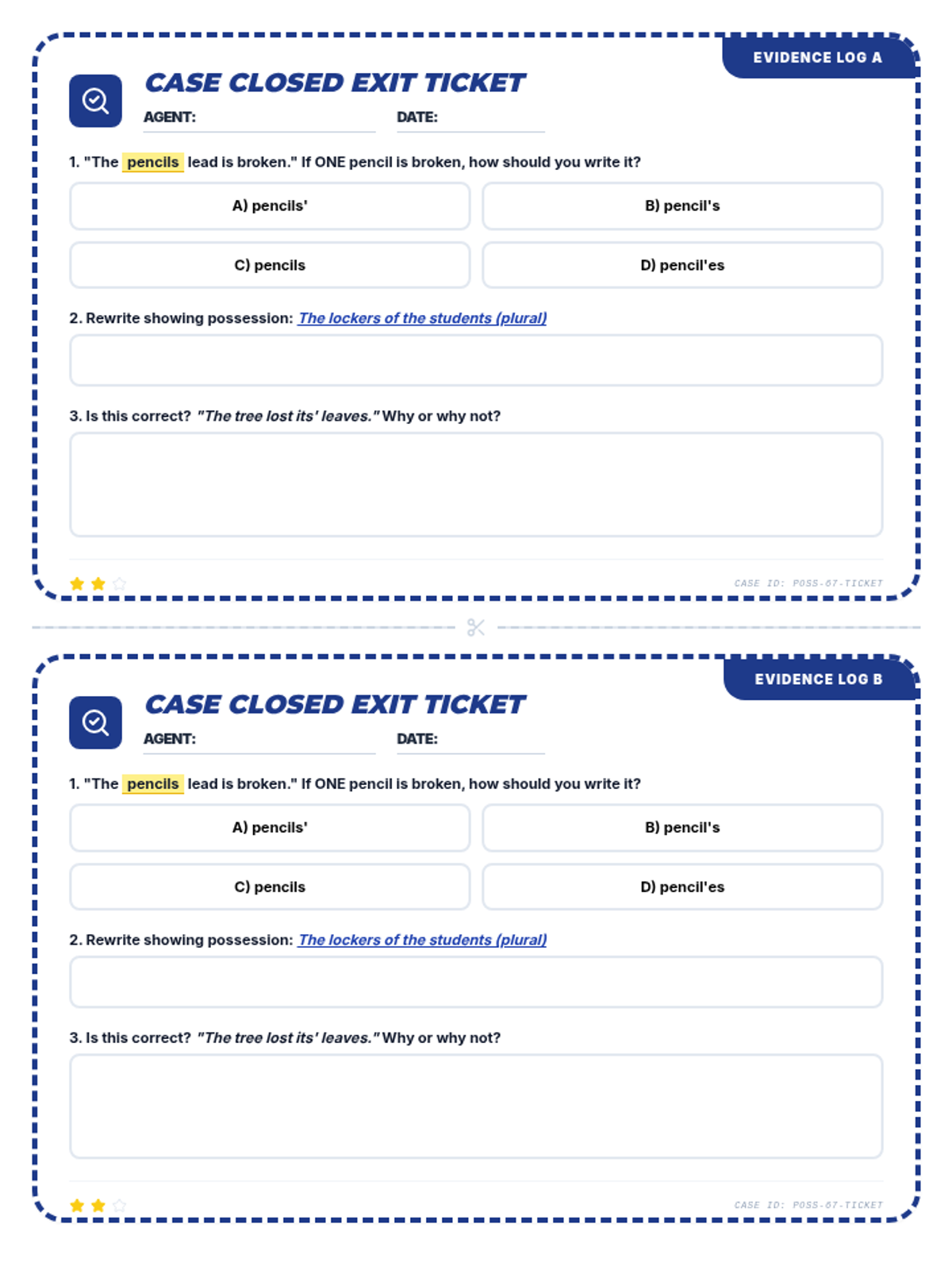
A comprehensive lesson on mastering possessive nouns using apostrophes, focusing on singular and plural rules for 6th and 7th-grade students. This lesson uses a 'Property Patrol' detective theme to make grammar engaging and memorable.
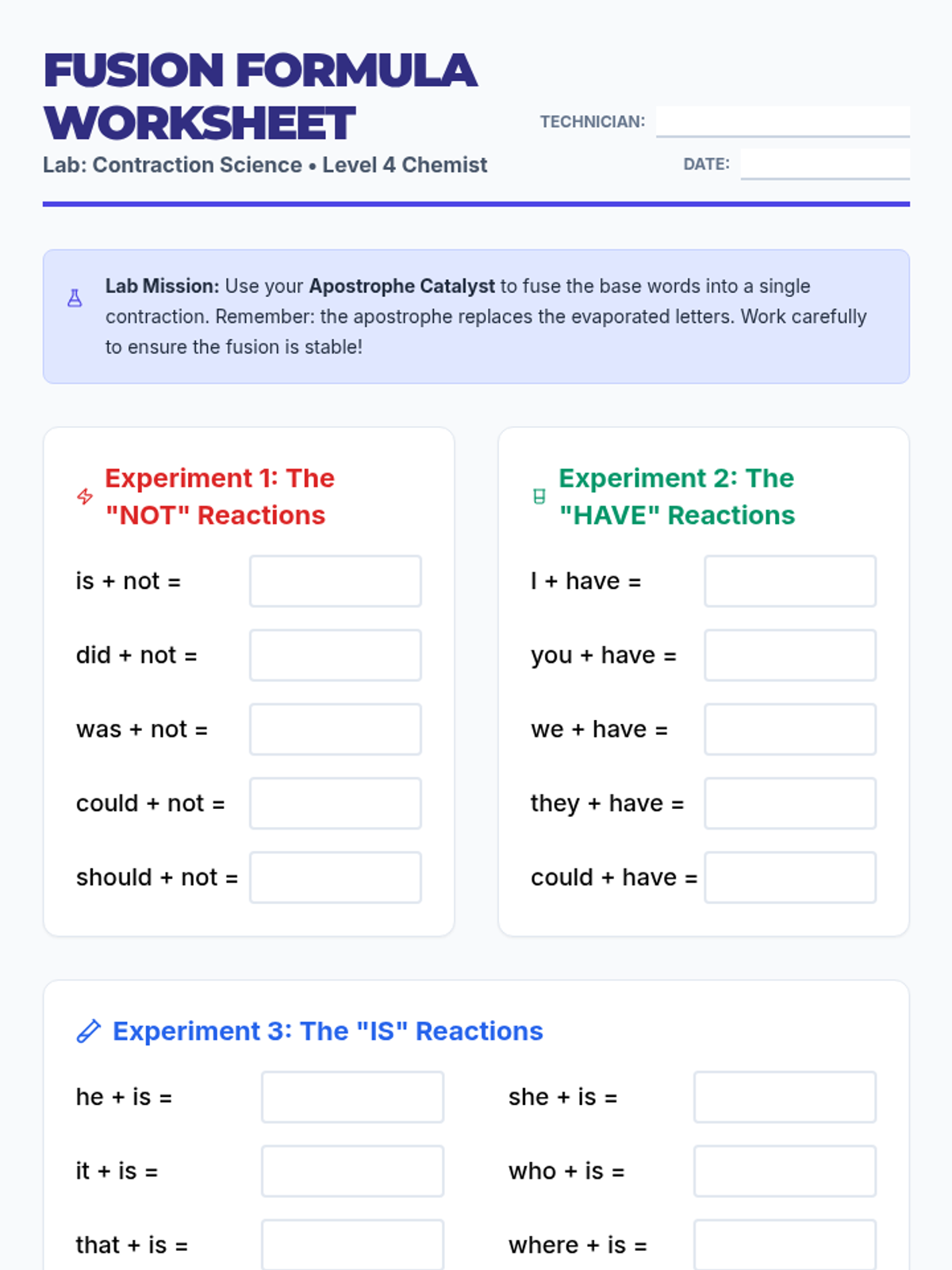
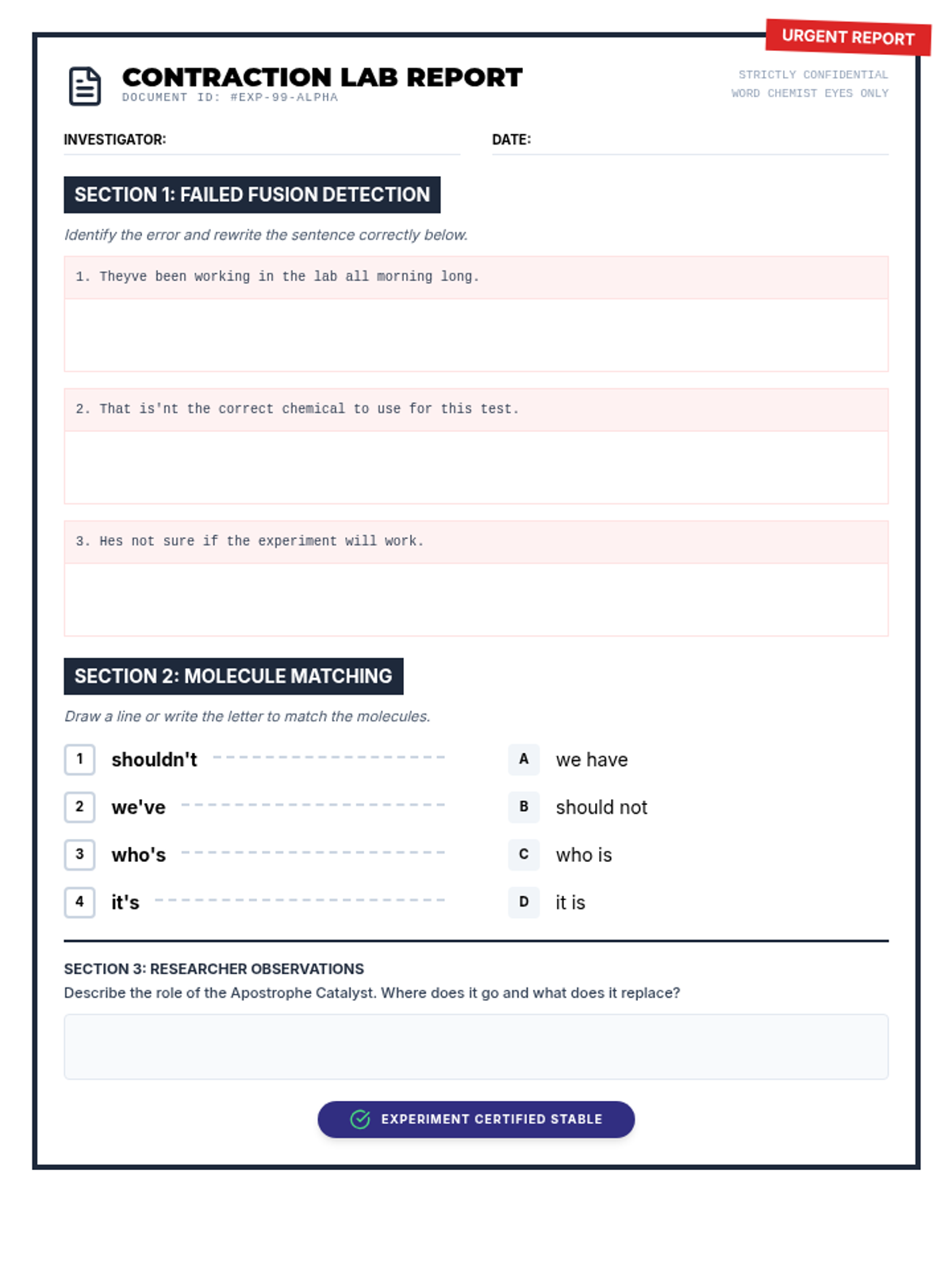
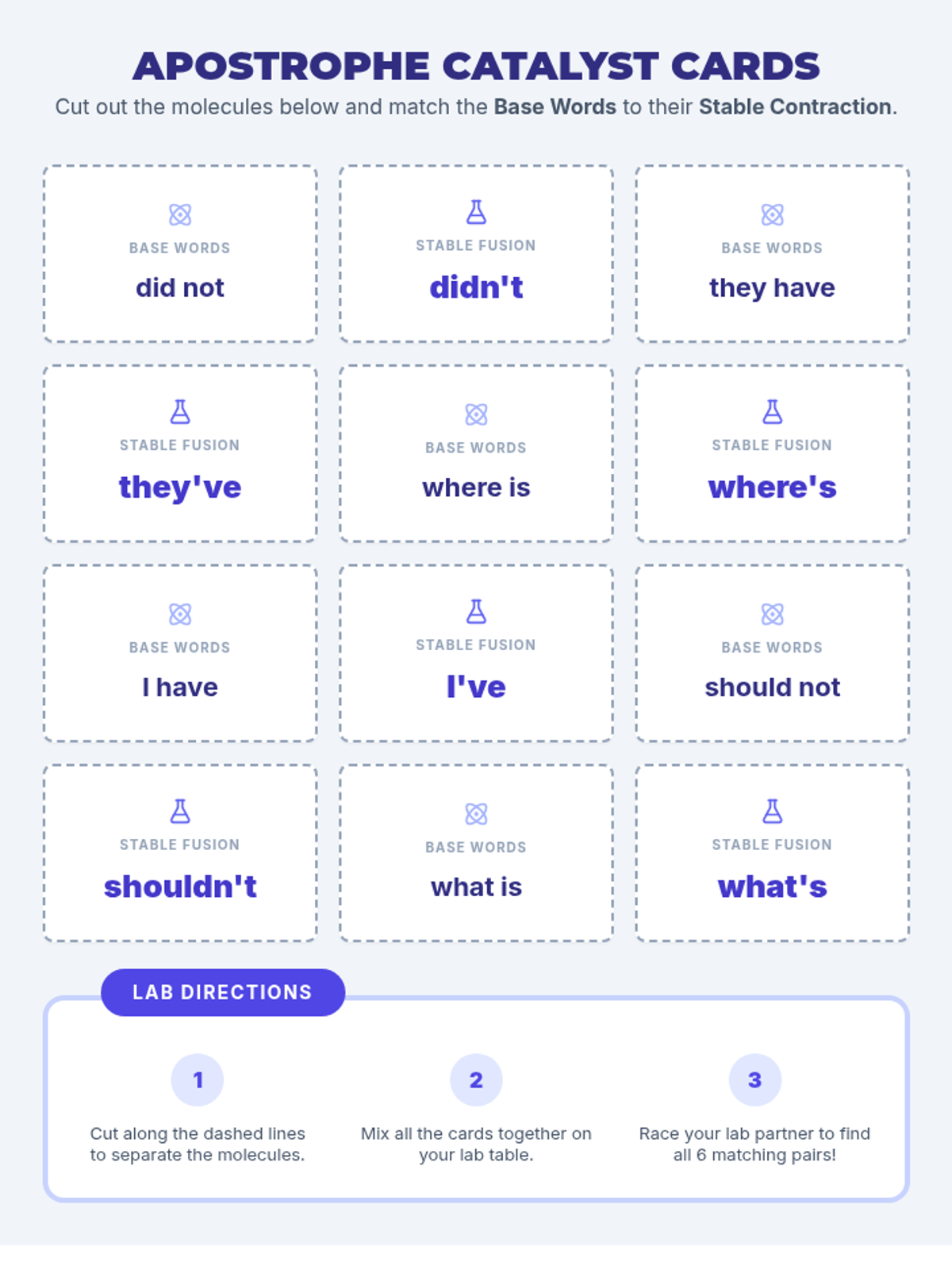
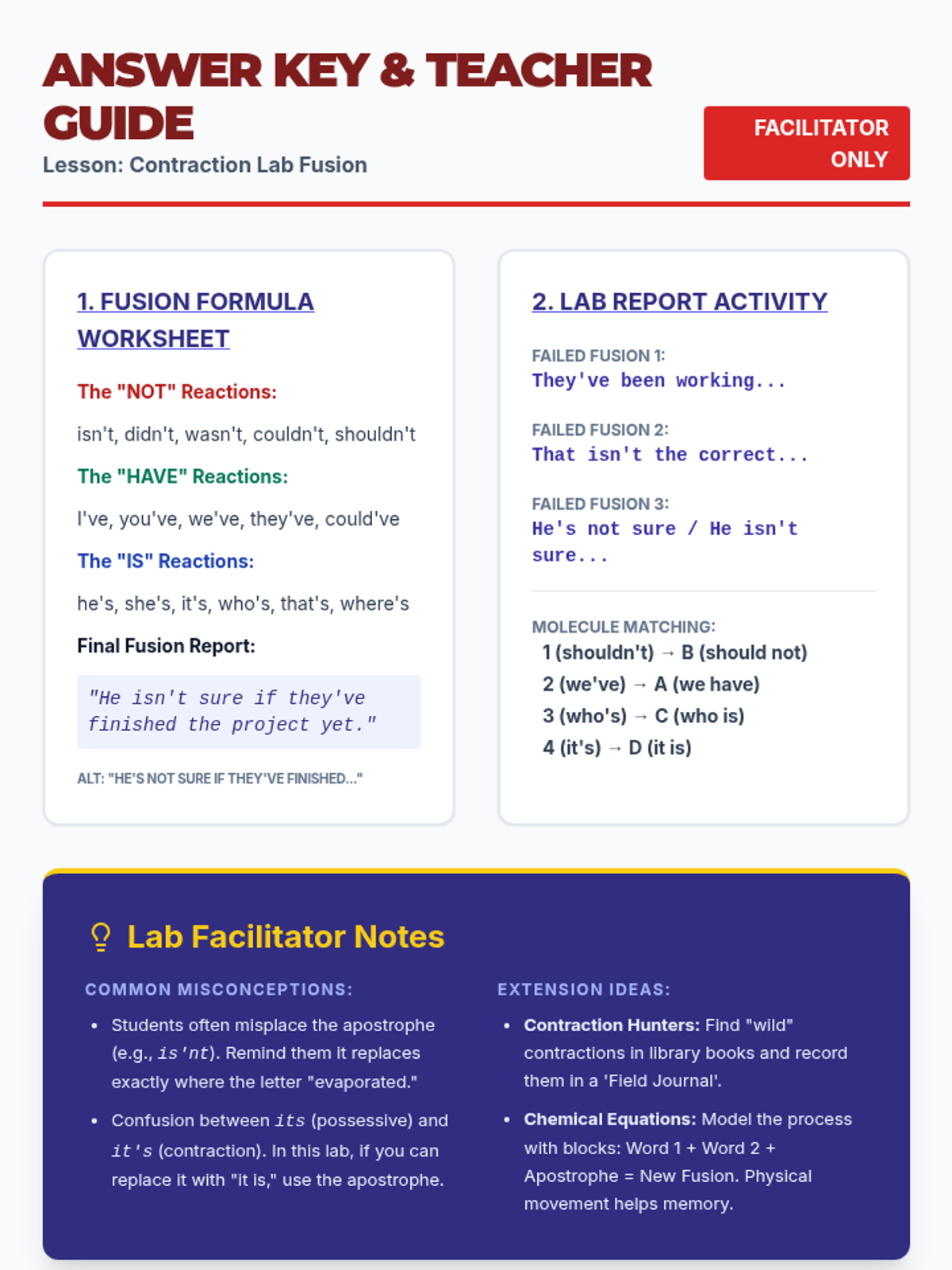
A high-energy, science-themed lesson where students become 'Word Chemists' to fuse words together using the power of the apostrophe. Focuses on contractions formed with 'not', 'have', and 'is'.
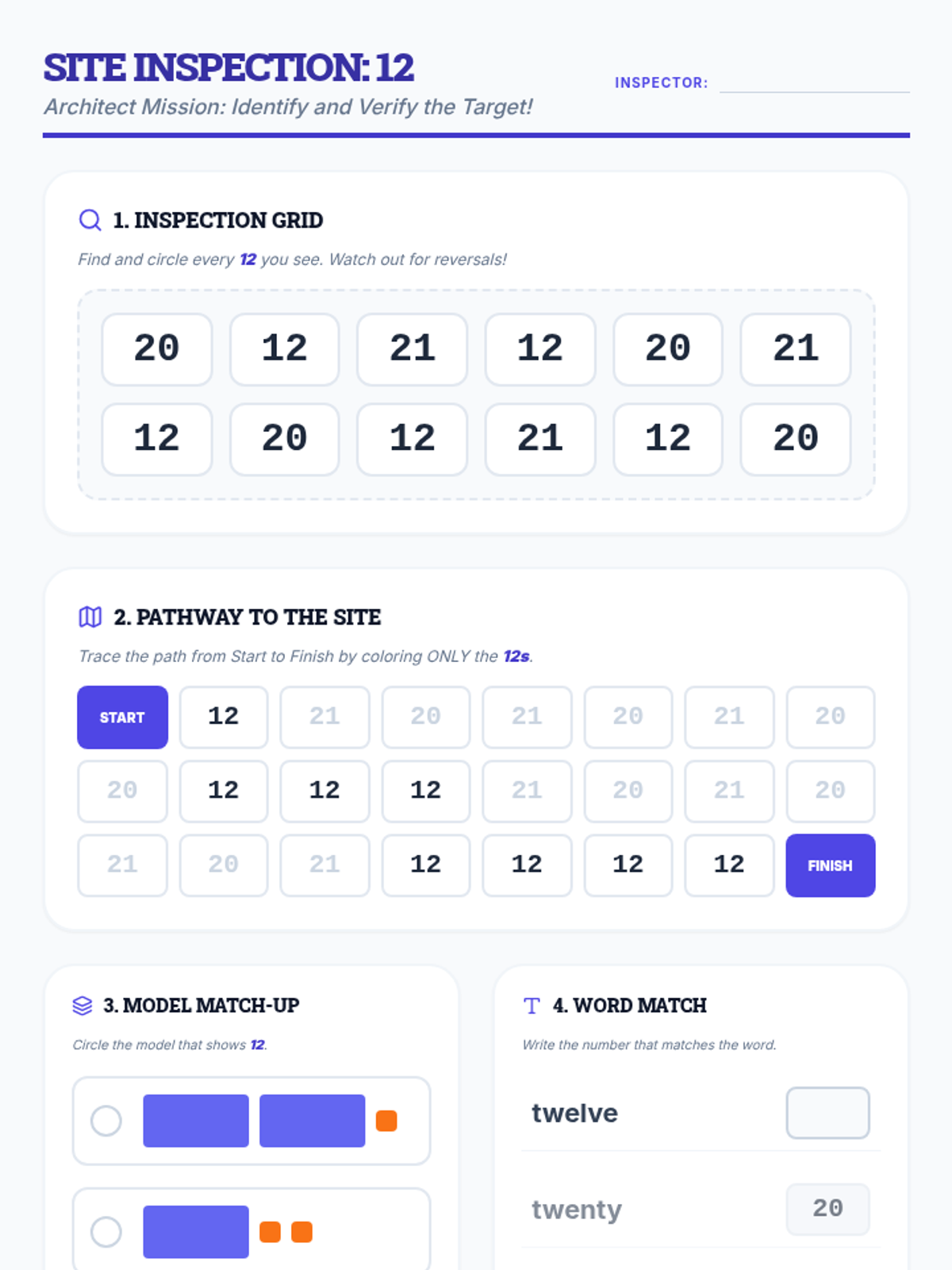
A numeracy lesson helping students distinguish the number 12 from 20 and 21 using place value visualization (one ten, two ones) and 'Architect' inspection strategies.
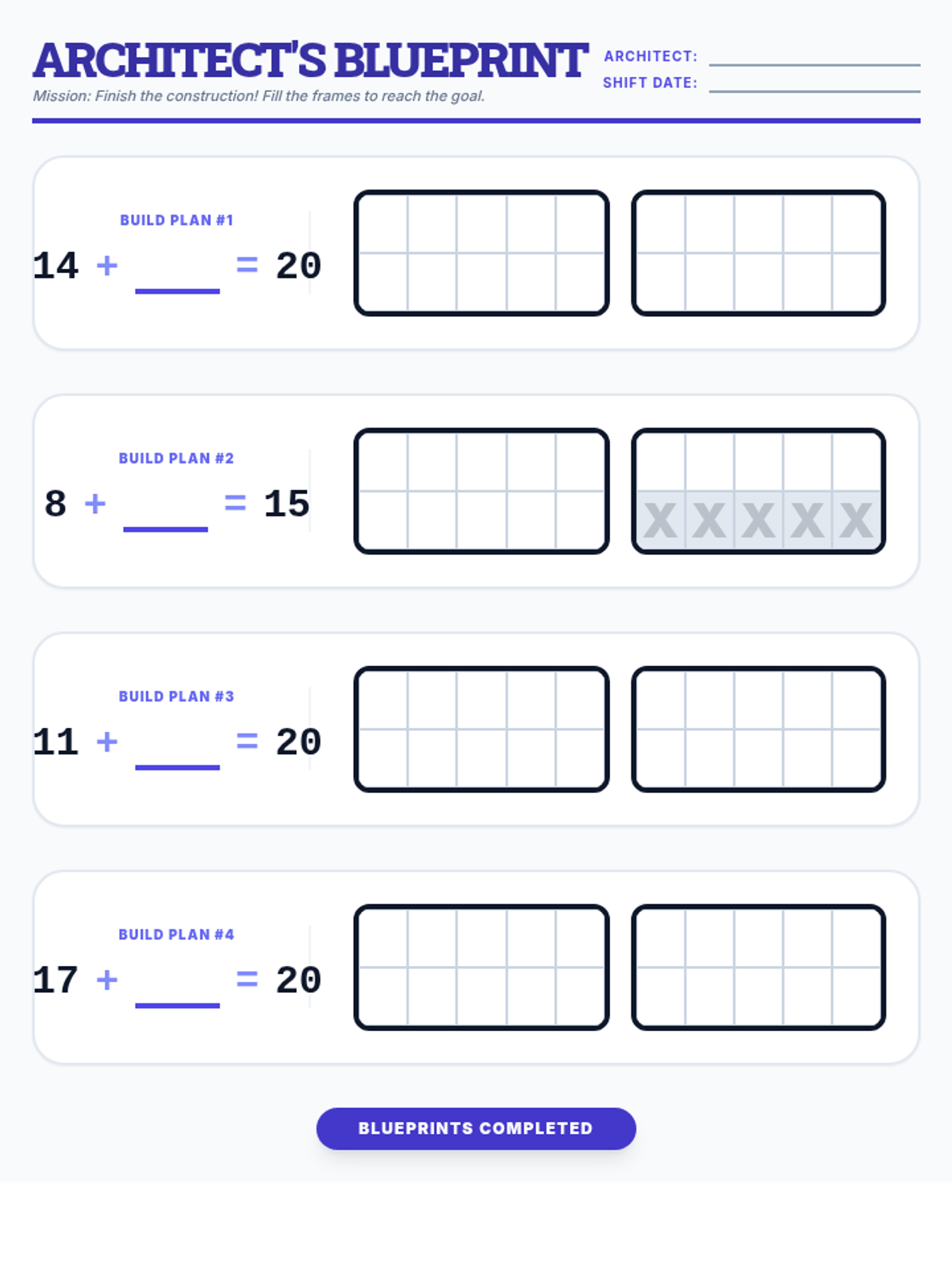
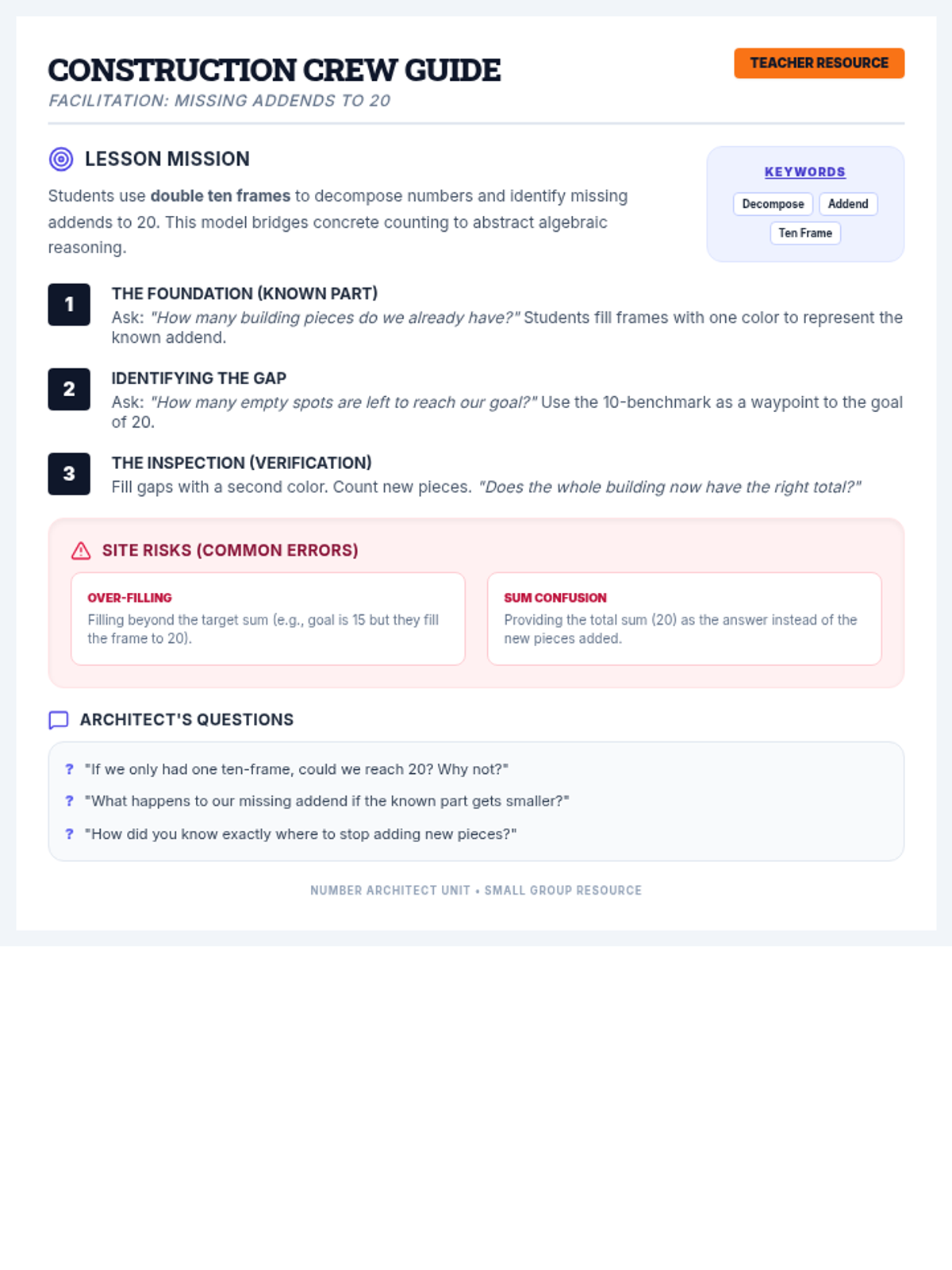
A visual math lesson focused on finding missing addends up to 20 using double ten frames and decomposition strategies. Students act as 'Number Architects' to fill gaps in blueprints.
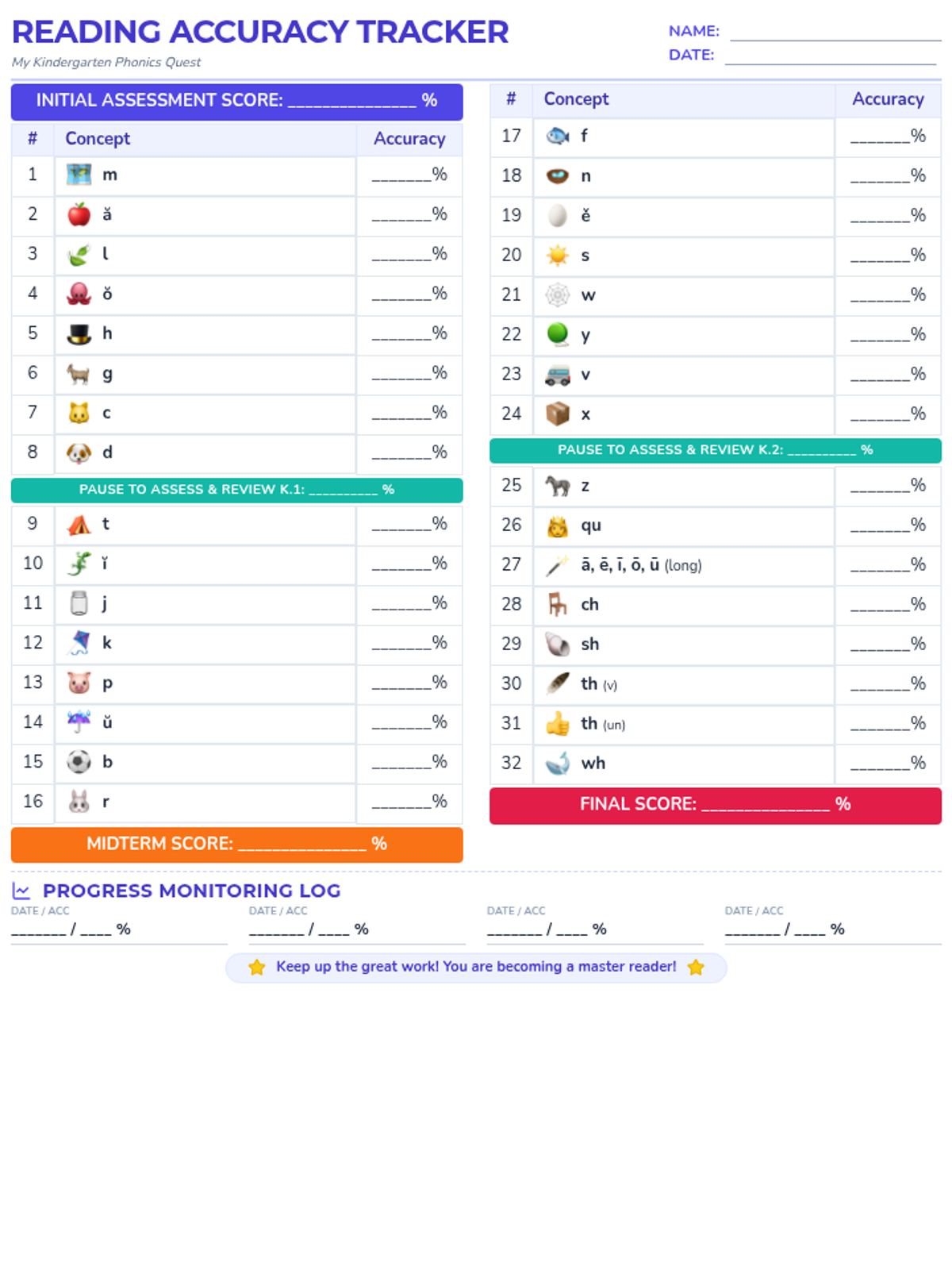
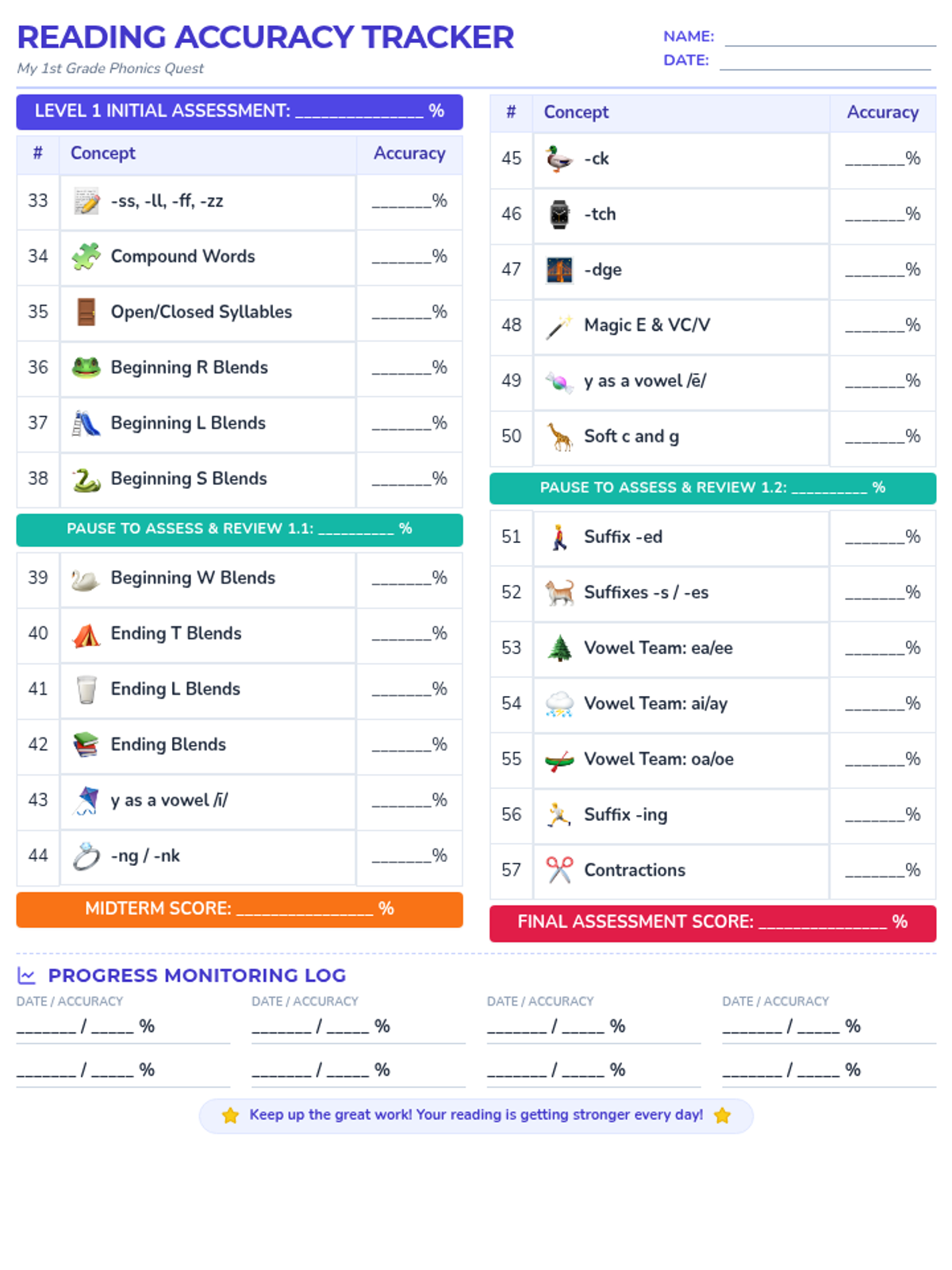
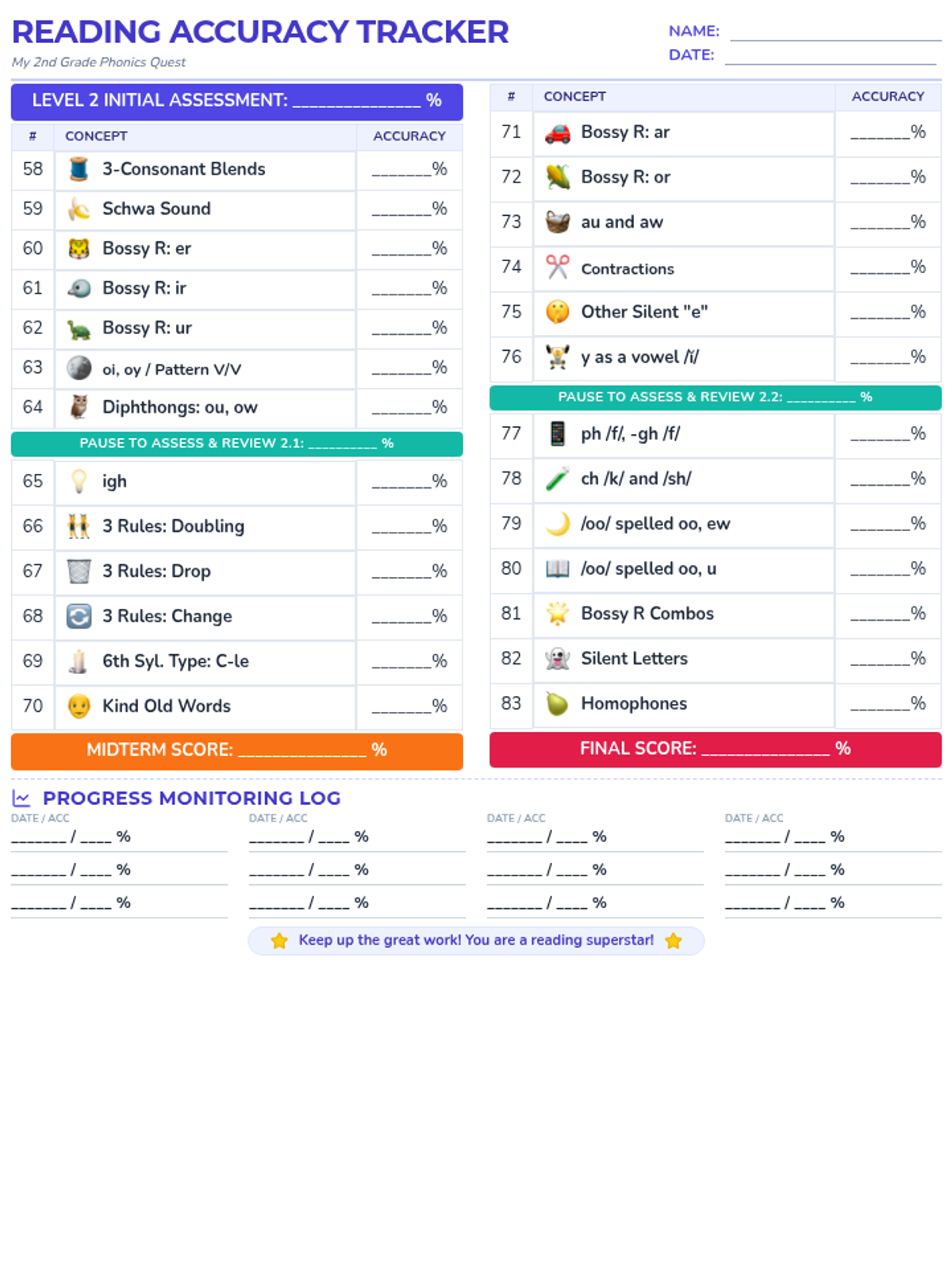
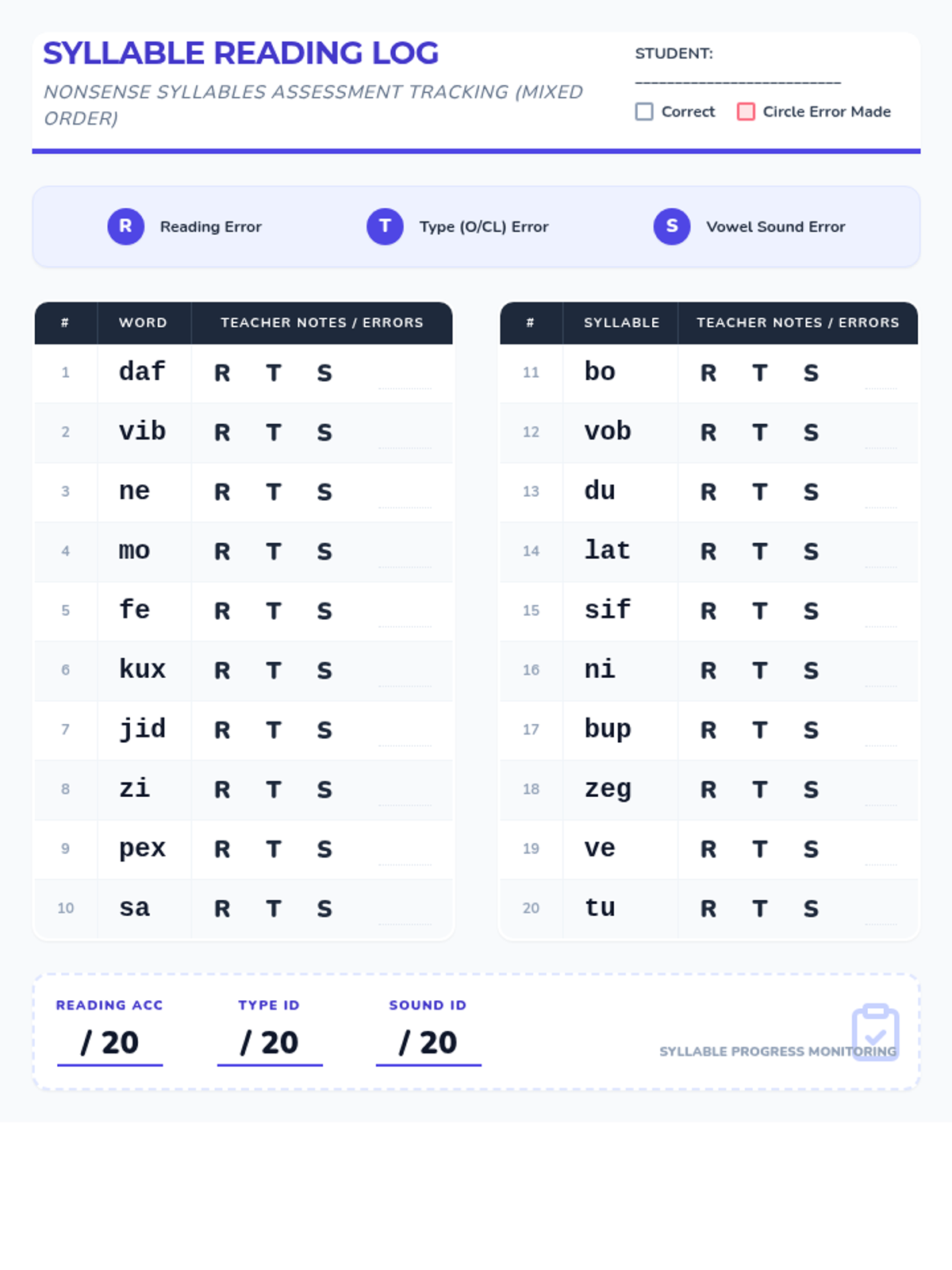
A collection of reading accuracy trackers for Kindergarten and 1st Grade students to monitor their phonics progress.
Unit 9 Lesson 12 Do Now focusing on sentence variety in a library passage and editing compound sentences and title capitalization in a history text.
Unit 9 Lesson 11 Do Now focusing on logical order in a gardening passage and editing double negatives and pronoun agreement in a space exploration text.
Unit 9 Lesson 10 Do Now focusing on clarity and conciseness in a science passage and editing run-on sentences and historical capitalization in a western narrative.
Unit 9 Lesson 9 Do Now focusing on introductory sentences in a party passage and editing sentence fragments and spelling in an ocean exploration text.
Unit 9 Lesson 8 Do Now focusing on word choice in a music passage and editing comparative adjectives and quotation marks in a nature text.
Unit 9 Lesson 7 Do Now focusing on focused structure in a recycling passage and editing prepositions and contractions in a winter narrative.
Unit 9 Lesson 6 Do Now focusing on adding supporting details in a historical passage and editing possessive nouns in a formal letter.
Unit 9 Lesson 5 Do Now focusing on conclusion sentences in a travel passage and editing dialogue punctuation and homophones in a science text.
Unit 9 Lesson 4 Do Now focusing on sentence combining in a cooking passage and editing subject-verb agreement in a mystery narrative.
Unit 9 Lesson 3 Do Now focusing on transition words in a zoo passage and editing irregular verbs and commas in a rainforest conservation text.
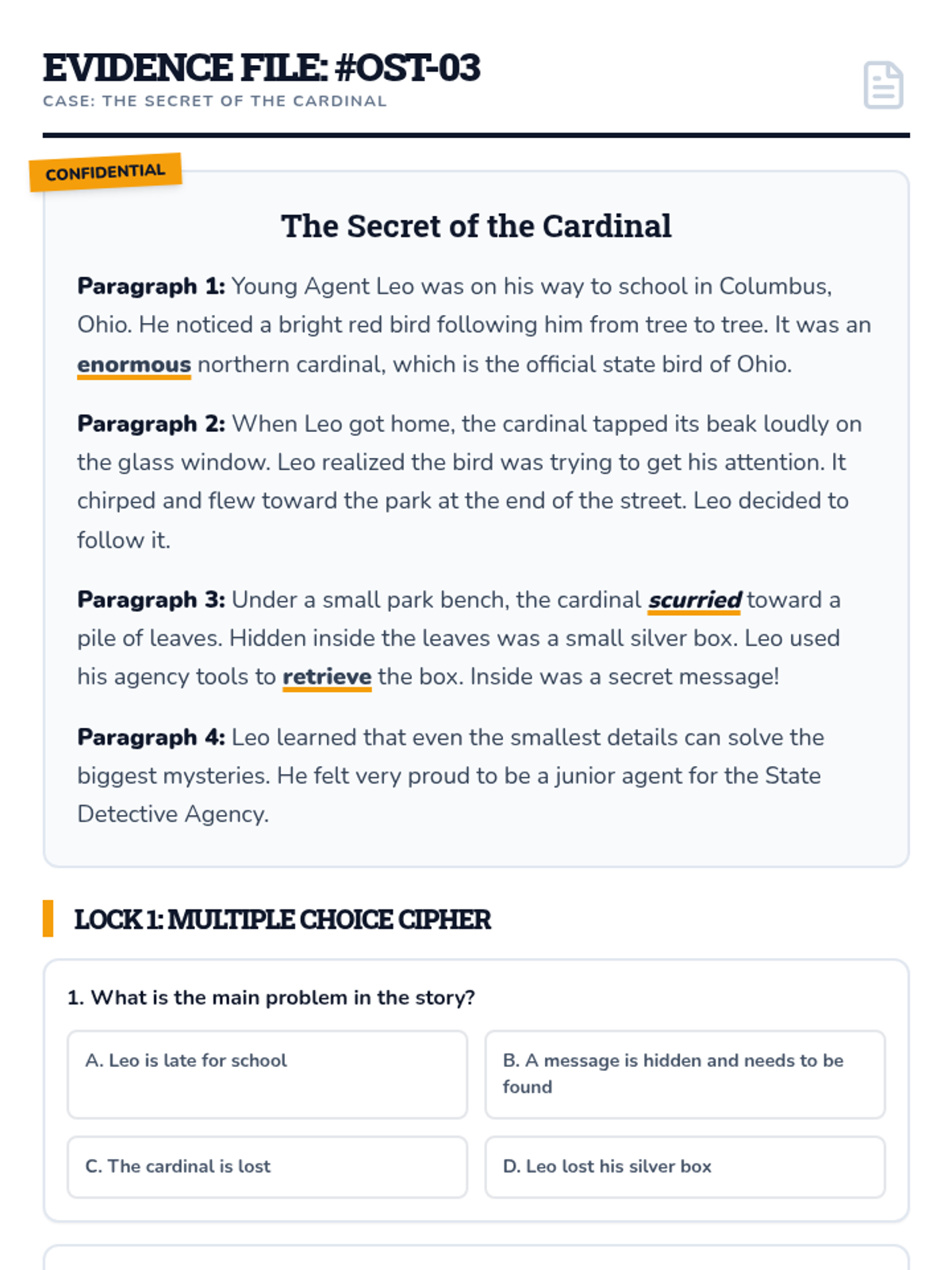
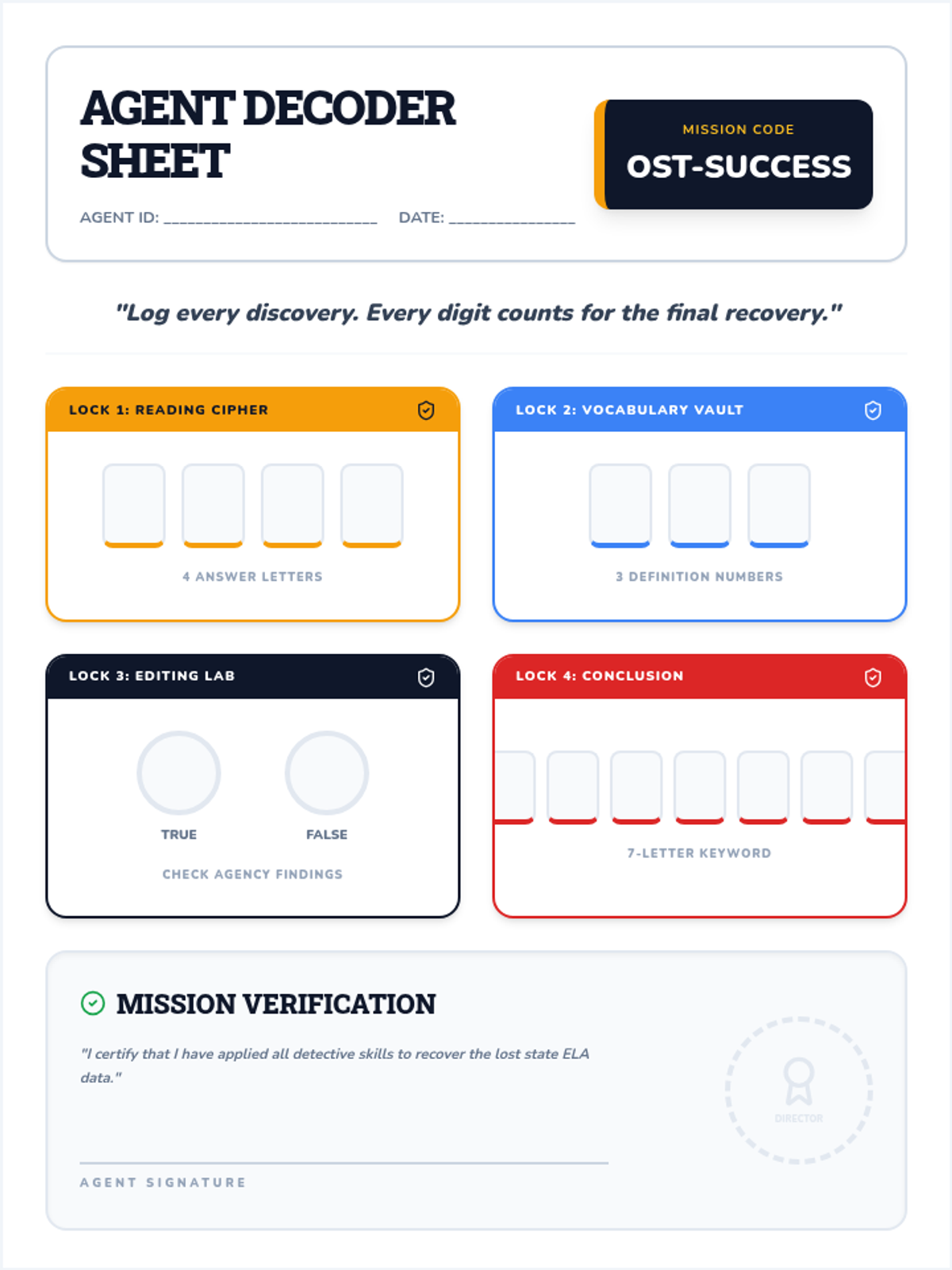
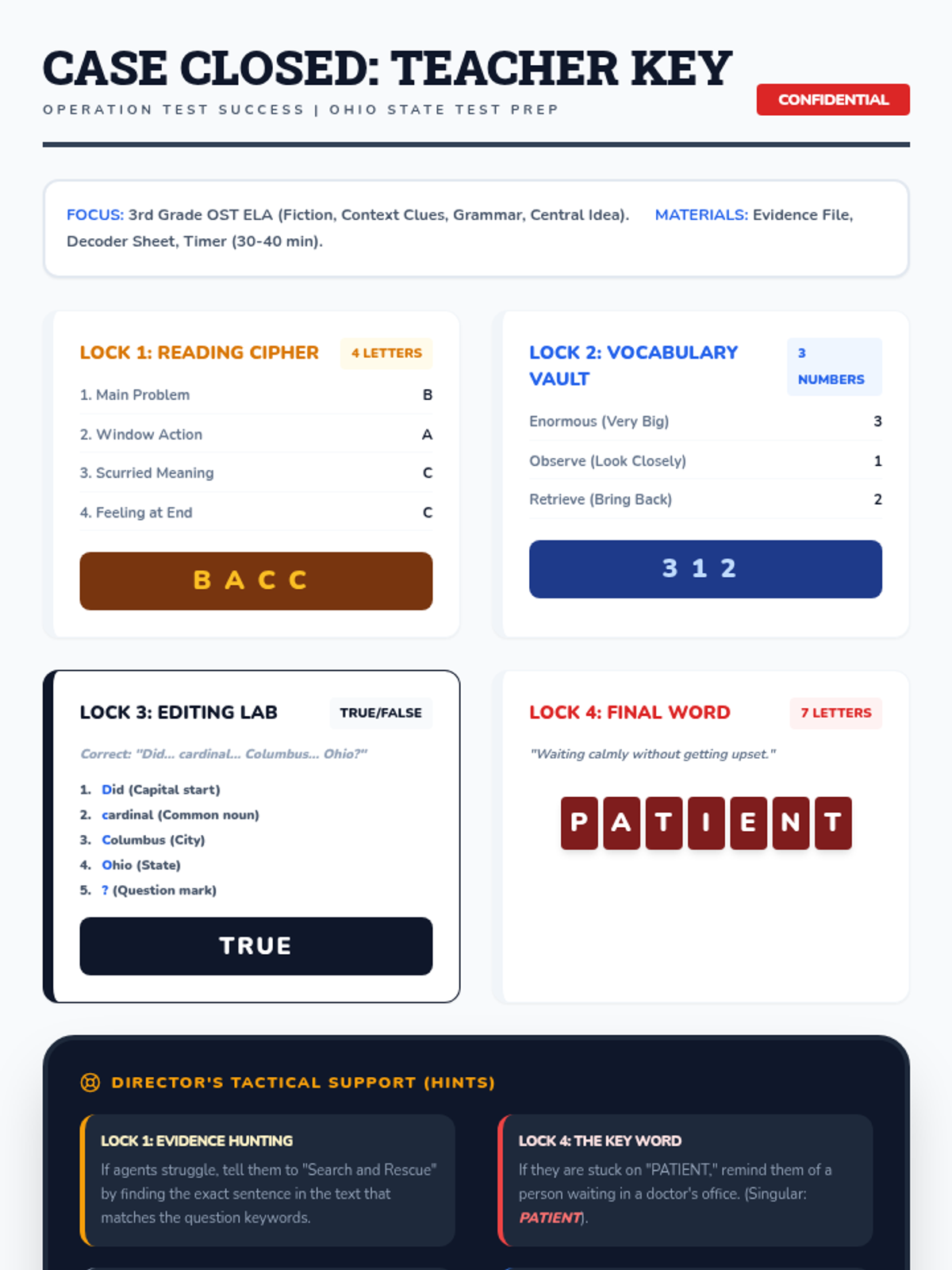
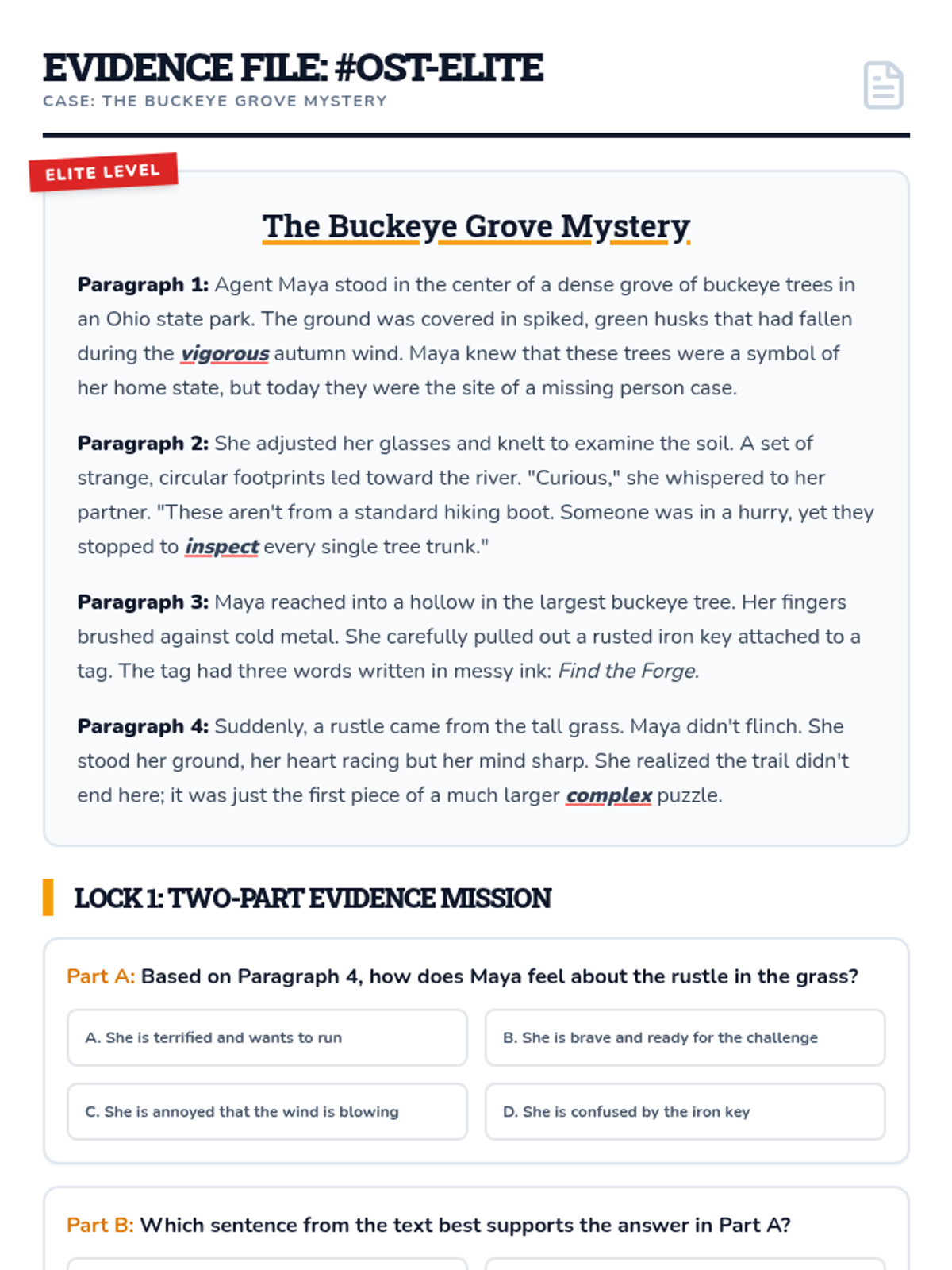
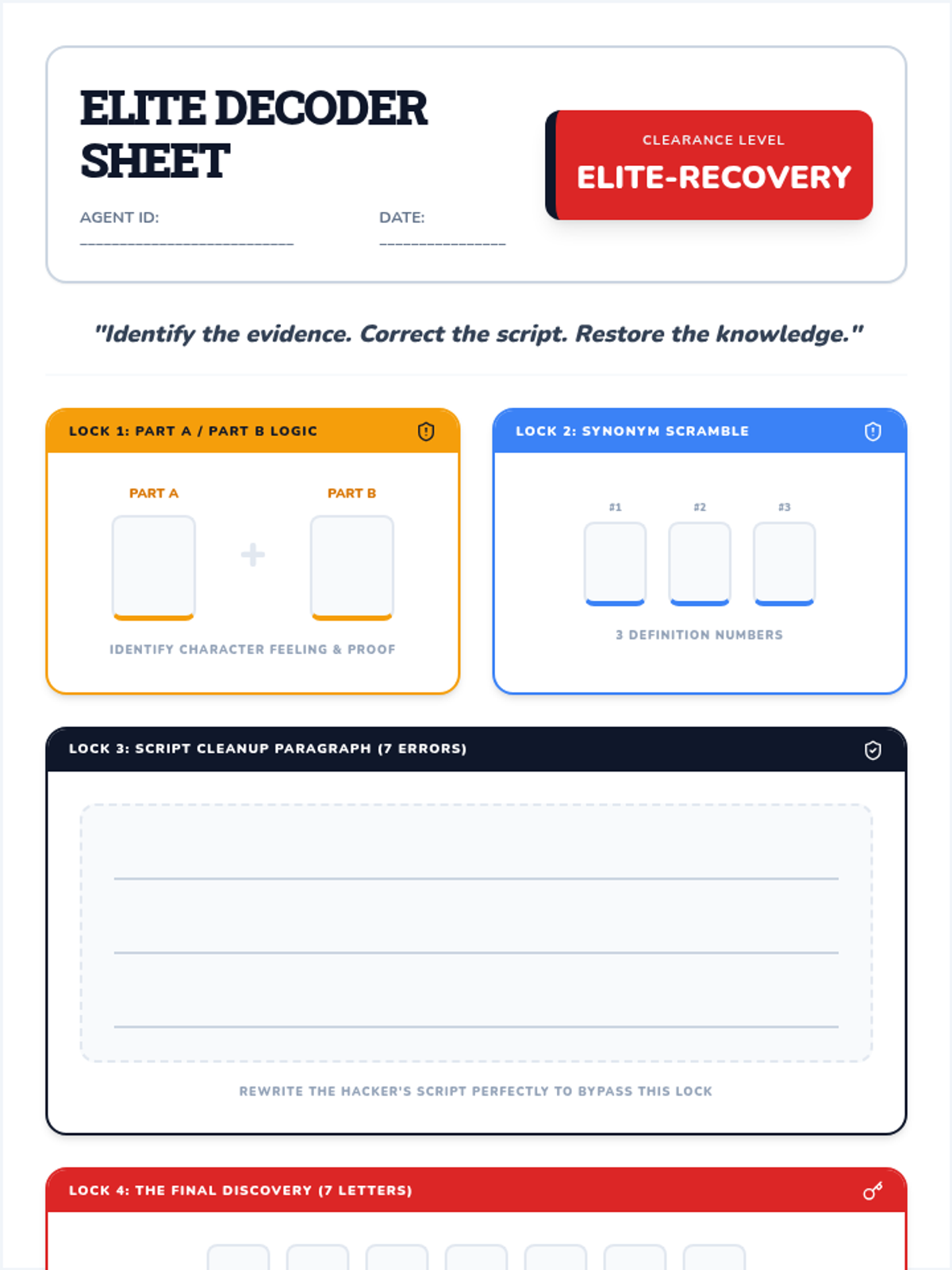
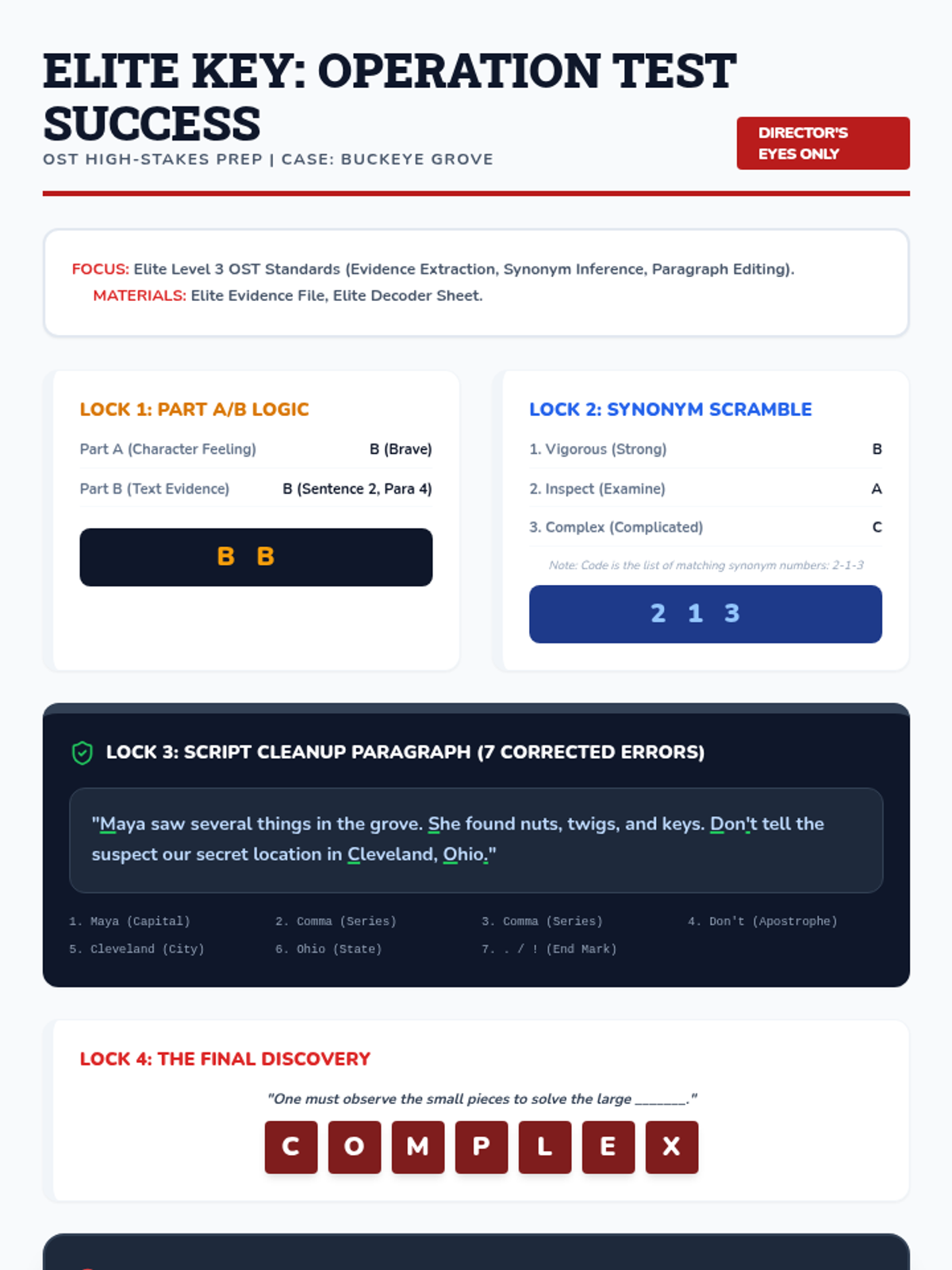
A high-stakes, detective-themed escape room designed to prepare 3rd-grade students for the Ohio State Test (OST) in English Language Arts. Students solve a series of 'locks' involving reading comprehension, vocabulary, and grammar to recover stolen agency data.
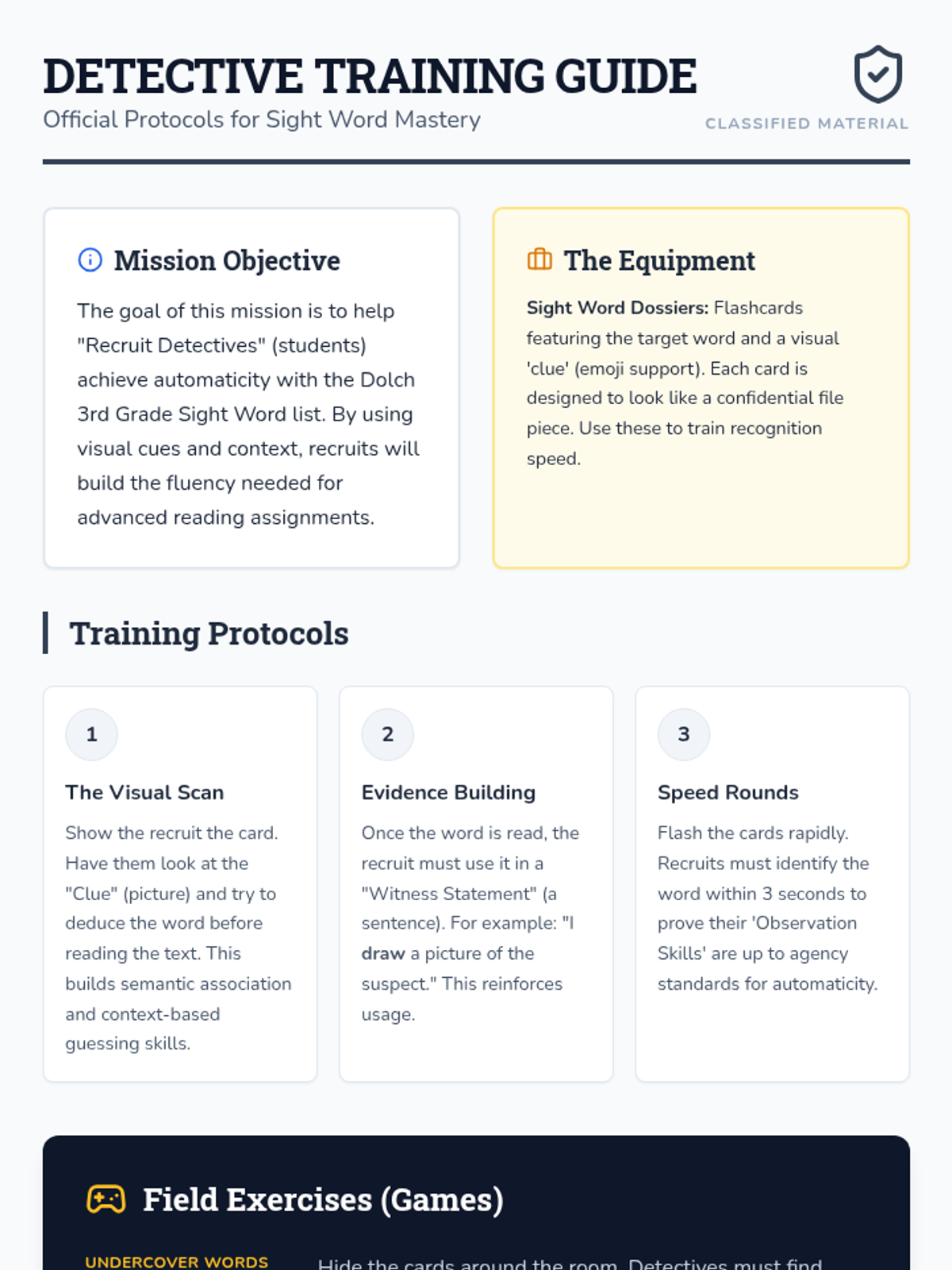
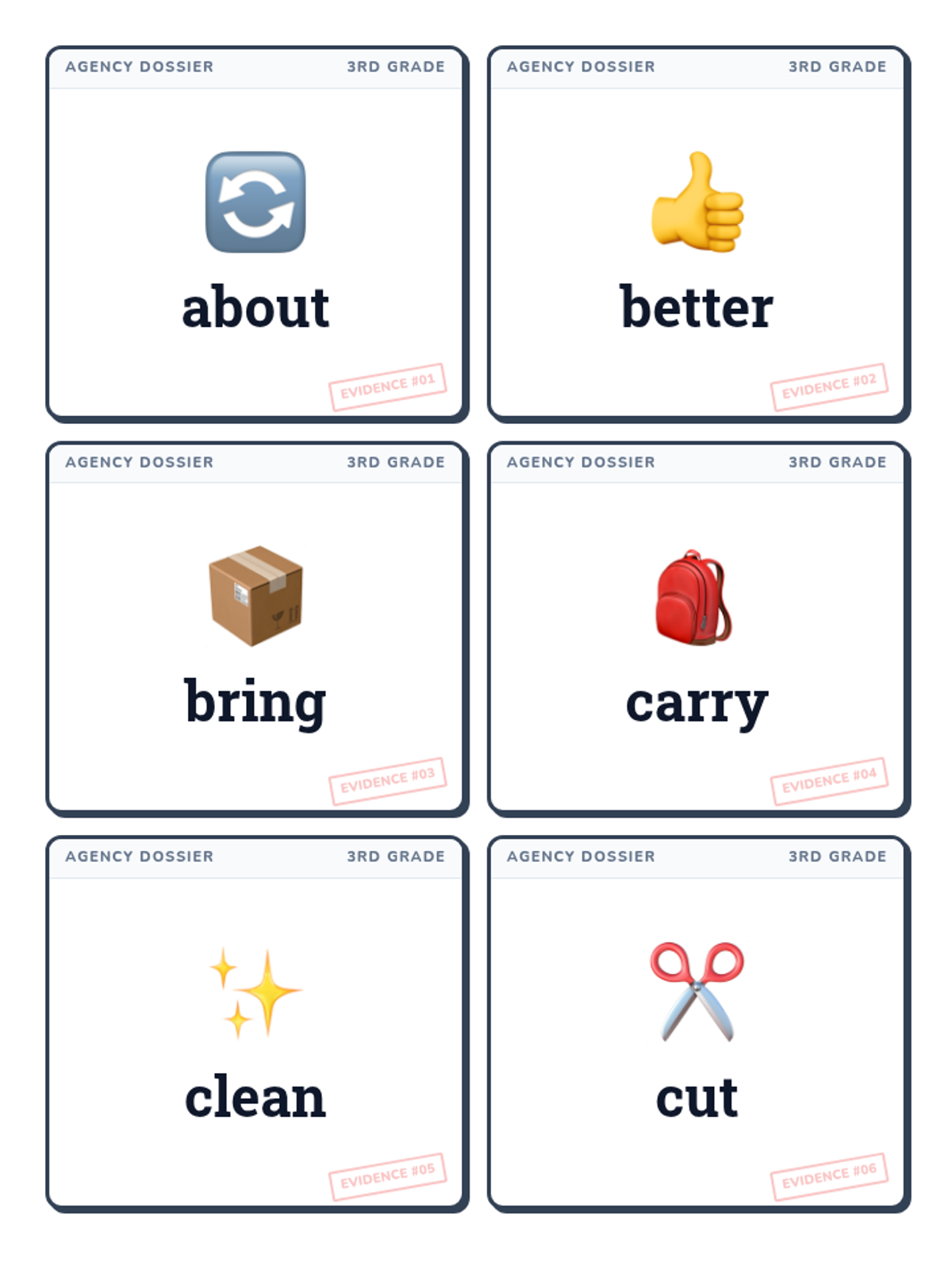
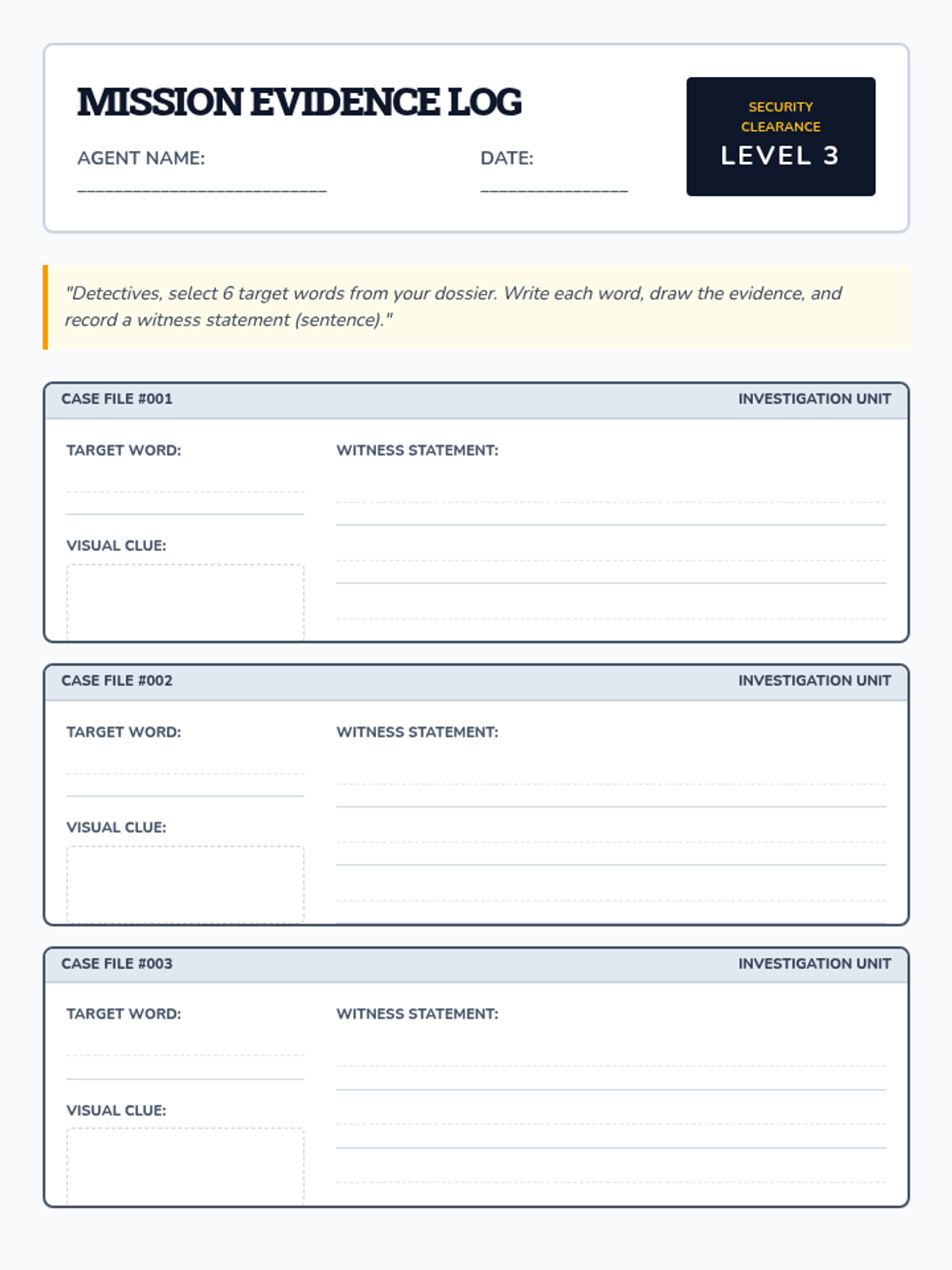
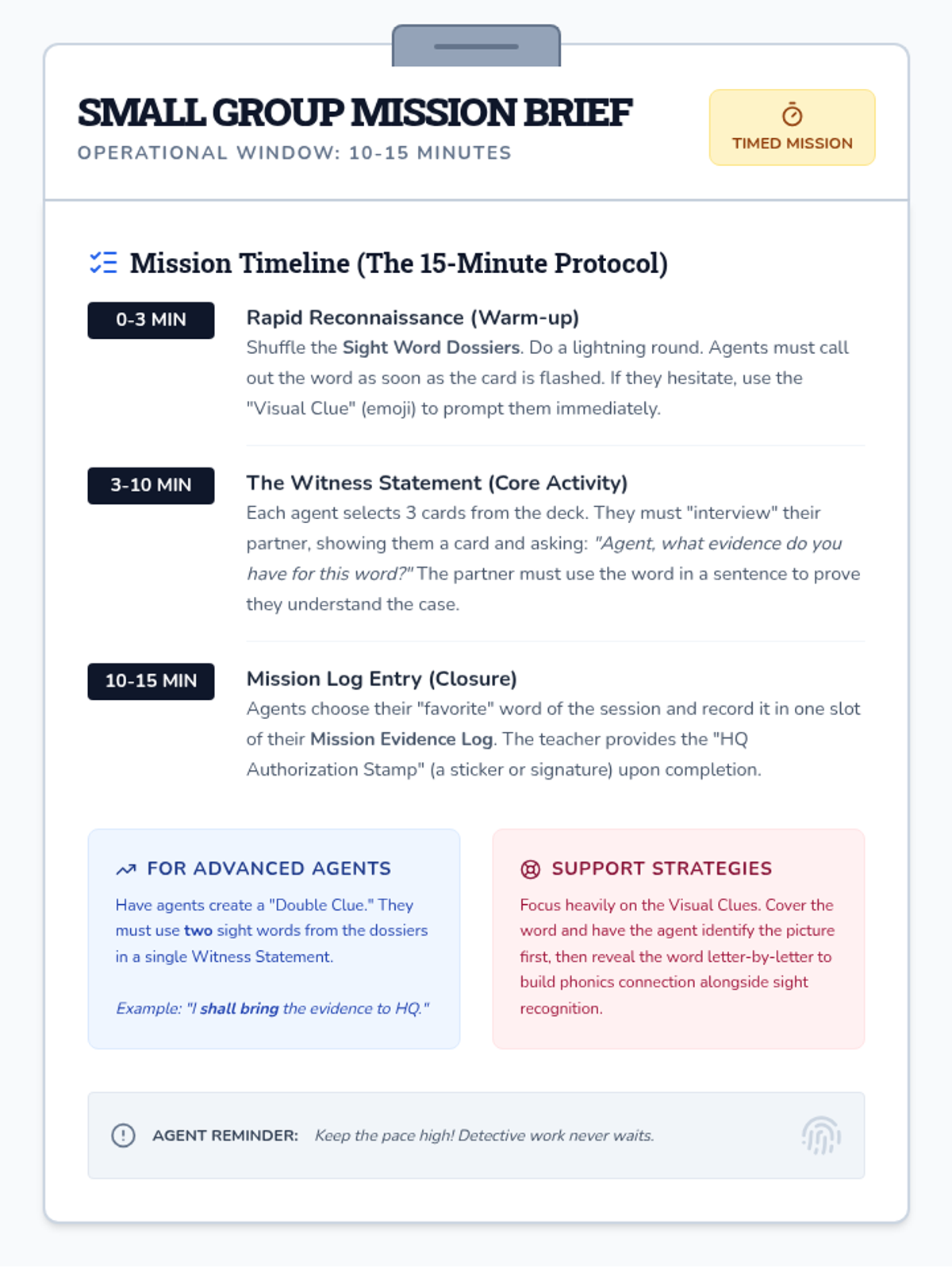
A fun, detective-themed lesson designed to help 3rd grade students master Dolch sight words through visual association and investigative play. Students use 'dossier' flashcards to identify and practice high-frequency words.
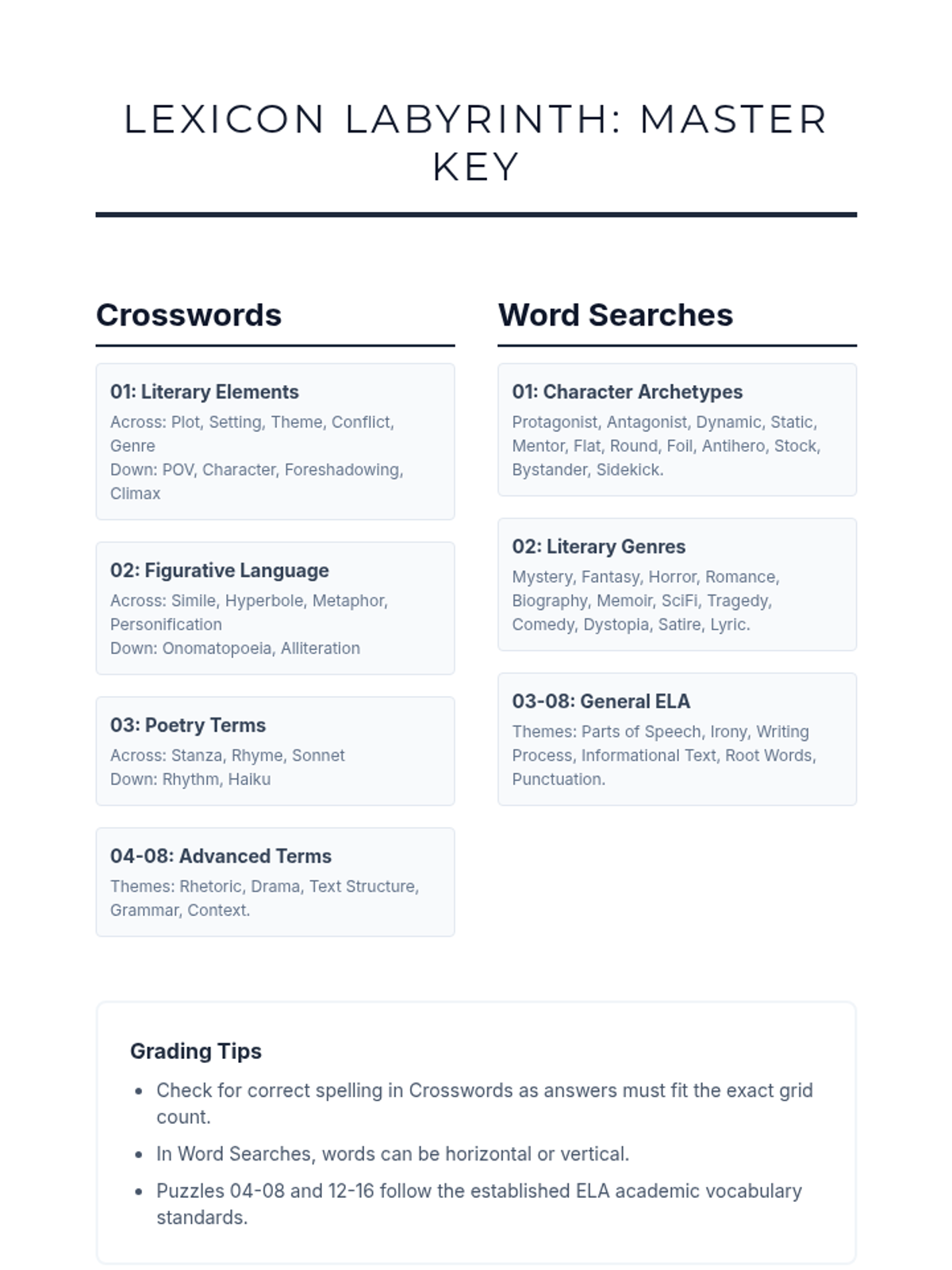
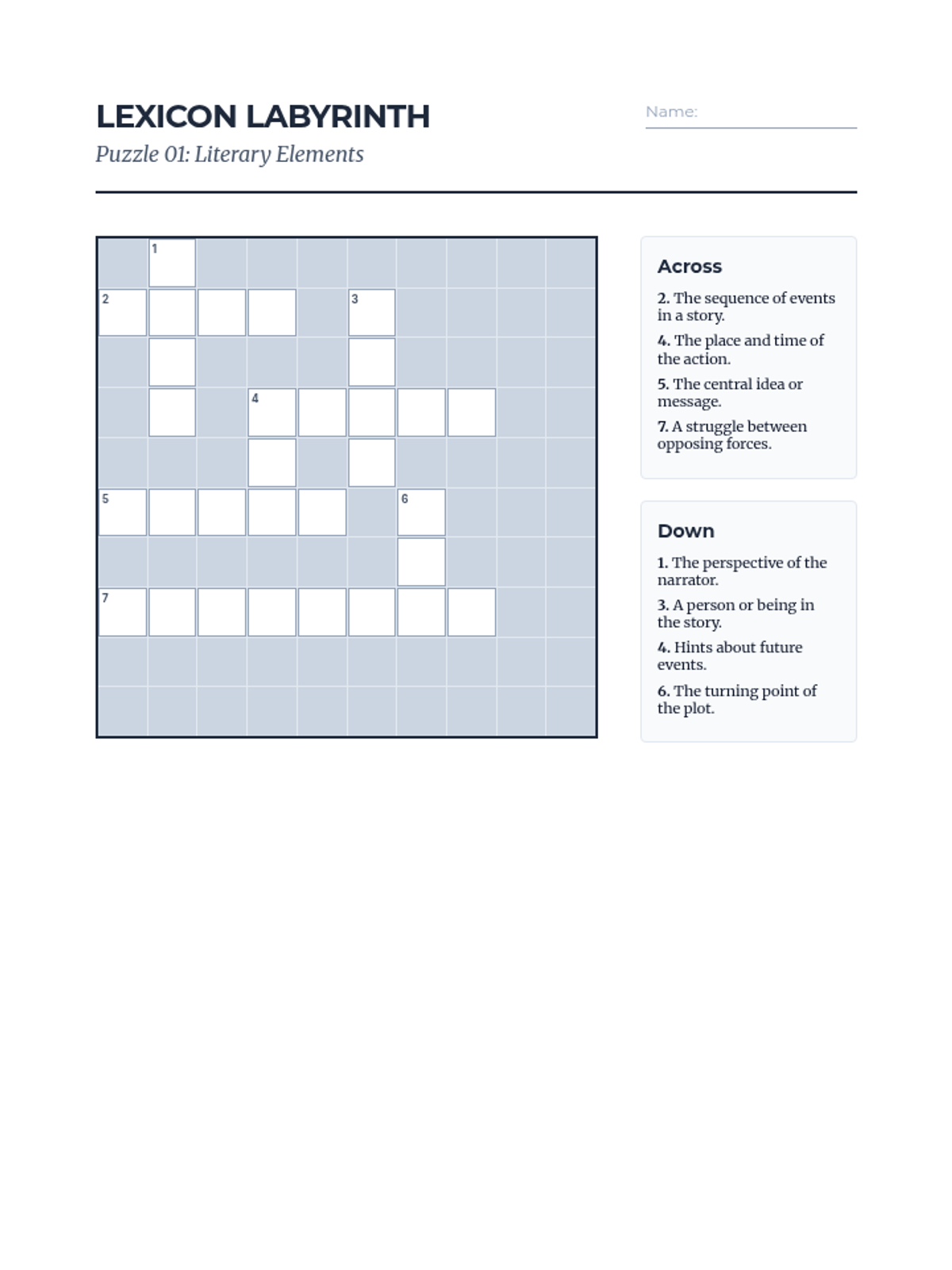
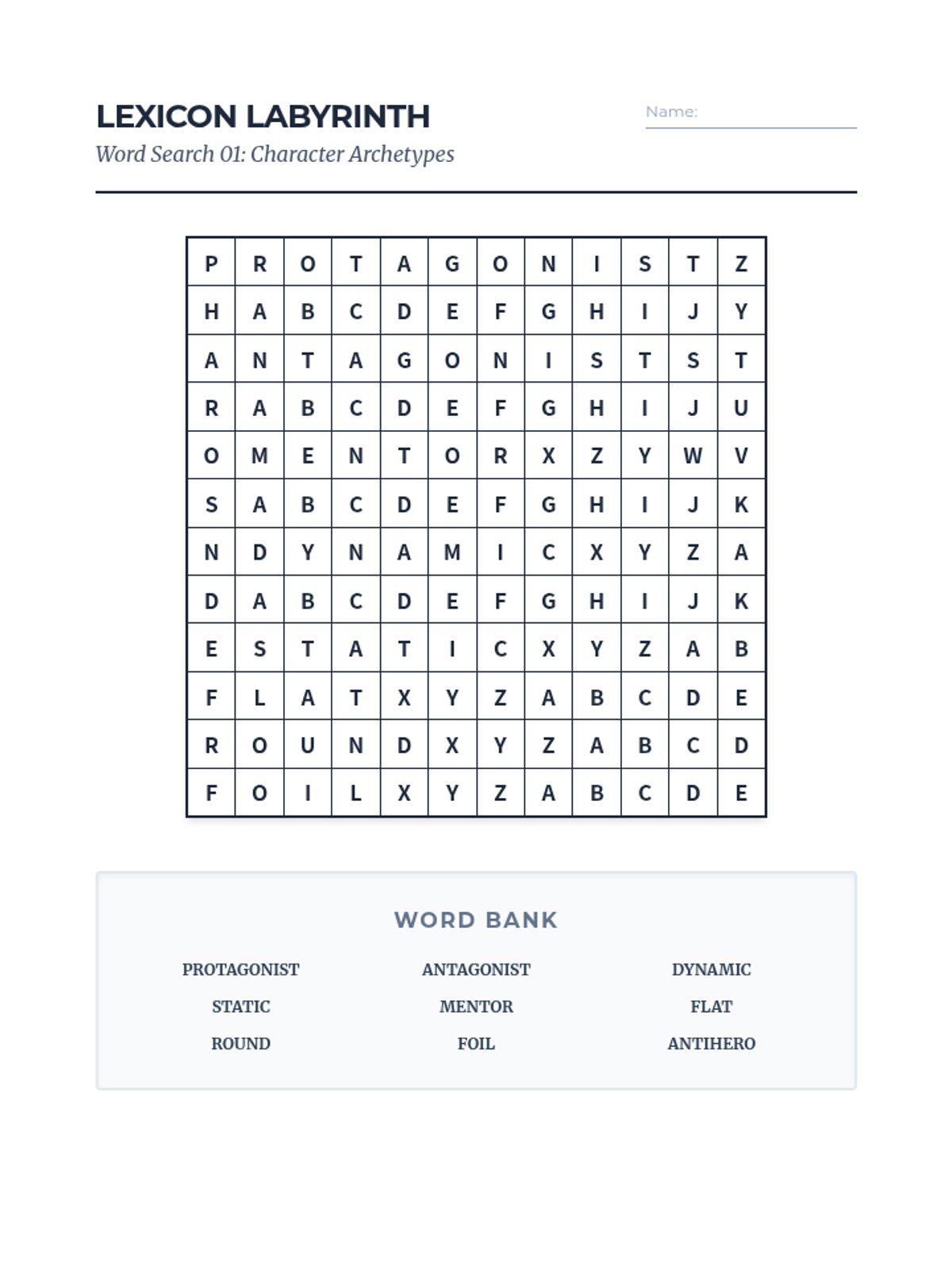
A comprehensive set of vocabulary-building puzzles focused on essential ELA academic terms, covering literary elements, figurative language, rhetorical devices, and more.
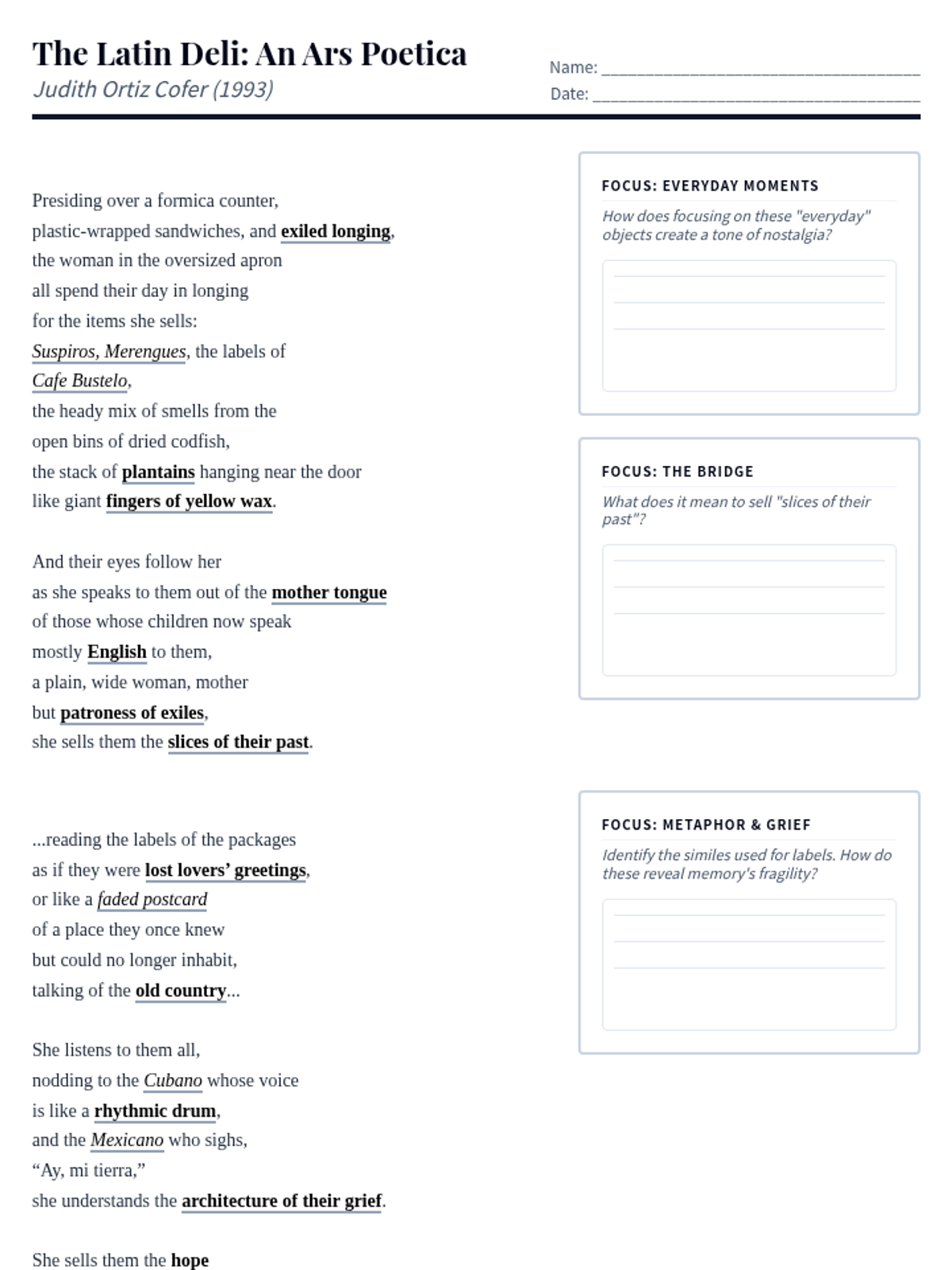
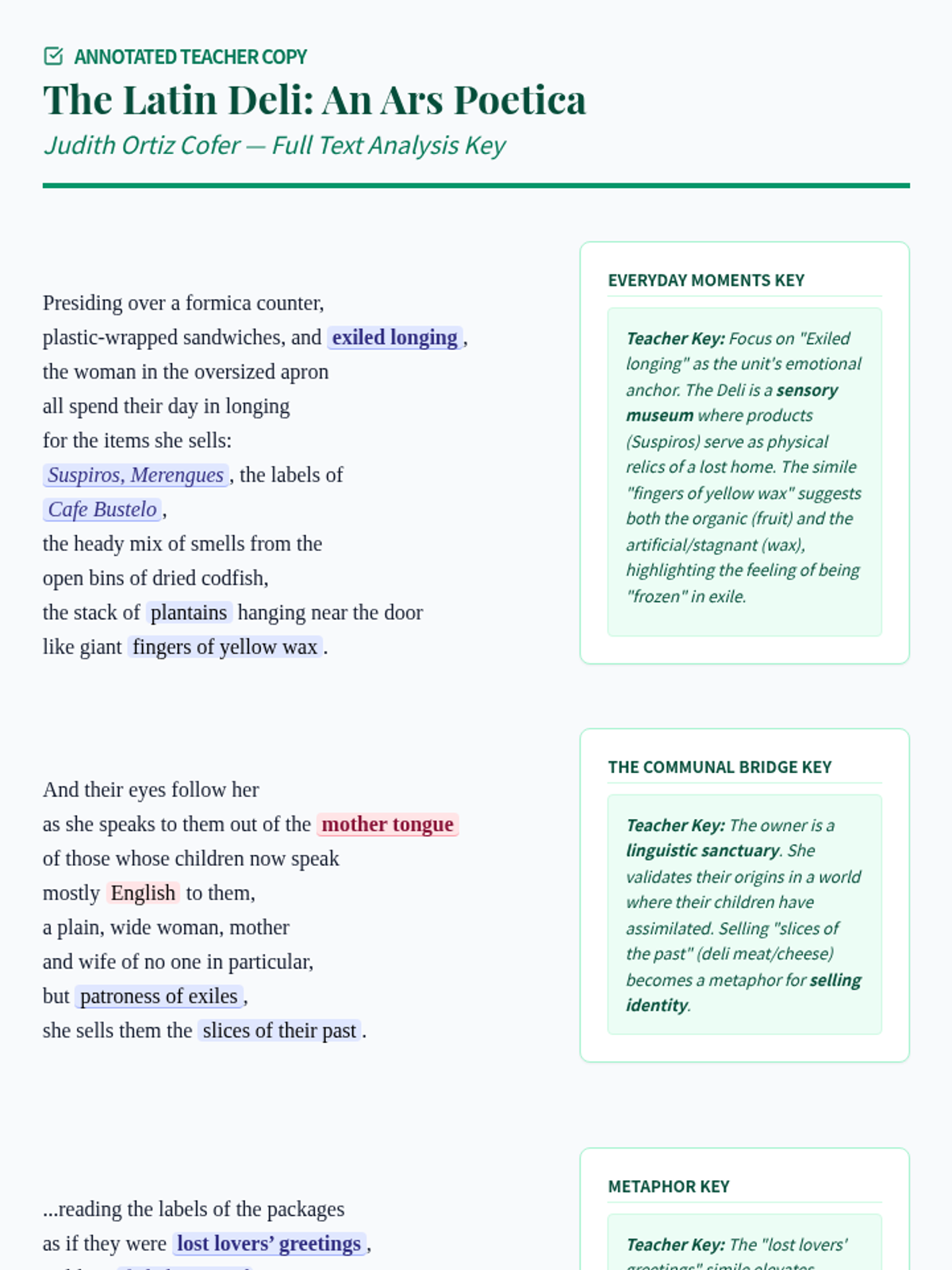
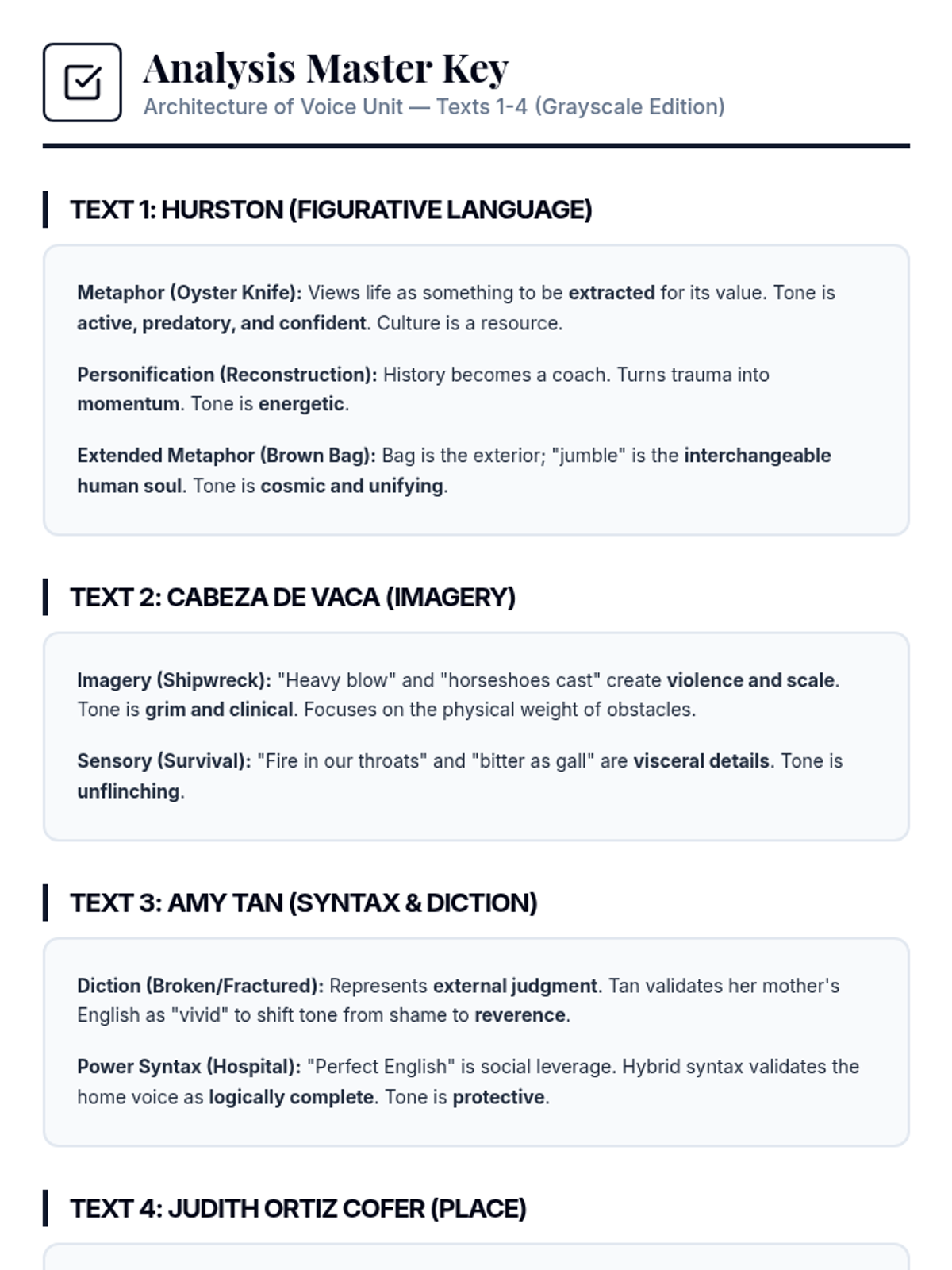
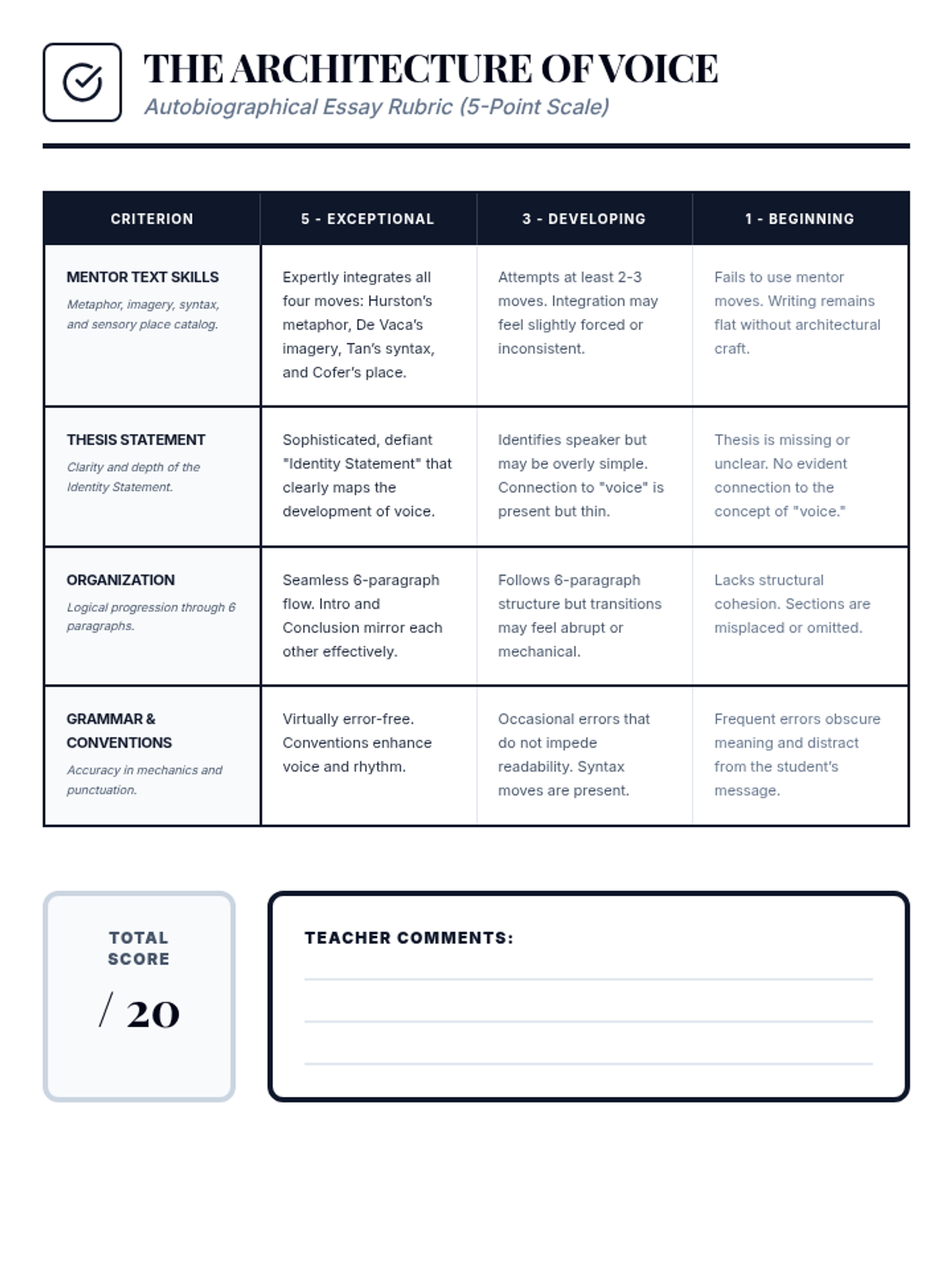
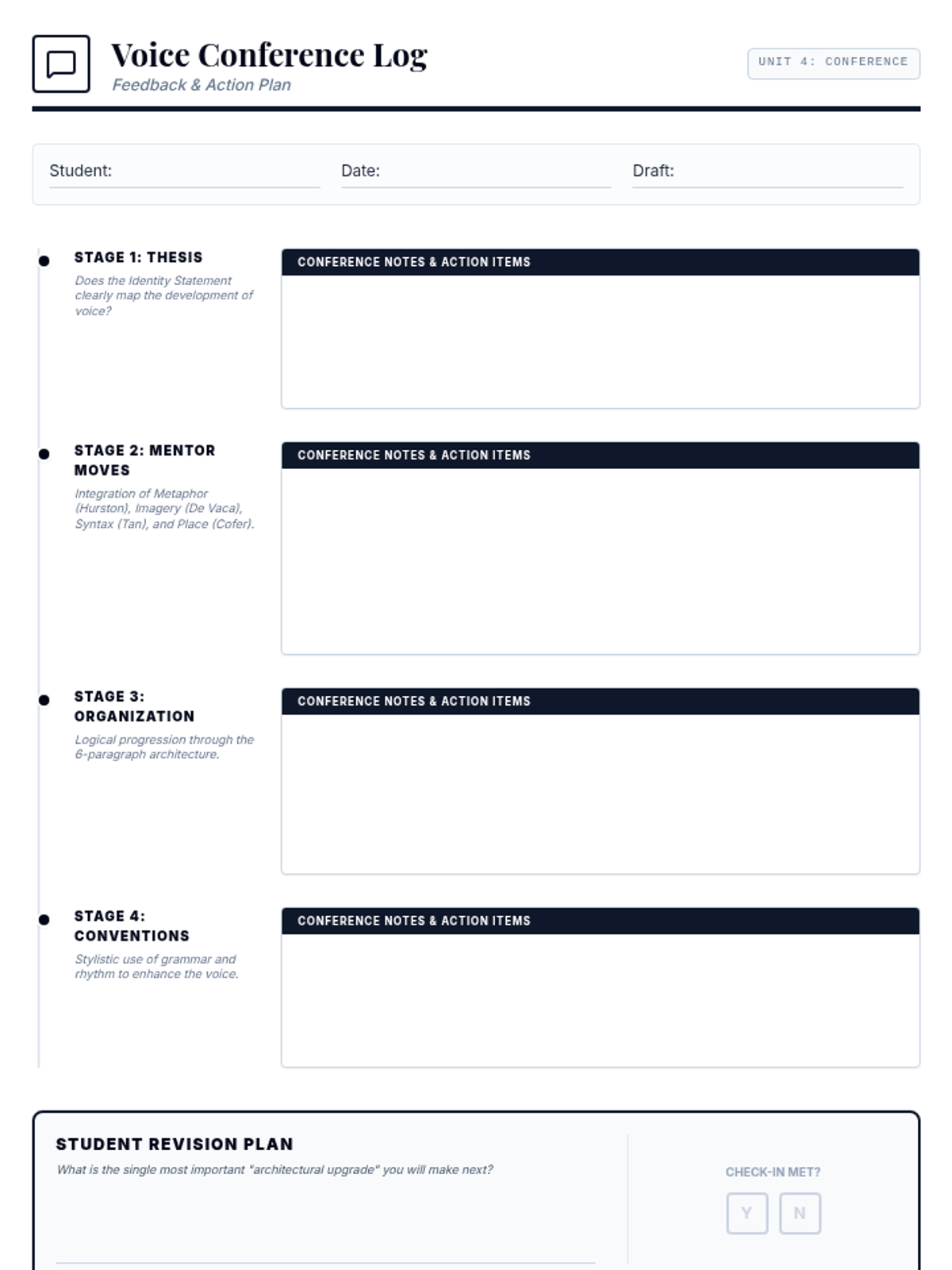
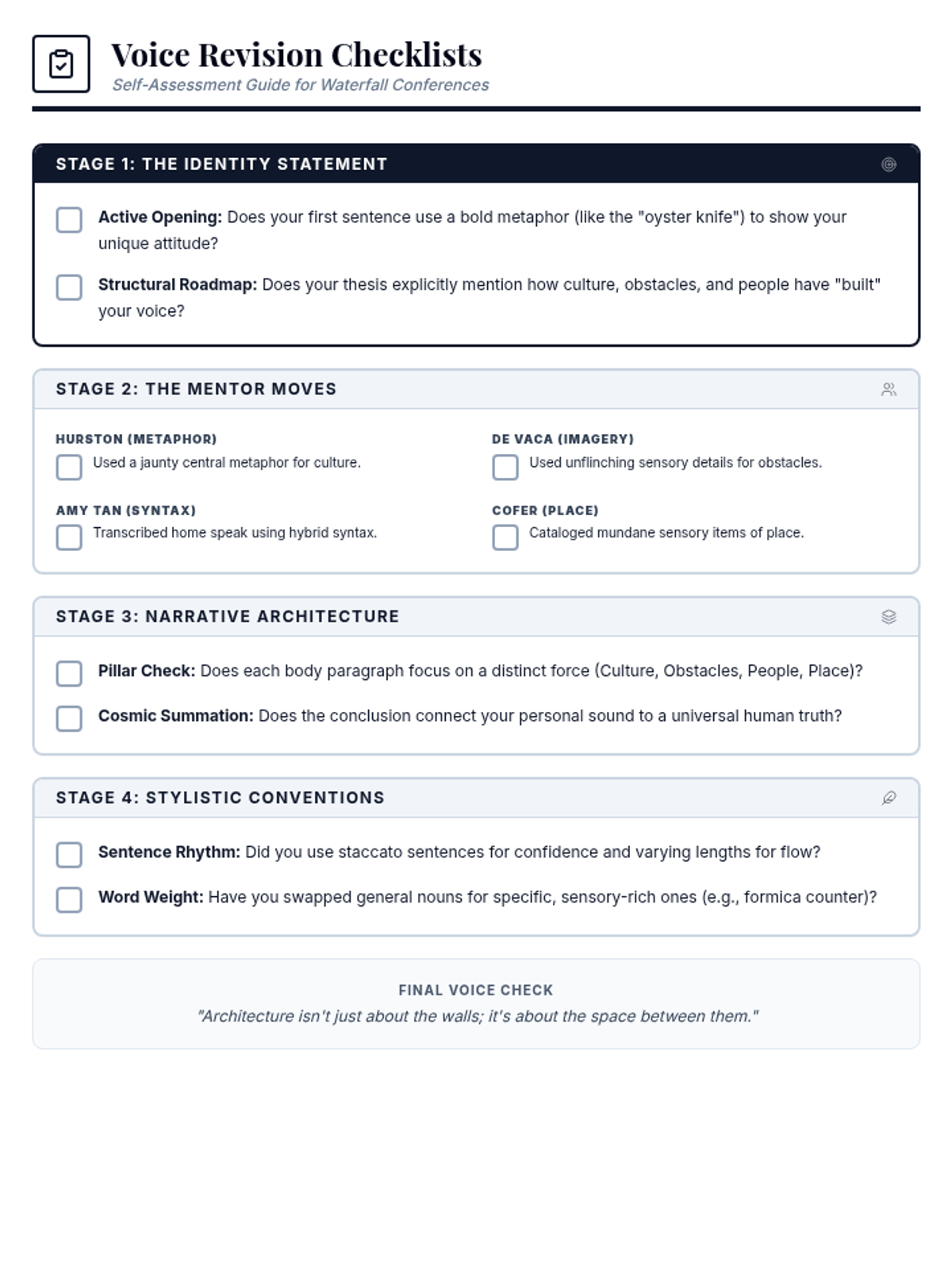
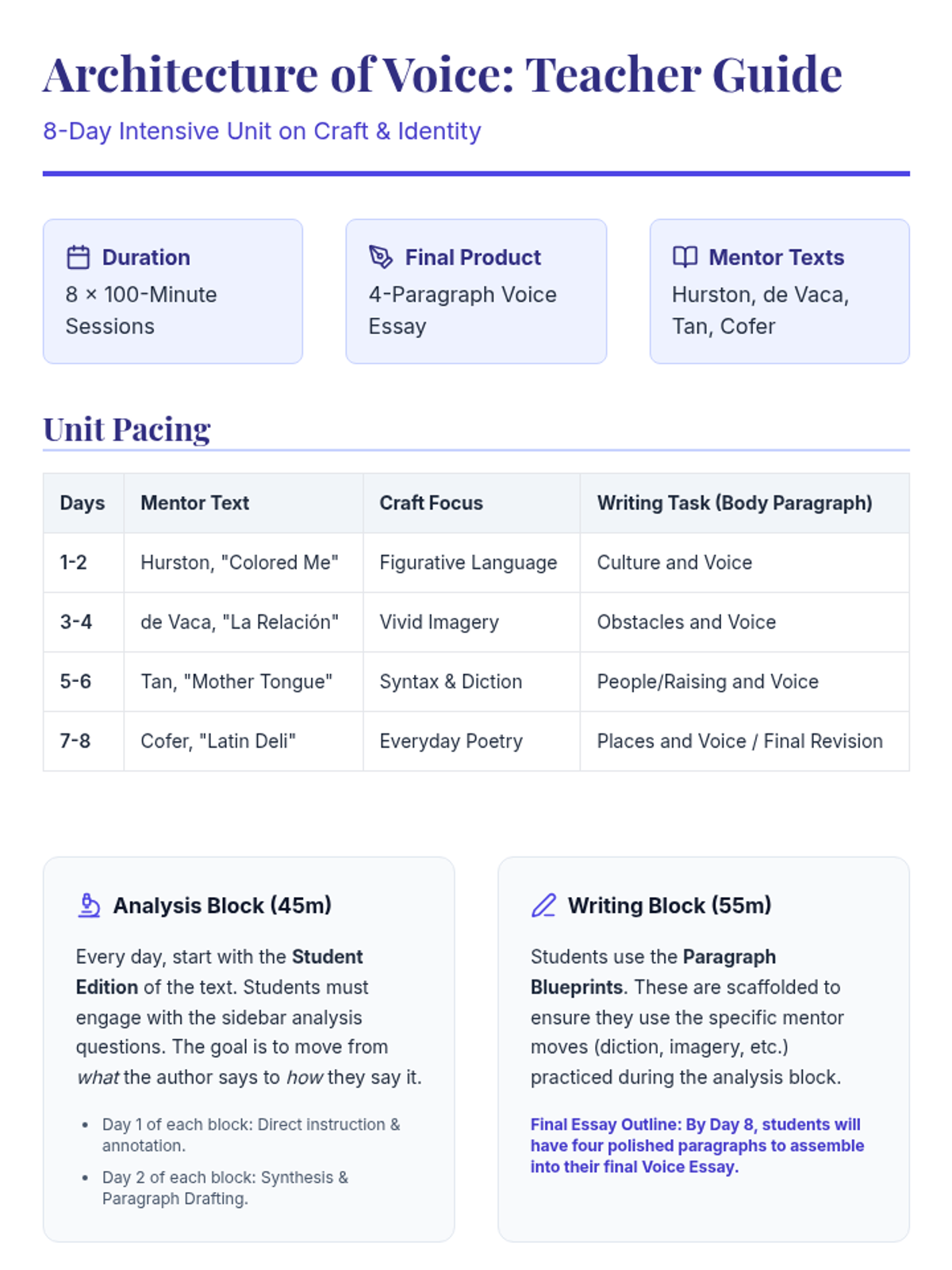
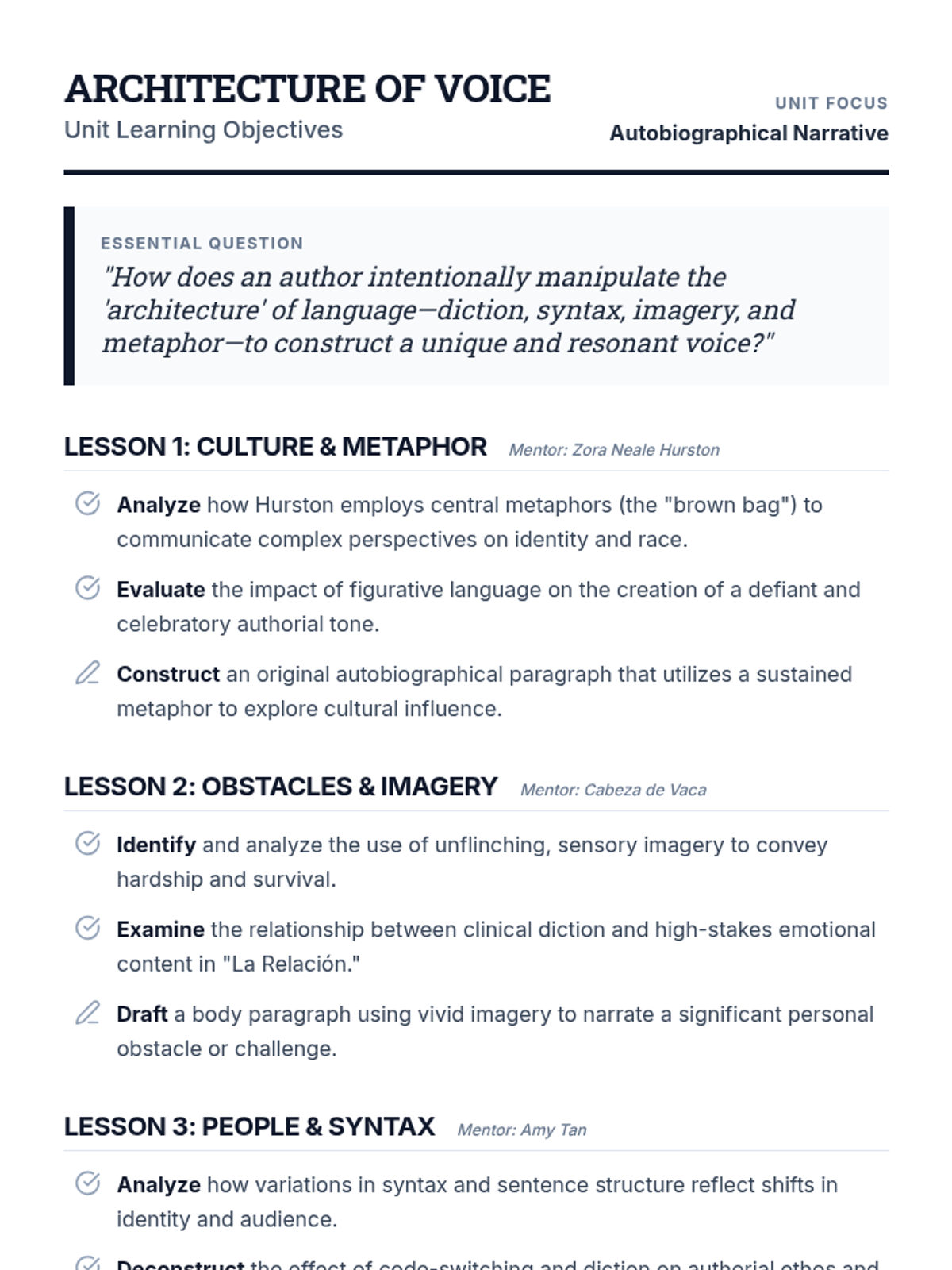
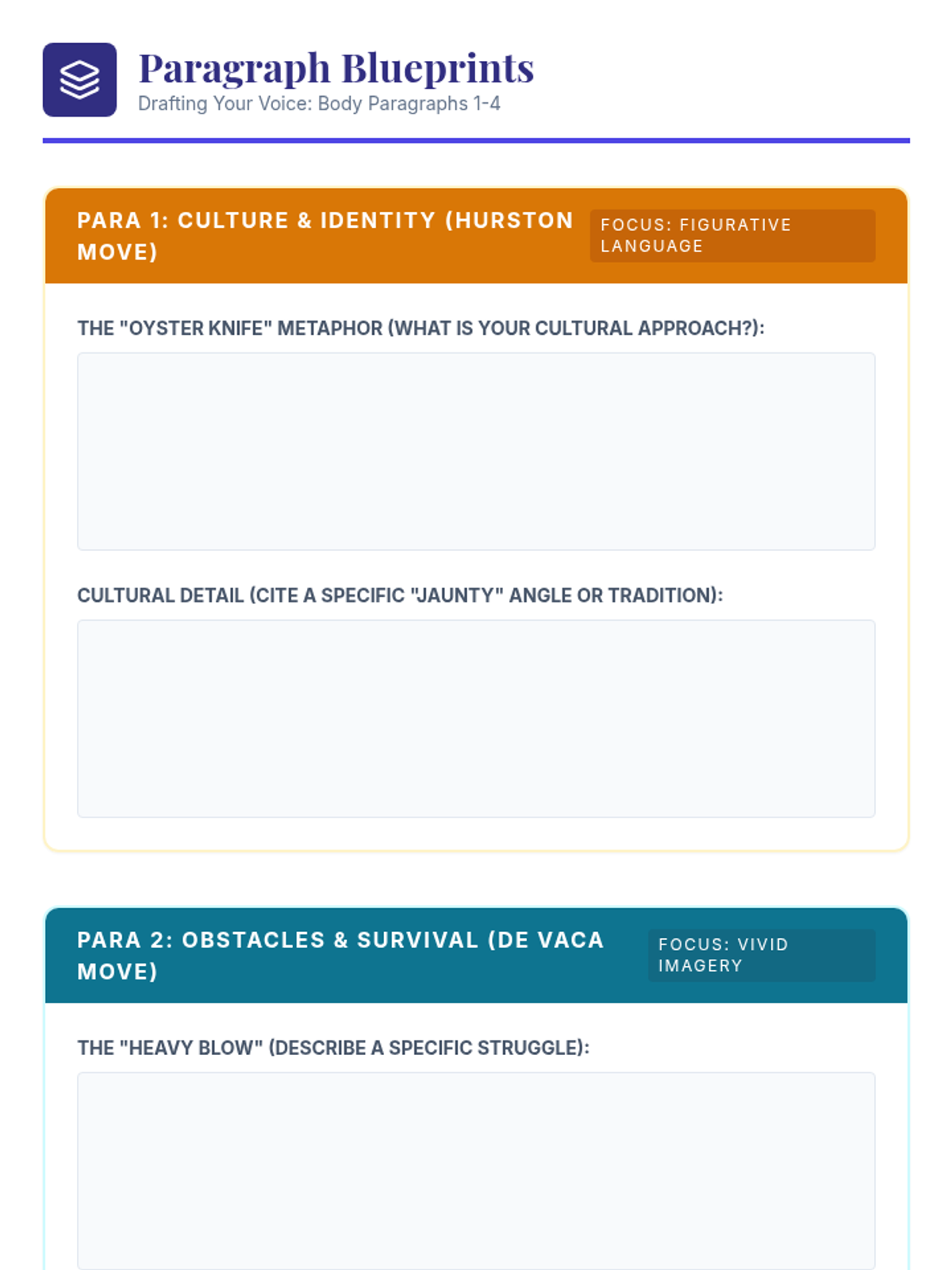
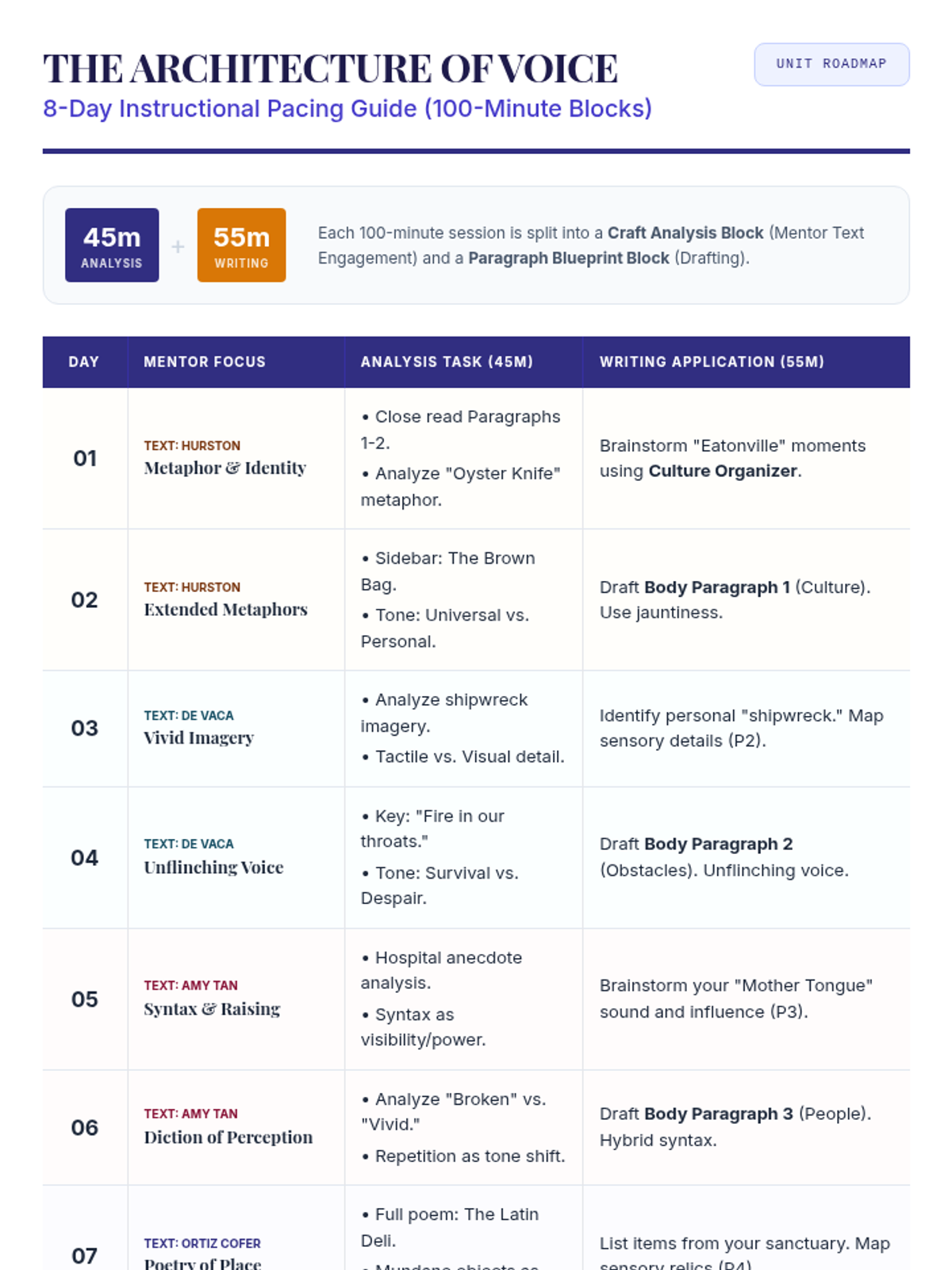
Examine Judith Ortiz Cofer's 'The Latin Deli,' focusing on the poetry of everyday moments. Students draft a final body paragraph on how specific places have shaped their voice and finalize their full essay.
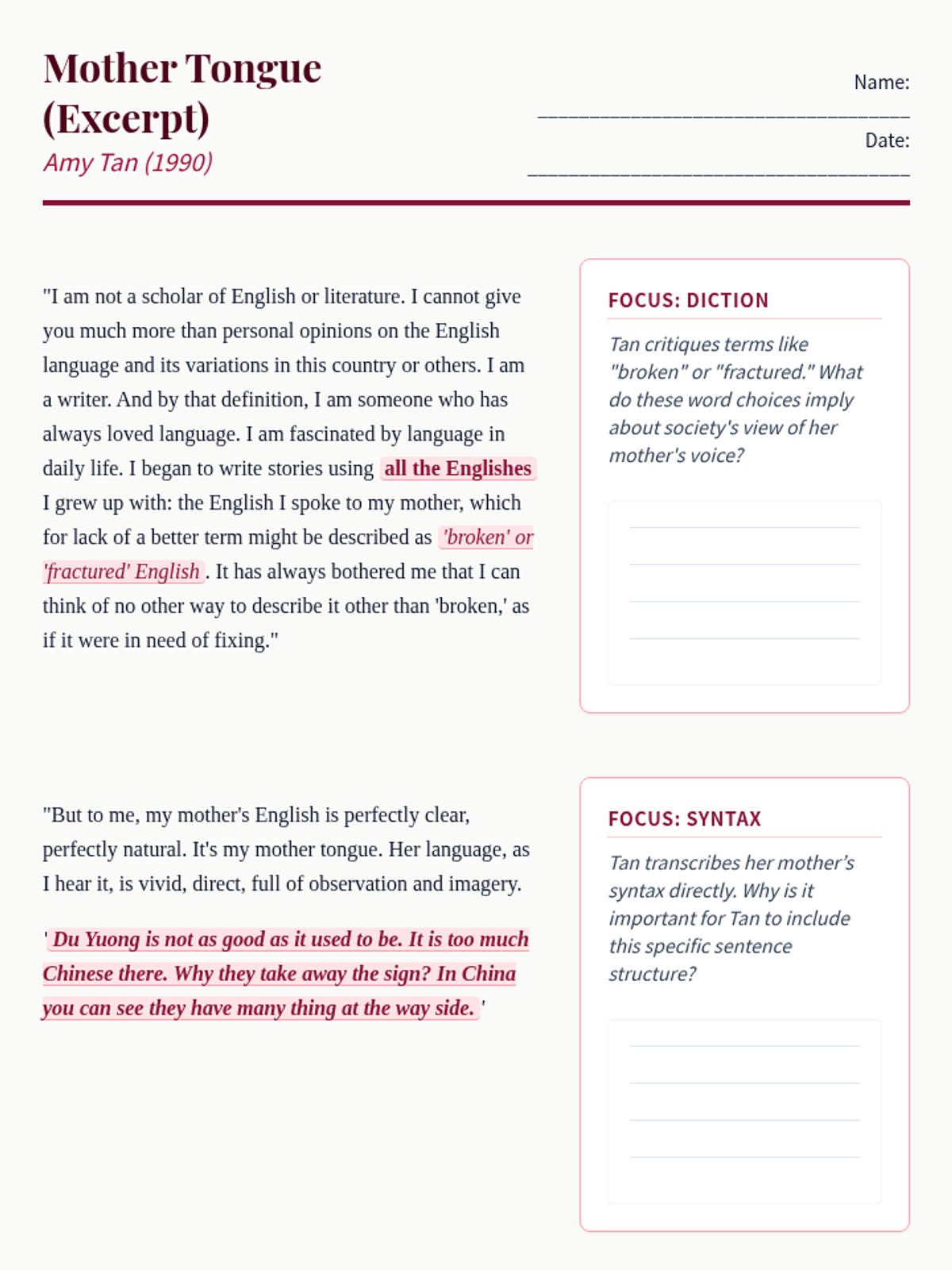
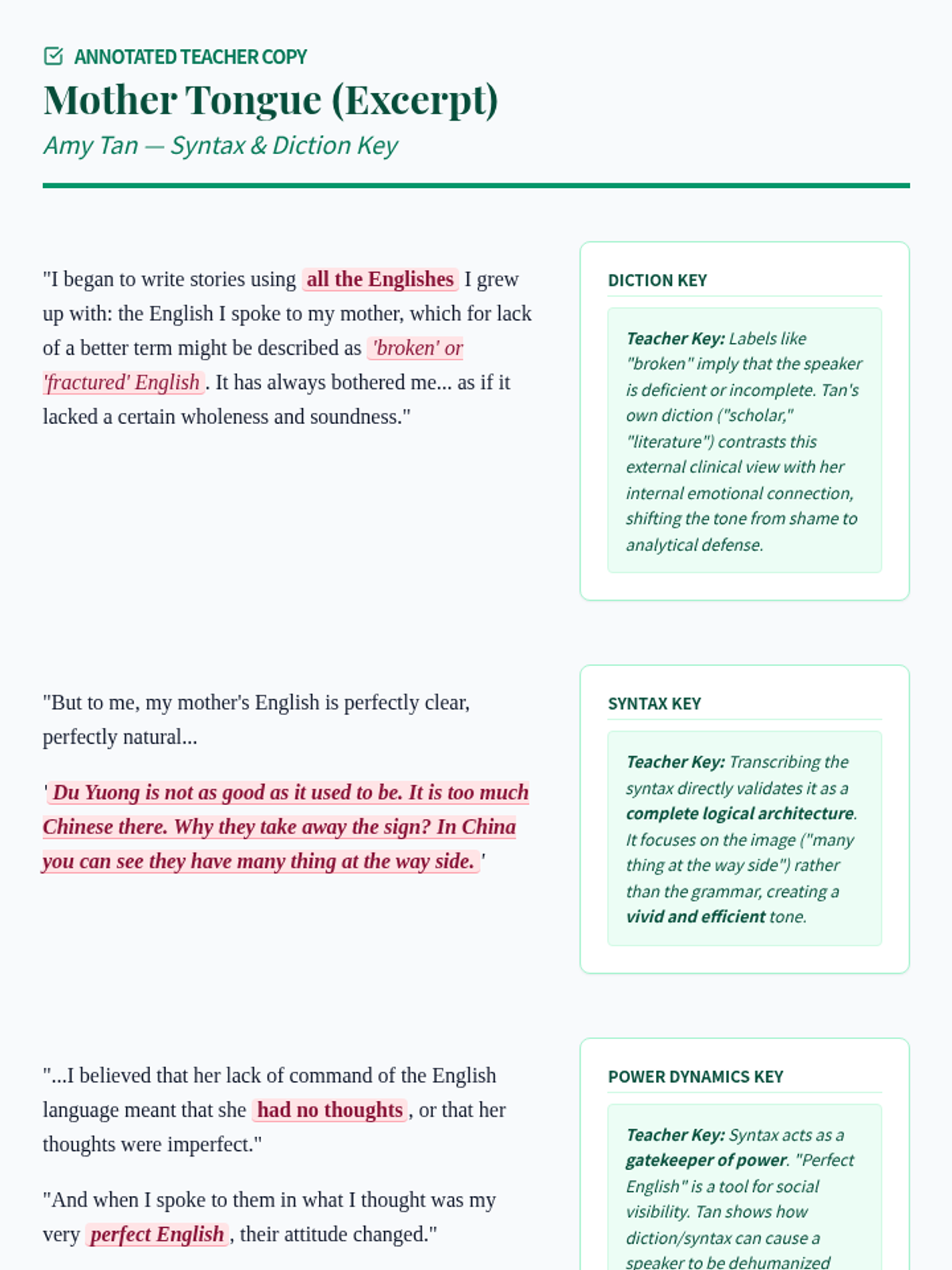
Study Amy Tan's 'Mother Tongue' and her mastery of syntax and diction to explore complex identity. Students draft a body paragraph on how the people they were raised by have shaped their voice.
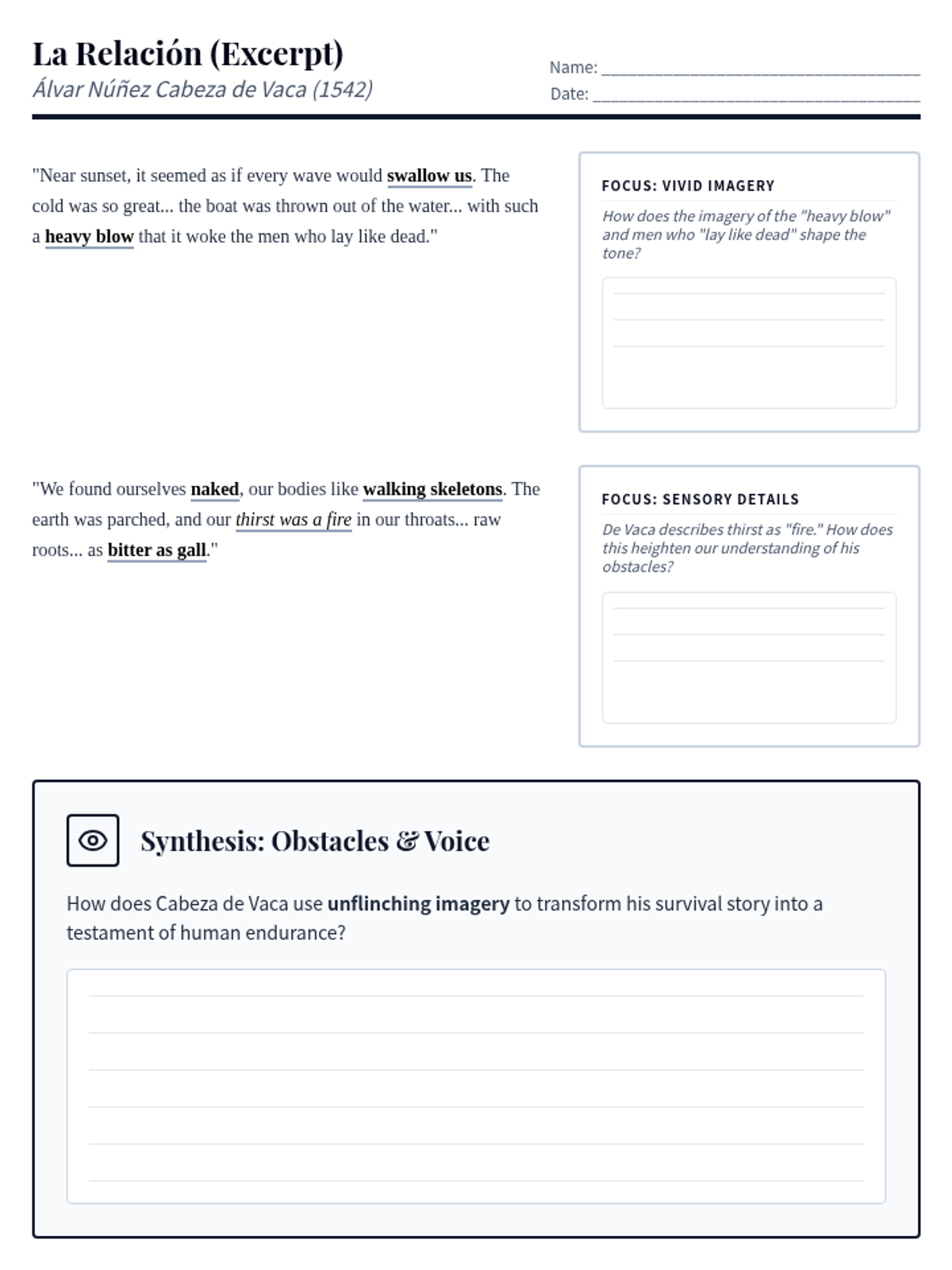
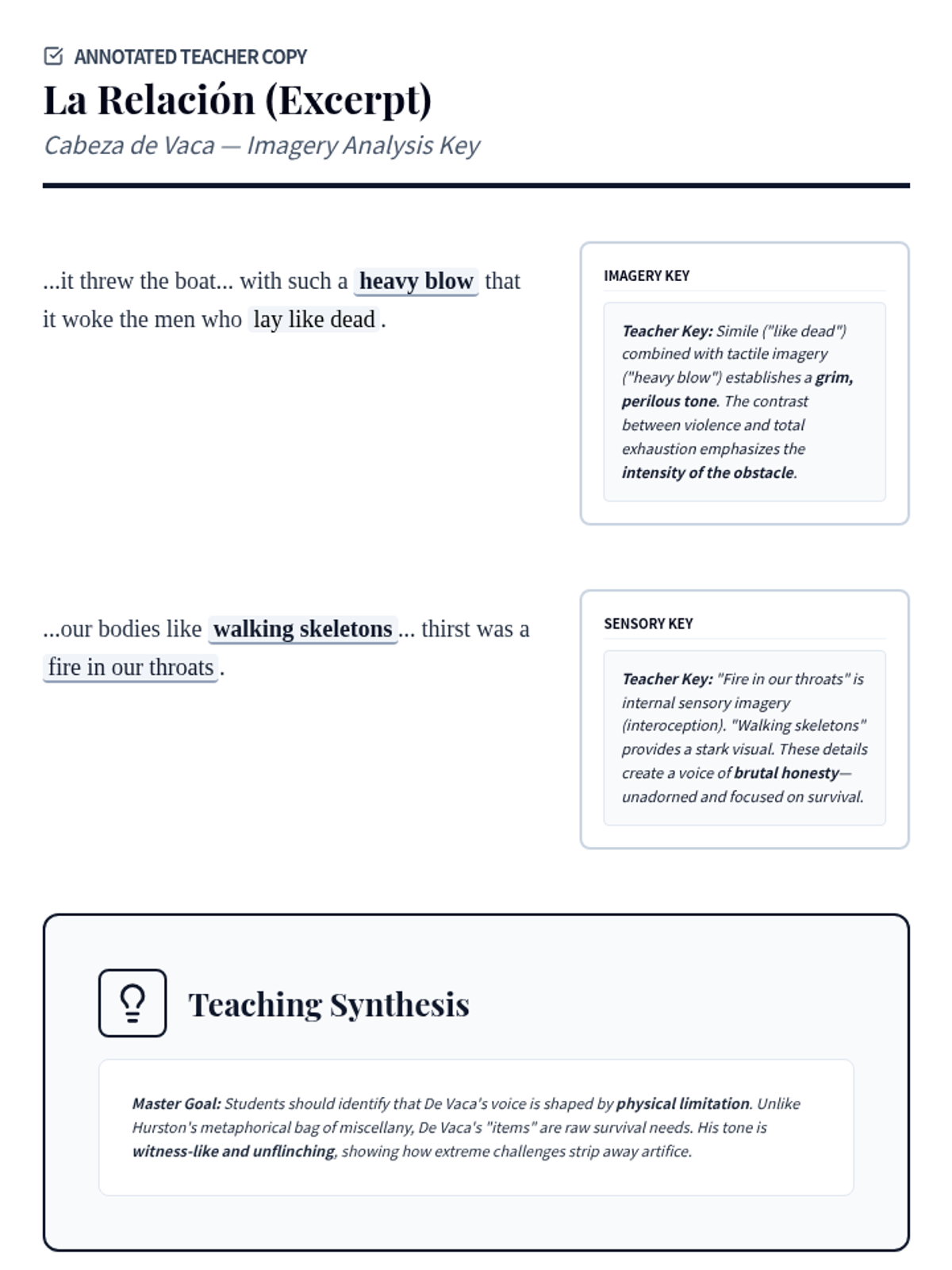
Analyze Cabeza de Vaca's 'La Relación,' focusing on his use of vivid imagery to convey survival. Students draft a body paragraph on how obstacles and challenges have shaped their voice.
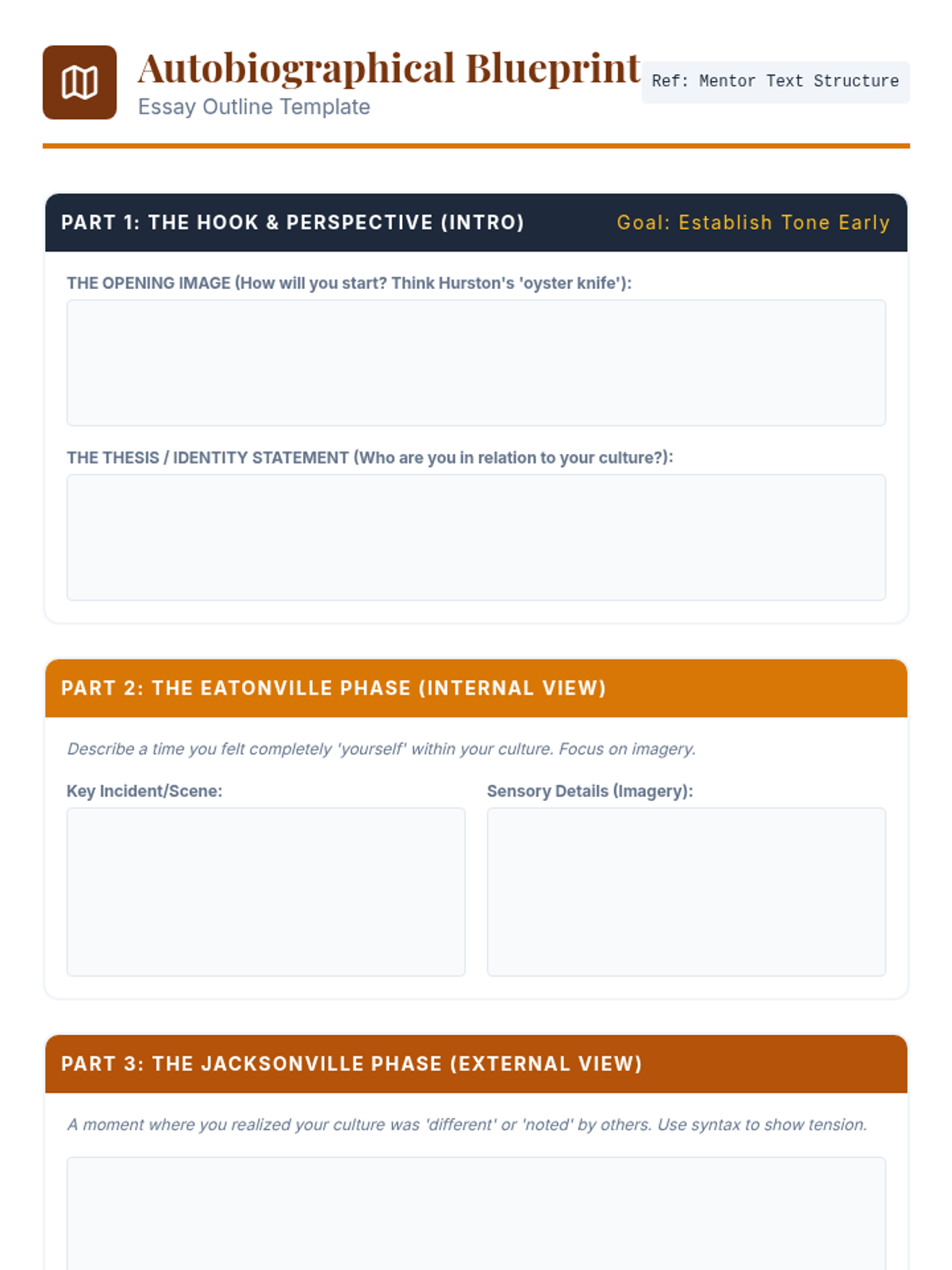
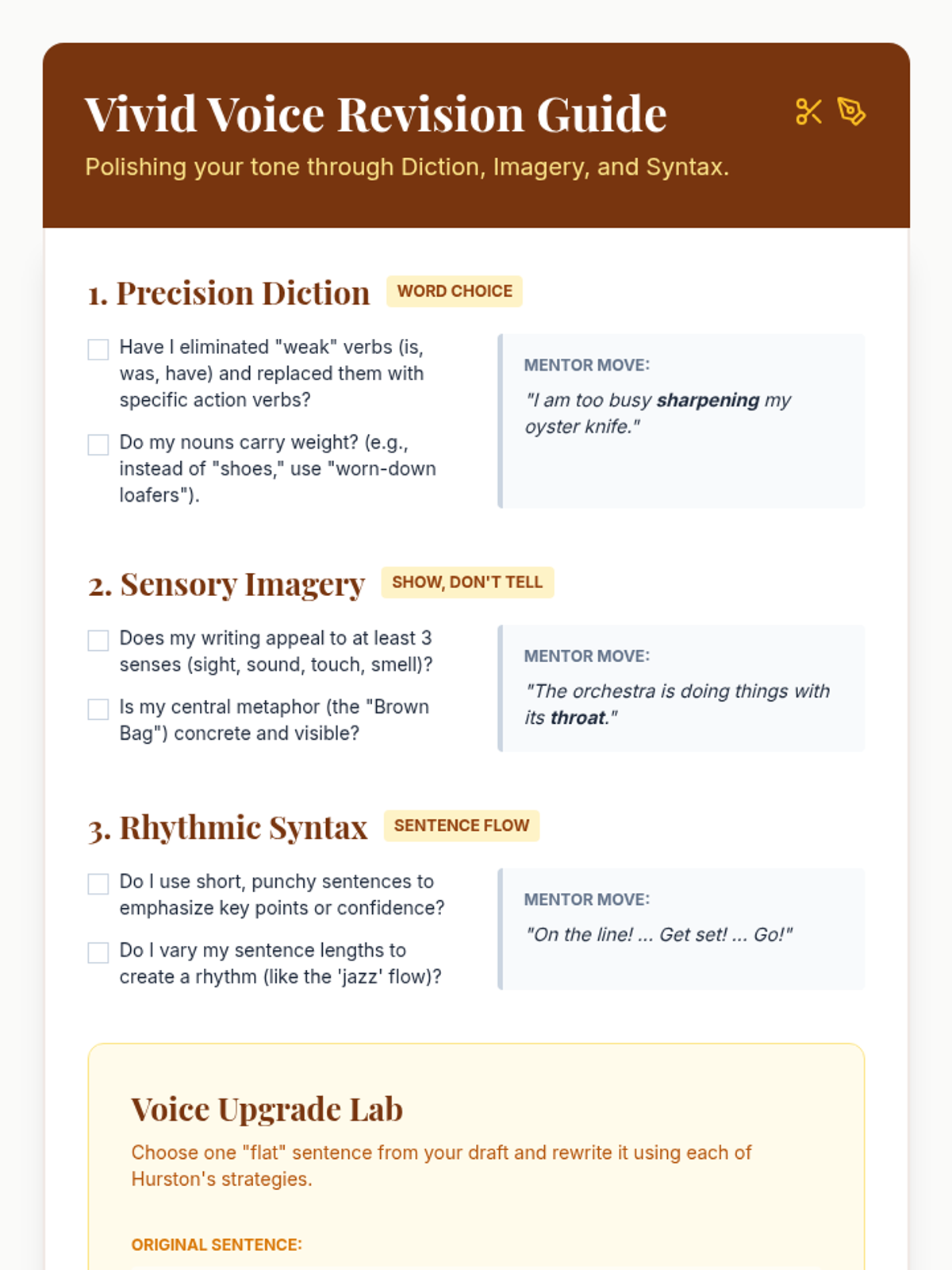
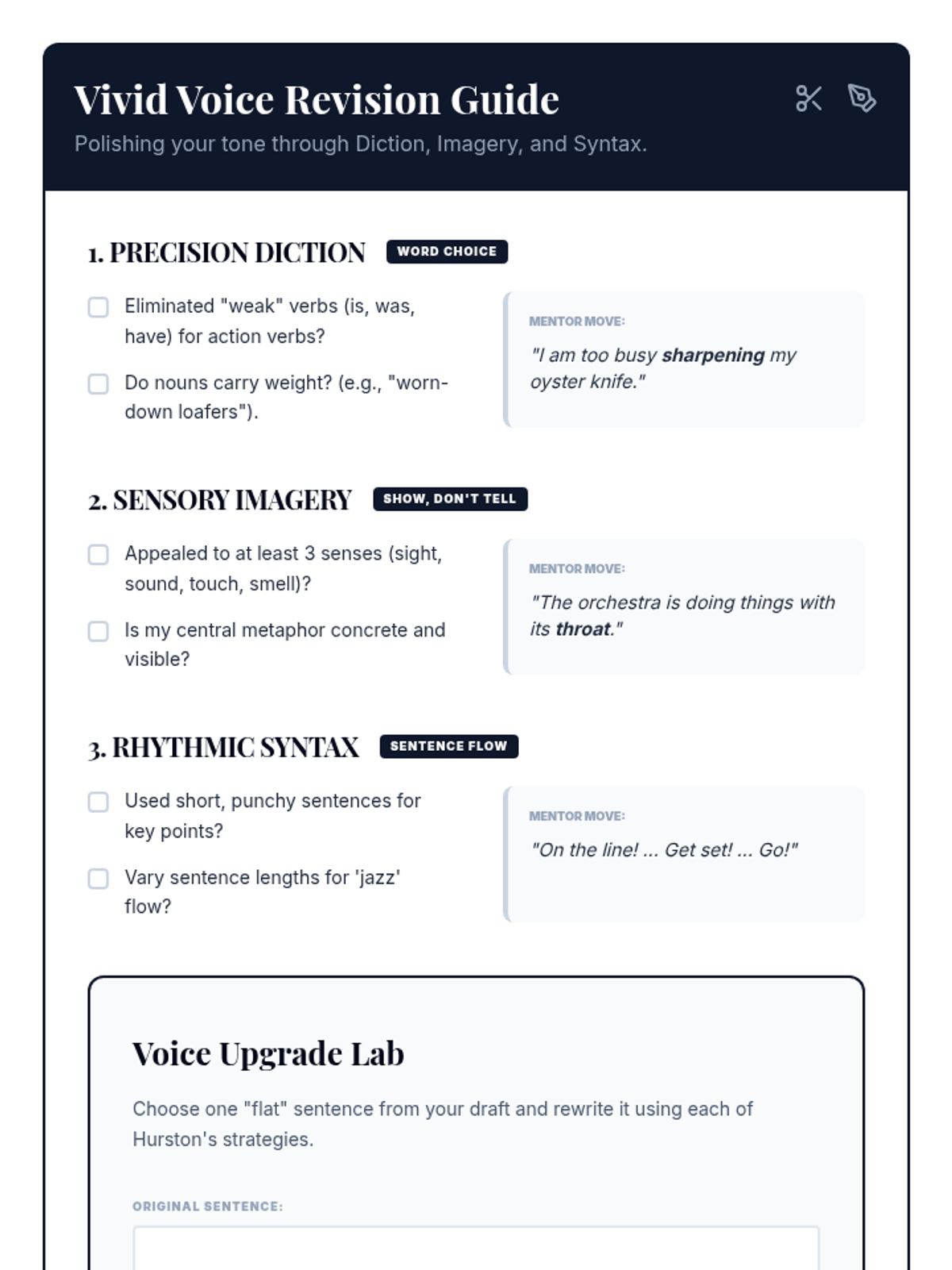
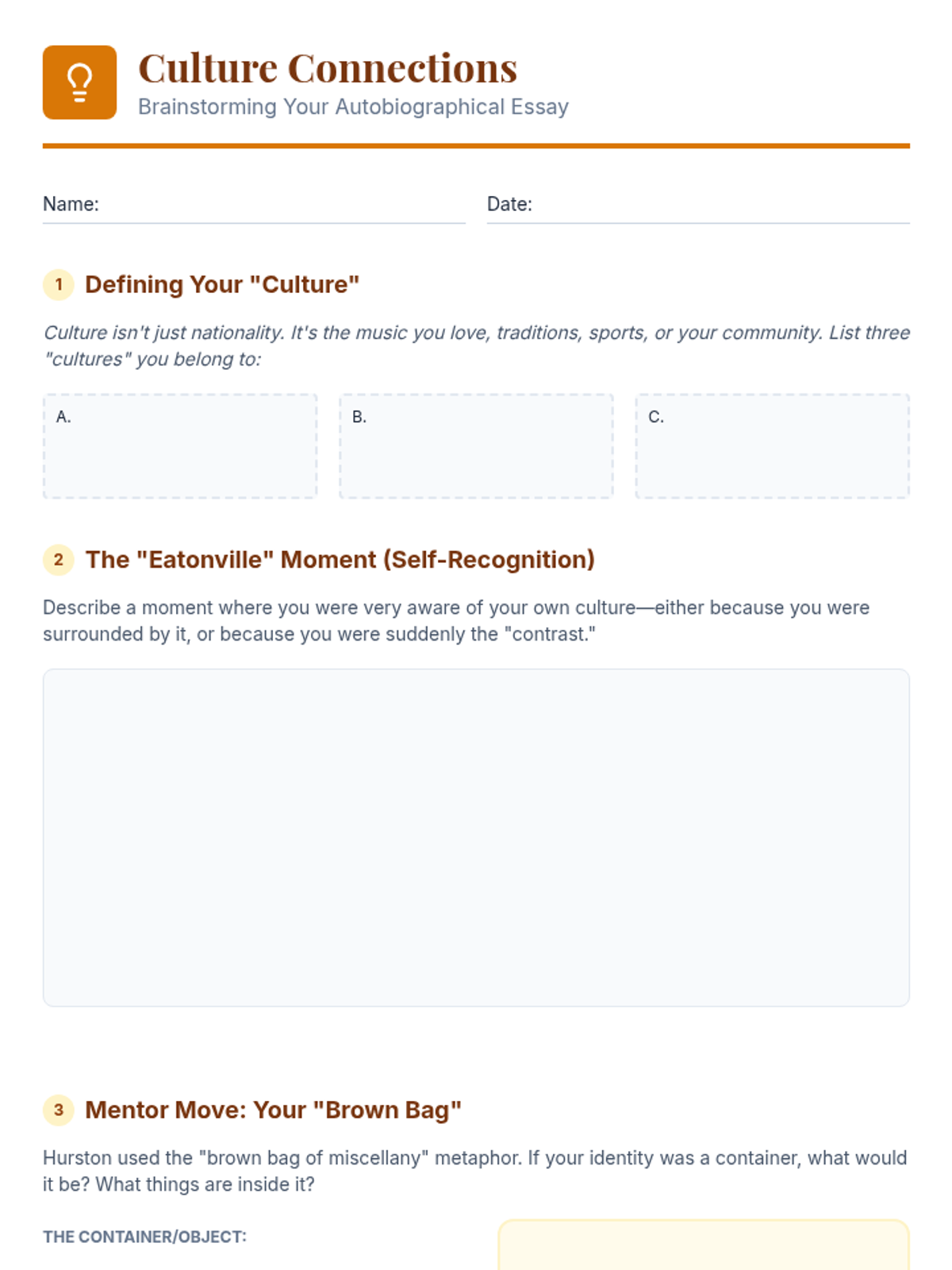
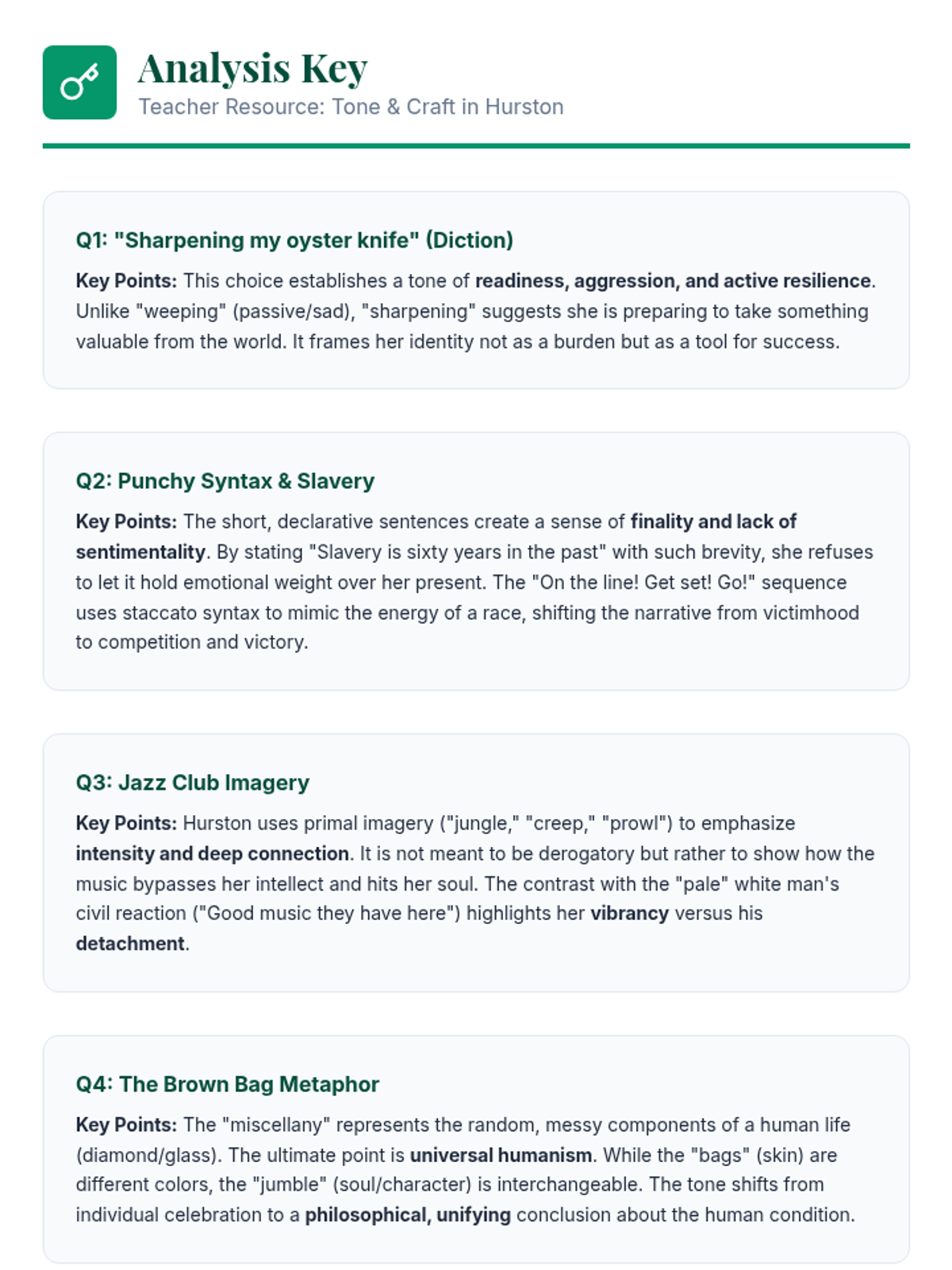
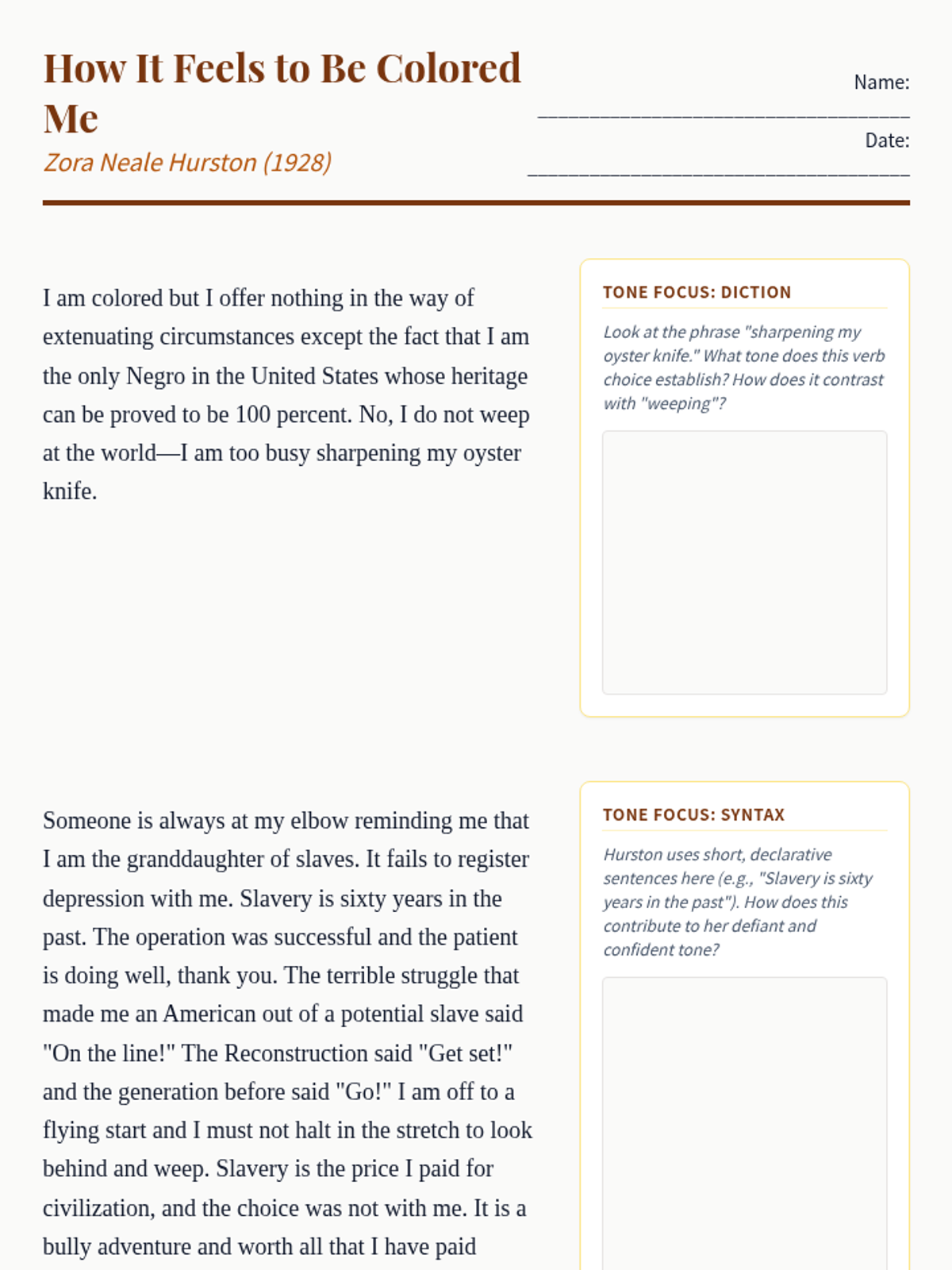
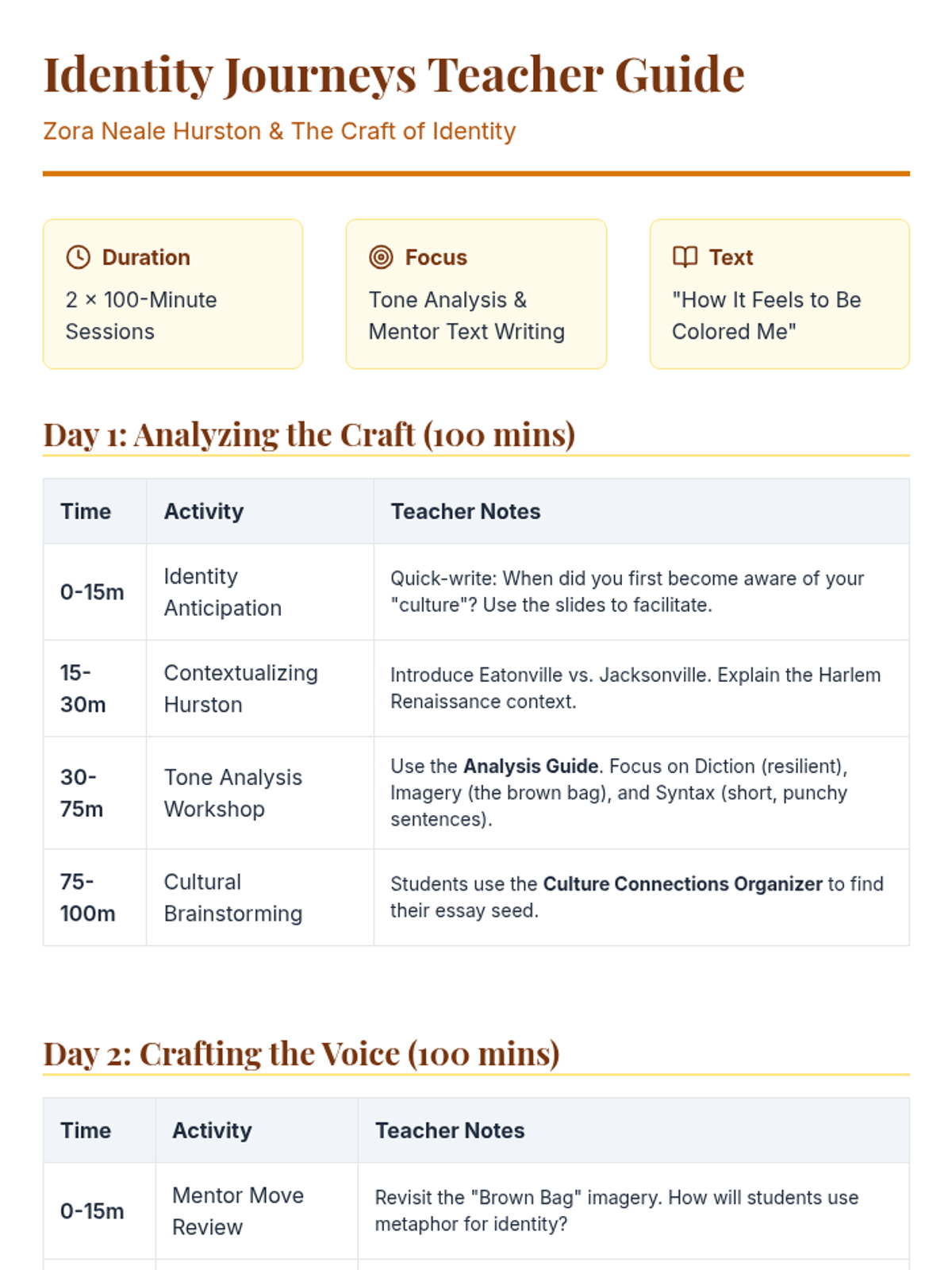
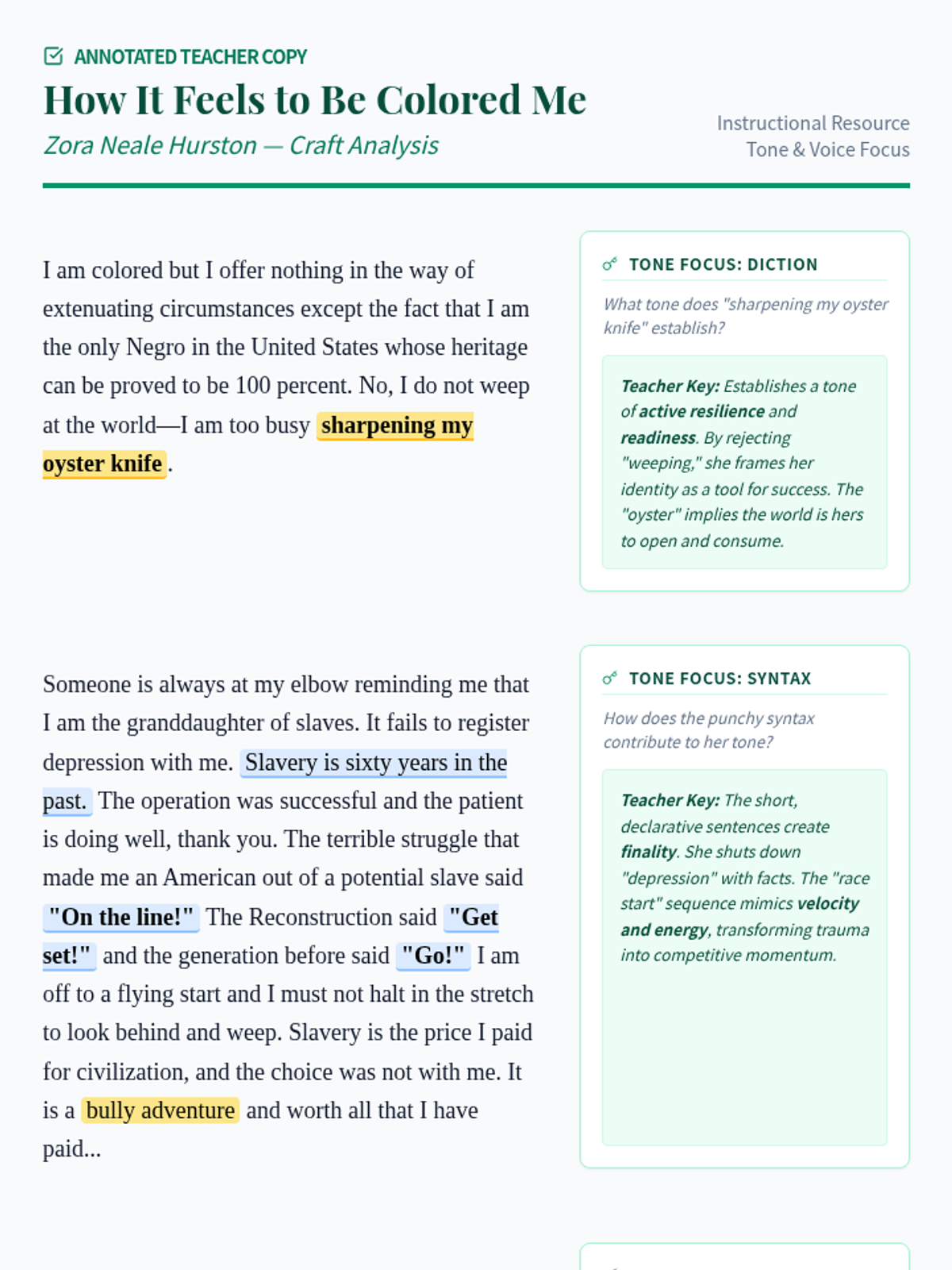
Focus on Zora Neale Hurston's 'How It Feels to Be Colored Me' and her use of figurative language to create a defiant, celebratory tone. Students draft their first body paragraph on how culture has shaped their personal voice.
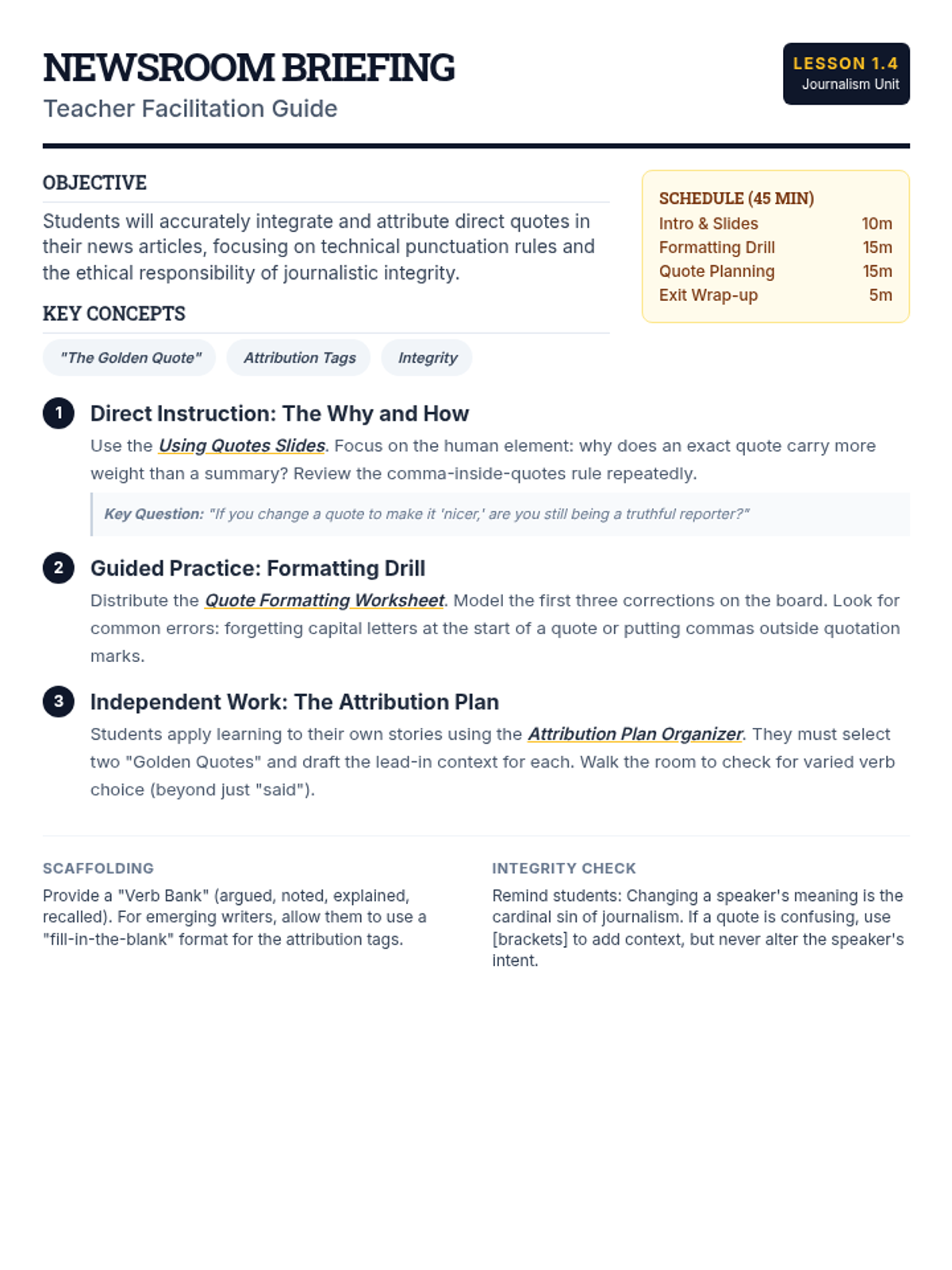
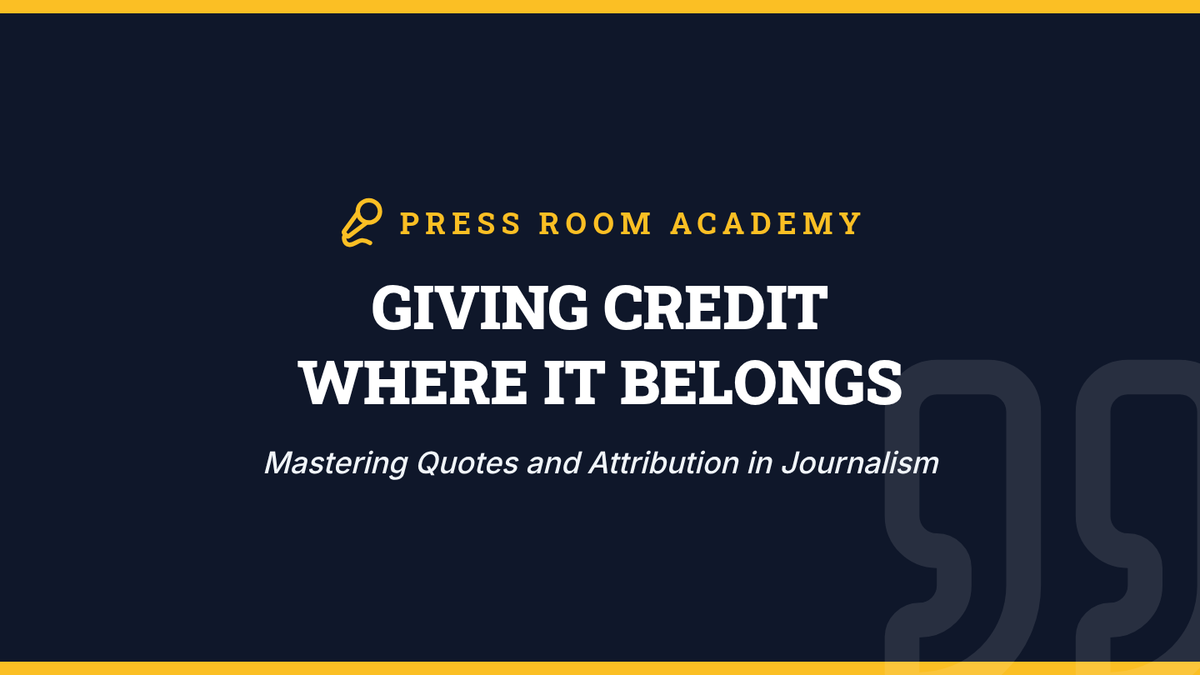
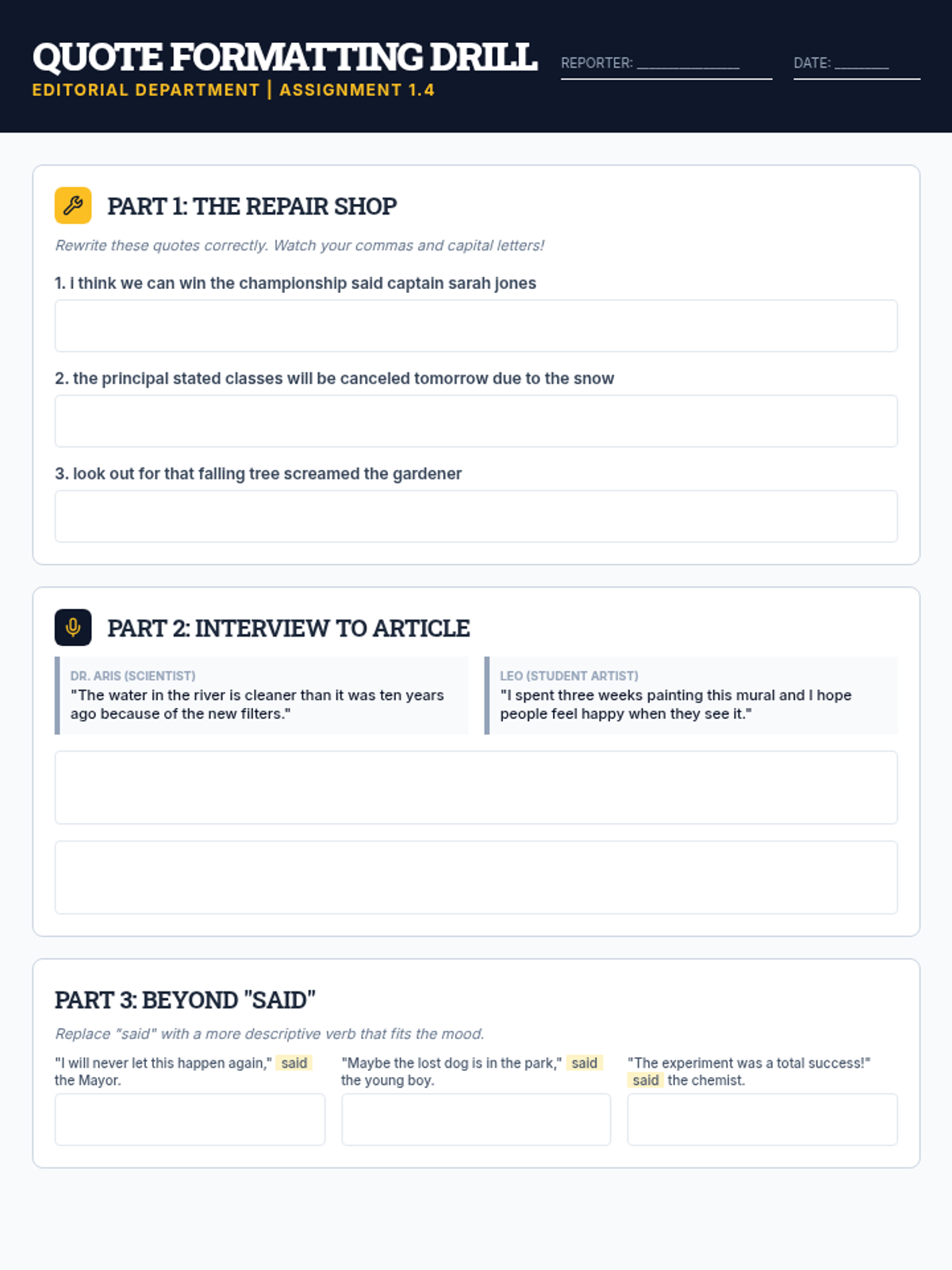
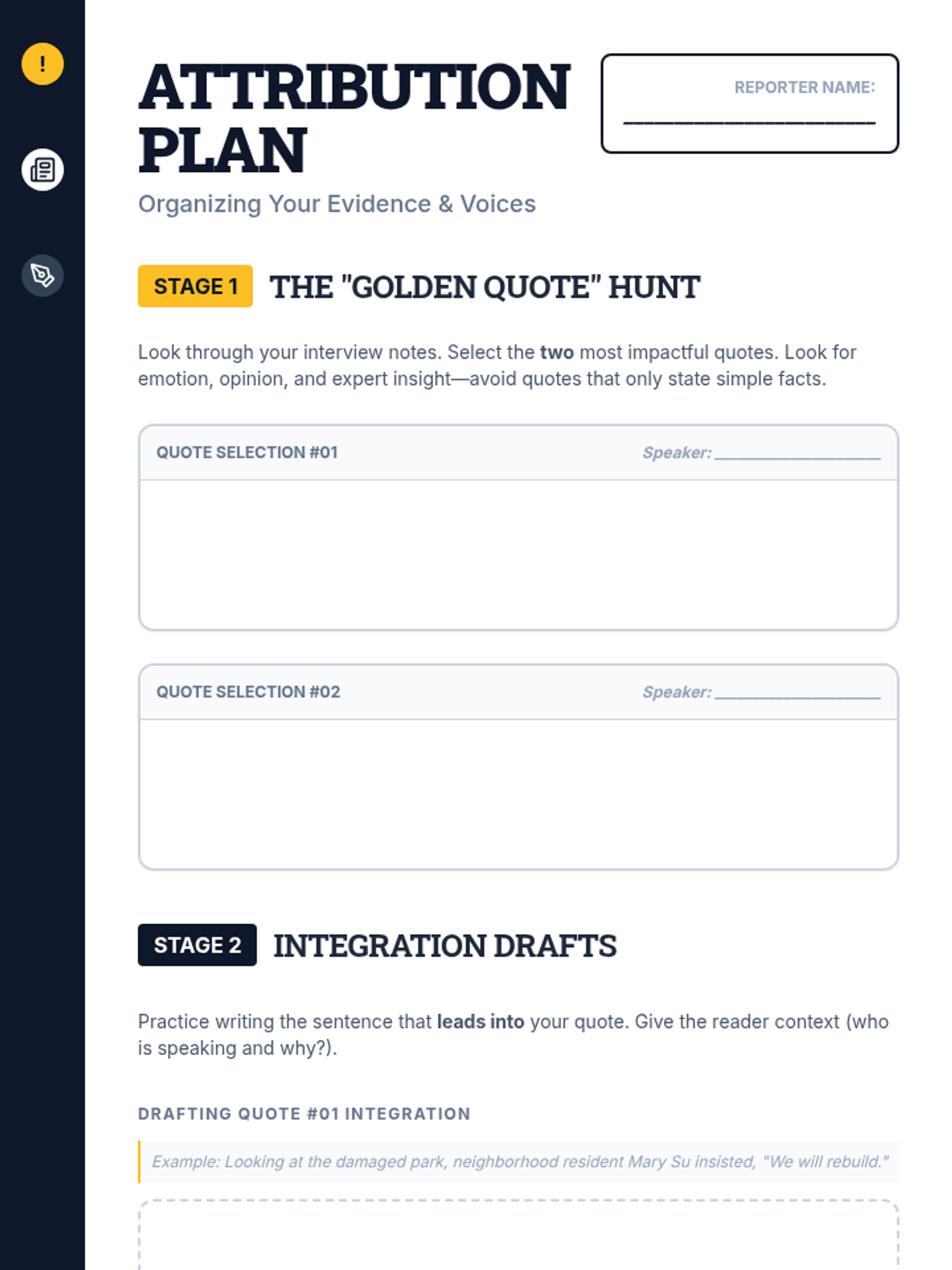
A 45-minute lesson for 6th grade students on the ethical and technical aspects of using direct quotes in journalism. Students learn formatting rules, the importance of journalistic integrity, and how to select impactful quotes for their news articles.
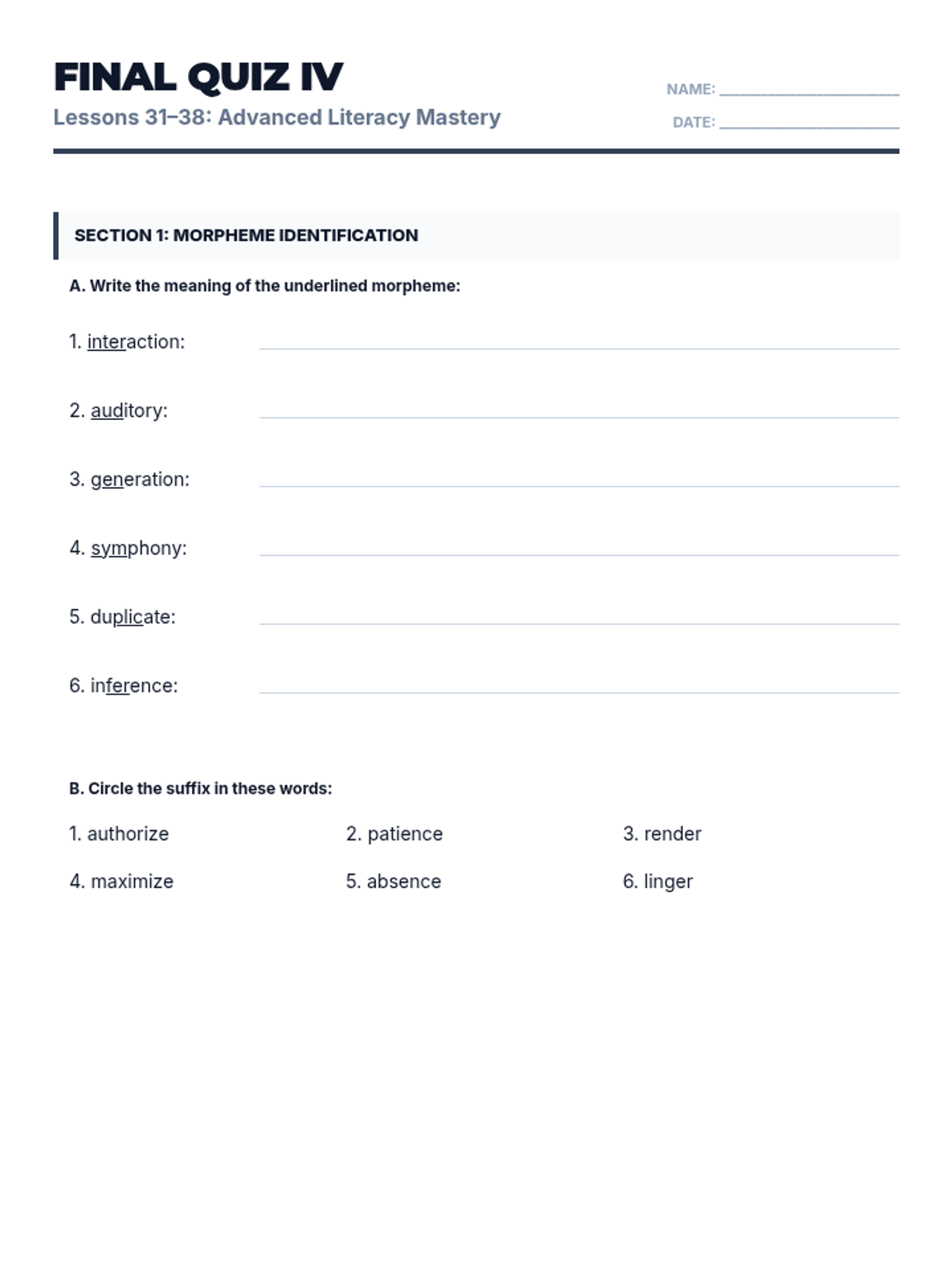
A final formal assessment for the Reading Power Pack, covering all morphology and complex vowel skills from Lessons 31-38.
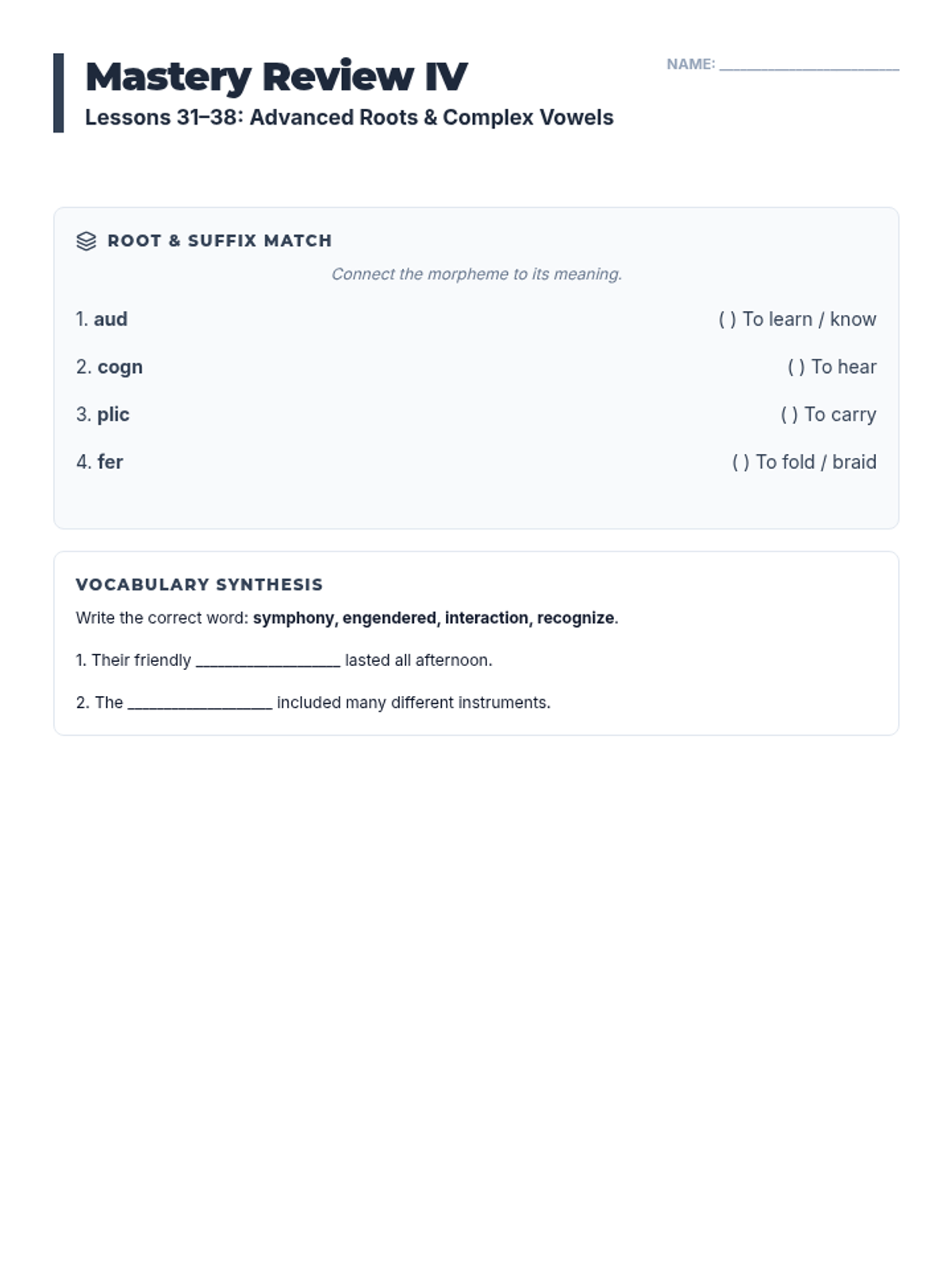
A comprehensive review of Lessons 31-38, covering advanced morphology and complex vowel teams (diphthongs).
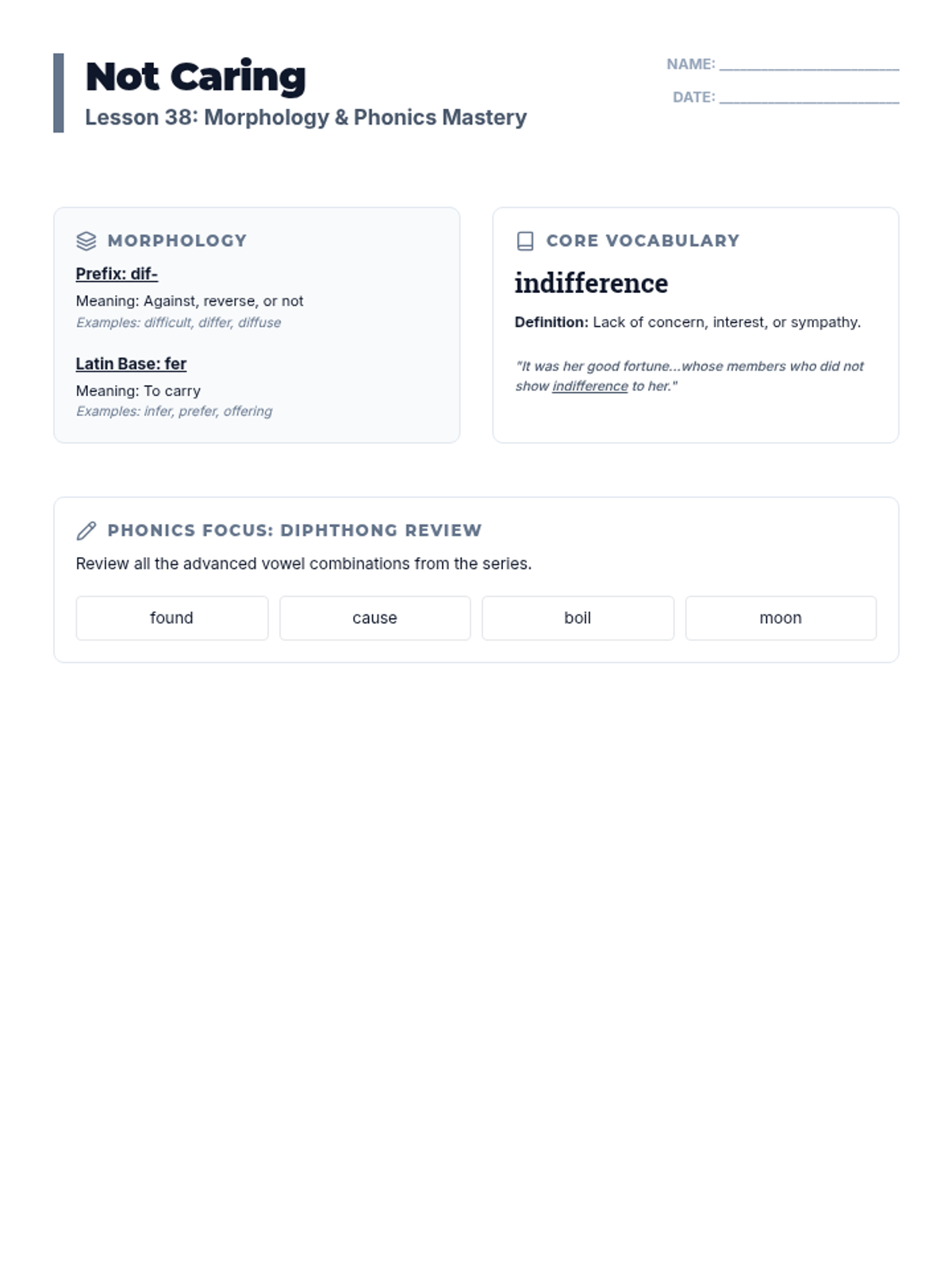
Focuses on the prefix dif- and root fer, with the vocabulary word 'indifference'. Teaches synthesis of complex vowel patterns.
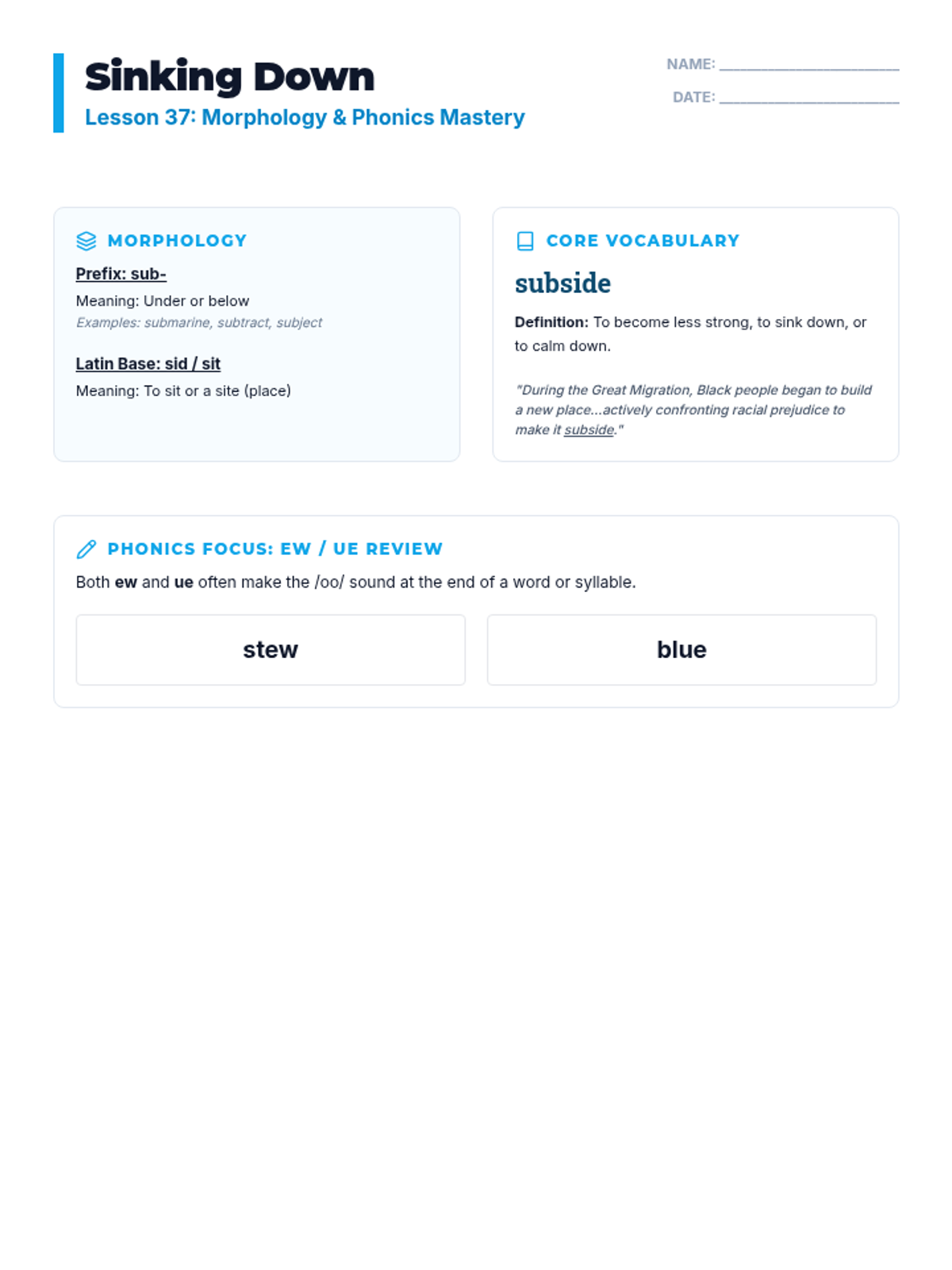
Focuses on the prefix sub- and root sid/sit, with the vocabulary word 'subside'. Teaches diphthongs ew and ue review.
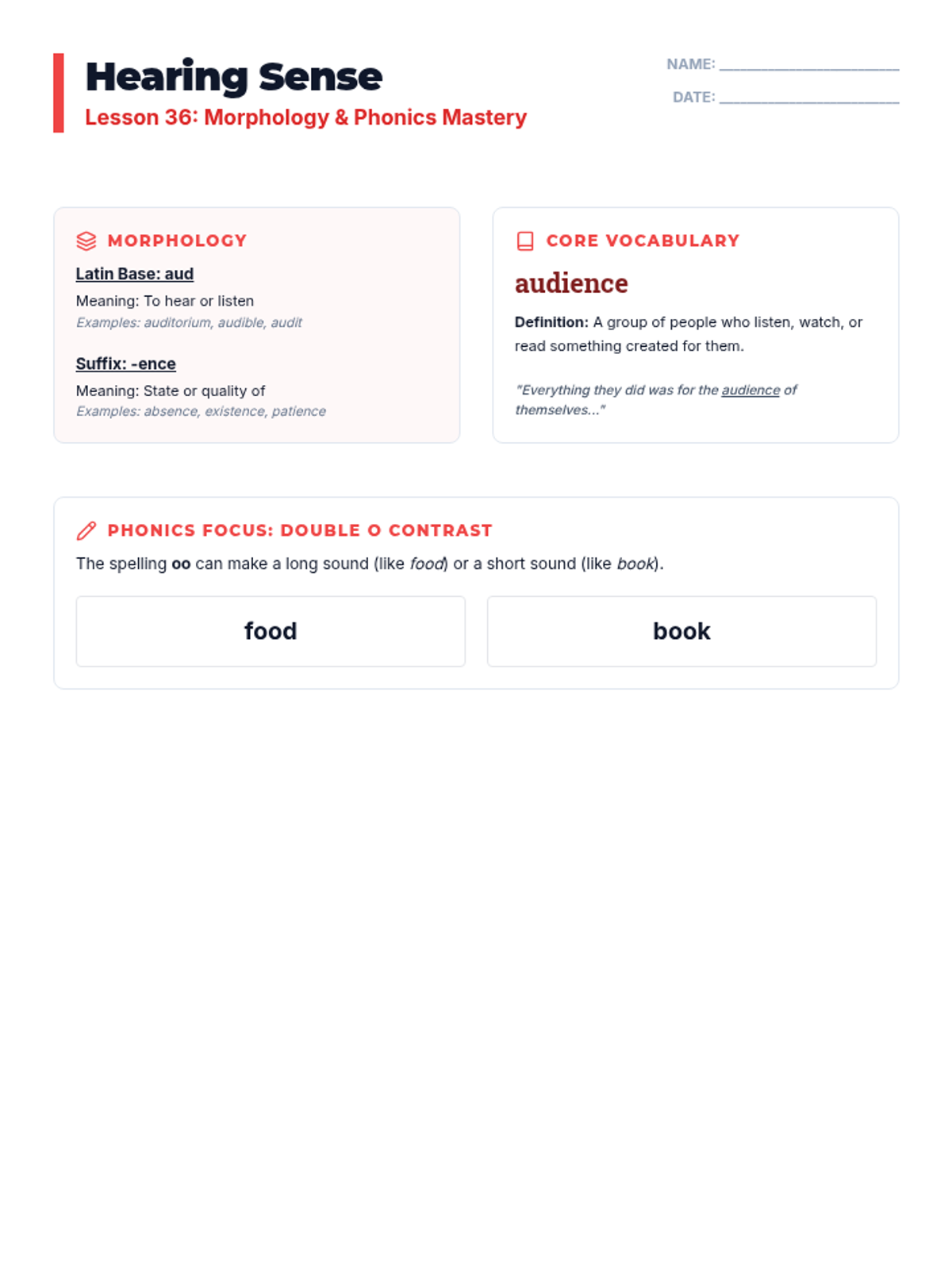
Focuses on the root aud and suffix -ence, with the vocabulary word 'audience'. Teaches the diphthong oo (food vs book).
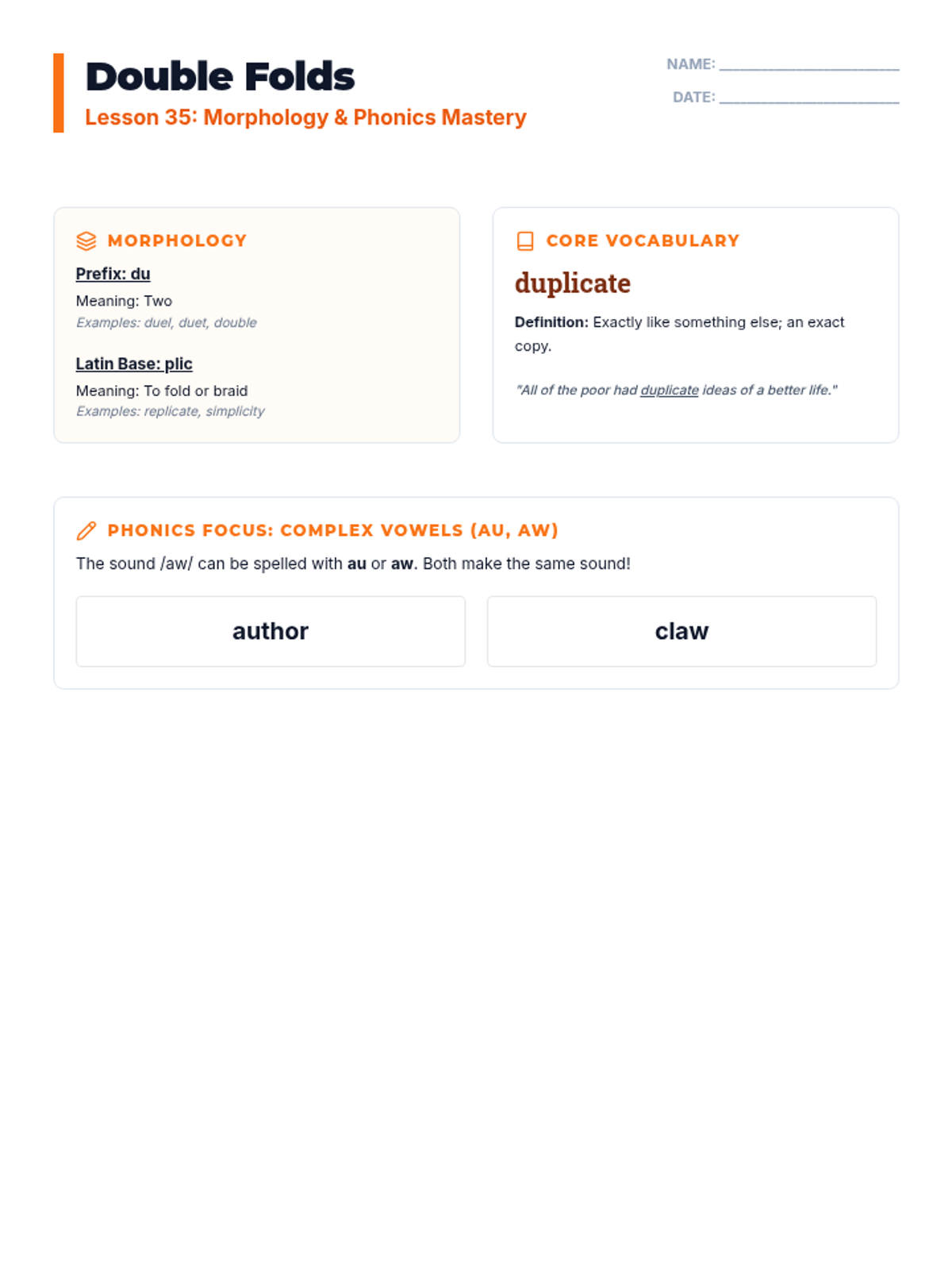
Focuses on the prefix du and root plic, with the vocabulary word 'duplicate'. Teaches diphthongs au and aw.
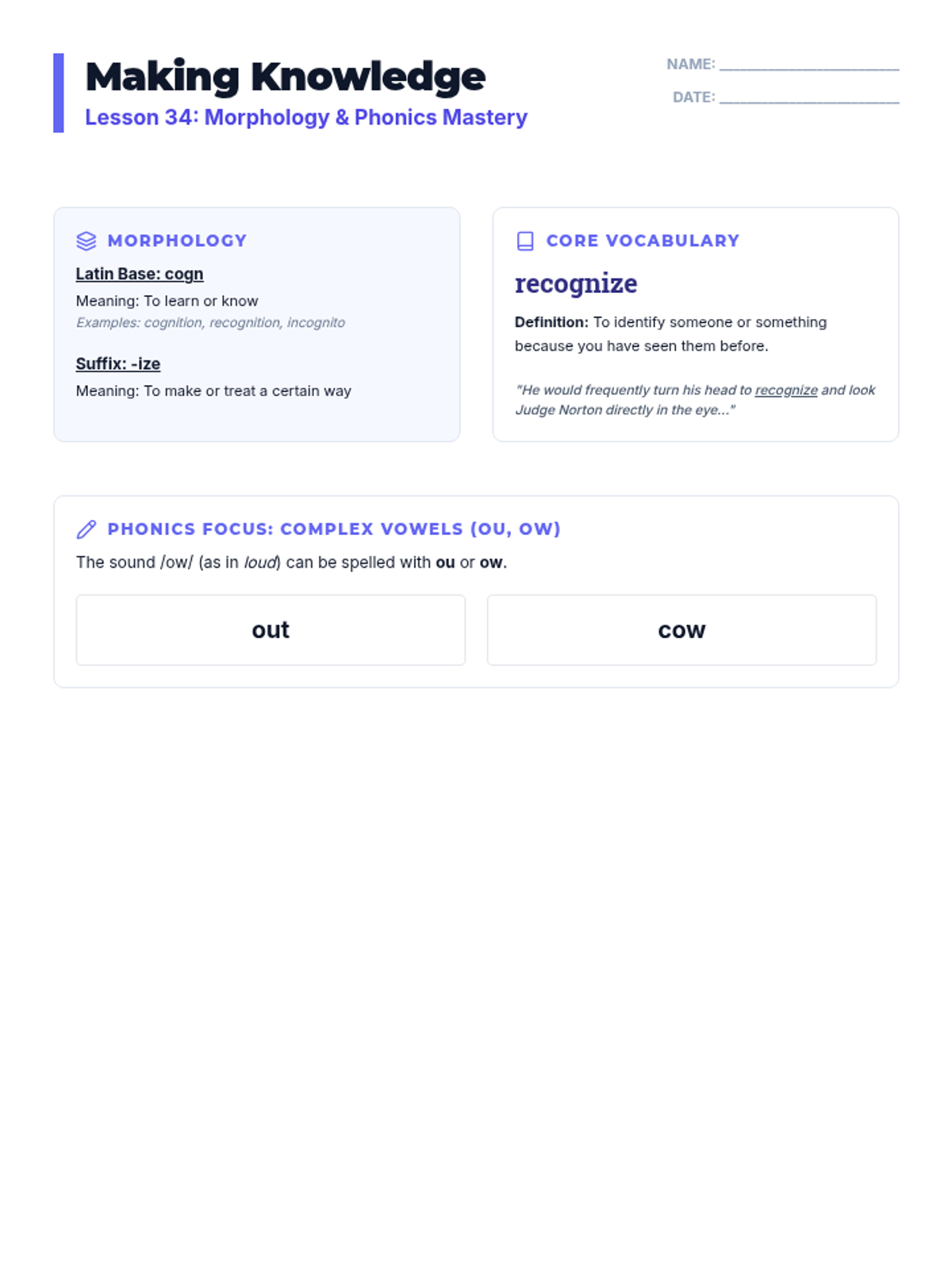
Focuses on the root cogn and suffix -ize, with the vocabulary word 'recognize'. Teaches diphthongs ou and ow.
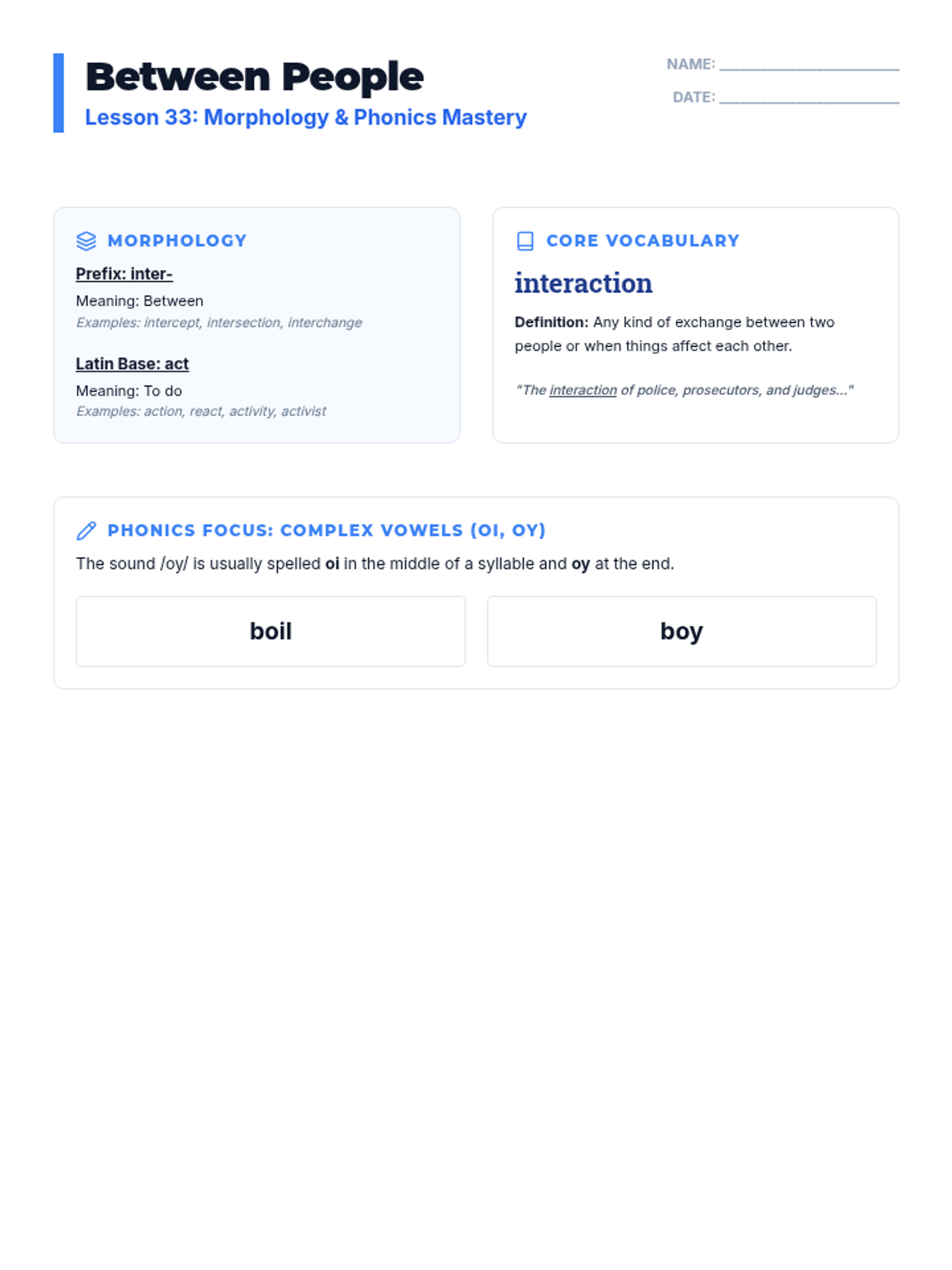
Focuses on the prefix inter- and root act, with the vocabulary word 'interaction'. Teaches diphthongs oi and oy.
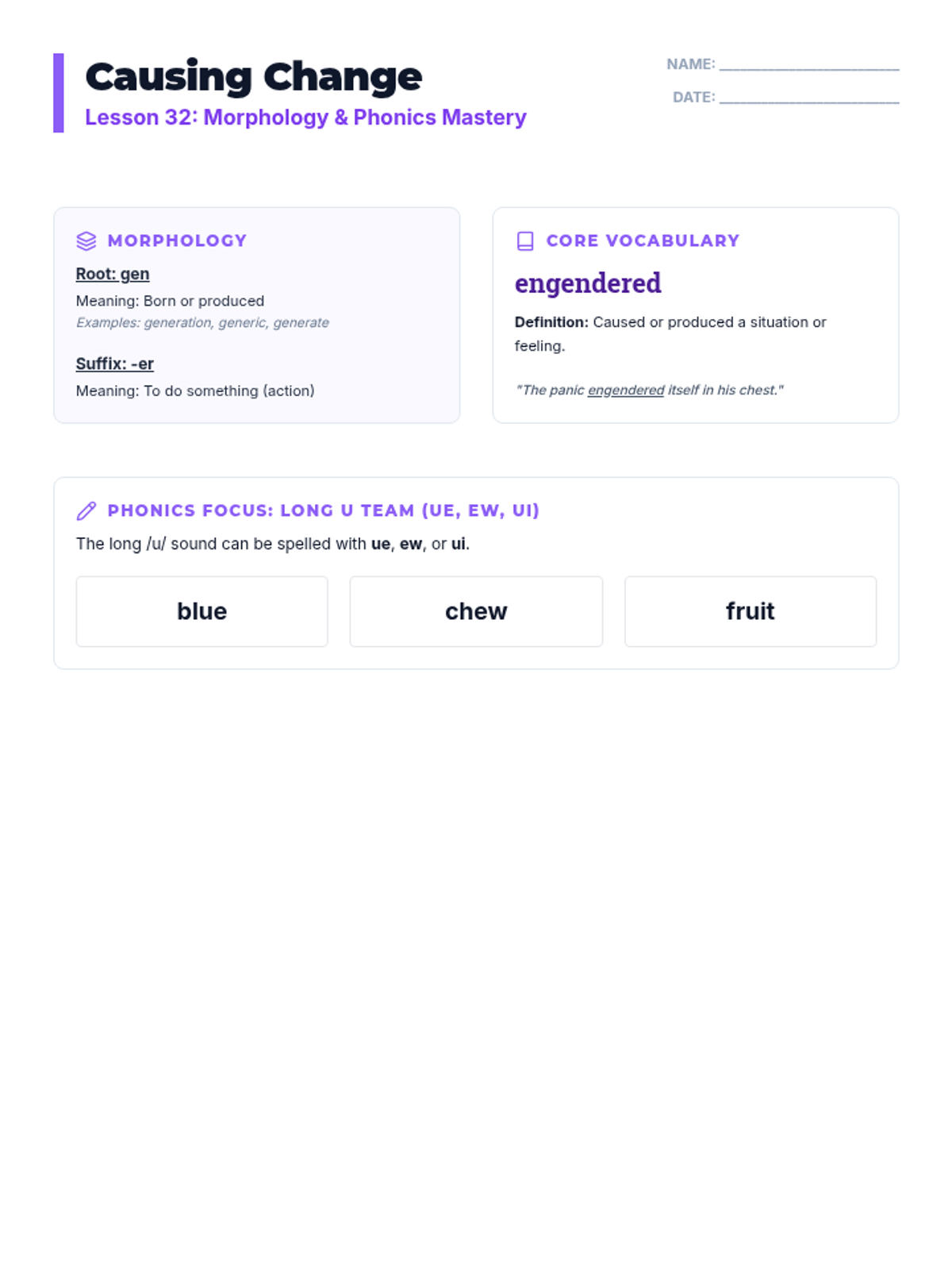
Focuses on the root gen and suffix -er, with the vocabulary word 'engendered'. Teaches Long U vowel teams (ue, ew, ui).
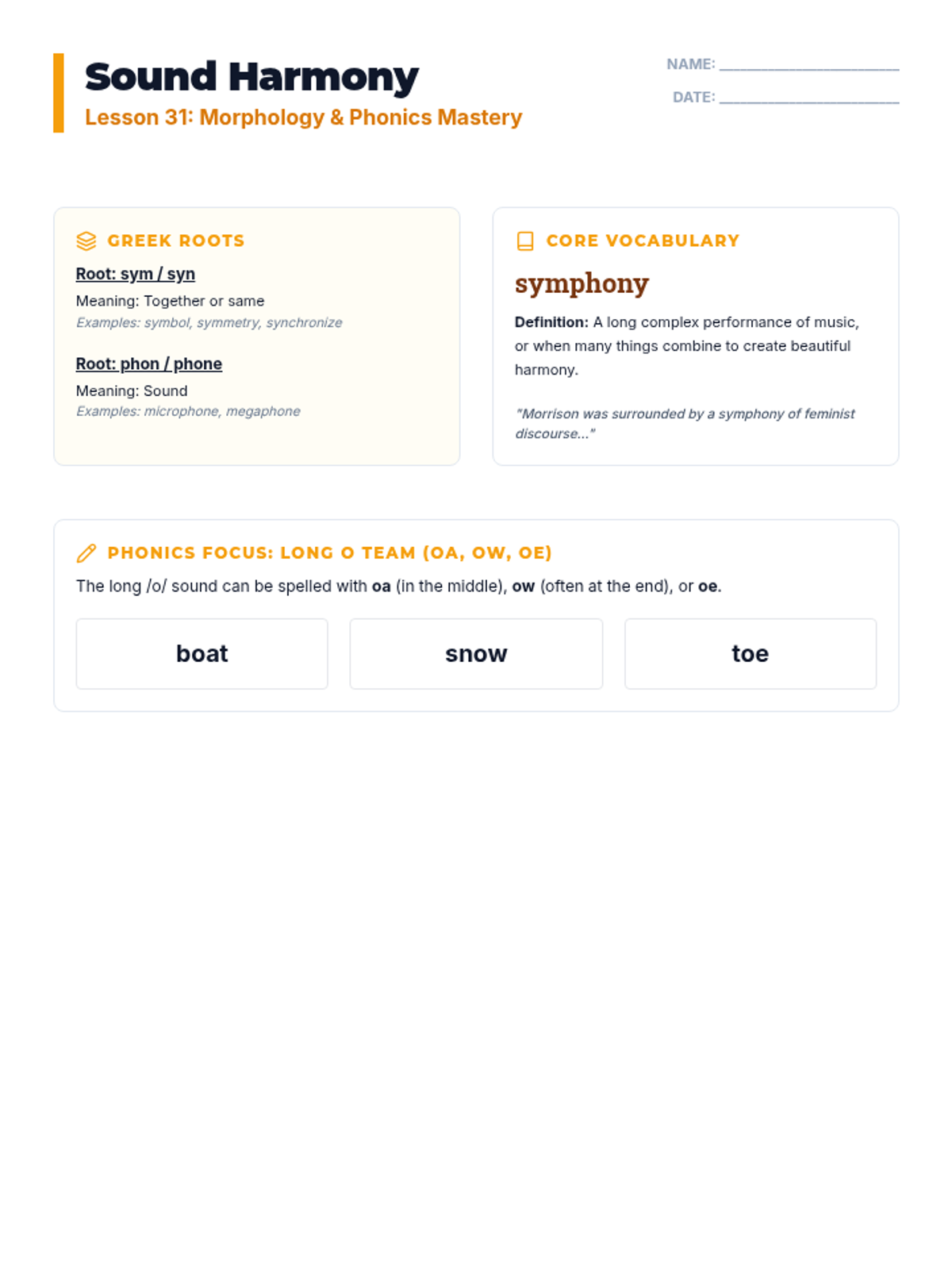
Focuses on the roots sym/syn and phon/phone, with the vocabulary word 'symphony'. Teaches Long O vowel teams (oa, ow, oe).
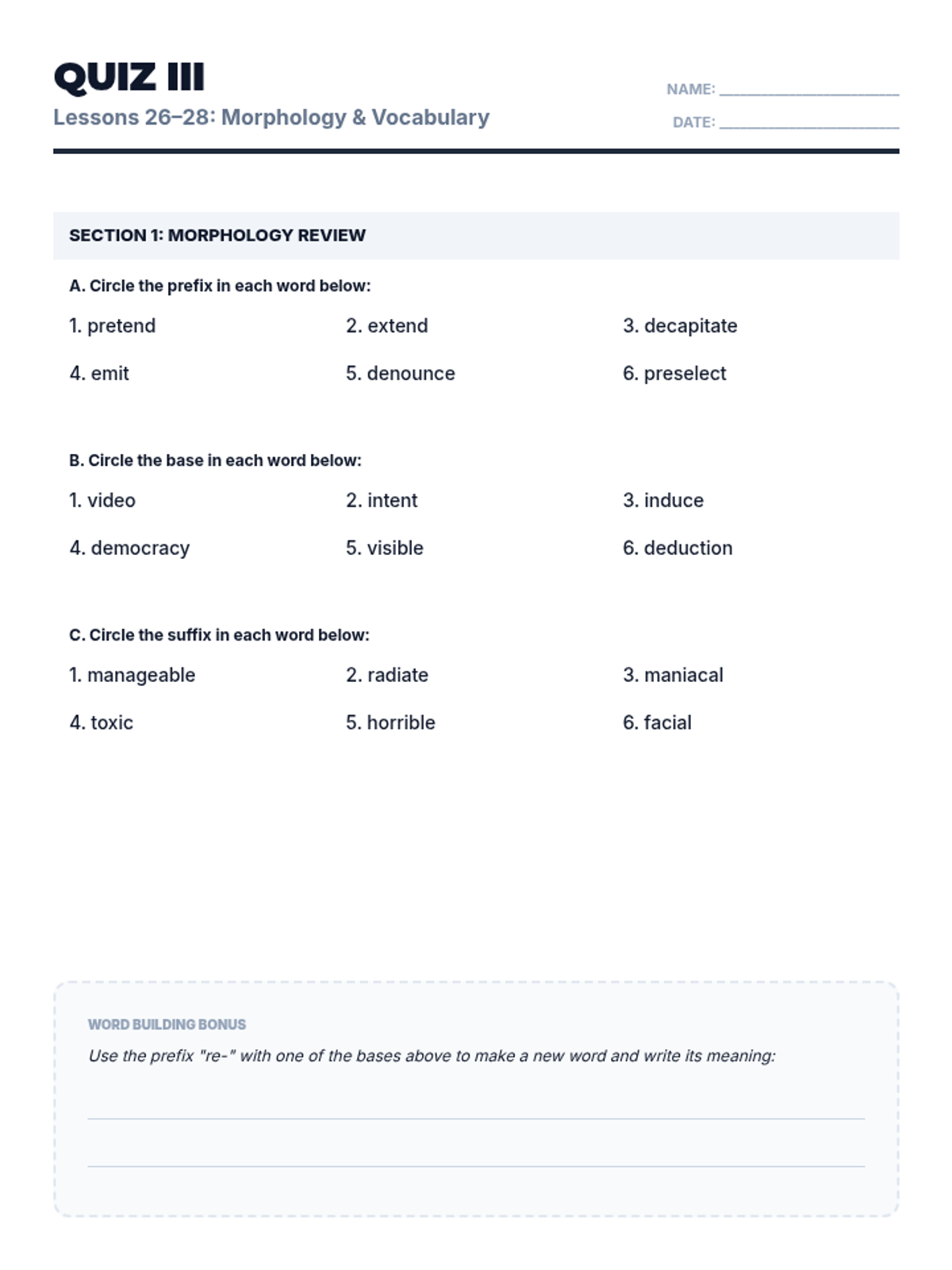
A formal assessment covering morphology, vocabulary, and vowel team decoding for Lessons 26-28.
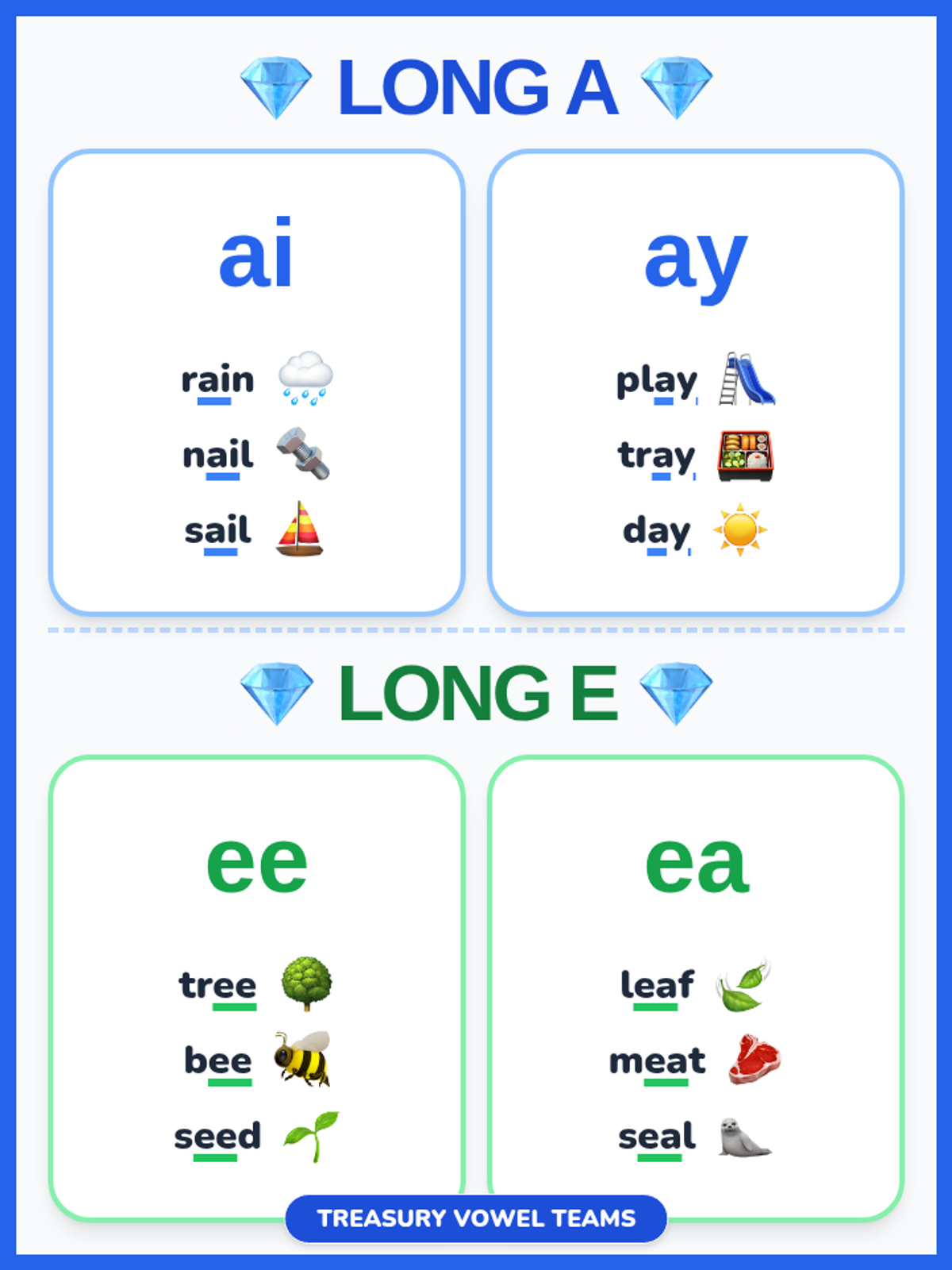
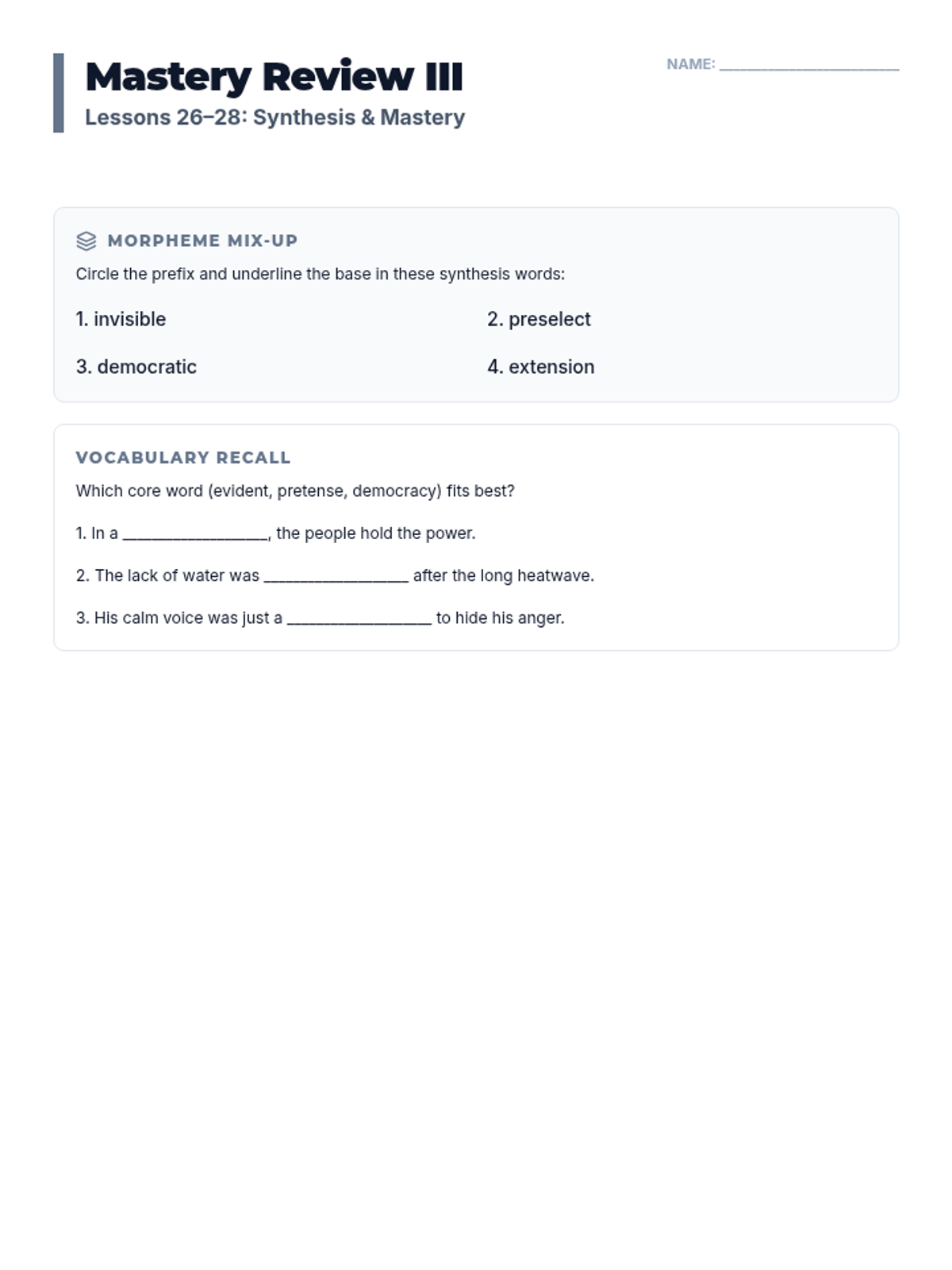
A comprehensive review of Lessons 26-28, covering morphology (e-, pre-, dem, crat), vocabulary, and Long A, E, and I vowel teams.
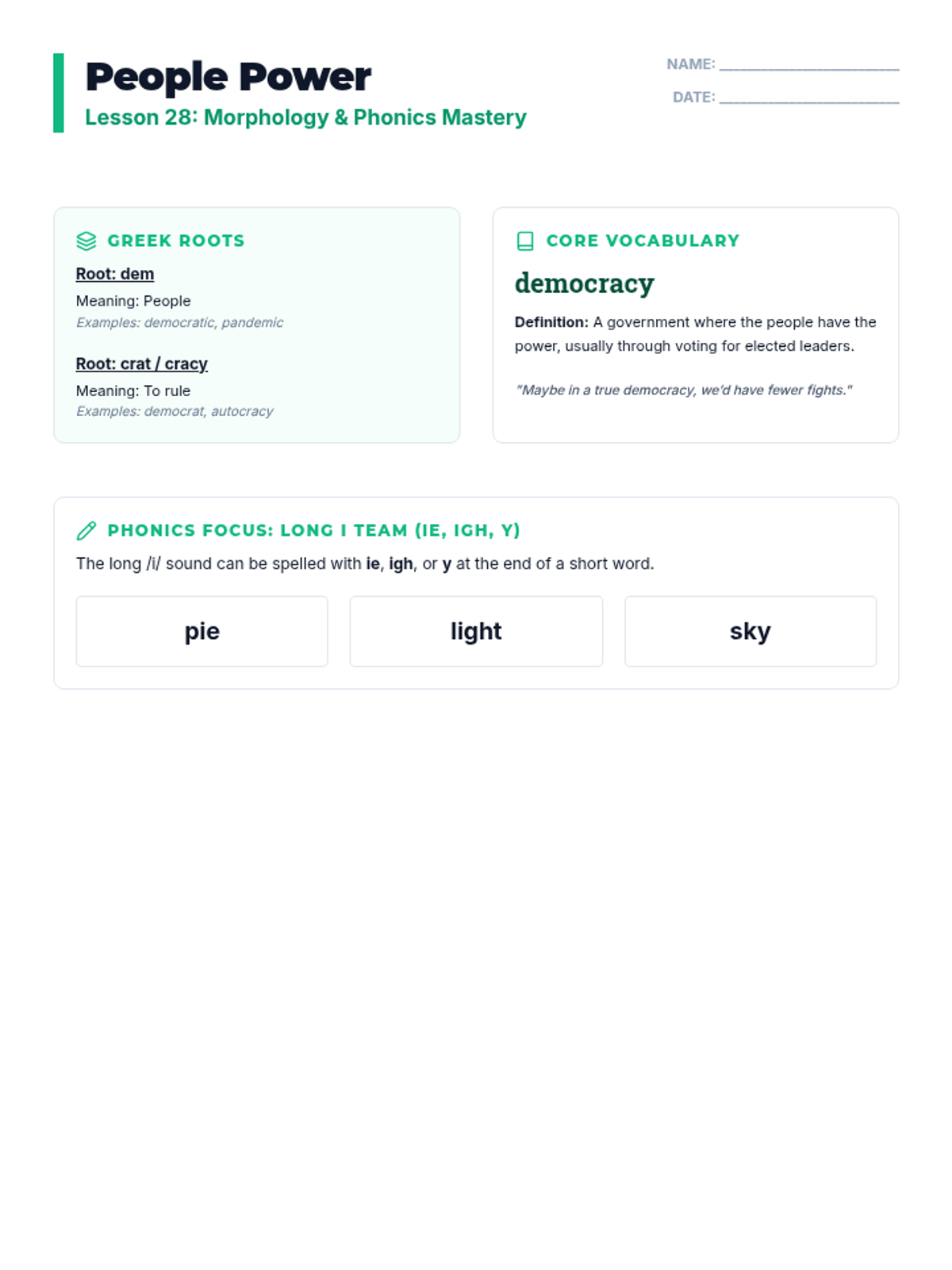
Focuses on the roots dem and crat/cracy, with the vocabulary word 'democracy'. Teaches Long I vowel teams (ie, igh, y).
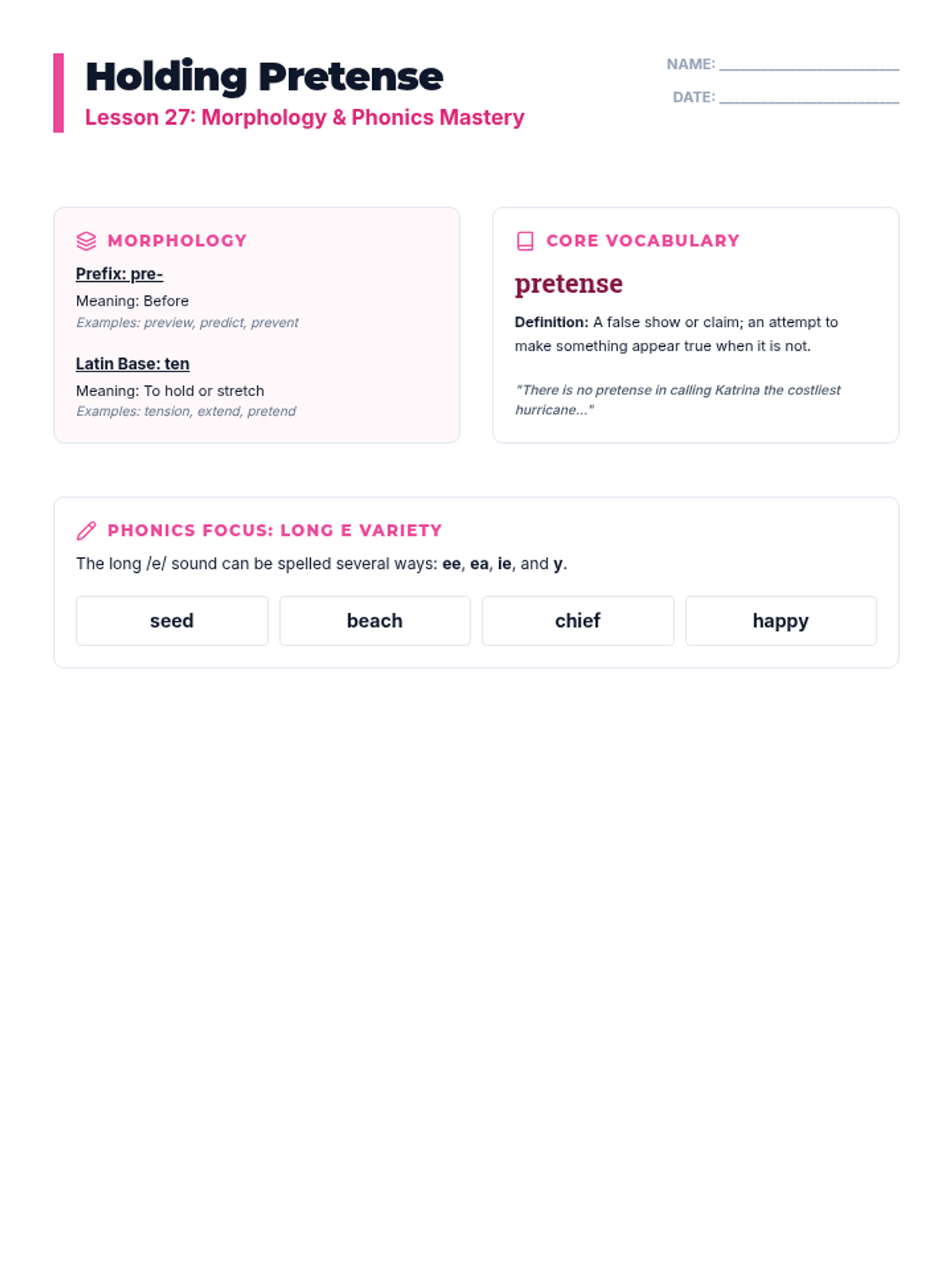
Focuses on the prefix pre- and the root ten, with the vocabulary word 'pretense'. Teaches Long E vowel teams (ee, ea, ie, y).
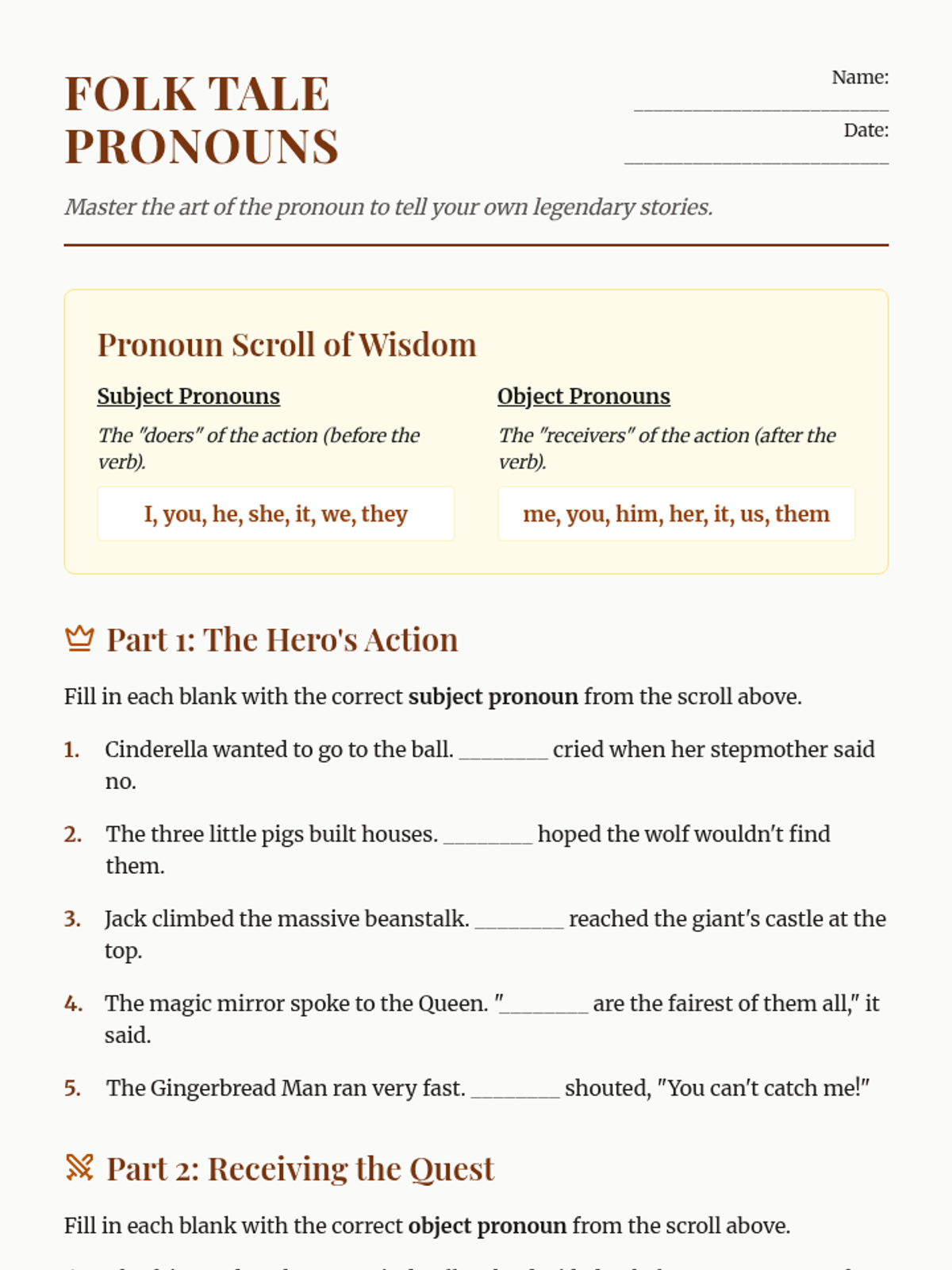
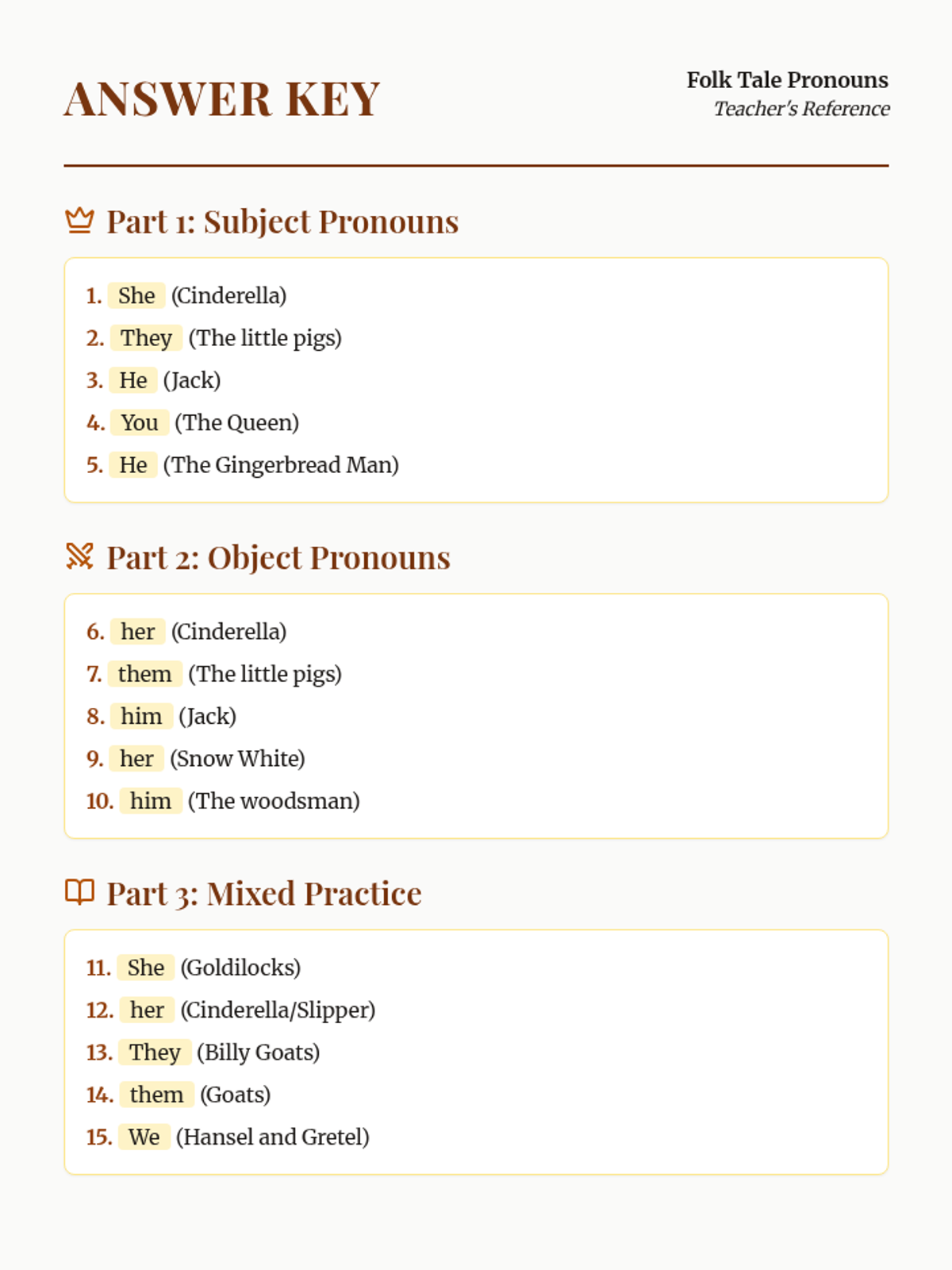
A focused lesson on subject and object pronouns through the lens of classic folk tales, helping students identify and use pronouns correctly in narrative contexts.
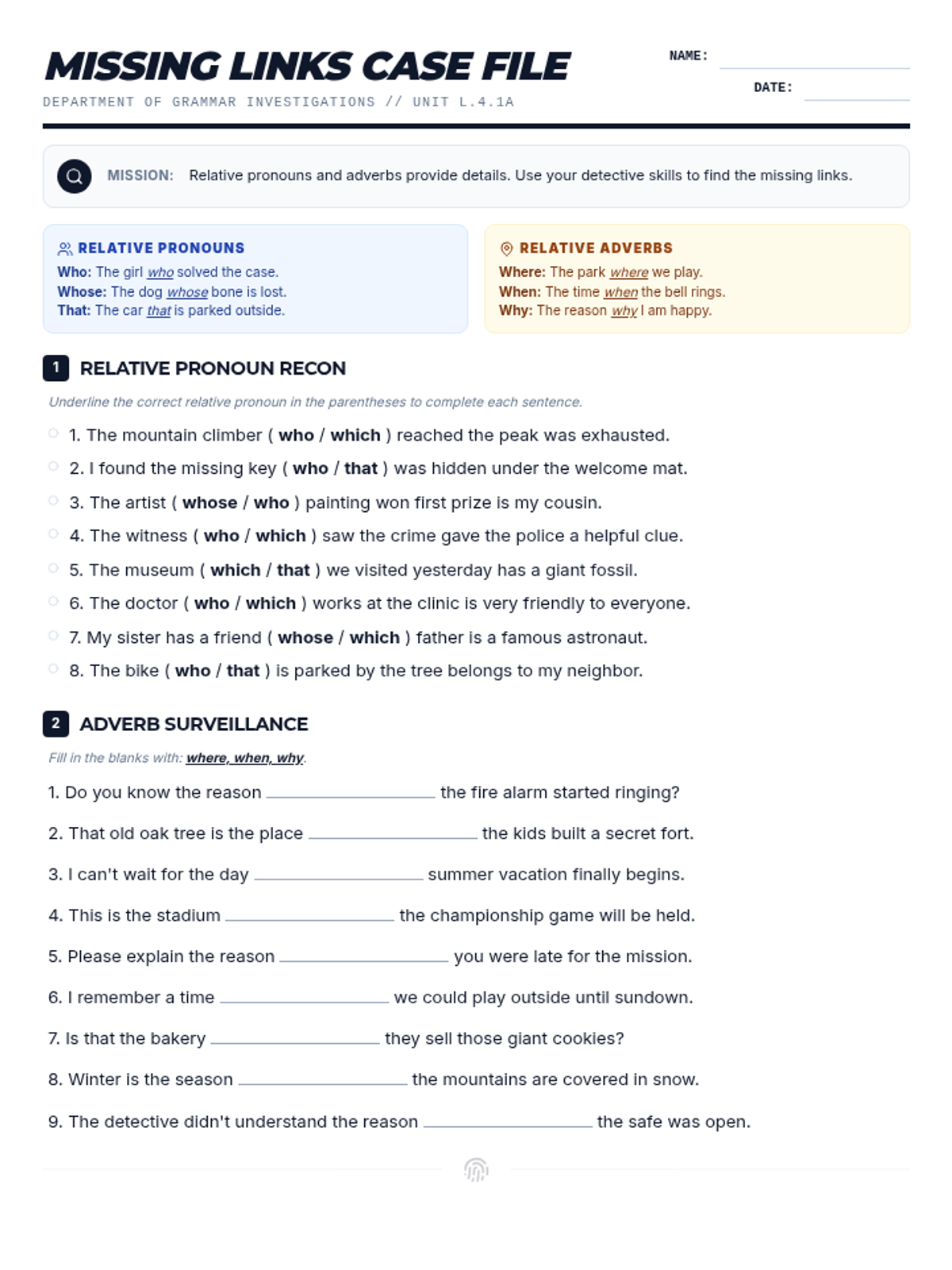
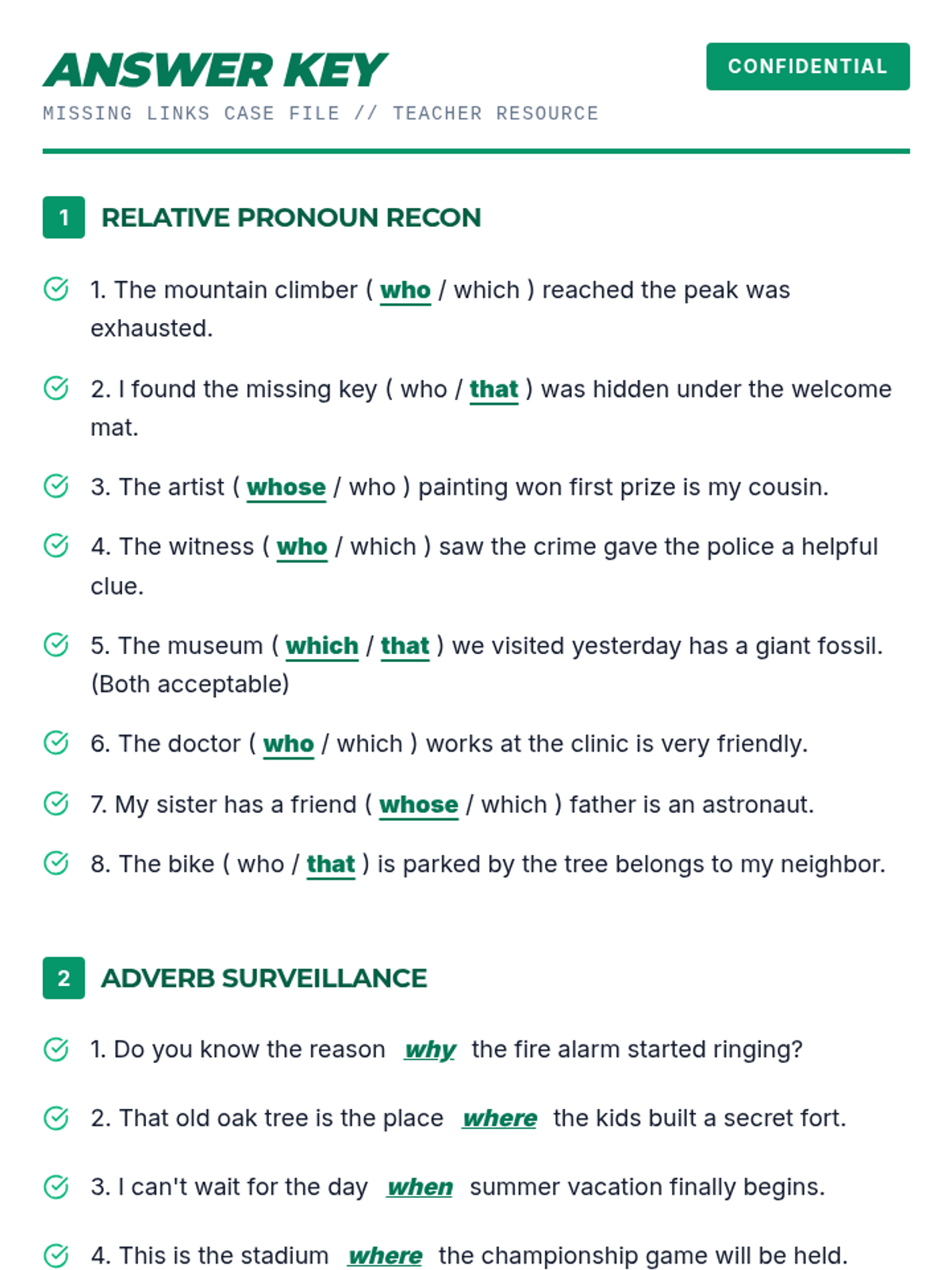
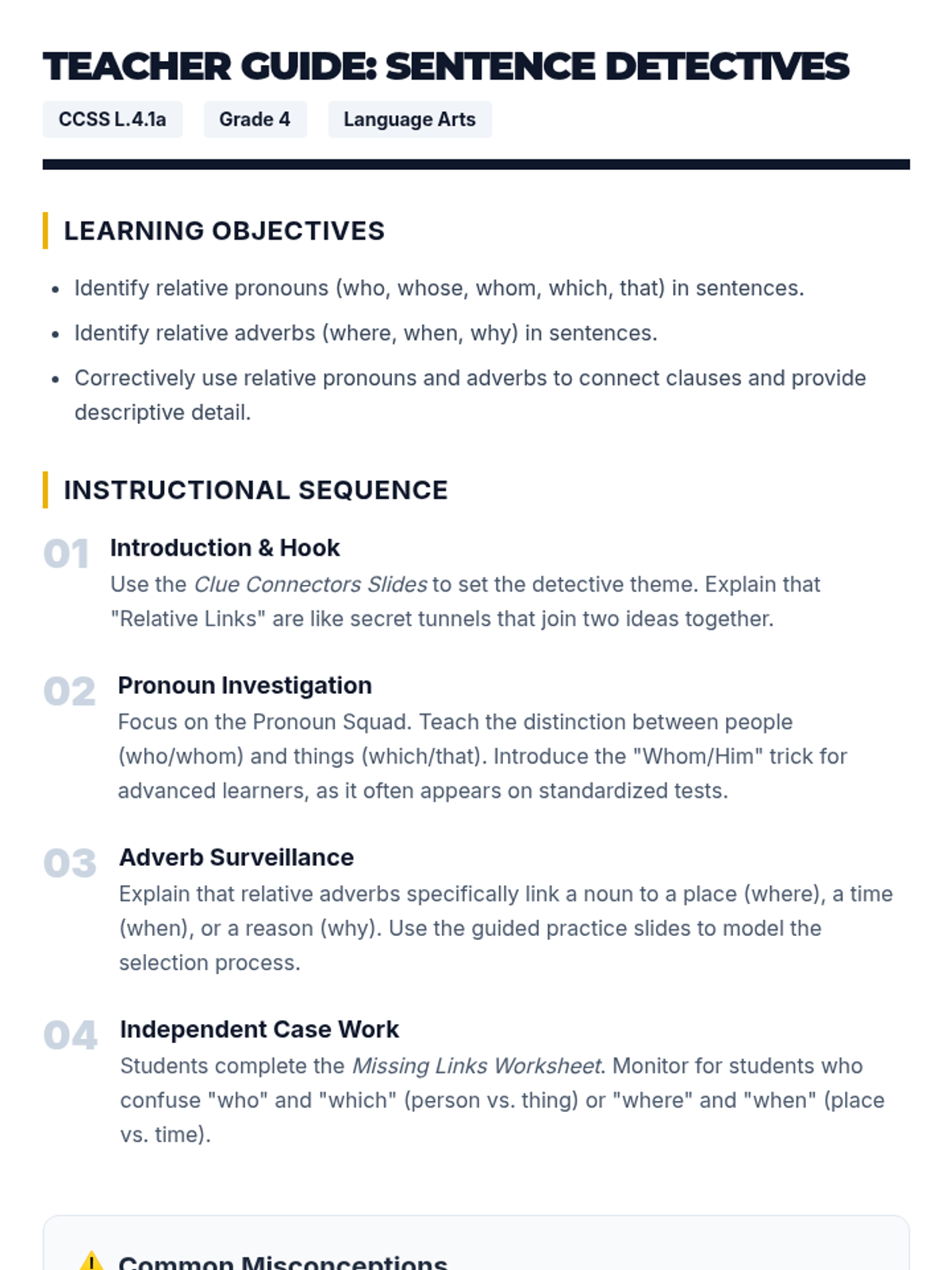
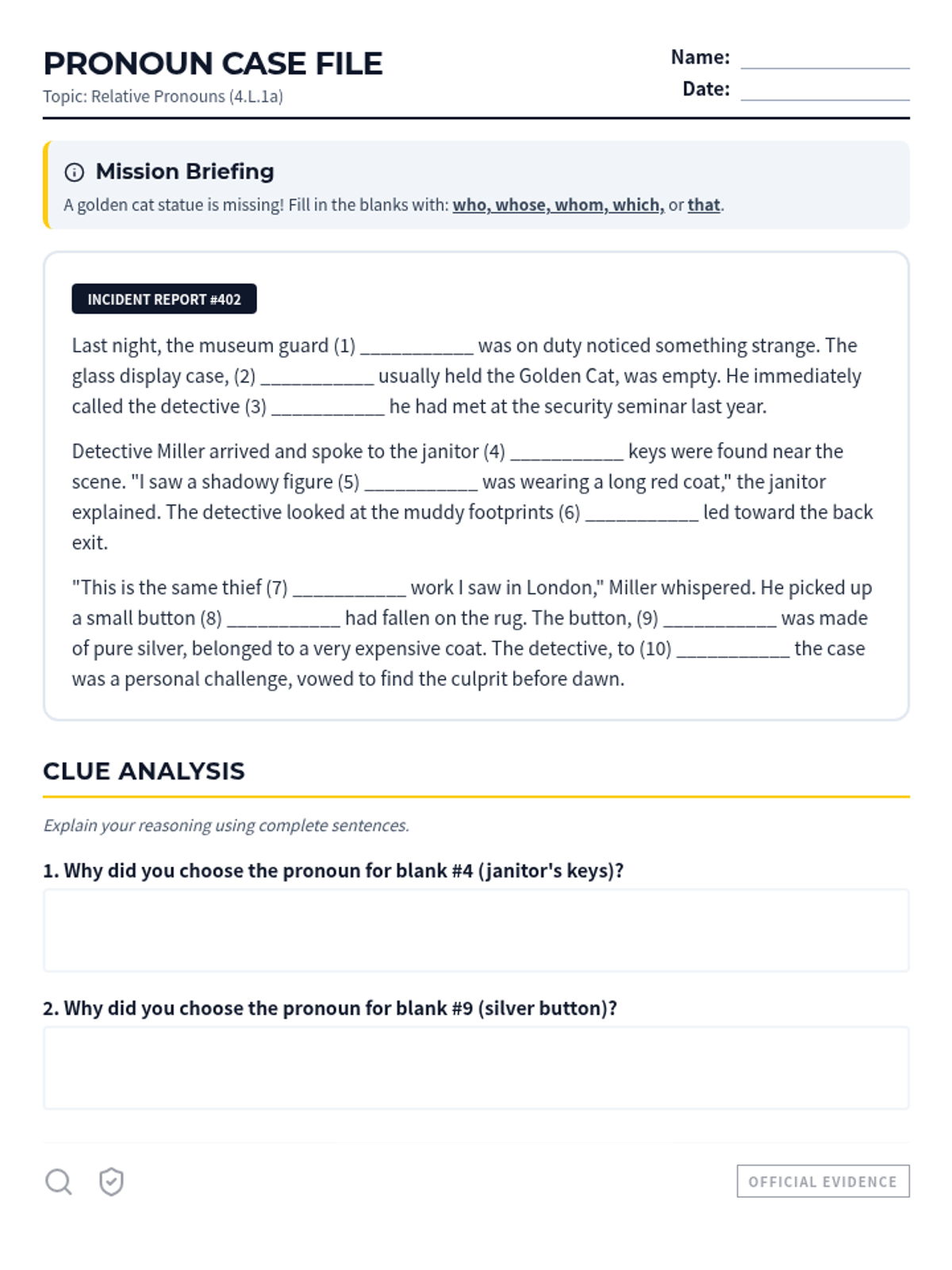
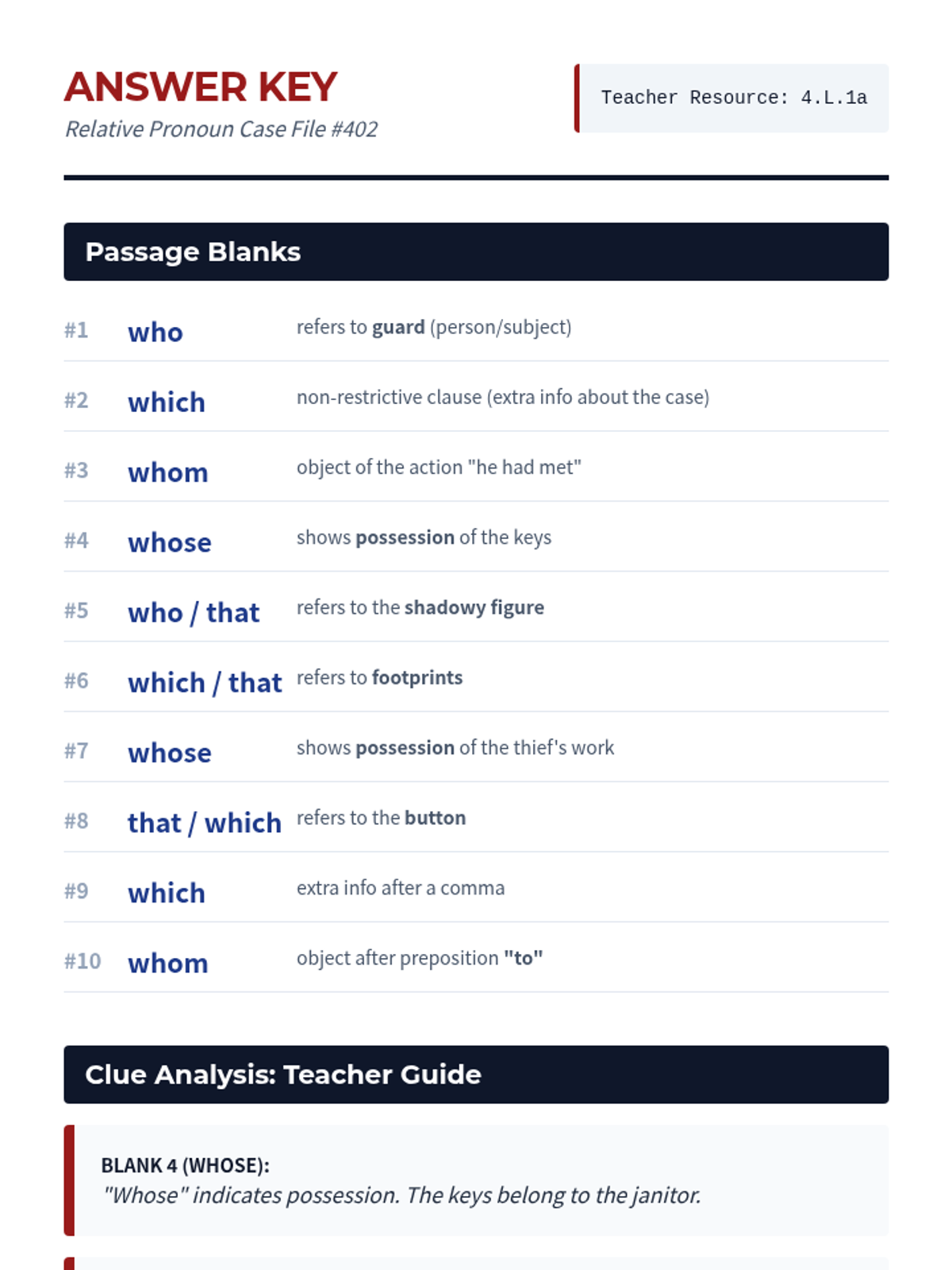
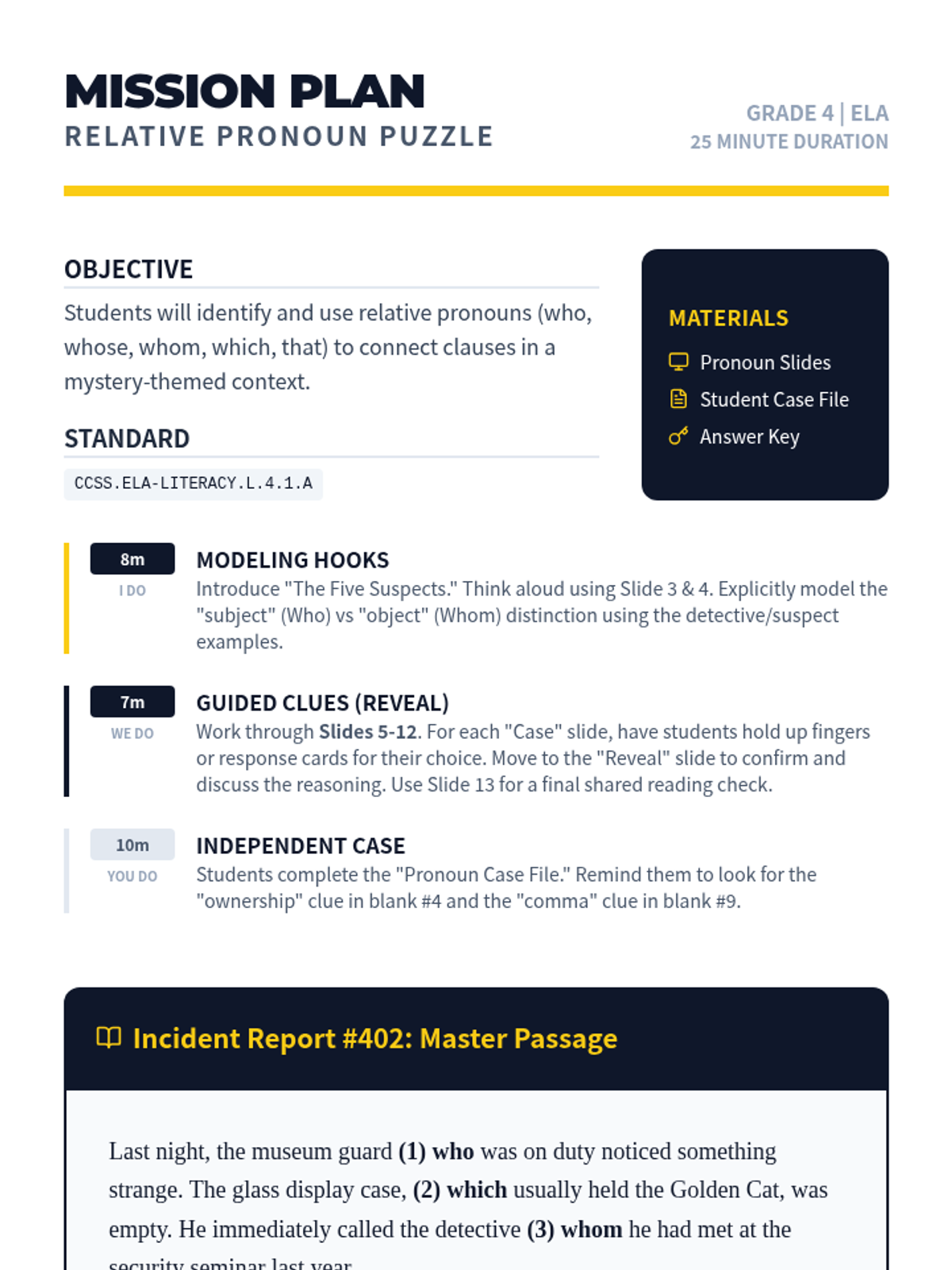
A detective-themed lesson teaching 4th graders how to use relative pronouns and relative adverbs to connect ideas in sentences, aligned to CCSS L.4.1a.
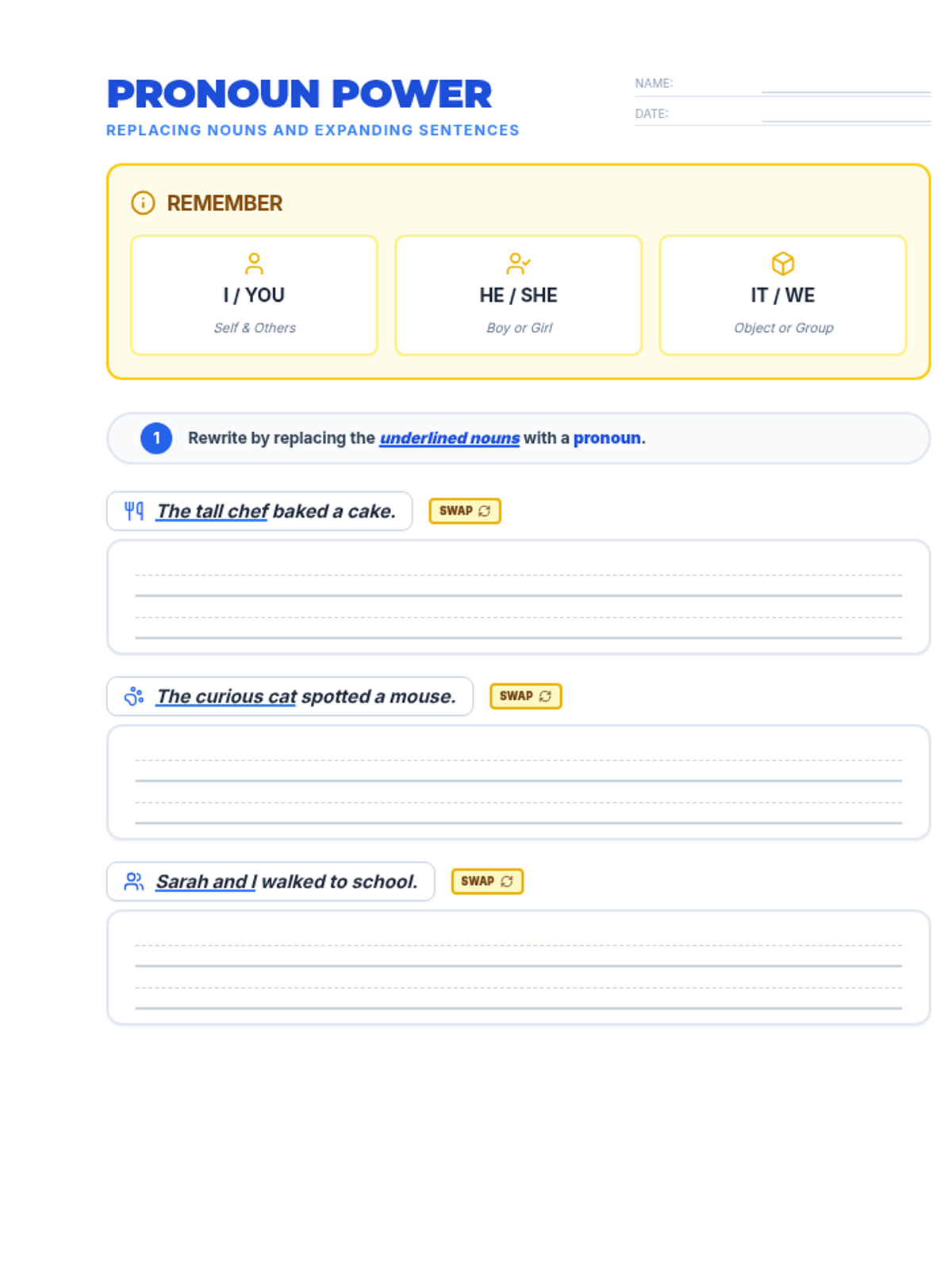
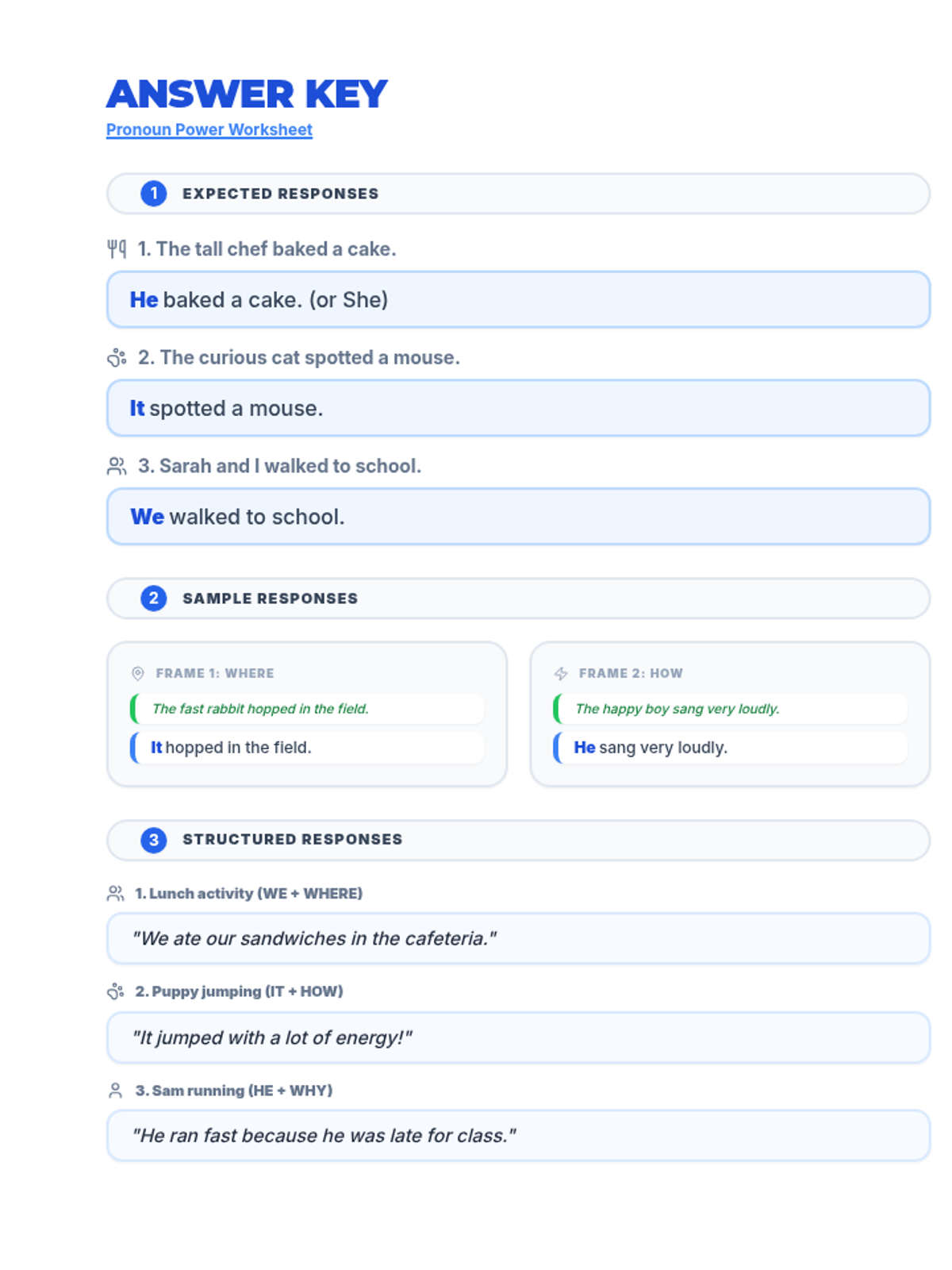
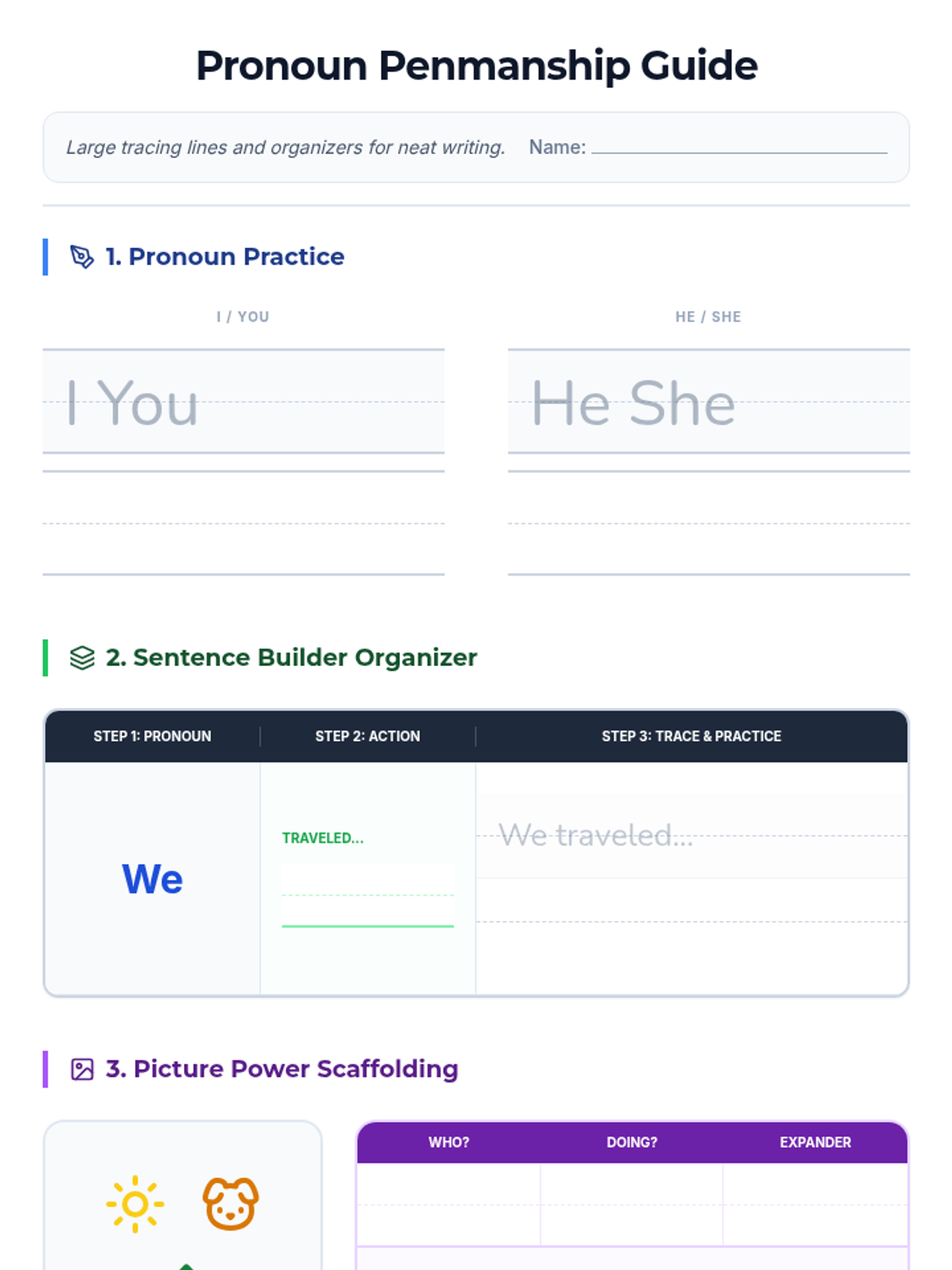
A lesson focused on identifying and using personal pronouns (I, you, he, she, it, we) to replace nouns and enhance sentence structure. Students will practice sentence expansion alongside pronoun substitution for clearer writing.
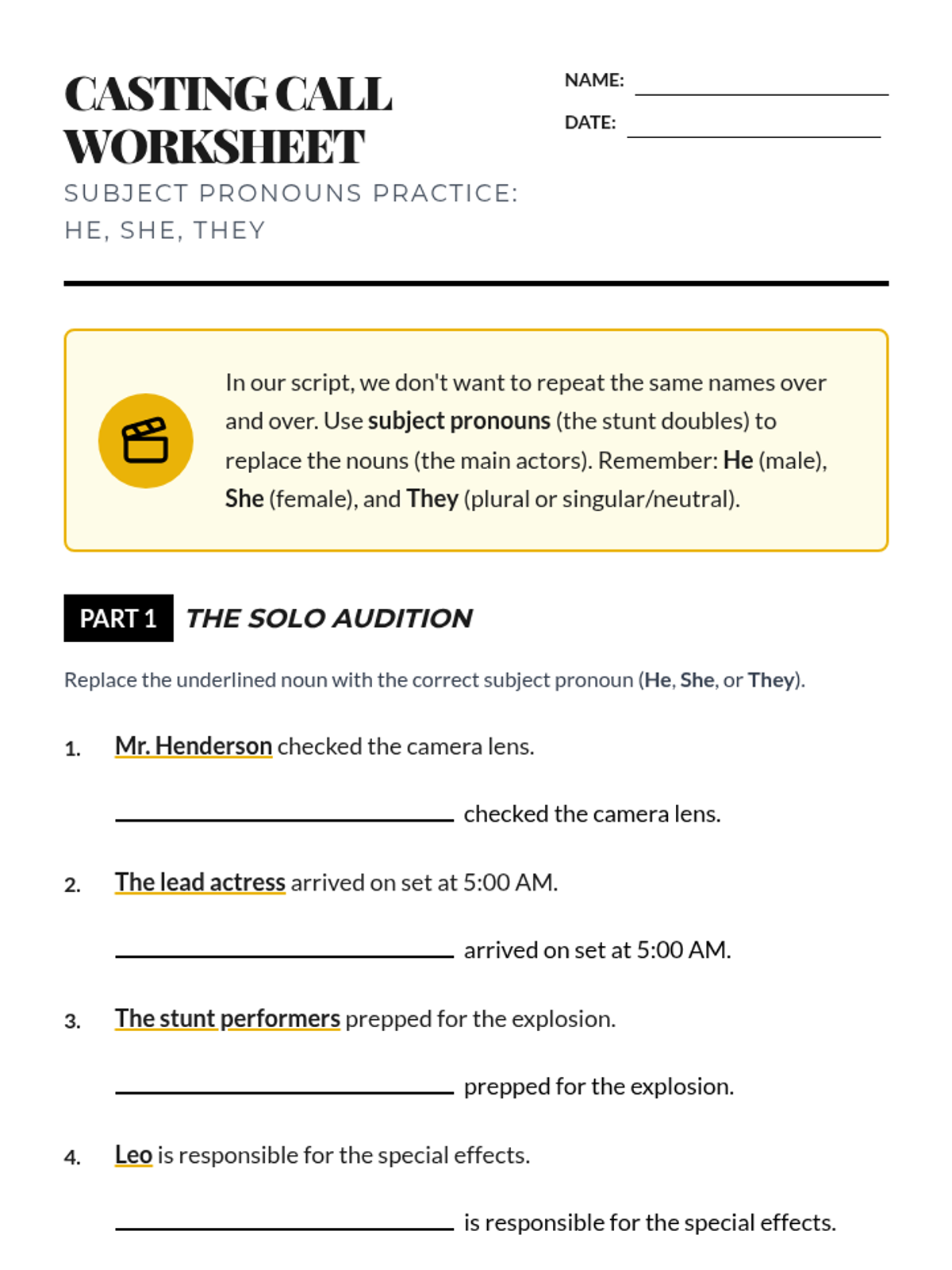
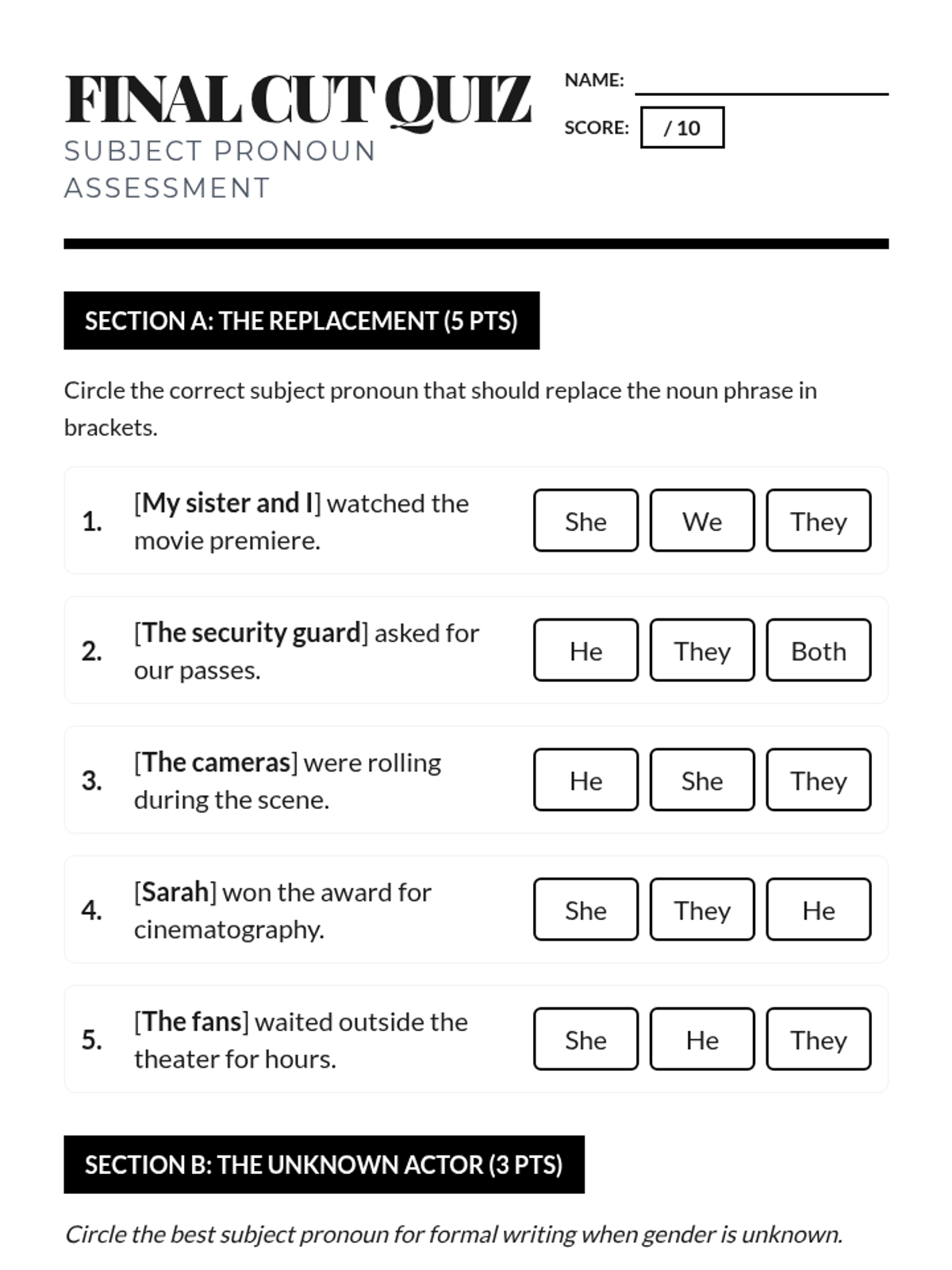
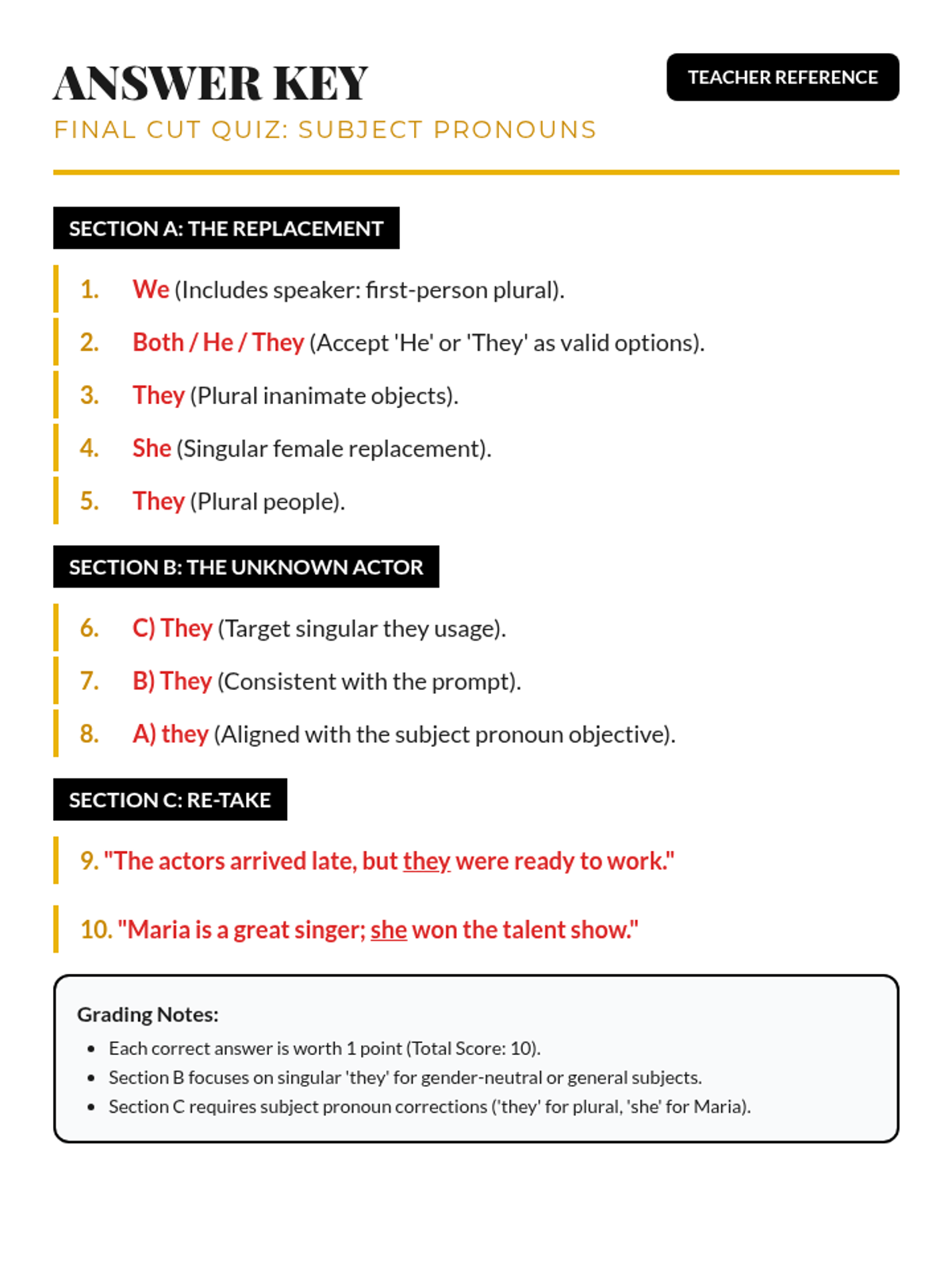
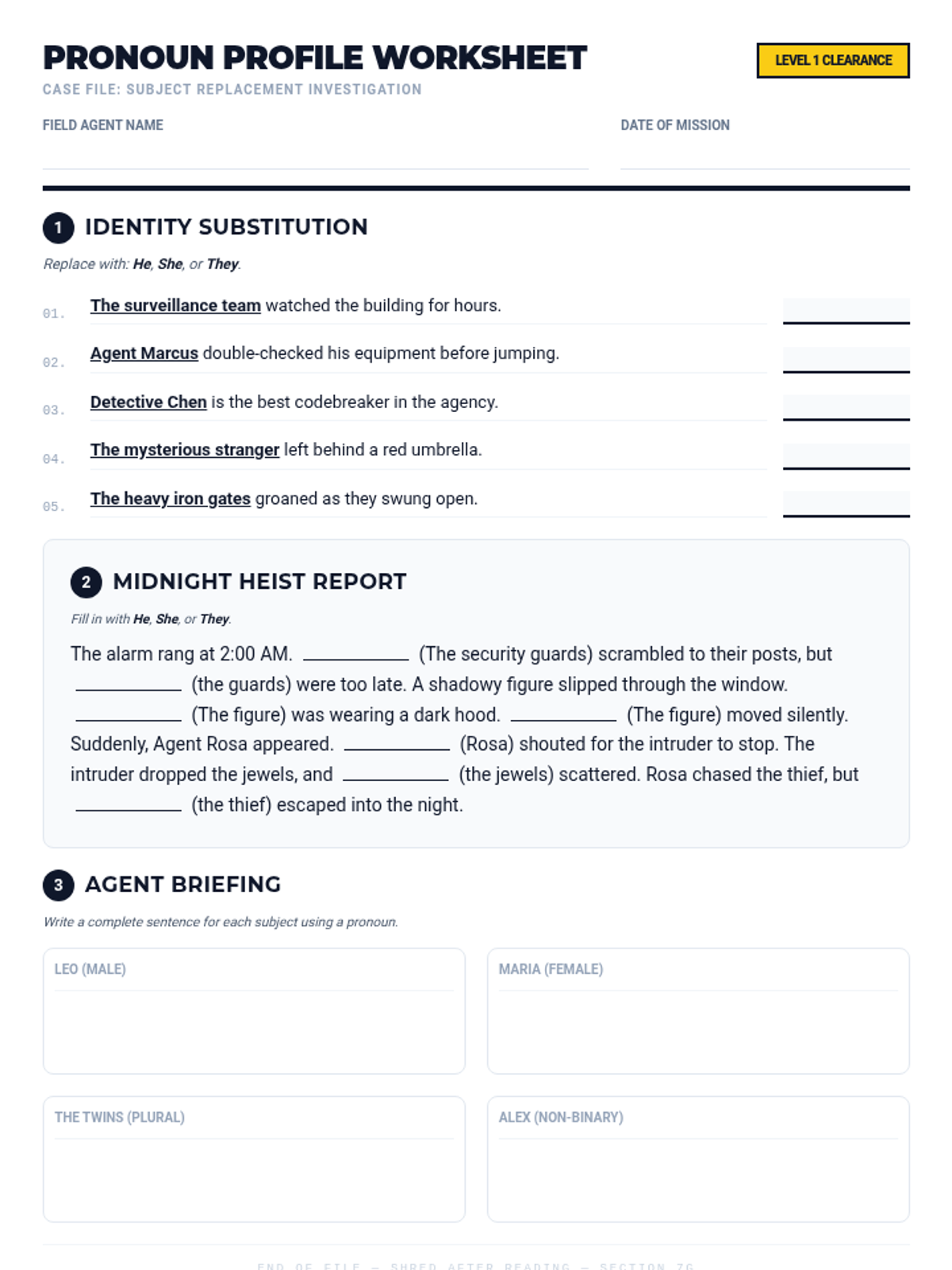
A lesson for middle schoolers to master subject pronouns (he, she, they) through the metaphor of movie stunt doubles, focusing on clarity and agreement.
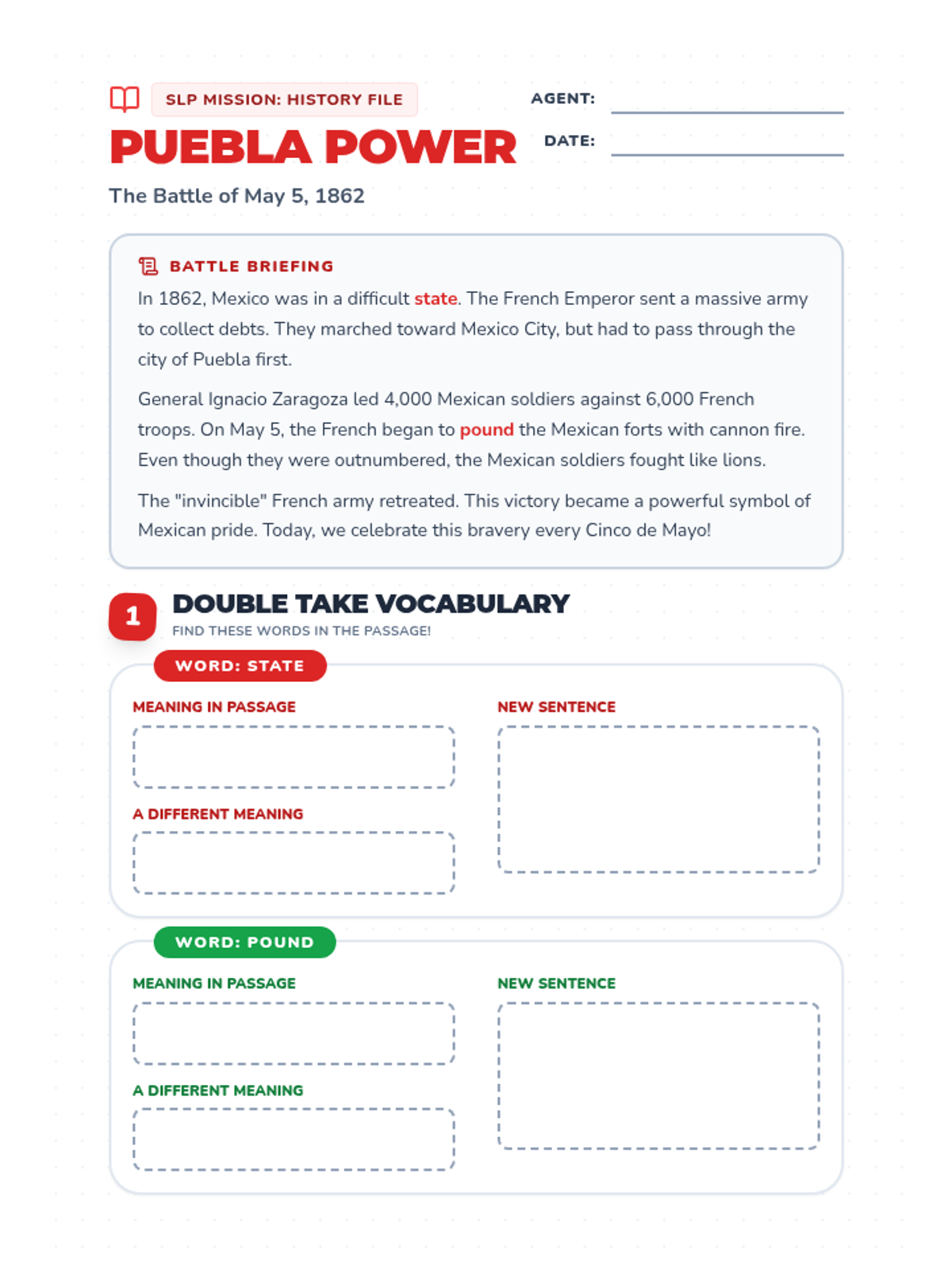
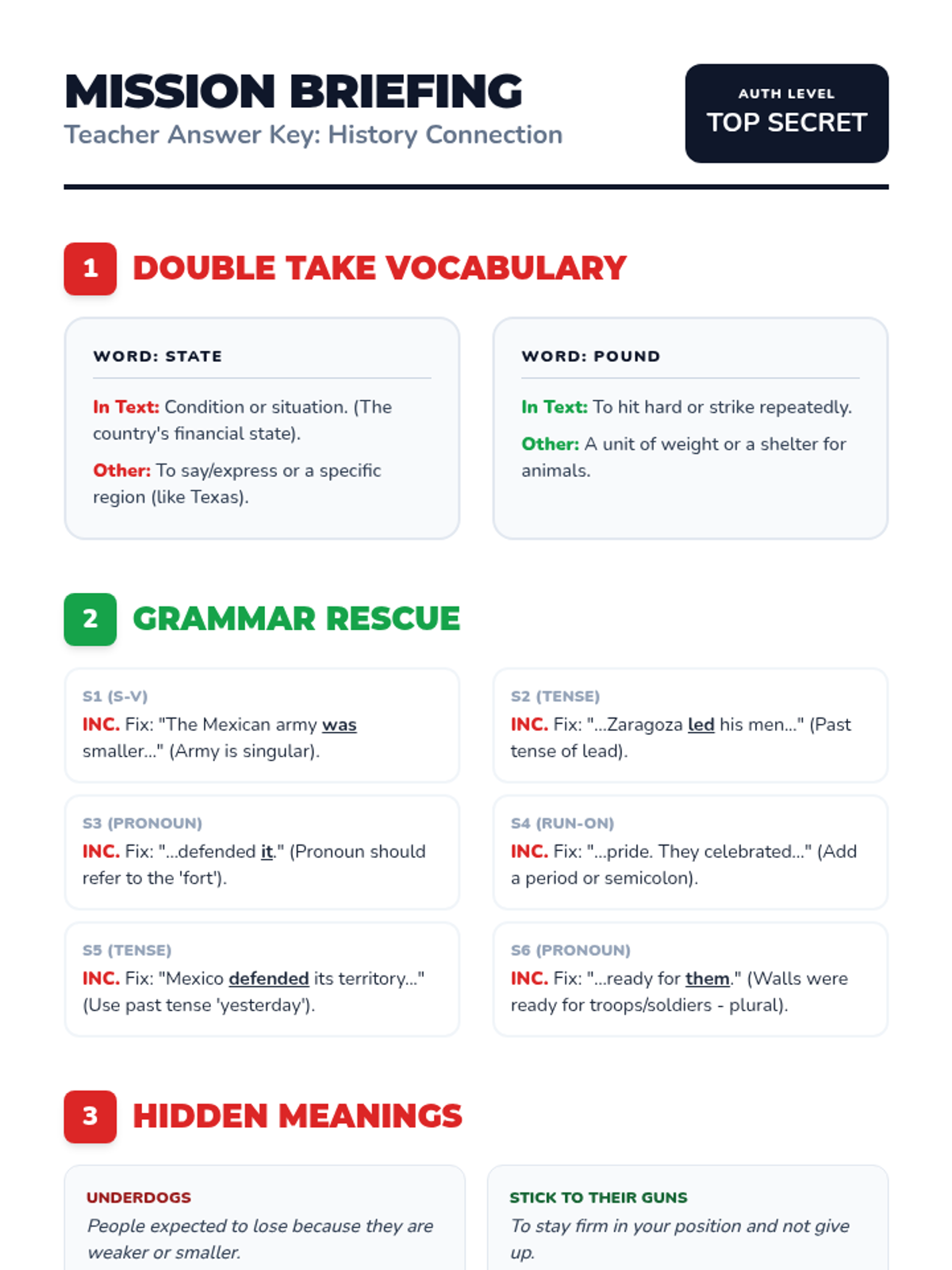
A targeted speech-language lesson for 6th graders focusing on vocabulary, grammar editing, and figurative language through the lens of Cinco de Mayo.
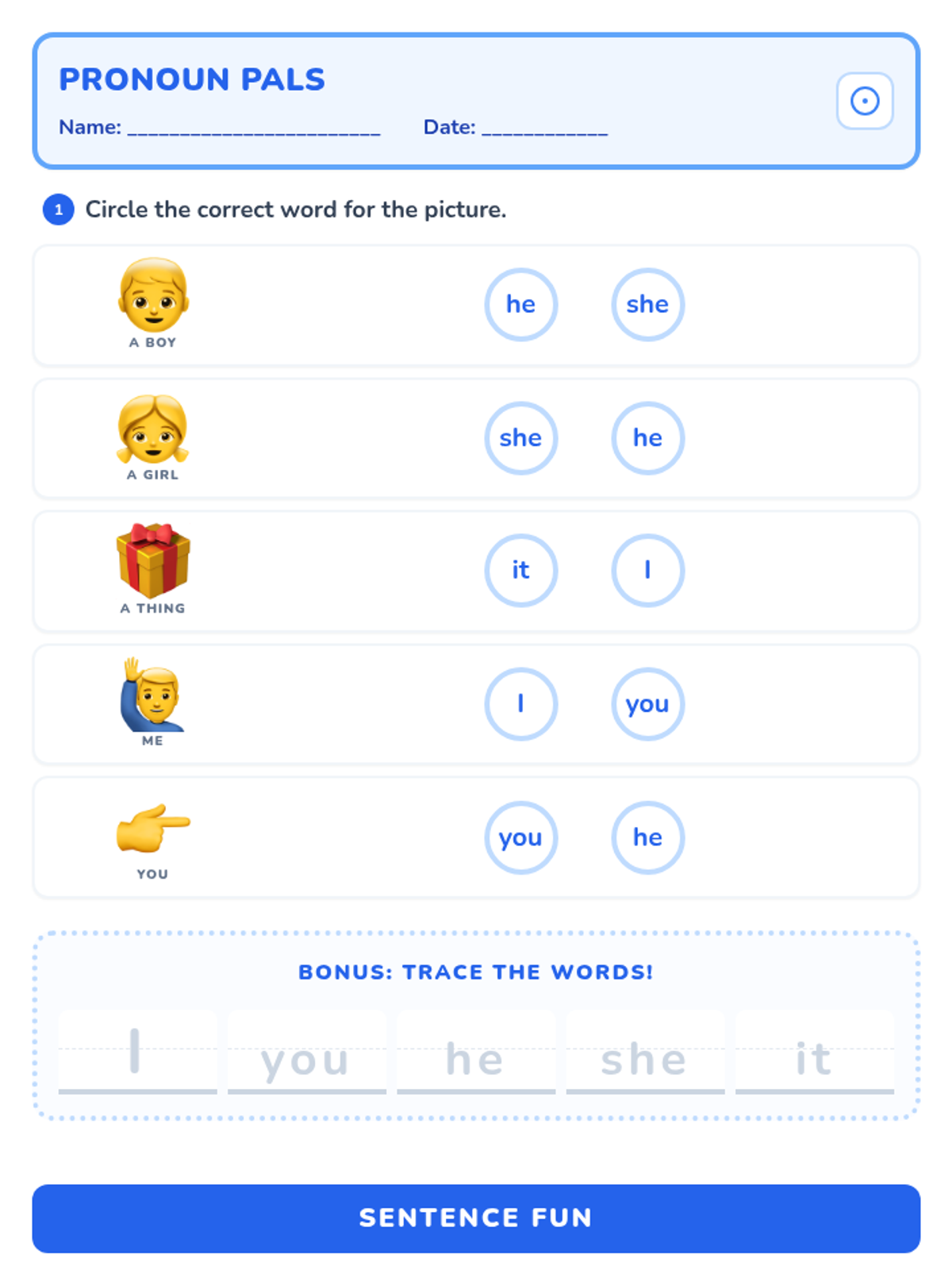
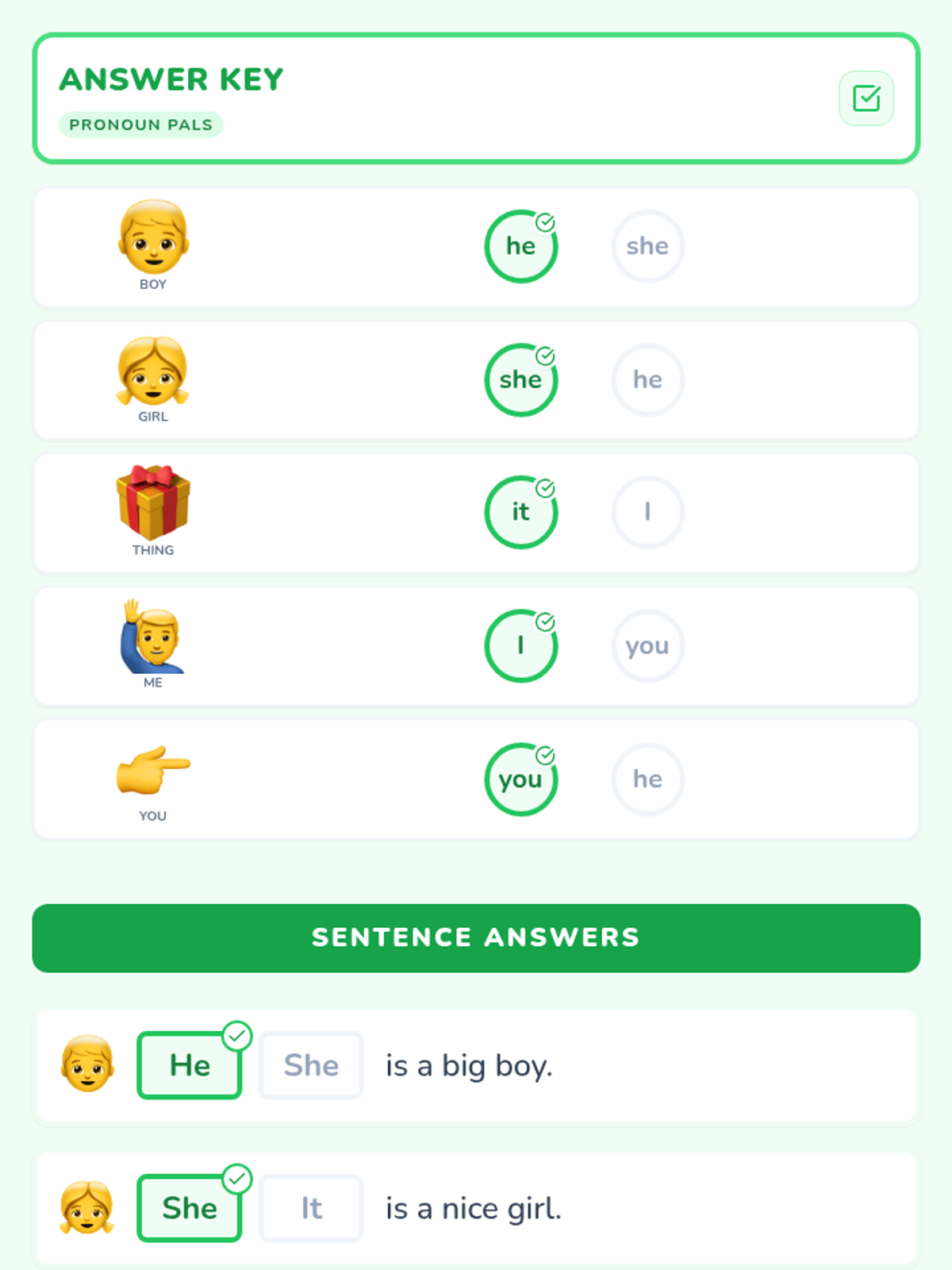
A foundational lesson introducing kindergarteners to the basic personal subject pronouns I, you, he, she, and it through visual matching and identification.
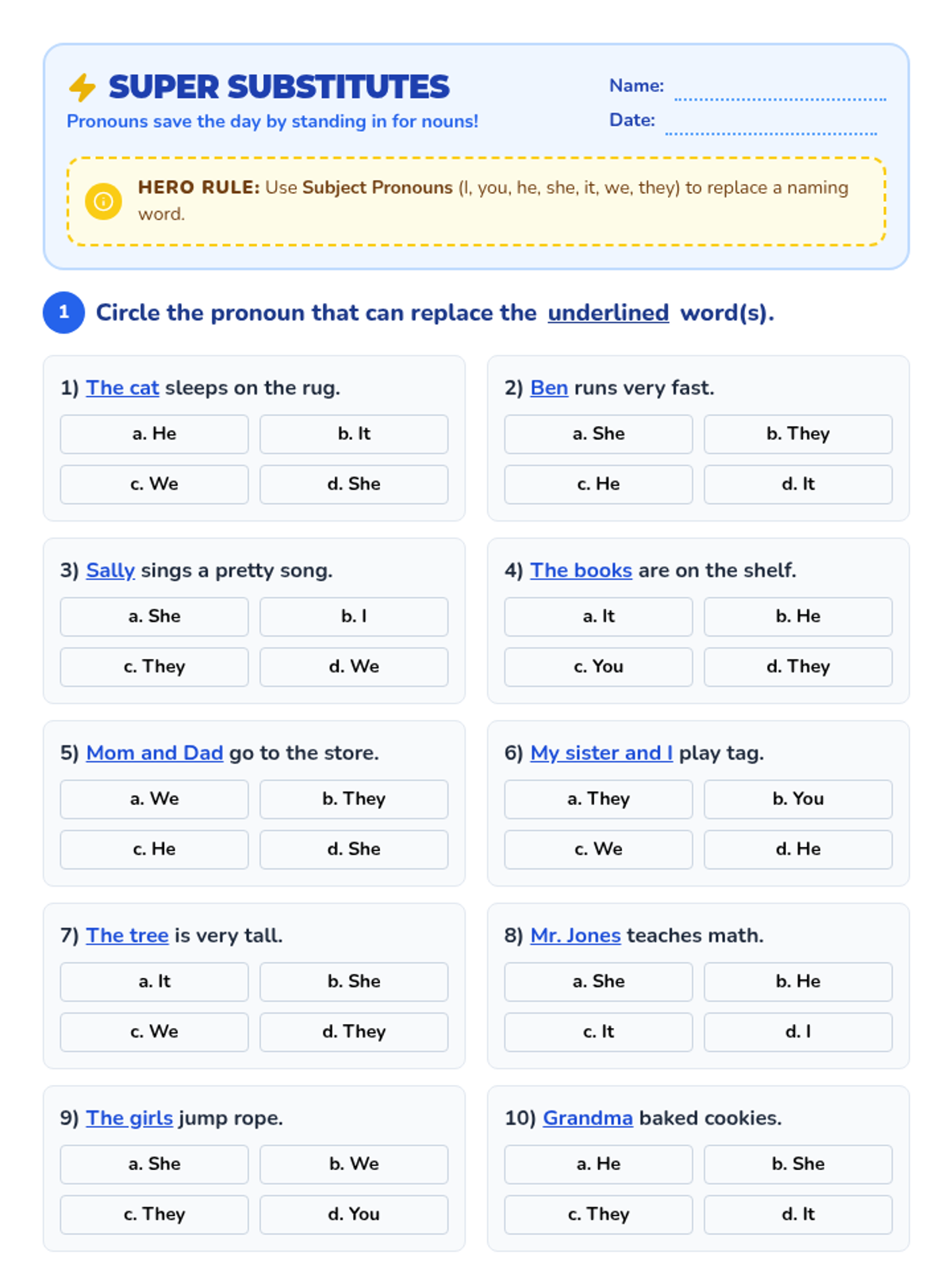
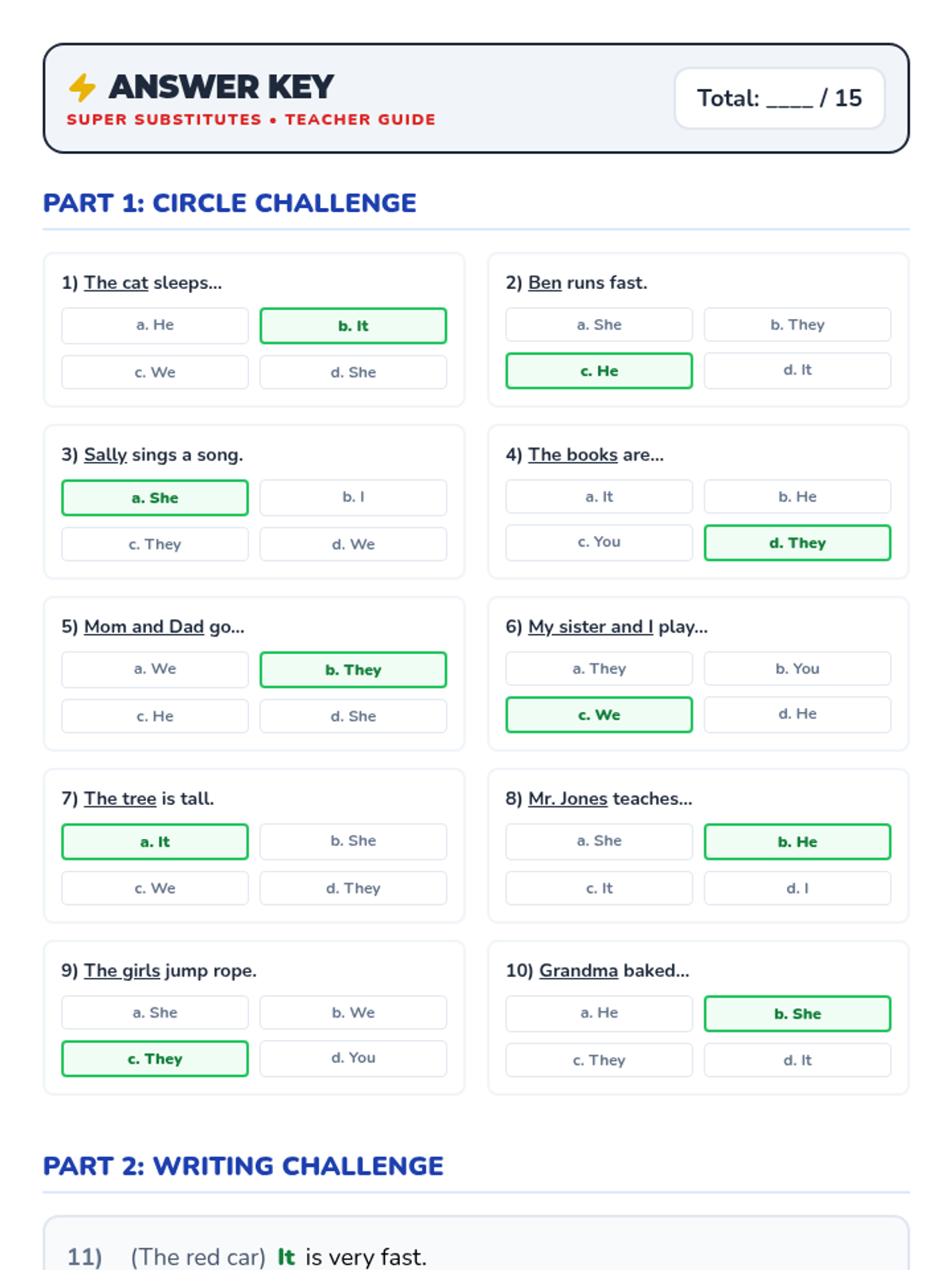
A fun, superhero-themed lesson focused on identifying and using subject pronouns to replace naming words in sentences.
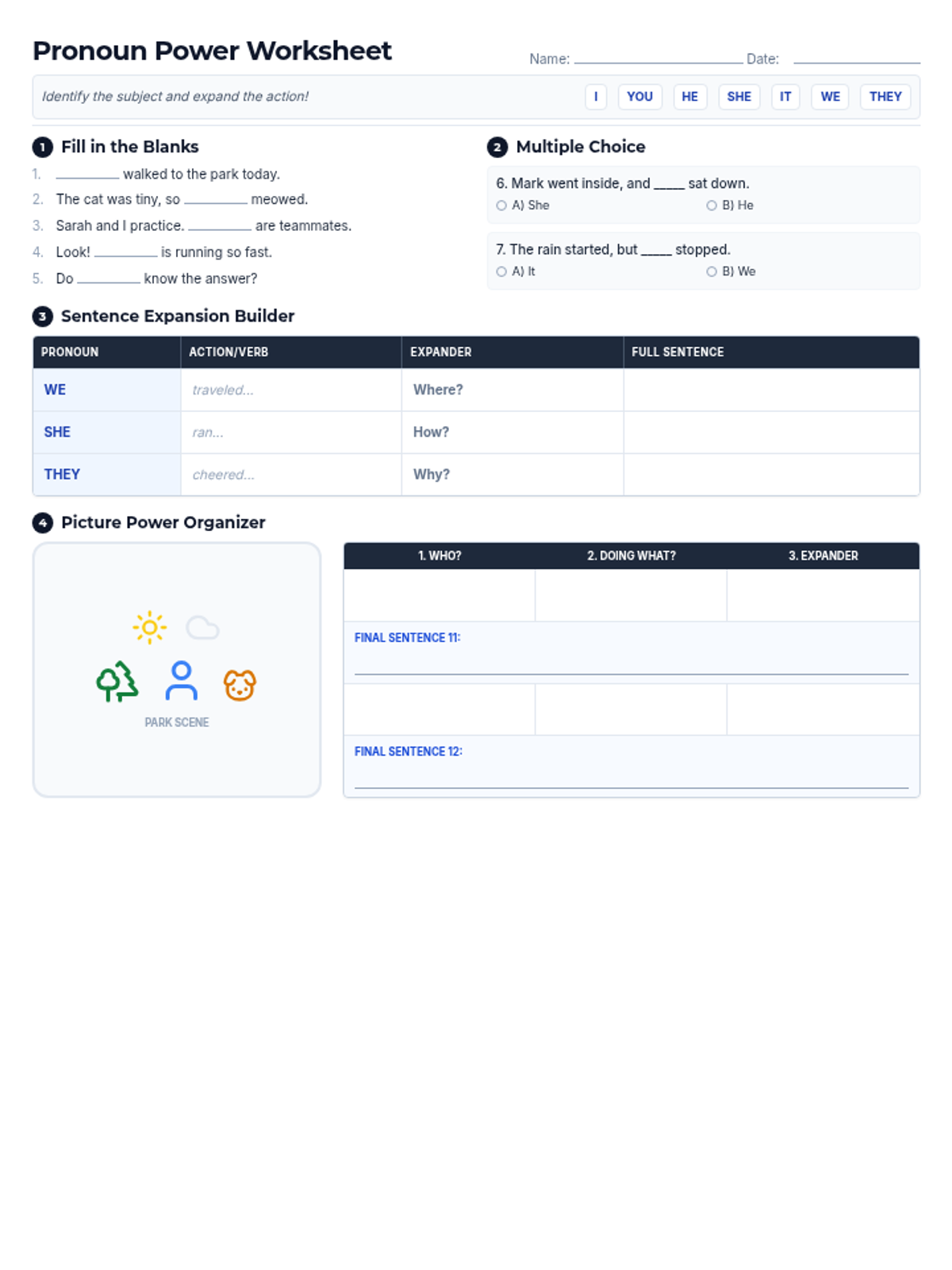
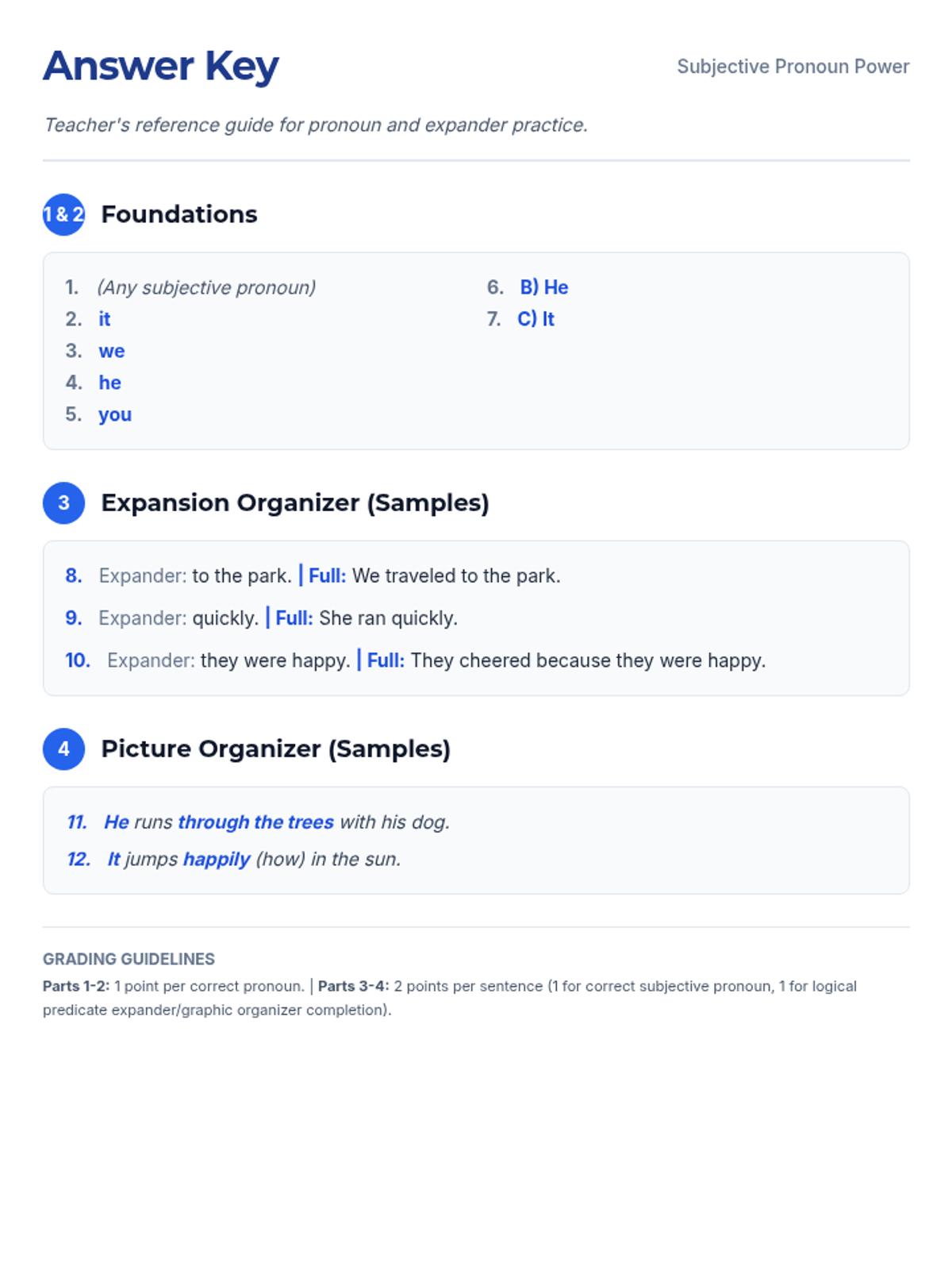
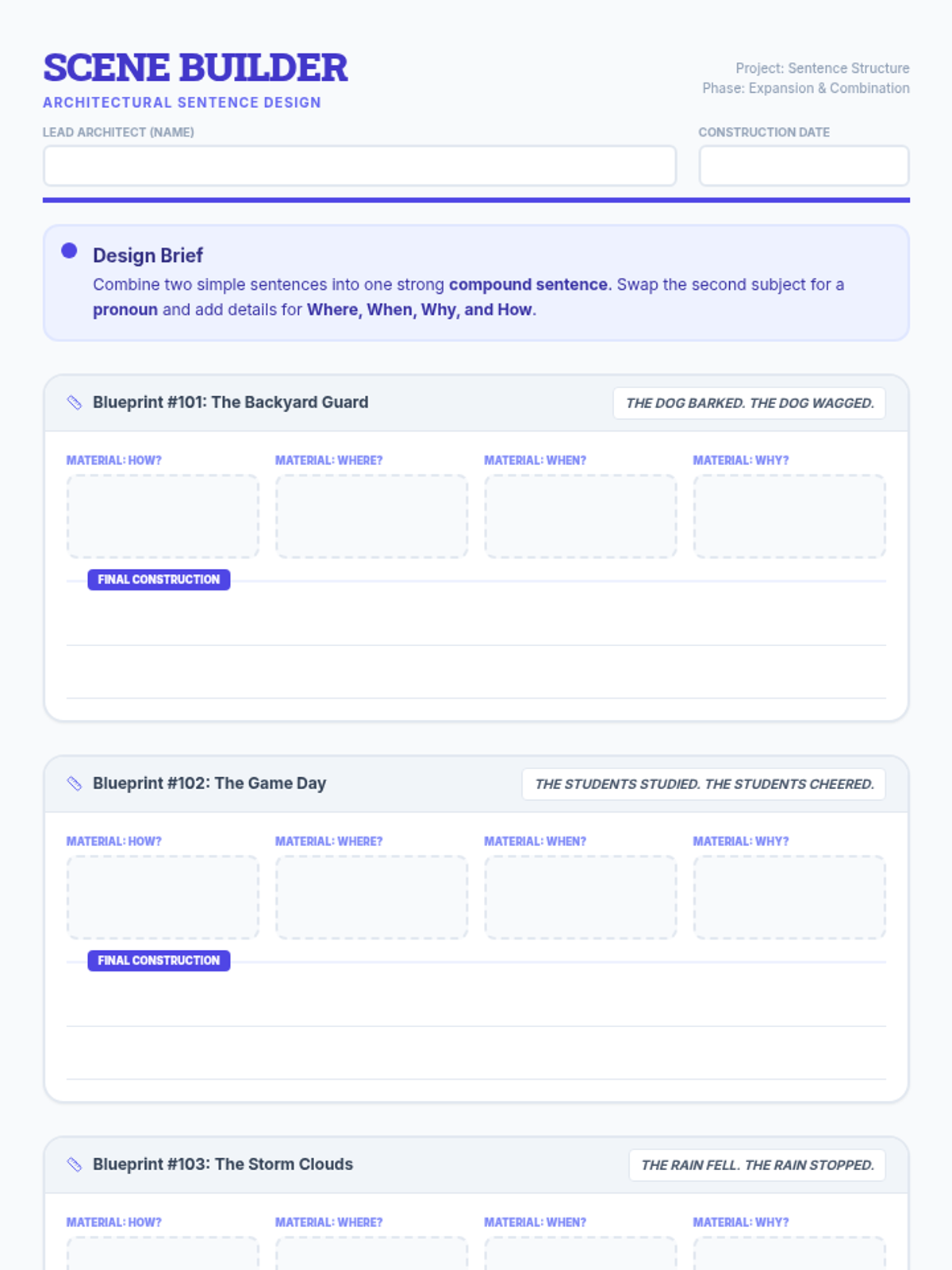
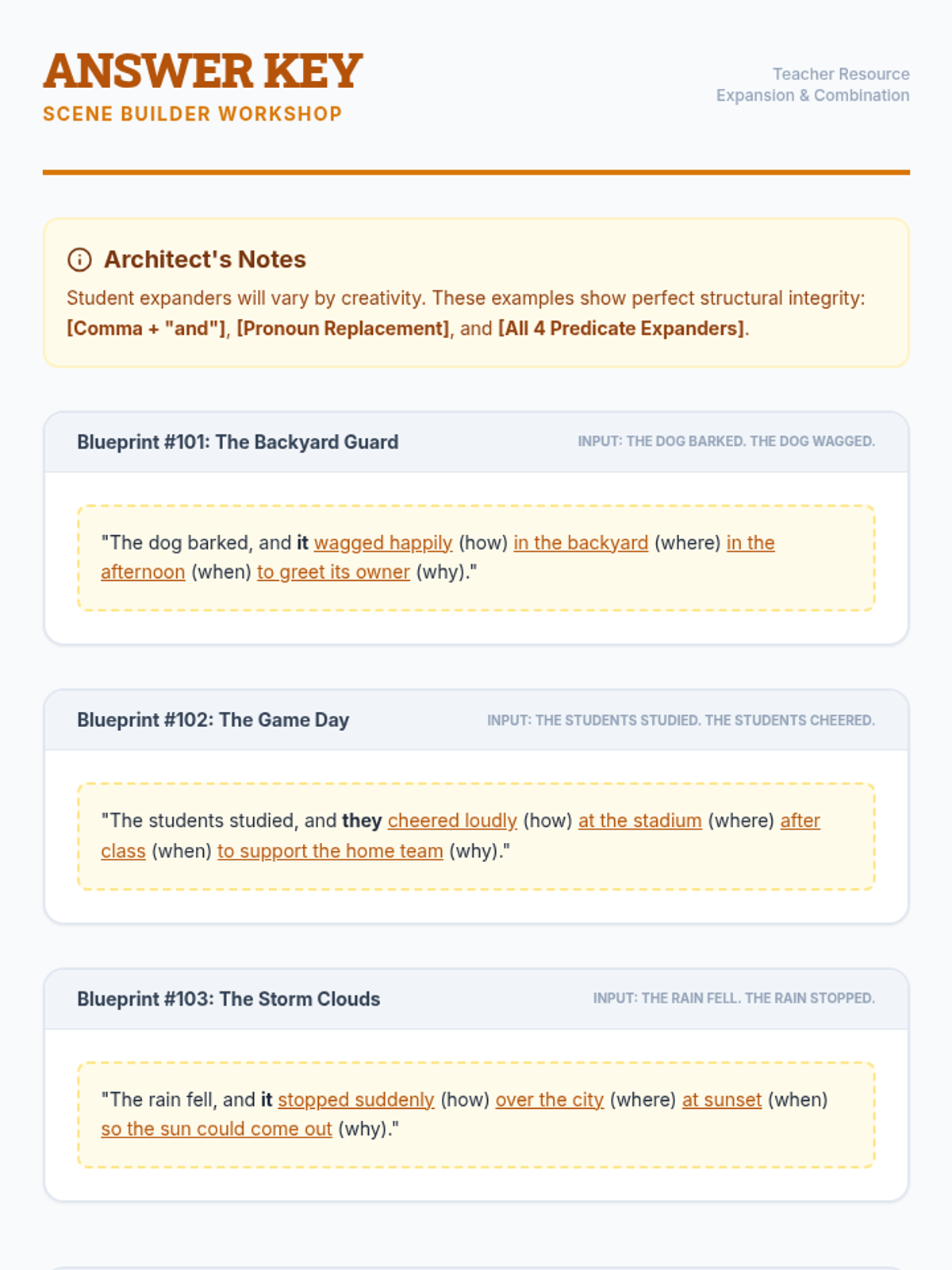
A lesson focused on mastering subjective pronouns within sentences enhanced by predicate expanders (where, when, how, and why). Students will identify pronouns and construct complex thoughts by adding detail to their actions.
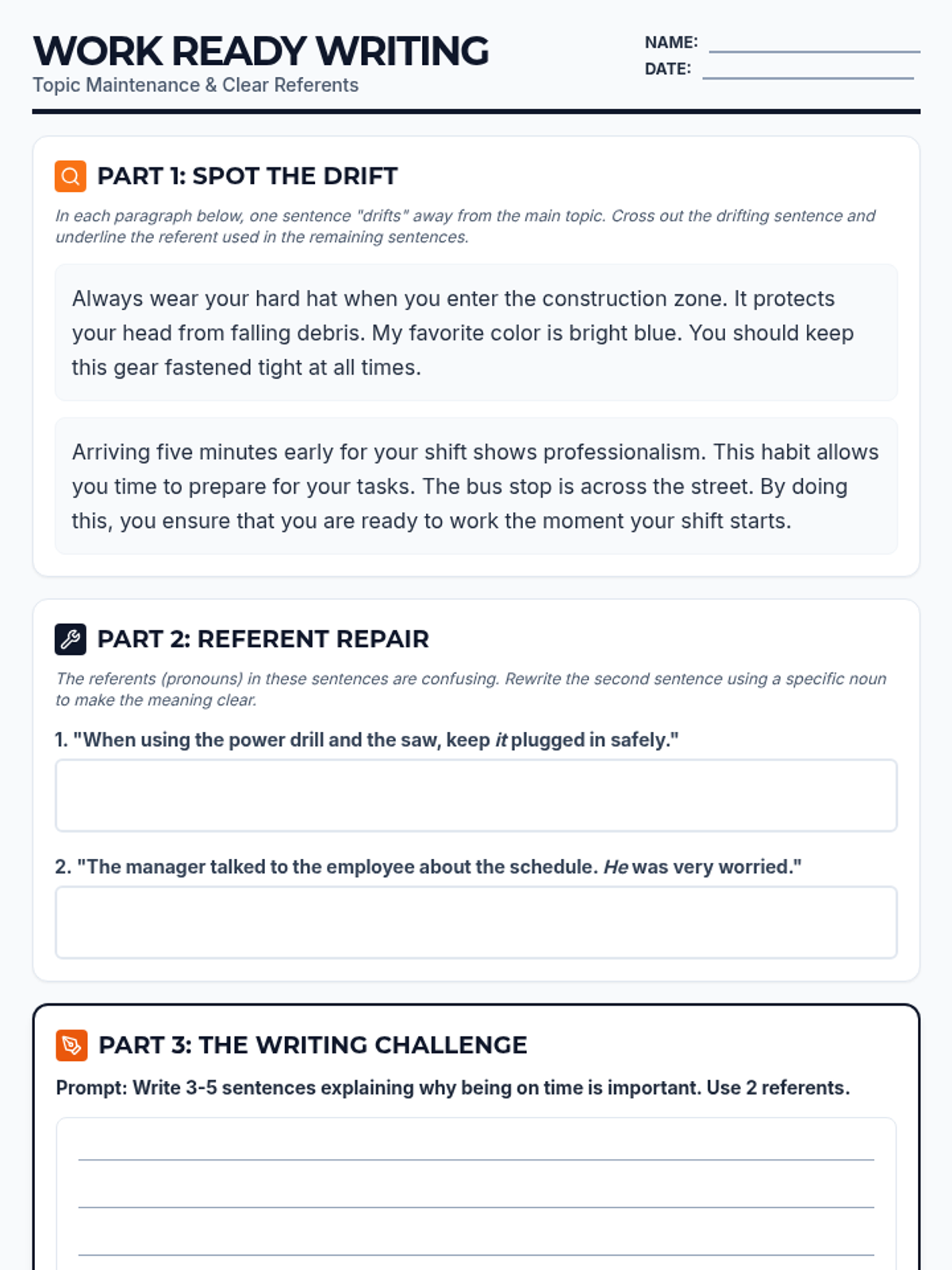
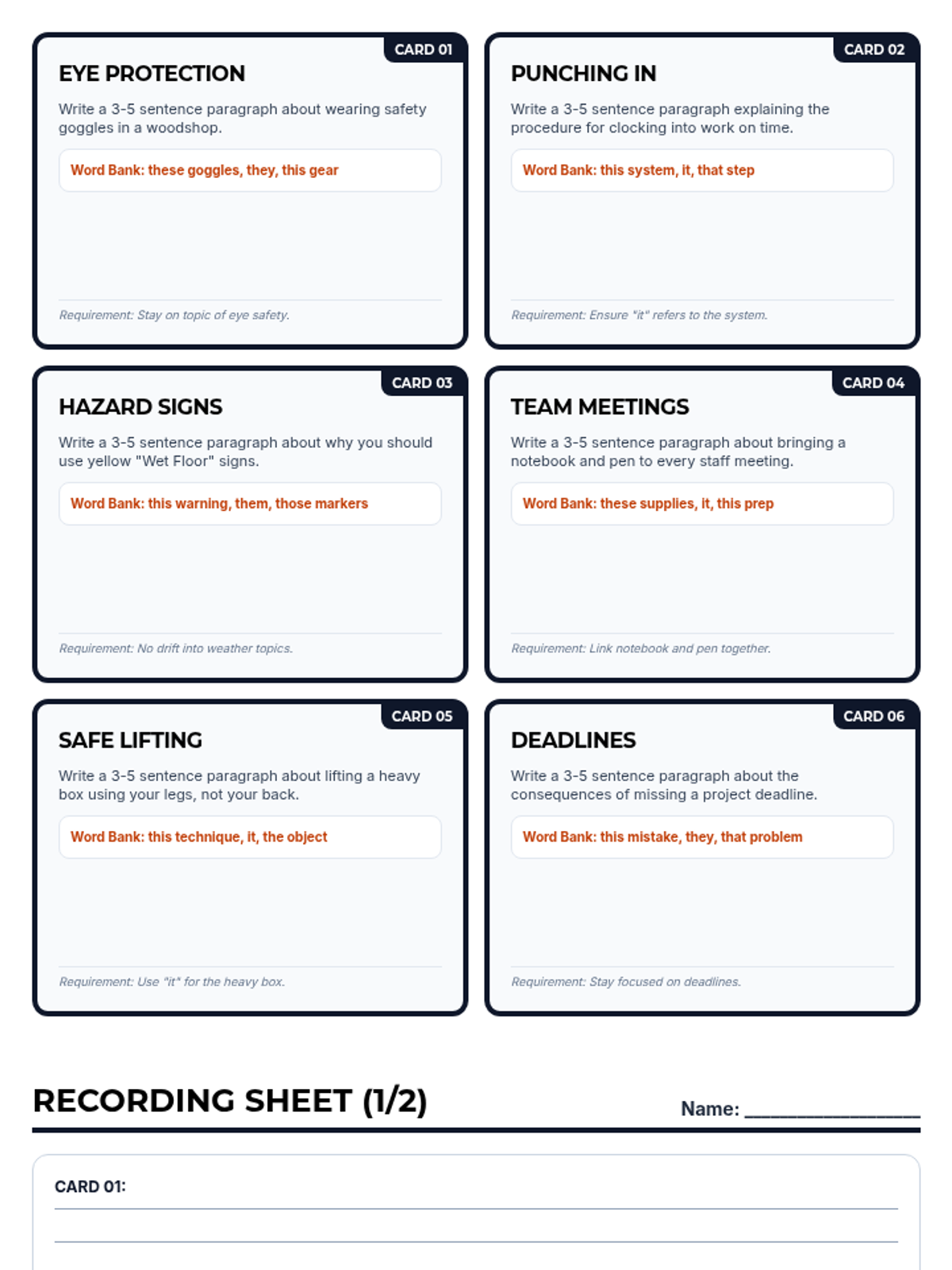
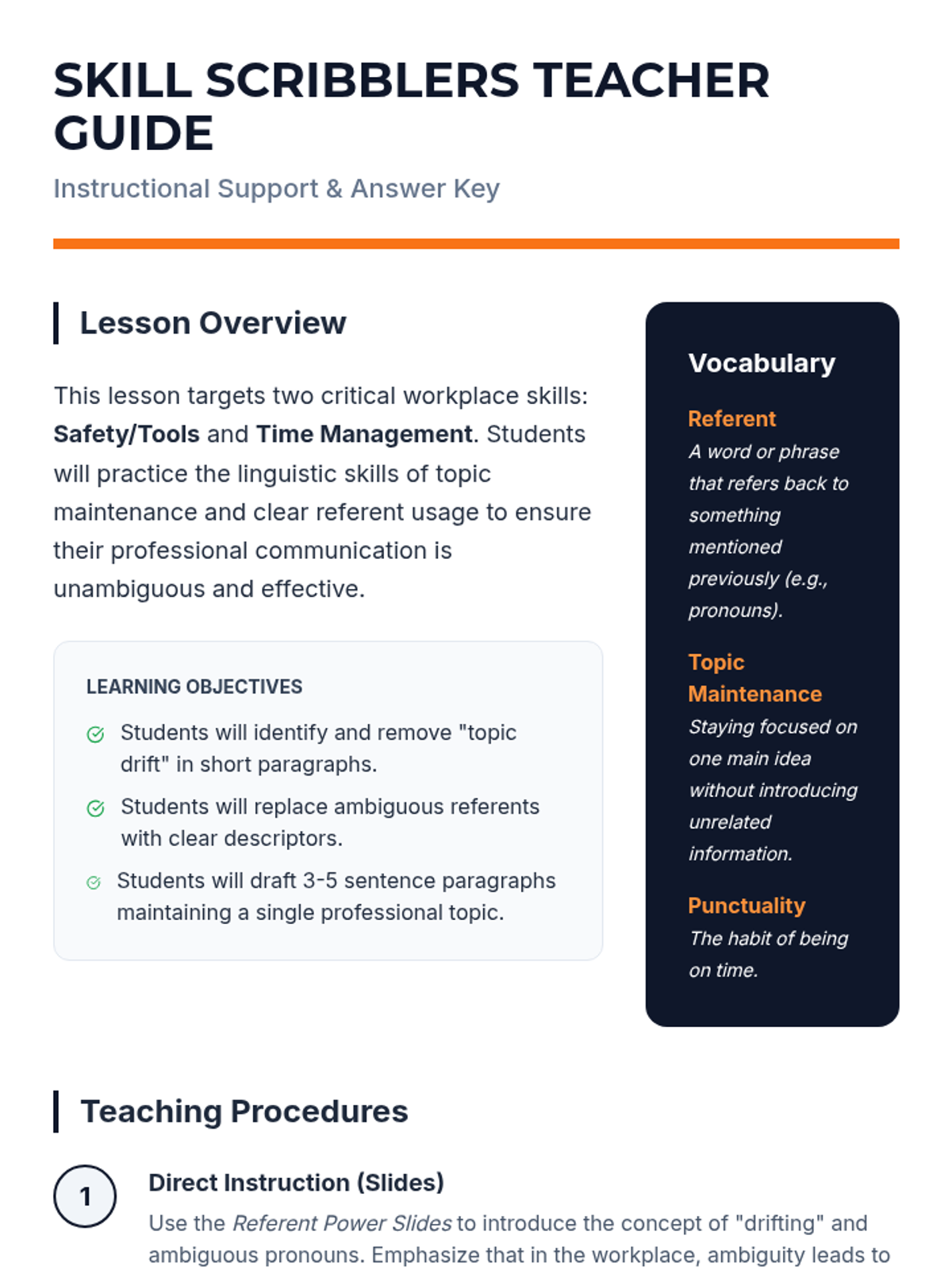
A lesson focused on teaching high school students how to write cohesive 3-5 sentence paragraphs about workplace safety and time management, emphasizing topic maintenance and the use of clear referents.
A fast-paced 25-minute lesson where students investigate how relative pronouns (who, whose, whom, which, that) connect ideas in sentences using a detective-themed approach.
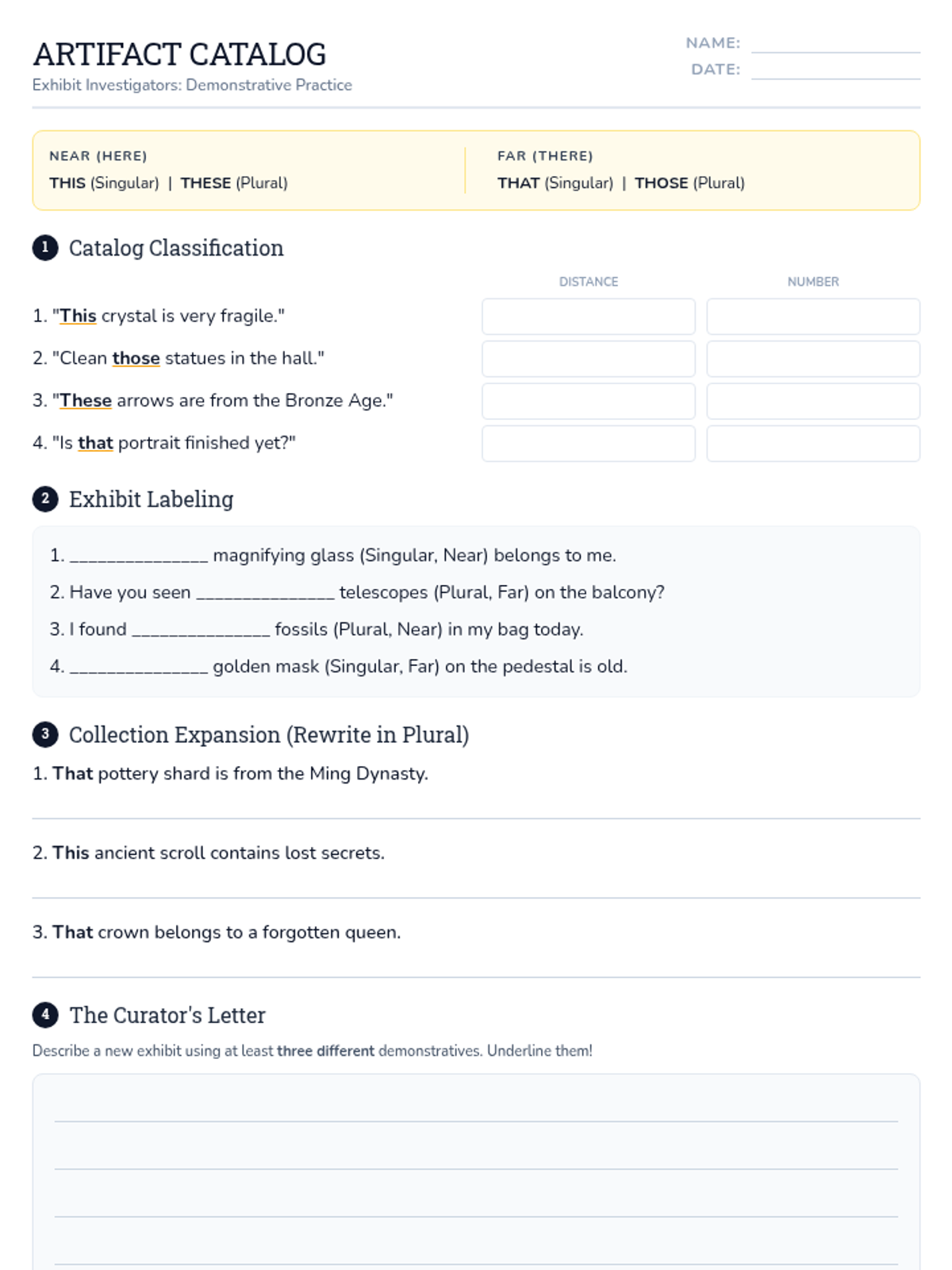
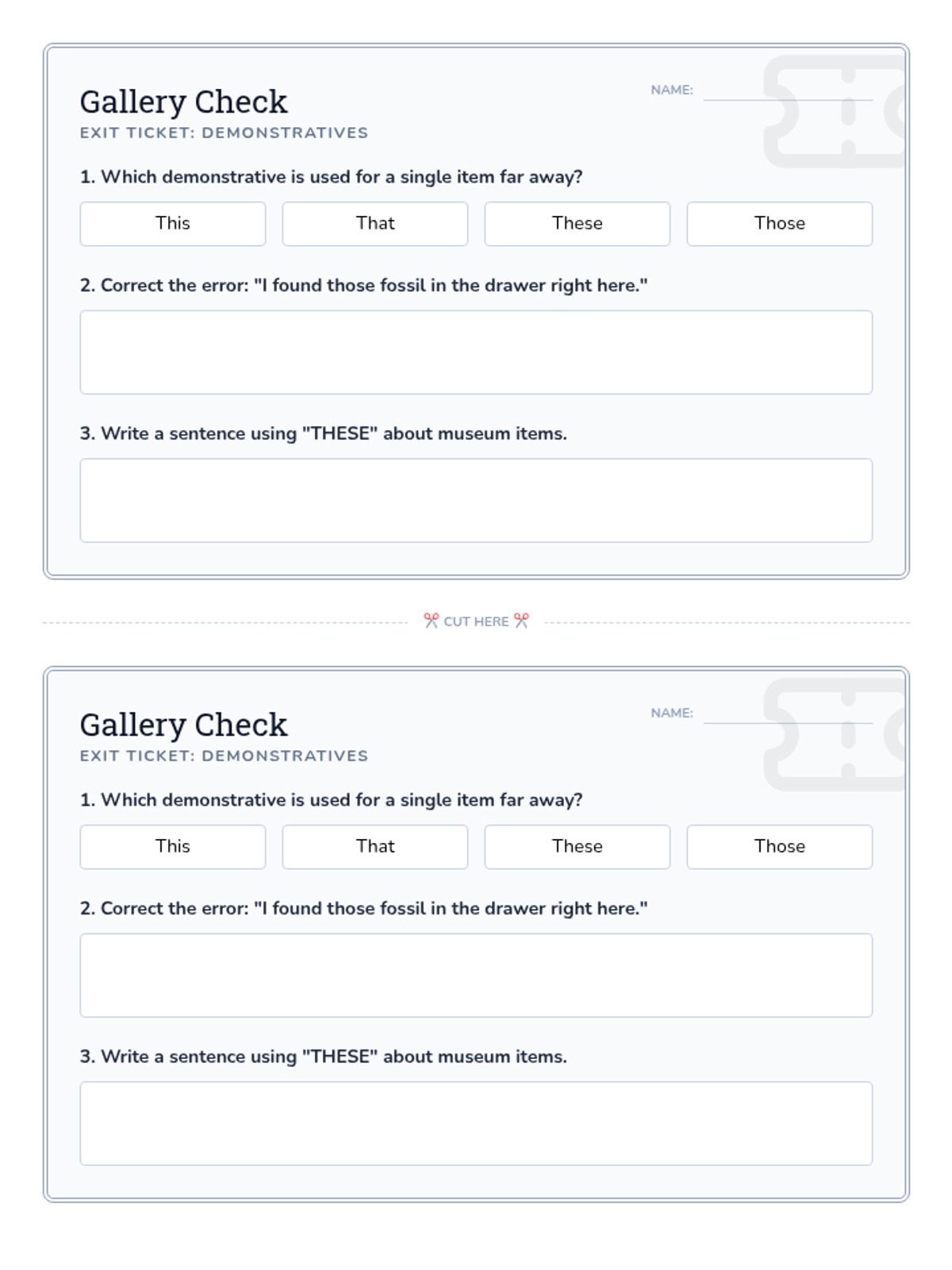
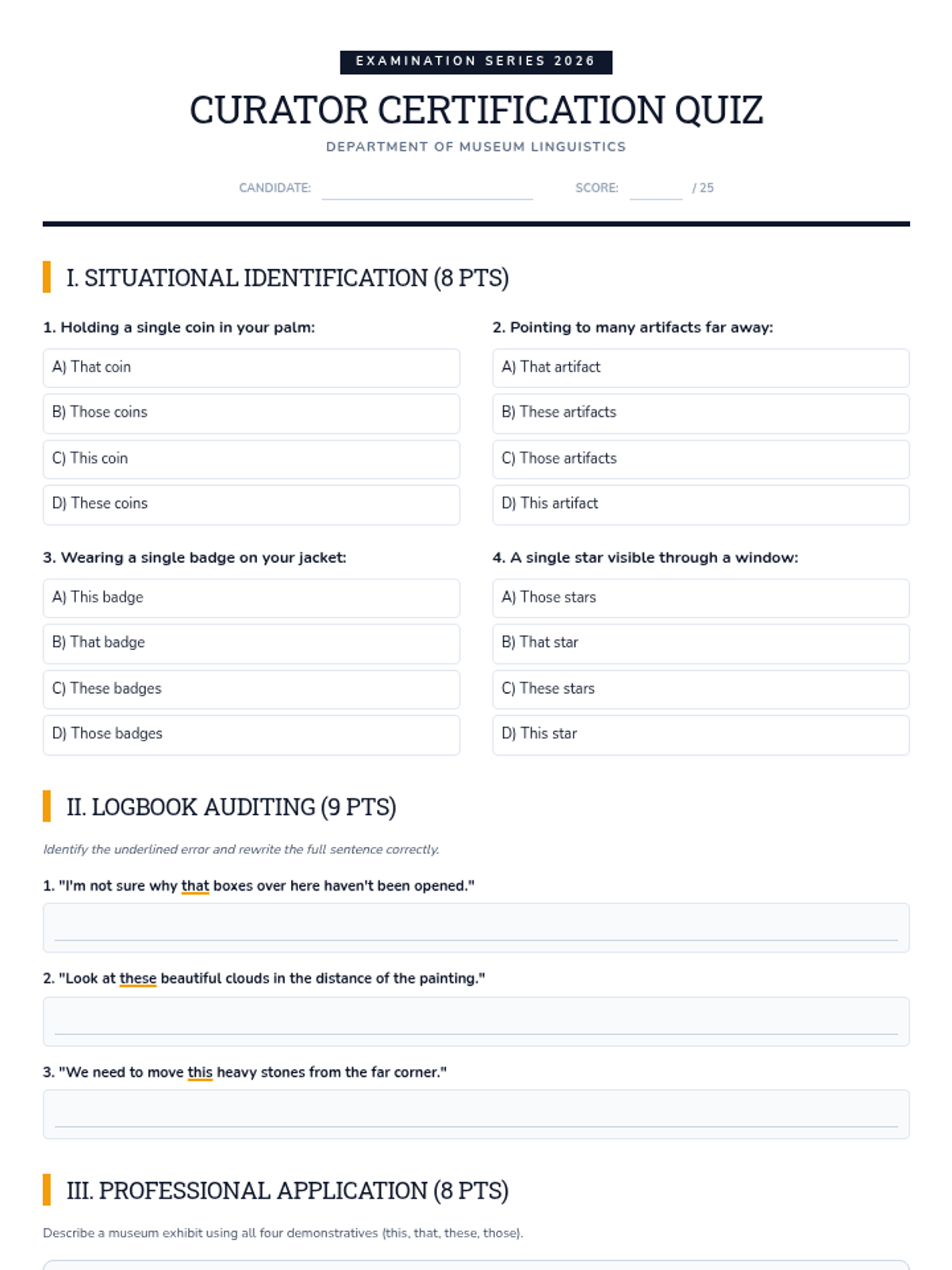
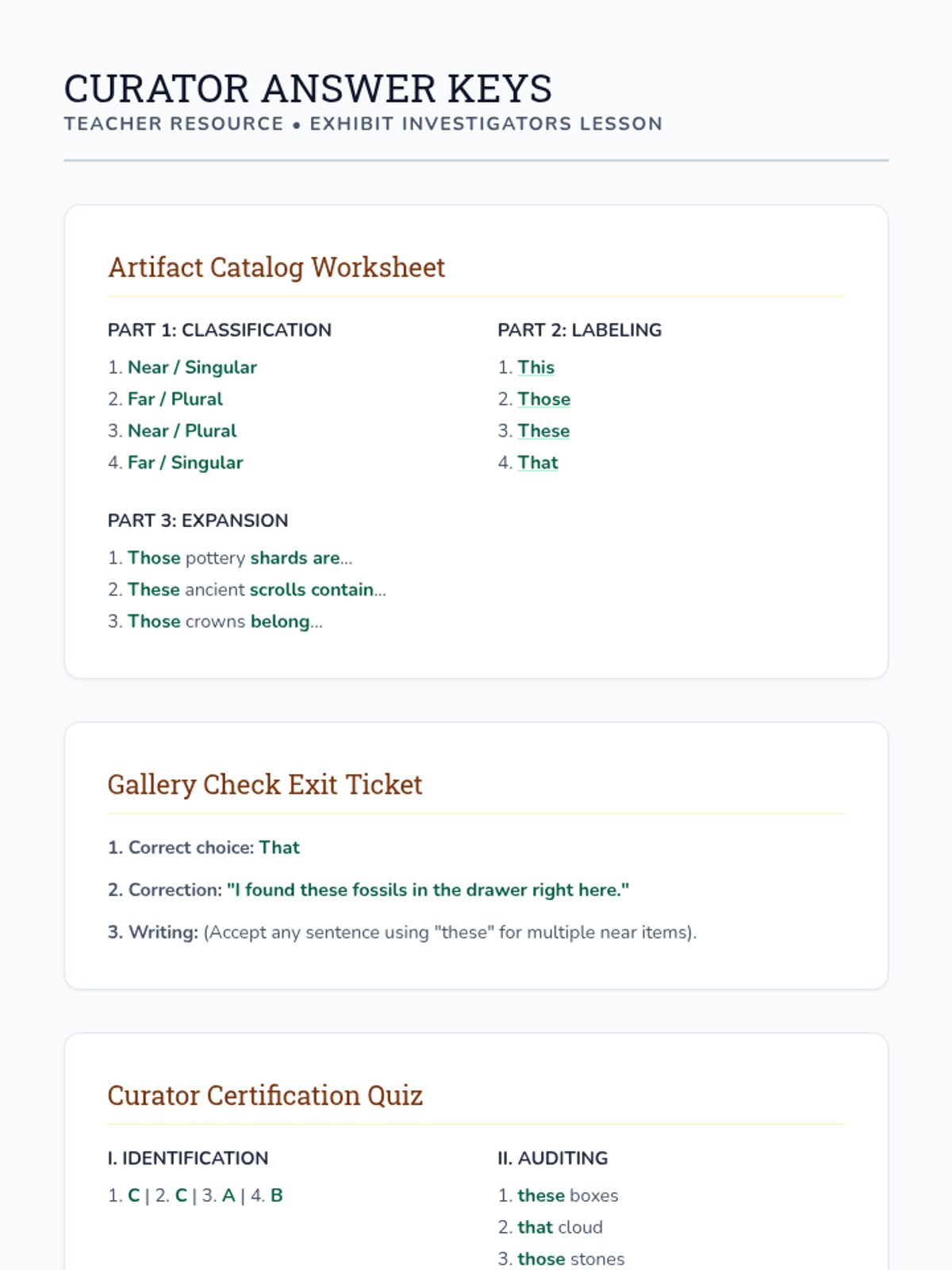
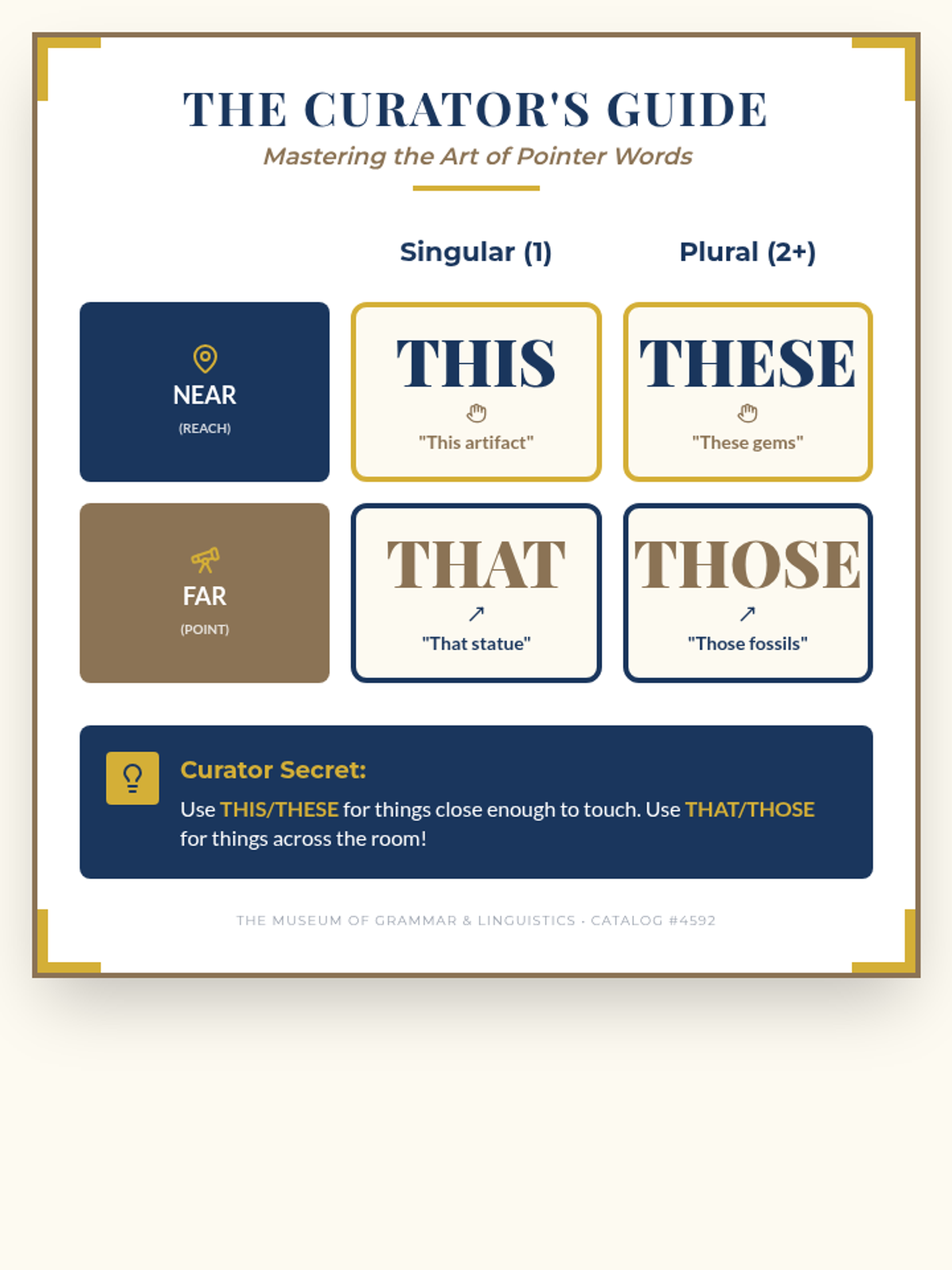
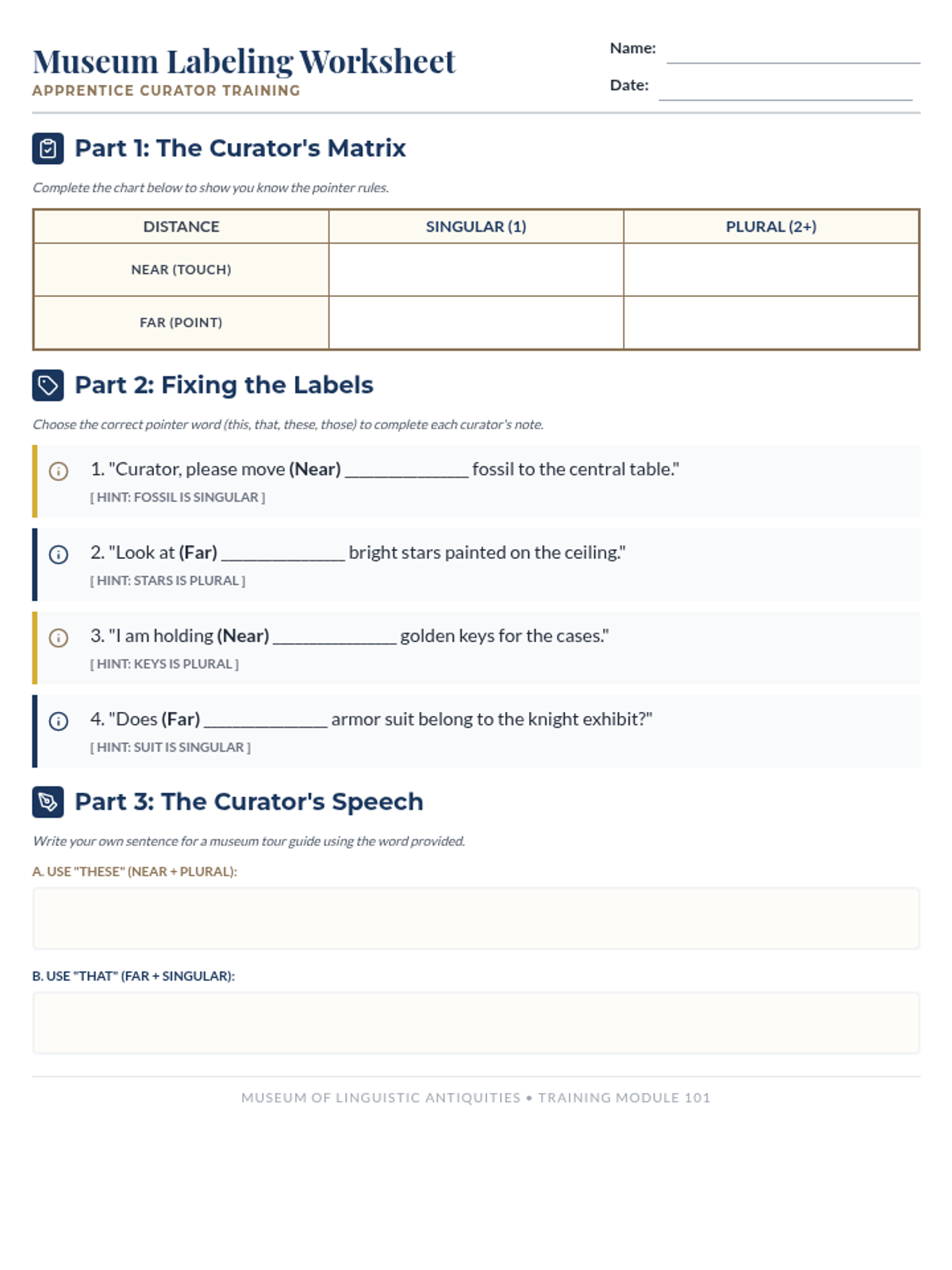
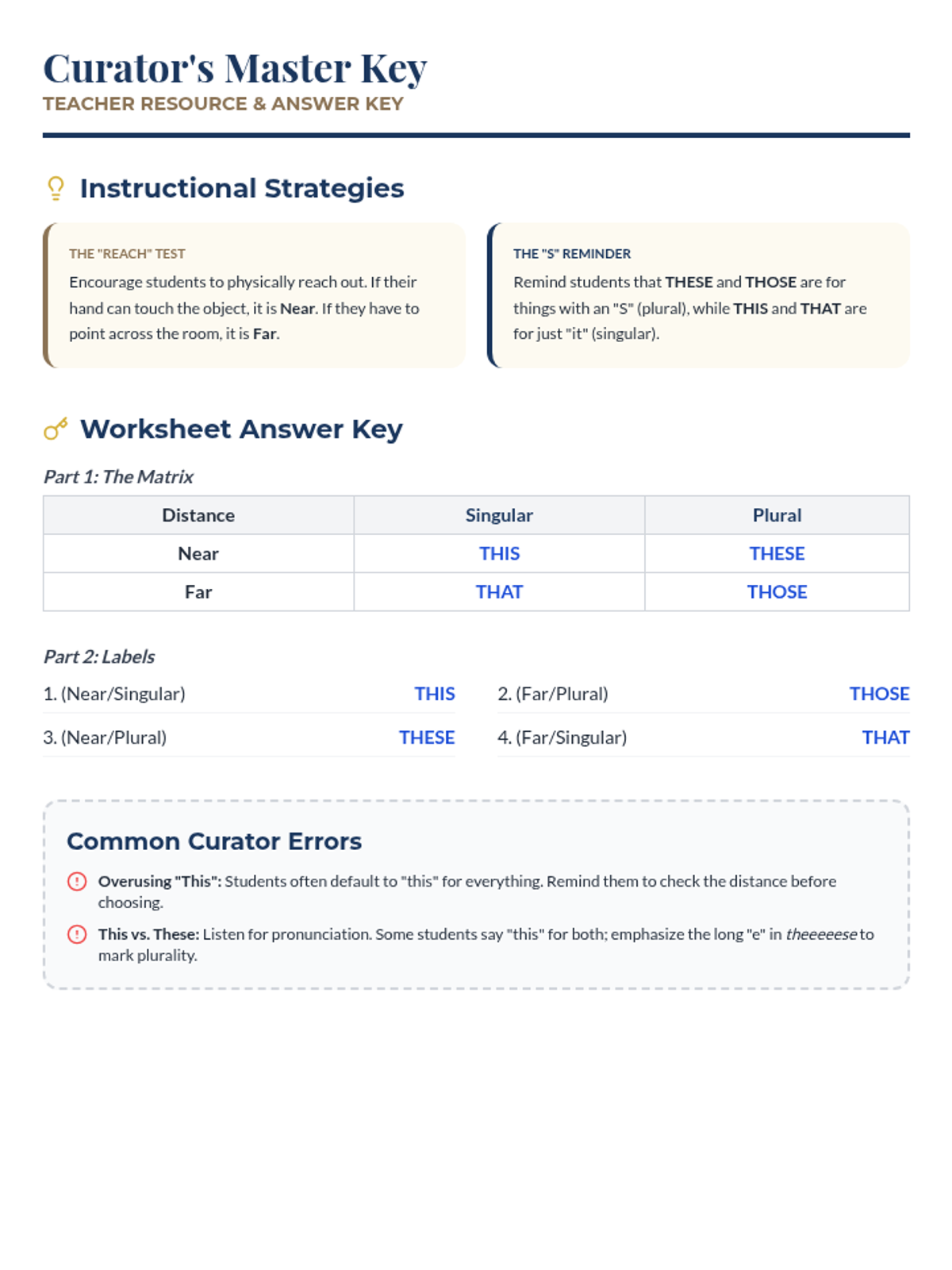
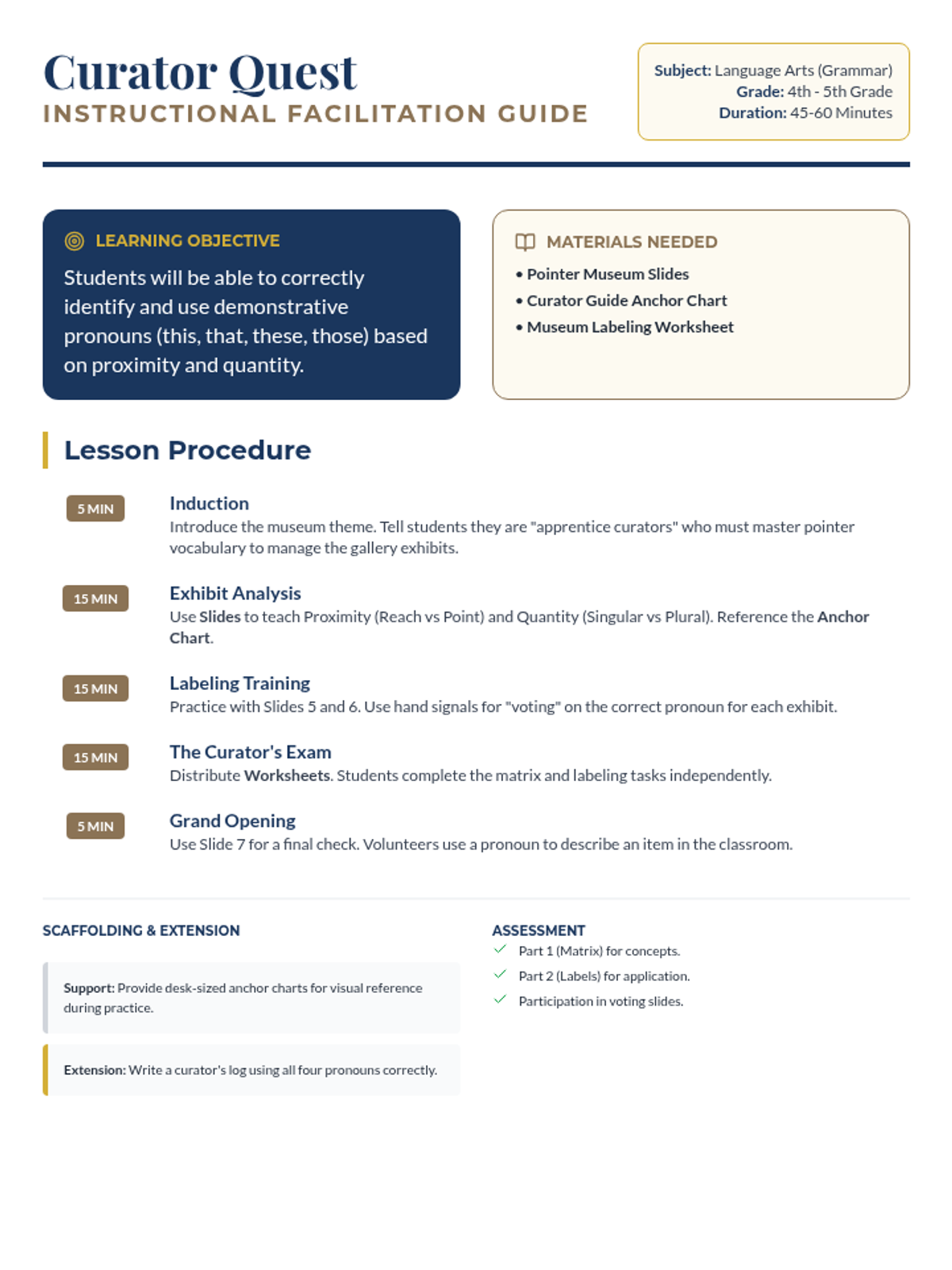
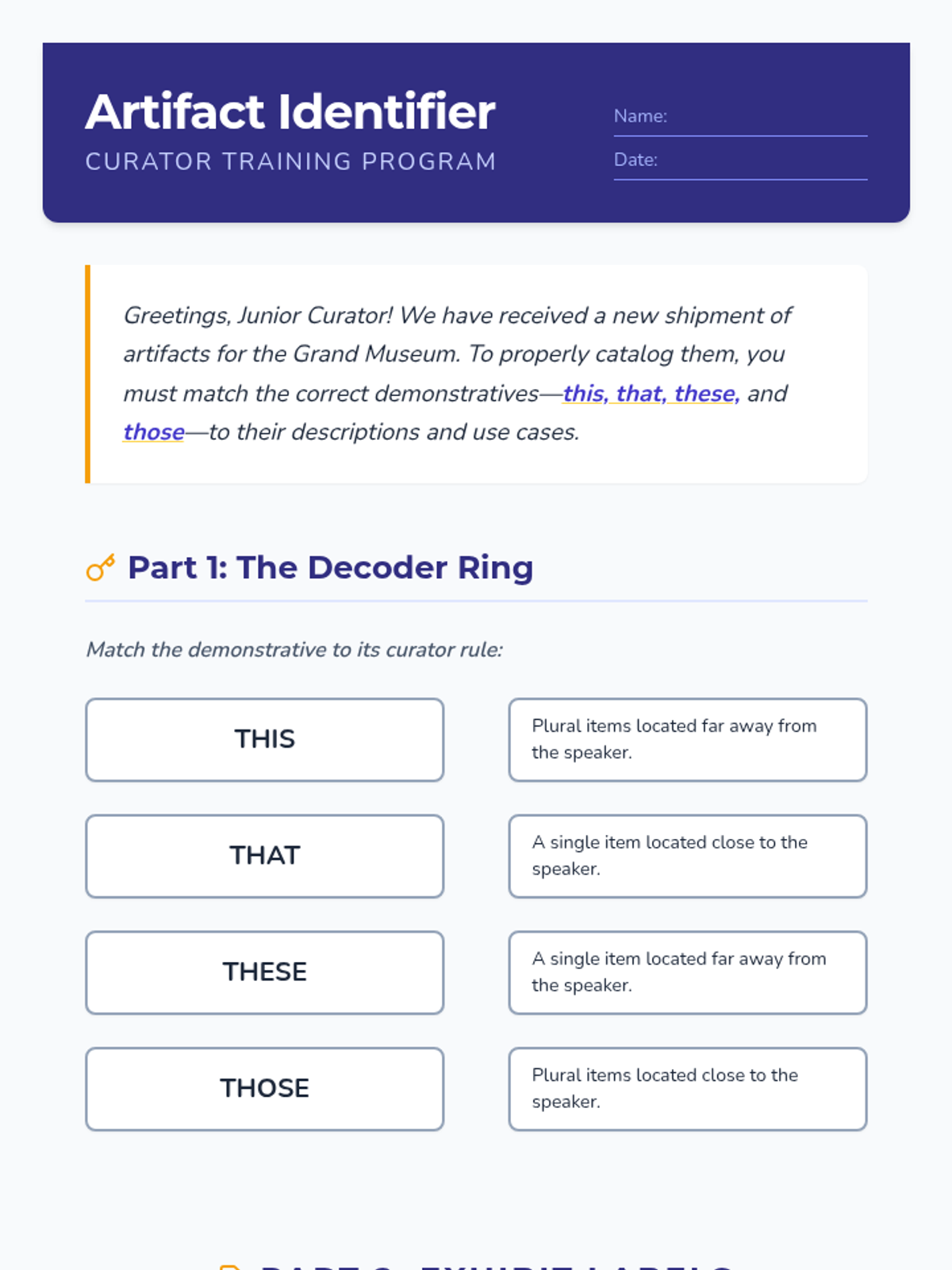
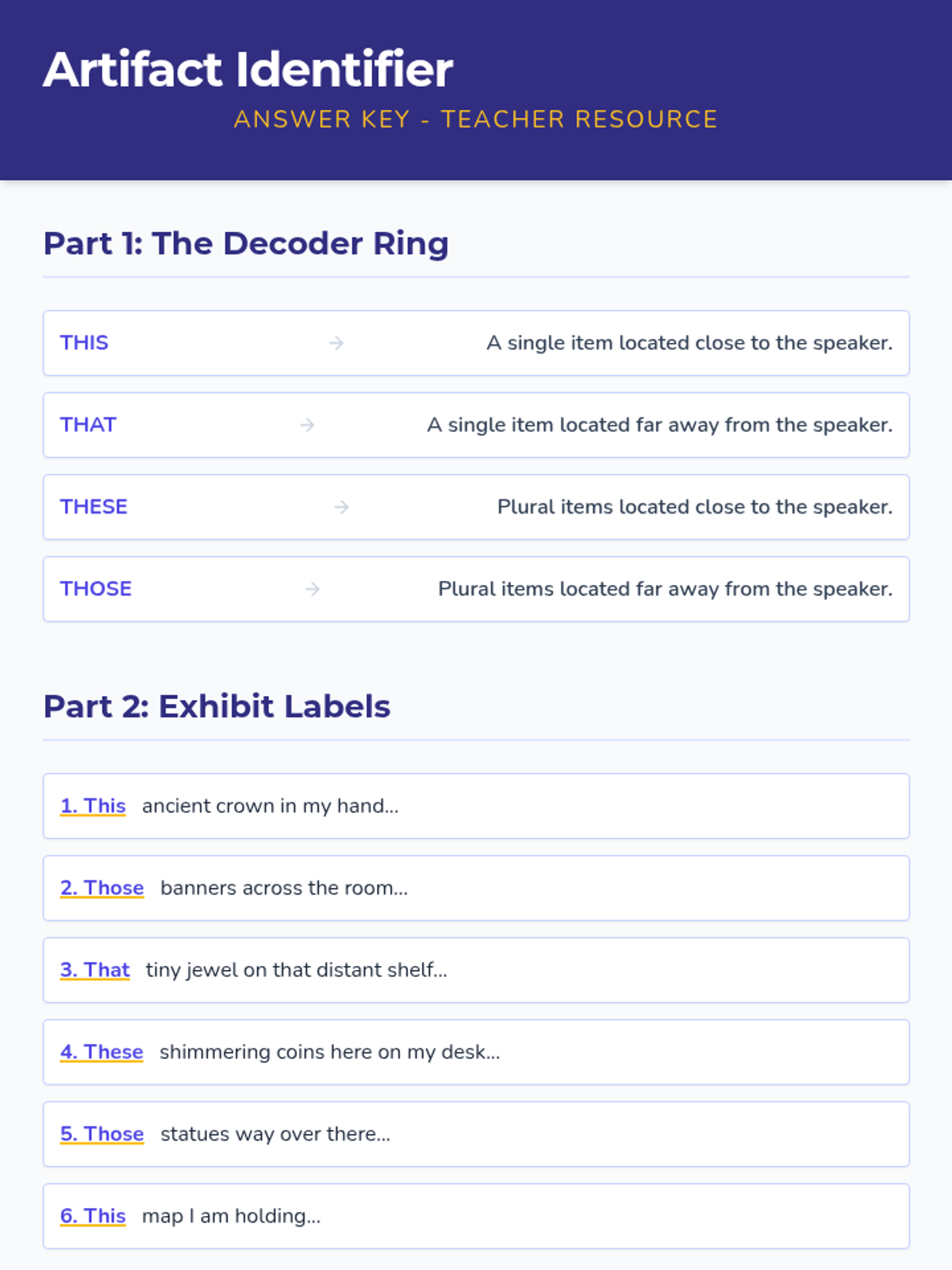
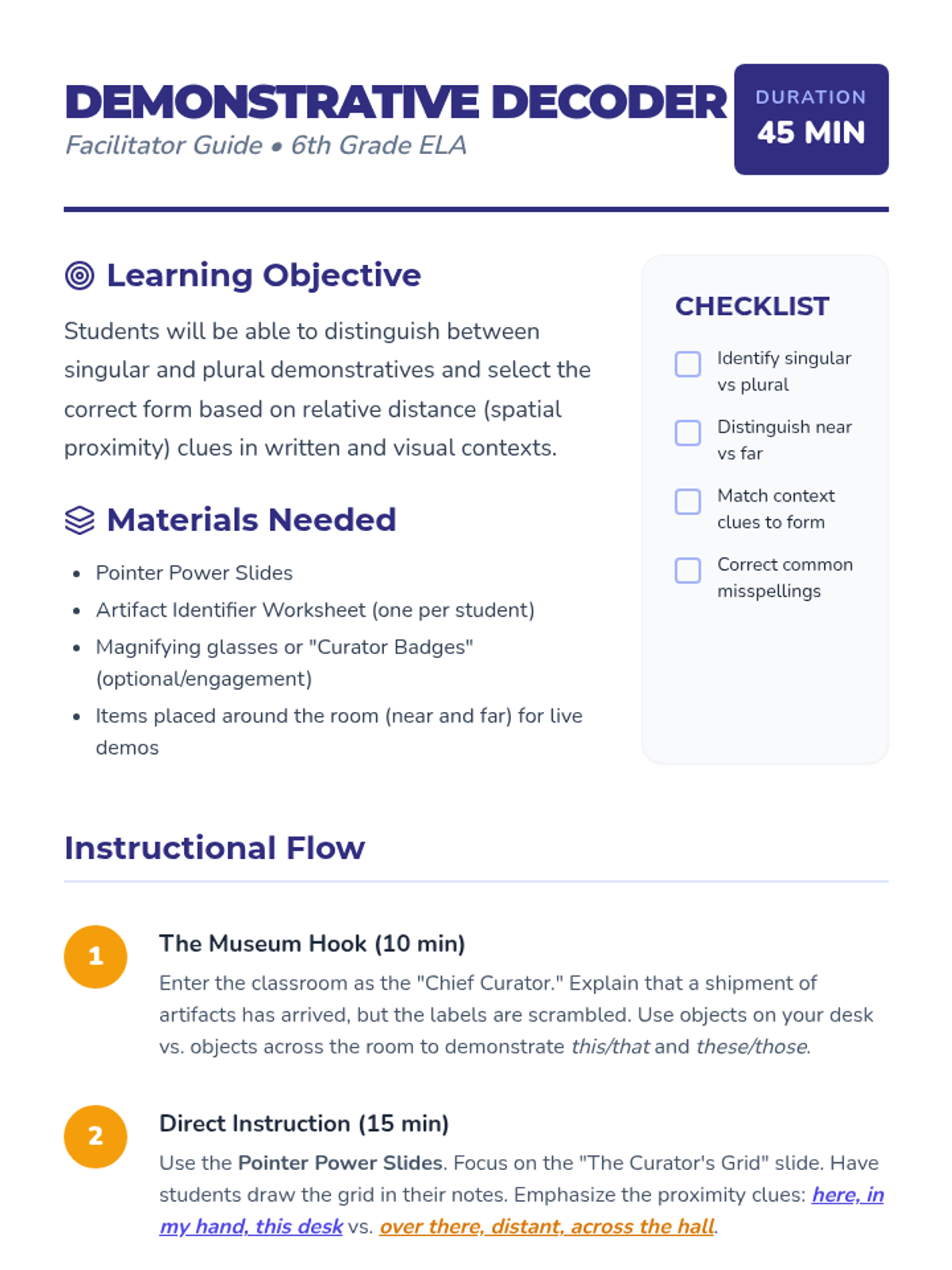
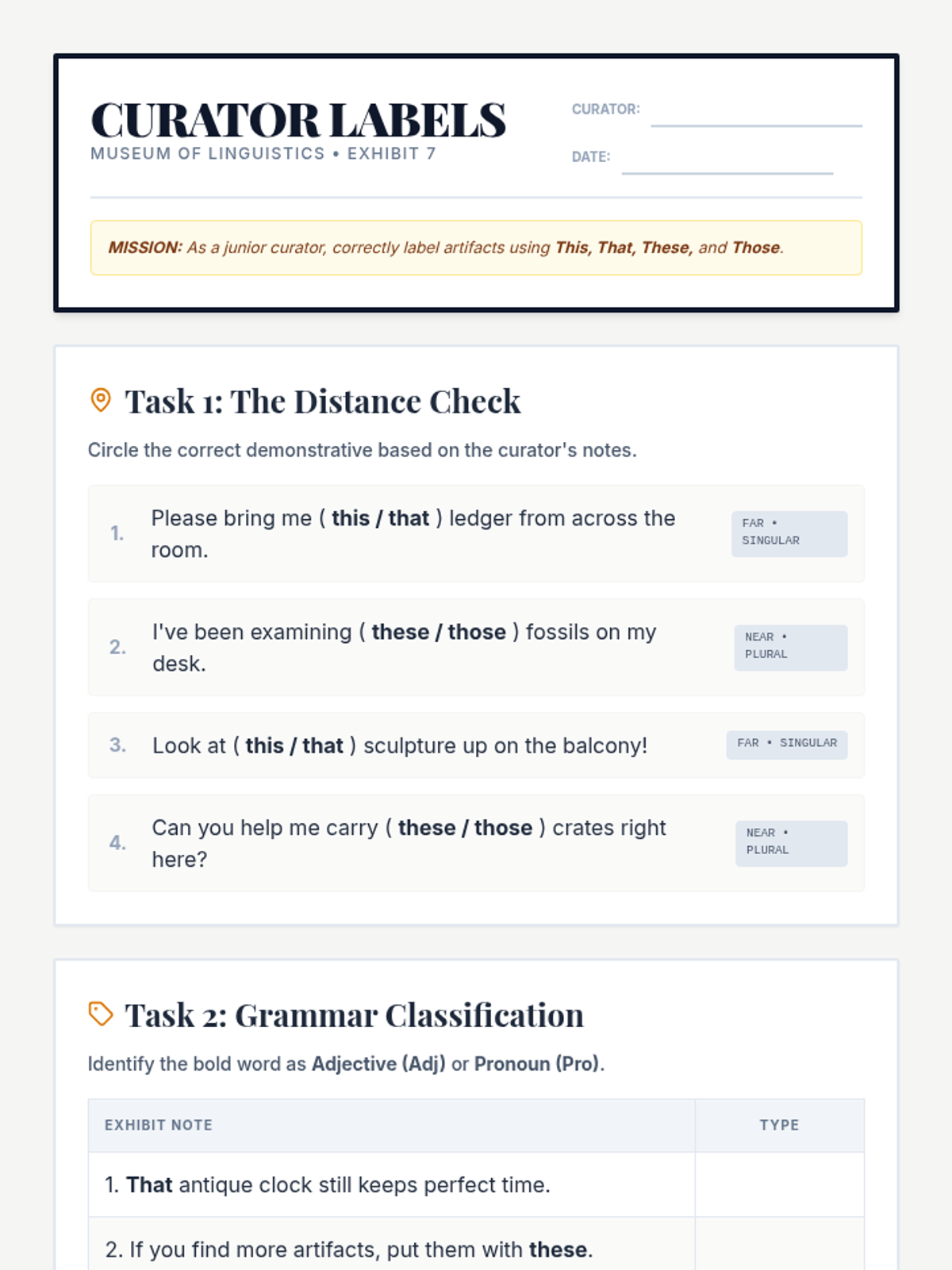
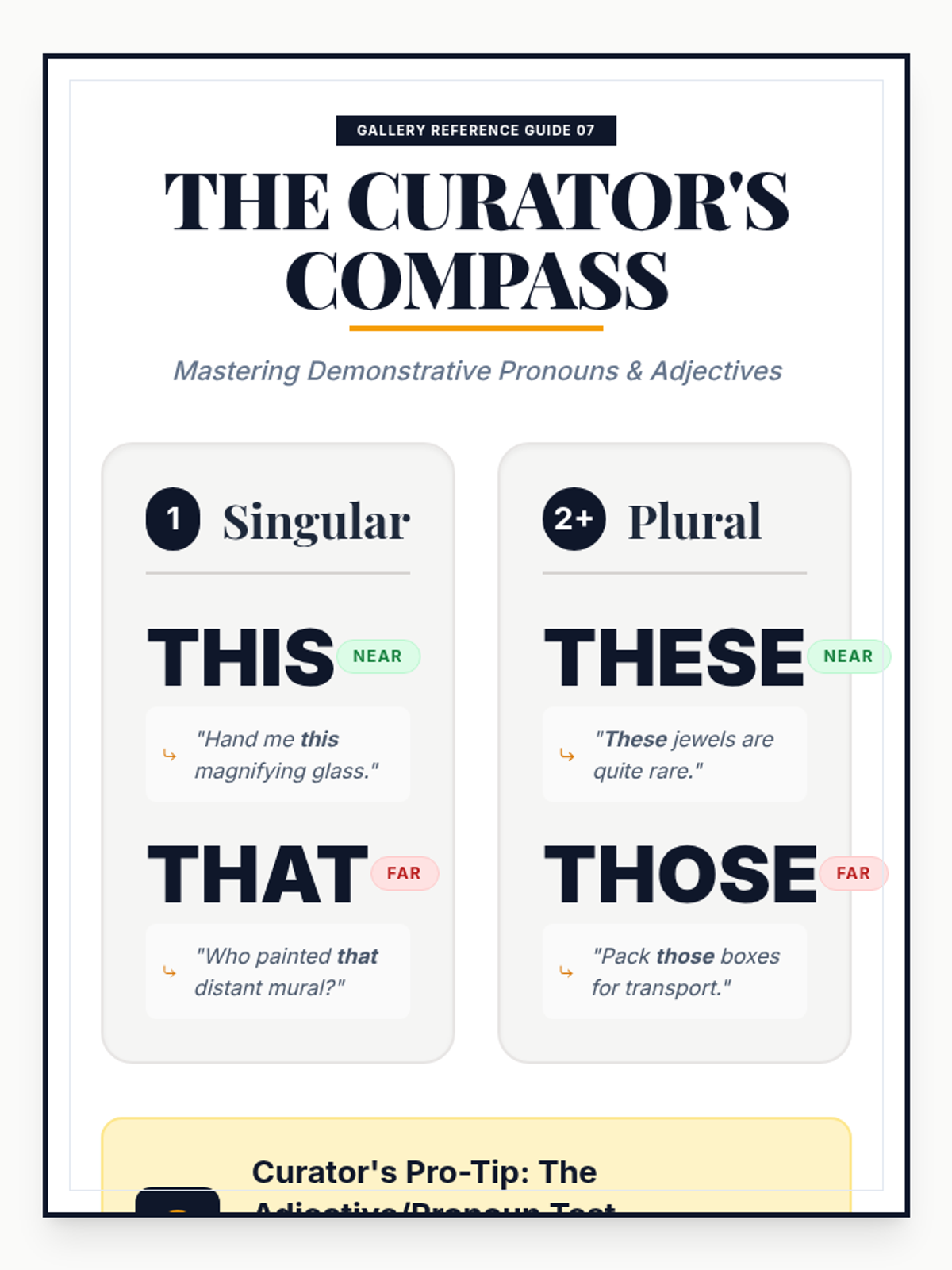
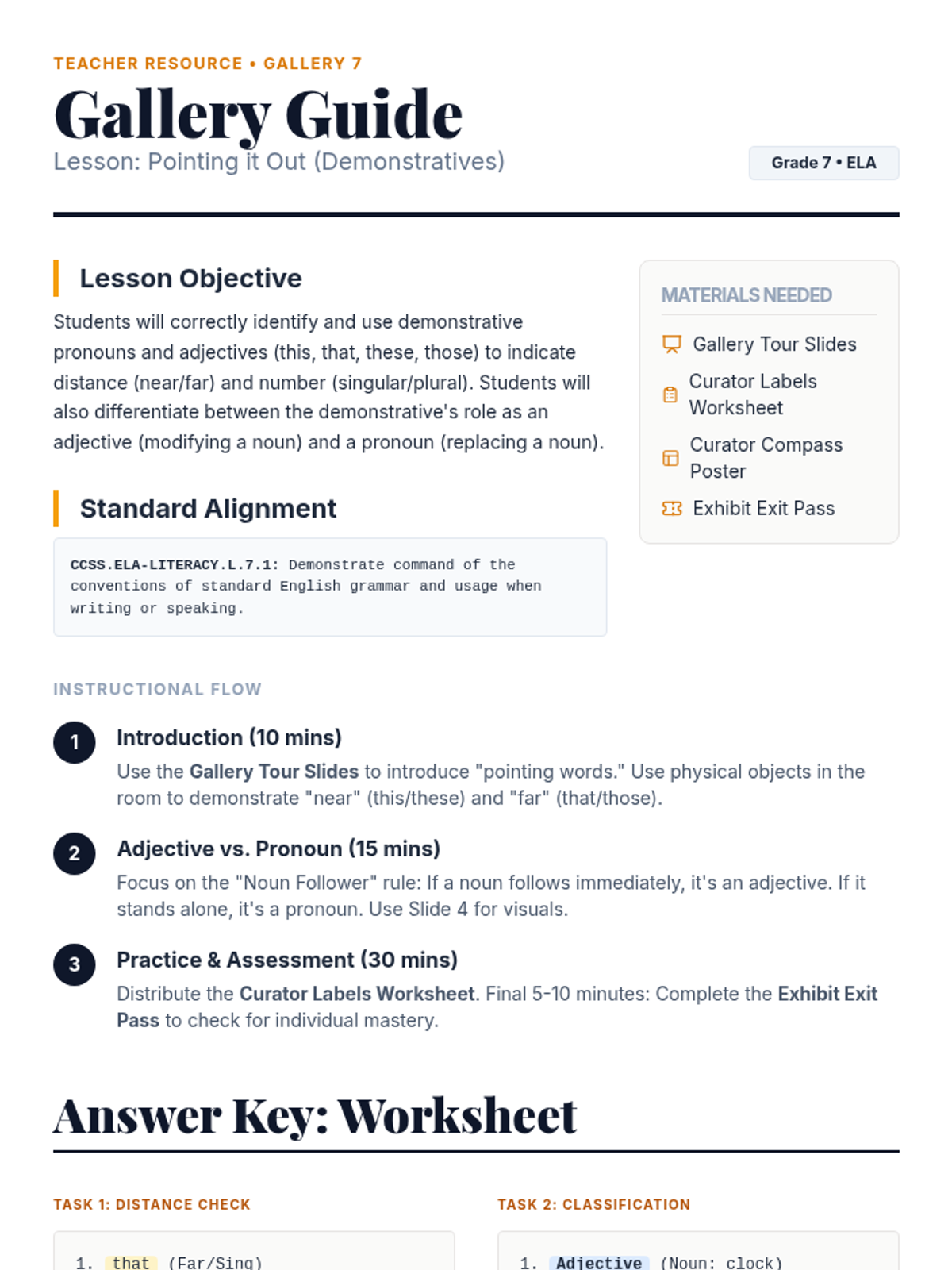
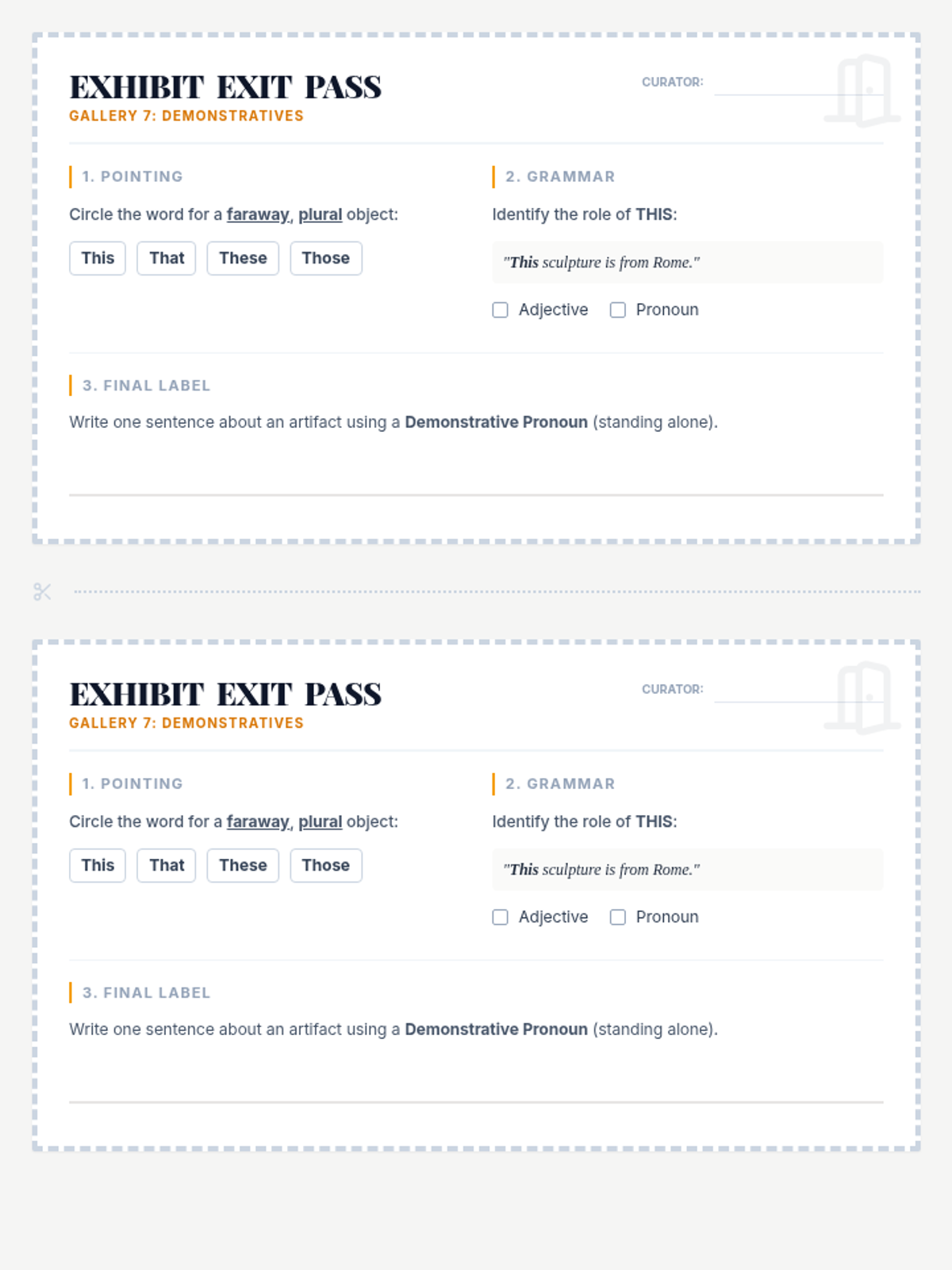
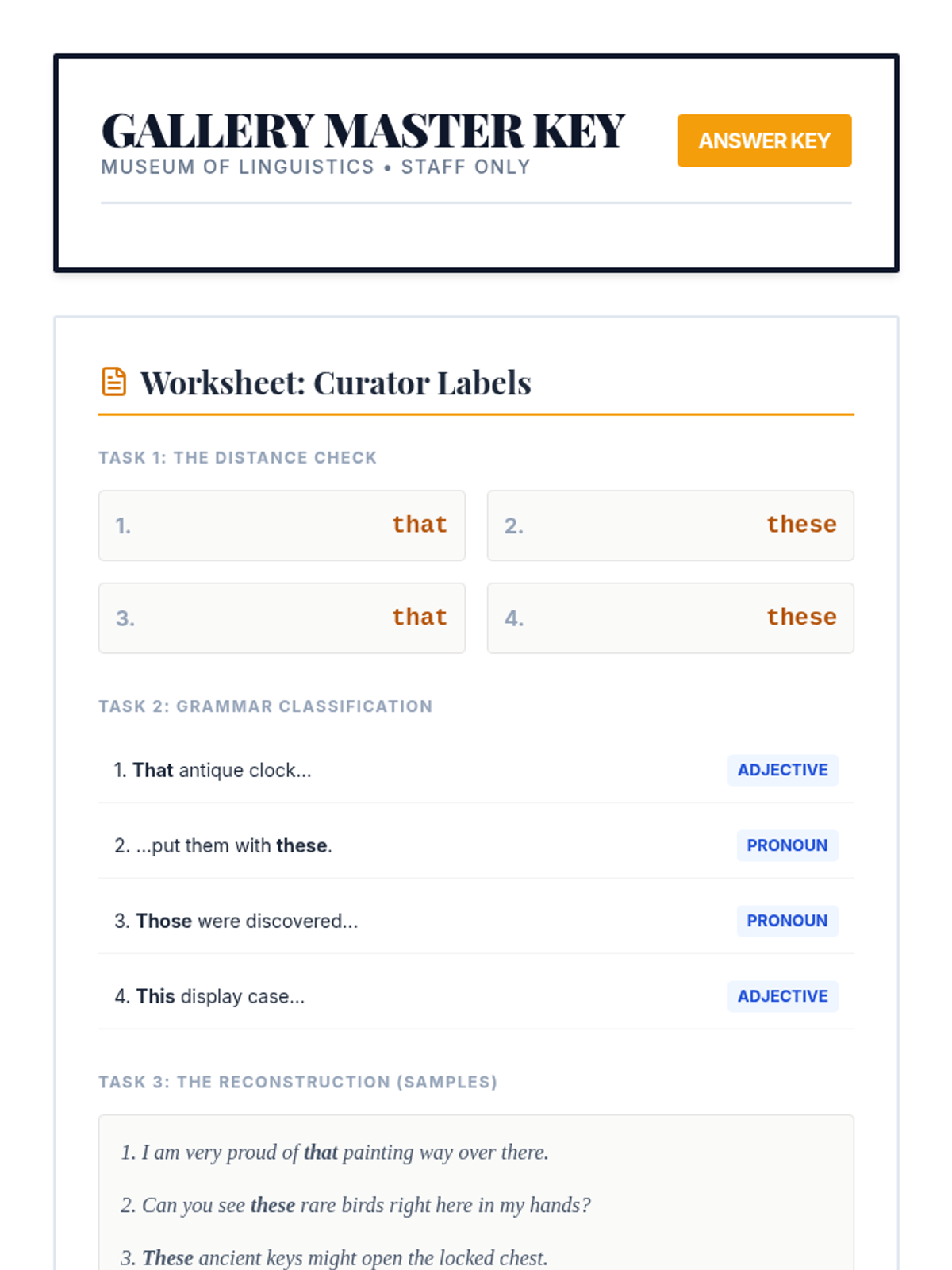
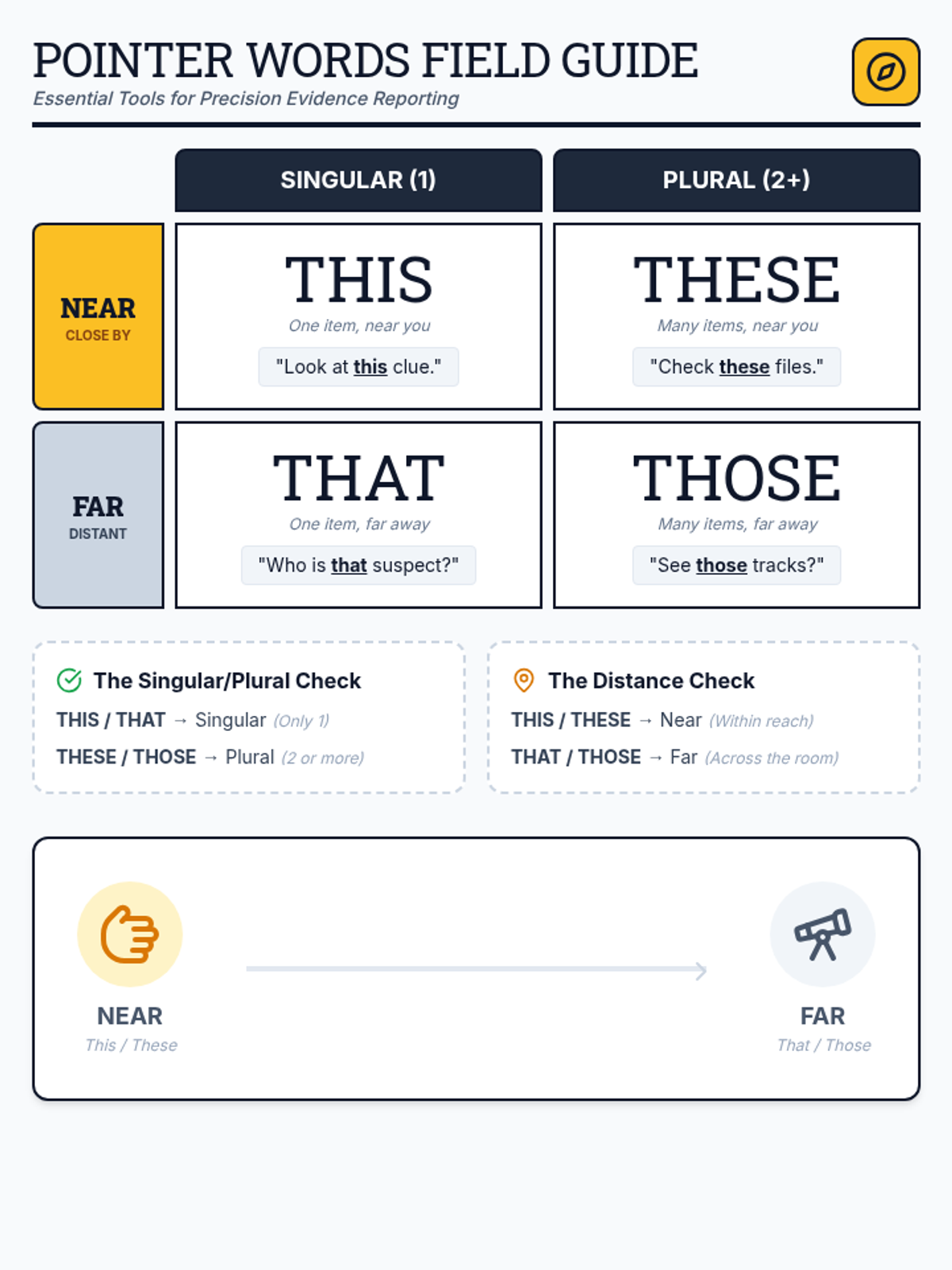
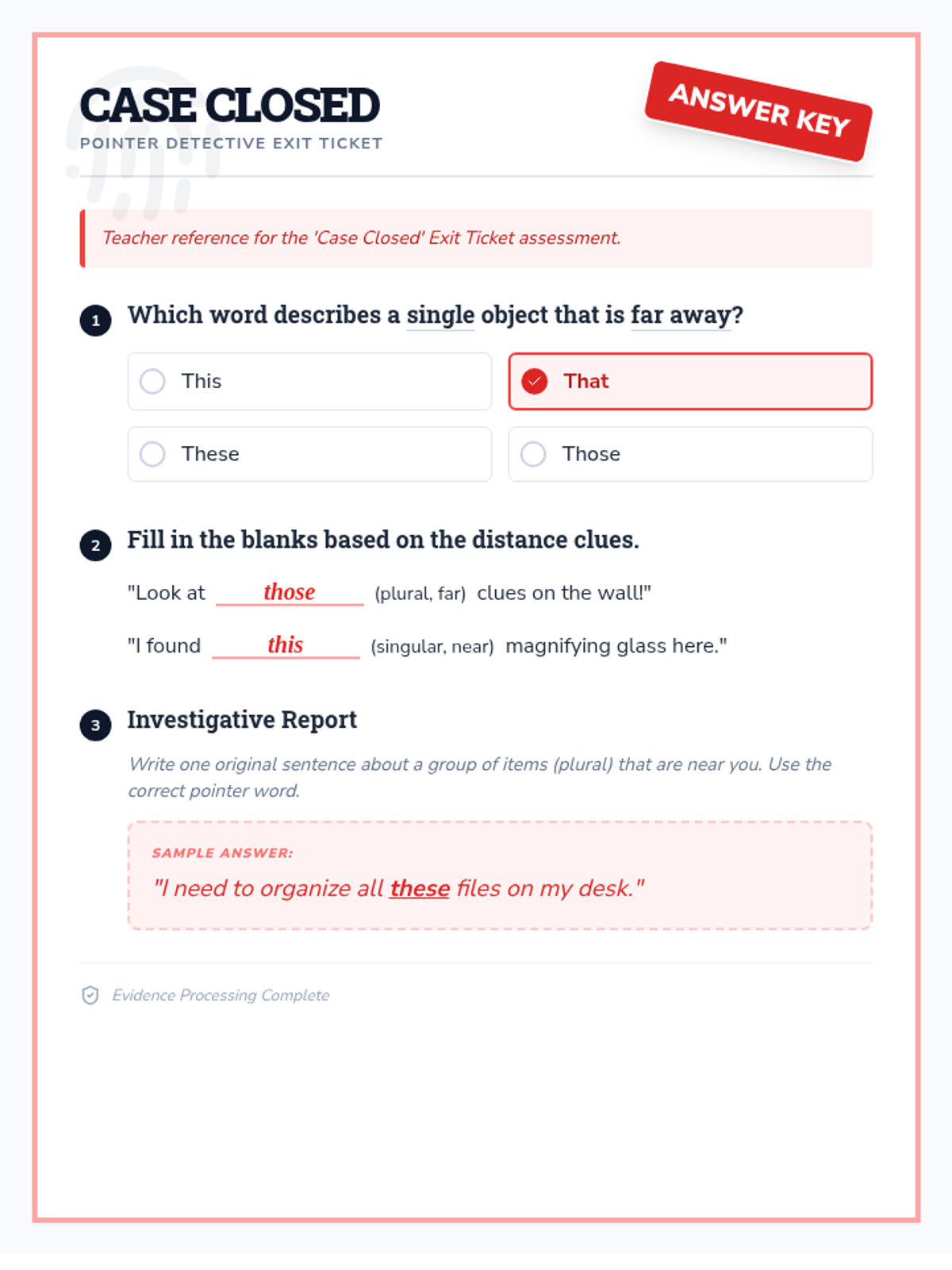
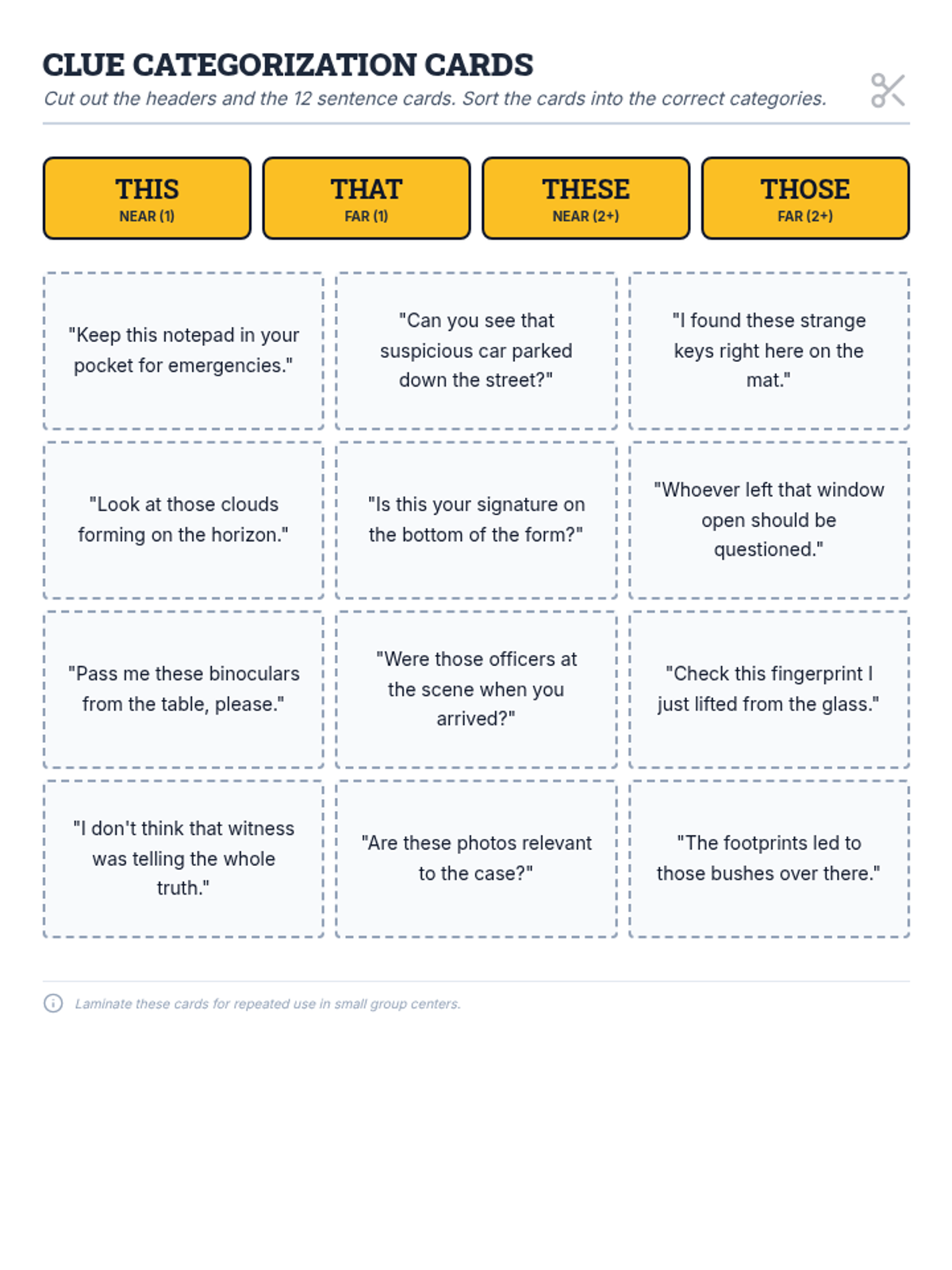
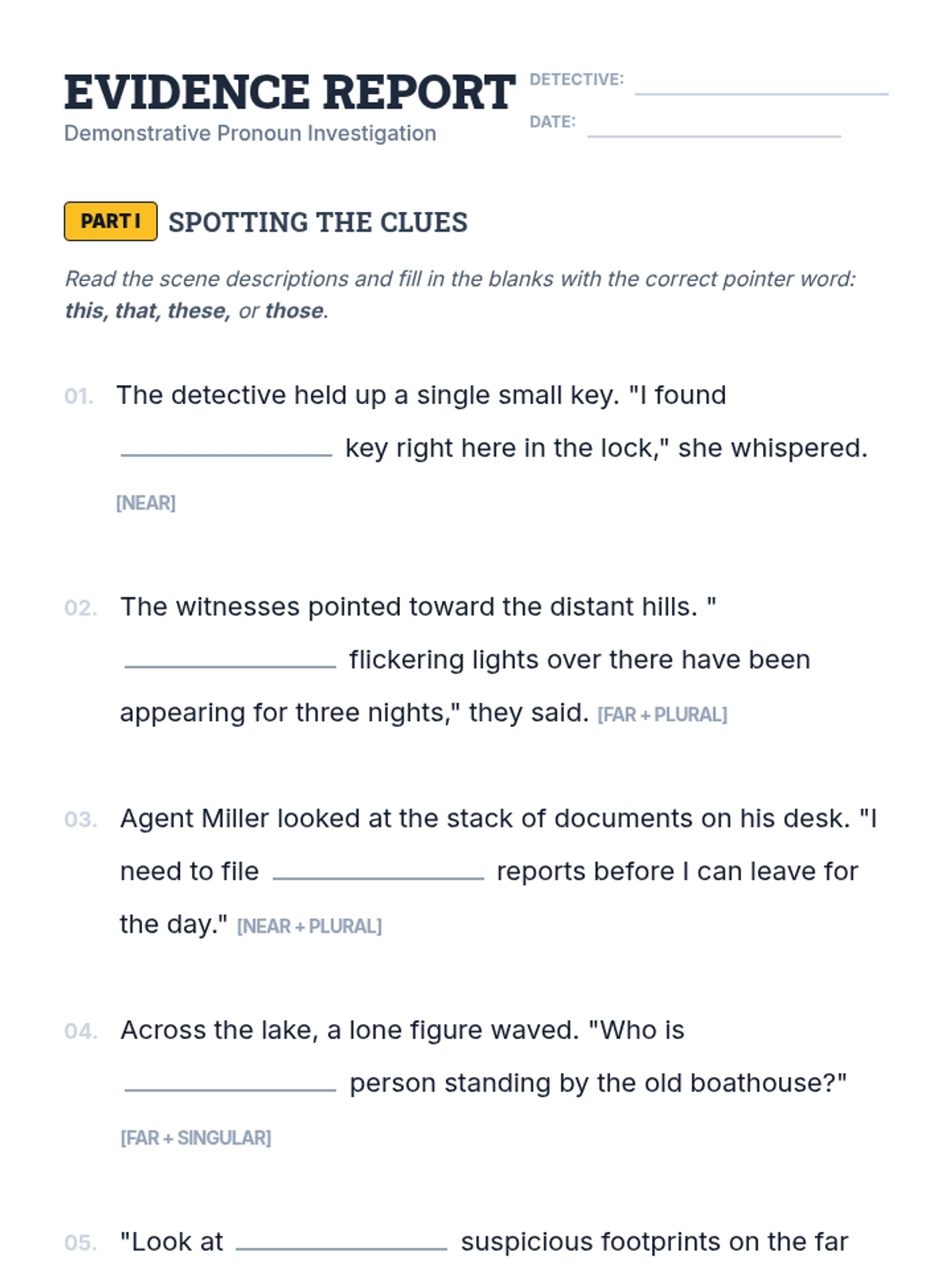
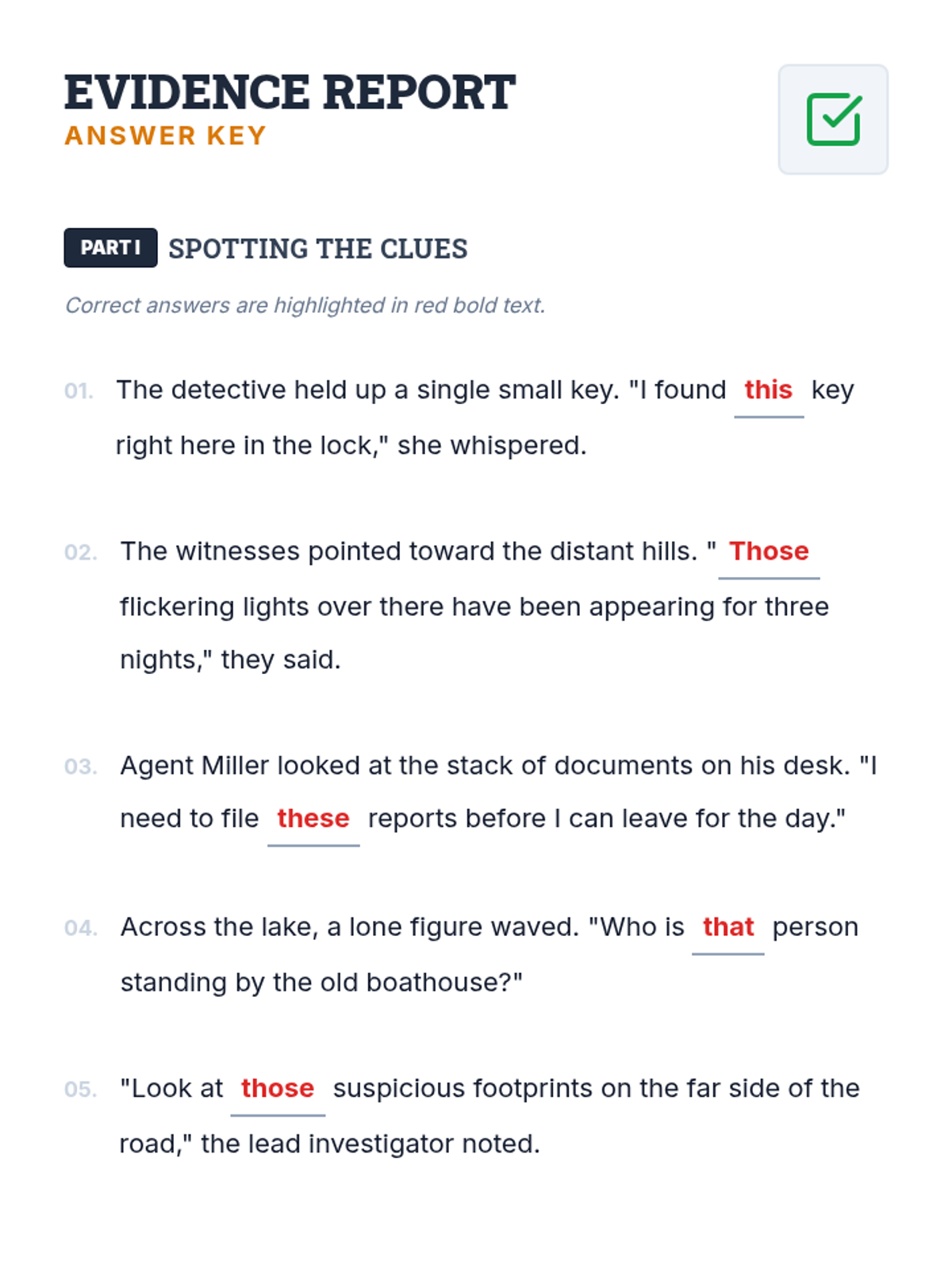
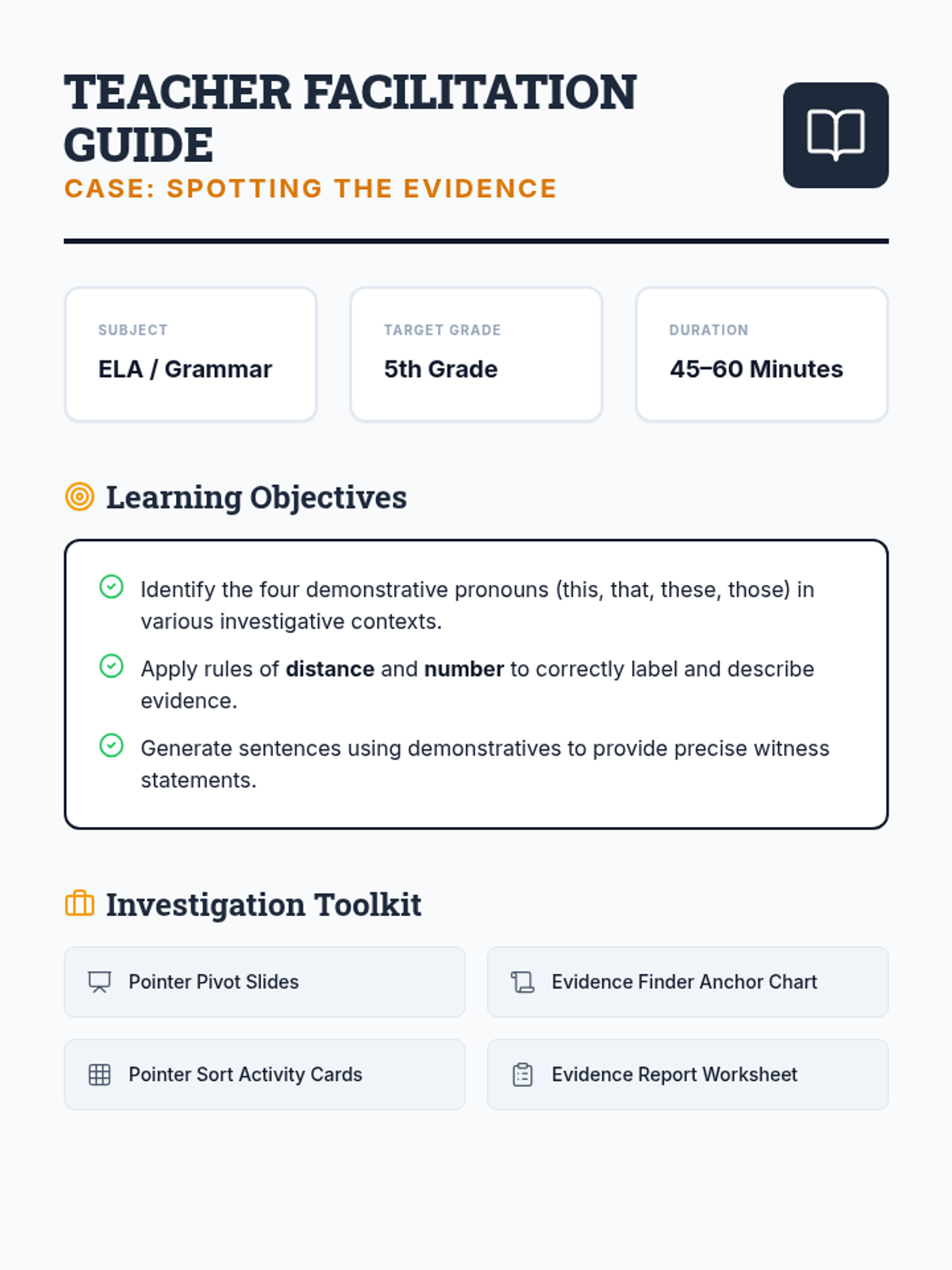
A comprehensive lesson on using demonstratives (this, that, these, those) correctly, themed around a museum curator's task of cataloging artifacts based on distance and number.
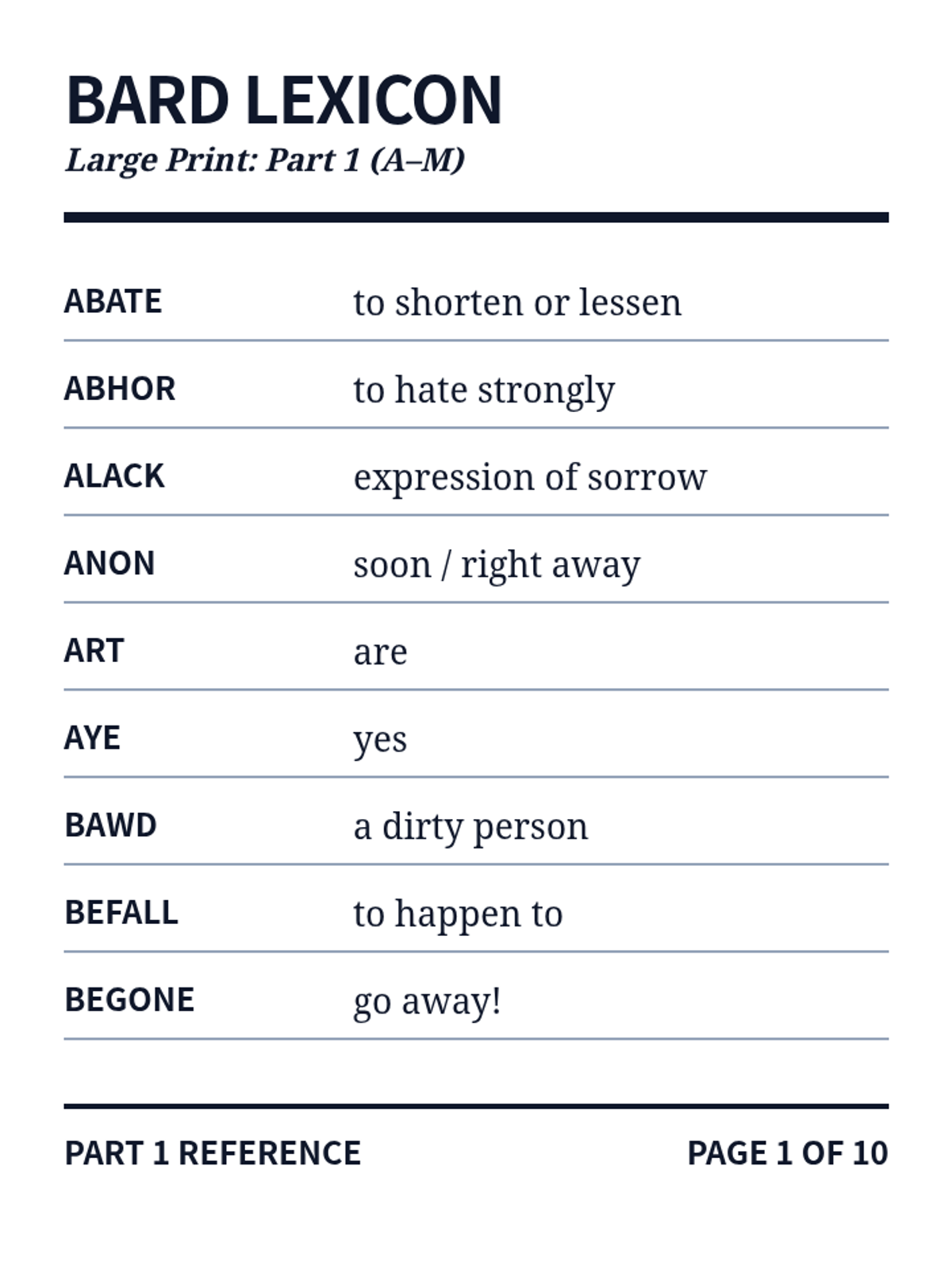
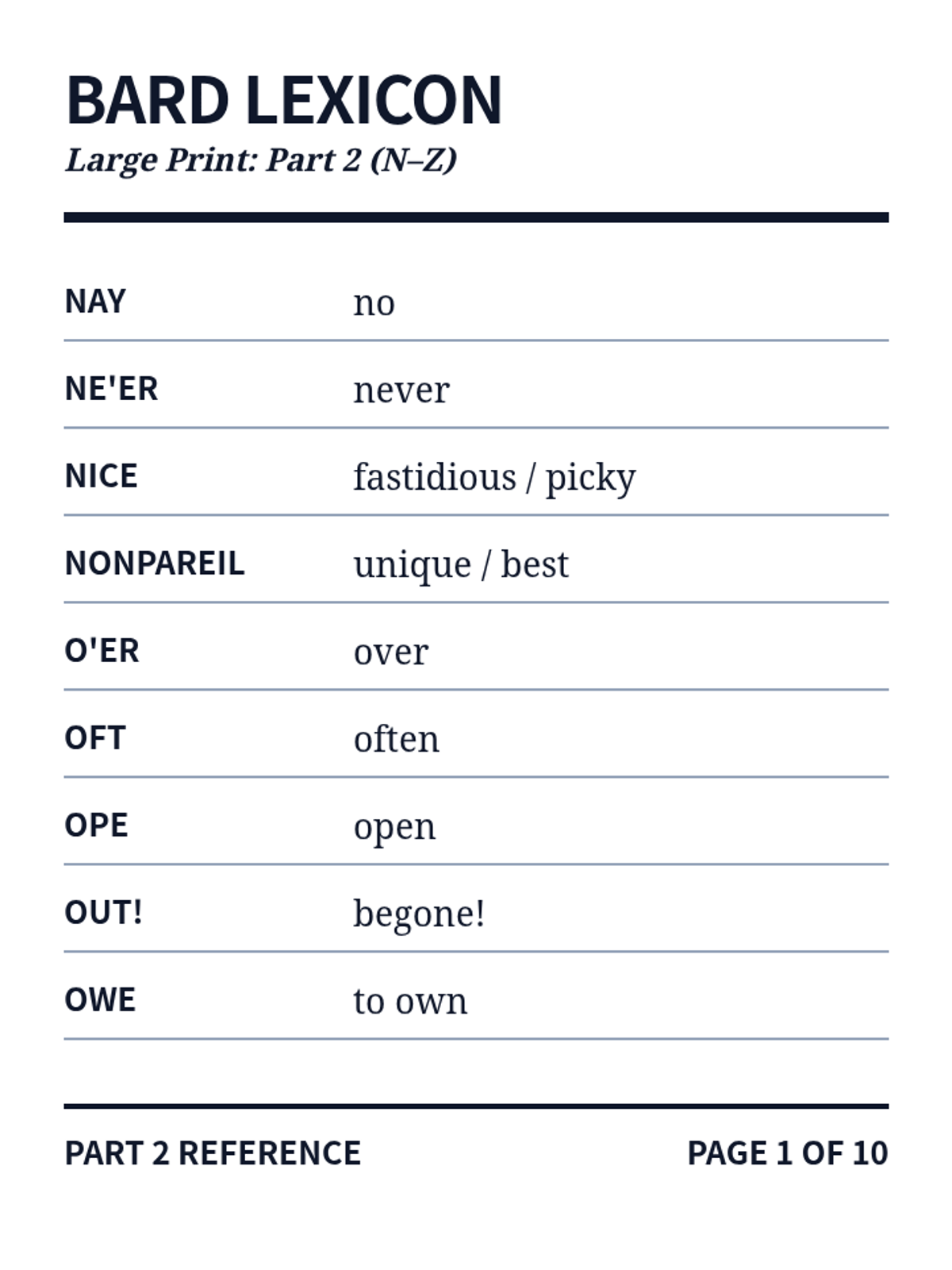
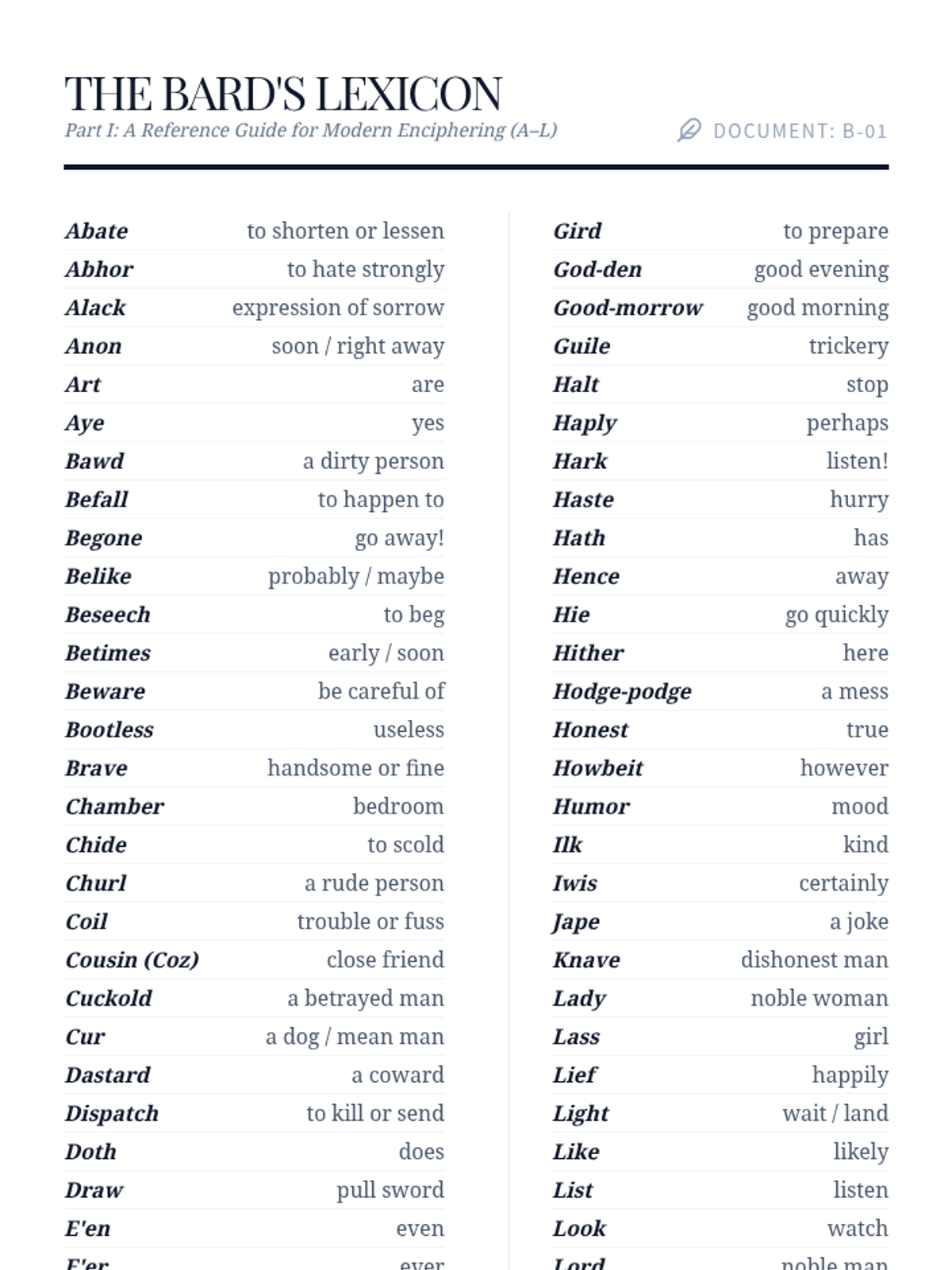
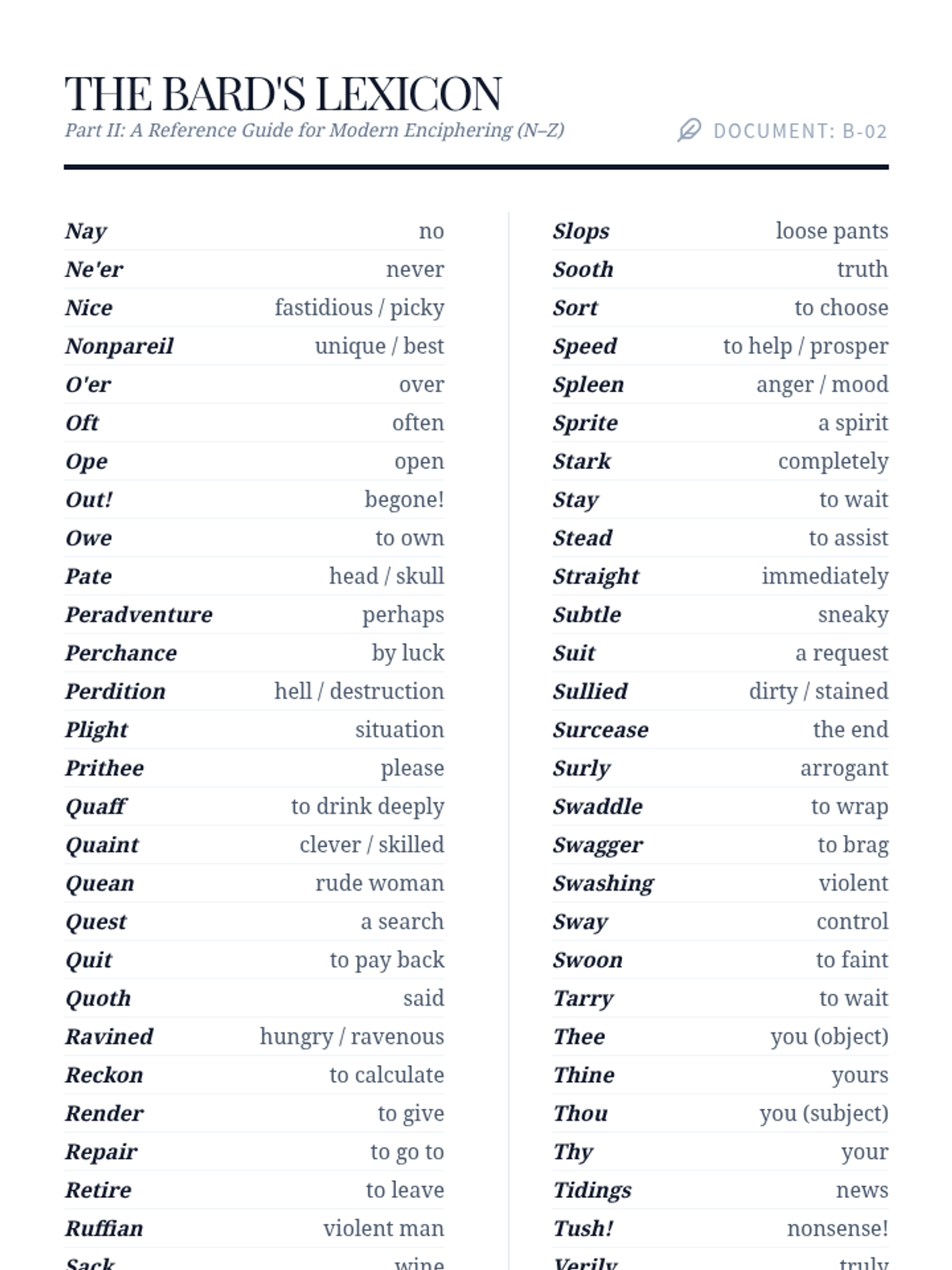
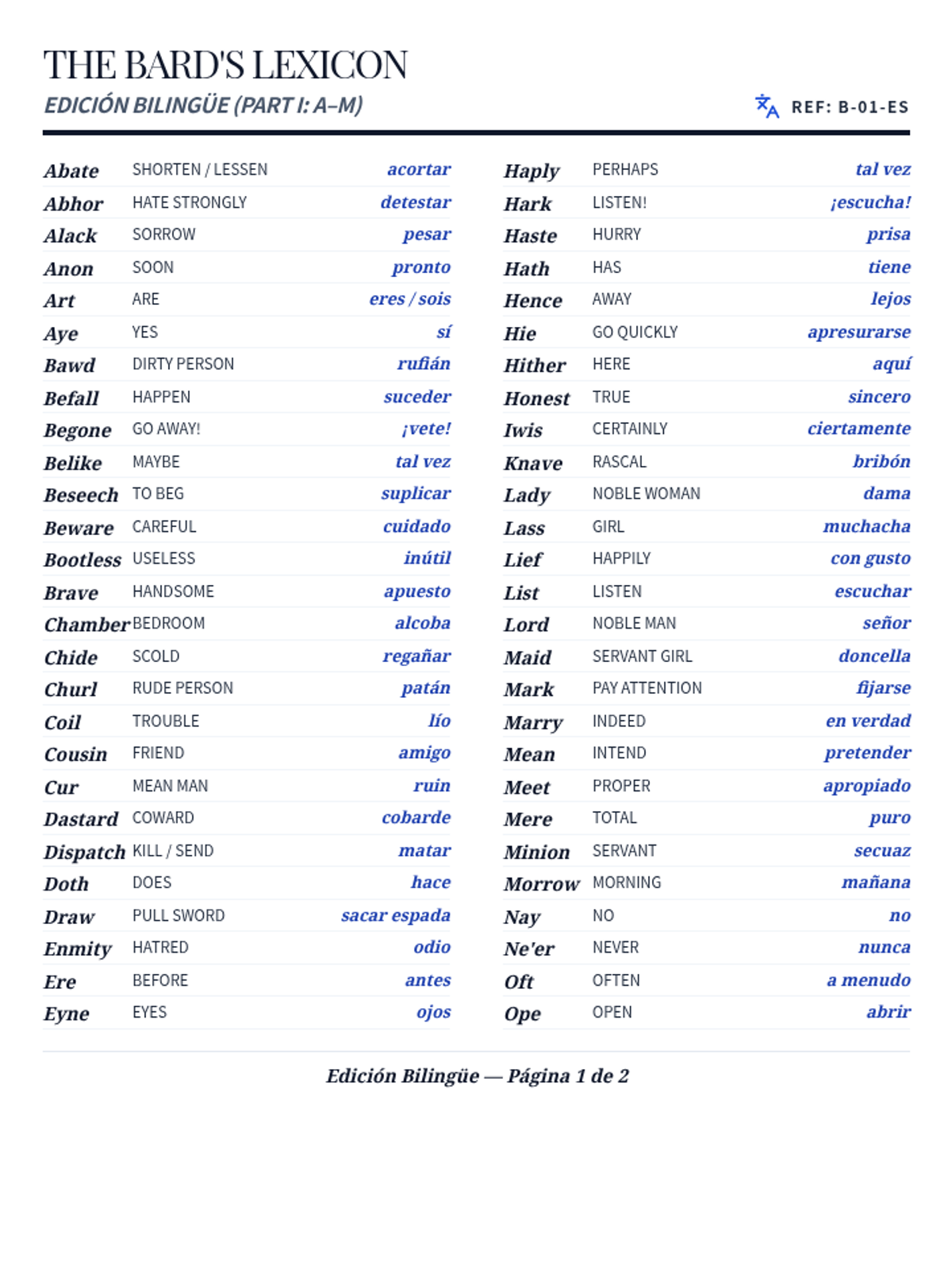
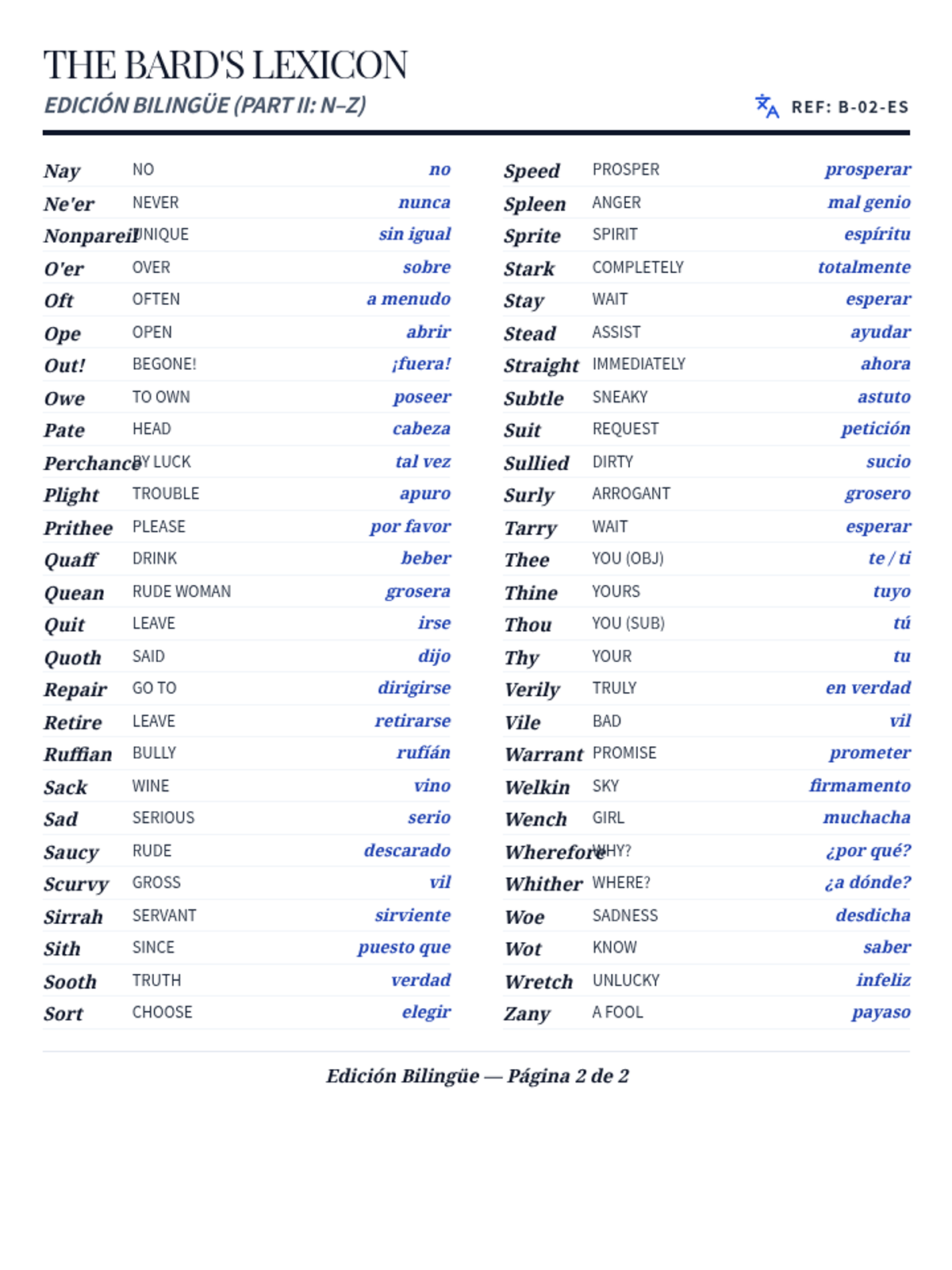
A comprehensive vocabulary resource and introductory lesson to help Spanish-speaking students decode the archaic language of Shakespeare's Macbeth.
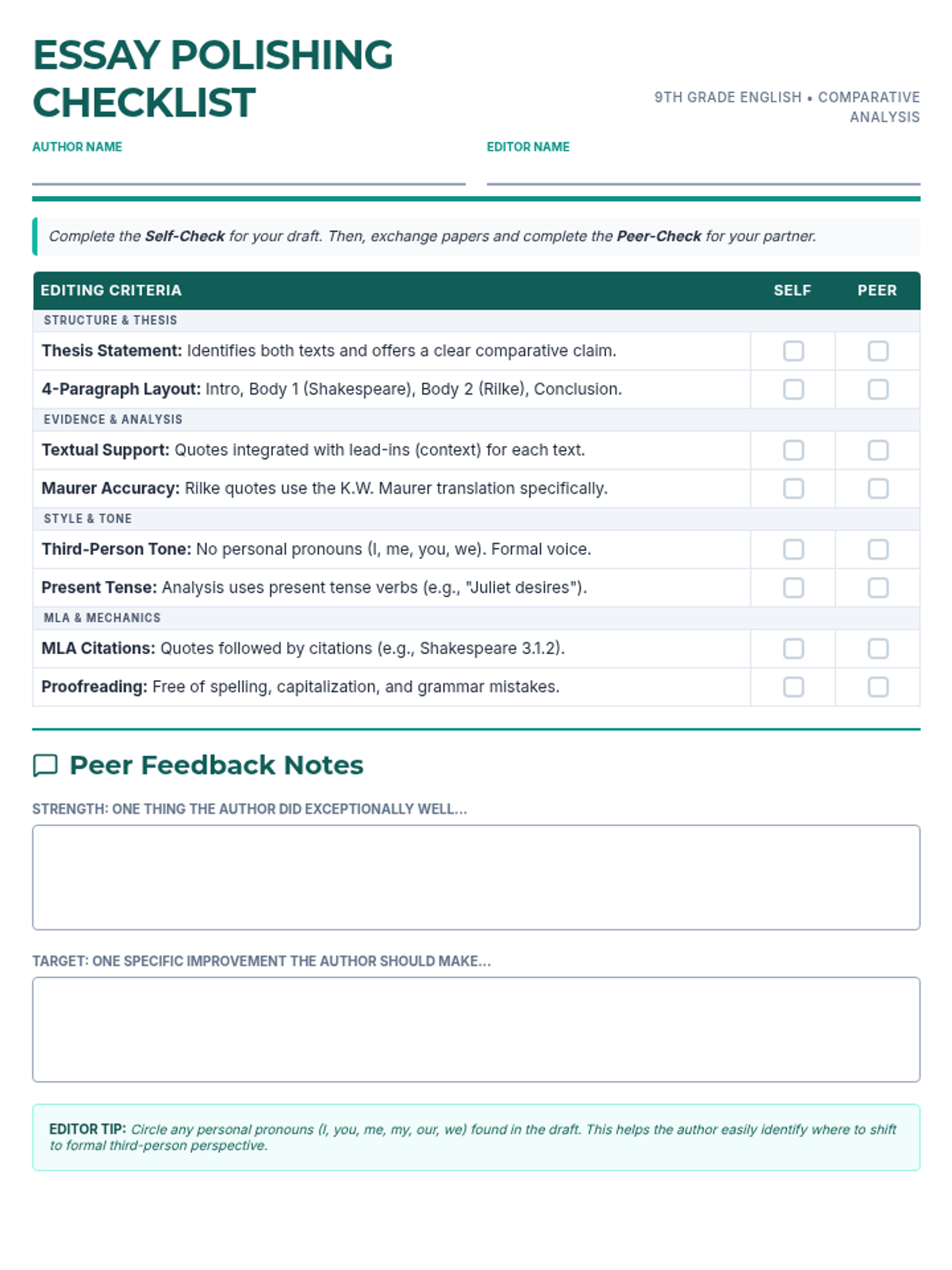
A focused lesson on crafting a thesis statement for a comparative essay between Rilke's Letters to a Young Poet and Shakespeare's Romeo and Juliet, specifically using the 'Answer to a Question' strategy.
A comprehensive lesson on using demonstrative pronouns (this, that, these, those) through the lens of museum curators managing an exhibit. Students learn to distinguish between singular/plural and near/far objects.
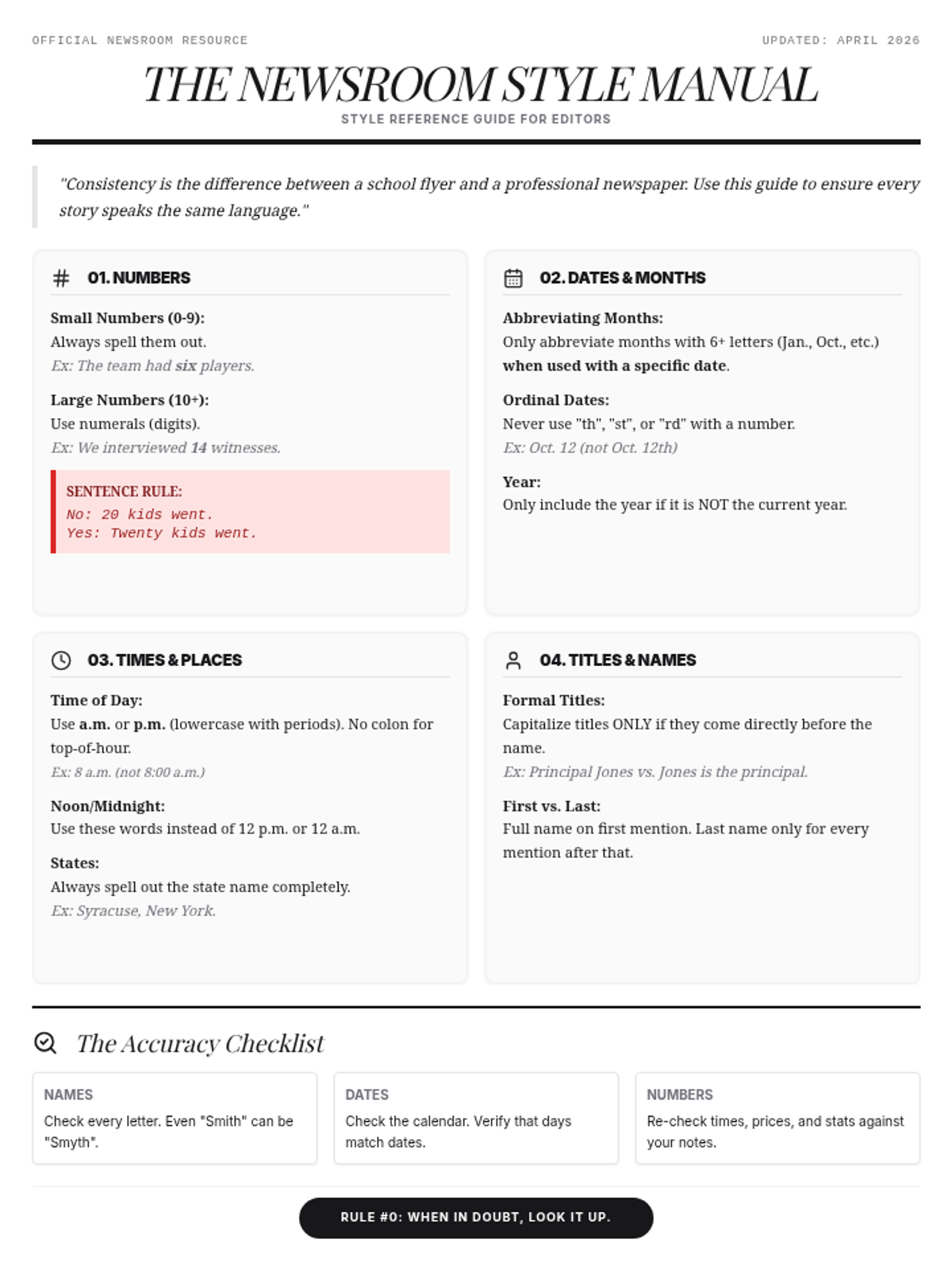
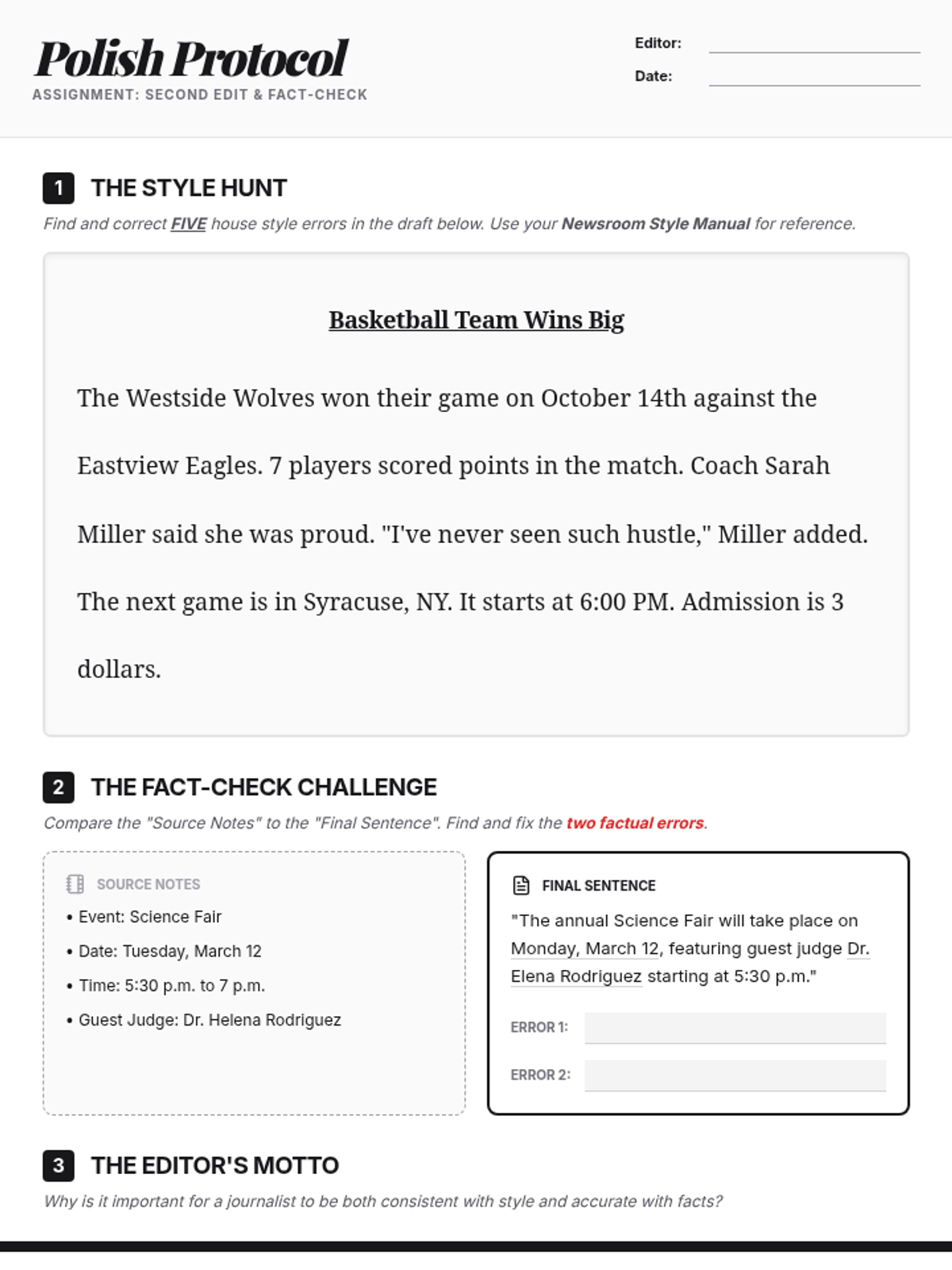
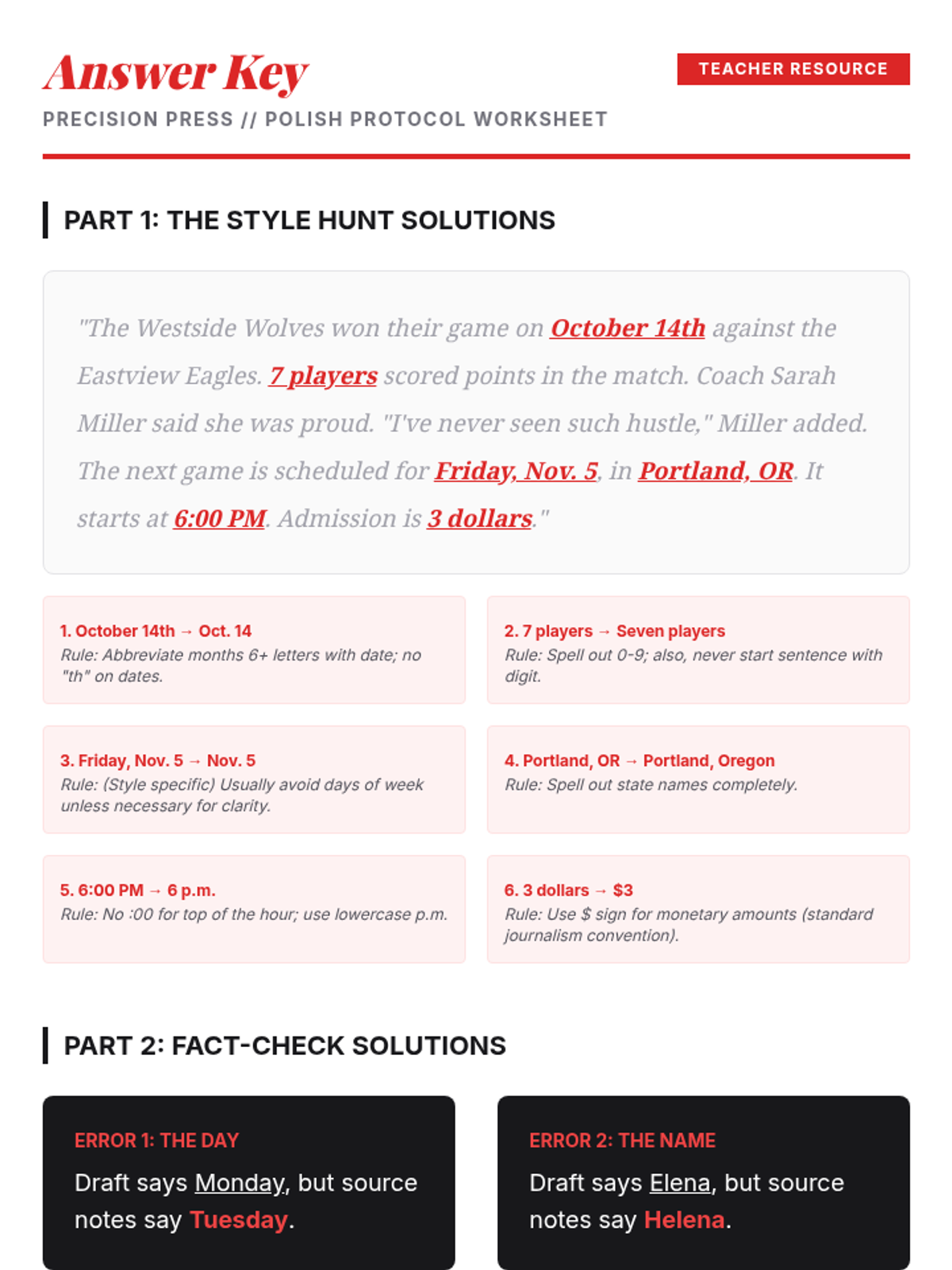
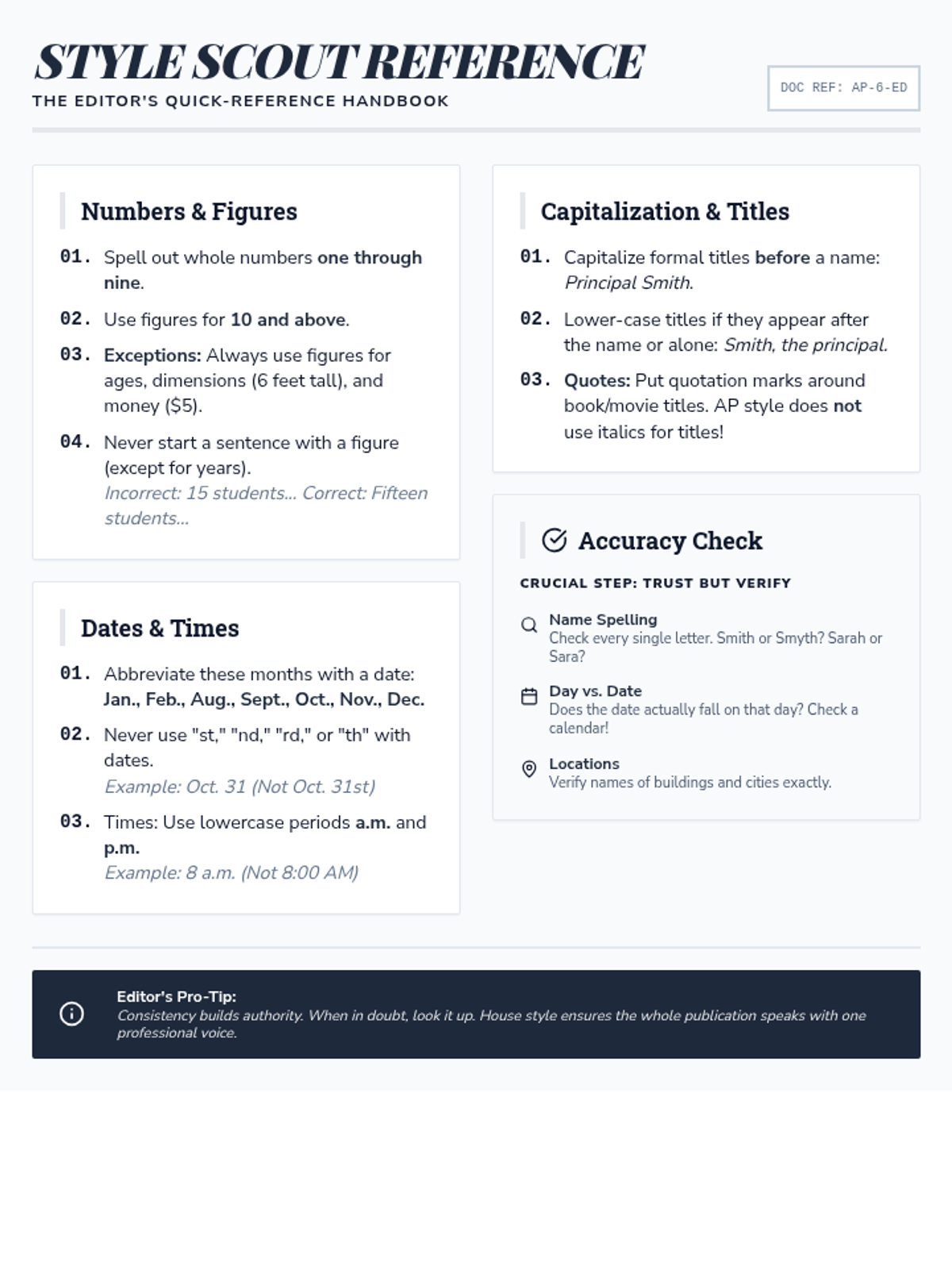
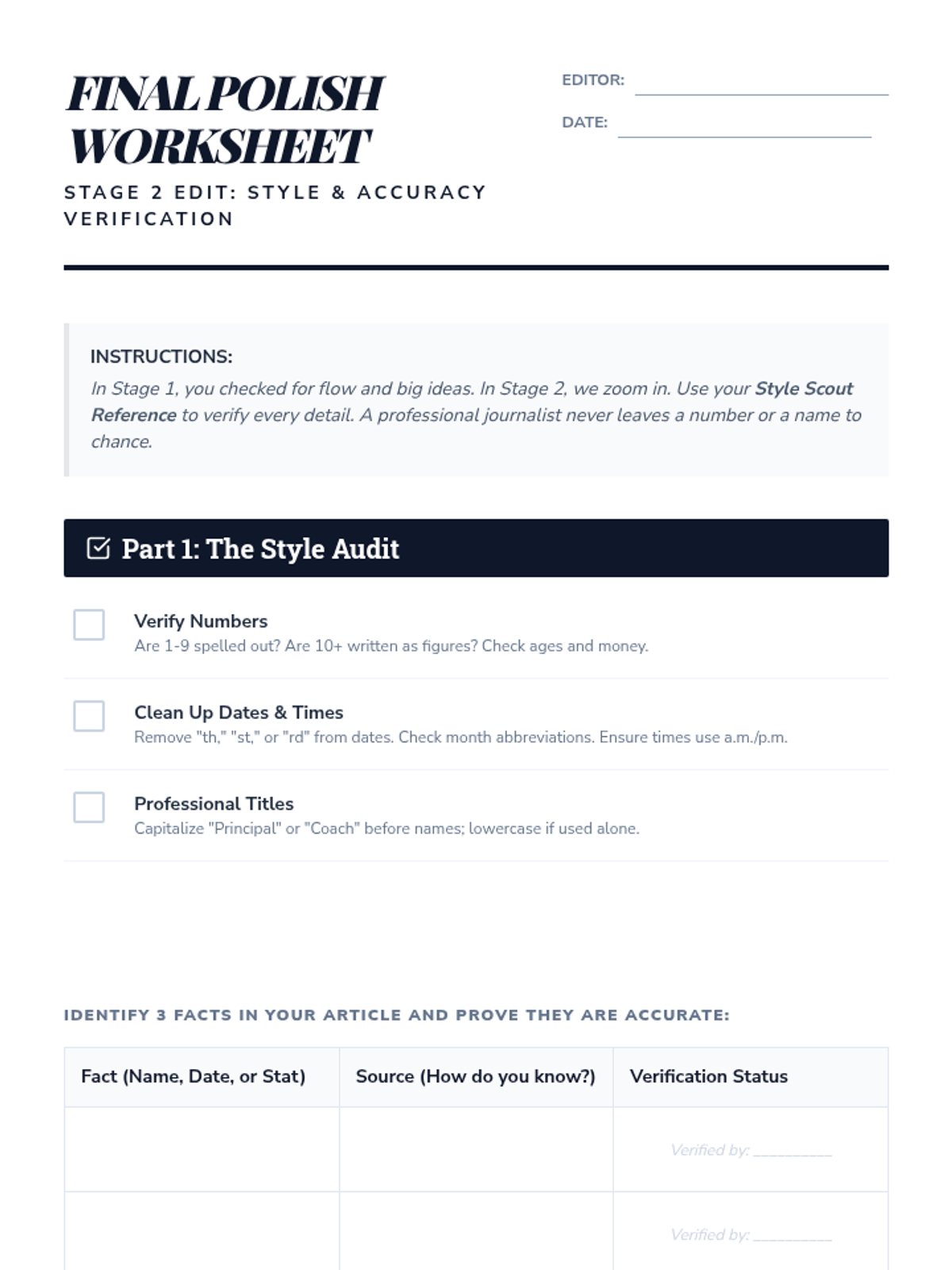
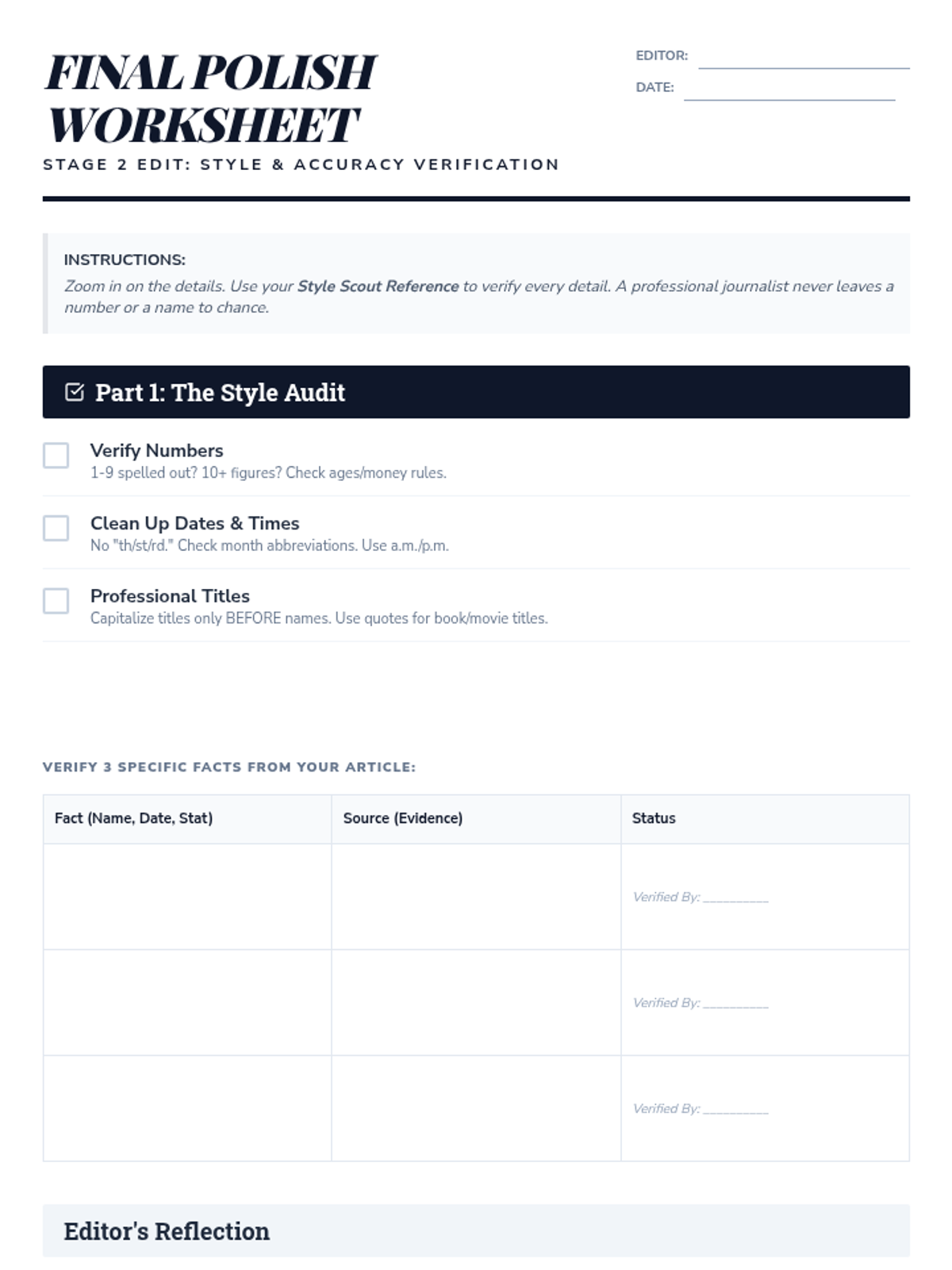
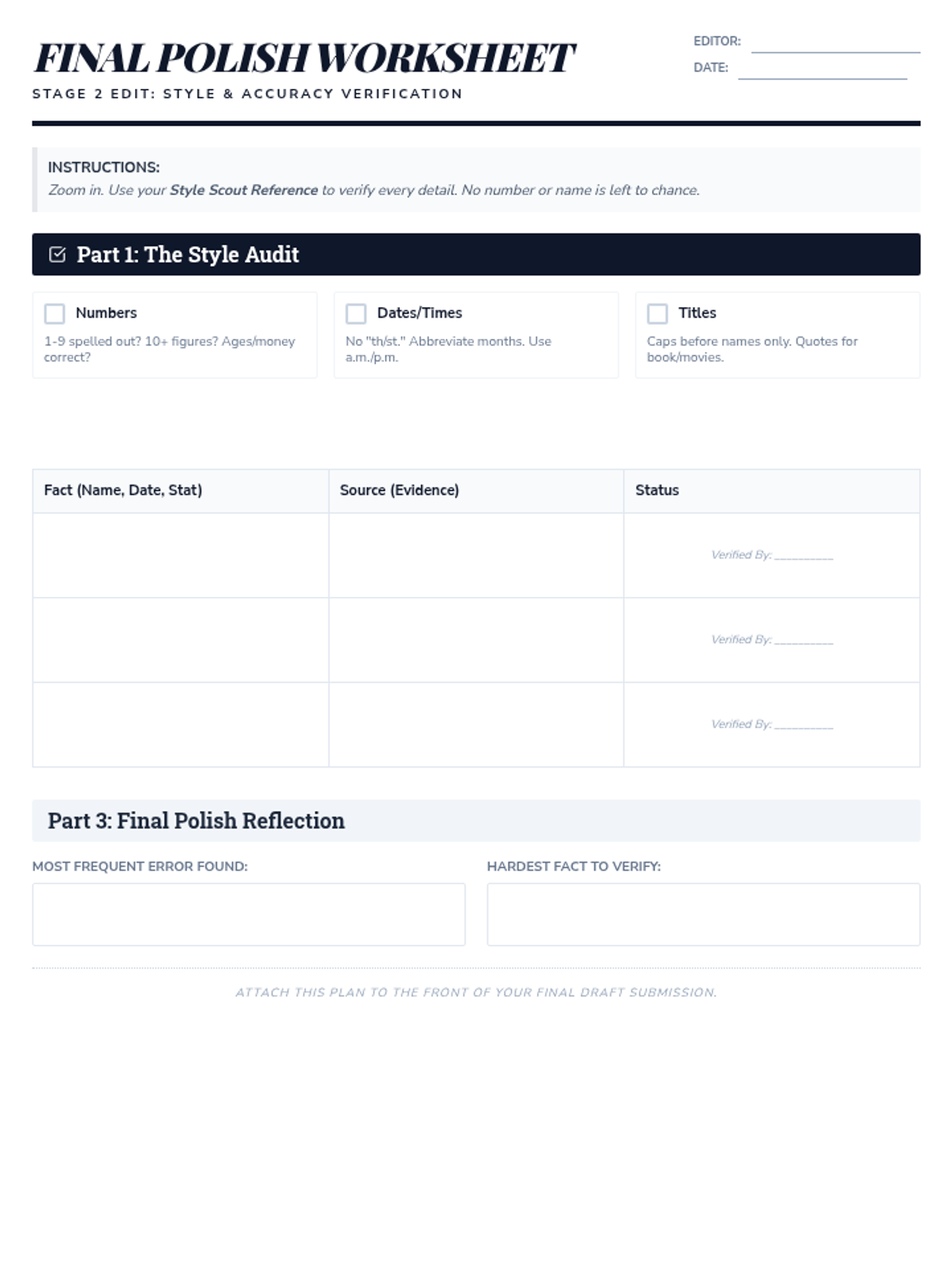
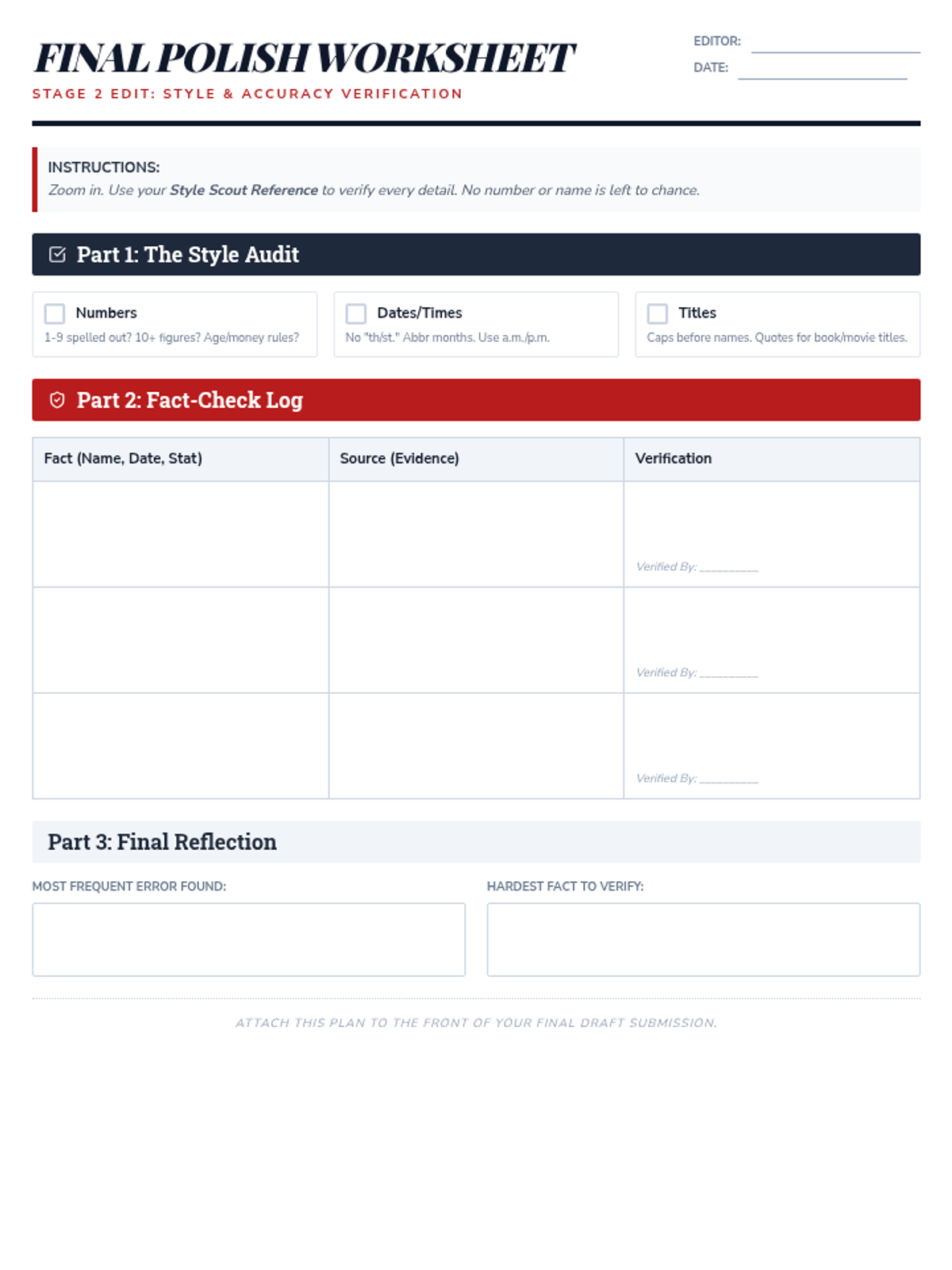
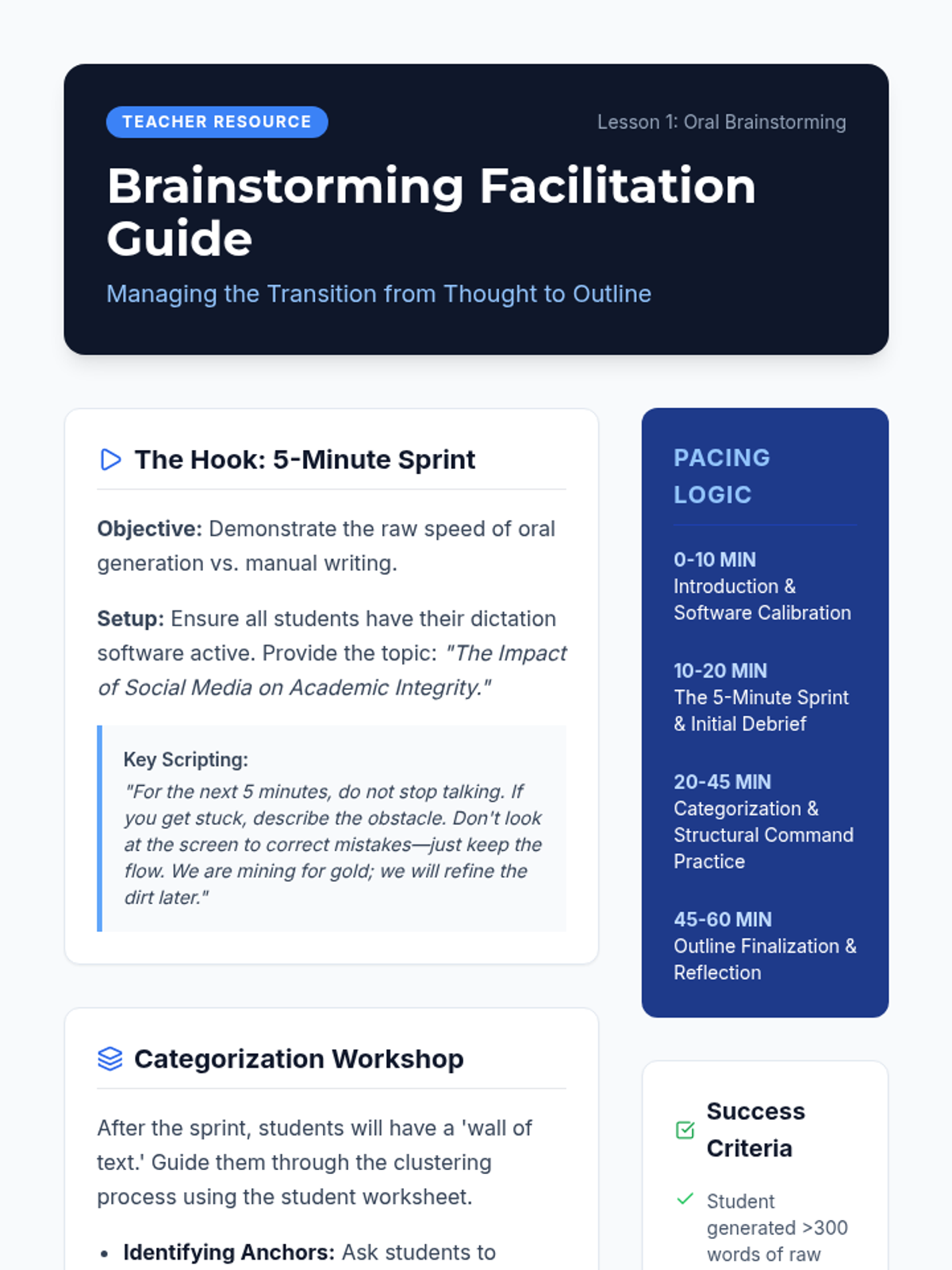
Students step into the roles of news editors to master the art of consistency and precision. They will learn foundational AP style rules and practice rigorous fact-checking to ensure their articles are ready for the front page.
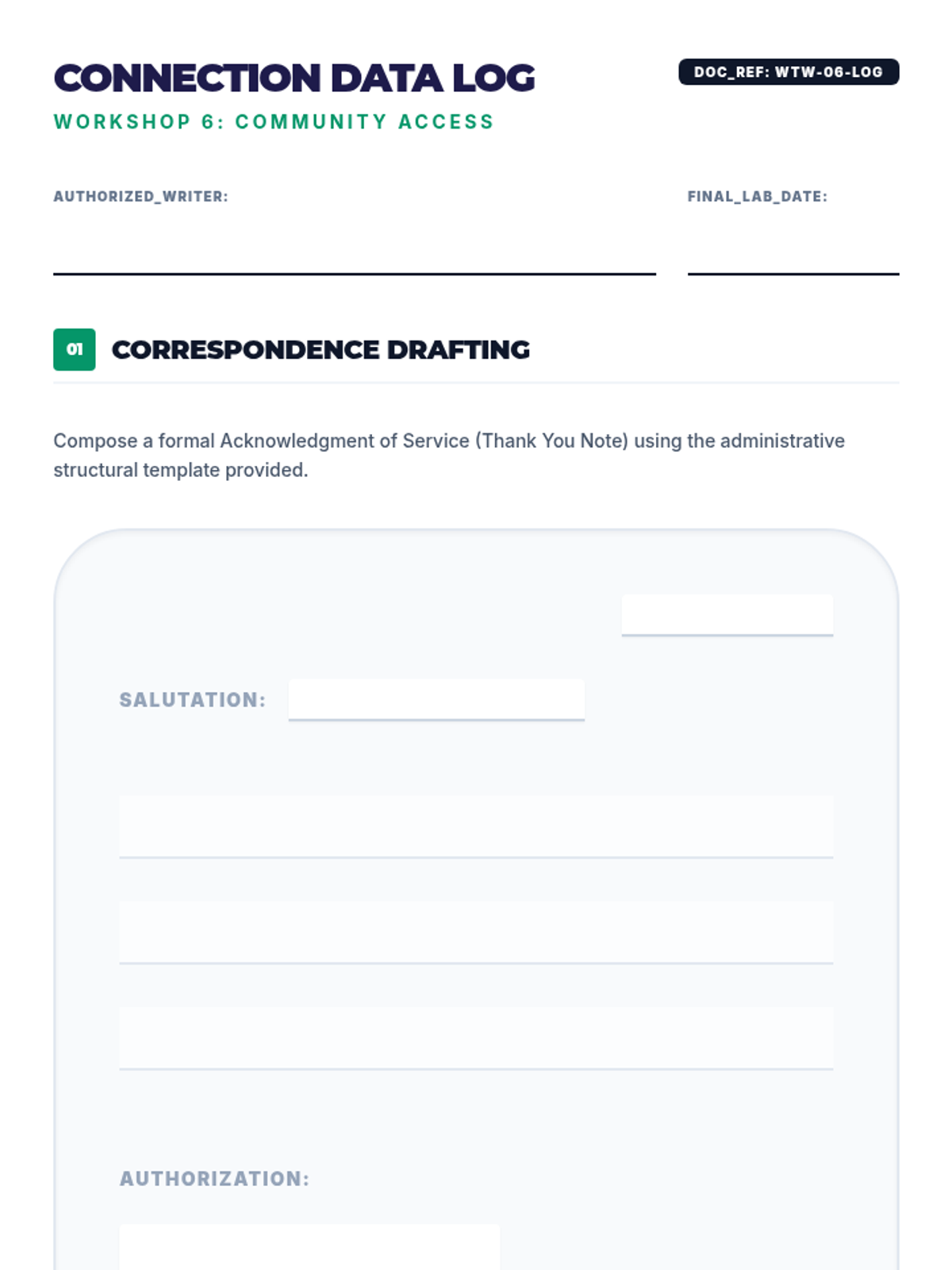
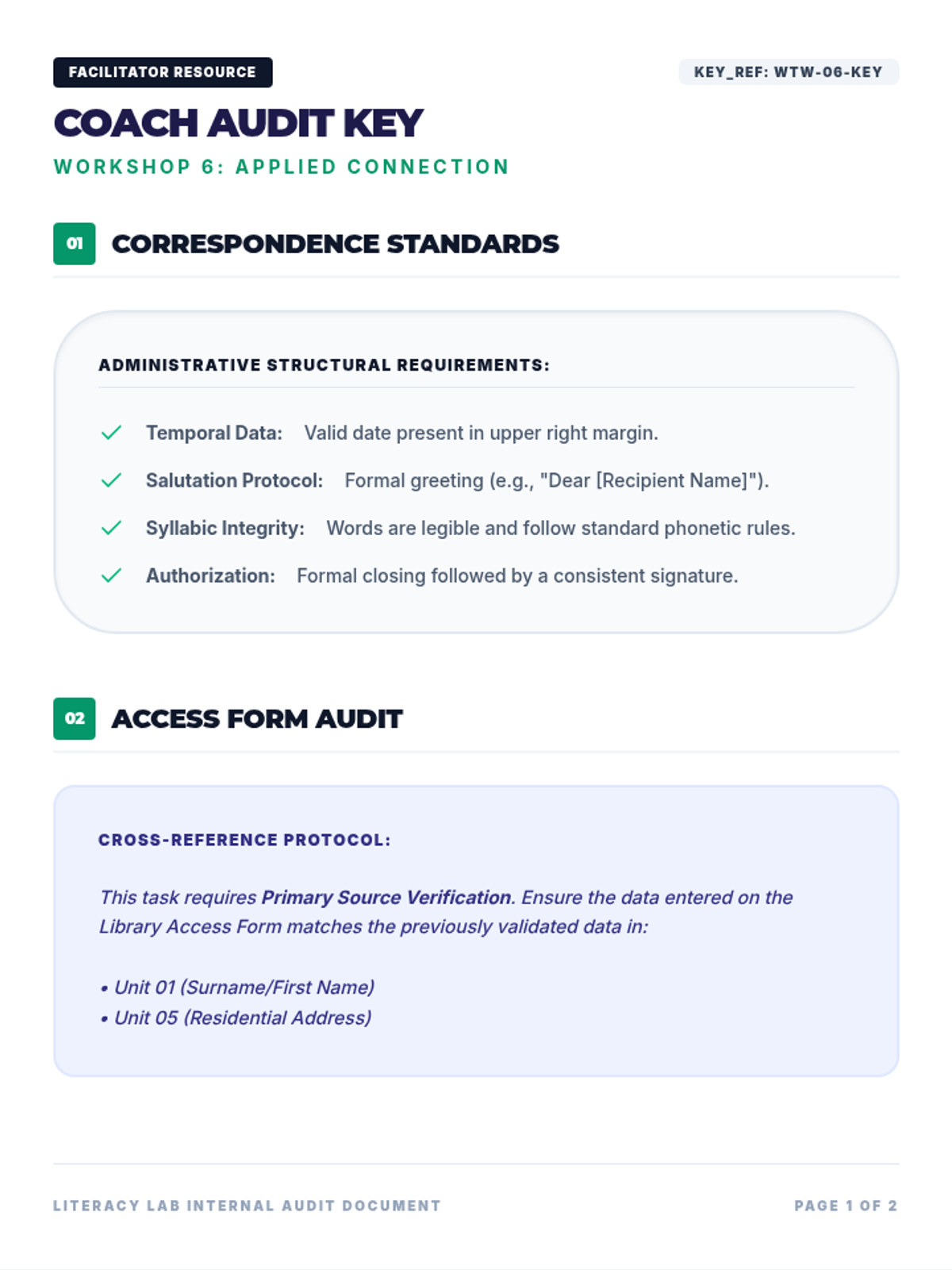
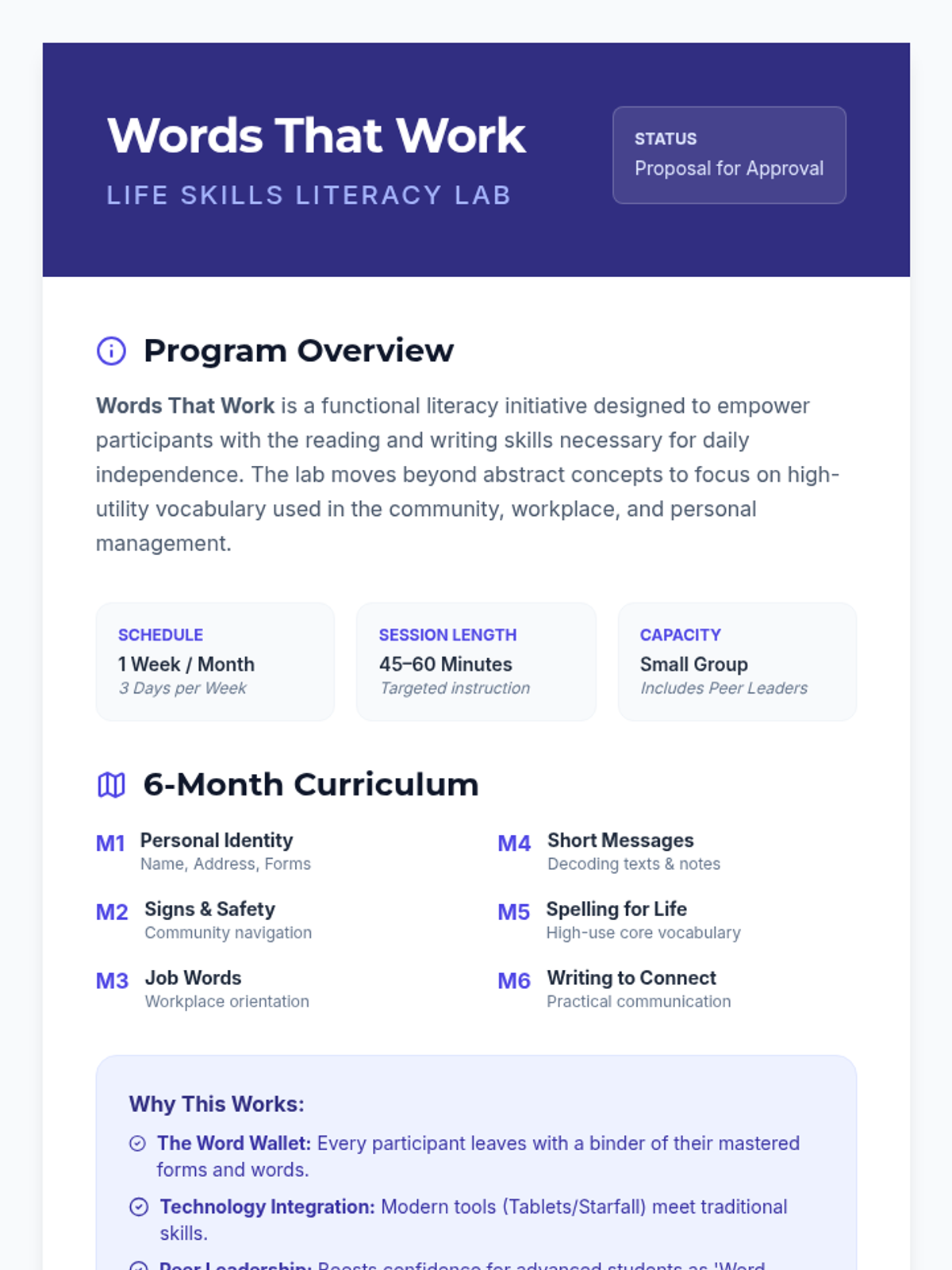
In this final module, students practice writing practical communications like thank-you notes, simple emails, and filling out more complex community forms. The lesson culminates in a review of the Word Wallet.
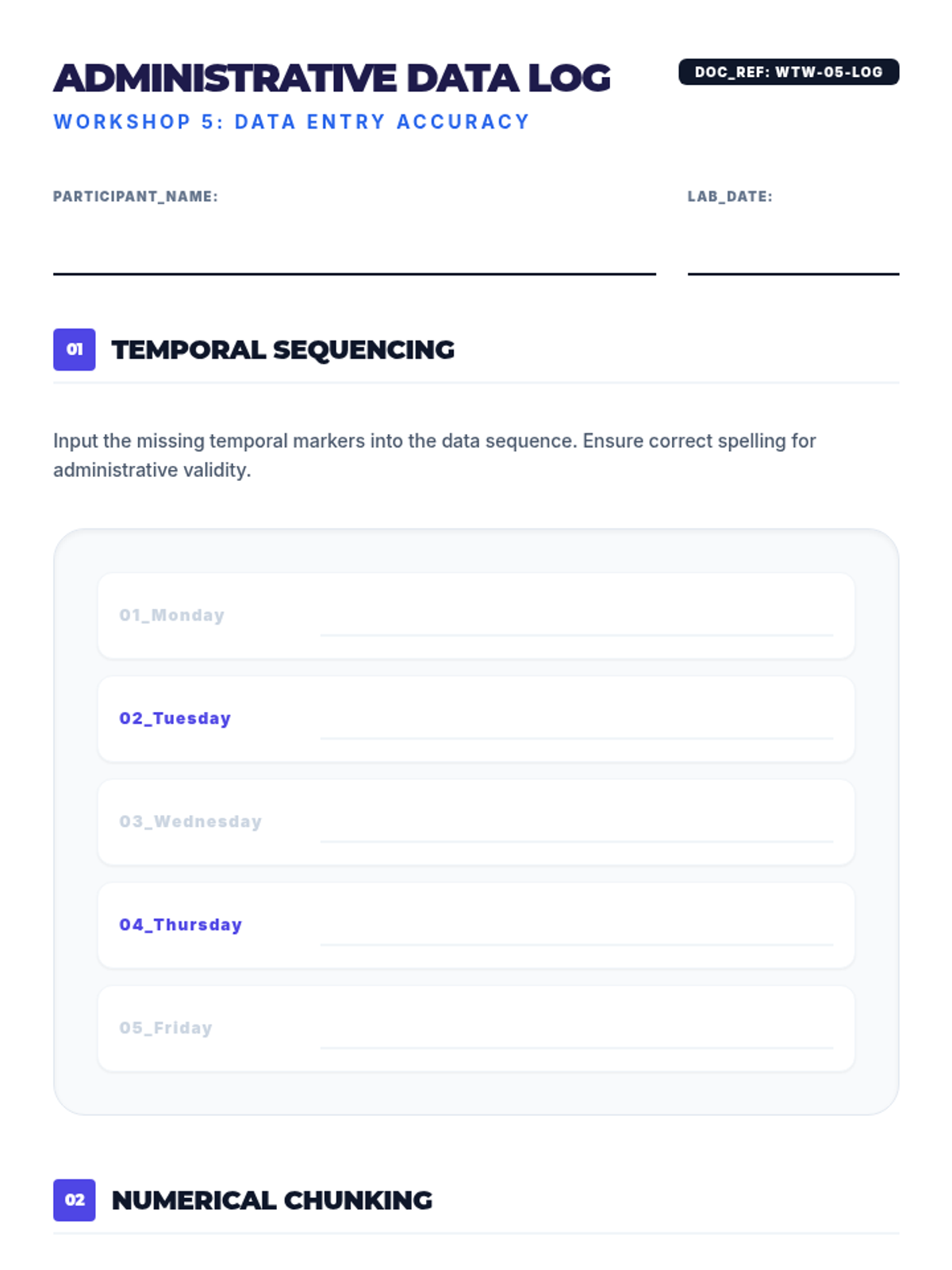
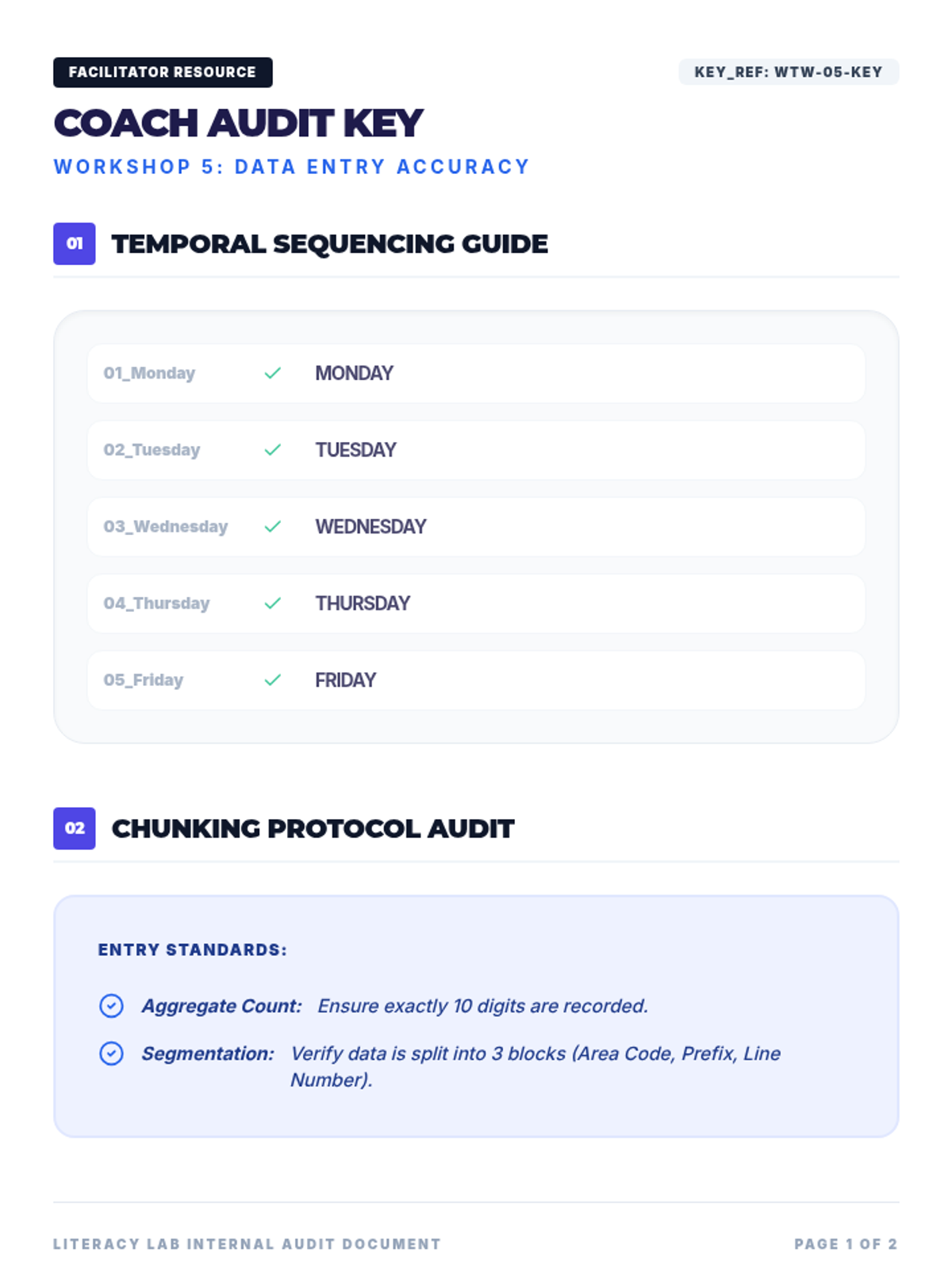
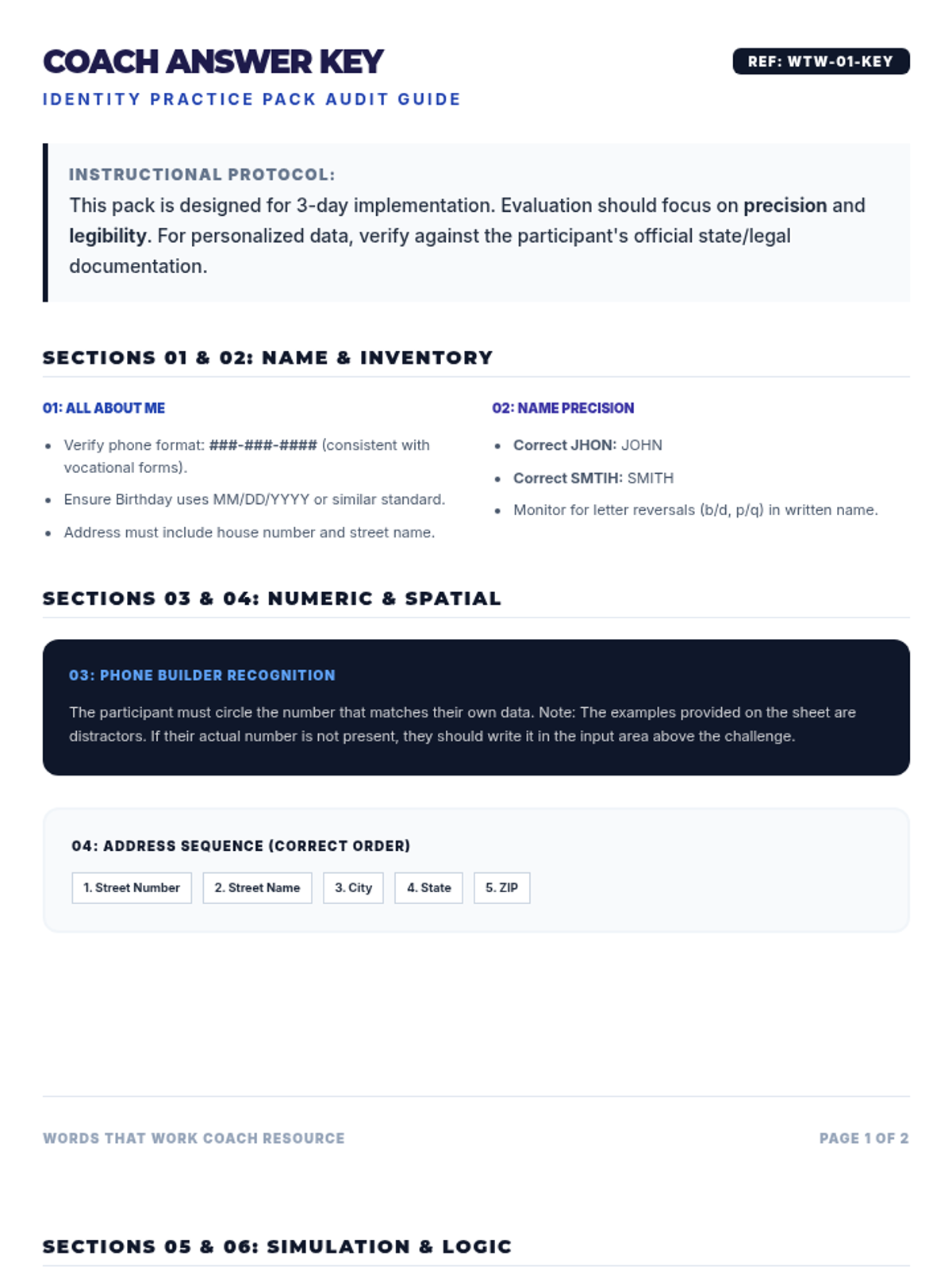
Precision in personal record keeping and high-stakes data entry. Participants master the transcription of addresses, phone numbers, and temporal sequences (Calendars) required for community logistics.
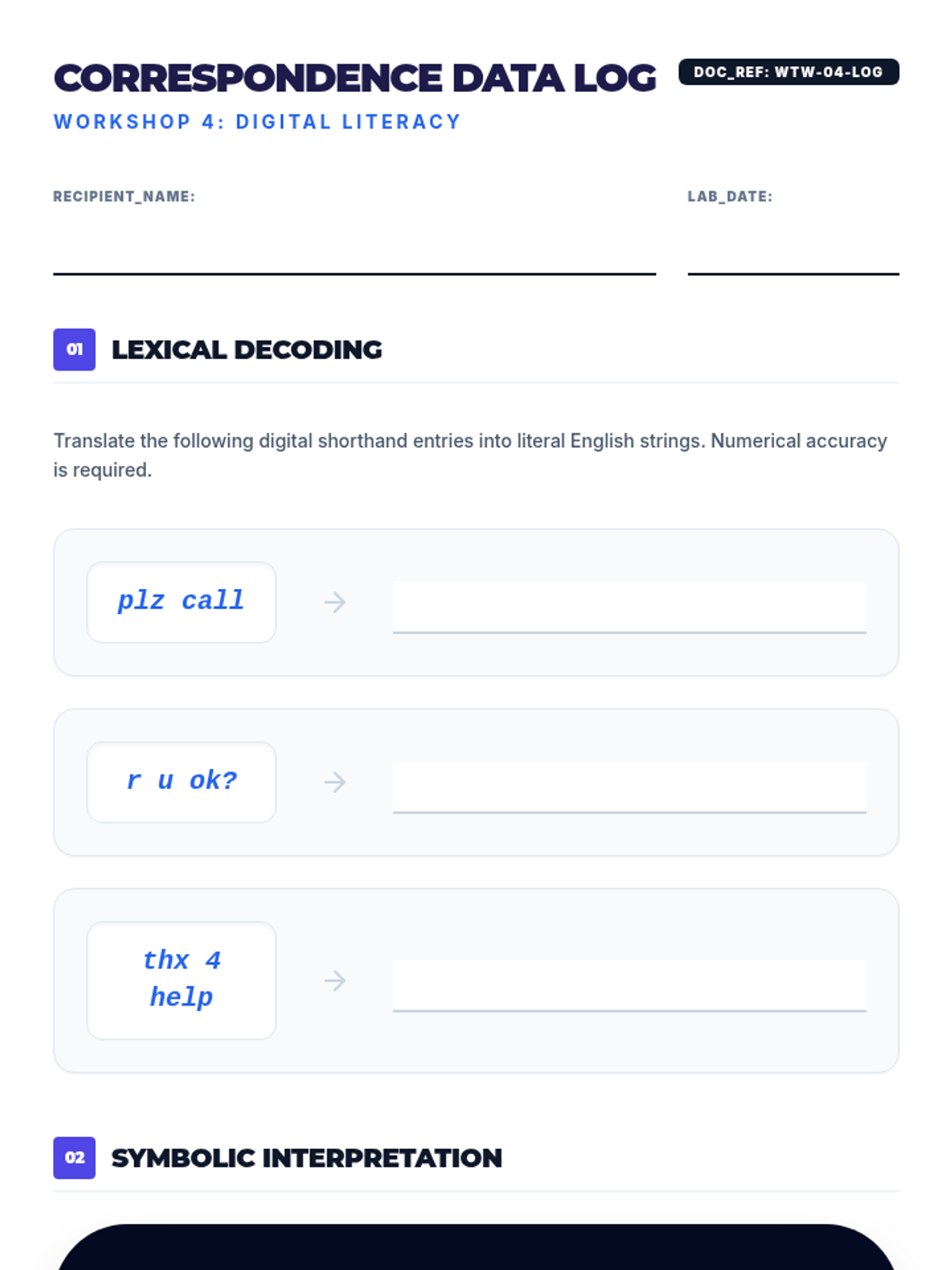
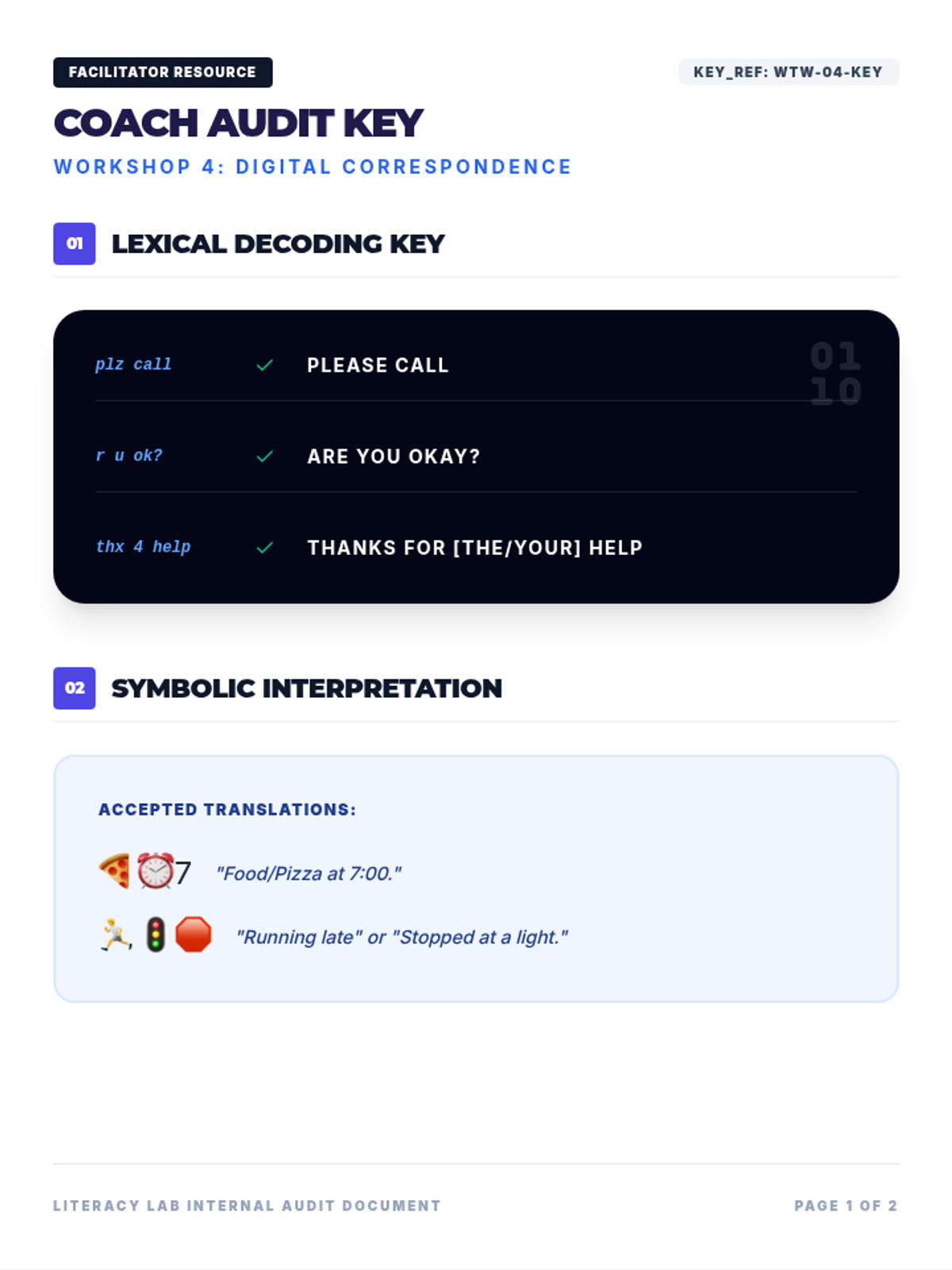
Technical decoding of digital shorthand, emoji-based logic, and communication purpose. Participants master the protocols for professional text and email responses while identifying security risks (Scams).
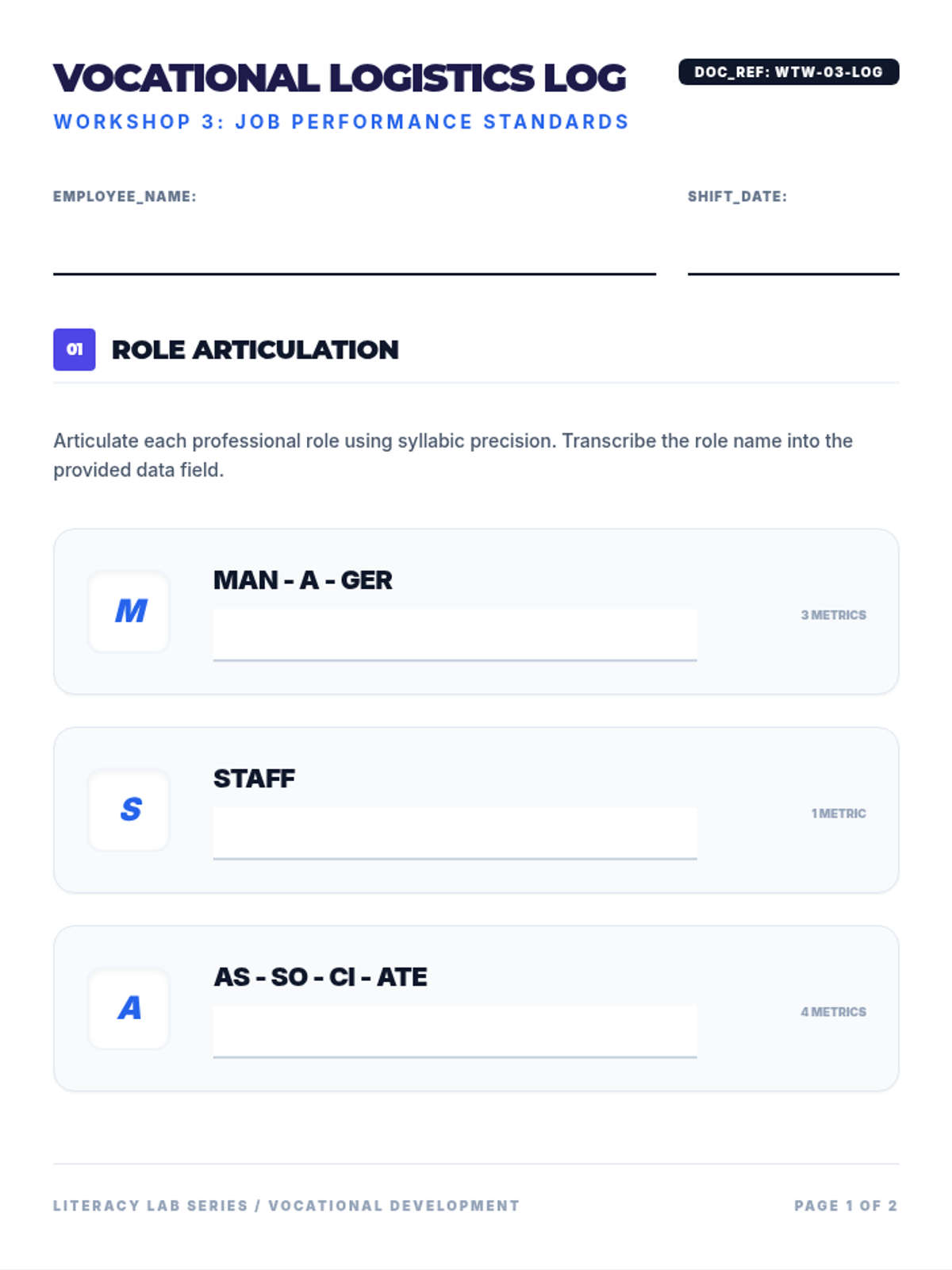
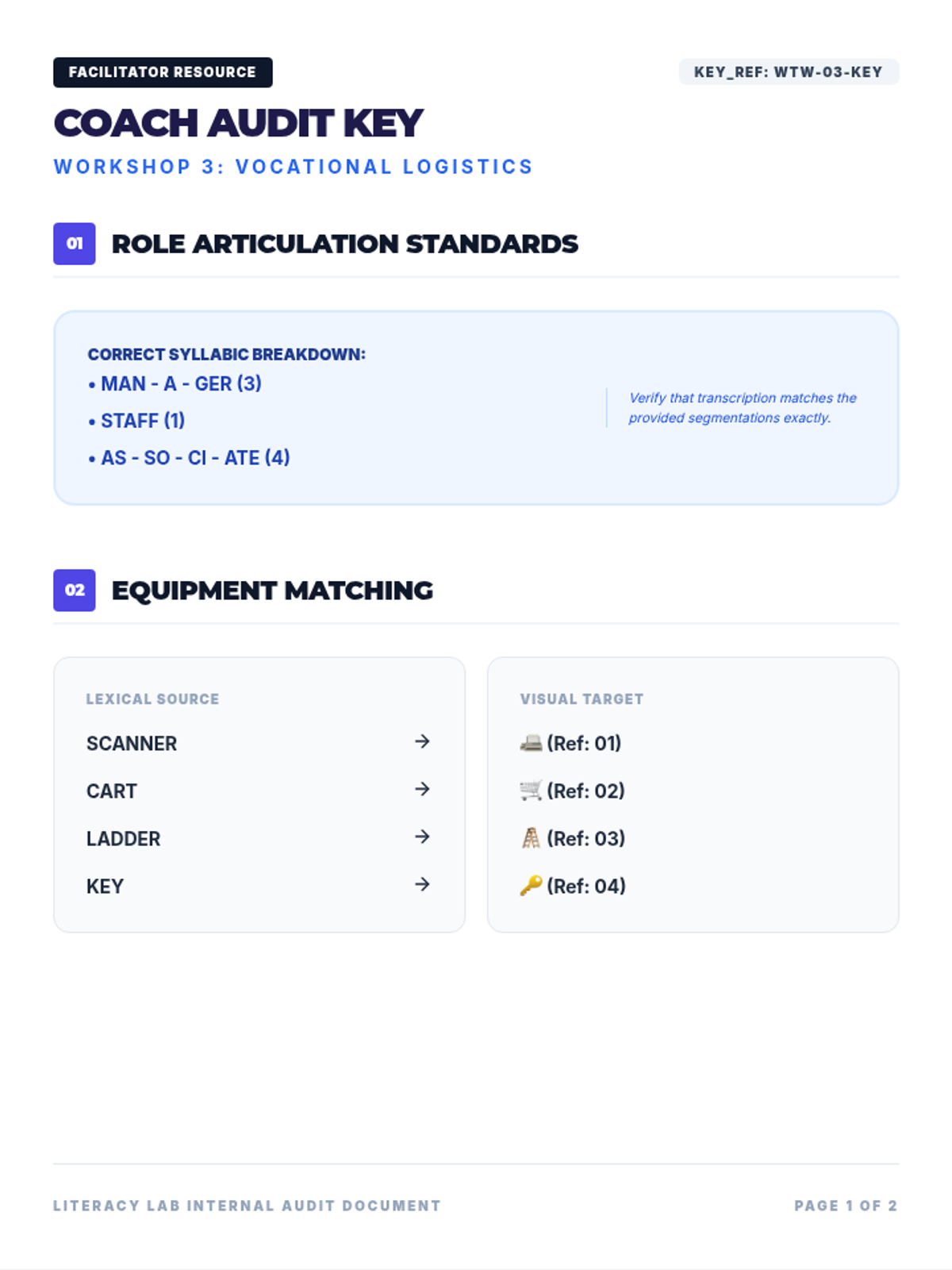
Critical literacy for workplace performance, including role-specific terminology, equipment identification, and high-stakes administrative records (Time Sheets/Safety Logs). Participants master the language of employment.
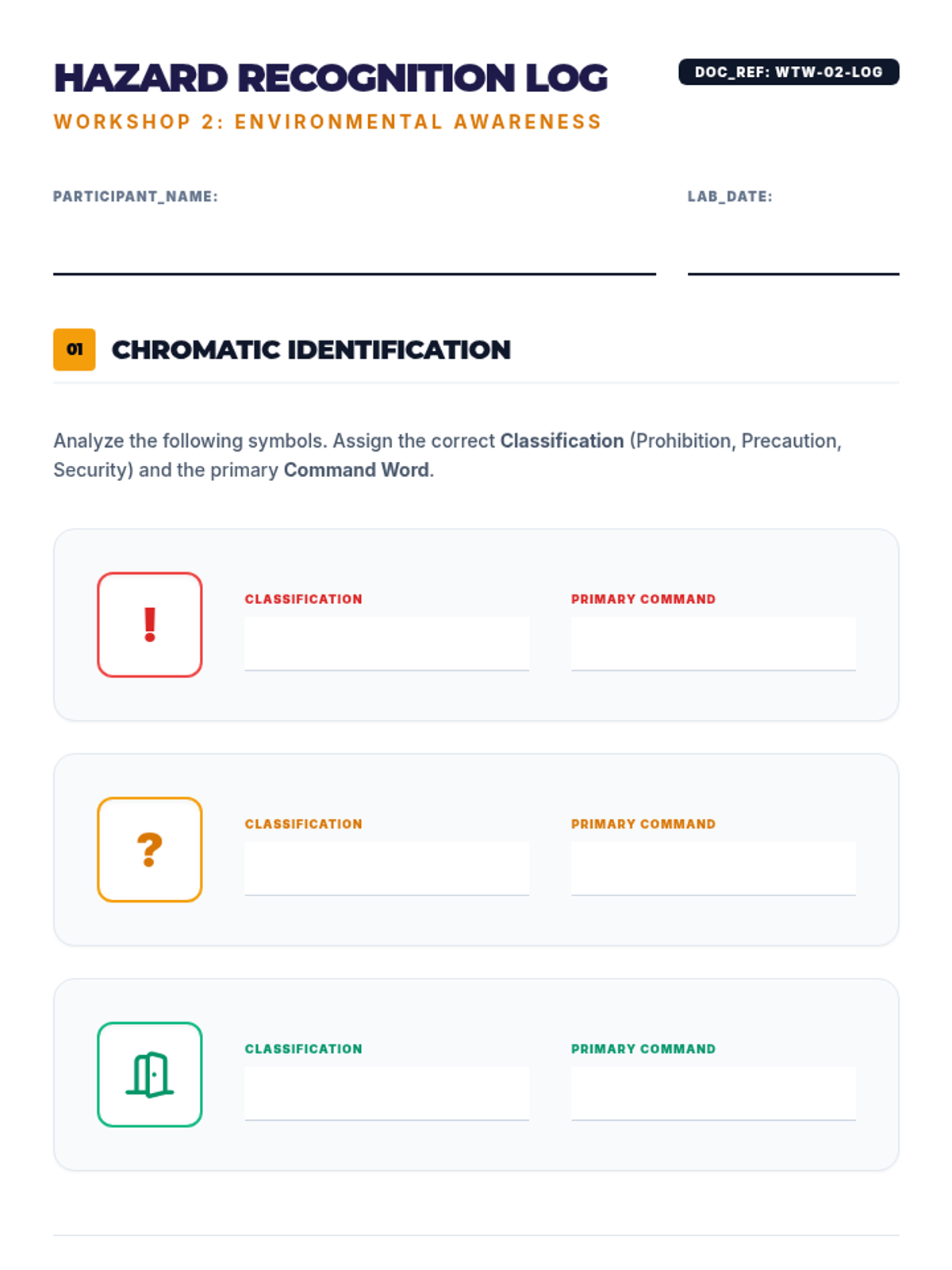
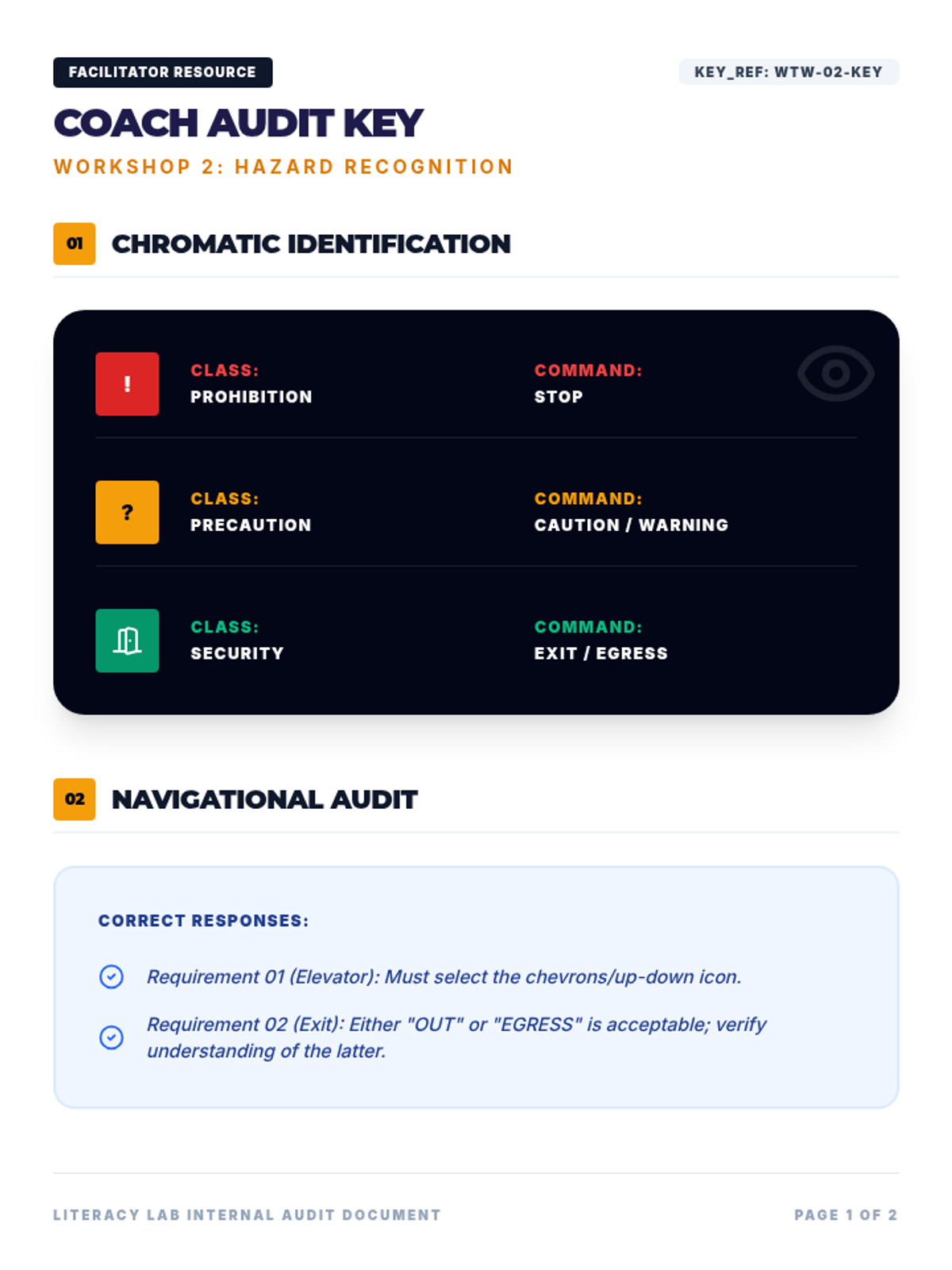
Advanced identification of community symbols and environmental hazard markers. Participants learn to decode high-stakes visual language and follow directional protocols for safe navigation in public and professional spaces.
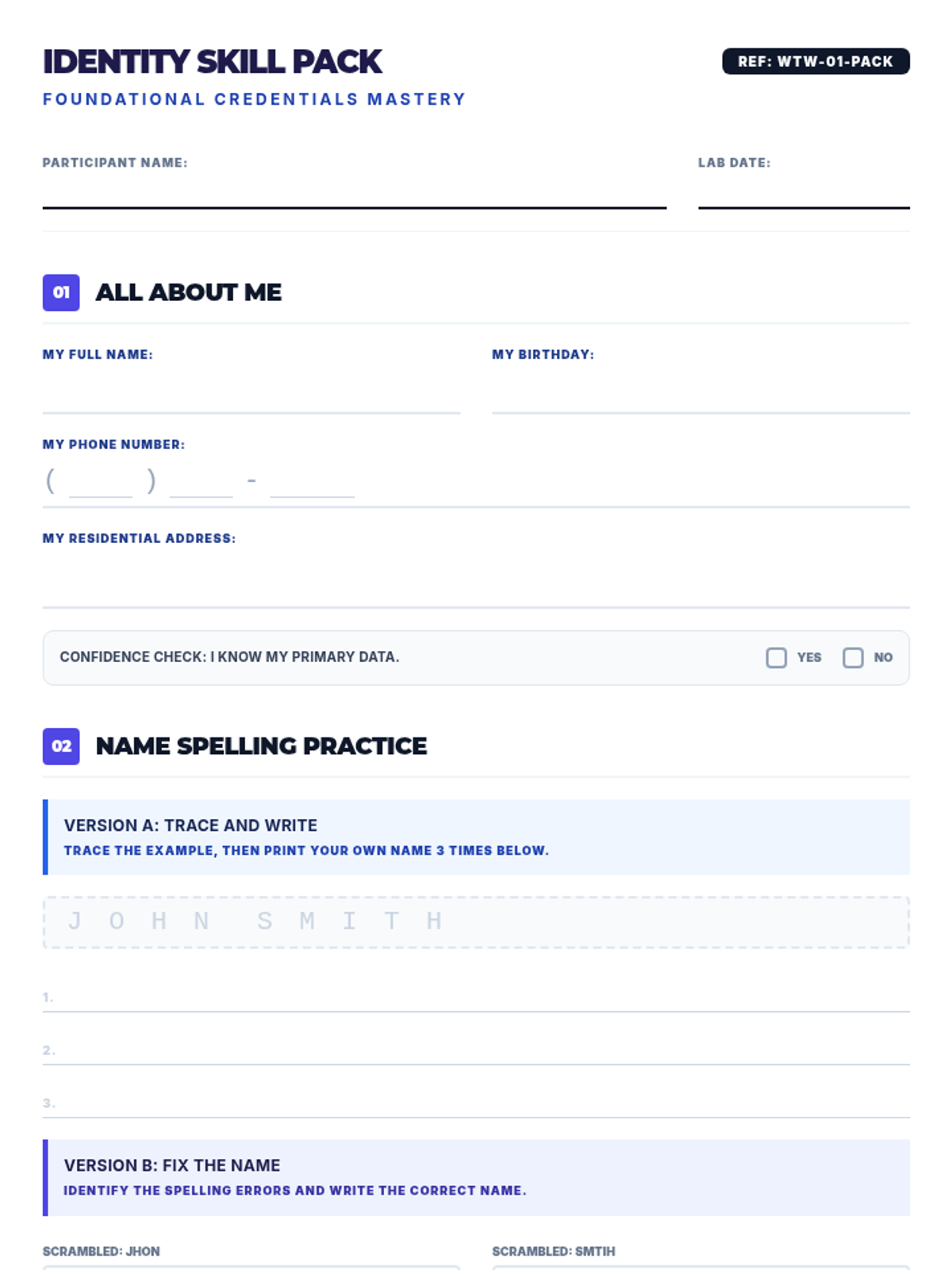
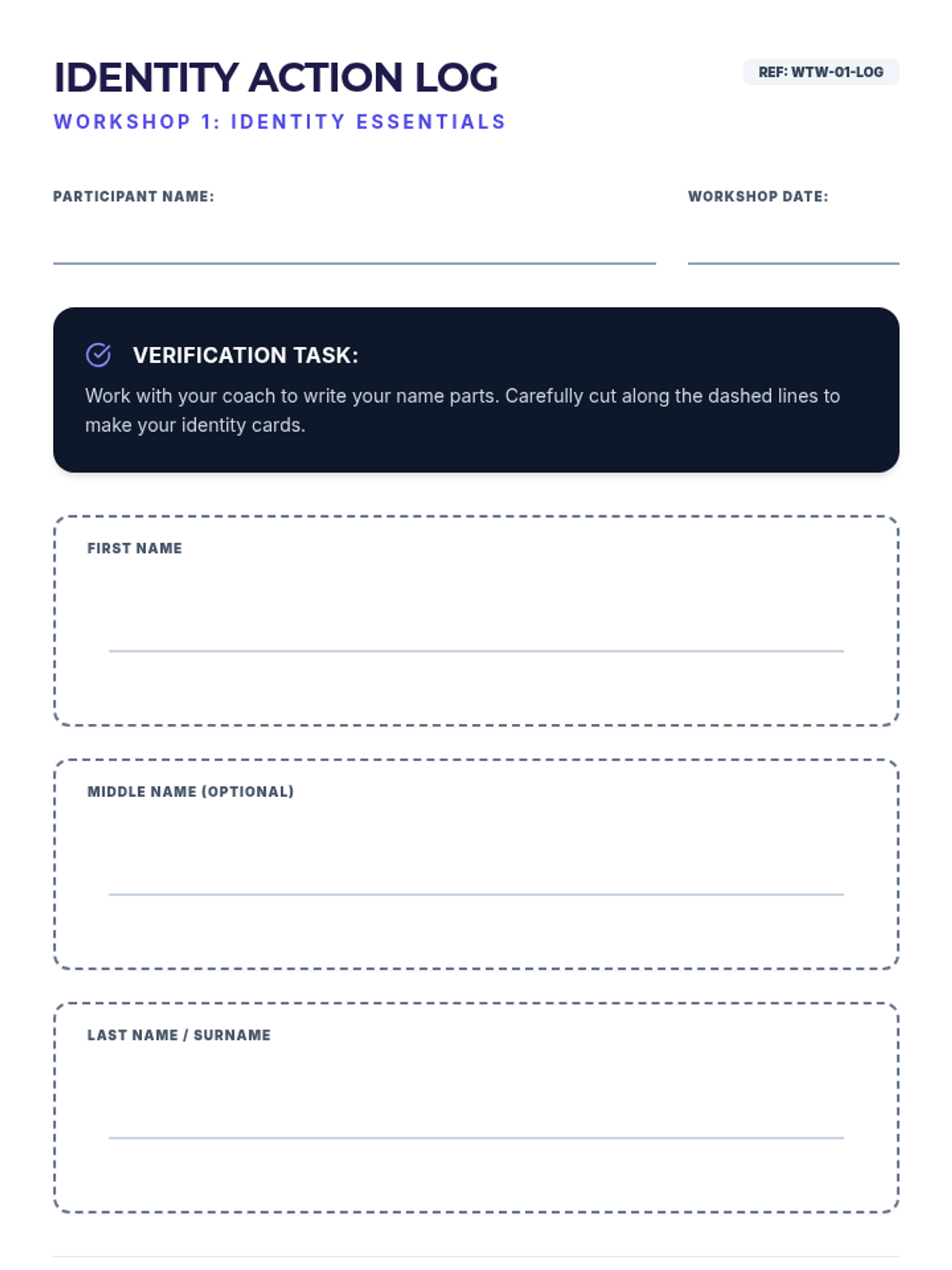
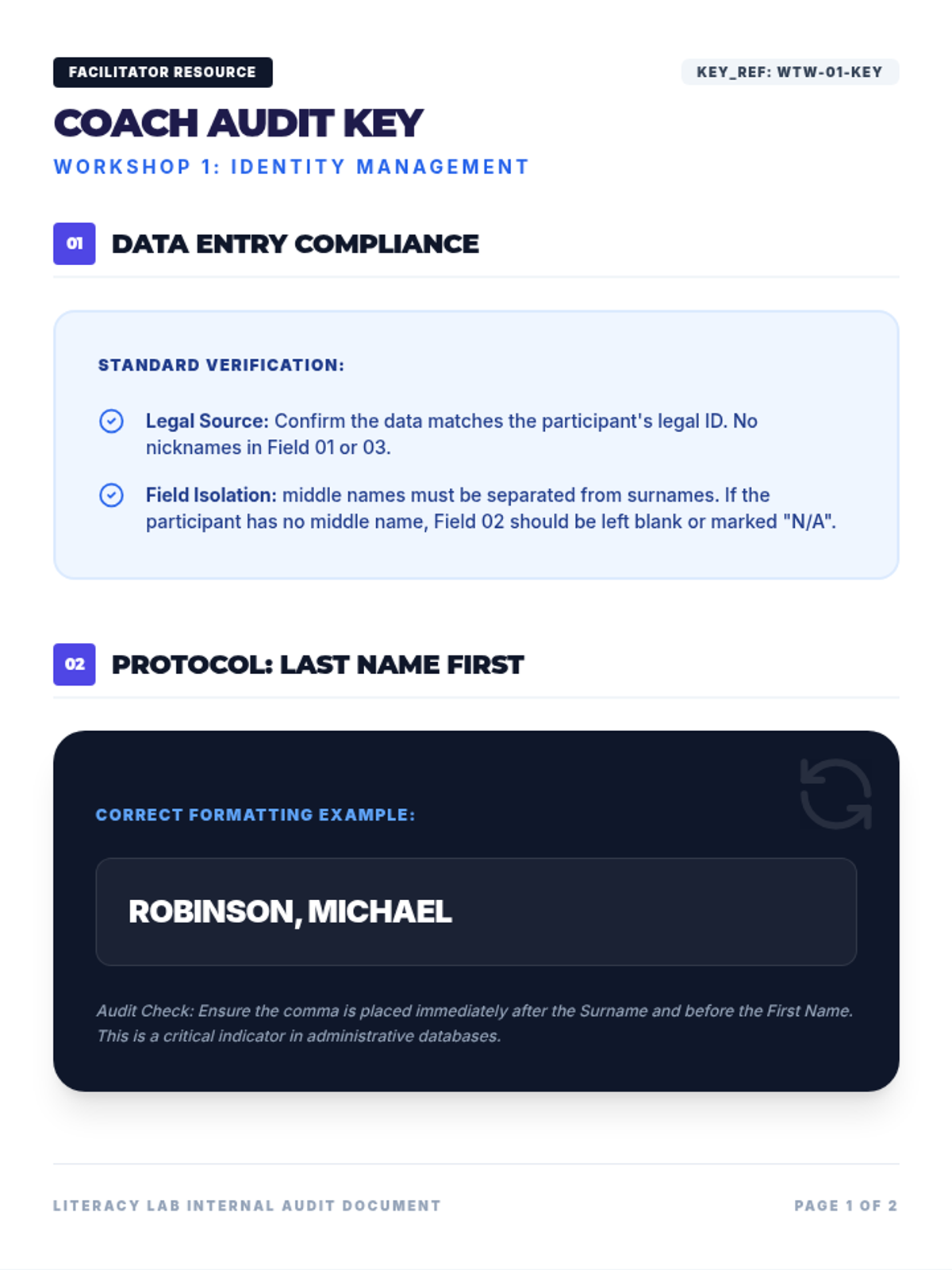
The foundational module of the Words That Work program, focusing on the precision of legal identification and credential data entry. Participants master the structure of names and official signatures required for professional autonomy.
In this 45-minute lesson, 6th-grade students step into the role of professional editors to master house style and factual accuracy. They will learn foundational AP style rules and apply fact-checking strategies to polish their articles to a professional standard.
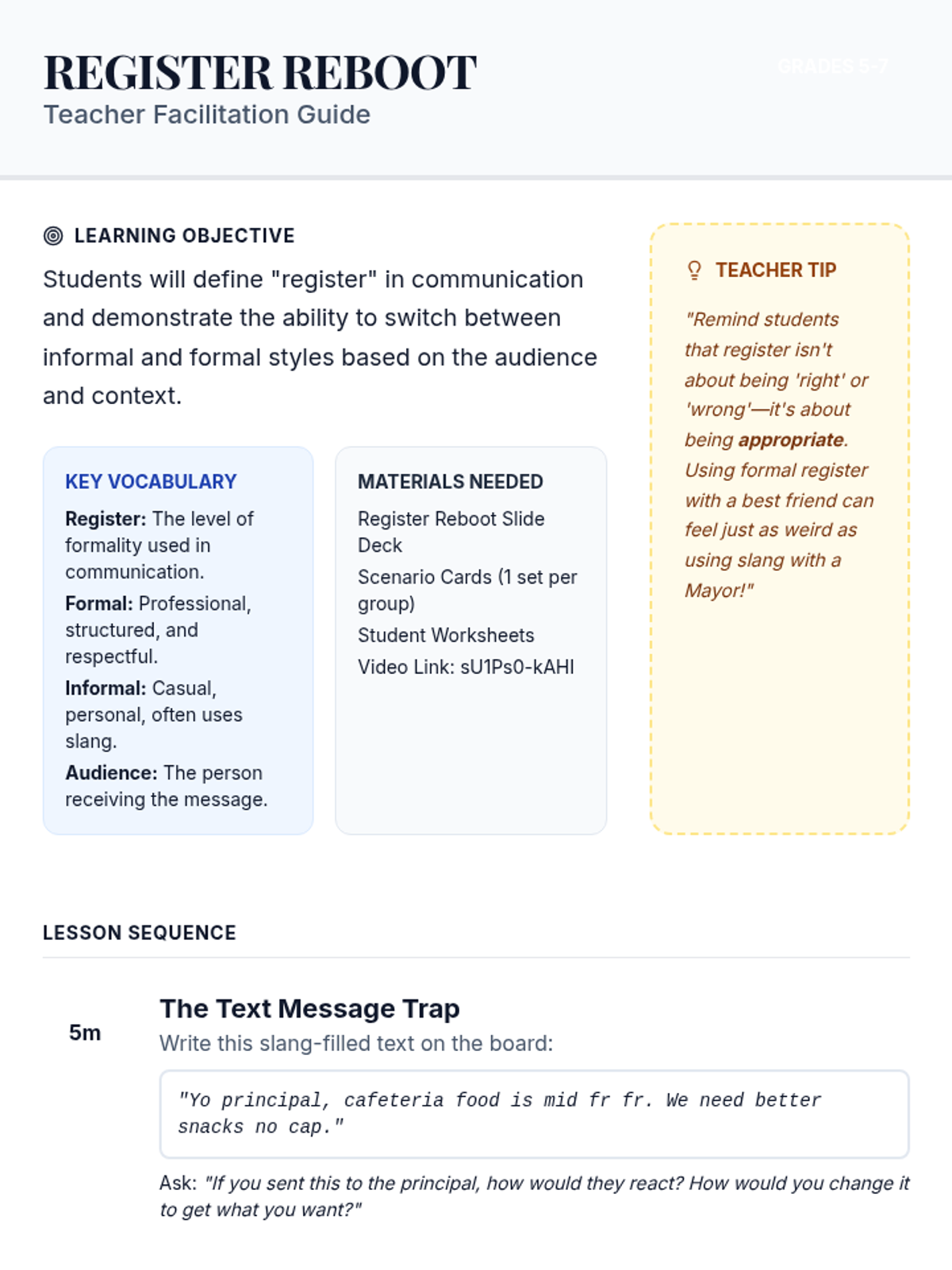
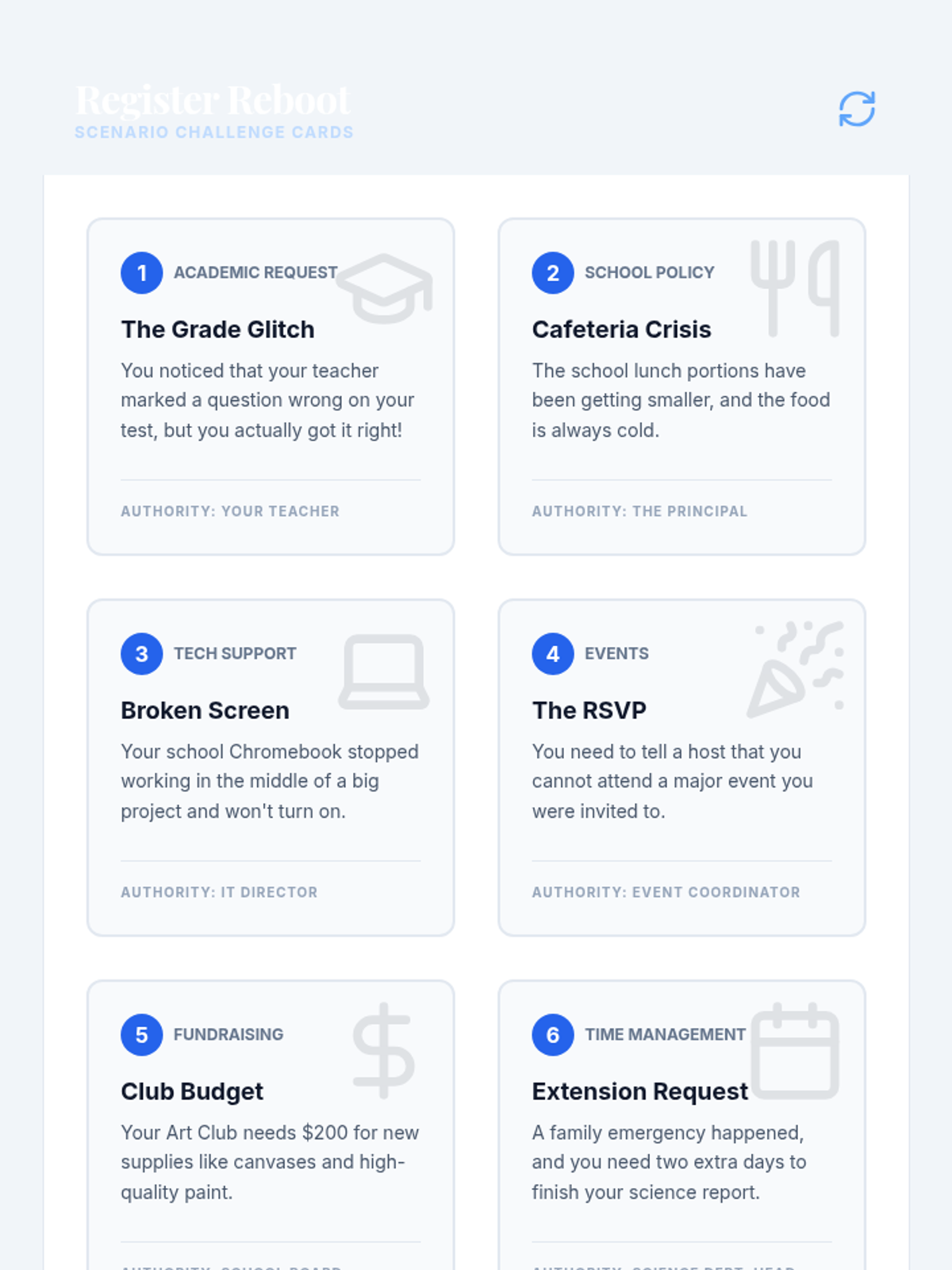
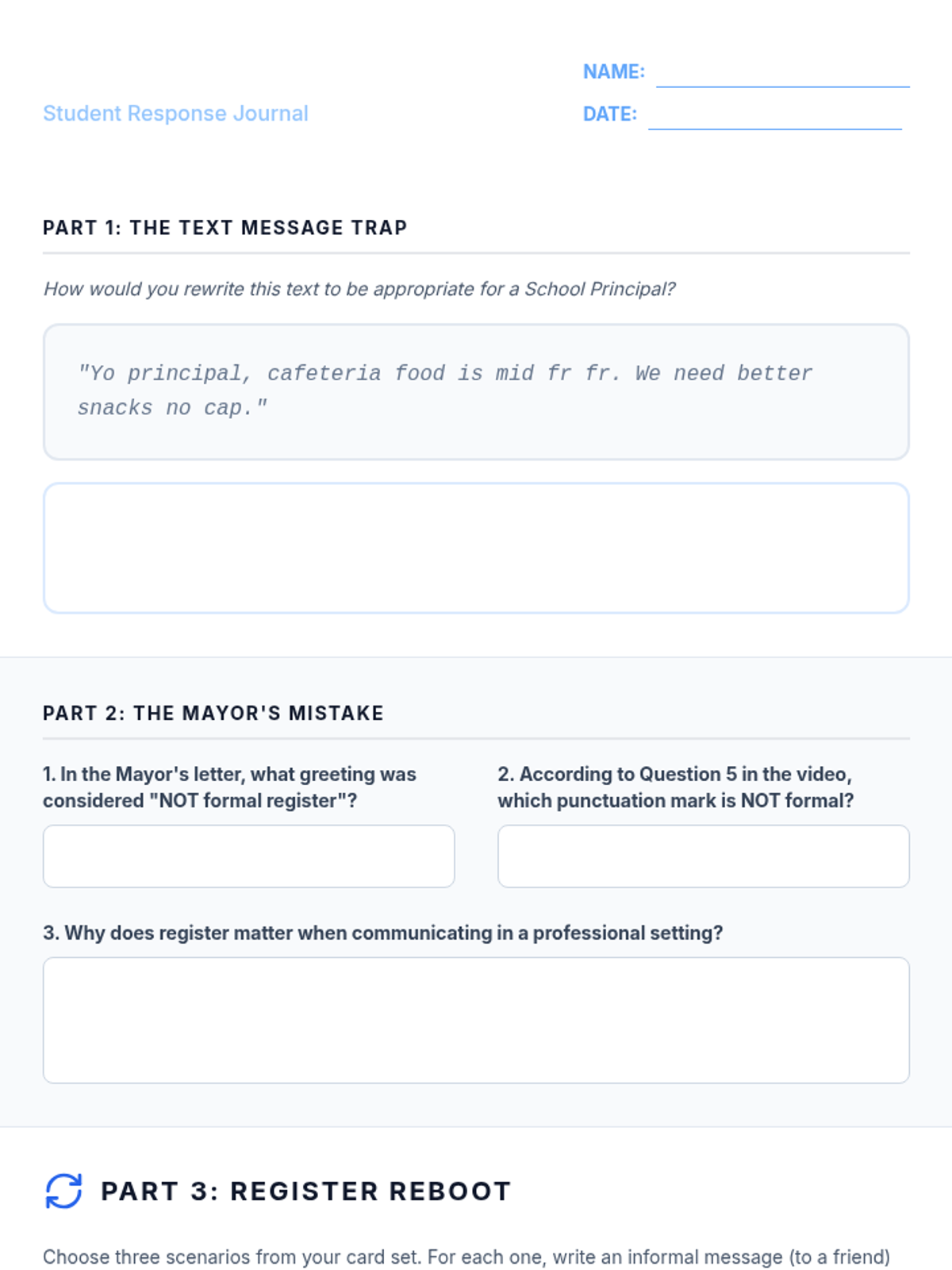
Students will explore the concept of communication register by analyzing a humorous error in a Mayor's letter and practicing 'rebooting' informal messages into professional, formal correspondence. The lesson includes a video-based discussion, a collaborative translation activity using scenario cards, and a comprehensive student worksheet.
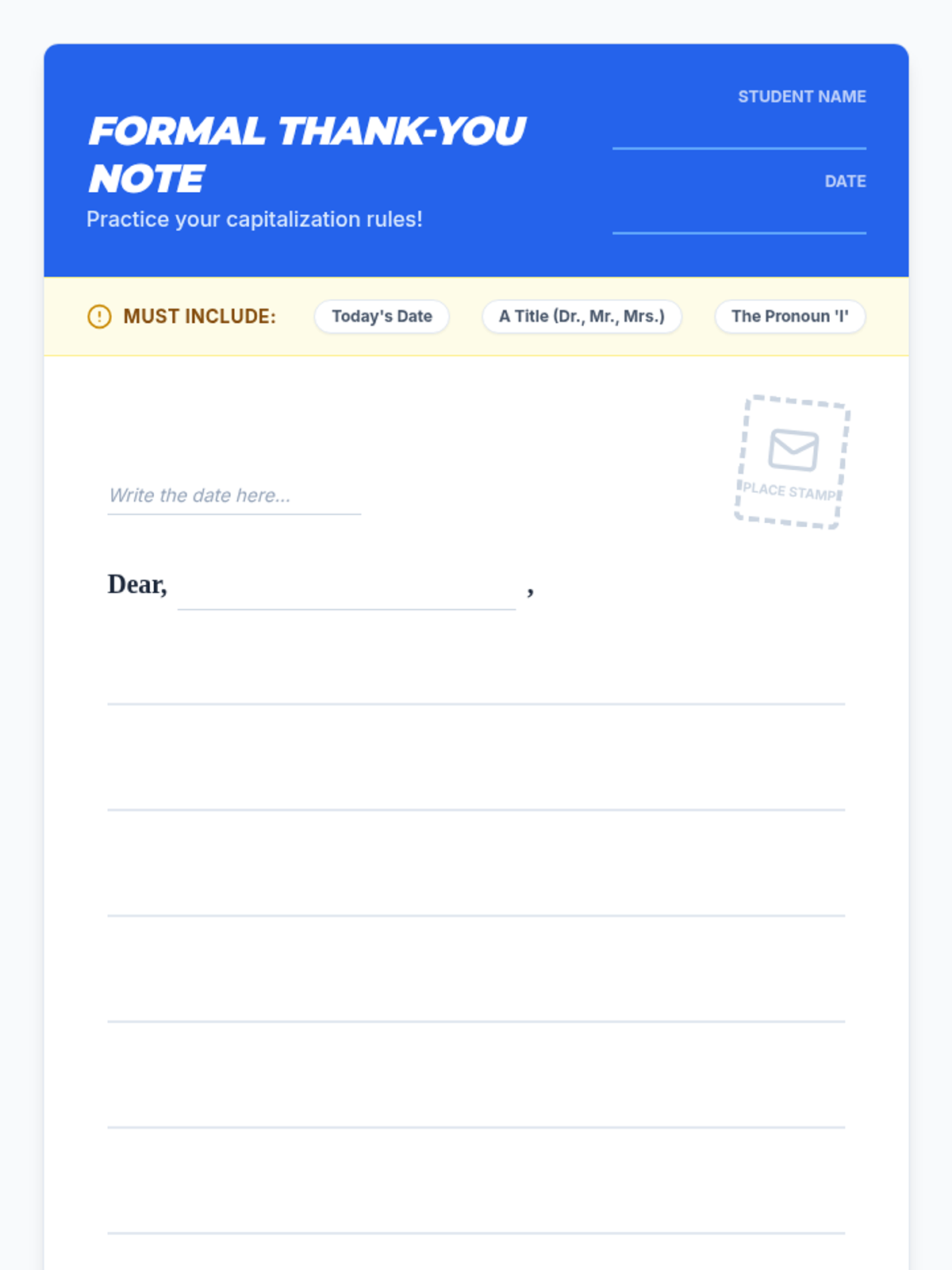
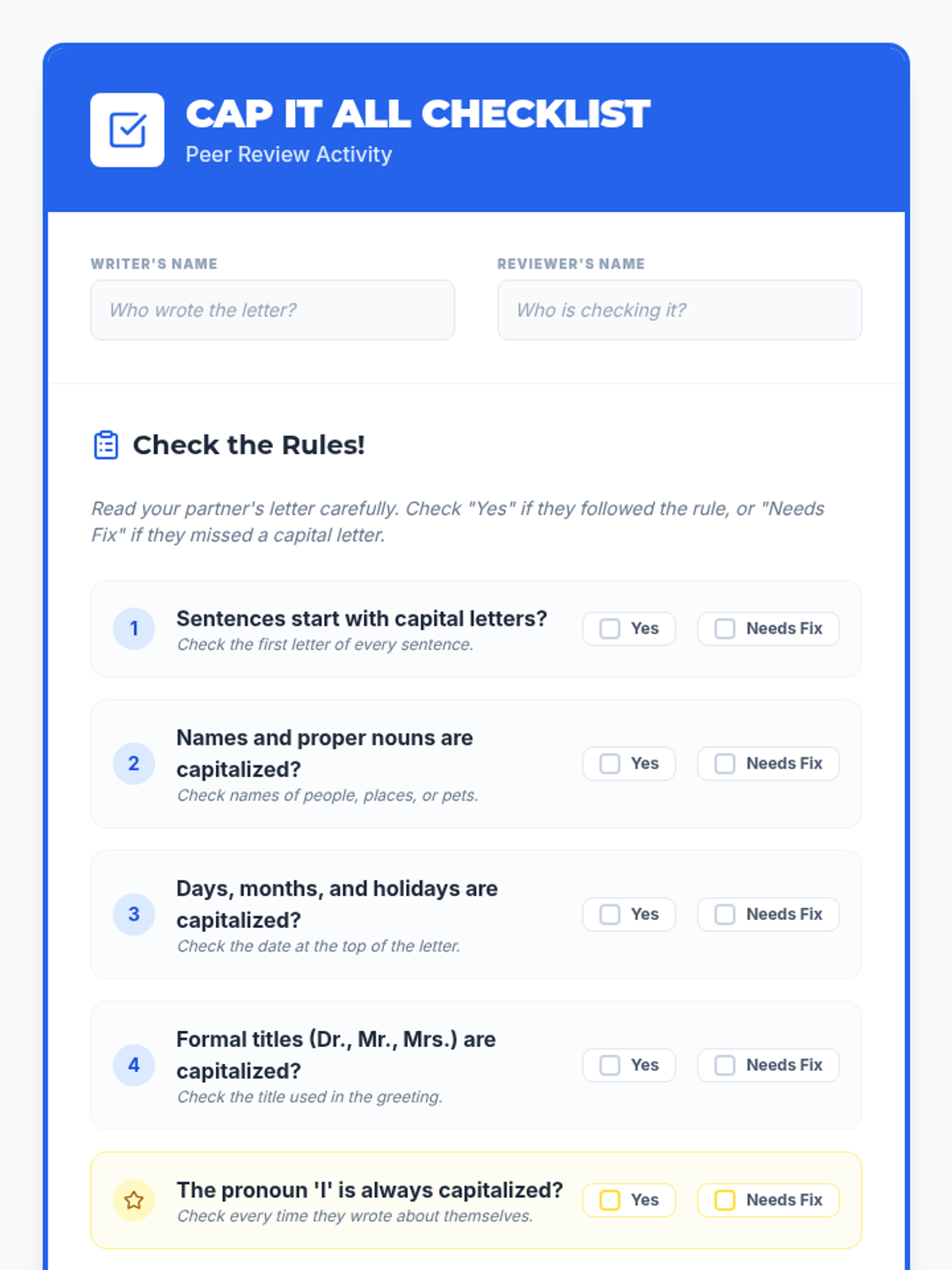
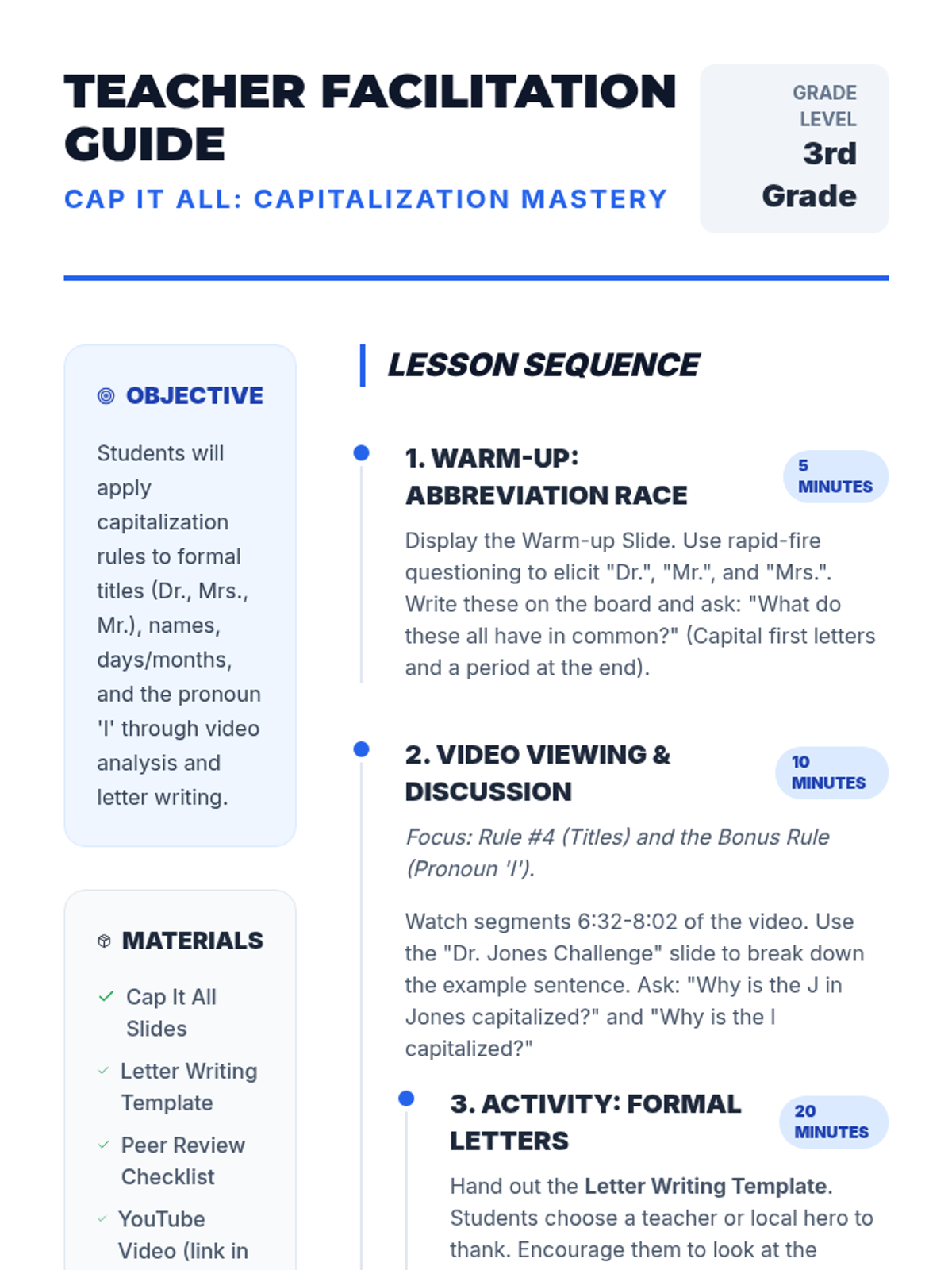
A grammar lesson for 3rd graders focused on mastering capitalization rules for titles (Dr., Mr., Mrs.) and the pronoun 'I' through video analysis and formal letter writing.
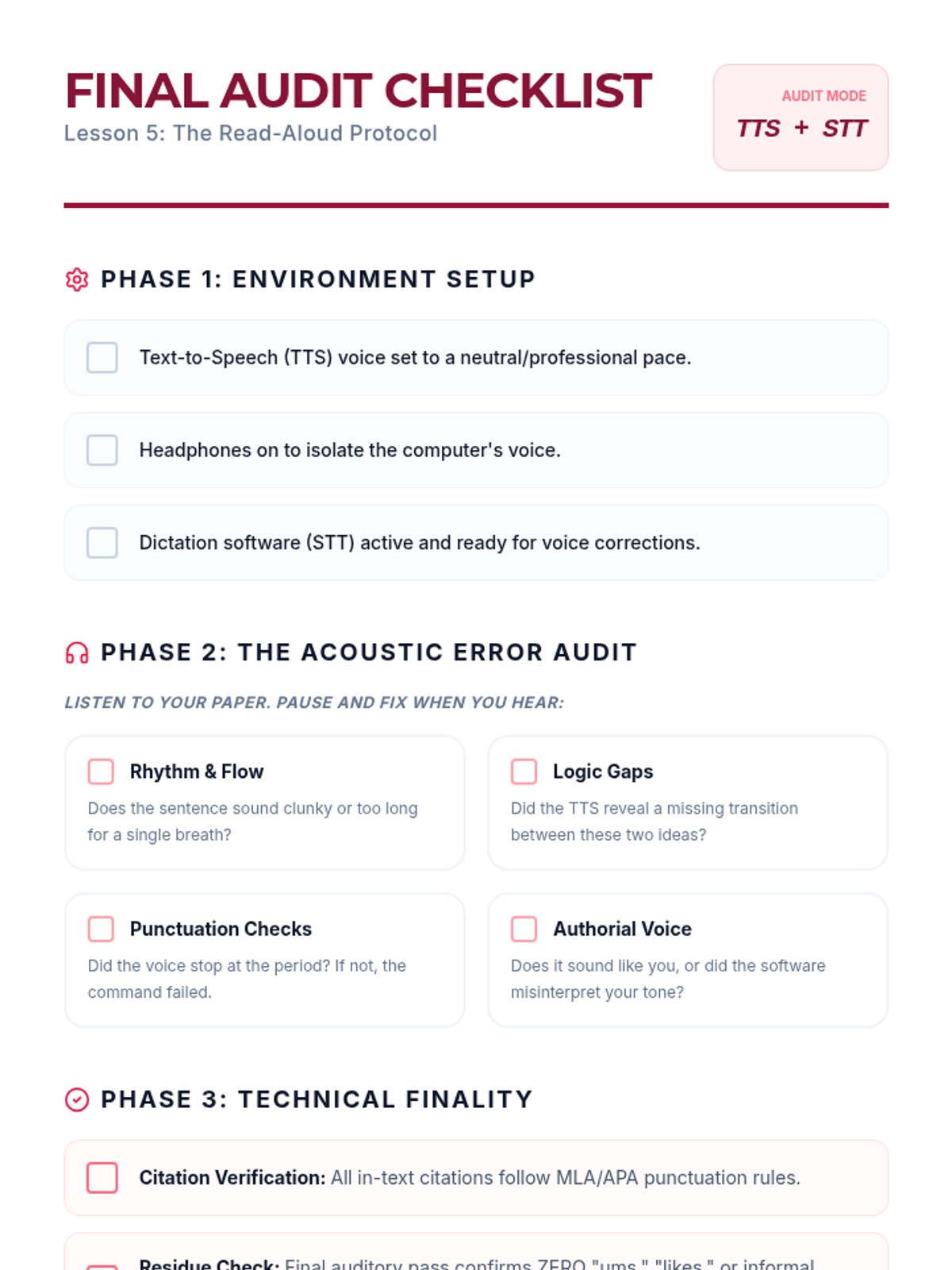
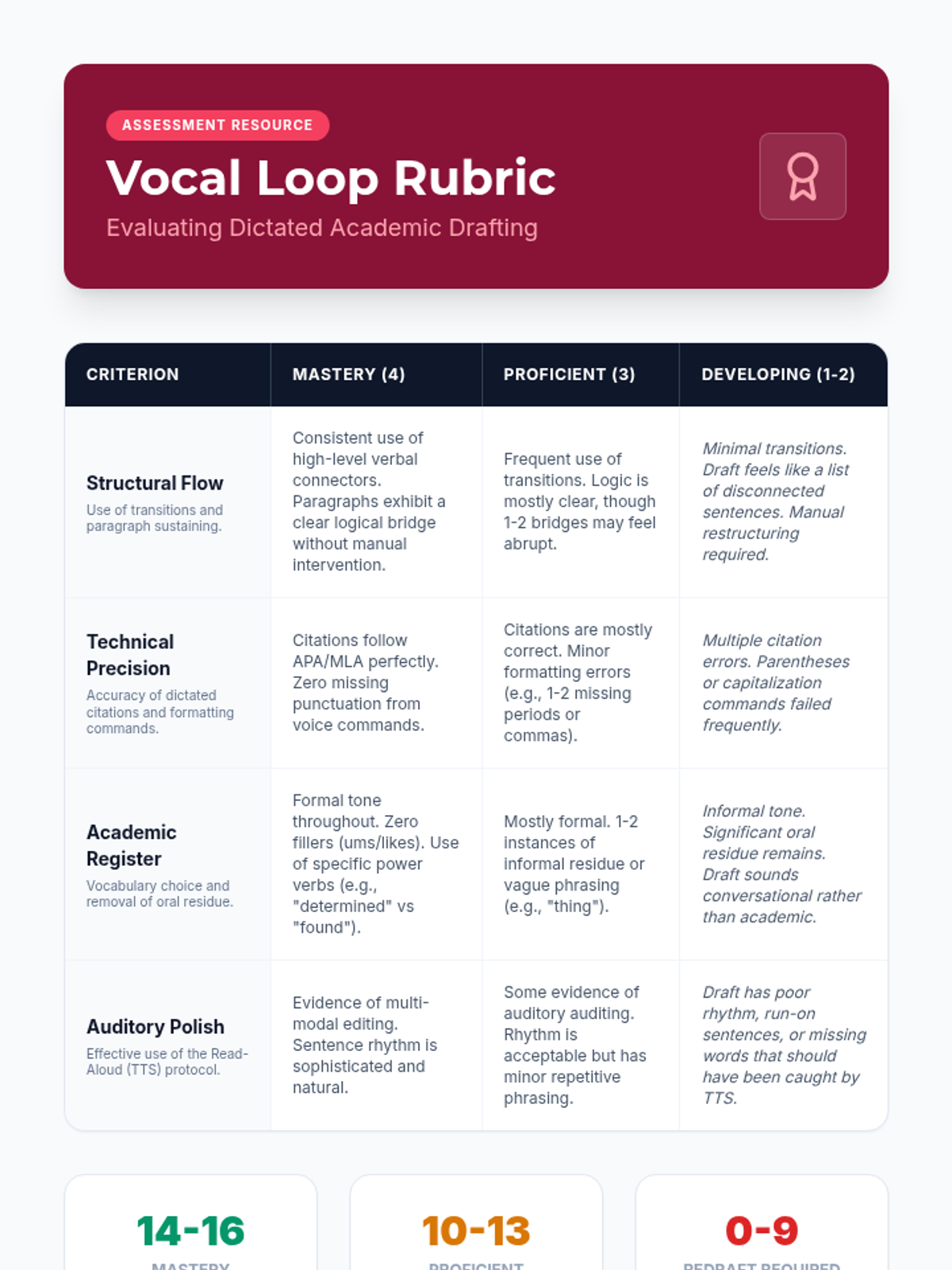
Students use text-to-speech (TTS) to audit their papers, identifying rhythm errors and using voice commands to complete the final auditory polish.
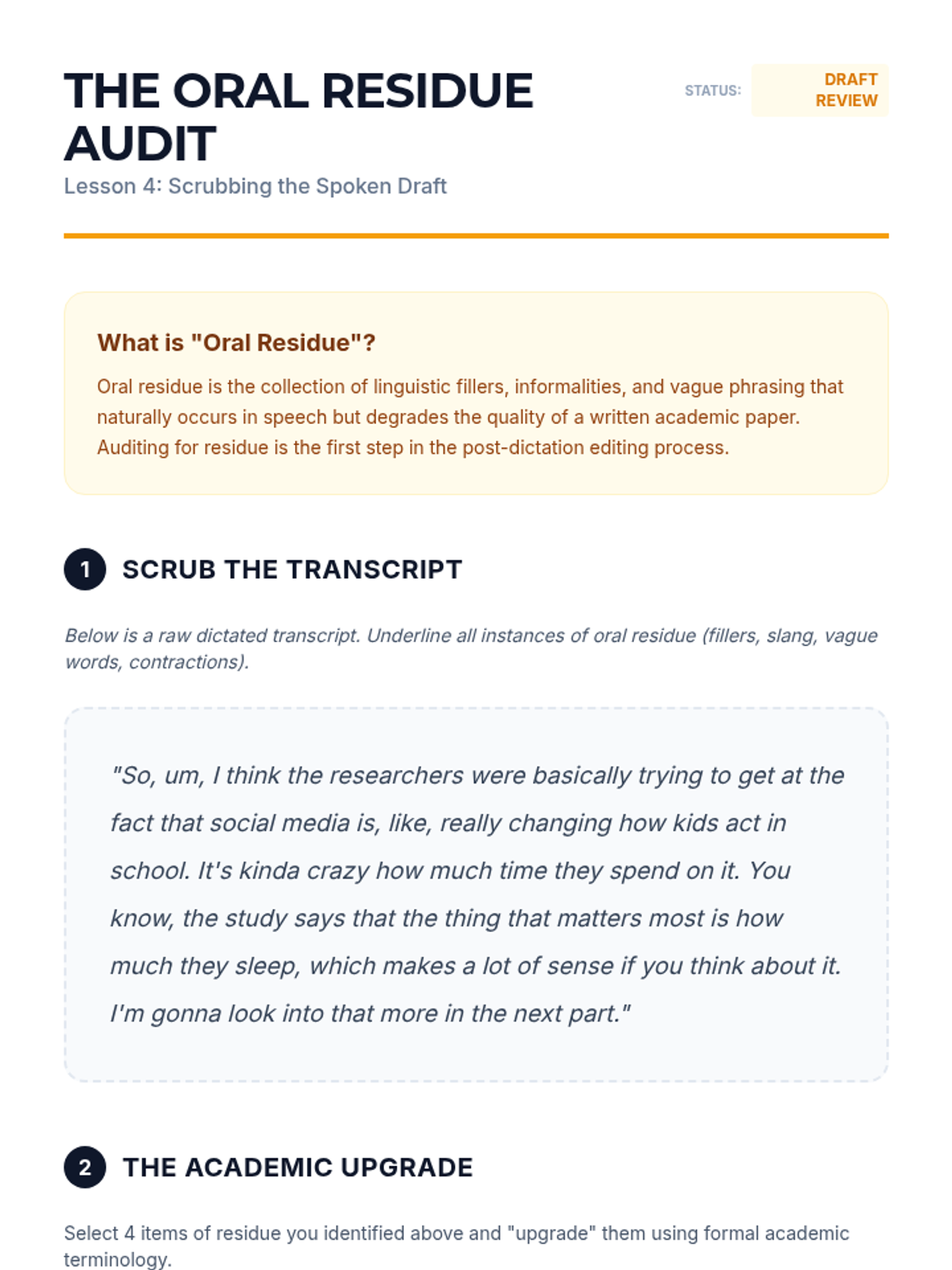
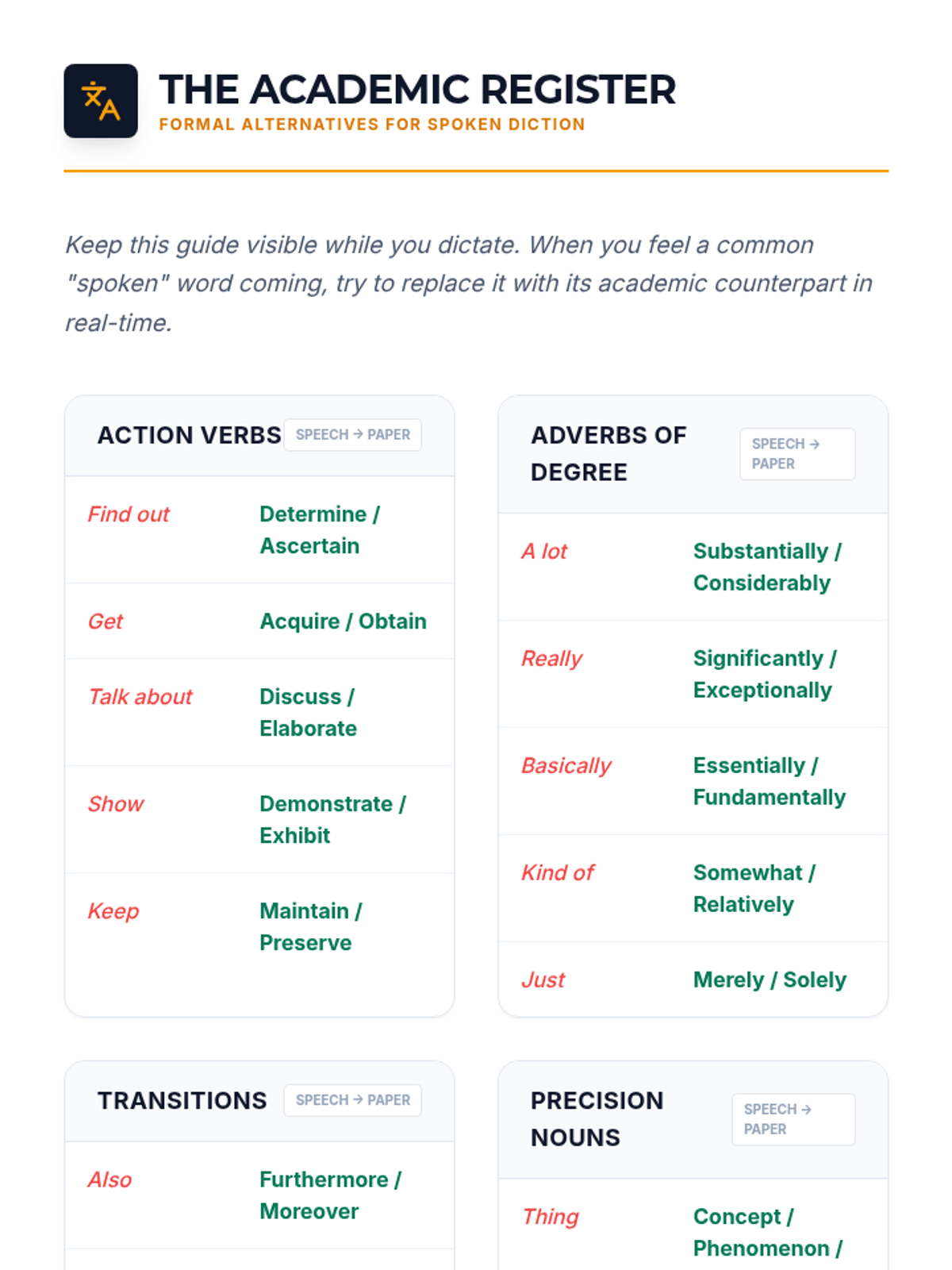
Explores how to elevate spoken language to meet academic standards by replacing colloquialisms and 'oral residue' with formal terminology.
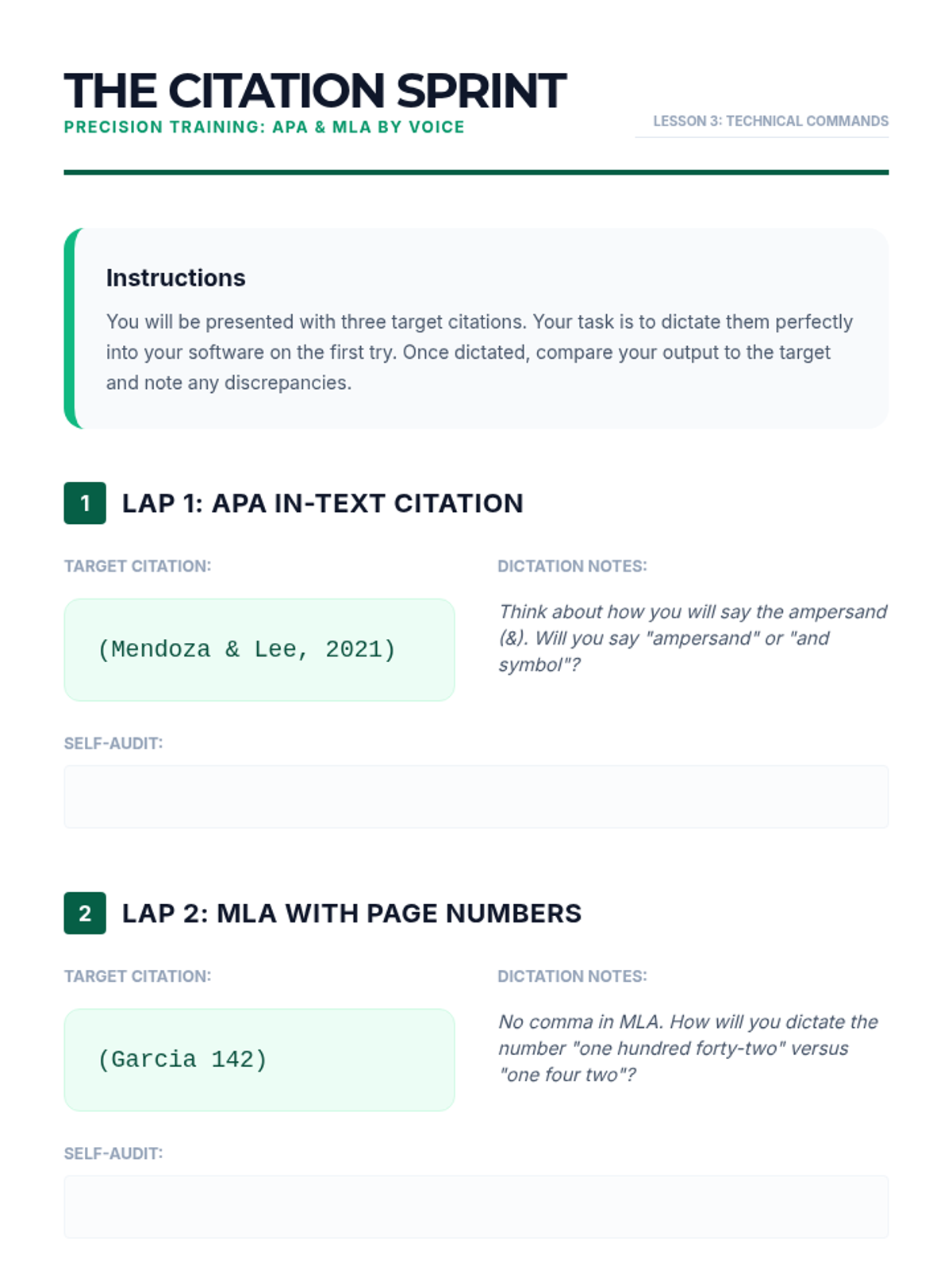
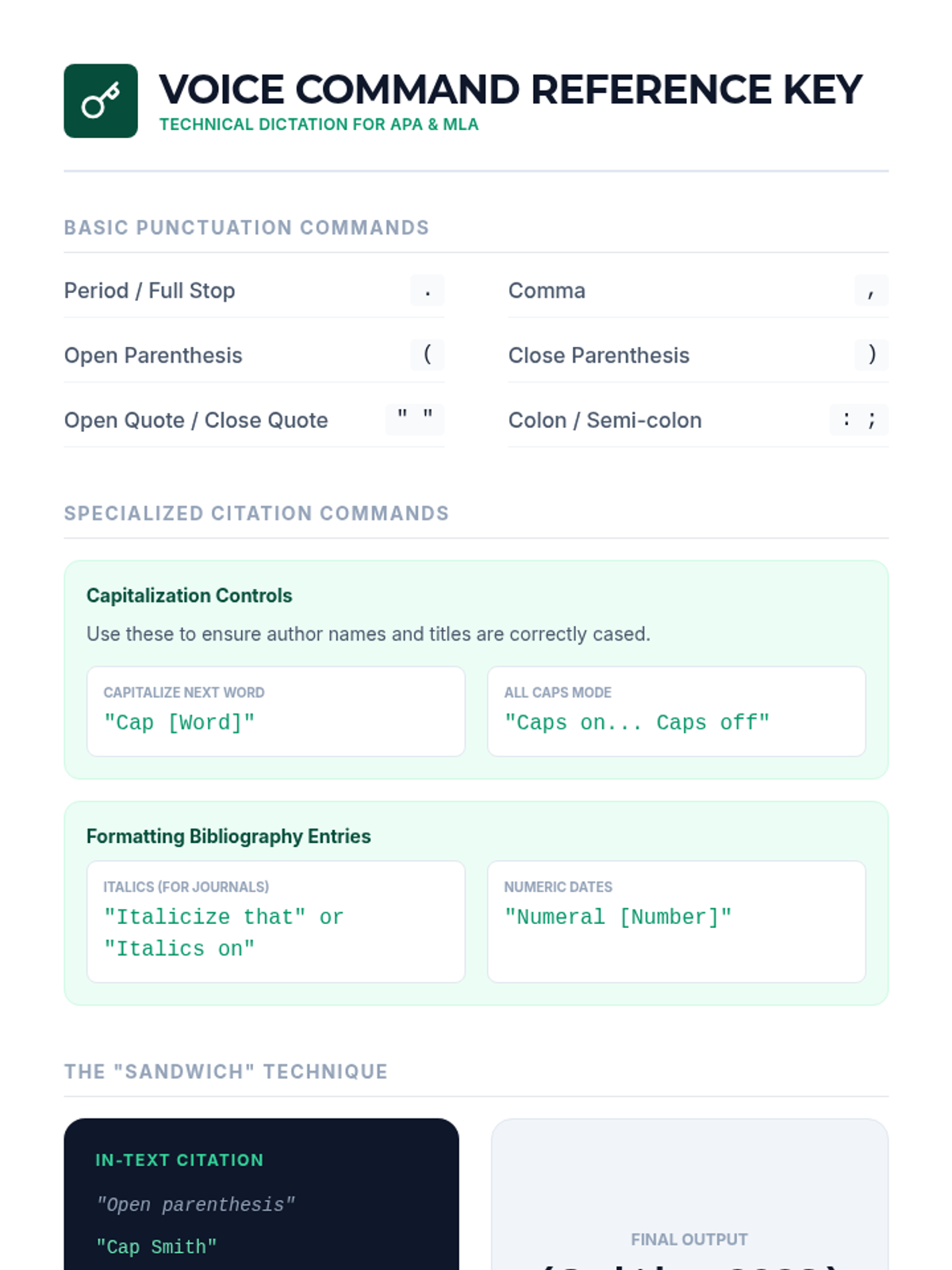
Students practice the specific challenge of inserting academic citations (APA/MLA) via voice, mastering alphanumeric commands and punctuation.
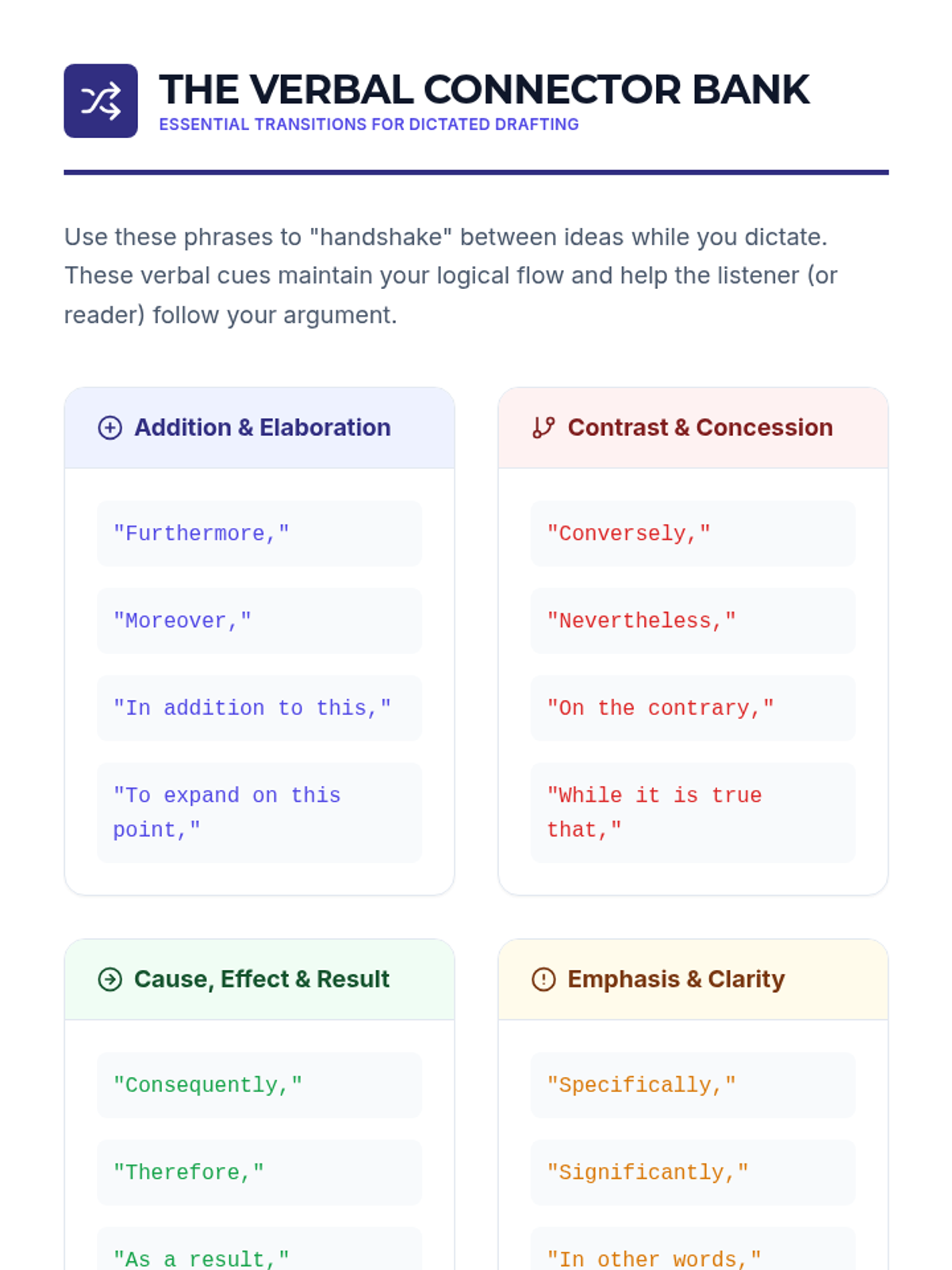
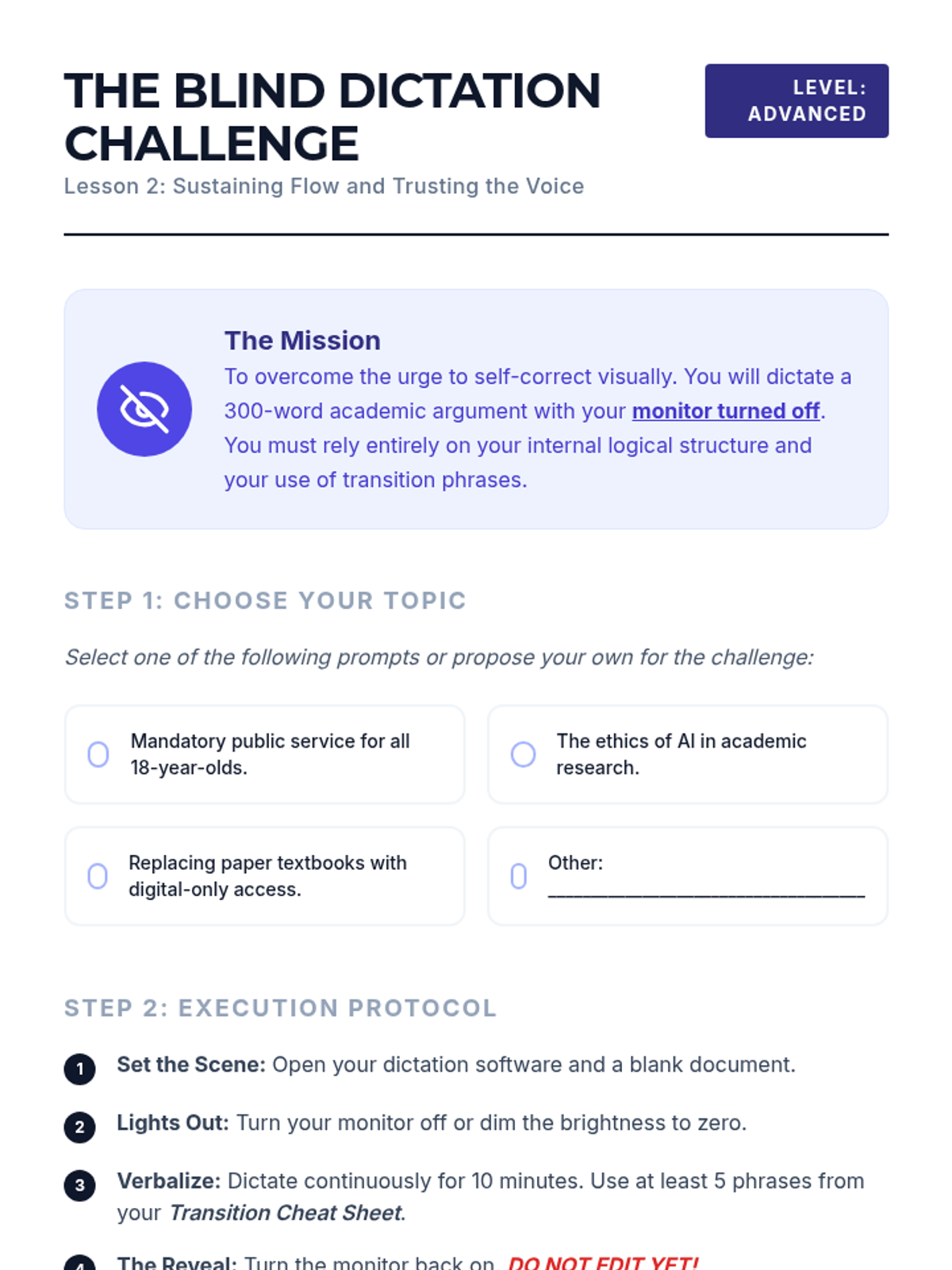
Focuses on sustaining long-form dictation. Students learn techniques to speak complete paragraphs and use transitional phrases to maintain a coherent line of reasoning.
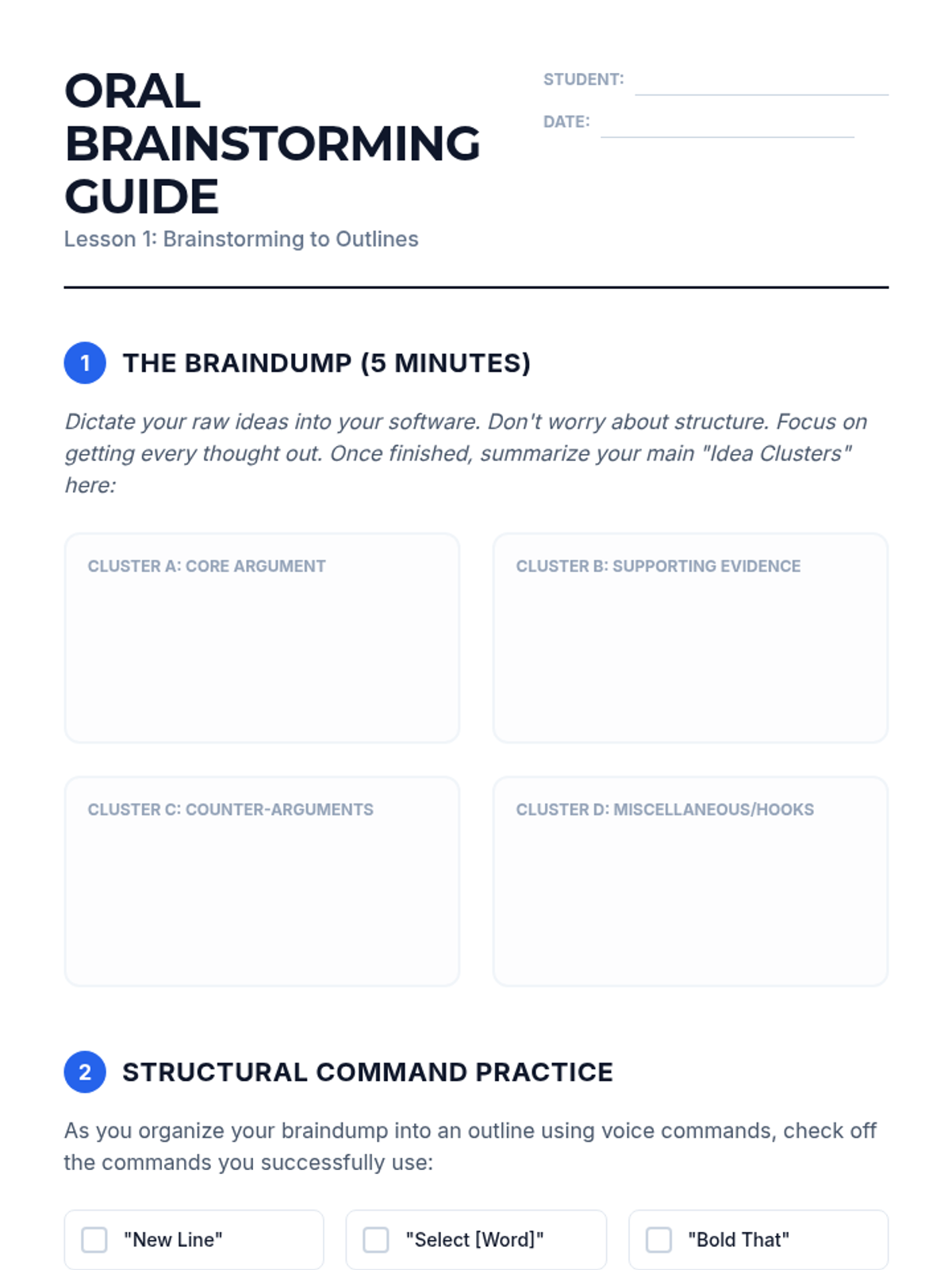
Students use dictation software to capture ideas and then use voice commands to organize those points into a structured outline, separating idea generation from structural formatting.
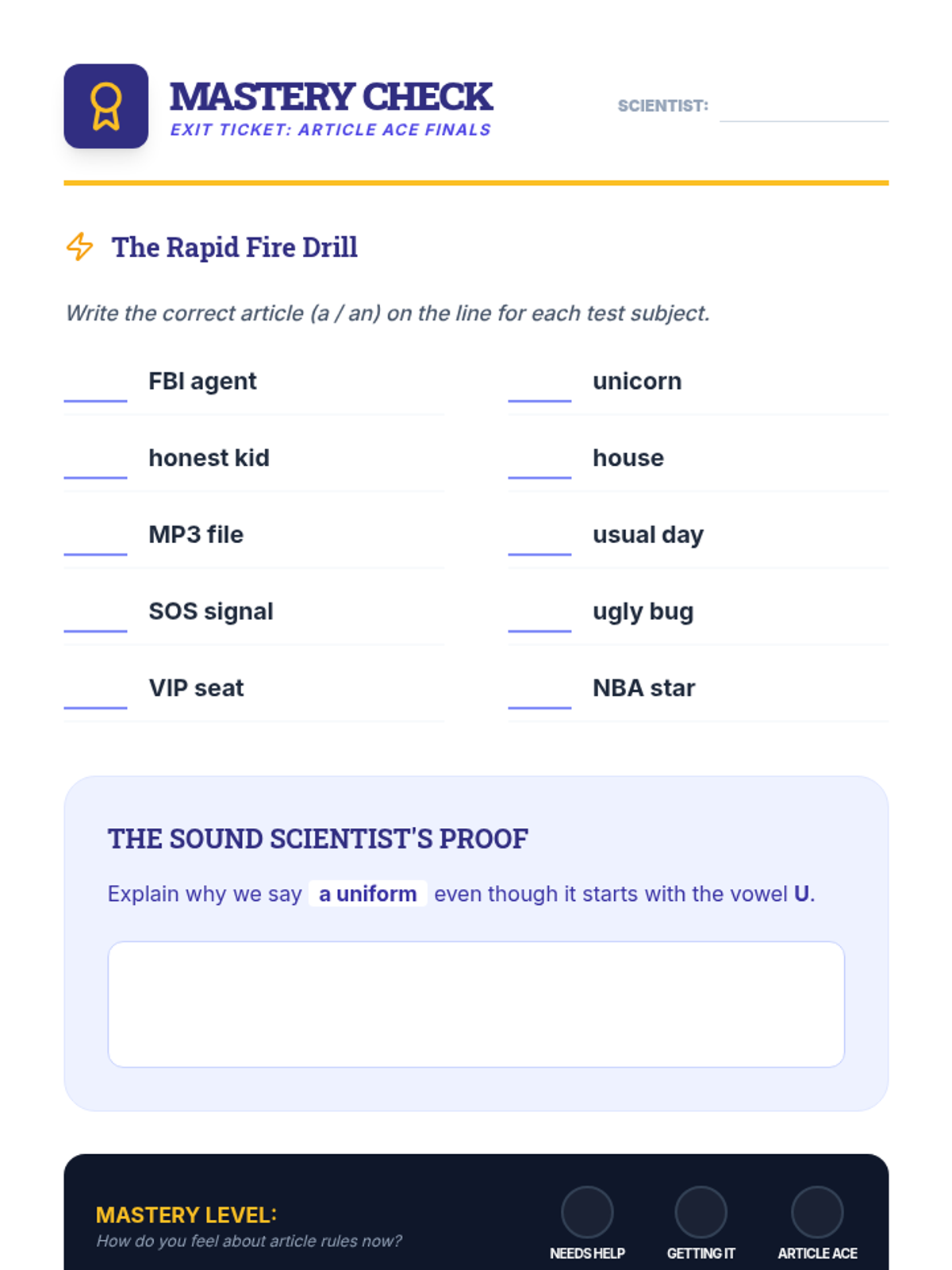
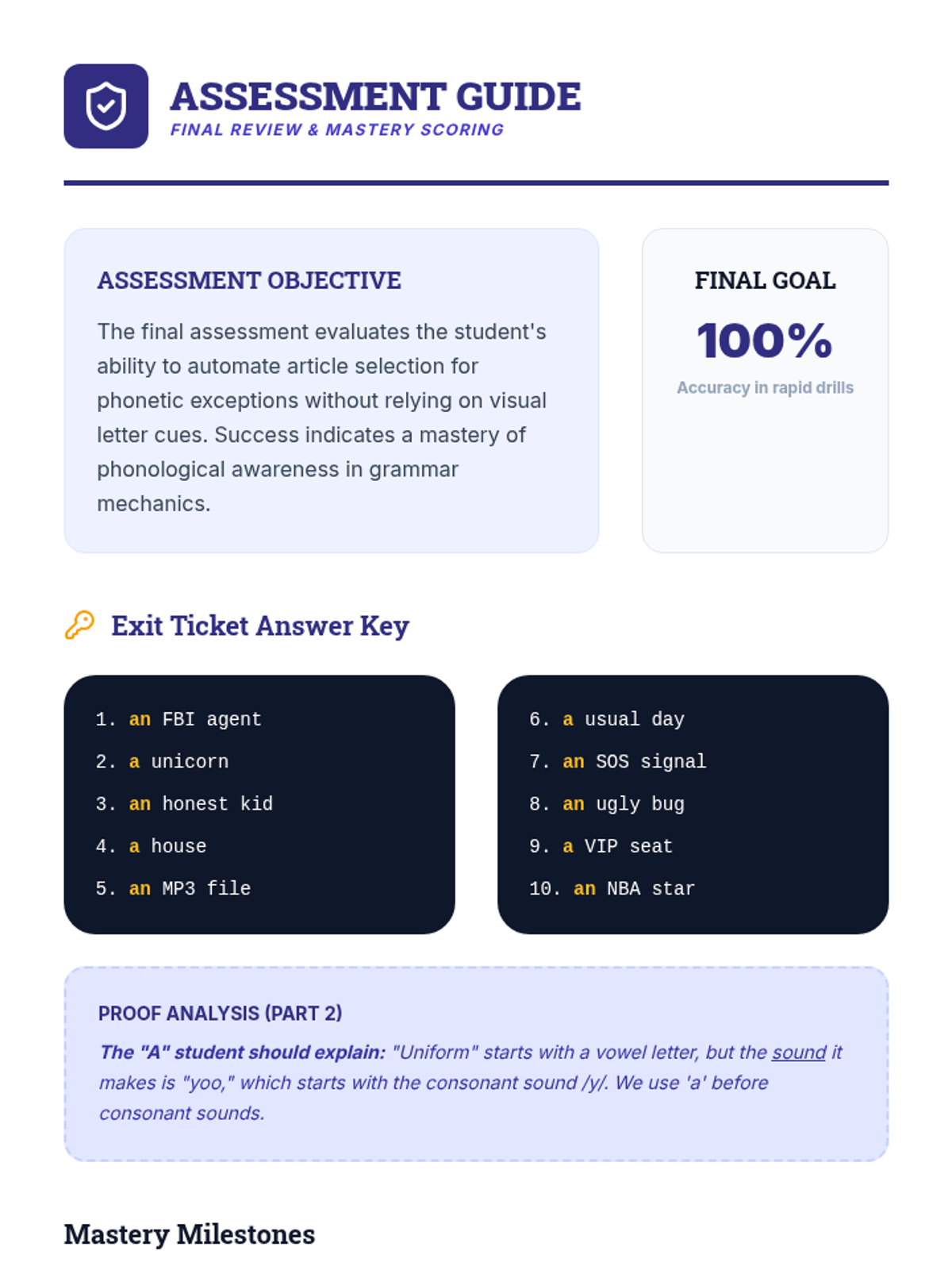
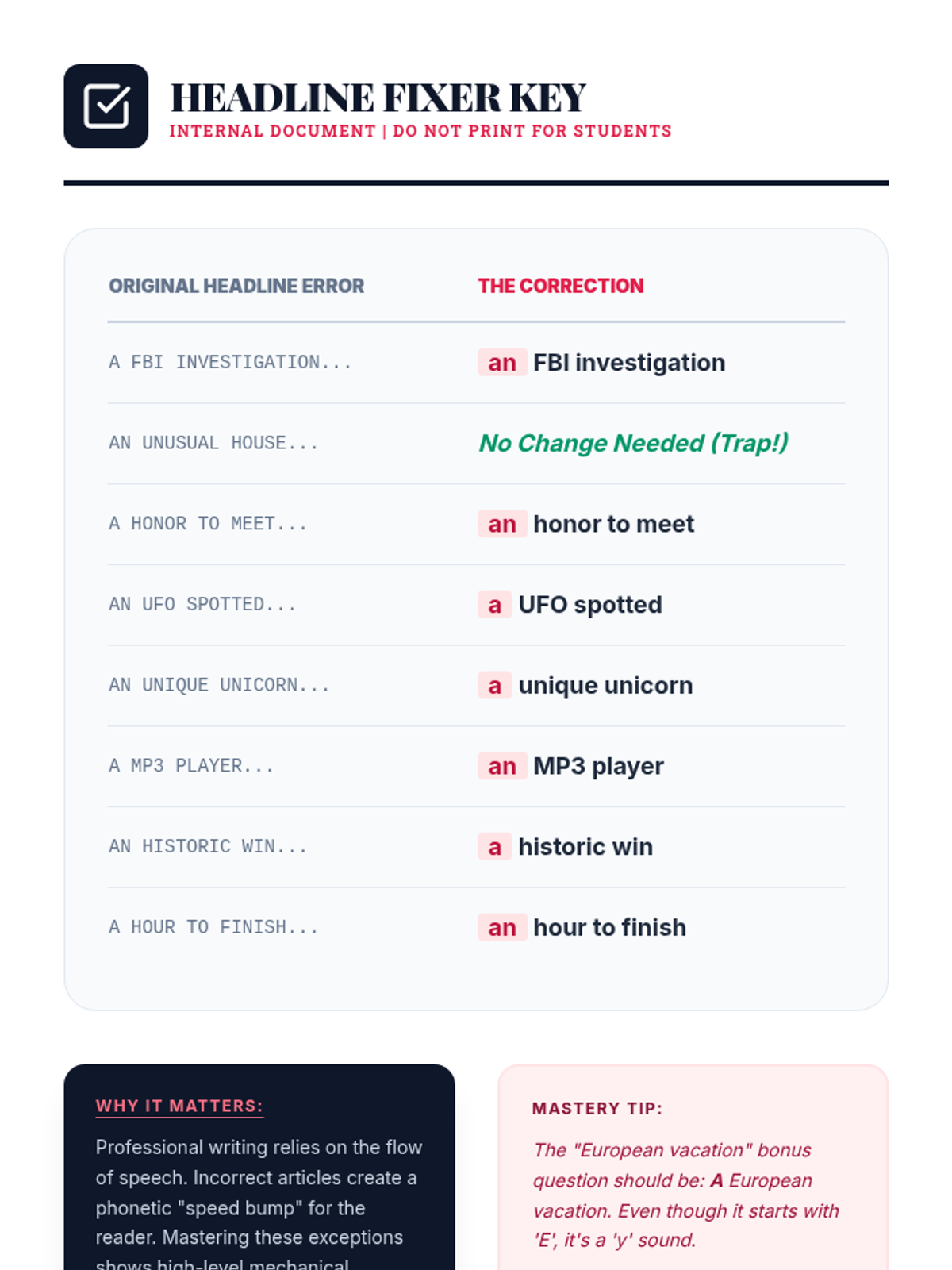
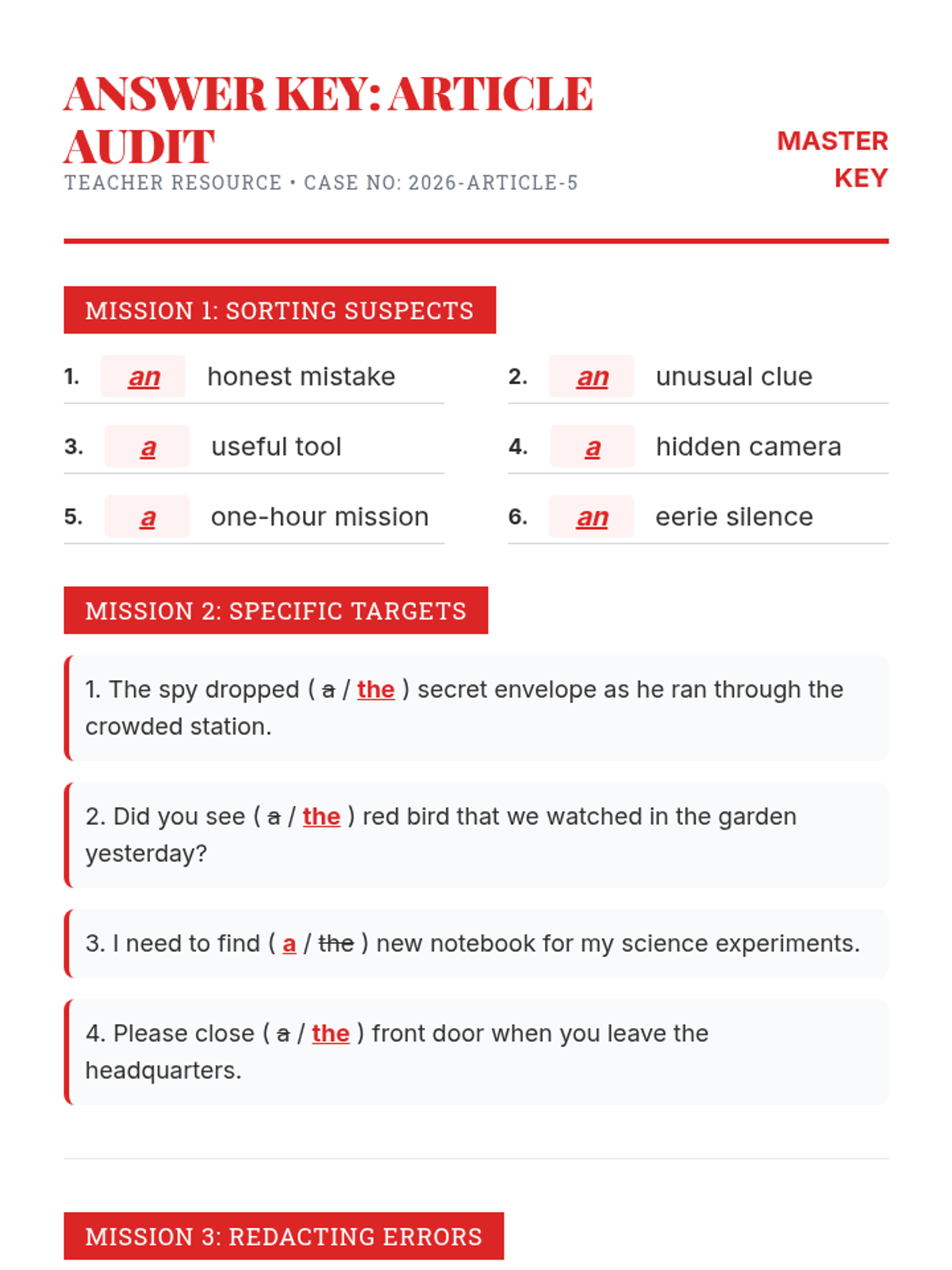
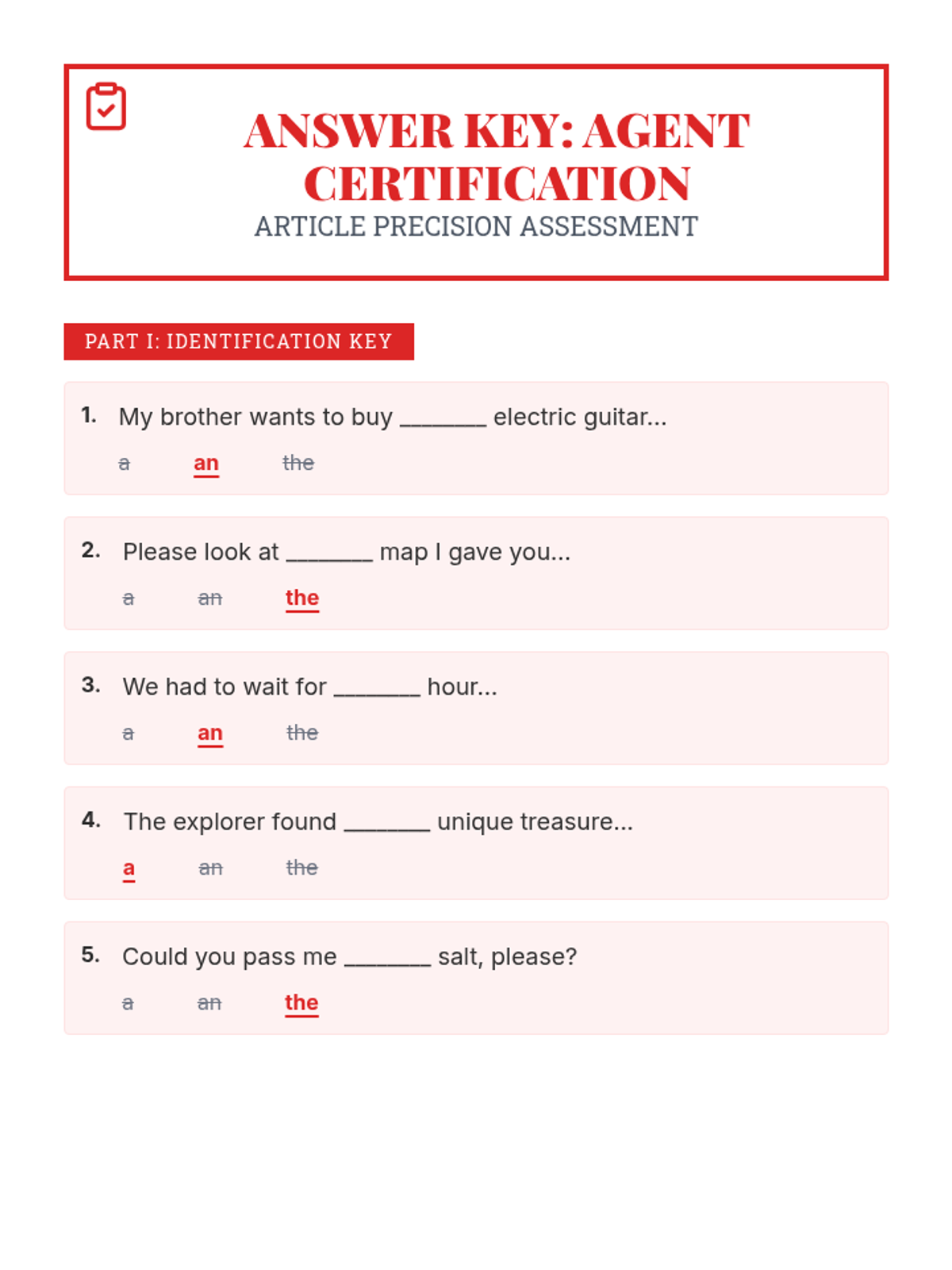
A mastery-based final assessment using a game-show format to test speed and accuracy in applying article rules to complex cases.
Students act as copy editors to find and correct mechanical errors related to vowel sounds and phonetic exceptions in articles.
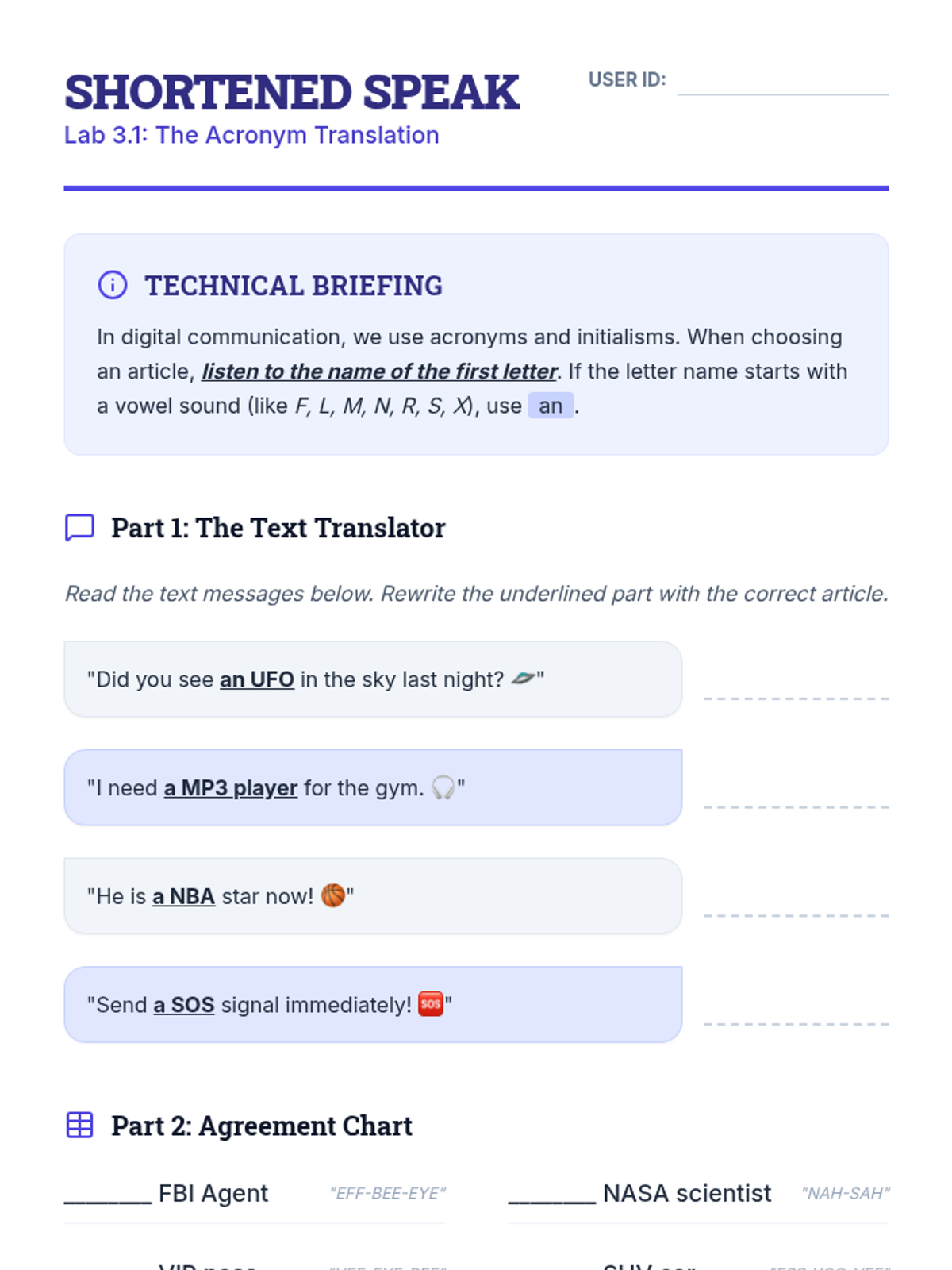
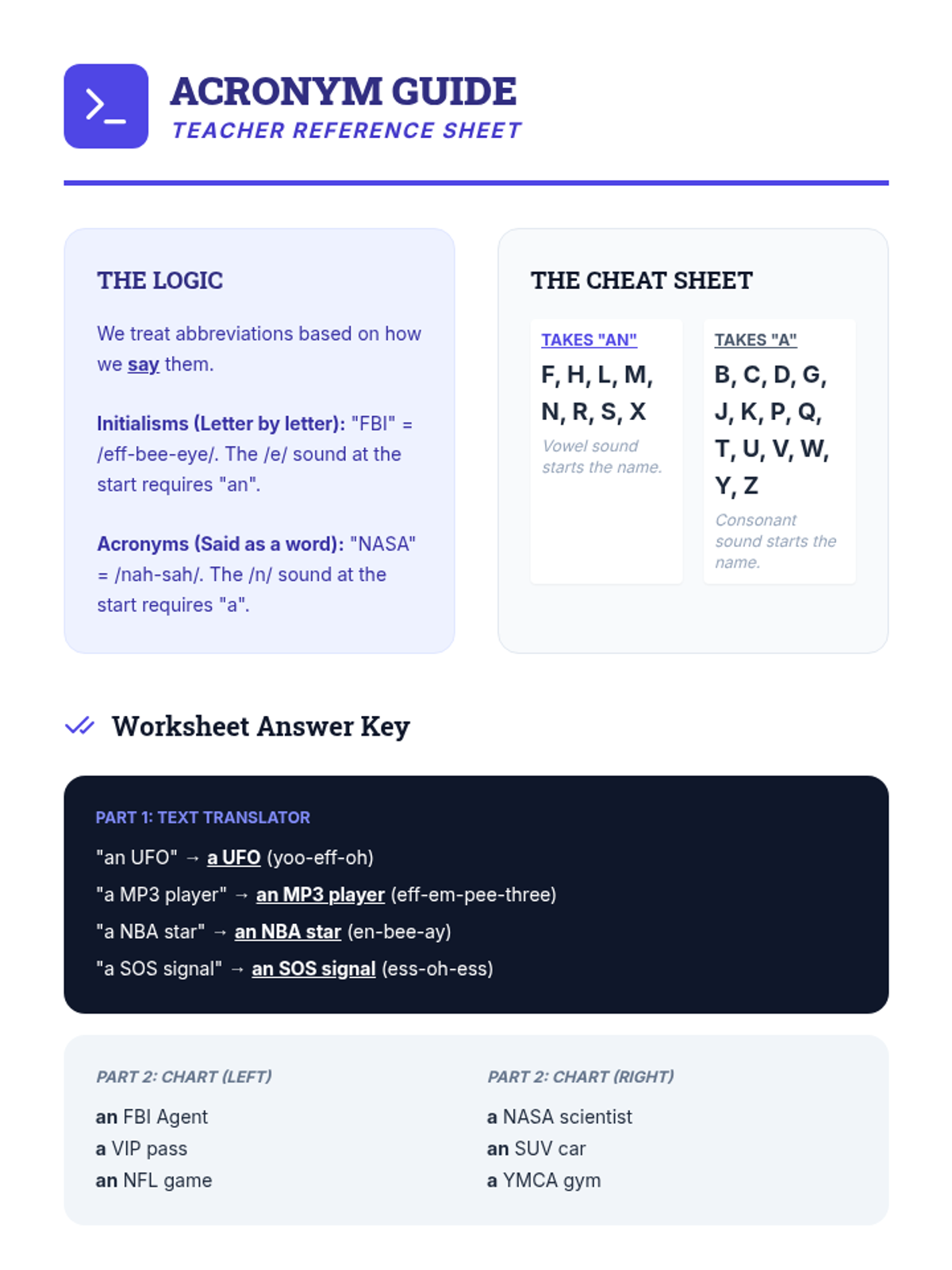
Students learn to apply article rules to abbreviations and acronyms based on their spoken sound rather than their written letters.
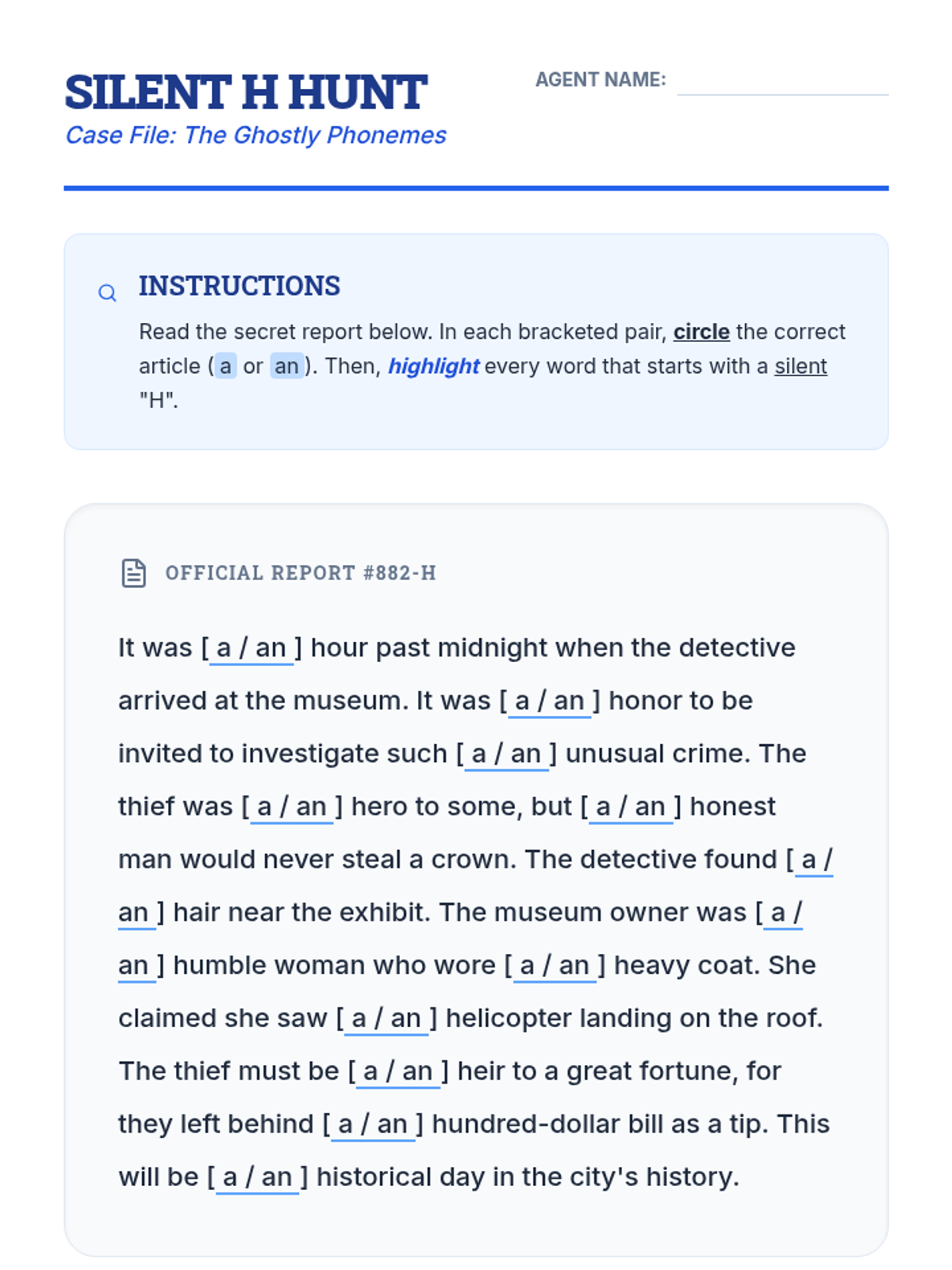
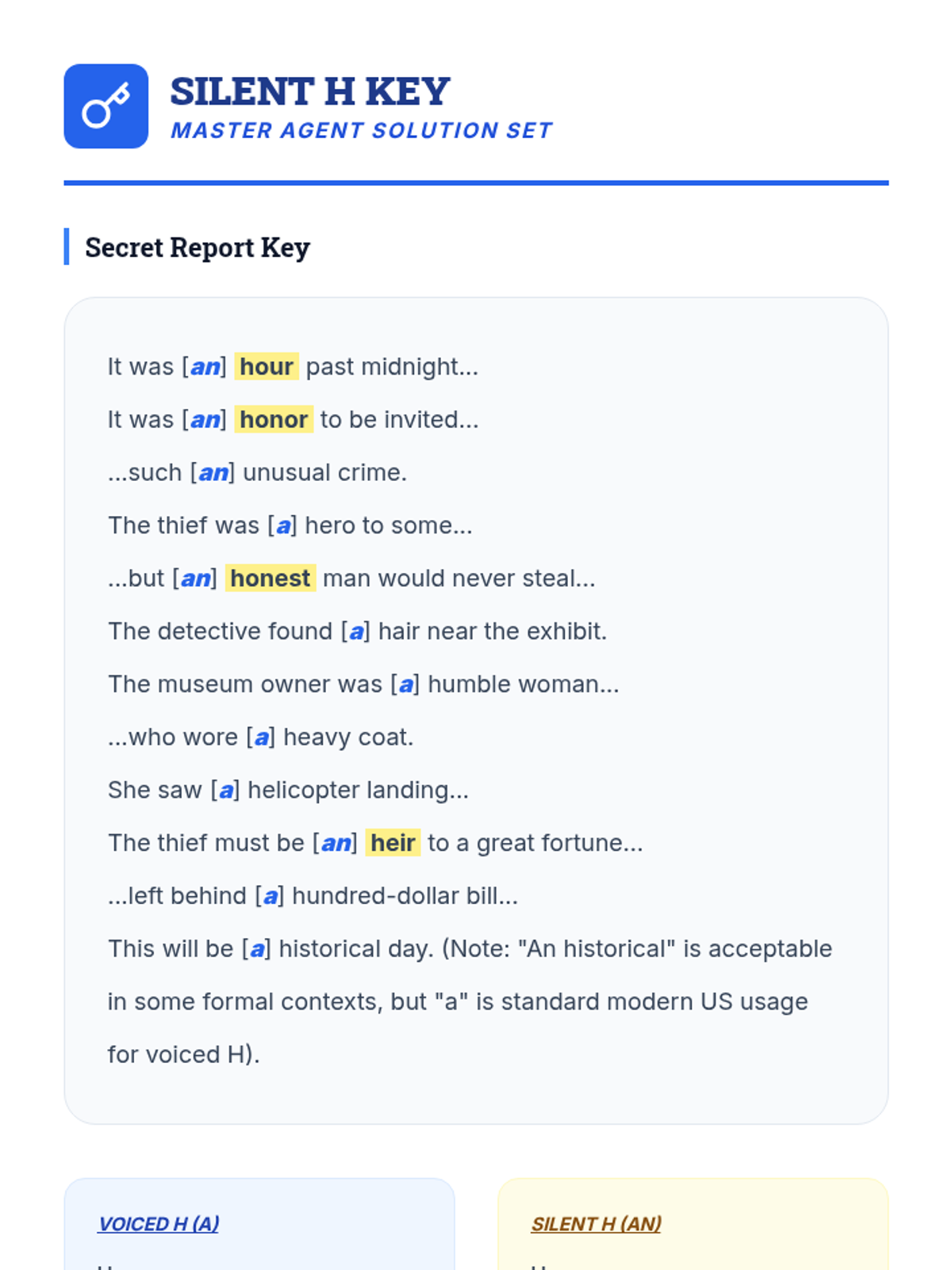
Focusing on the 'h' exception, students practice identifying when 'h' is silent versus voiced to correctly apply 'a' or 'an'.
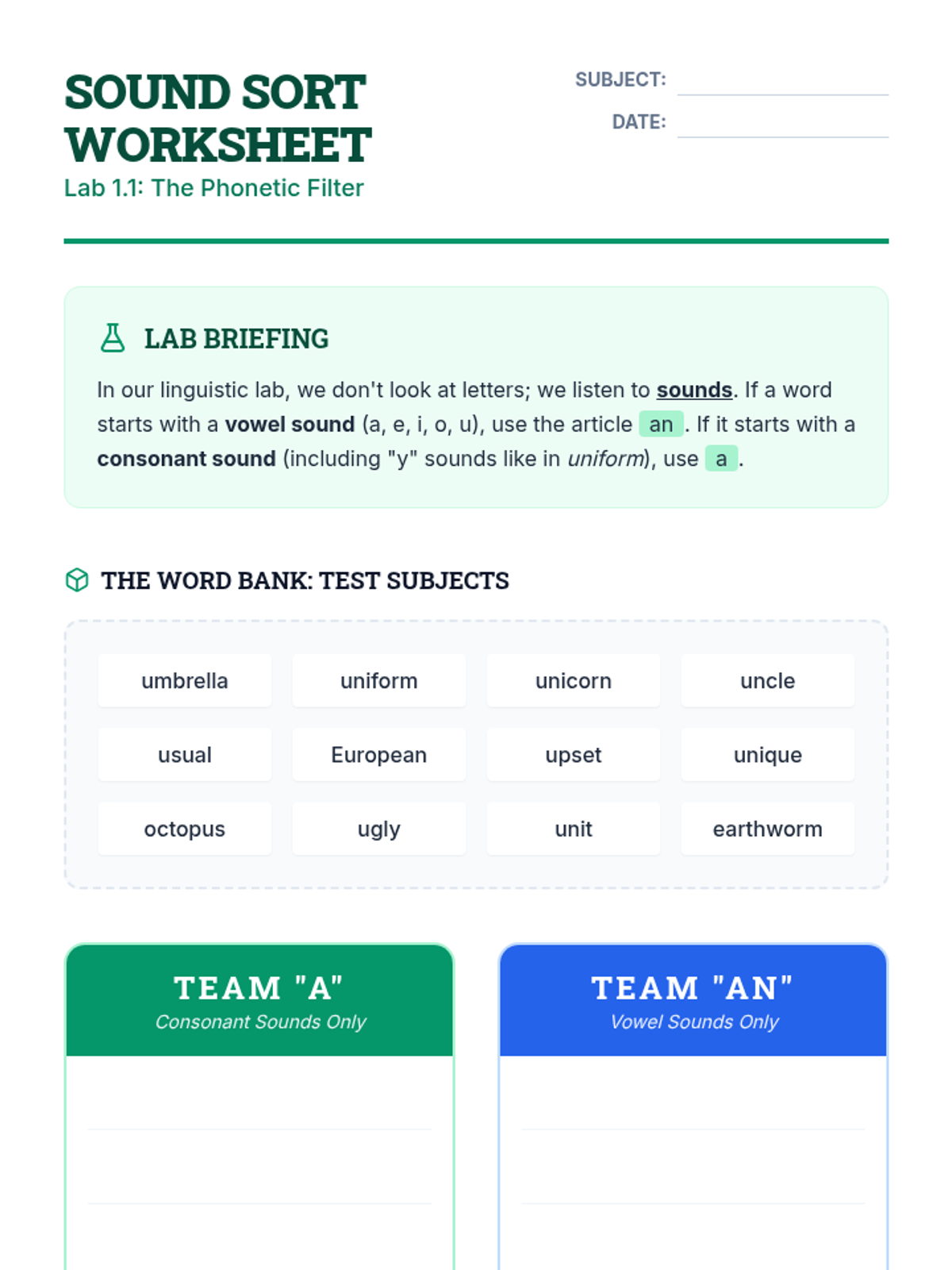
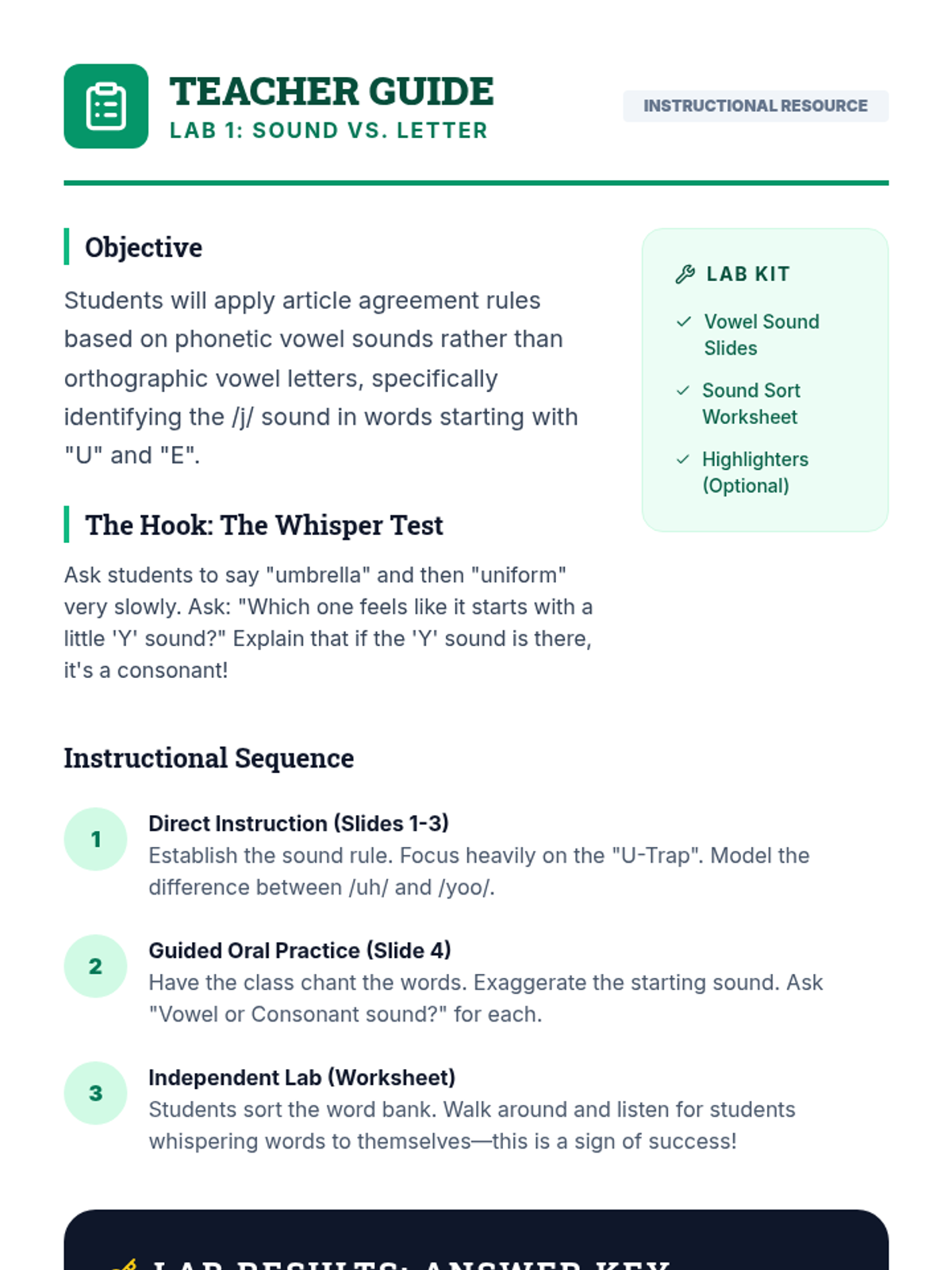
Students distinguish between vowel letters and vowel sounds to master the 'a' vs 'an' choice for tricky words like 'uniform' and 'umbrella'.
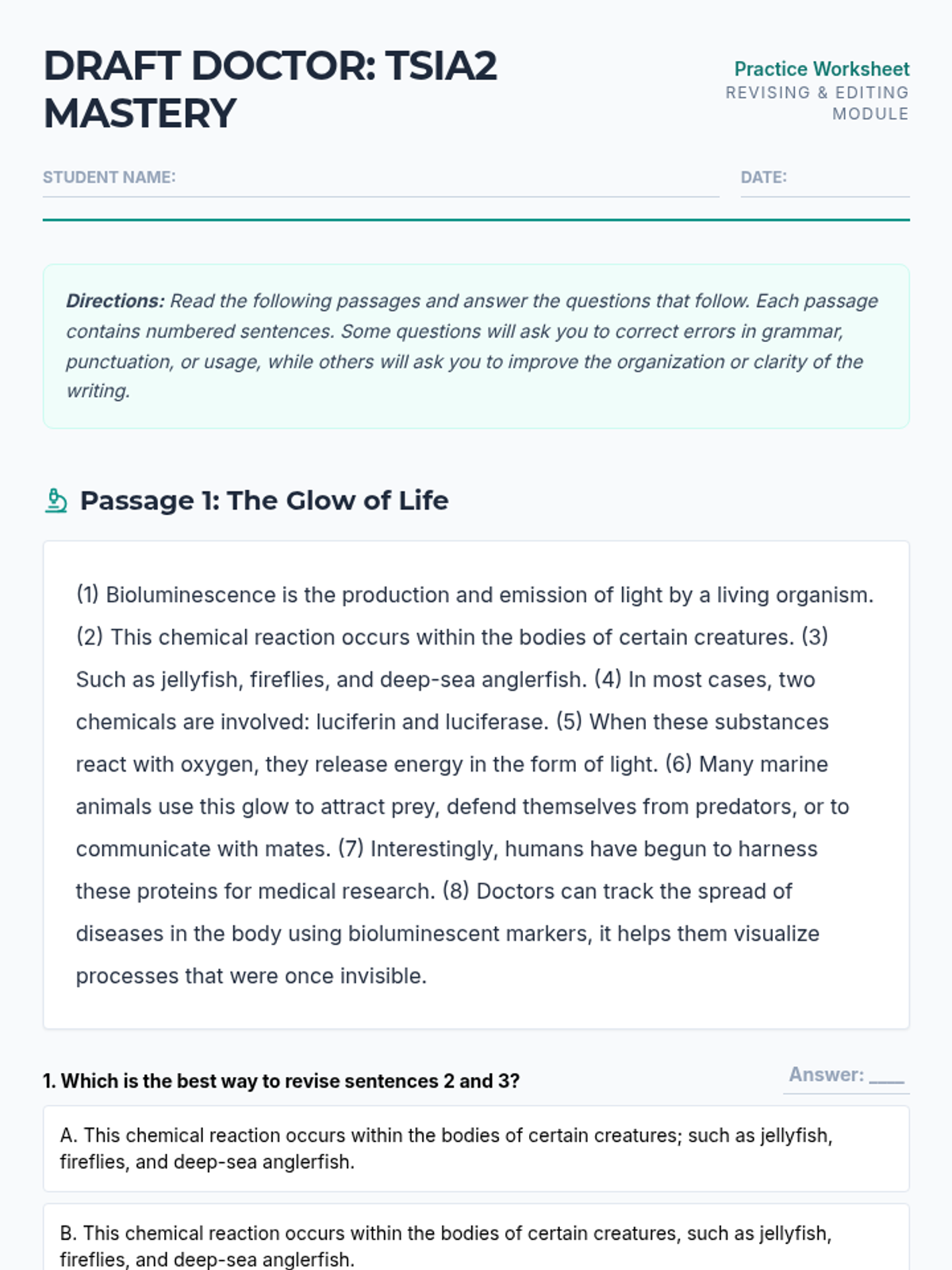
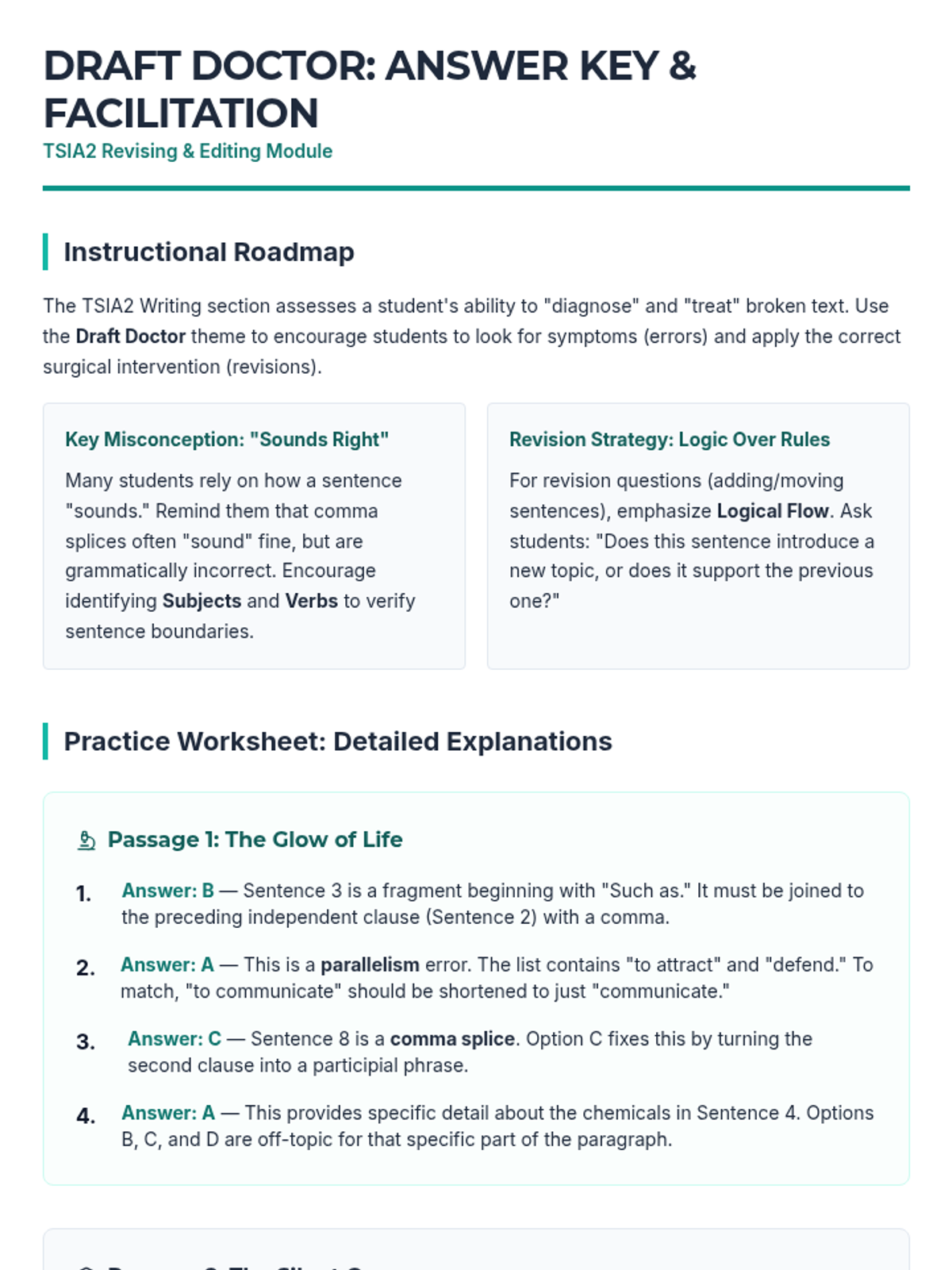
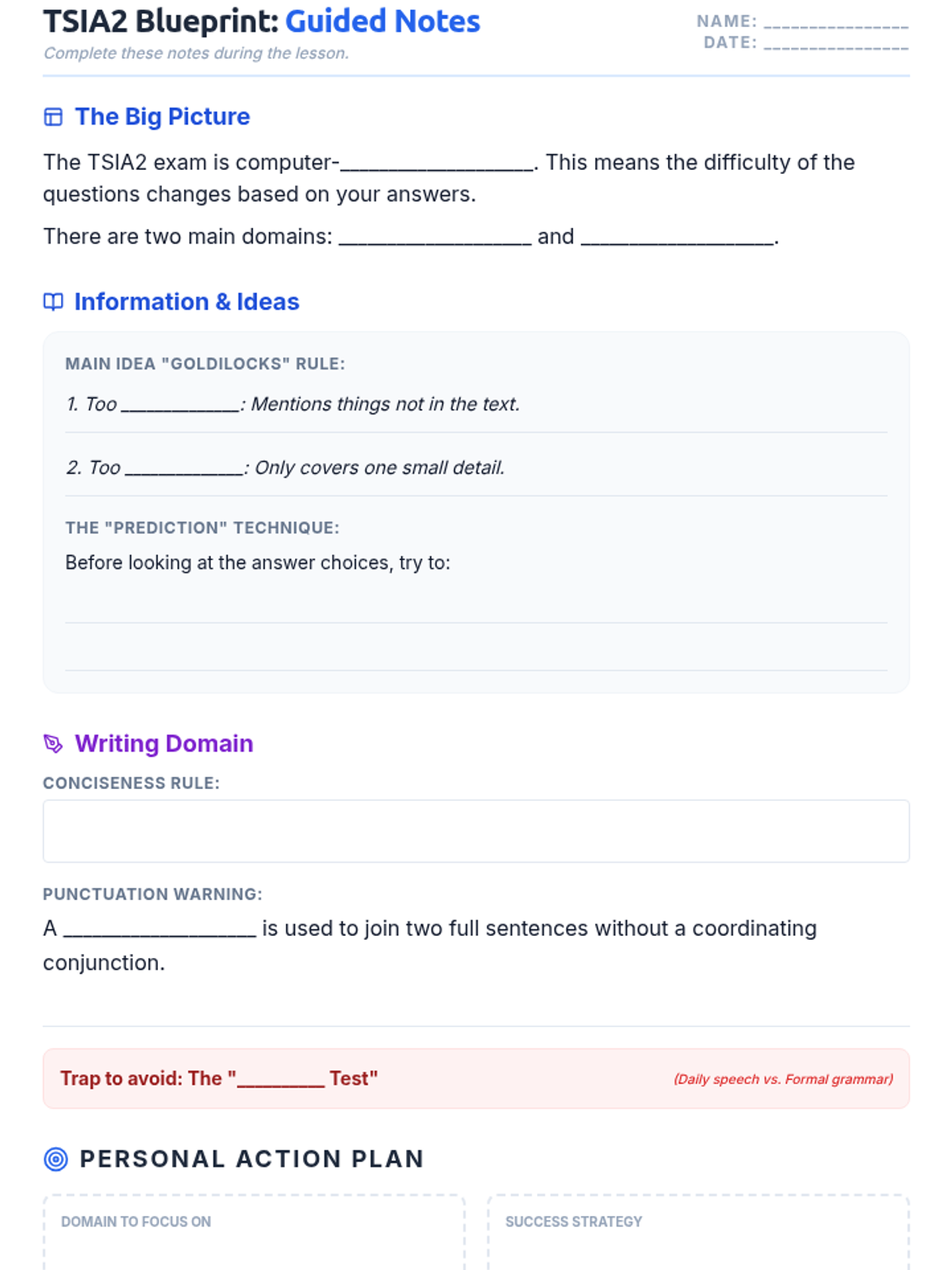
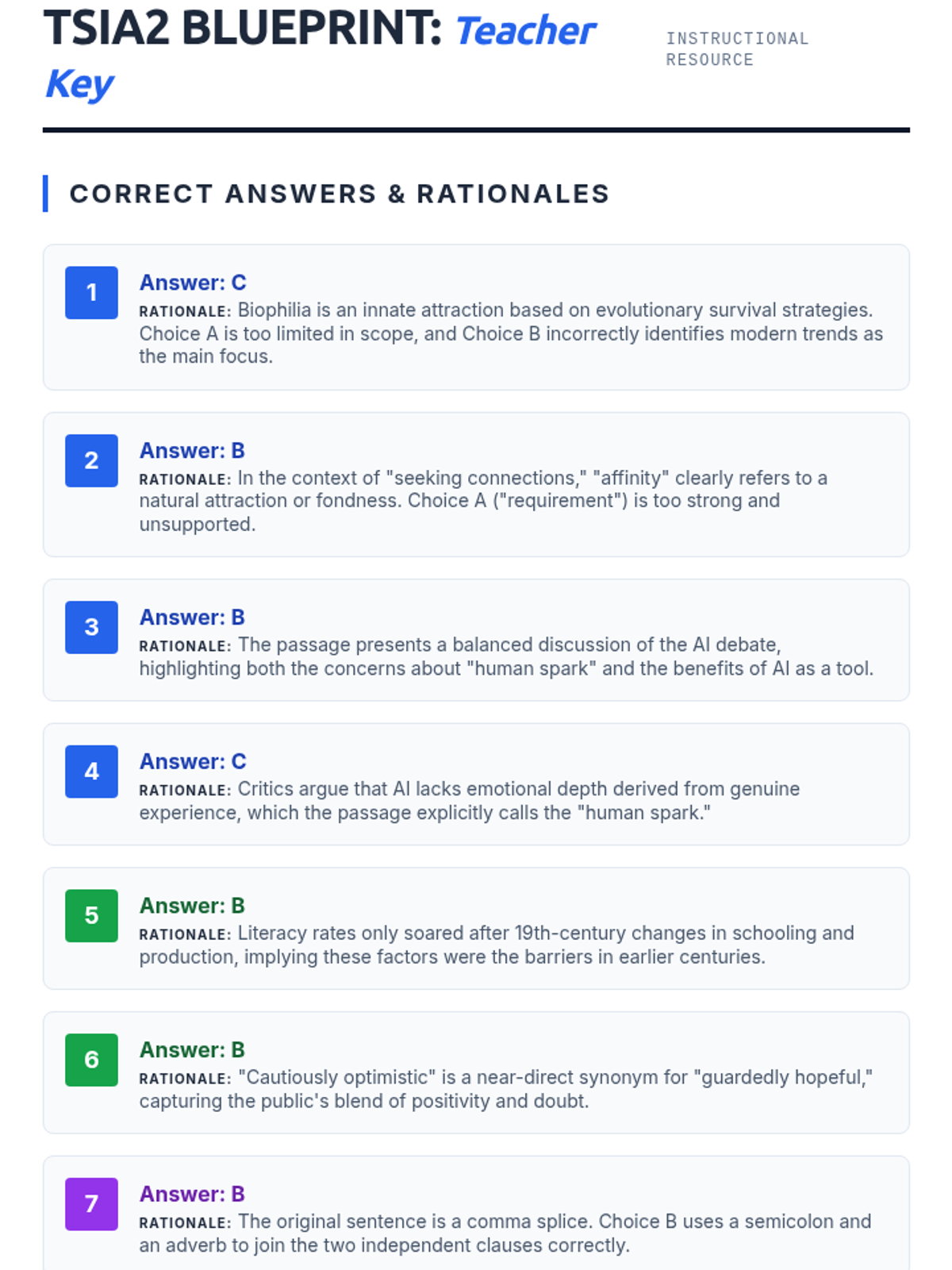
A comprehensive prep lesson for the TSIA2 Writing section, covering sentence structure, agreement, punctuation, and revision strategies across multiple passage genres.
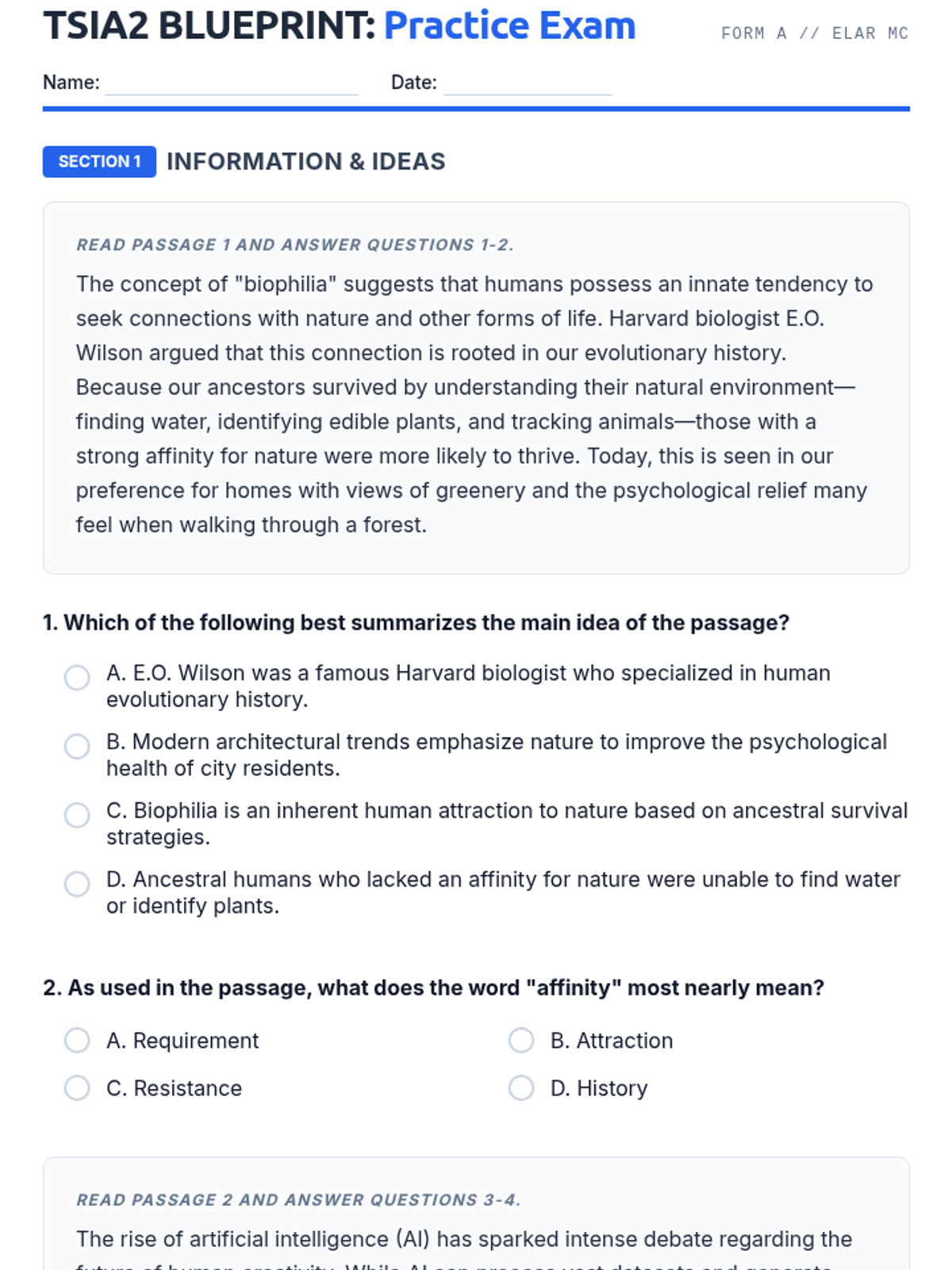
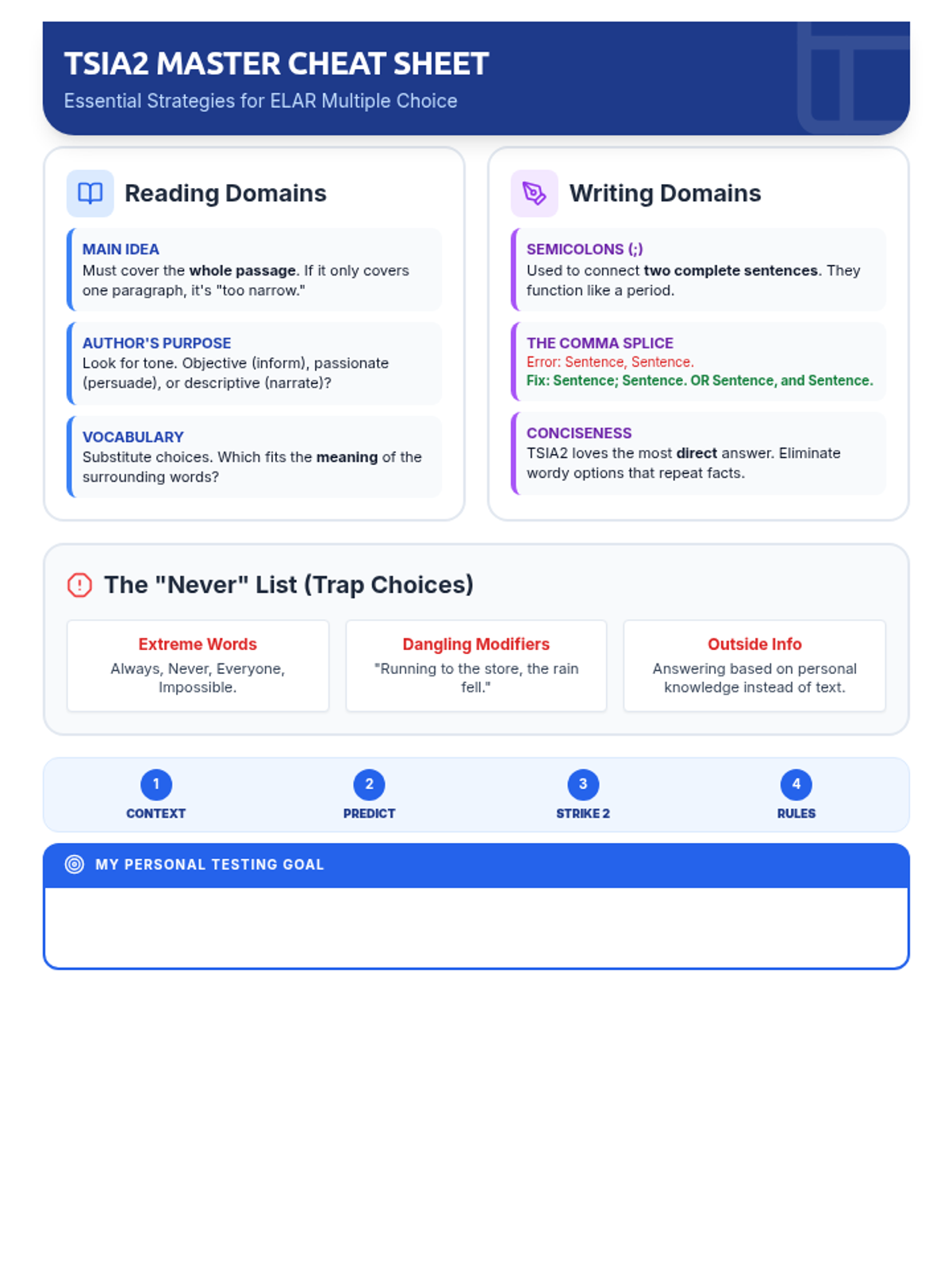
A comprehensive prep lesson for the TSIA2 ELAR exam, focusing on reading comprehension, sentence revision, and information/ideas strategies.
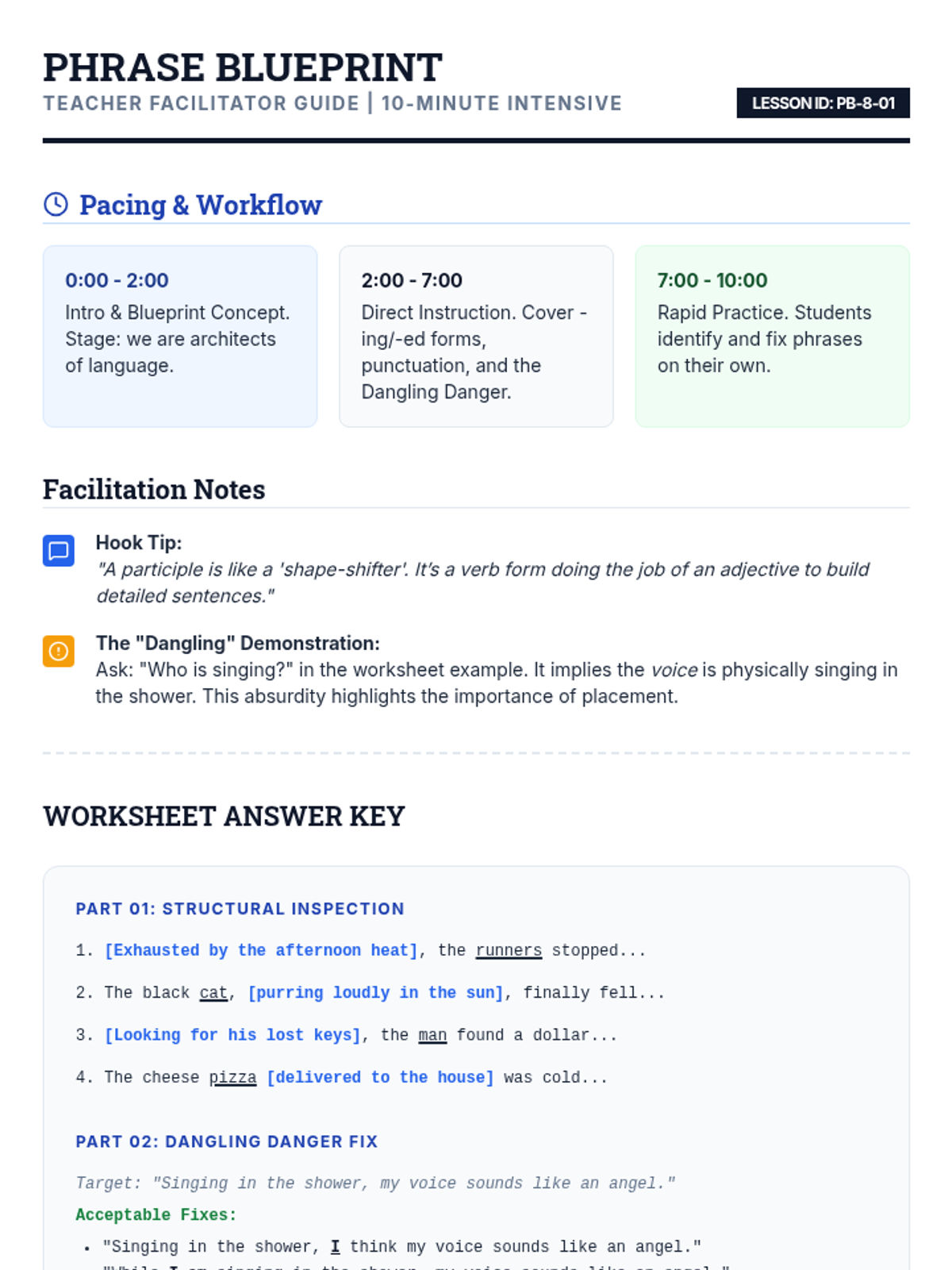
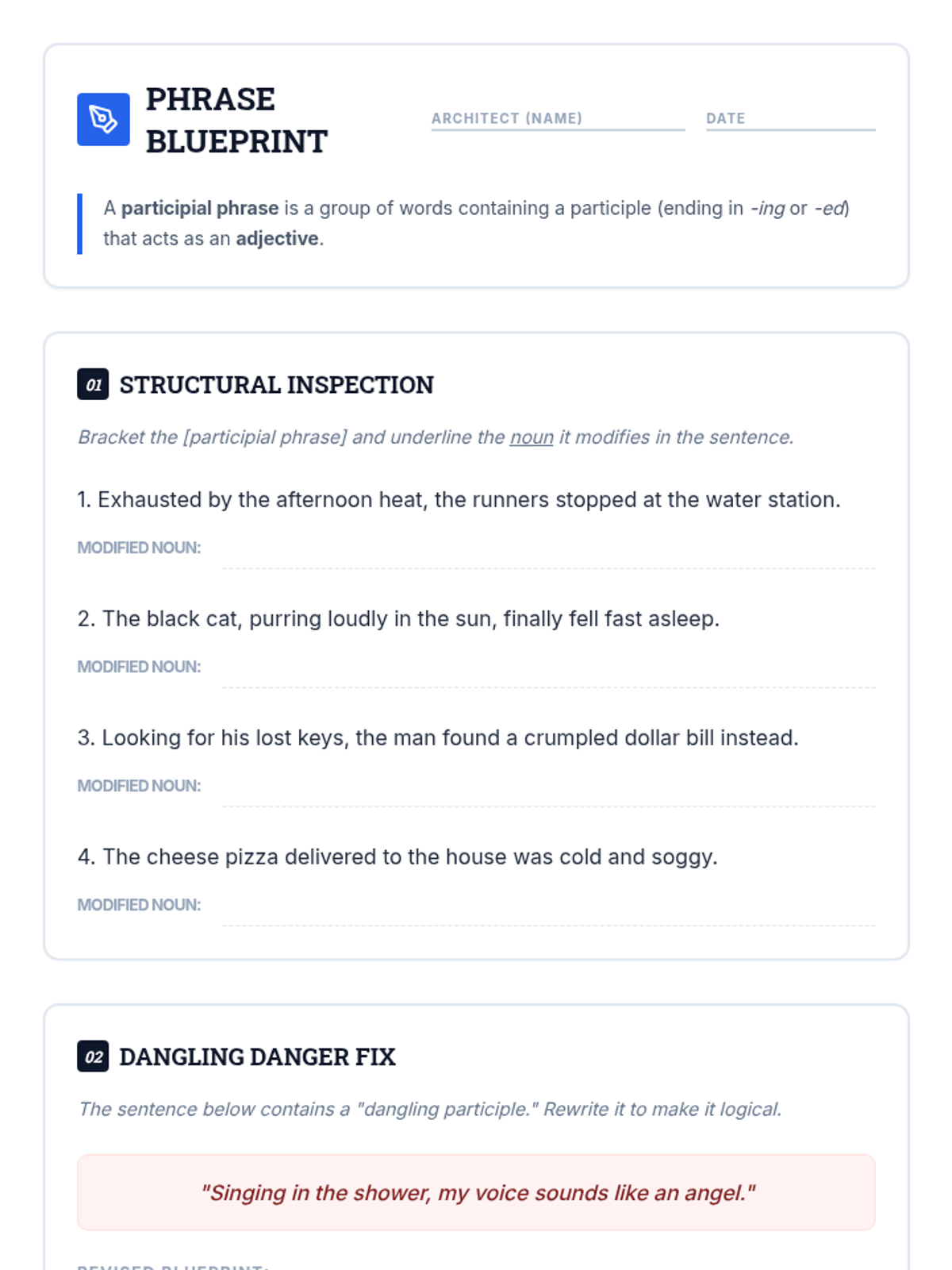
A high-impact, 10-minute lesson designed to help 8th graders master participial phrases through structural analysis and creative writing.
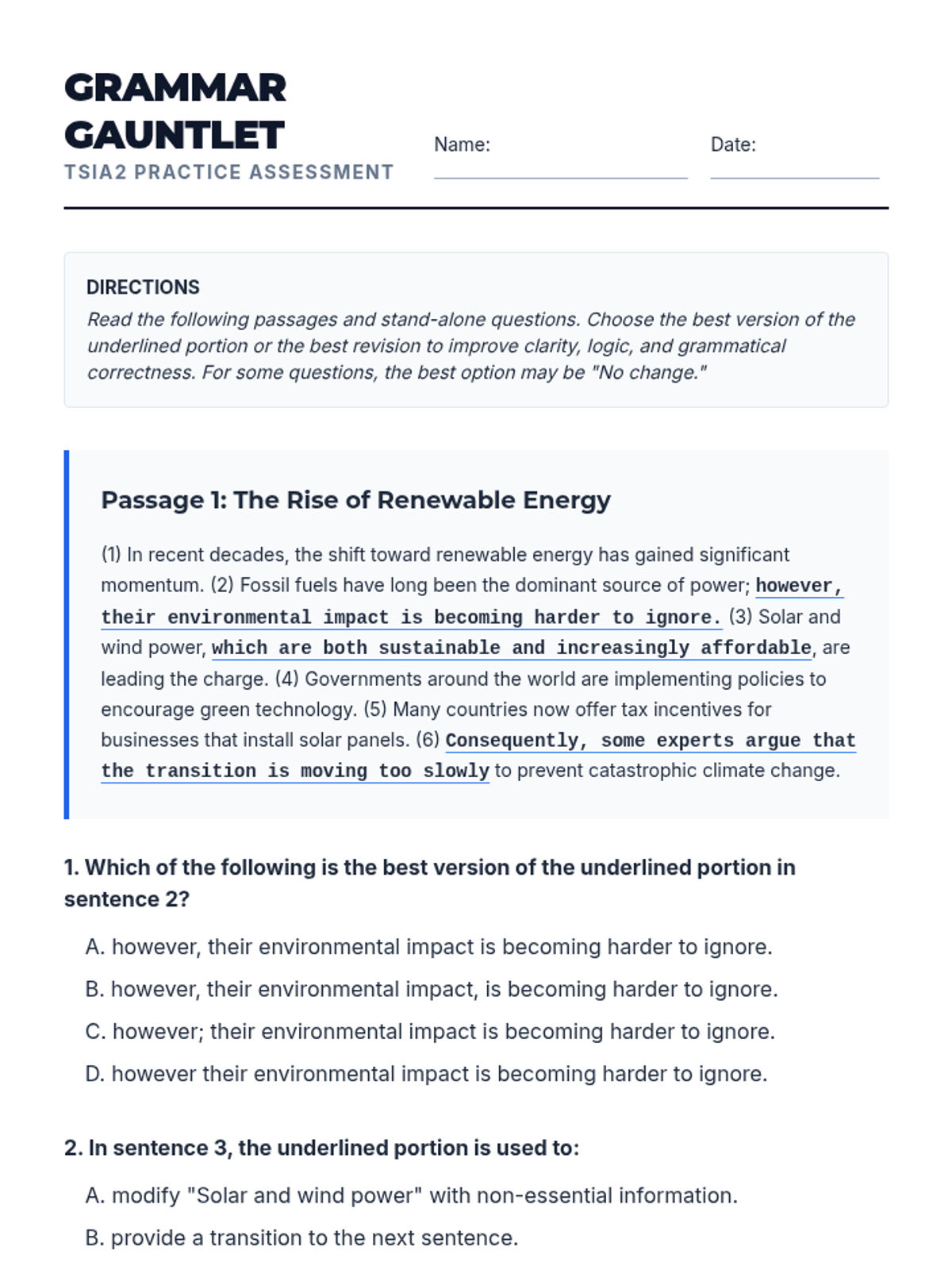
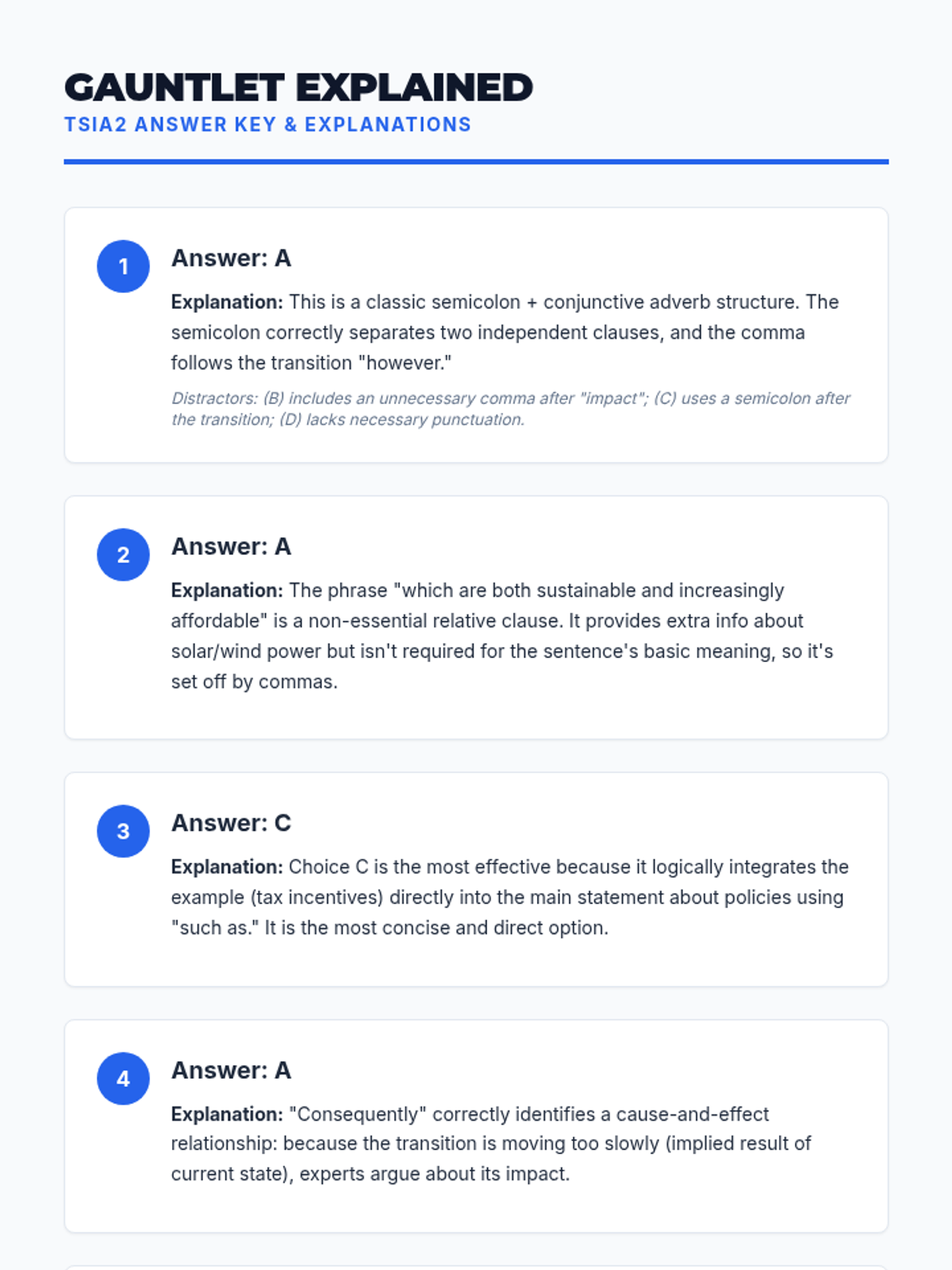
A comprehensive lesson covering TSIA2 grammar standards, including sentence structure, punctuation, agreement, and logical diction. Includes instructional slides, a 20-question practice exam, and a detailed explanation key.
The final week of drills providing high-rigor mixed practice to simulate the full range of the TSIA2 Writing section.
The third week of drills introducing more nuanced grammar rules and mixed practice scenarios.
The second week of drills focusing on organizational flow and complex sentence combining techniques.
The first week of TSIA2 preparation focusing on the fundamental rules of punctuation, grammar, and sentence structure through daily three-question drills.
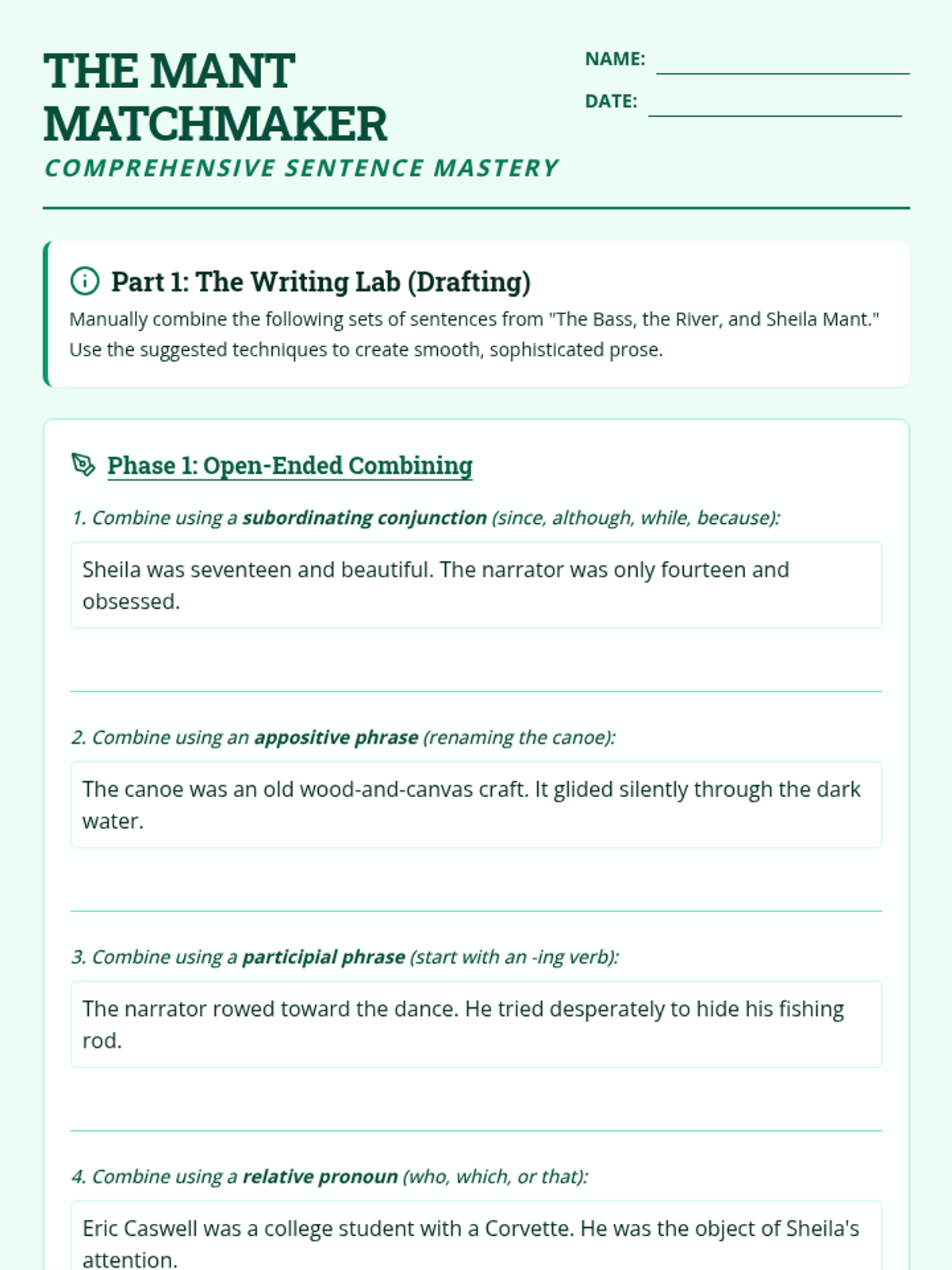
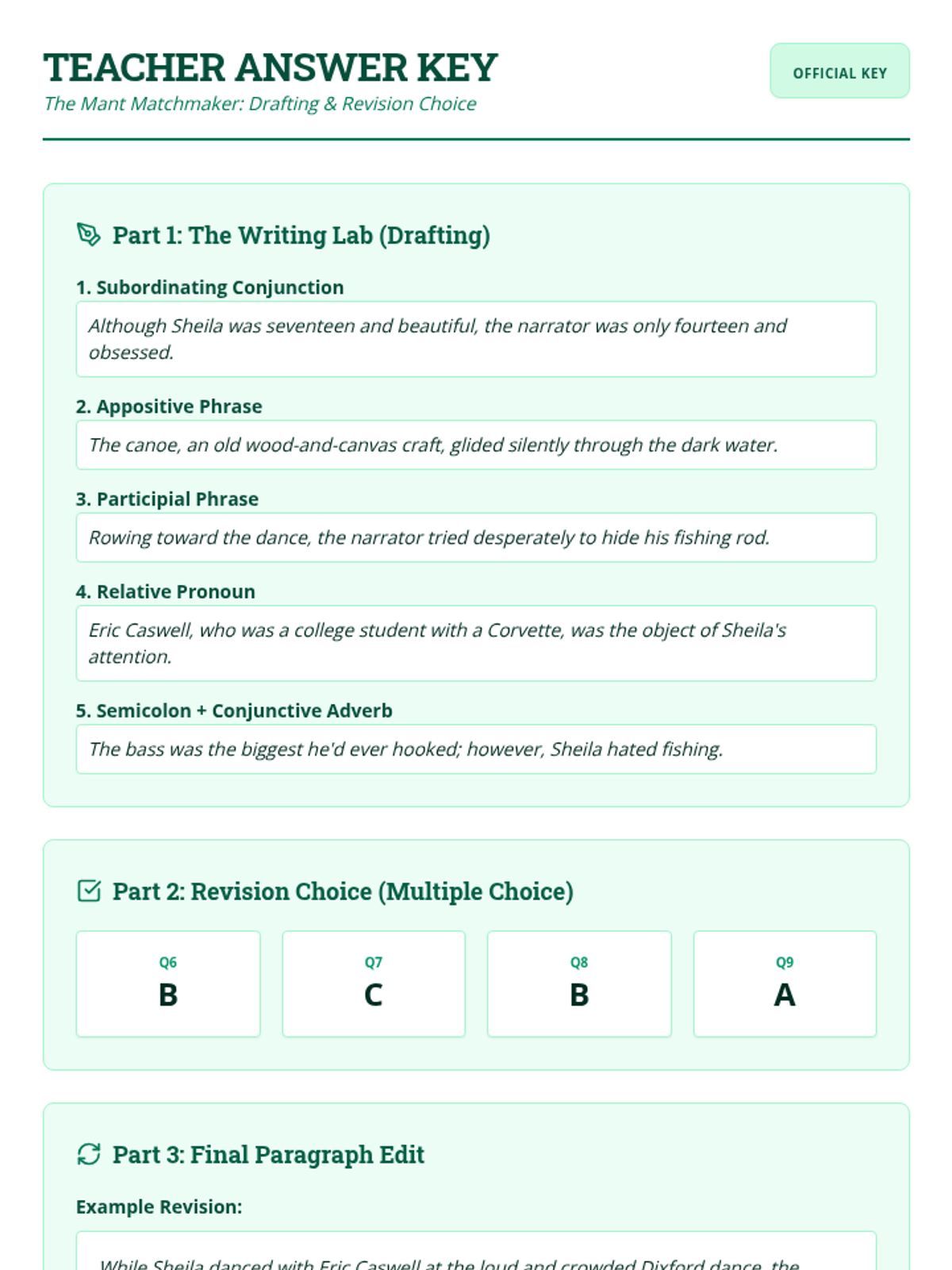
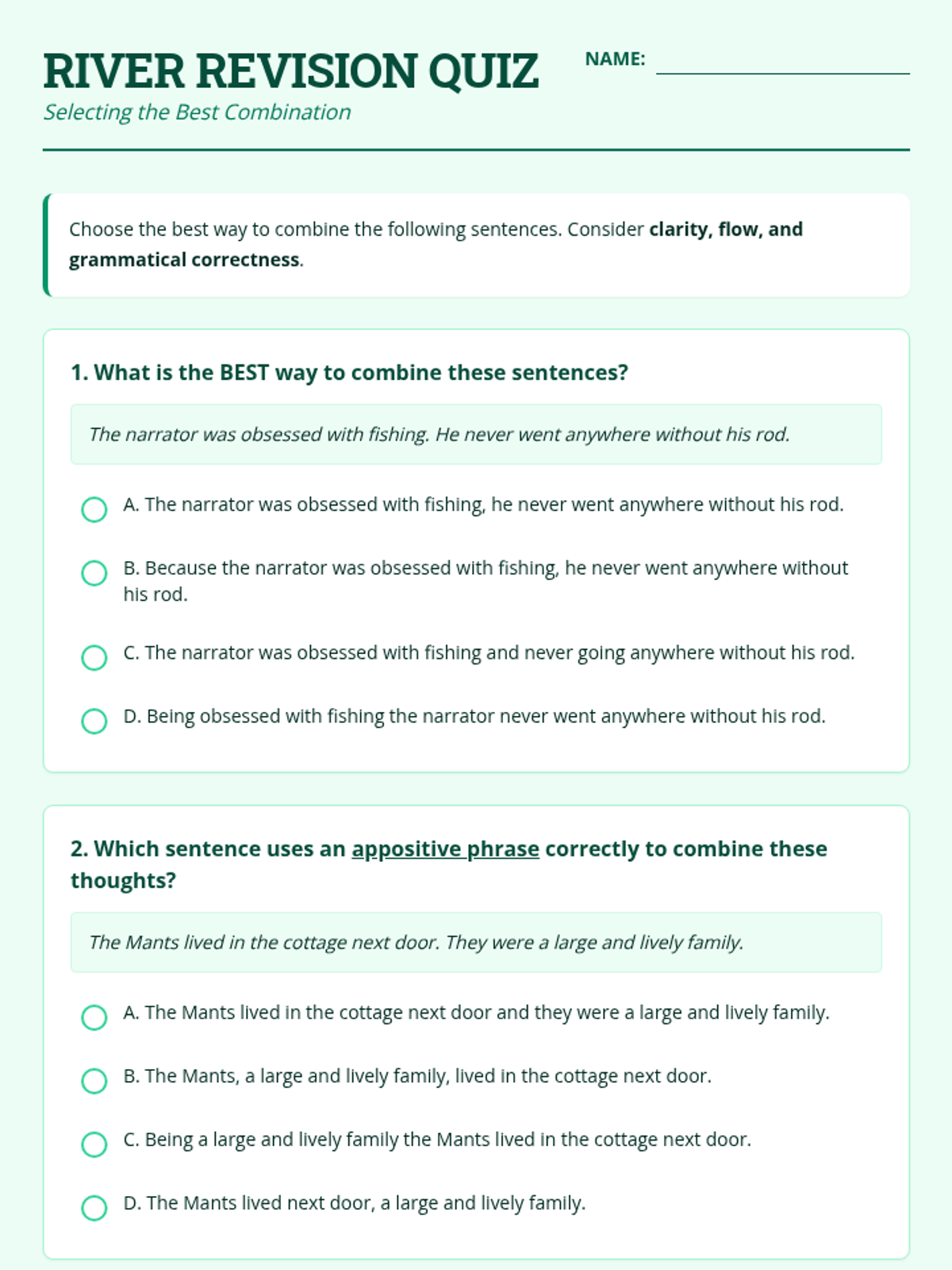
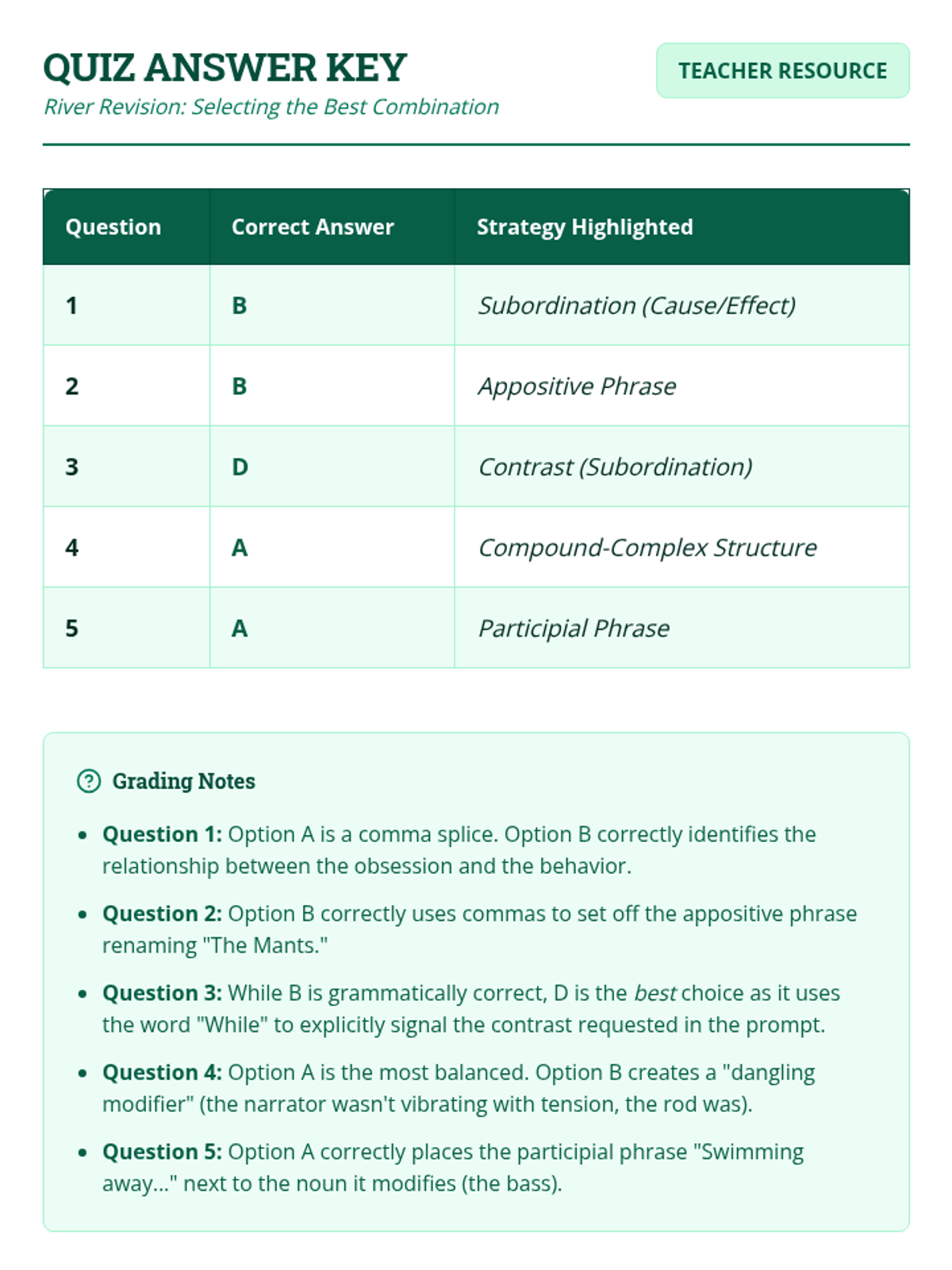
A targeted revising and editing lesson focused on sentence combining techniques, themed around the short story 'The Bass, the River, and Sheila Mant'. Students practice merging short, choppy sentences into sophisticated prose.
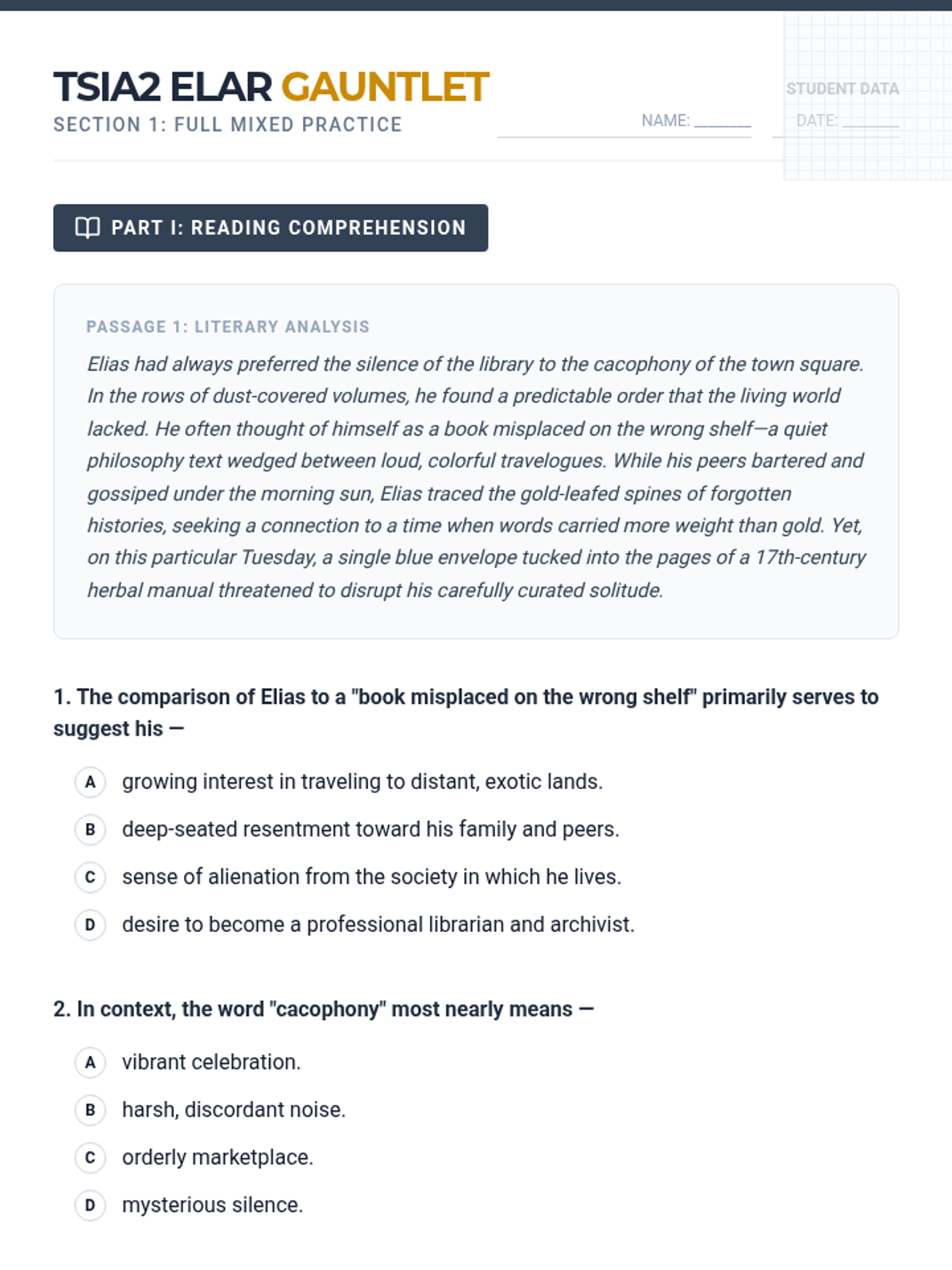
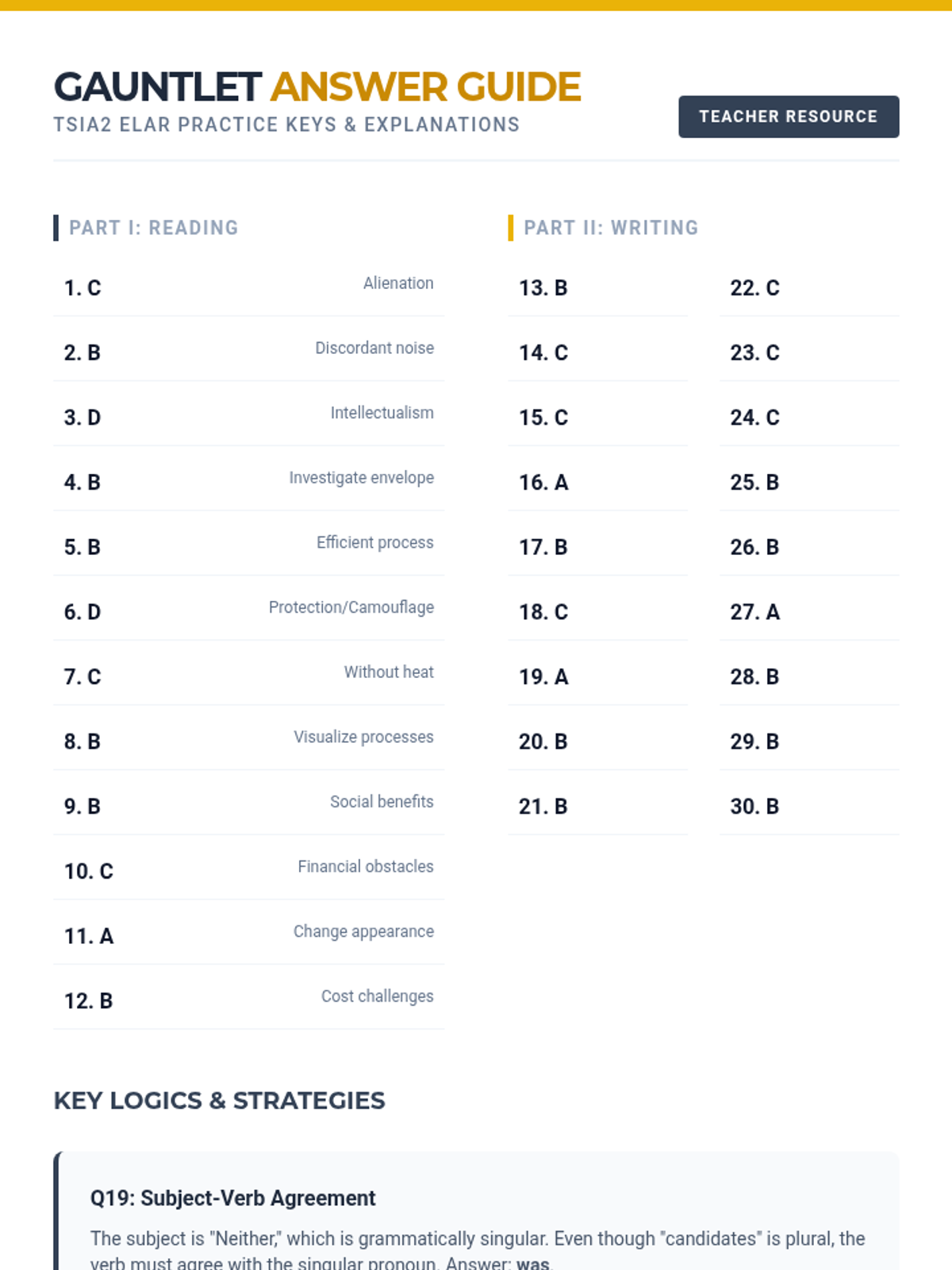
A comprehensive prep lesson for the TSIA2 ELAR section, covering reading comprehension, text analysis, and sentence-level writing skills. Includes a high-impact review presentation and a full 30-question practice exam with answer key.
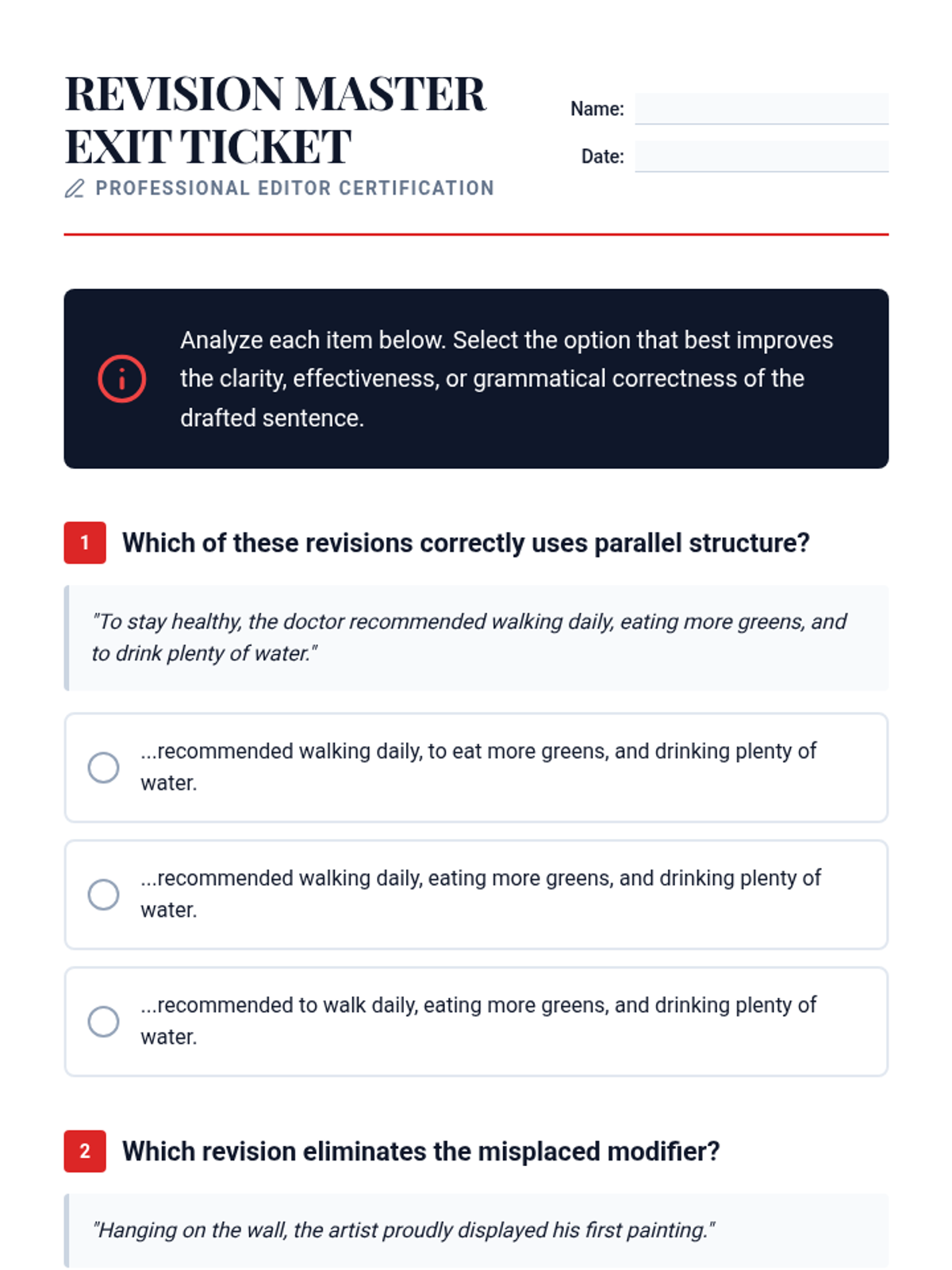
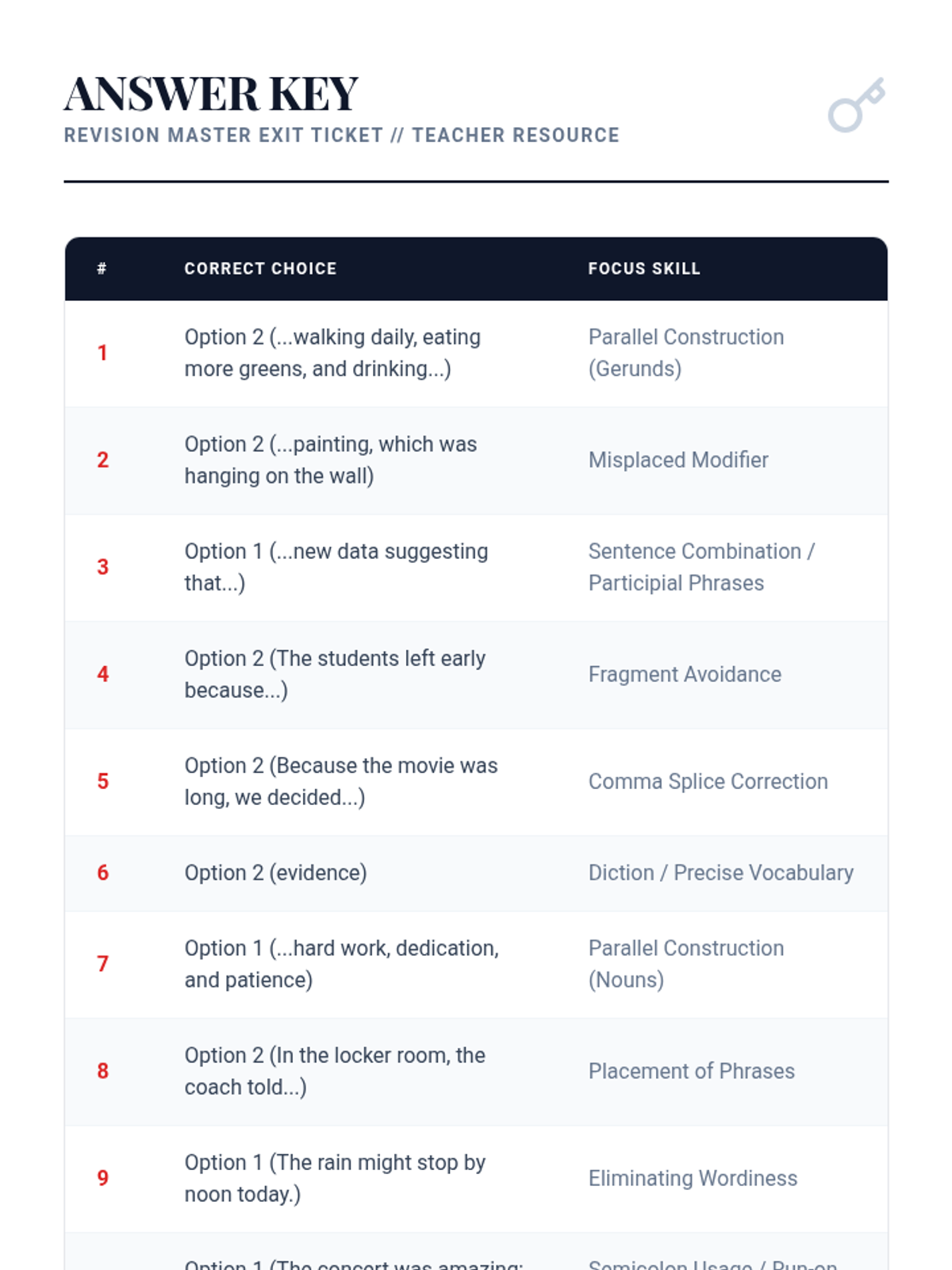
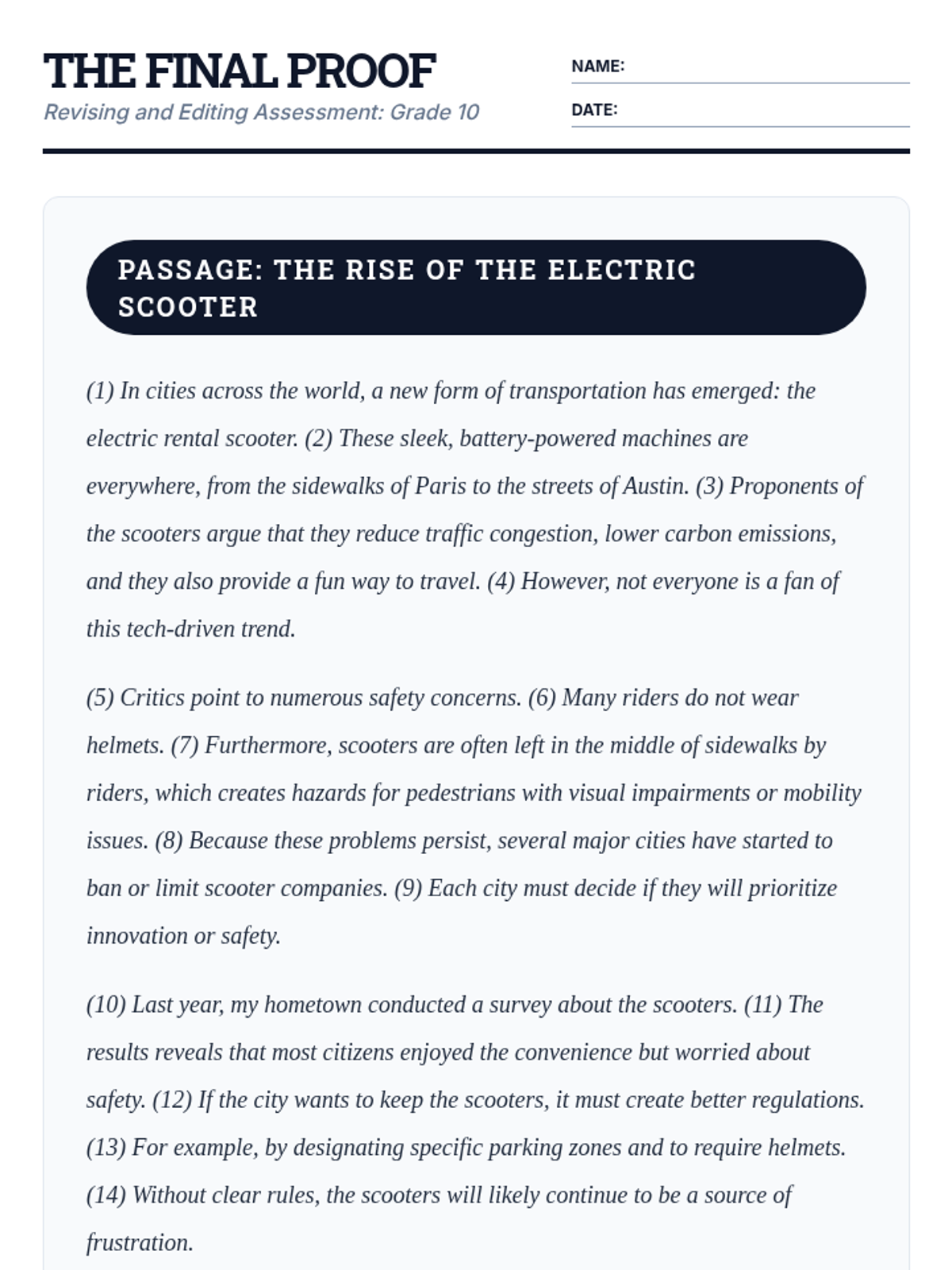
A comprehensive guide to high-level revision and editing, focusing on sentence effectiveness, parallel structure, and eliminating fragments or run-ons. Students learn to refine their writing with the precision of a professional editor.
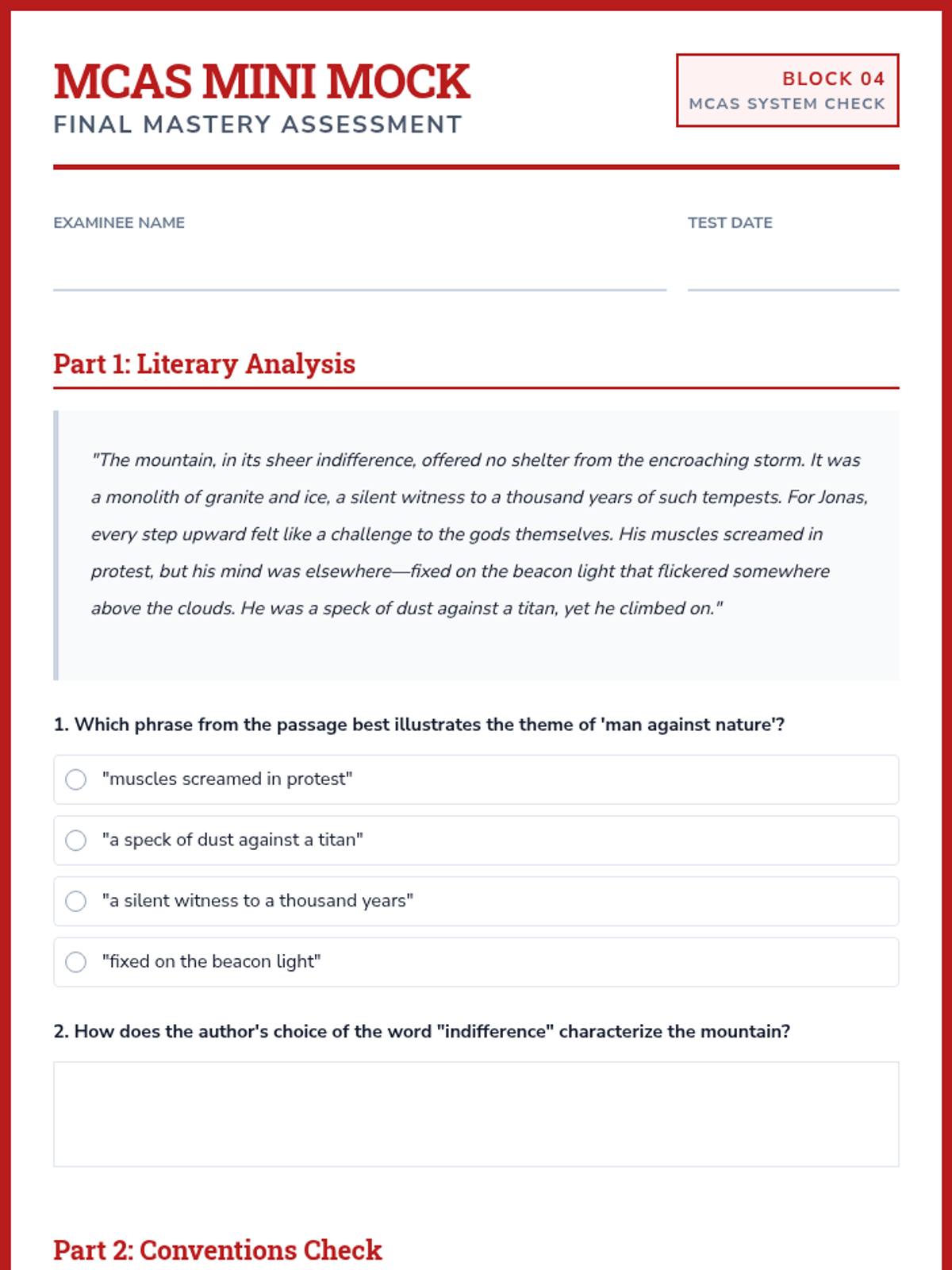
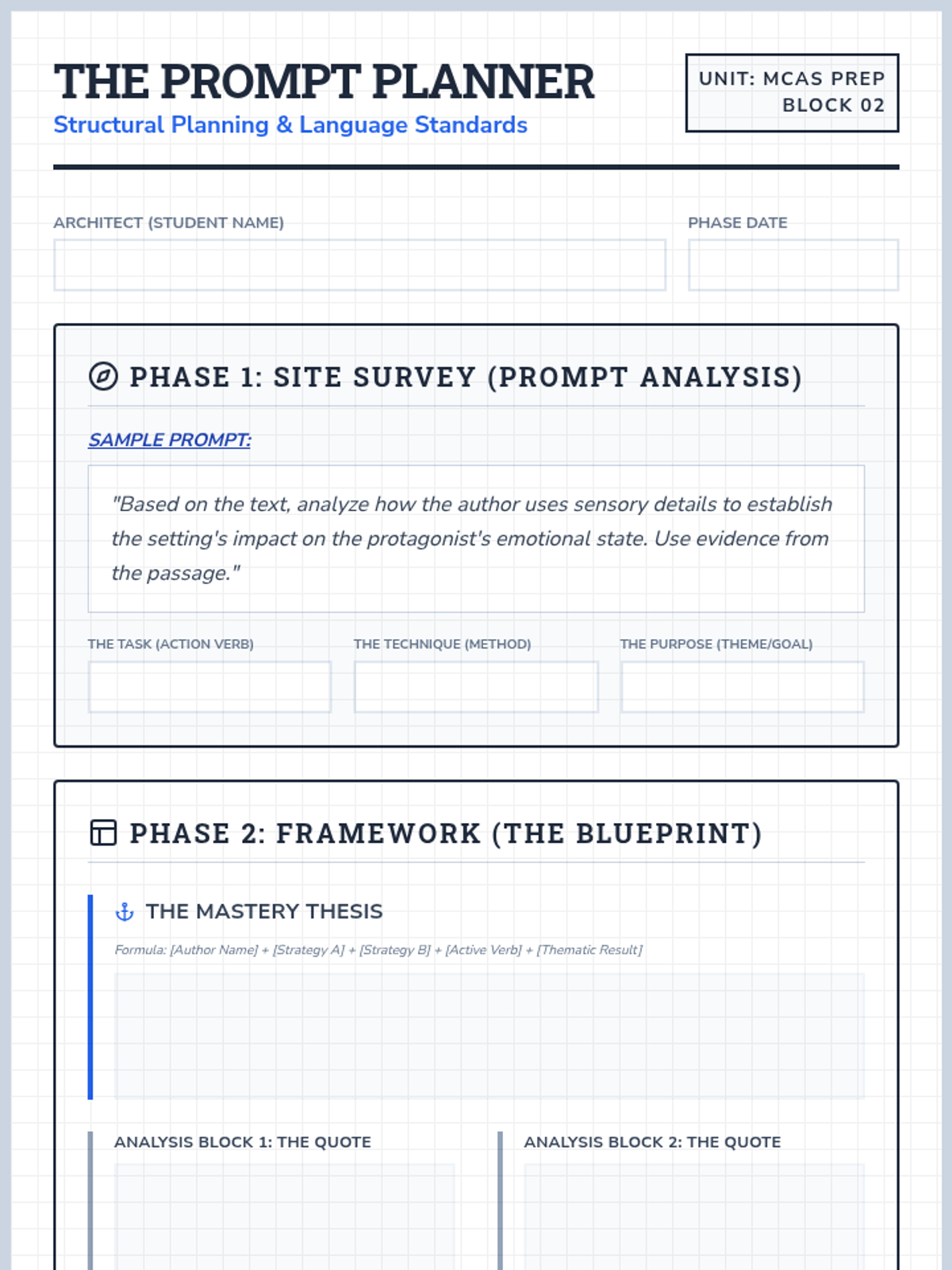
A comprehensive final review covering all MCAS domains, including a mini-mock exam and rapid-fire strategy refresh.
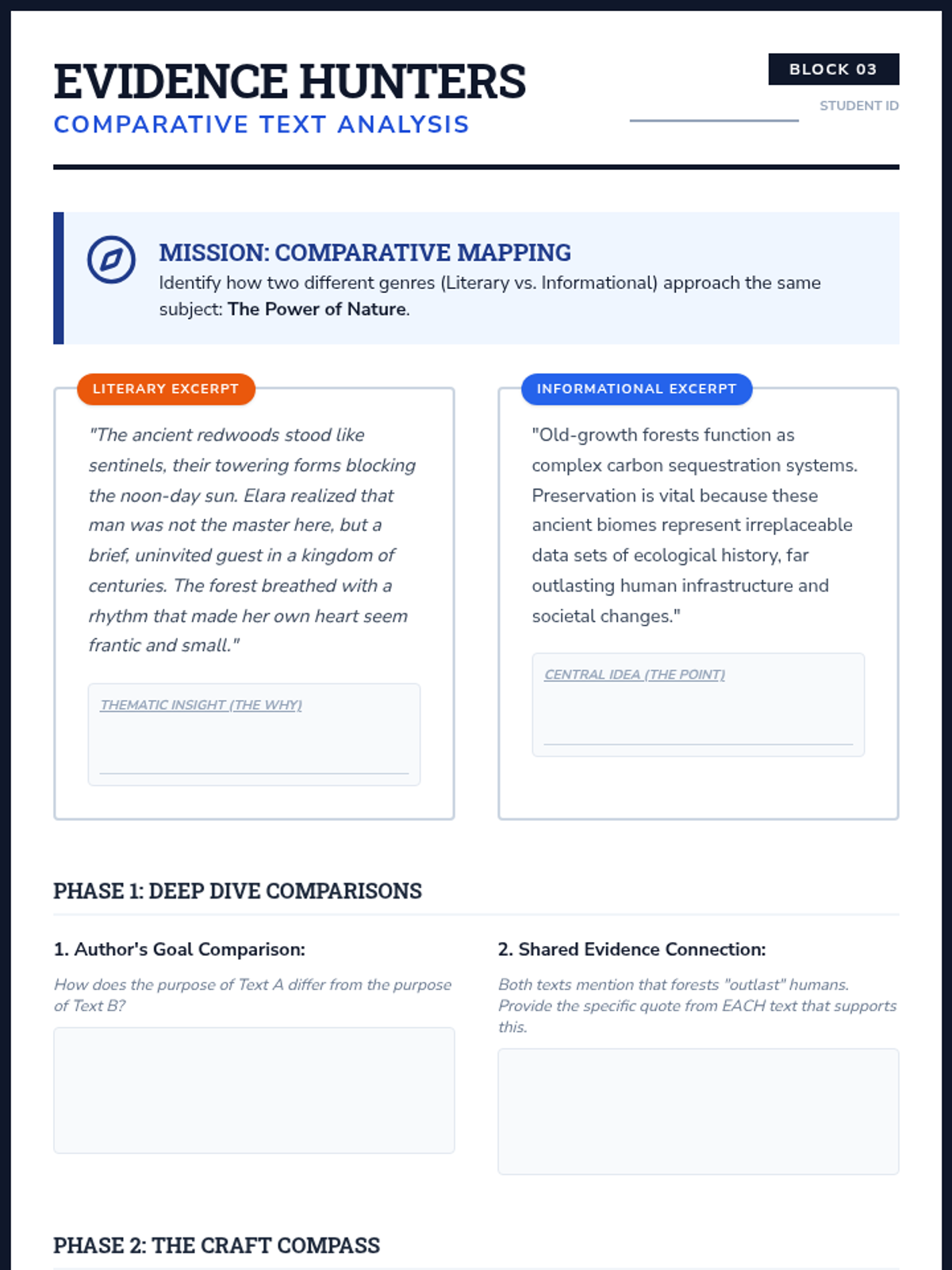
Deep dive into analyzing both literary and informational texts, identifying themes, and evaluating authorial craft with a focus on evidence-based claims.
Teaches students how to construct high-scoring text-based responses and master standard English conventions through structural planning and revision techniques.
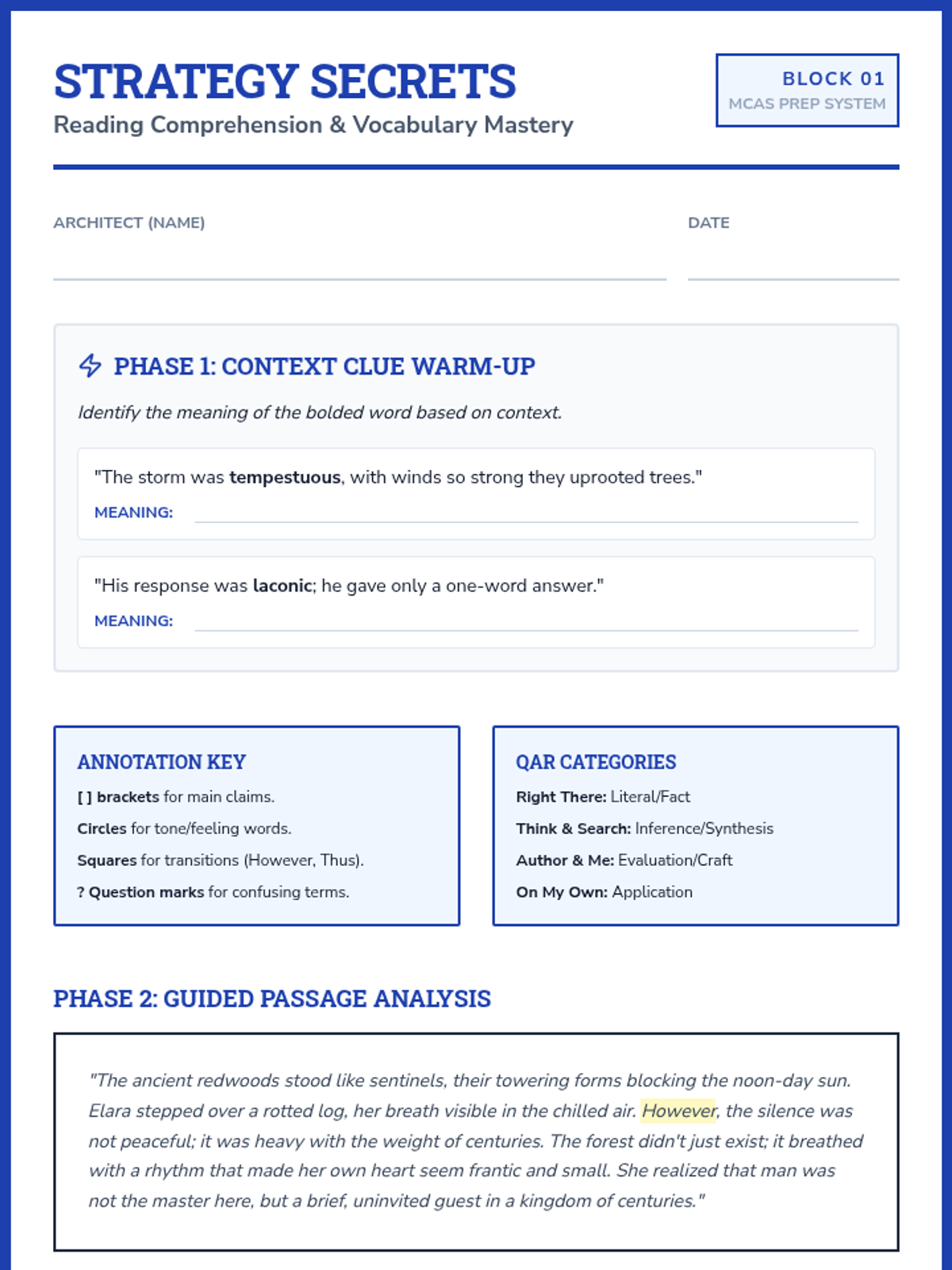
Focuses on active reading strategies, Question-Answer Relationships (QAR), and deciphering Tier 2 and Tier 3 vocabulary in context to maximize comprehension on MCAS passages.
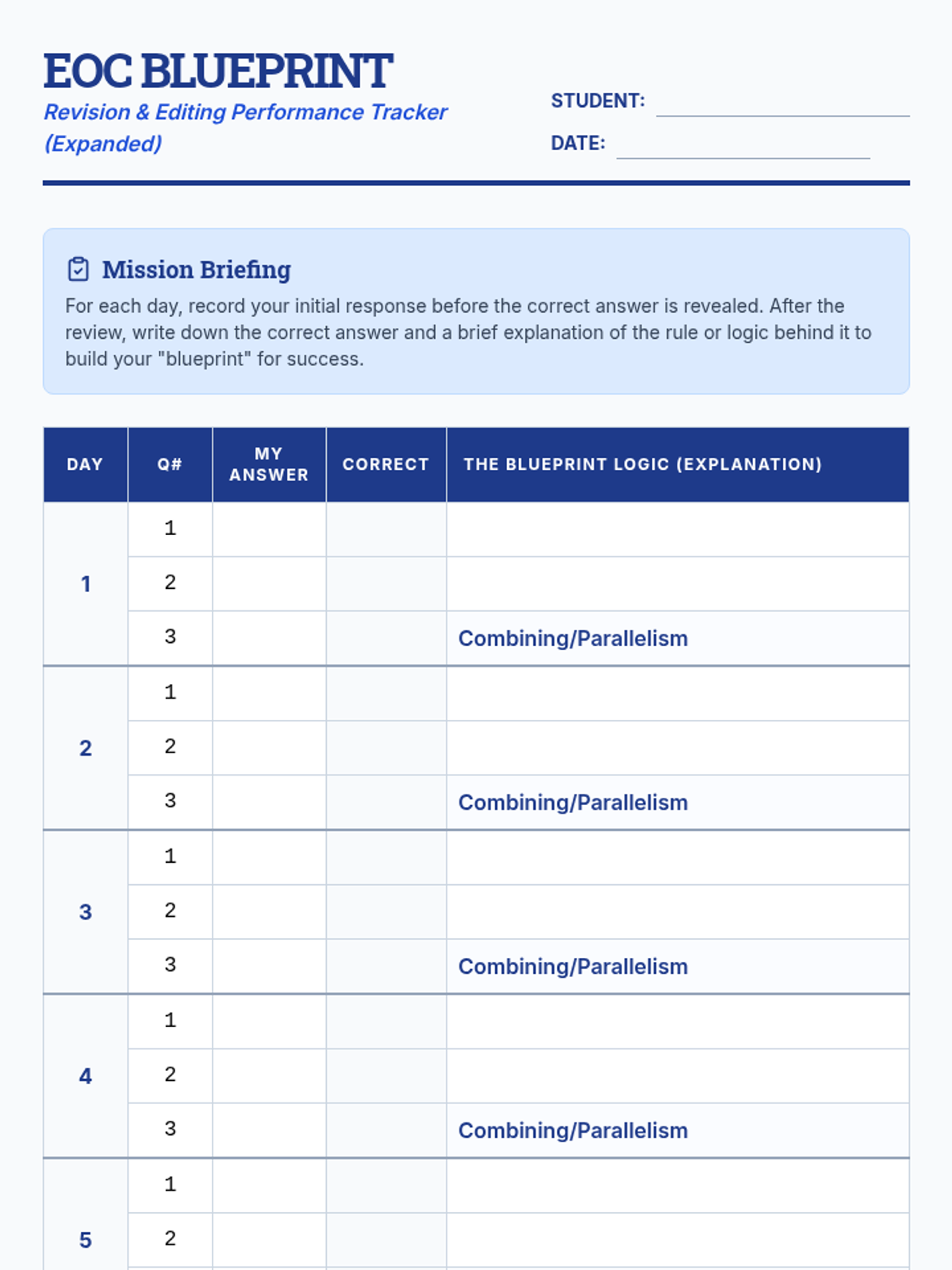
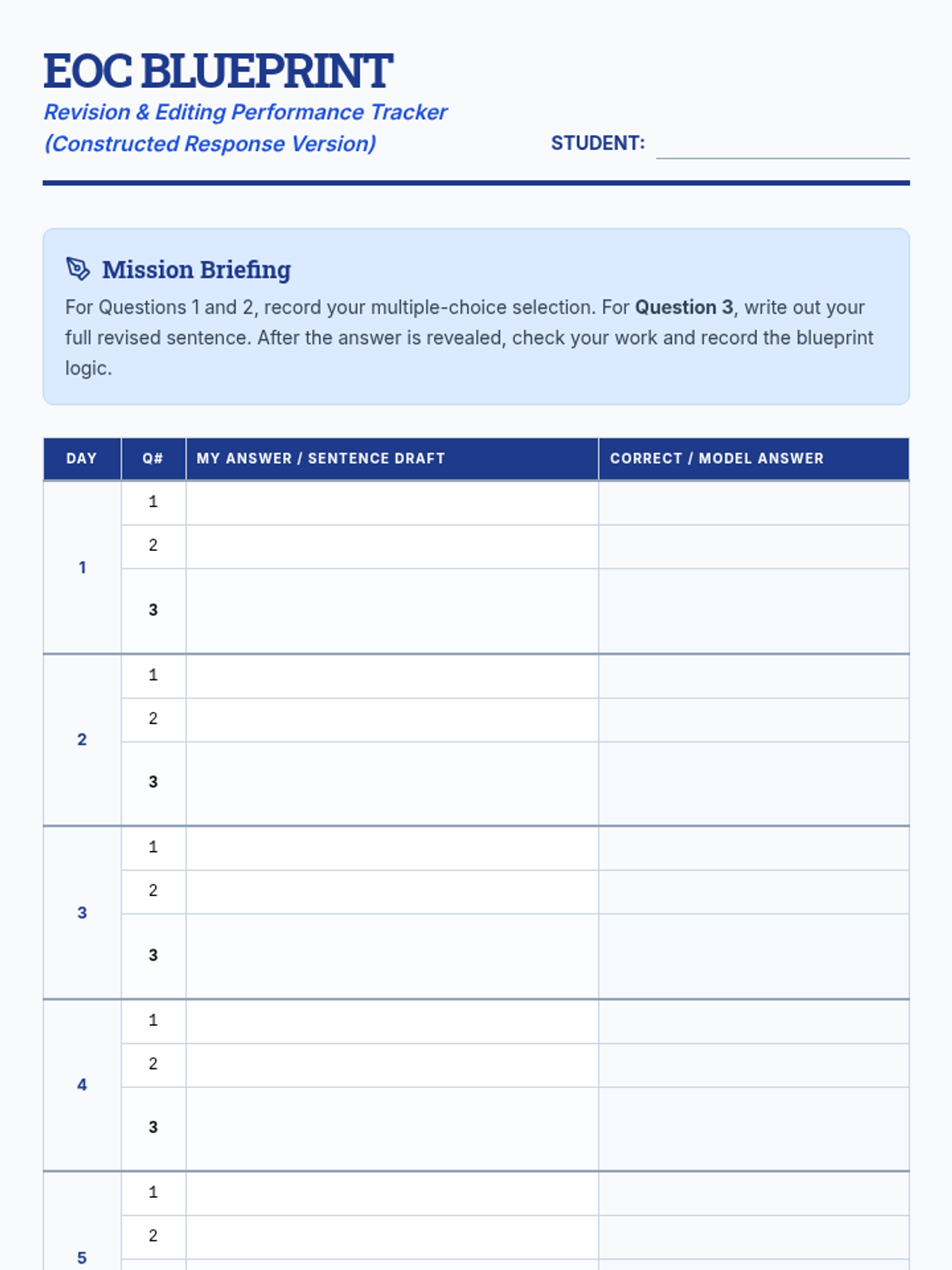
A comprehensive 10-day daily drill series focusing on high-stakes revising and editing skills for the English 2 STAAR/EOC.
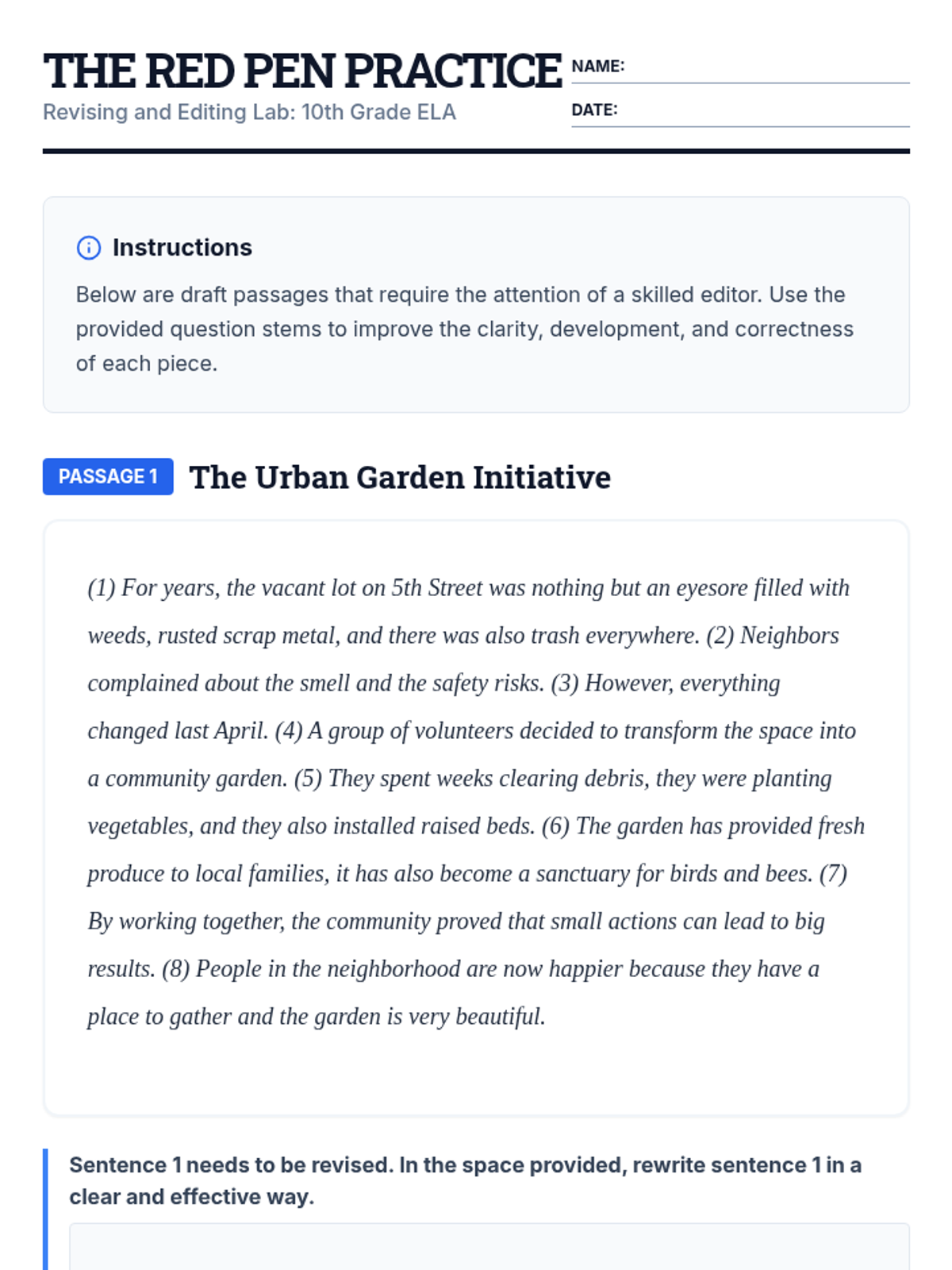
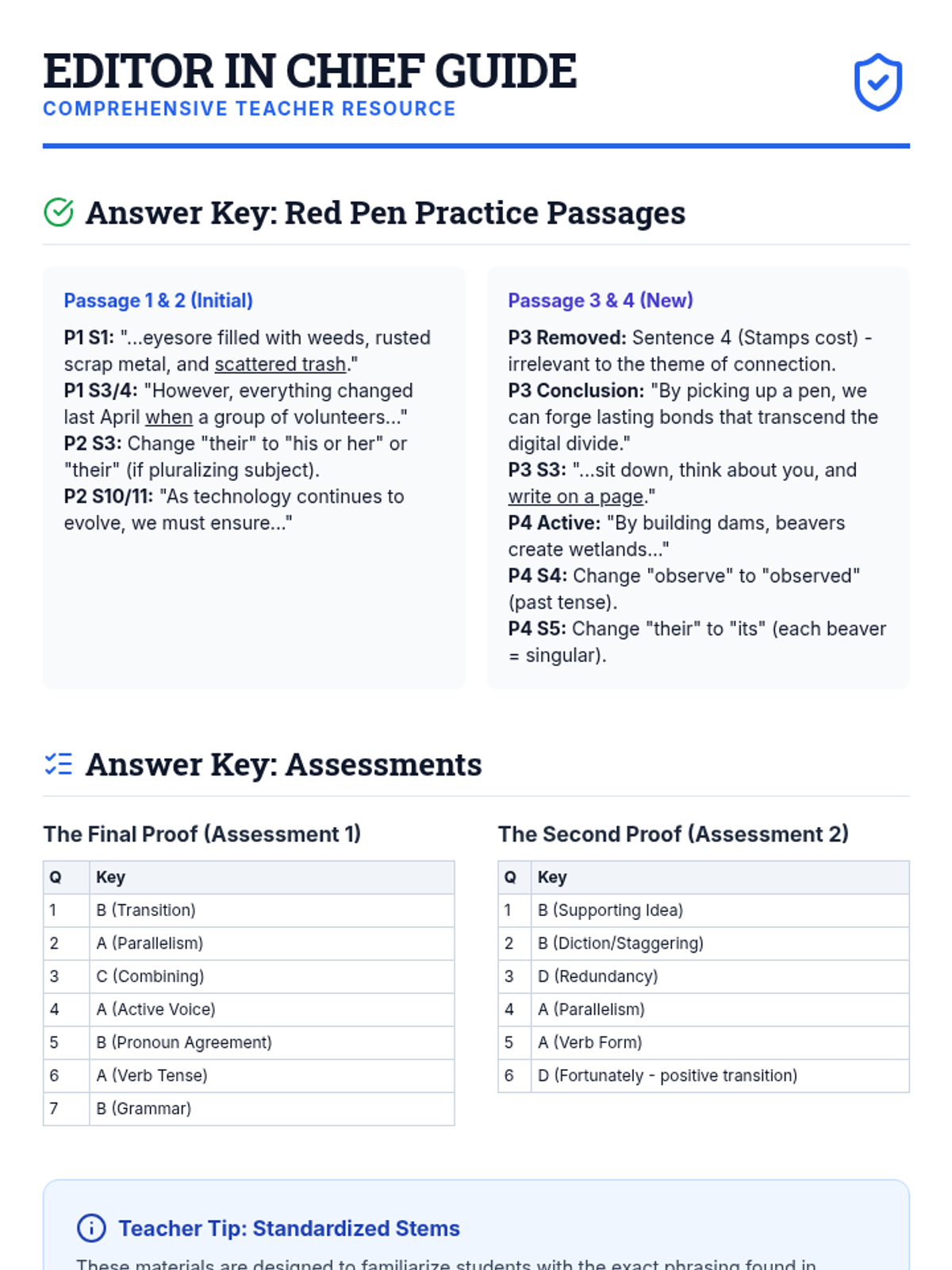
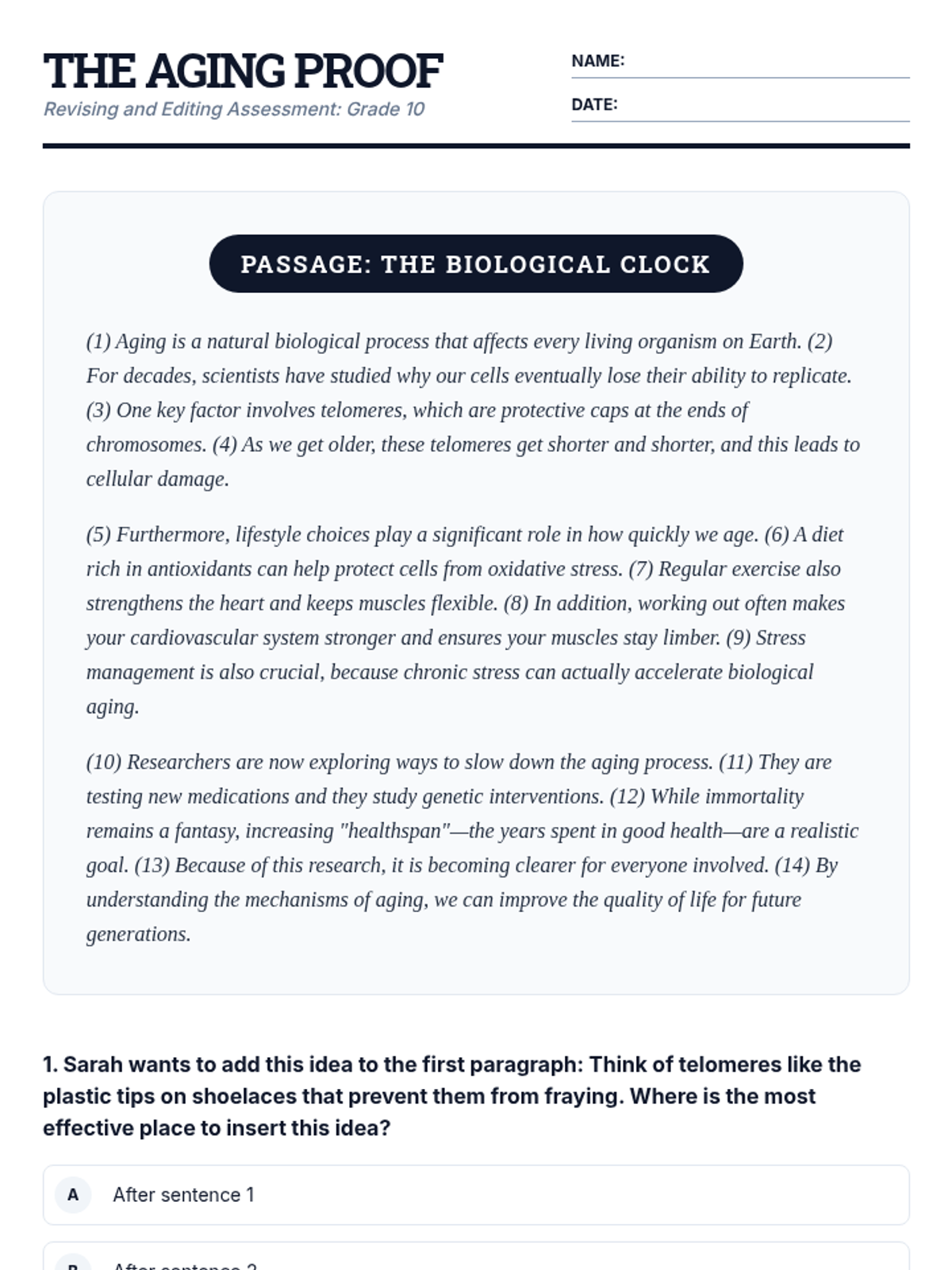
A comprehensive lesson on advanced revising and editing for 10th grade, focusing on organizational structure, parallel construction, sentence effectiveness, and grammatical precision. Students will learn to transform drafts into polished, professional pieces of writing.
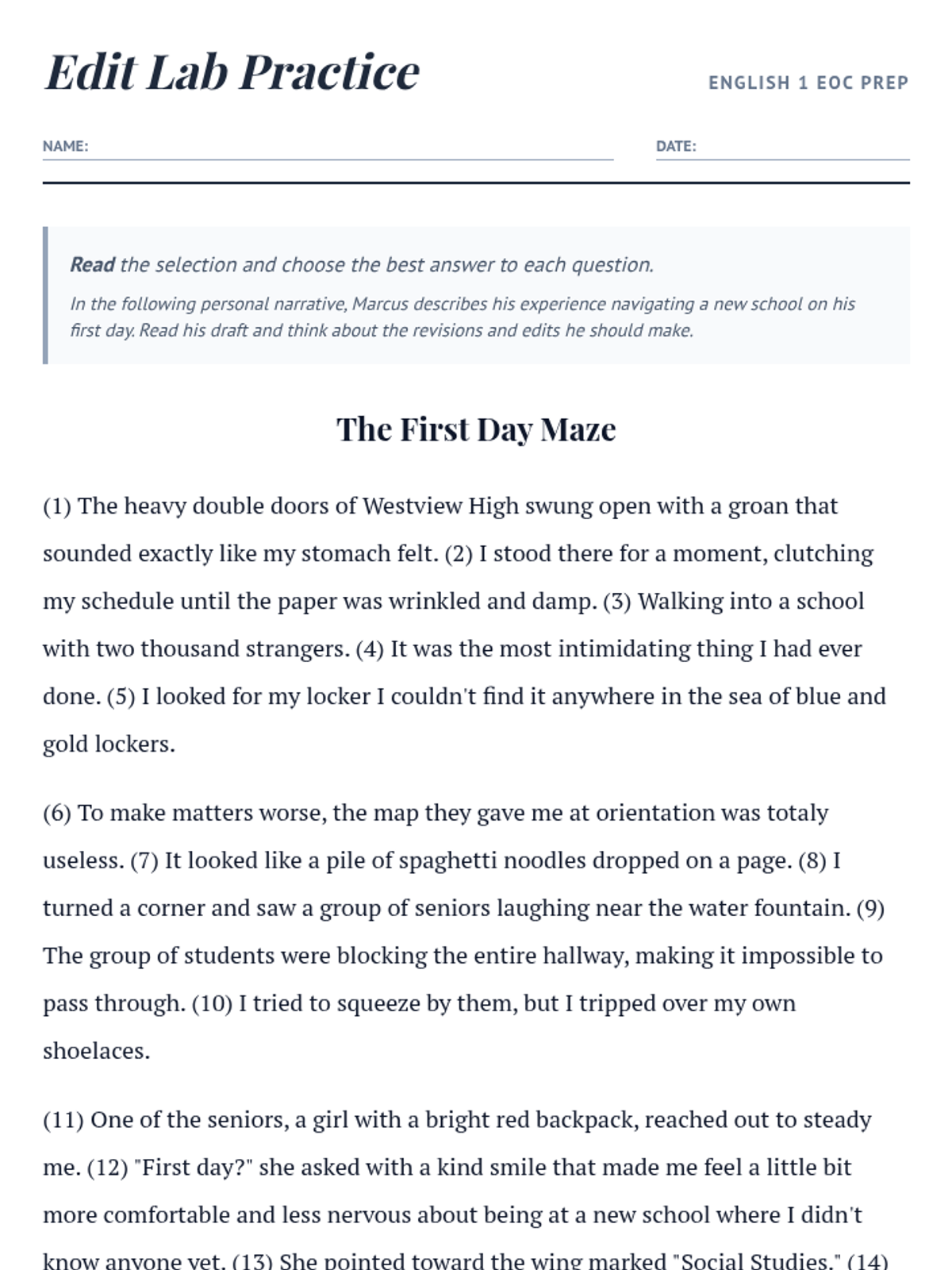
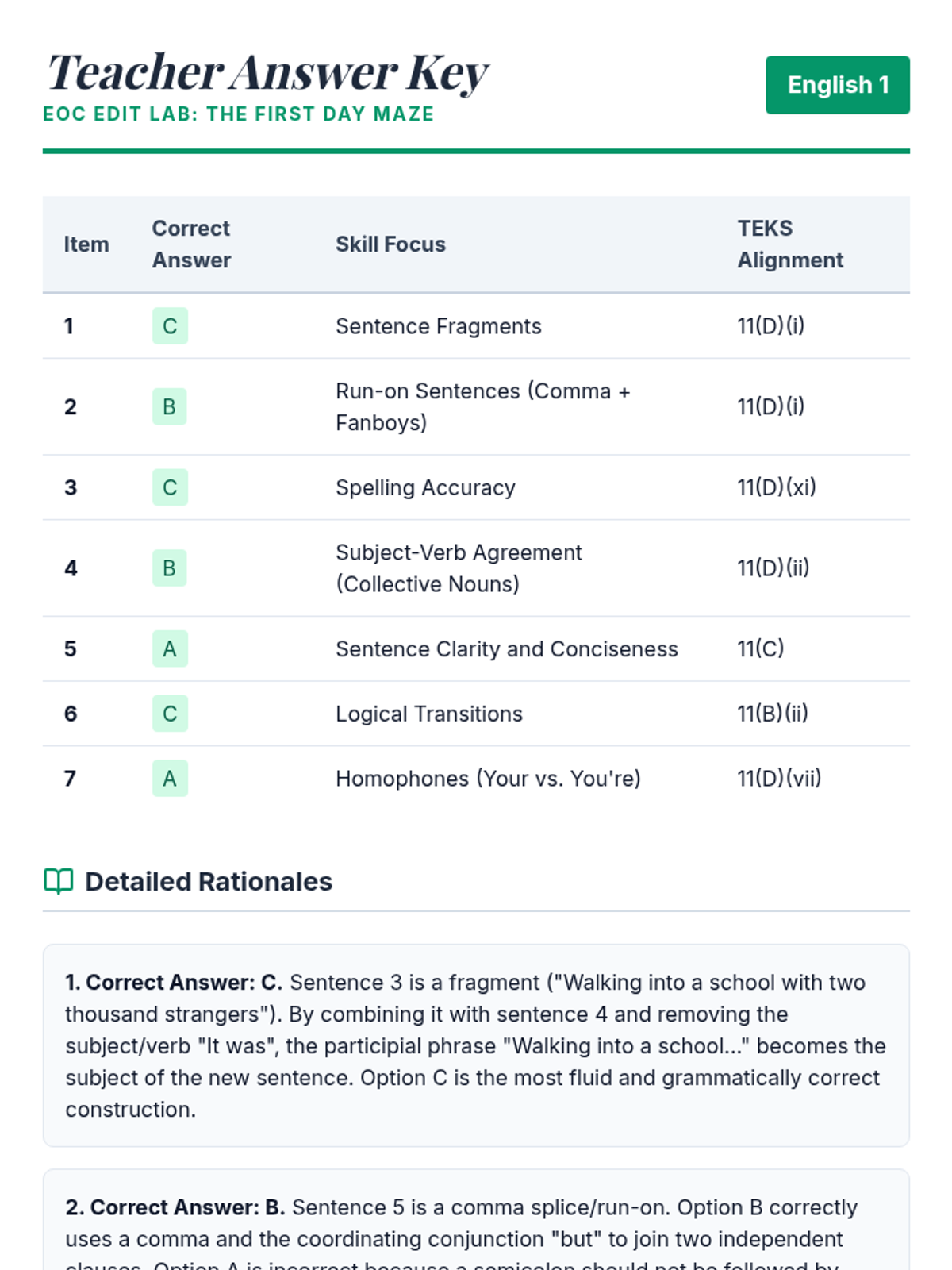
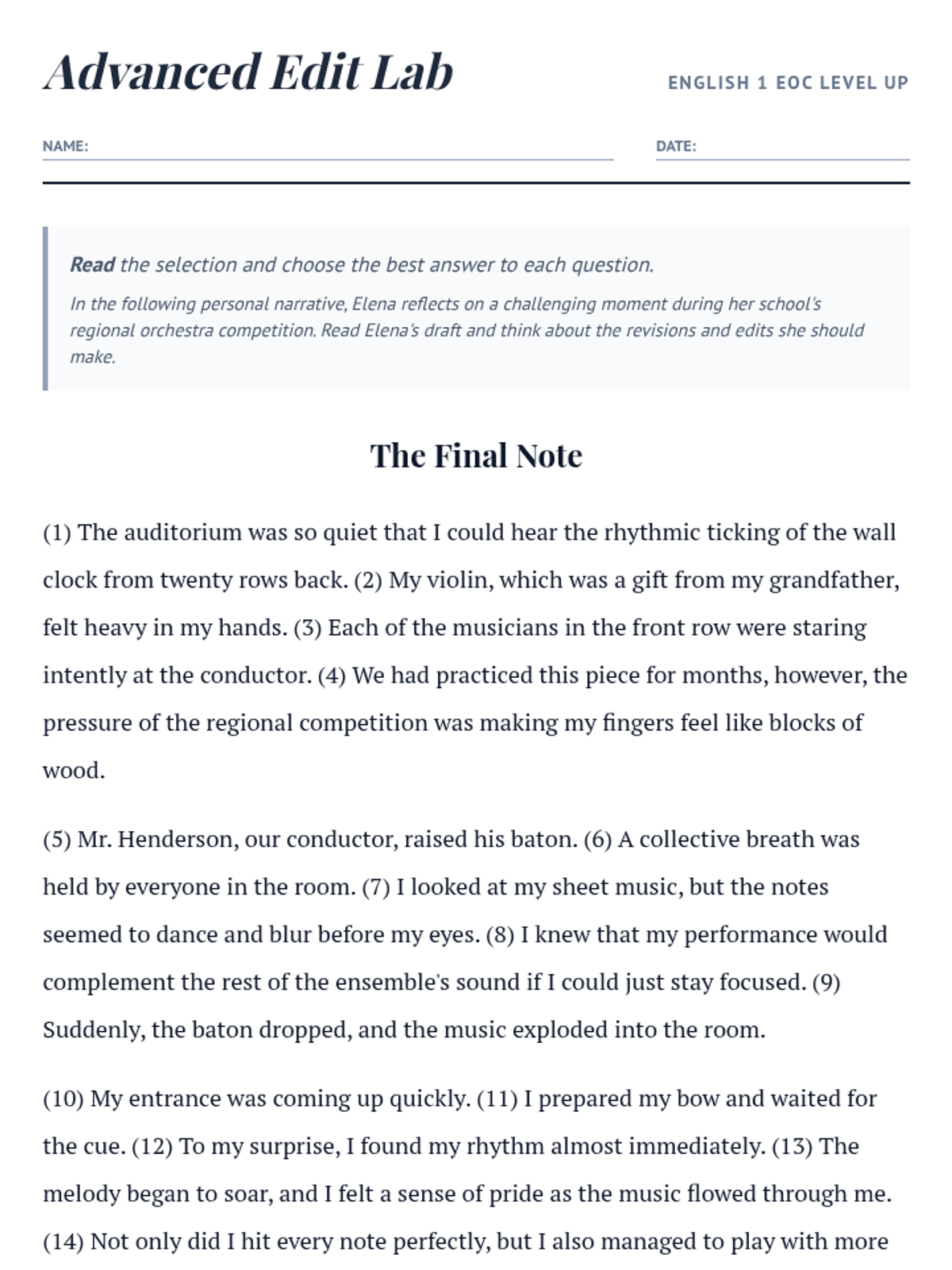
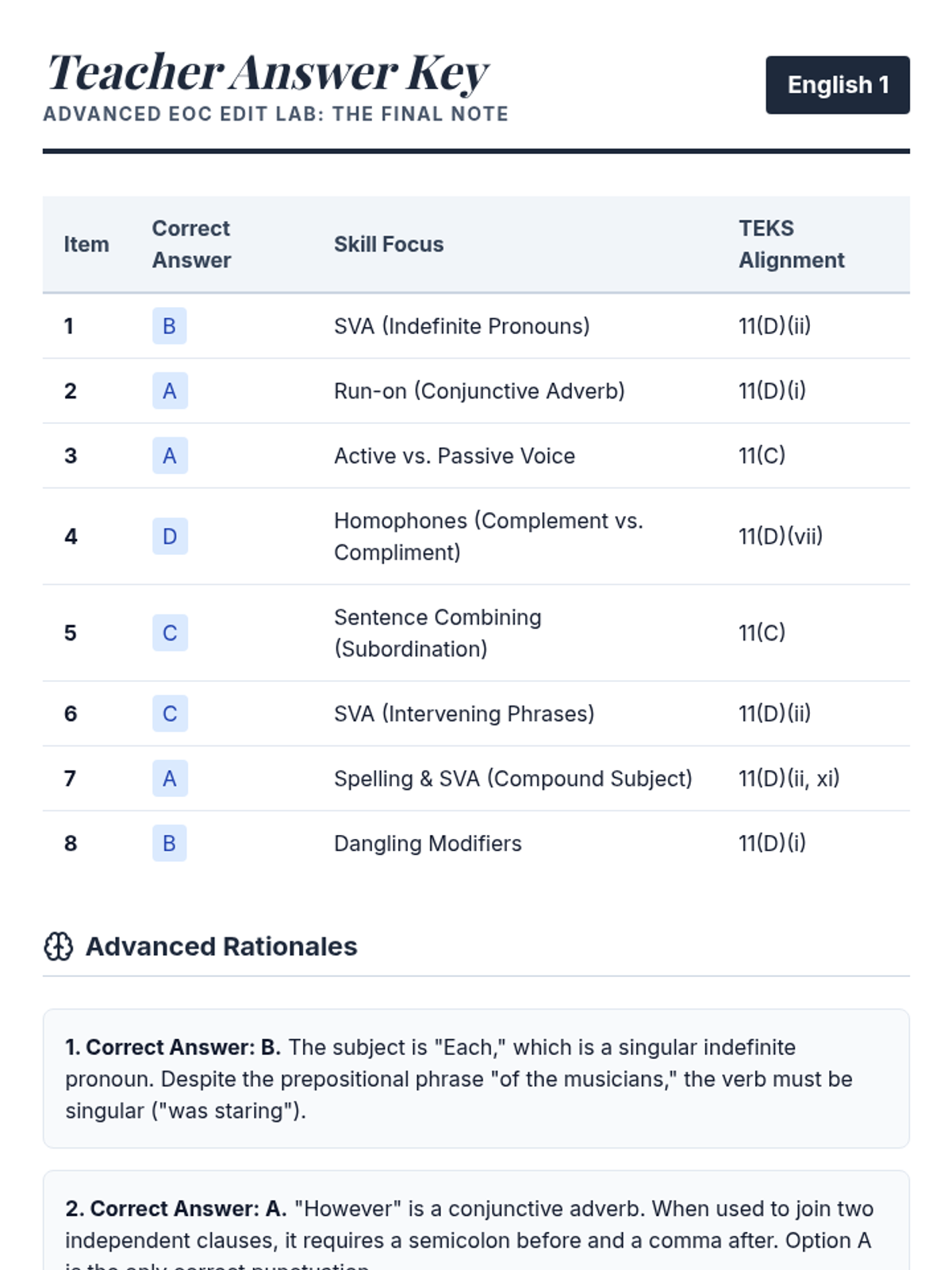
A comprehensive revising and editing practice focused on English 1 Texas EOC skills, featuring a student-centered personal narrative passage and exam-style questions.
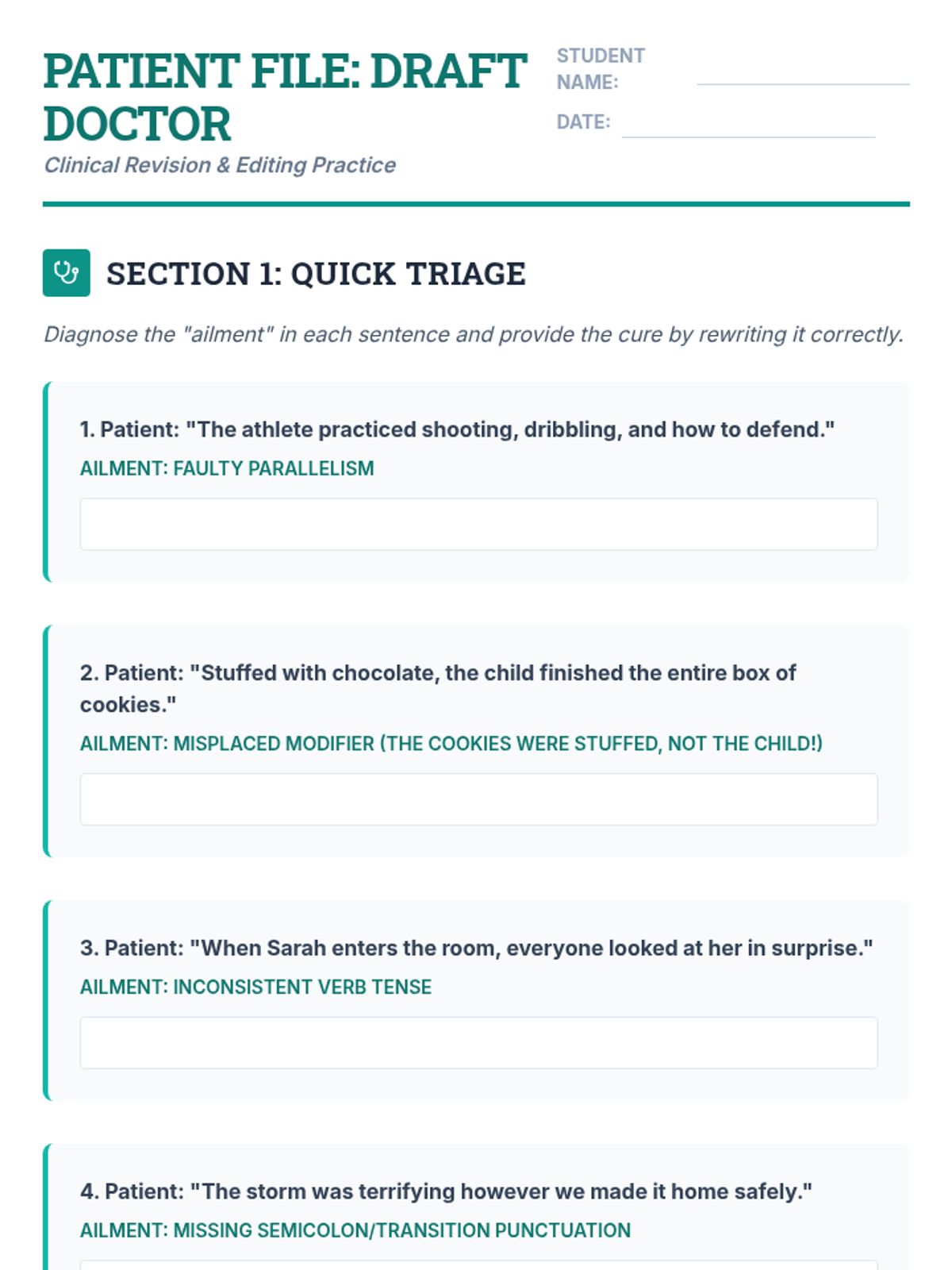
A comprehensive practice session for English 1 EOC revising and editing, featuring a medical-themed approach to 'curing' common writing ailments like poor sentence structure, tense issues, and punctuation errors.
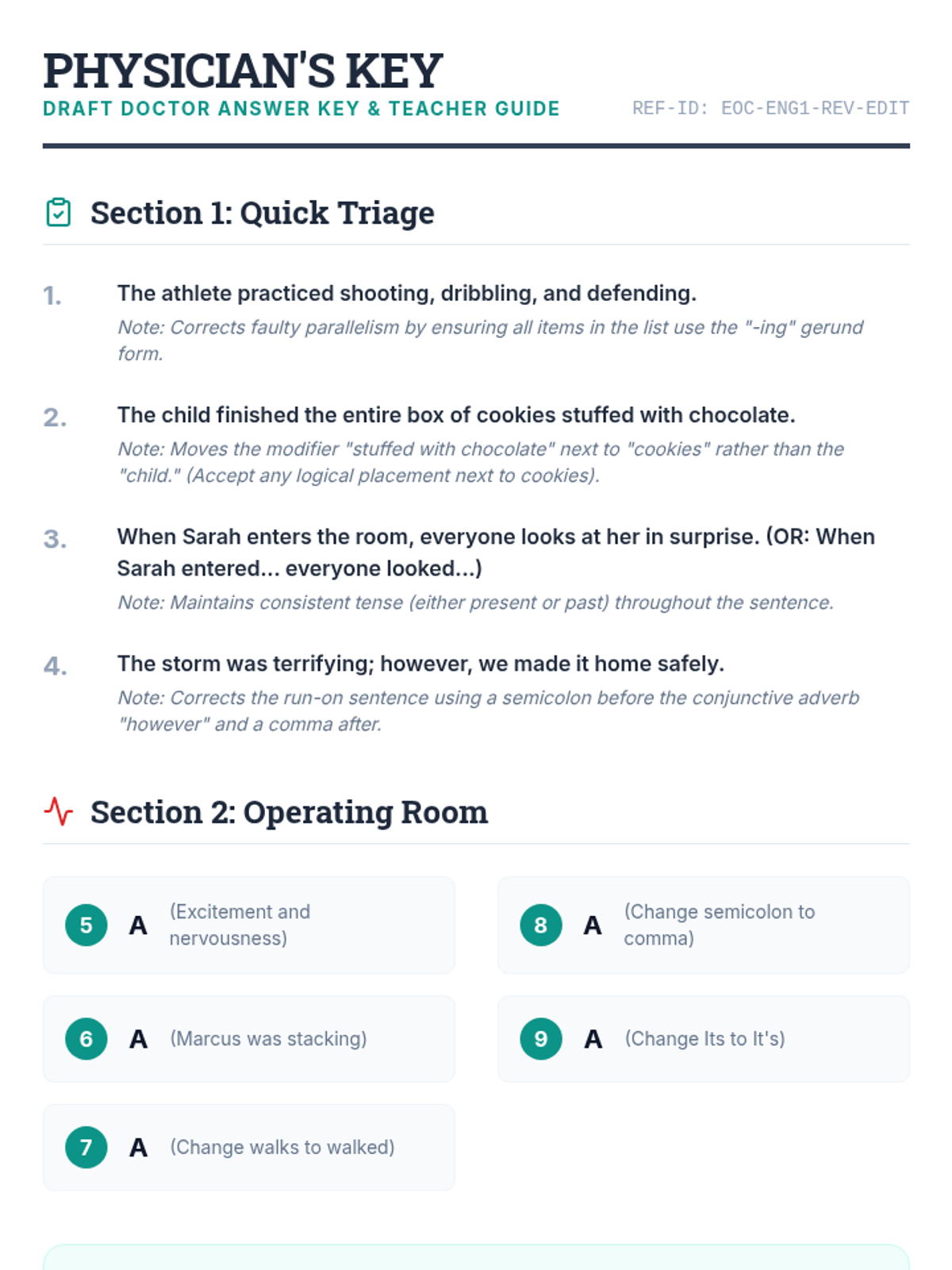
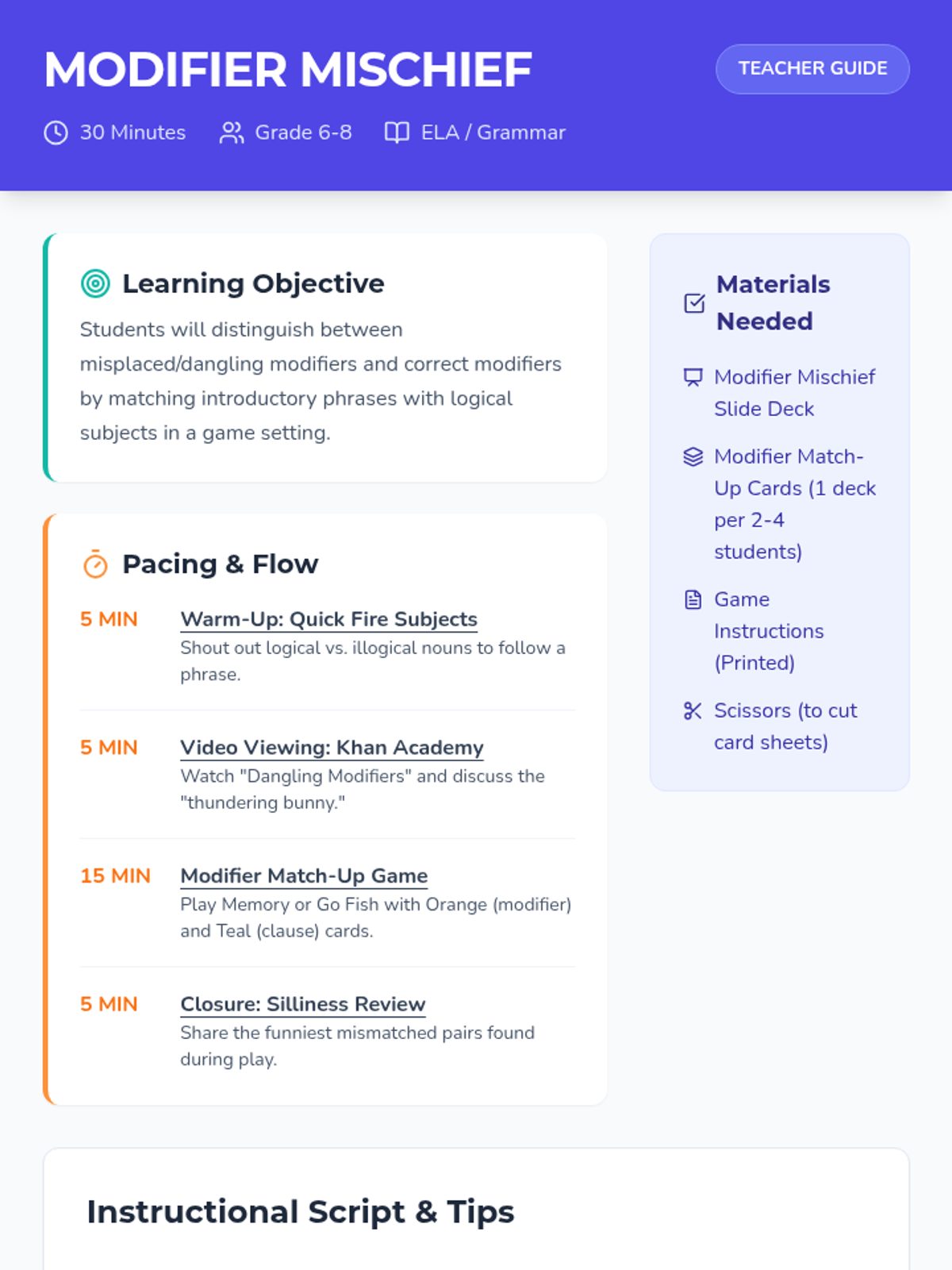
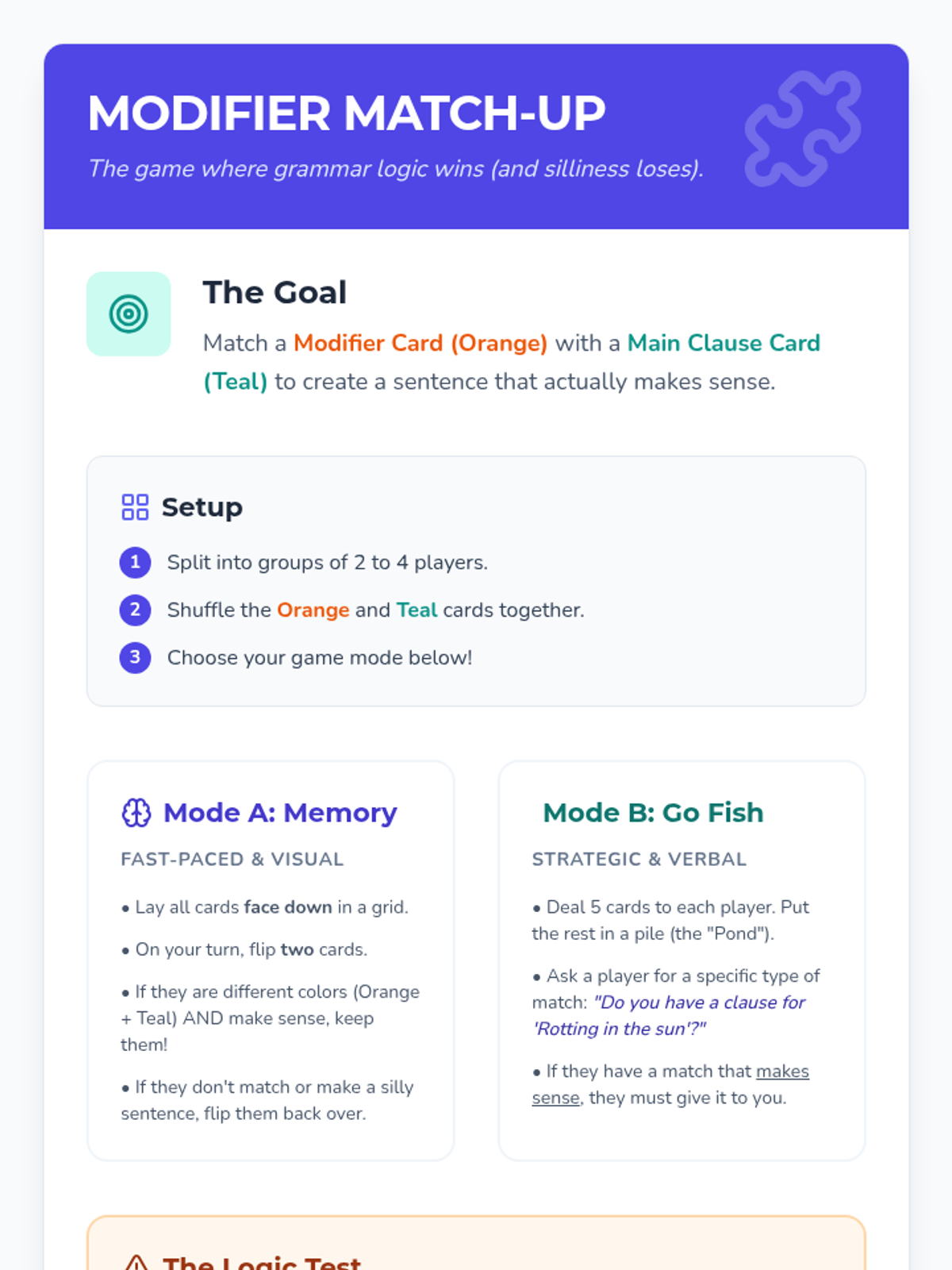
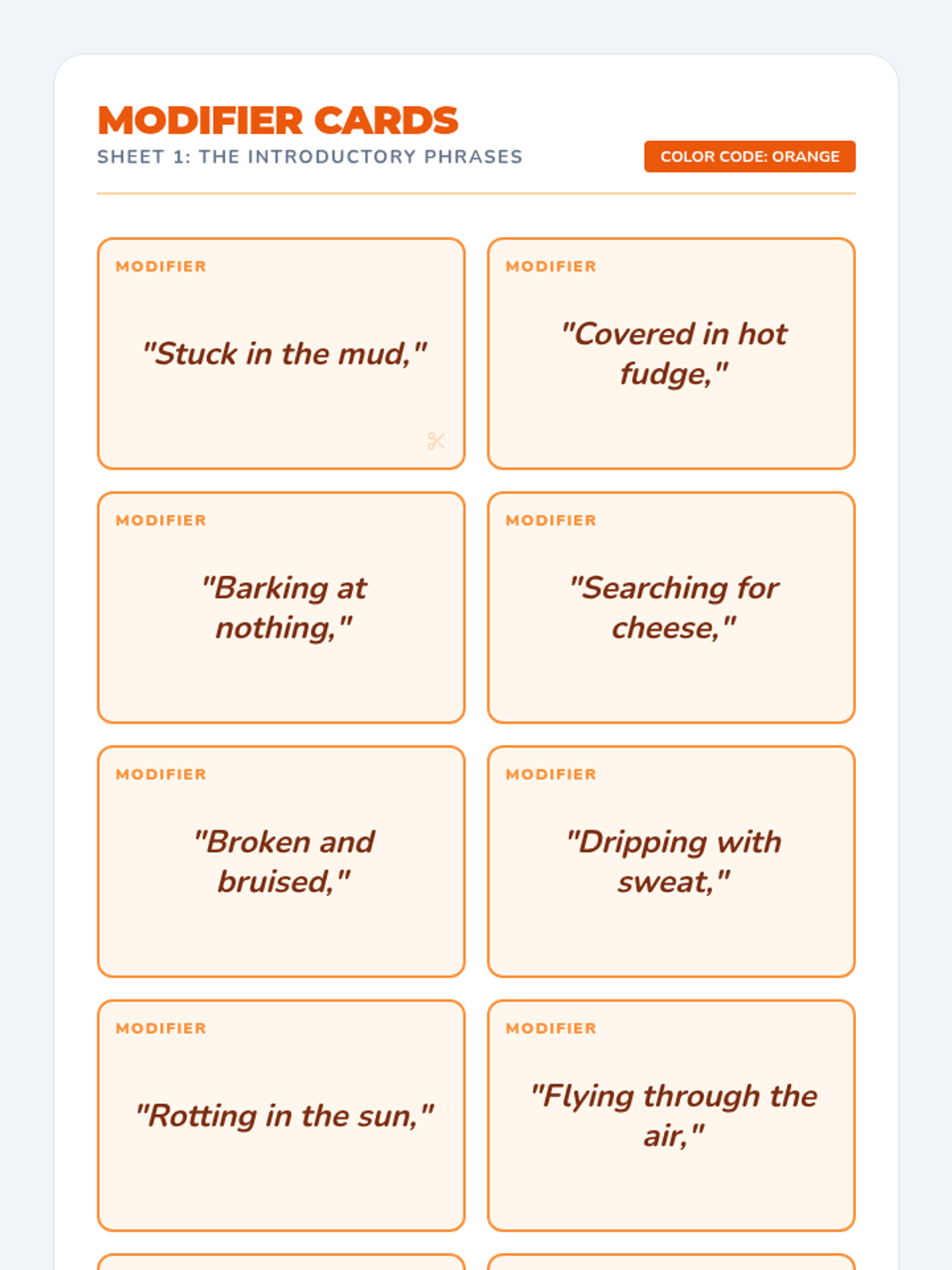
A high-energy grammar lesson where students identify and fix dangling and misplaced modifiers through a video-based discussion and a "Modifier Match-Up" card game. Students learn to ensure modifiers are placed next to the nouns they actually describe to avoid "silly" sentence meanings.
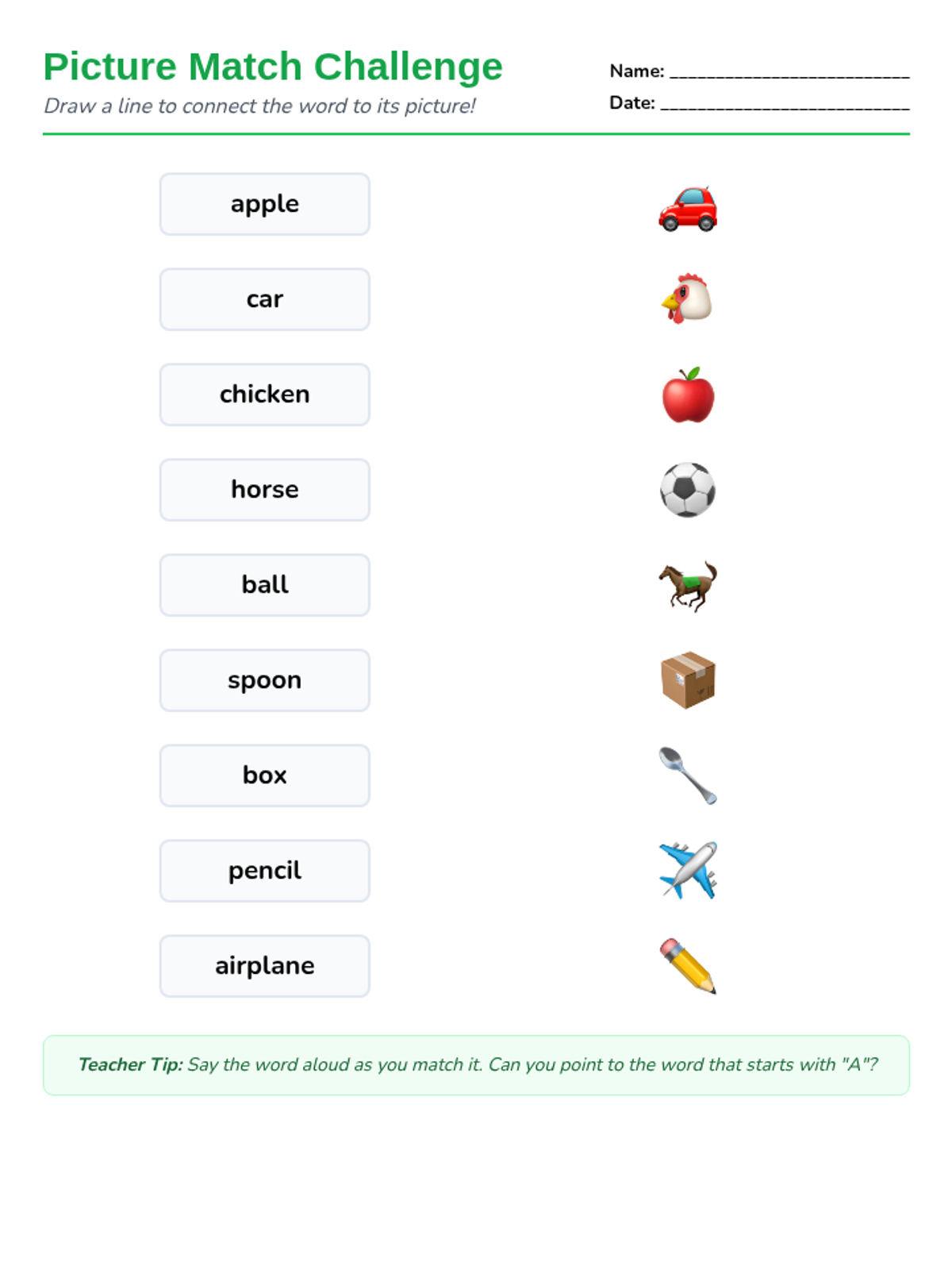
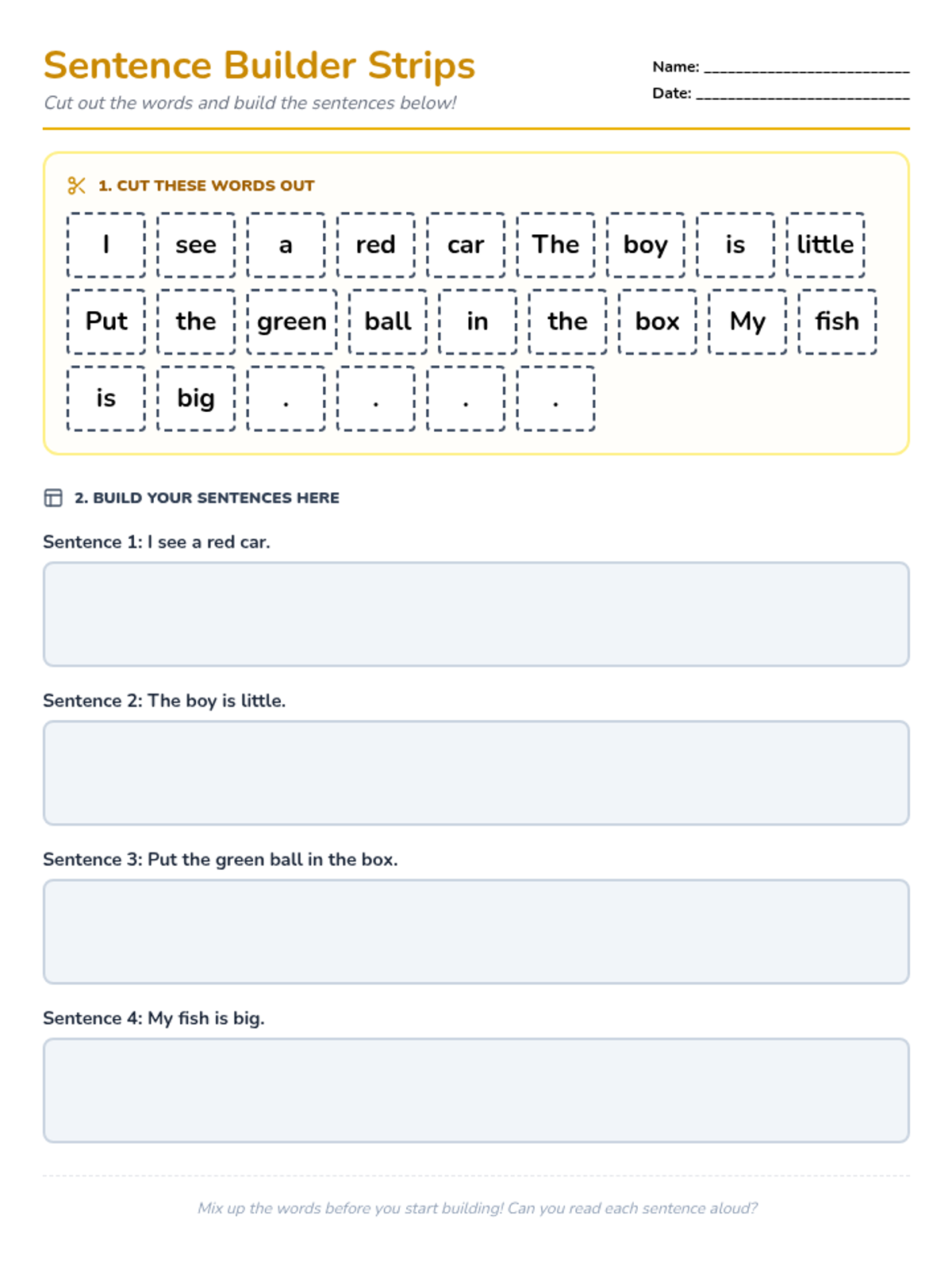
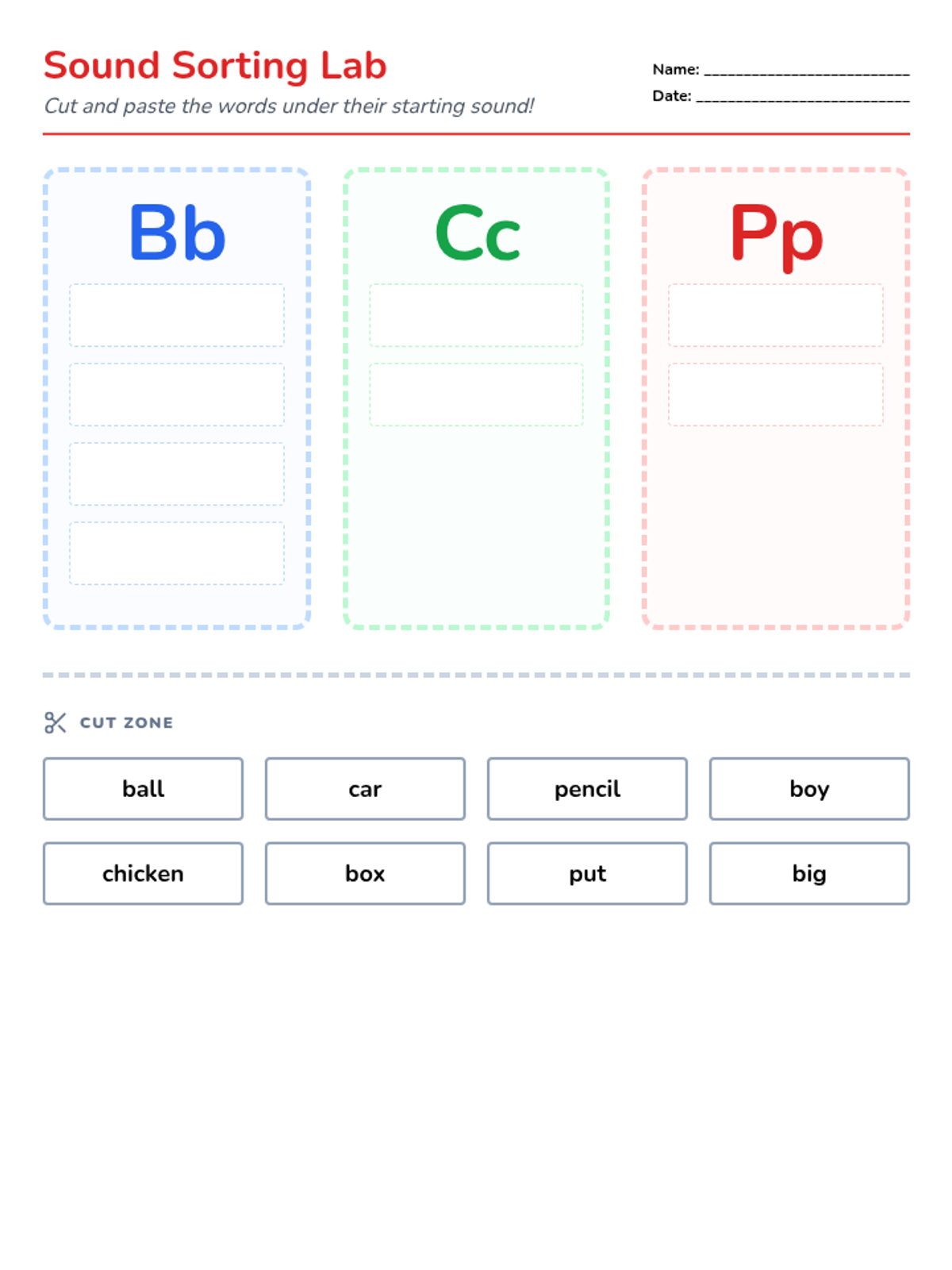
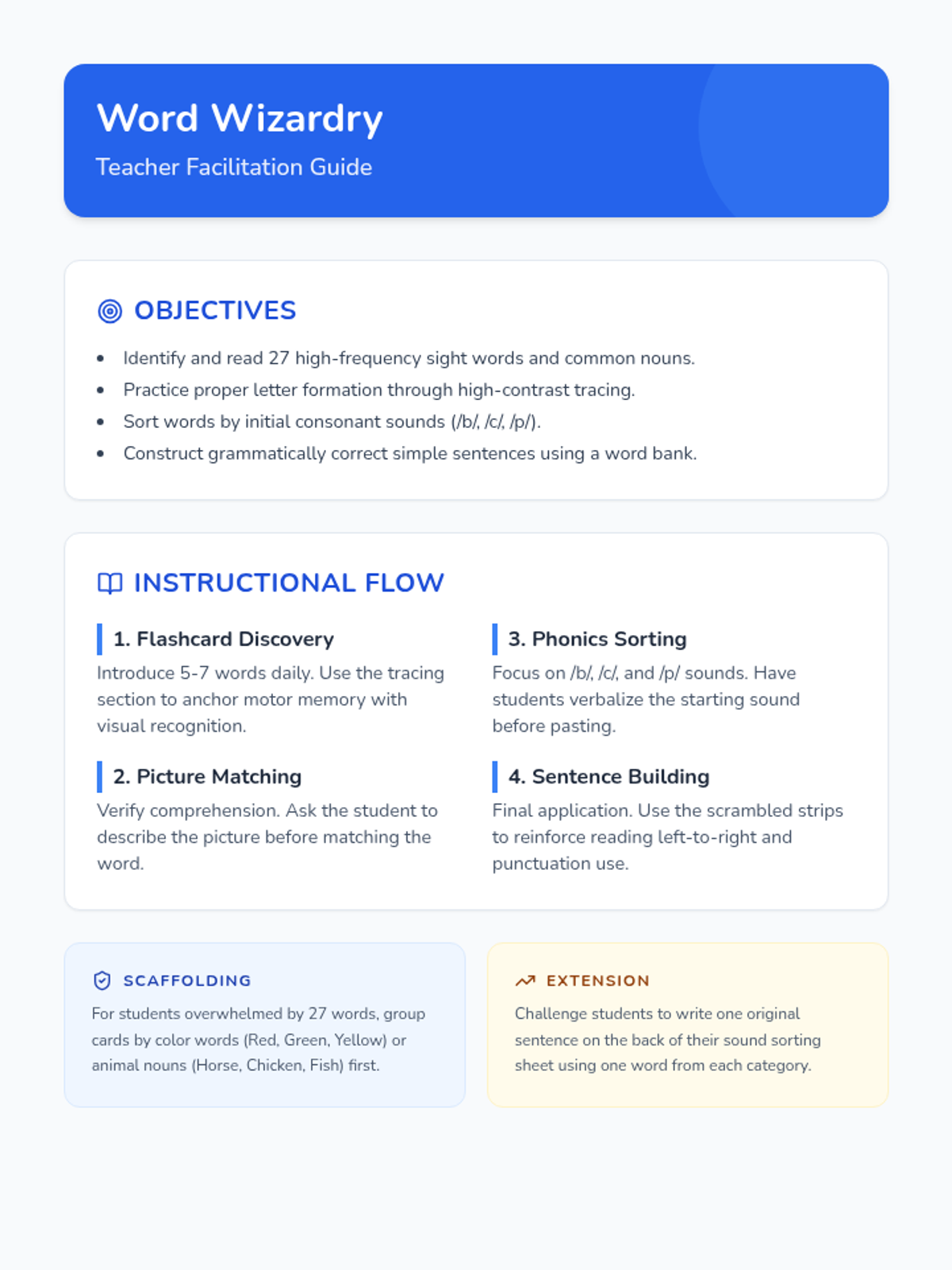
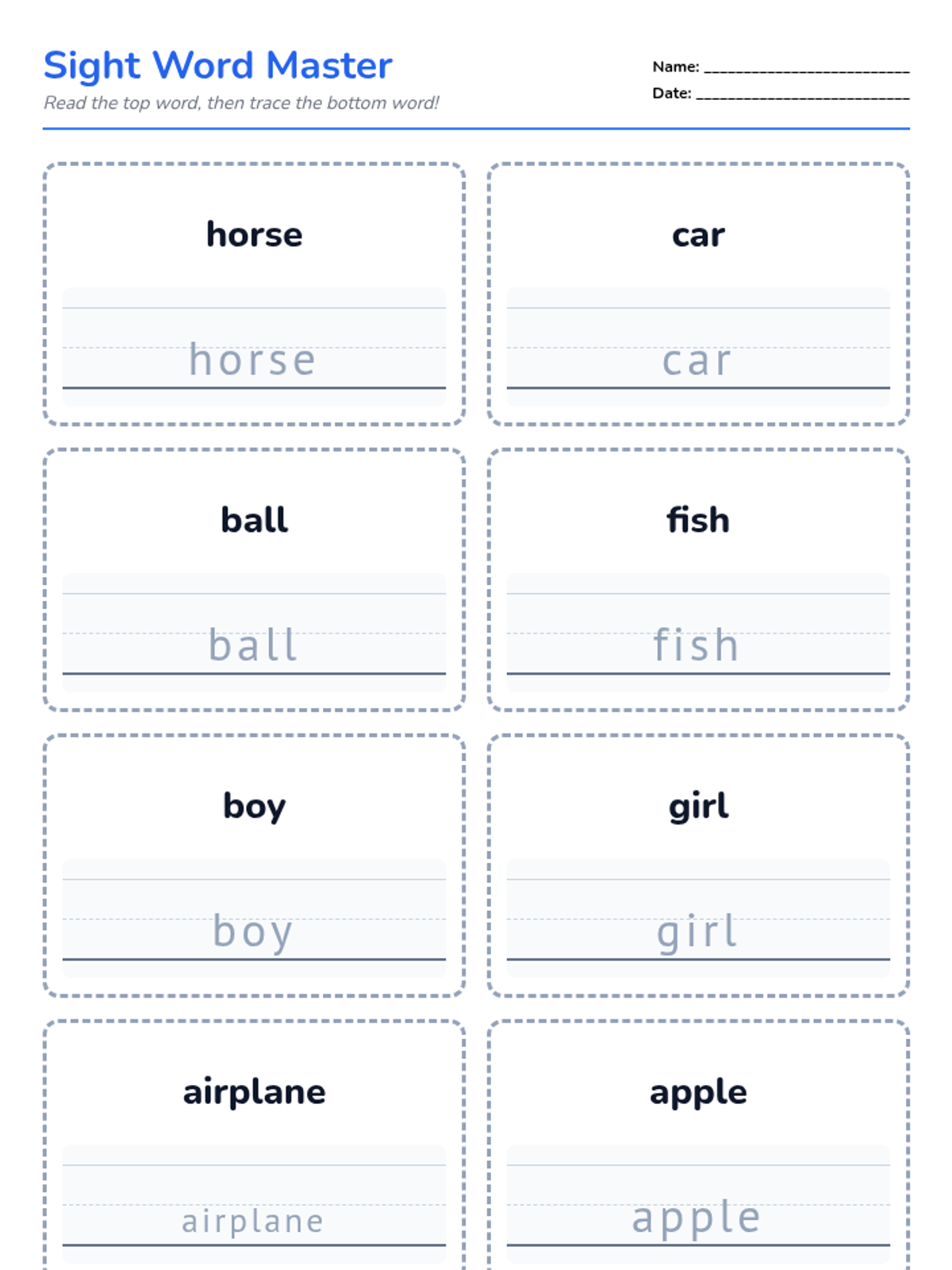
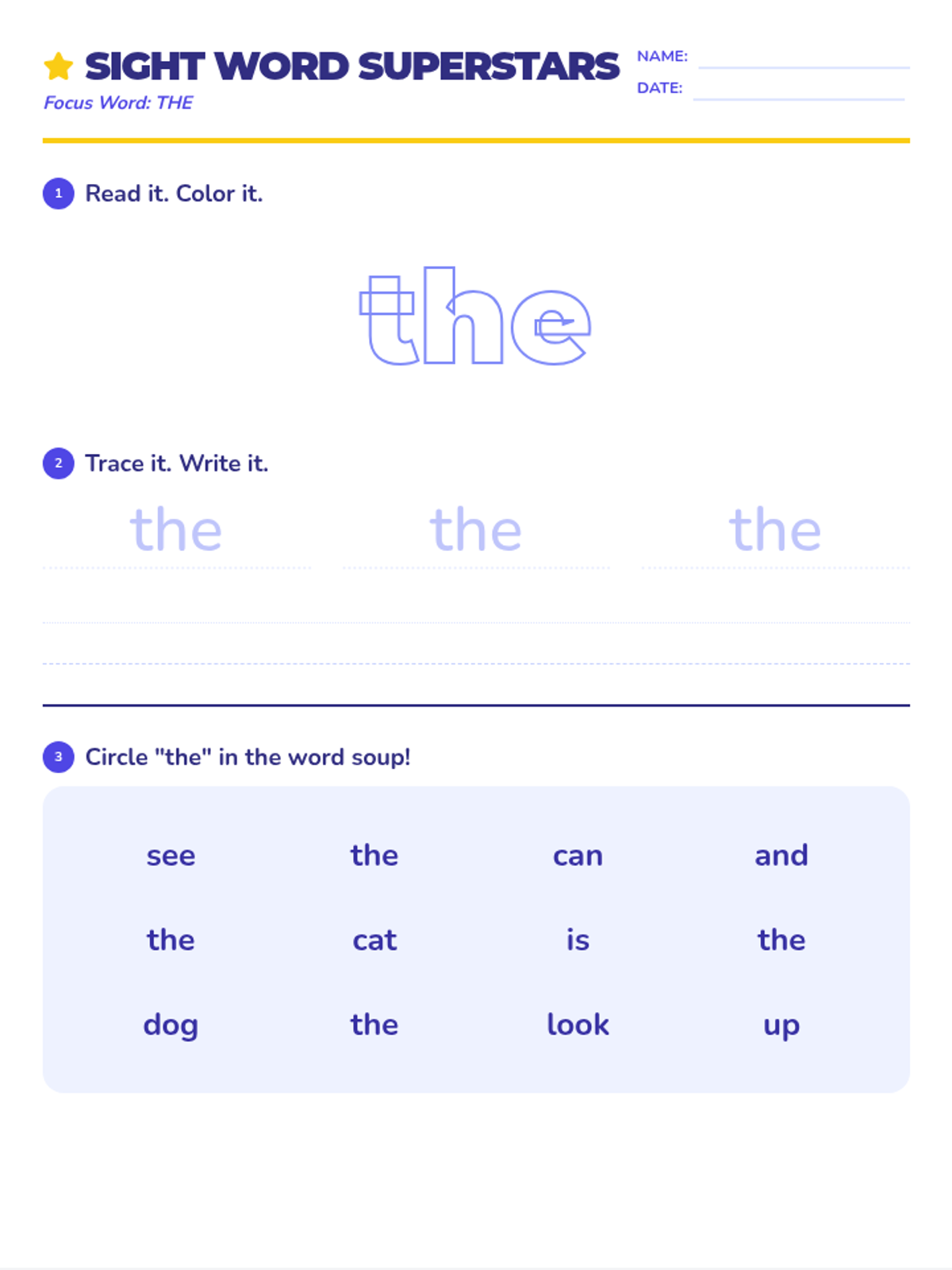
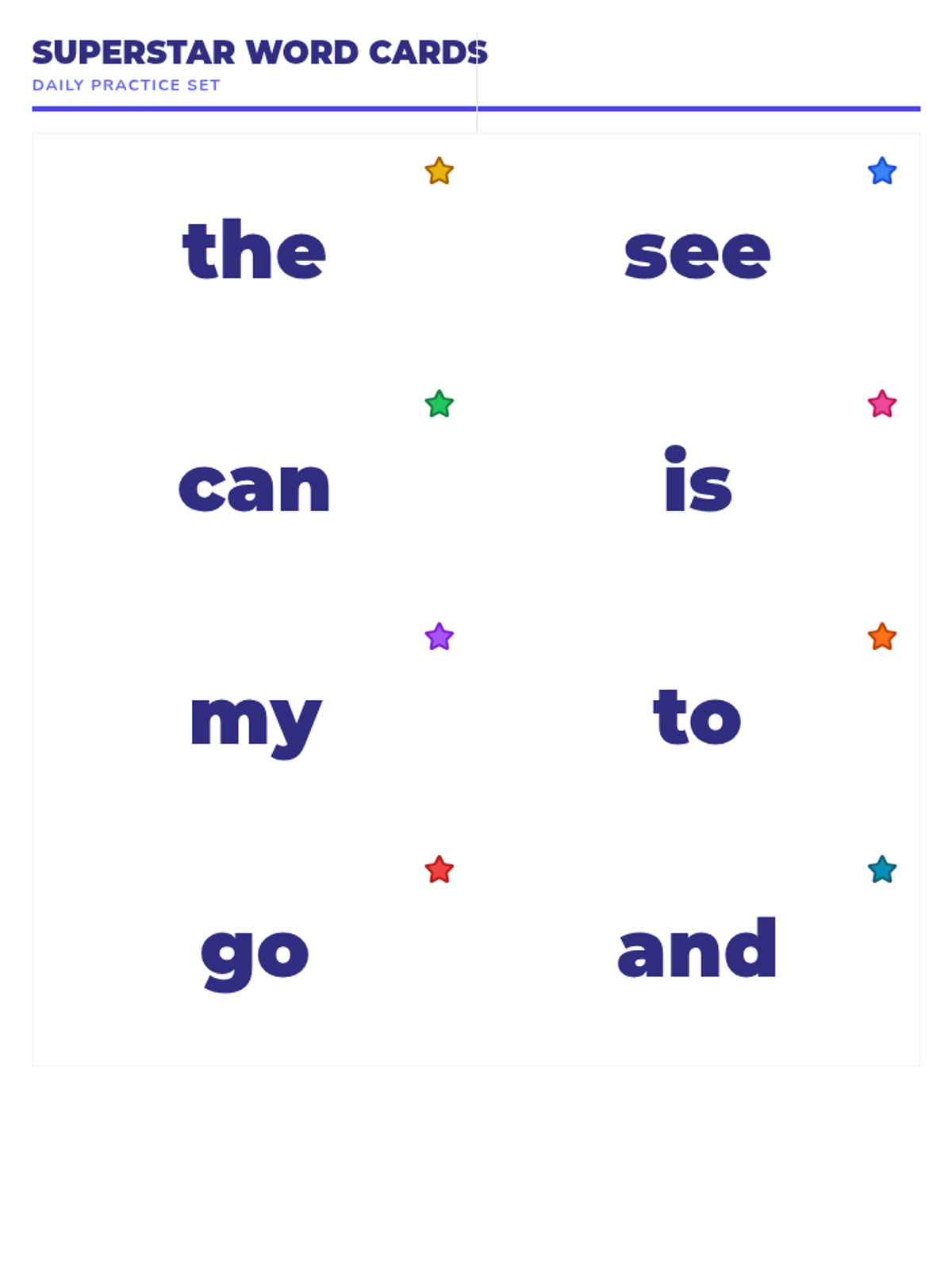
A comprehensive set of foundational literacy materials focused on 27 key sight words and nouns, covering word recognition, handwriting, sentence structure, and phonics.
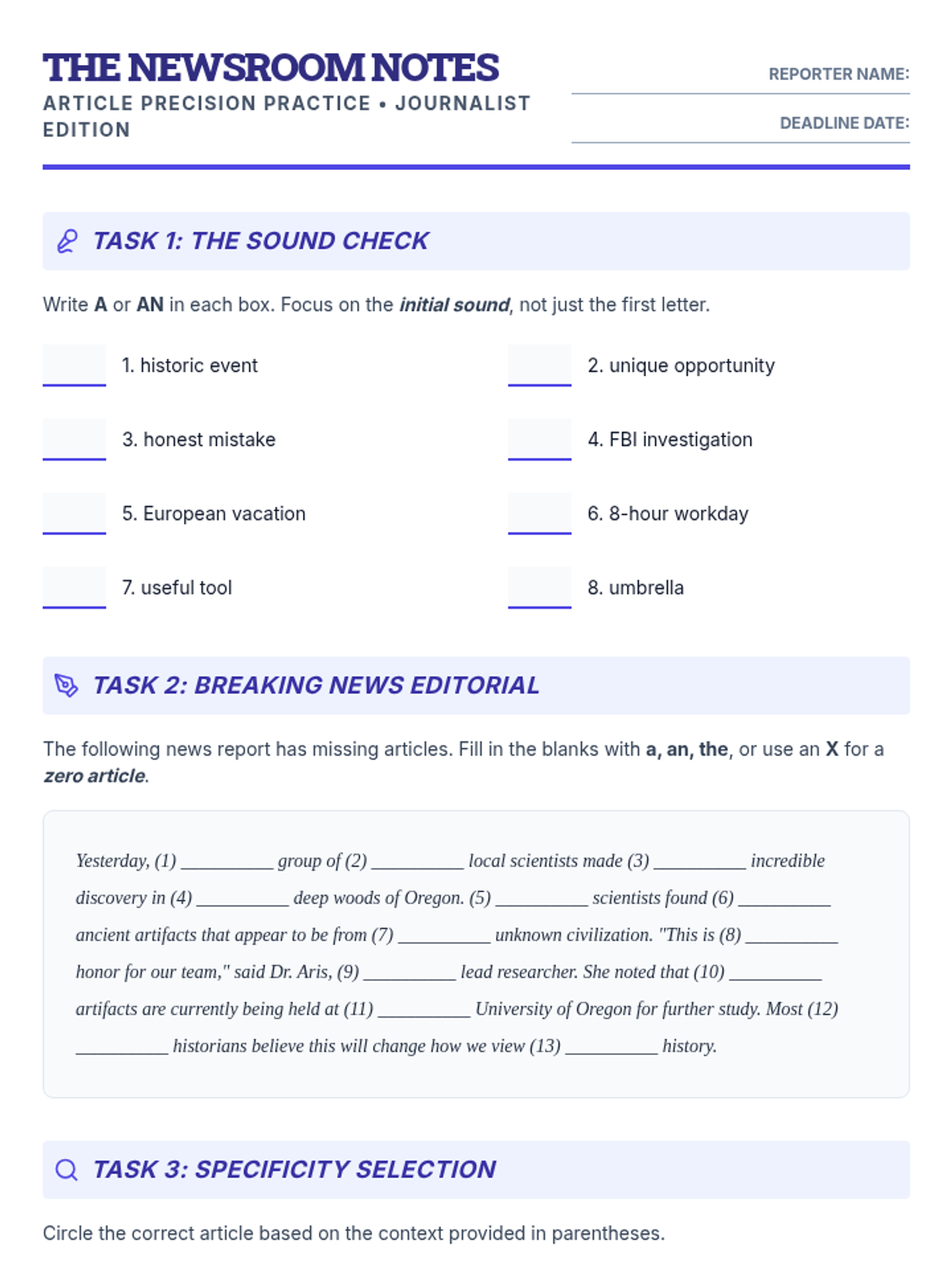
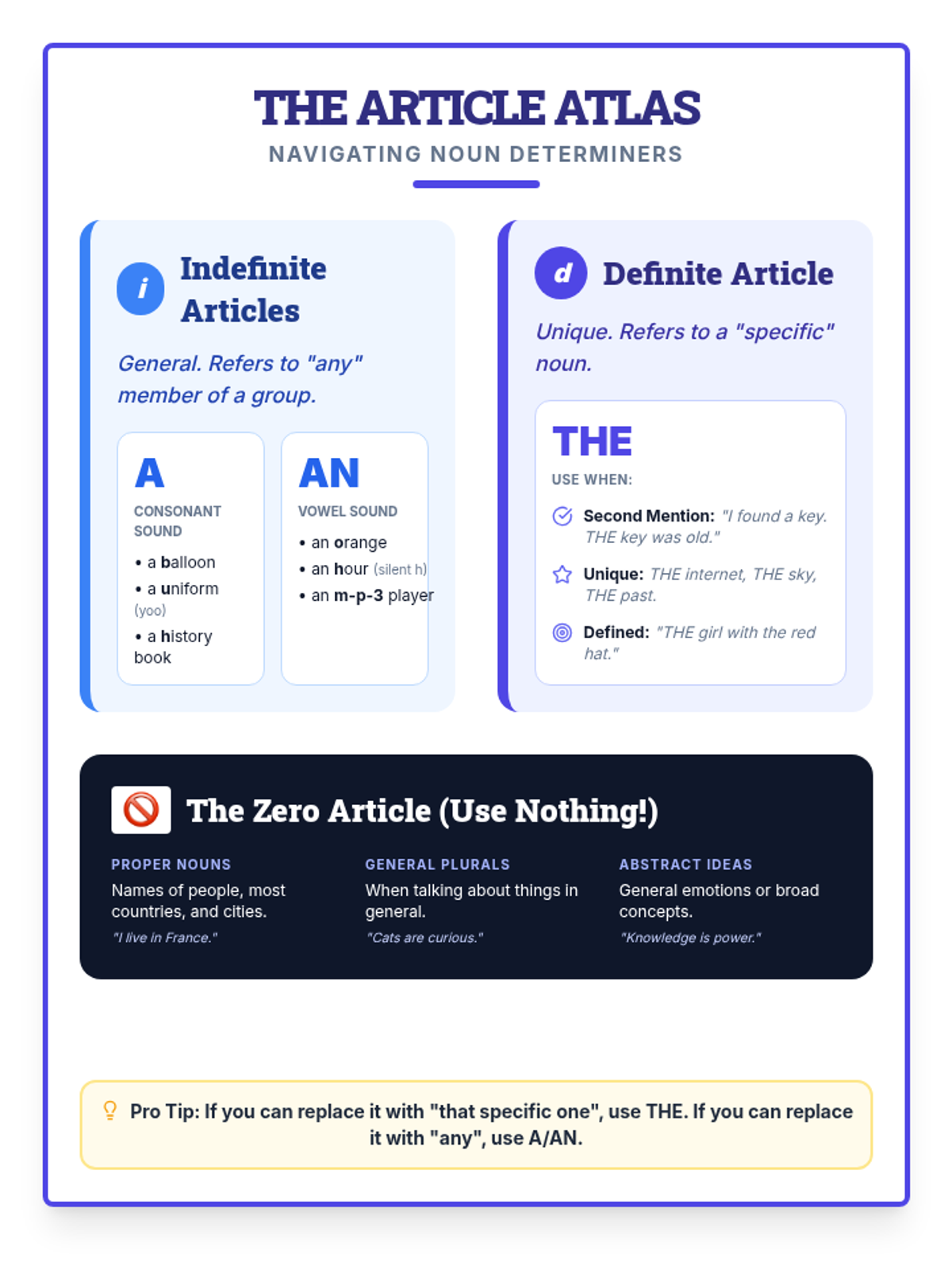
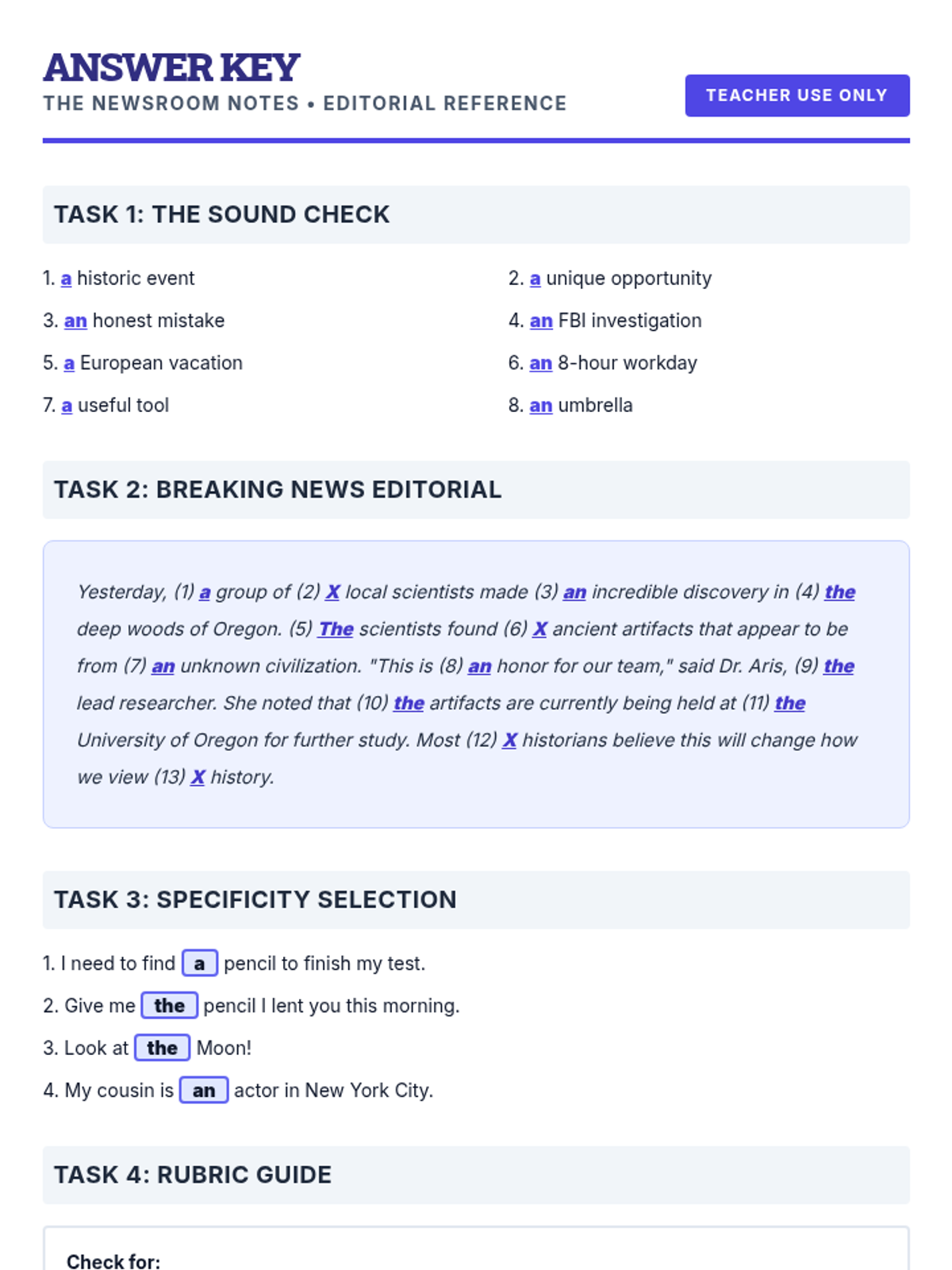
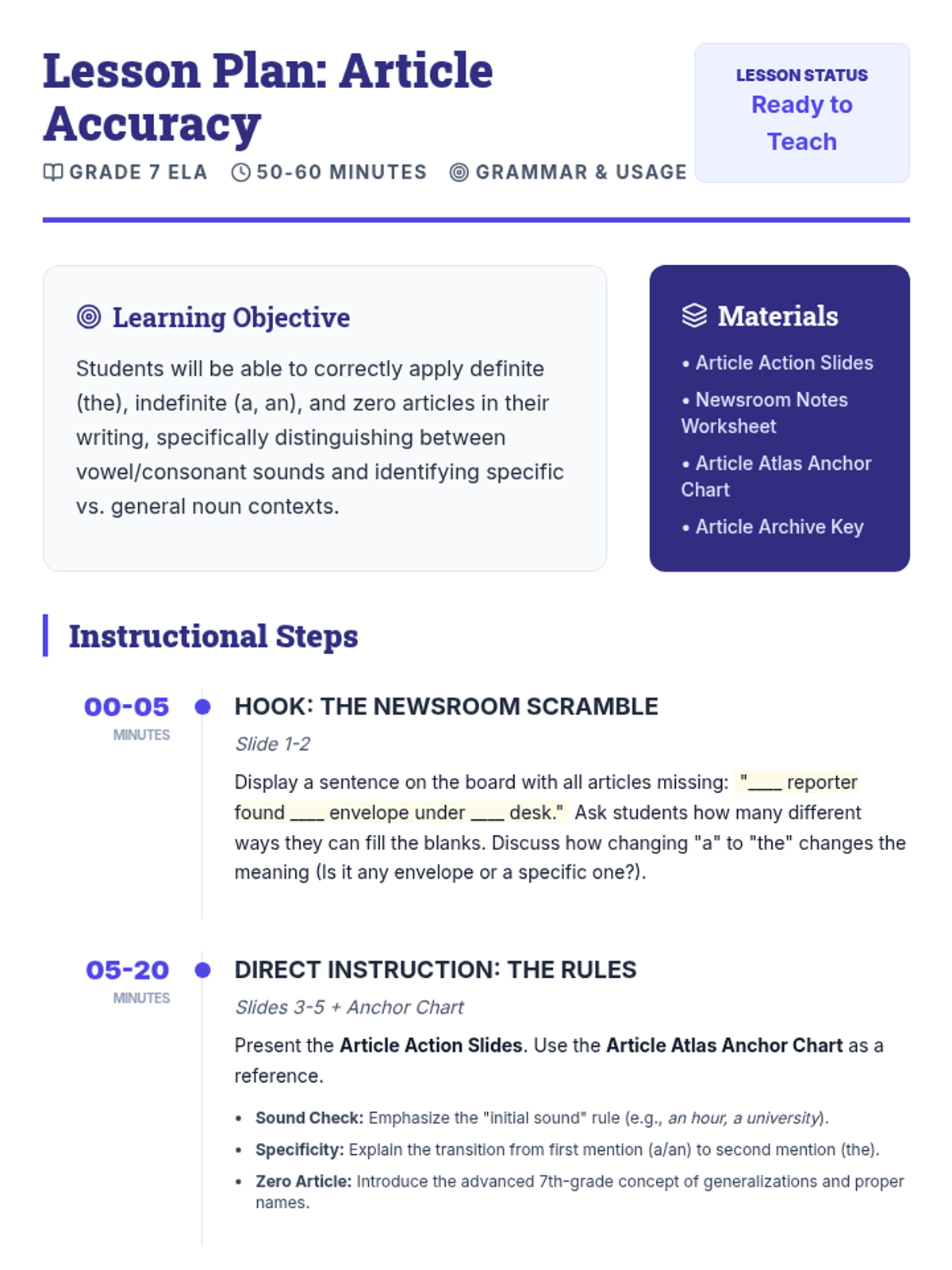
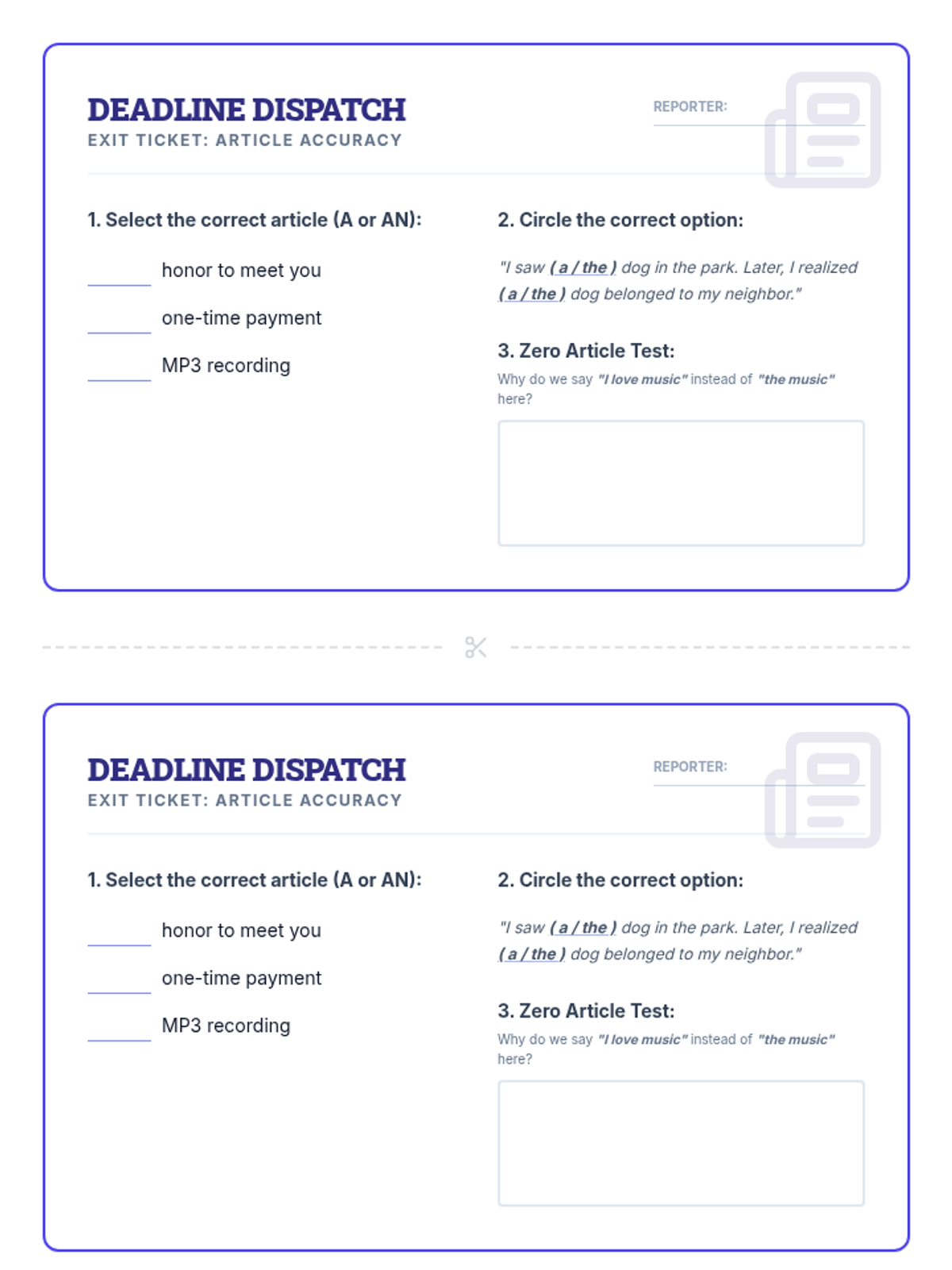
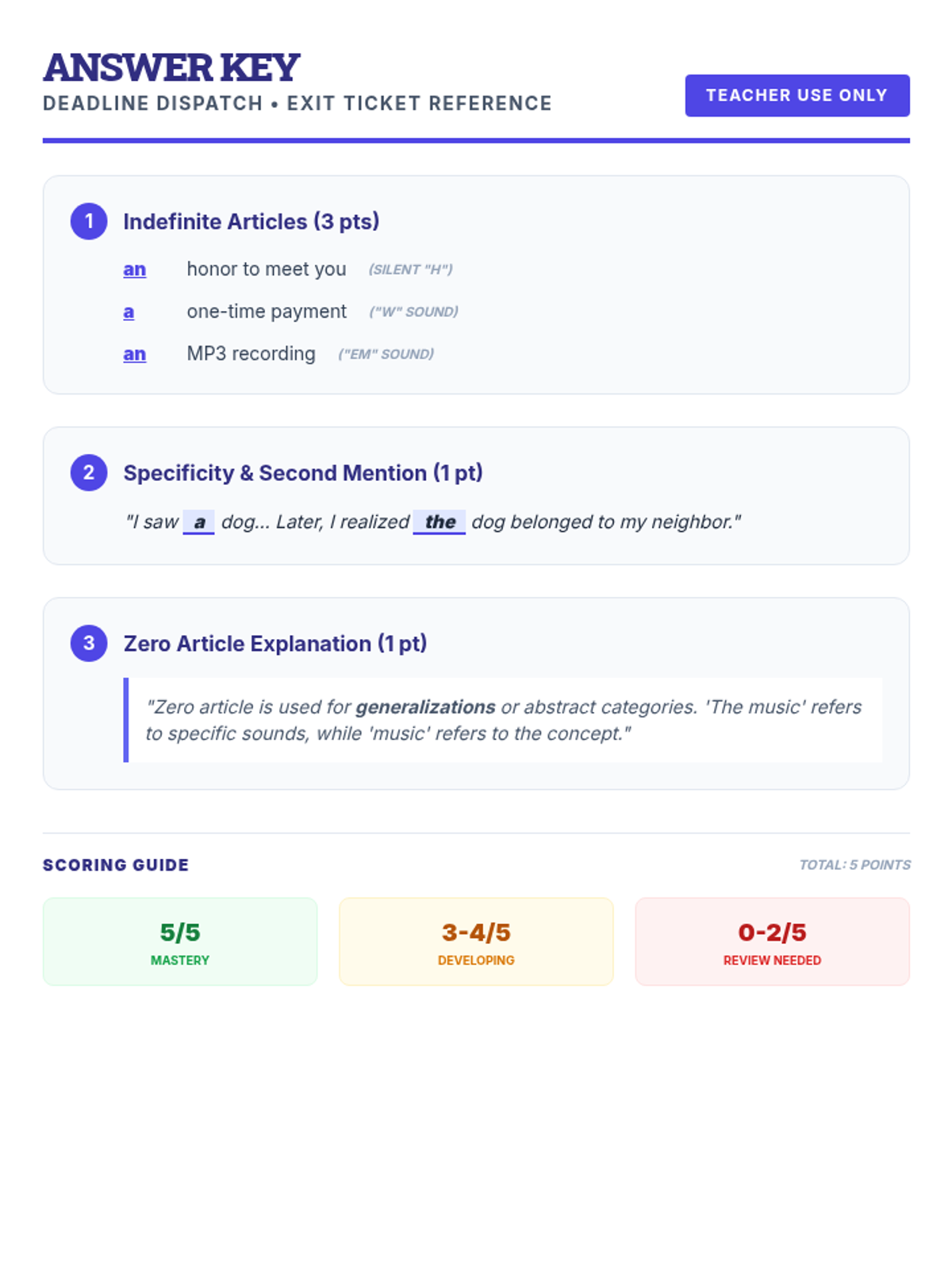
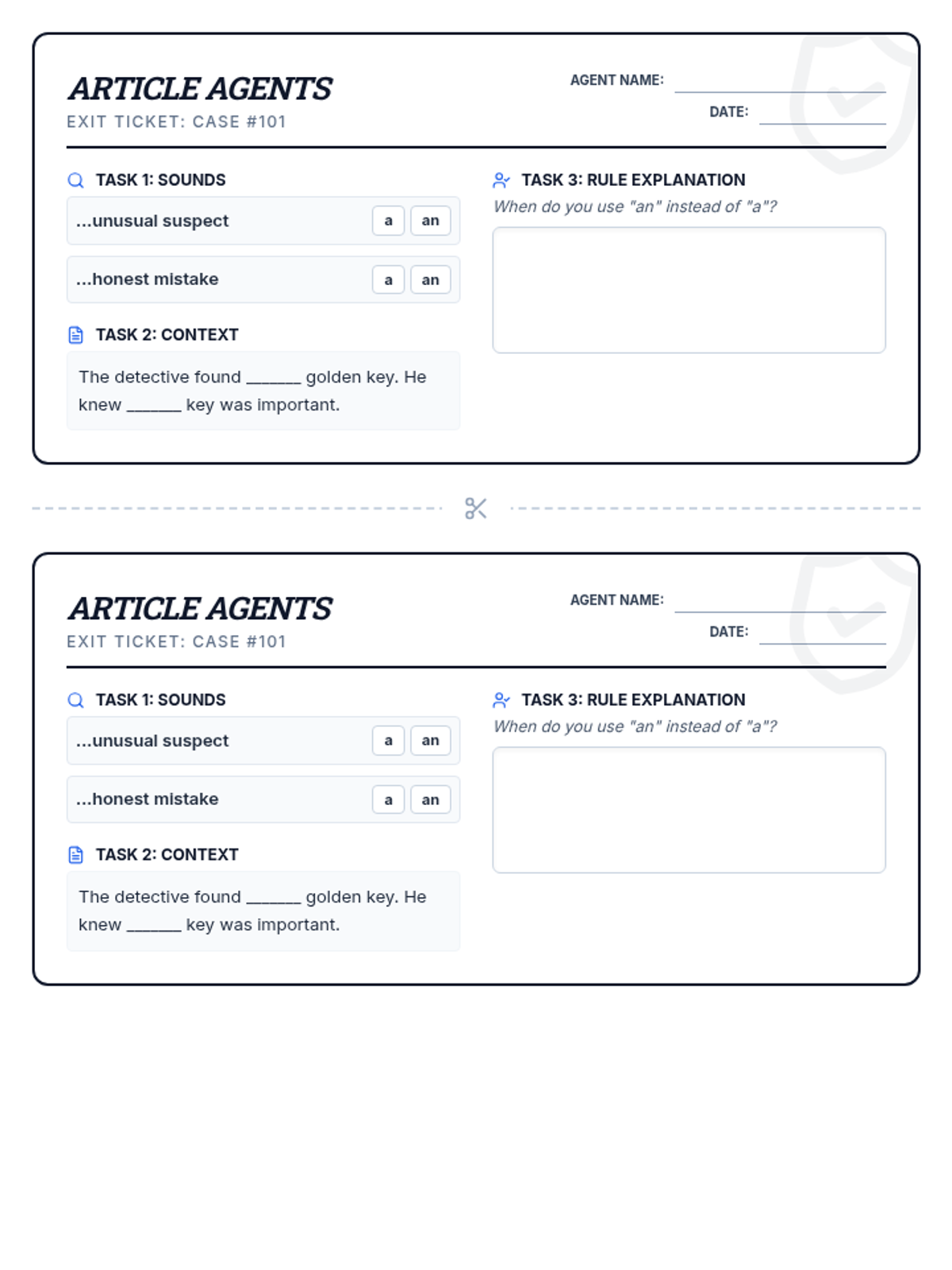
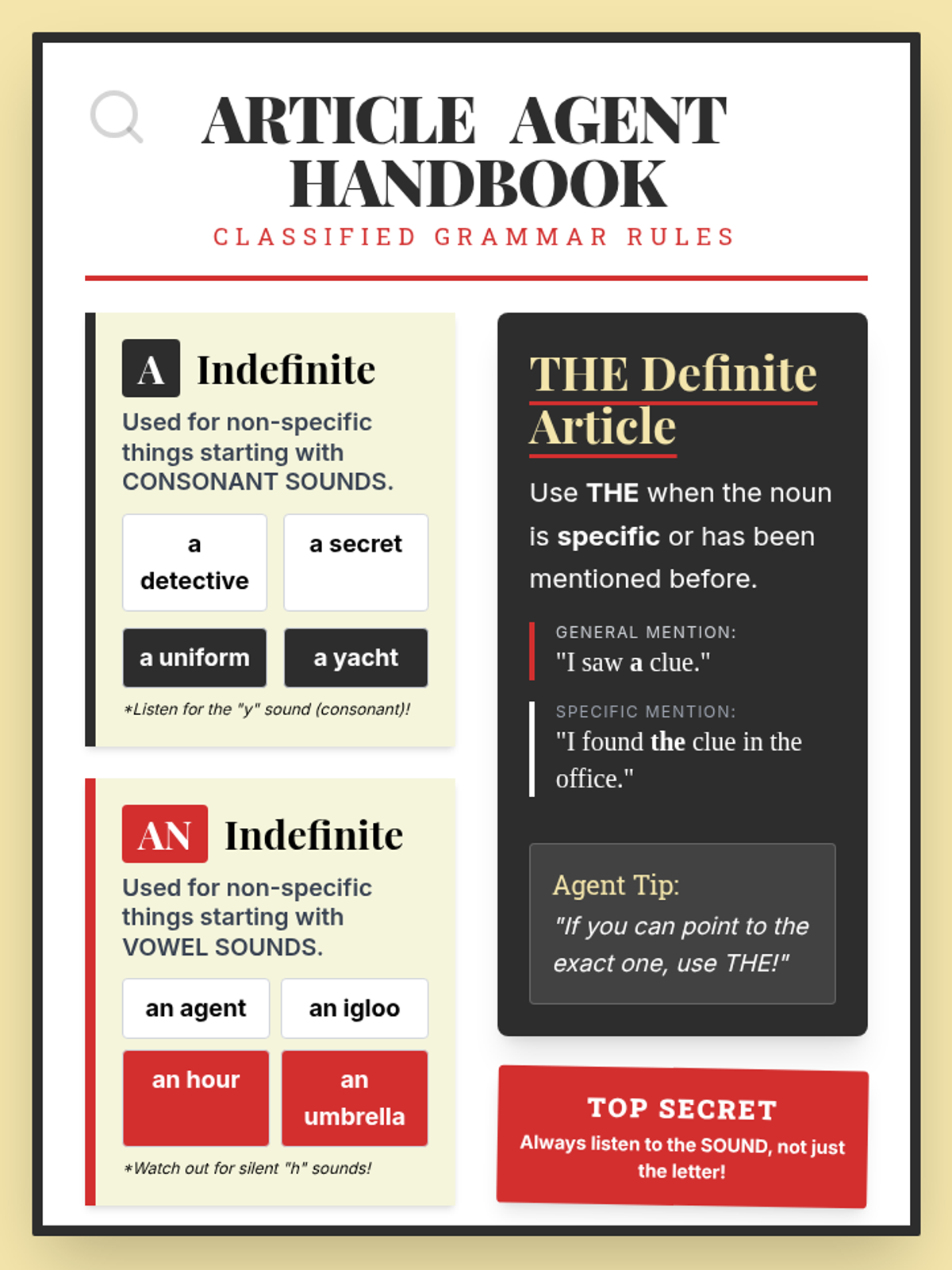
A comprehensive lesson on using definite and indefinite articles correctly, tailored for 7th-grade students with a focus on sound-based rules, specificity, and zero article usage.
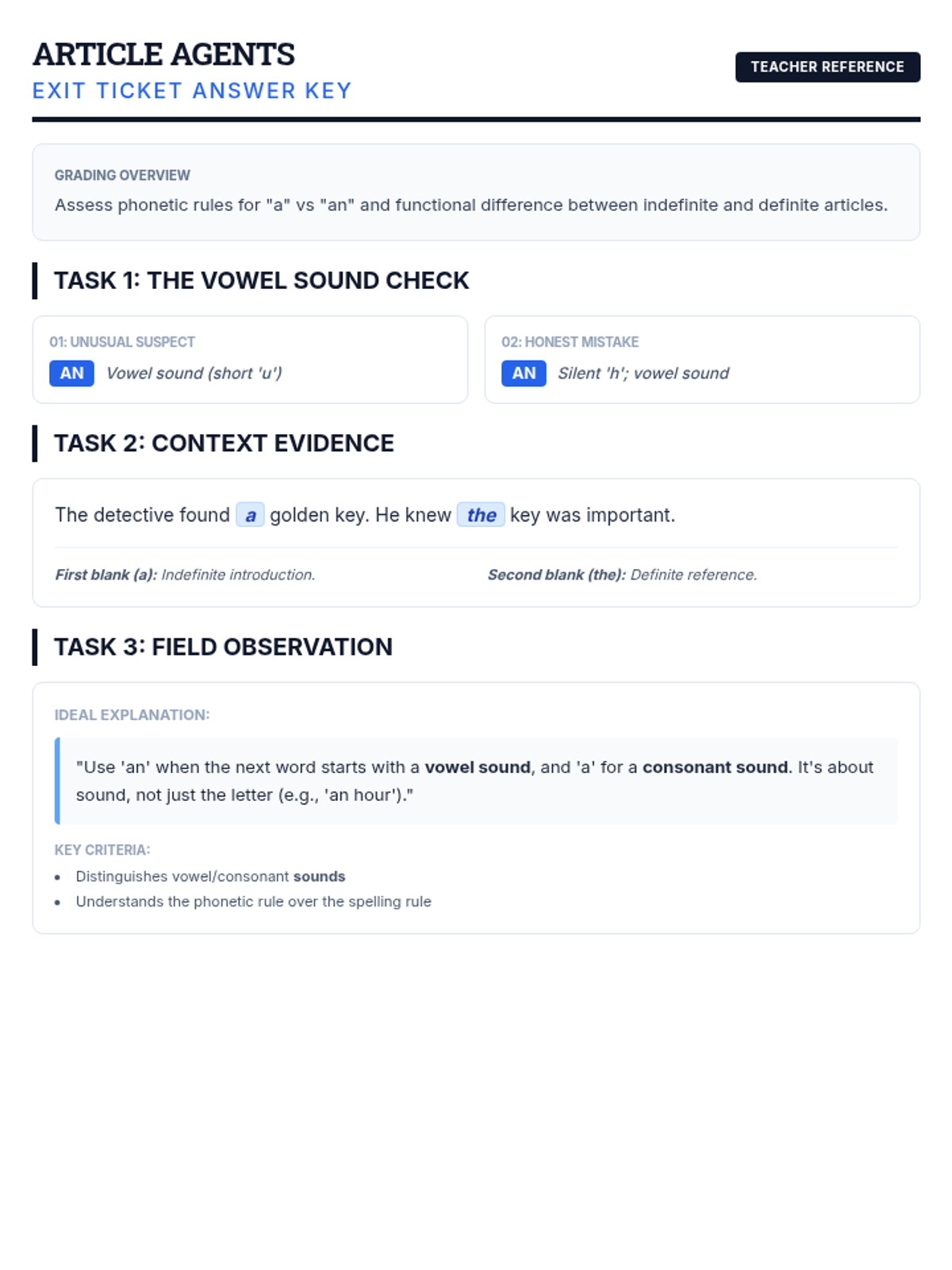
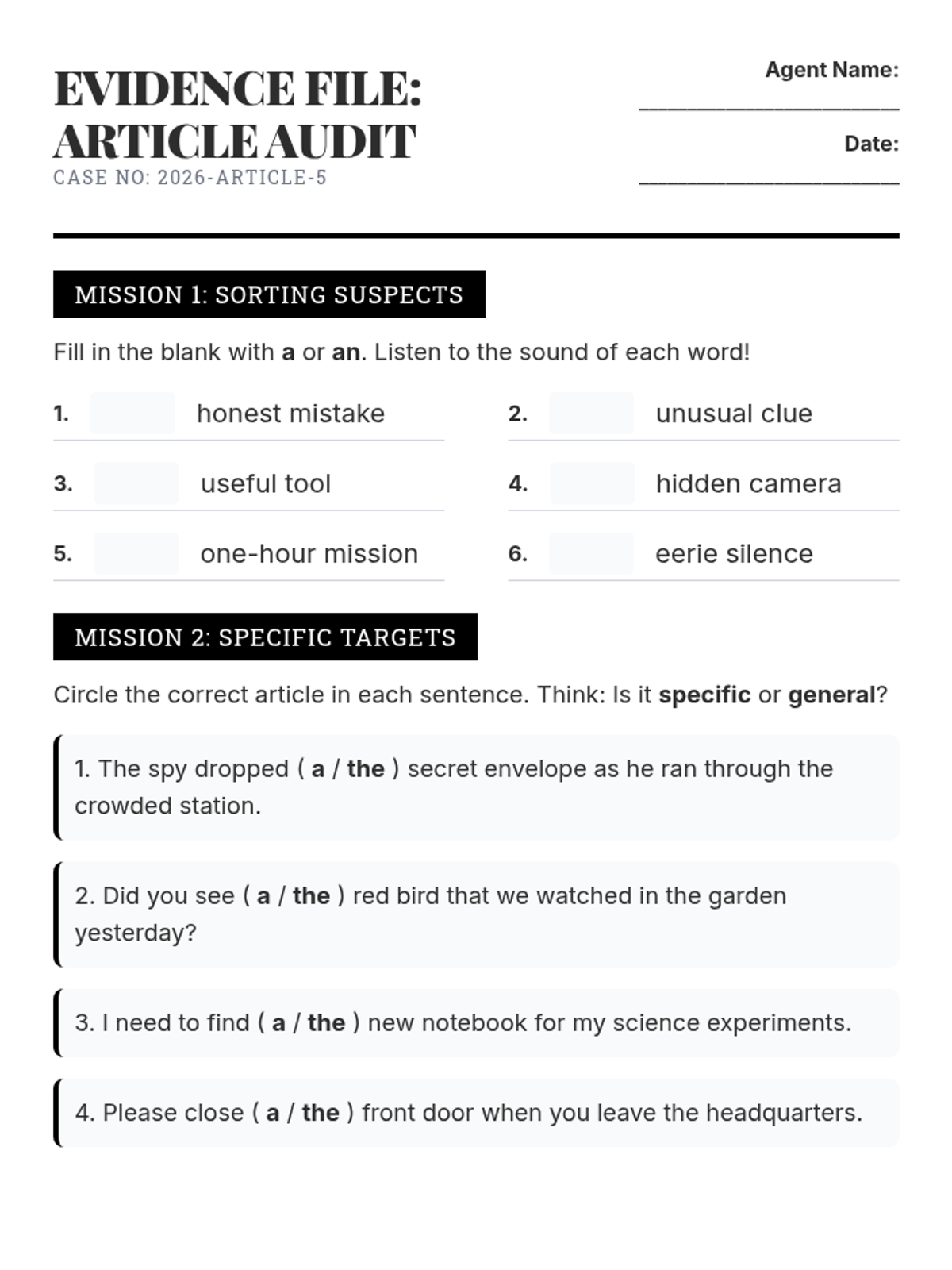
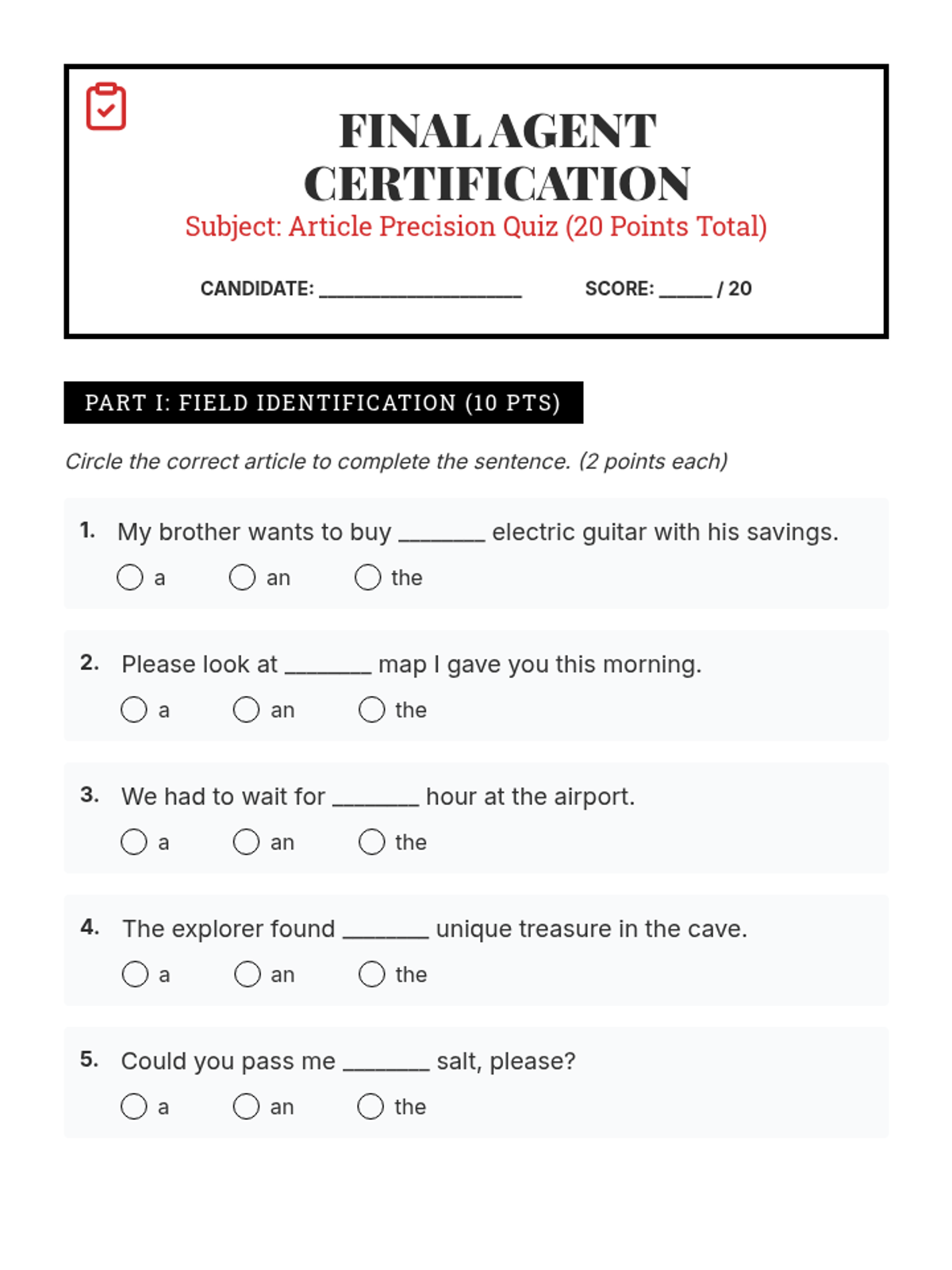
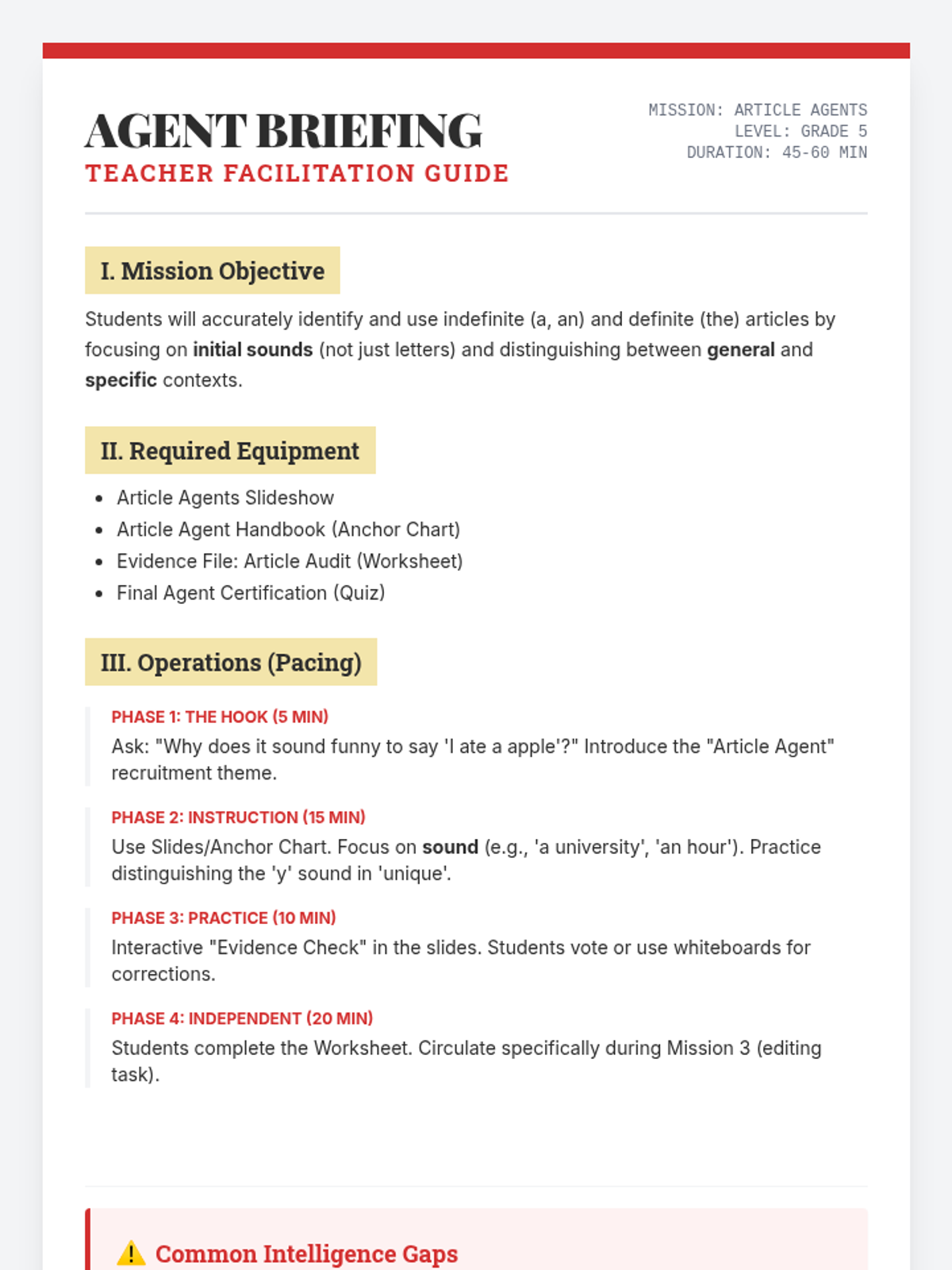
A comprehensive lesson on using articles (a, an, the) correctly, focusing on vowel/consonant sounds and definite vs. indefinite contexts for 5th graders.
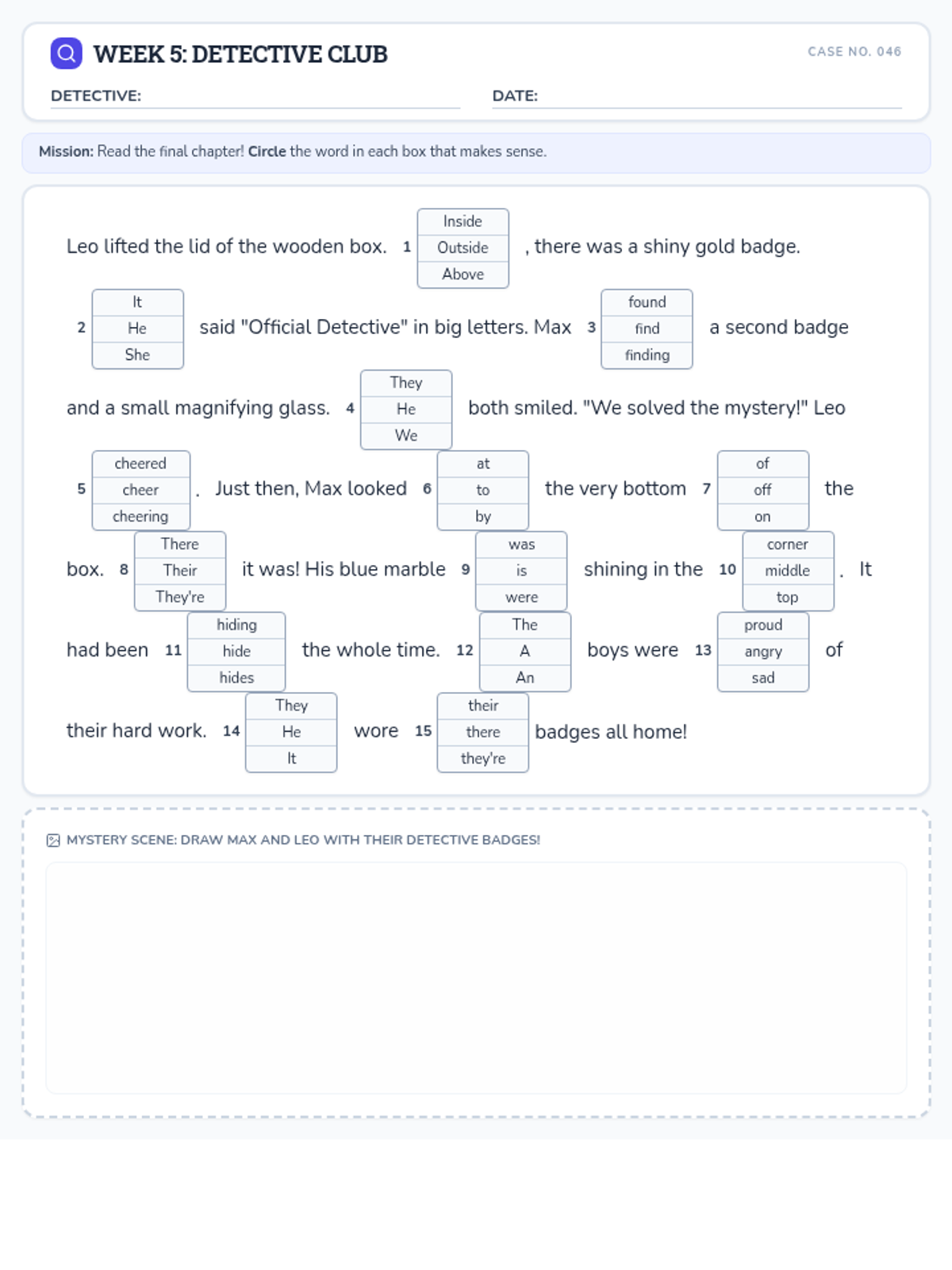
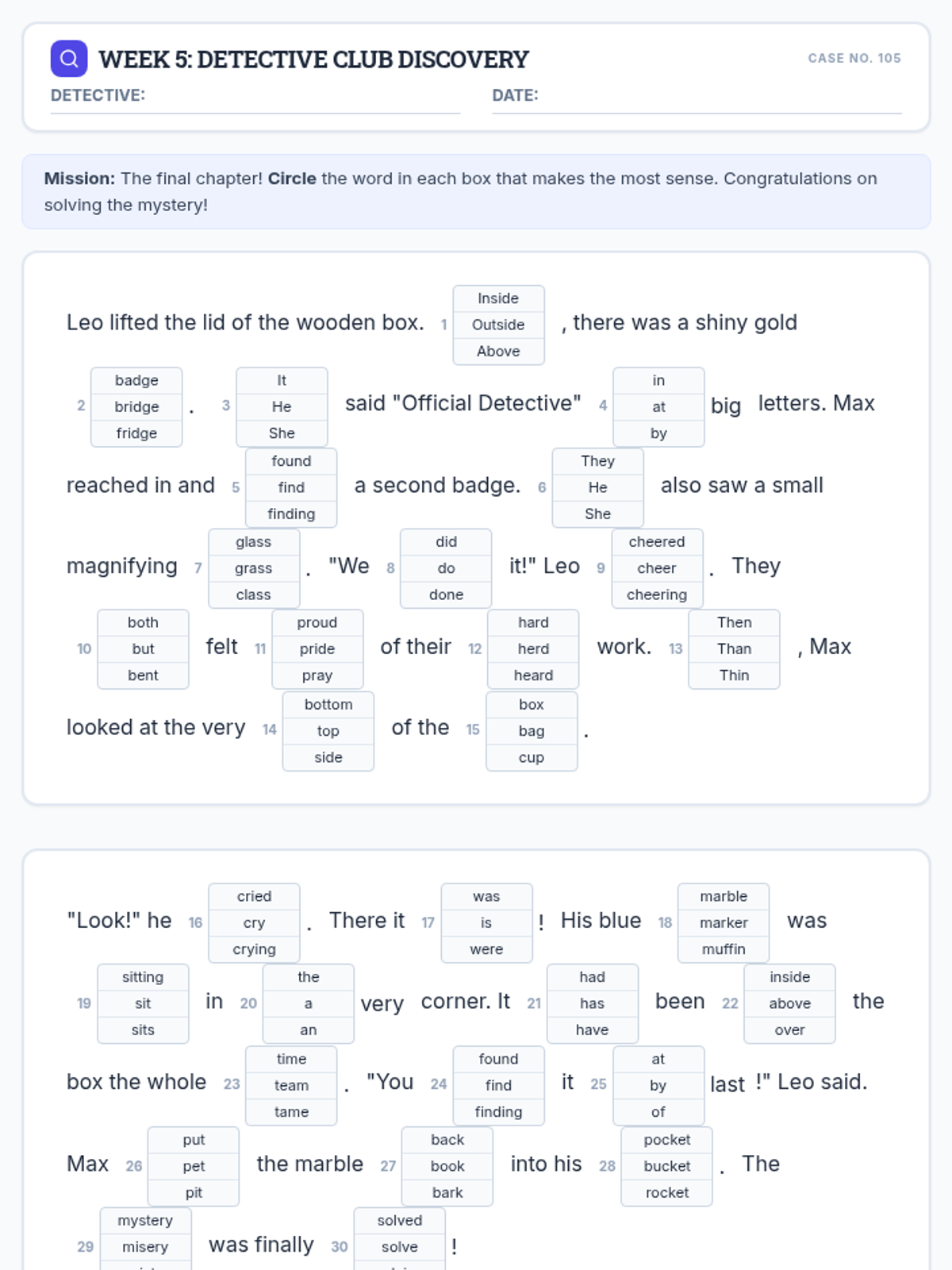
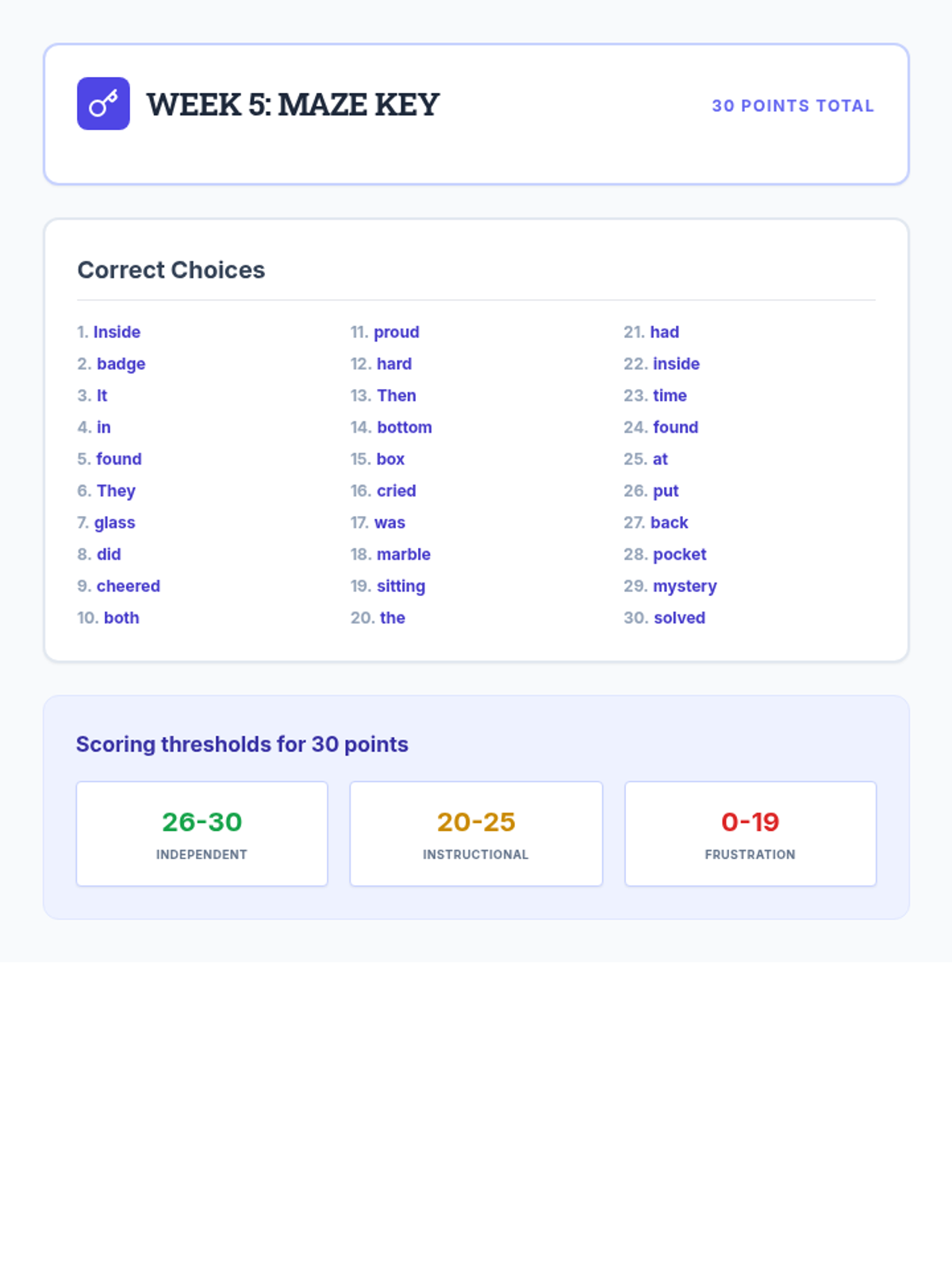
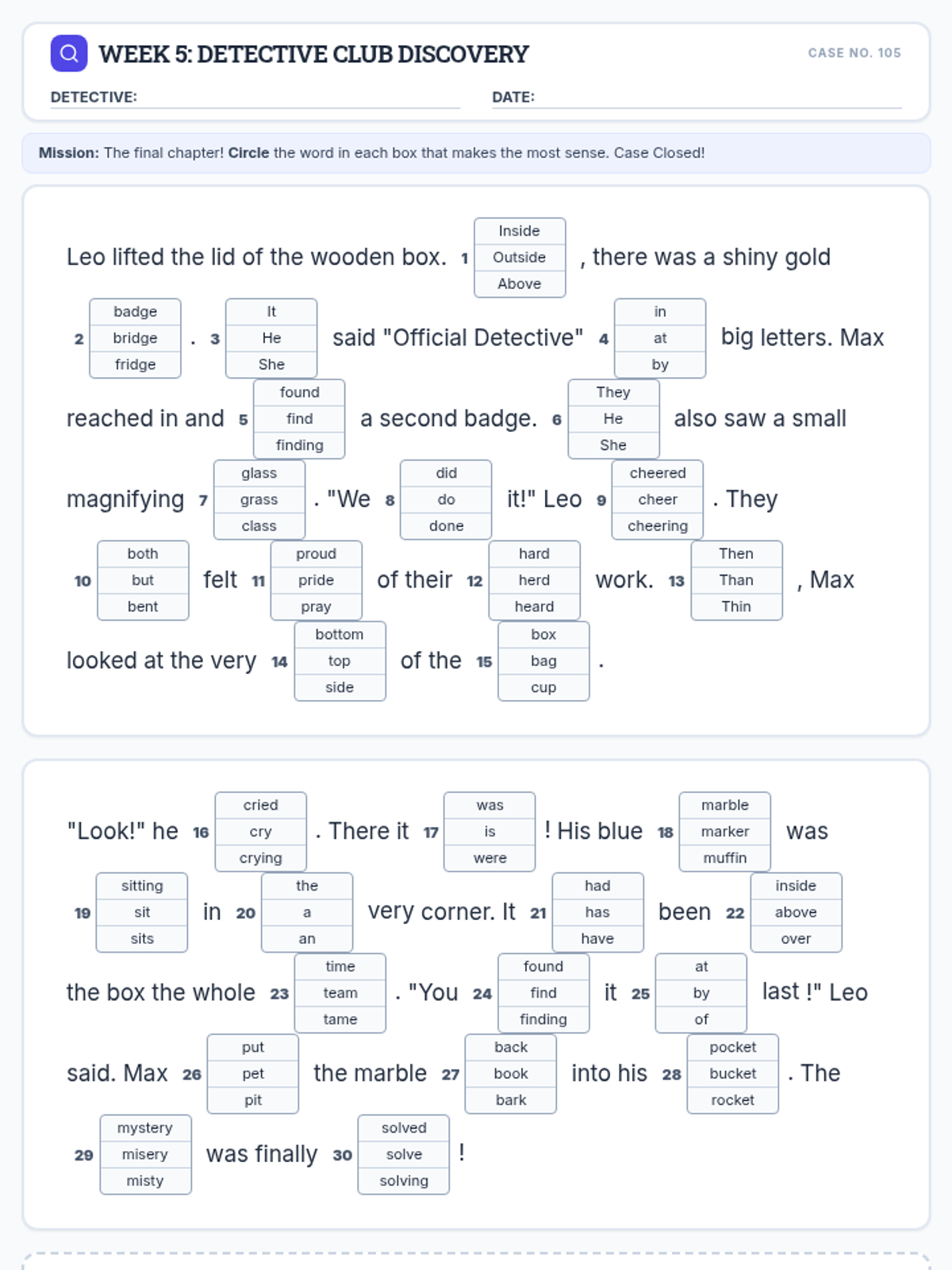
The final clue leads the boys to a surprising discovery that rewards their hard work and detective skills.
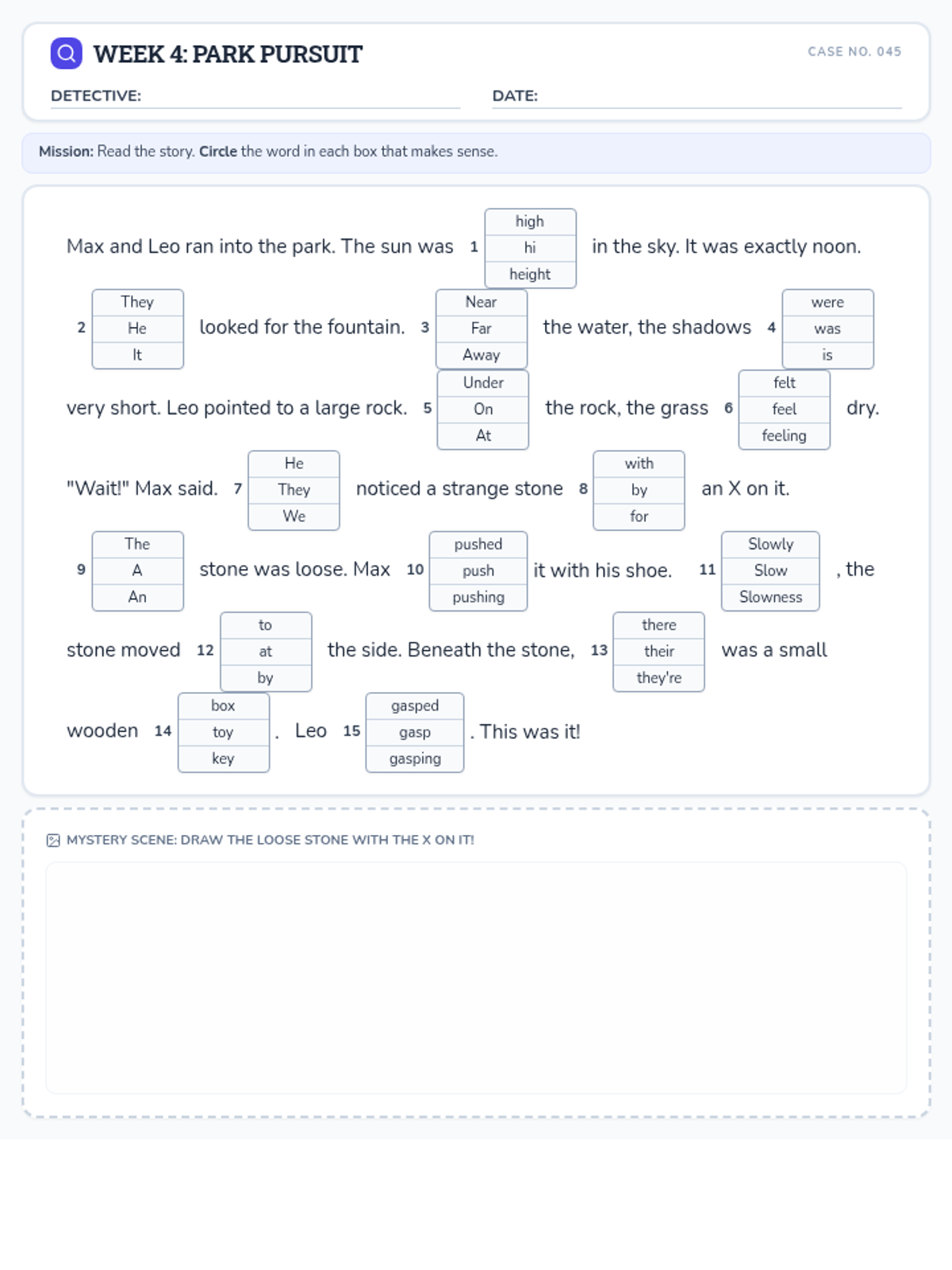
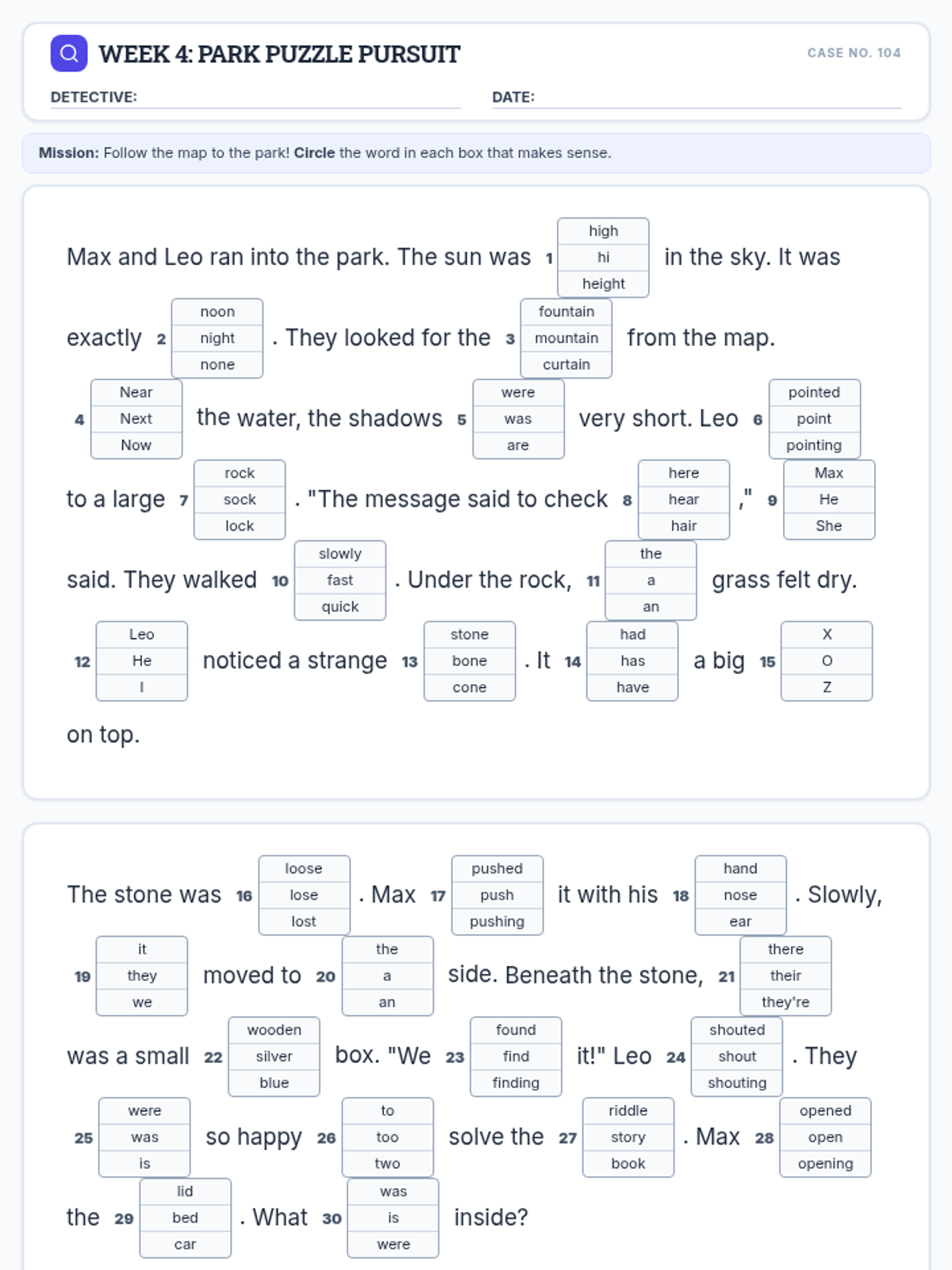
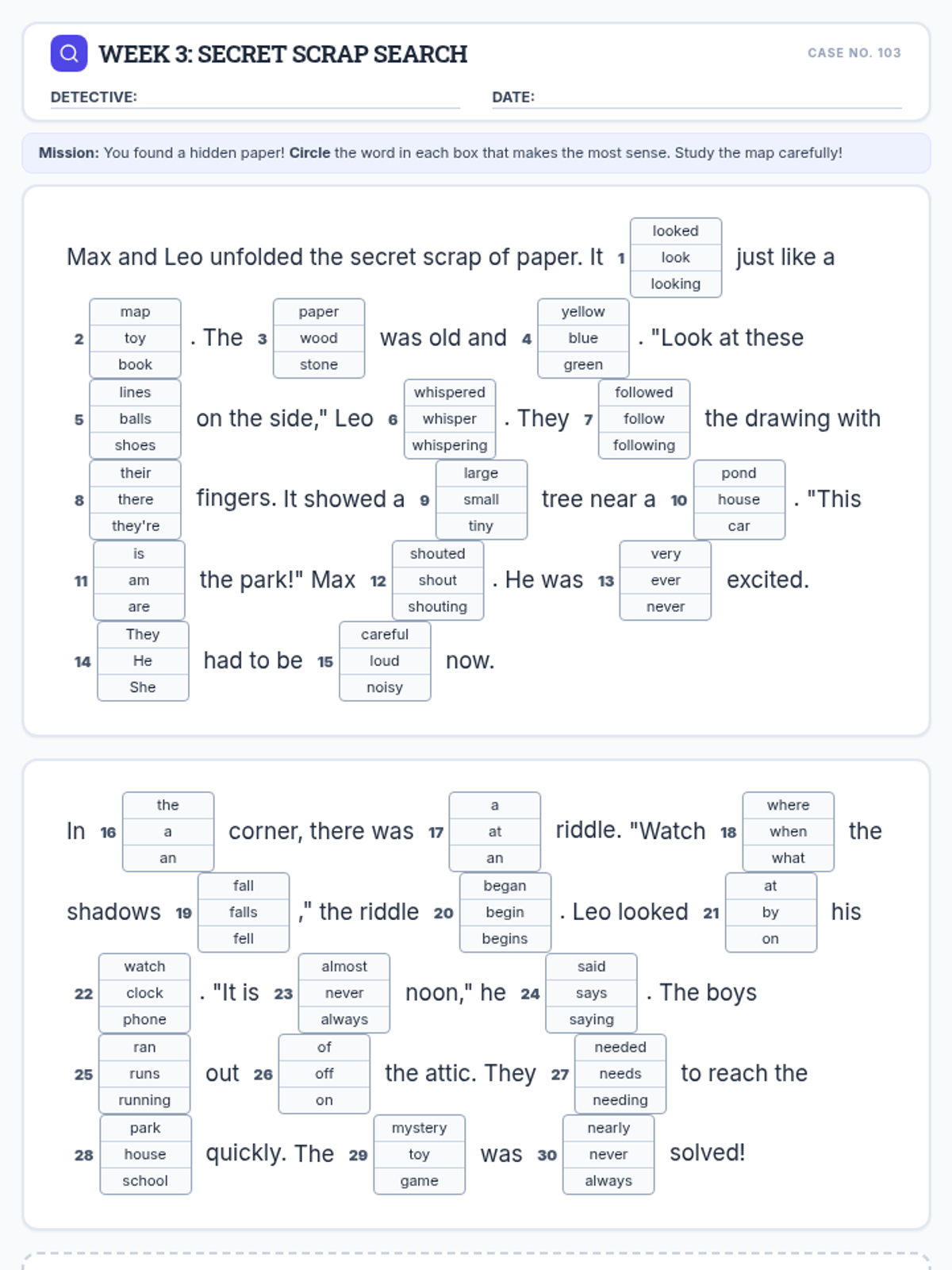
Max and Leo follow the map to the park, where they must solve a riddle about shadows and loose stones.
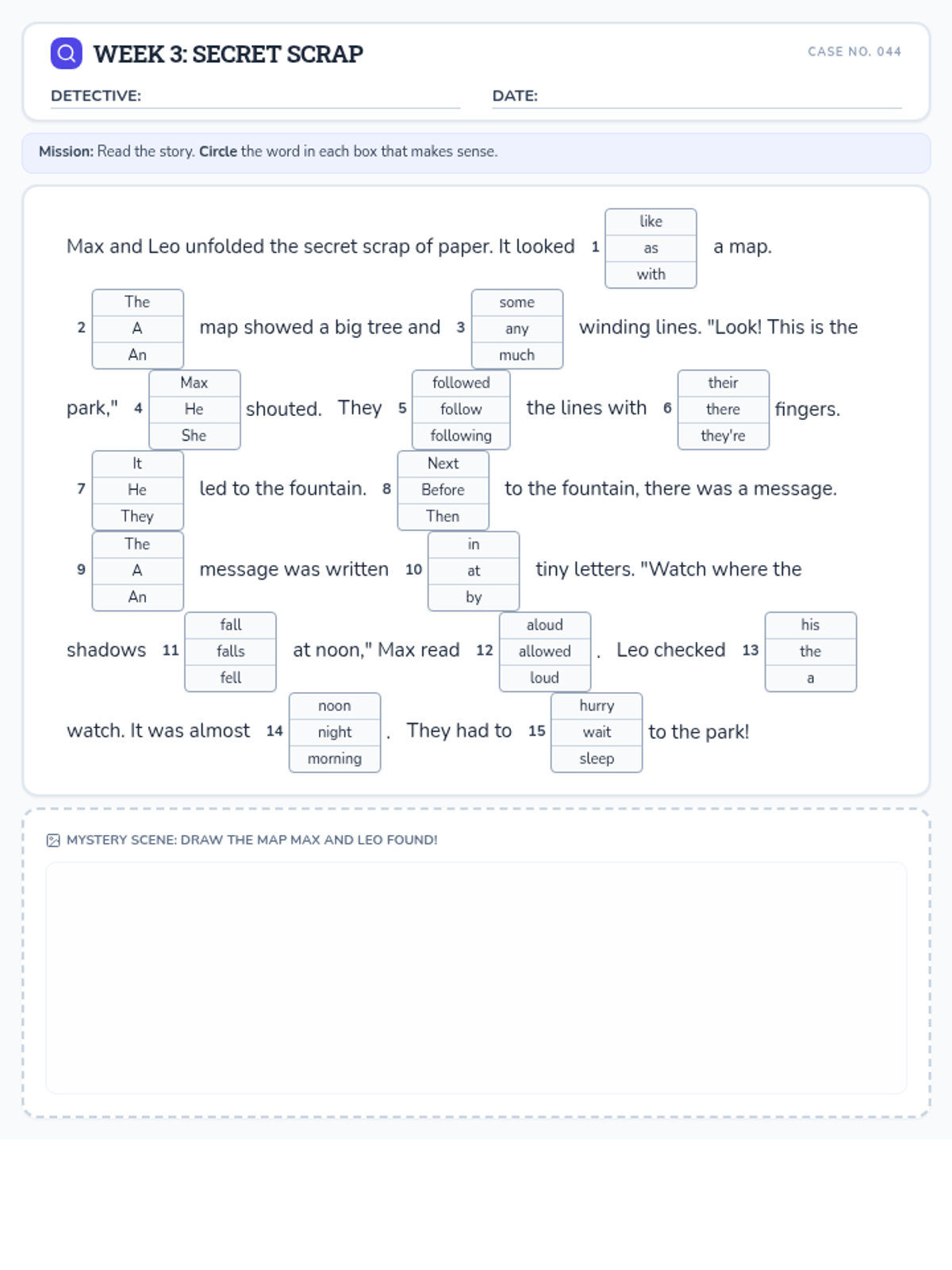
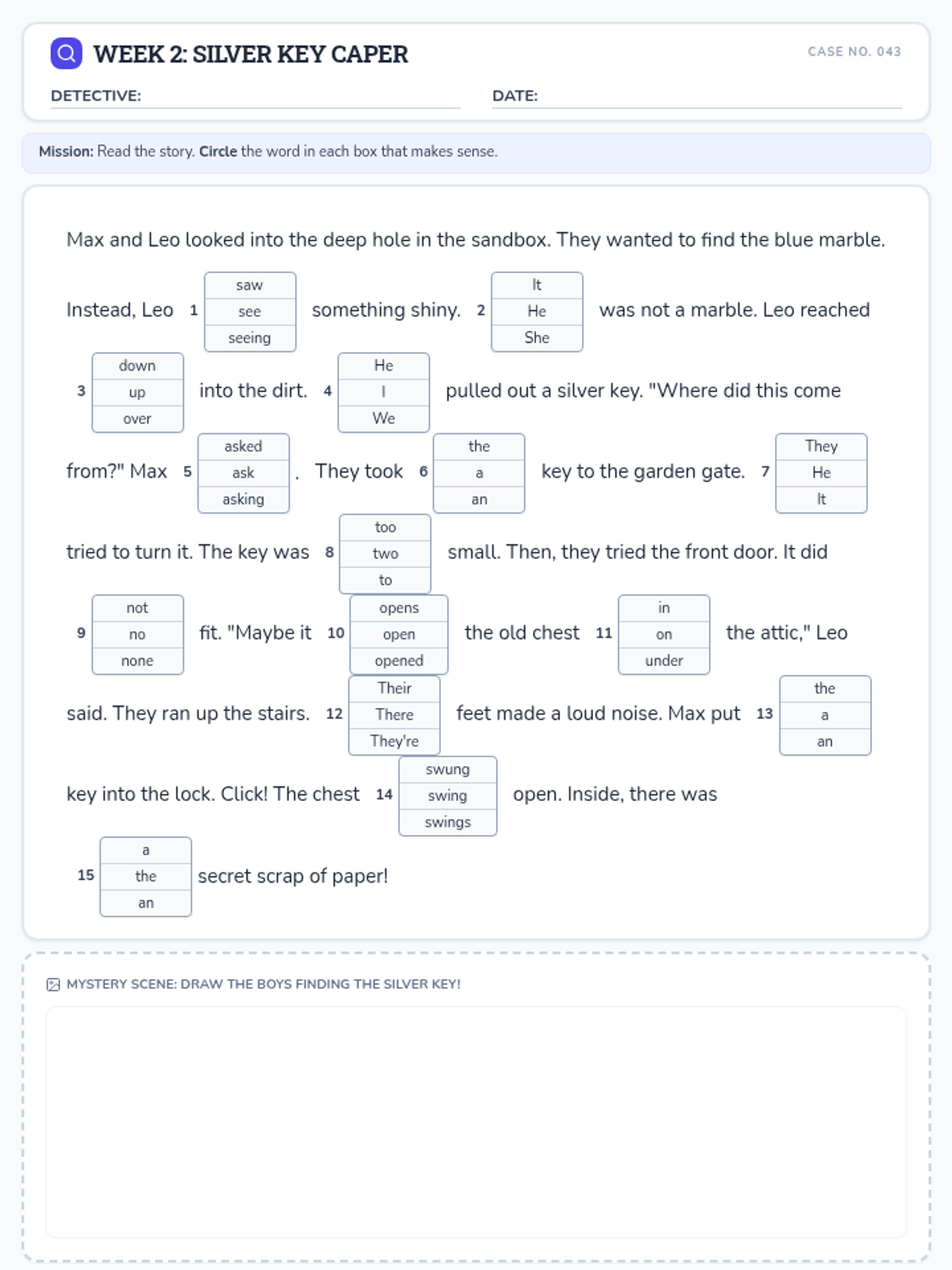
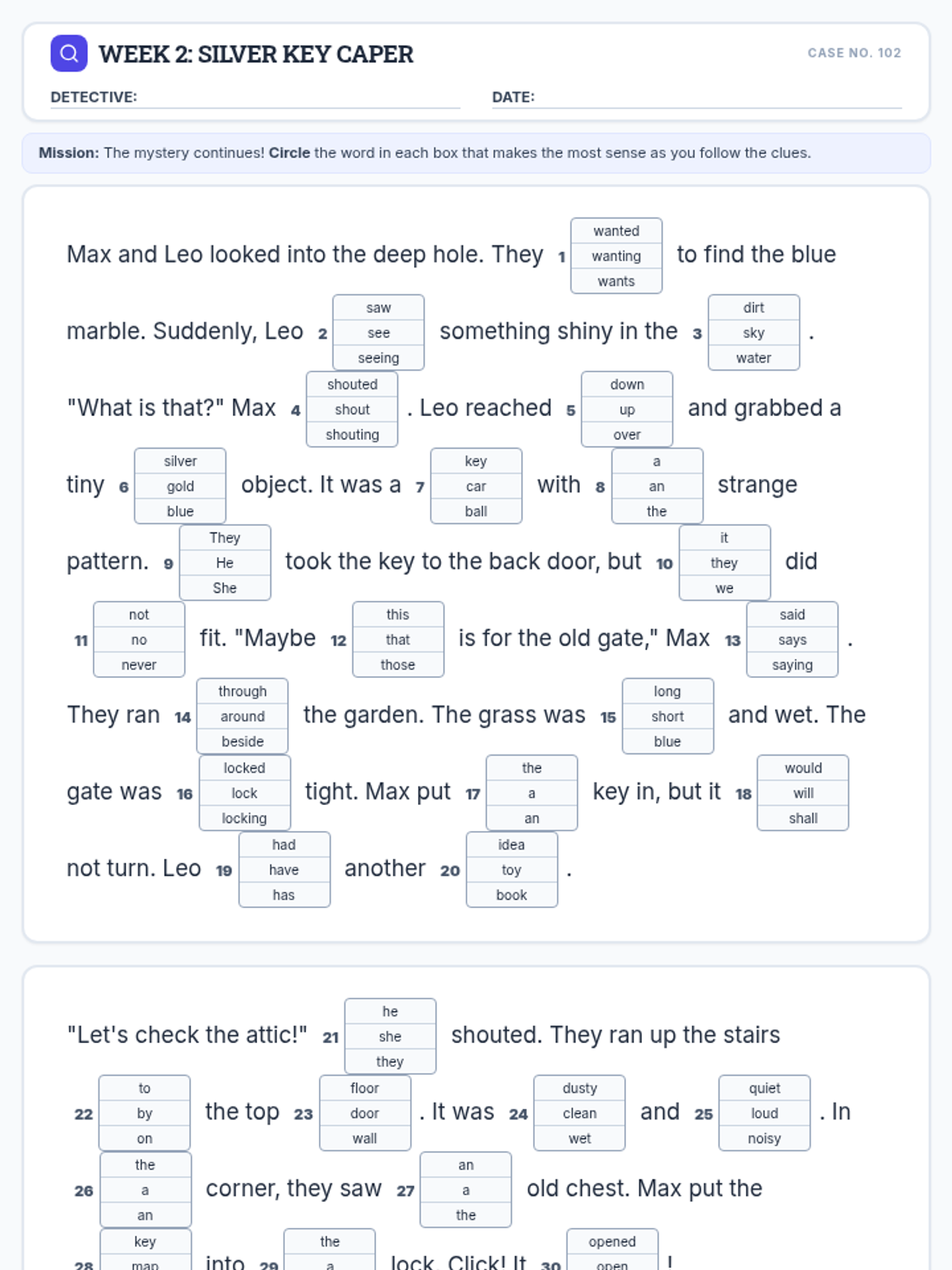
The silver key opens an old chest in the attic, revealing a secret scrap of paper that looks like a hidden map.
While searching for the marble, Max and his friend Leo find a mysterious silver key hidden in the garden grass.
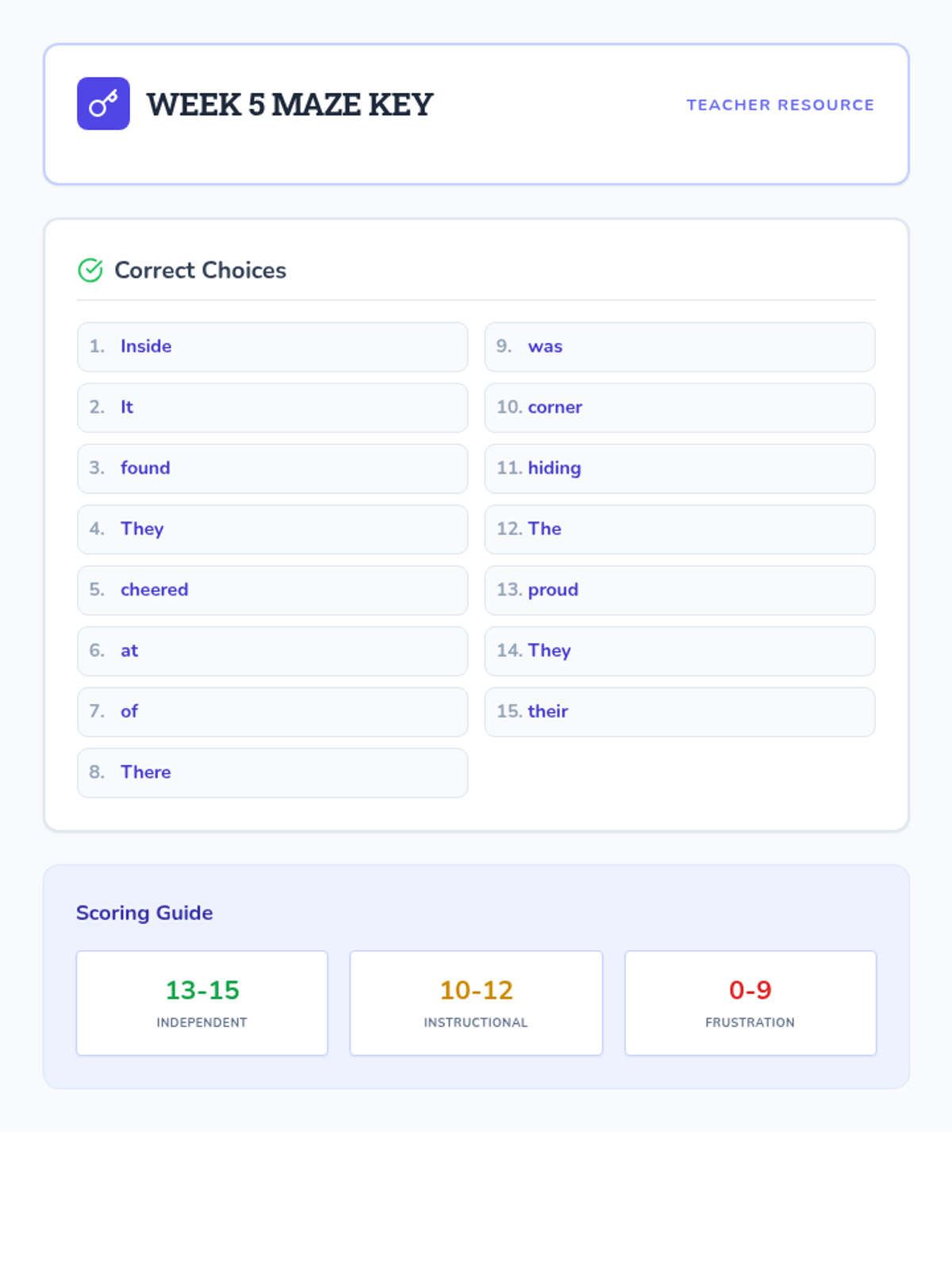
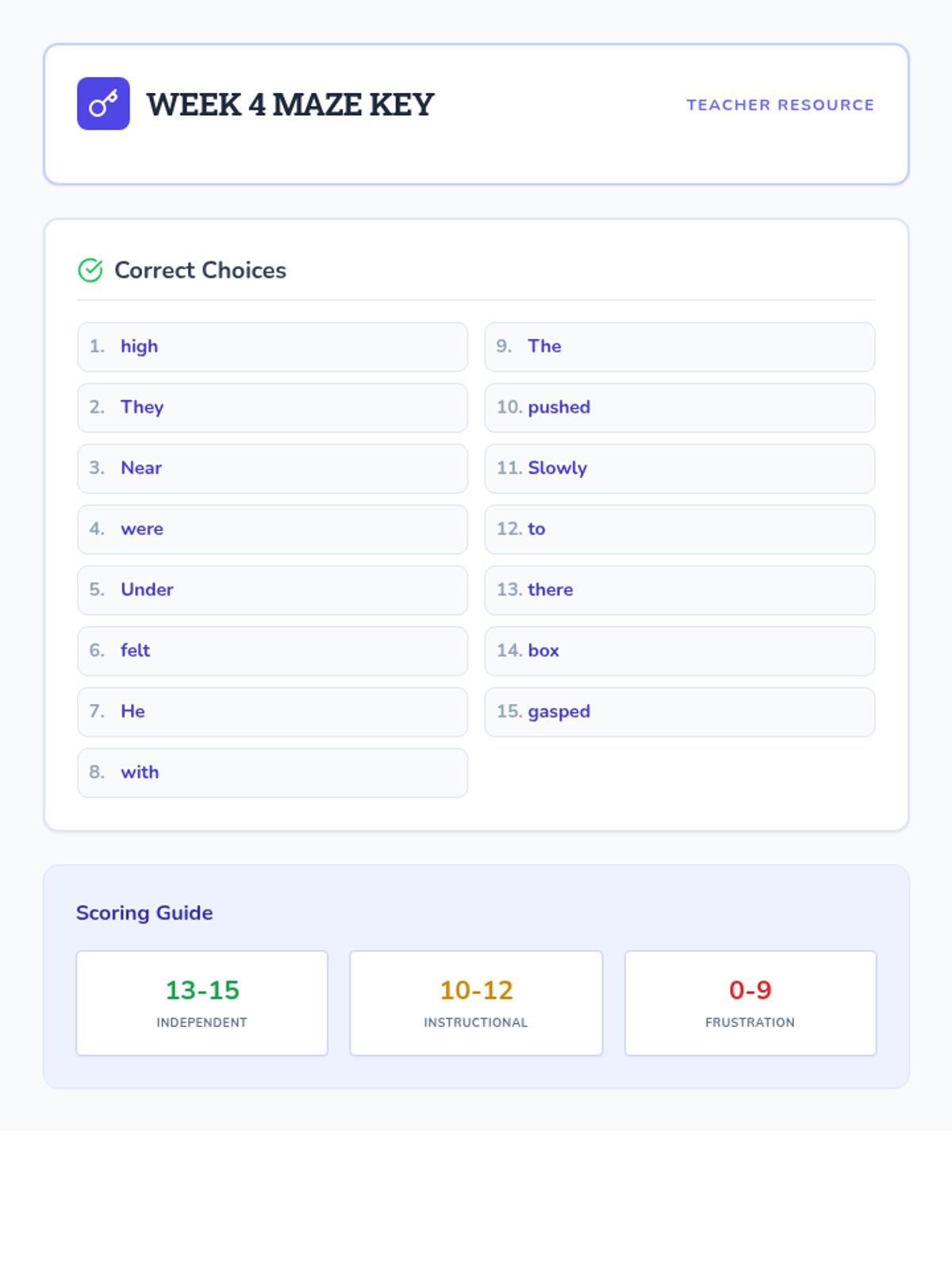
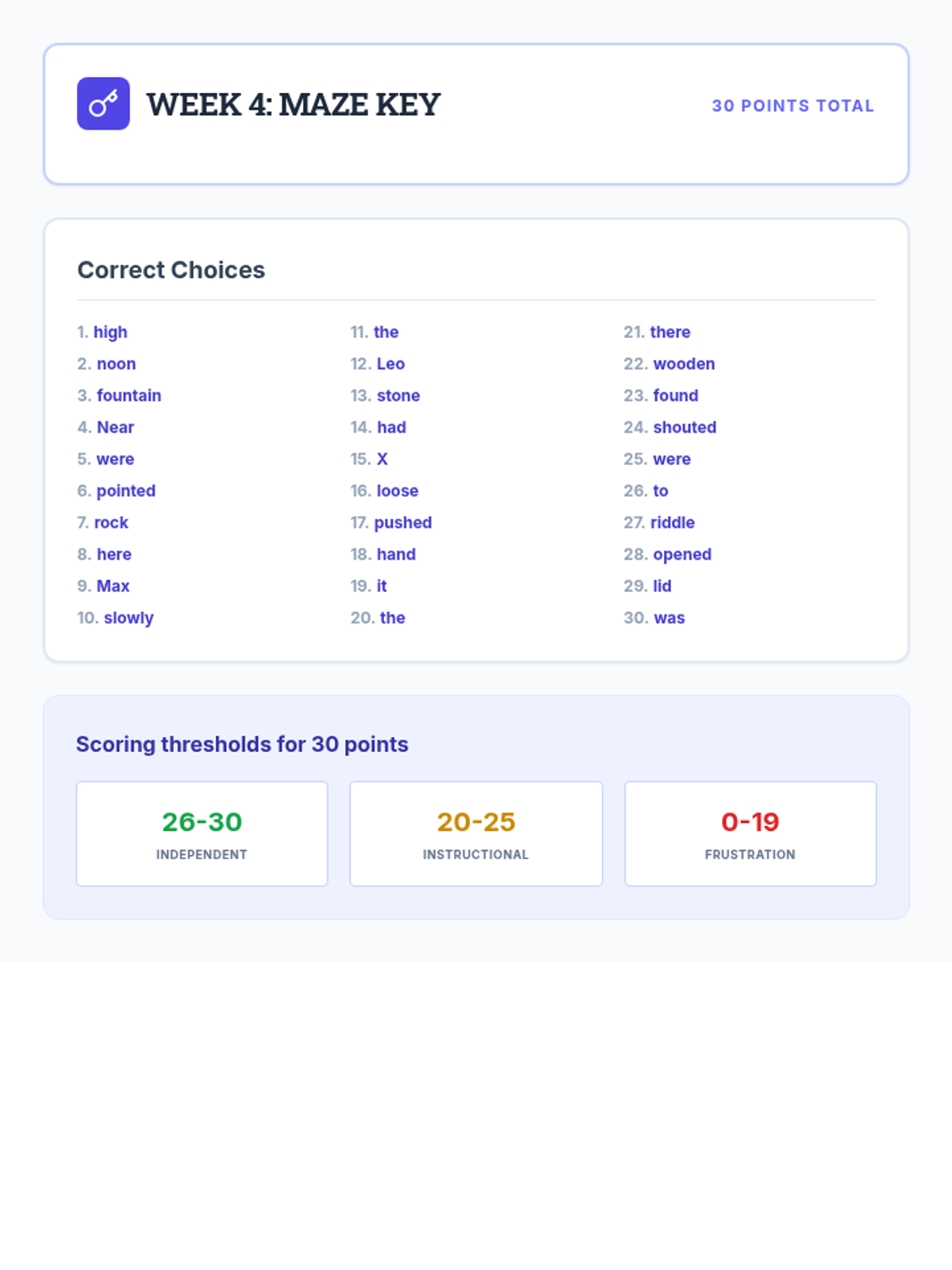
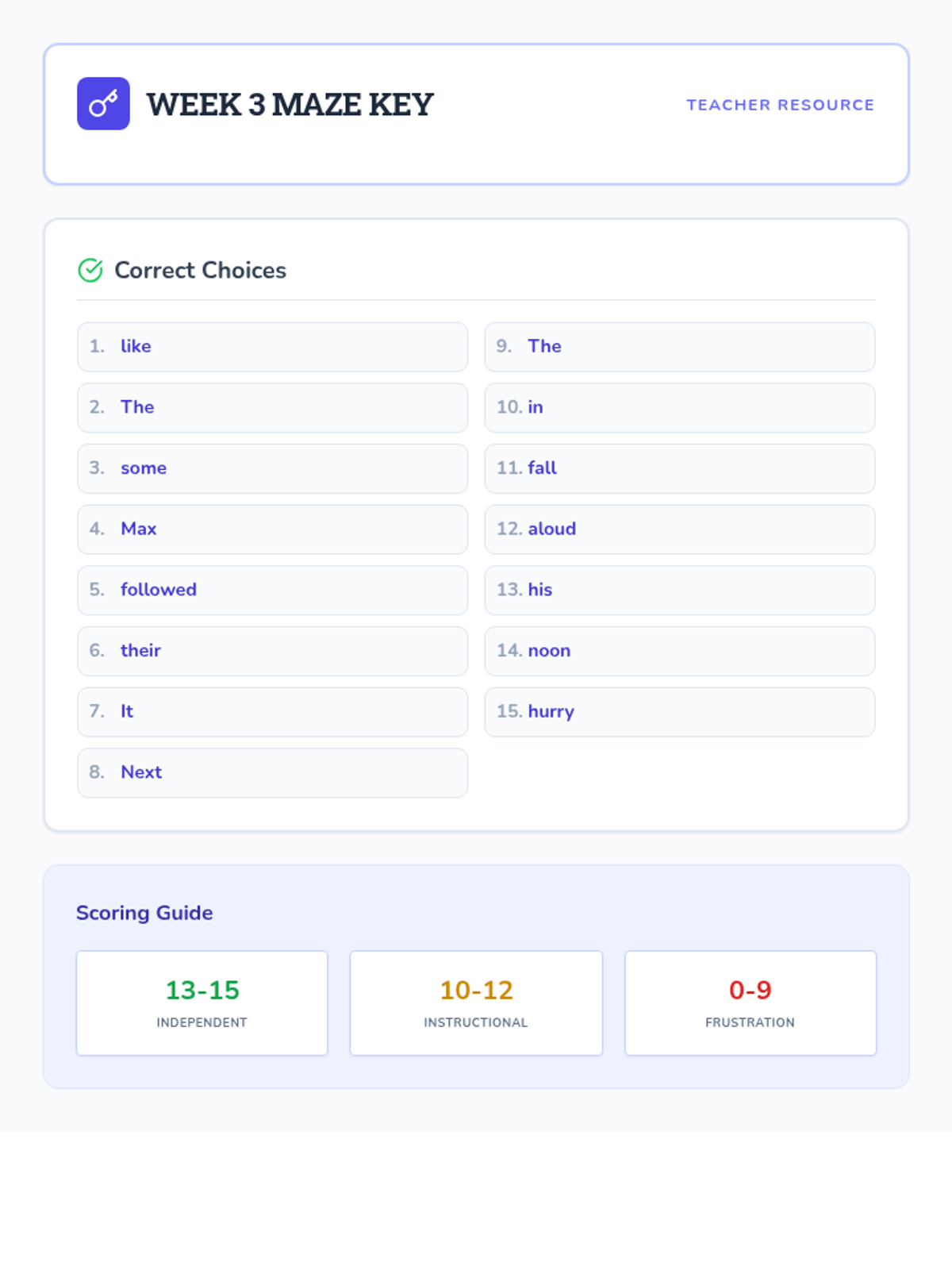
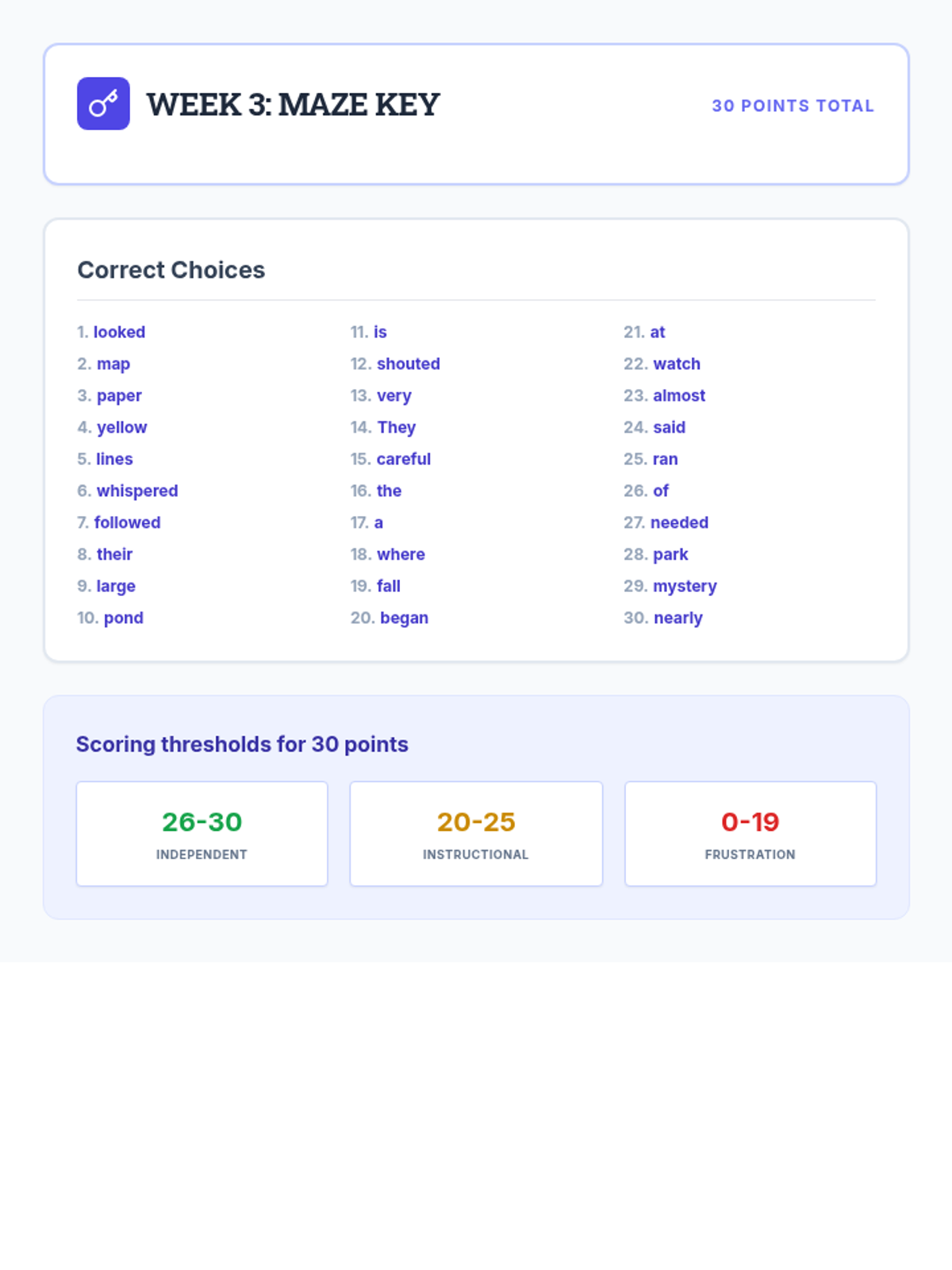
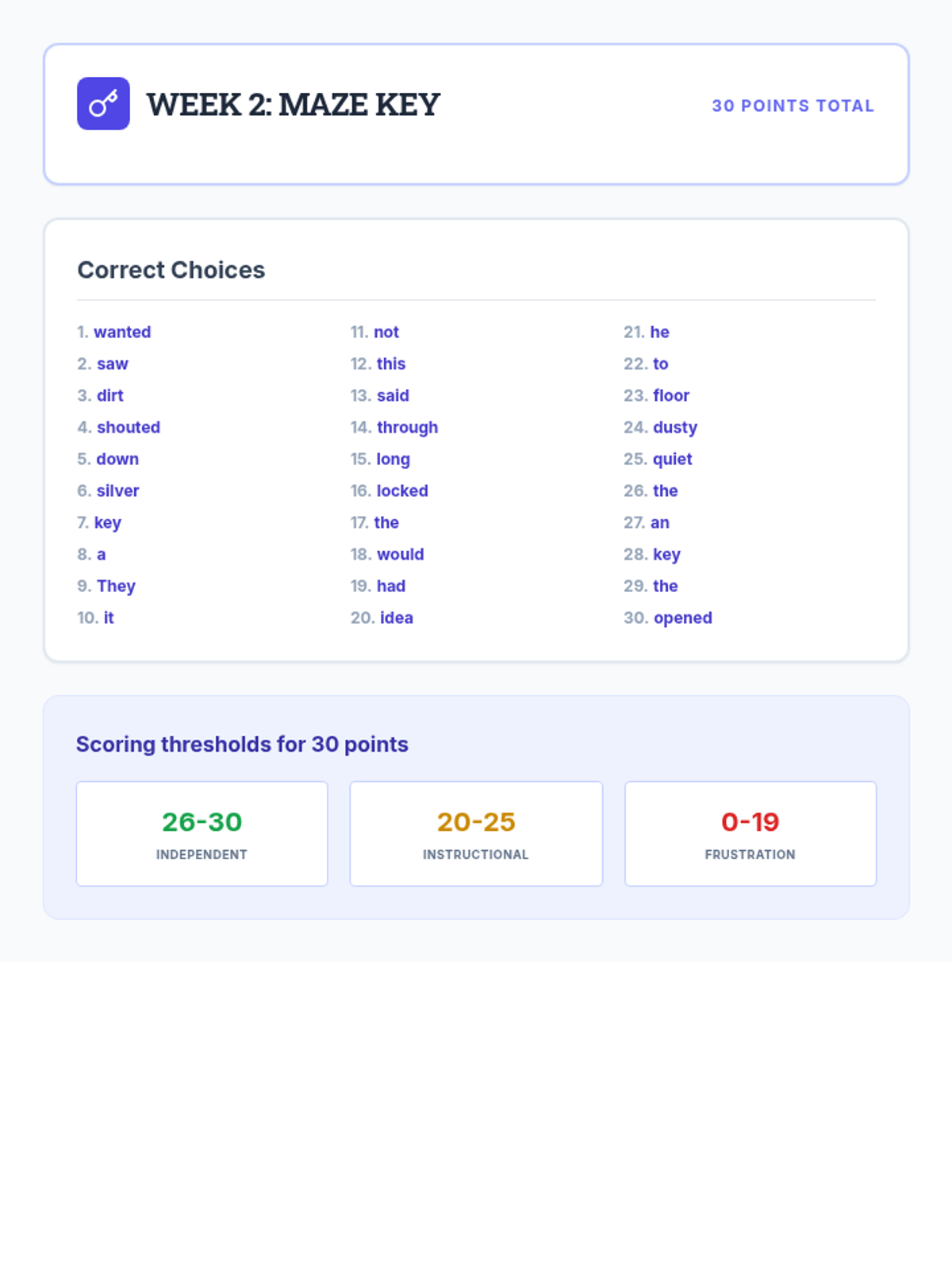
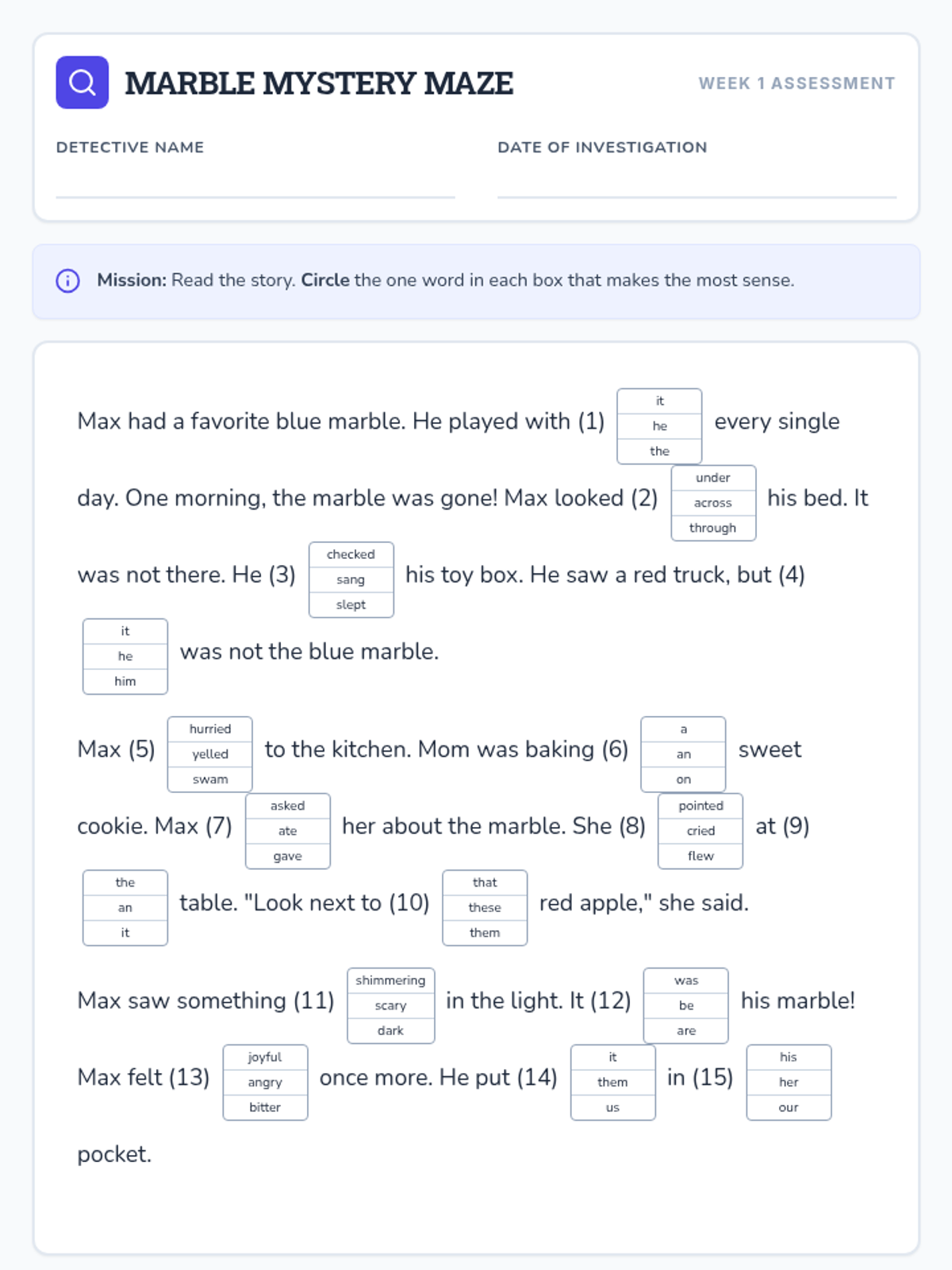
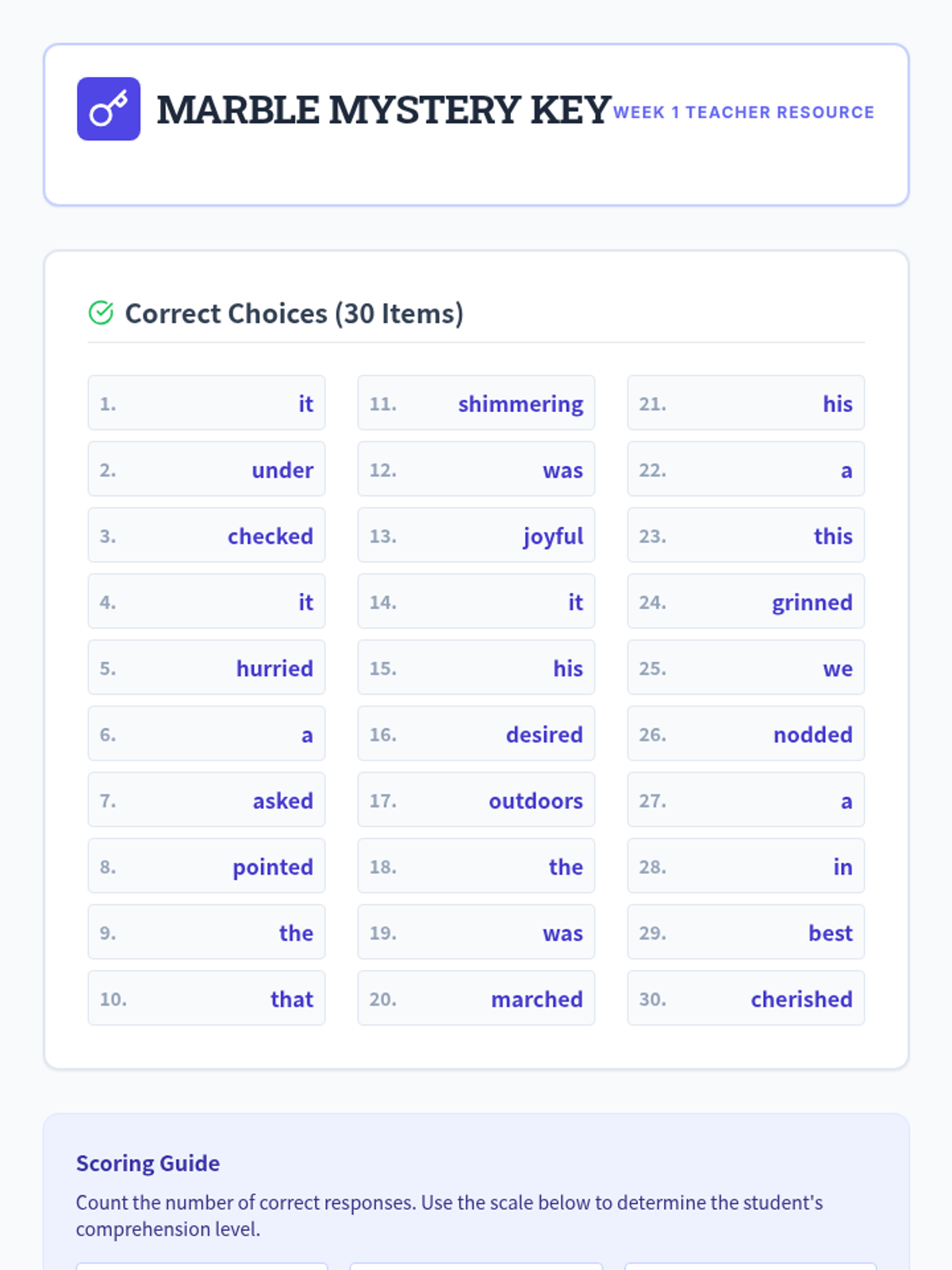
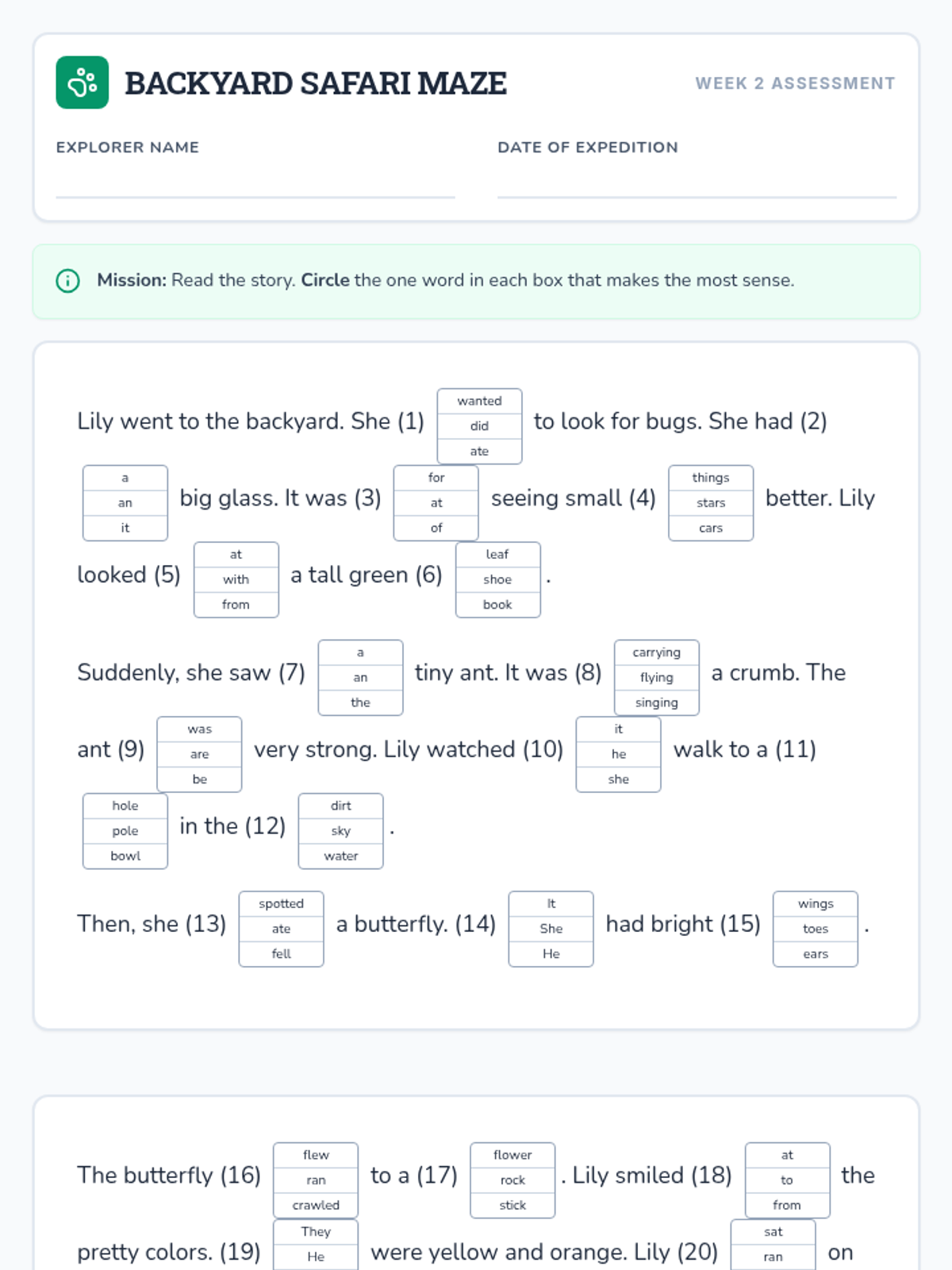
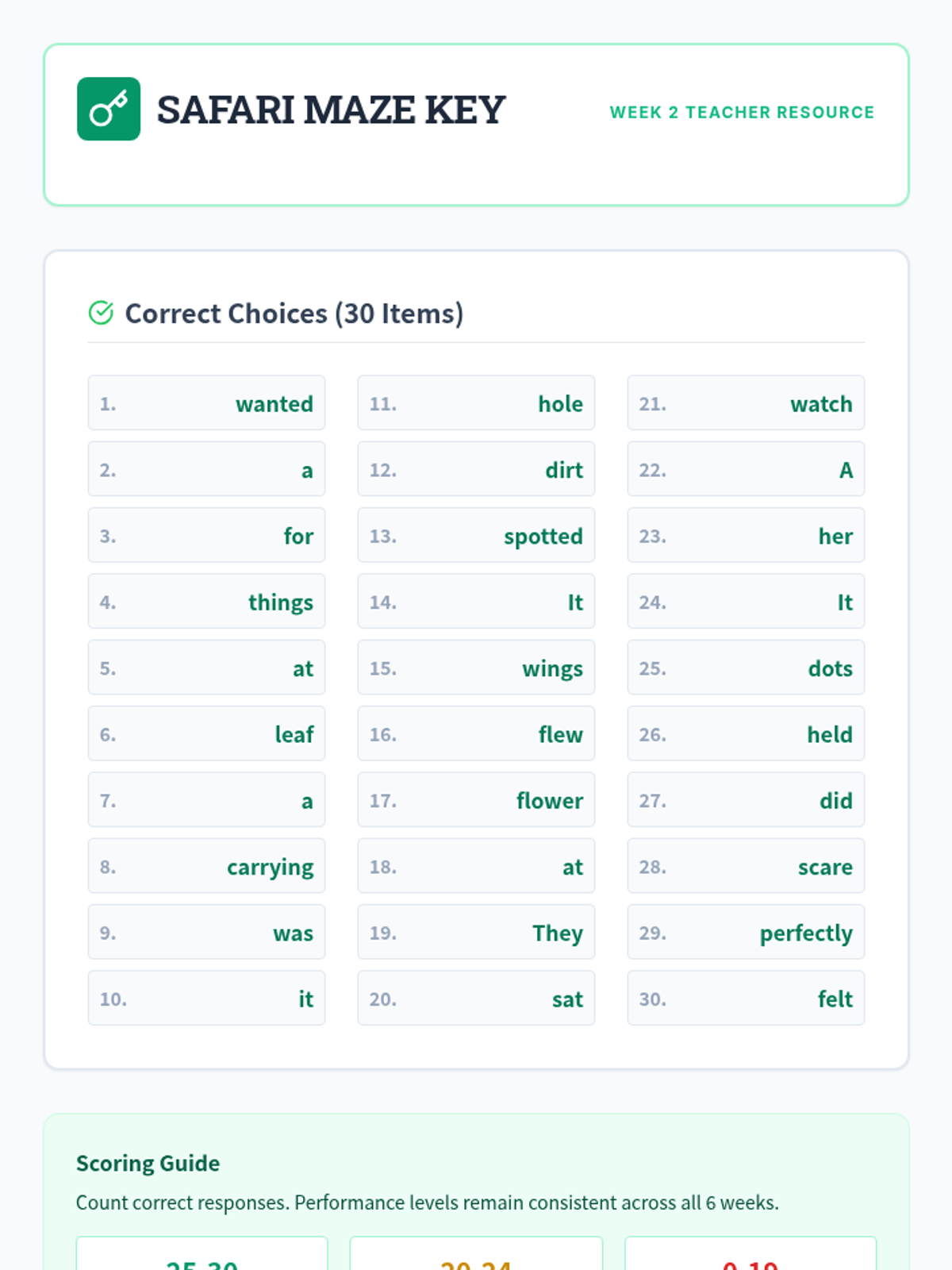
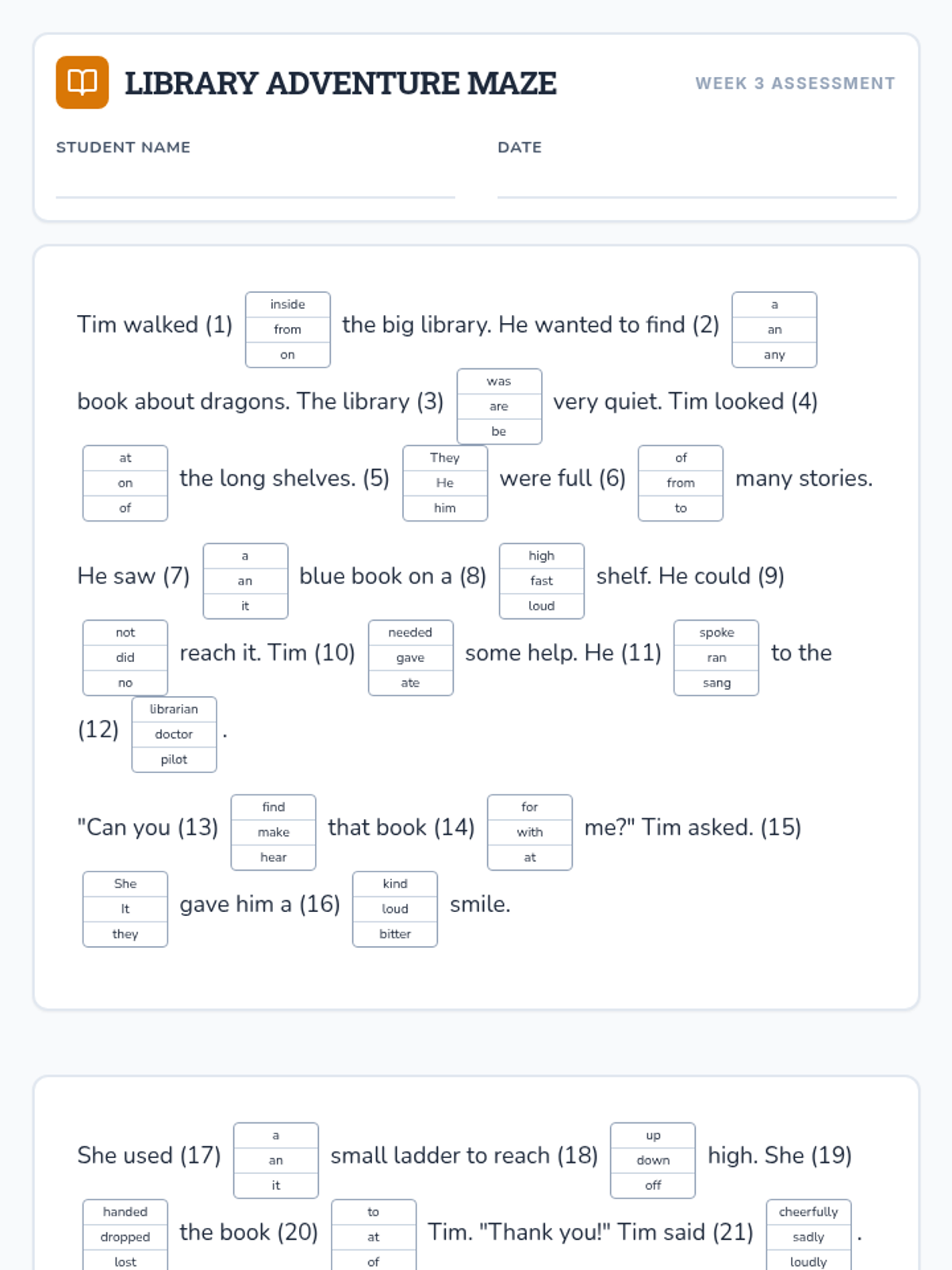
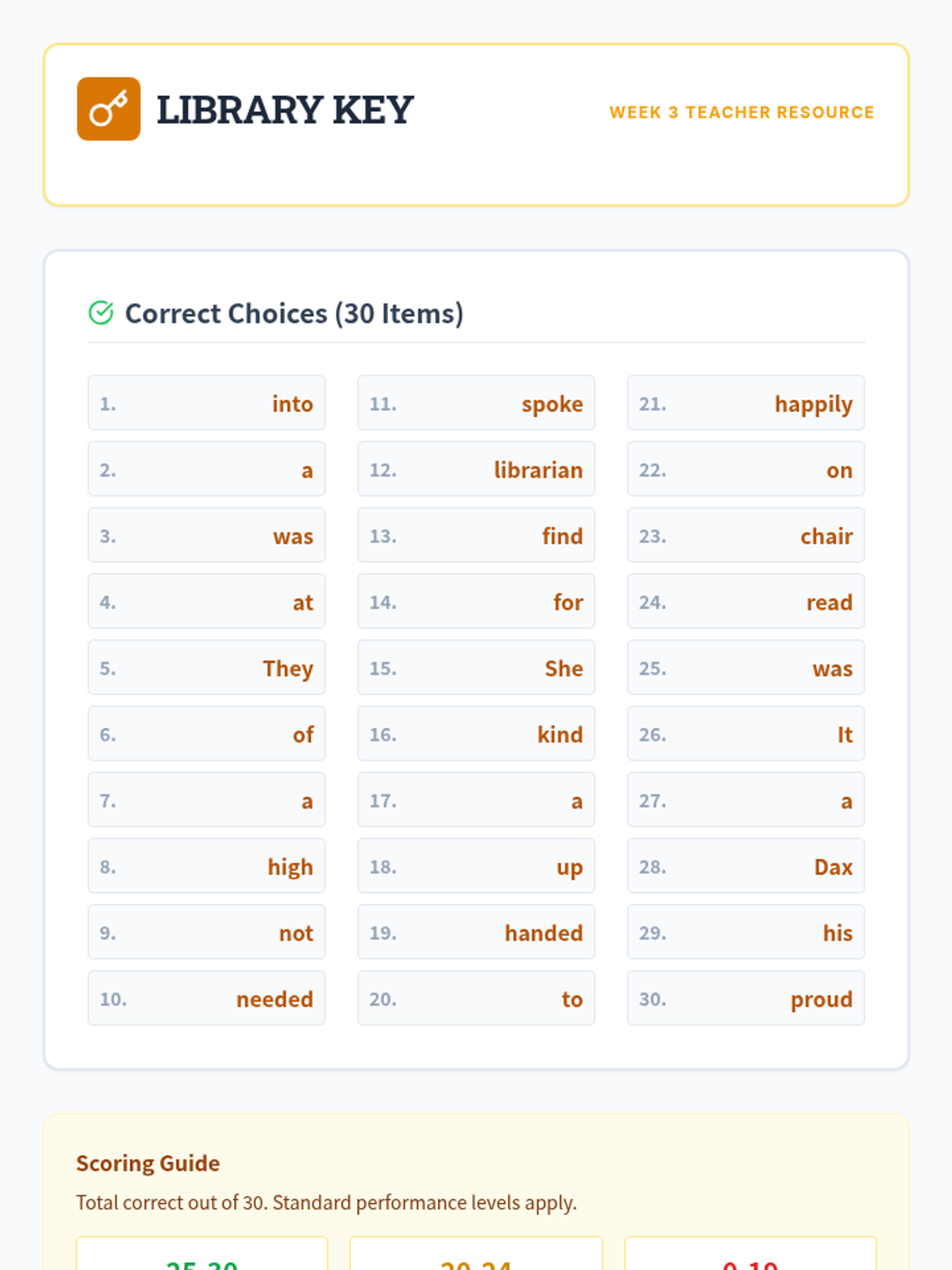
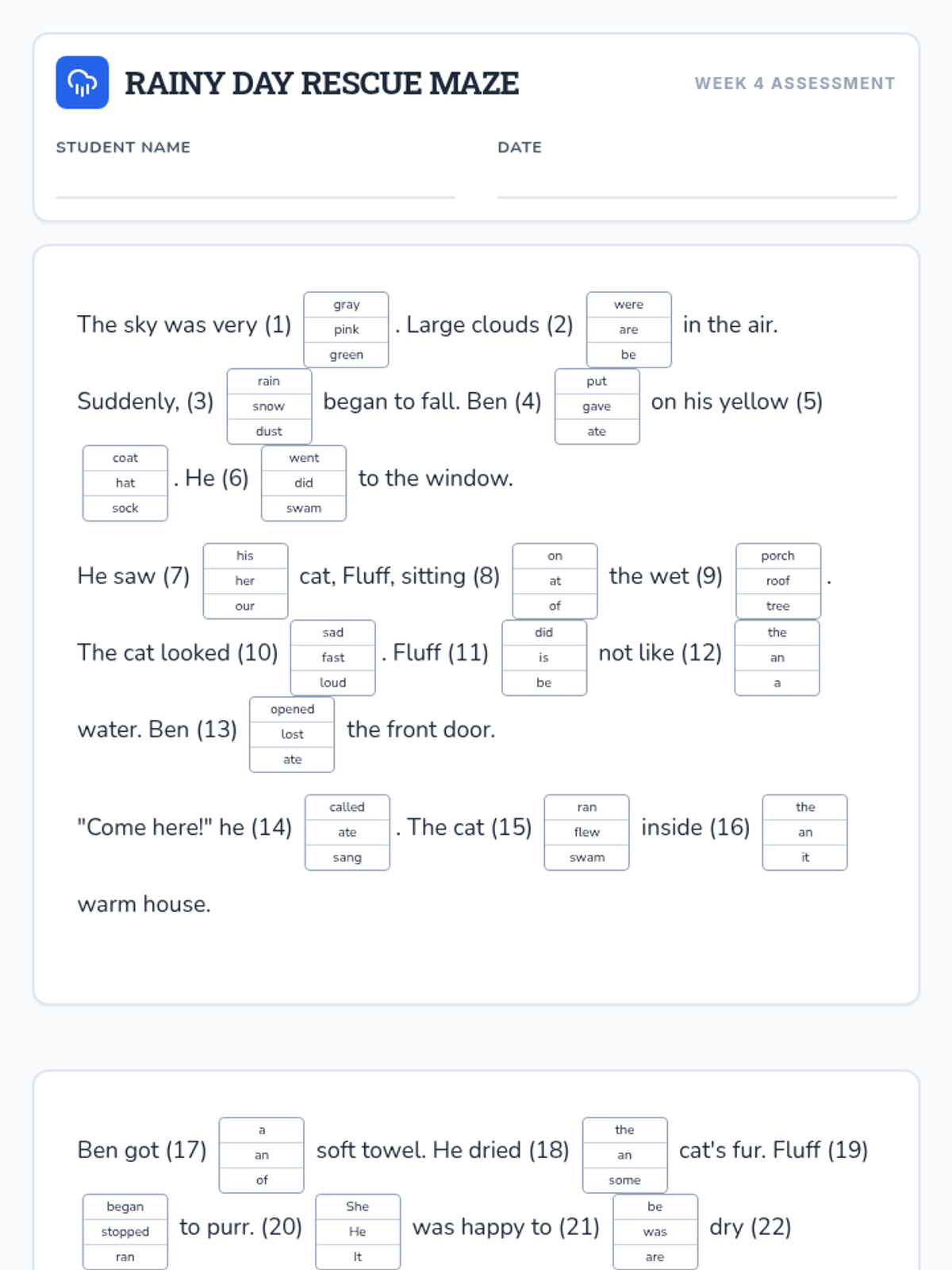
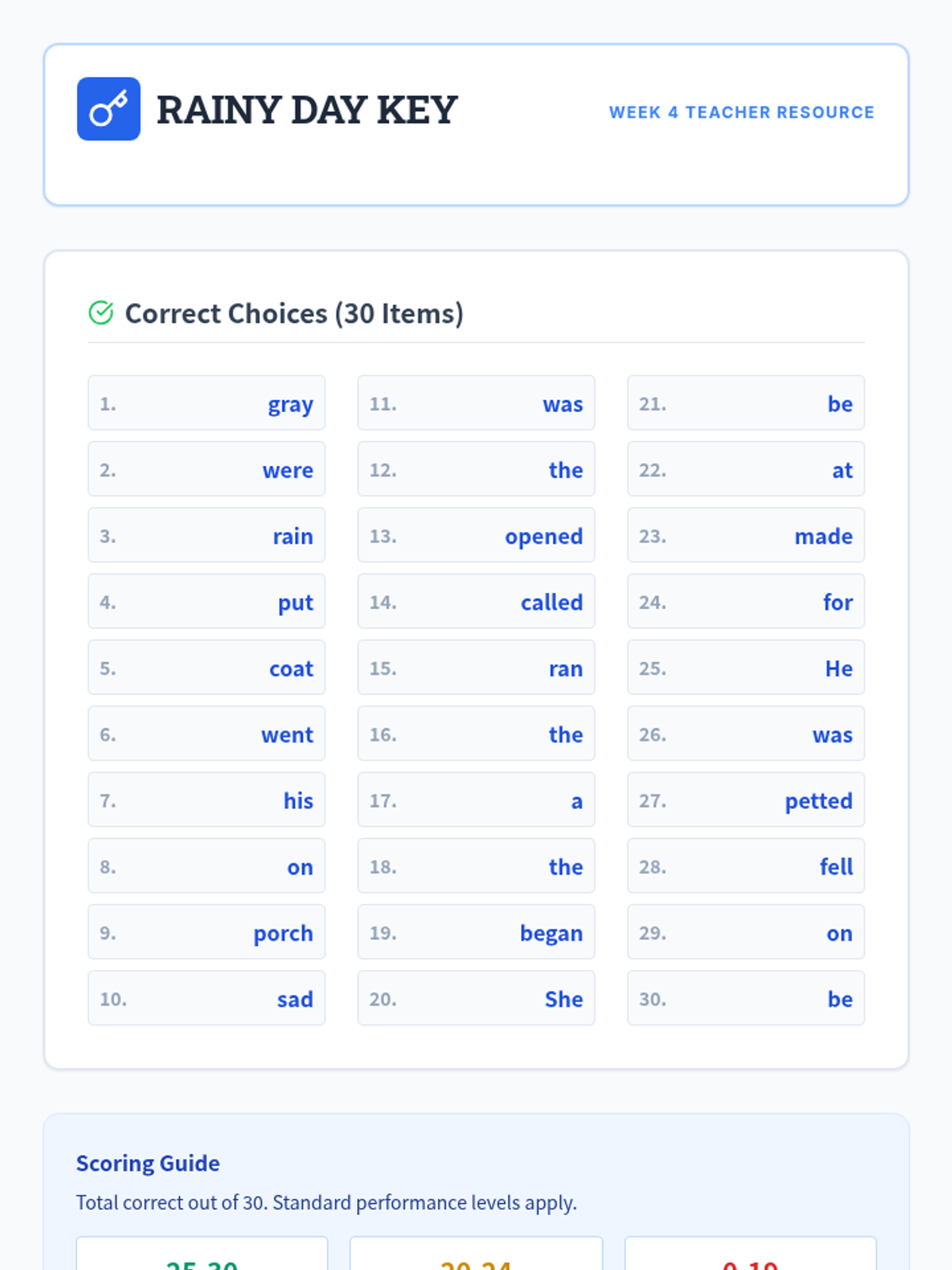
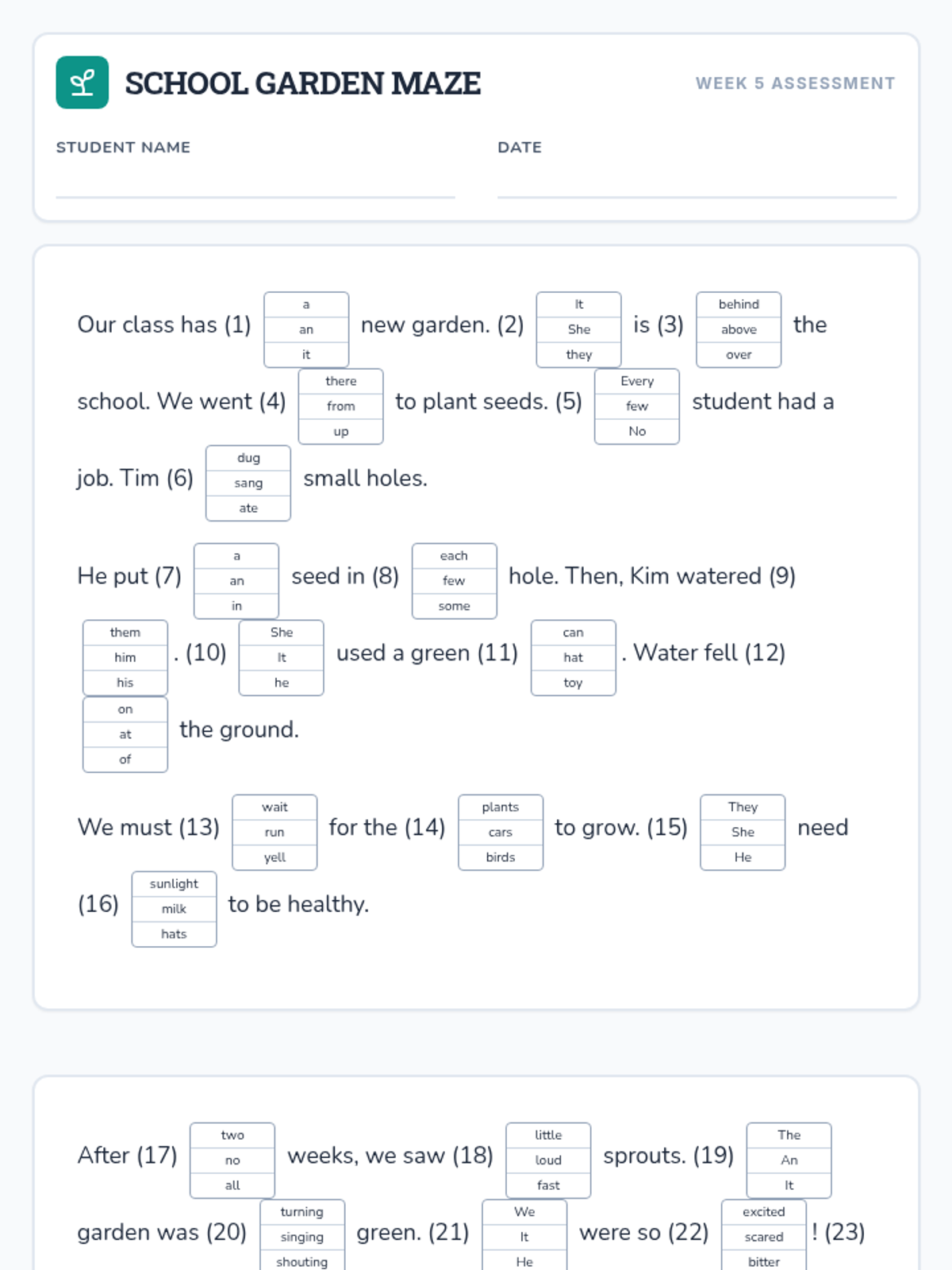
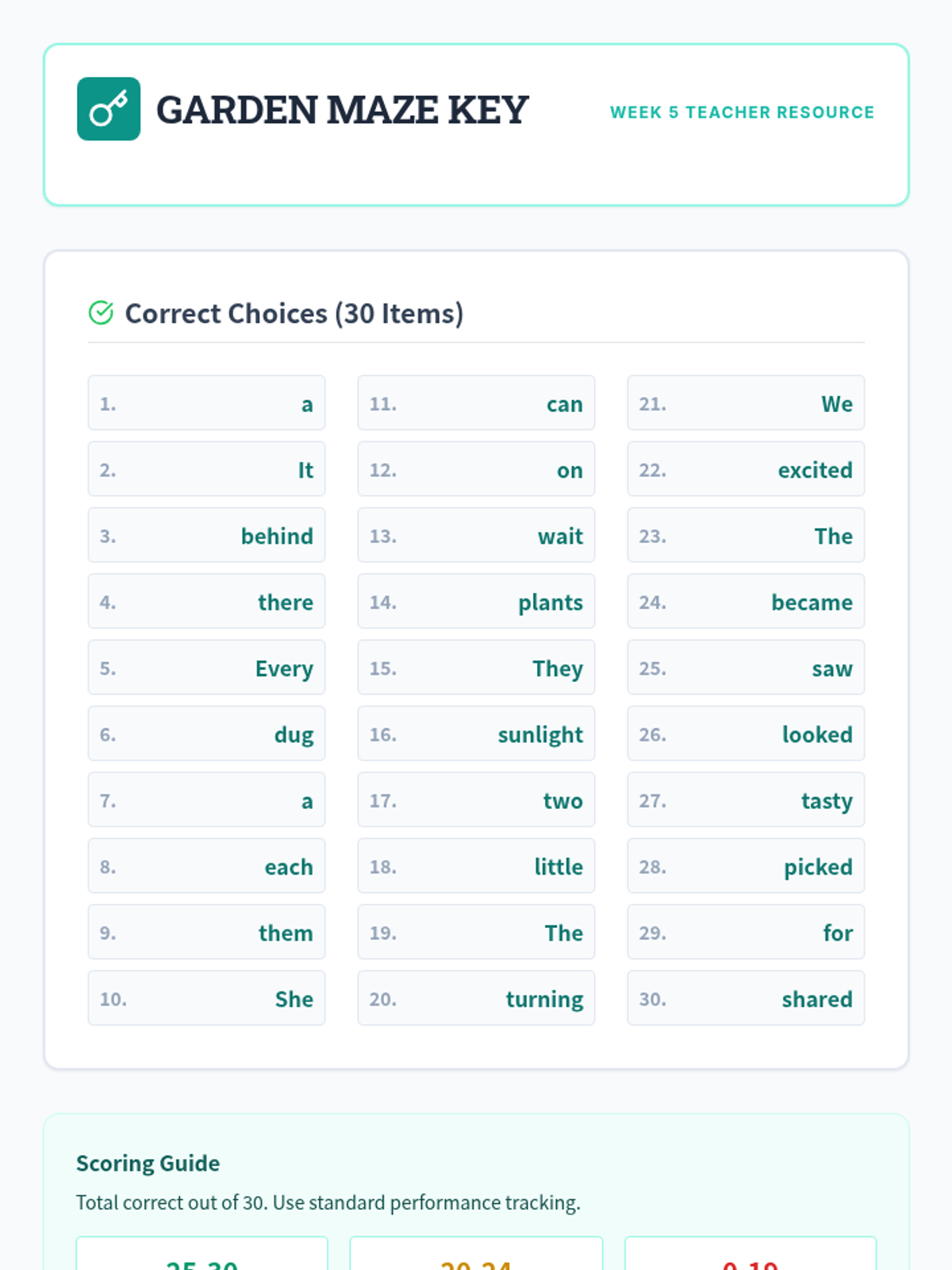
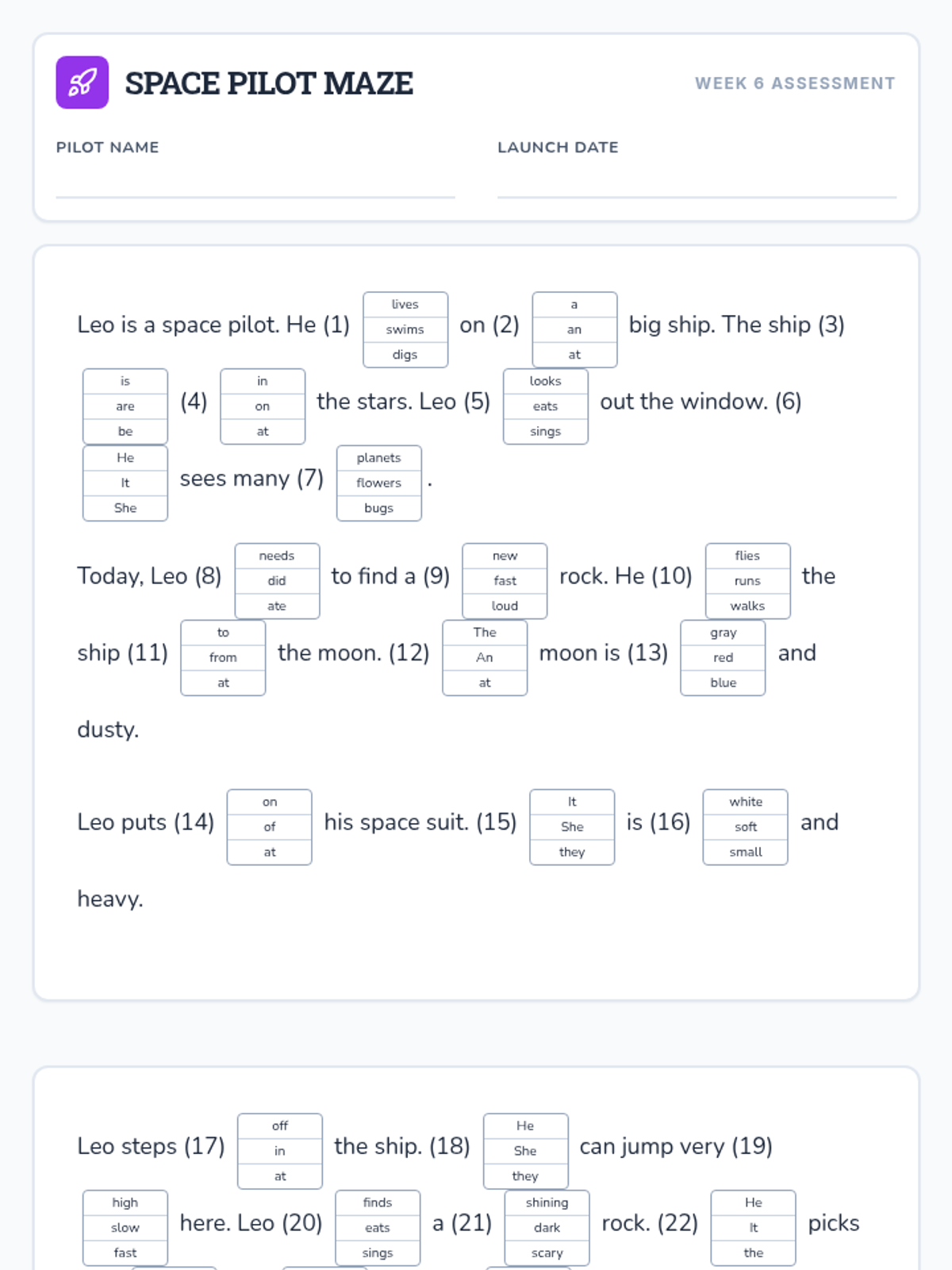
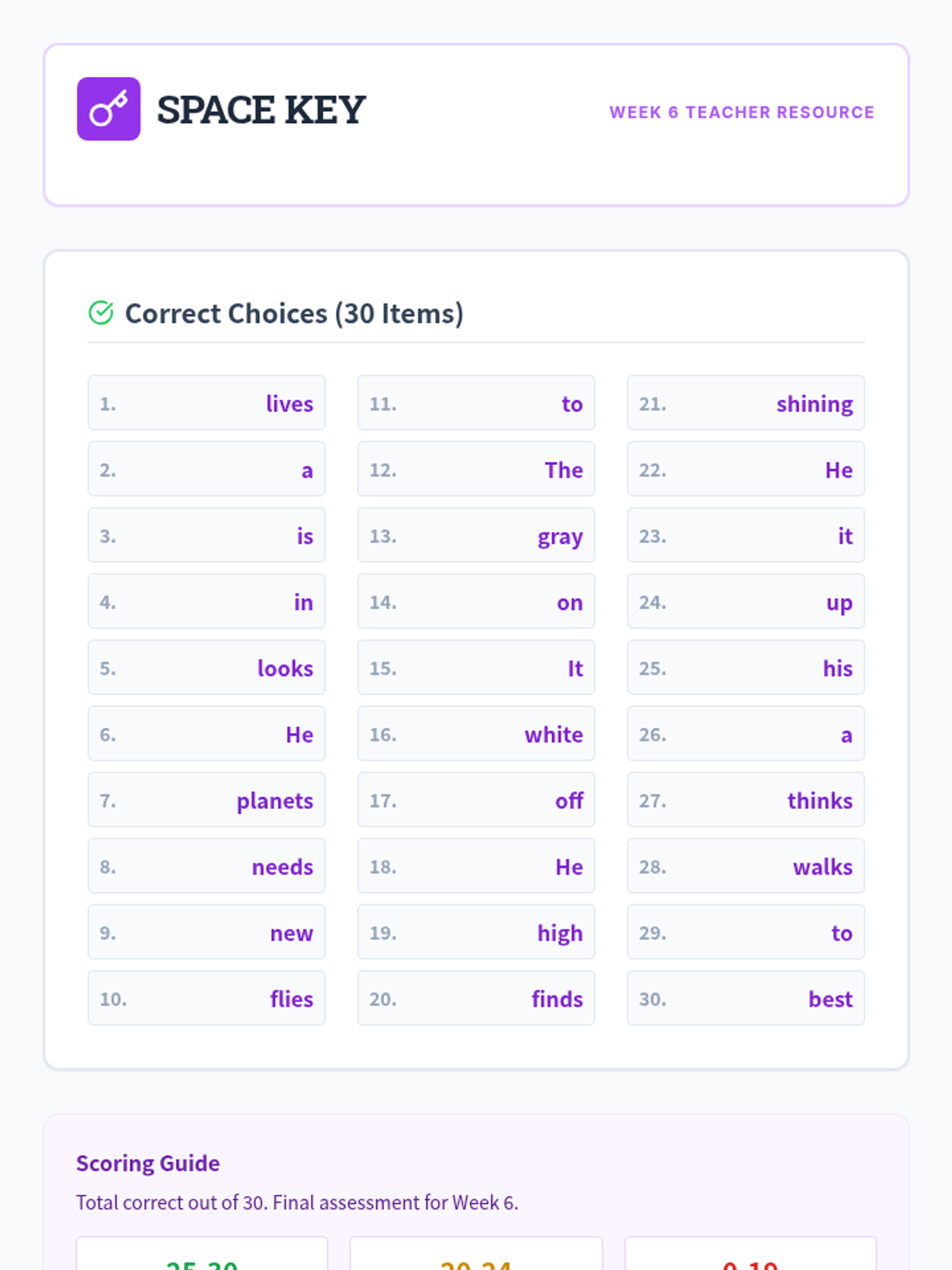
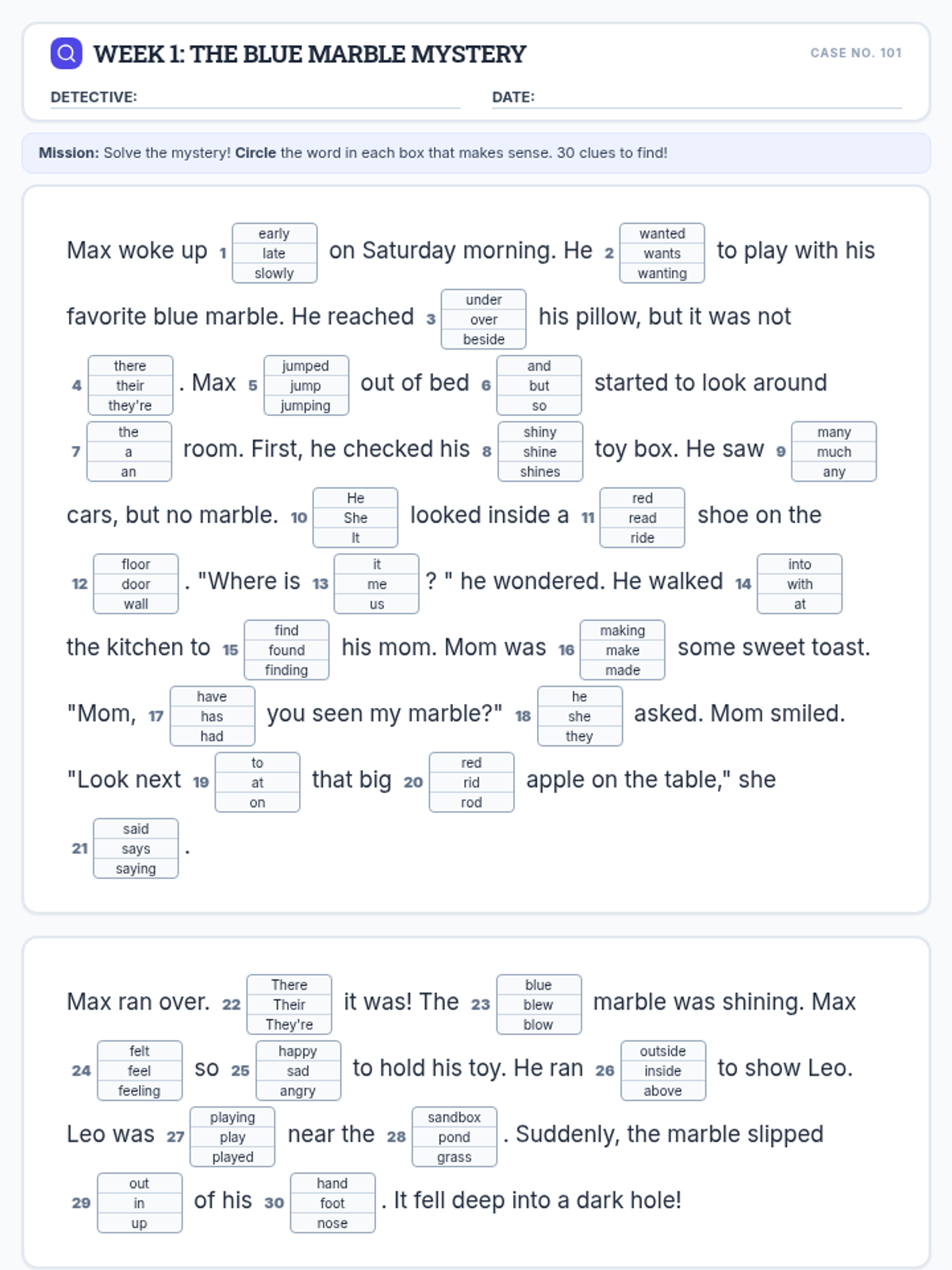
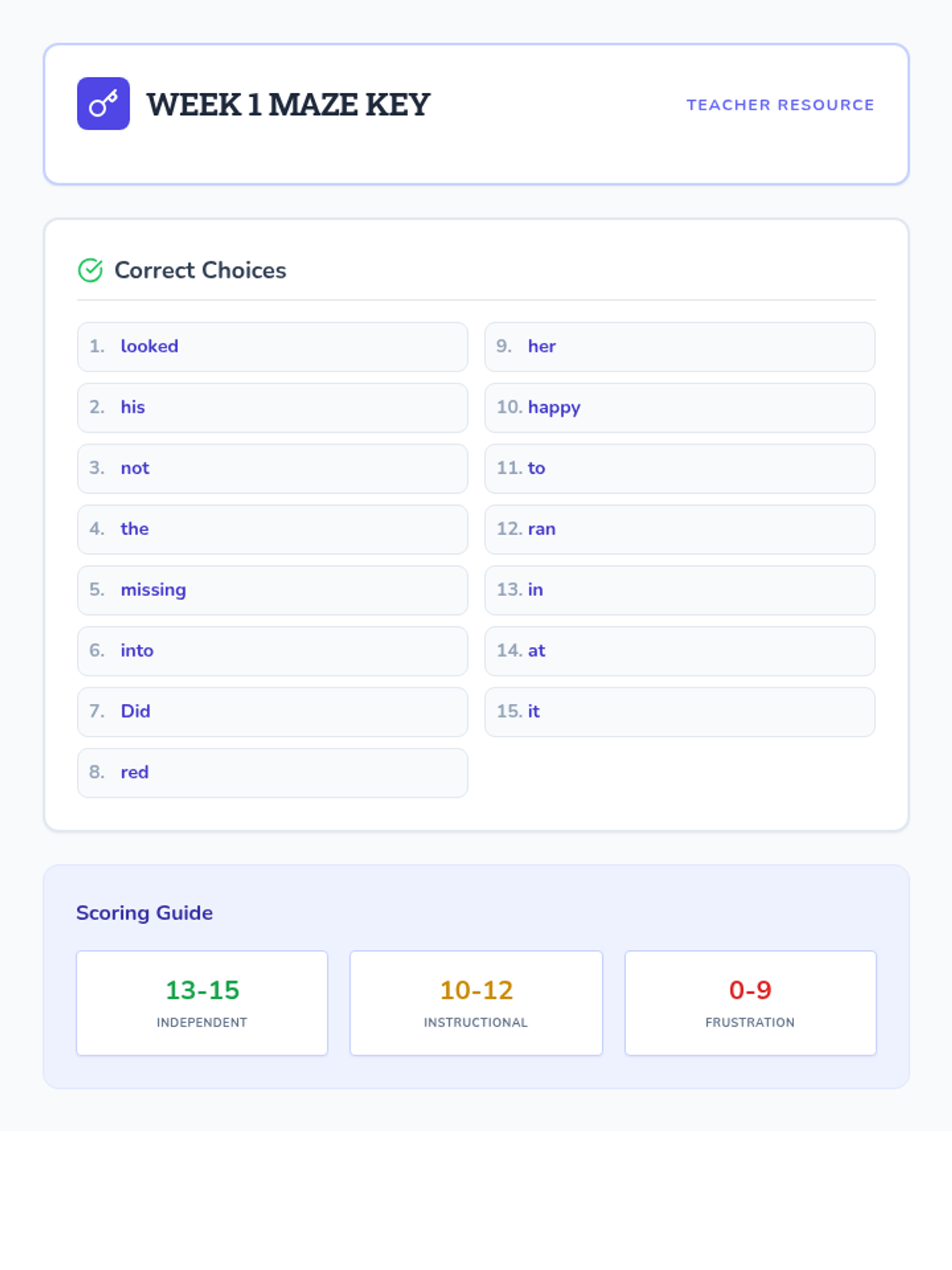
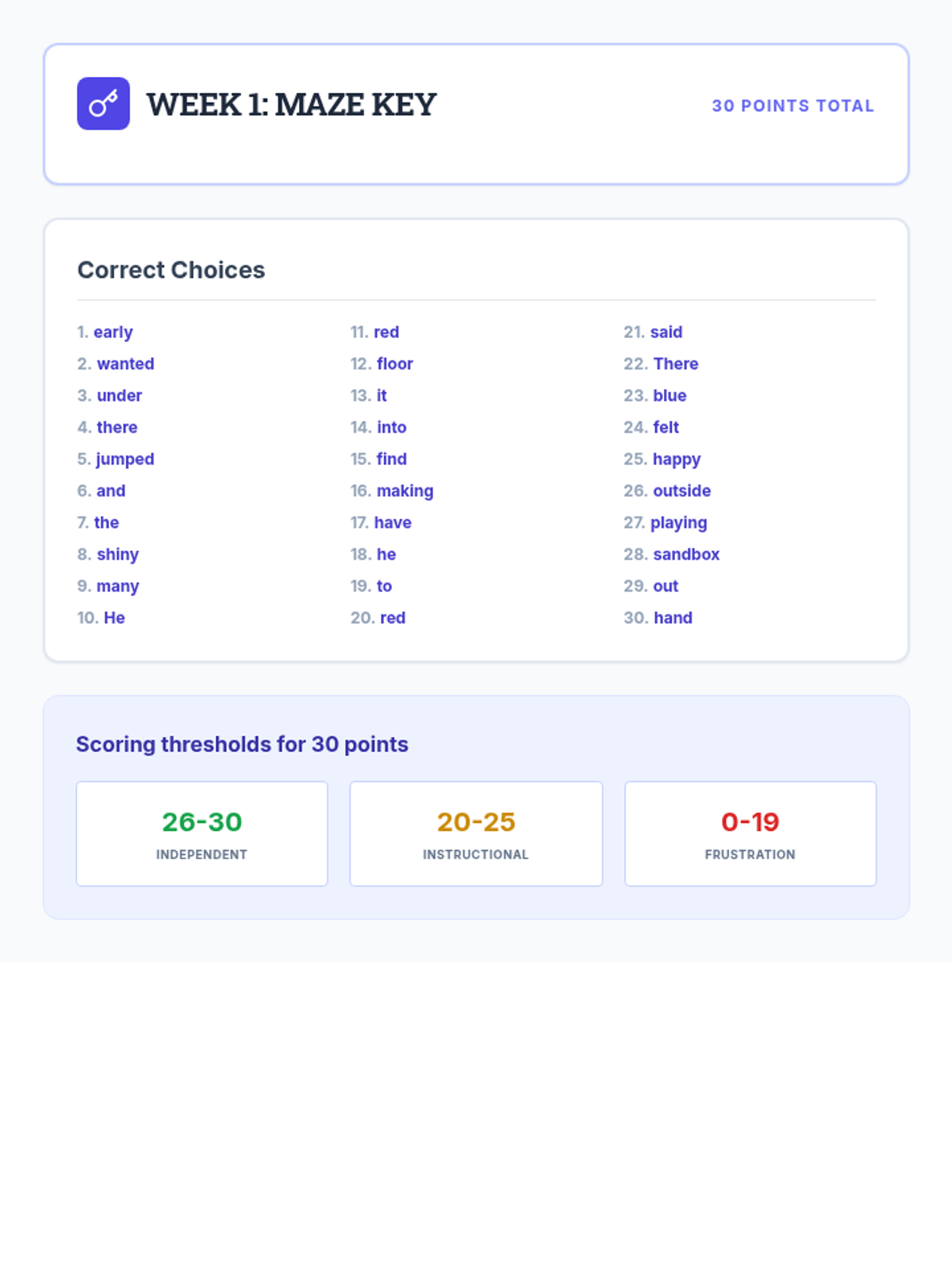
A reading intervention lesson focused on story comprehension using a maze assessment format, where students select the correct word to complete a narrative.
The case begins as Max searches for his favorite blue marble and discovers that some mysteries are harder to solve than they look.
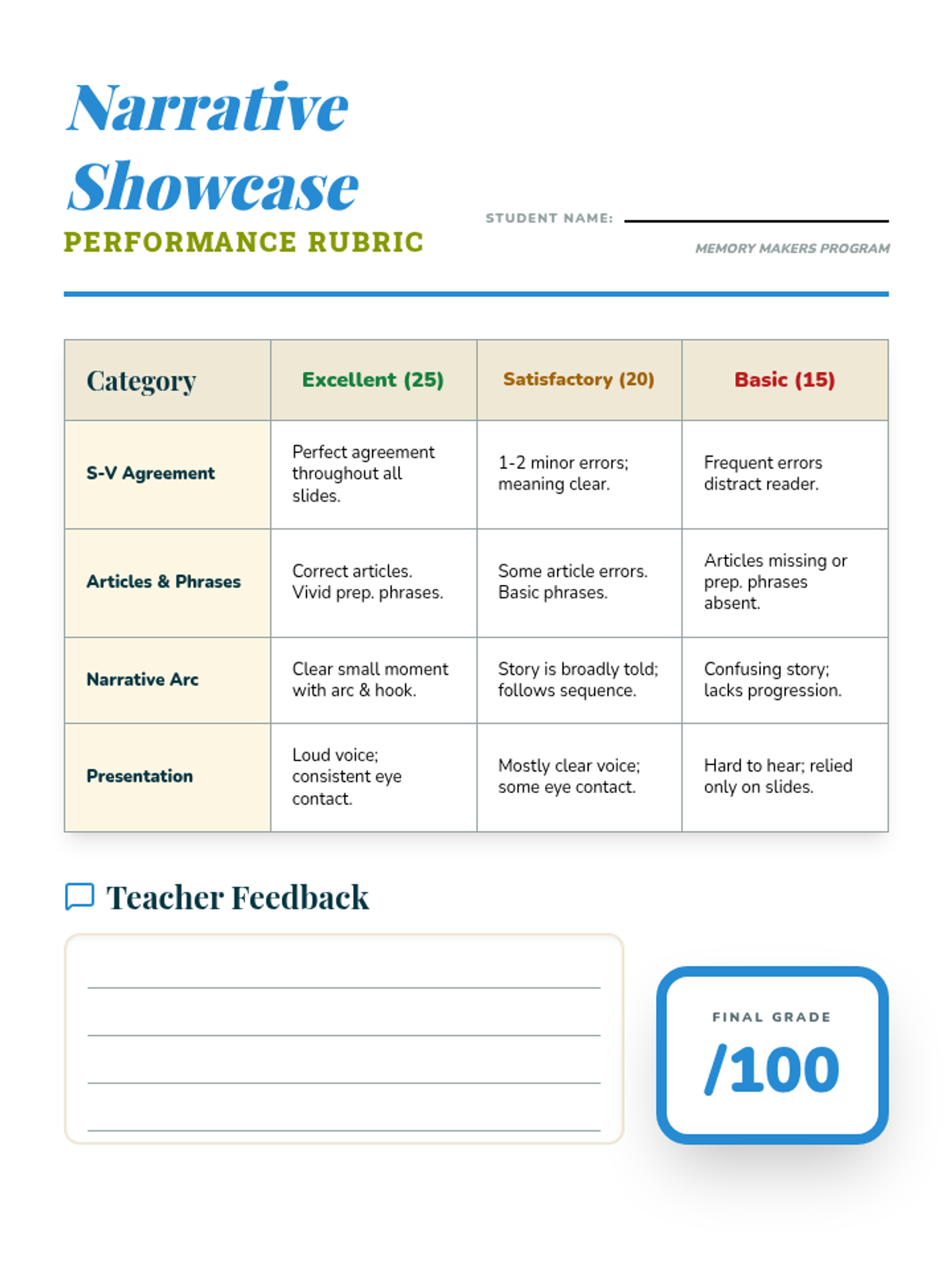
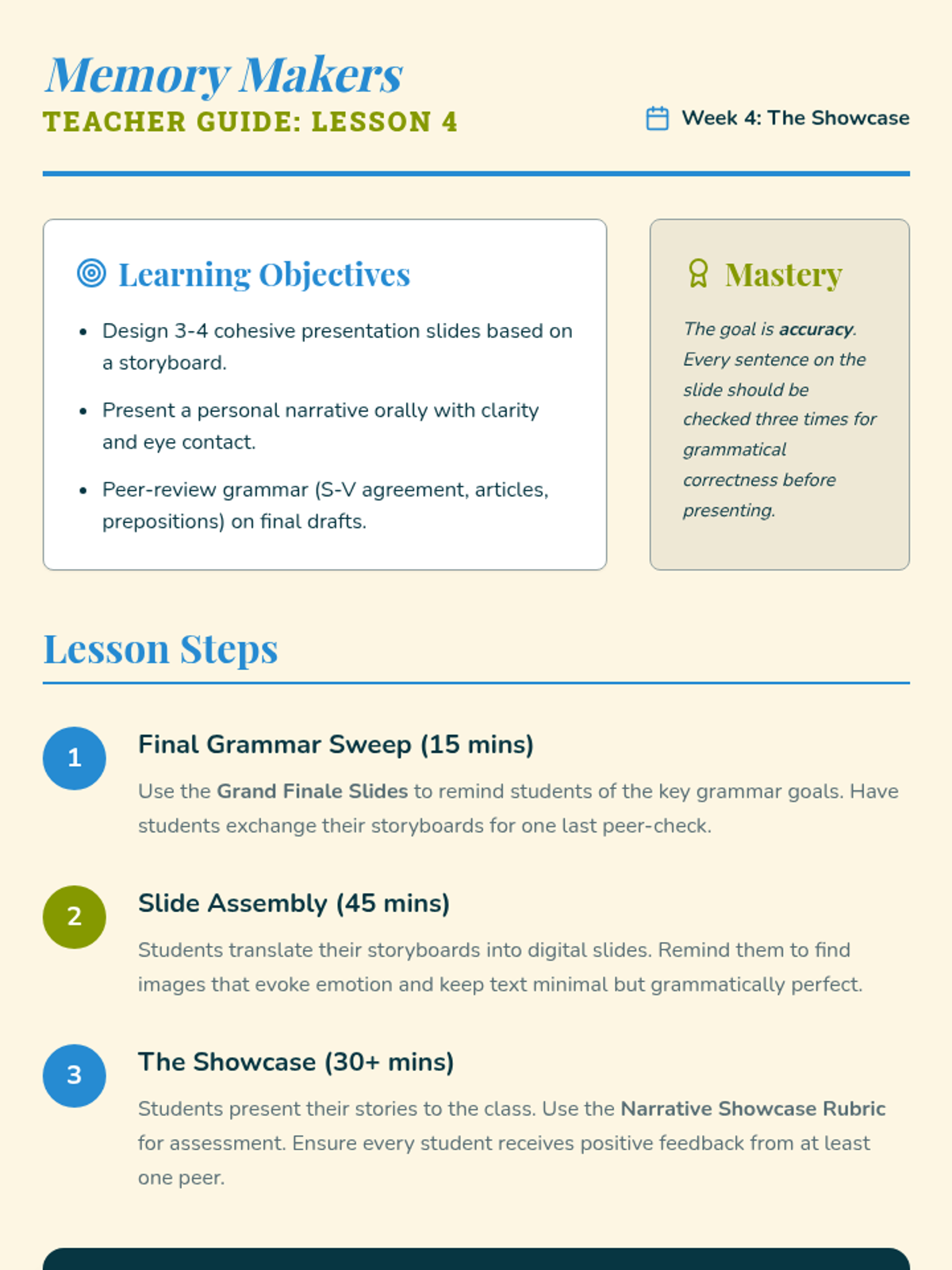
Prepares students for their final oral presentation, focusing on slide design, public speaking, and final grammar checks.
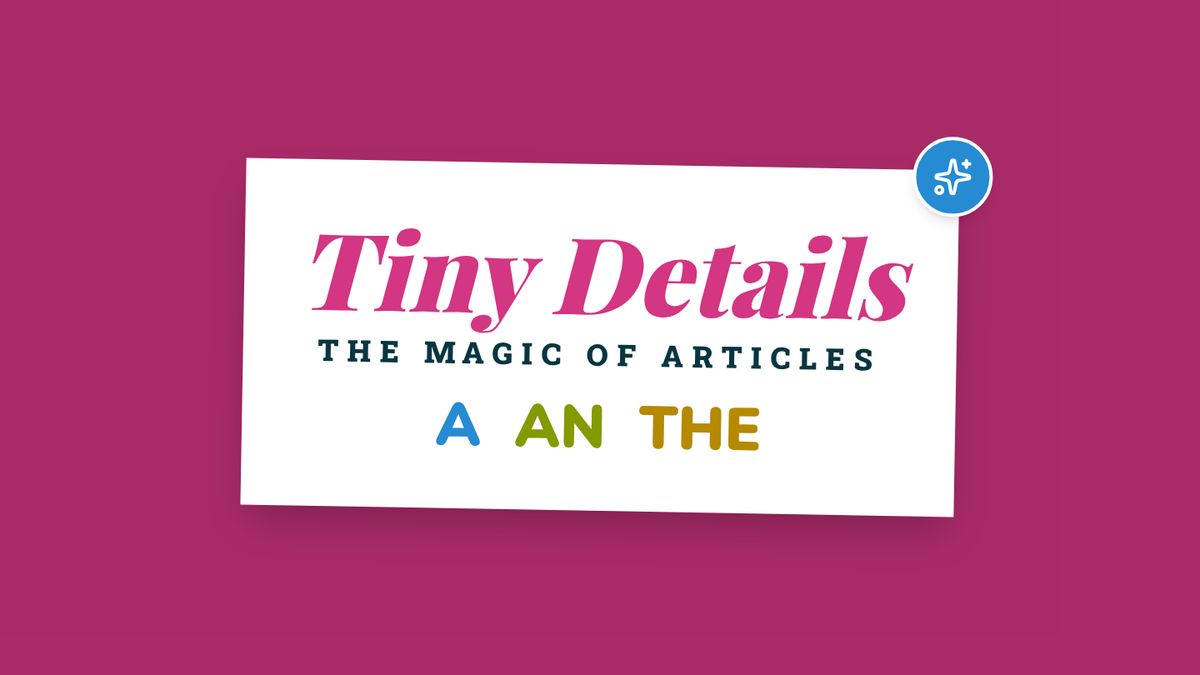
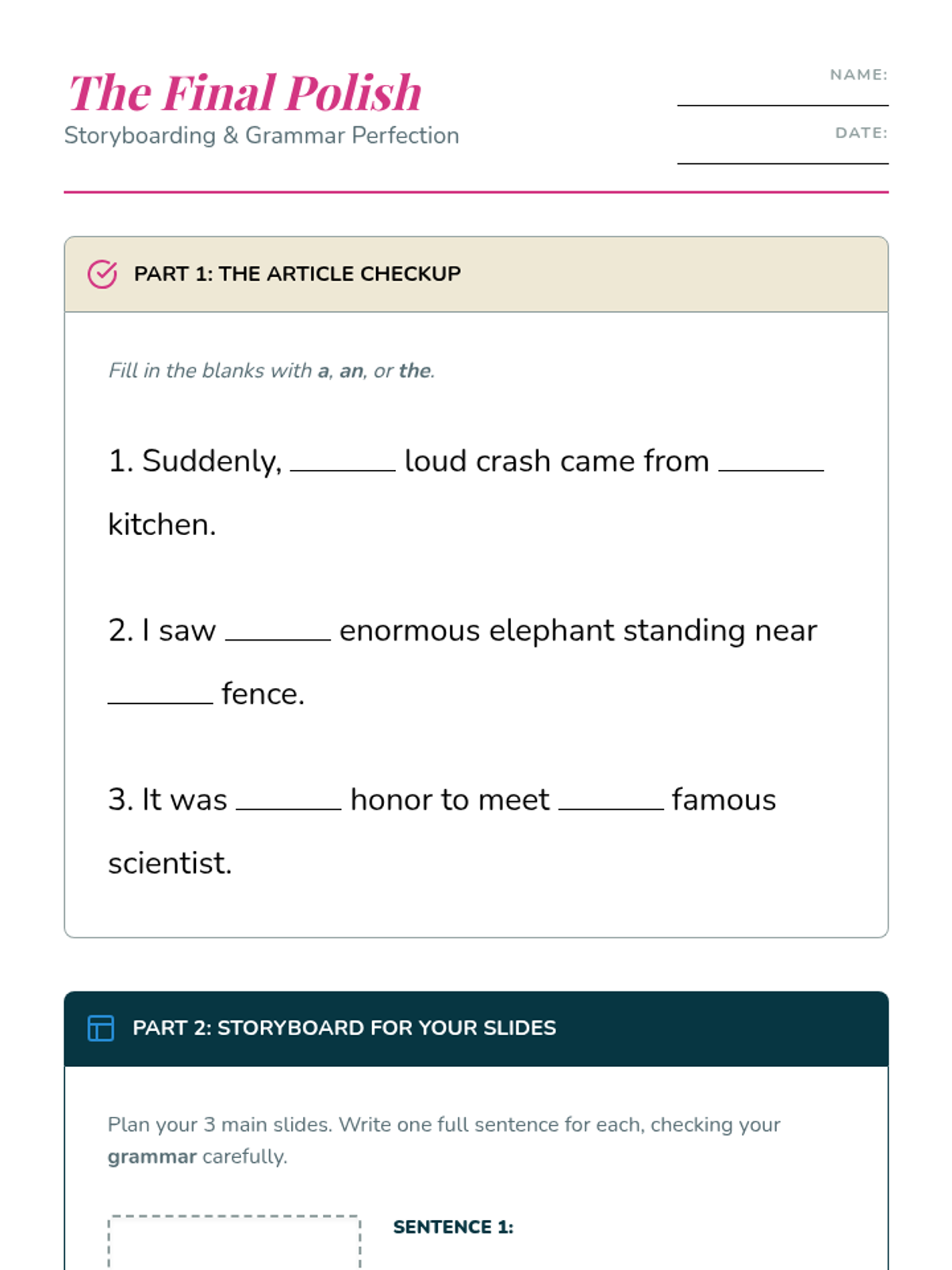
Refines the narrative structure and focuses on the precise use of articles (a, an, the) for clarity and flow.
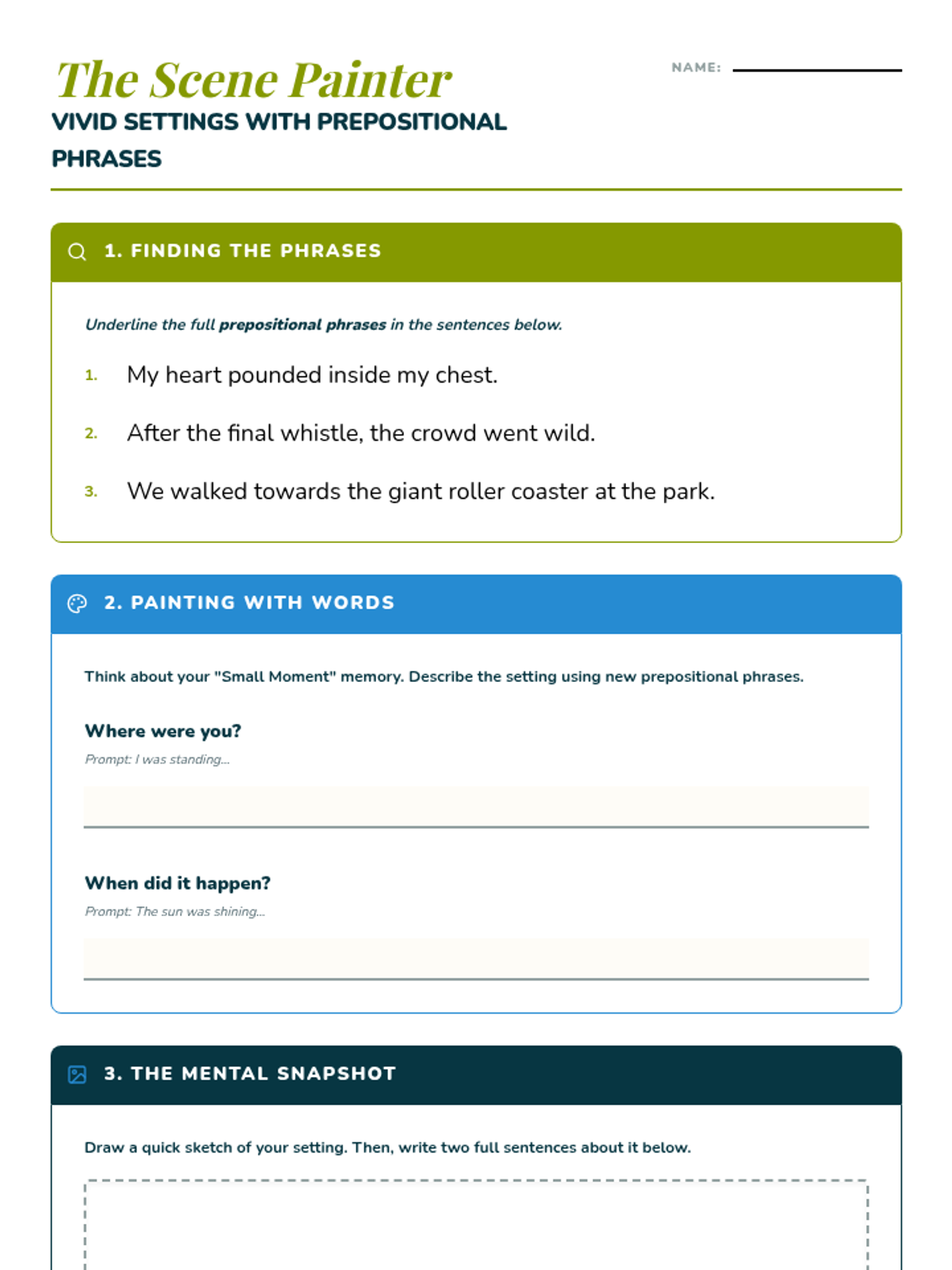
Explores setting and descriptive detail using prepositional phrases to ground narratives in a specific time and place.
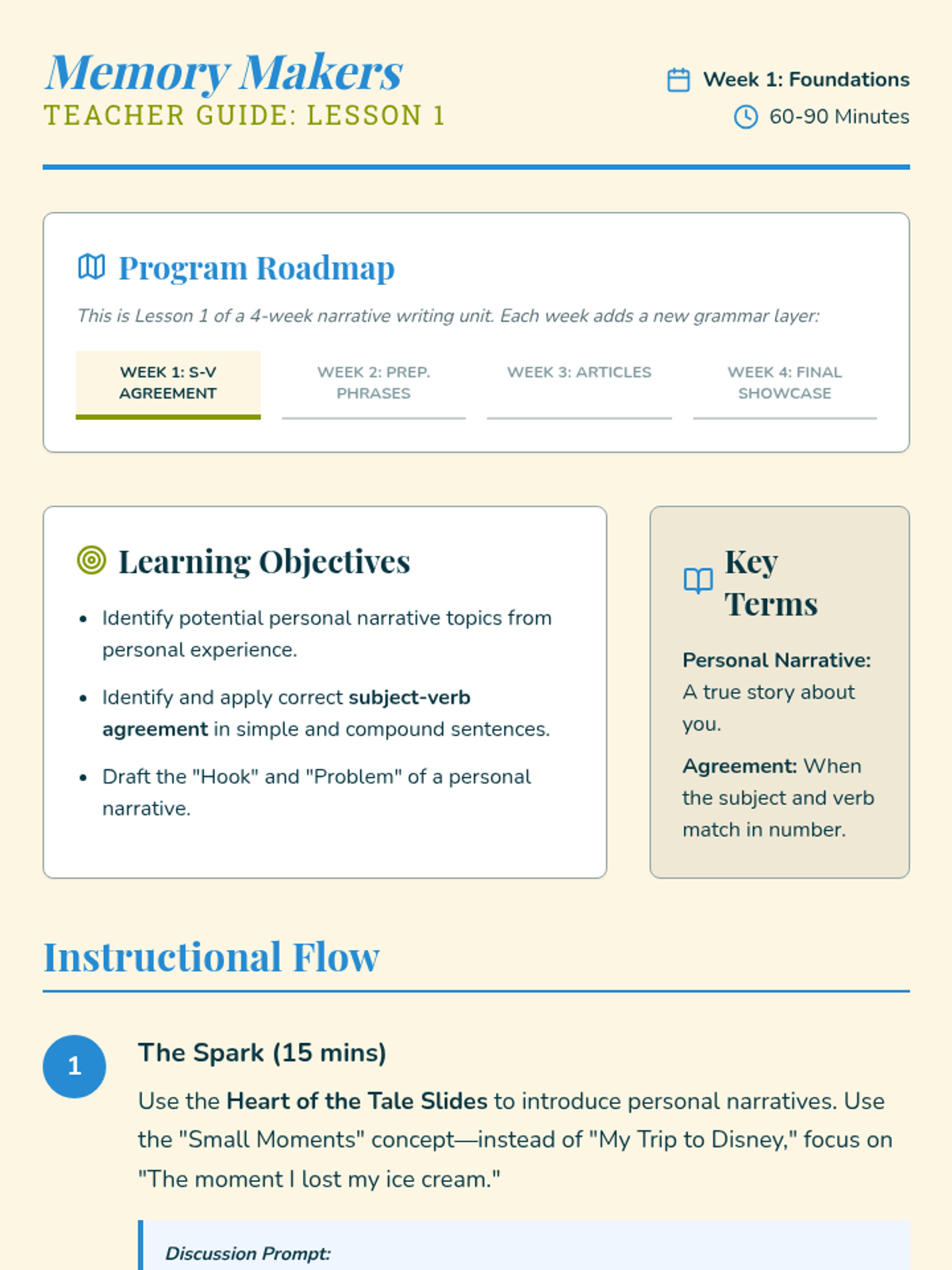
Focuses on identifying personal narrative topics and mastering subject-verb agreement to ensure clear story foundations.
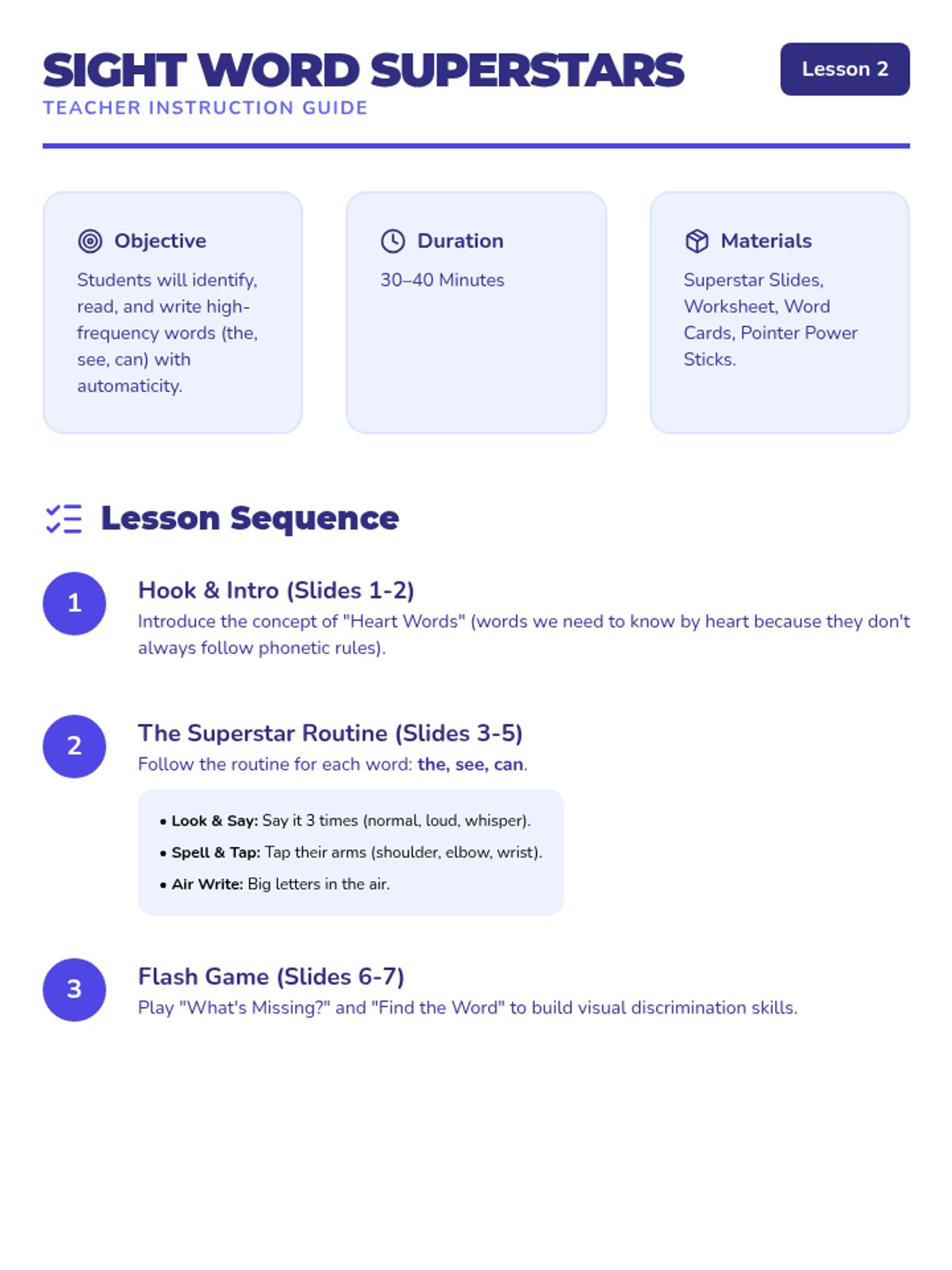
A focused lesson on identifying, reading, and writing high-frequency sight words to build reading fluency and confidence.
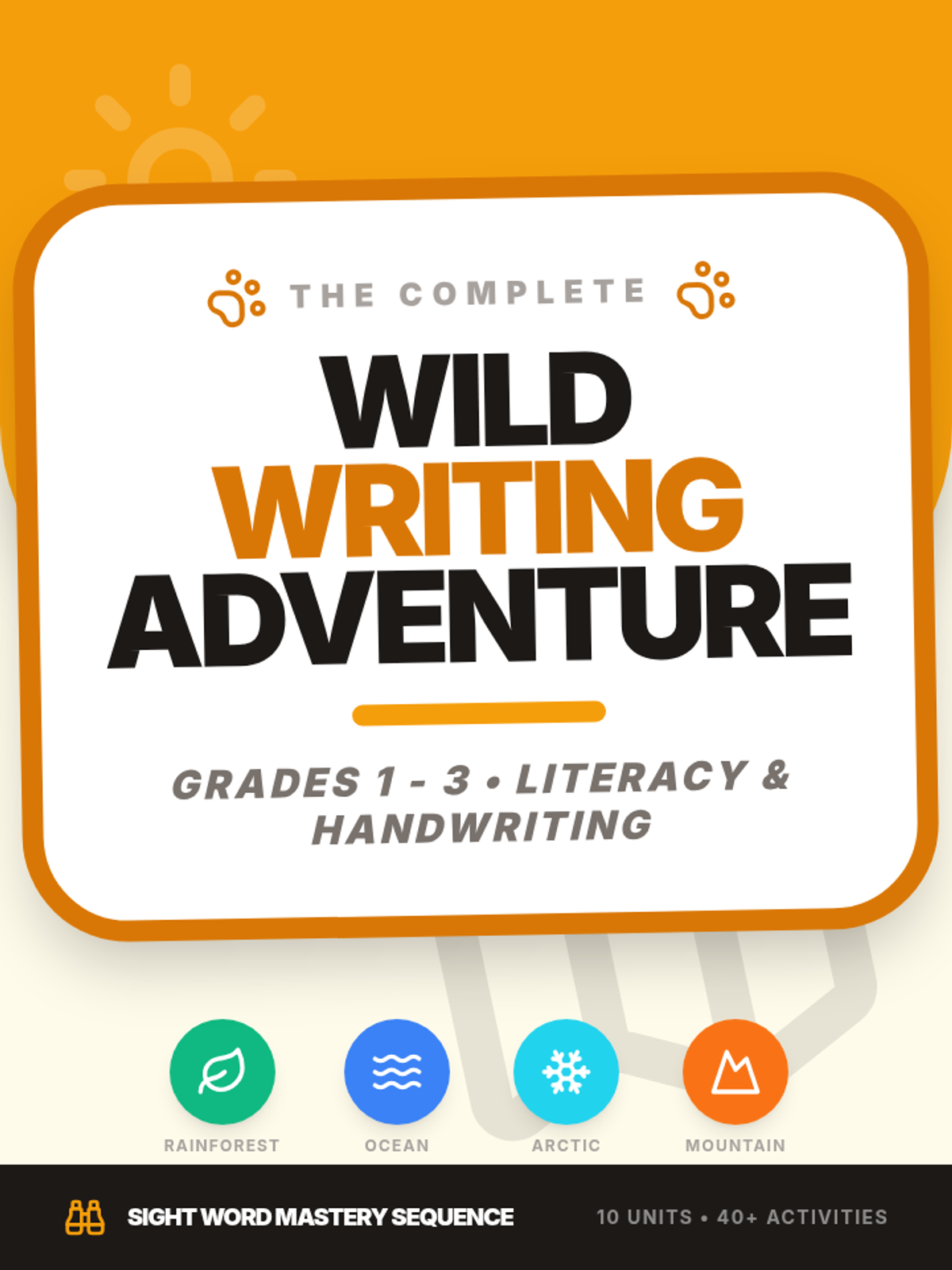
A high-level overview of the Wild Writing Adventure curriculum, including teacher guides, scope and sequence, and implementation strategies.
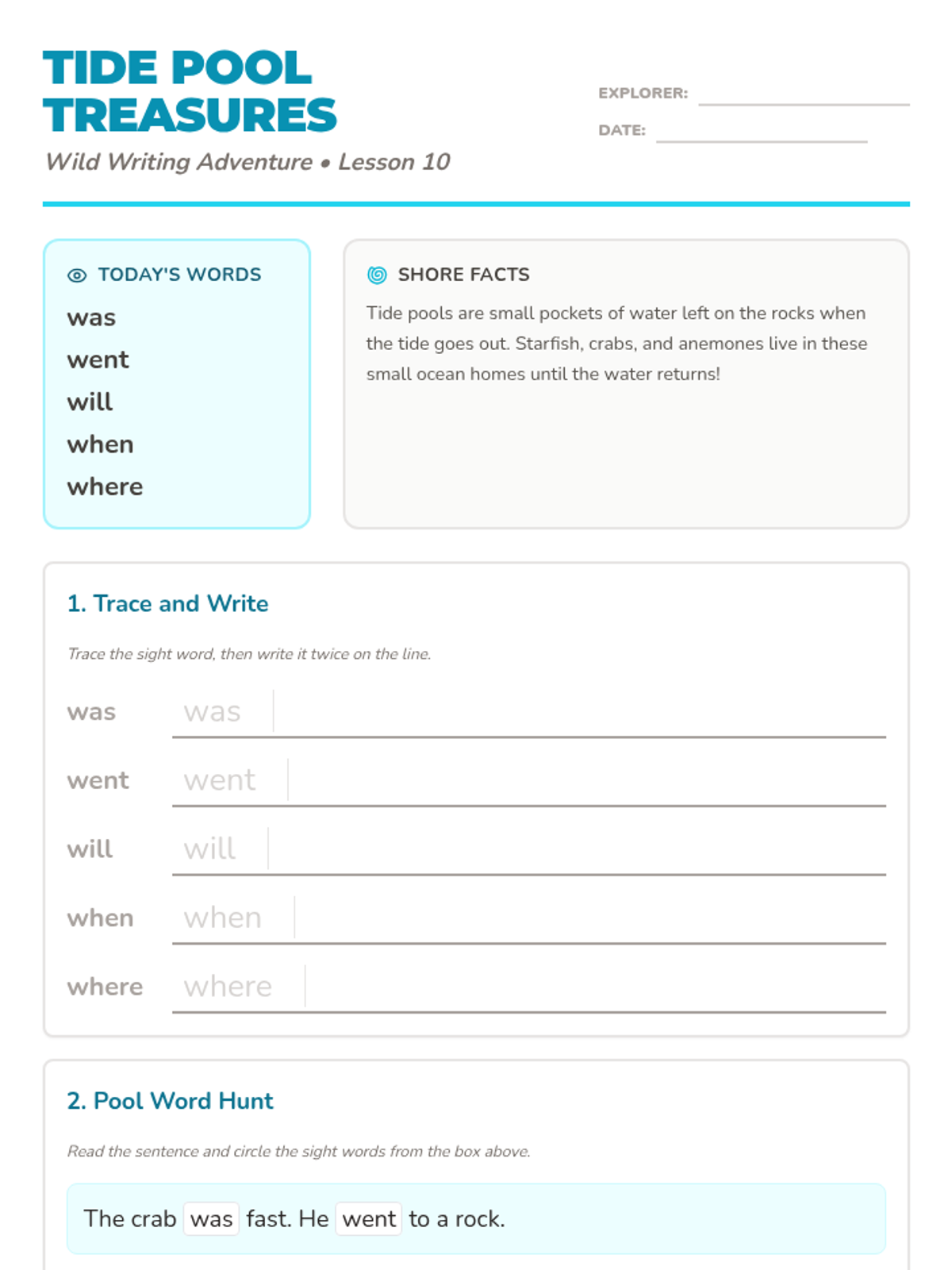
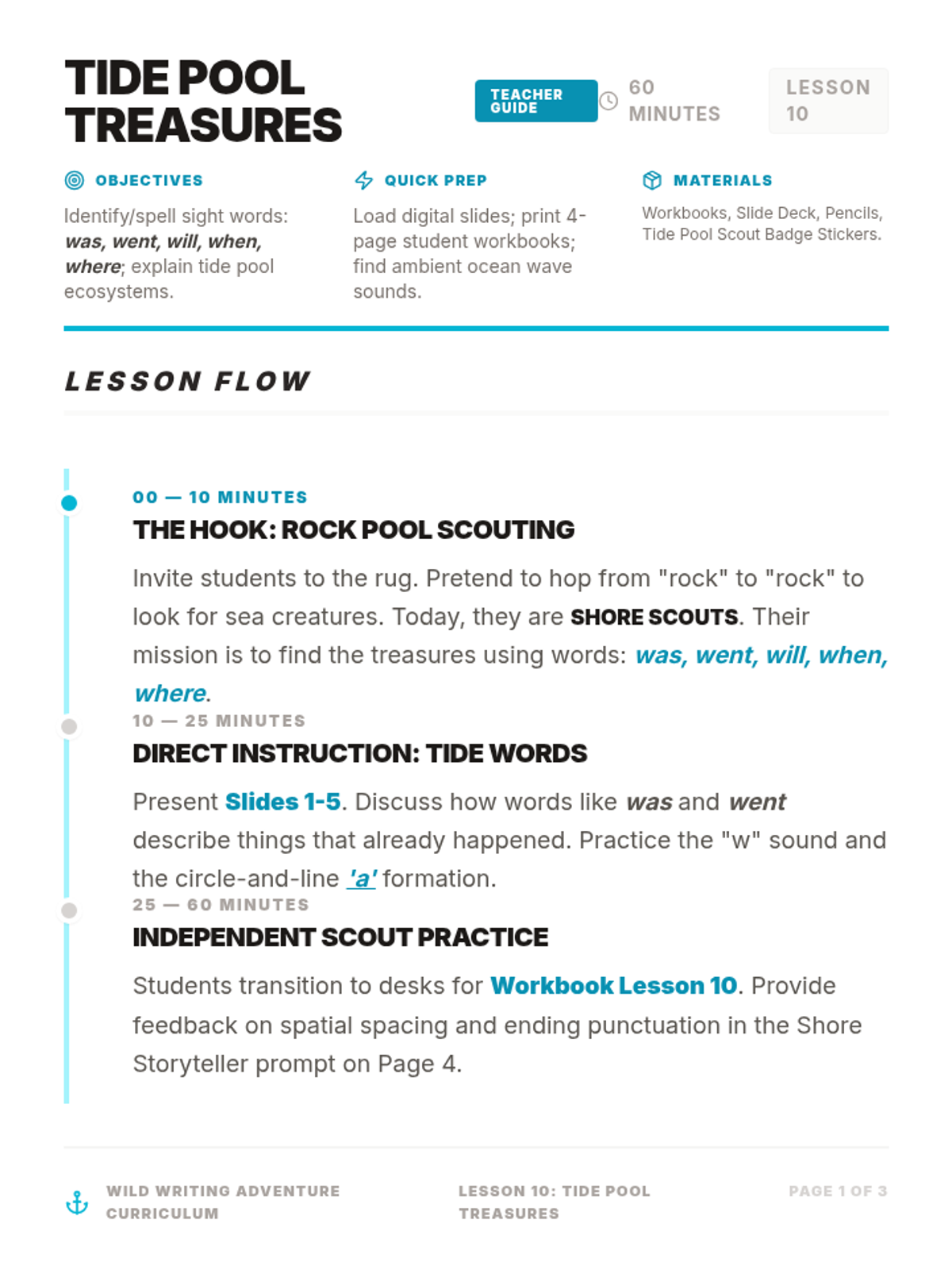
Explore the rocky shore to discover sight words while meeting starfish, crabs, and sea anemones in colorful tide pools.
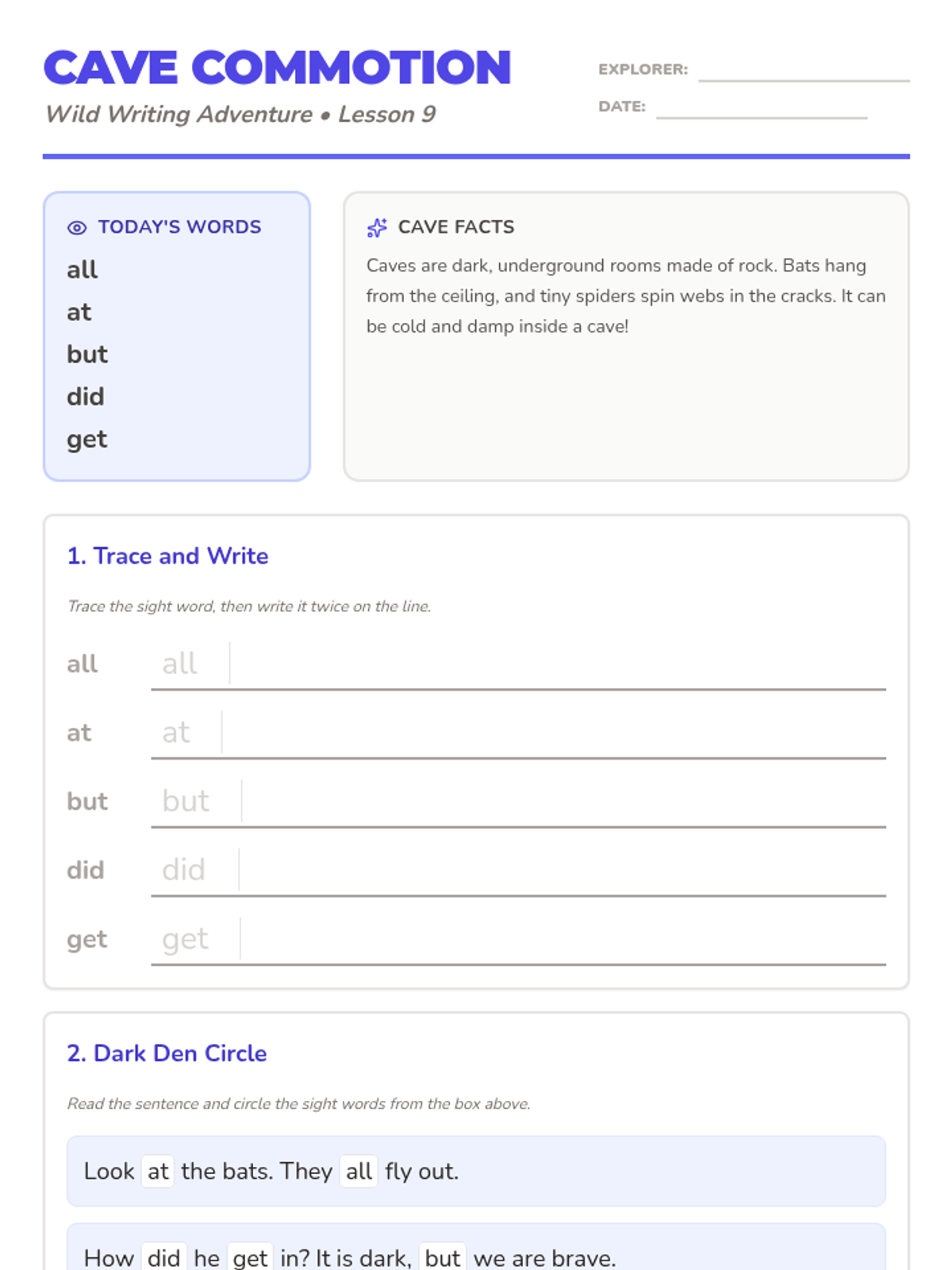
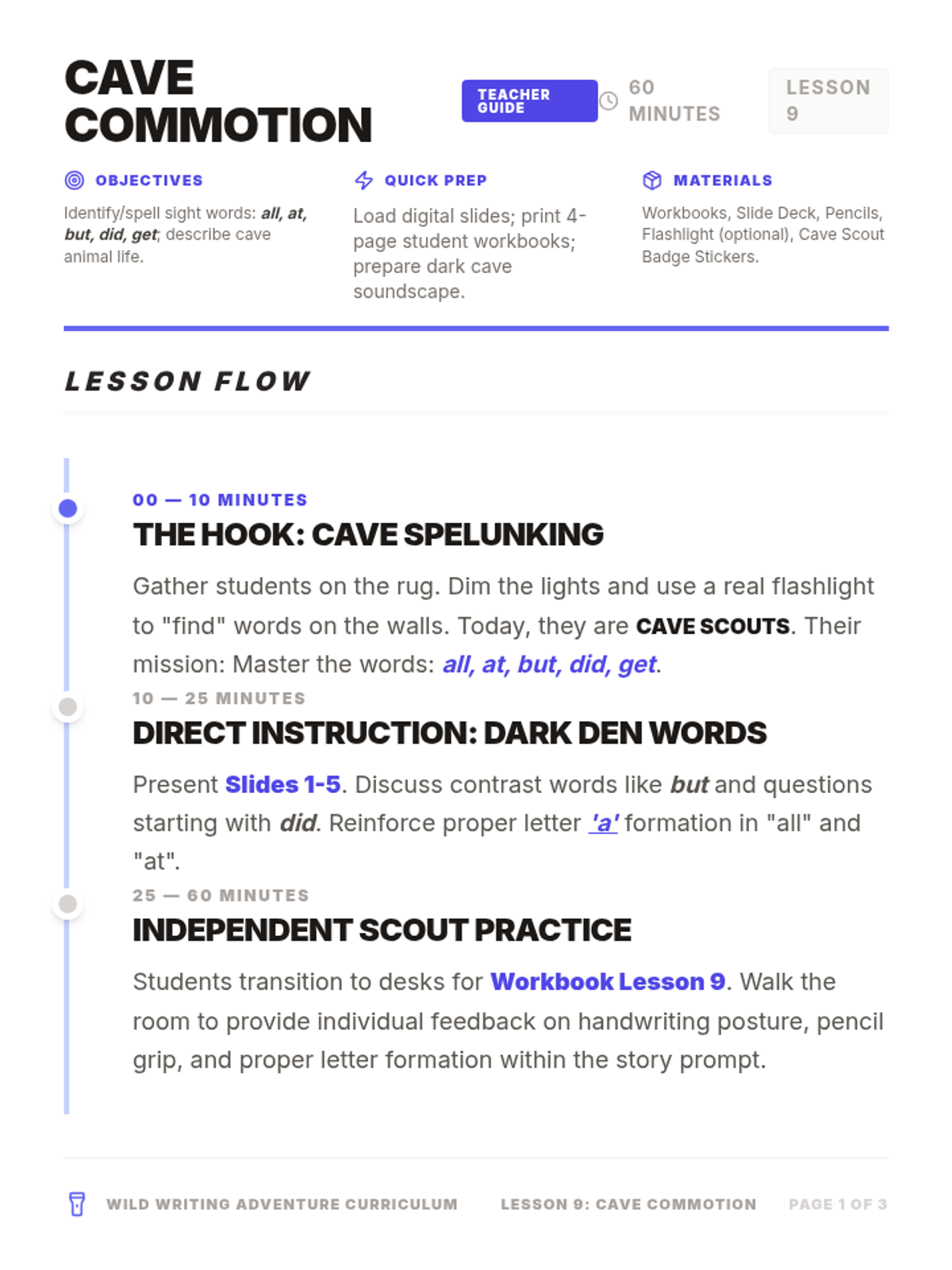
Venture into the mysterious world of caves to master essential sight words while meeting bats, spiders, and salamanders.
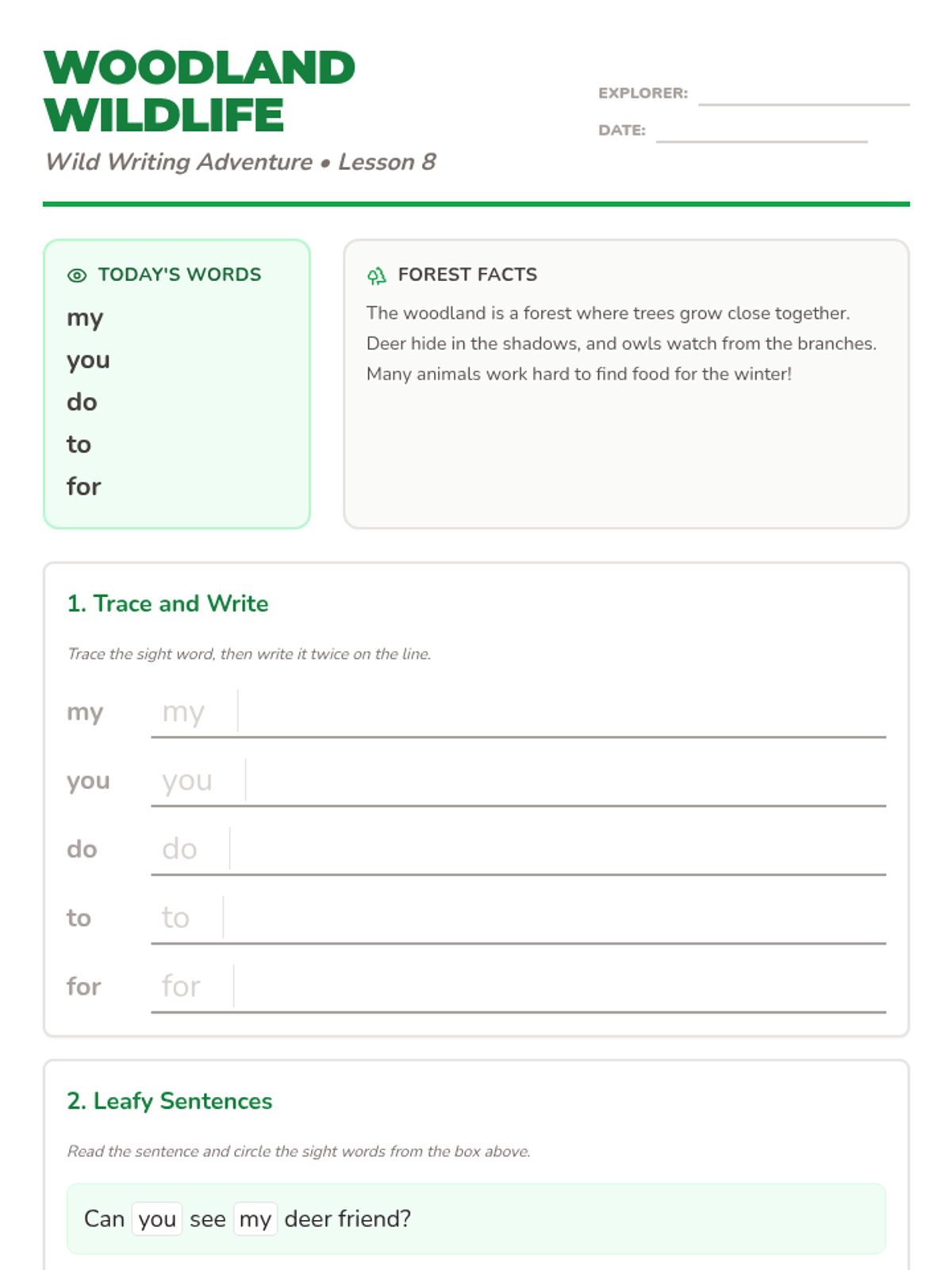
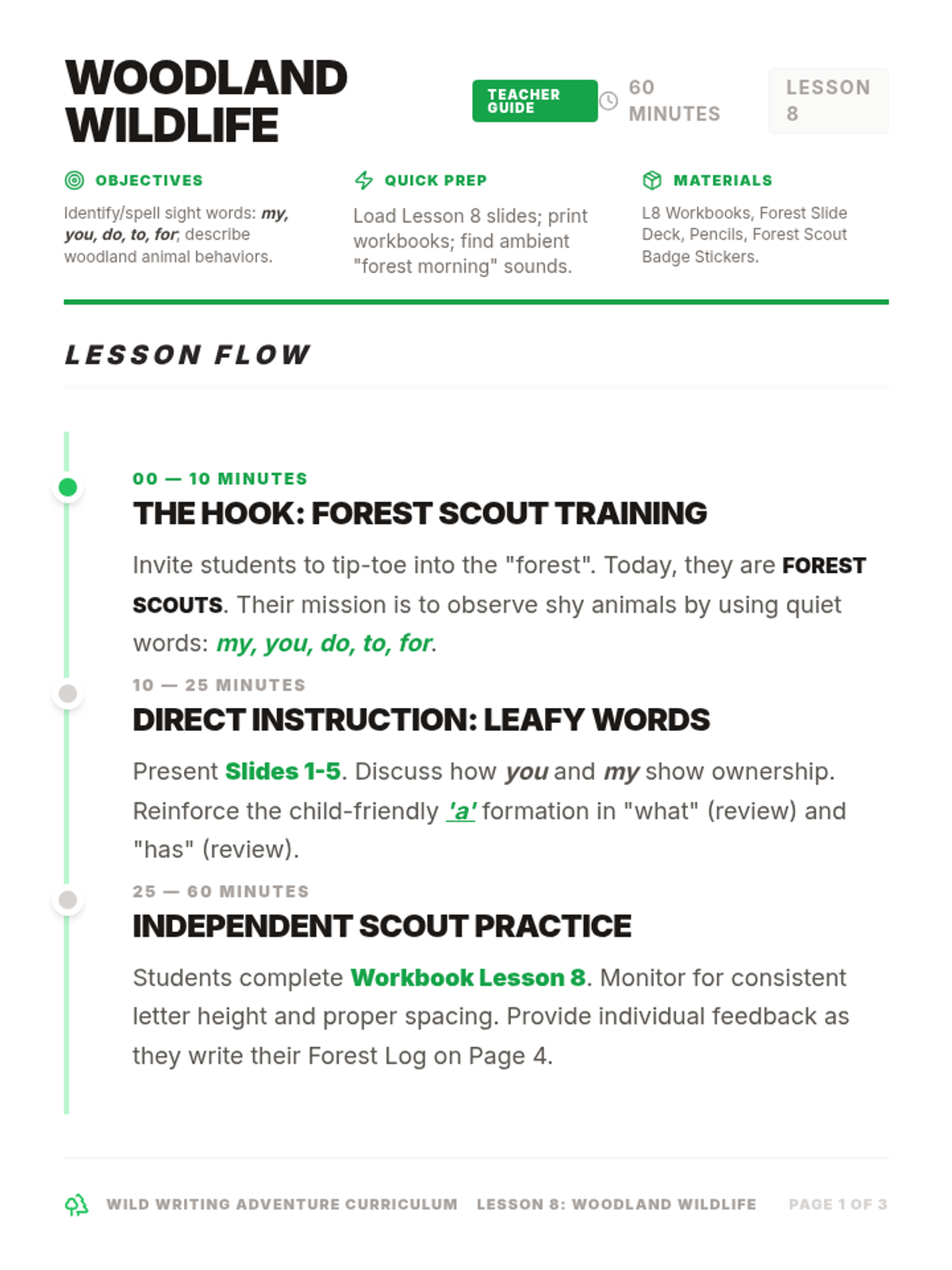
Explore the leafy woodland forest to master essential sight words while meeting graceful deer, wise owls, and busy woodpeckers.
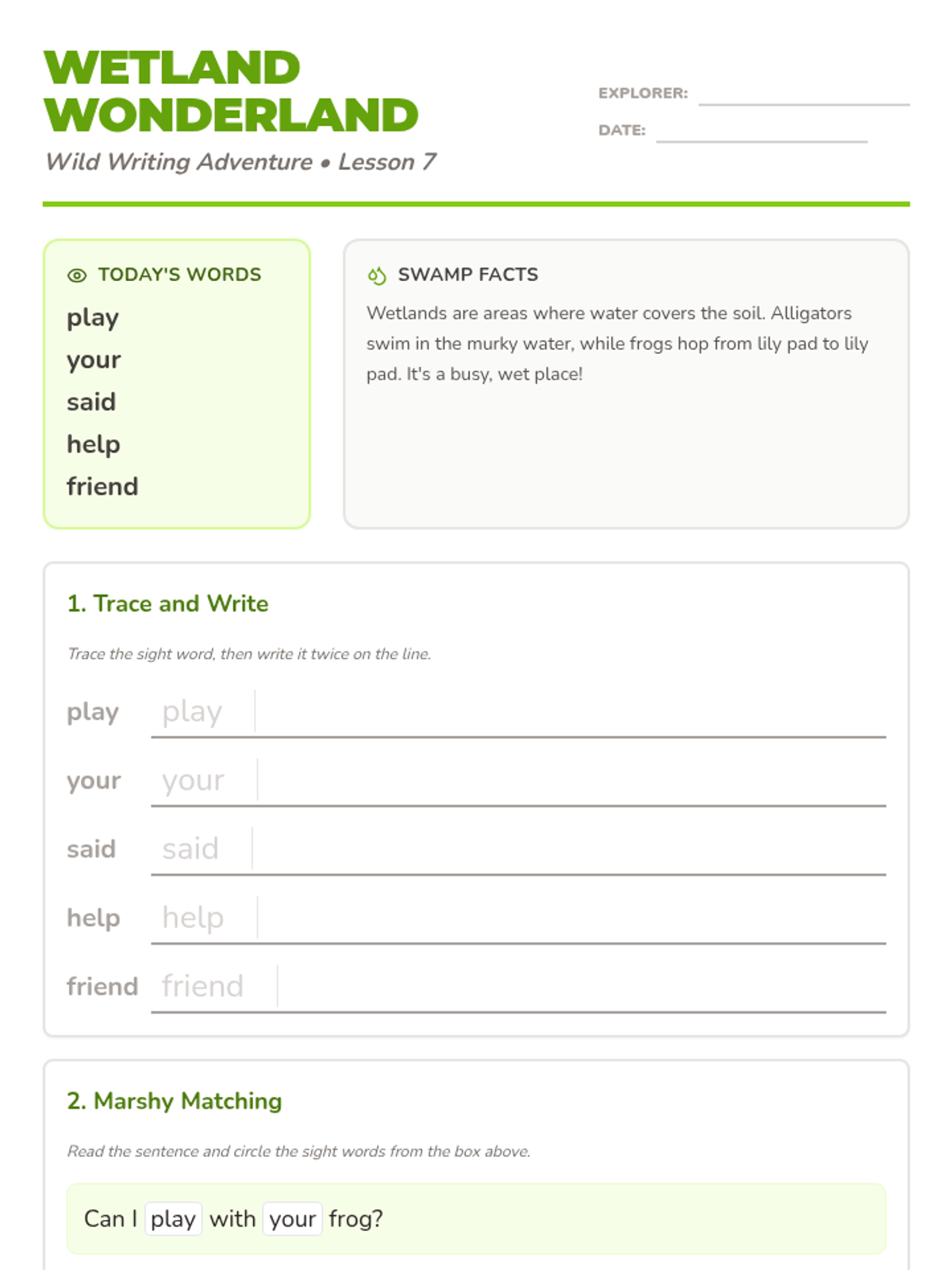
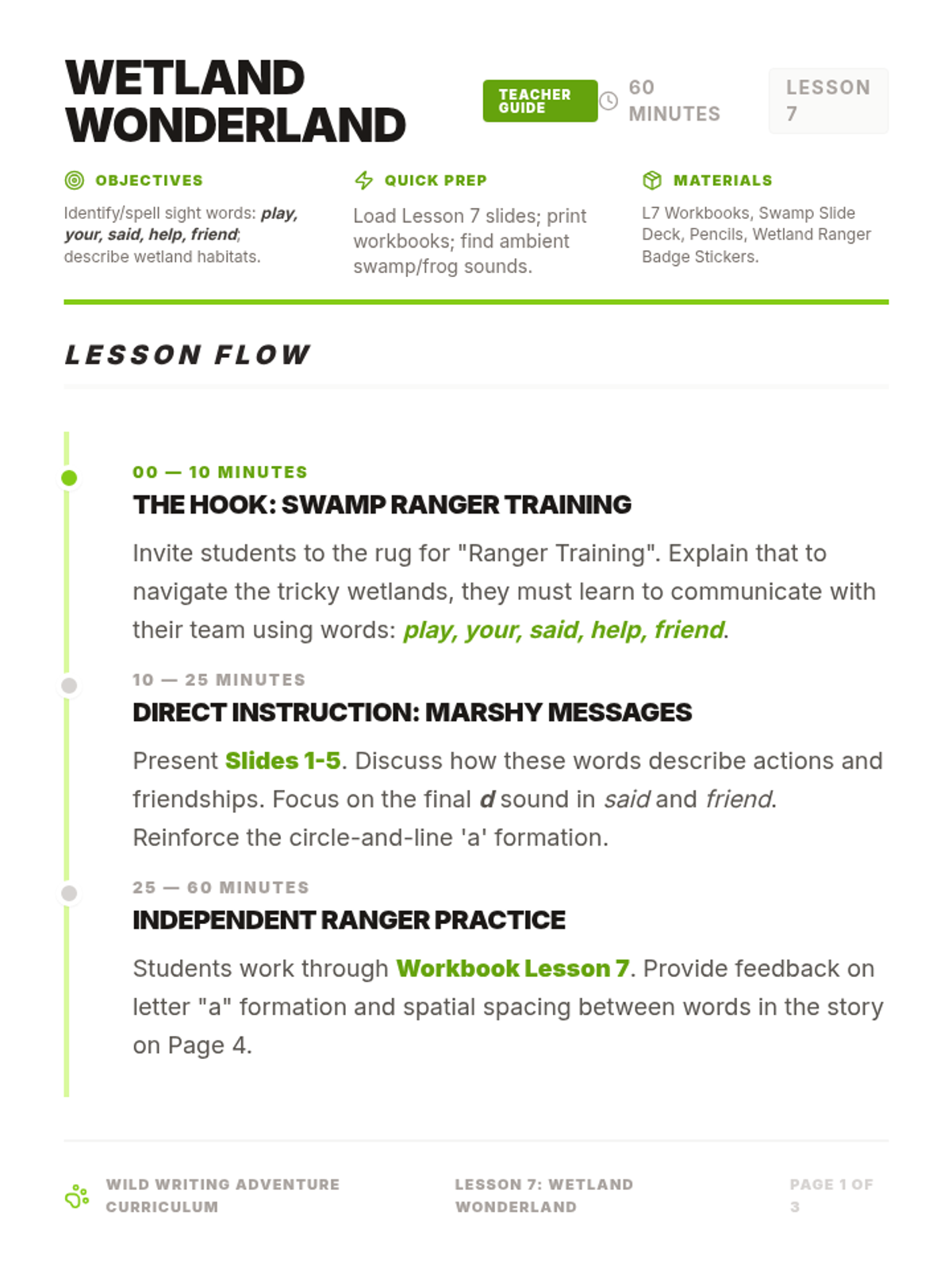
Squelch through the marshy wetlands to master descriptive sight words while spotting alligators, frogs, and dragonflies.
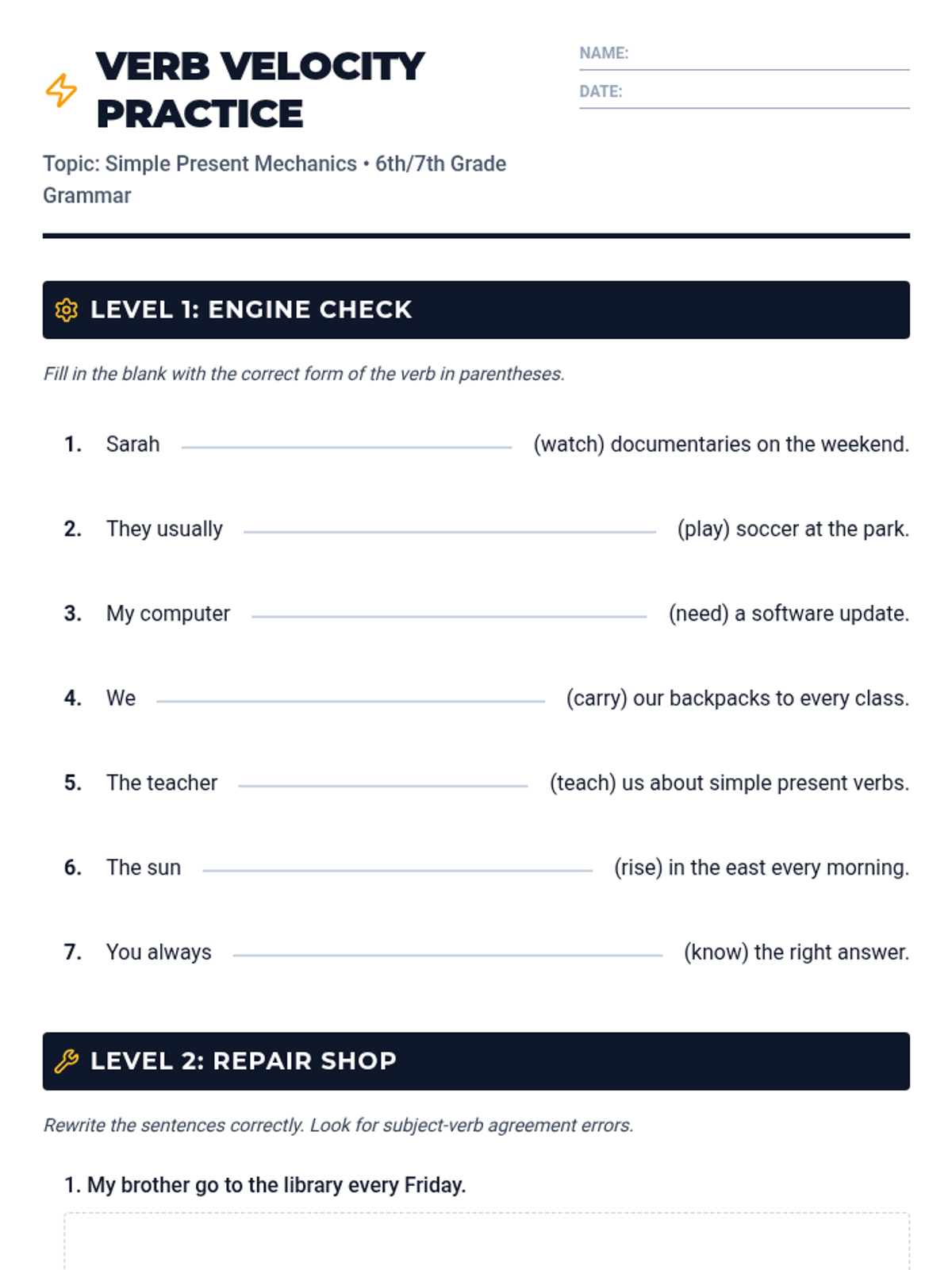
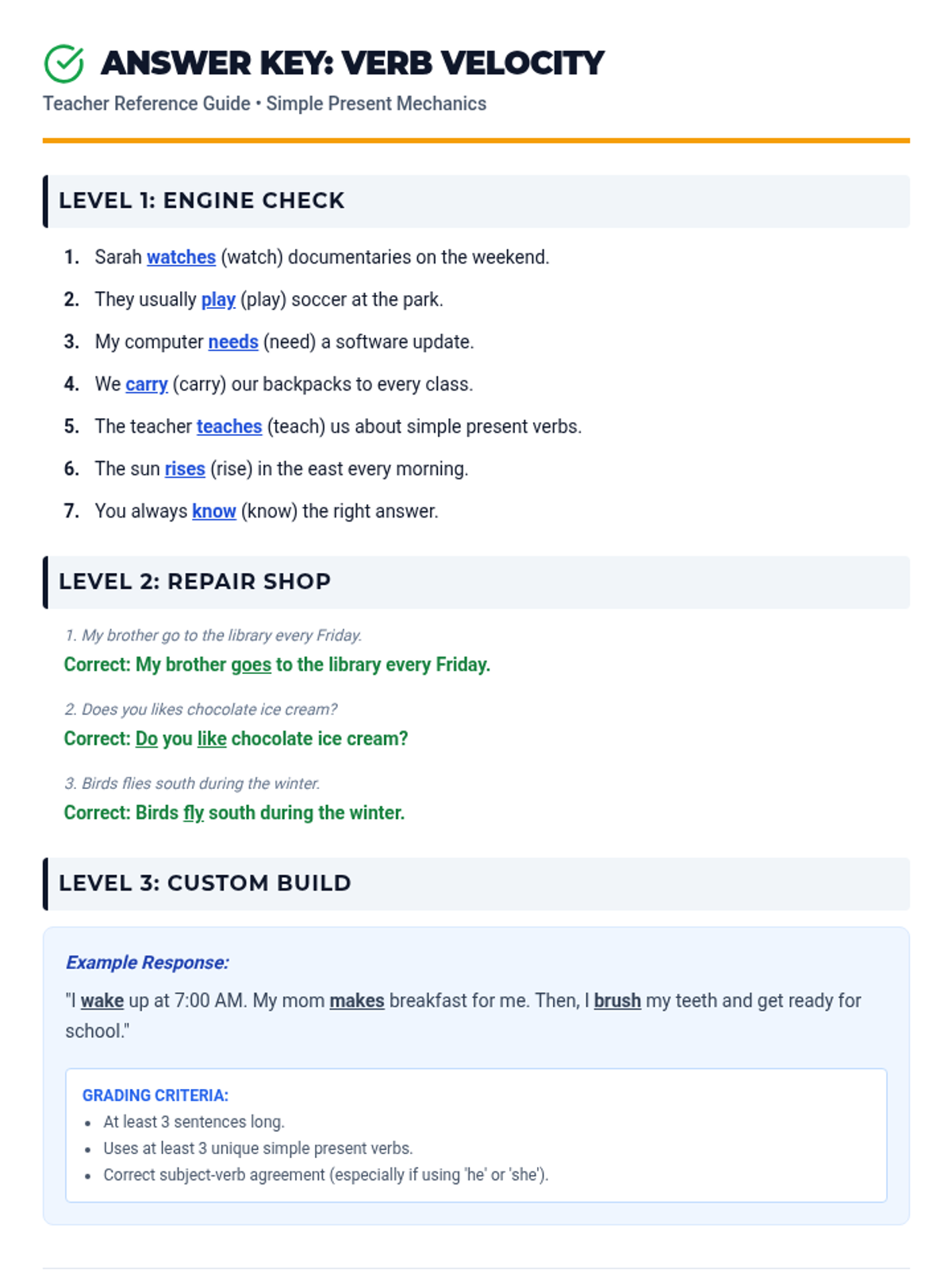
Master the mechanics of simple present verbs, focusing on subject-verb agreement, daily routines, and general truths for 6th/7th grade students.
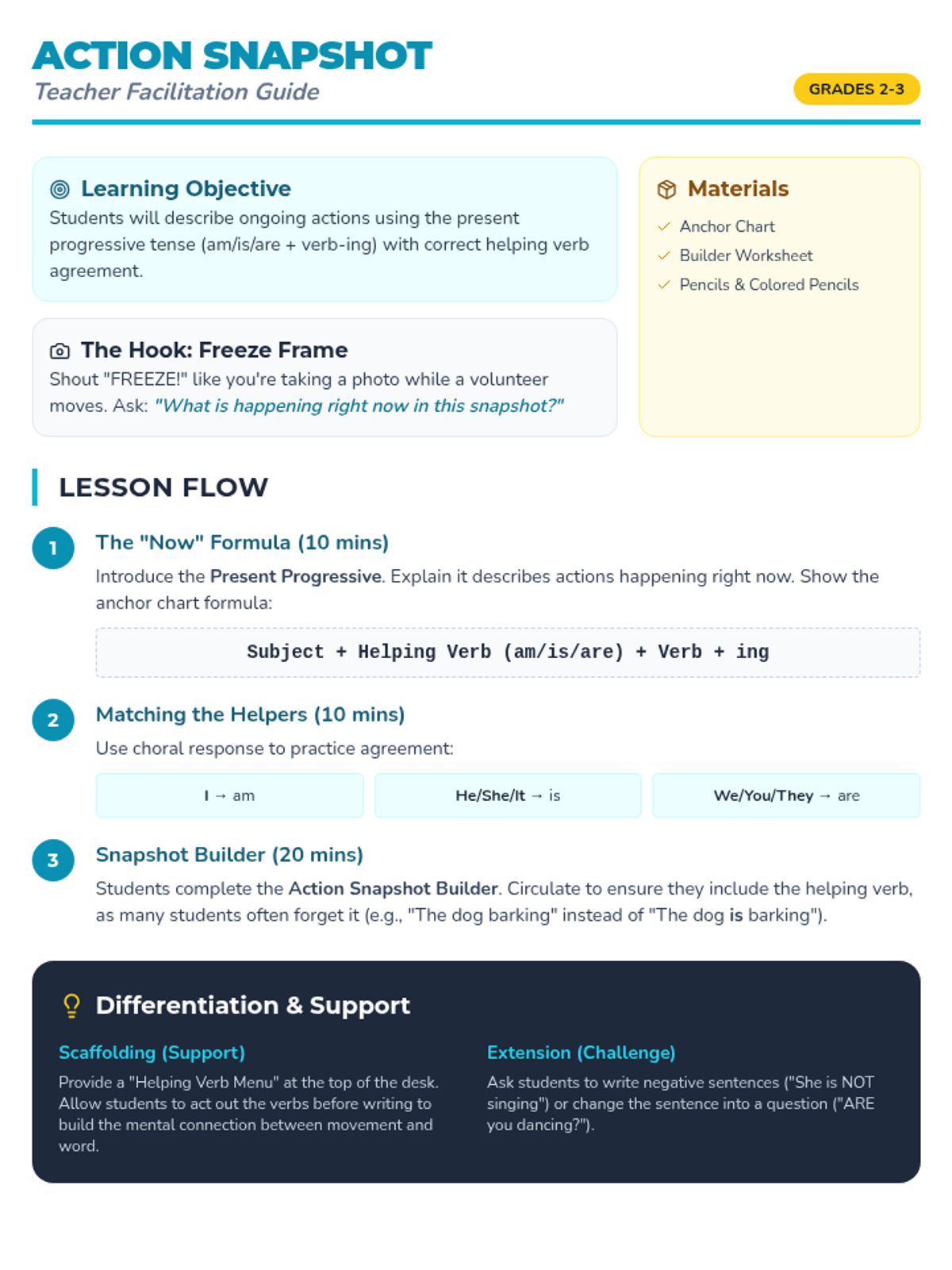
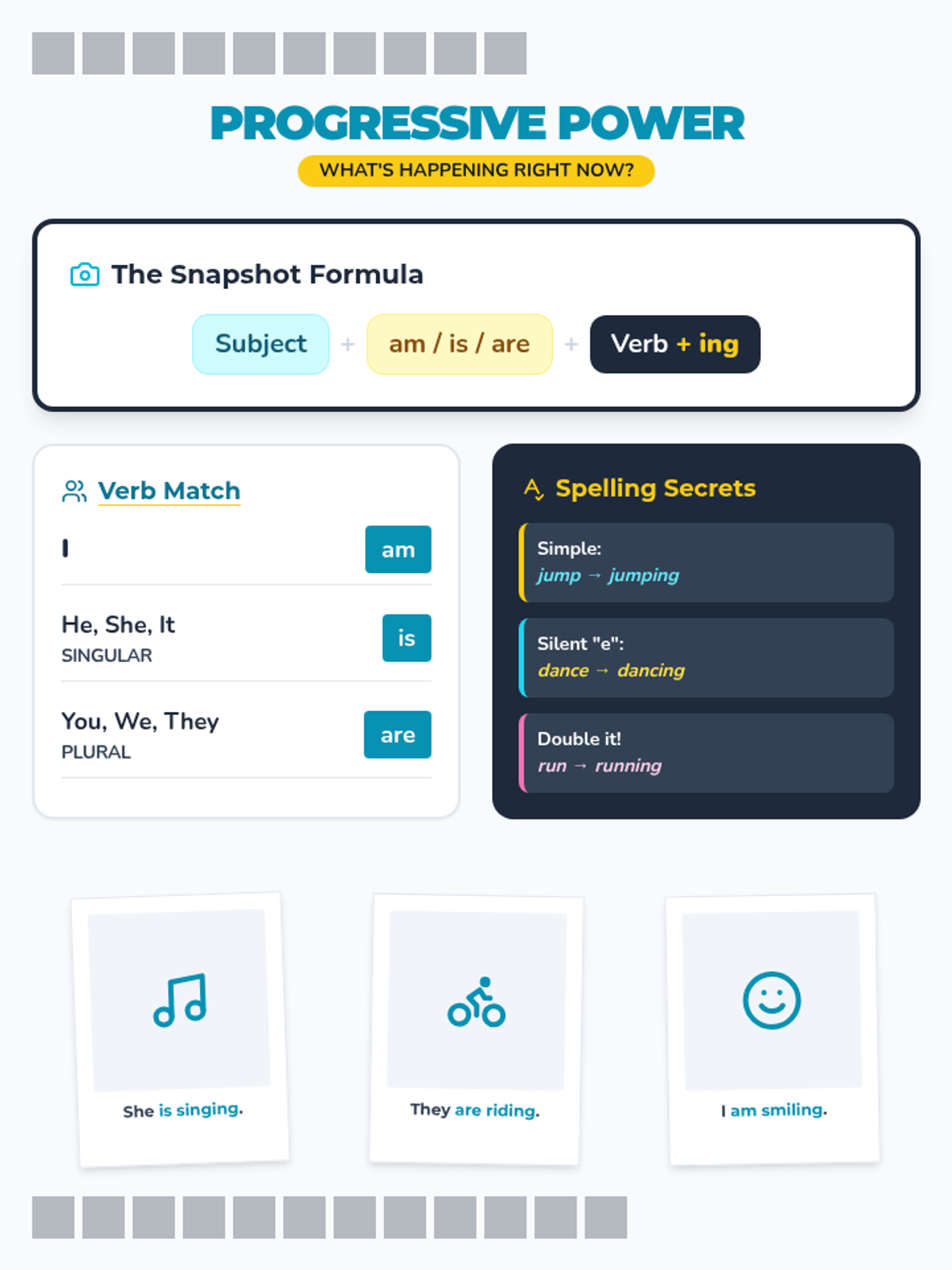
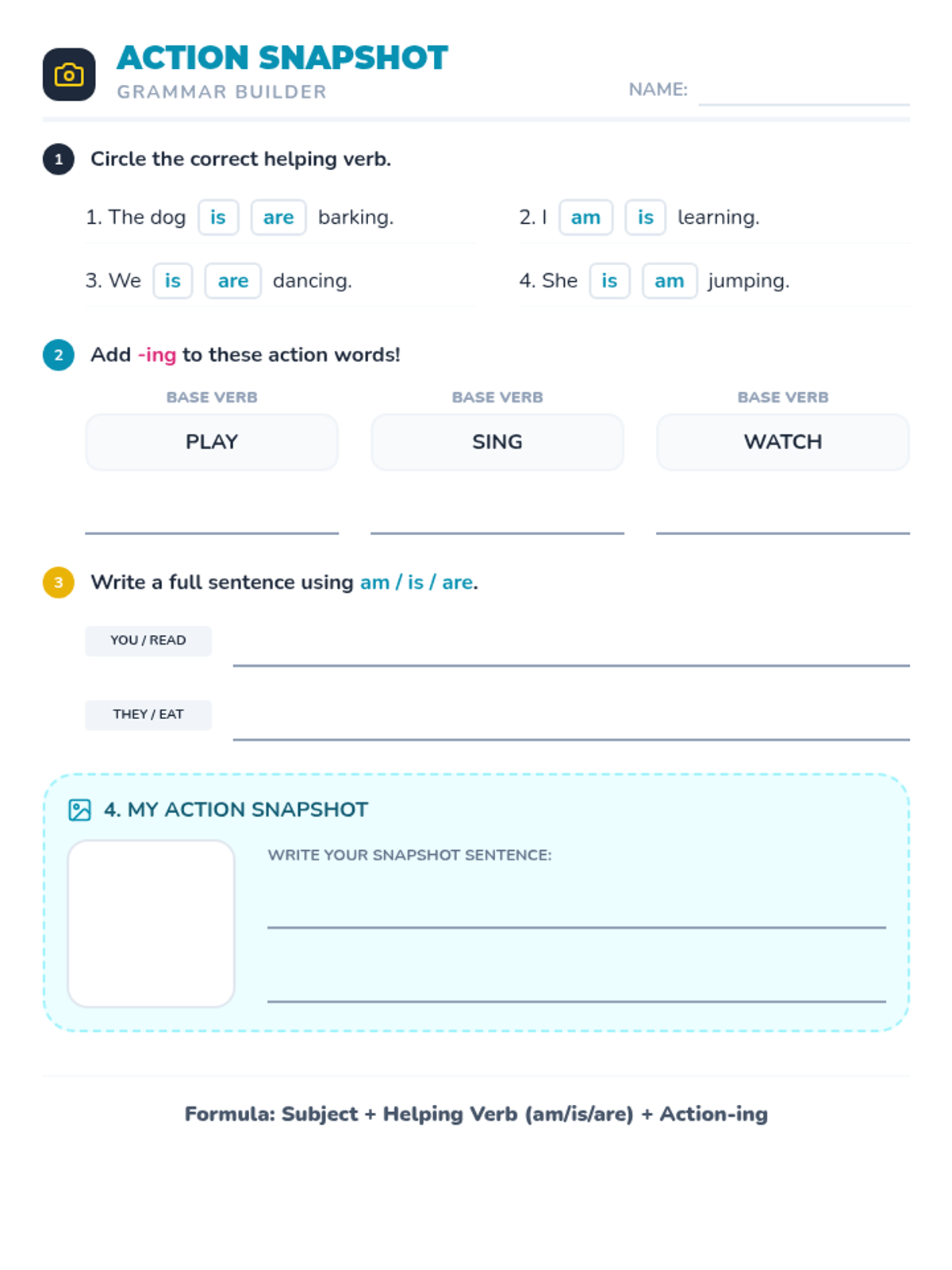
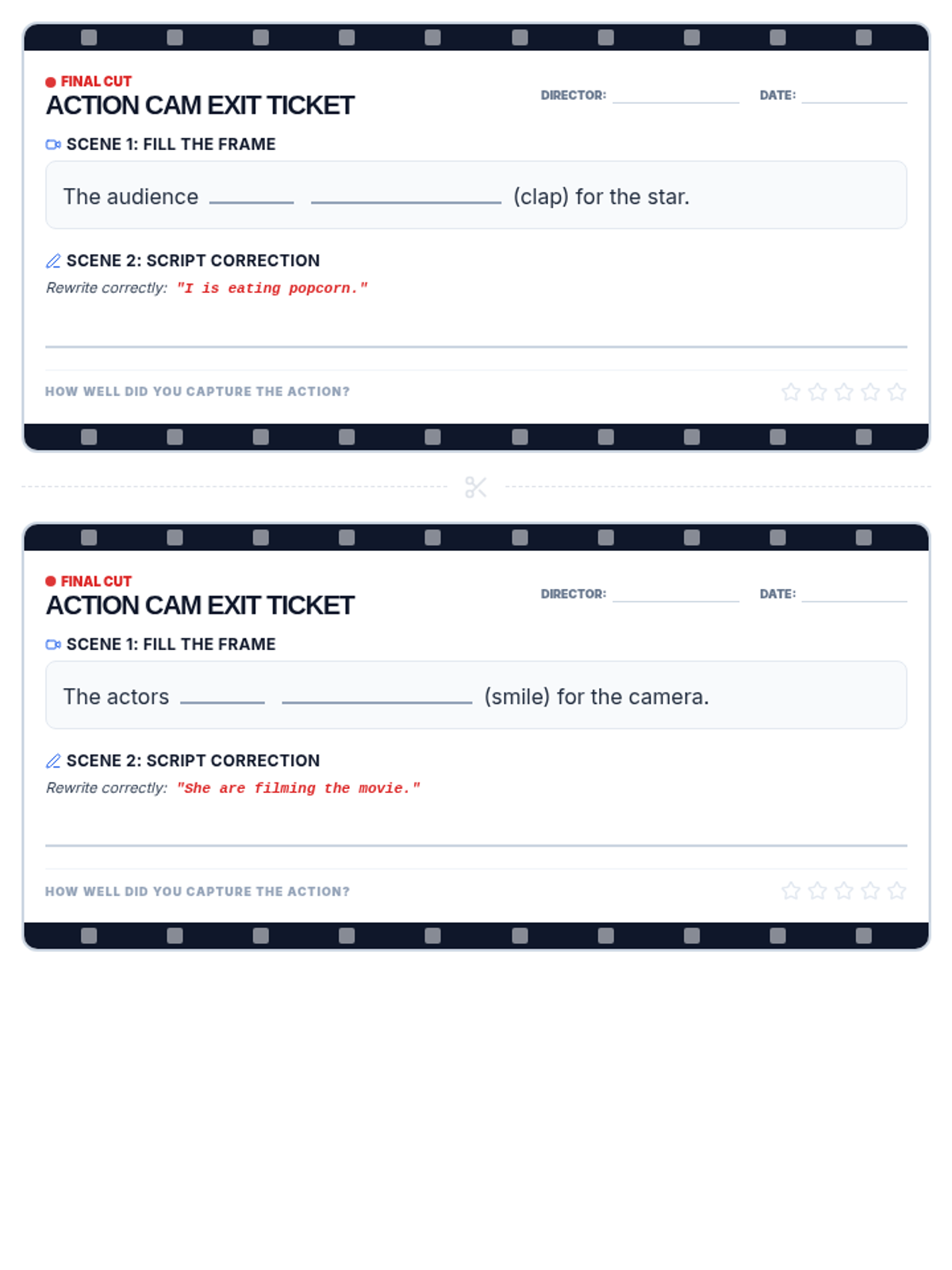
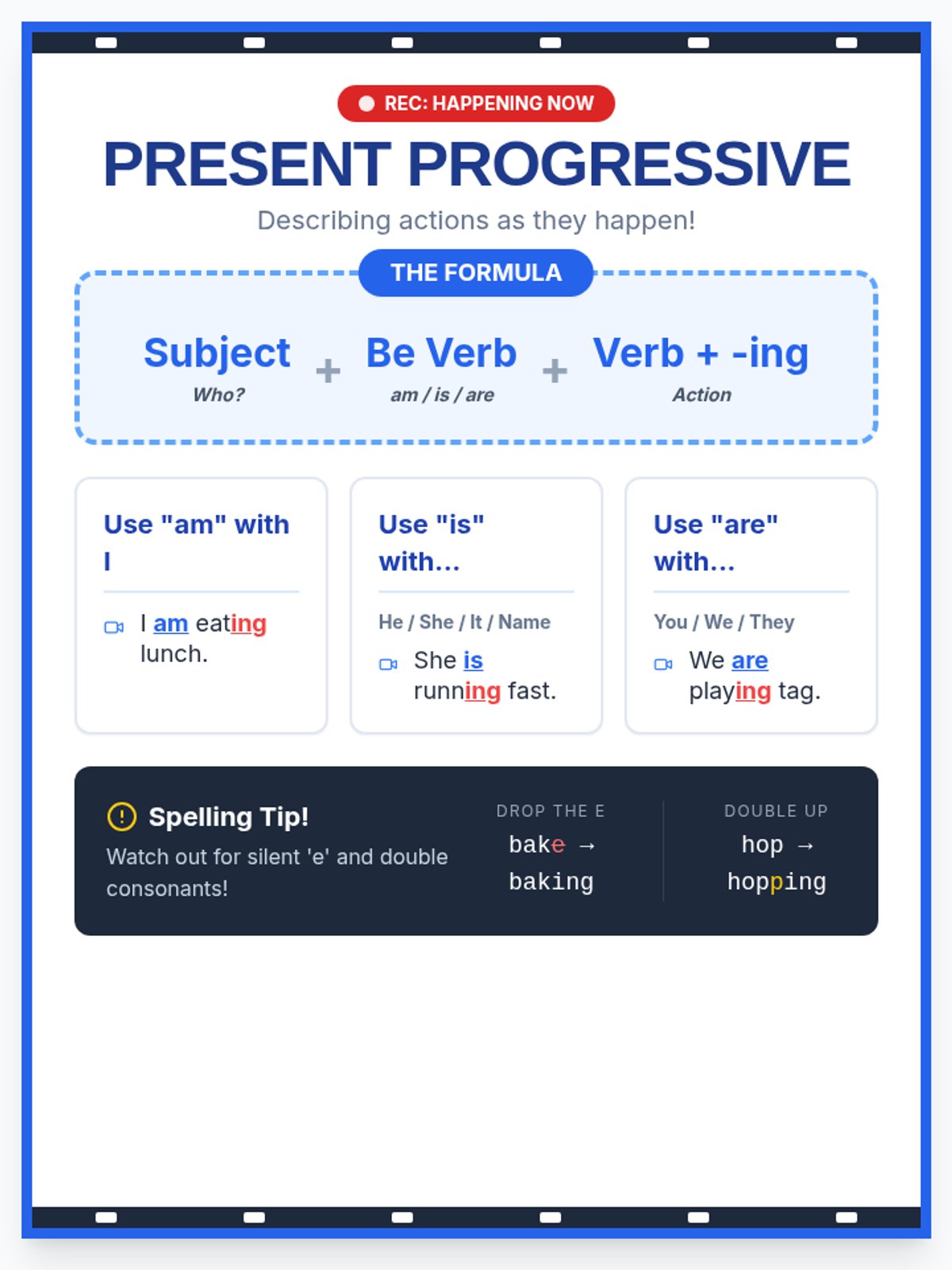
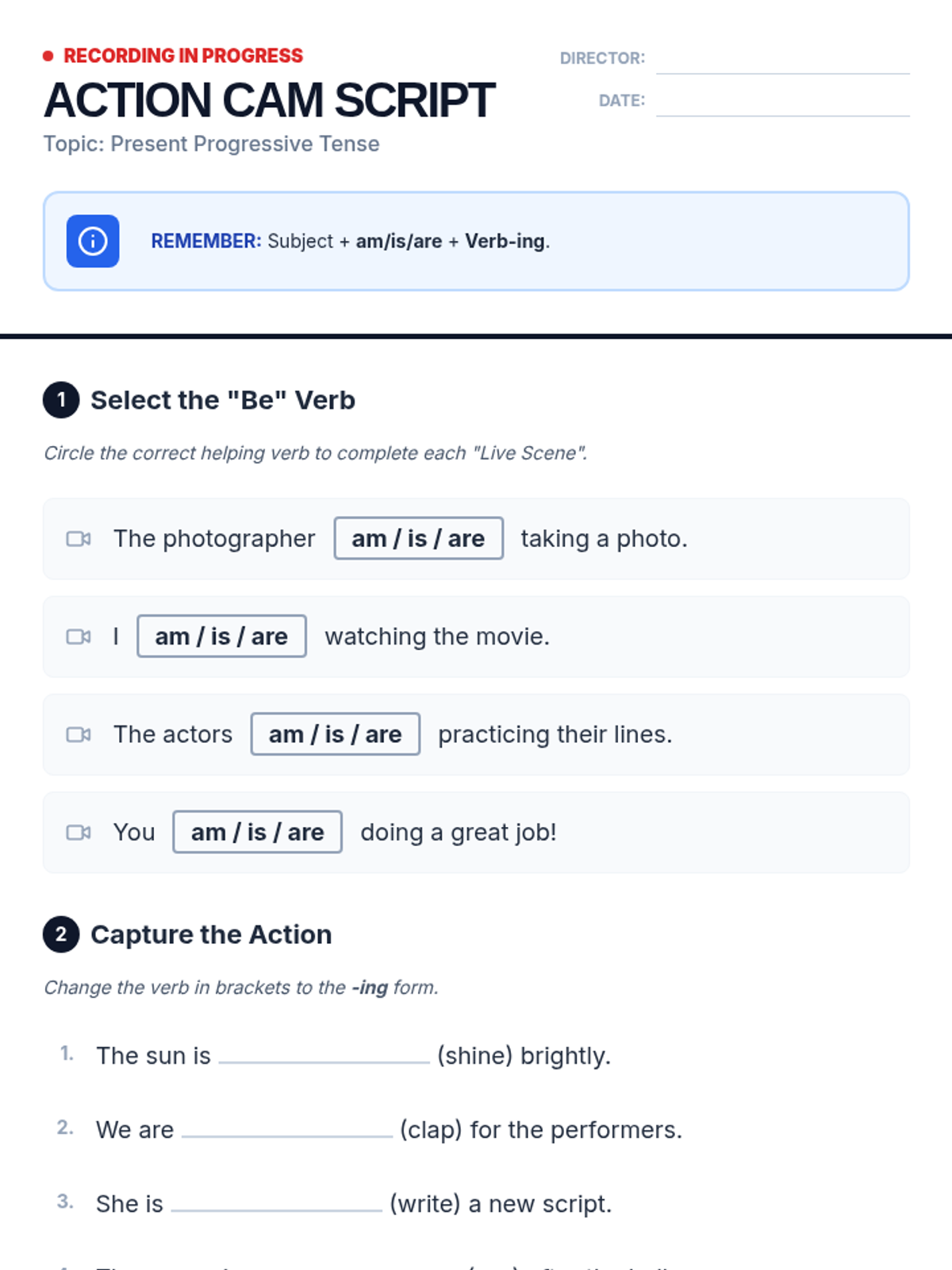
A comprehensive lesson for 2nd and 3rd graders on using the present progressive tense. Students will learn the formula for adding -ing to verbs and use helping verbs to describe actions happening right now through a photography-themed exploration.
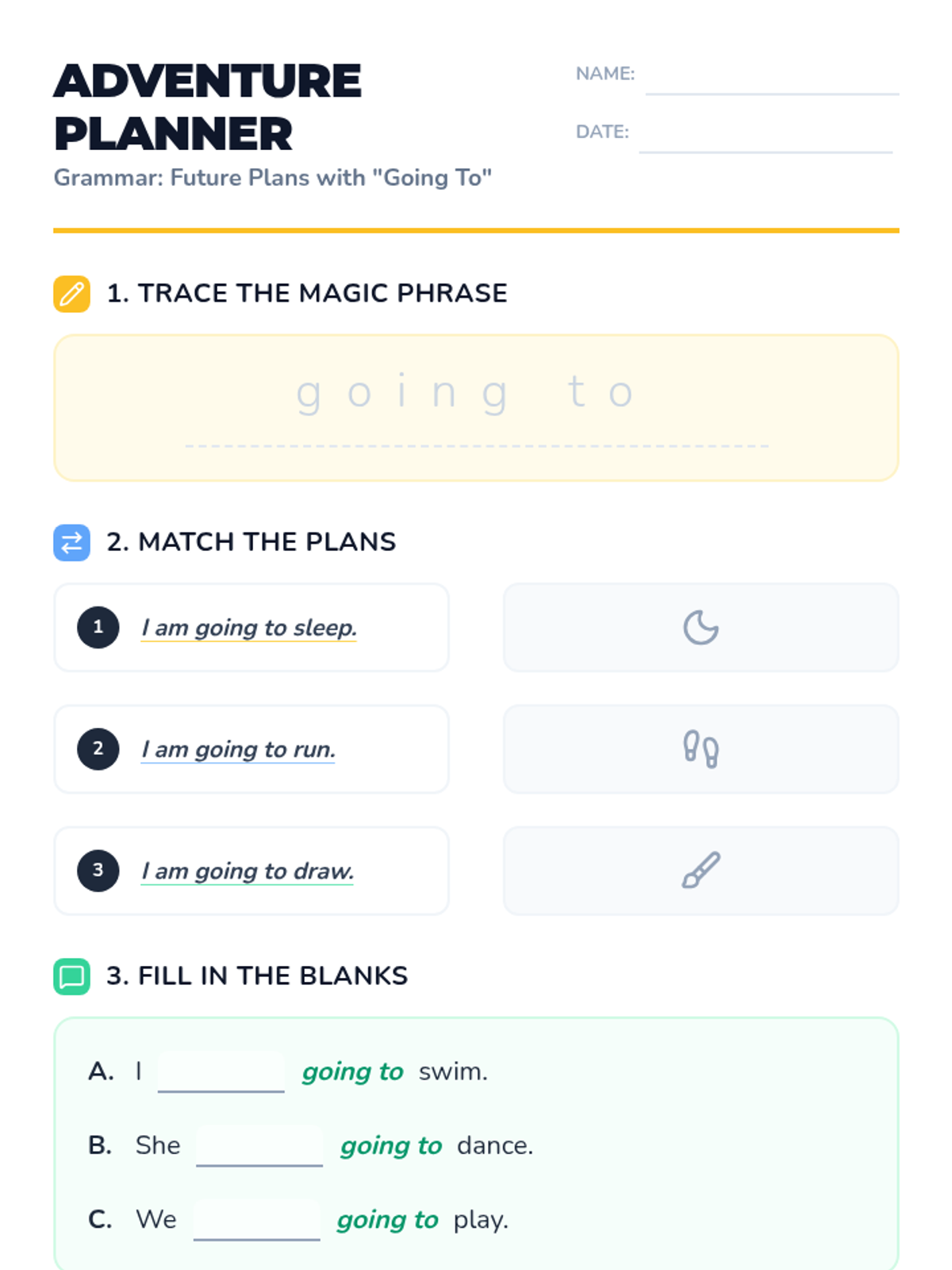
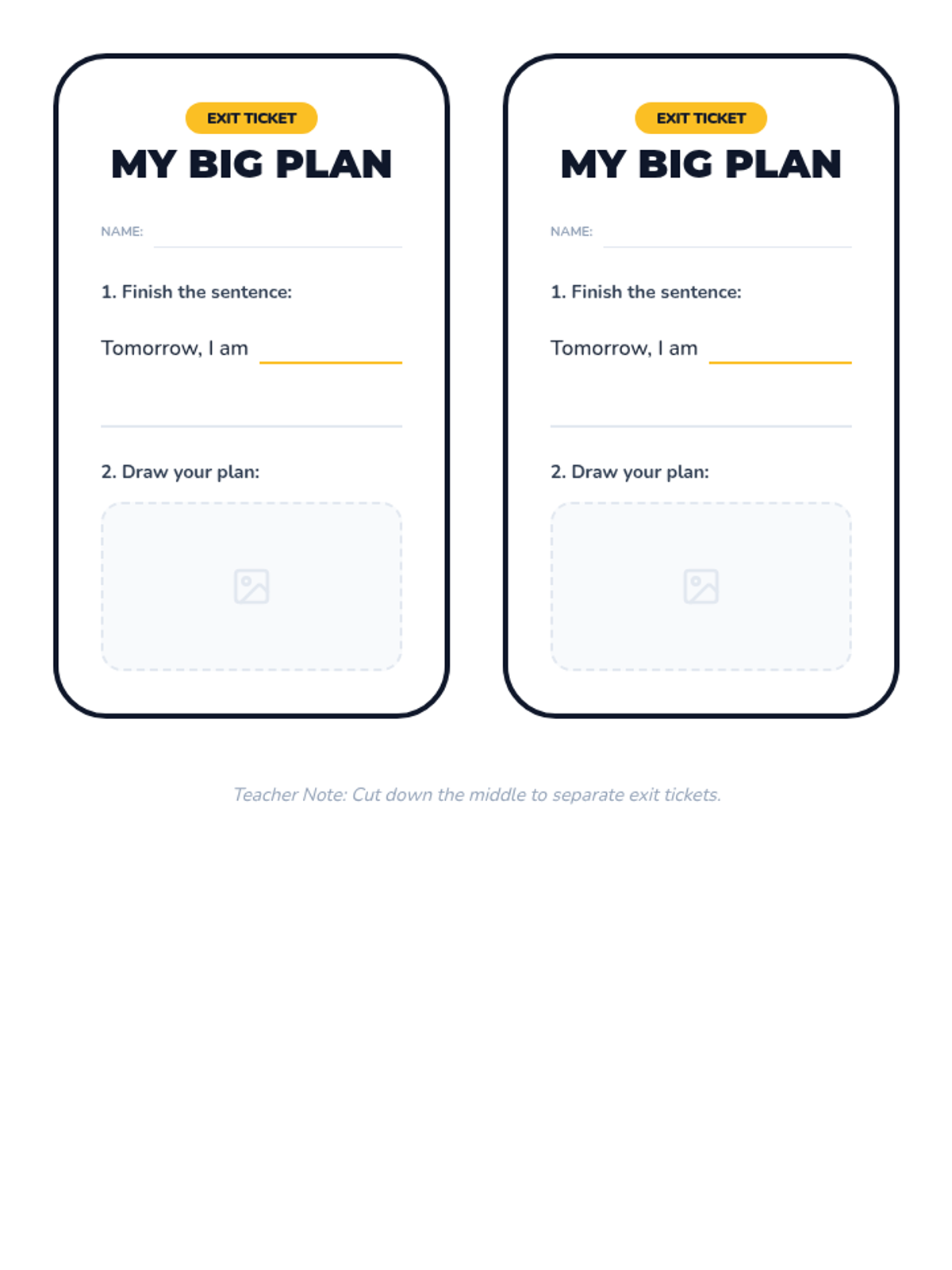
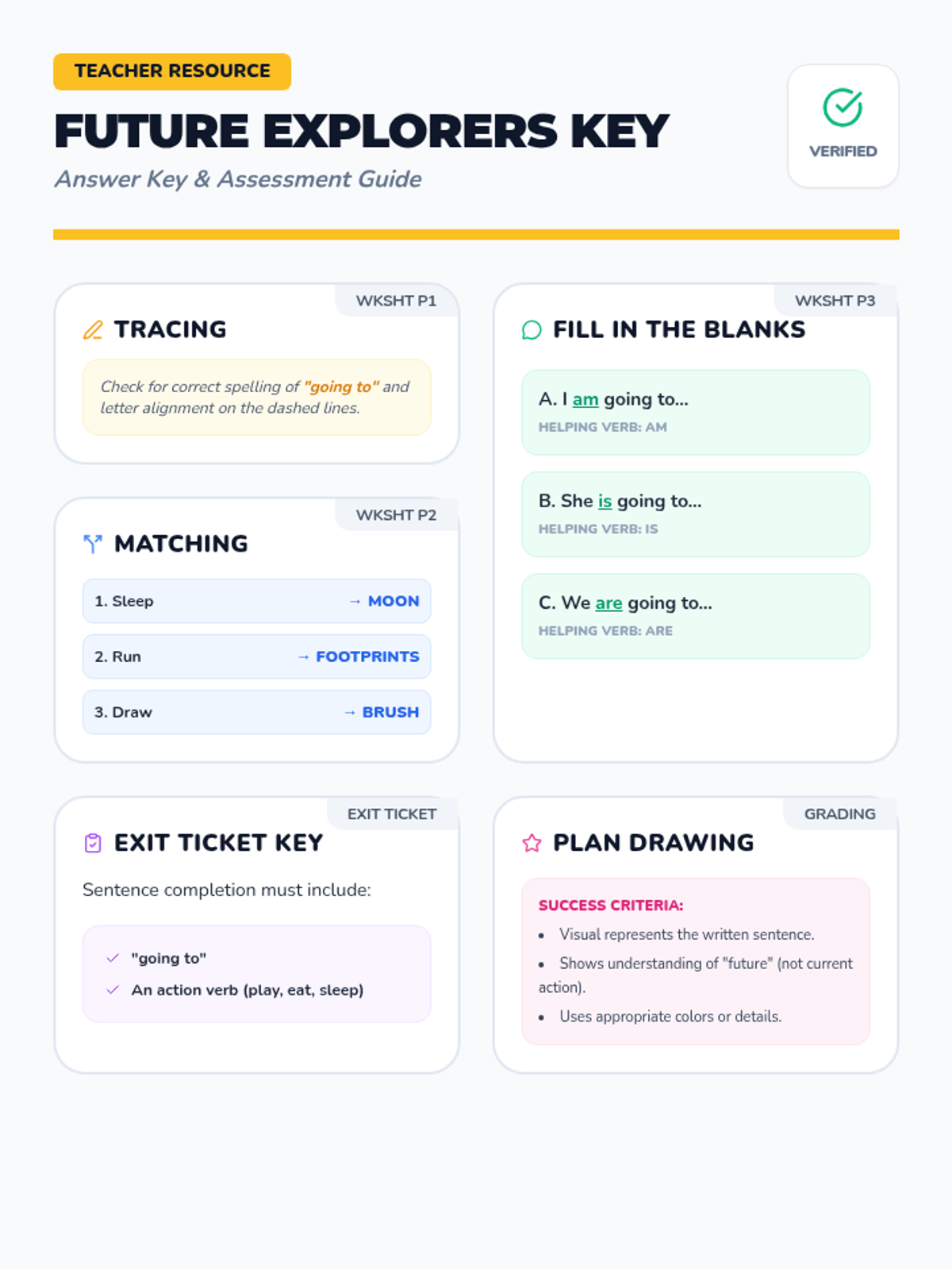
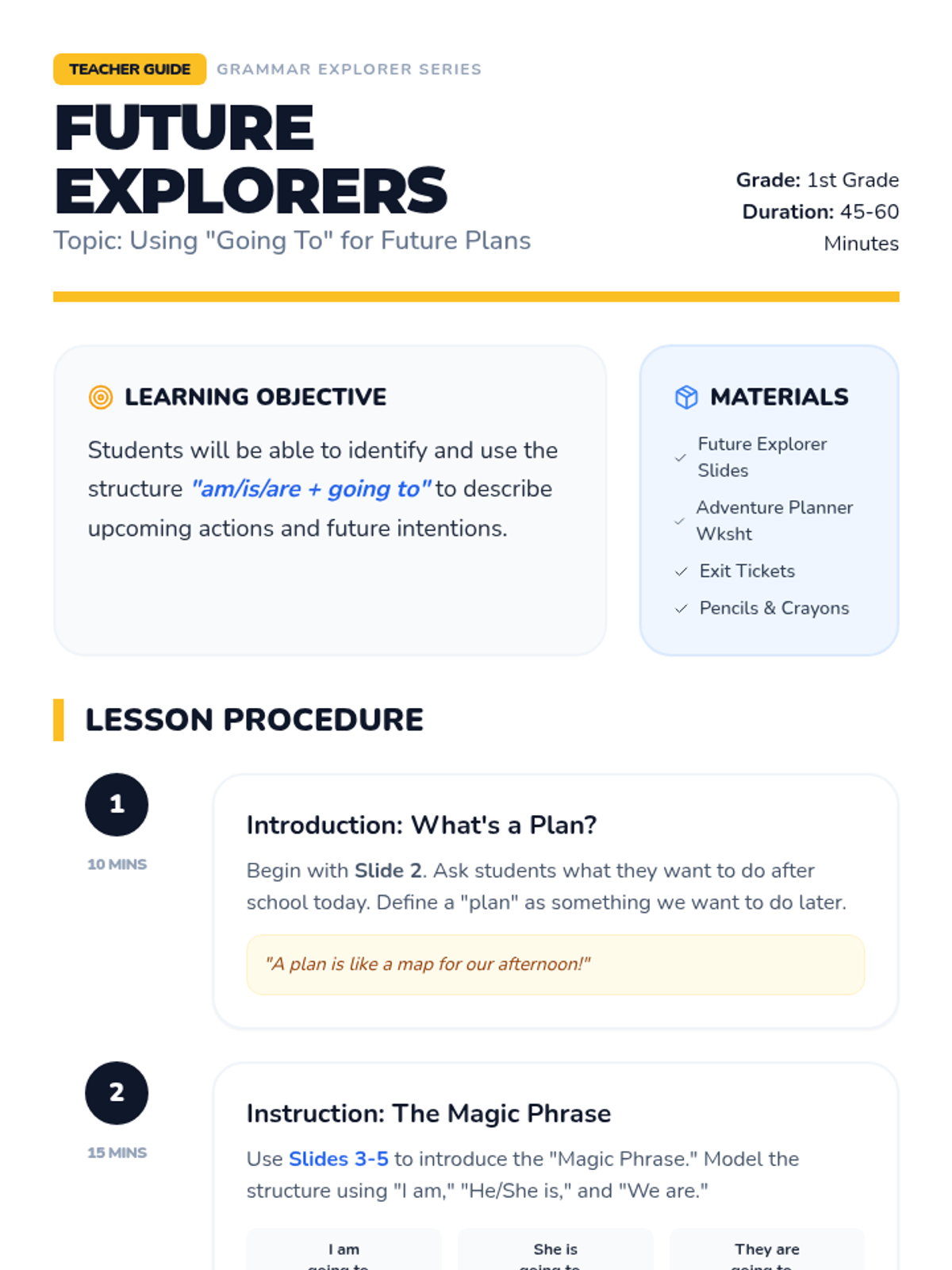
A foundational grammar lesson for young learners focusing on the structure 'am/is/are + going to' to describe upcoming plans and intentions through visual storytelling and guided practice.
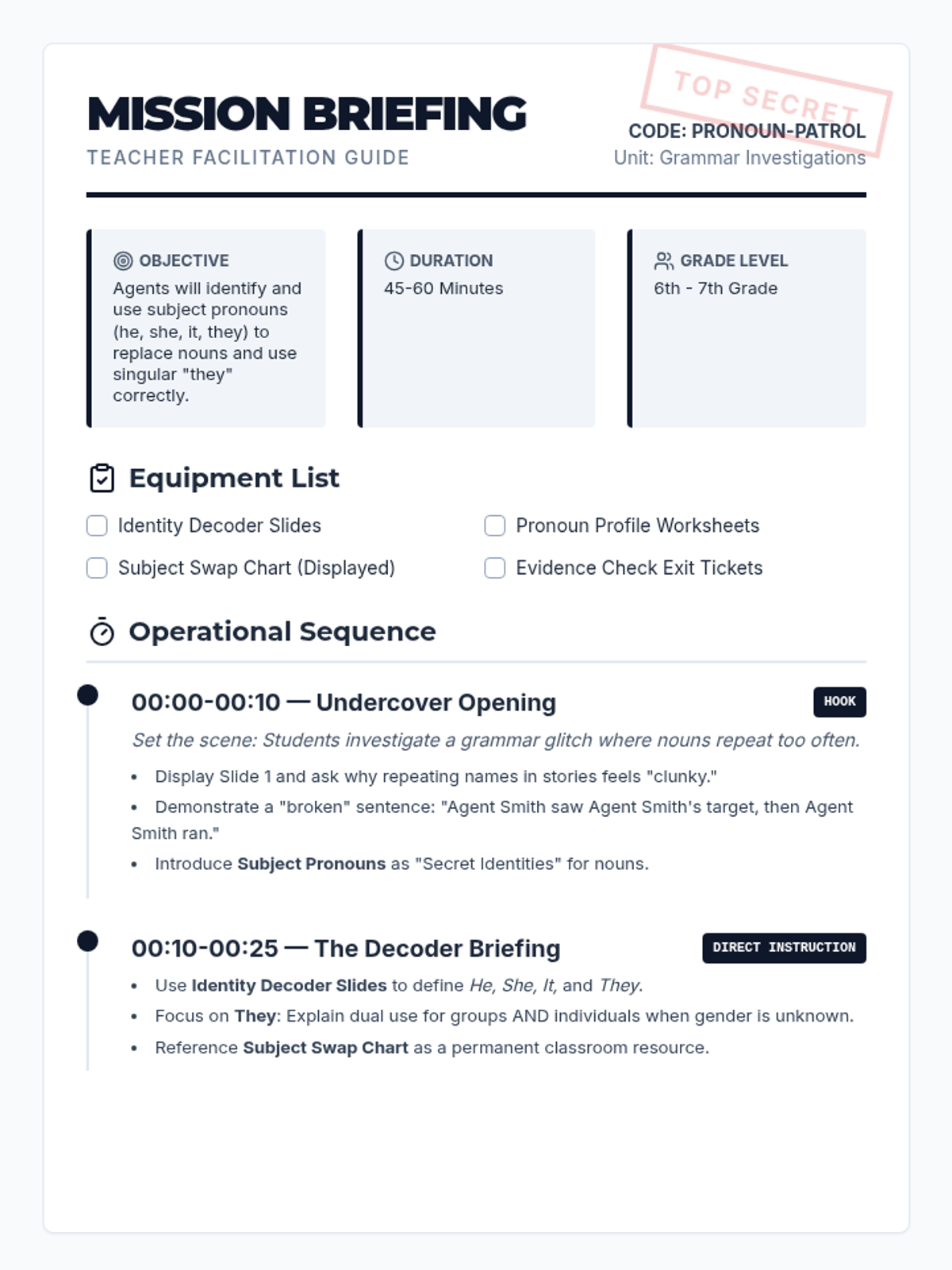
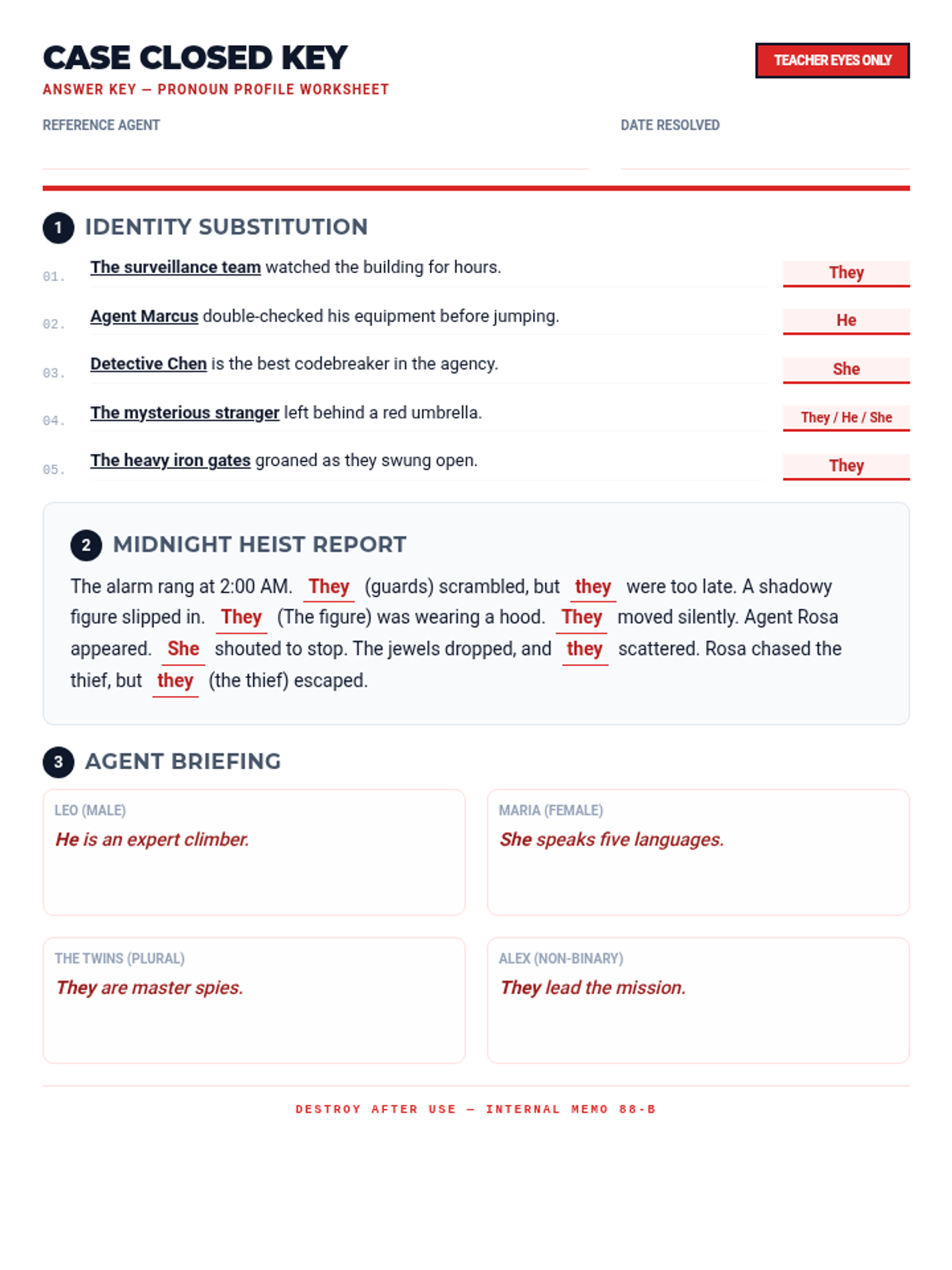
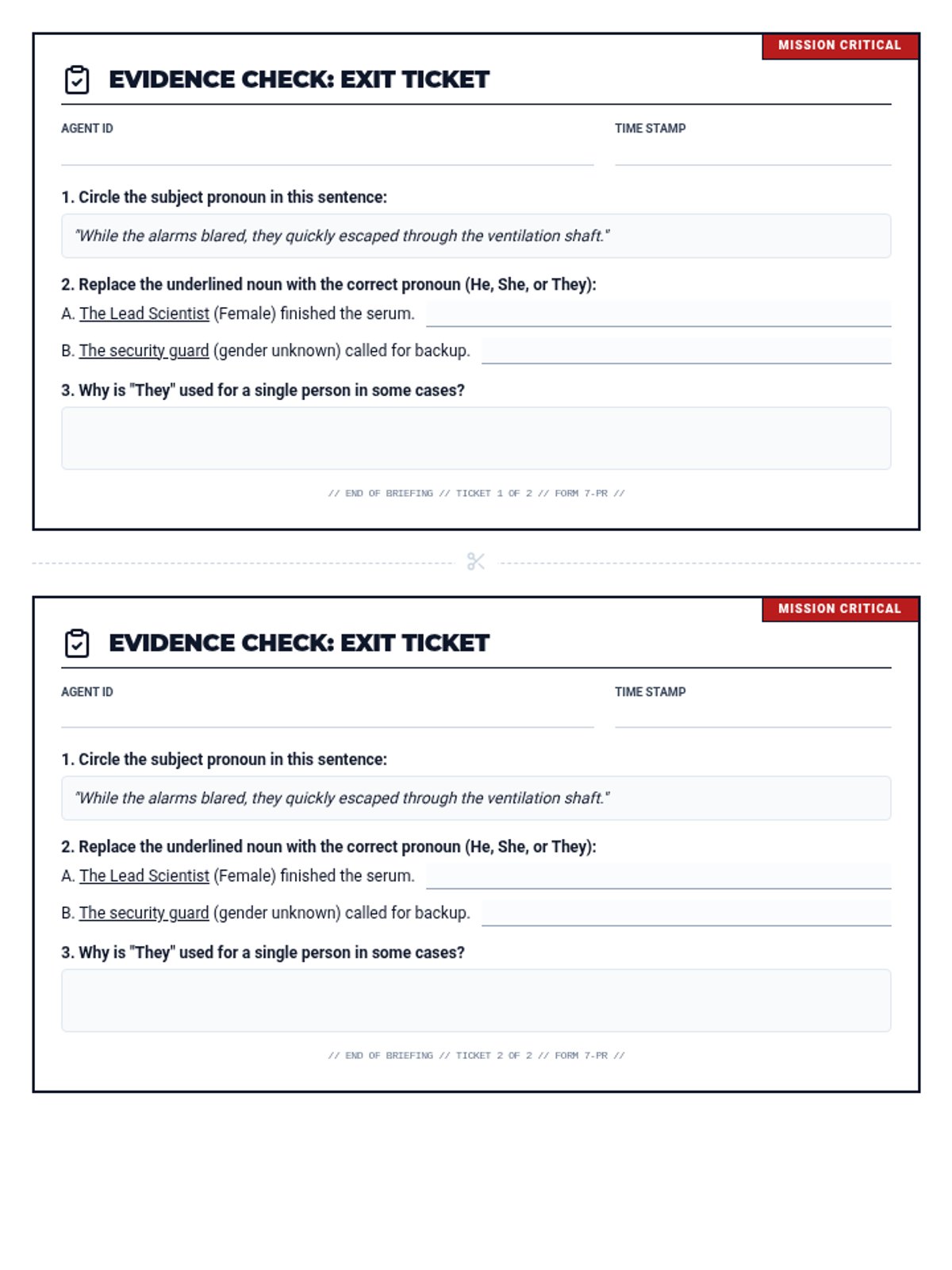
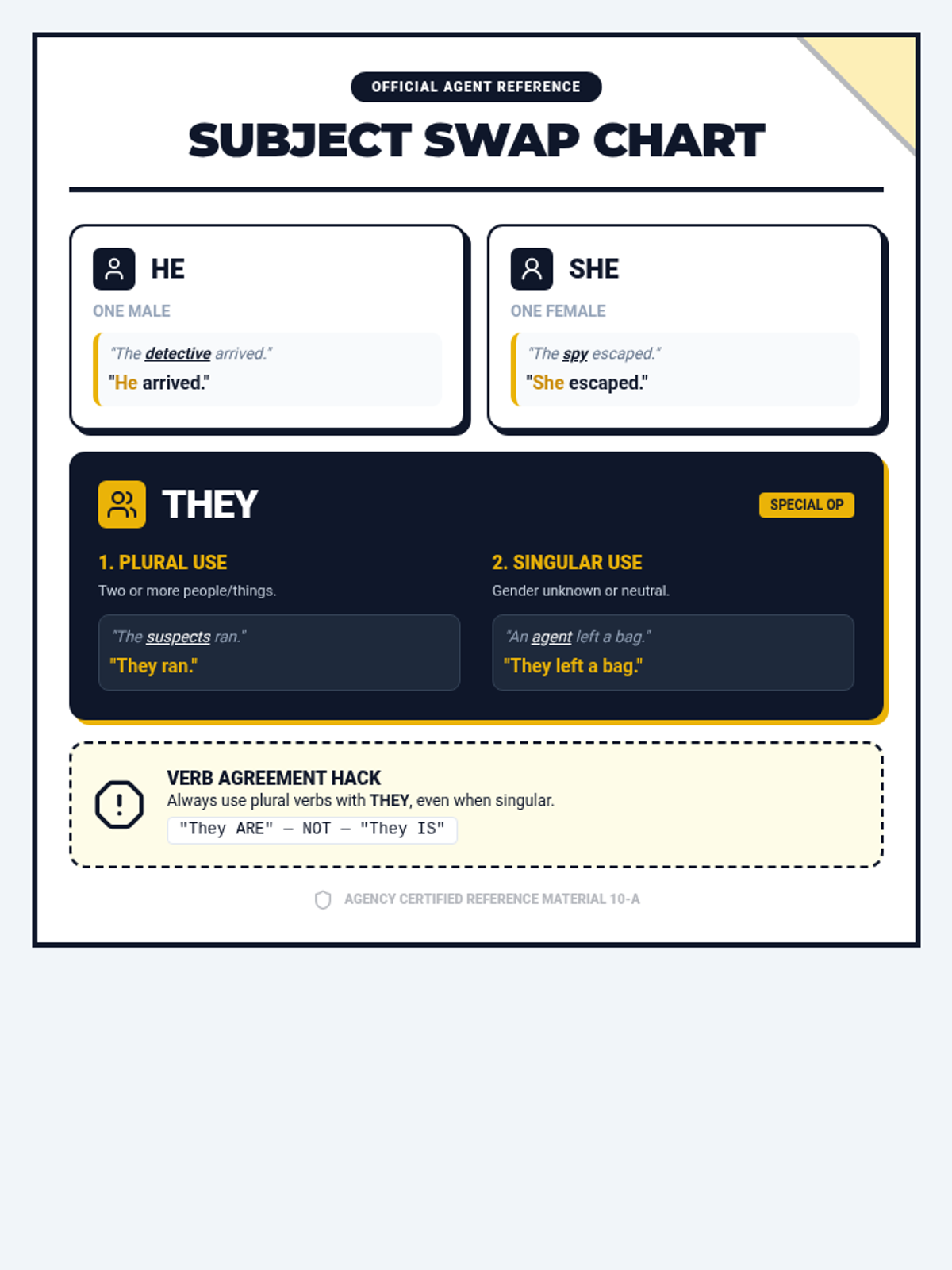
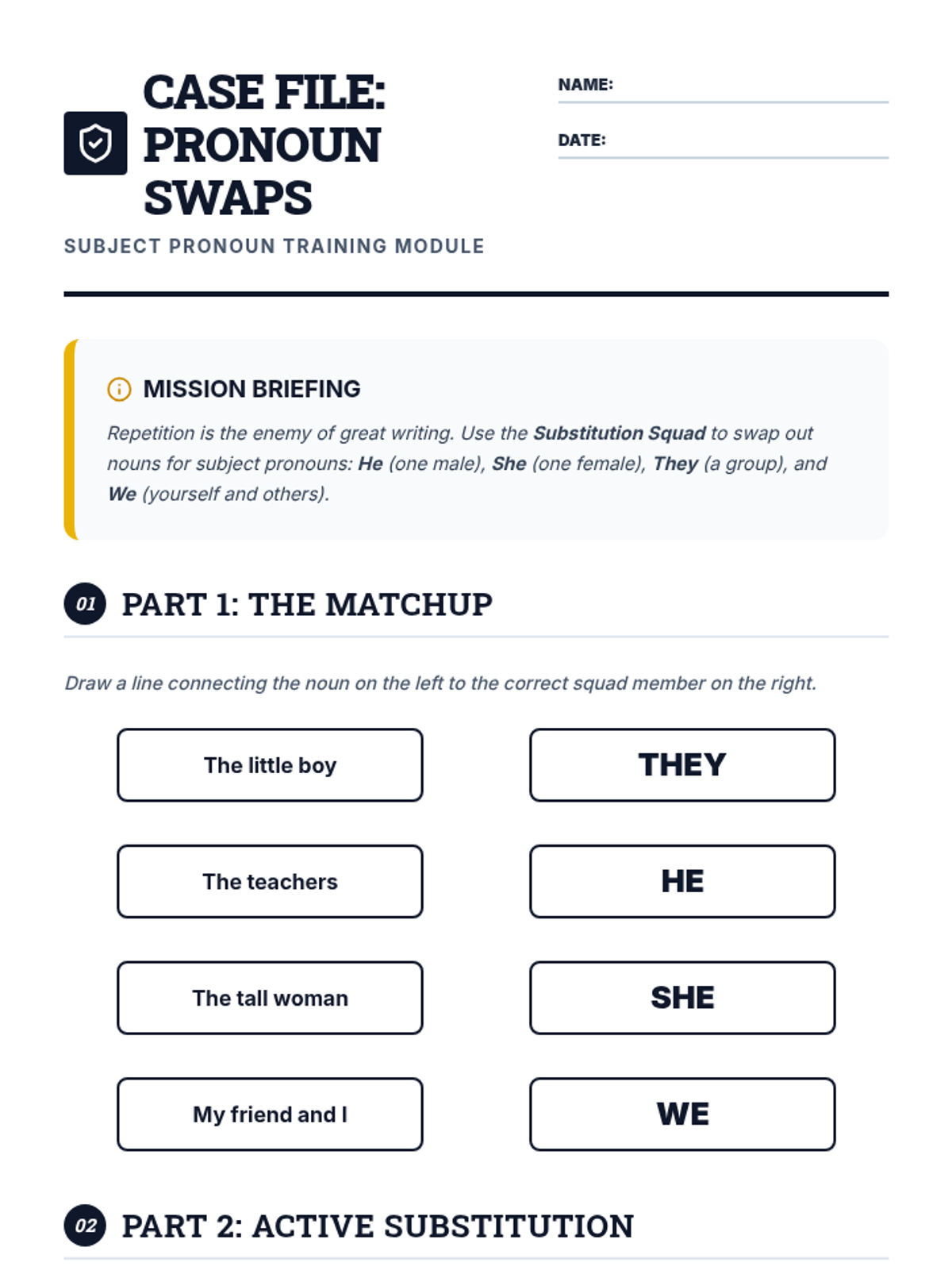
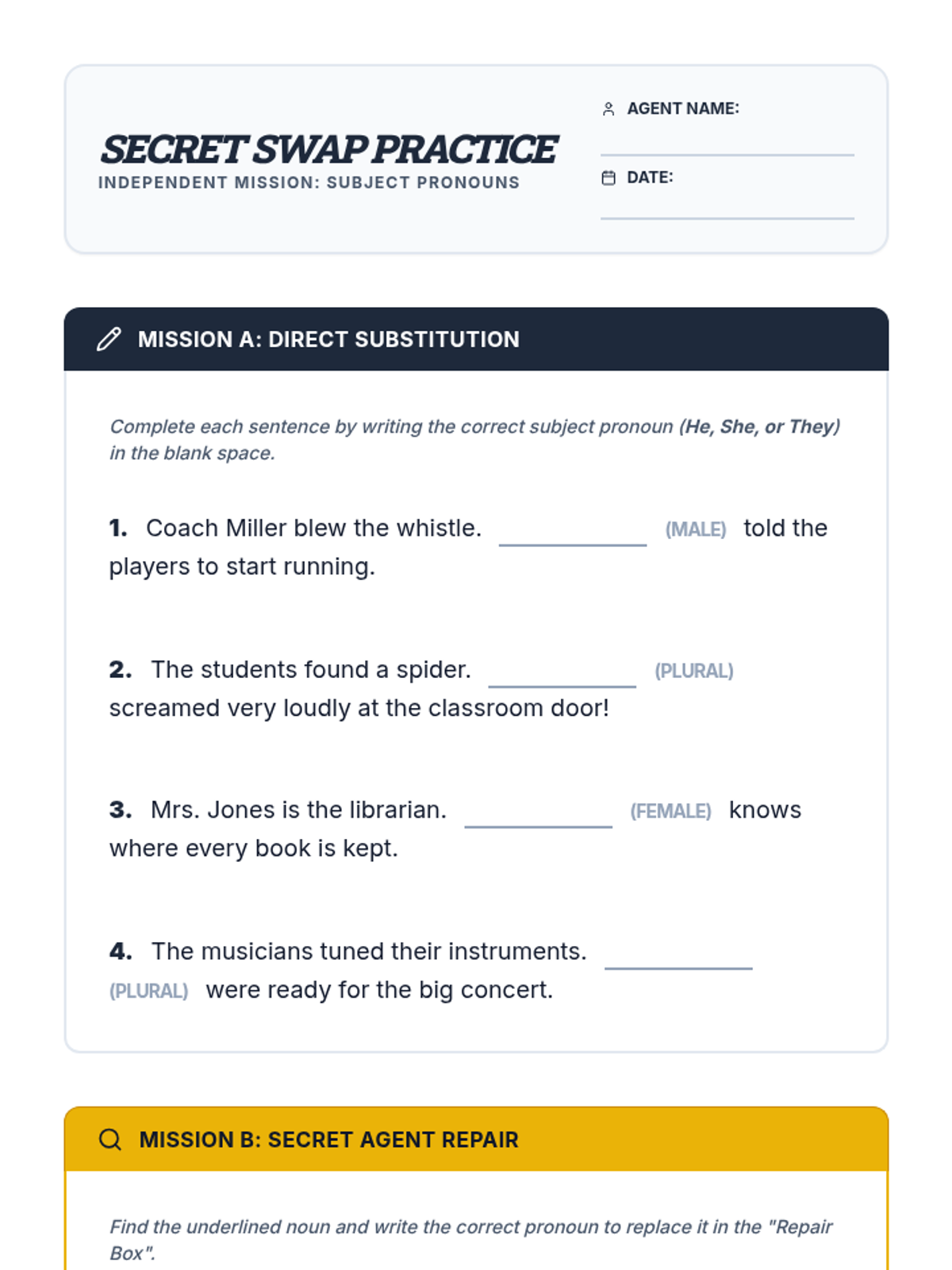
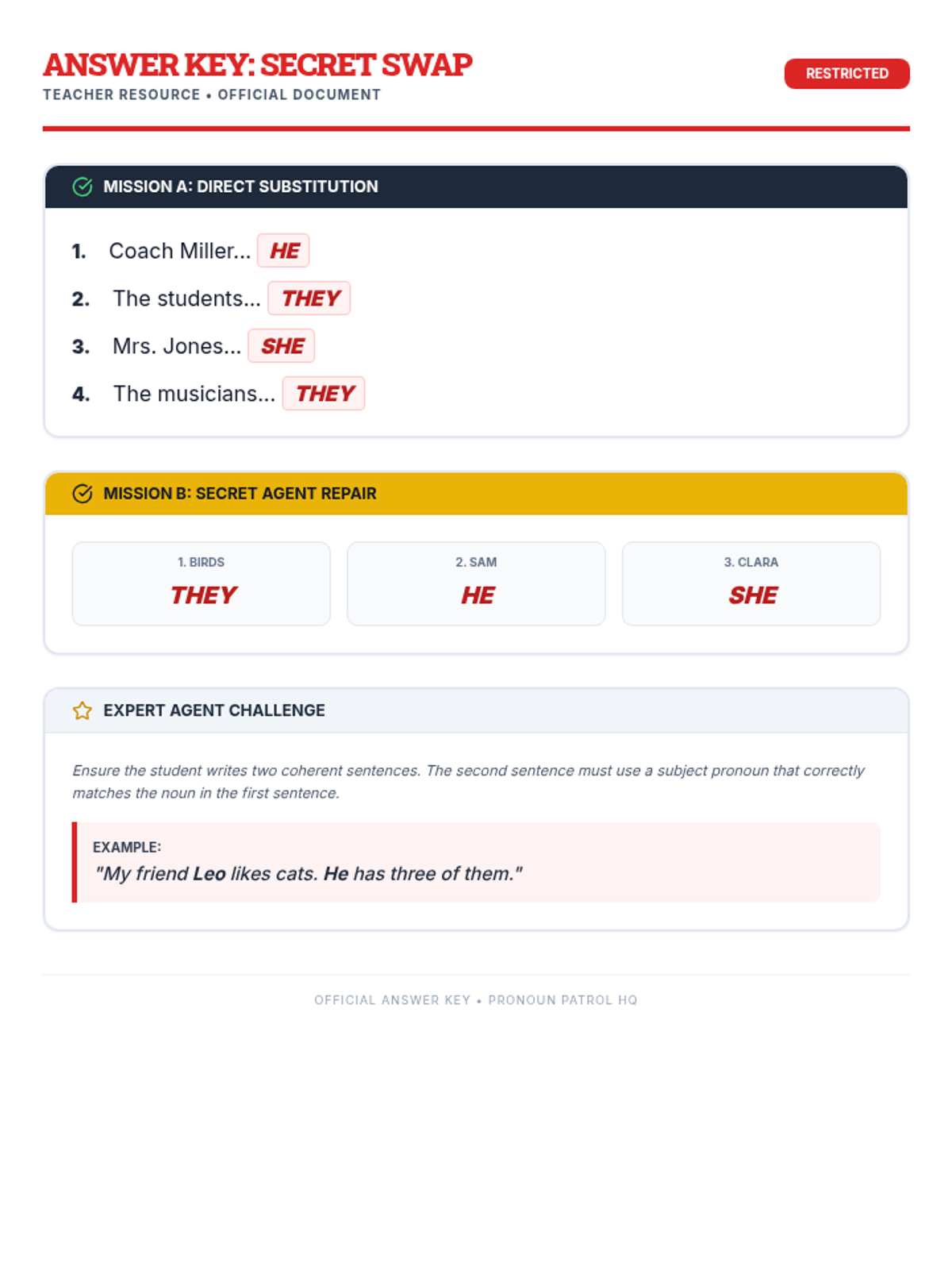
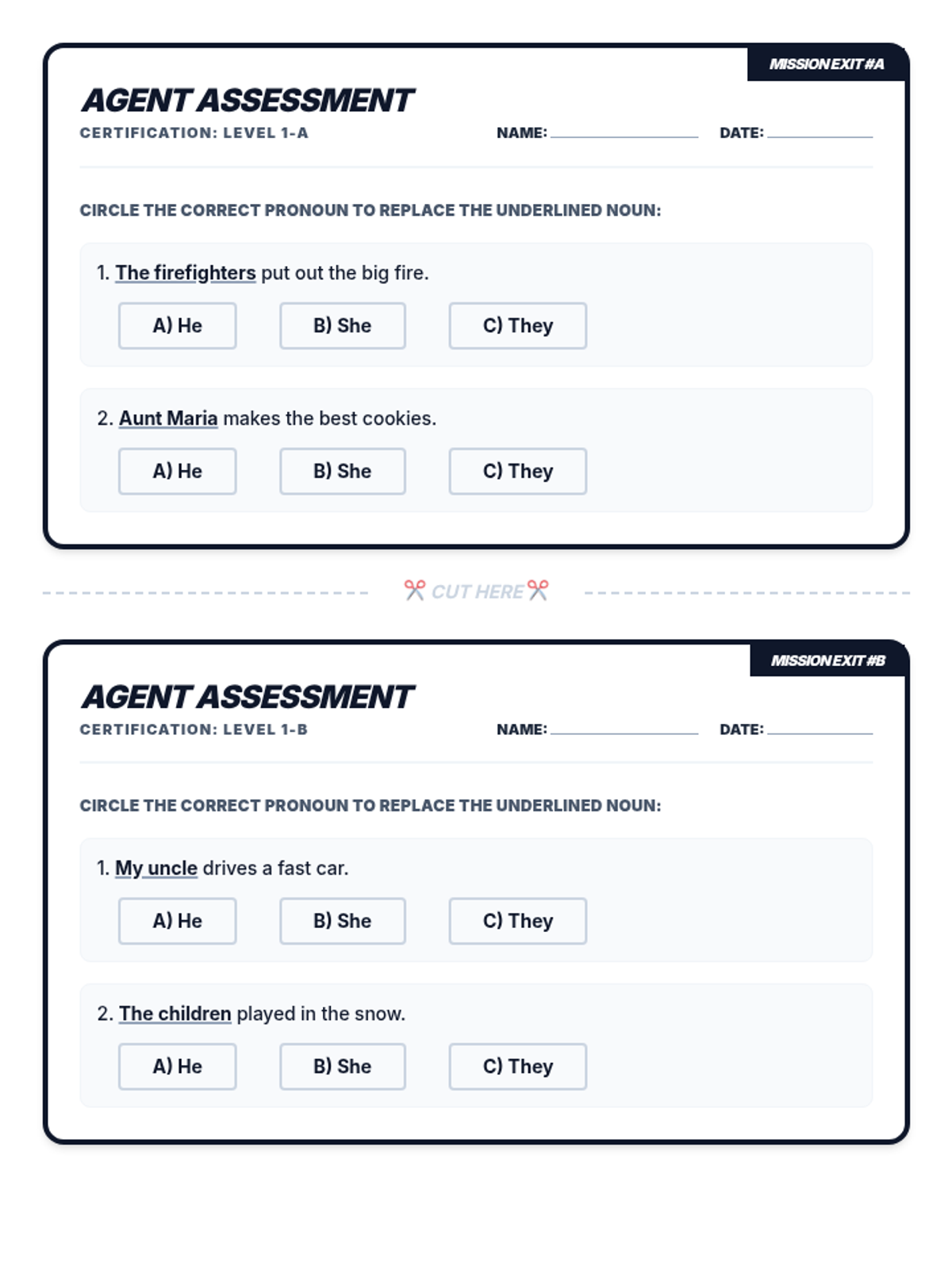
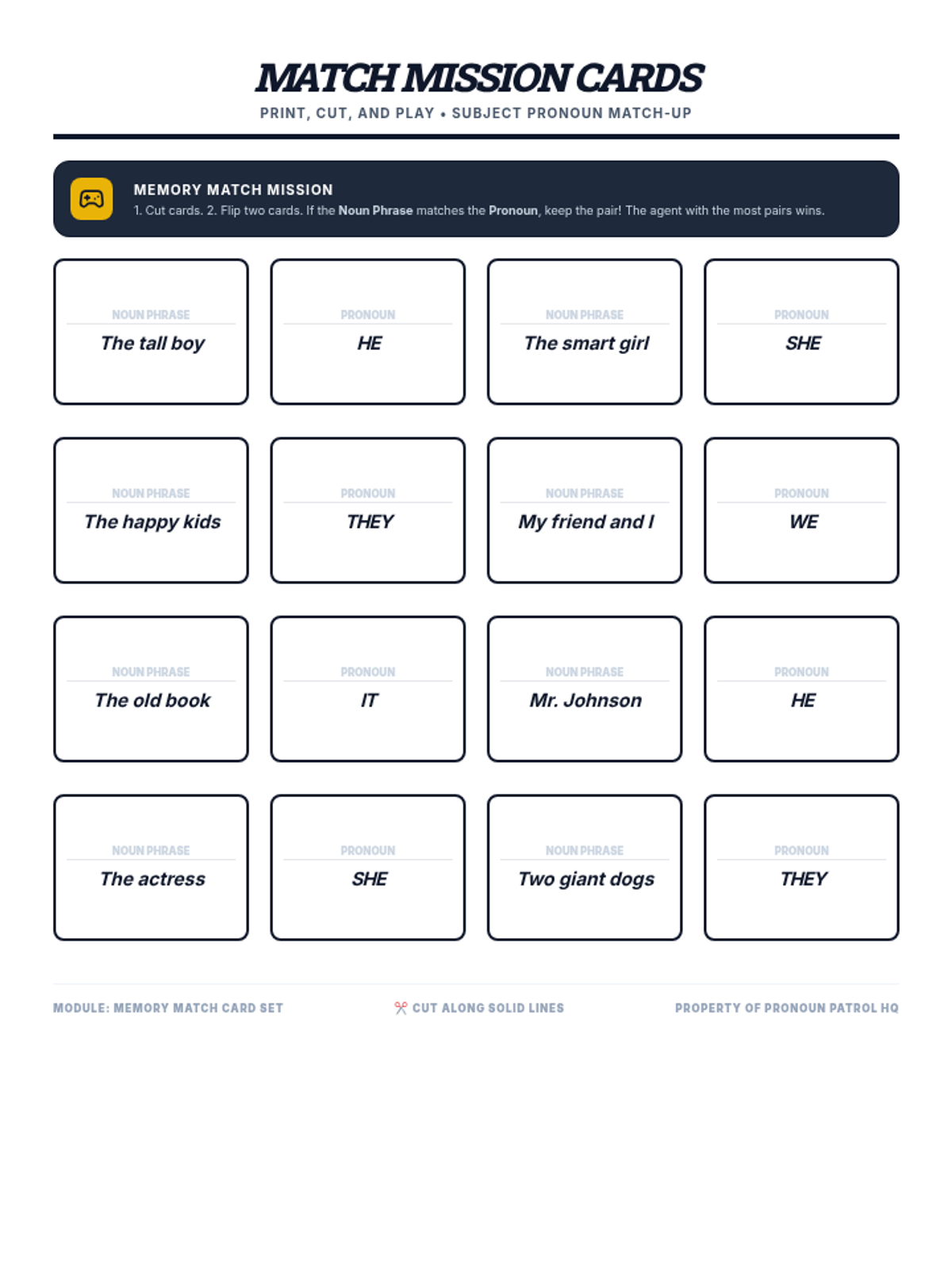
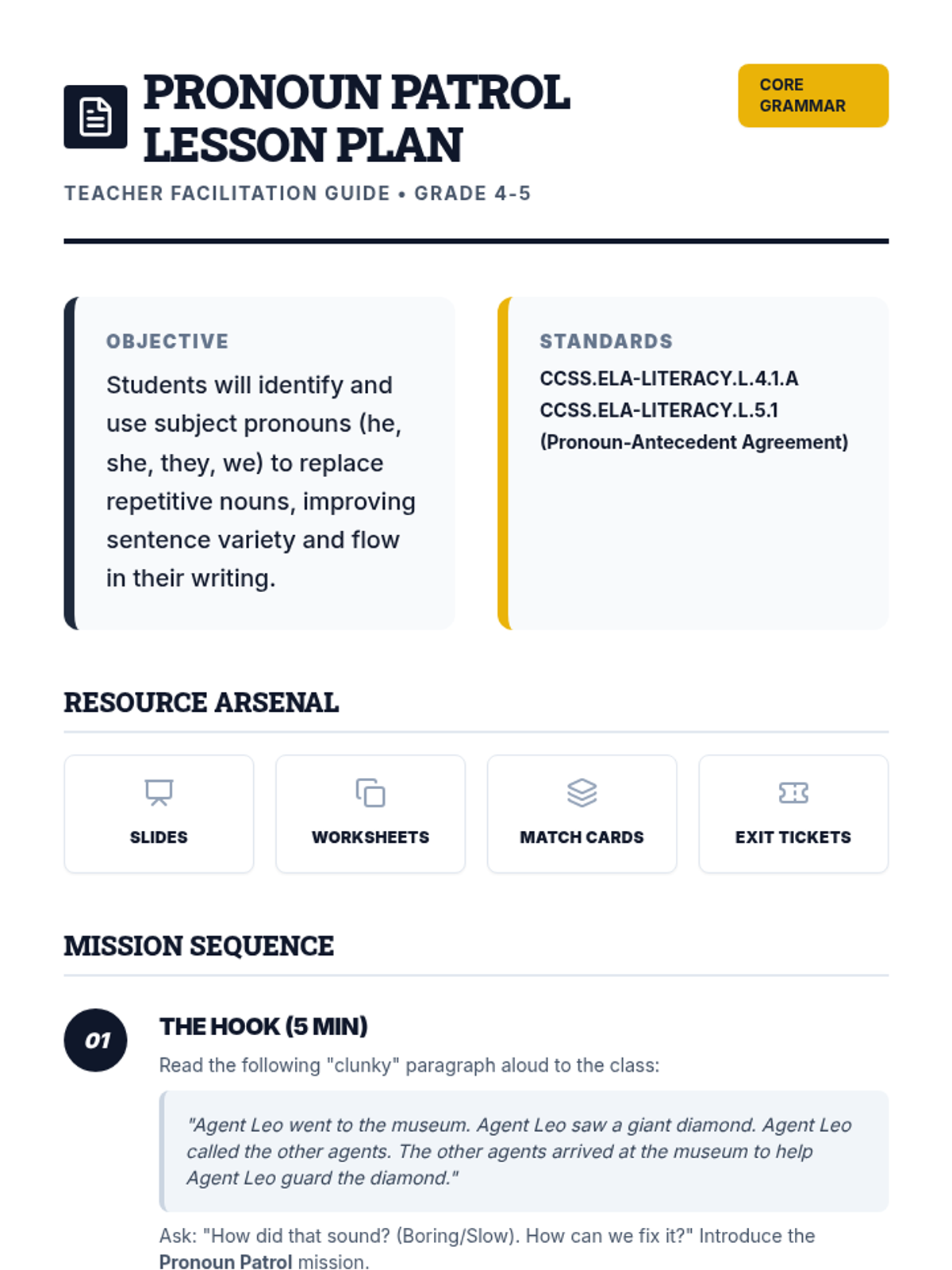
A comprehensive lesson on mastering subject pronouns (he, she, they) through the lens of a 'Secret Agent' investigation, focusing on replacing nouns and understanding singular/plural usage.
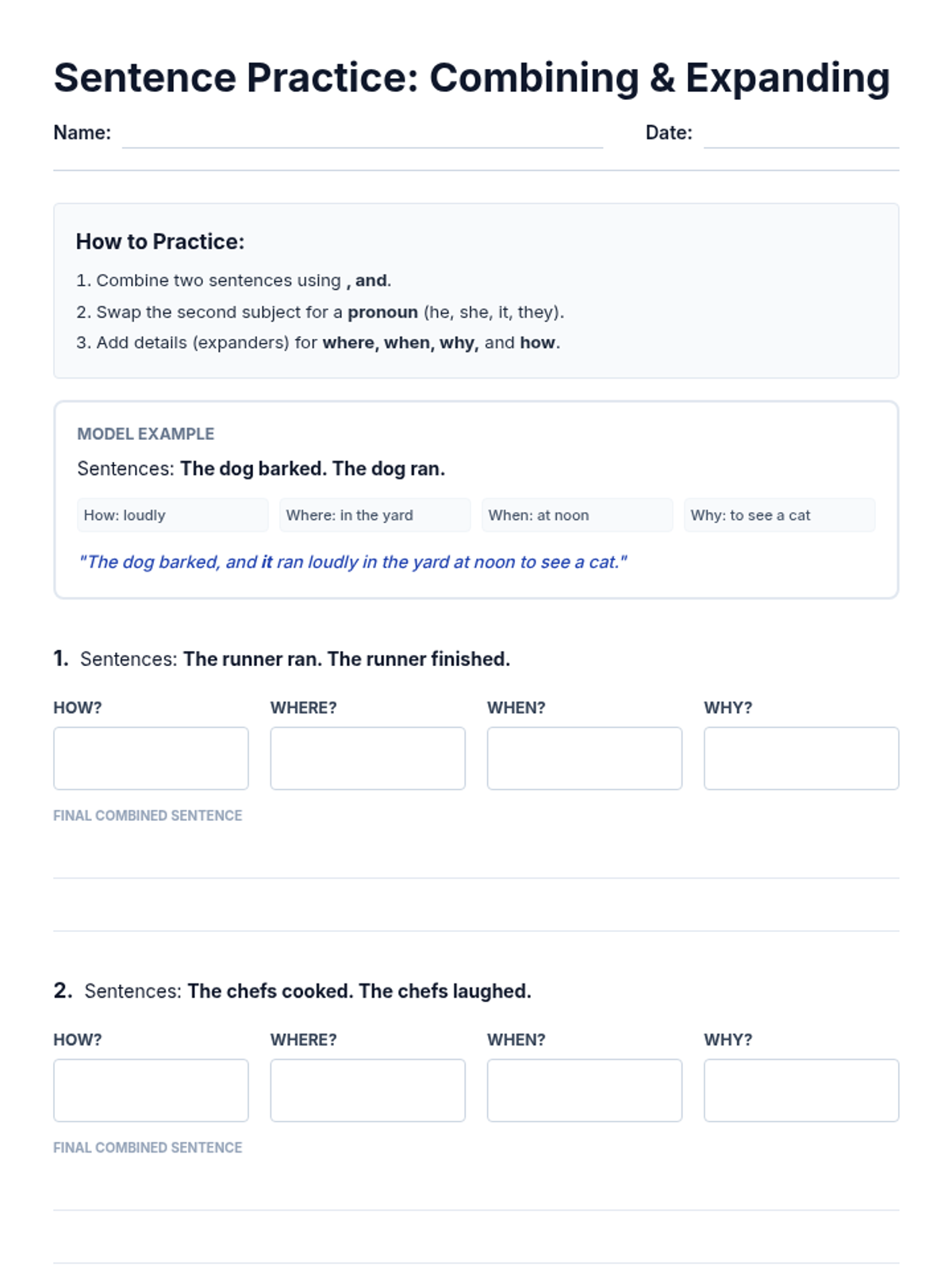
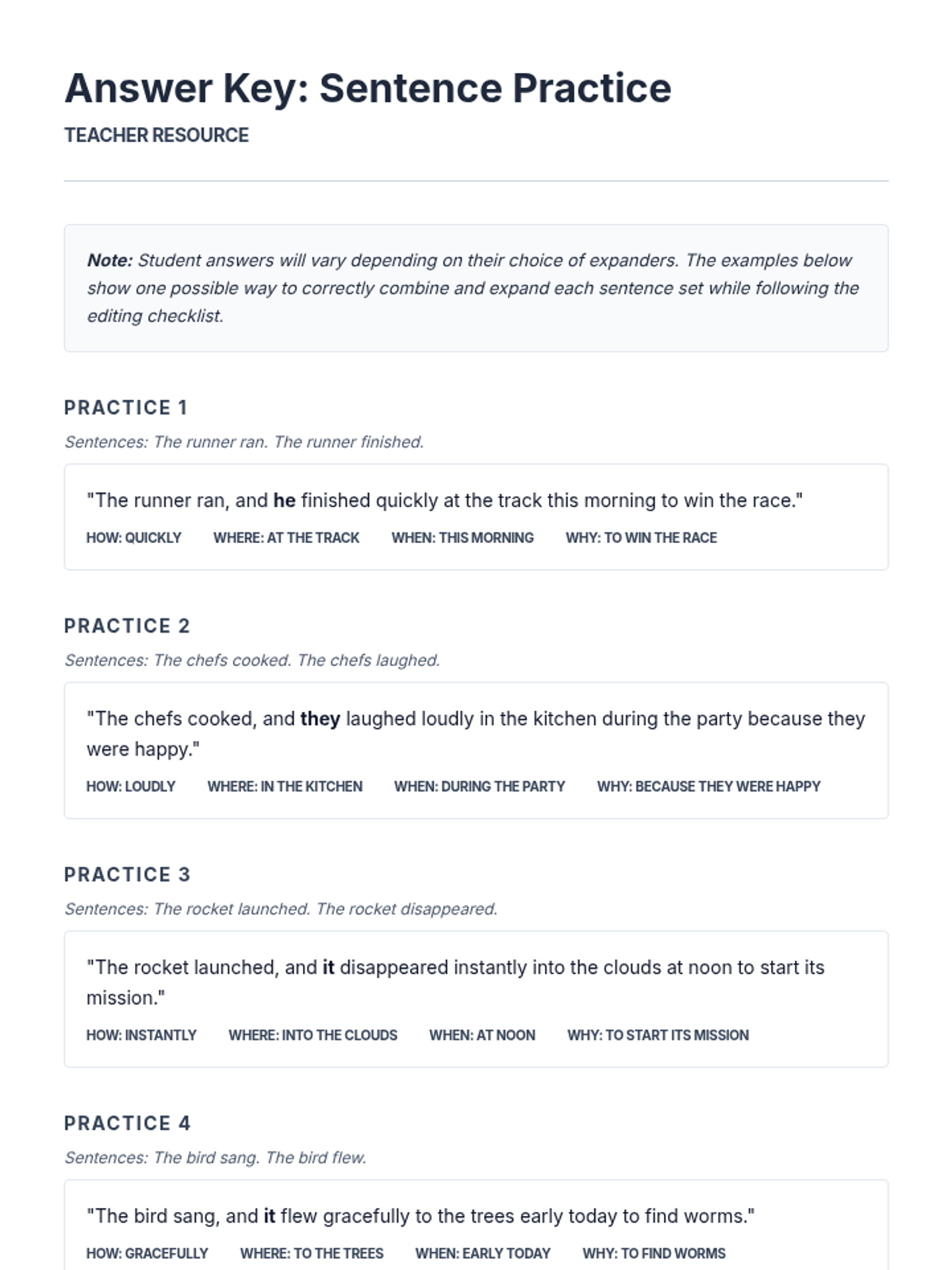
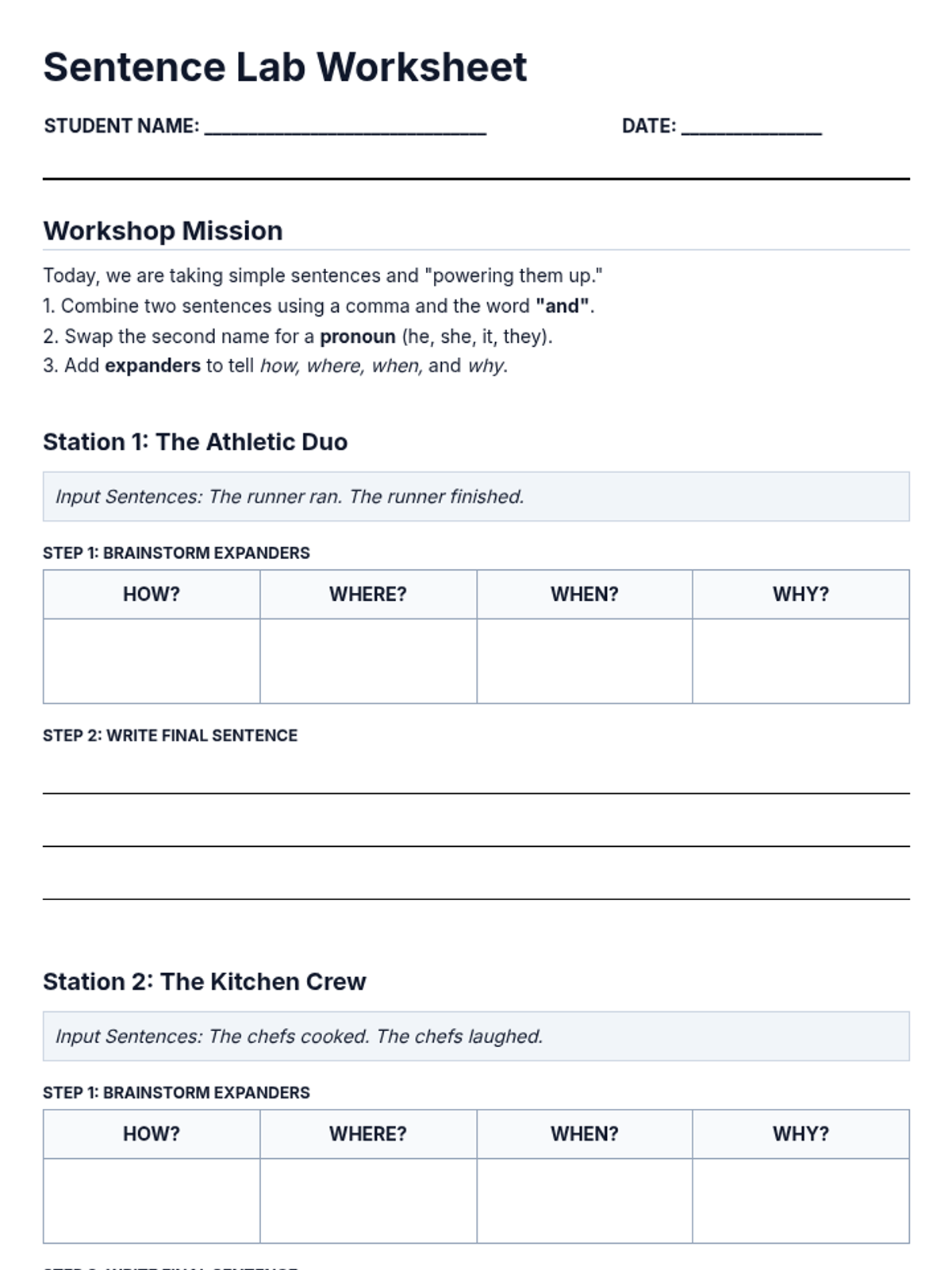
Students practice combining simple sentences with the same subjects into compound sentences using pronouns and adding descriptive predicate expanders (where, when, why, and how).
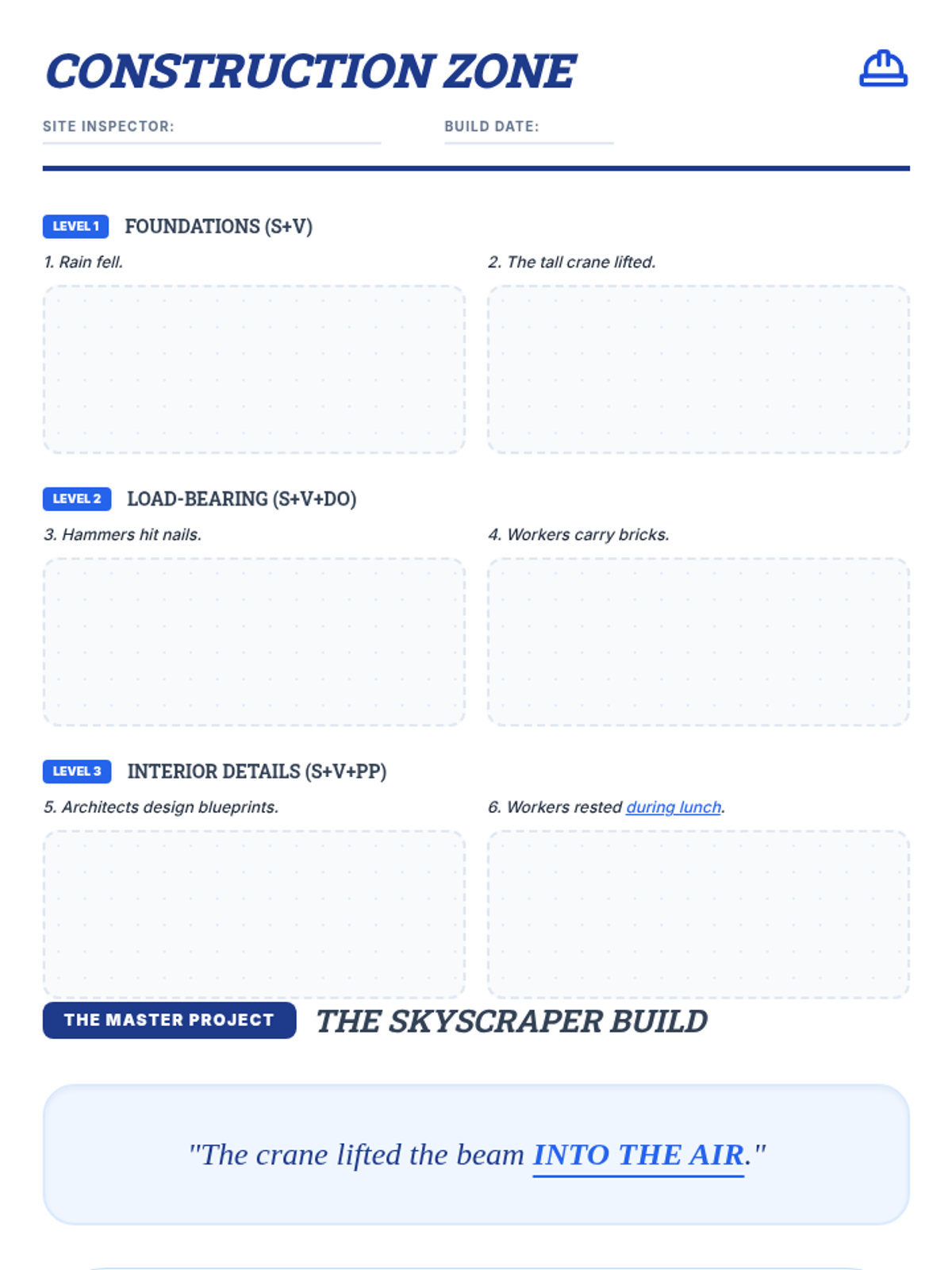
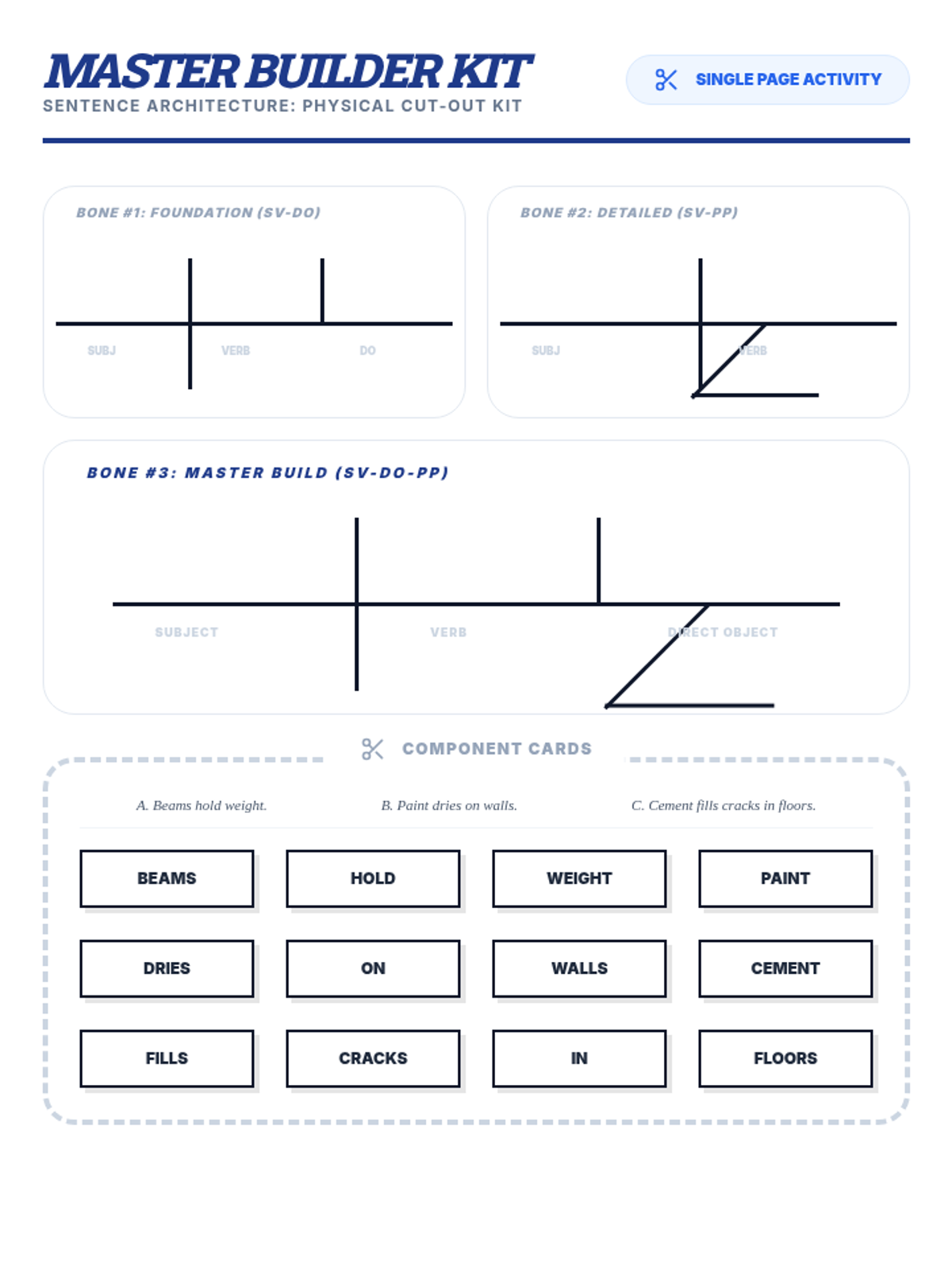
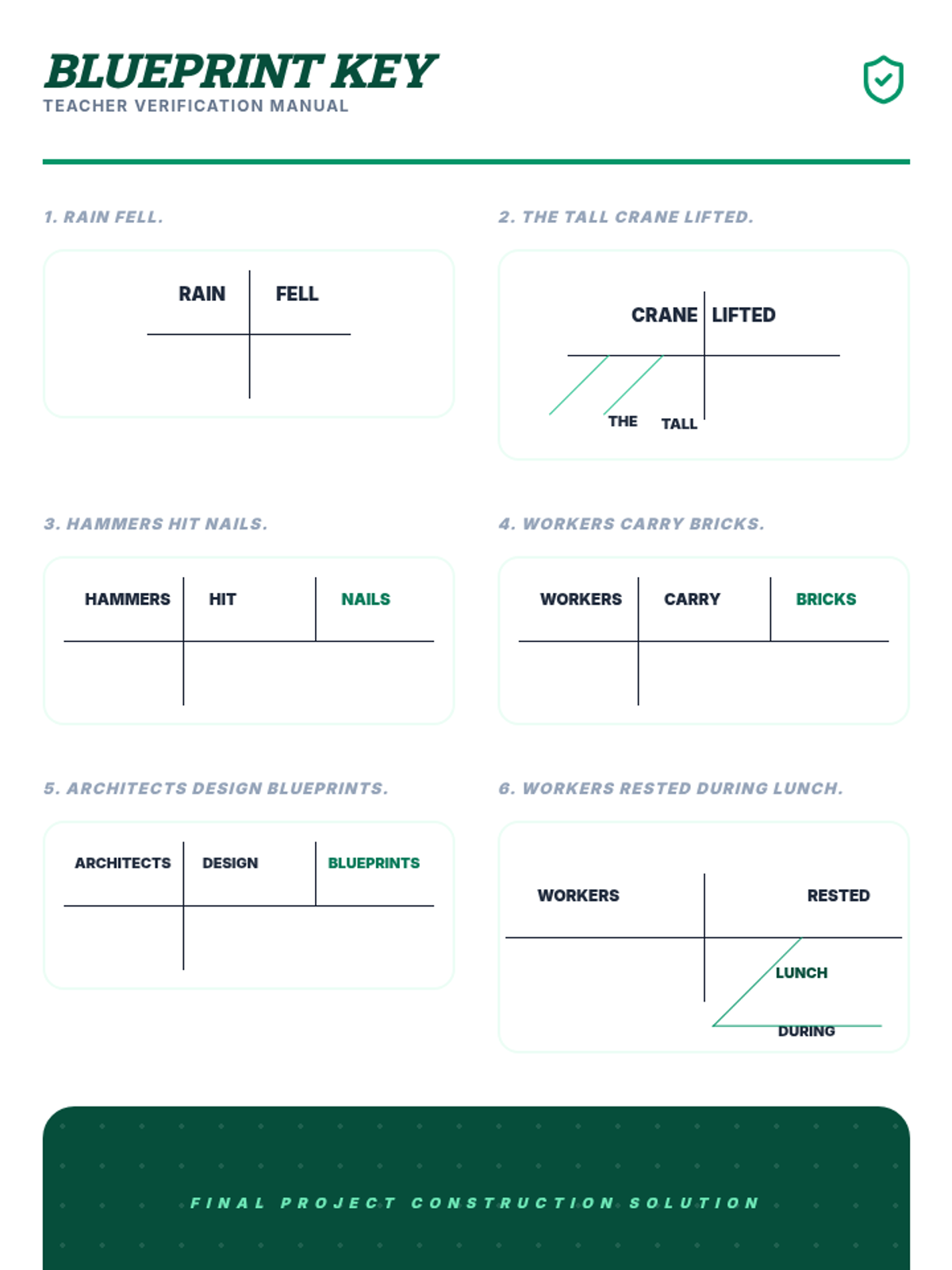
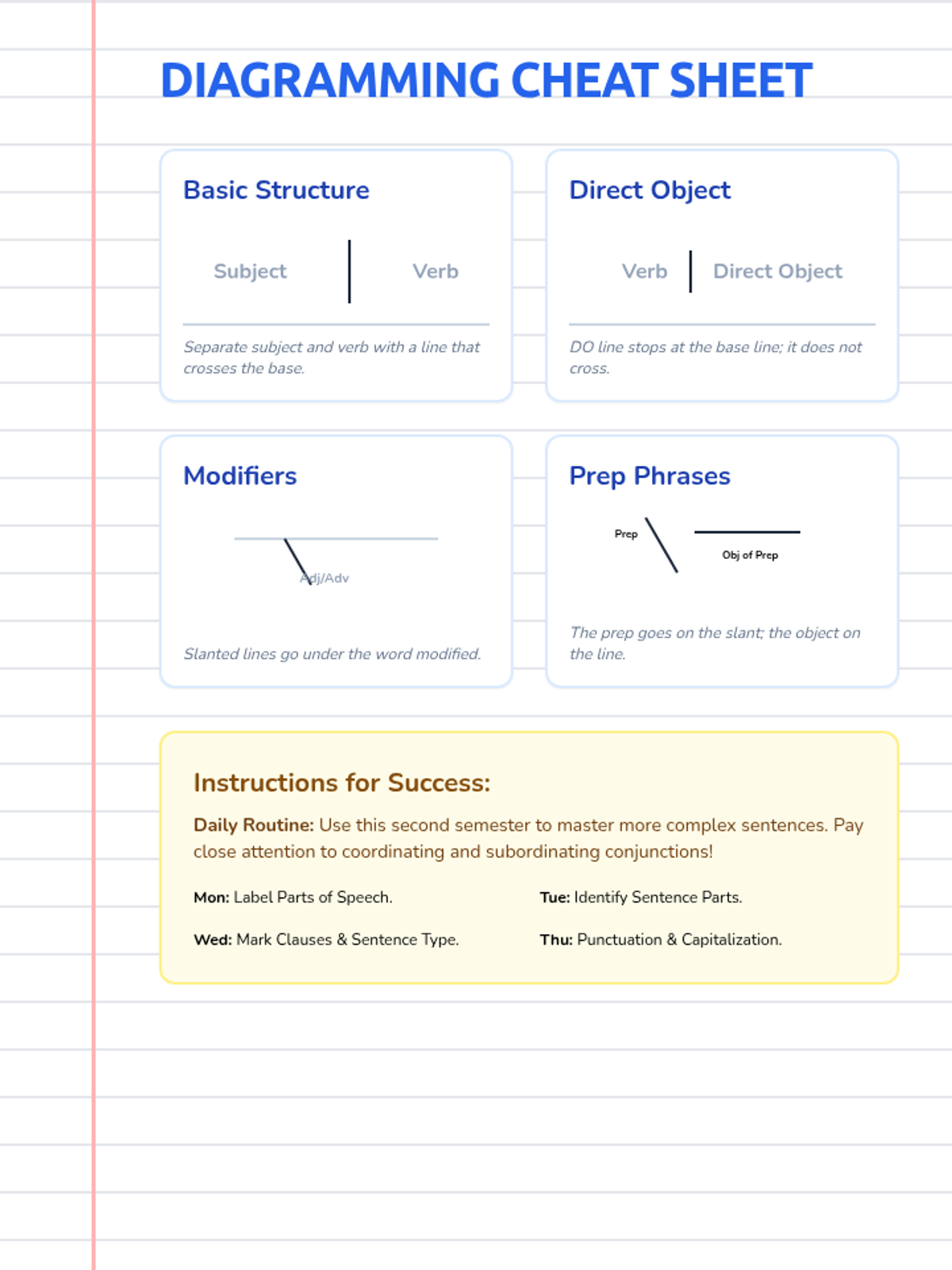
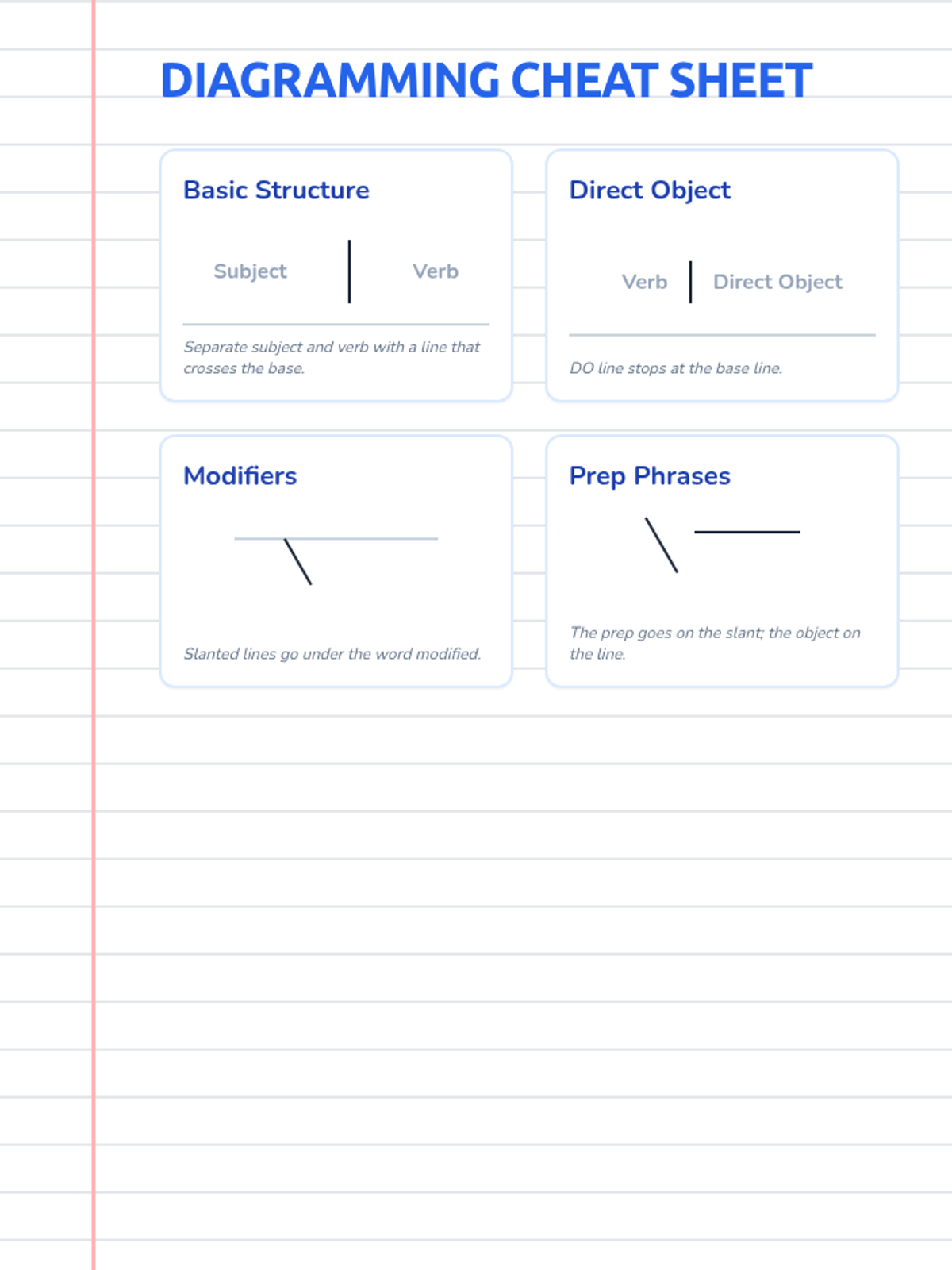
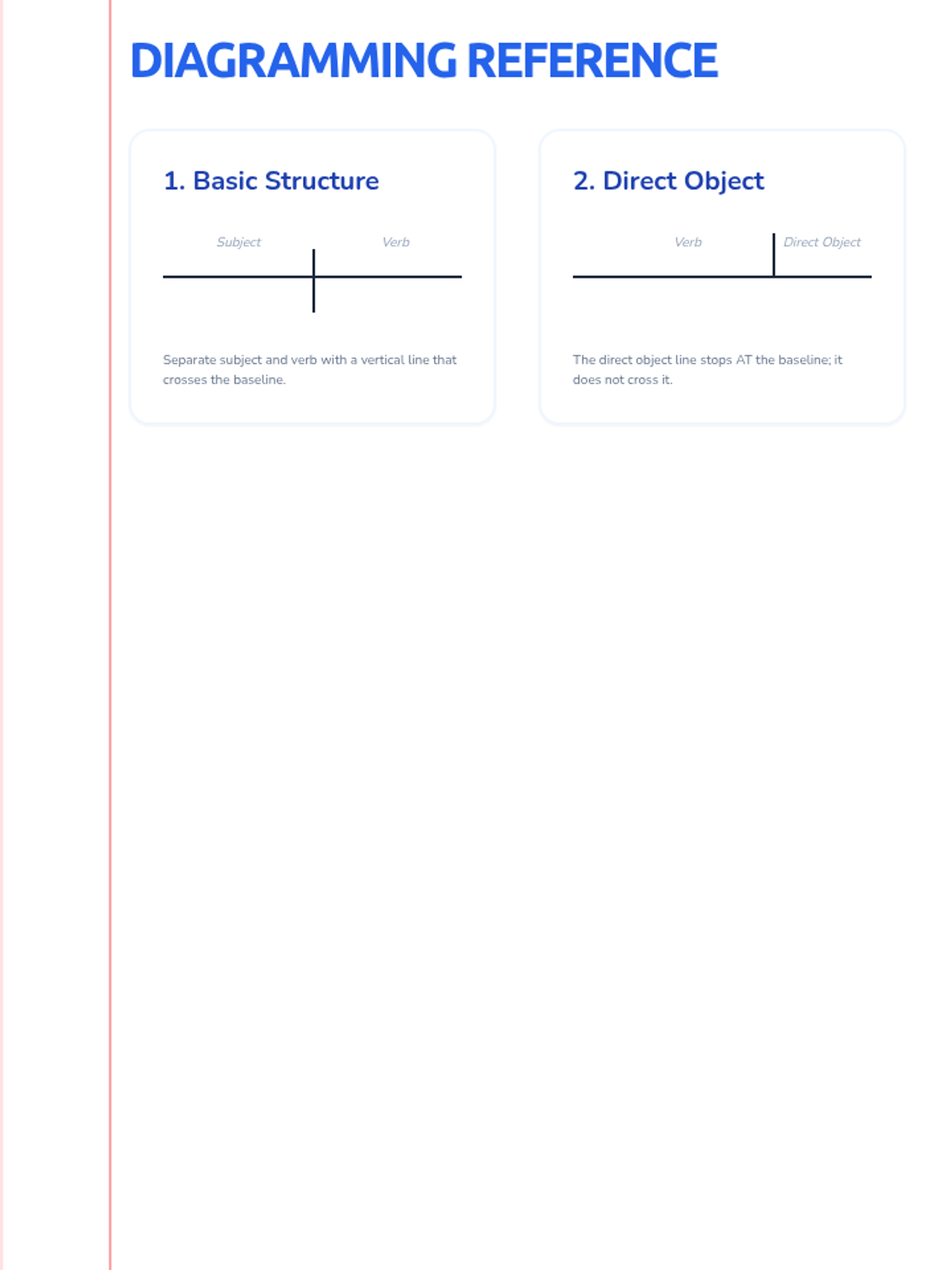
A comprehensive introduction to Reed-Kellogg sentence diagramming, covering subjects, verbs, direct objects, and prepositional phrases through a structural engineering lens.
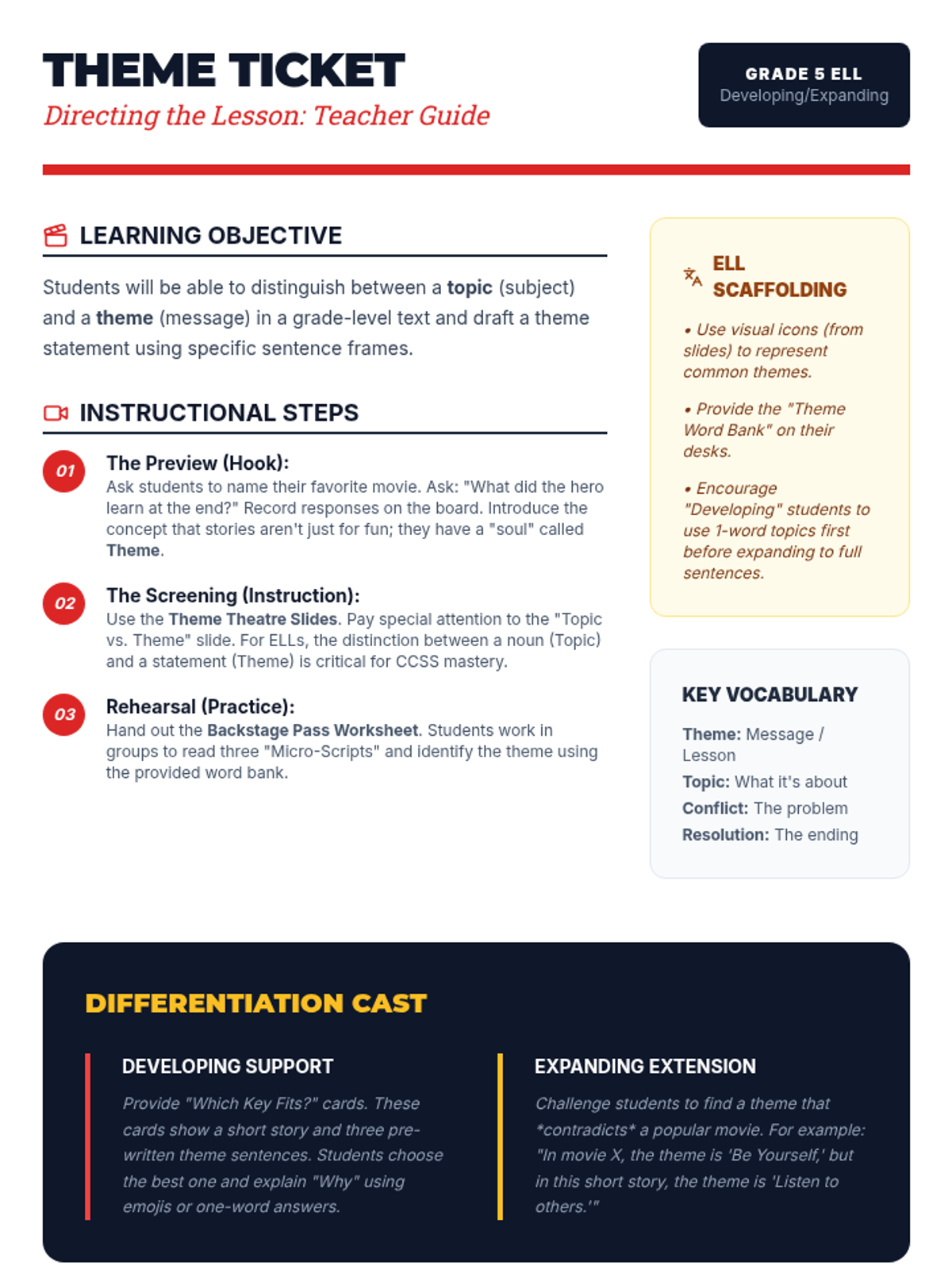
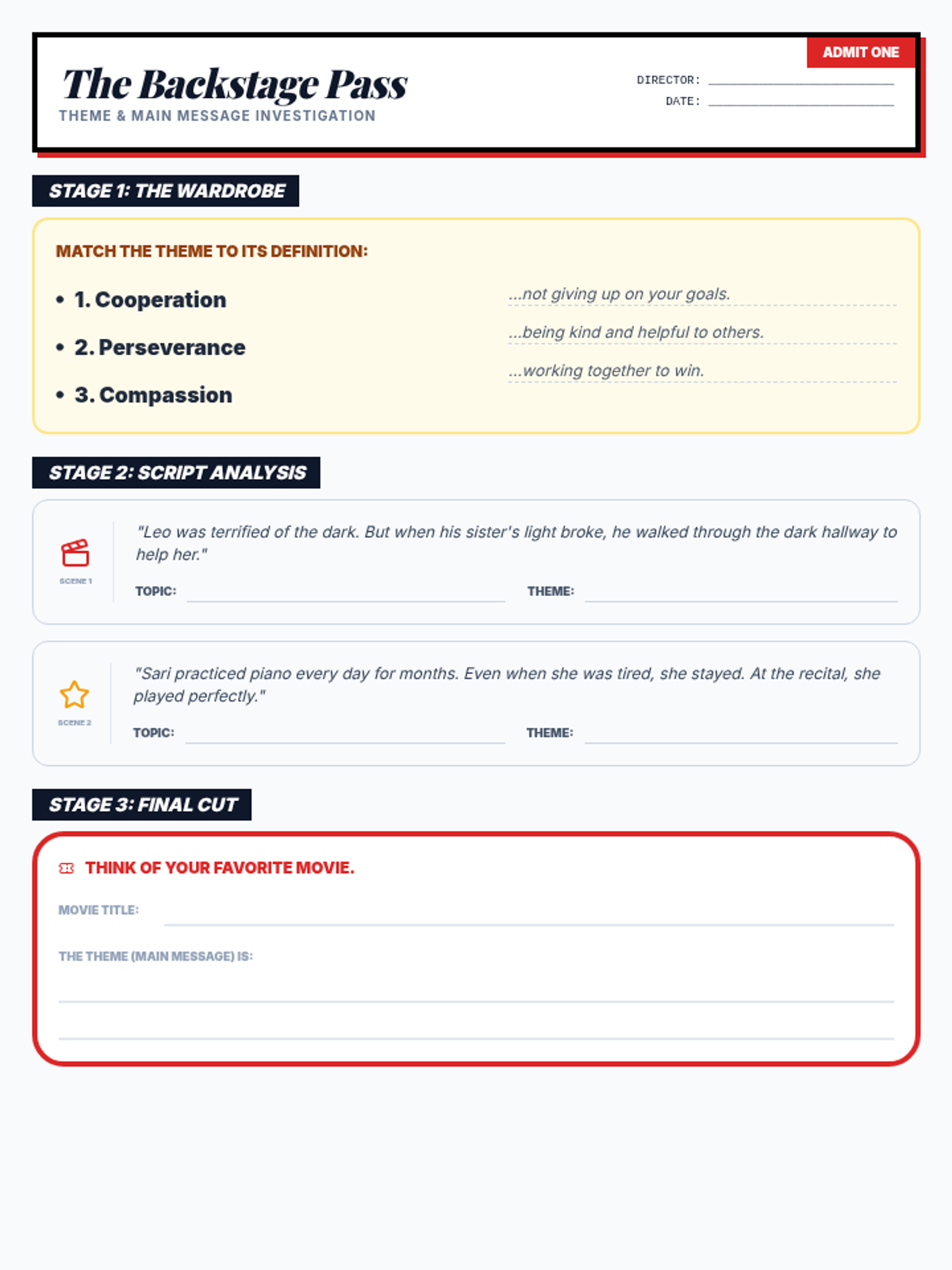
Students learn to identify the theme or main message of a story by analyzing character choices and outcomes, framed through a "Cinema" or "Movie Theatre" lens to help ELL students distinguish between topic and theme.
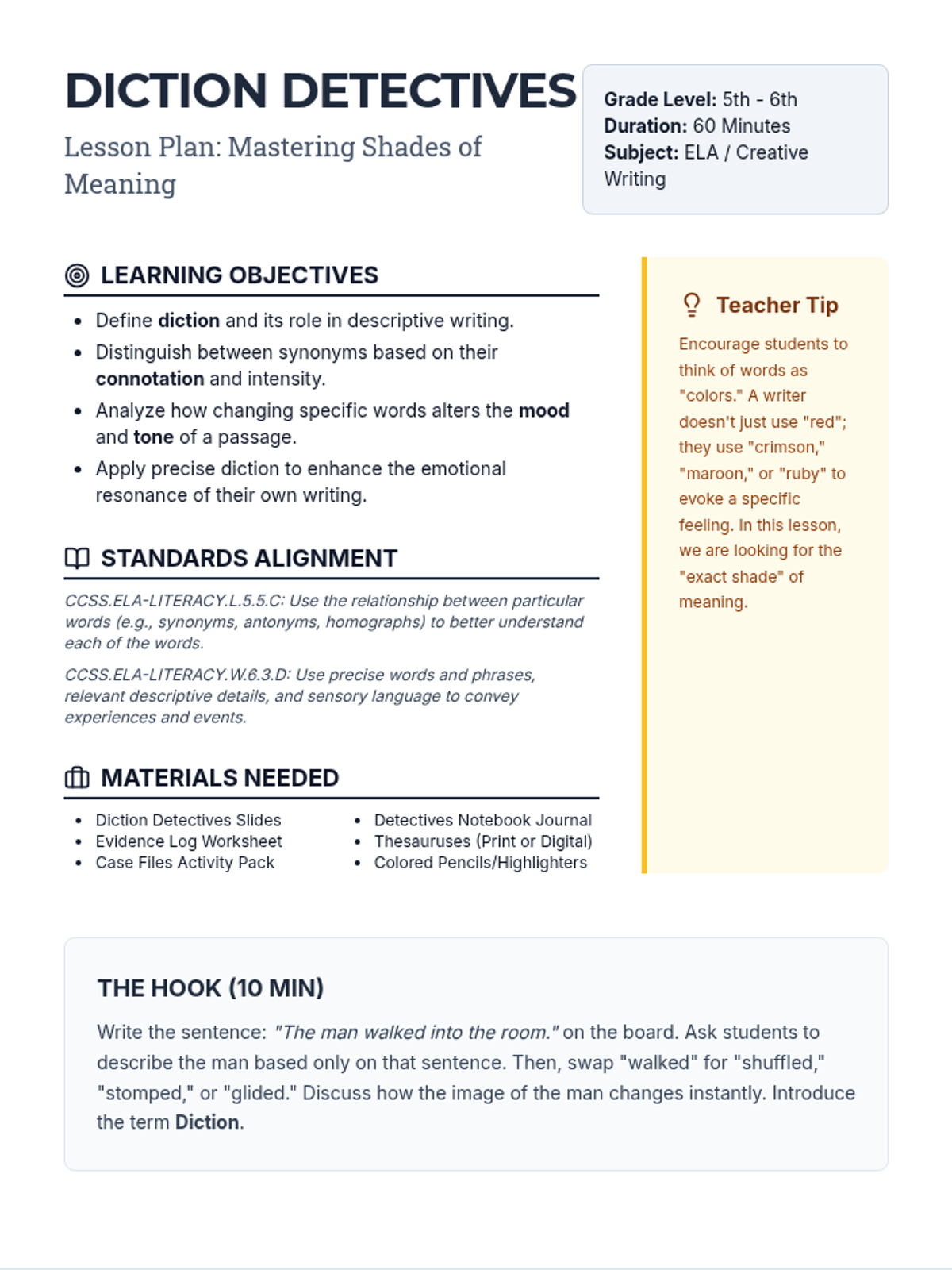
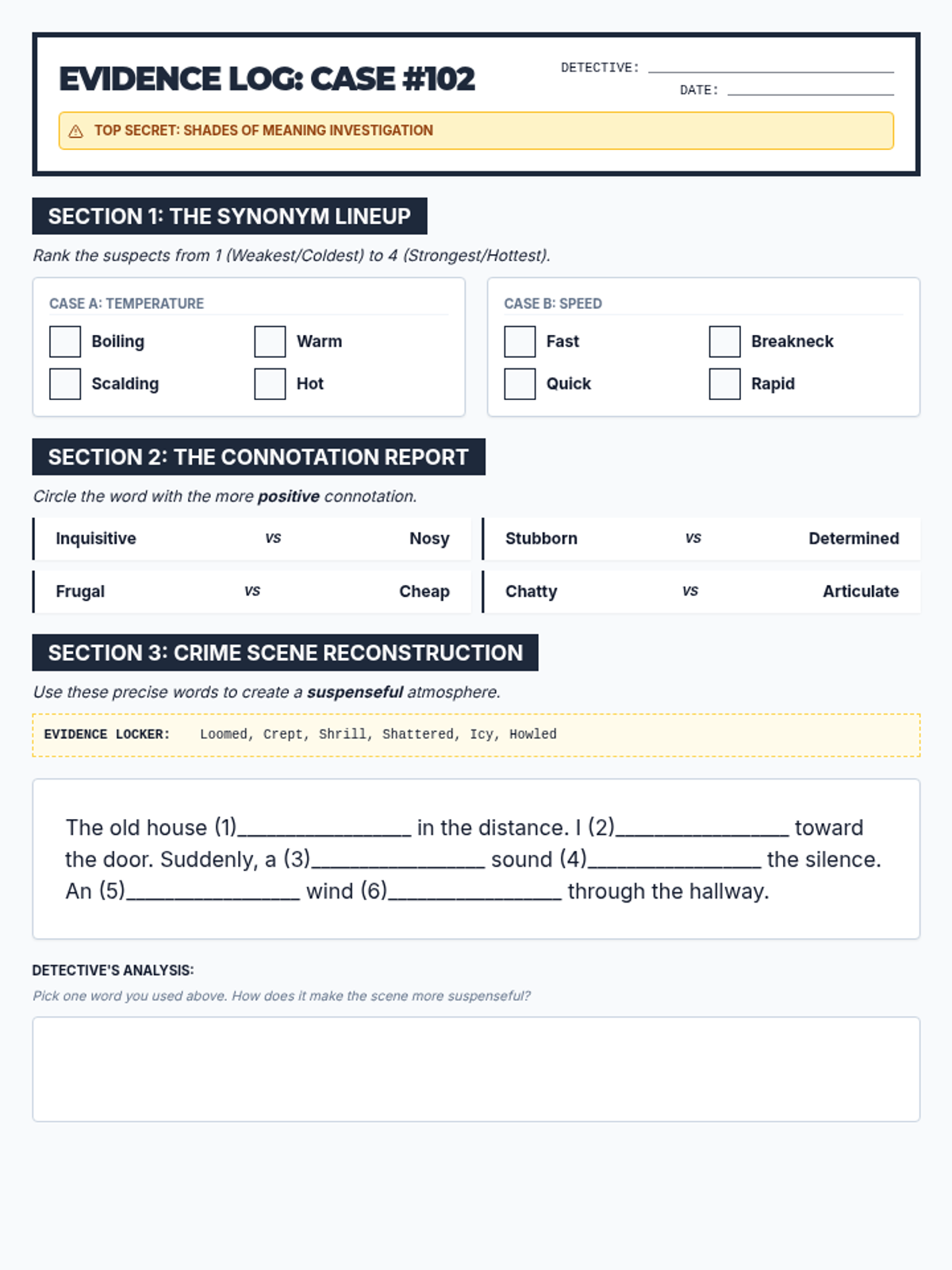
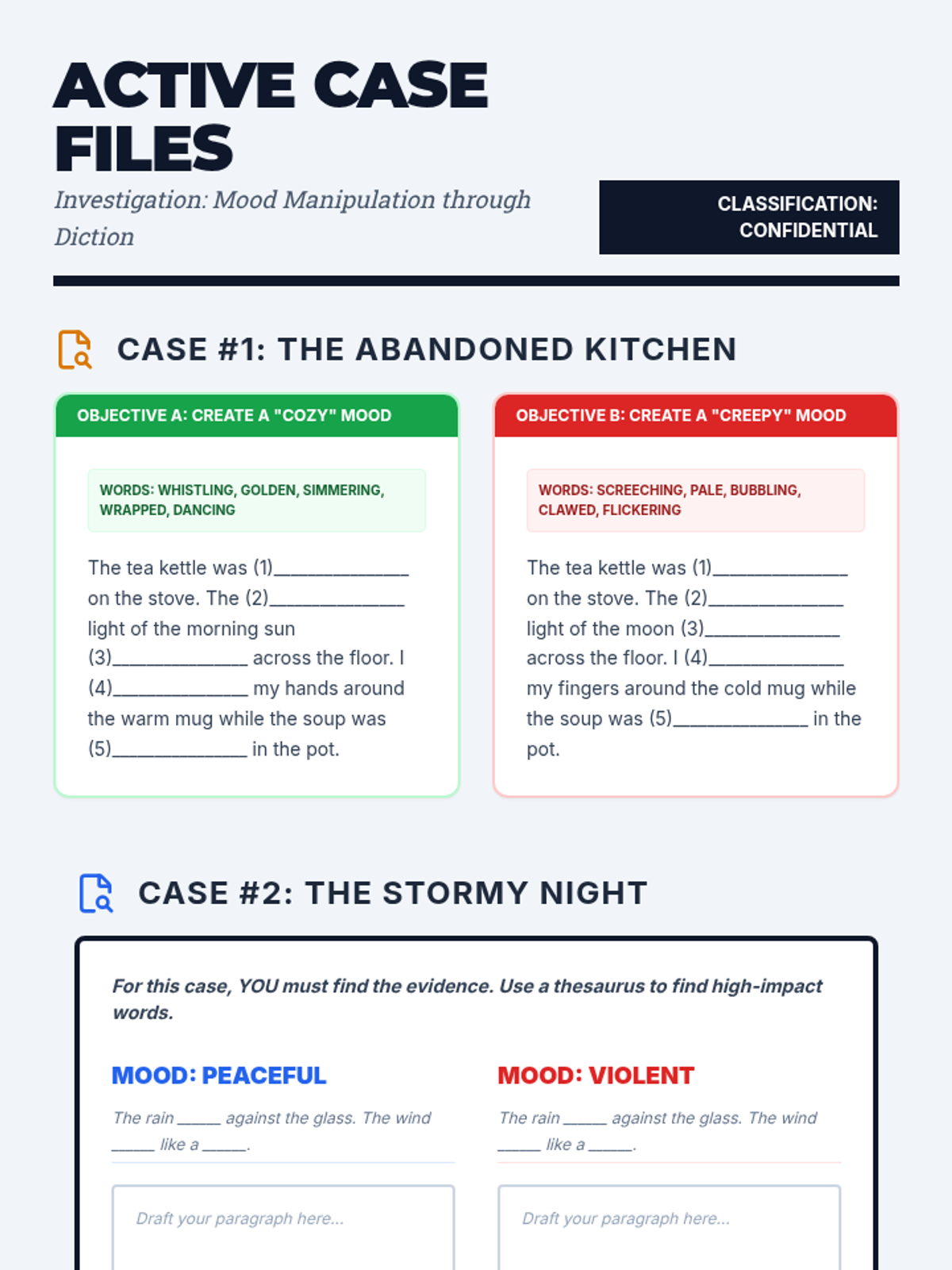
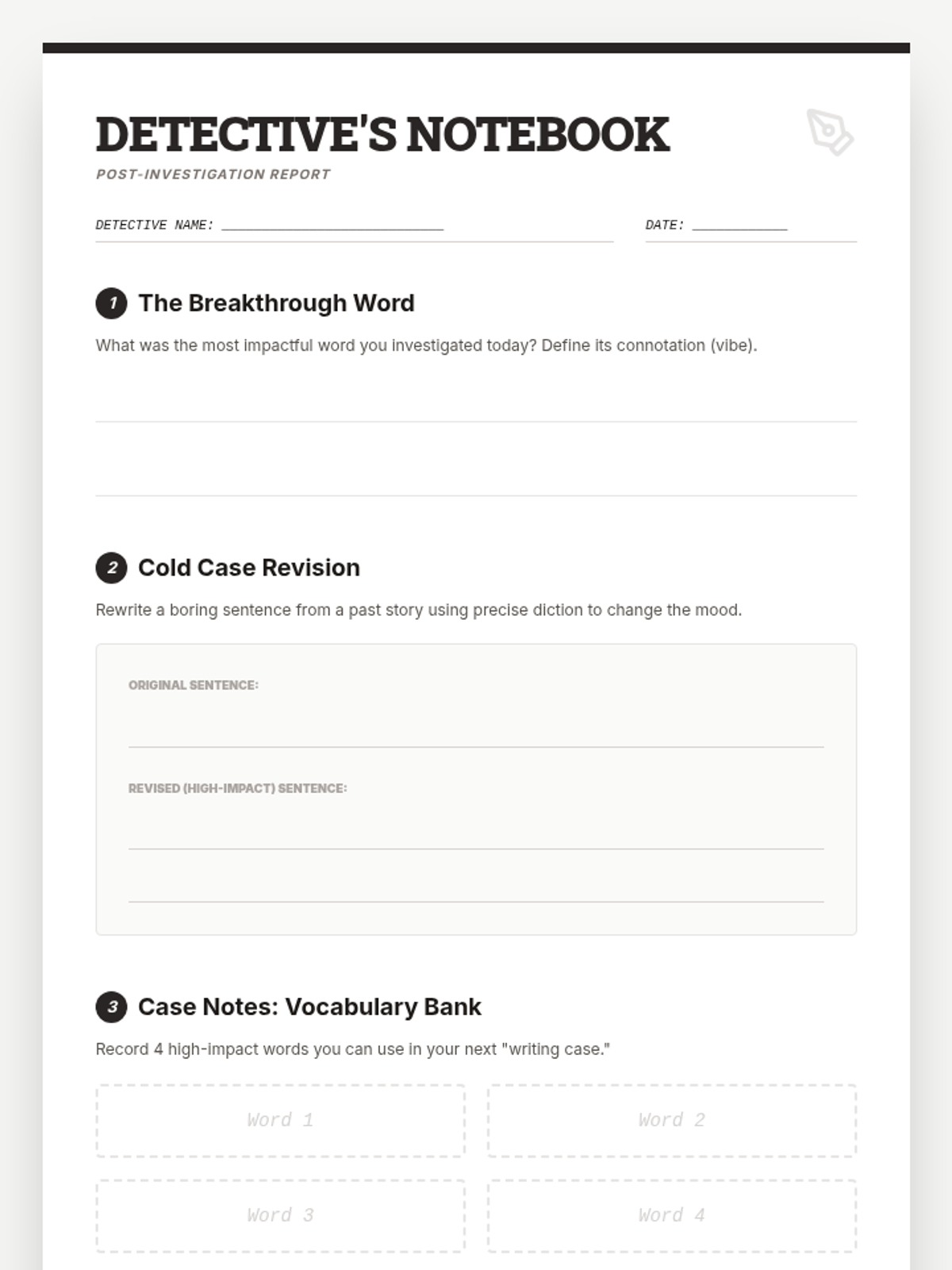
Students investigate how precise word choices (diction) influence the mood and tone of a story through a detective-themed exploration of synonyms and shades of meaning.
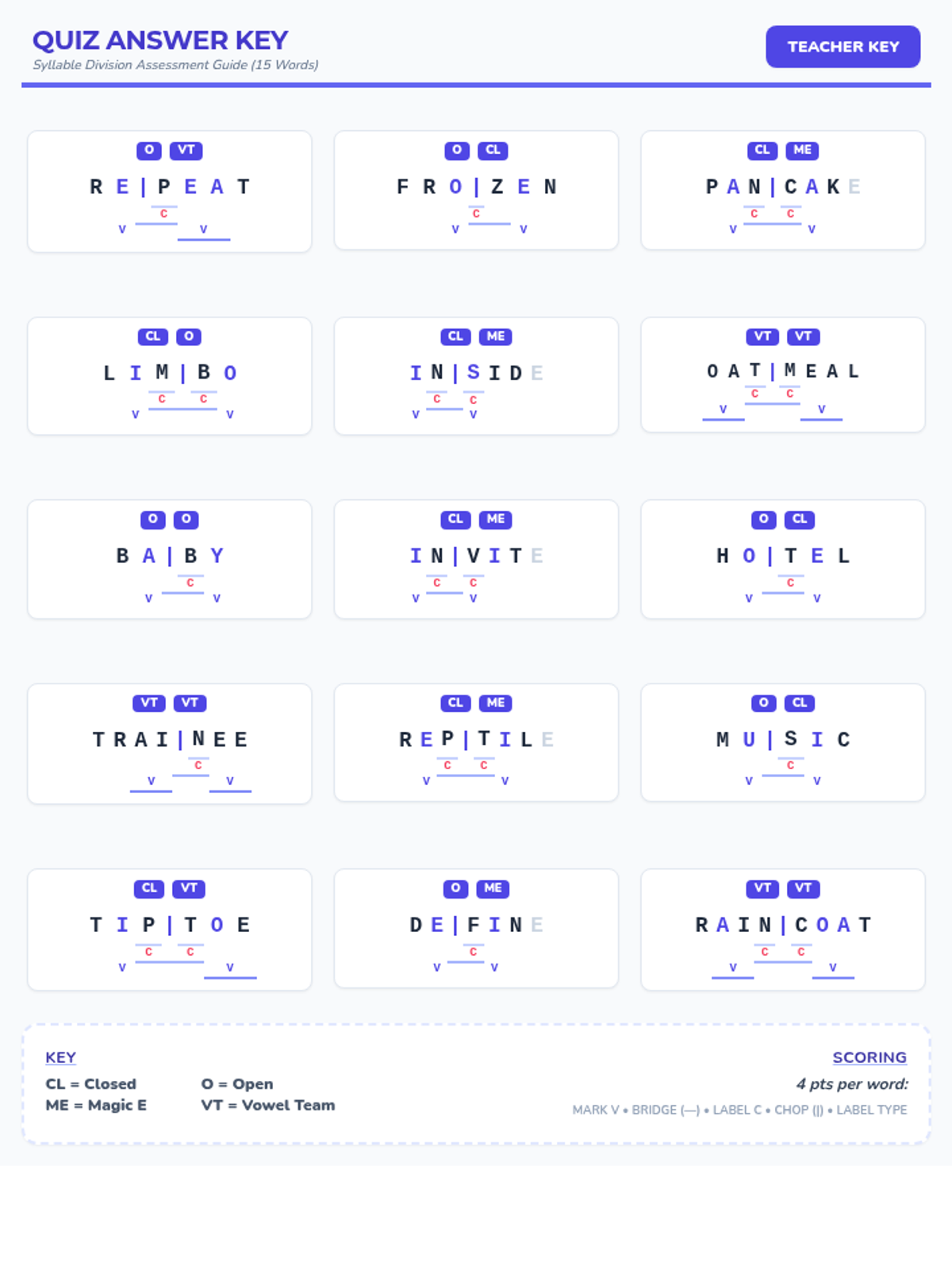
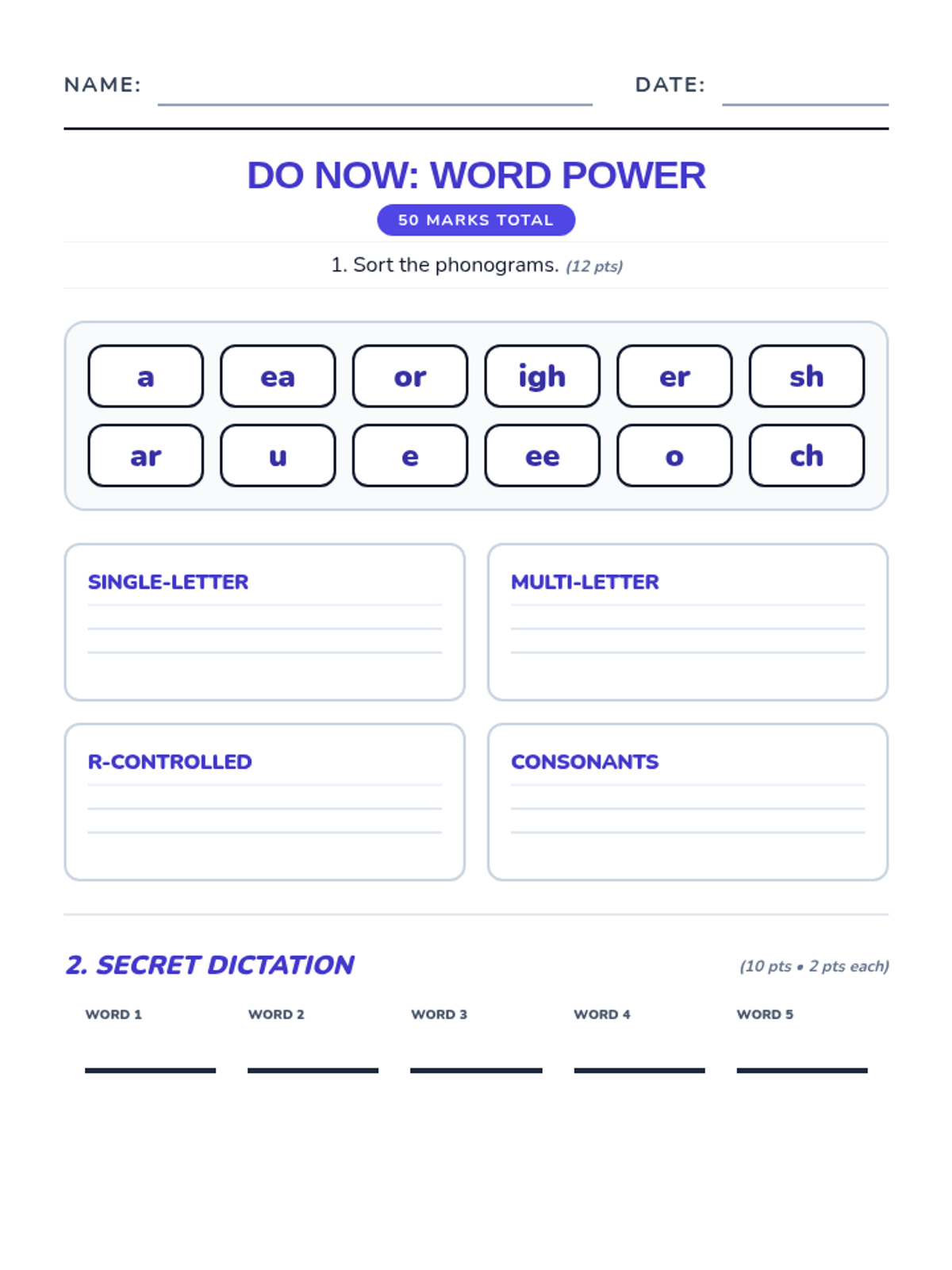
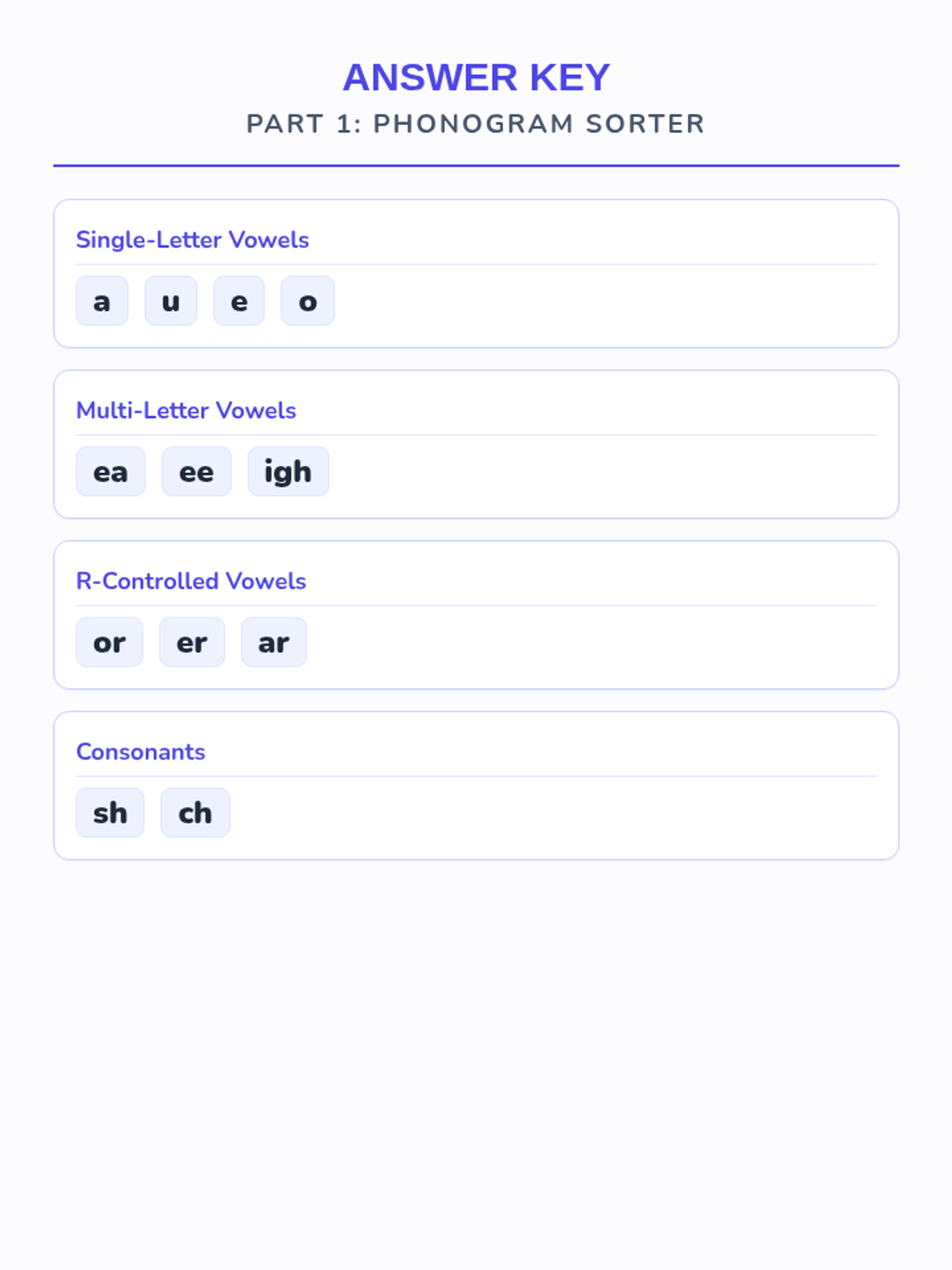
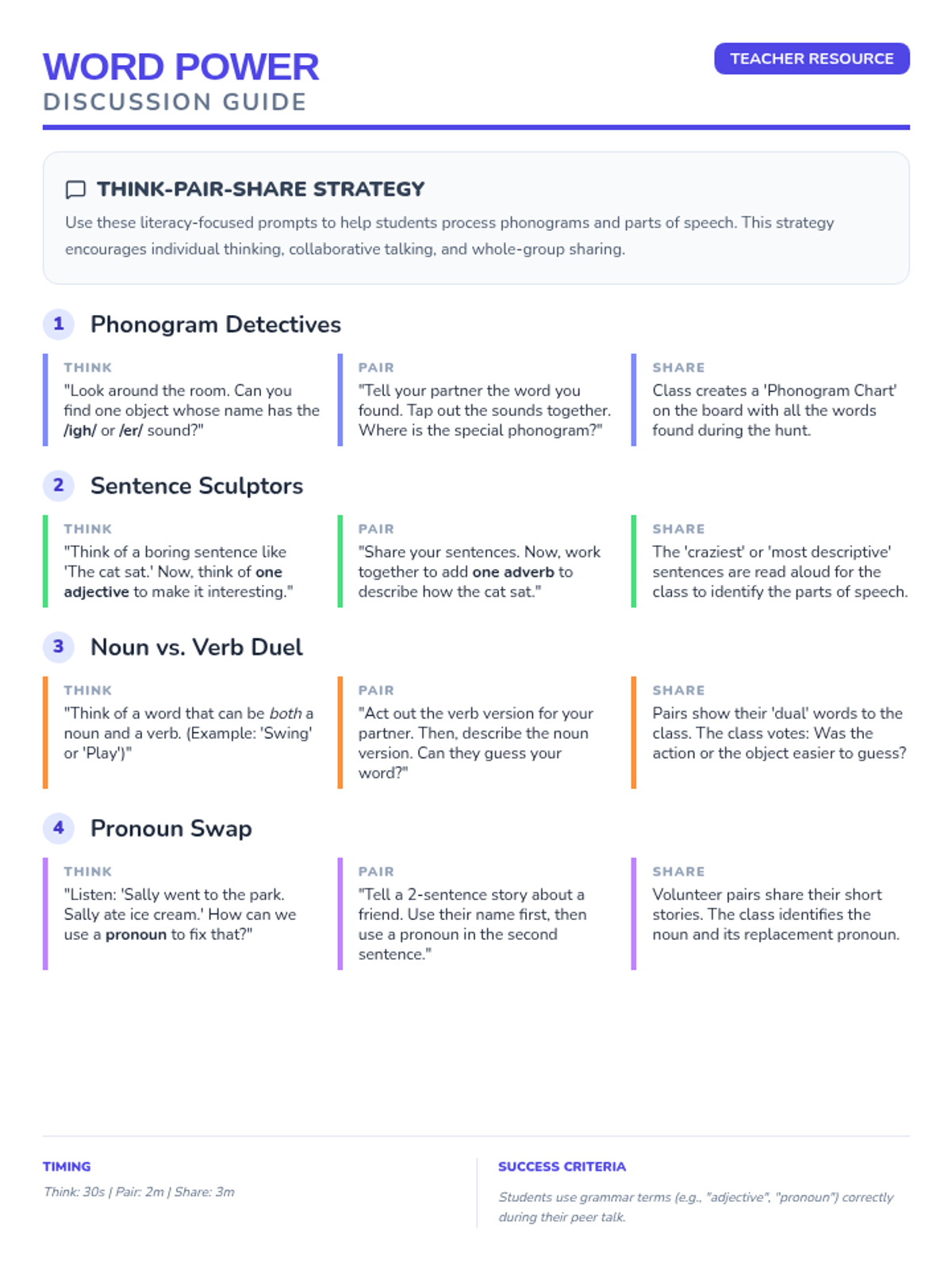
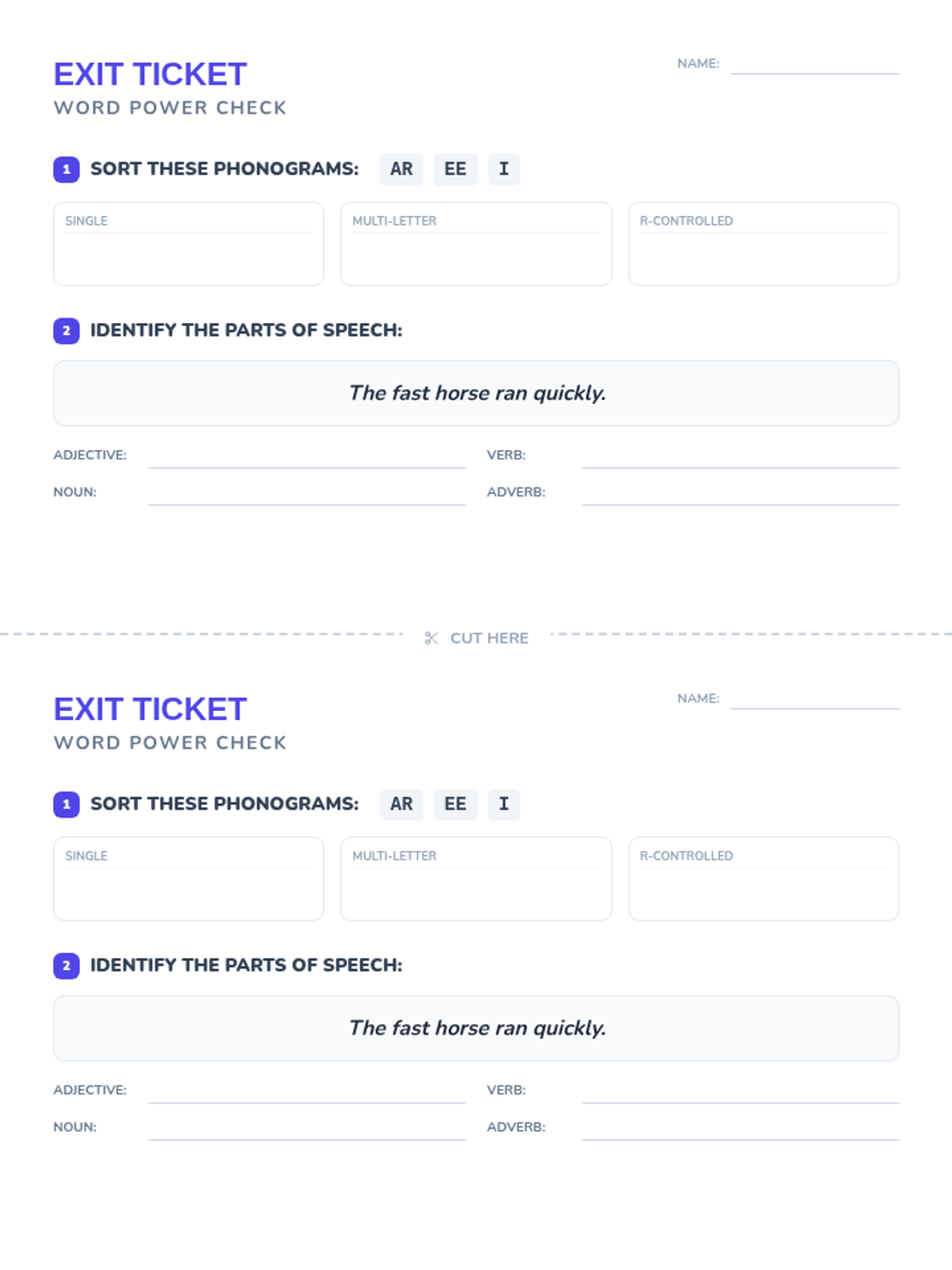
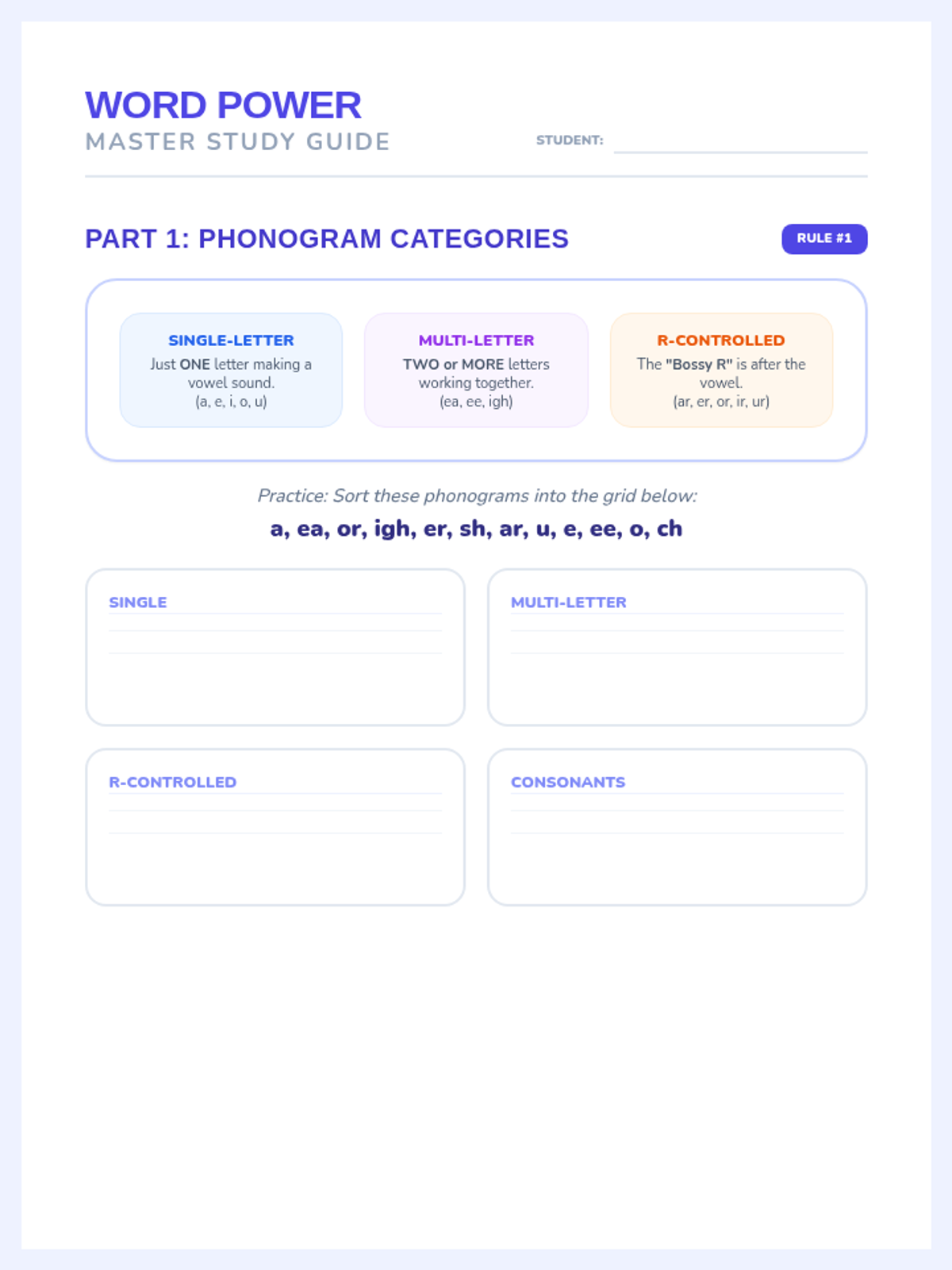
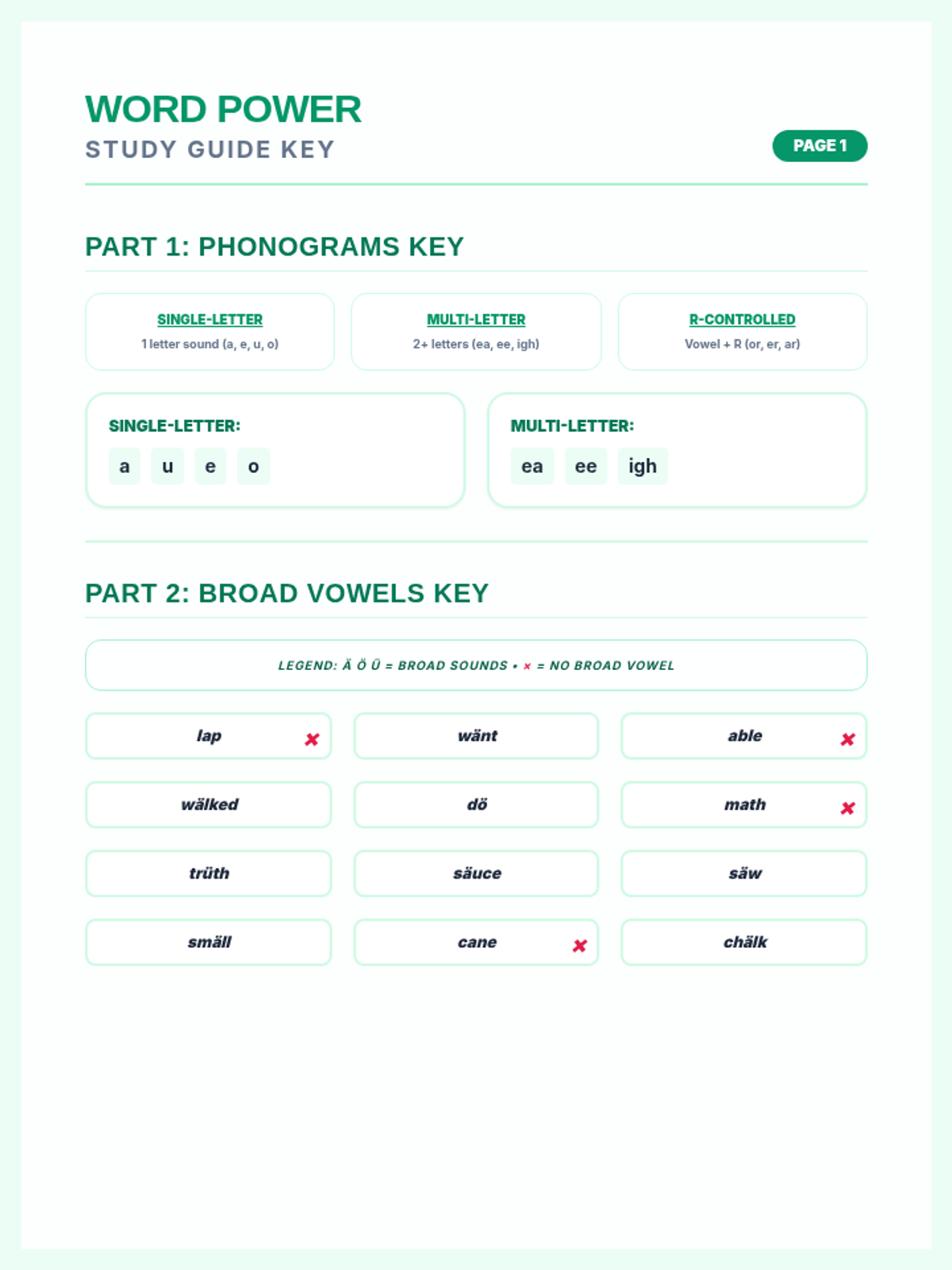
A two-part foundational literacy lesson focusing on phonogram categorization and identifying parts of speech in simple sentences.
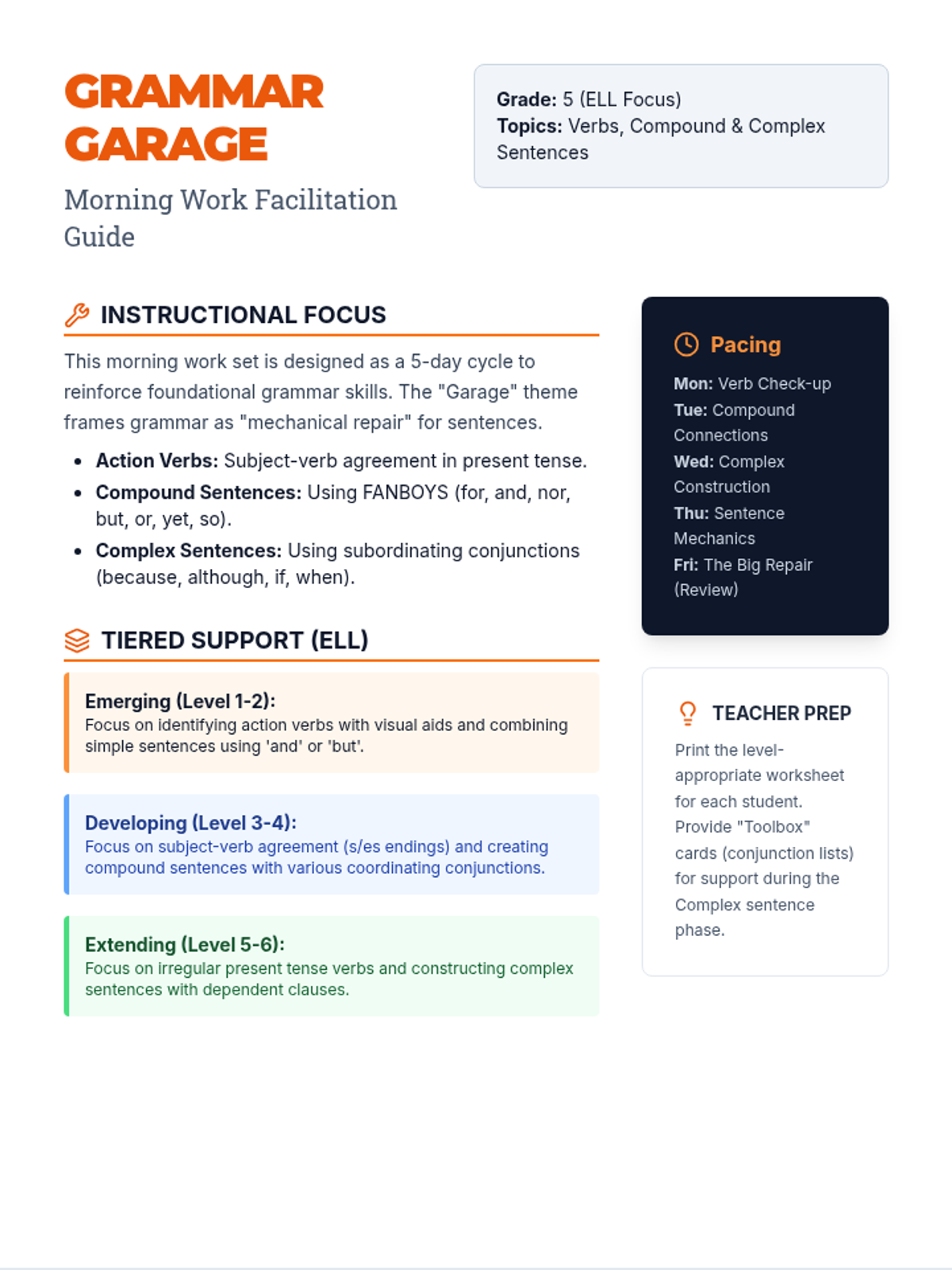
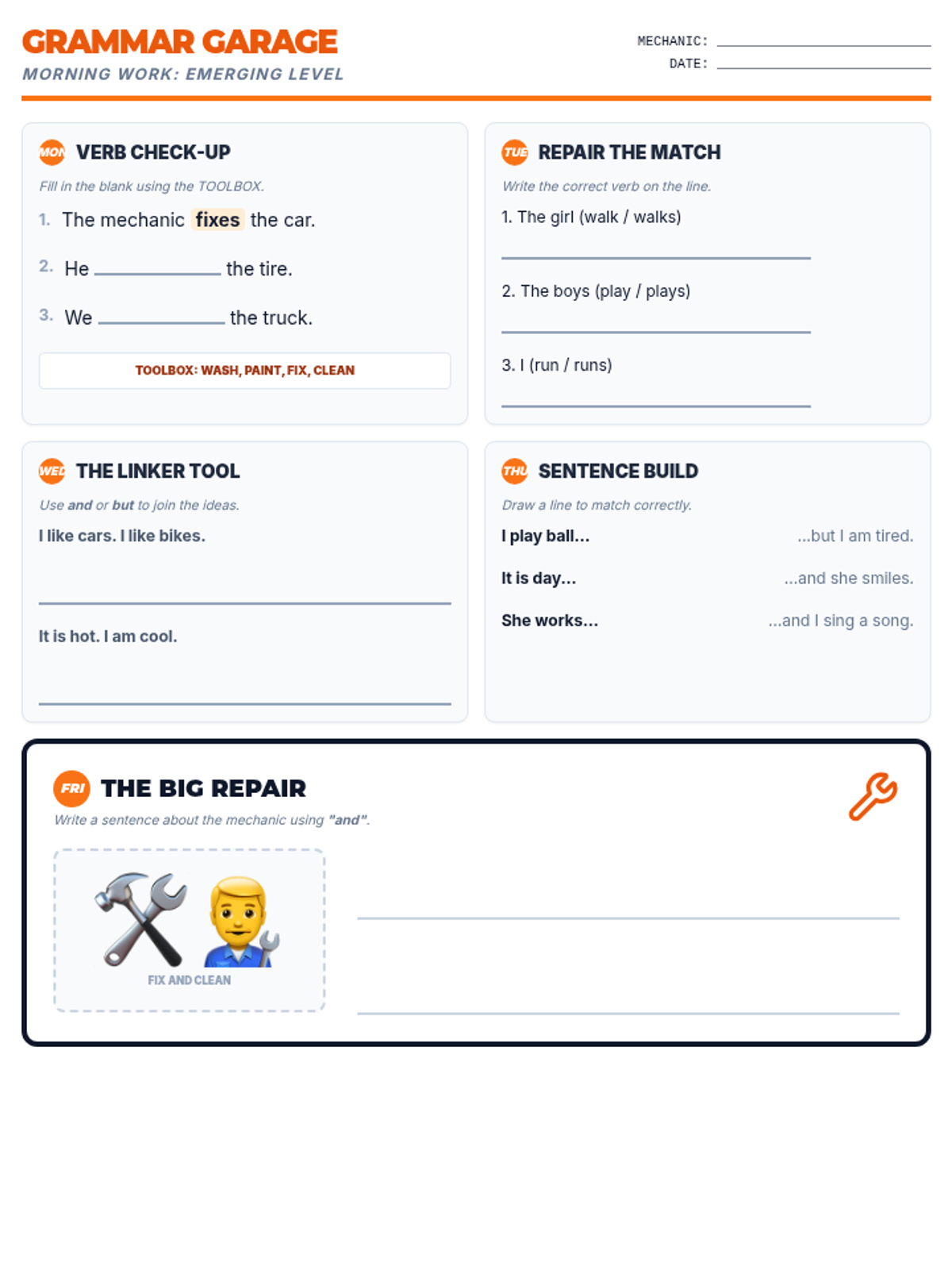
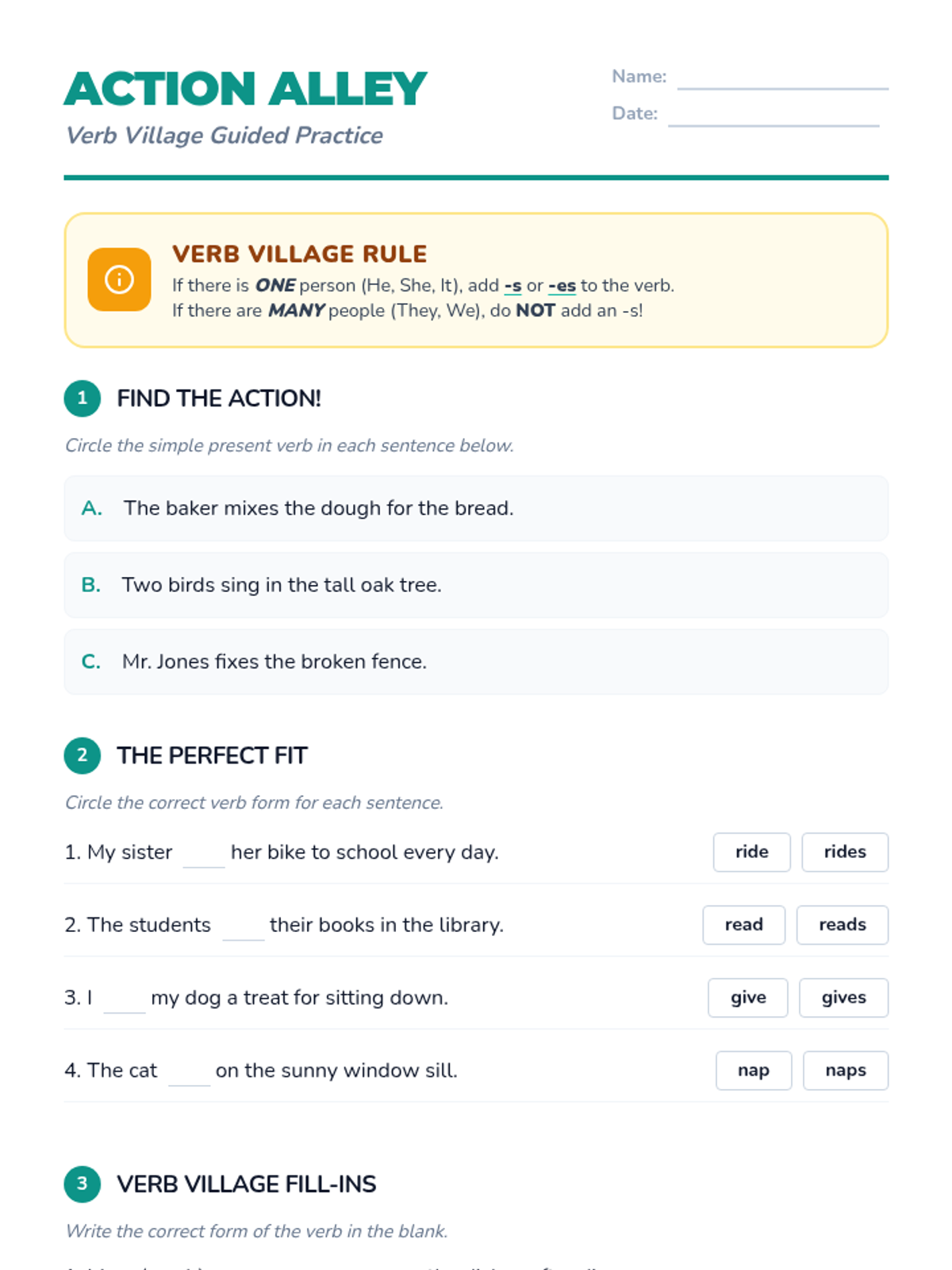
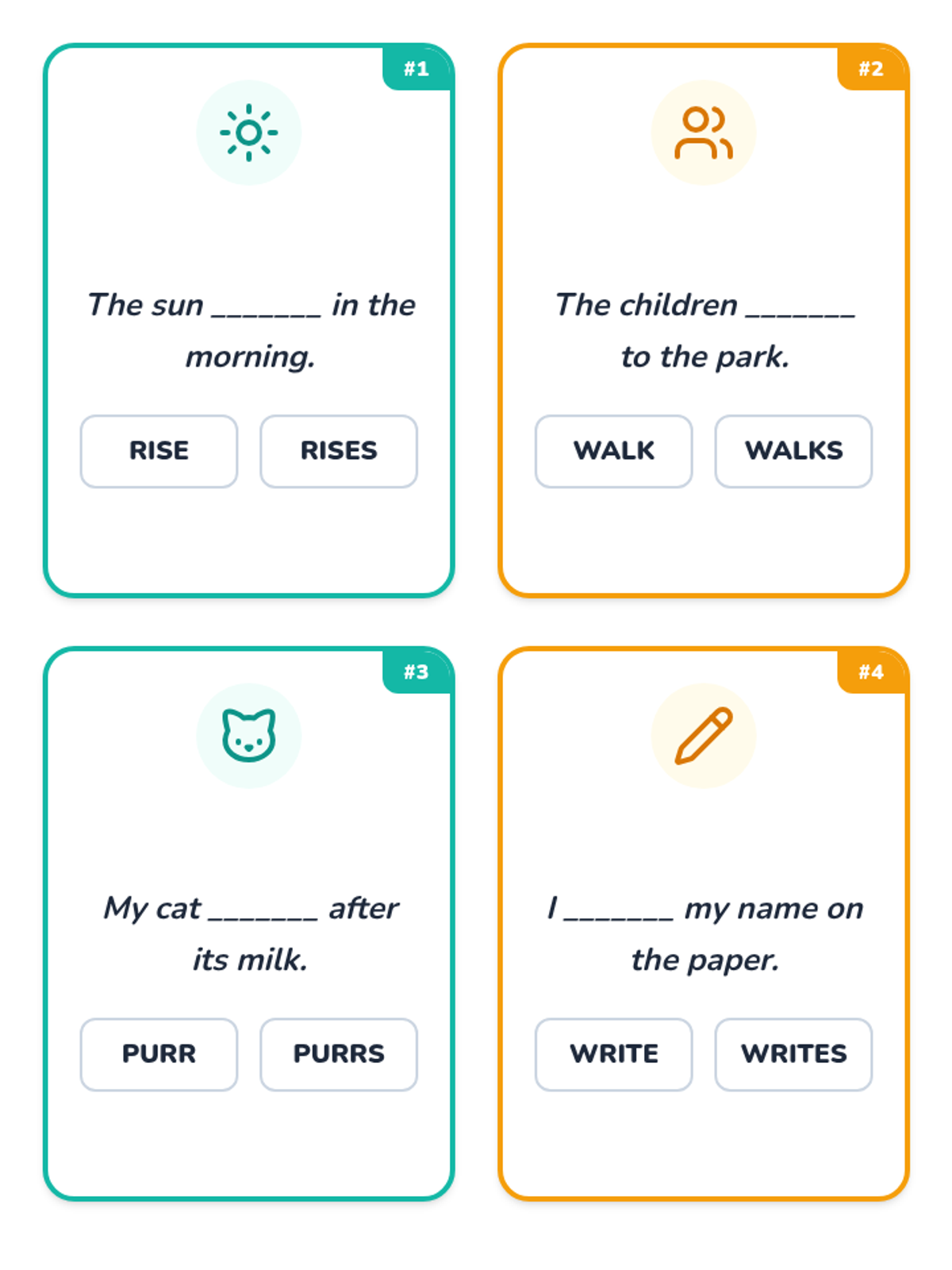
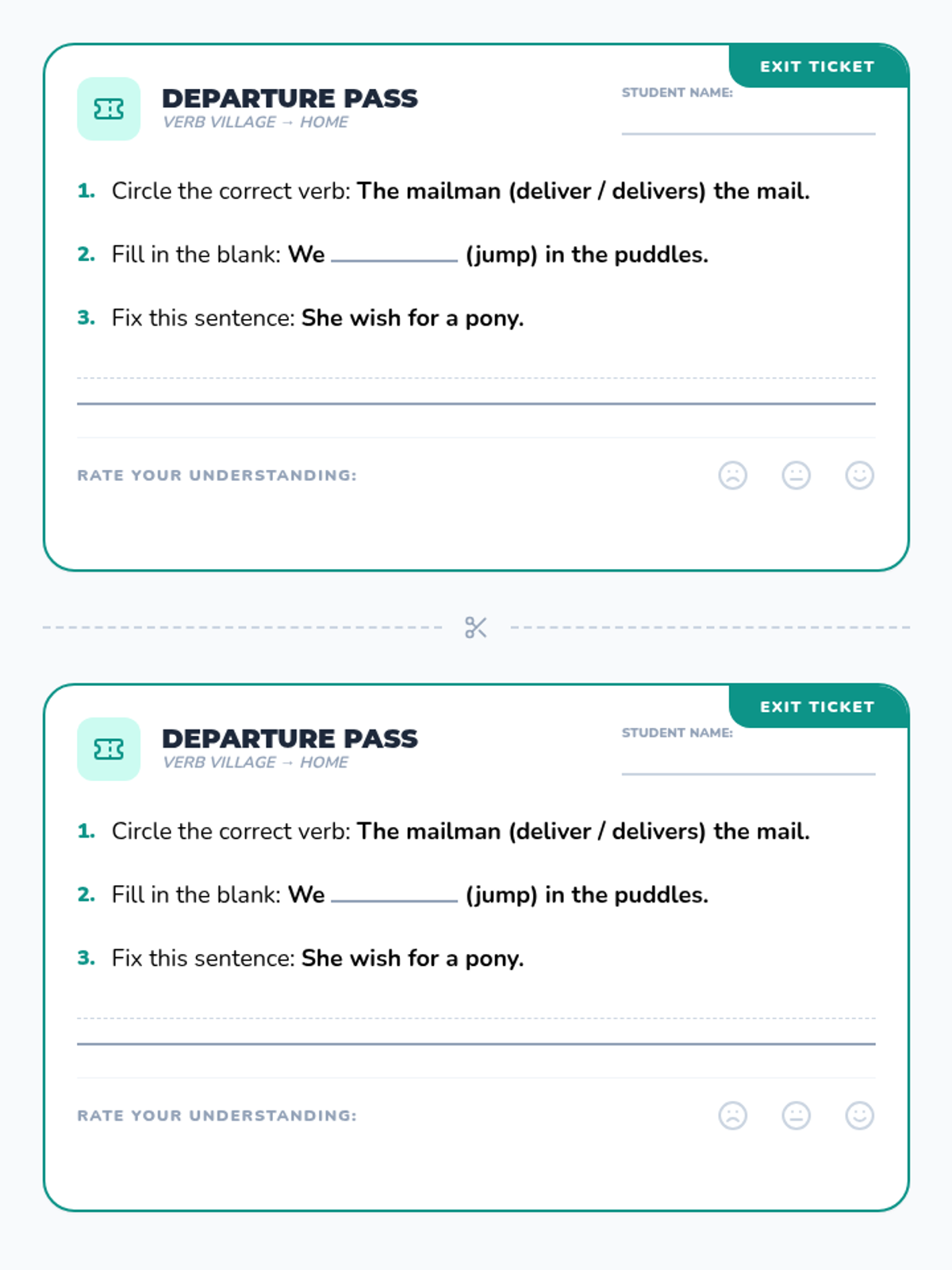
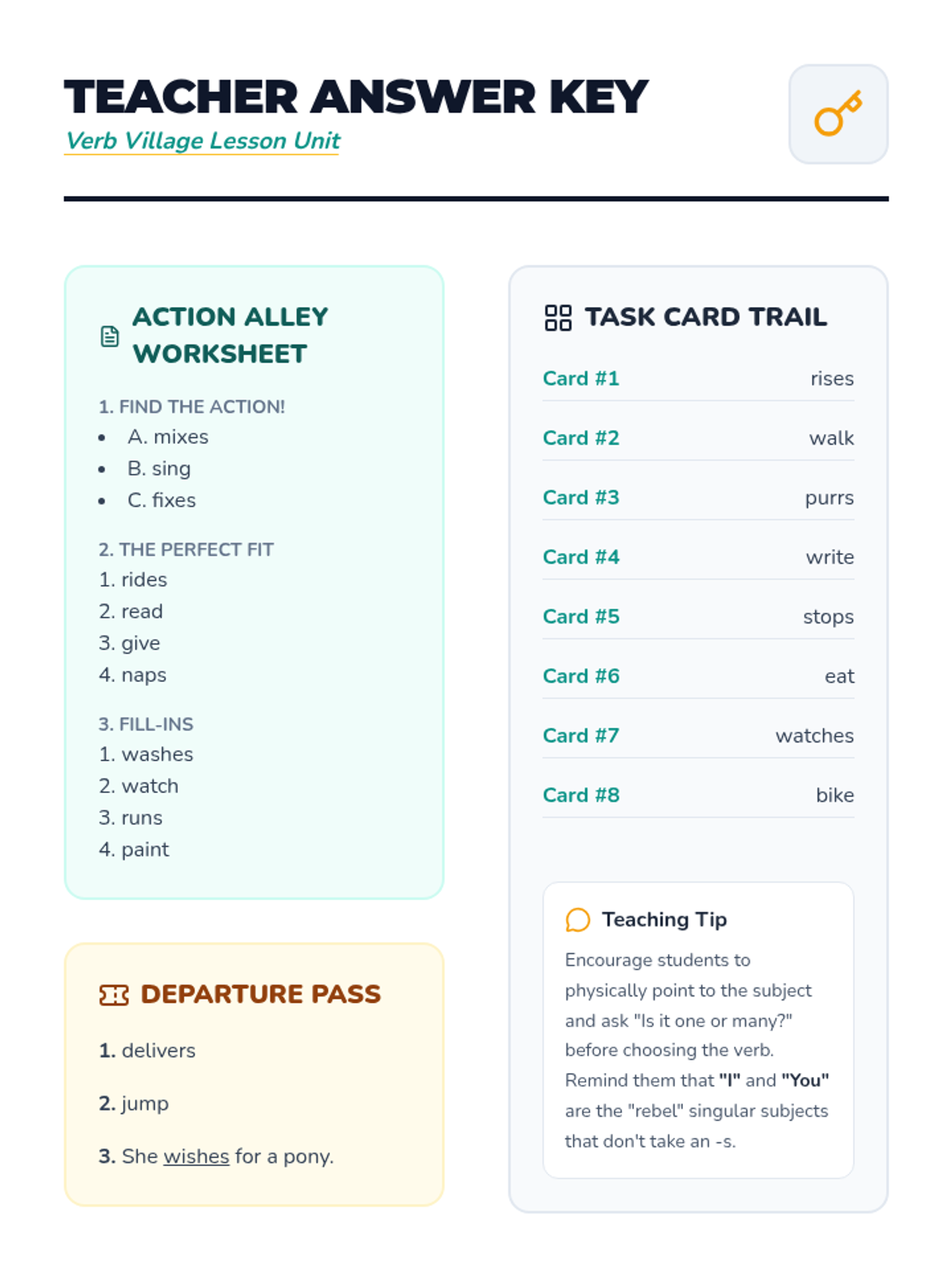
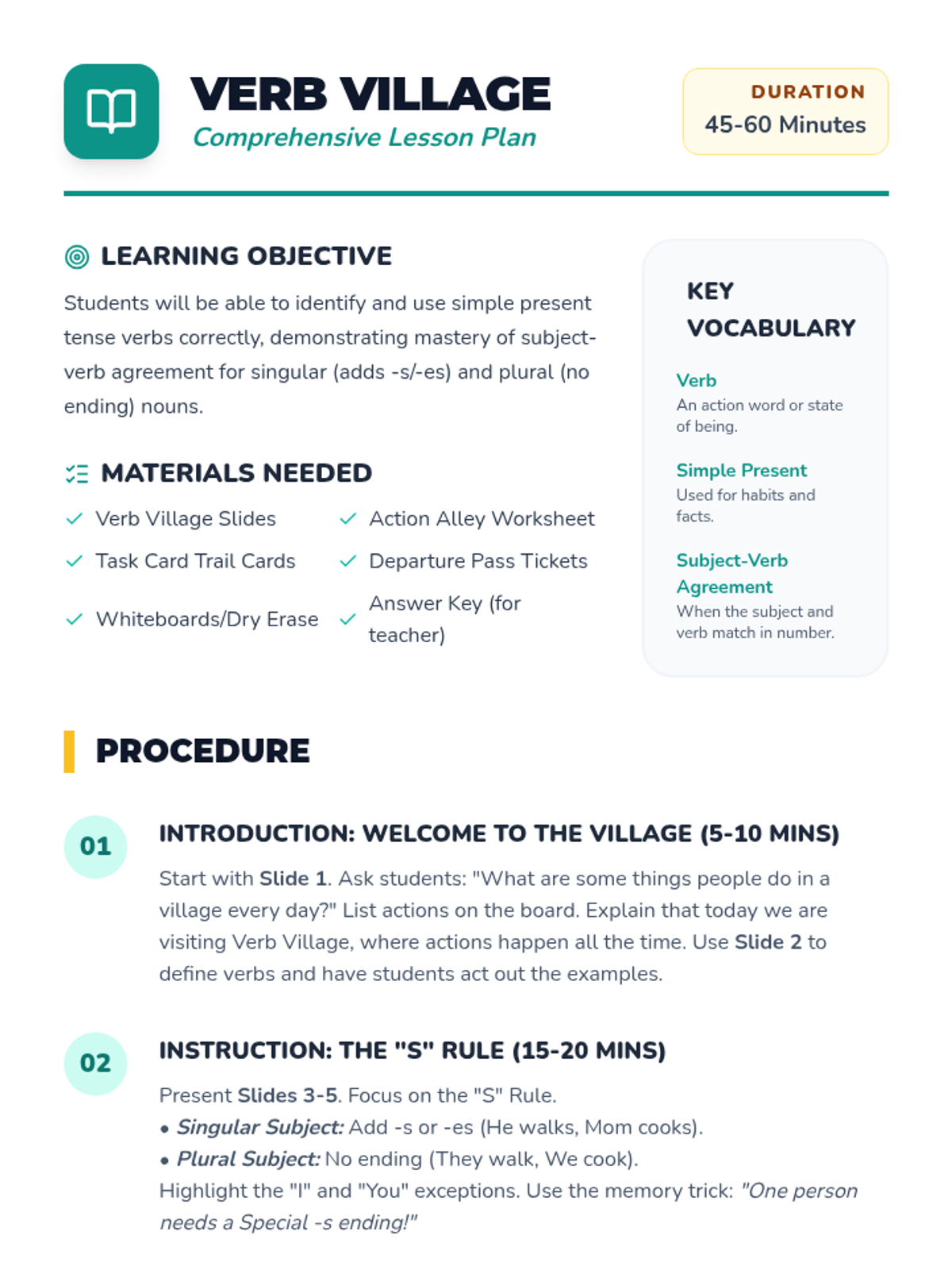
Students will learn to use simple present tense verbs correctly, focusing on subject-verb agreement for singular and plural nouns.
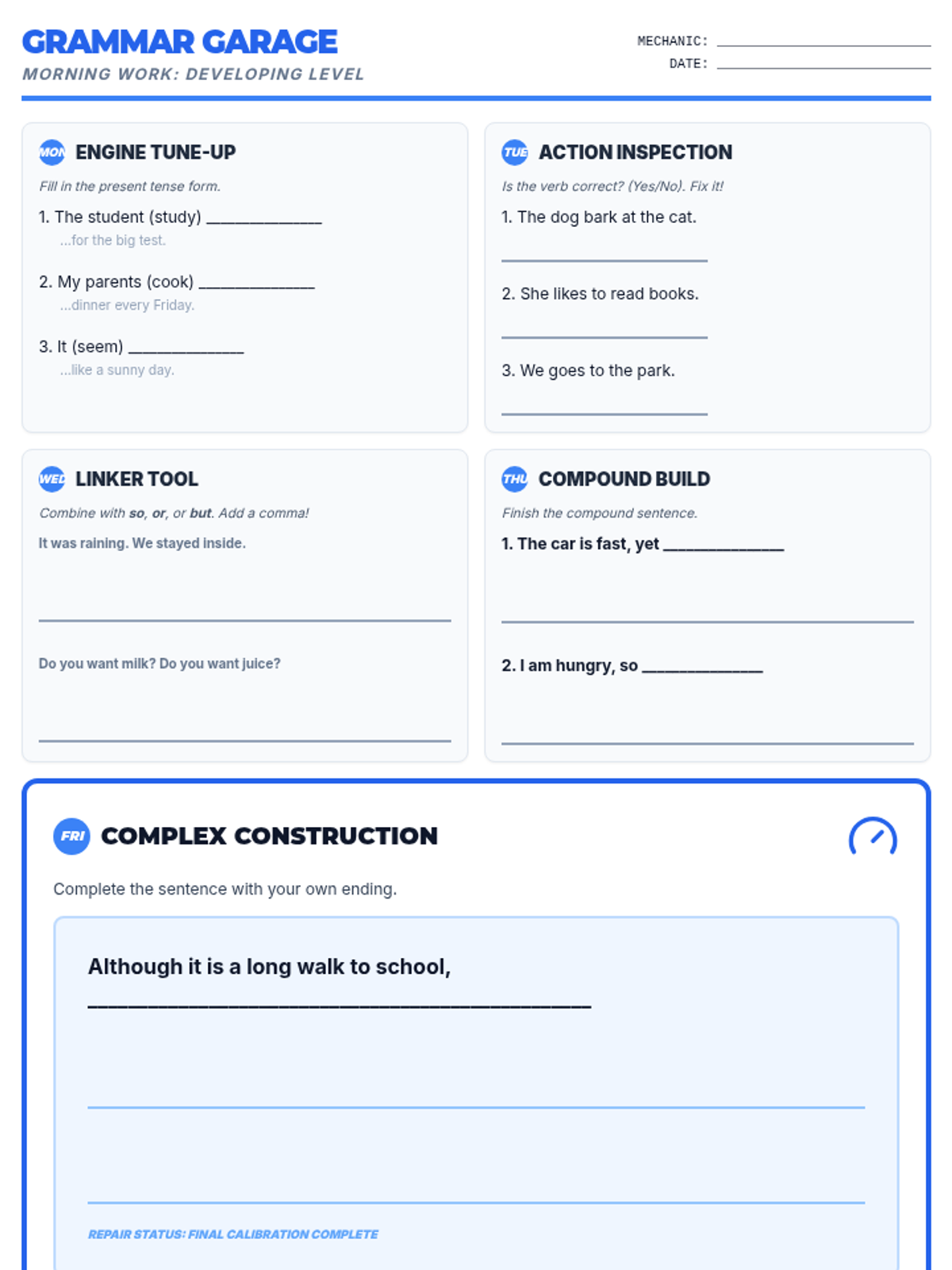
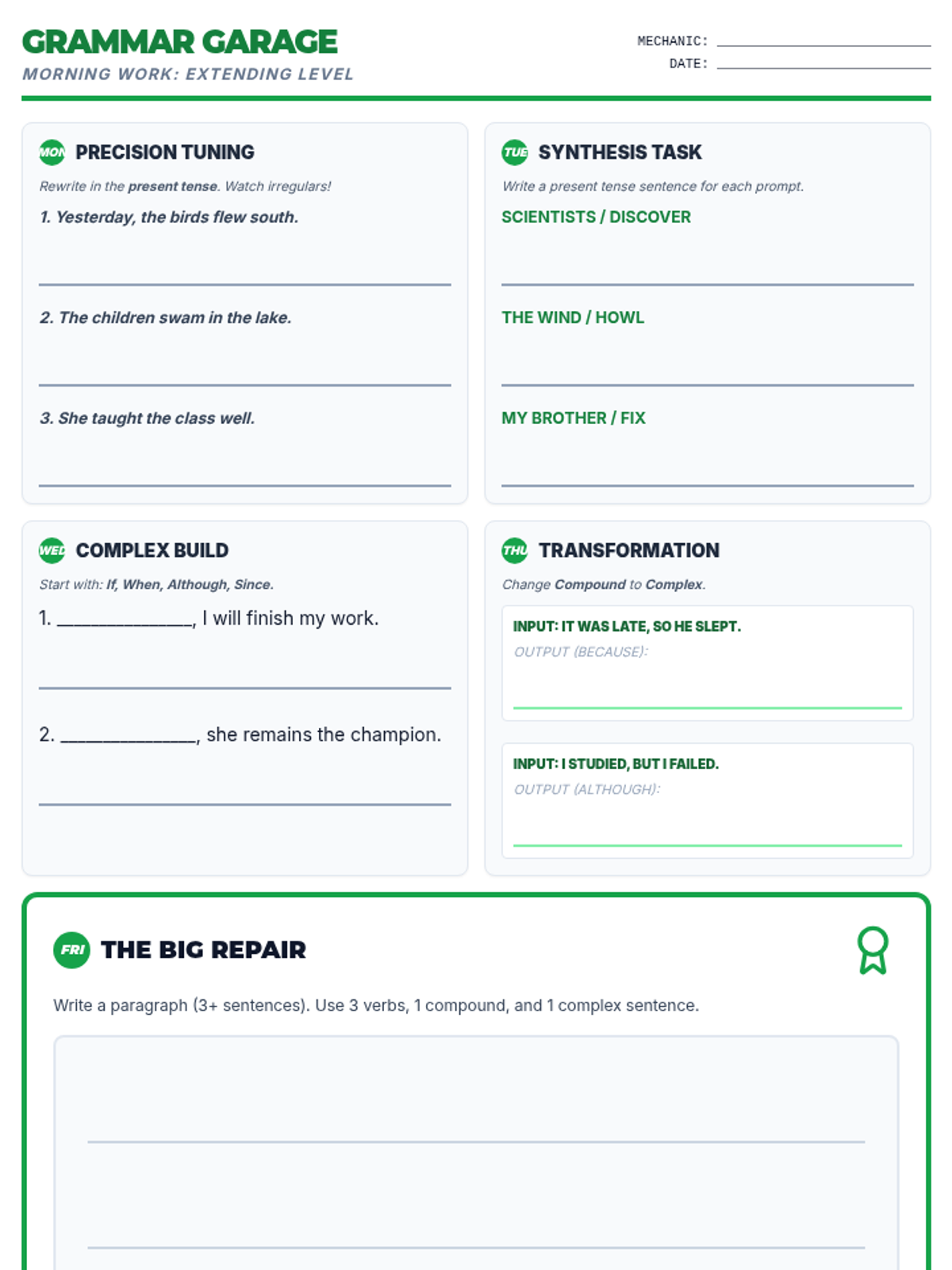
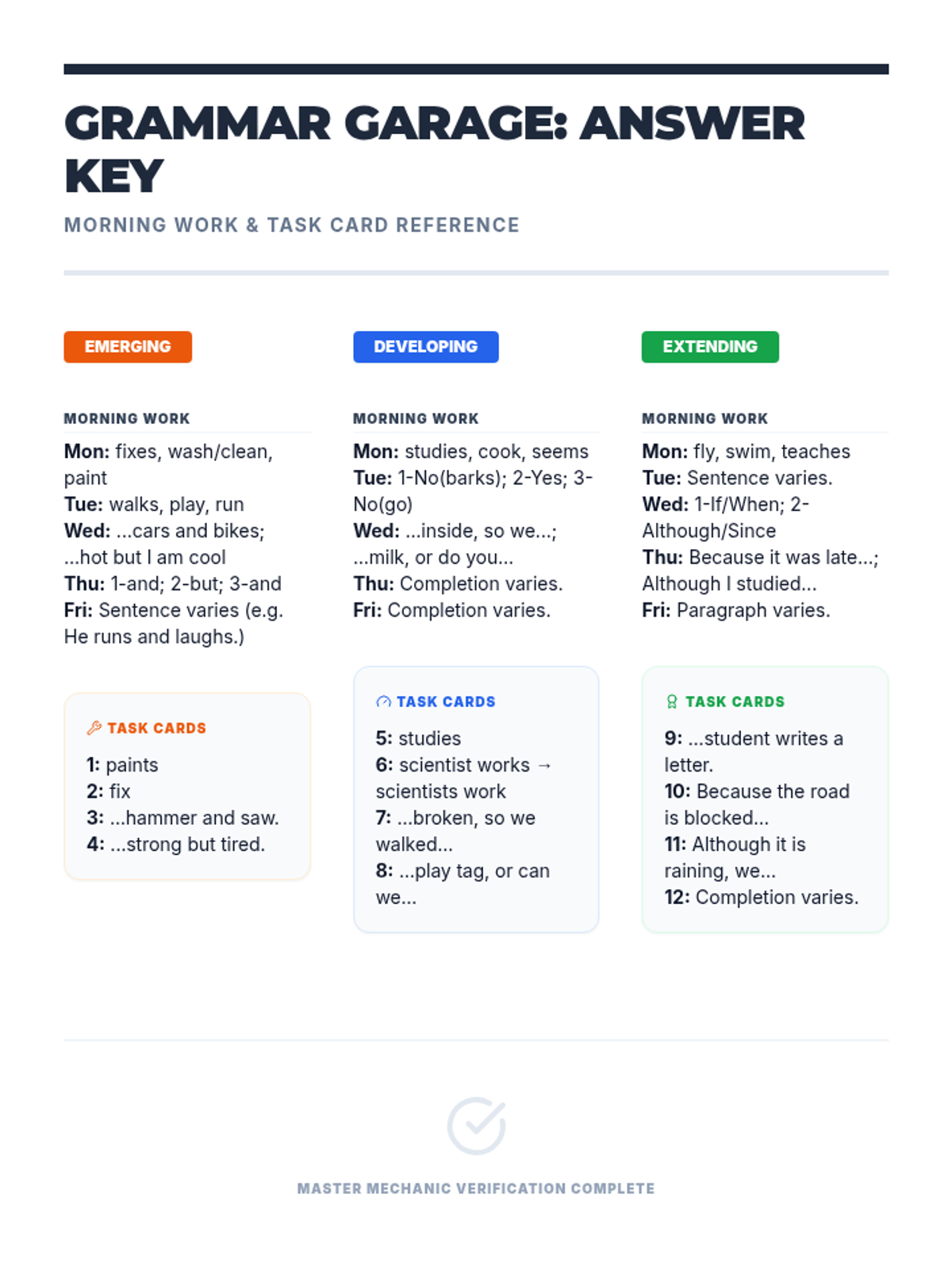
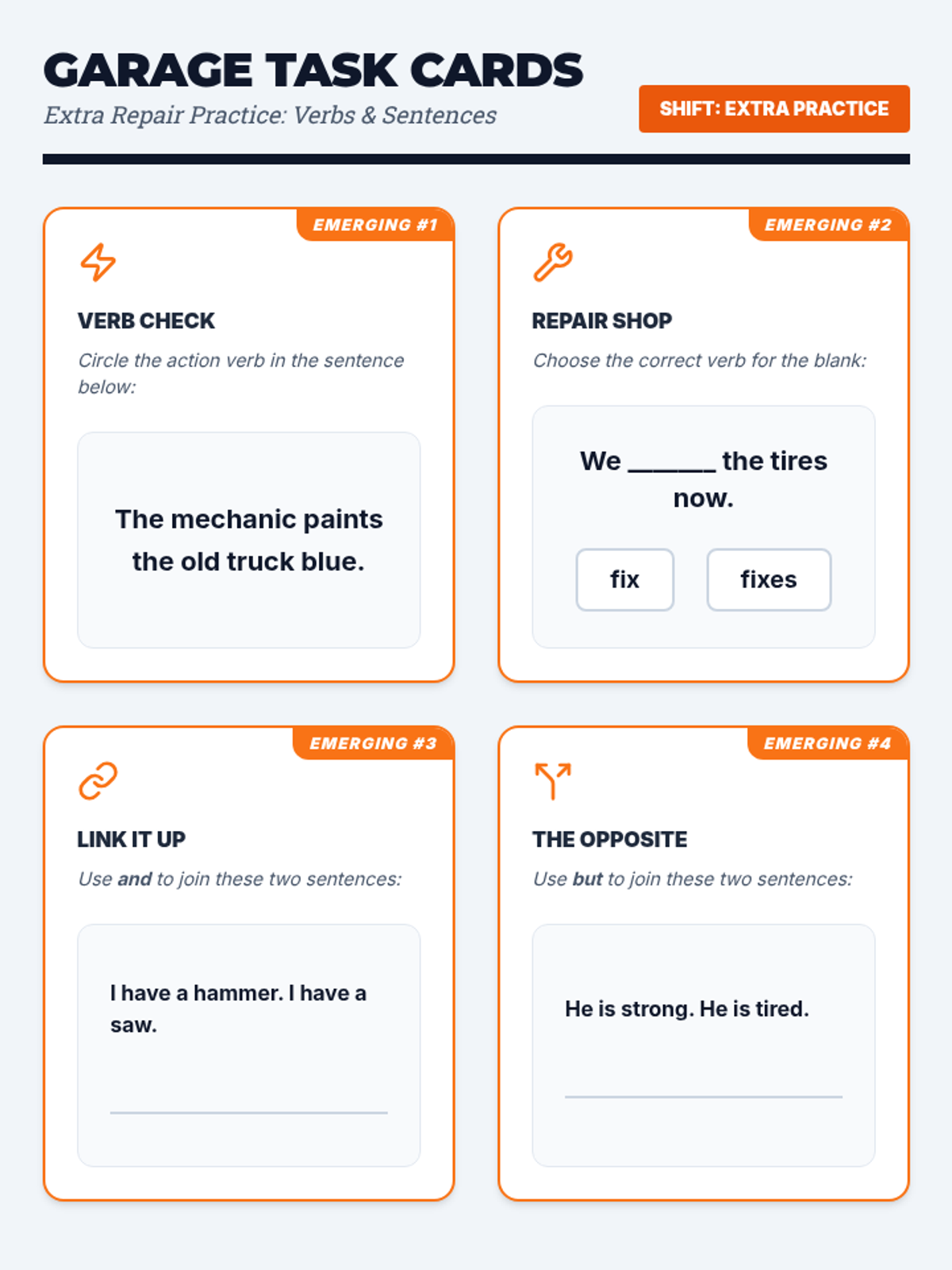
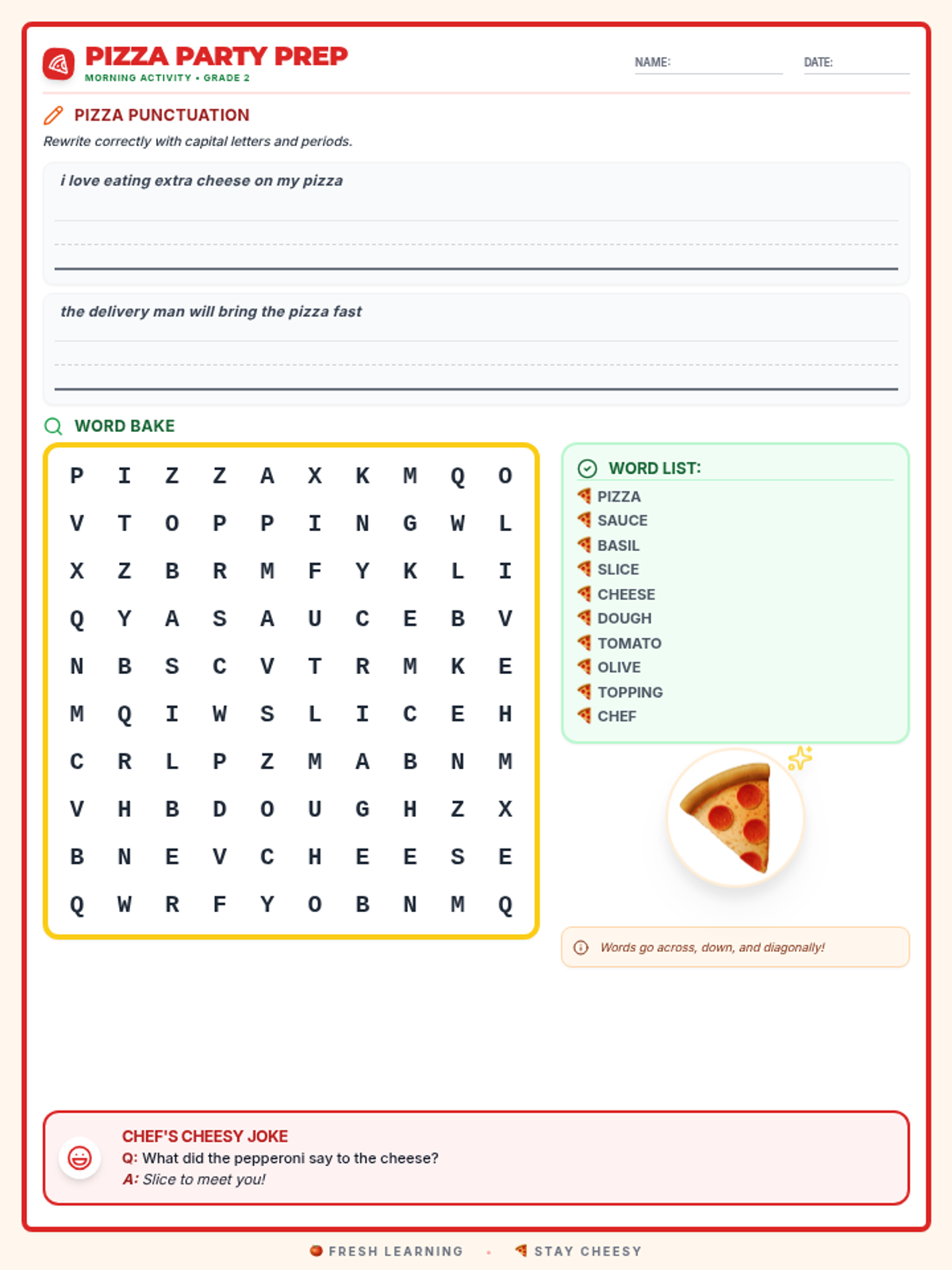
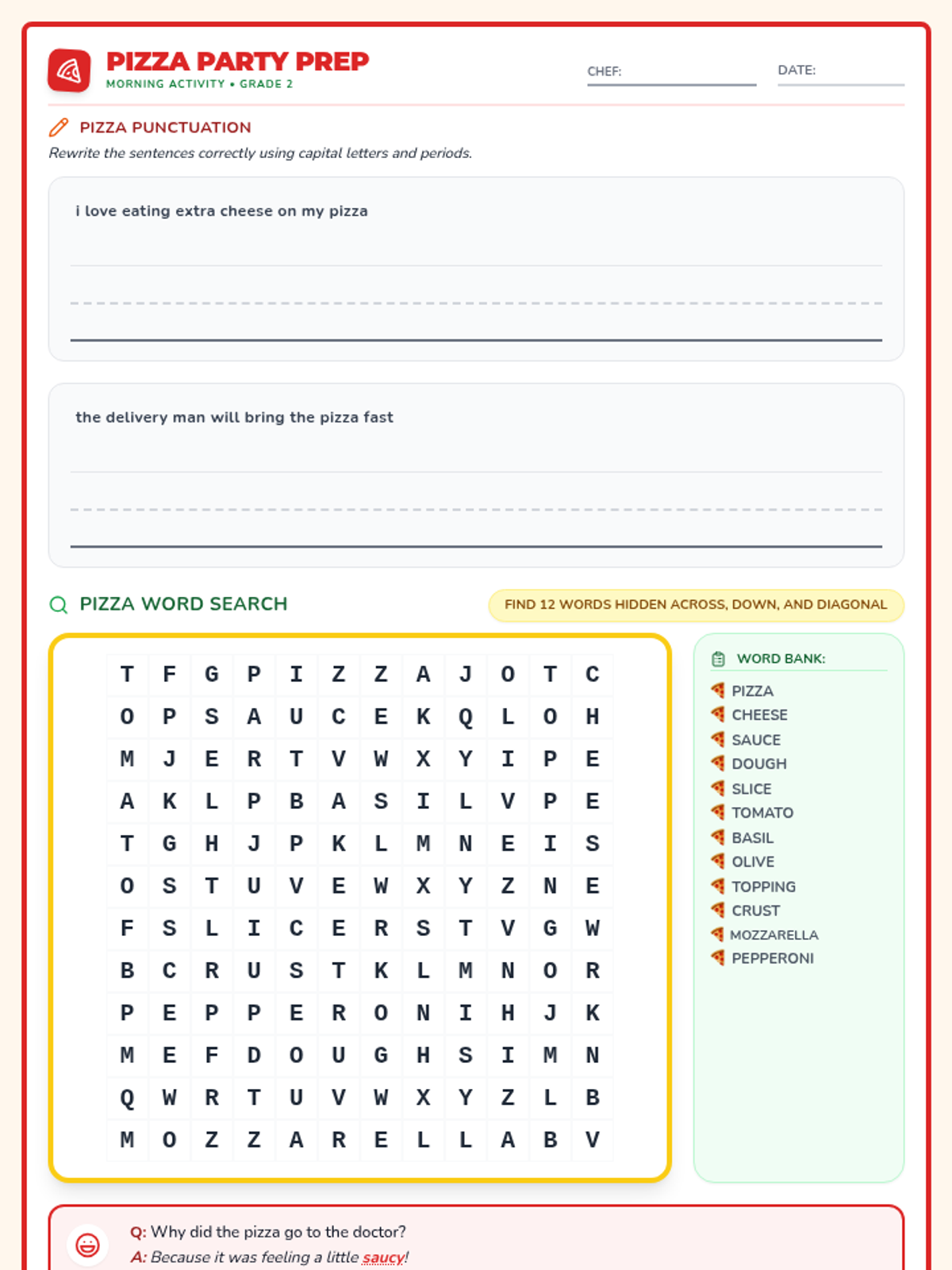
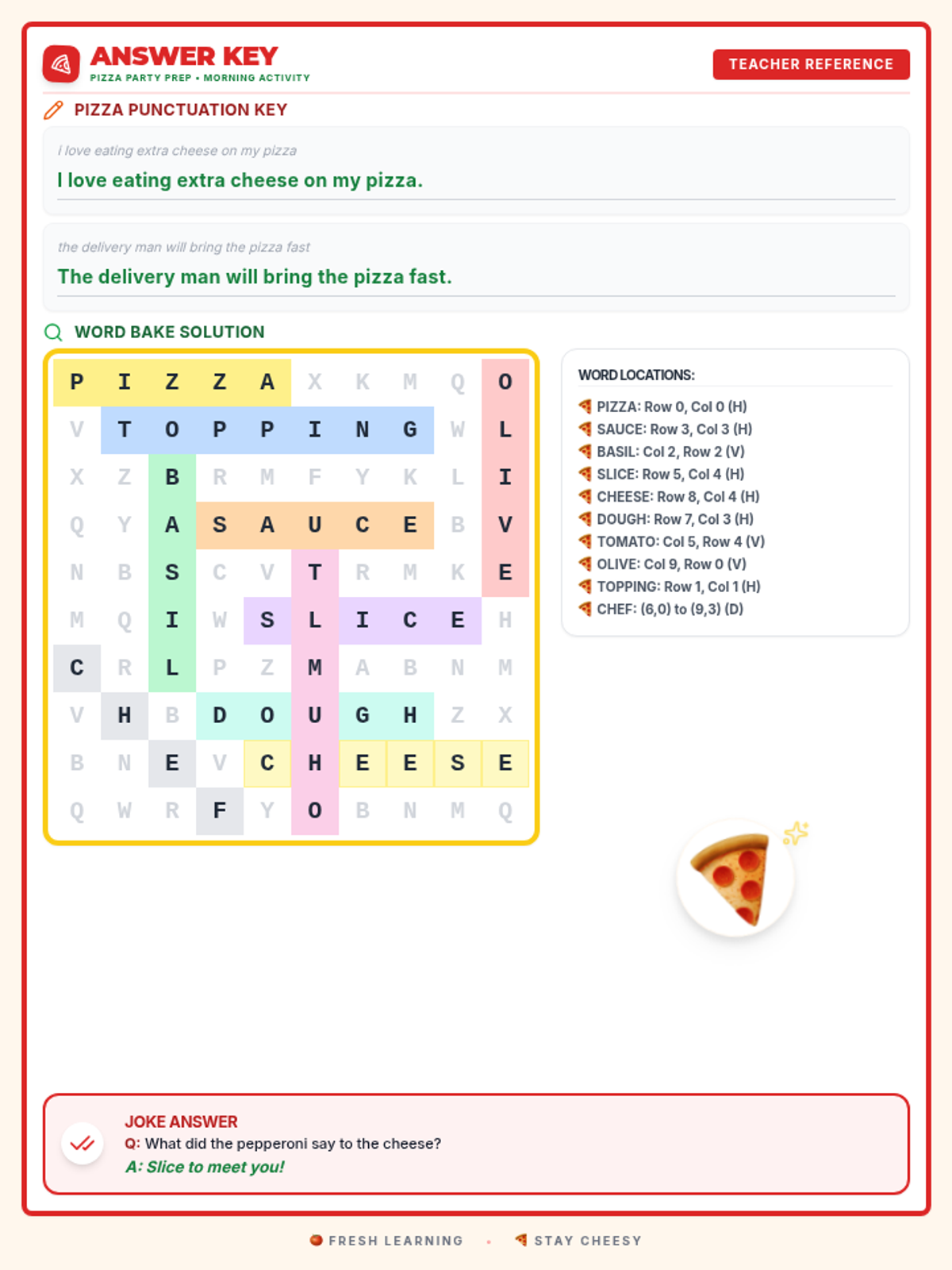
A pizza-themed morning review lesson for 2nd grade ELA skills including parts of speech and vocabulary.
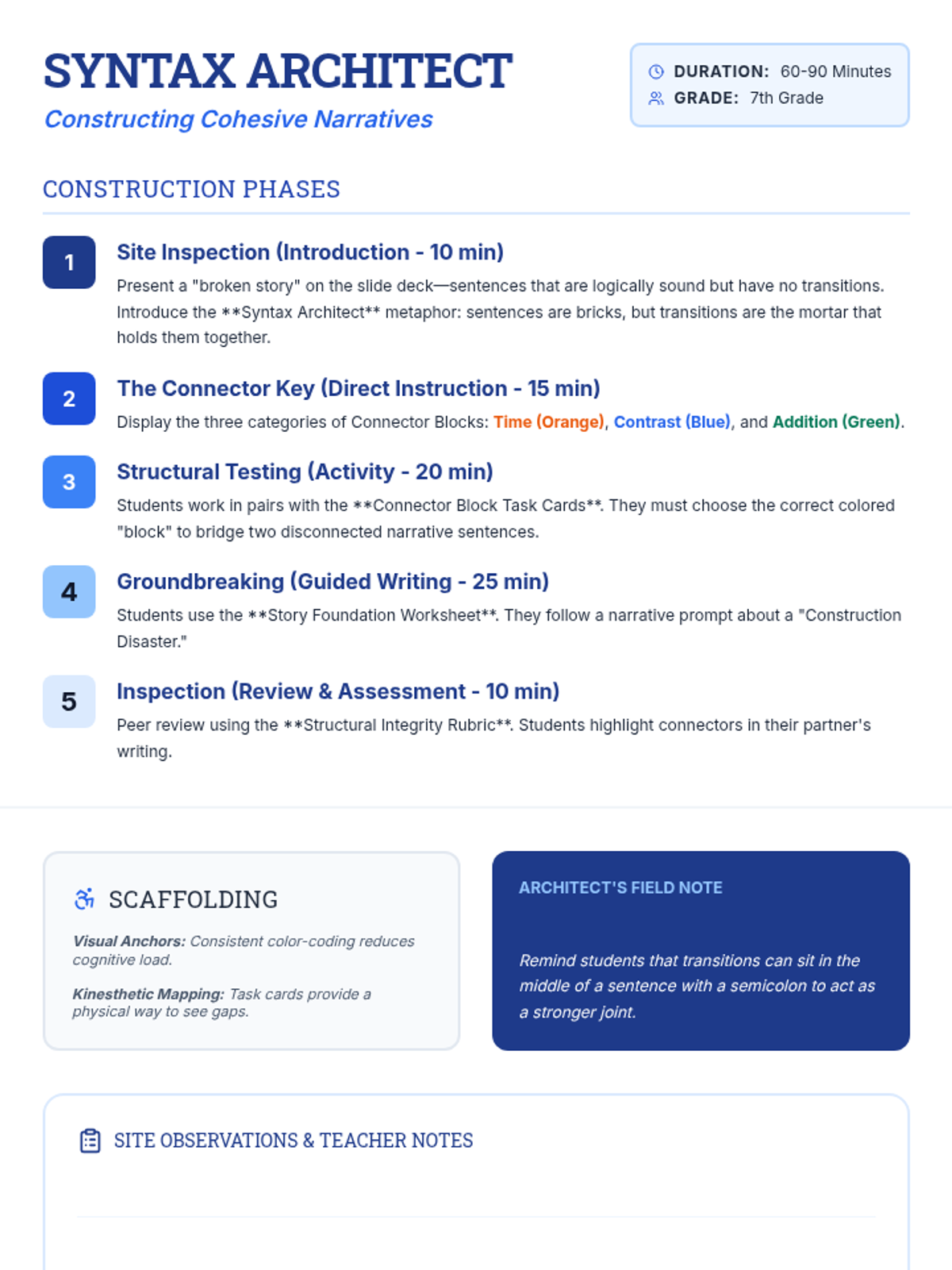
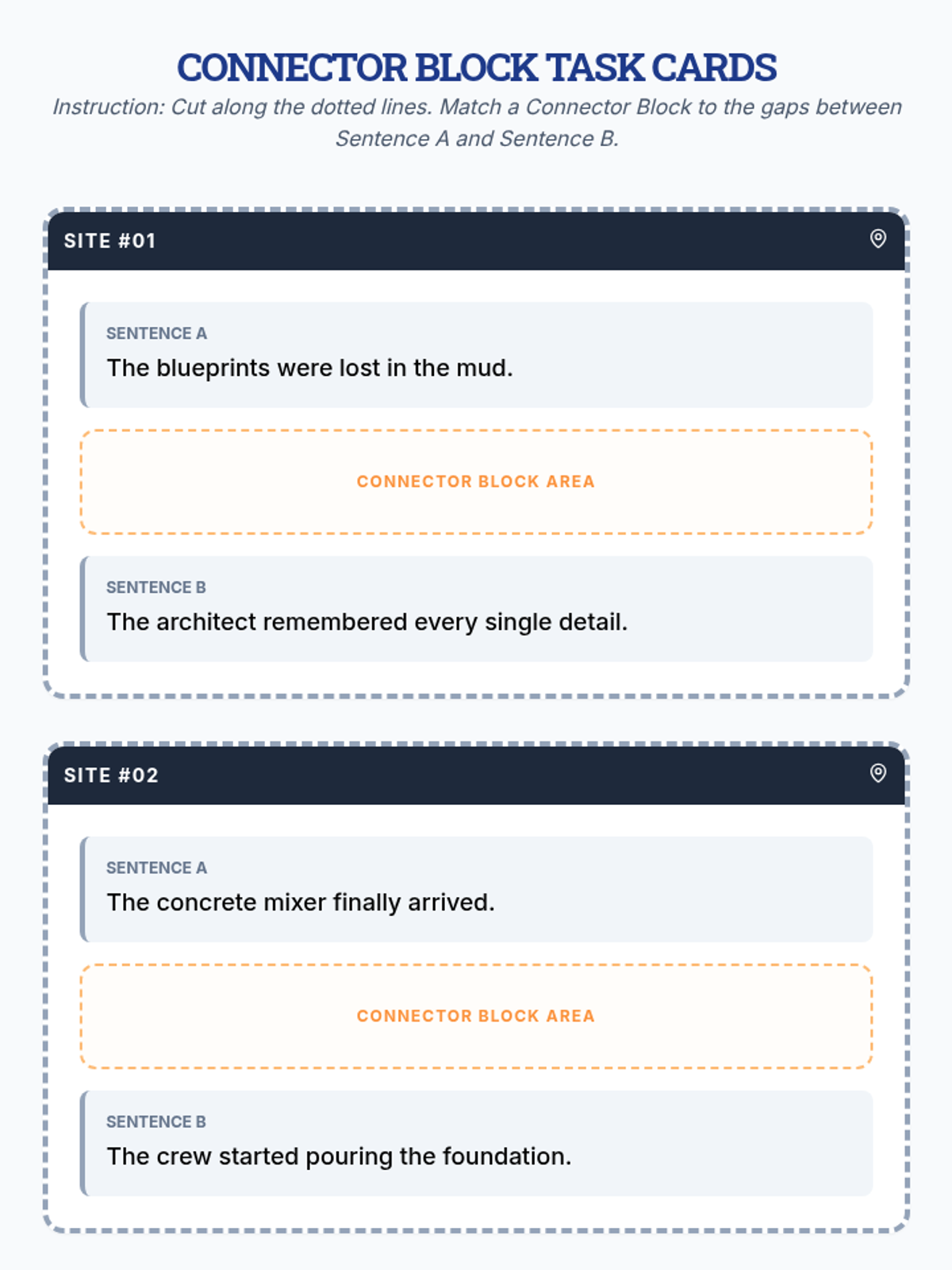
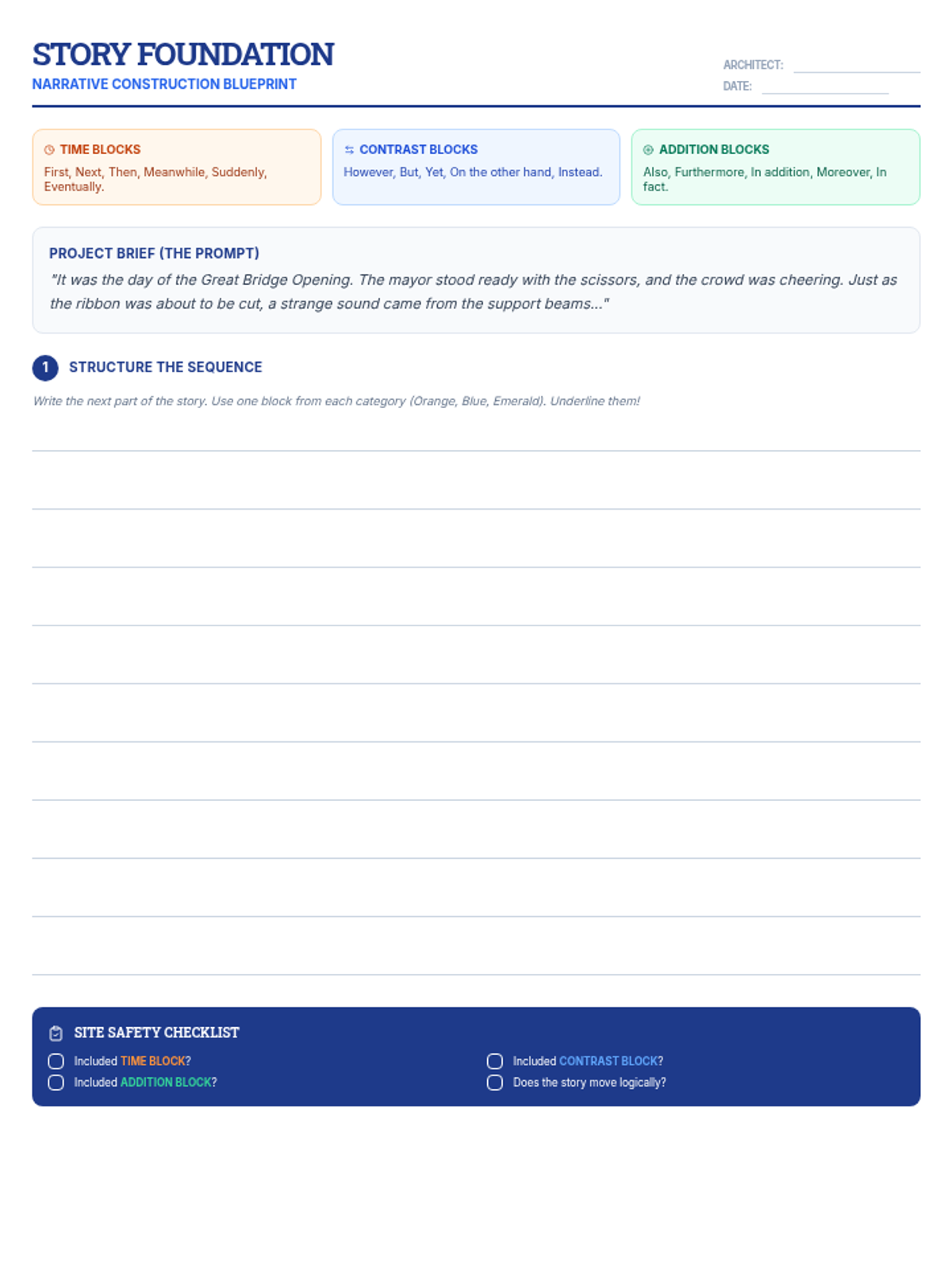
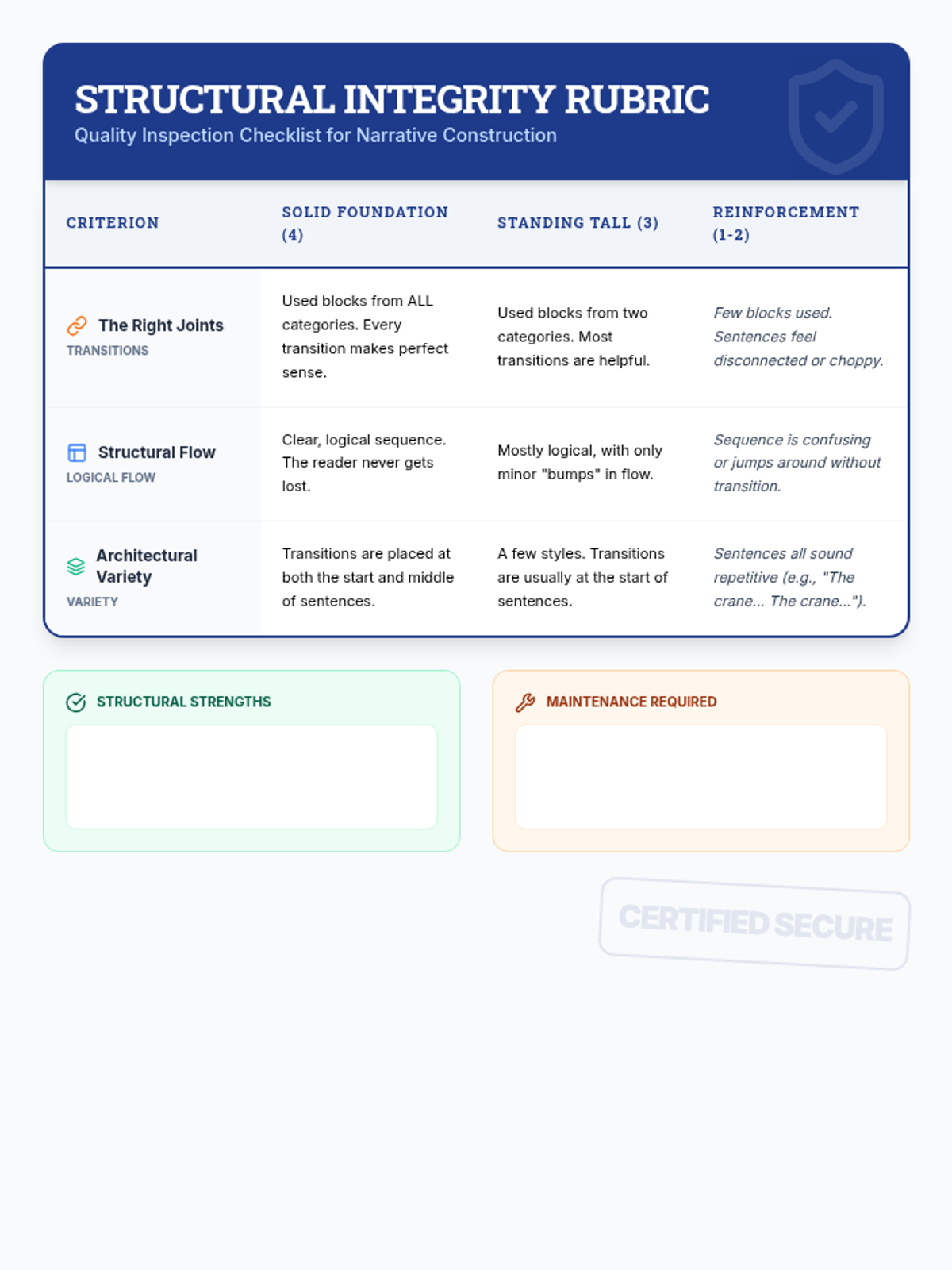
A writing intervention for 7th graders focusing on narrative flow and transitions using a visual construction-themed framework. Designed to support students with language-processing delays through color-coded scaffolding and visual connectors.
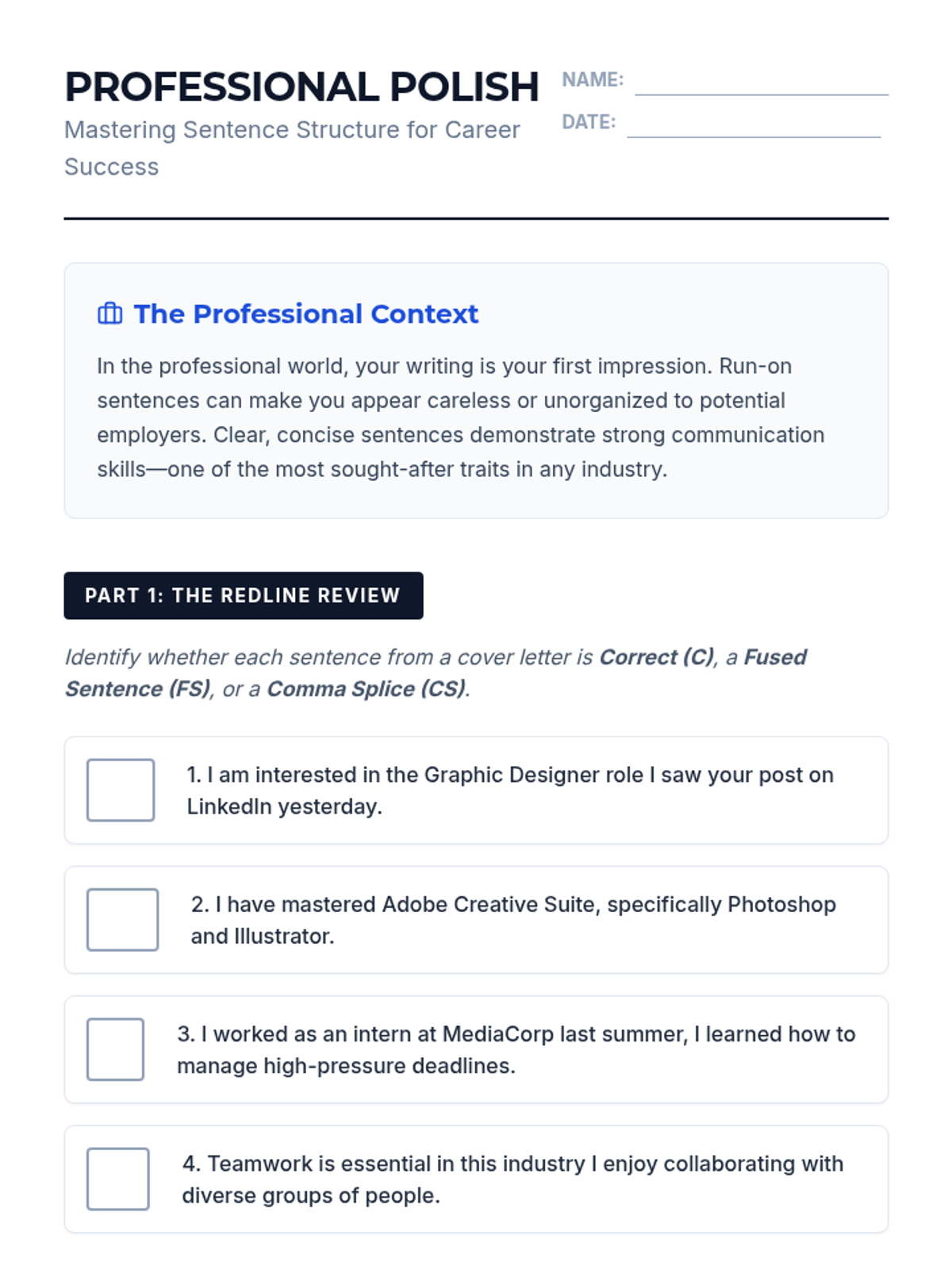
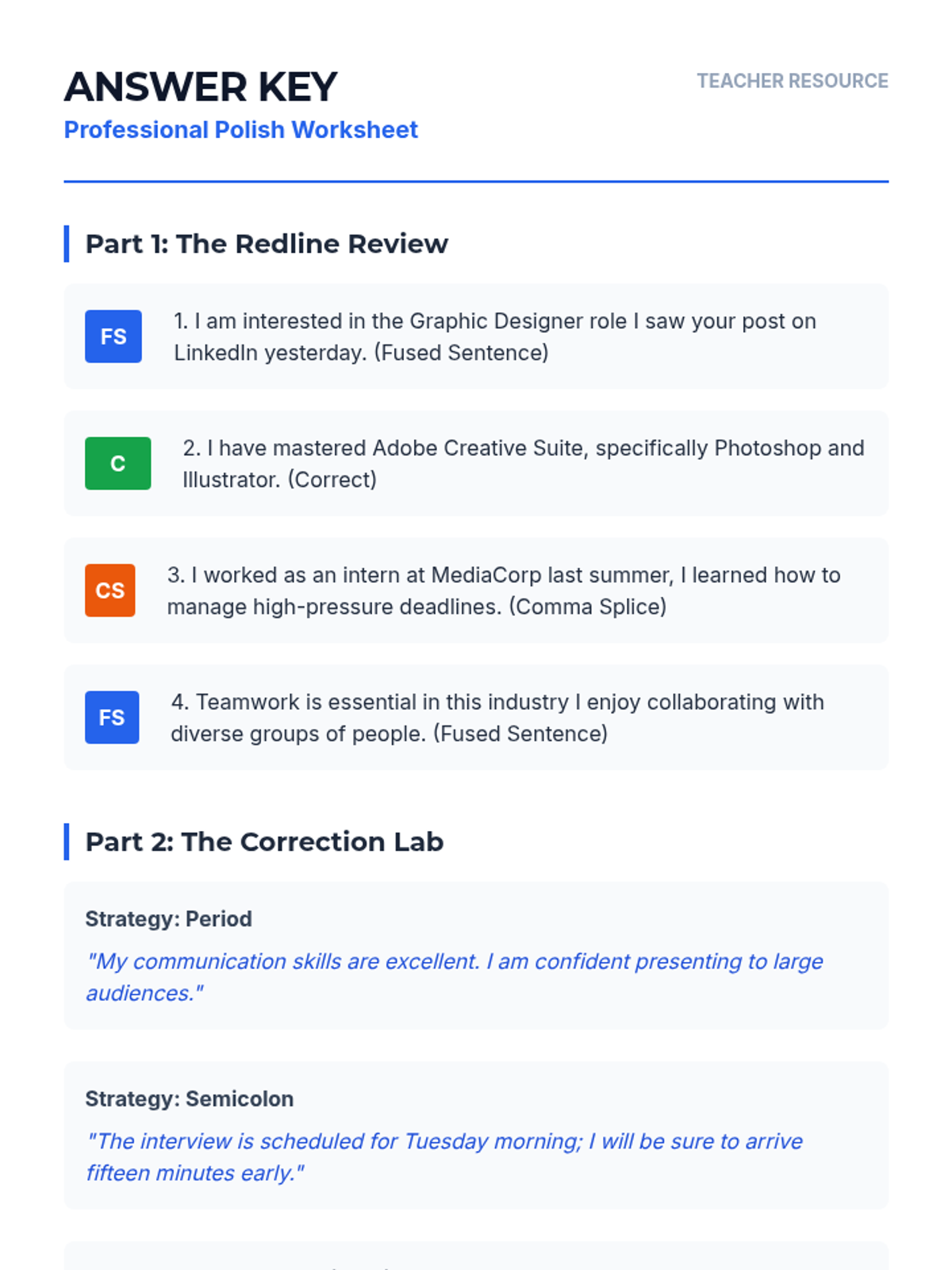
A lesson focused on identifying and correcting run-on sentences within the professional context of job applications and career readiness. Students will learn three primary strategies for fixing run-on sentences to enhance the clarity and professionalism of their writing.
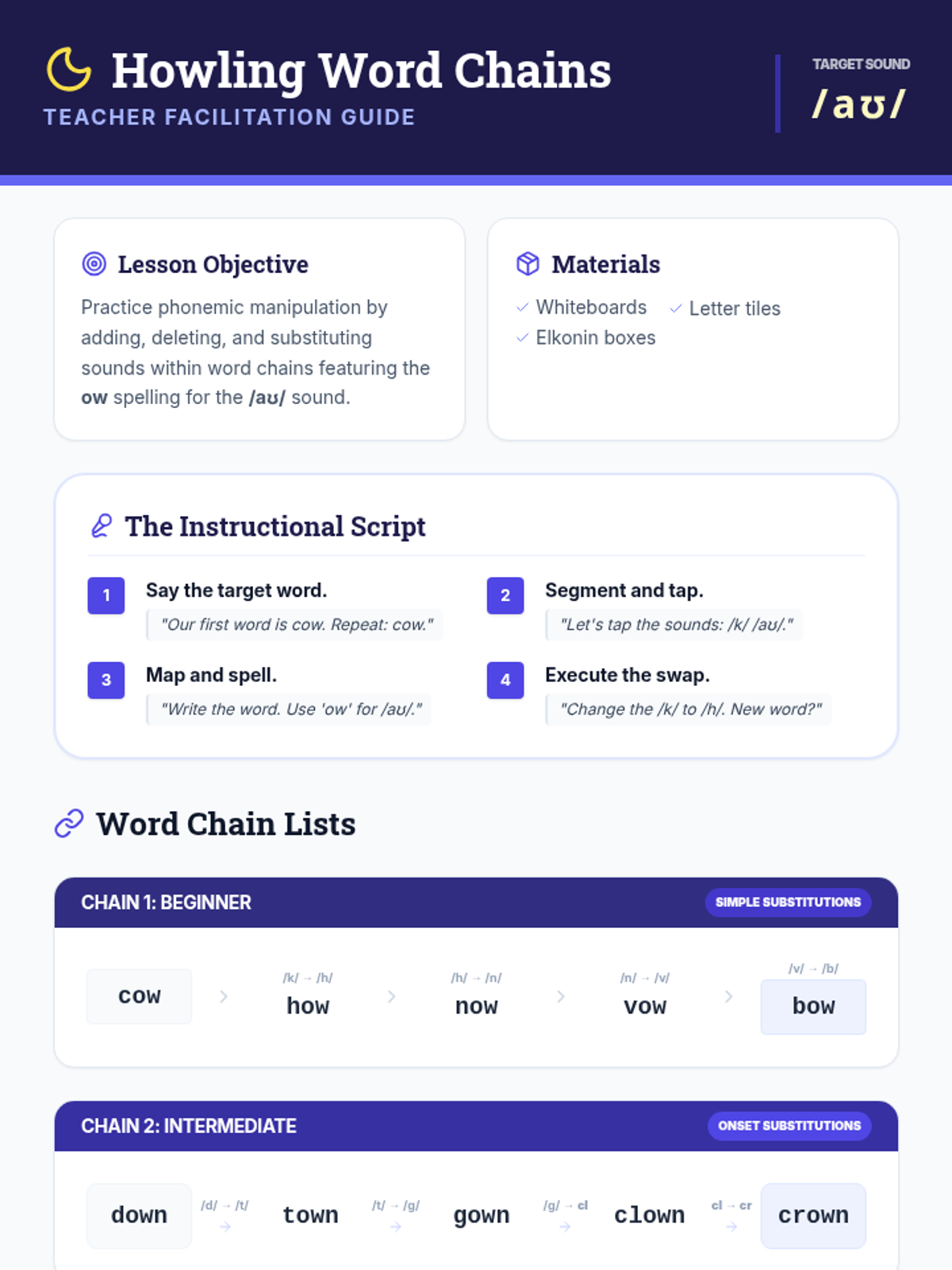
A teacher-led phonics lesson focused on the /aʊ/ sound spelled with 'ow', featuring orthographic mapping and word chain activities.
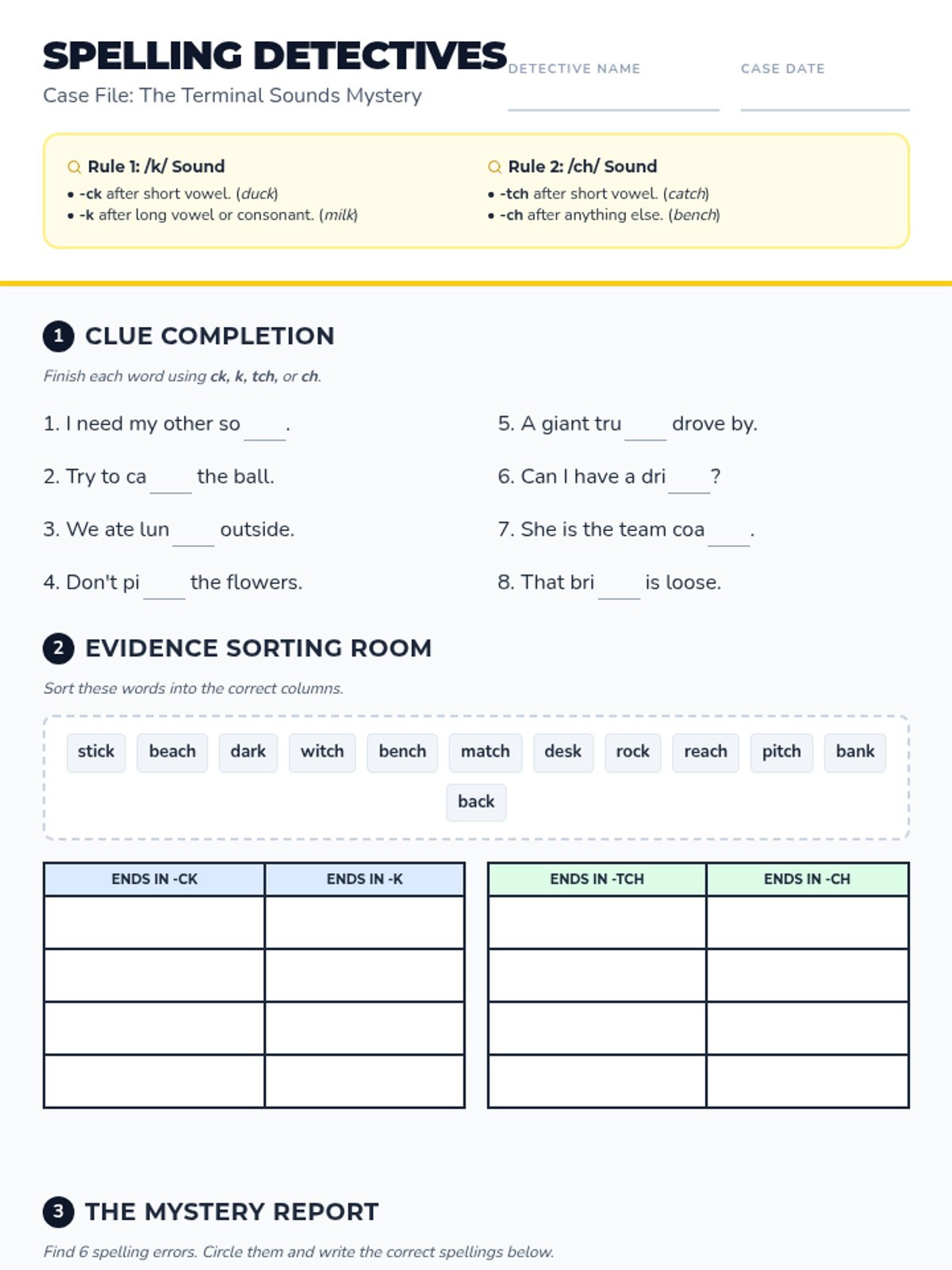
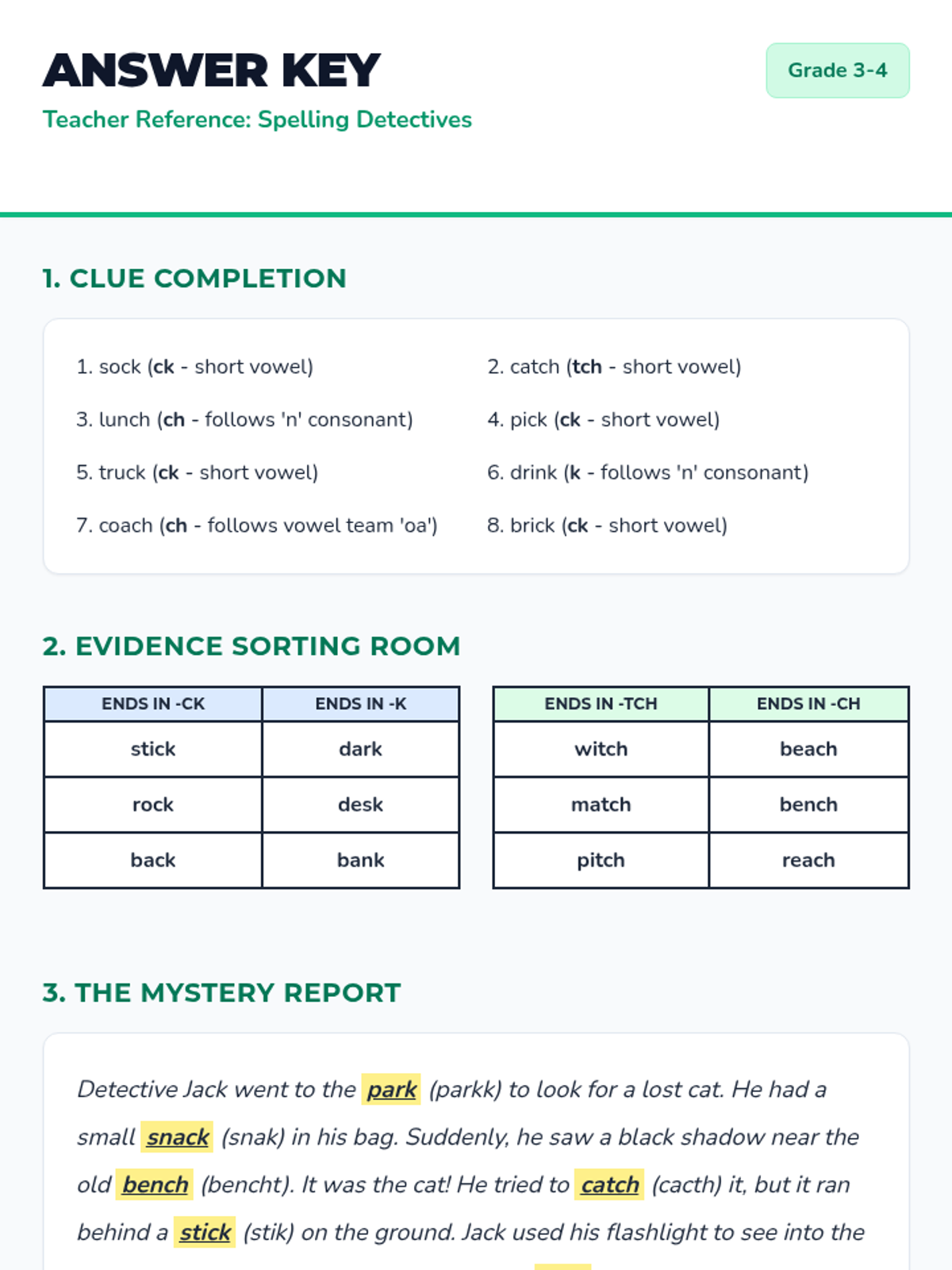
A focused lesson for 3rd and 4th graders to master the 'short vowel' spelling rules for terminal /k/ and /ch/ sounds. Students will practice identifying and applying the -ck/-k and -tch/-ch rules through sentence completion, word sorting, and error analysis.
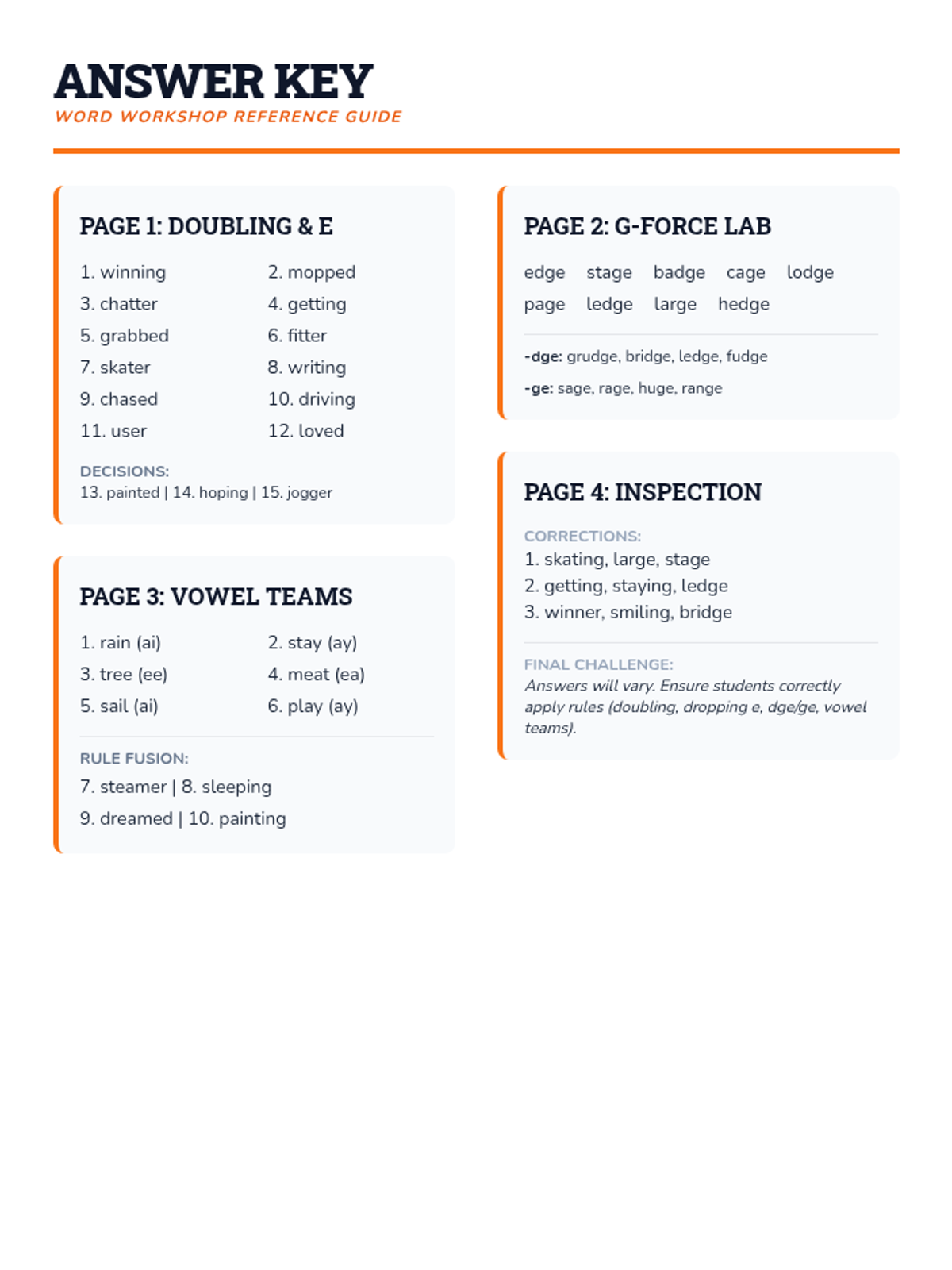
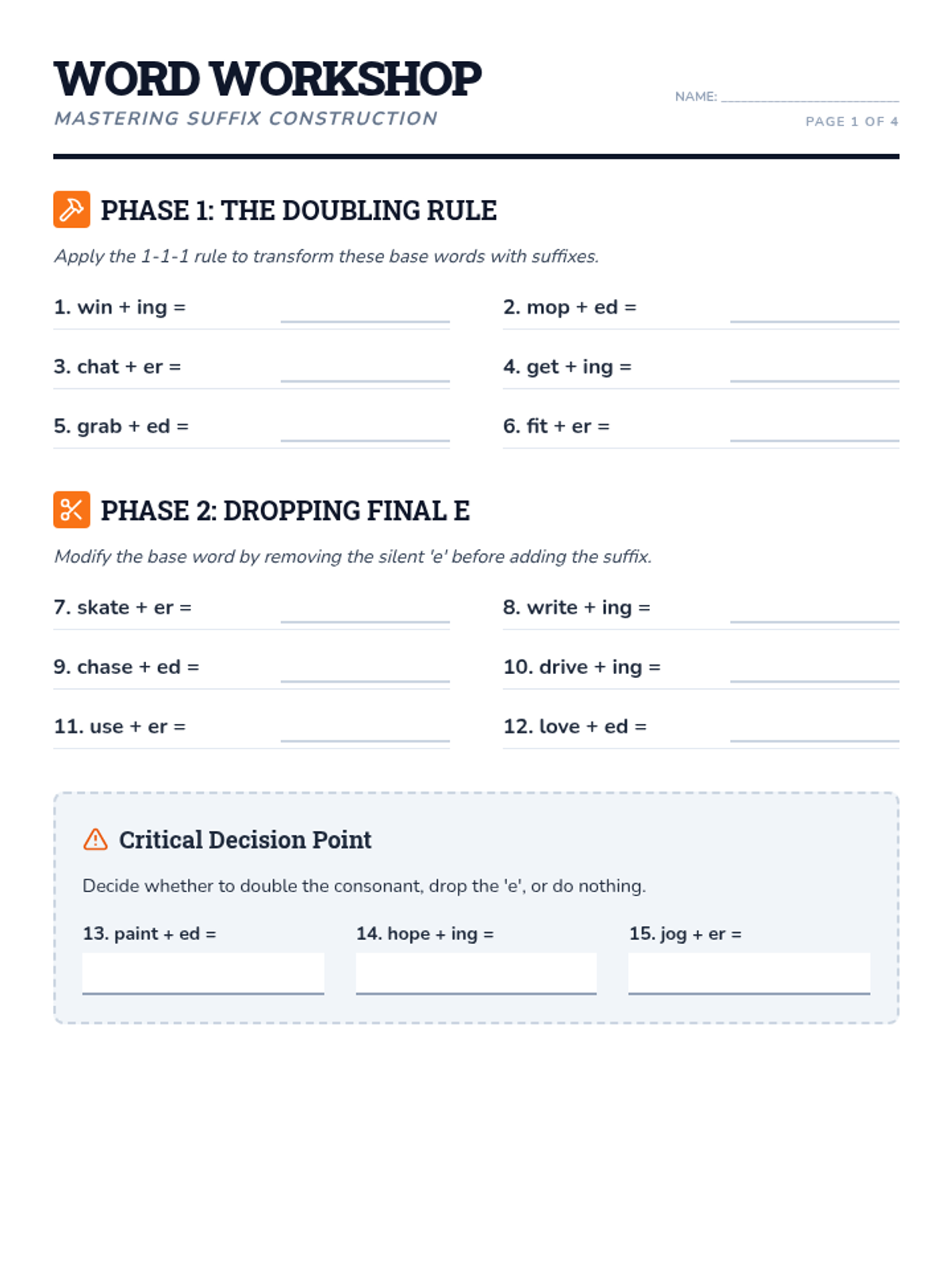
A comprehensive practice packet focusing on core spelling rules: doubling consonants, dropping final 'e', and the dge/ge distinction, integrated with vowel team mastery.
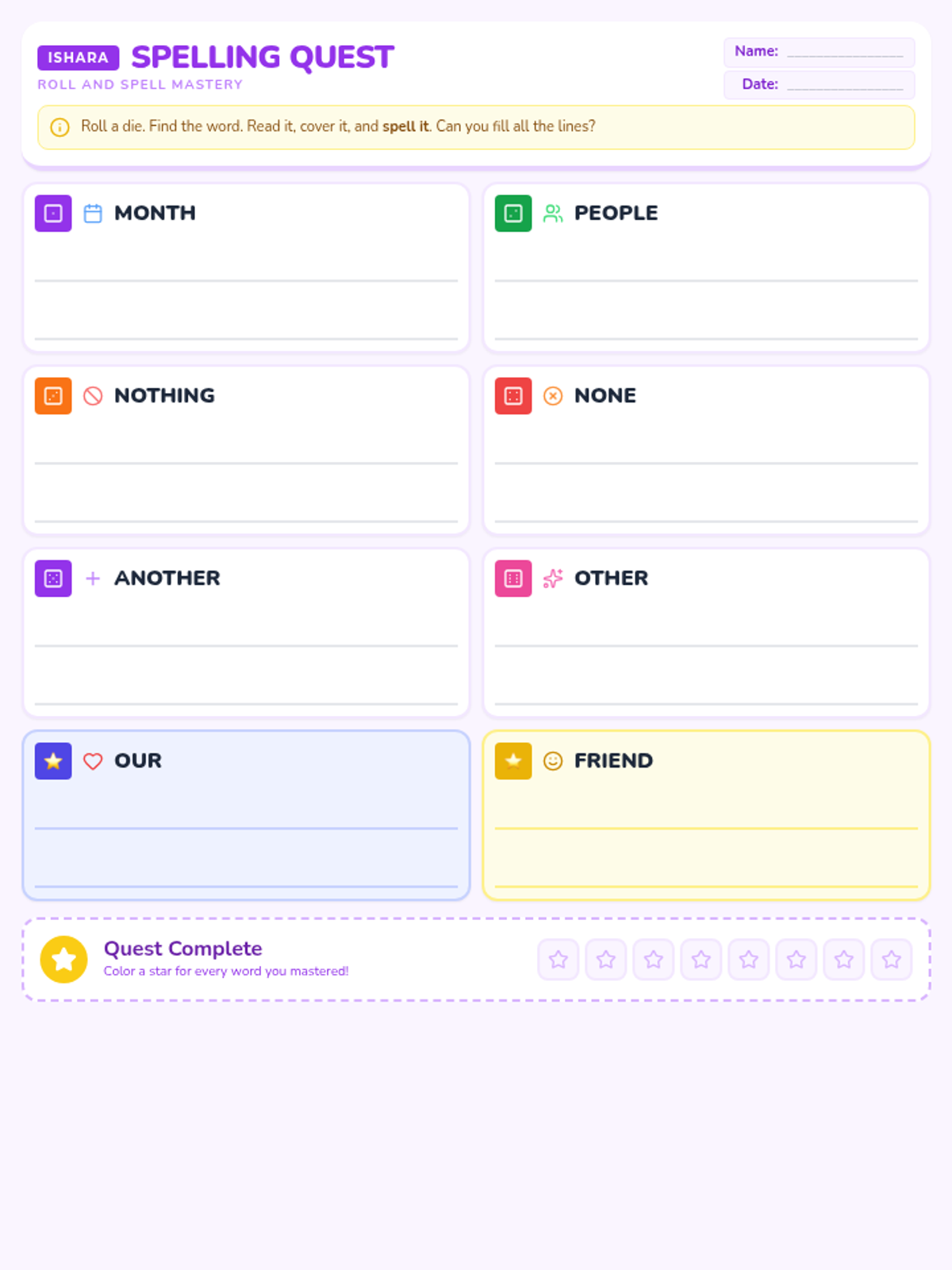
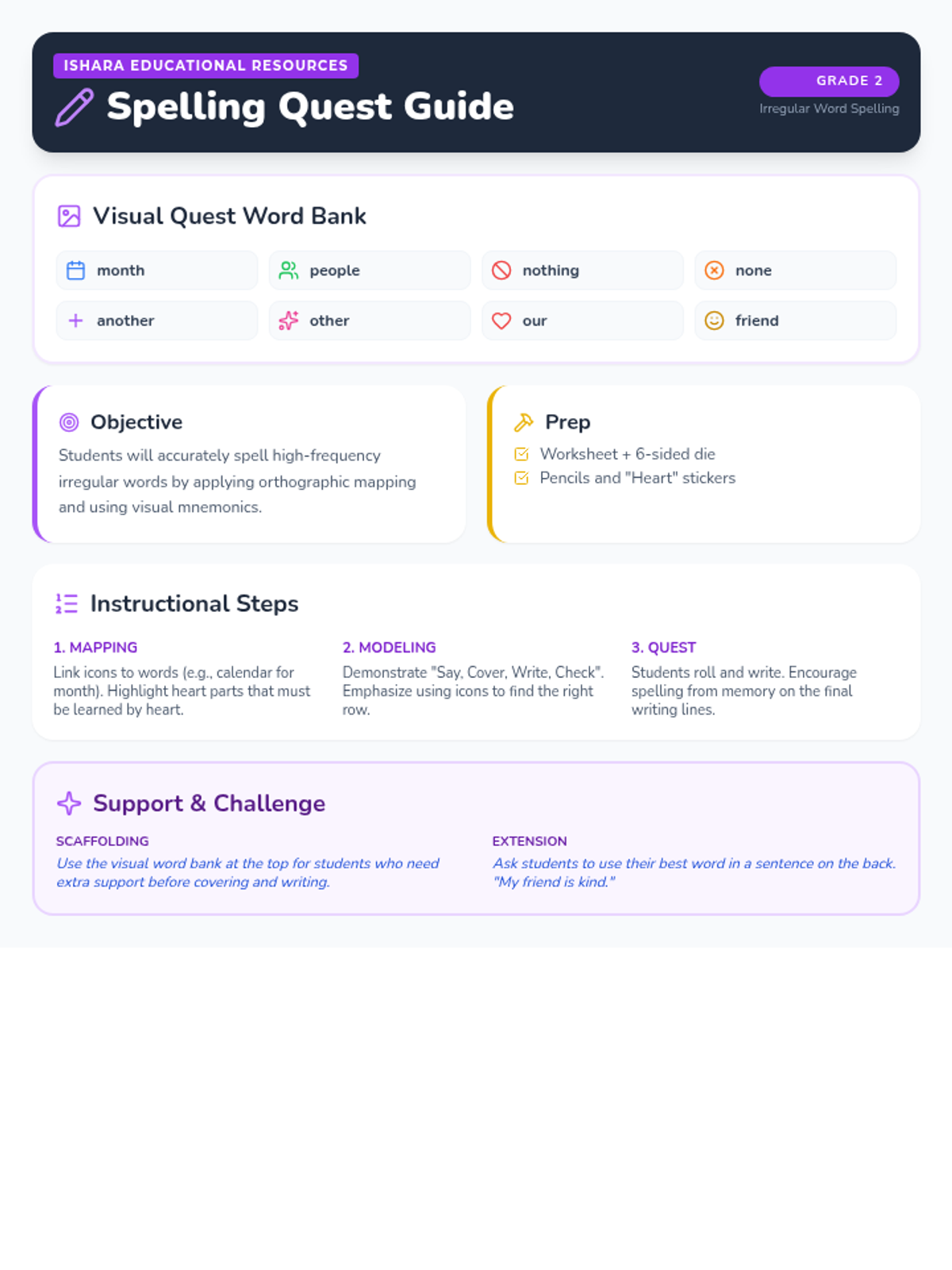
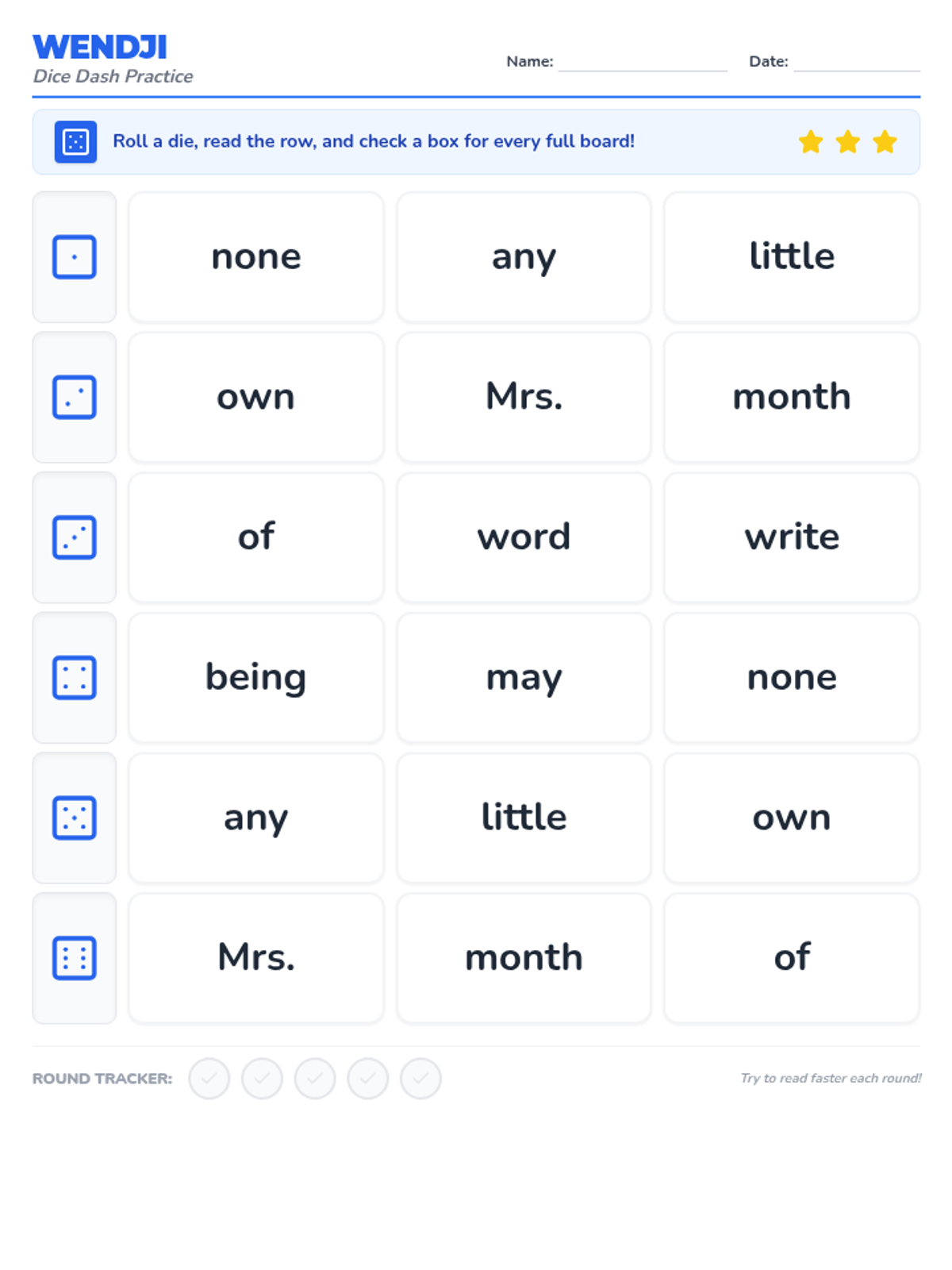
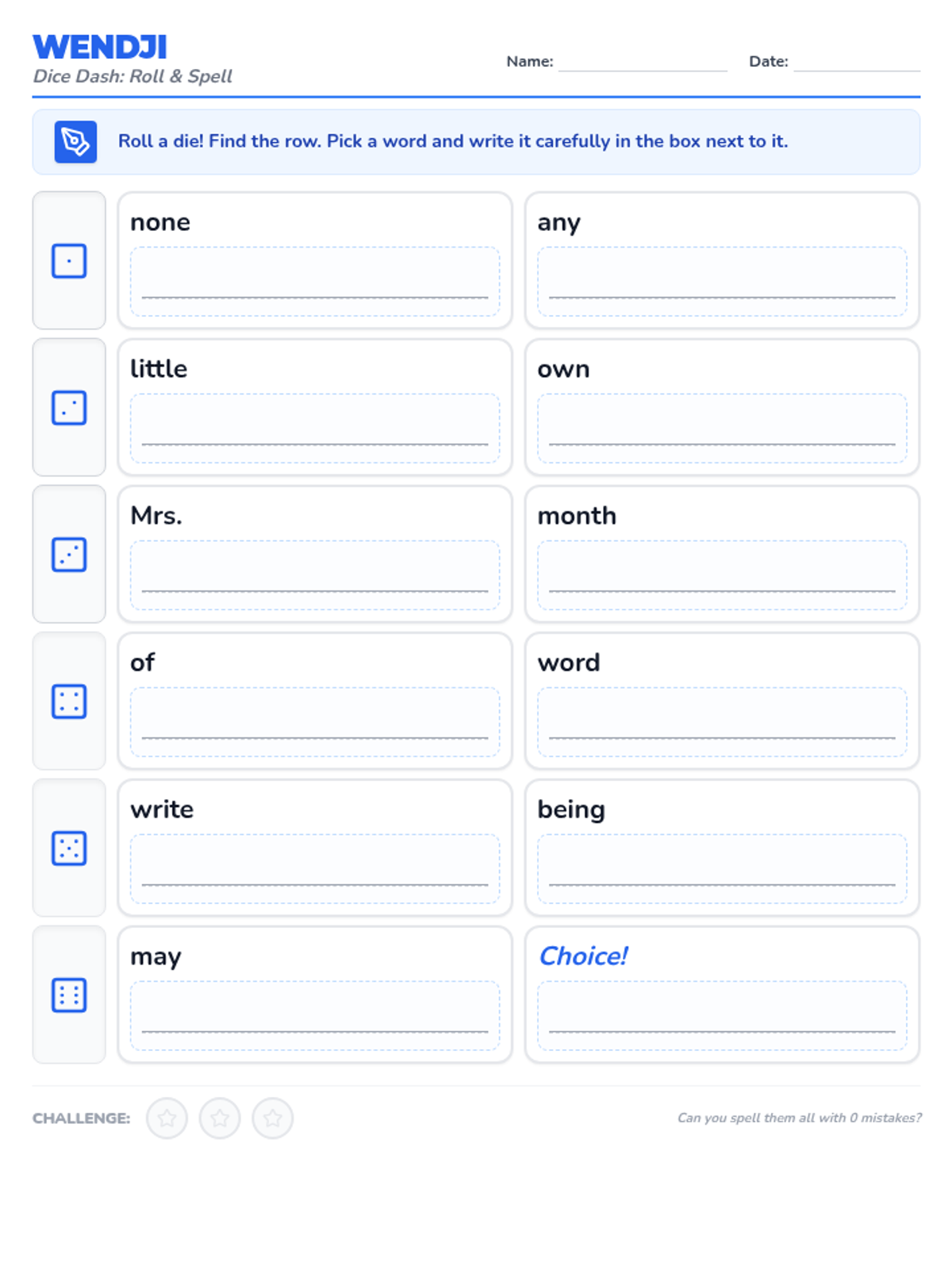
A fun, game-based lesson for 2nd graders to practice reading irregular high-frequency words using a dice-rolling activity. Students improve fluency by repeatedly reading target words in a playful context.
A fun, interactive dice-based reading activity focused on high-frequency words for 2nd-grade students.
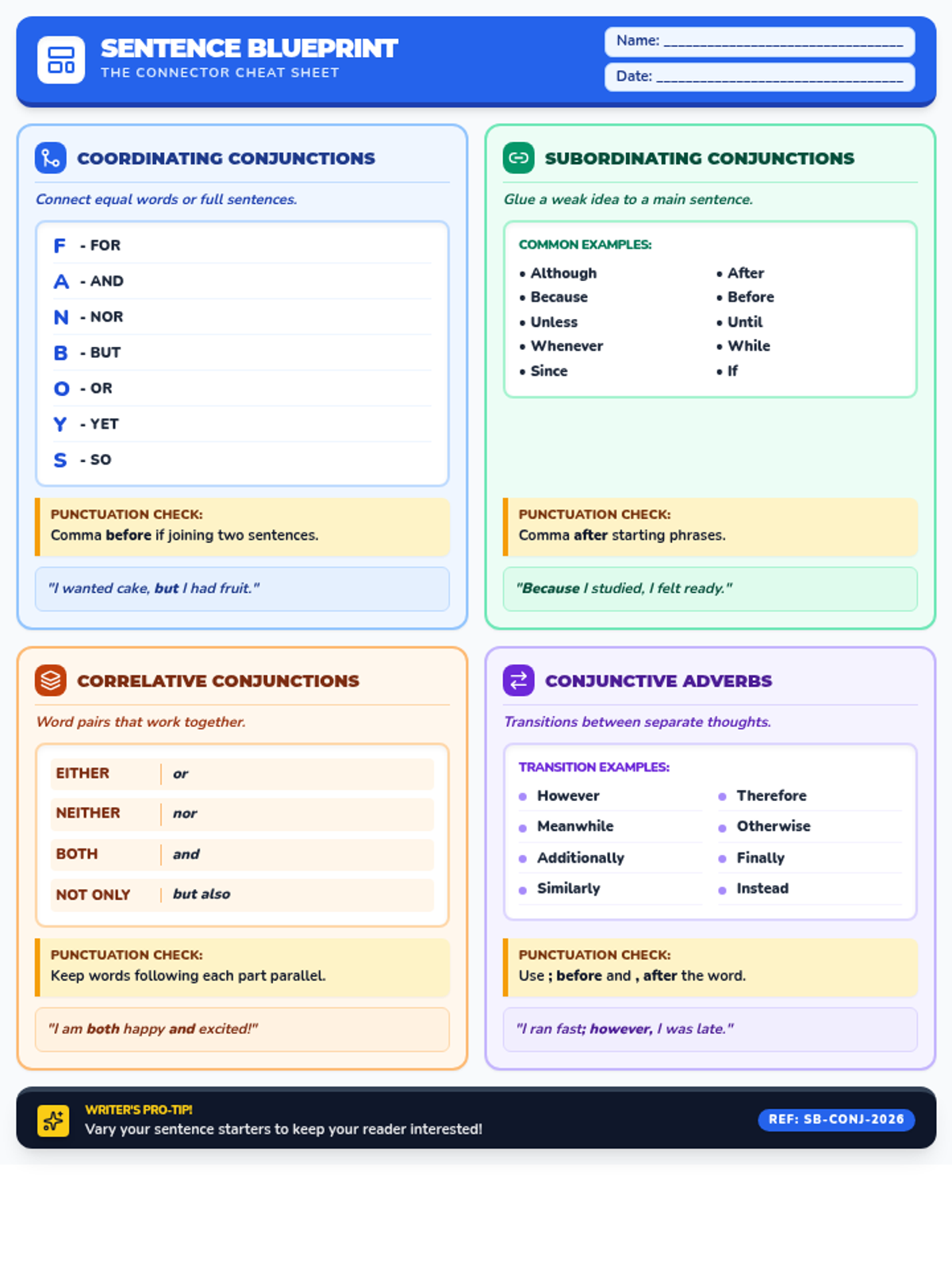
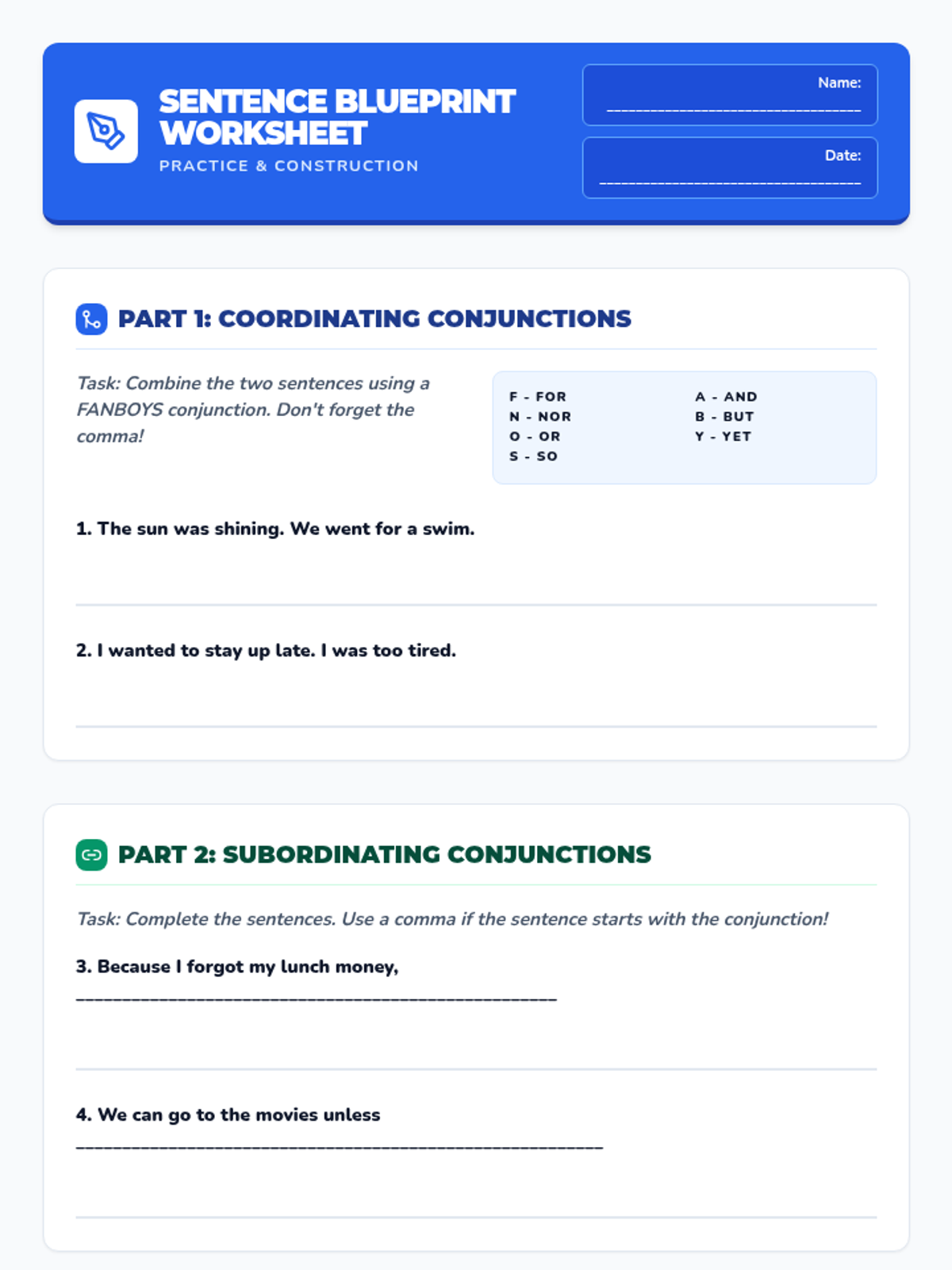
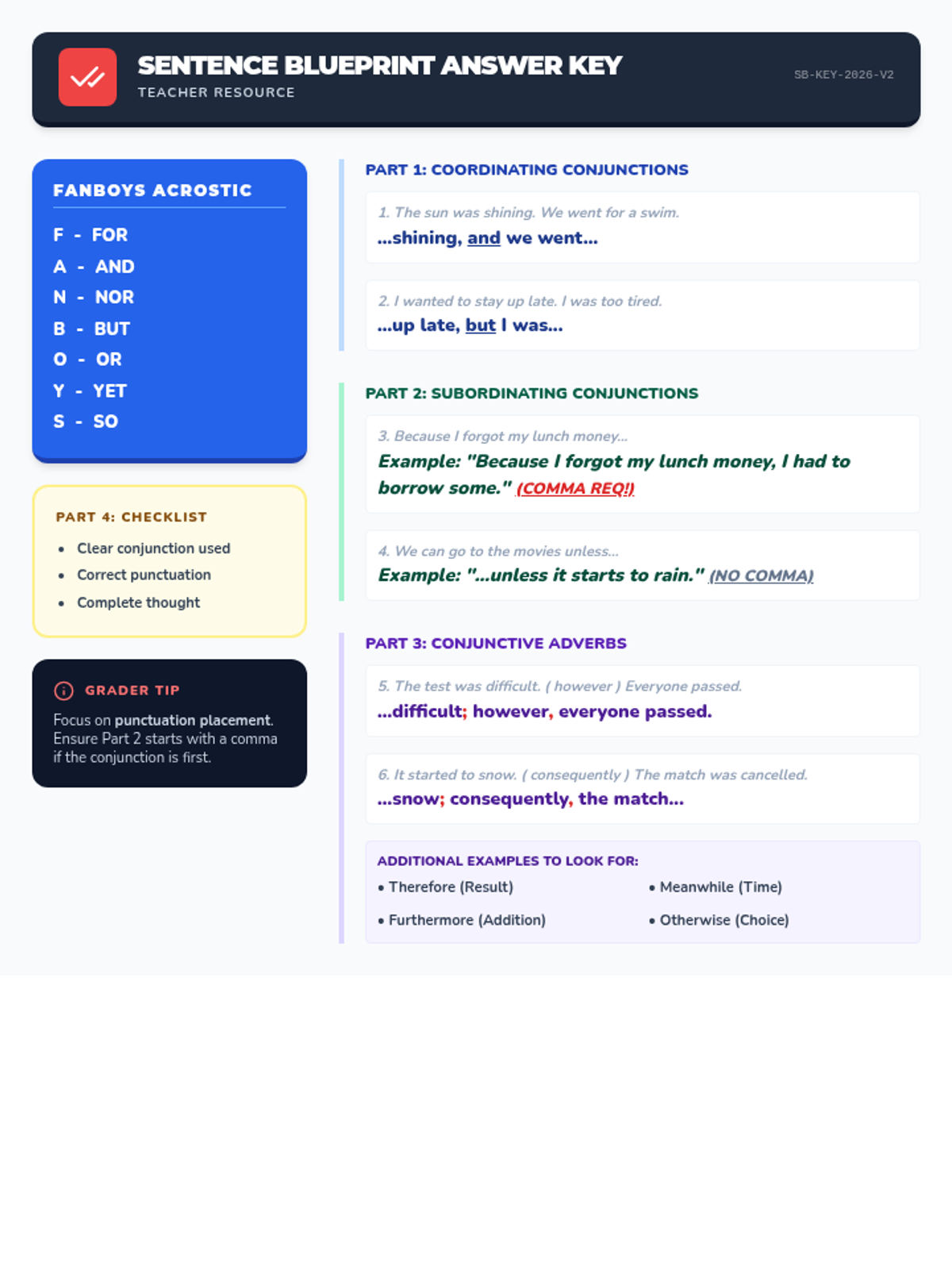
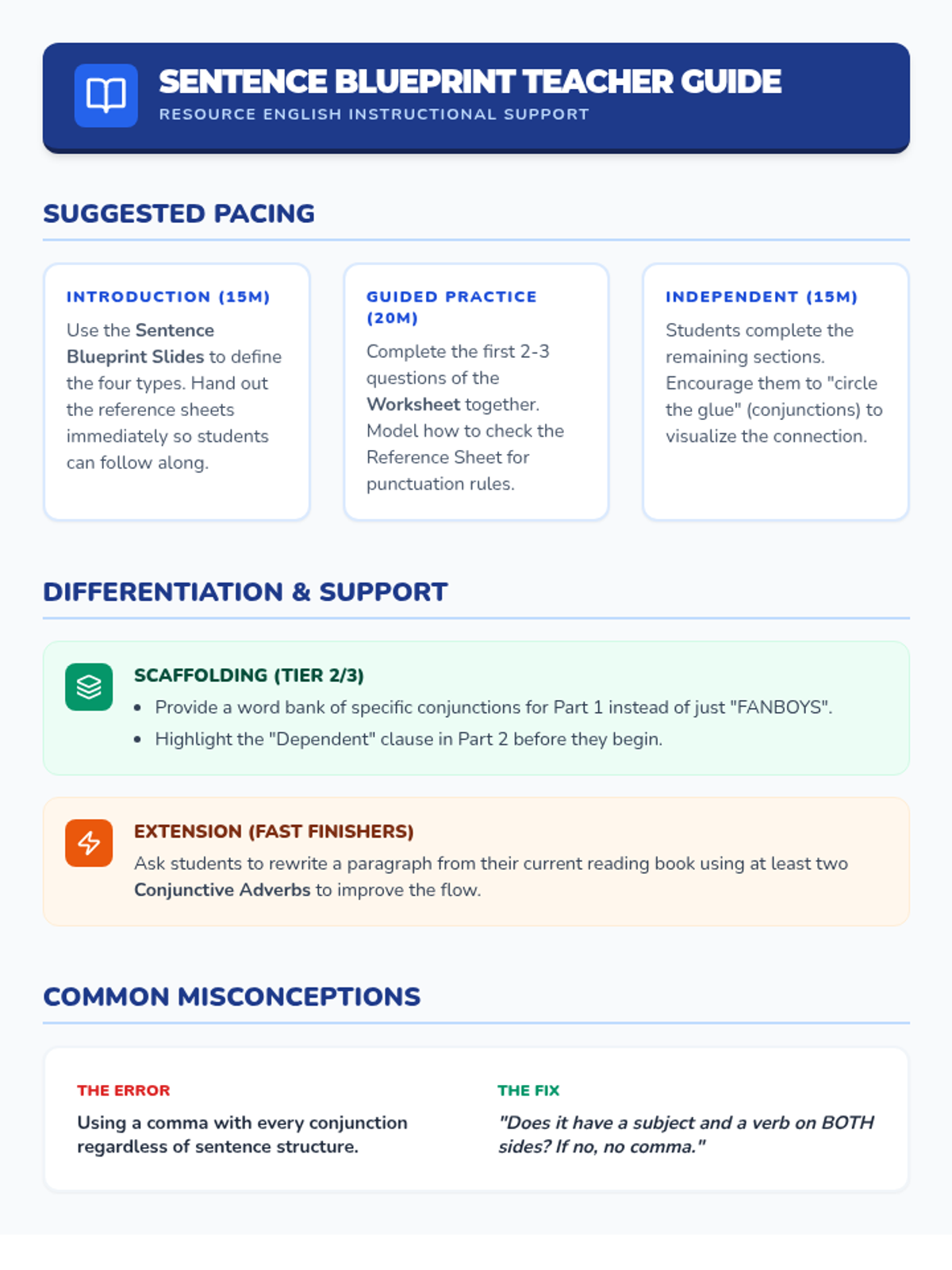
A comprehensive lesson introducing middle school students to the four main types of conjunctions: coordinating, subordinating, correlative, and conjunctive adverbs. Students will learn to identify these connectors and apply correct punctuation rules to build more complex and professional sentences.
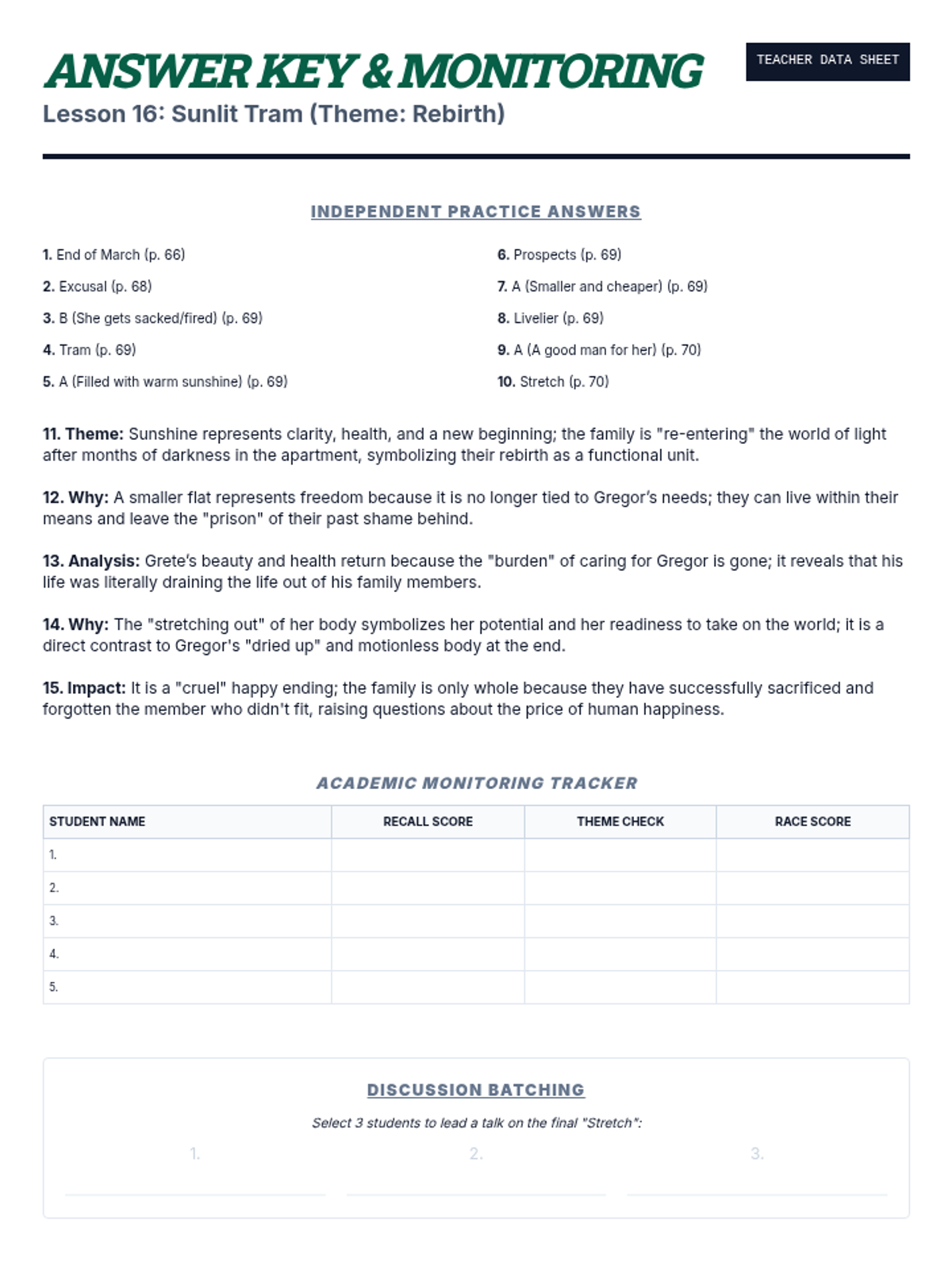
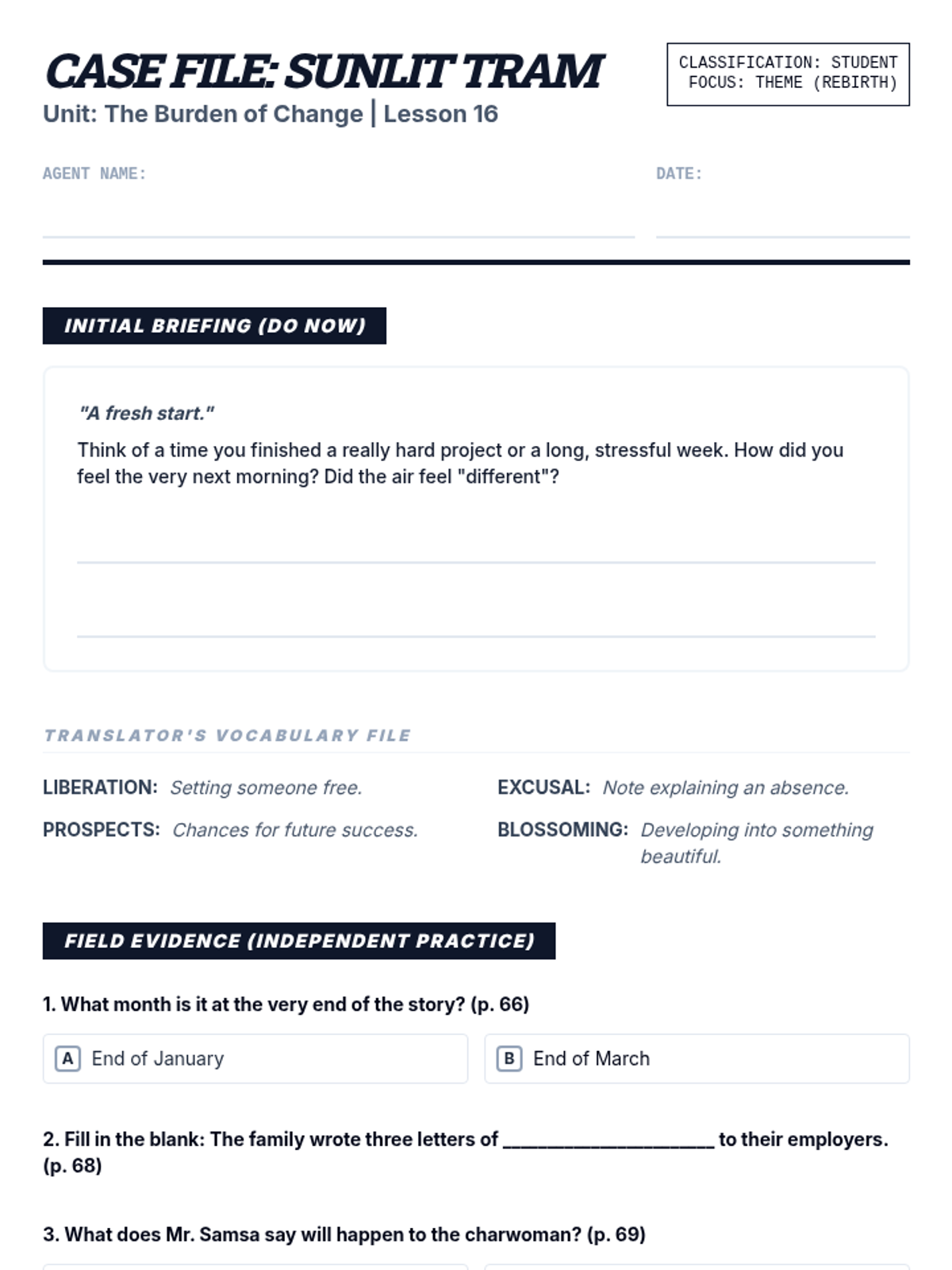
Concludes with the theme of rebirth and liberation as the family leaves the apartment and looks toward the future.
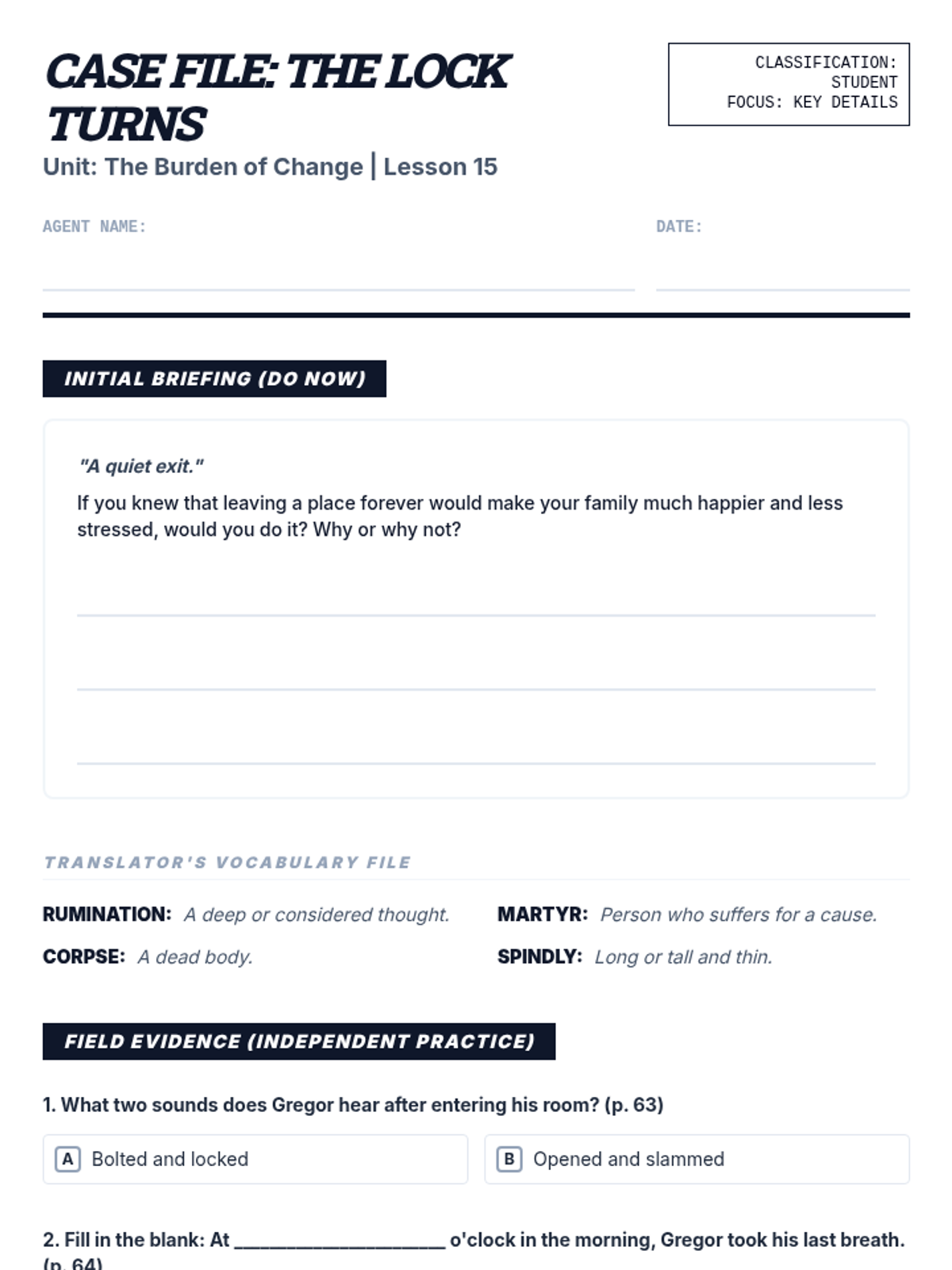
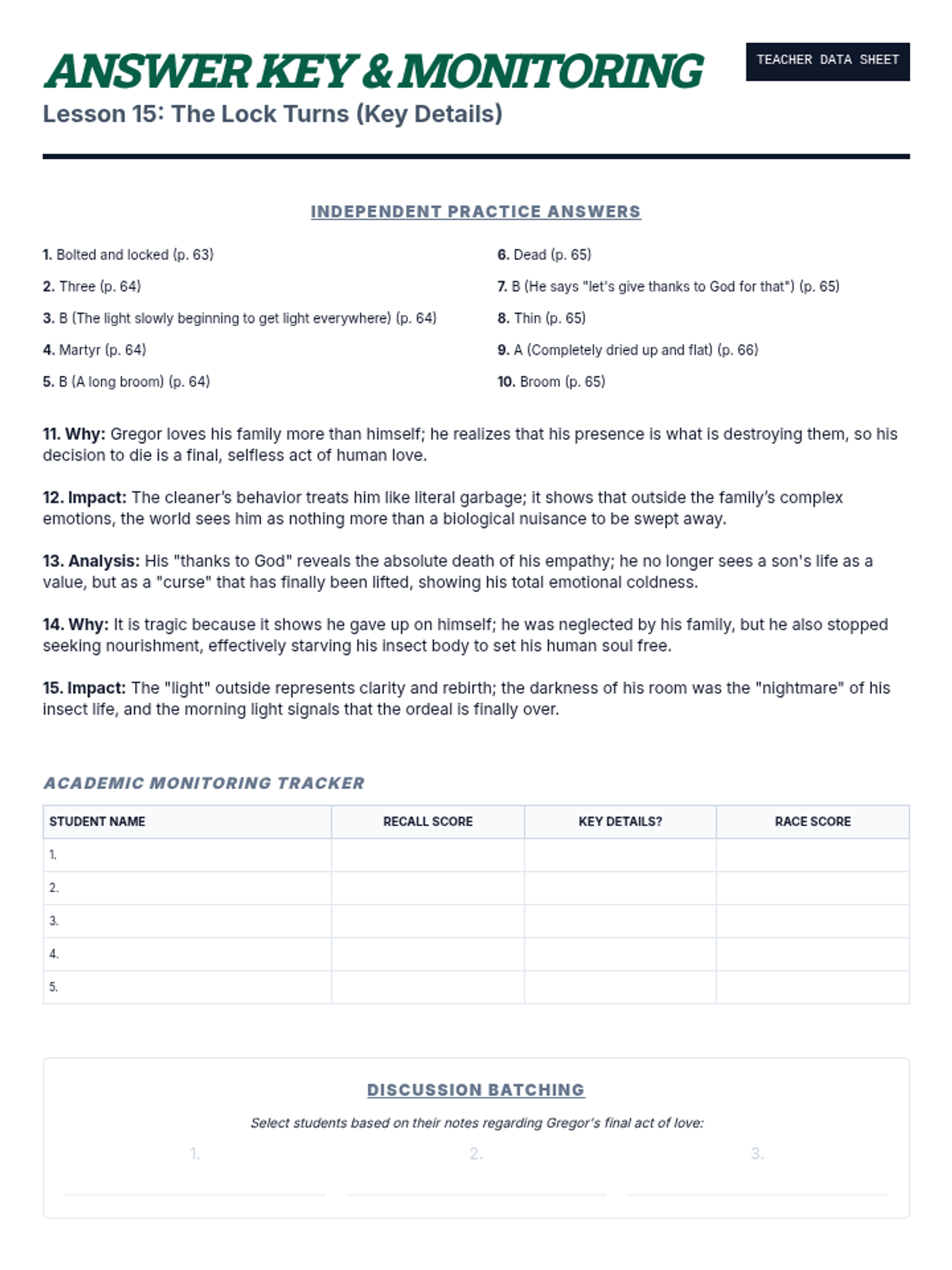
Focuses on the key details of Gregor's final moments and the discovery of his body by the charwoman.
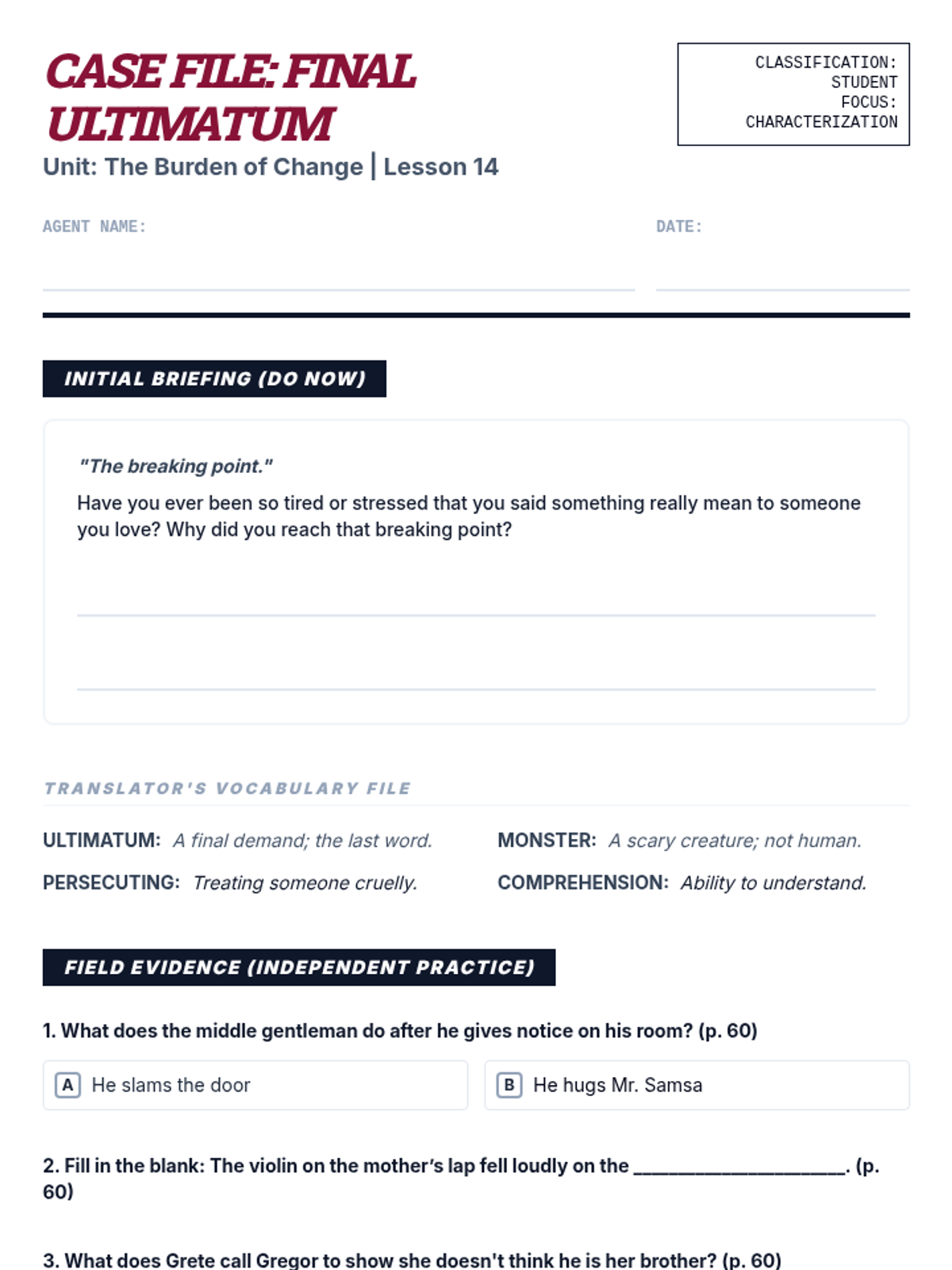
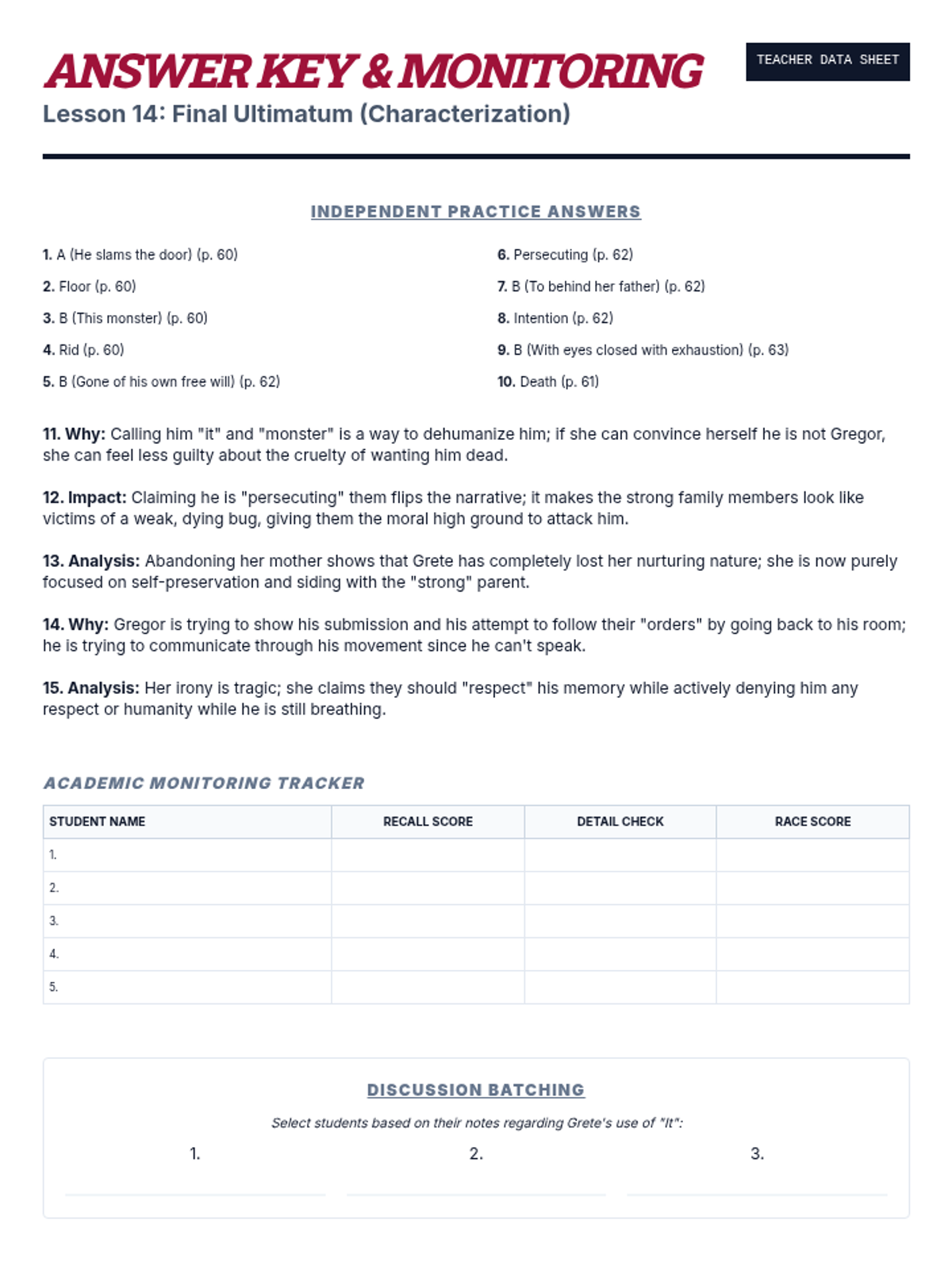
Analyzes Grete's character transformation as she delivers the final ultimatum against Gregor.
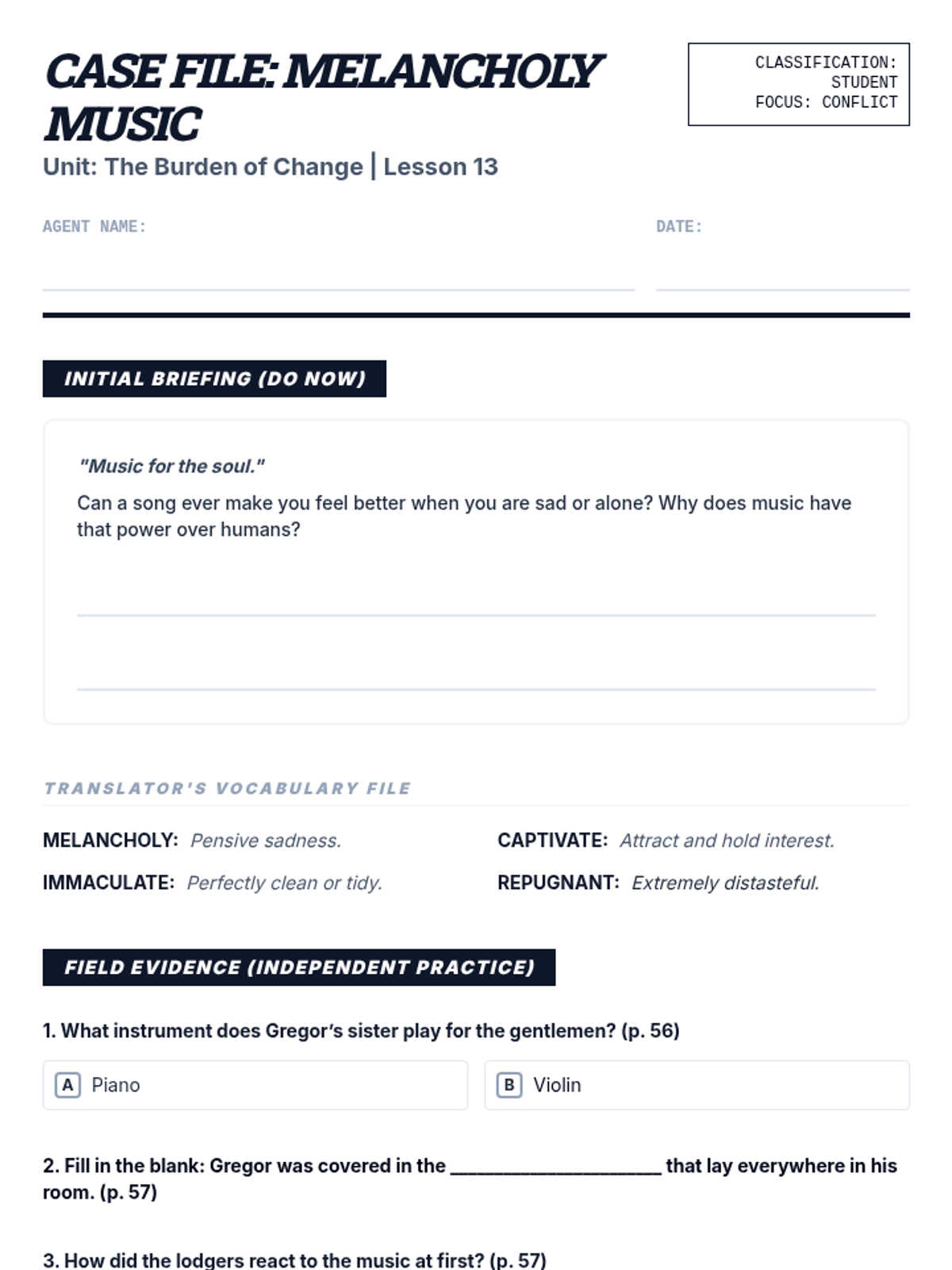
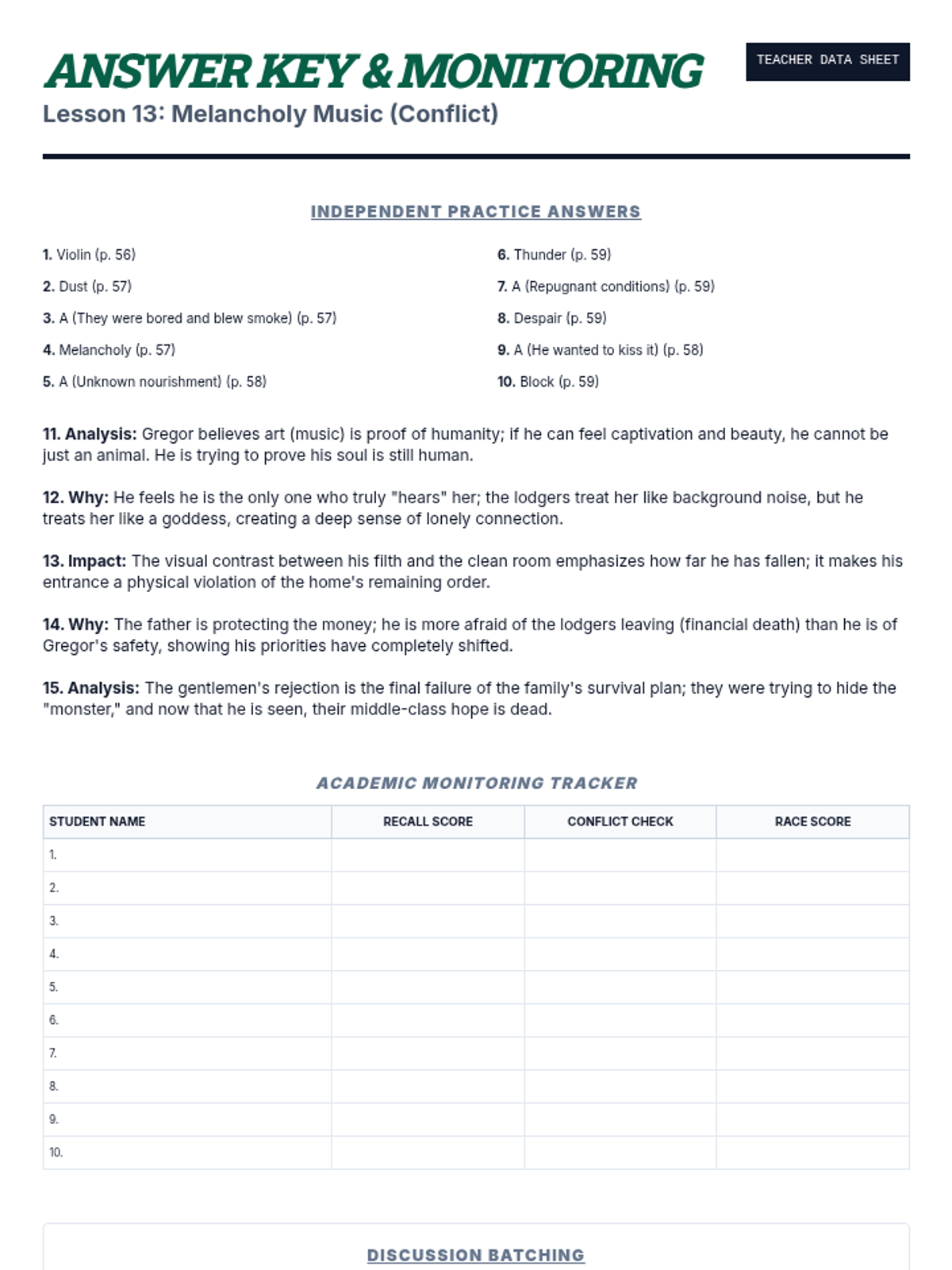
Examines the final major conflict triggered by Grete's violin playing and Gregor's attempt to reach her.
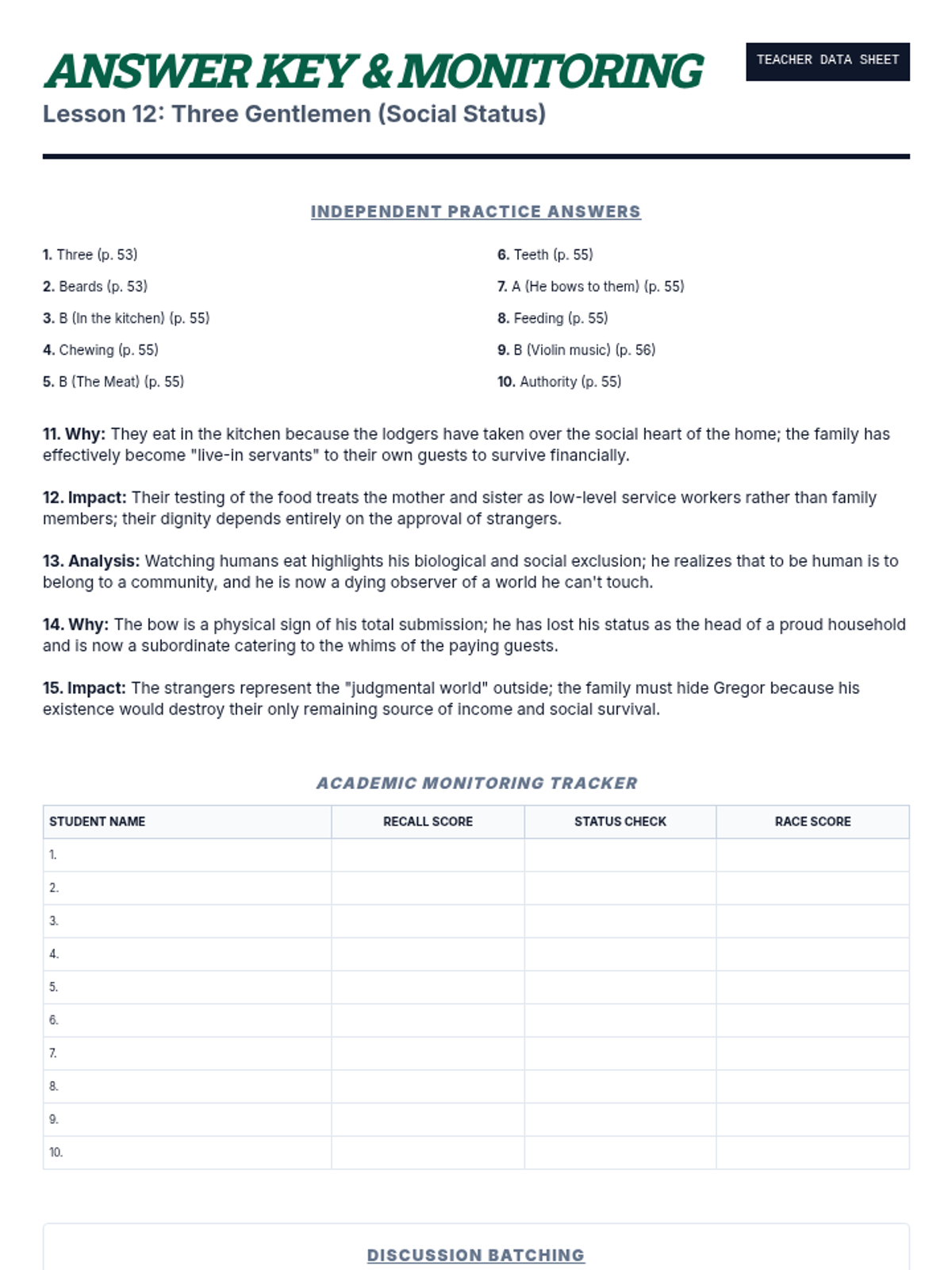
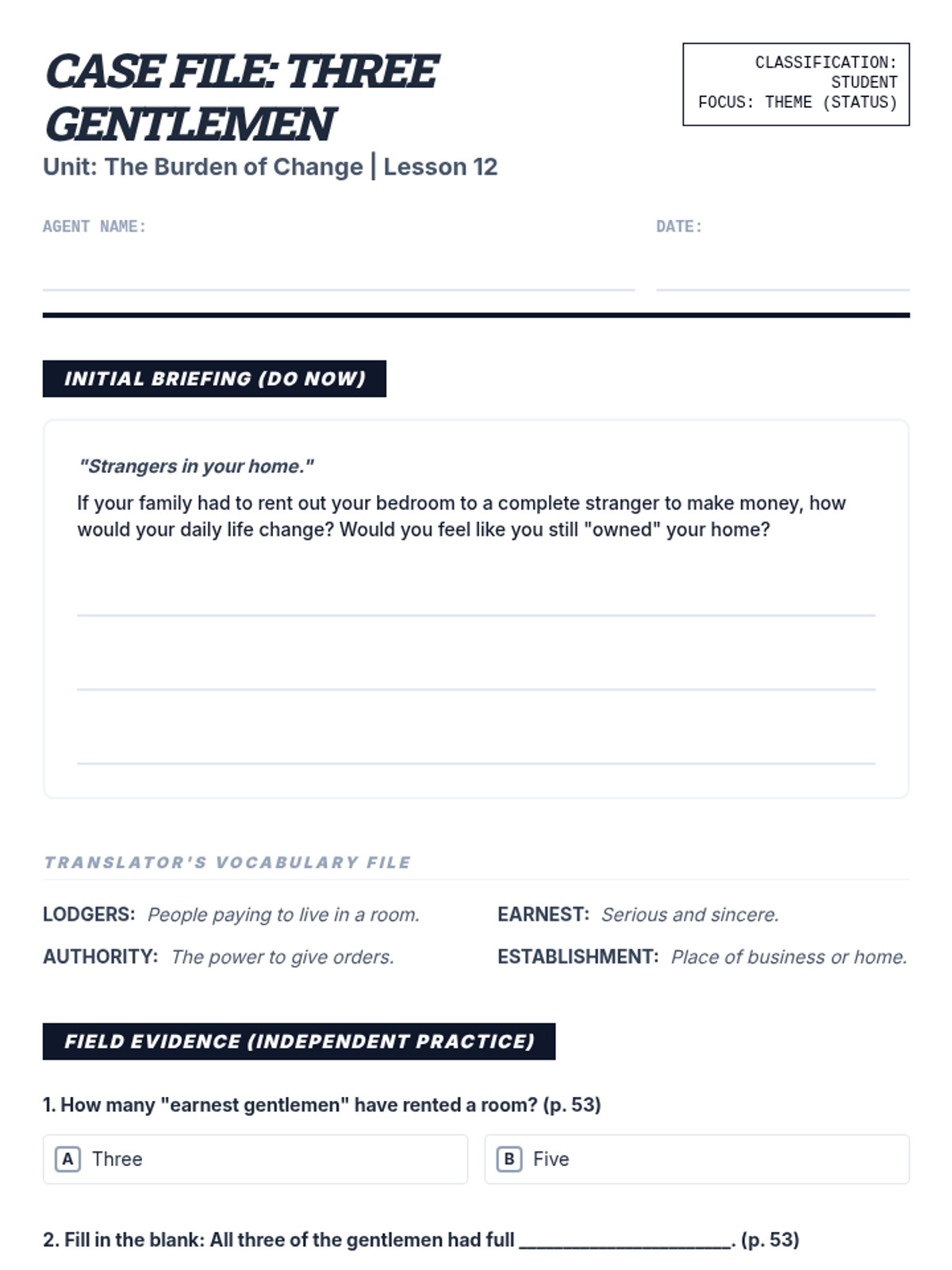
Discusses the theme of class and social decline through the introduction of the three lodgers.
Analyzes the characterization of the family members as they become exhausted by their new jobs and Gregor's presence.
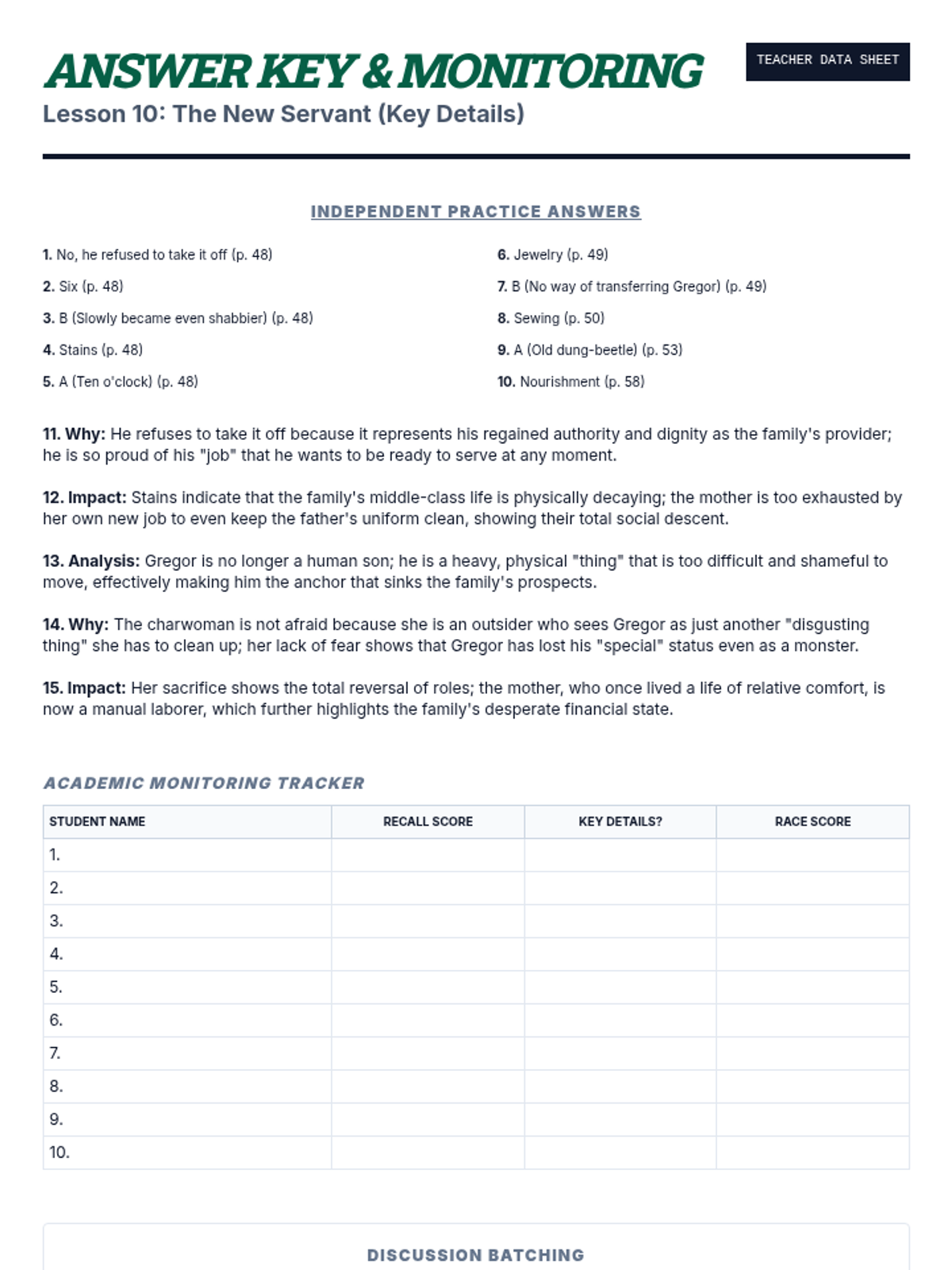
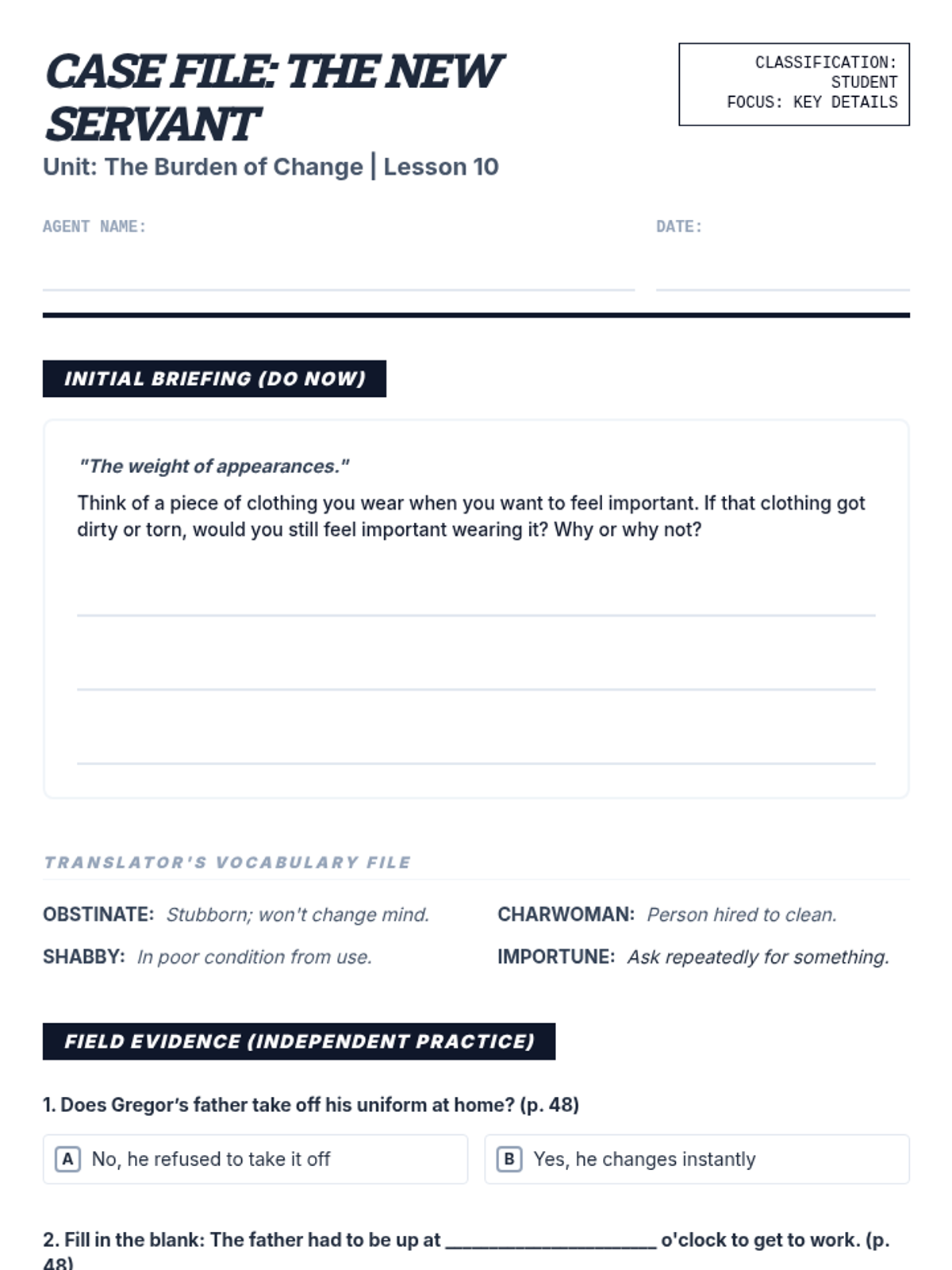
Examines the key details of the father's new uniform and the physical state of the family's apartment.
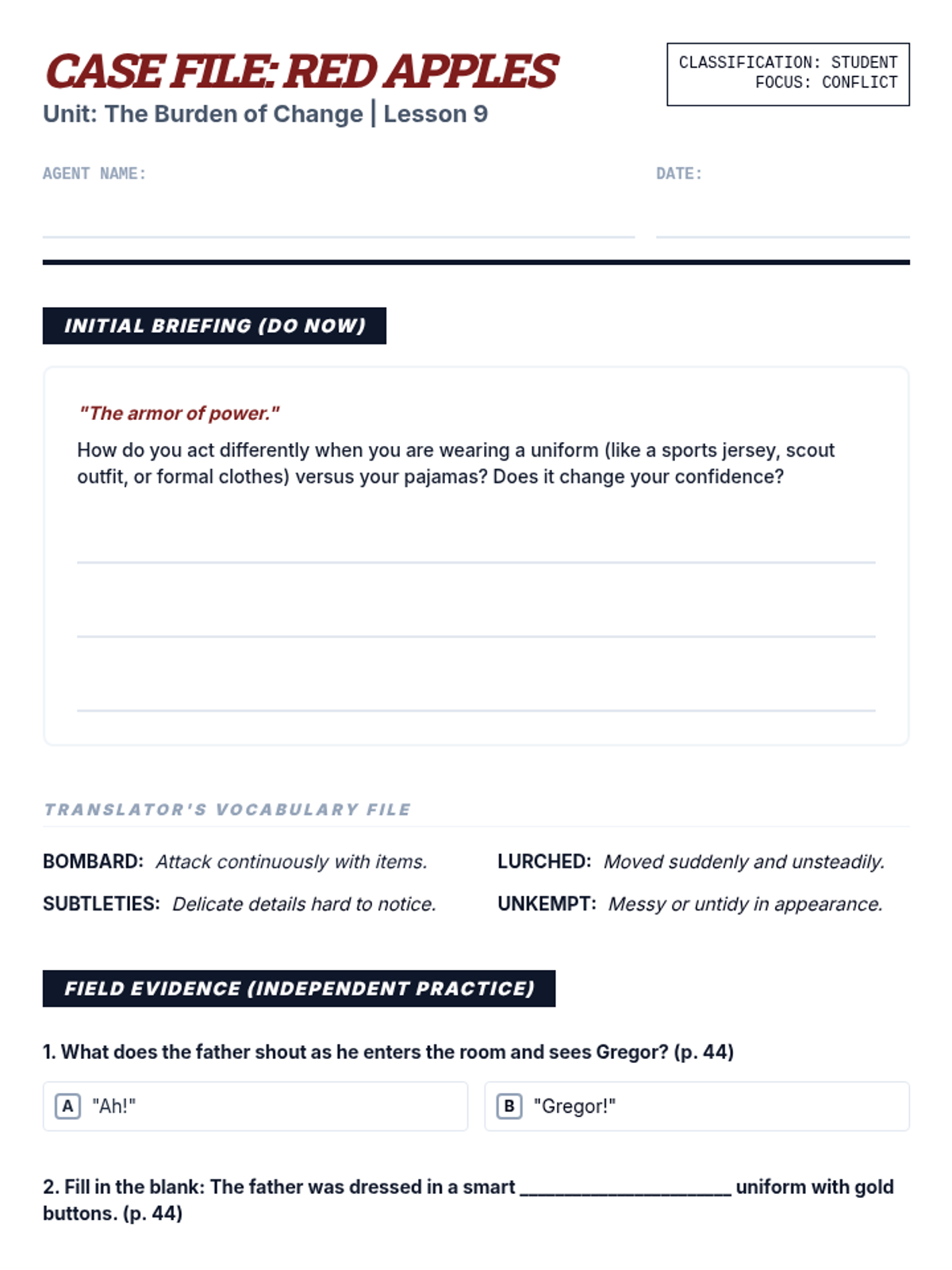
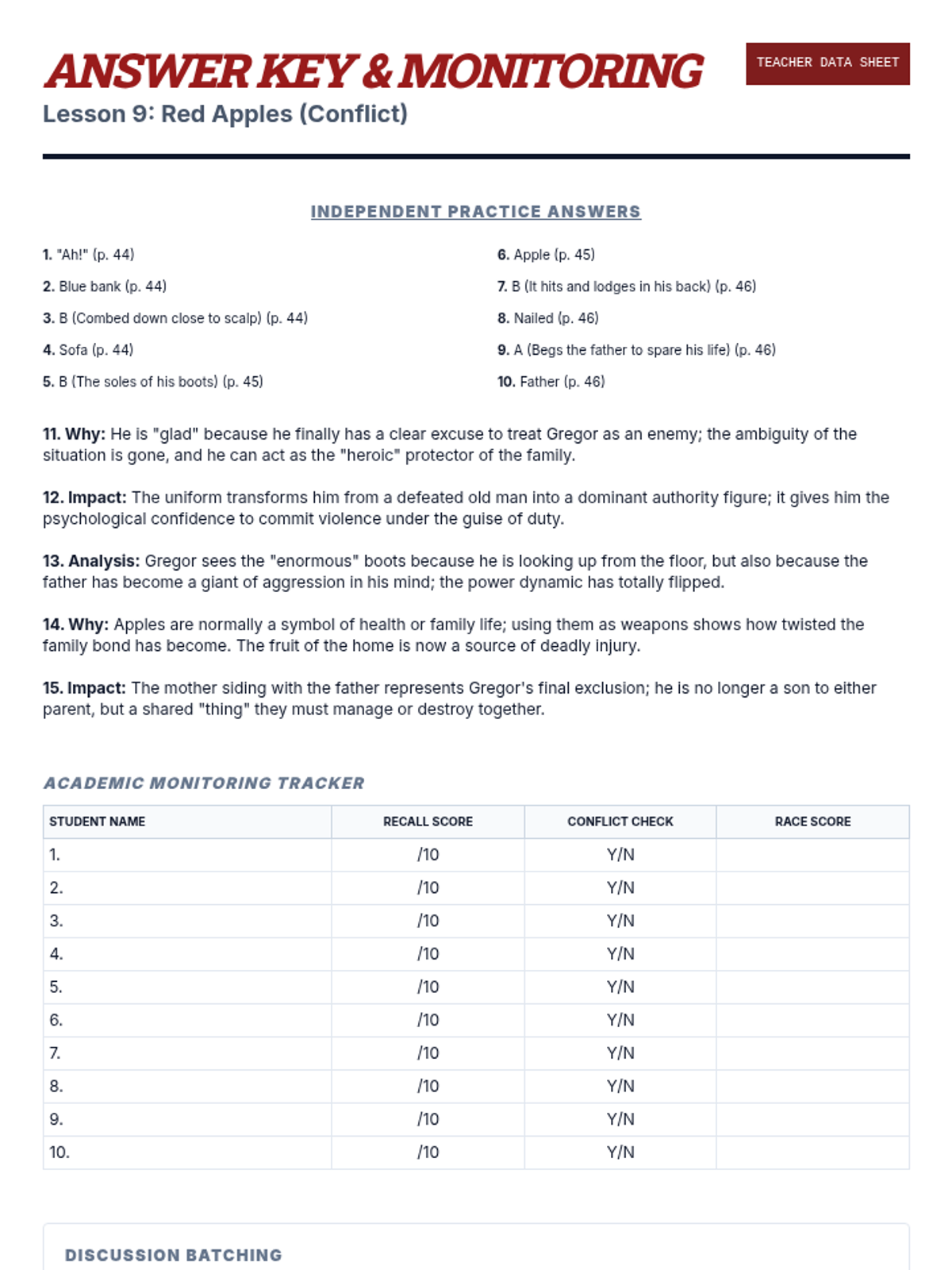
Focuses on the violent conflict of the apple bombardment and the father's shift in power.
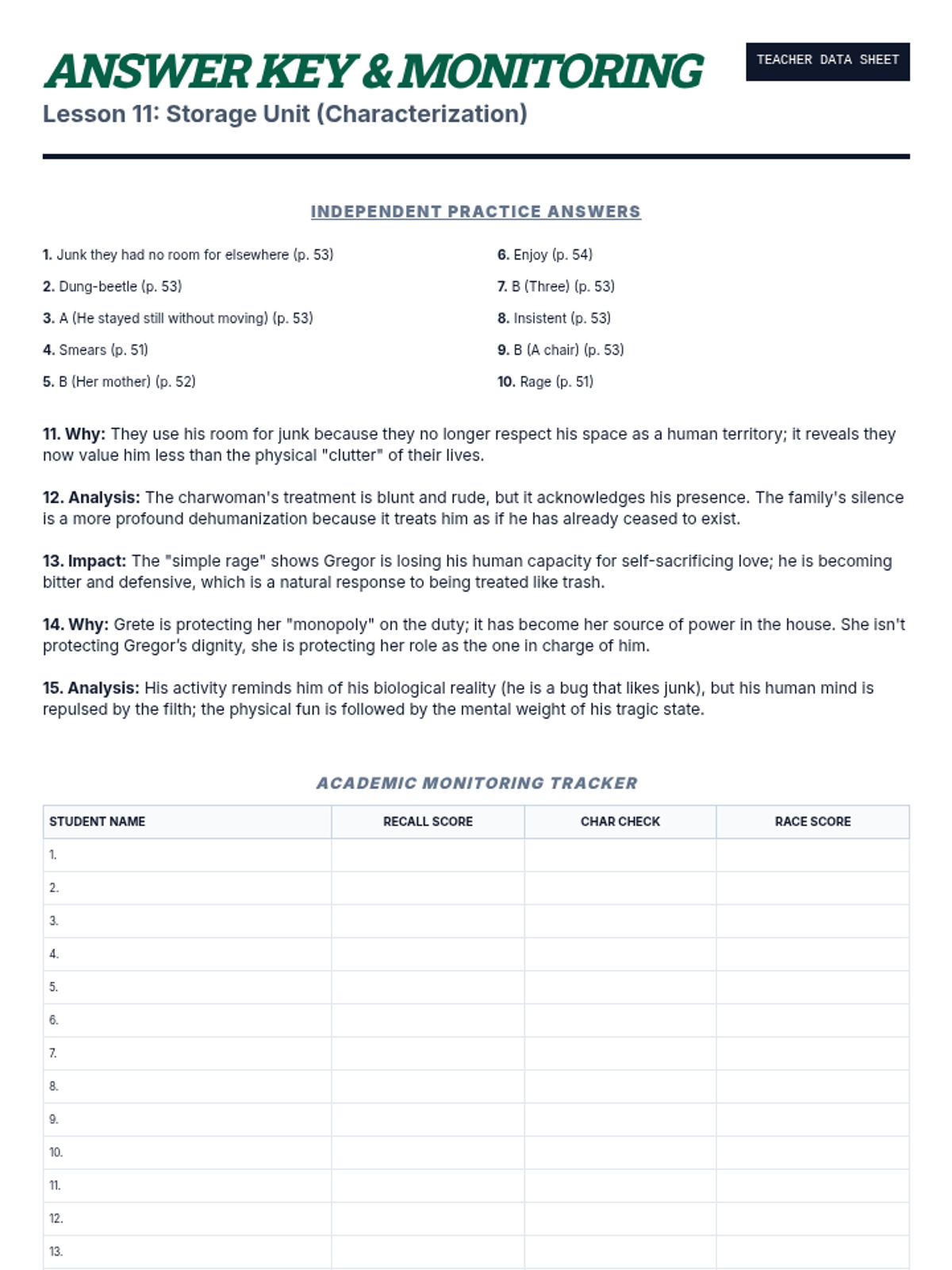
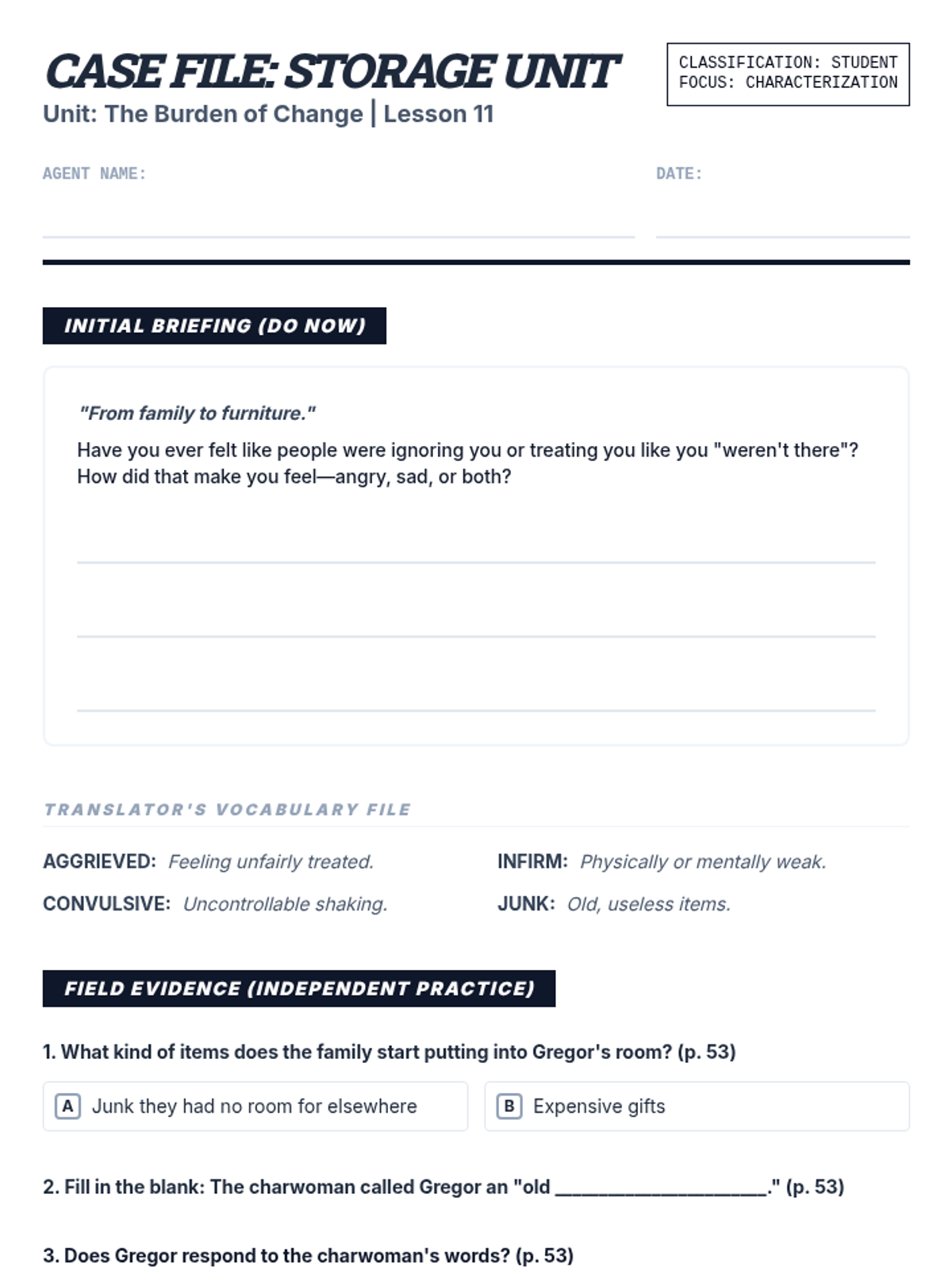
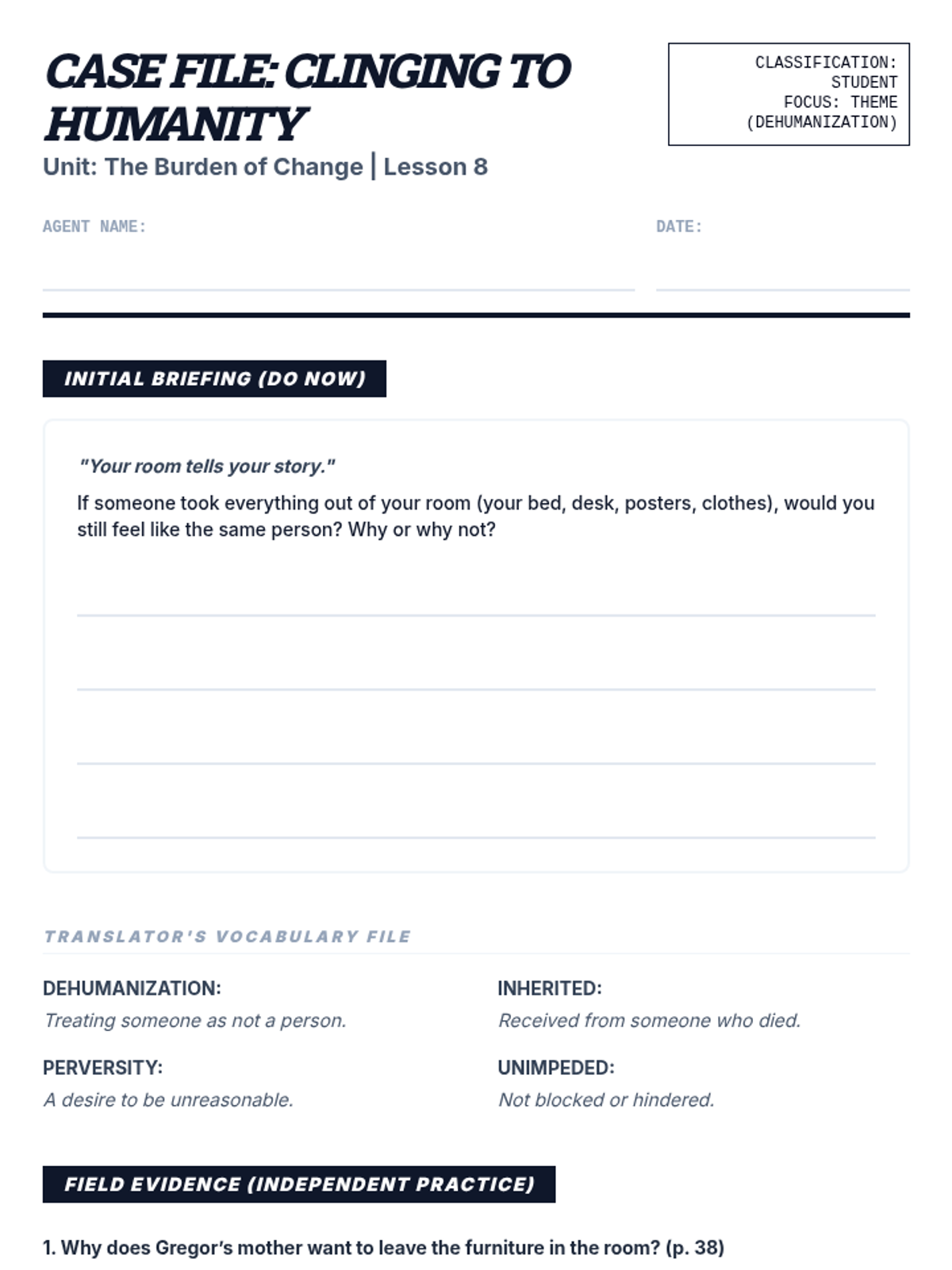
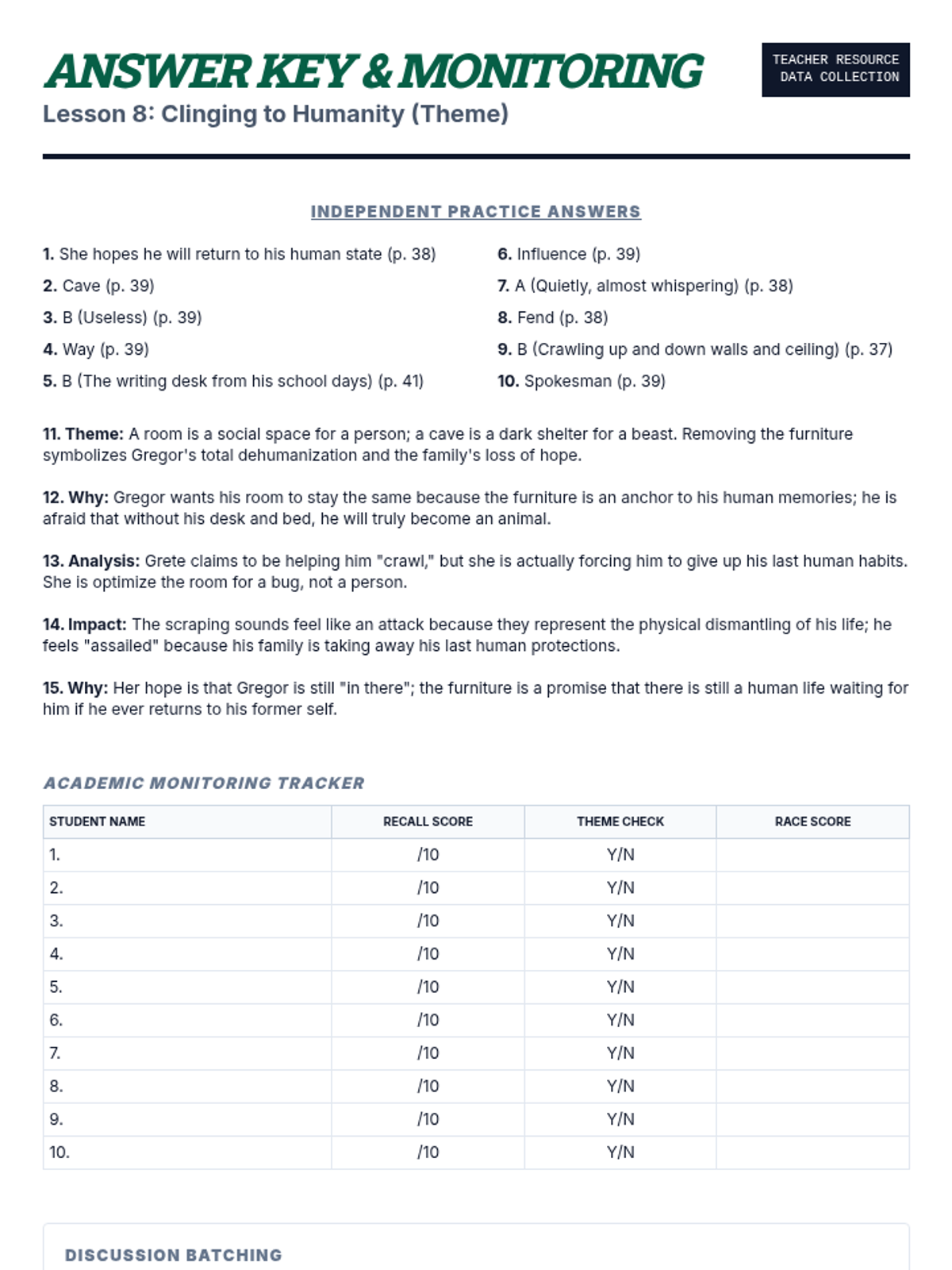
Explores the theme of dehumanization through the removal of furniture from Gregor's room.
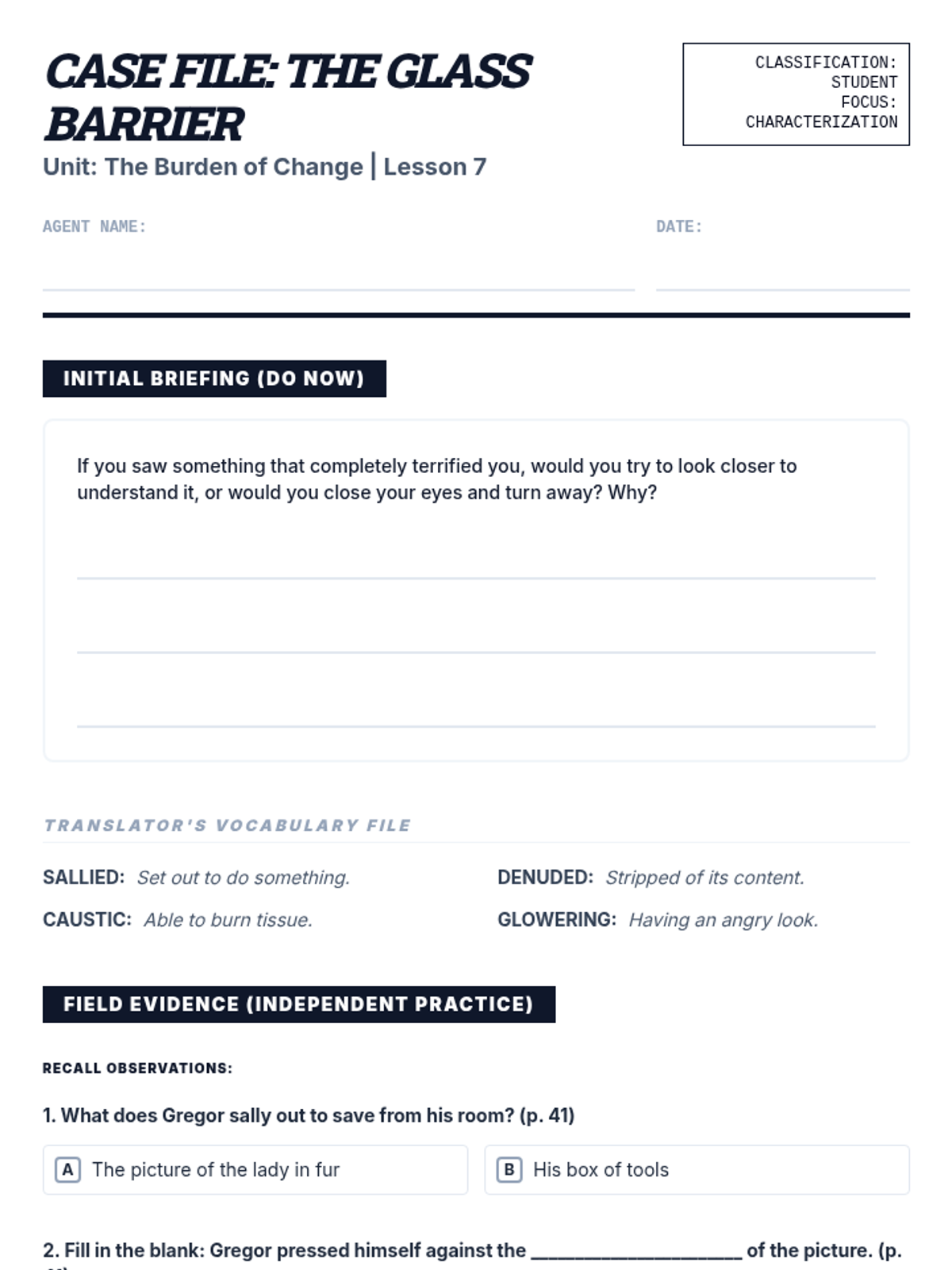
Analyzes the mother's characterization and her desperate but fearful attempt to reconnect with her son.
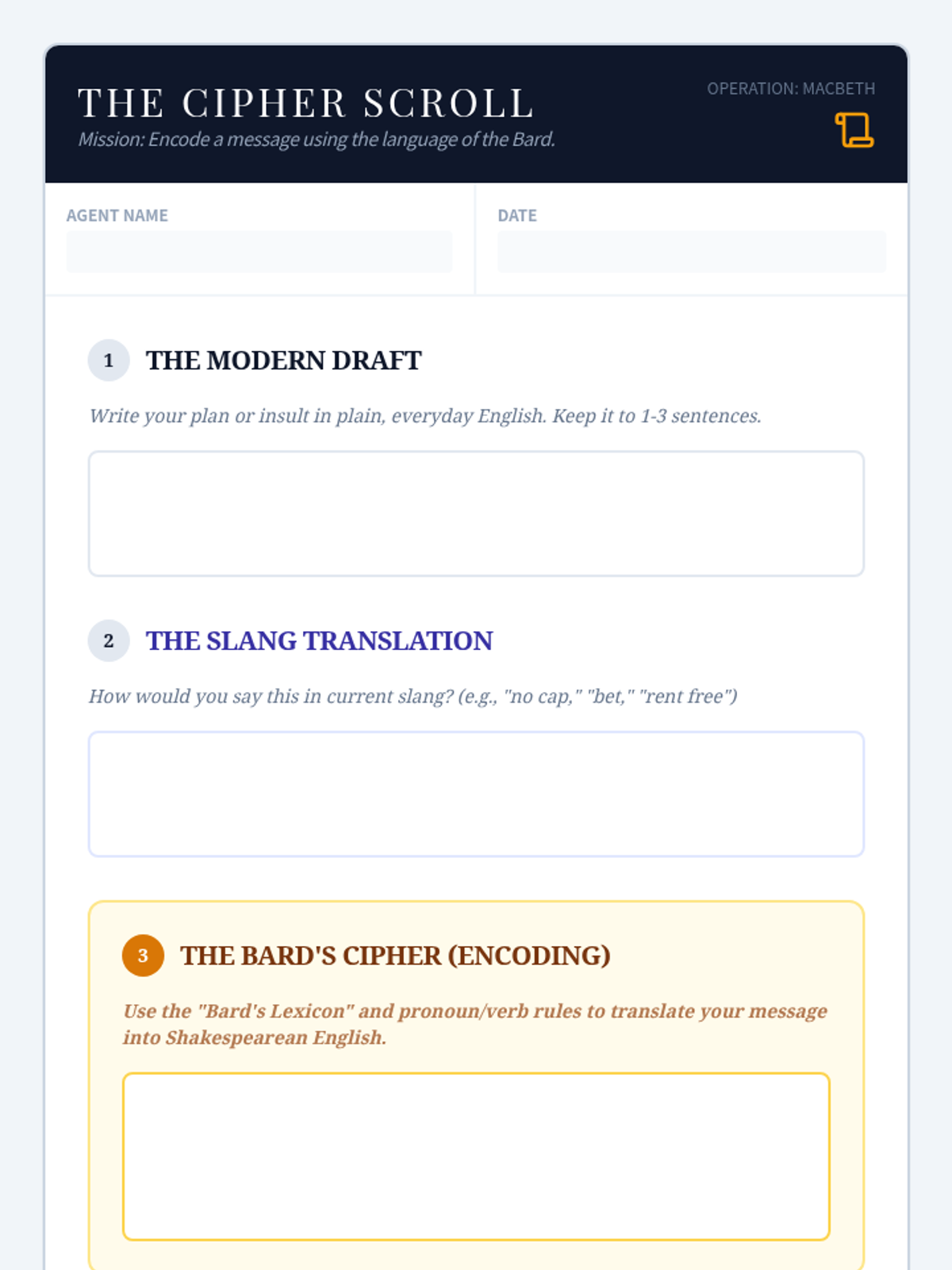
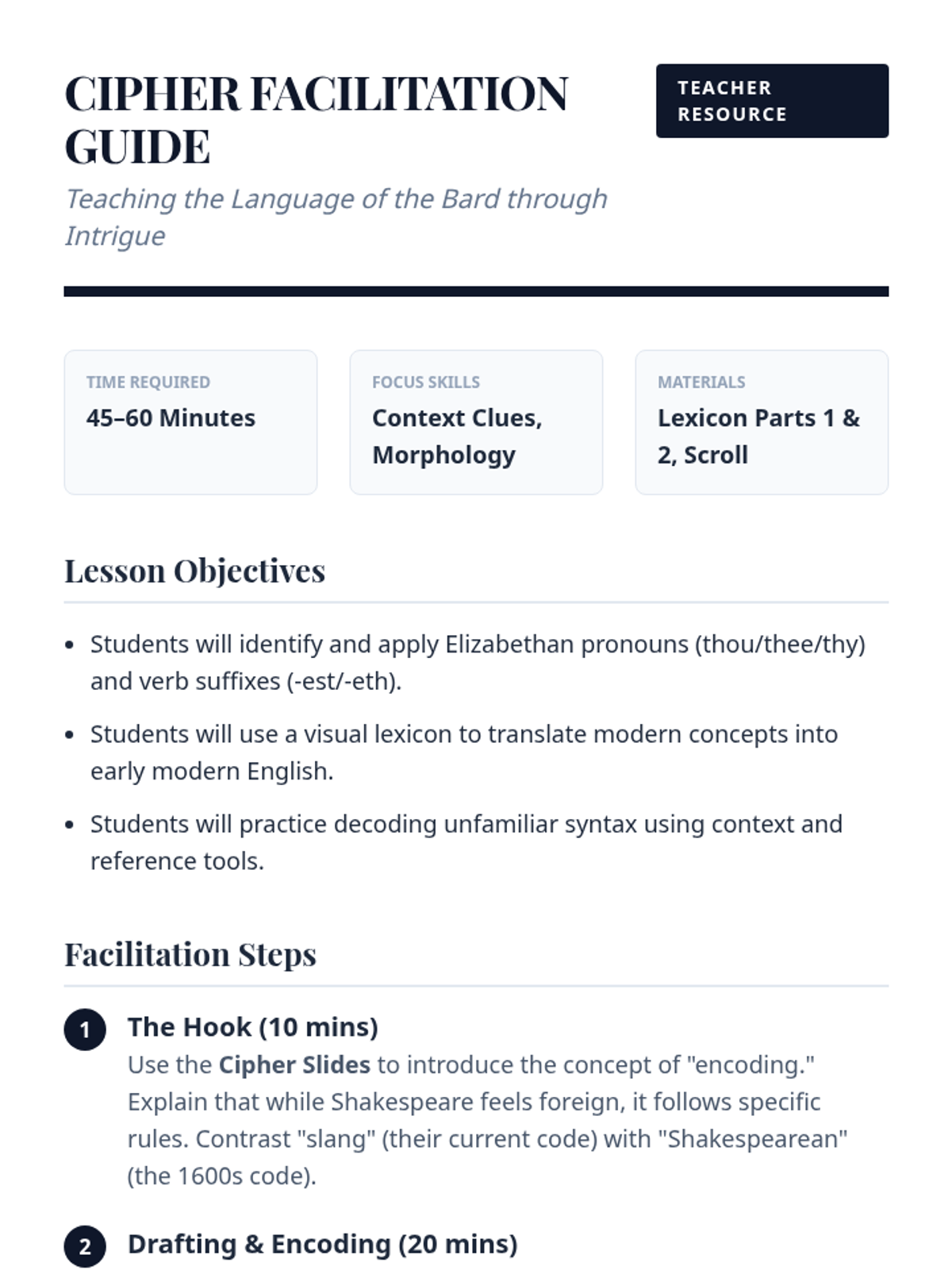
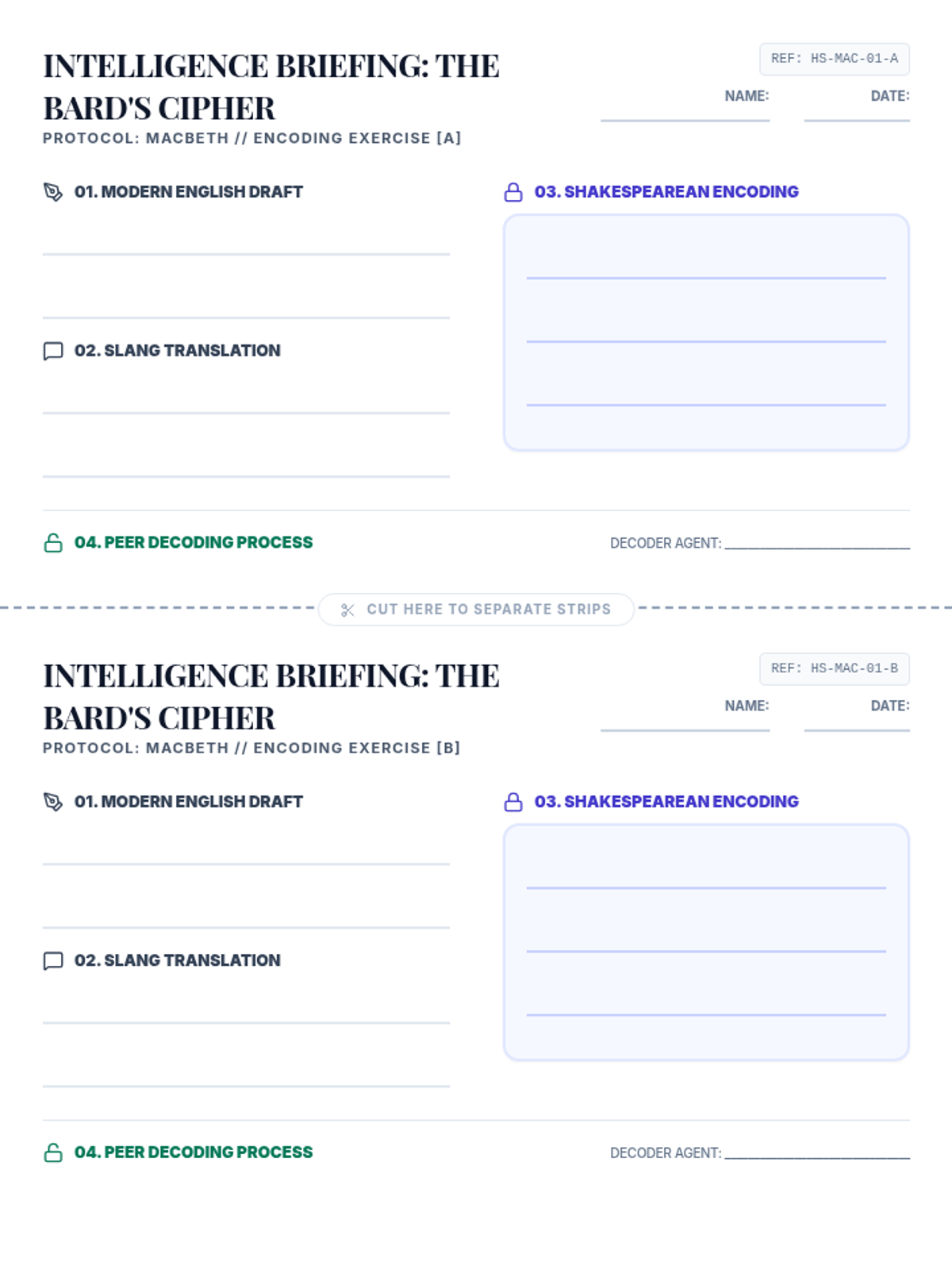
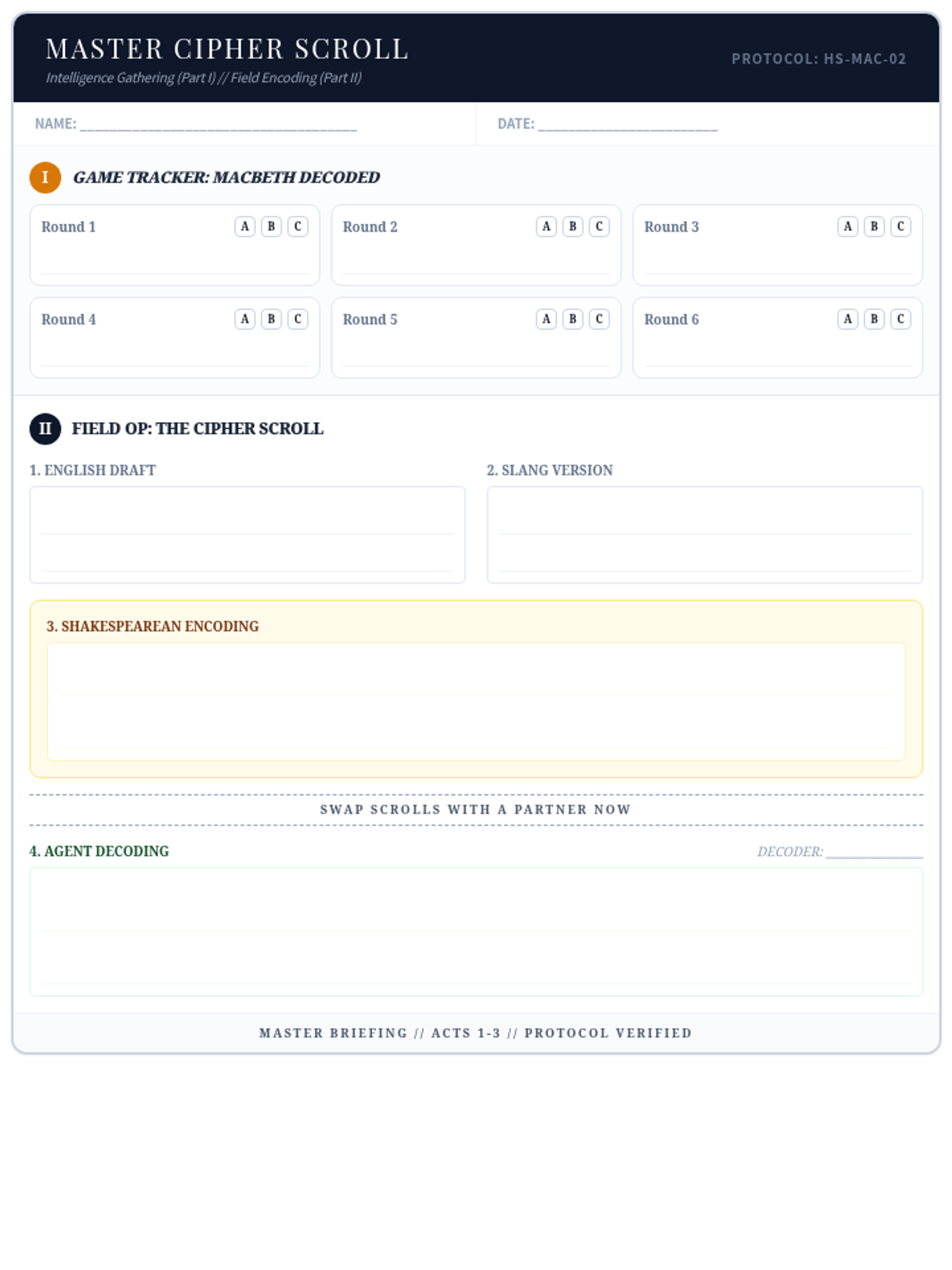
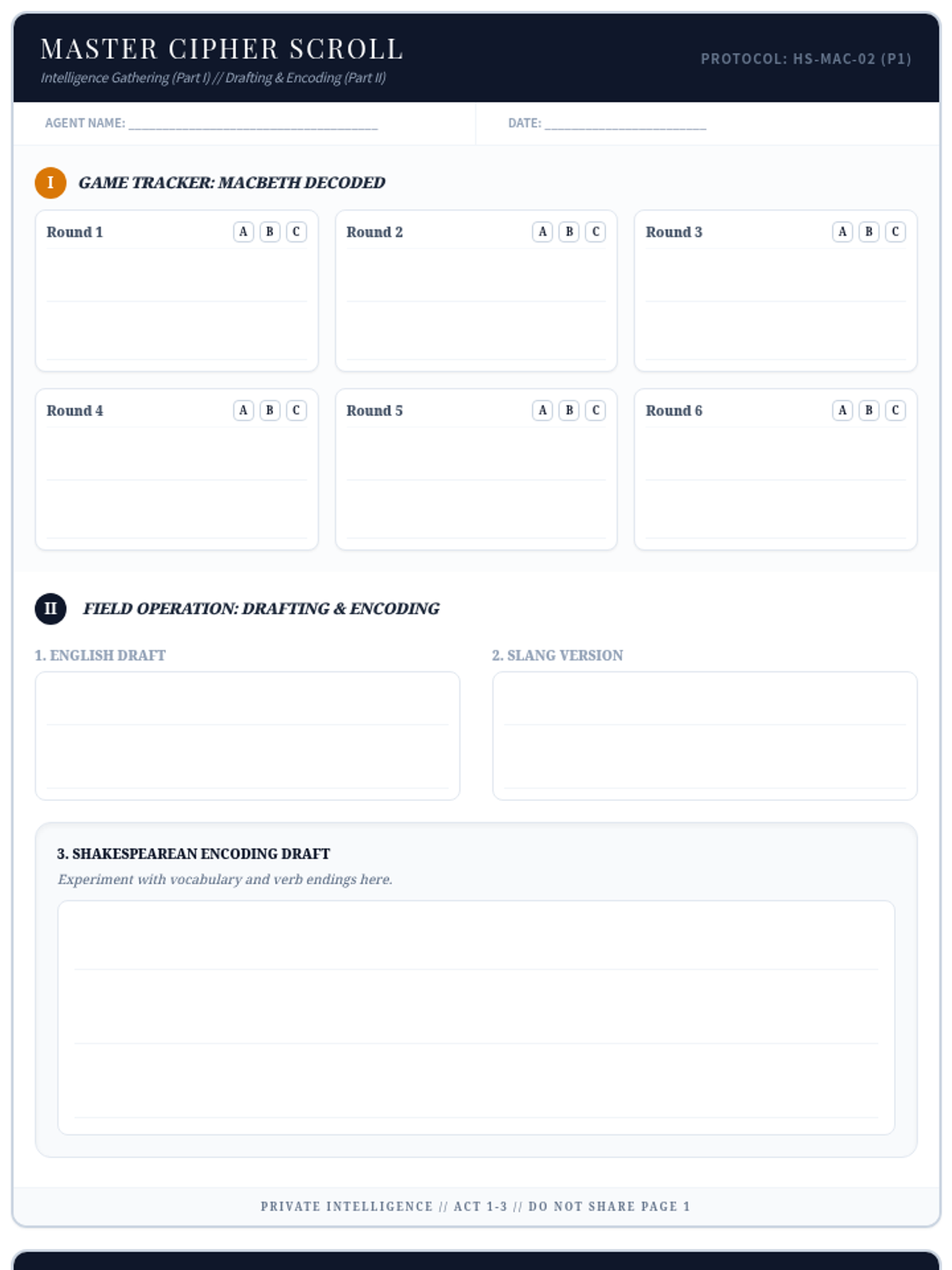
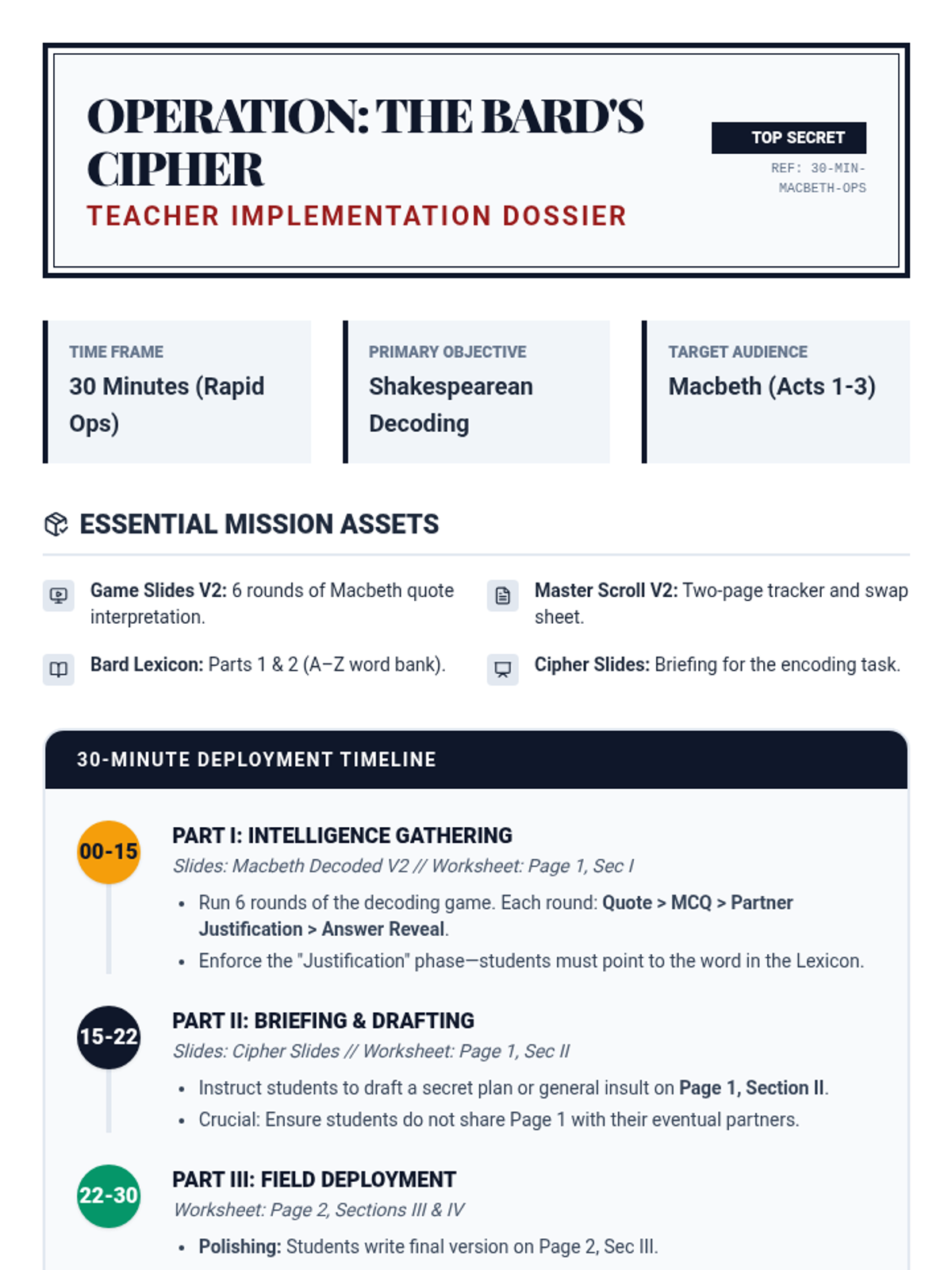
A hands-on activity where students learn to decode and encode Shakespearean language by writing secret messages or insults, then swapping them with peers to translate.
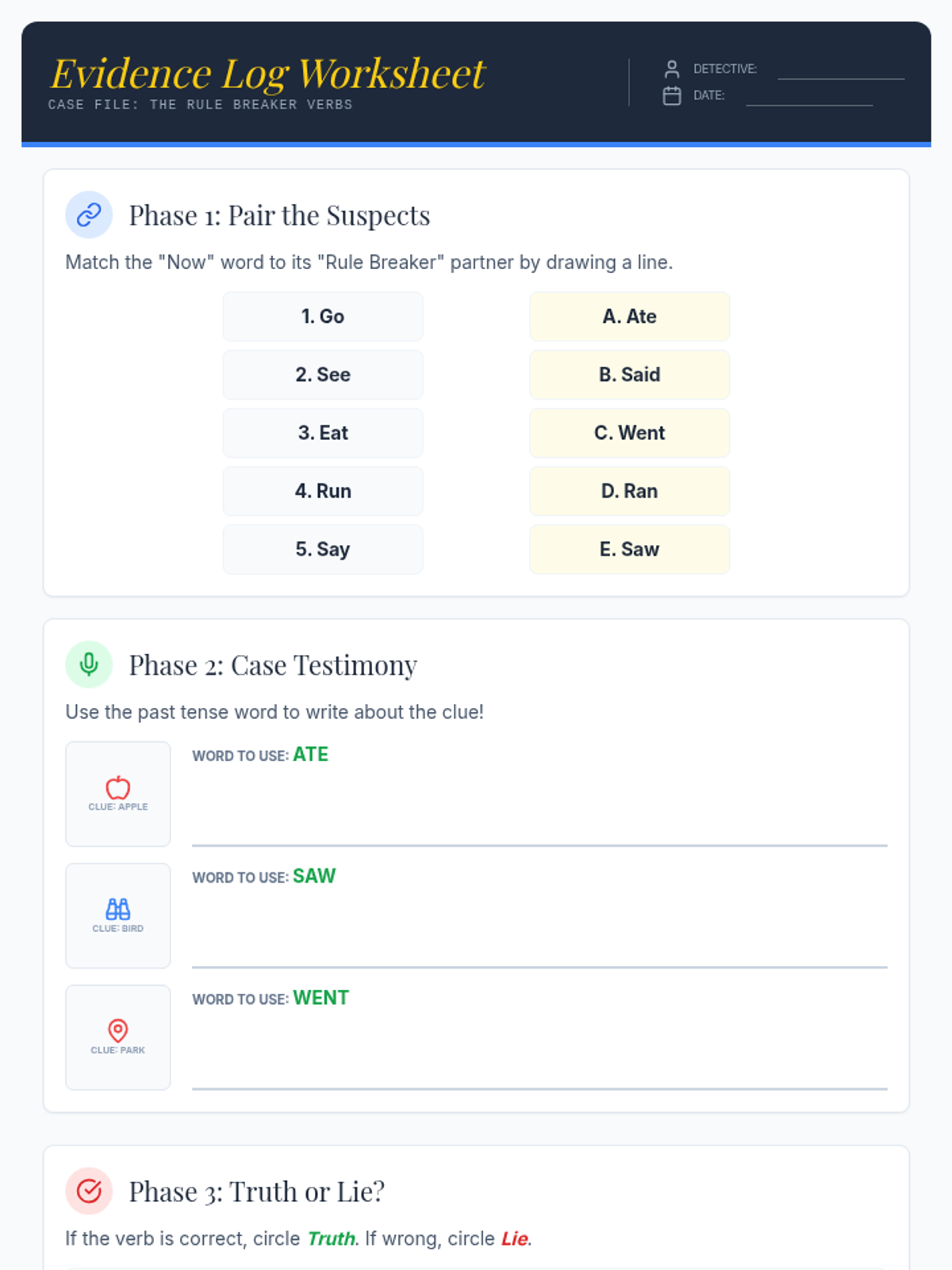
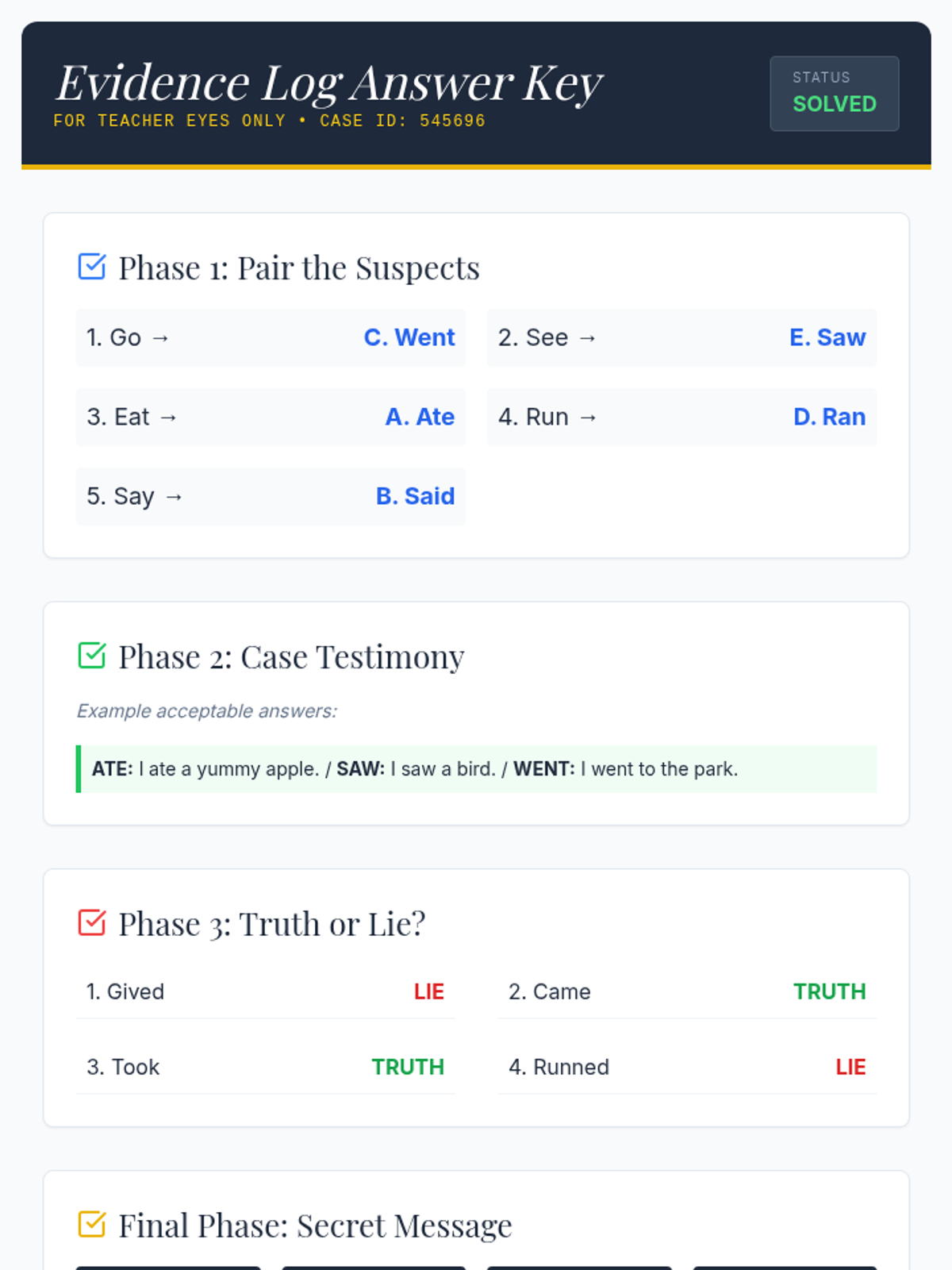
A friendly mystery-themed lesson where second graders become 'Verb Detectives' to find and fix common irregular past tense verbs like 'went', 'saw', and 'ate'.
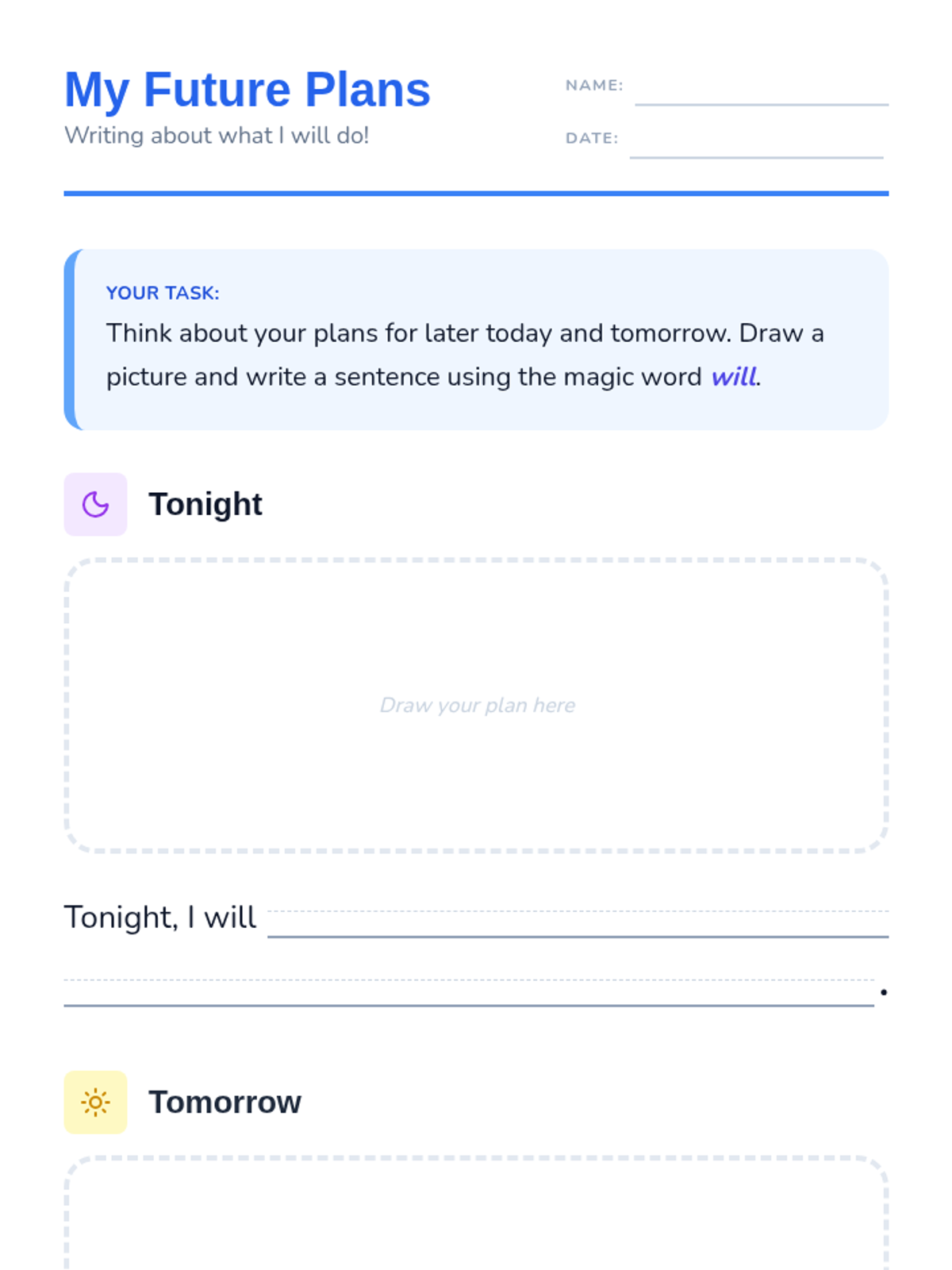
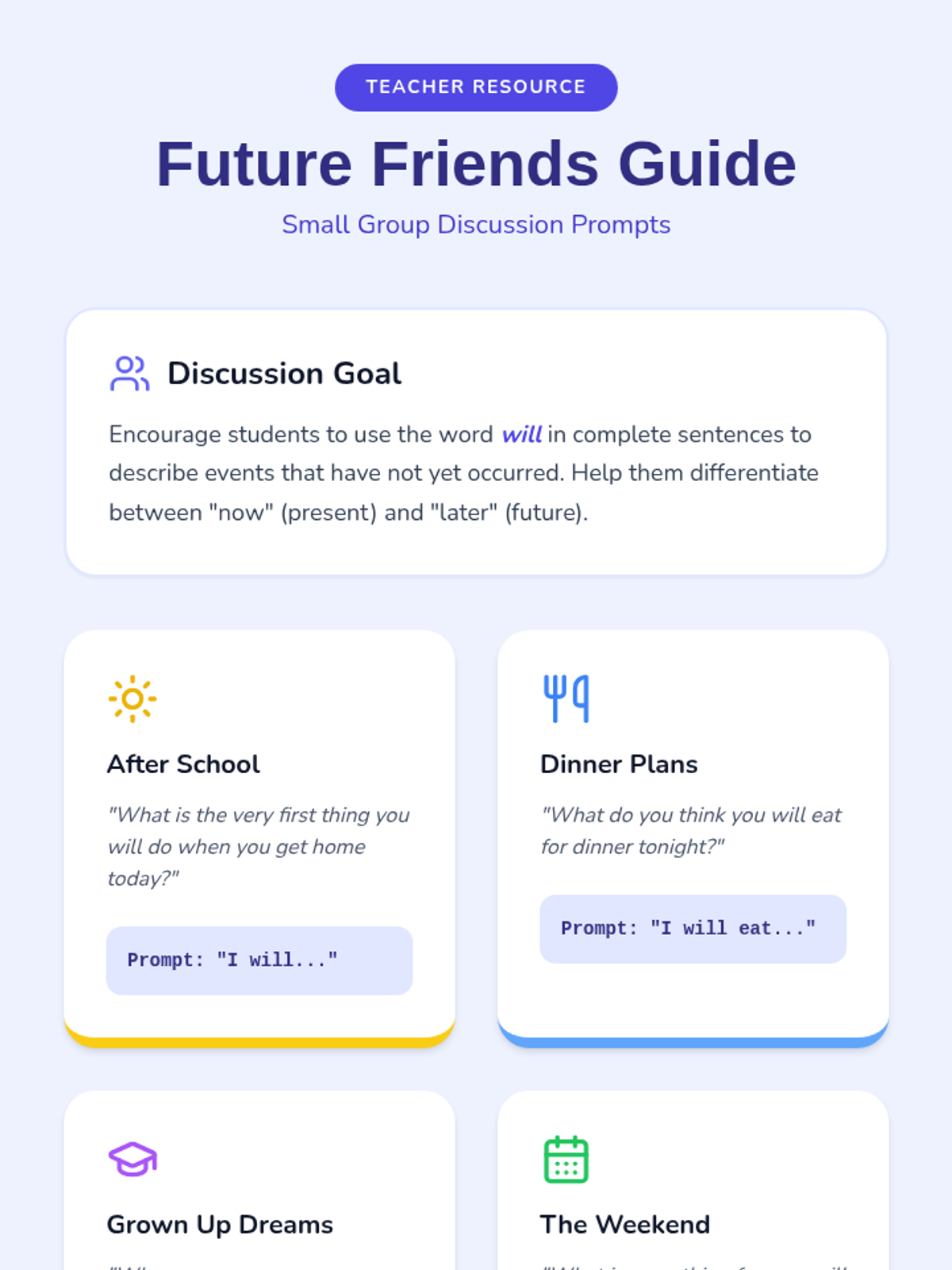
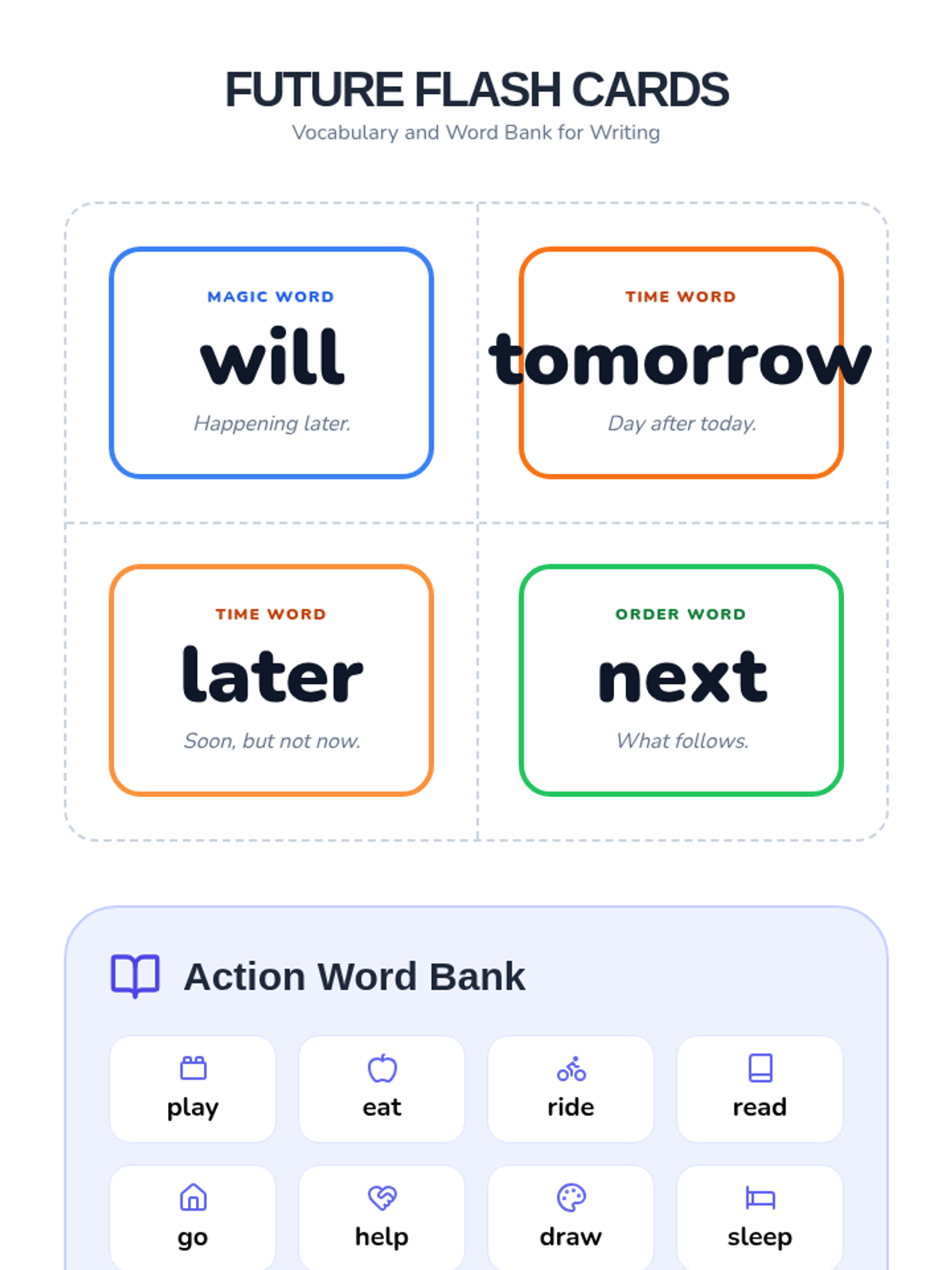
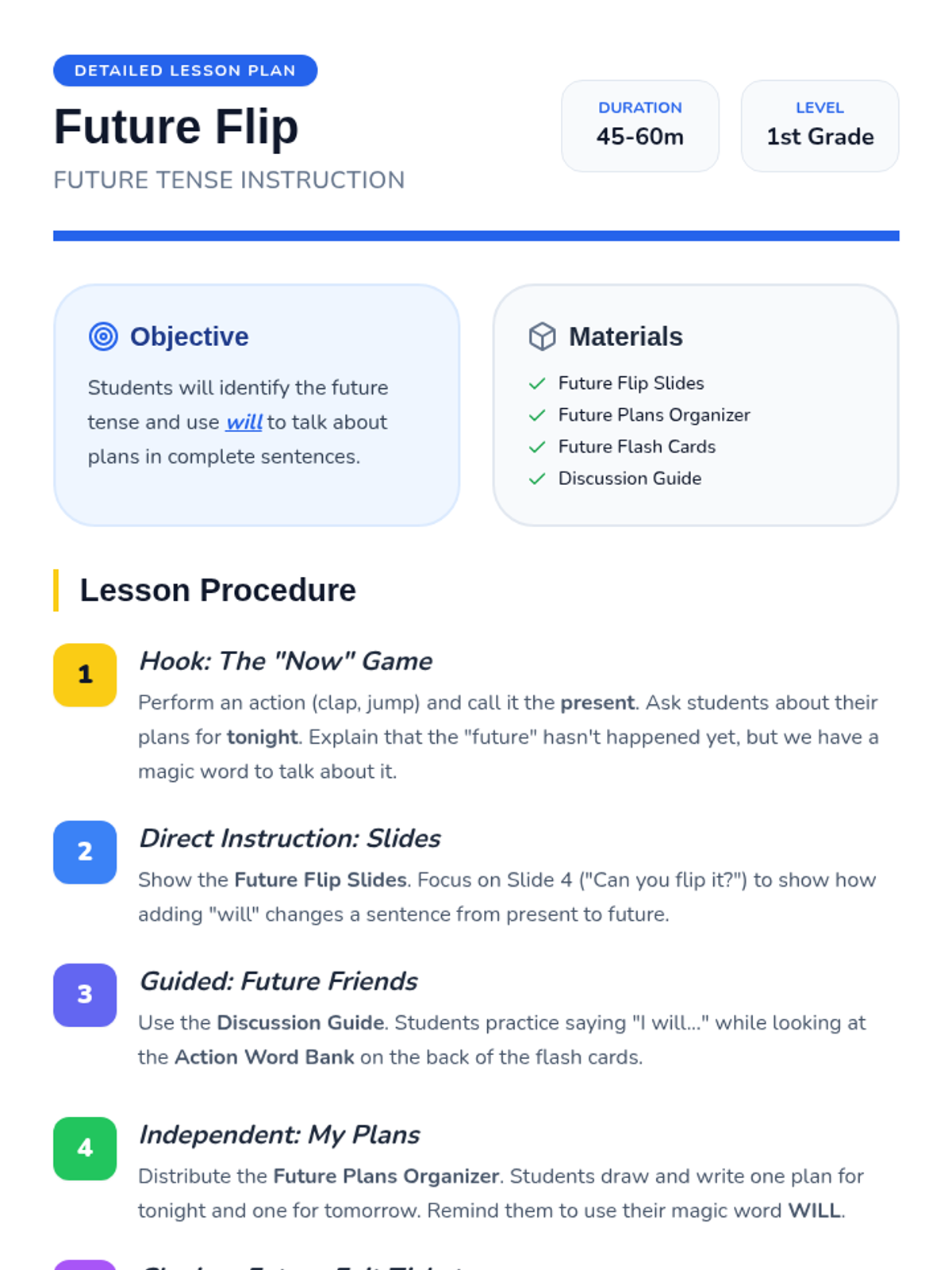
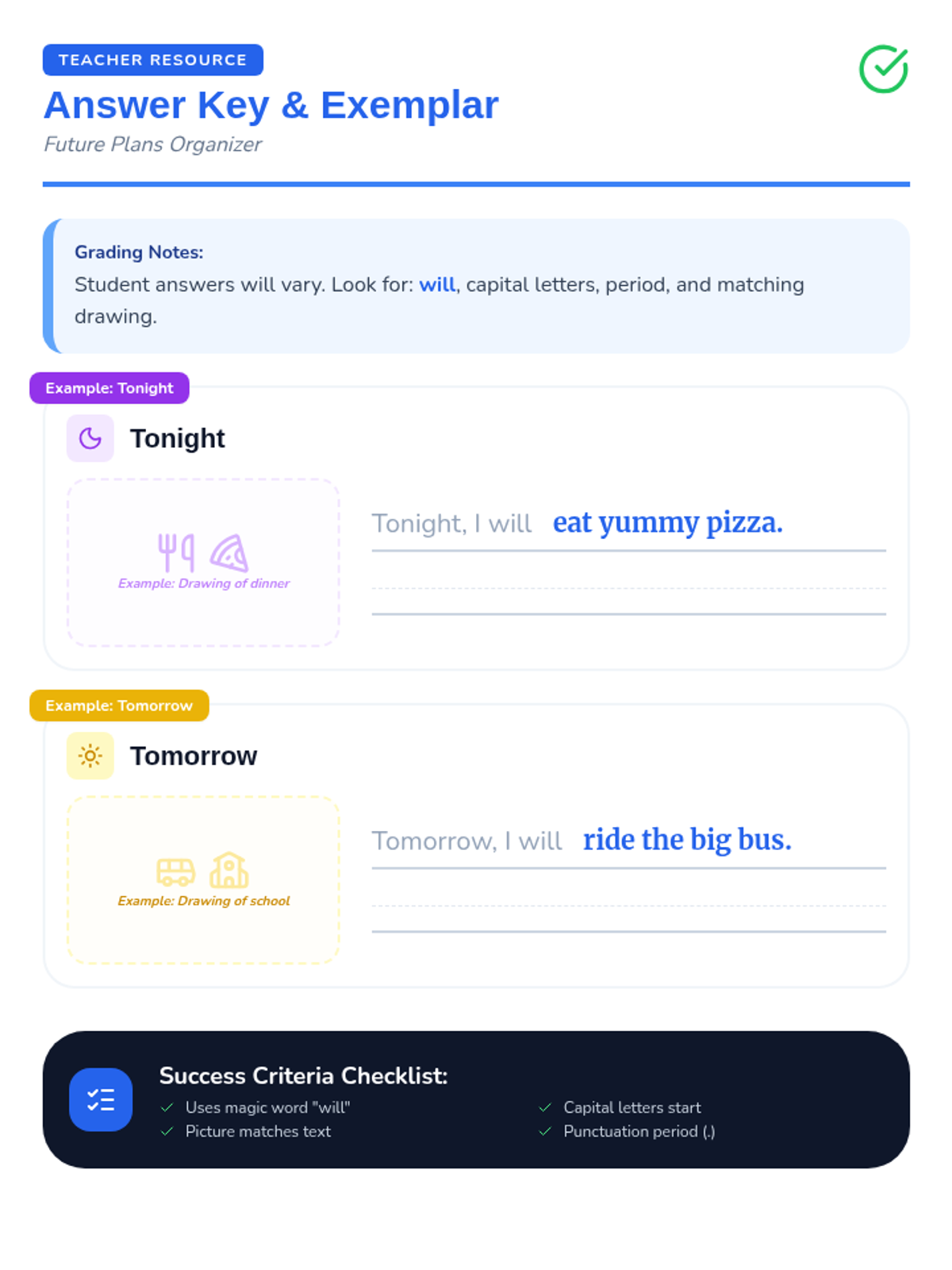
A 1st-grade lesson focused on using the future tense 'will' to talk about upcoming plans and dreams. Students will learn to structure sentences and organize their thoughts about the future.
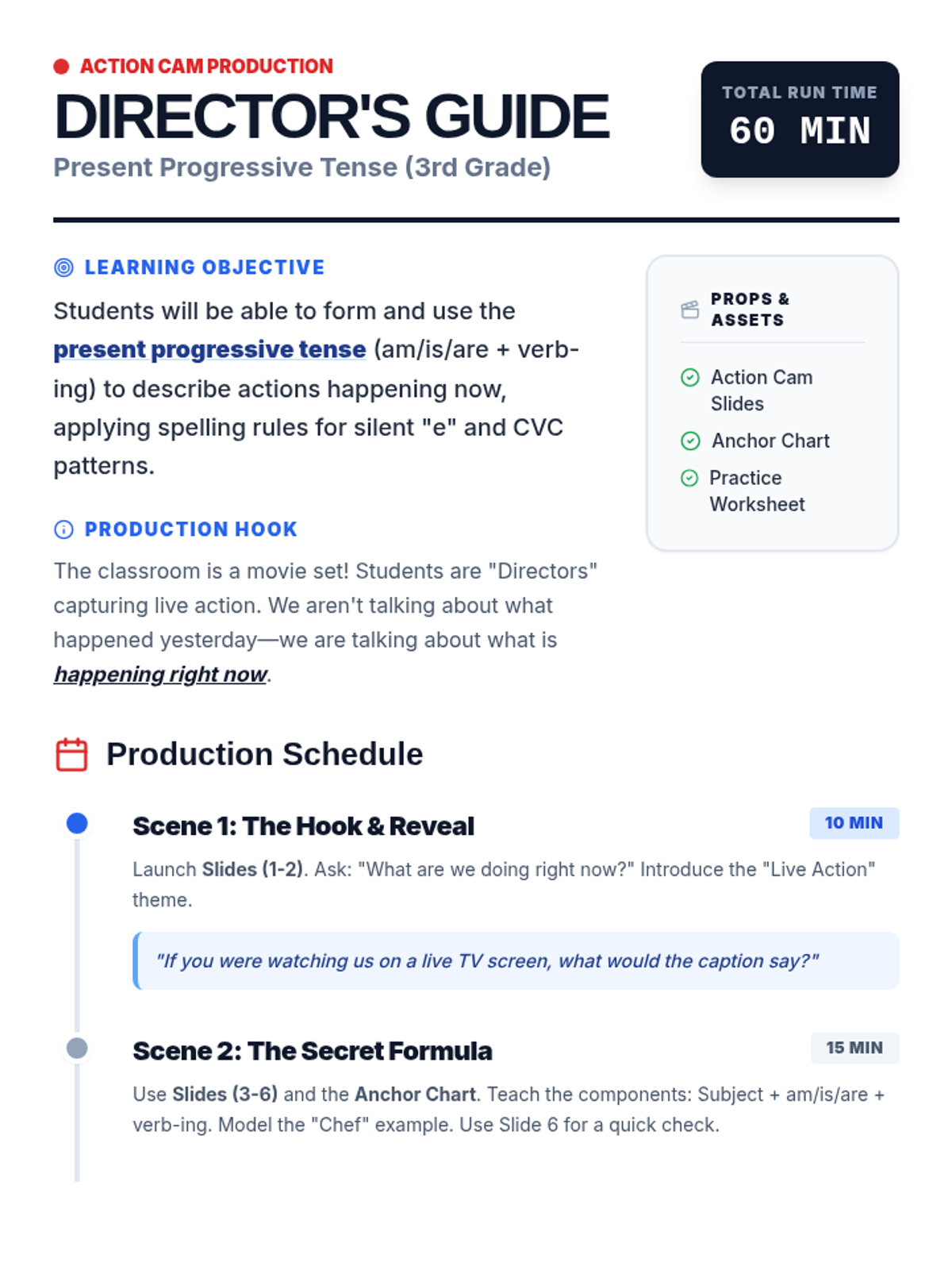
A lesson focused on using the present progressive tense to describe actions happening in the moment, themed around capturing live action with a camera.
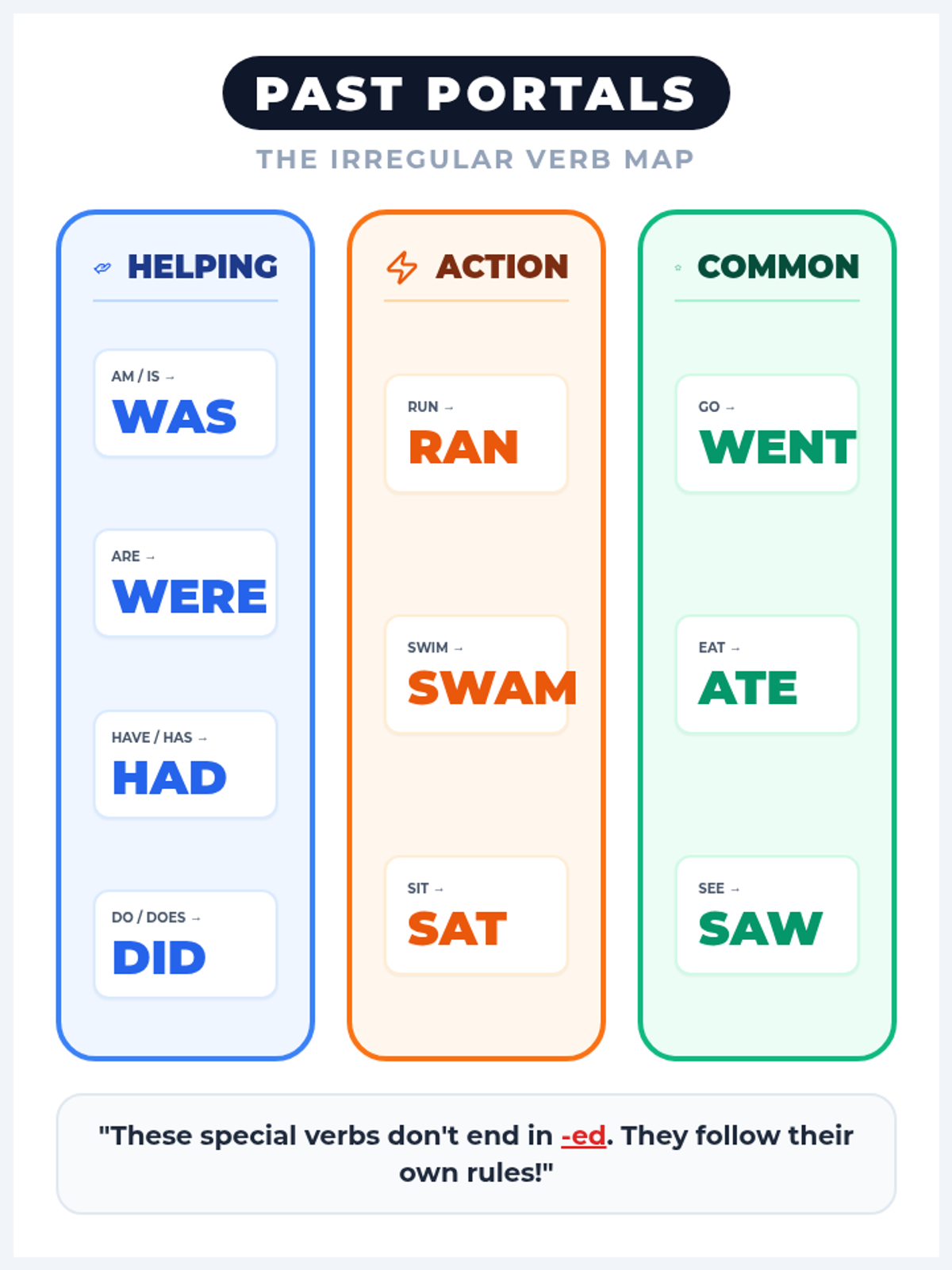
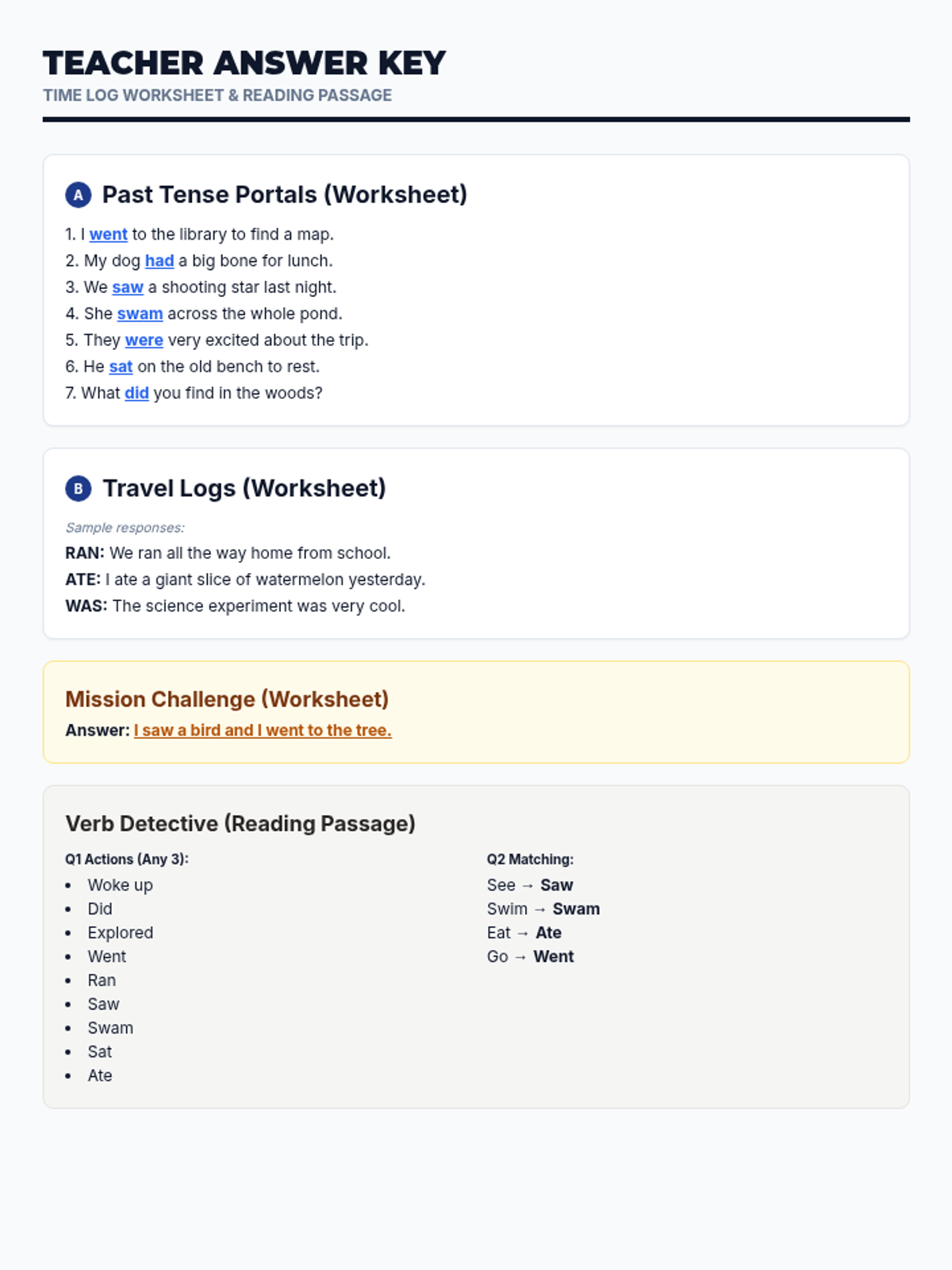
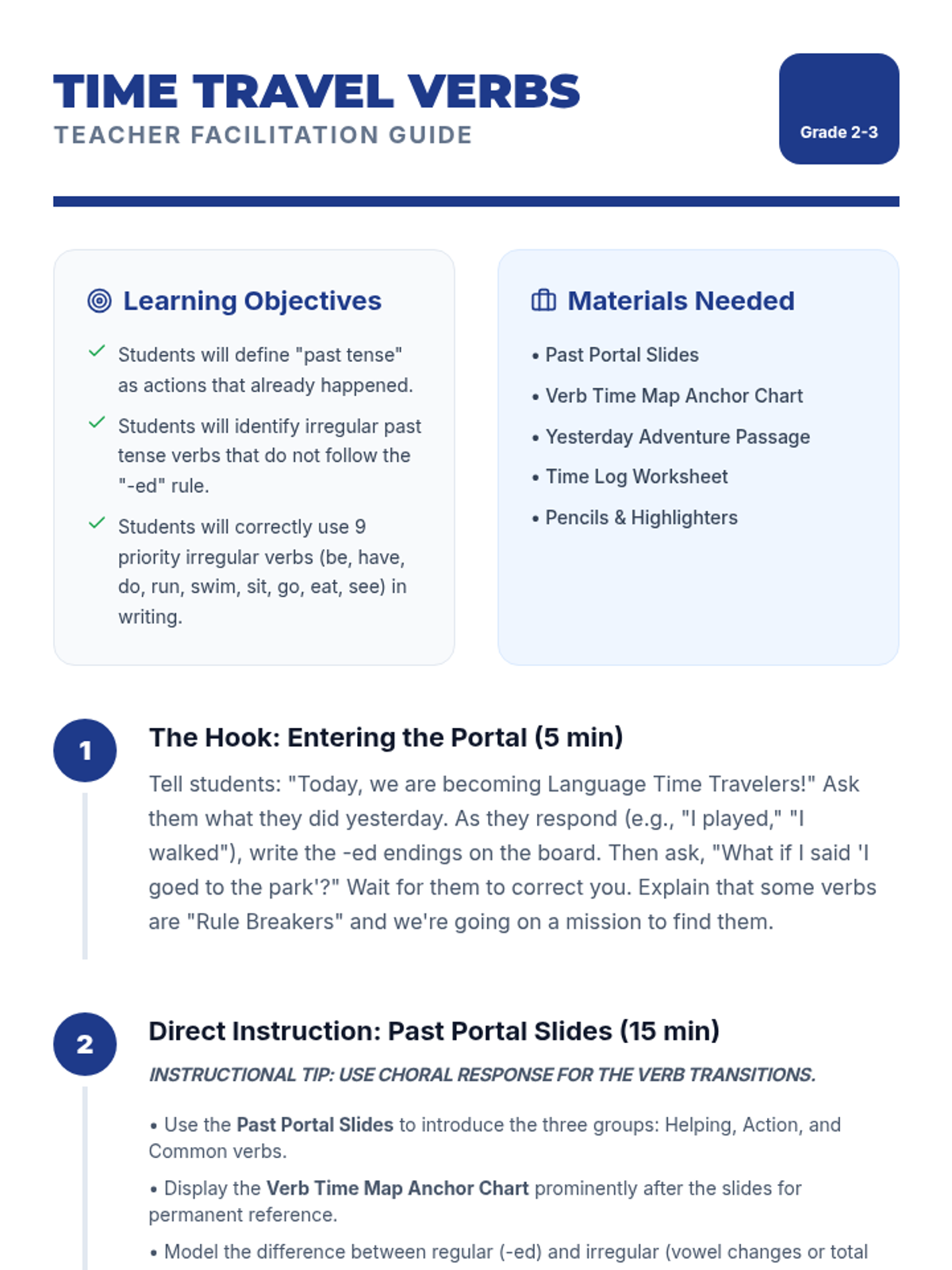
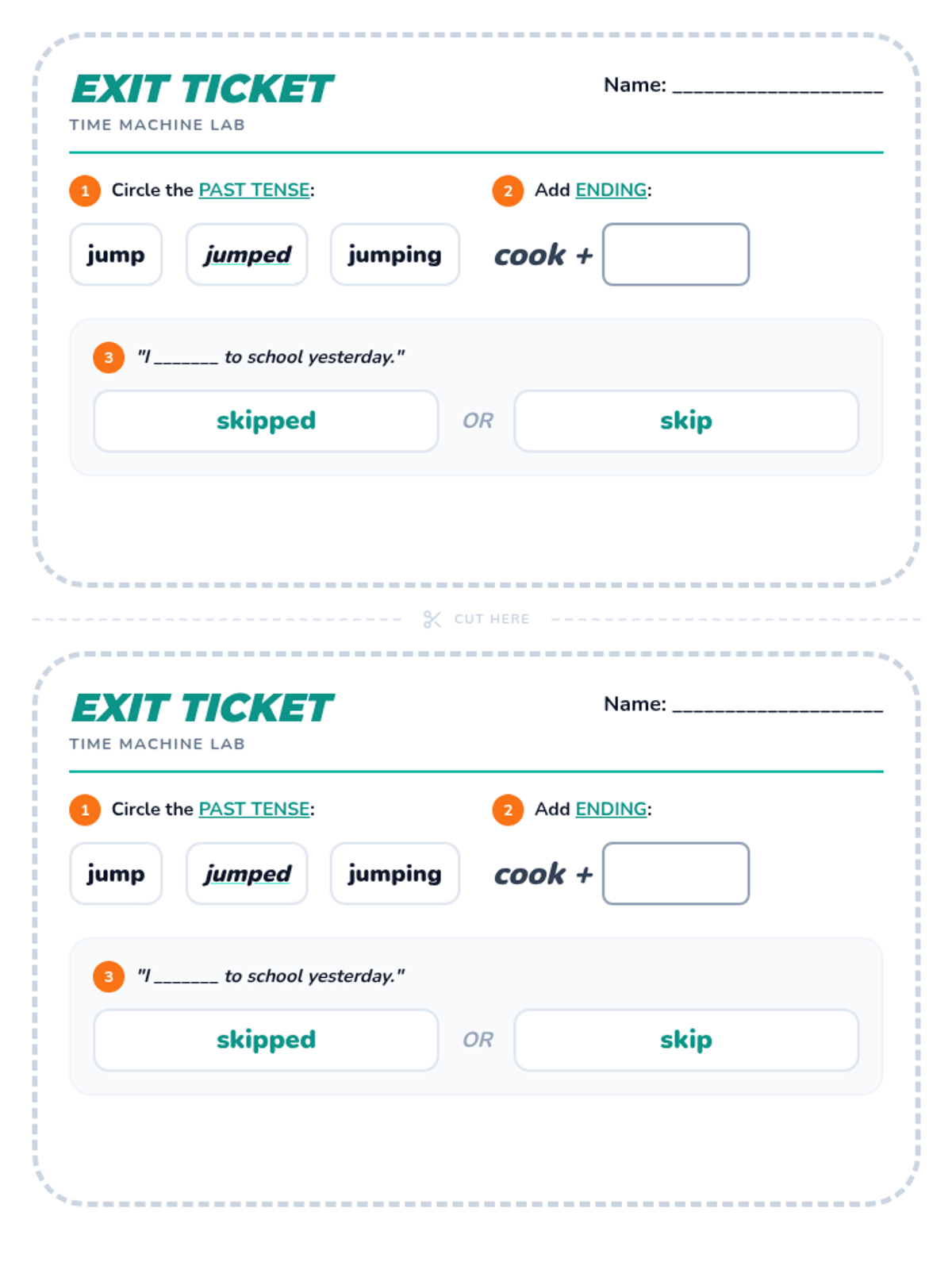
A comprehensive lesson on simple past tense verbs focusing on common irregular forms (be, have, do, run, swim, sit, go, eat, see) for 2nd and 3rd grade students. Includes visual instruction, reading practice, and application activities.
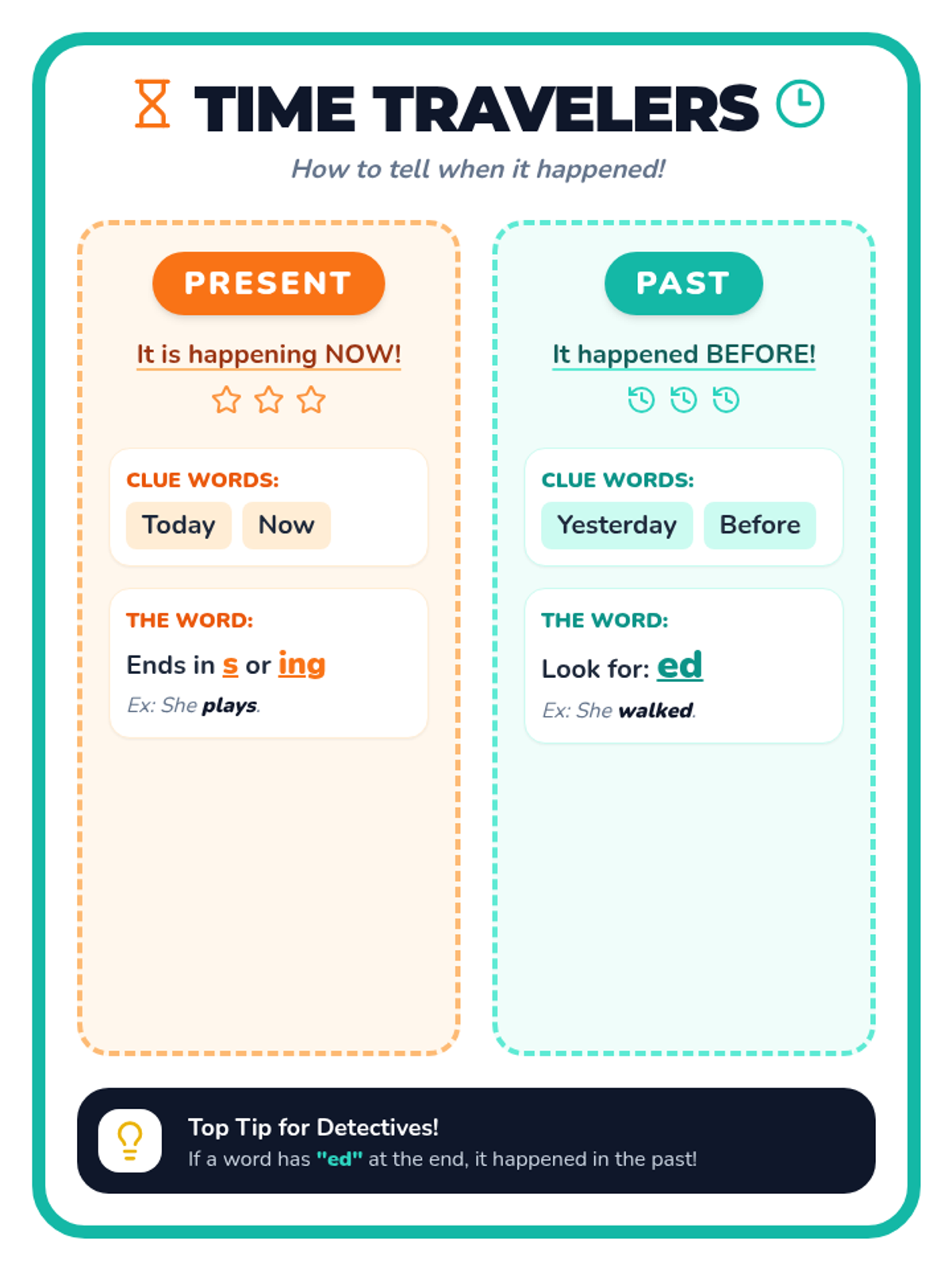
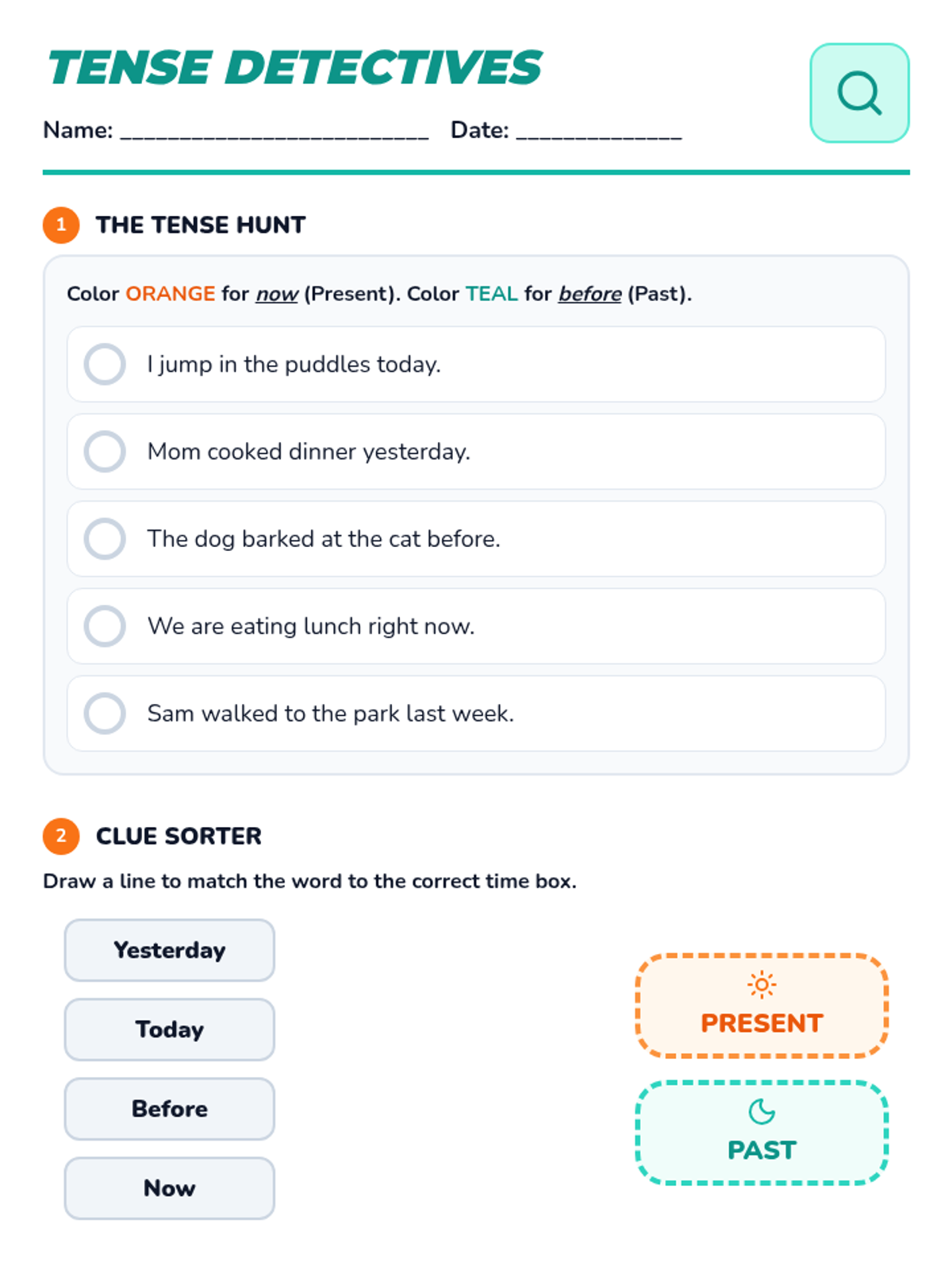
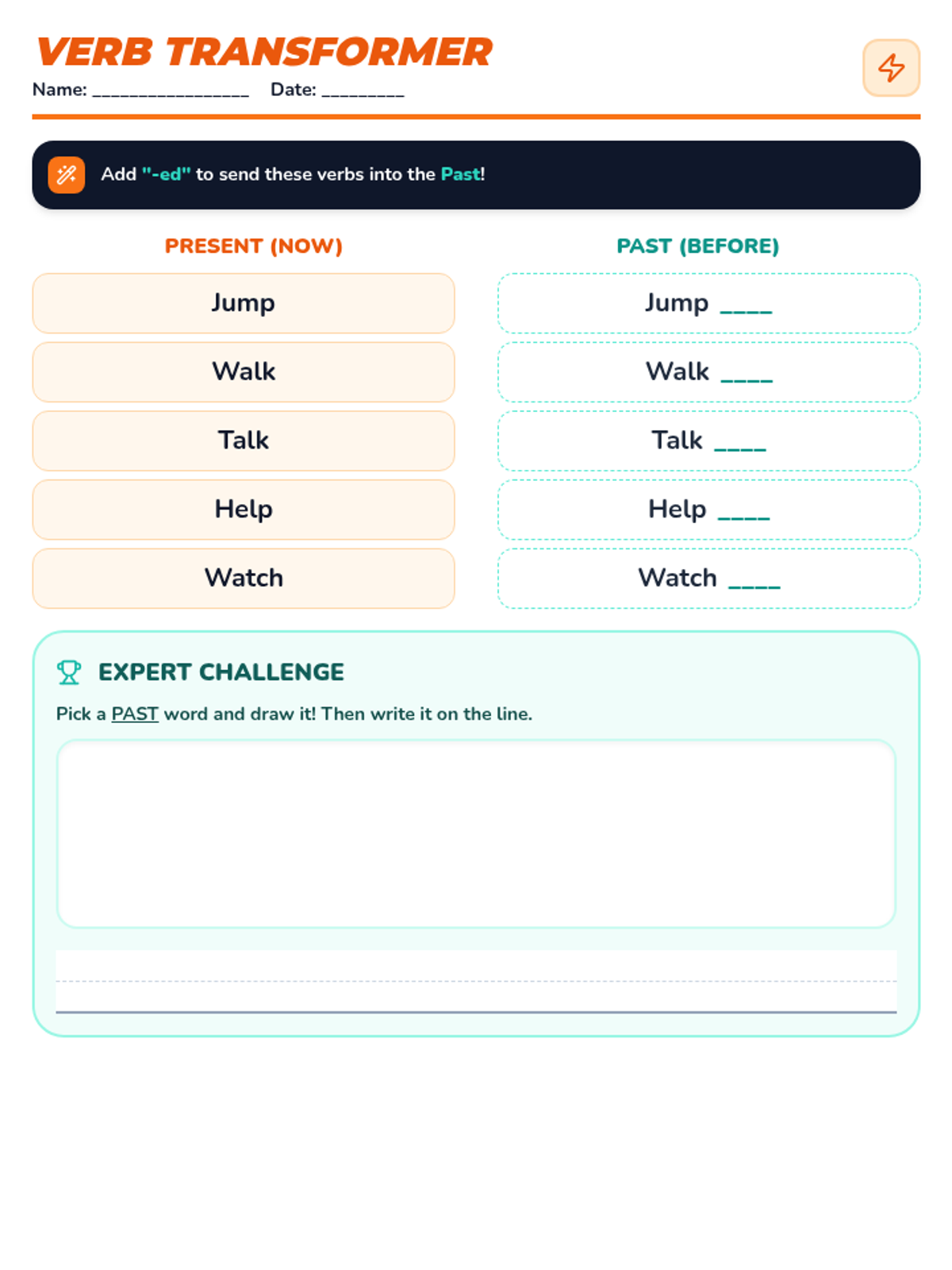
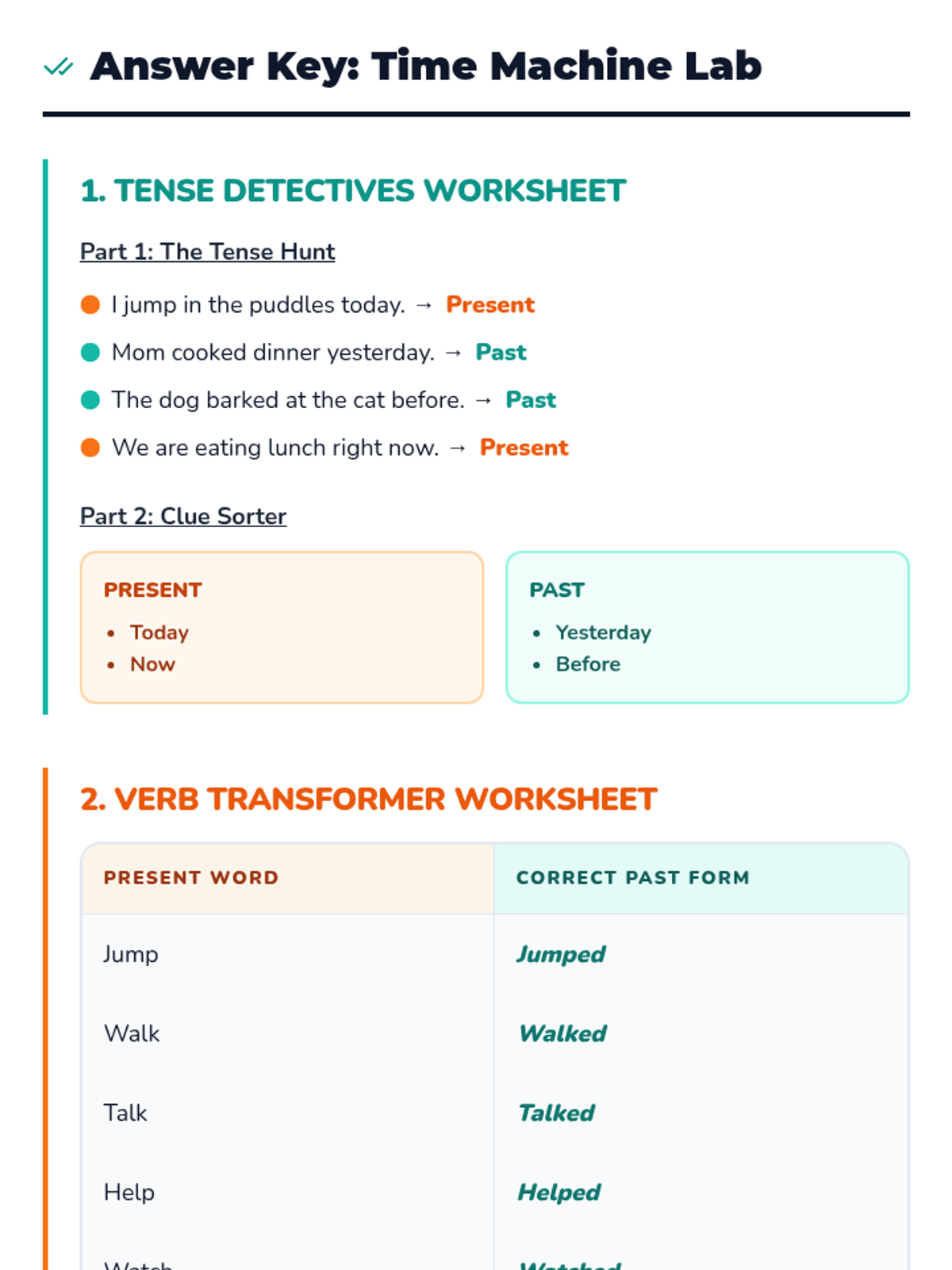
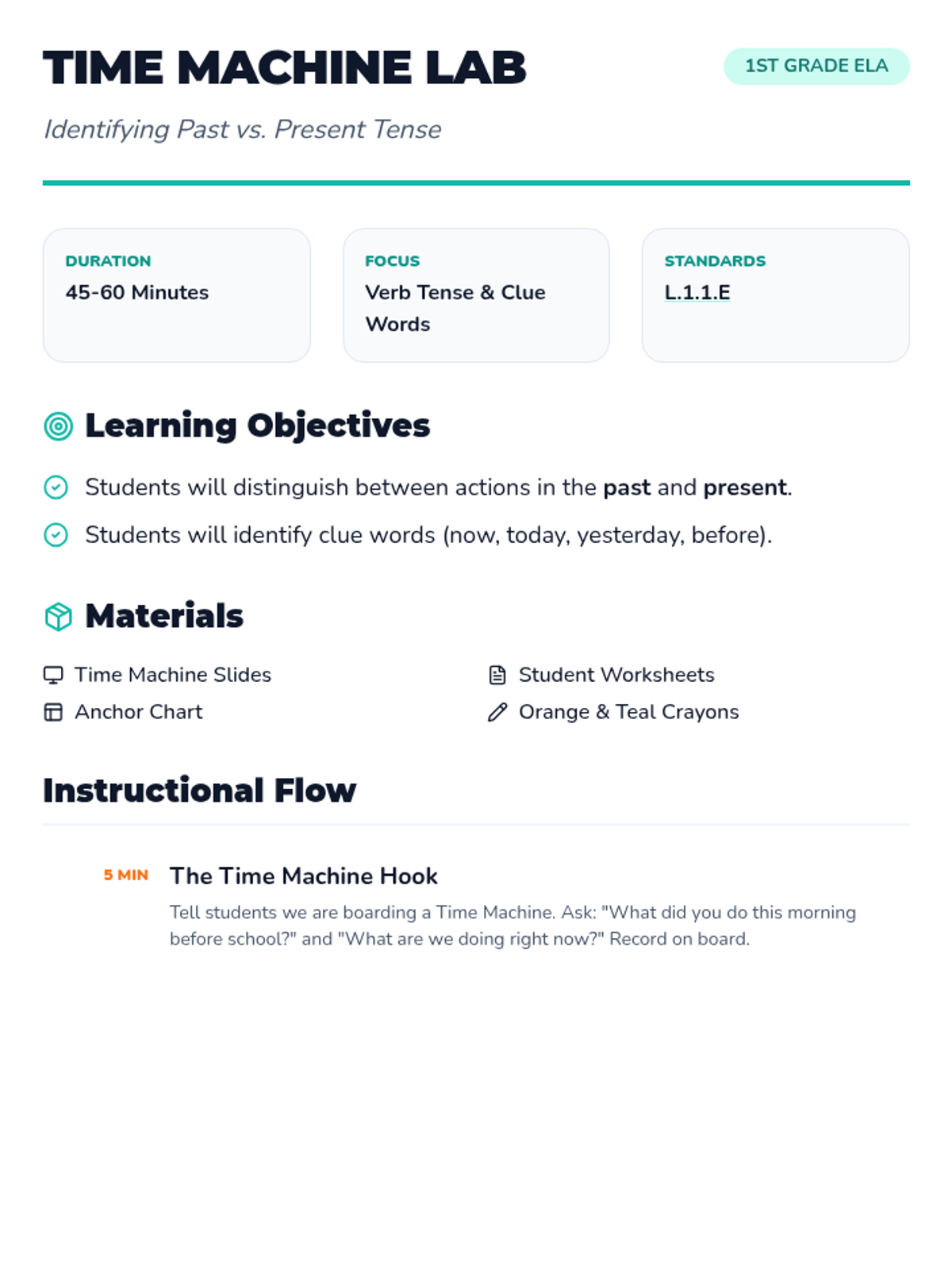
A foundational lesson for 1st grade students to distinguish between past and present tense using time markers and verb endings. Students will learn to identify 'now' versus 'before' through interactive slides, visual aids, and hands-on practice.
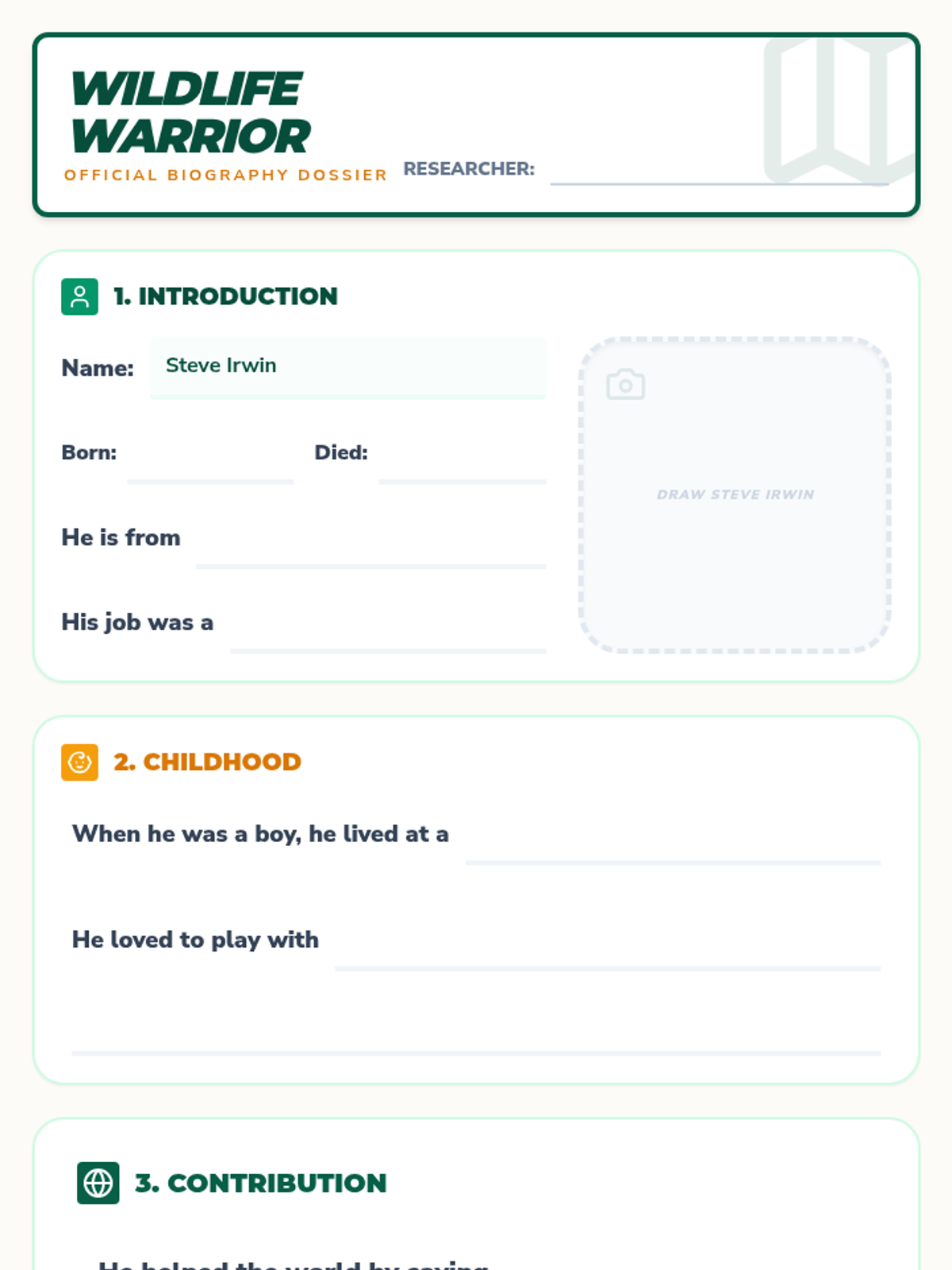
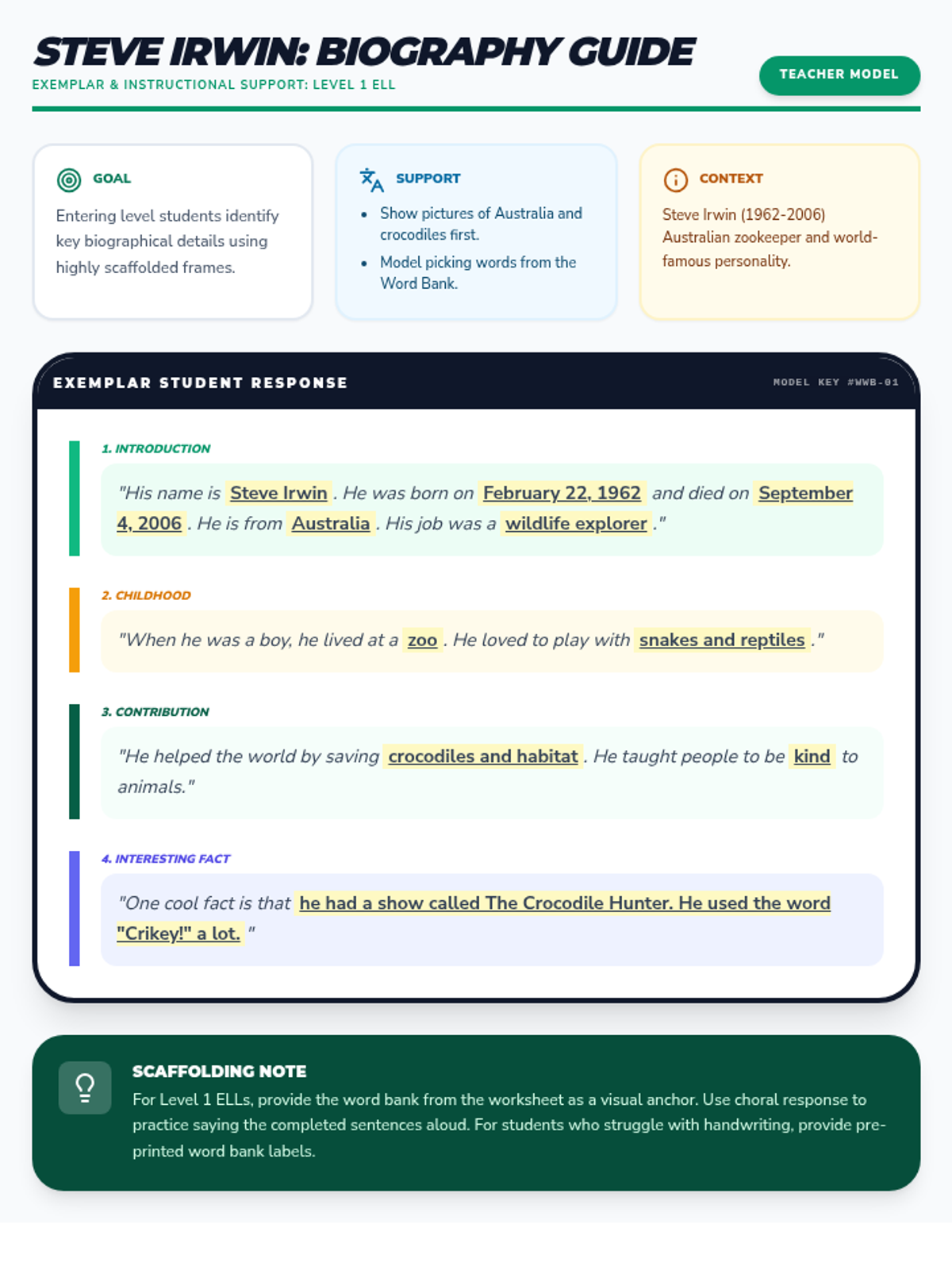
A highly scaffolded biography unit for Grade 5 ELL students at the entering level, focusing on the life of Steve Irwin with simplified sentence frames, visual supports, and targeted vocabulary.
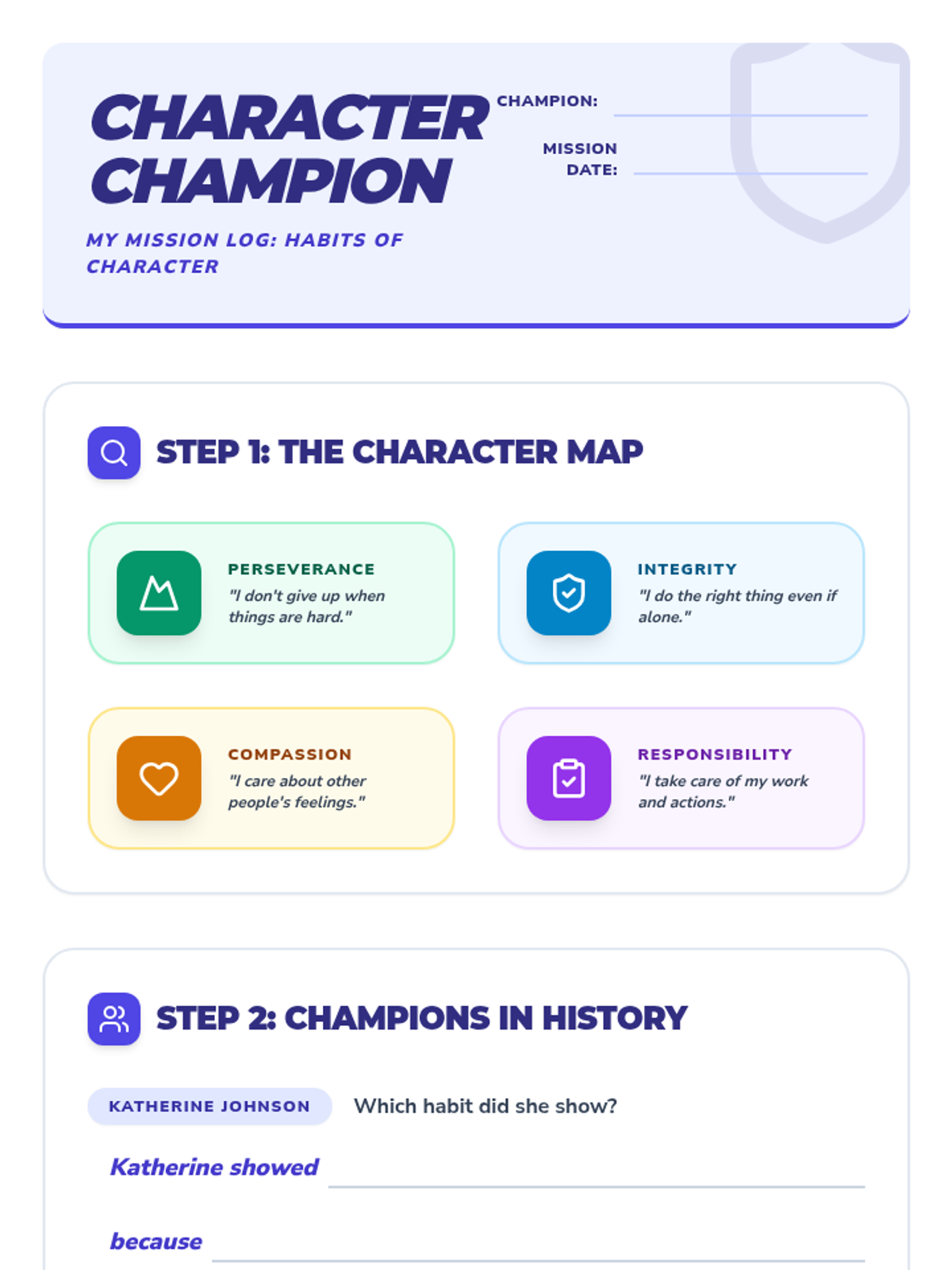
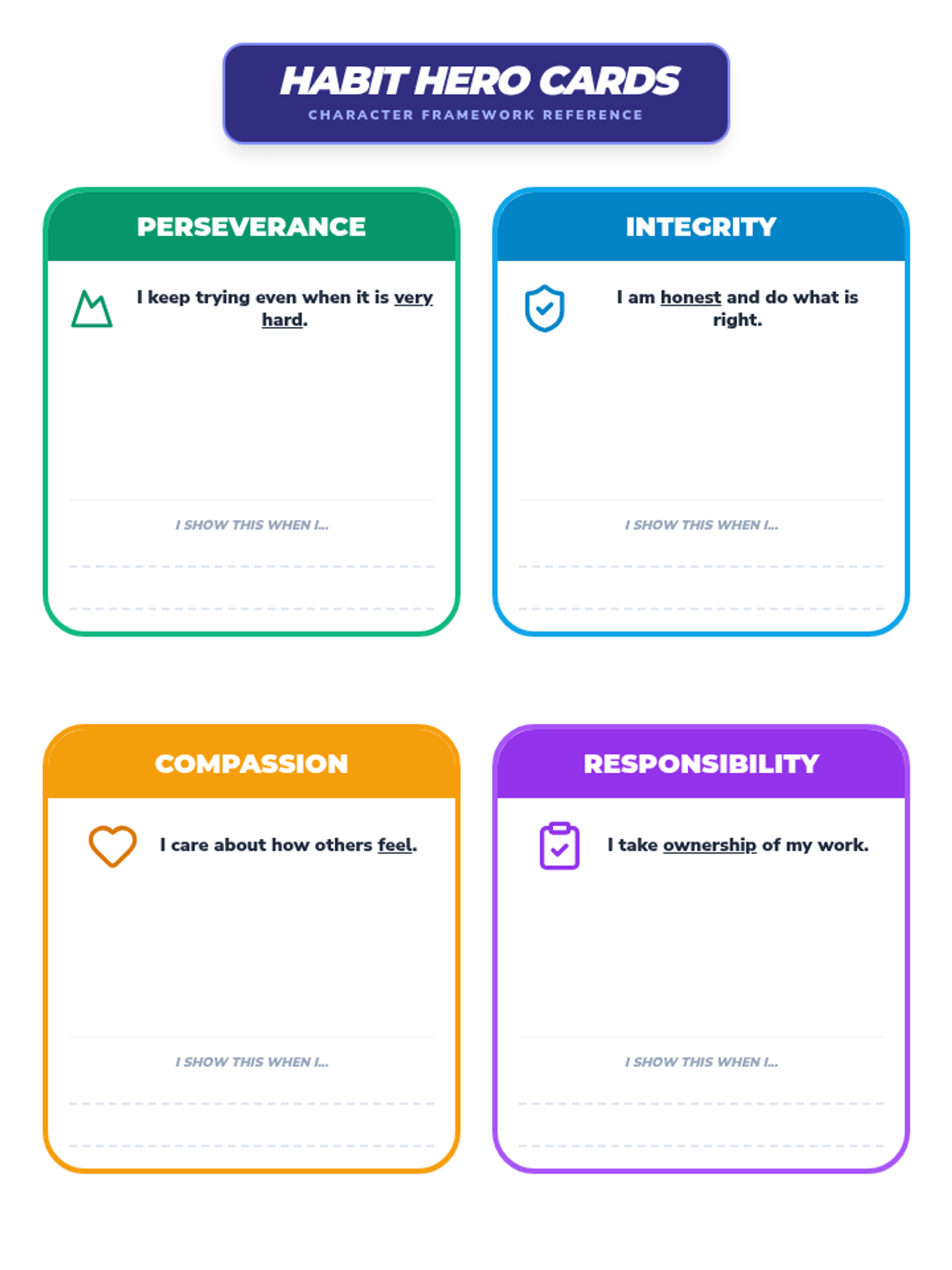
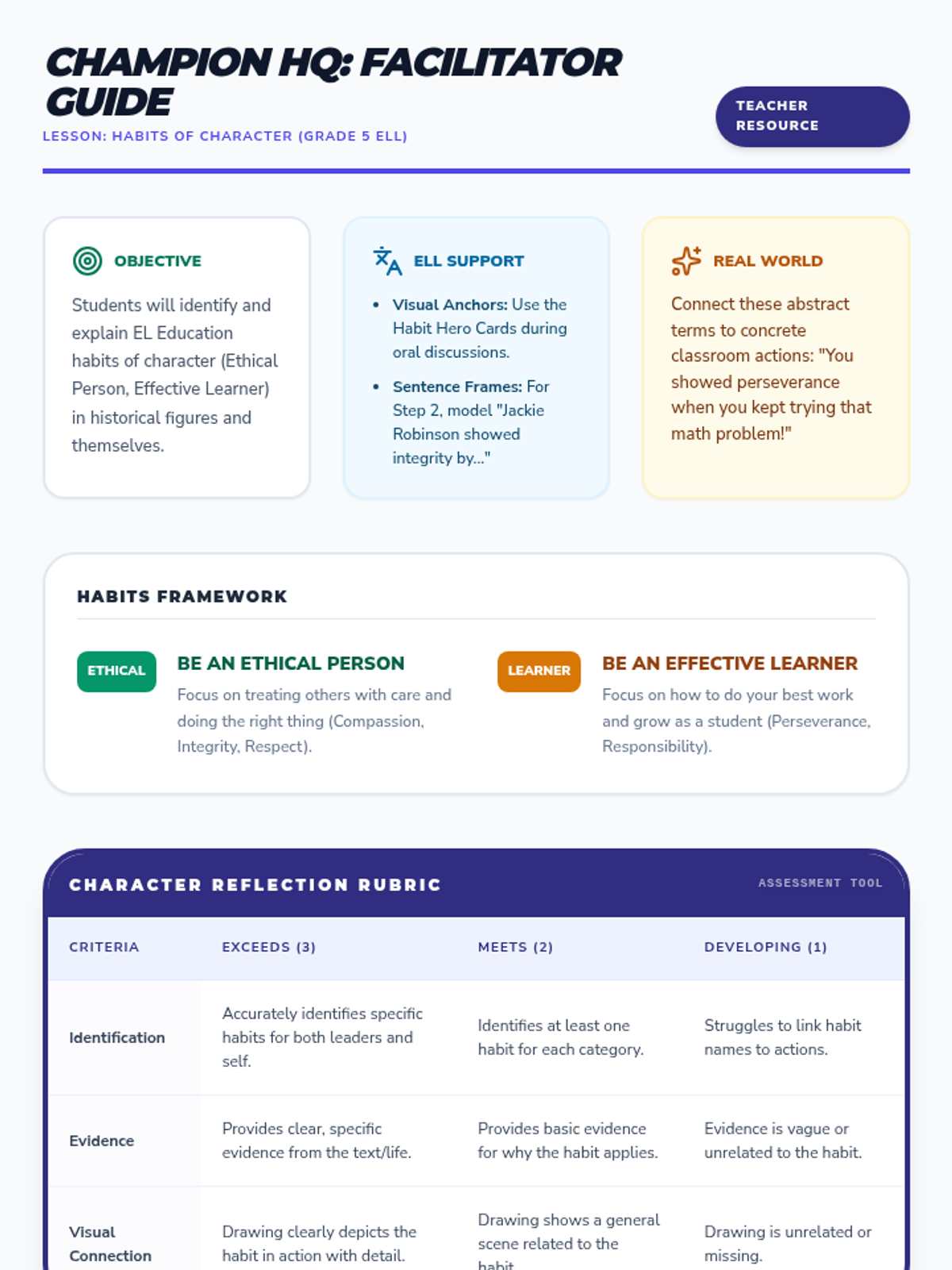
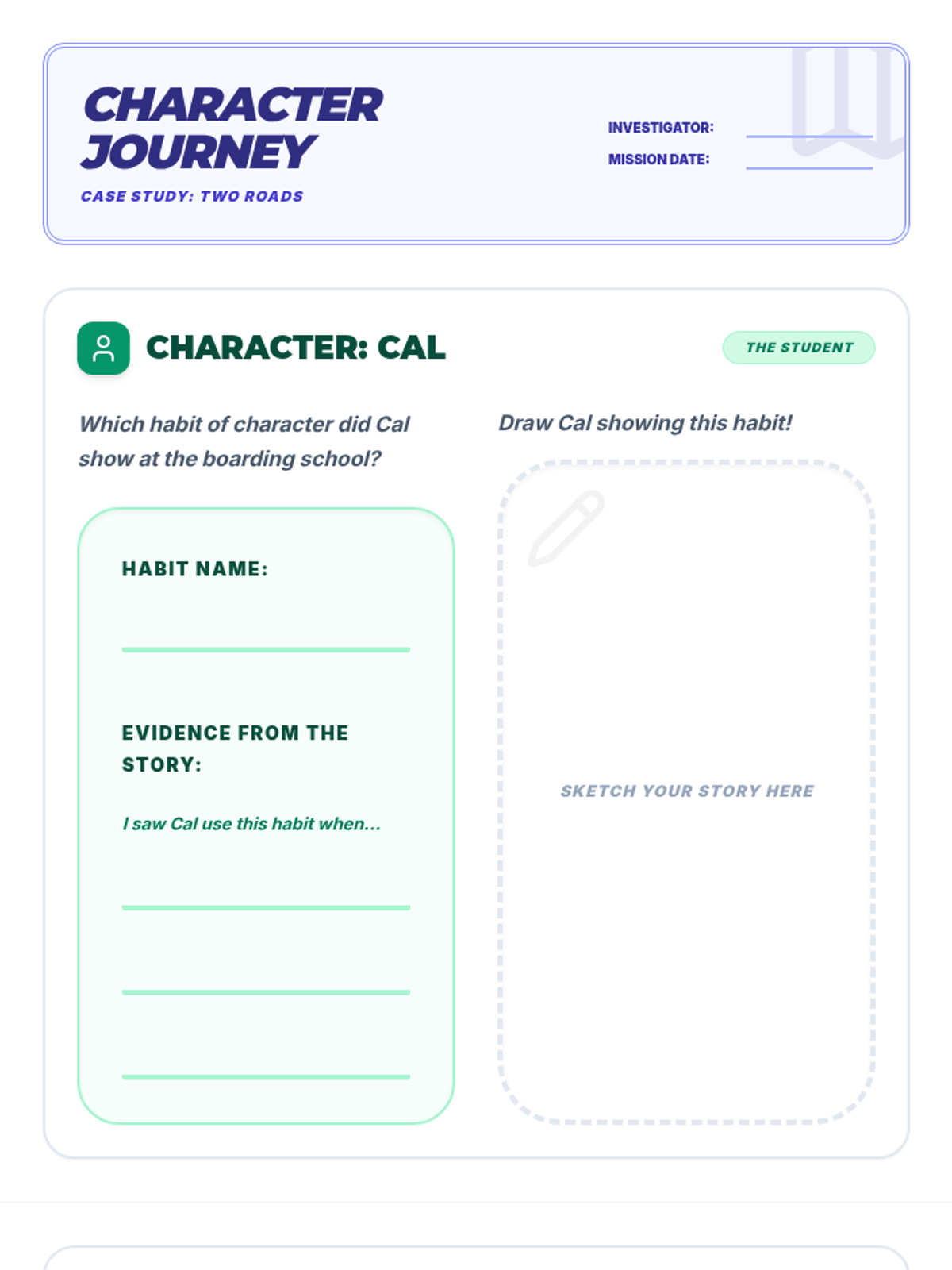
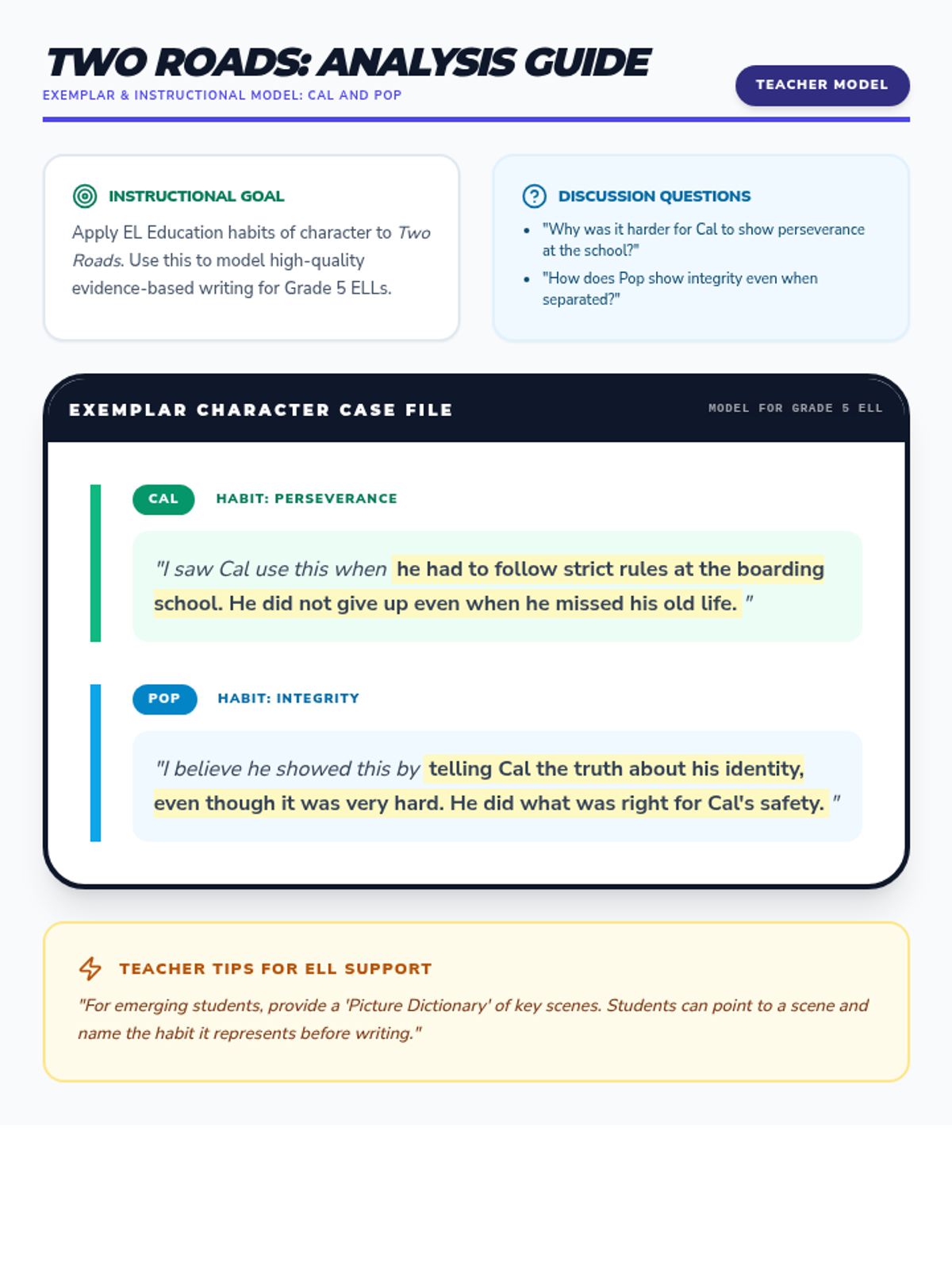
A social-emotional and ELA lesson for Grade 5 ELL students to explore and apply the EL Education habits of character, focusing on being an ethical person and an effective learner.
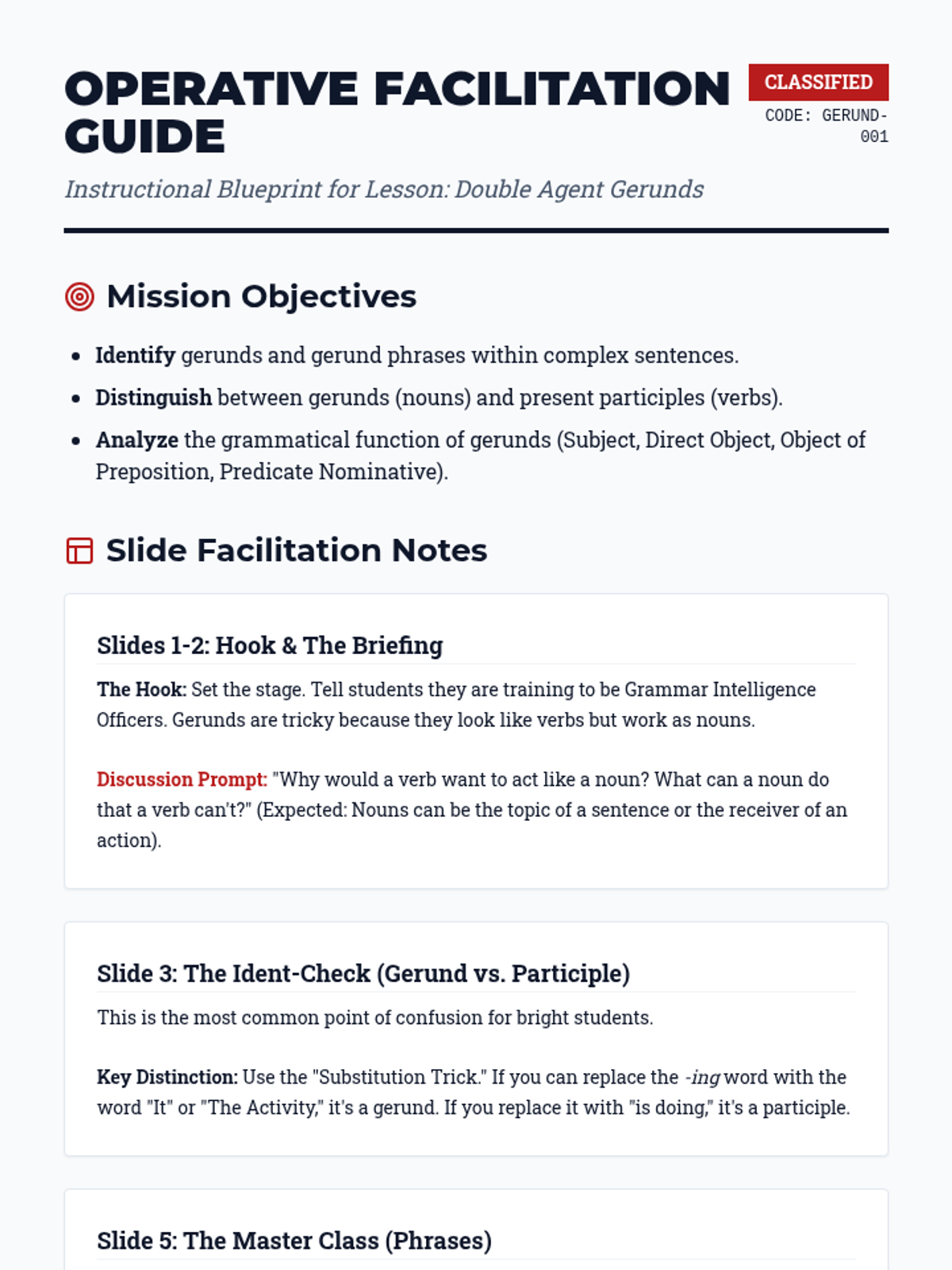
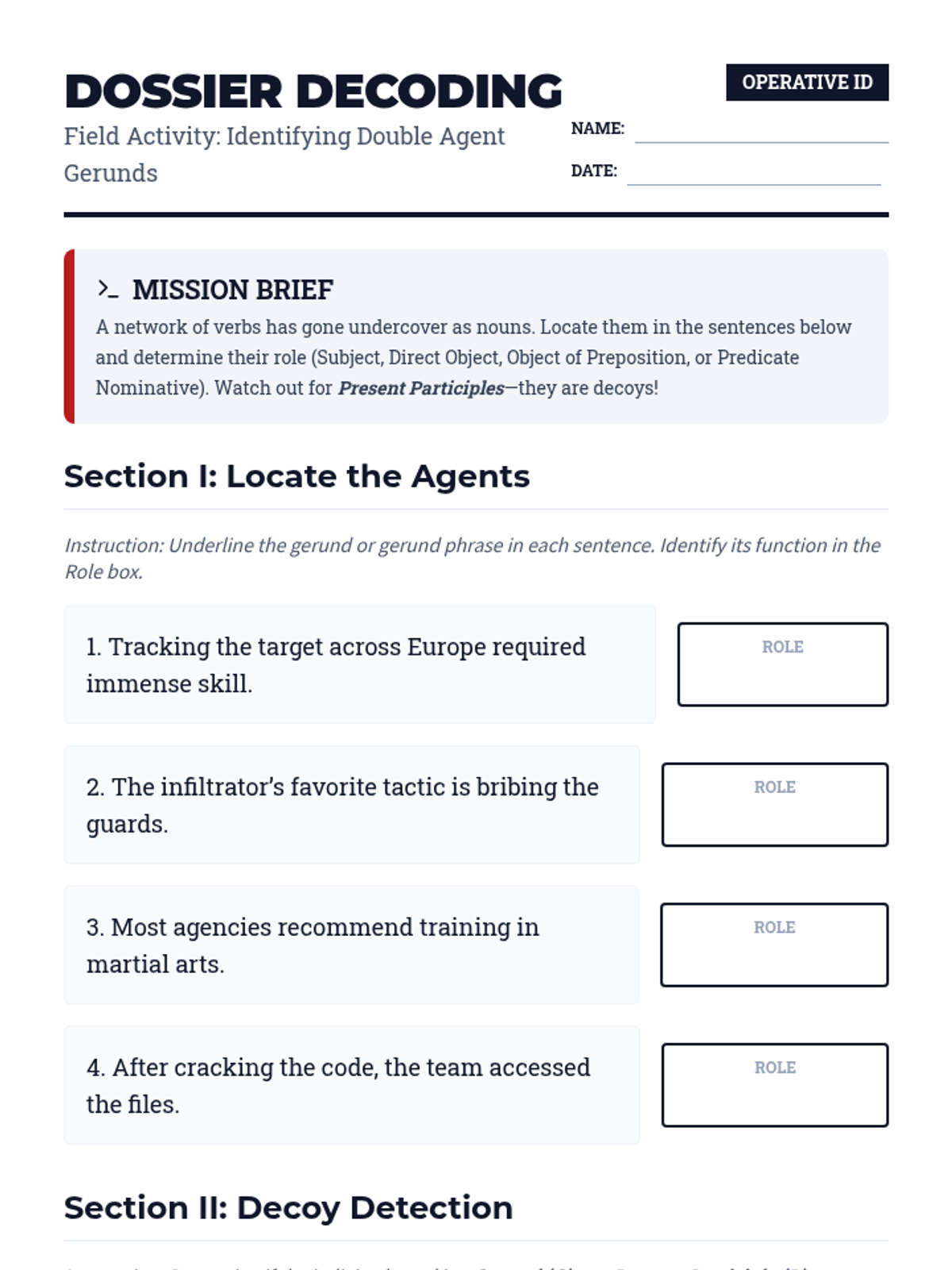
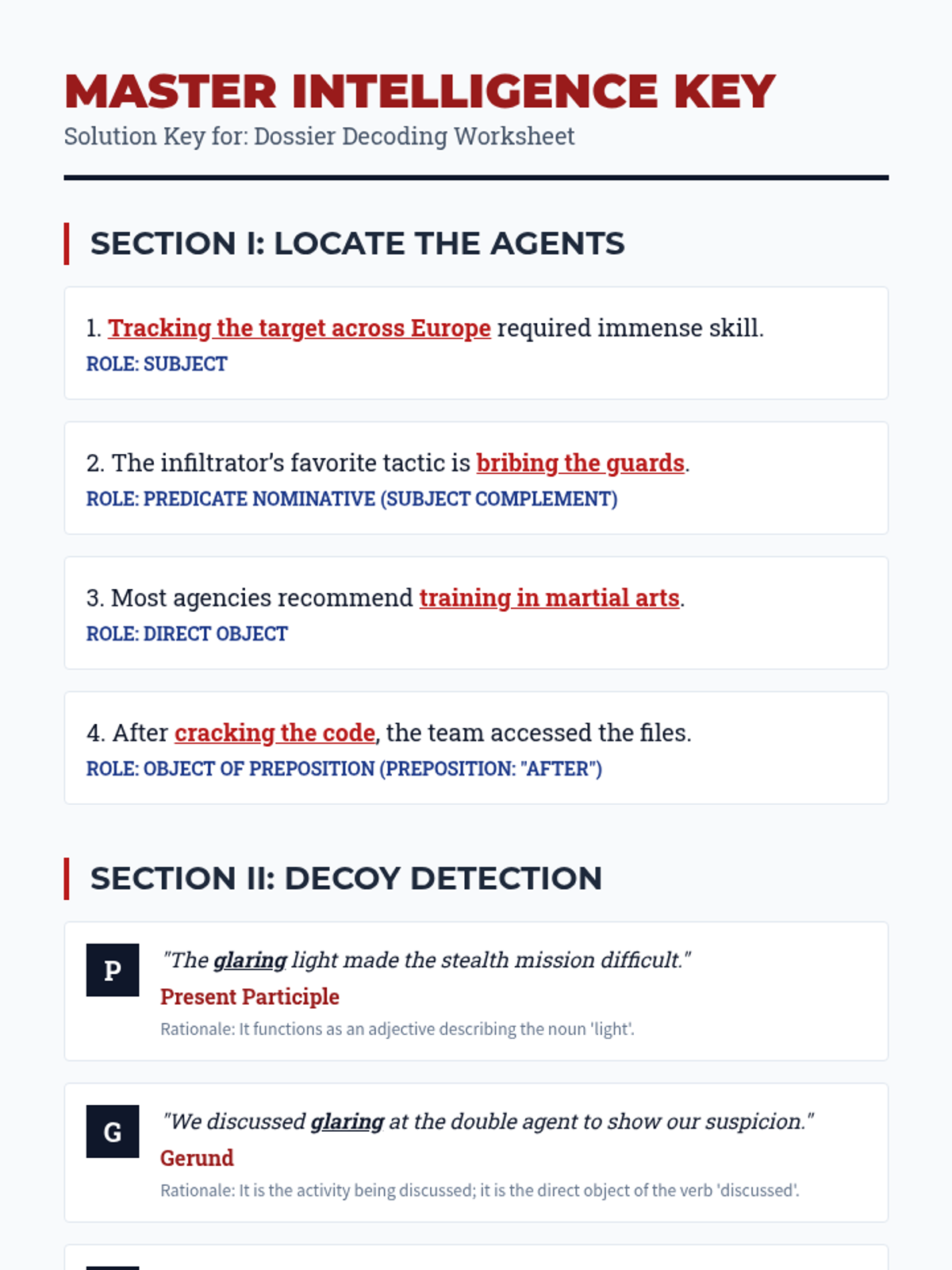
A high-energy, detective-themed lesson exploring how gerunds function as nouns while maintaining their verb-like properties. Designed for advanced students to master identification and usage in various sentence roles.
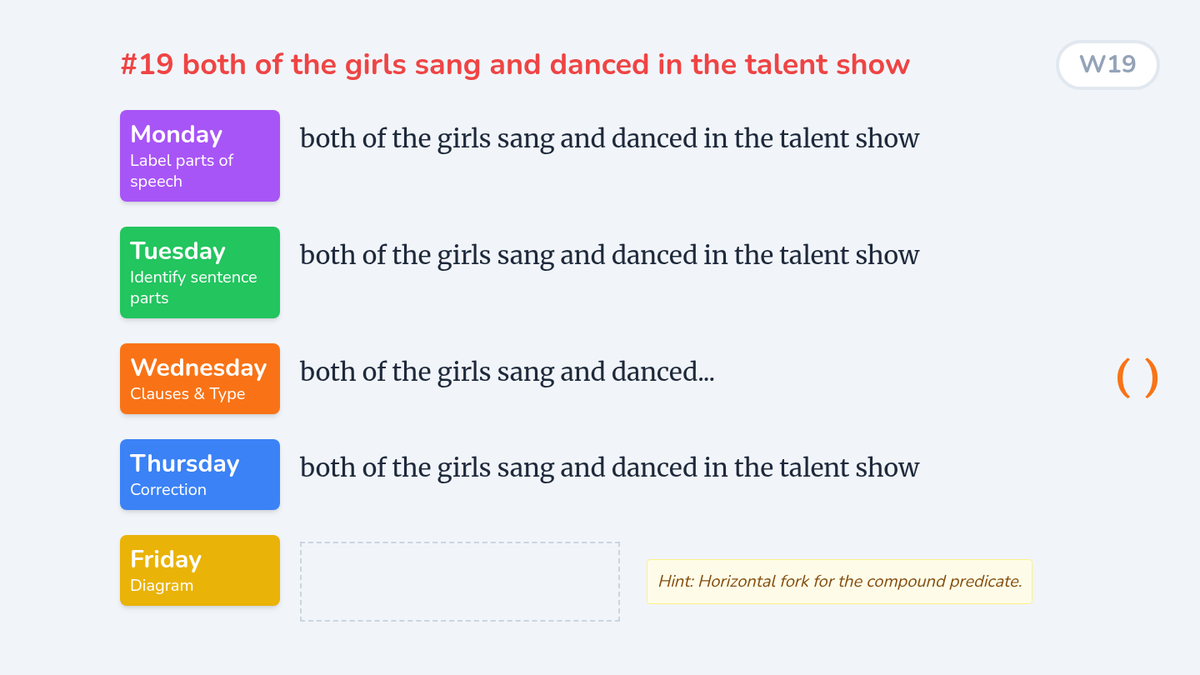
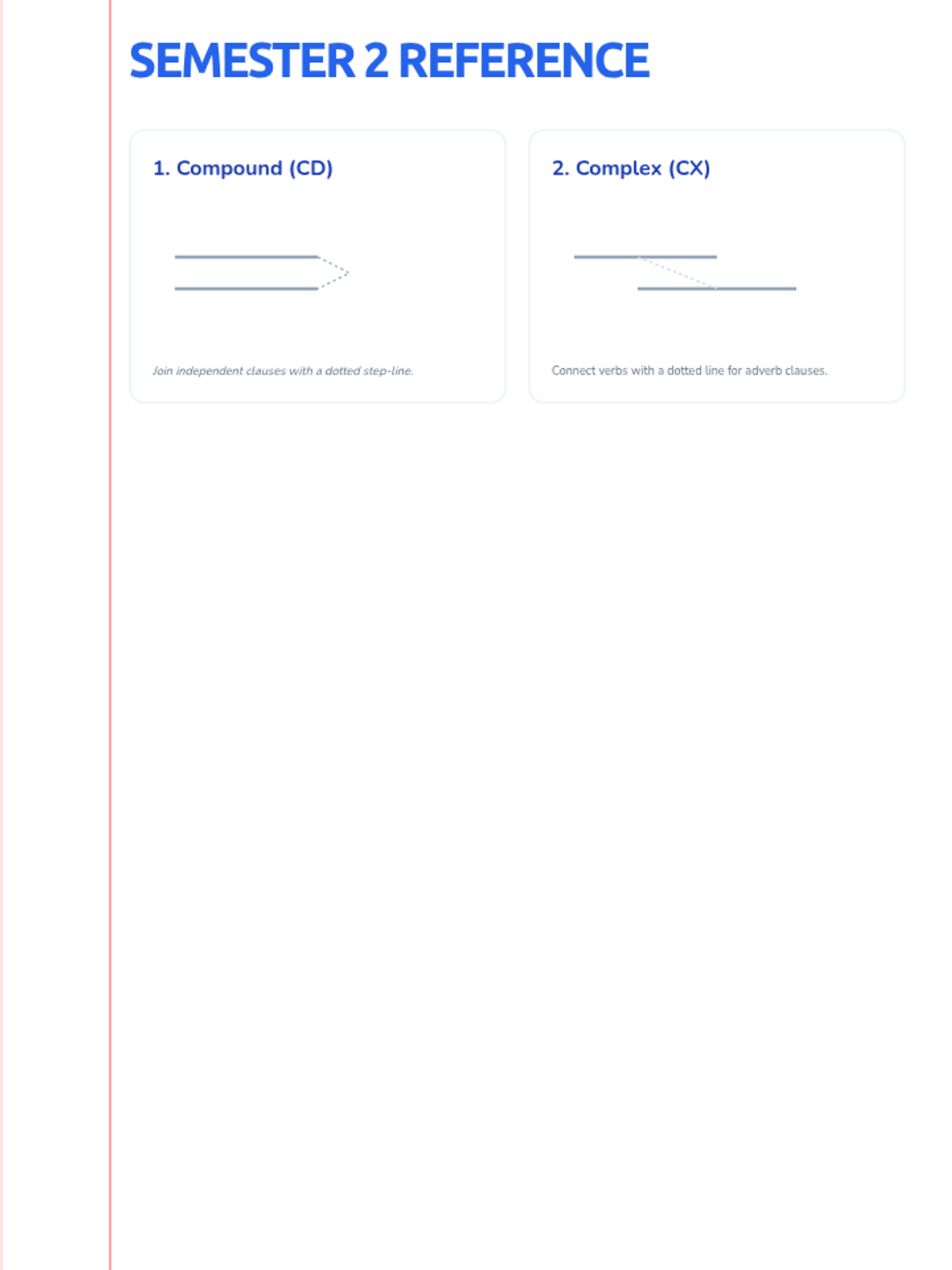
Weeks 19 through 36 of the Daily Grammar Practice program, progressing to compound-complex sentences and advanced punctuation.
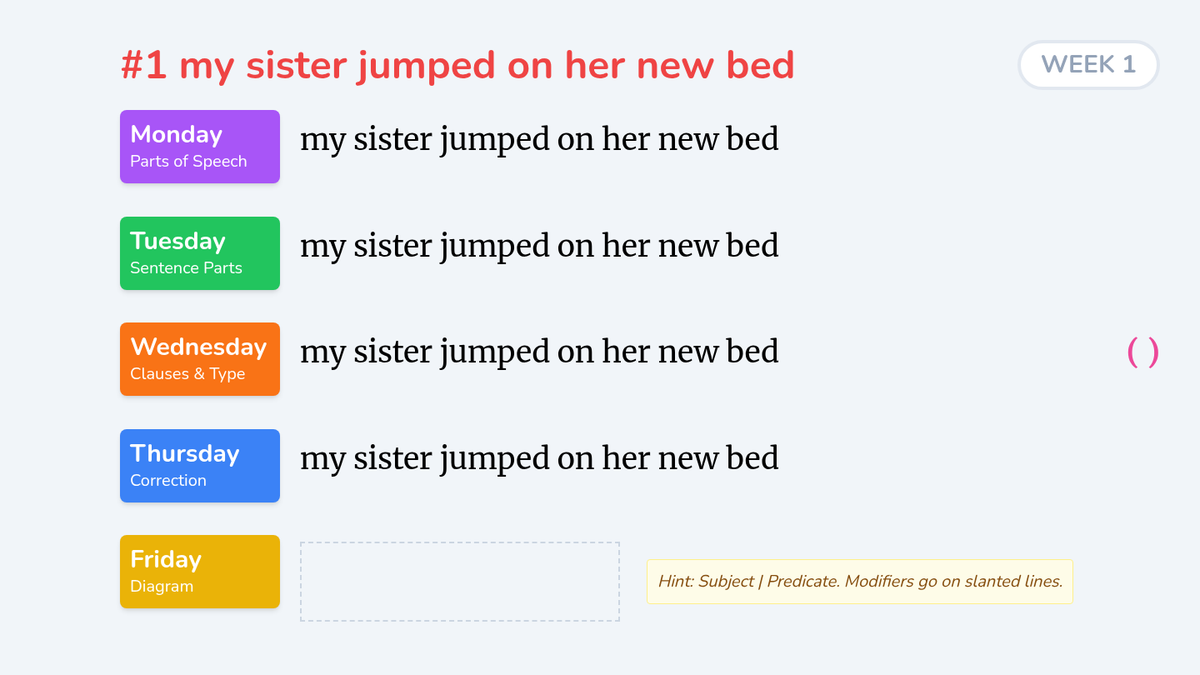
Weeks 1 through 18 of the Daily Grammar Practice program, covering basic to intermediate sentence structures.
Unit 9 Lesson 2 Do Now focusing on focused structure in a solar eclipse passage and editing dialogue punctuation and complex sentences in a formal letter.
Unit 9 Lesson 1 Do Now focusing on developing engaging ideas in a baking narrative and editing capitalization and spelling for a Texas state parks report.
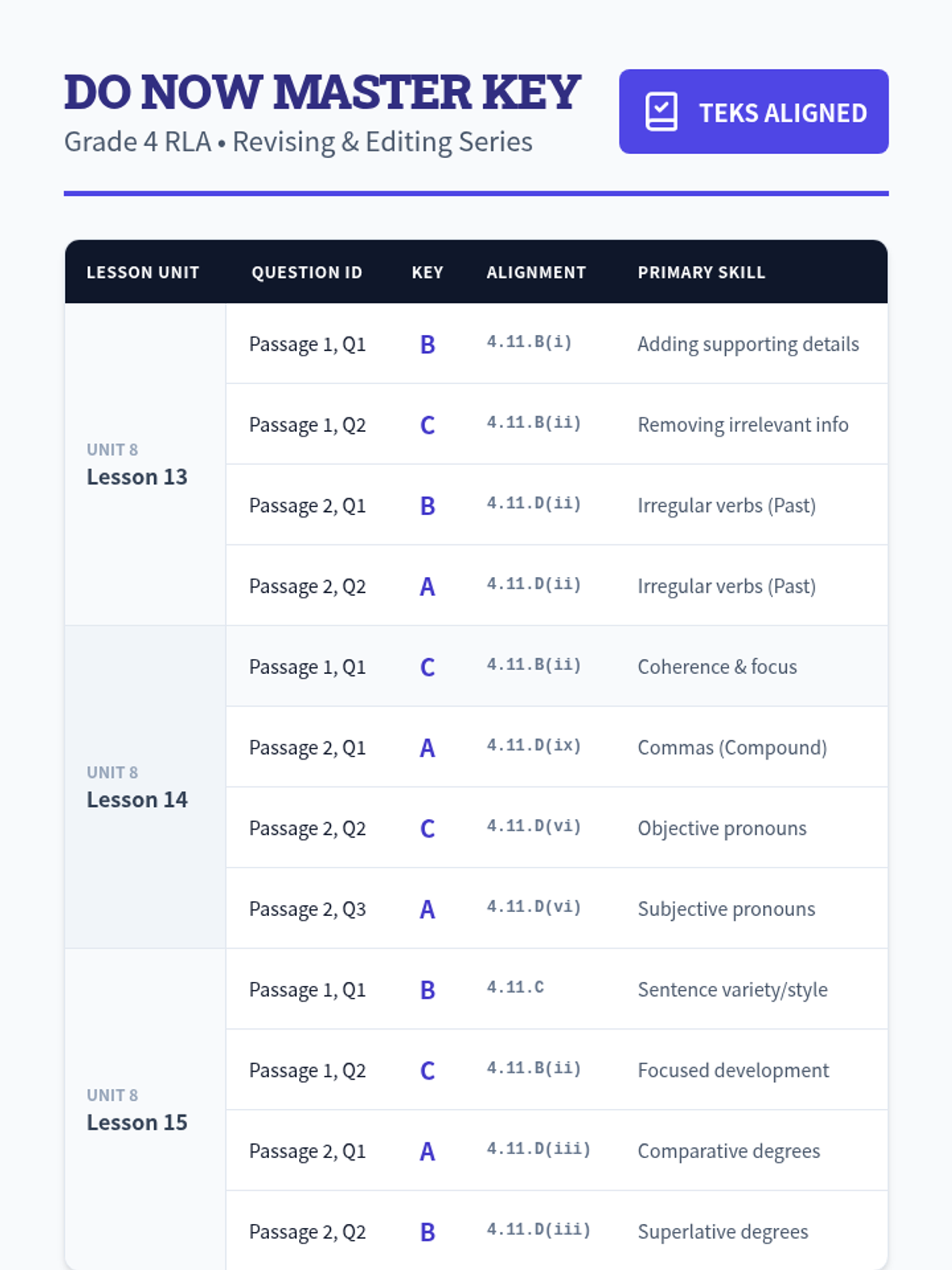
Unit 8 Lesson 15 Do Now focusing on improving sentence variety in a science fair passage and editing adjectives and prepositions in a mountain climbing journal.
Unit 8 Lesson 14 Do Now focusing on passage organization for a sea turtle conservation story and editing compound sentences and pronouns in a school play description.
Unit 8 Lesson 13 Do Now focusing on adding details to a passage about a community garden and editing irregular verbs in a museum trip narrative.
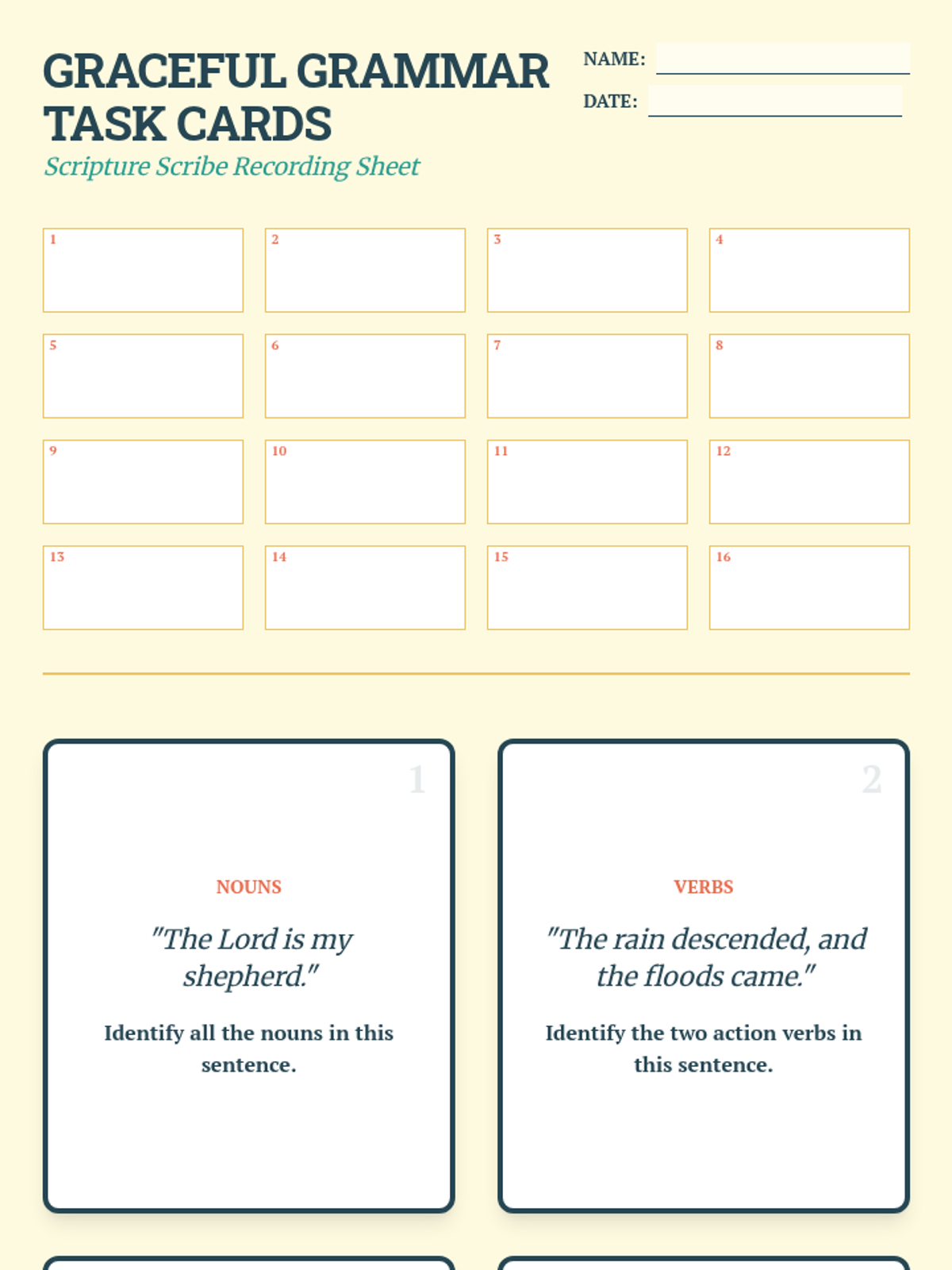
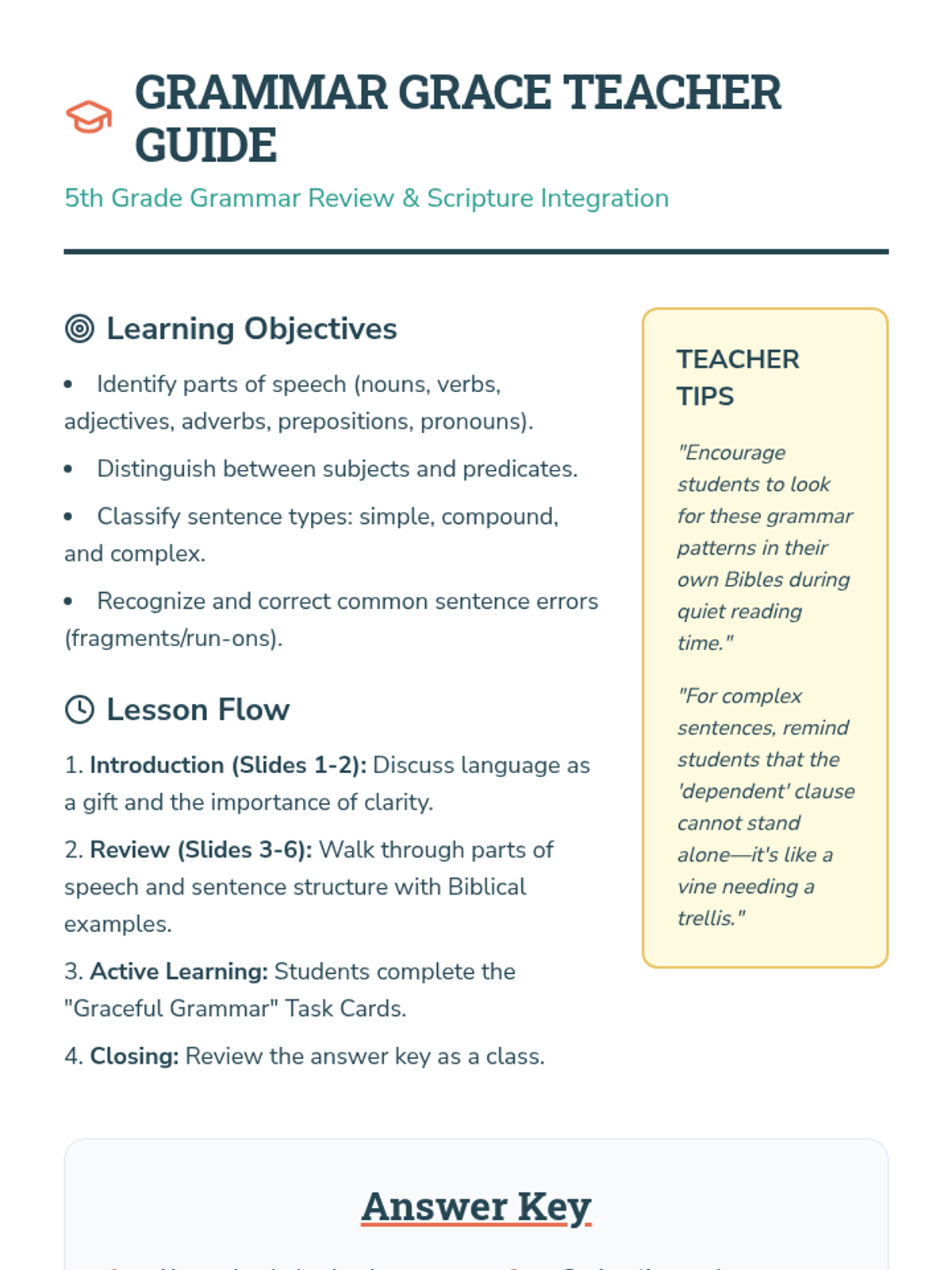
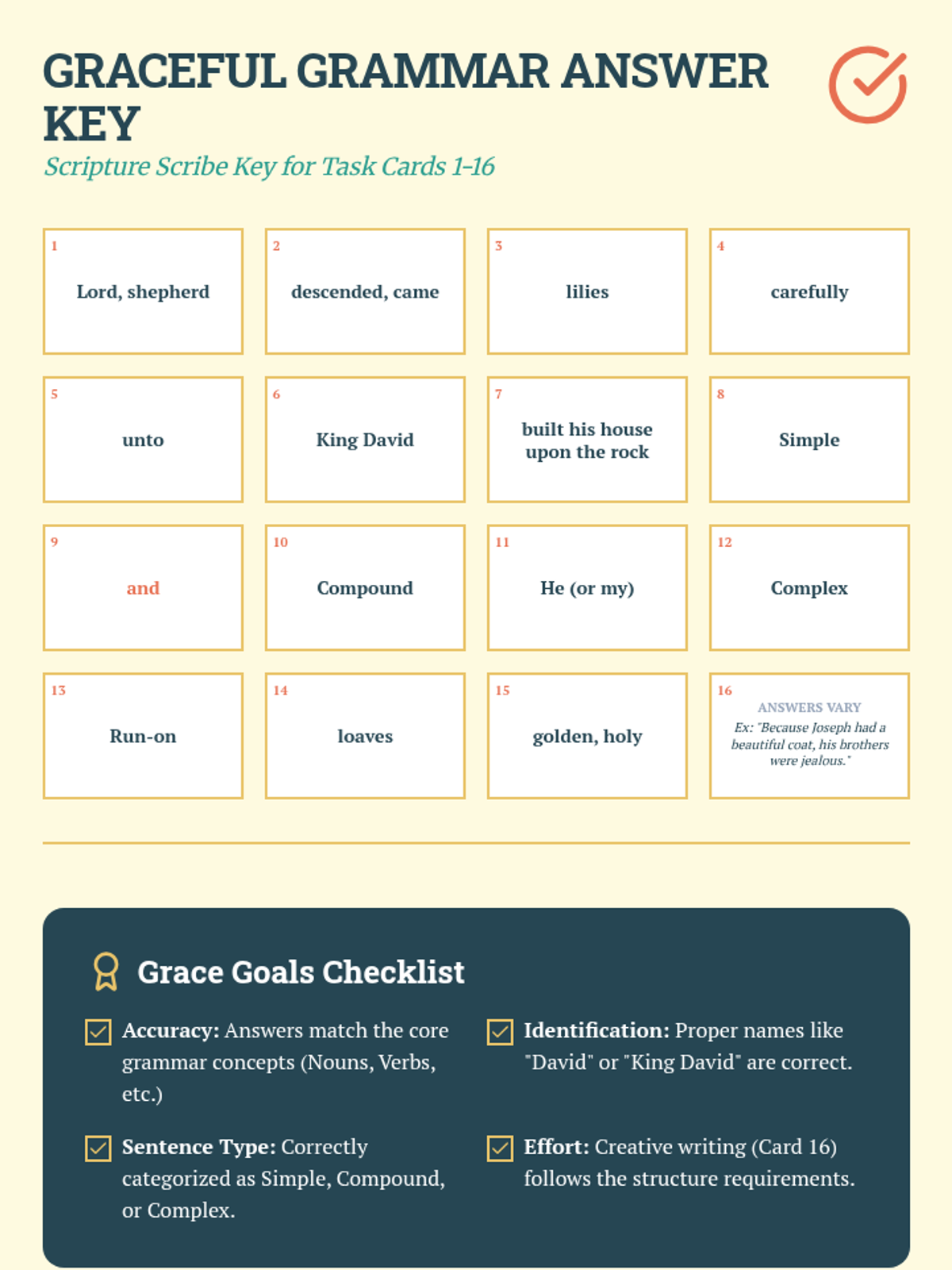
A 5th-grade grammar review lesson focusing on parts of speech and sentence structure through the lens of Biblical texts and themes. Students explore how language is a gift used to share truth and wisdom.
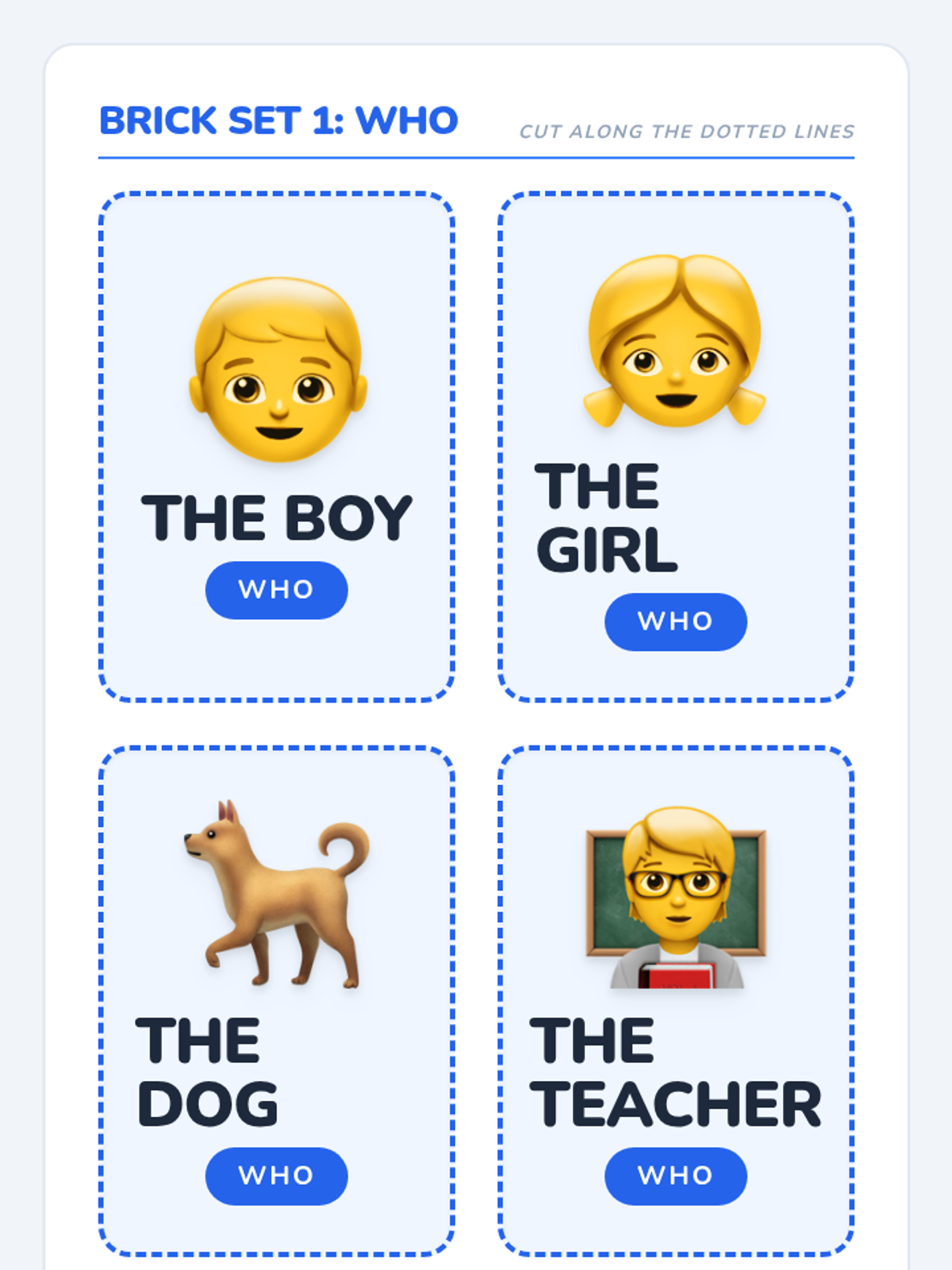
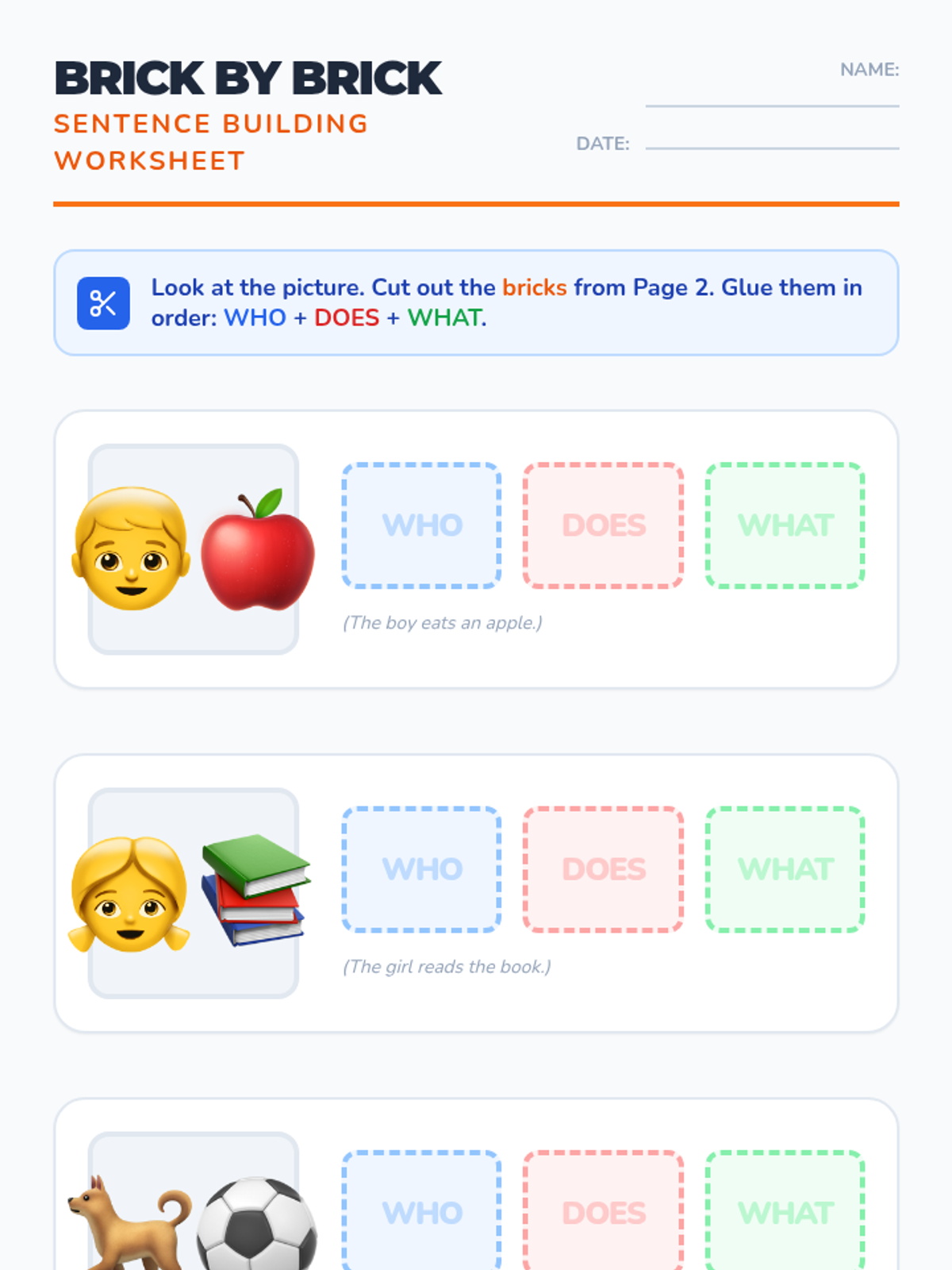
A foundational lesson for MLL students to master basic Subject-Verb-Object sentence structure using visual supports, scaffolding, and hands-on sequencing.
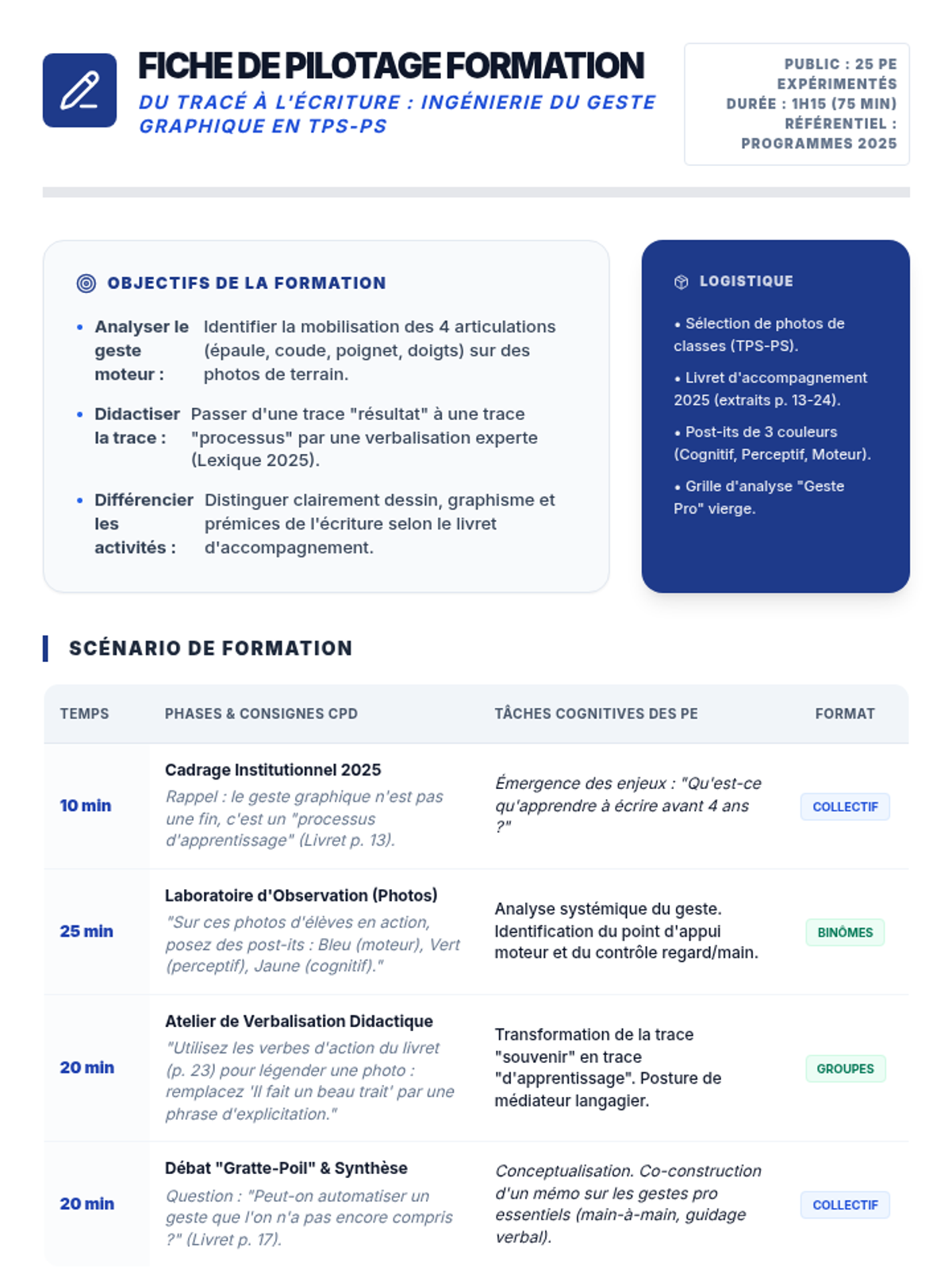
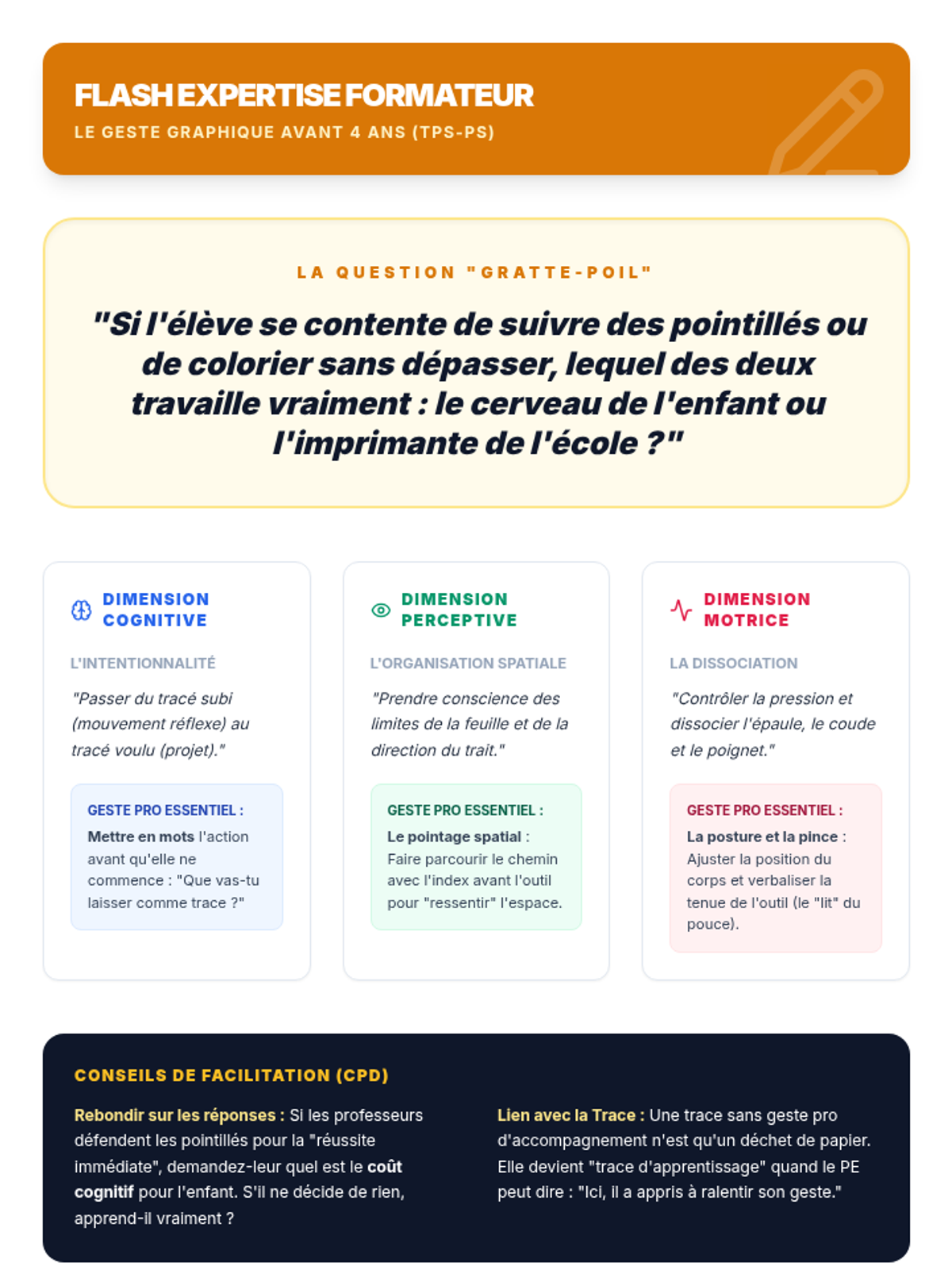
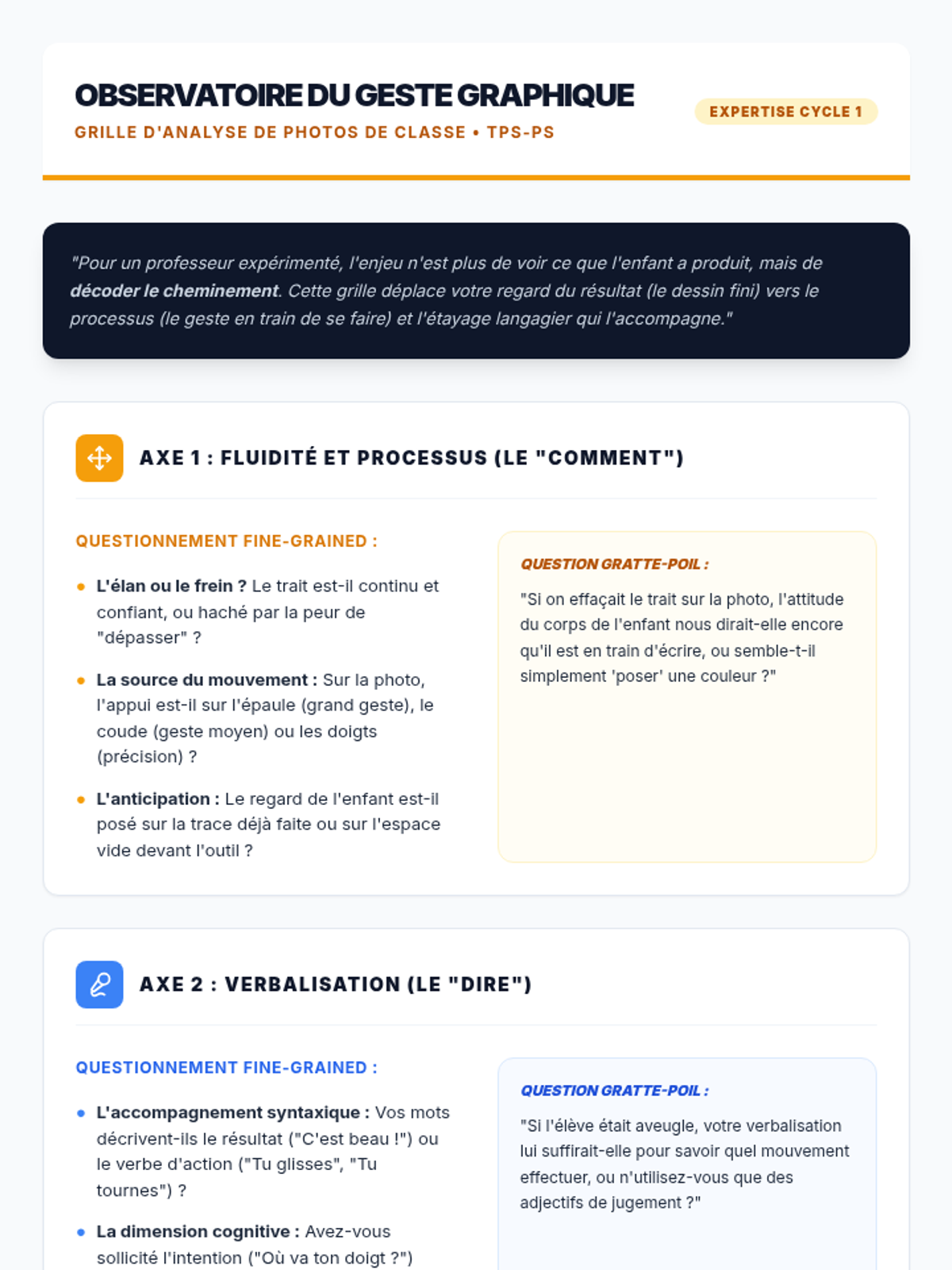
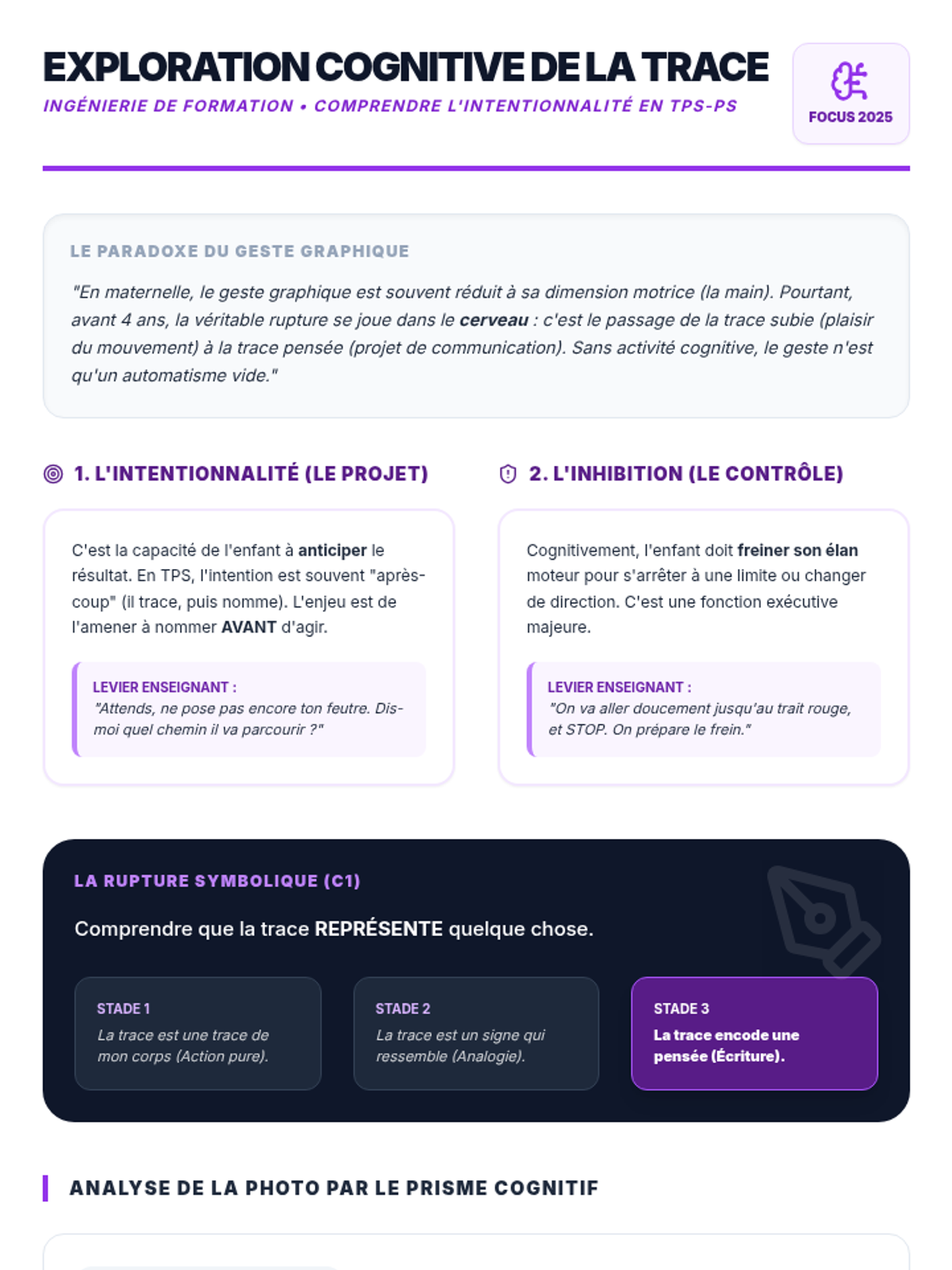
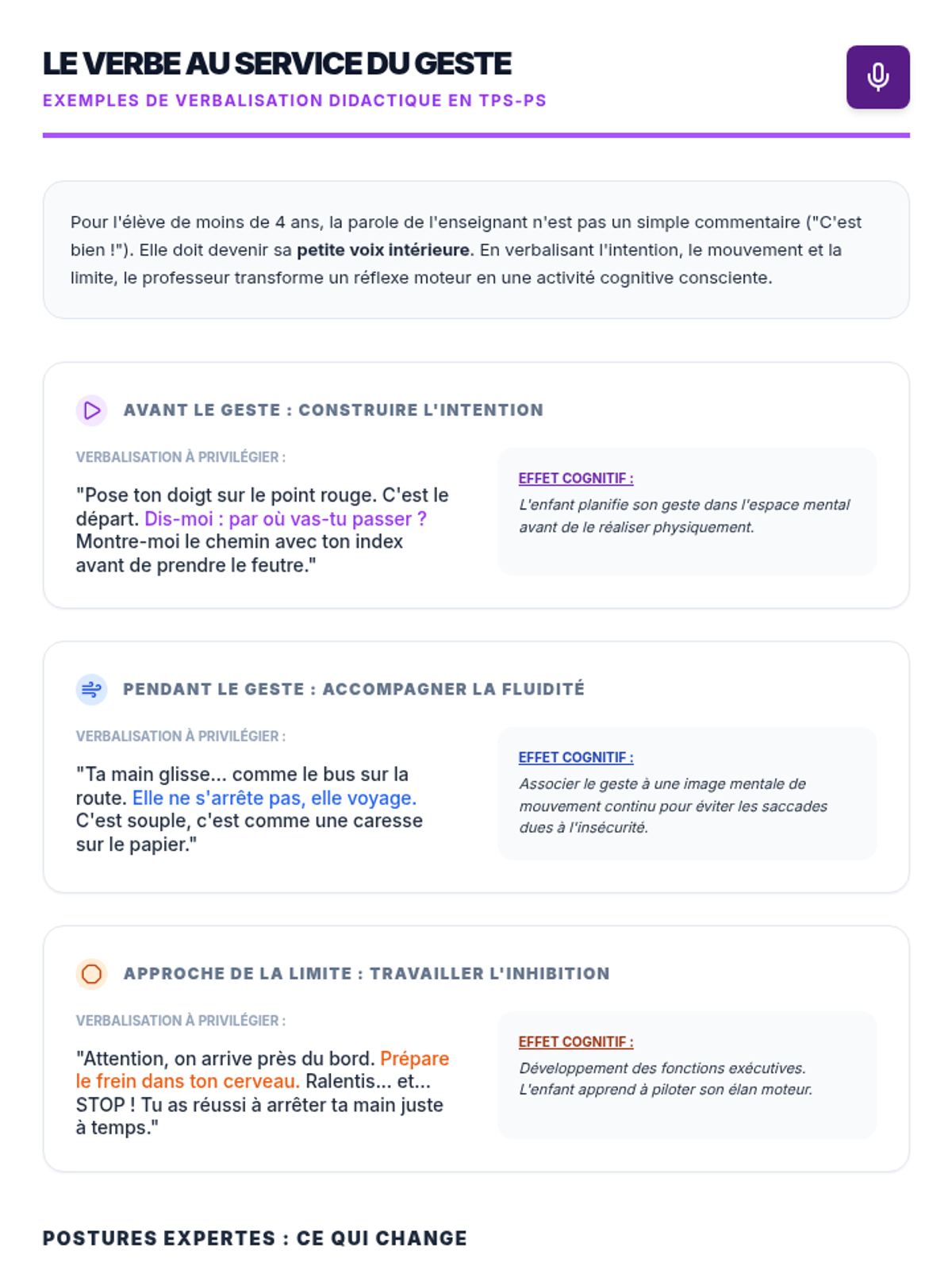
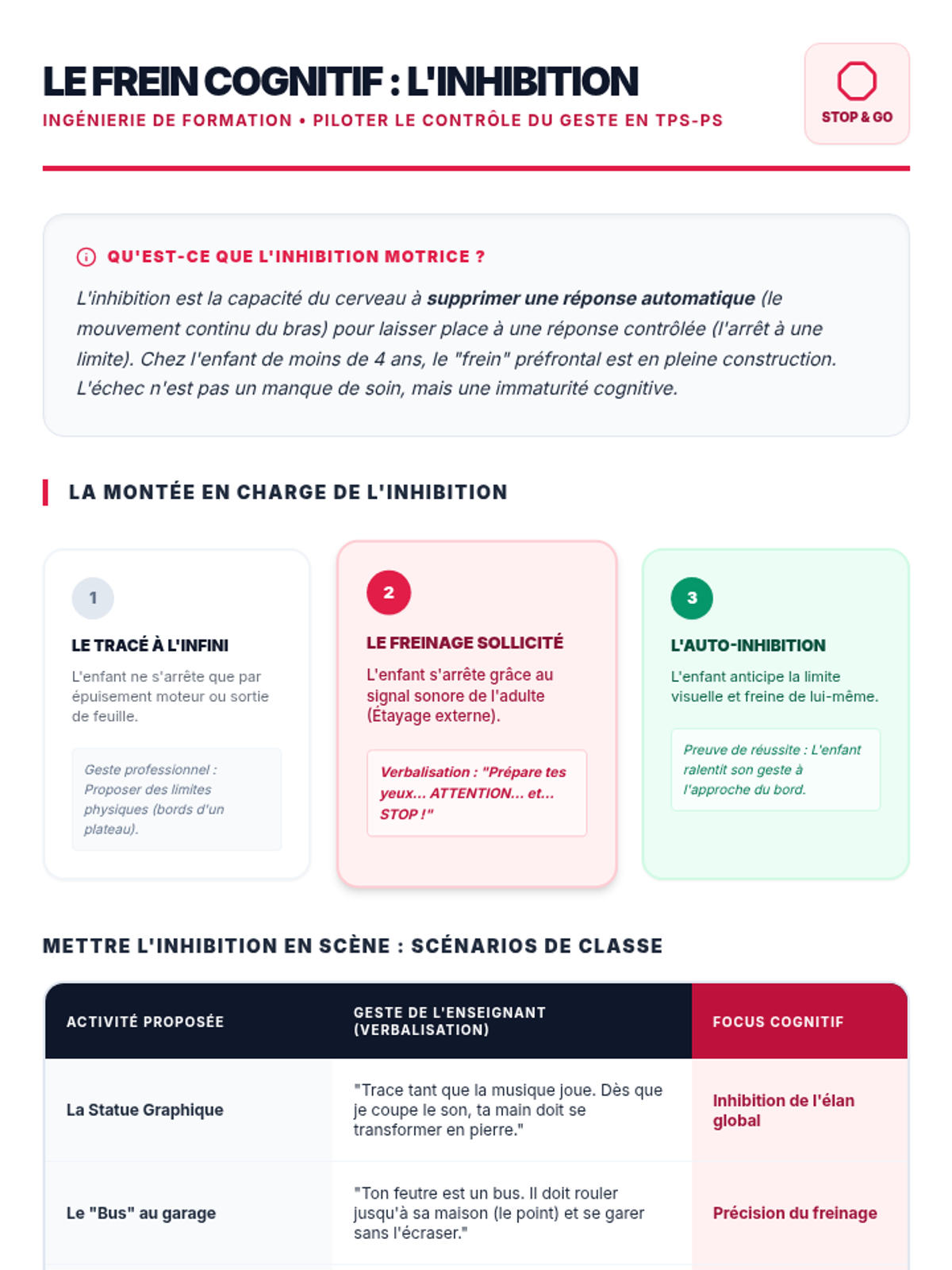
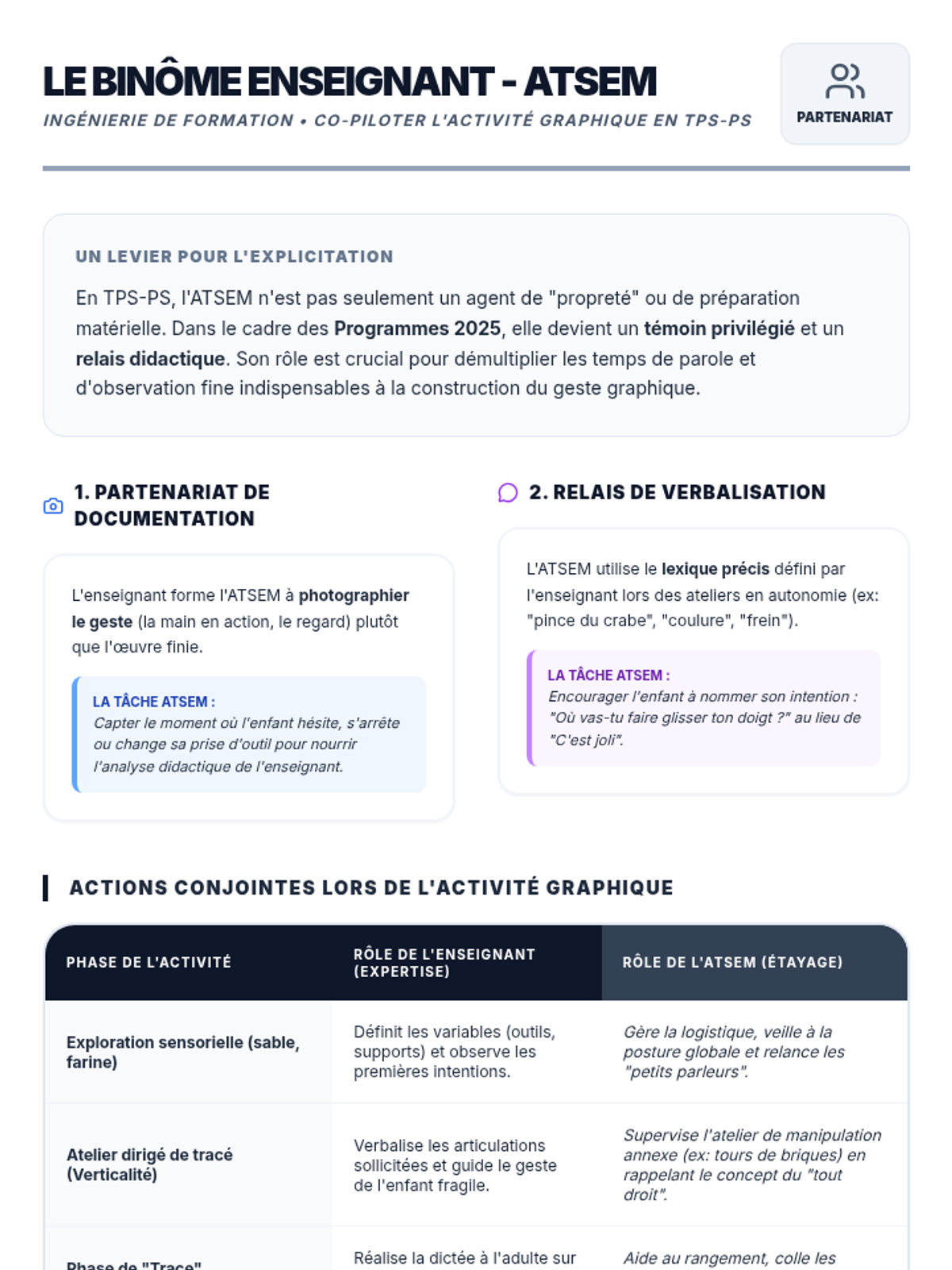
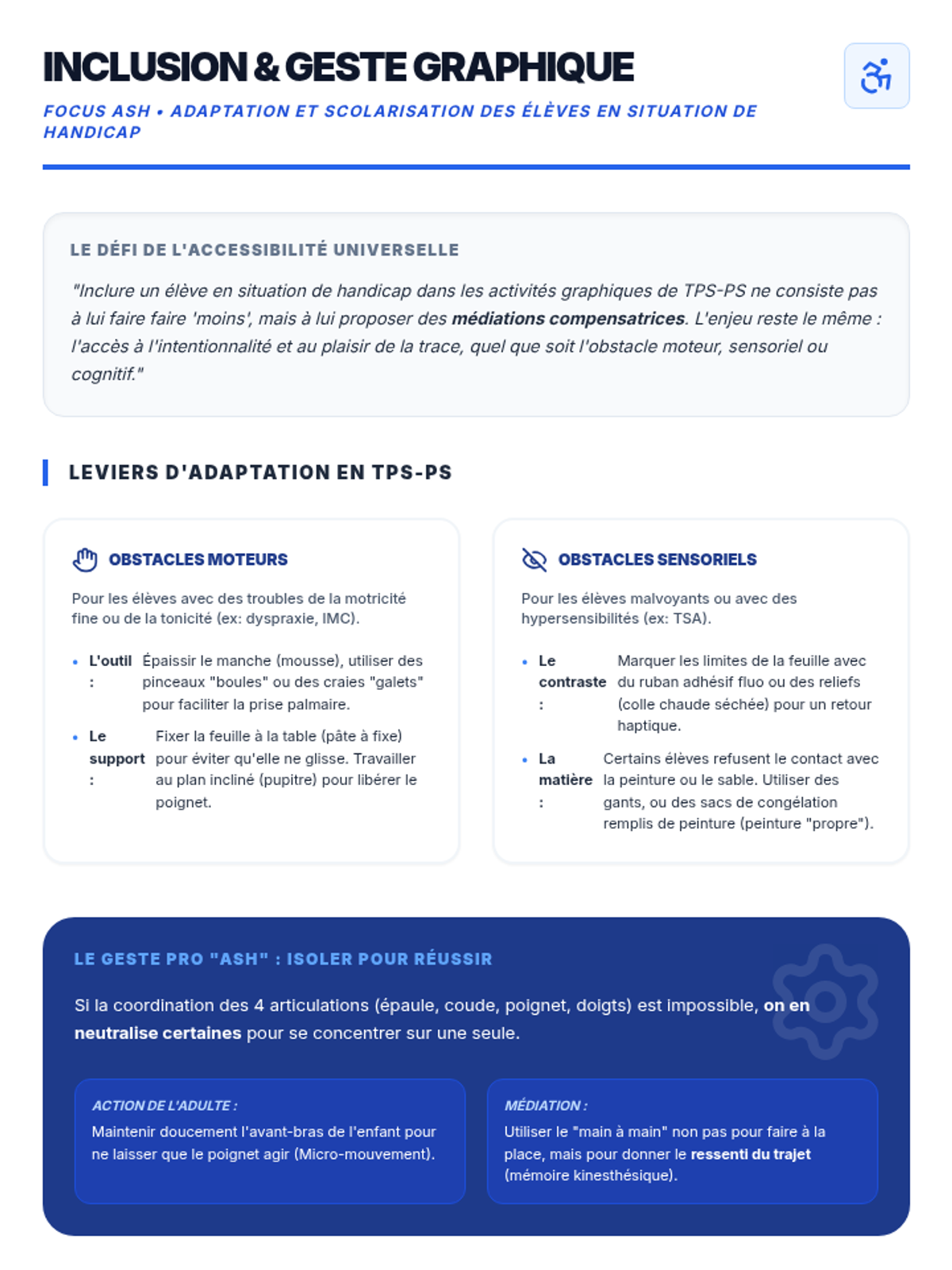
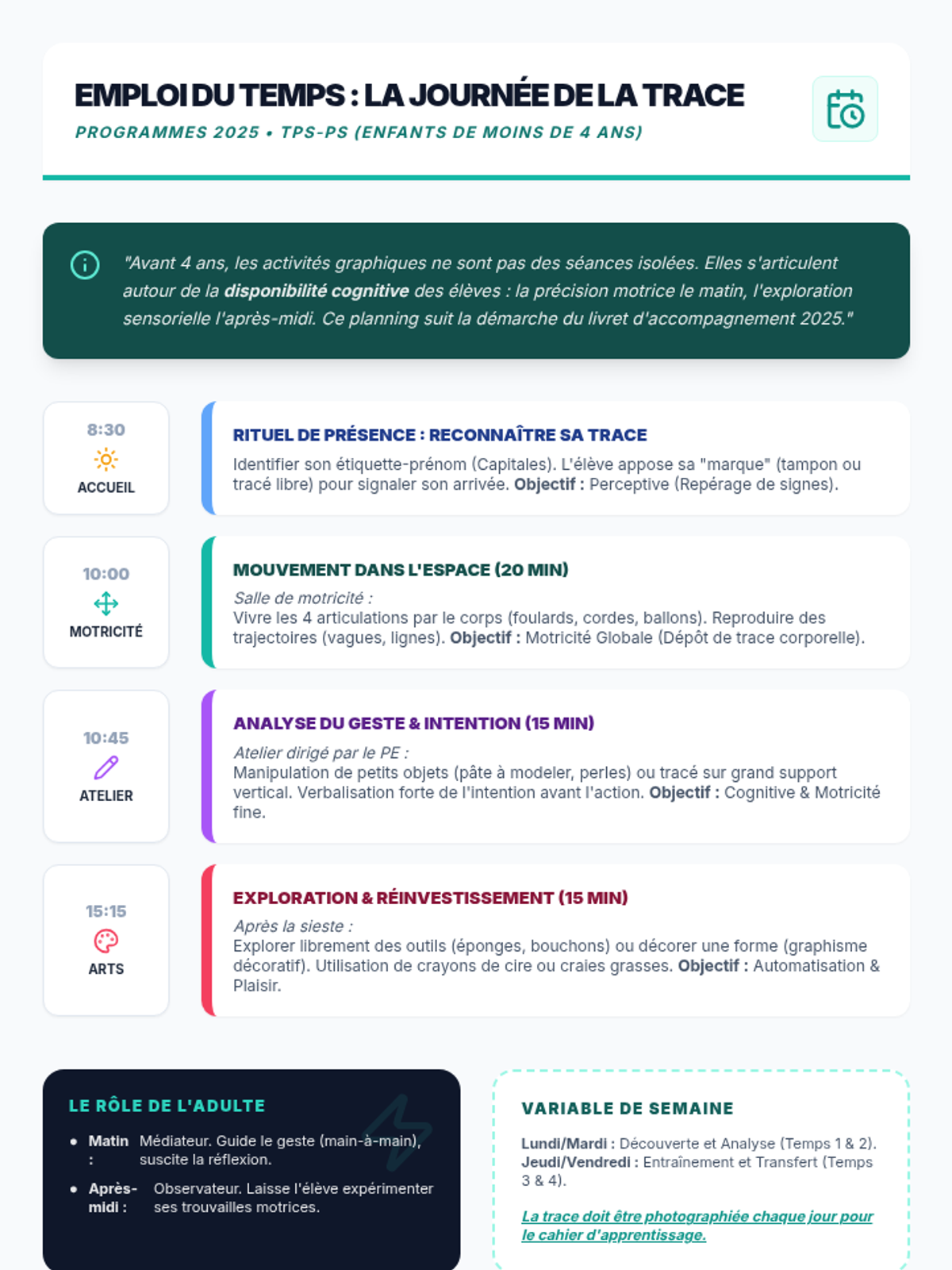
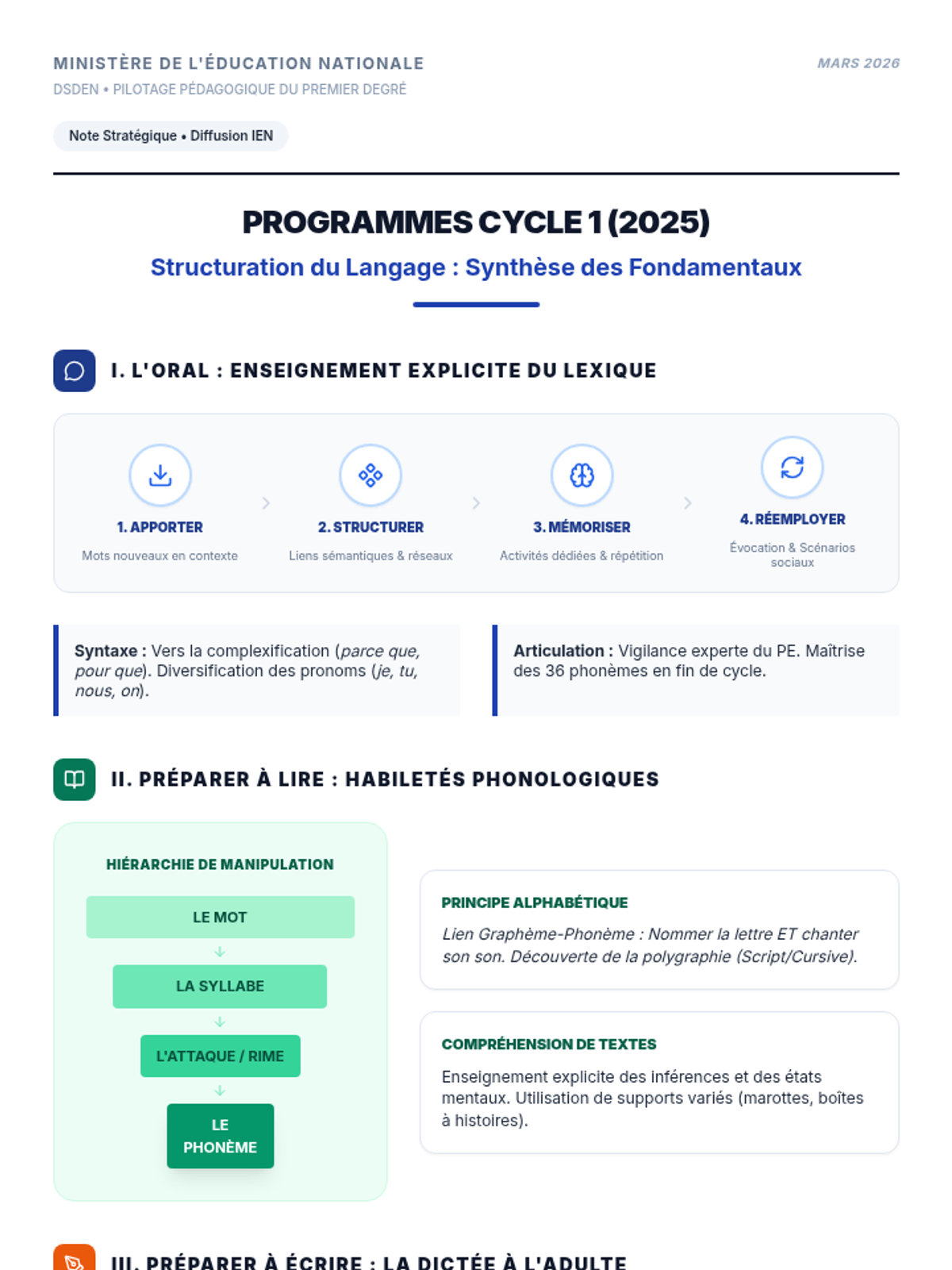
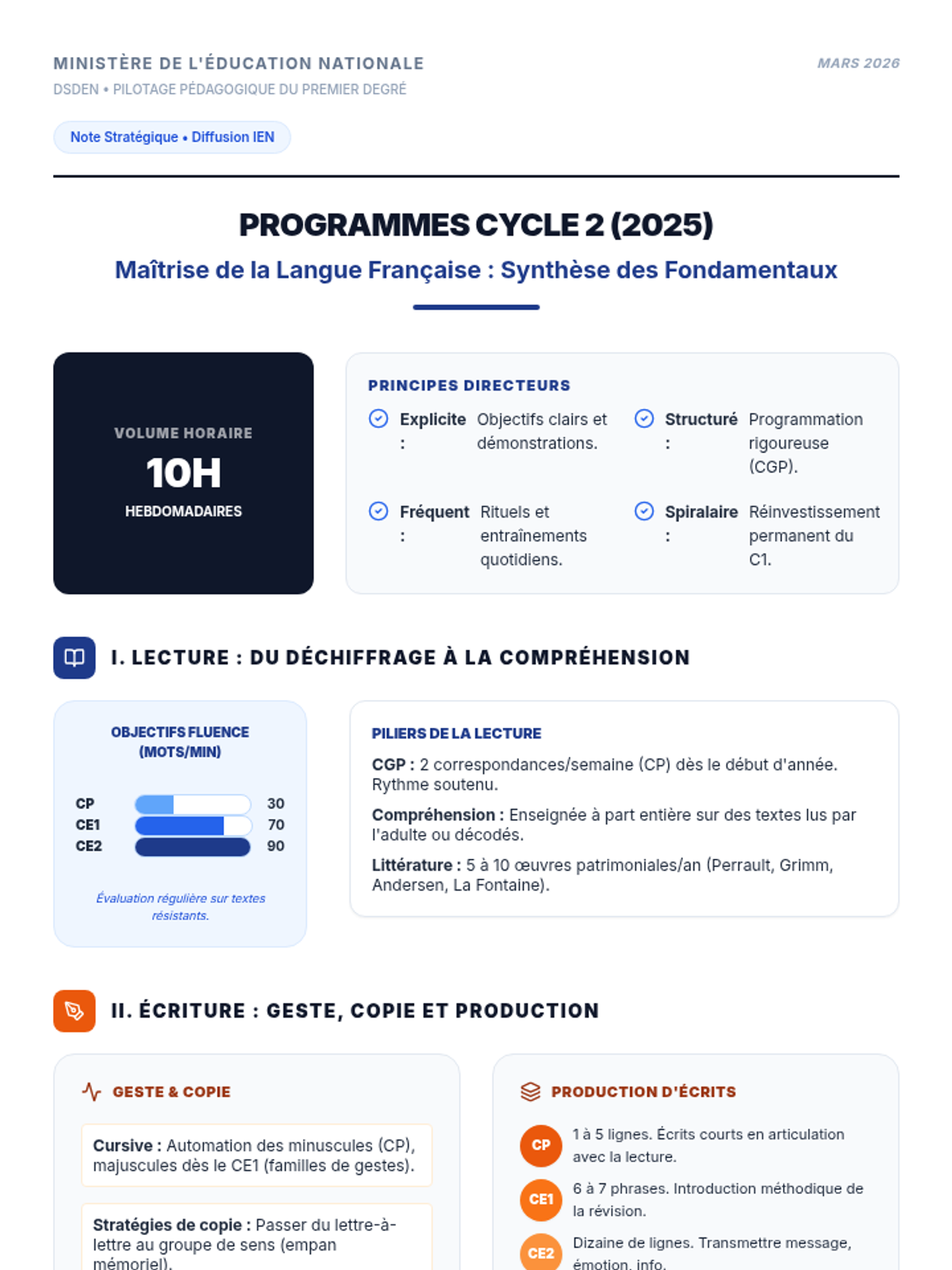
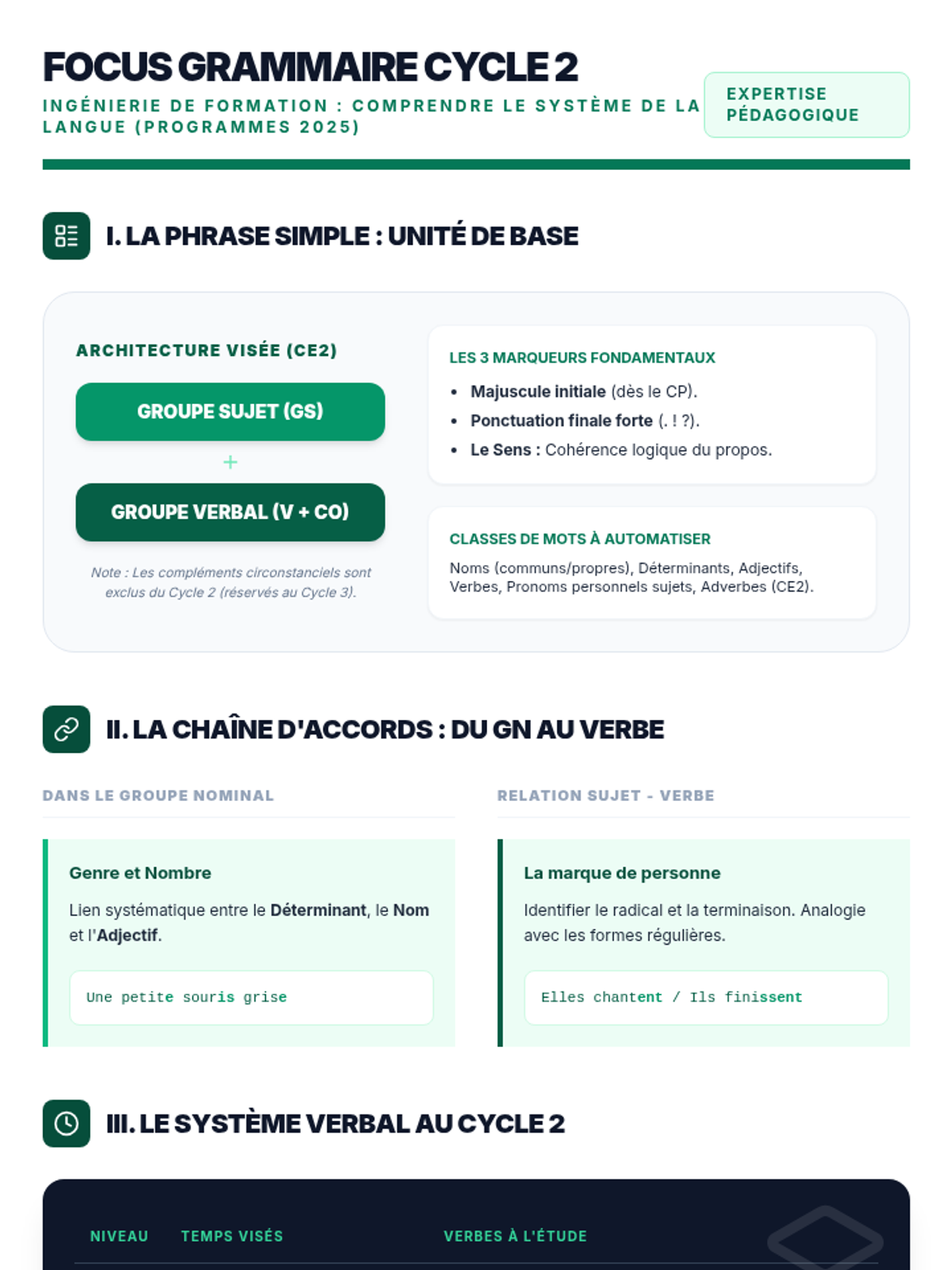
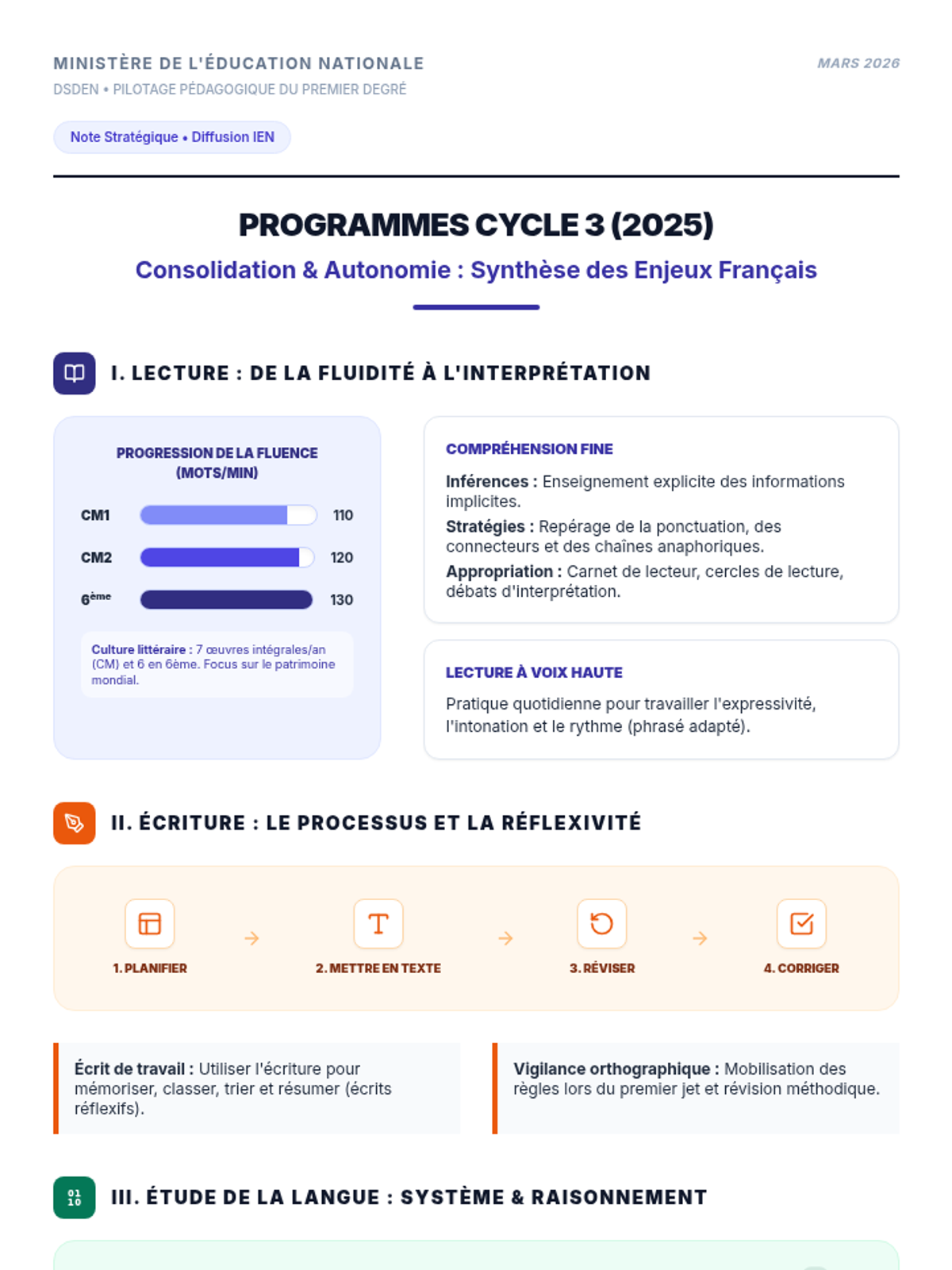
Cette formation pour les professeurs de TPS-PS vise à professionnaliser la conception des "traces" d'activités (cahiers de vie, affichages). En s'appuyant sur les photos de classe et les guides 2025, les enseignants apprennent à rendre les apprentissages explicites pour les élèves et les familles.
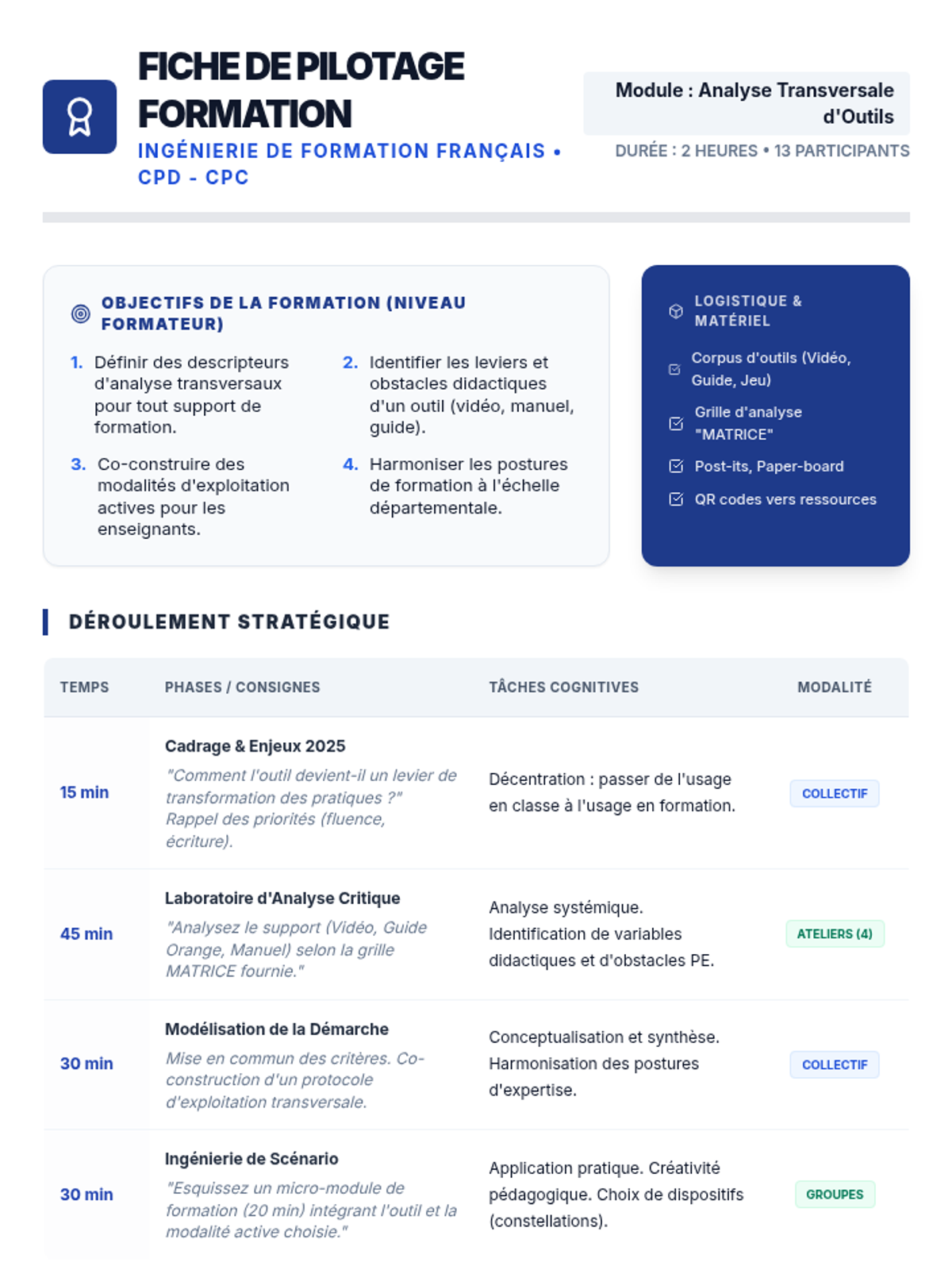
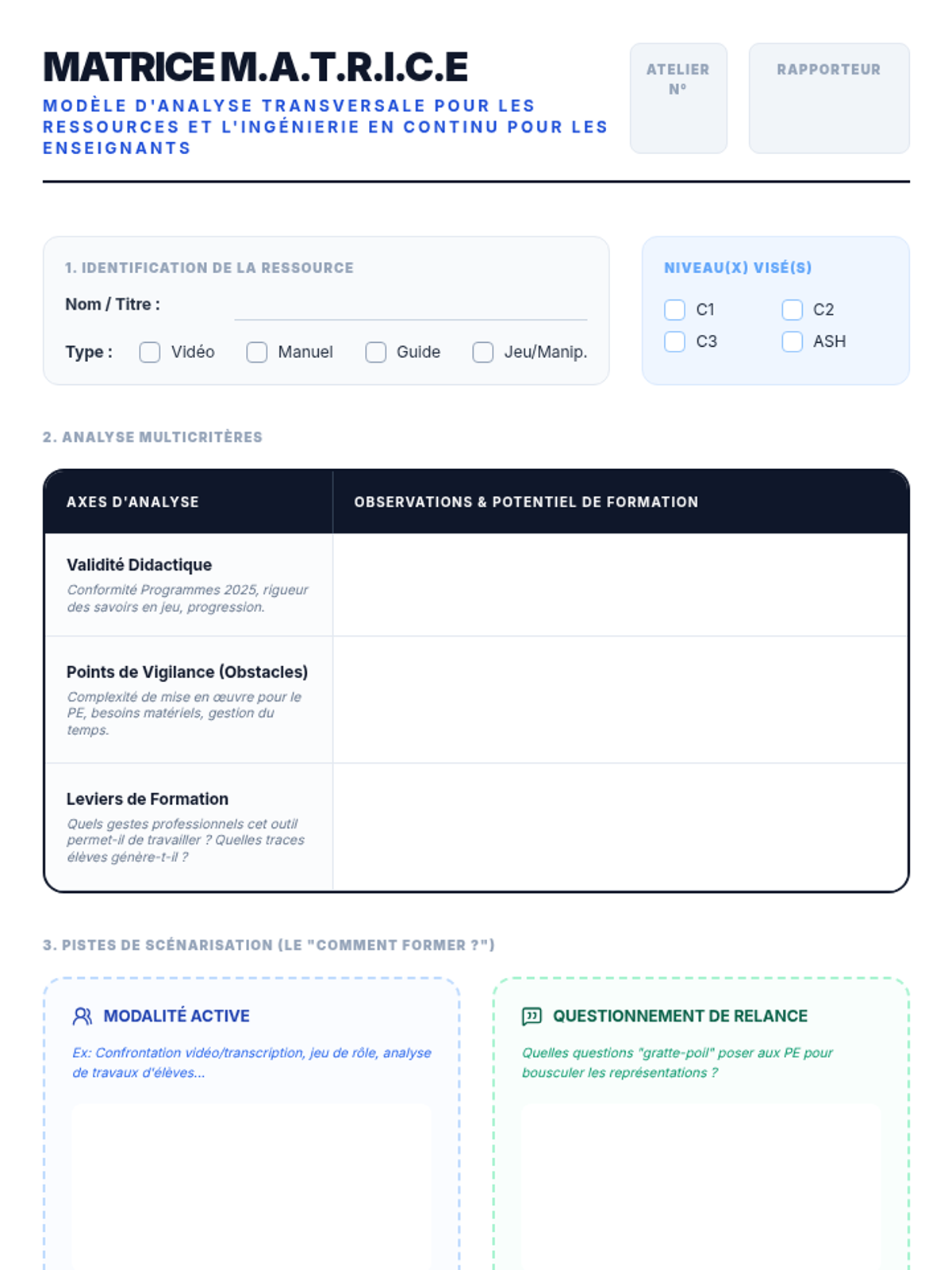
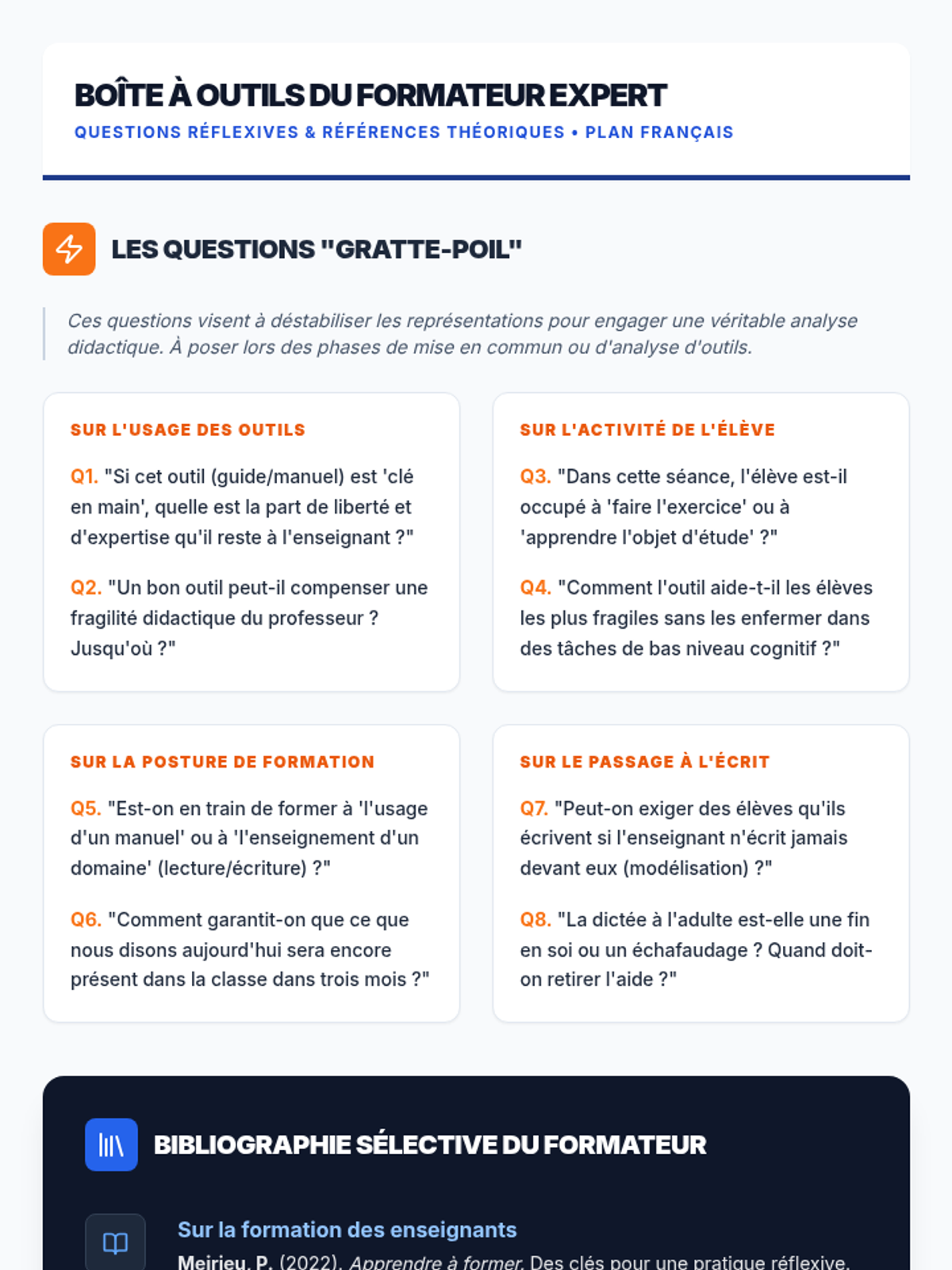
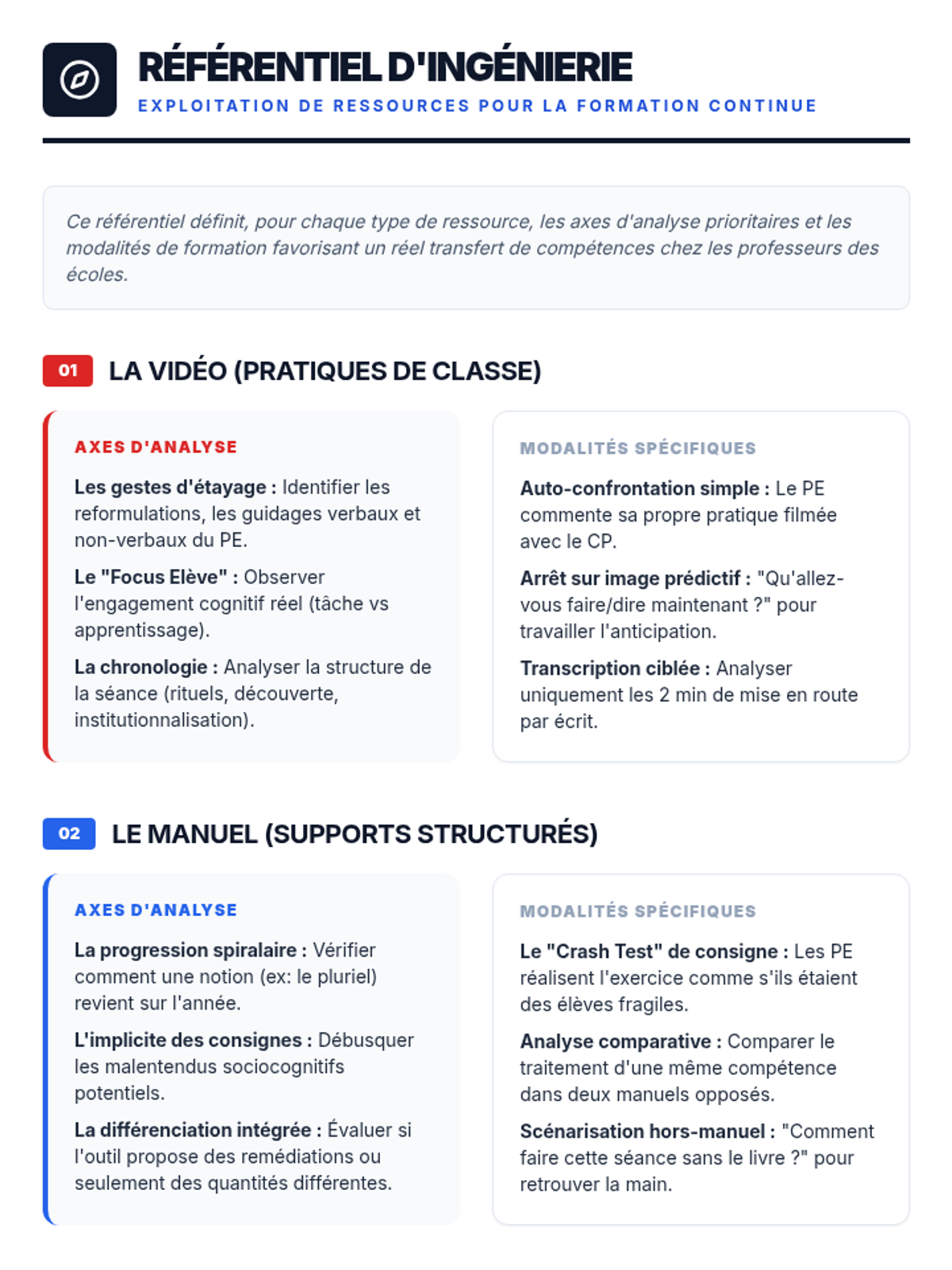
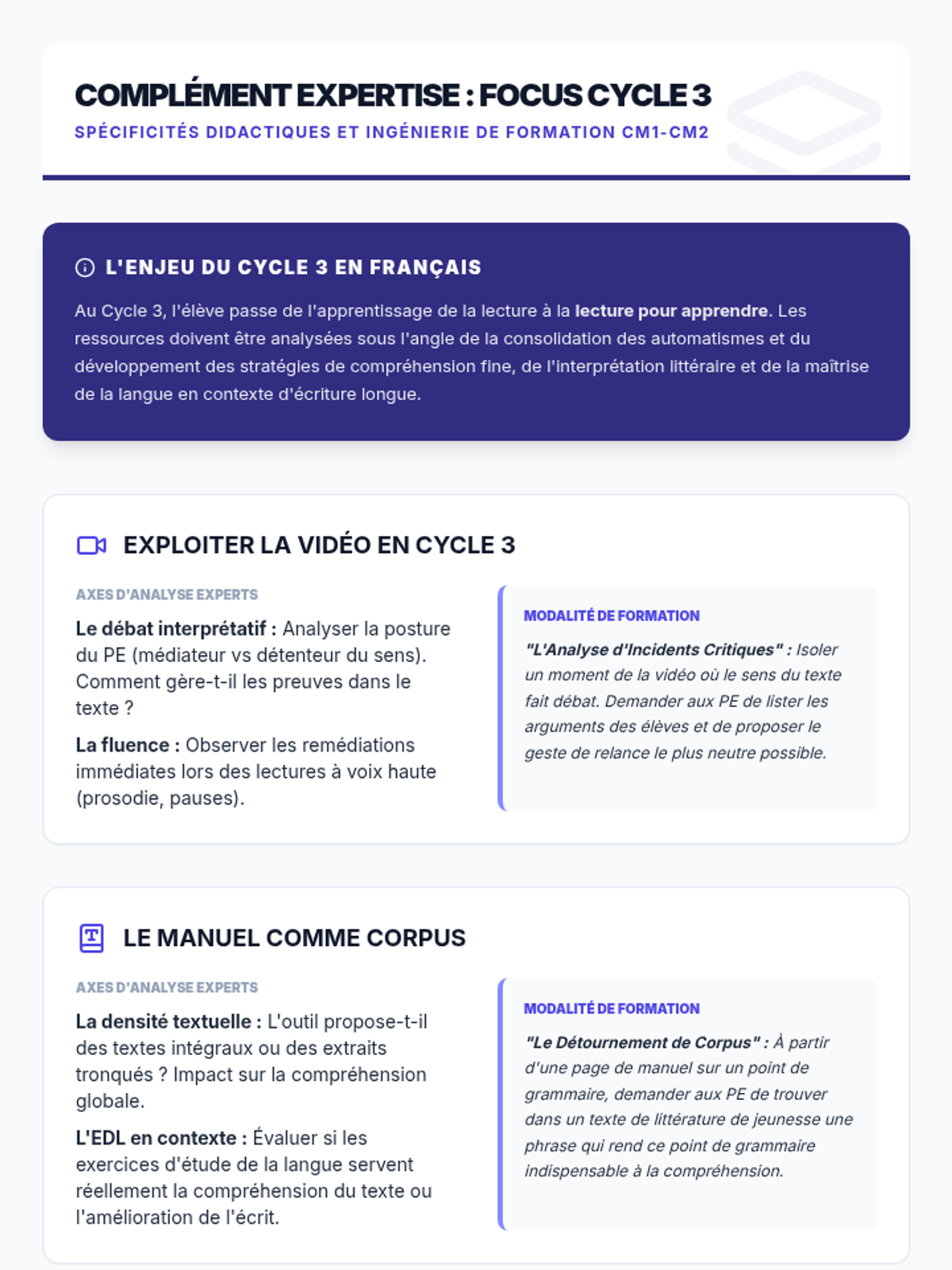
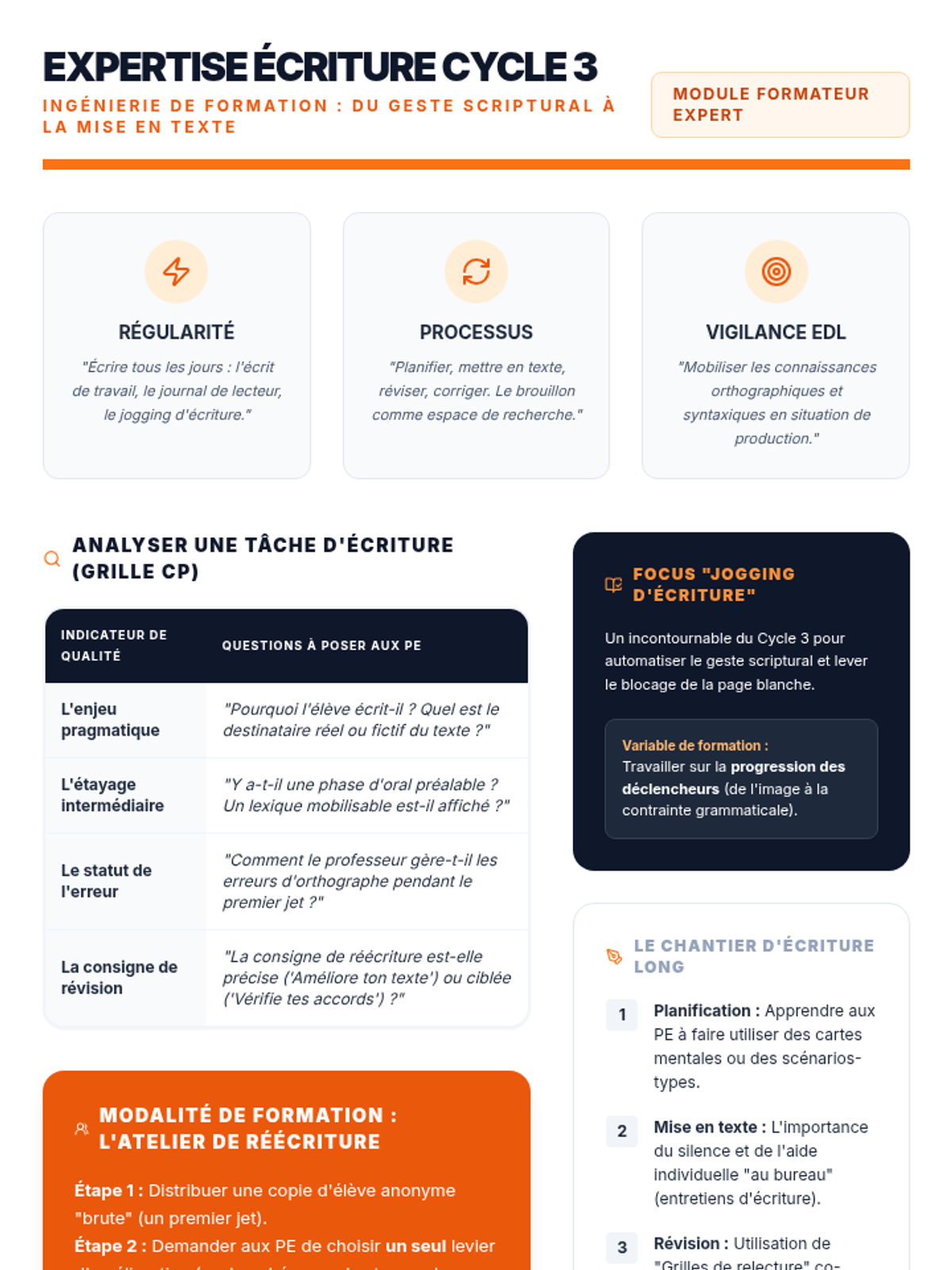
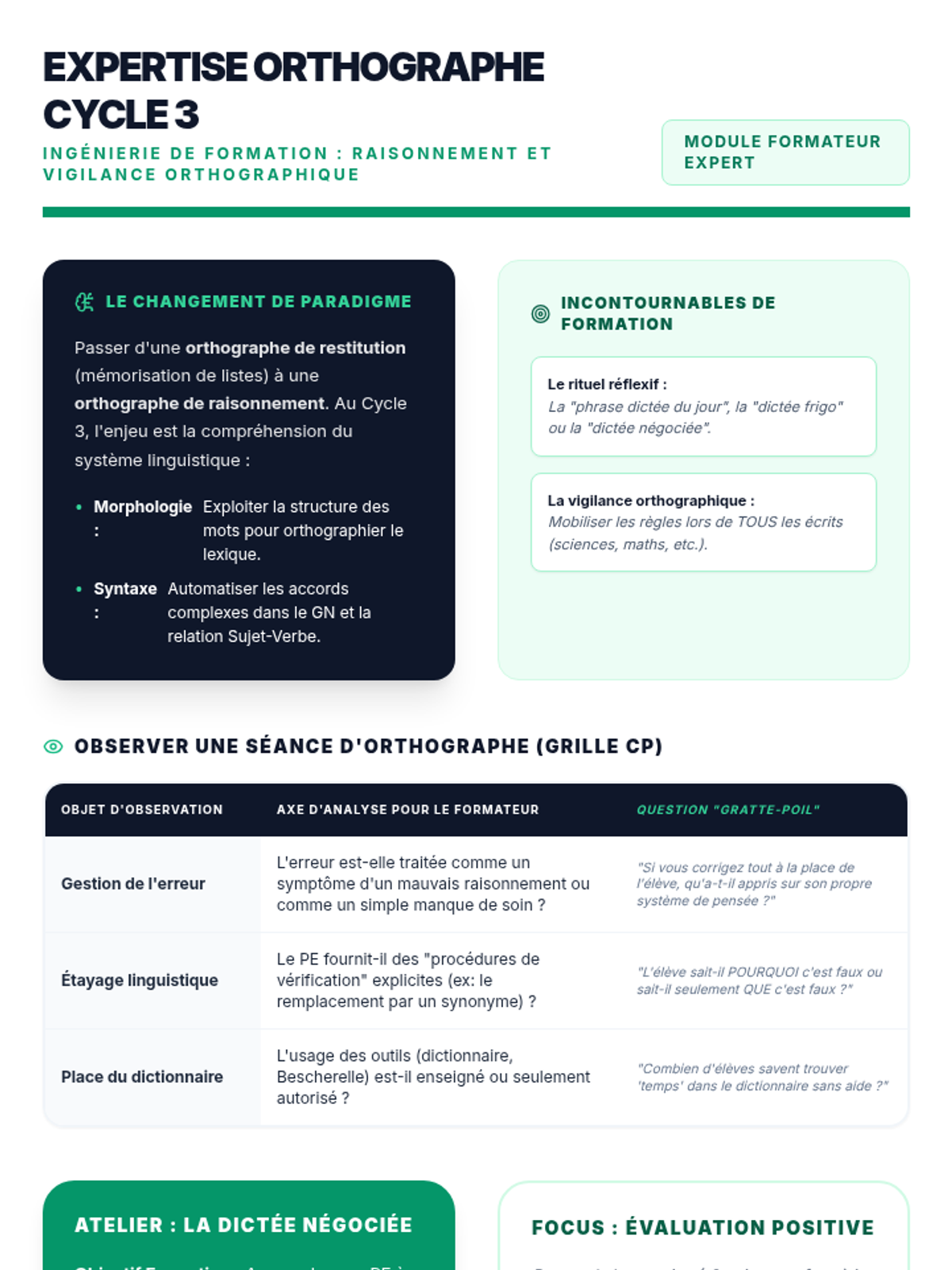
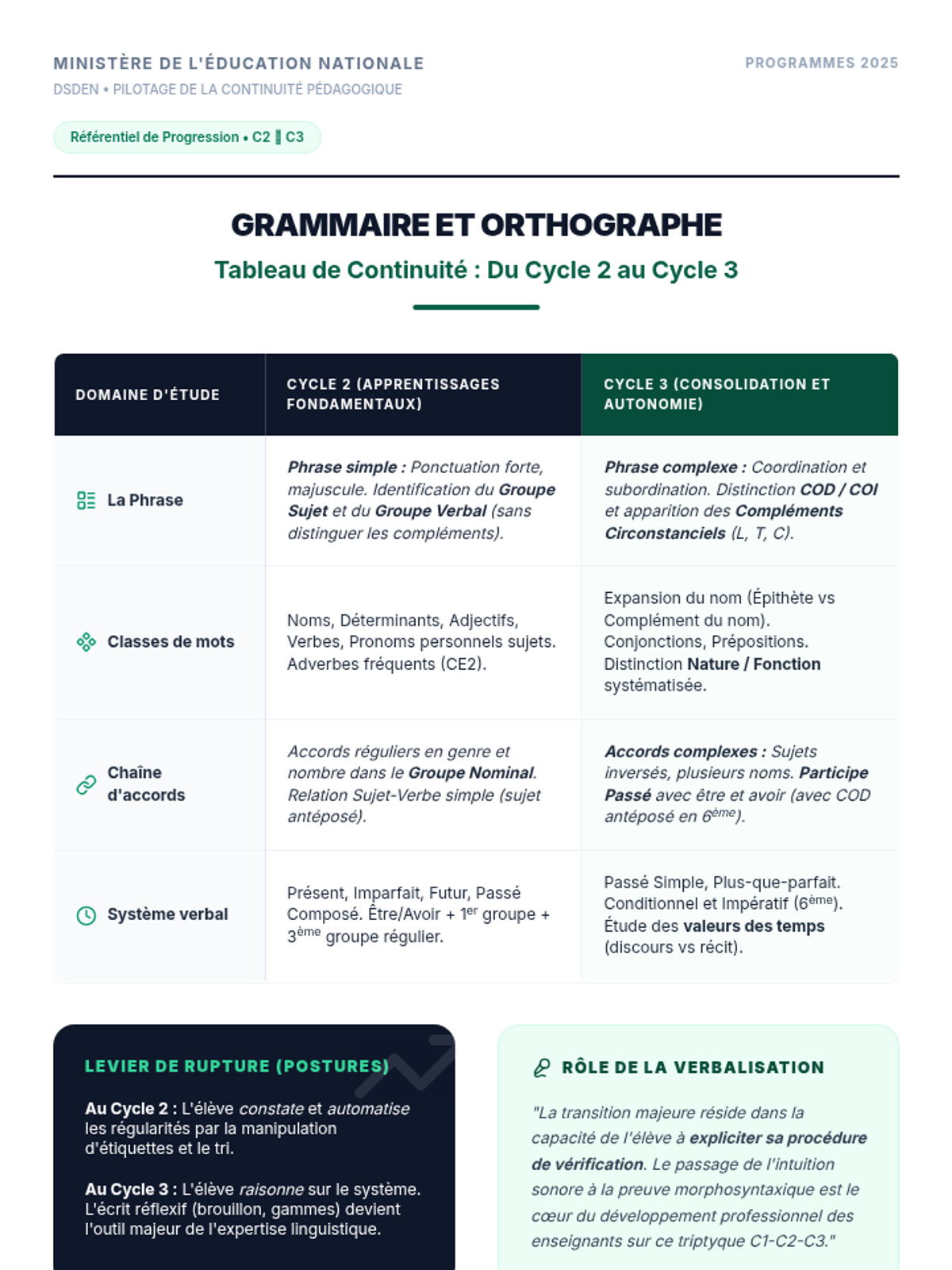
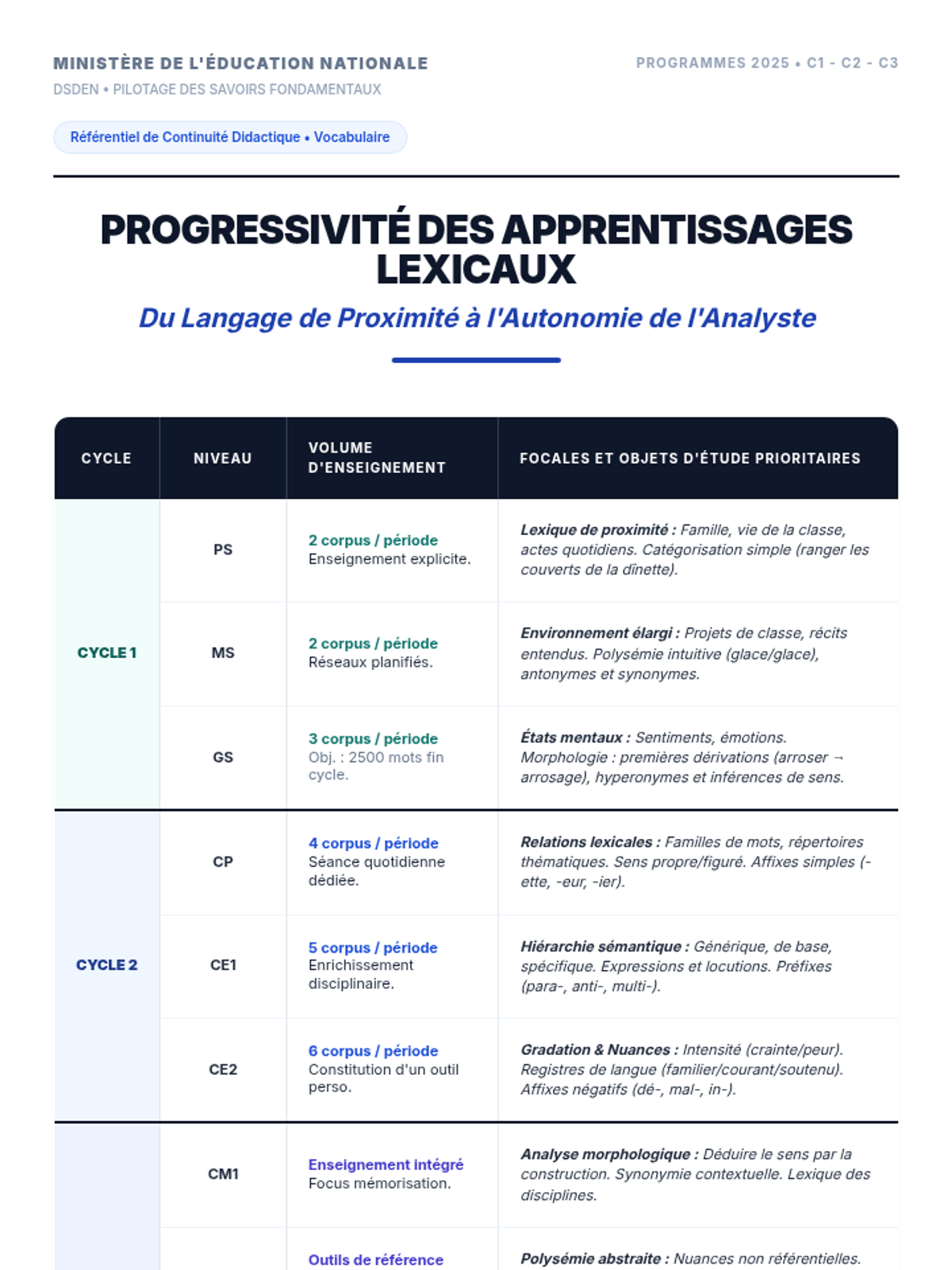
Cette formation vise à outiller les conseillers pédagogiques pour l'analyse et l'exploitation de ressources diverses (vidéos, manuels, guides) dans le cadre de la formation continue des professeurs des écoles en français, conformément aux orientations stratégiques nationales.
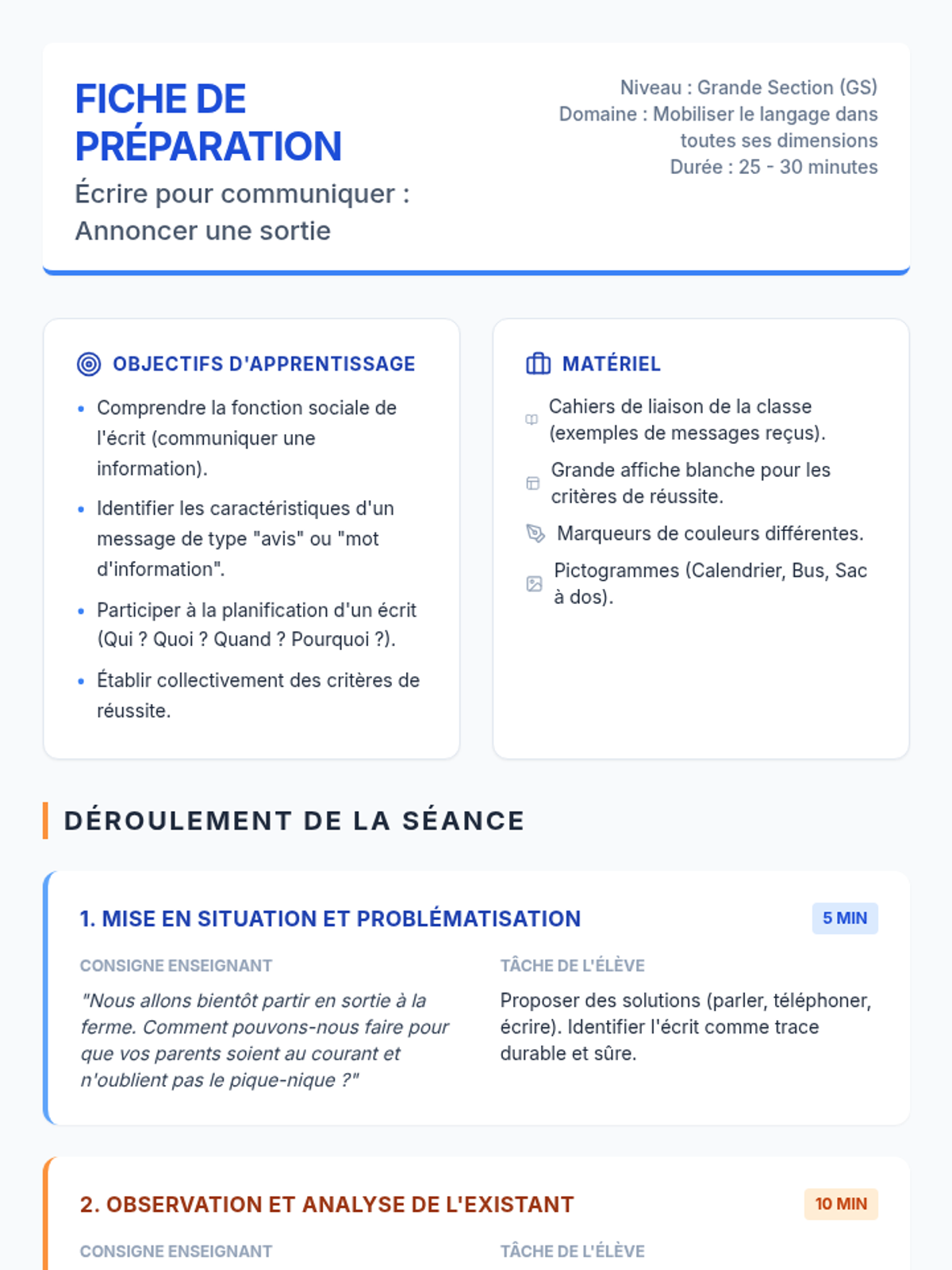
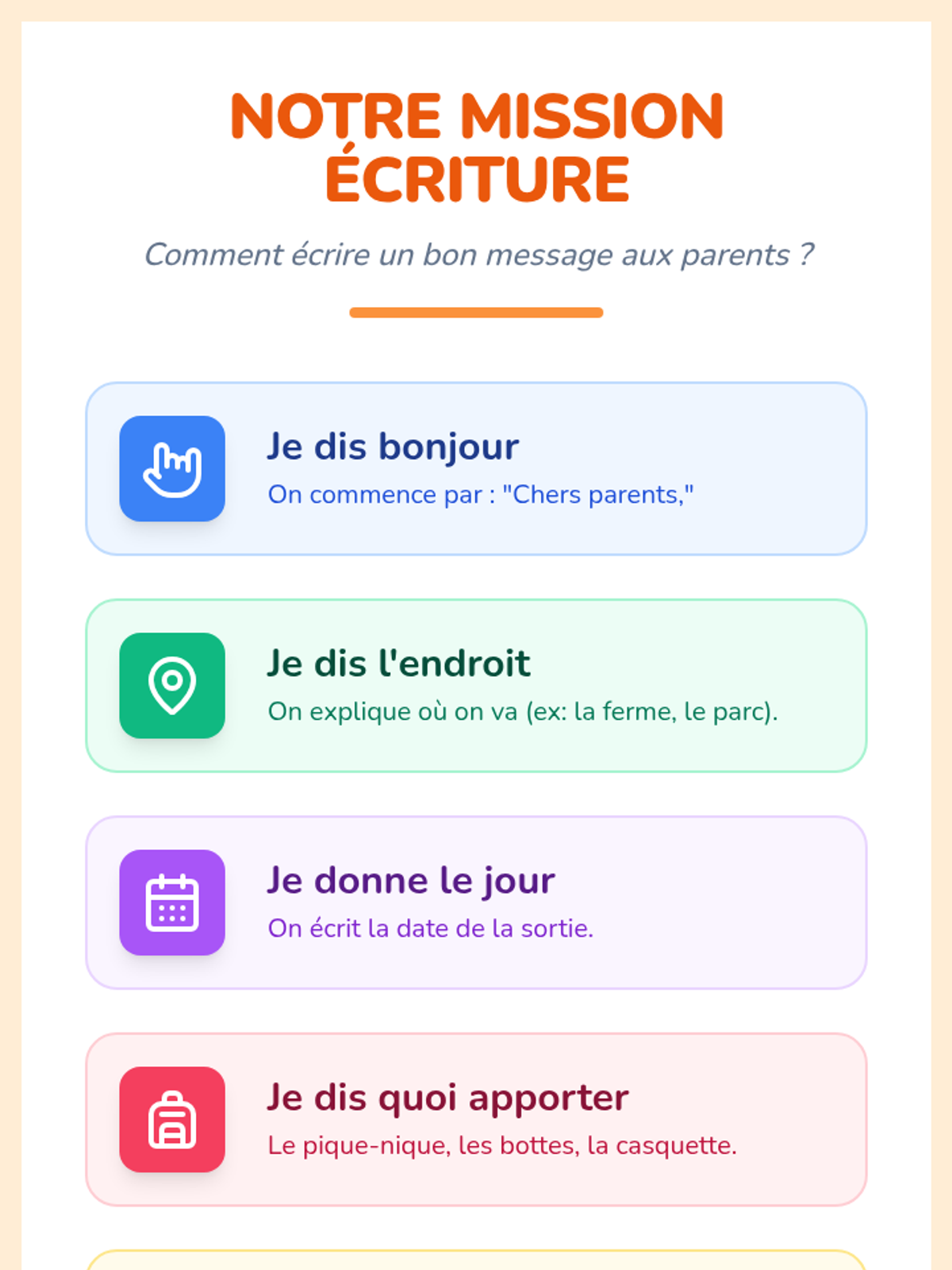
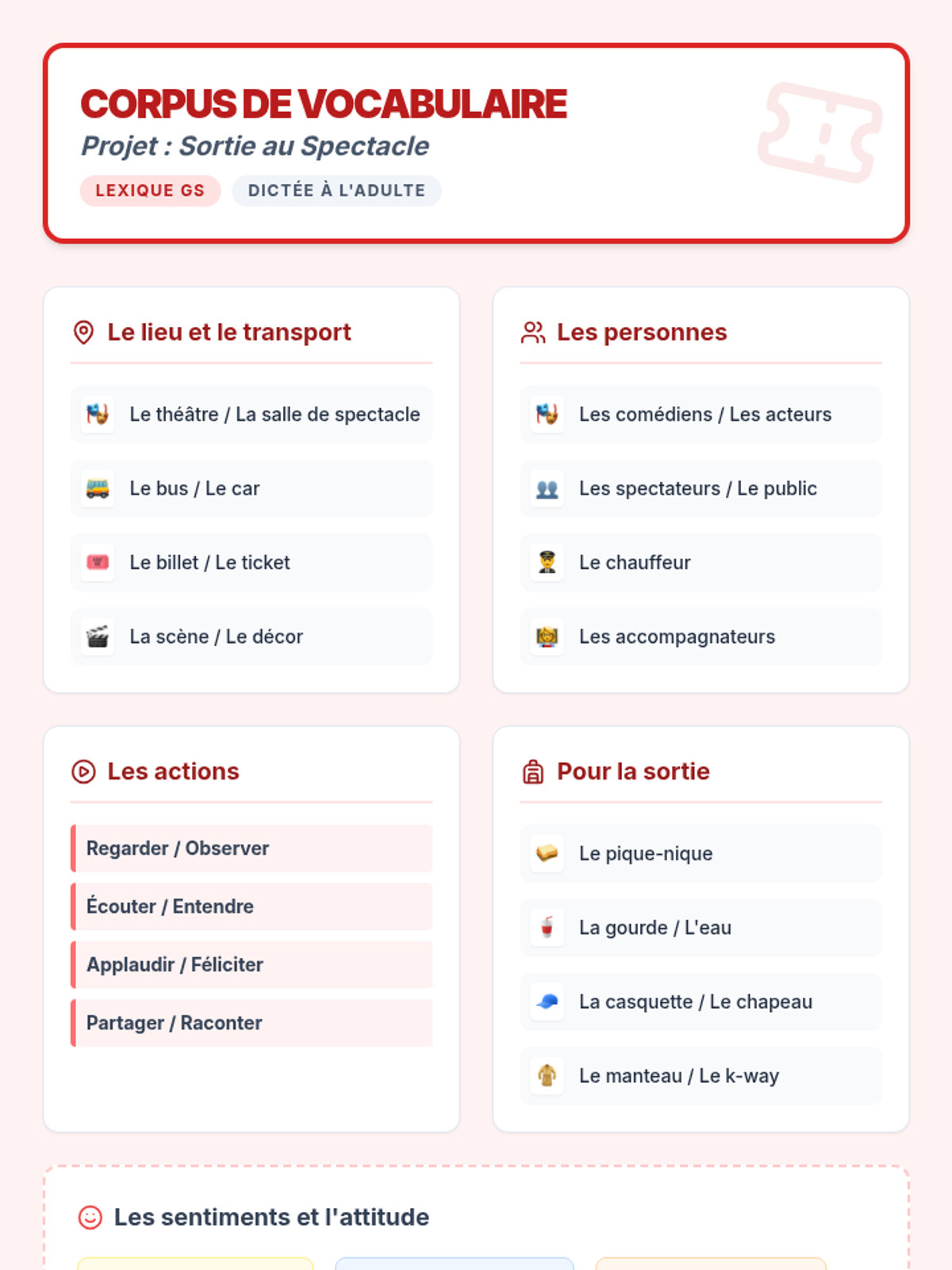
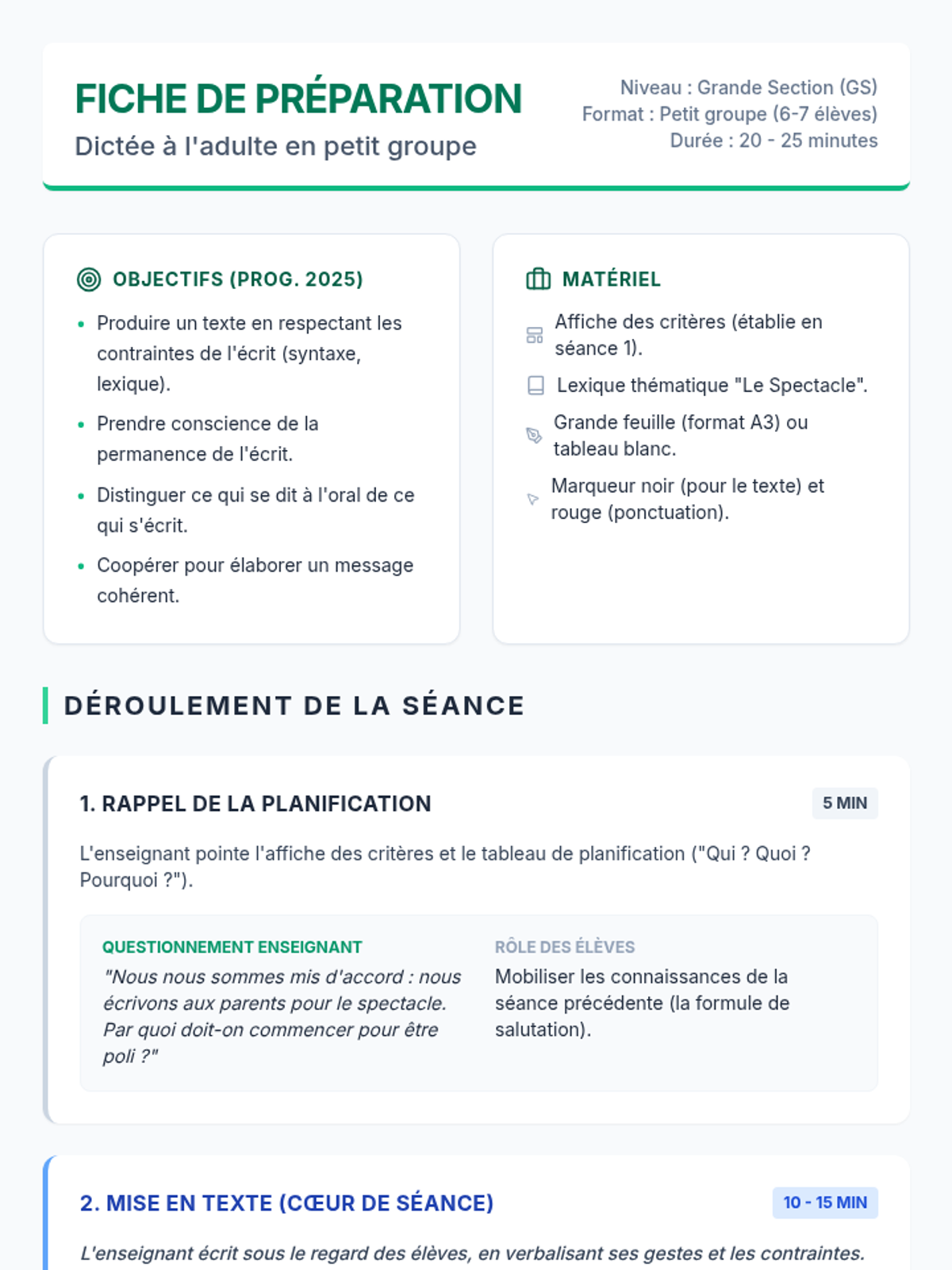
Cette leçon vise à introduire un projet d'écriture authentique en Grande Section : rédiger un message aux parents pour annoncer une sortie scolaire. Elle s'appuie sur l'observation de messages existants pour définir des critères de réussite et initier la planification selon les programmes 2025.
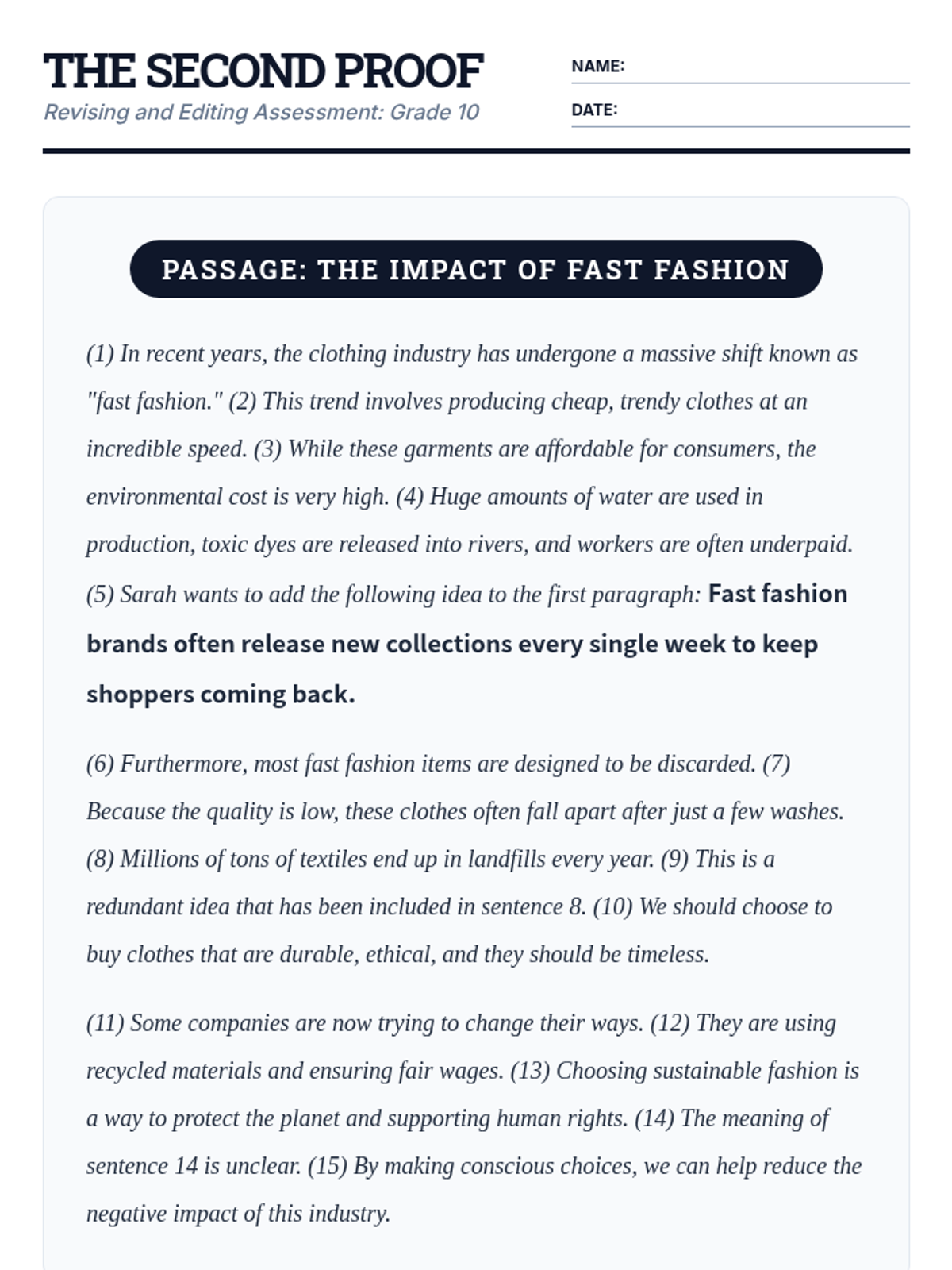
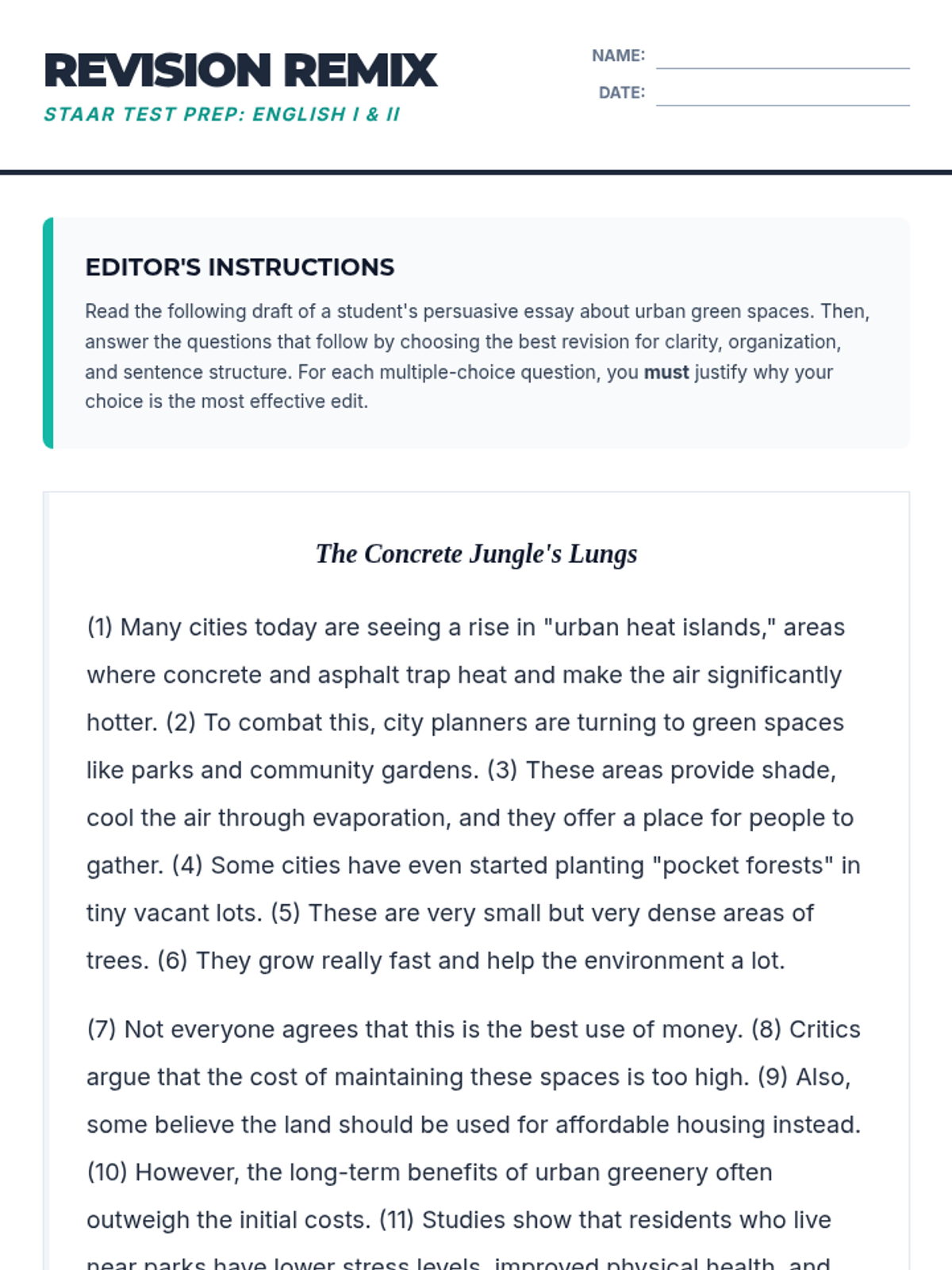
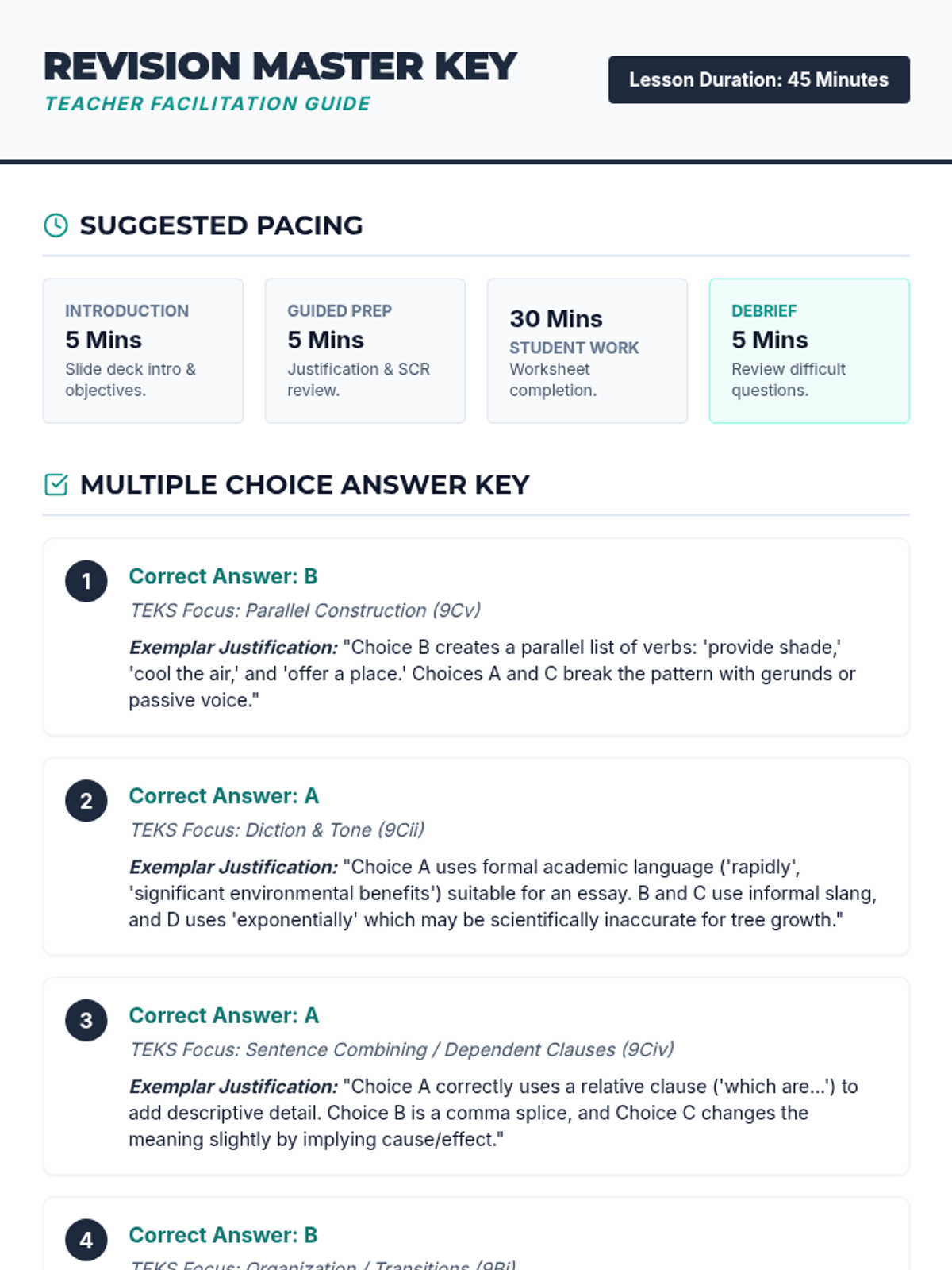
A 45-minute intensive revision workshop focused on high-priority STAAR English I & II TEKS, including clarity, organization, diction, and sentence structure. Students analyze a mentor text, answer multiple-choice questions with written justifications, and complete a Short Constructed Response.
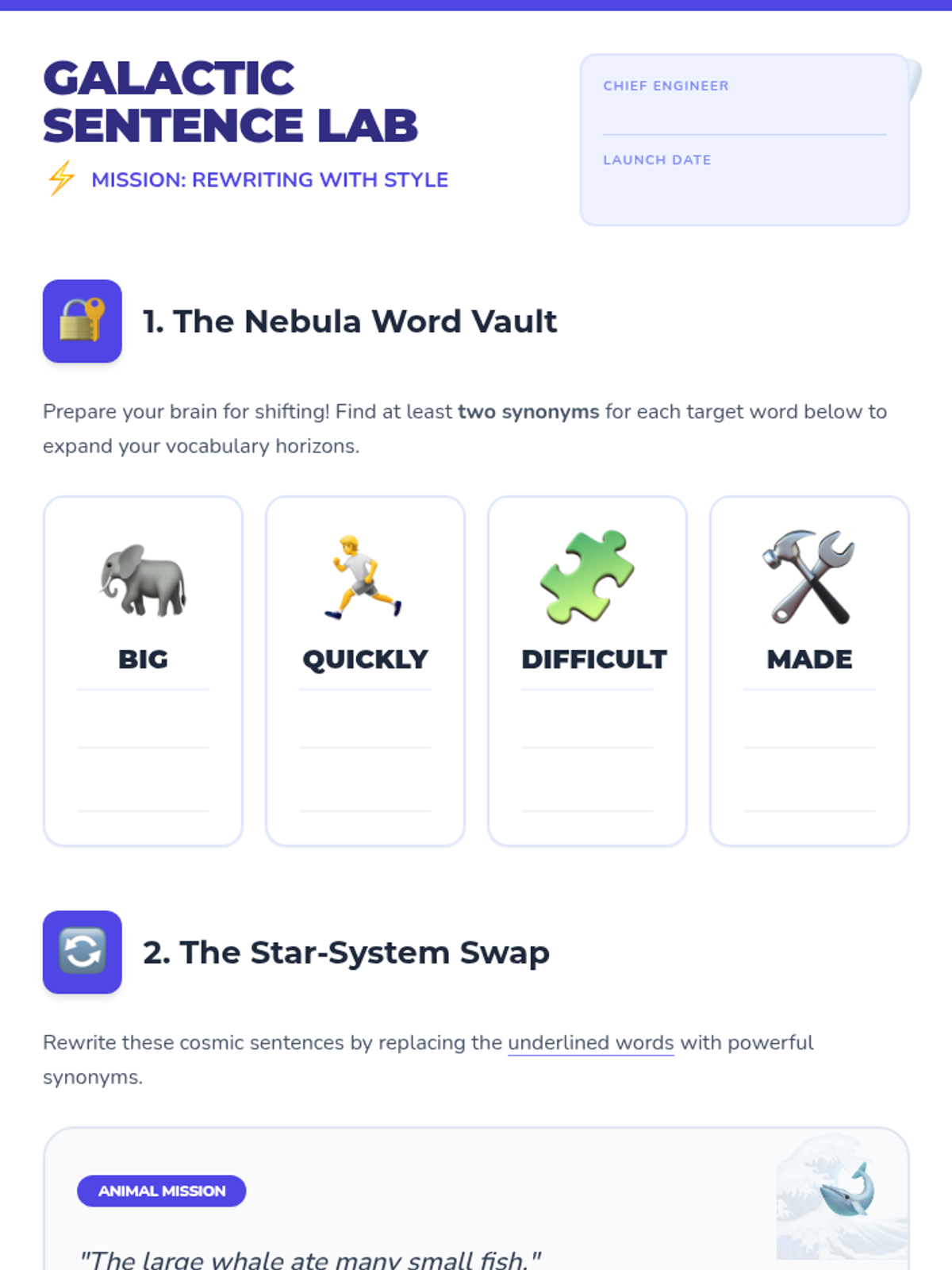
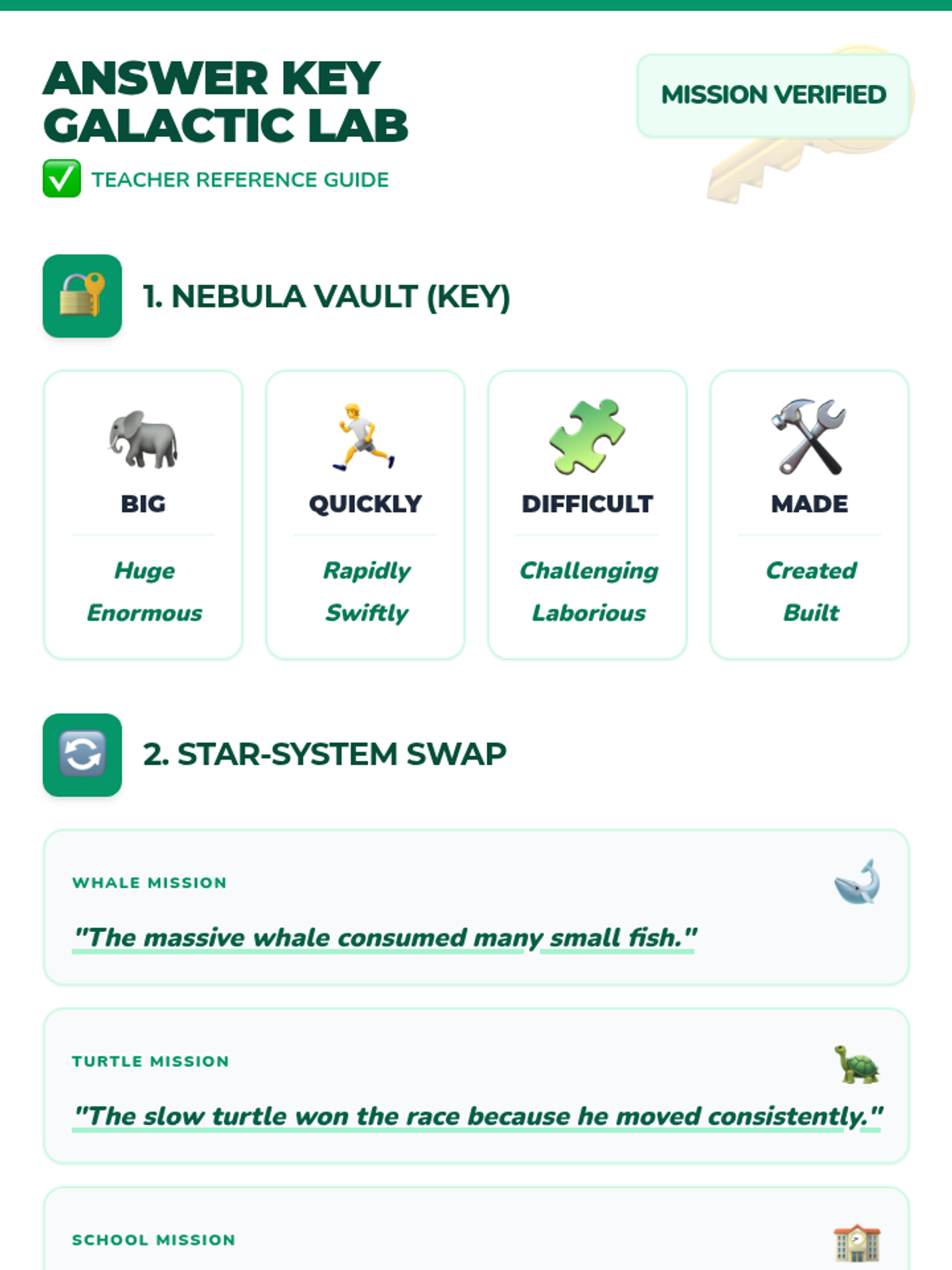
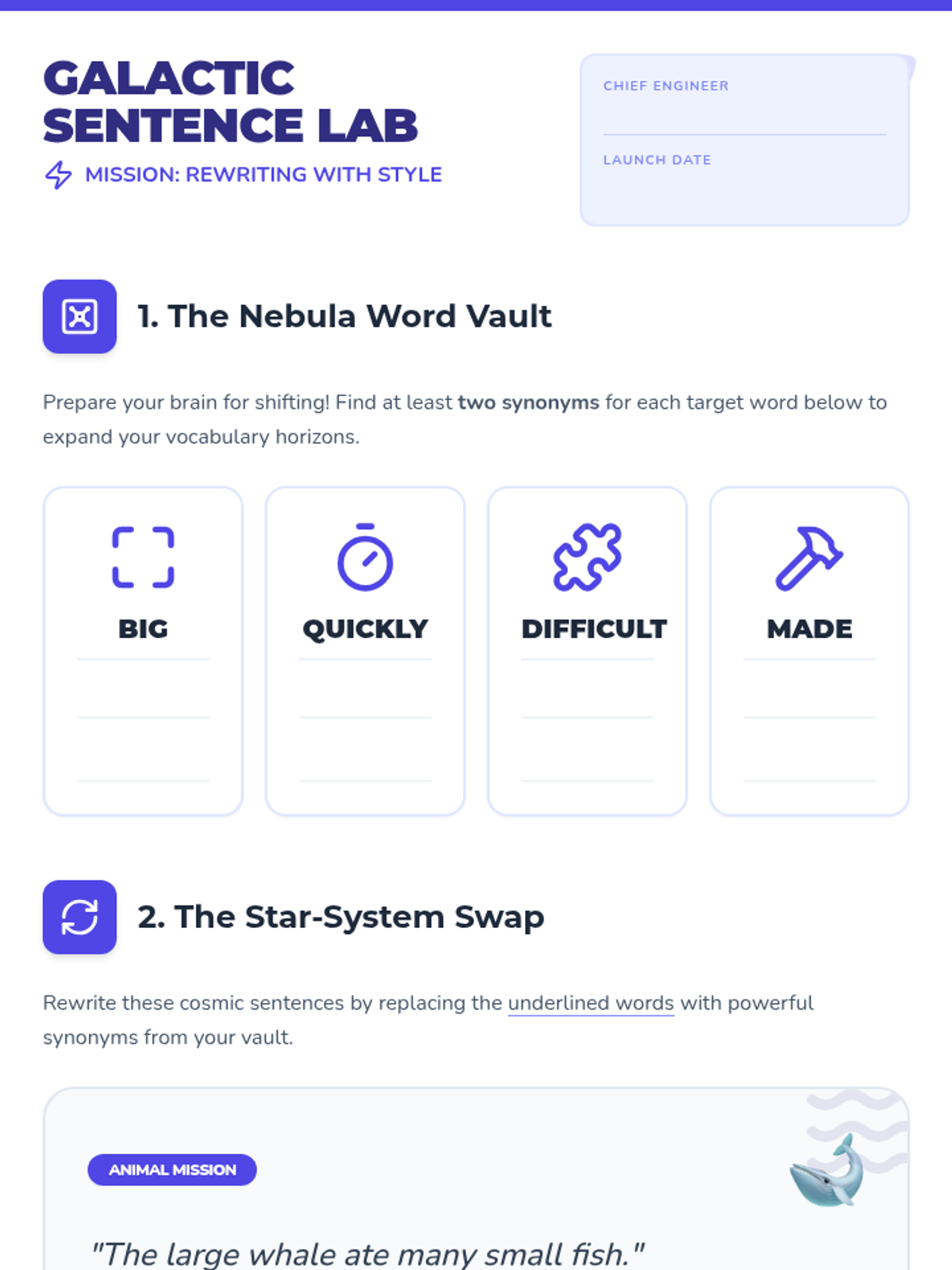
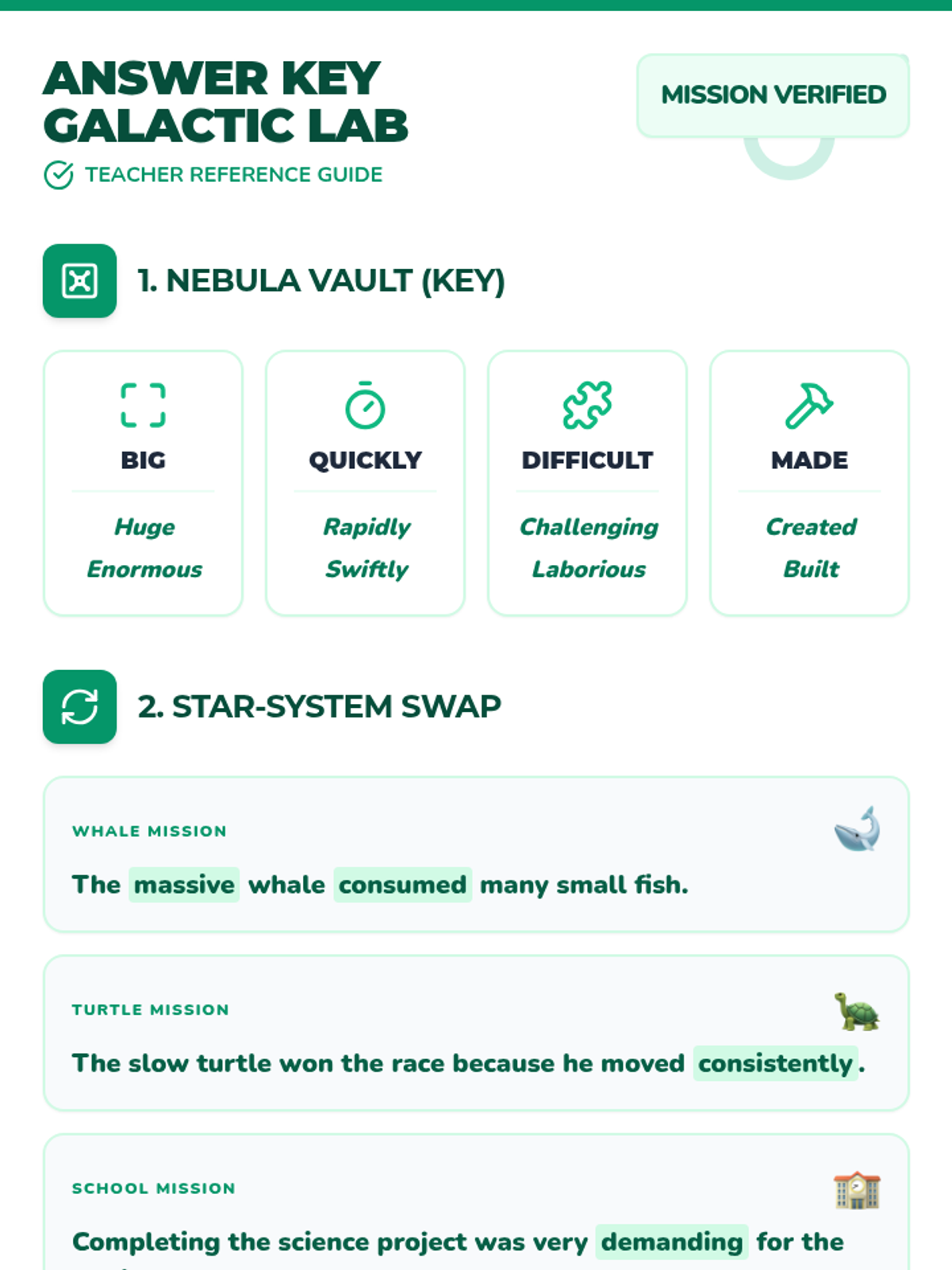
A visual, space-themed workshop focused on enhancing writing through synonyms and sentence structure transformations. Students explore the 'Galactic Sentence Lab' to practice vocabulary variety and active/passive voice flips.
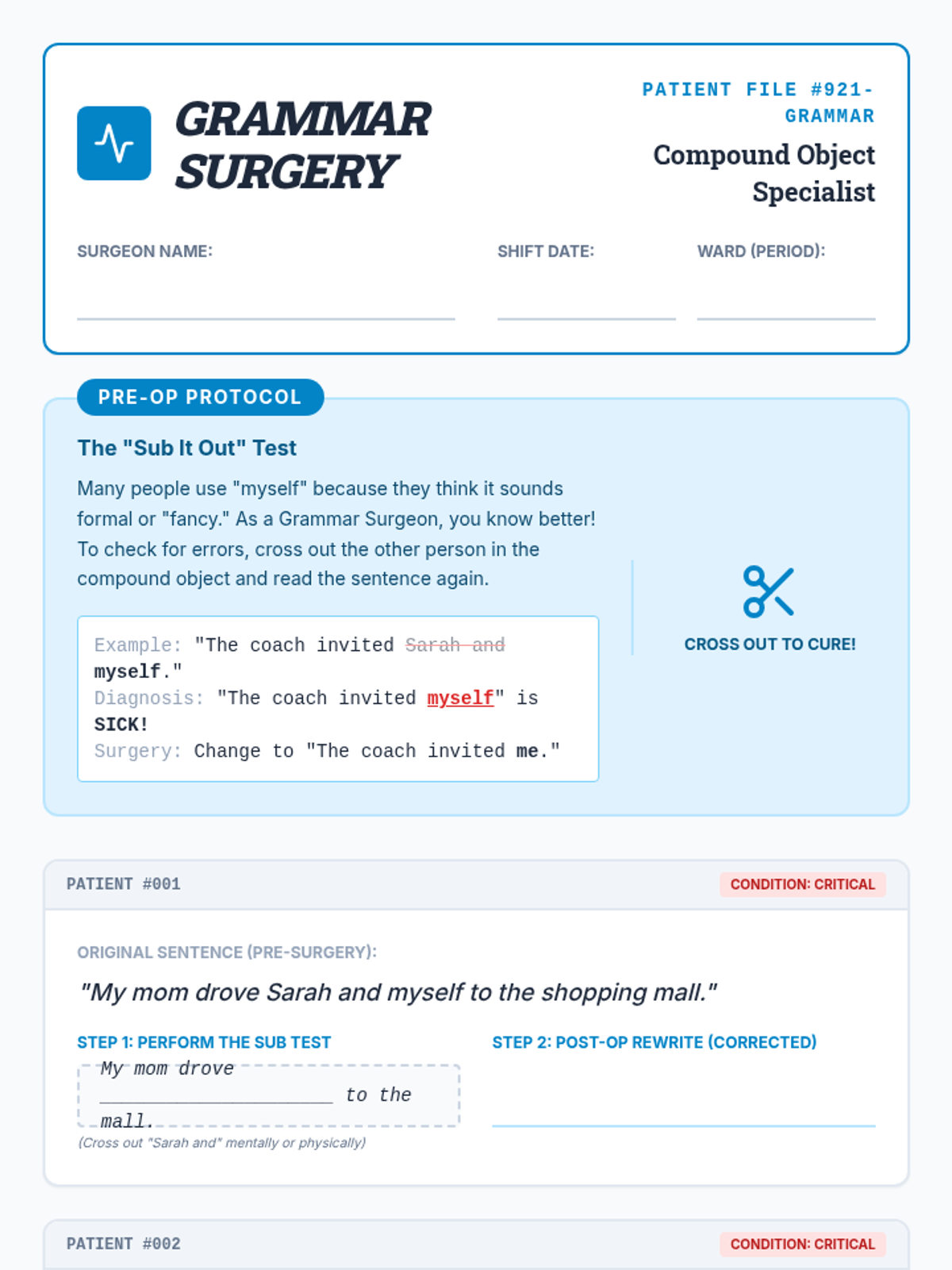
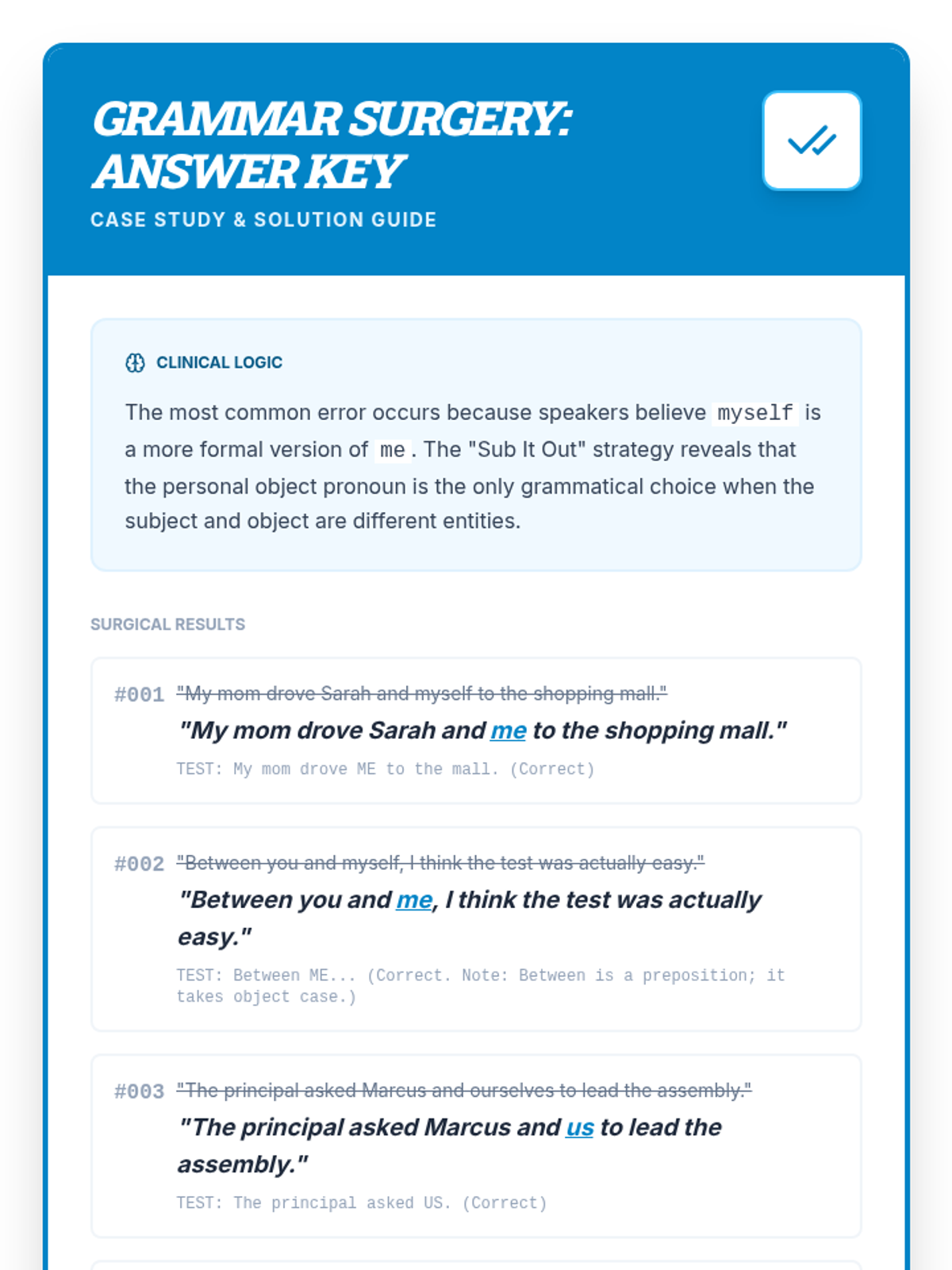
A grammar lesson for 7th graders focused on correcting the 'hyper-formal' misuse of reflexive pronouns (myself) in compound objects using the 'Sub it out' substitution strategy. Students act as 'grammar surgeons' to diagnose and fix errors in seemingly formal sentences.
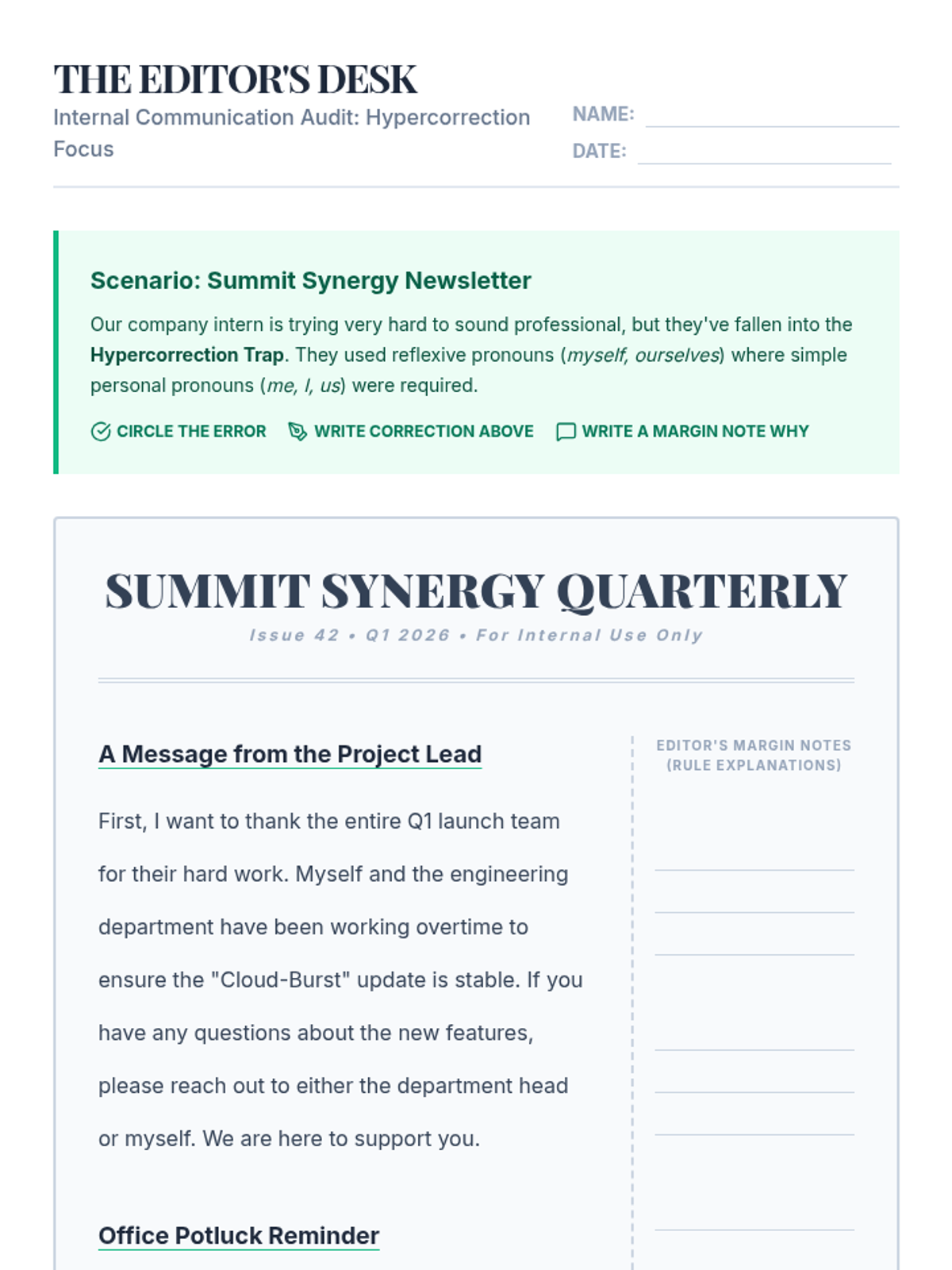
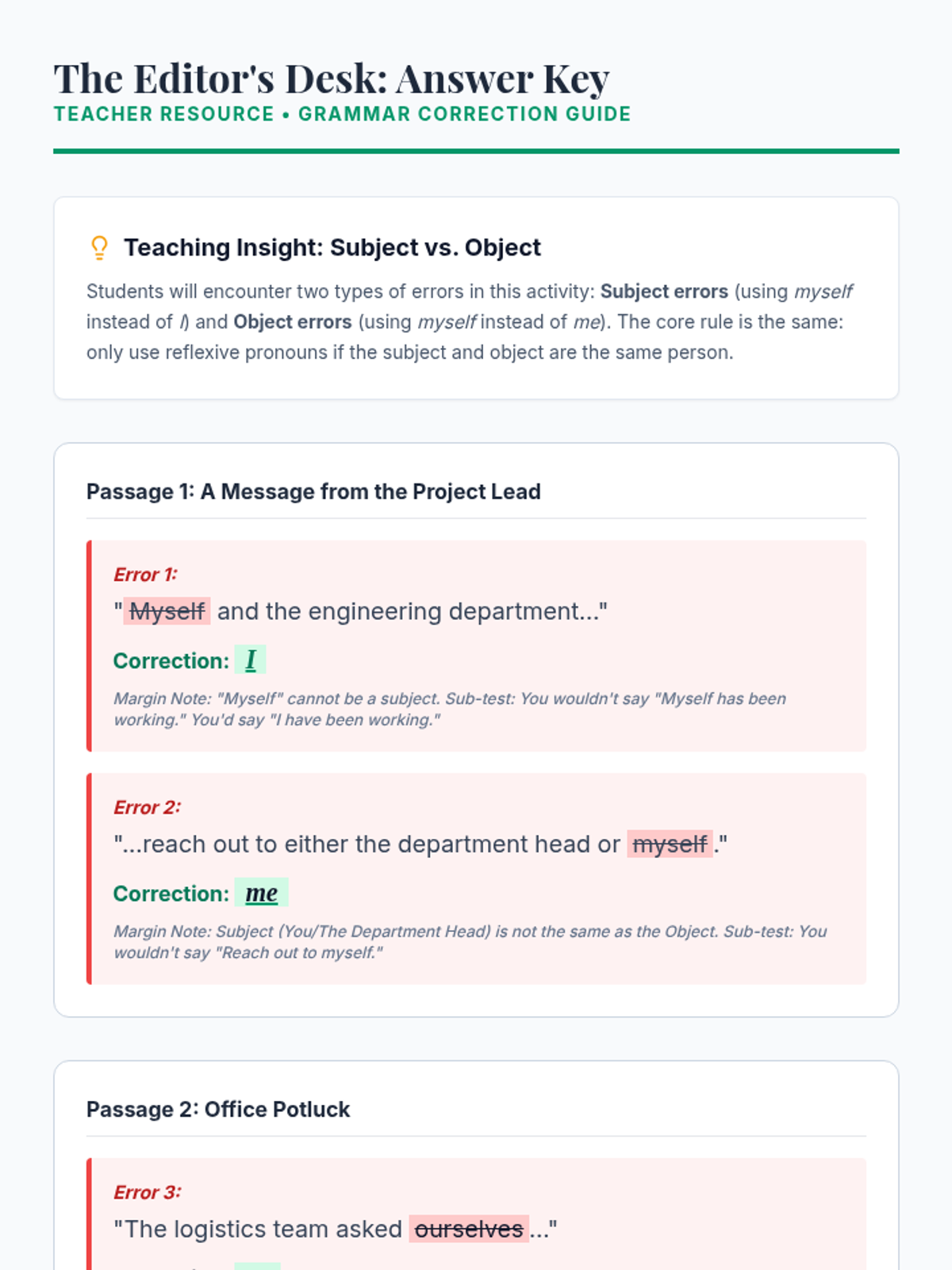
A grammar lesson for 8th graders focusing on the common 'hypercorrection' of using reflexive pronouns like 'myself' to sound more formal, featuring a business newsletter editing activity.
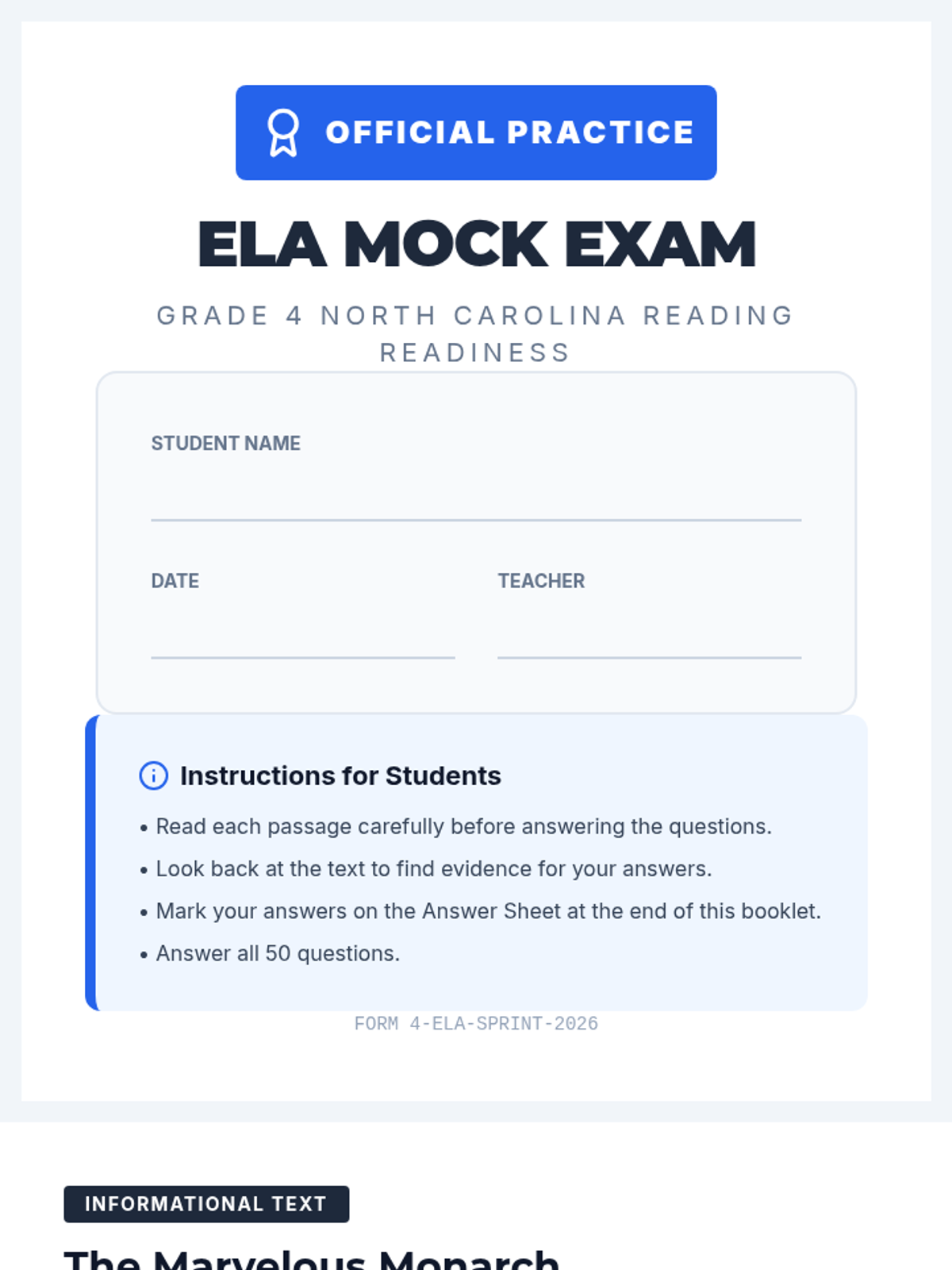
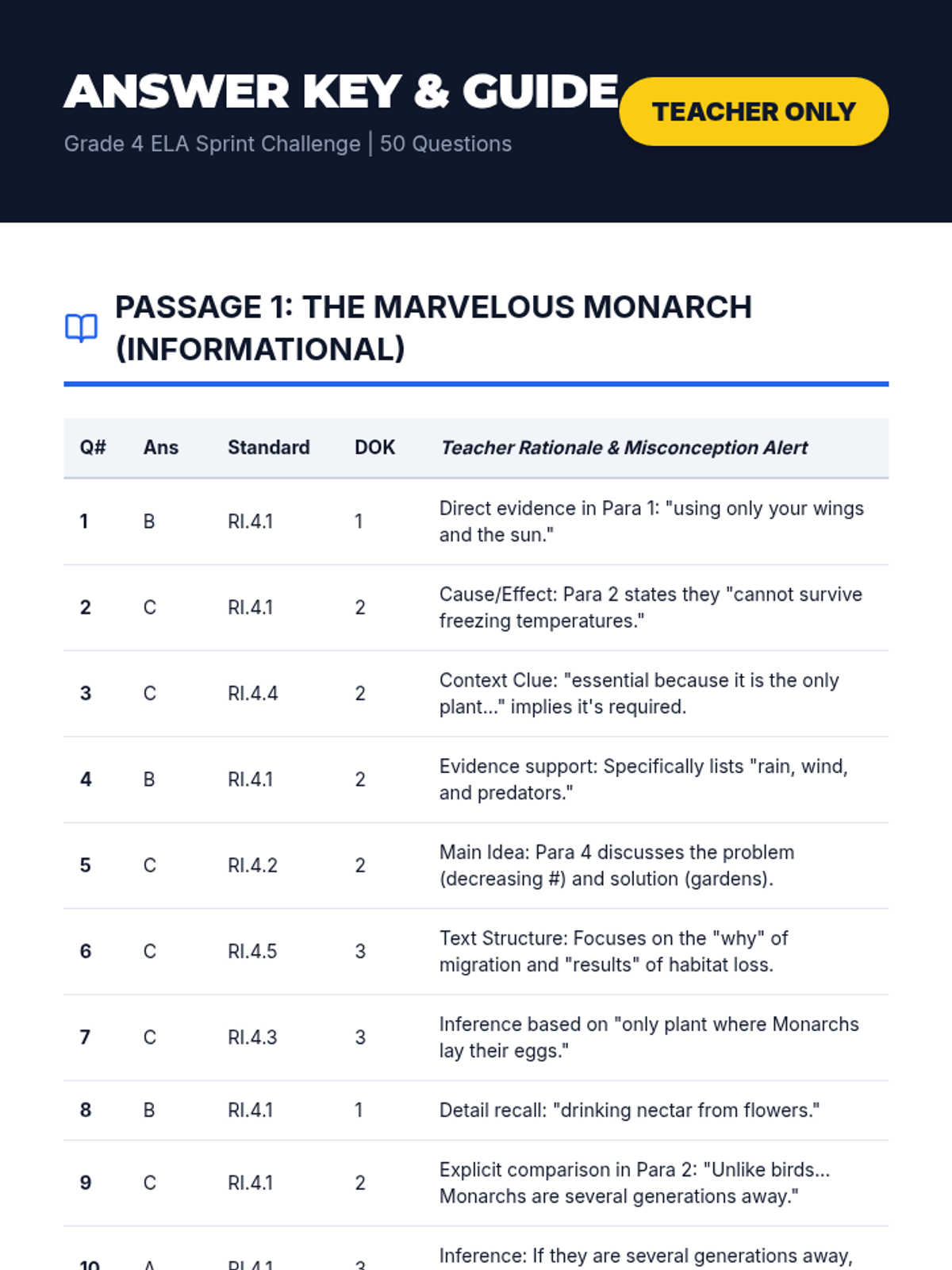
A comprehensive 12-day preparation unit focused on mastering the NC ELA EOG Grade 4 standards through a 50-question mock exam and intensive strategy sessions.
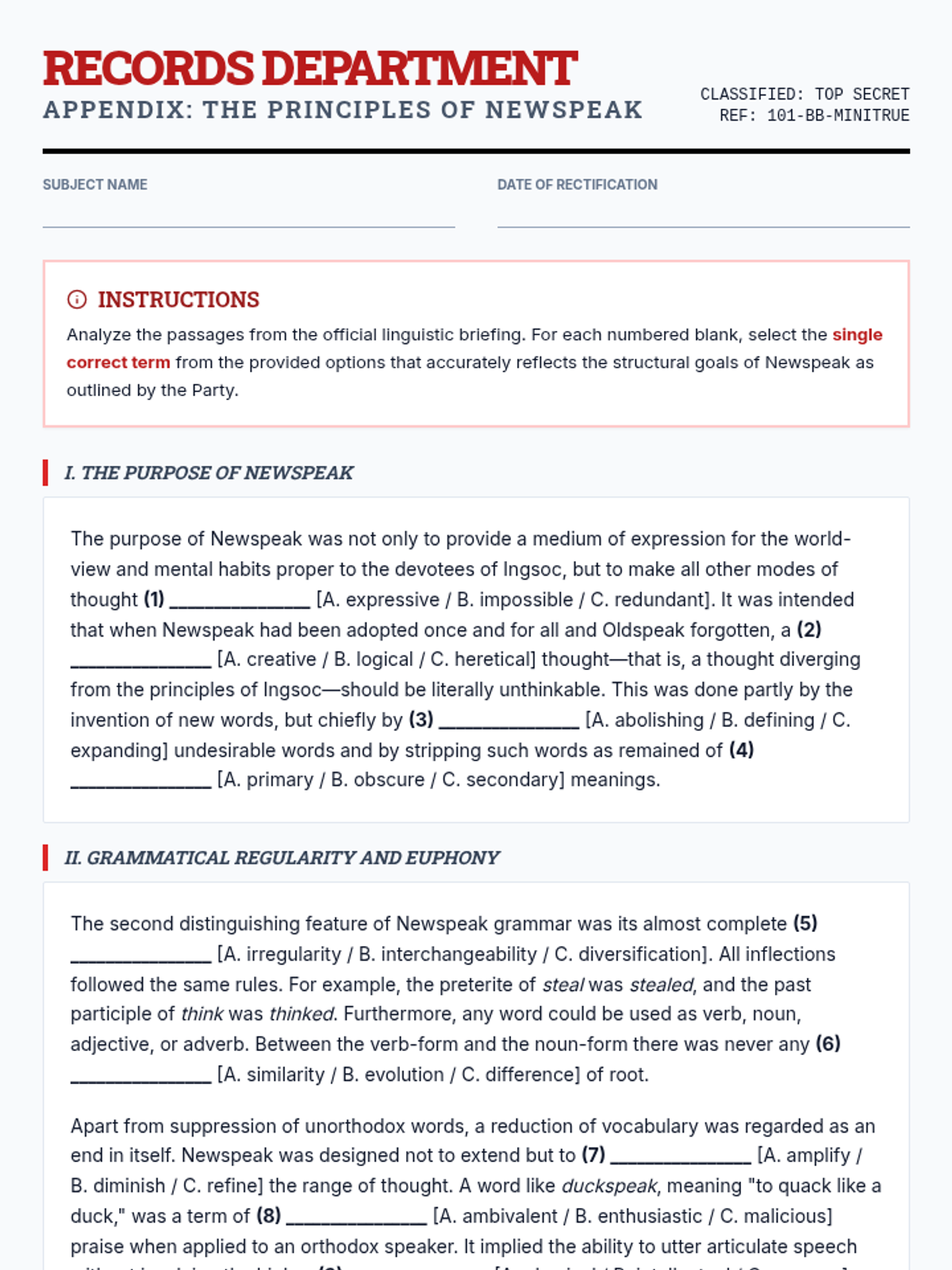
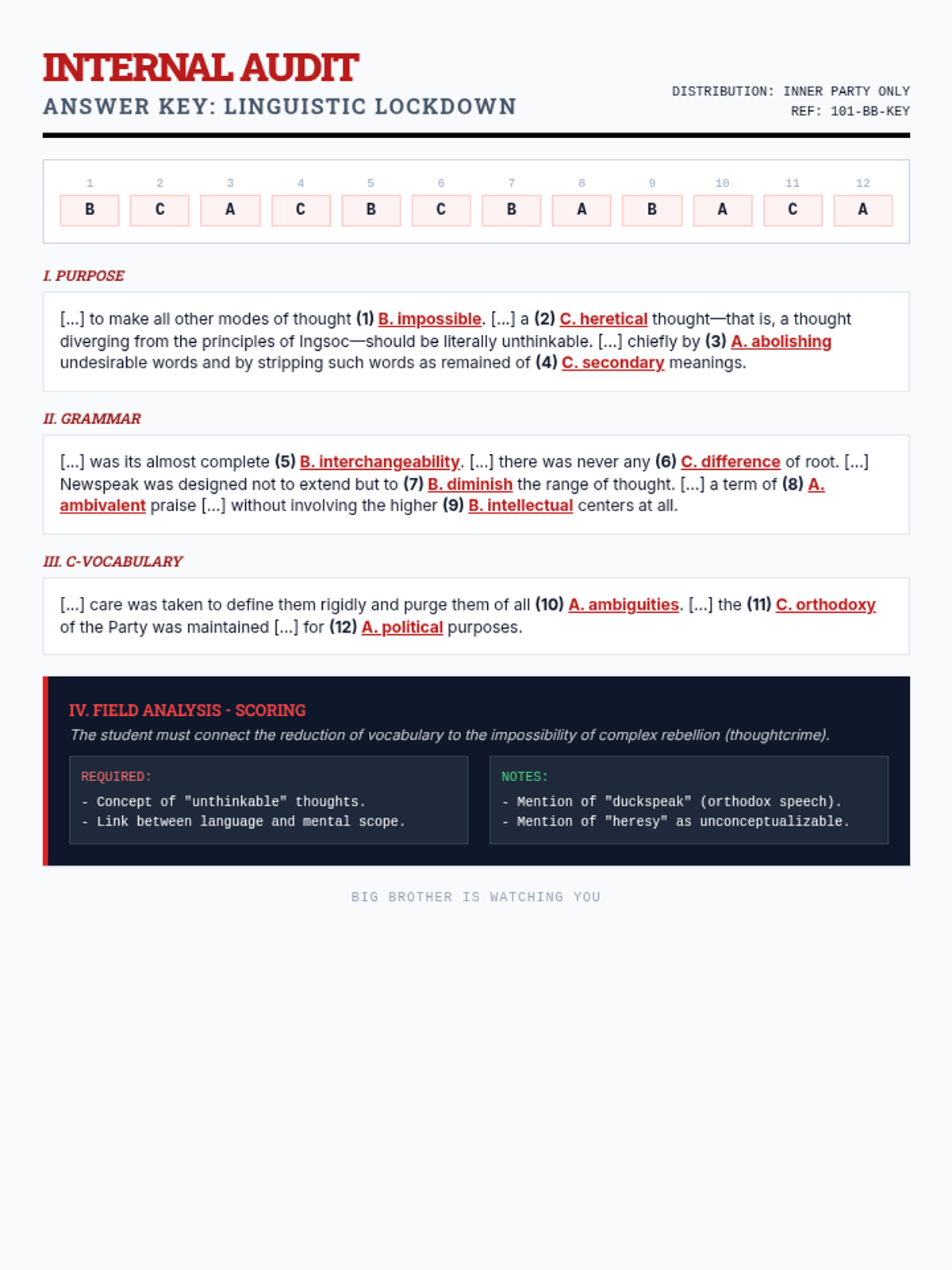
A deep dive into the linguistic control mechanisms of Oceania, focusing on the vocabulary and structural goals of Newspeak as described in George Orwell's 1984.
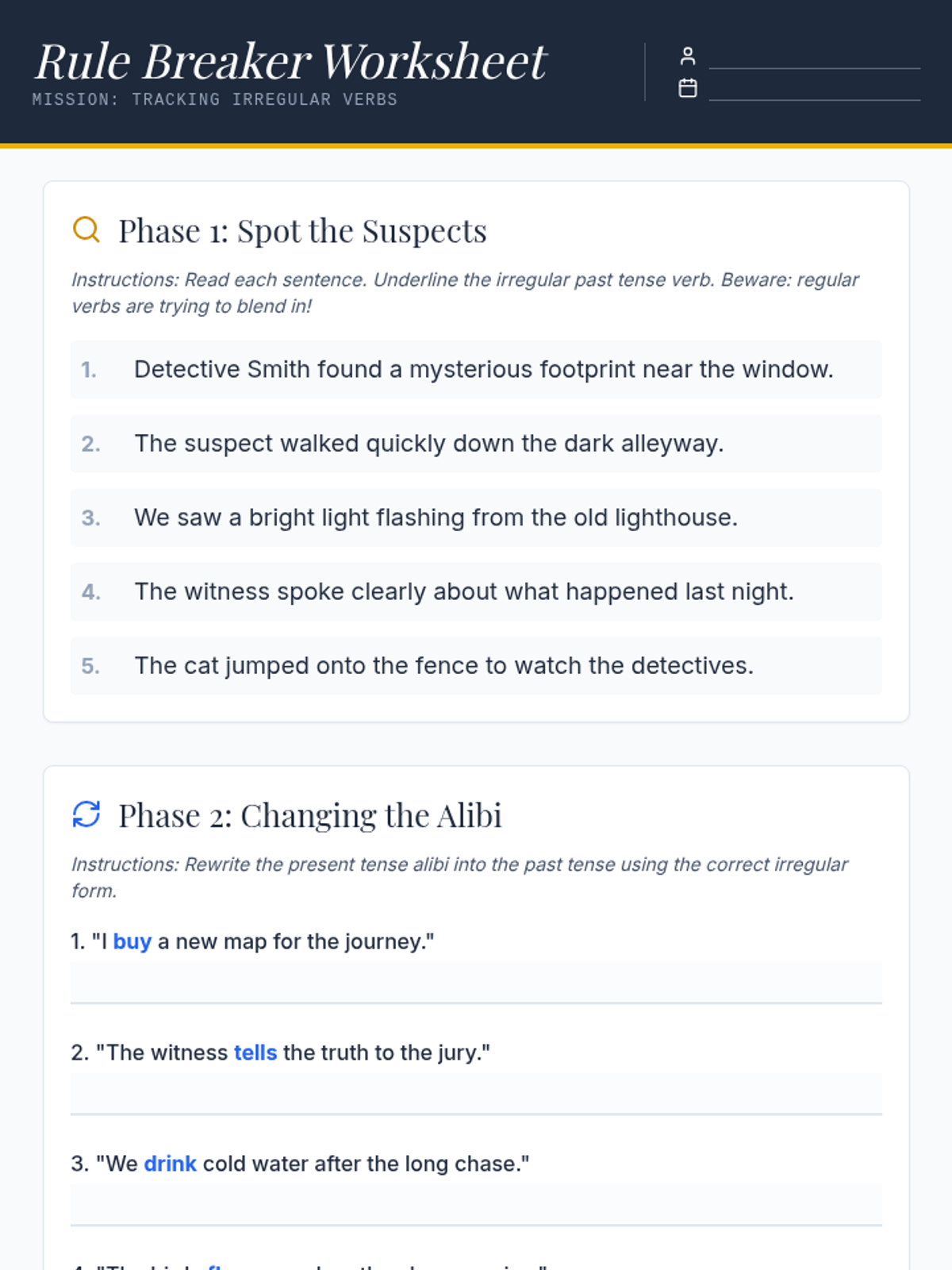
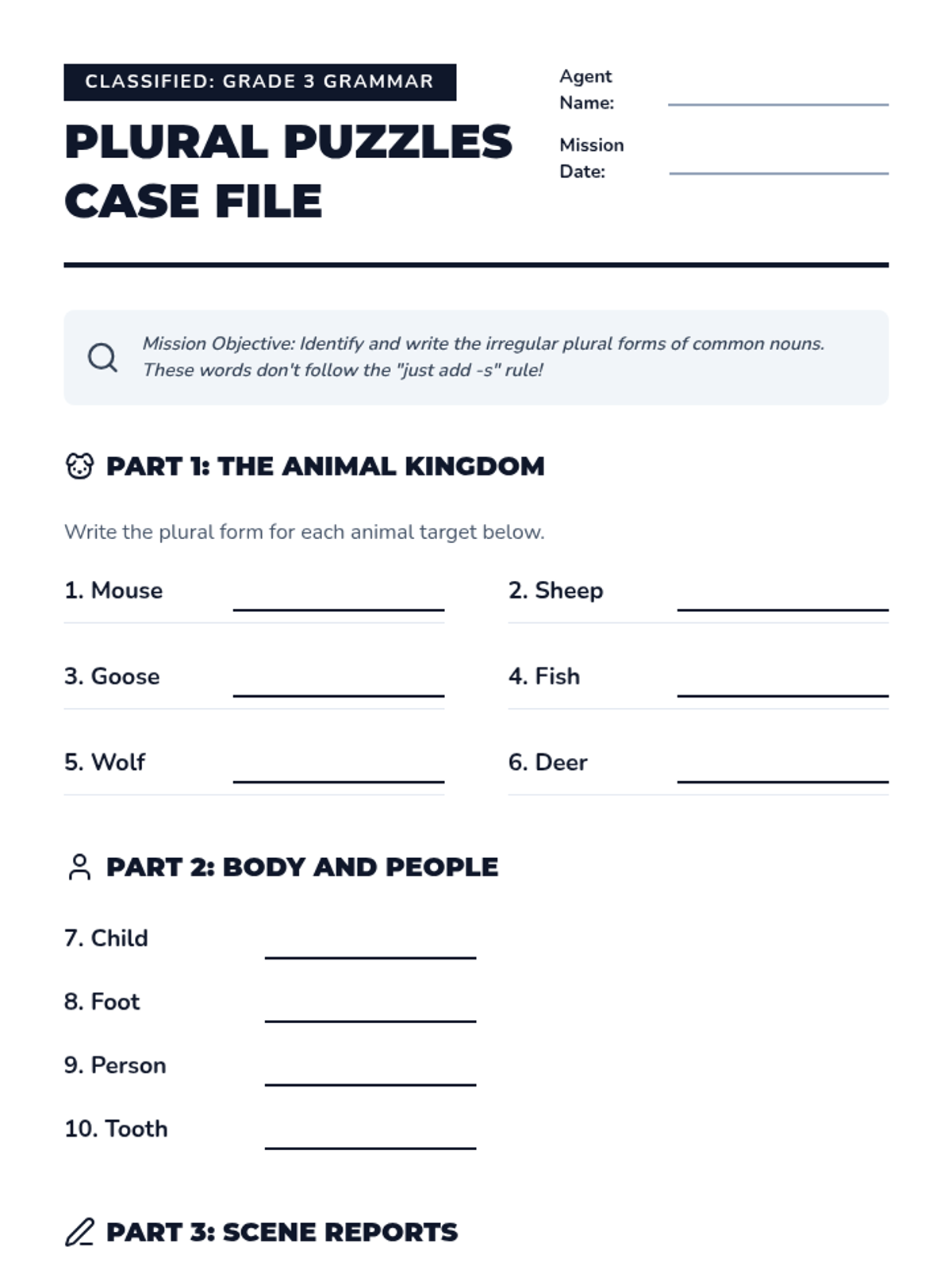
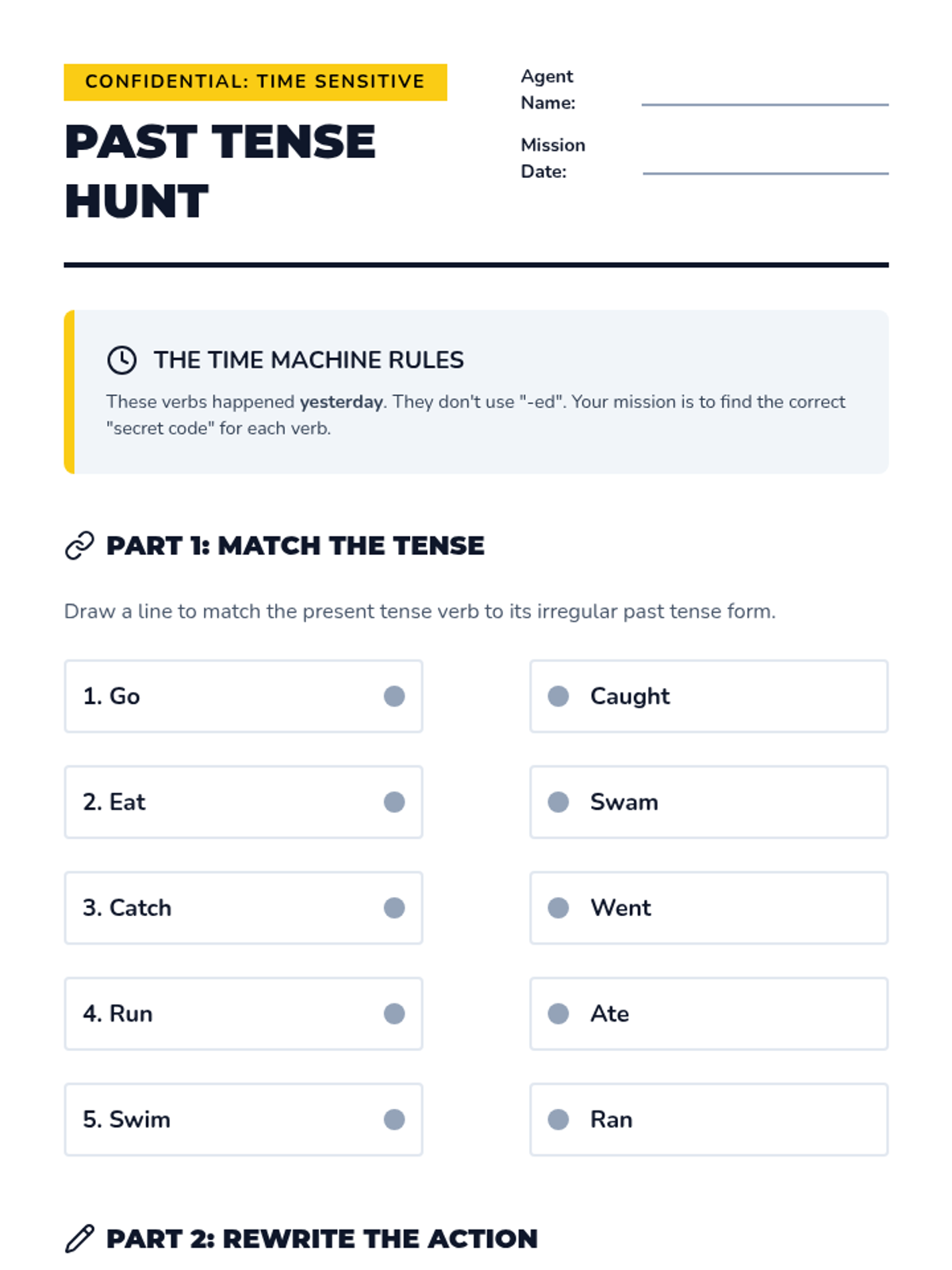
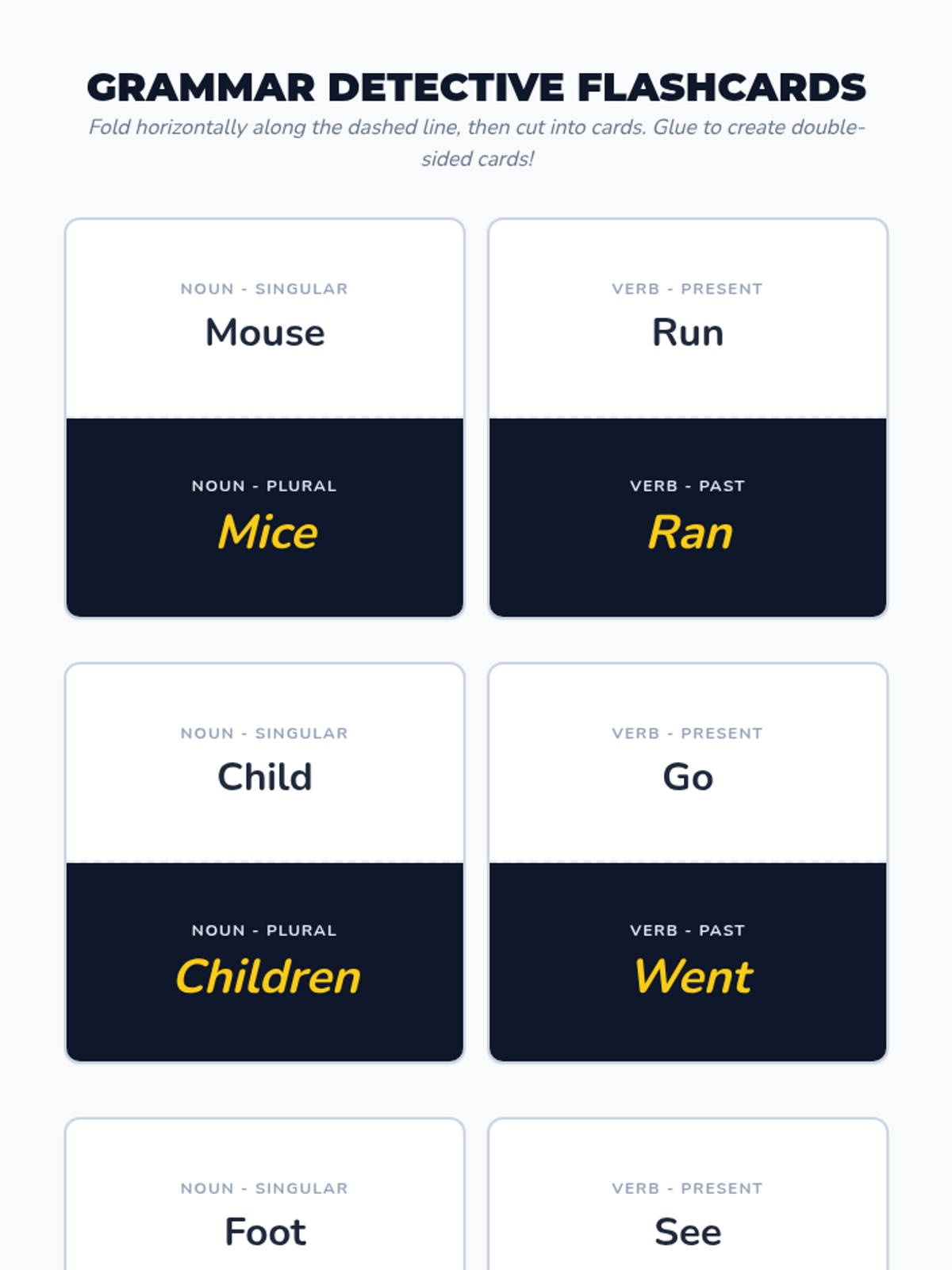
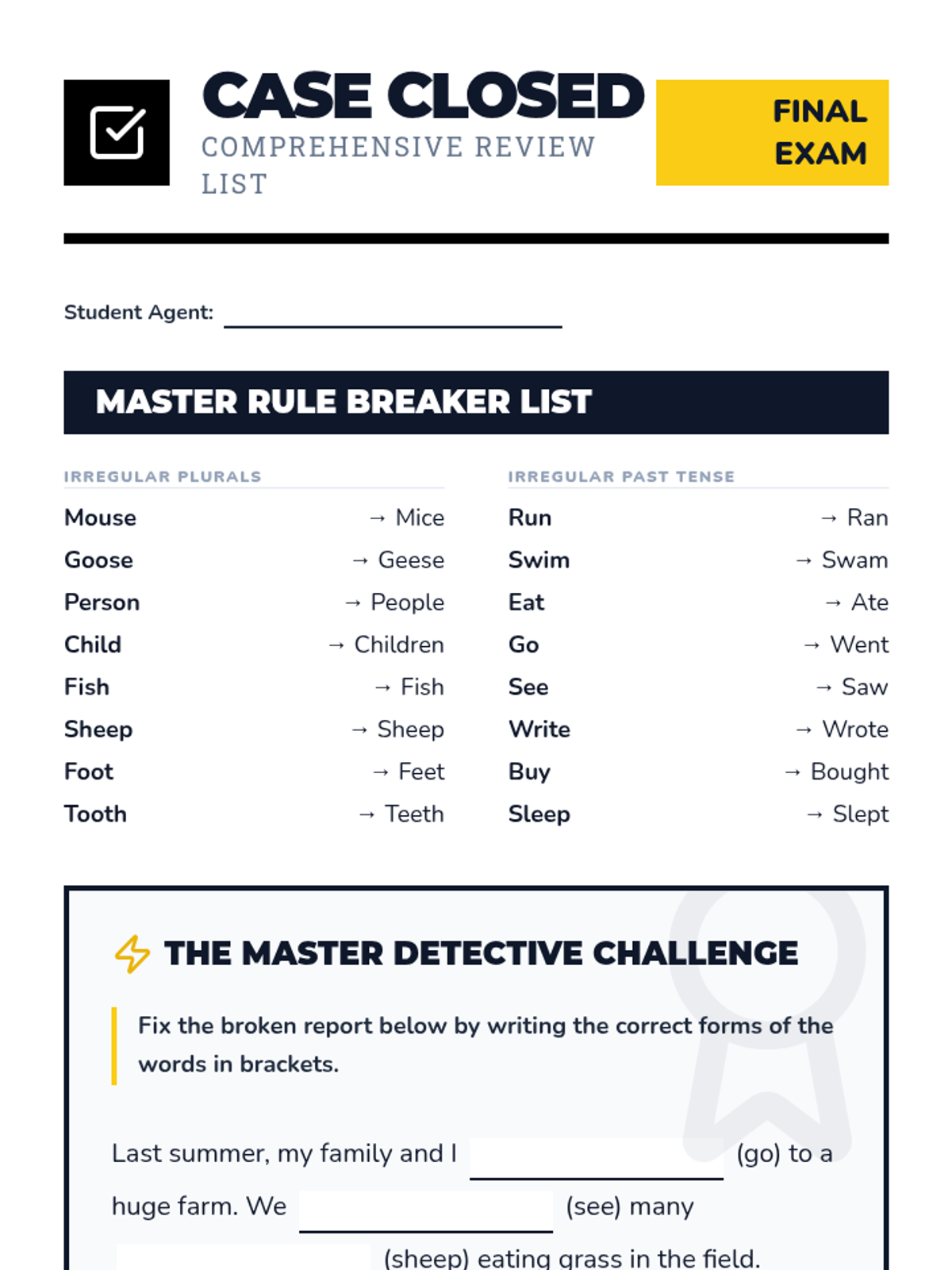
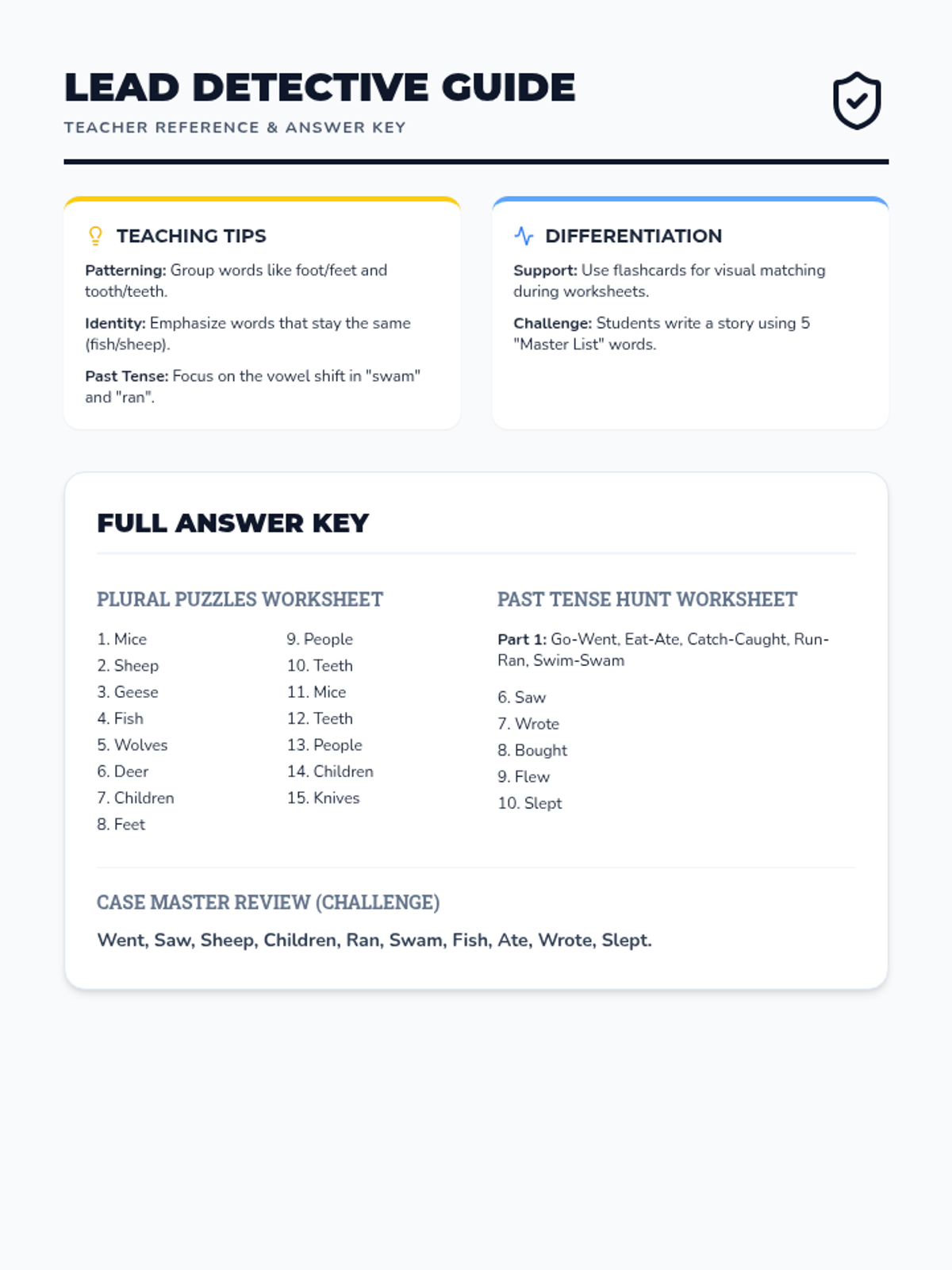
A comprehensive lesson on irregular plurals and irregular past tense verbs, themed around a 'Grammar Detective' investigation where students track down words that break the rules.
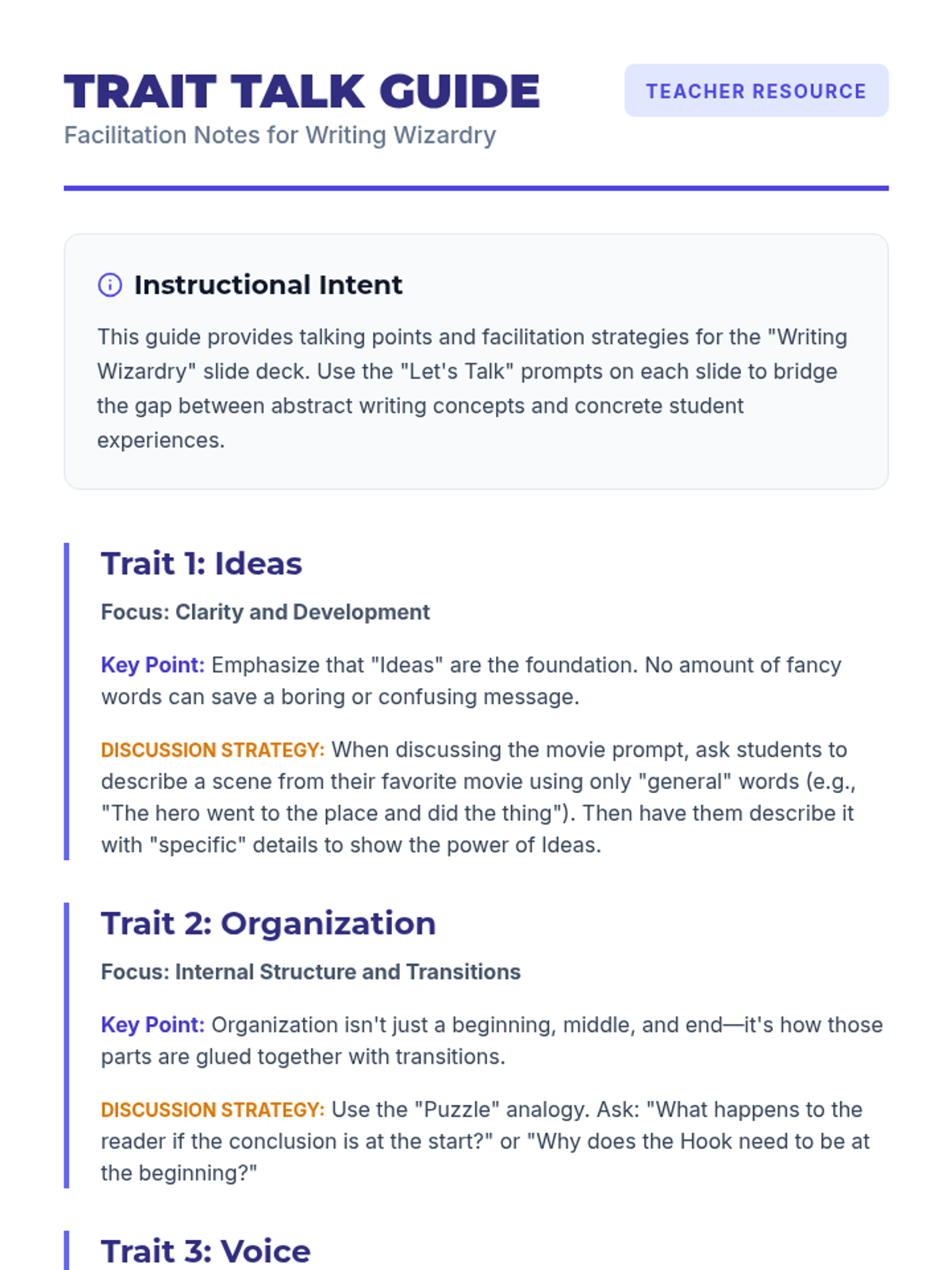
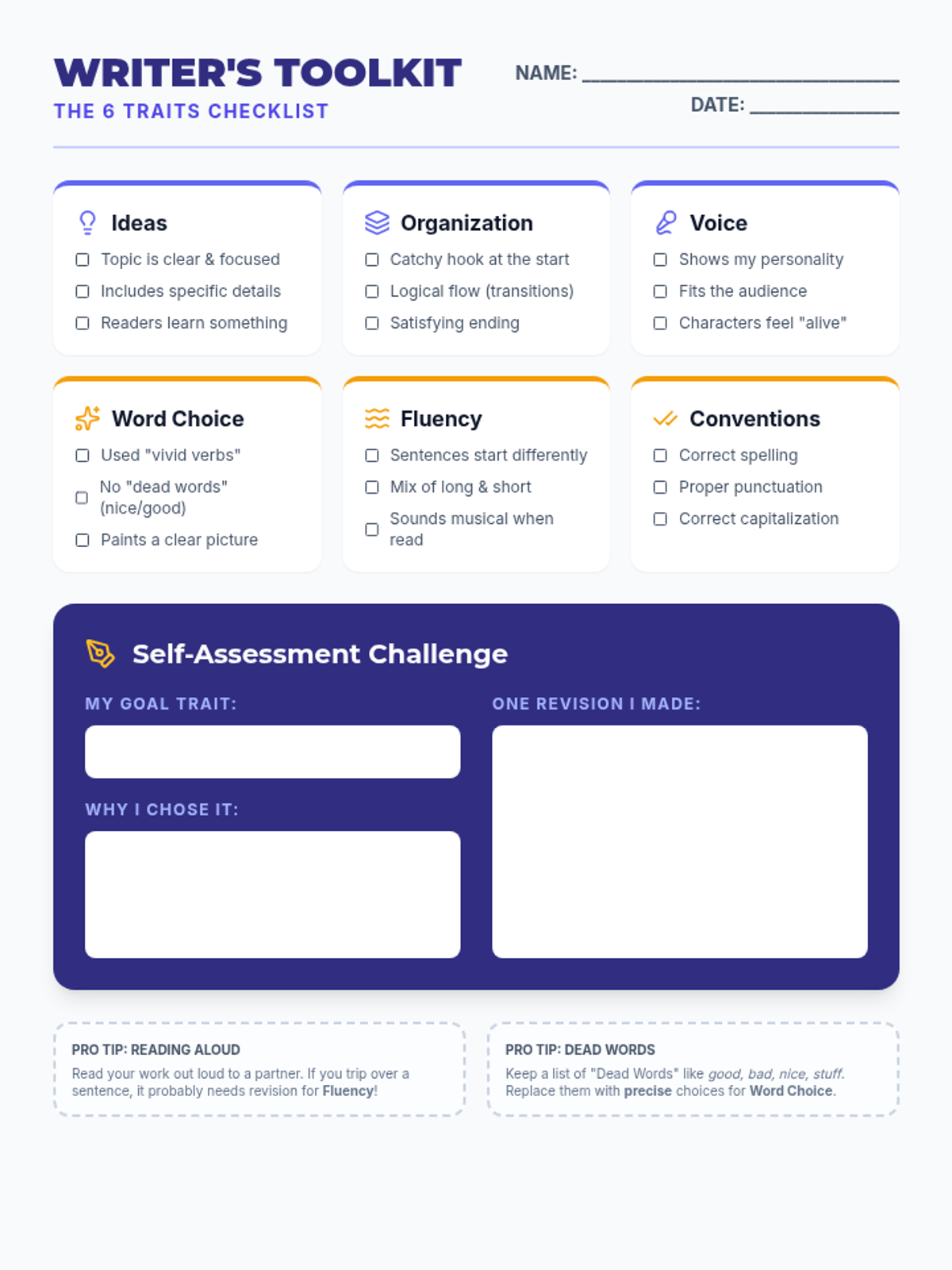
An interactive exploration of the 6 Traits of Effective Writing, designed to help students identify and apply key elements of strong prose through discussion and analysis.
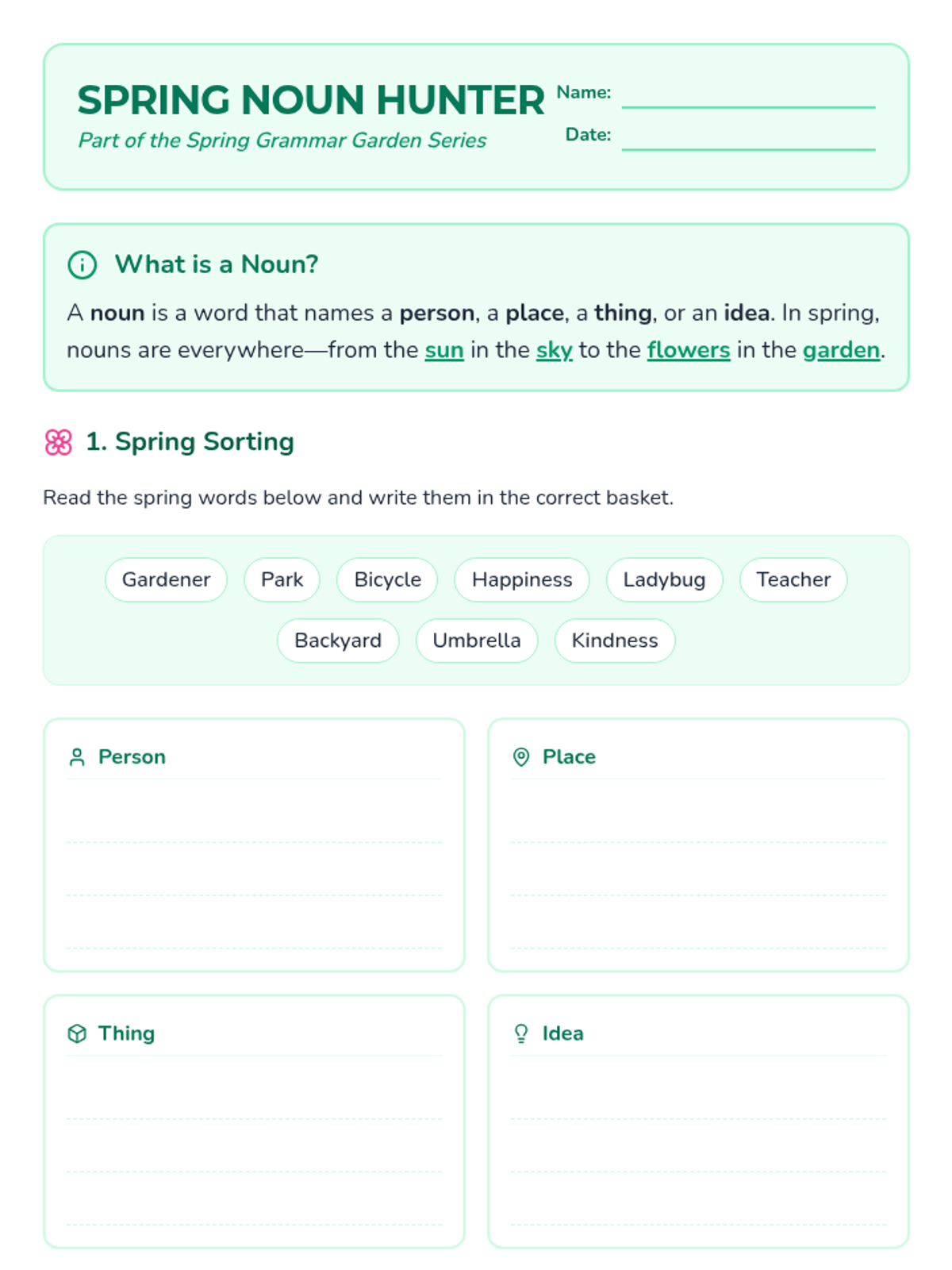
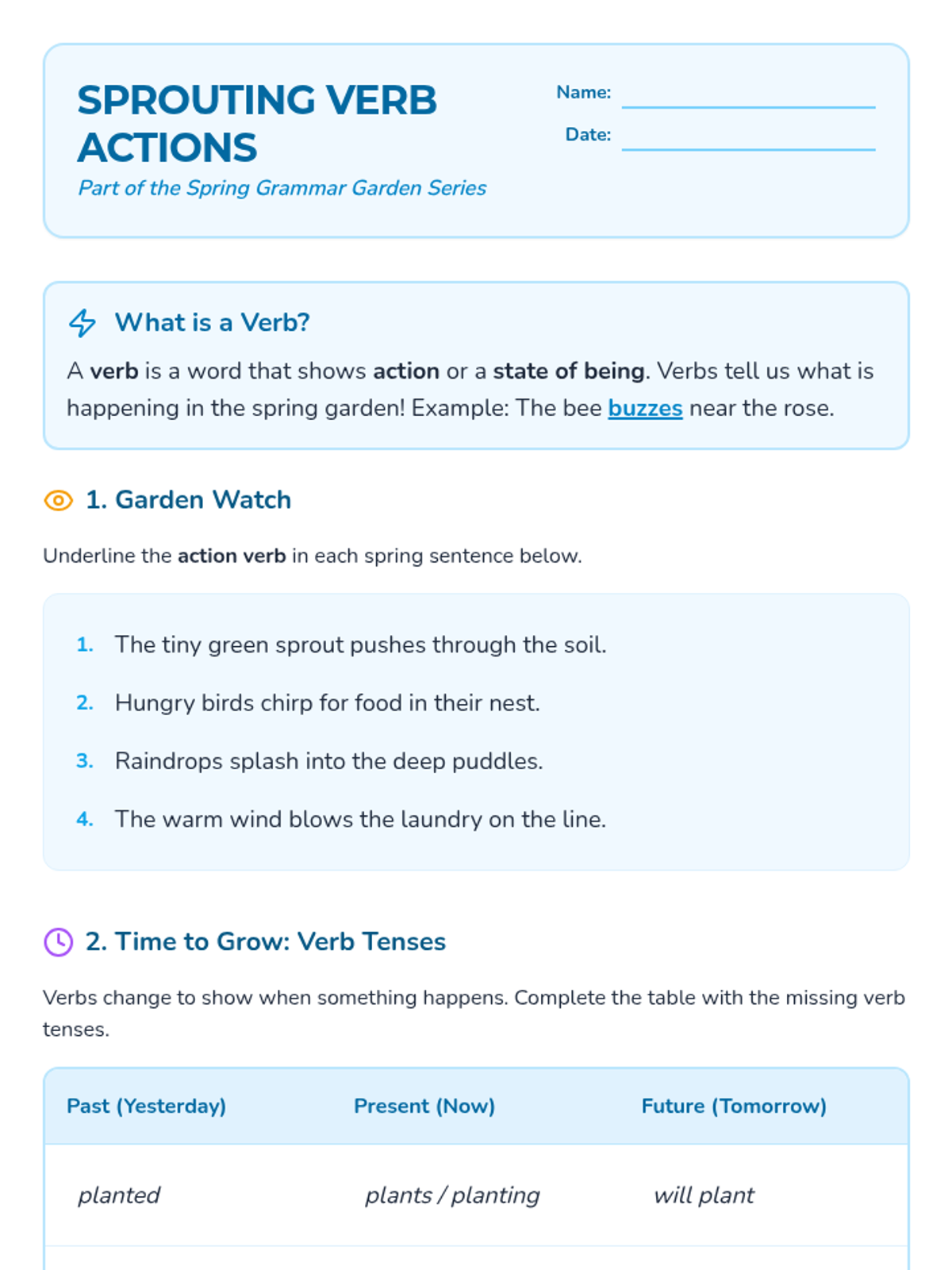
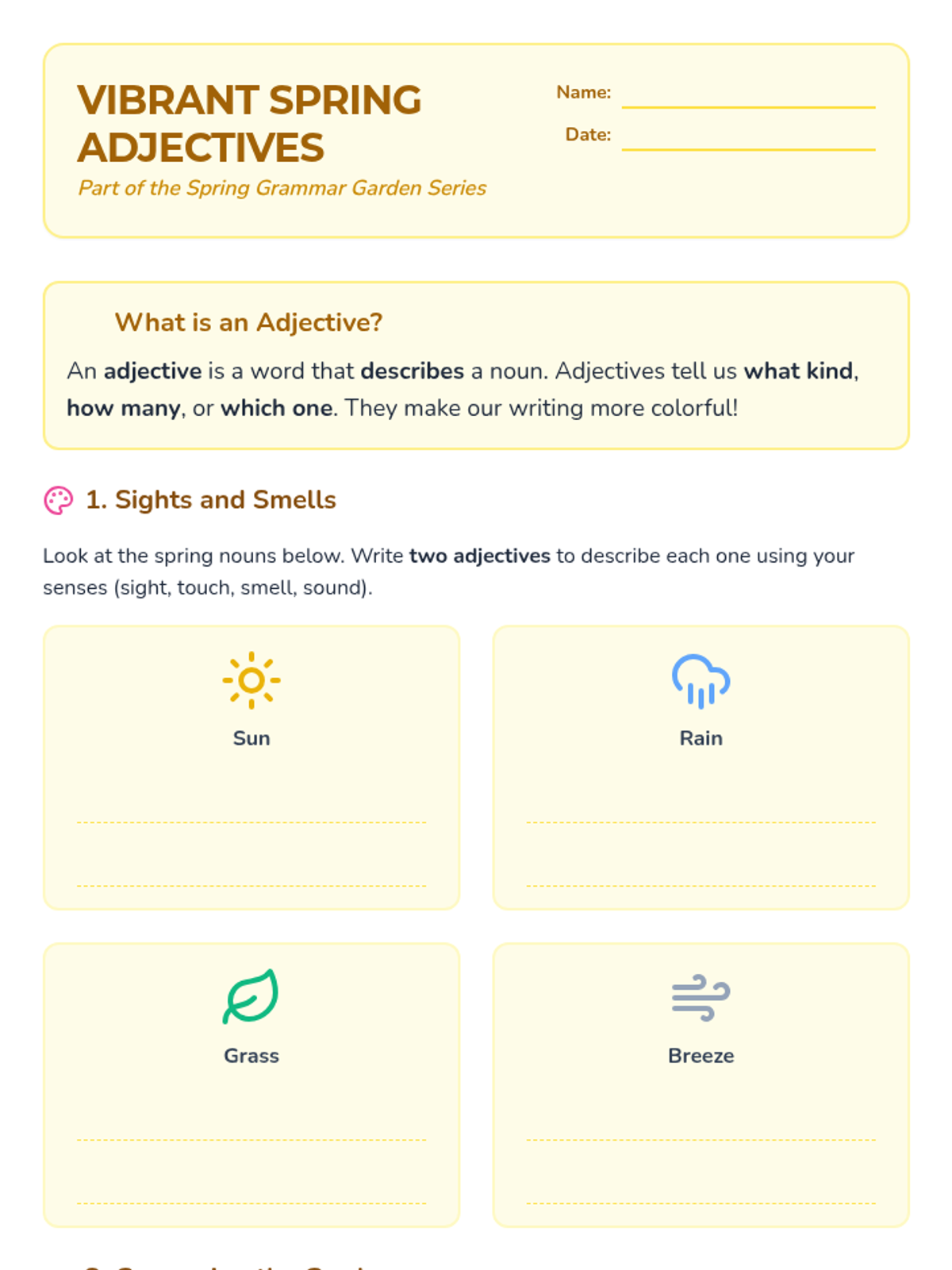
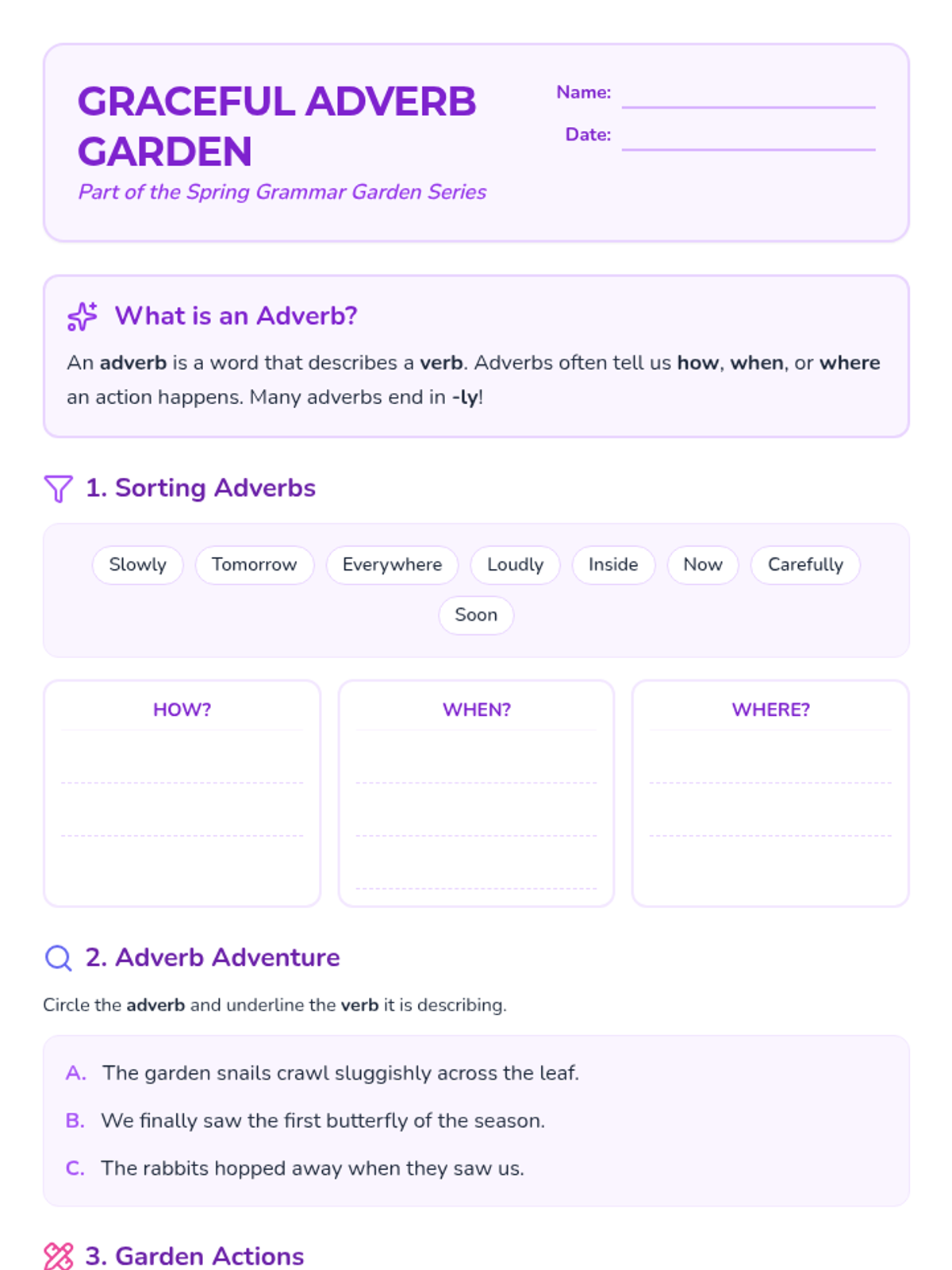
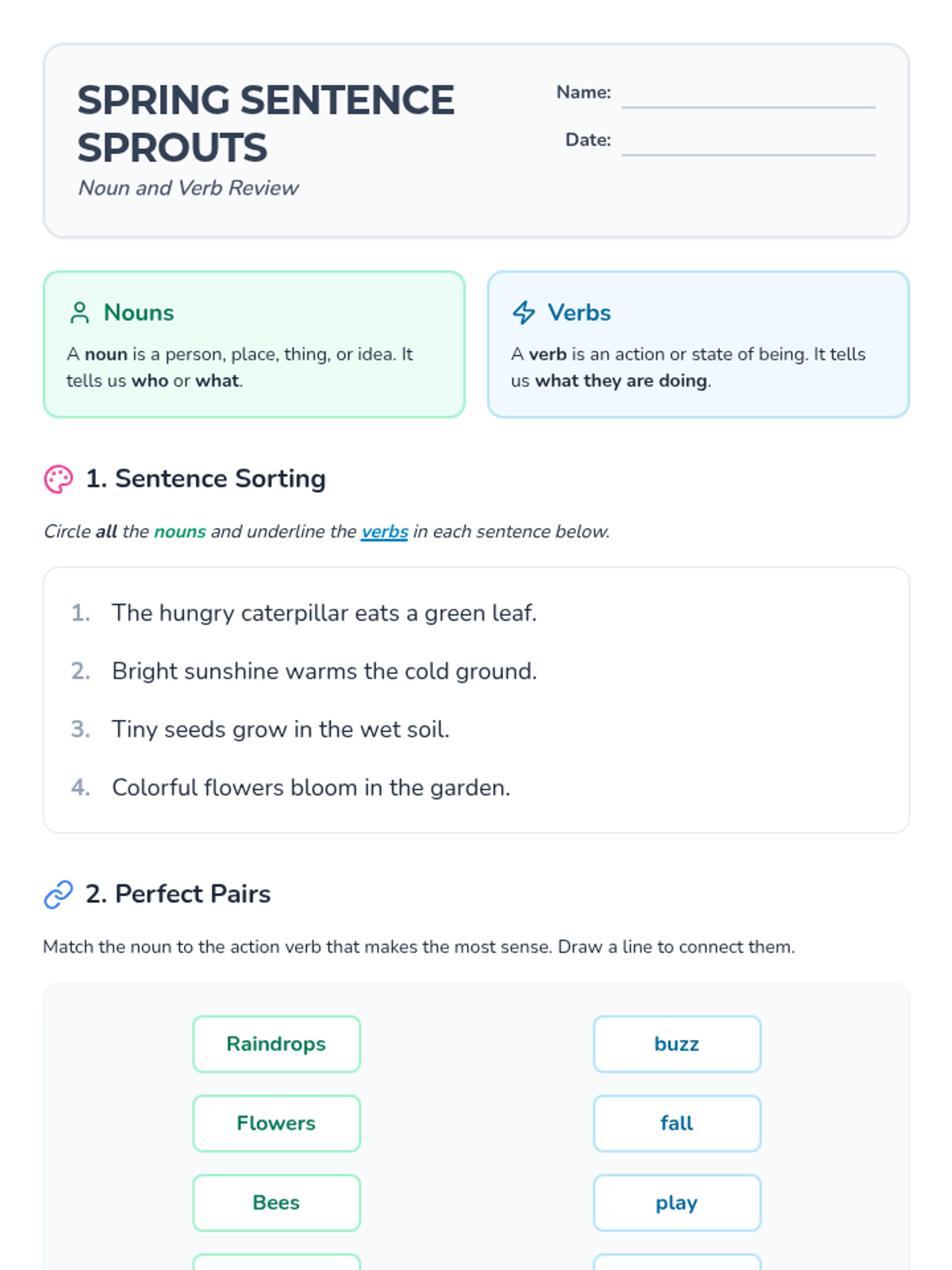
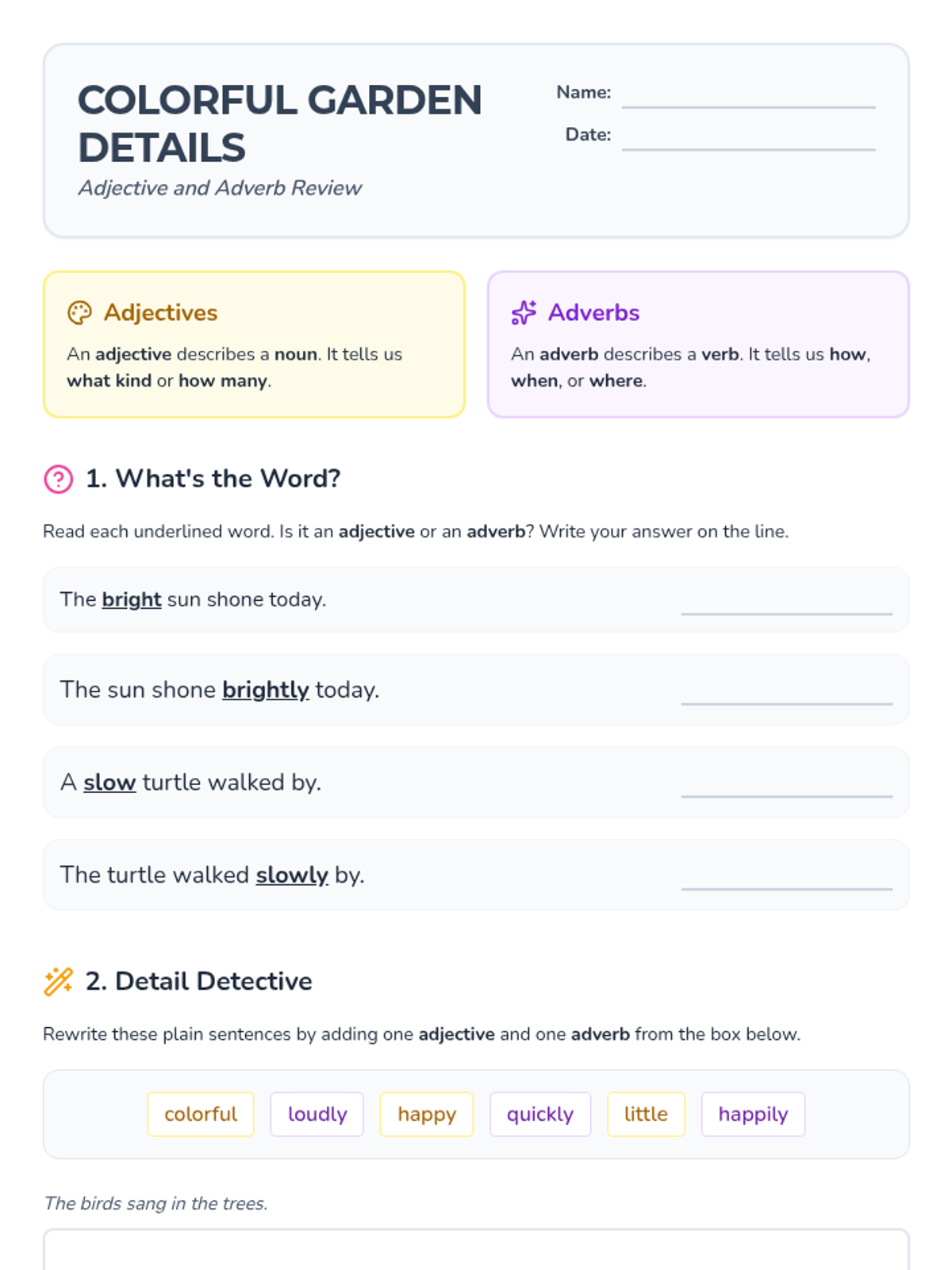
A collection of four Spring-themed grammar worksheets for 3rd grade students, covering nouns, verbs, adjectives, and adverbs with engaging nature-inspired activities.
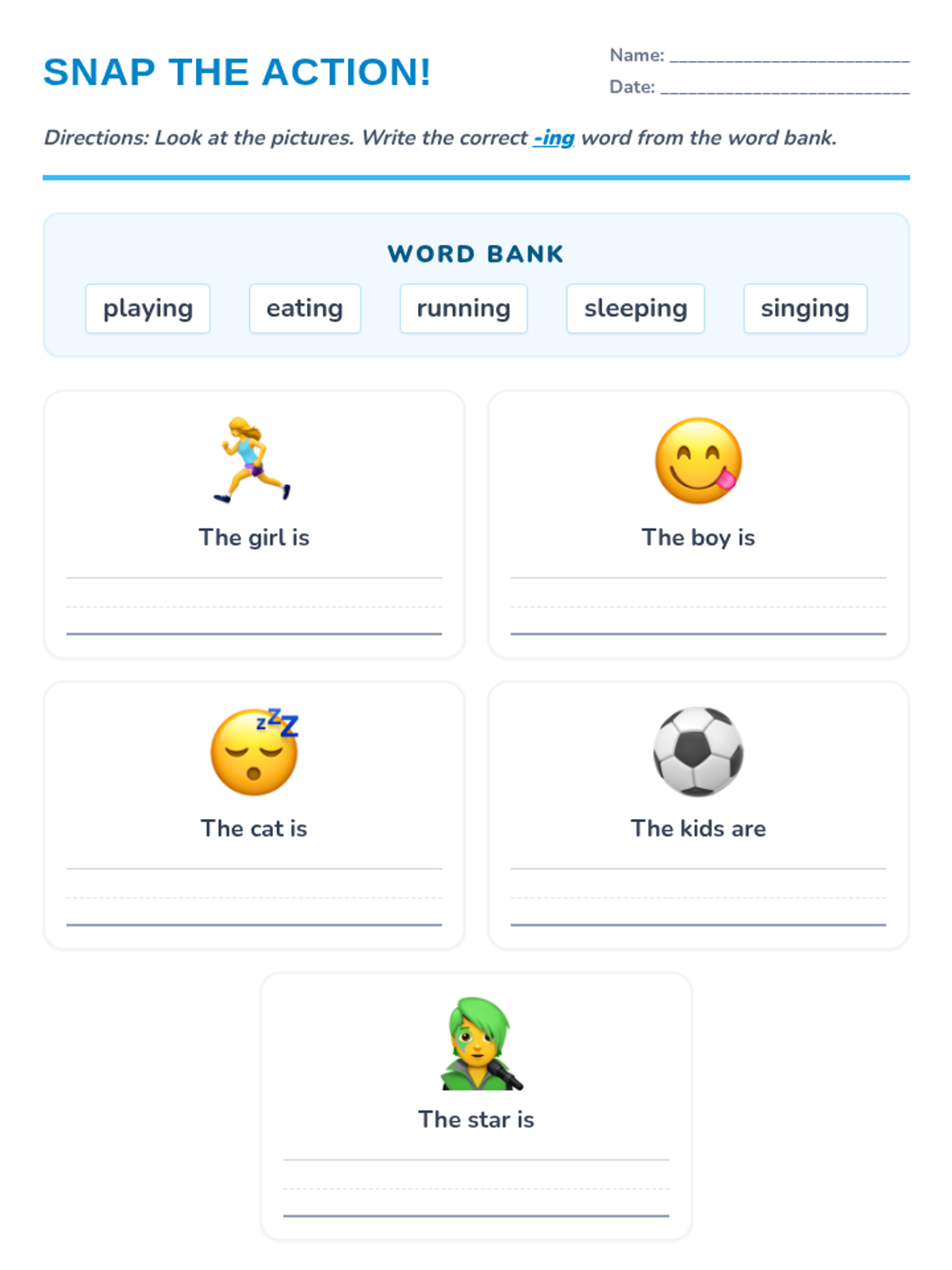
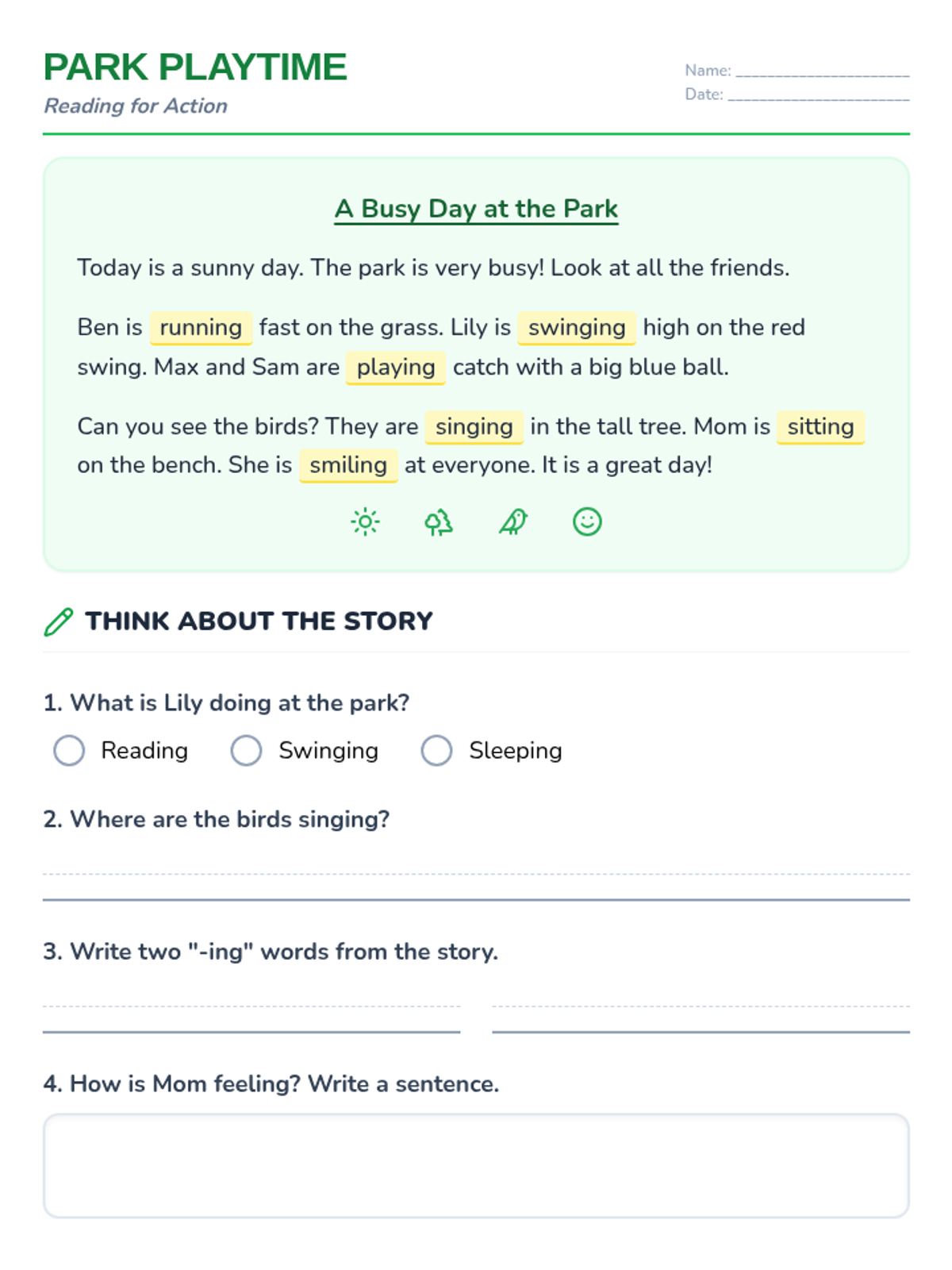
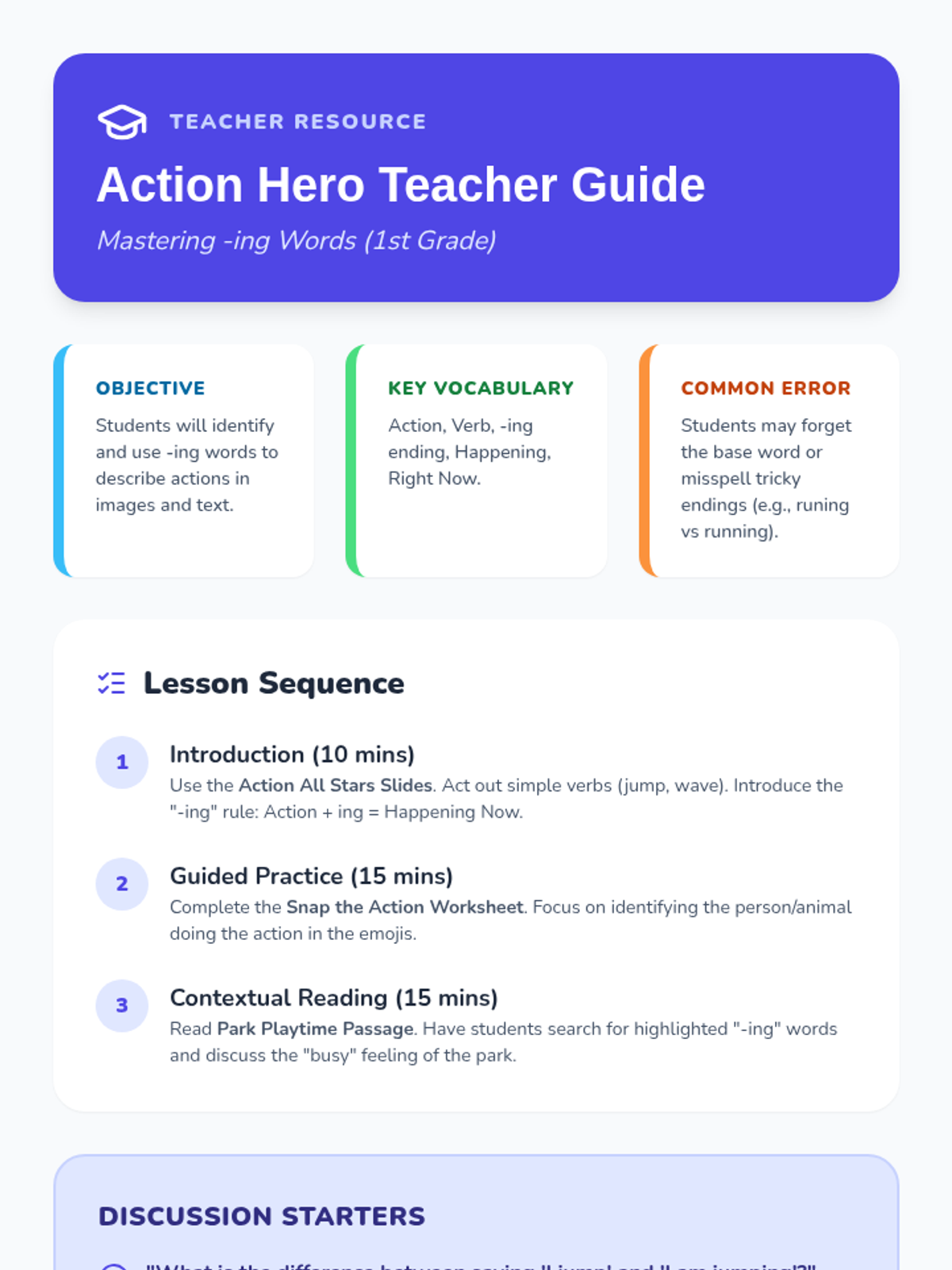
A first-grade lesson focused on identifying and using -ing words to describe ongoing actions through visual aids and reading.
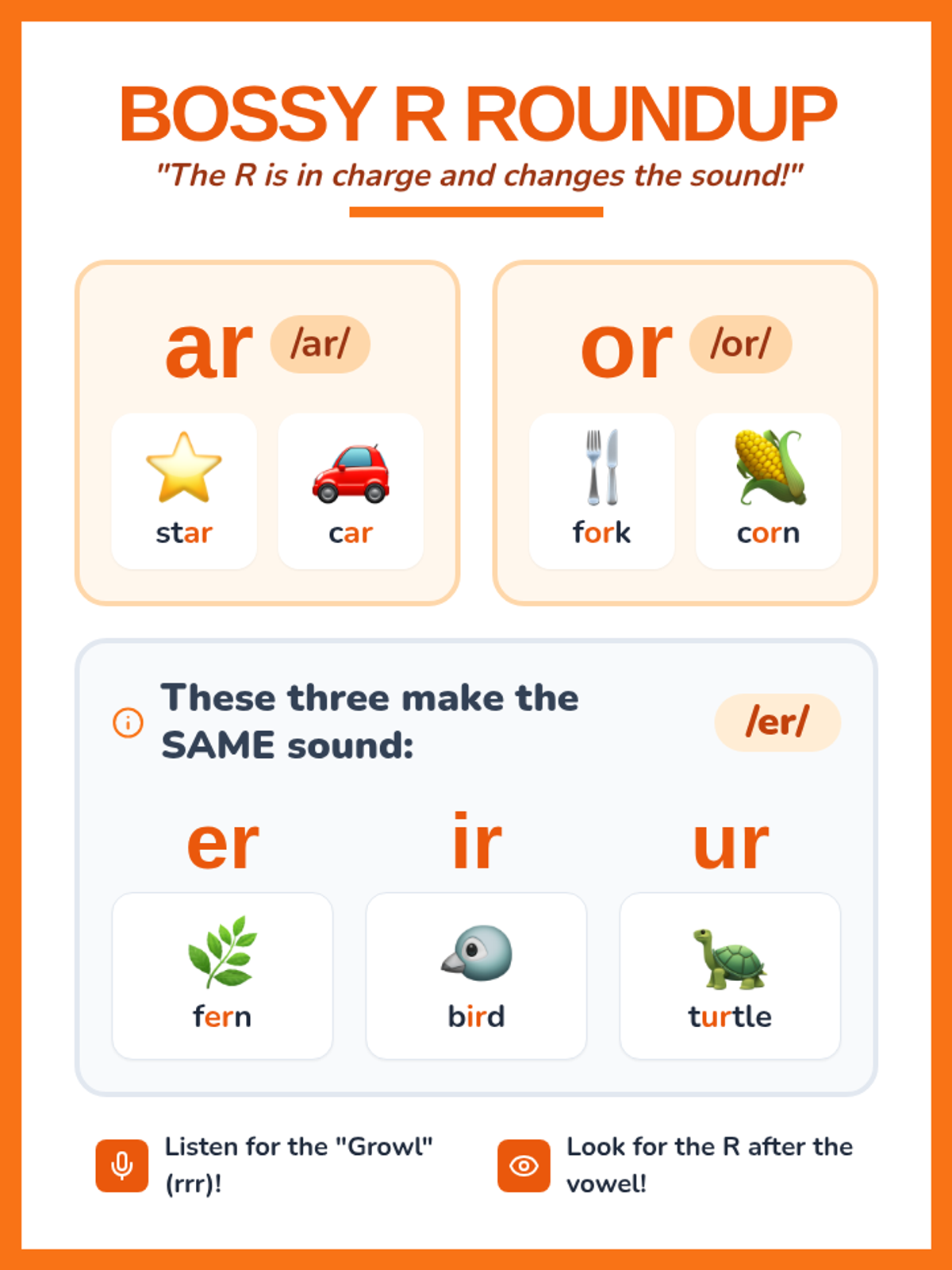
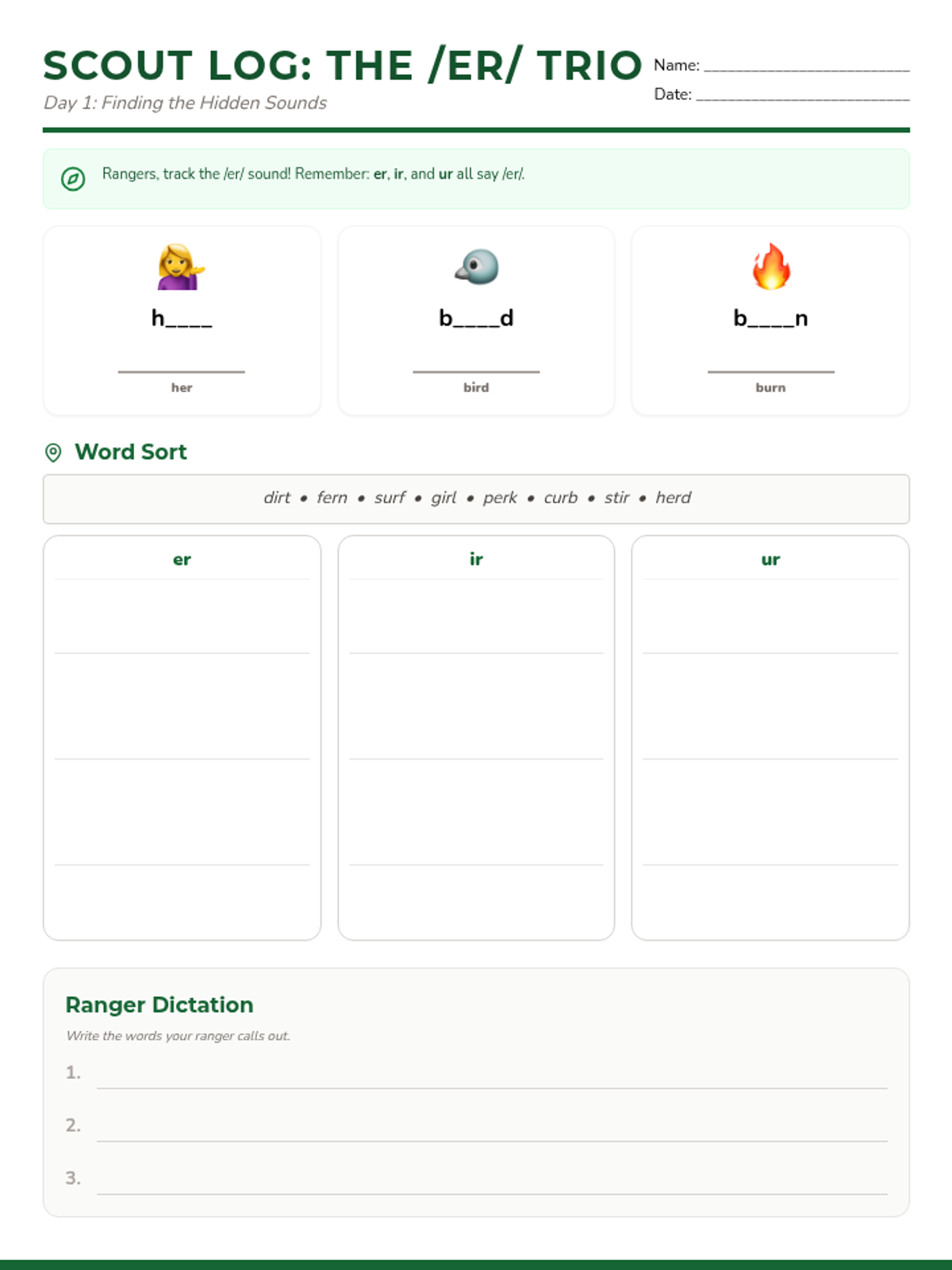
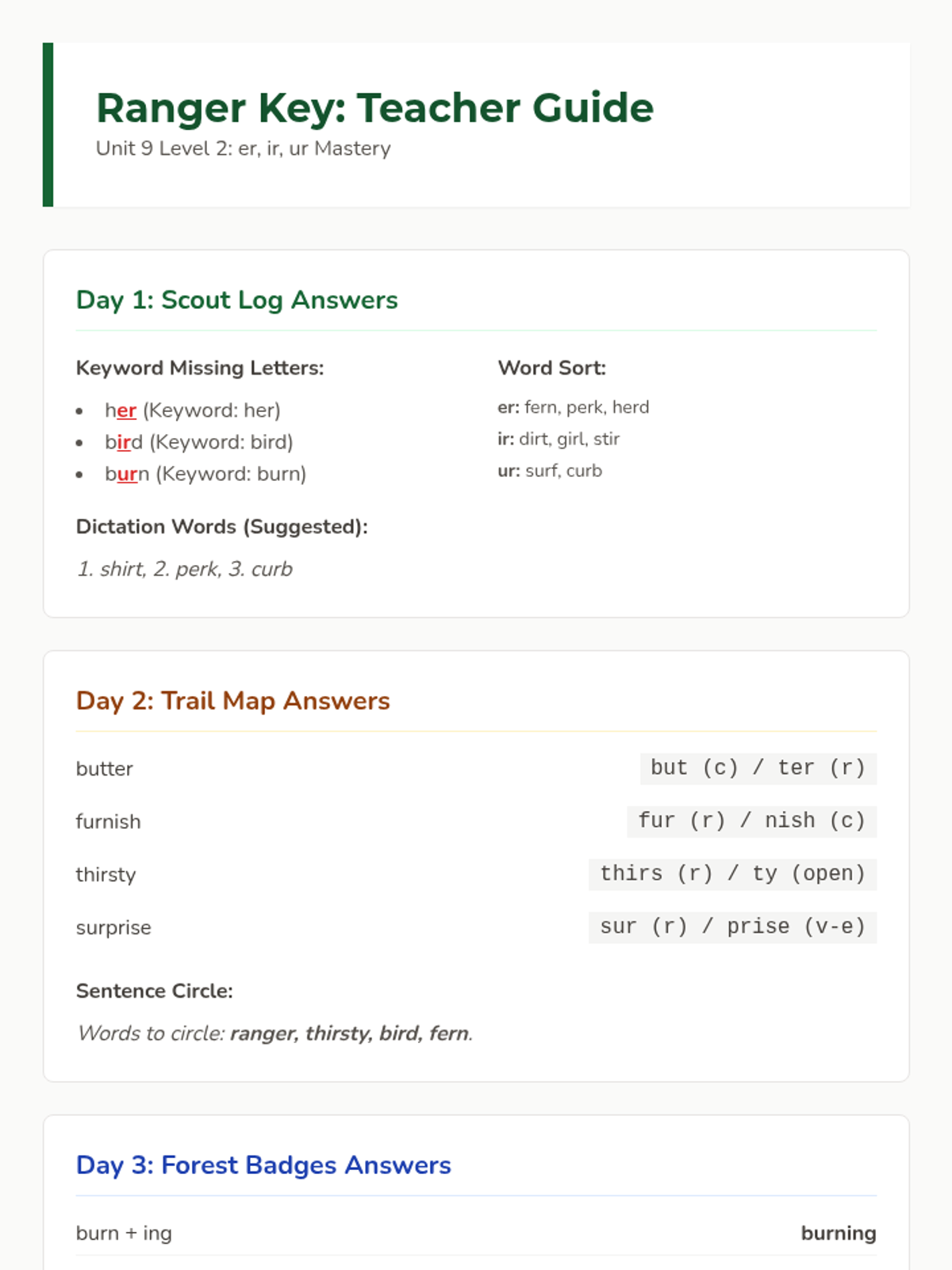
A comprehensive unit on R-controlled vowels (er, ir, ur), focusing on phonemic awareness, multisyllabic word decoding, and suffix application. Students explore these "Bossy R" sounds through a forest ranger theme.
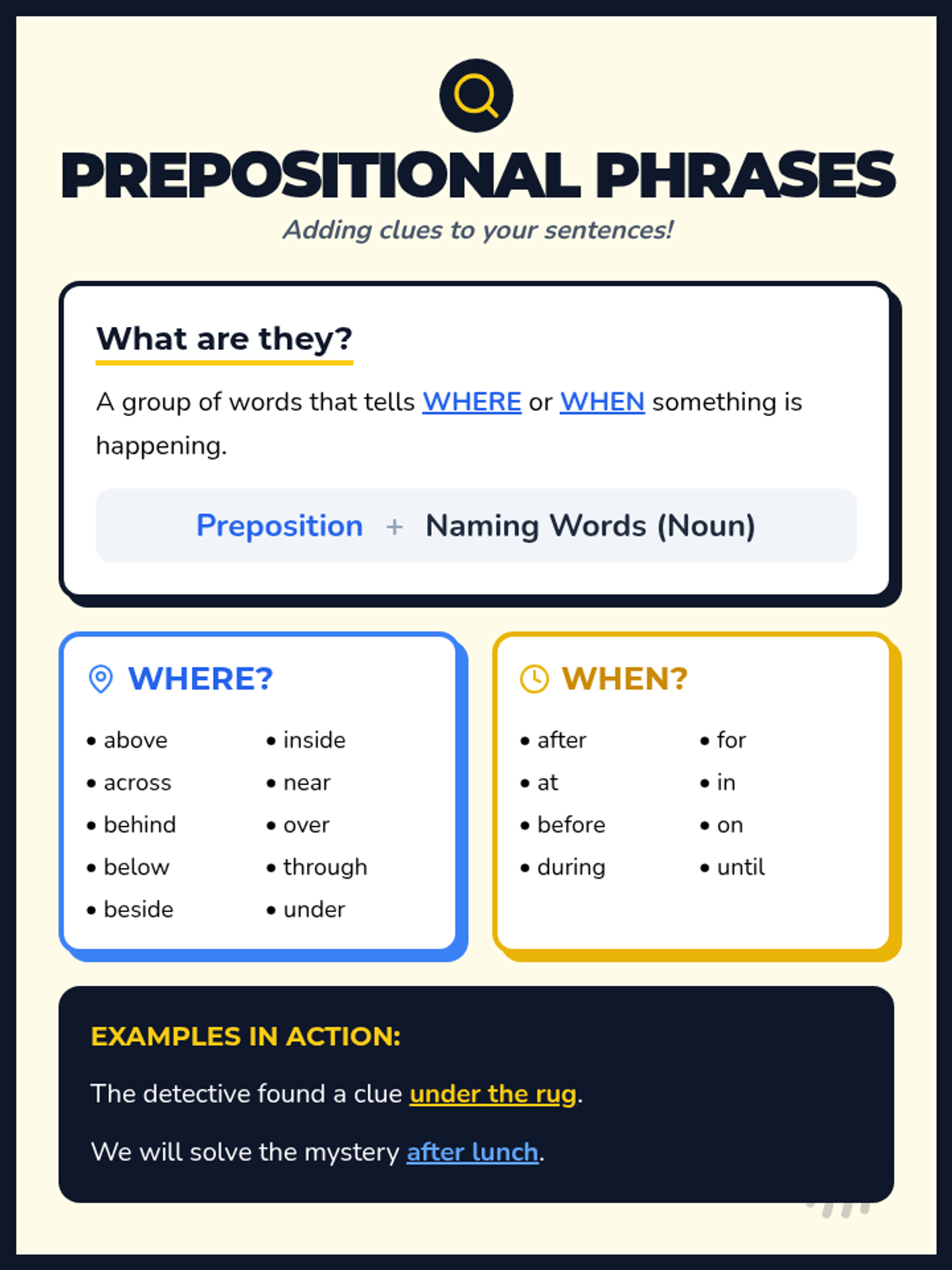
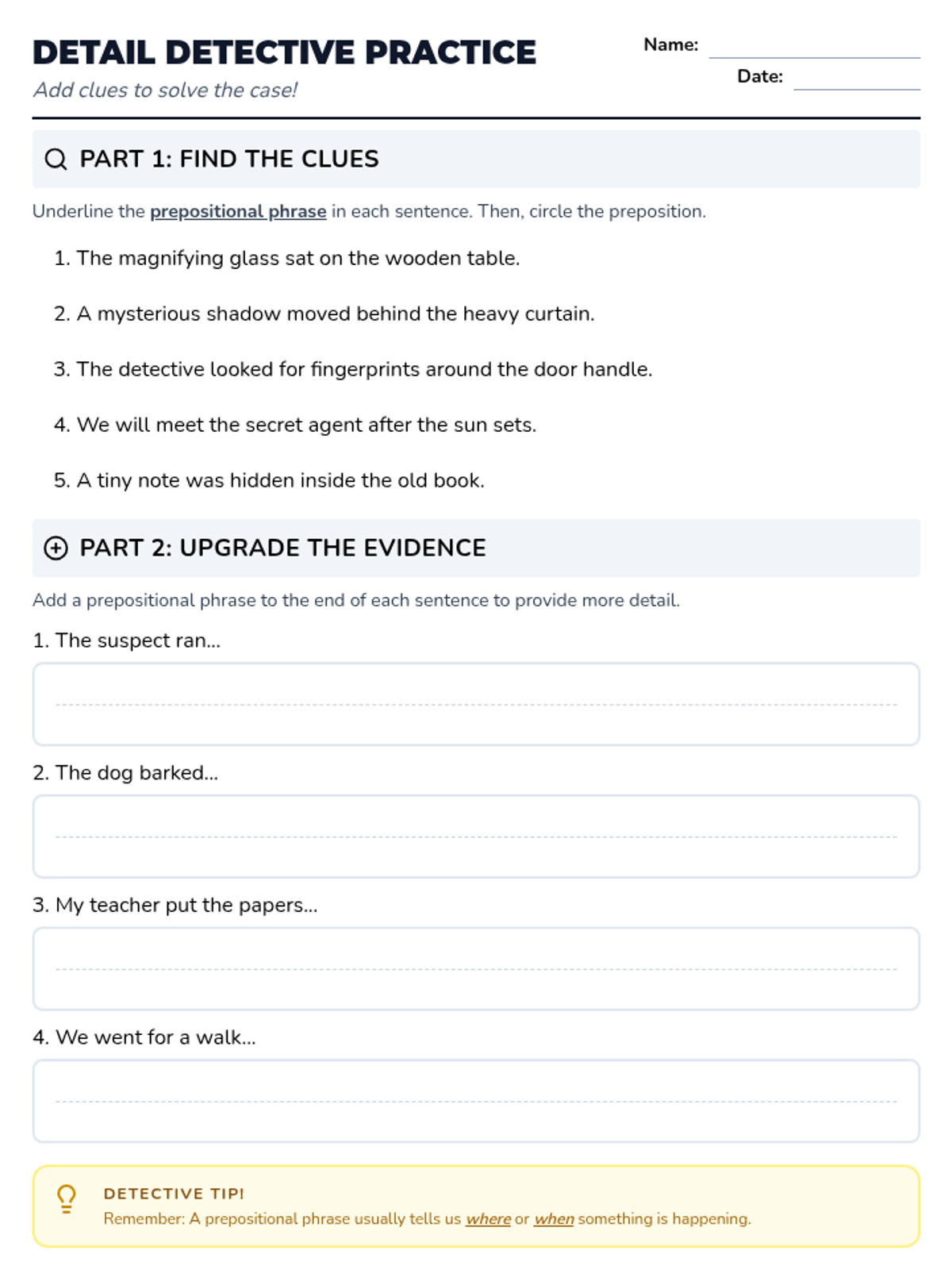
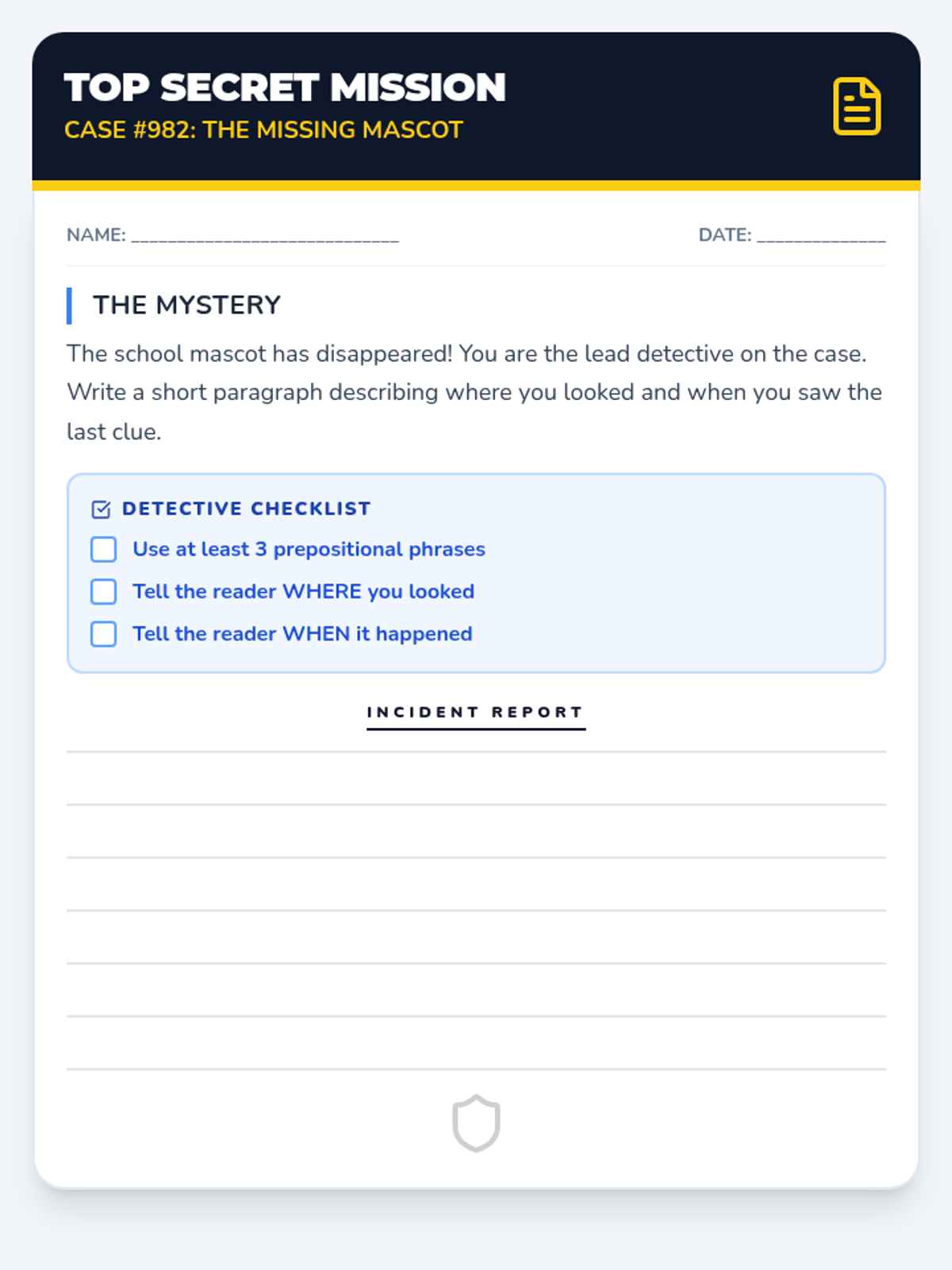
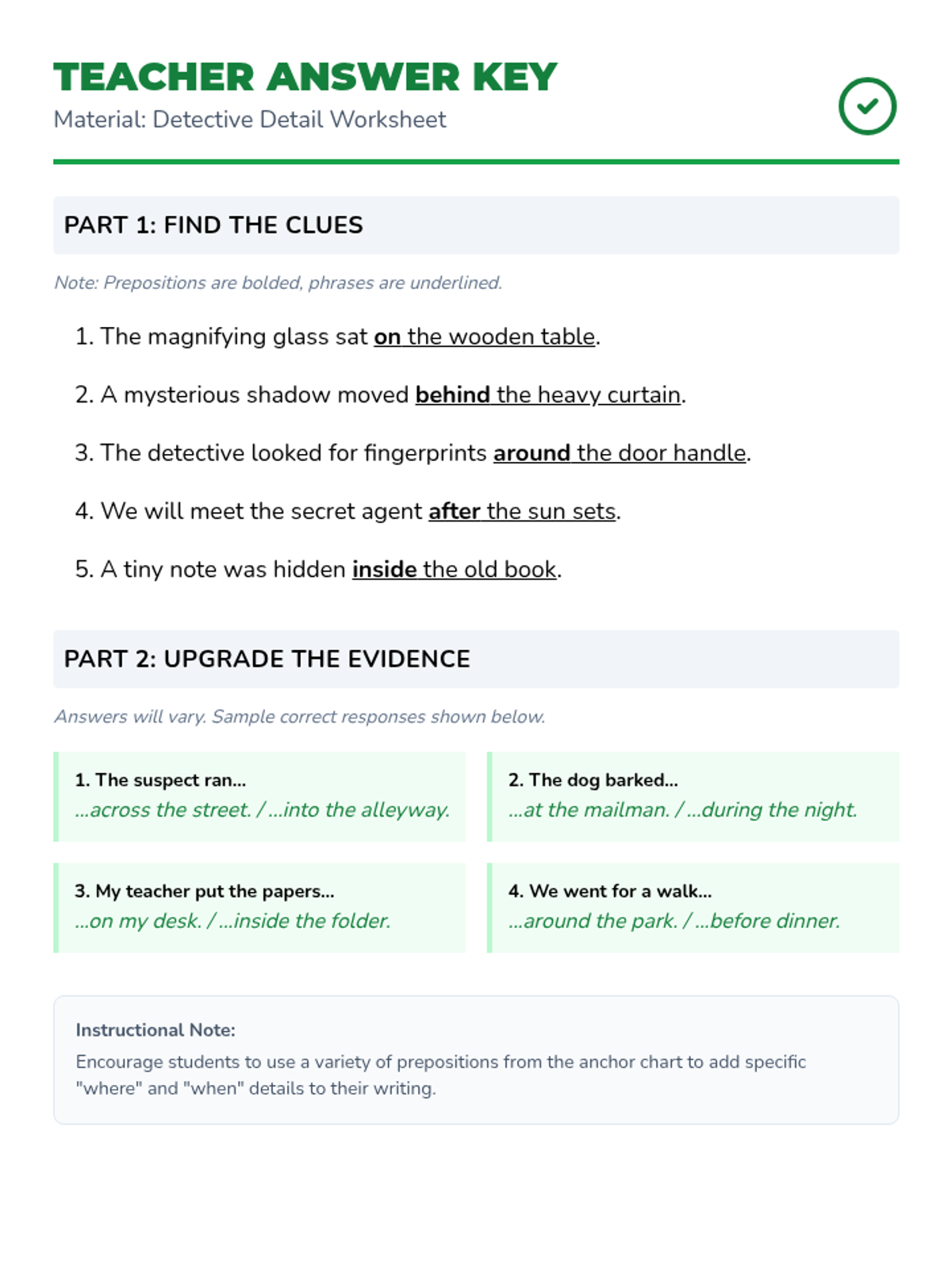
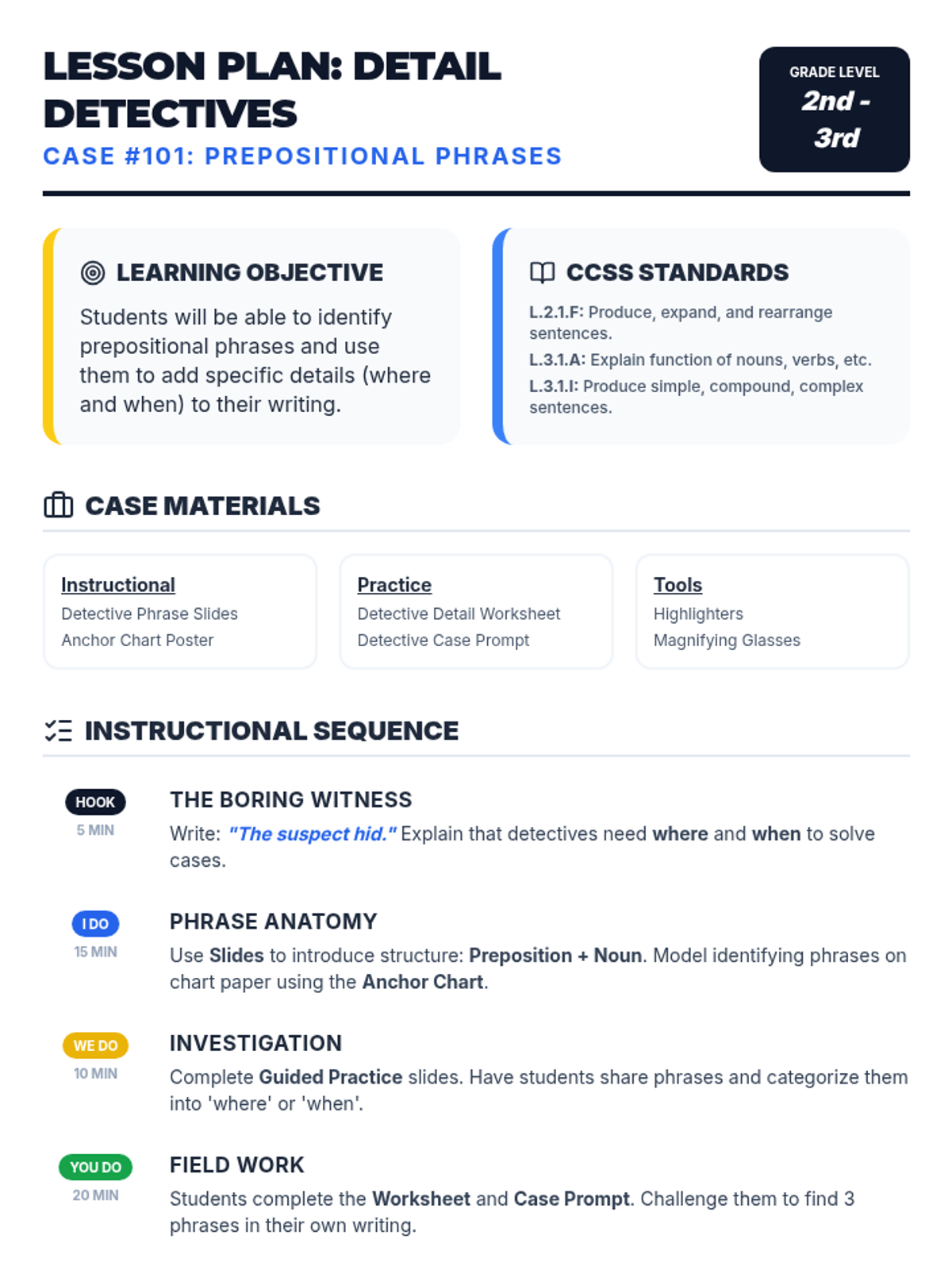
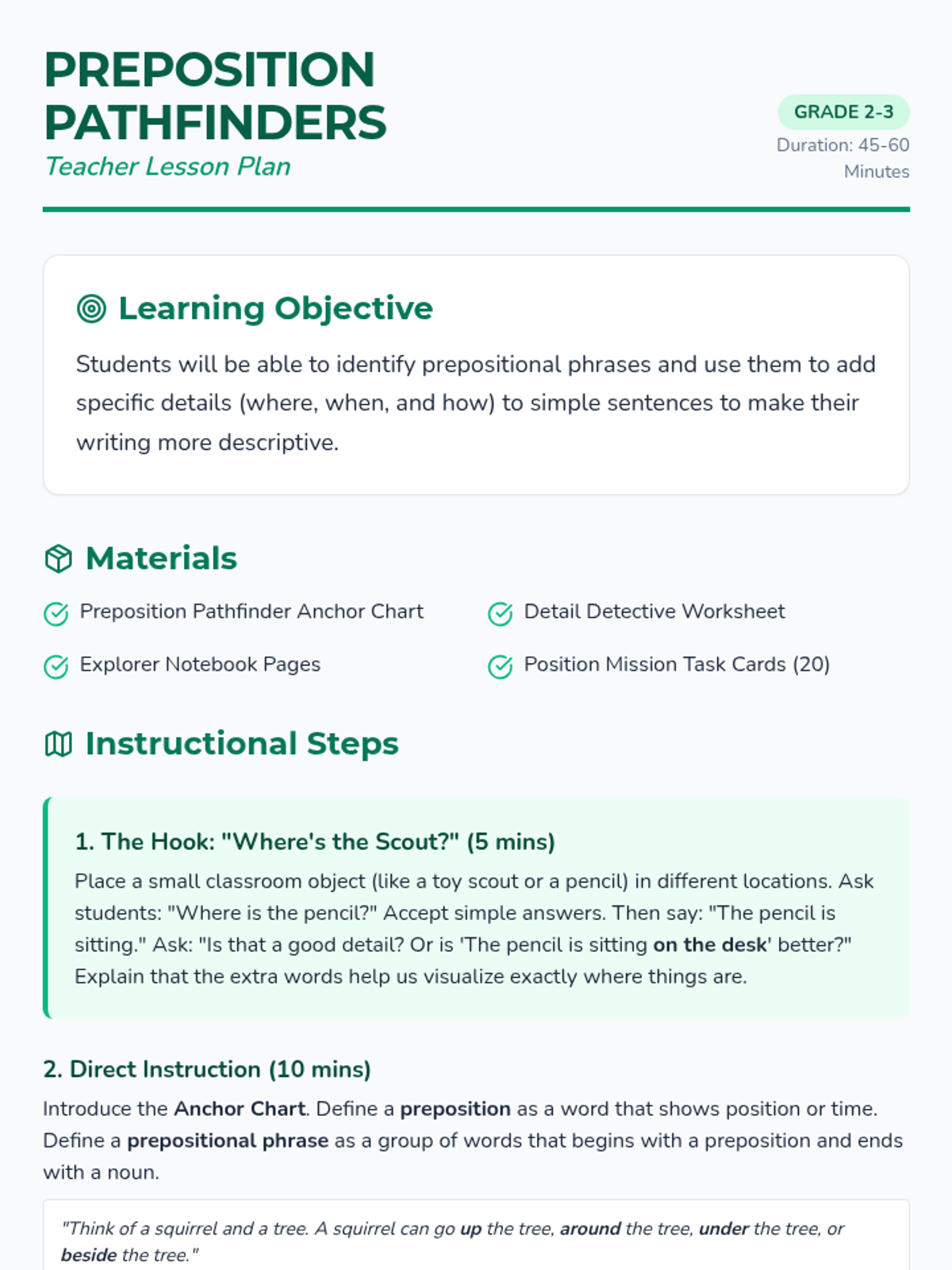
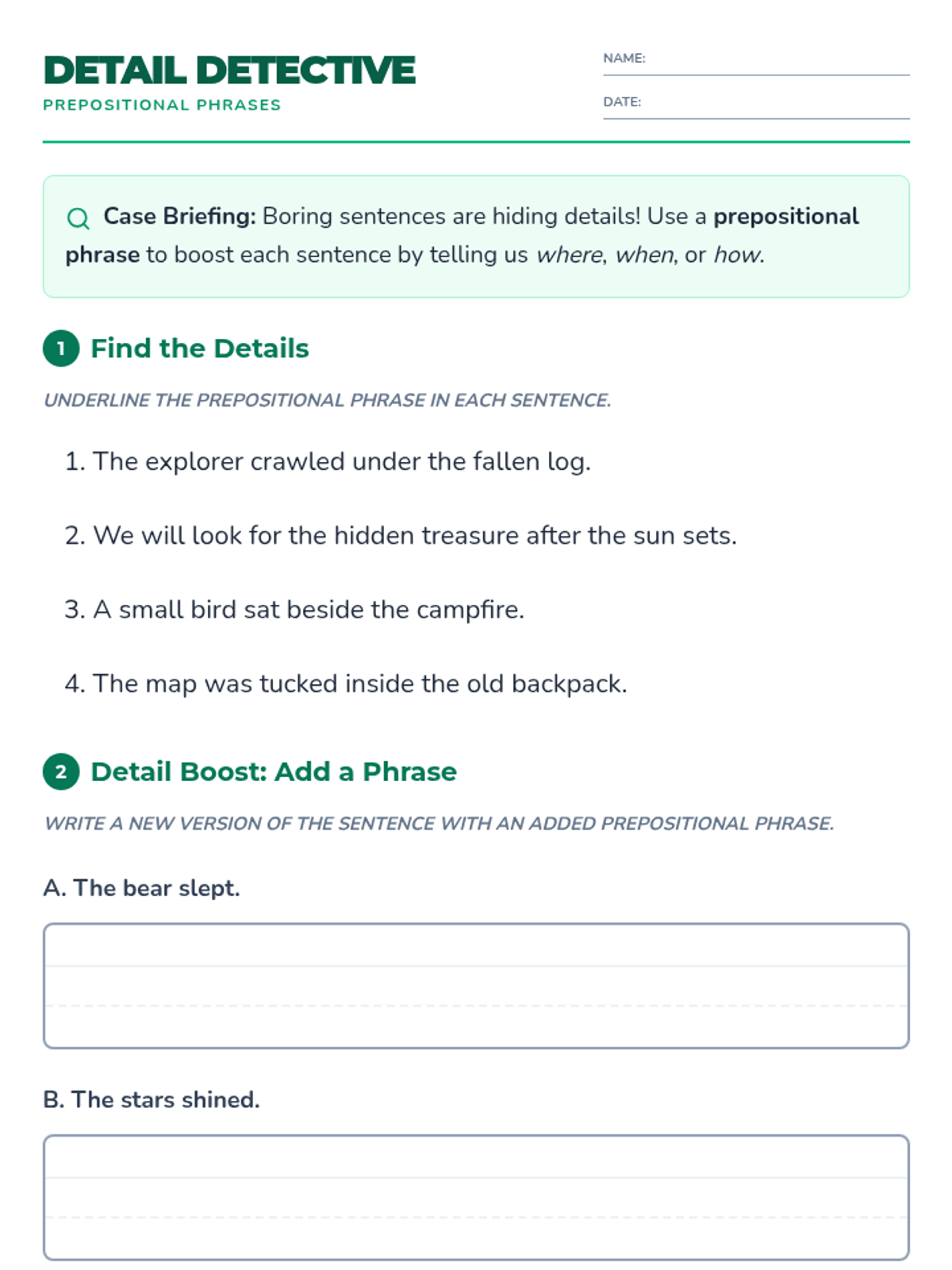
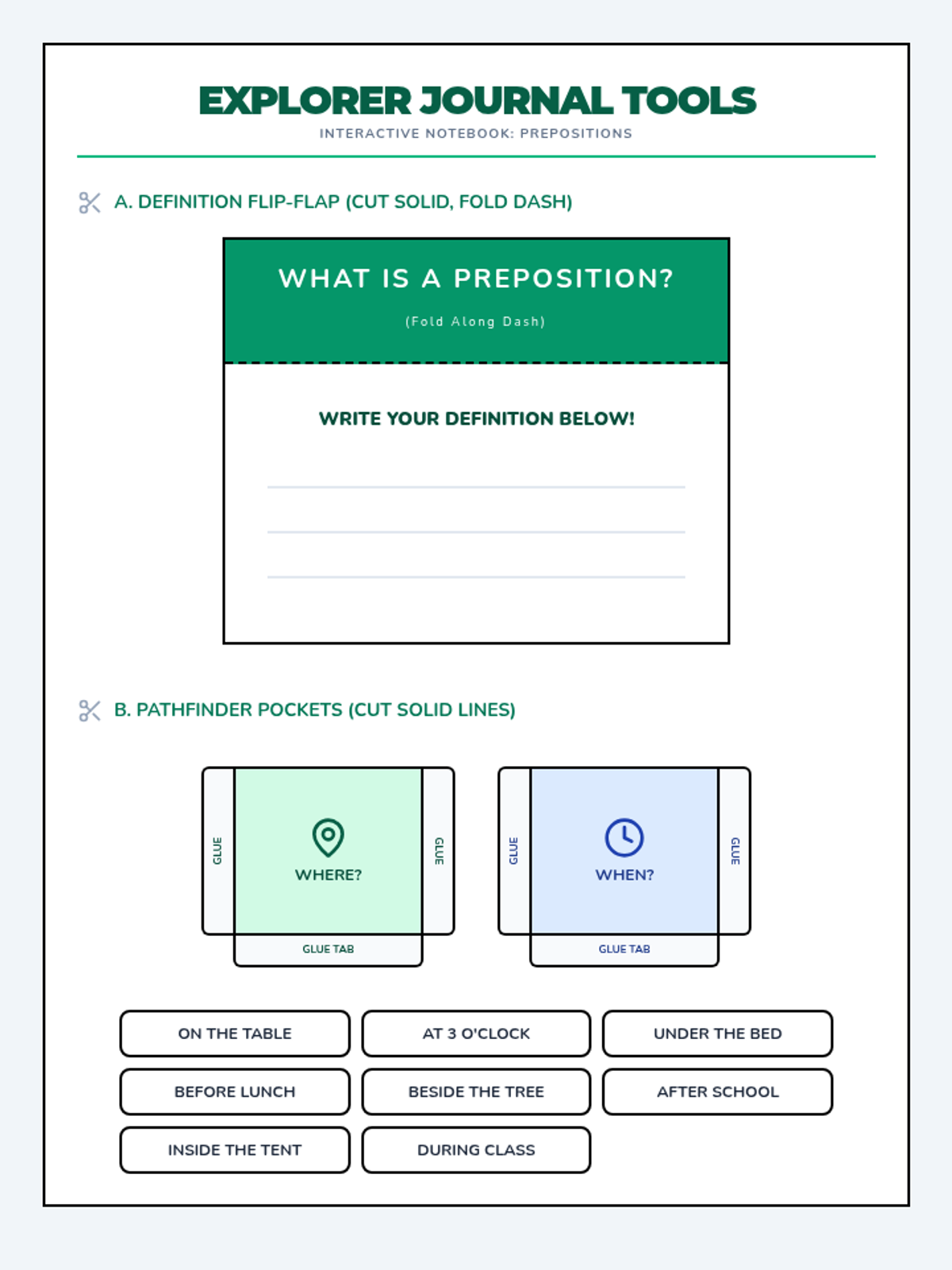
A lesson for 2nd and 3rd graders on using prepositional phrases to add specific details to their sentences, helping them describe where, when, and how things happen.
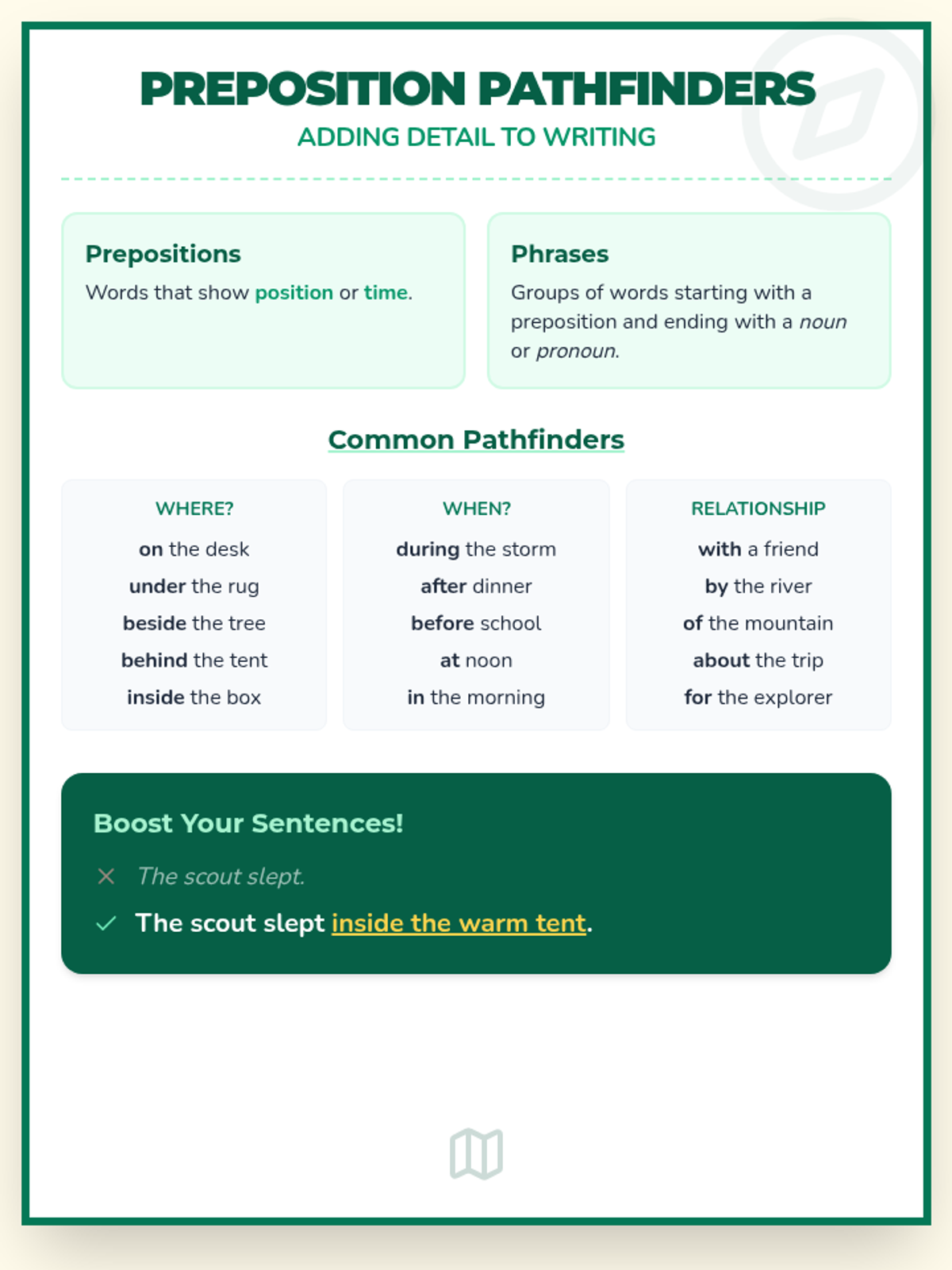
A grammar adventure where students learn to use prepositional phrases to add descriptive details about location, time, and relationship to their writing.
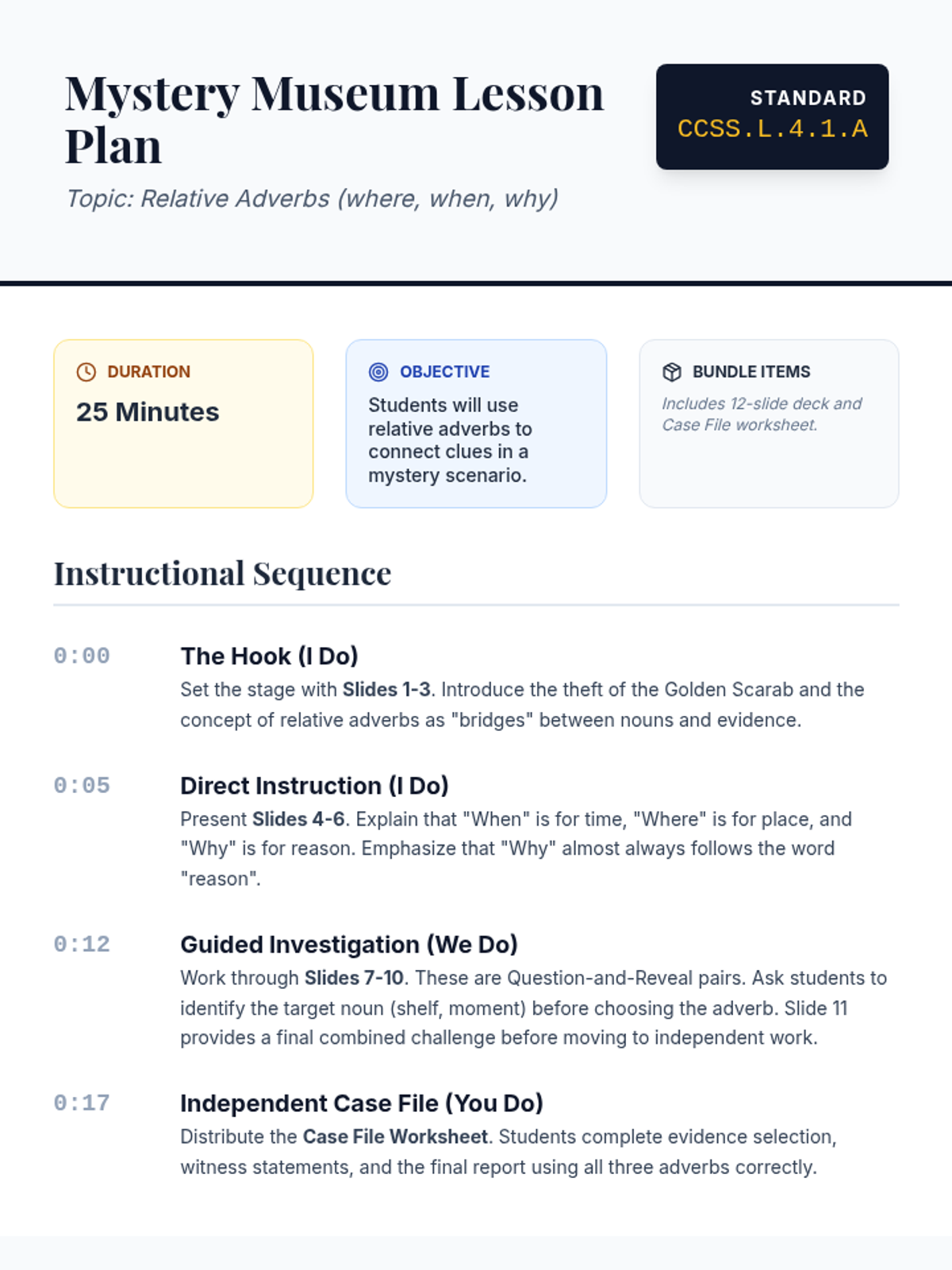
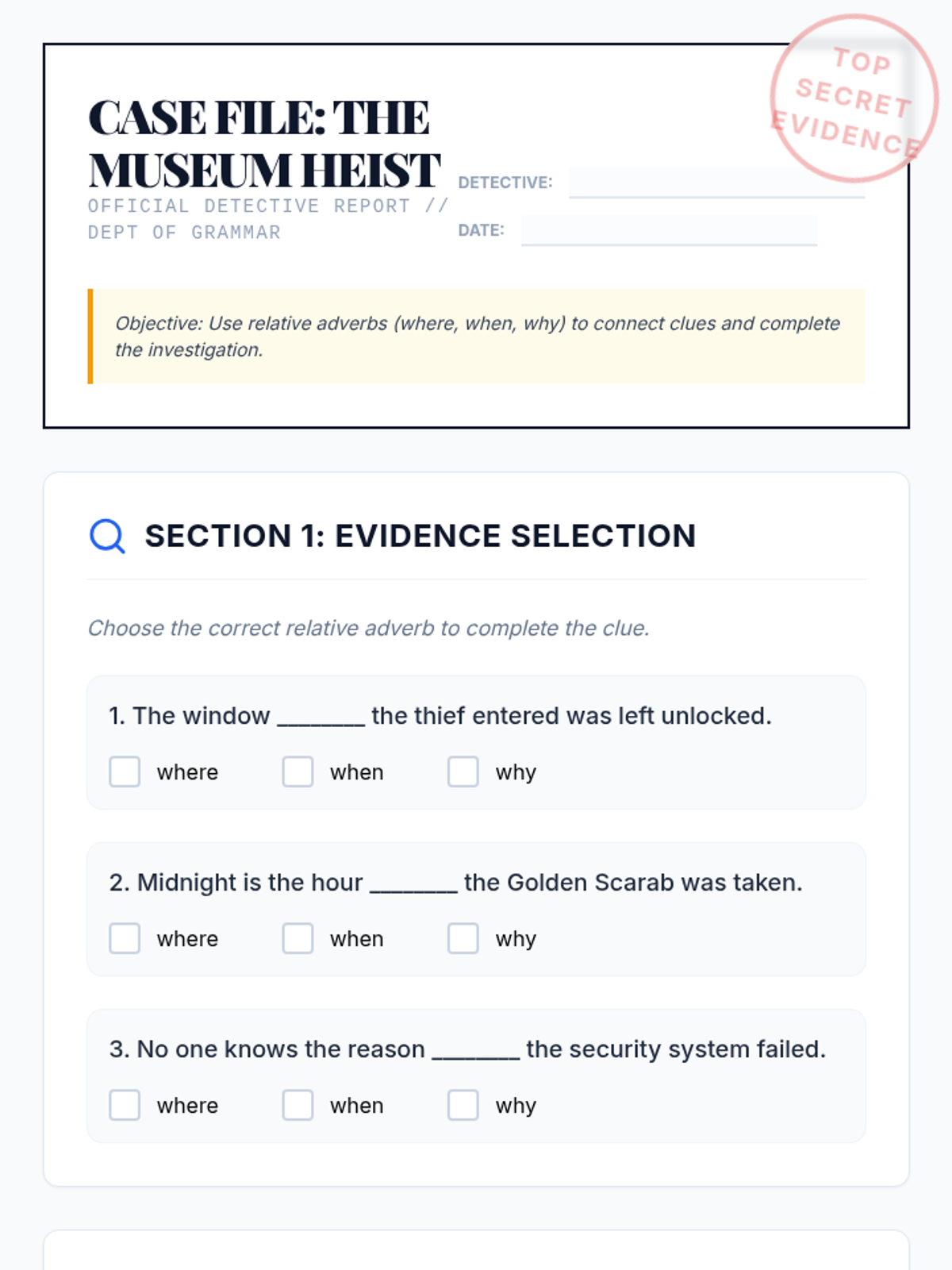
A 25-minute grammar lesson for 4th grade focusing on relative adverbs (where, when, why) within a 'Mystery at the Museum' theme. Includes a slide deck for instruction and a student worksheet for independent practice.
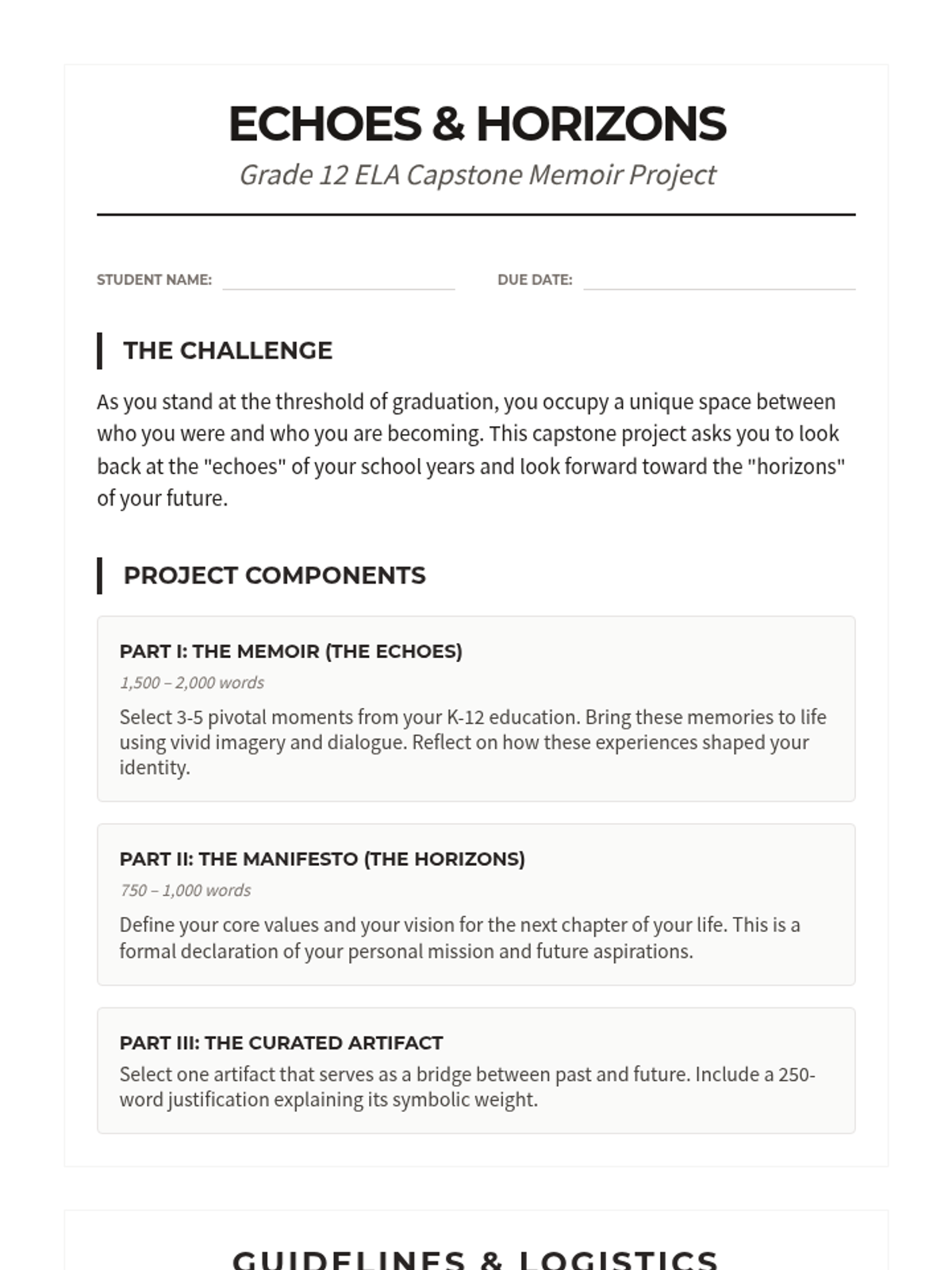
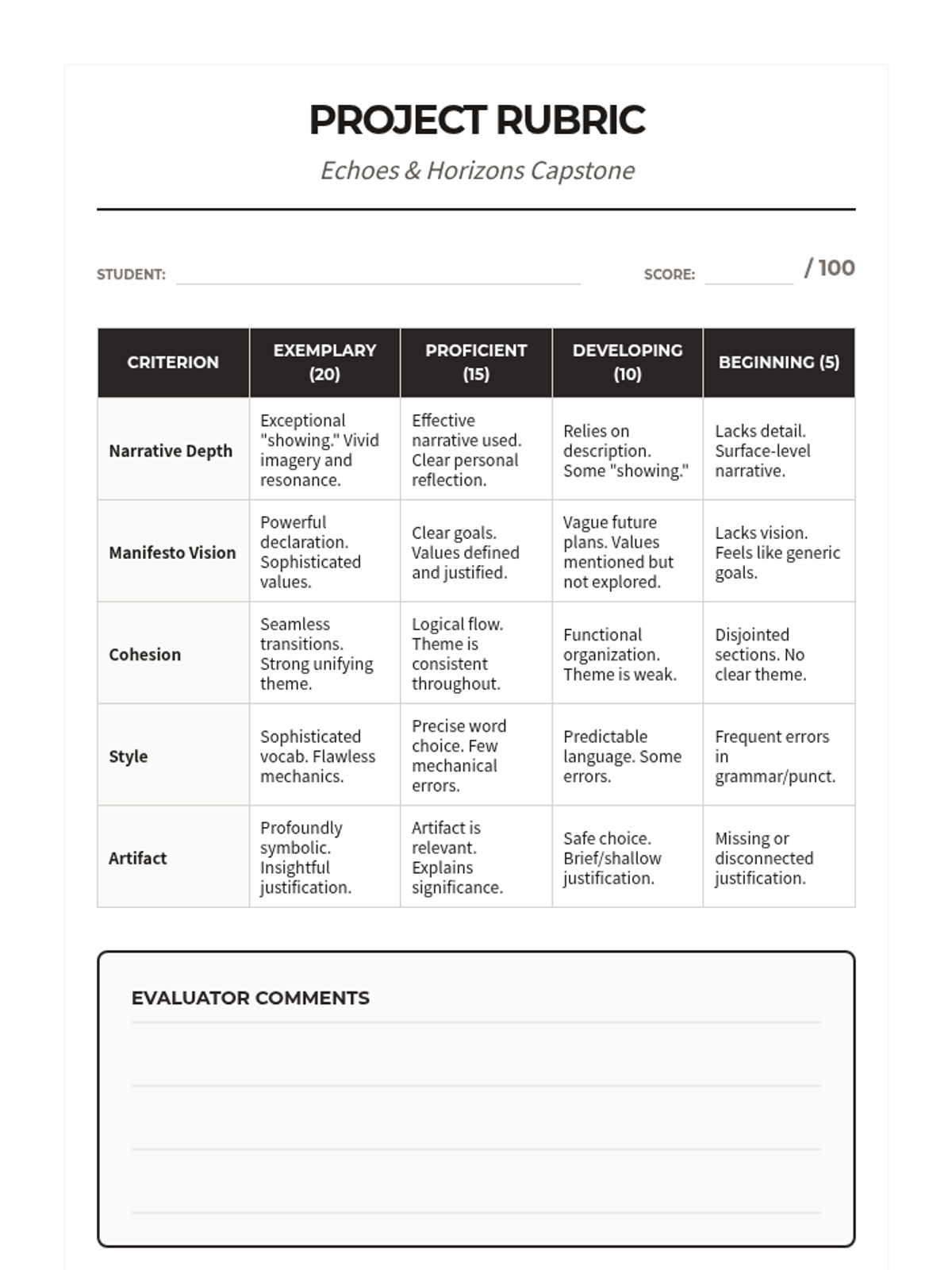
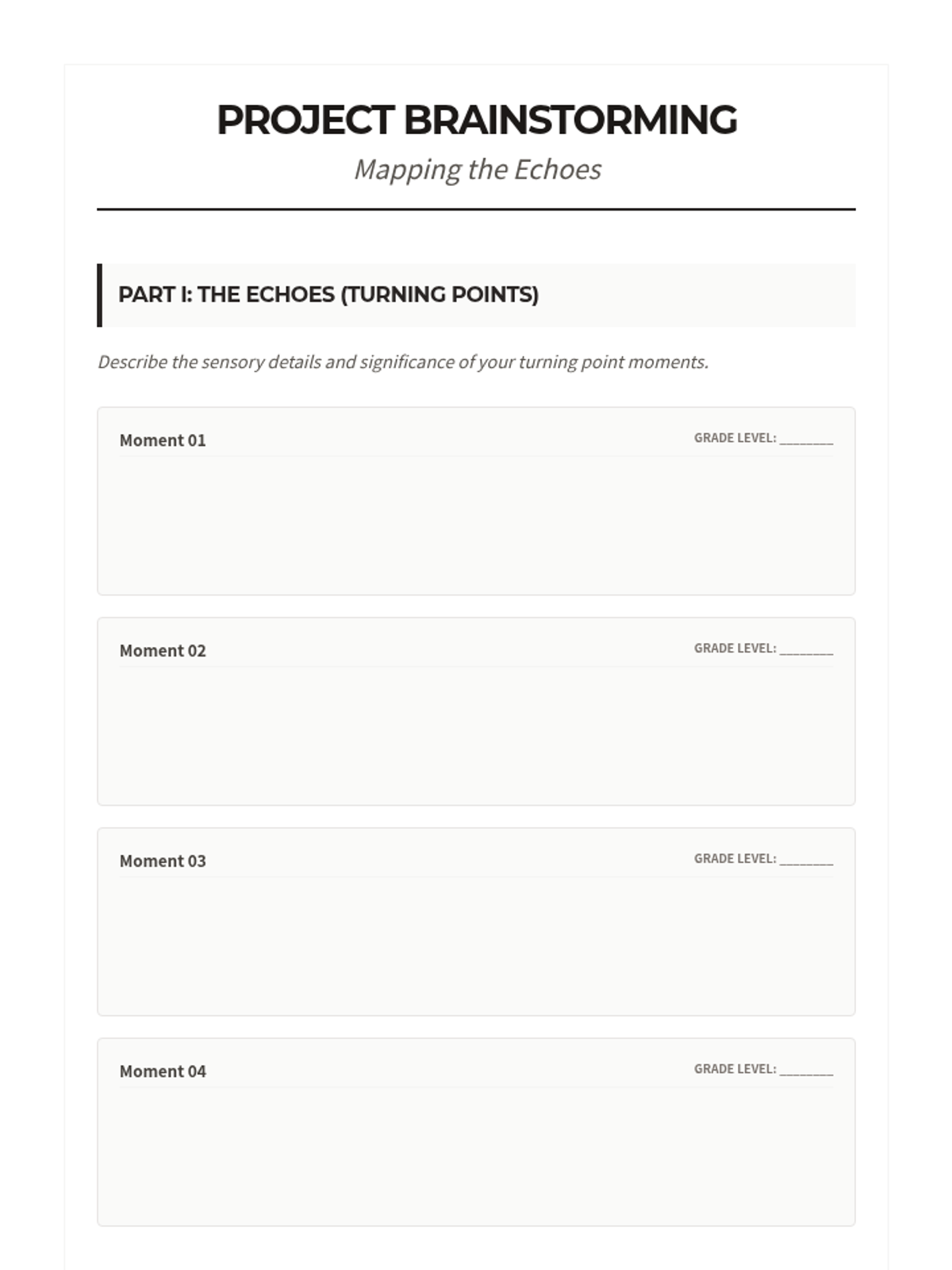
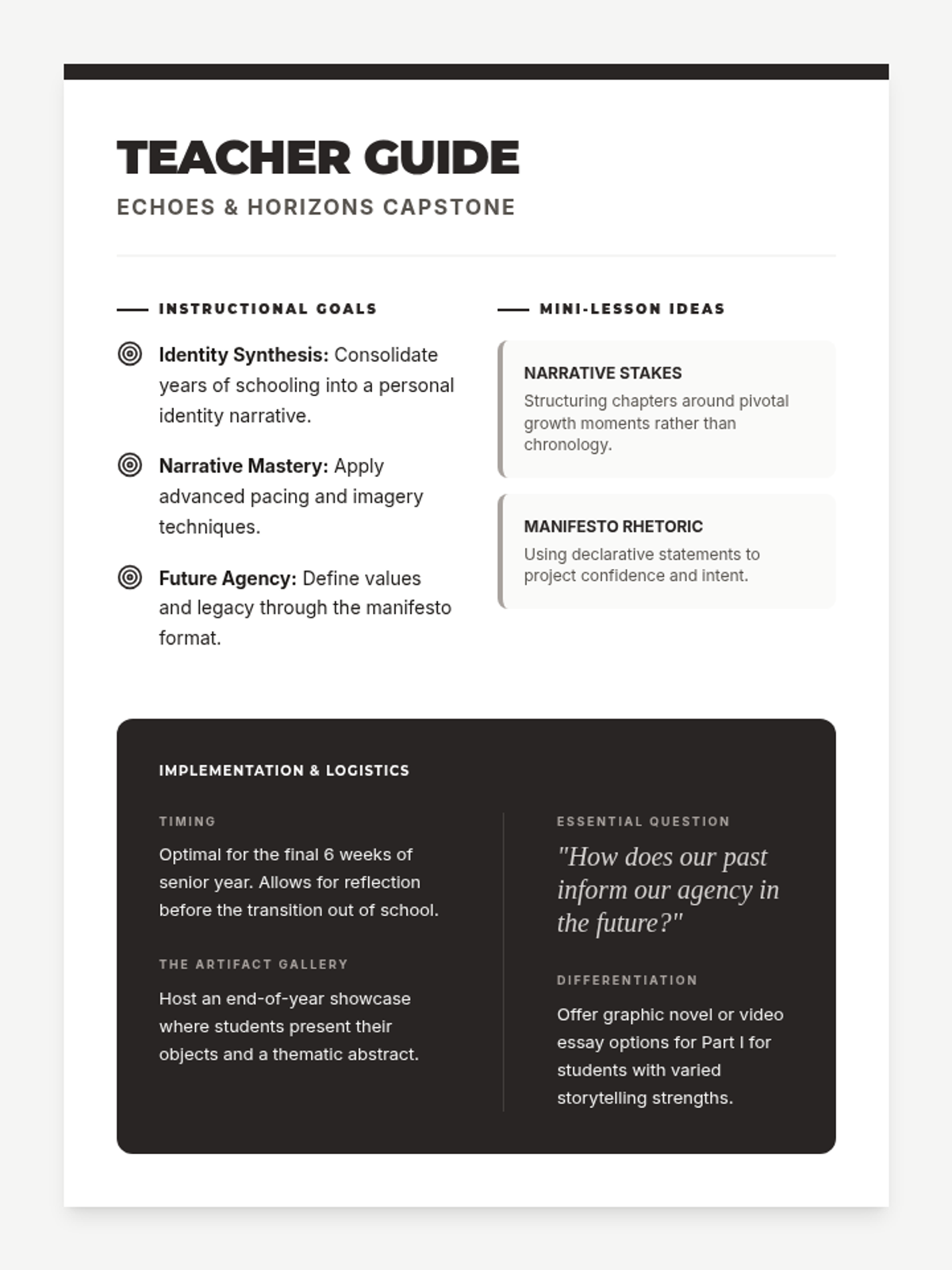
A Grade 12 ELA capstone project that invites students to reflect on their educational journey through memoir and project their aspirations into a future-focused manifesto.
A lesson focused on mastering demonstratives (this, that, these, those) through the lens of a museum curator identifying artifacts. Students will learn the distinctions between singular/plural and near/far usage.
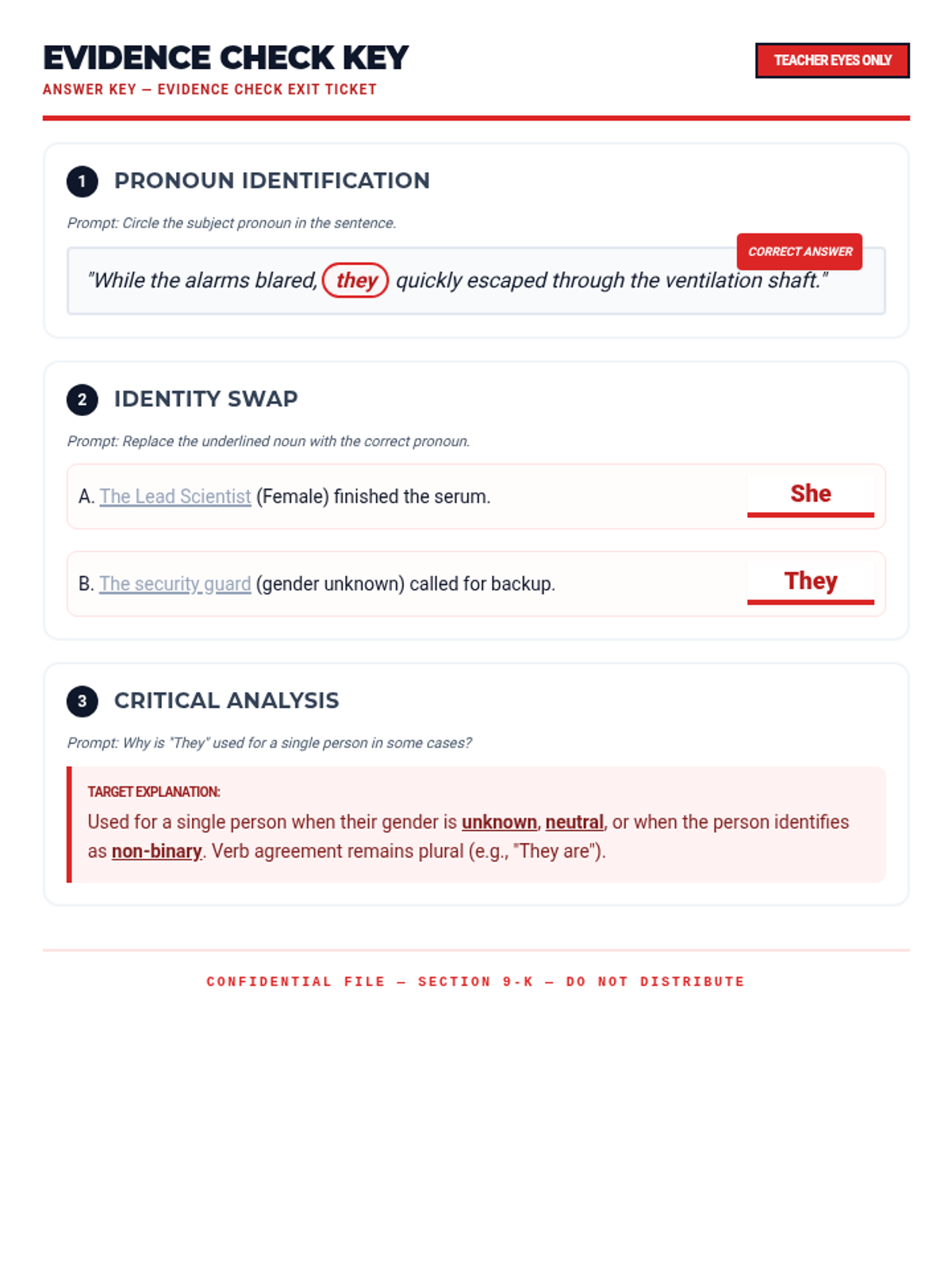
A comprehensive grammar lesson for 4th and 5th graders on identifying and using subject pronouns (he, she, they) to improve sentence variety and clarity. Students will learn to 'swap' repetitive nouns for efficient pronouns in various contexts.
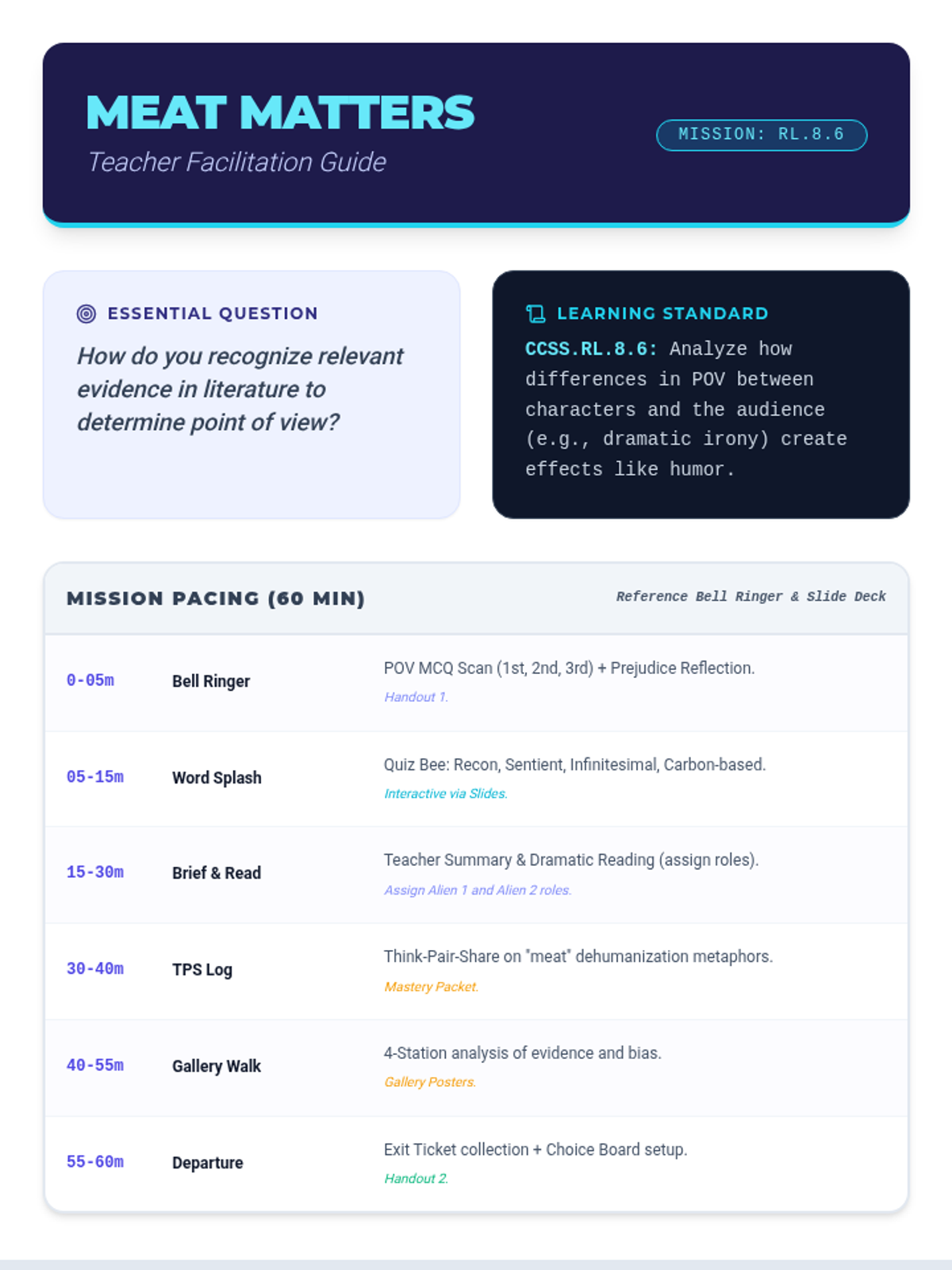
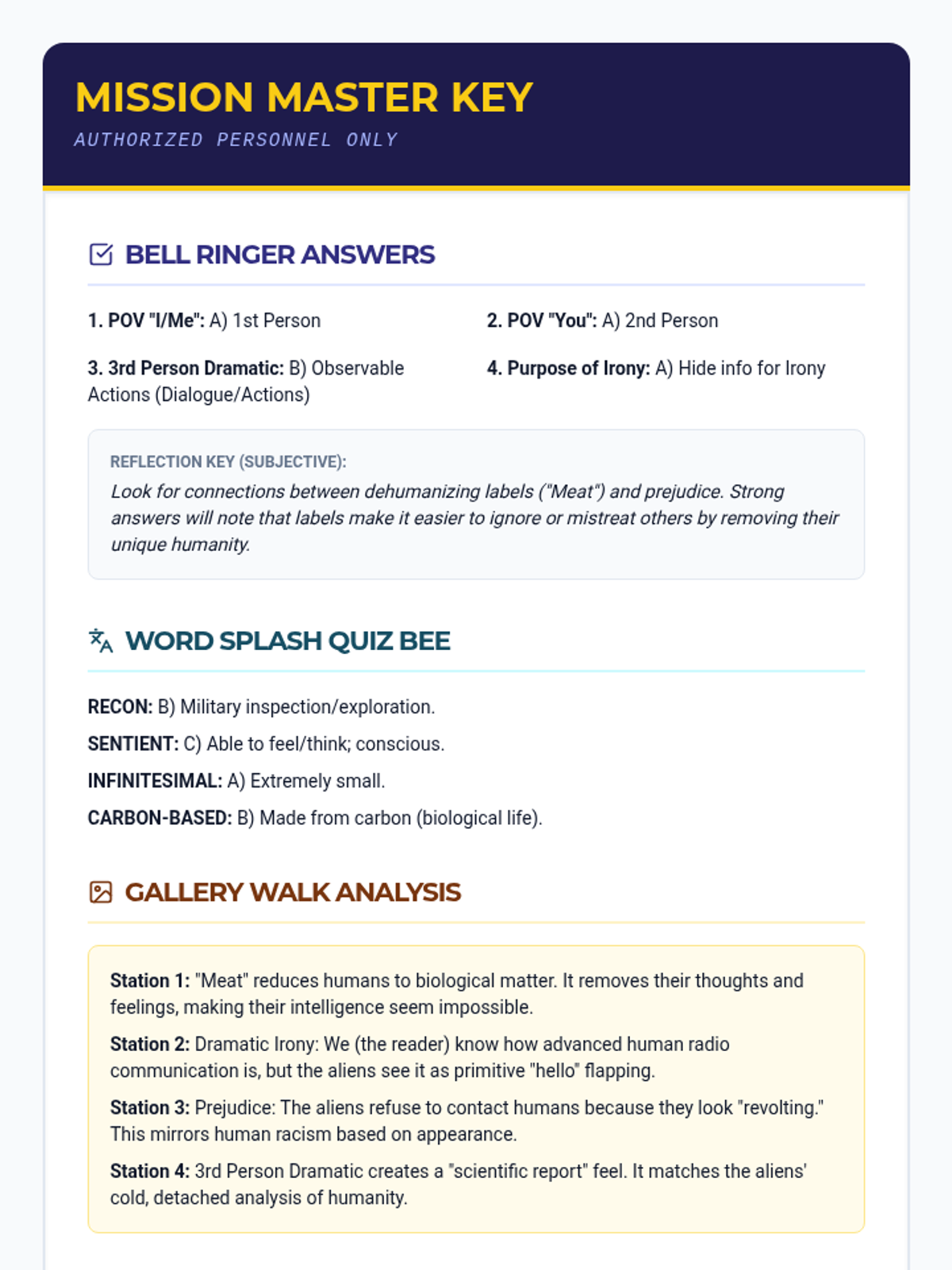
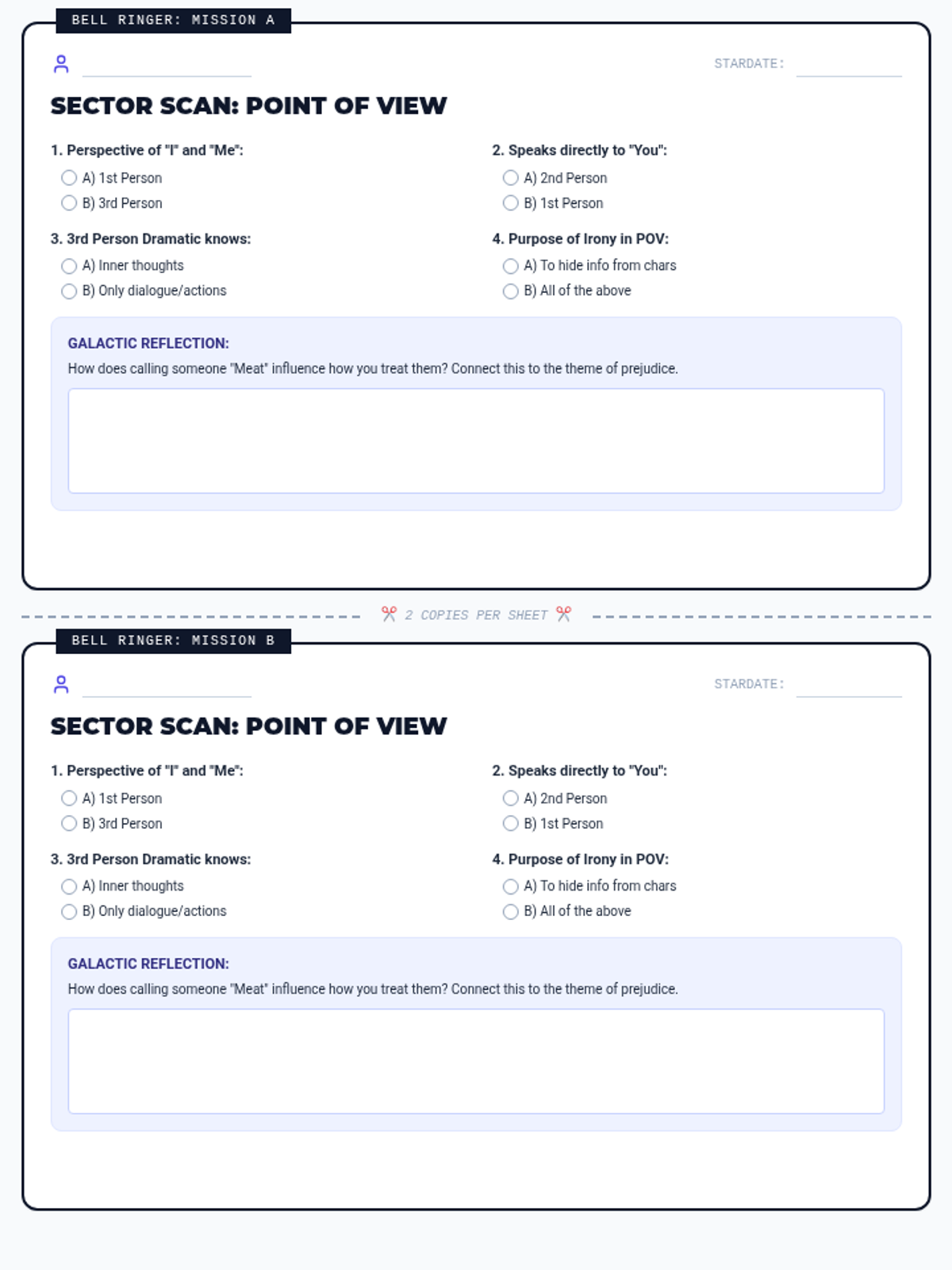
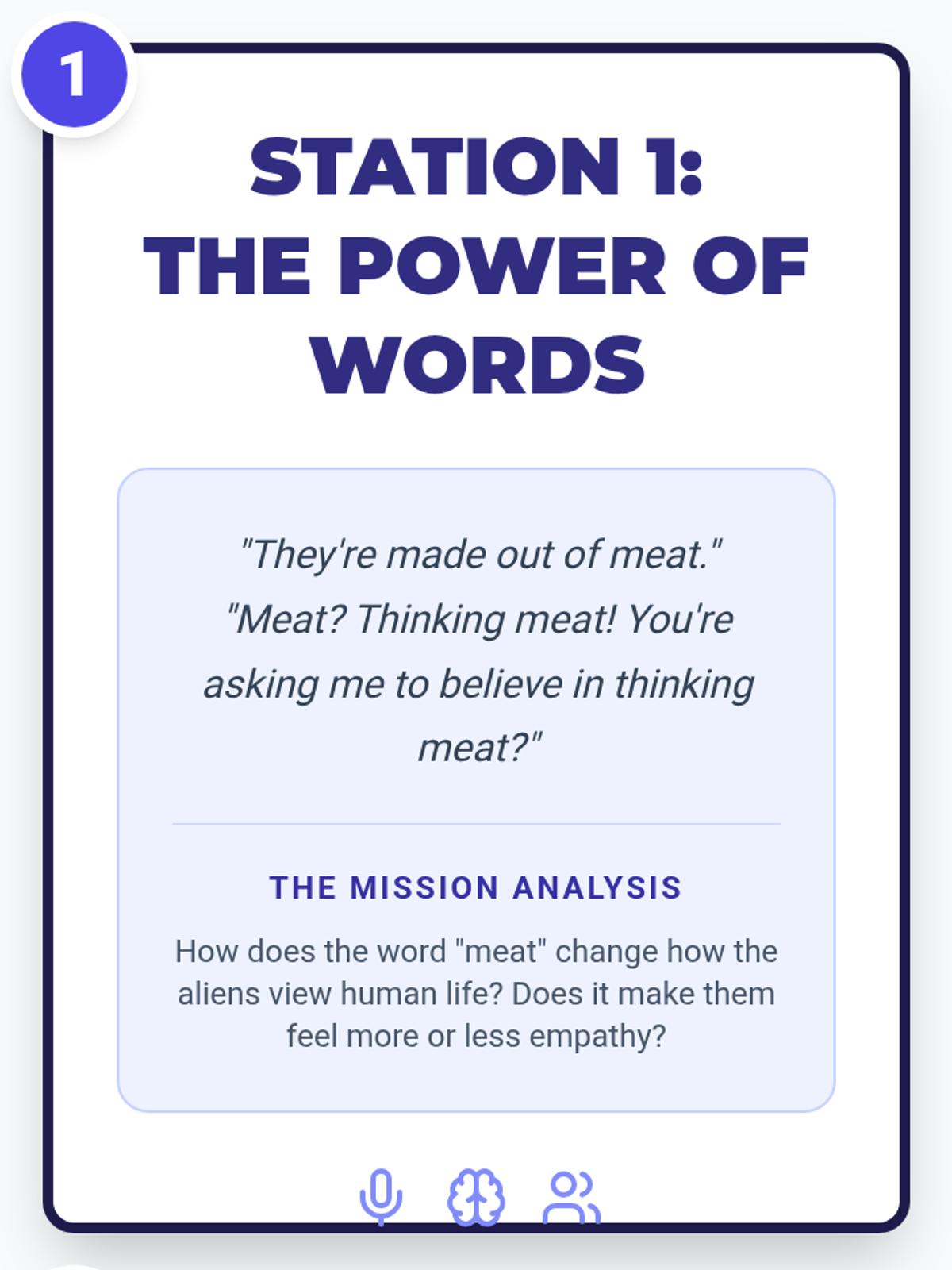
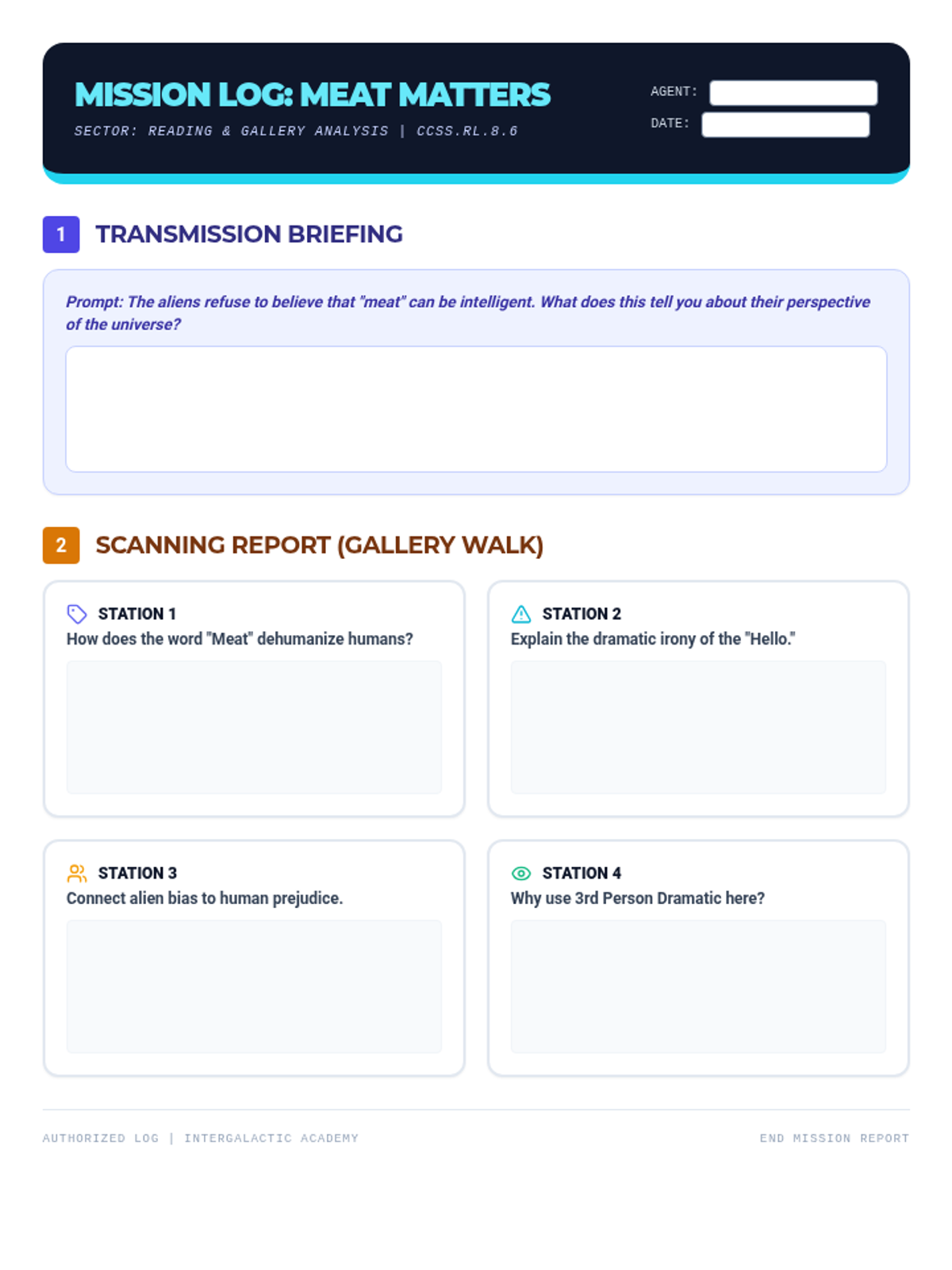
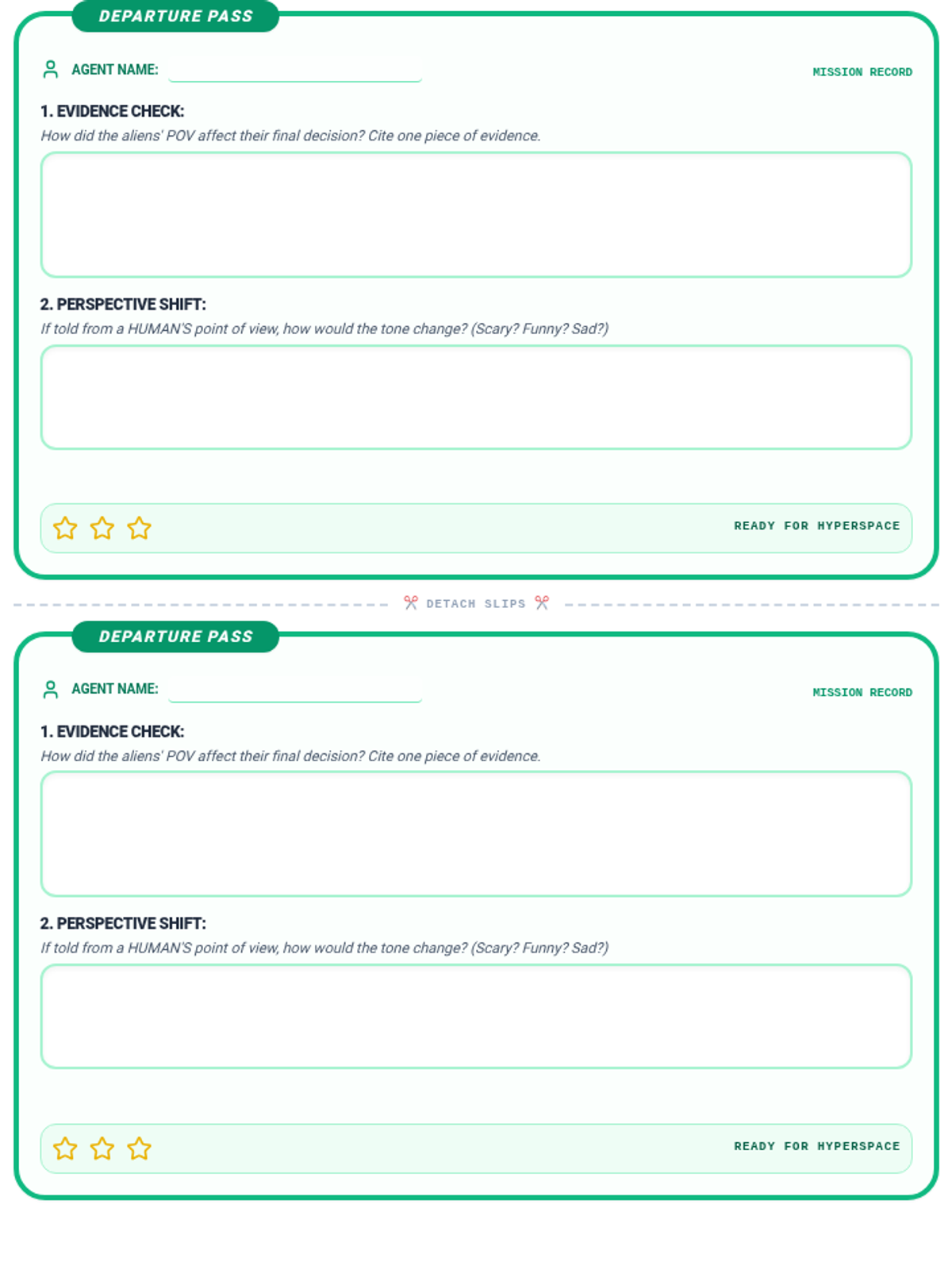
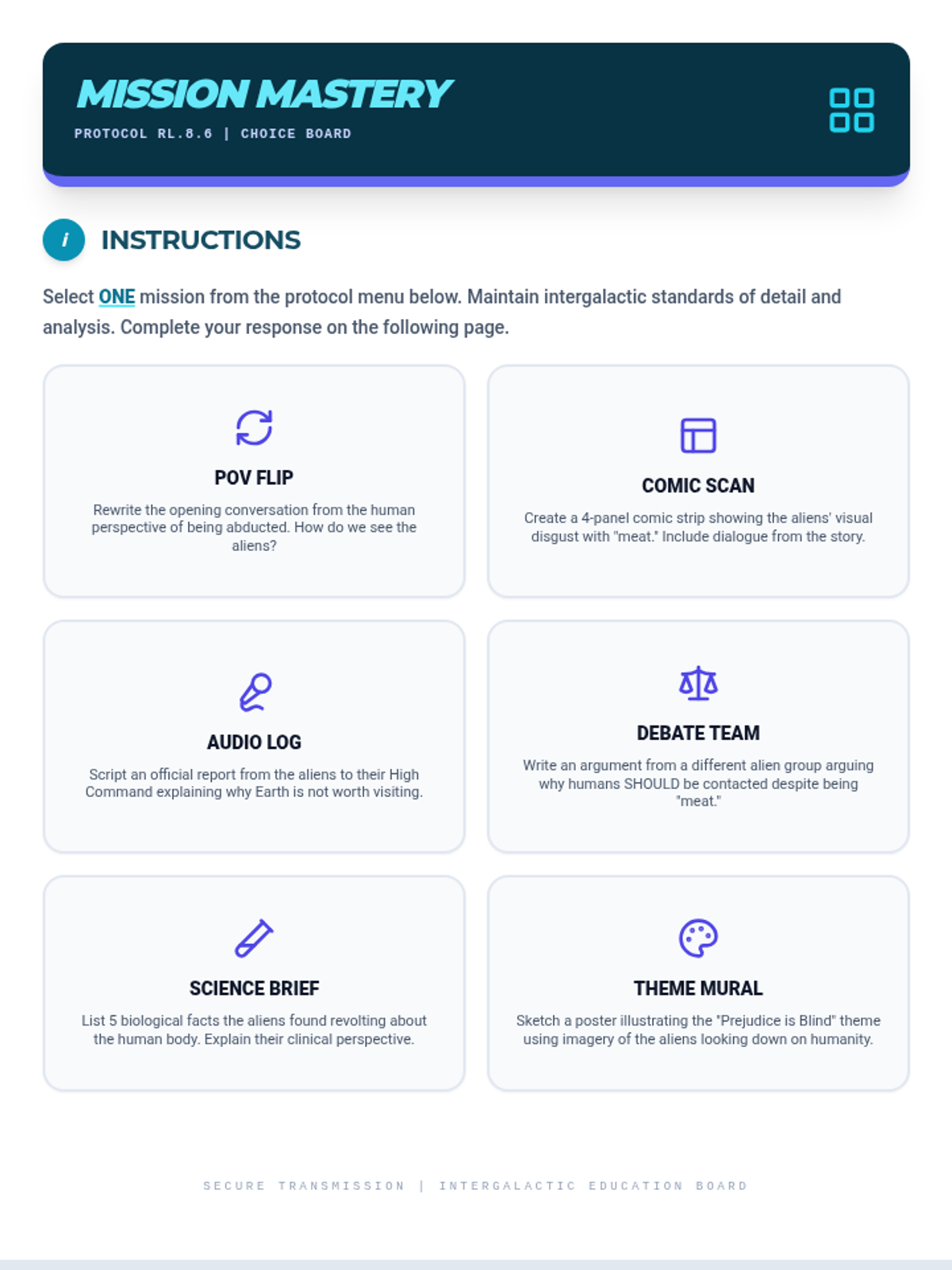
A one-hour deep dive into Terry Bisson's 'They're Made out of Meat,' focusing on point of view, dramatic irony, and themes of prejudice through an alien-themed lens.
A comprehensive lesson on demonstrative pronouns and adjectives (this, that, these, those) themed around a museum gallery. Students learn to distinguish between near and far, singular and plural, and the difference between demonstrative pronouns and adjectives.
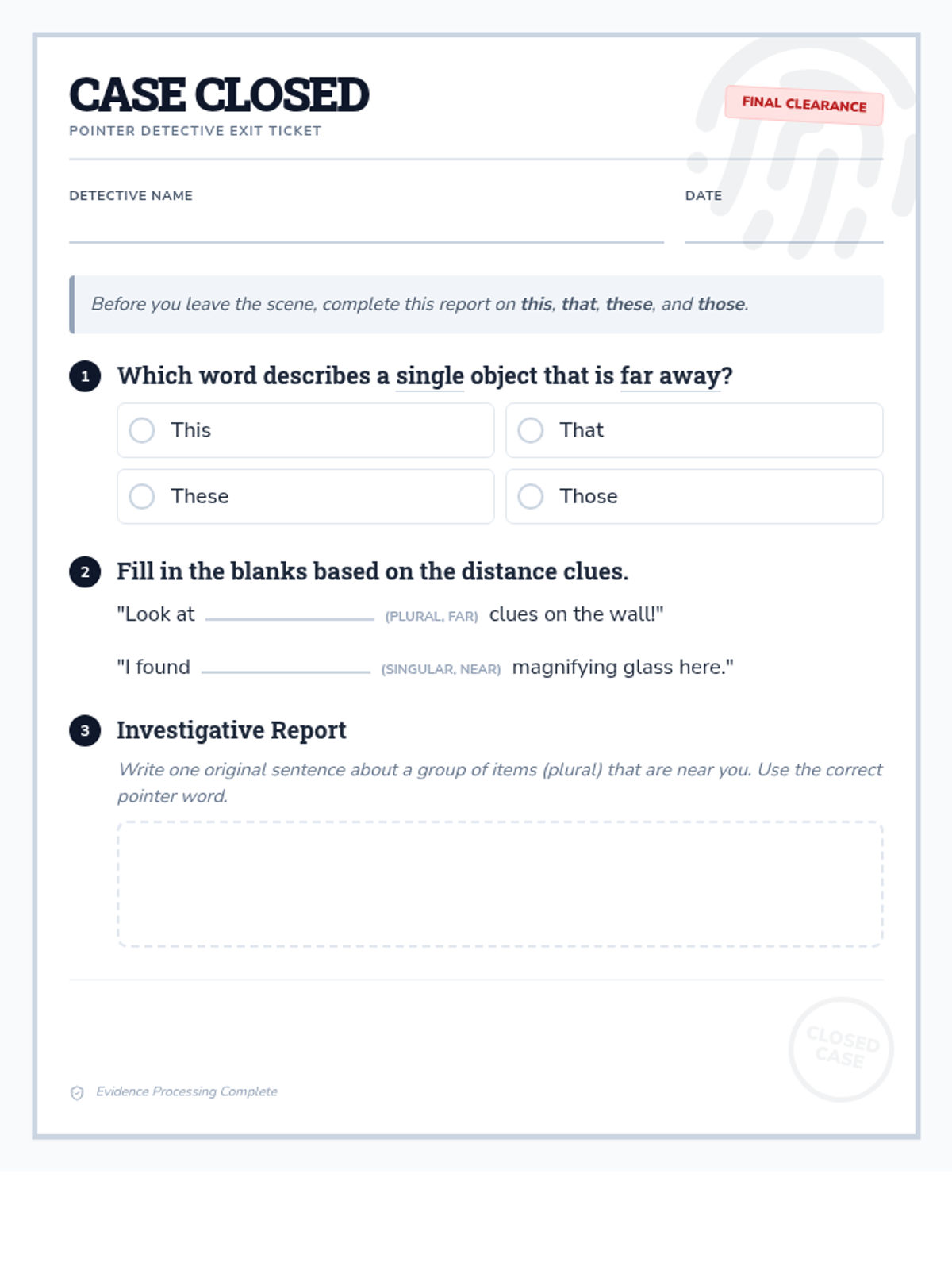
A comprehensive lesson on demonstrative pronouns and adjectives (this, that, these, those), focusing on distance and number through a detective-themed investigation.
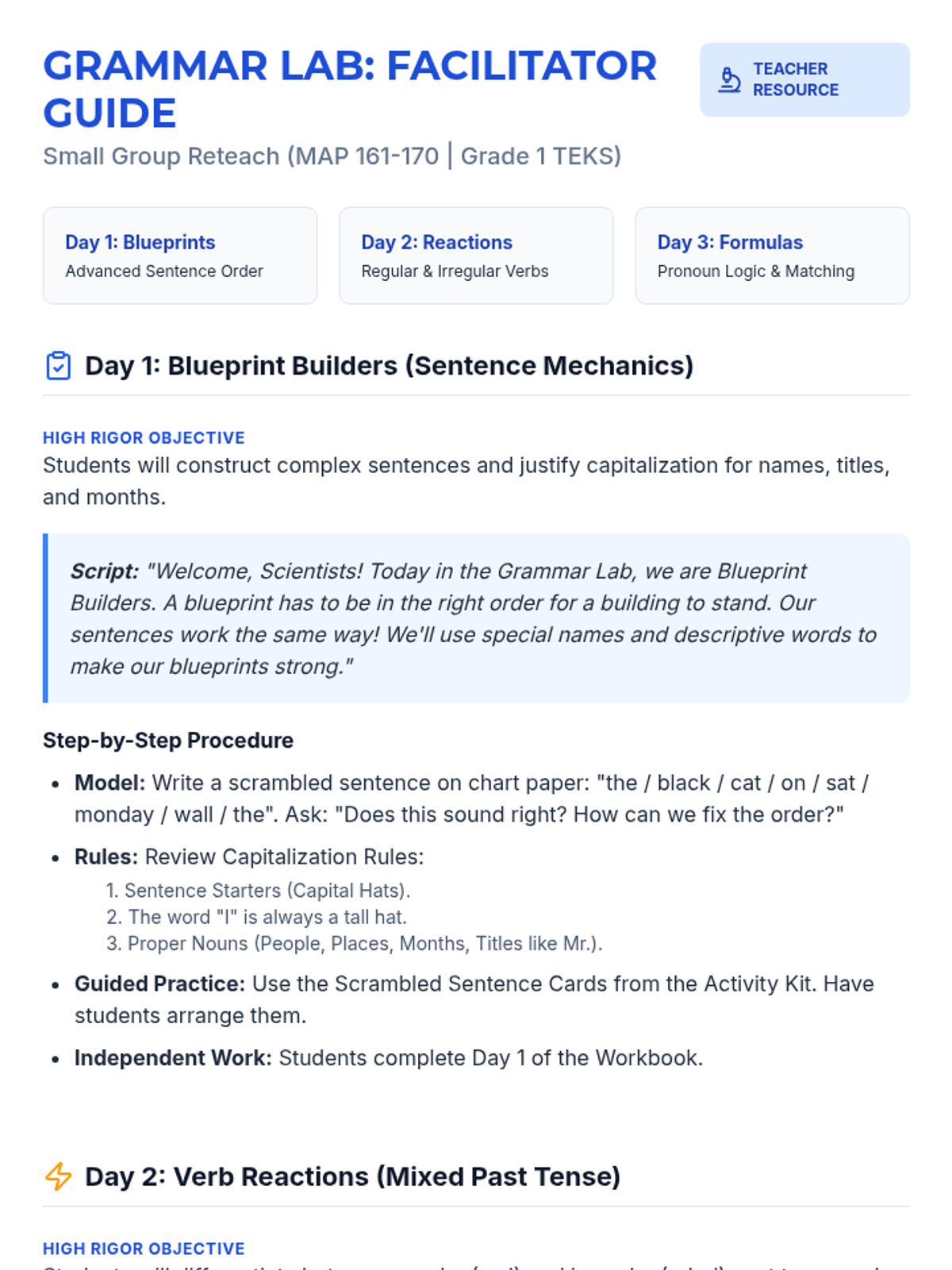
Second day of the Grammar Lab focusing on regular and irregular past tense verbs through sorting and sentence building.
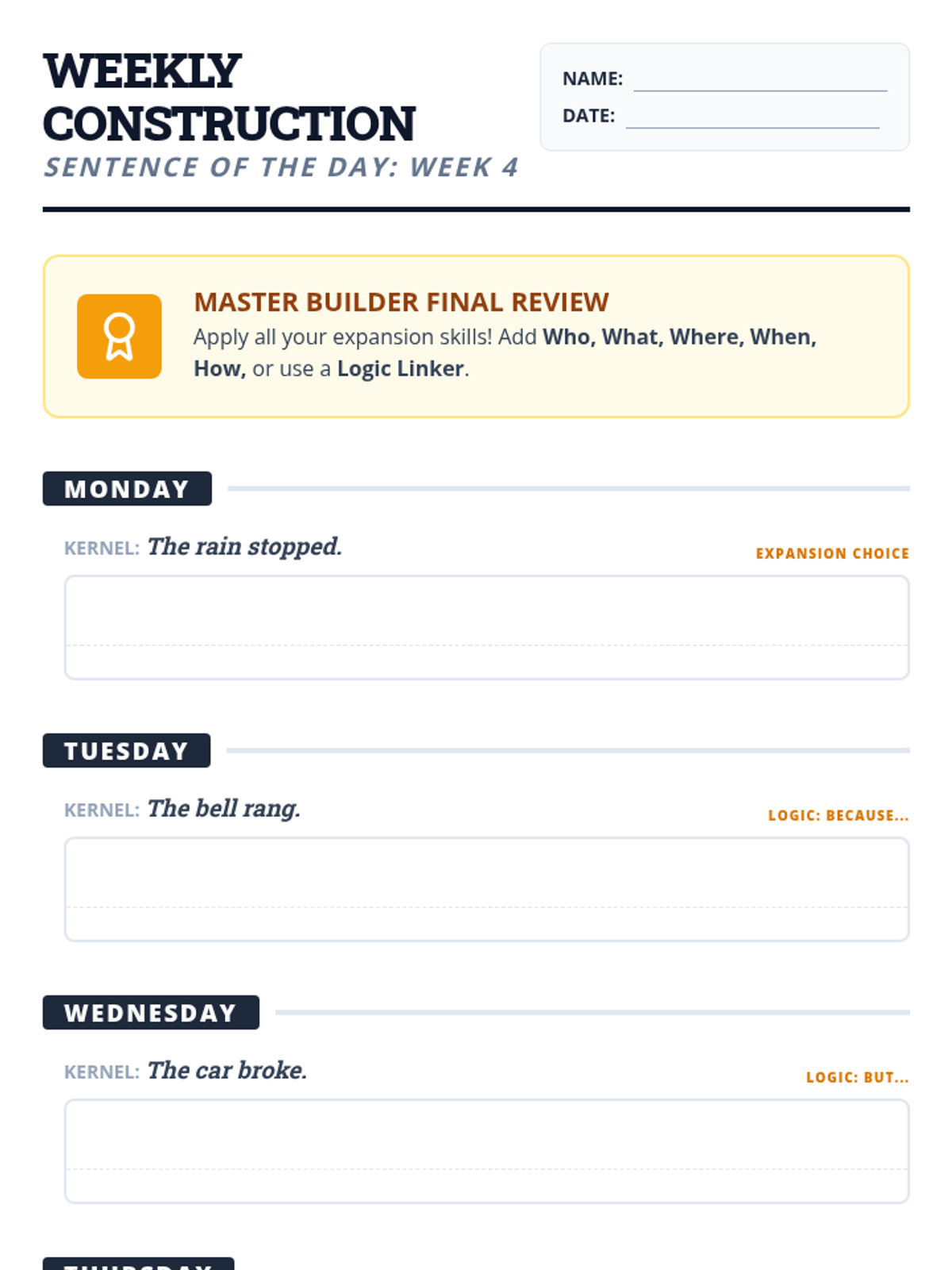
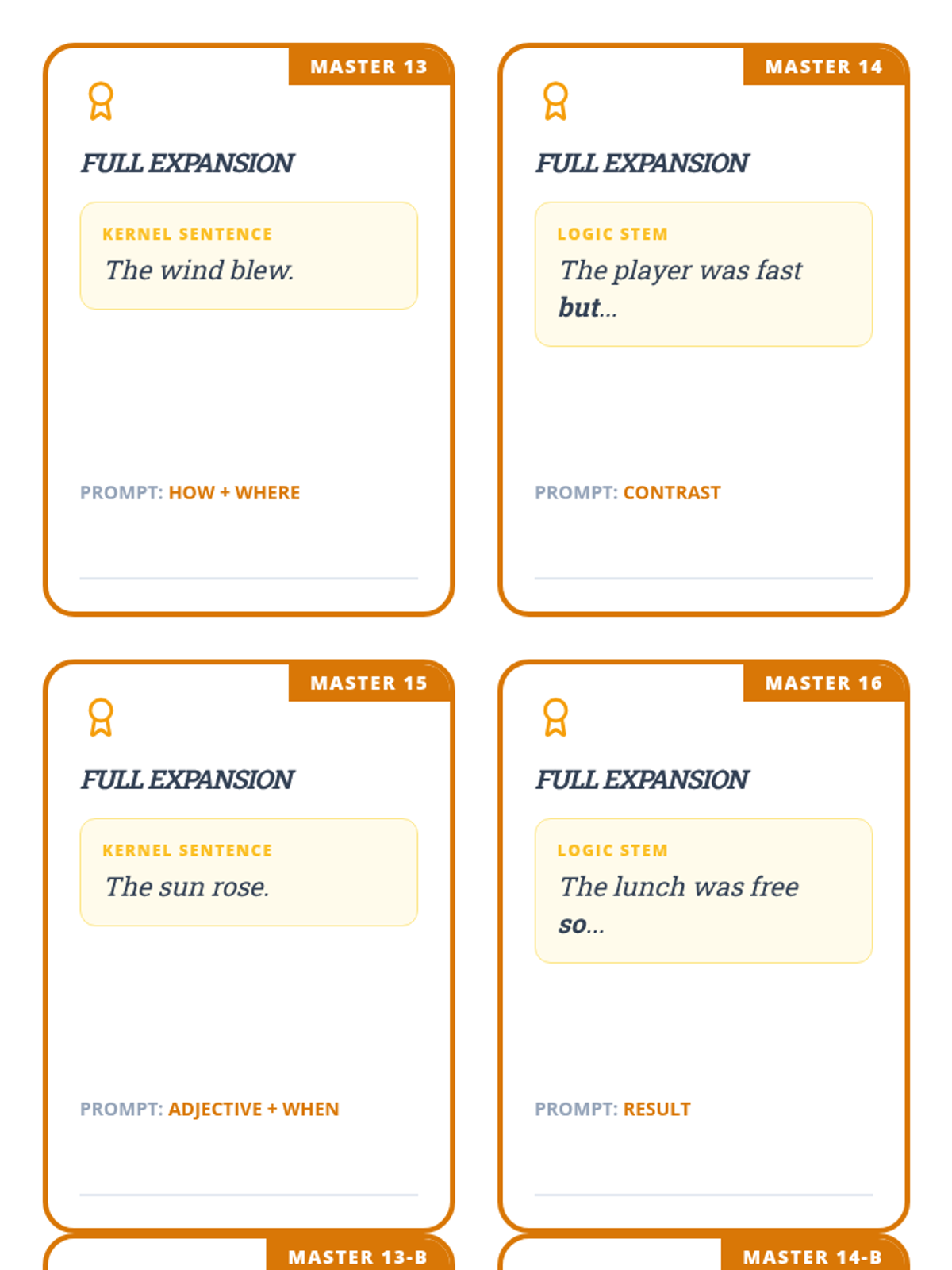
The final review lesson where students apply all previous strategies (adjectives, situational details, and logical conjunctions) to create complex and polished sentences.
The final lesson focuses on using 'Because, But, So' to expand sentences logically and demonstrate deeper reasoning and detail.
In this lesson, students learn to add situational details to their sentences using 'Where', 'When', and 'How' question words.
This lesson introduces the concept of a complete sentence versus a fragment and begins basic sentence expansion using 'Who' and 'What' details.
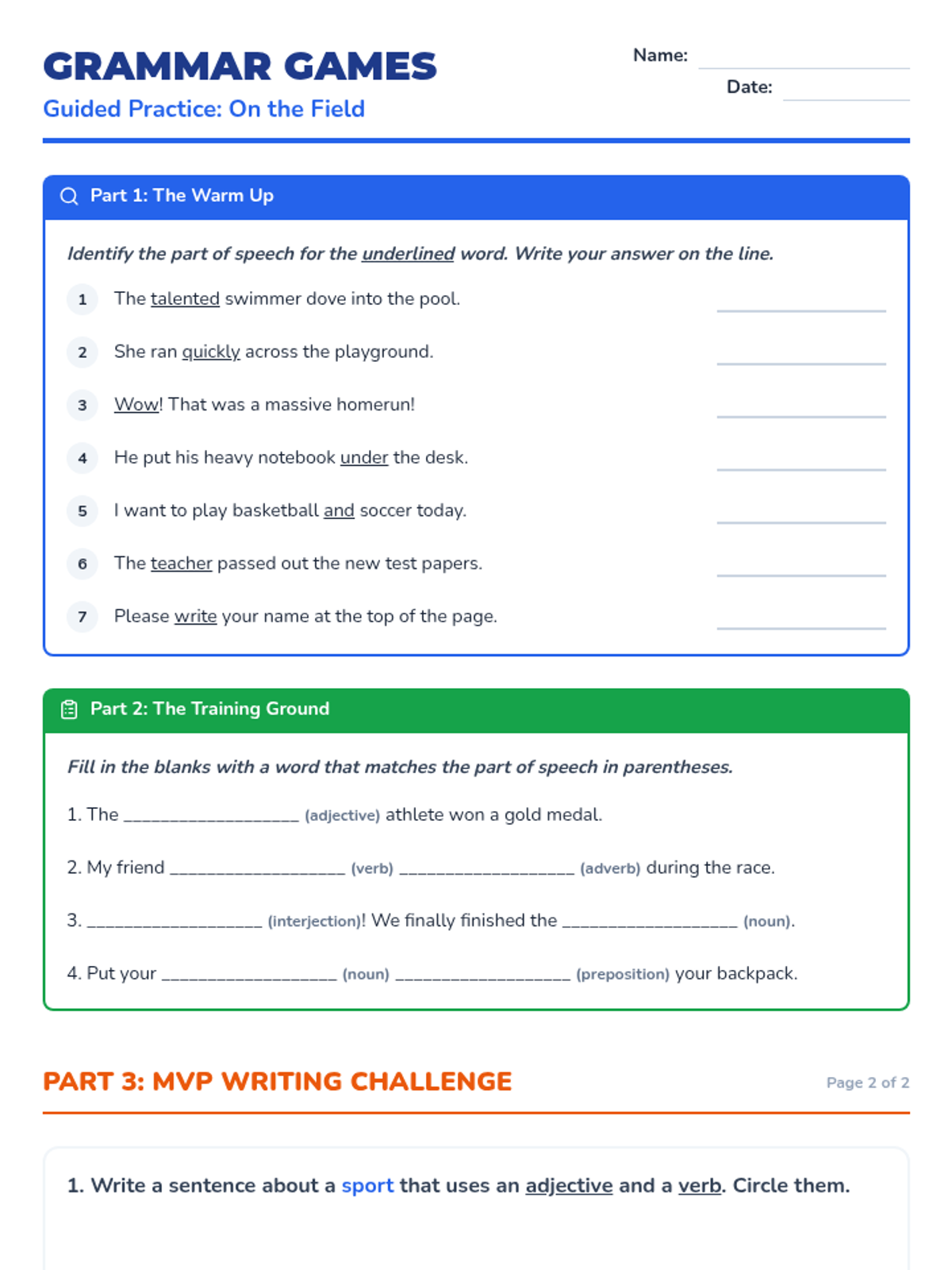
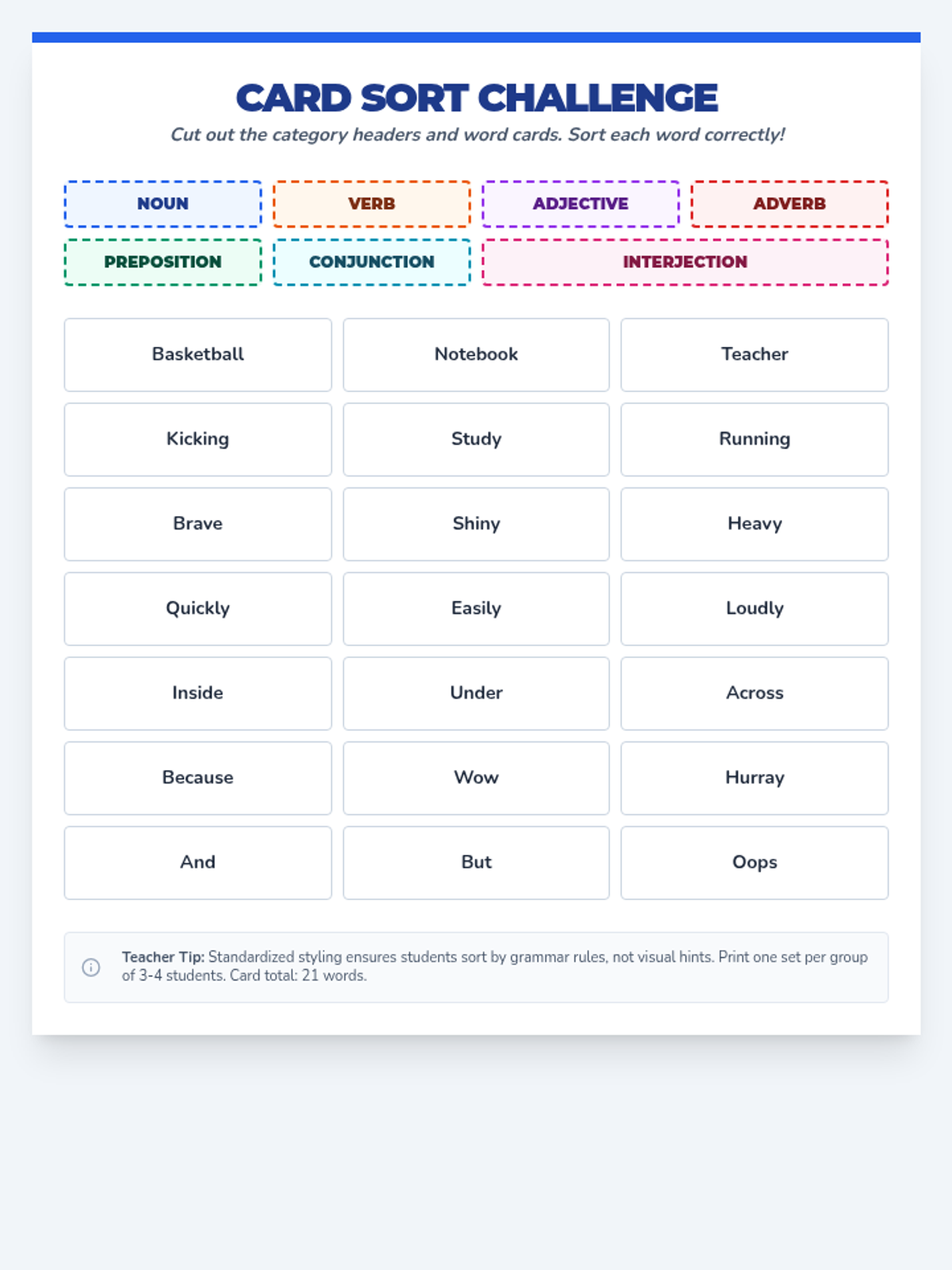
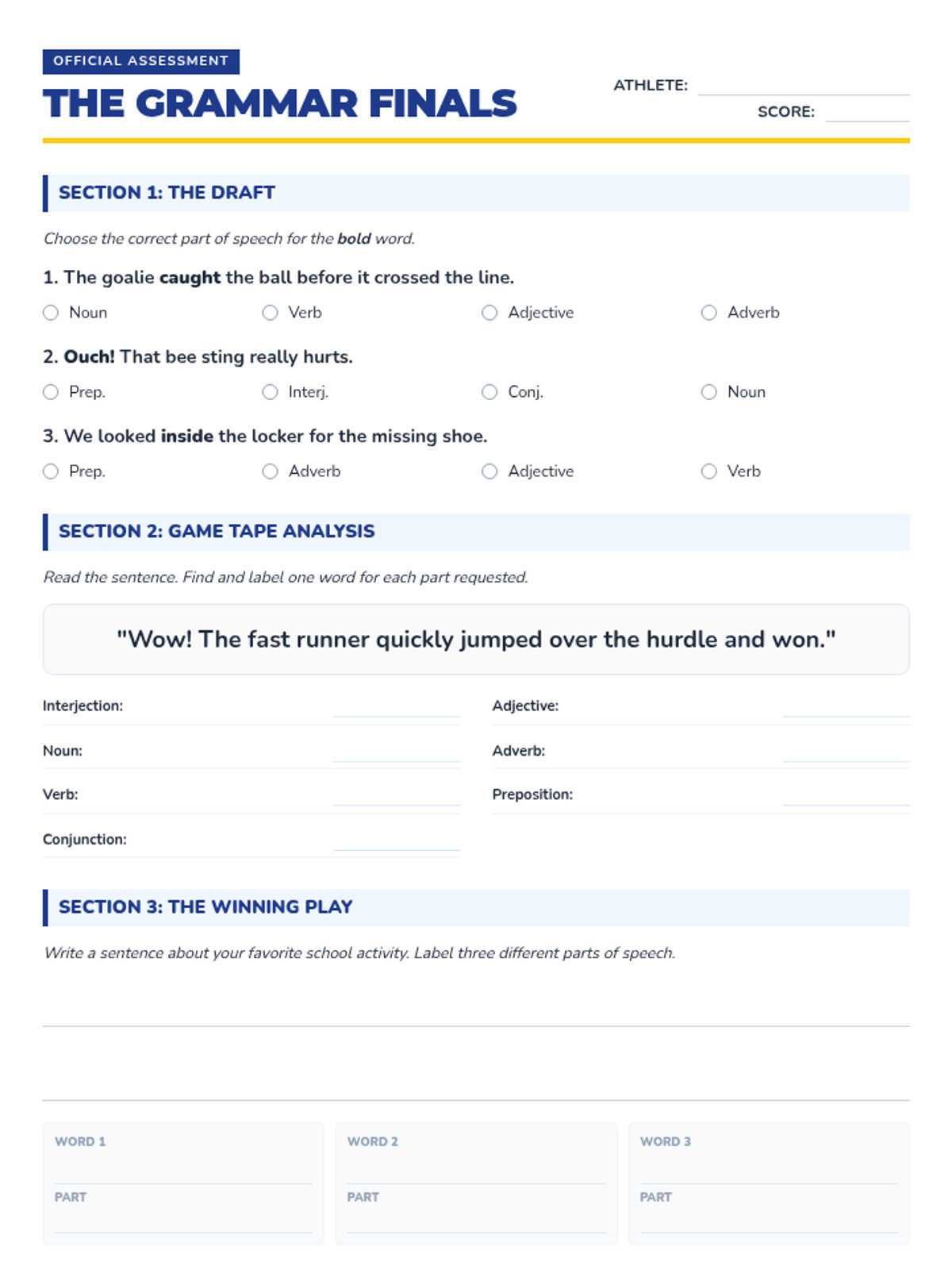
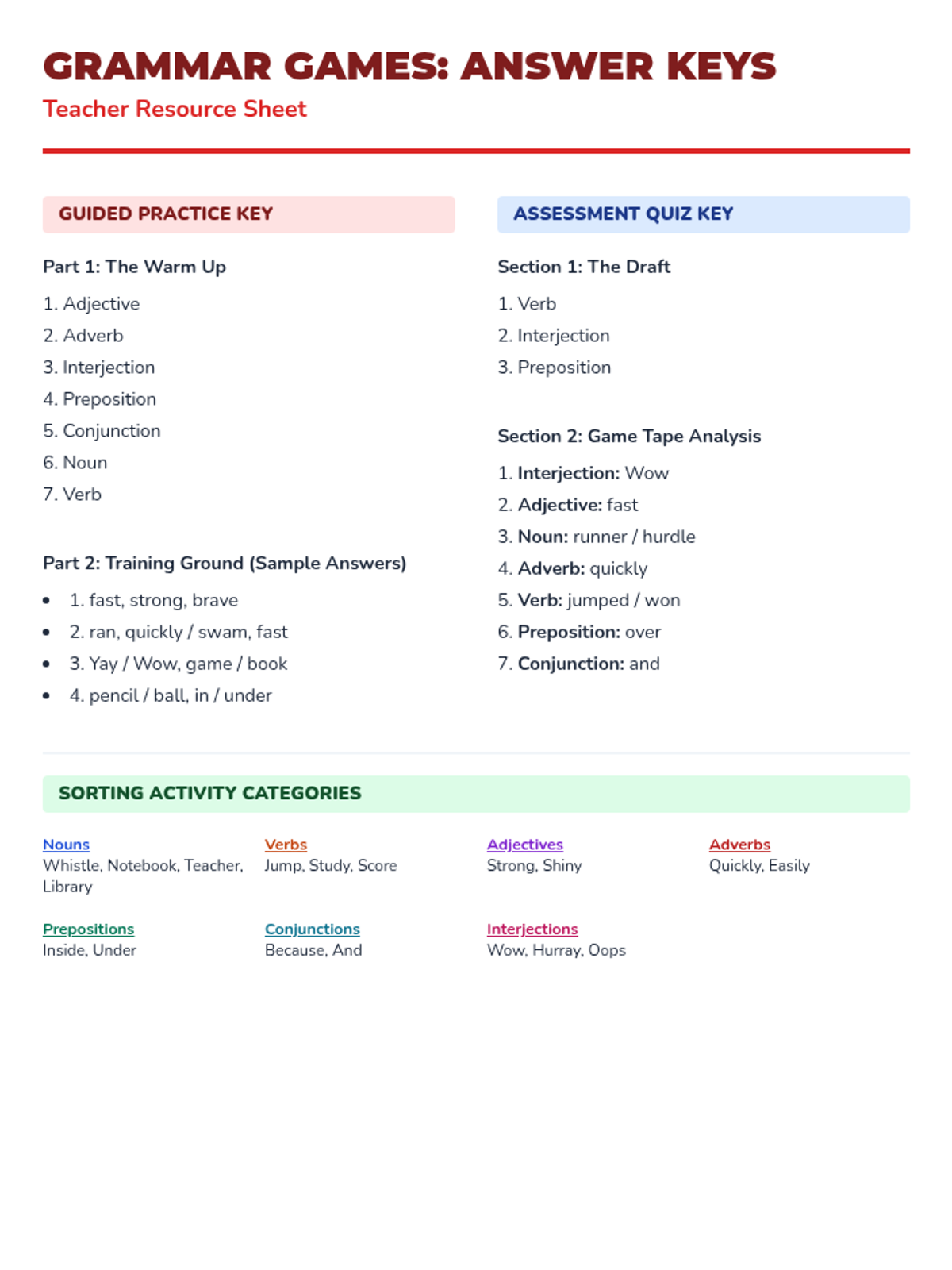
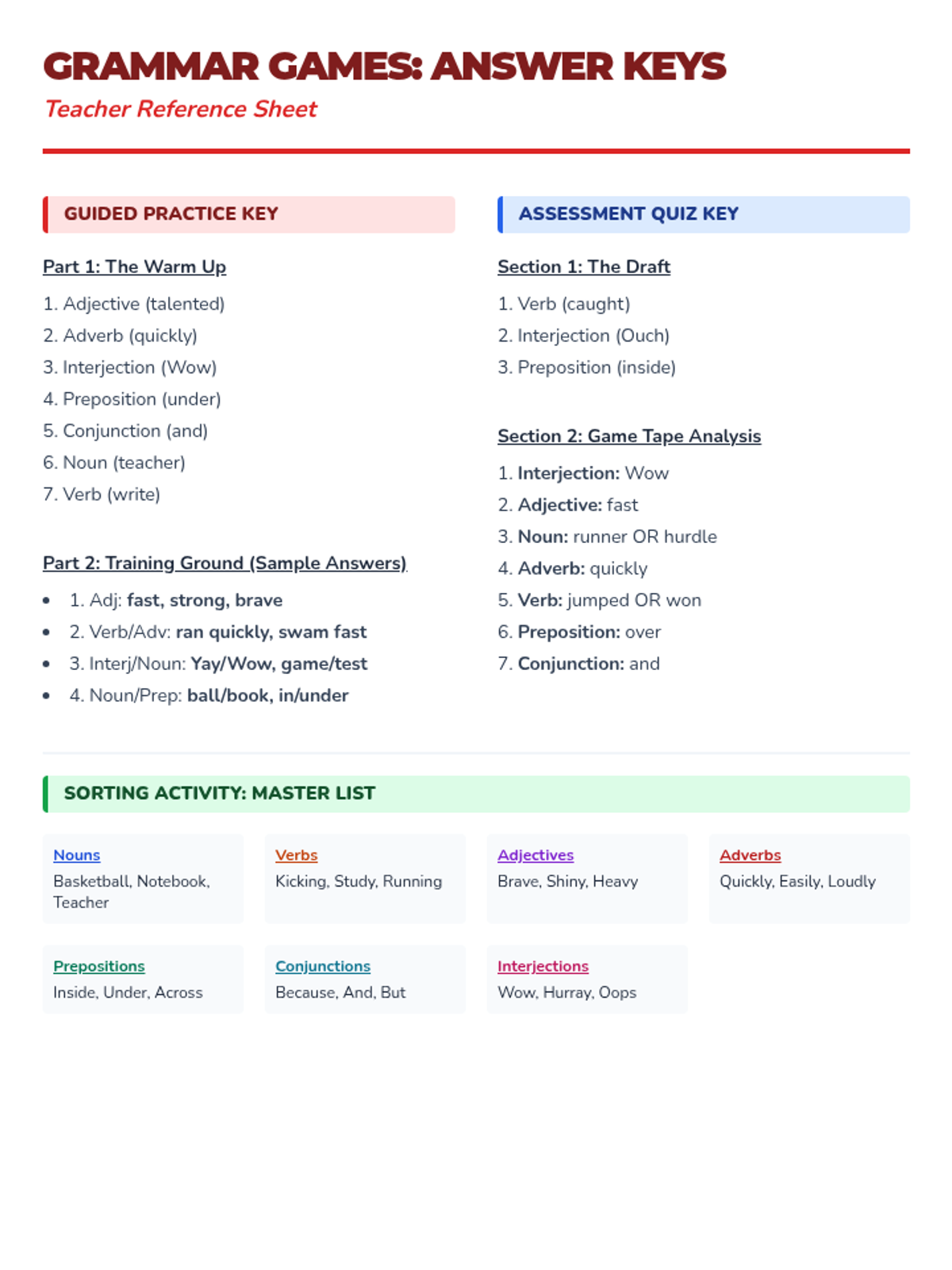
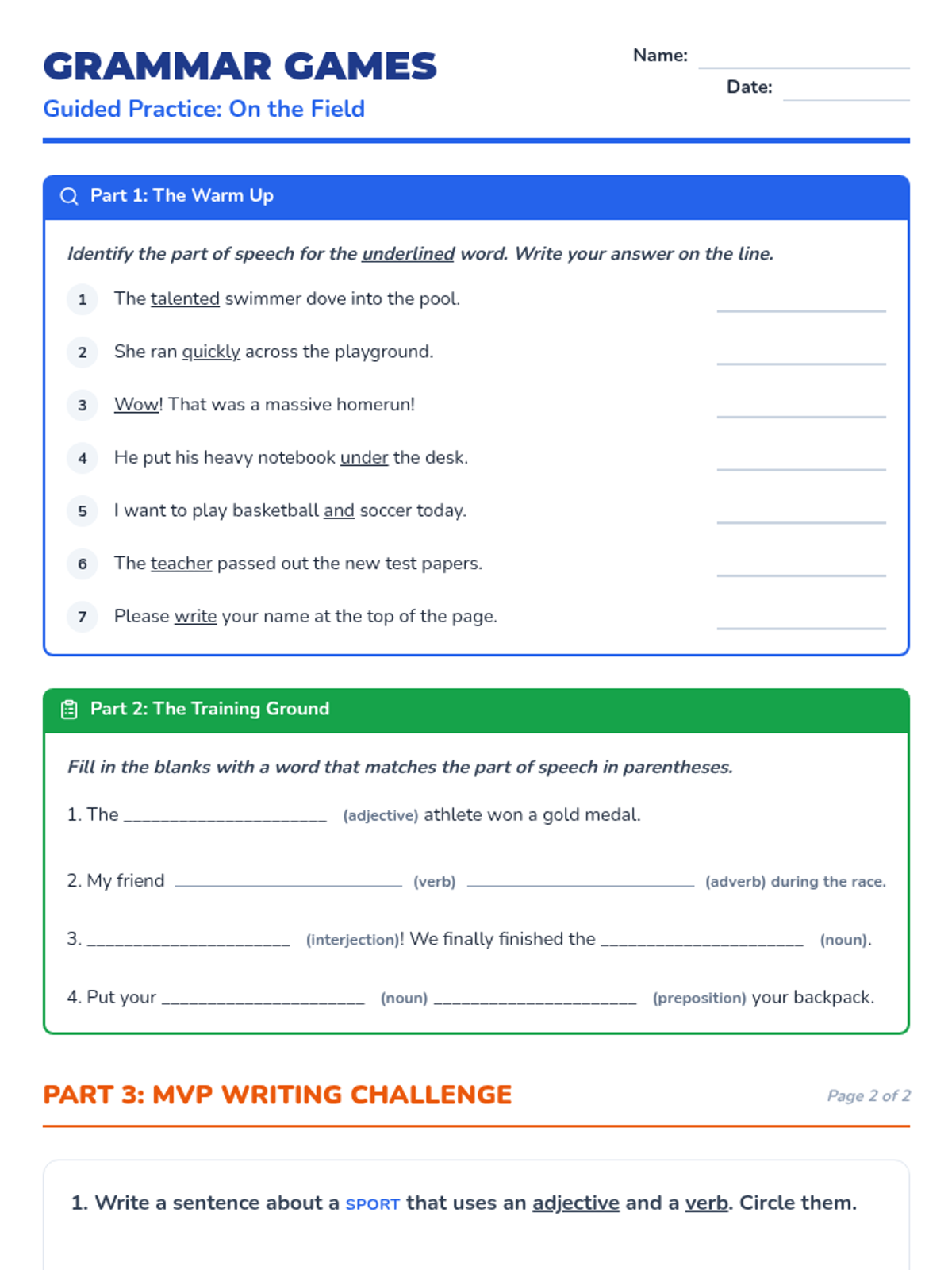
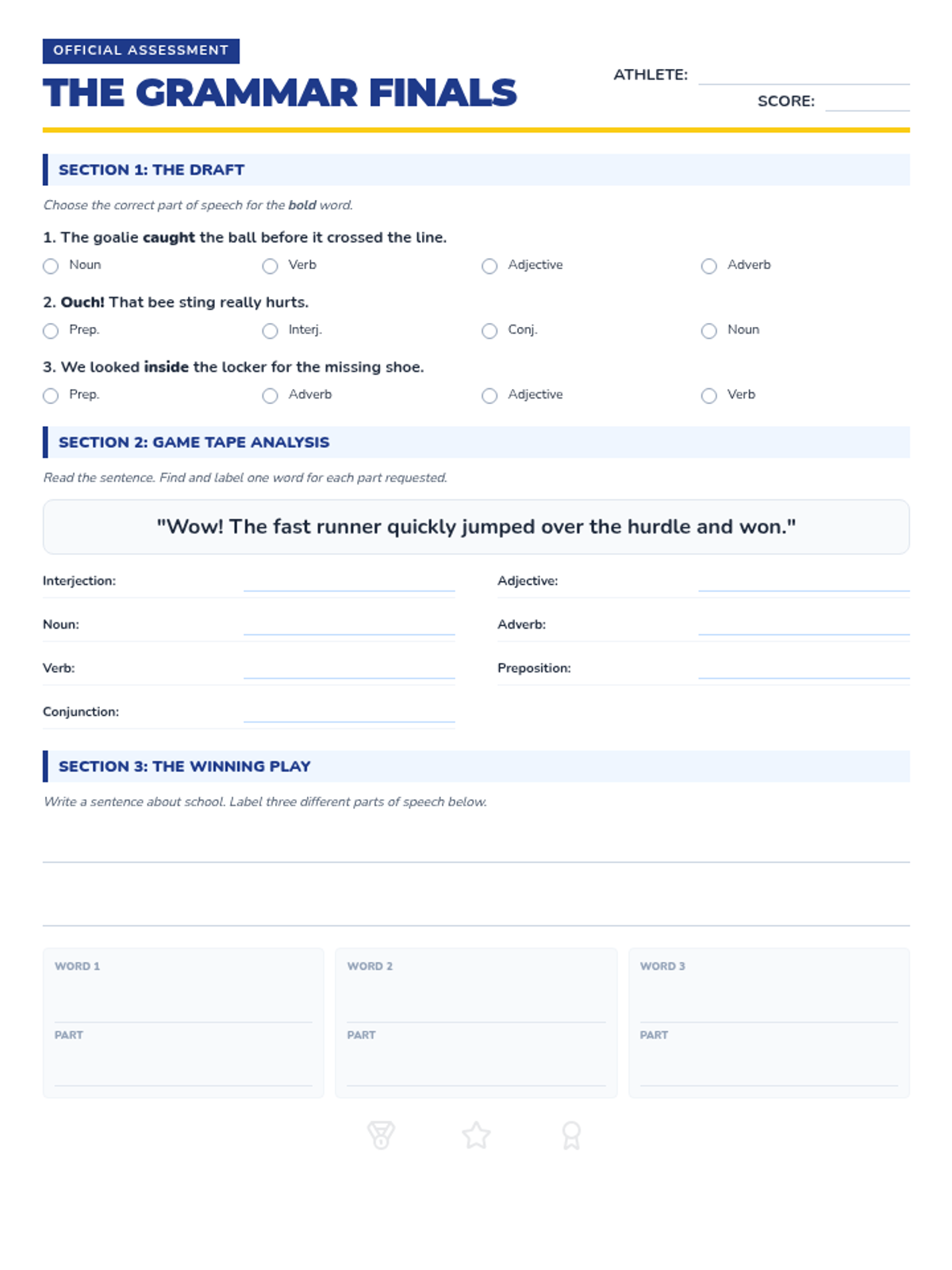
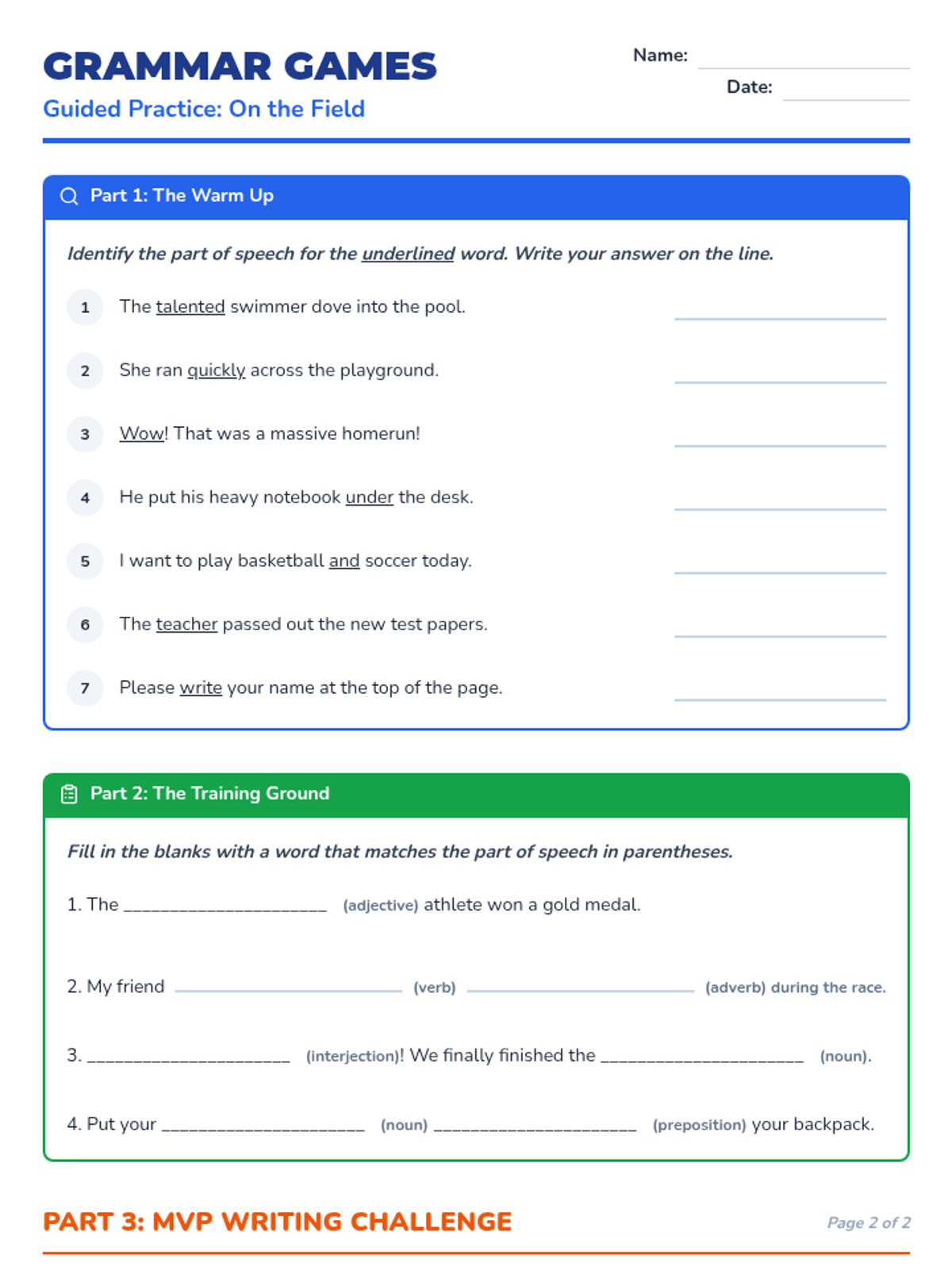
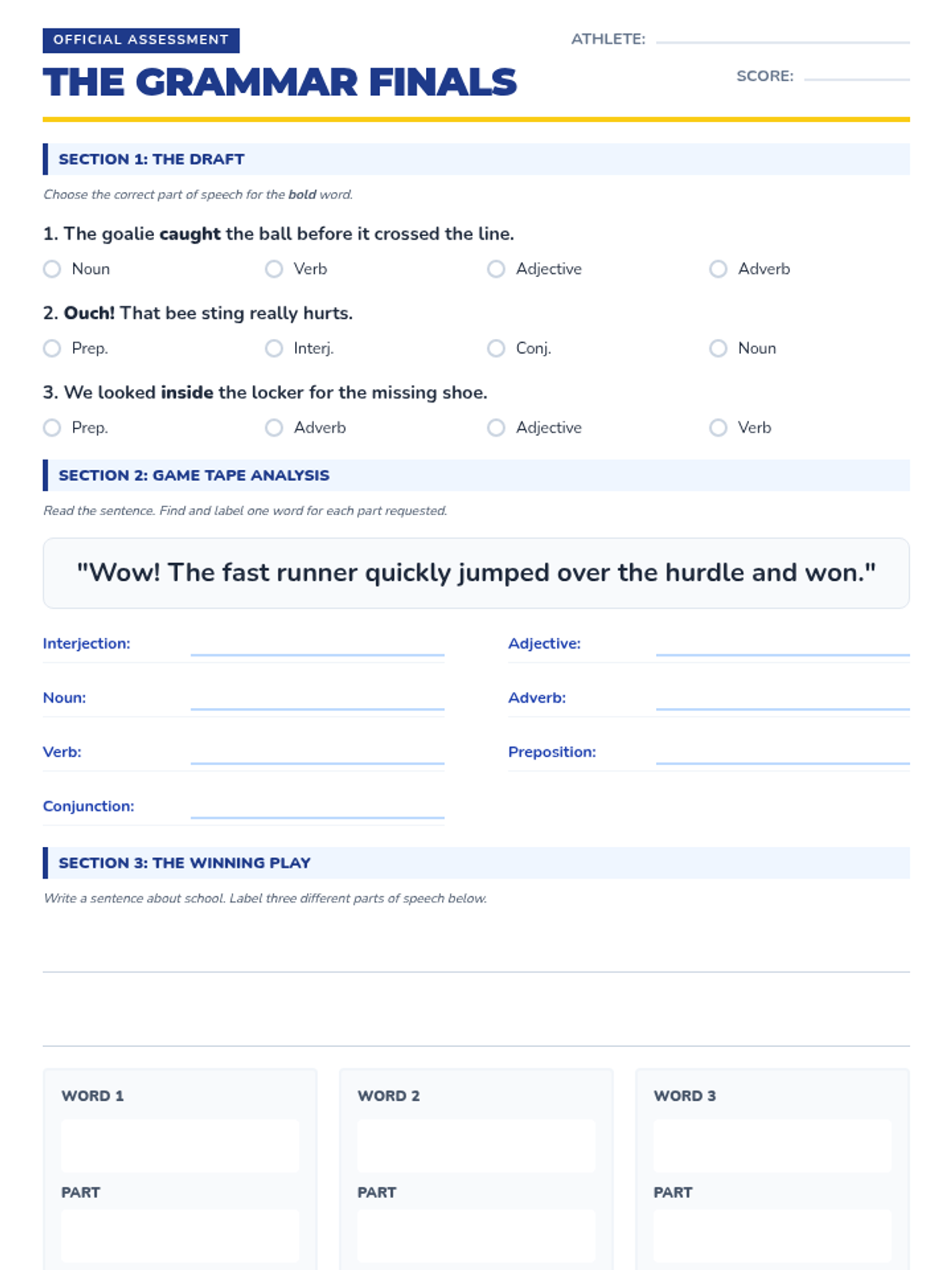
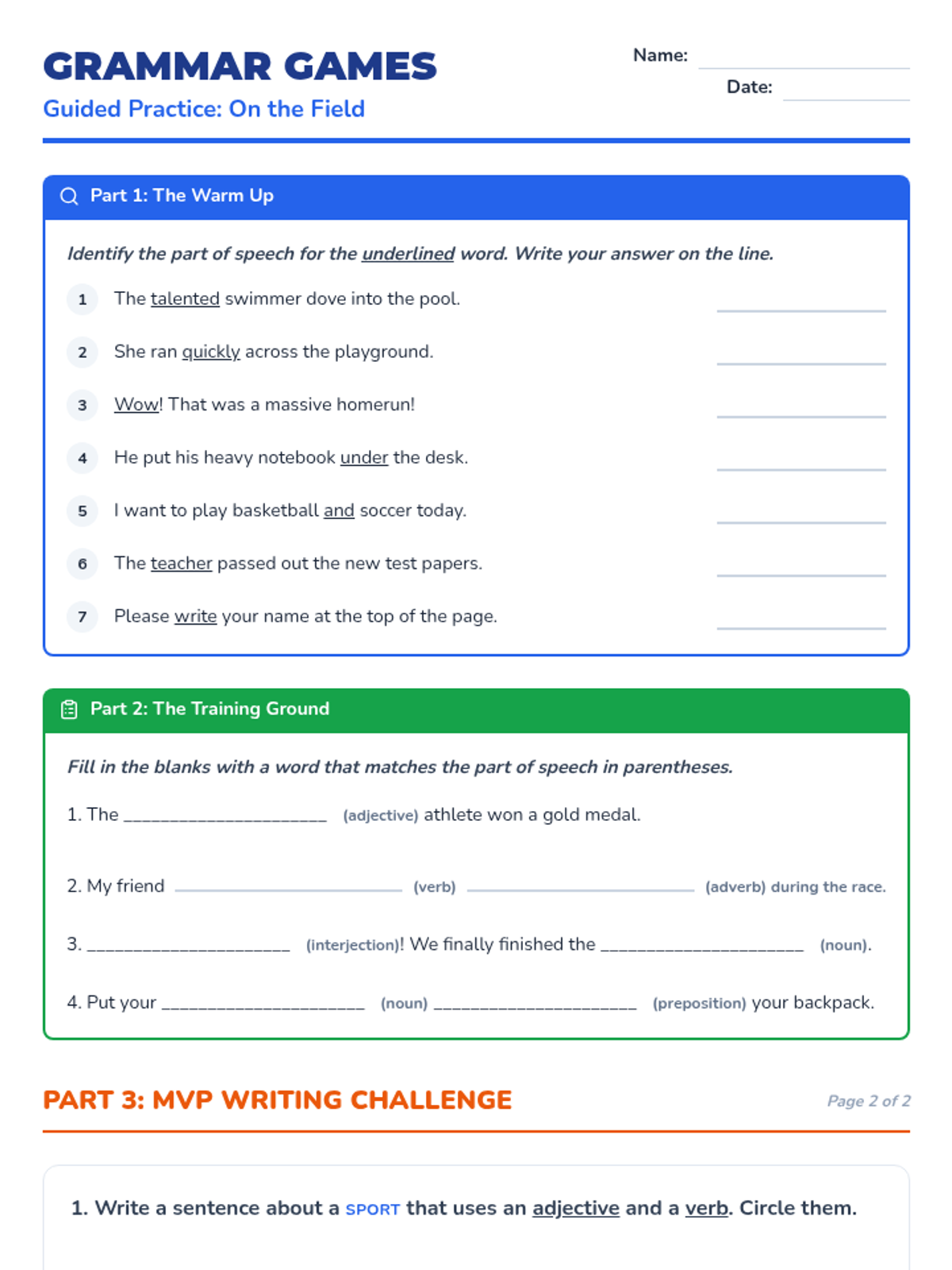
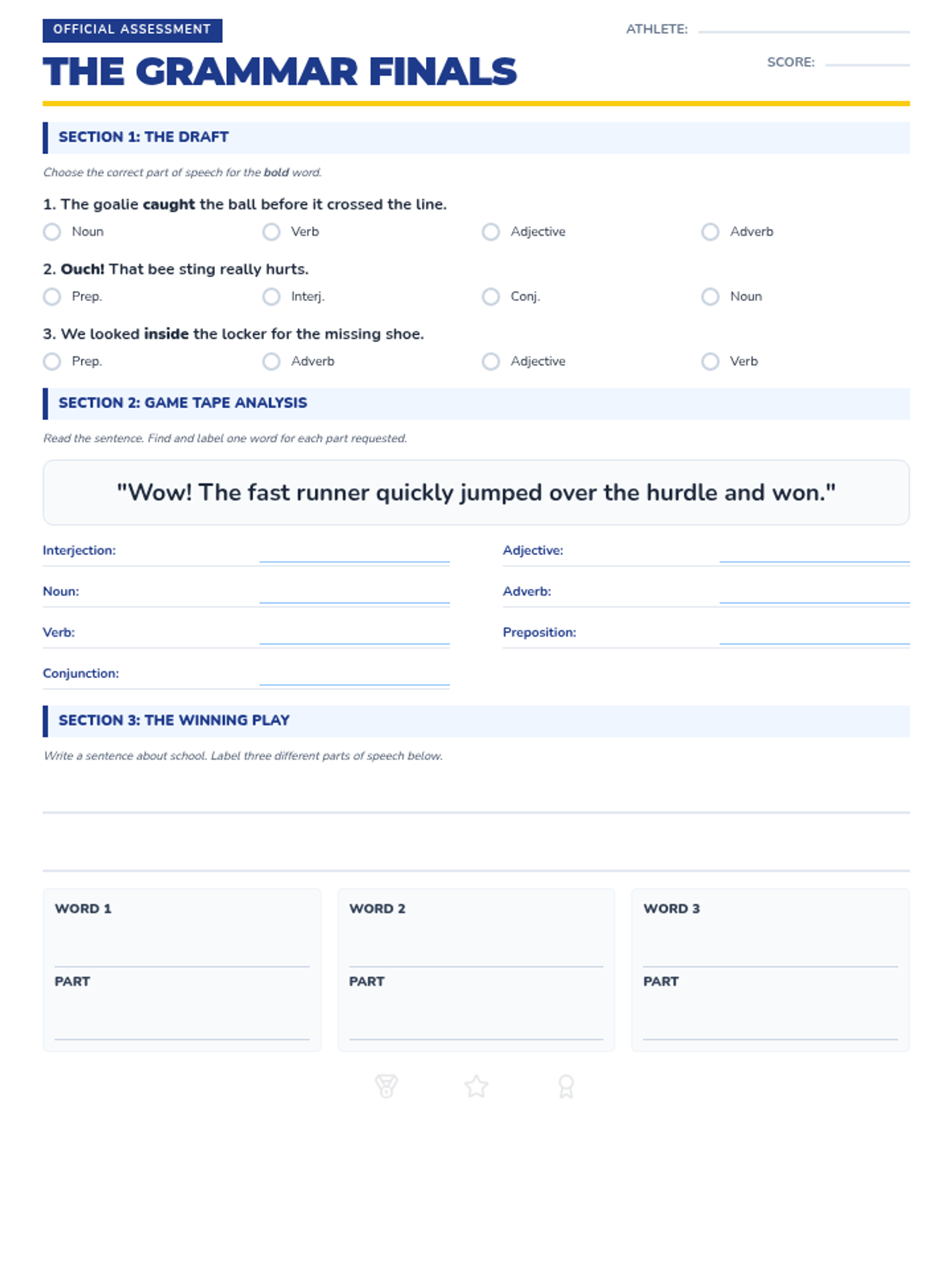
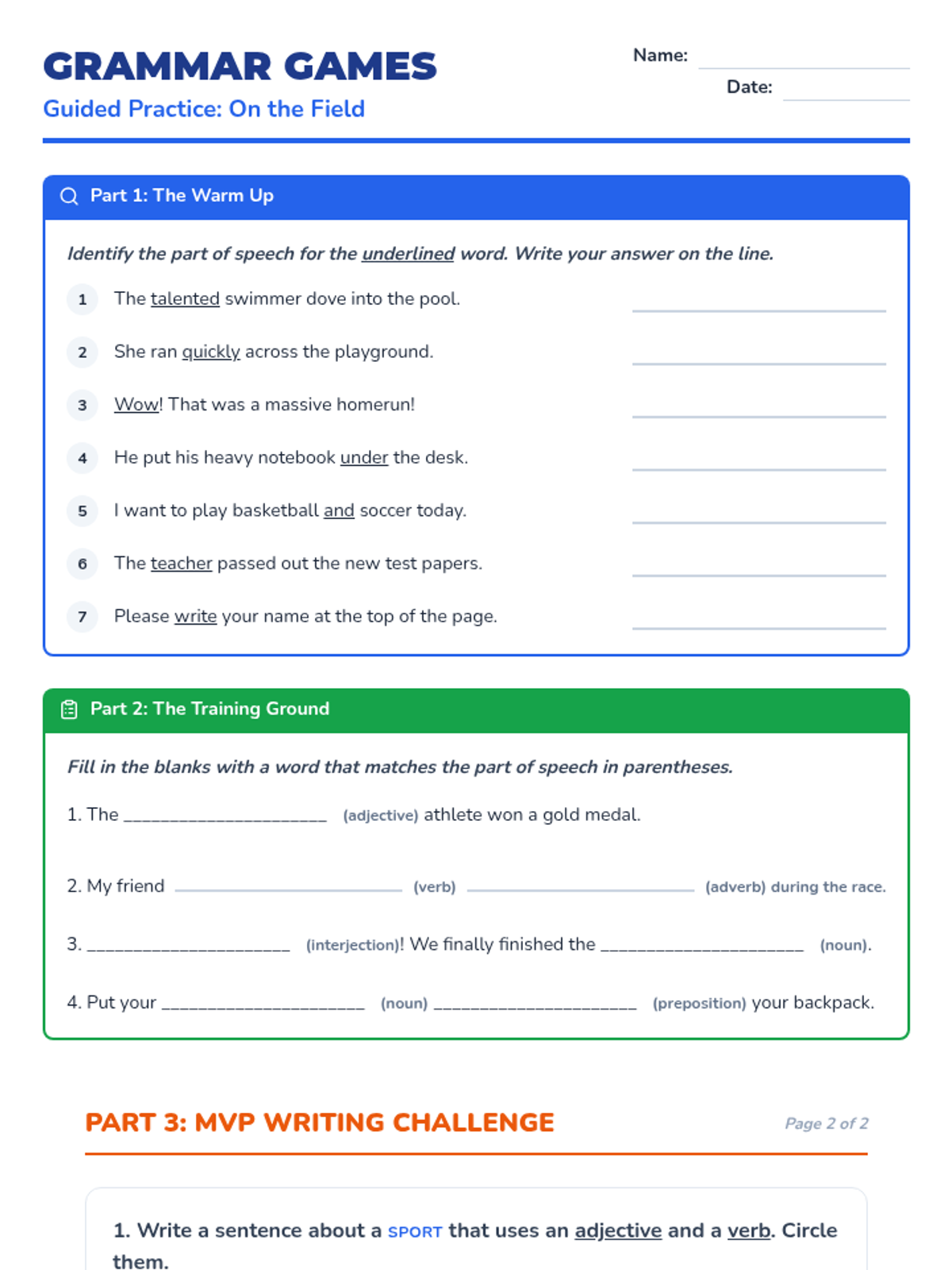
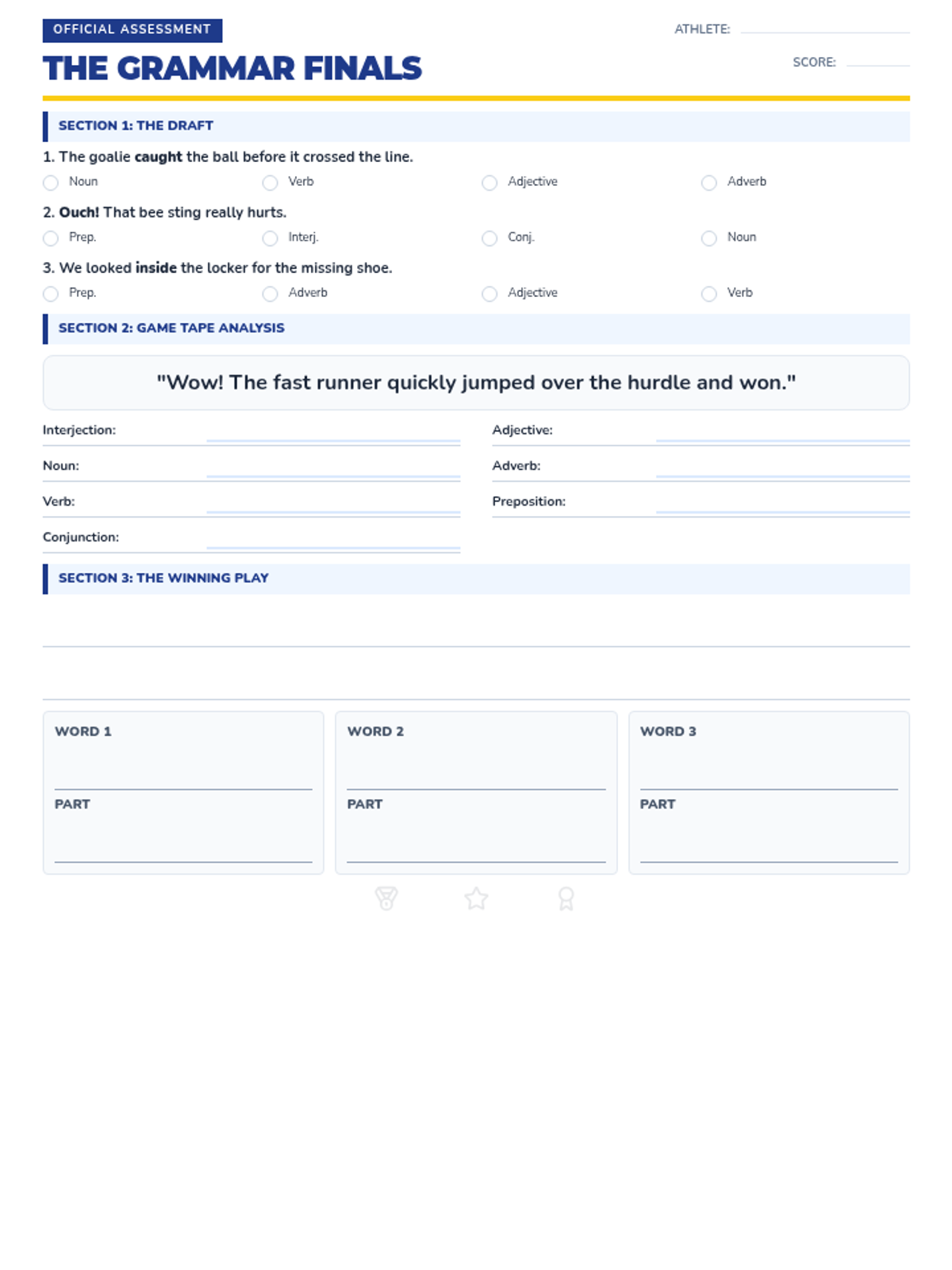
A lesson focusing on identifying nouns, verbs, adjectives, adverbs, prepositions, conjunctions, and interjections using athletic and academic contexts.
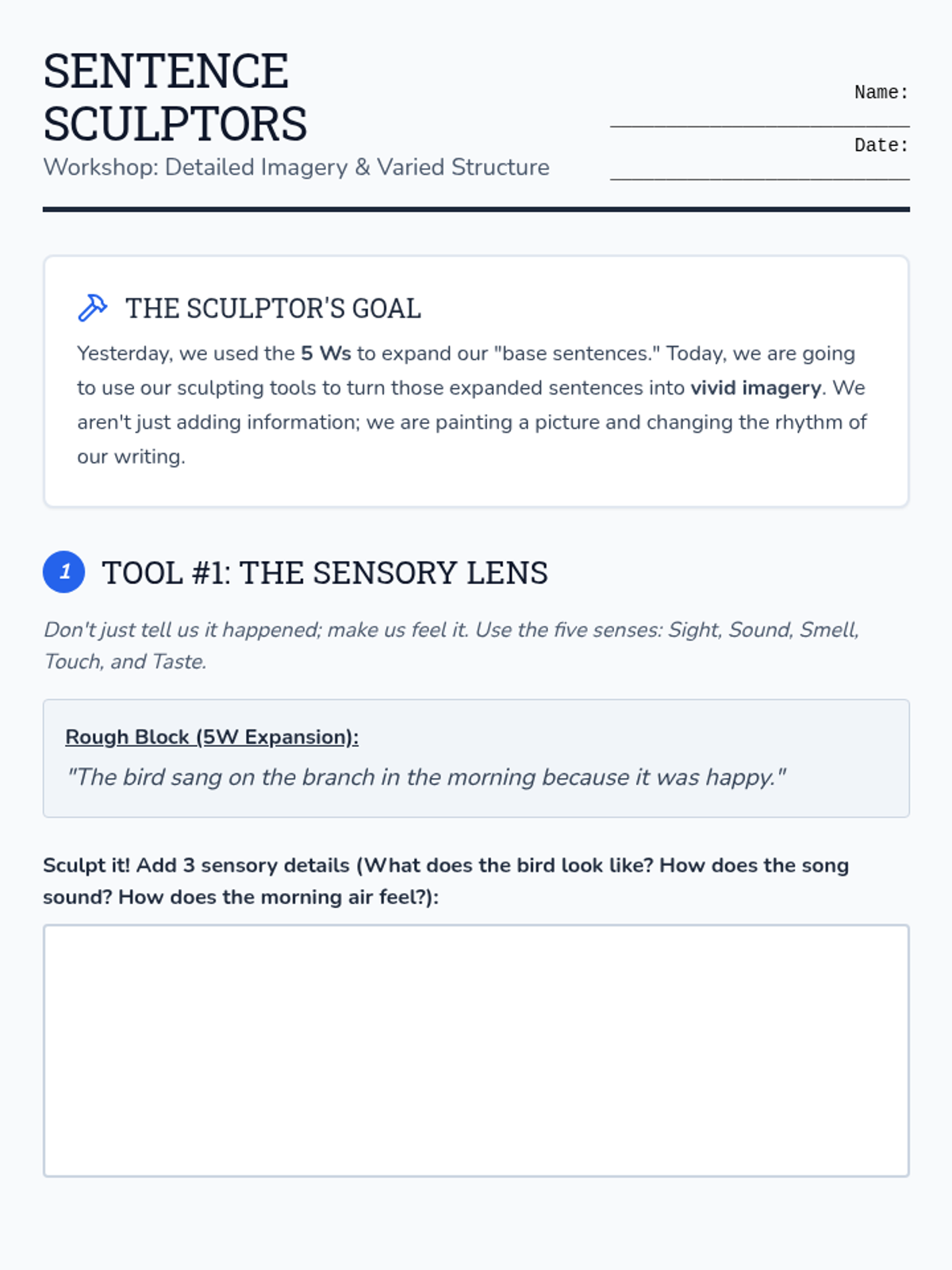
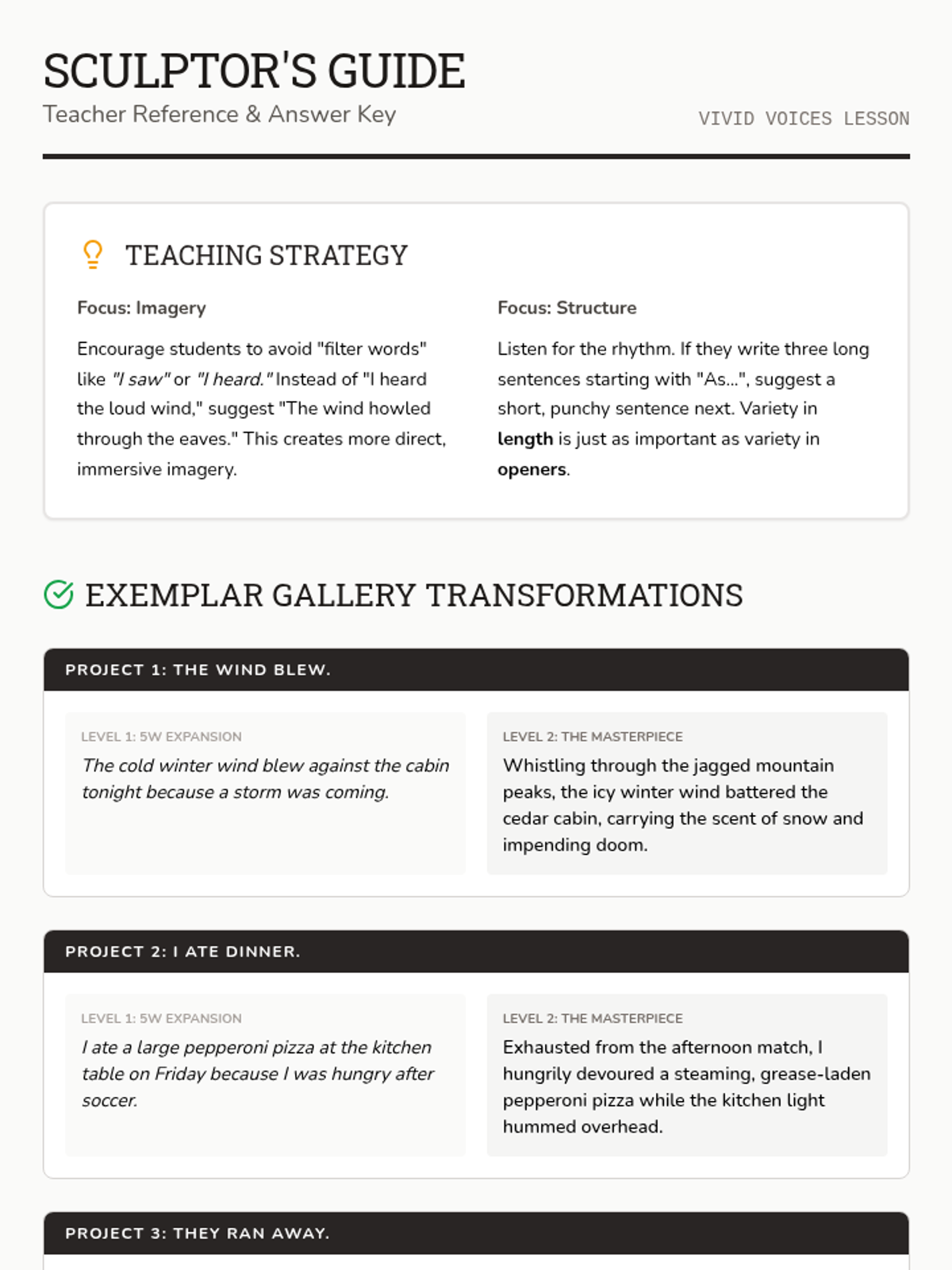
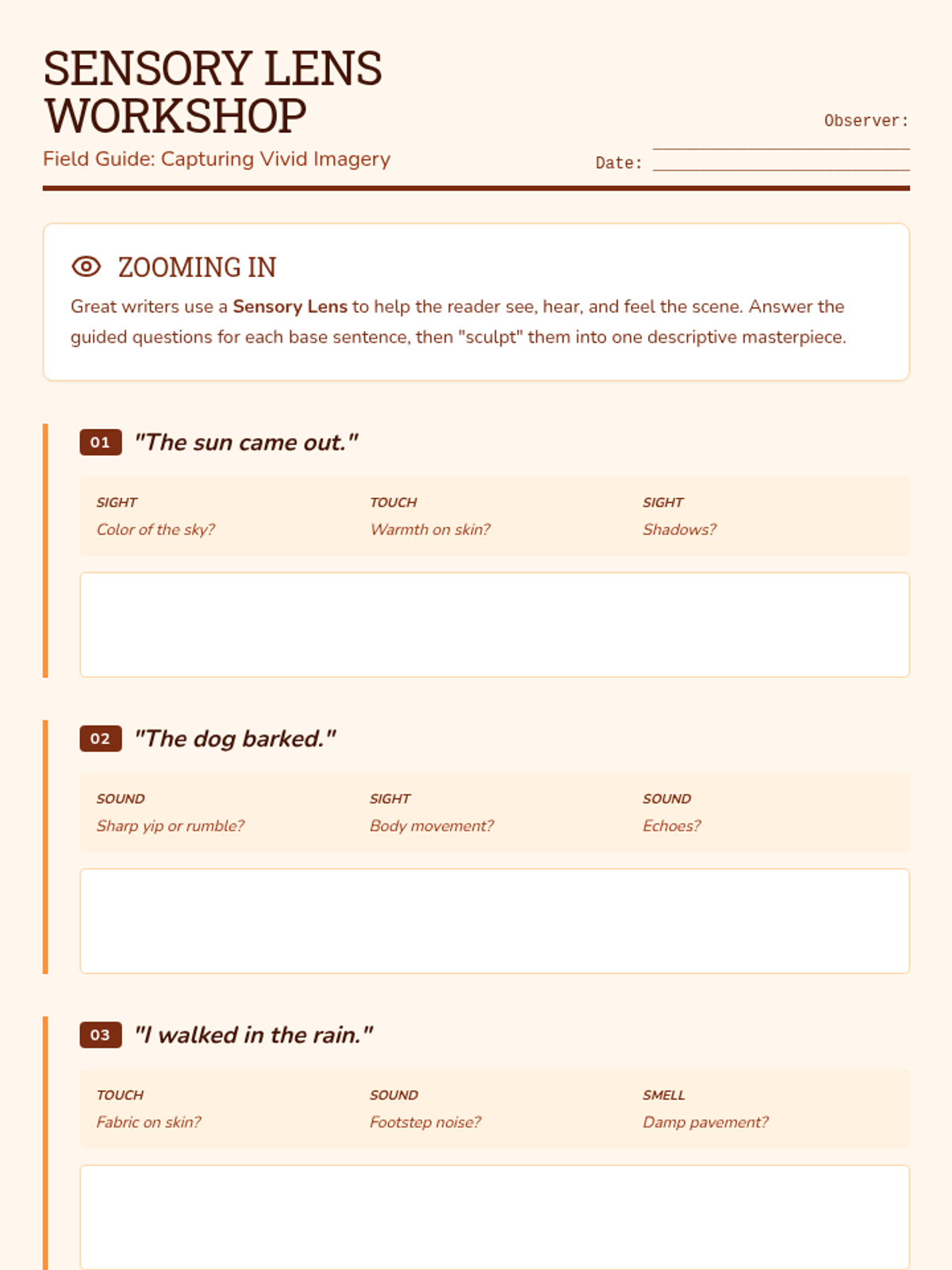
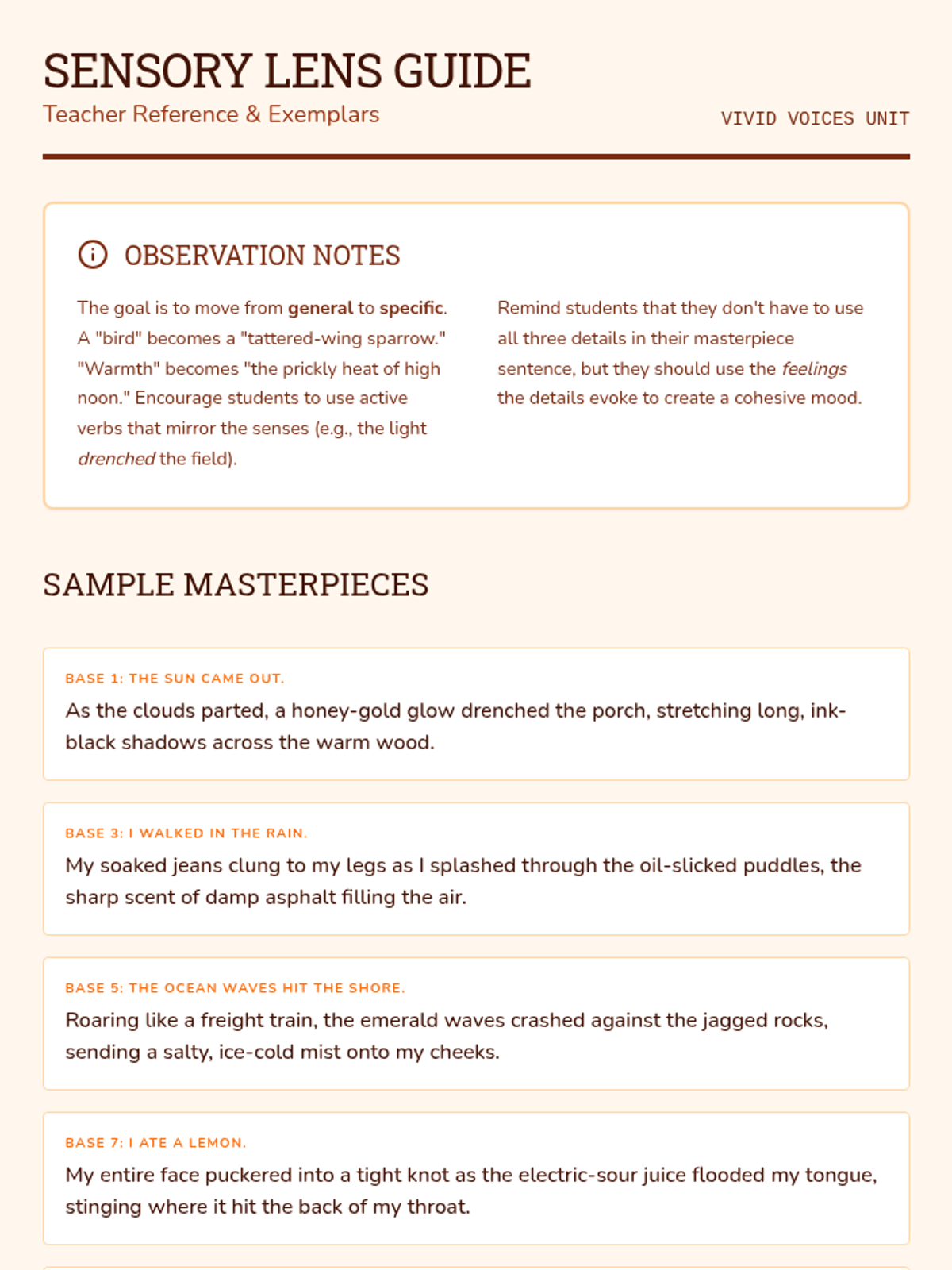
A lesson focused on transforming basic sentences into vivid, descriptive narratives using sensory imagery and varied sentence structures. Students build on their 5W foundation to 'sculpt' their writing into professional-quality prose.
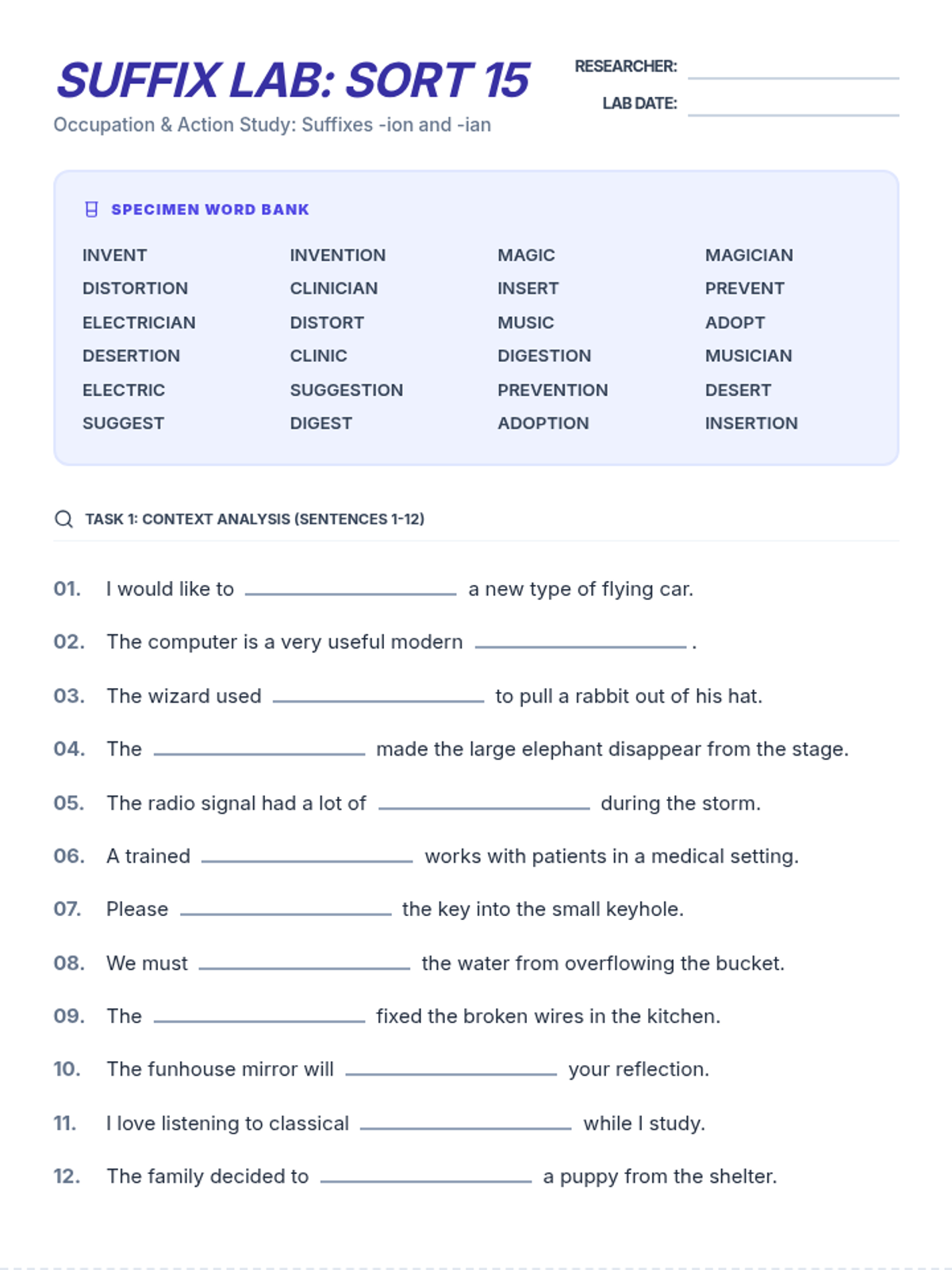
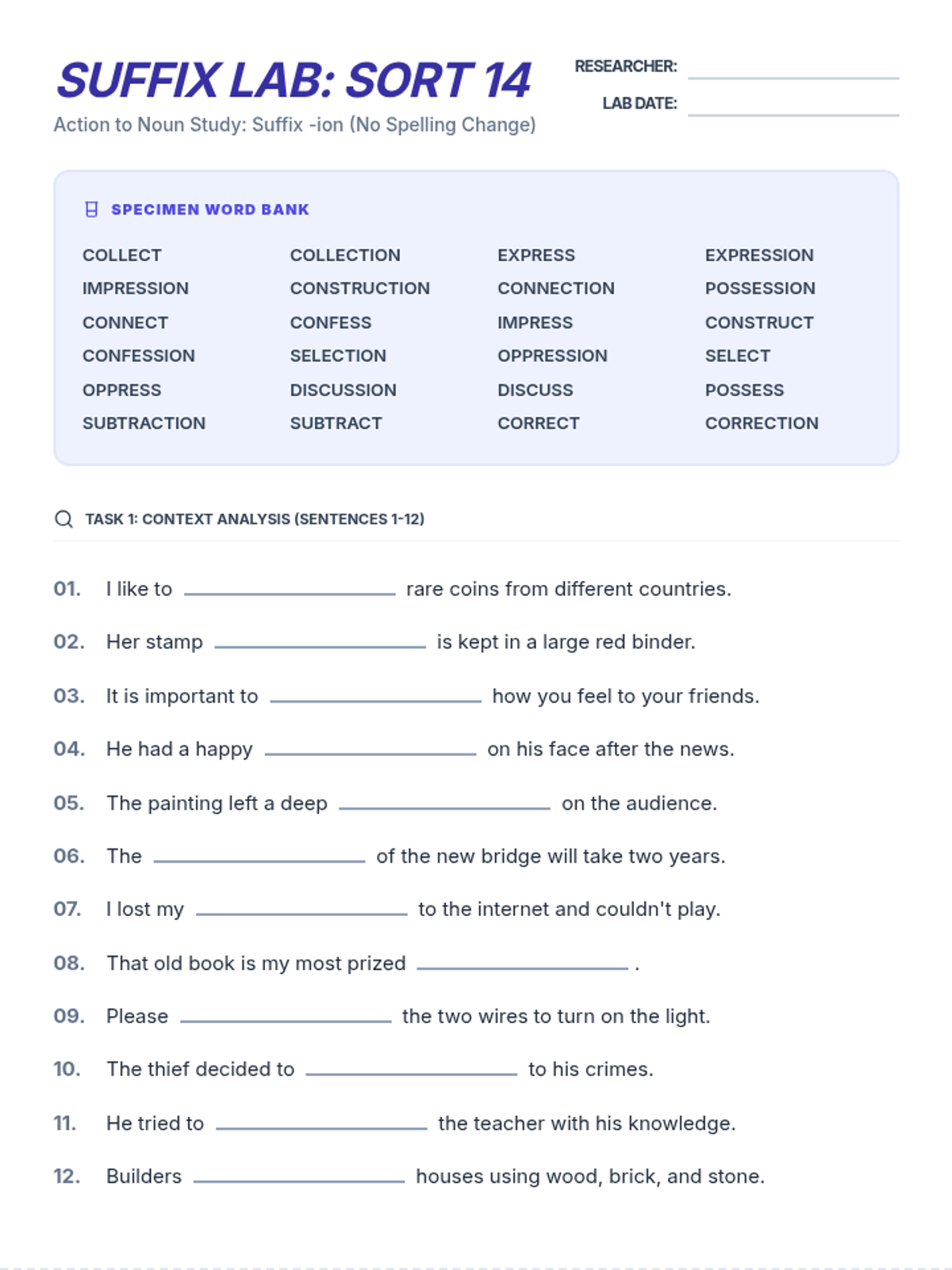
A lesson focused on the suffixes -ion and -ian with no spelling change to the base word. Students analyze nouns like 'invention', 'magician', and 'musician'.
A lesson focused on the suffix -ion and how it changes verbs into nouns with no spelling change to the base word. Students analyze word pairs like 'collect' and 'collection'.
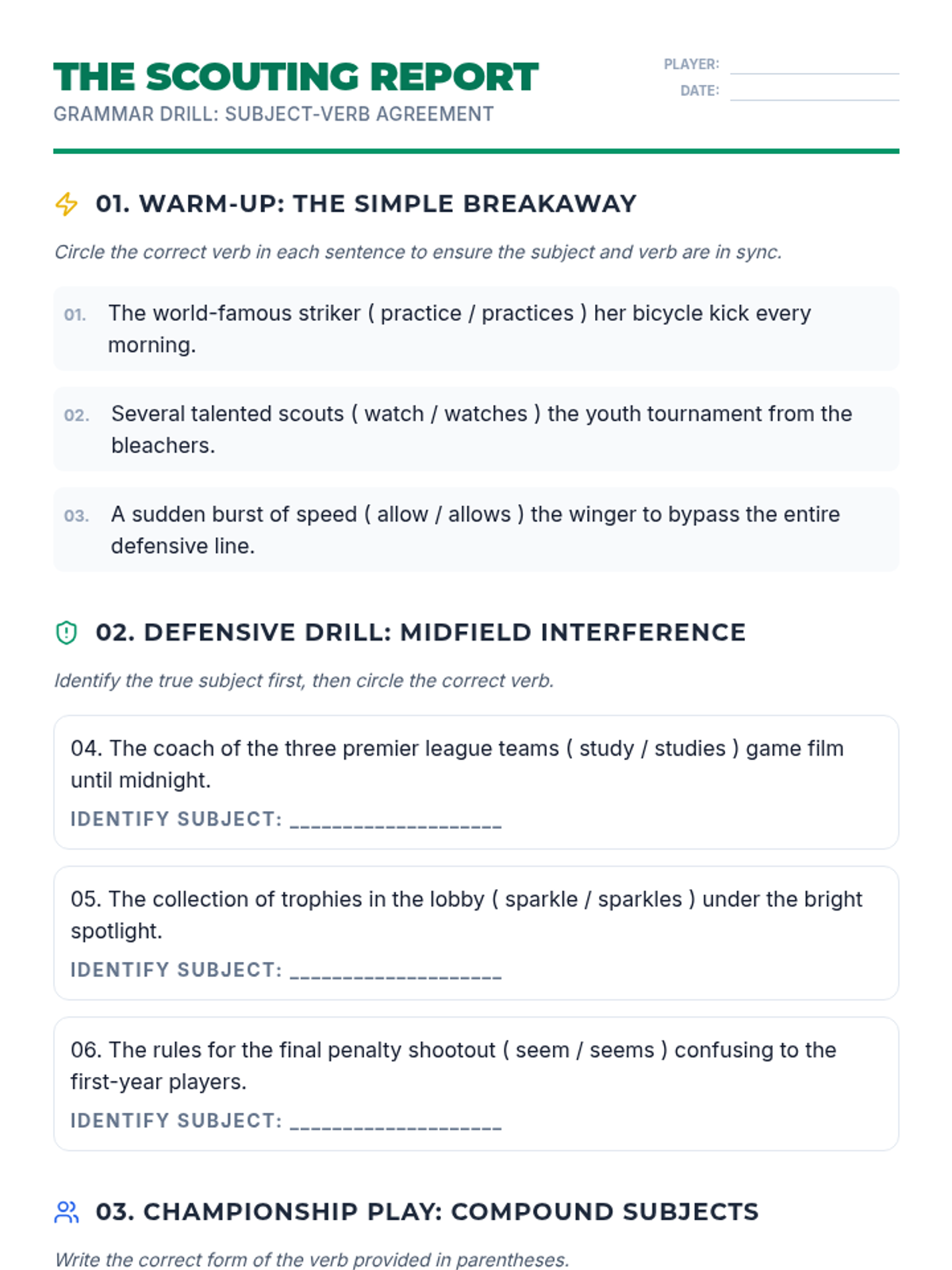
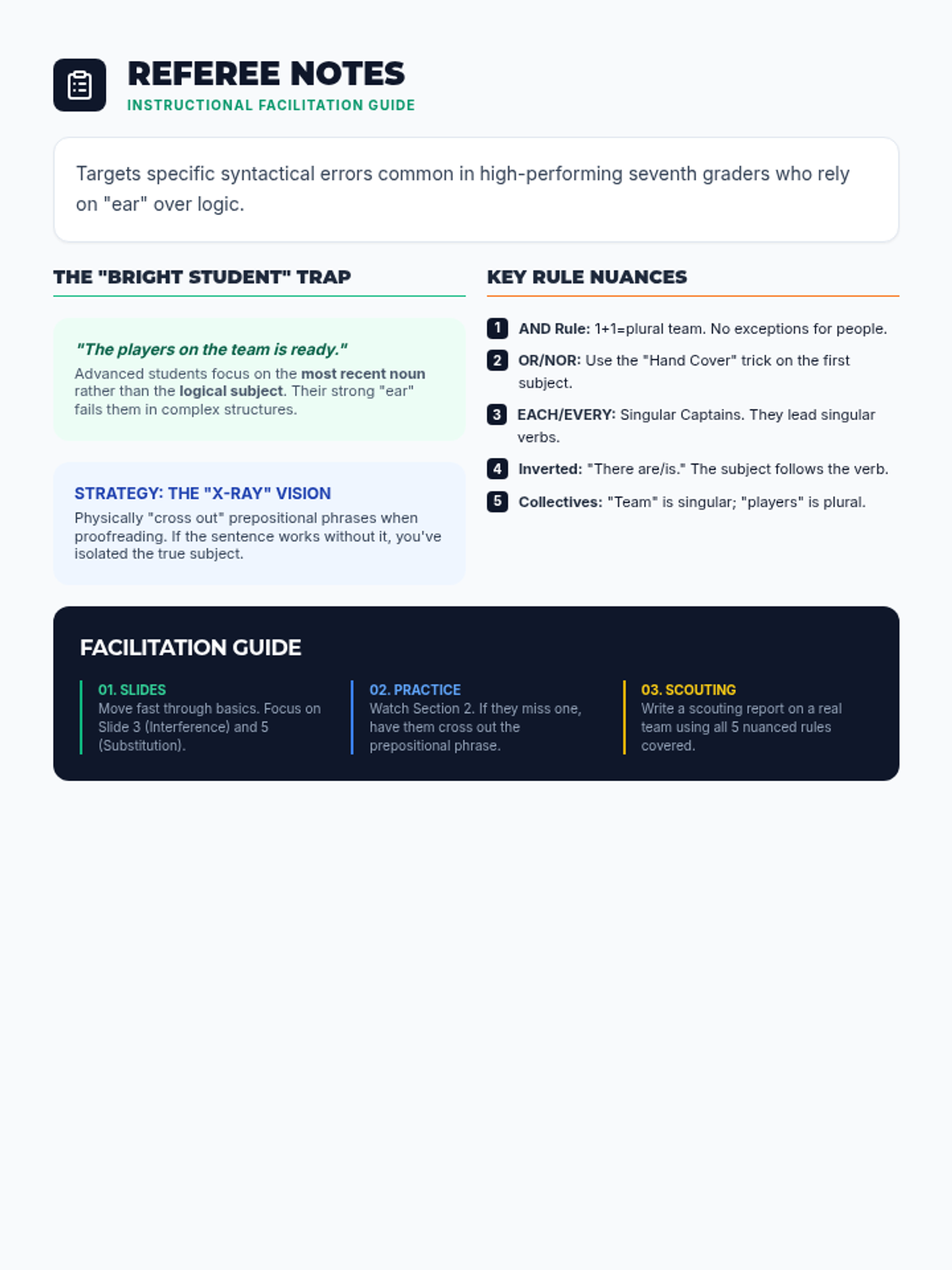
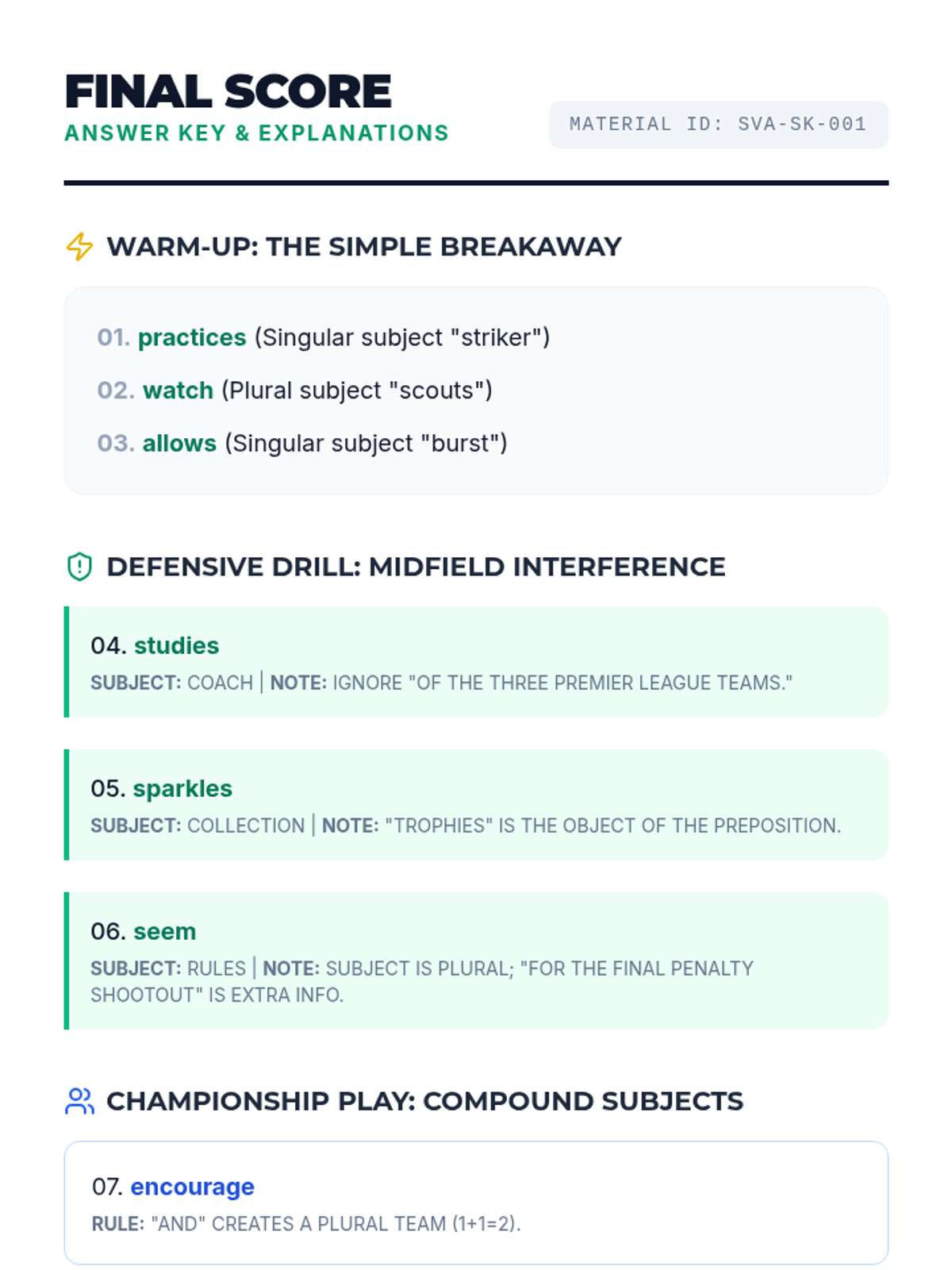
A targeted grammar lesson focusing on subject-verb agreement through the high-interest lens of professional soccer. Designed for advanced students who need to master complex compound subjects and prepositional phrase interference.
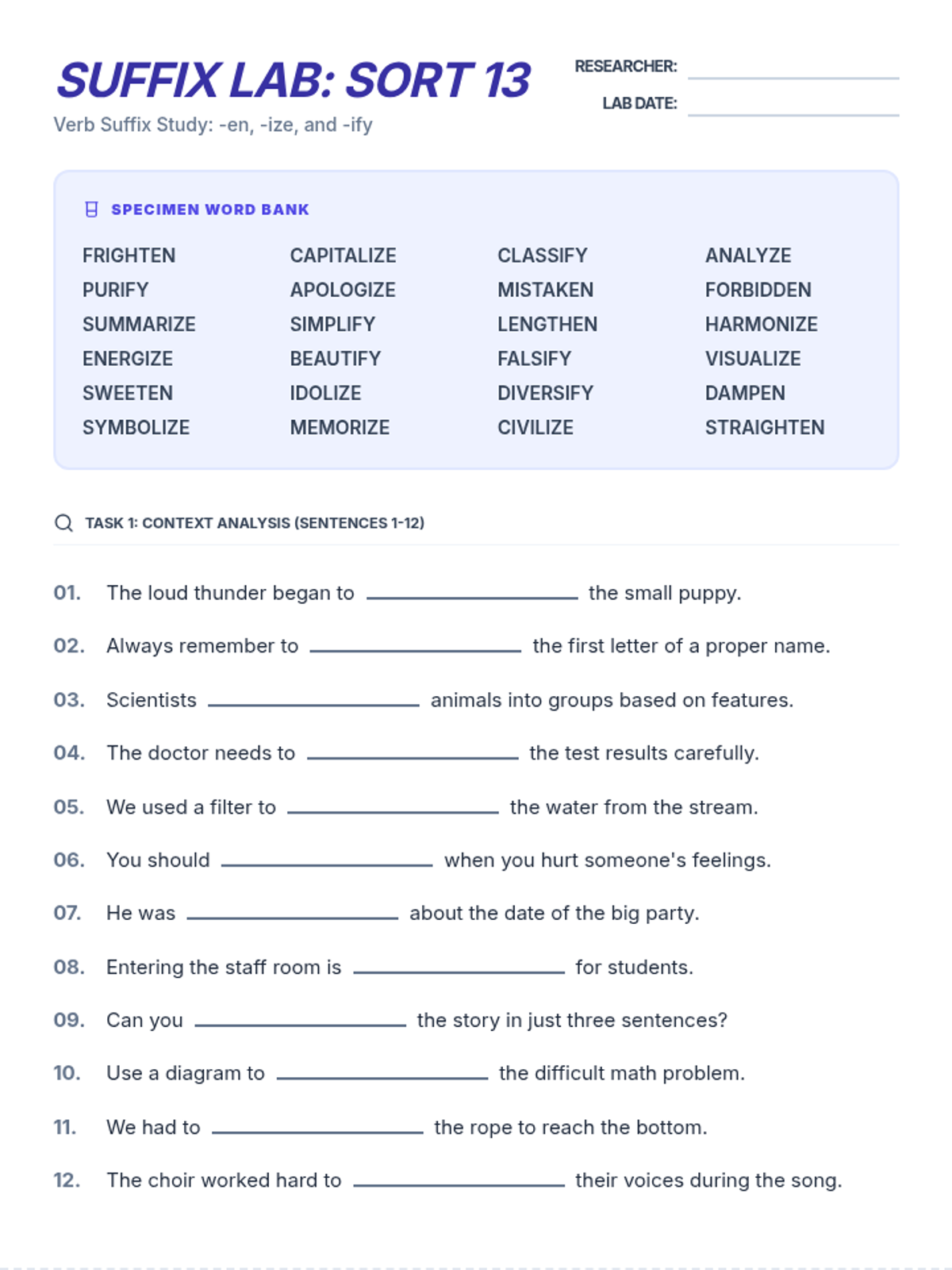
A lesson focused on the suffixes -en, -ize, and -ify. Students investigate how these suffixes transform base words into verbs representing actions or states.
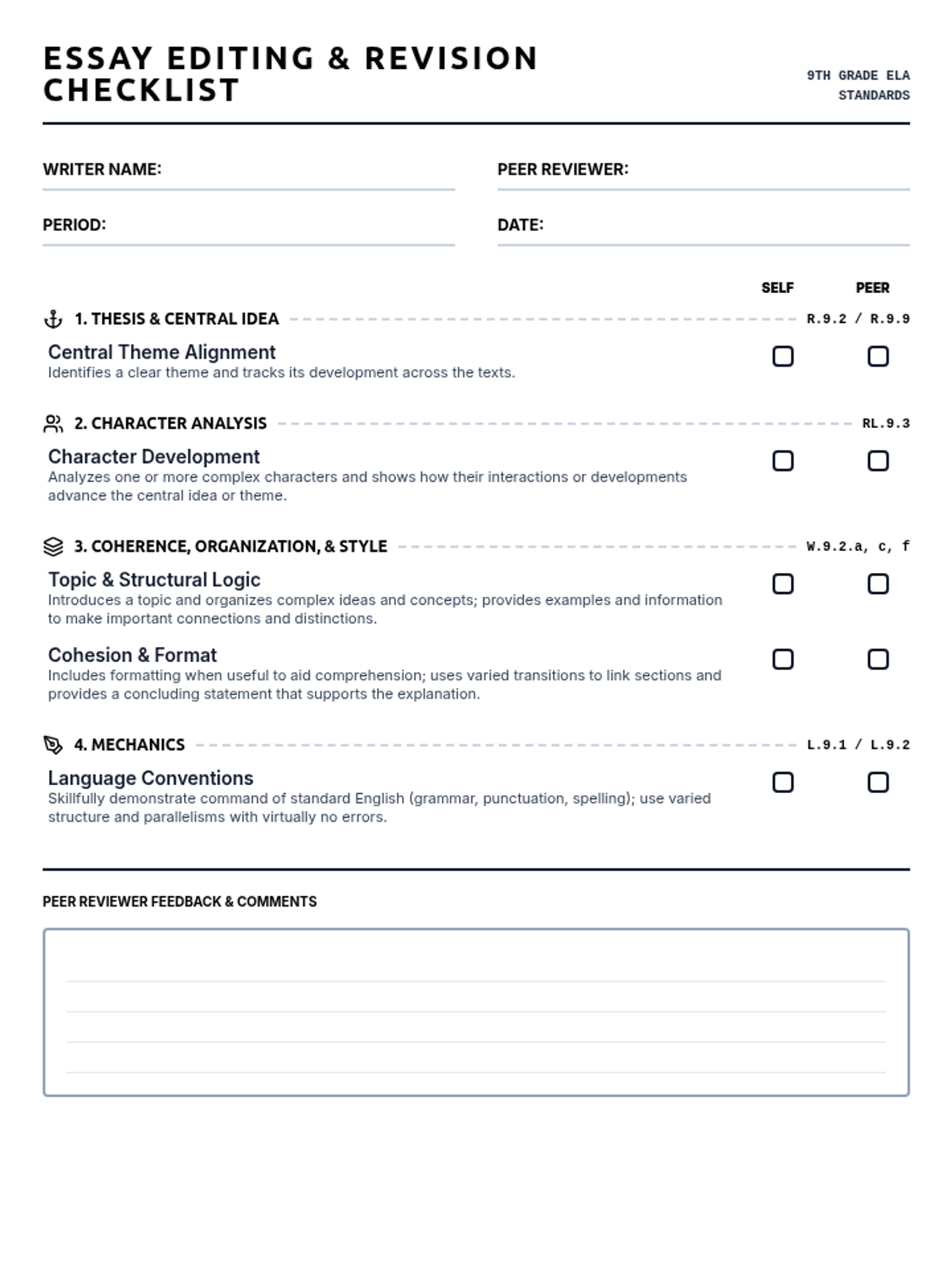
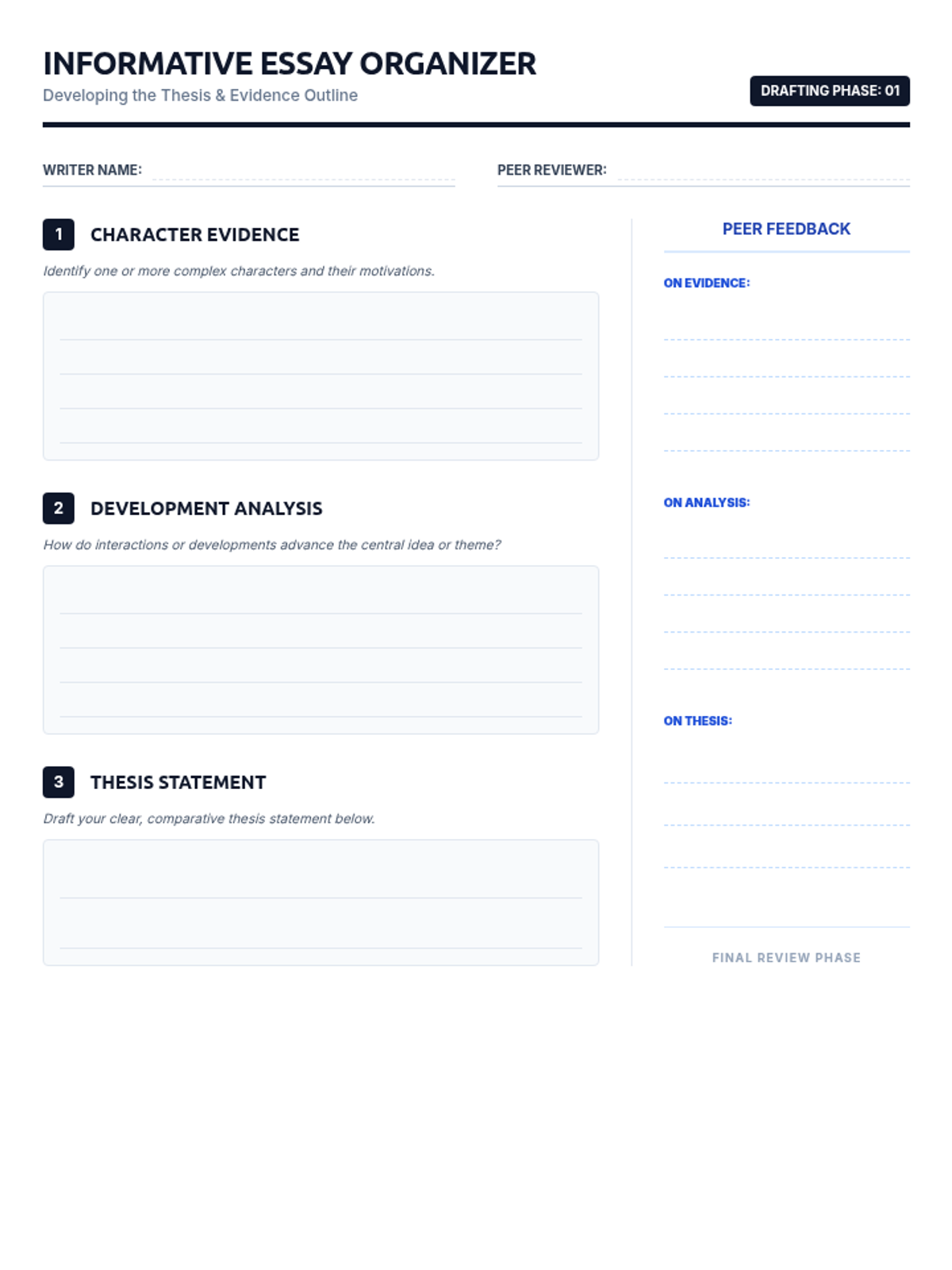
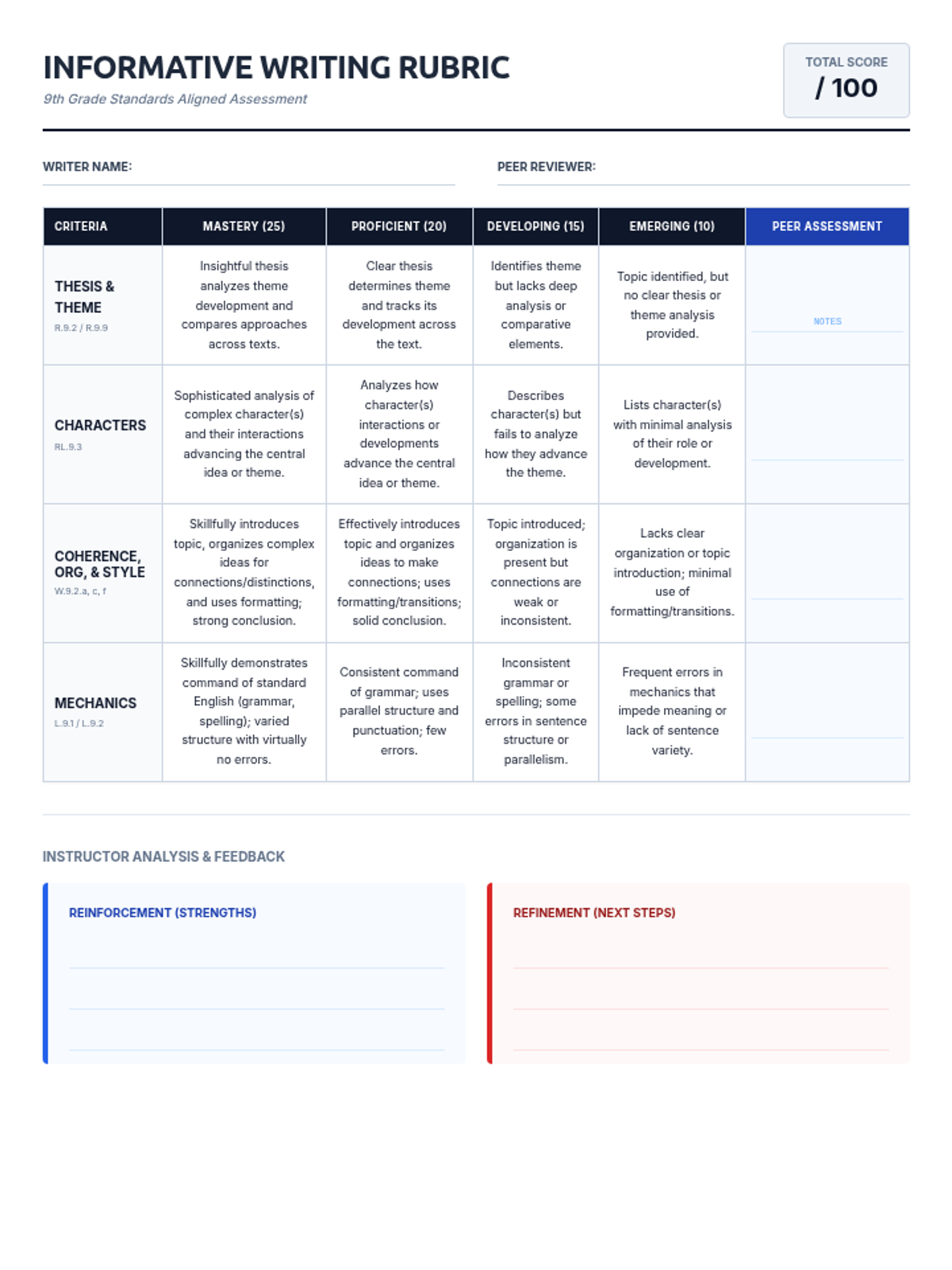
A lesson focused on the 'thesis bridge'—the critical link between evidence and a central claim. Students analyze character development and themes across texts to draft, organize, and refine high-quality informative essays aligned with 9th-grade standards.
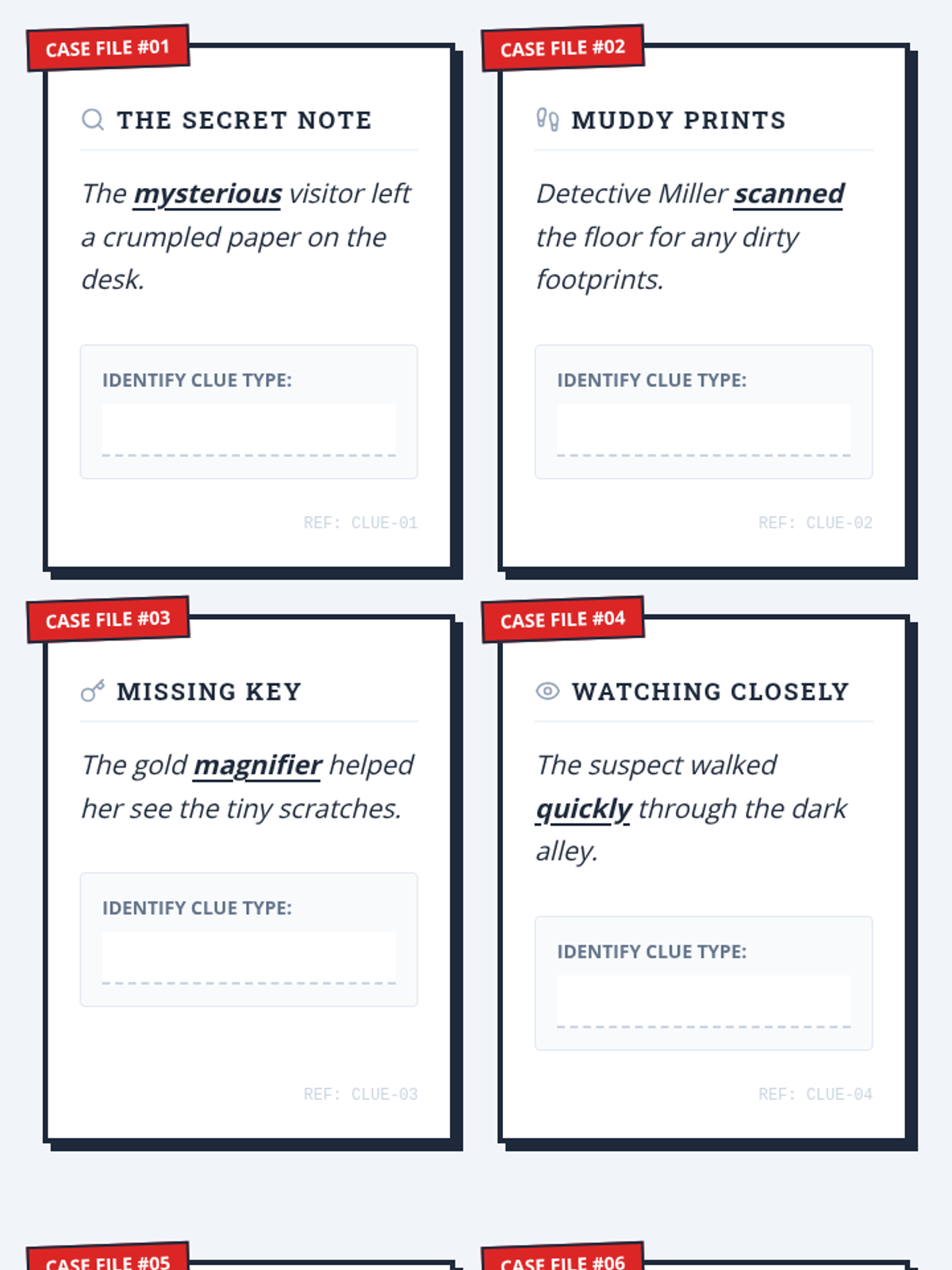
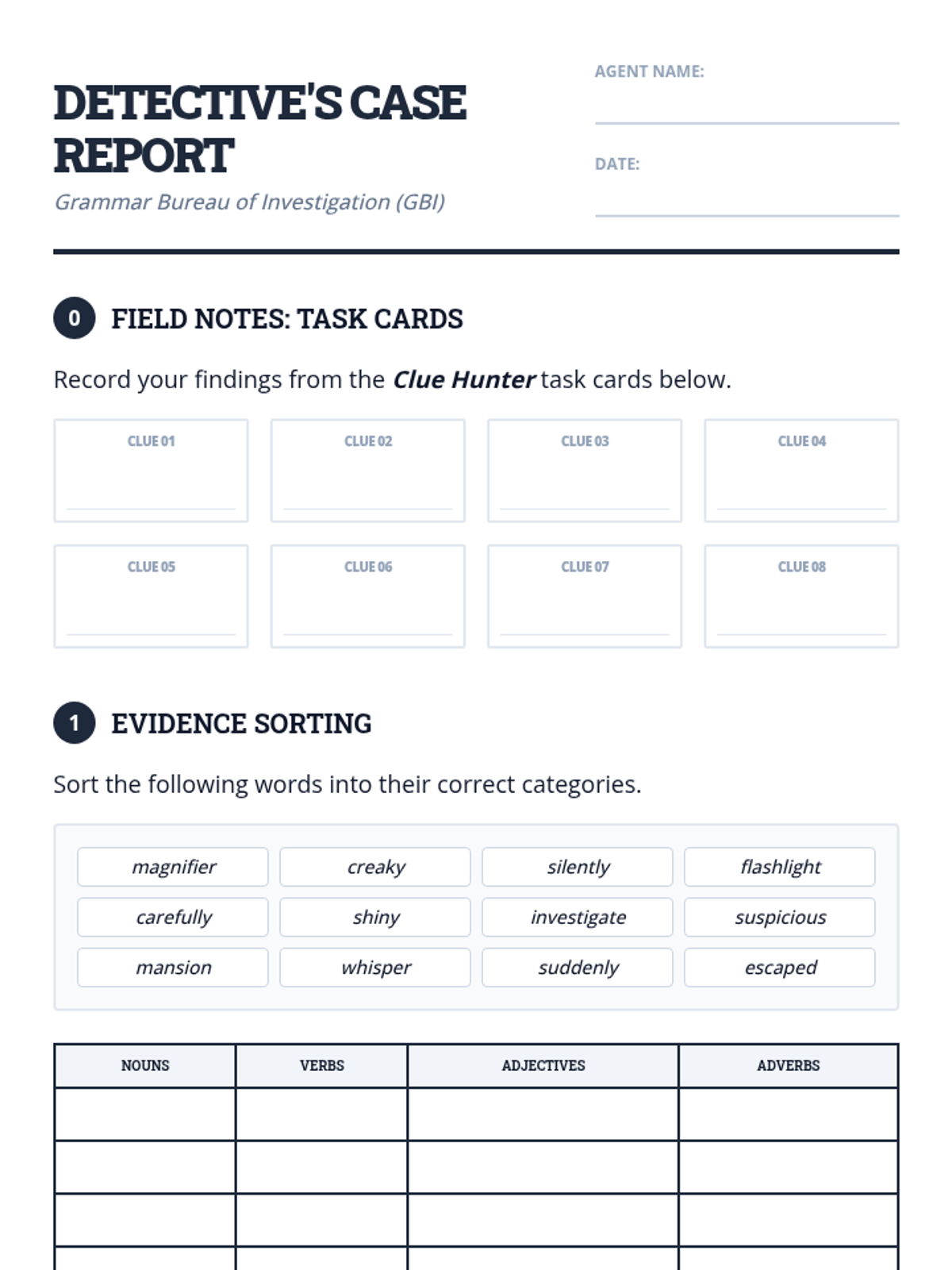
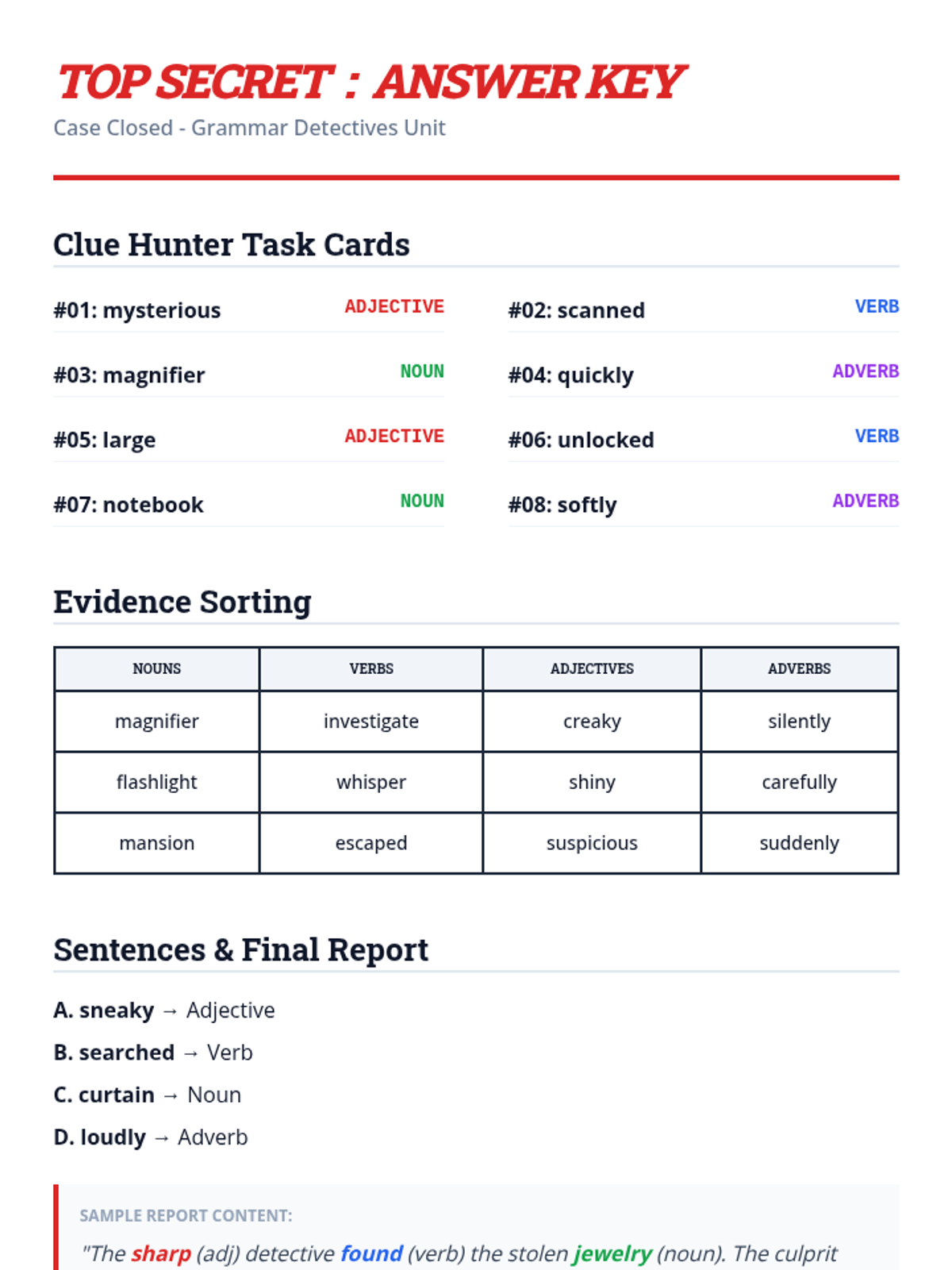
A grammar review lesson for 3rd grade students where they act as detectives to identify and categorize nouns, verbs, adjectives, and adverbs within a mystery-themed context.
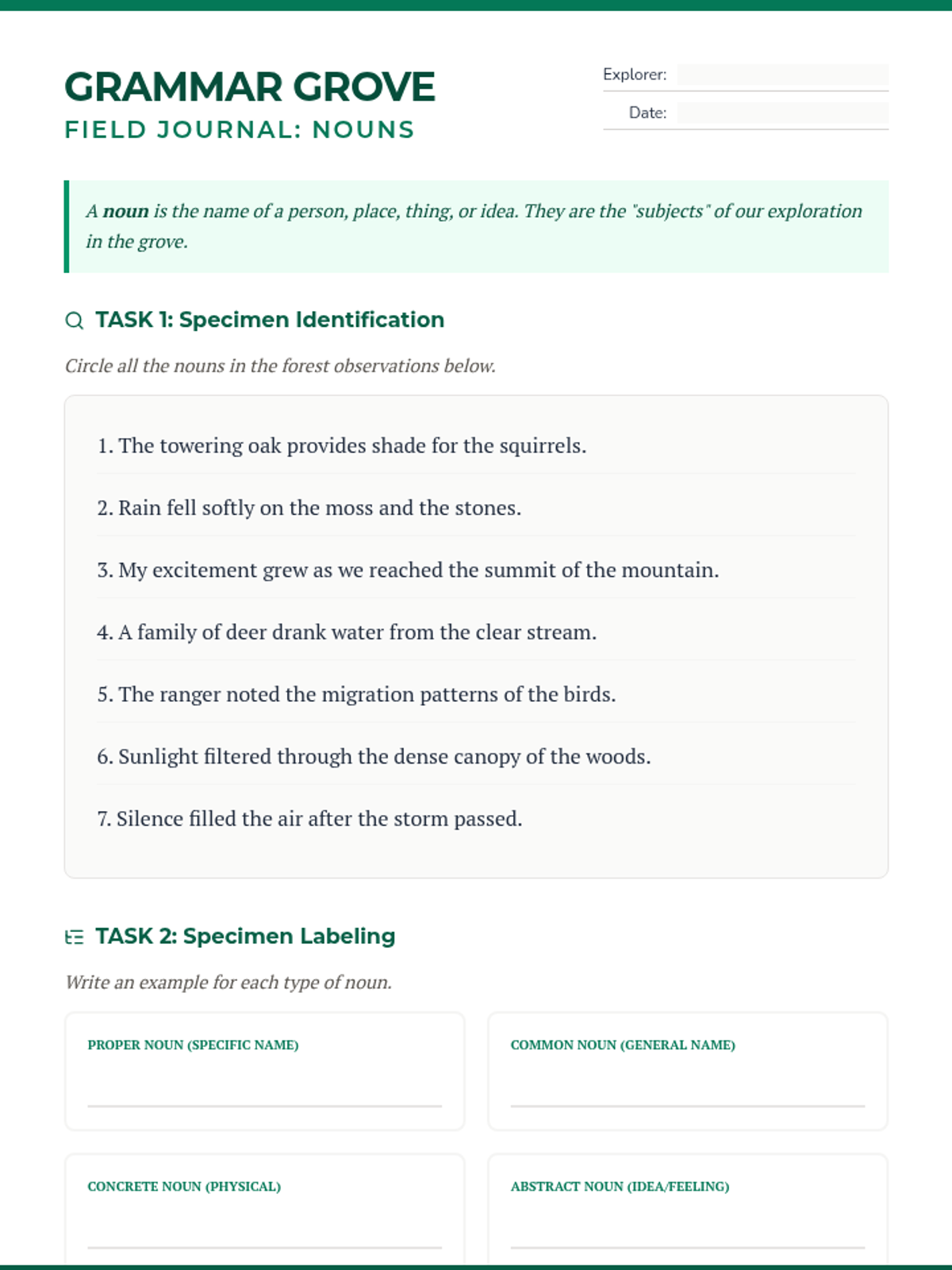
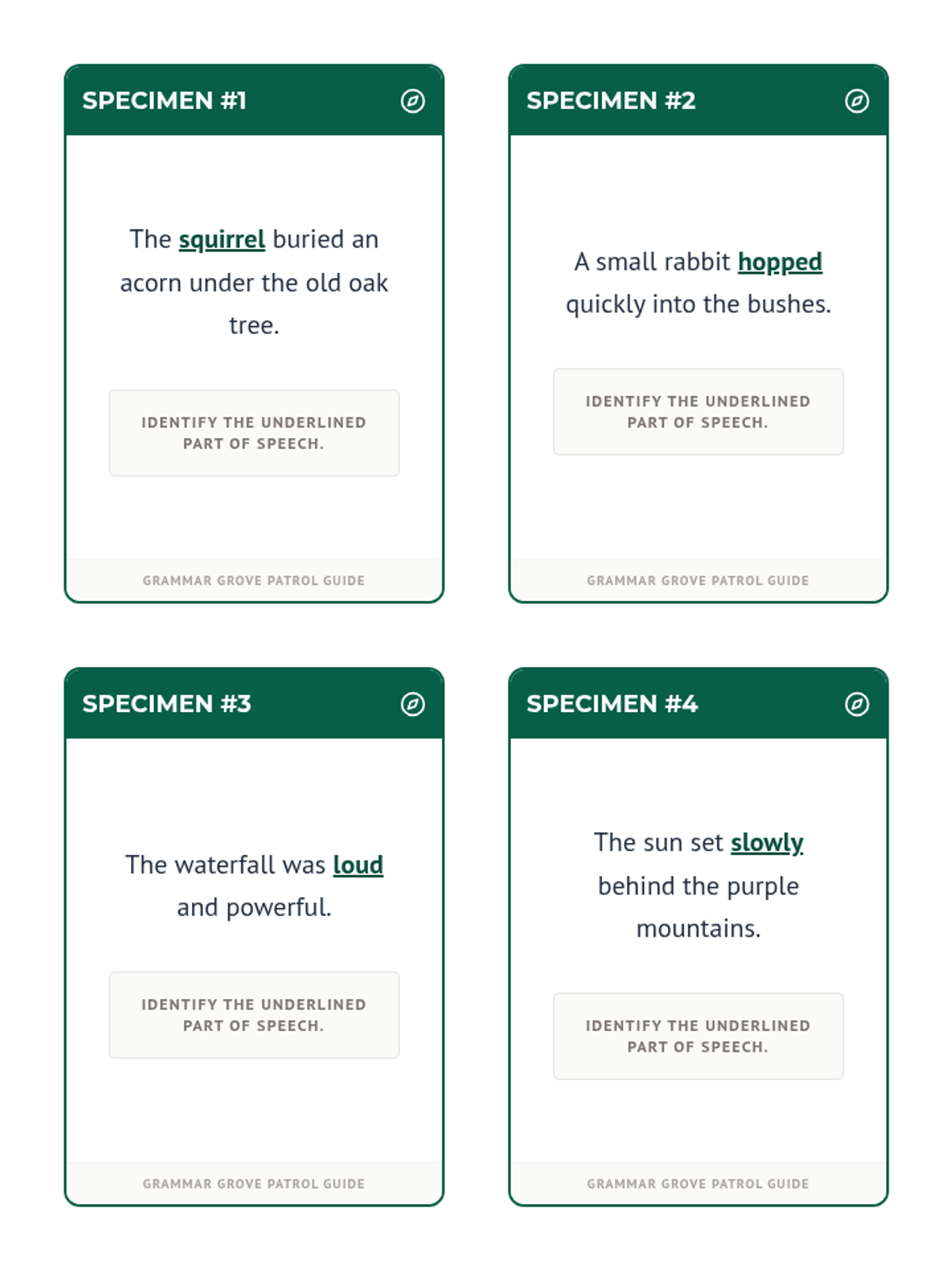
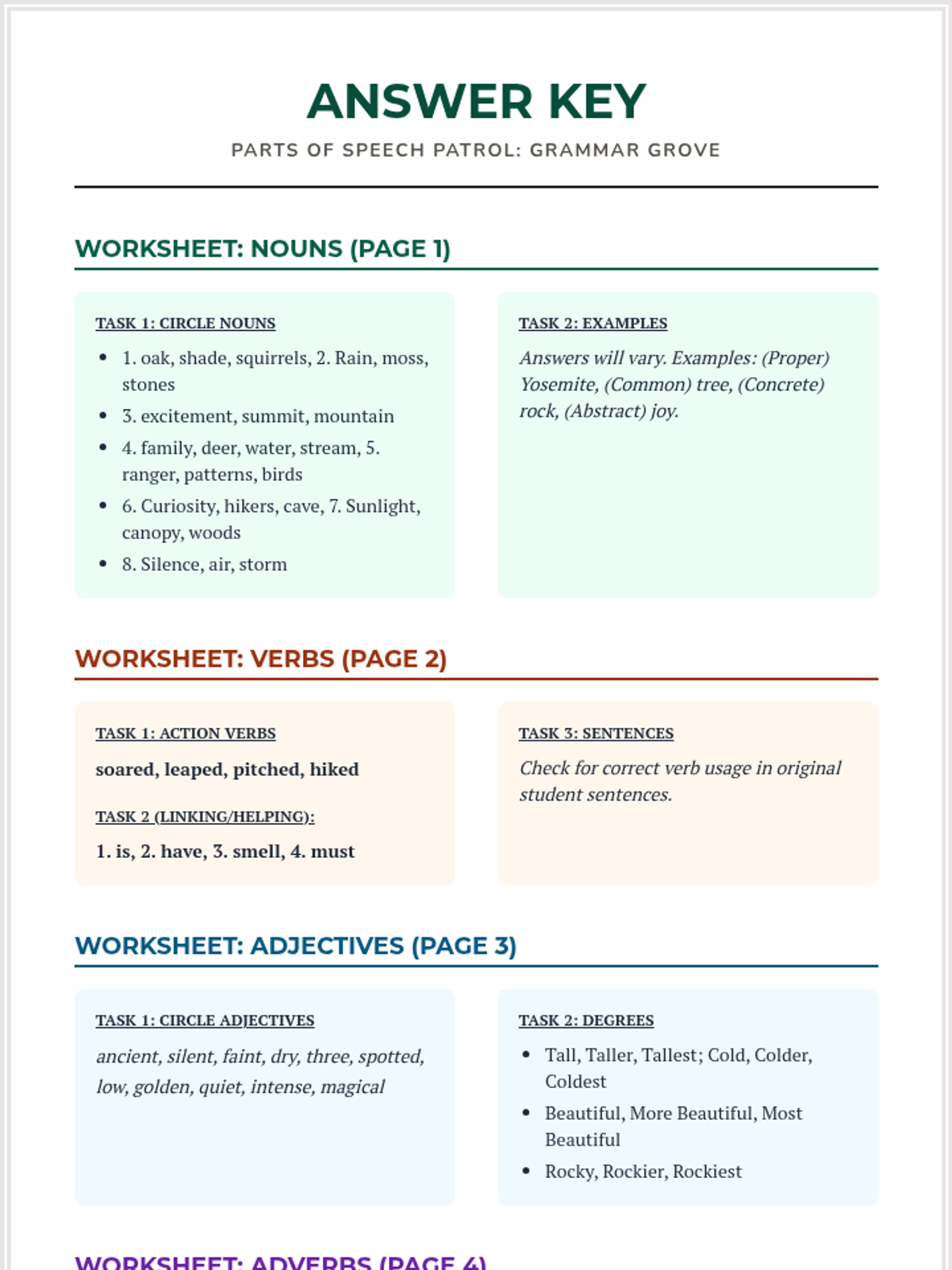
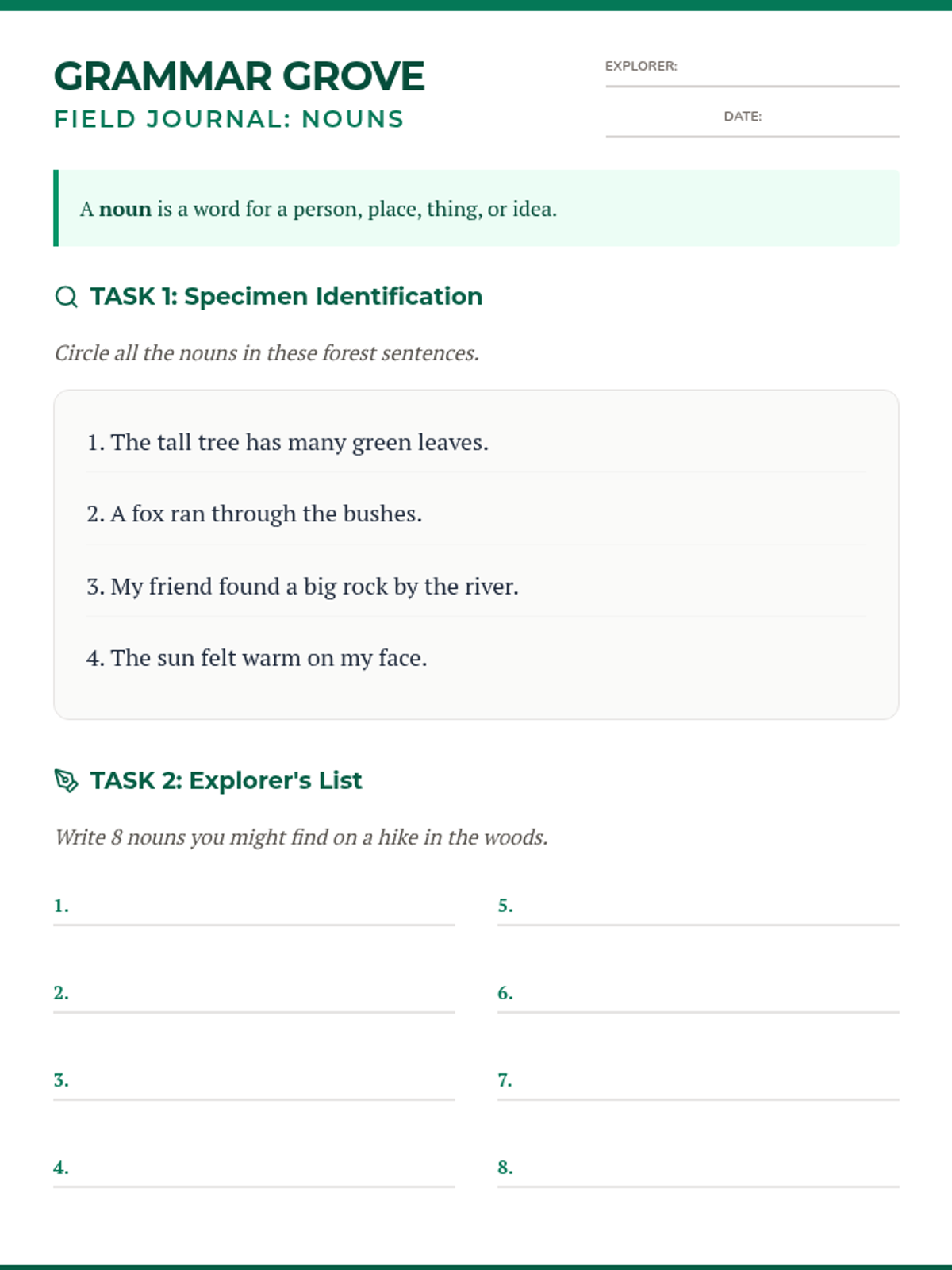
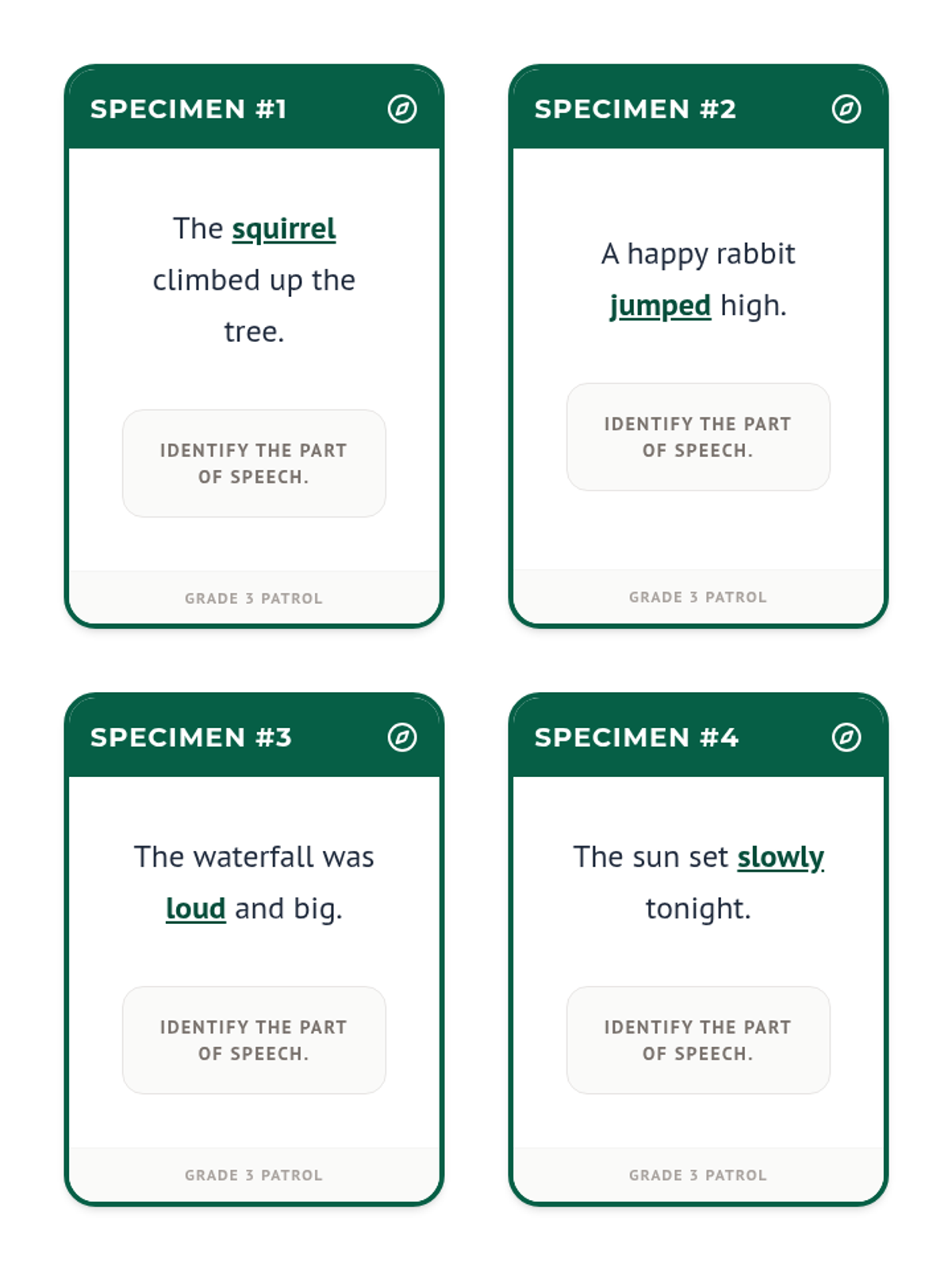
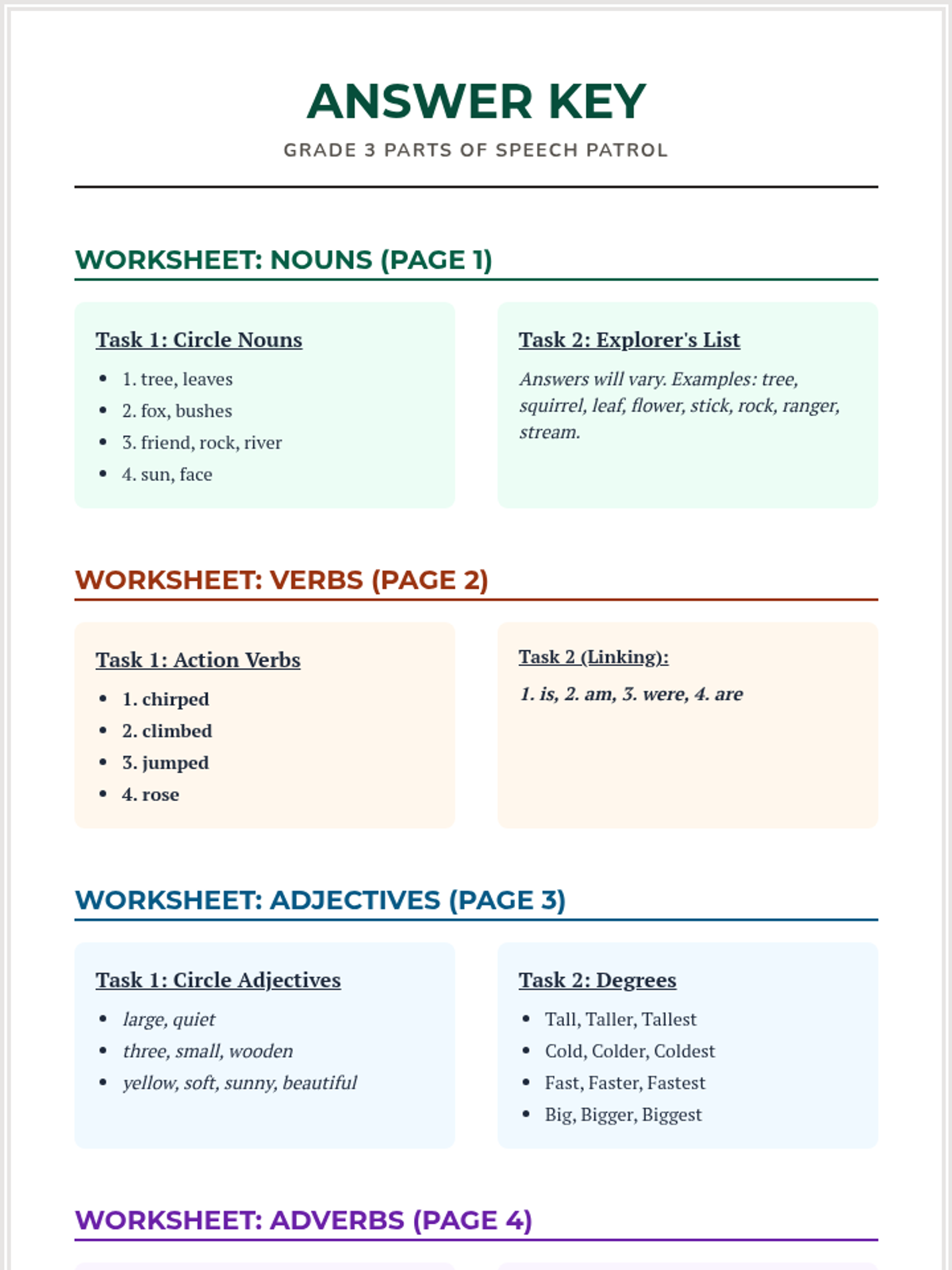
A comprehensive review of nouns, verbs, adjectives, and adverbs using a field guide theme to help students identify and master these four essential parts of speech.
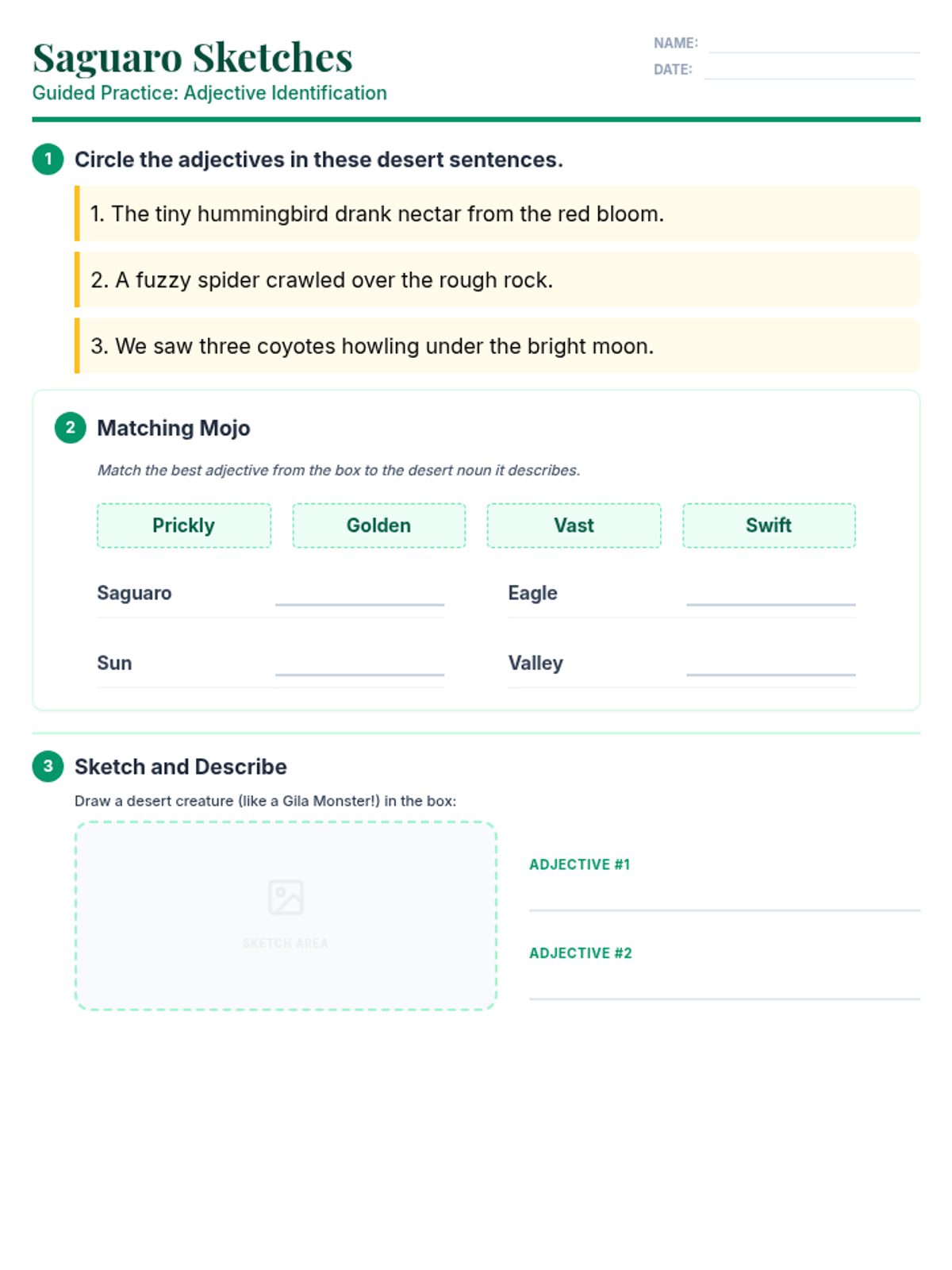
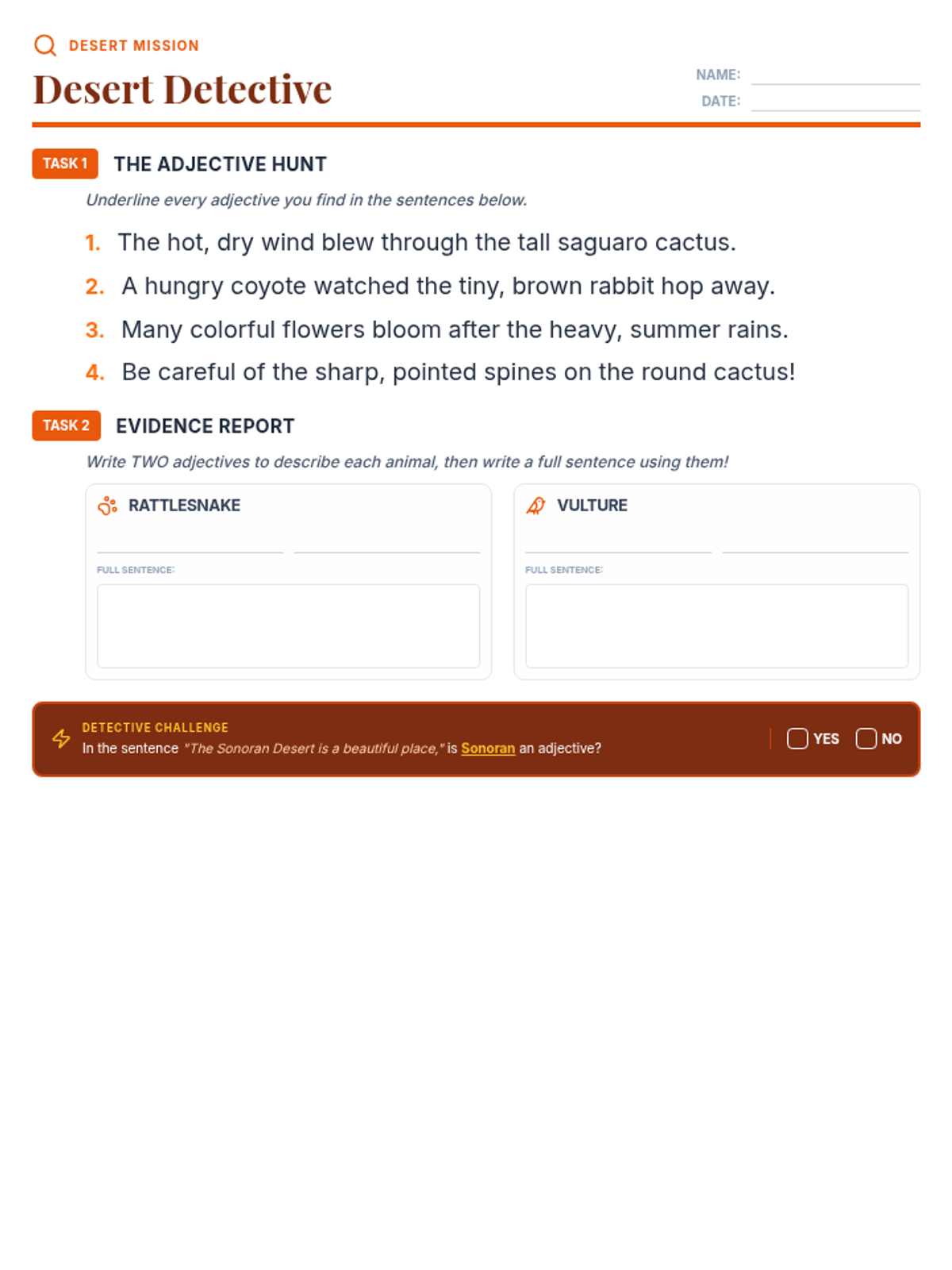
A 4th-grade lesson on identifying adjectives using the vibrant flora and fauna of the Sonoran Desert as a backdrop. Students will learn to use describing words to bring desert scenes to life.
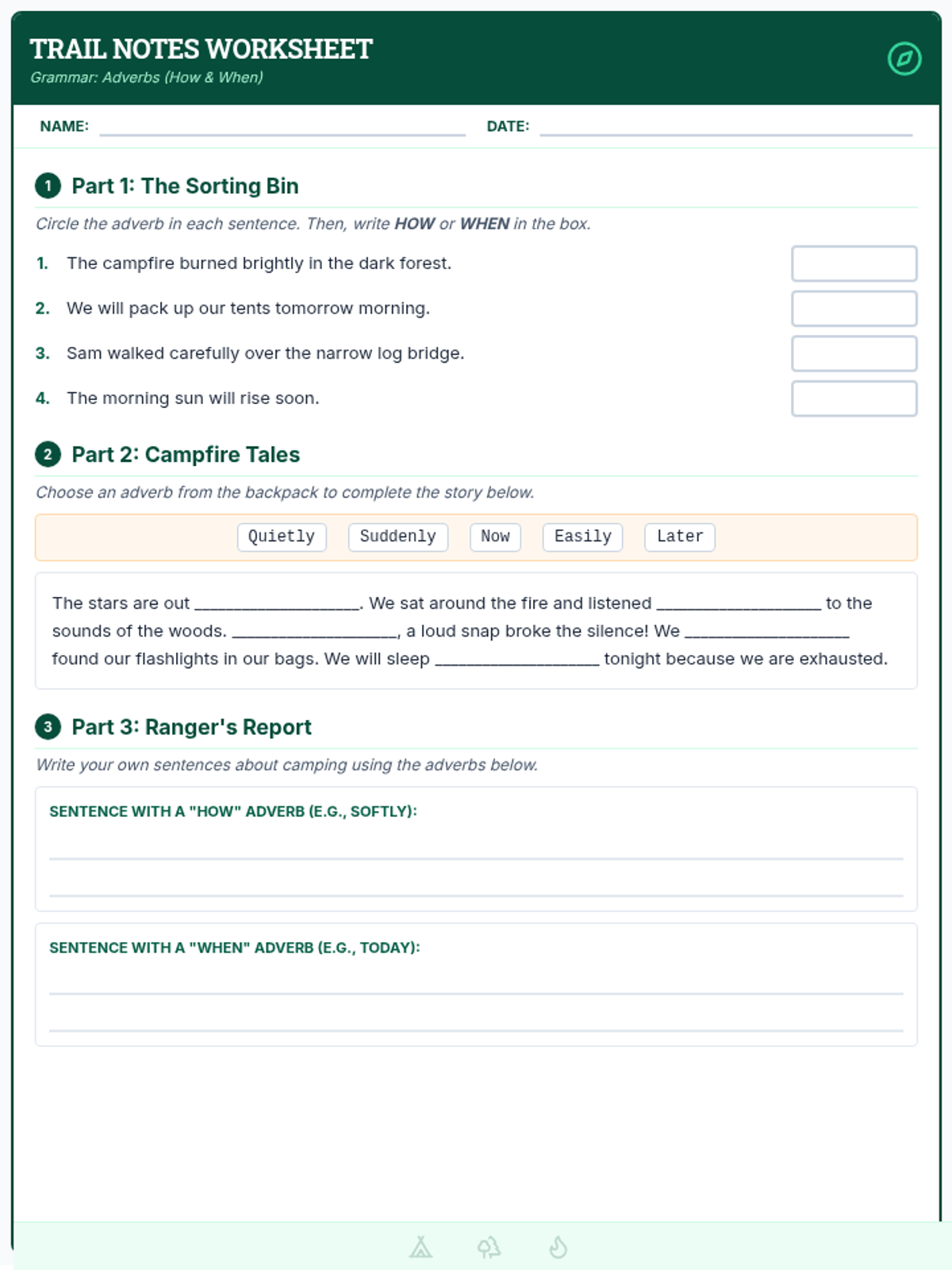
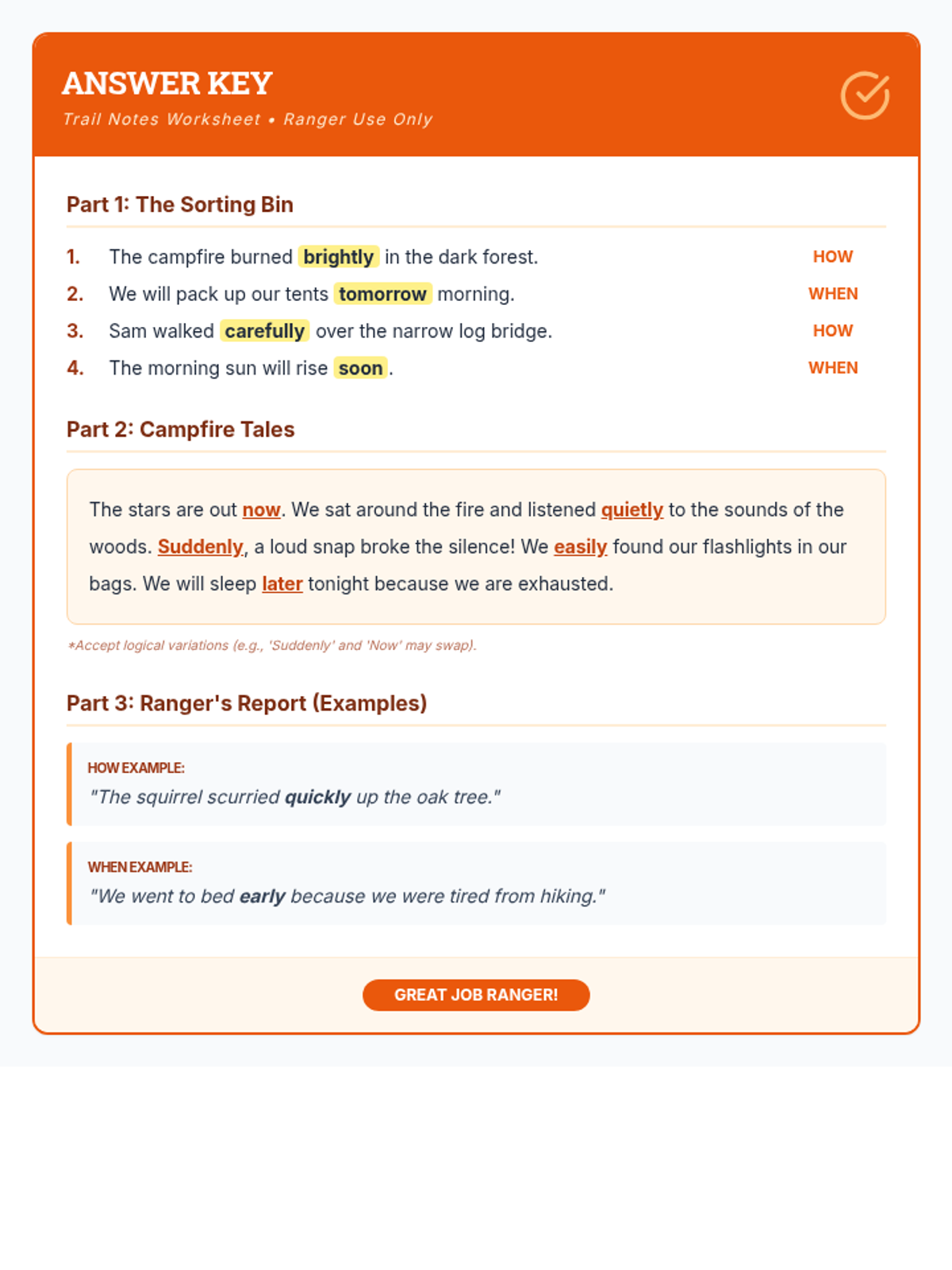
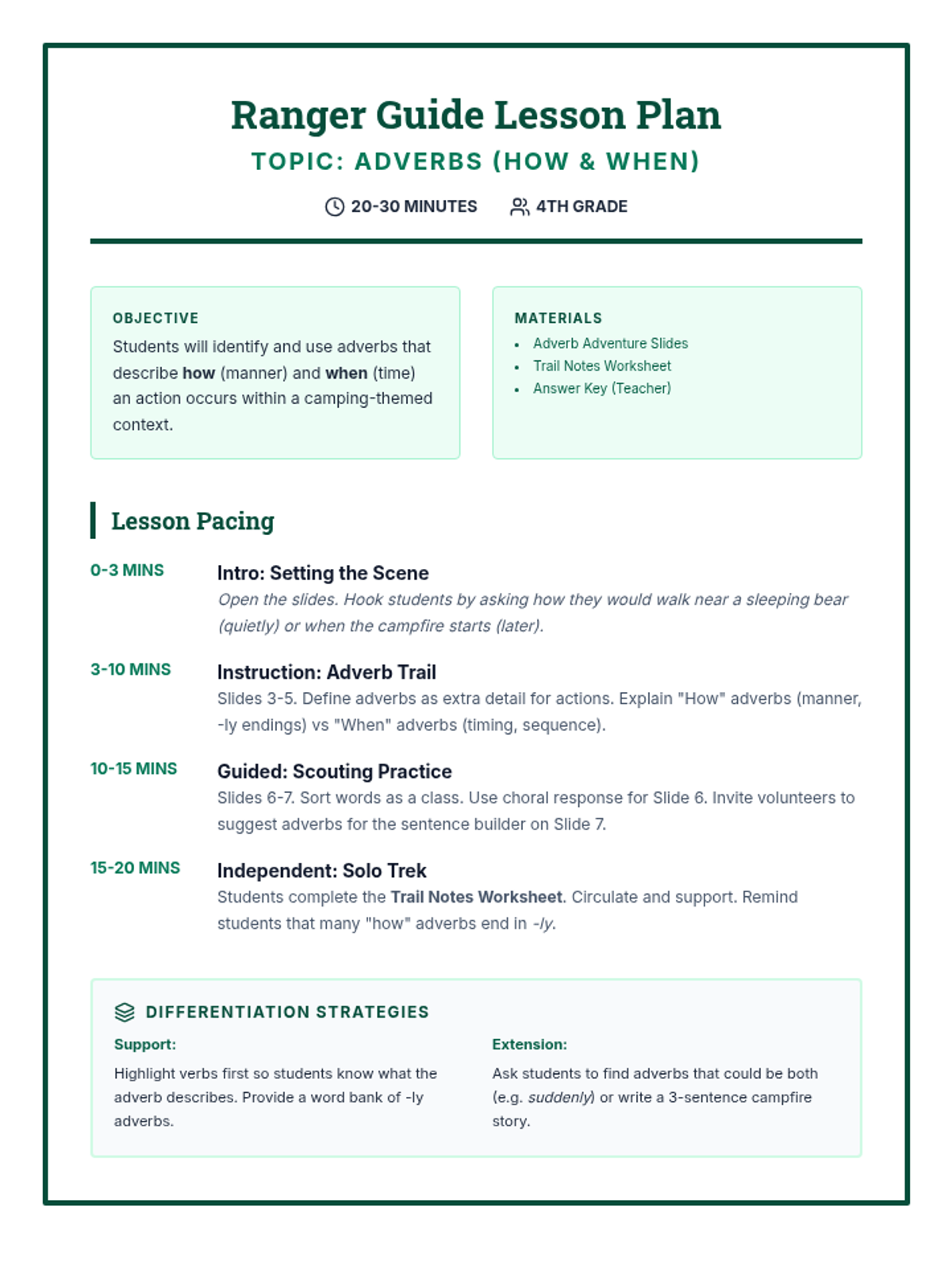
A 20-minute introductory lesson on 'how' and 'when' adverbs, set against a fun camping backdrop where students identify and use adverbs to describe their outdoor adventures.
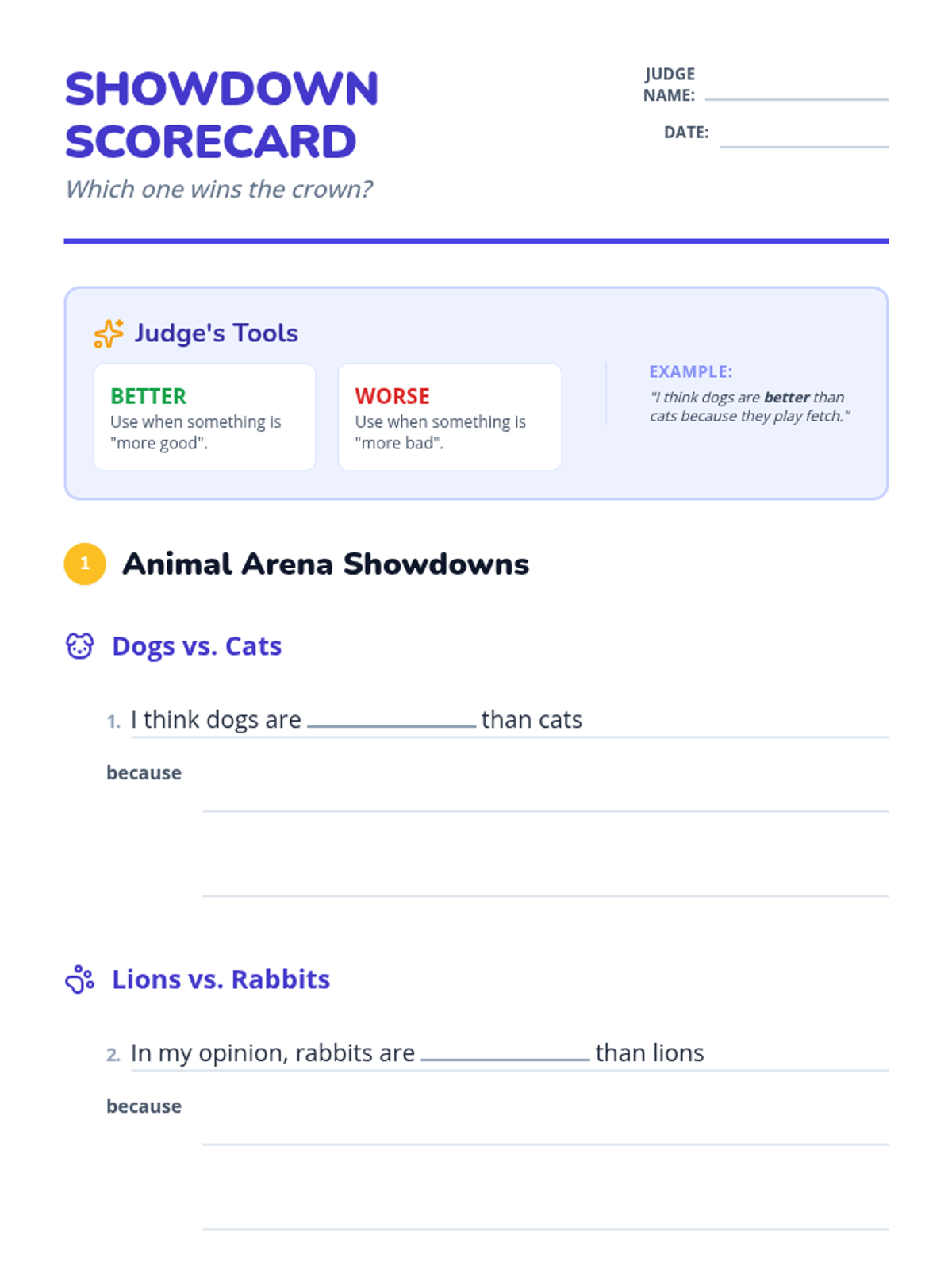
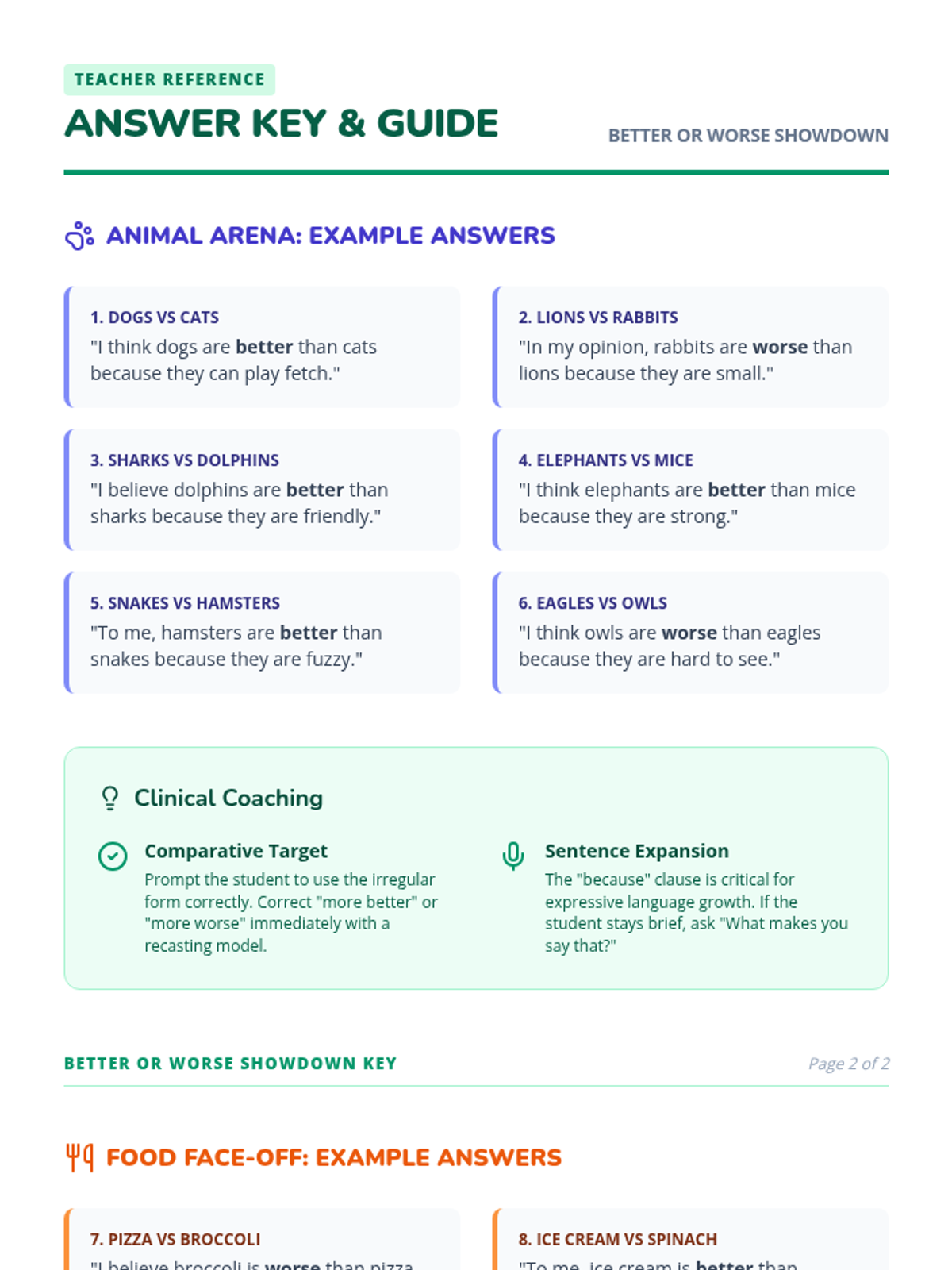
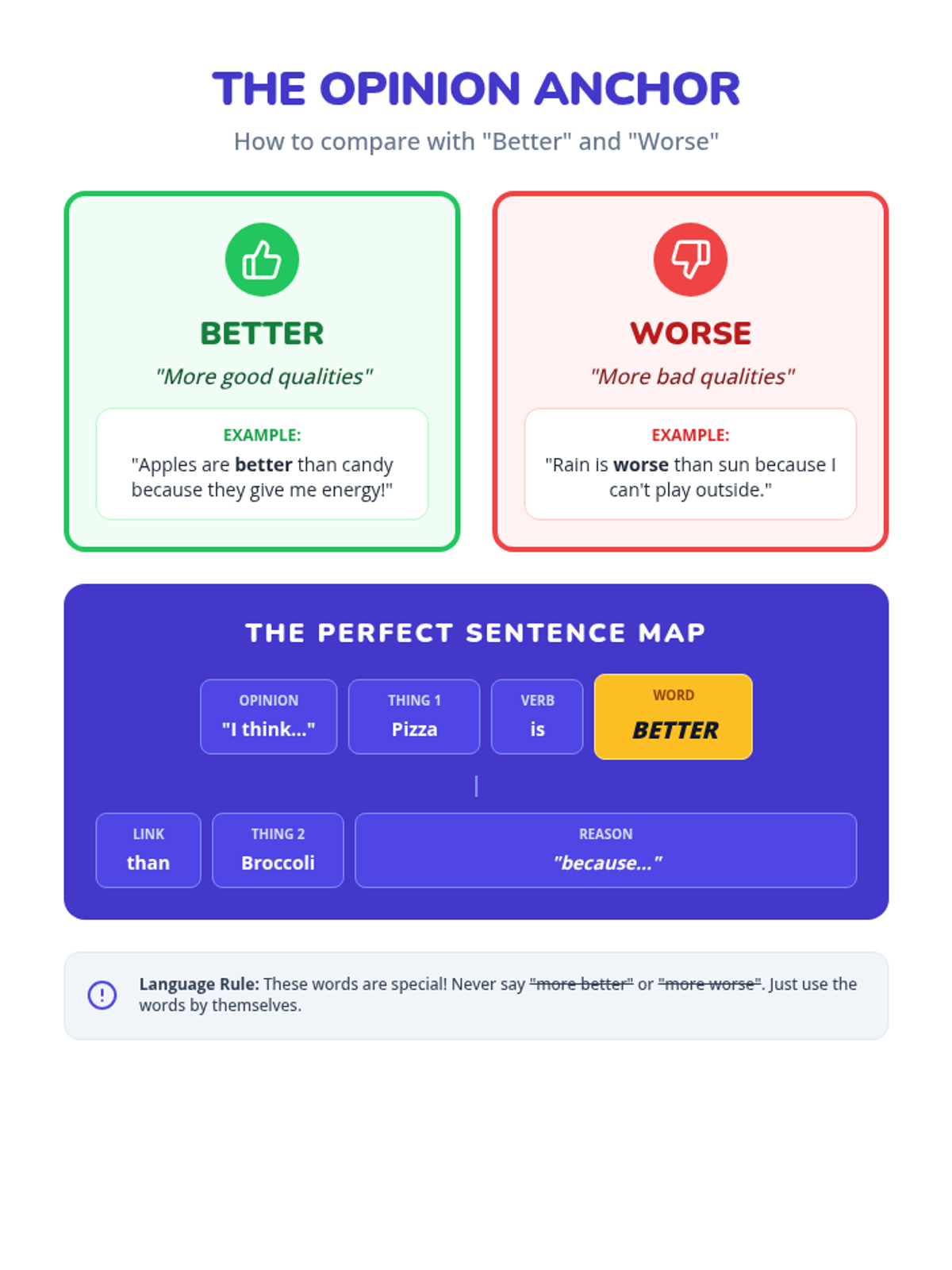
A language therapy lesson focused on using the comparative adjectives 'better' and 'worse' to express opinions about animals and food through structured sentence frames.
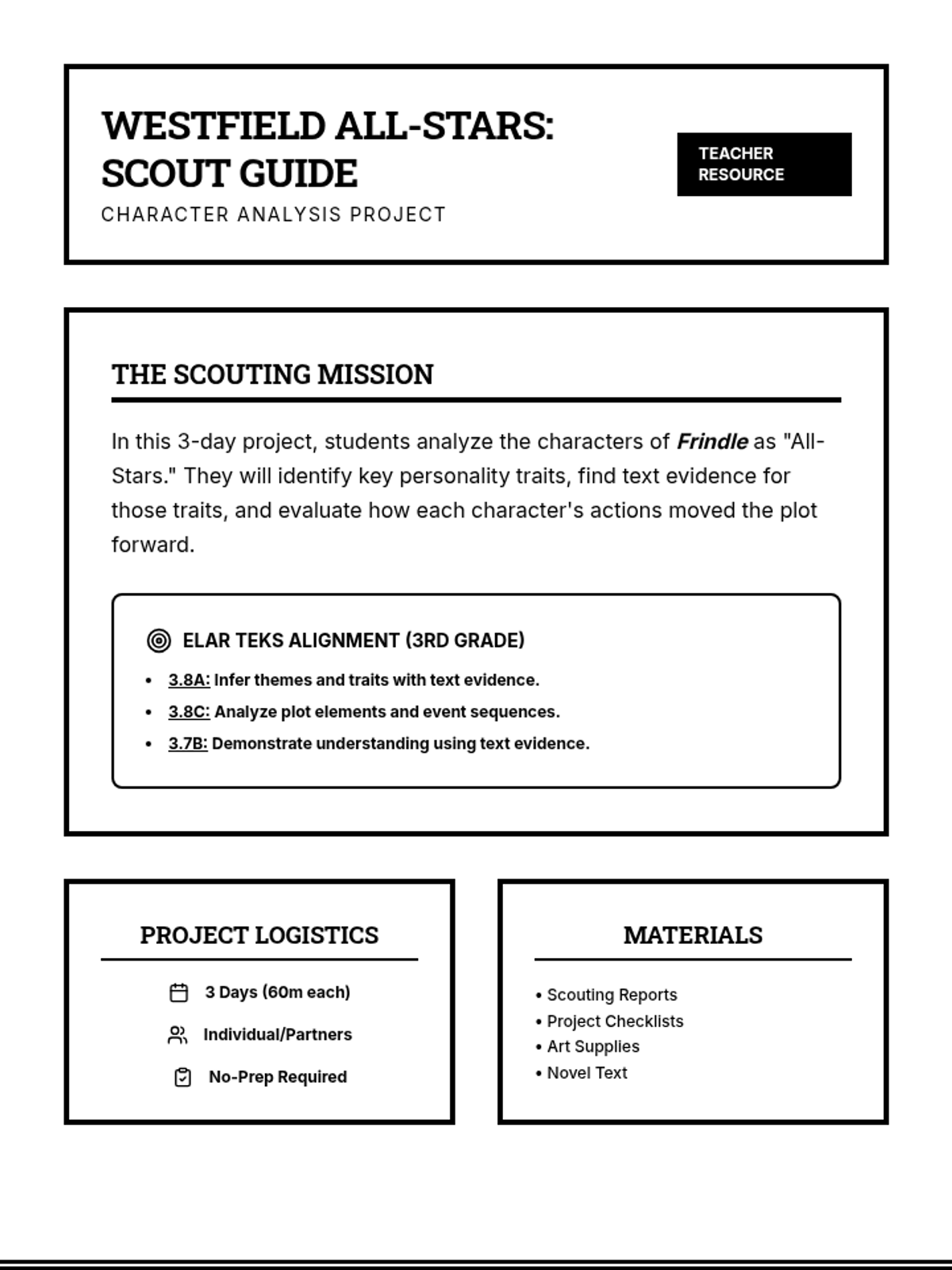
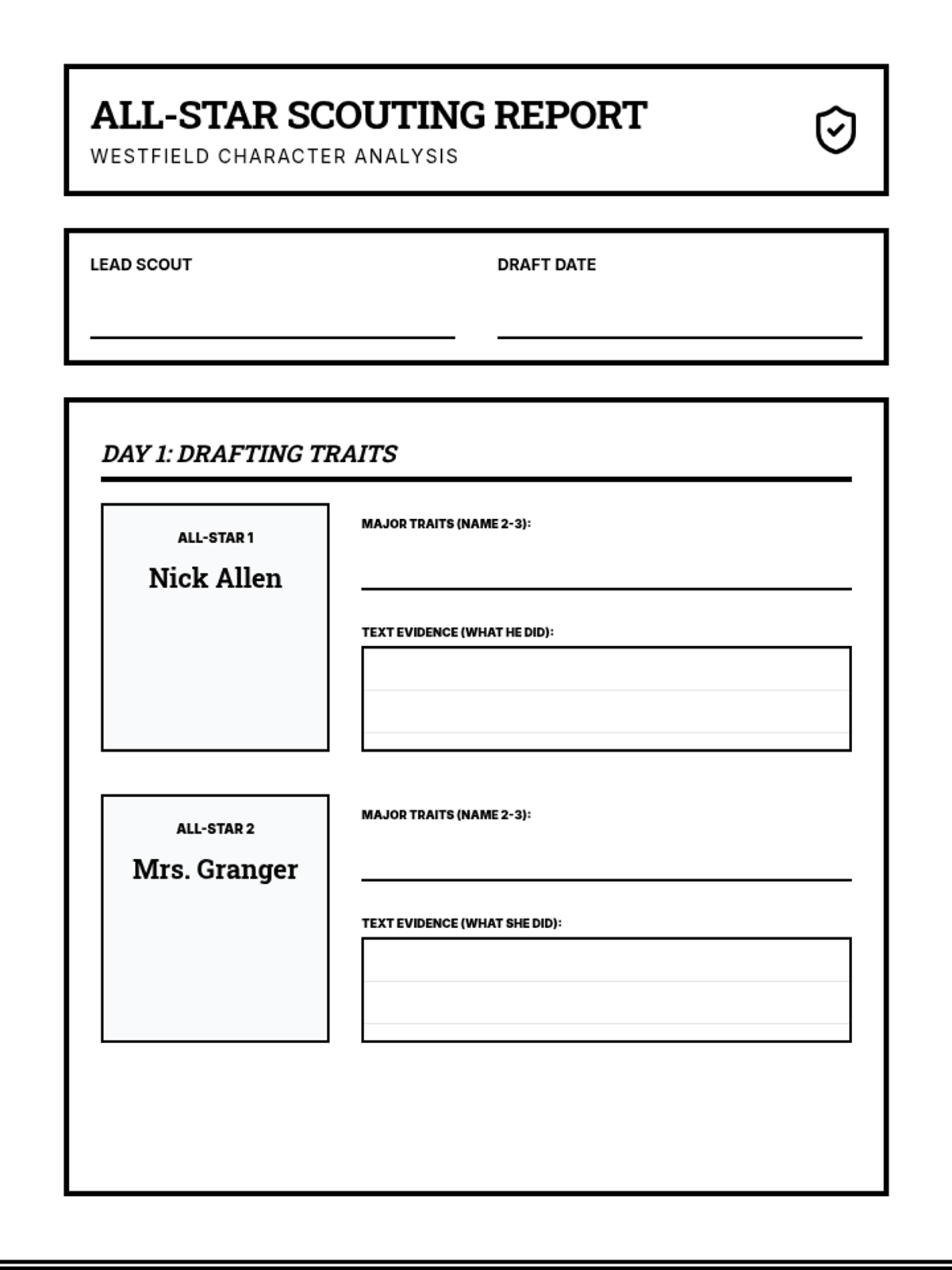
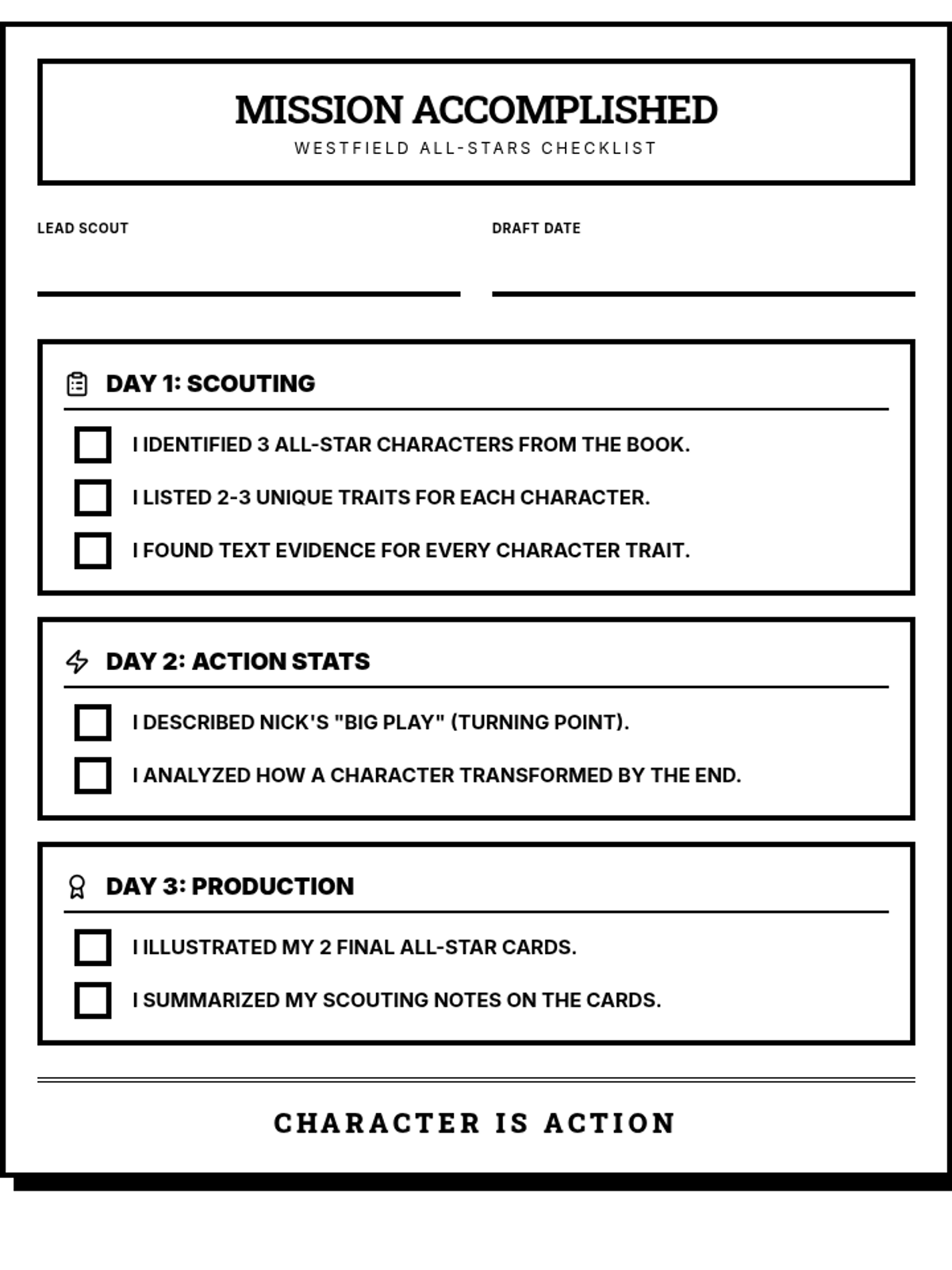
A 3-day post-reading project where students analyze character traits (3.8A) and plot influence (3.8C) by creating a collection of 'Westfield All-Star' character trading cards.
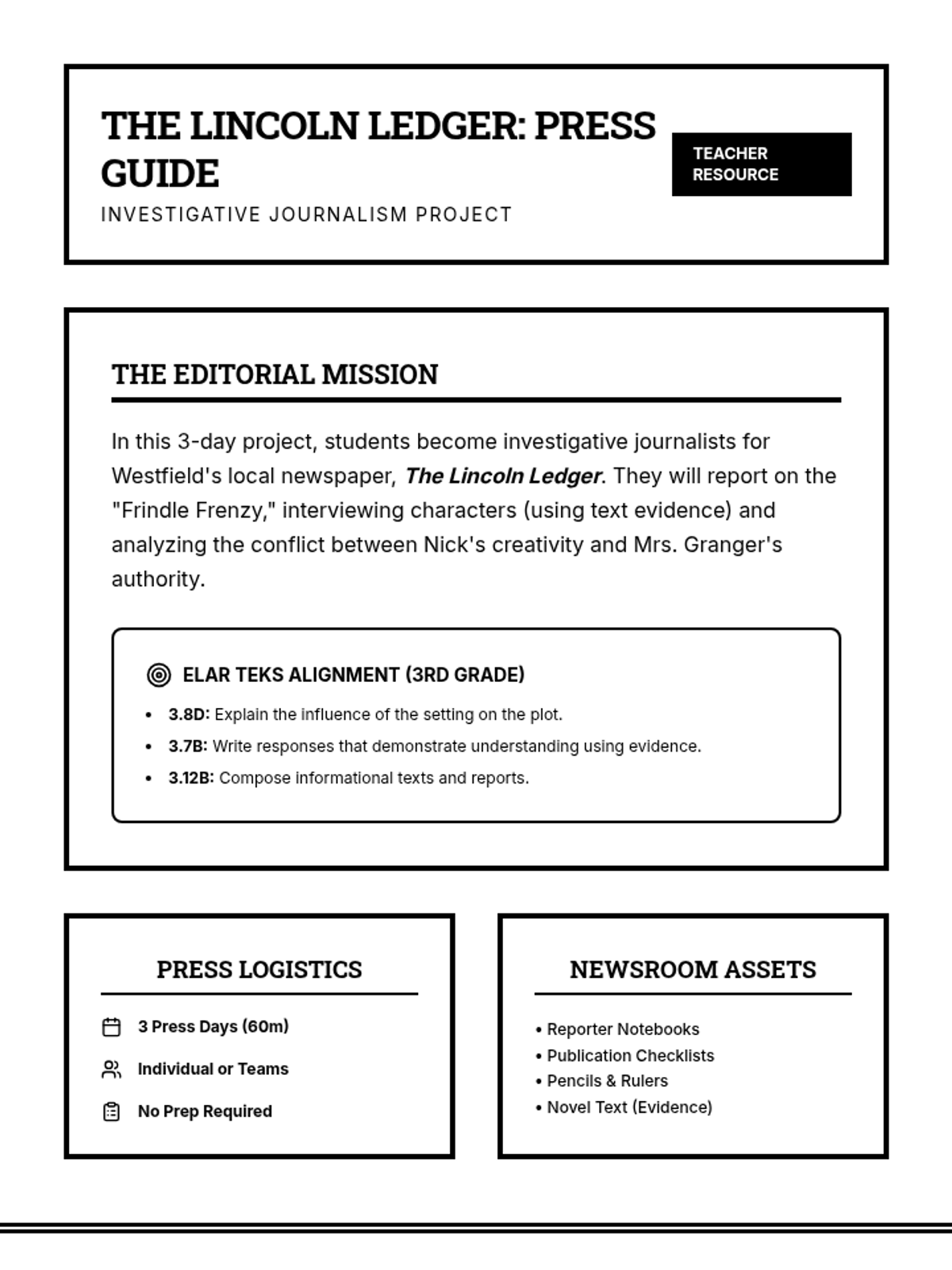
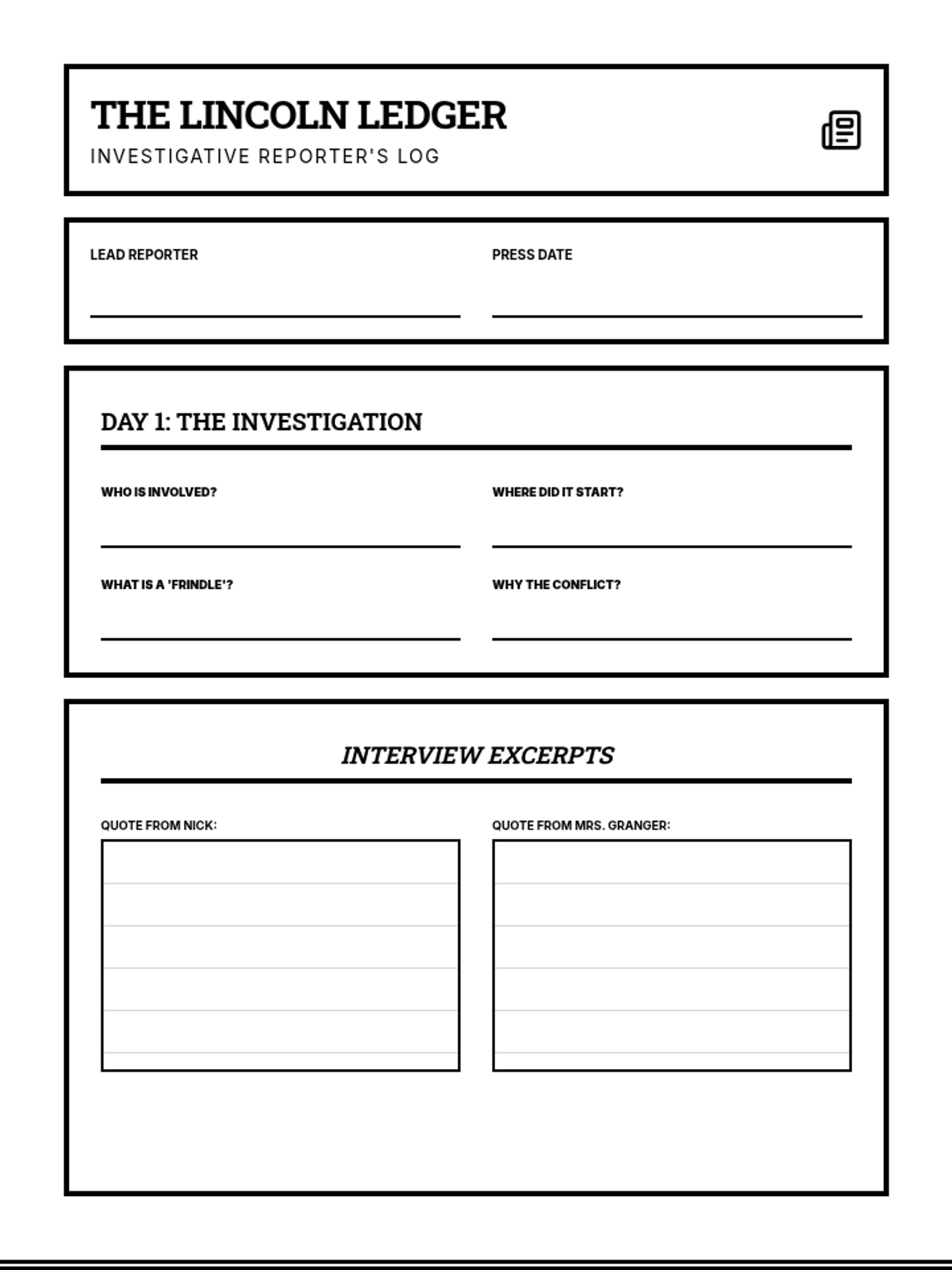
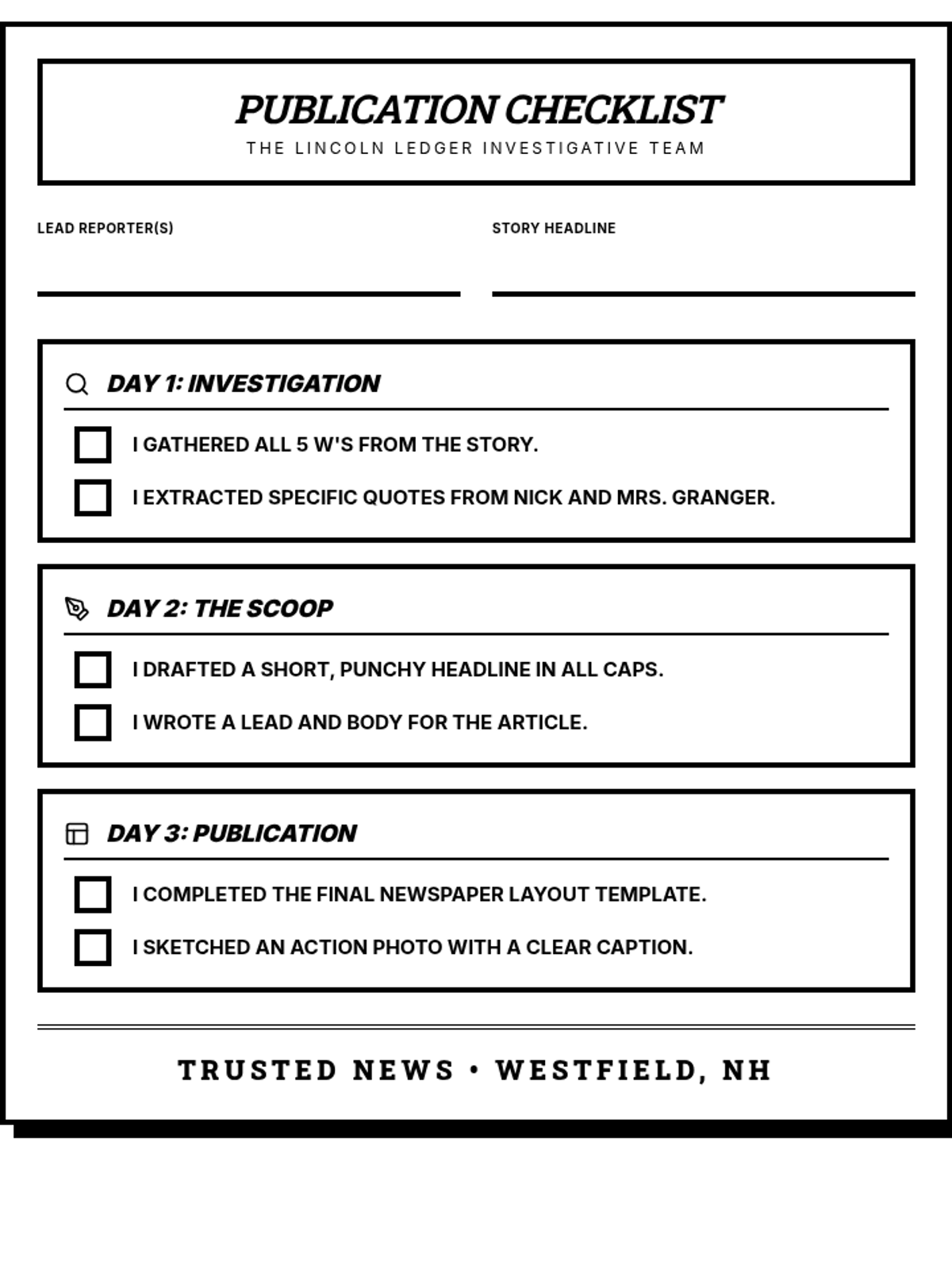
A 3-day post-reading project where students become investigative journalists for 'The Lincoln Ledger,' covering the national sensation of the word 'frindle' and the 'war' between Nick and Mrs. Granger.
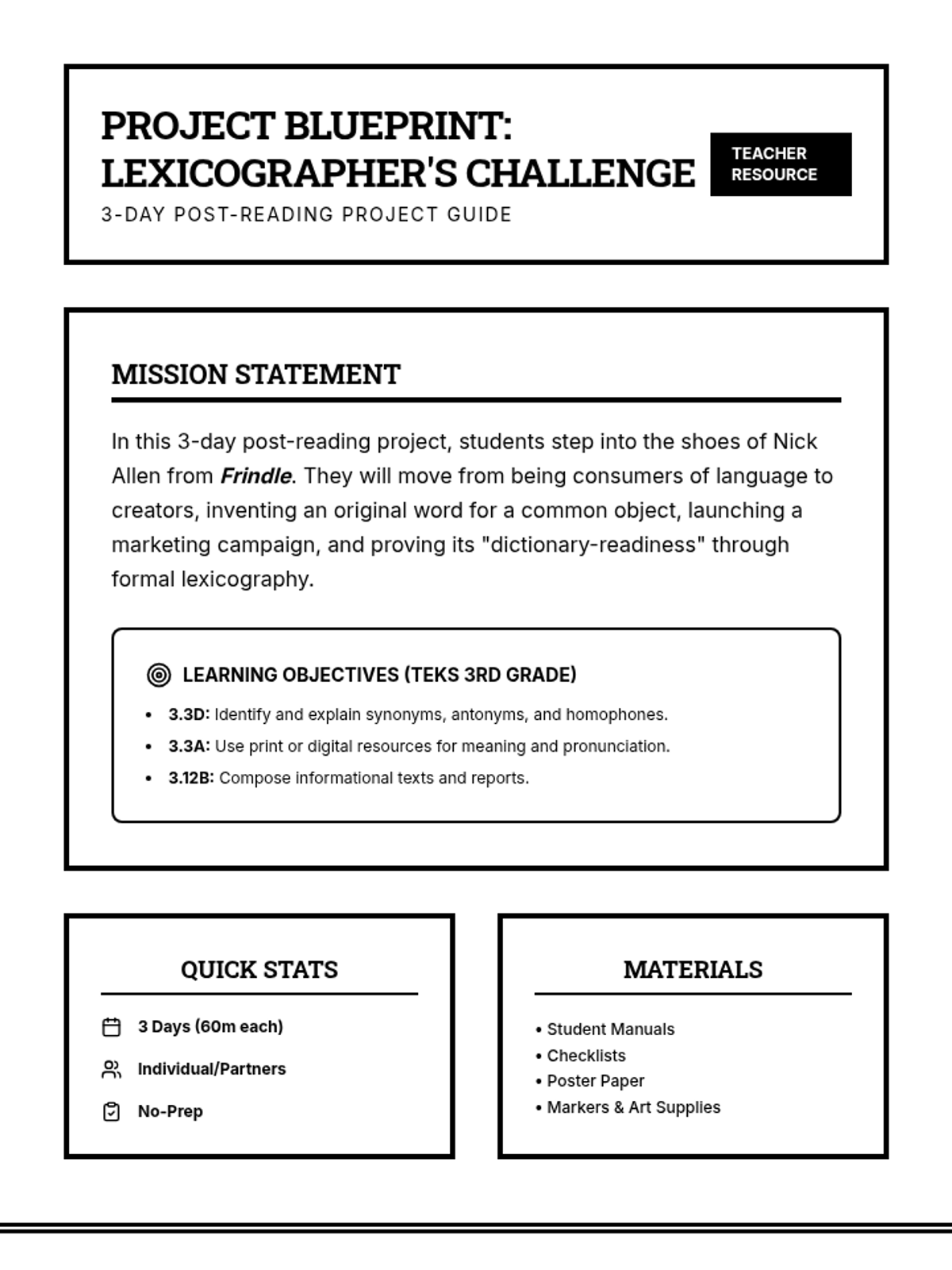
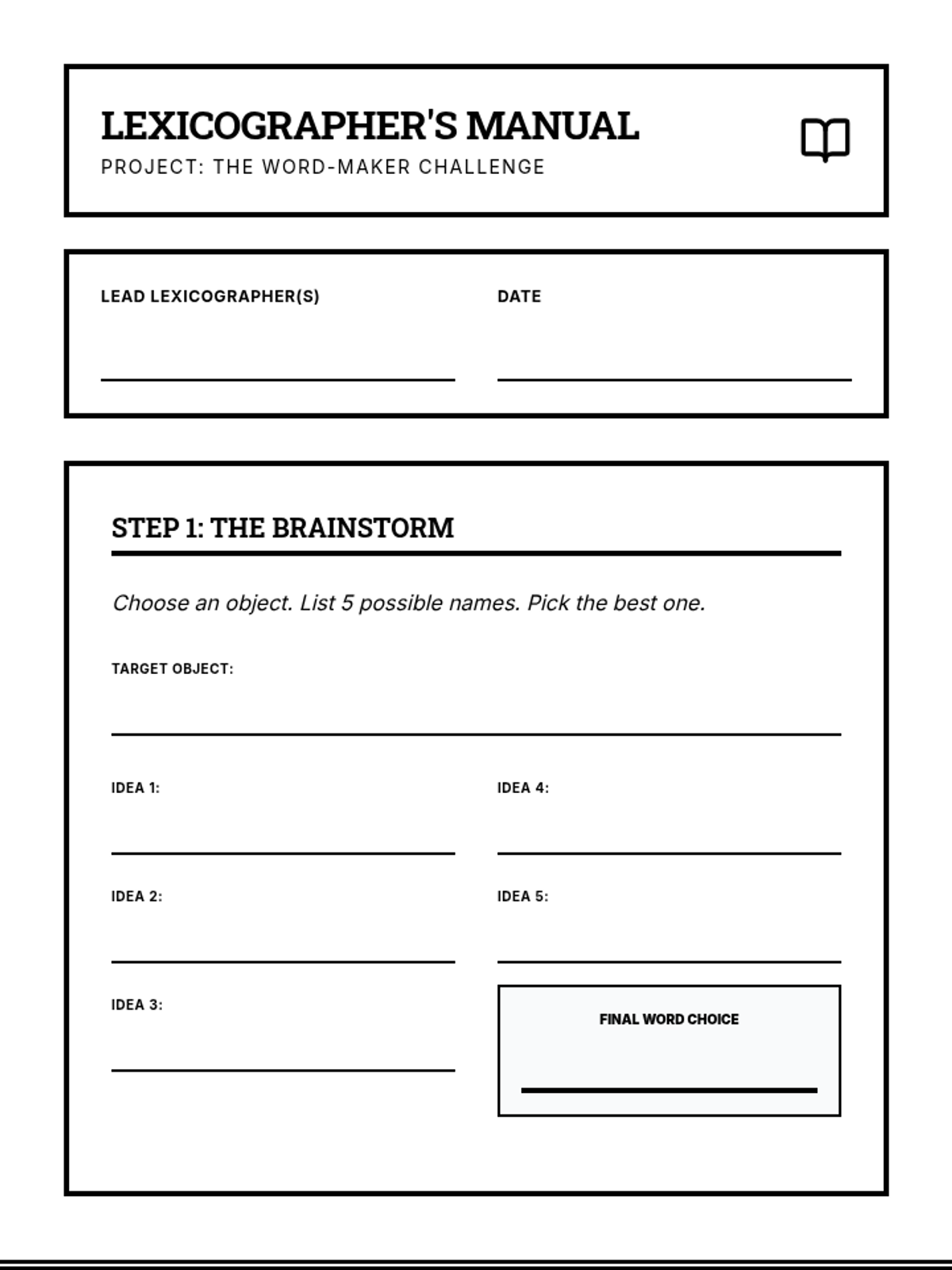
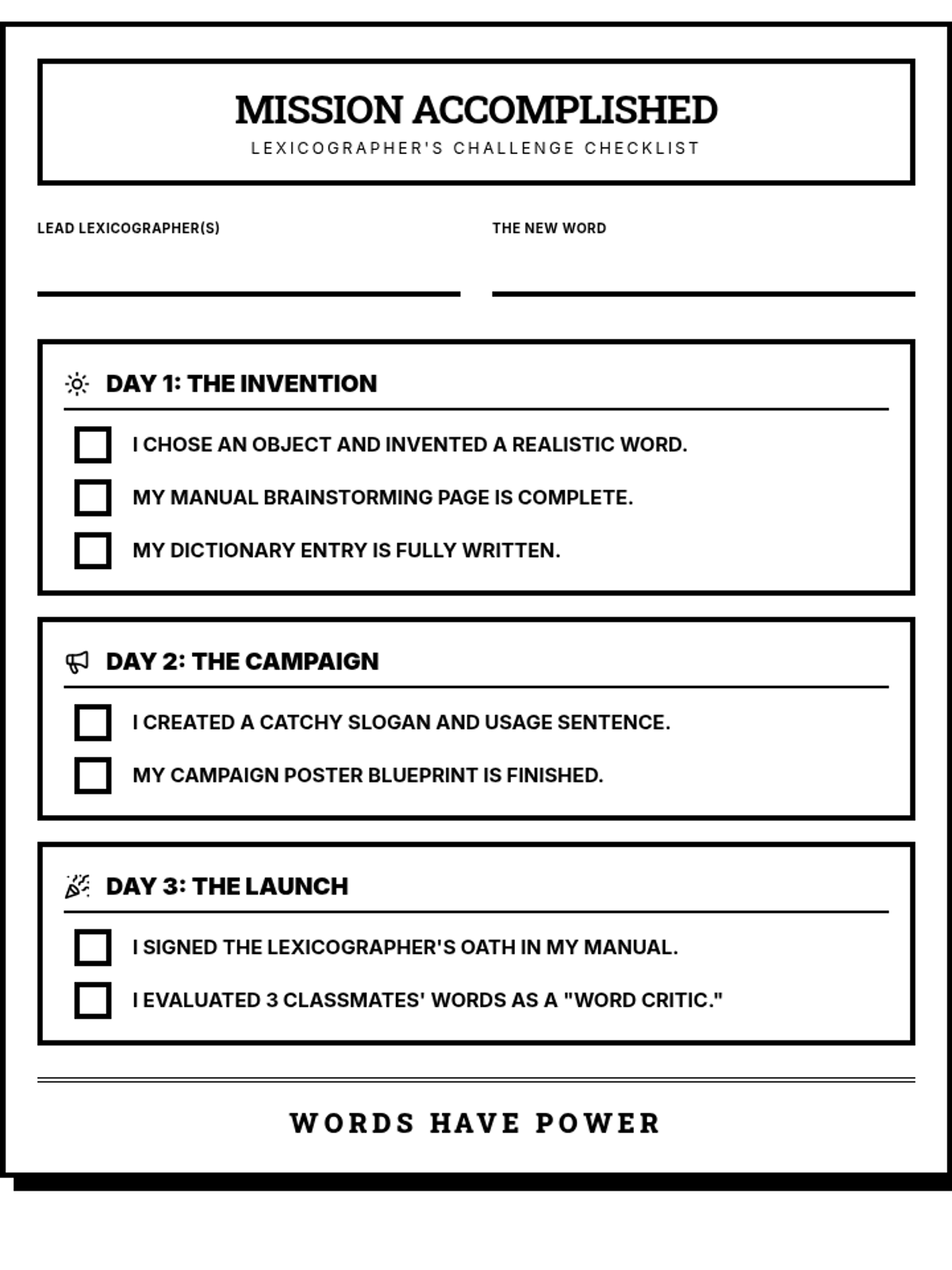
A 3-day post-reading project where students follow in Nick Allen's footsteps to invent their own word, create a marketing campaign, and document its 'dictionary-readiness'.
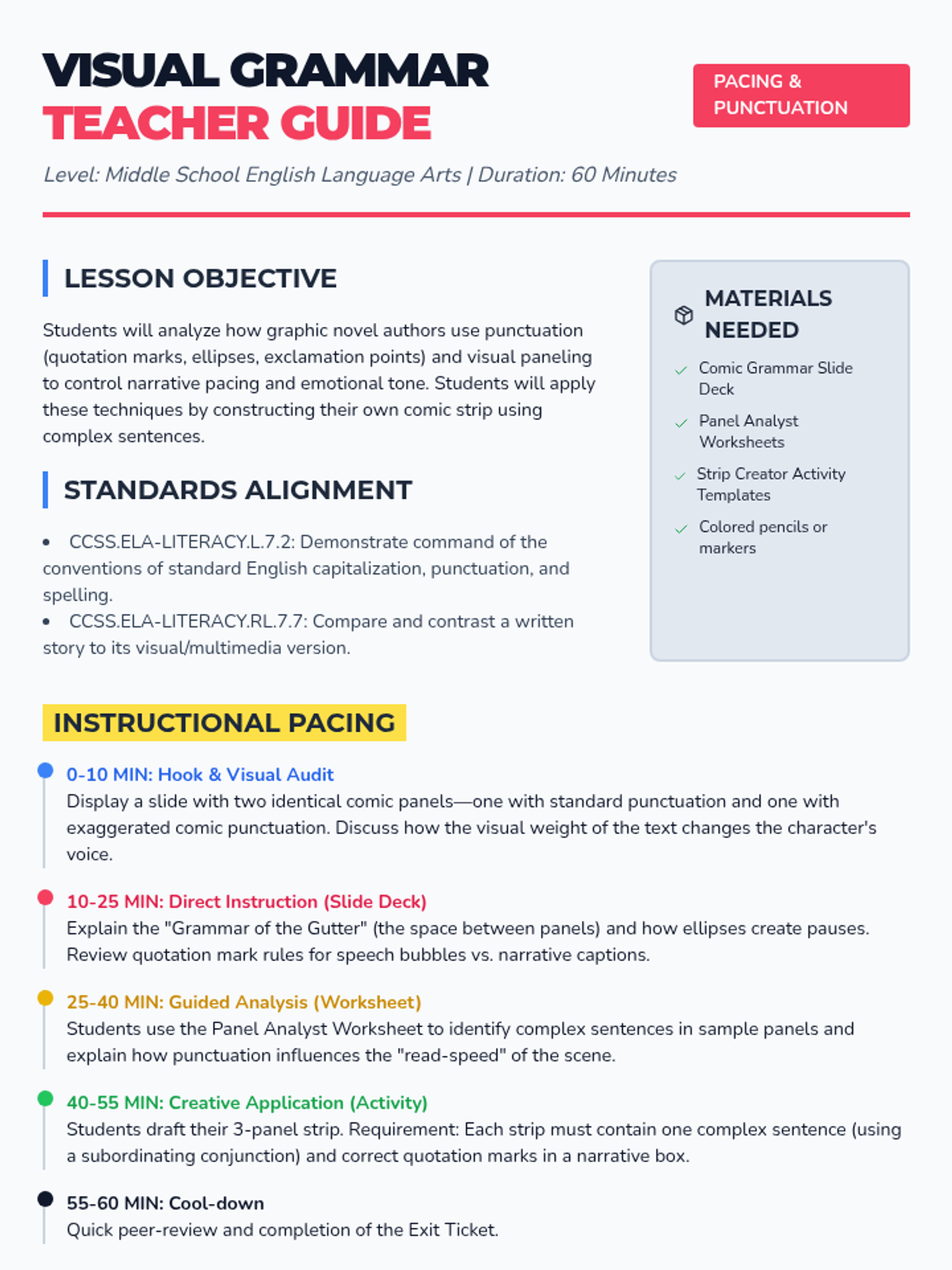
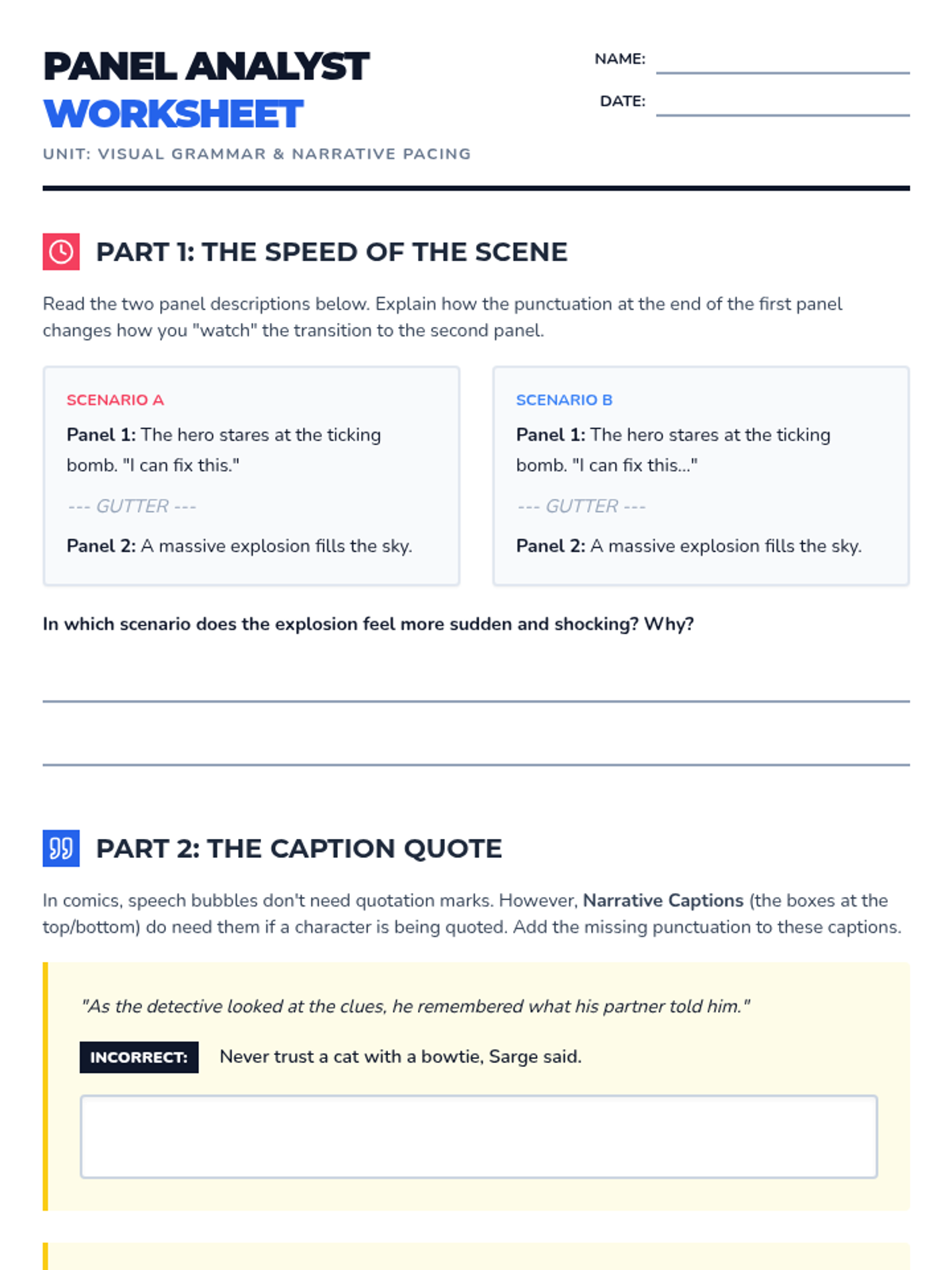
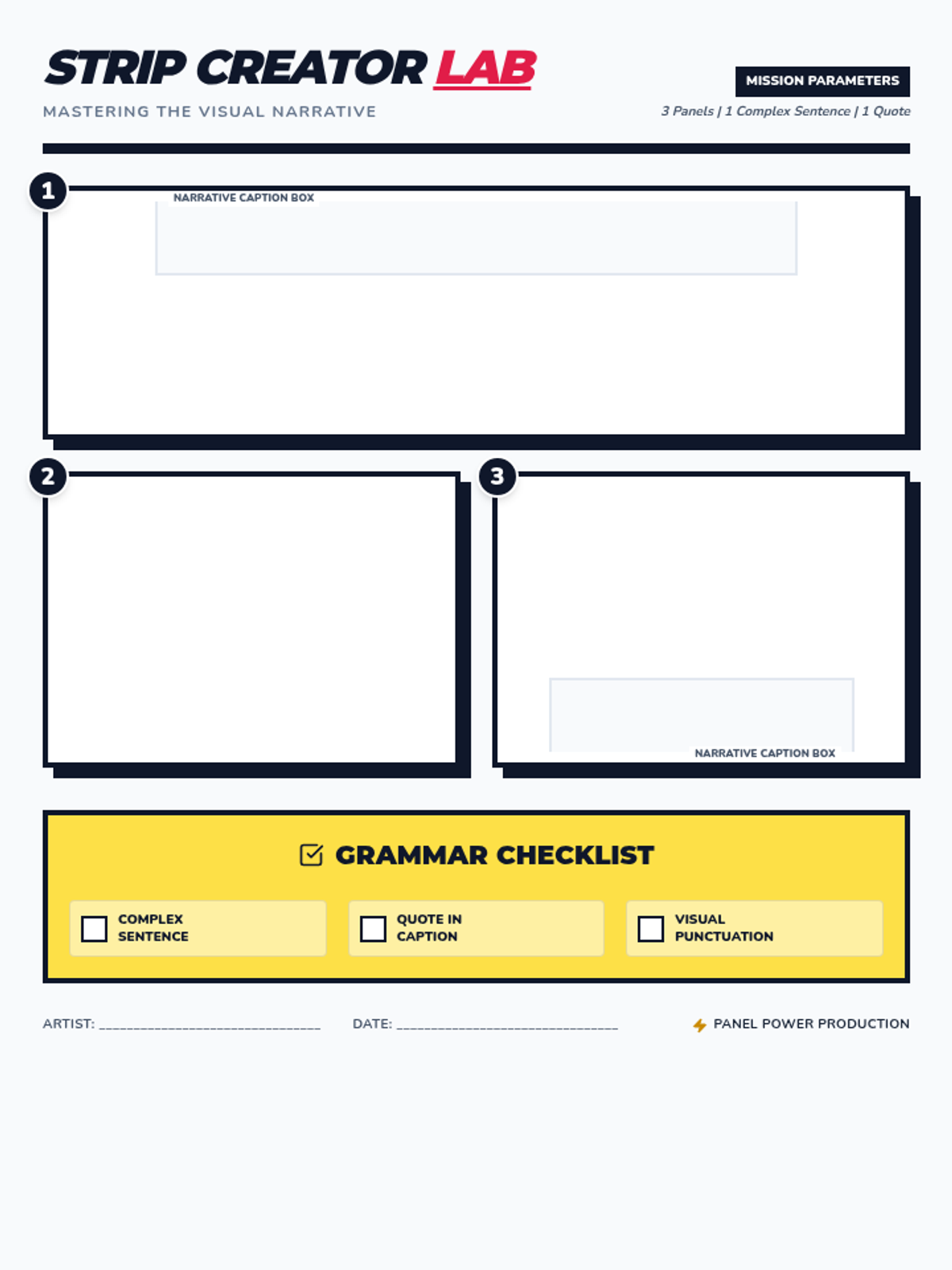
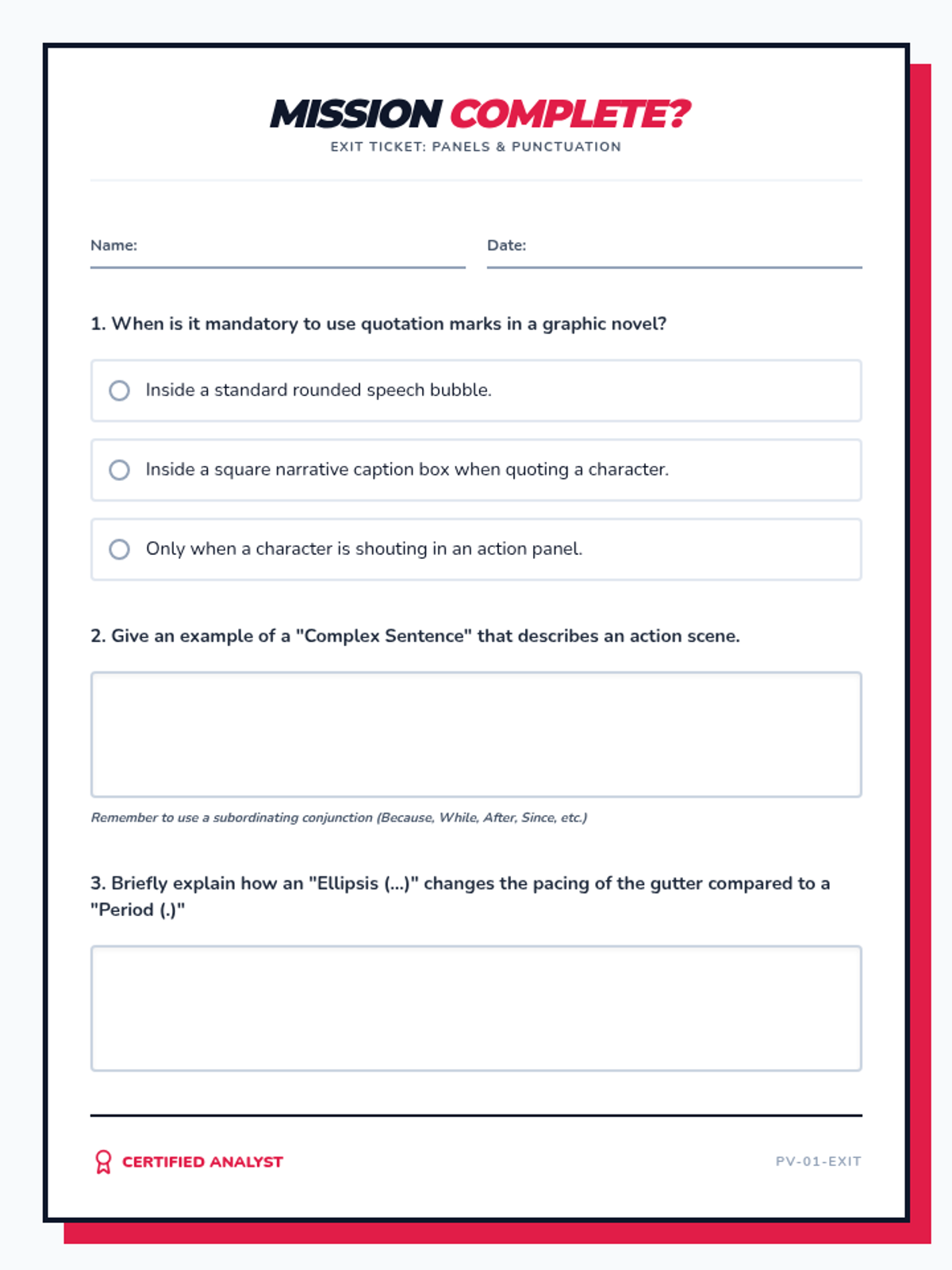
In this lesson, students explore the intersection of visual art and grammar by analyzing graphic novels. They learn how punctuation and panel layout influence tone and pacing, eventually creating their own comic strips that demonstrate mastery of quotation marks and complex sentences.
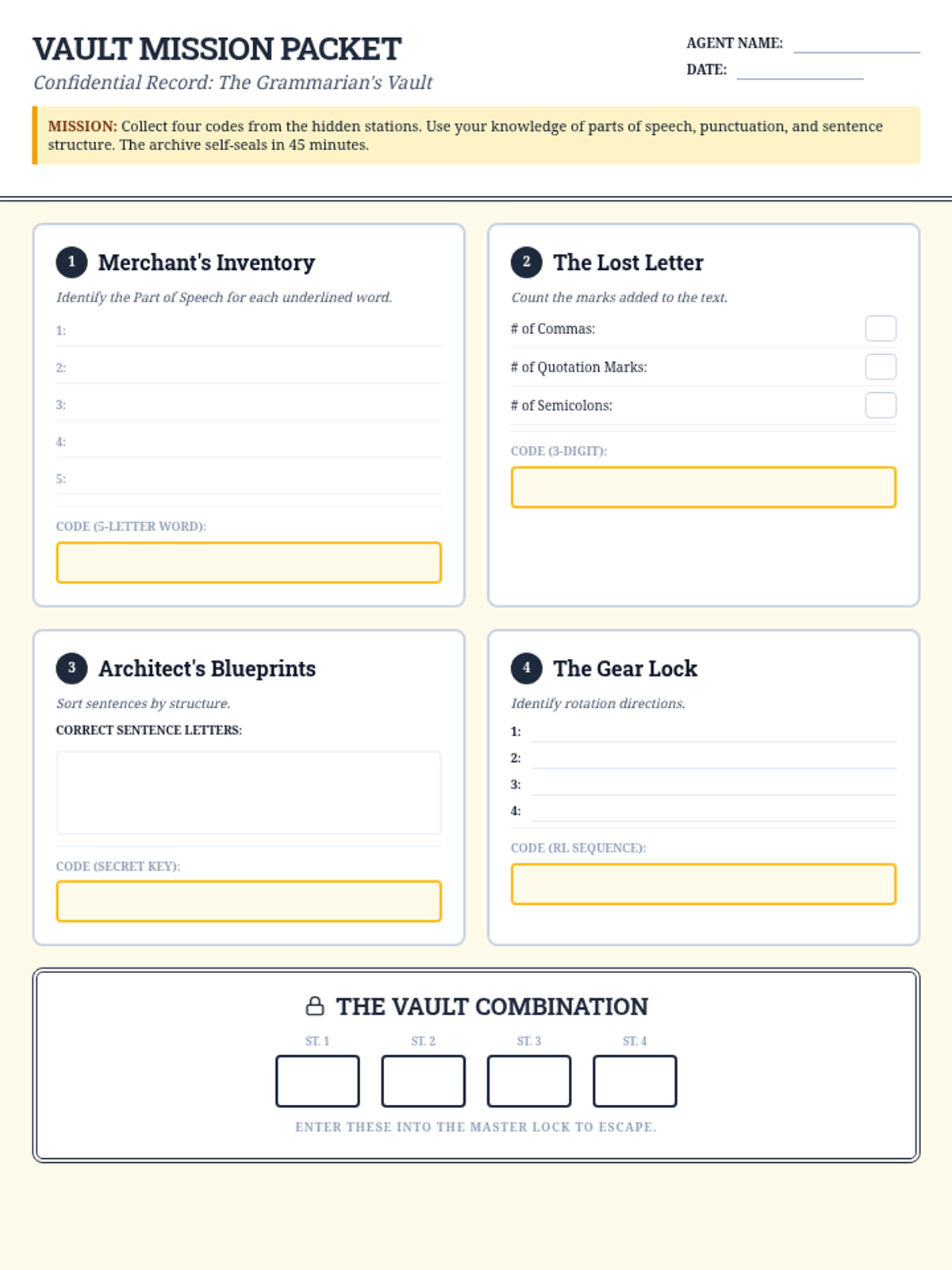
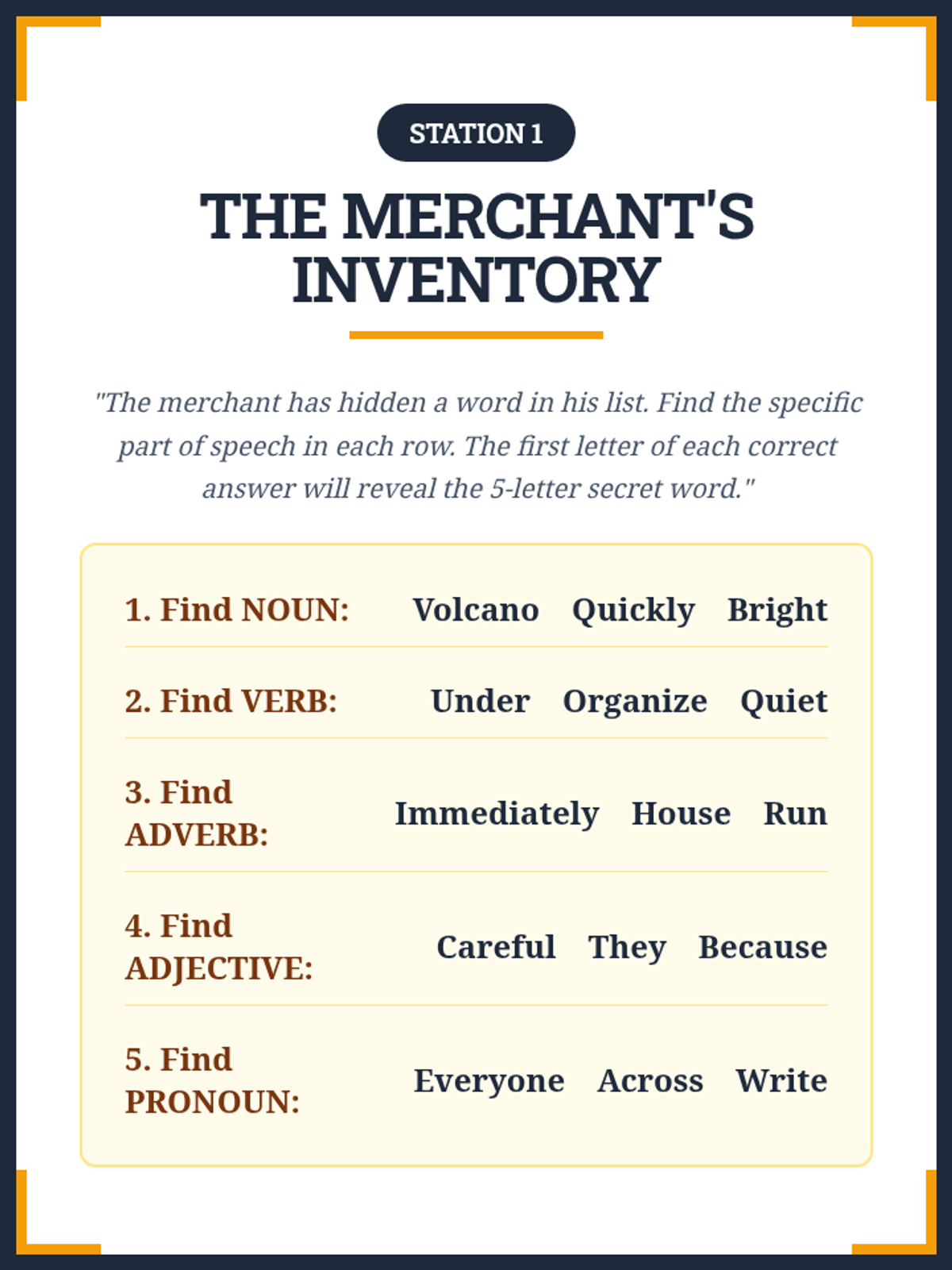
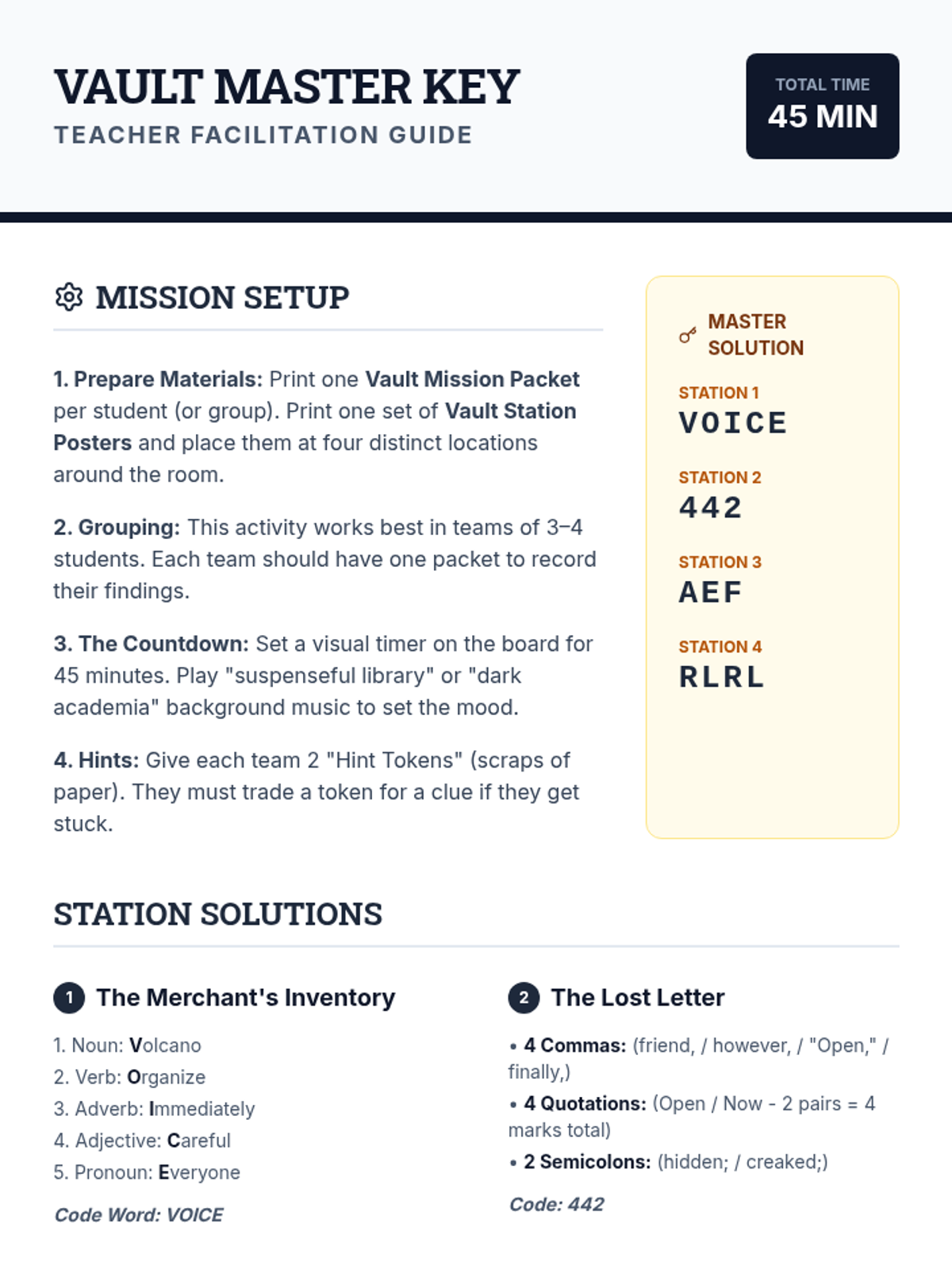
An immersive 45-minute grammar escape room where 6th-grade students solve puzzles involving parts of speech, punctuation, and sentence structure to unlock 'The Grammarian's Vault'.
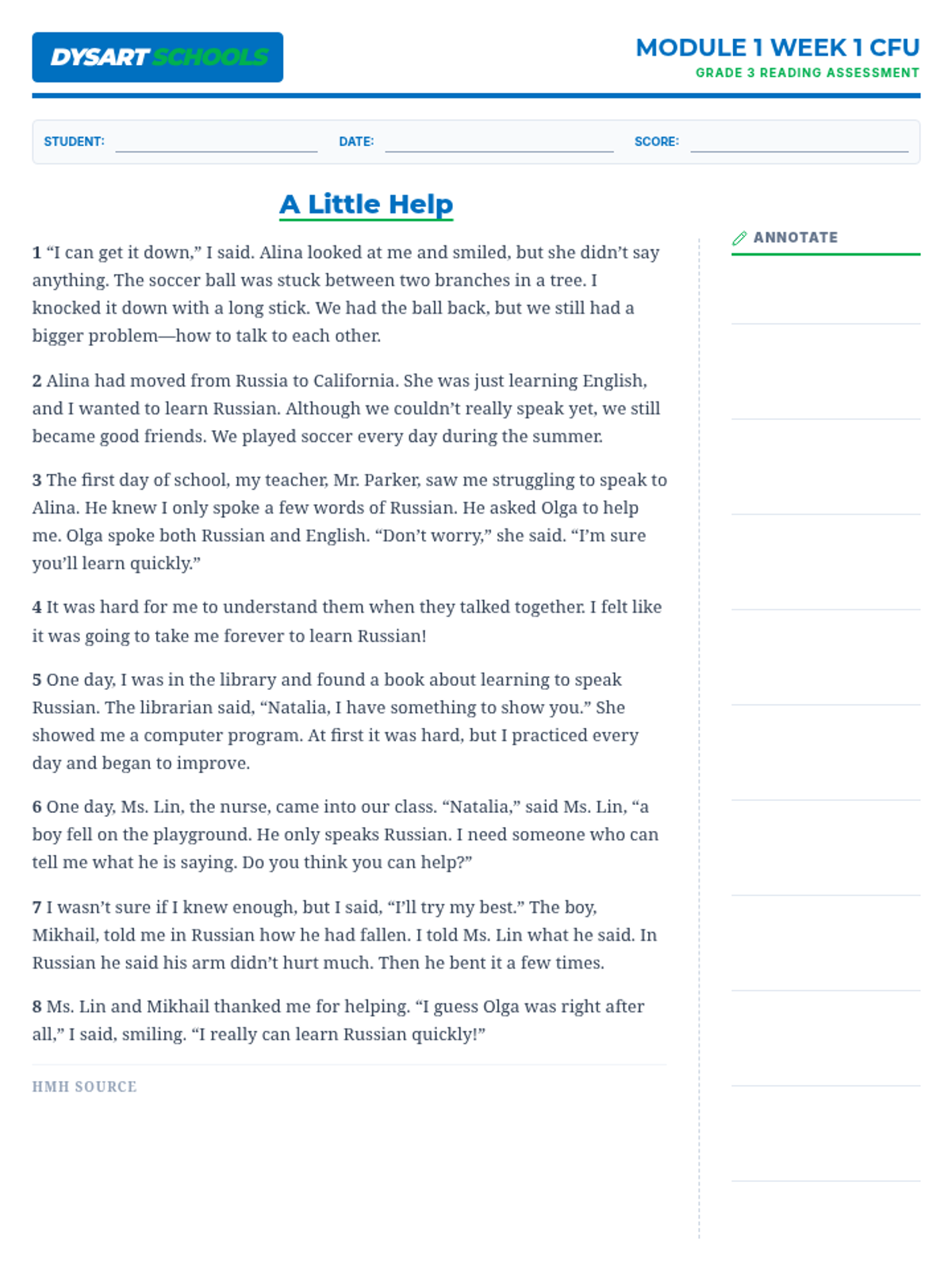
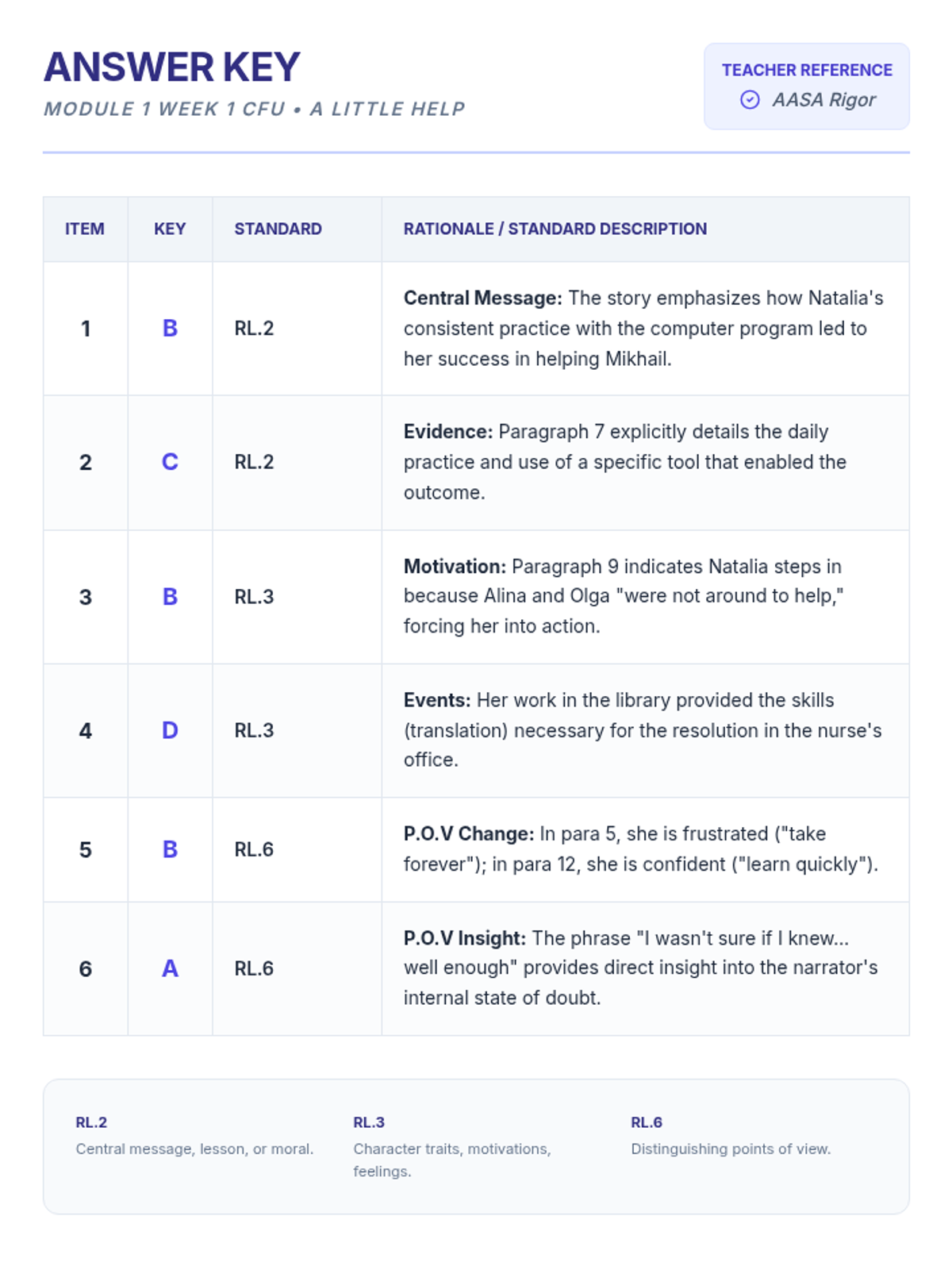
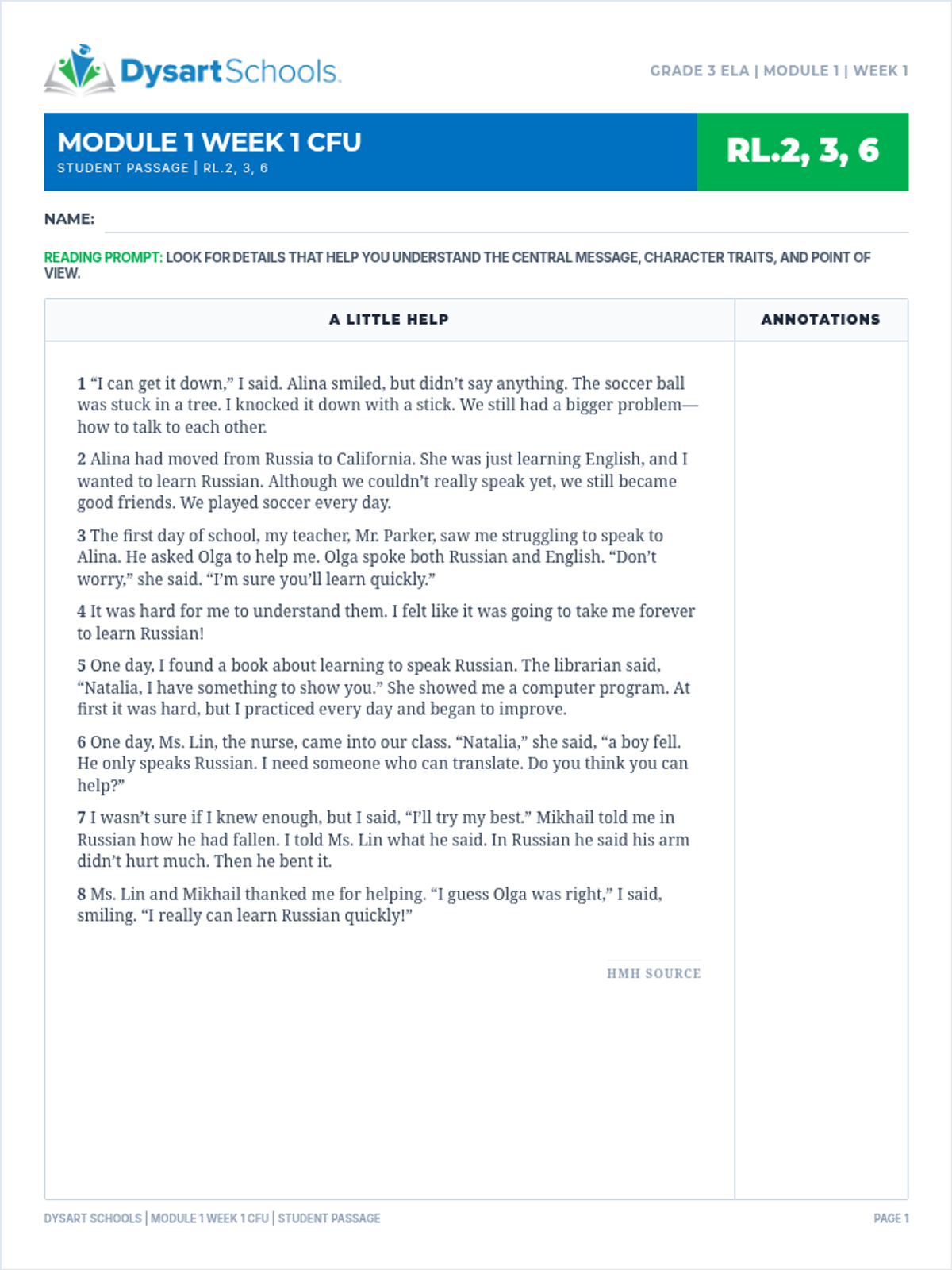
A lesson focused on analyzing character traits, determining central messages, and distinguishing points of view using the story 'A Little Help'. Students practice applying RL.2, RL.3, and RL.6 standards through standards-aligned multiple-choice questions.
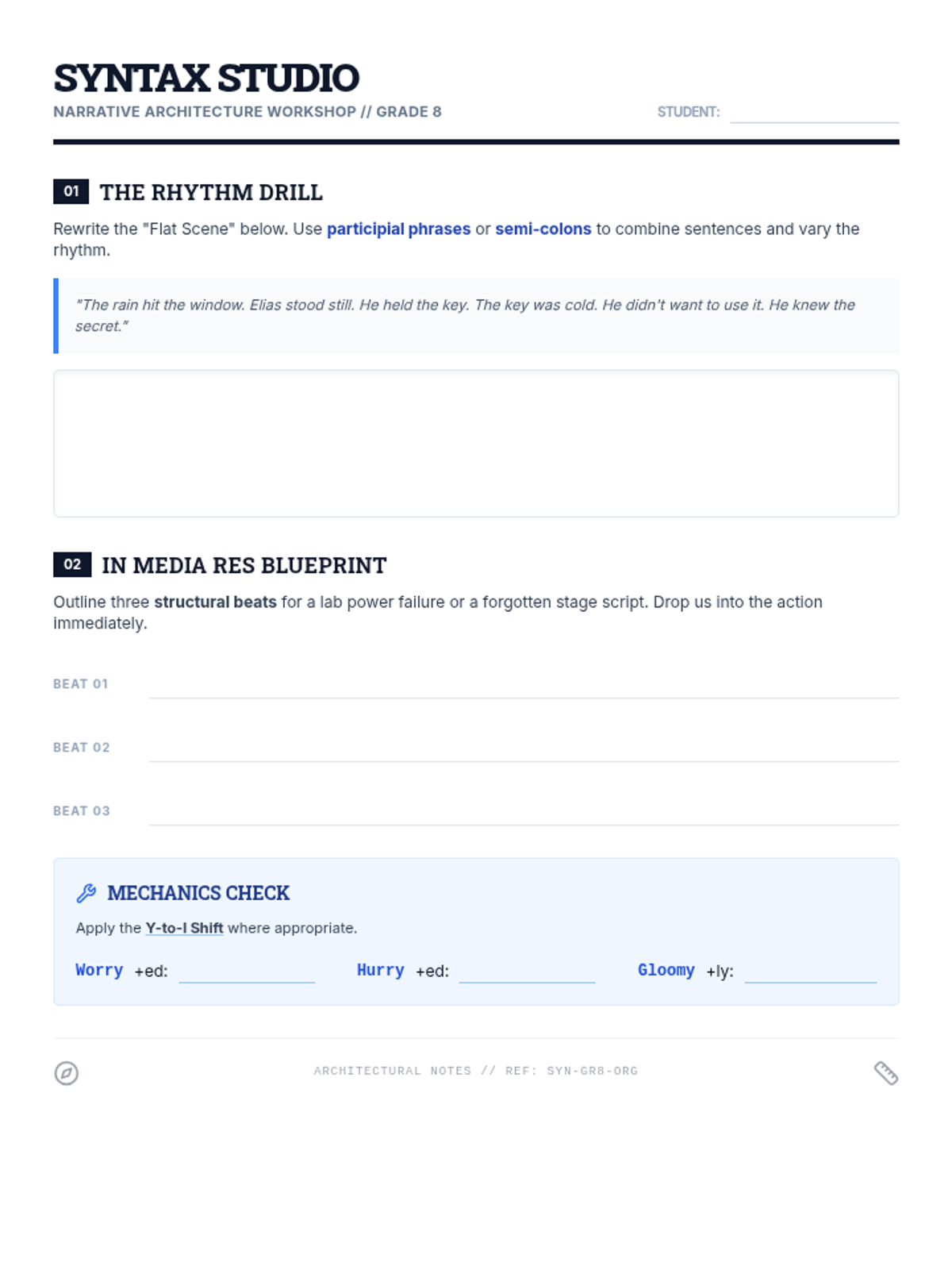
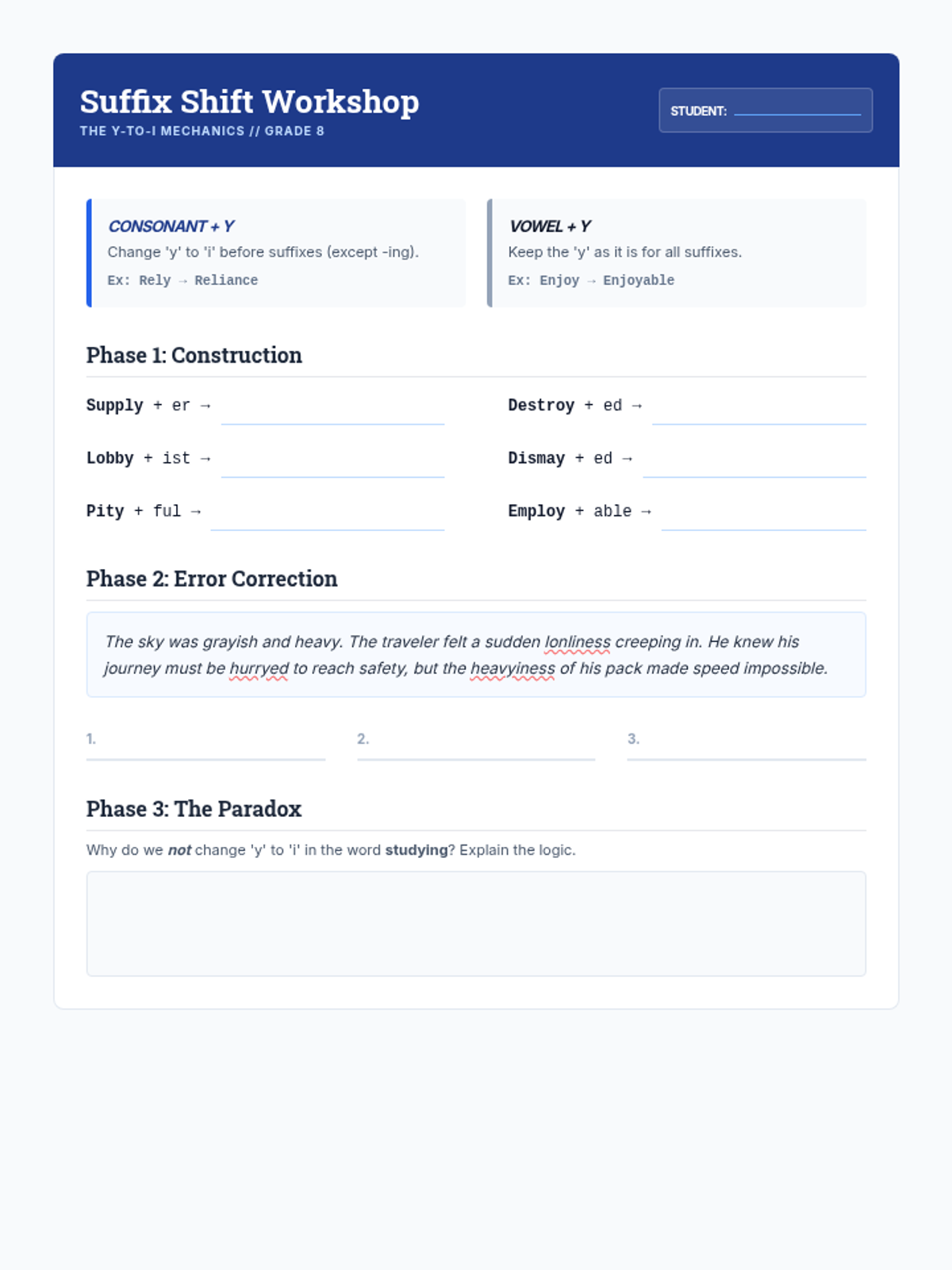
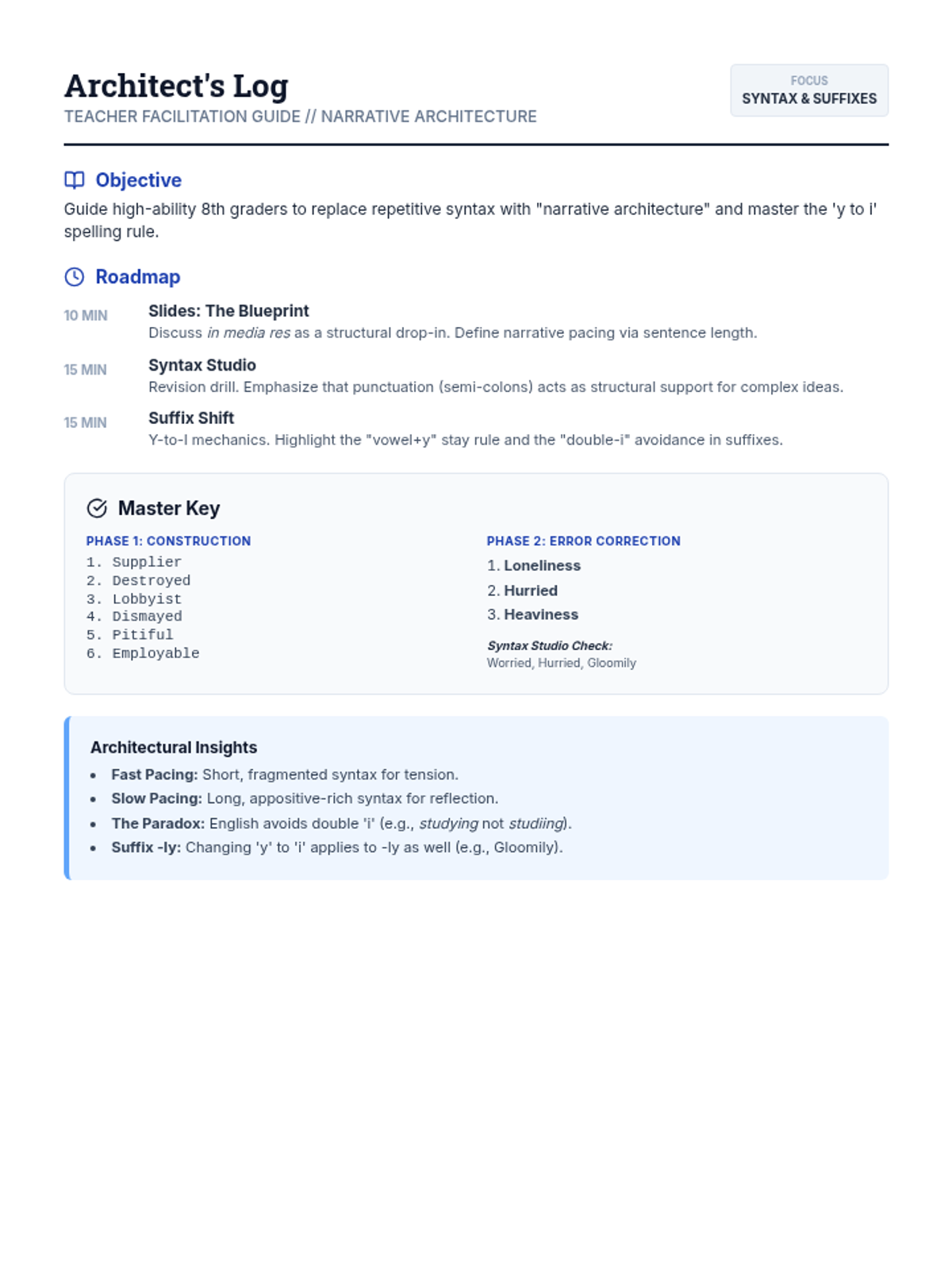
A sophisticated lesson focused on narrative organization, advanced syntax, and the 'y to i' spelling rule for a high-ability 8th grader.
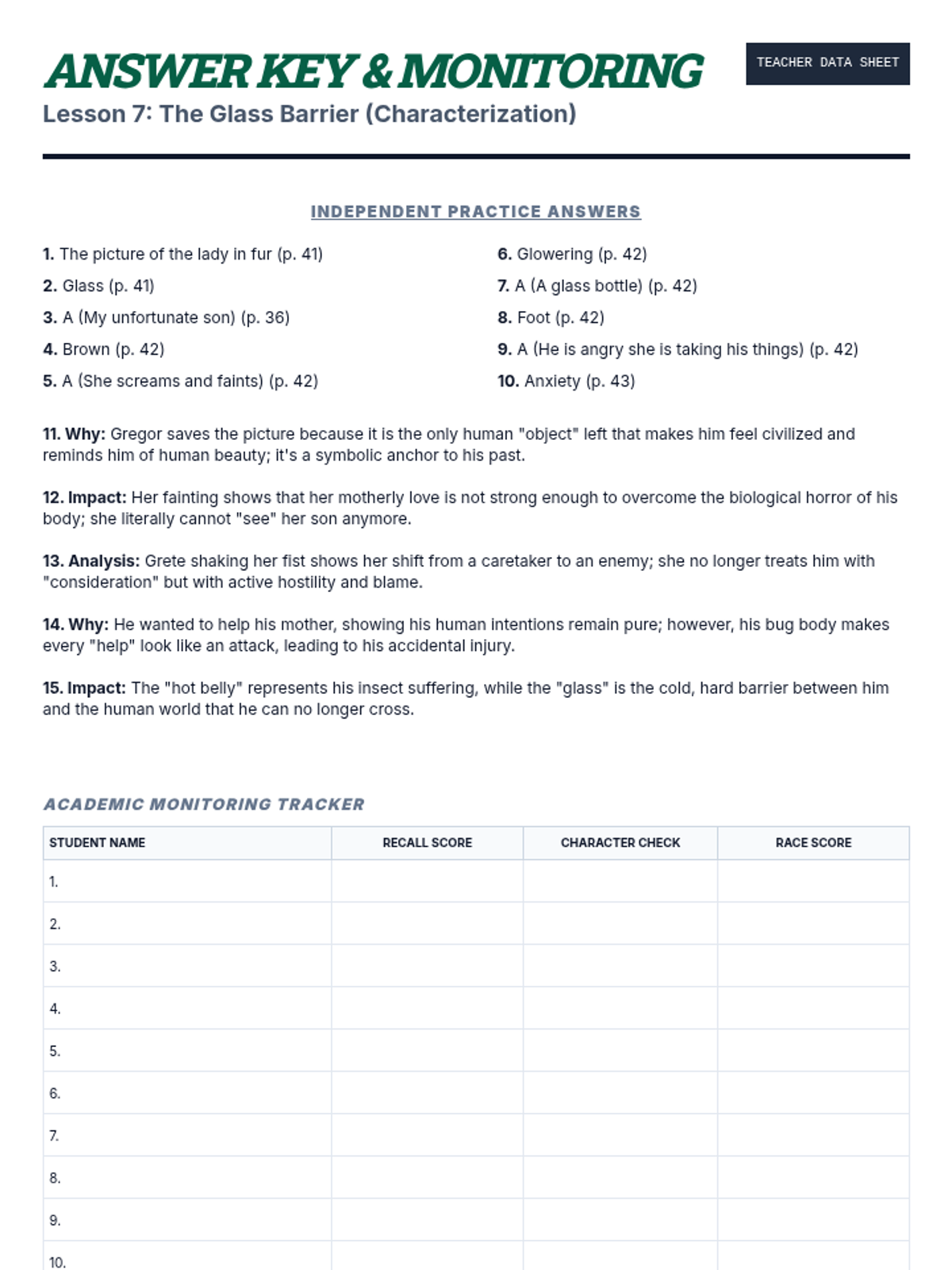
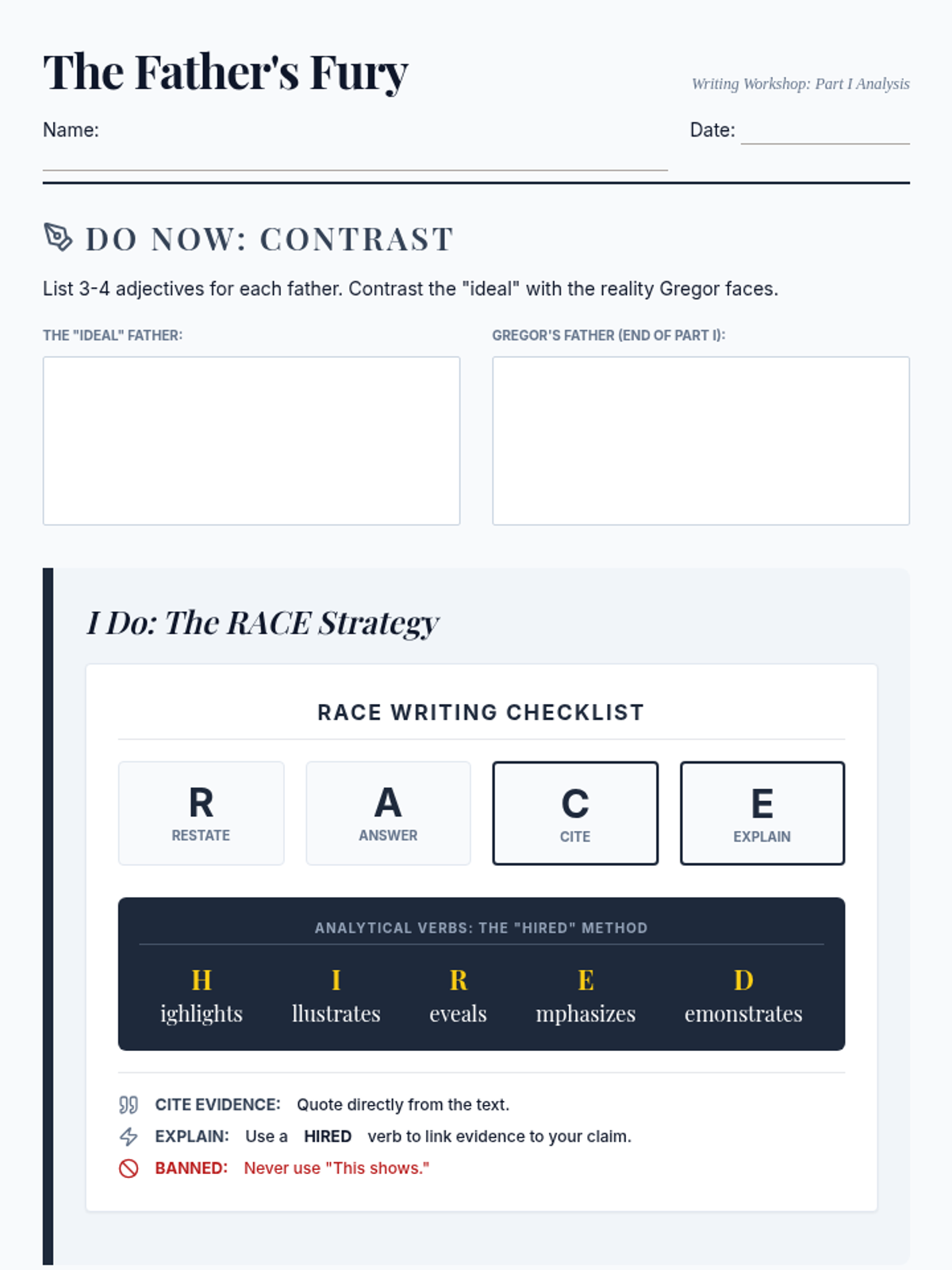
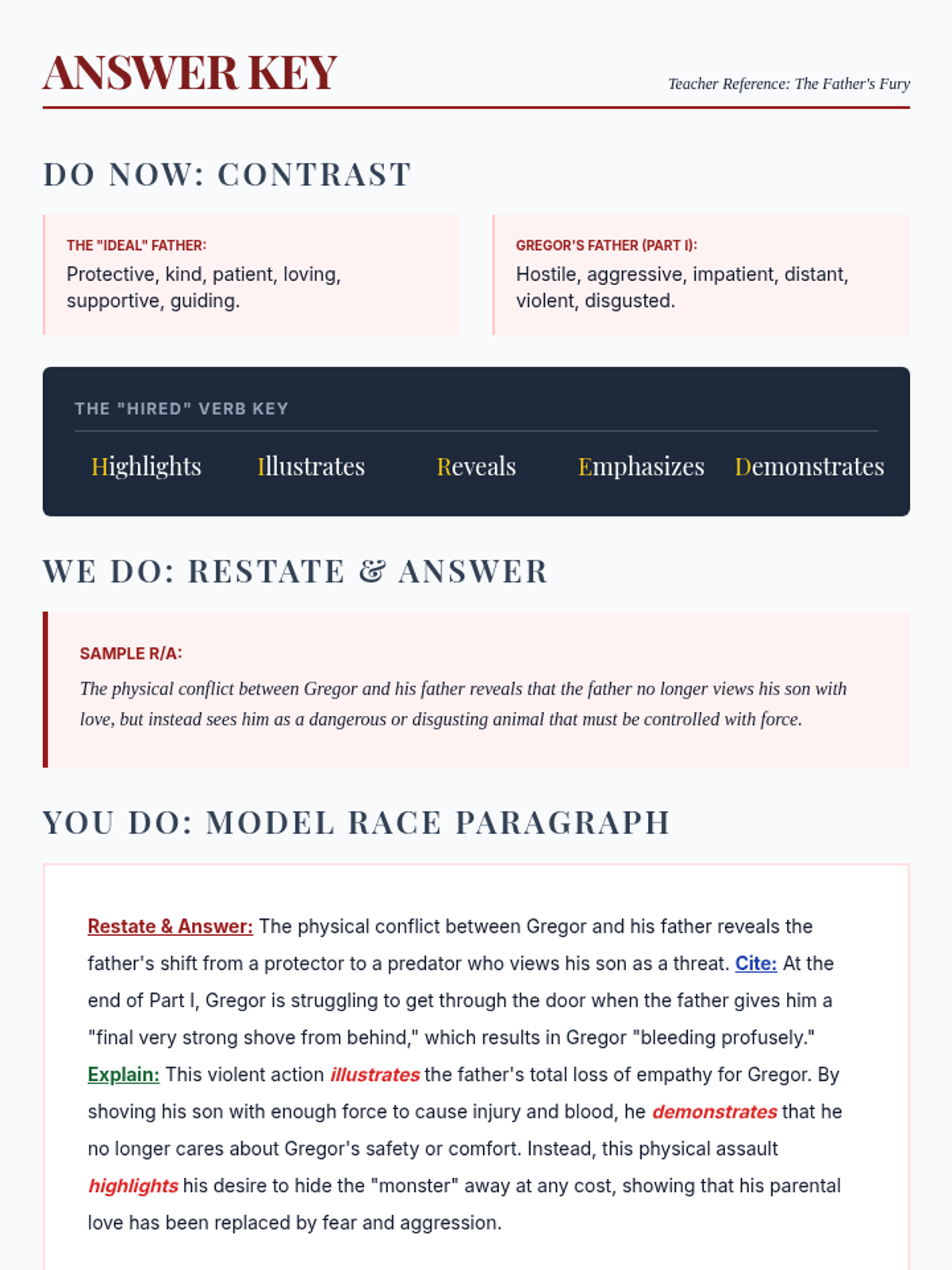
A writing-intensive lesson focusing on the RACE strategy to analyze the father's changing attitude toward Gregor in Part I of The Metamorphosis. Students practice using analytical verbs and structured evidence-based writing.
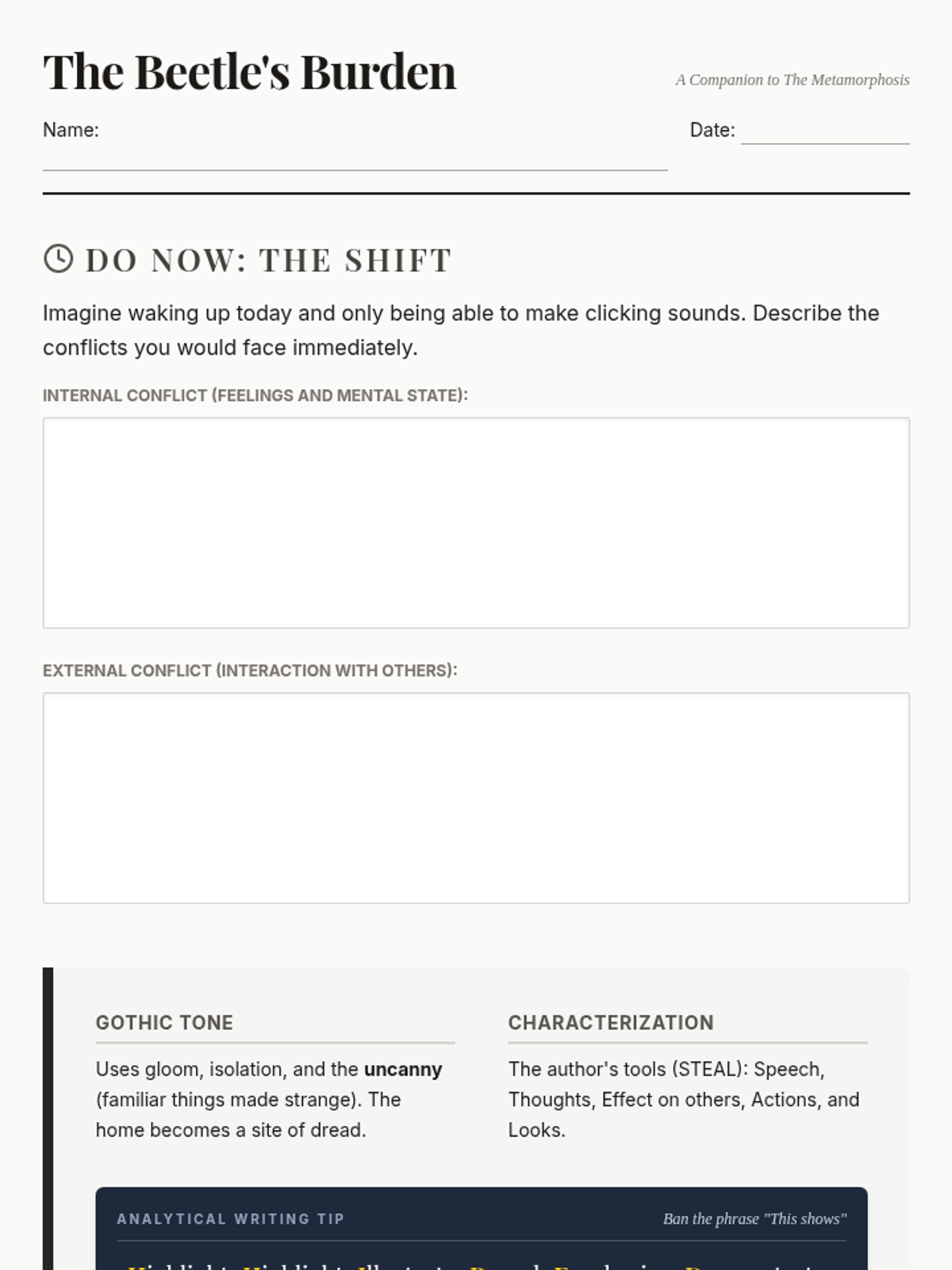
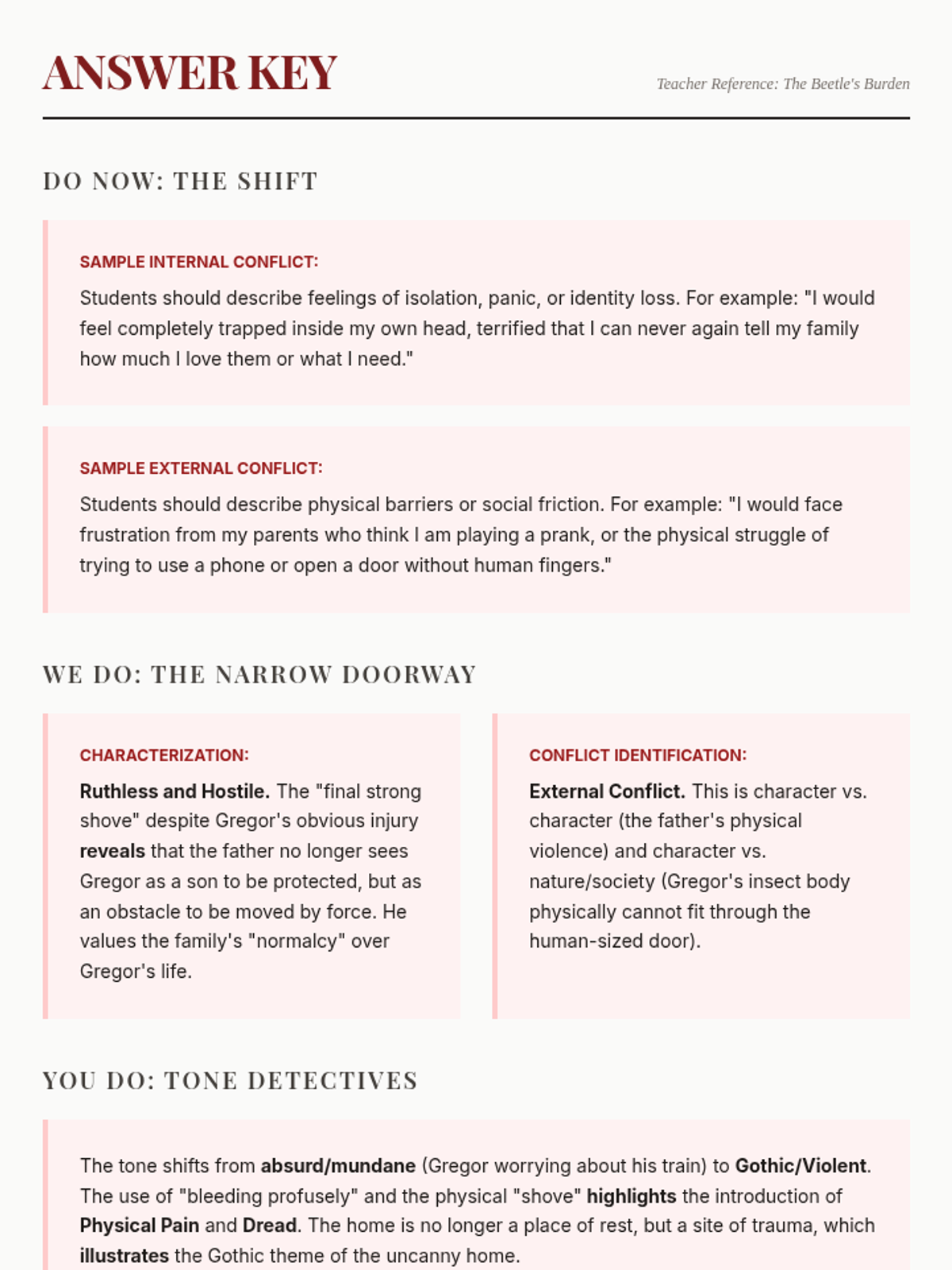
A supplemental lesson for 7th graders exploring internal/external conflict, characterization, and Gothic tone within Kafka's The Metamorphosis. Students analyze the father's actions and the story's eerie atmosphere through a structured workshop approach.
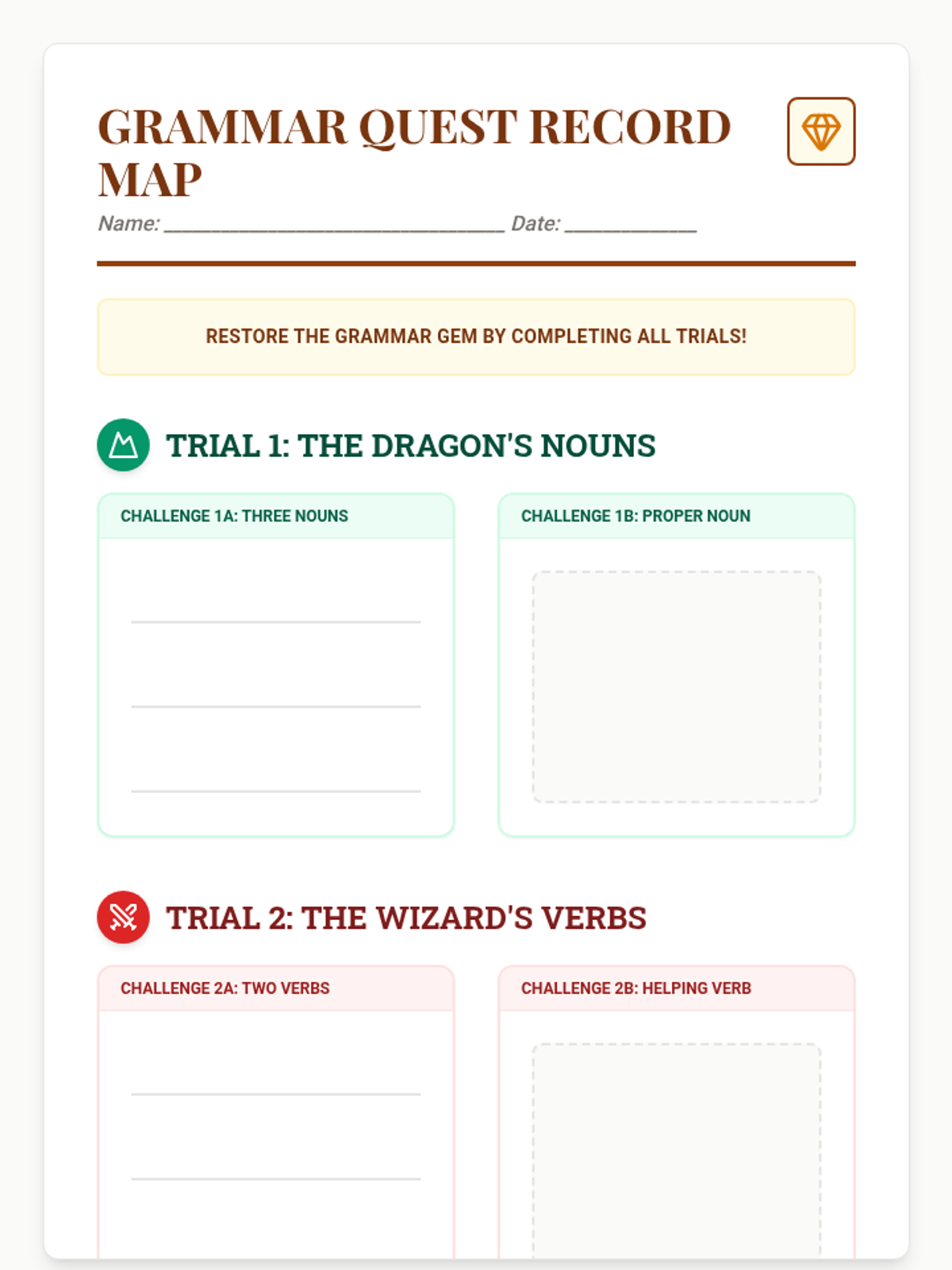
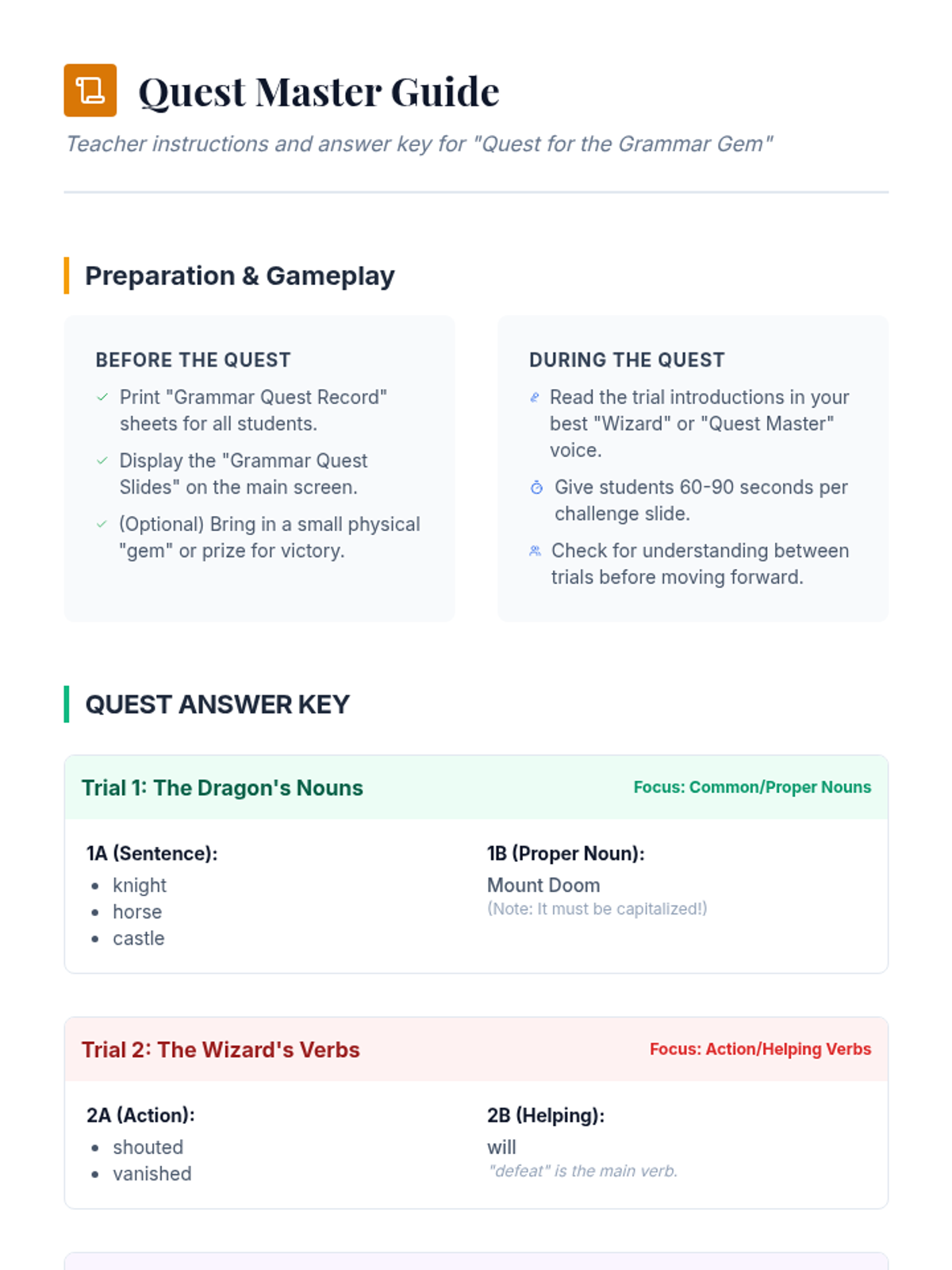
A fantasy-themed whole-class review game for 4th-grade students to master nouns, verbs, and adjectives. Students embark on a quest to recover the Grammar Gem by solving part-of-speech challenges.
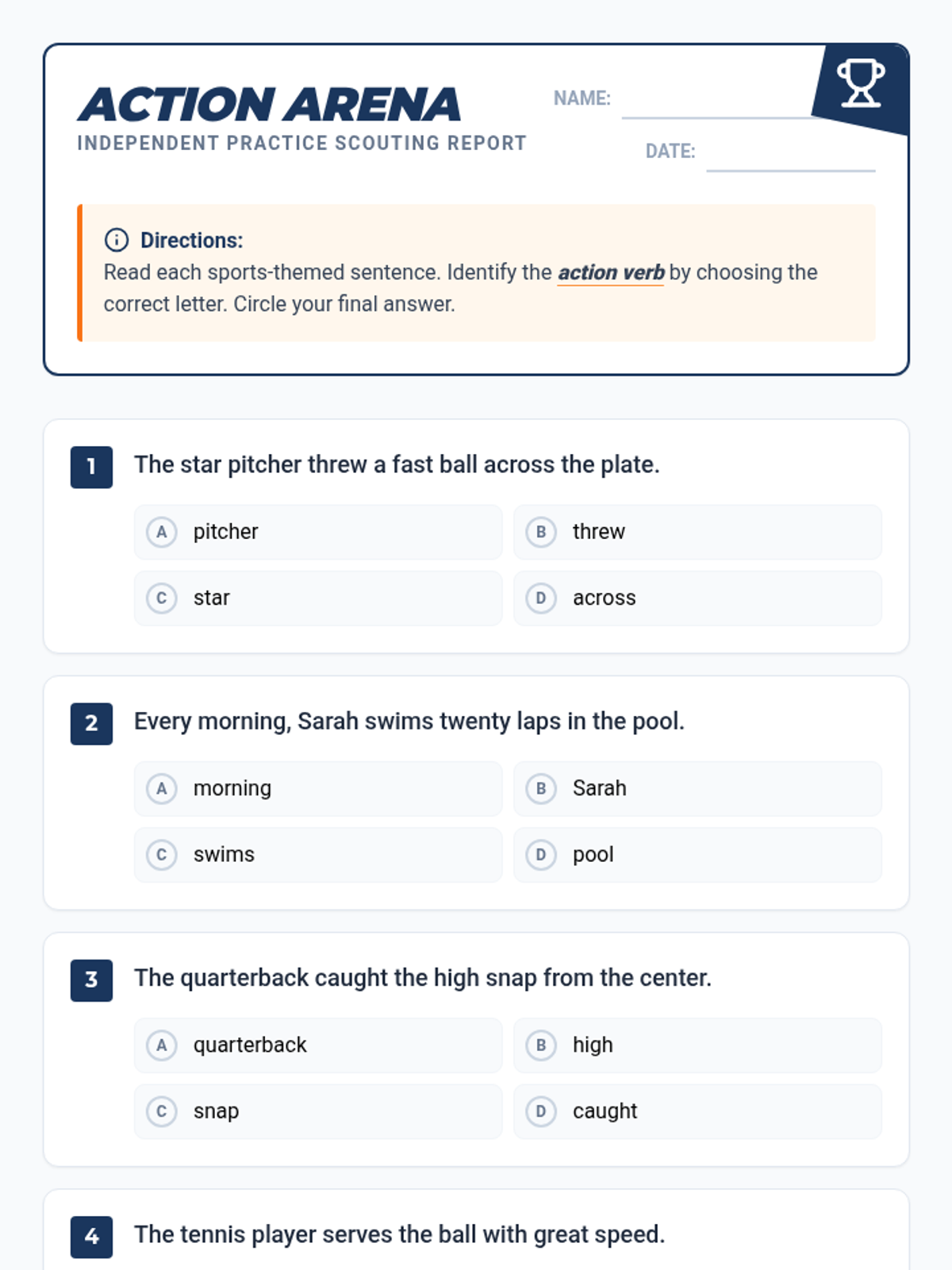
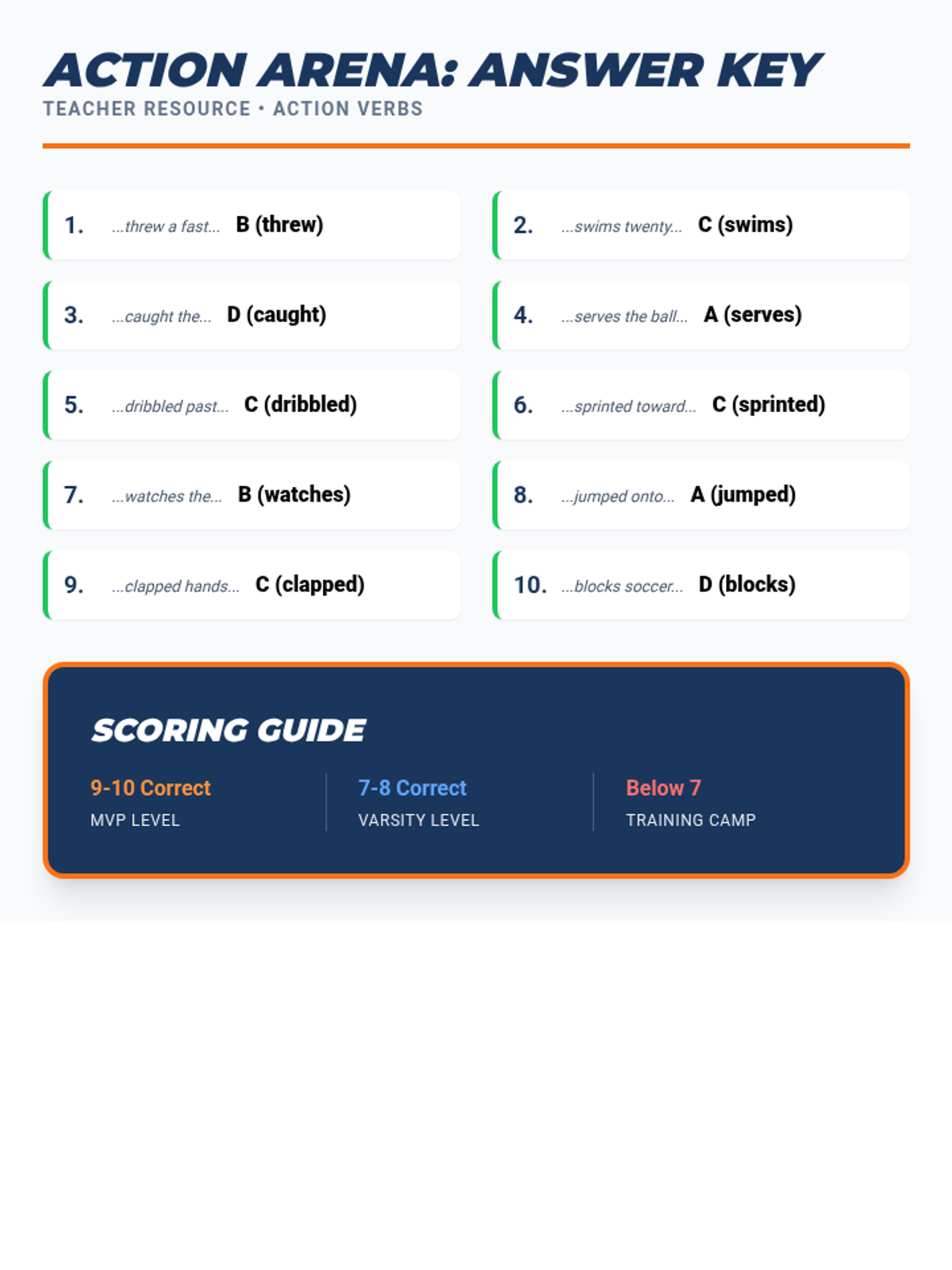
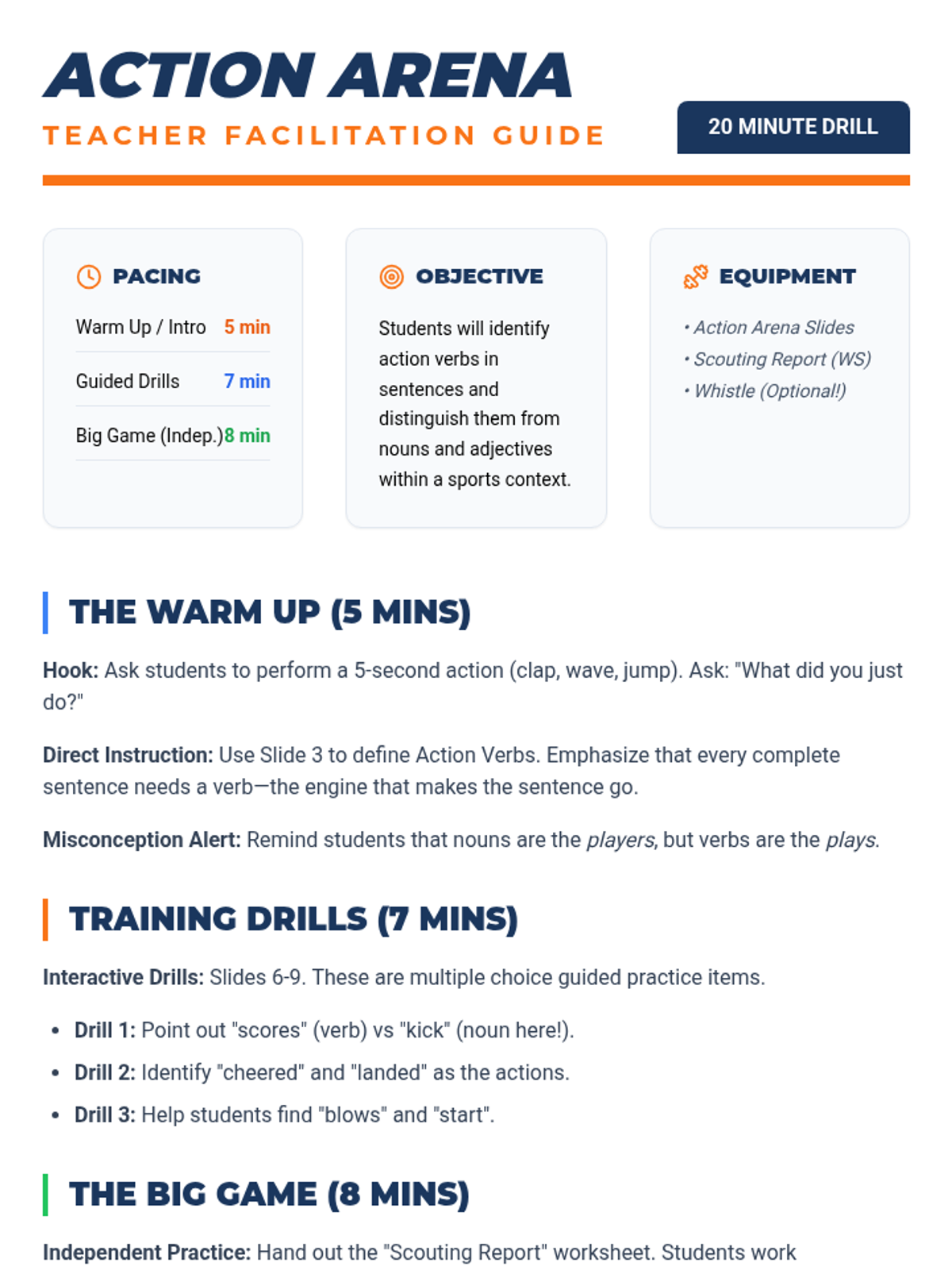
A high-energy, sports-themed lesson for 4th graders to master action verbs through 'The Action Arena' training and gameplay.
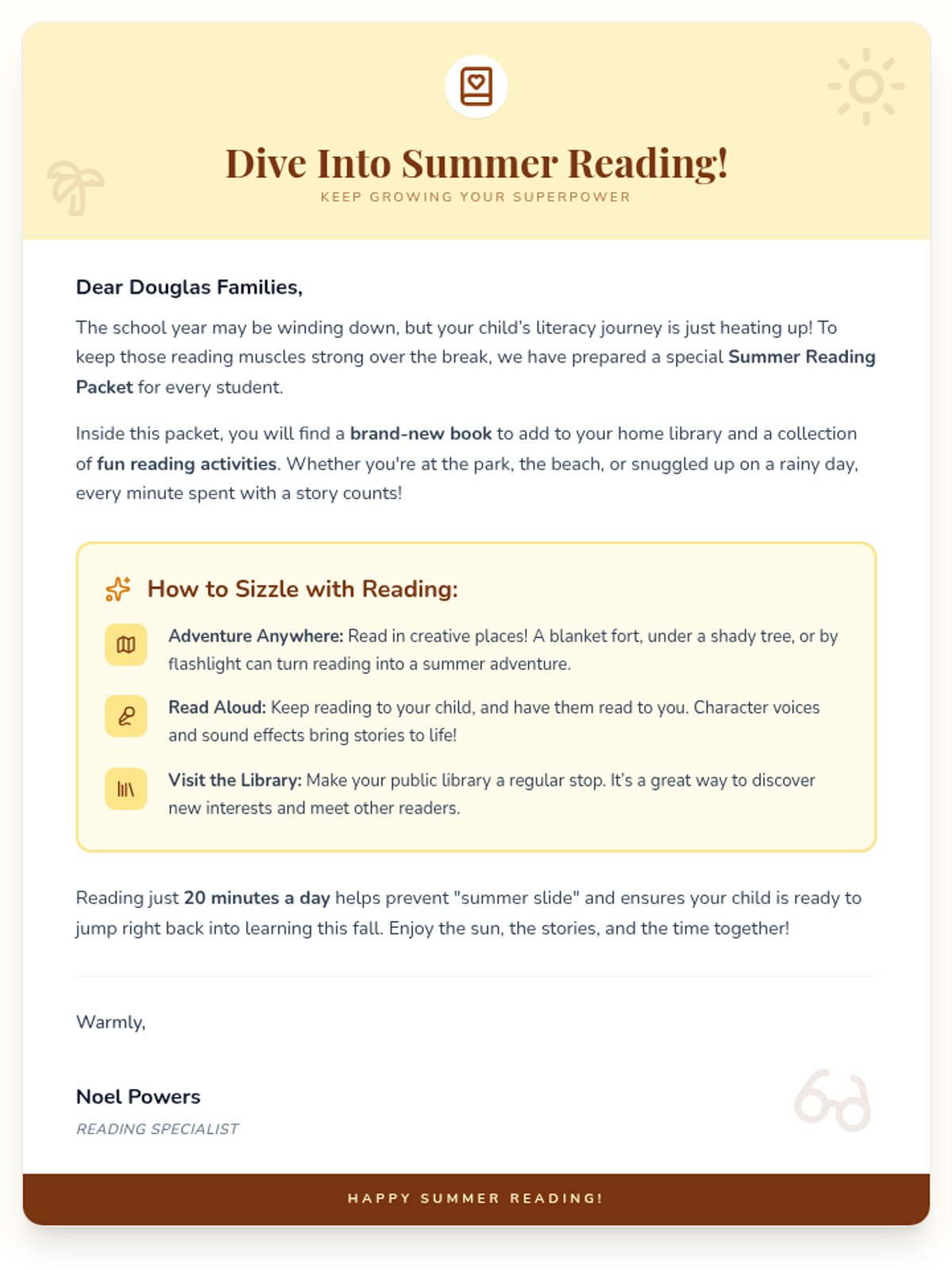
A collection of resources to encourage and track reading progress over the summer break for K-3 students, including a parent letter and activity suggestions.
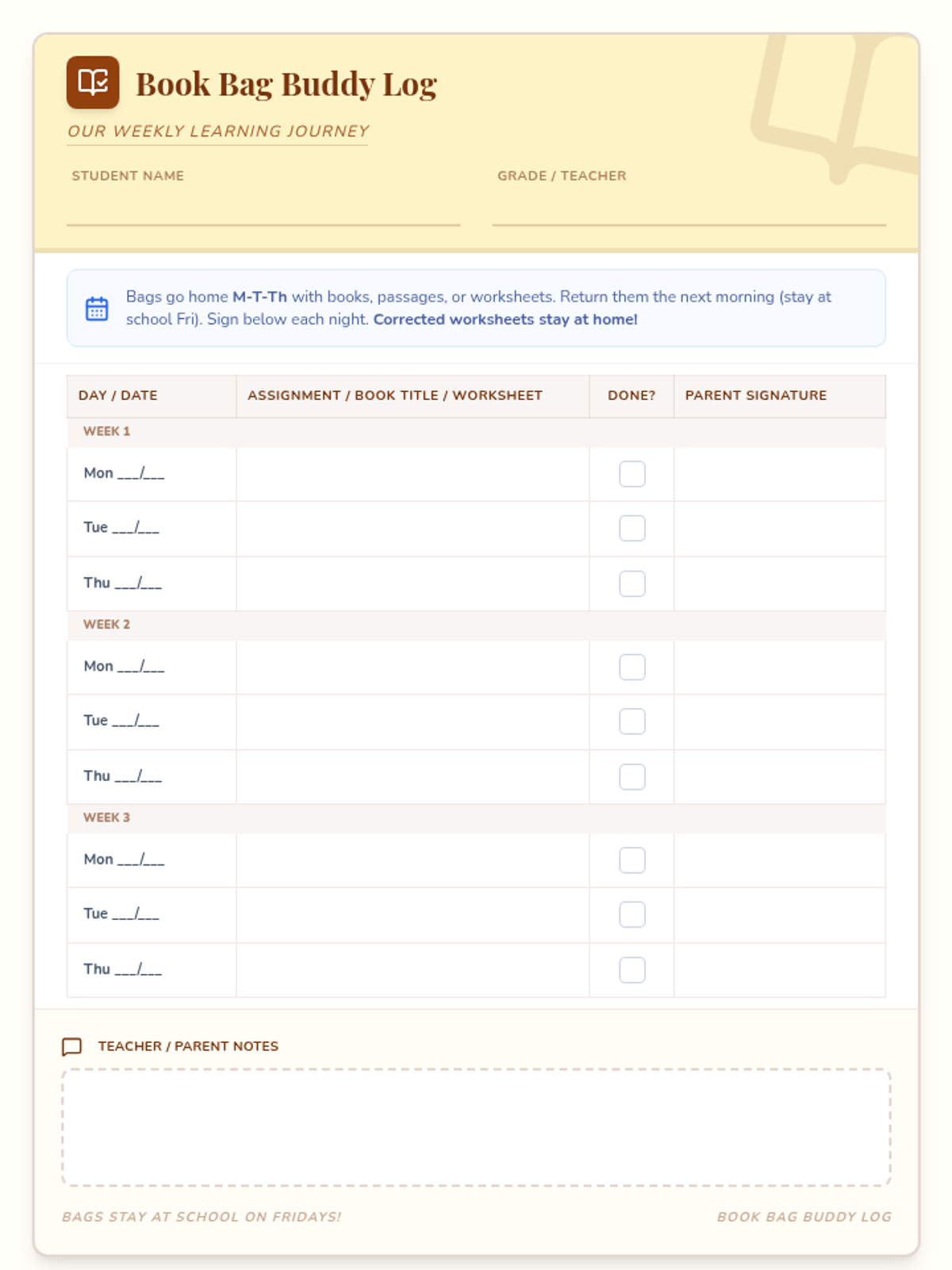
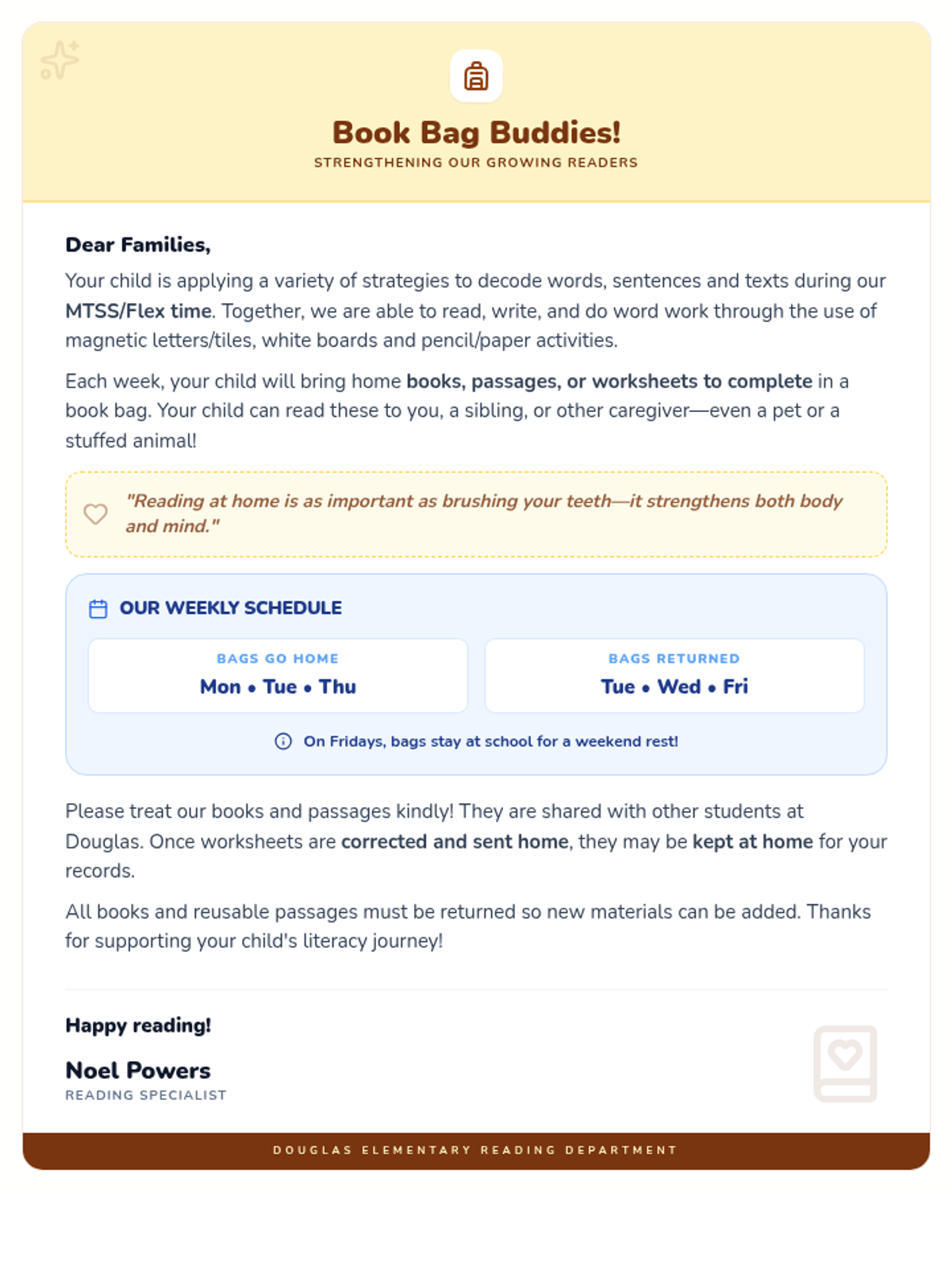
A home-school communication system for K-3 students featuring a homework bag log and an introductory letter for parents, detailing a Monday-Tuesday-Thursday homework schedule.