A Kindergarten lesson connecting body part nouns with action verbs through video viewing, physical movement, and a sorting activity. Students identify which body parts perform specific actions like running, catching, and tasting.
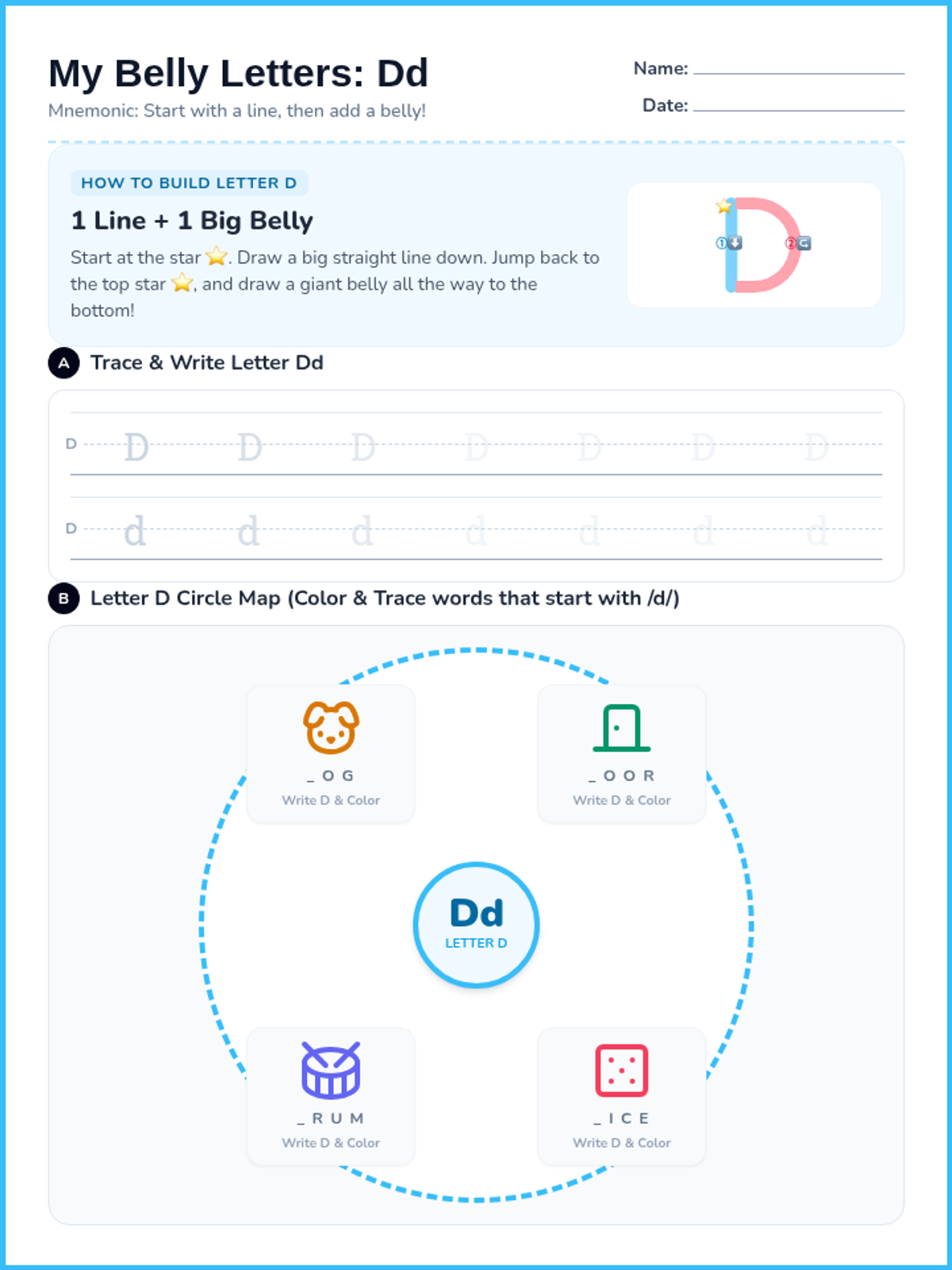
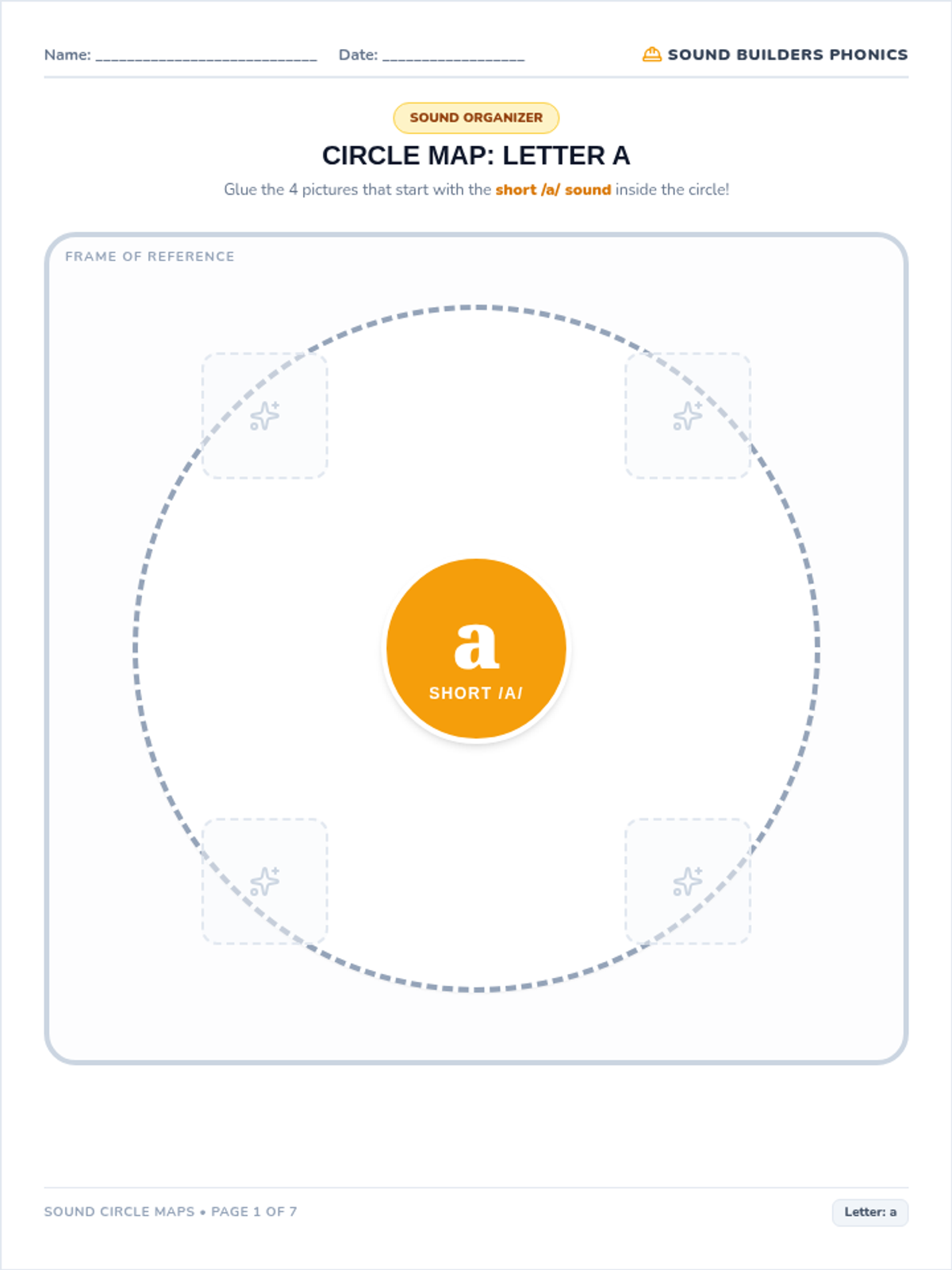
A sensory-rich, early literacy lesson focusing on the handwriting and phonics of letters D, B, and P. Using the visual mnemonic 'Start with a line, then add a belly,' students learn correct letter formation and build foundational phonemic awareness through engaging Circle Maps.
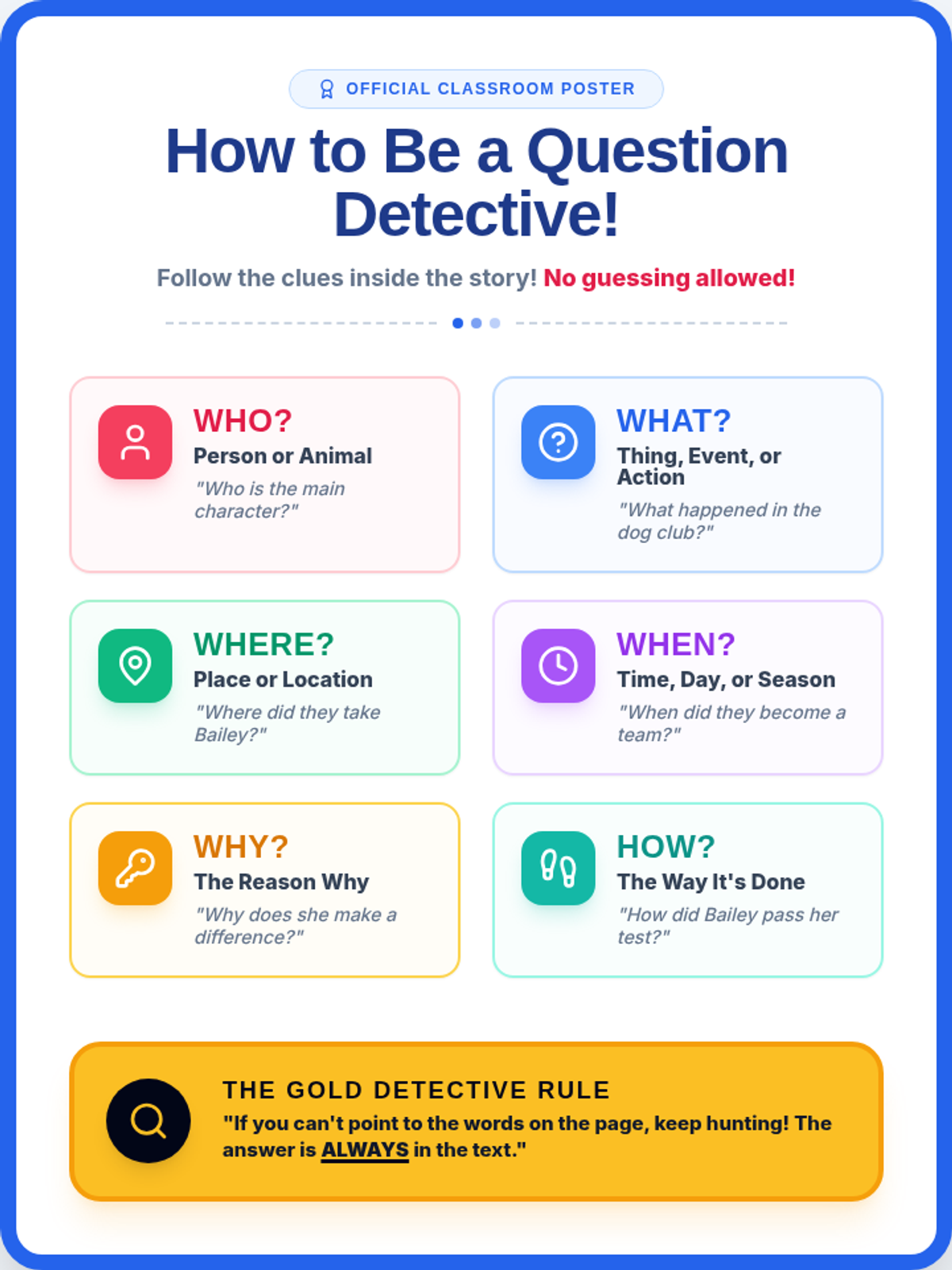
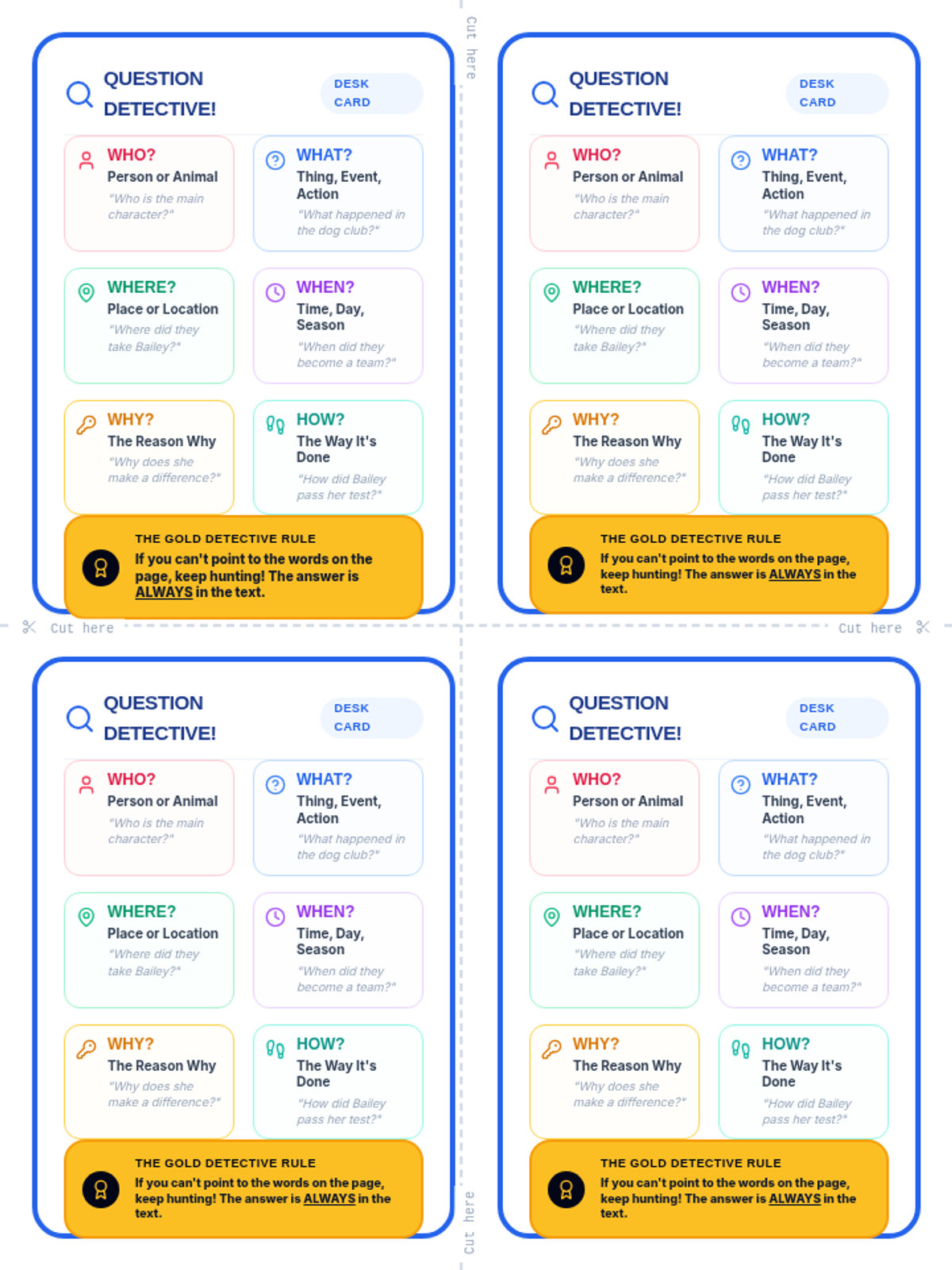
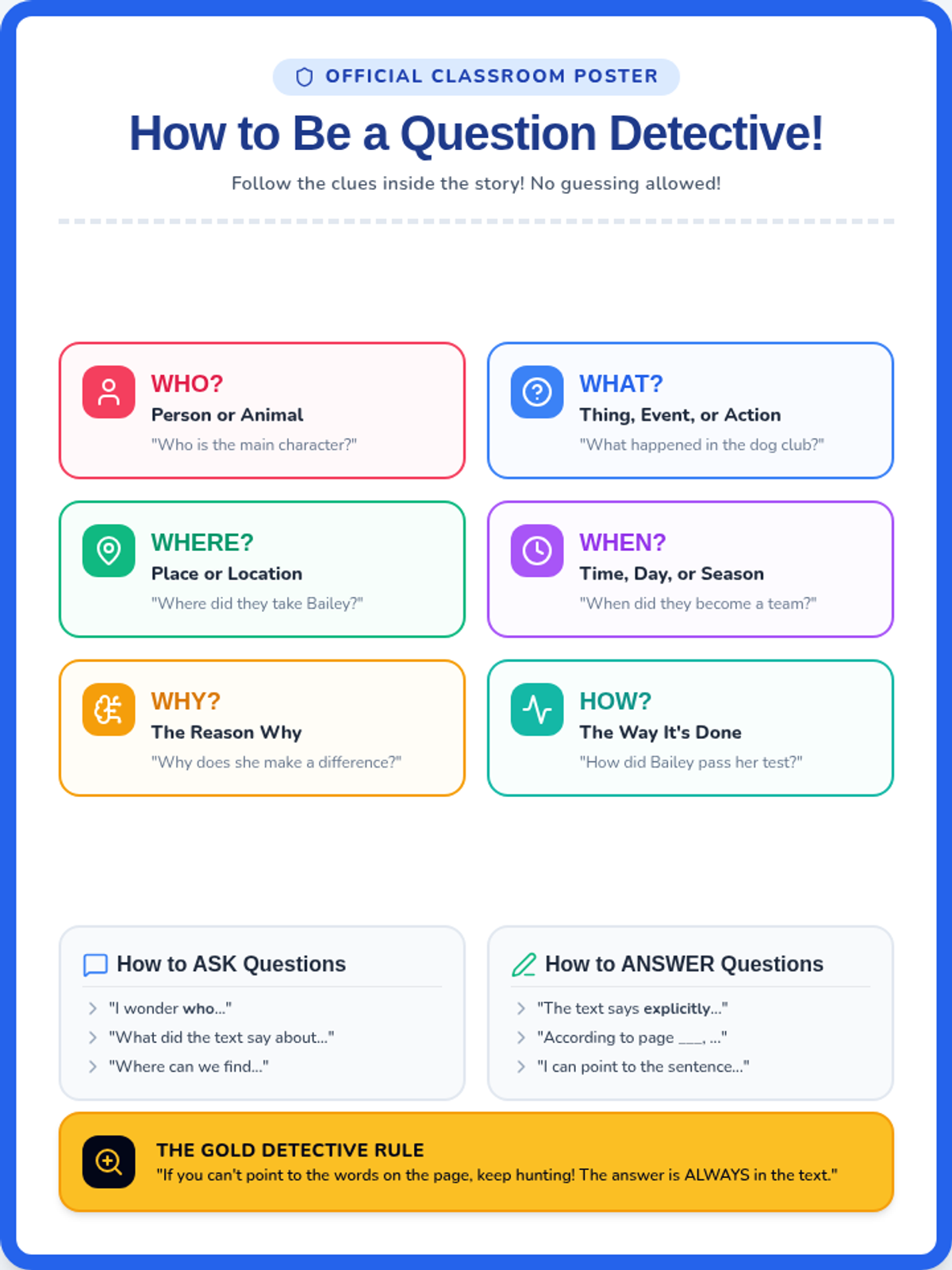
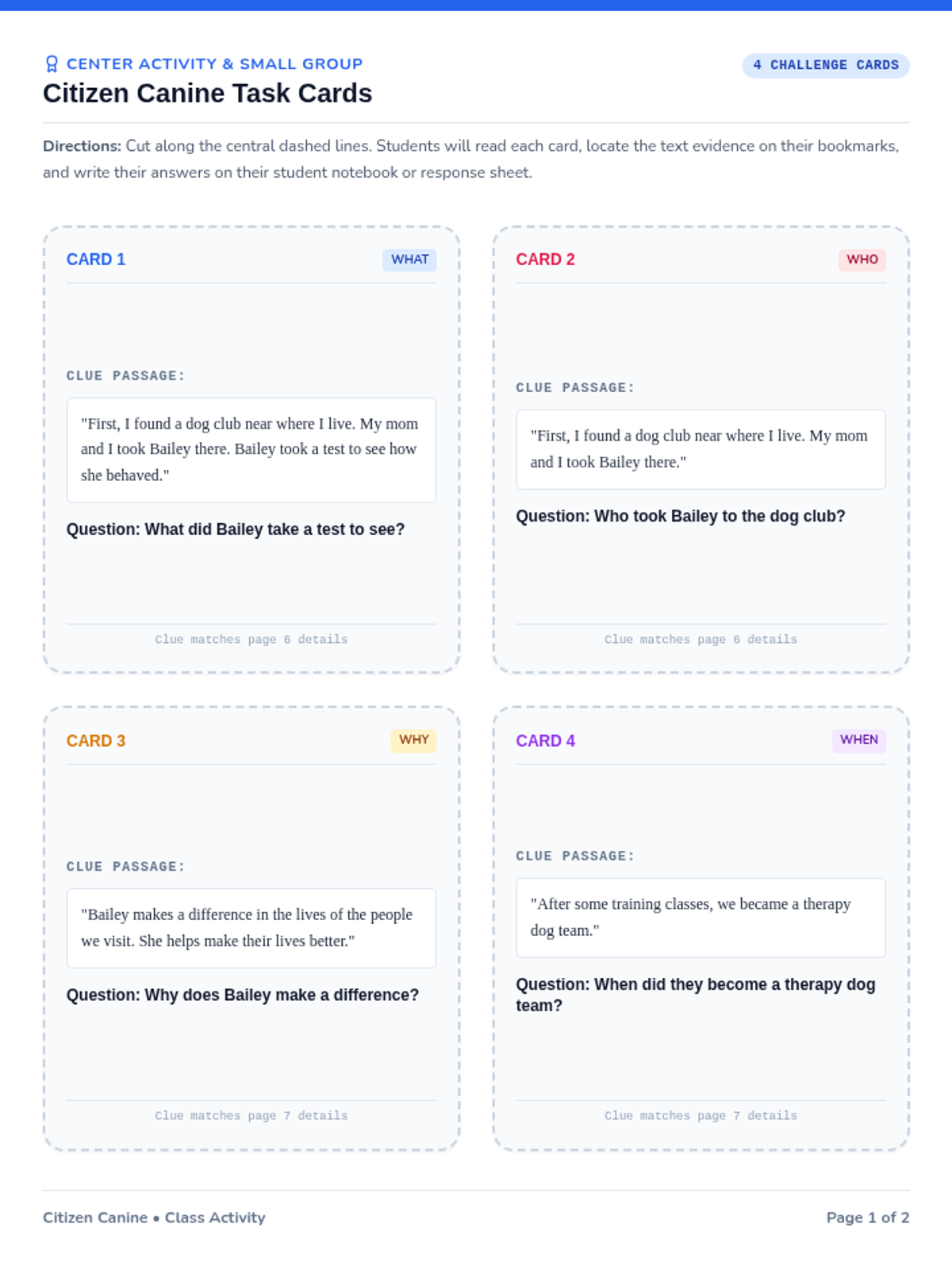
A collection of visual resources to help students locate text evidence and answer key comprehension questions using the 5Ws and How framework.
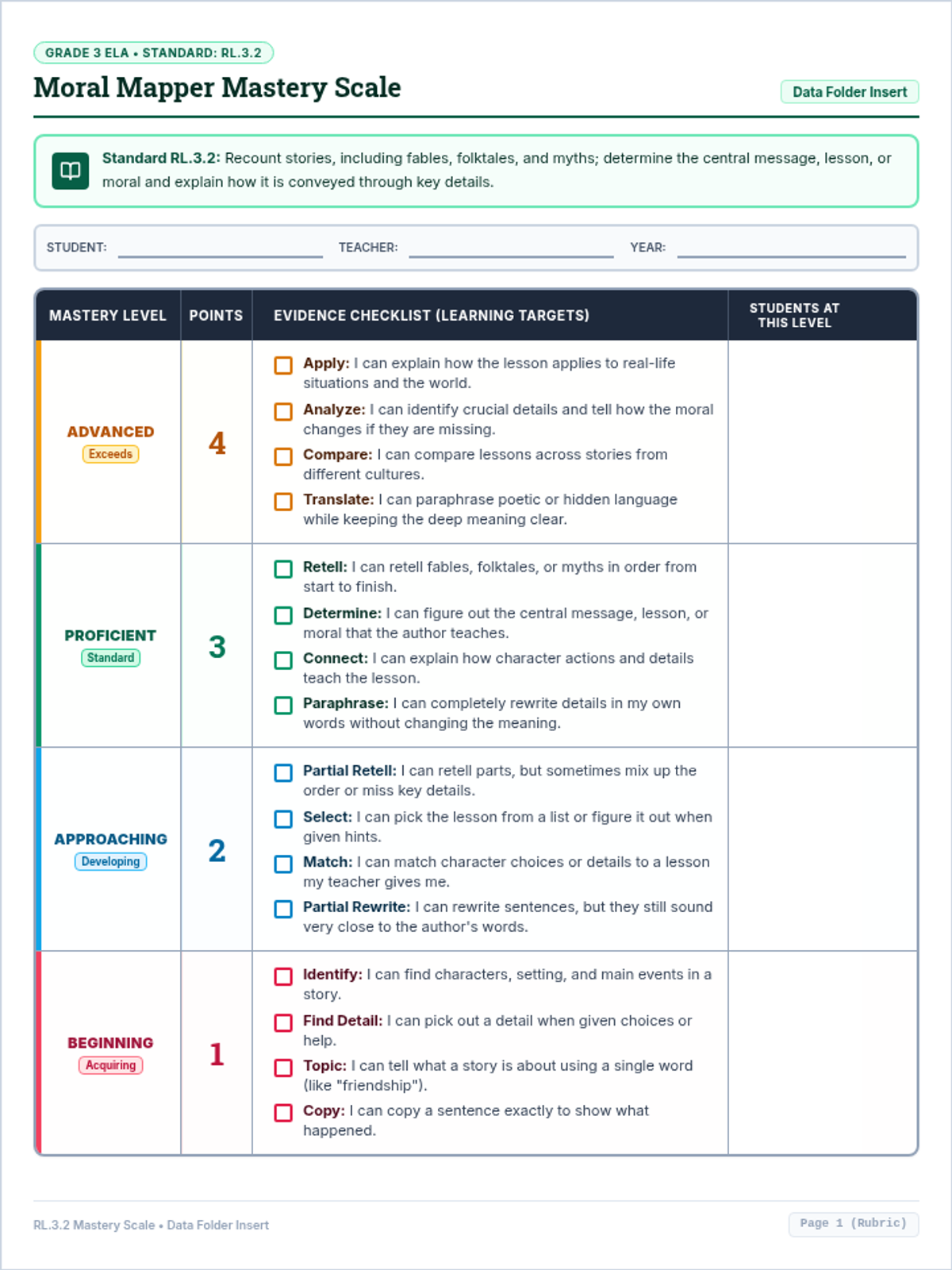
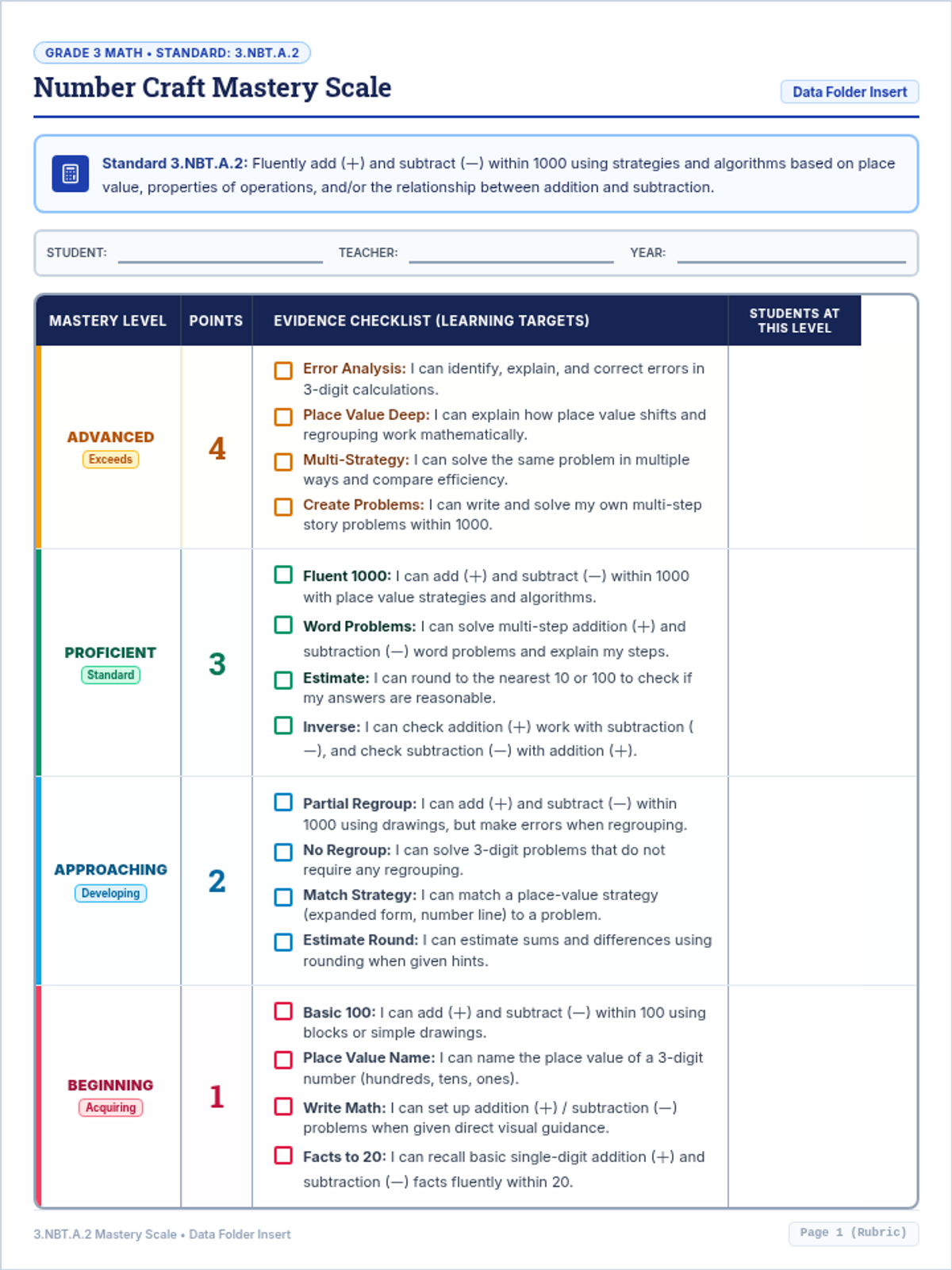
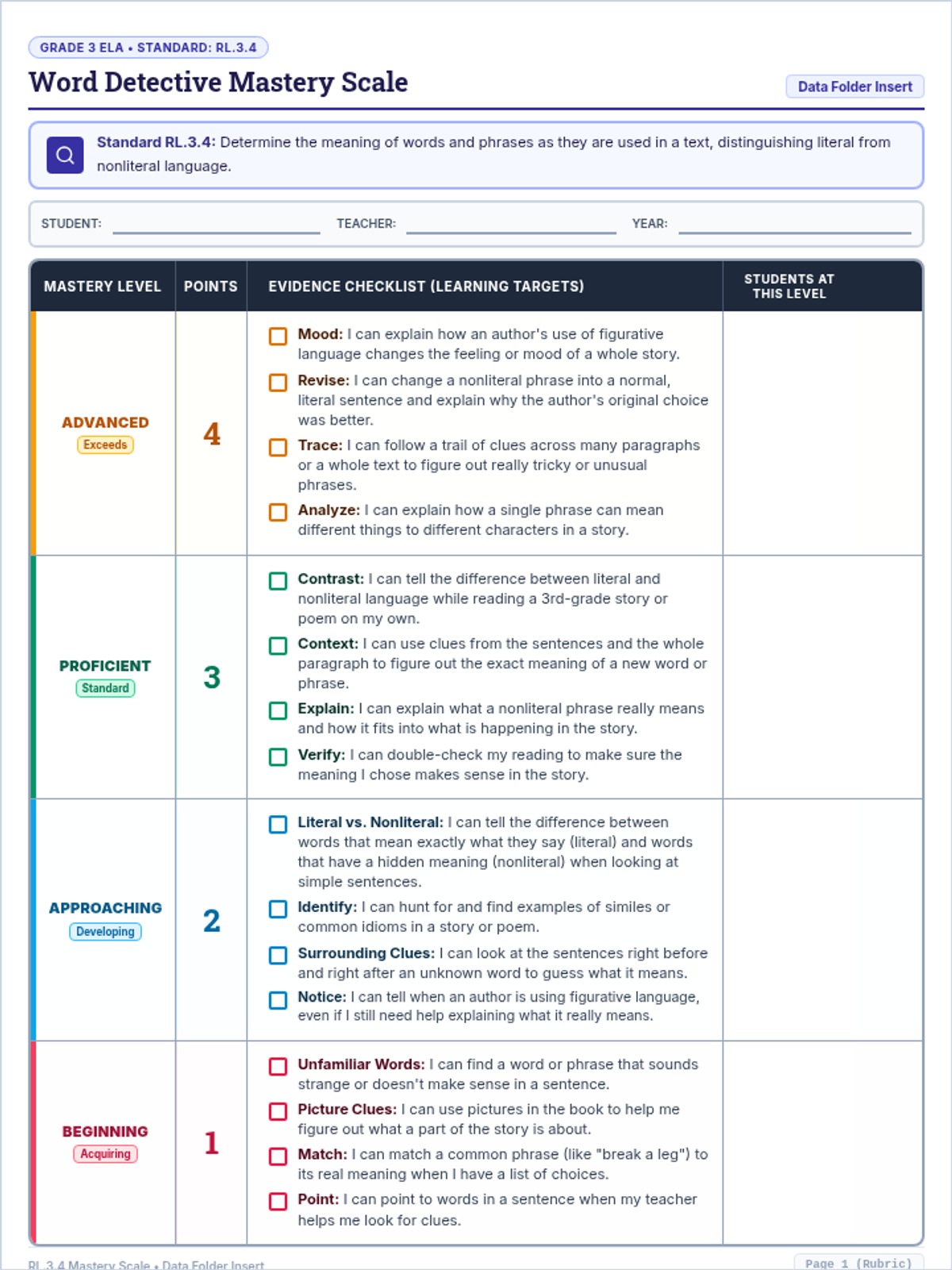
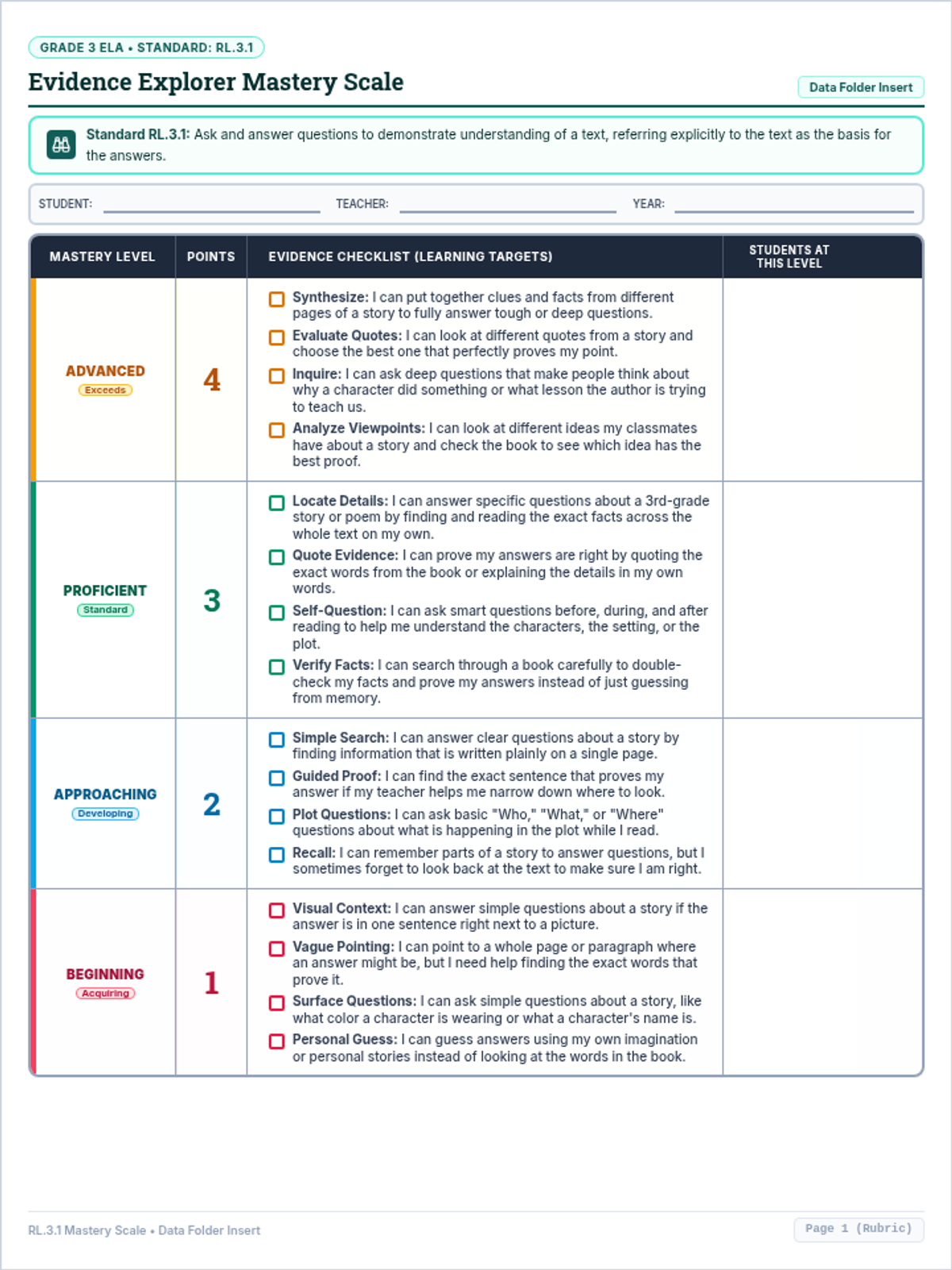
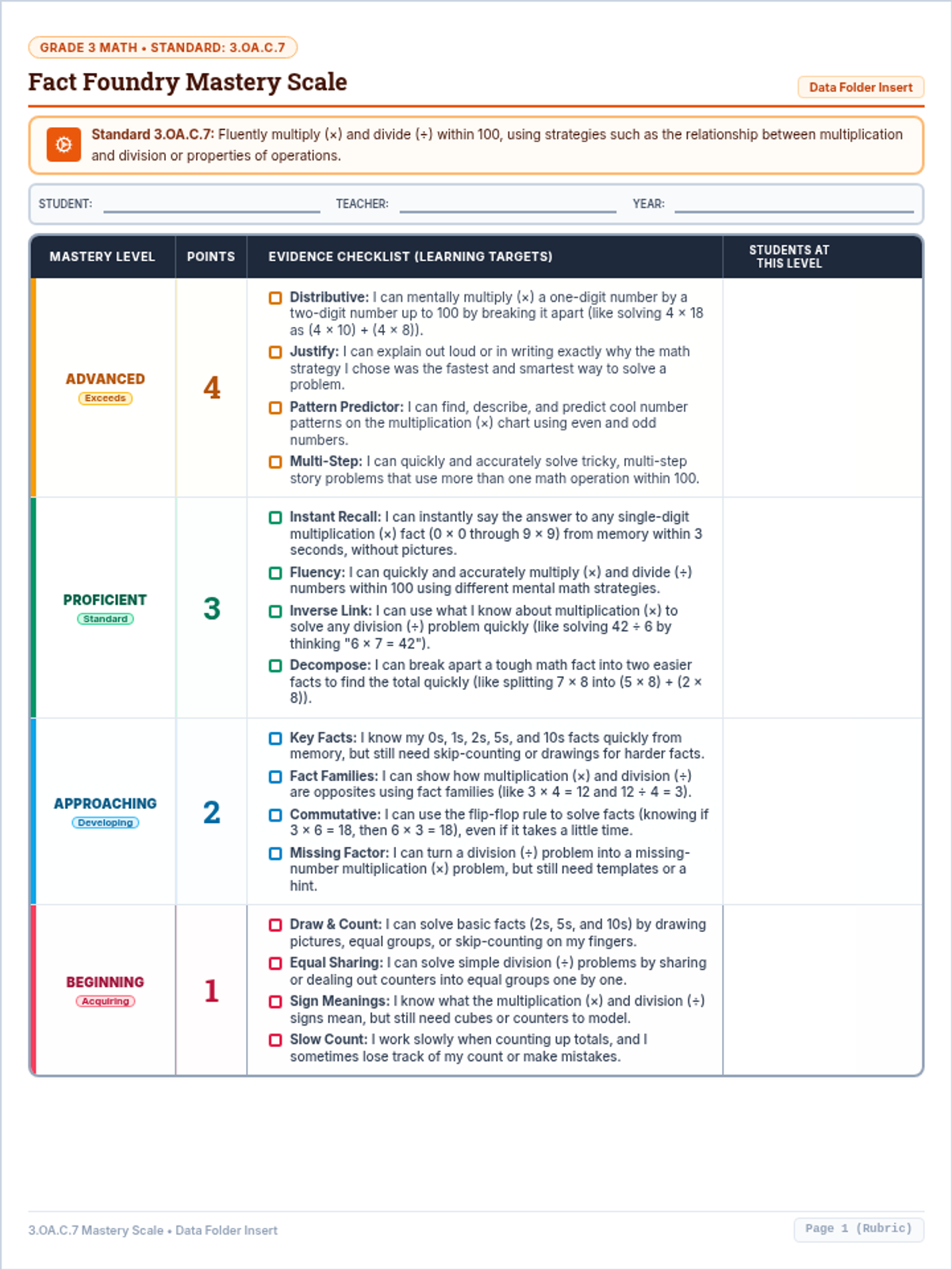
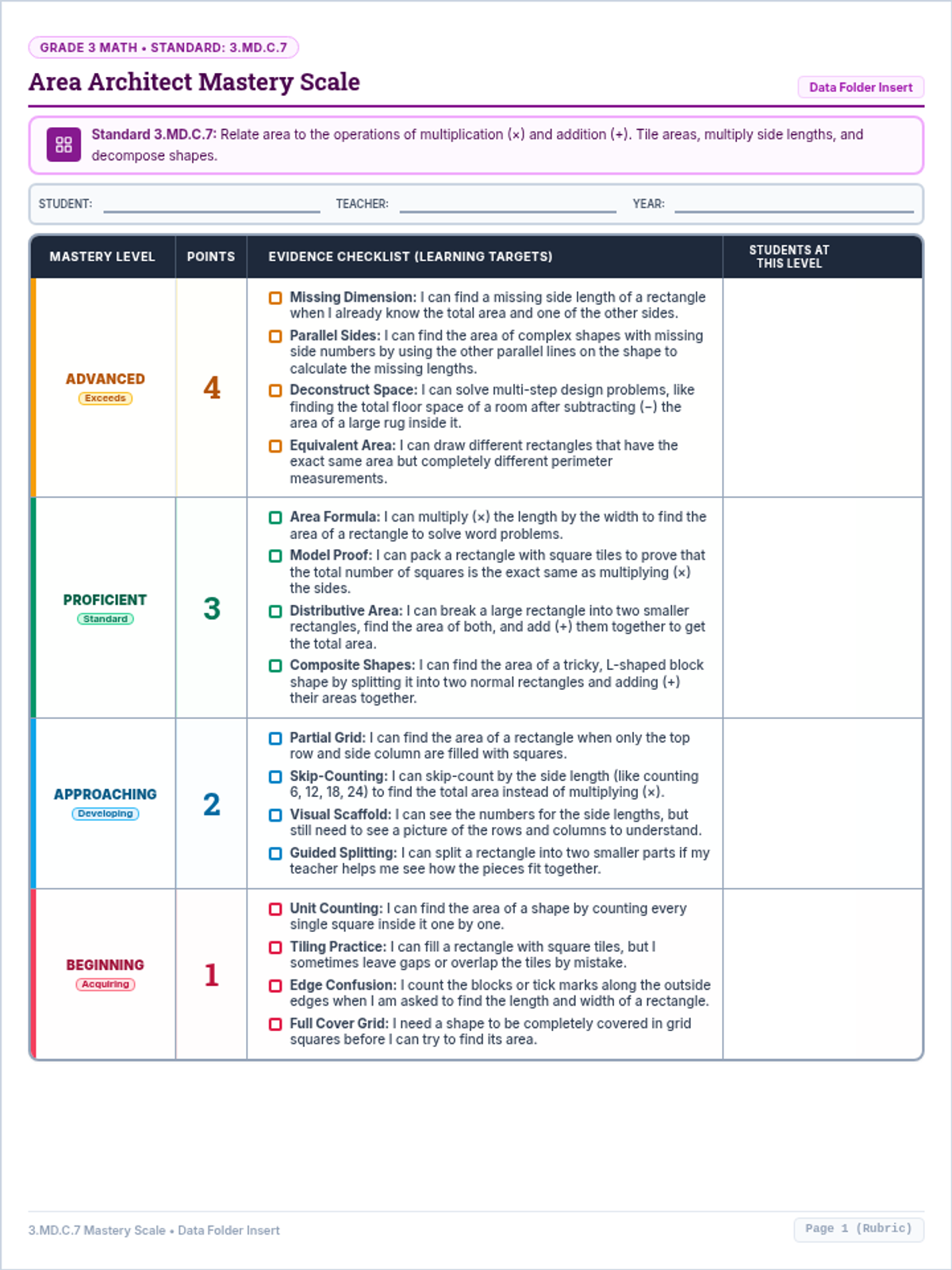
A collection of beautifully designed, compact data folder inserts featuring proficiency scale charts and progress tracking logs for Grade 3 standards.
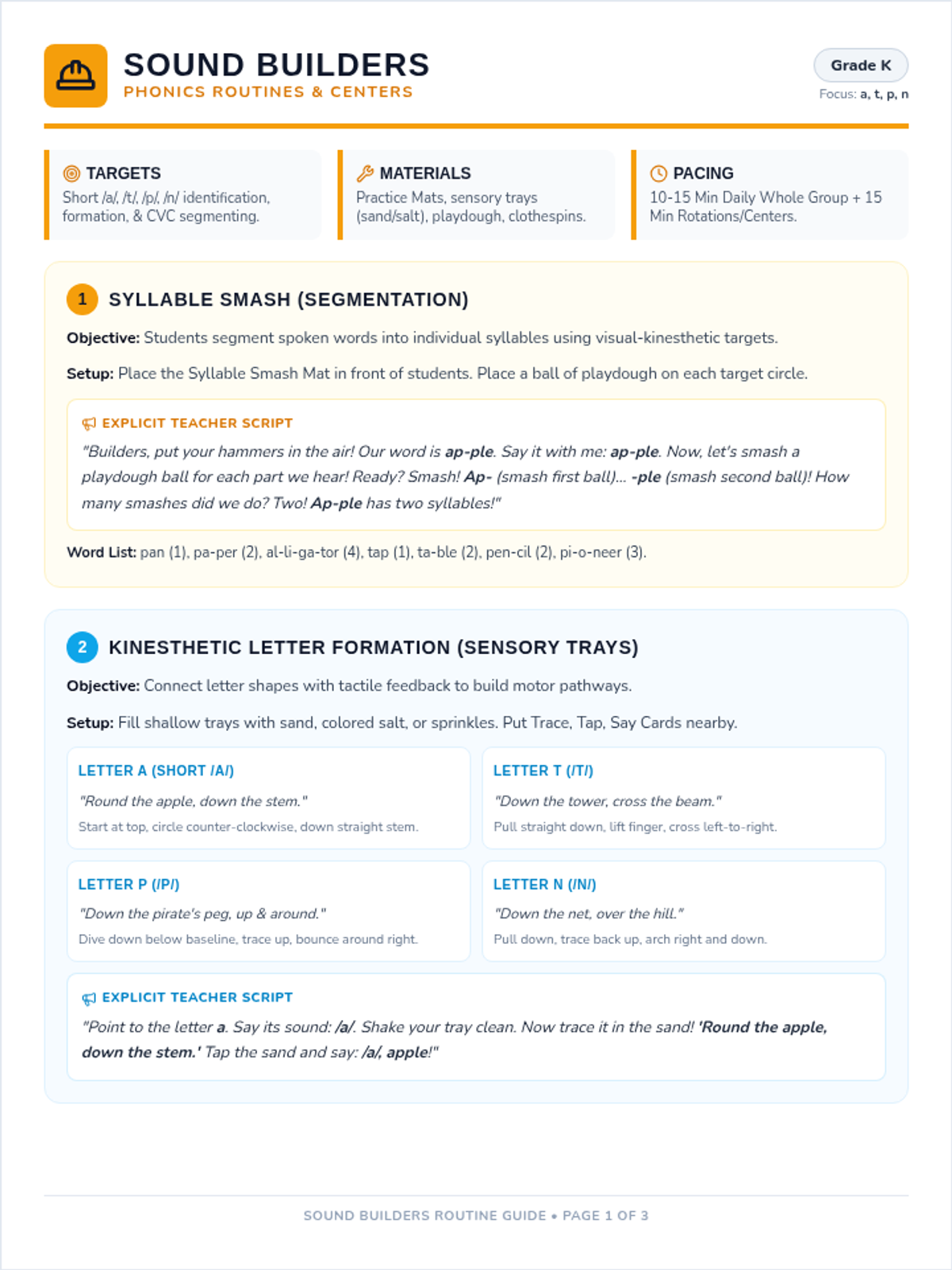
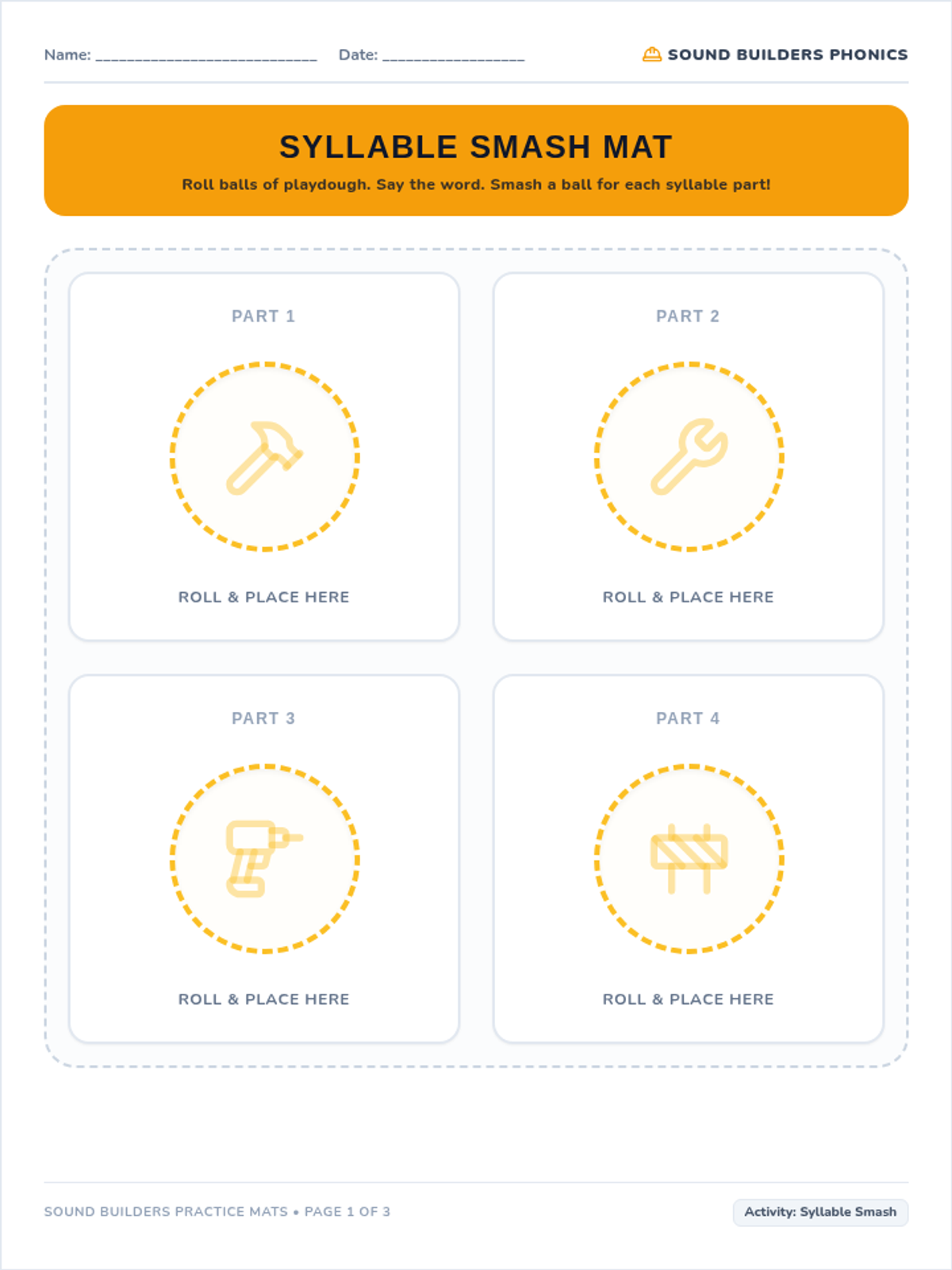
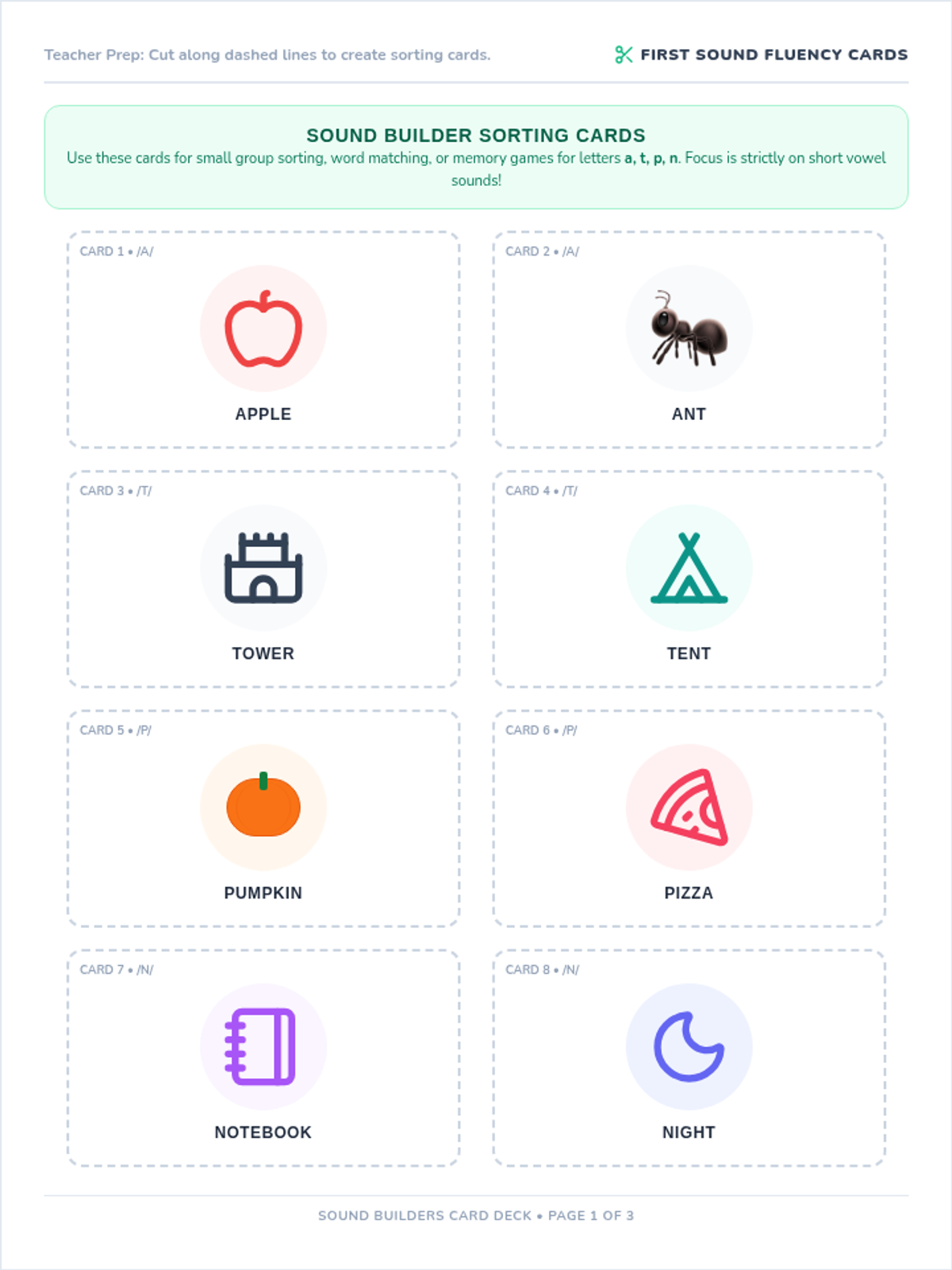
A comprehensive kindergarten phonics lesson focused on establishing sensory and kinesthetic routines for the letters a, t, p, and n. Includes daily whole-group instruction, structured small-group activities, hands-on sensory centers, and printable assessment cards.
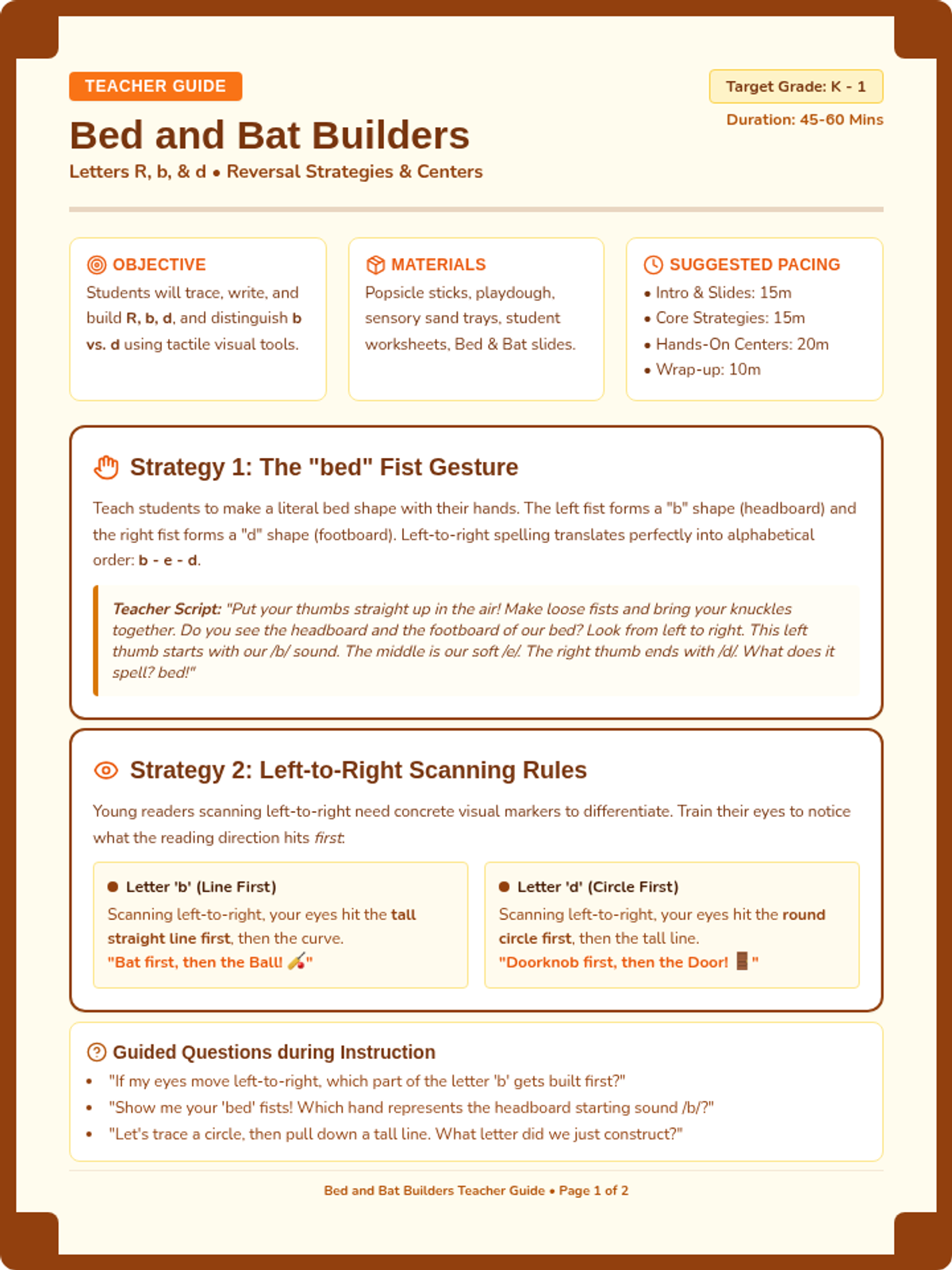
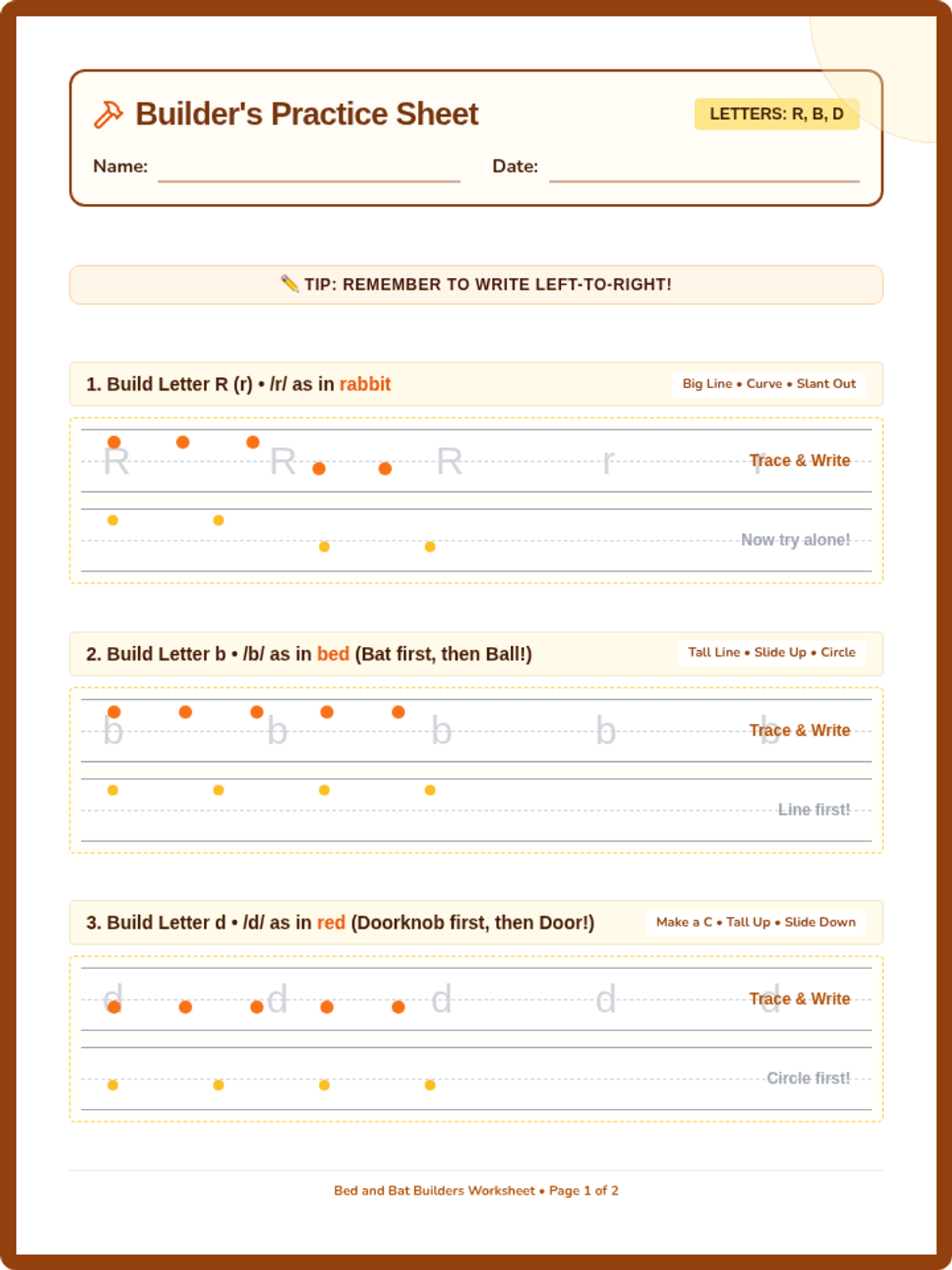
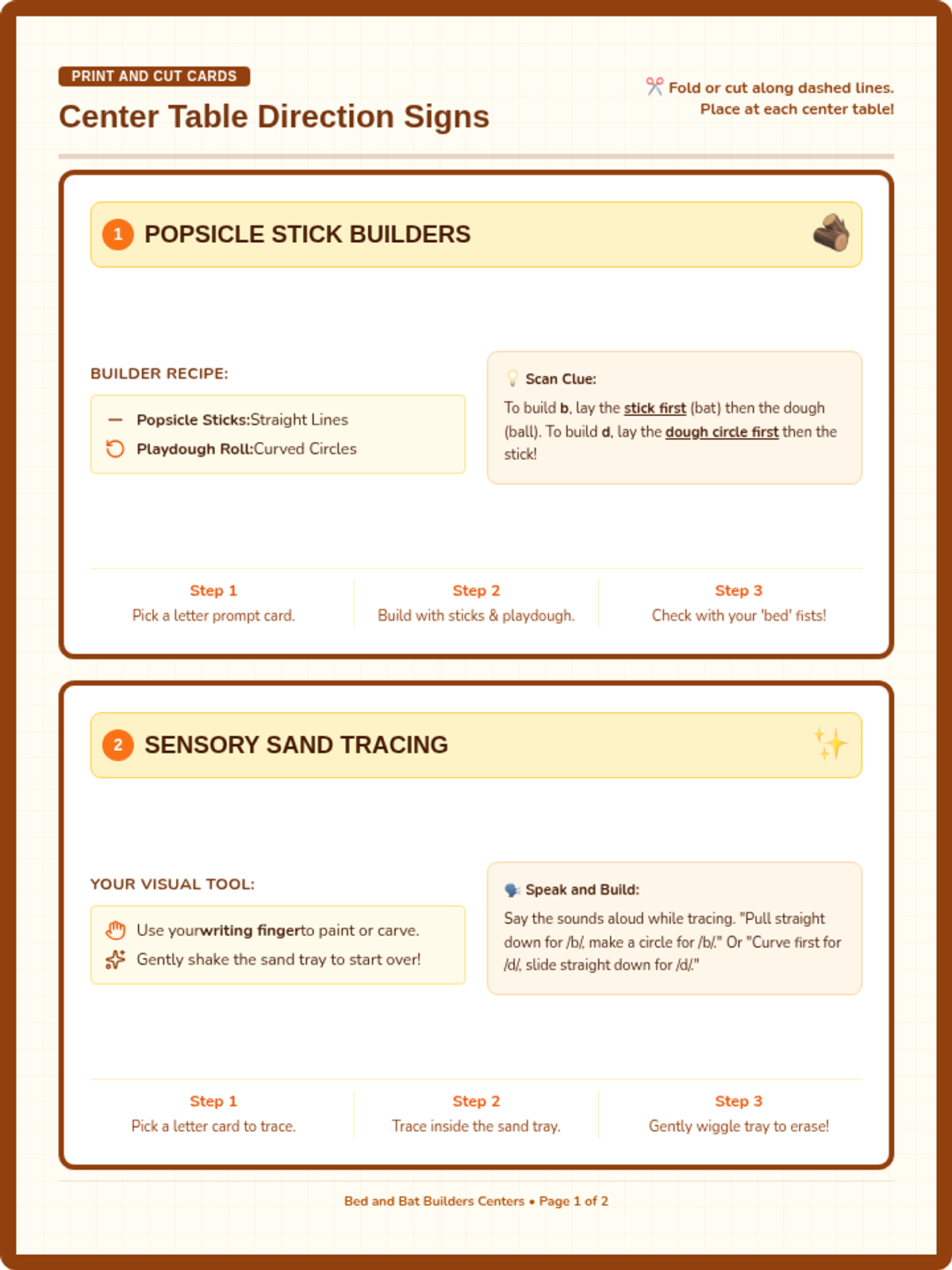
A complete phonics and handwriting lesson focused on teaching letters R, b, and d. It features powerful b/d reversal strategies (the 'bed' hand gesture and left-to-right line-first vs. circle-first clues), an interactive circle map activity, and hands-on tactile and sensory building centers.
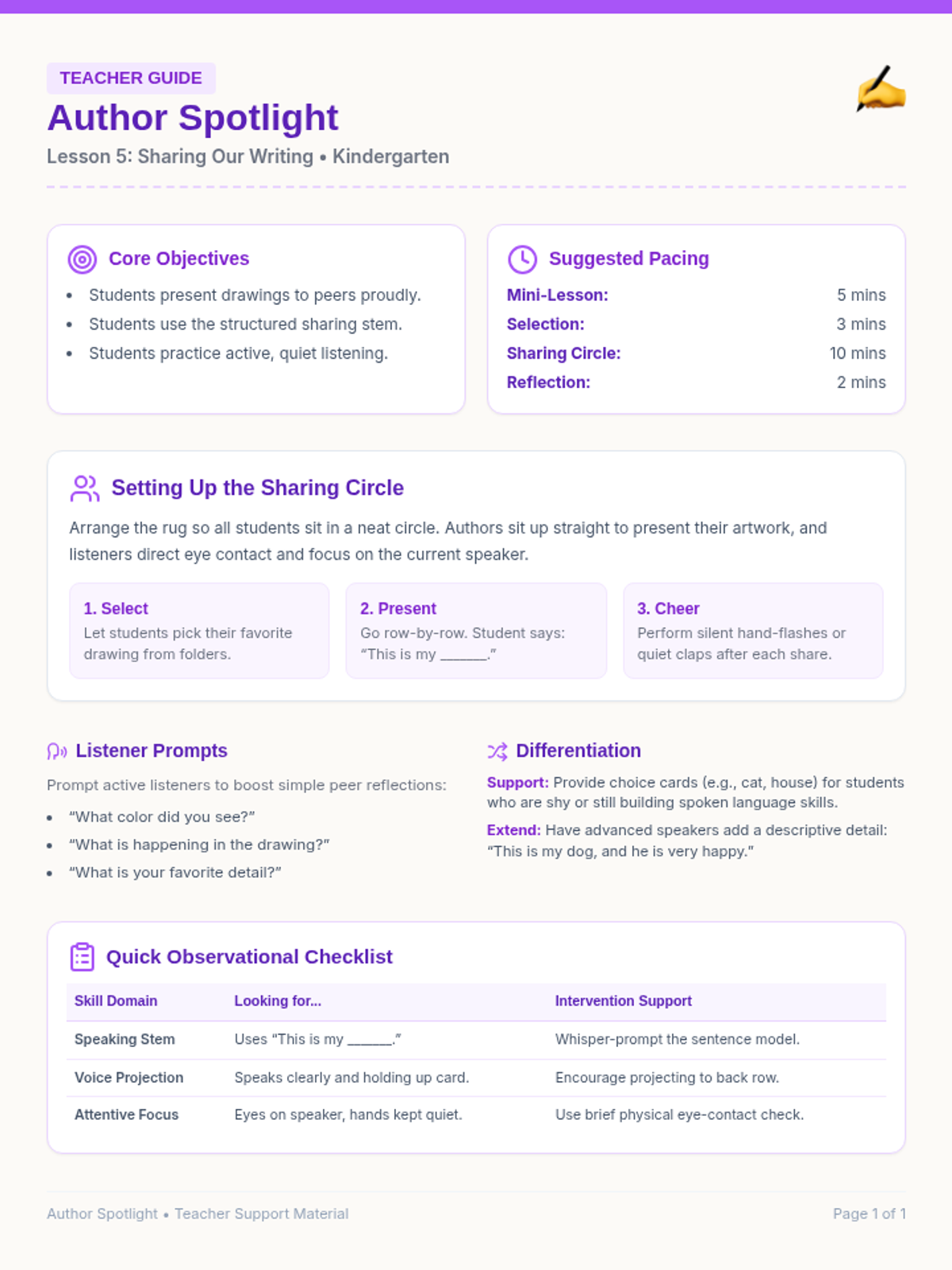
A kindergarten lesson focused on teaching young writers how to share their work proudly and listen attentively to their peers, utilizing structured sentence stems and active sharing routines.
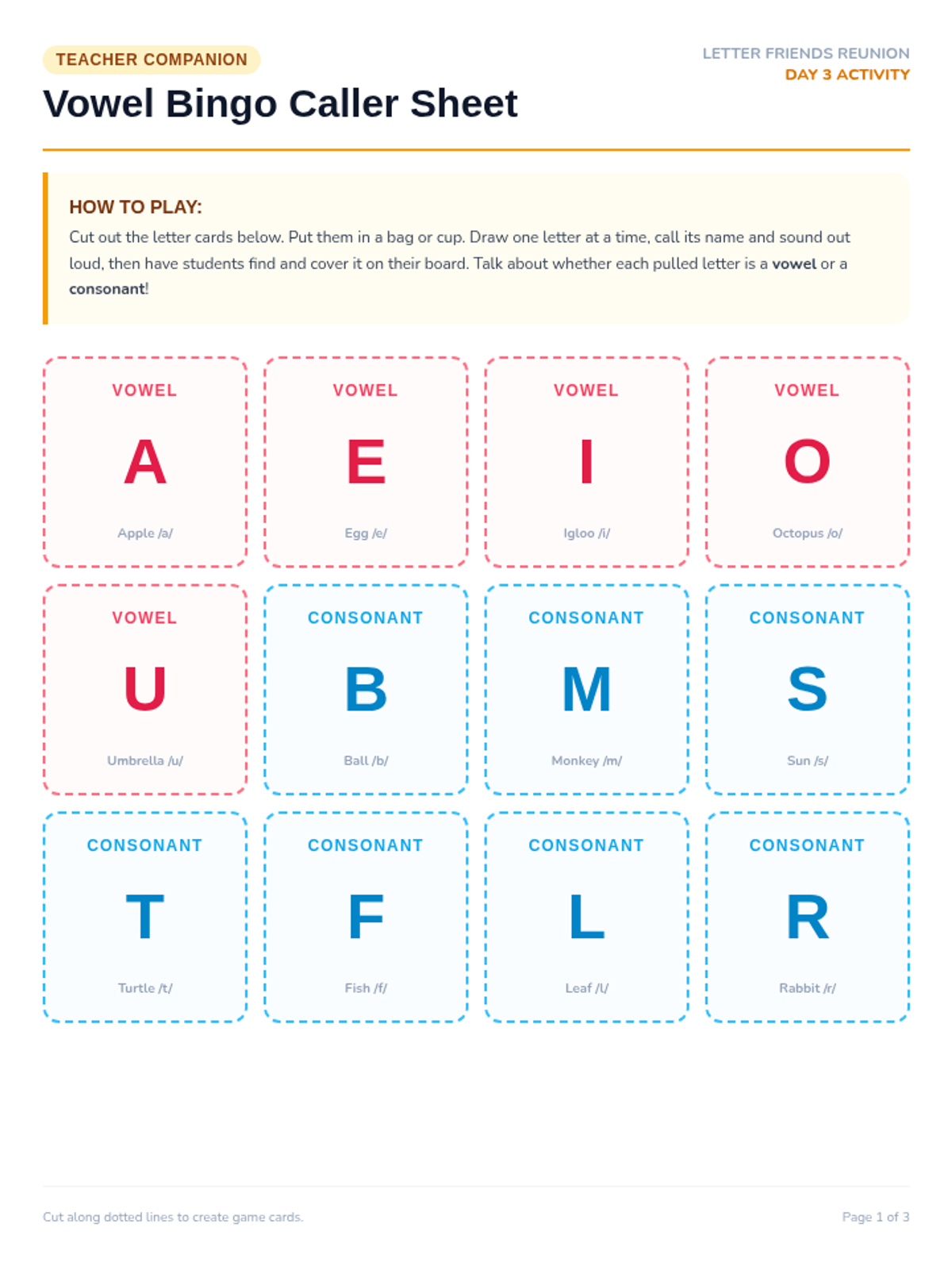
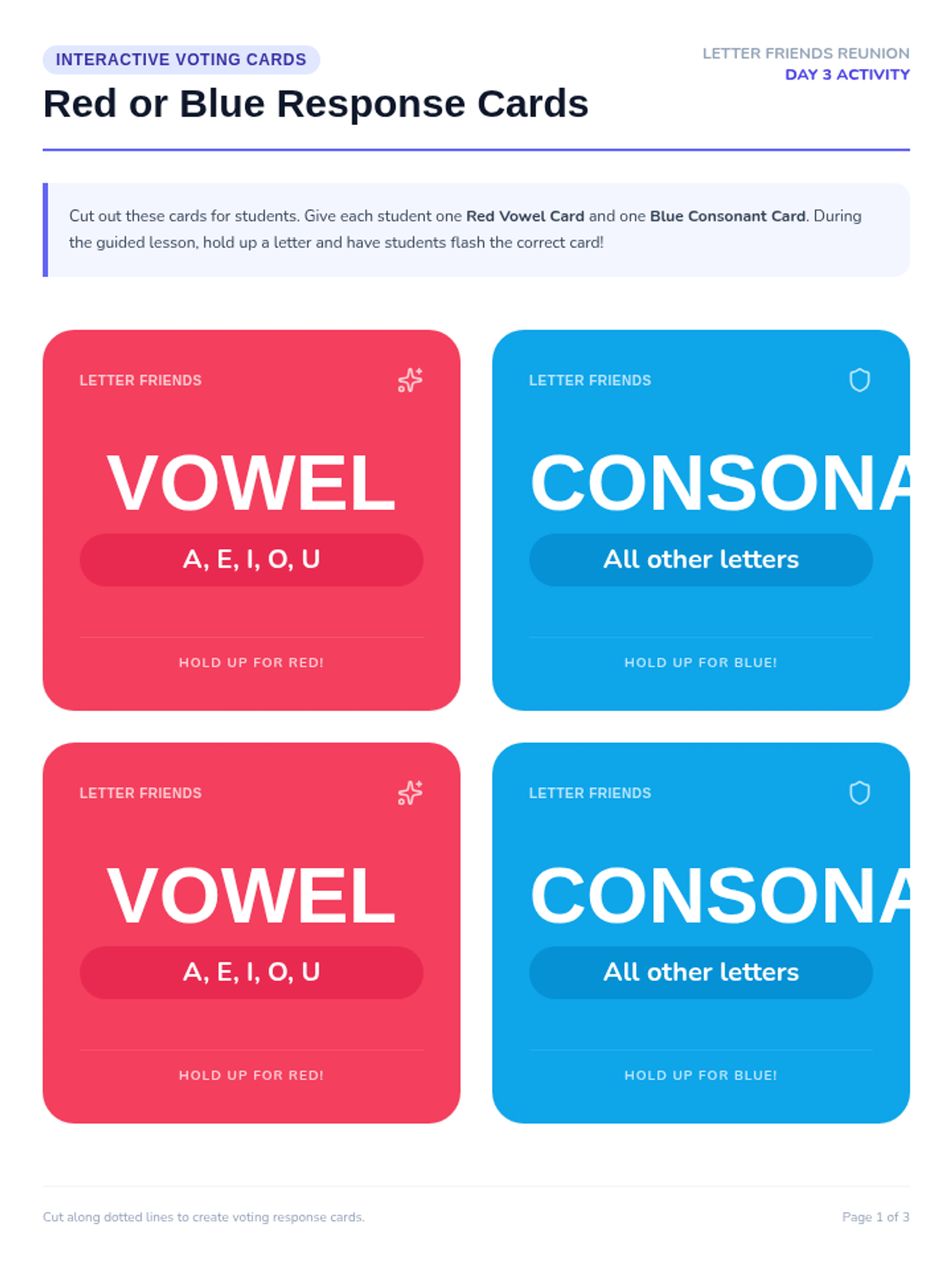
A playful, active kindergarten lesson that introduces students to the two families of the alphabet: vowels (A, E, I, O, U) and consonants. Through music, interactive card sorting, and hands-on magnetic letter games, students learn to distinguish between these two letter types.
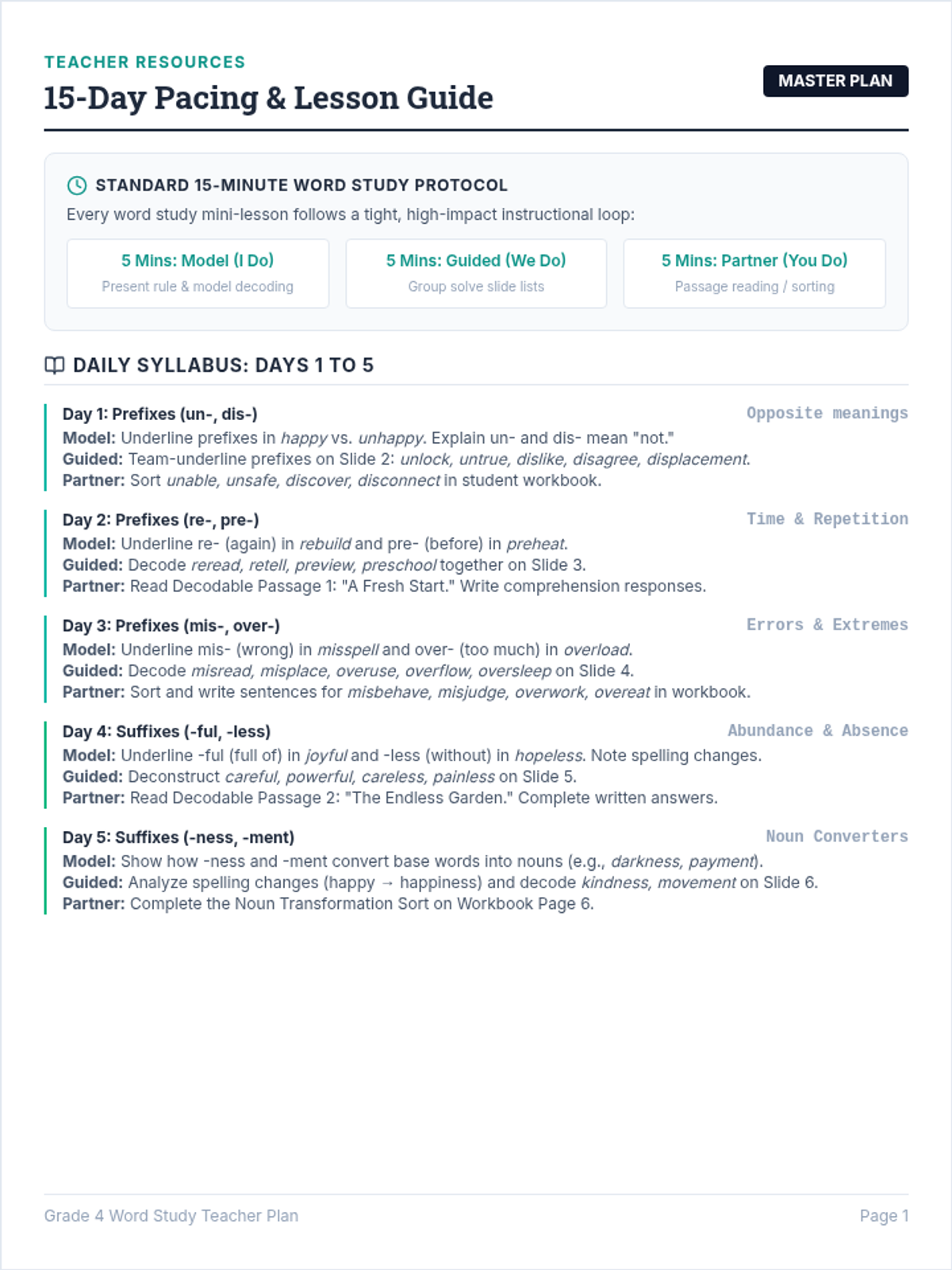
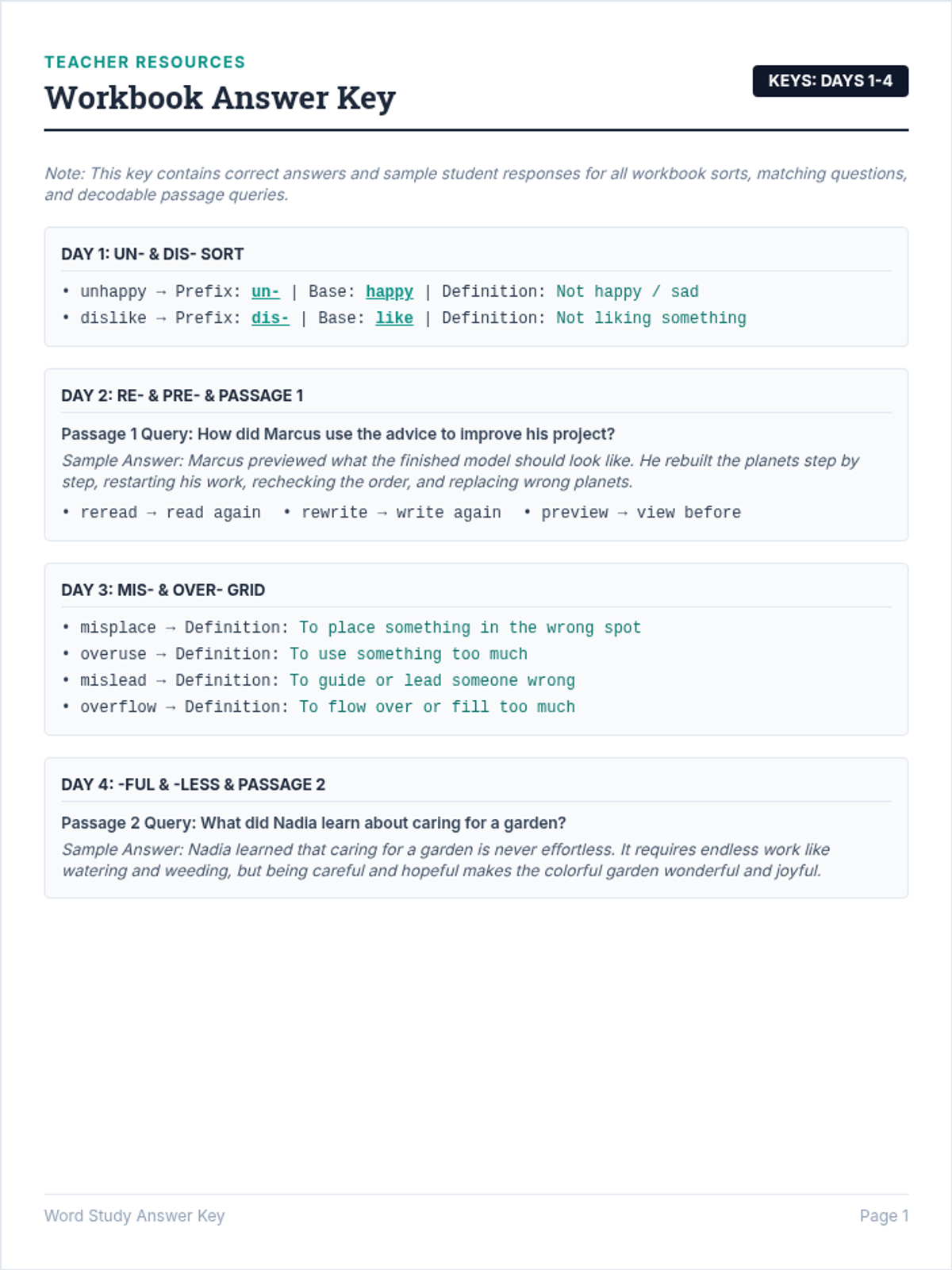
A comprehensive 15-day word study unit for Grade 4 focused on prefixes, suffixes, Latin roots, compound words, homophones, synonyms/antonyms, and context clues. Includes a master slide deck and a complete student workbook.
A kindergarten writing lesson introducing essential tools (crayons, pencils, folders), classroom routines for managing supplies, and an open-ended free drawing and labeling task.
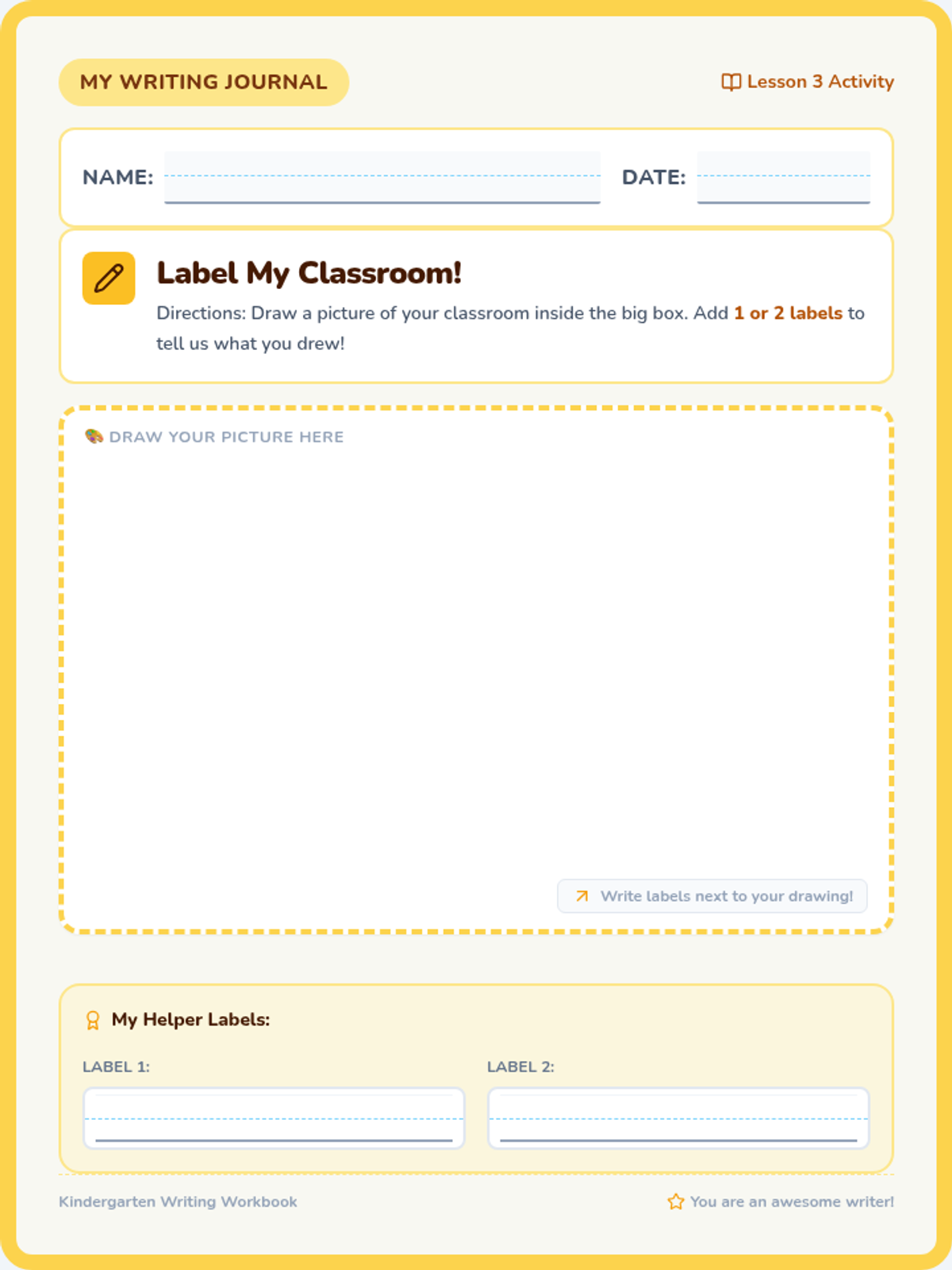
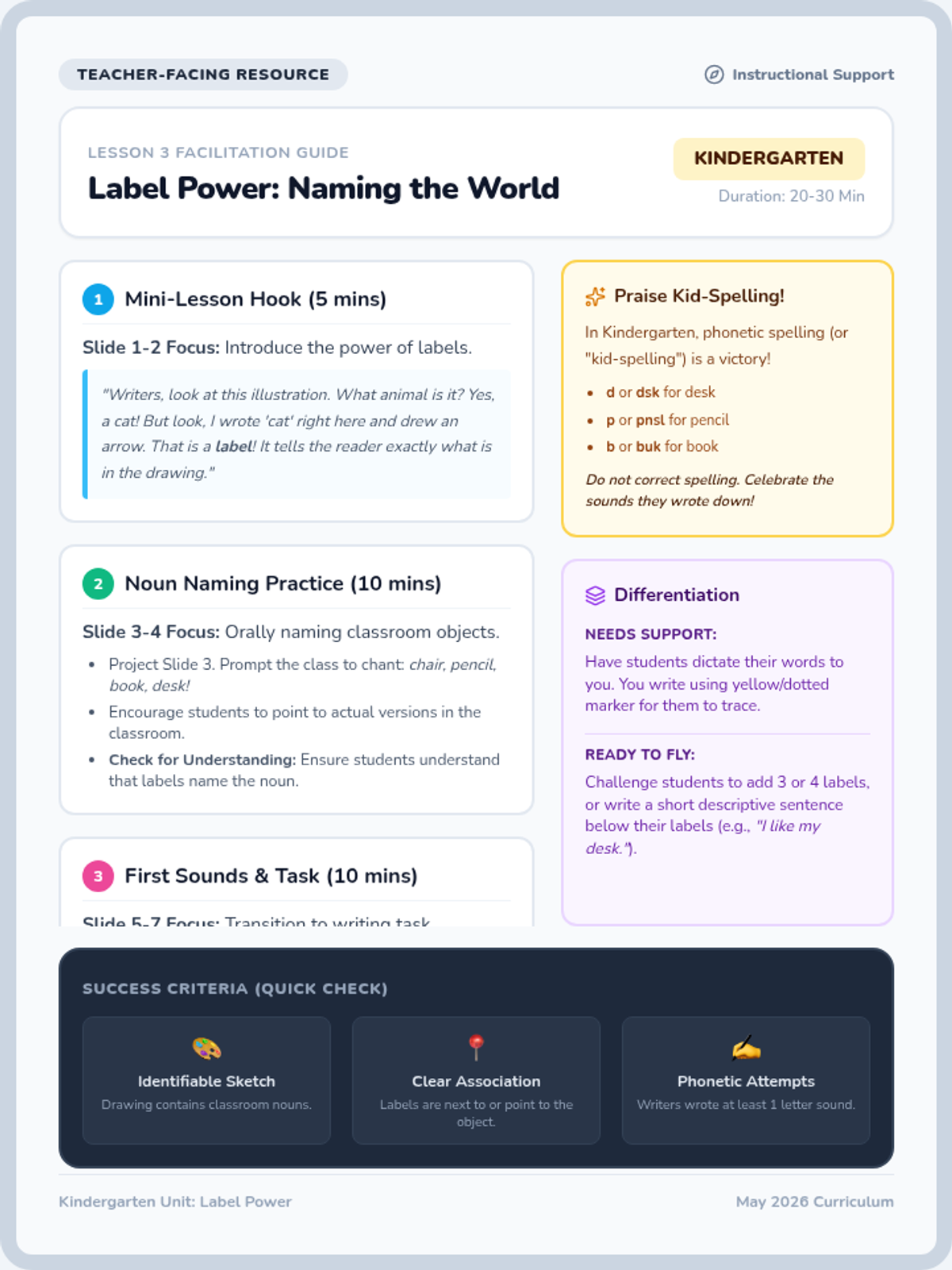
A kindergarten writing lesson teaching students how writers use labels to help readers understand their drawings, featuring oral naming of school objects and a drawing task with labels.
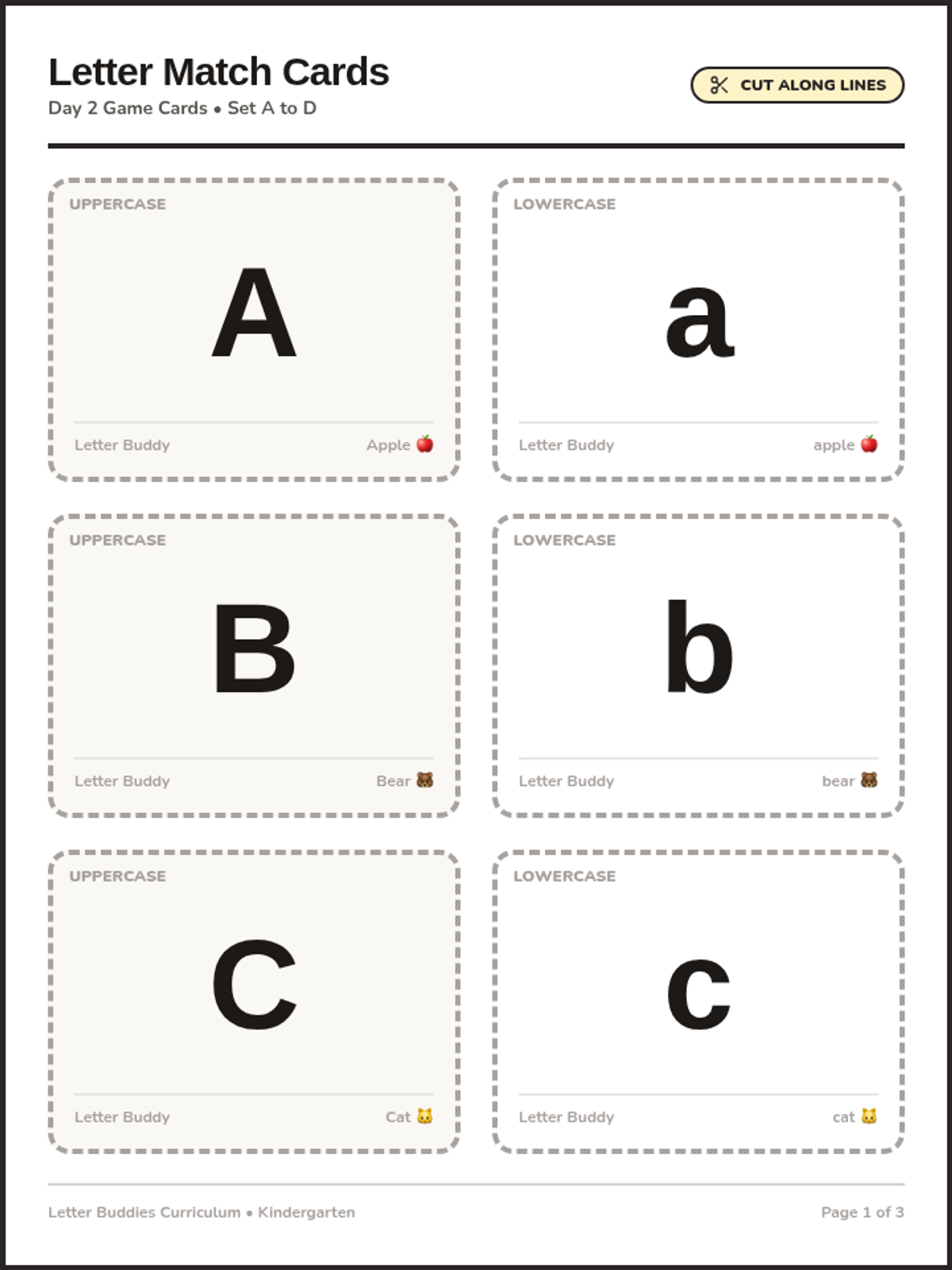
A kindergarten lesson focusing on comparing and matching uppercase and lowercase letters through sensory play, a movement-based matching game, and a Mo Willems inspired interactive read-aloud.
A high-energy, visual lesson for Kindergarten students to learn the relationship between uppercase and lowercase letters through sensory tracing, matching games, and literature.
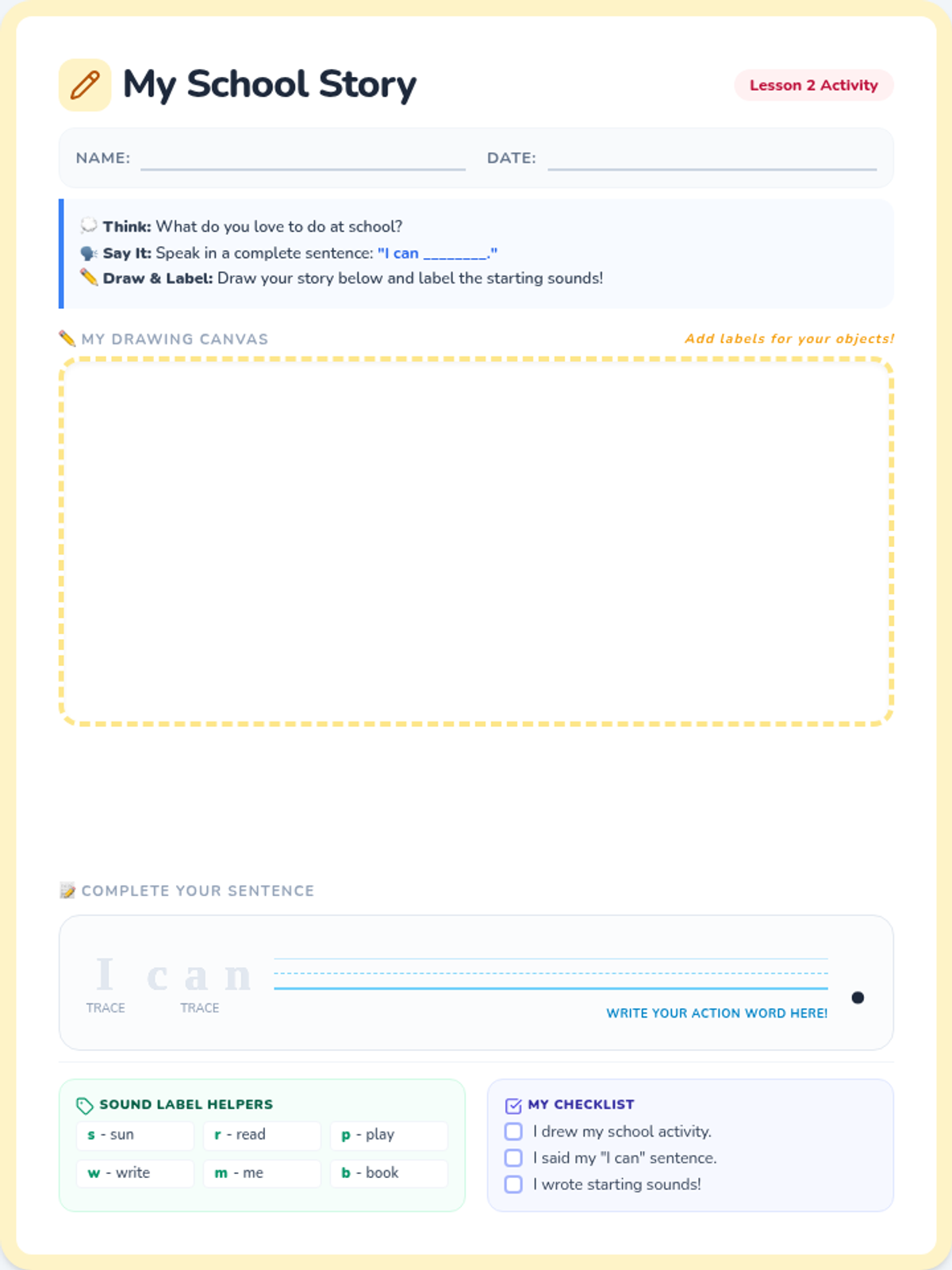
A foundational writing lesson for early learners exploring how pictures can tell stories. Students practice speaking in complete sentences before drawing themselves doing an activity at school.
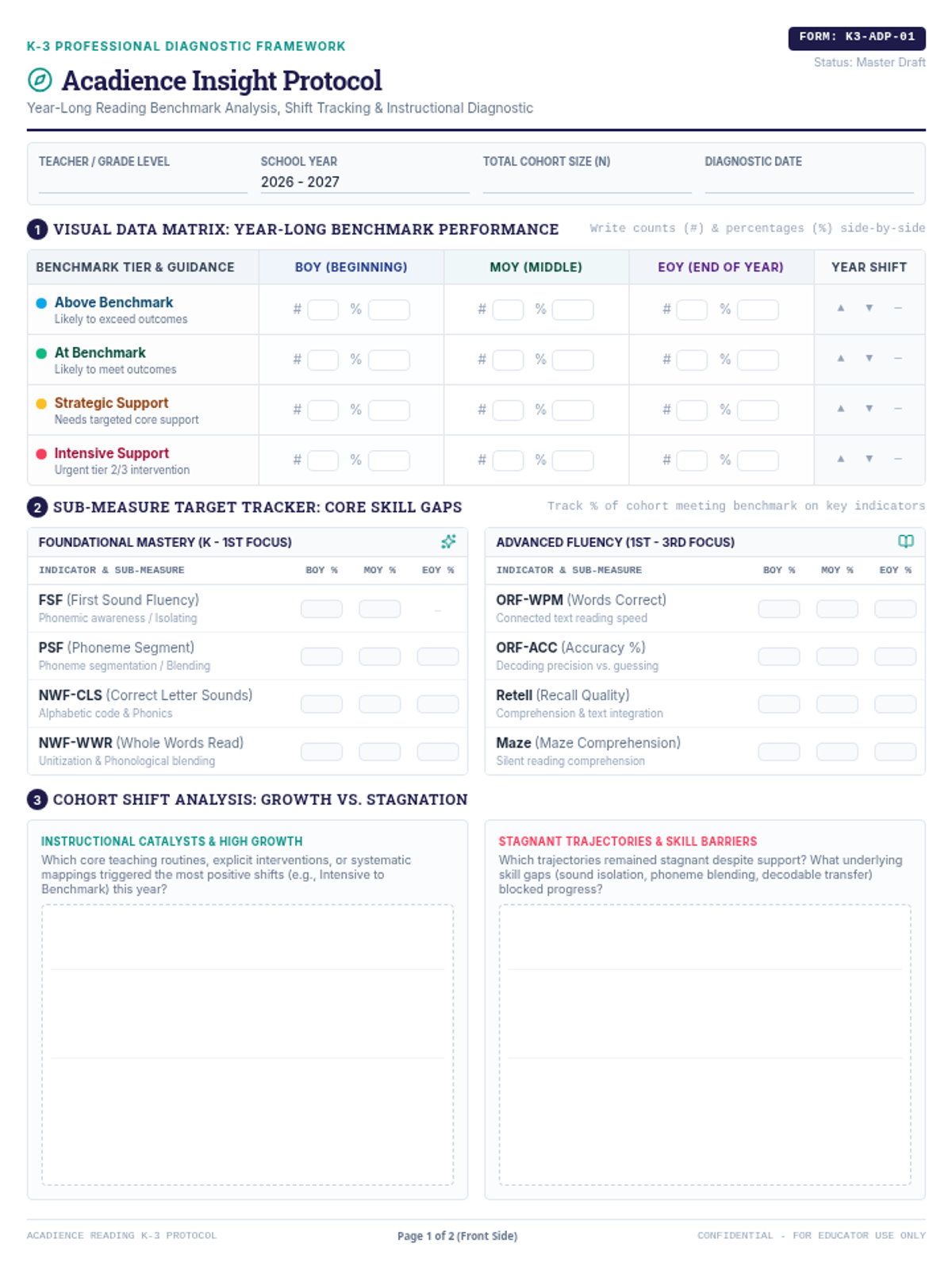
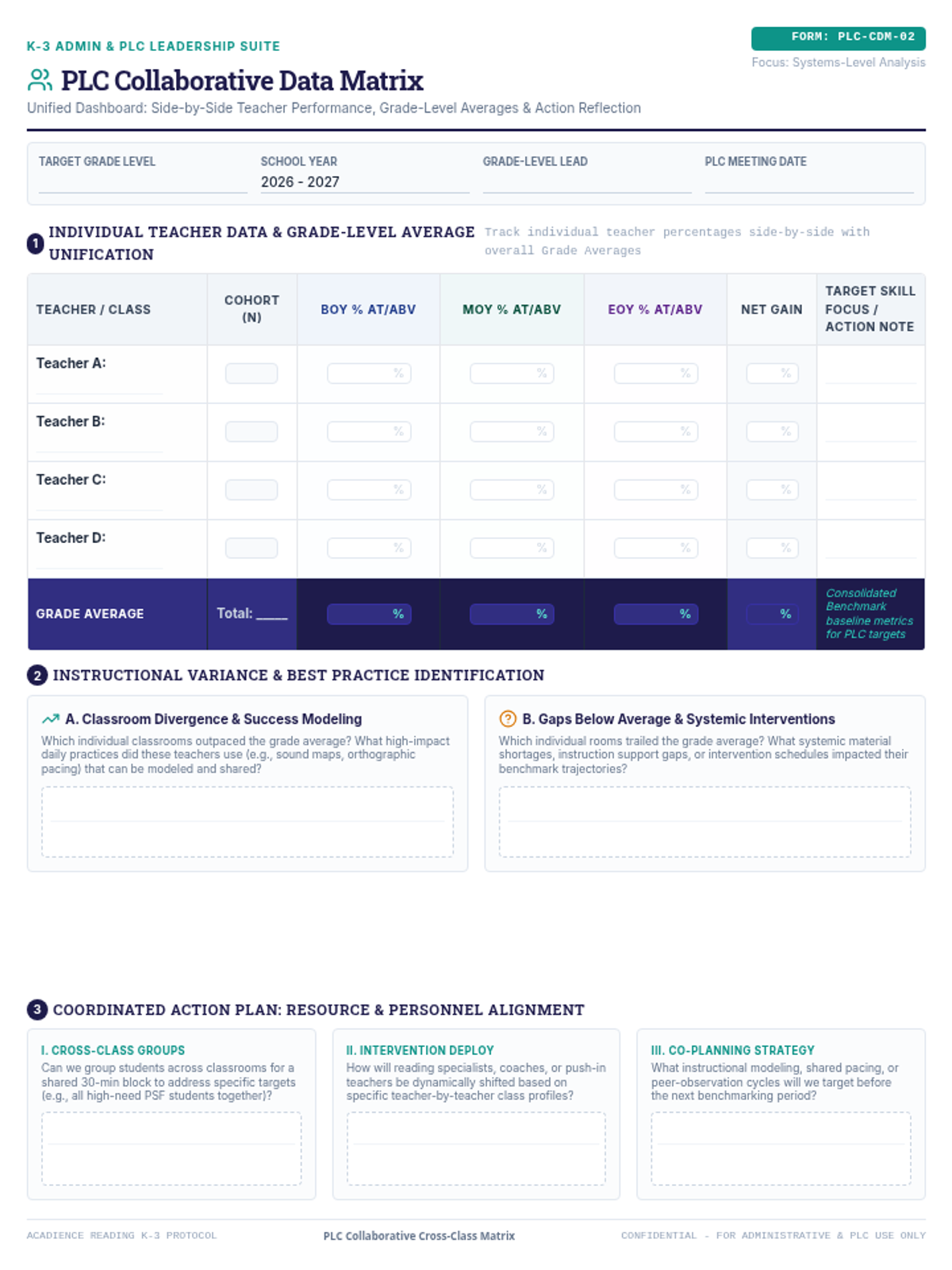
A professional data analysis lesson framework and diagnostic guide to help K-3 educators dissect Acadience Reading benchmarks, identify systemic teaching gaps, and design proactive prevention plans for the upcoming school year.
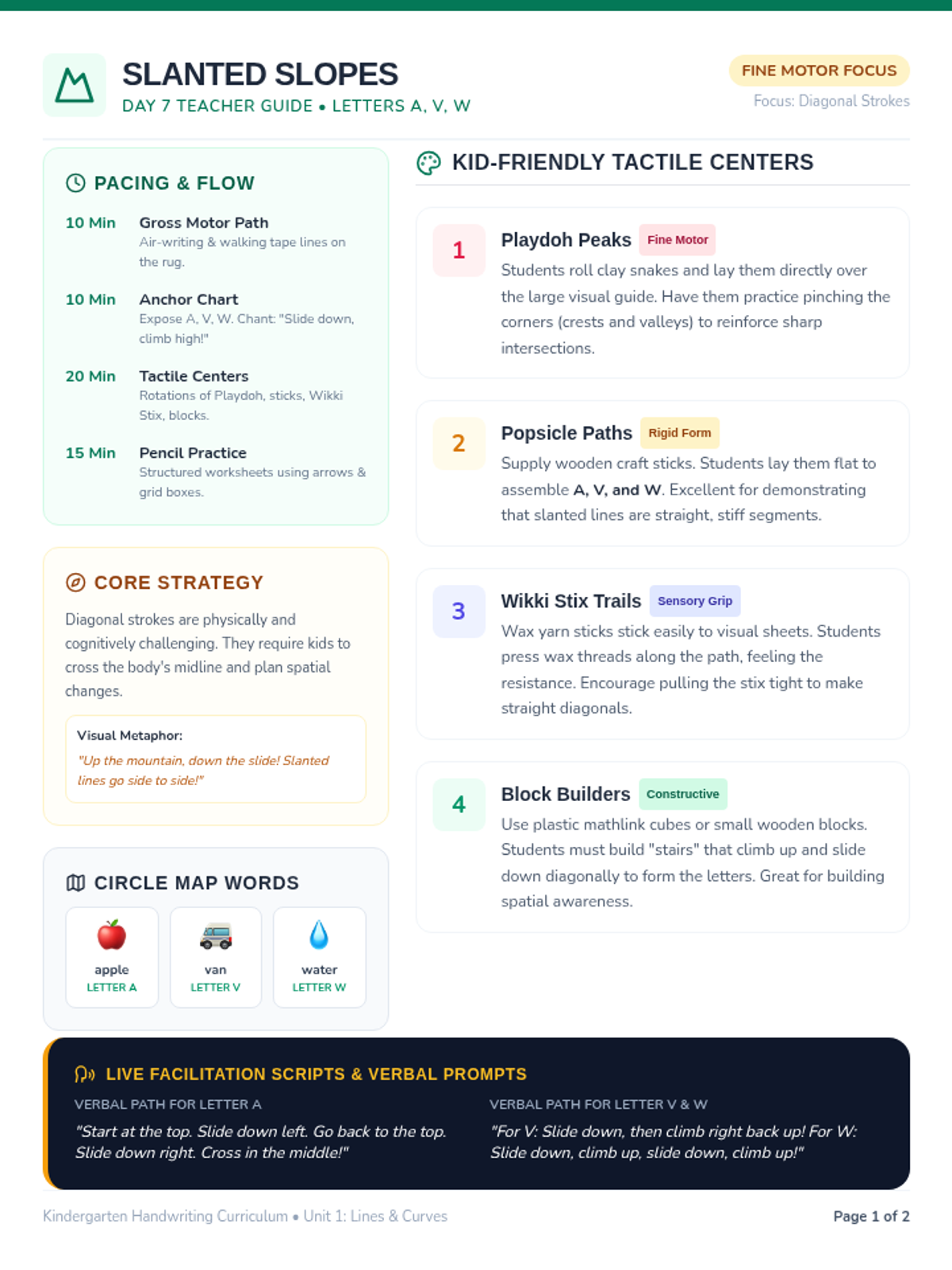
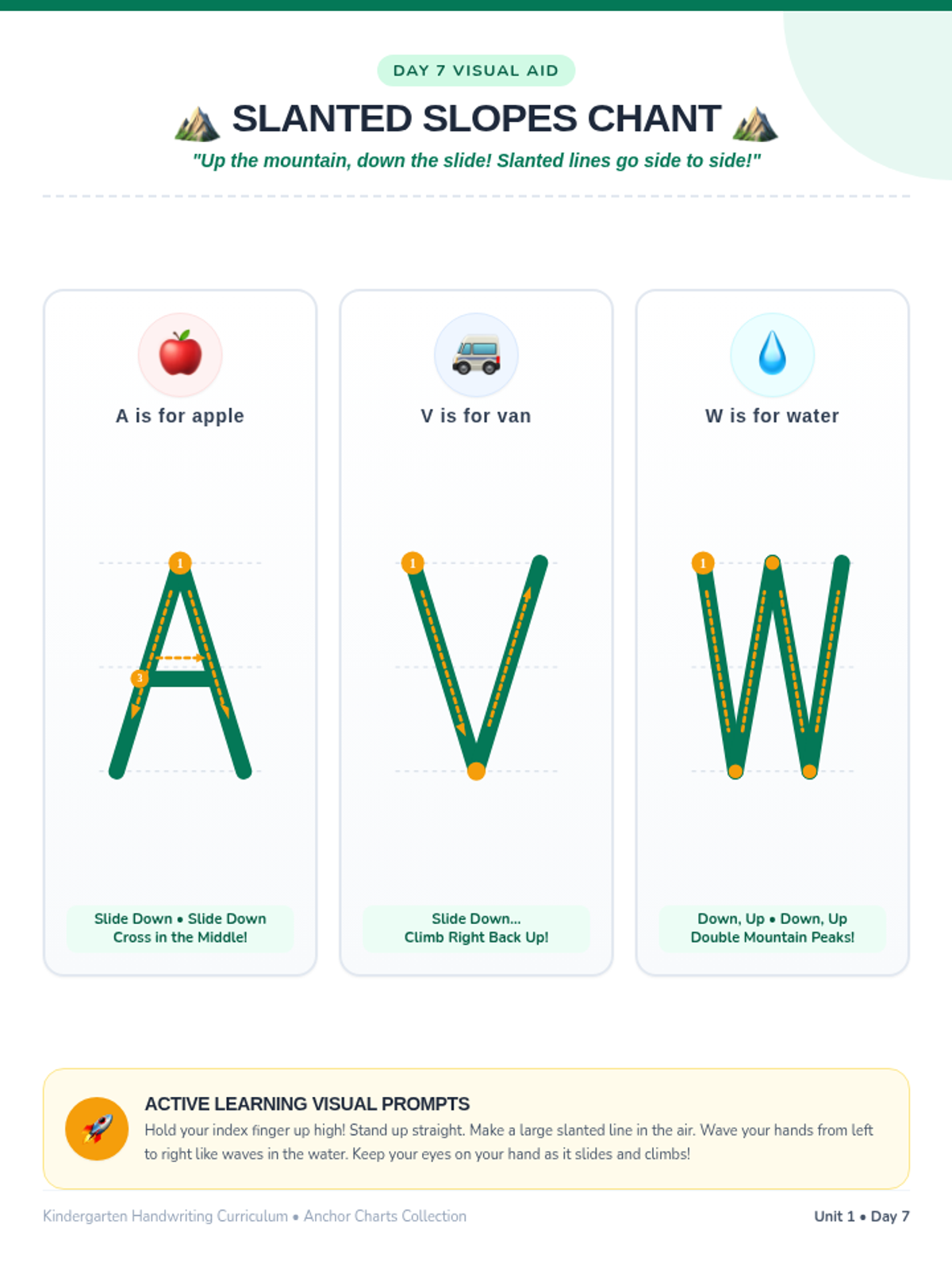
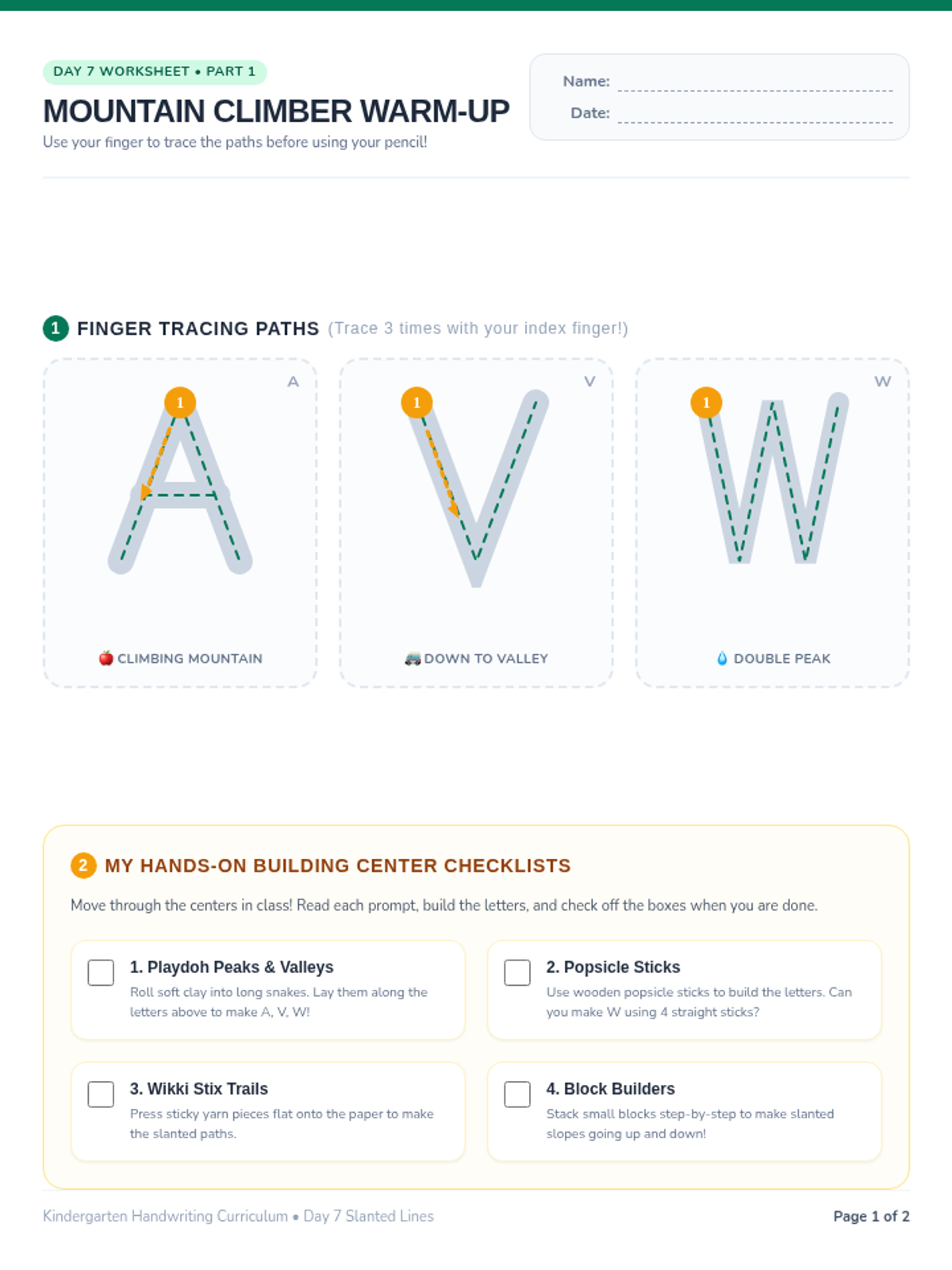
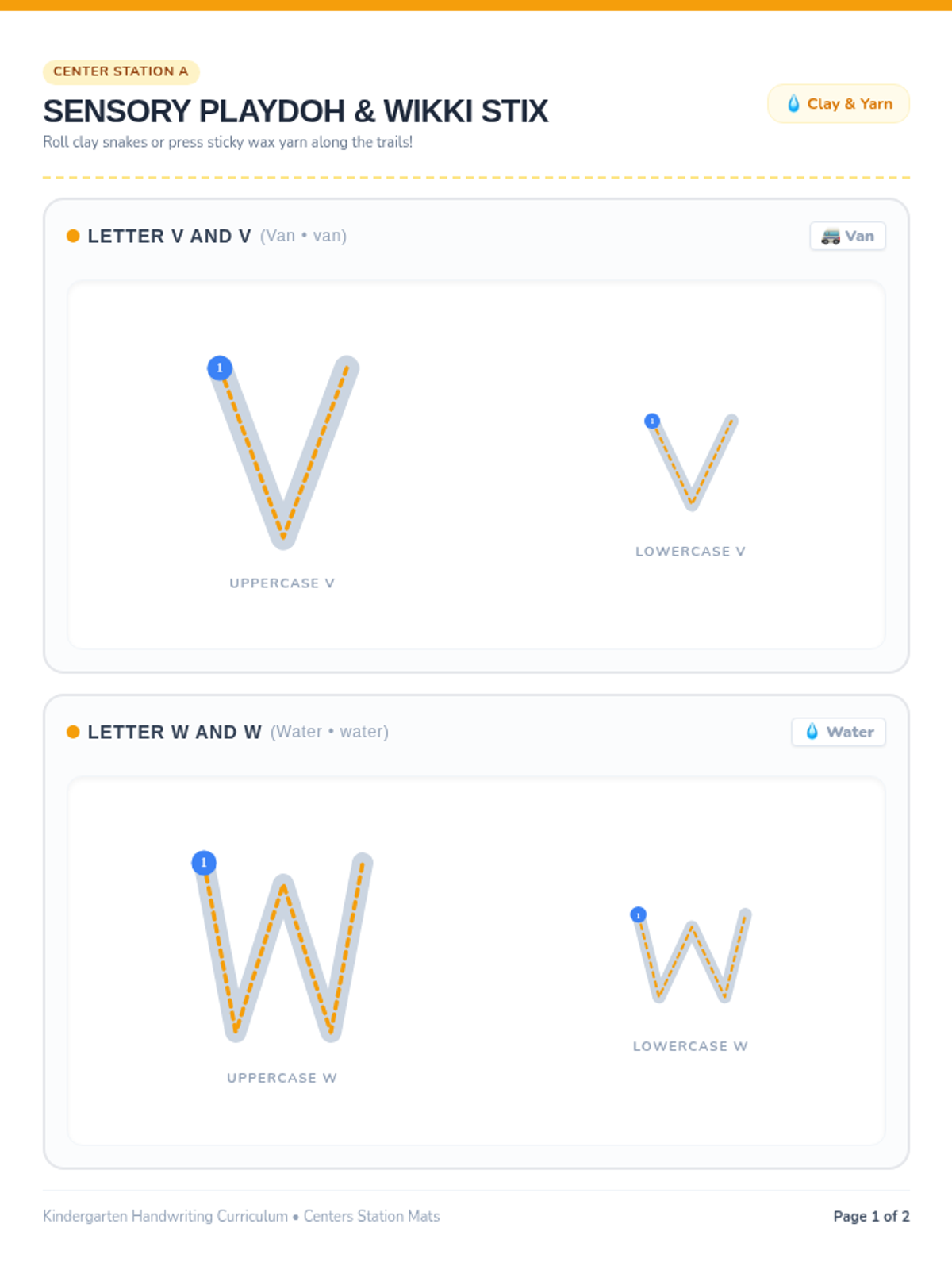
A hands-on, multi-sensory lesson focusing on diagonal strokes and letters A, V, and W. Students use gross motor paths, tactile building mats, and structured worksheets to master slanted lines.
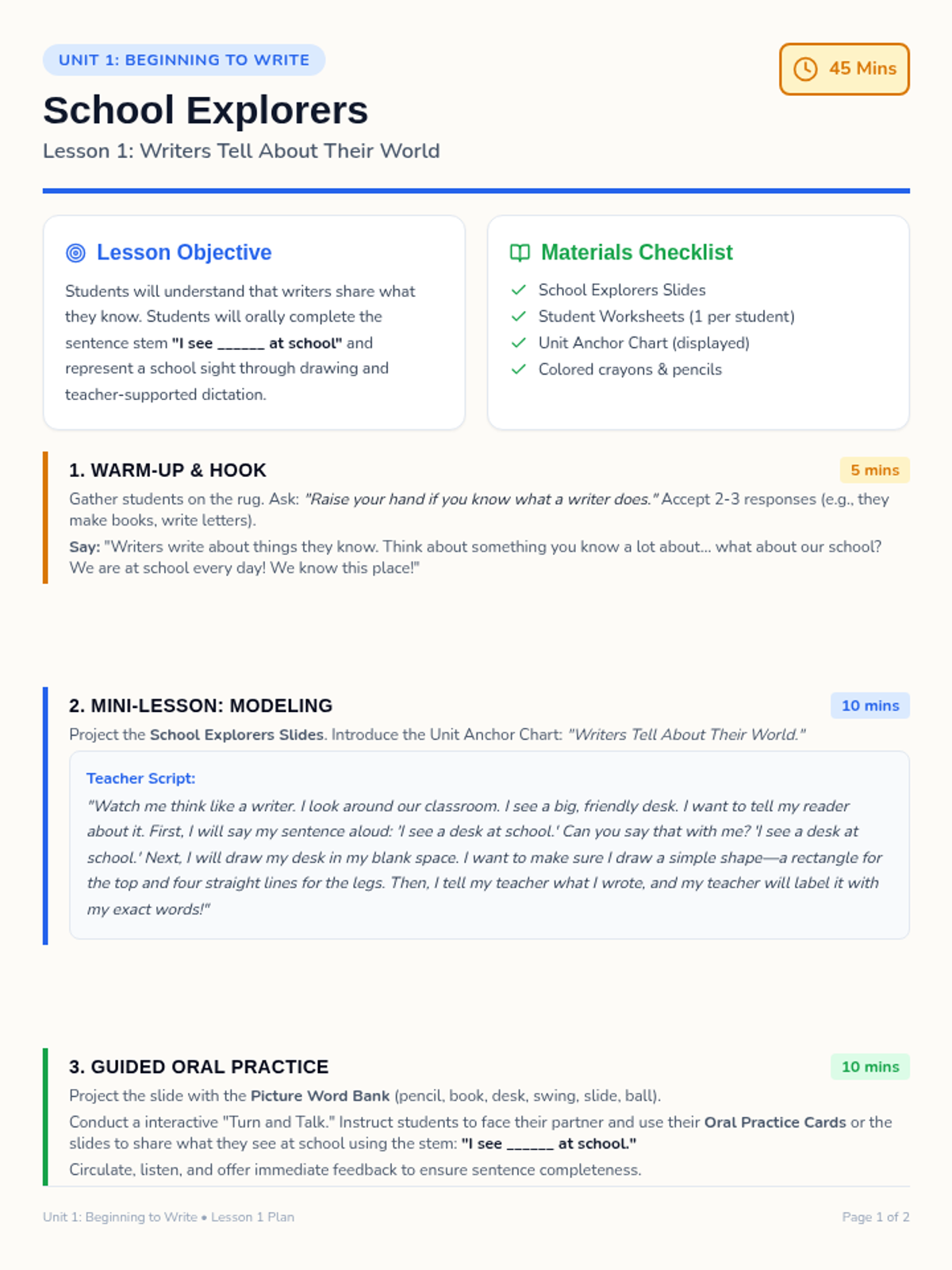
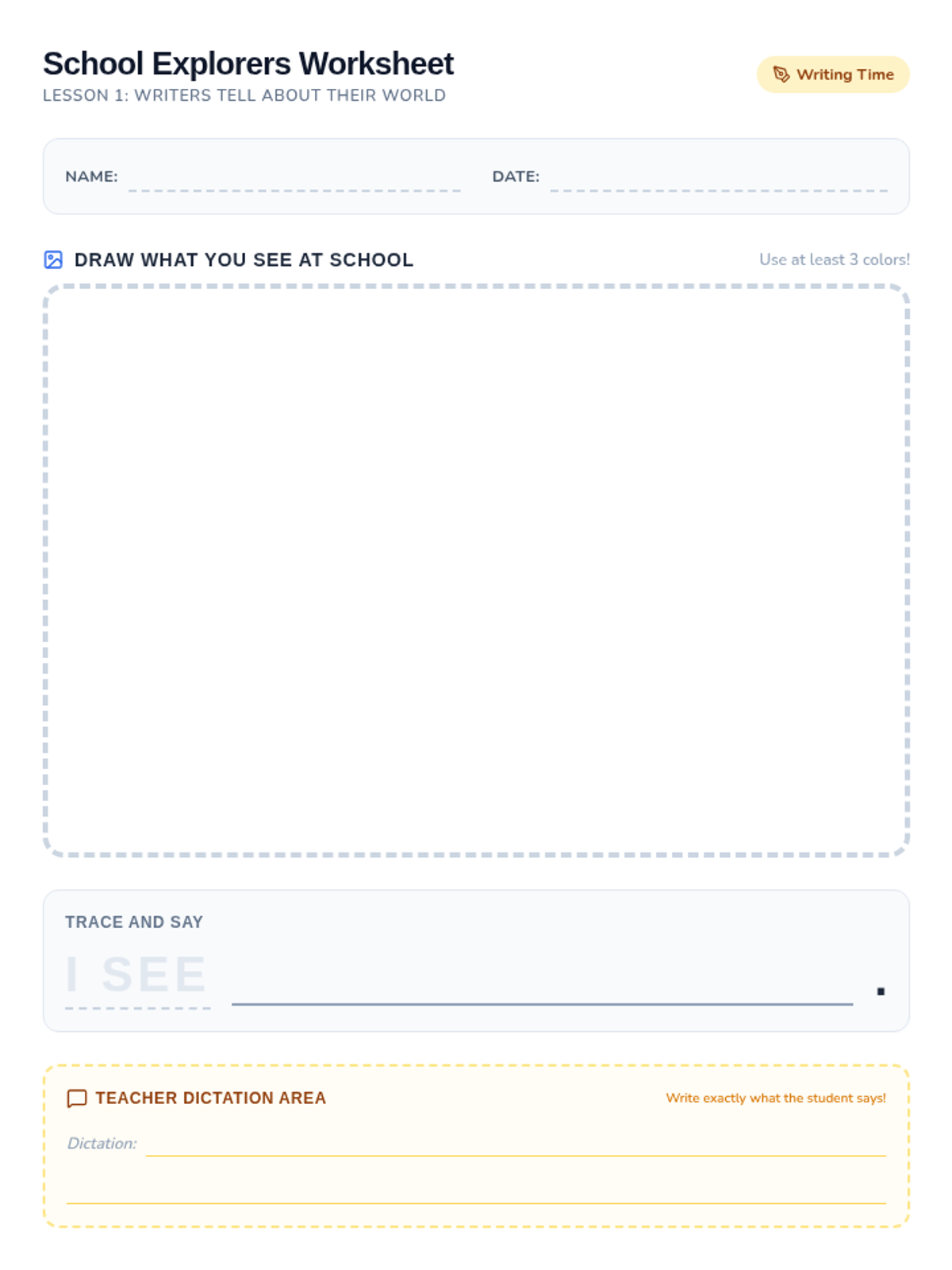
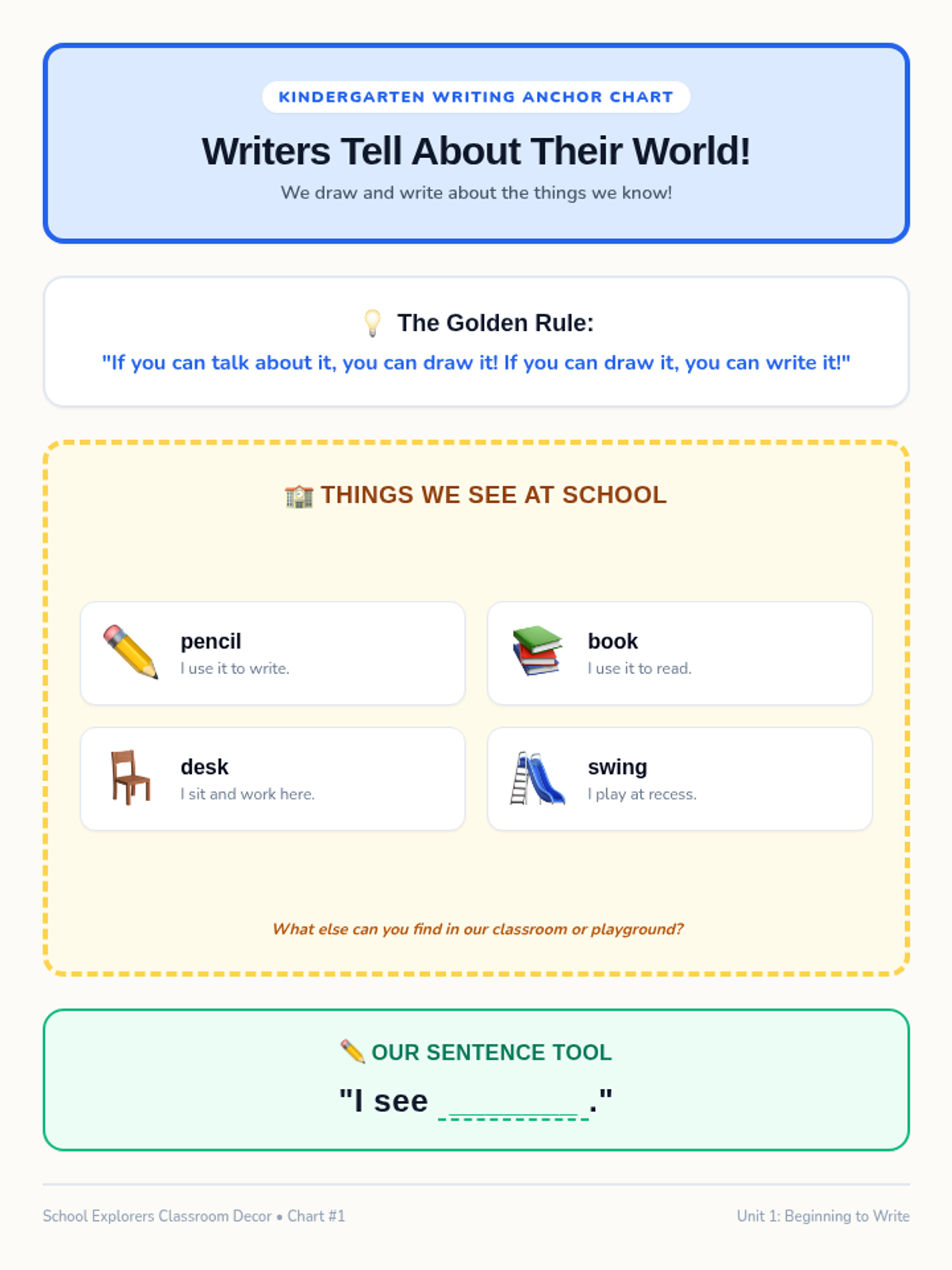
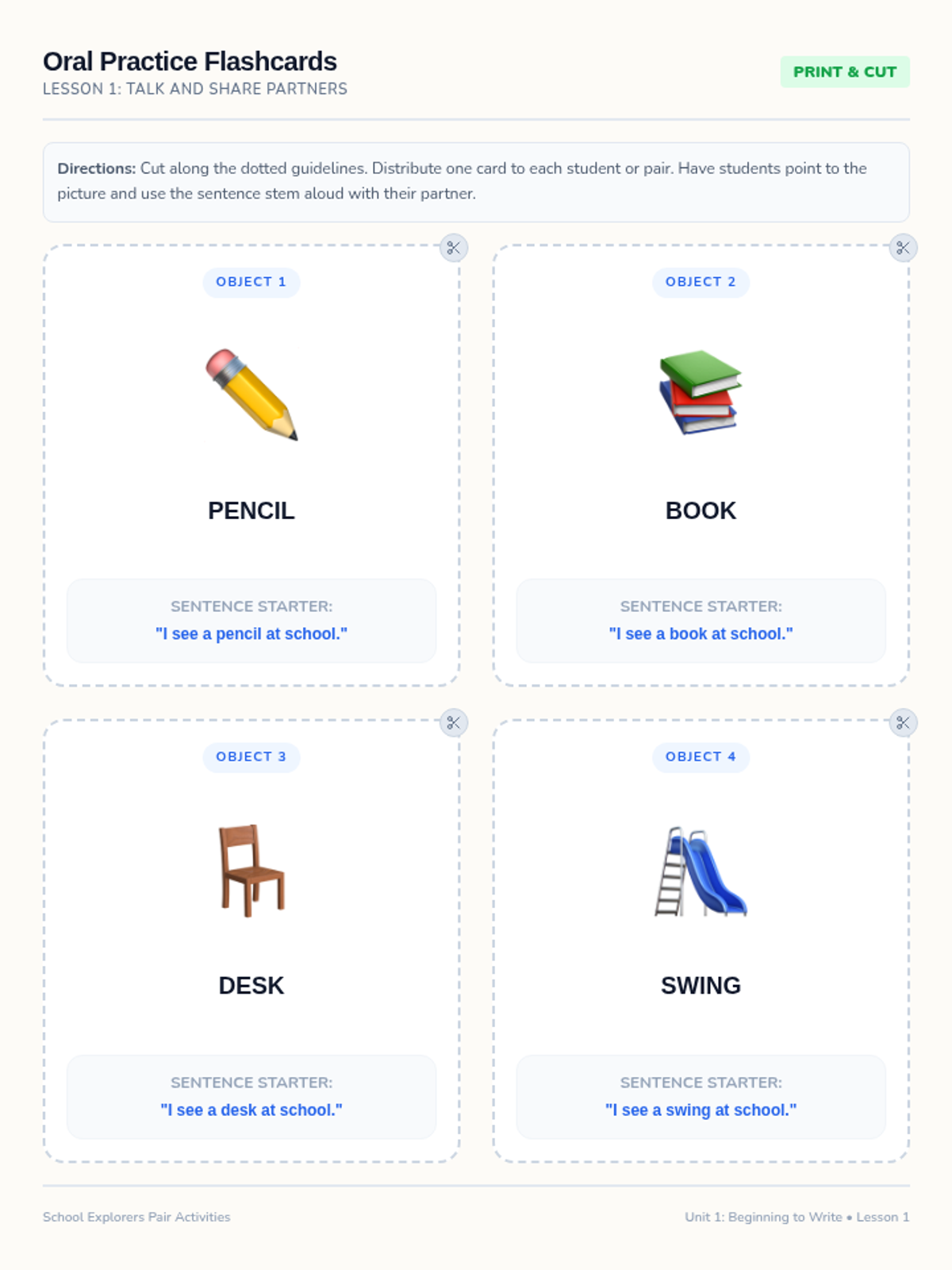
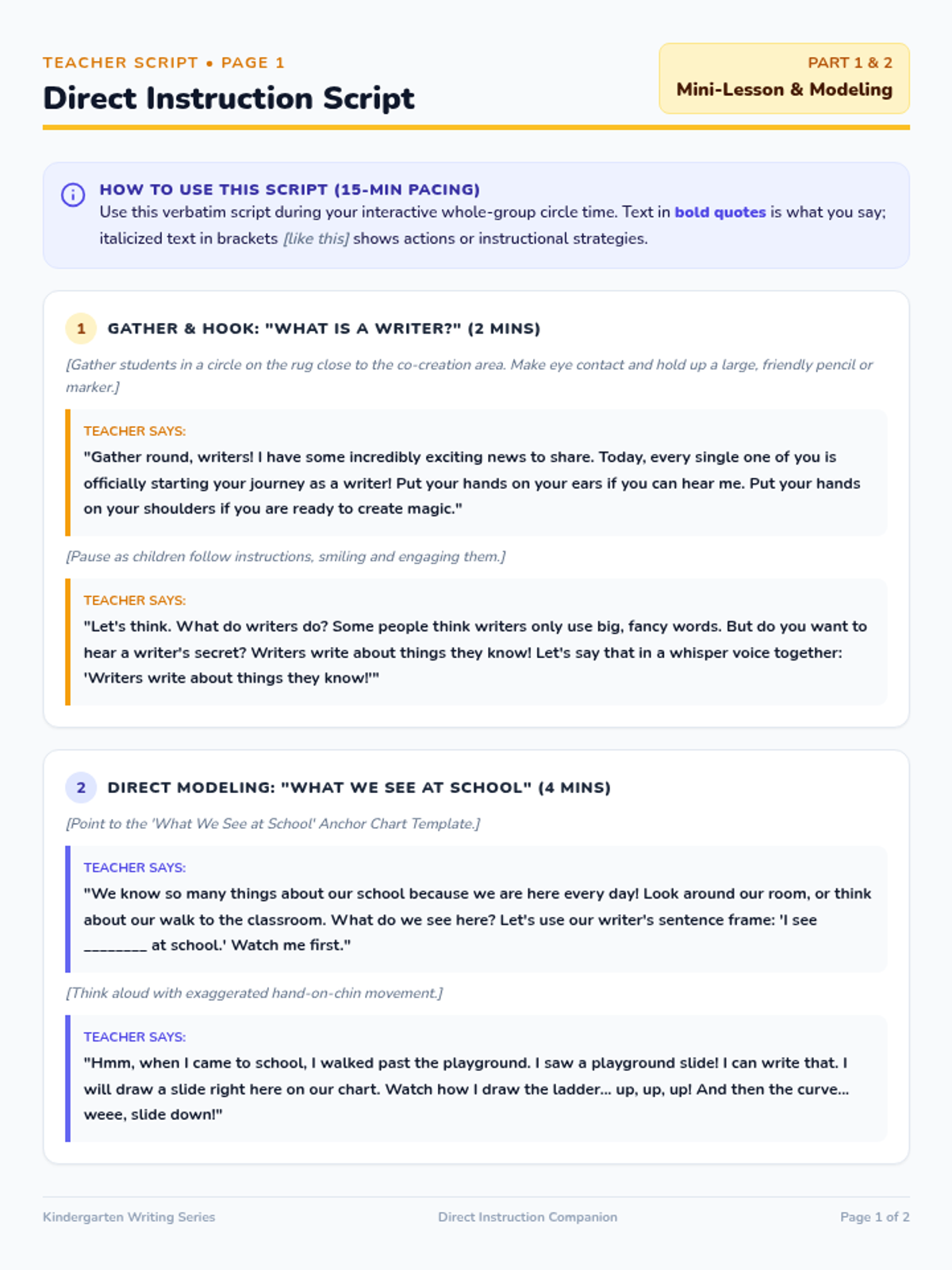
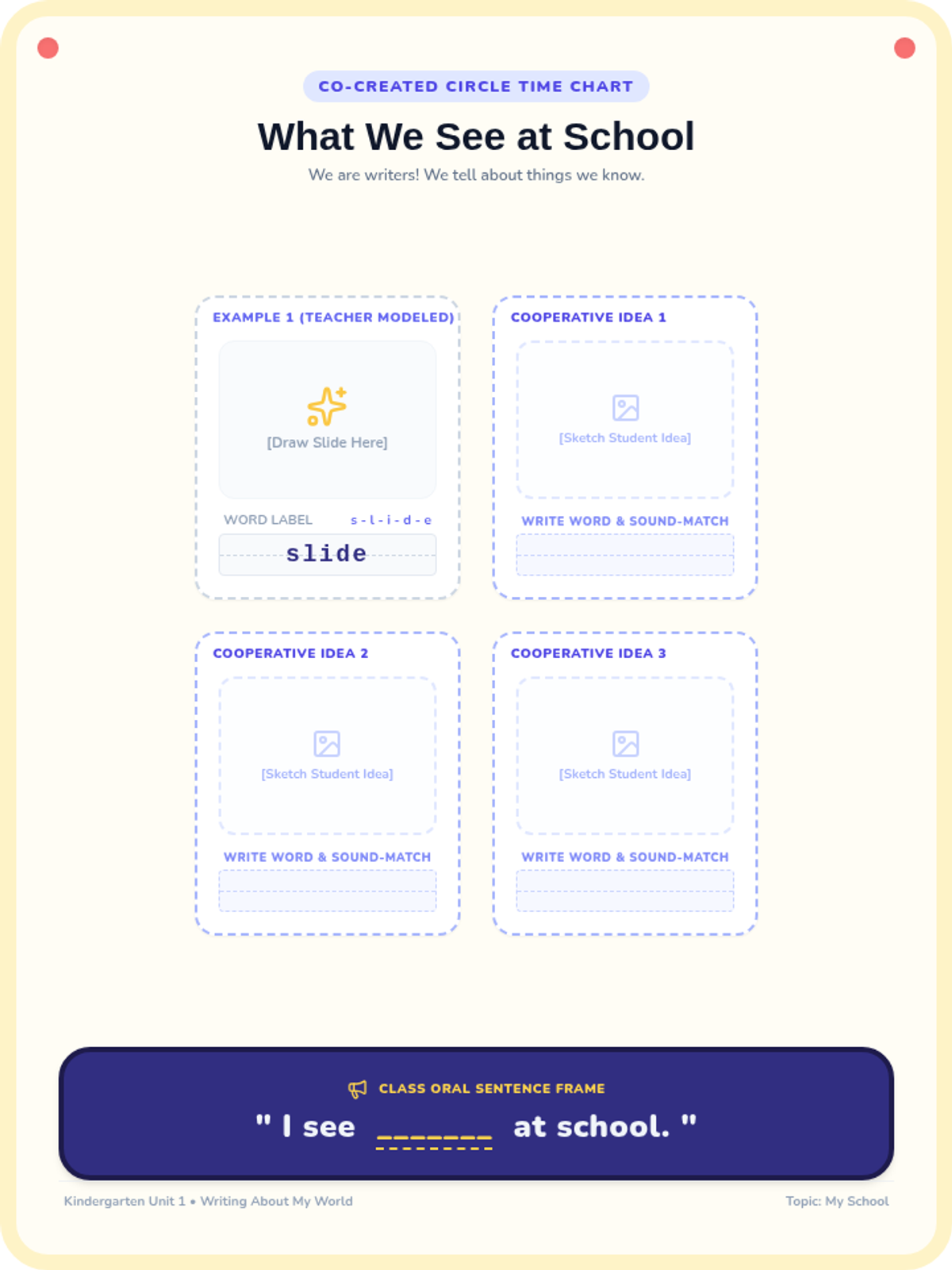
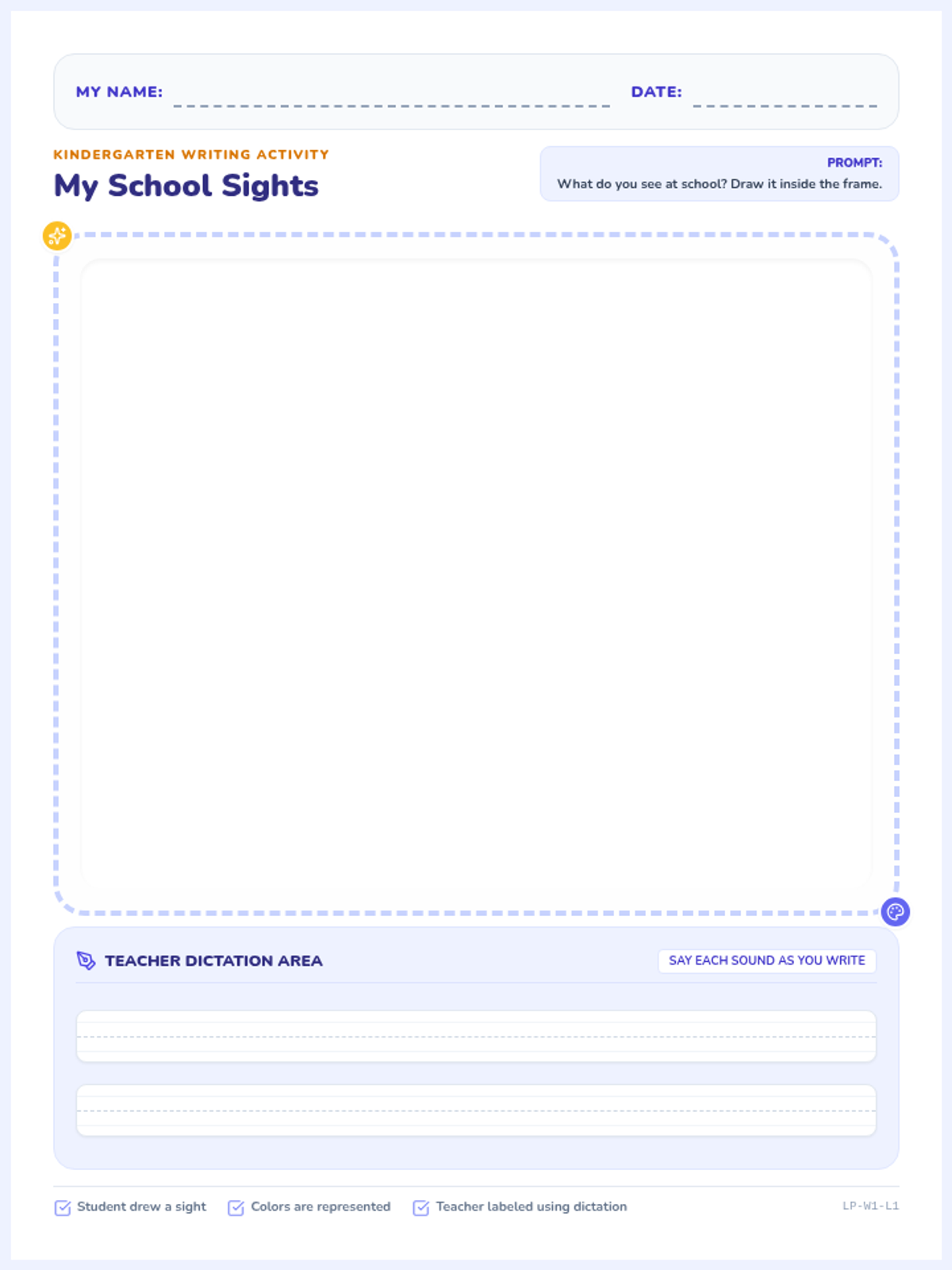
A comprehensive kindergarten writing lesson plan and supporting materials designed to teach students that writers write about what they know, starting with their school. It includes a detailed teacher guide, interactive slide deck, student drawing and writing worksheet, visual anchor chart, and oral practice flashcards.
Focuses on VC & CVC practice across all learned sounds, featuring the decodable story 'I See'. Students practice reading, tracking with dots, and identifying characters.
Focuses on the short vowel sound /ĕ/ with the decodable story 'Ten on the Bed'. Students practice reading words with short e and tracking with dots.
Focuses on the consonant sound /b/ with the decodable story 'A Bug on the Bus'. Students practice tracking, blending, and CVC reading.
Focuses on the consonant sound /g/ with the decodable story 'Gus the Dog'. Students practice tracking, blending, and CVC reading.
Focuses on the short vowel sound /ŭ/ with the decodable story 'The Pup'. Students practice reading, tracking with dots, and blending.
Focuses on the consonant sound /k/ represented by letter c, with the decodable story 'The Cat Can'. Students practice reading, tracking with dots, and blending.
Focuses on the consonant sound /d/ with the decodable story 'Sid and Dad'. Students practice tracking, blending, and CVC reading.
Focuses on the short vowel sound /ŏ/ with the decodable story 'Tom and the Fan'. Students practice reading words with short o and tracking with dots.
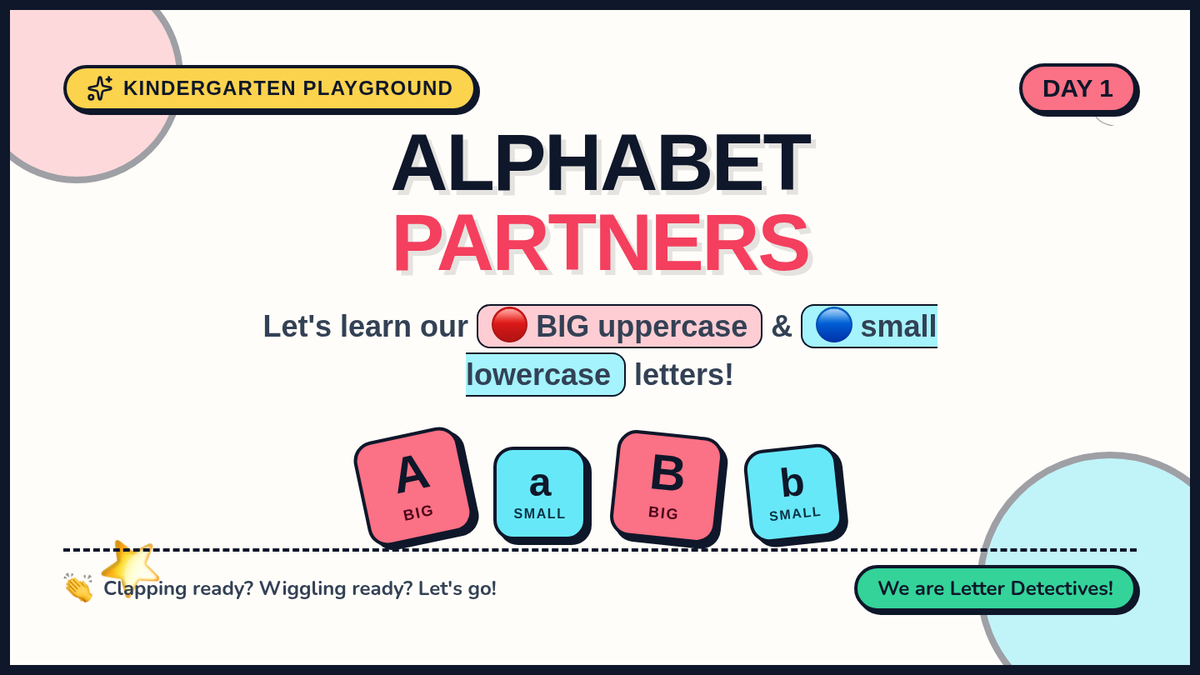
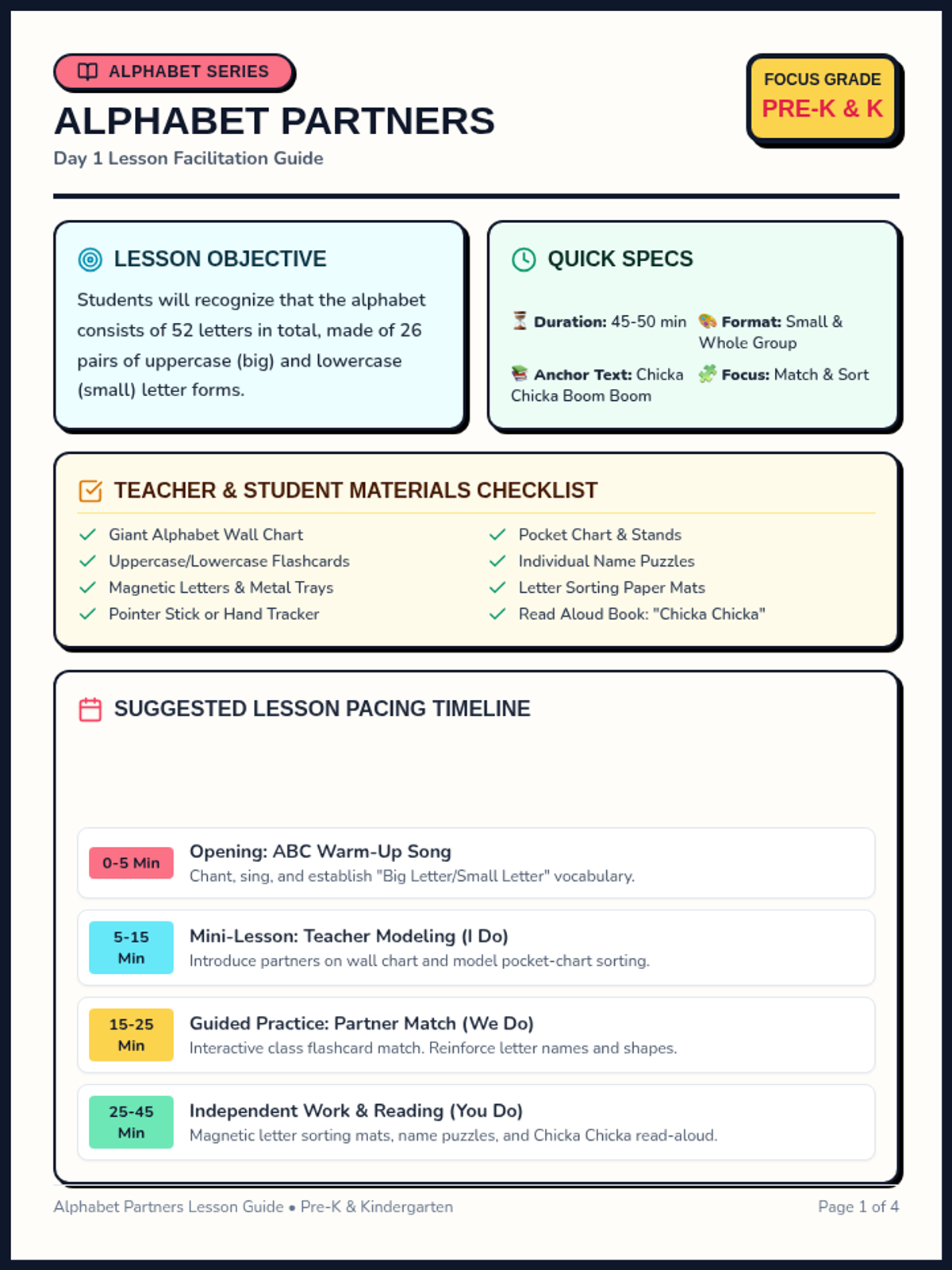
A foundational early childhood lesson introducing students to the 52 letters of the alphabet, focusing on recognizing, matching, and sorting uppercase and lowercase letter pairs through multi-sensory playground activities, interactive slides, and a classic read-aloud.
Focuses on the nasalized sound of a (am, an) with the decodable story 'Sam and Pam'. Students practice tracking, blending, and illustrating.
Focuses on CVC practice with vowels a and i, featuring the decodable story 'The Pit'. Students practice reading, tracking with dots, and illustrating scenes.
Focuses on the consonant sound /n/ with the decodable story 'The Pin in the Map'. Students practice reading words with short i, a, and n.
Focuses on the short vowel sound /ĭ/ with the decodable story 'I Sit, I Tap'. Students practice reading words with short i and tracking with dots.
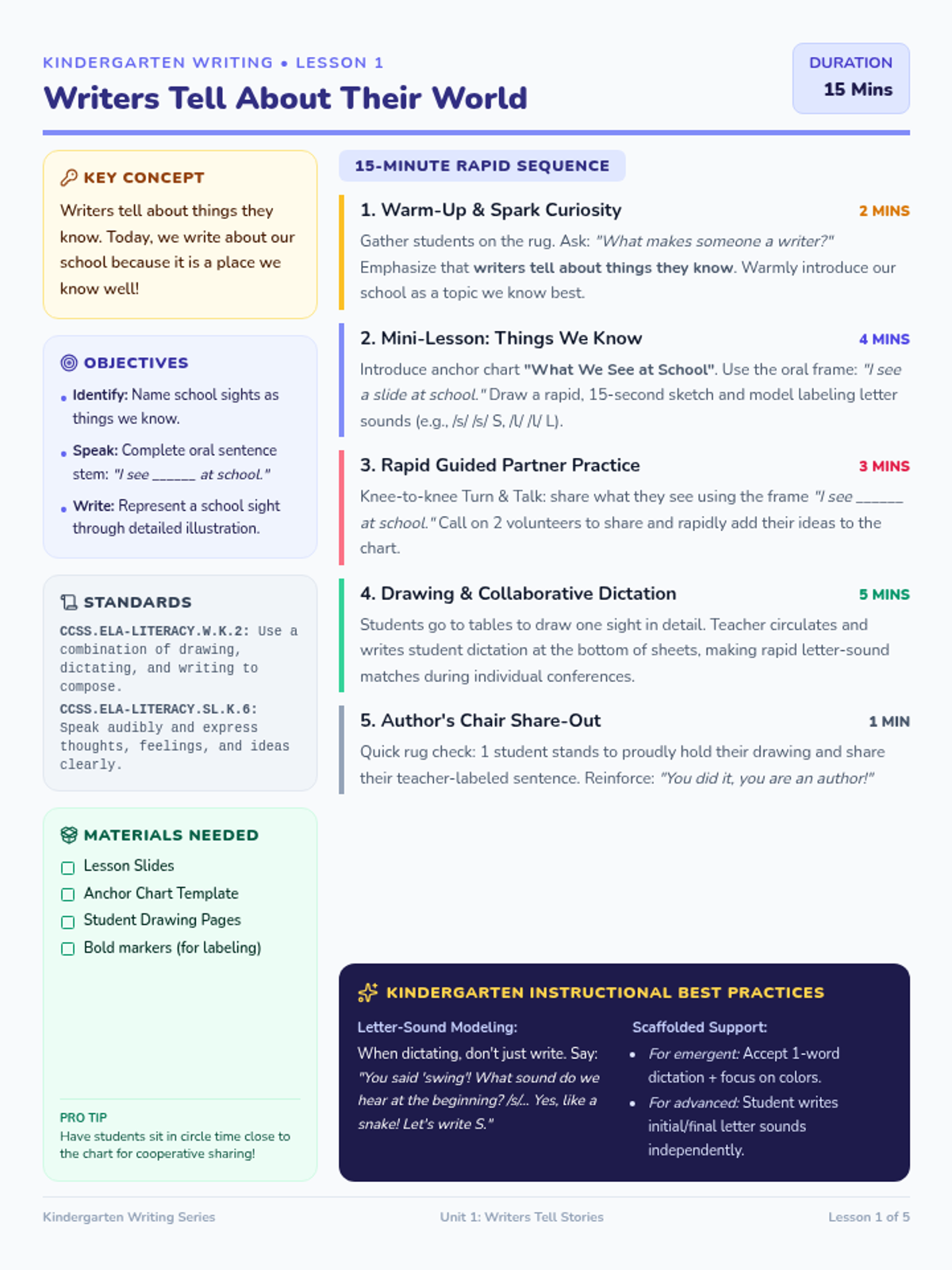
A foundational Kindergarten writing lesson where students discover that writers tell about things they know, starting with their school. Students practice oral sentence stems and create drawings representing their school environment, which teachers support by labeling using dictation.
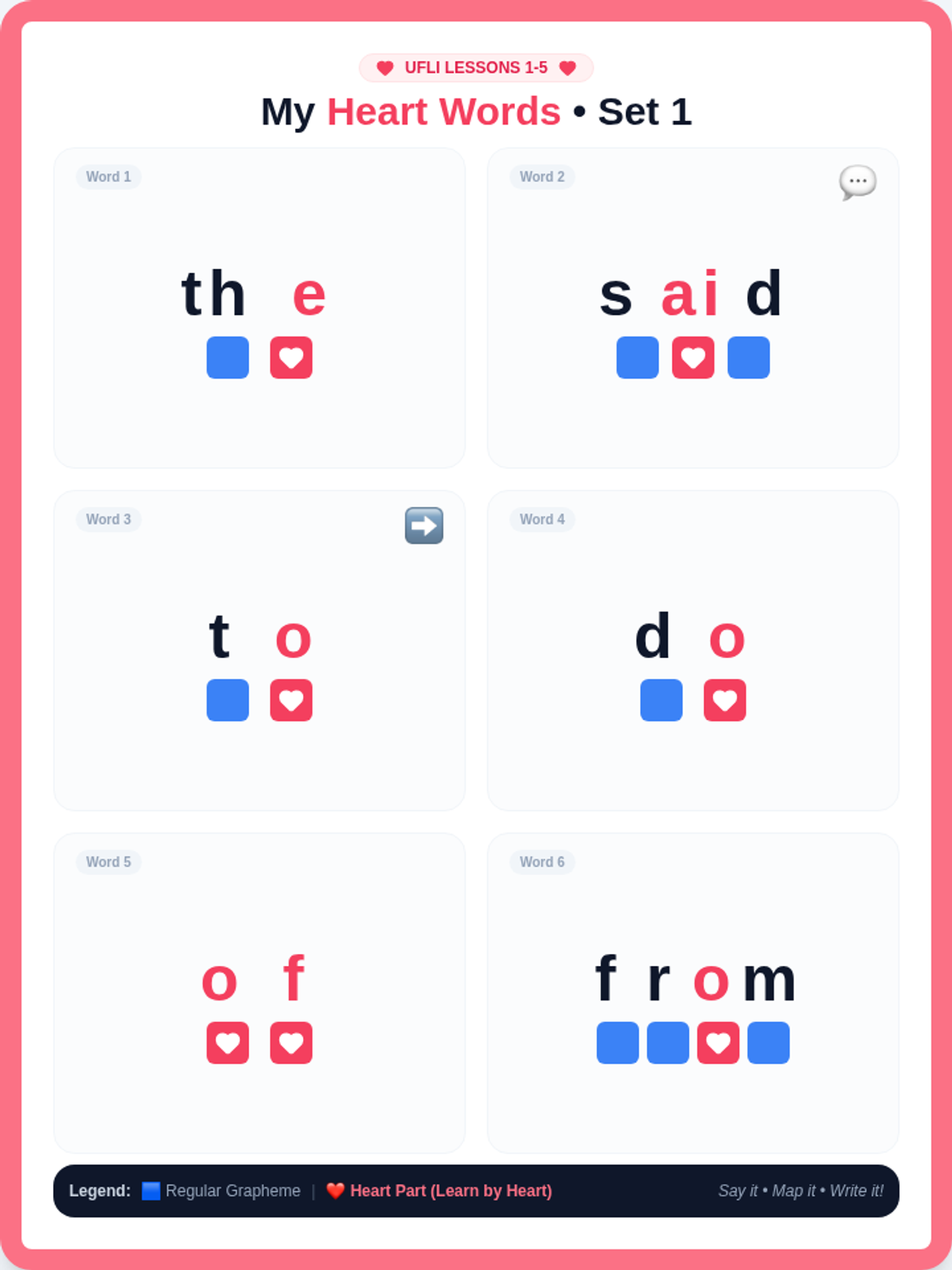
A collection of visual anchor charts and posters for UFLI foundations heart words, designed to support students in orthographic mapping with clear visuals and phonetic cues.
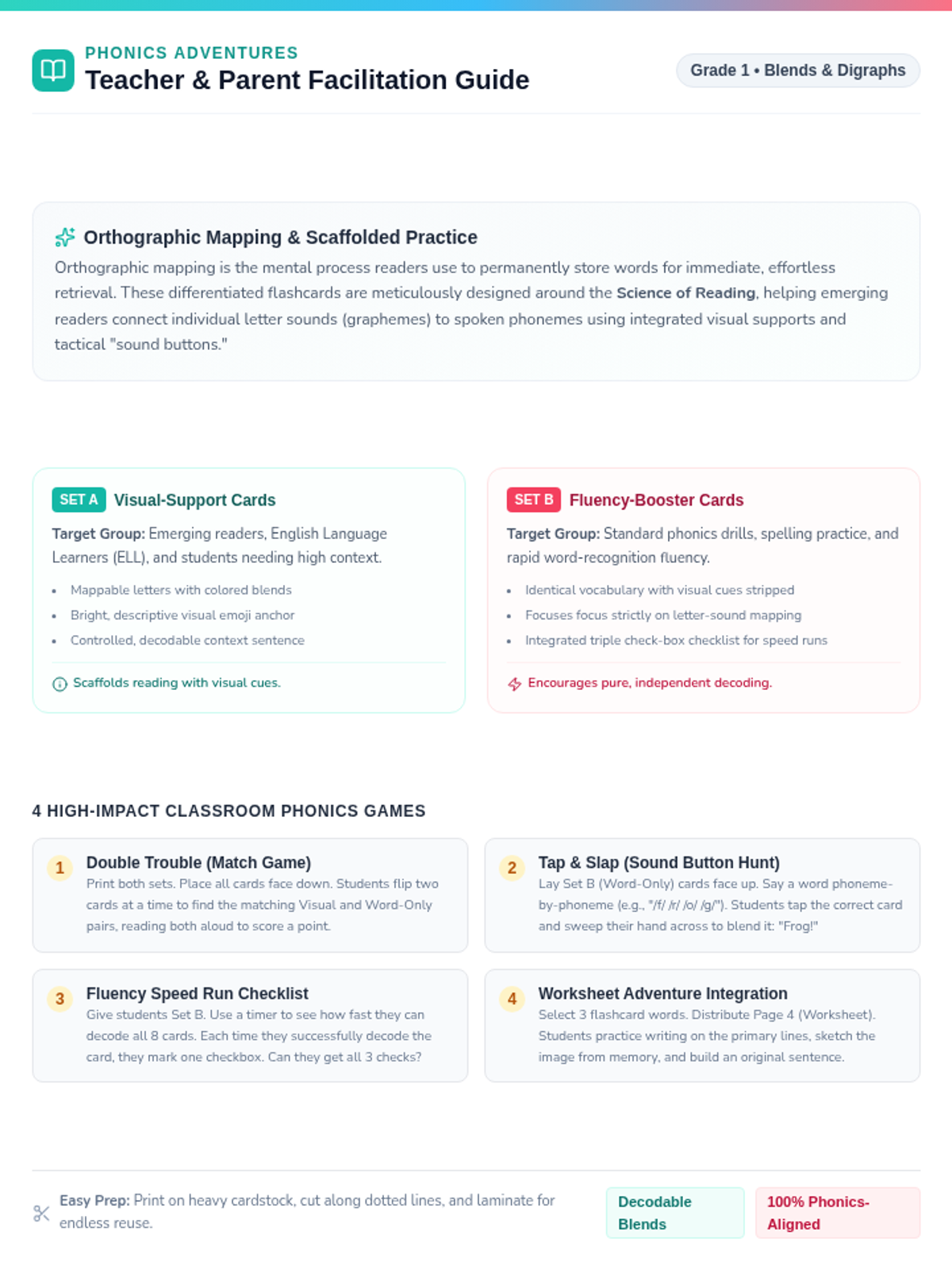
A foundational phonics lesson focusing on reading words with consonant blends and digraphs. This lesson includes differentiated flashcards designed for emerging readers, ELLs, and fluency practice.
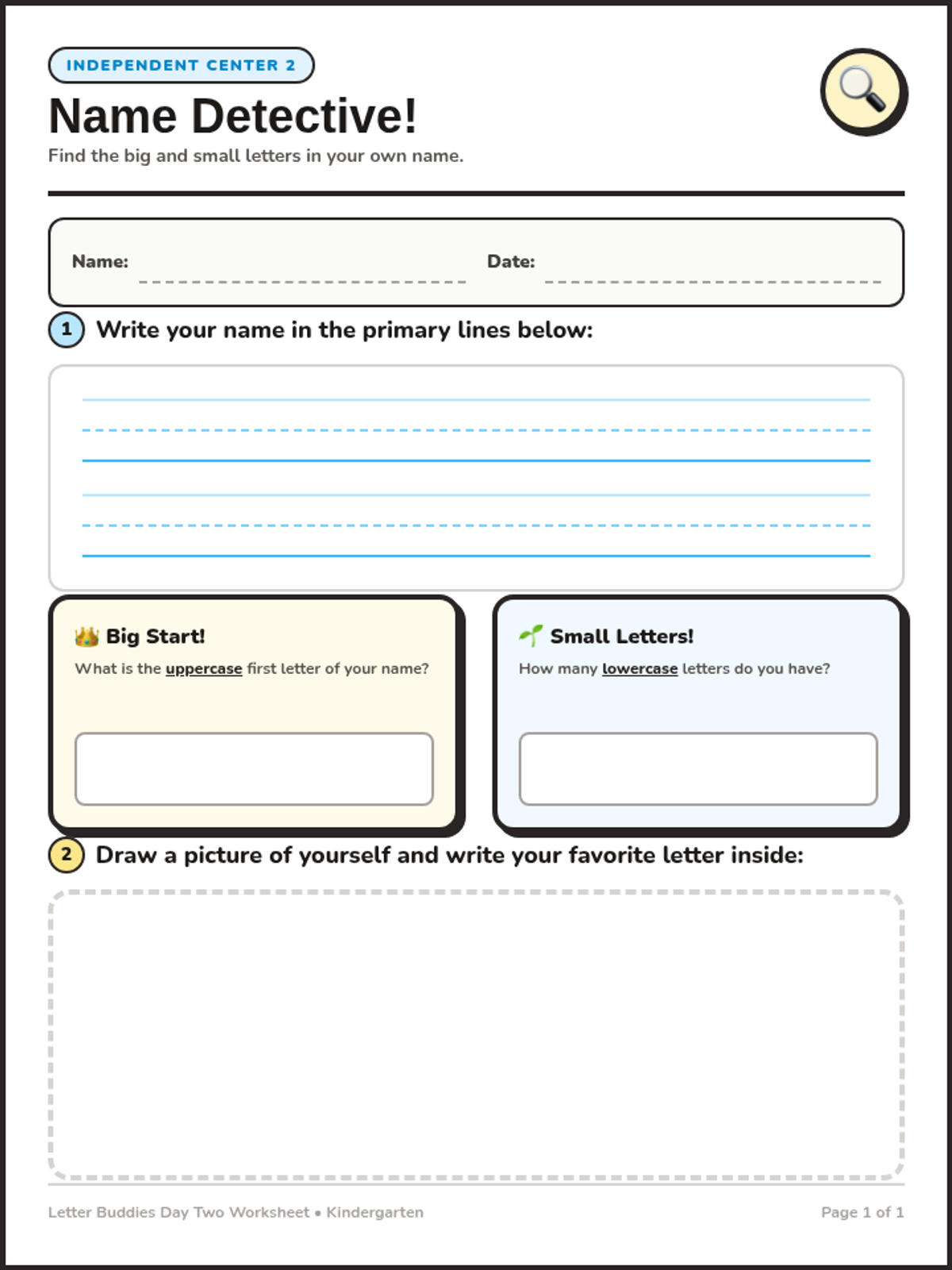
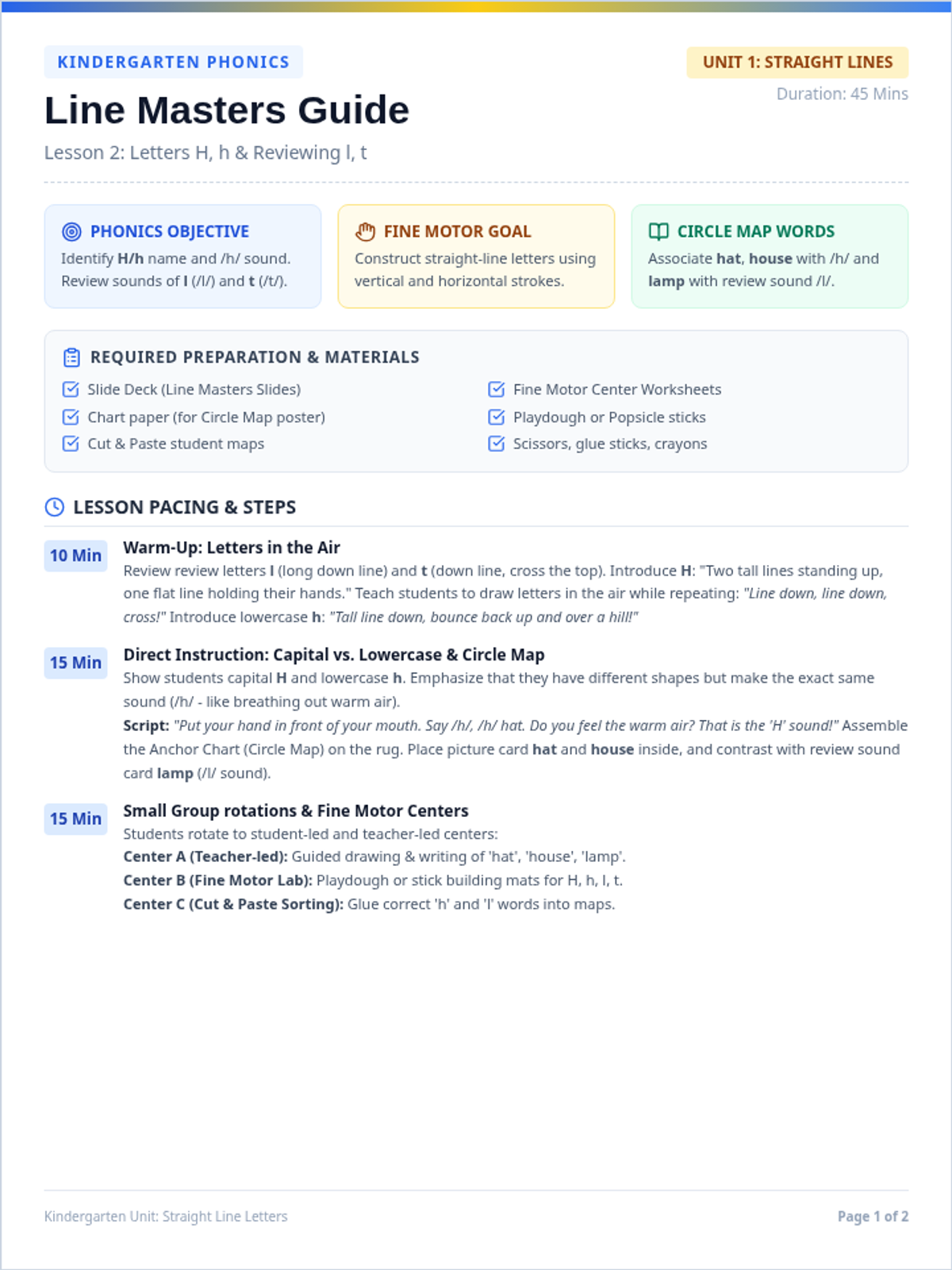
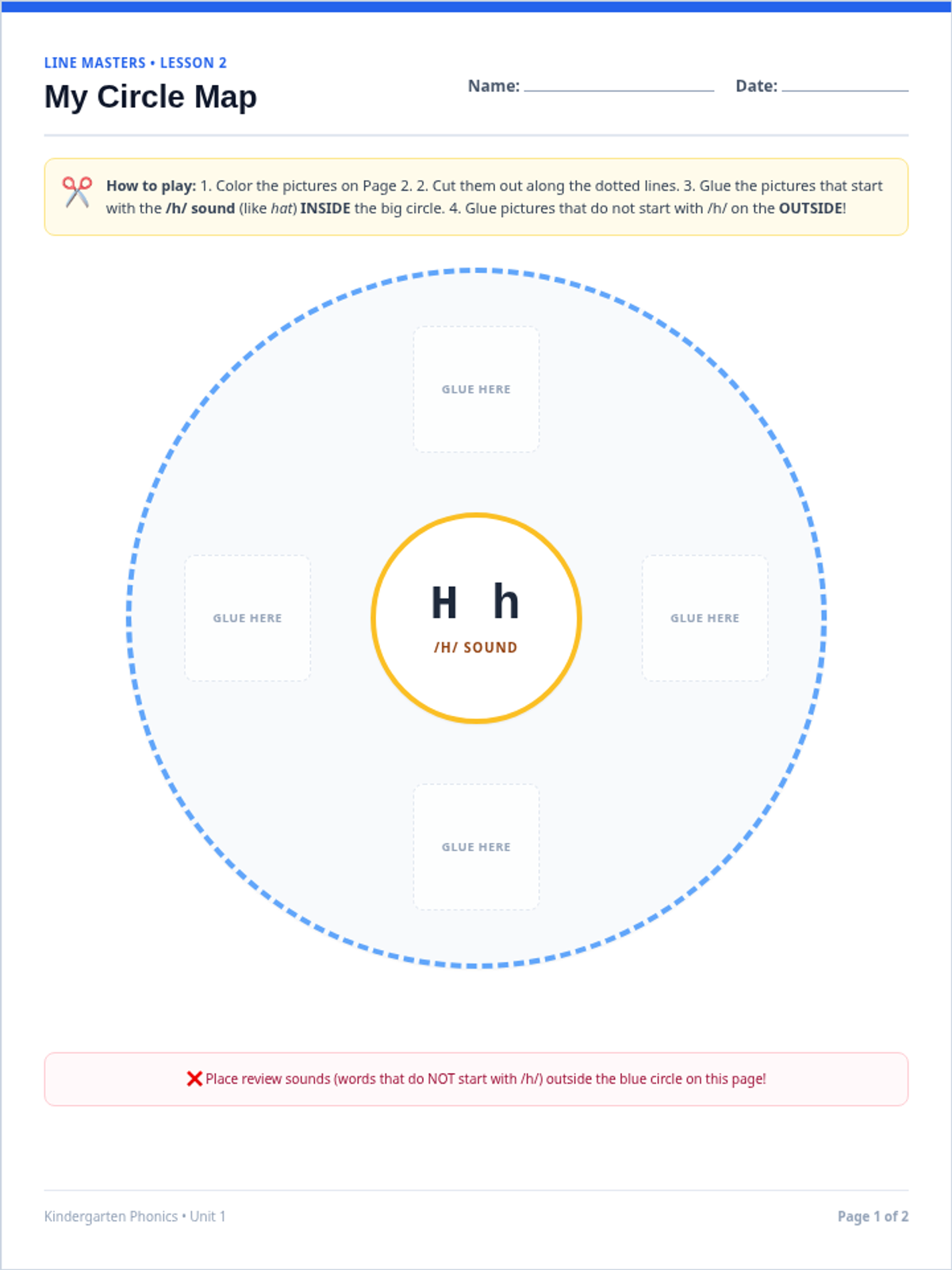
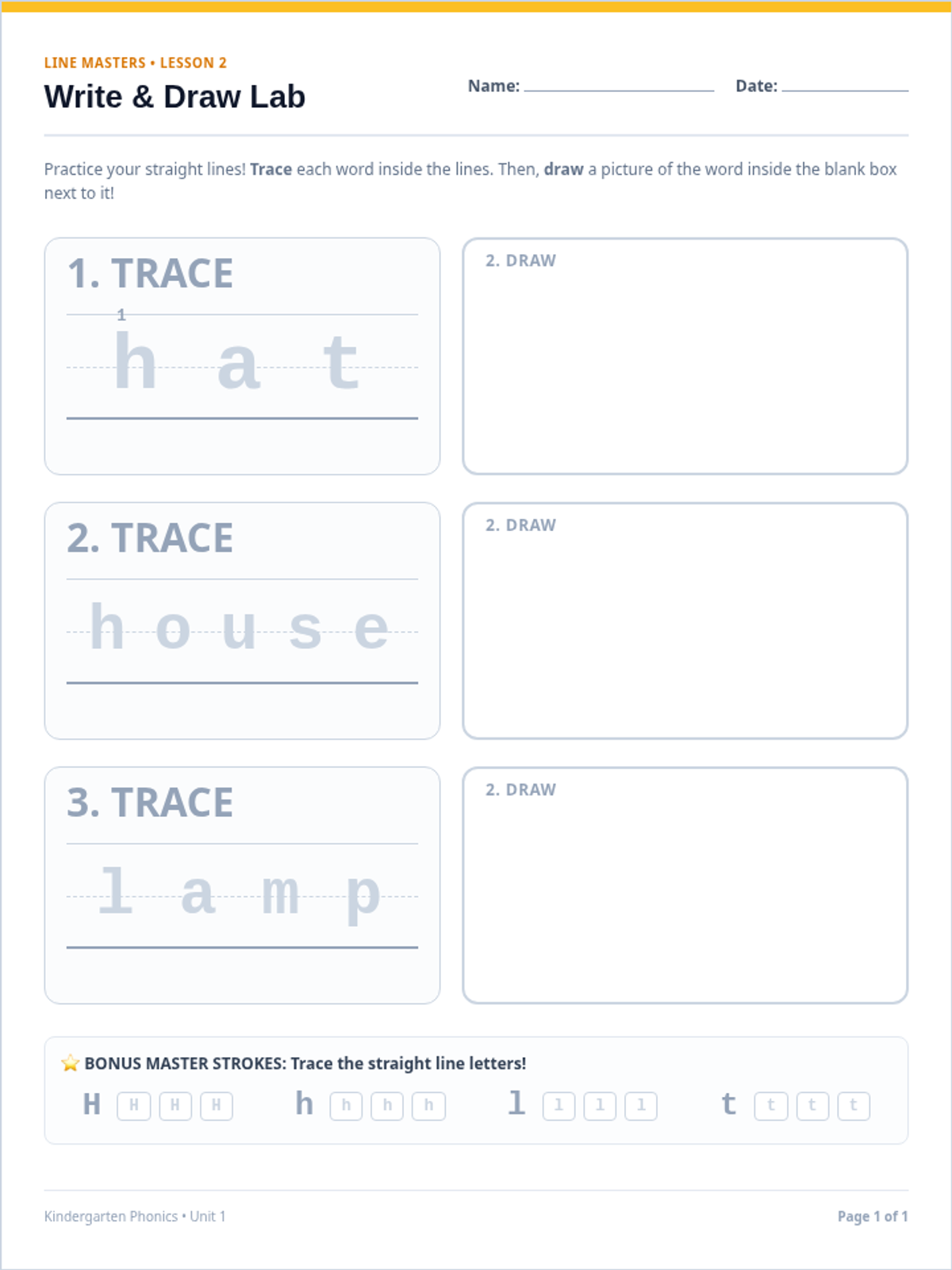
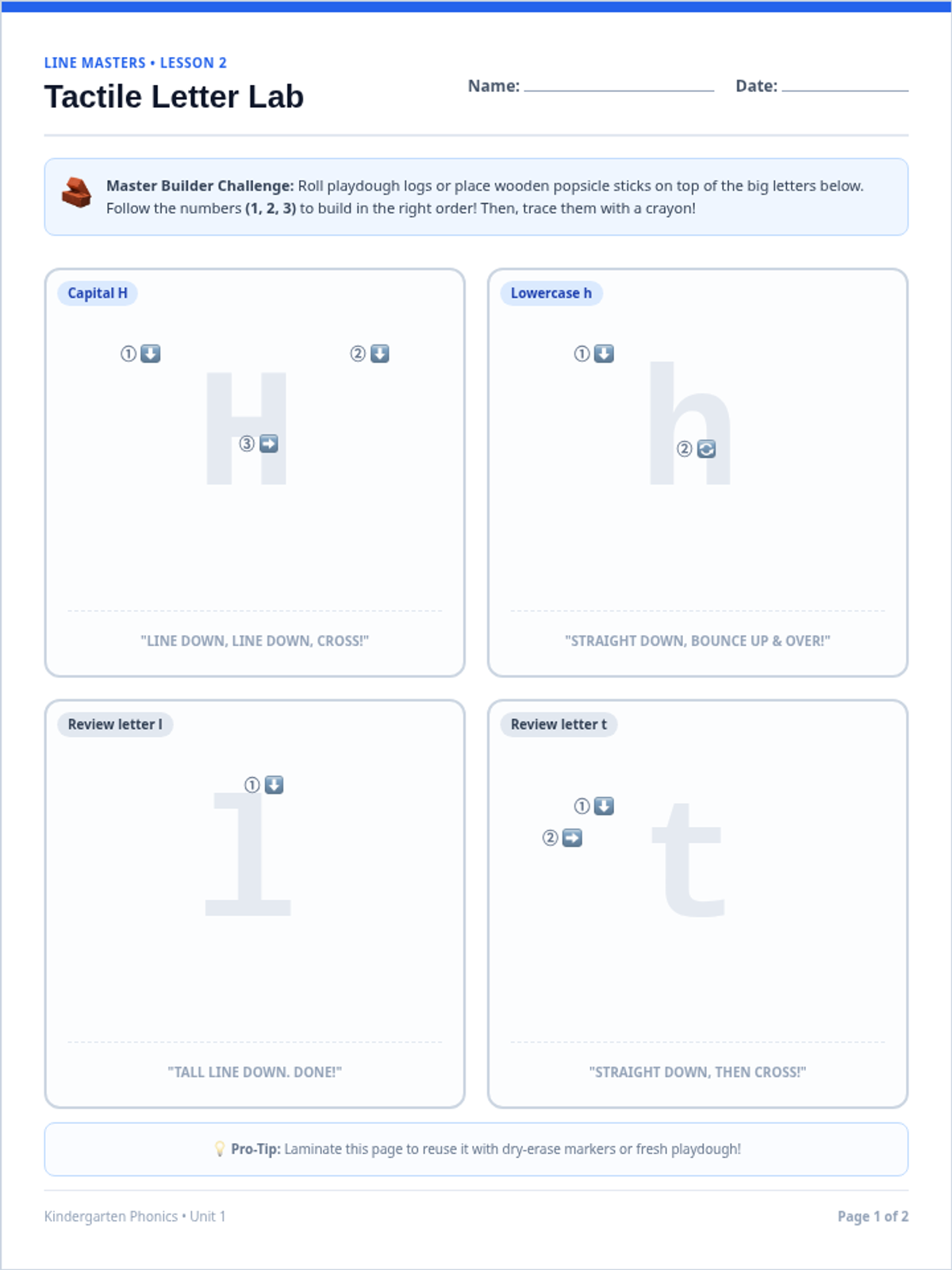
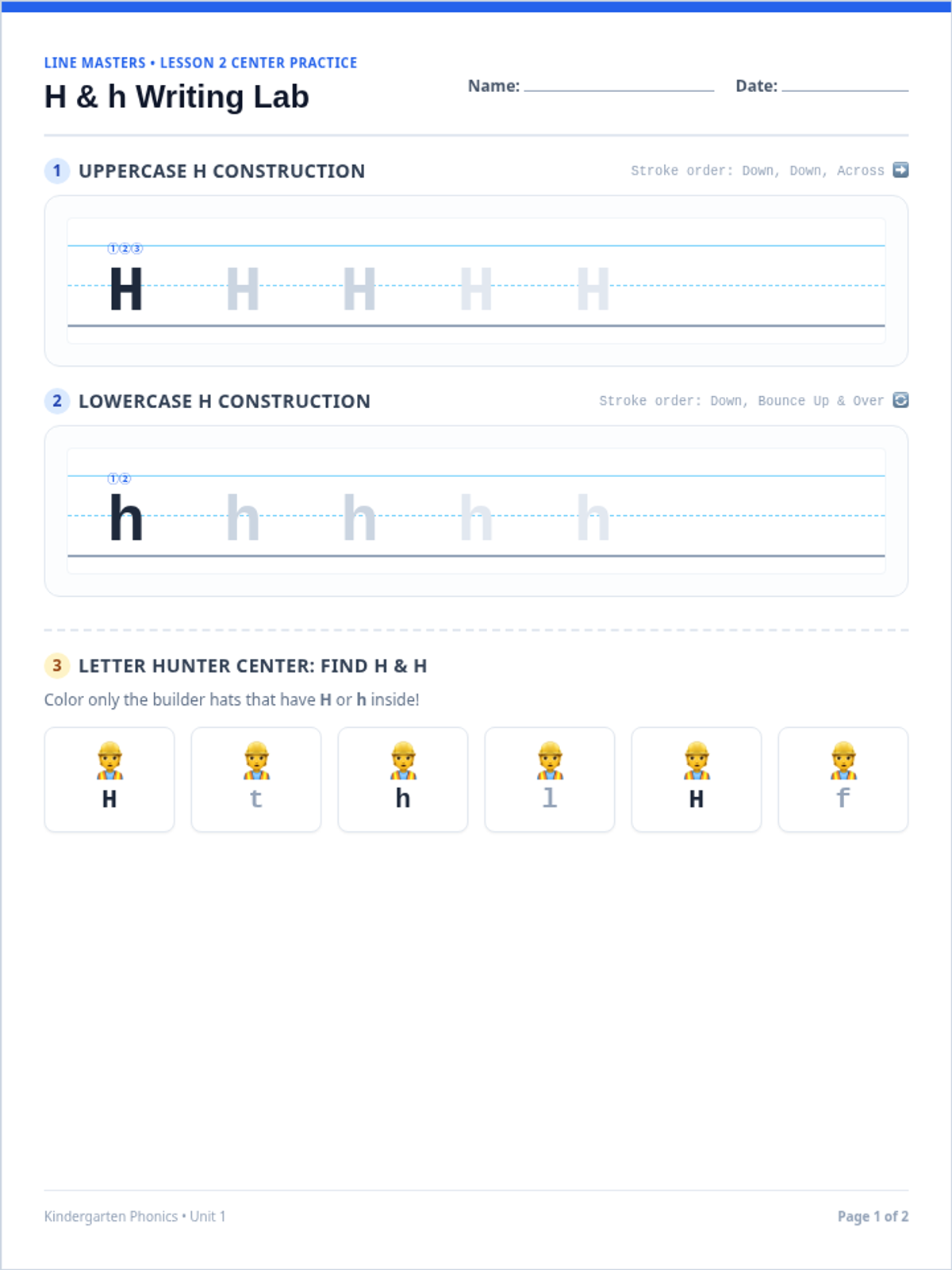
A comprehensive Kindergarten phonics and fine-motor lesson focusing on straight-line letters H, h, and reviewing l, t. Students learn capital vs. lowercase distinctions, engage in tactile letter-building, and explore initial sounds through an interactive Circle Map of 'hat', 'house', and 'lamp'.
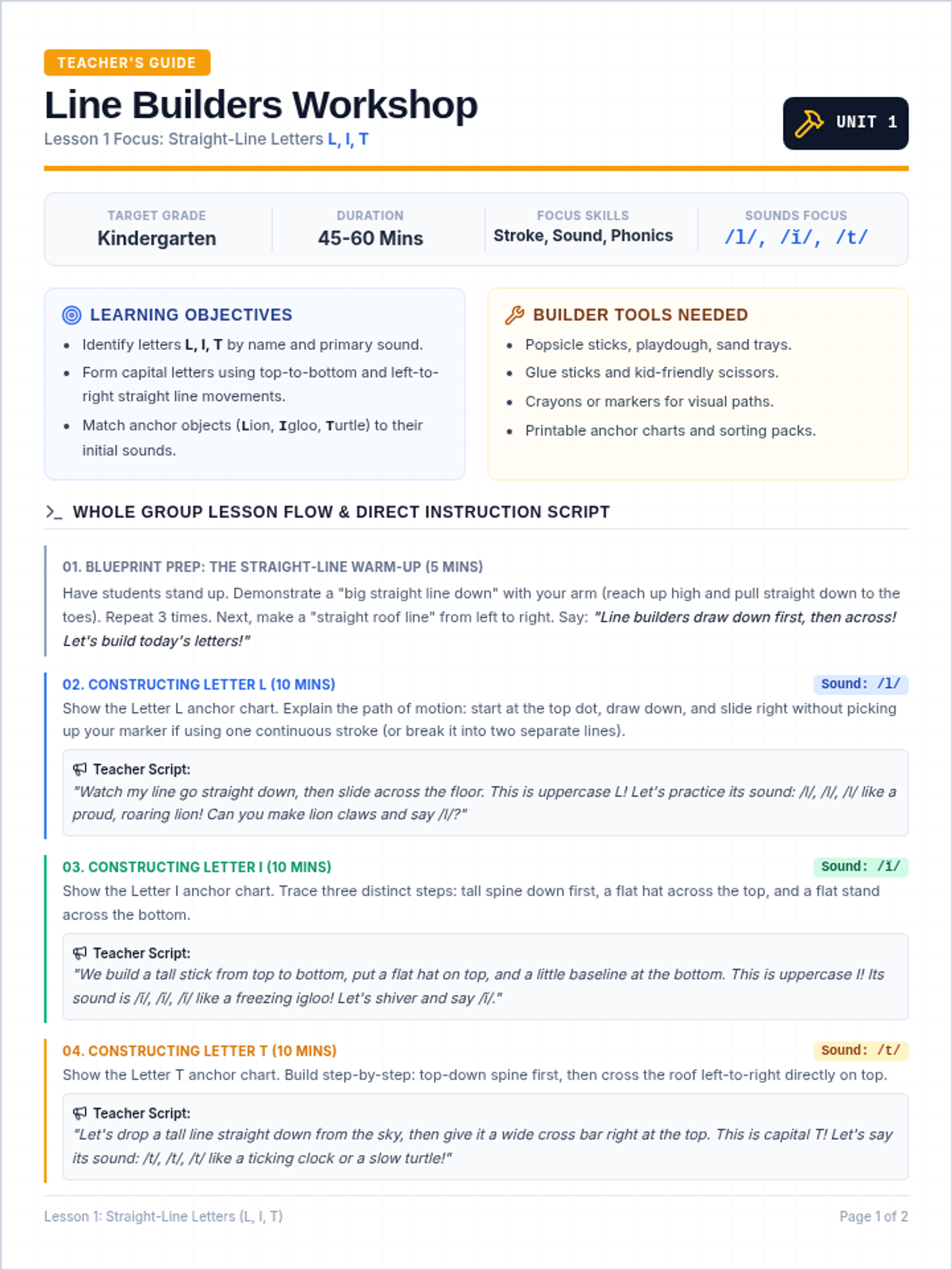
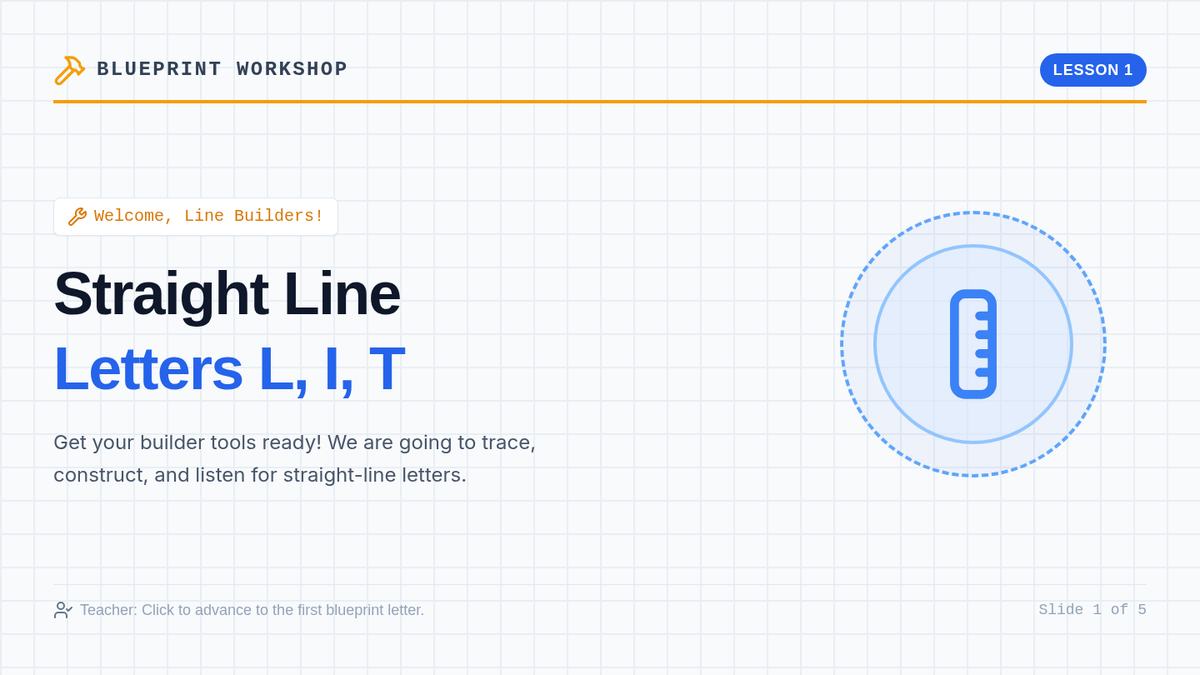
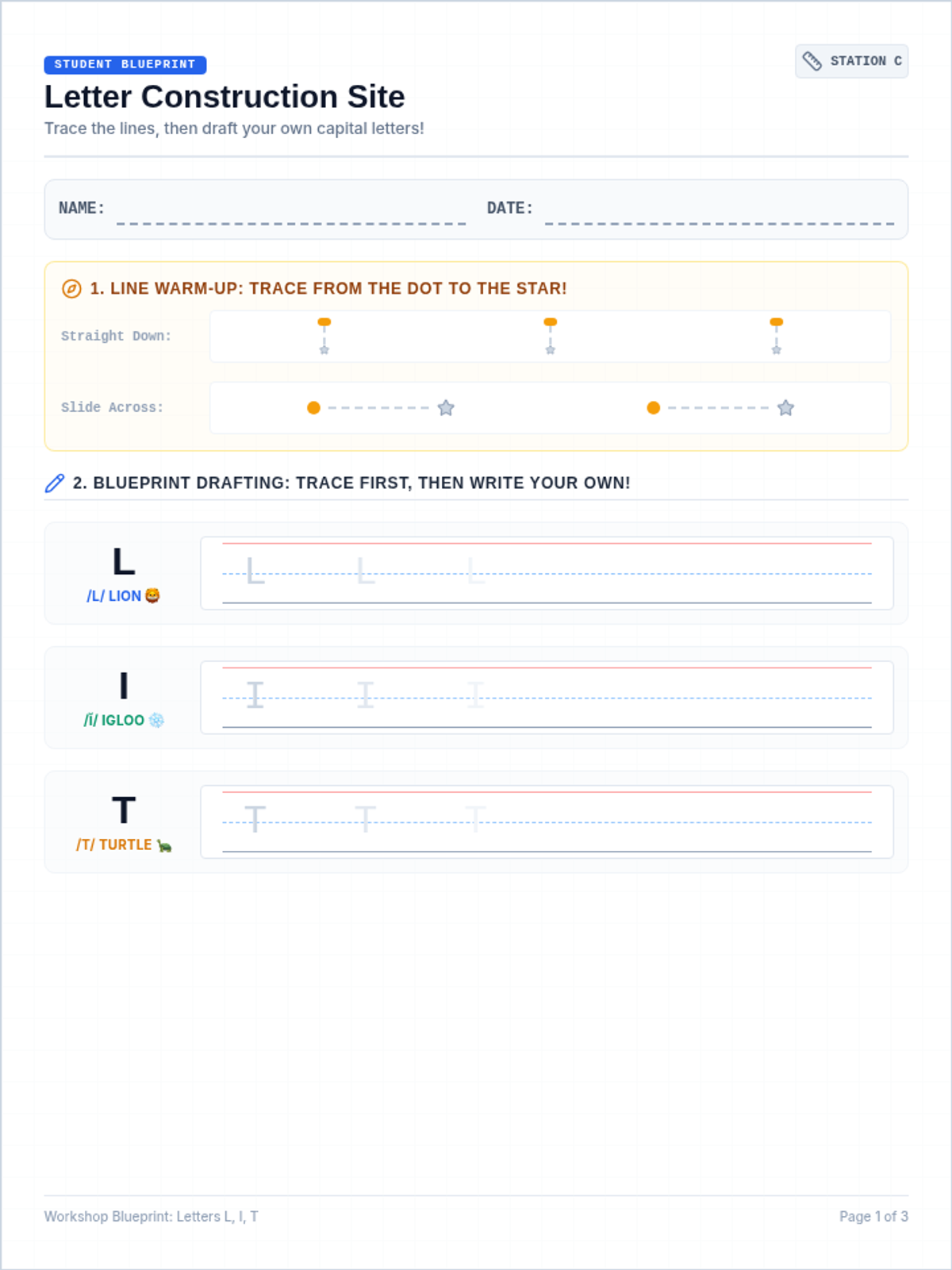
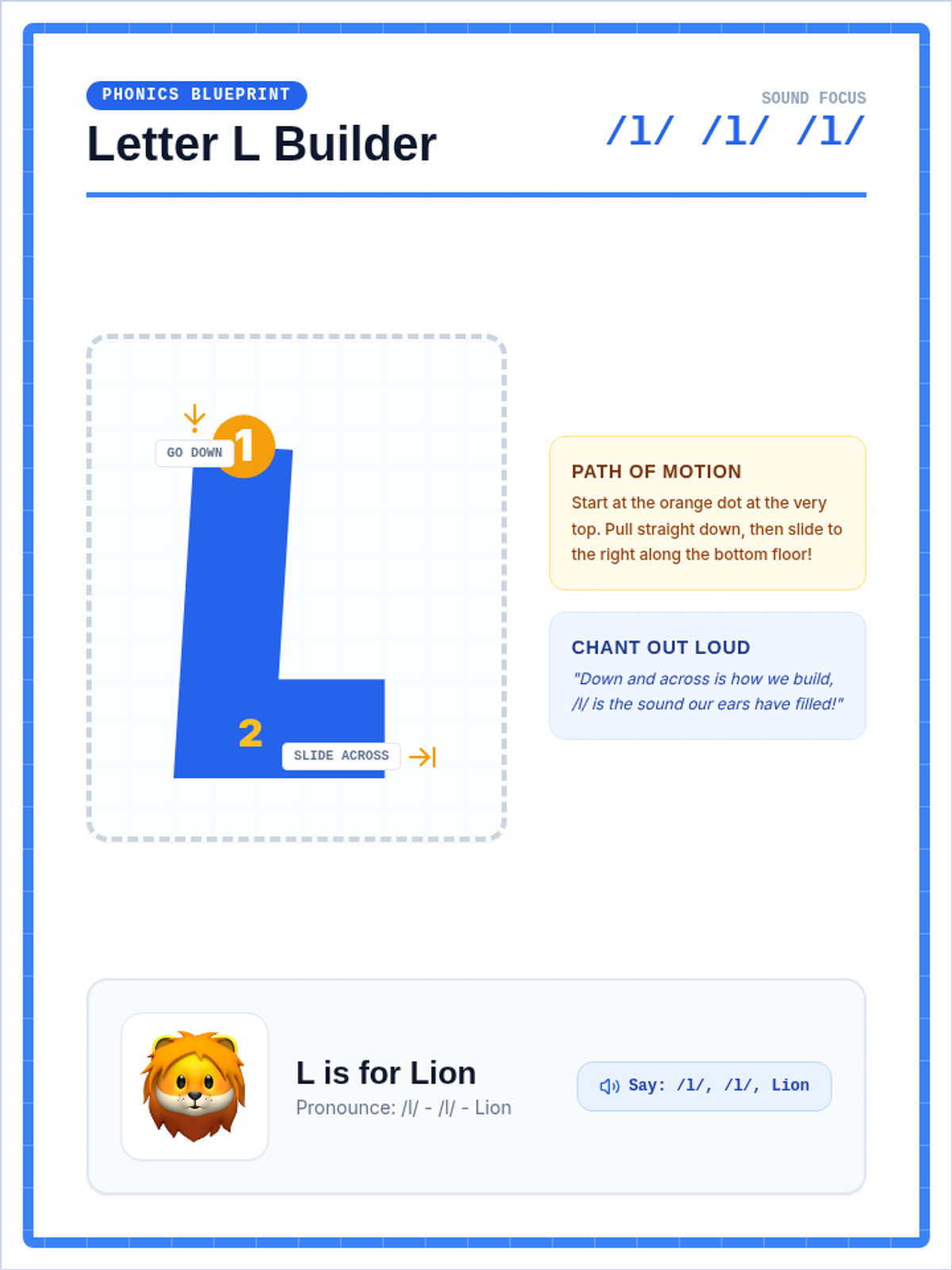
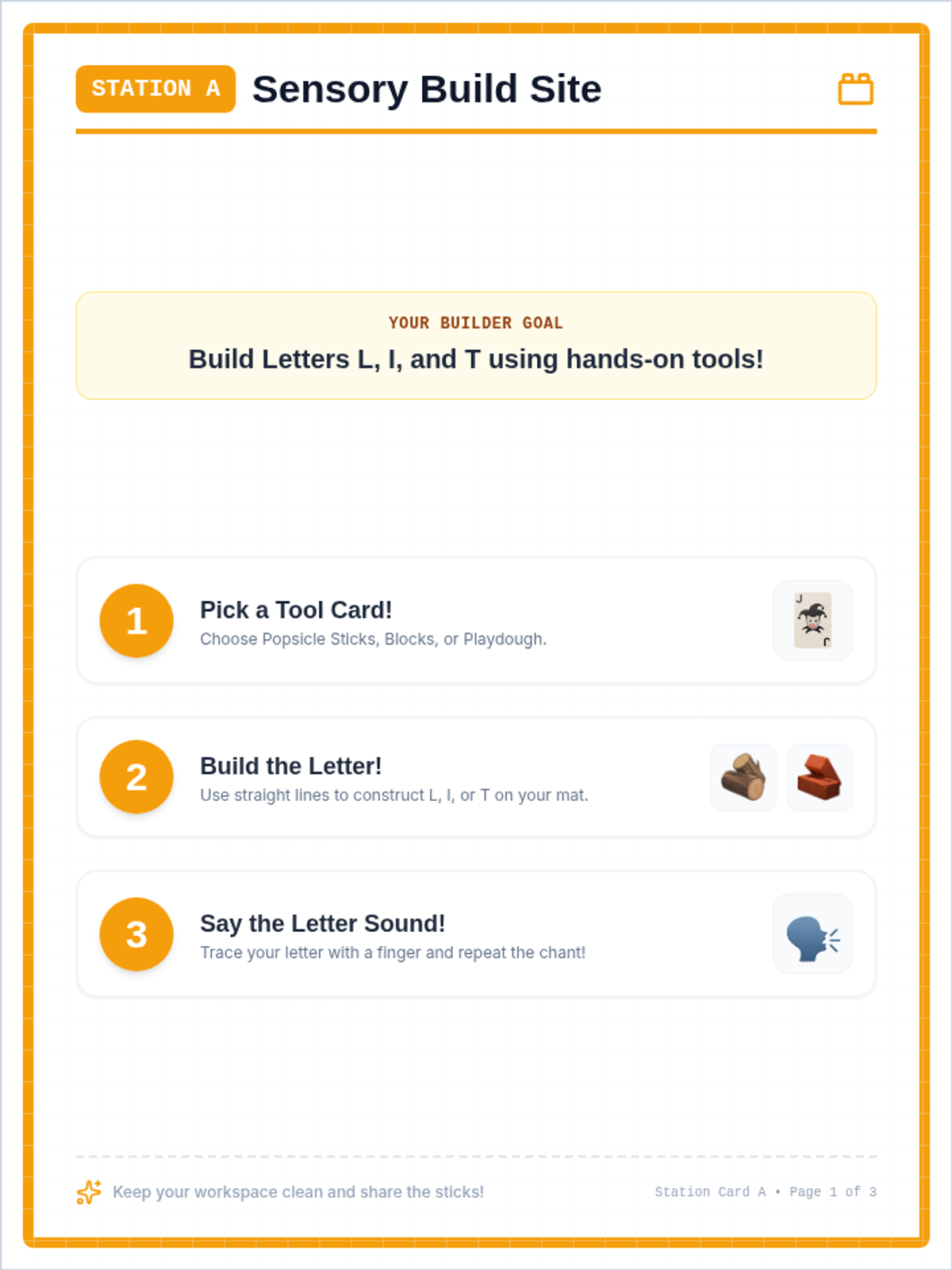
A foundational phonics lesson focusing on constructing straight-line letters L, I, and T through multisensory building, sound-sorting, and fine motor handwriting practice.
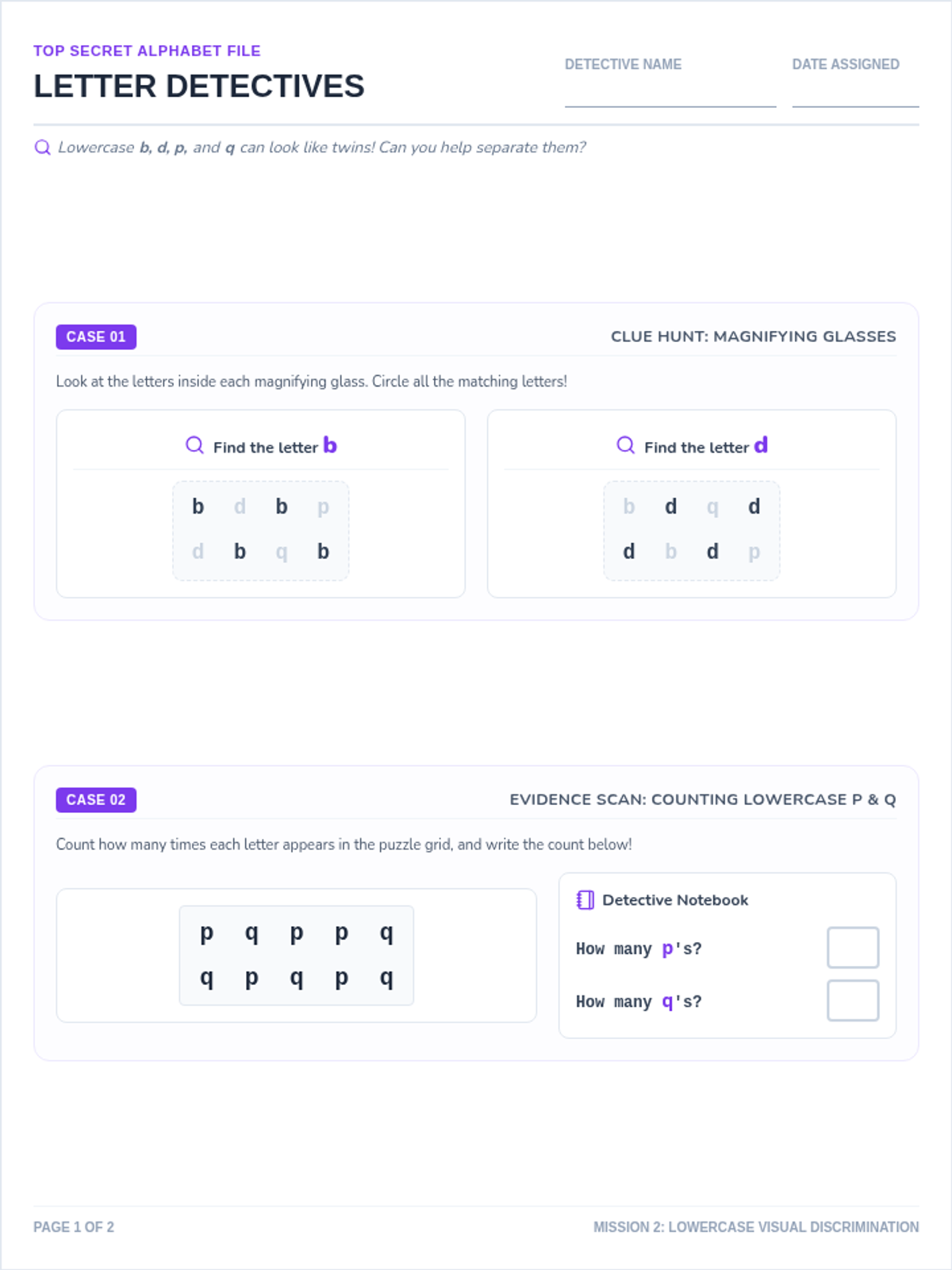
A first-grade letter recognition and formation lesson focusing on identifying uppercase and lowercase letter pairs, distinguishing visually similar letters (like b, d, p, q), and practicing correct stroke pathways.
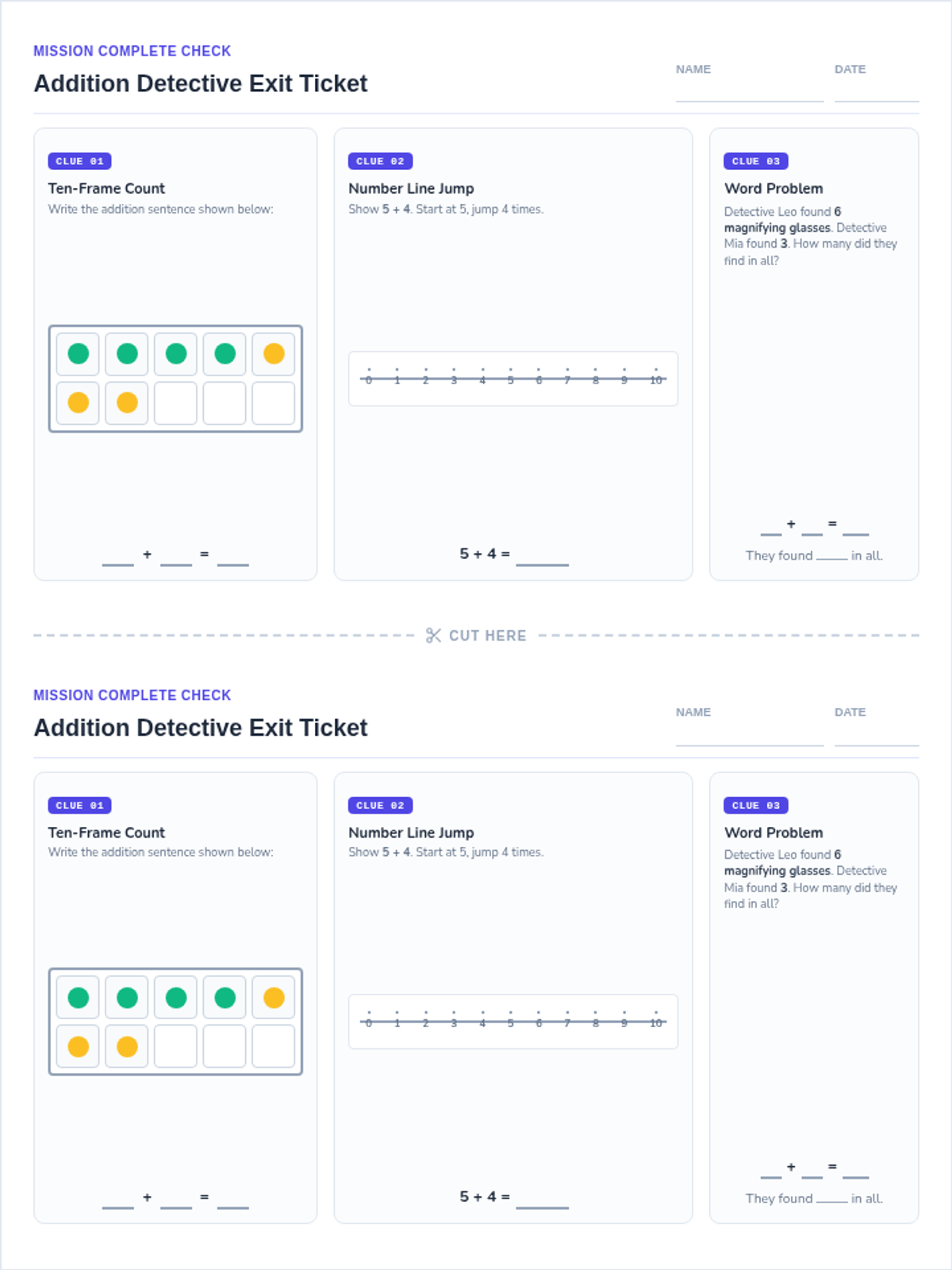
A first-grade addition lesson focusing on visual strategies, concrete models, and counting on to solve addition facts up to 10. Includes student worksheets and formative exit tickets.
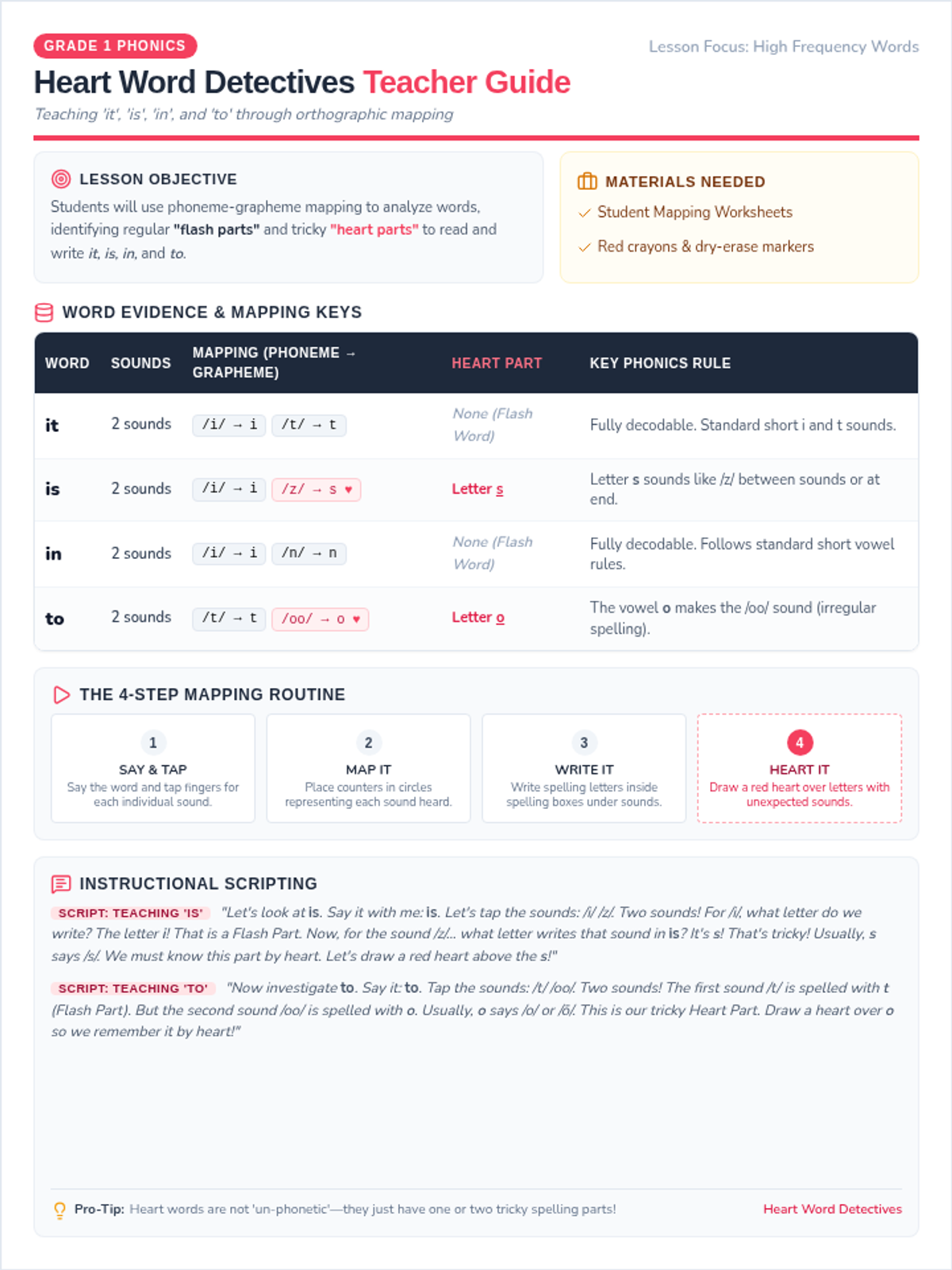
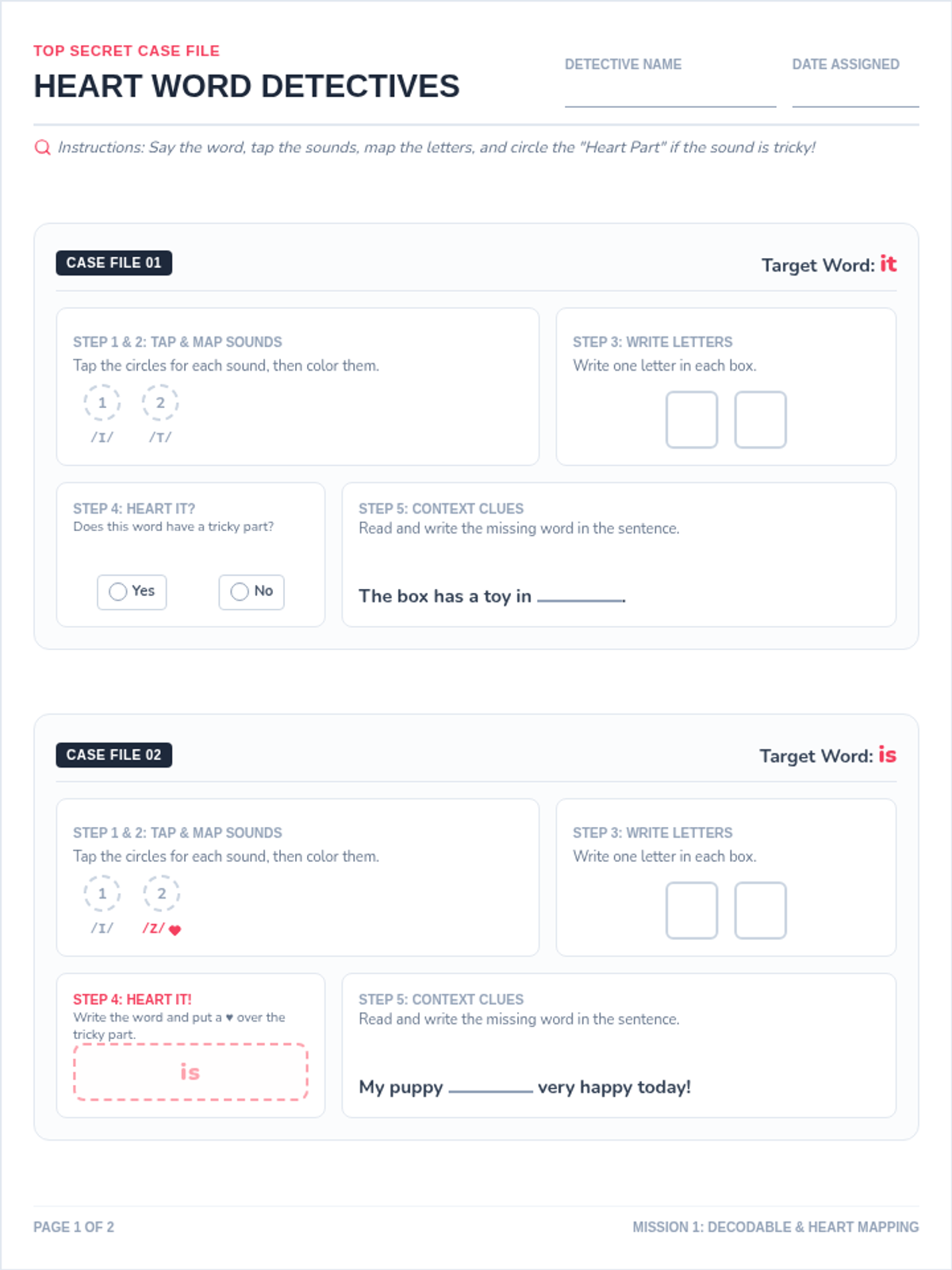
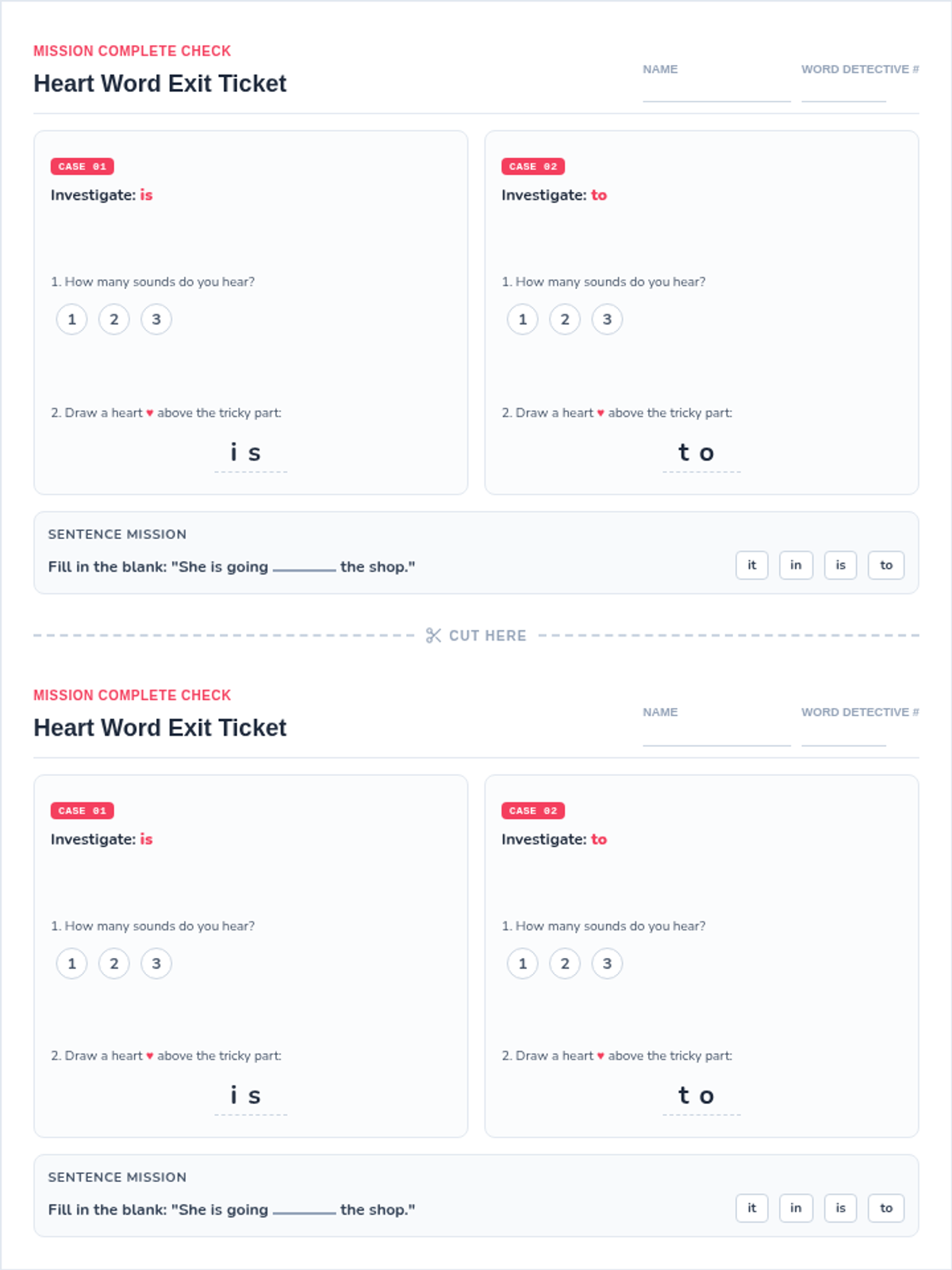
A phonics-based high-frequency word lesson focusing on orthographic mapping and heart-word strategies for 'it', 'is', 'in', and 'to'. Students map phonemes to graphemes and learn to identify regular vs. 'by heart' spelling parts.
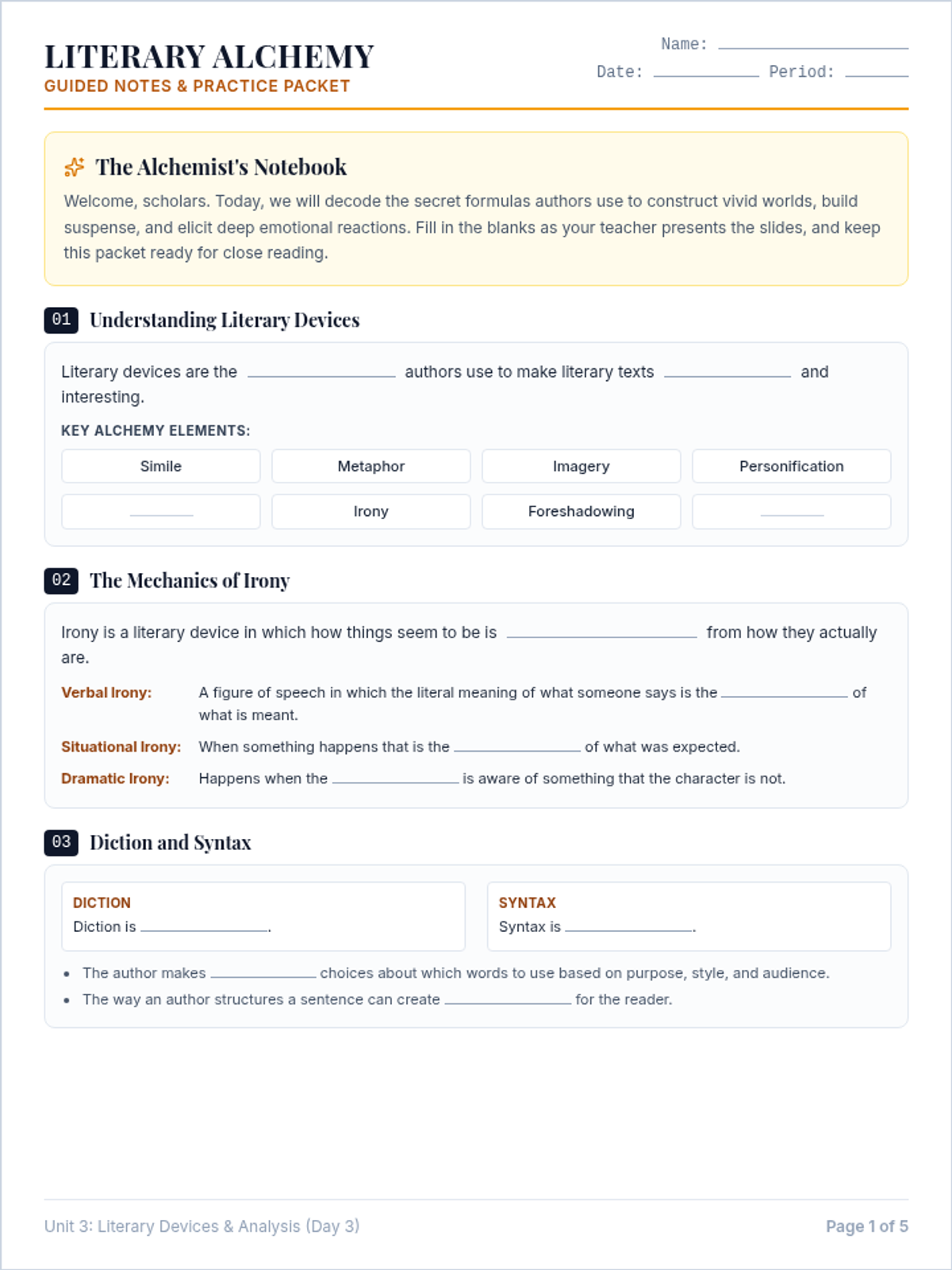
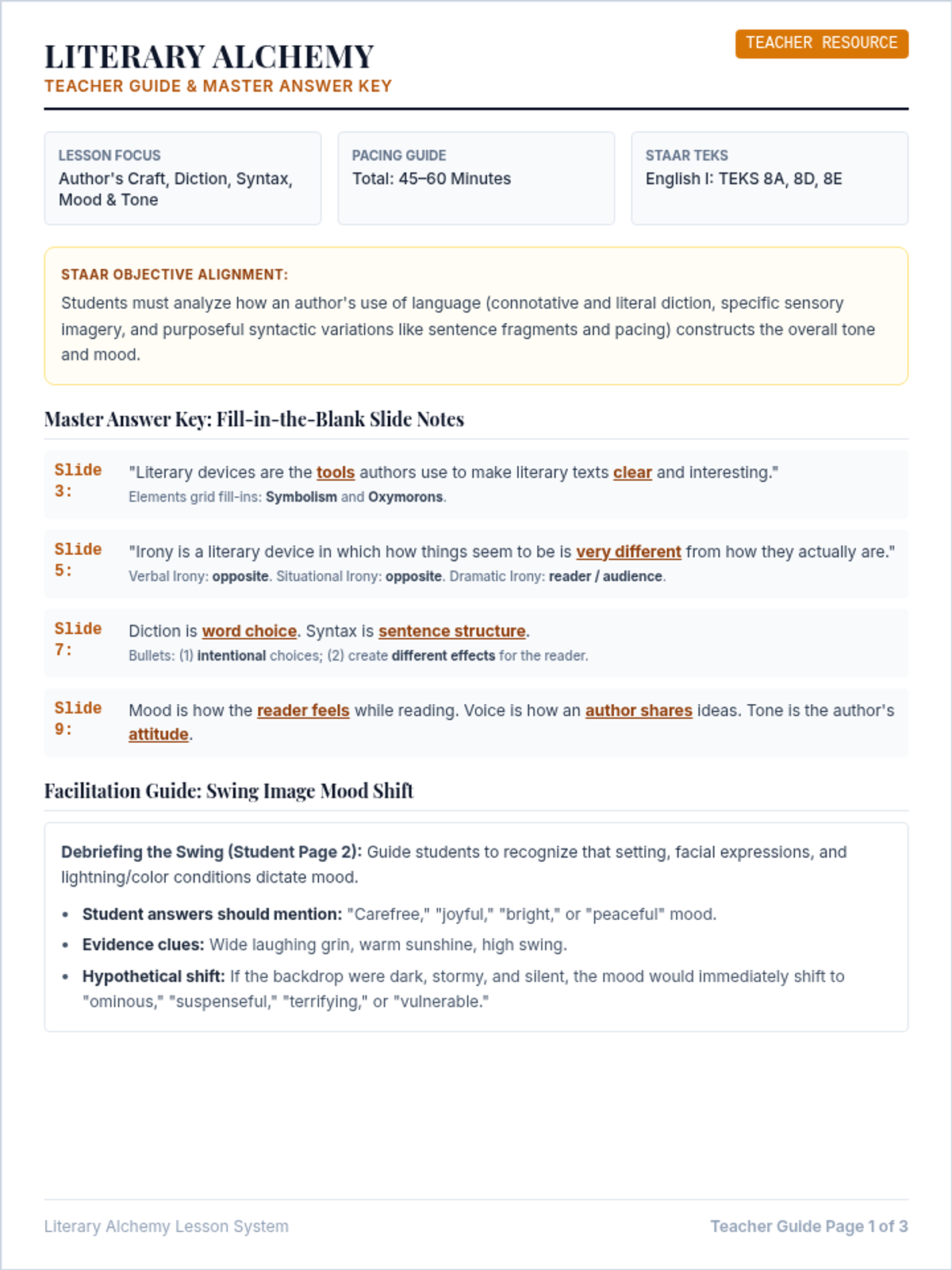
A rigorous STAAR-aligned high school English I lesson analyzing how authors employ literary devices, diction, syntax, and imagery to craft mood, voice, and tone. Students engage in interactive note-taking followed by guided close reading of Edgar Allan Poe and Delia Owens, culminating in independent passage analysis.
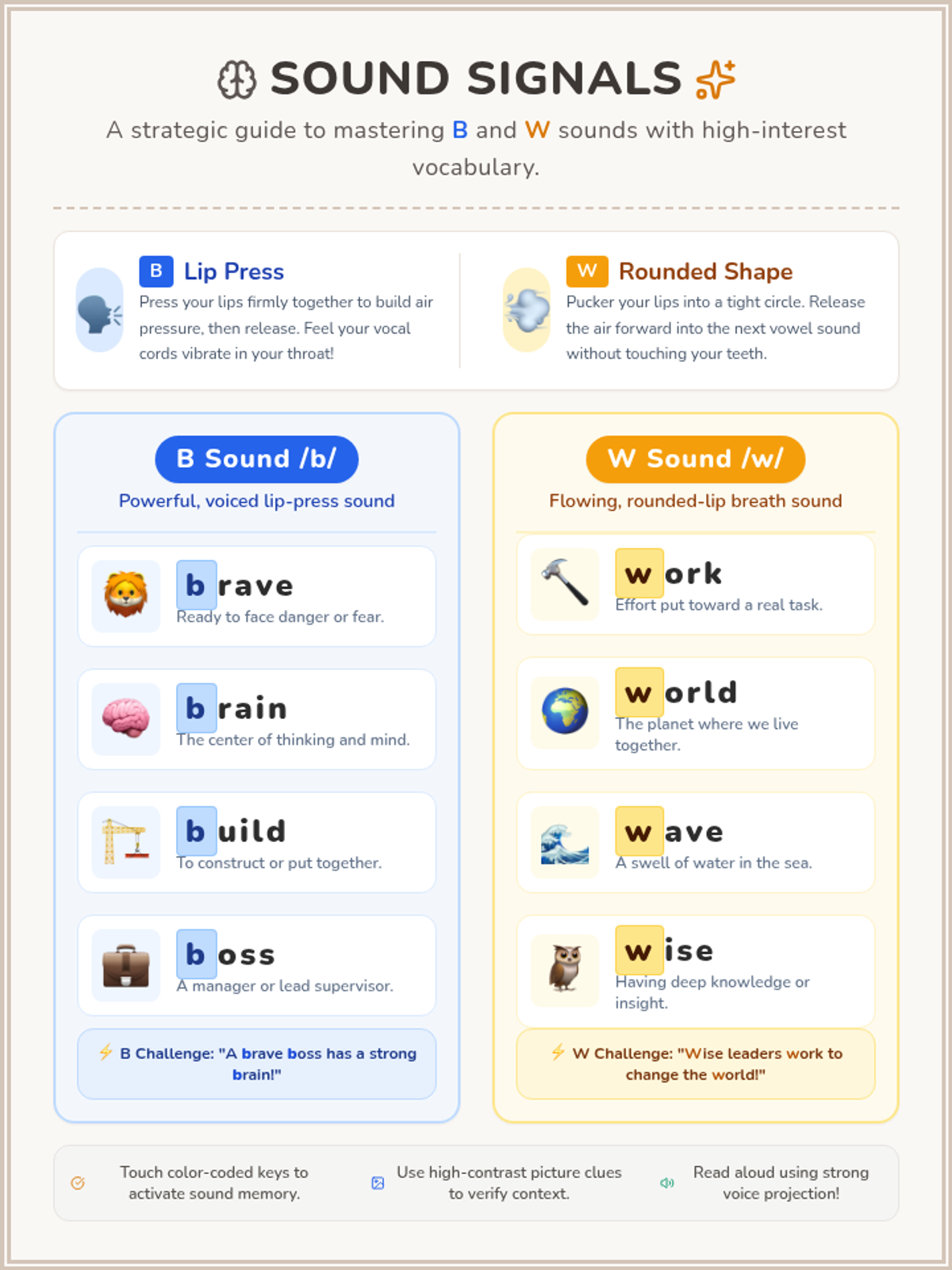
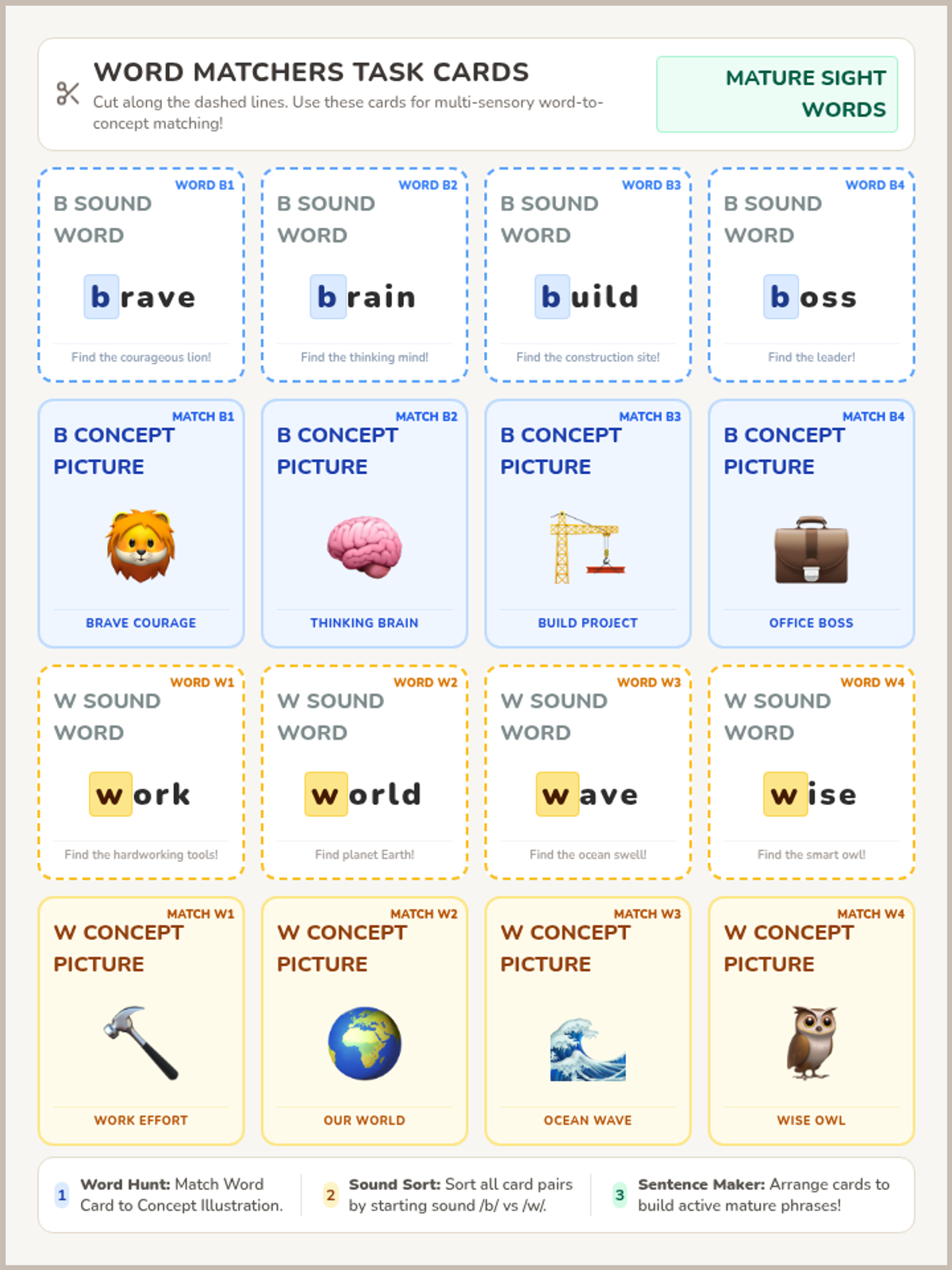
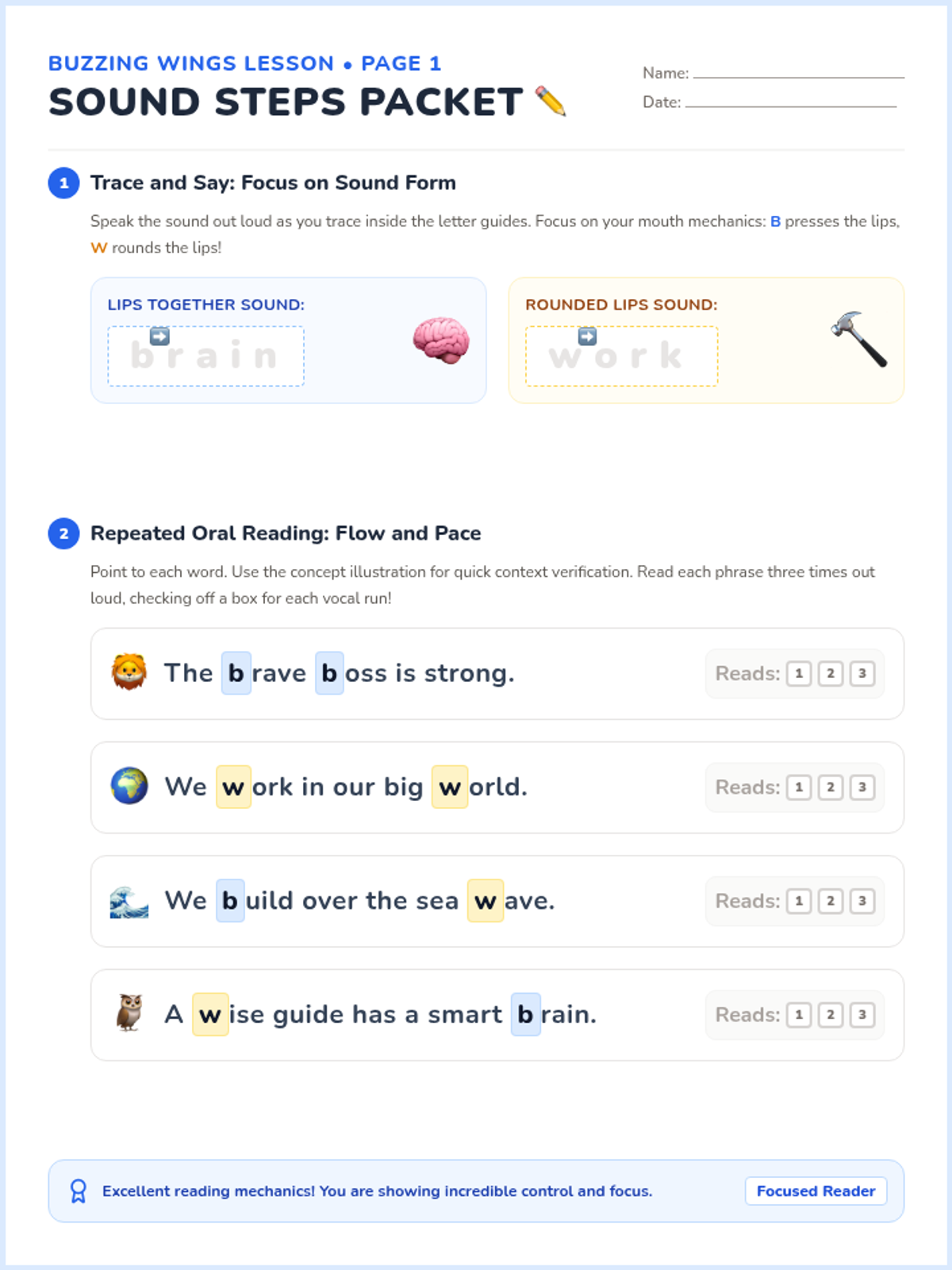
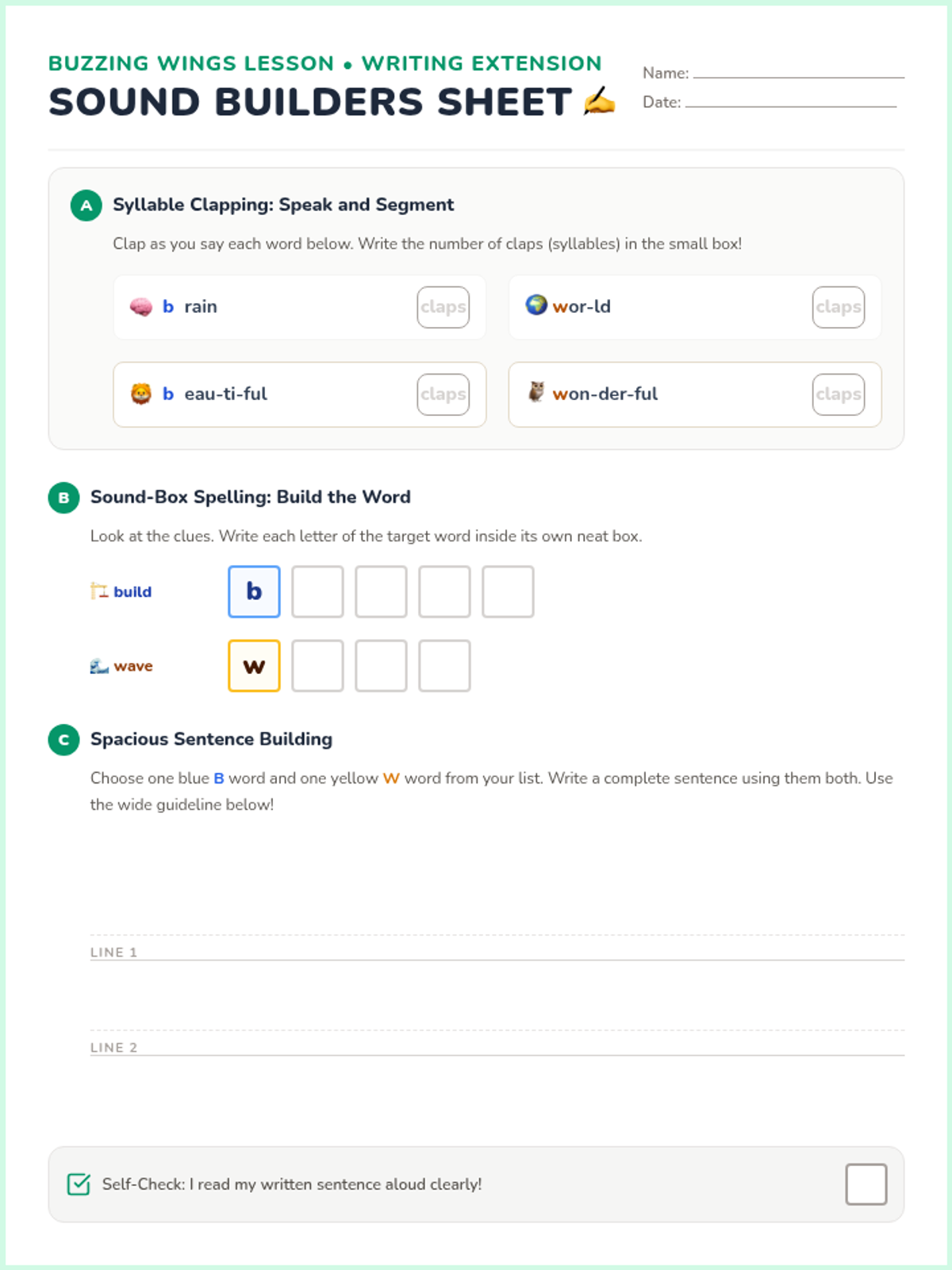
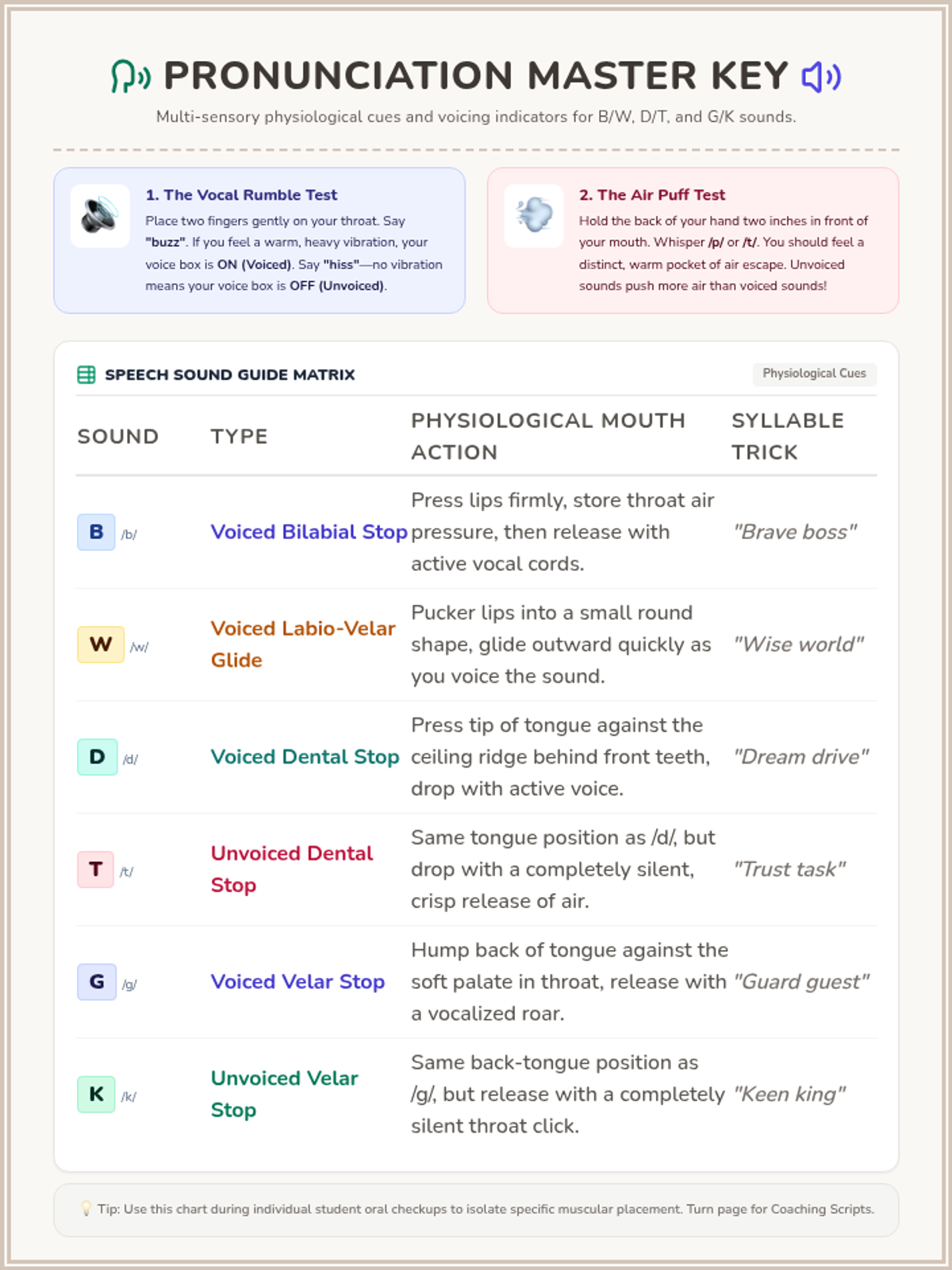
An hour-long structured reading lesson focusing on B and W letter-sound association and common sight words. Designed with dyslexia-friendly spacing, color-coded highlights, and picture scaffolding to support struggling oral readers.
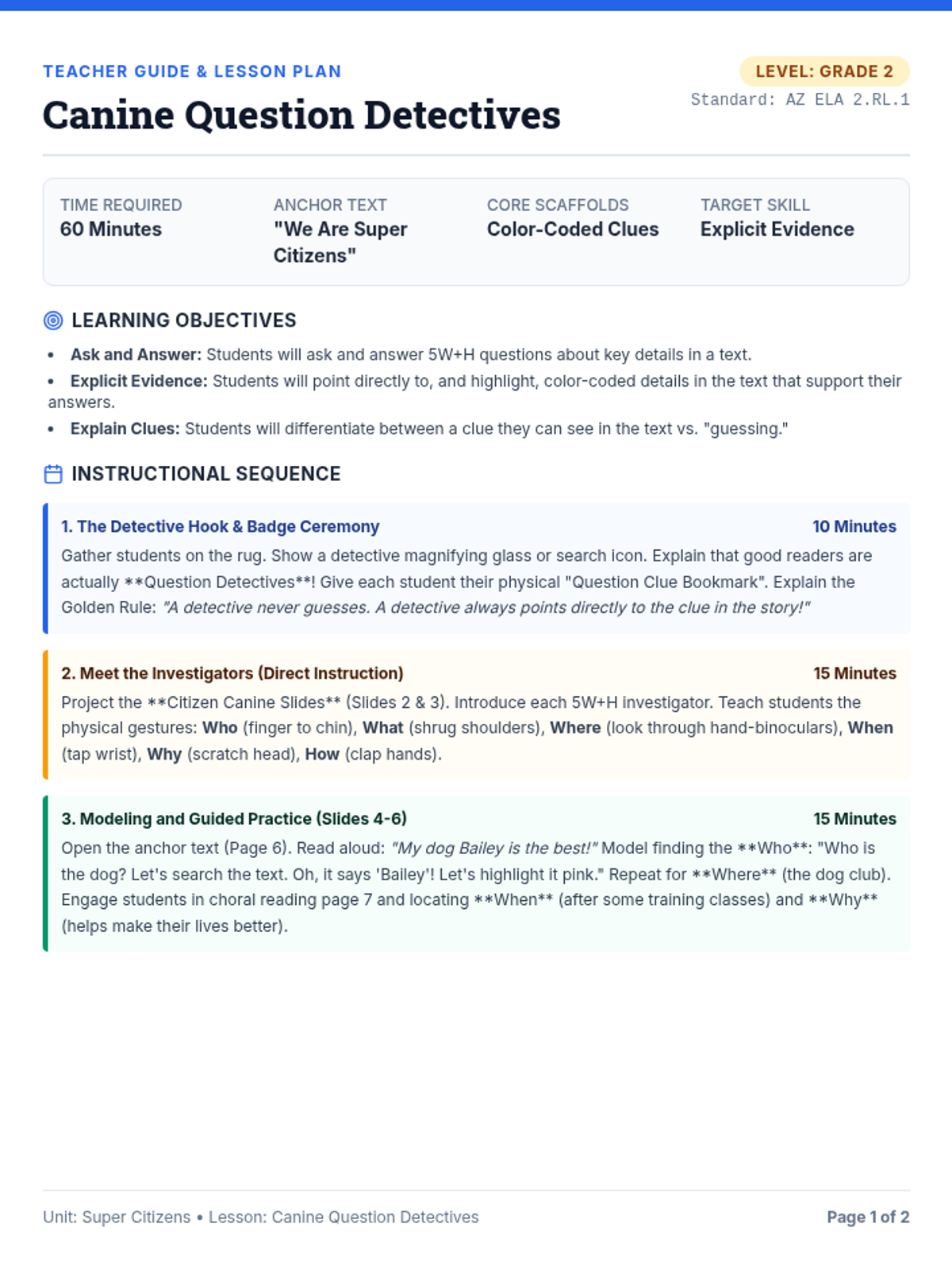
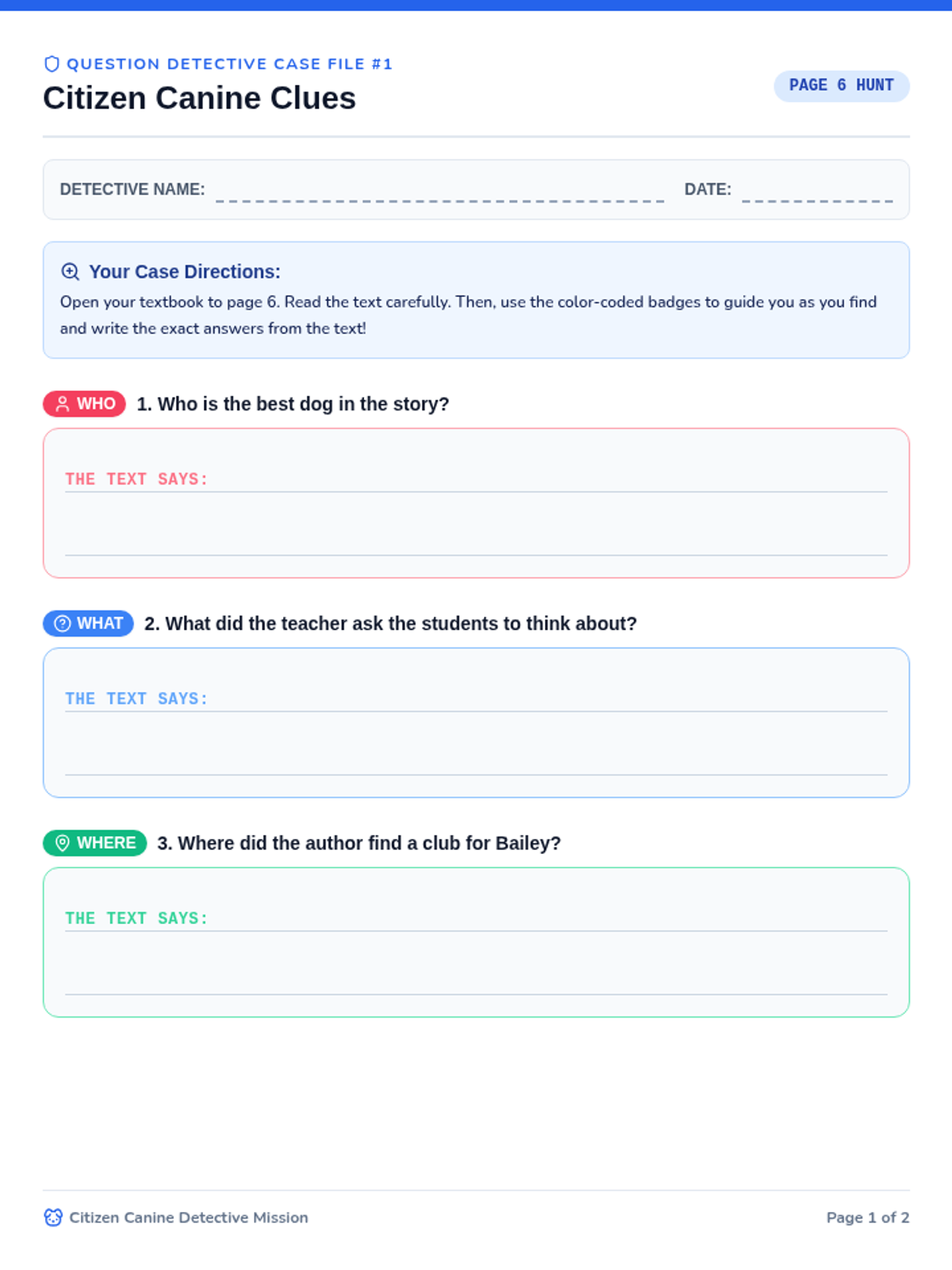
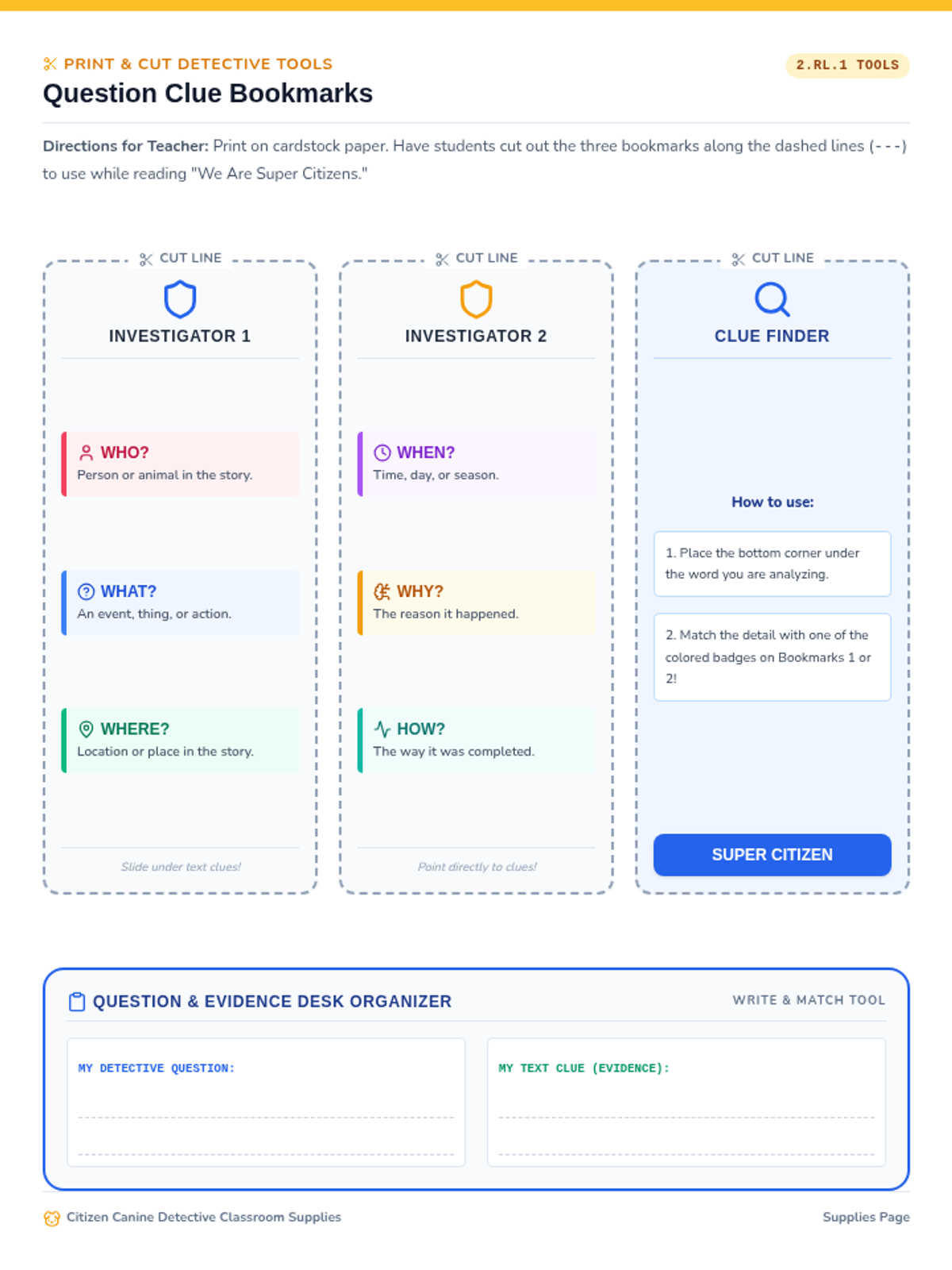
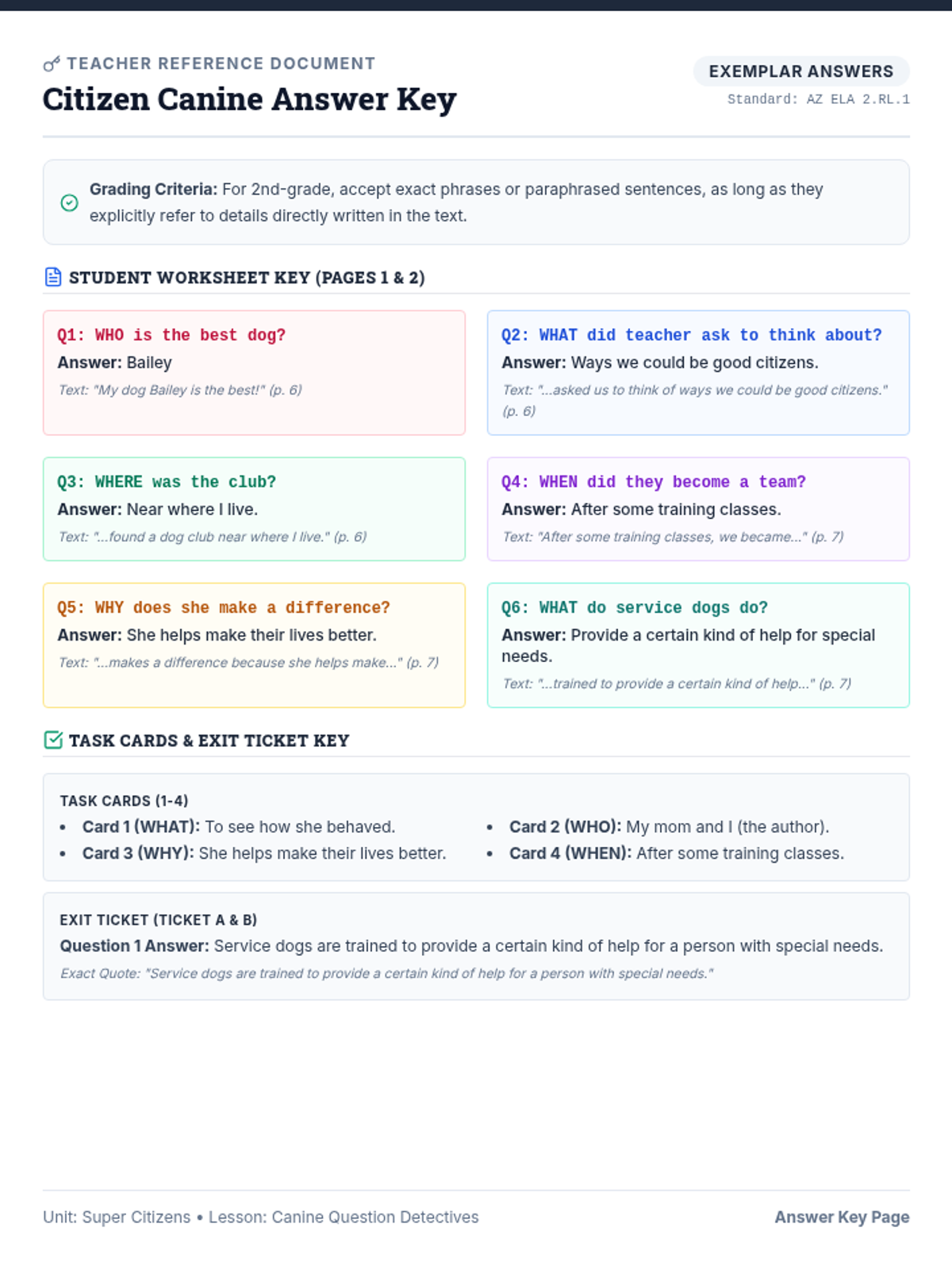
An introductory lesson teaching 2nd-grade students how to ask and answer Who, What, Where, When, Why, and How questions using the text 'We Are Super Citizens'. Students learn to find explicit clues in the story using a fun canine detective theme.
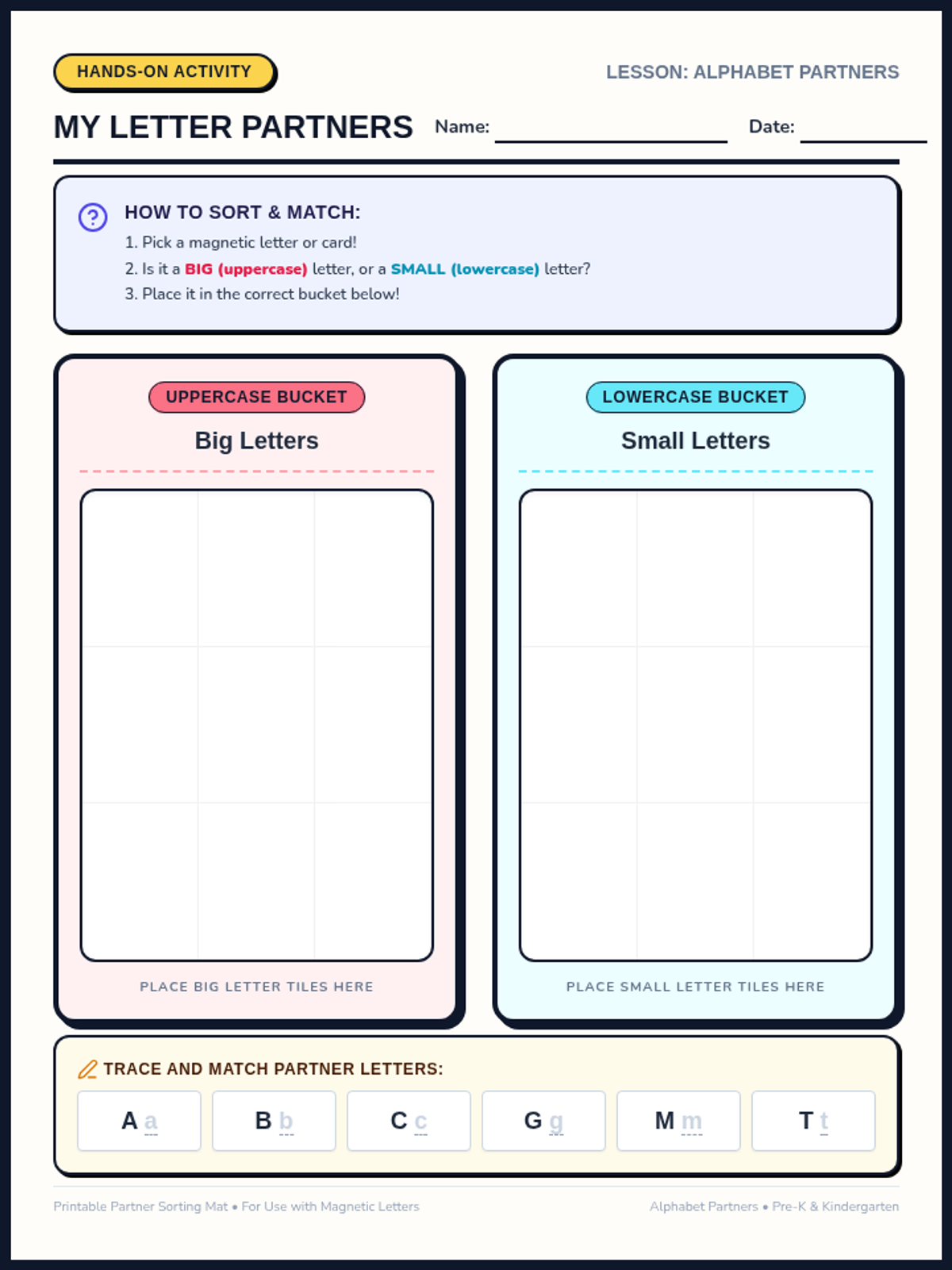
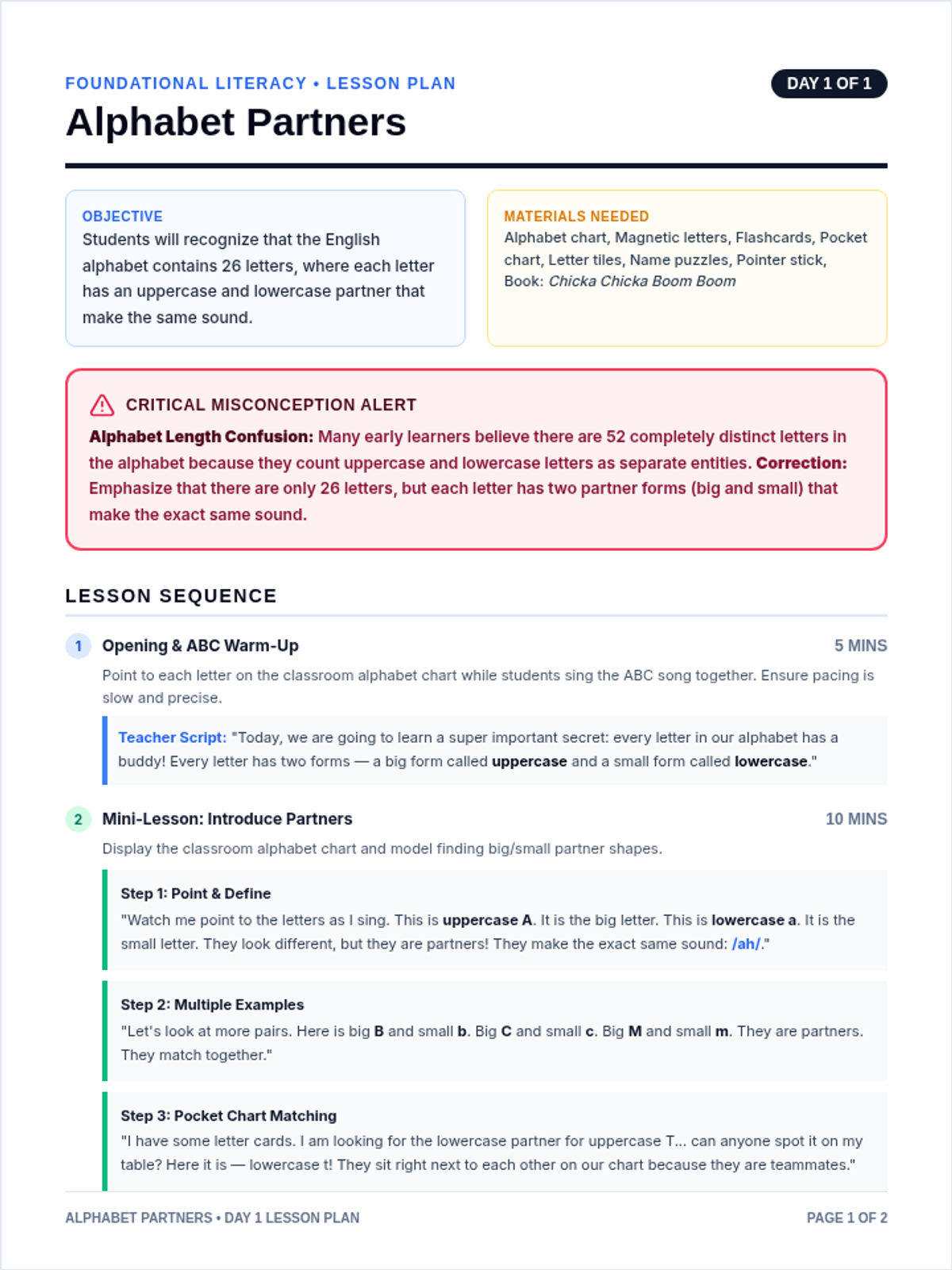
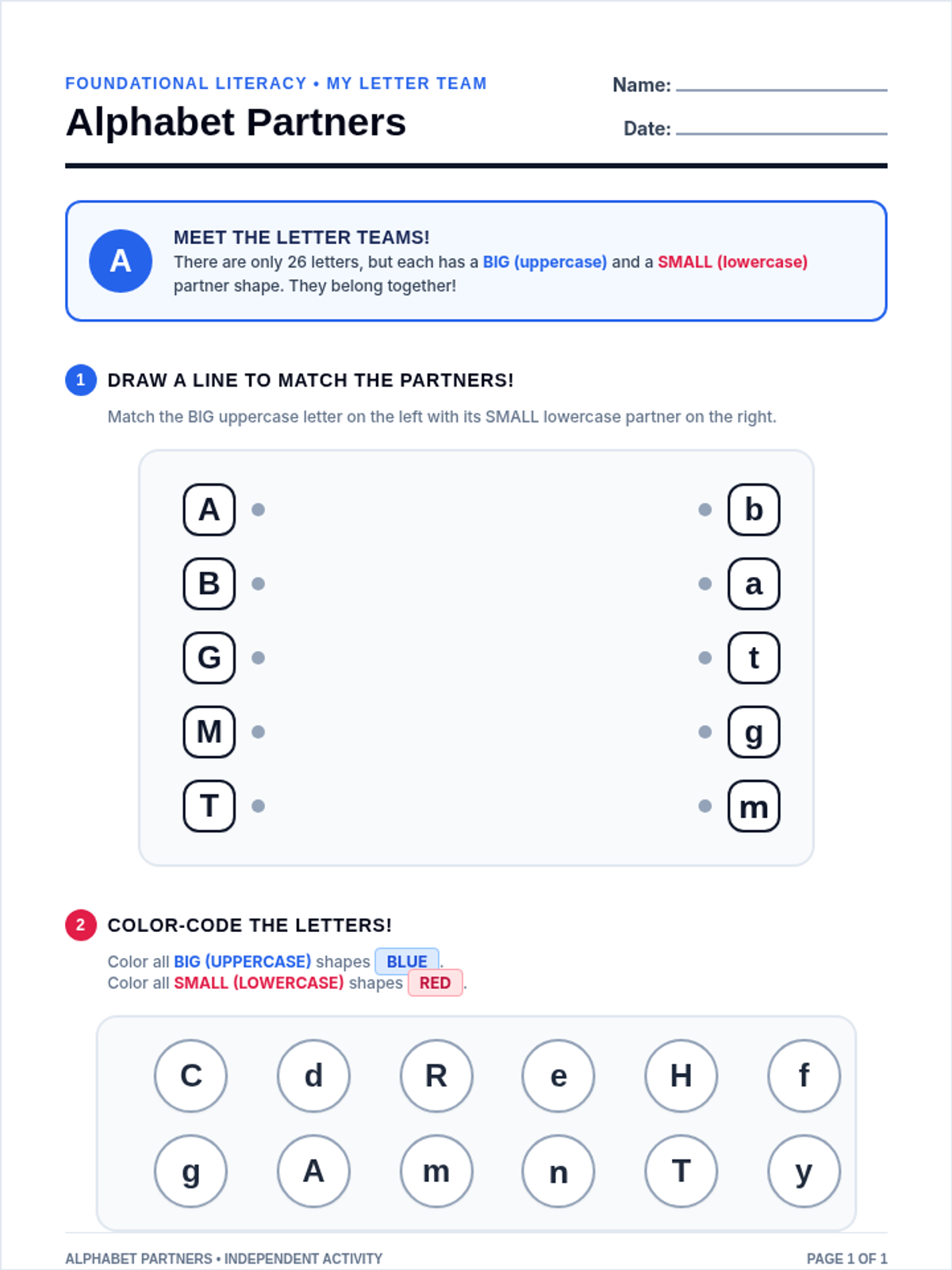
A foundational literacy lesson designed to introduce uppercase and lowercase letter partners, explicitly correcting the common misconception that the alphabet contains 52 completely independent letters by presenting them as 26 matching pairs.
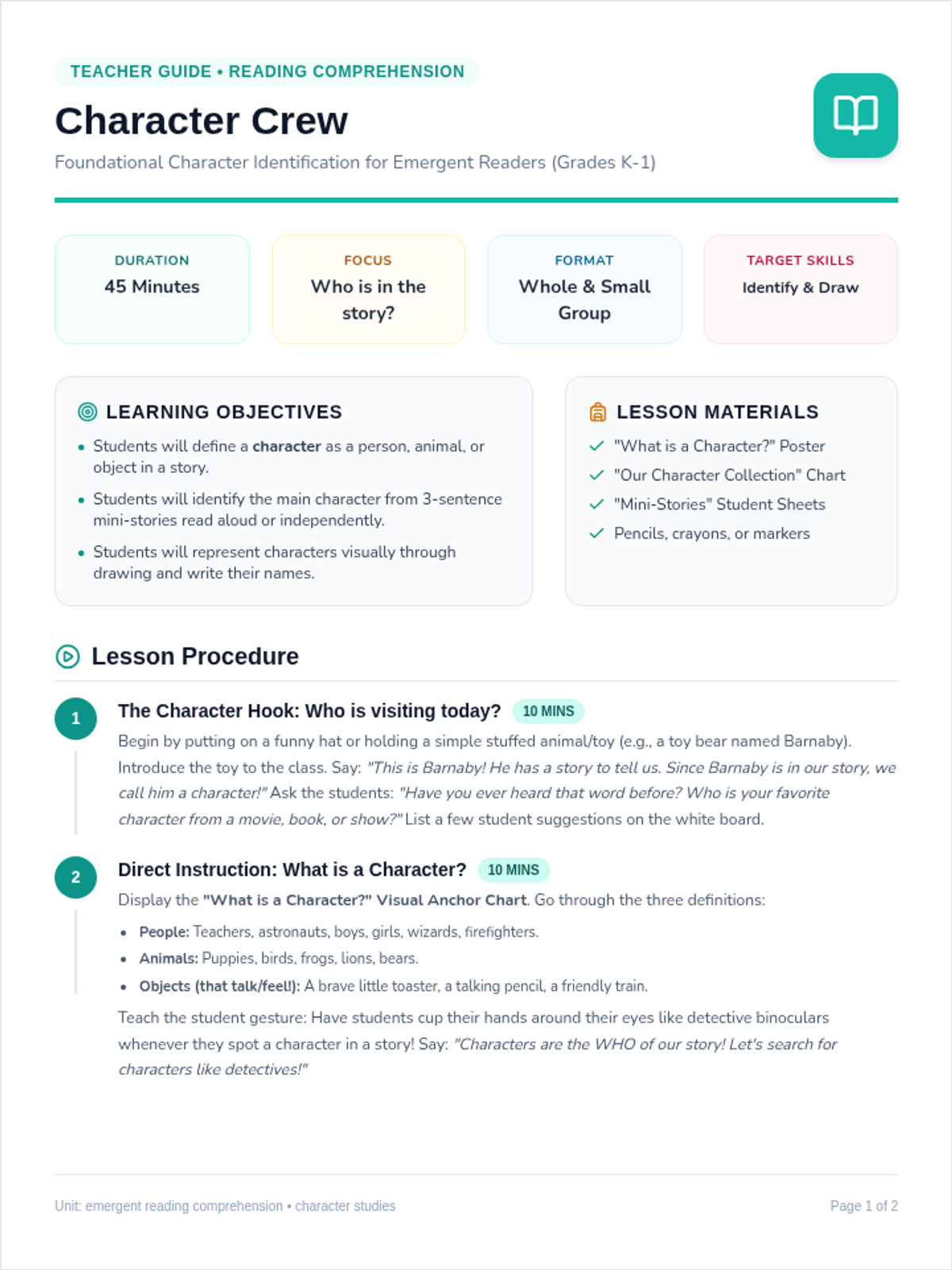
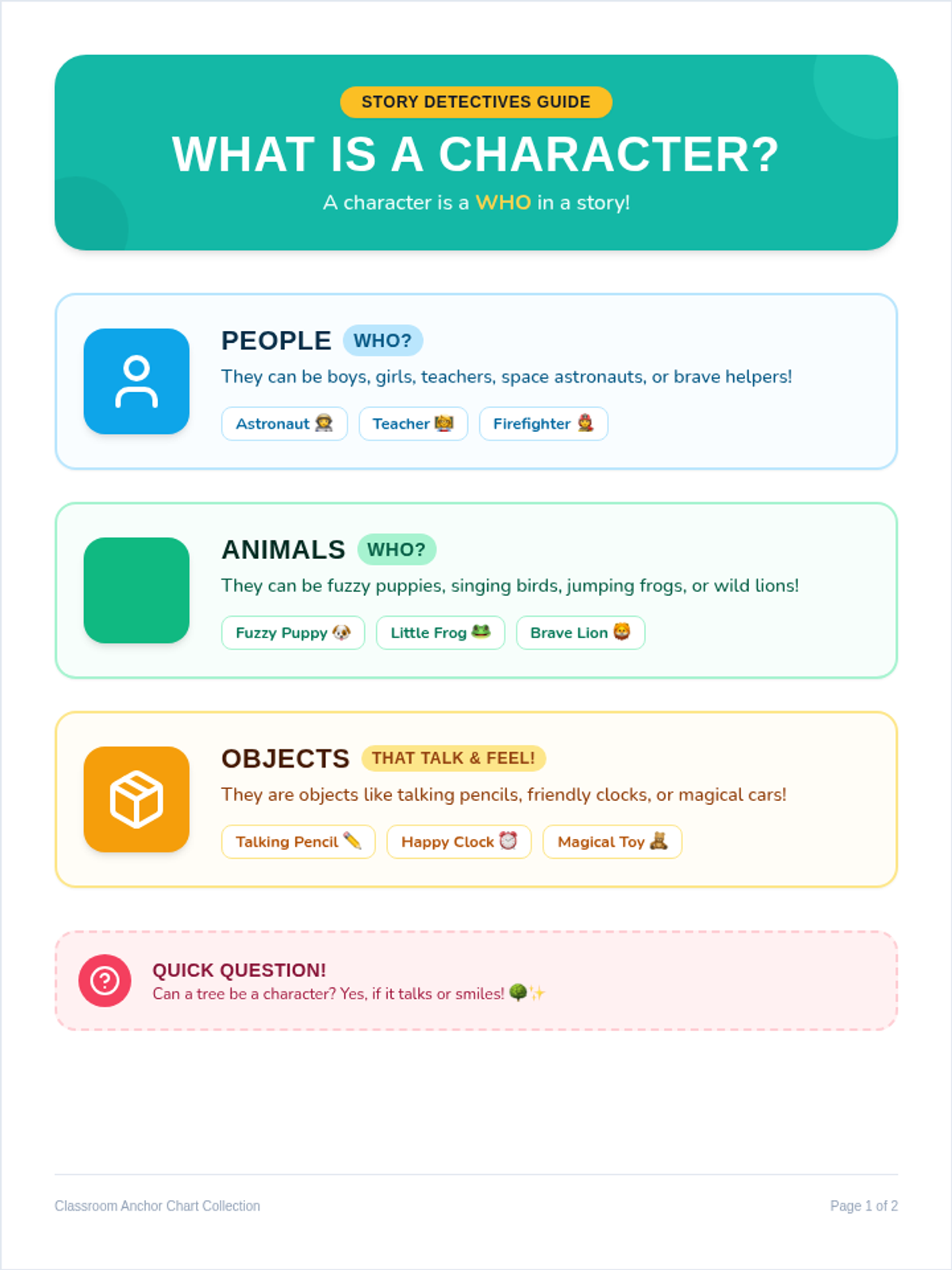
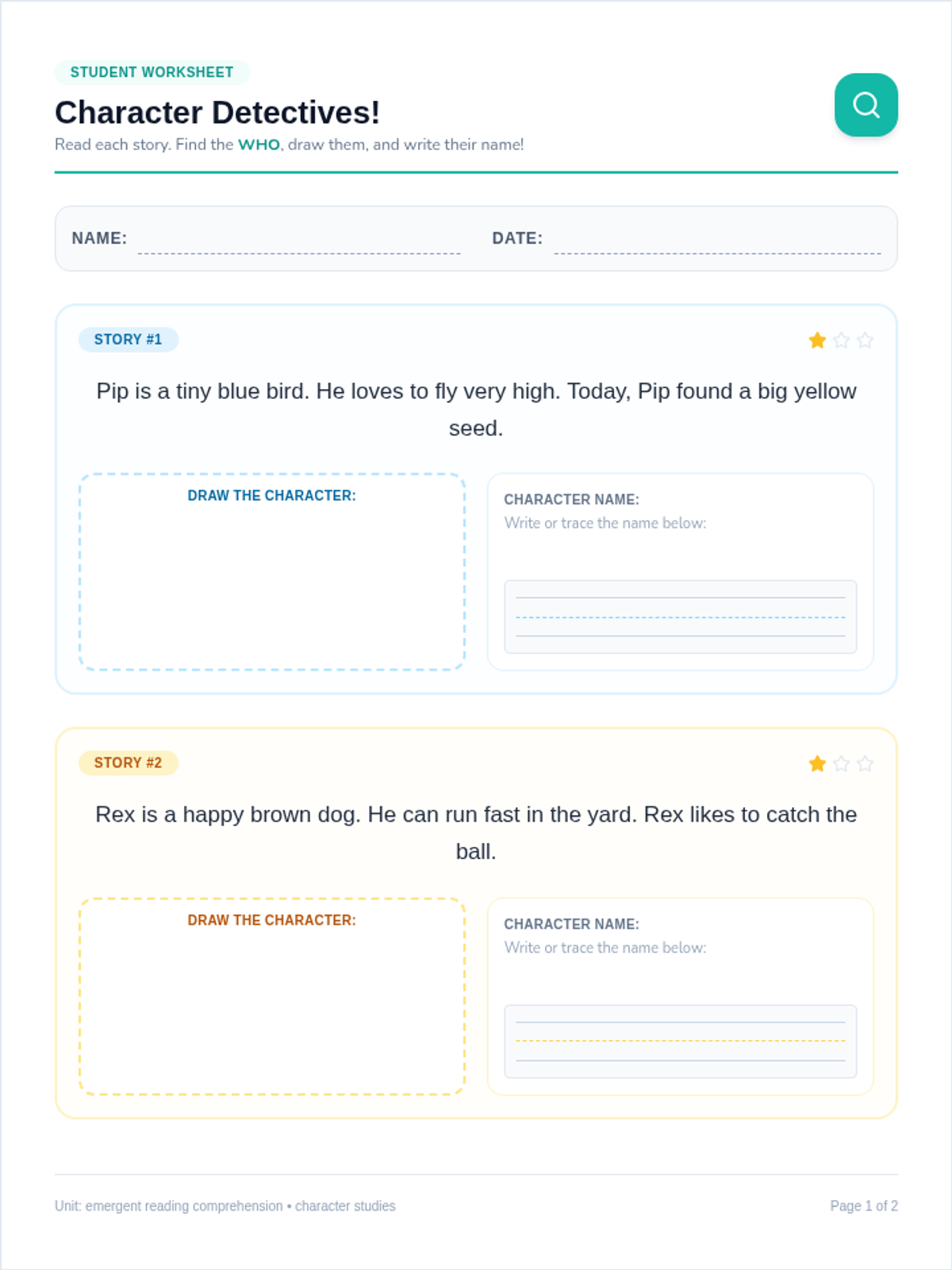
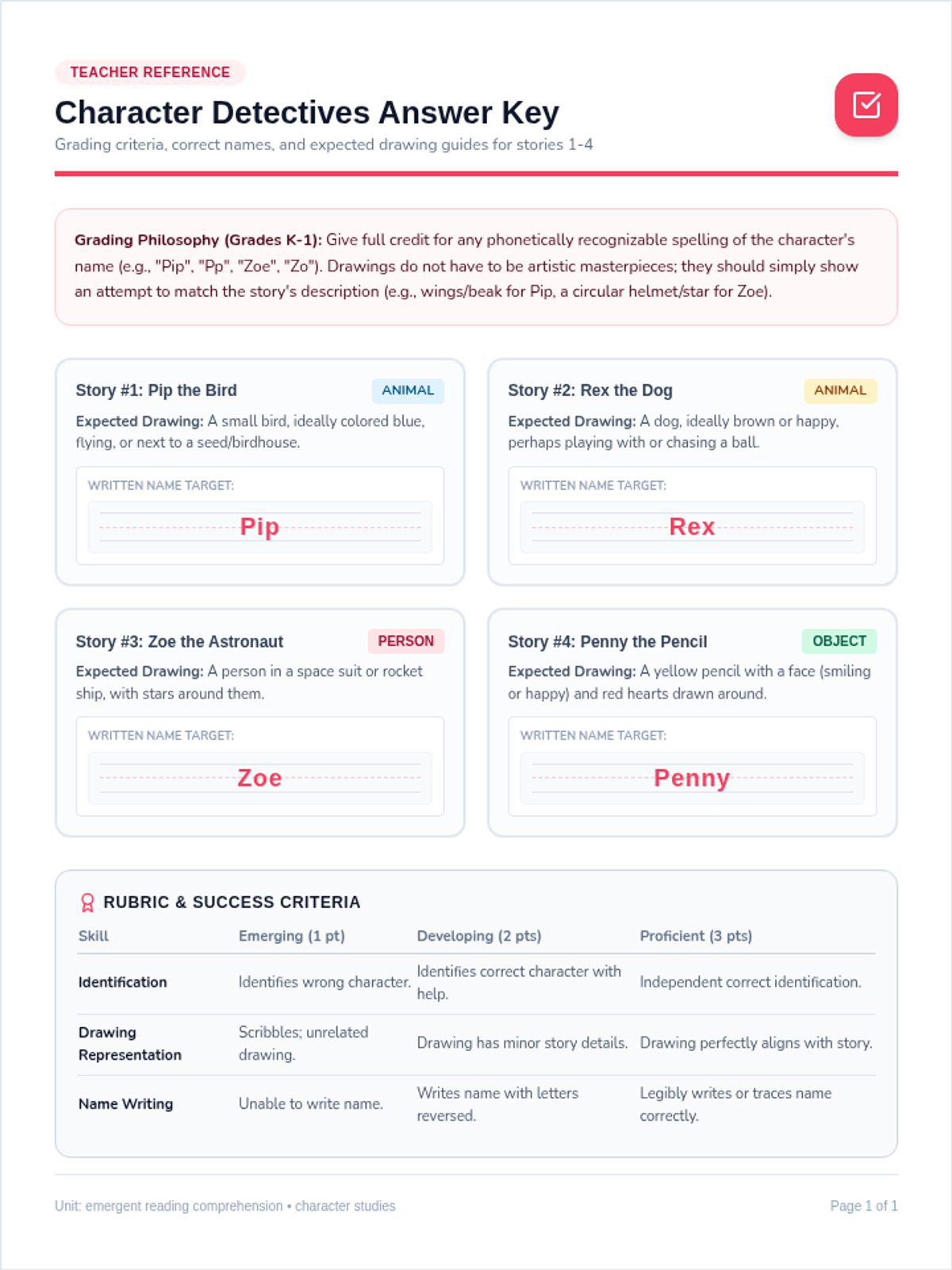
A foundational reading comprehension lesson for emergent readers to identify and track characters. It includes a teacher guide, two colorful anchor charts, a mini-stories student worksheet, and an answer key.
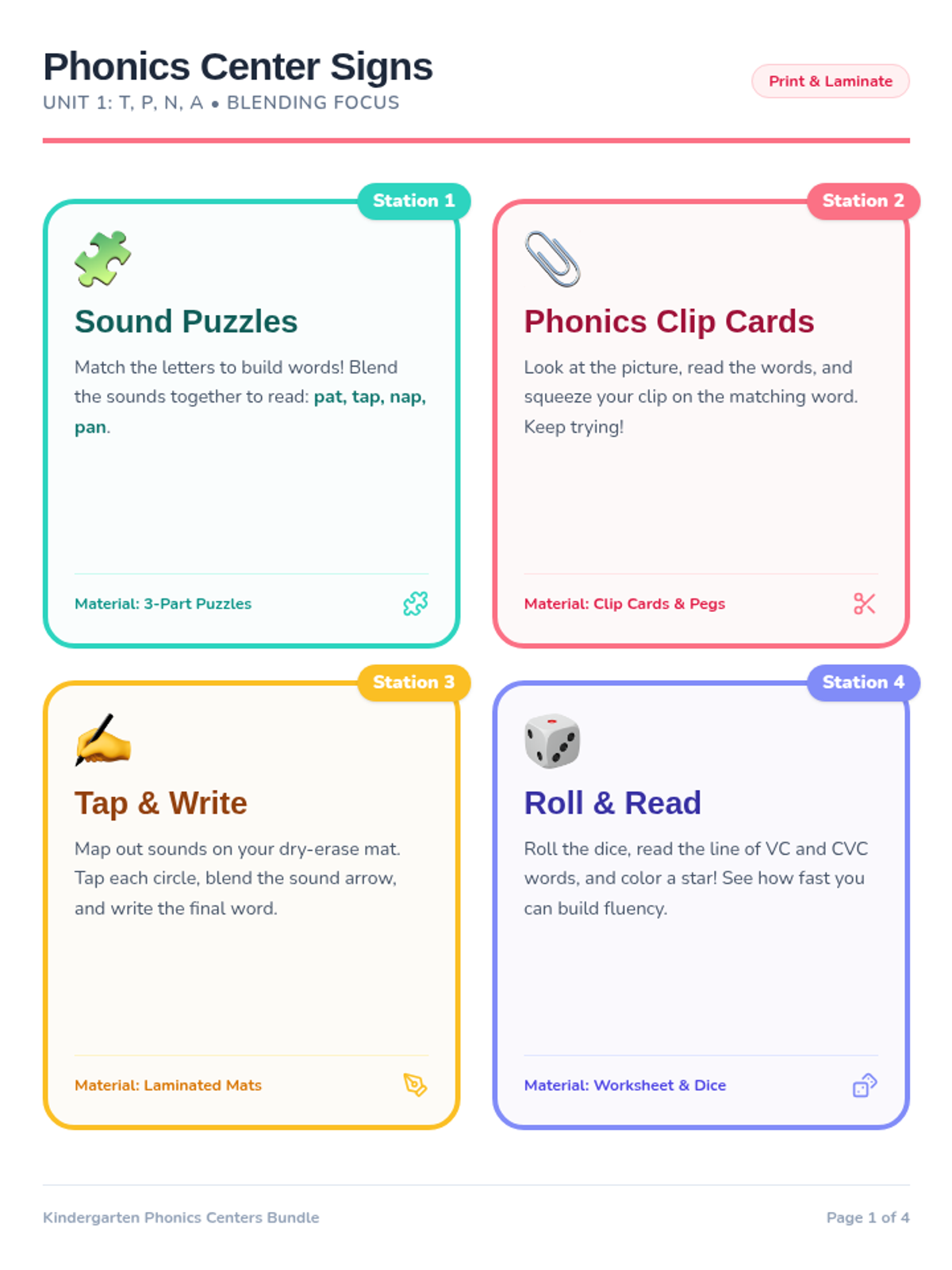
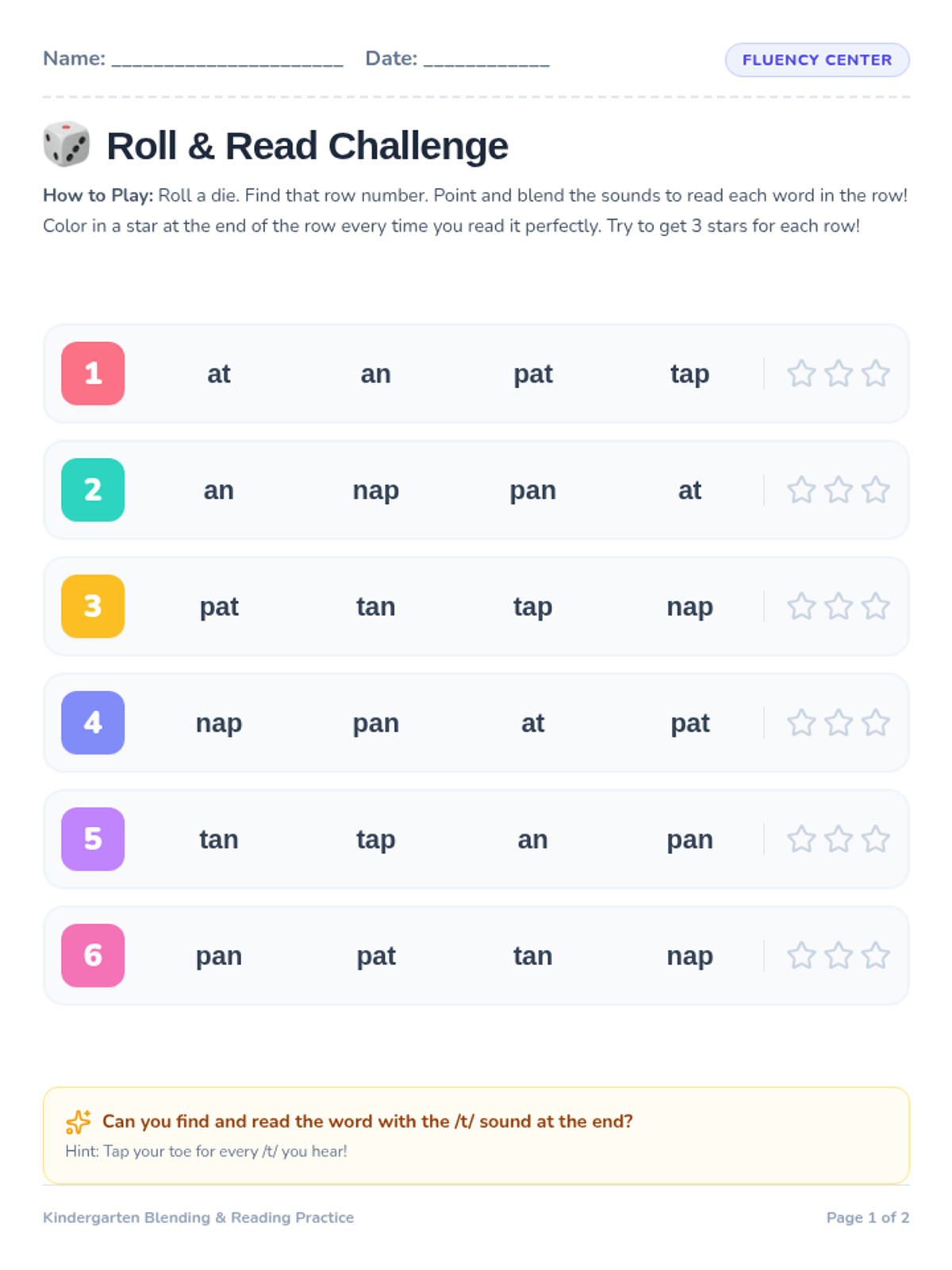
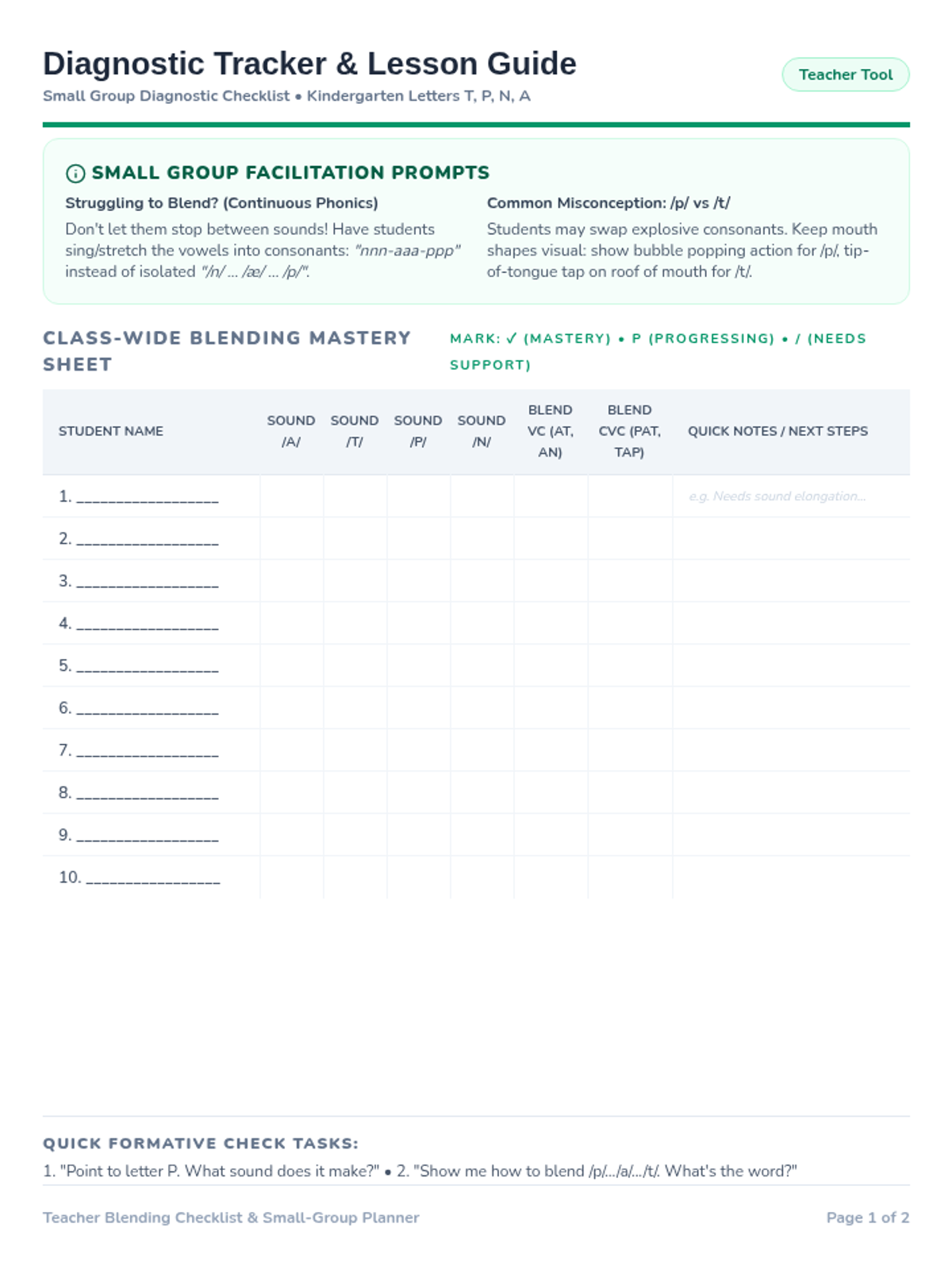
A targeted Kindergarten literacy center lesson focusing on blending the letter sounds Tt, Pp, Nn, and Aa to read VC and CVC words such as 'an', 'at', 'pan', 'tan', 'pat', 'tap', and 'nap'. Includes direct blending slides, hands-on sorting and matching cards, independent roll-and-read worksheets, and teacher assessment tools.
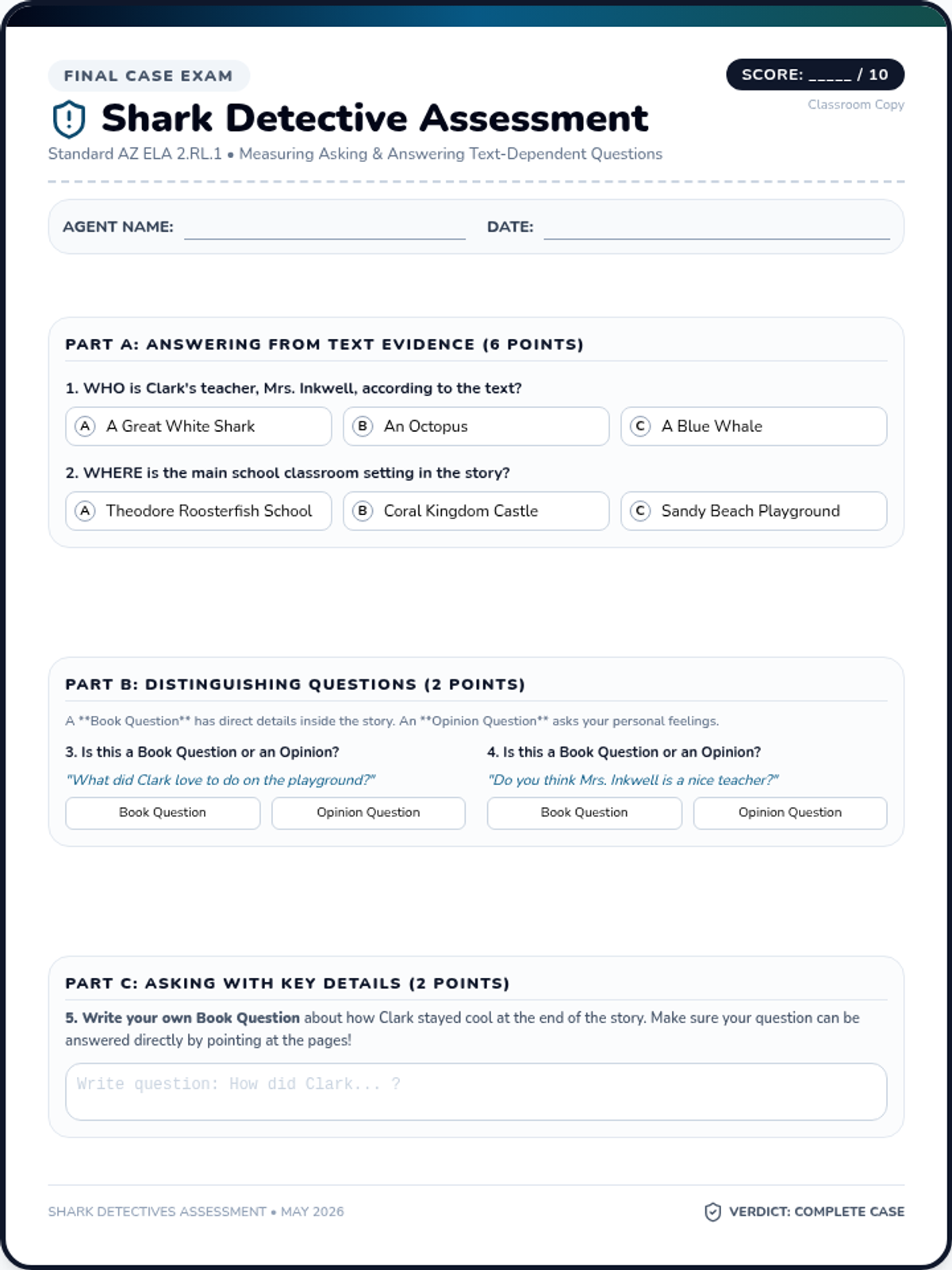
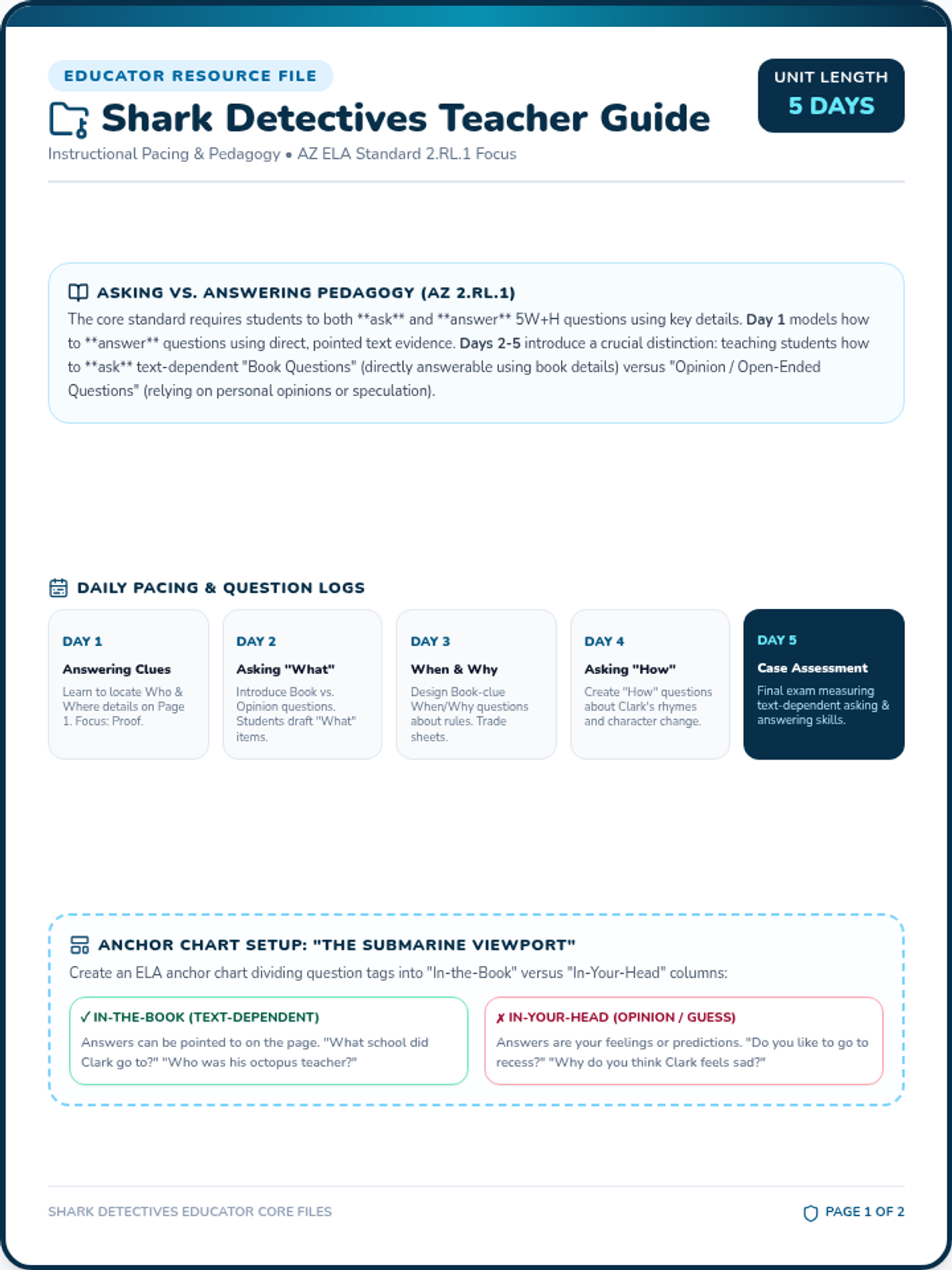
Day 5 is the final synthesis where students complete their case files, solve the mystery of Clark's transformation, and take their comprehension assessment.
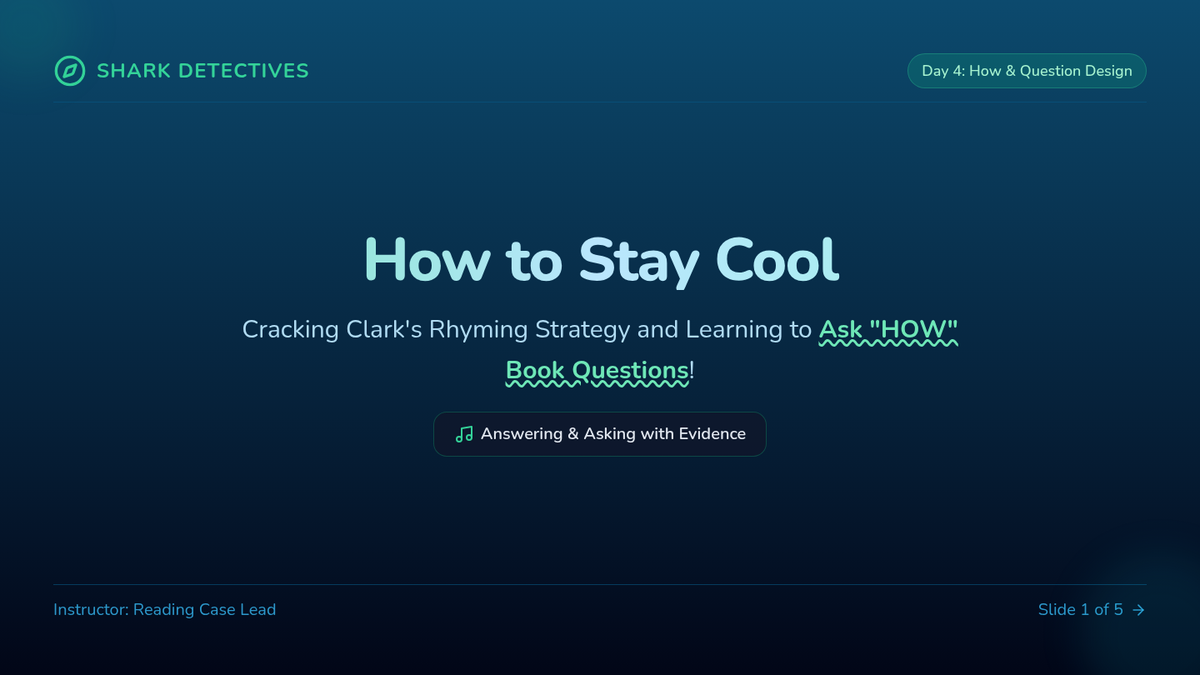
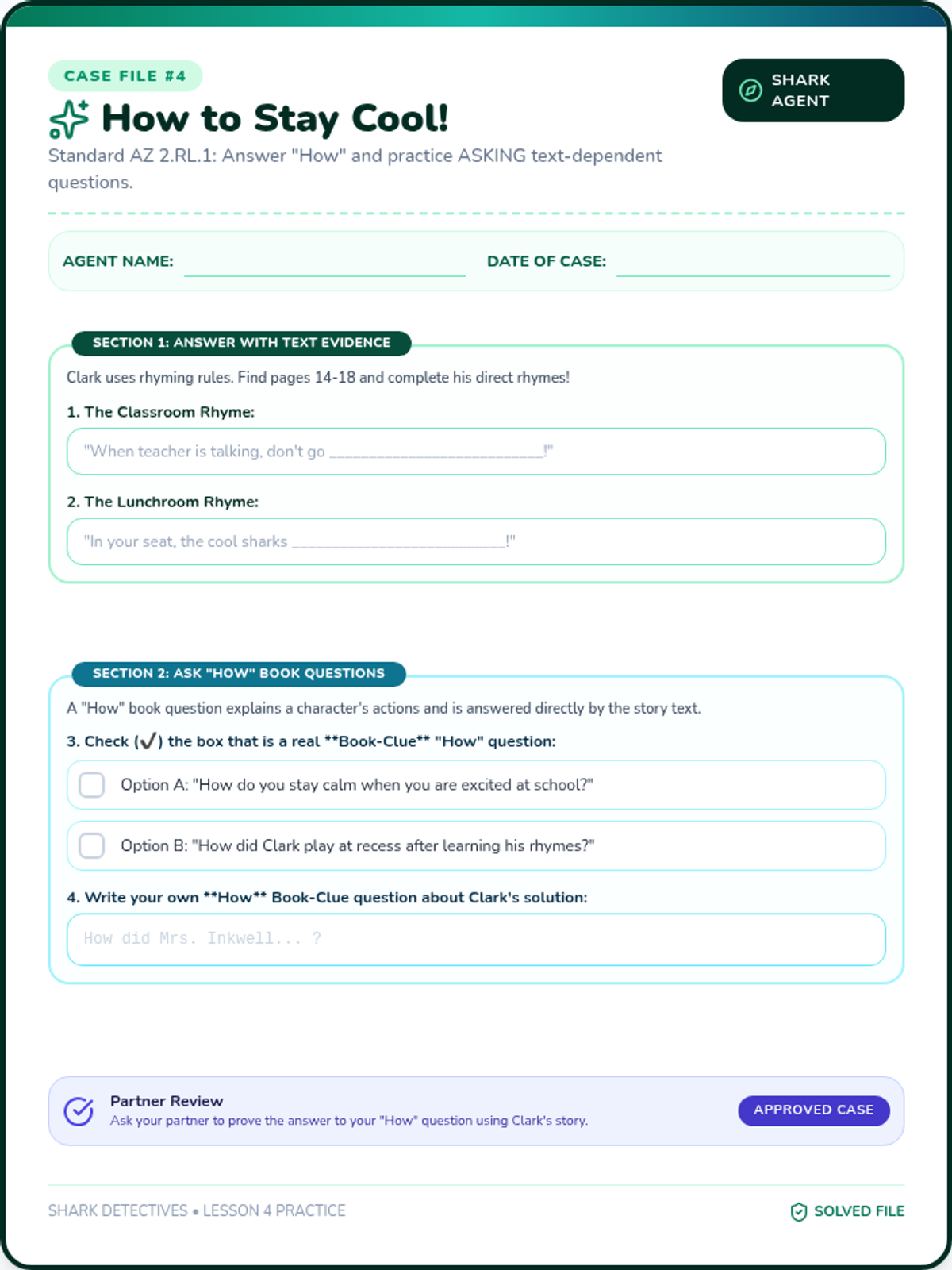
Day 4 focuses on analyzing how Clark solves his problems by creating rhyming rules, and how his character changes.
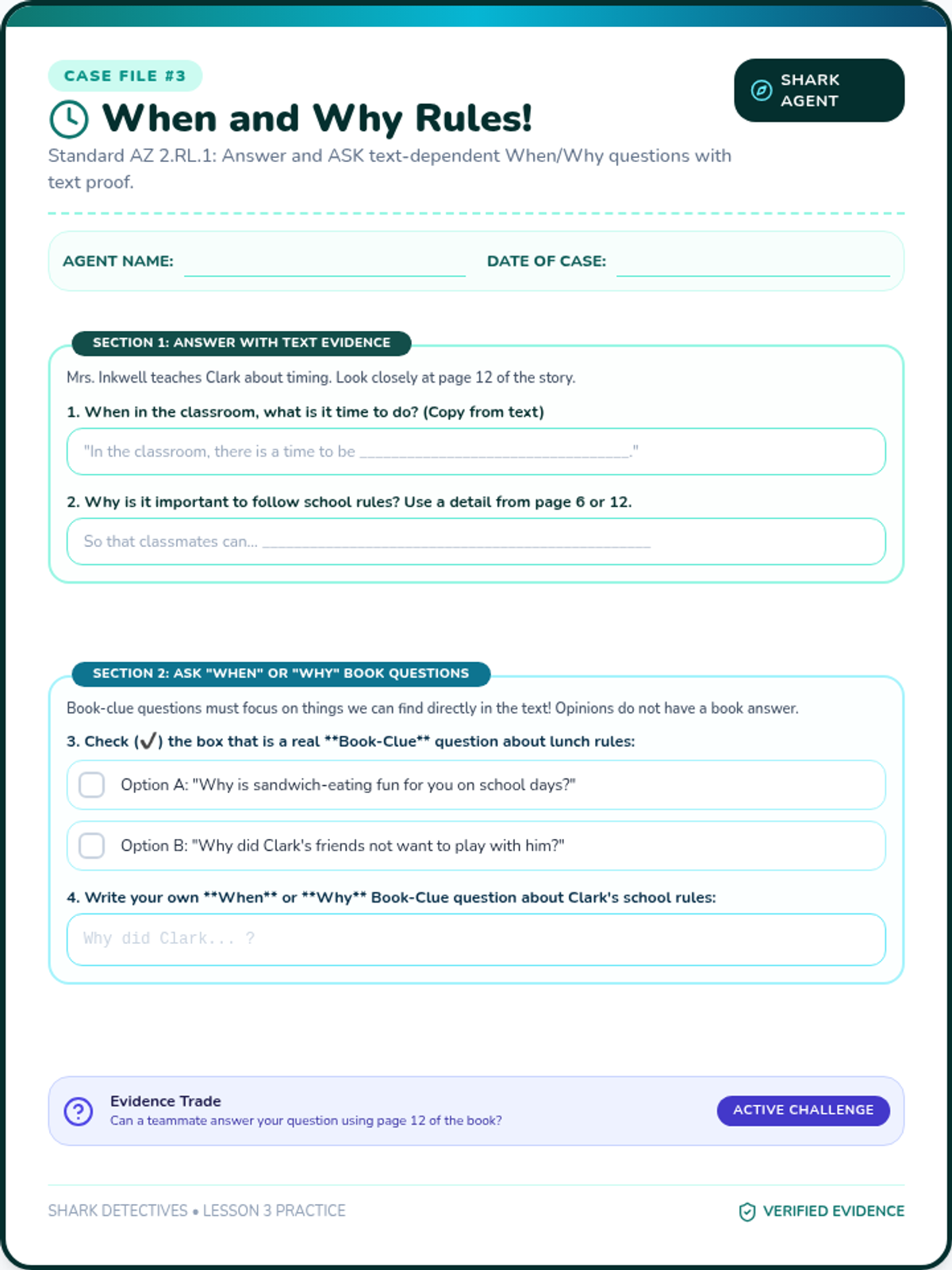
Day 3 focuses on understanding when rules apply and why they are necessary in Clark's school environment, using direct quotes and book details.