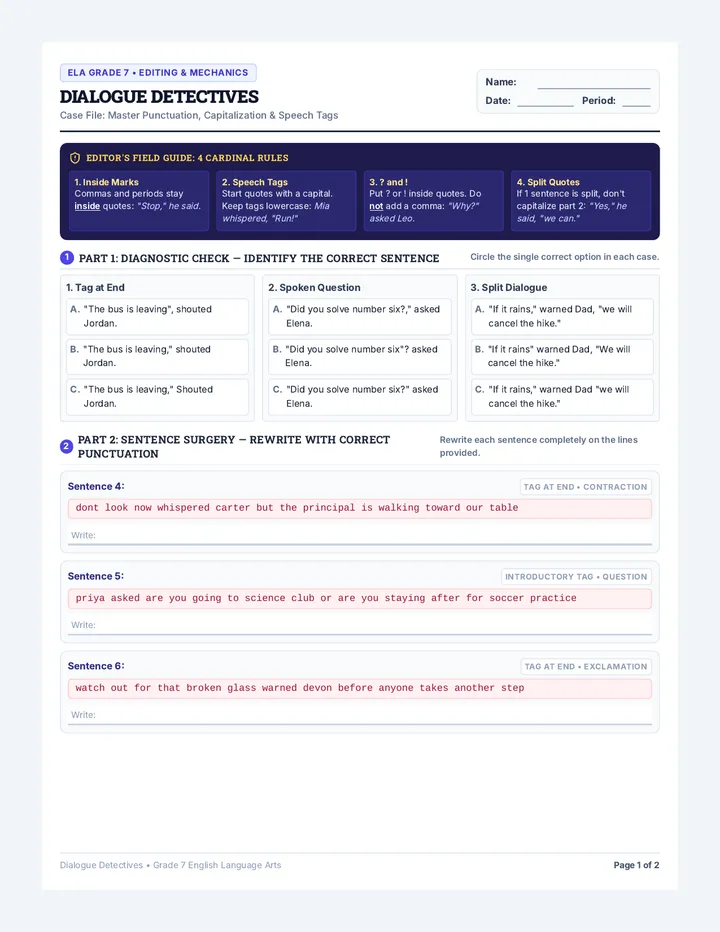
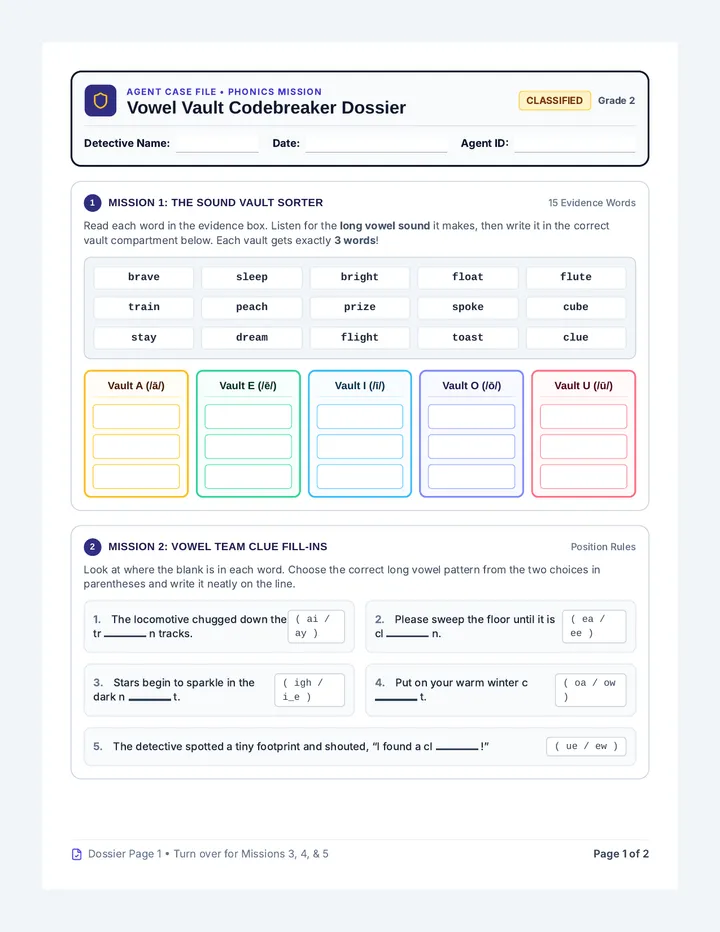
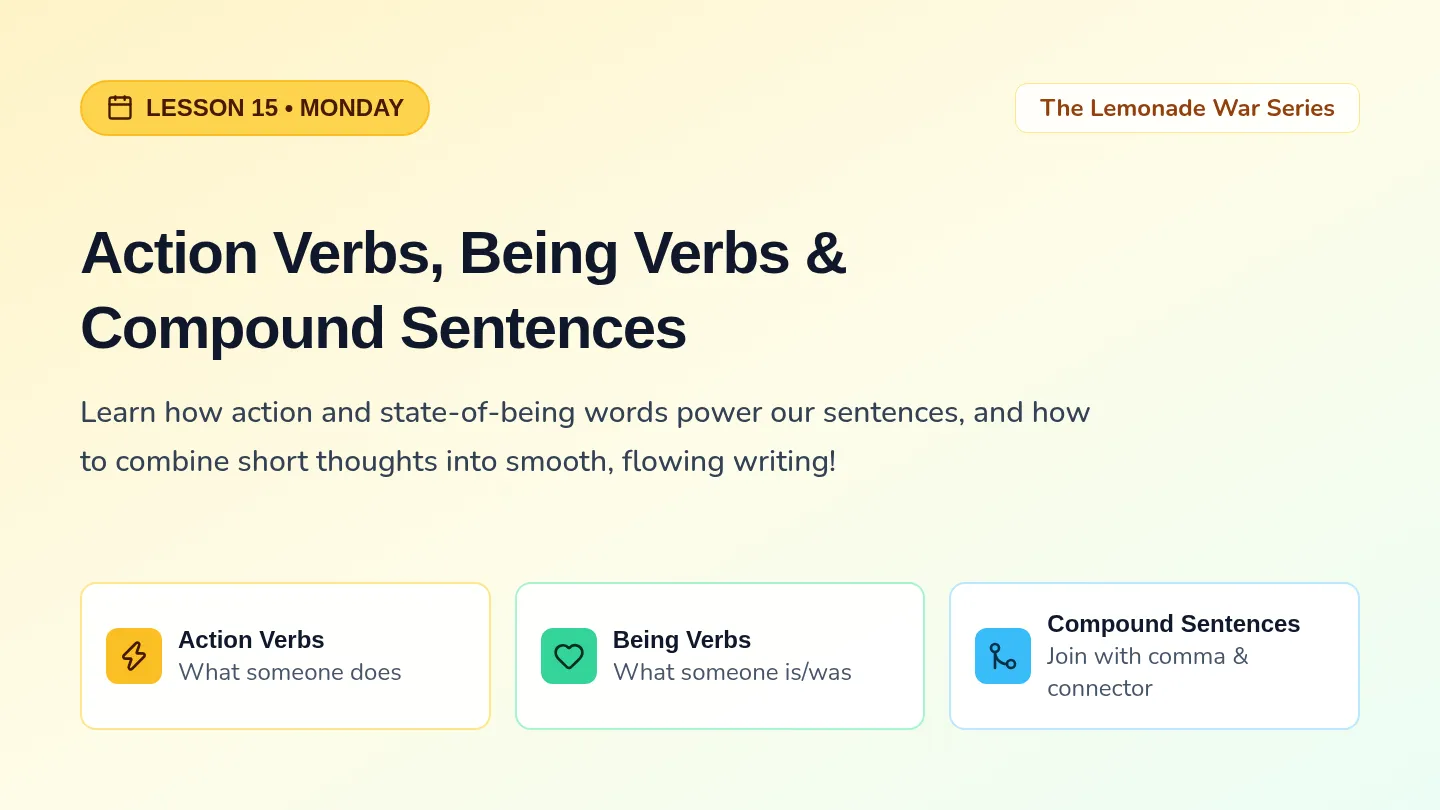
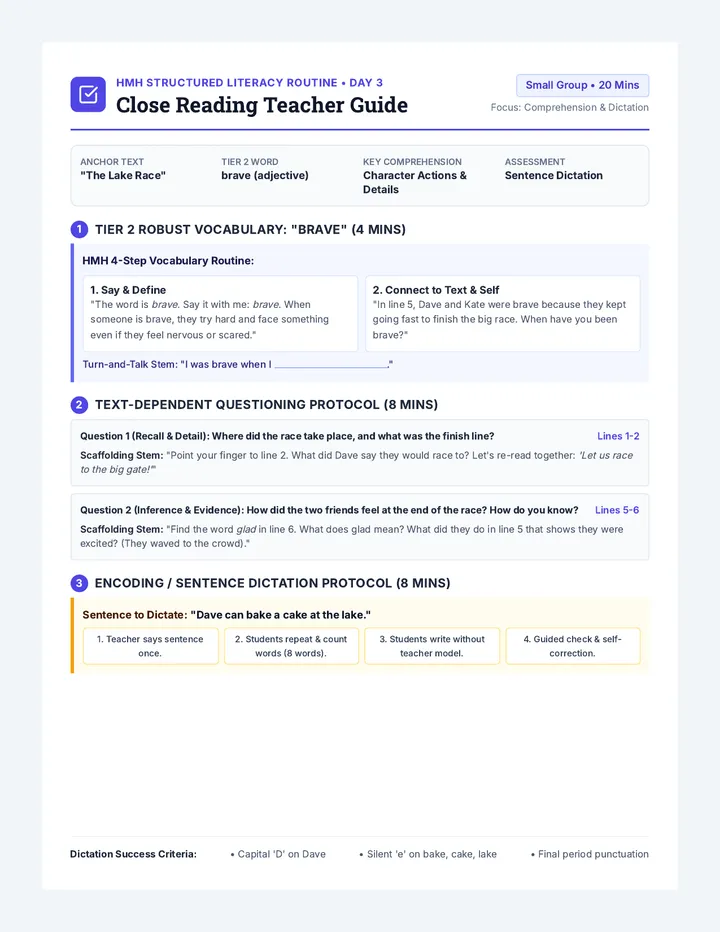
Together, identify the prefix, base word, and define each word:
reread
rewrite
preview
preheat
Comprehension Case Query
How did Marcus use the advice from his teacher to improve his project?
Word Study Workbook Page 3
Prefix Investigation
DAY 3
Name:
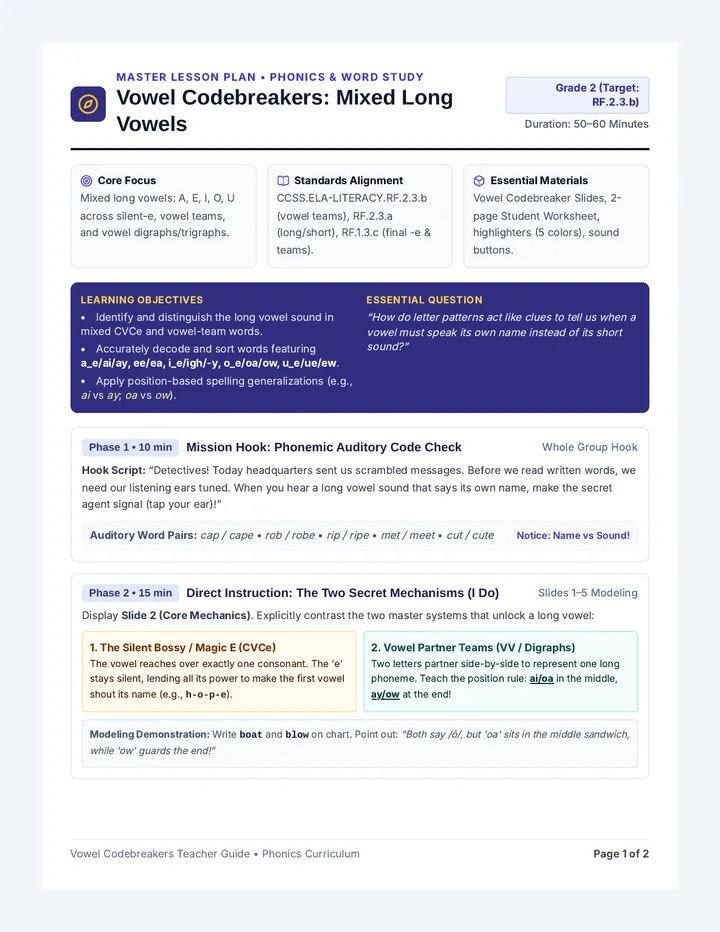
The prefix mis- means "wrong" or "badly" (e.g., misspell = to spell wrong).
The prefix over- means "too much" or "above" (e.g., overload = load too much).
| Case Word | Prefix | Base Word | Definition |
|---|---|---|---|
| misplace | mis- | place | |
| overuse | over- | use | |
| mislead | mis- | lead | |
| overflow | over- | flow |
Sort the list below with your partner. Identify the prefix and base word for each:
misbehave, misjudge, miscount, overwork, overeat, overreact
mis- words
over- words
Word Study Workbook Page 4
Suffix Investigation
DAY 4
Name:
Nadia thought caring for a garden would be effortless. She was wrong. The work was endless — watering, weeding, and waiting. But she was determined.
Her neighbor Mr. Osei was a graceful gardener. His yard was colorful and bright. He showed Nadia how to be more careful with her seedlings and reminded her to be hopeful even when plants looked wilted.
By summer, Nadia's garden was wonderful. Butterflies gathered on her flowers, and she felt joyful every time she looked outside.
Watch out for words that end in y! Write the suffix transformations below:
joy + -ful = joyful
pity + -less = pitiless
Comprehension Case Query
What did Nadia learn about caring for a garden? Use words from the passage to support your answer.
Word Study Workbook Page 5
Suffix Investigation
DAY 5
Name:
The suffix -ness means "state of" or "condition of" (e.g., sickness = state of being sick).
The suffix -ment means "action" or "process" (e.g., treatment = process of treating).
Transform each base word and write down its definition:
| Base Word | New Noun (-ness / -ment) | Noun Definition |
|---|---|---|
| dark | darkness | the state of being dark |
| sad | ||
| agree | ||
| enjoy |
Find more -ness and -ment words in your books (e.g., excitement, improvement). Write a sentence using one word from your search:
Word Study Workbook Page 6
Suffix Investigation
DAY 6
Name:
Getting a pet seemed like an adorable idea to Tomas. But his parents reminded him that owning a pet is a serious and responsible decision.
"A dog isn't washable like a dish," said his mother. "They're living creatures that depend on you." Tomas learned which foods are edible for dogs. He found out that dogs need visible space to run and sensible boundaries at home.
Identify the base word for each term below:
reversible
washable
visible
lovable
Comprehension Case Query
What did Tomas do to become a responsible pet owner?
Word Study Workbook Page 7
Suffix Comparison
DAY 7
Name:
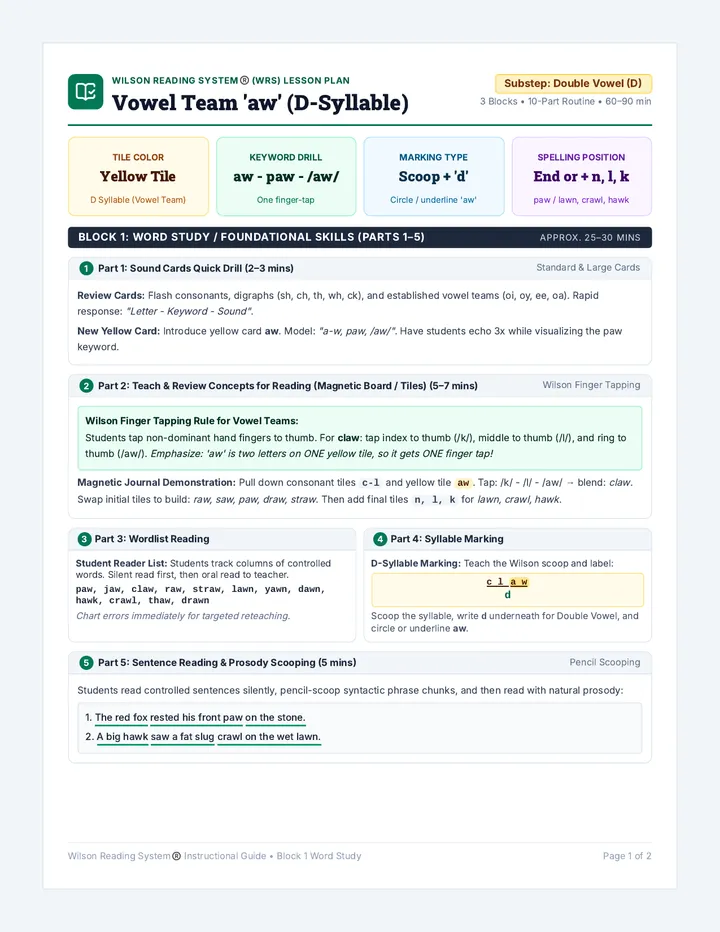
The suffix -er means "more" (used to compare 2 things).
The suffix -est means "most" (used to compare 3 or more things).
Complete the chart, applying the correct double consonant or y-to-i spelling rule:
| Base Word | Comparative (-er) | Superlative (-est) | Spelling Rule Used? |
|---|---|---|---|
| fast | faster | fastest | Just add ending |
| big | bigger | biggest | Double final consonant |
| happy | |||
| sharp |
Select comparative/superlative terms and write a sentence comparing classroom items:
Word Study Workbook Page 8
Root Investigation
DAY 8
Name:
The auditorium buzzed with excitement. Students had rehearsed for weeks, and now the talent show was finally here. Every seat was visible from the stage, and the audience filled each one.
Priya was first up. She had prepared an audiovisual science presentation that made the invisible visible. She showed how sound waves travel using a visual diagram projected on screen. Her voice was clearly audible even in the back rows.
Study the core meaning carried by each root word:
aud- means "to hear"
vis- means "to see"
Comprehension Case Query
How did Priya use both sound and visuals in her talent show presentation?
Word Study Workbook Page 9
Root Investigation
DAY 9
Name:
The Latin root port- means "to carry" (e.g., portable = able to be carried).
The Latin root struct- means "to build" (e.g., construction = act of building).
Analyze how the prefixes and roots combine to build word meanings:
| Target Word | Root | Combined Meaning |
|---|---|---|
| import | port | to carry goods into a country |
| export | port | |
| destruction | struct | |
| reconstruct | struct |
Select challenging terms (e.g., infrastructure, transport, portfolio) and write meaningful sentences:
Word Study Workbook Page 10
Root Investigation
DAY 10
Name:
The old manuscript sat behind glass in the museum's history room. A label described it as one of the oldest documents in the region.
Their teacher, Mr. Vance, began to dictate facts about the document. "This inscription tells us it was written by a scribe who lived over four hundred years ago," he said. Lena was fascinated. "What does the script say?"
Write down and box the roots of these terms:
dictionary
verdict
subscribe
prescribe
Comprehension Case Query
What mystery surrounded the manuscript? How did Lena respond to it?
Word Study Workbook Page 11
Root Investigation
DAY 11
Name:
The Greek root graph- means "write" or "record" (e.g., autograph = self signature).
The Greek root phon- means "sound" or "voice" (e.g., megaphone = large sound).
Identify the root in each word and match it to the correct meaning column:
graph- (write / record)
phon- (sound / voice)
Select words with root graph- and phon-. Write a short scenario using both words:
Word Study Workbook Page 12
Compounds Investigation
DAY 12
Name:
Every summer, Kenji and his sister looked forward to visiting their grandmother's farmhouse. The driveway was lined with sunflowers, and the backyard had a cornfield that went on forever.
Kenji spotted a grasshopper near the doorbell. Later, a thunderstorm rolled in. They watched raindrops hit the windowsill.
Split the compound word into its two smaller base words:
| Compound Word | Word Part 1 | Word Part 2 | Meaning Notes |
|---|---|---|---|
| backyard | back | yard | a yard behind a house |
| starfish | |||
| footprint |
Comprehension Case Query
What compound words can you find in the passage? List at least four and explain what each one means.
Word Study Workbook Page 13
Relationships Investigation
DAY 13
Name:
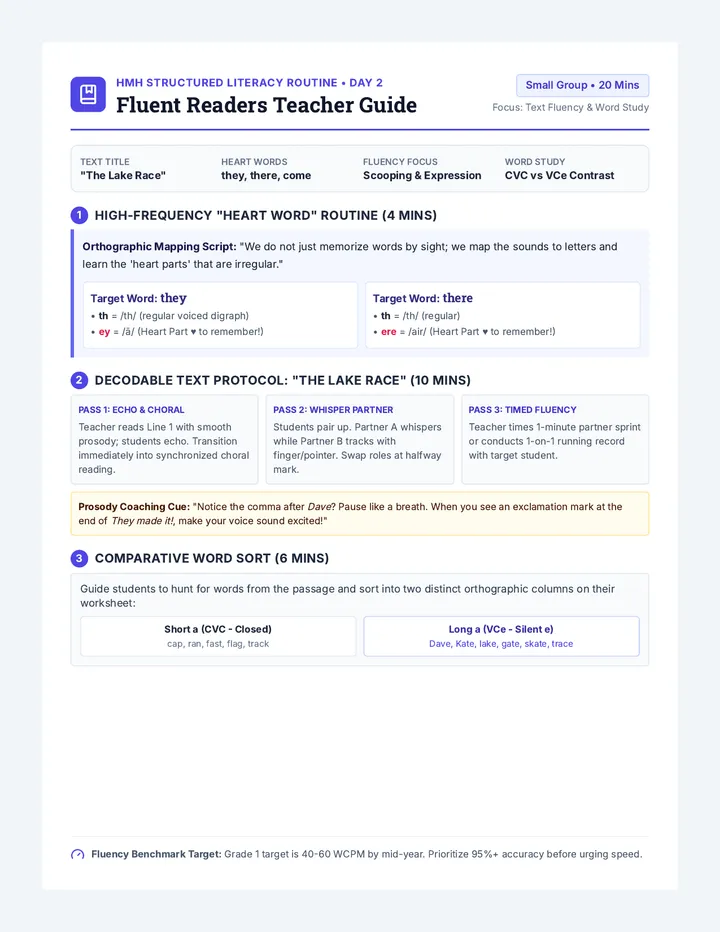
Homophones are words that sound the exact same, but have different spellings and meanings! Context clues in sentences help you determine the correct one to write.
Choose the correct homophone for each context sentence:
They took (their / there) science project. Possession
Put the books over (their / there). Location
I want to go with you (to / too). Also / Excess
The dog chased (it's / its) tail. Possessive
Can you (hear / here) the speaker's voice? Sense of Hearing
Create two distinct sentences showing correct usage of flower / flour or piece / peace:
Word Study Workbook Page 14
Relationships Investigation
DAY 14
Name:
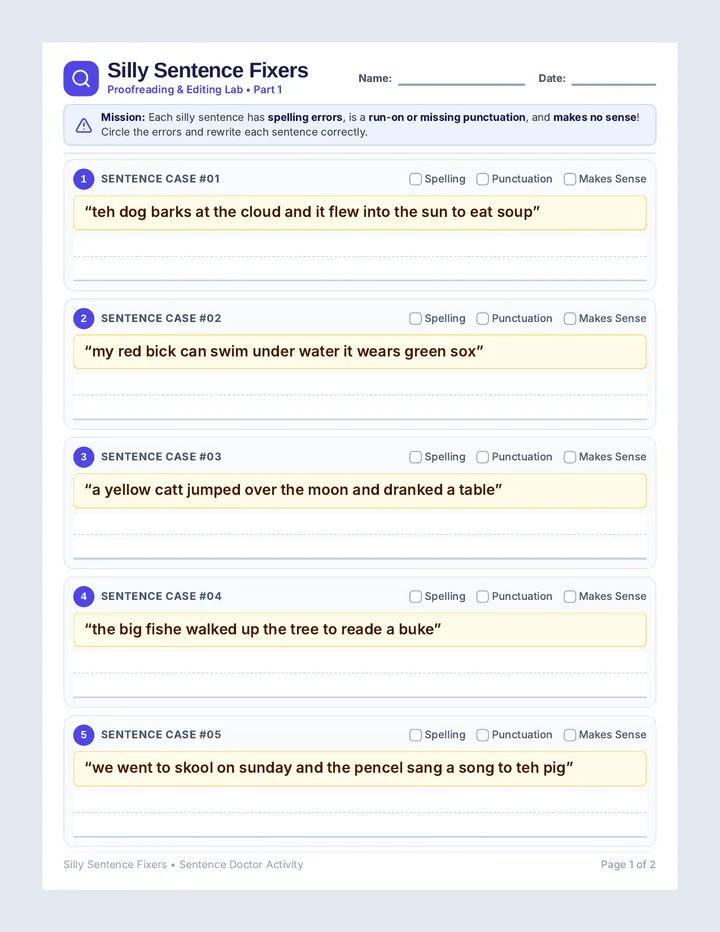
Zoe was writing a story about a brave explorer, but every sentence felt dull. Her teacher told her to try replacing ordinary words with more precise synonyms.
Instead of "the explorer walked," she wrote "the explorer trudged." Instead of "it was cold," she wrote "a bitter chill cut through the air." Each change made her story more vivid. She also paid attention to antonyms.
Write synonyms and antonyms for the target words:
| Target Word | Synonyms | Antonyms |
|---|---|---|
| bright | luminous, glowing | dim, dark |
| cold | ||
| strong |
Comprehension Case Query
How did using synonyms and antonyms improve Zoe's story? Give examples from the passage.
Word Study Workbook Page 15
Vocabulary Strategies
DAY 15
Name:
Eli had a trick for reading hard books: he never skipped a word he didn't know. Instead, he looked for clues nearby. When he read, "The crevice, a deep crack in the rock, was just wide enough to squeeze through," he understood it.
Other times, the clue was an antonym. "Unlike the tranquil pond, the river was loud and churning." He figured out tranquil meant calm.
Read the sentence below, identify the clue type, and define the bold word:
"Sasha was lethargic and needed a nap, unlike her energetic brother."
Clue Type:
Meaning of Lethargic:
Comprehension Case Query
What are three types of context clues Eli used? Give an example of each from the passage.
Word Study Workbook Page 16
Grade 4 Word Study Teacher Plan Page 1
Teacher Resources
MASTER PLAN
Day 6: Suffixes (-able, -ible) Adjective Capacities
Model: Explain both mean "can be done." Contrast spelling variants (breakable, flexible).
Guided: Decode word lists on Slide 7: readable, washable, reversible, responsible.
Partner: Read Decodable Passage 3: "The Responsible Pet Owner." Highlight key words.
Day 7: Suffixes (-er, -est) Comparative Scales
Model: Show comparison rules: -er (2 things) vs -est (3+ things). Focus on double consonant spelling and y-to-i spelling.
Guided: Fill comparative matrix on Slide 8: fast, long, clean, hot.
Partner: Complete Workbook Page 8 chart. Write comparison sentences.
Day 8: Latin Roots (aud-, vis-) Hear and See
Model: Define Greek/Latin core roots. Show how aud- (hear) and vis- (see) construct complex meanings.
Guided: Group decode on Slide 9: audible, visual, invisible, supervisor, television.
Partner: Read Decodable Passage 4: "The School Talent Show." Underline visual/audible terms.
Day 9: Latin Roots (port-, struct-) Carry and Build
Model: Show port- (carry) in portable and struct- (build) in construct.
Guided: Decode prefix + root combinations on Slide 10: import, support, destruction, infrastructure.
Partner: Complete Word Breakdown analysis on Workbook Page 10.
Day 10: Latin Roots (dict-, scrib-/script-) Say and Write
Model: Show dict- (say/tell) in predict and scrib/script- (write) in manuscript.
Guided: Deconstruct target elements on Slide 11: dictionary, contradict, inscription, transcribe.
Partner: Read Decodable Passage 5: "The Mystery Manuscript." Write case study responses.
Grade 4 Word Study Teacher Plan Page 2
Teacher Resources
MASTER PLAN
Day 11: Greek Roots (graph-, phon-) Write and Sound
Model: Present graph- (write/record) and phon- (sound/voice). Draw compound linkages.
Guided: Split and decode on Slide 12: paragraph, biography, symphony, earphone.
Partner: Complete Workbook Page 12 sorting list, finding book examples.
Day 12: Compound Words Combined Blocks
Model: Explain compound words combining two independent bases to make a completely new meaning.
Guided: Break apart compound items on Slide 13: thunderstorm, backpack, footprints, starfish.
Partner: Read Decodable Passage 6: "A Weekend farmhouse." Answer written queries.
Day 13: Homophones Trick Spellings
Model: Present trick homophones (their/there/they're). Emphasize structural context rules.
Guided: Form class context sentences using group pairings on Slide 14.
Partner: Complete context sentence selections on Workbook Page 14.
Day 14: Synonyms and Antonyms Word Relations
Model: Introduce how synonyms make stories vivid and antonyms highlight contrasts.
Guided: Review word variations (big, fast, brave) inside comparisons table on Slide 15.
Partner: Read Decodable Passage 7: "The Right Word." Substitute vocabulary items.
Day 15: Context Clues Clue Types
Model: Teach context types: Definition, Contrast, list Examples, Synonym.
Guided: Identify clues in project sentences on Slide 16.
Partner: Read Decodable Passage 8: "Words in Action." Complete synthesis question block.
Strategic Case Prompting:
Grade 4 Word Study Teacher Plan Page 3
| Just add ending |
Passage 4 Query: How did Priya use both sound and visuals?
Sample Answer: Priya used an audiovisual presentation where she projected a visible diagram of sound waves on screen. Her voice was clearly audible even in the back row.
Word Study Answer Key Page 2
Teacher Resources
KEYS: DAYS 9-12
Passage 5 Query: What mystery surrounded the manuscript?
Sample Answer: The manuscript was written 400 years ago, but no one had been able to transcribe it yet. Lena predicted that they could crack the code someday.
Passage 6 Query: List 4 compound words and explain meanings.
Sample Answer: 1. Farmhouse (house on farm) | 2. Sunflowers (flowers that face sun) | 3. Cornfield (field of corn) | 4. Grasshopper (insect that hops in grass) | 5. Doorbell / Thunderstorm.
Word Study Answer Key Page 3
Teacher Resources
KEYS: DAYS 13-15
Passage 7 Query: How did synonyms/antonyms improve Zoe's story?
Sample Answer: Using precise synonyms like "trudged" instead of "walked" and "bitter chill" instead of "cold" made the story vivid. Antonyms created contrast between warm safety of camp and harsh, icy wilderness.
Passage 8 Query: What are 3 types of context clues Eli used?
Sample Answer: 1. Definition (defined "crevice" as deep crack) | 2. Antonym (contrasted "tranquil" with loud and churning) | 3. Example (gave "oranges, lemons, limes" as examples of citrus).
Interactive Matcher Clue Type:
"ancient ruins, thousands of years old" → Definition / Explanation
Word Study Answer Key Page 4