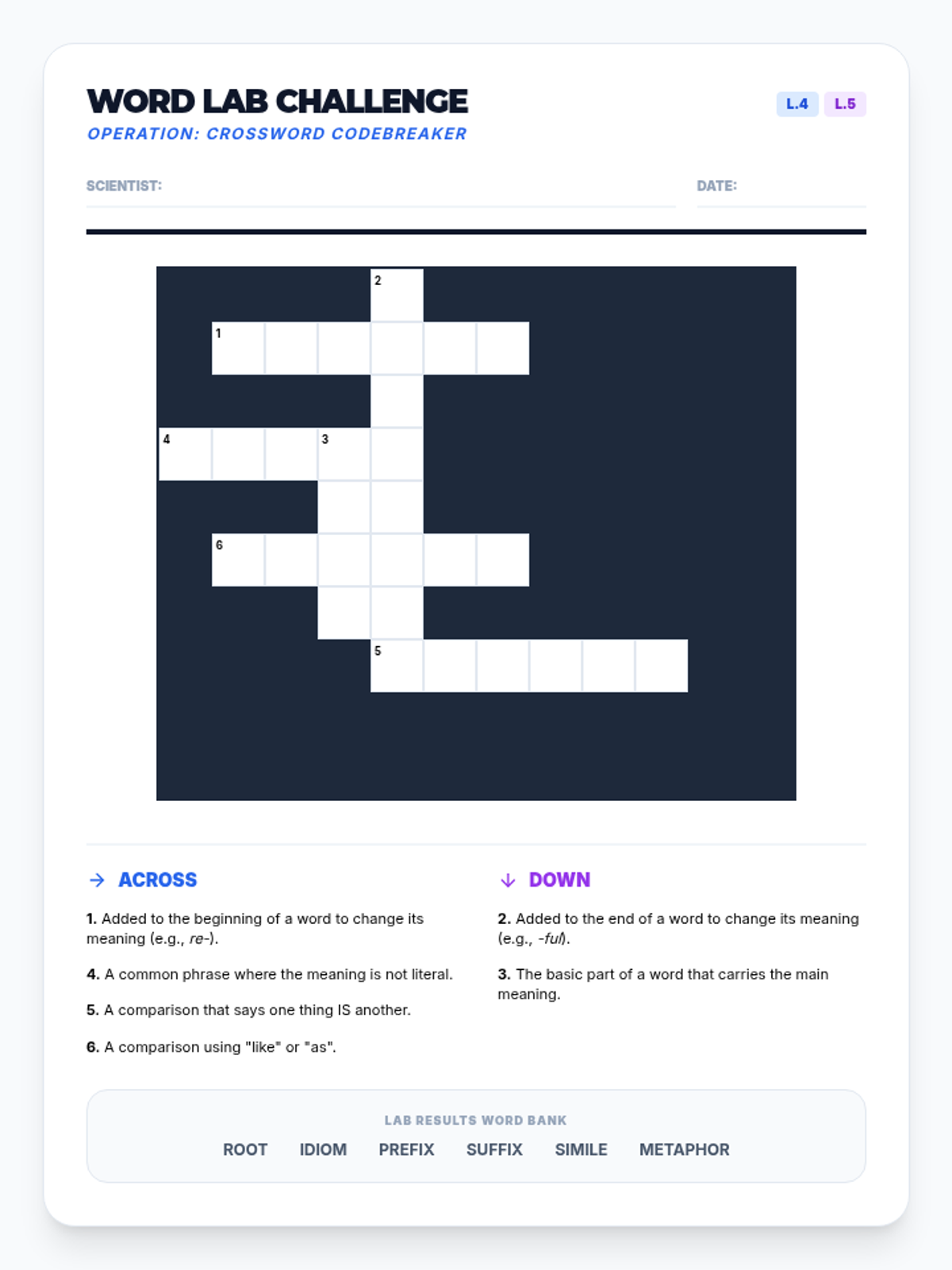
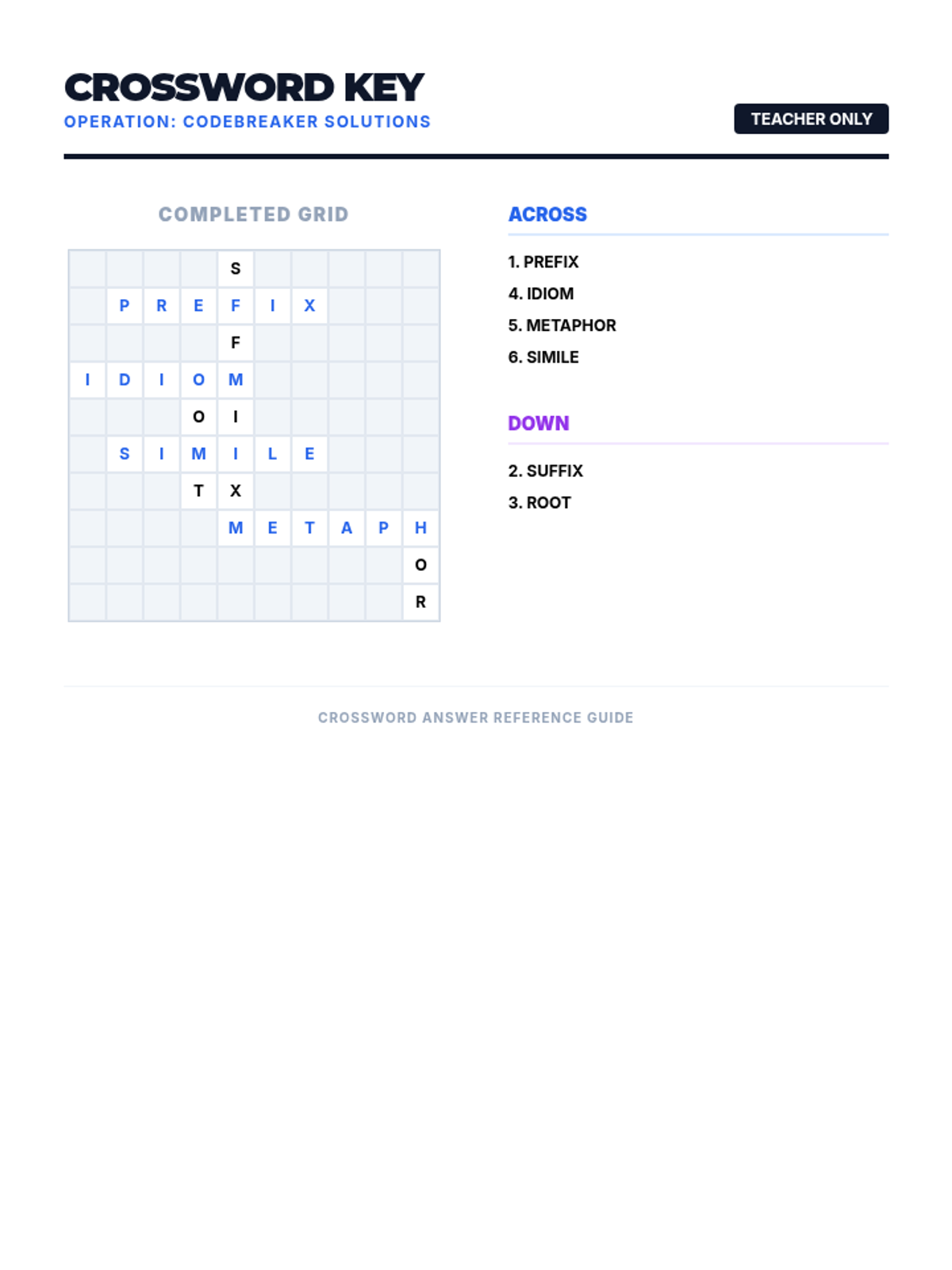
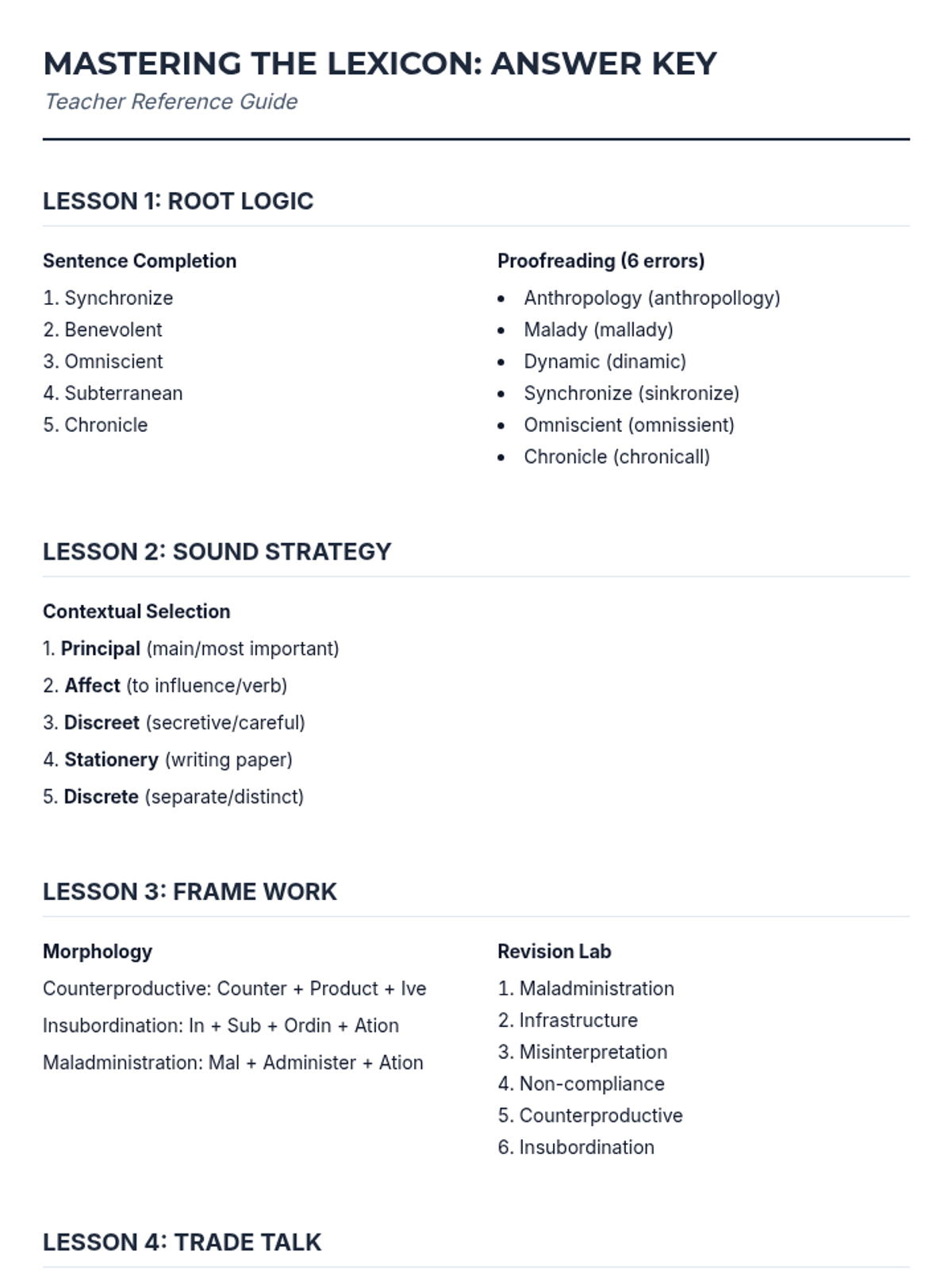
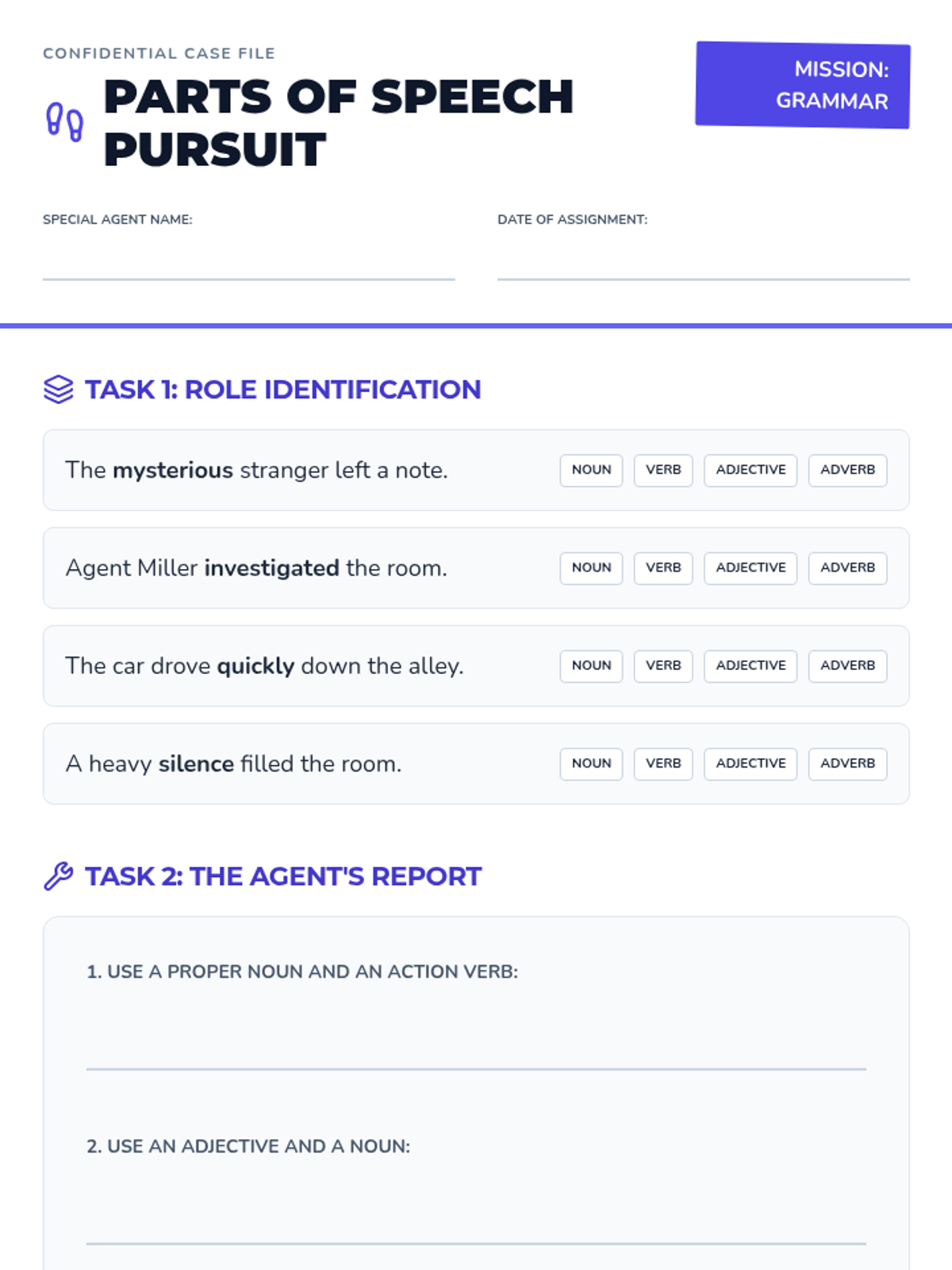
Builds word mastery through parts of speech, Greek and Latin roots, and morphological analysis of prefixes and suffixes. Develops nuanced comprehension using context clues, shades of meaning, and idiomatic expressions.
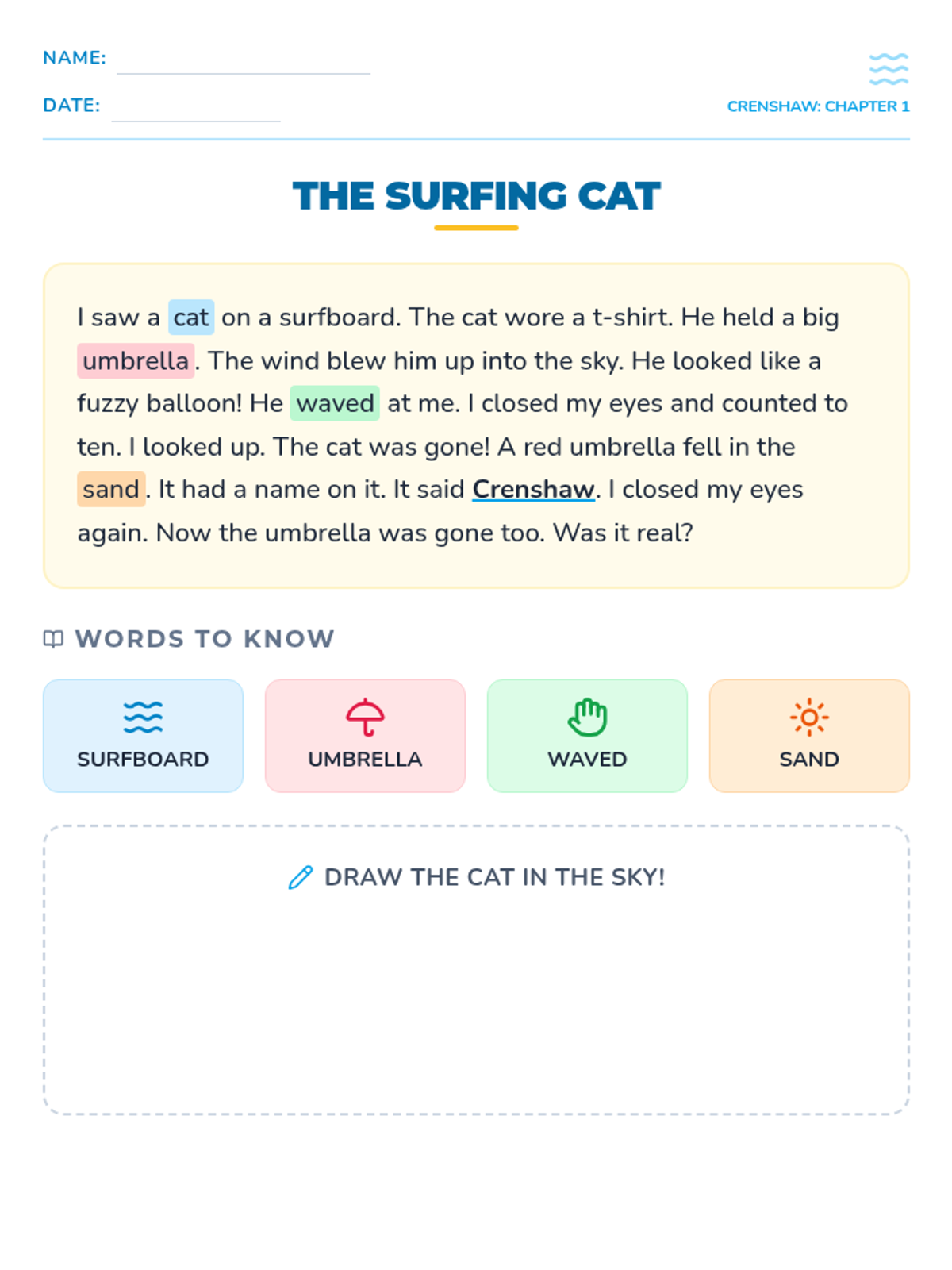
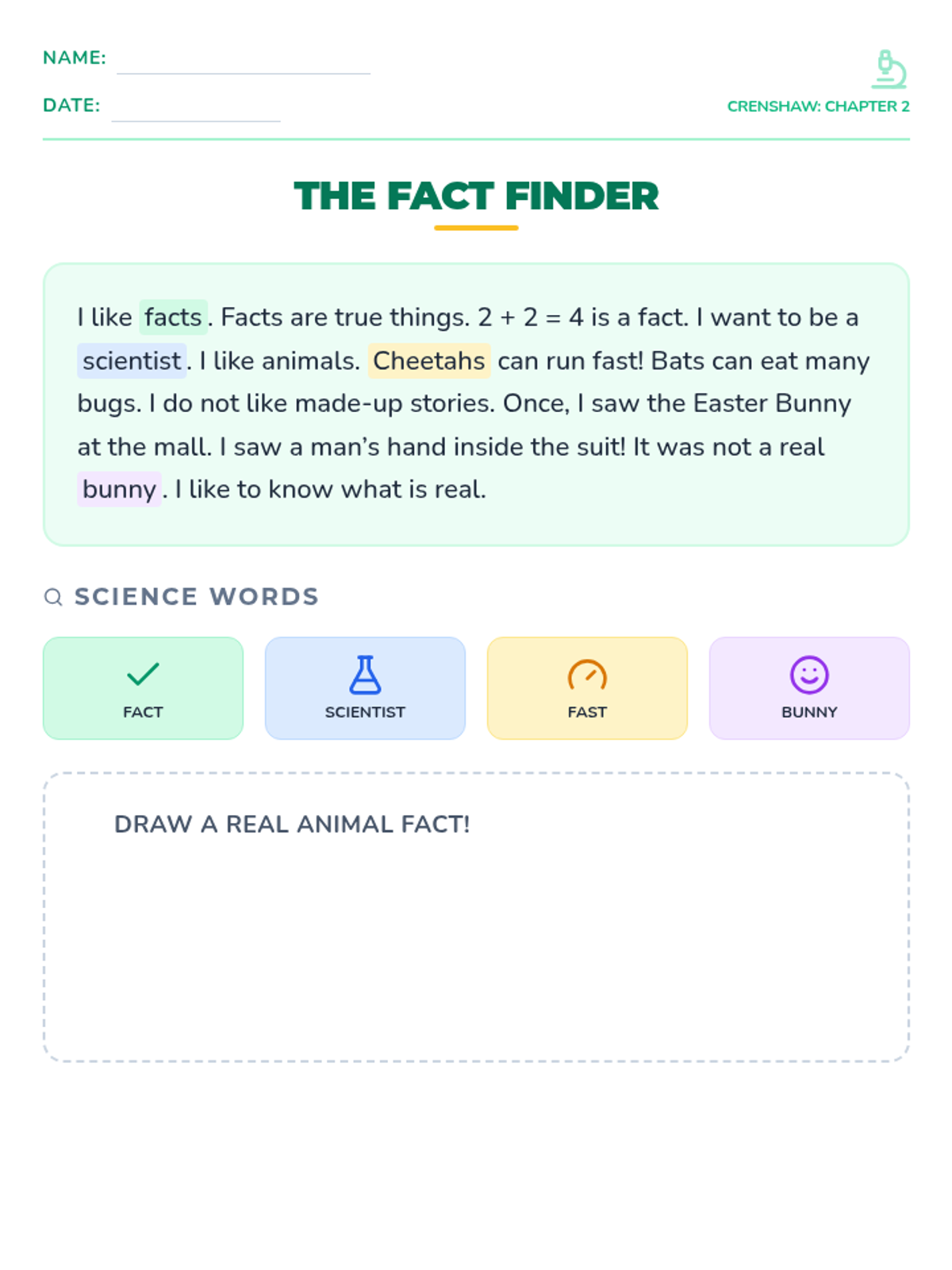
A series of 1st-grade reading resources adapted from the novel Crenshaw, focusing on character introduction and Jackson's love for facts through simplified text and visual aids.
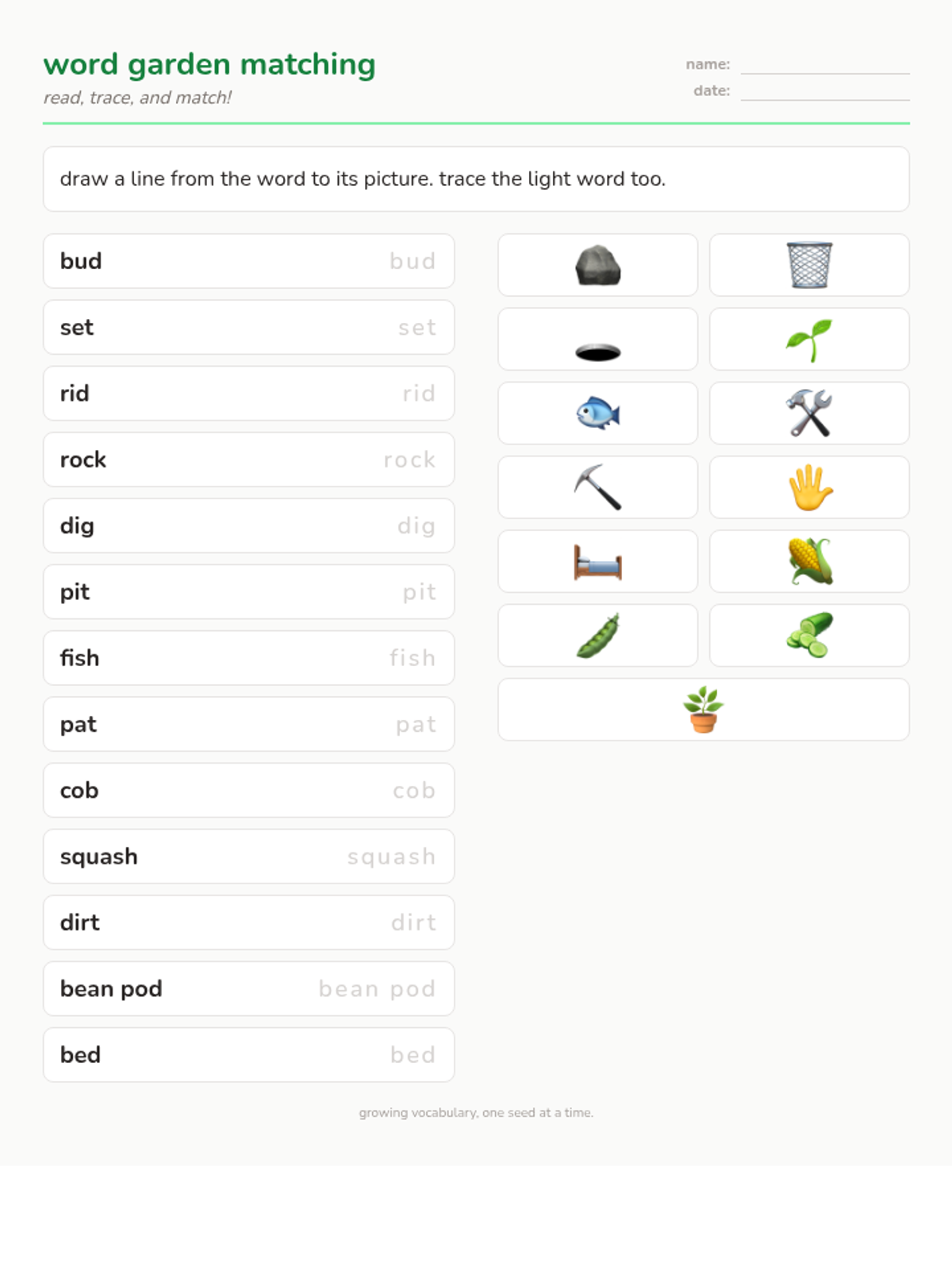
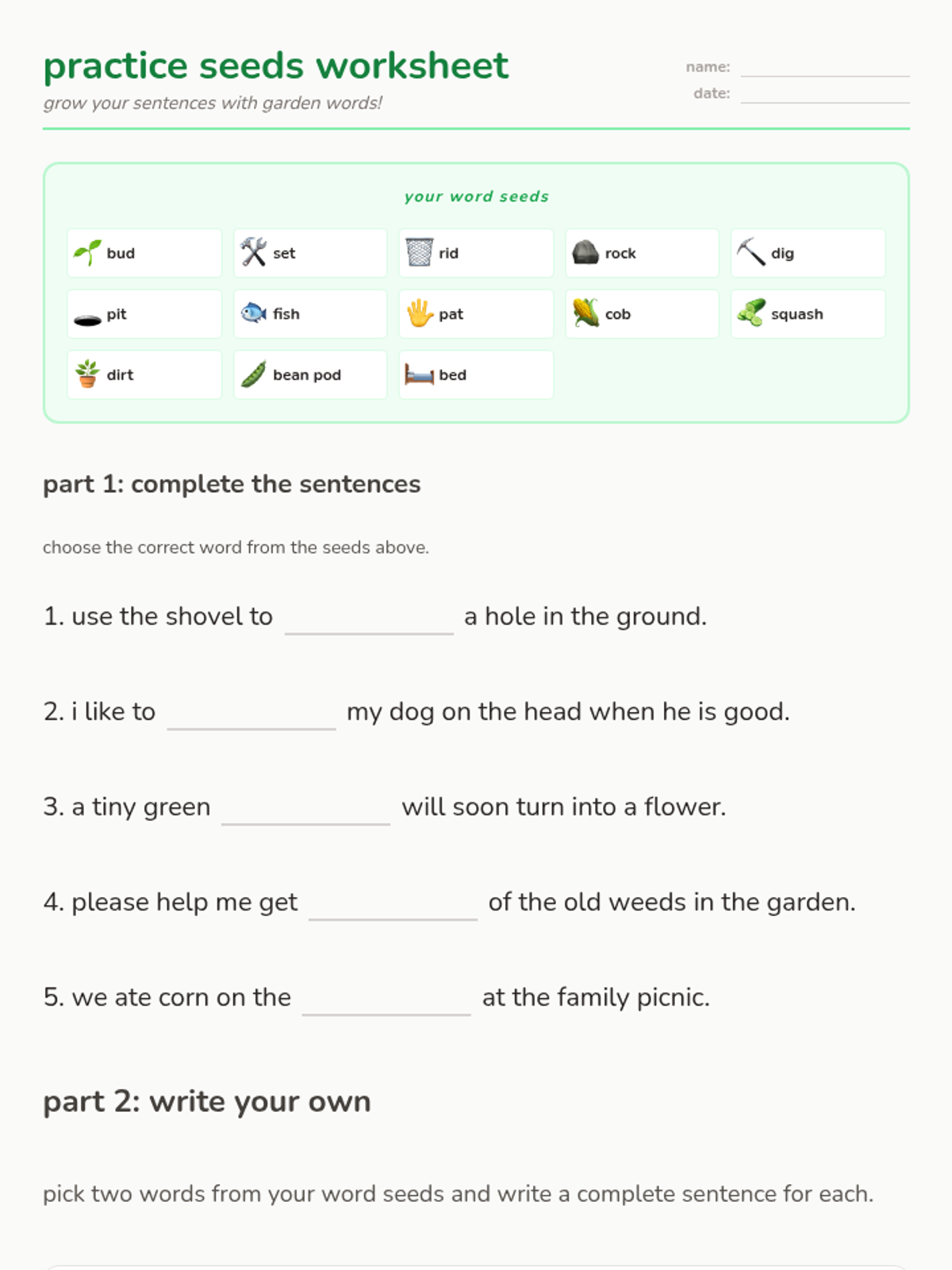
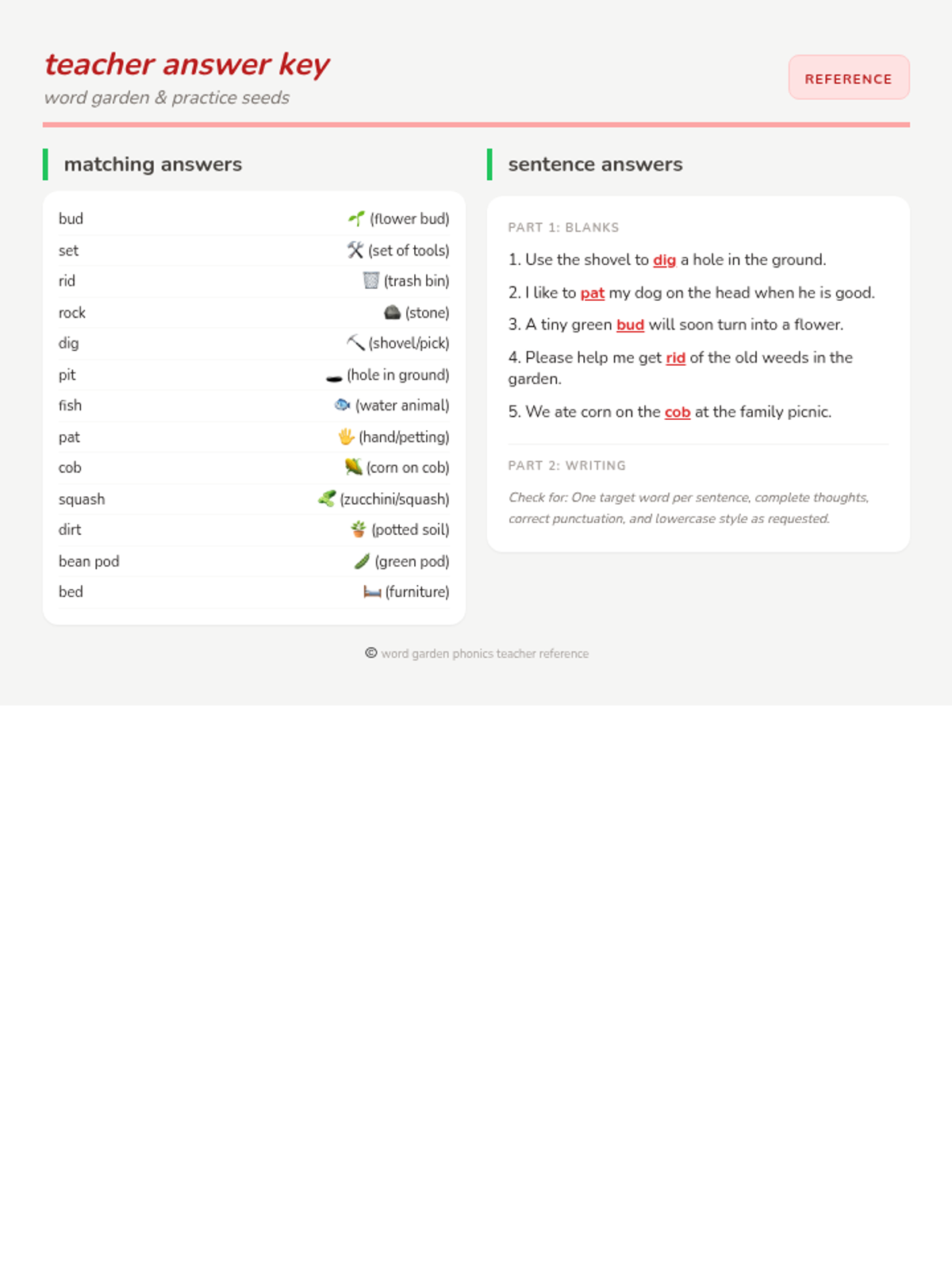
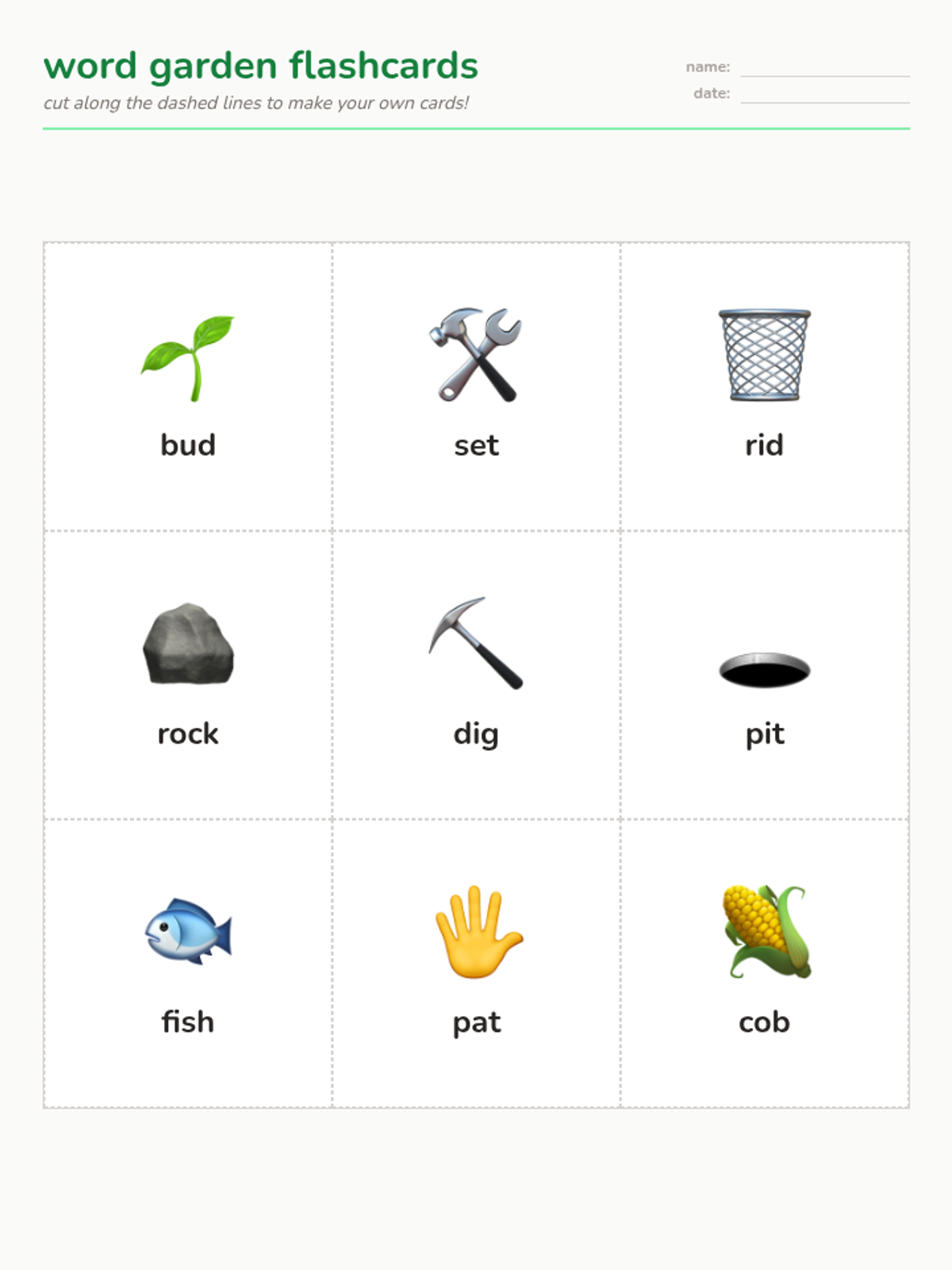
A phonics and vocabulary focused lesson based around a list of 13 nature and everyday words, featuring image-word association and sentence-level practice.
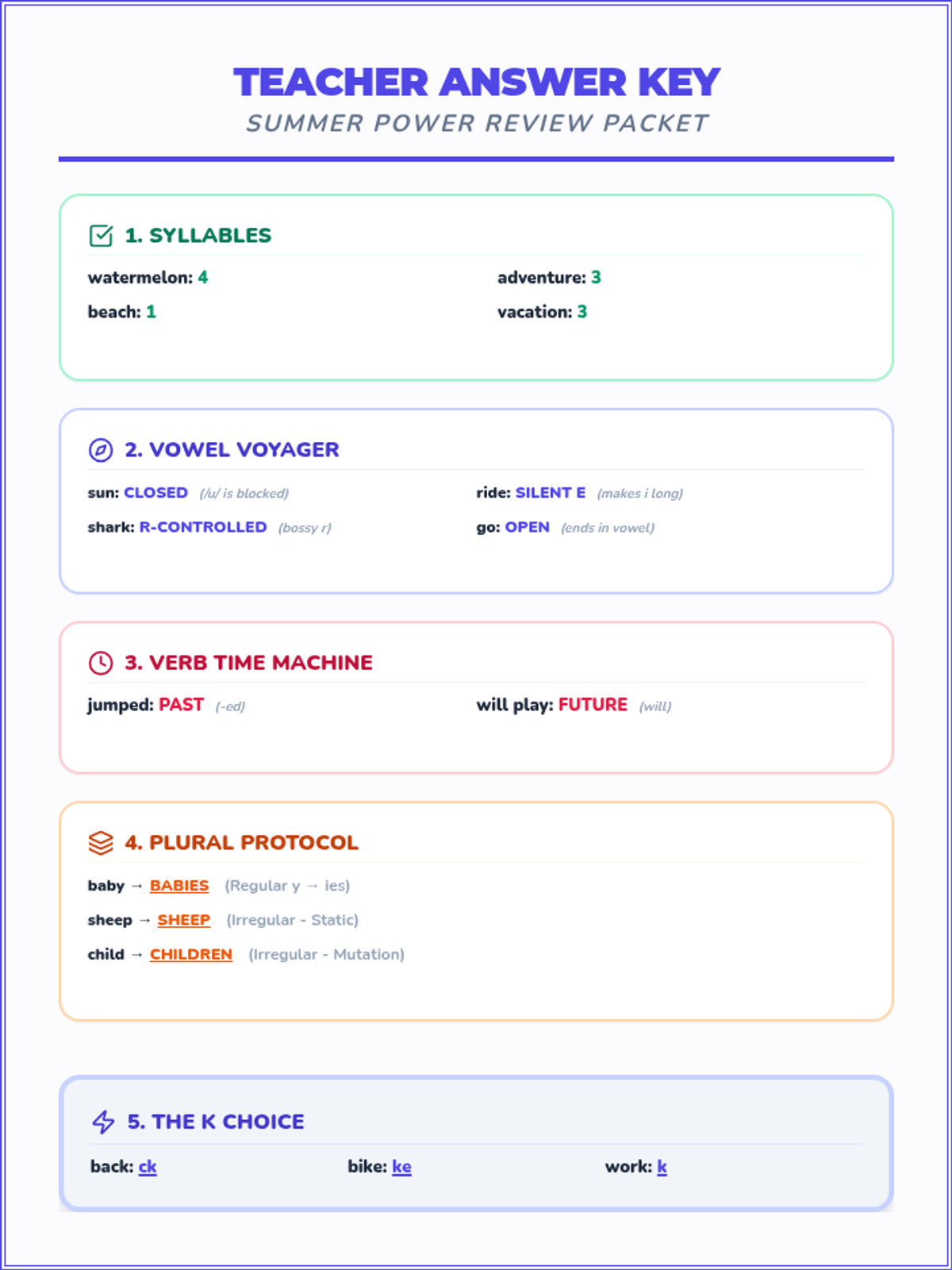
A comprehensive summer review worksheet and answer key covering all topics in the summer packet.
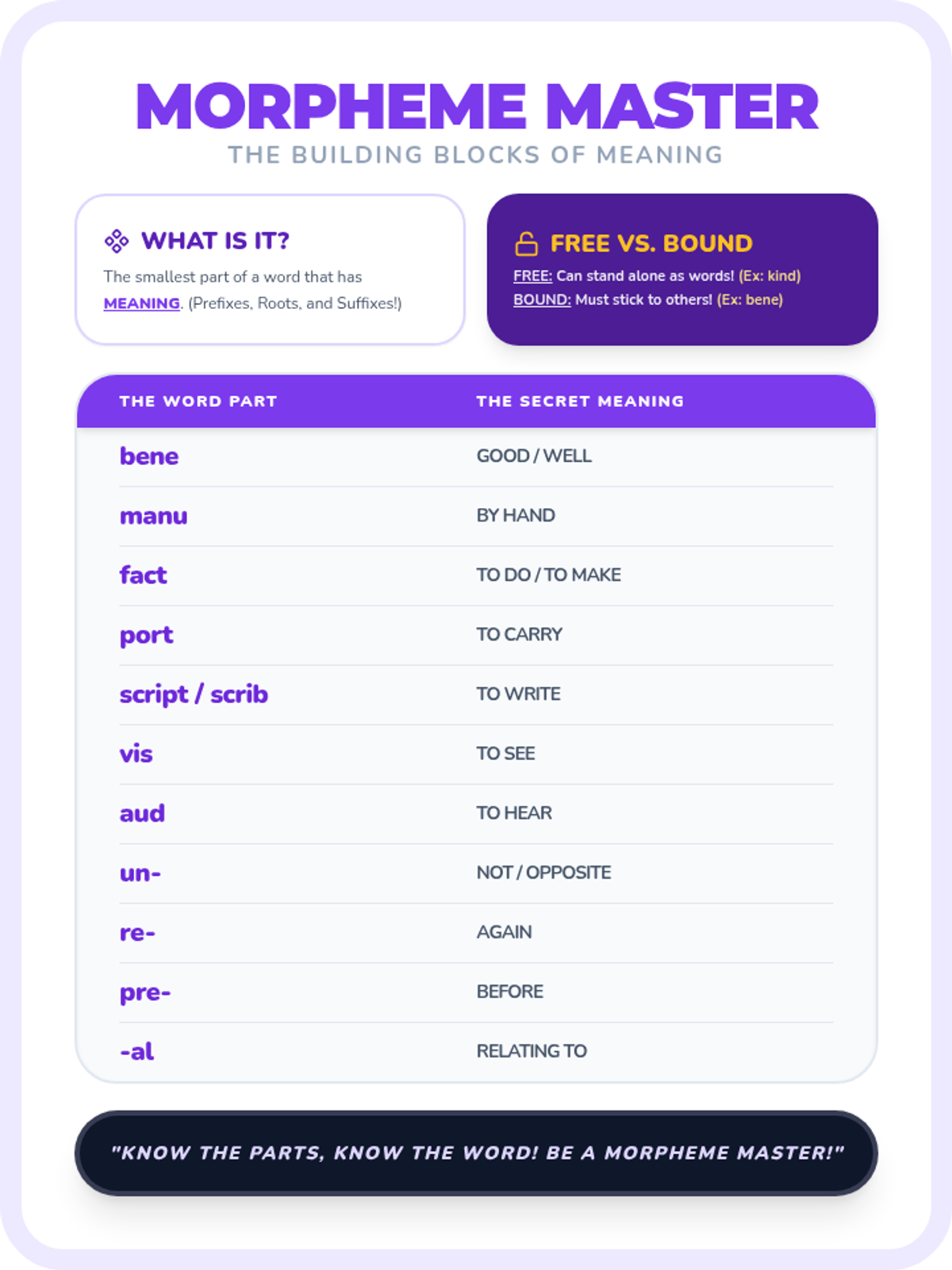
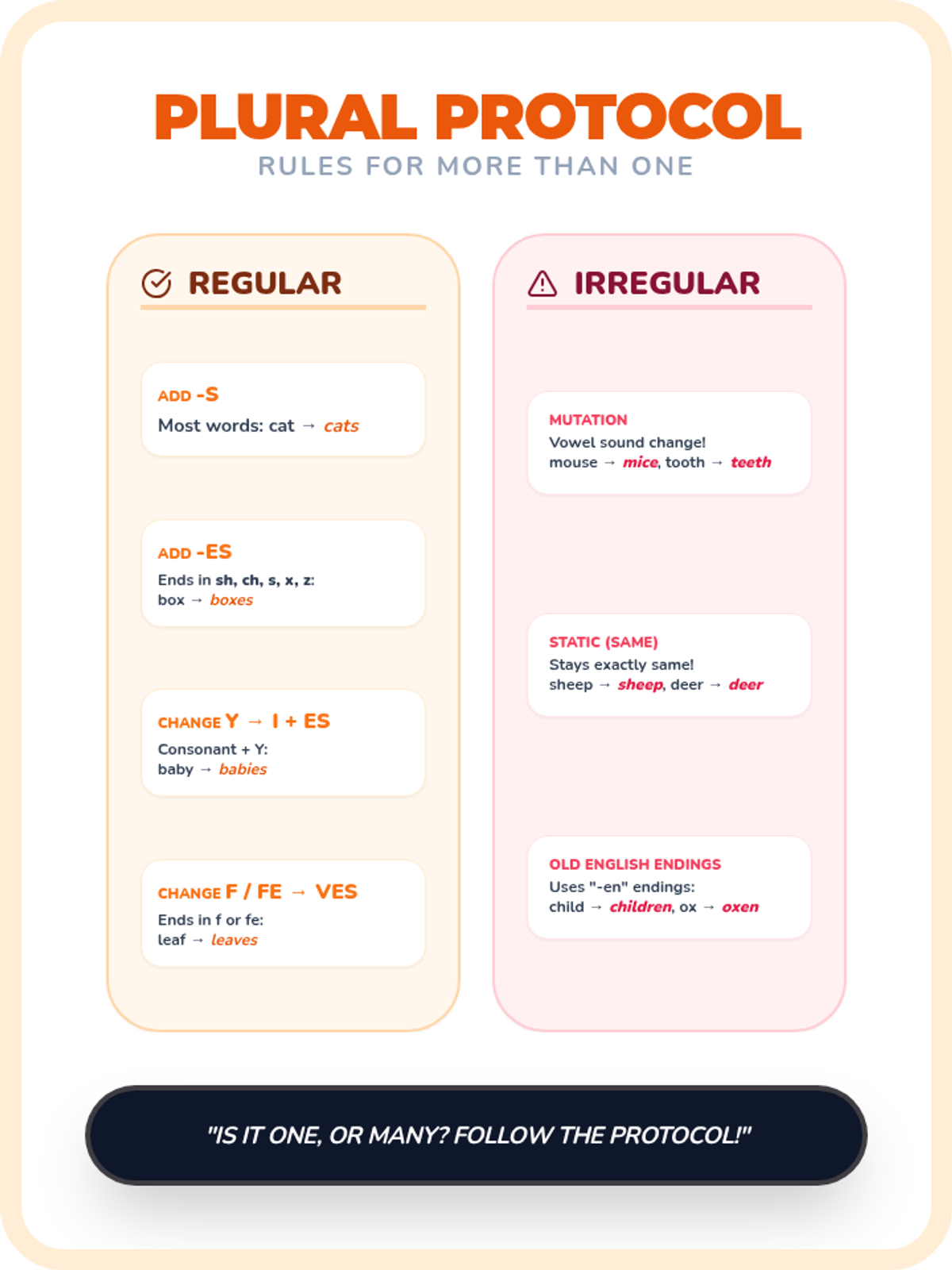
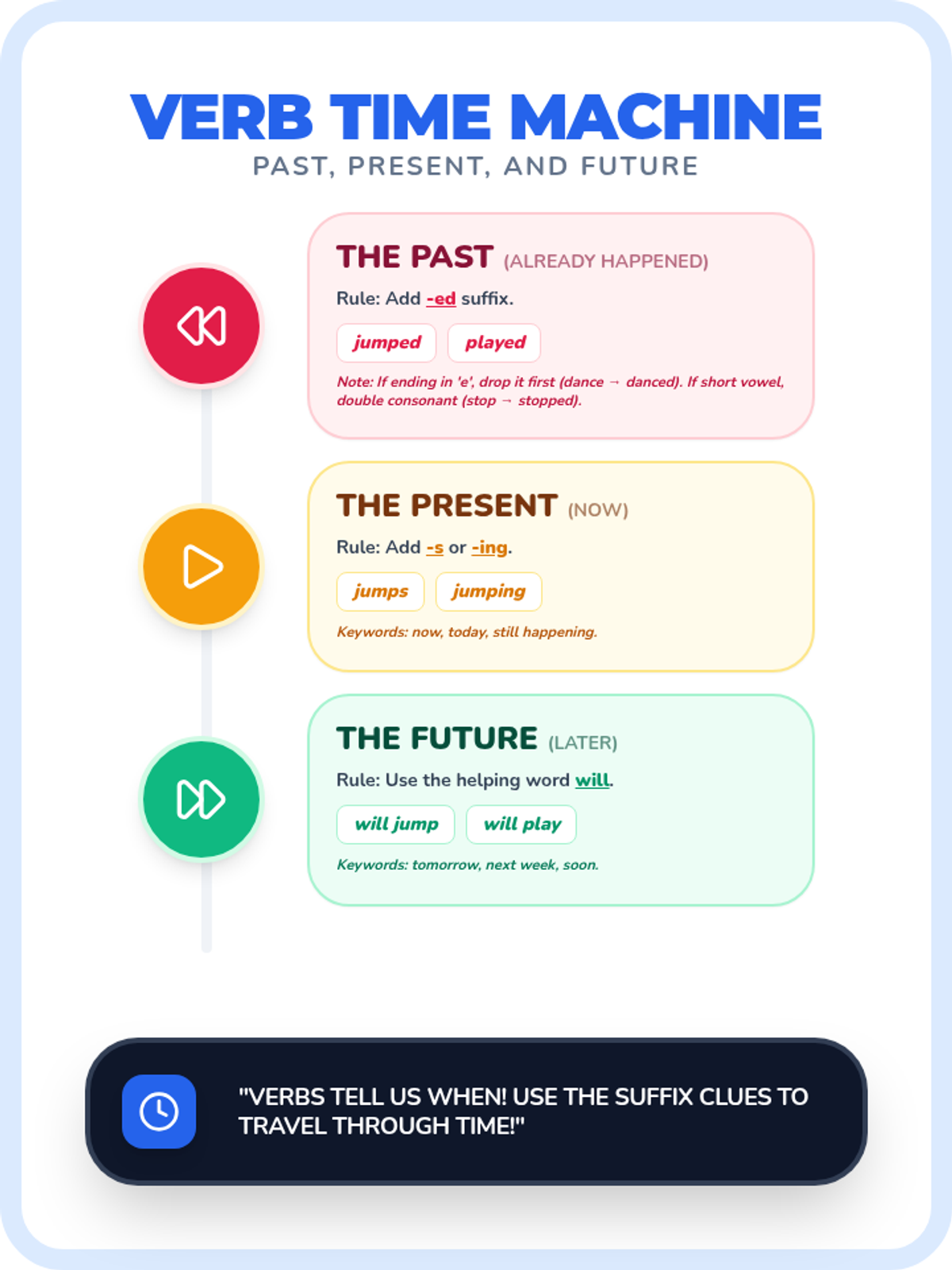
Comprehensive reference charts for morphemes, regular/irregular plurals, and verb tenses.
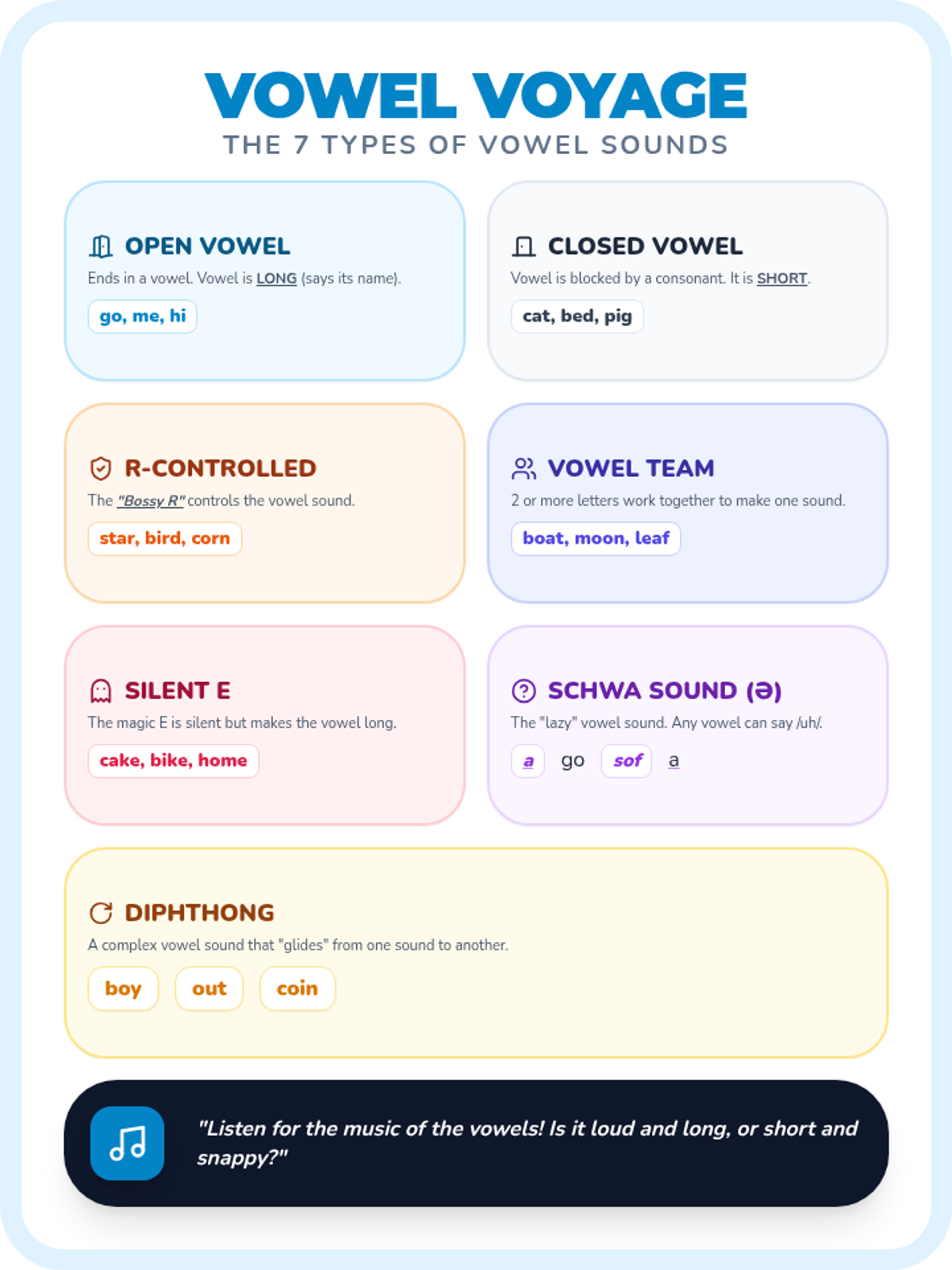
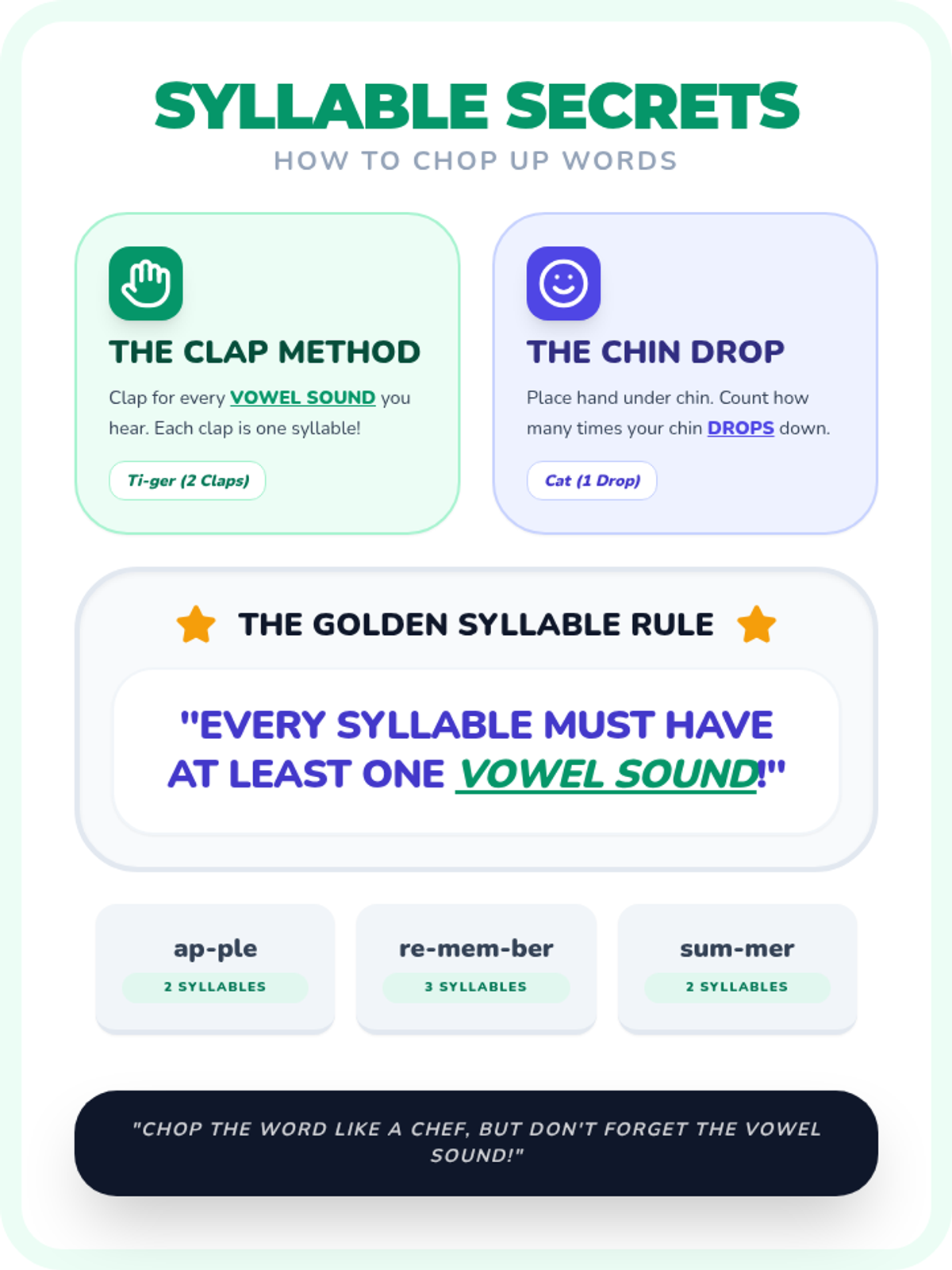
Anchor charts for the 7 vowel types and syllable counting strategies.
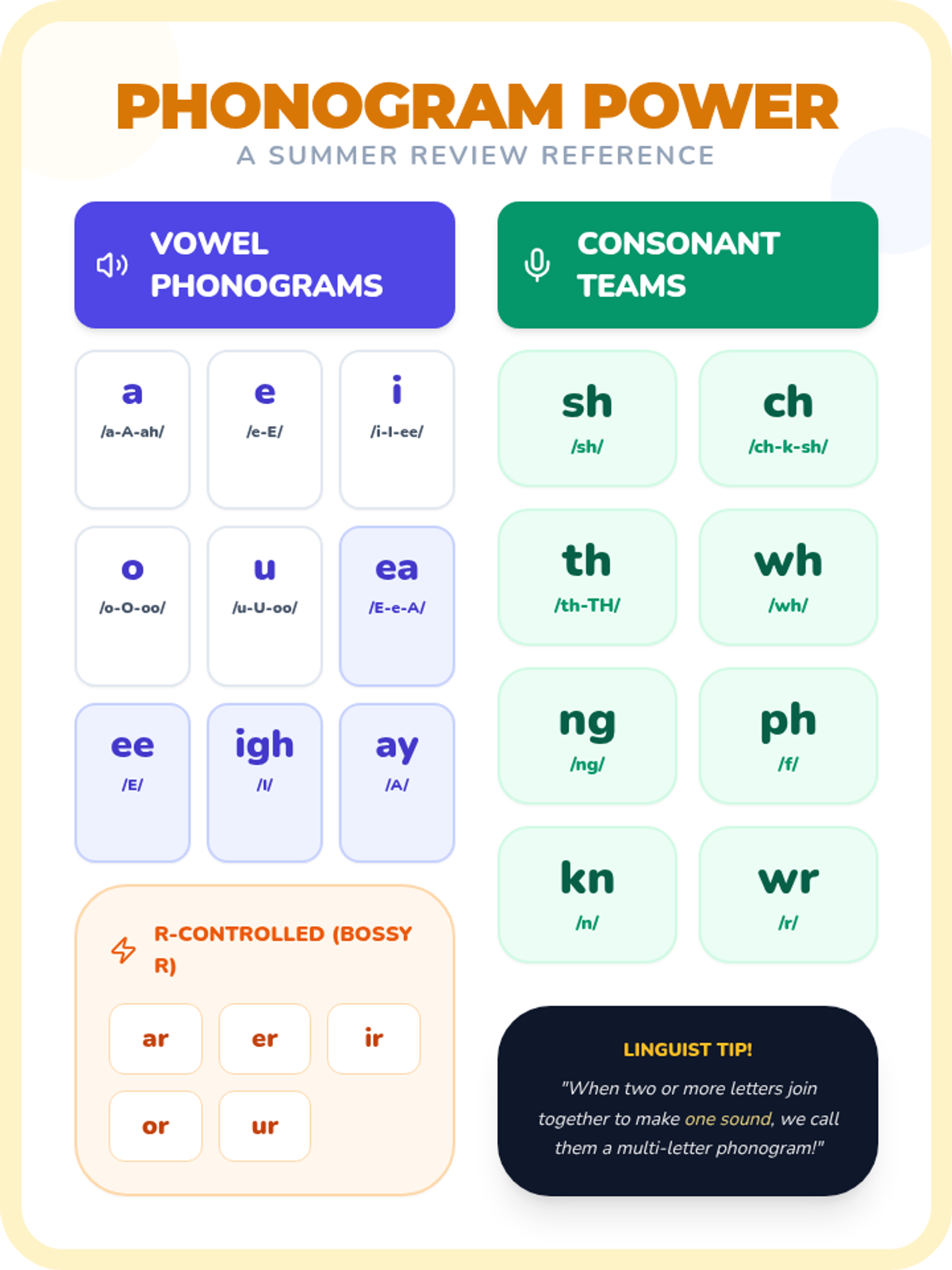
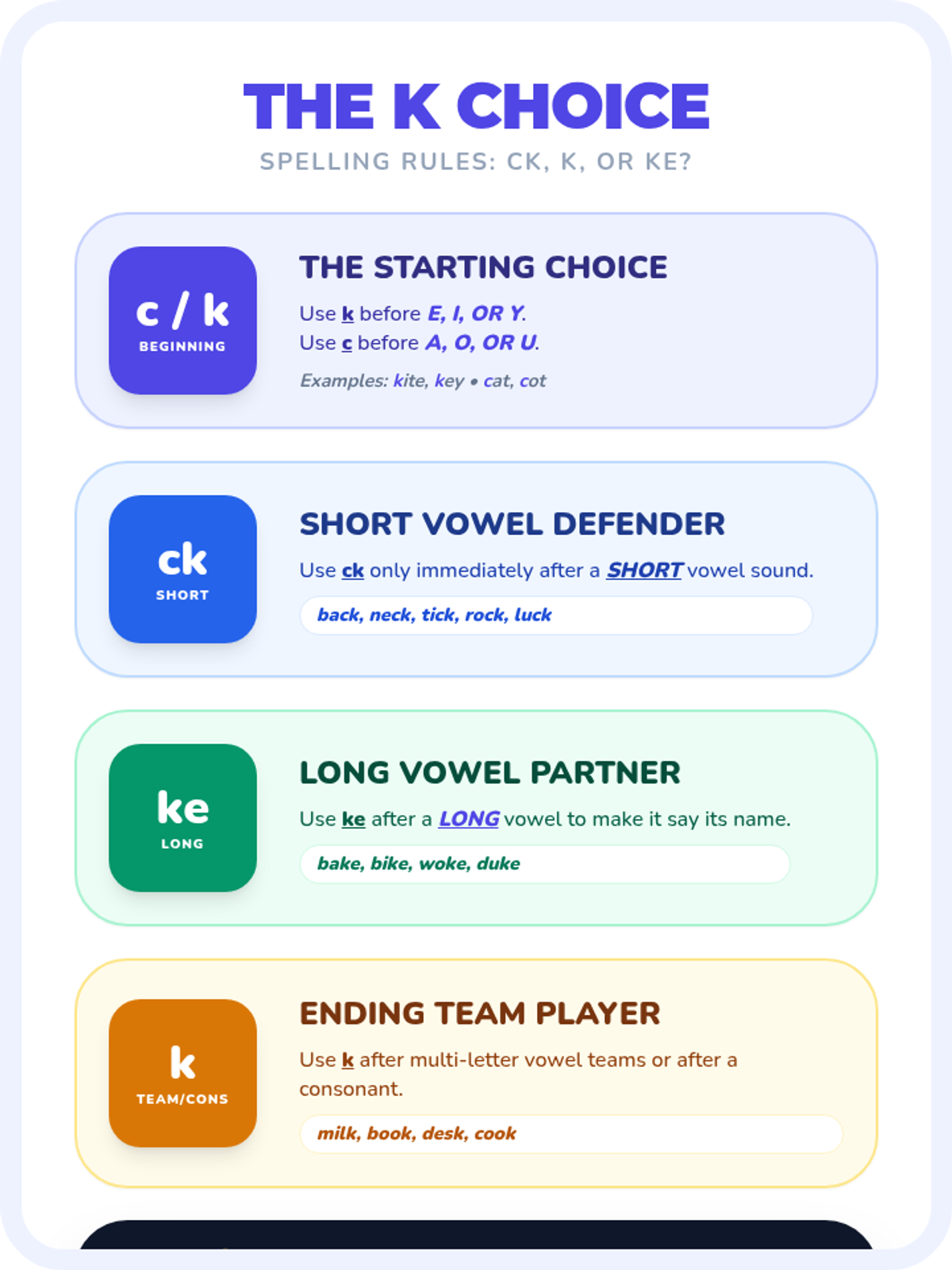
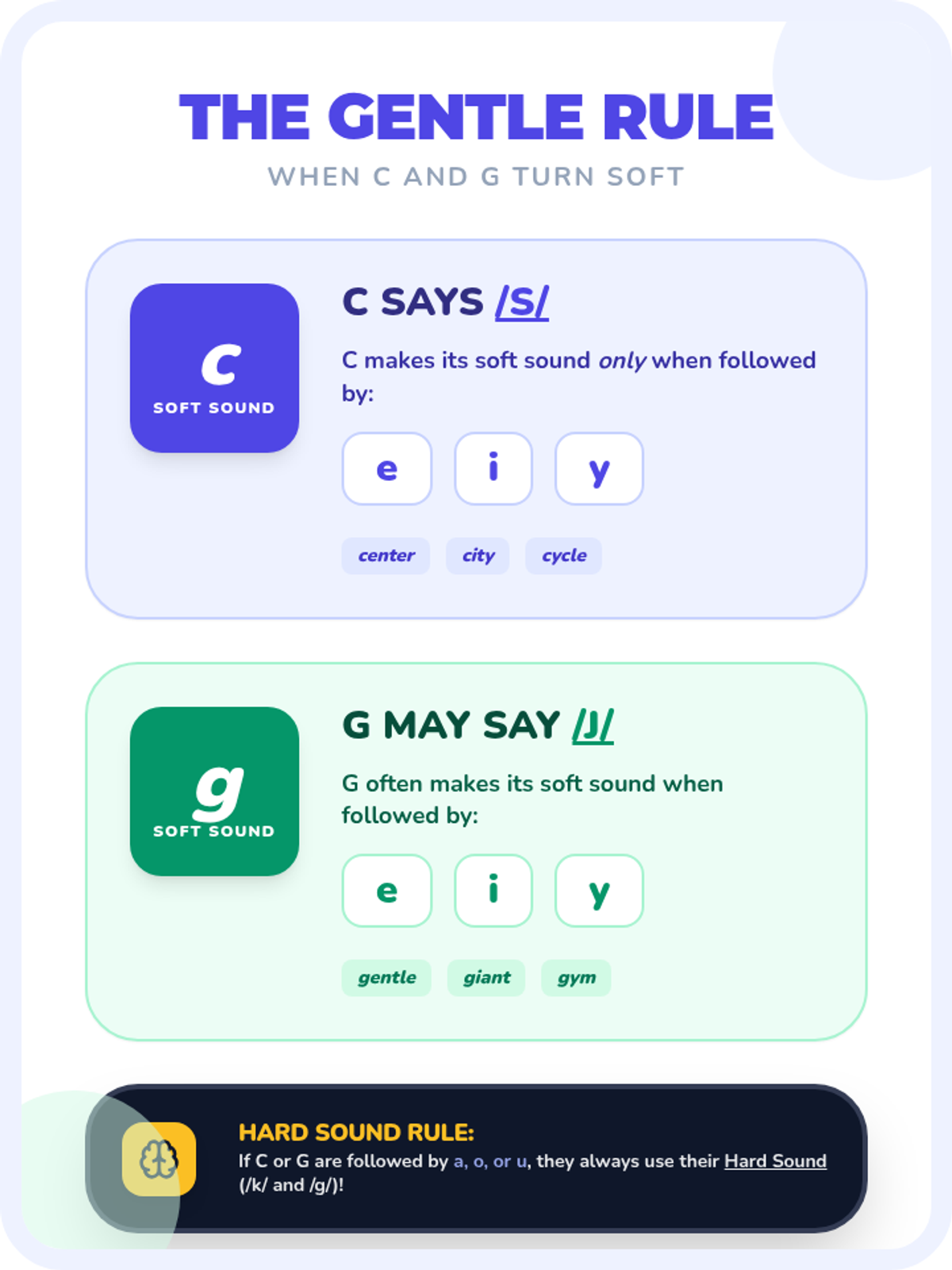
Anchor charts for primary phonograms and the ck/k/ke spelling rules.
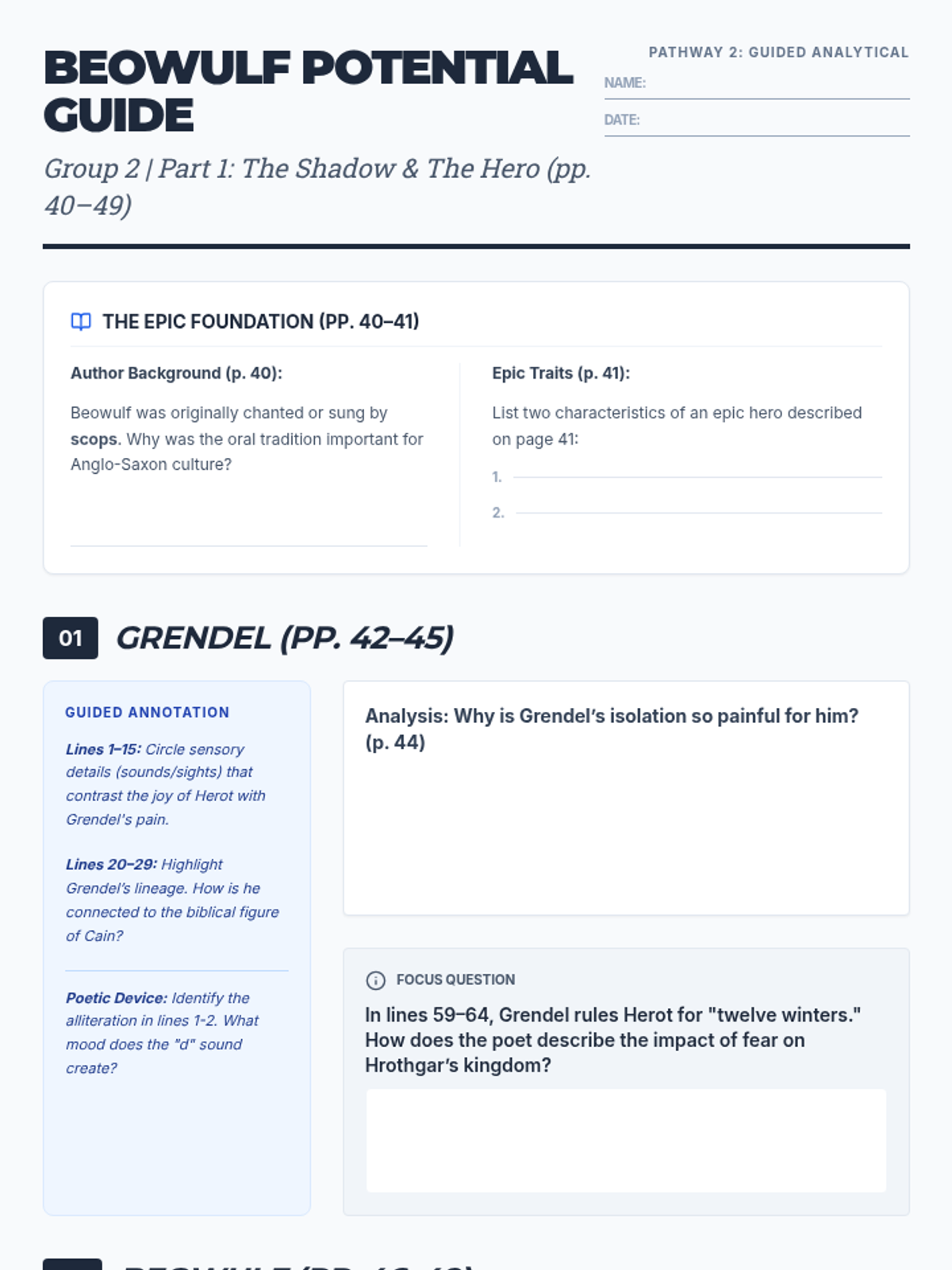
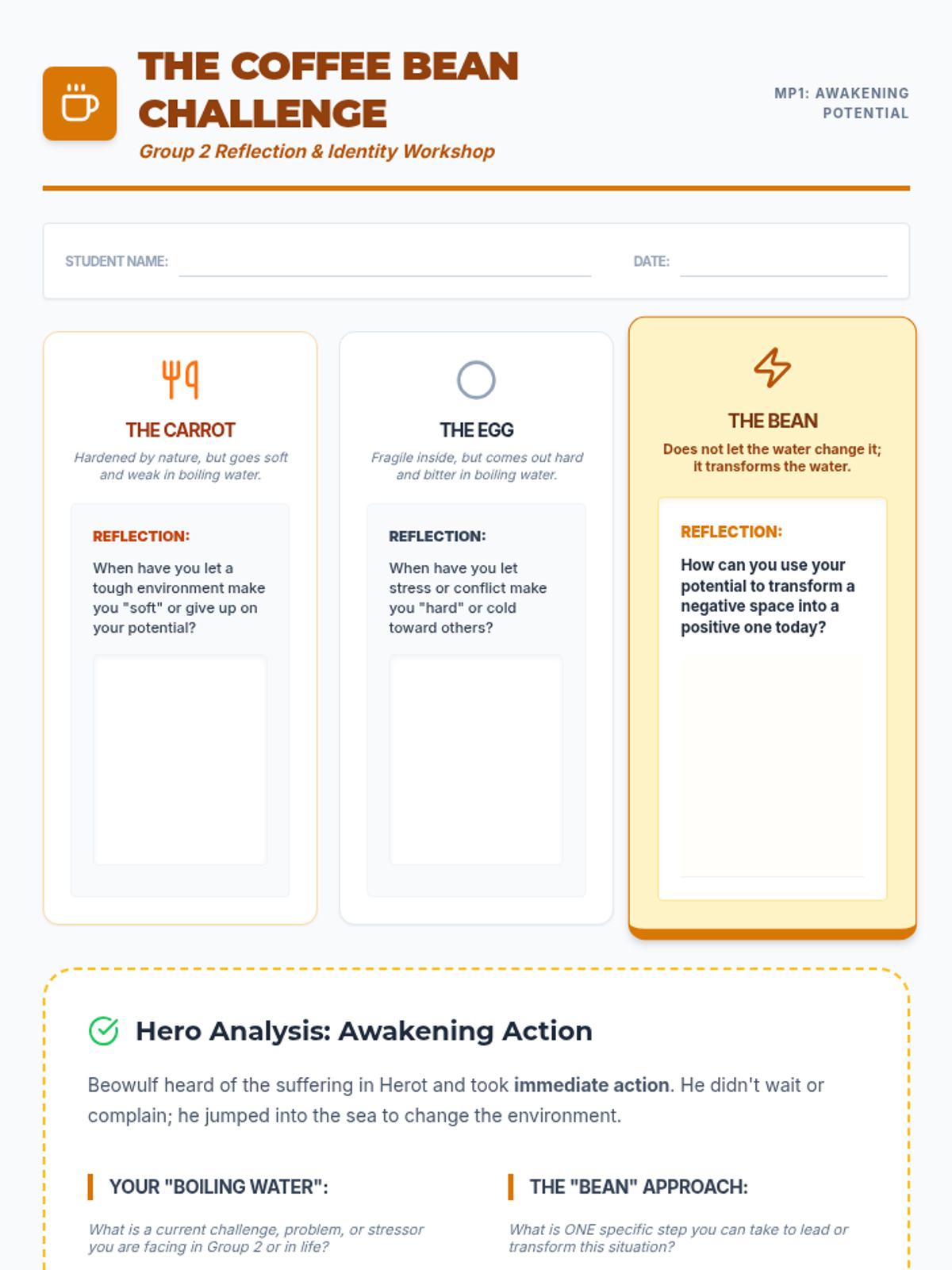
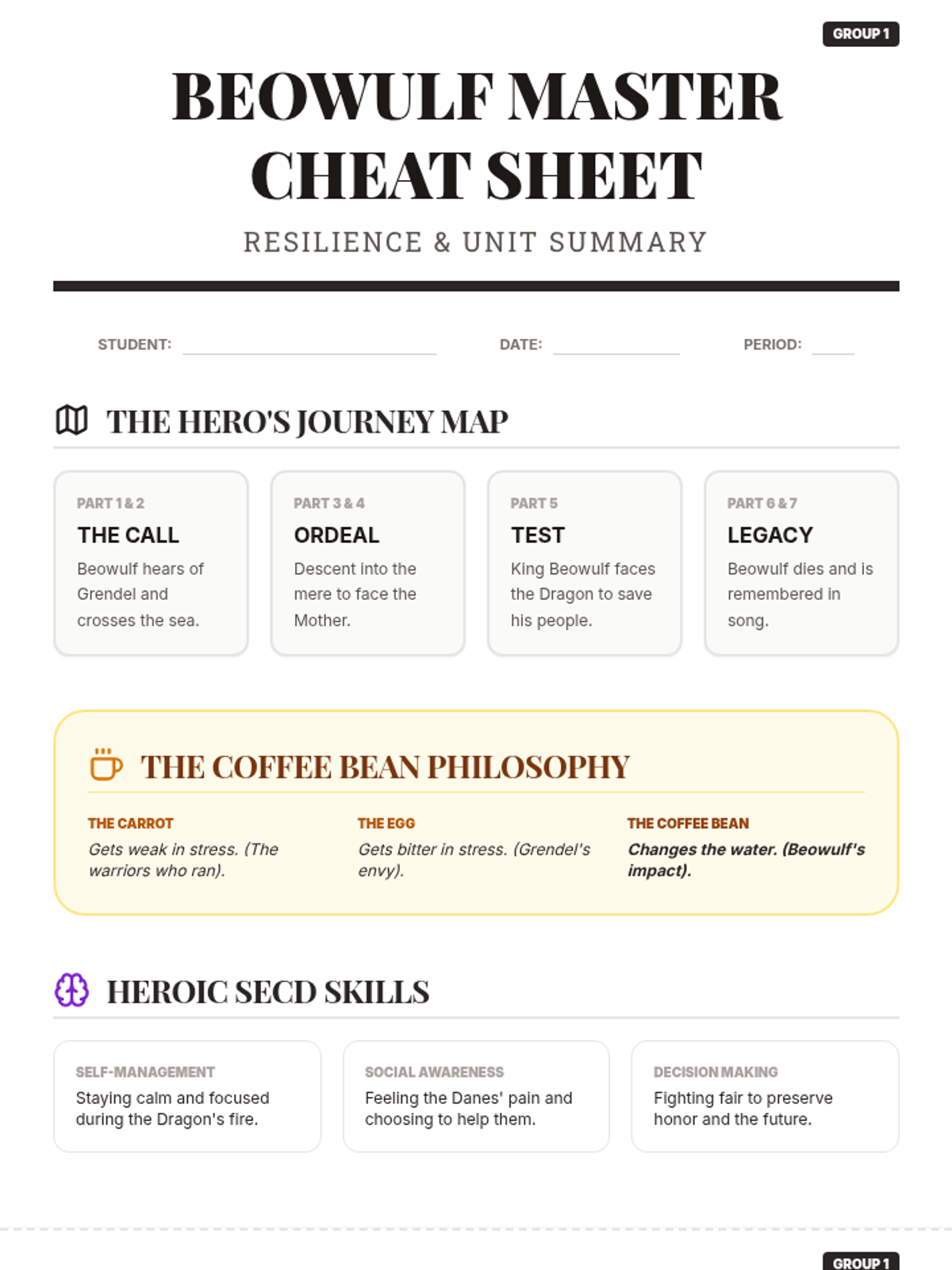
A comprehensive study guide series for Beowulf, focusing on the beginning of the hero's journey, identity, and personal potential. This lesson integrates Jon Gordon's 'The Coffee Bean' and connects Old English epic poetry to modern media archetypes.
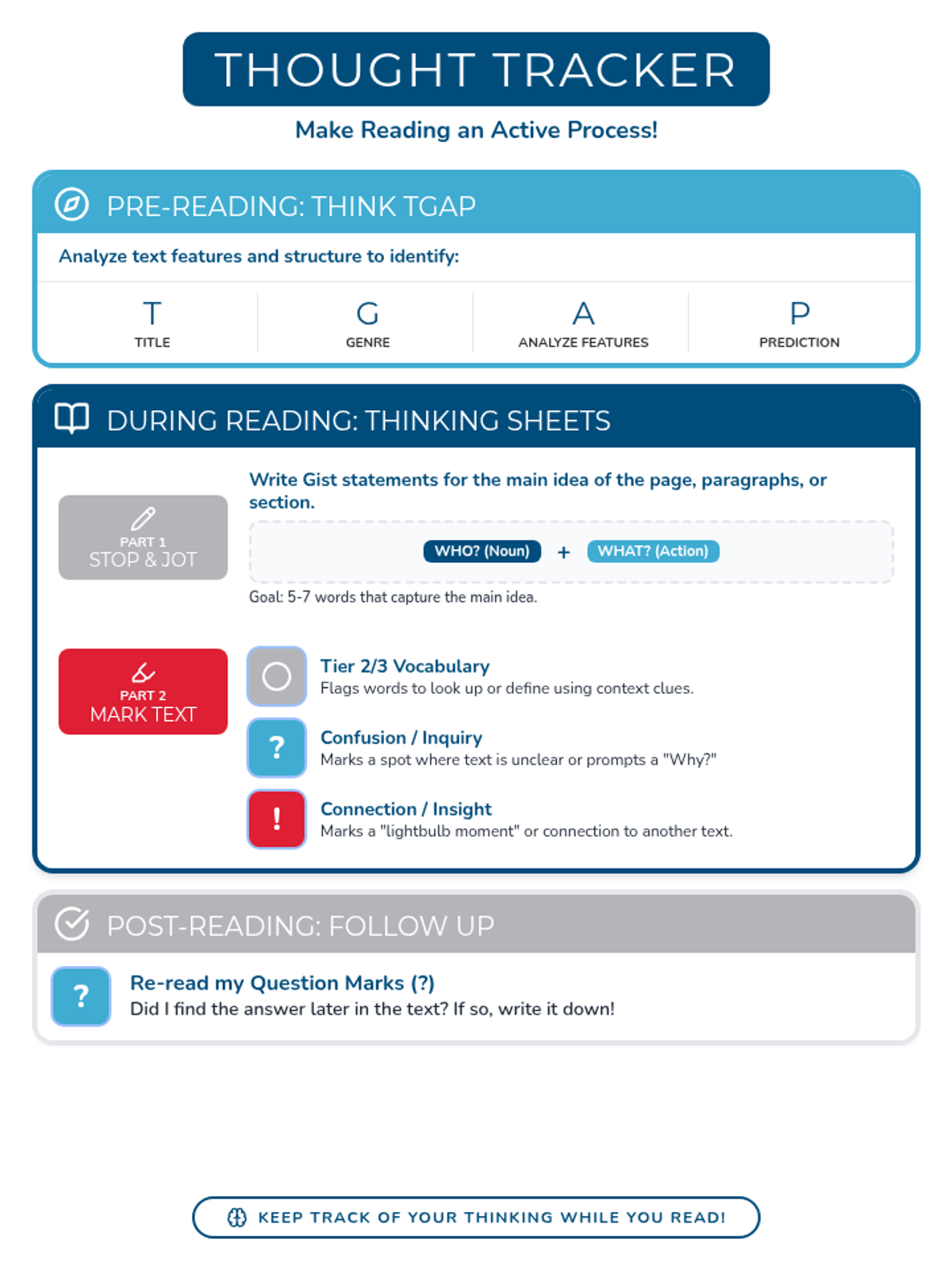
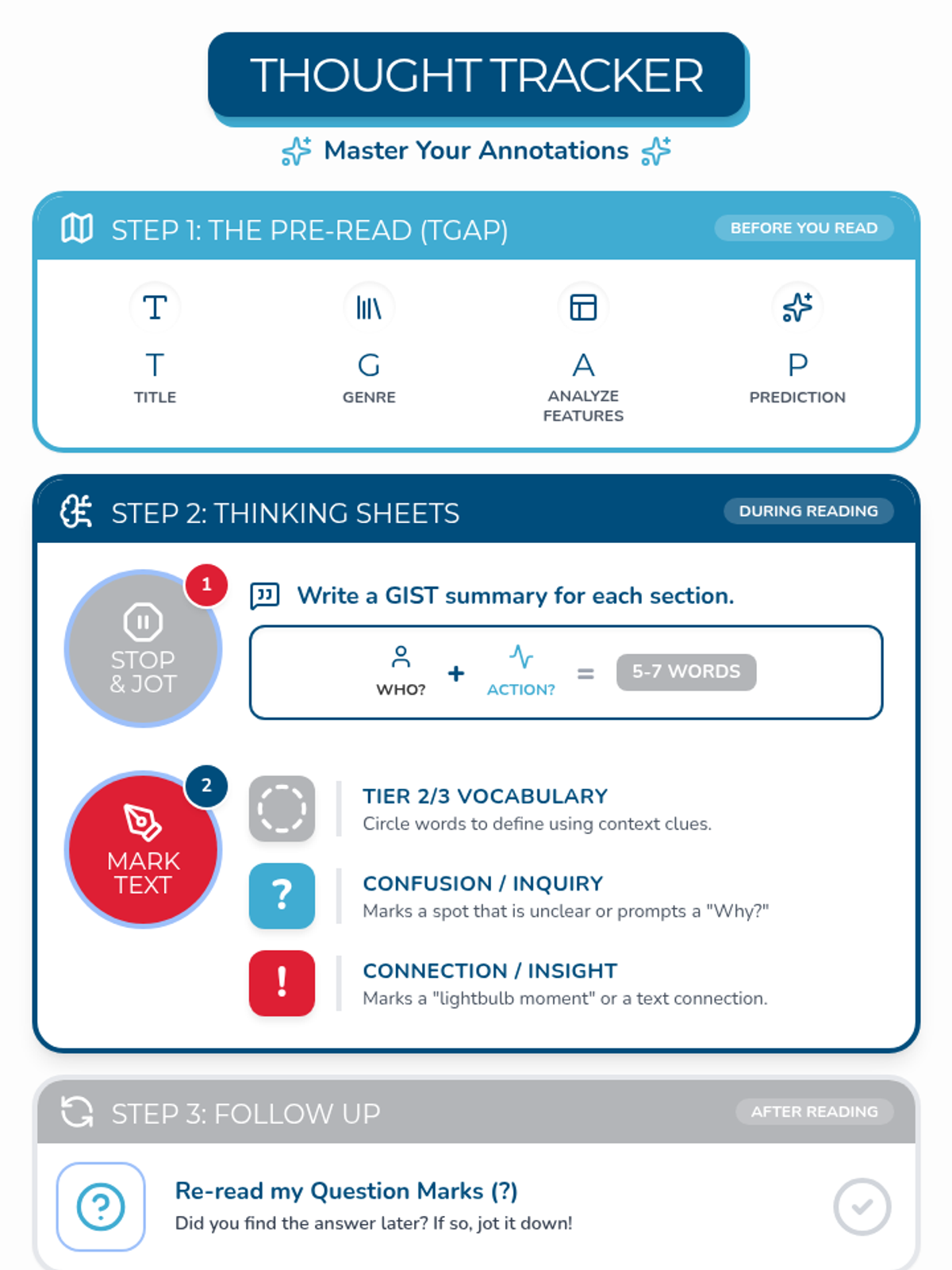
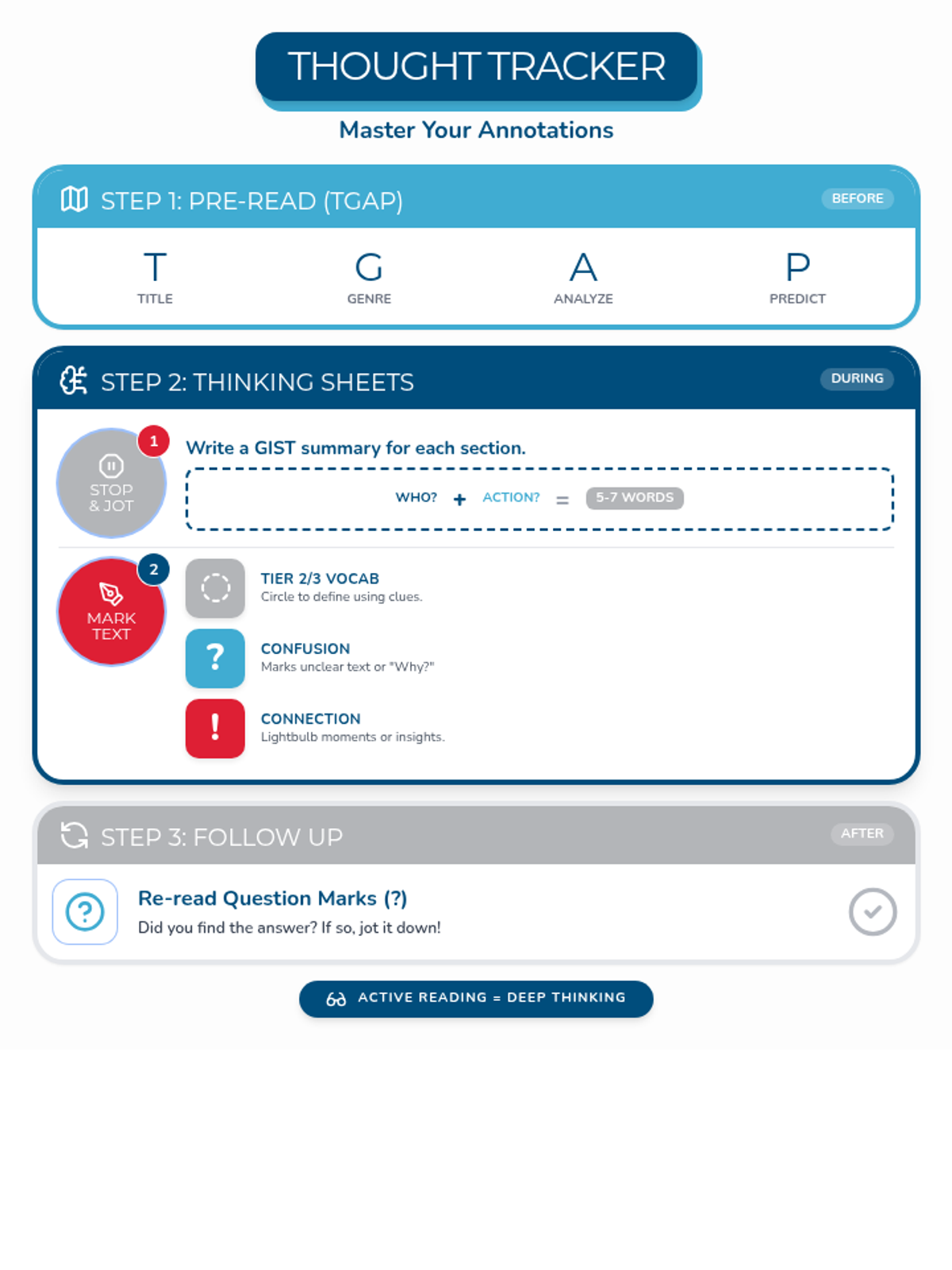
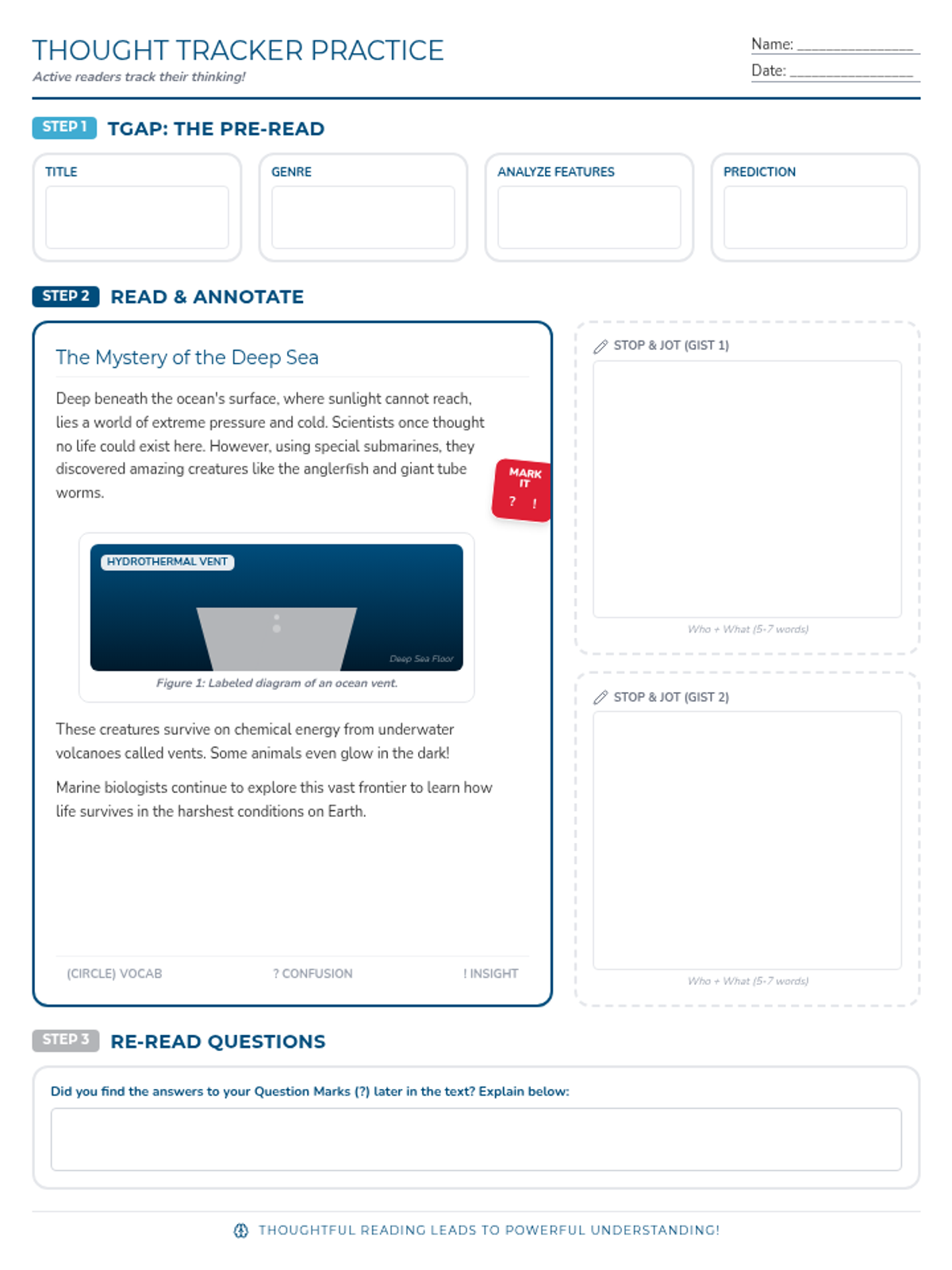
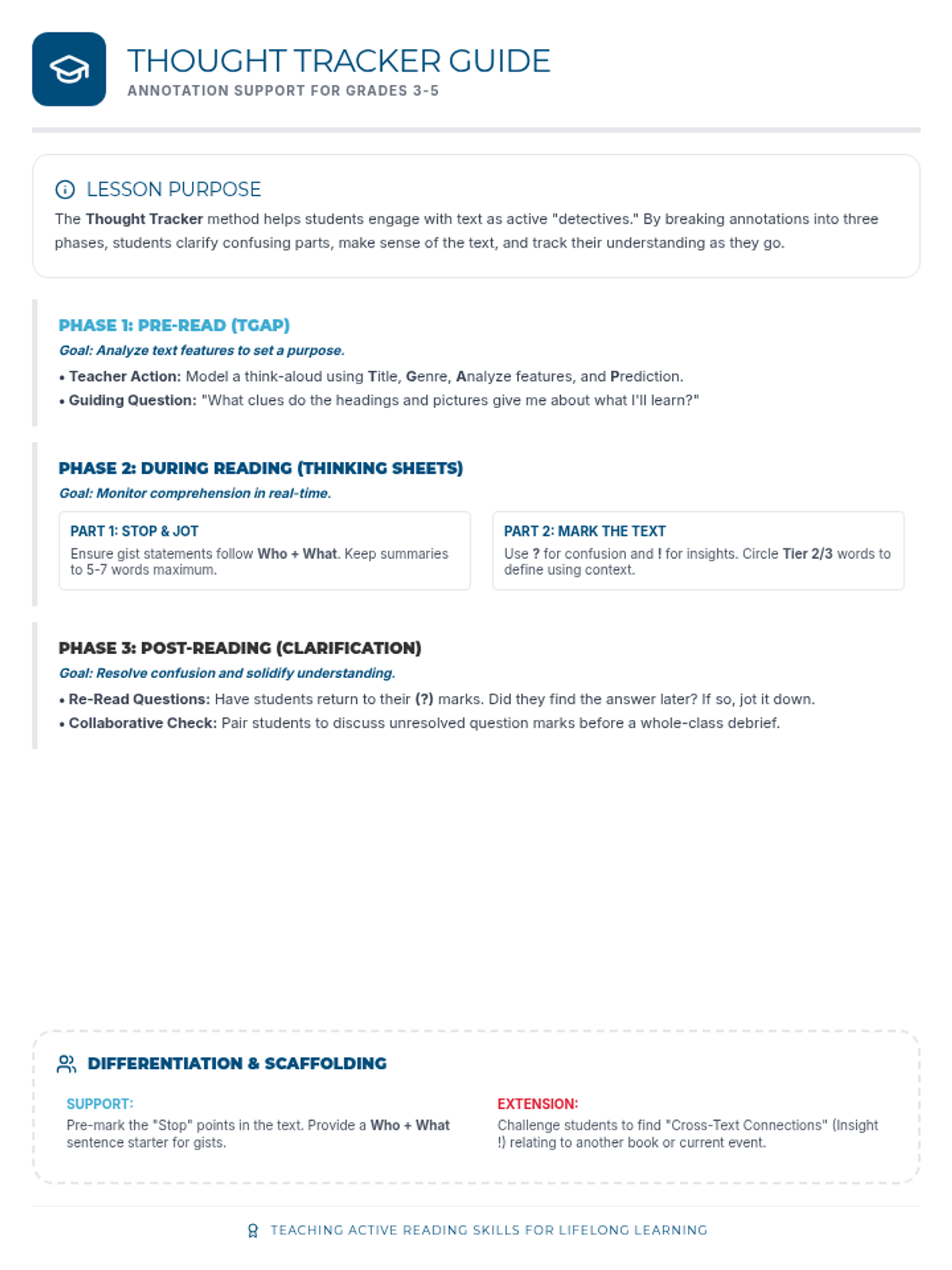
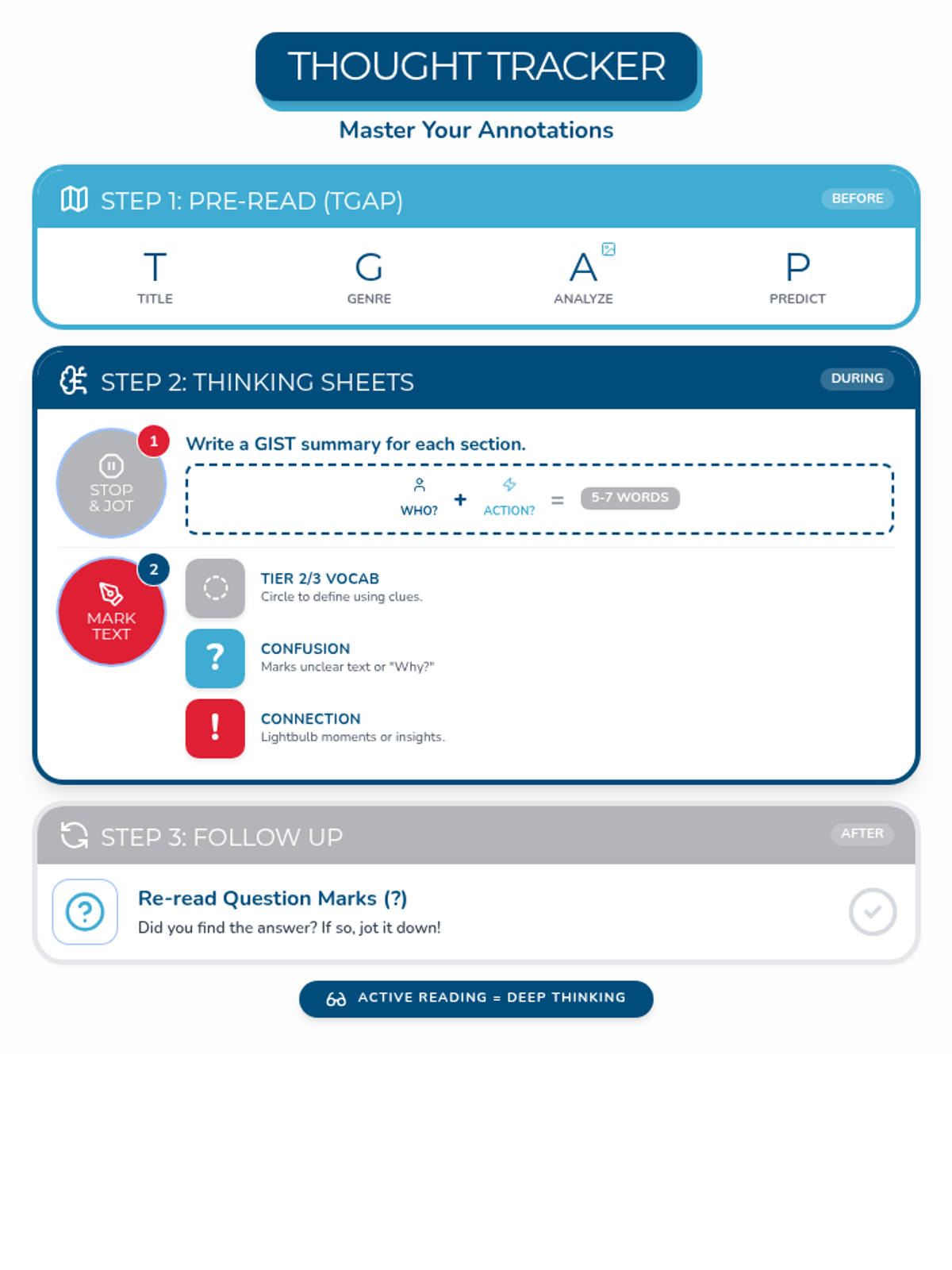
A collection of resources to help students master the 'Thought Tracker' annotation method, including anchor charts and practice guides.
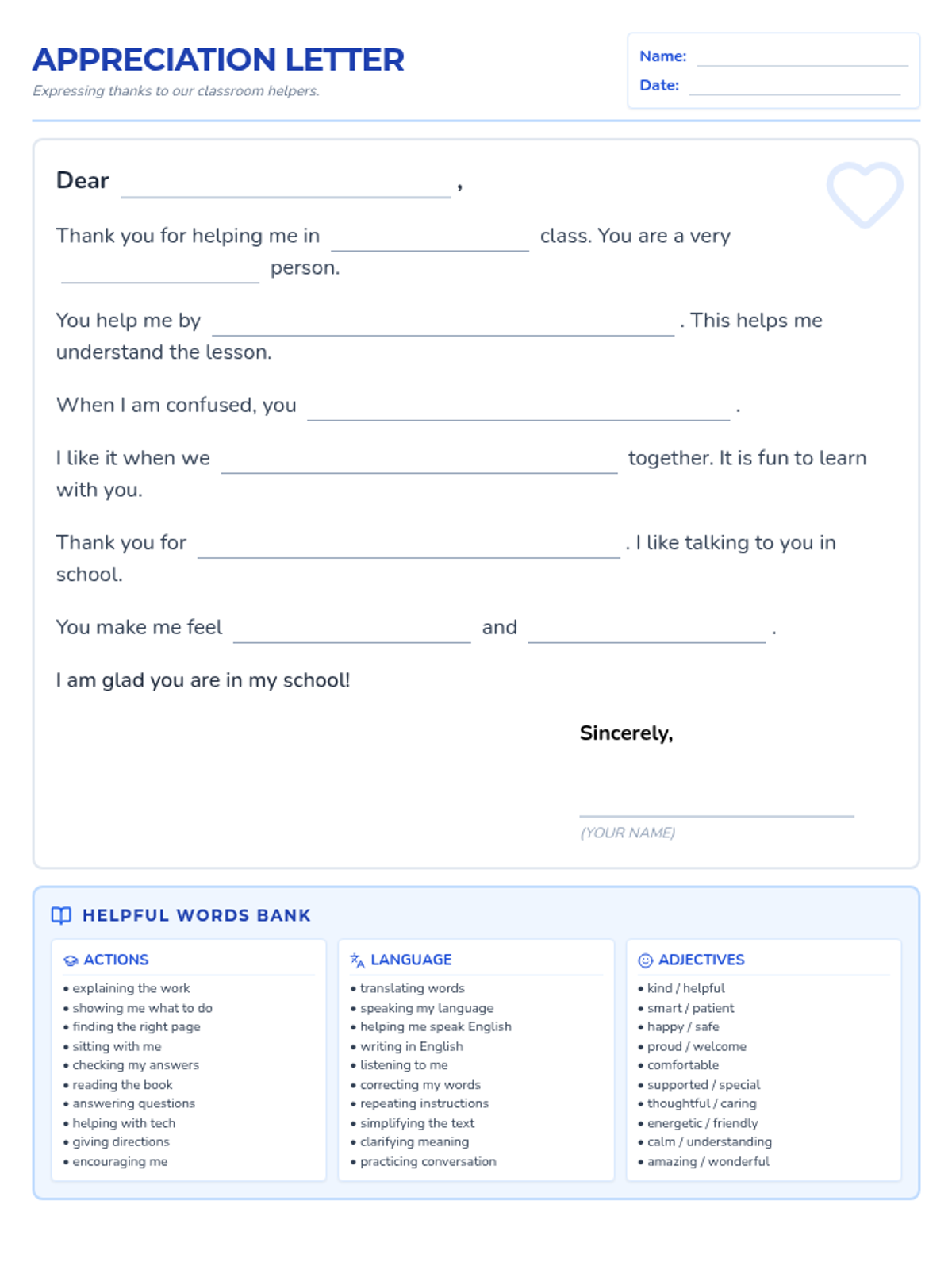
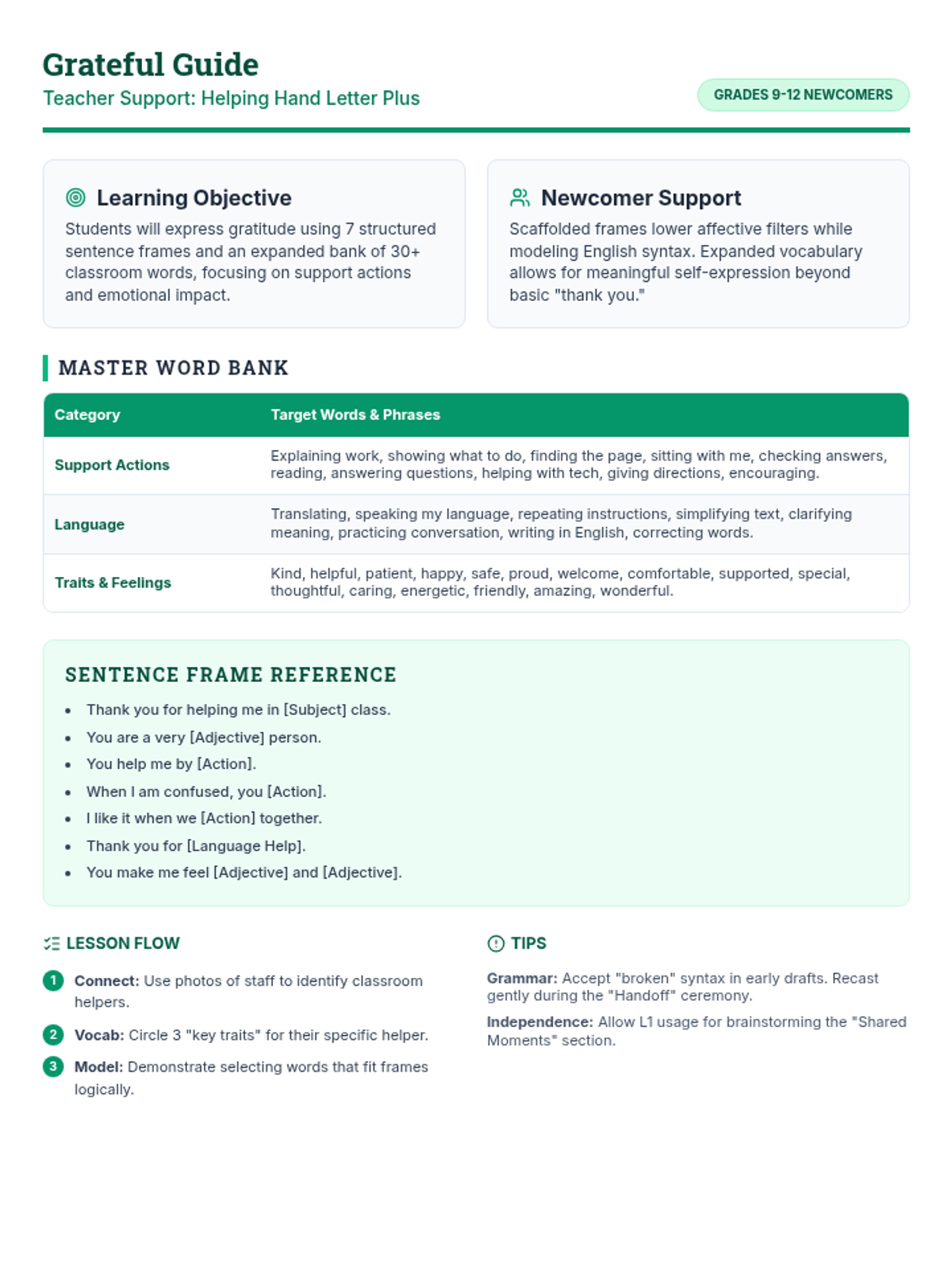
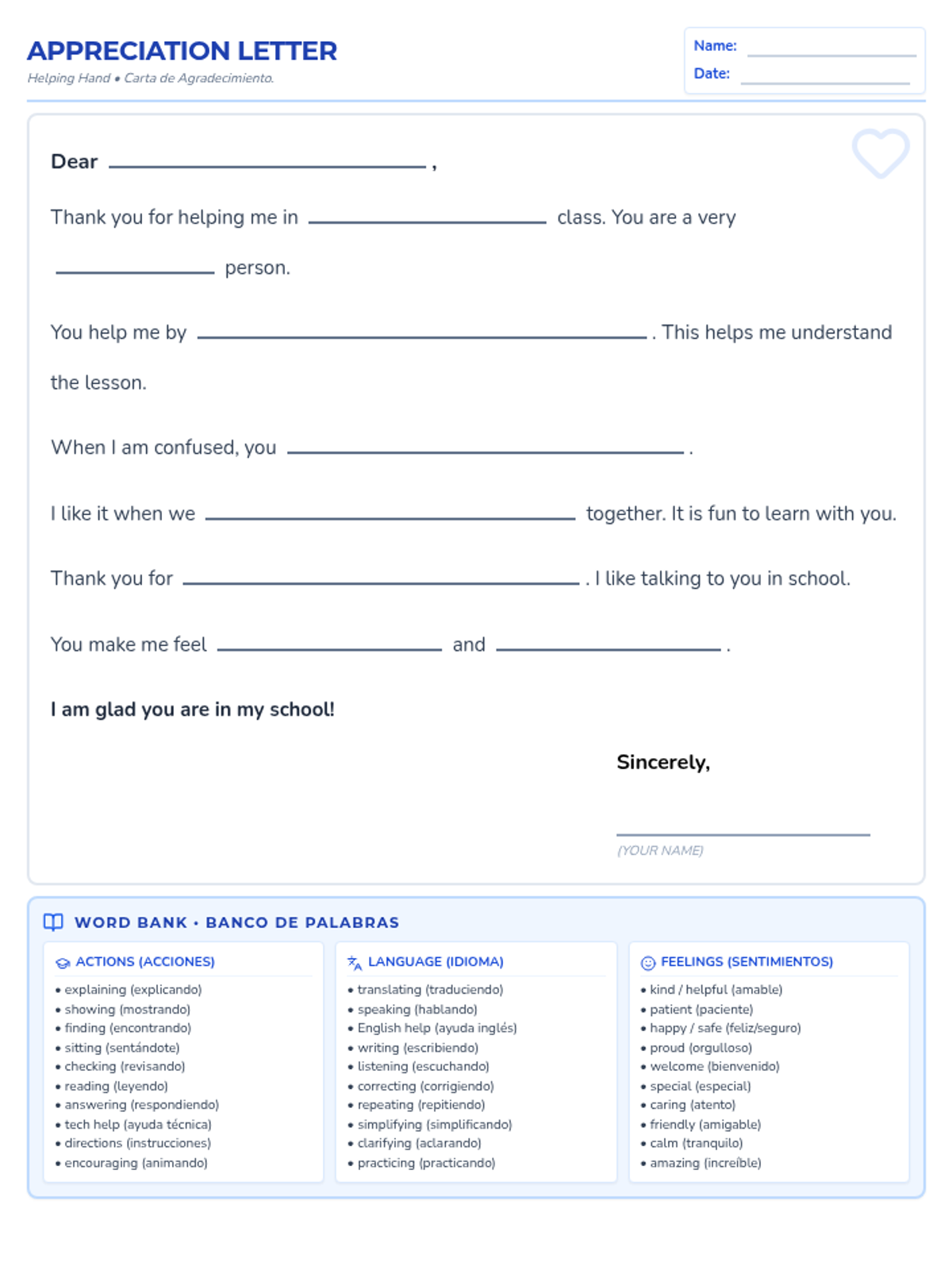
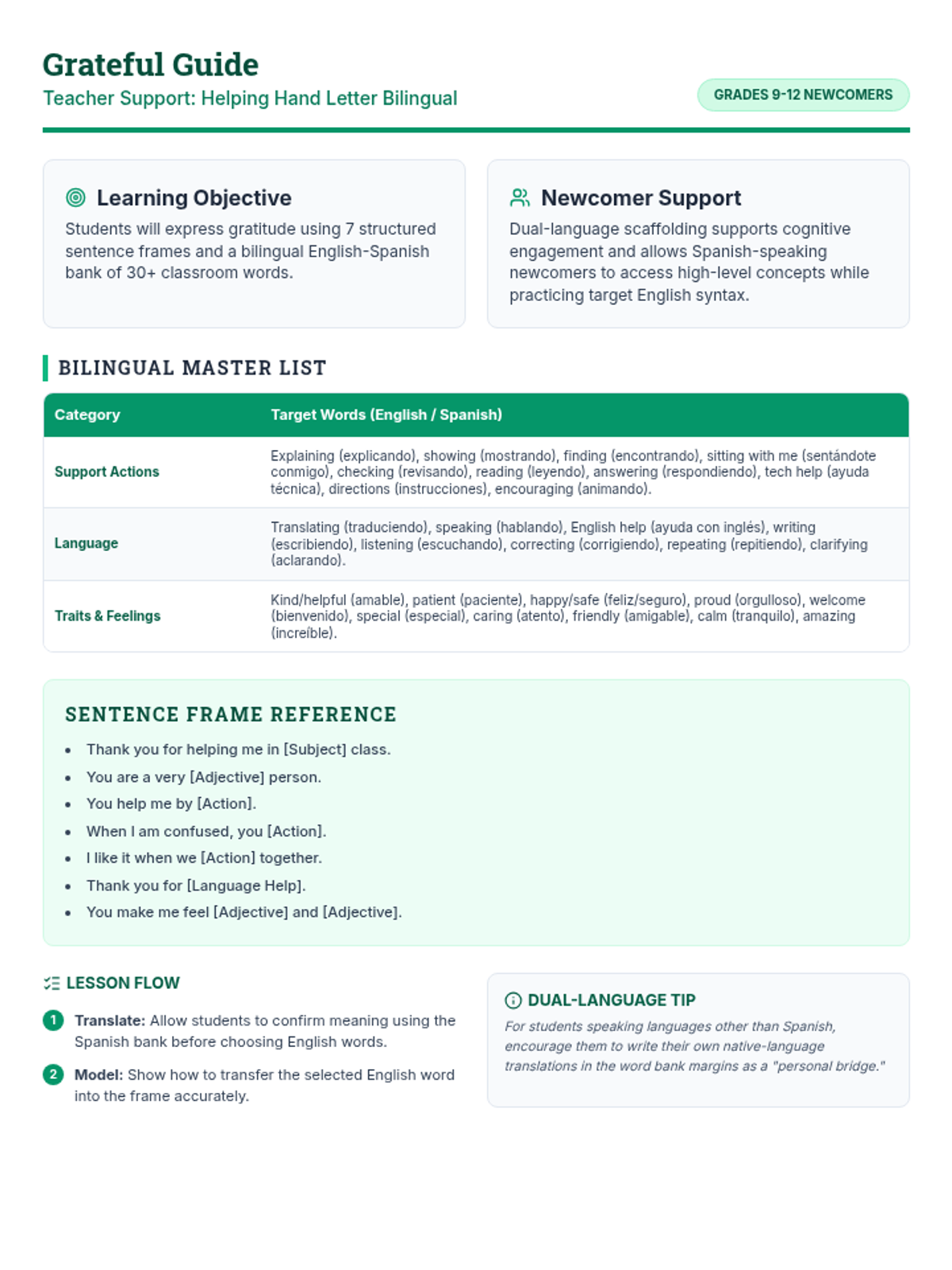
A lesson designed to help newcomer English learners express gratitude to paraprofessionals using structured sentence frames and targeted vocabulary.
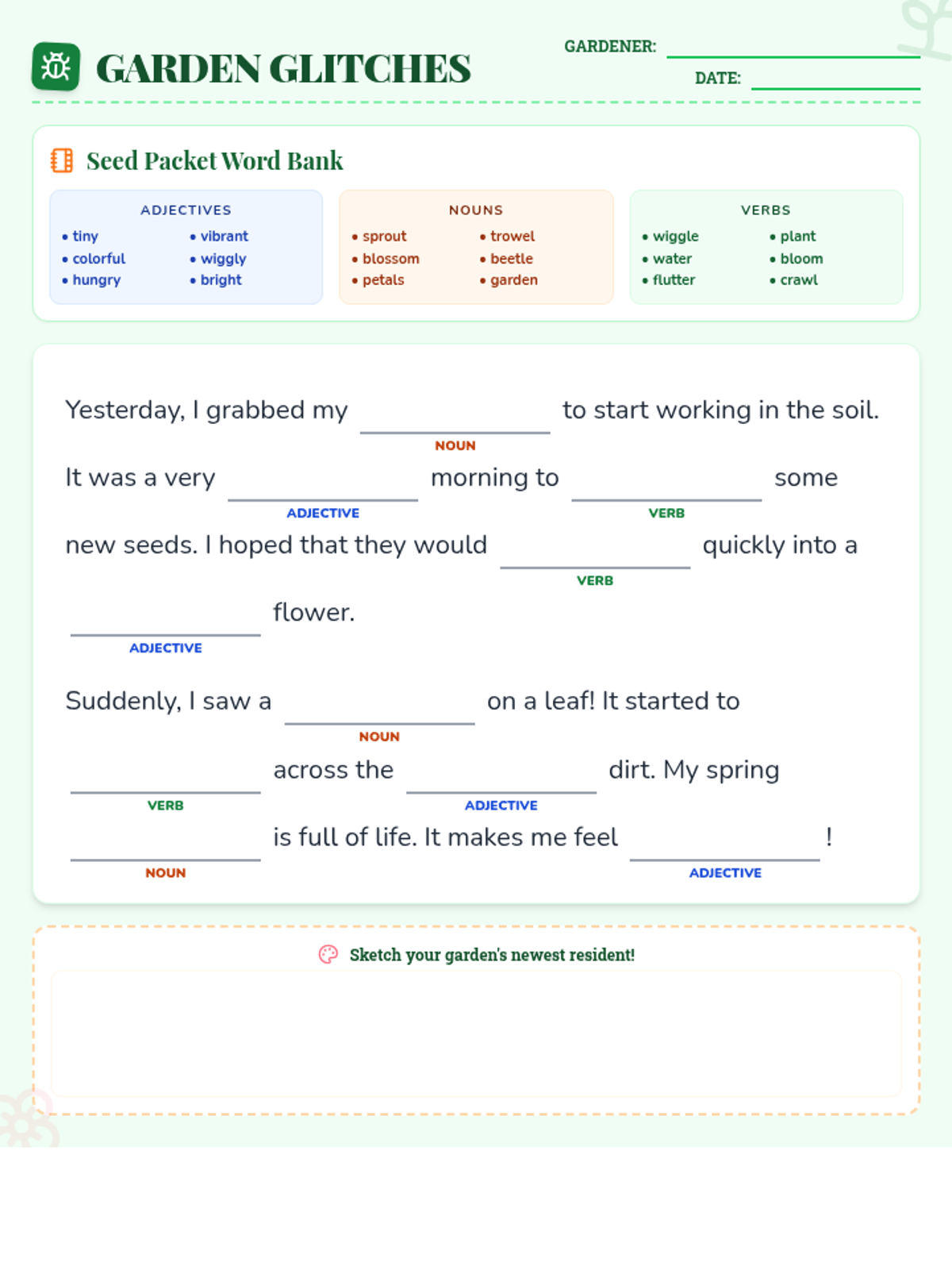
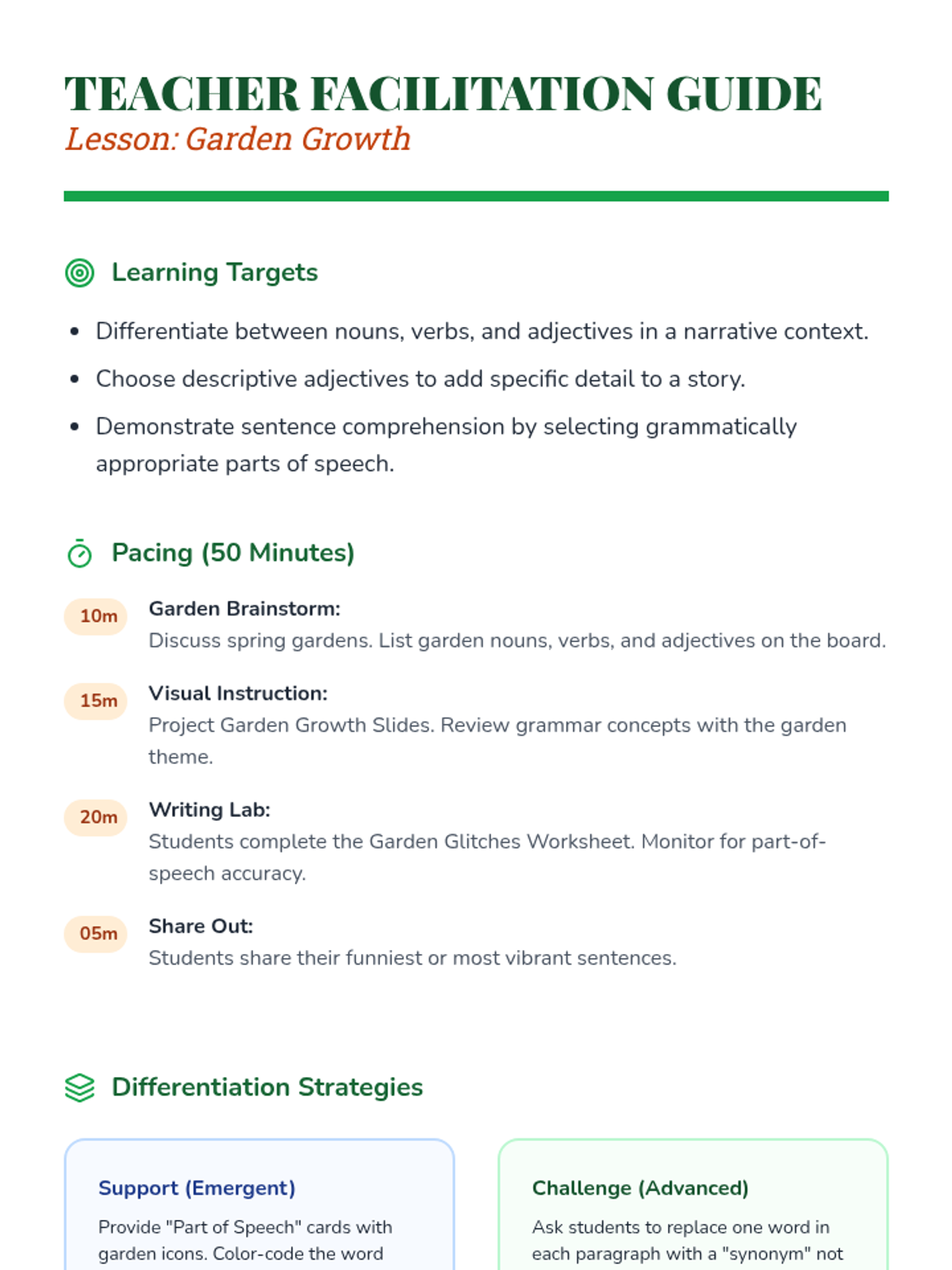
A second-grade focused lesson on nouns, verbs, and adjectives set in a vibrant spring garden. Students will explore descriptive language while filling in a garden-themed story.
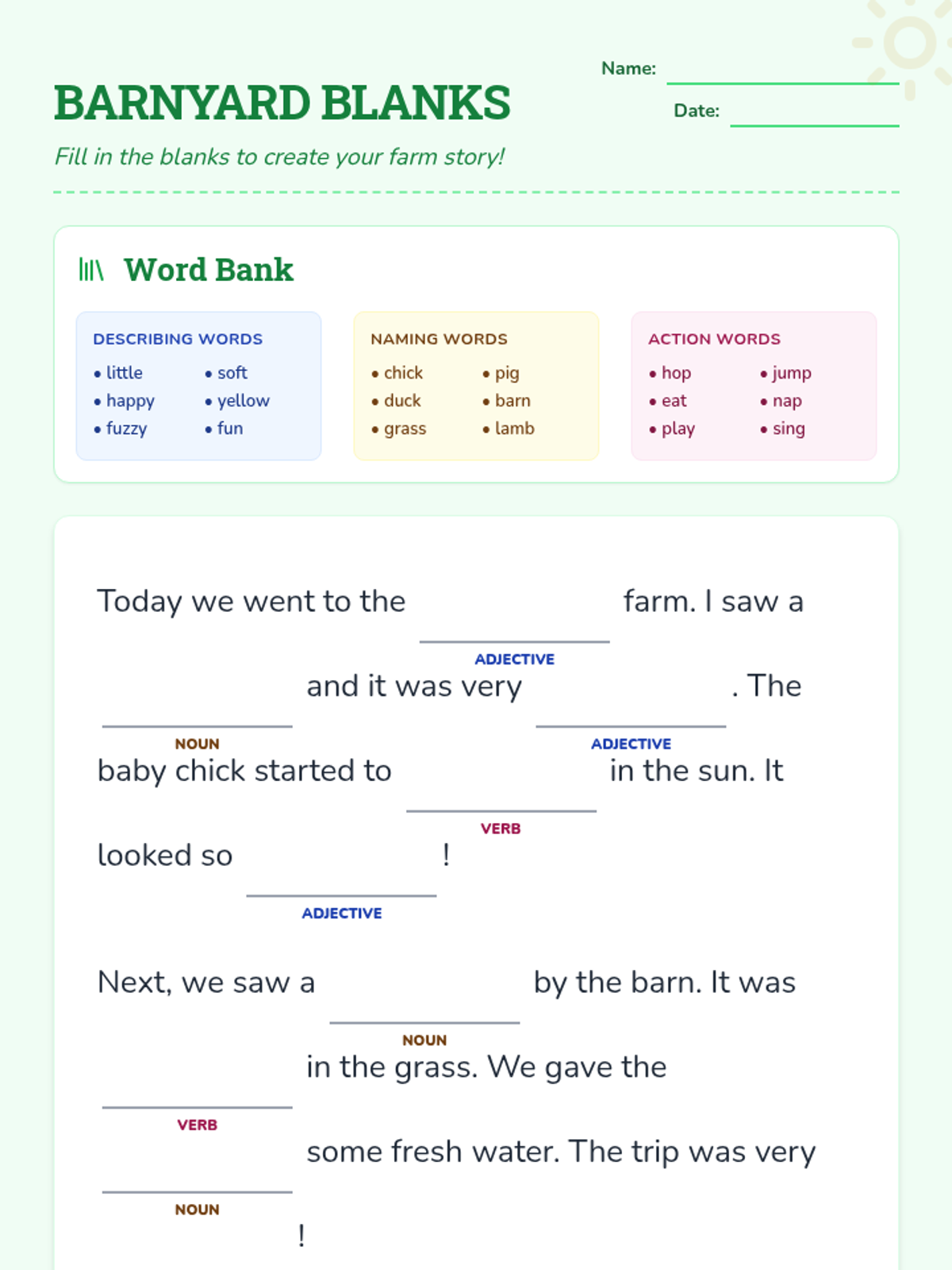
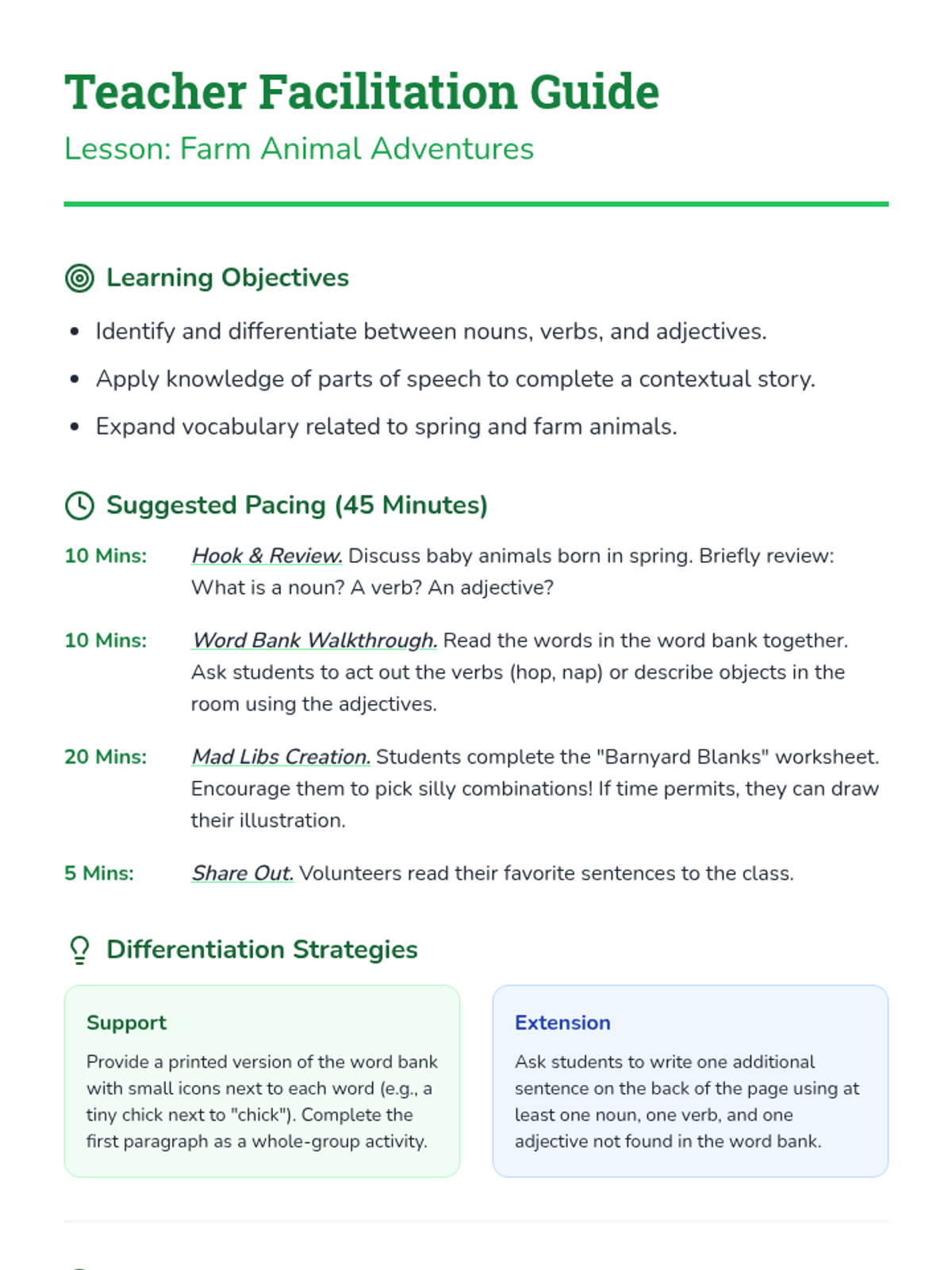
A fun, spring-themed lesson focused on identifying and using nouns, verbs, and adjectives through a baby animal farm story. Students will practice parts of speech while creating their own silly farm adventure.
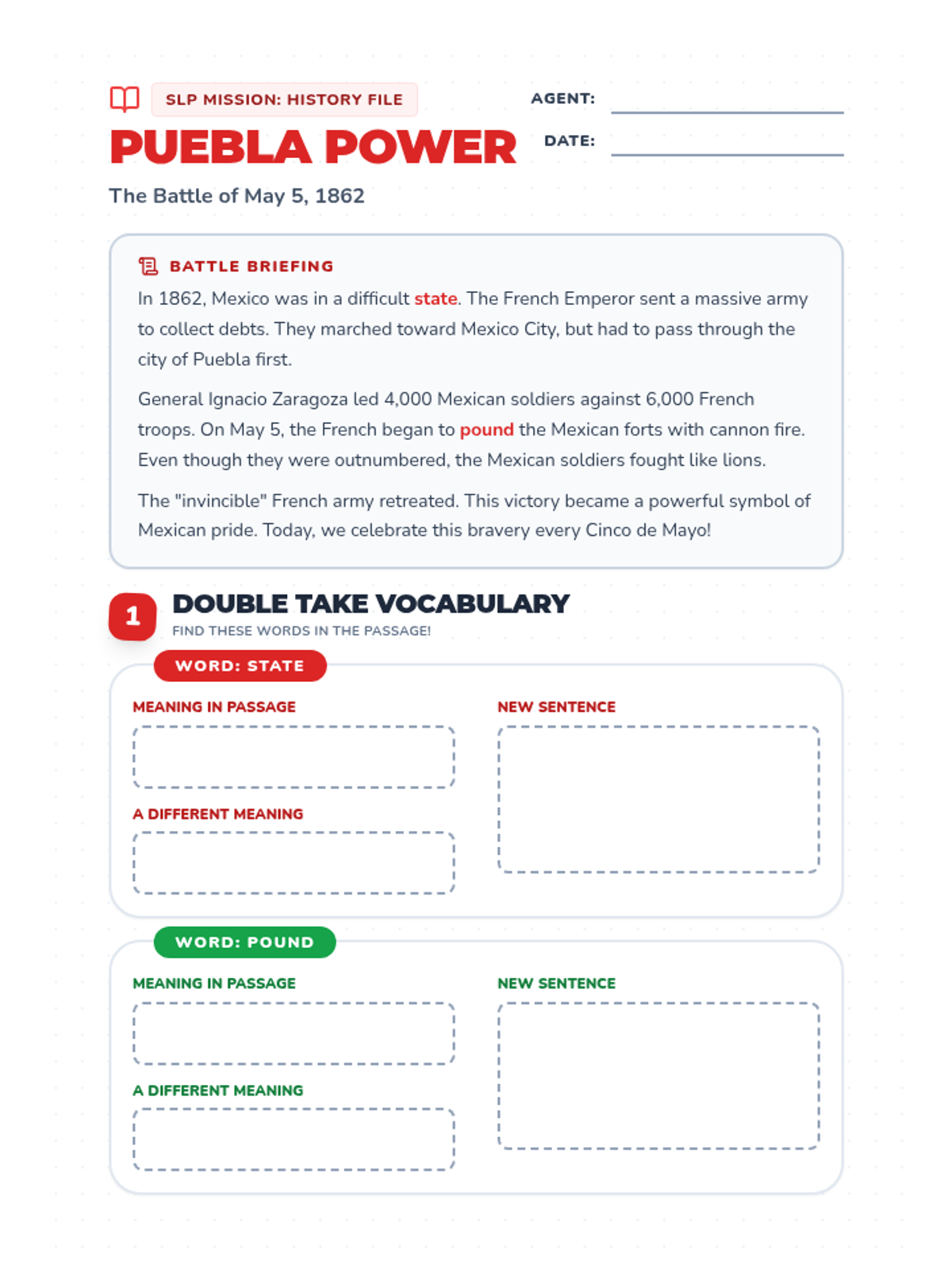
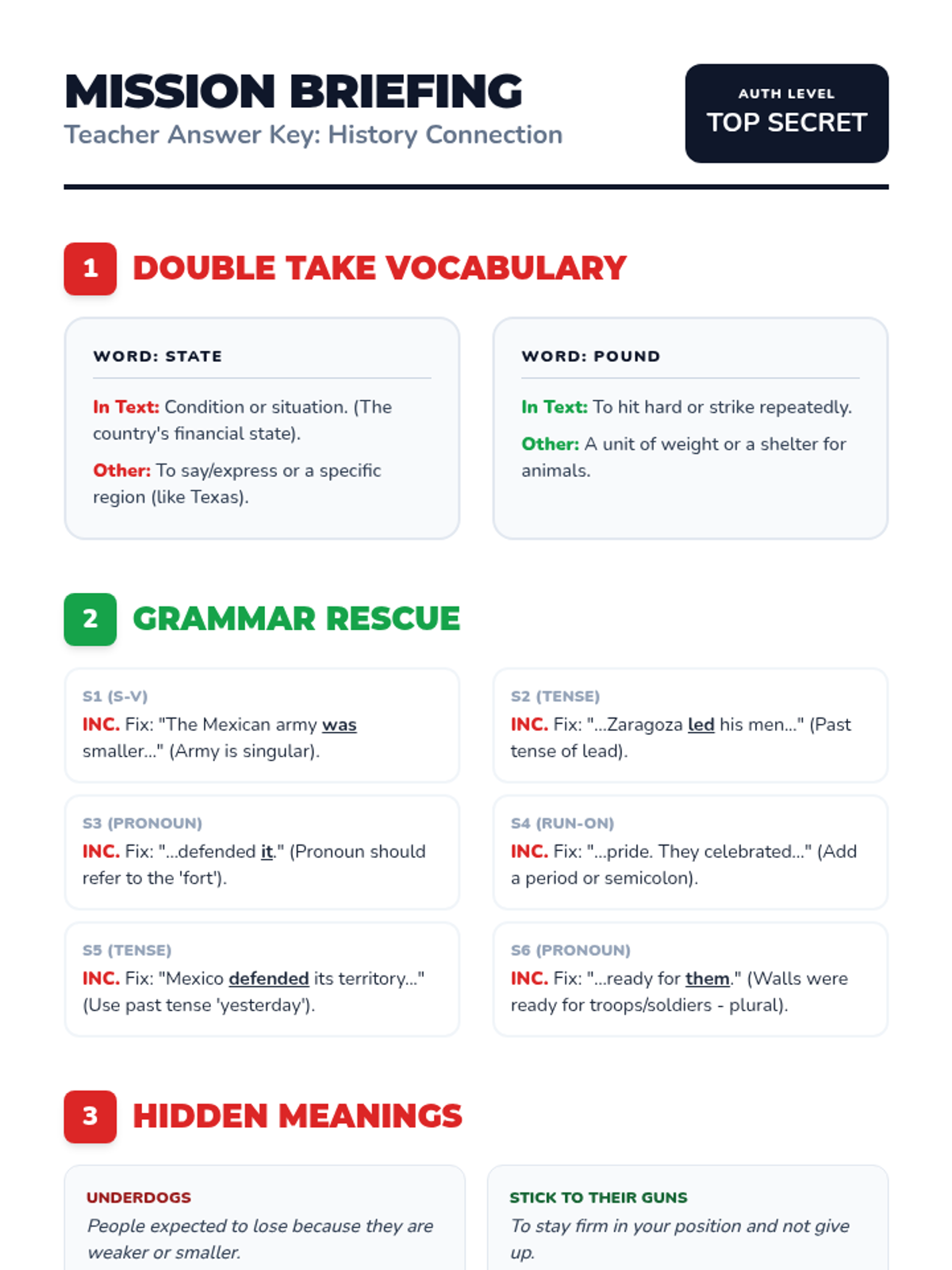
A targeted speech-language lesson for 6th graders focusing on vocabulary, grammar editing, and figurative language through the lens of Cinco de Mayo.
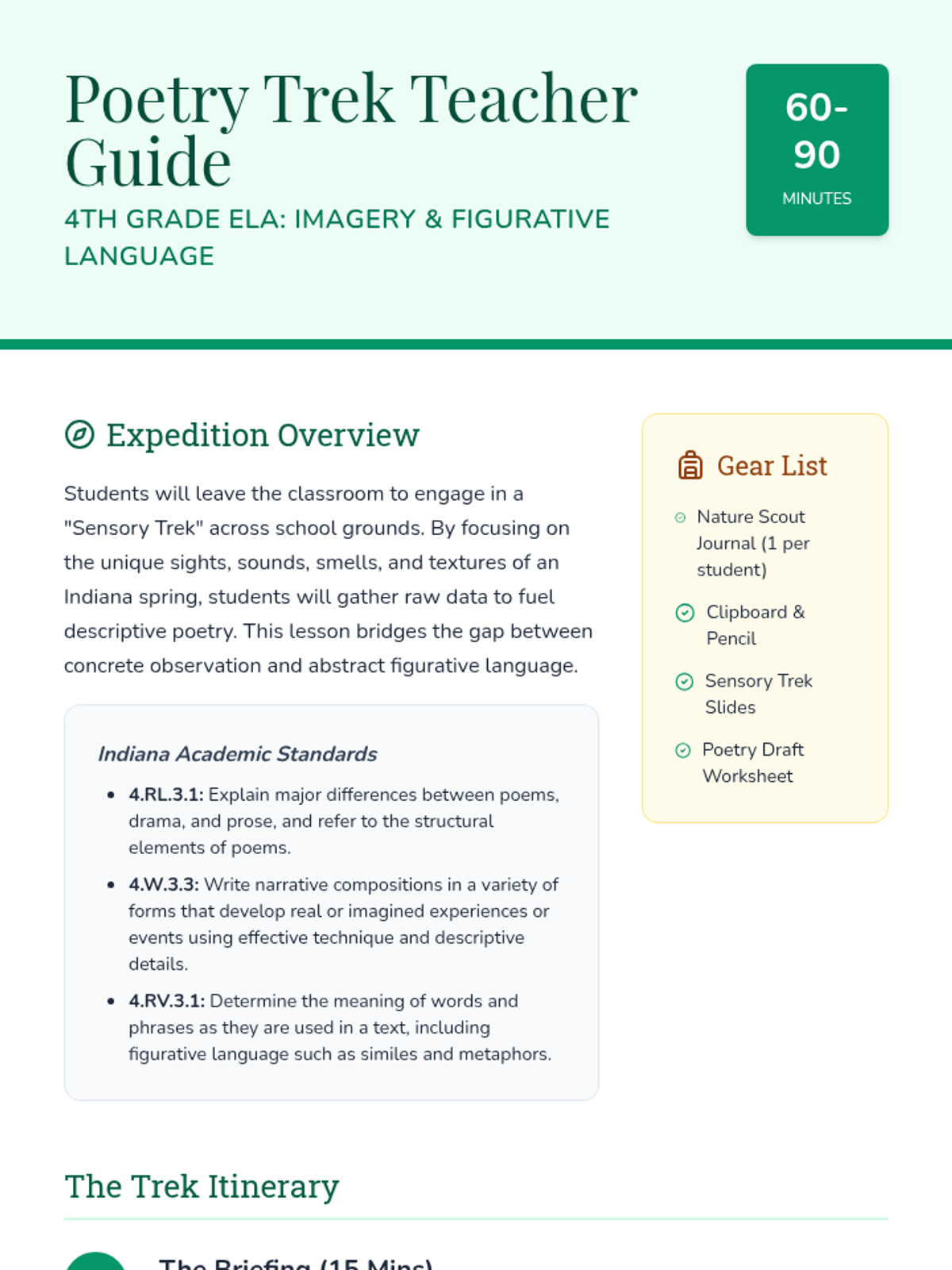
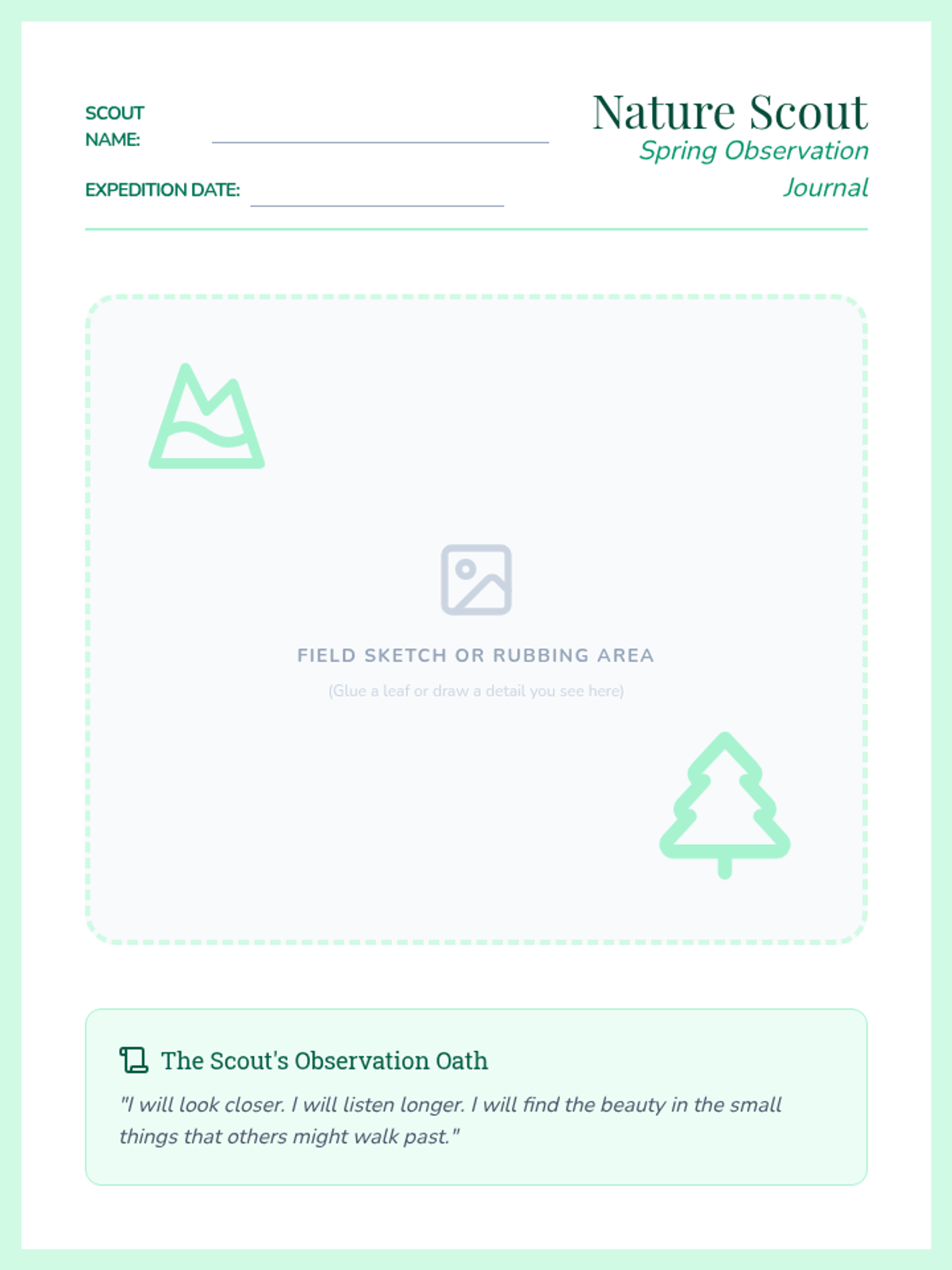
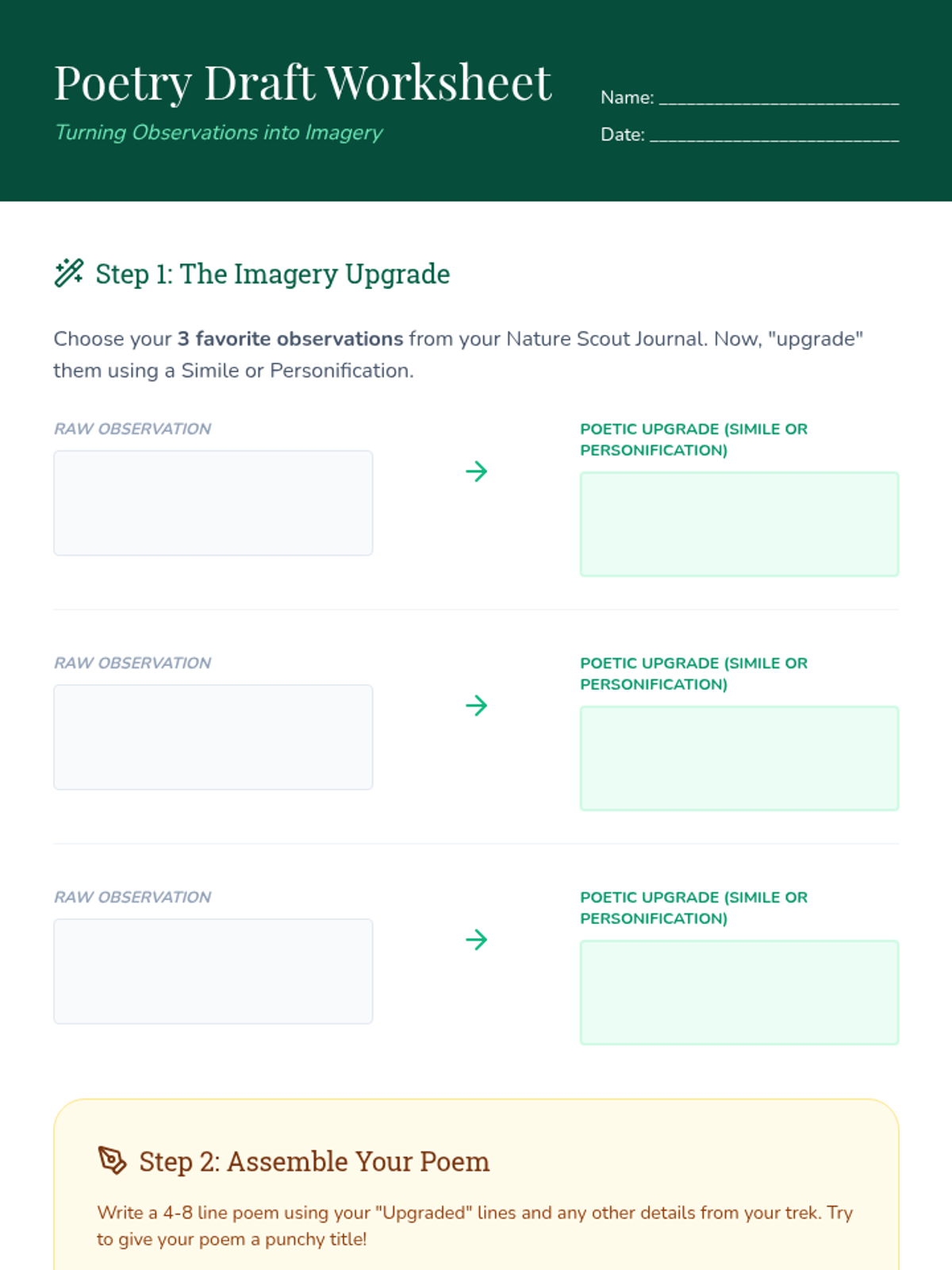
A hands-on outdoor poetry workshop for fourth graders to master imagery and figurative language by observing the Indiana spring environment. Students transition from sensory observation to creative poetic drafting.
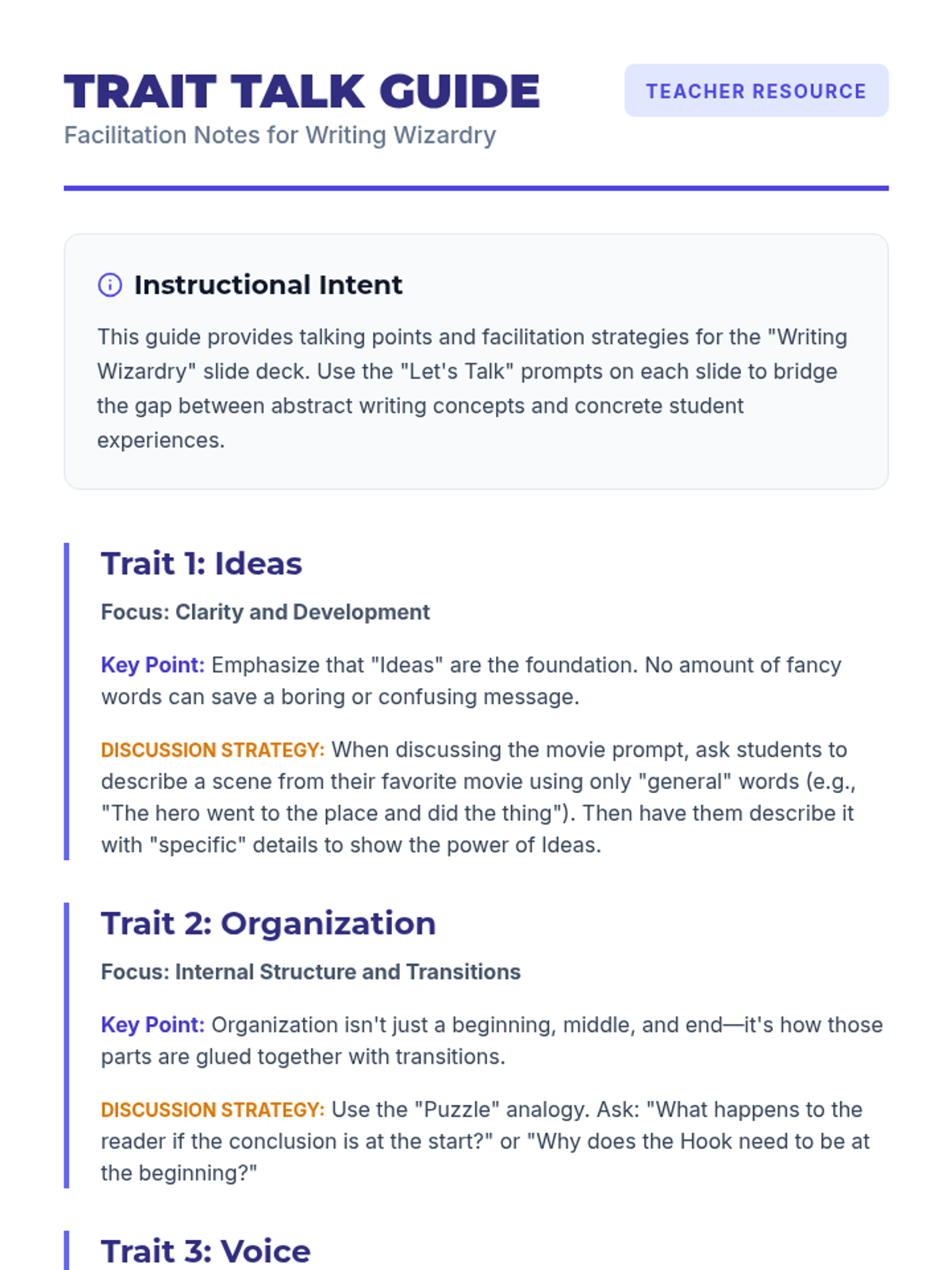
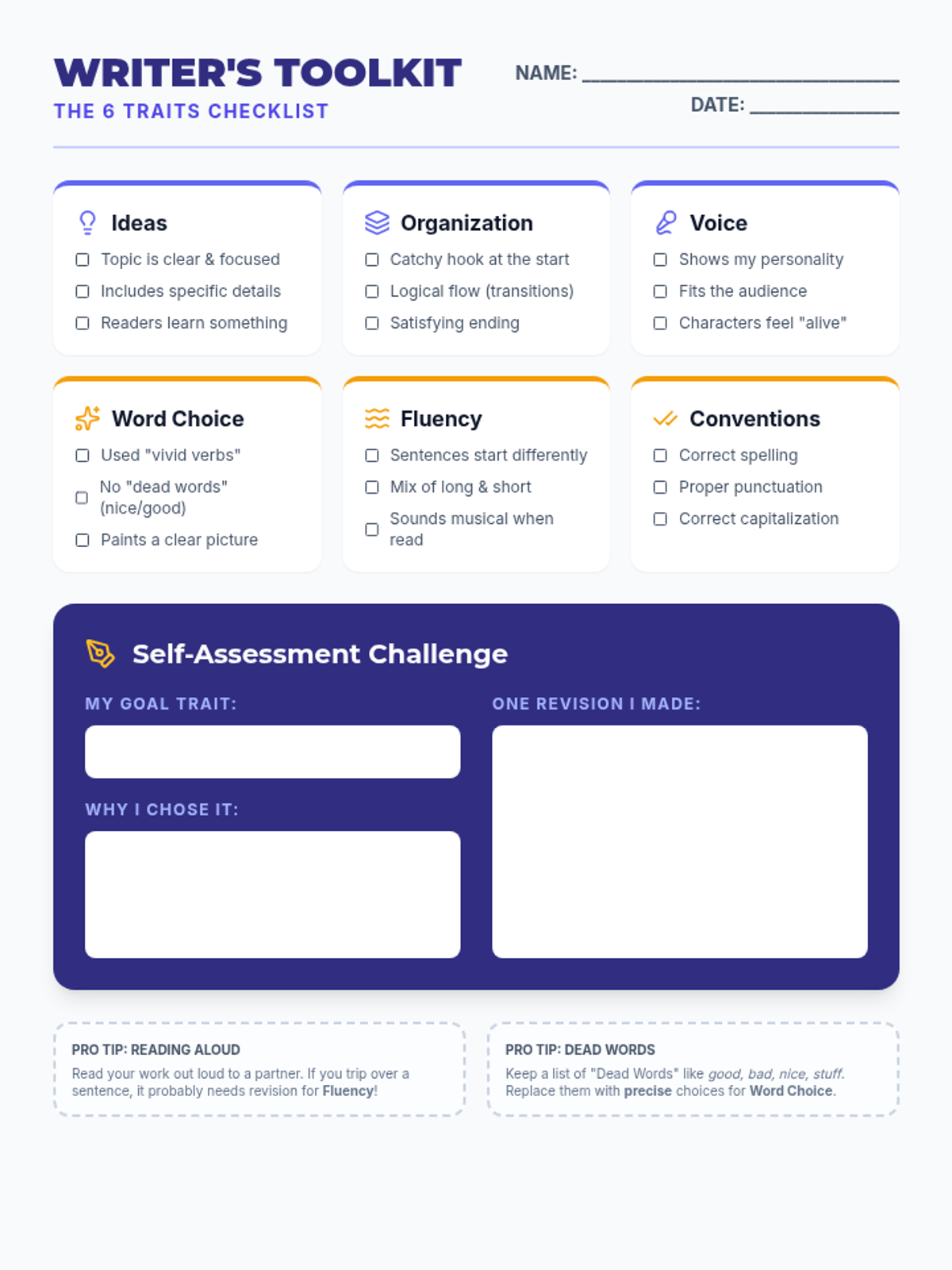
An interactive exploration of the 6 Traits of Effective Writing, designed to help students identify and apply key elements of strong prose through discussion and analysis.
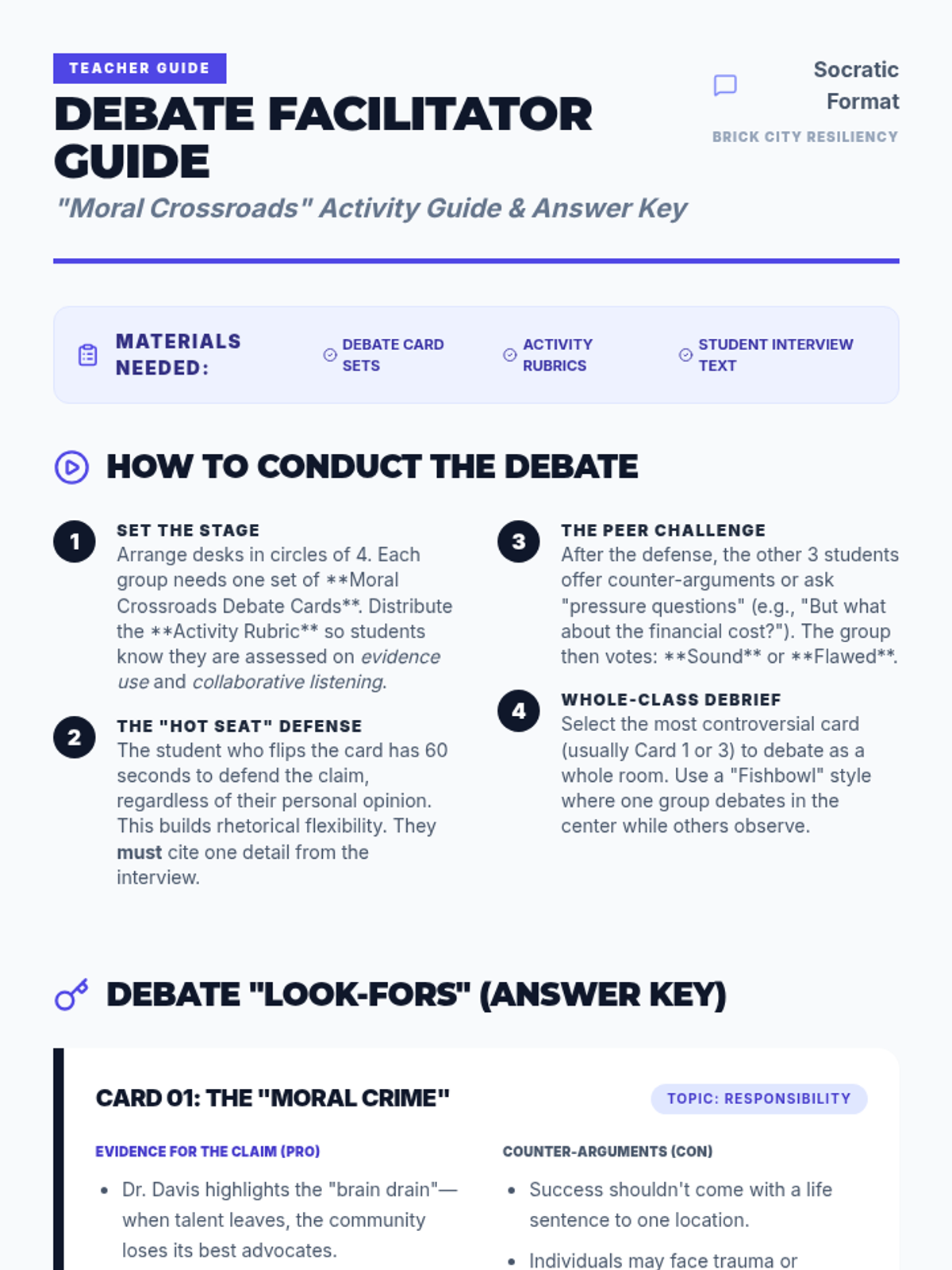
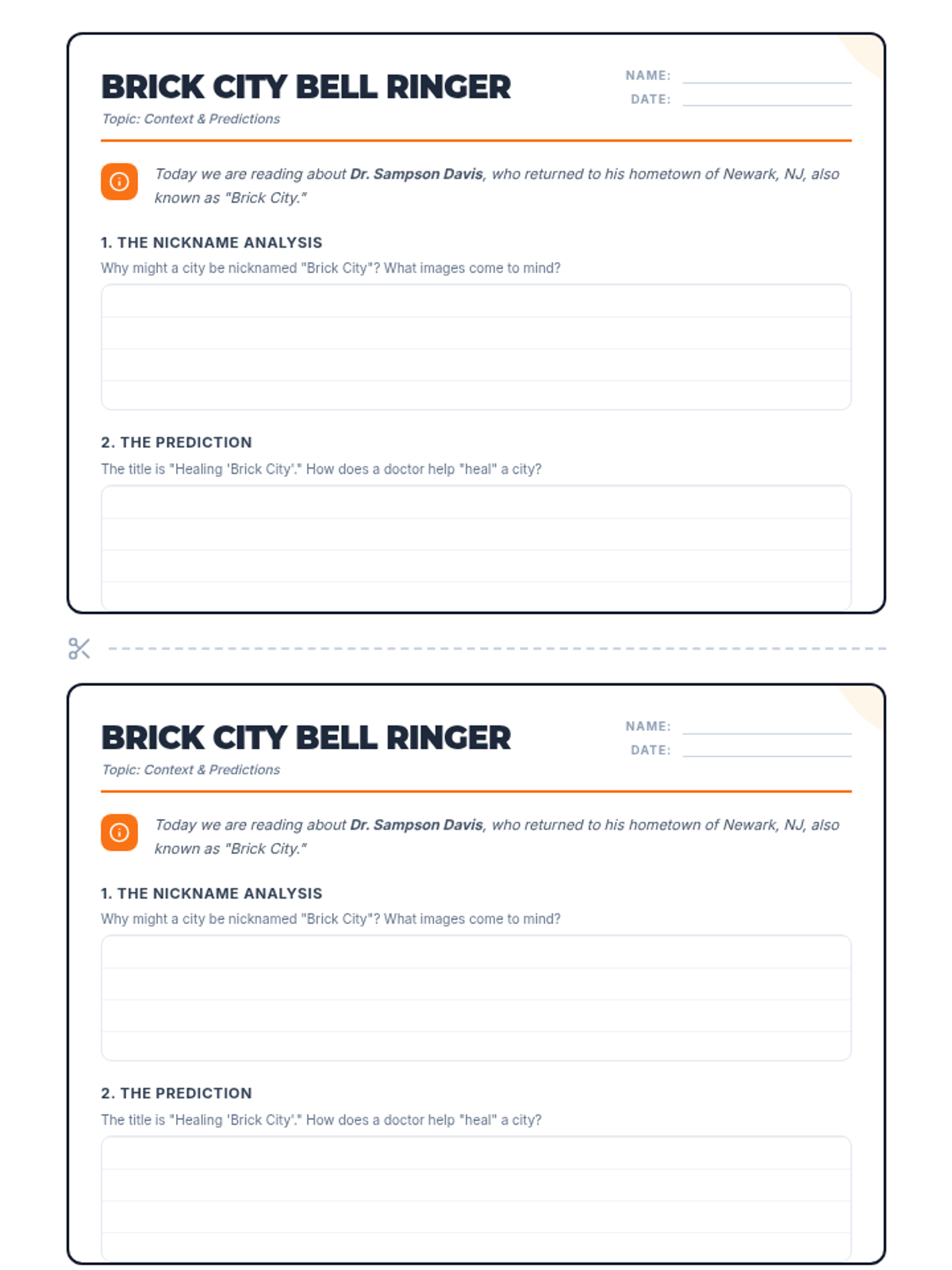
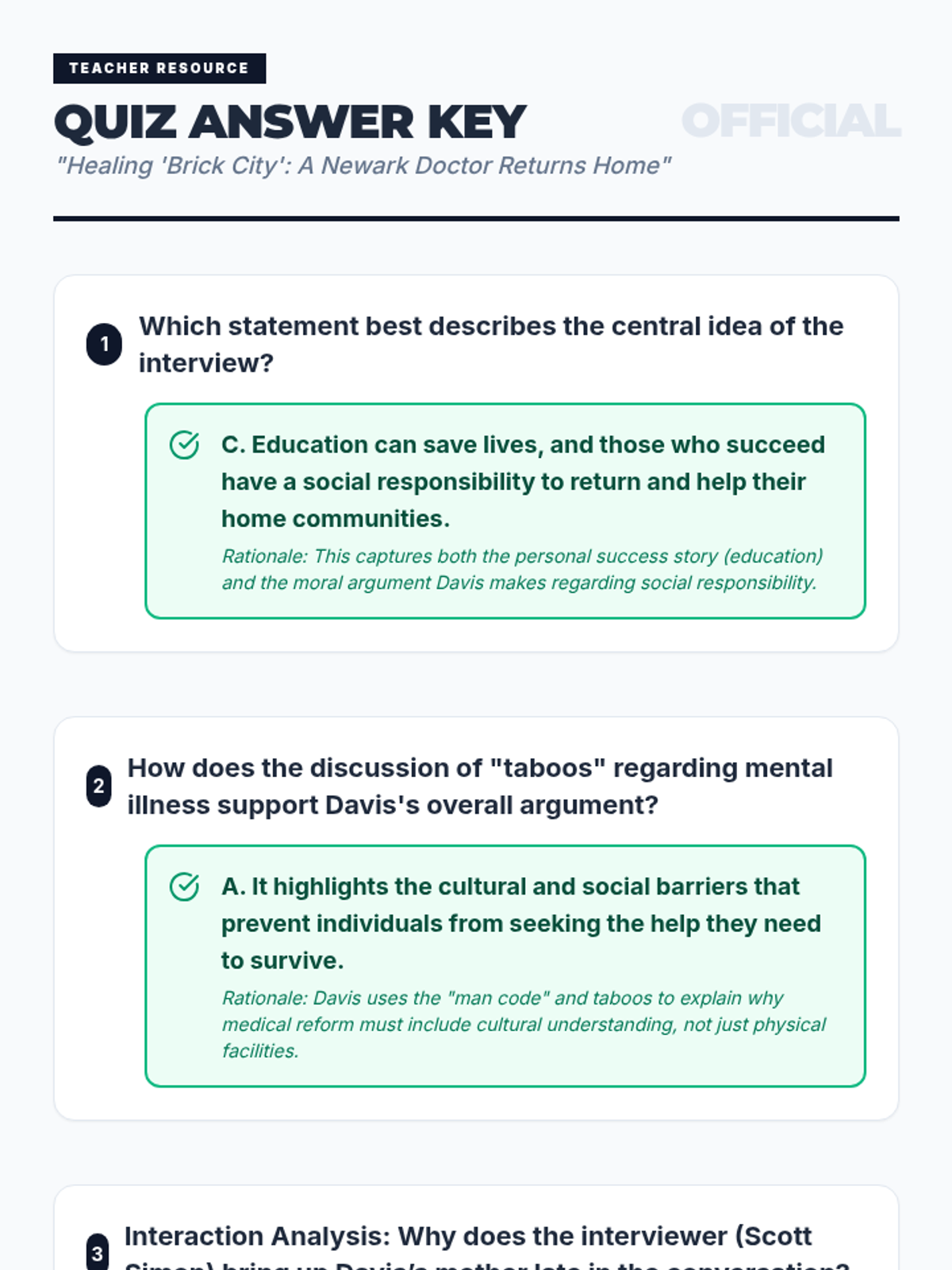
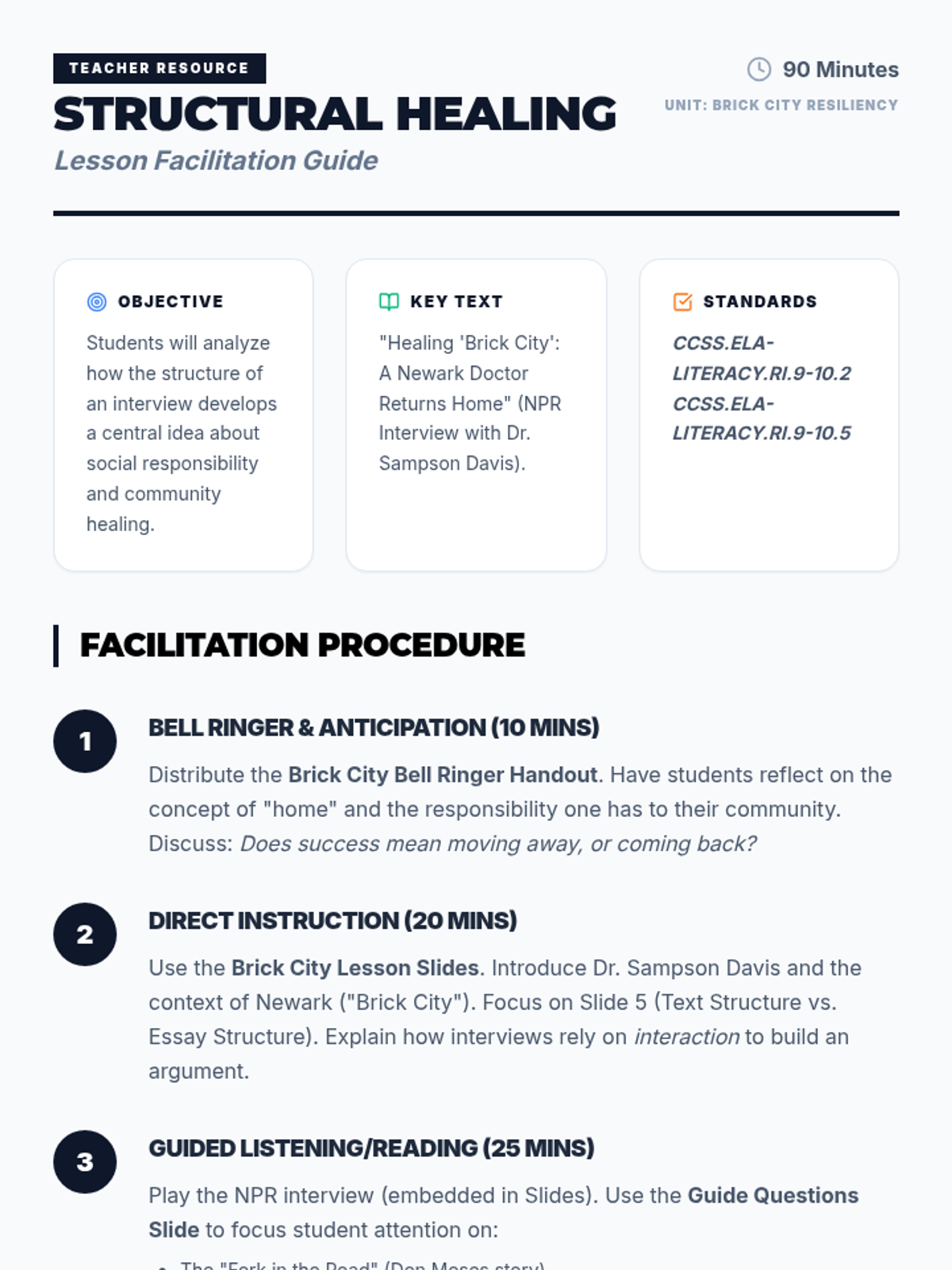
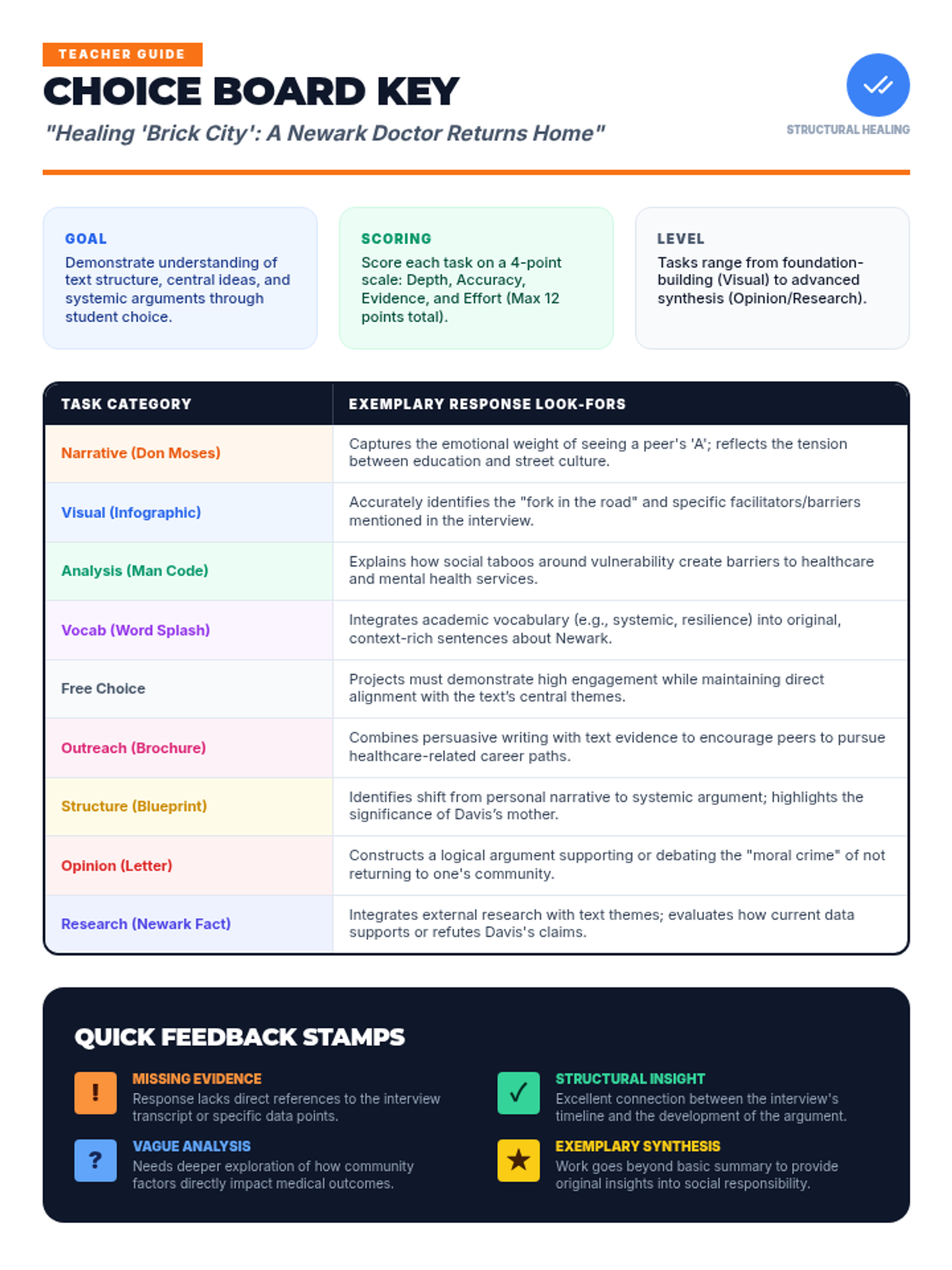
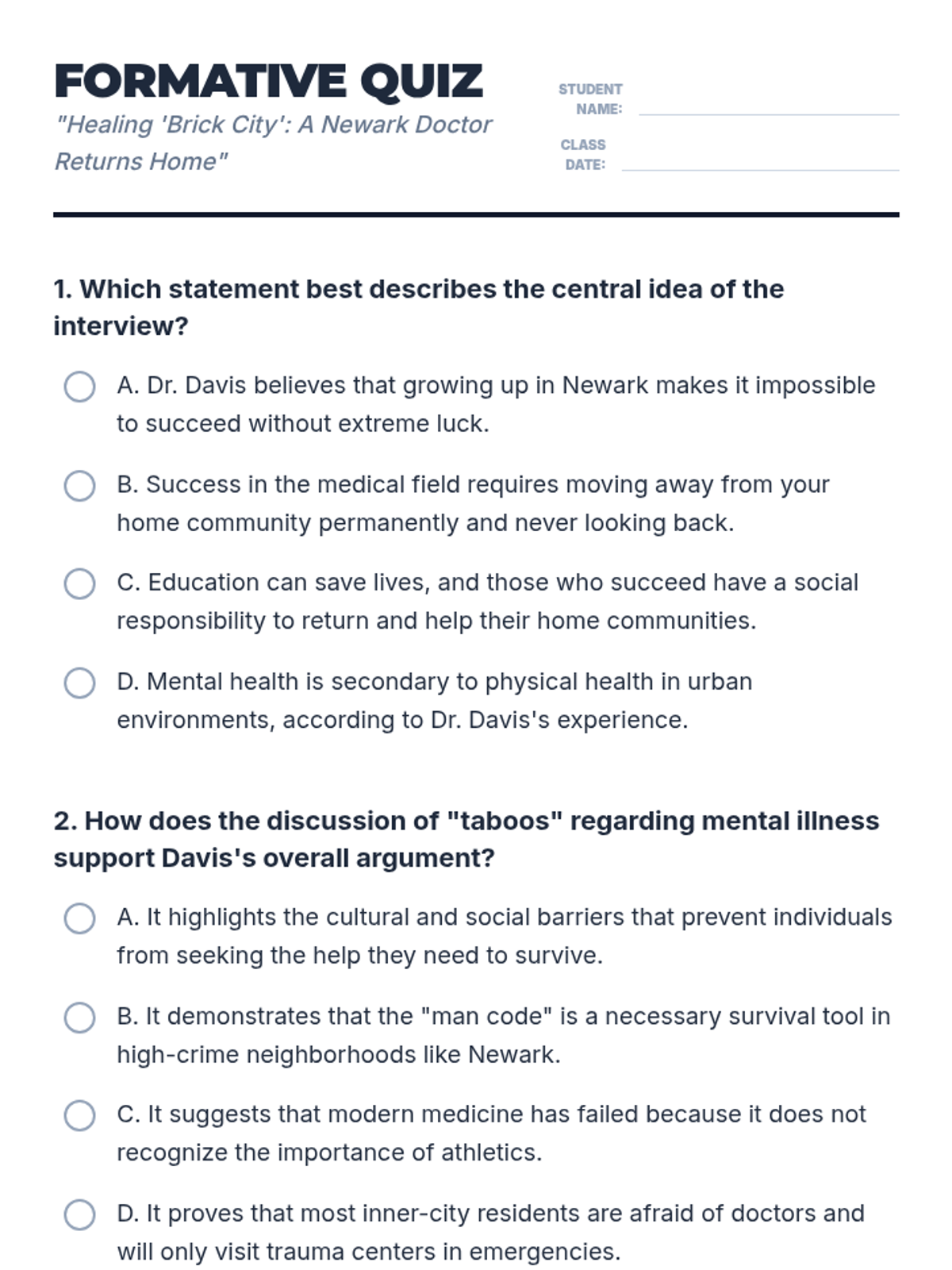
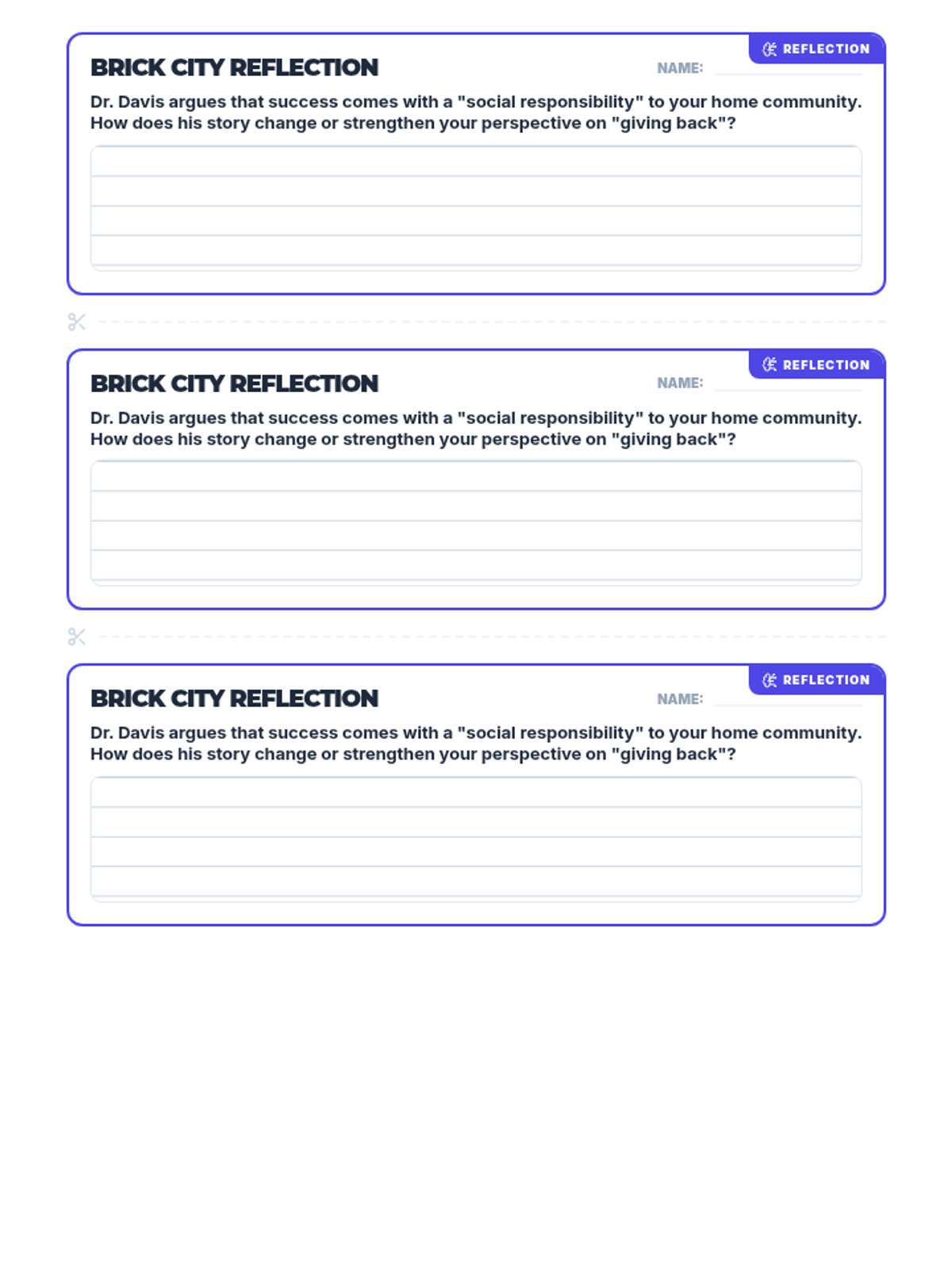
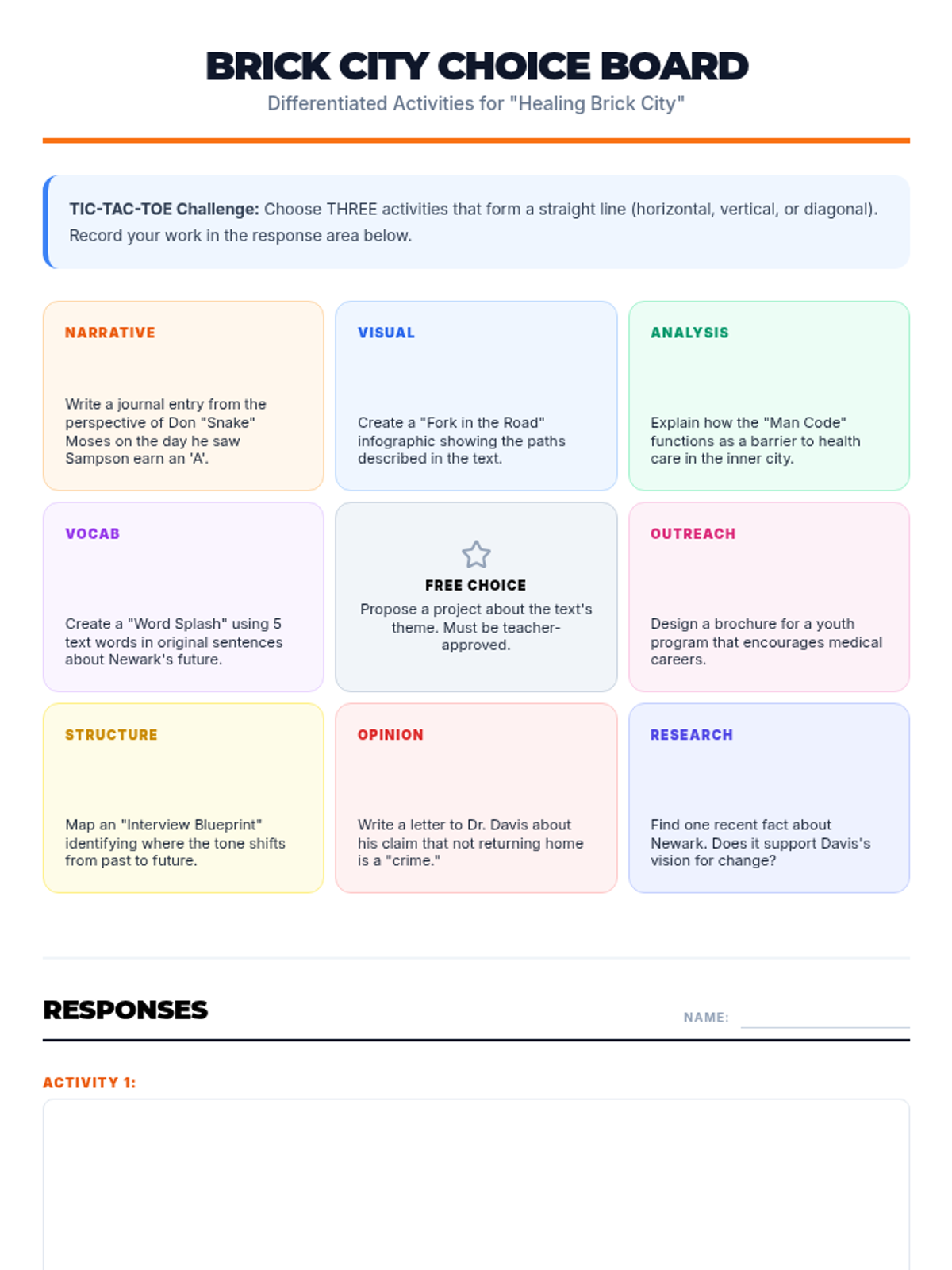
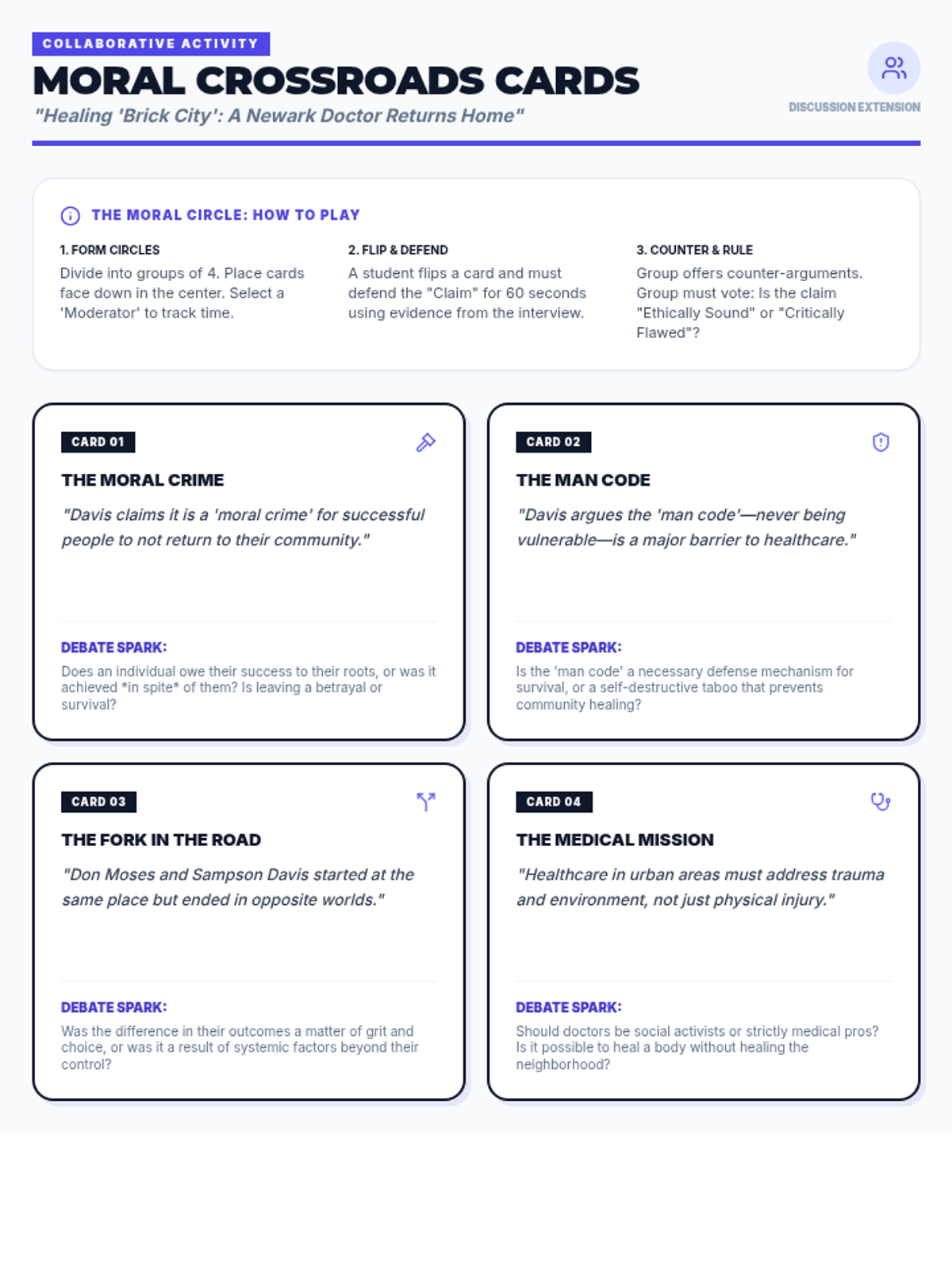
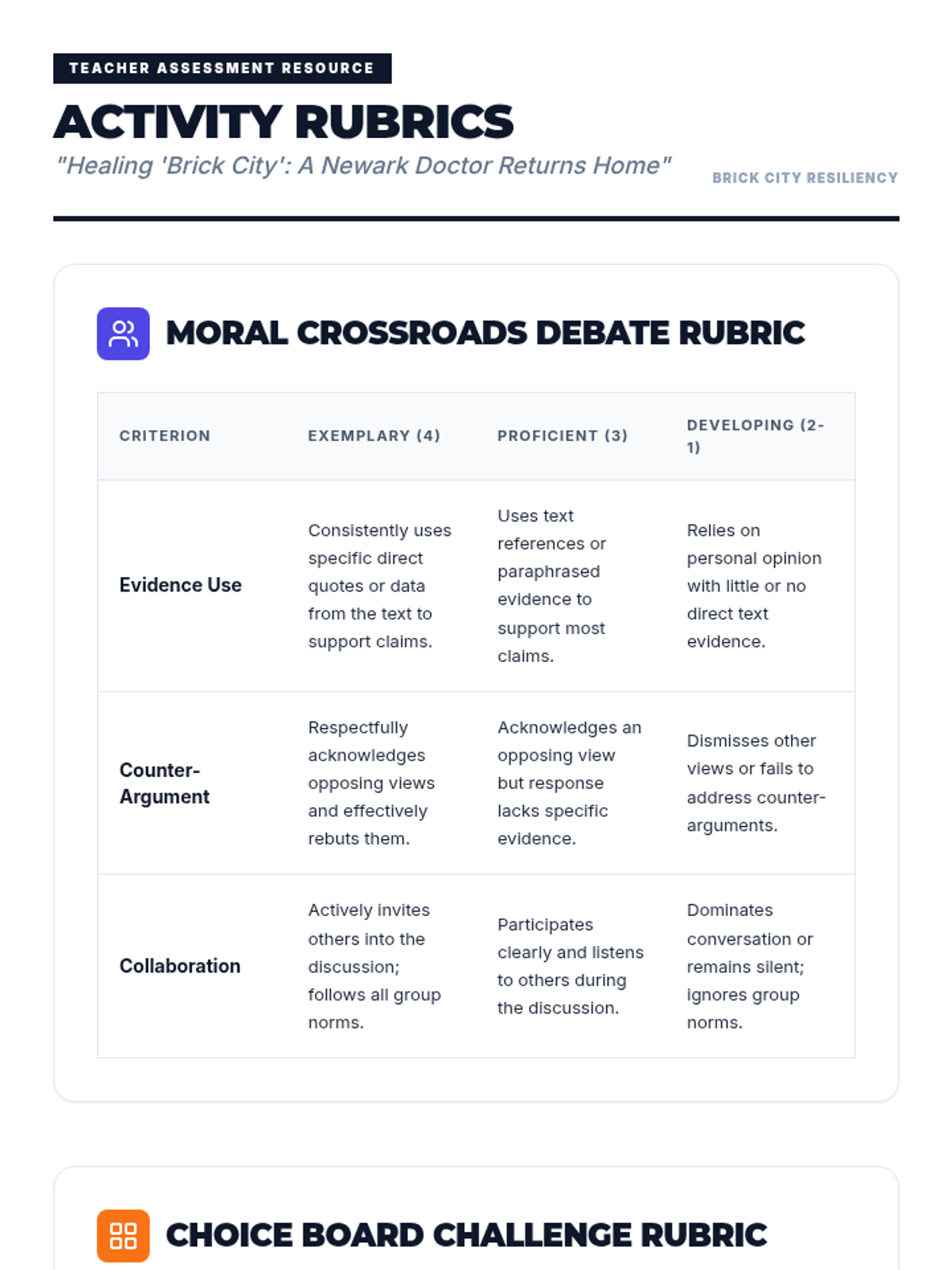
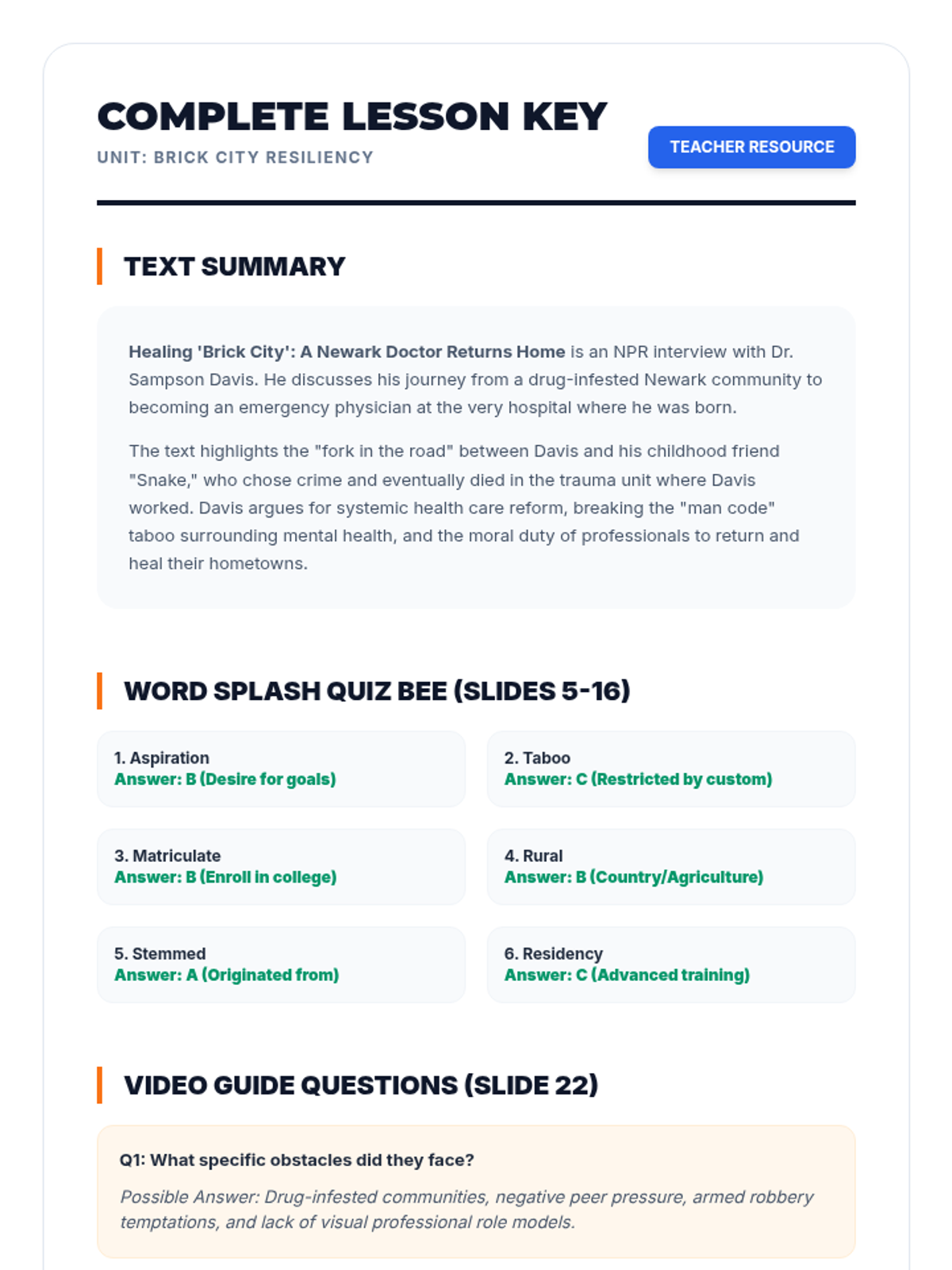
This lesson focuses on Dr. Sampson Davis's journey and his argument for medical reform in Newark. Students will analyze how the interview's structure develops the central idea that education and social responsibility can heal a community.
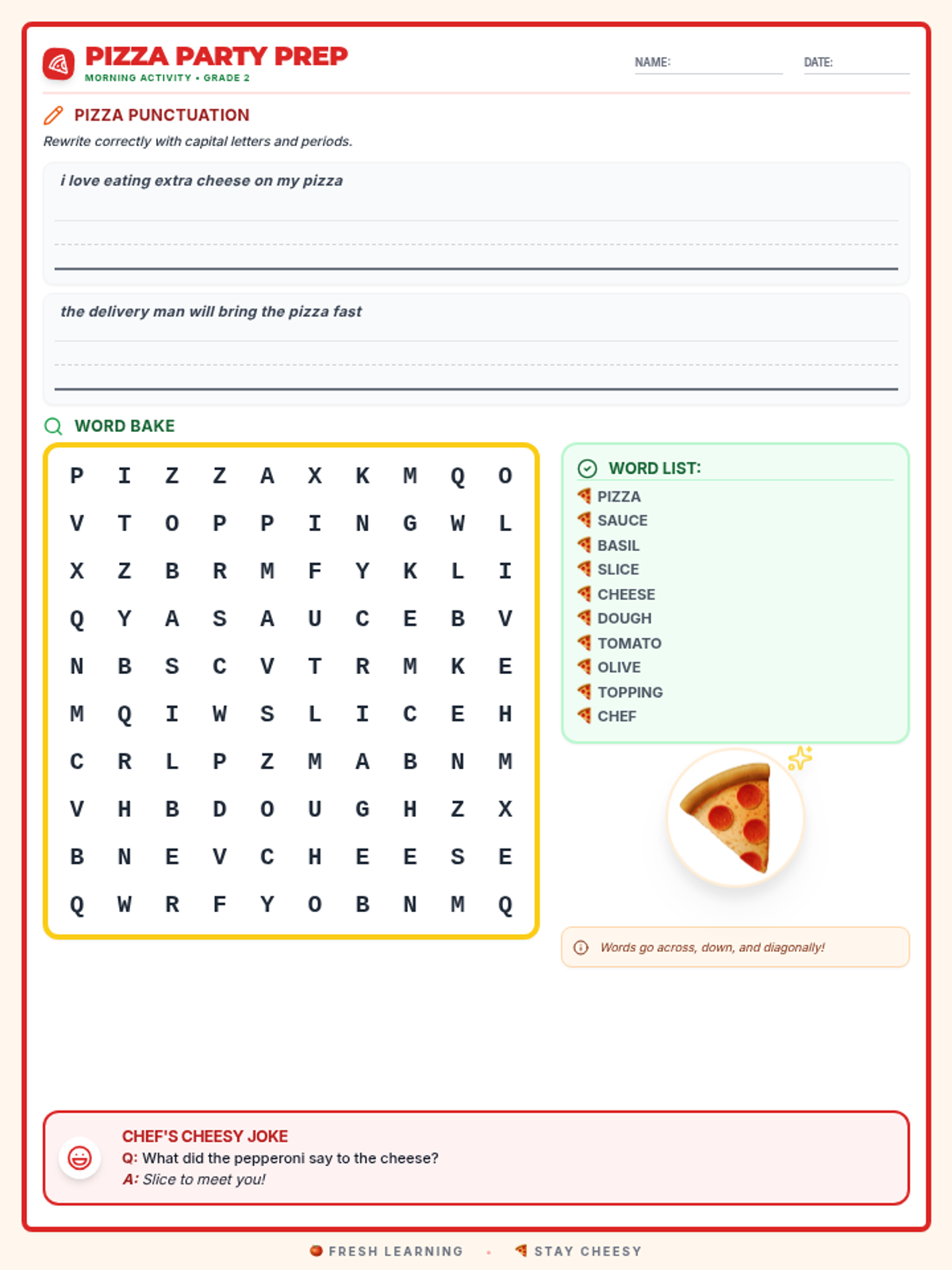
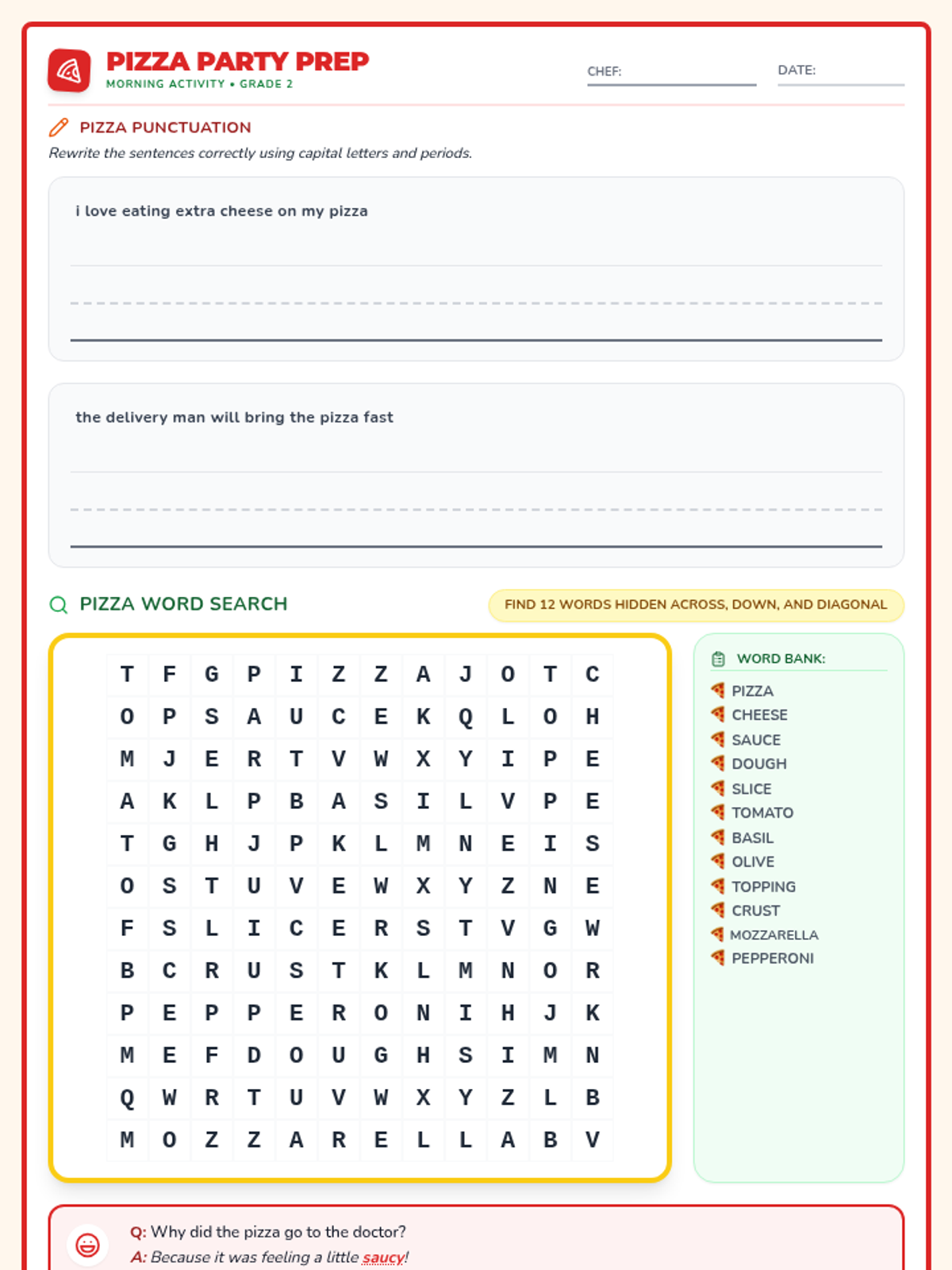
A pizza-themed morning review lesson for 2nd grade ELA skills including parts of speech and vocabulary.
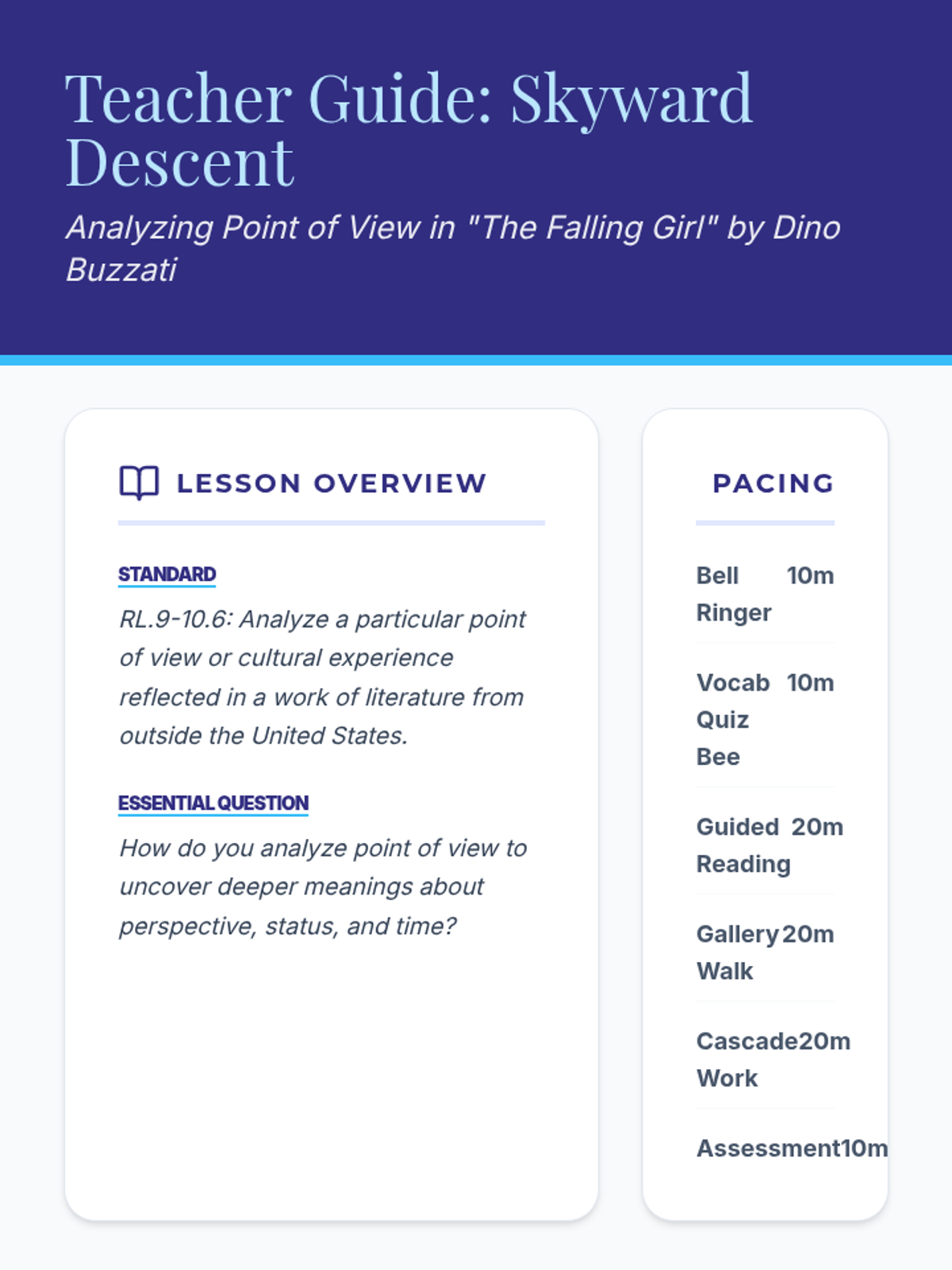
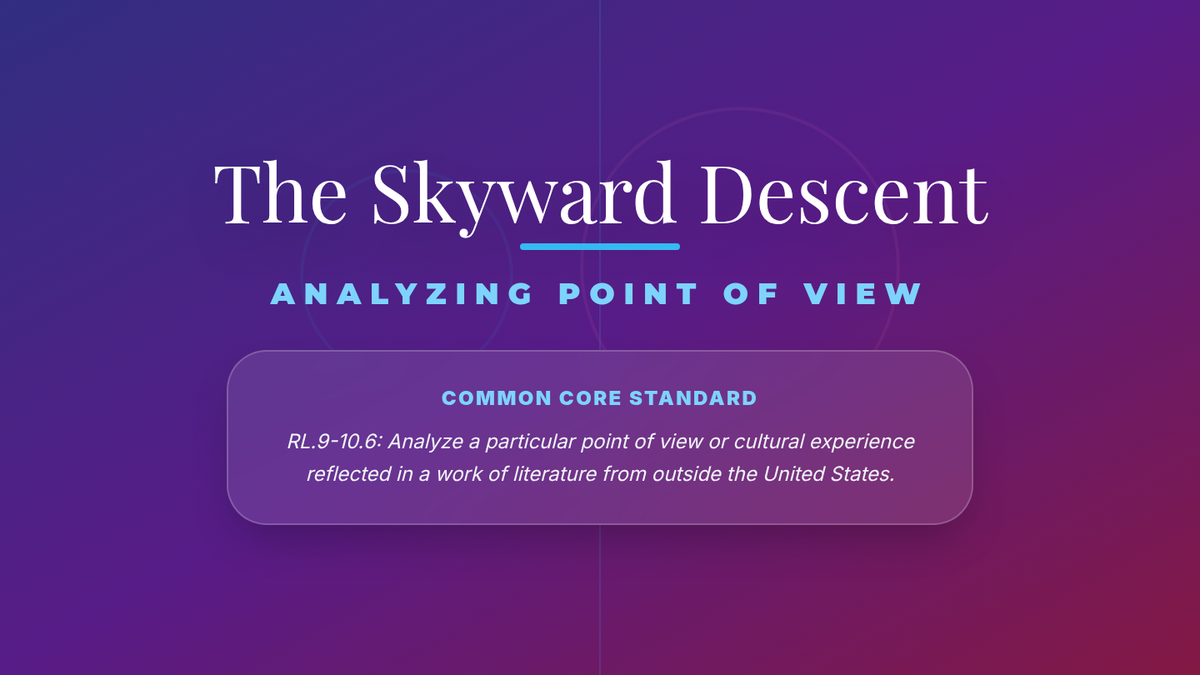
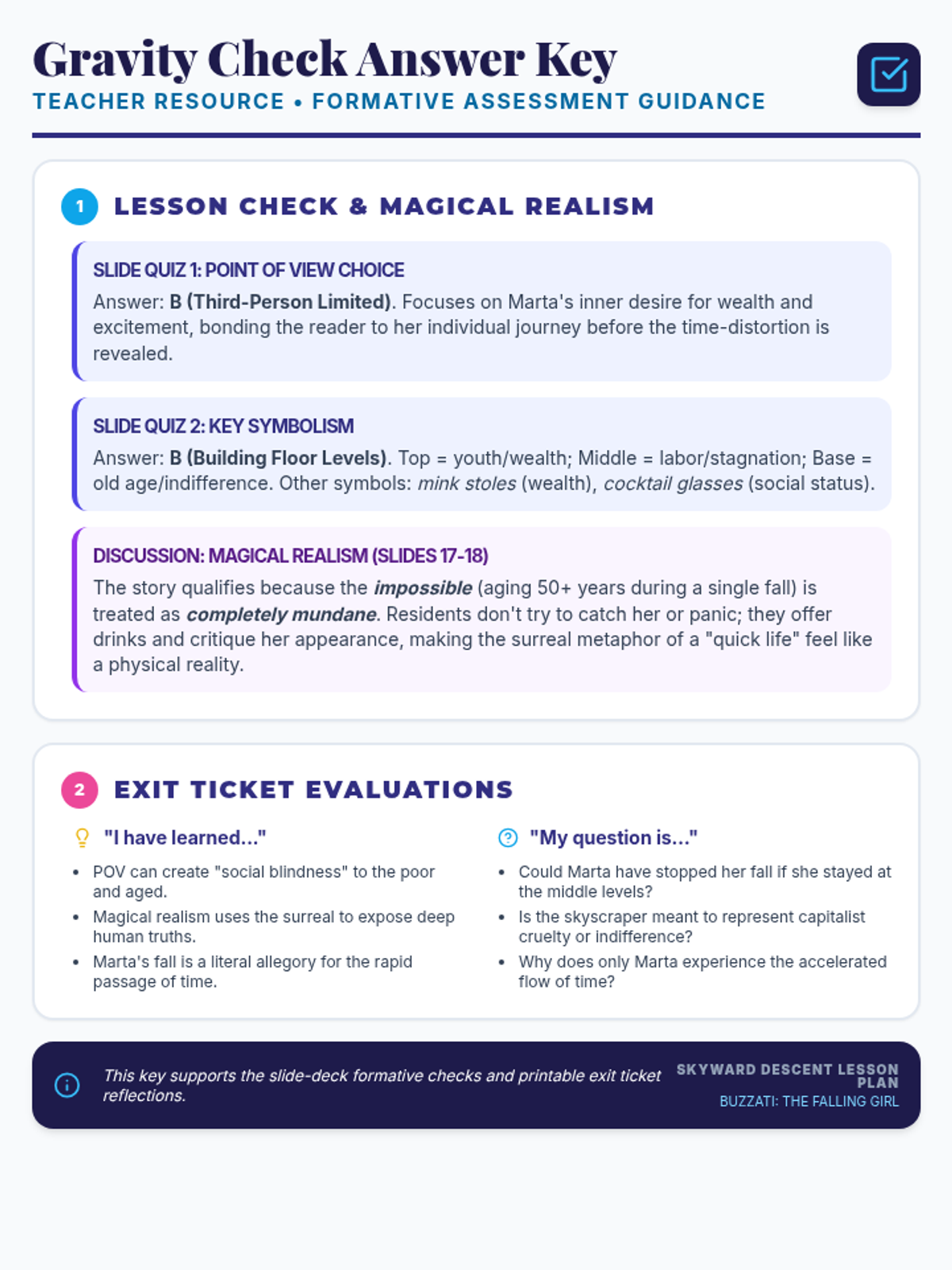
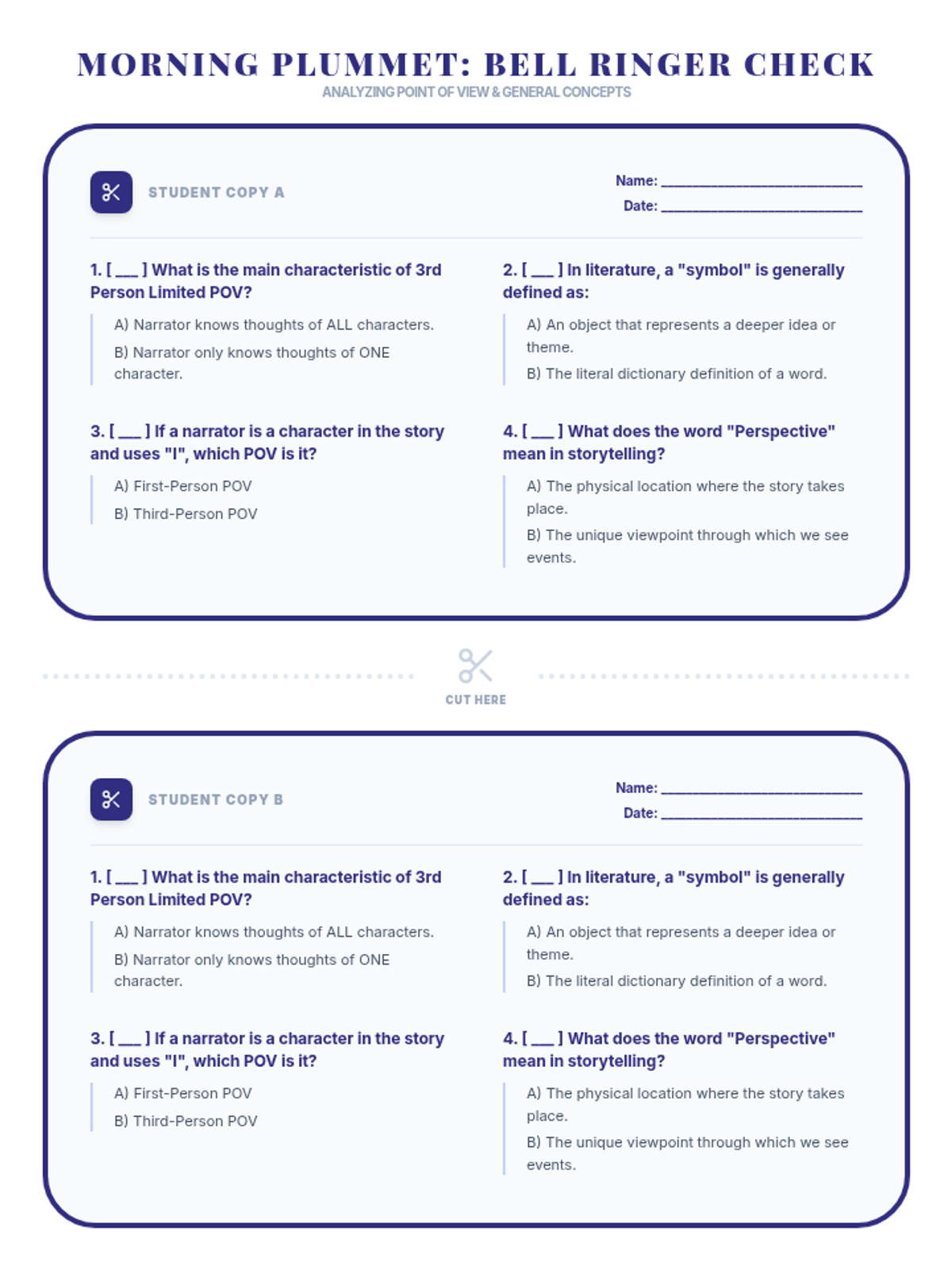
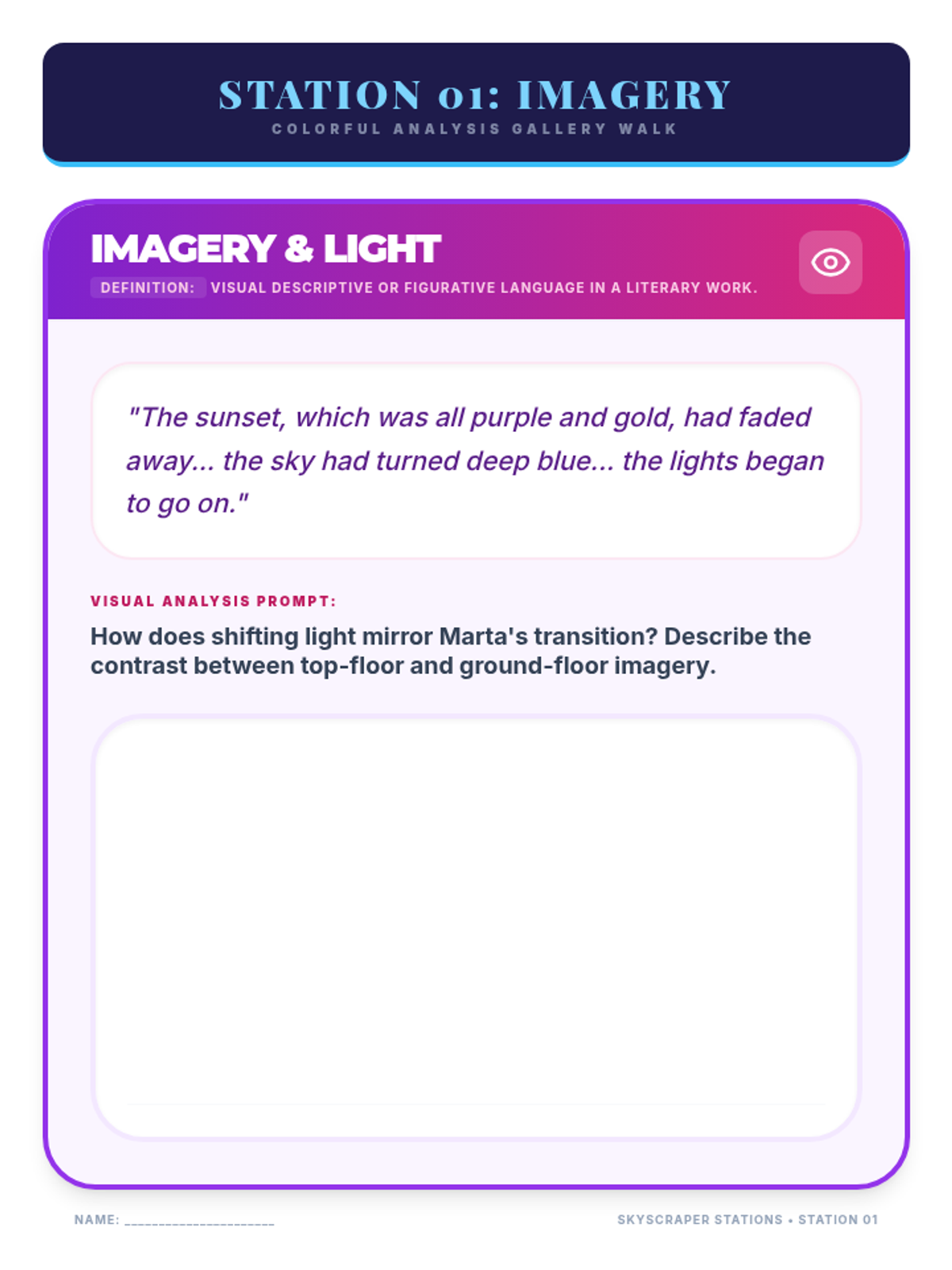
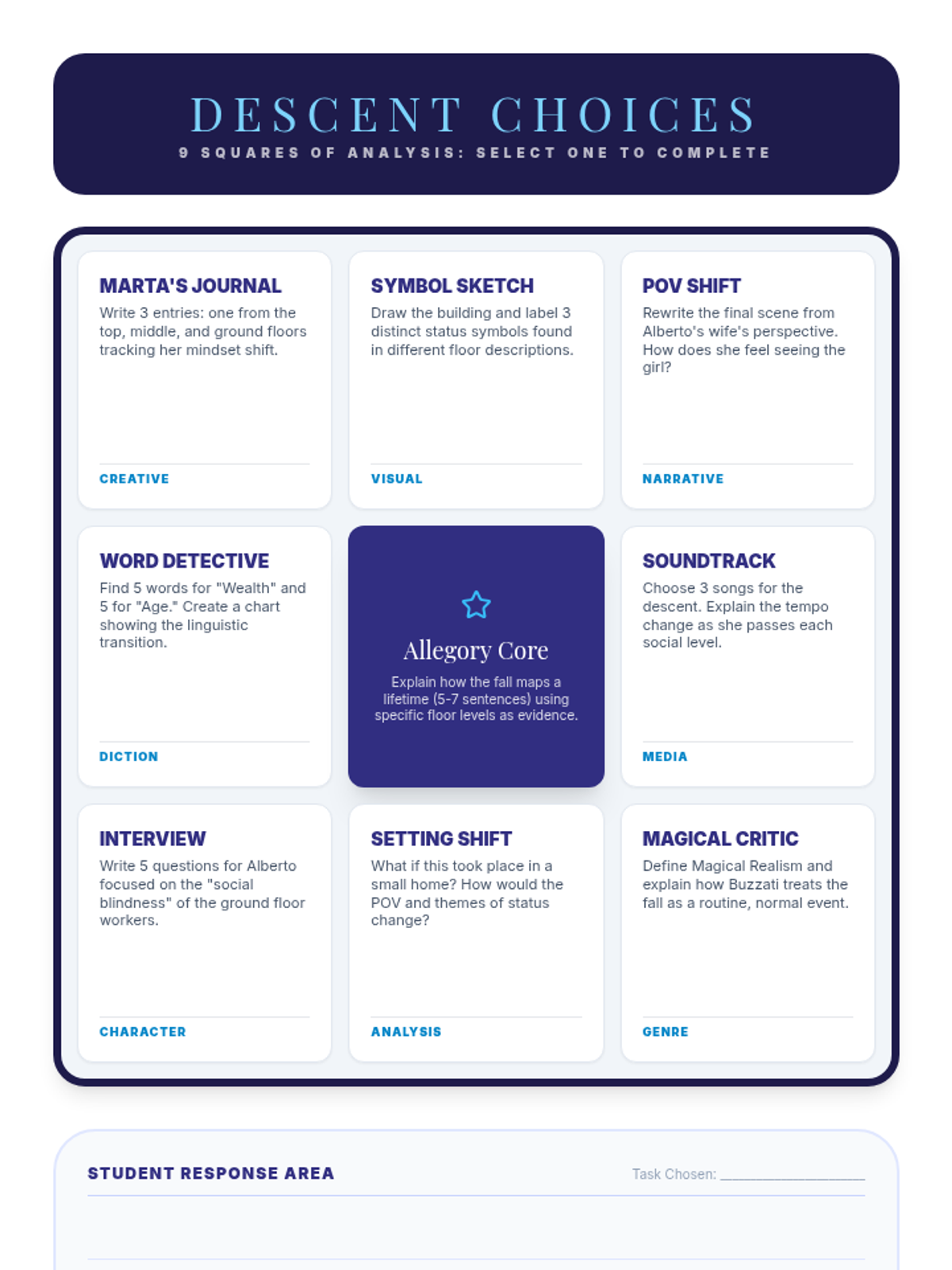
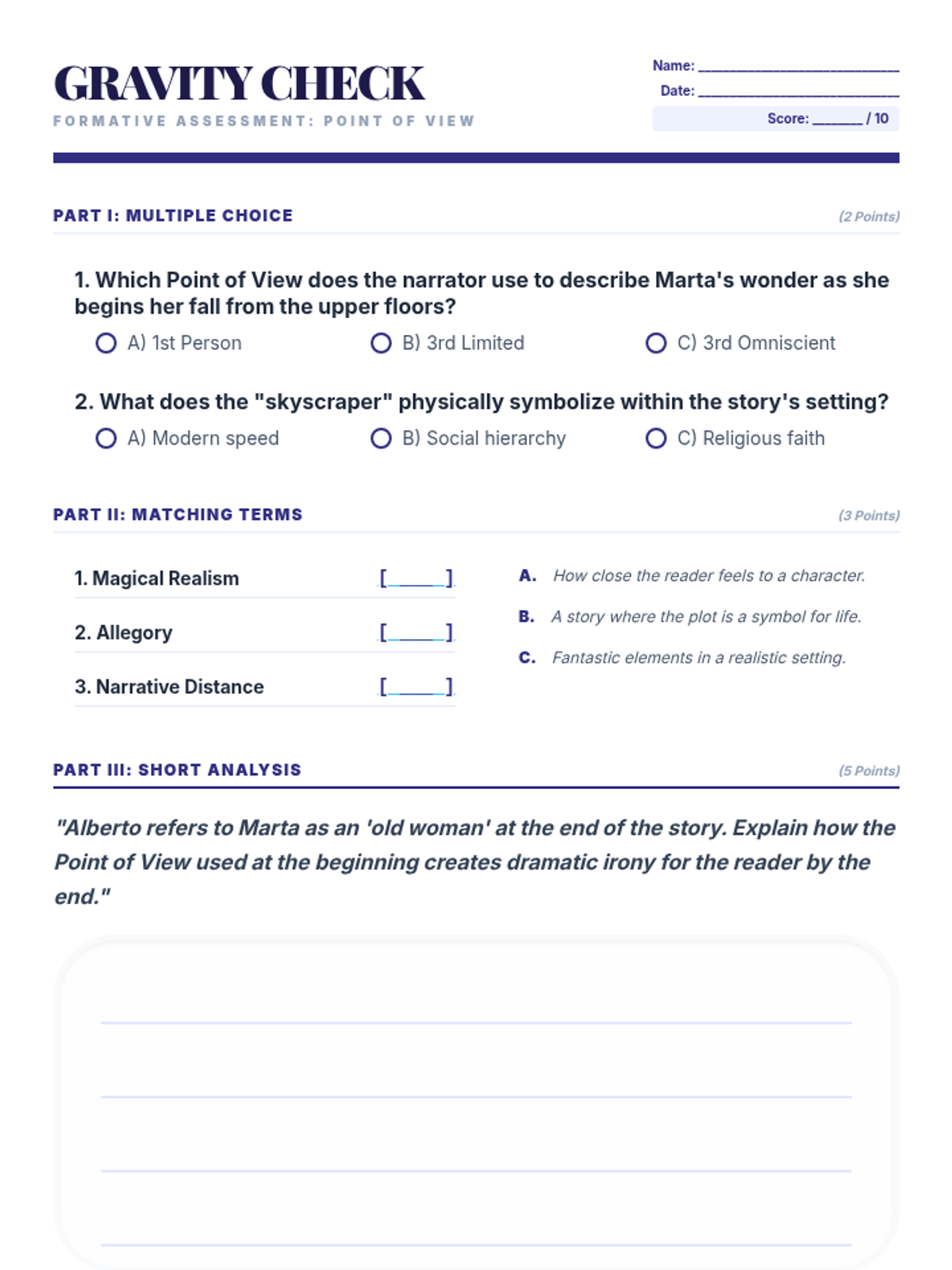
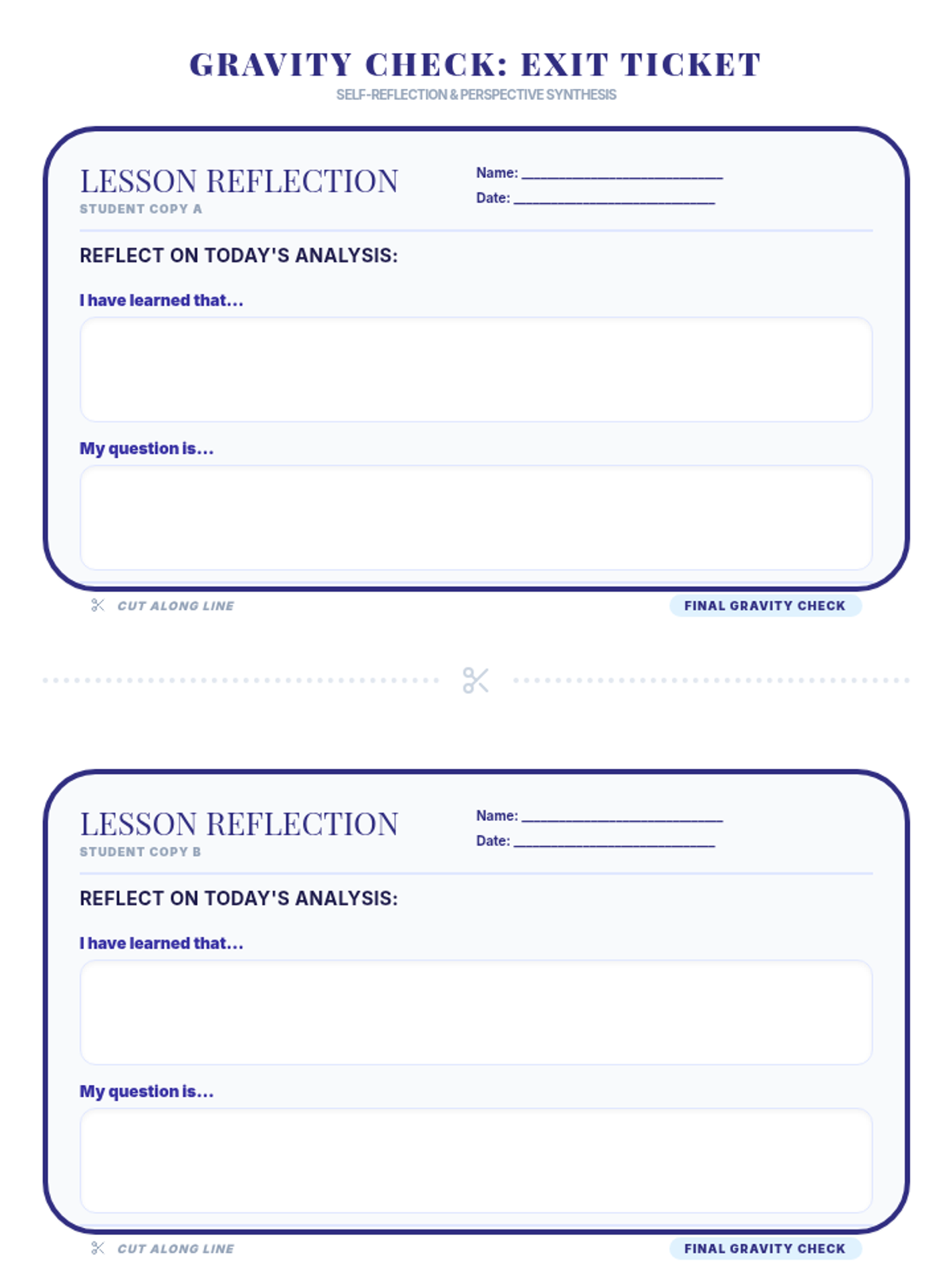
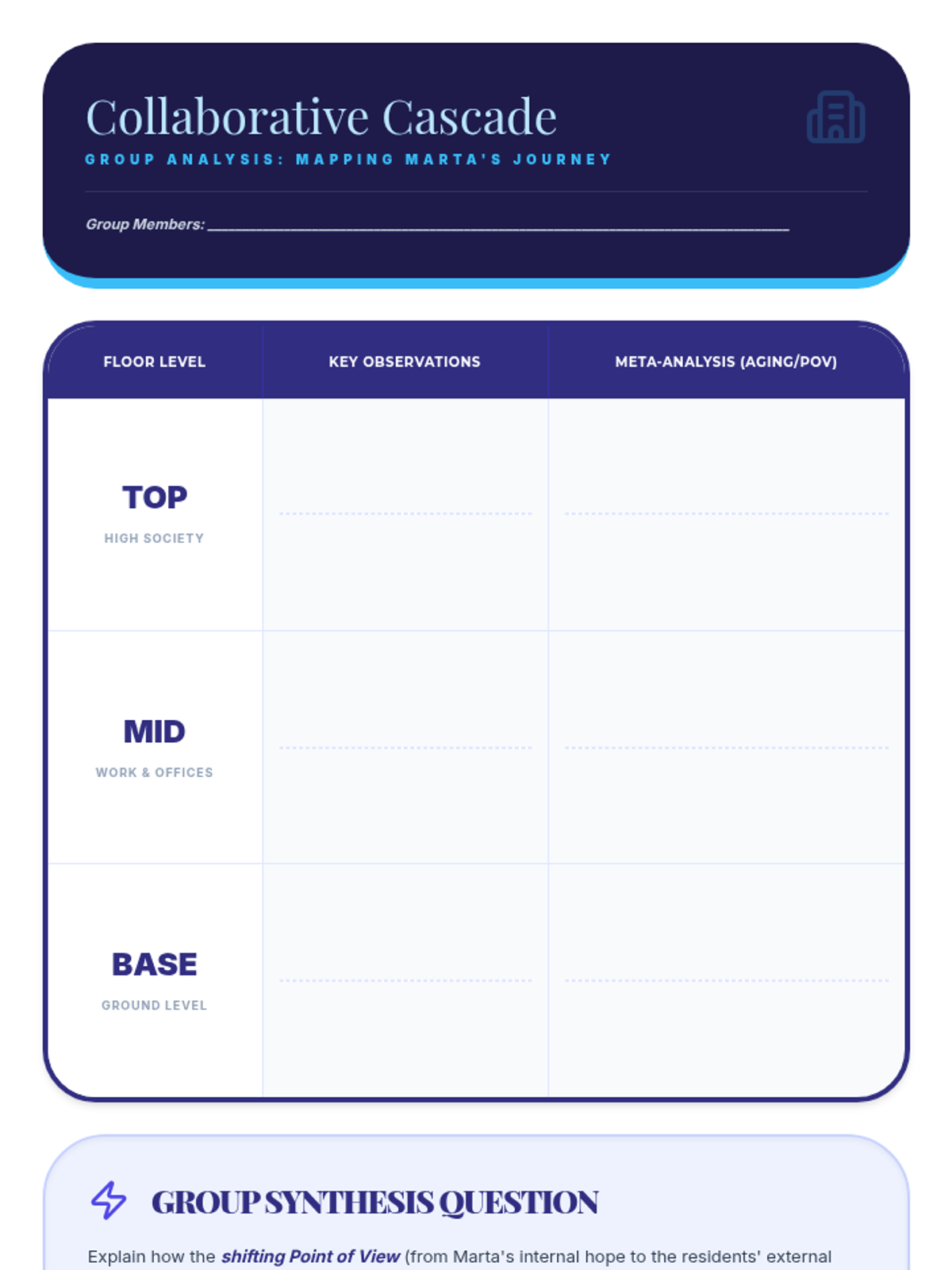
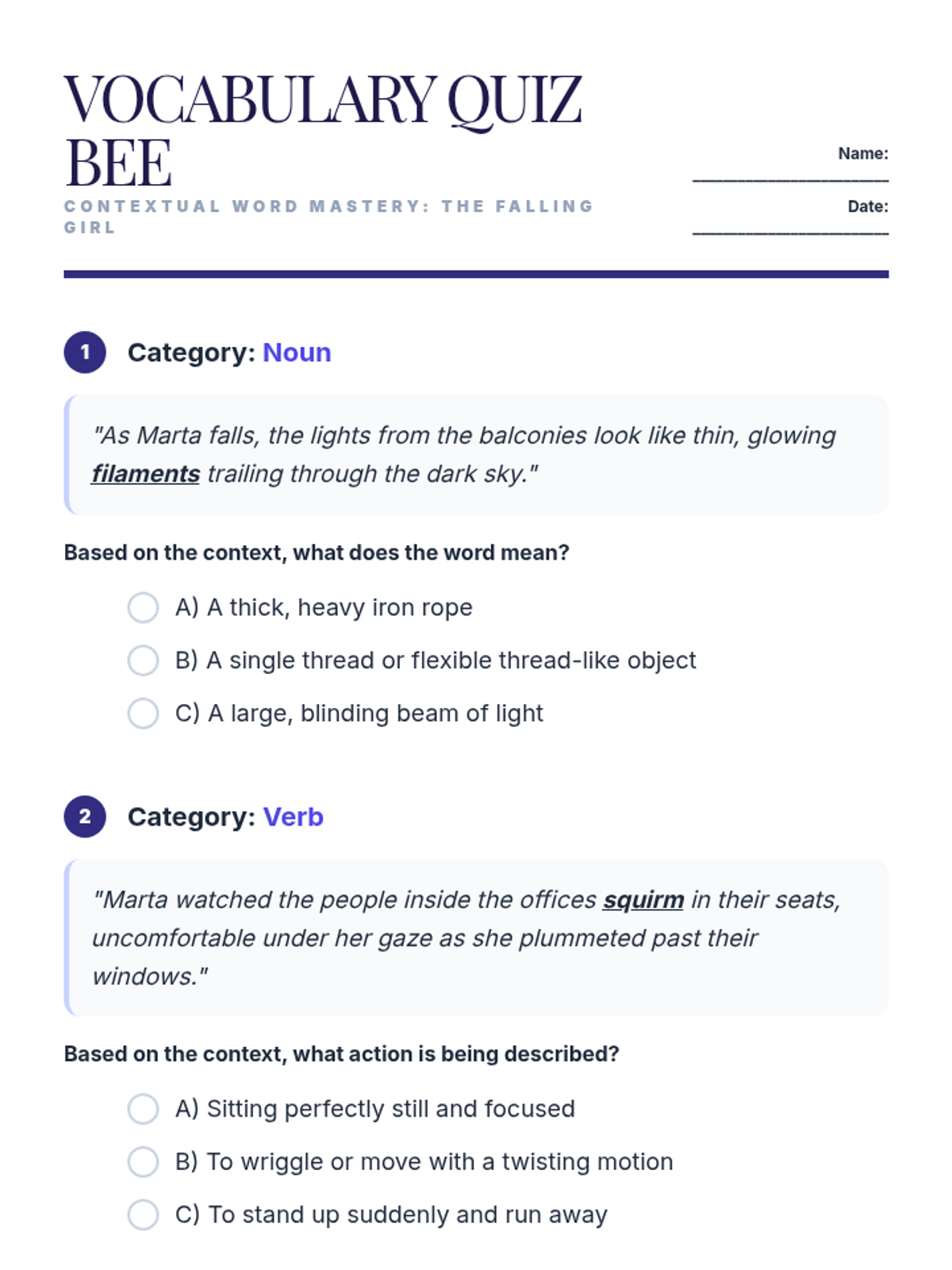
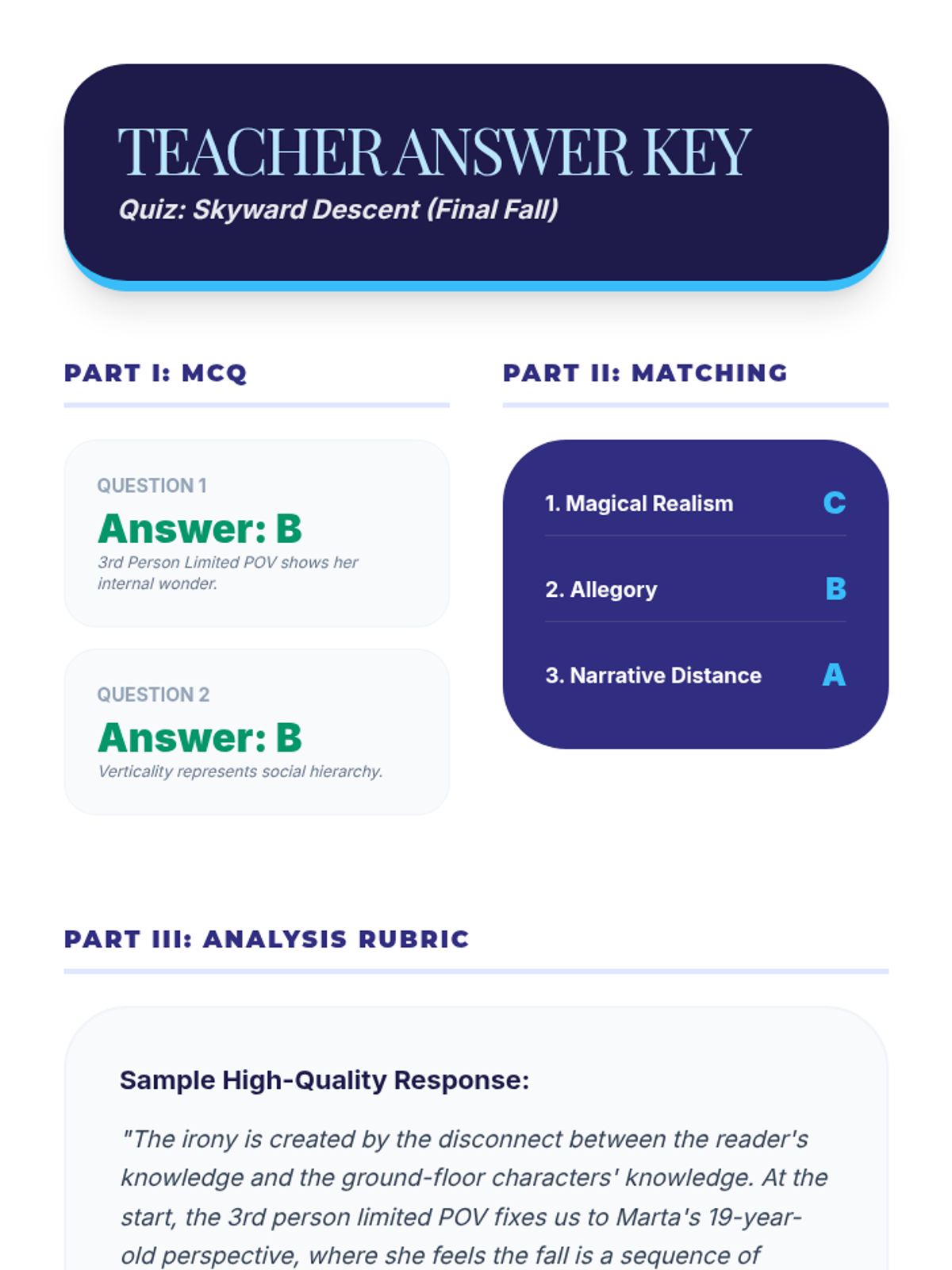
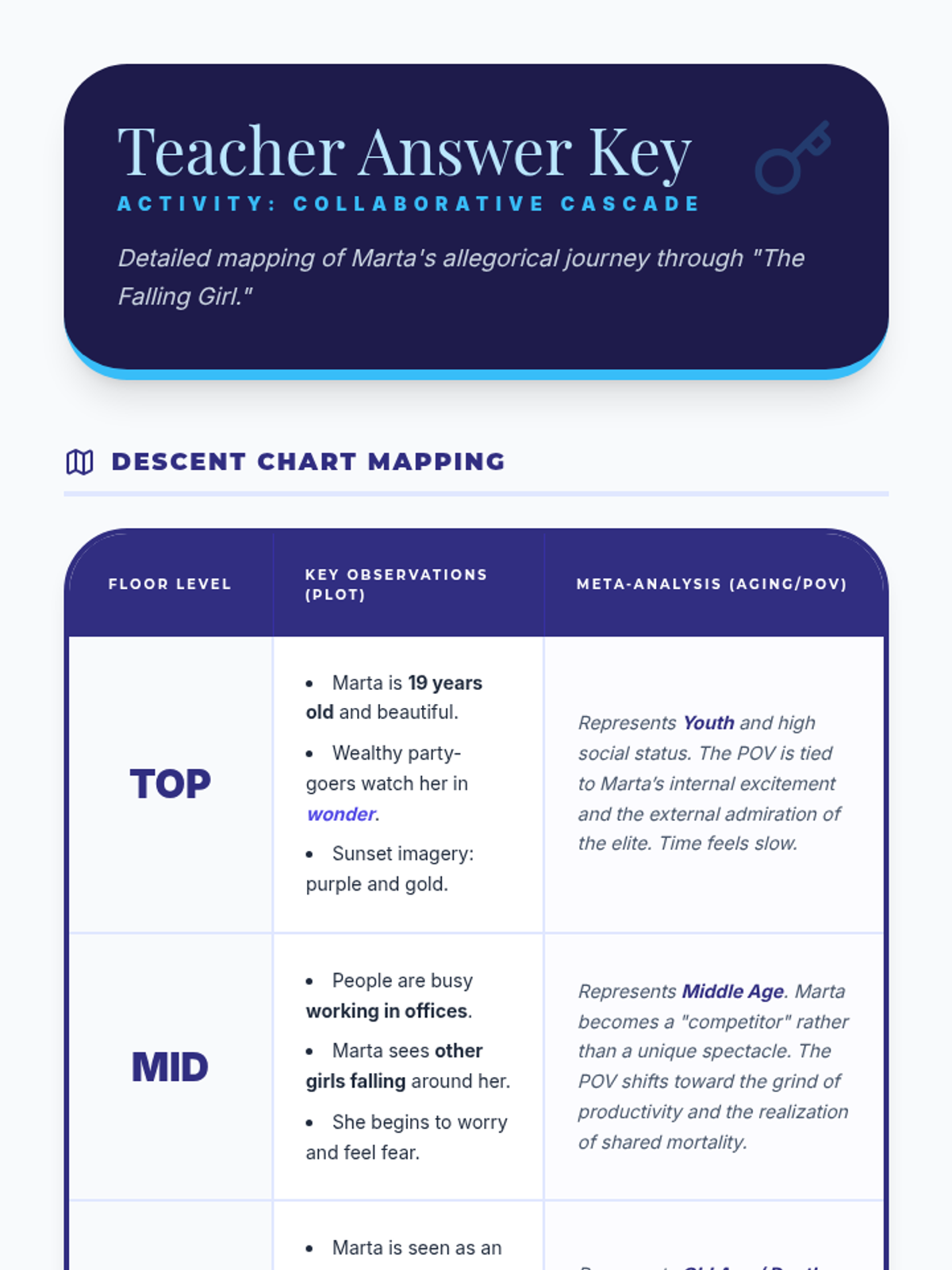
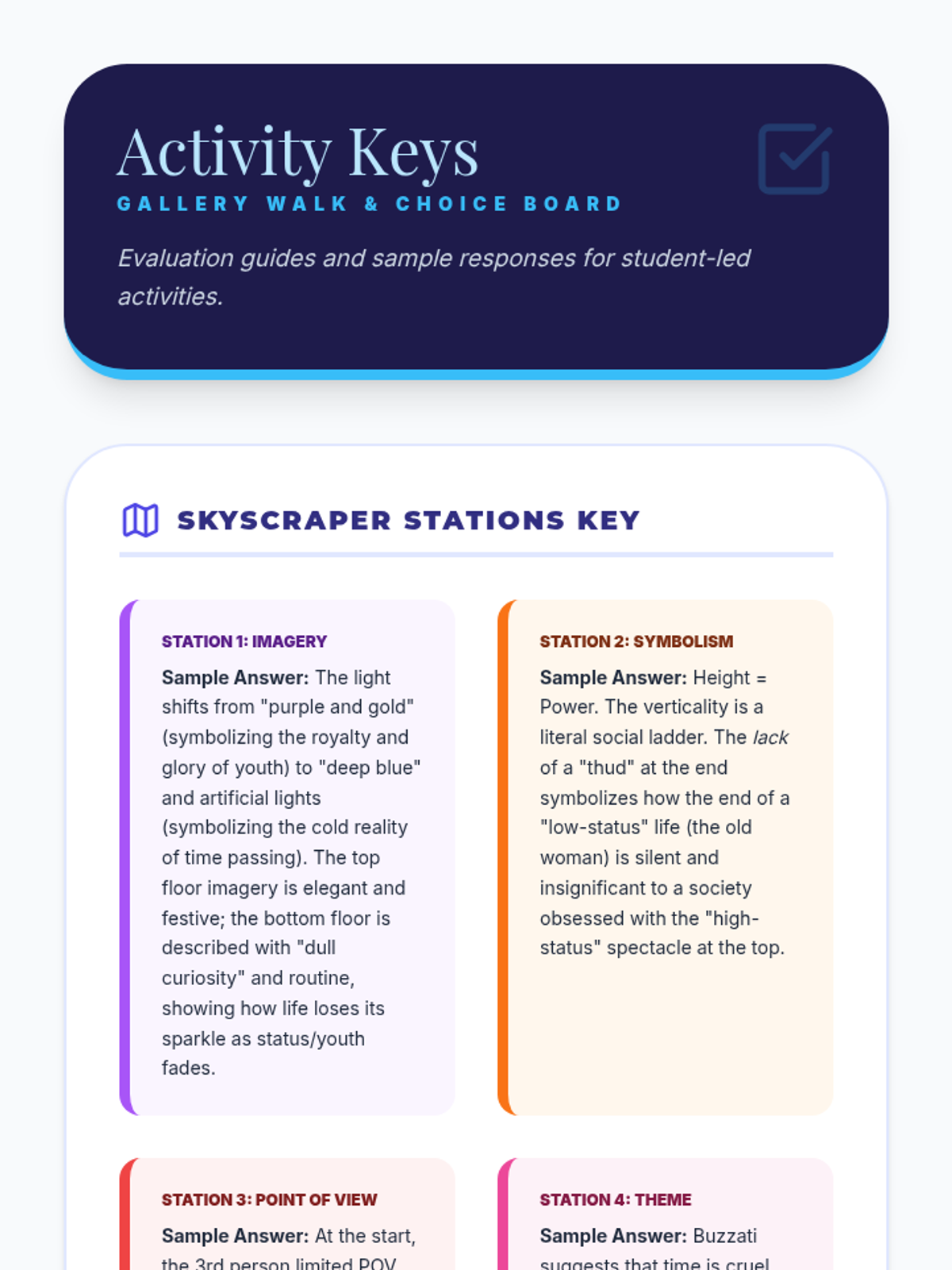
A comprehensive lesson on 'The Falling Girl' by Dino Buzzati, focusing on point of view, magical realism, and social hierarchy through a variety of collaborative and independent activities.
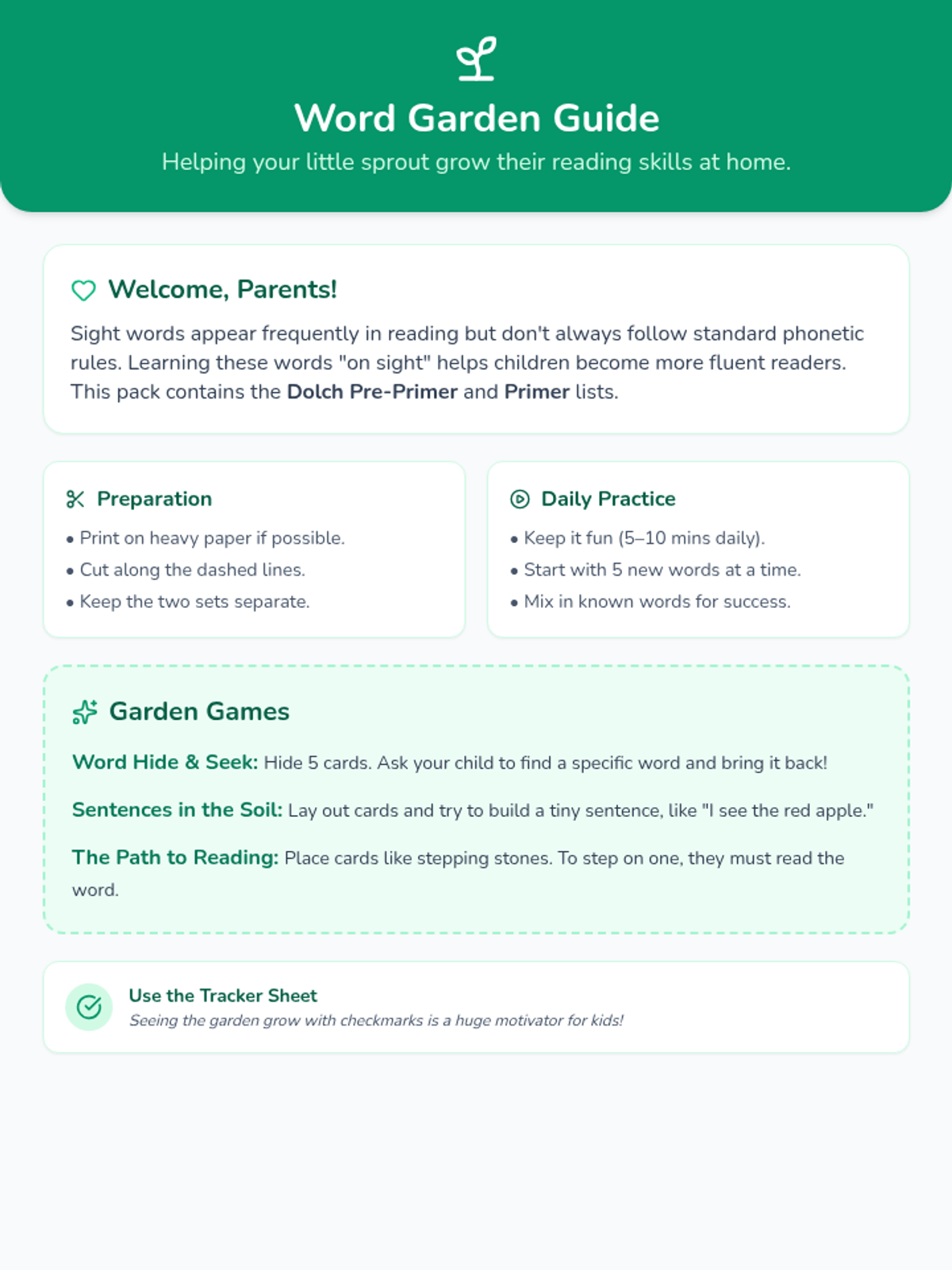
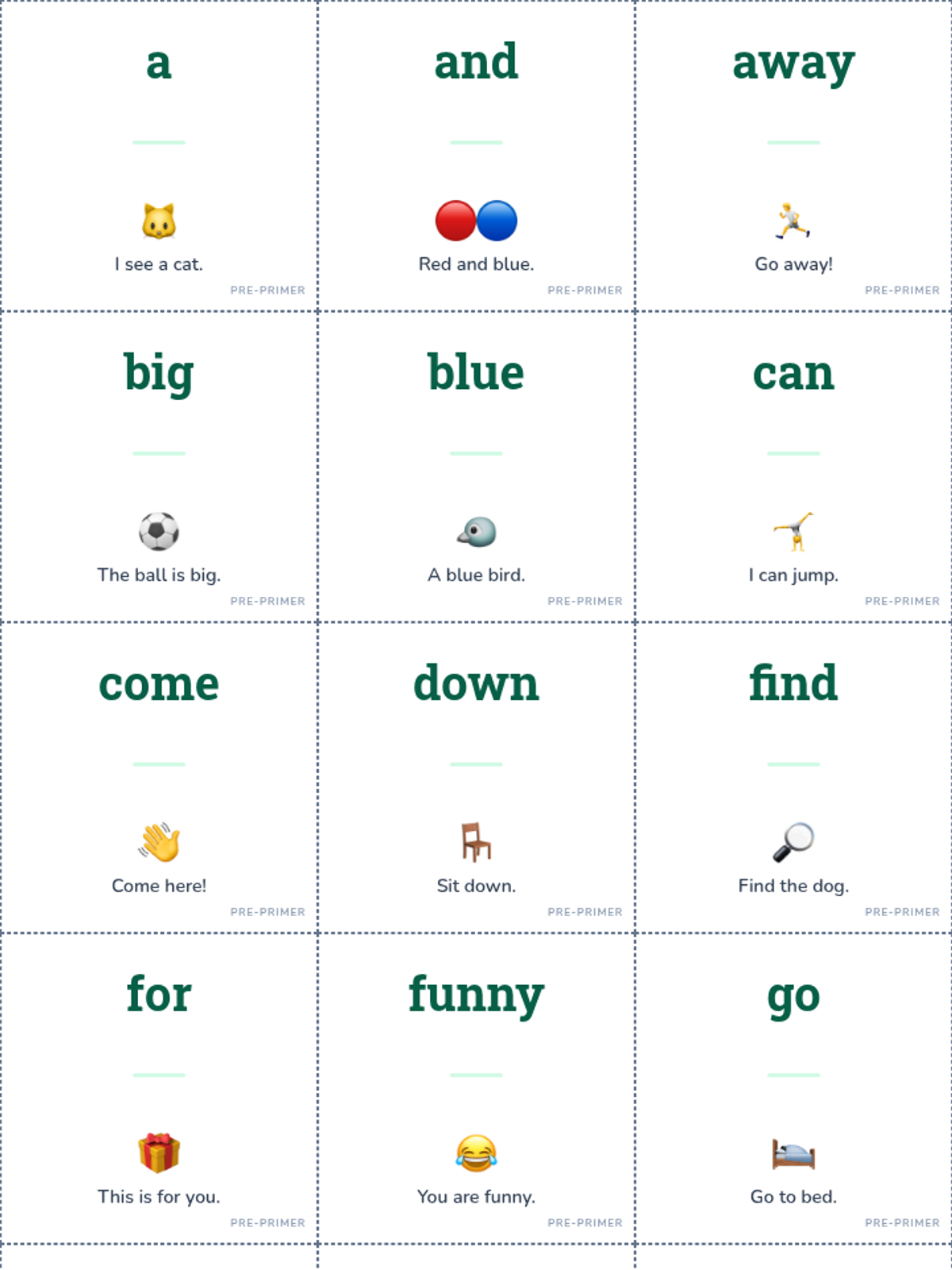
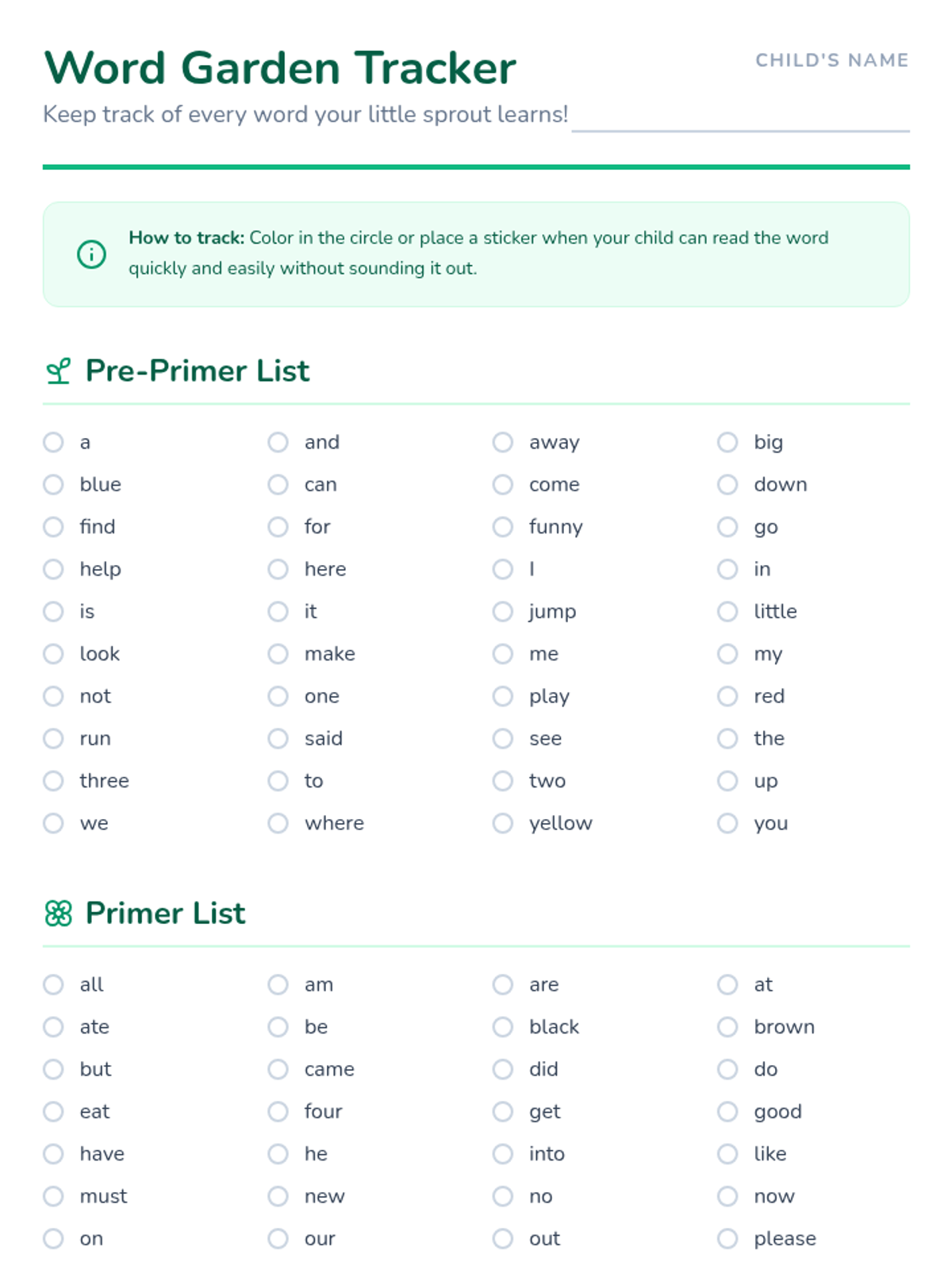
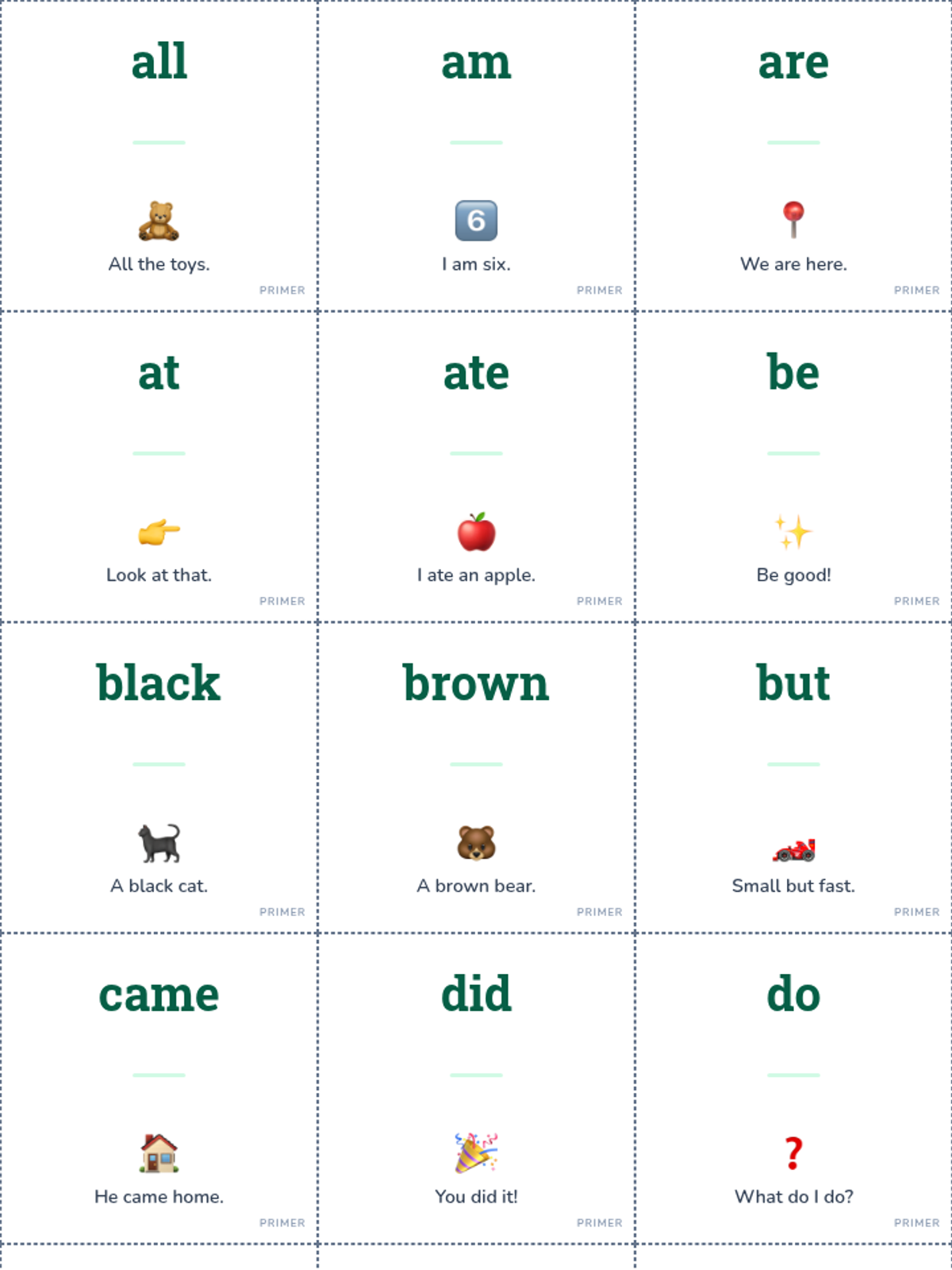
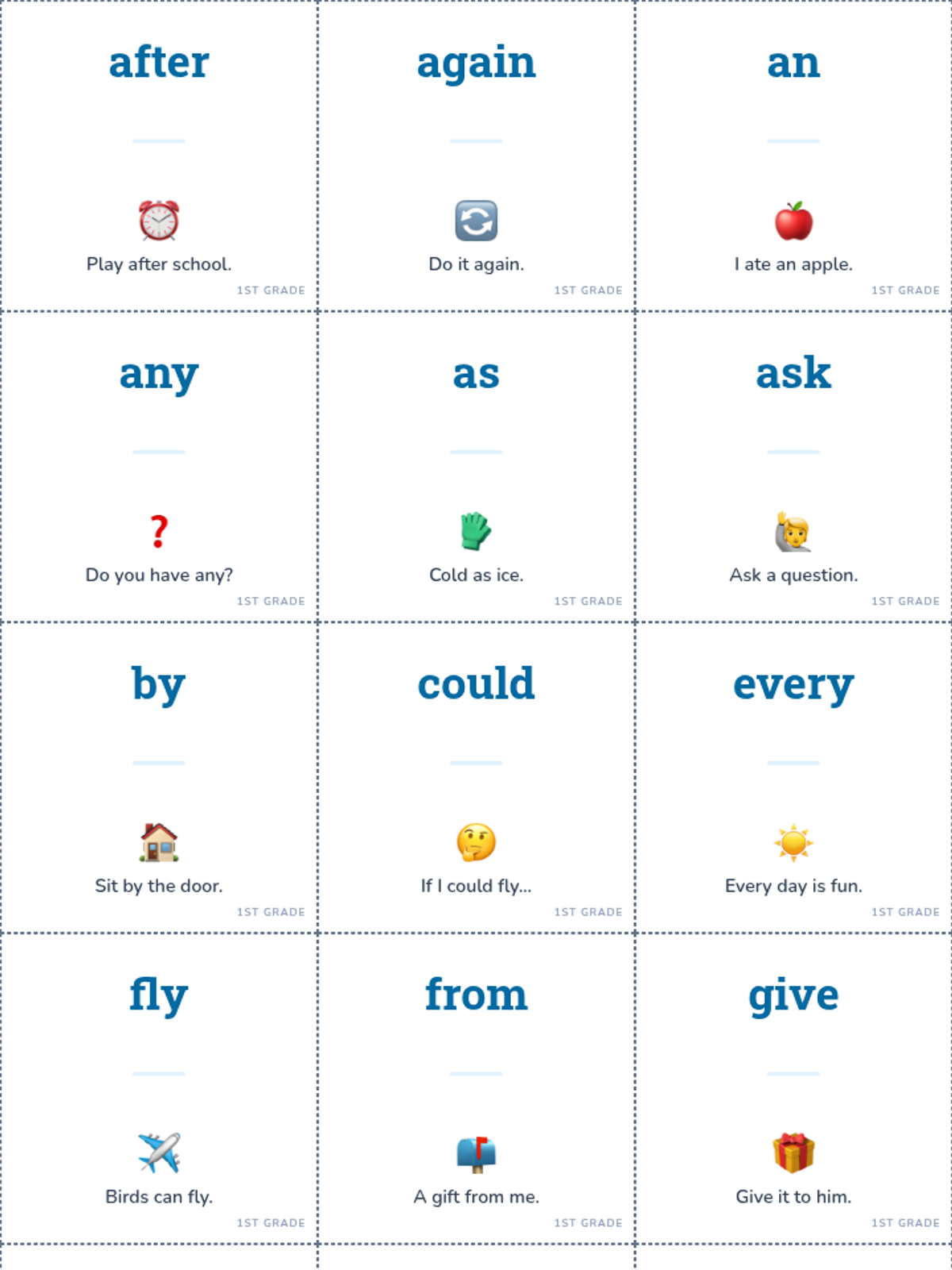
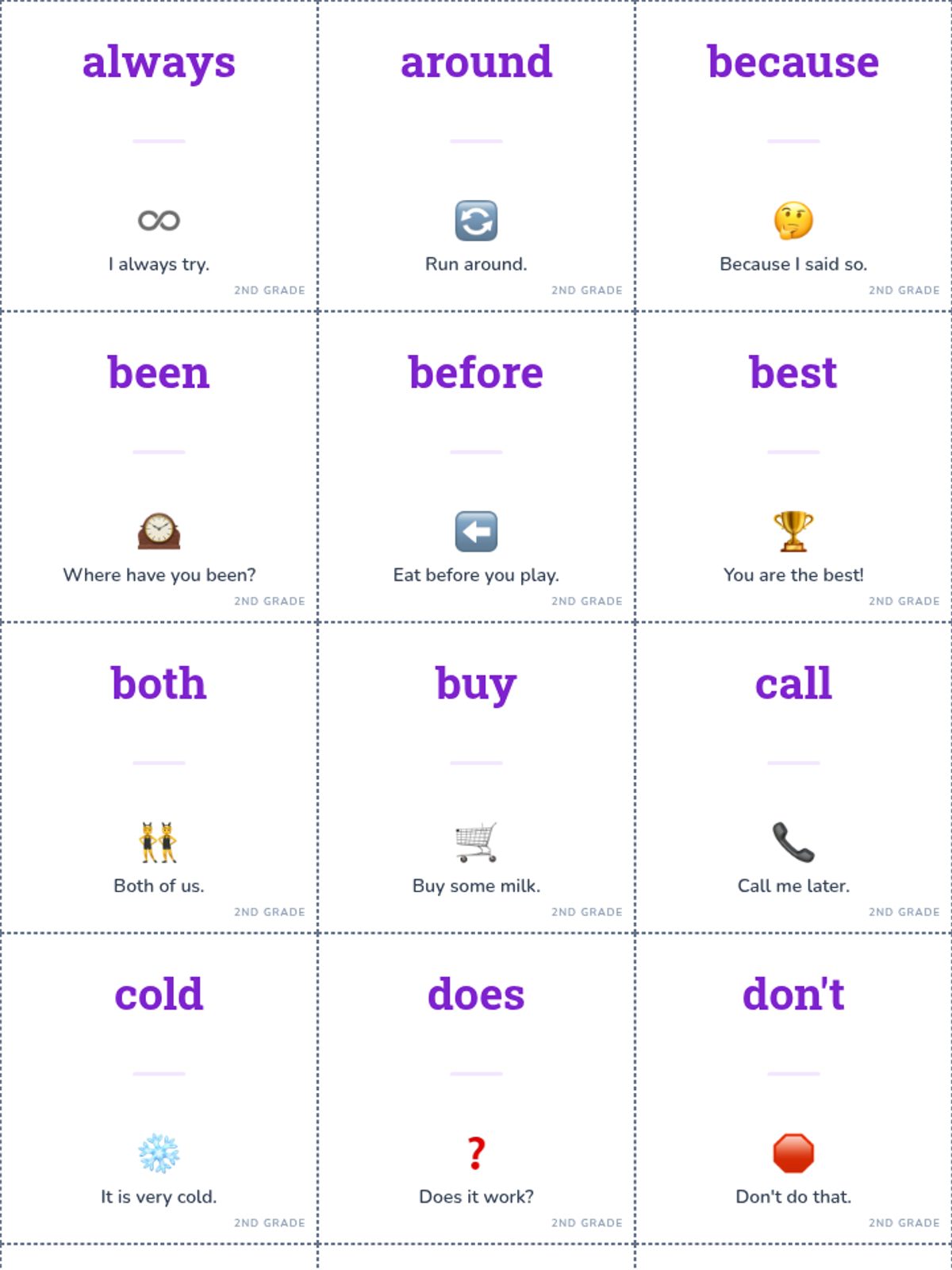
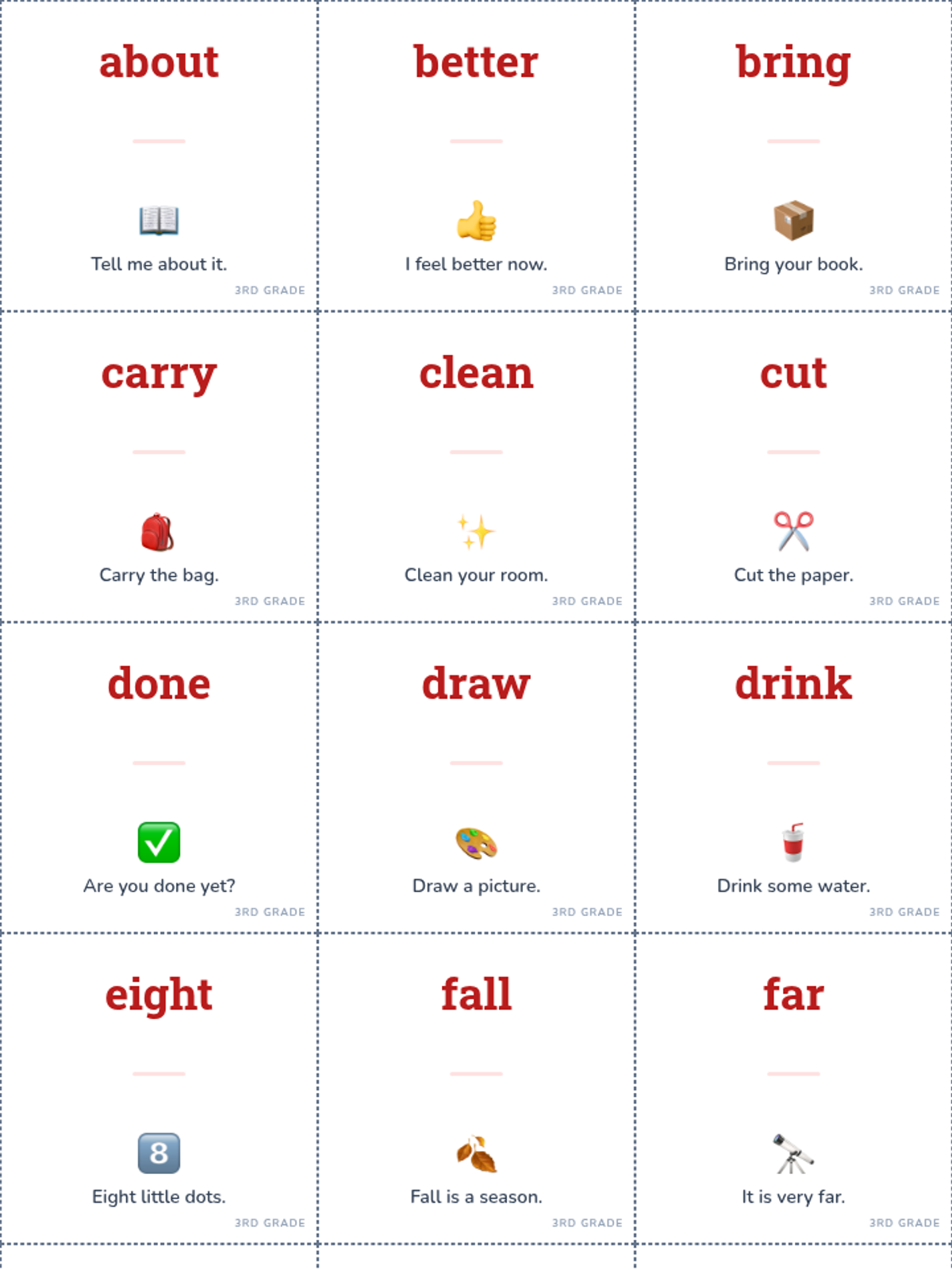
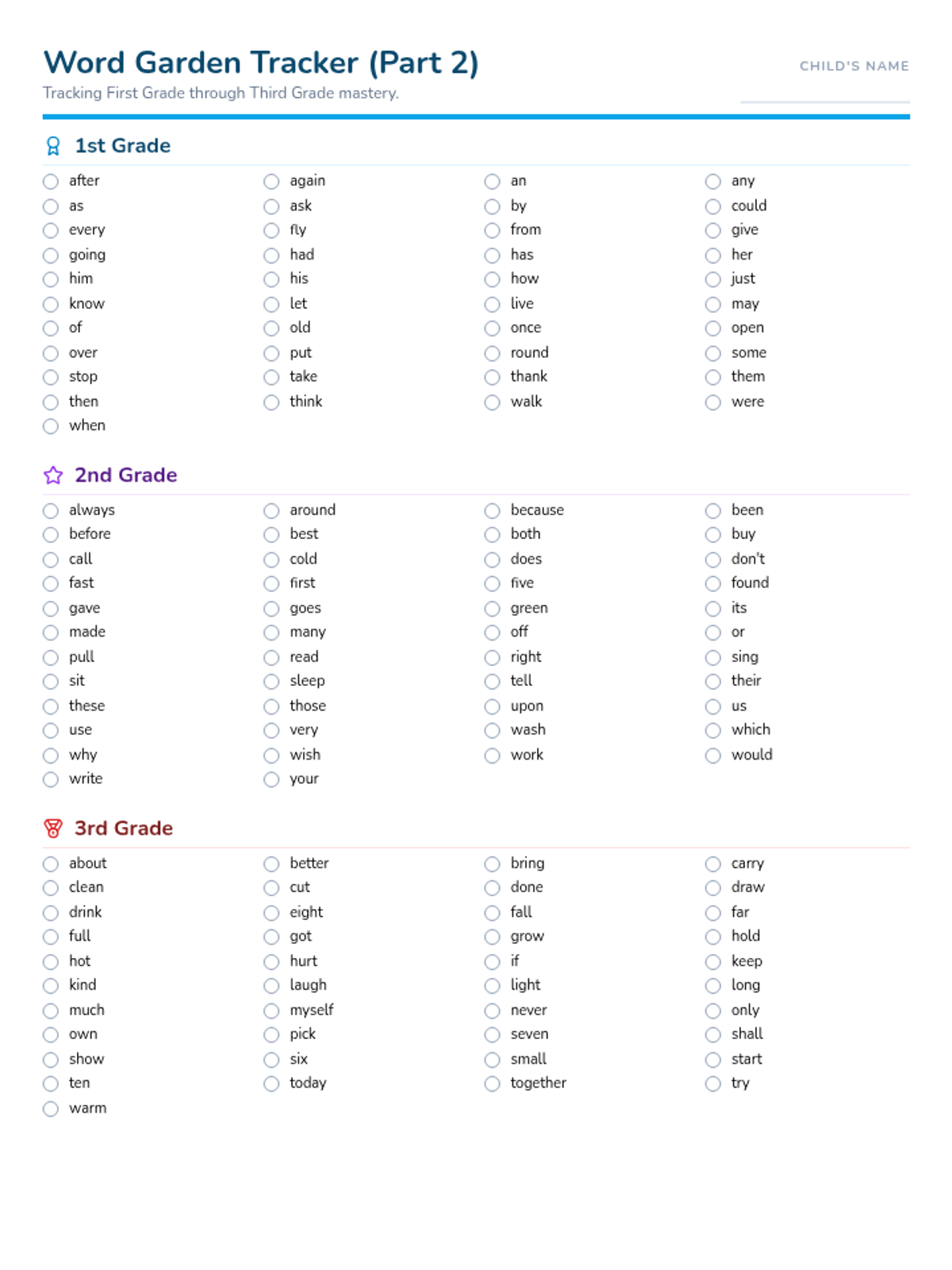
A comprehensive collection of Dolch sight word resources for Pre-Primer through 3rd Grade. Includes structured flashcards with sentences and visuals, progress trackers, and a parent guide.
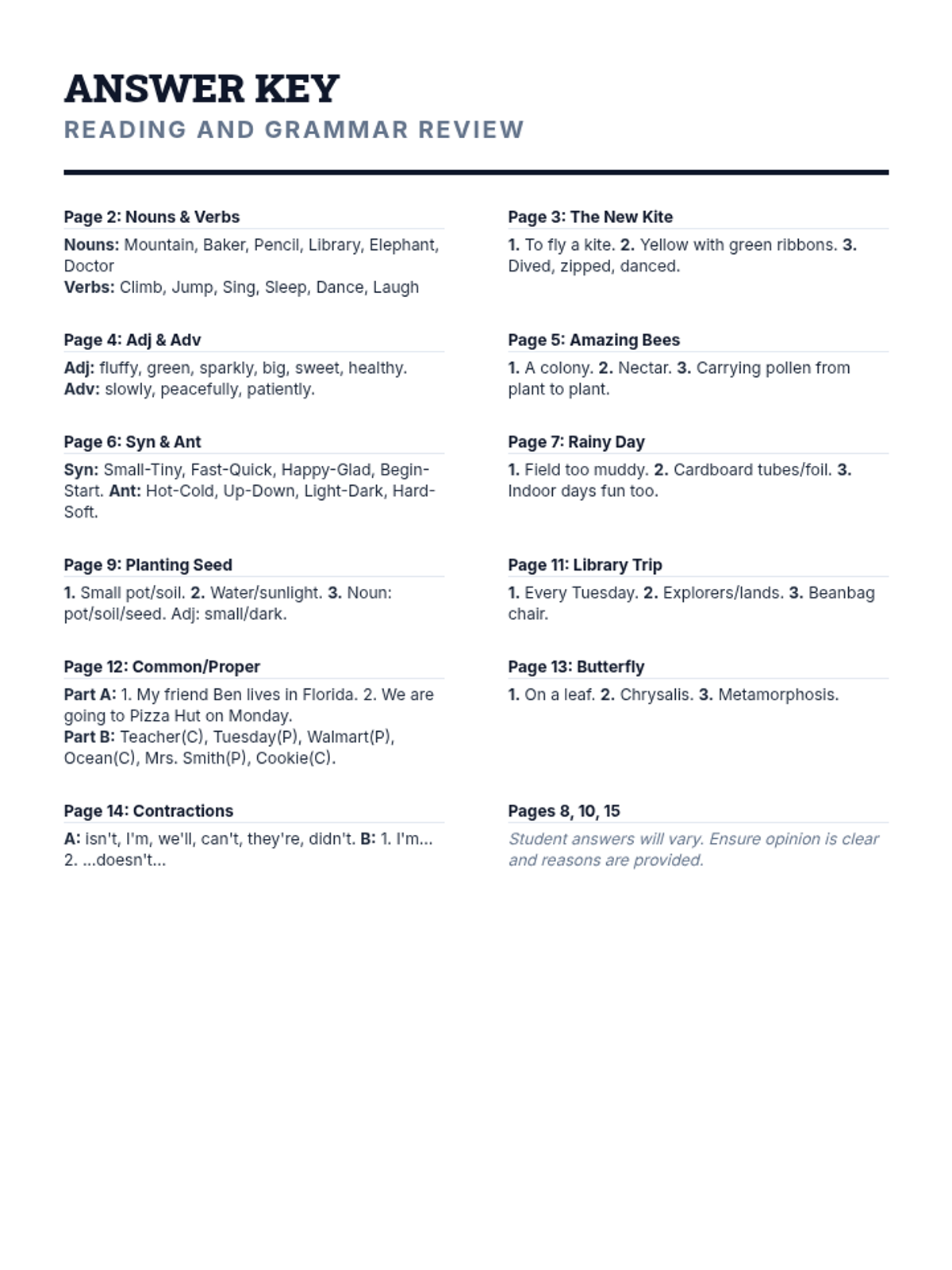
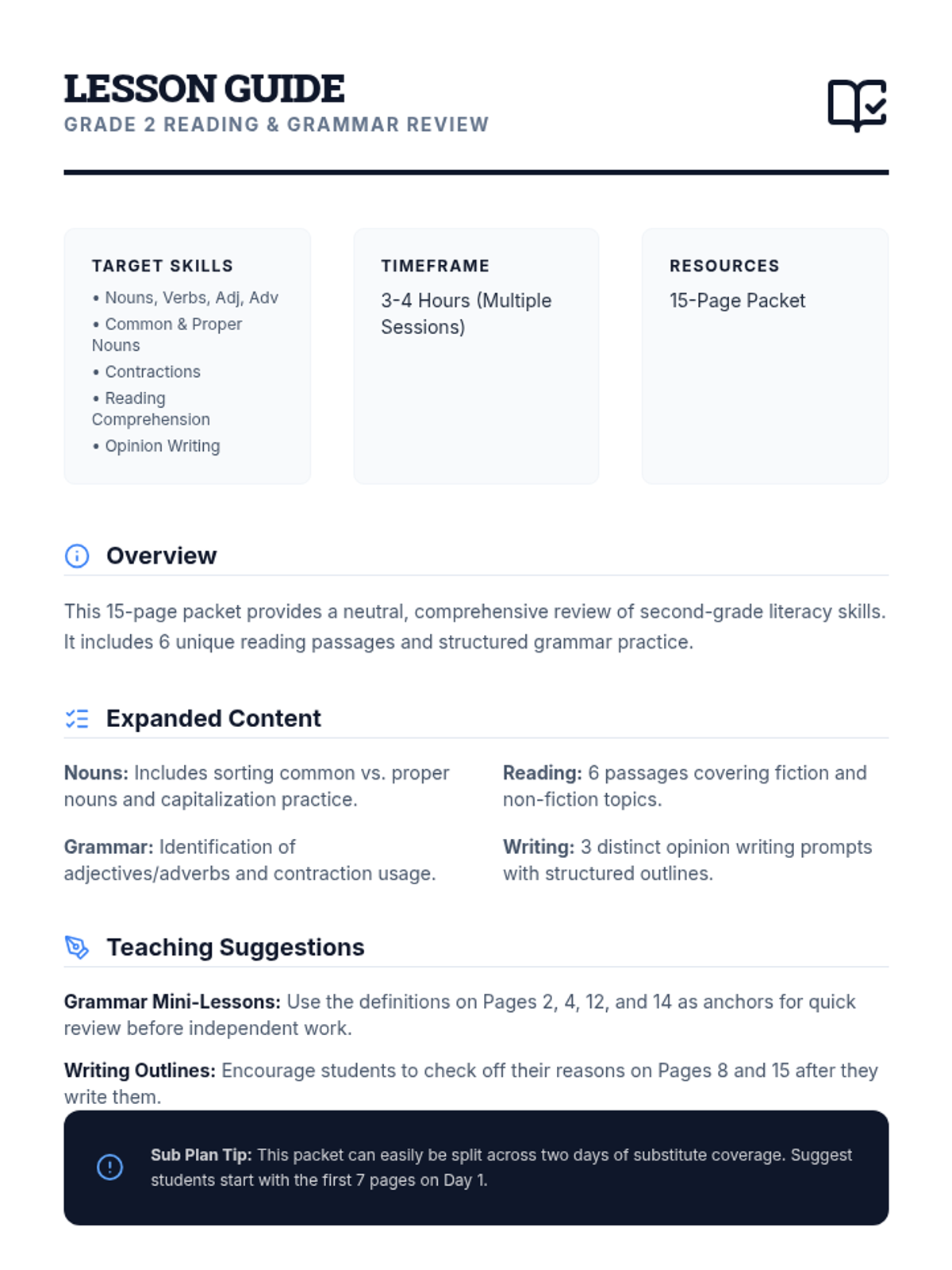
A comprehensive 15-page reading and grammar review packet for 2nd-grade students. This neutral resource covers nouns (common/proper), verbs, adjectives, adverbs, synonyms, antonyms, contractions, reading comprehension across 6 passages, and opinion writing.
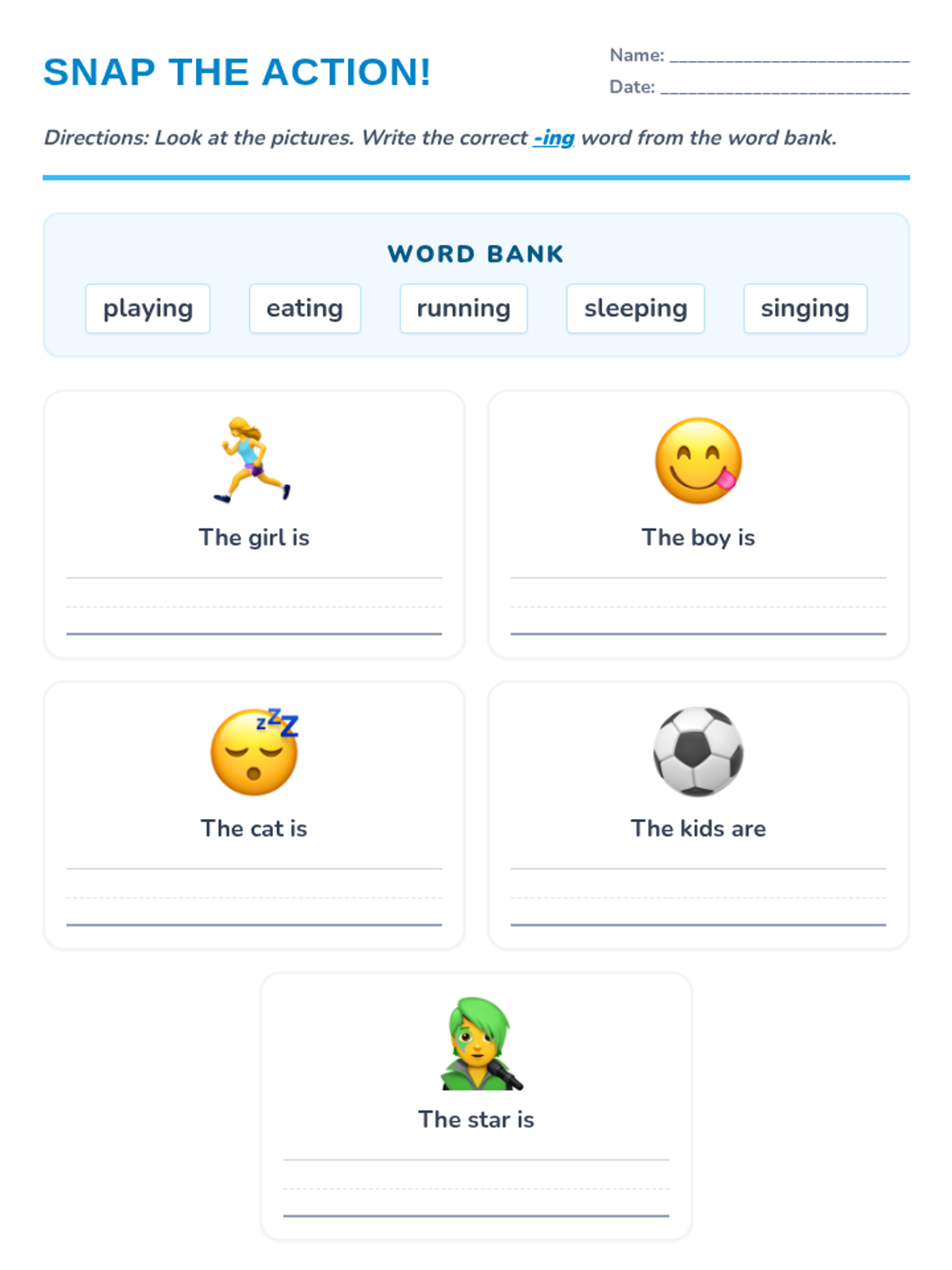
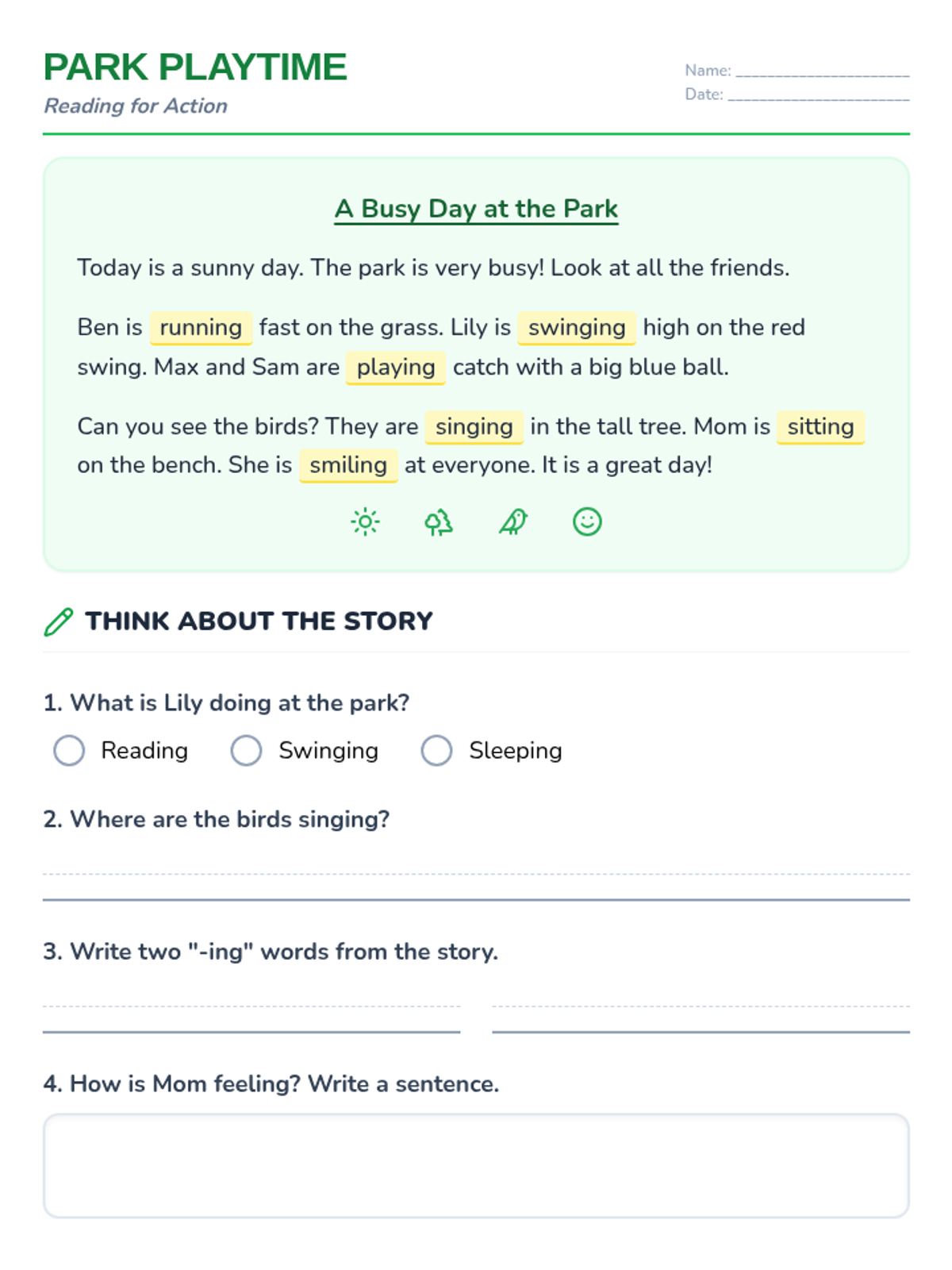
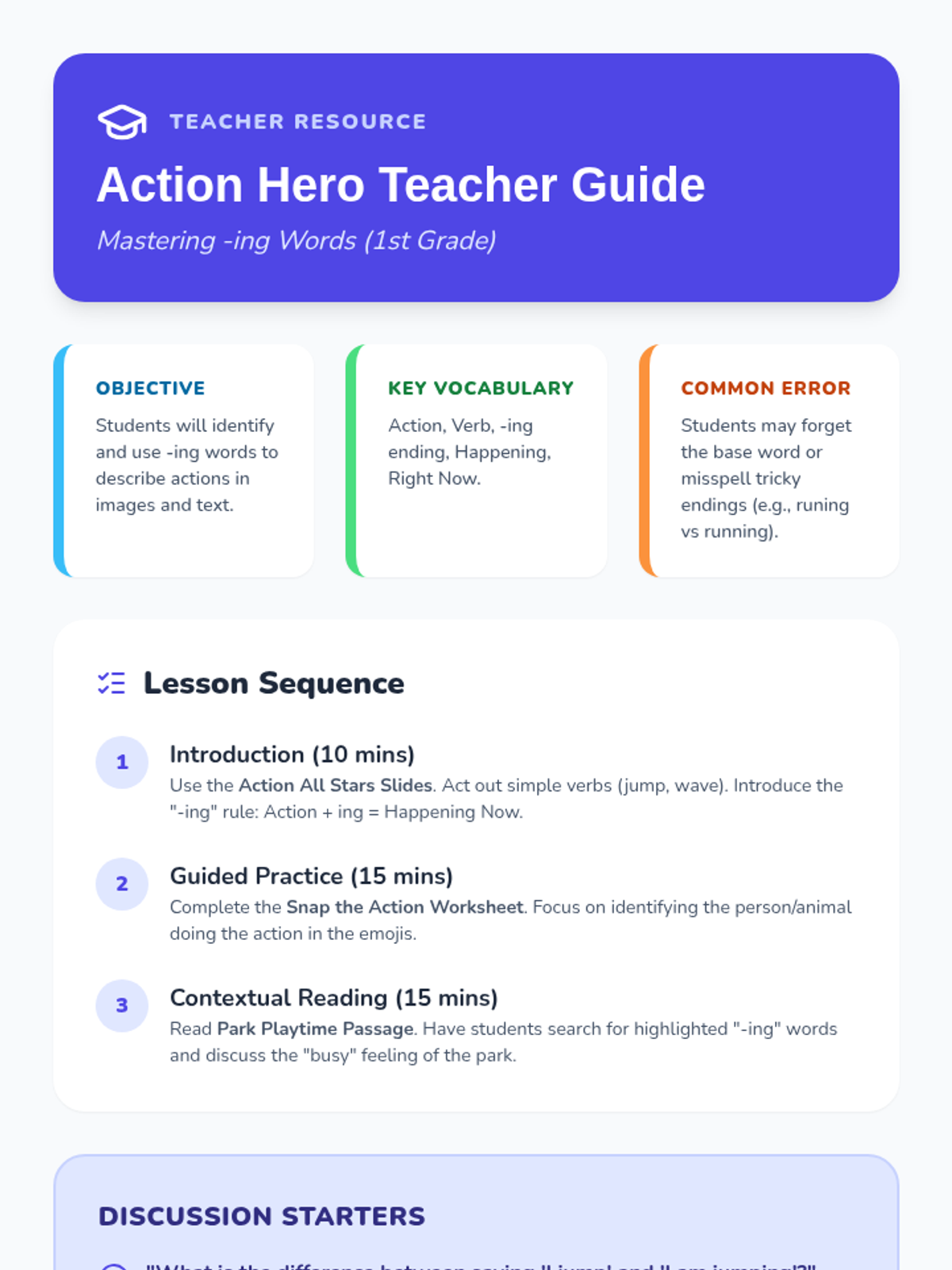
A first-grade lesson focused on identifying and using -ing words to describe ongoing actions through visual aids and reading.
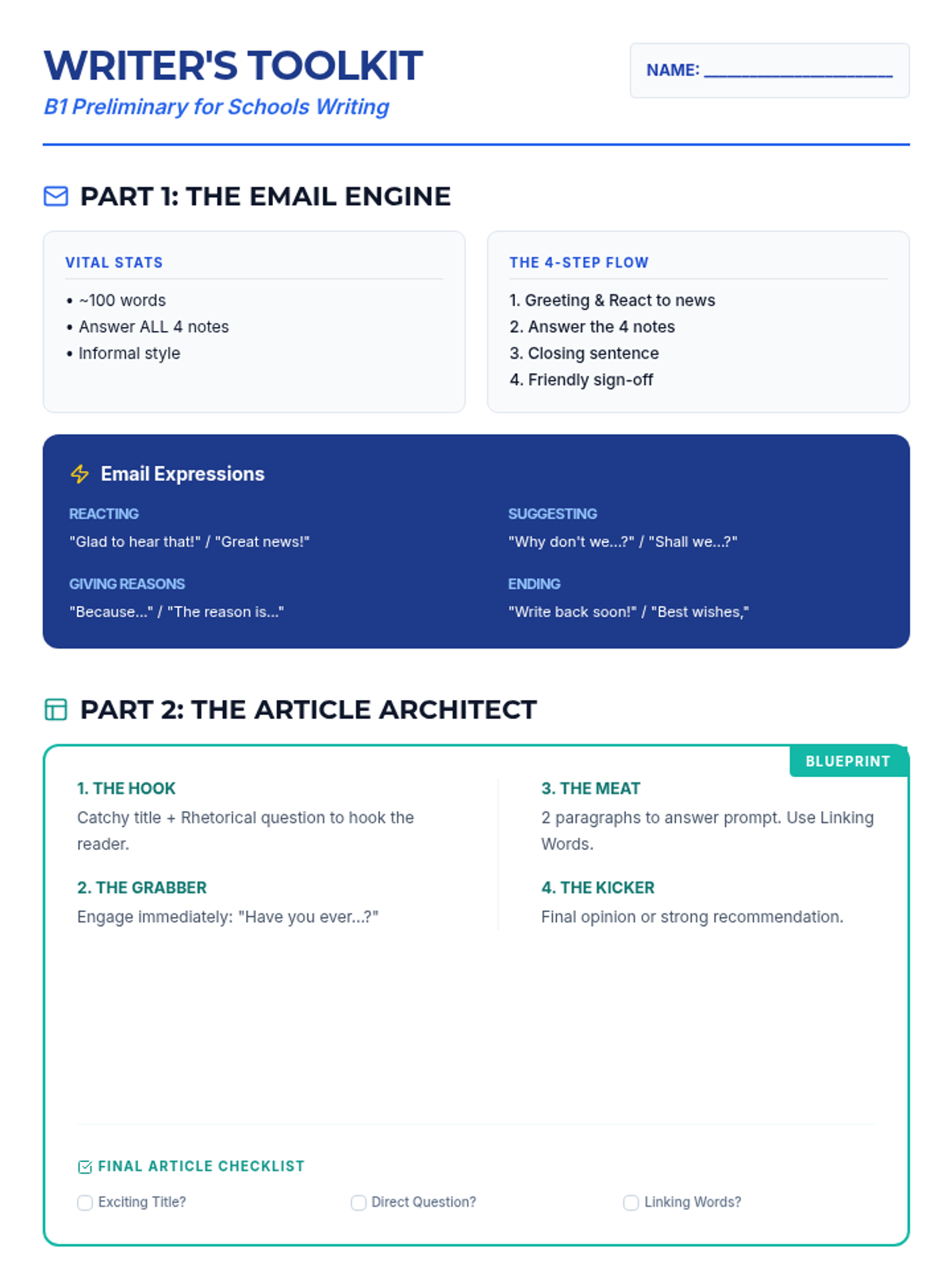
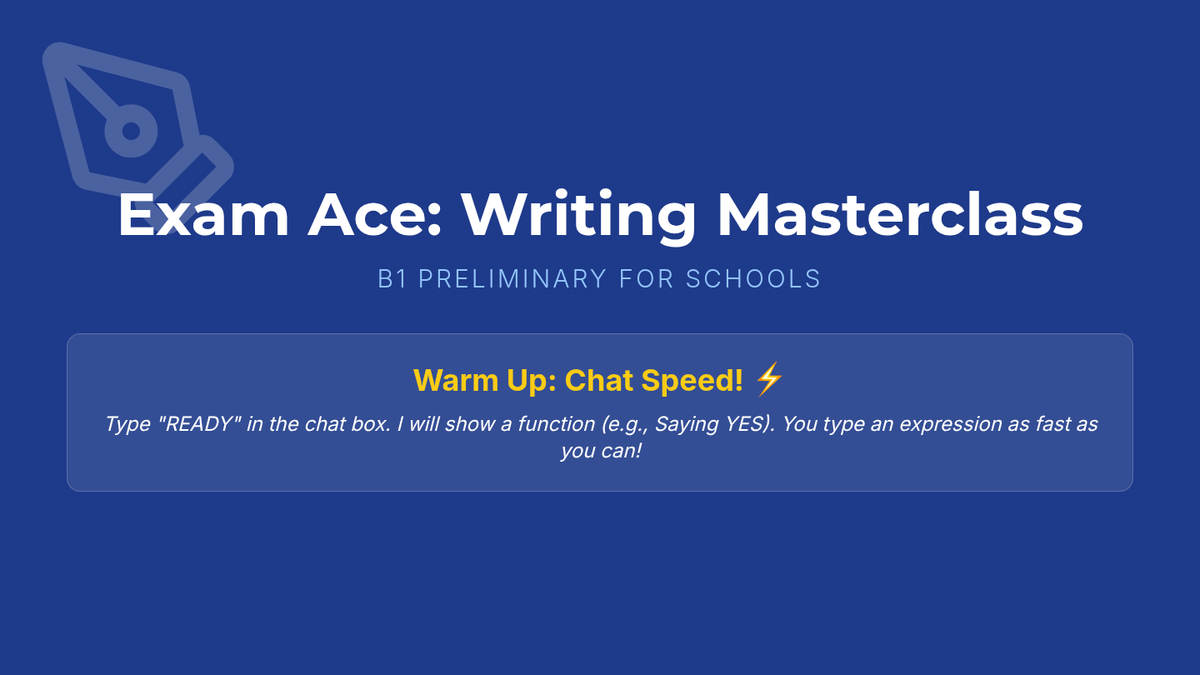
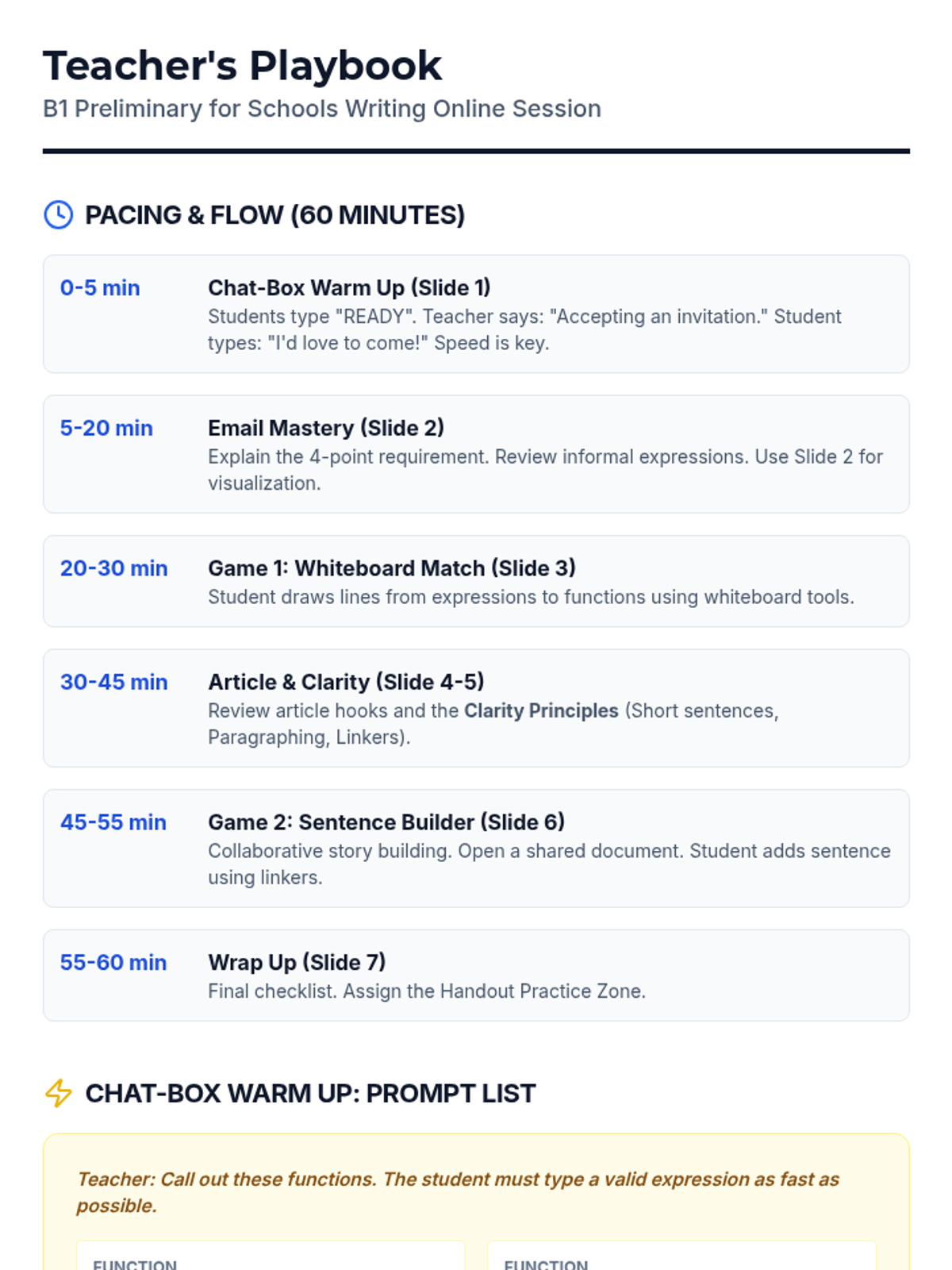
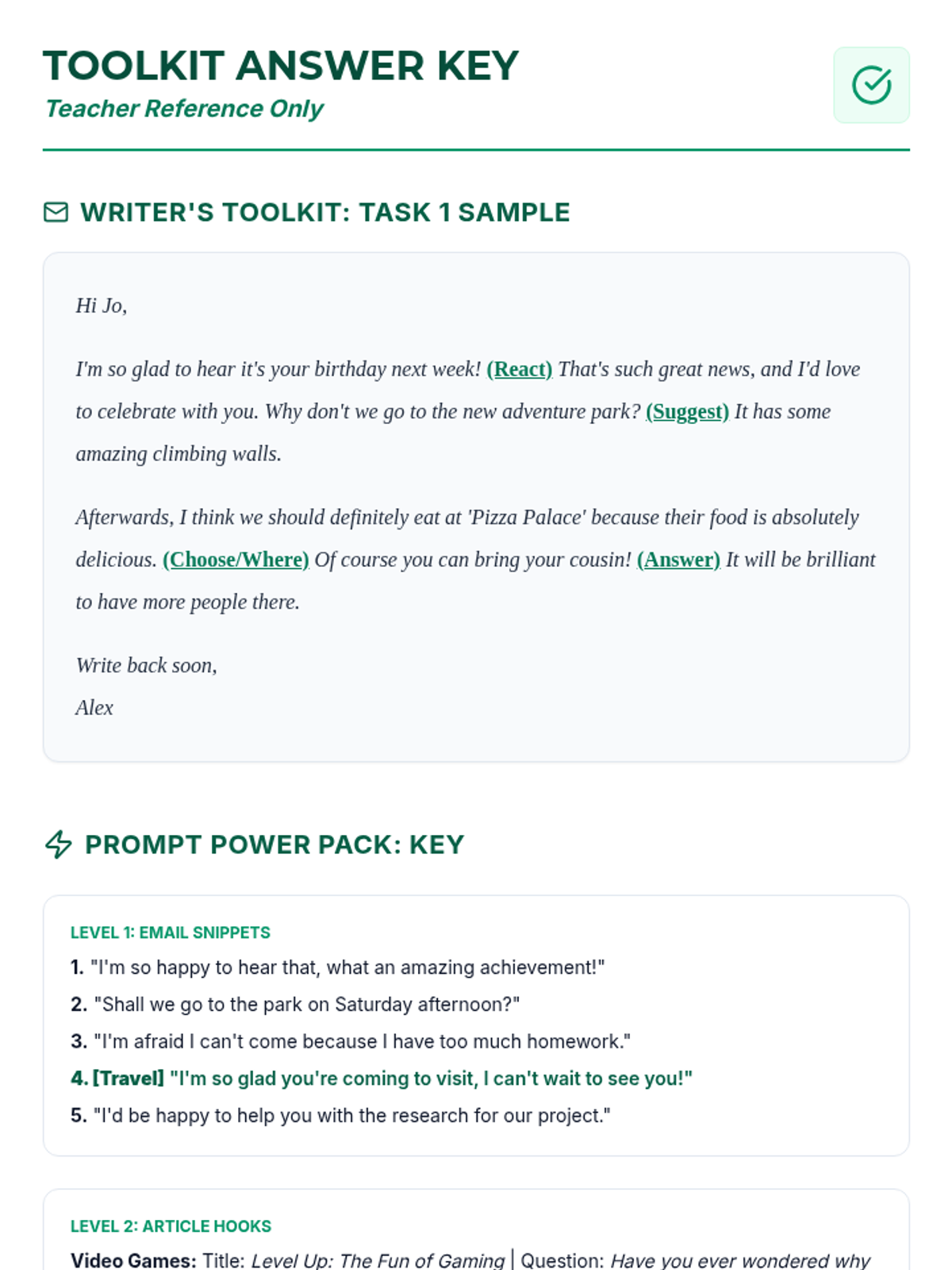
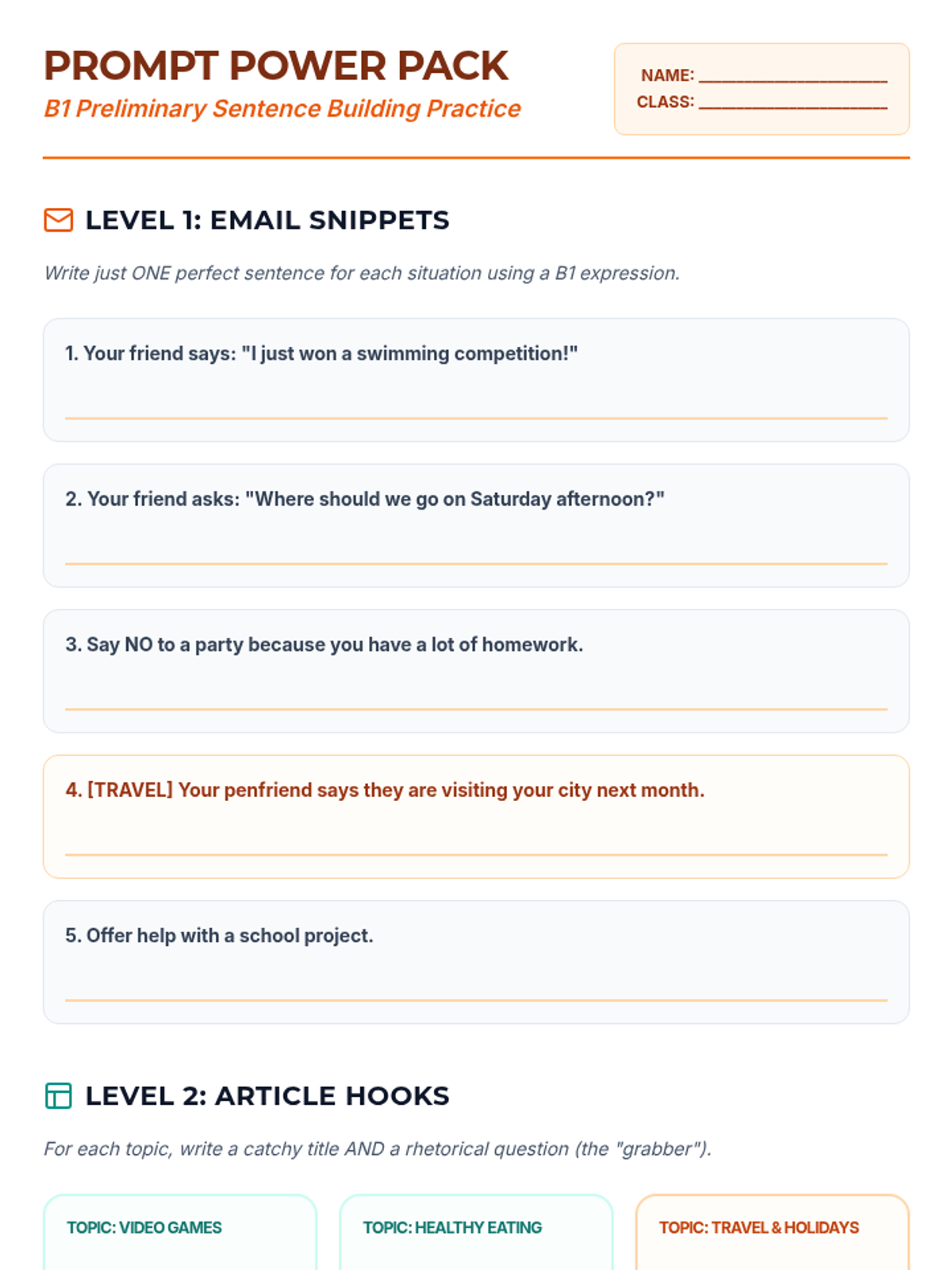
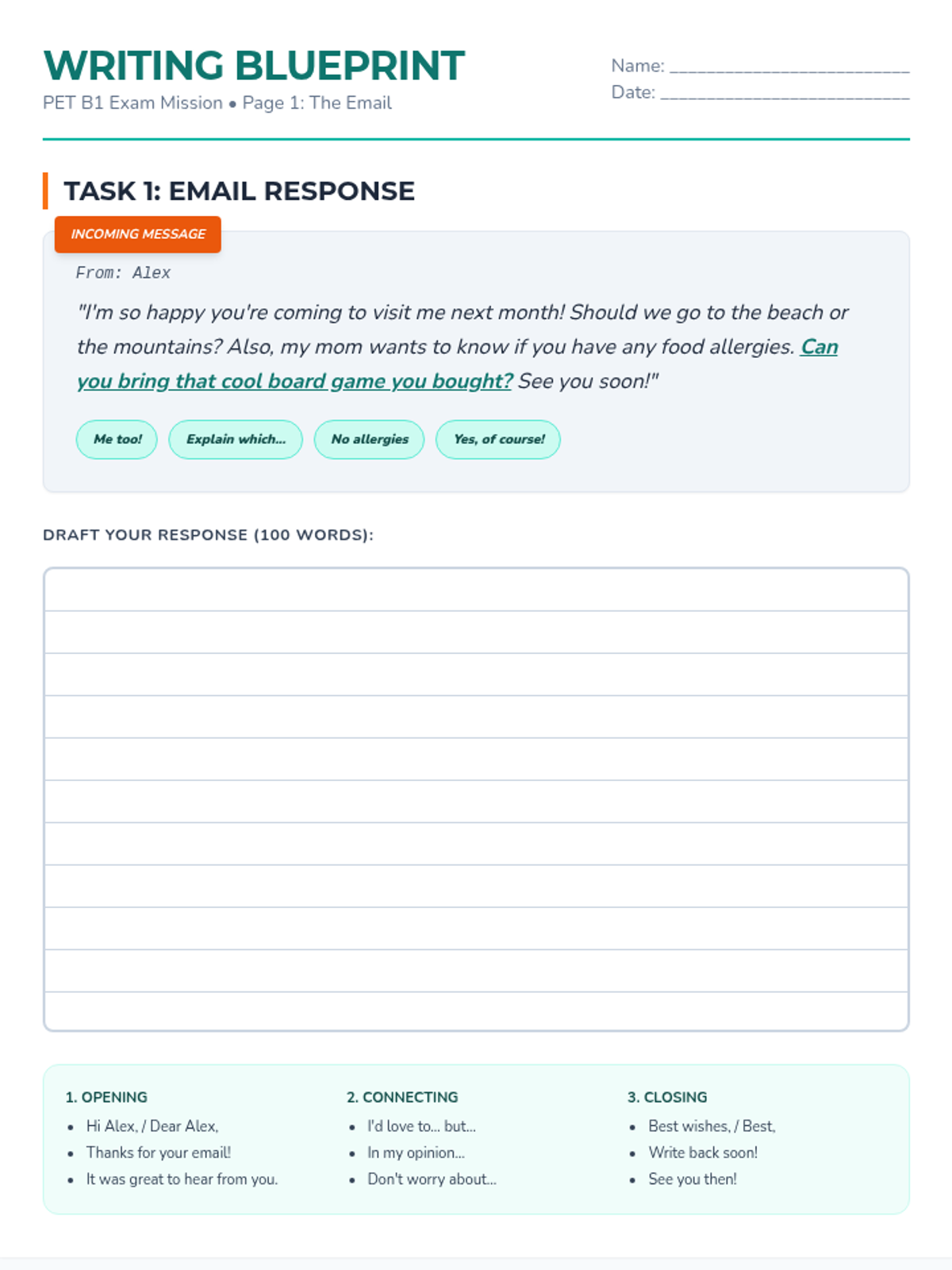
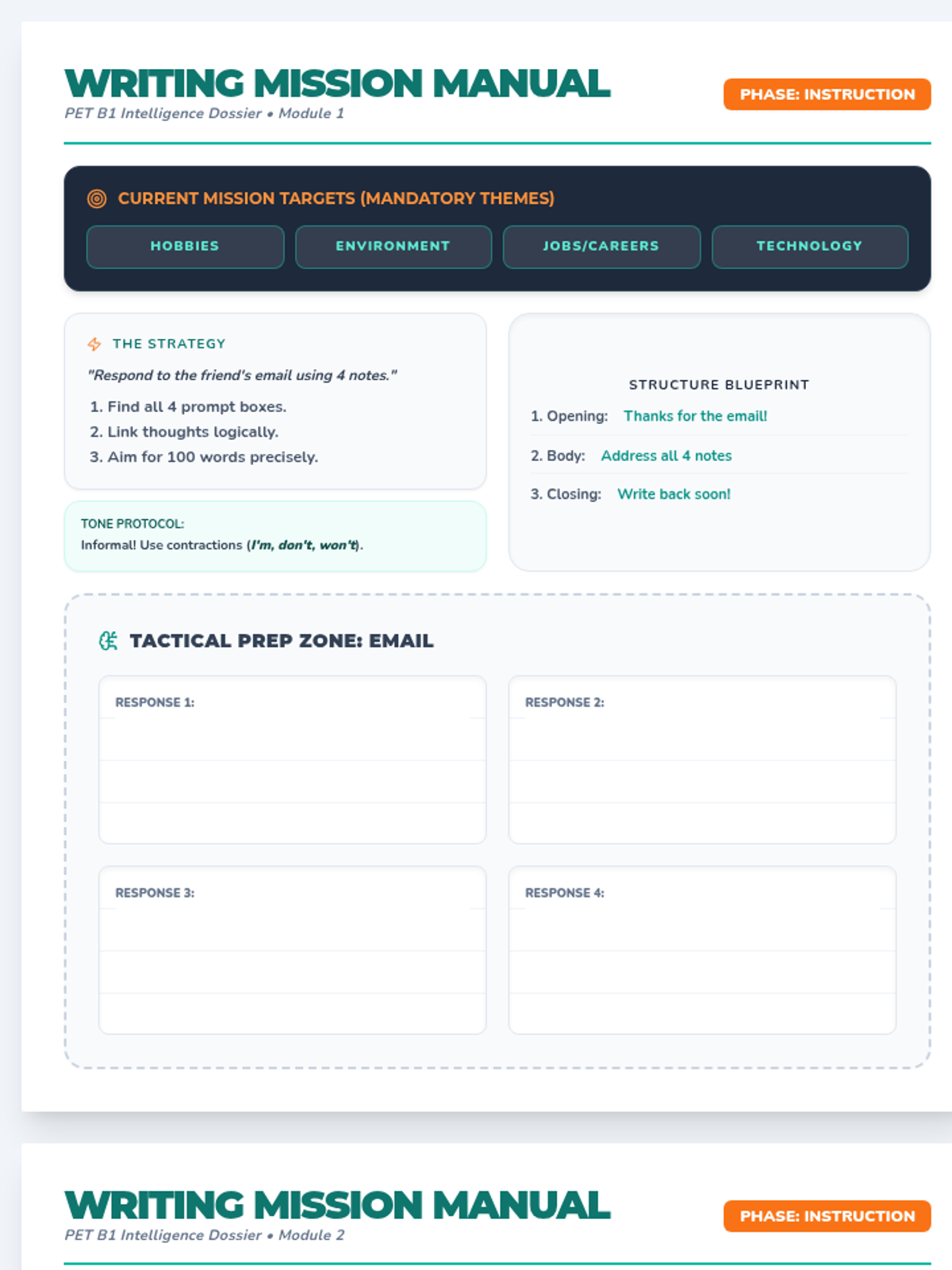
A comprehensive one-hour online lesson designed for 7th graders to master the Cambridge B1 Preliminary for Schools Writing Paper, focusing on emails and articles with interactive digital games.
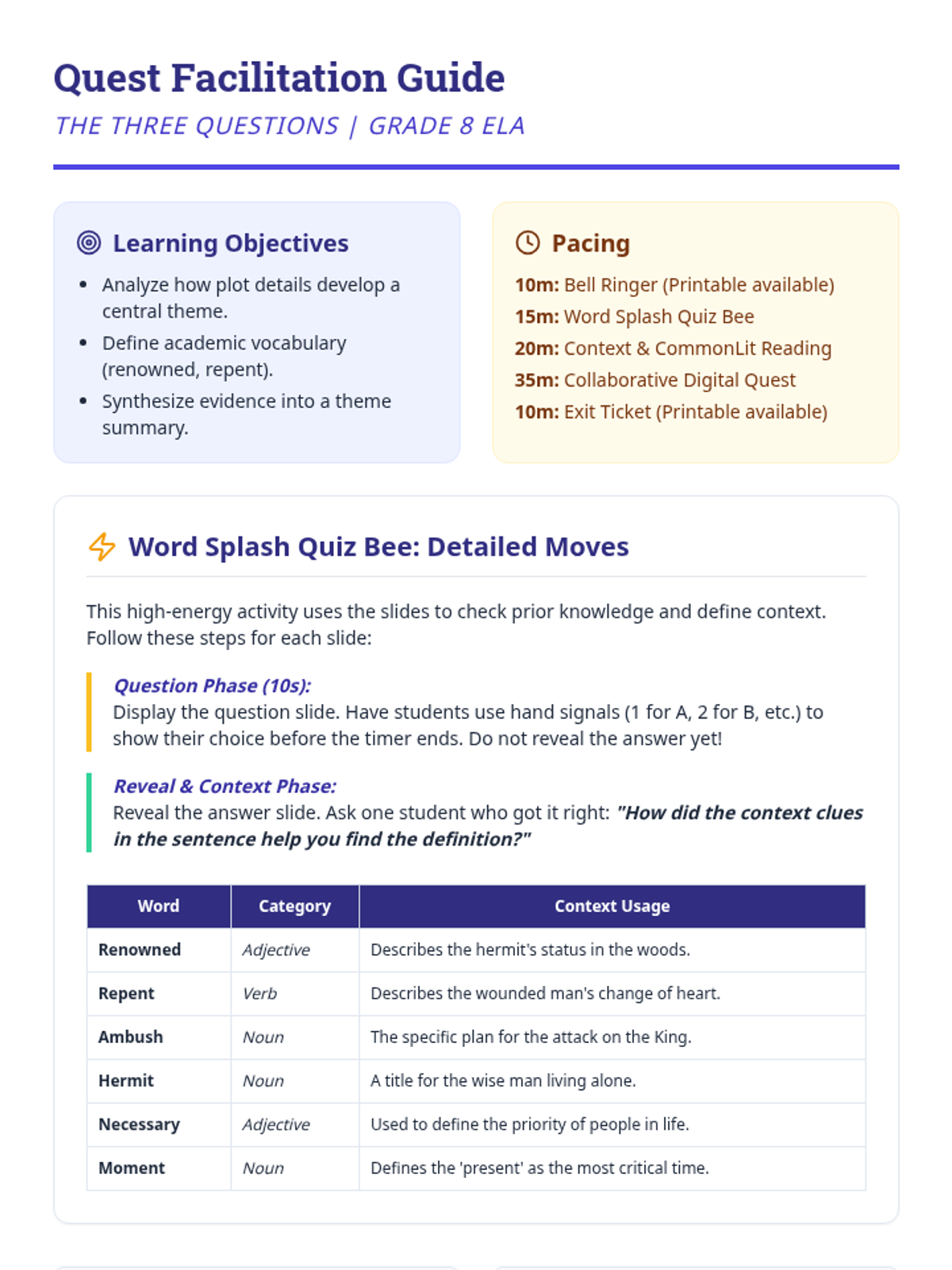
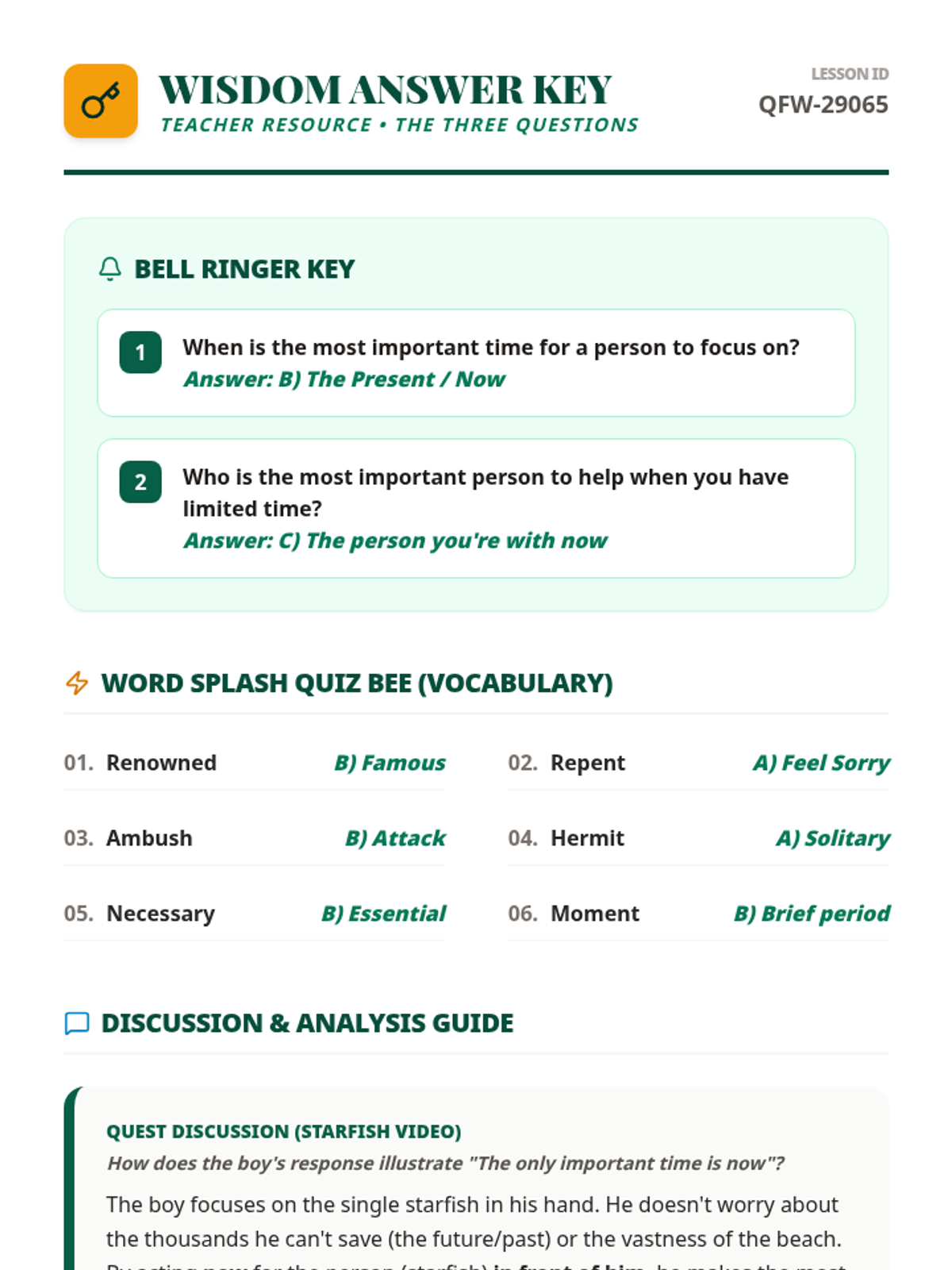
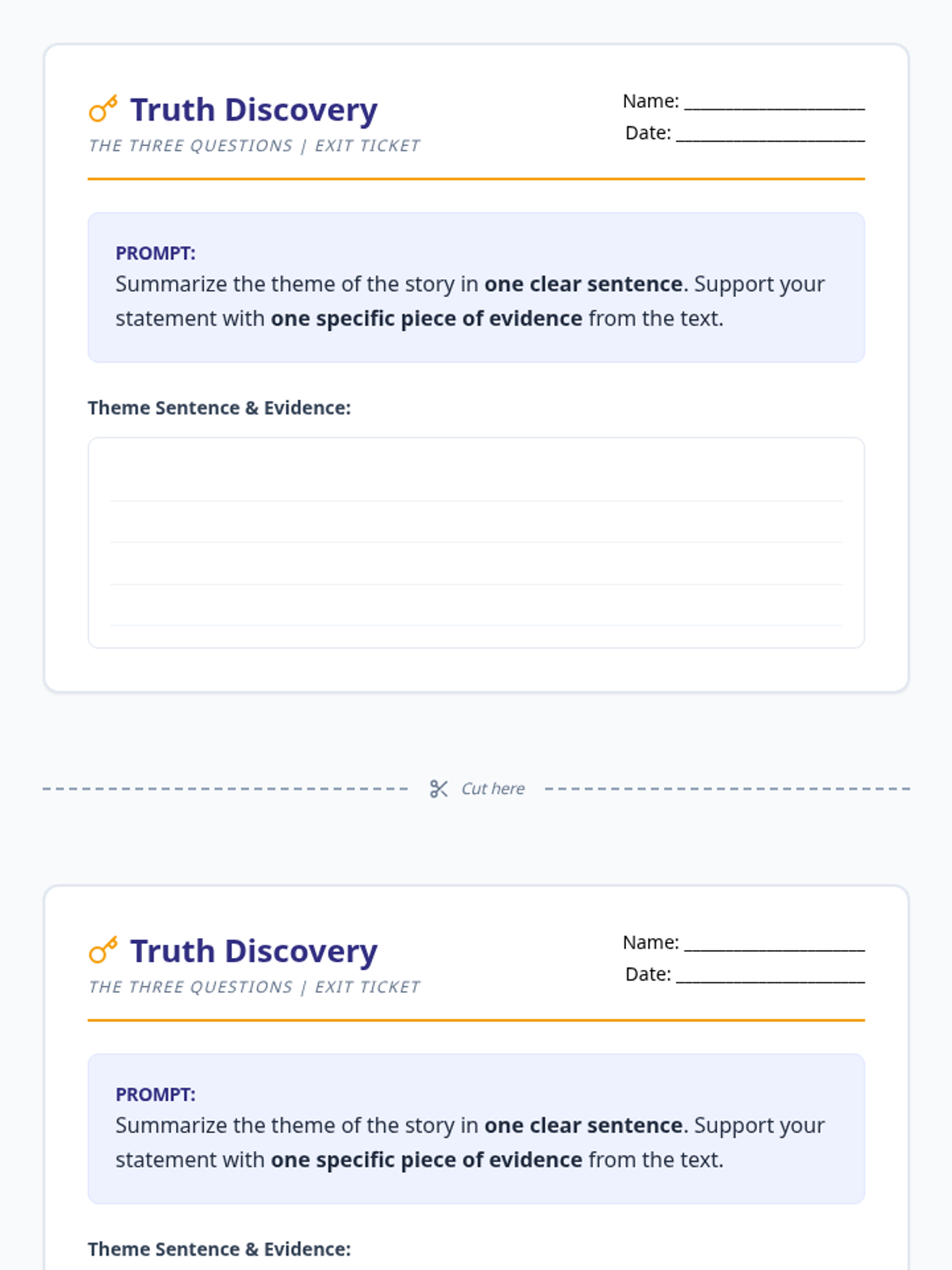
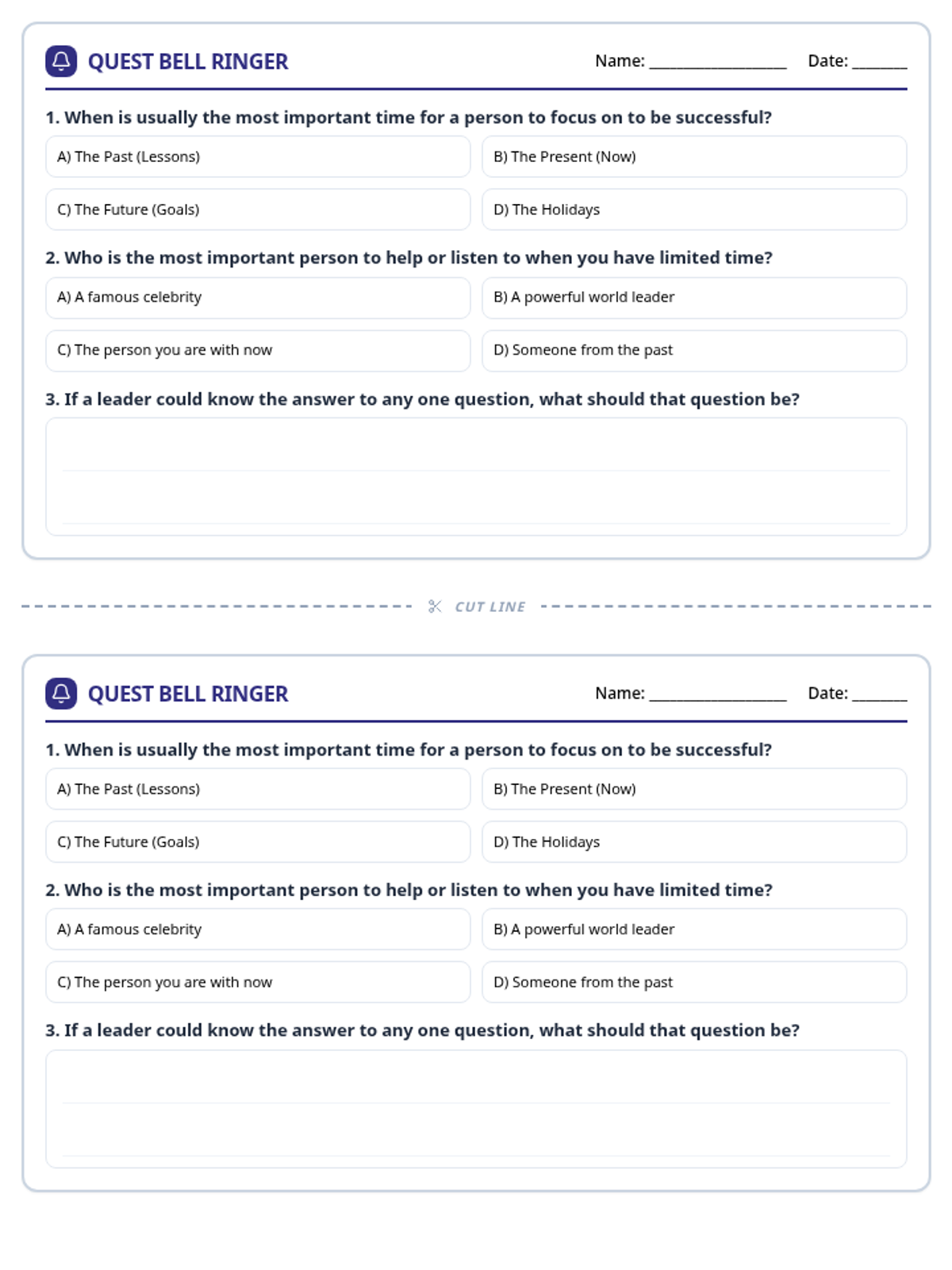
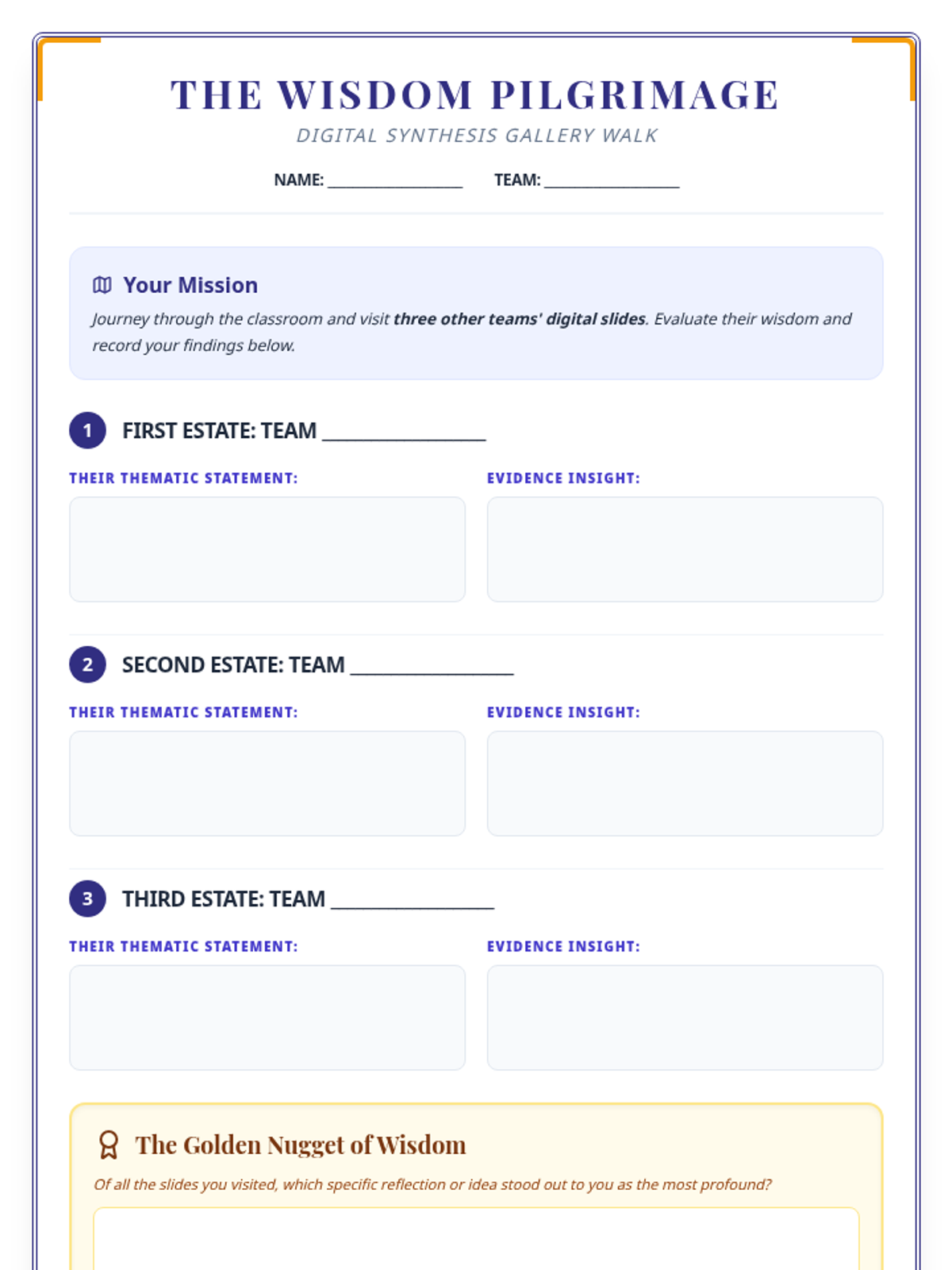
A comprehensive lesson on Leo Tolstoy's 'The Three Questions', focusing on plot, character development, and theme through interactive Word Splash vocabulary and collaborative analysis.
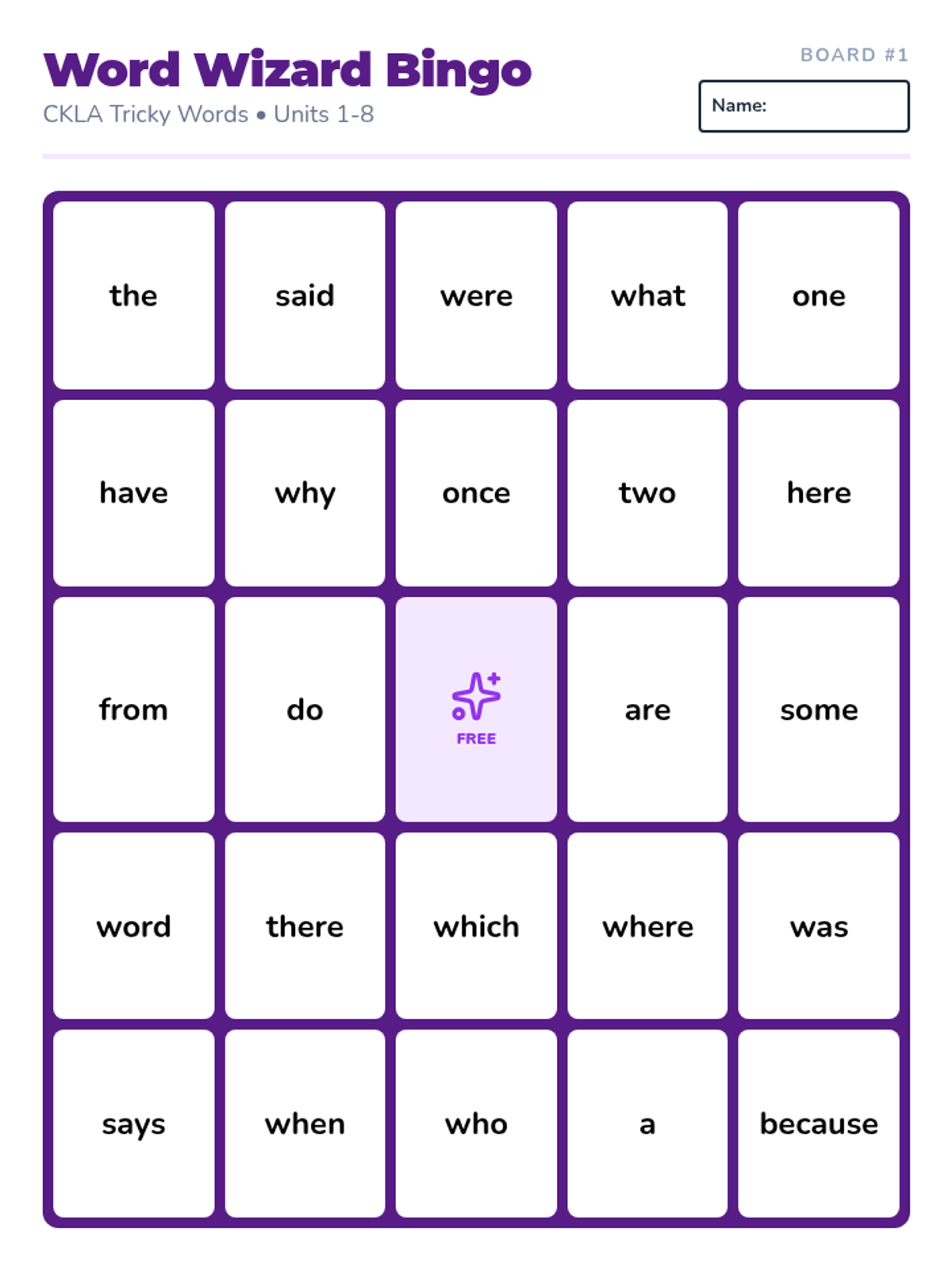
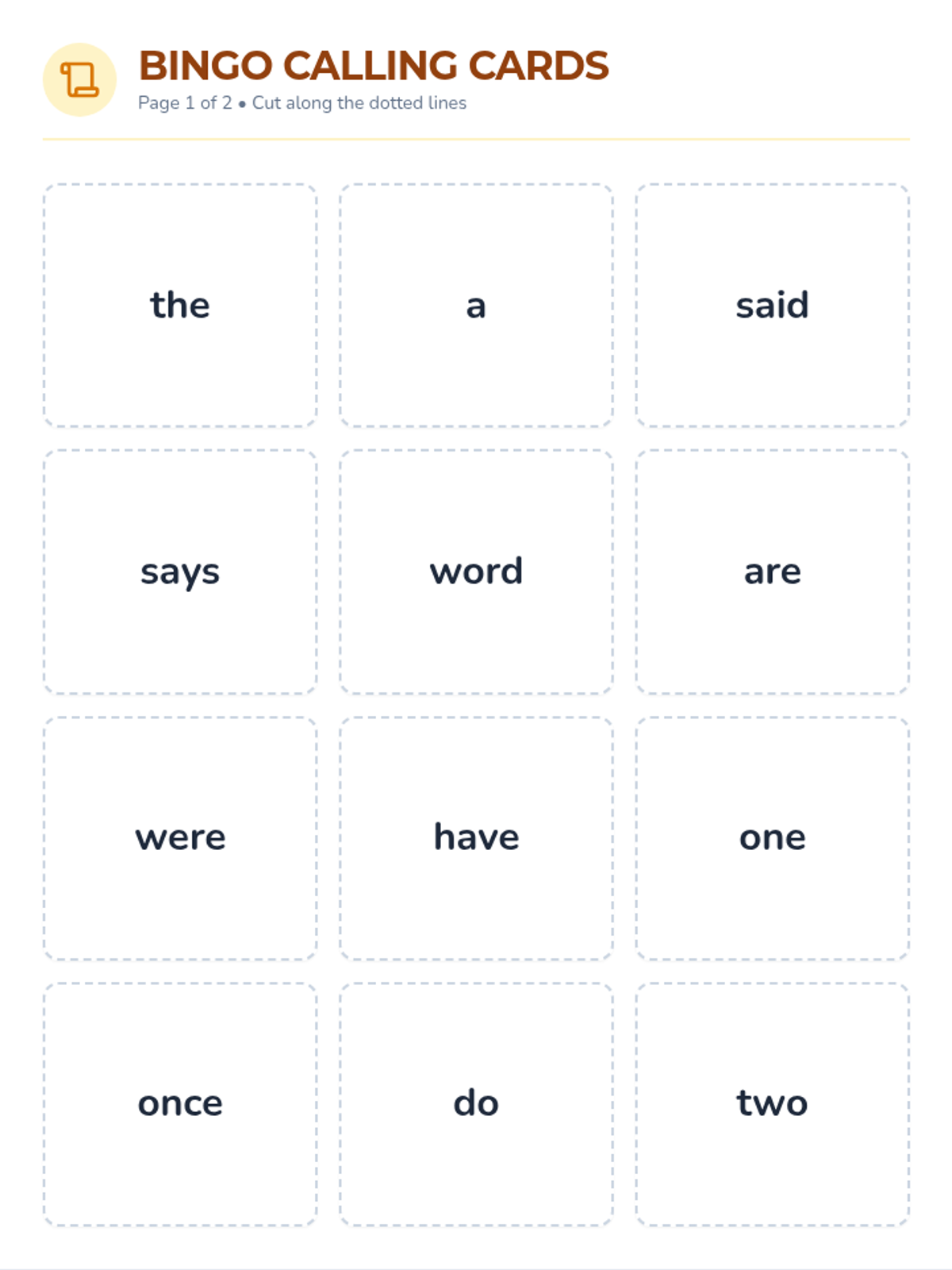
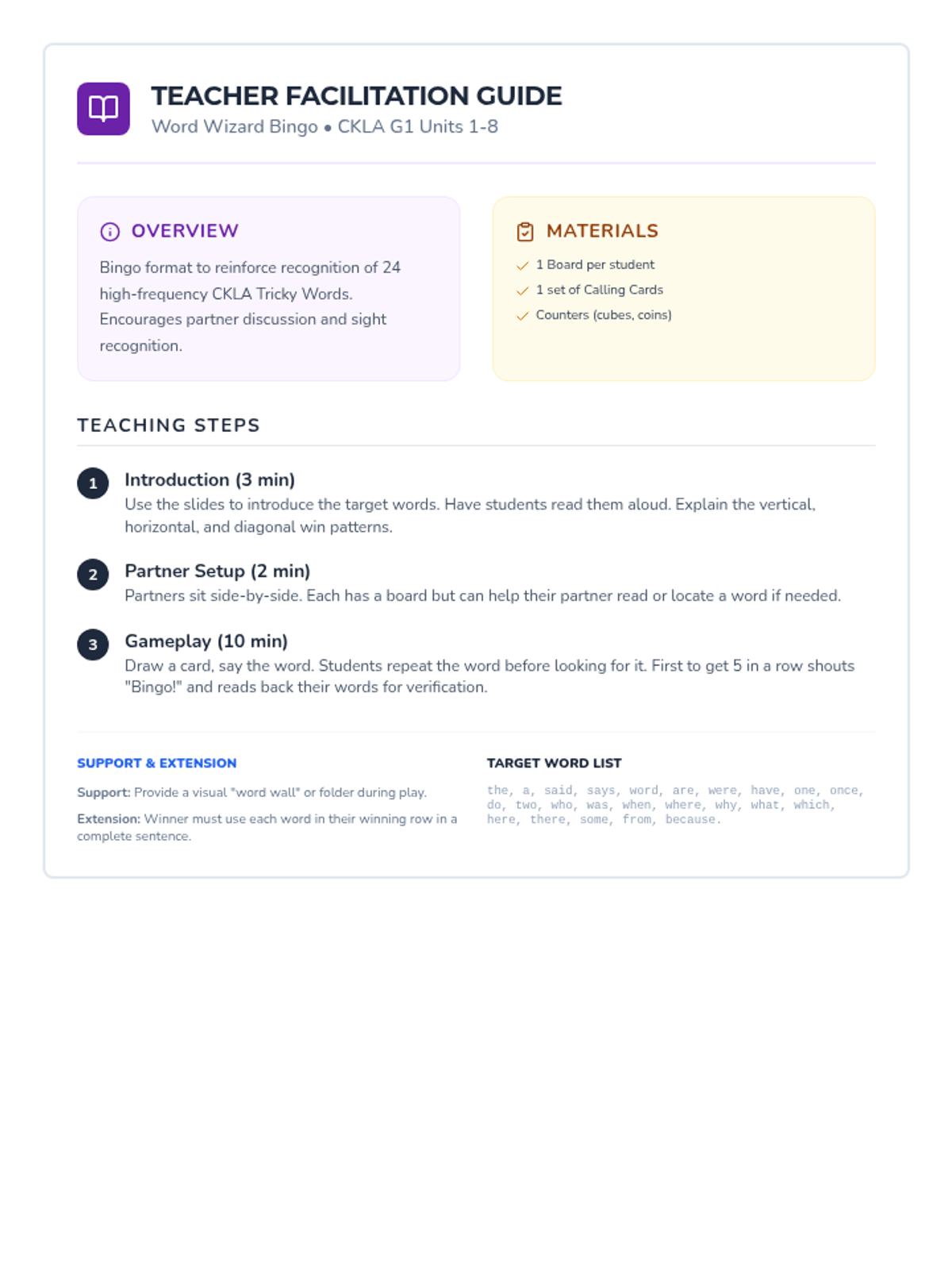
A high-energy Bingo game designed to help first-grade students master CKLA Tricky Words from Units 1-8 through partner play and repetition.
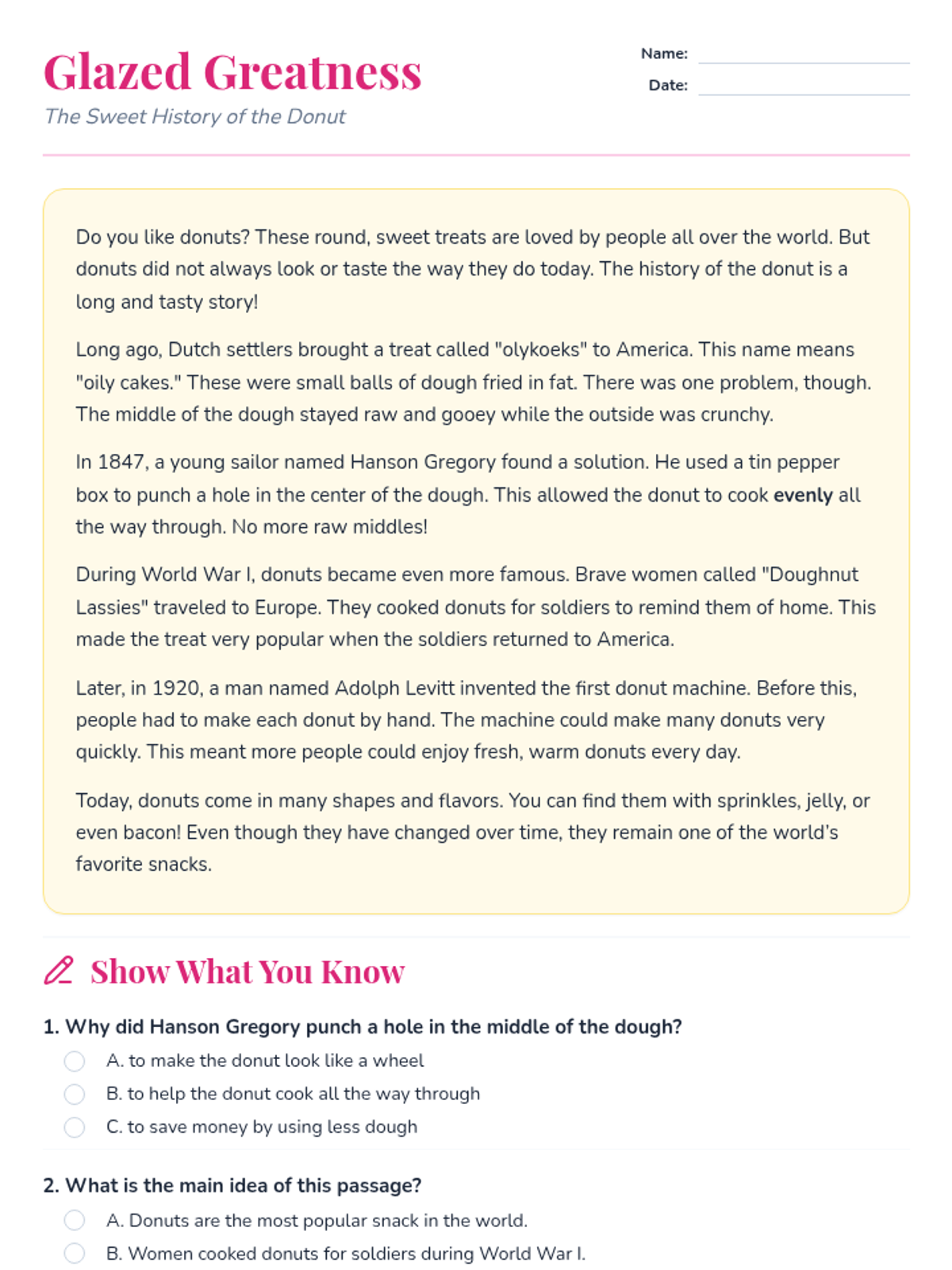
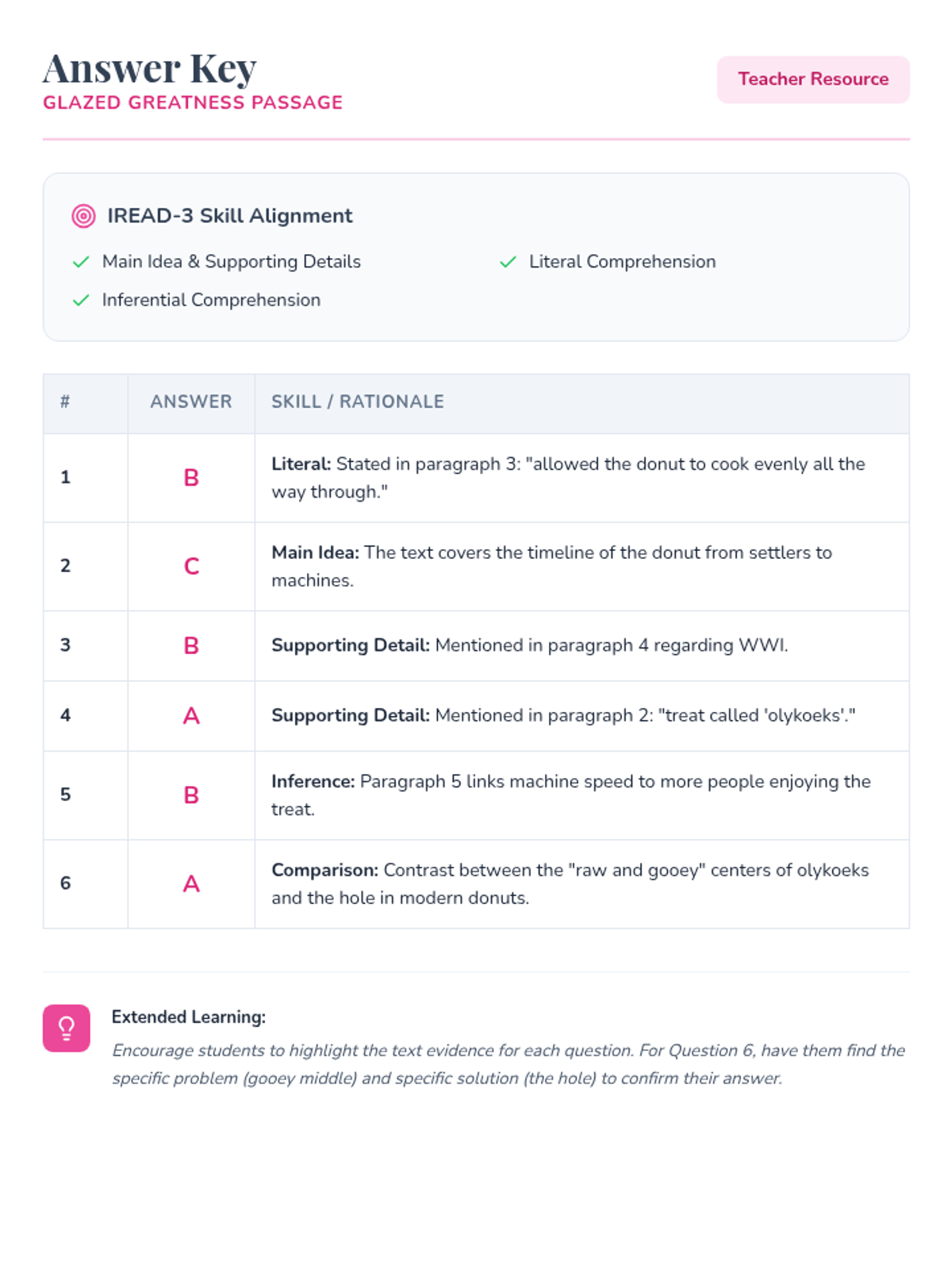
A lesson exploring the history of donuts through a reading passage and comprehension questions modeled after the Indiana IREAD-3 assessment. Students will practice identifying main ideas, using context clues, and making inferences.
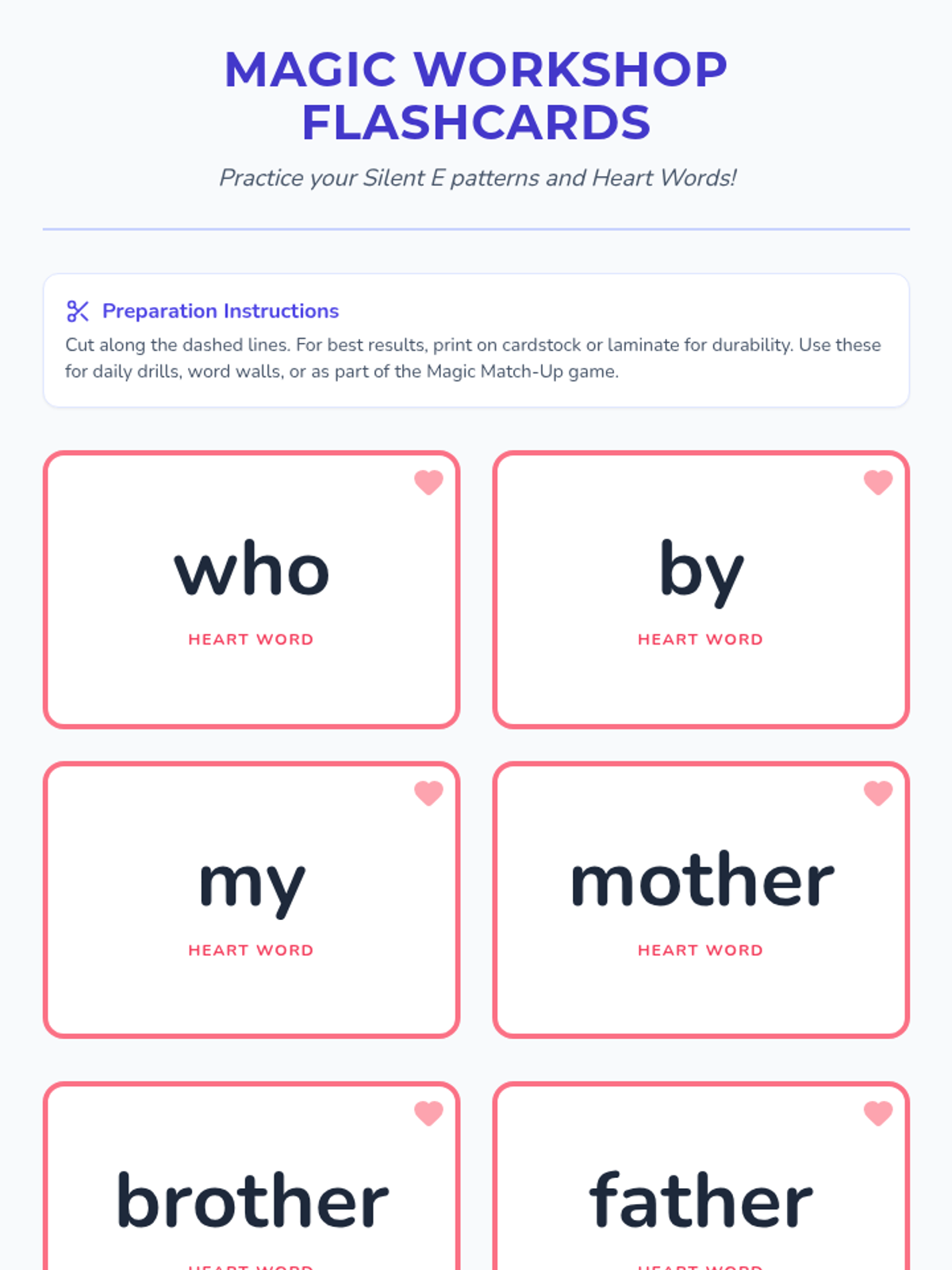
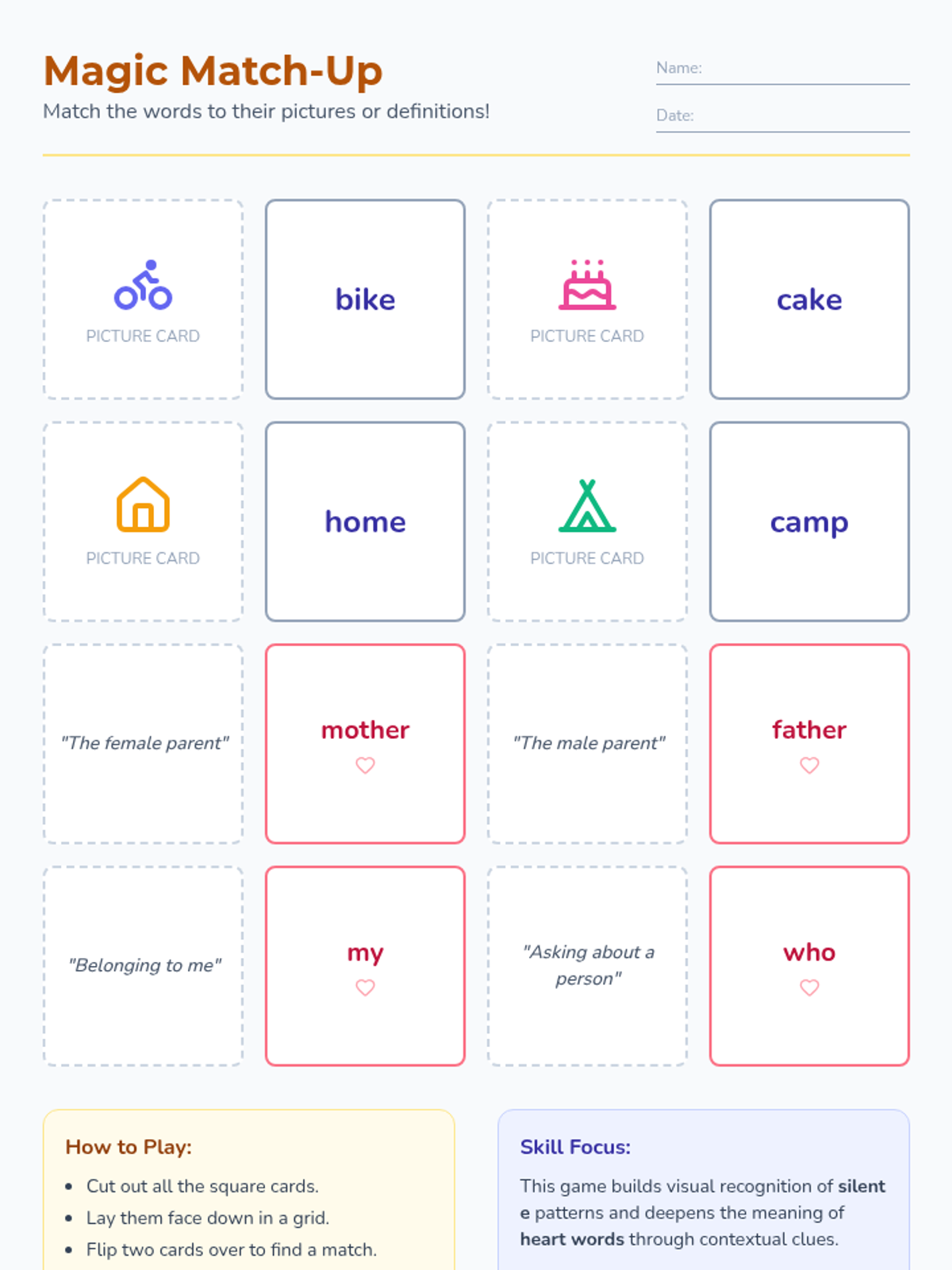
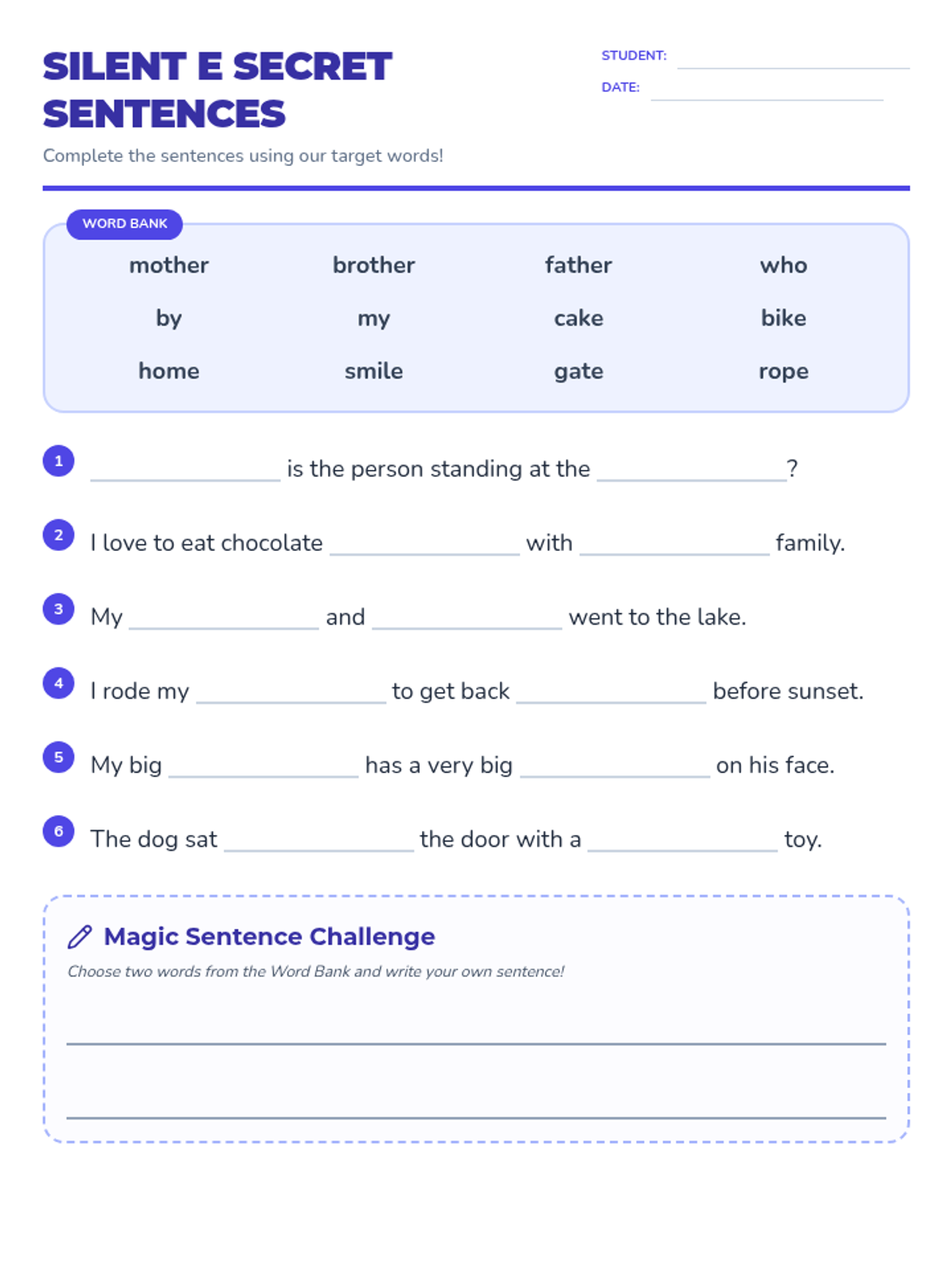
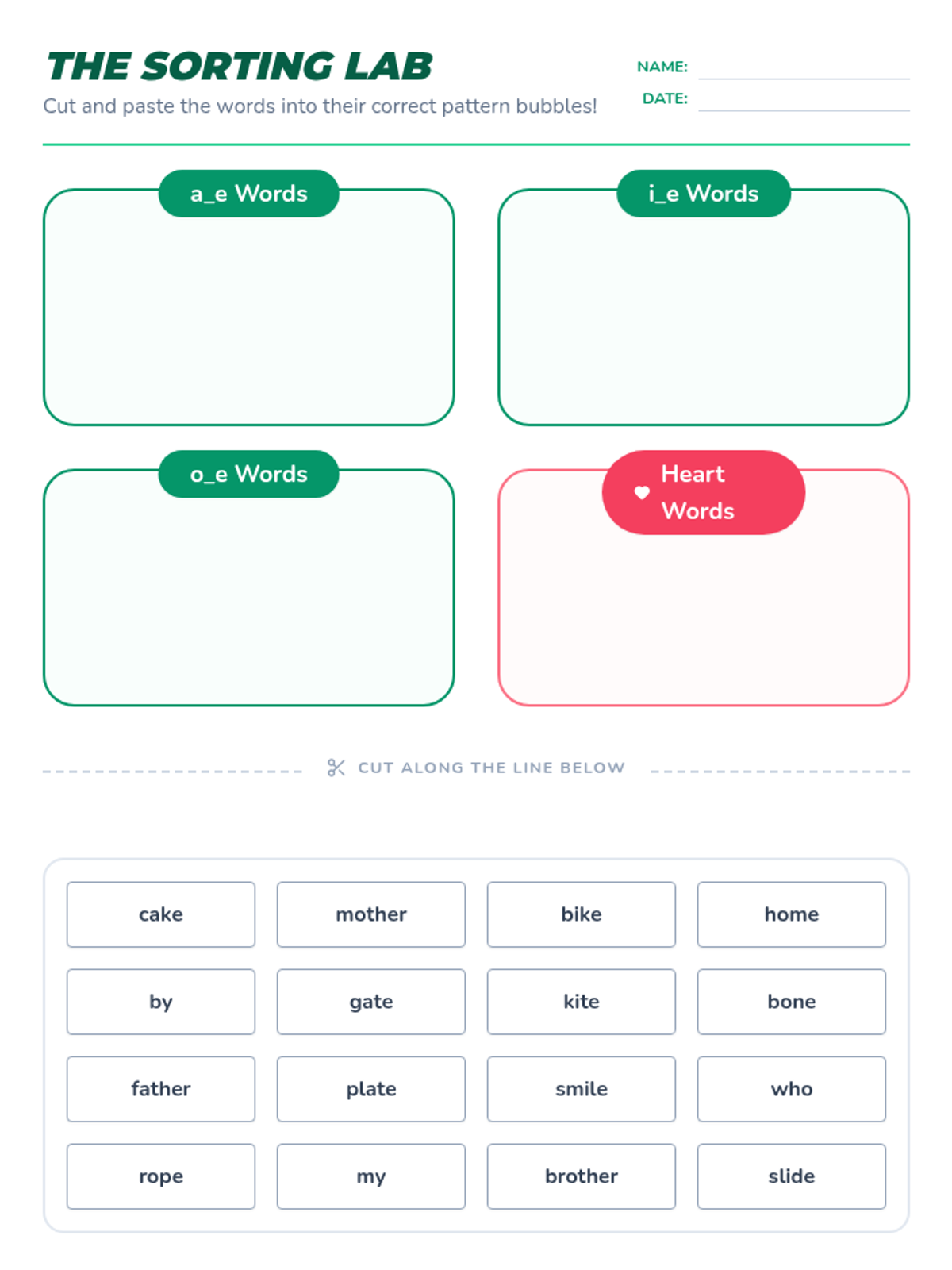
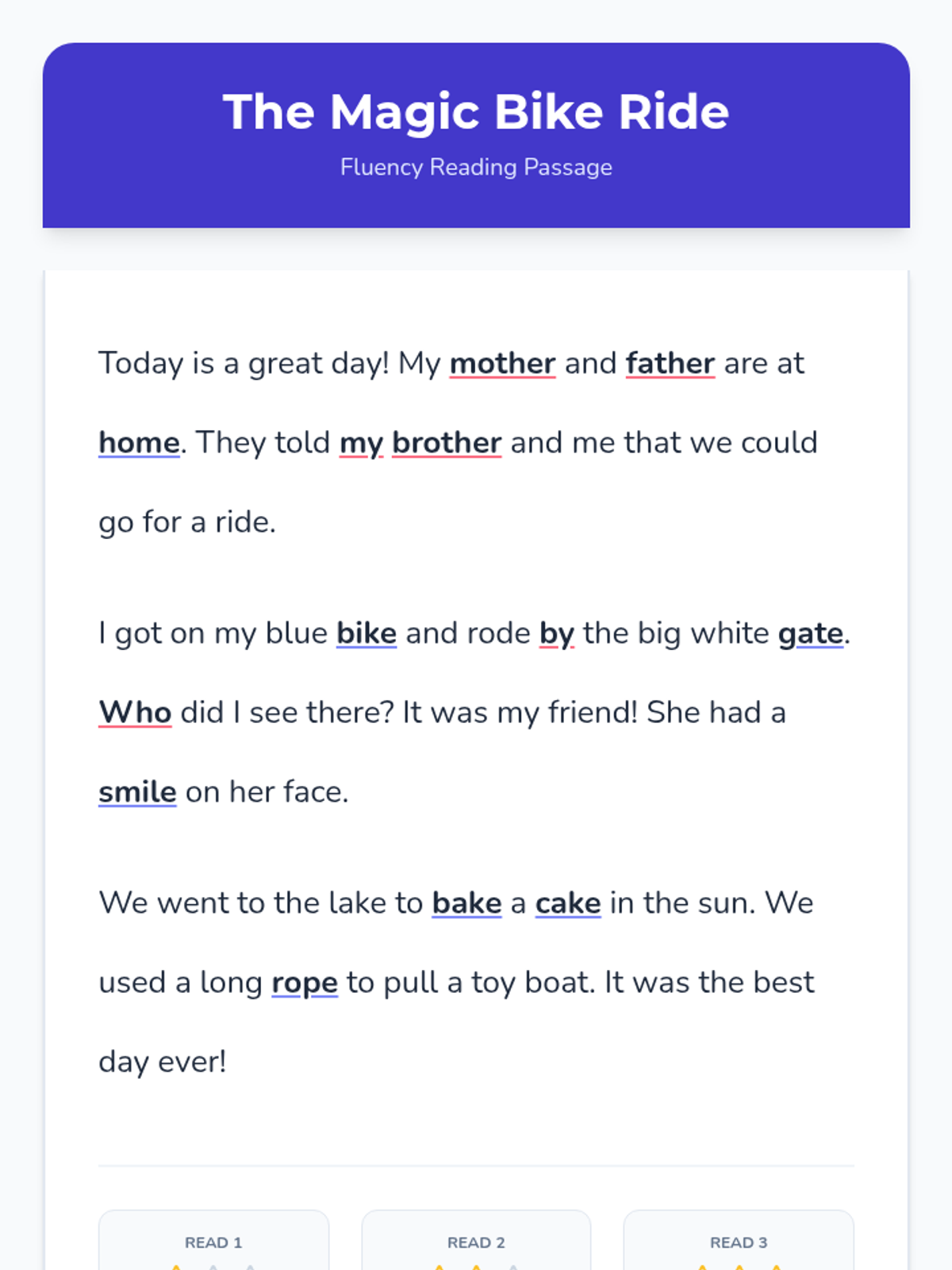
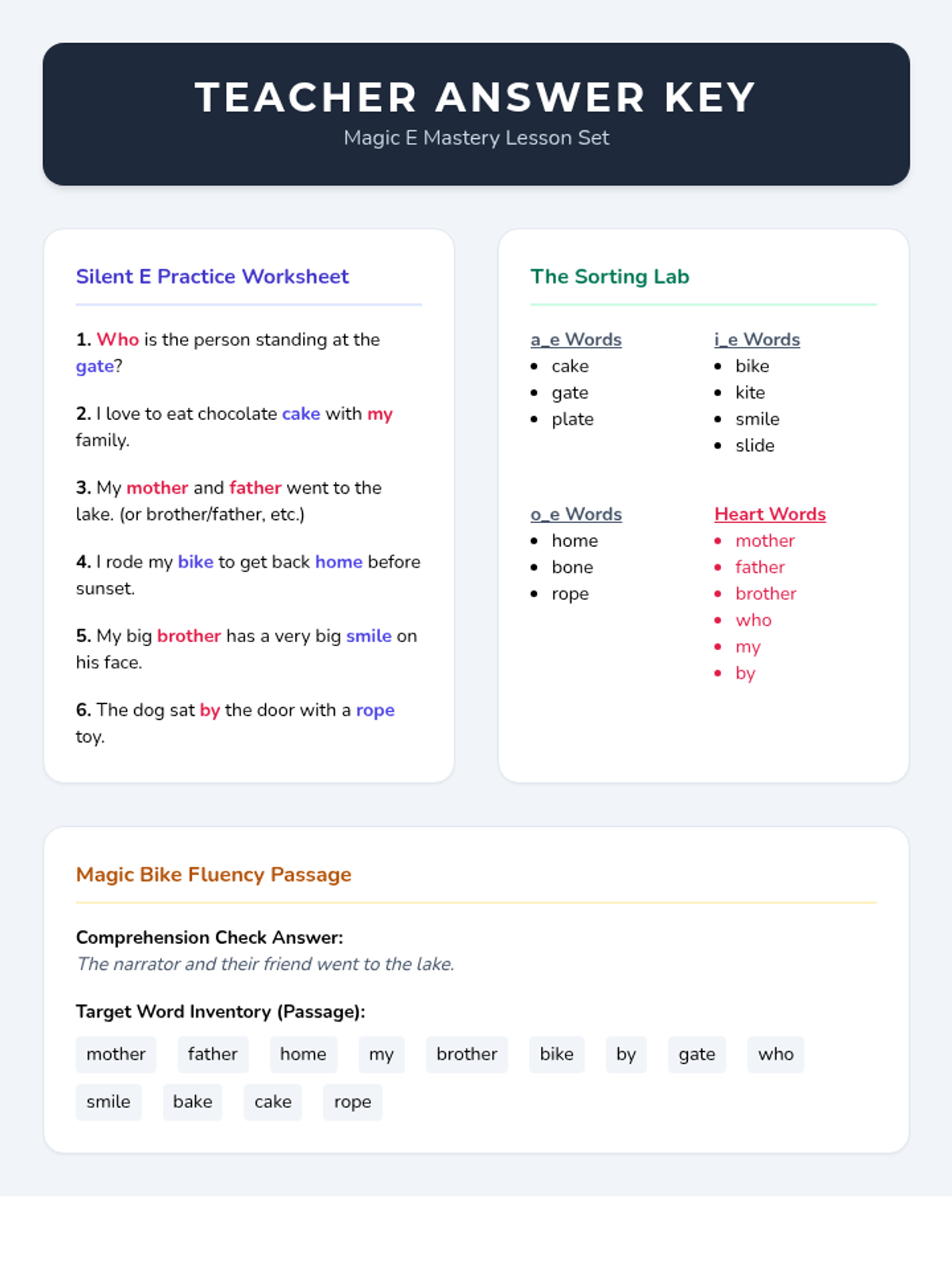
A comprehensive lesson reviewing long vowel patterns (a_e, i_e, o_e) and high-frequency 'heart words'. Students will engage with flashcards, a matching game, word sorting, and a fluency passage to reinforce decoding and recognition skills.
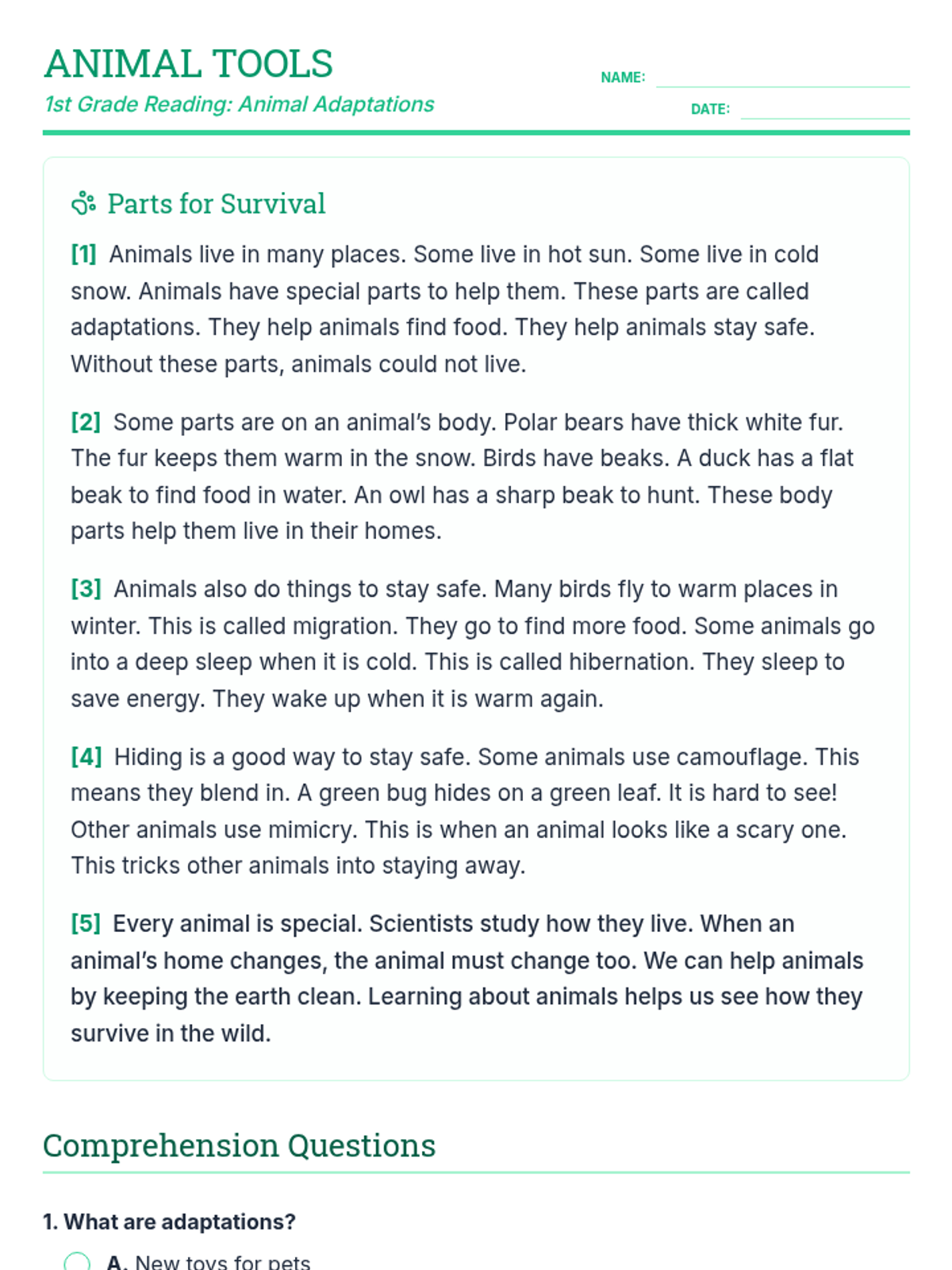
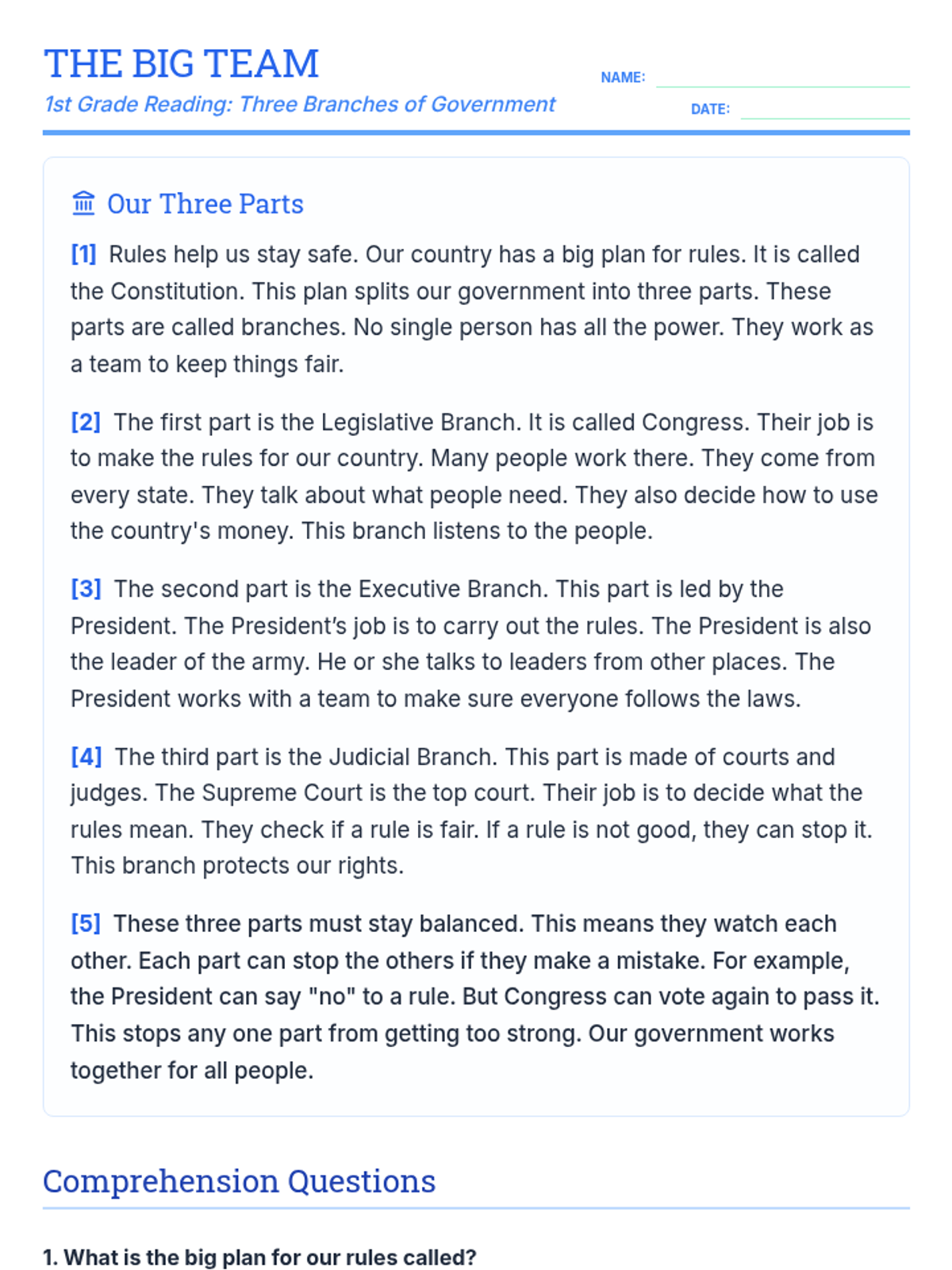
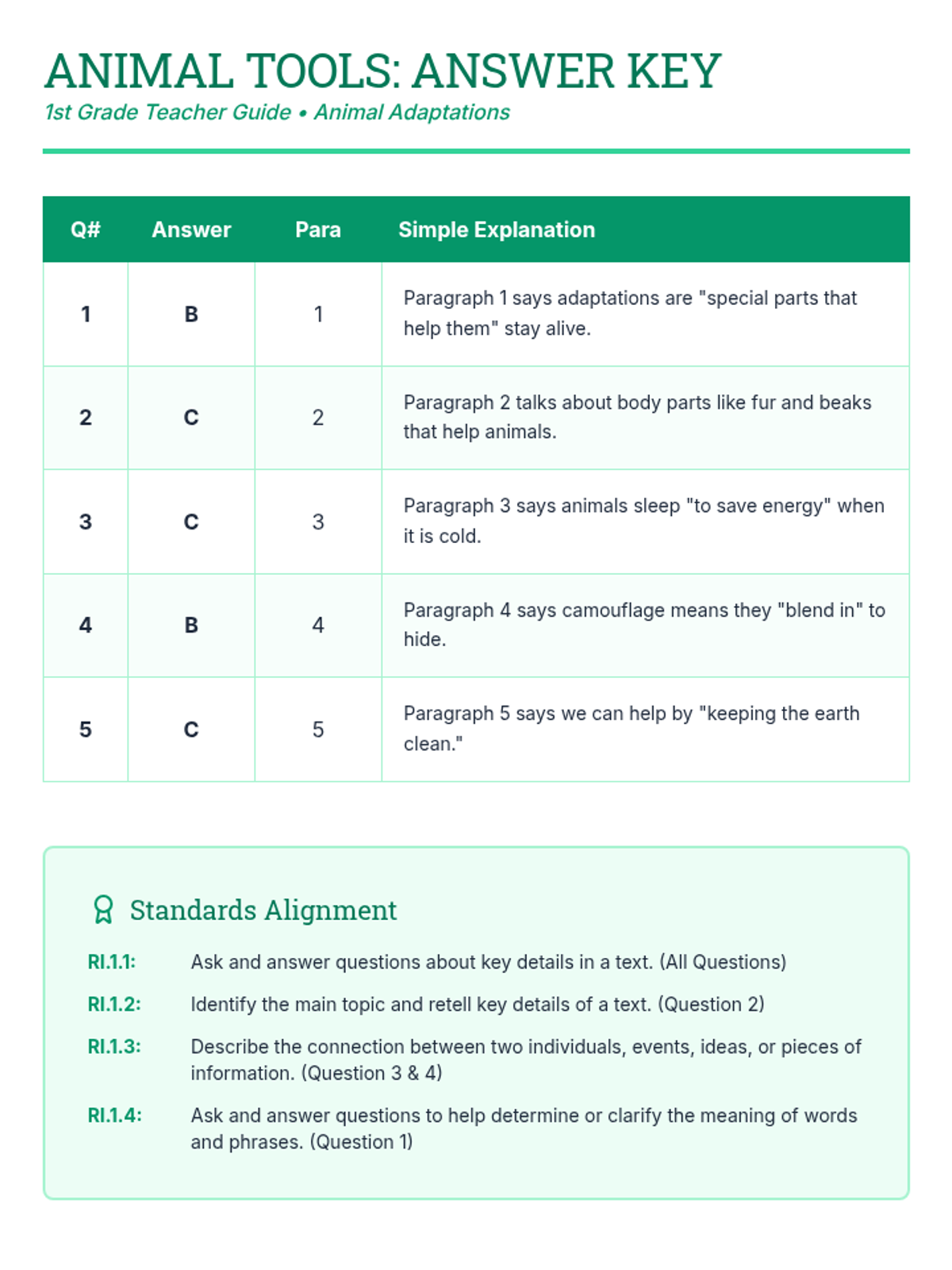
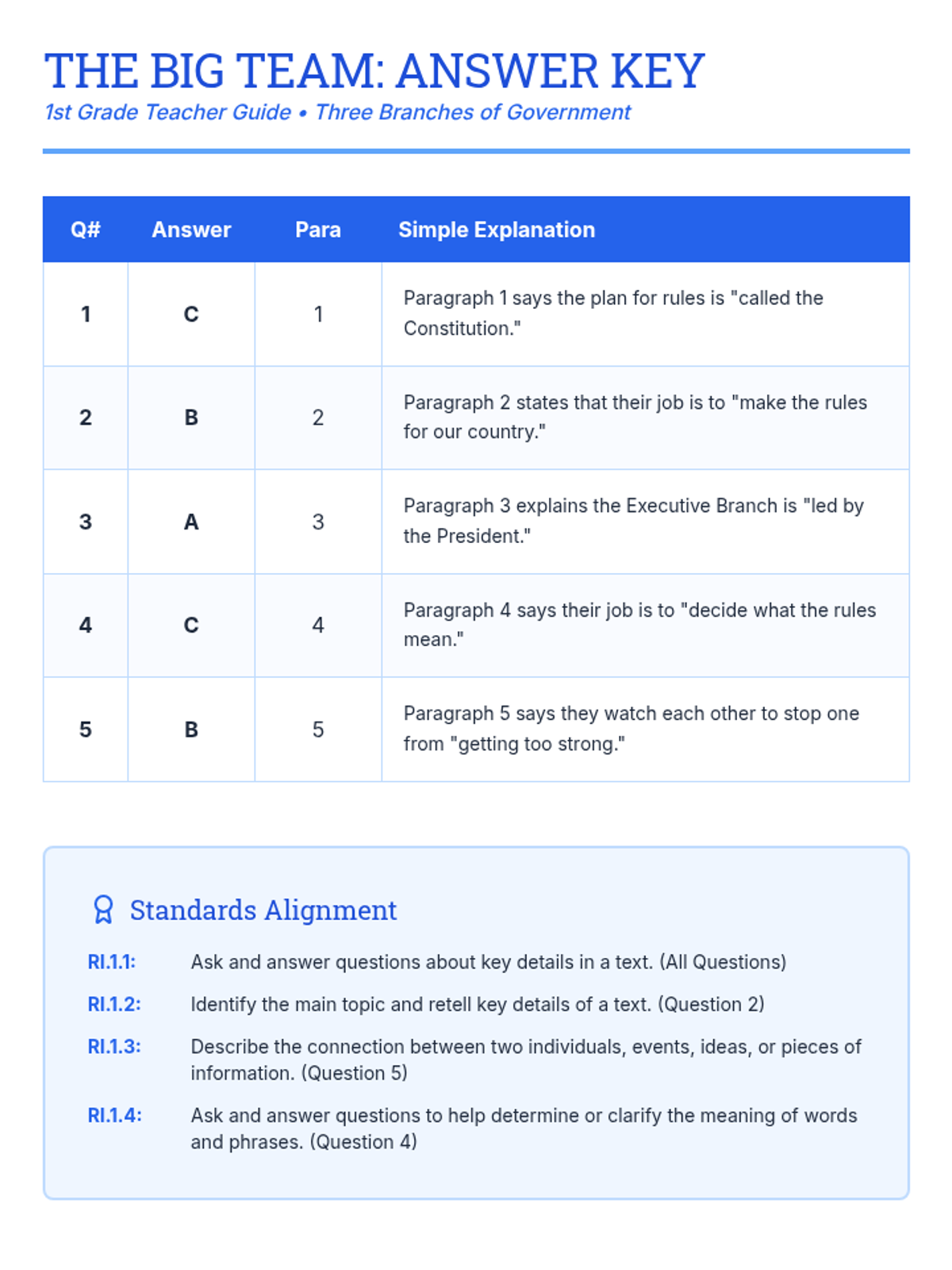
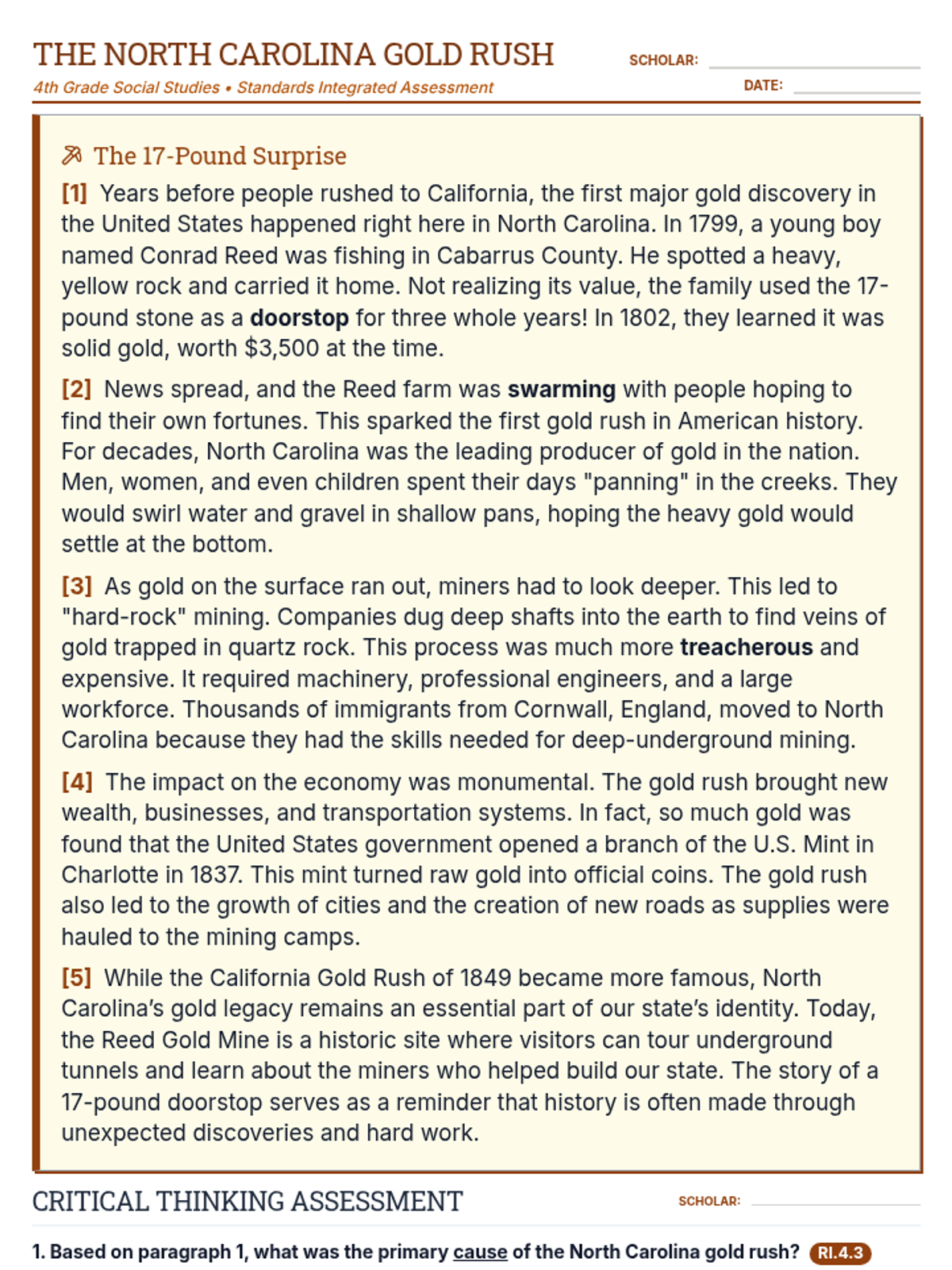
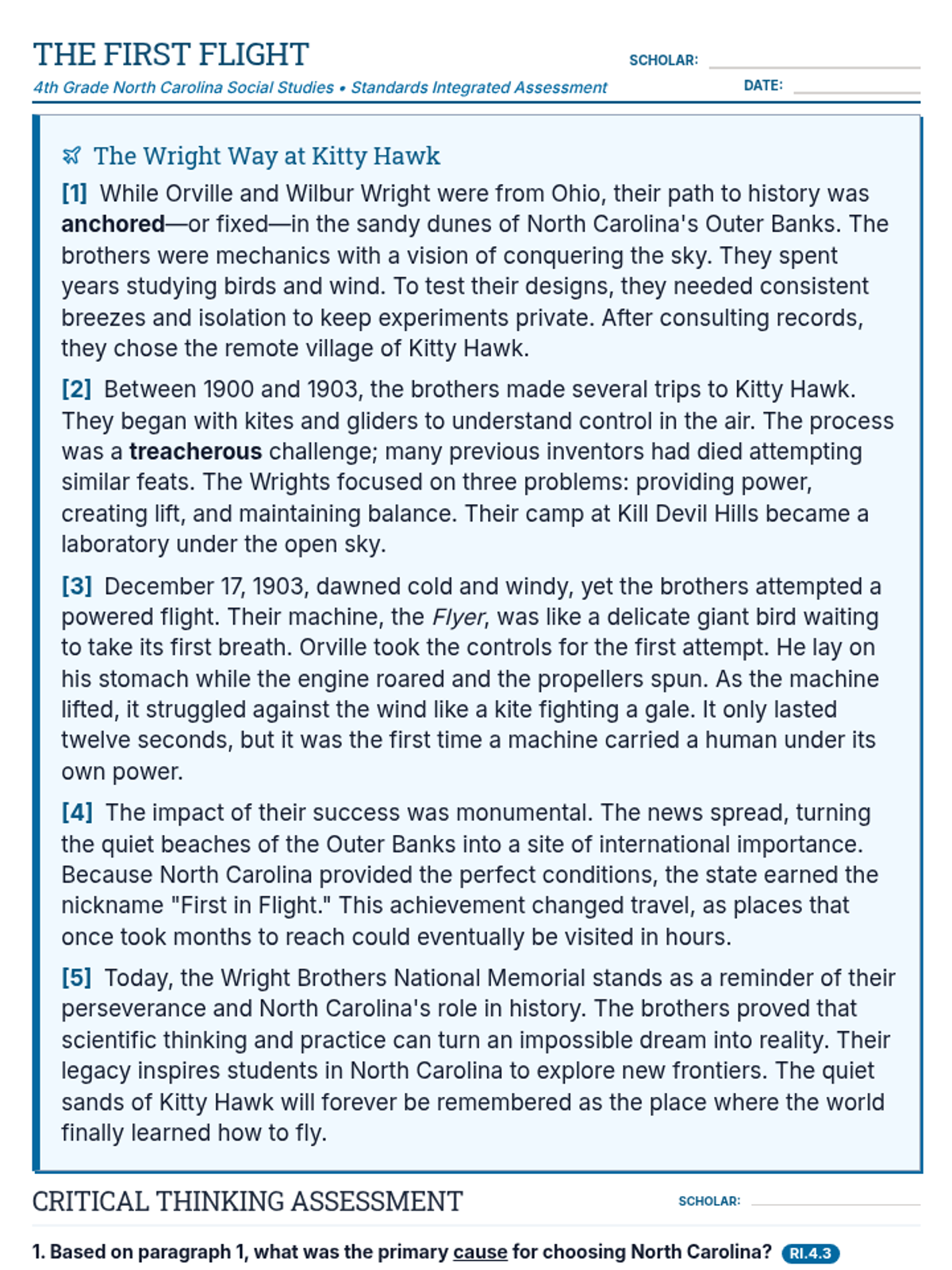
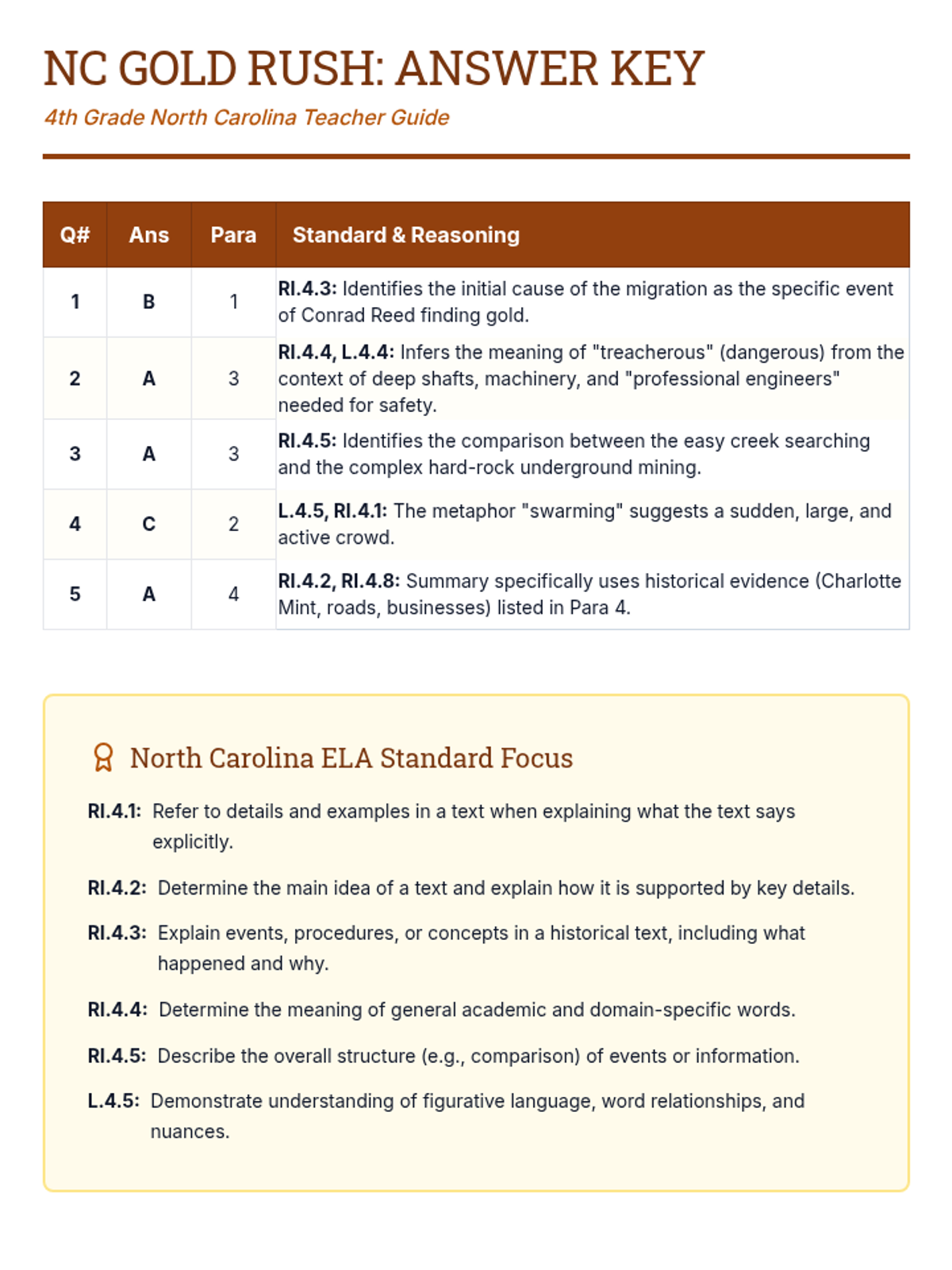
A comprehensive reading comprehension lesson focusing on RI.1, RI.2, RI.3, and RI.4 standards through the lenses of Animal Adaptations and the Three Branches of Government.
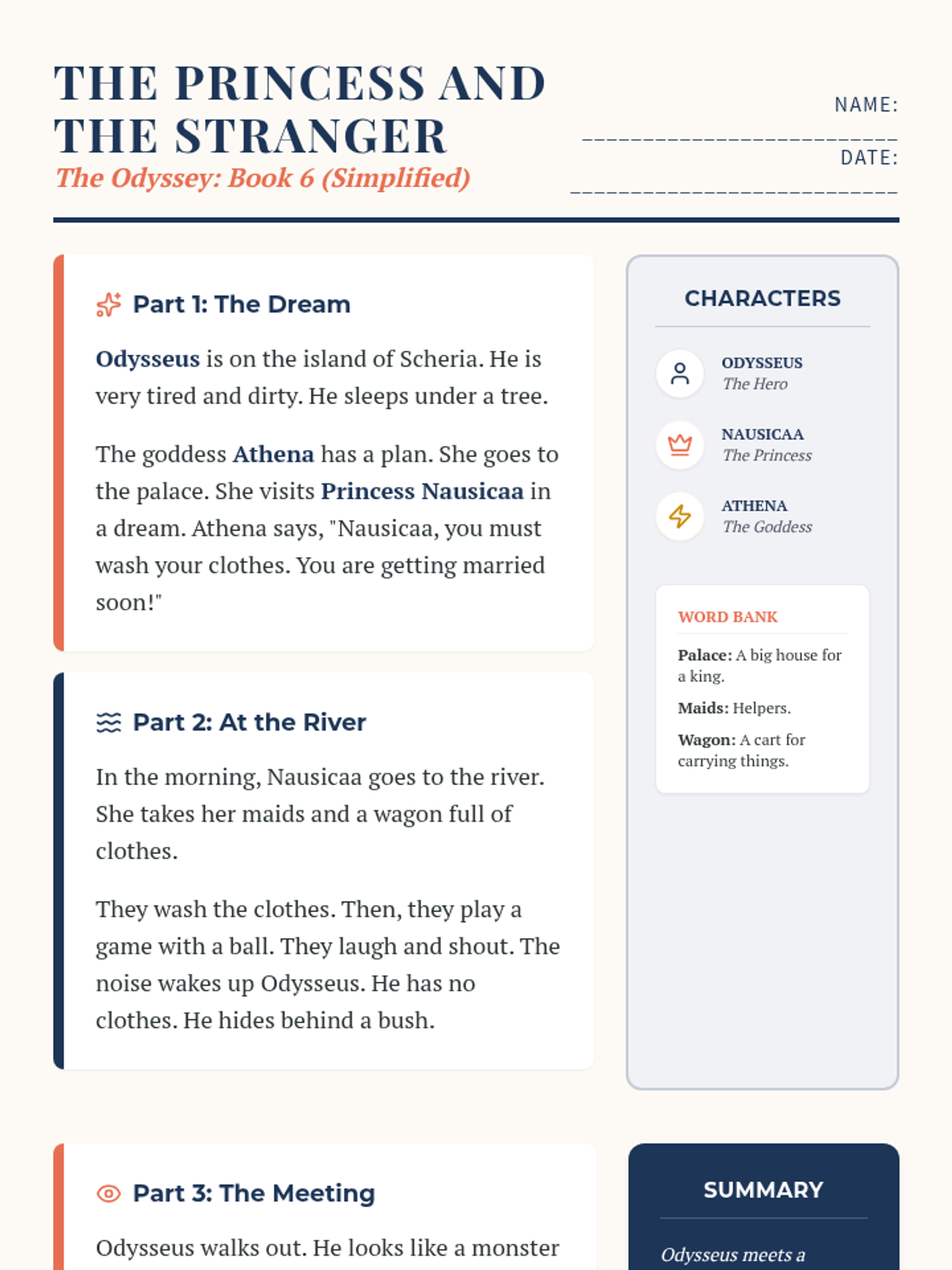
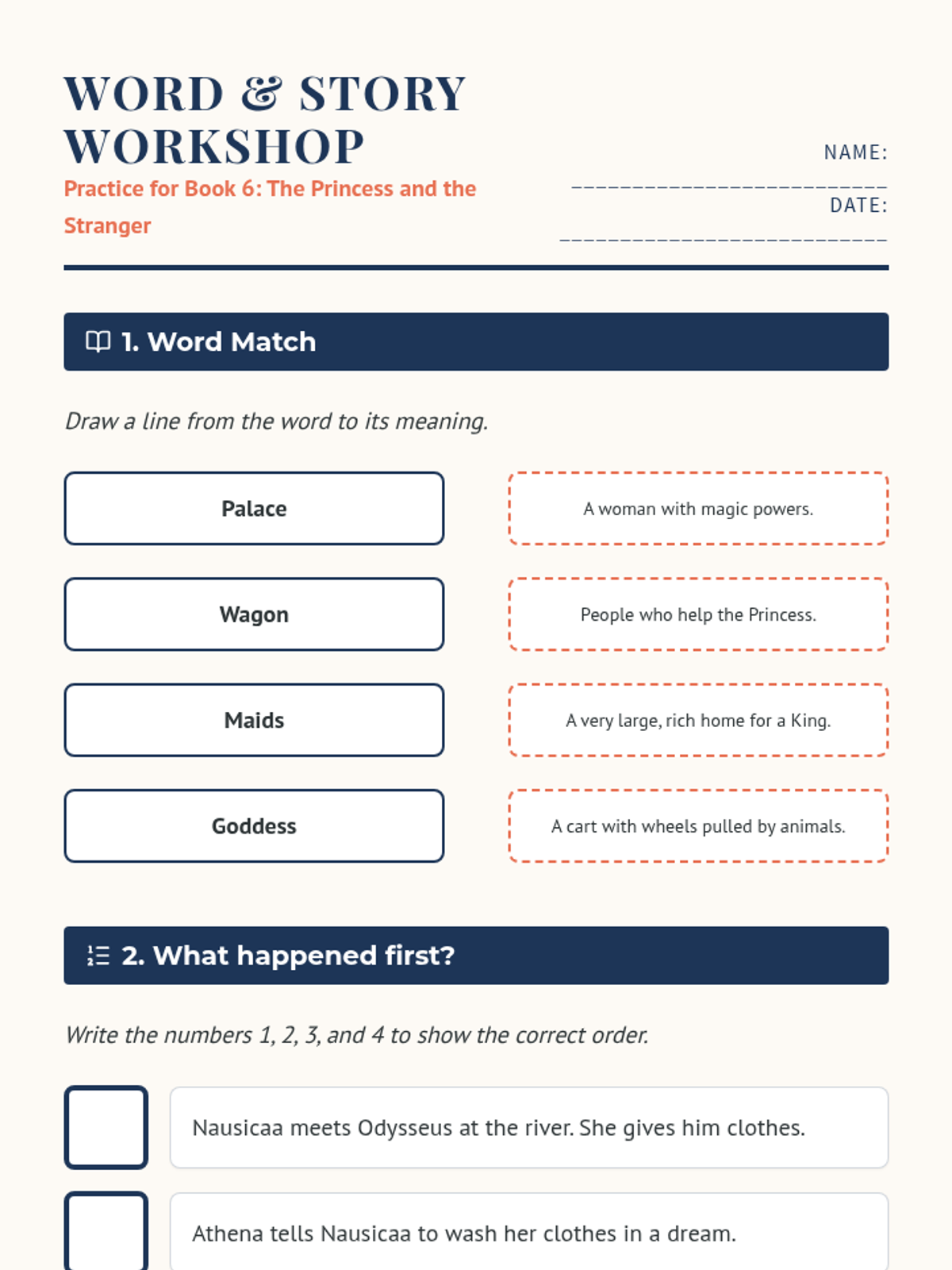
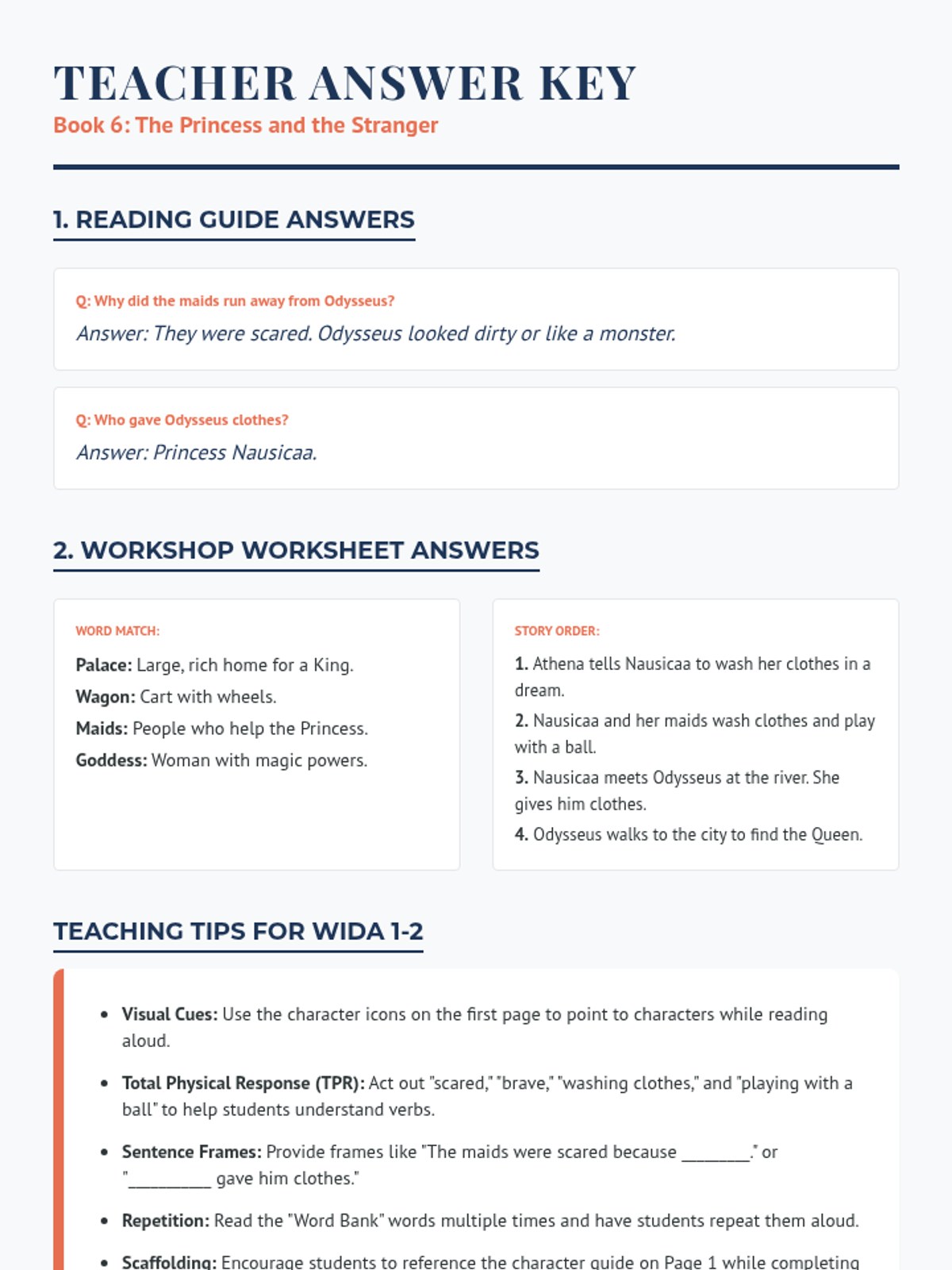
A simplified exploration of Book 6 of Homer's Odyssey, designed for WIDA Level 1-2 ELL students. The lesson focuses on key characters, basic plot sequencing, and essential vocabulary through a high-interest narrative.
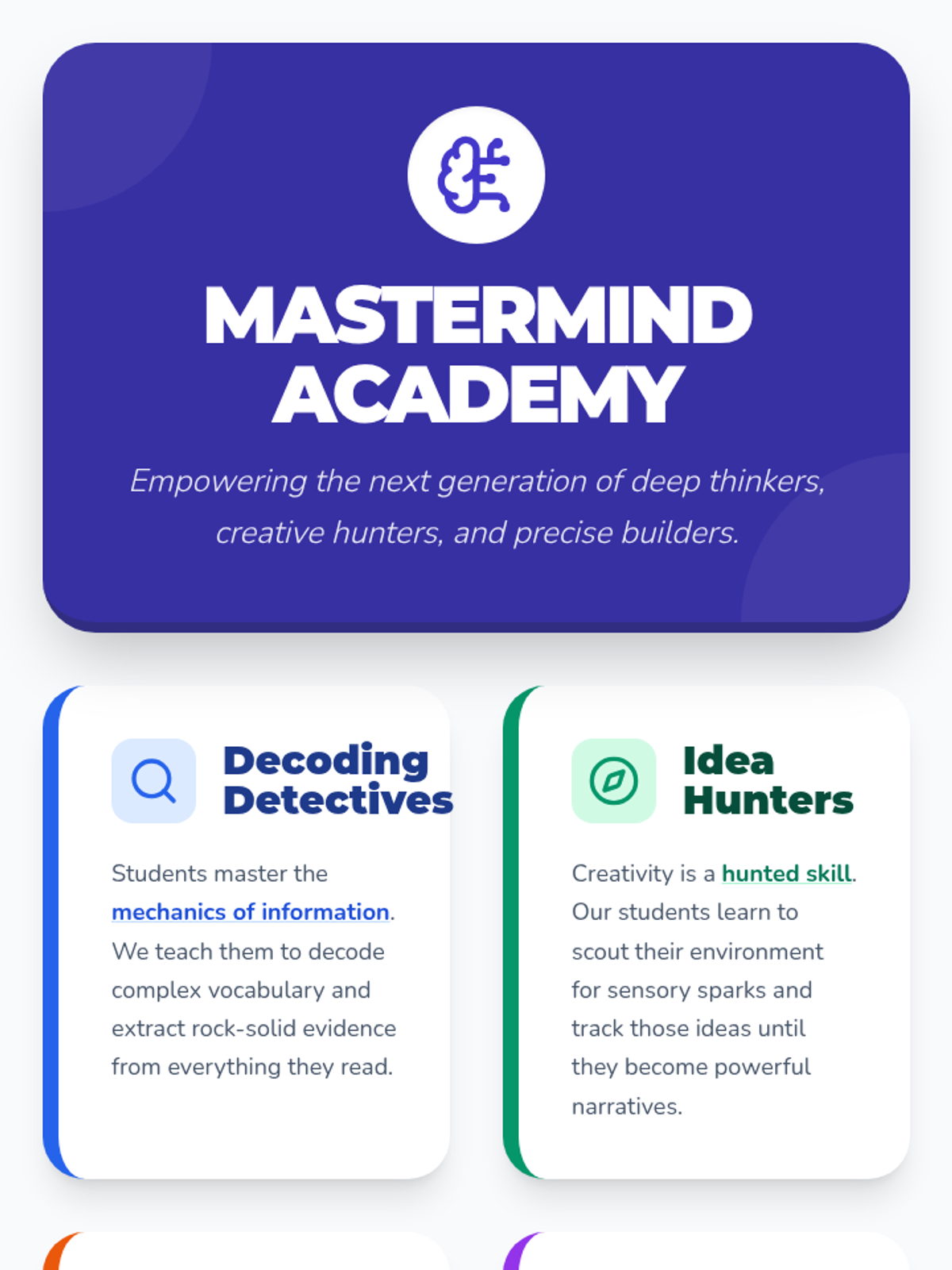
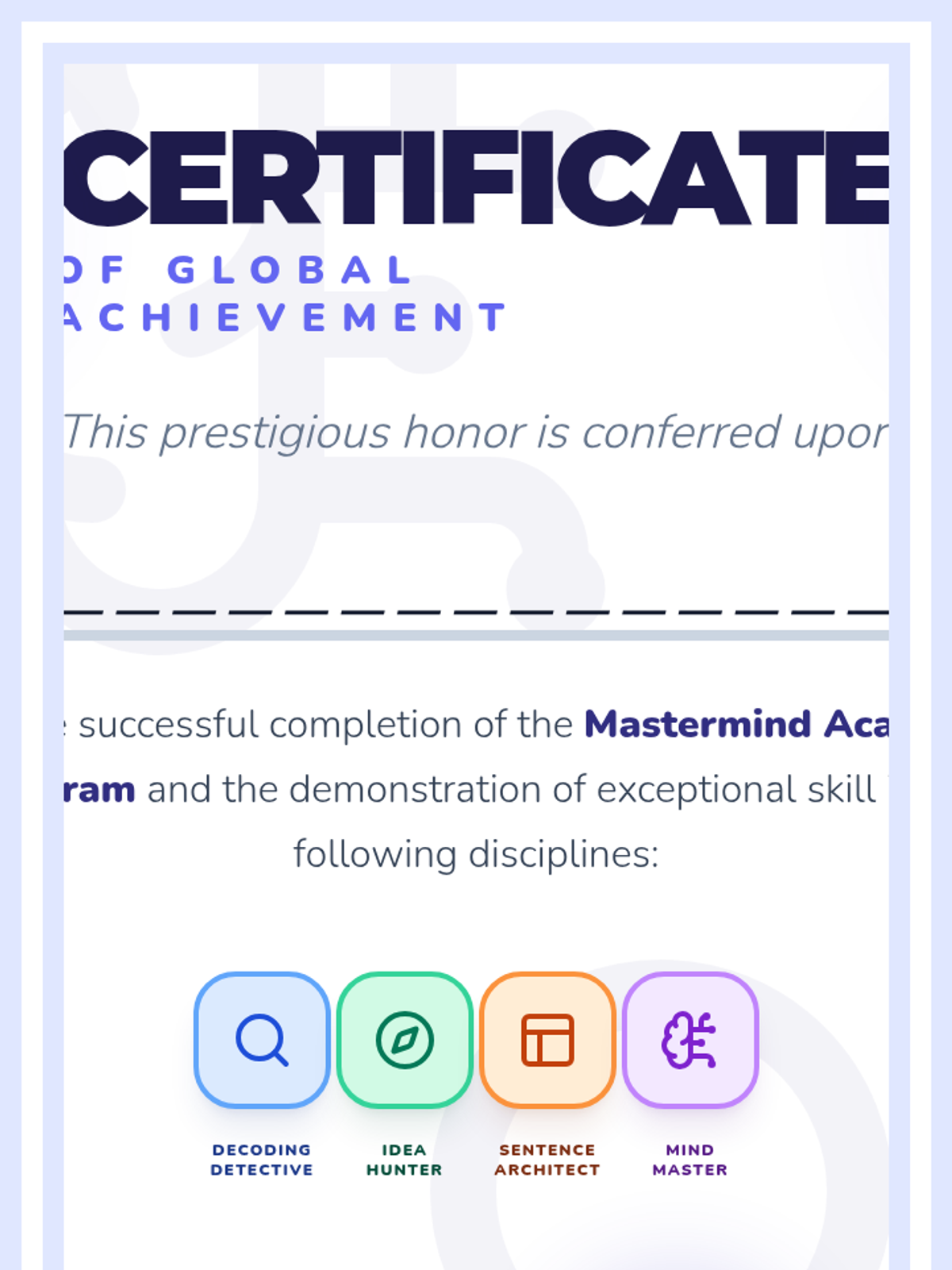
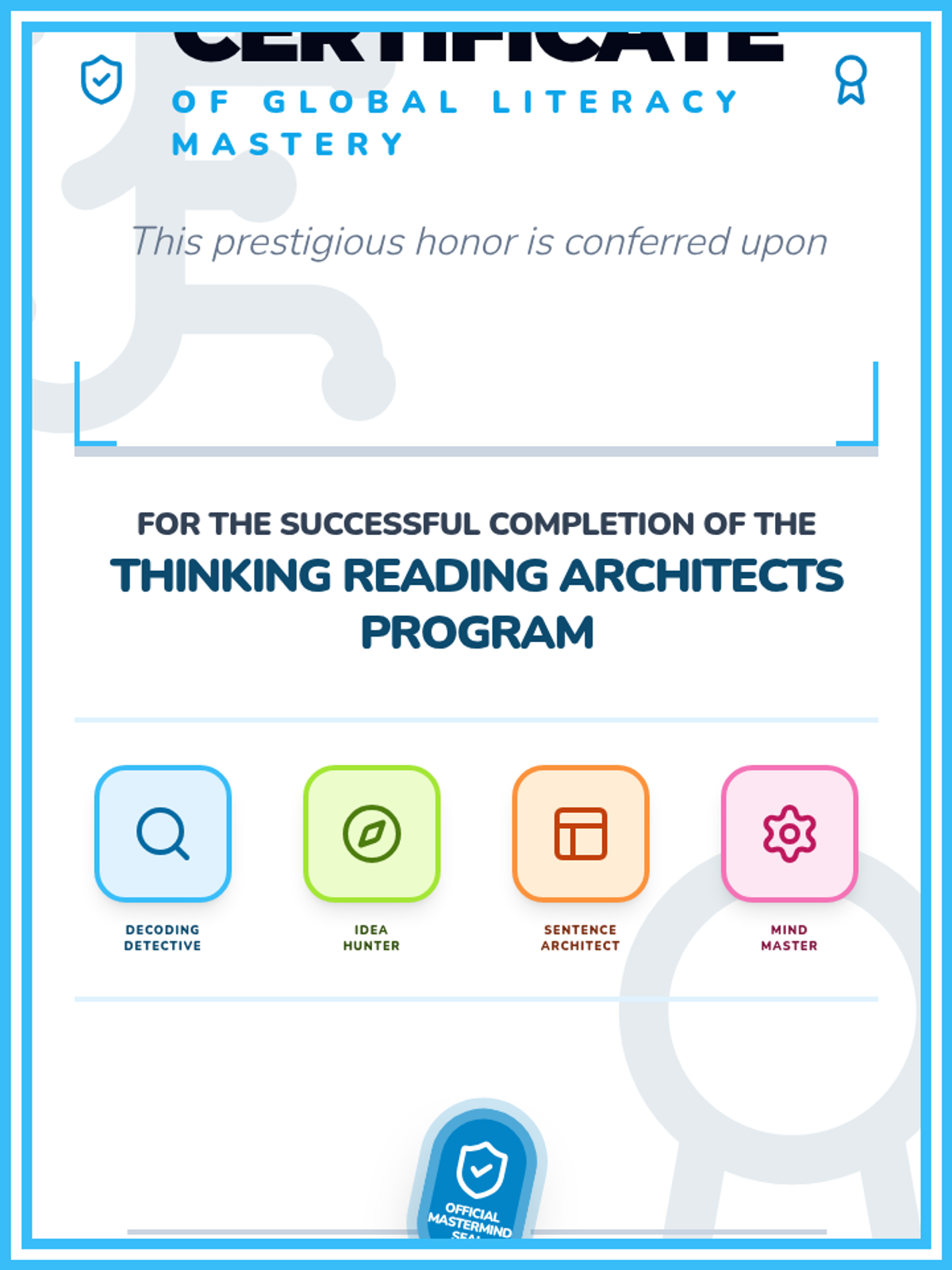
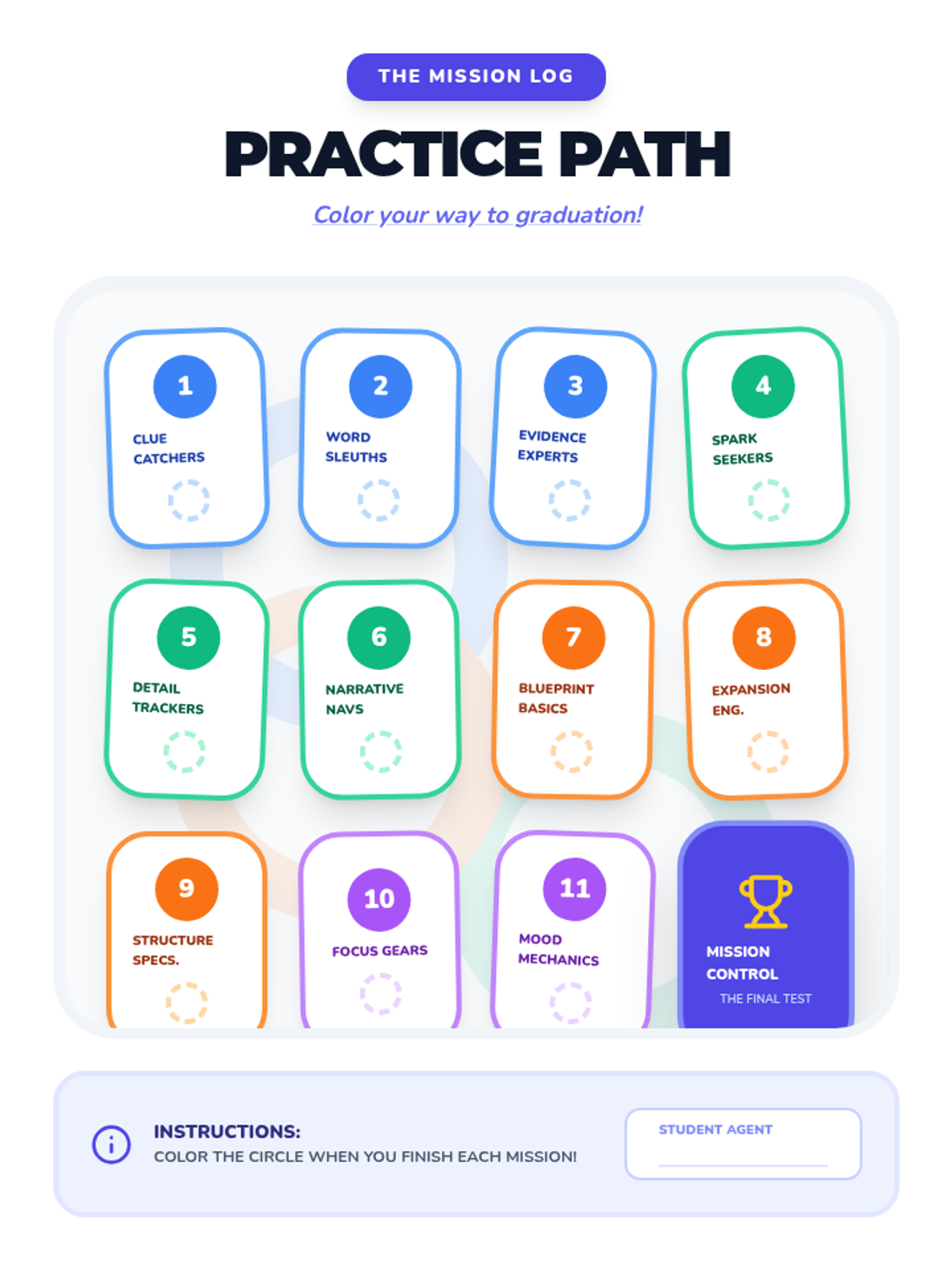
Program-wide materials for the Mastermind Academy, including the parent information brochure and the student graduation certificate.
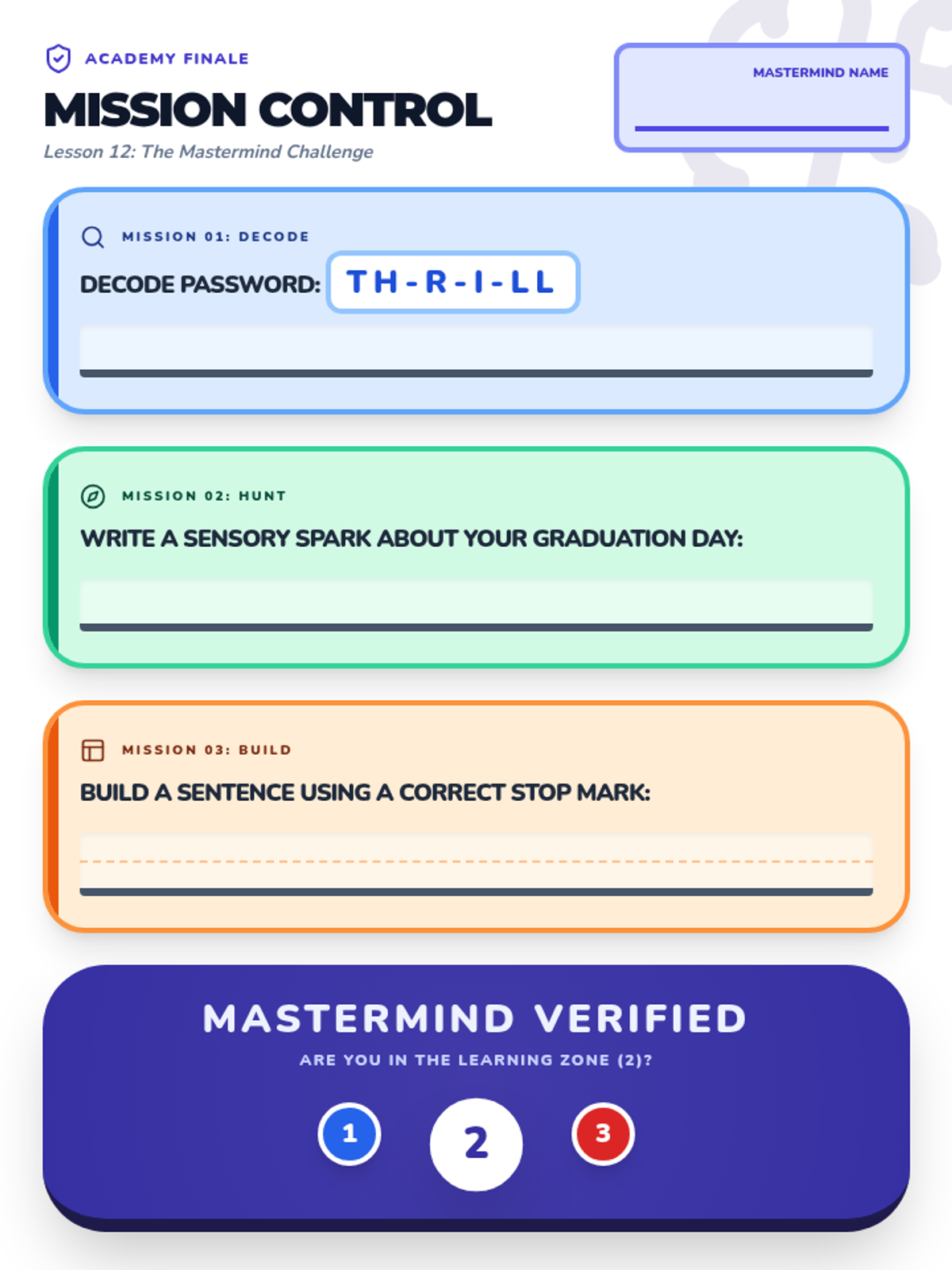
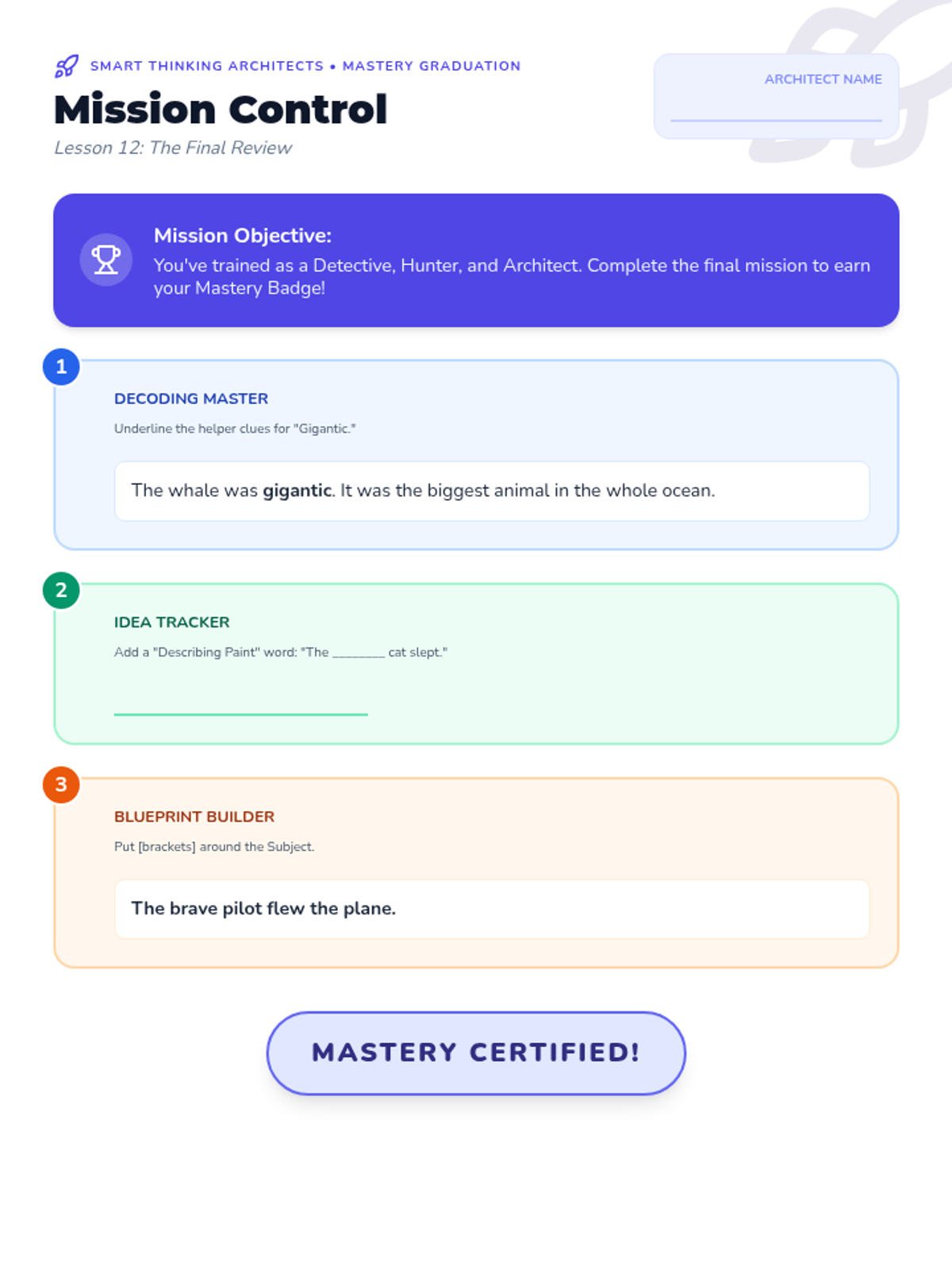
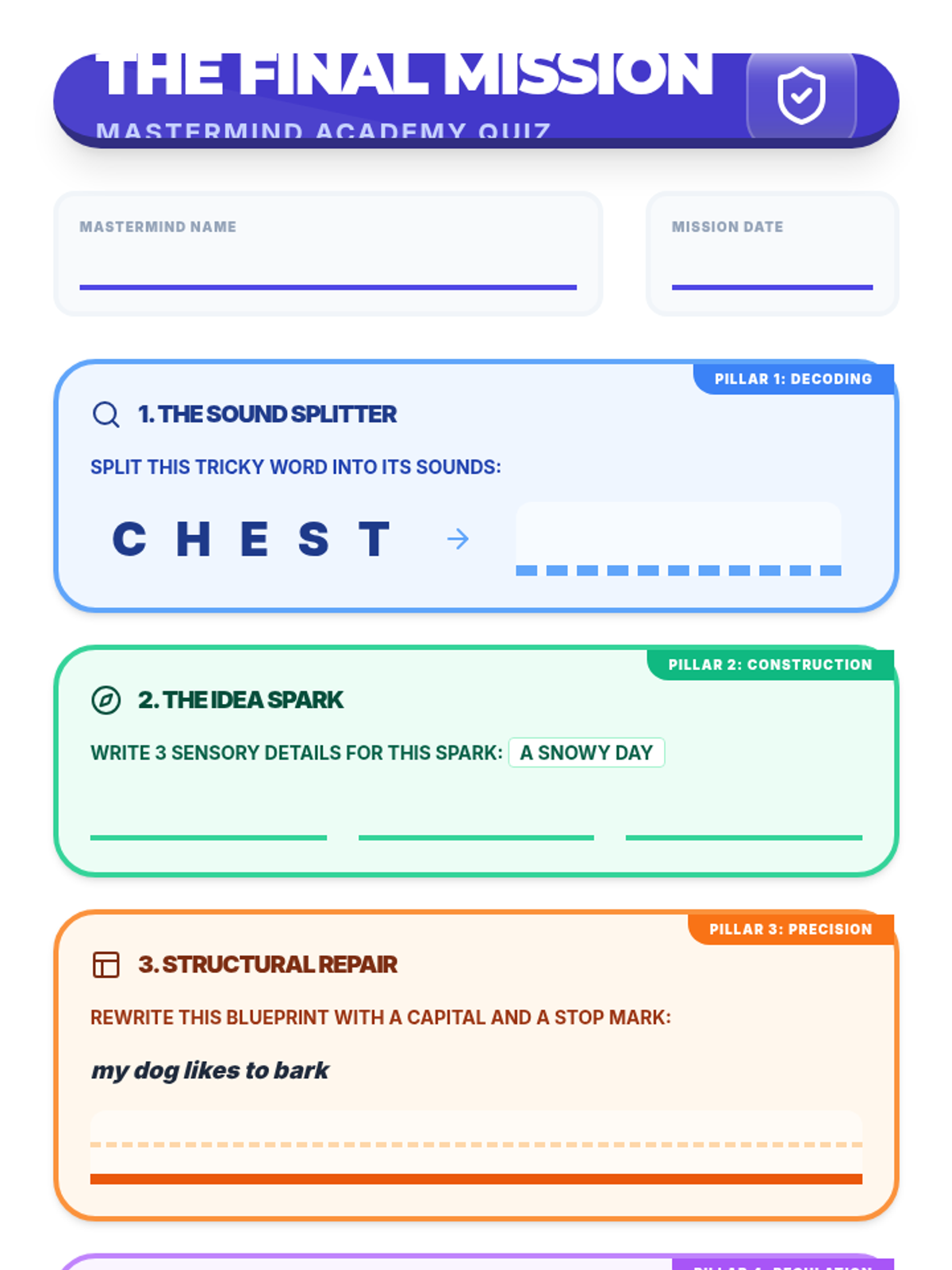
A final review and celebration of the skills learned throughout the Mastermind Academy program.
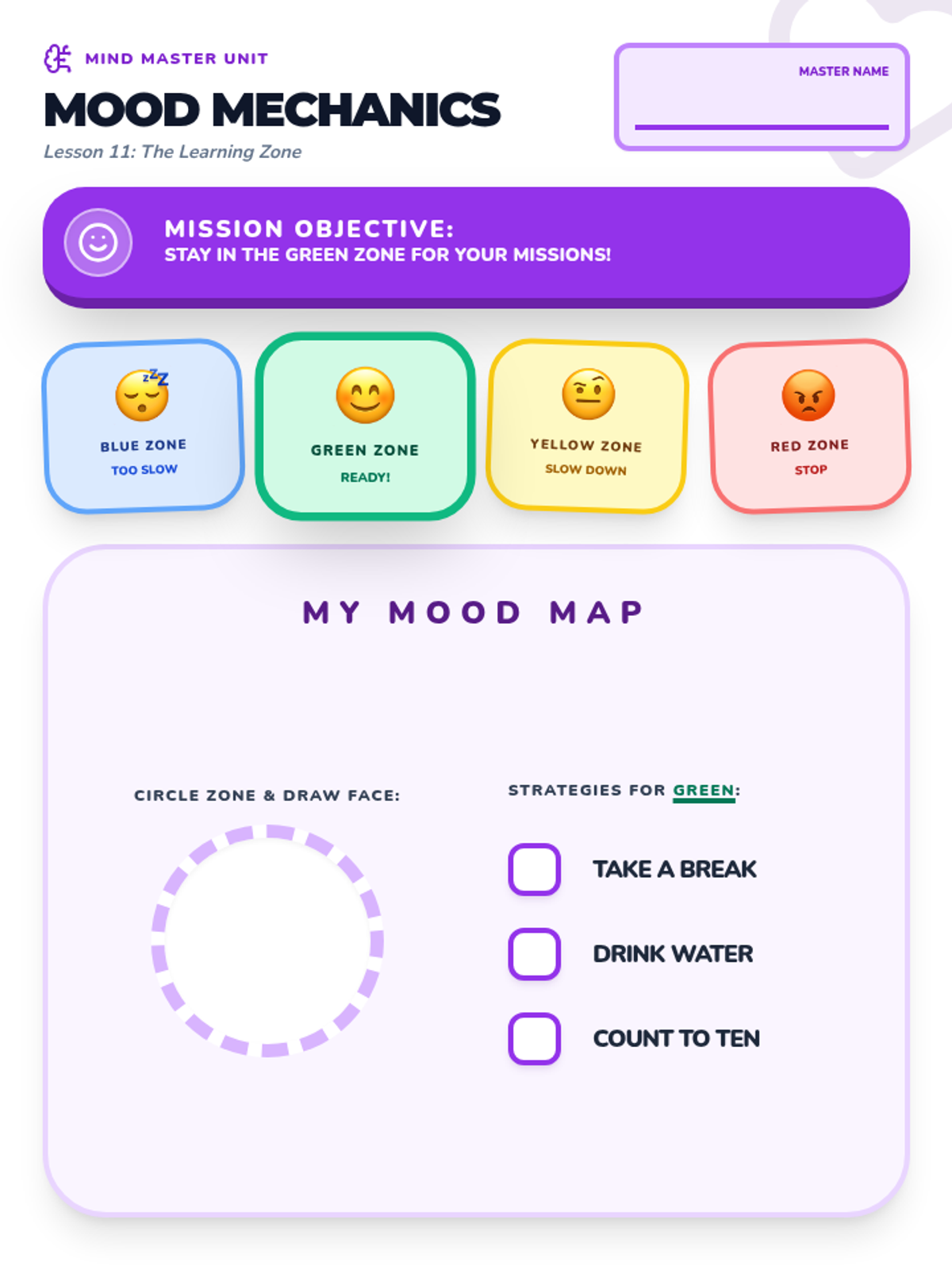
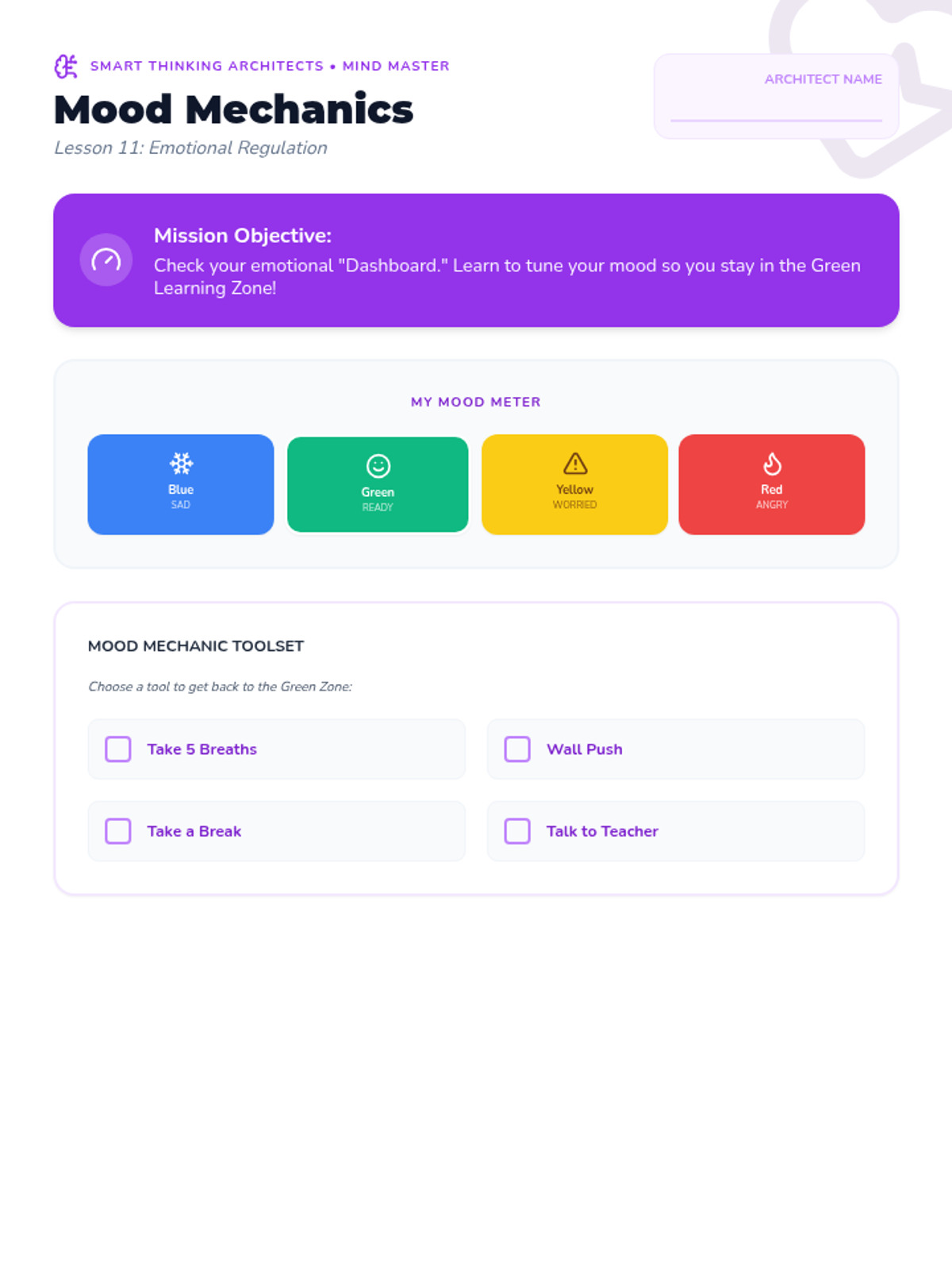
Students learn to identify and regulate their emotions to stay in the "learning zone."
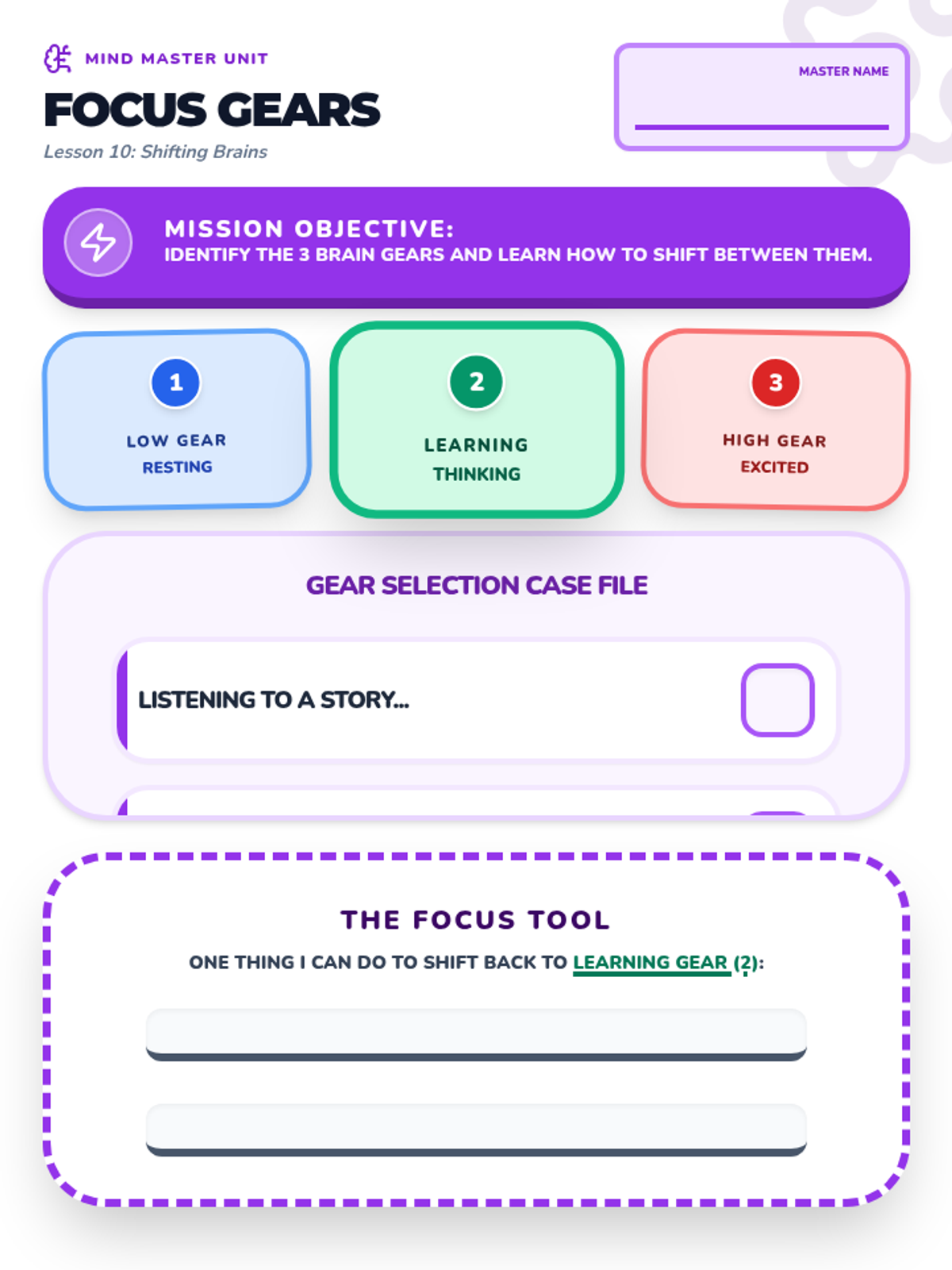
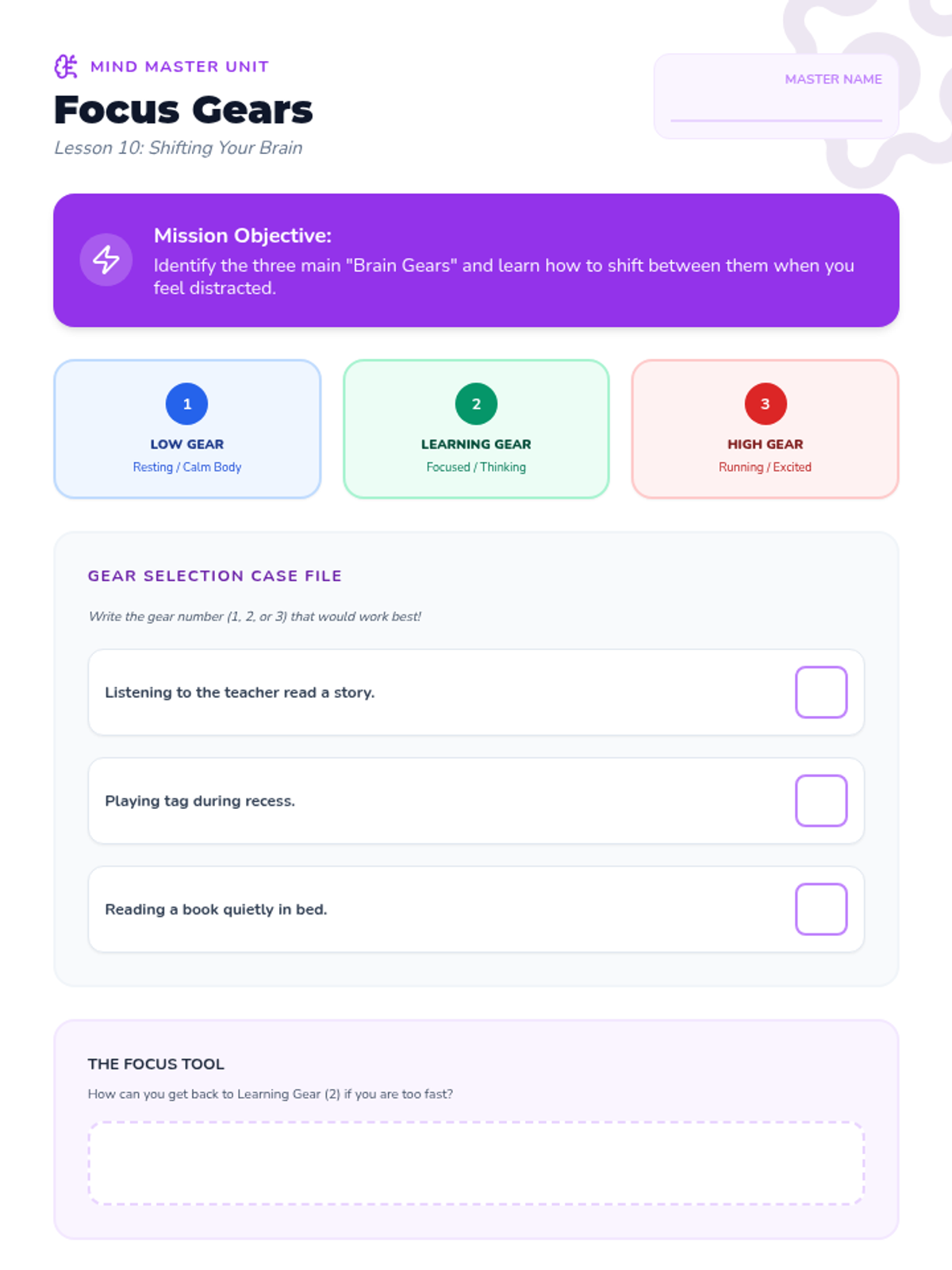
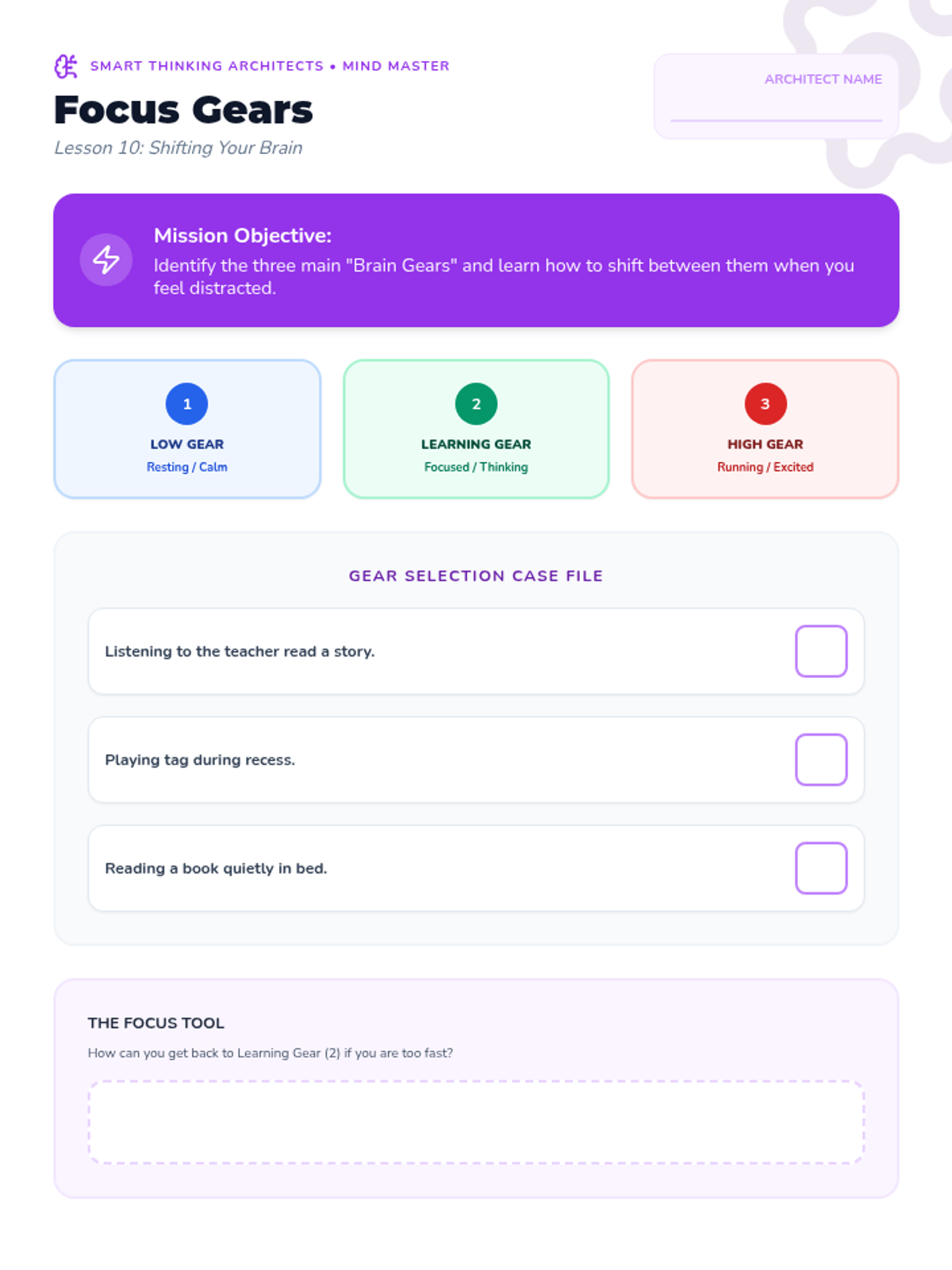
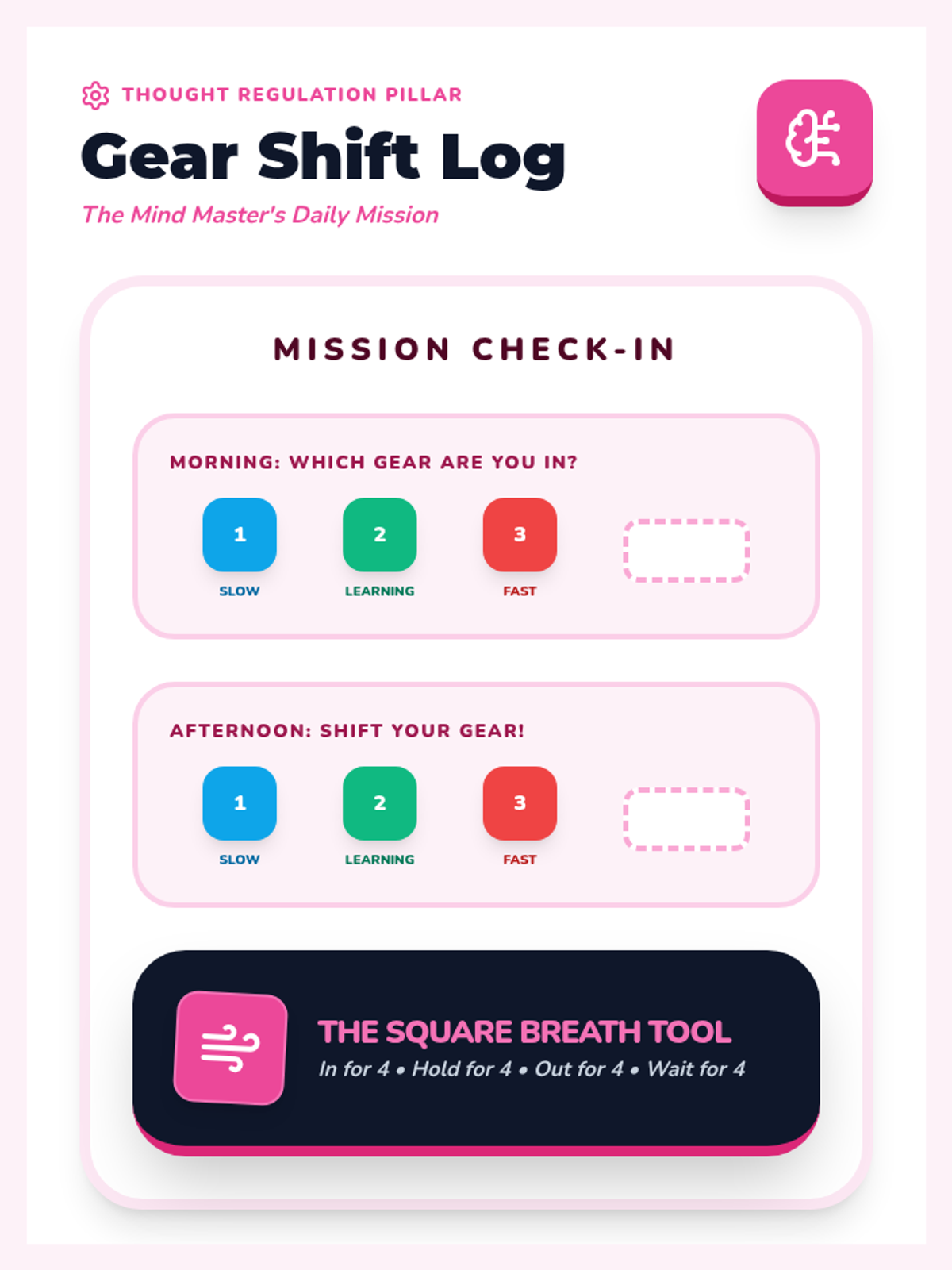
Mind masters learn to switch their "brain gears" to focus on the task at hand and ignore distractions.
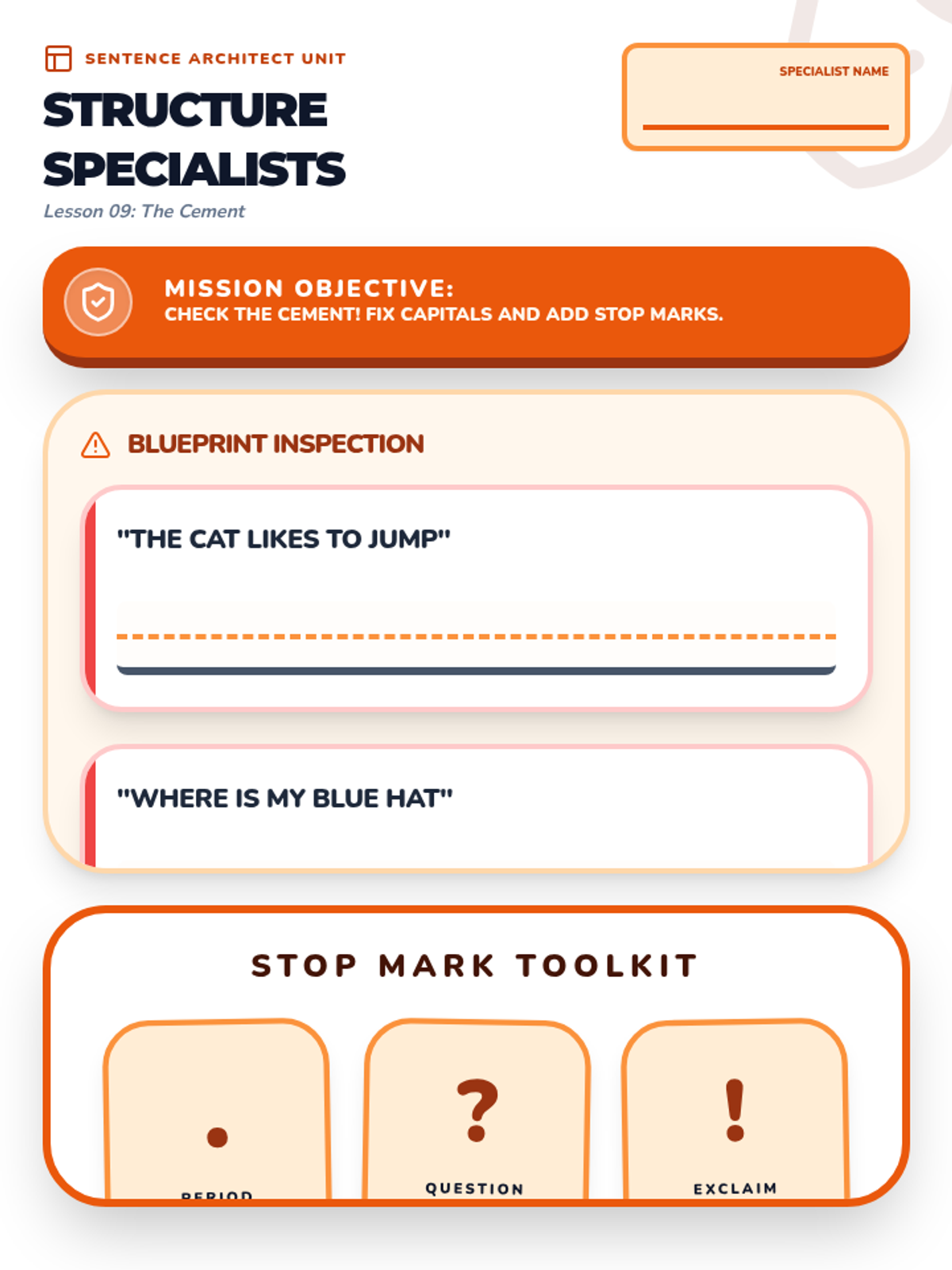
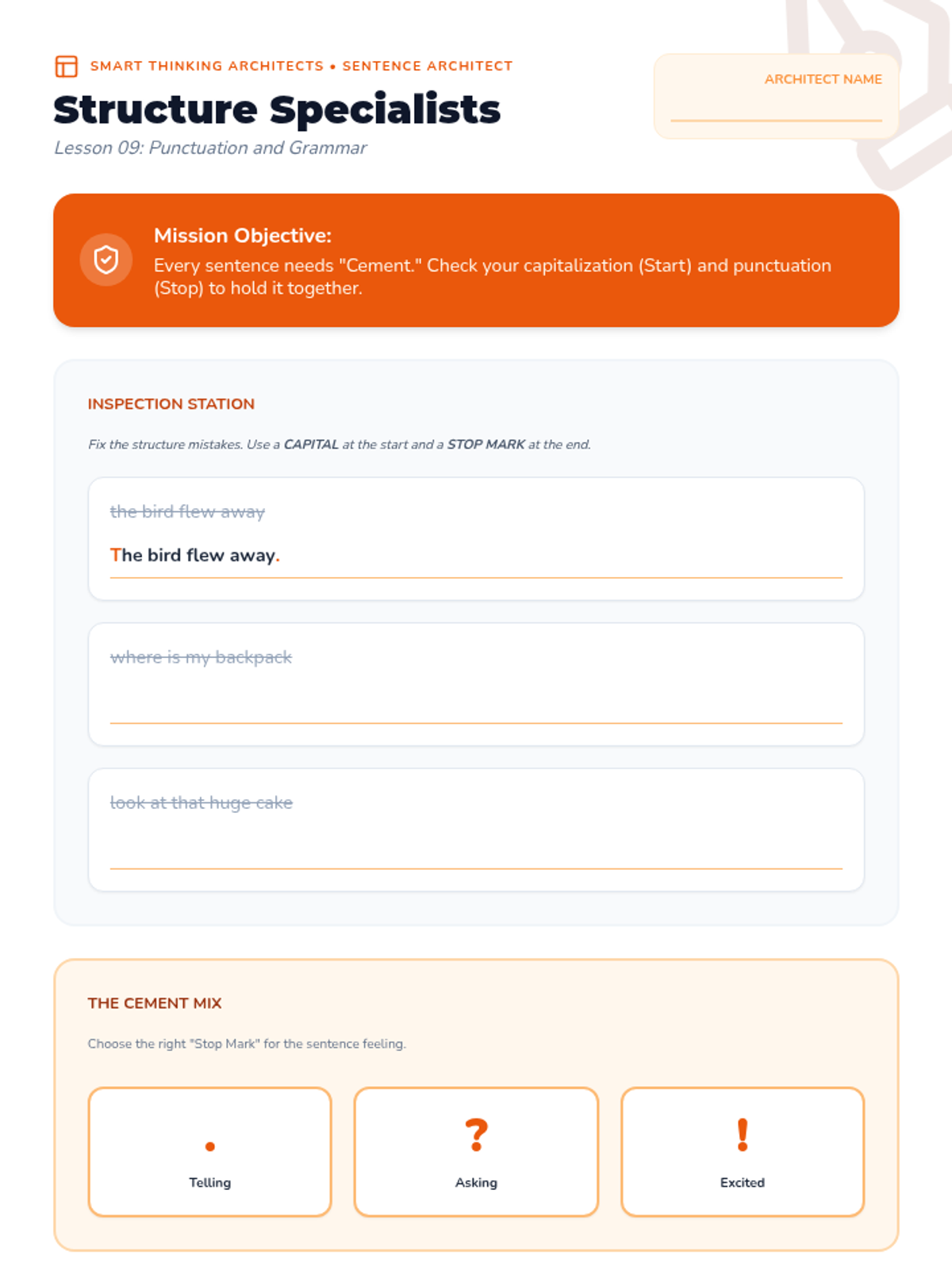
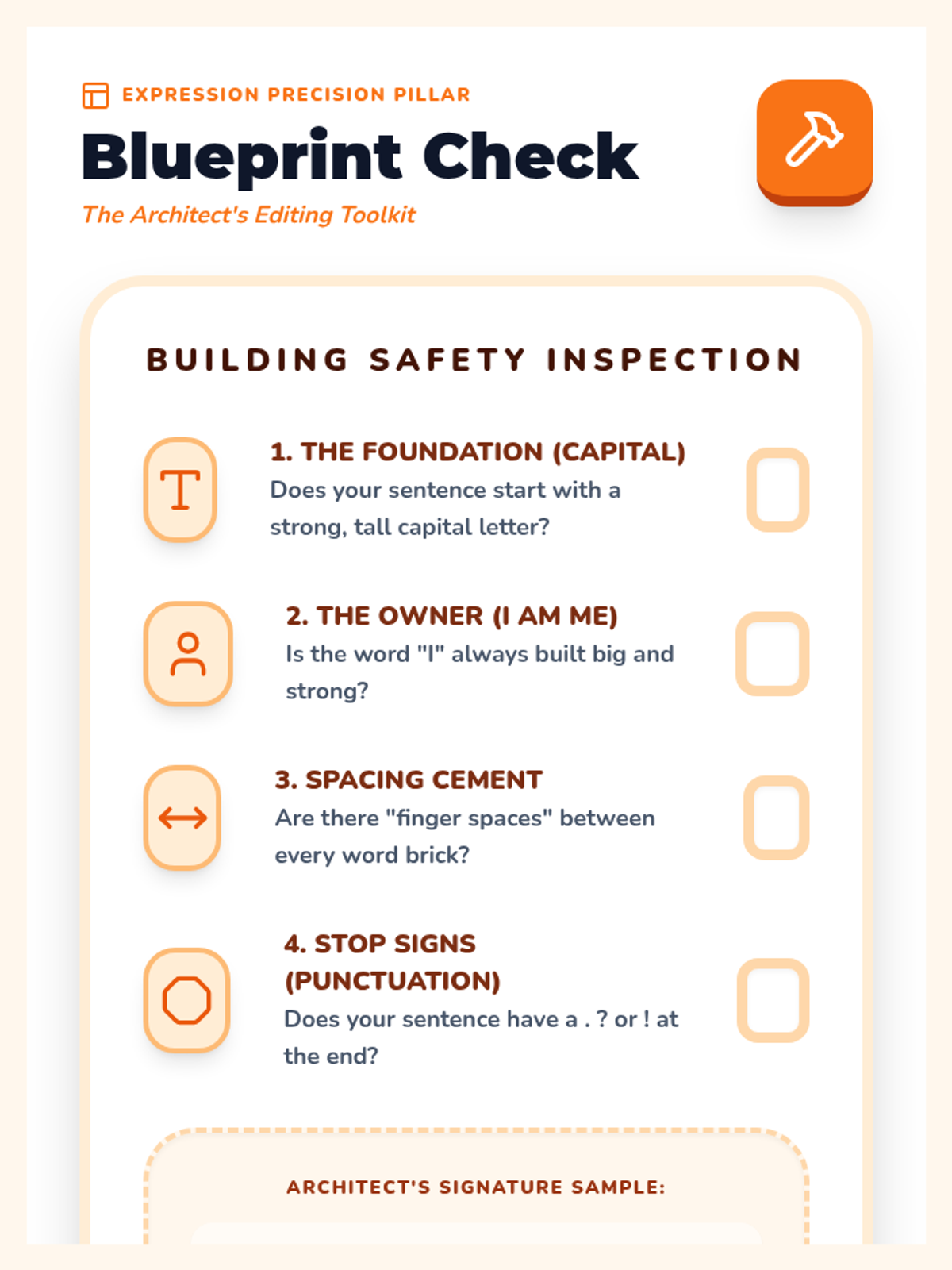
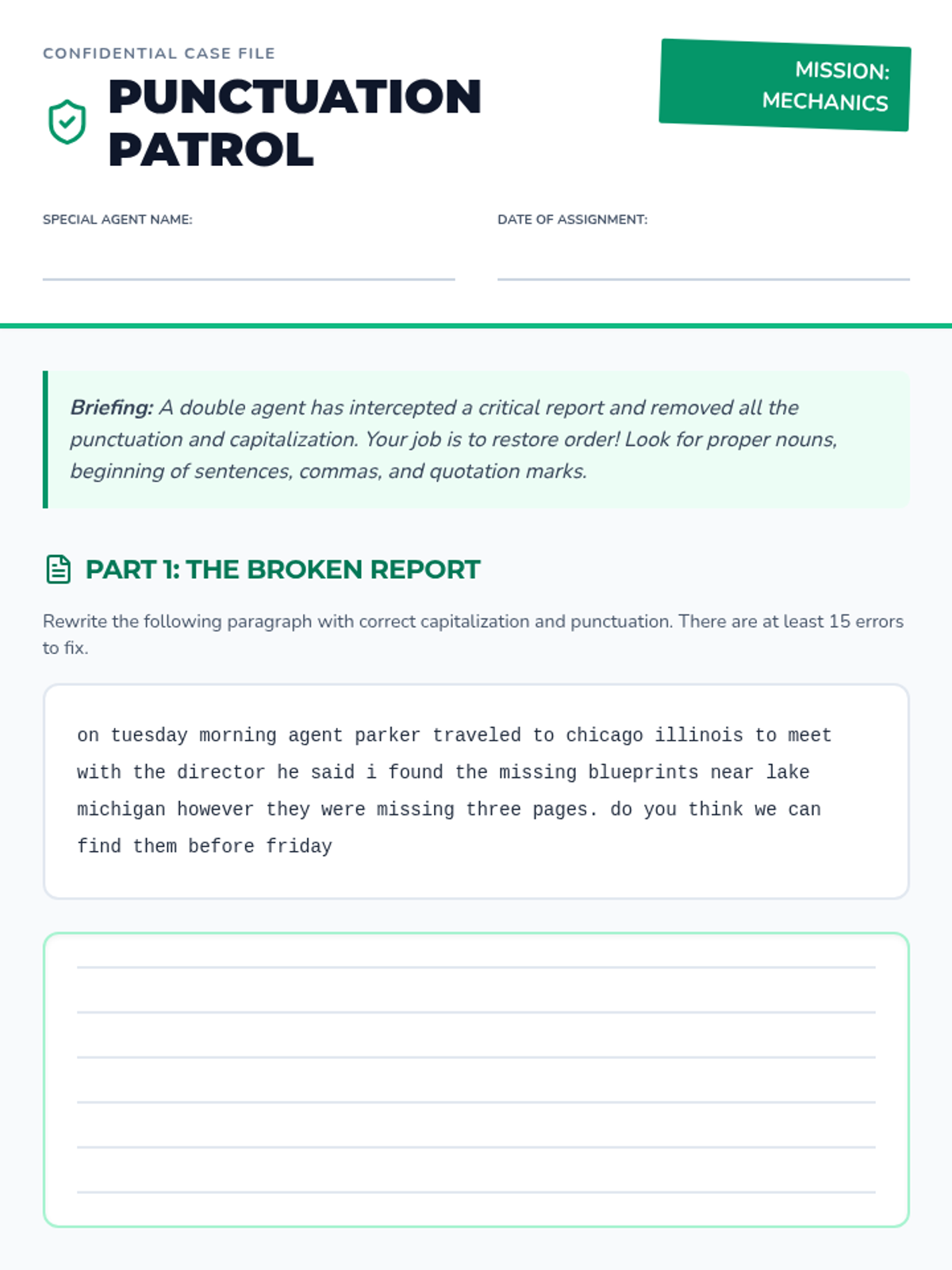
Specialists focus on the "cement" of writing: punctuation, capitalization, and grammar rules.
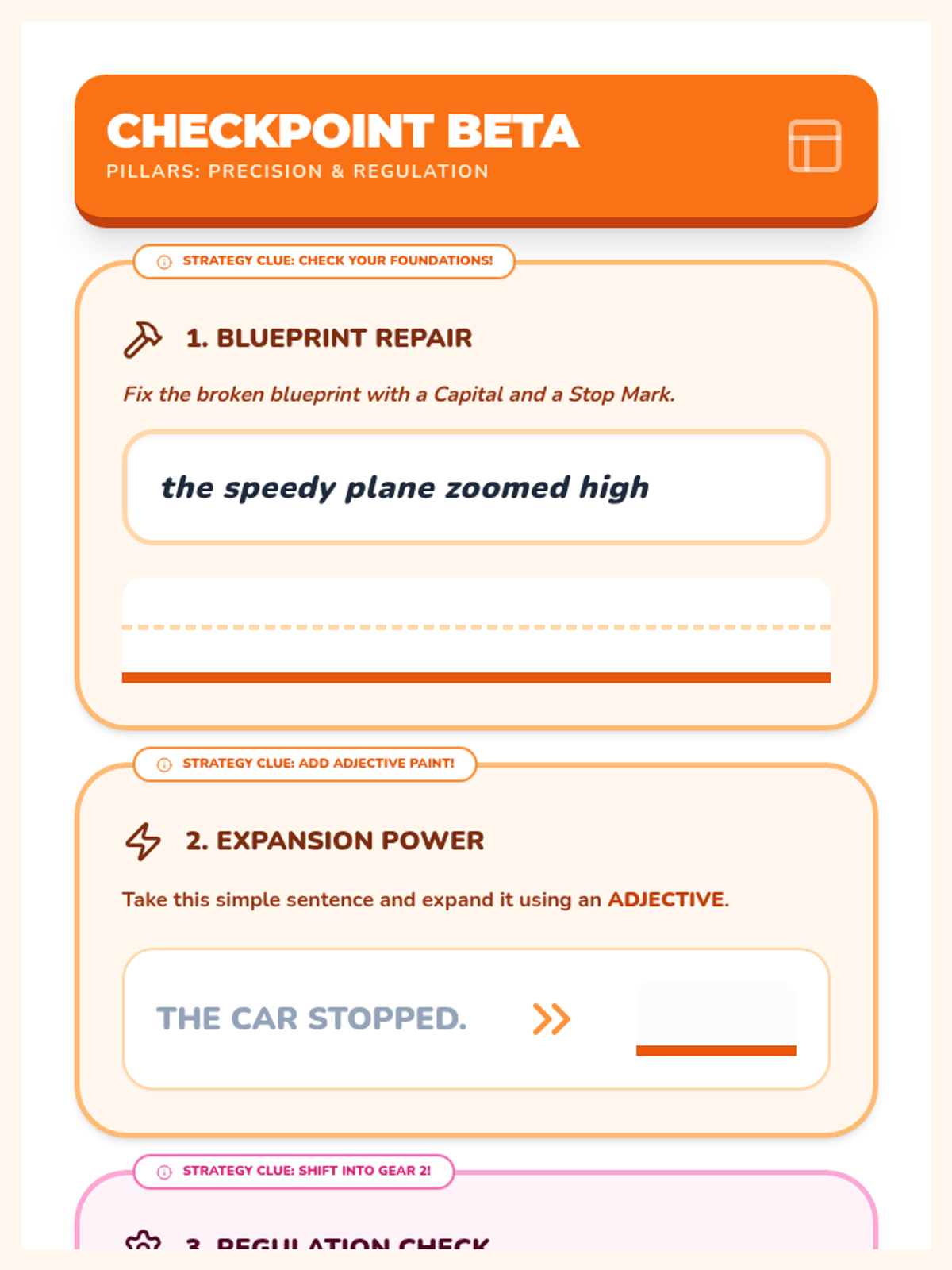
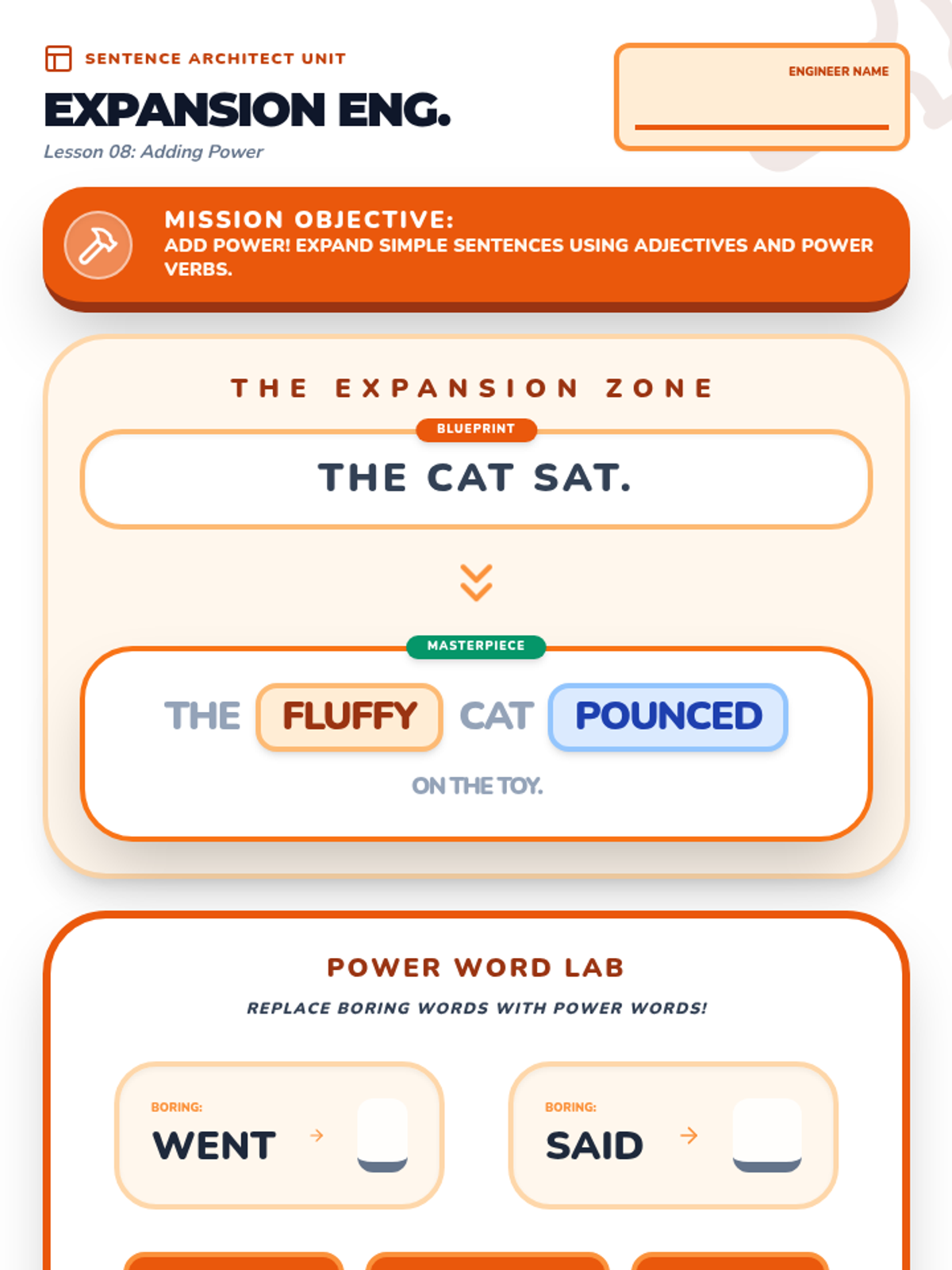
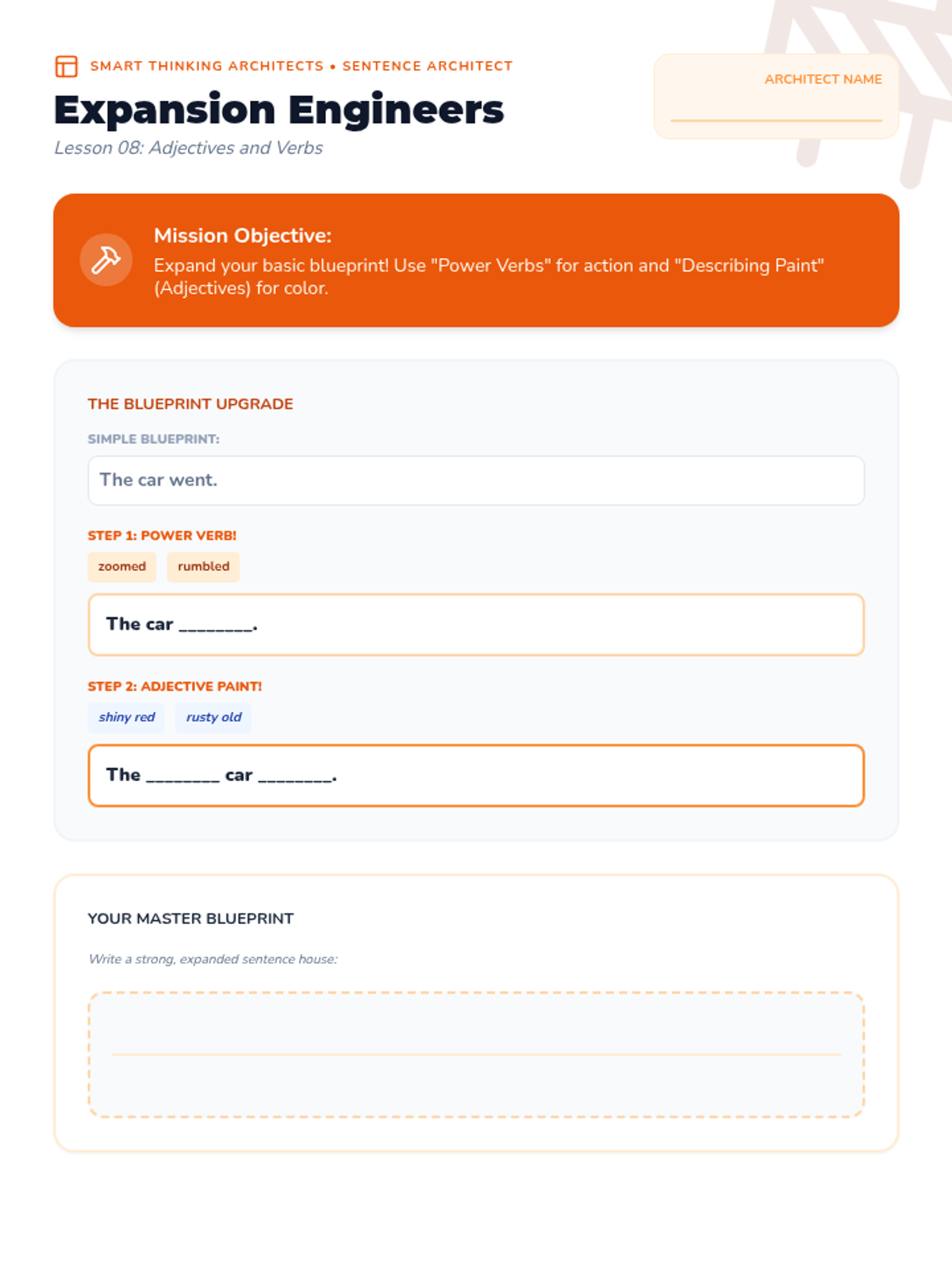
Engineers learn to expand their simple "blueprints" by adding descriptive adjectives and powerful verbs.
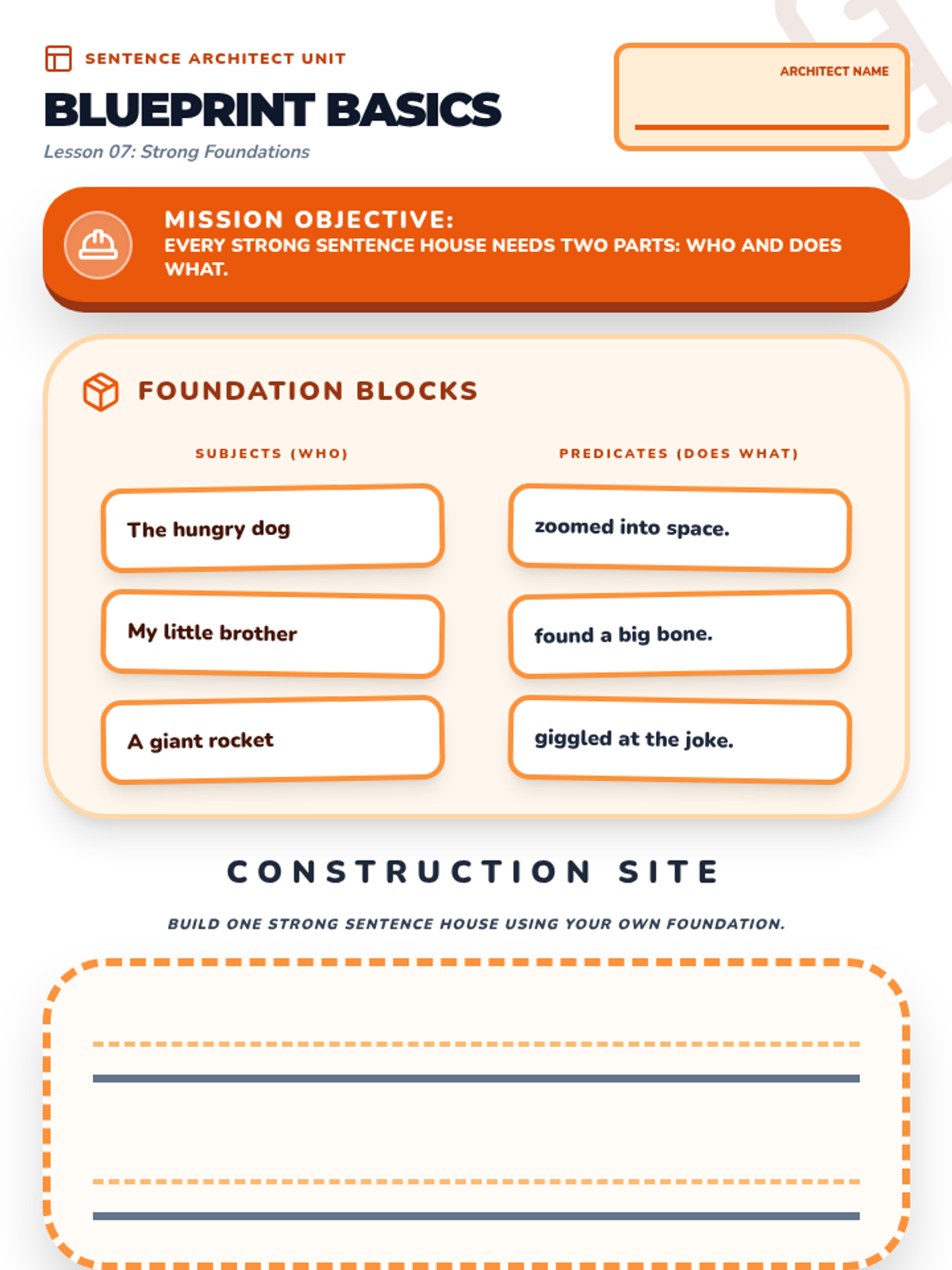
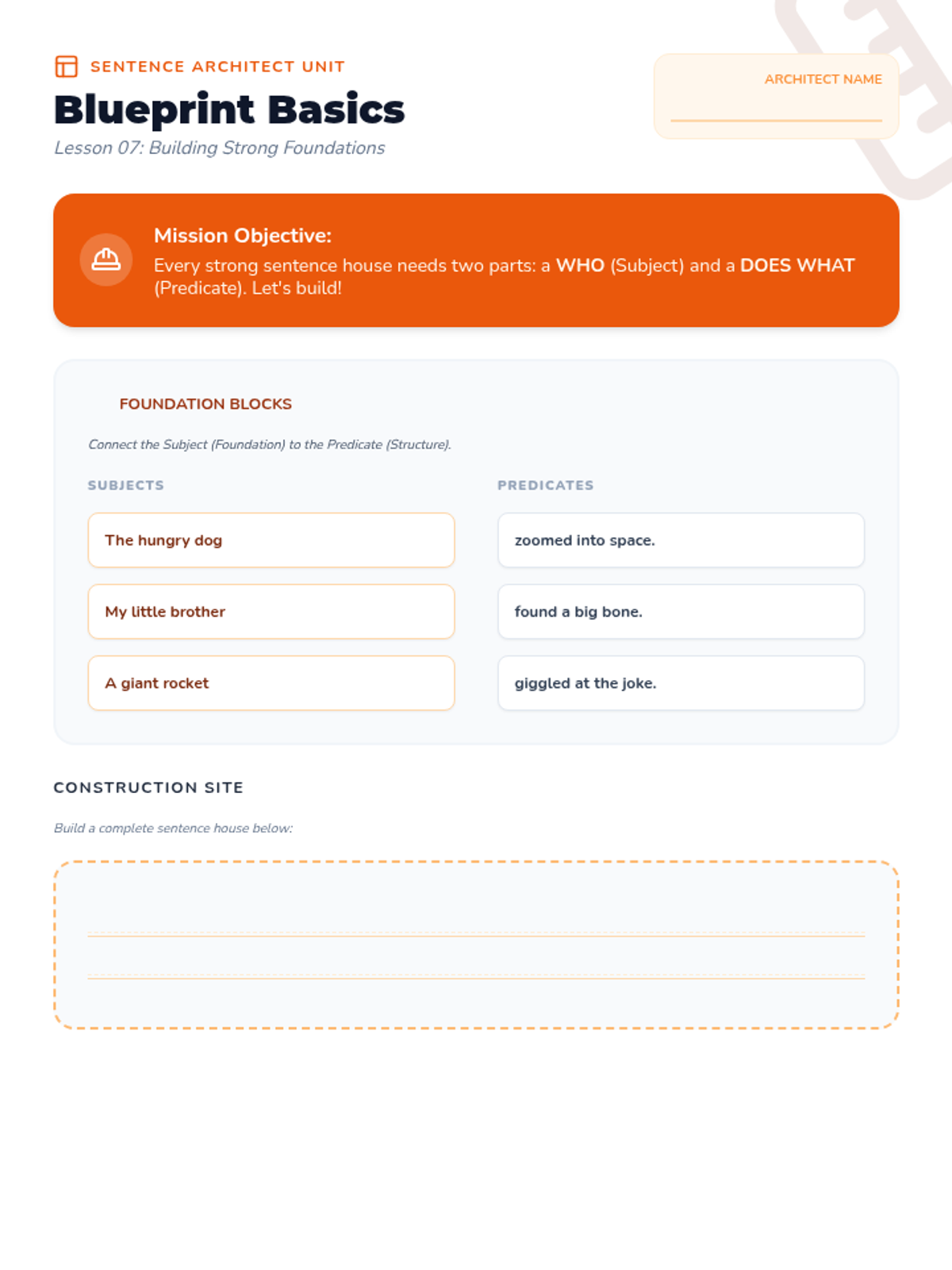
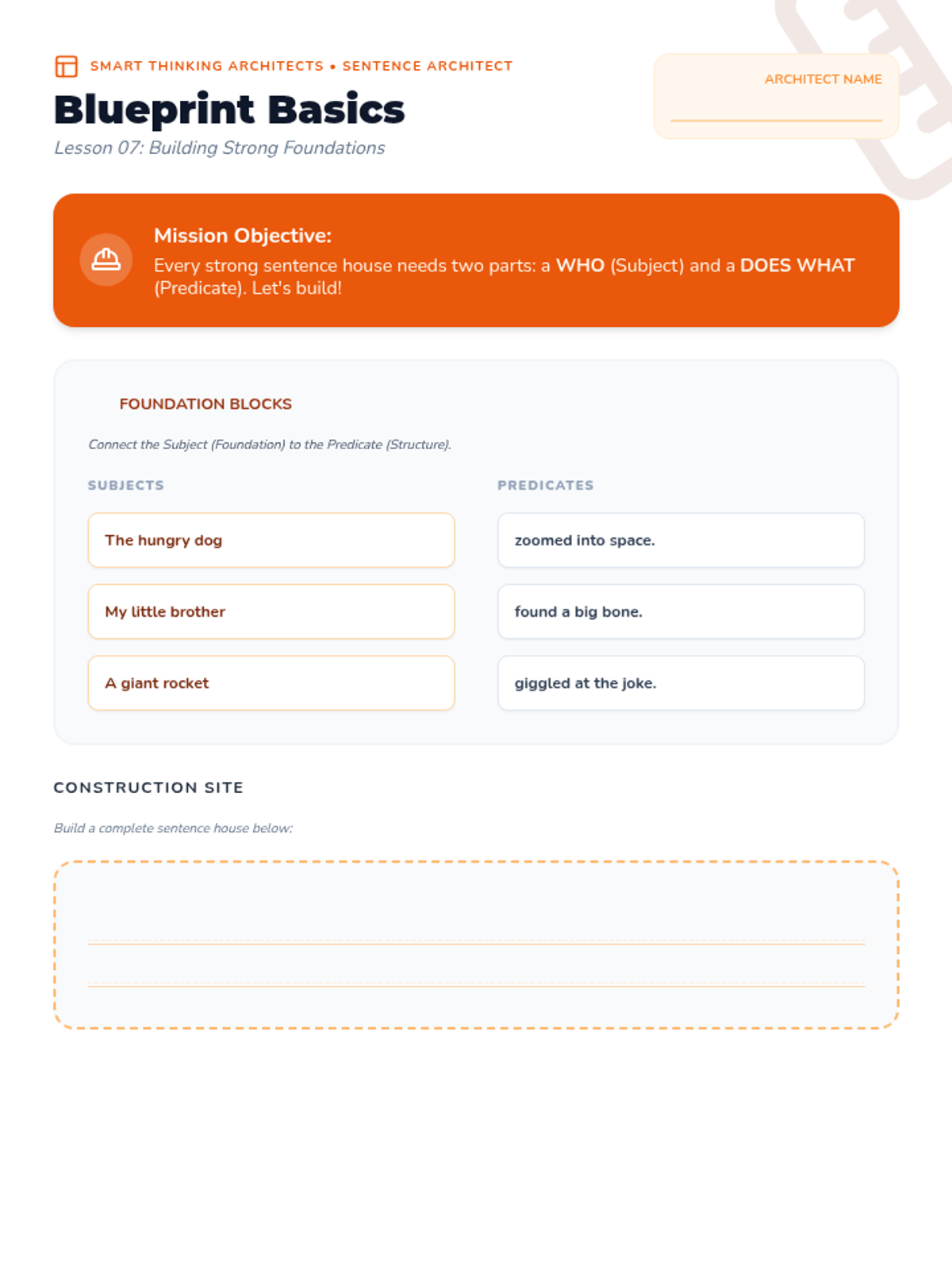
Sentence architects learn the foundations of a strong sentence, including subjects and predicates.
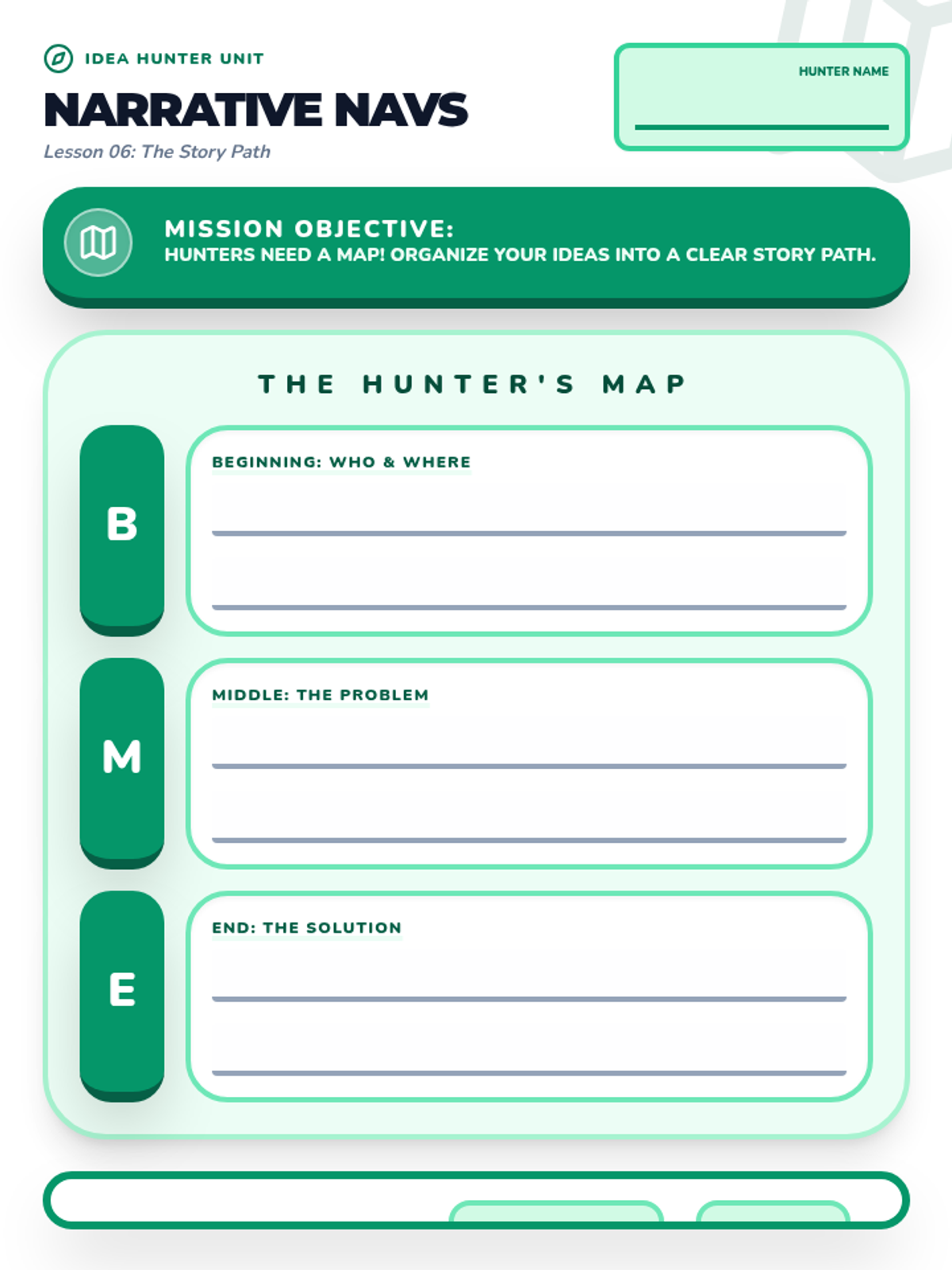
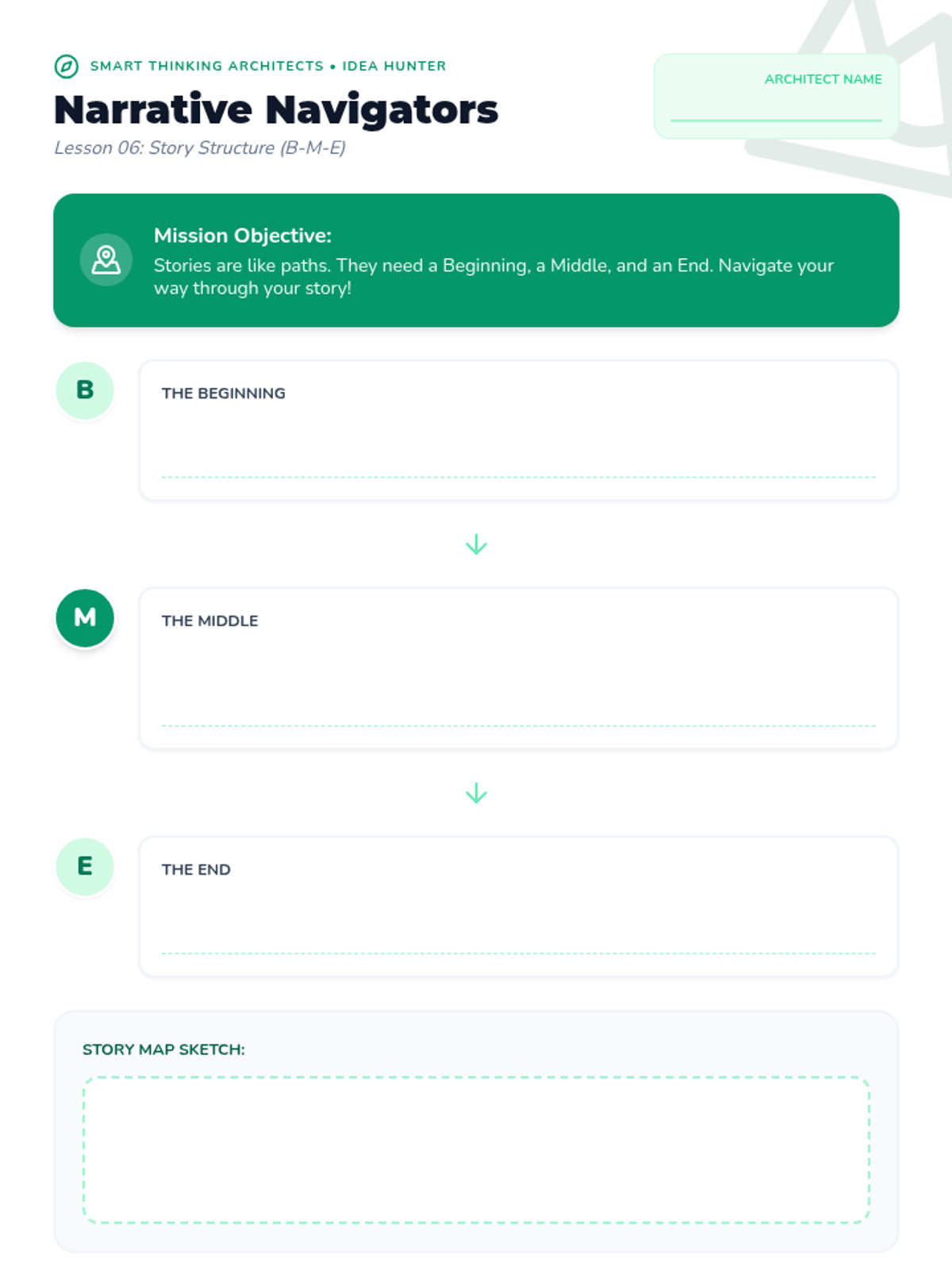
Explorers learn to organize their hunted ideas into a clear beginning, middle, and end.
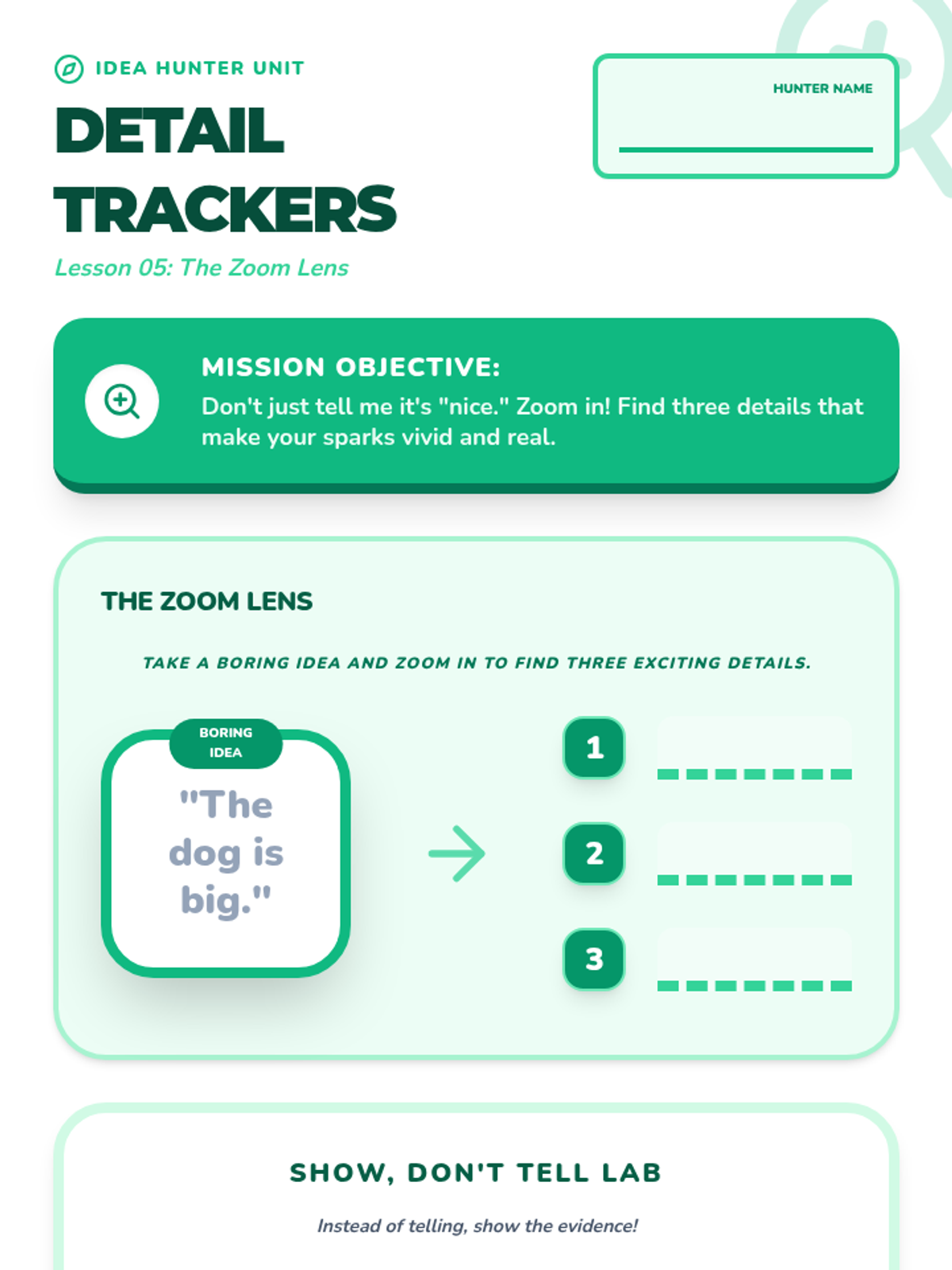
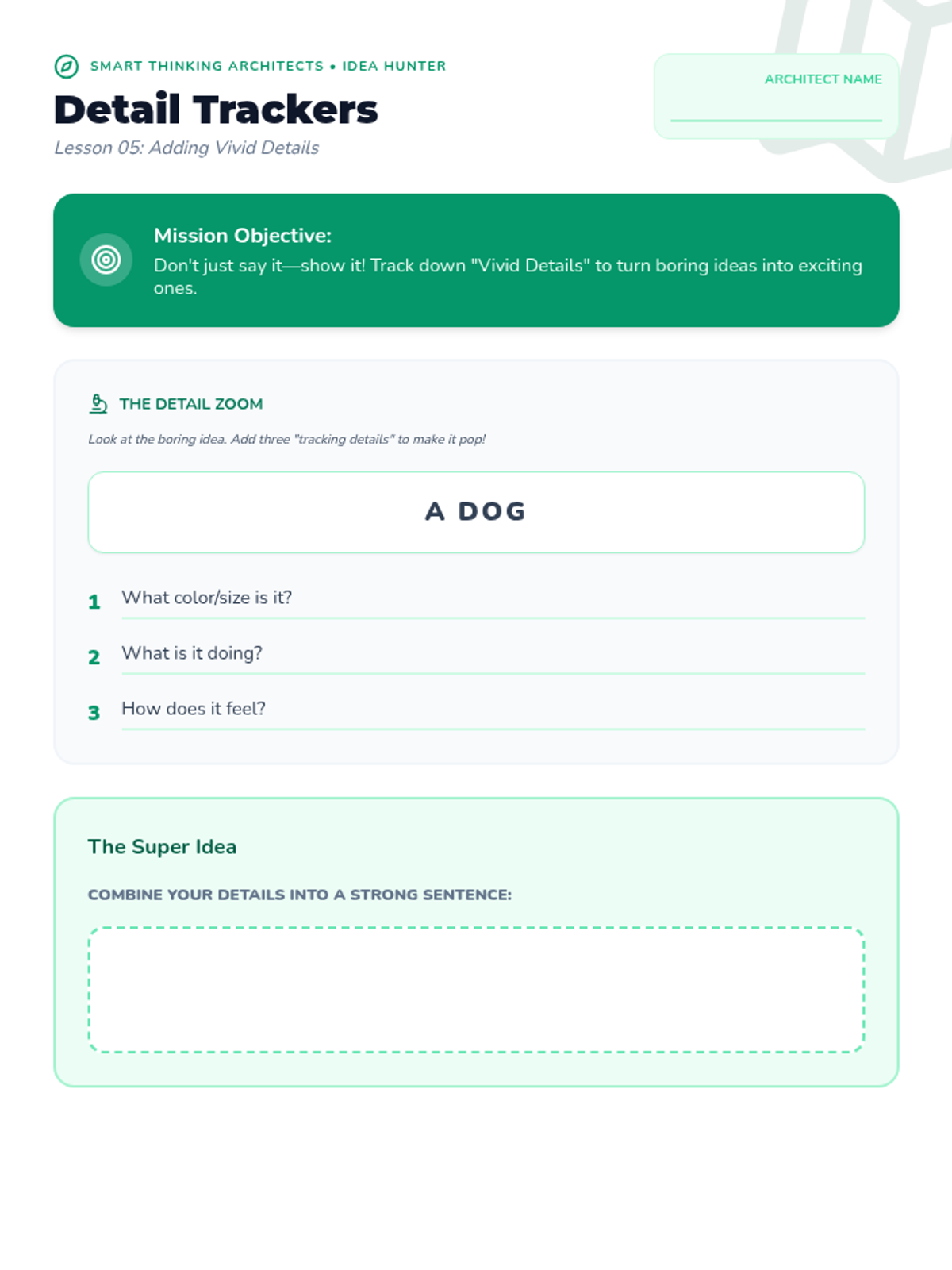
Hunters learn to track down specific details that make their ideas stronger and more vivid.
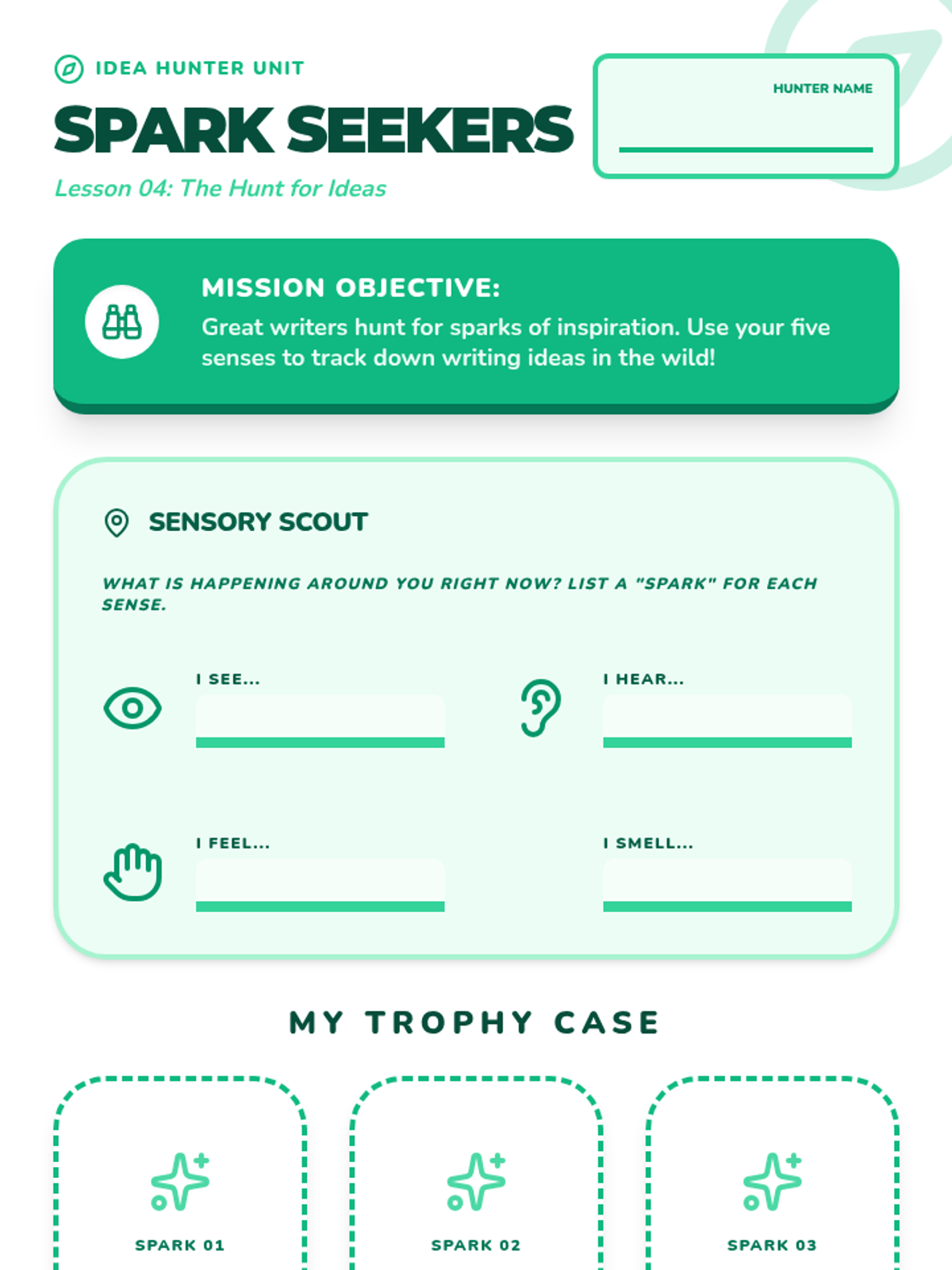
Idea hunters head into the wild to find "sparks" of inspiration for their writing using their senses.
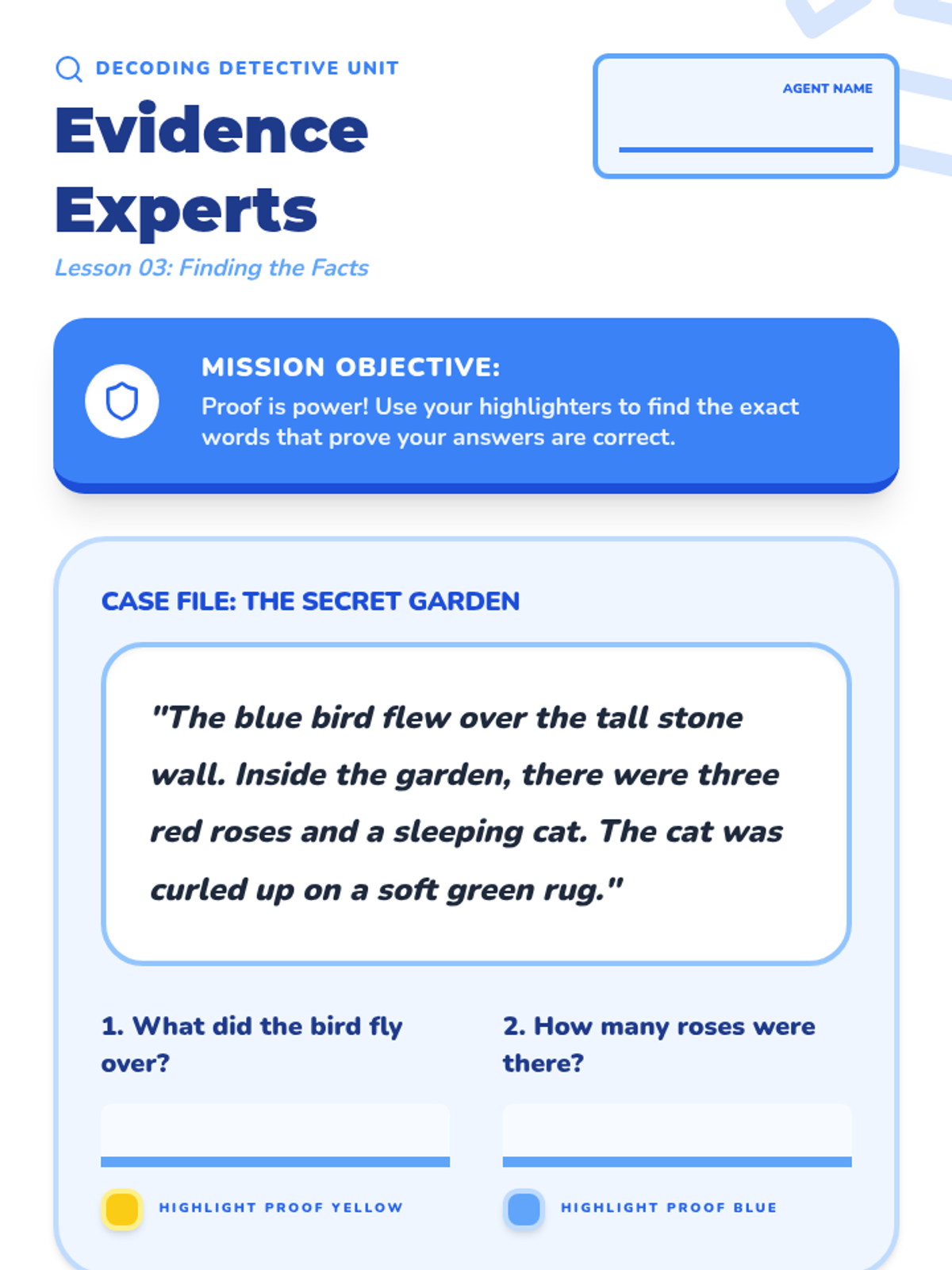
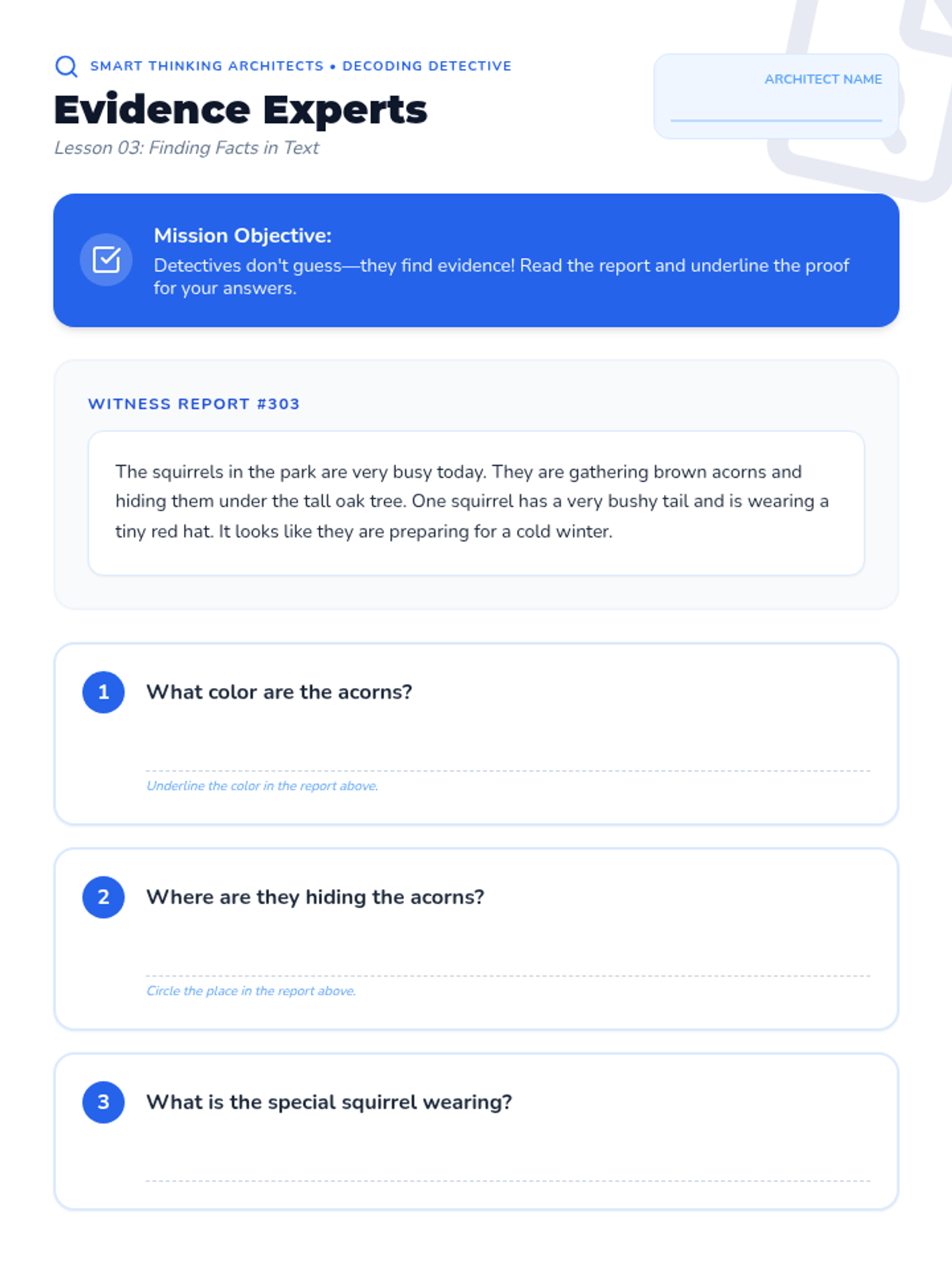
Detectives learn to pull specific information and evidence from texts to solve comprehension cases.
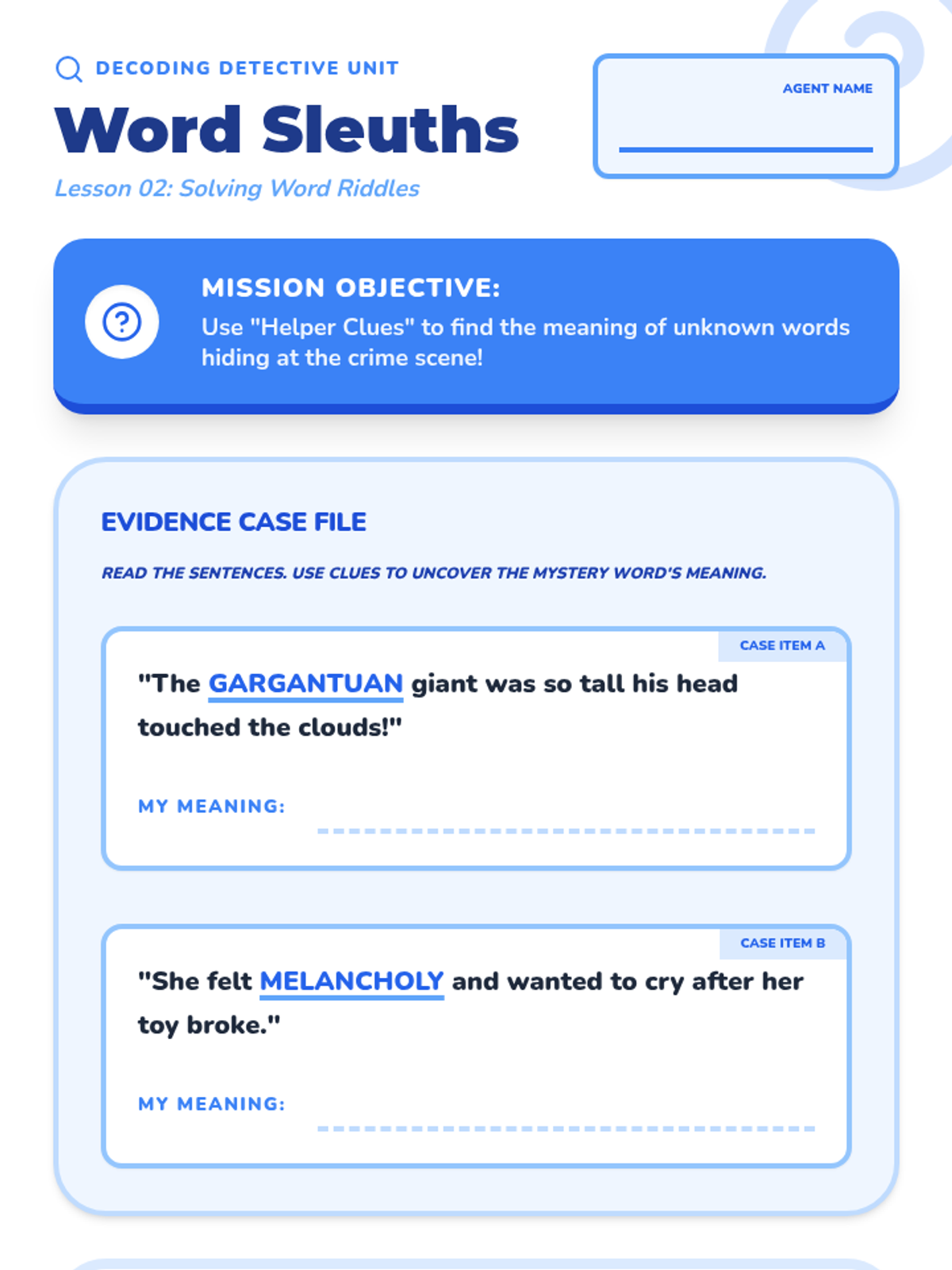
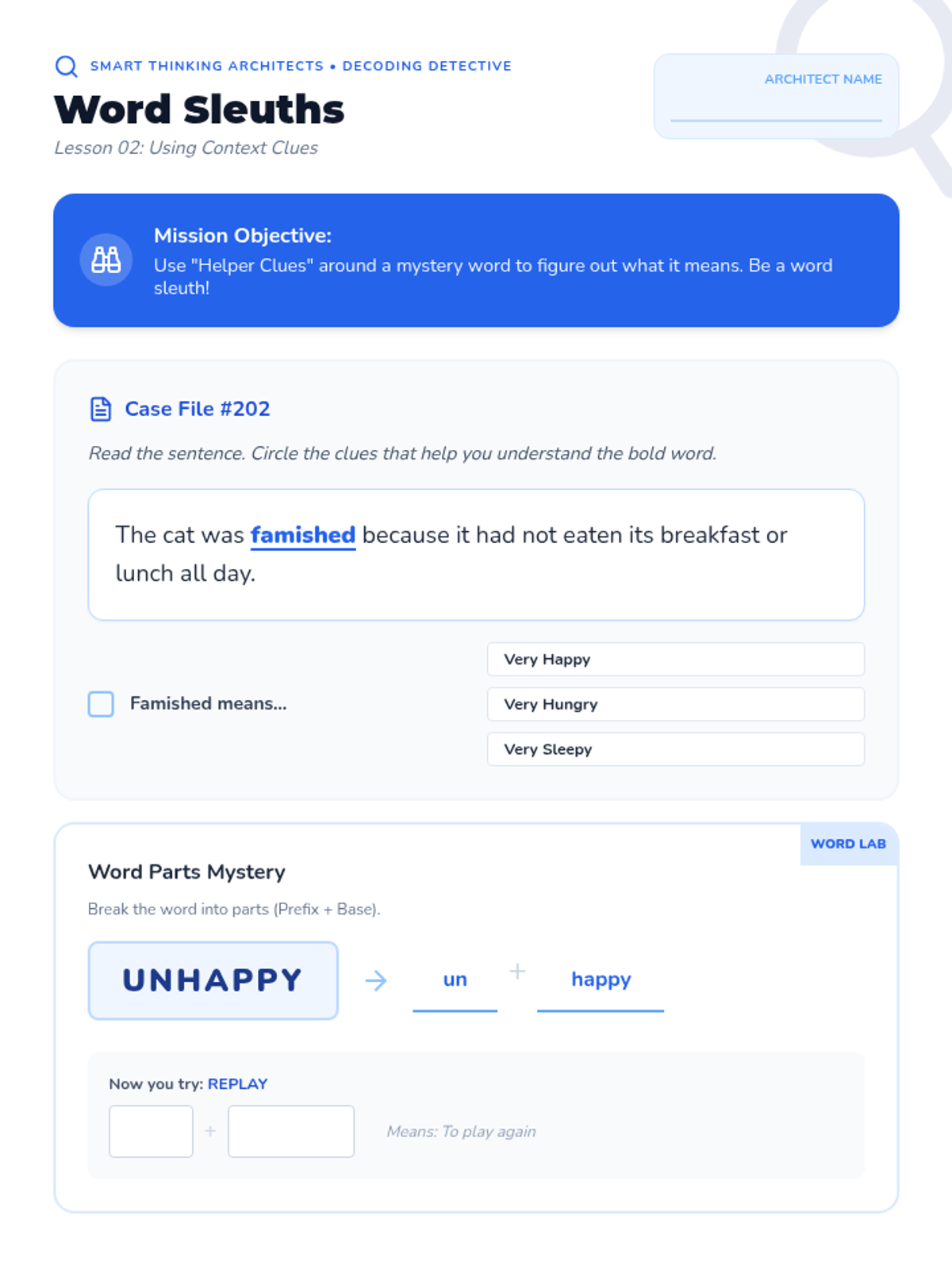
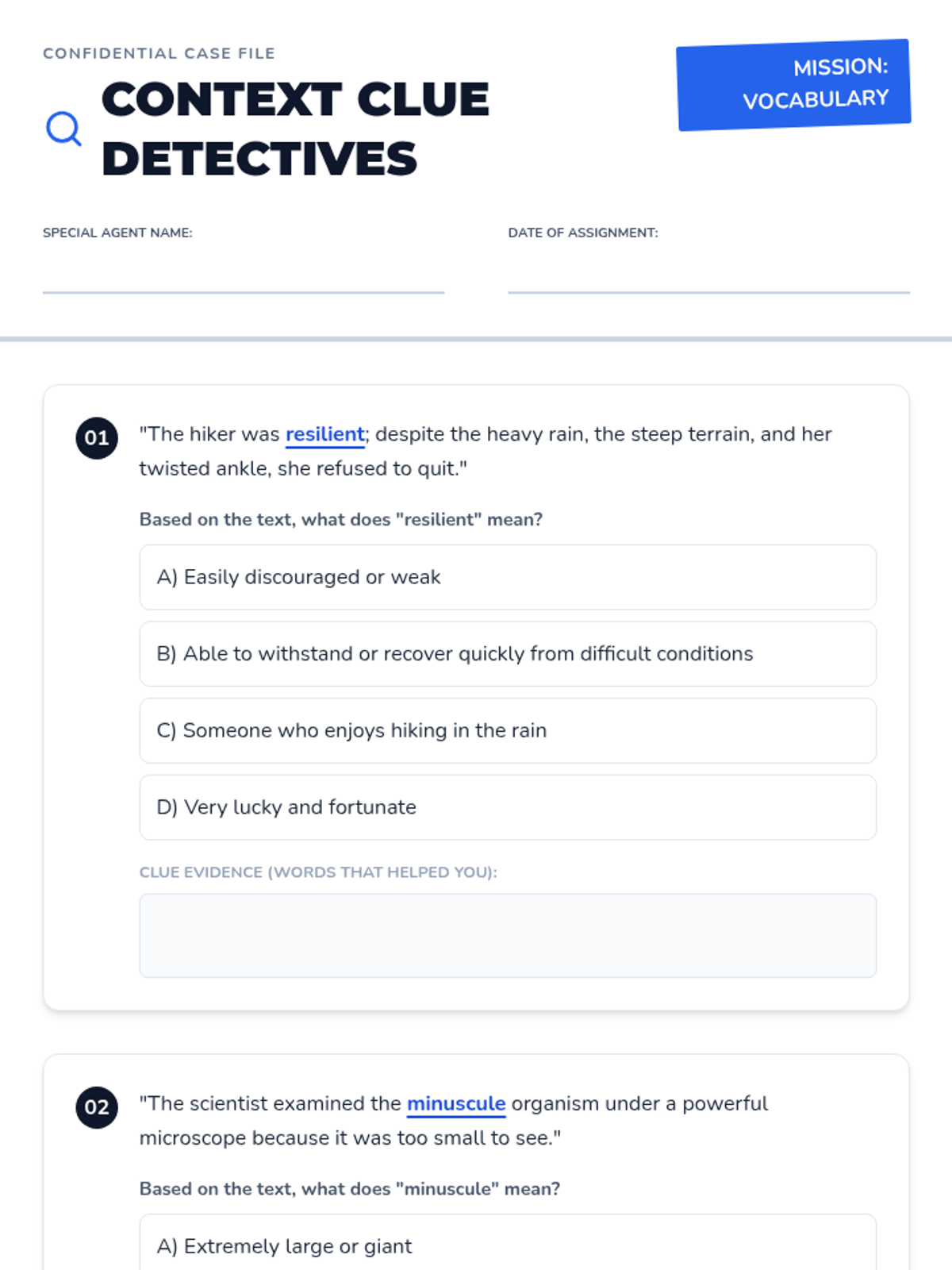
Young sleuths learn how to use context clues and word parts to uncover the meaning of tricky vocabulary.
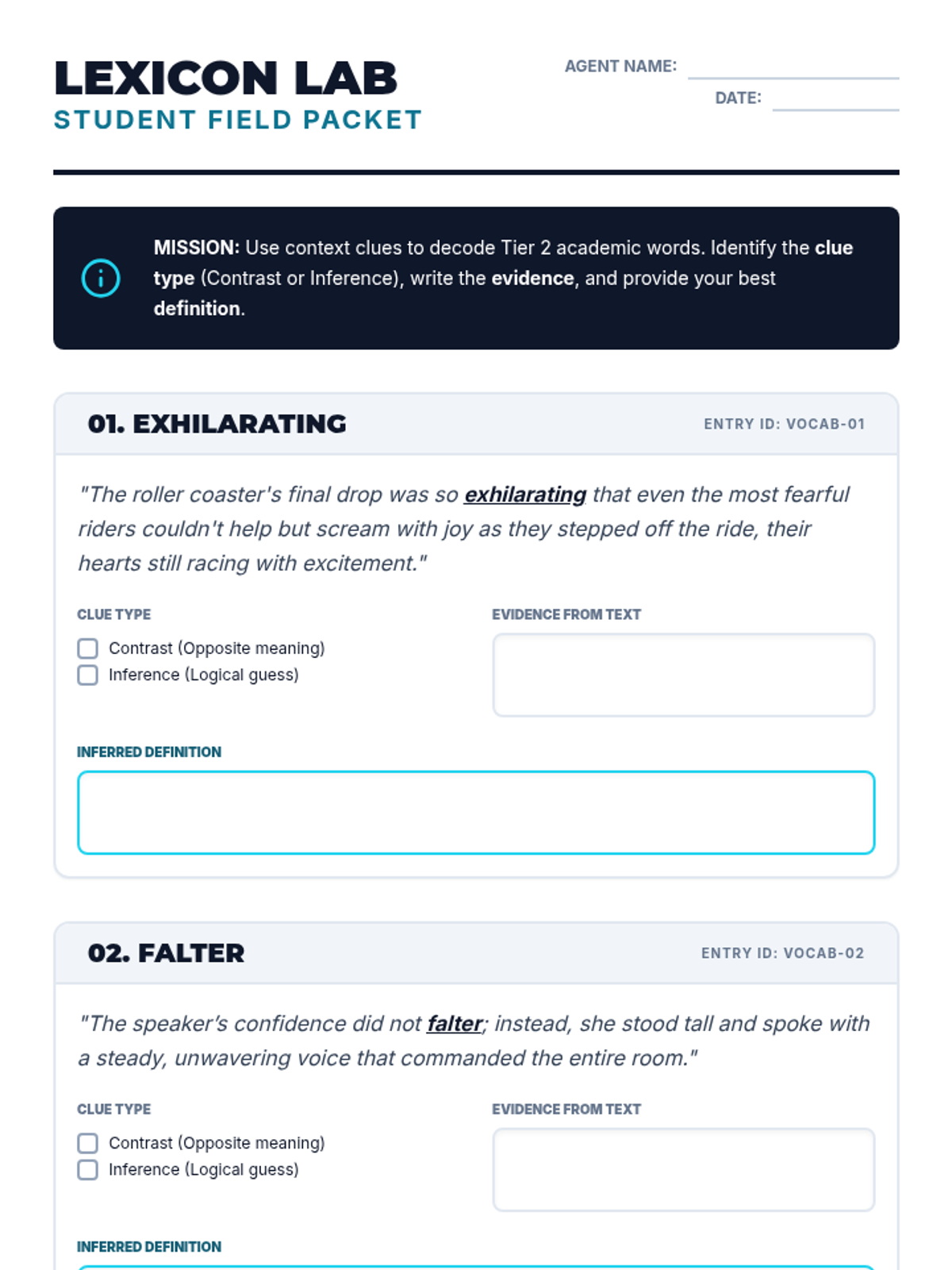
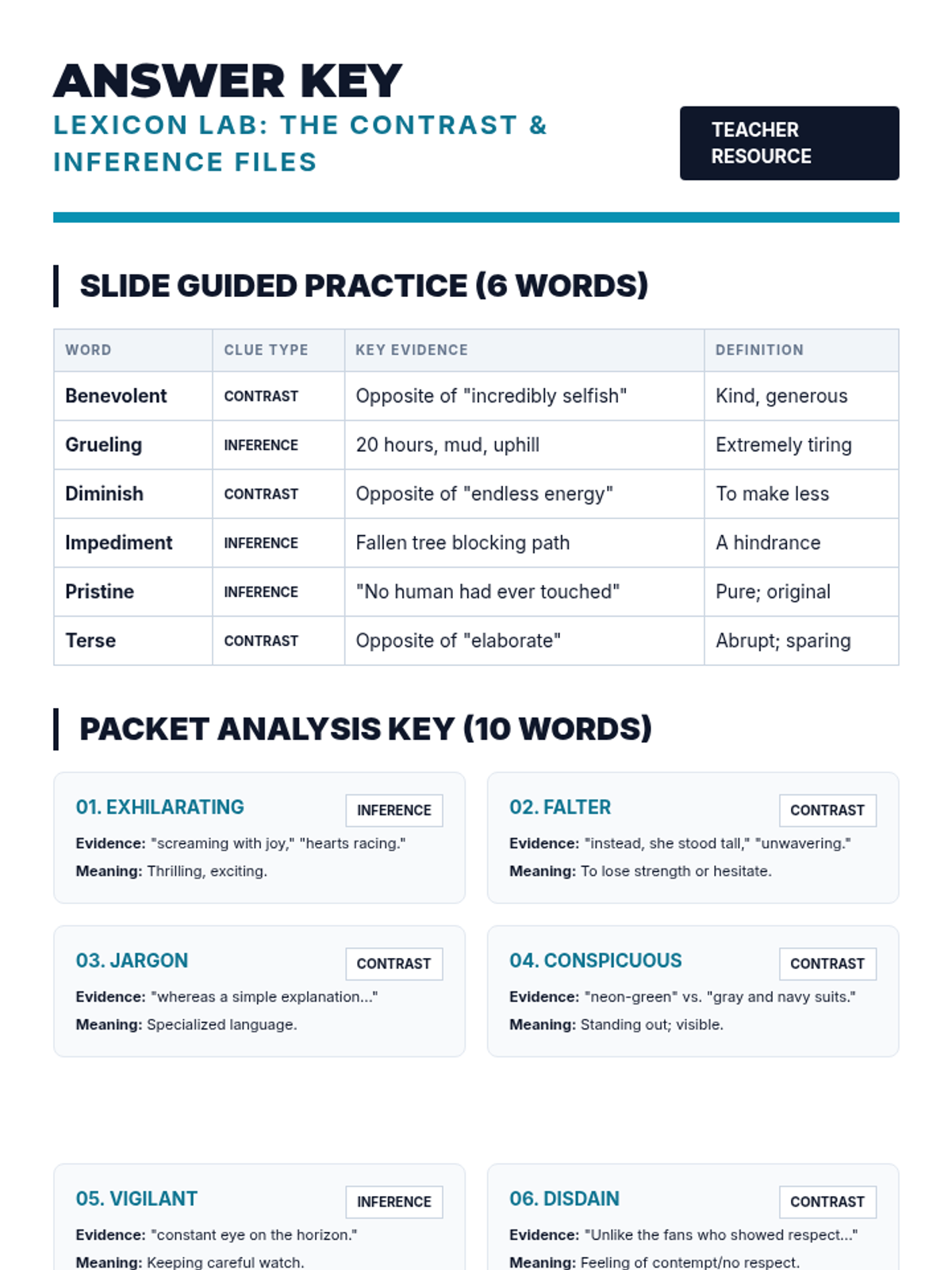
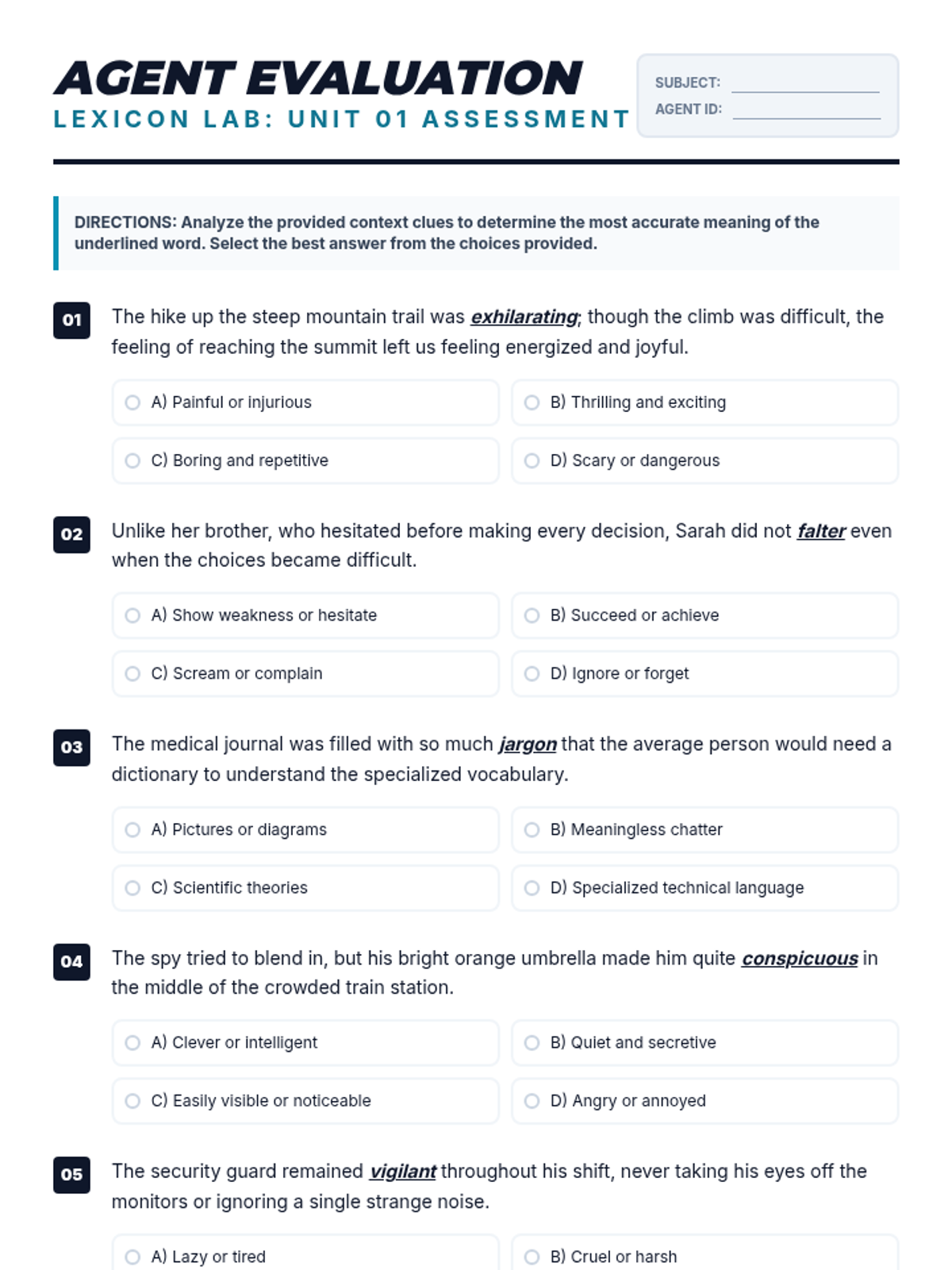
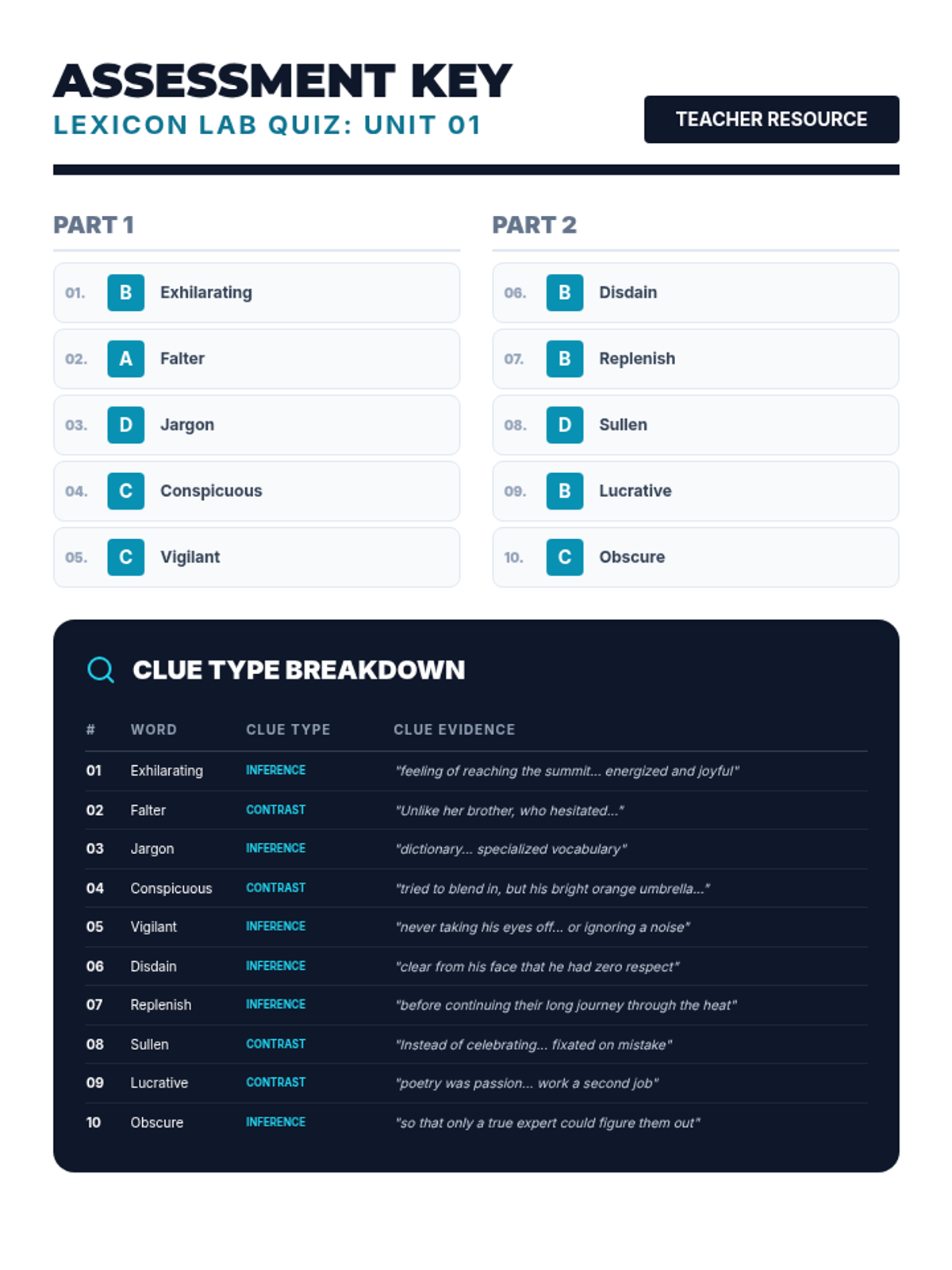
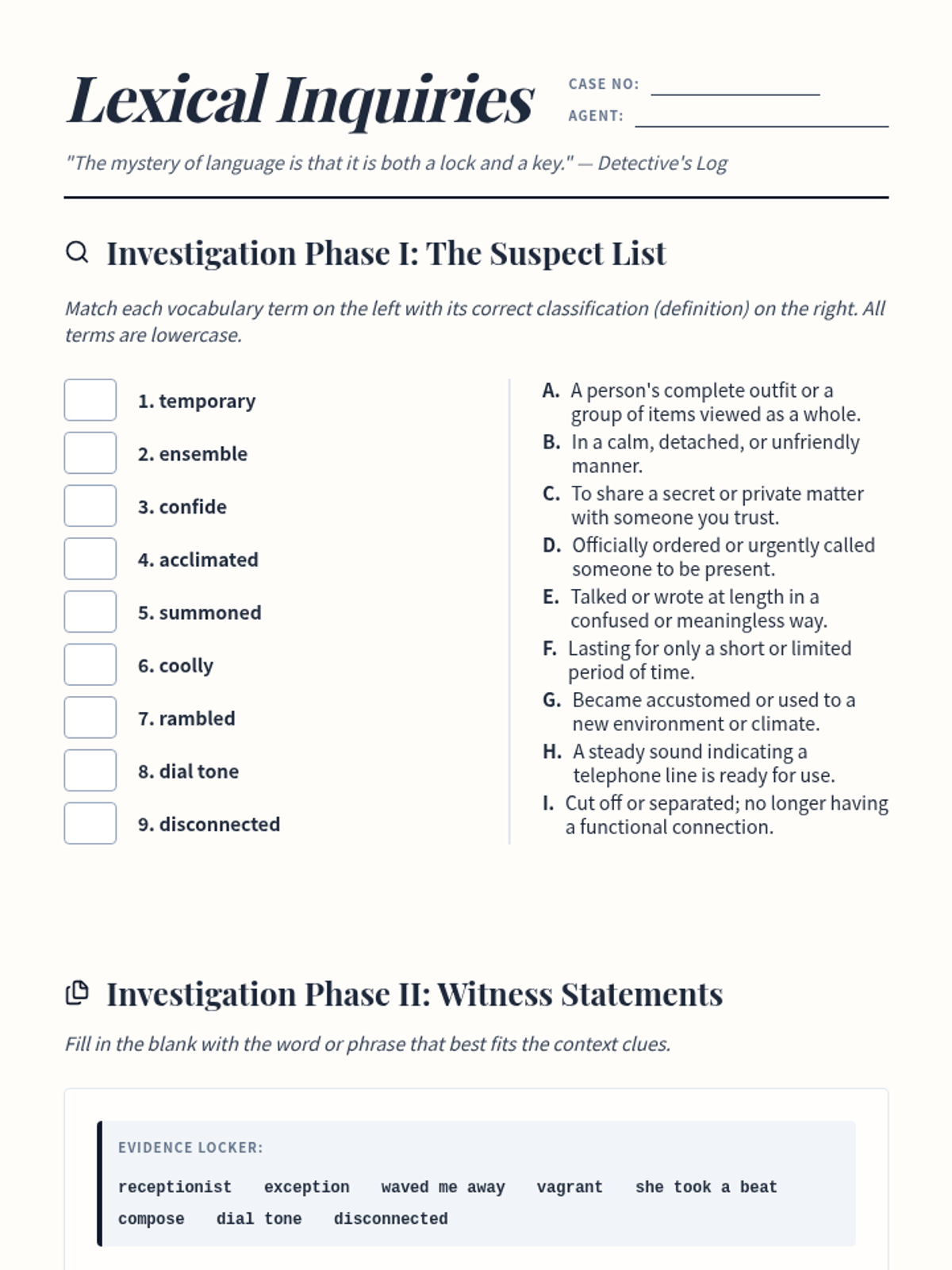
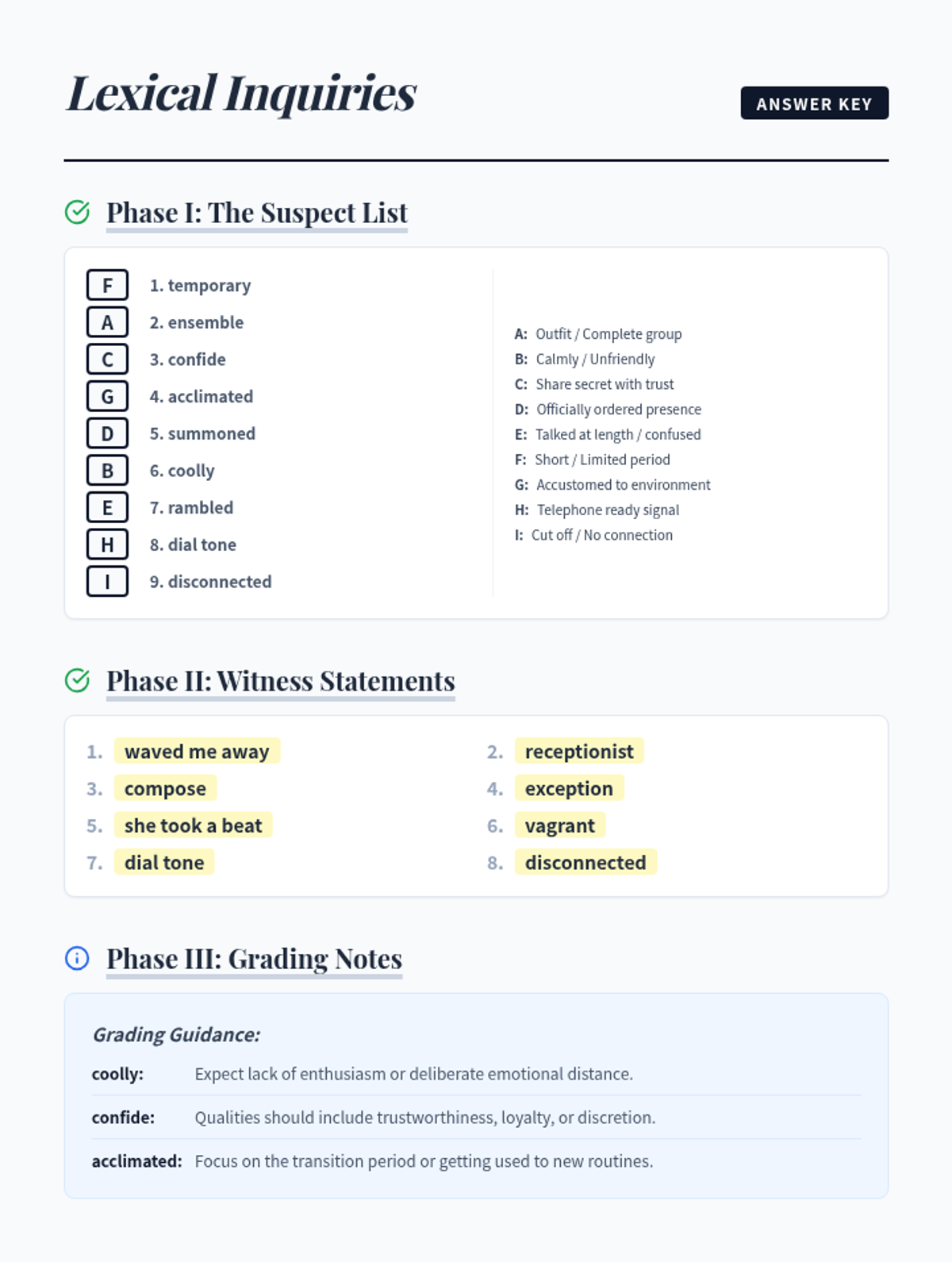
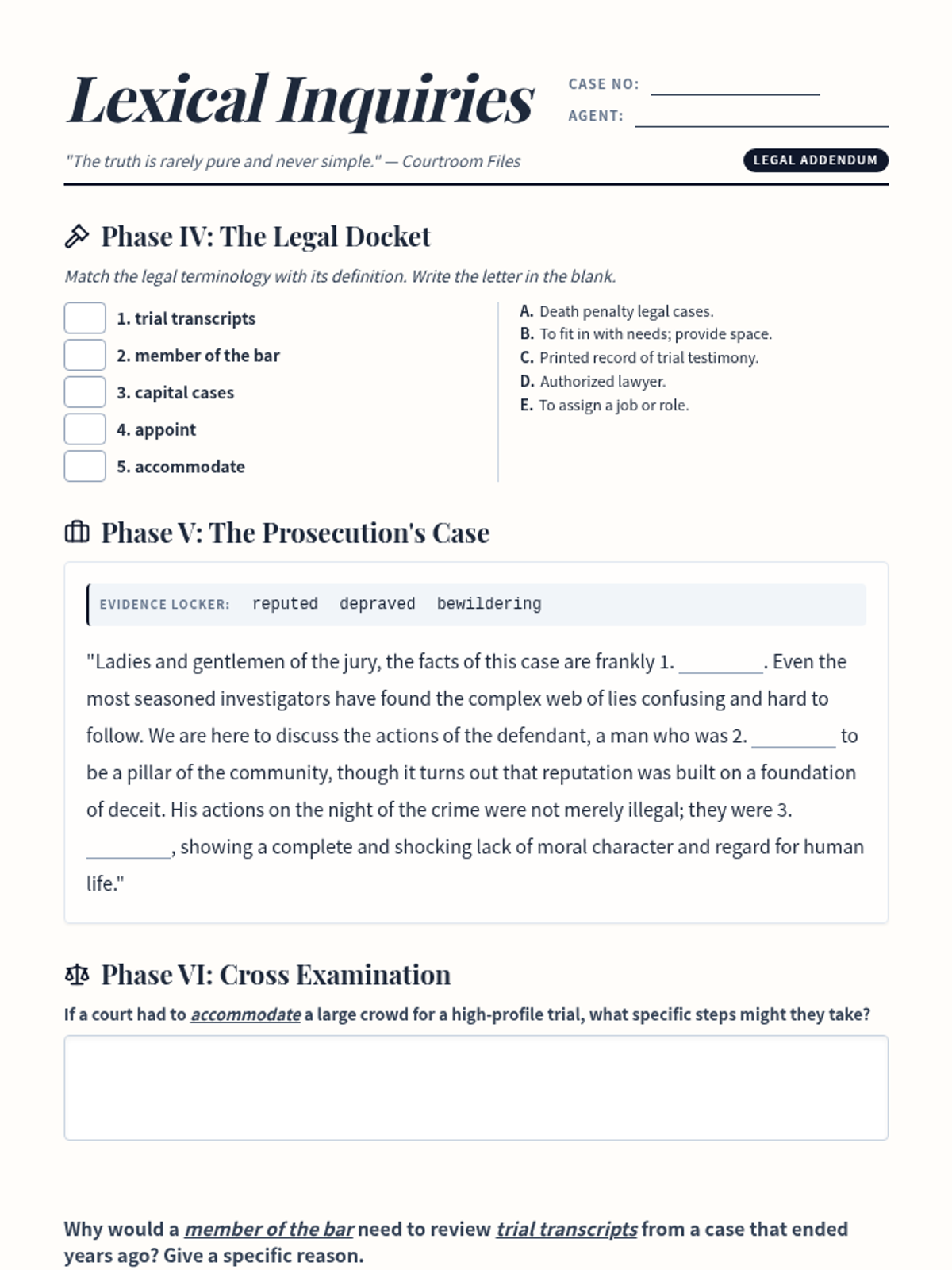
A high-challenge lesson for 7th graders focusing on using contrast and inference context clues to decode Tier 2 academic vocabulary. Students act as 'Lexicon Analysts' to solve linguistic puzzles.
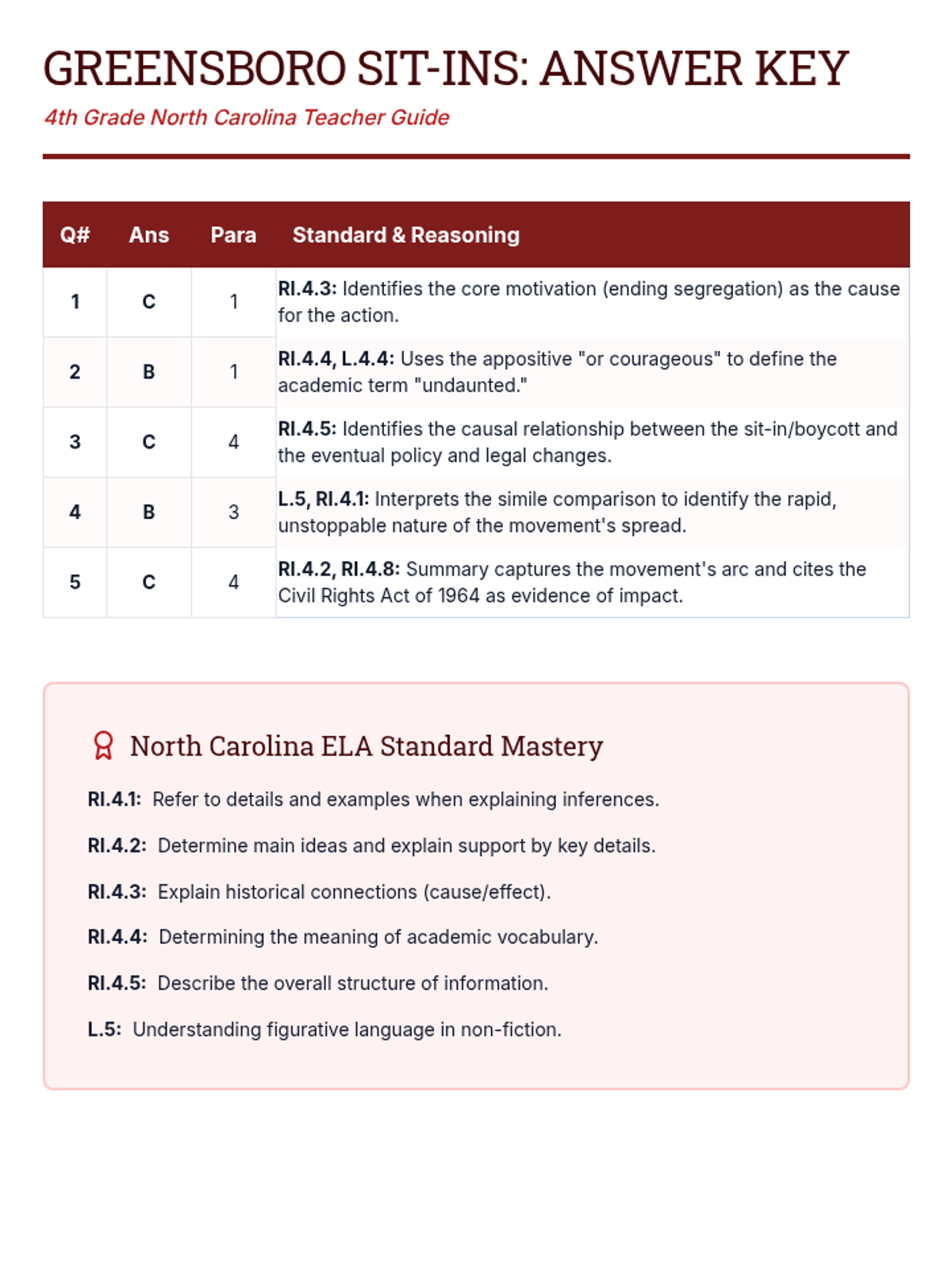
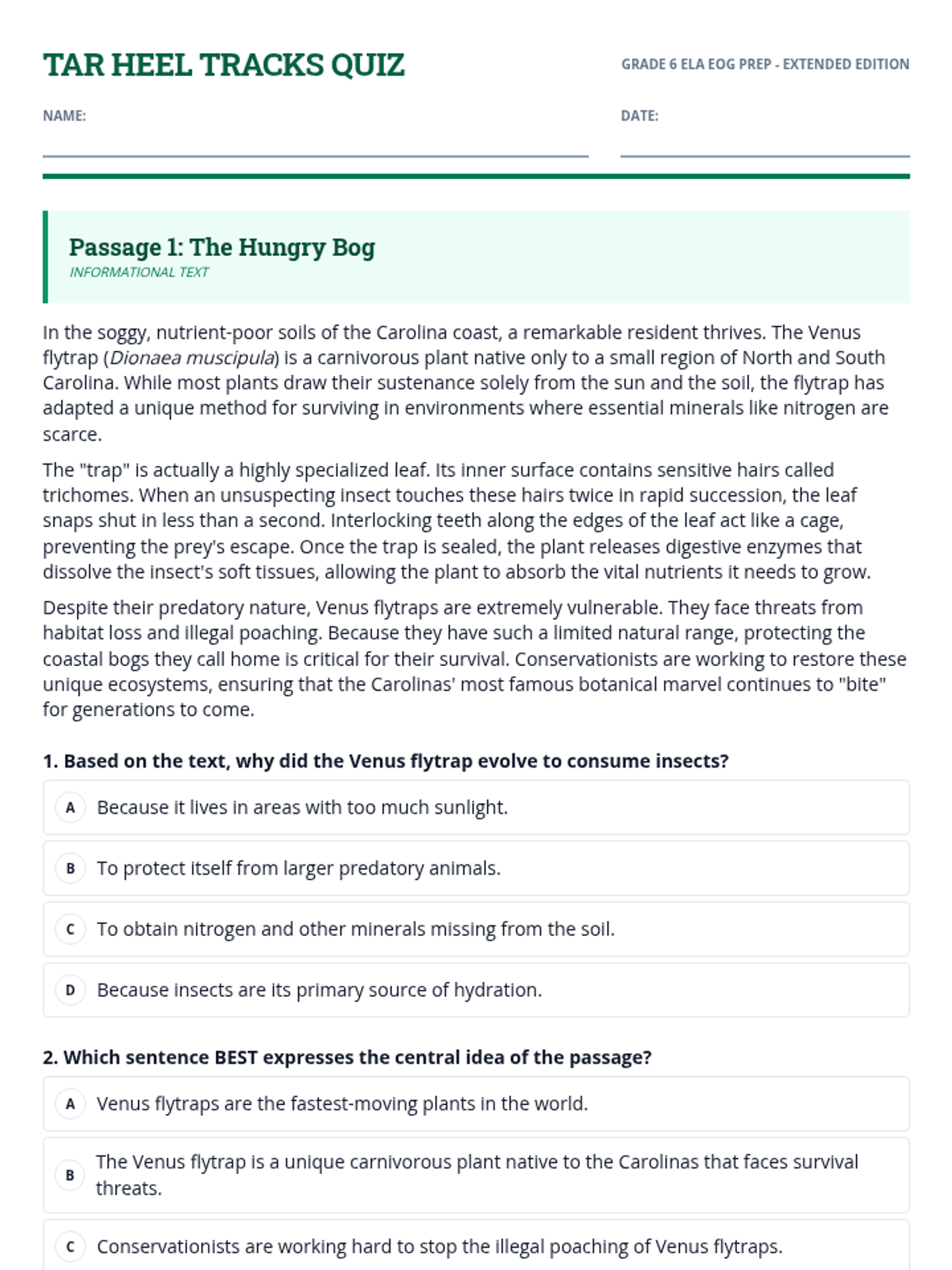
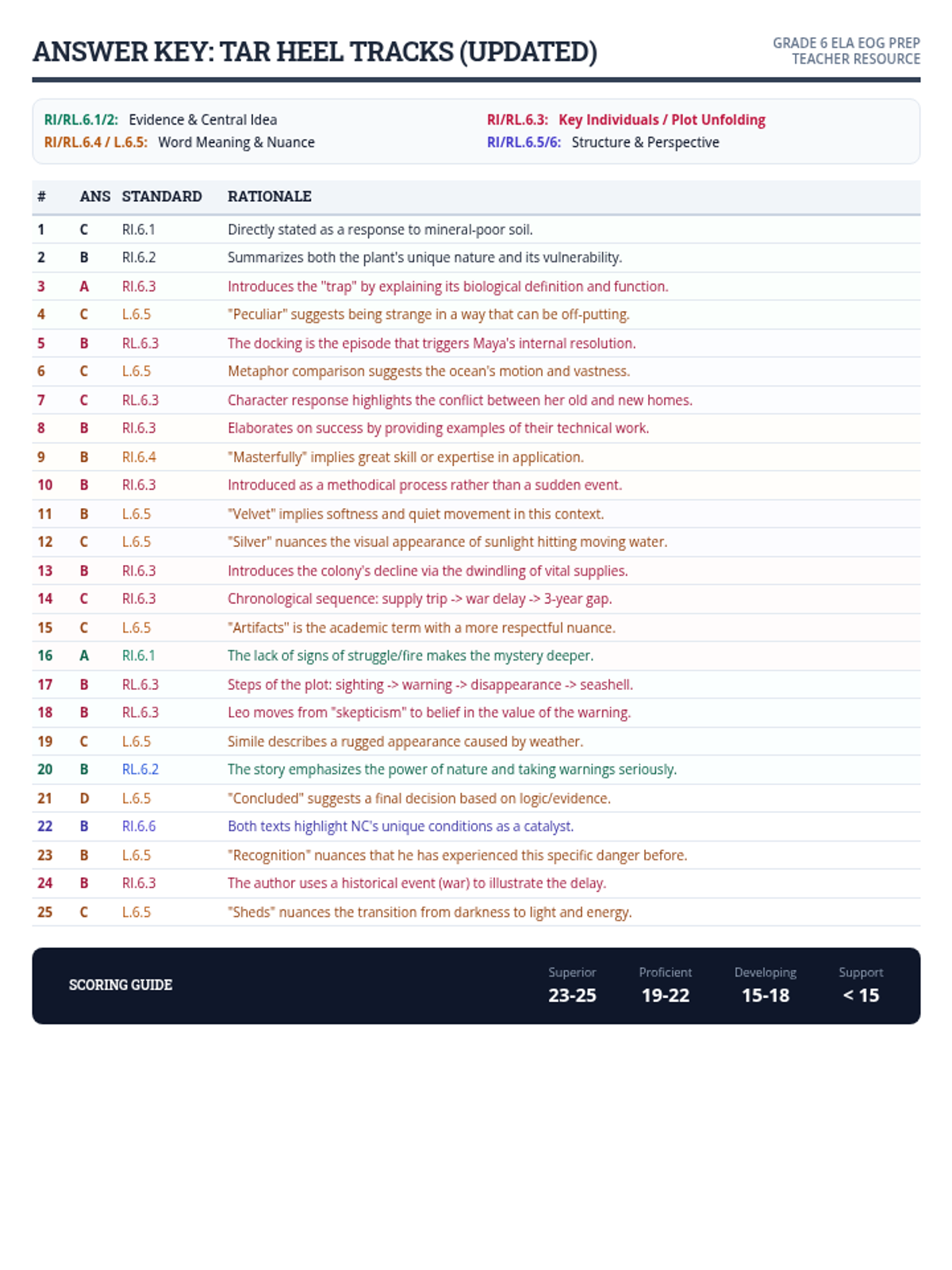
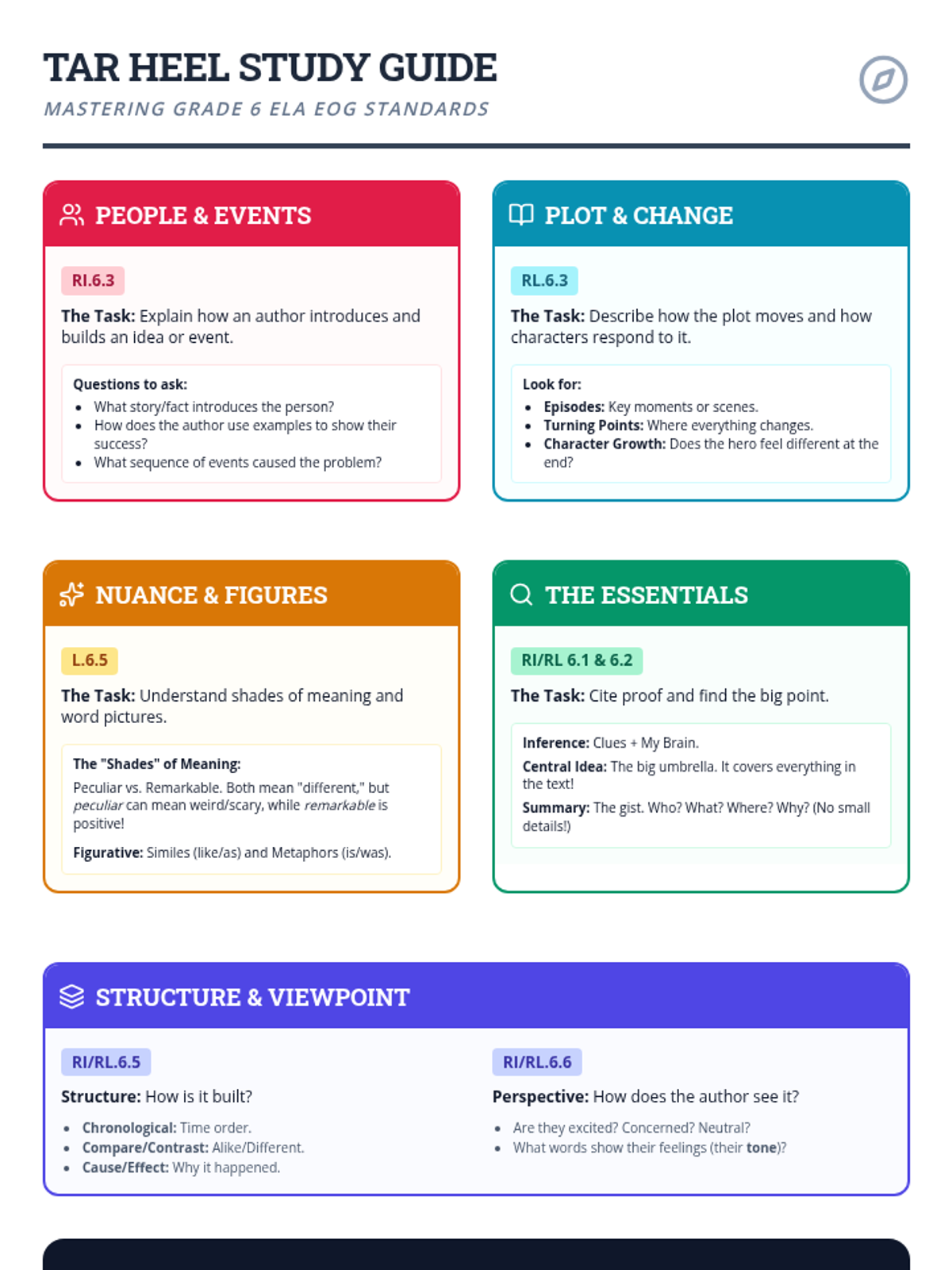
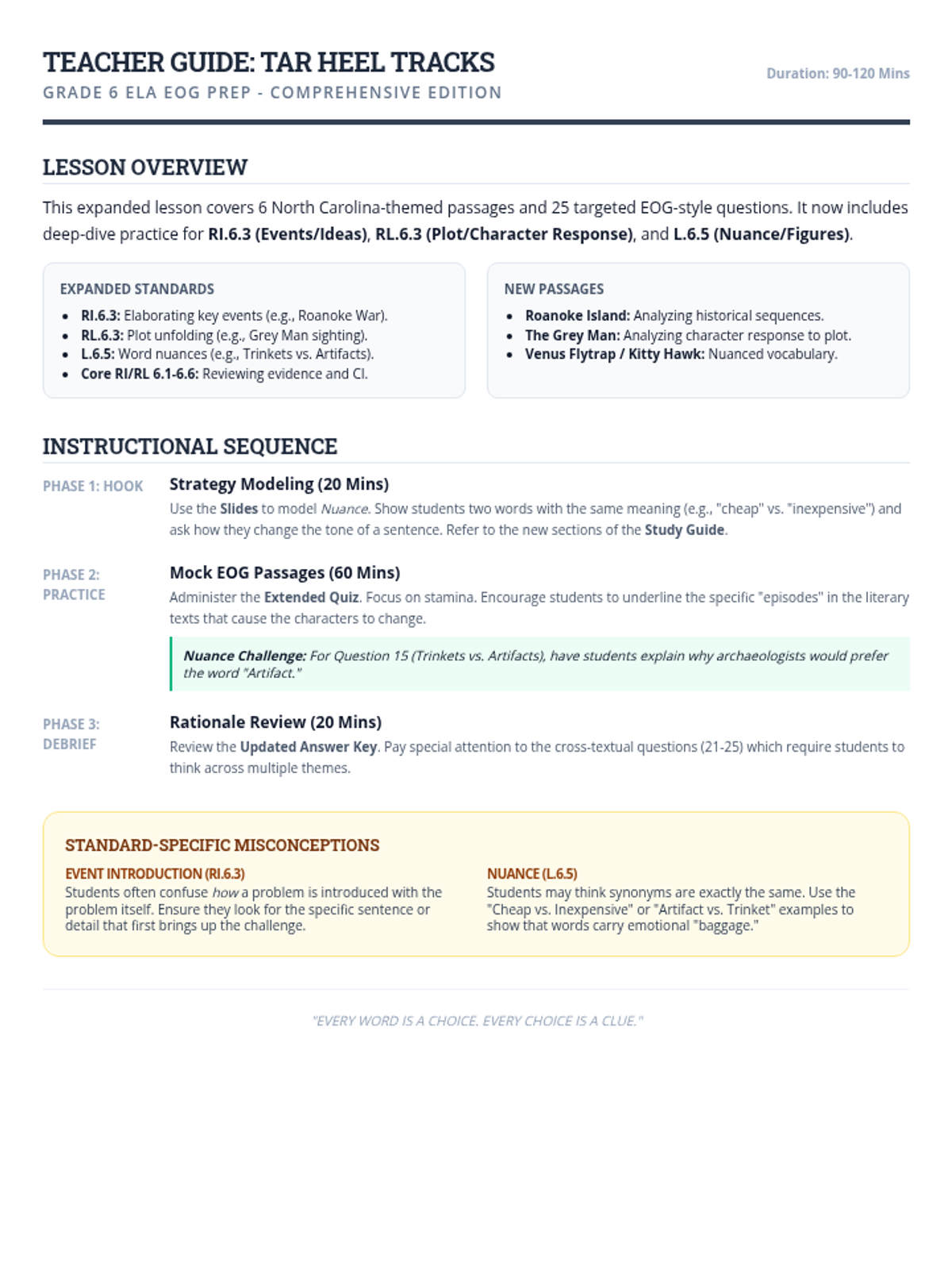
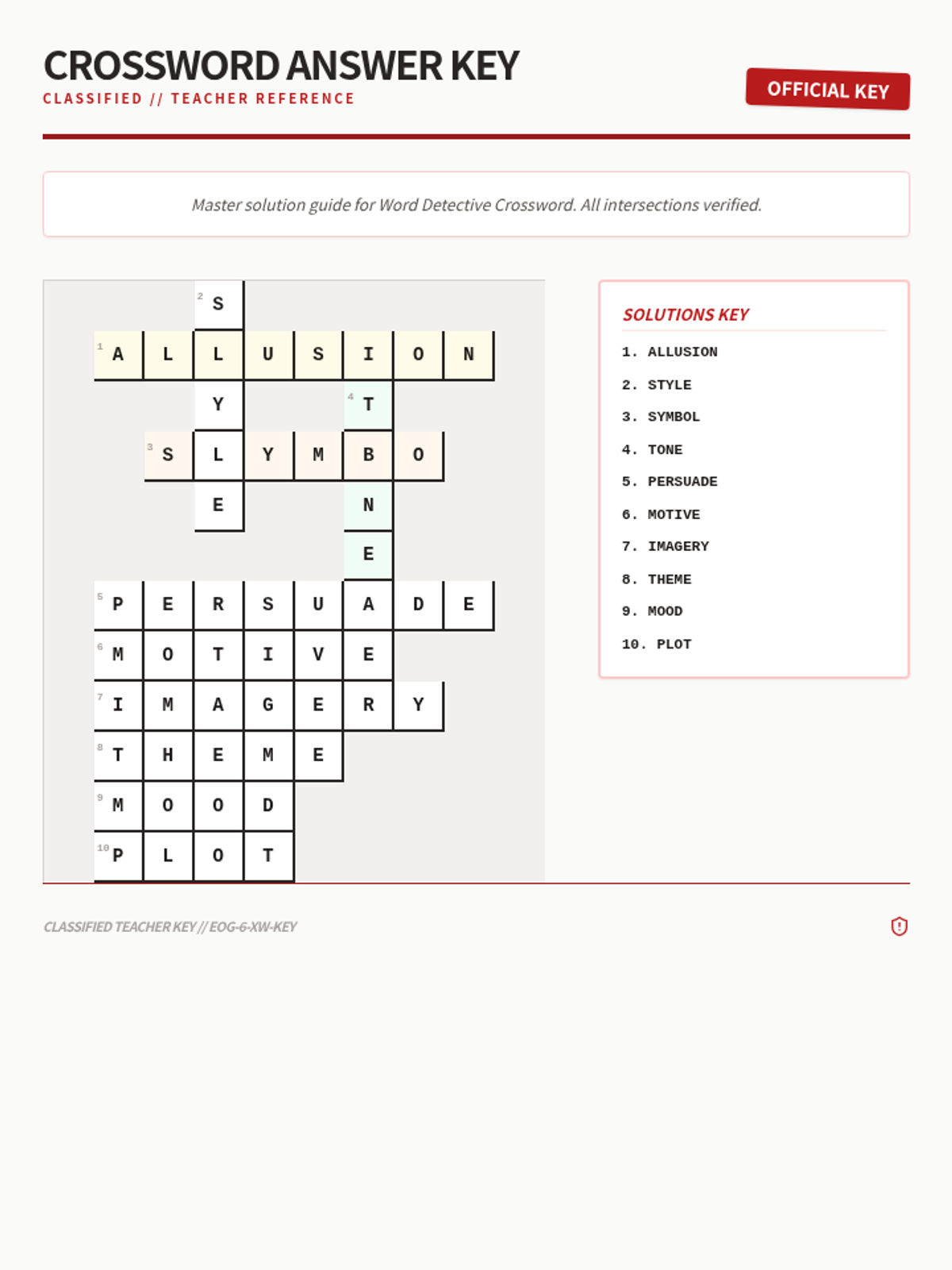
A comprehensive EOG-style practice quiz for Grade 6 ELA featuring North Carolina-themed informational and literary texts. This lesson focuses on key standards like evidence-based inference, central idea, word meaning, and author's perspective.
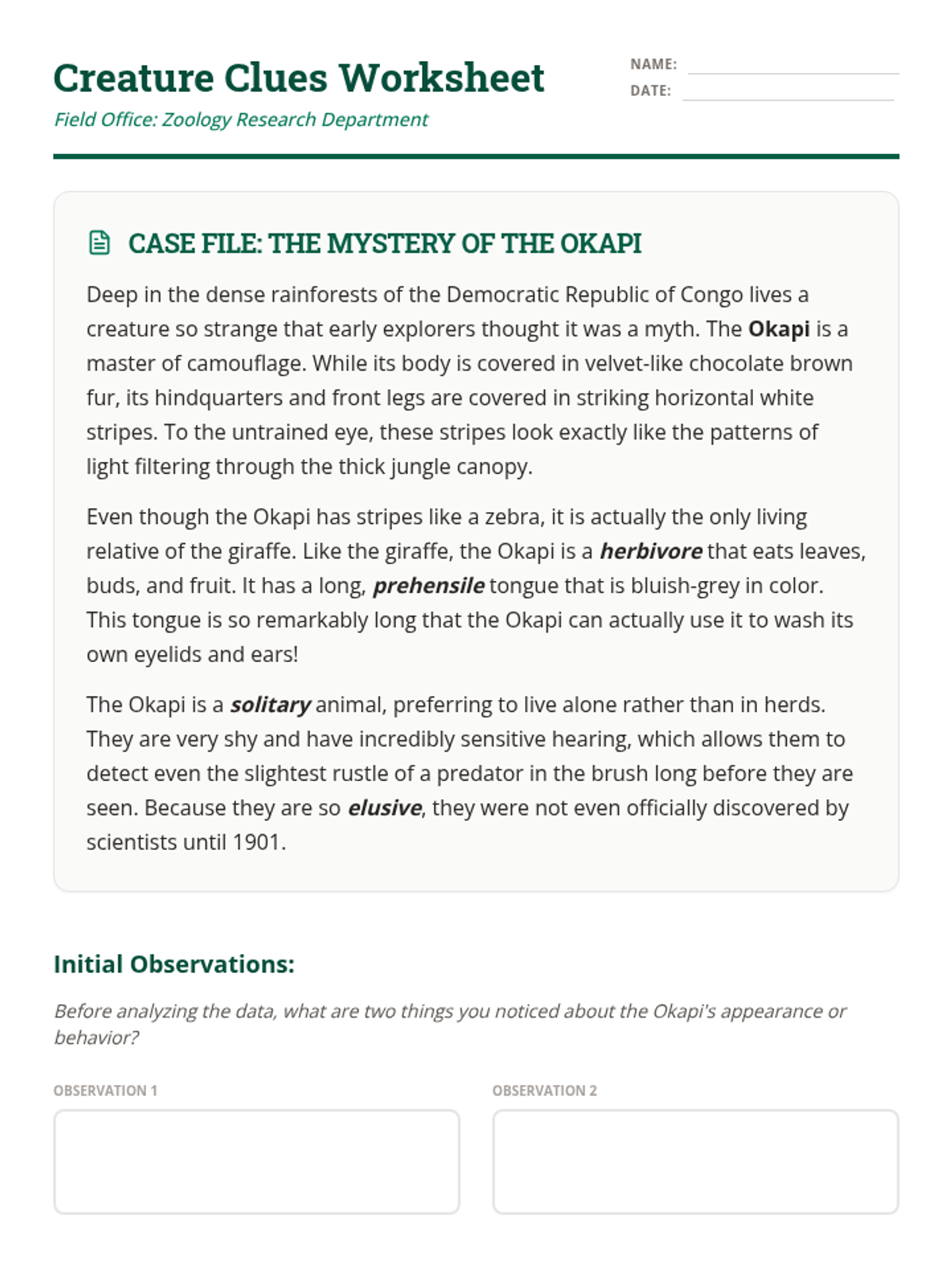
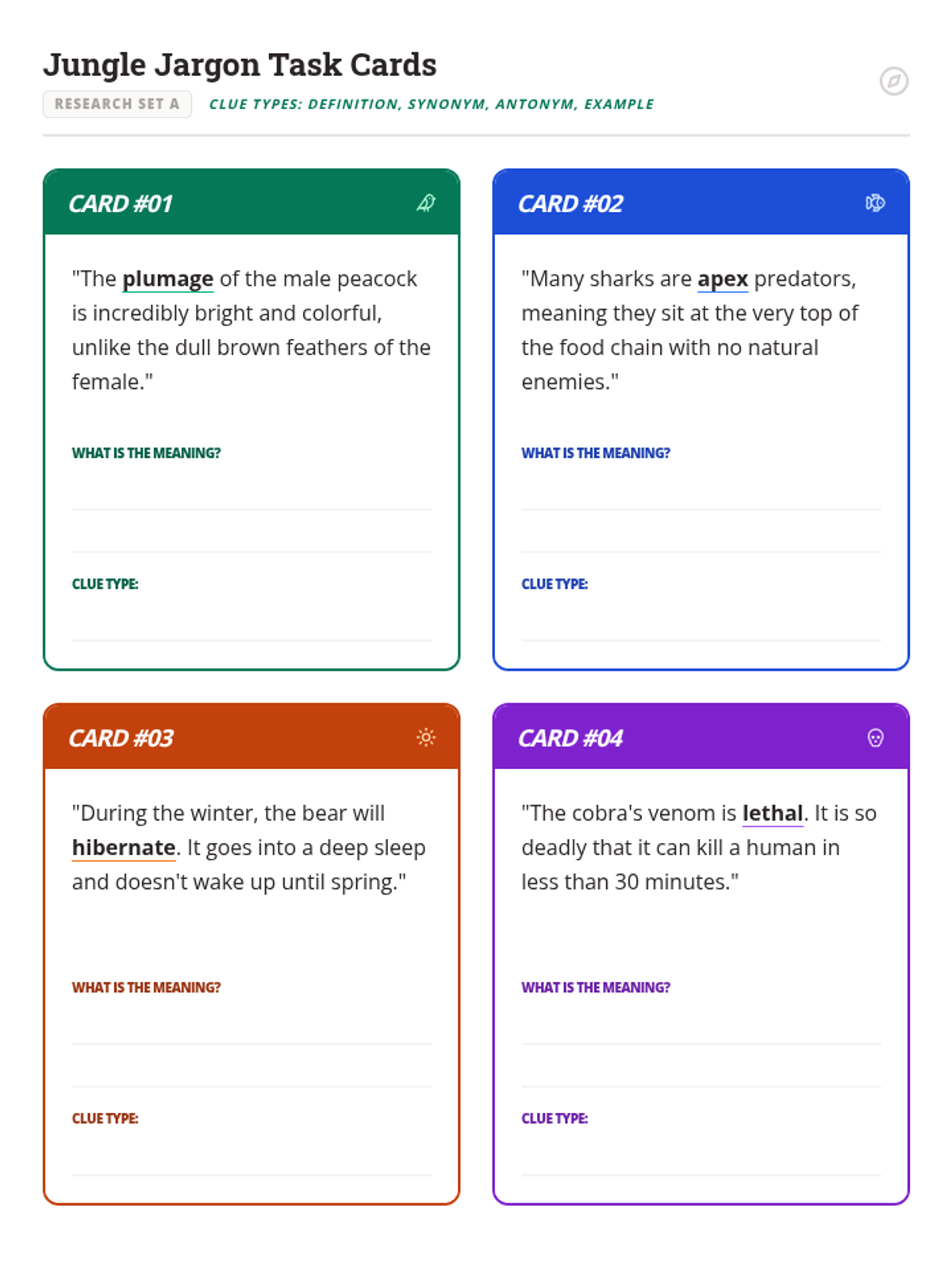
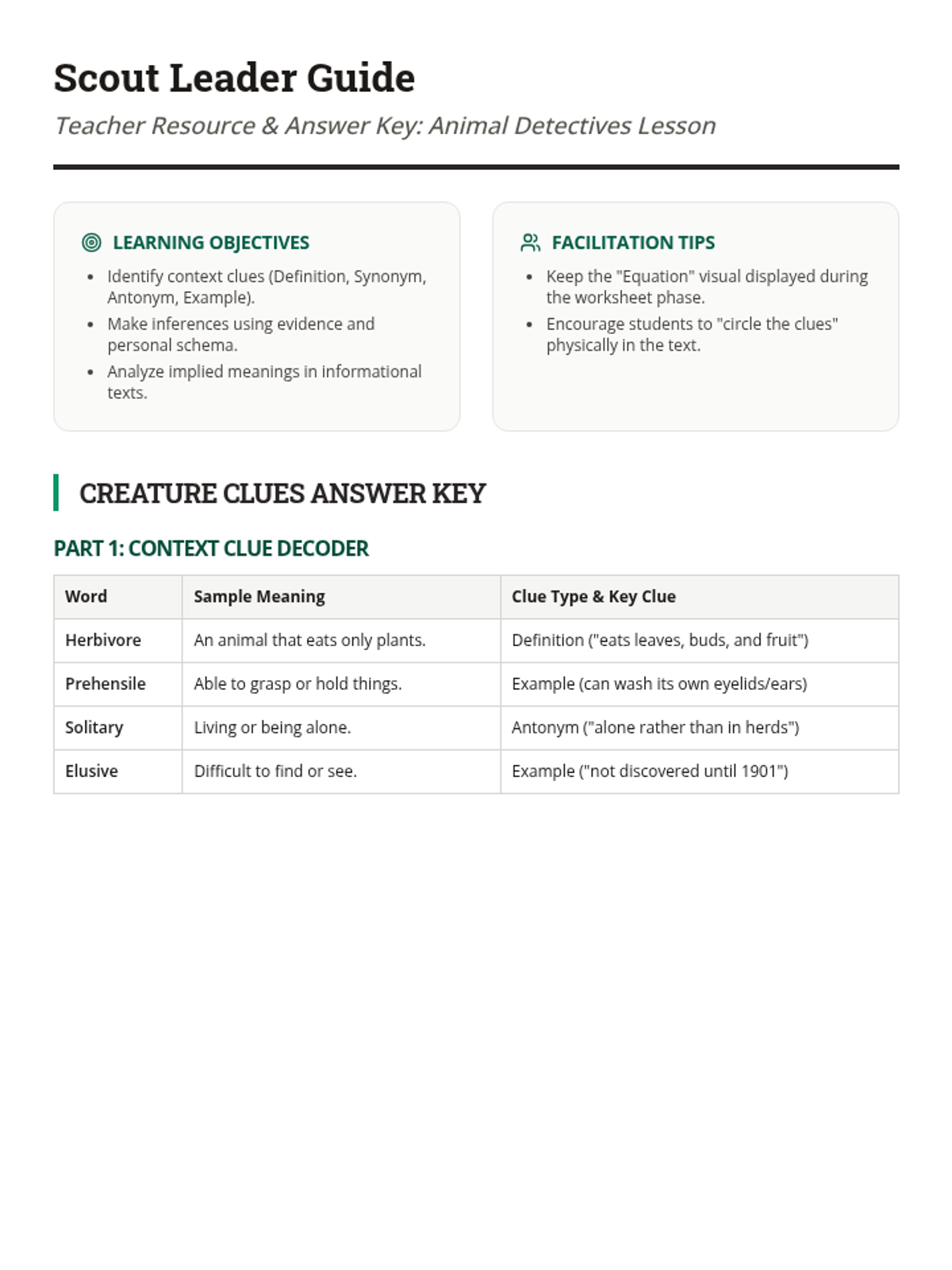
A reading comprehension lesson focused on making inferences and using context clues through the lens of zoology and animal research. Students act as field researchers to decode information about unique creatures.
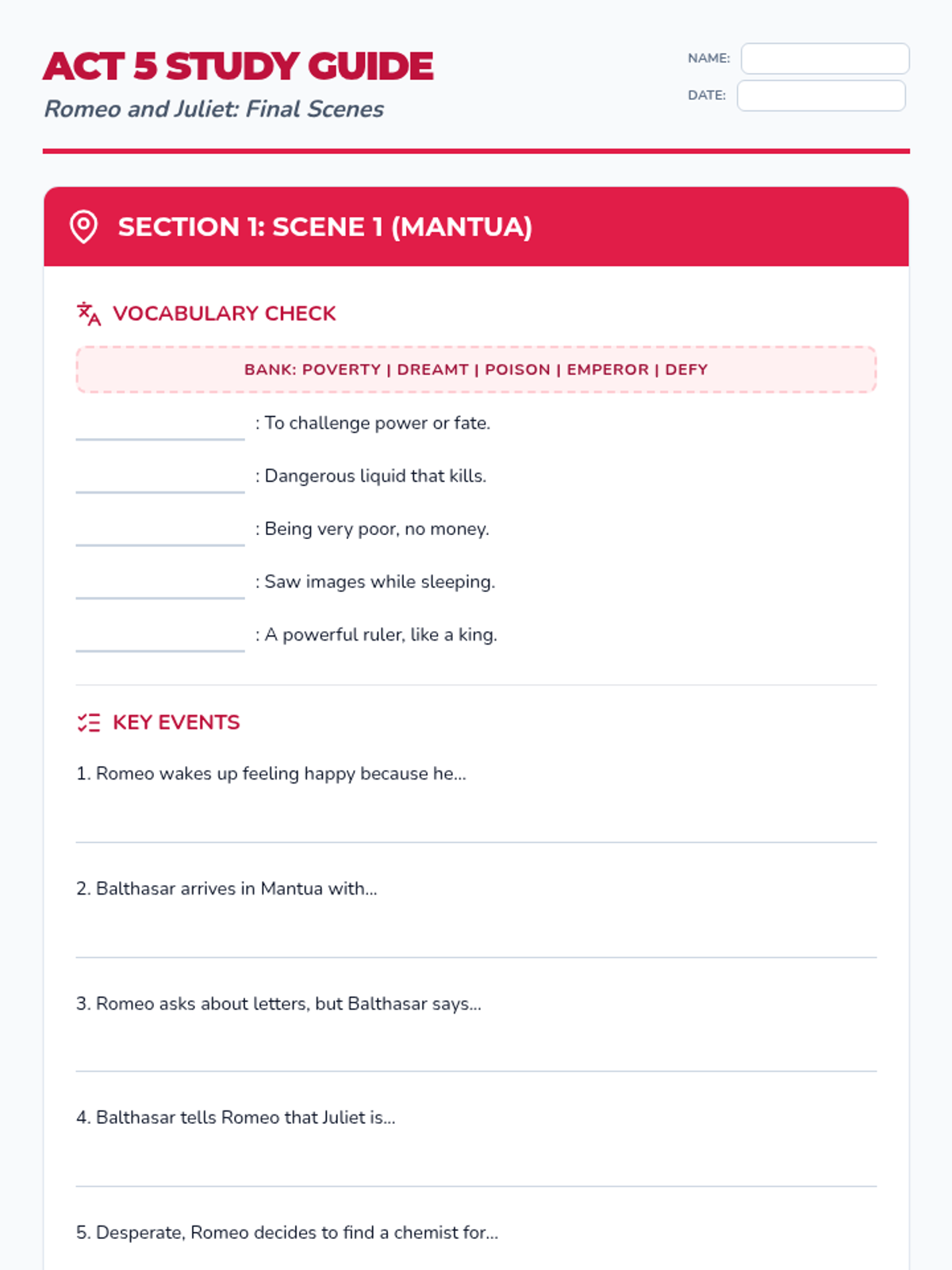
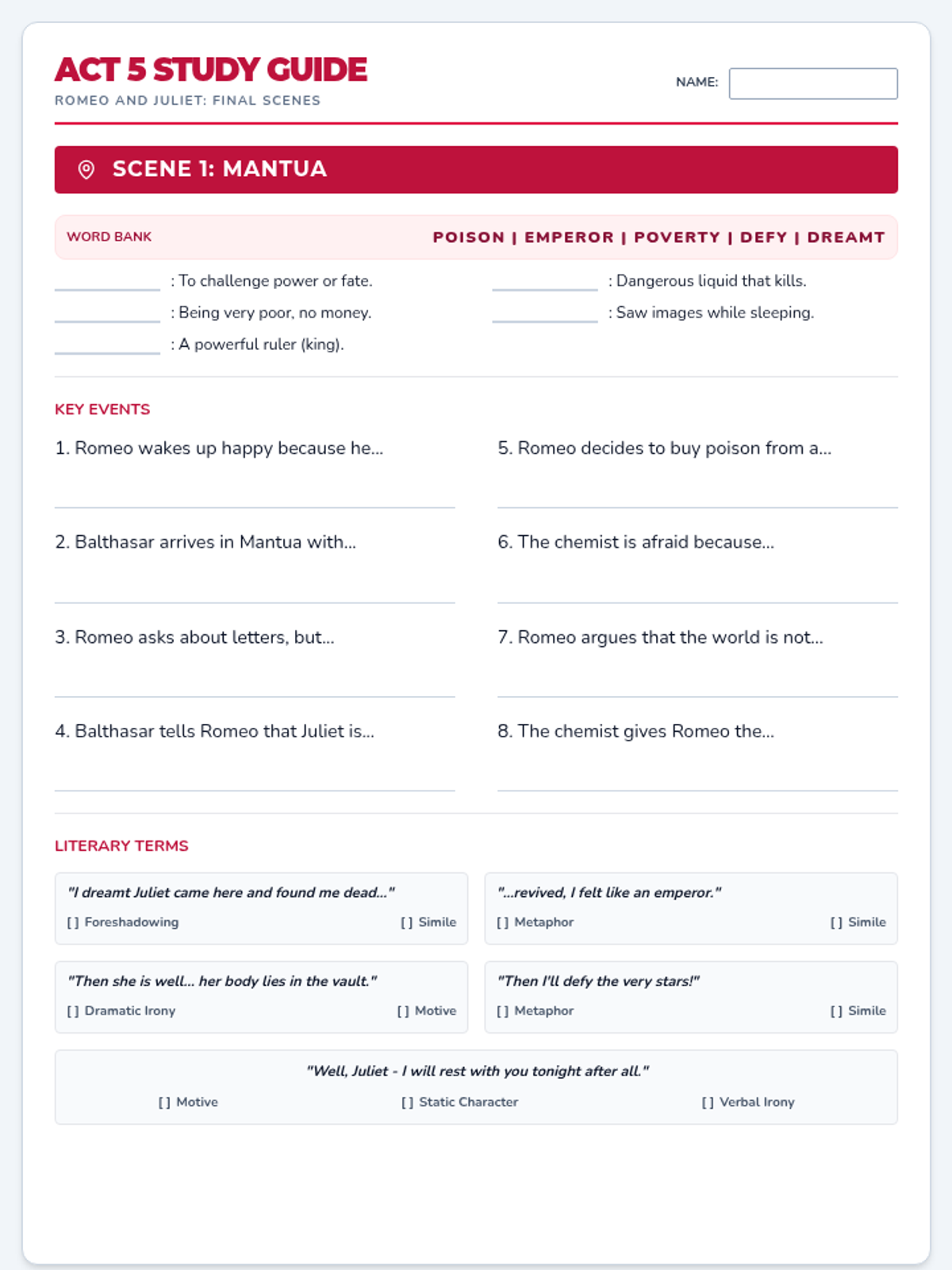
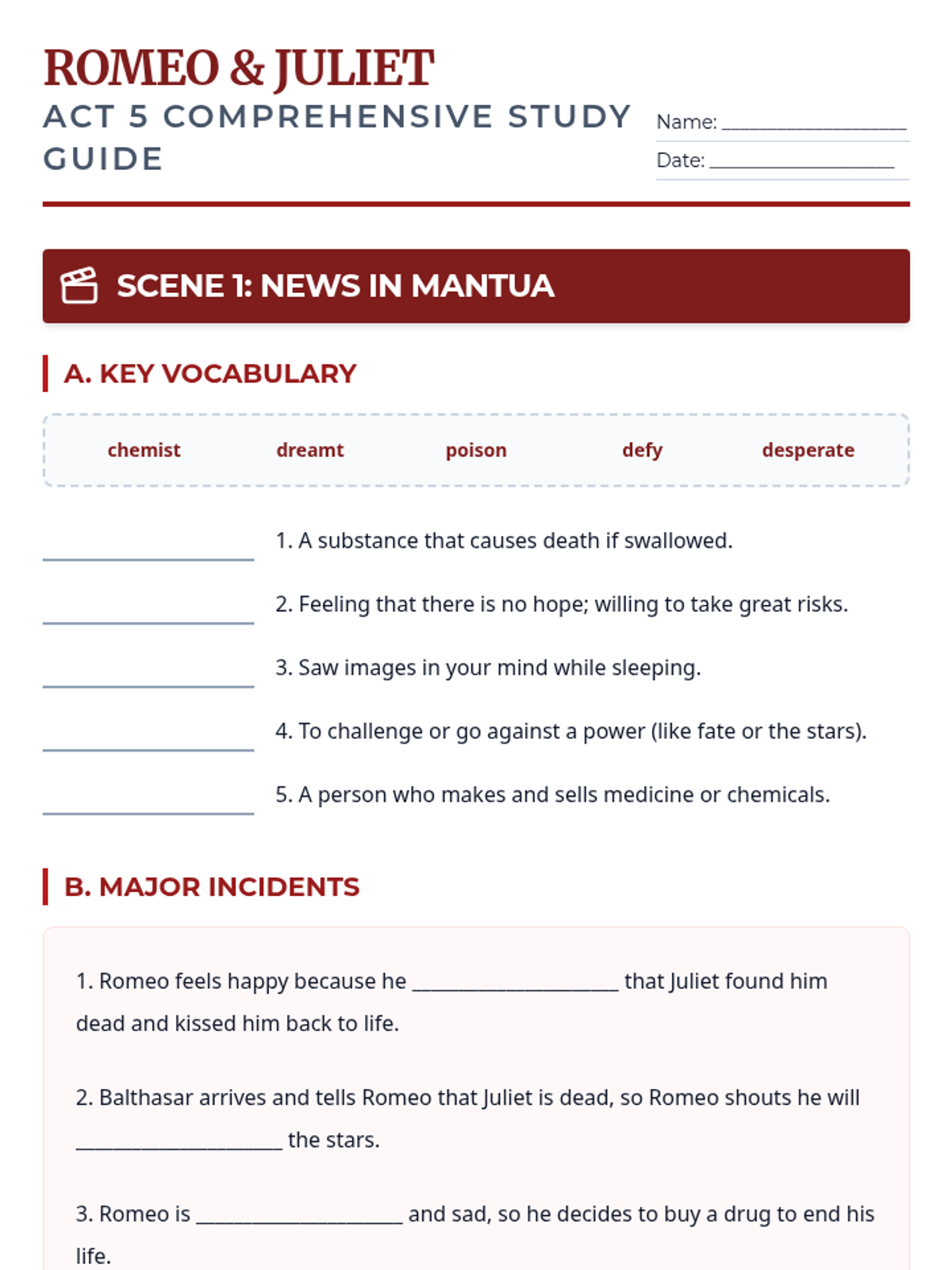
A study guide for Act 5 of Romeo and Juliet designed for WIDA level 3 students, covering key vocabulary, plot events with sentence starters, and literary terms using textual evidence from the graphic novel.
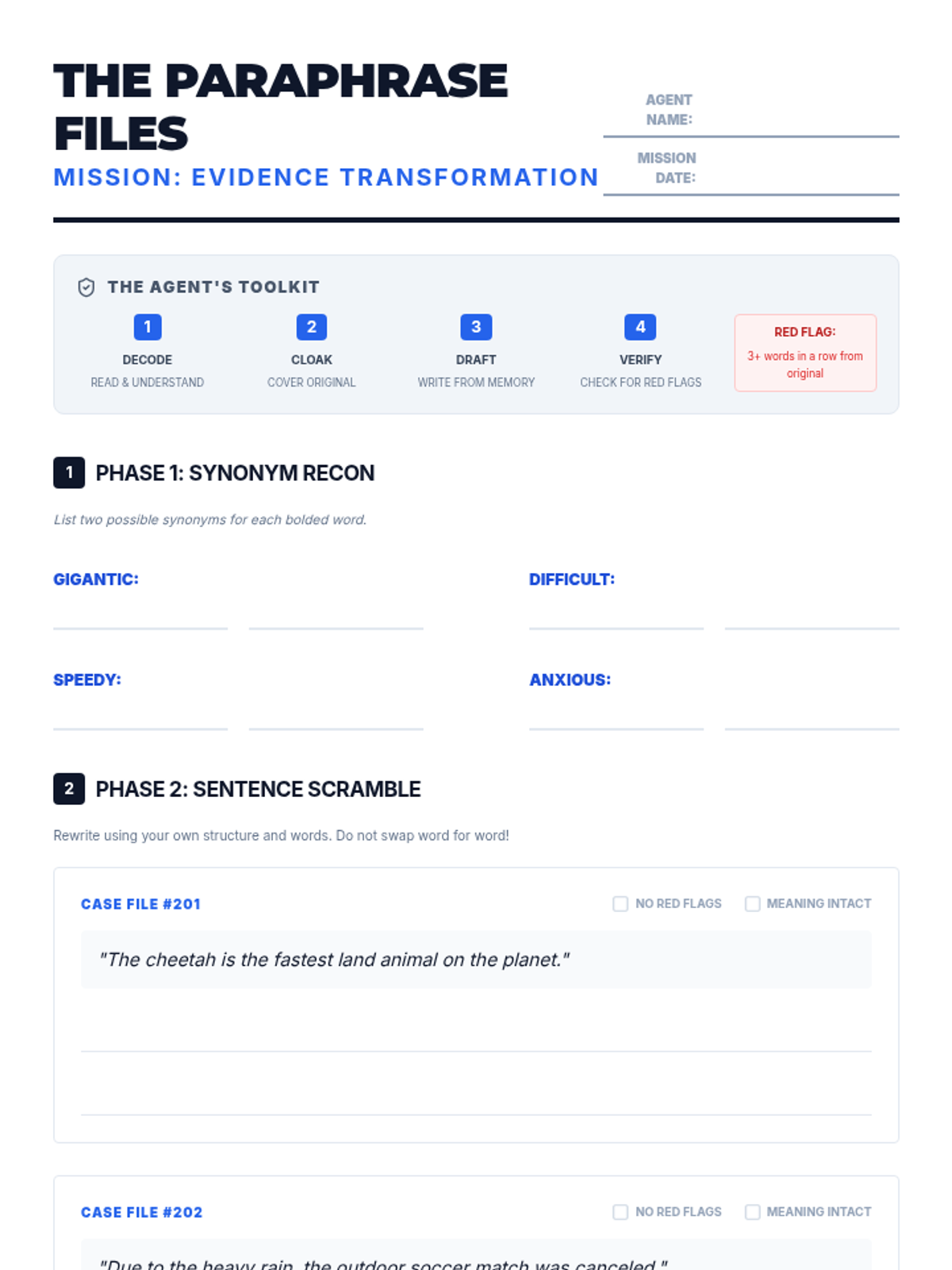
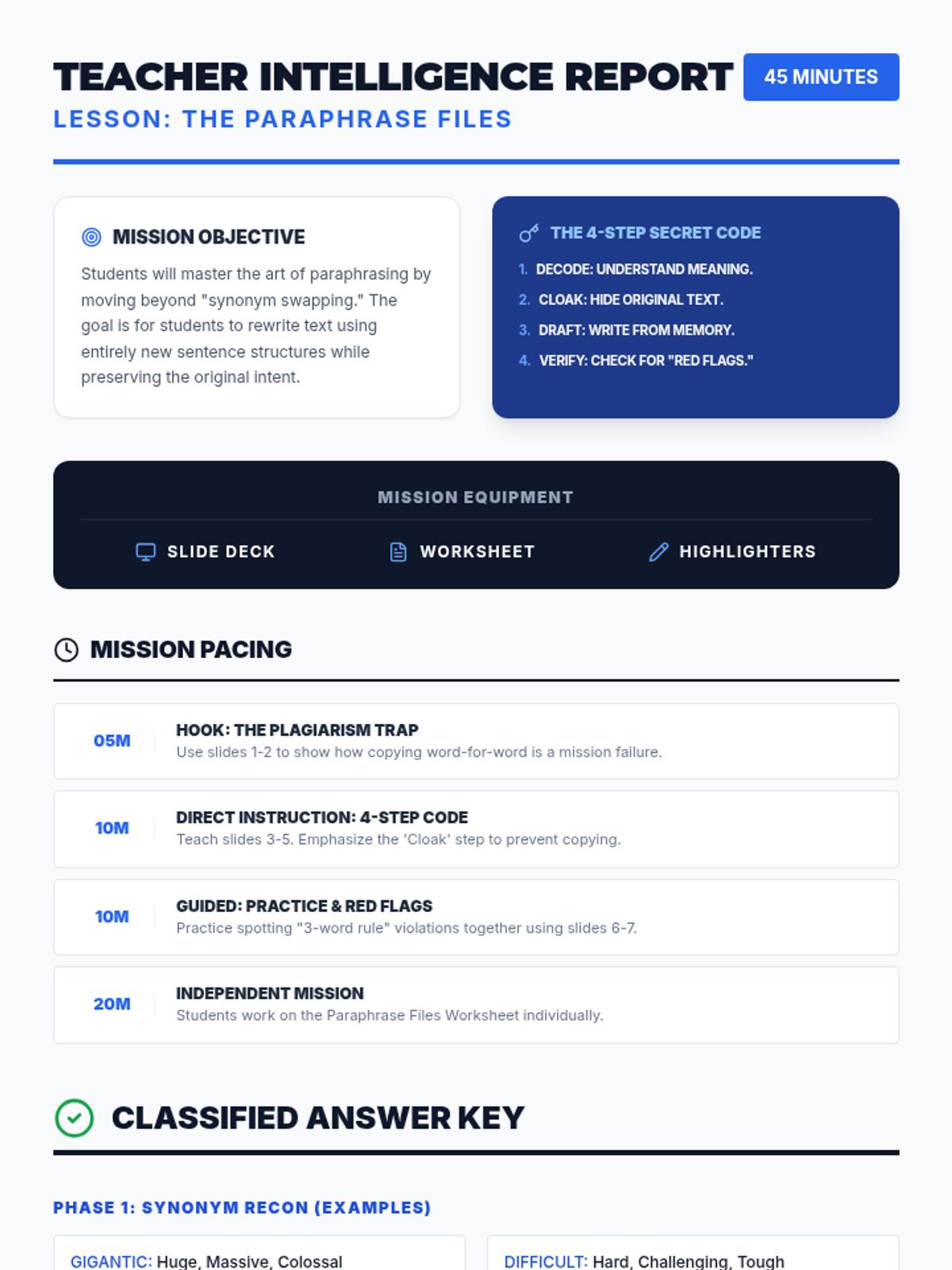
A structured 45-minute introductory lesson designed to help struggling students master paraphrasing using the '4-Step Secret Code' method. Includes direct instruction, guided practice, and independent application.
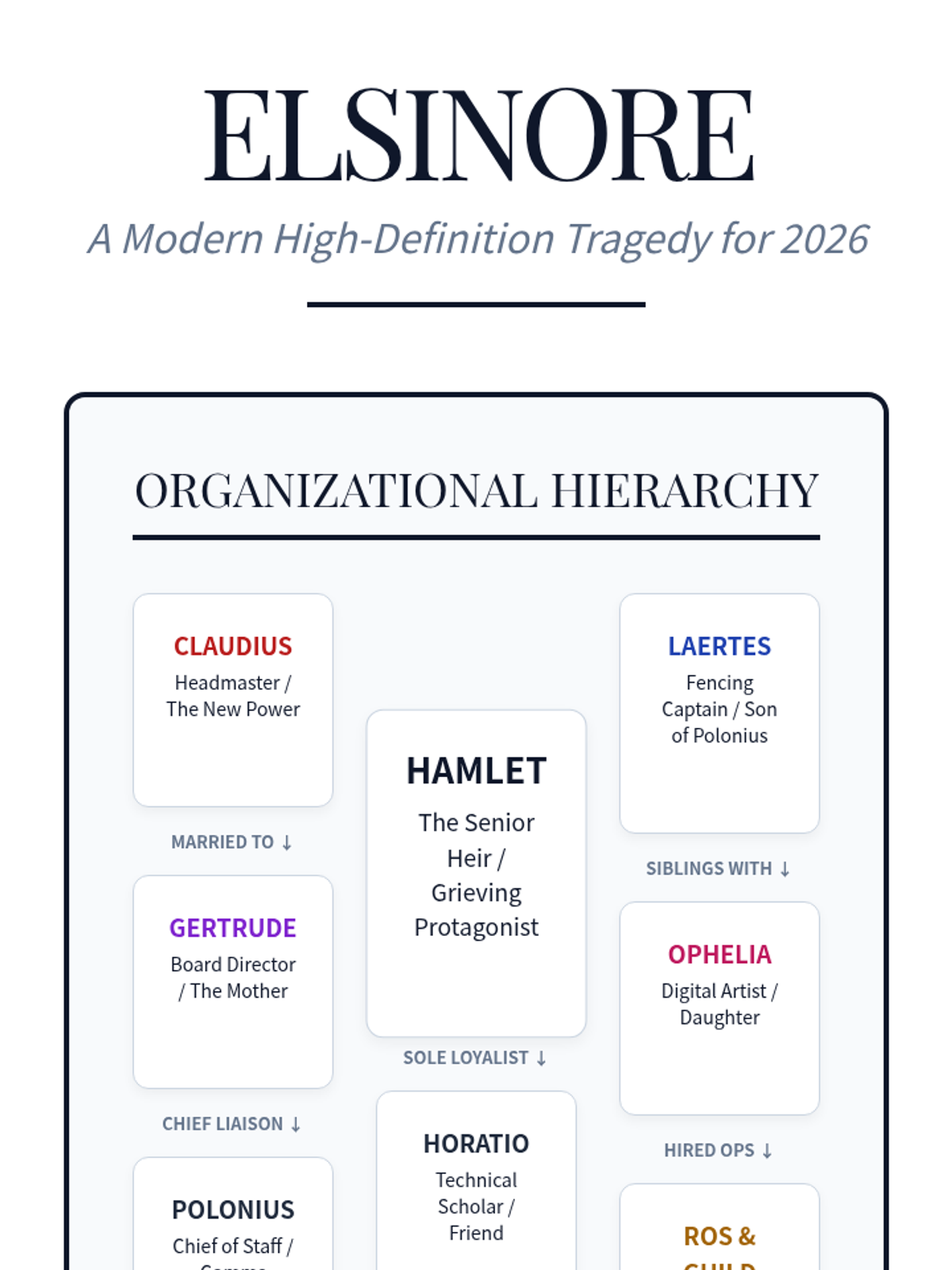
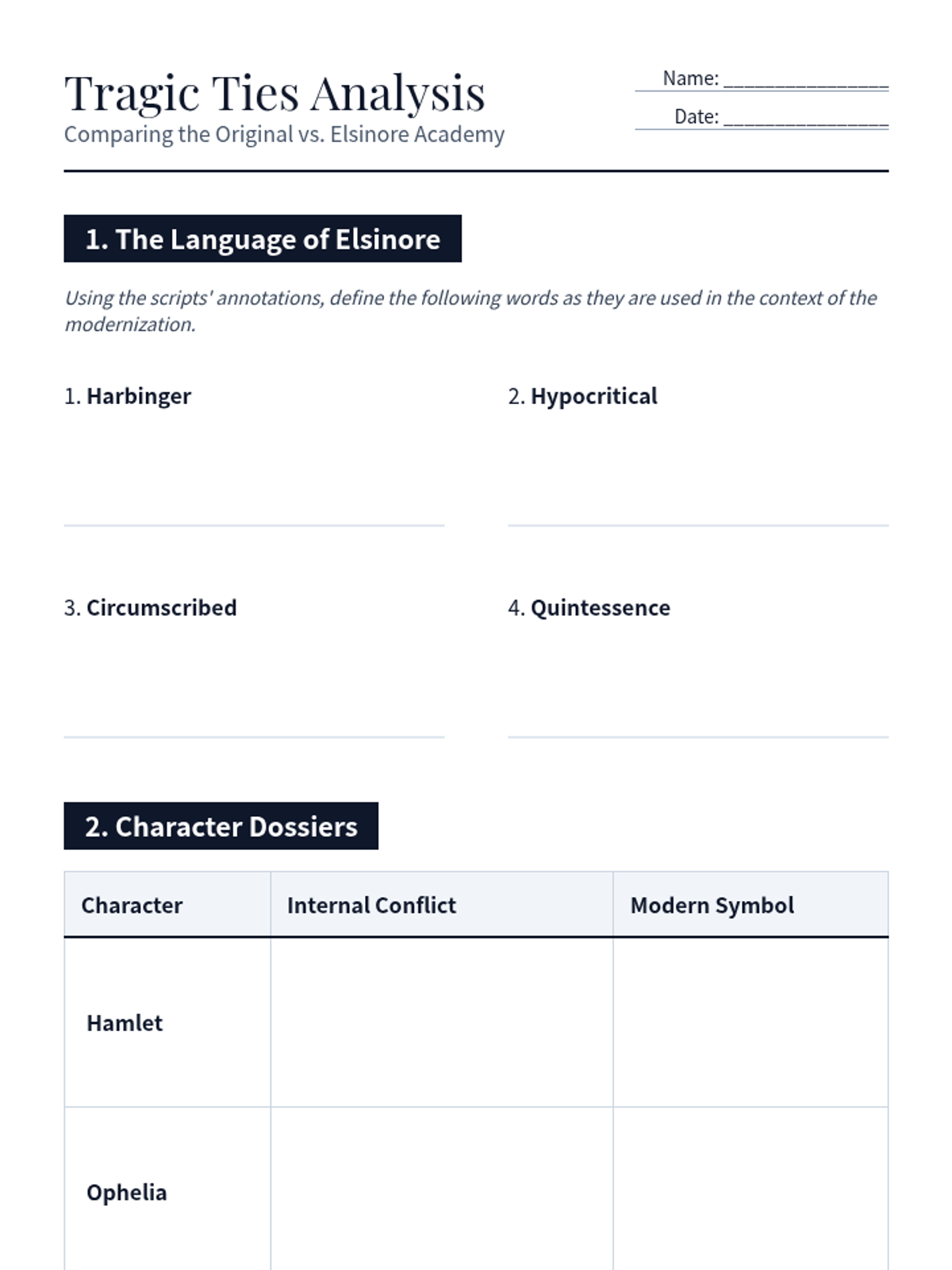
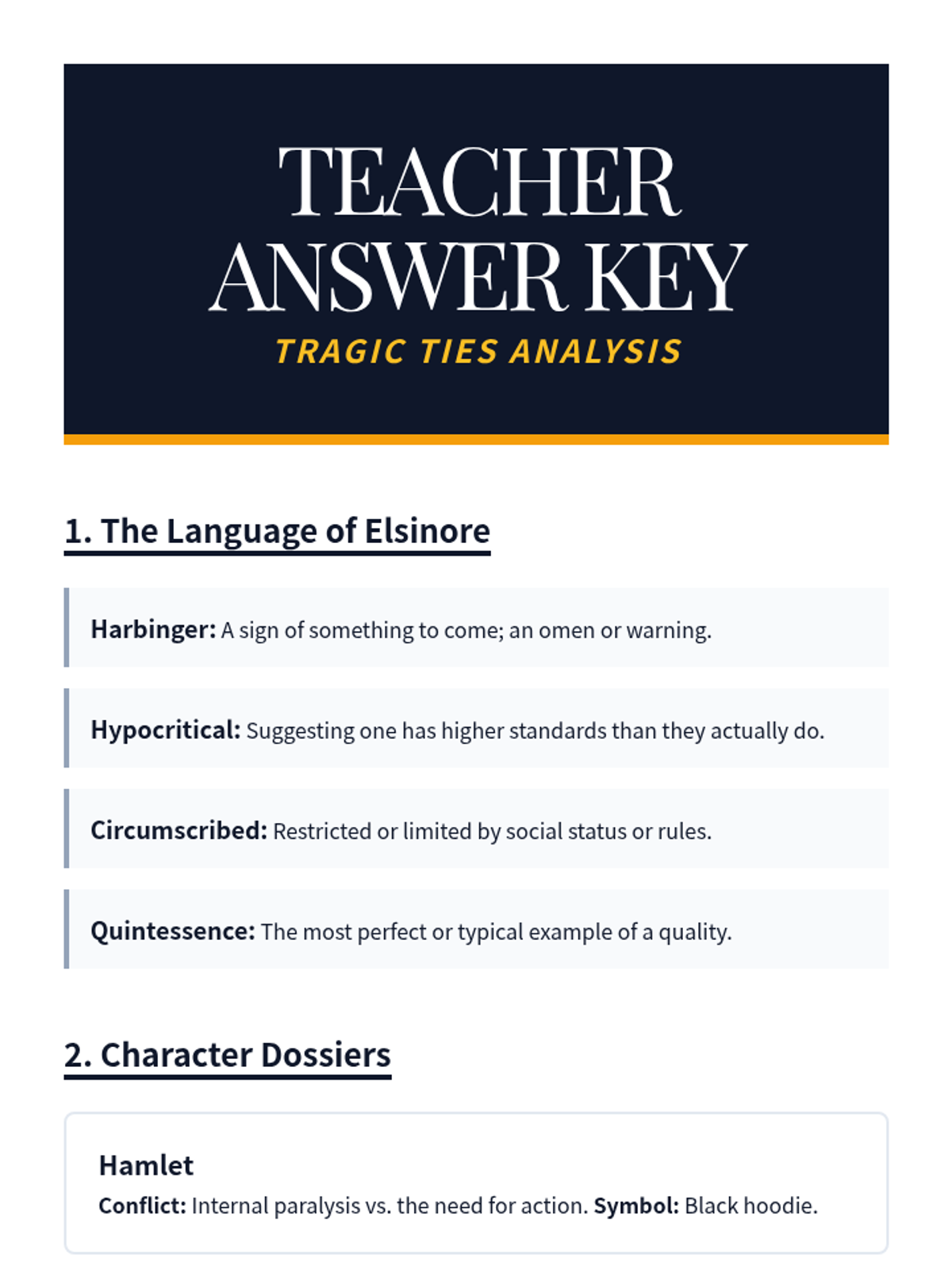
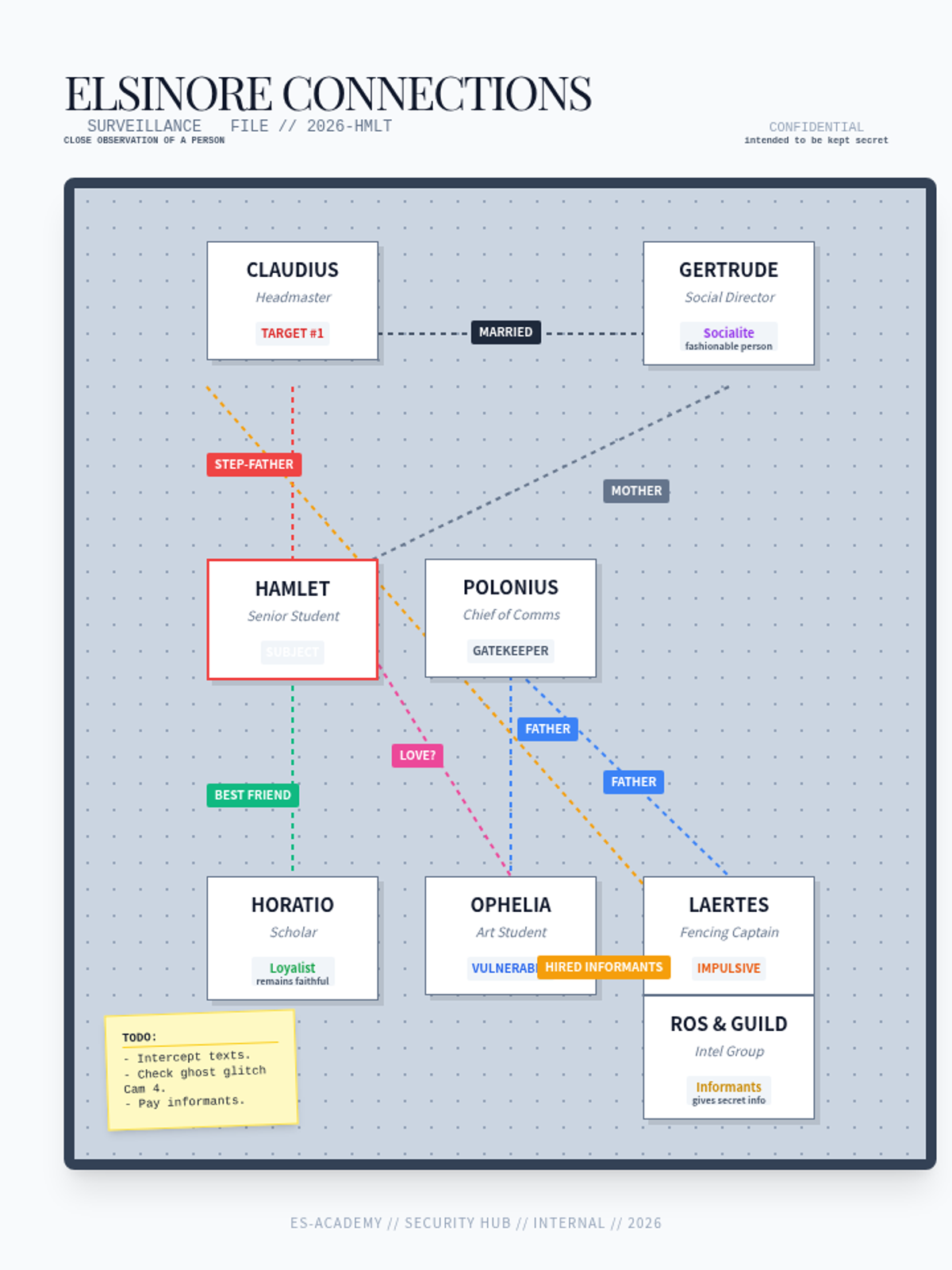
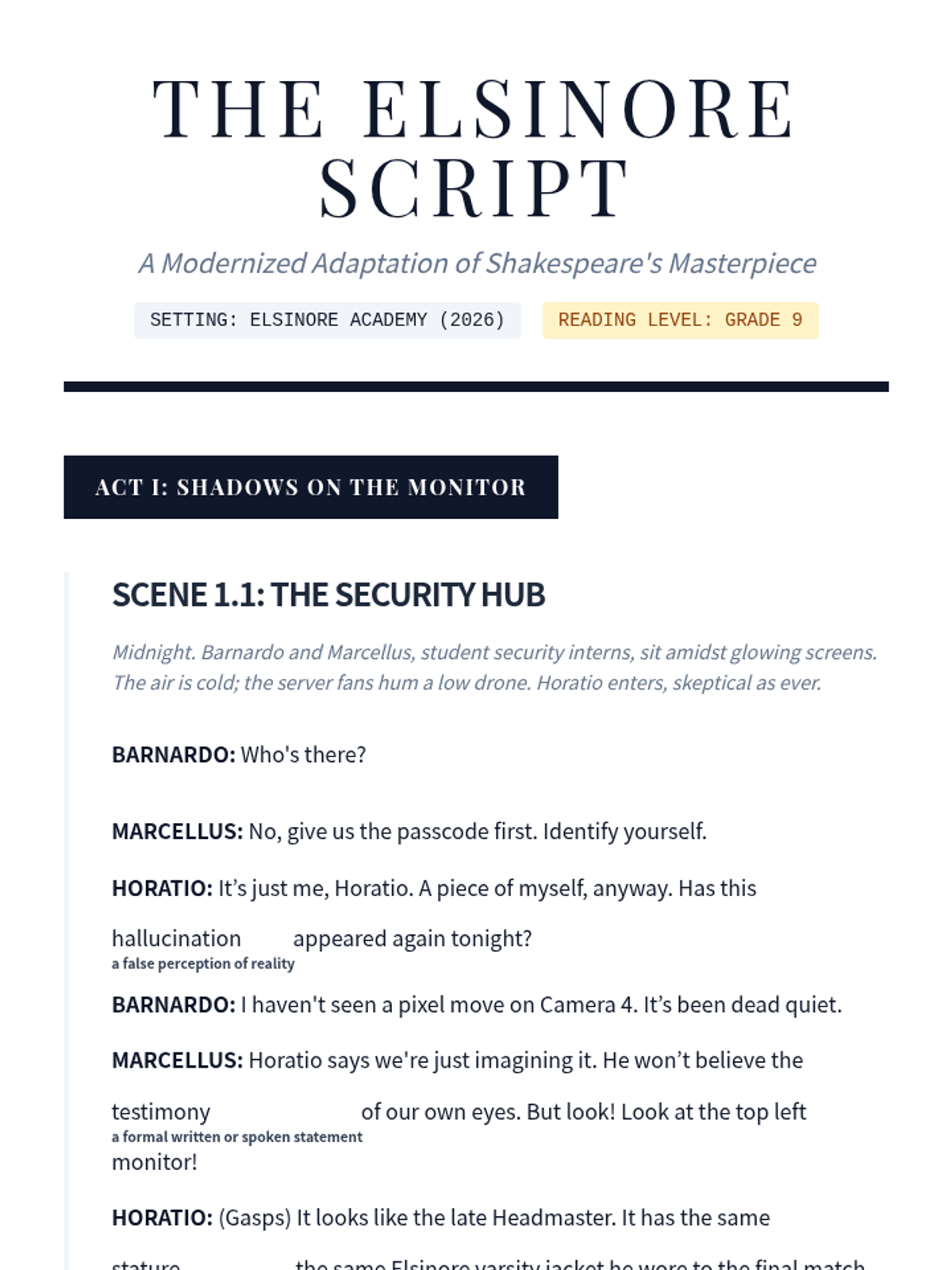
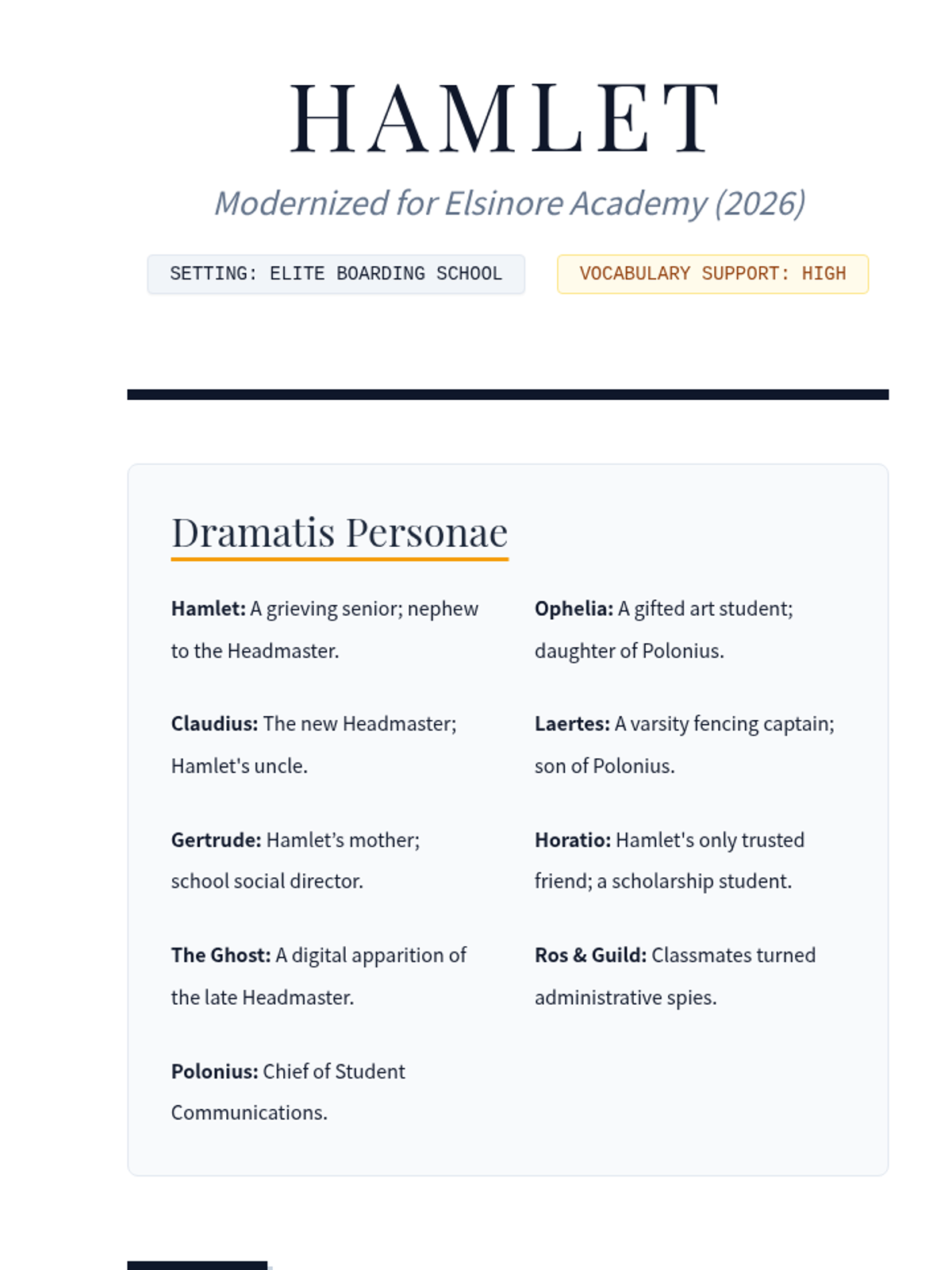
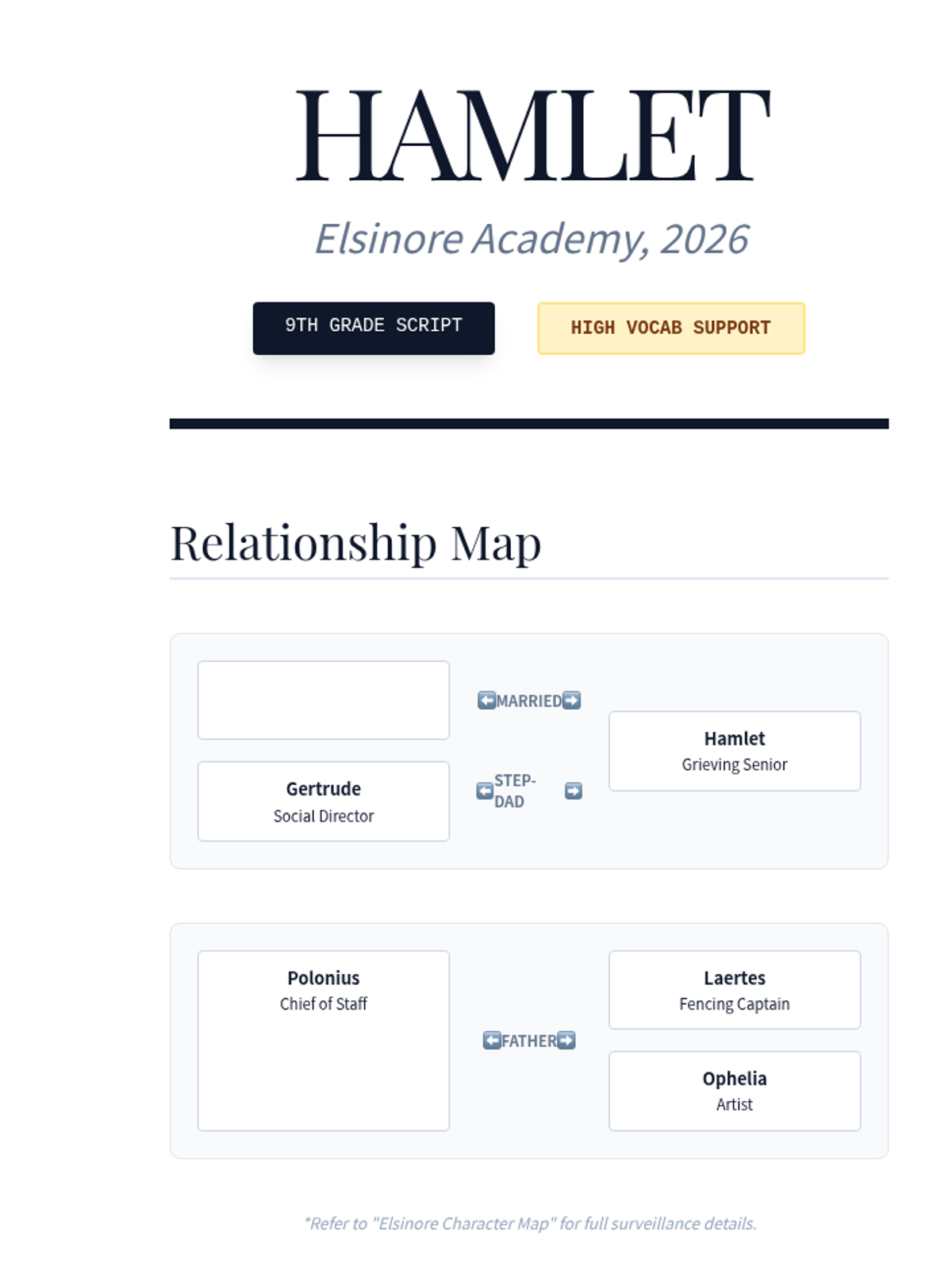
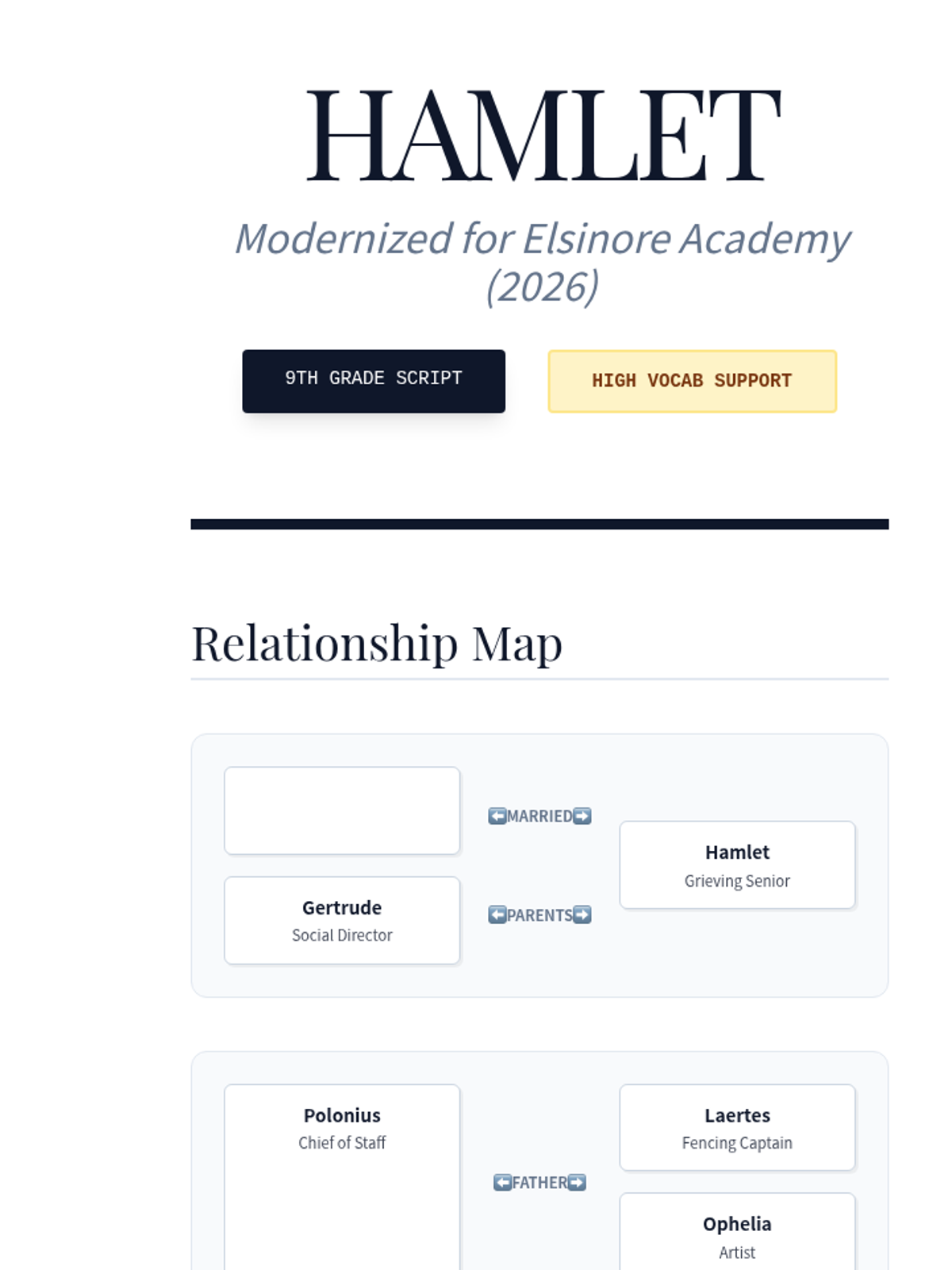
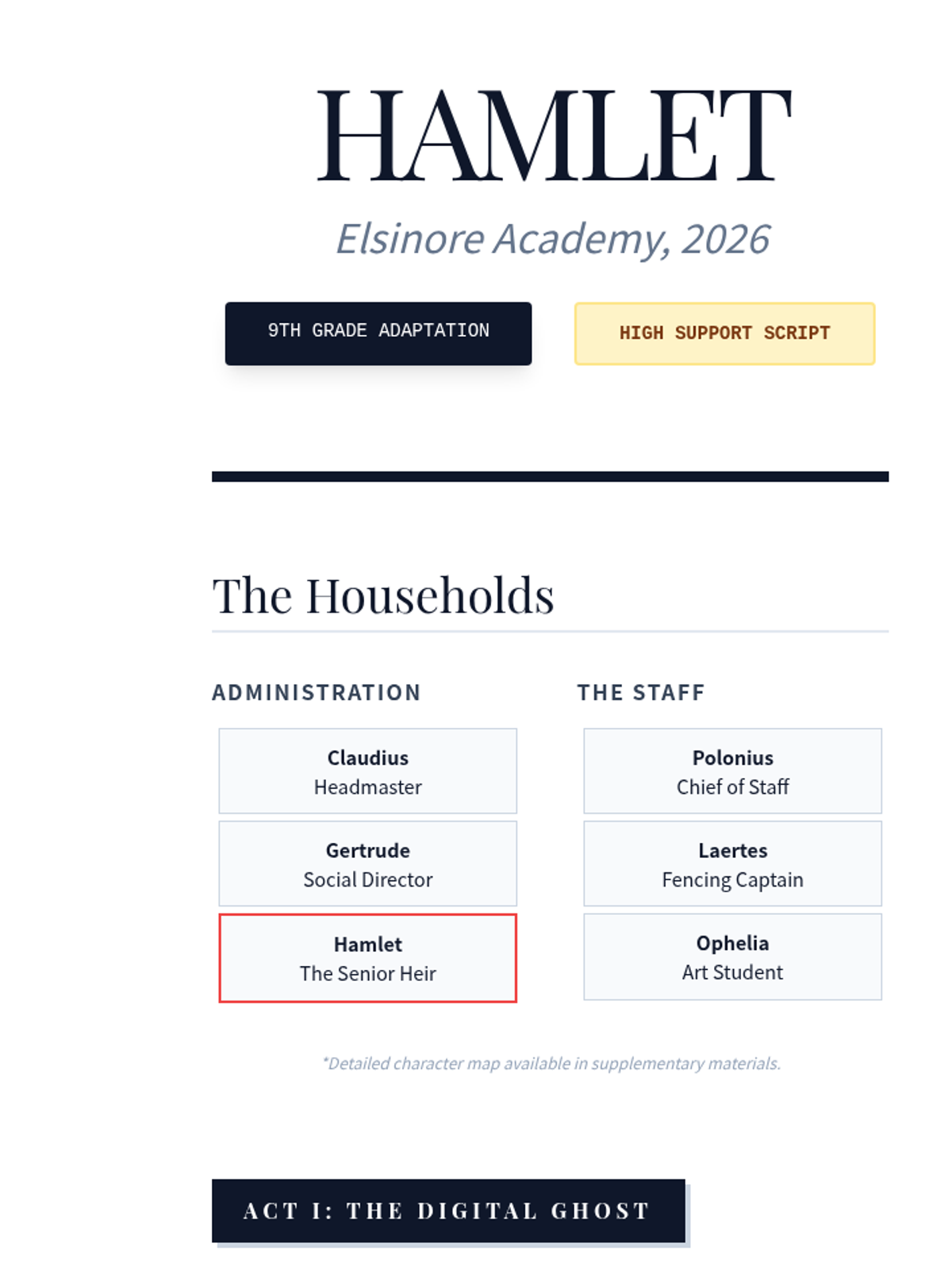
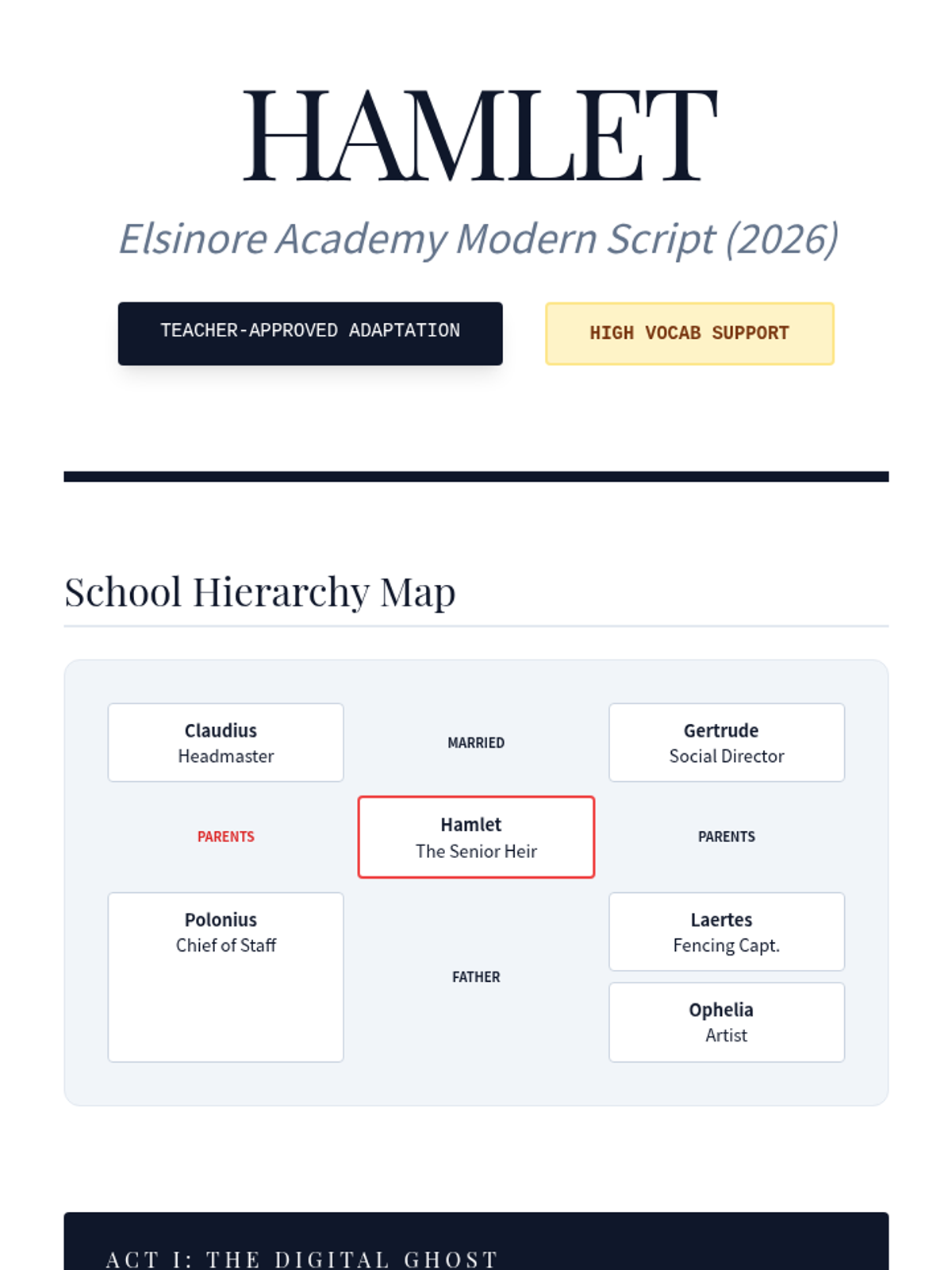
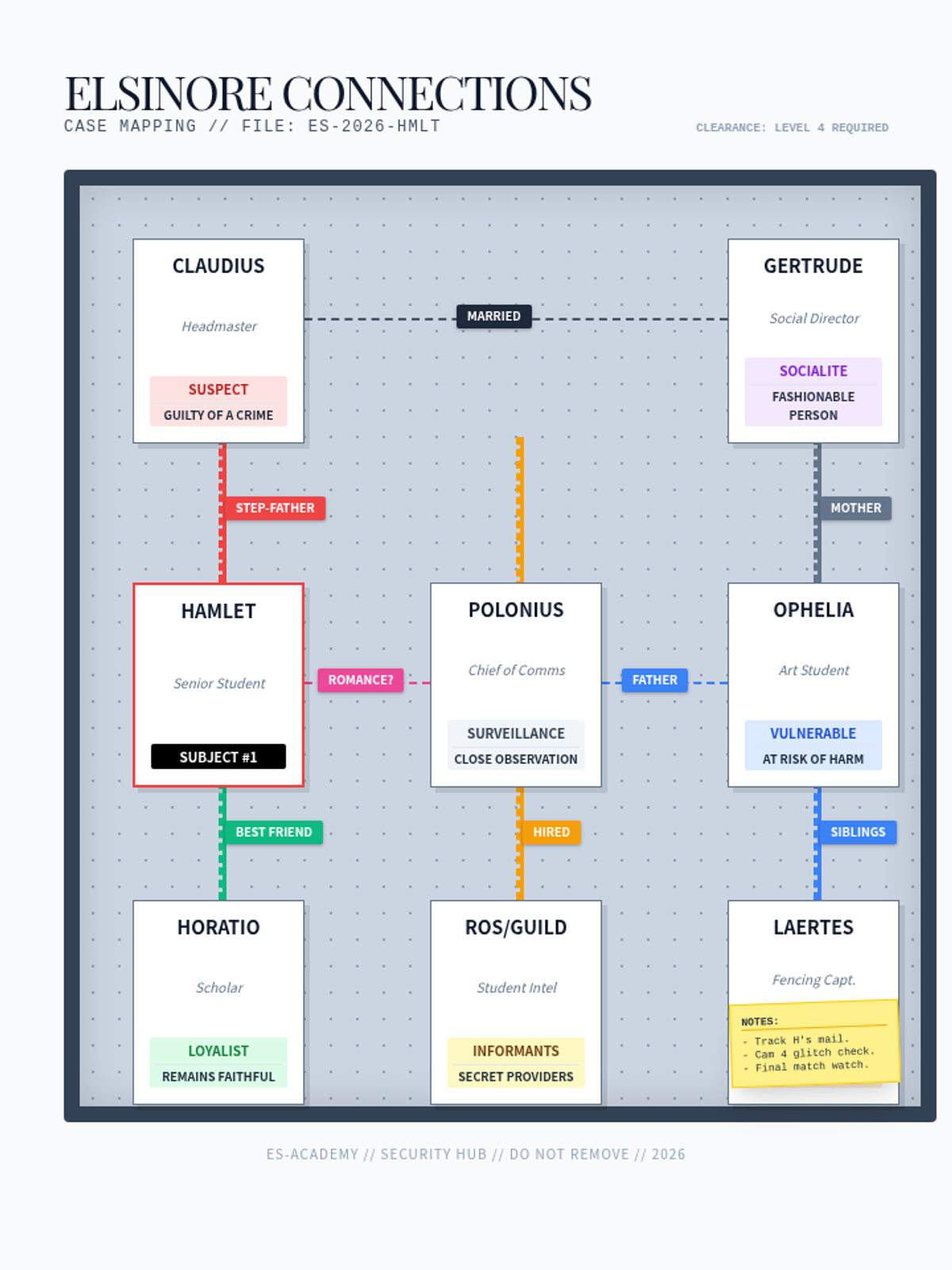
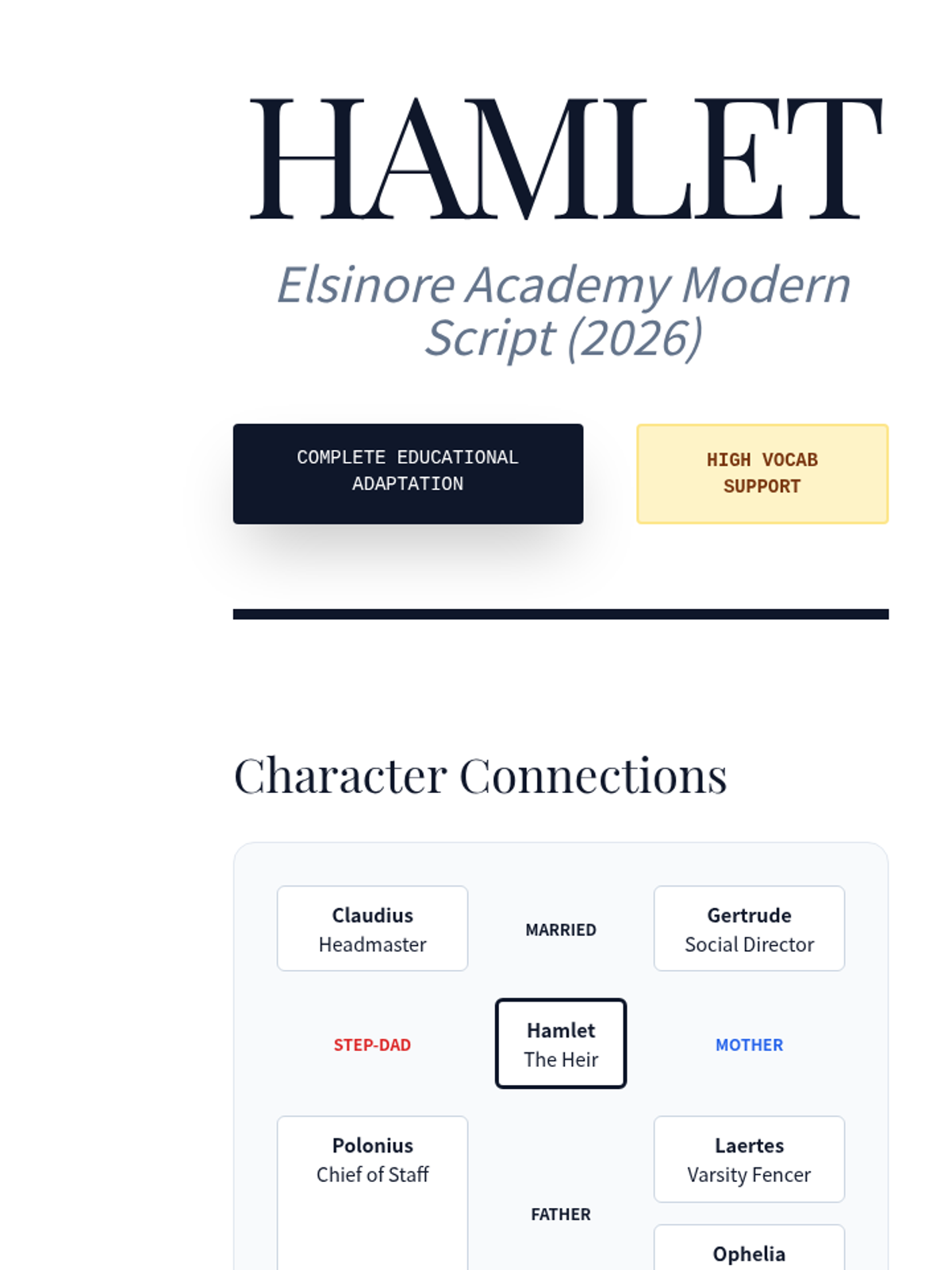
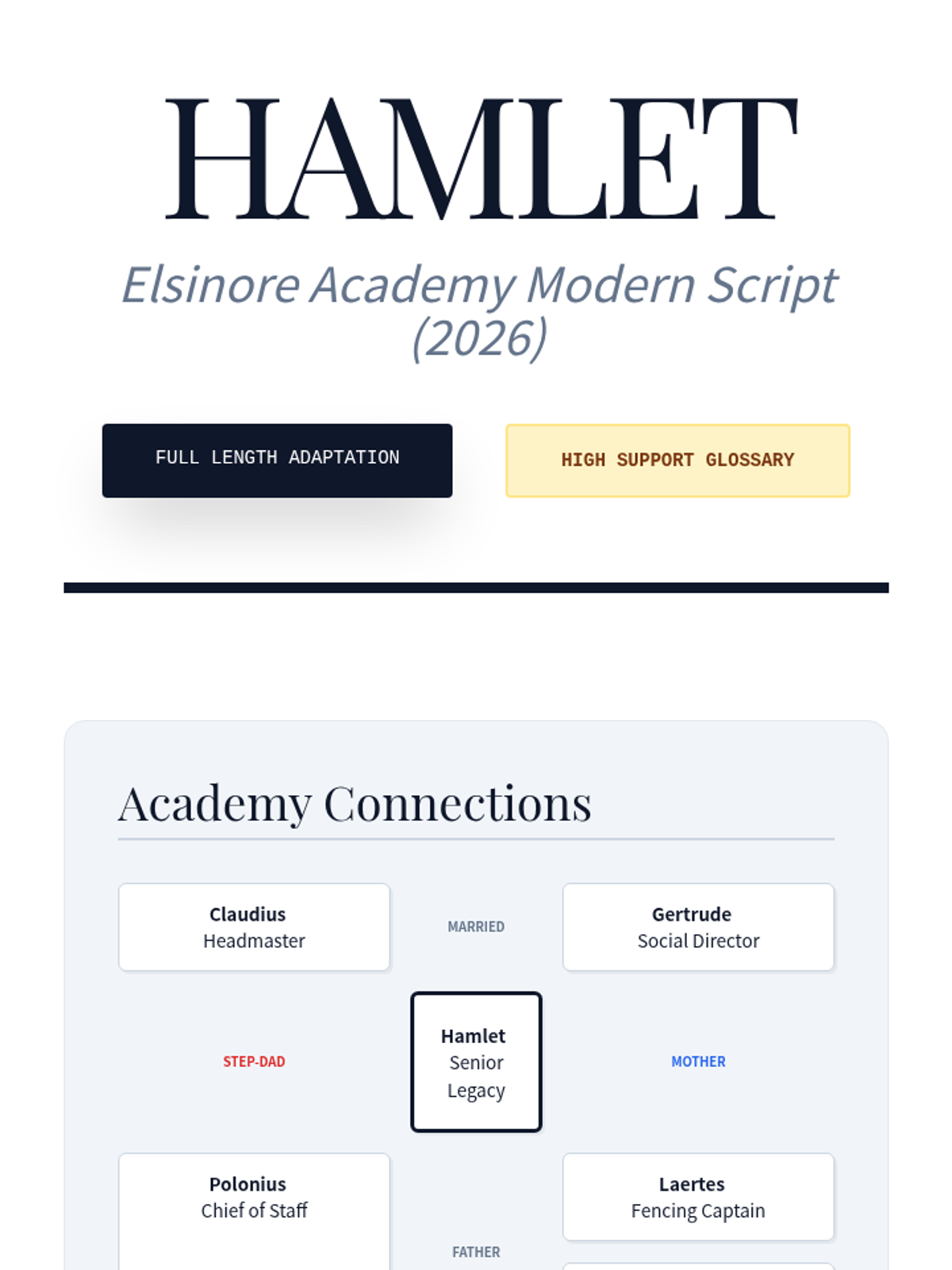
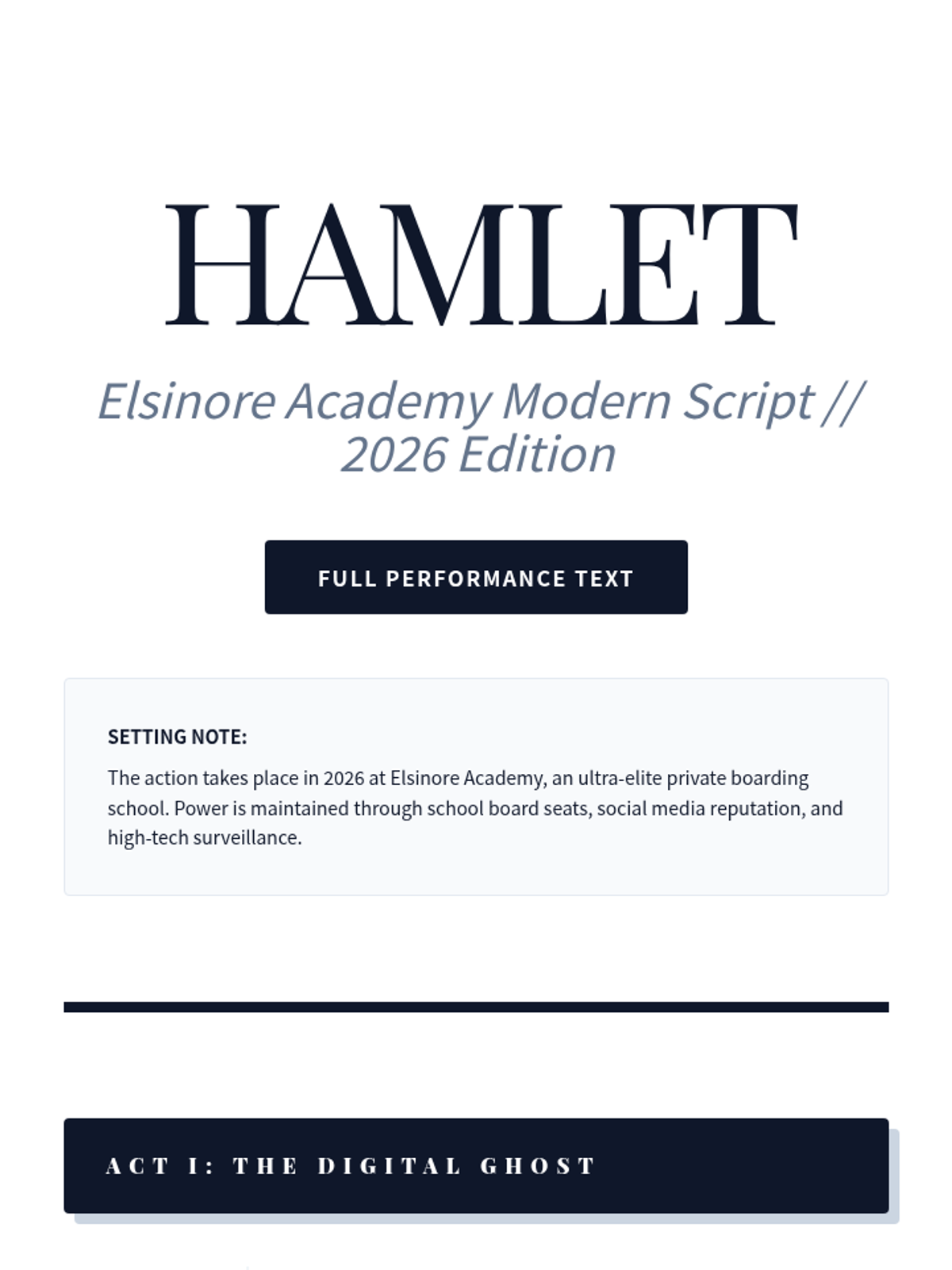
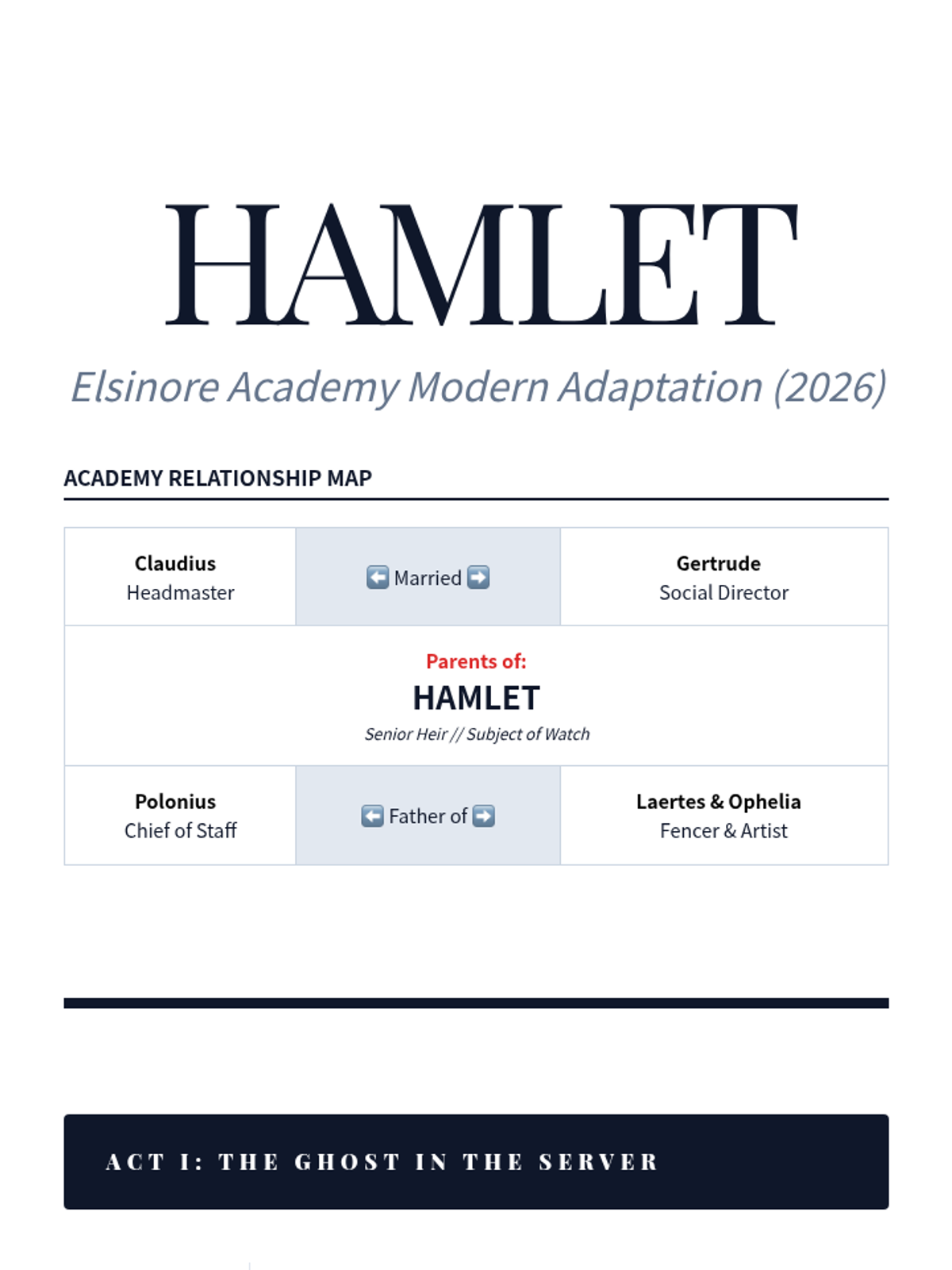
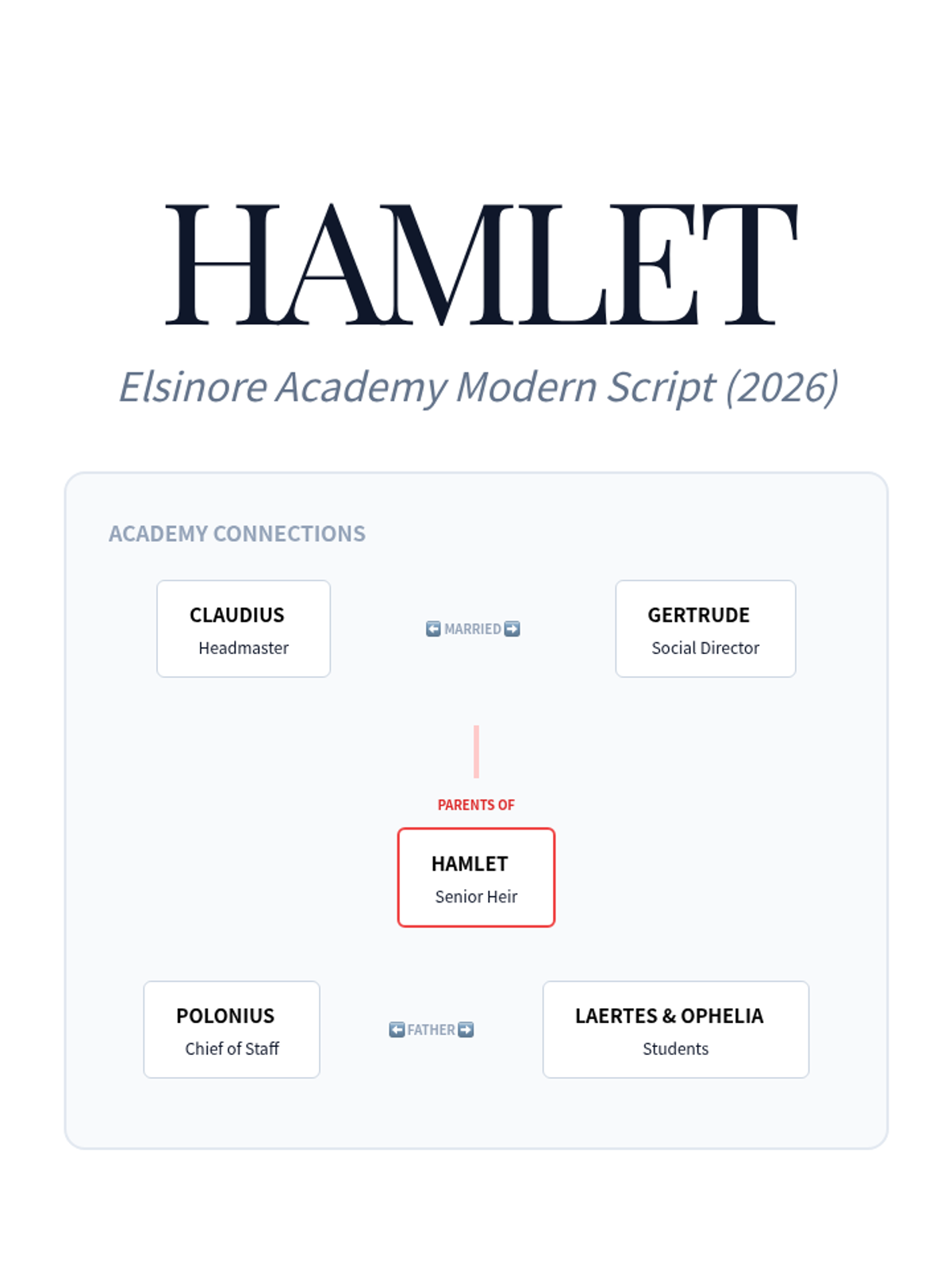
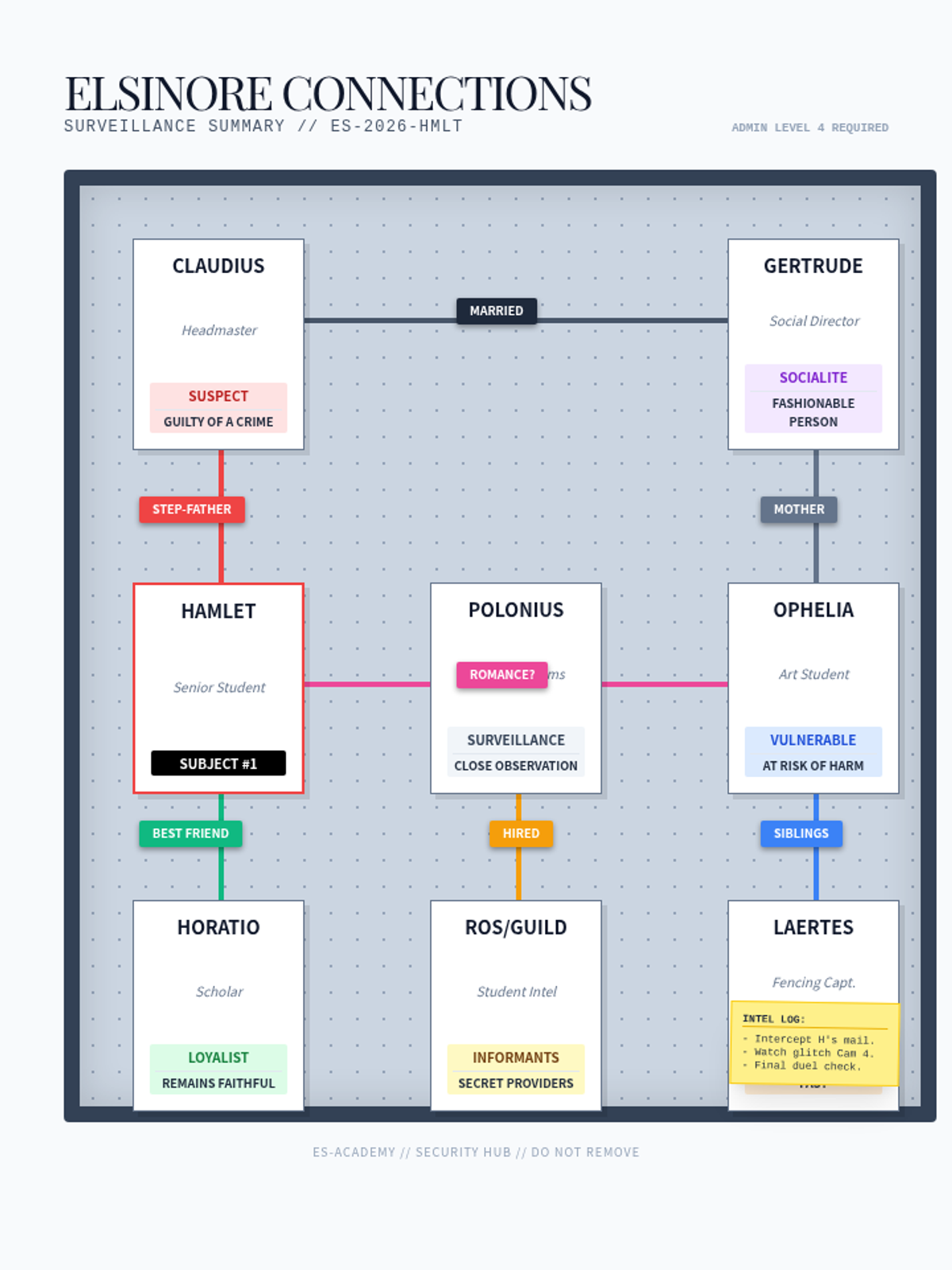
A complete modernized script of Hamlet set in a 2026 boarding school, maintaining original themes and metaphors with extensive vocabulary support.
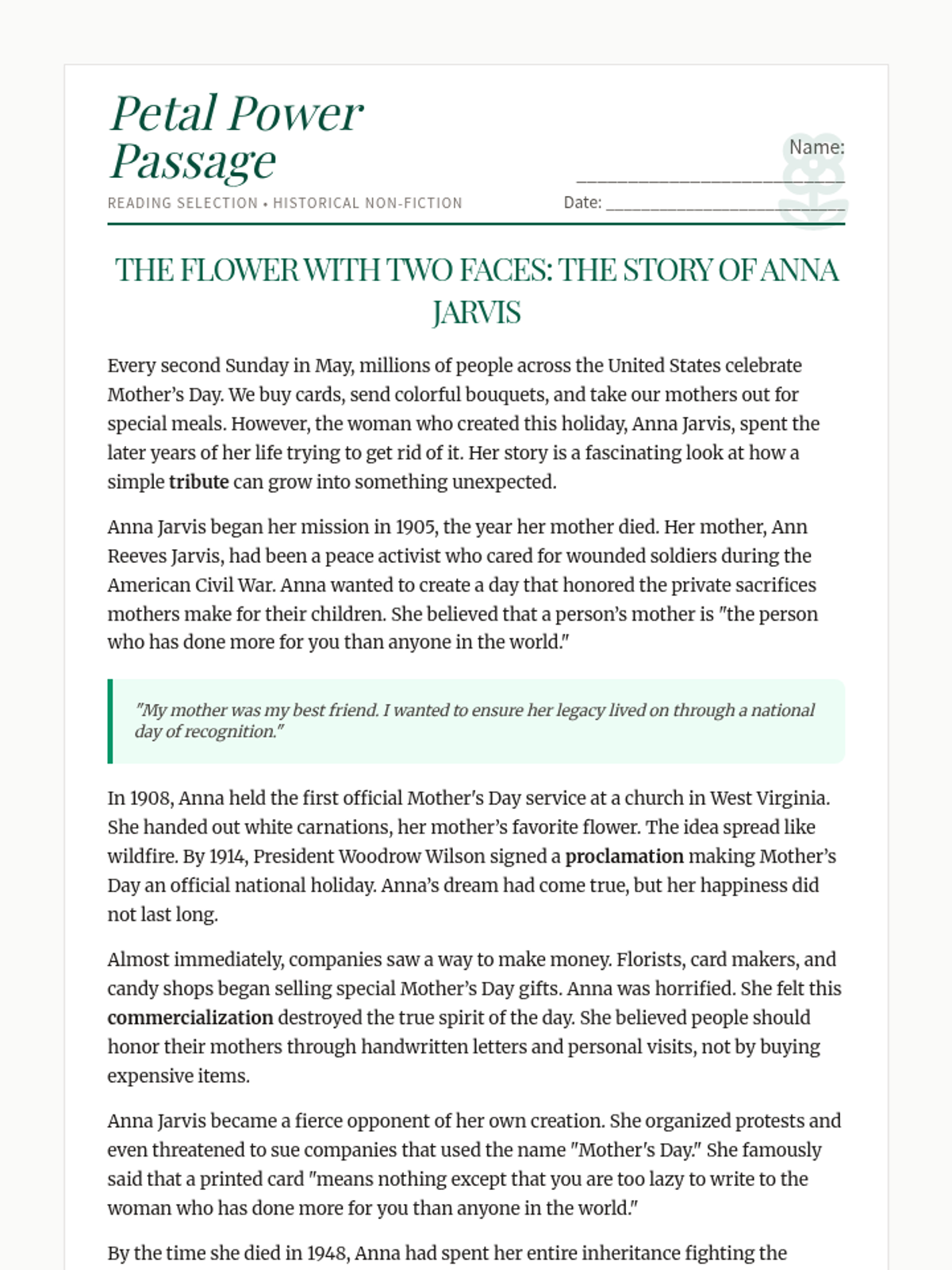
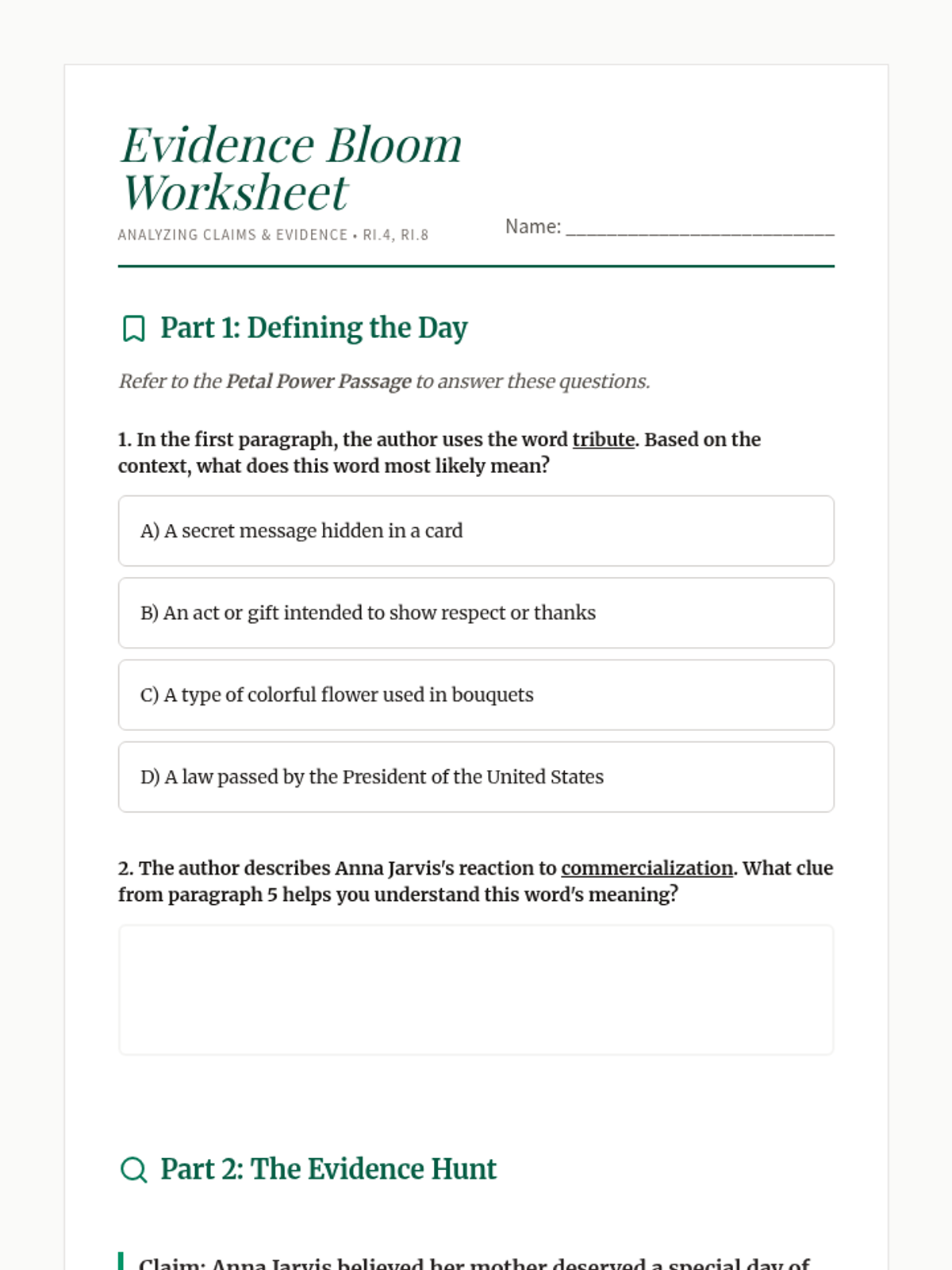
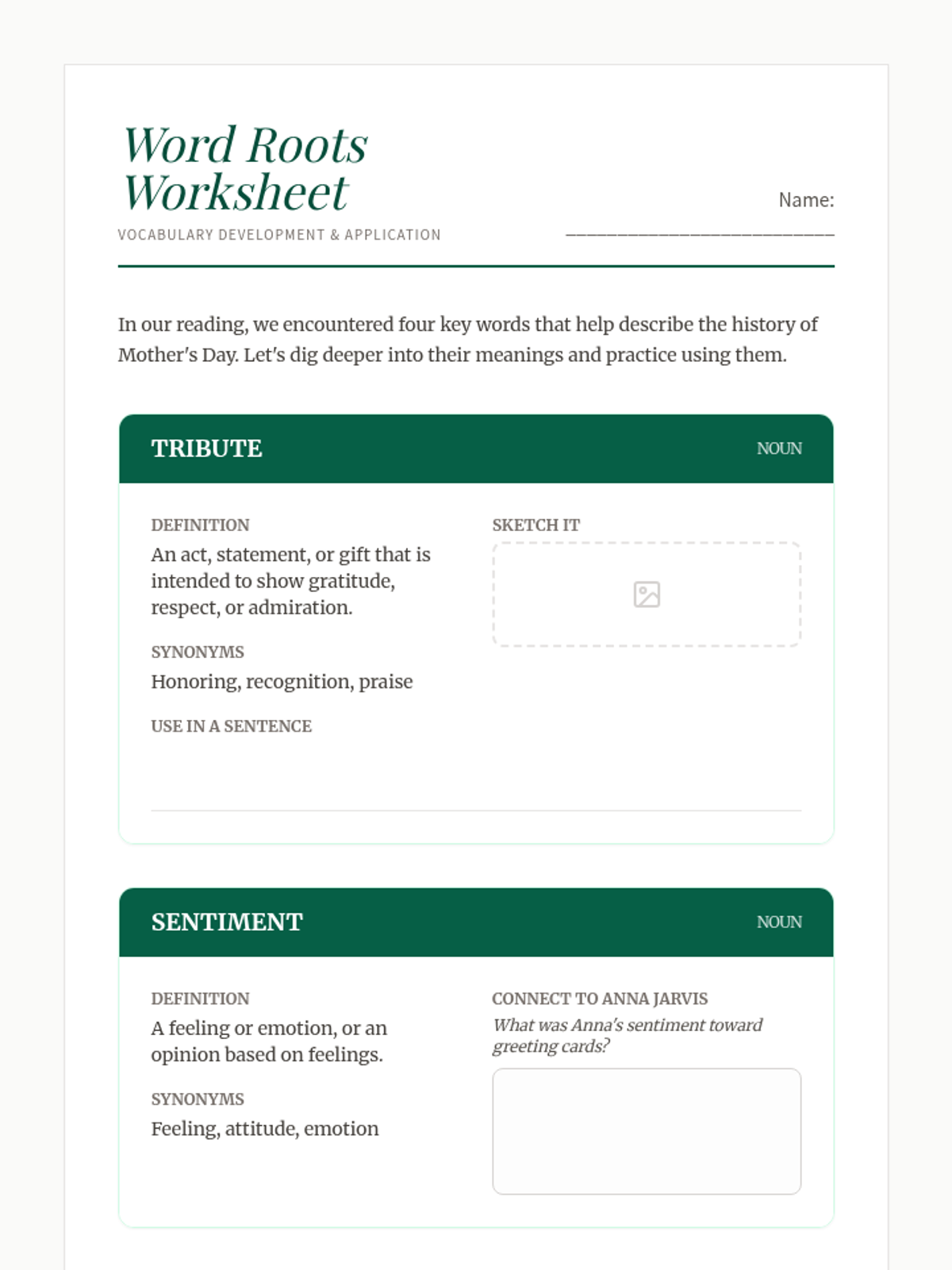
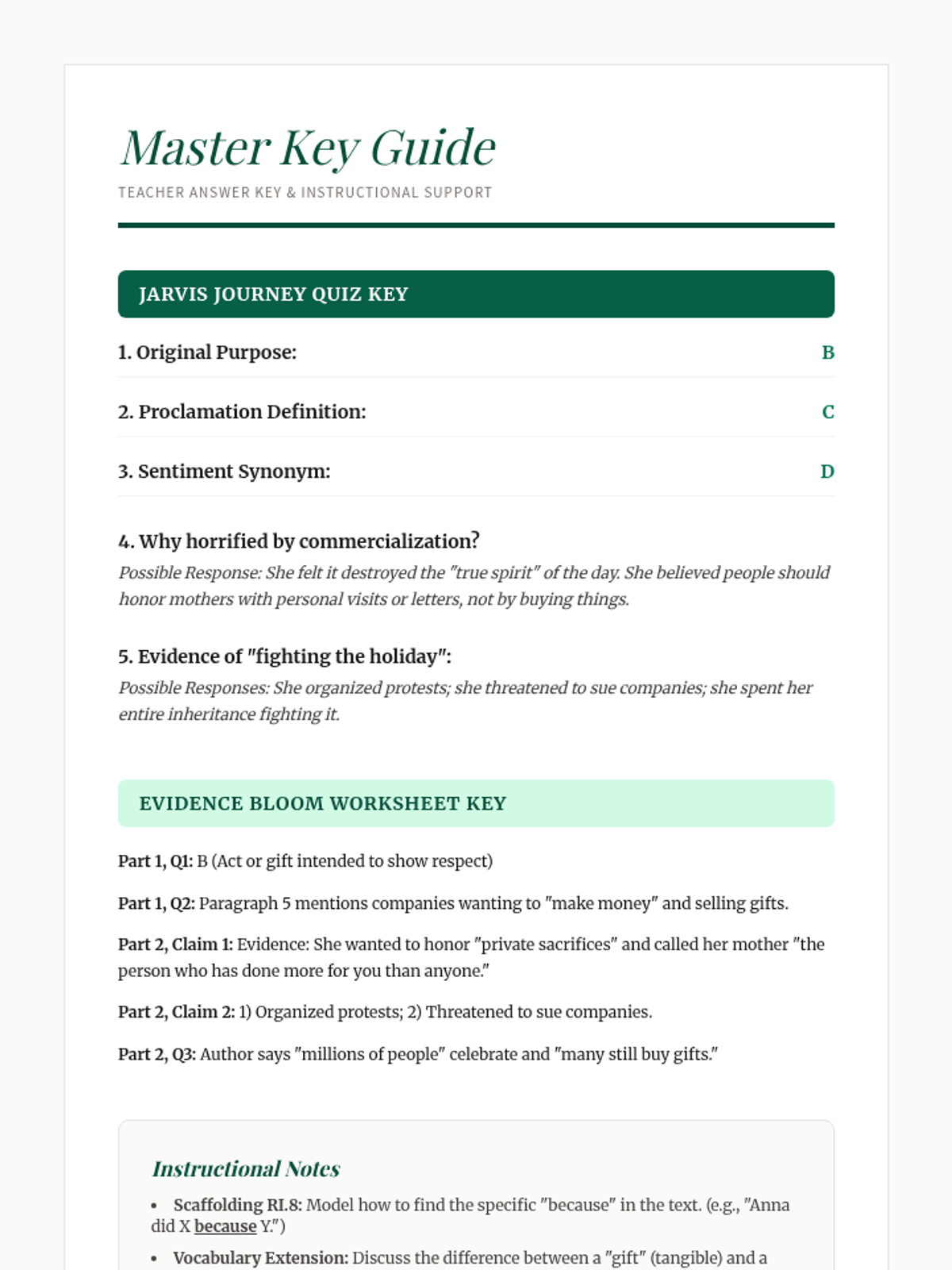
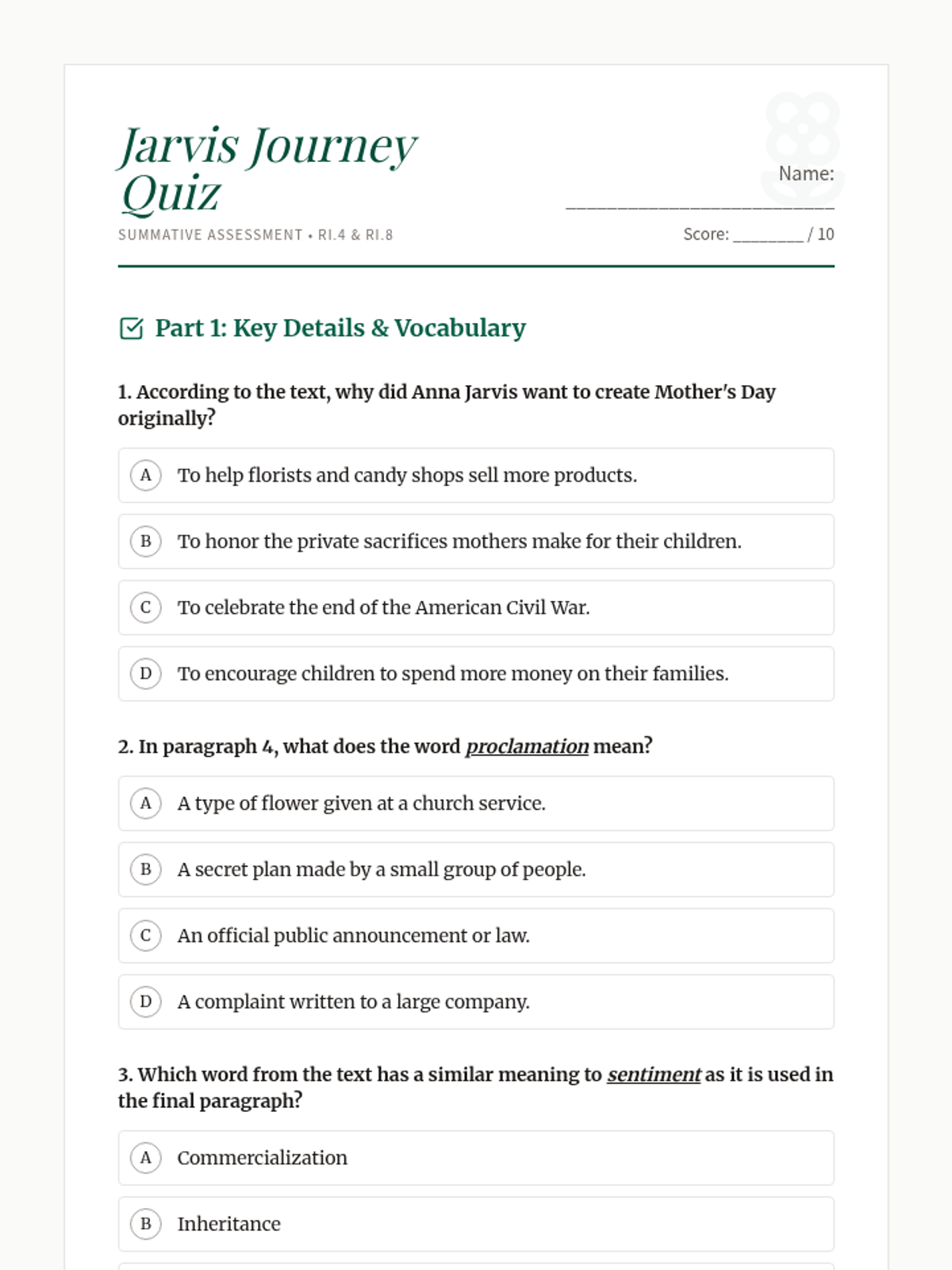
A comprehensive reading lesson exploring the history of Mother's Day, focusing on vocabulary acquisition and analyzing how authors use evidence to support claims.
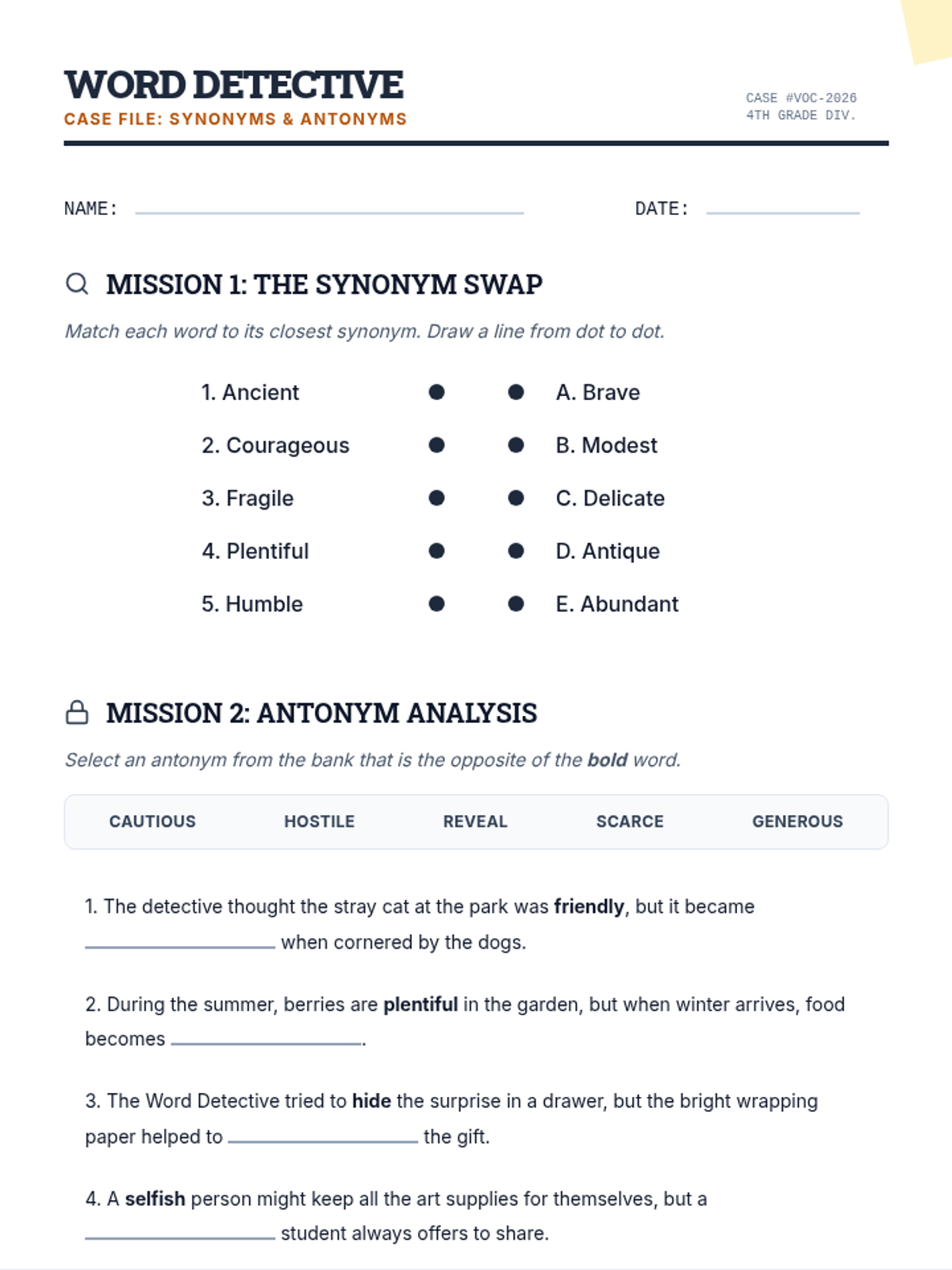
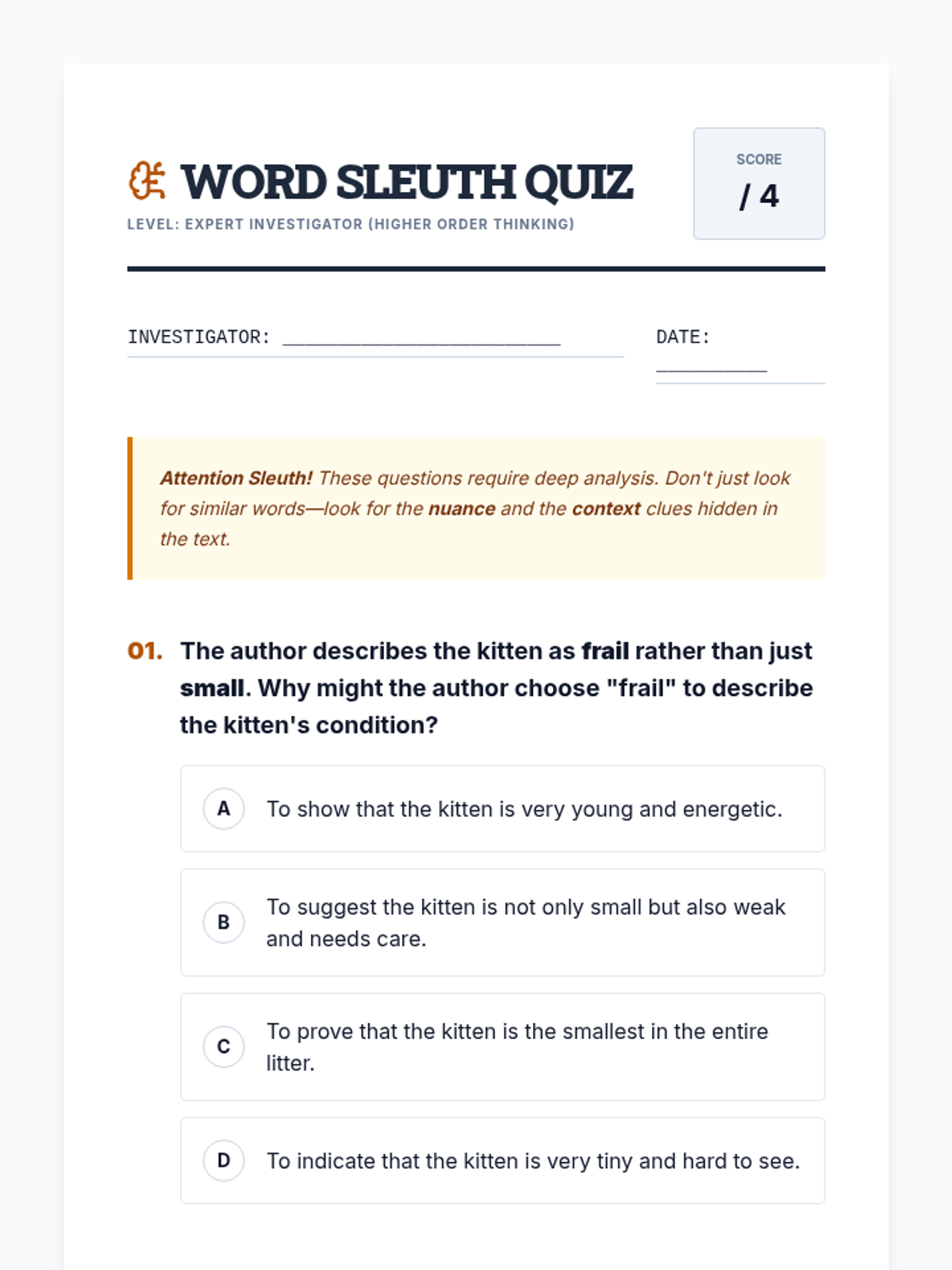
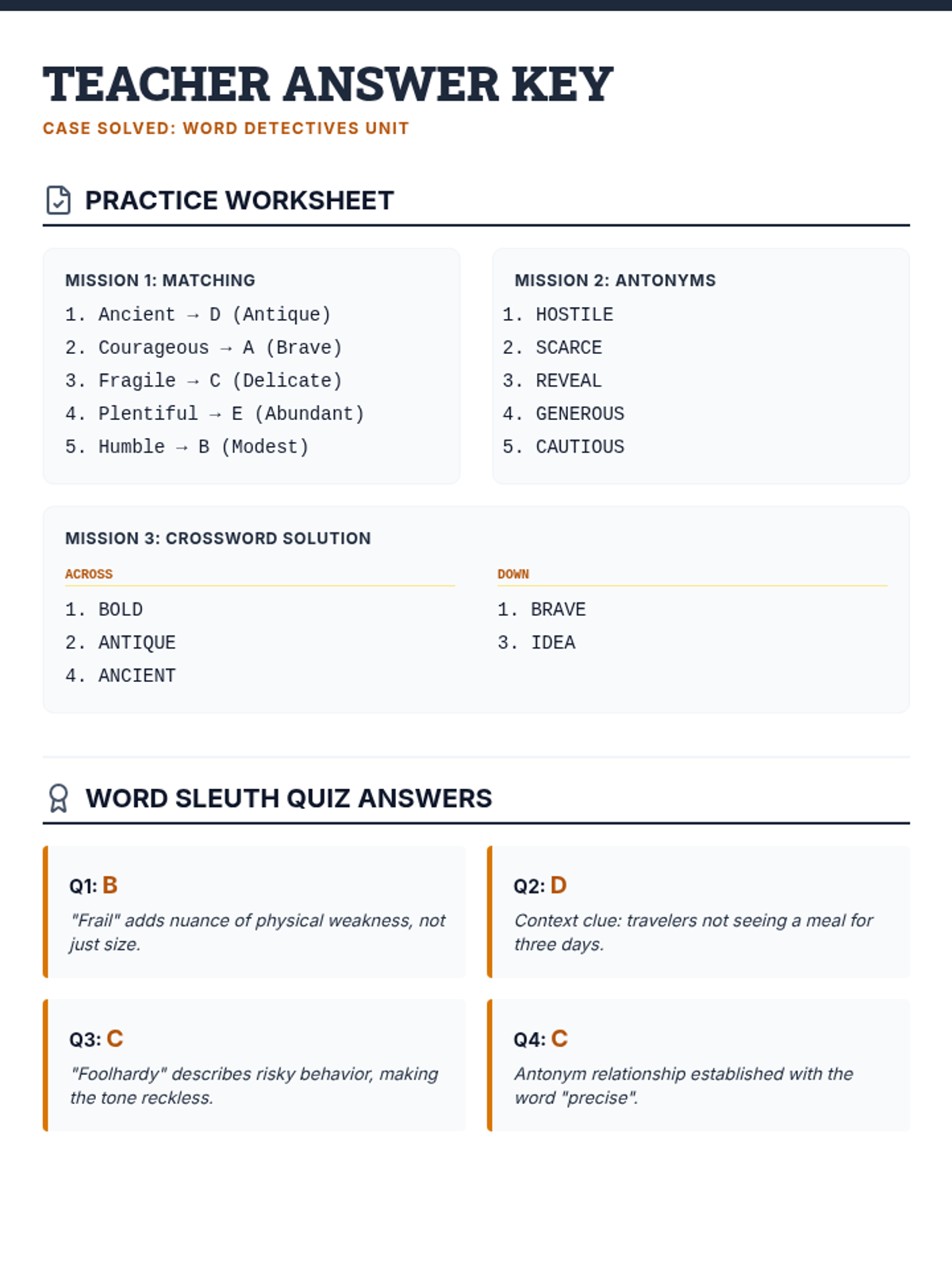
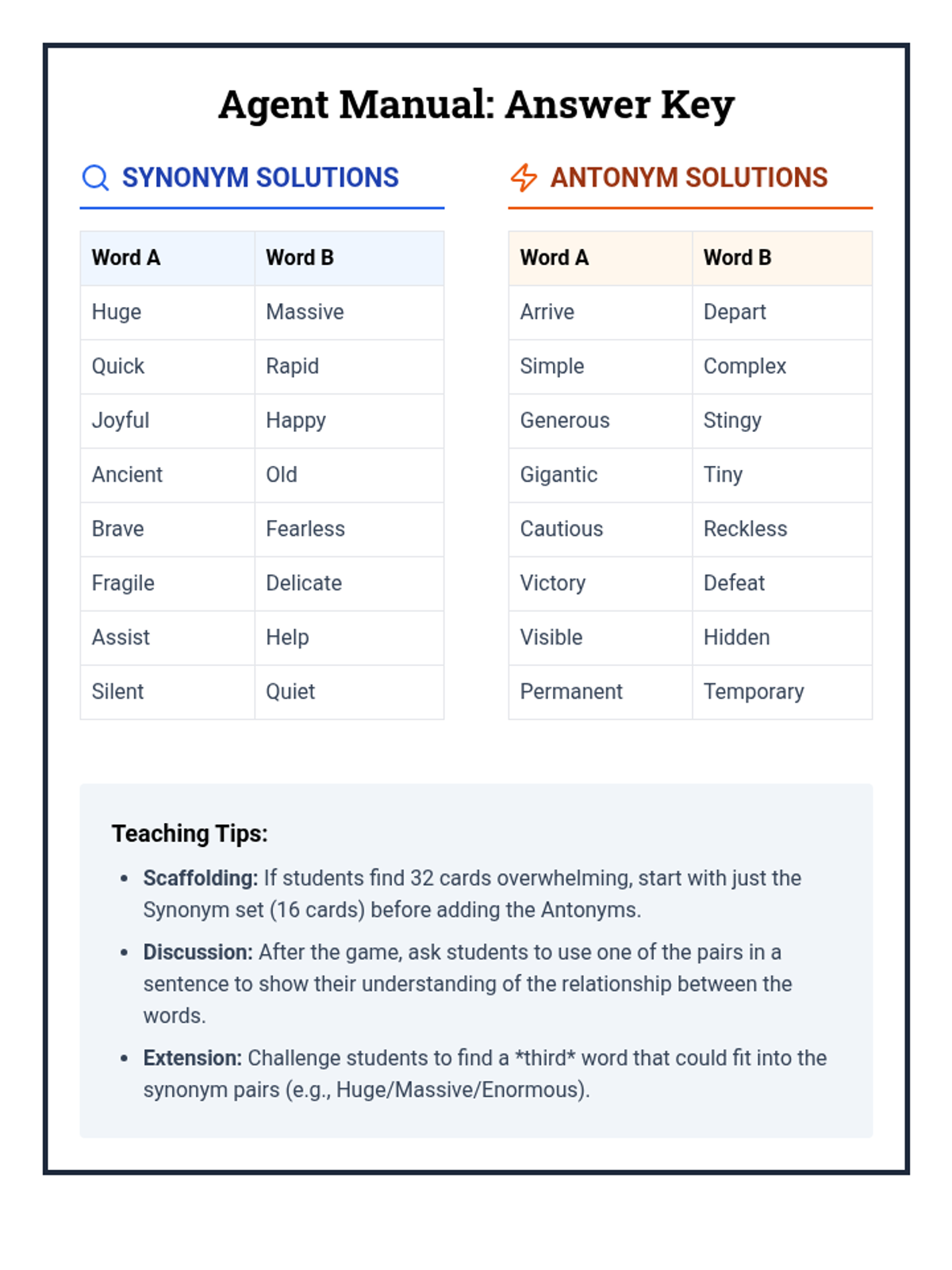
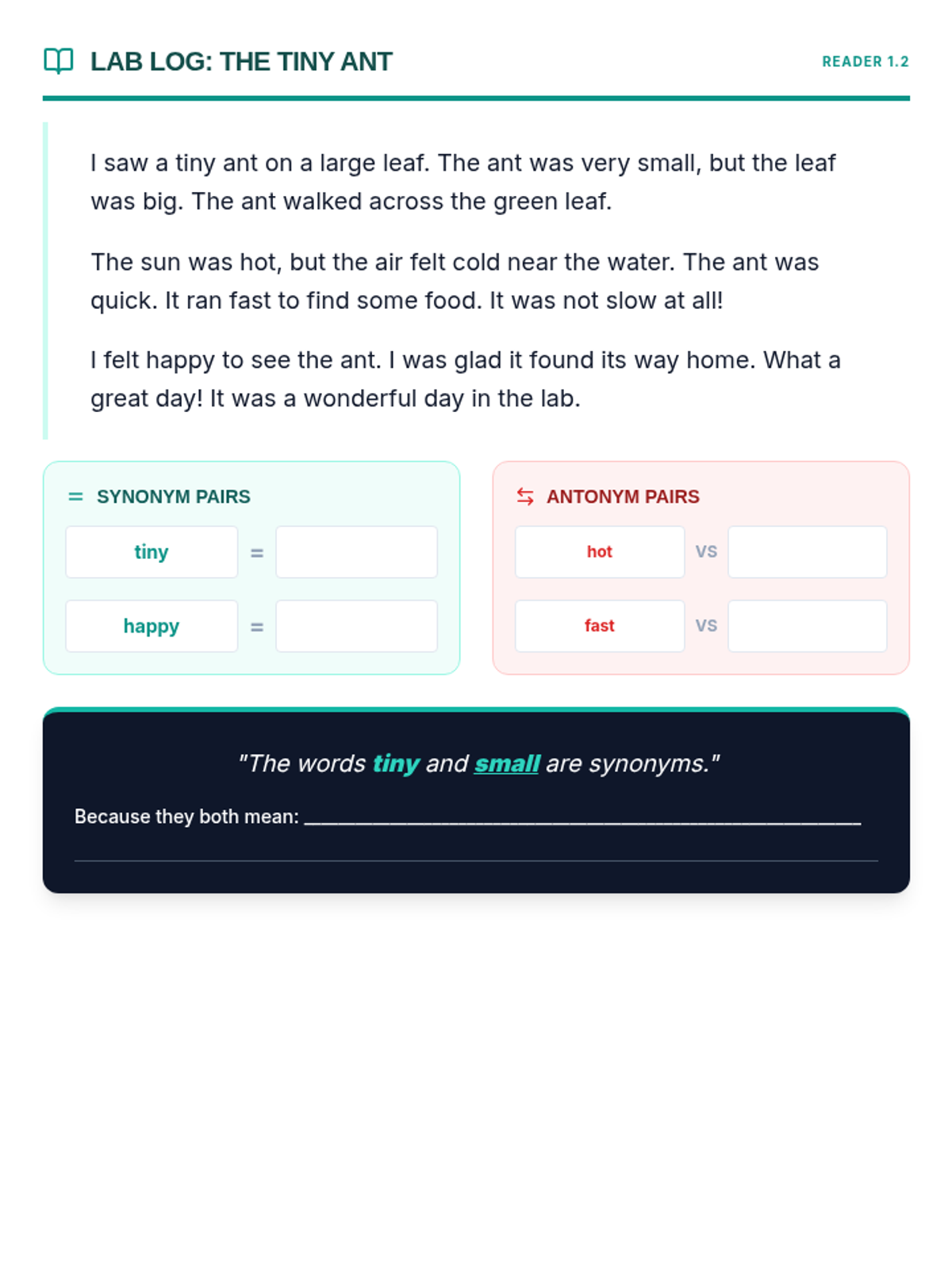
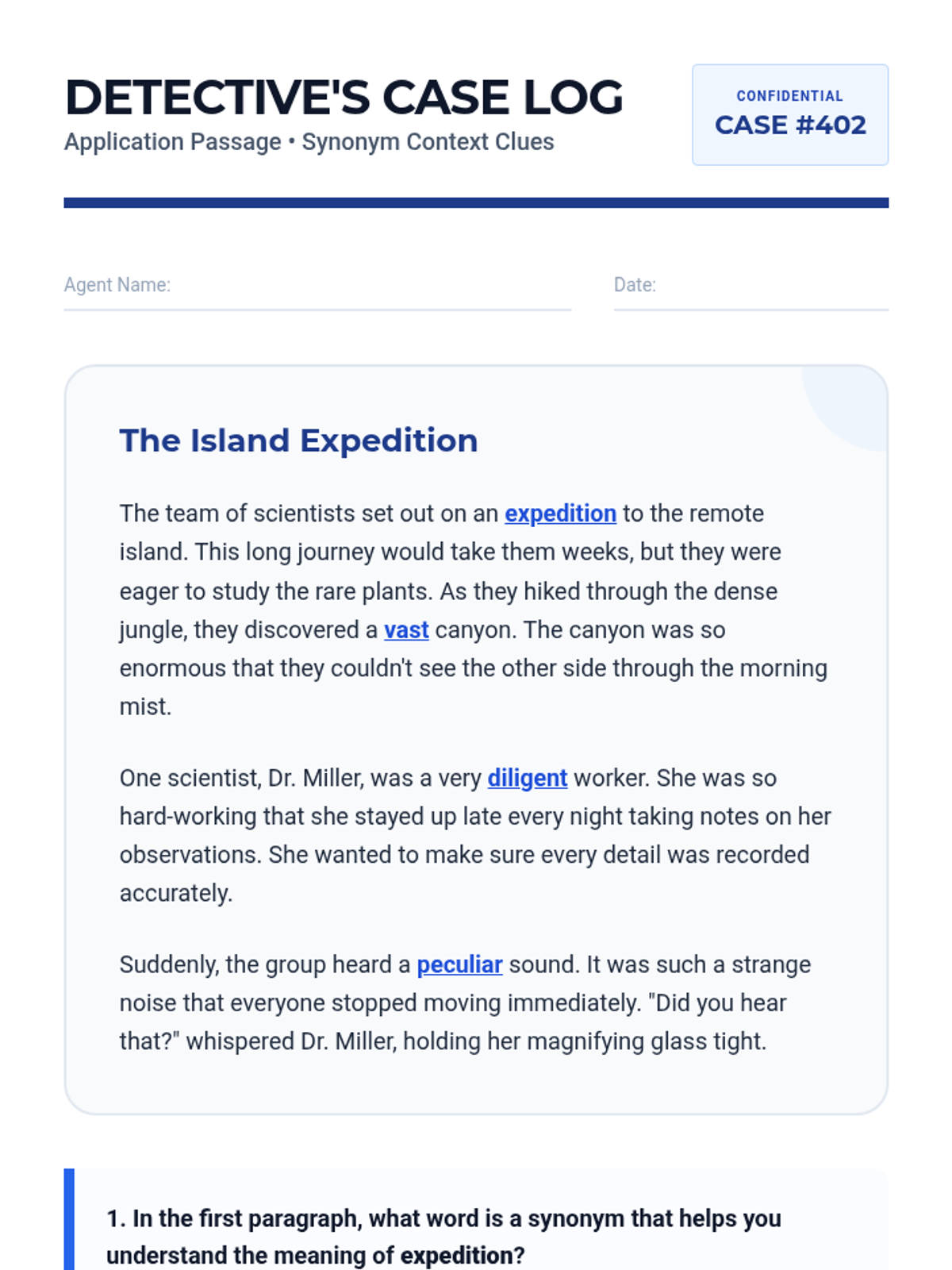
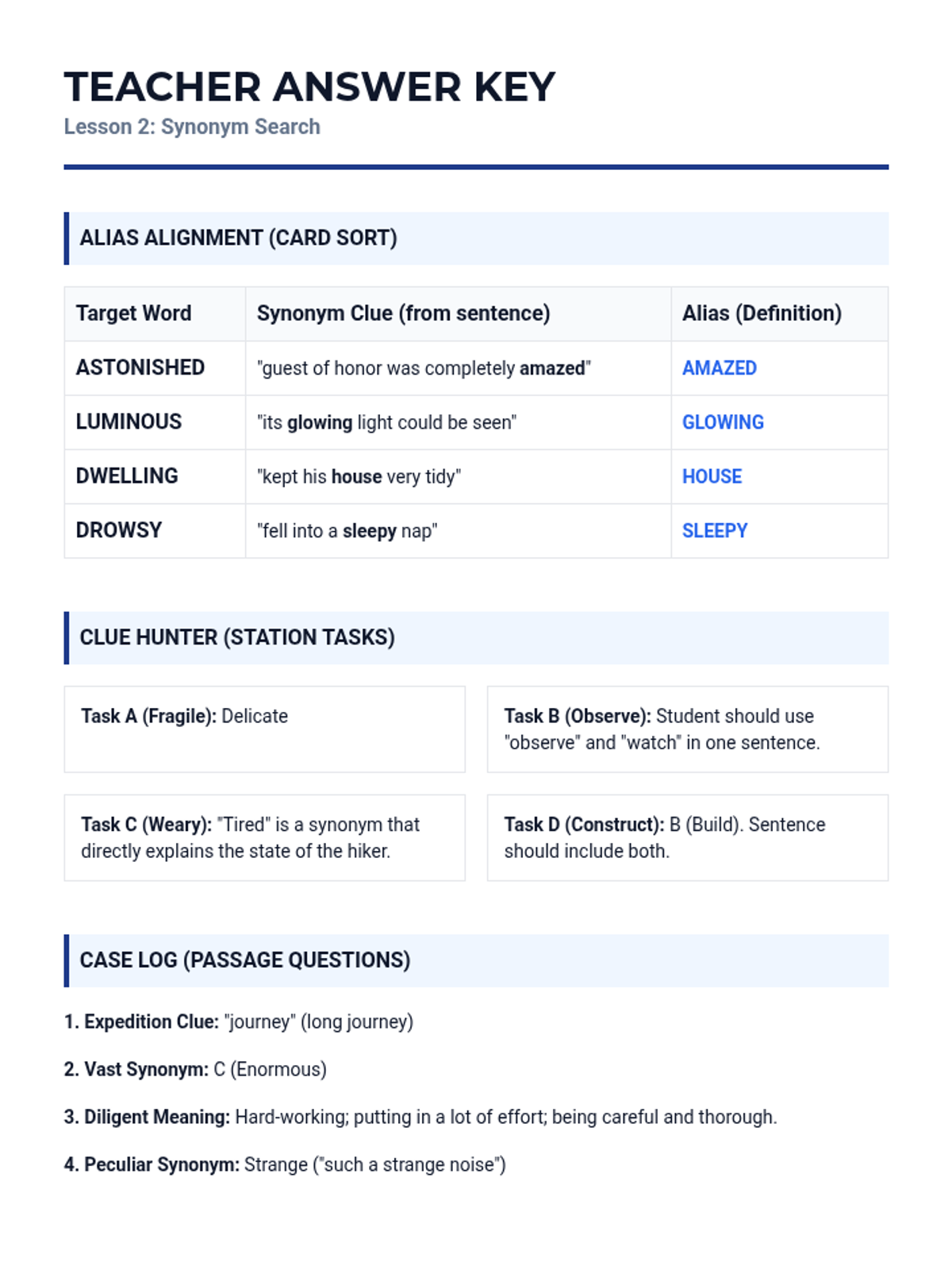
A comprehensive lesson for 4th graders to master synonyms and antonyms using context clues and critical thinking. Students act as word detectives to solve vocabulary puzzles and analyze word nuances.
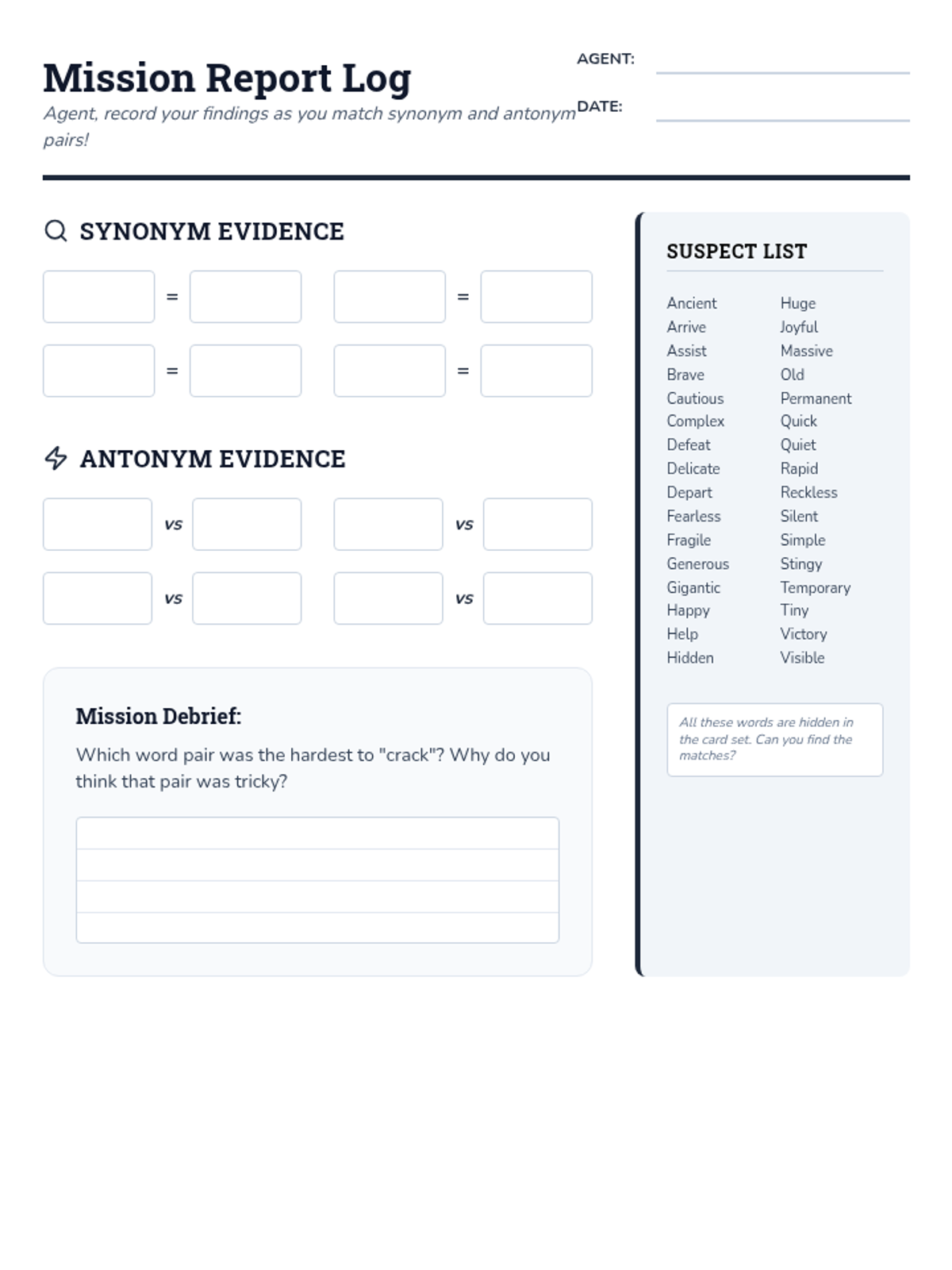
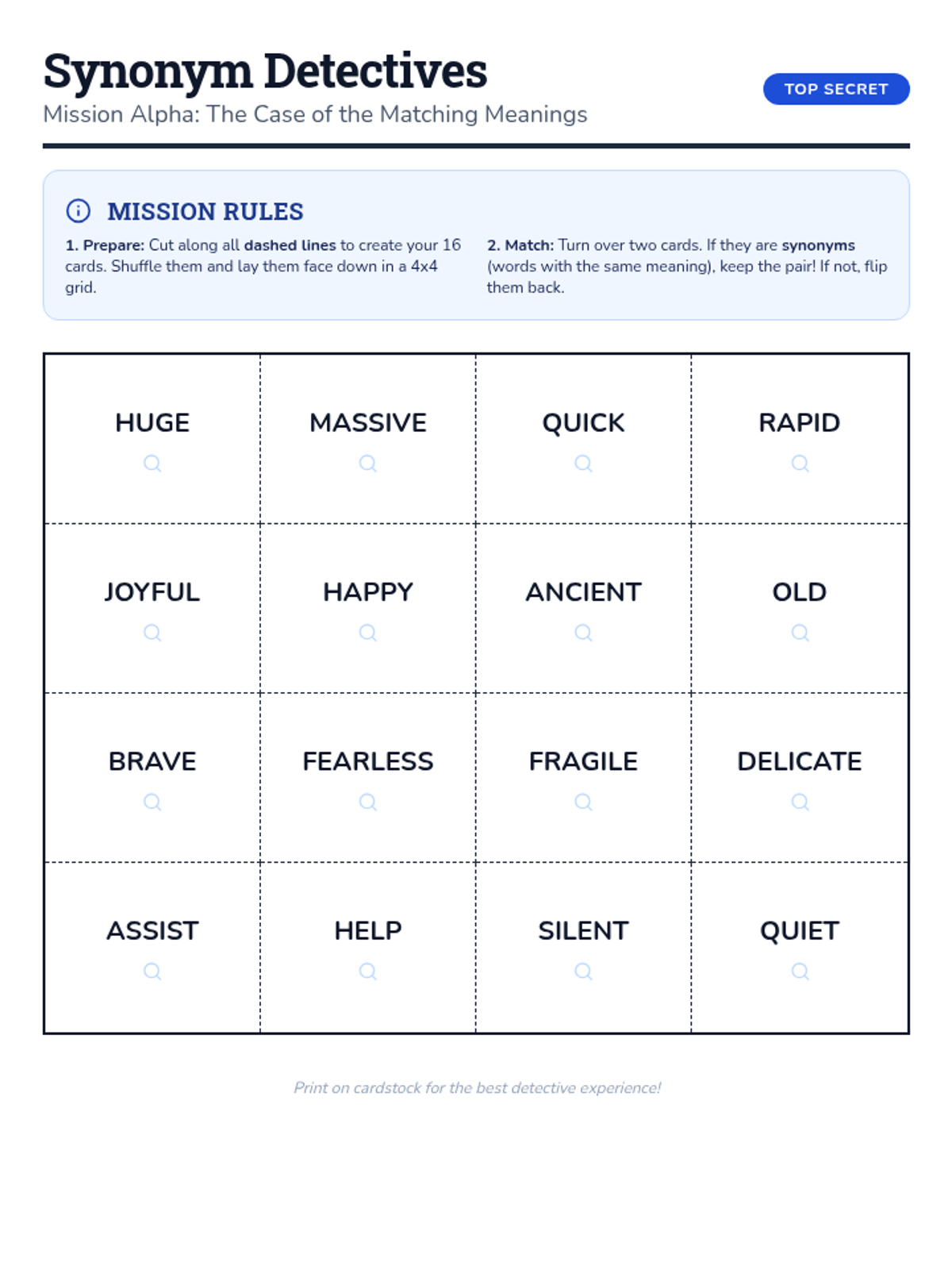
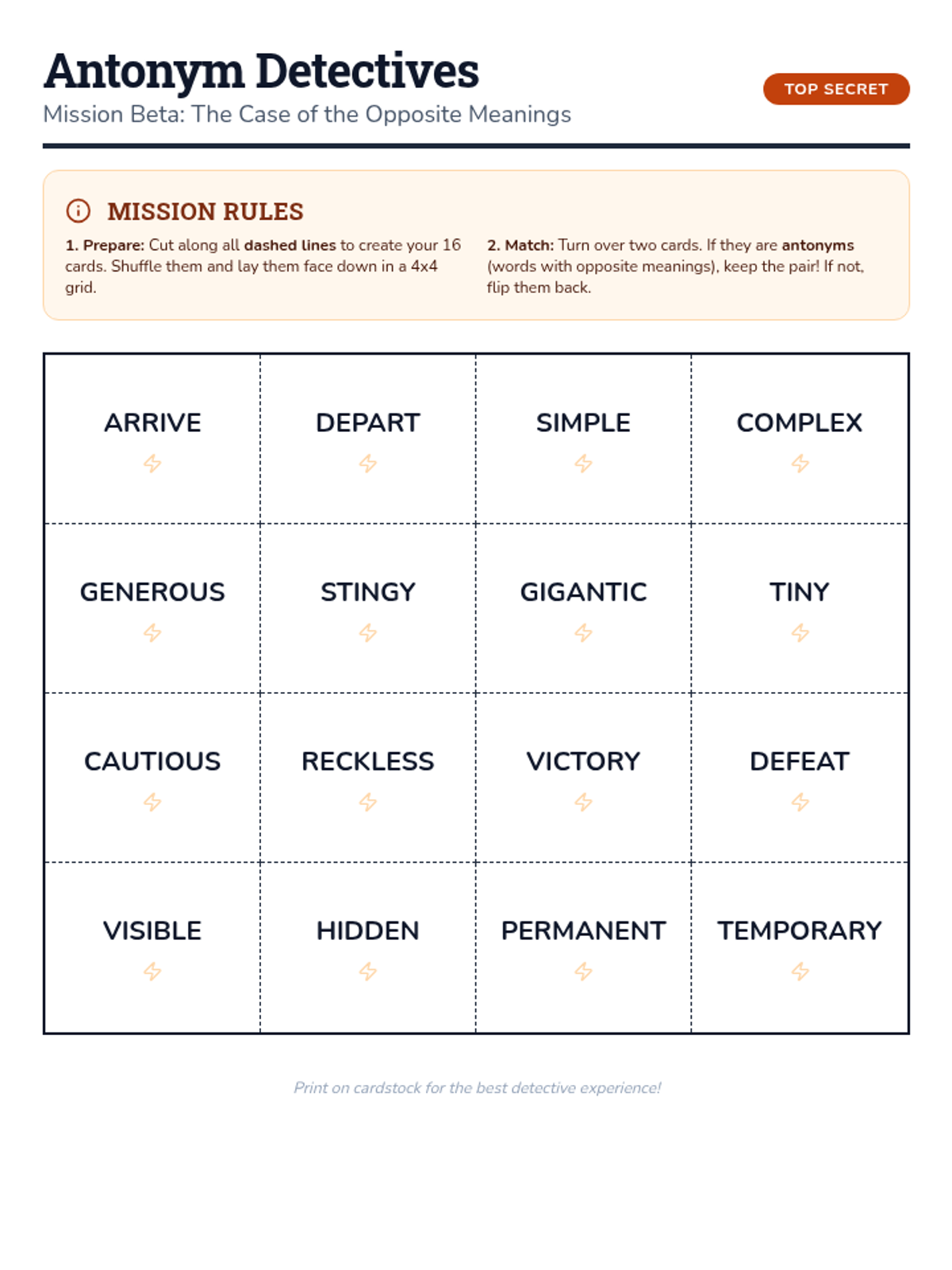
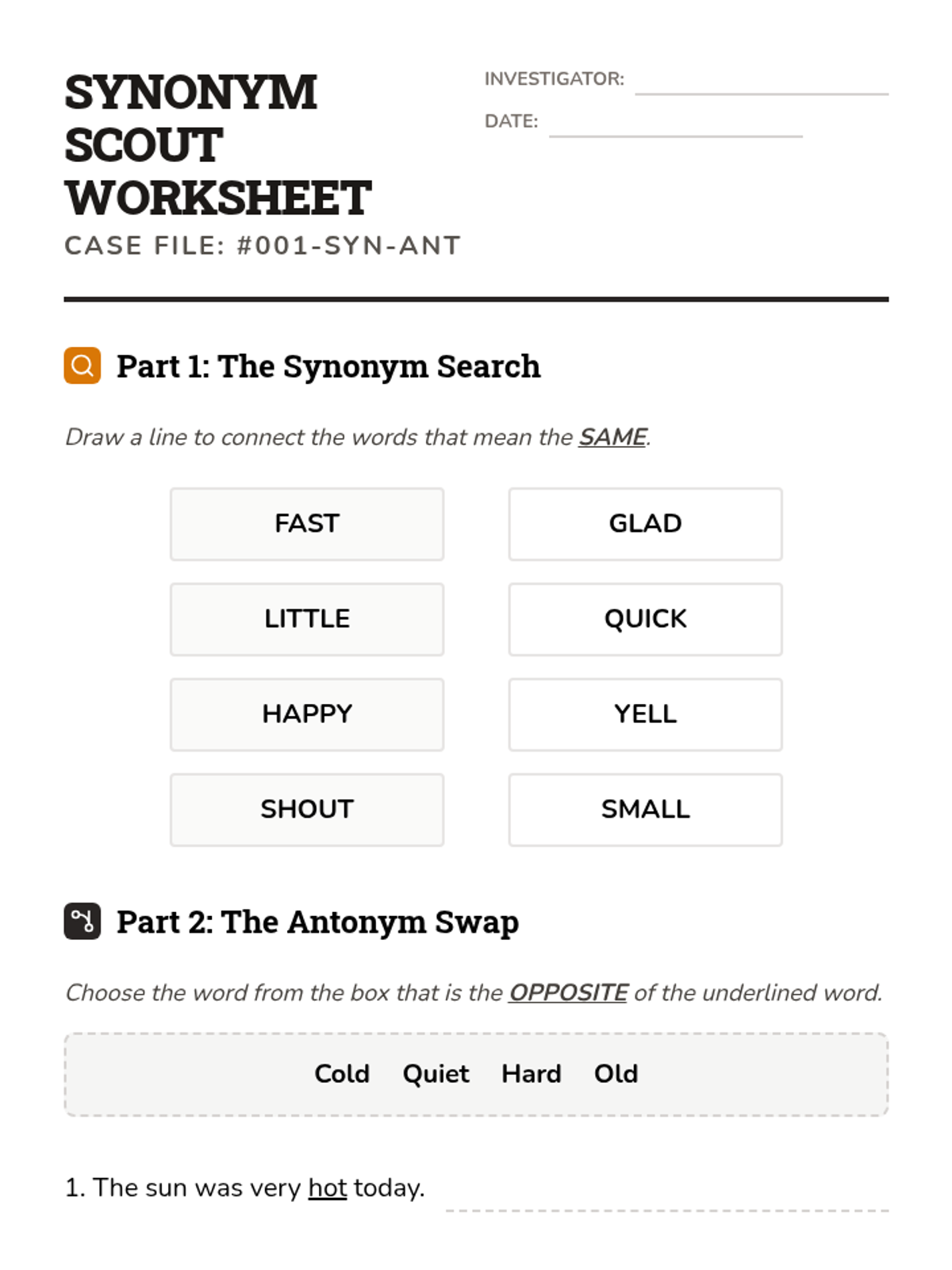
A fun, detective-themed lesson where students practice identifying synonyms and antonyms through a memory matching game and a tracking log.
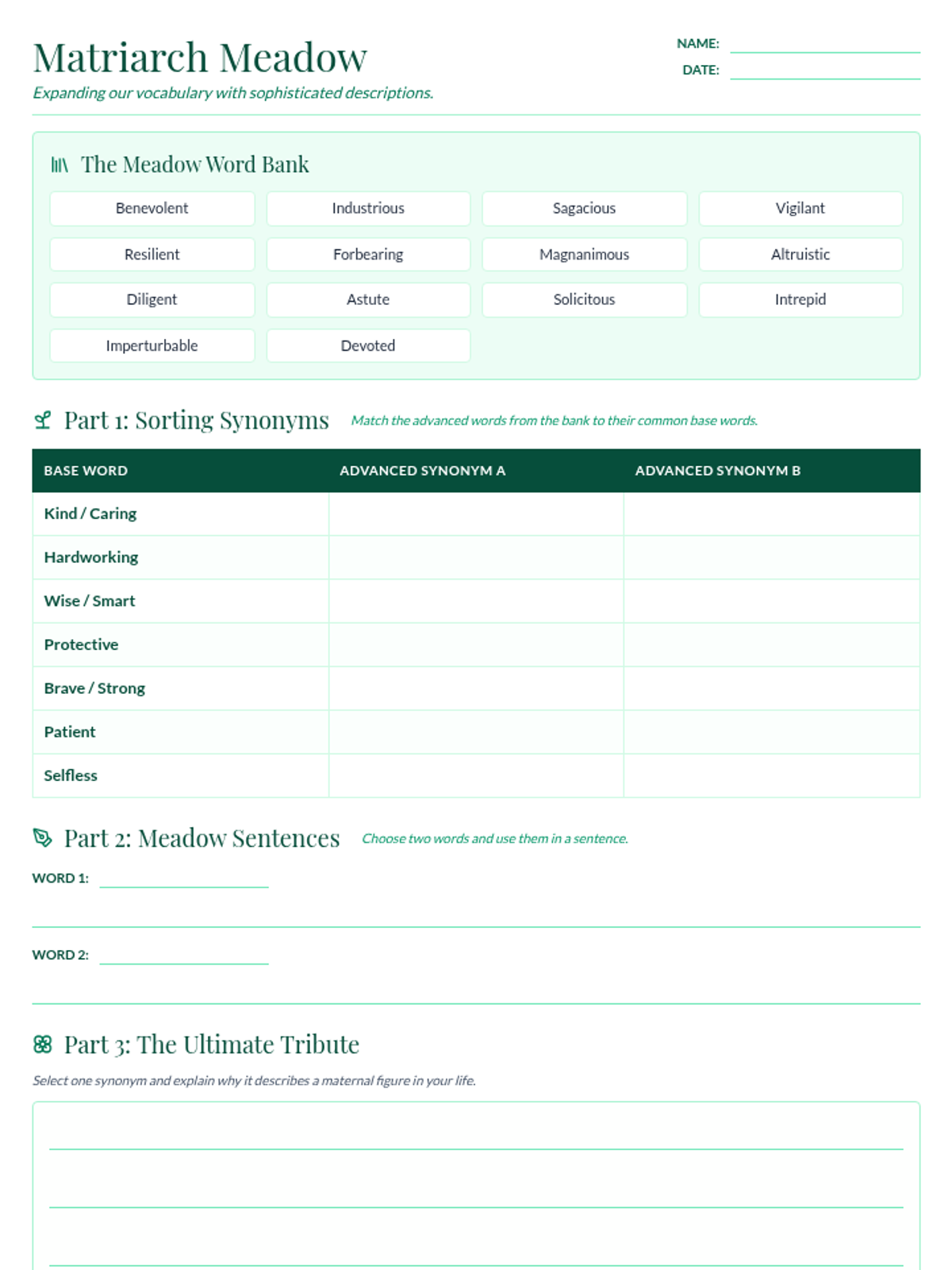
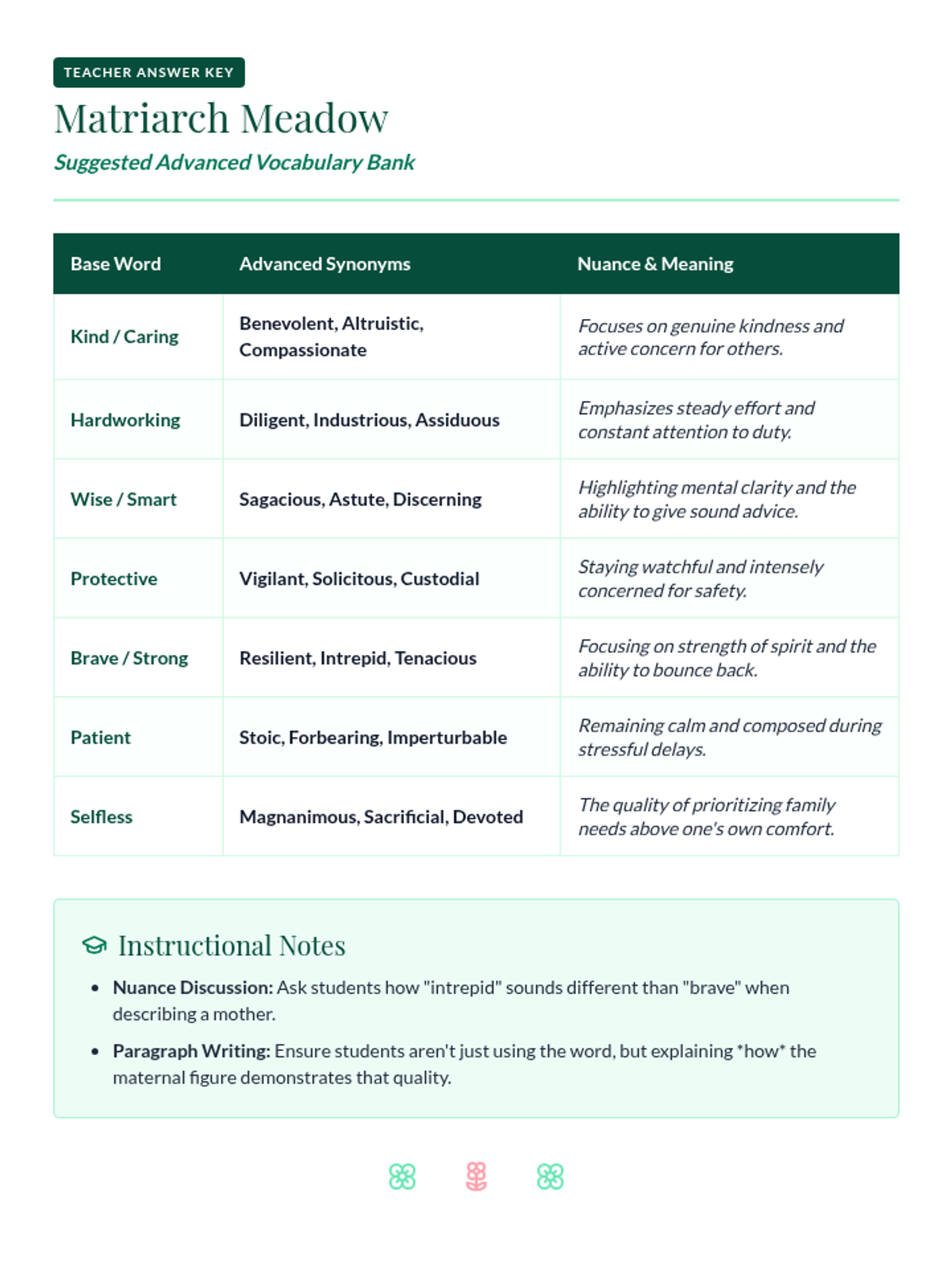
A lesson focused on expanding vocabulary through advanced synonyms describing mothers and maternal figures. Students explore nuanced adjectives to enhance their descriptive writing.
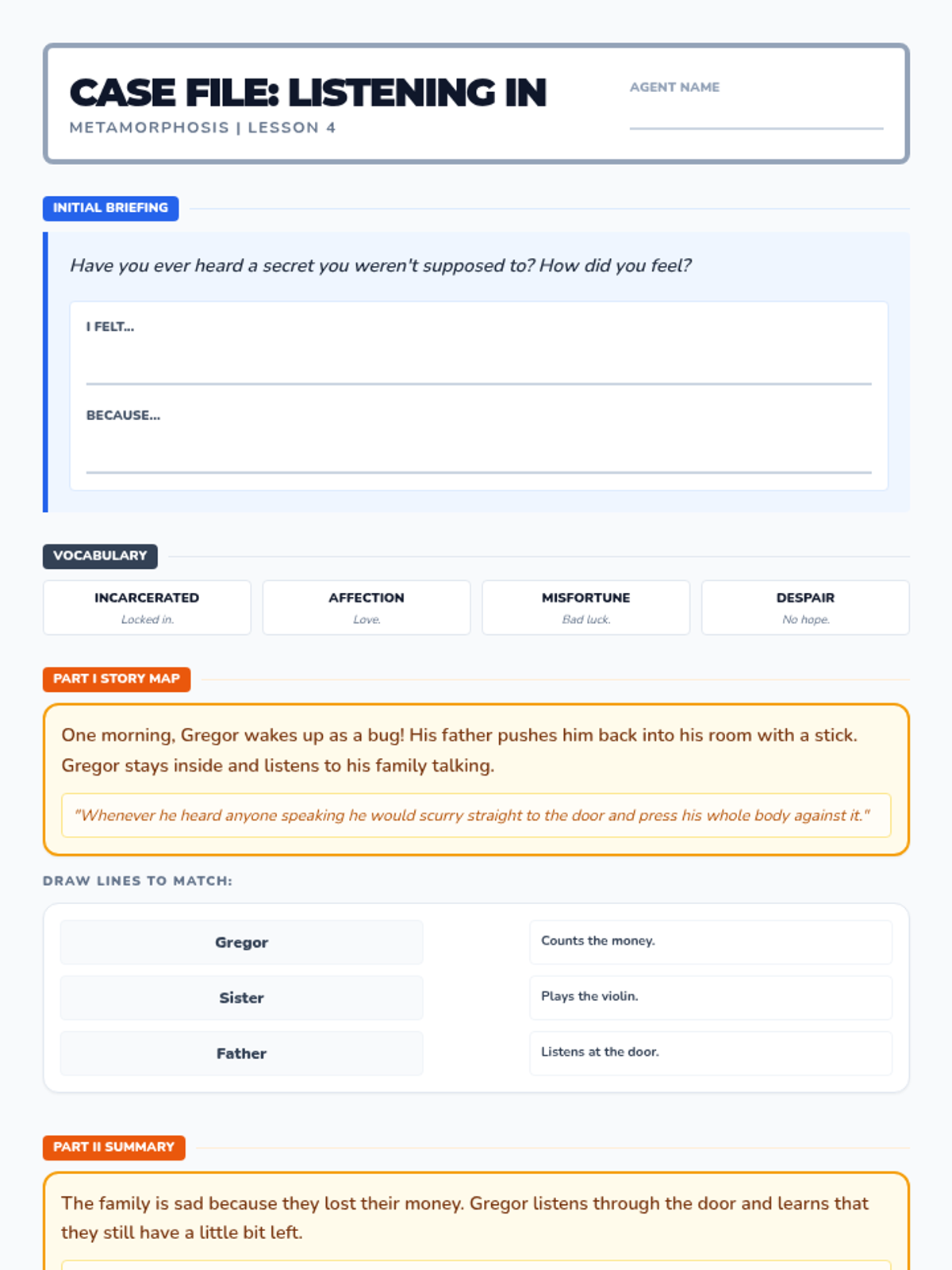
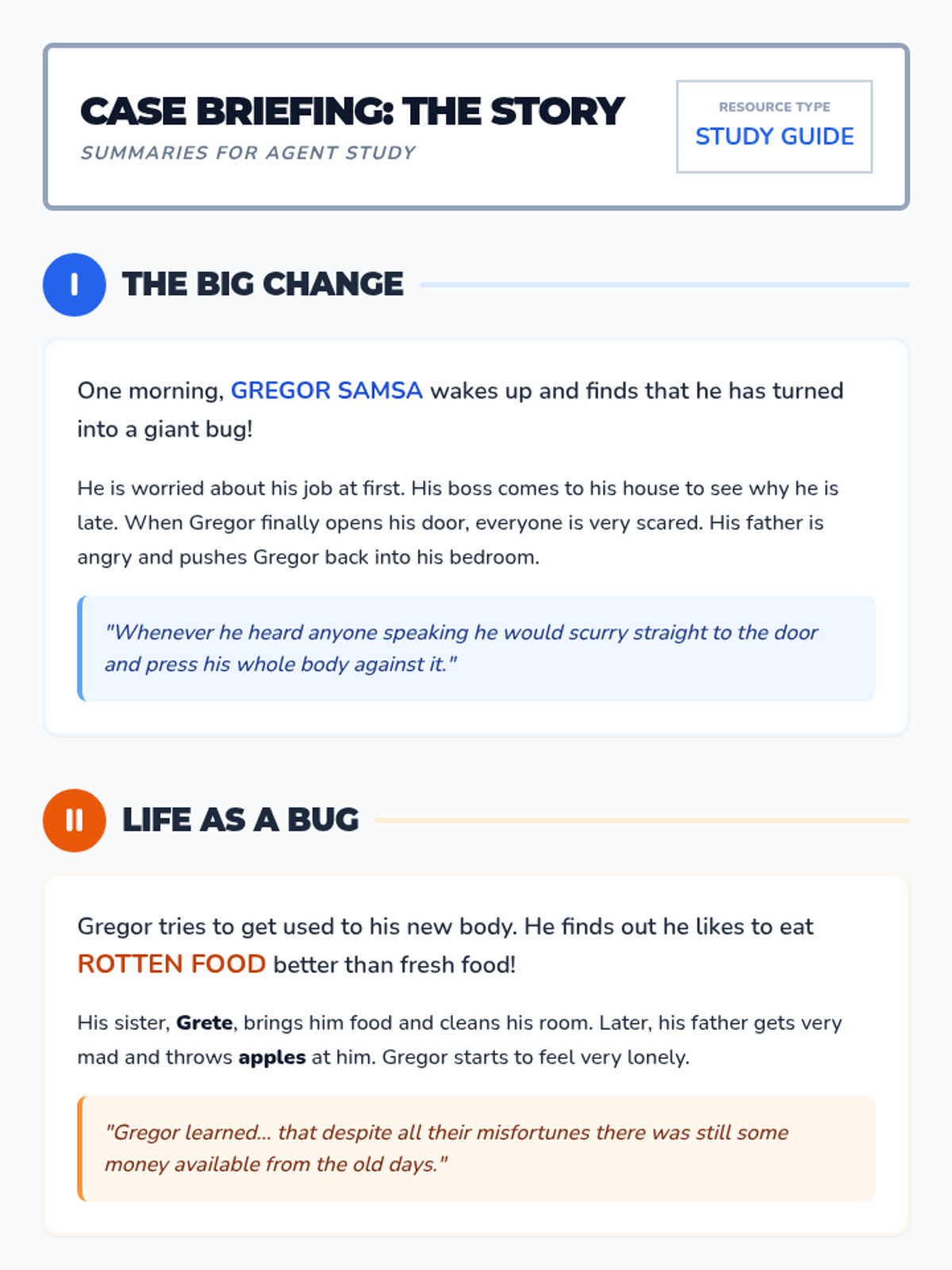
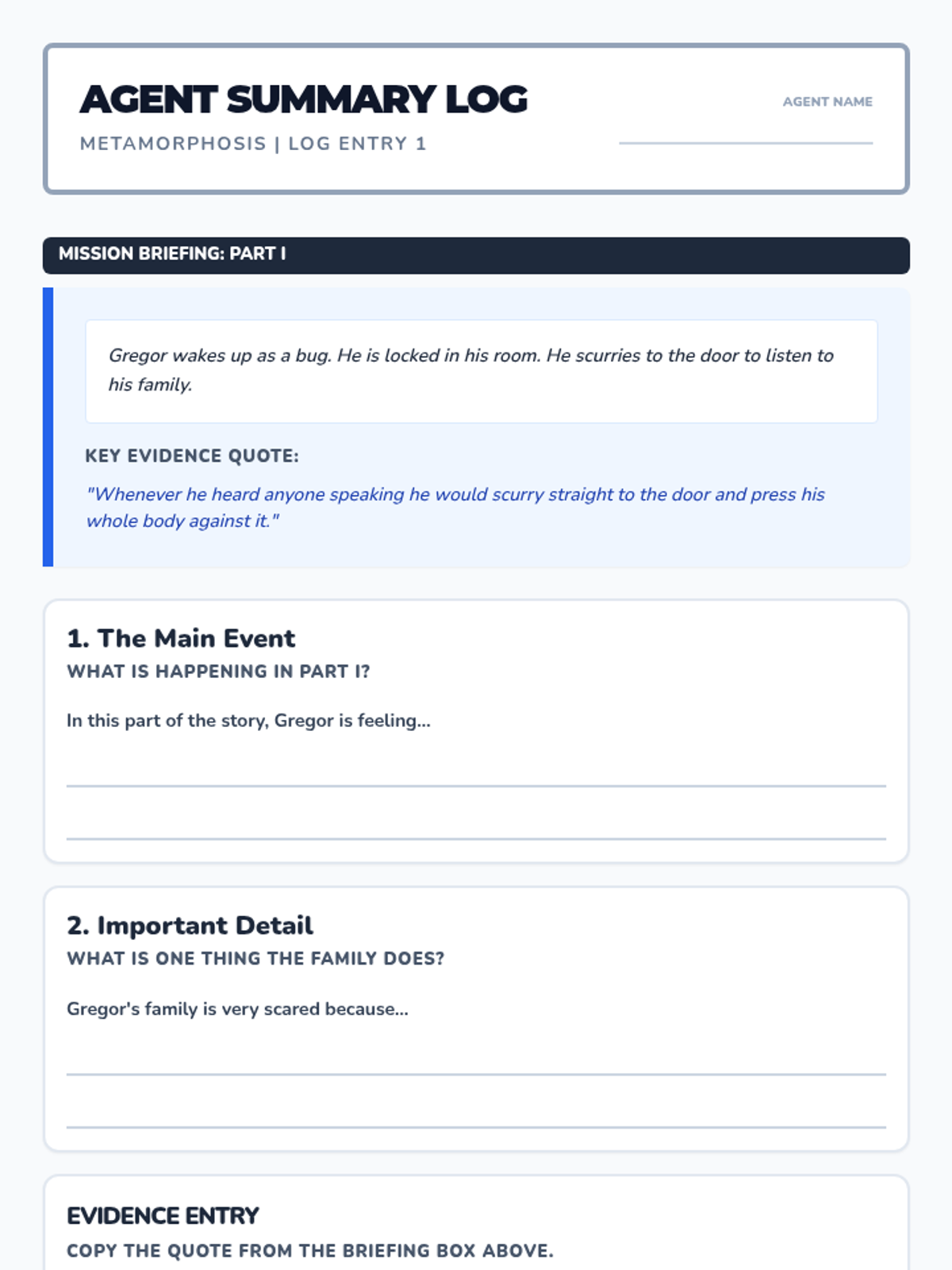
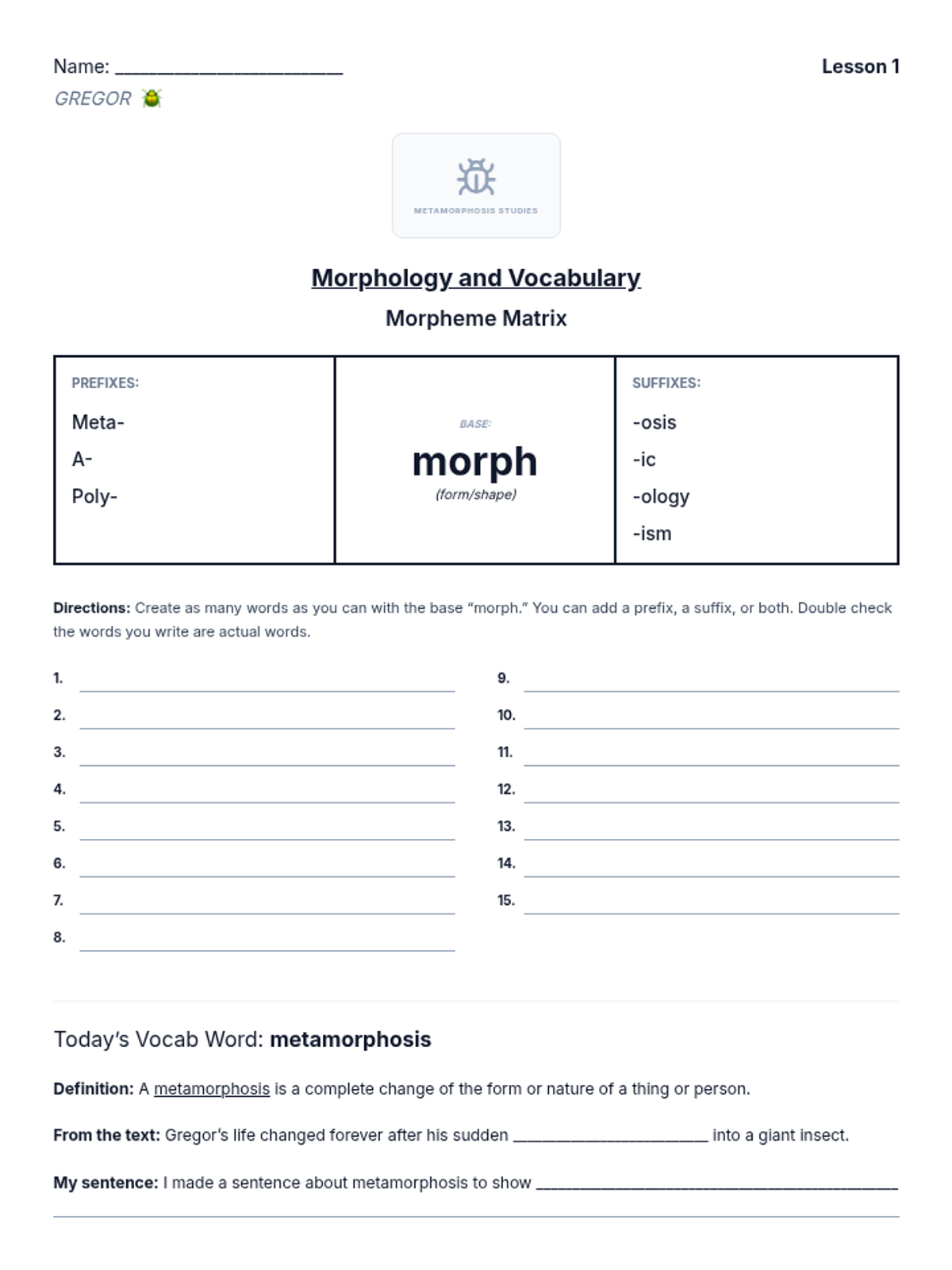
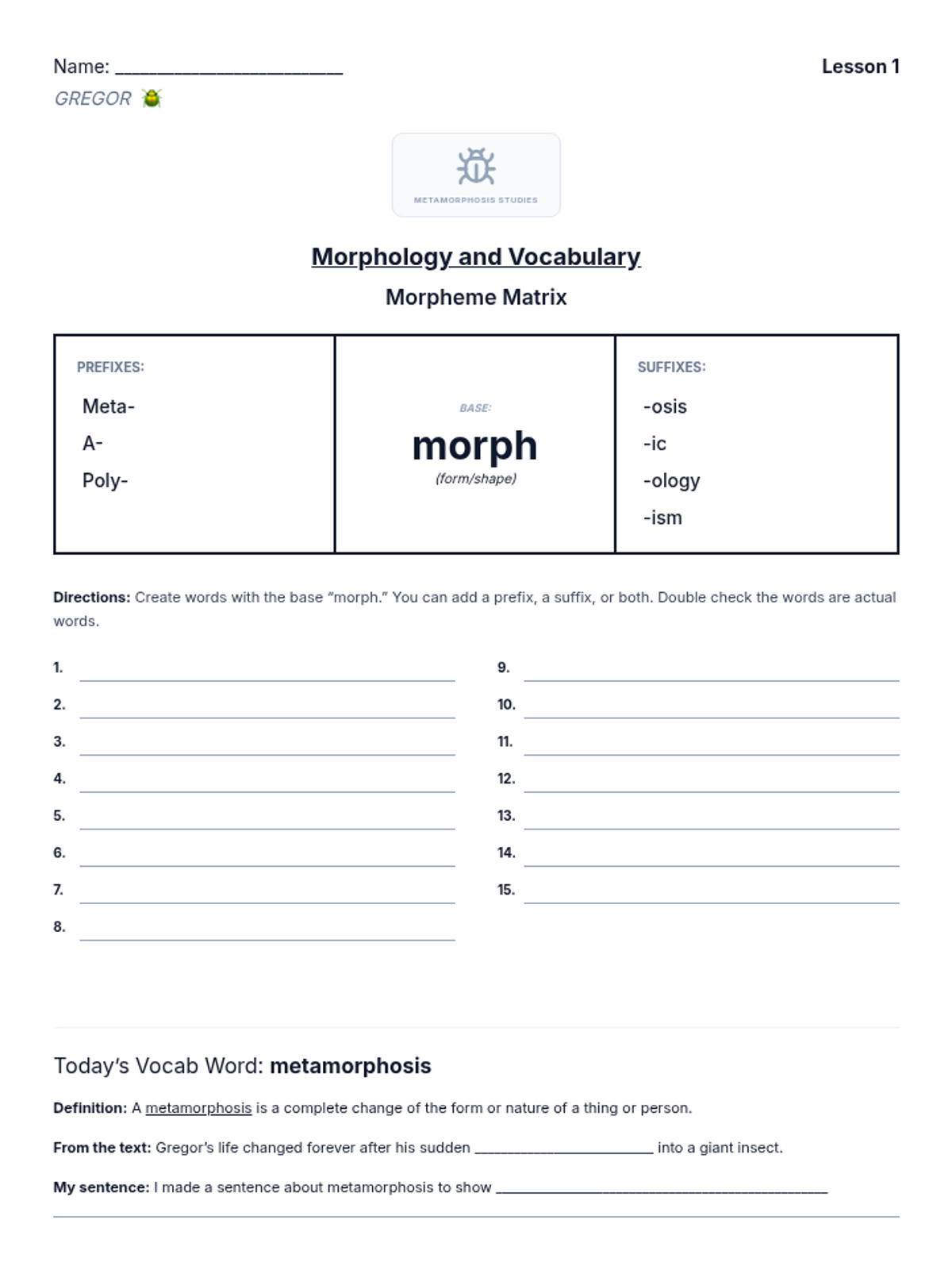
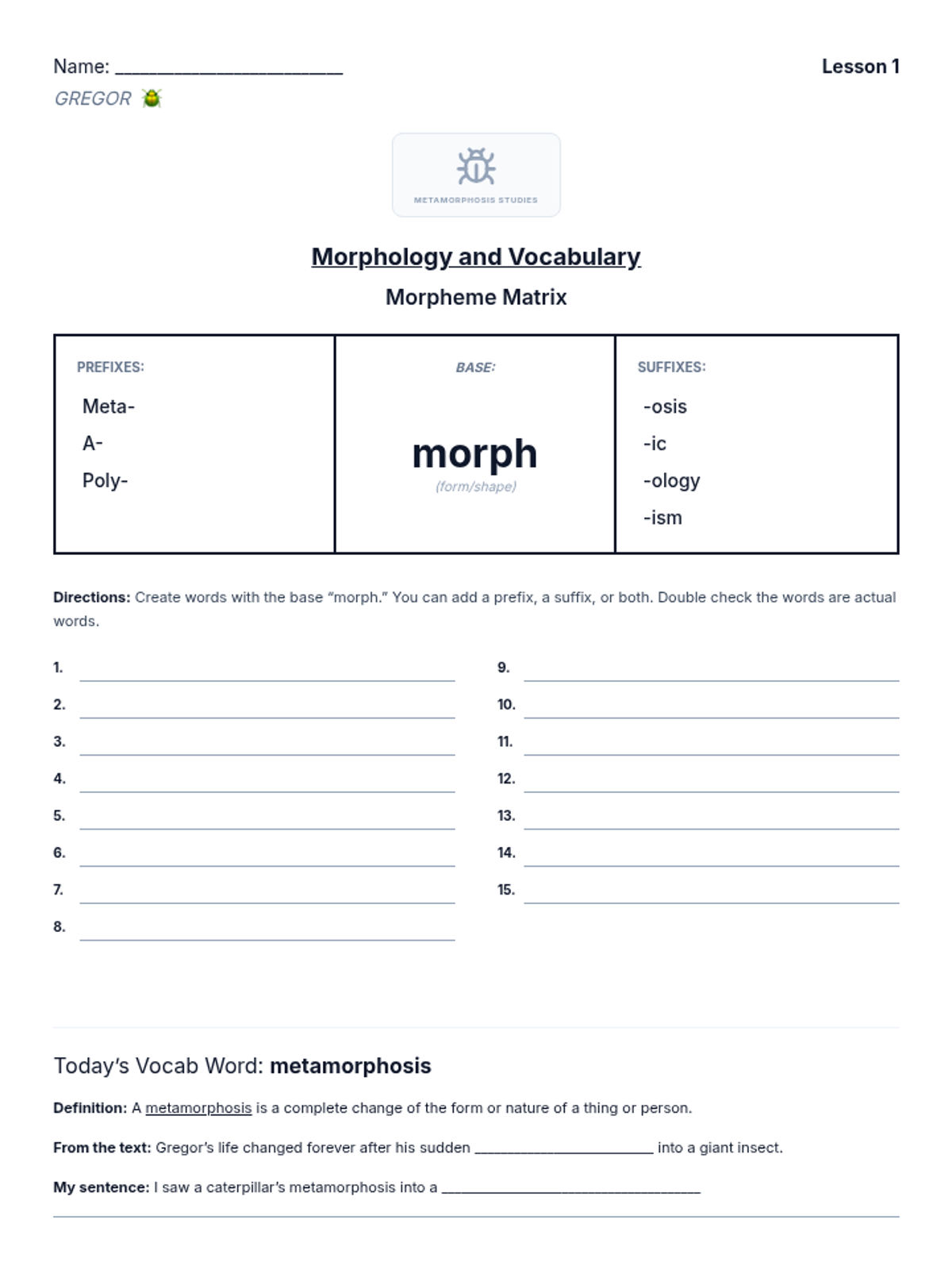
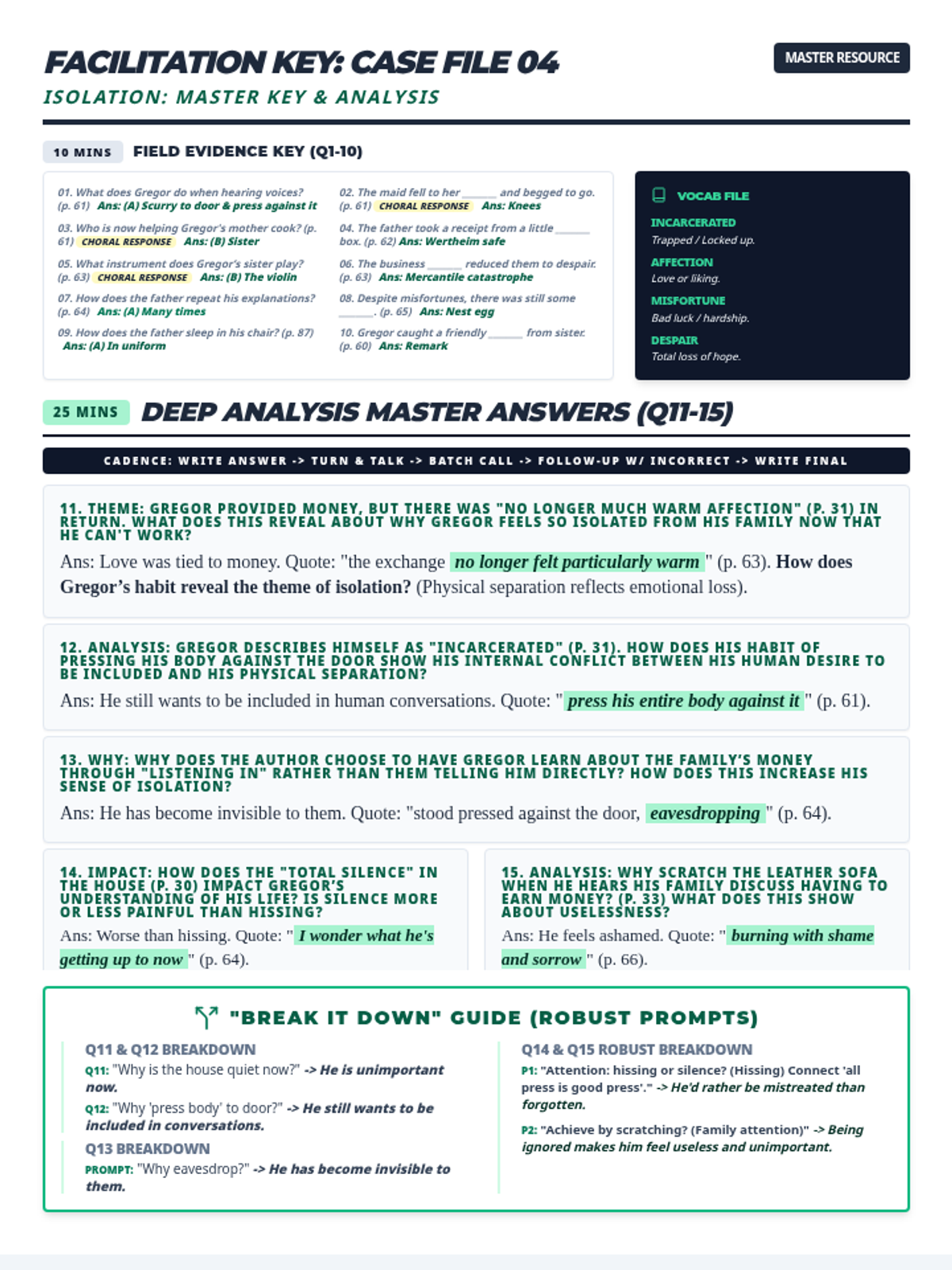
A lesson exploring themes of isolation and change through Franz Kafka's Metamorphosis, adapted for elementary students.
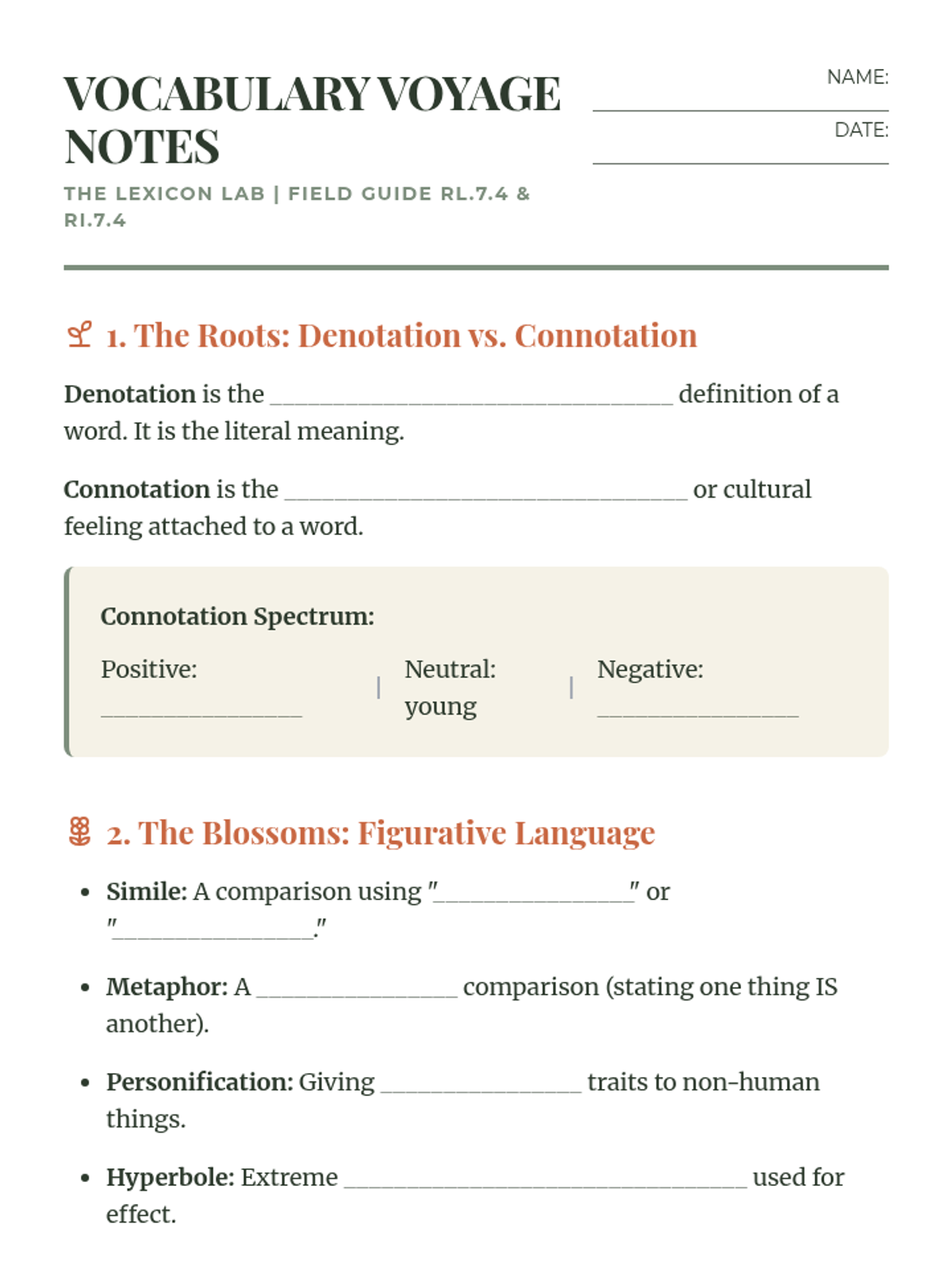
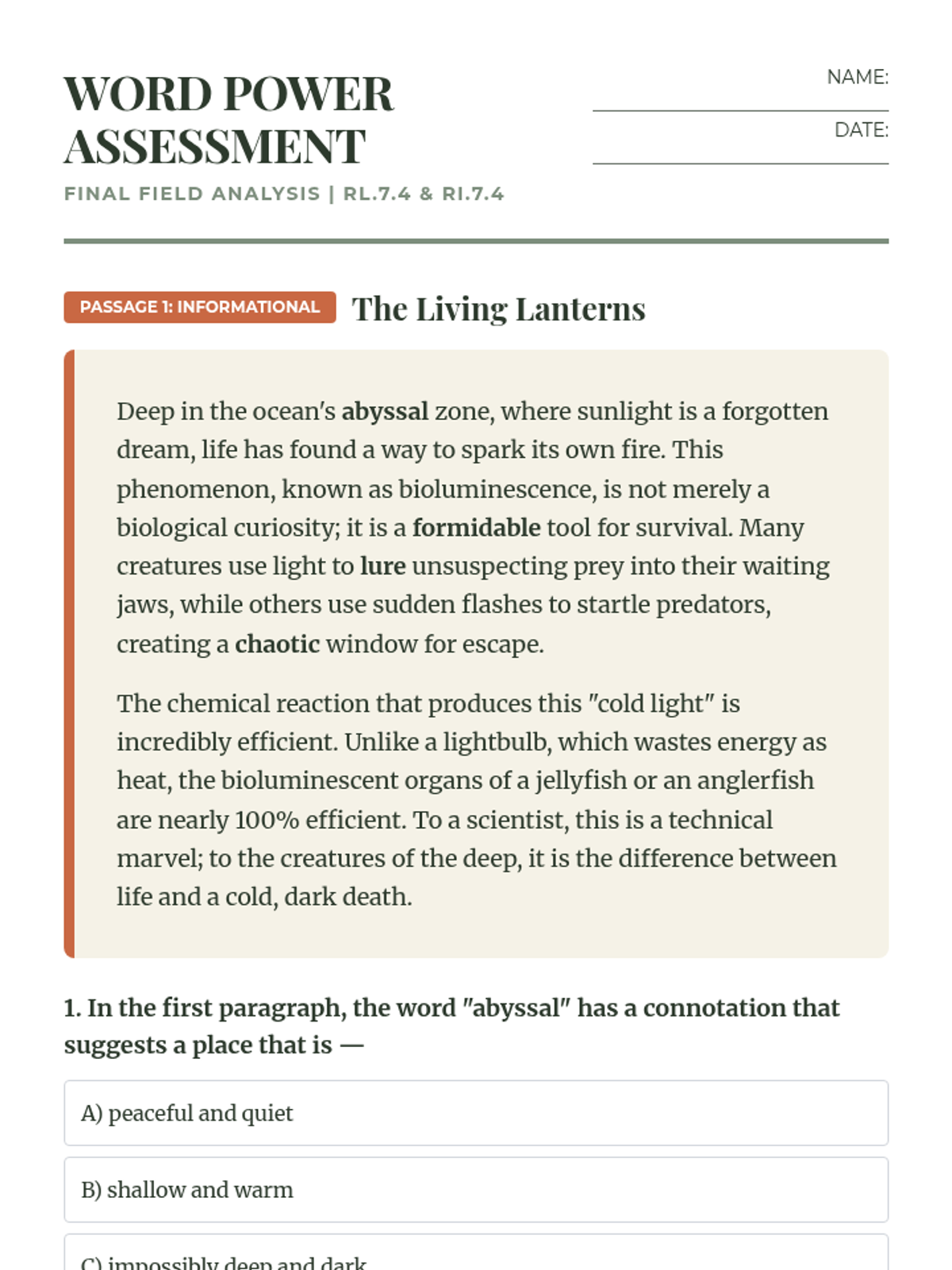
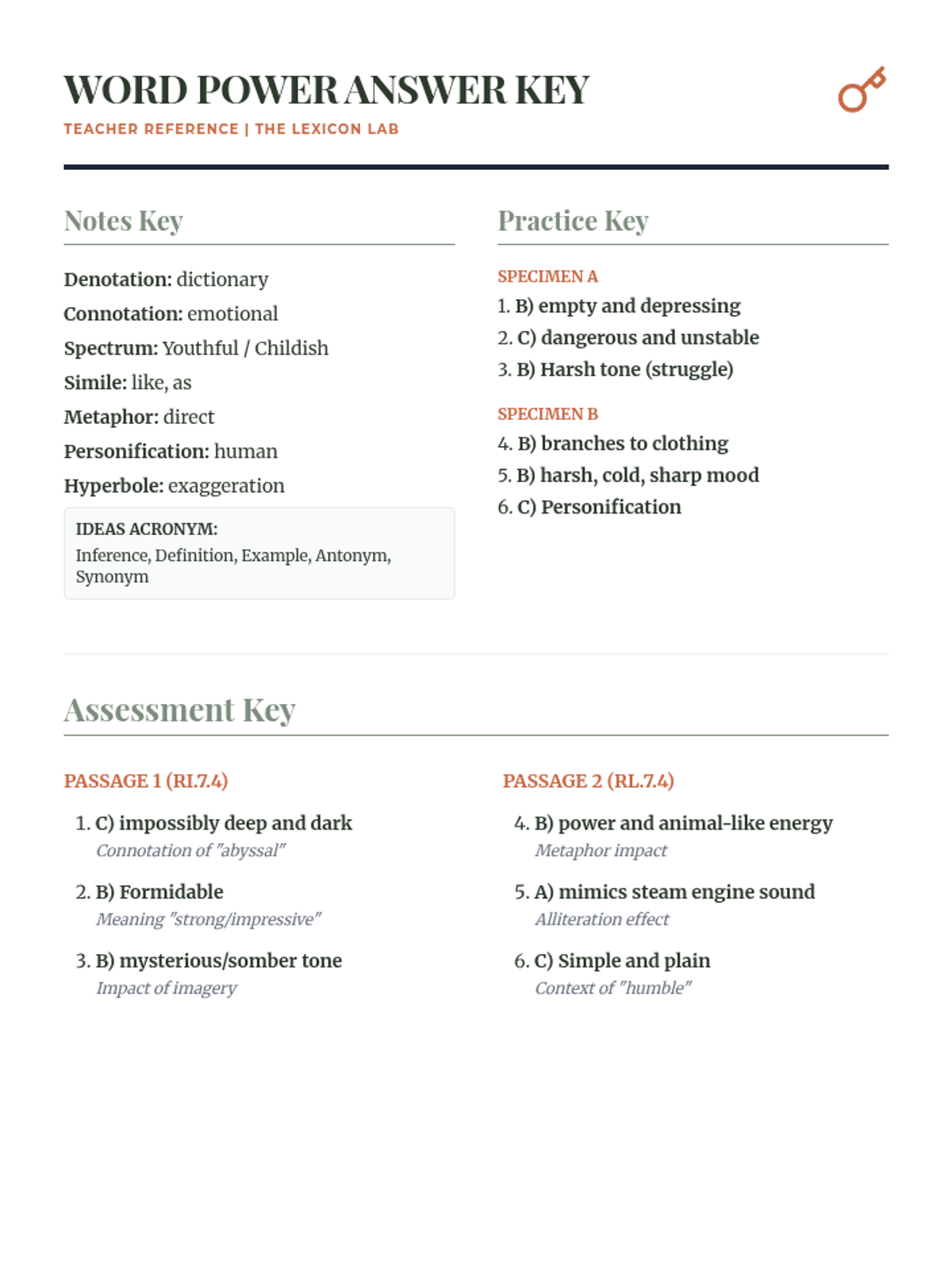
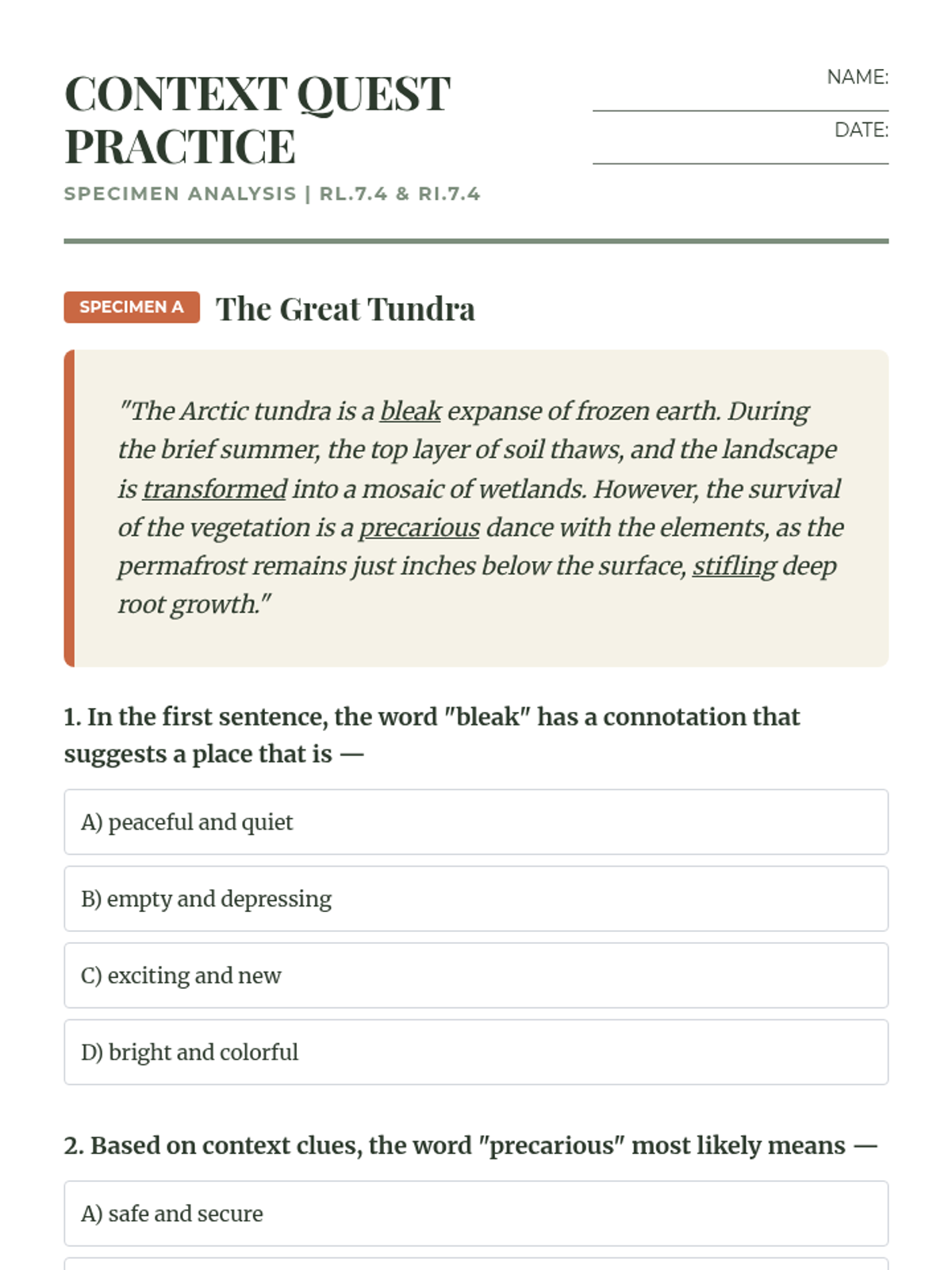
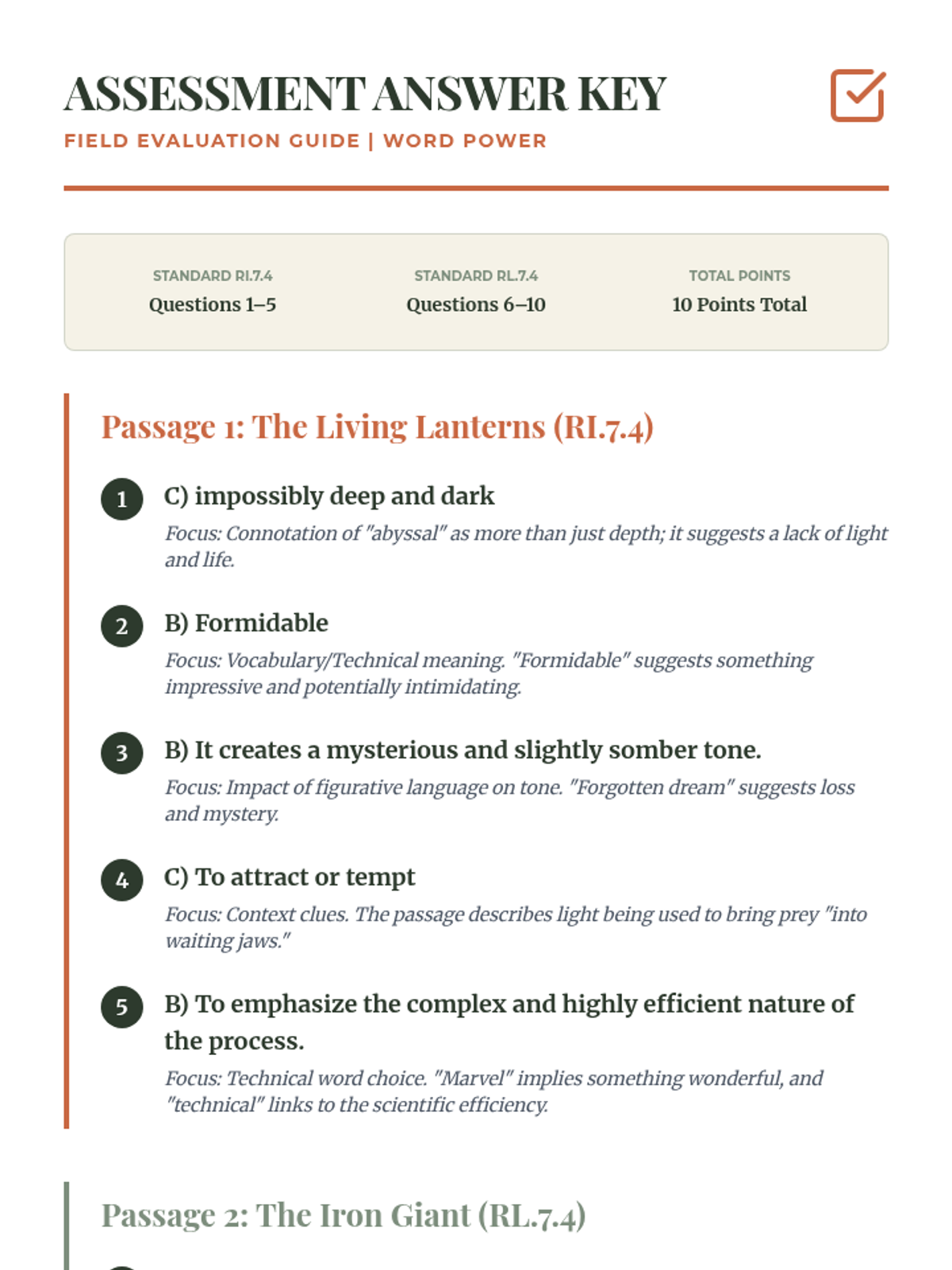
A lesson exploring RL.7.4 and RI.7.4 standards, focusing on word choice, connotation, figurative language, and their impact on tone and meaning in both literary and informational texts.
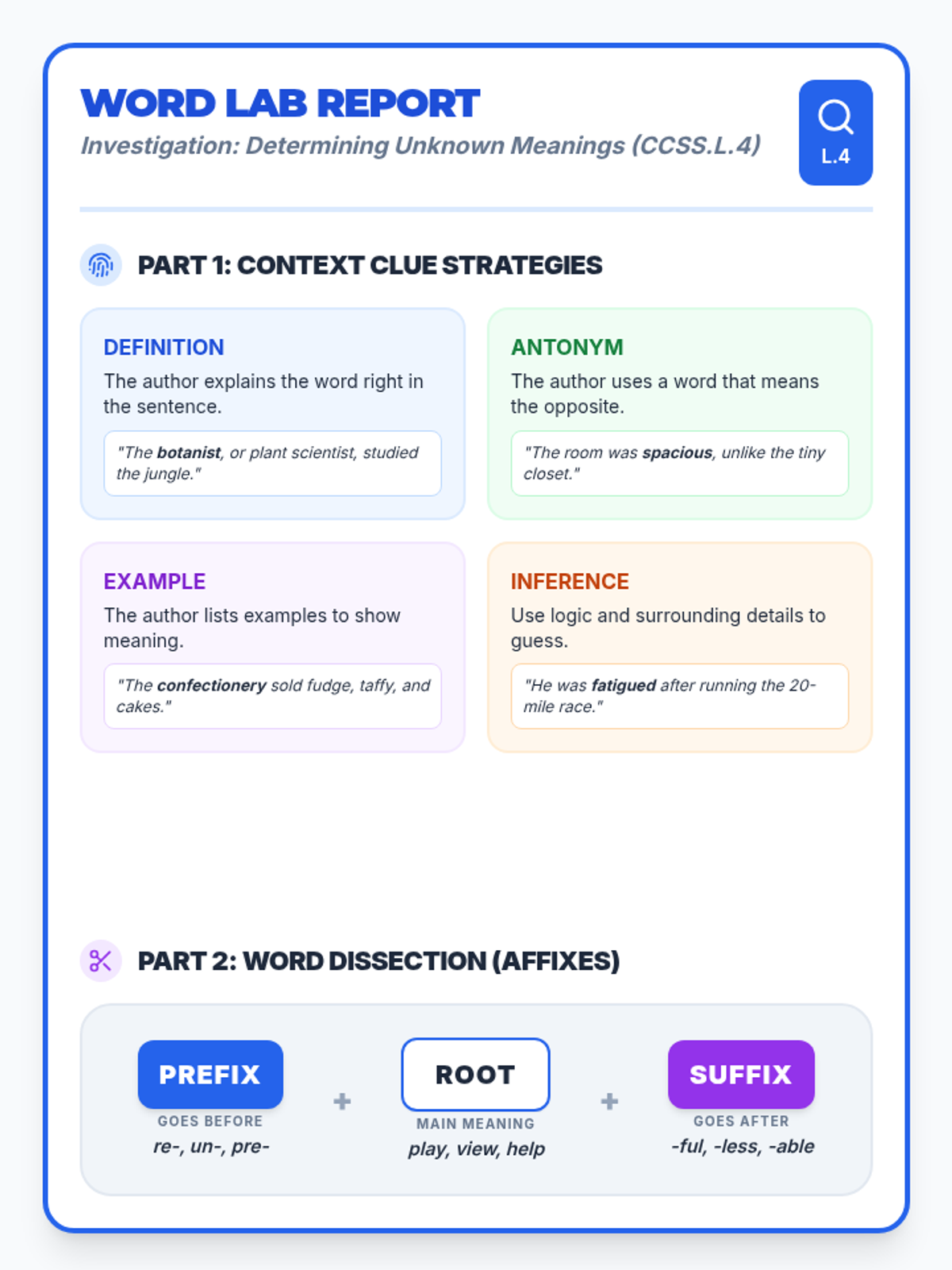
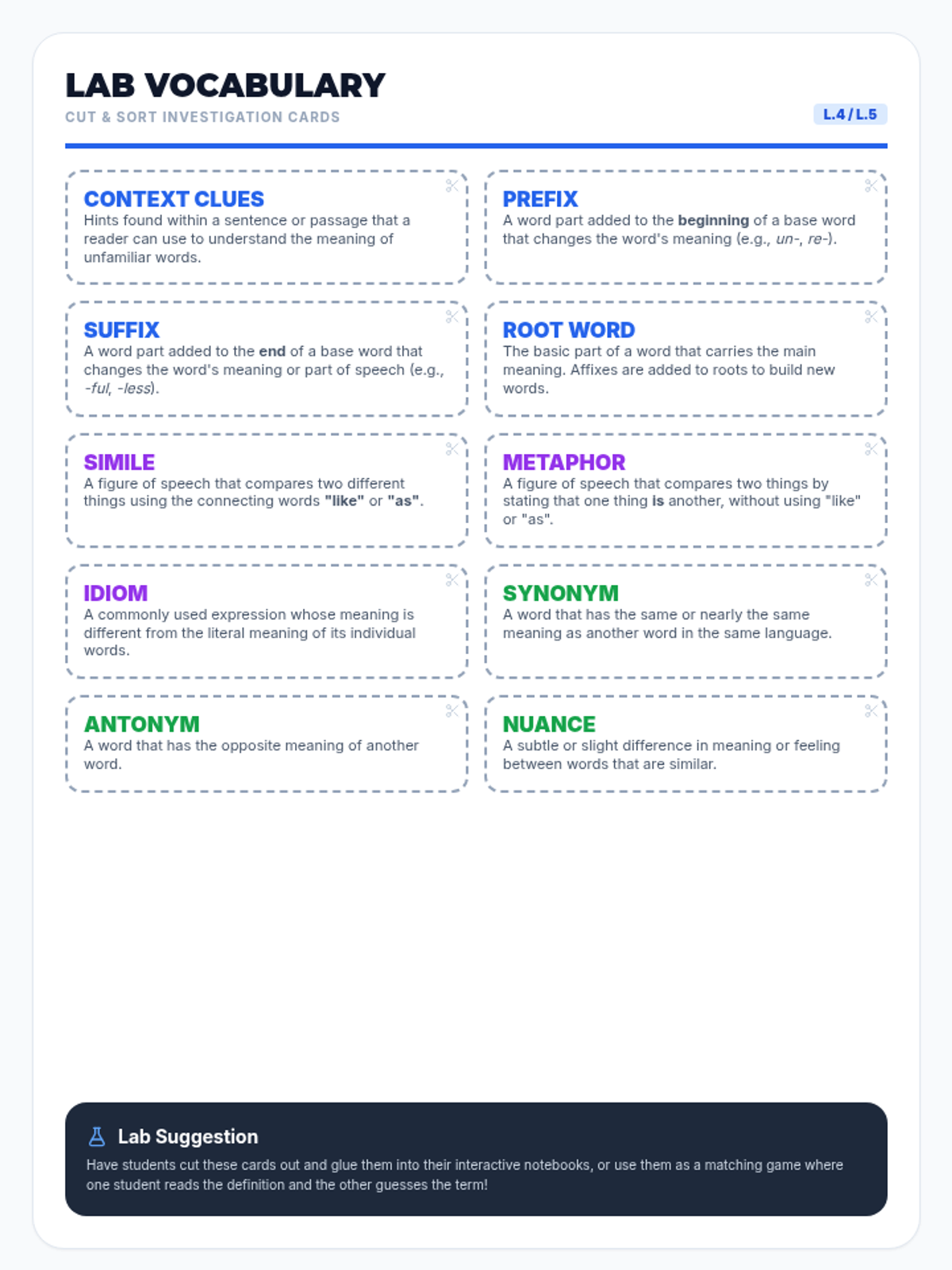
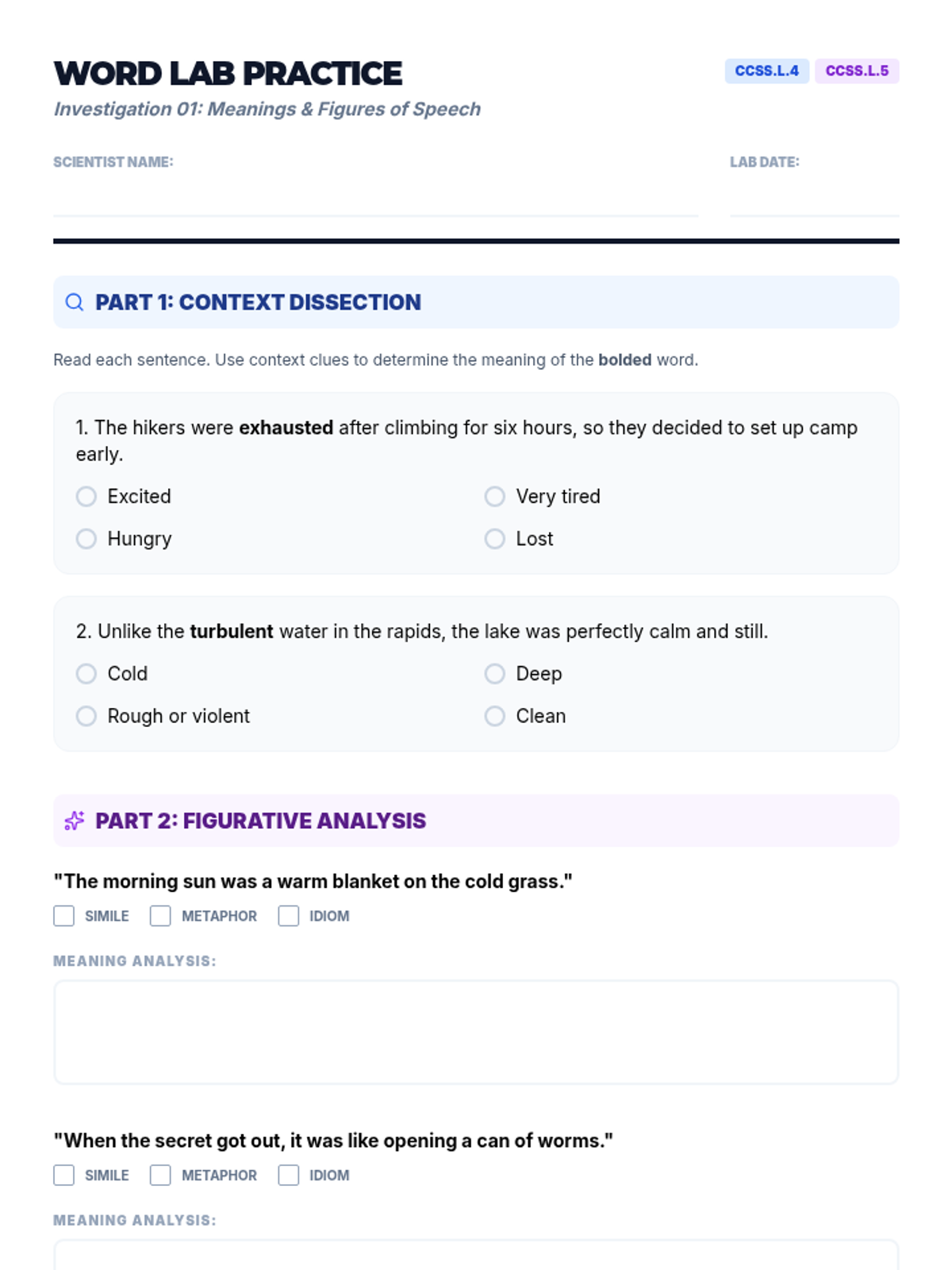
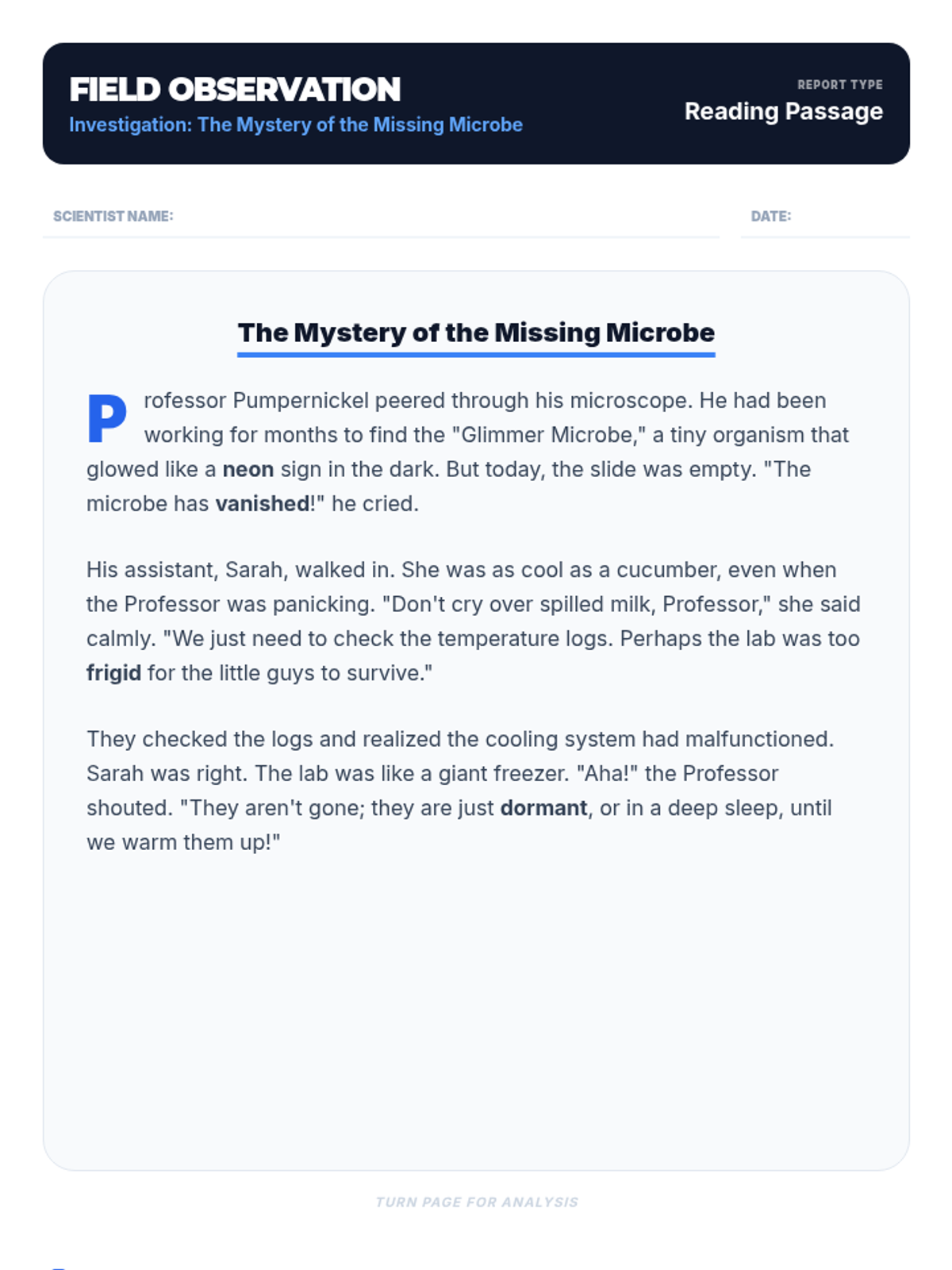
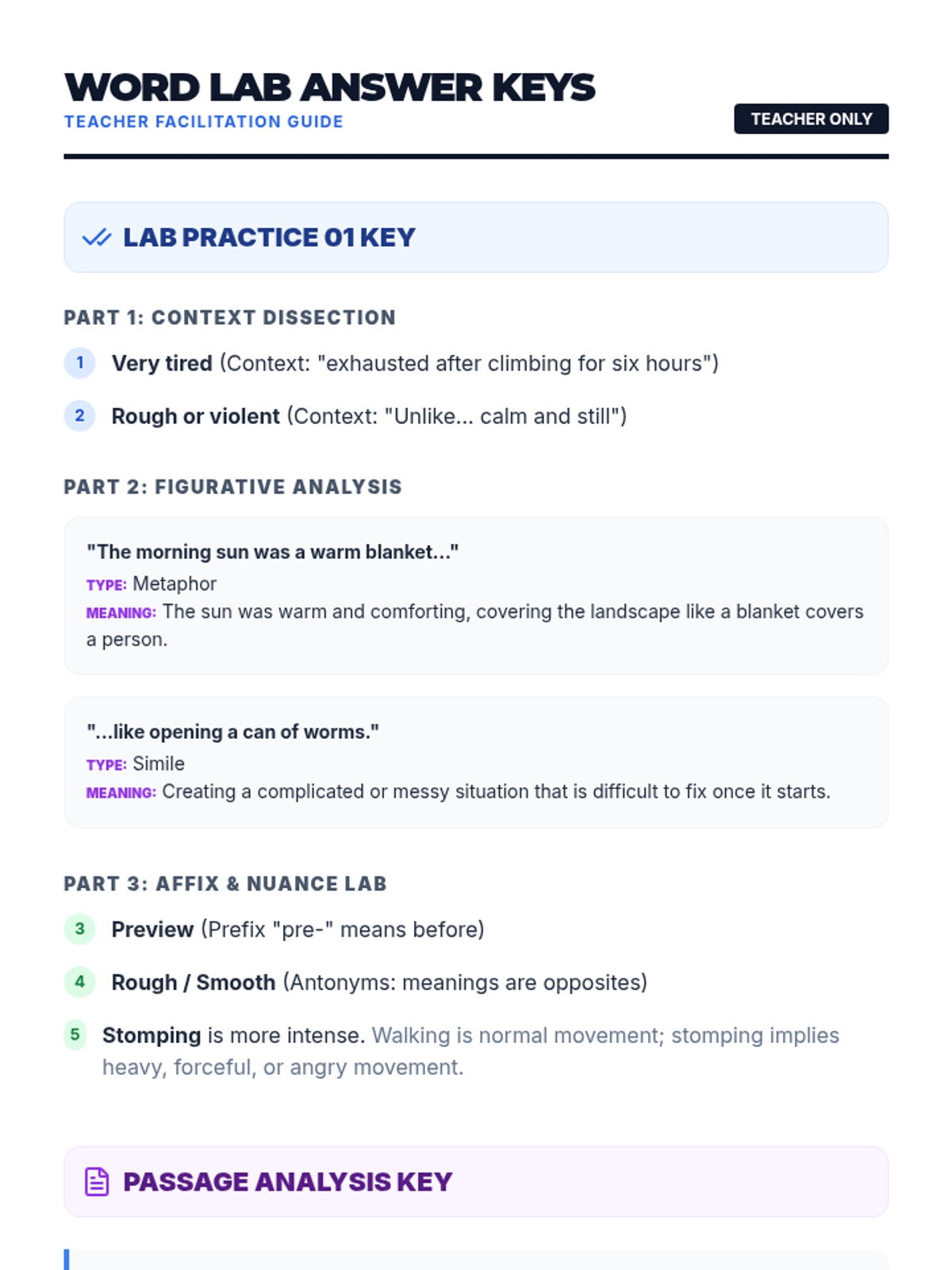
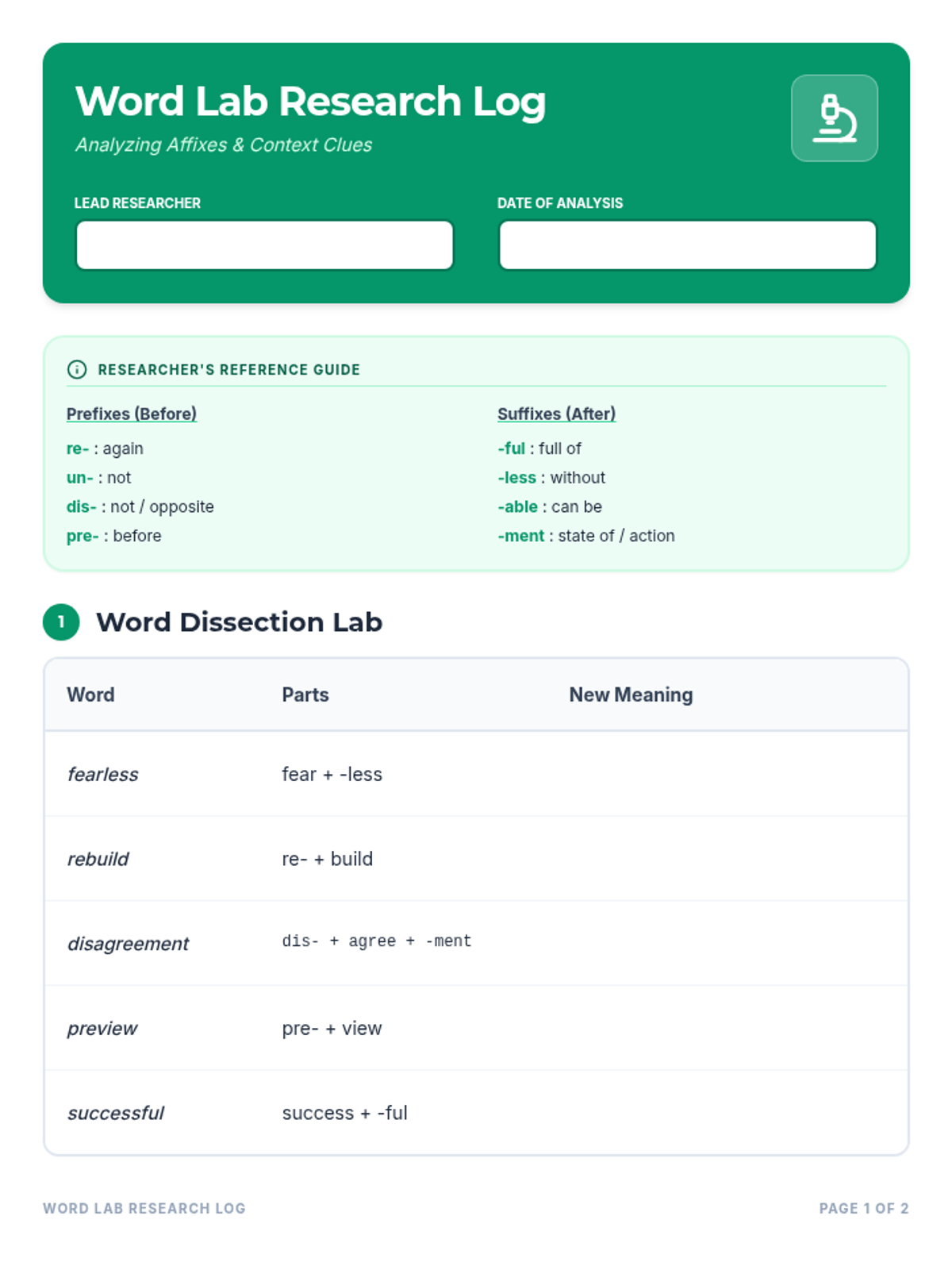
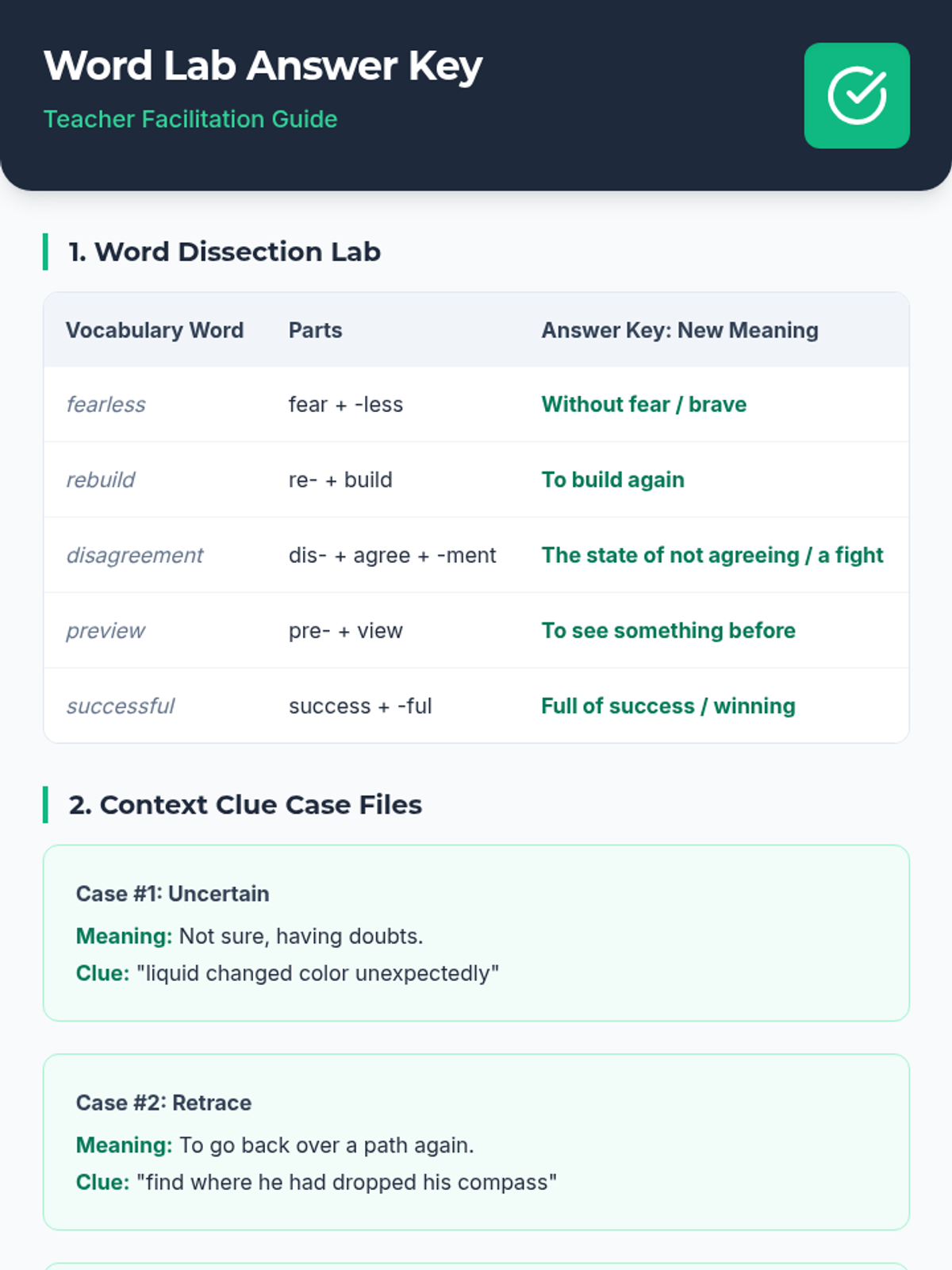
A comprehensive investigation into word meanings, context clues, figurative language, and word relationships. Students will become 'Language Scientists' as they dissect text to uncover hidden meanings.
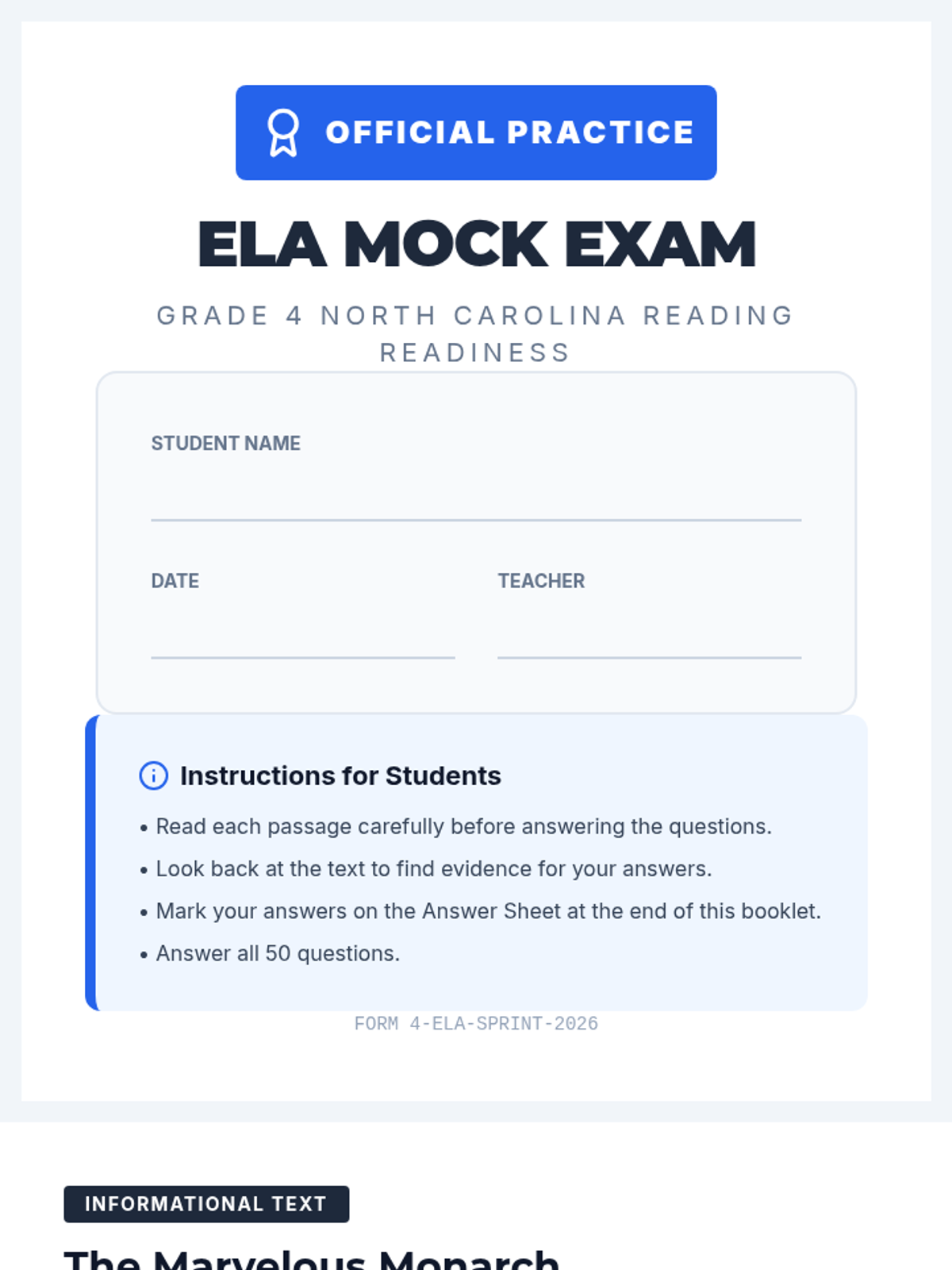
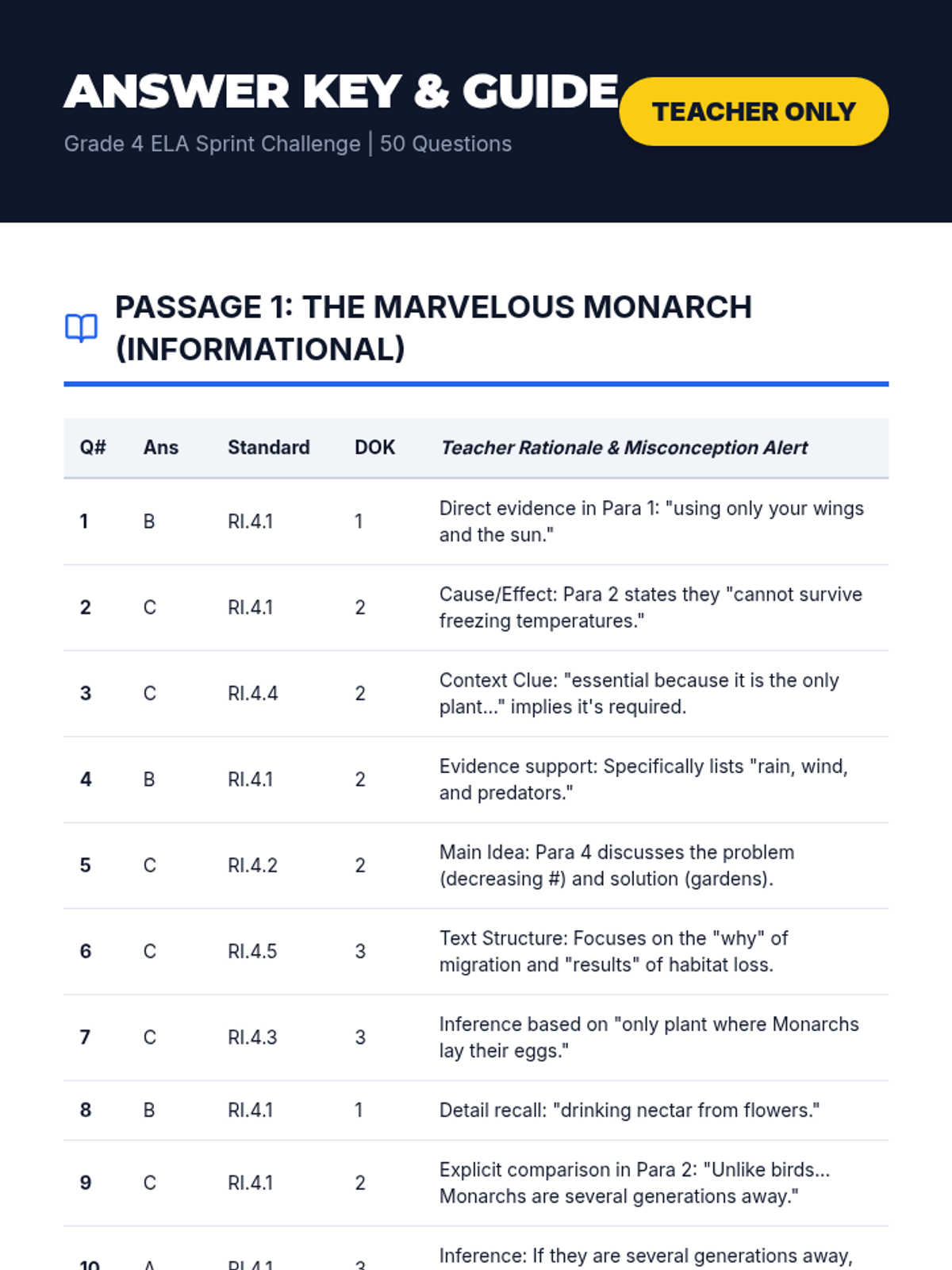
A comprehensive 12-day preparation unit focused on mastering the NC ELA EOG Grade 4 standards through a 50-question mock exam and intensive strategy sessions.
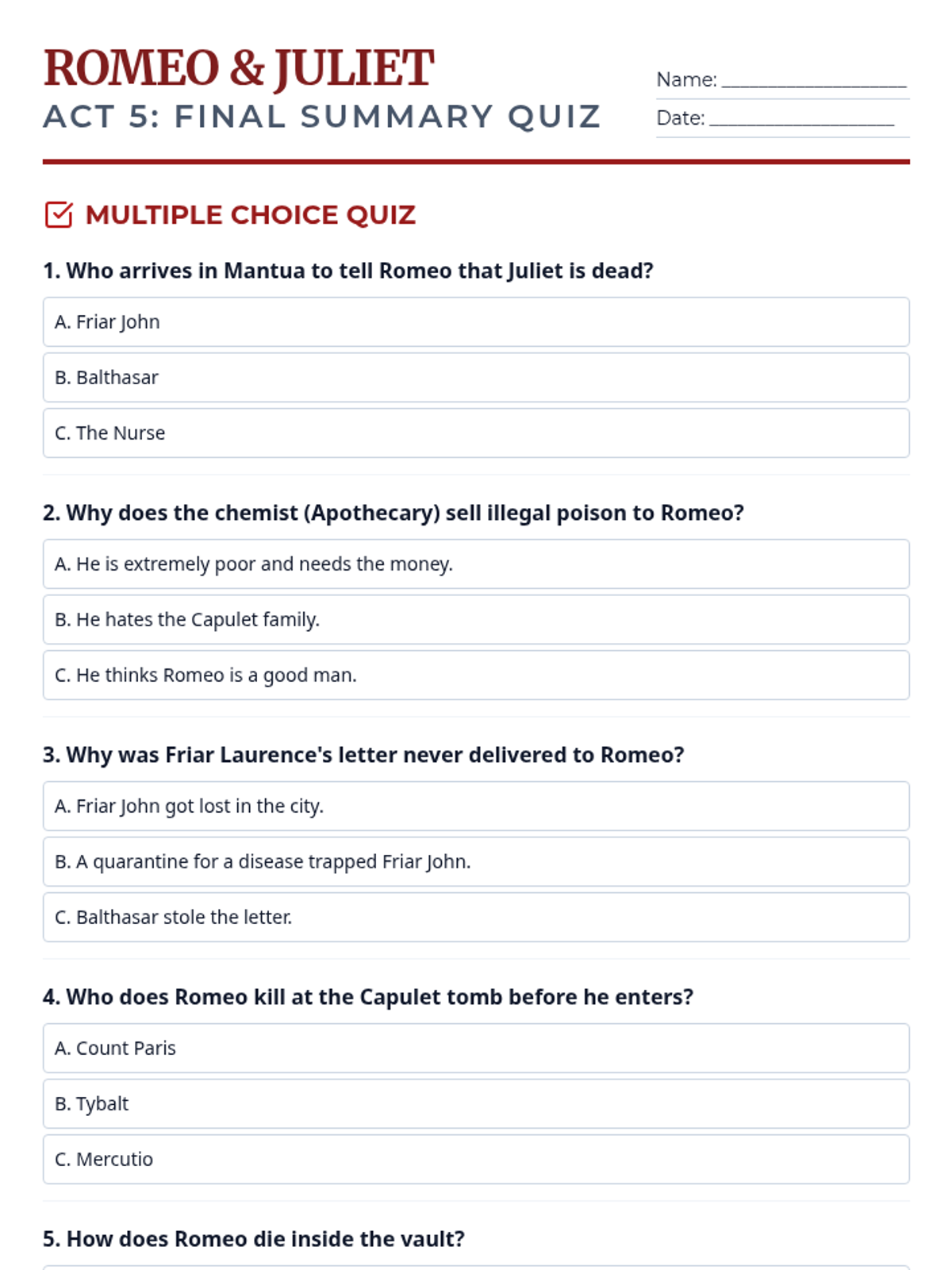
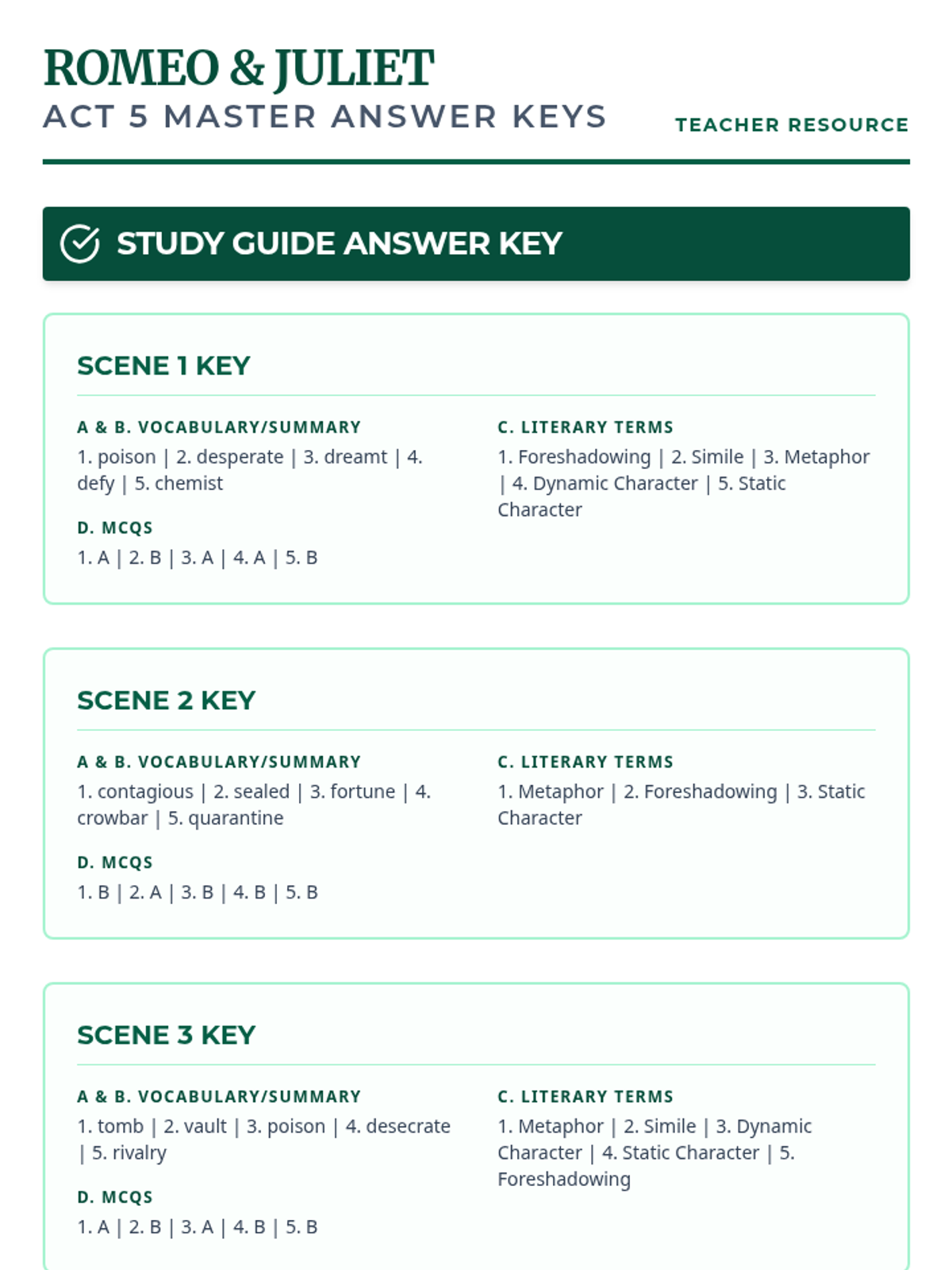
A comprehensive study guide for Act 5 of Shakespeare's Romeo and Juliet, designed for WIDA level 3 English language learners. Includes vocabulary, summary completion, literary term analysis, and event sequencing.
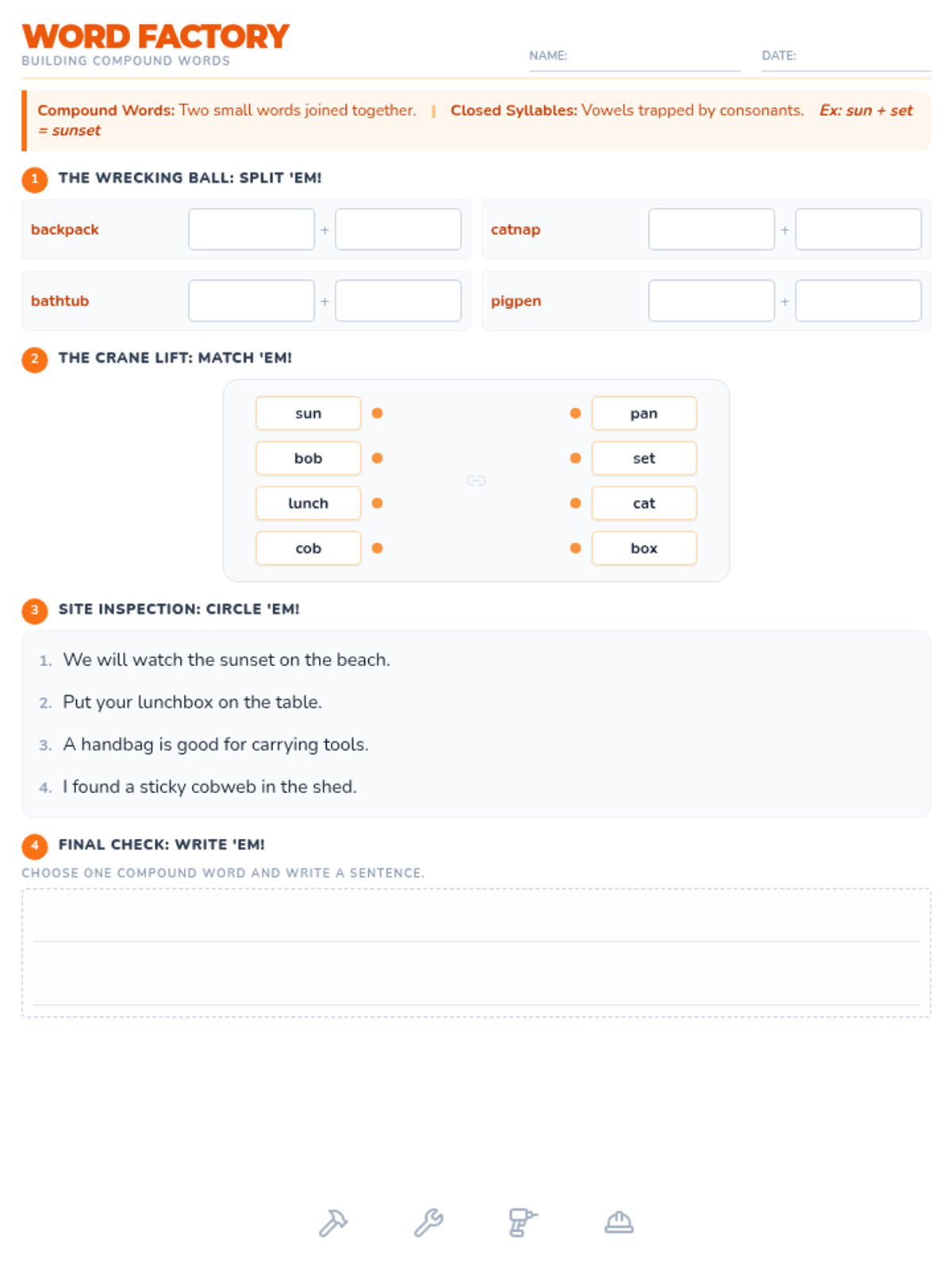
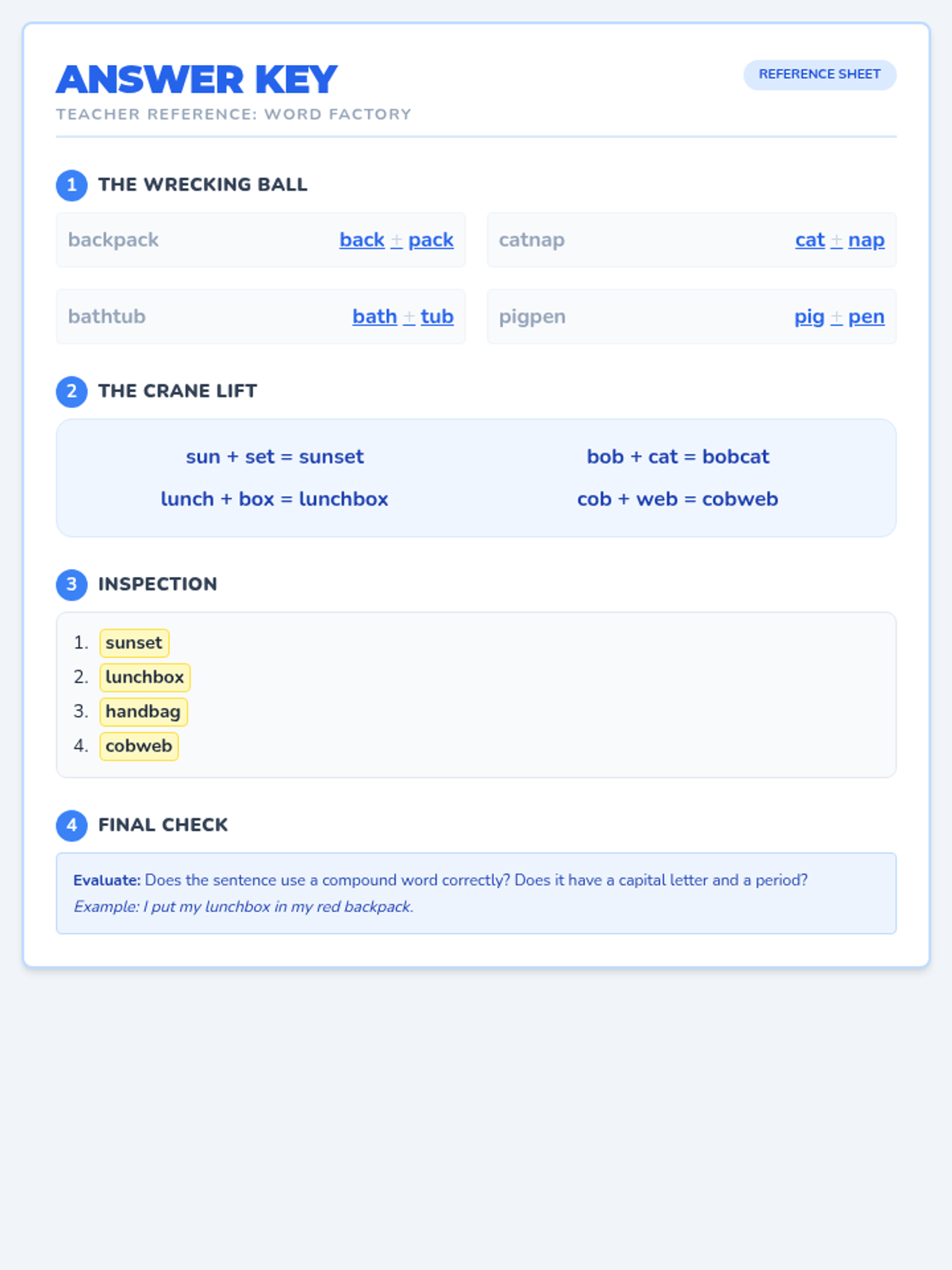
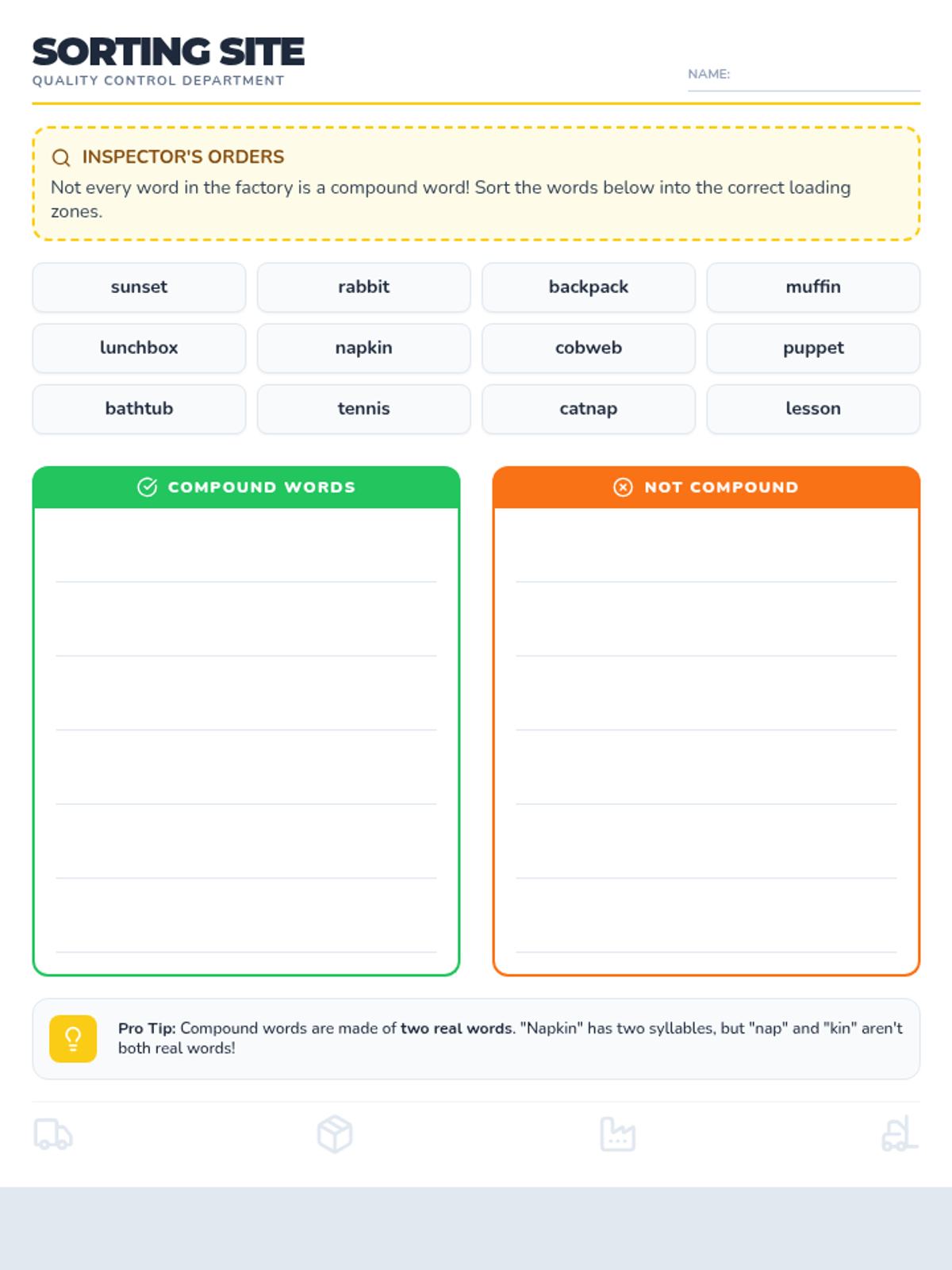
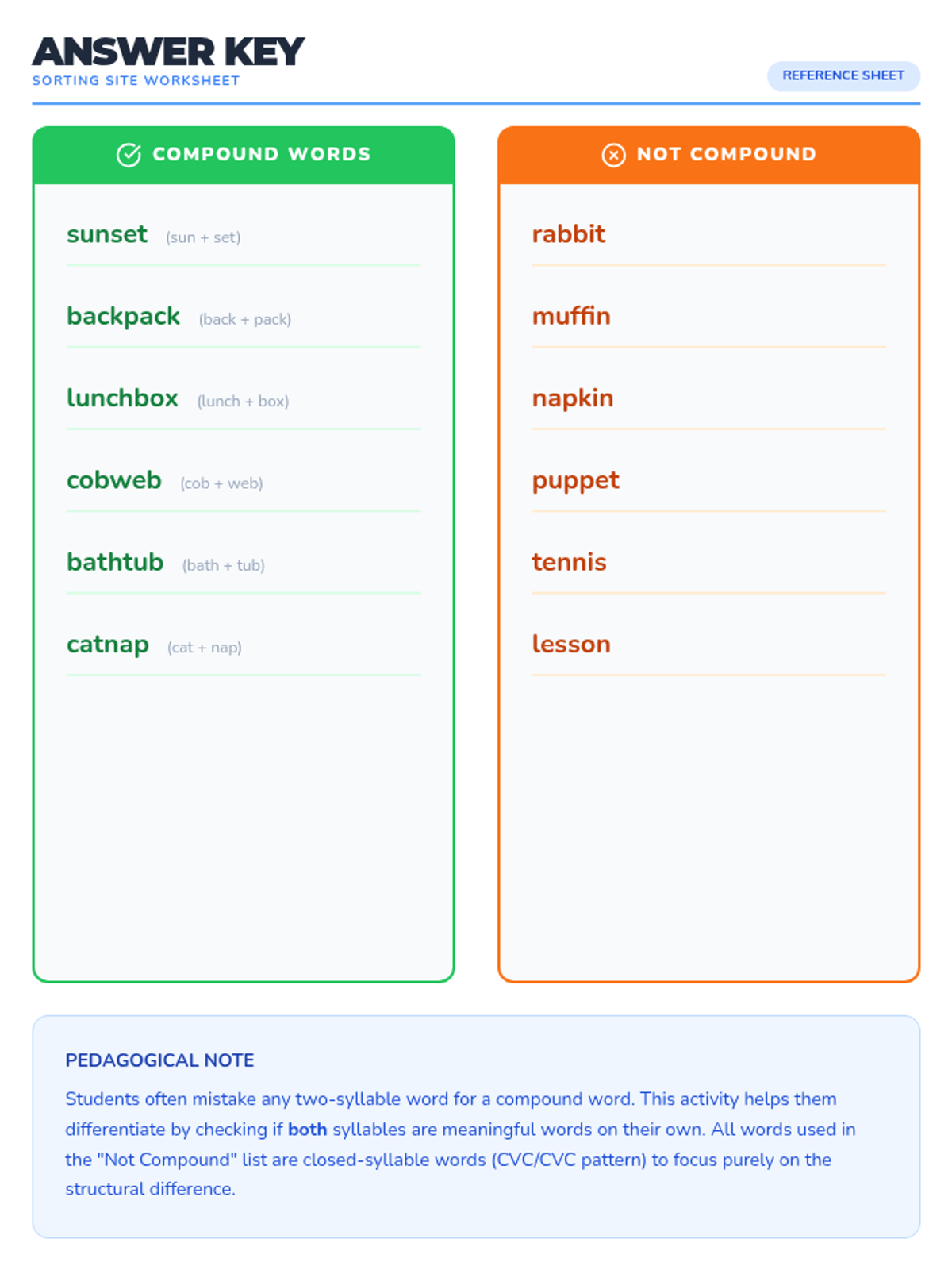
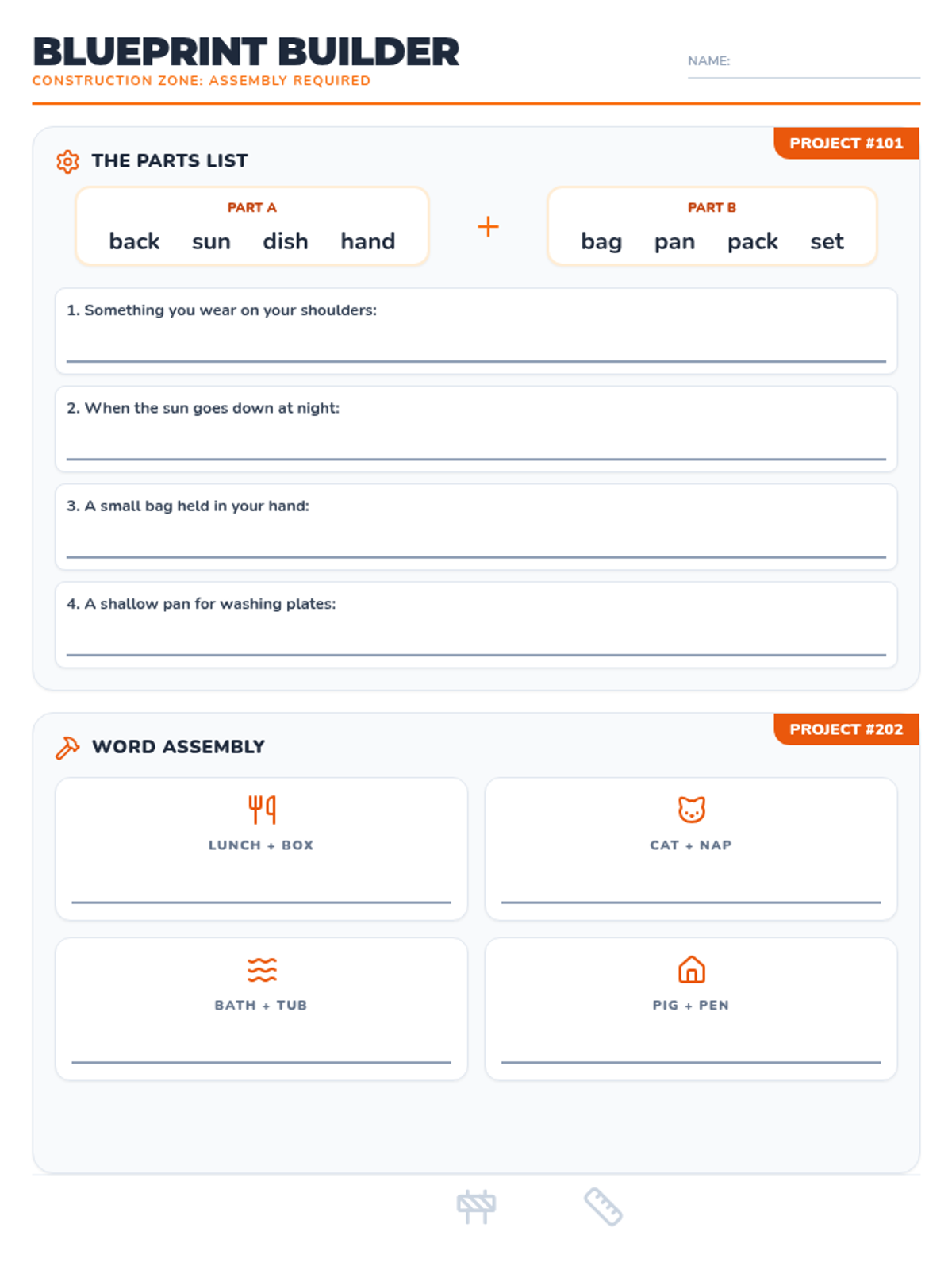
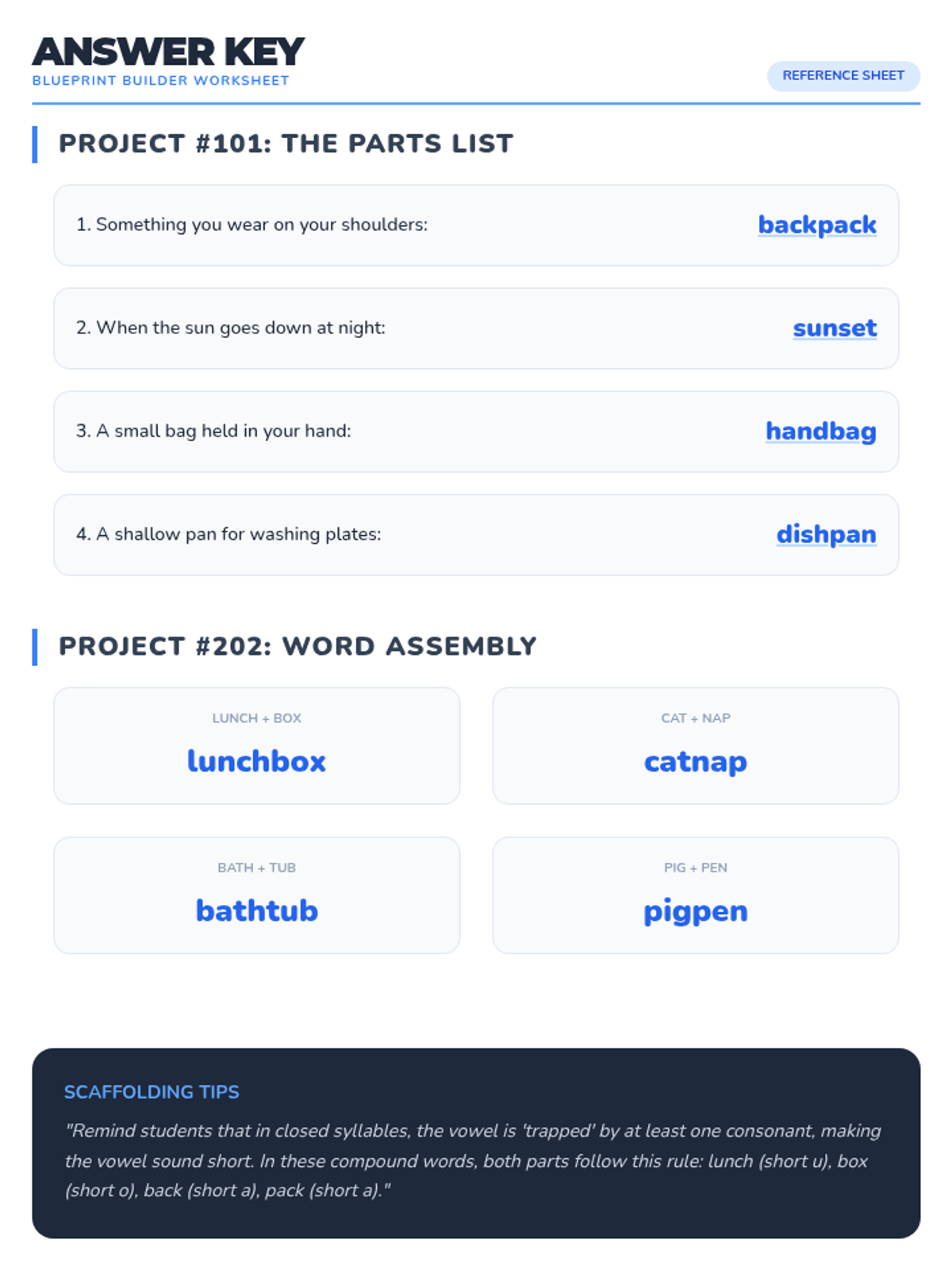
A comprehensive lesson focused on identifying, building, and deconstructing compound words made of two closed syllables, using a fun construction-site theme.
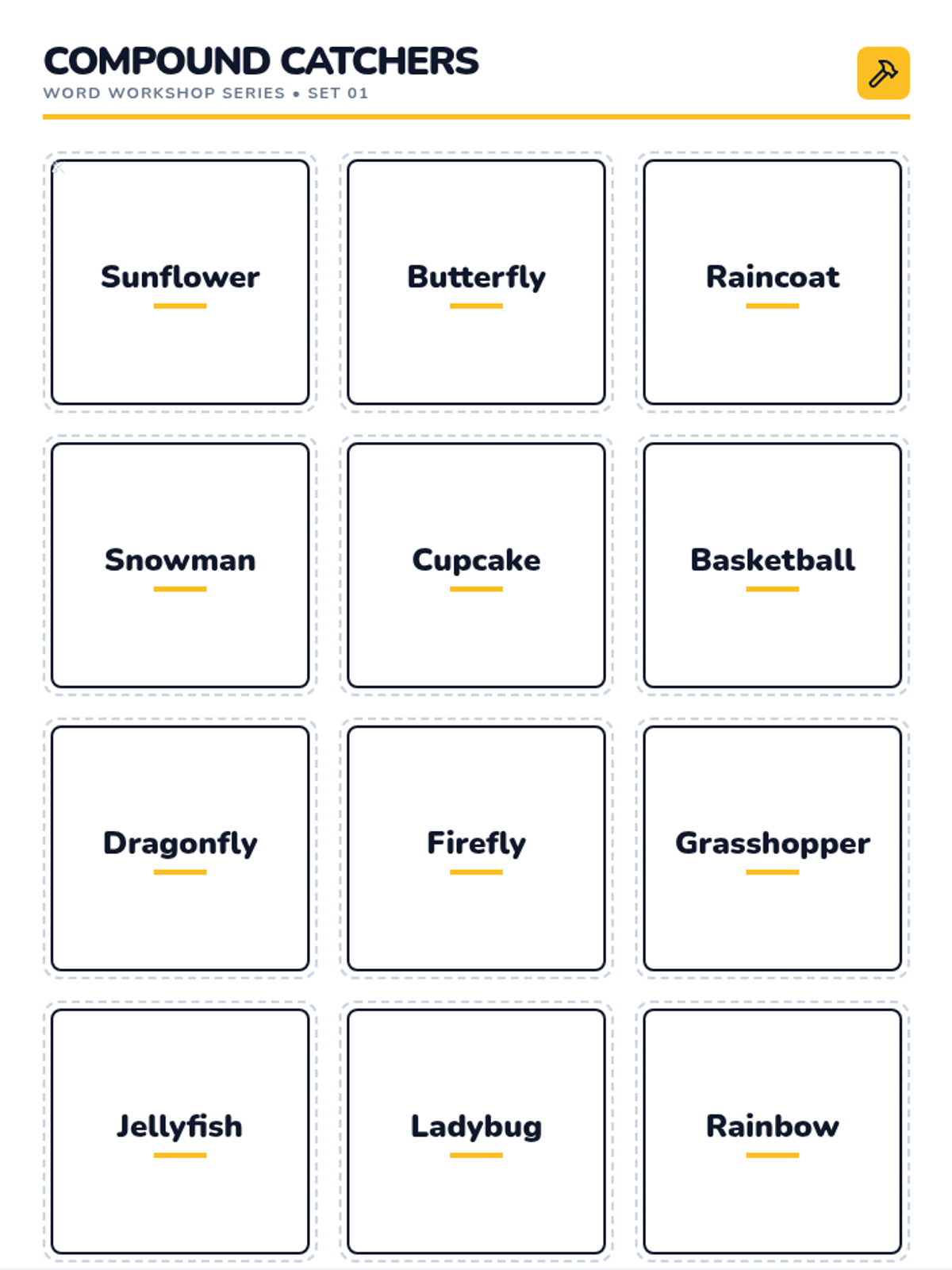
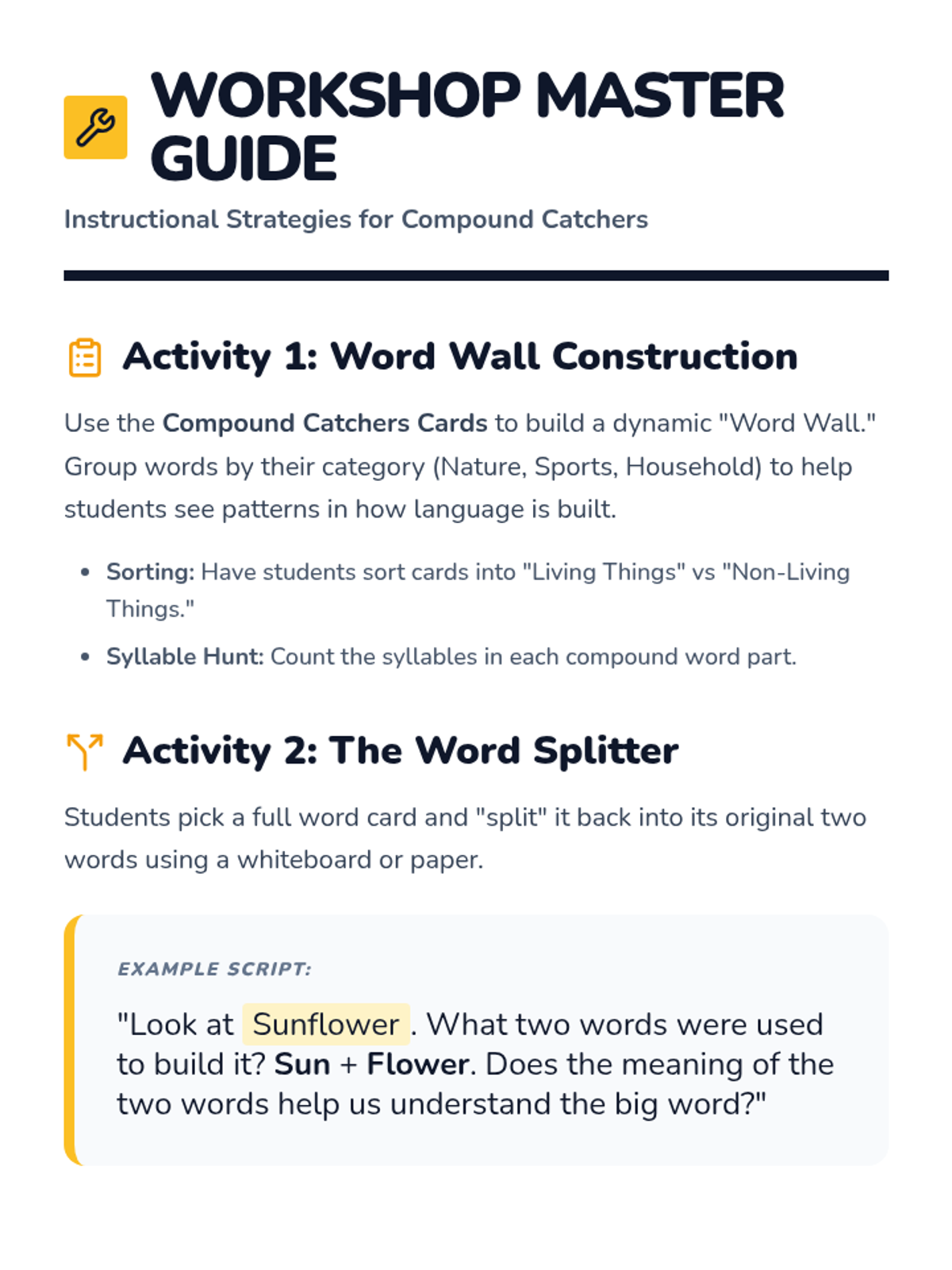
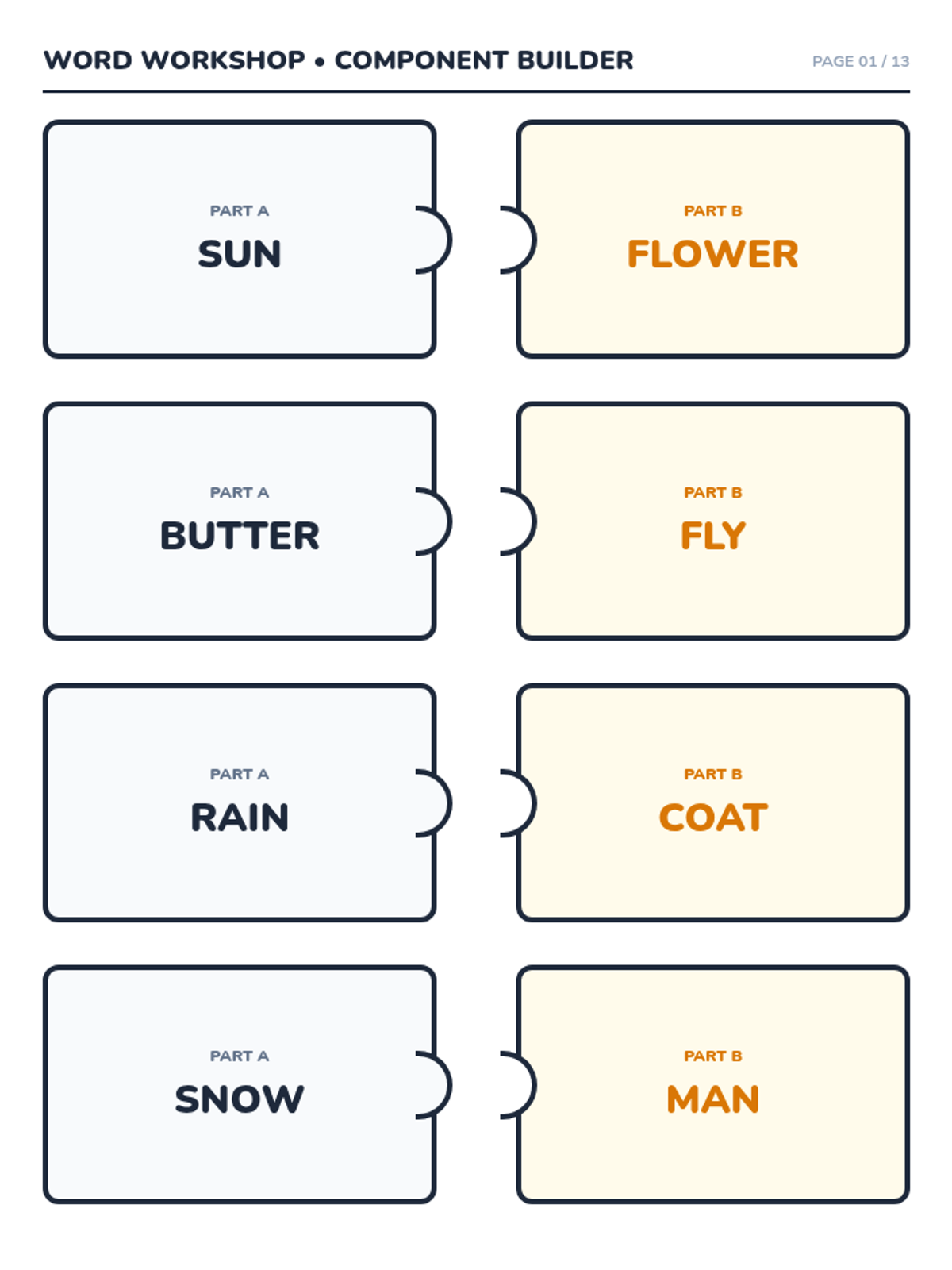
A comprehensive set of compound word cards and teaching strategies to help students identify, build, and master compound words through hands-on activities.
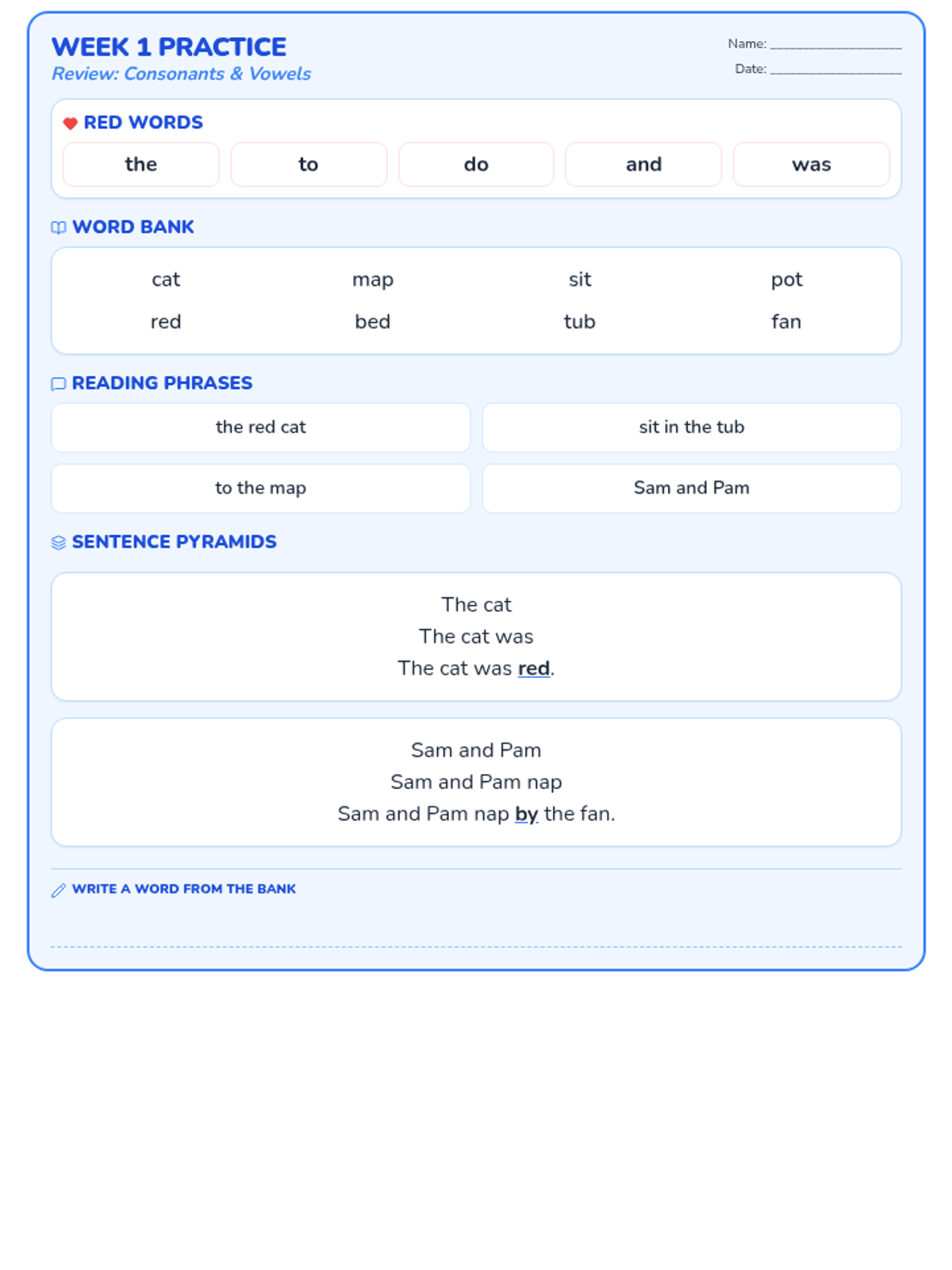
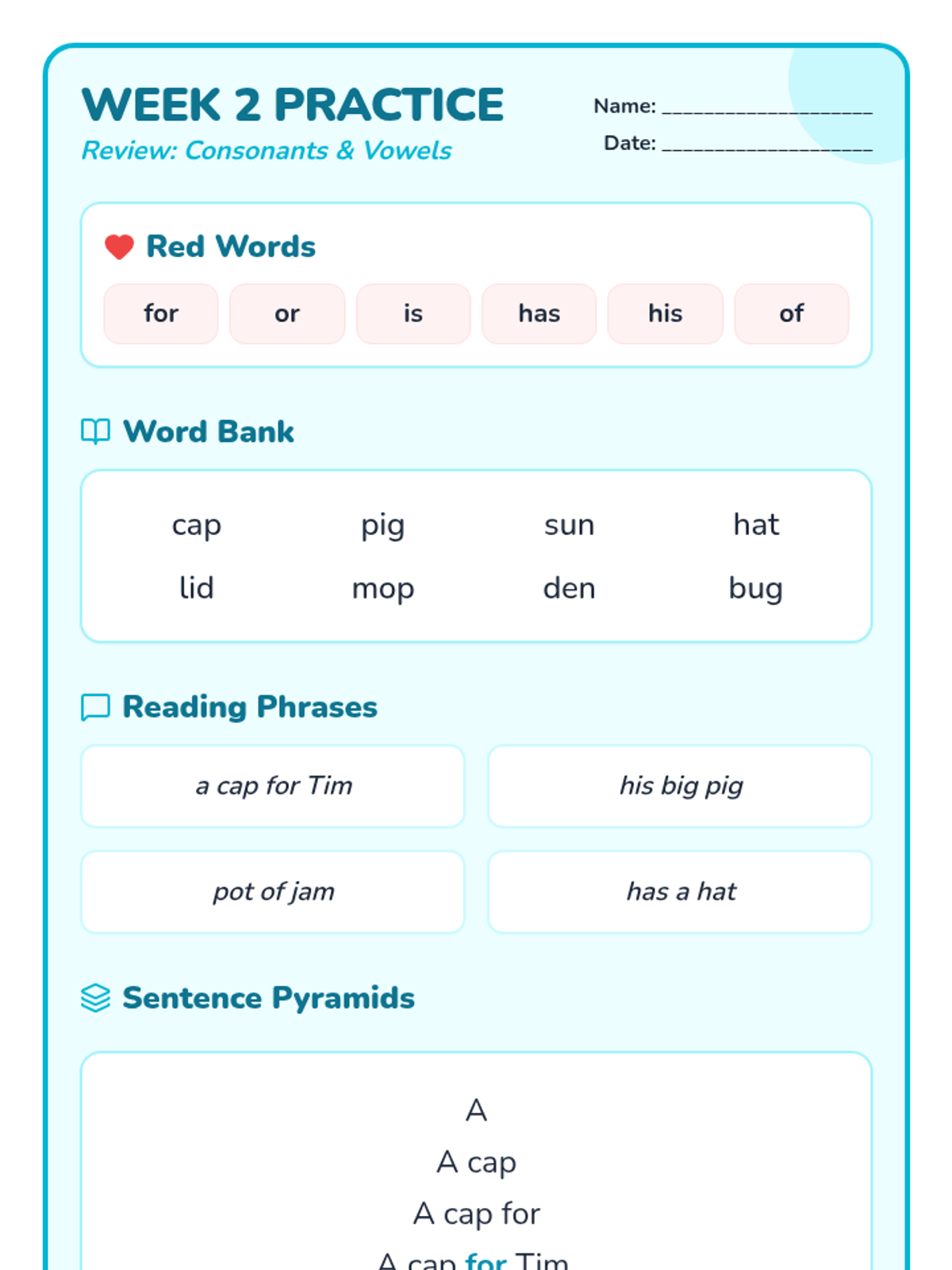
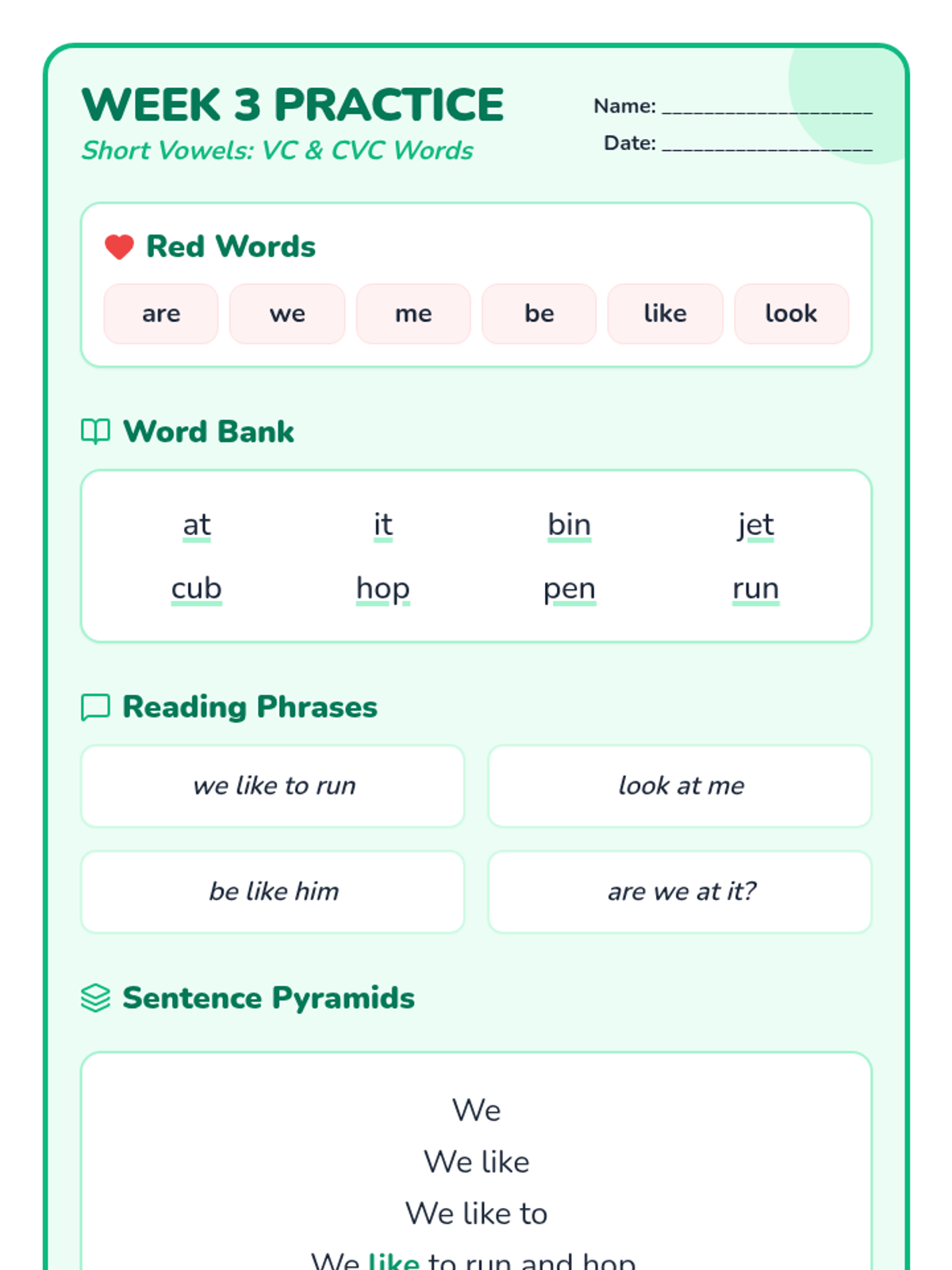
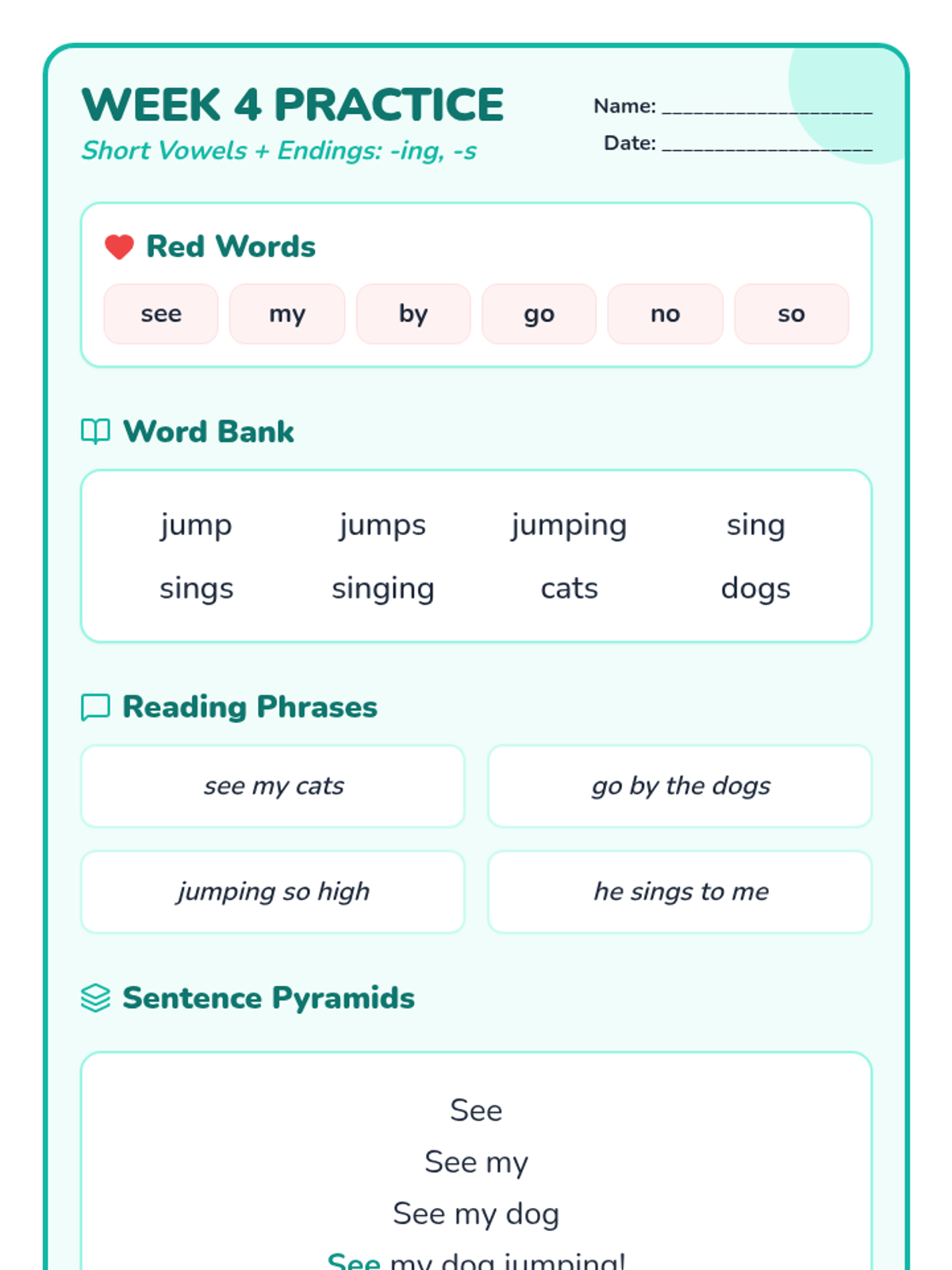
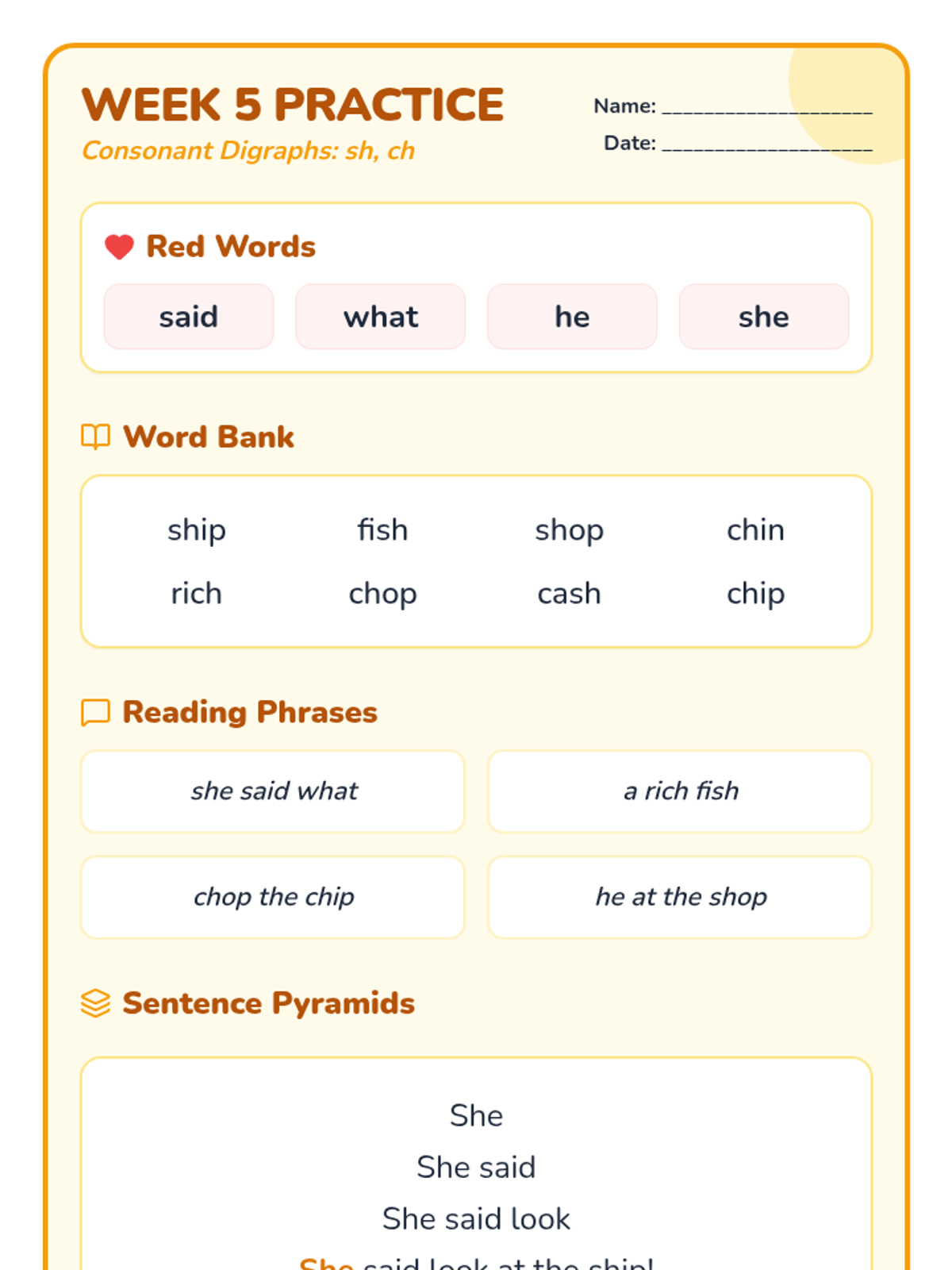
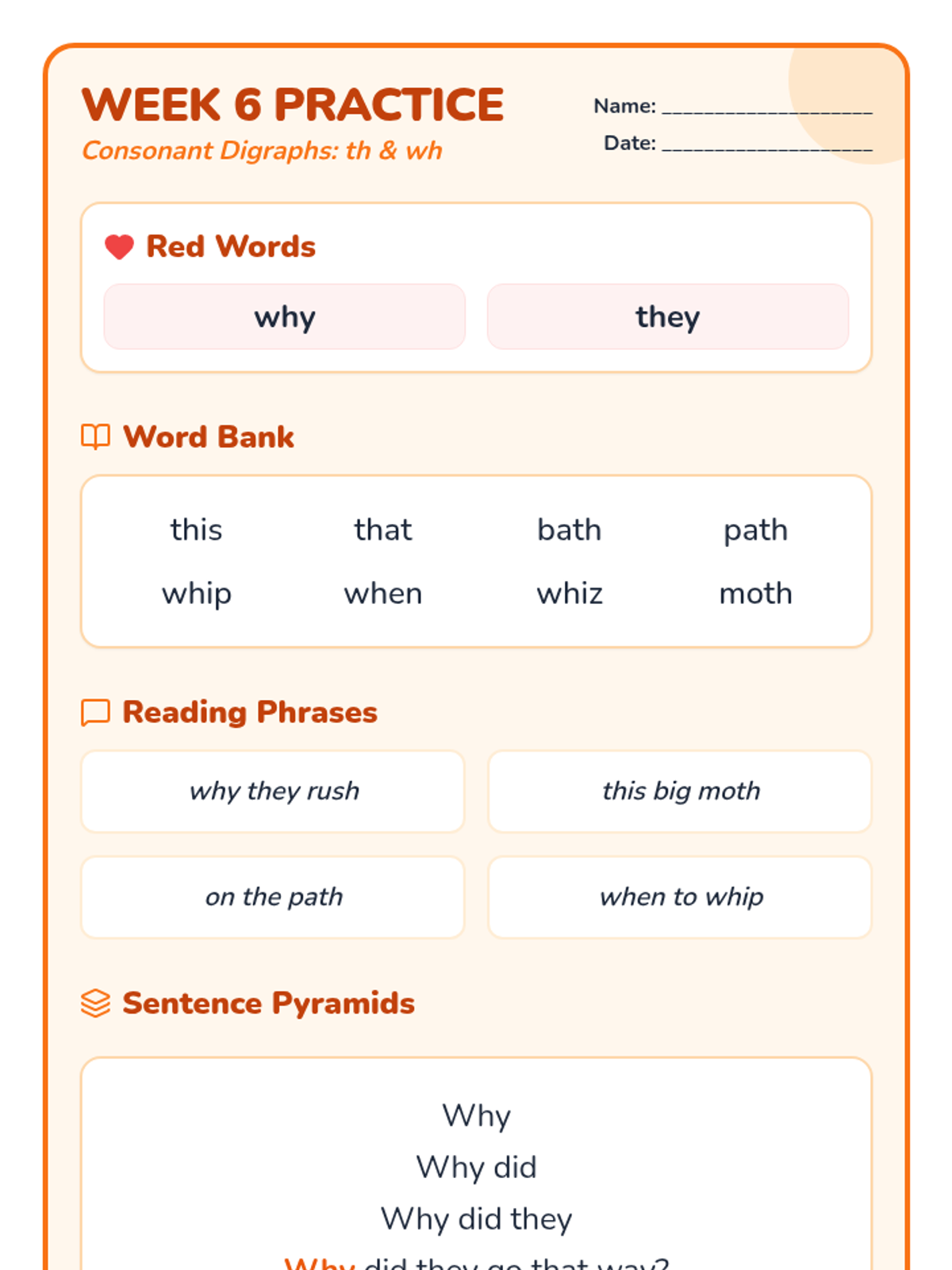
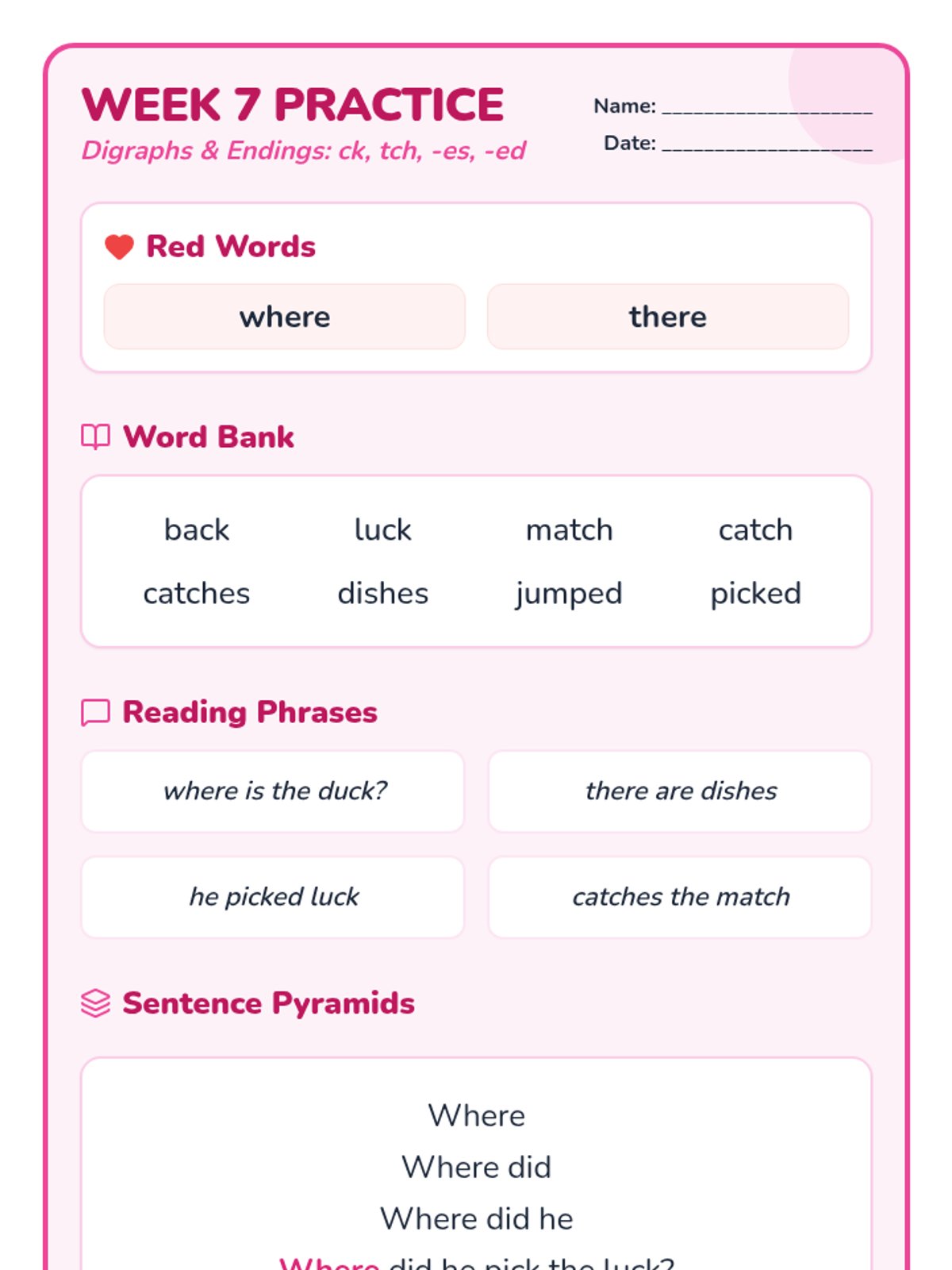
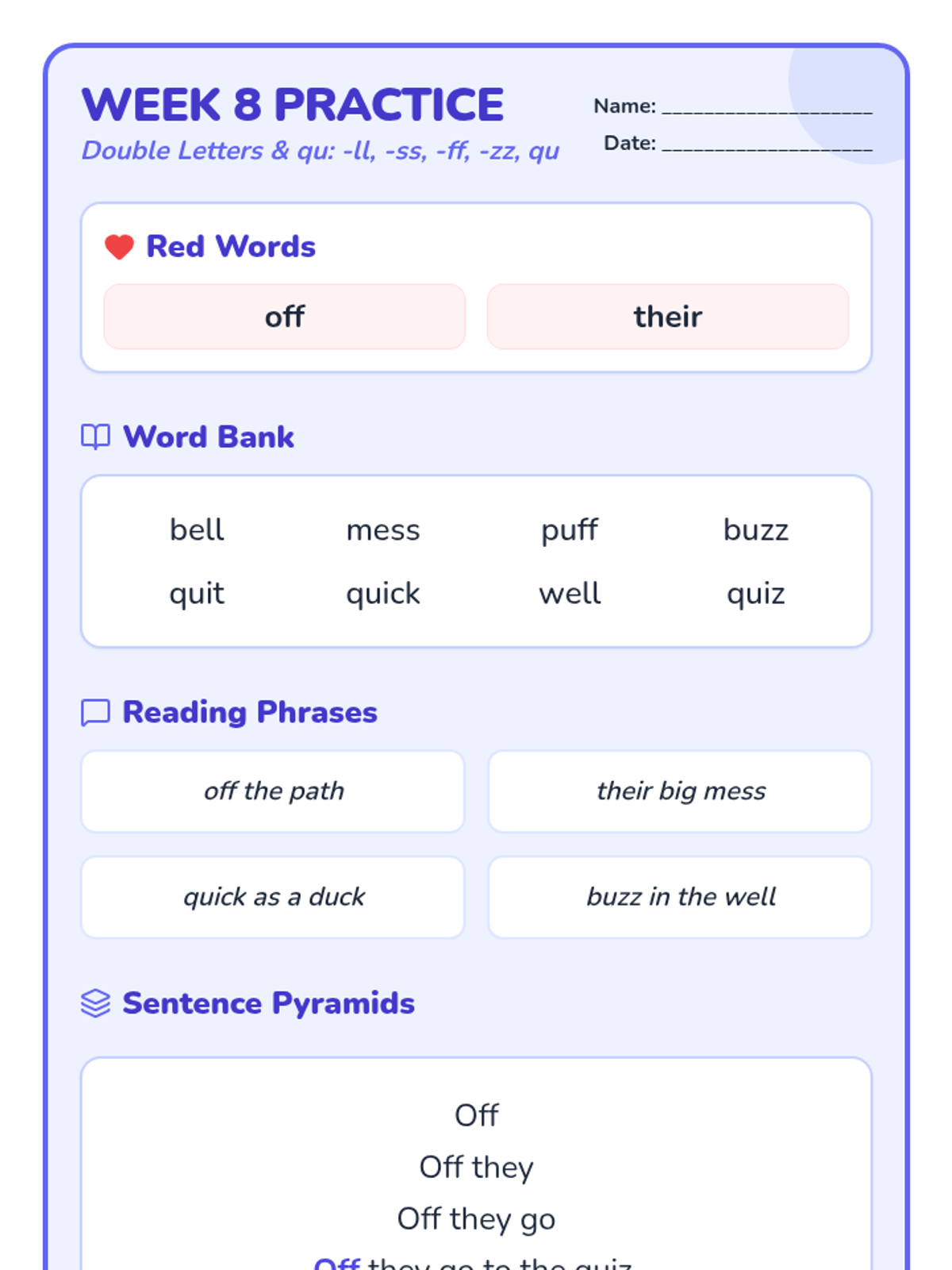
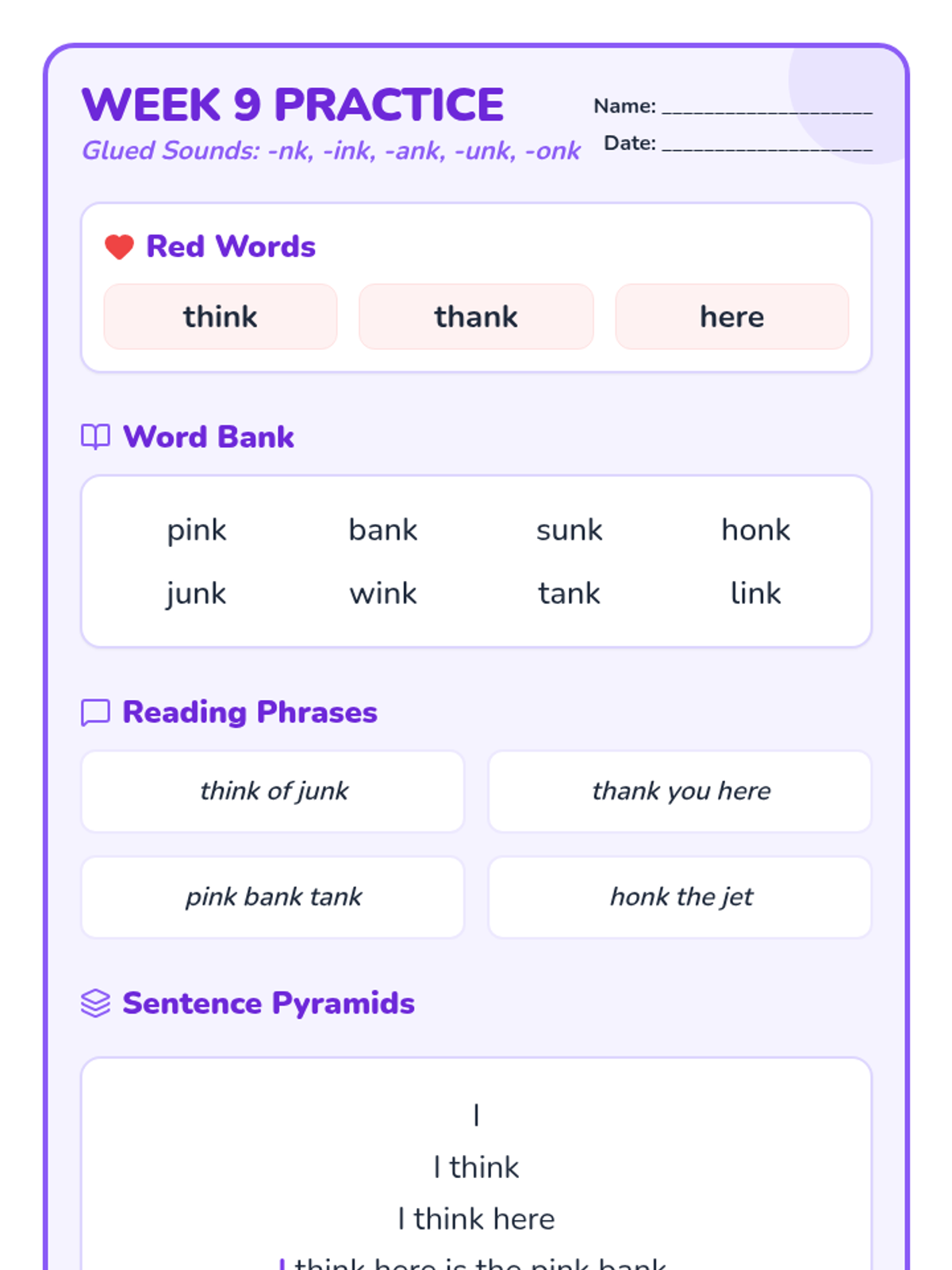
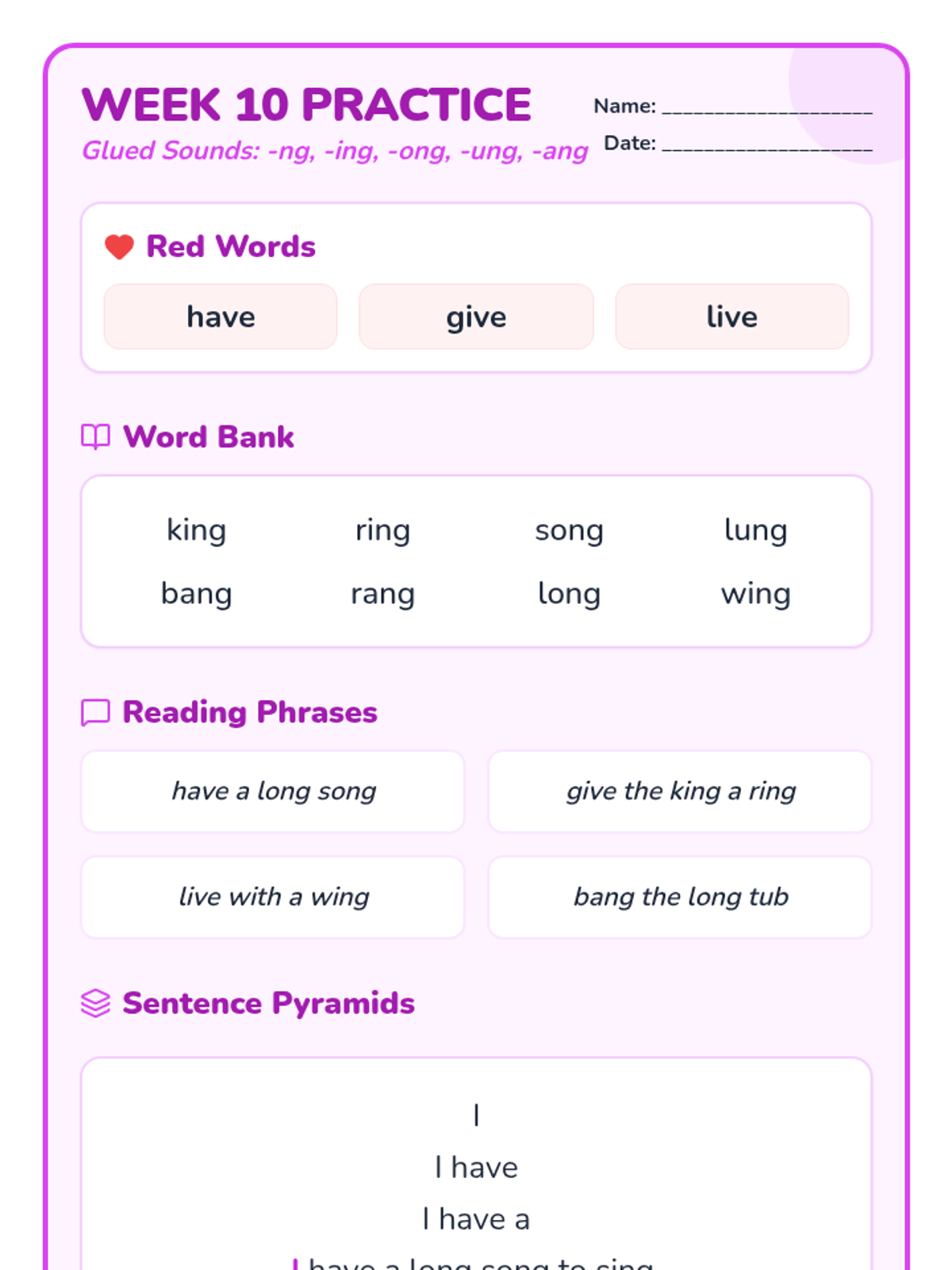
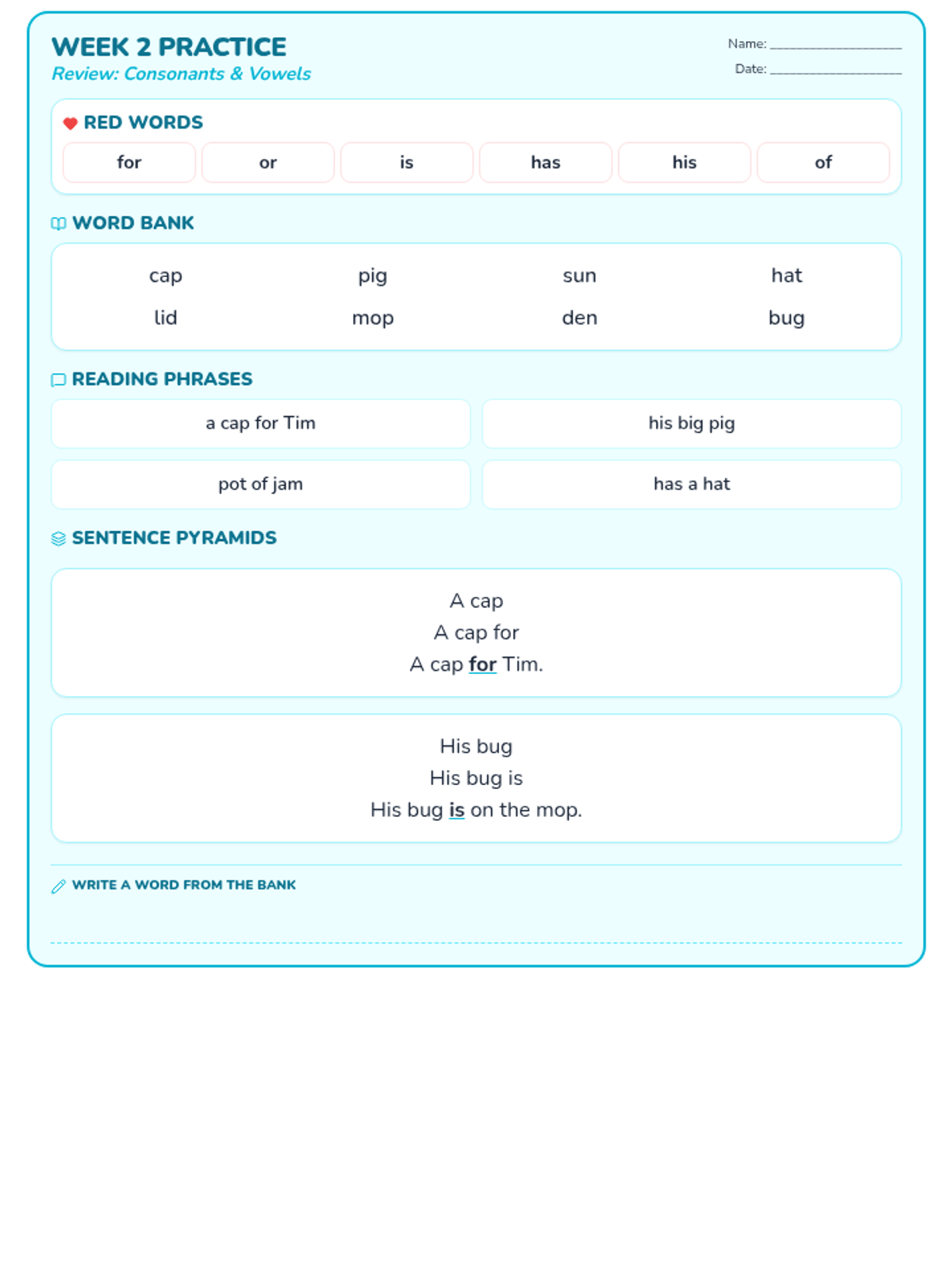
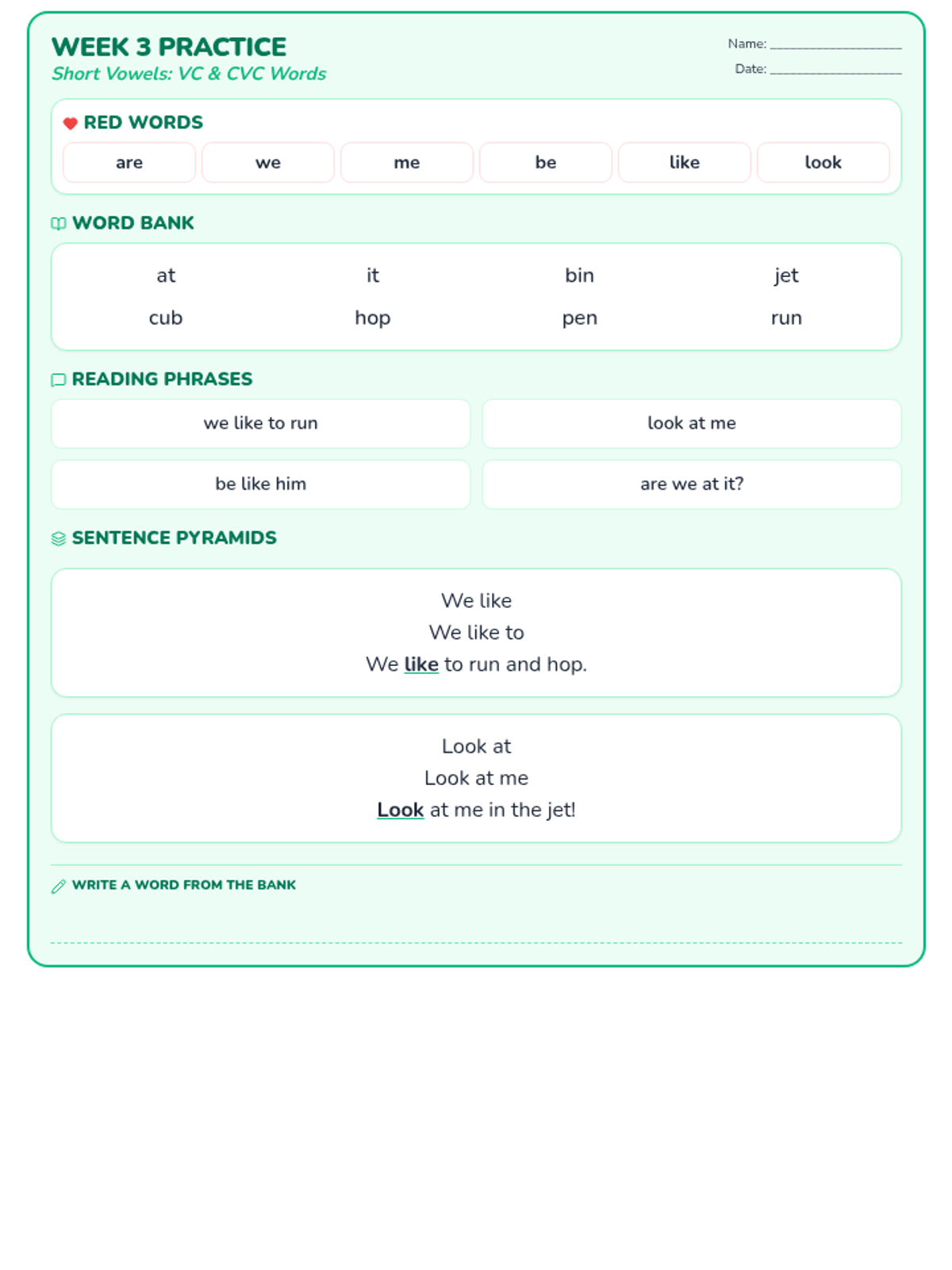
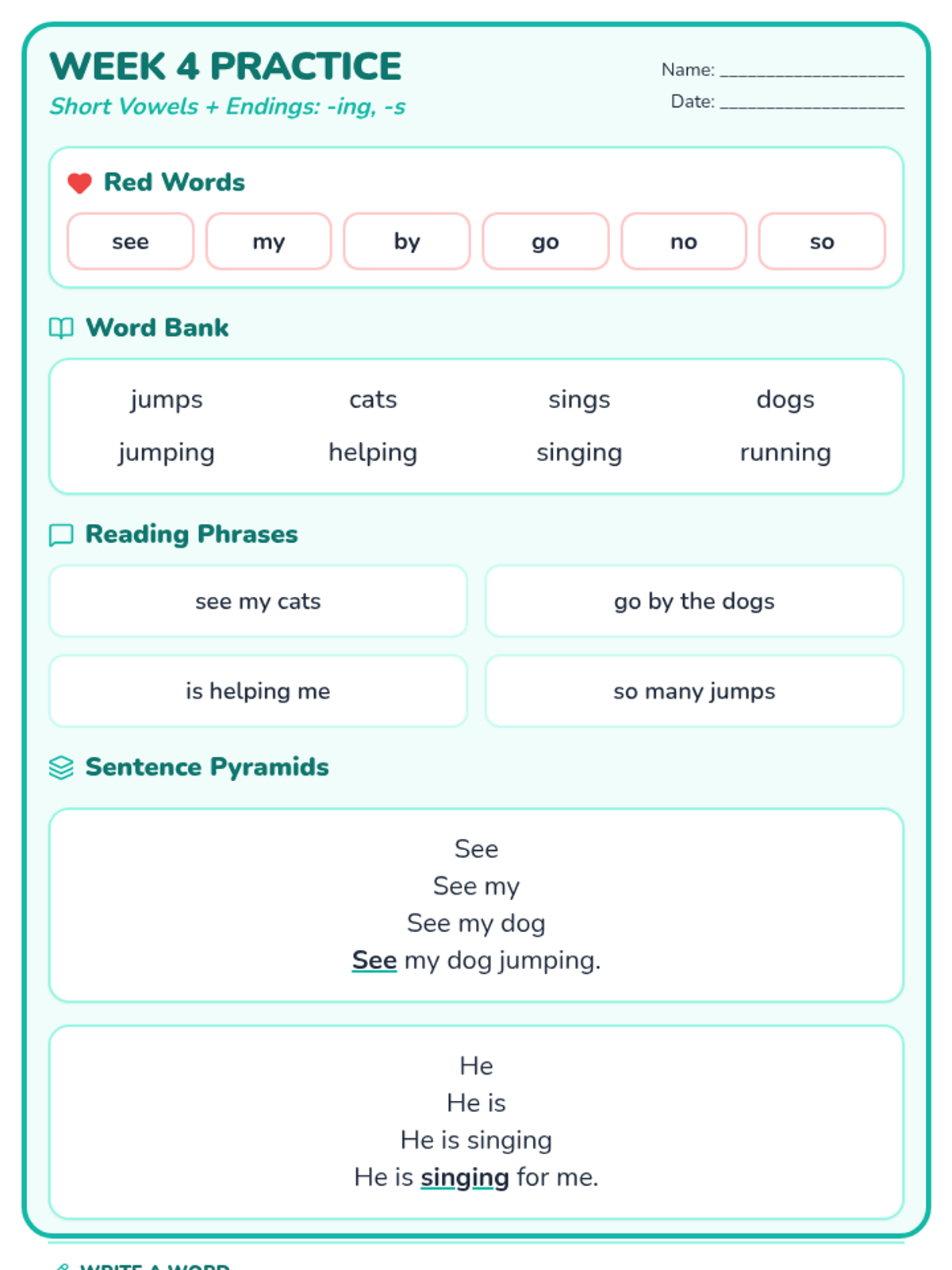
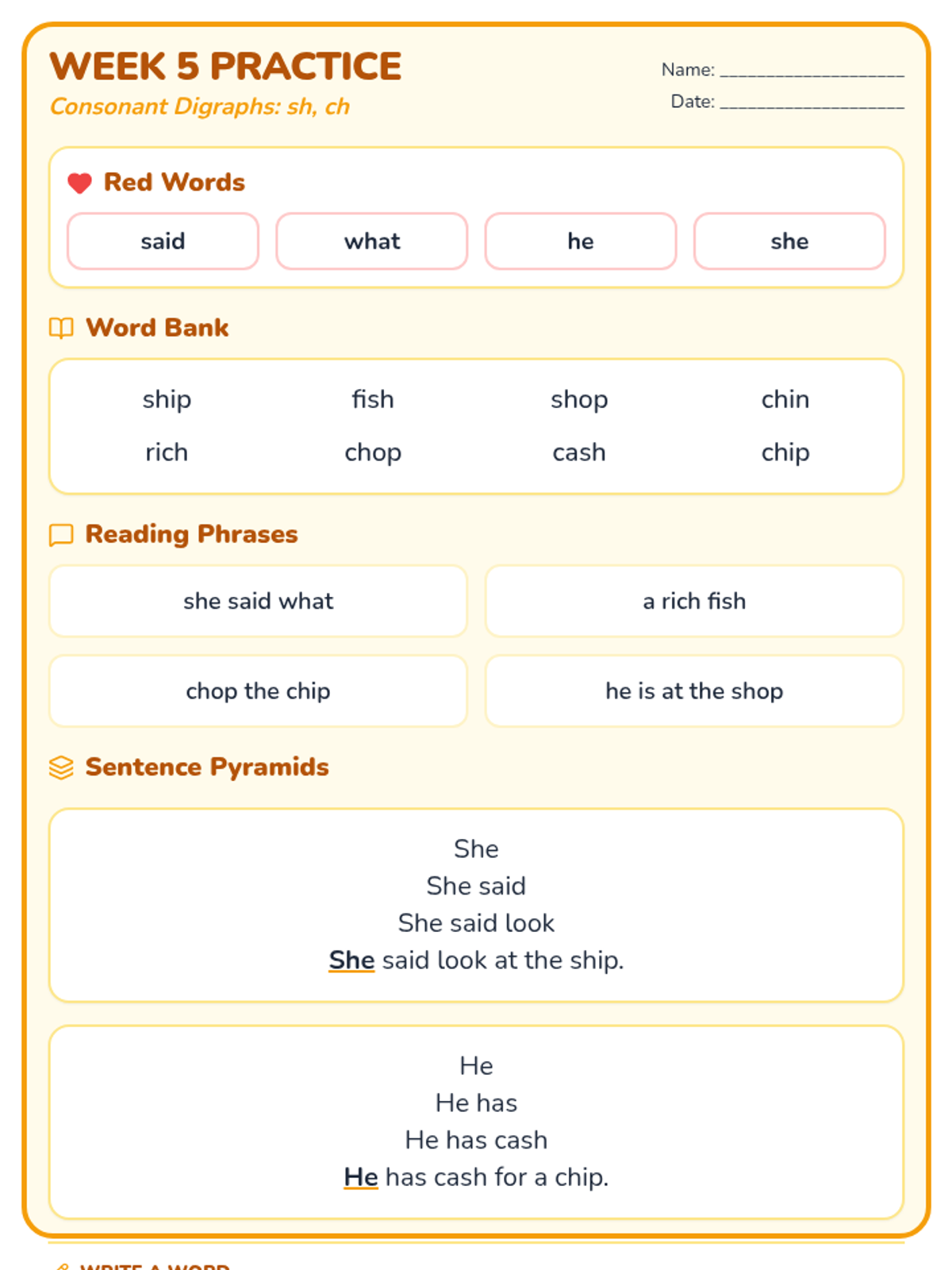
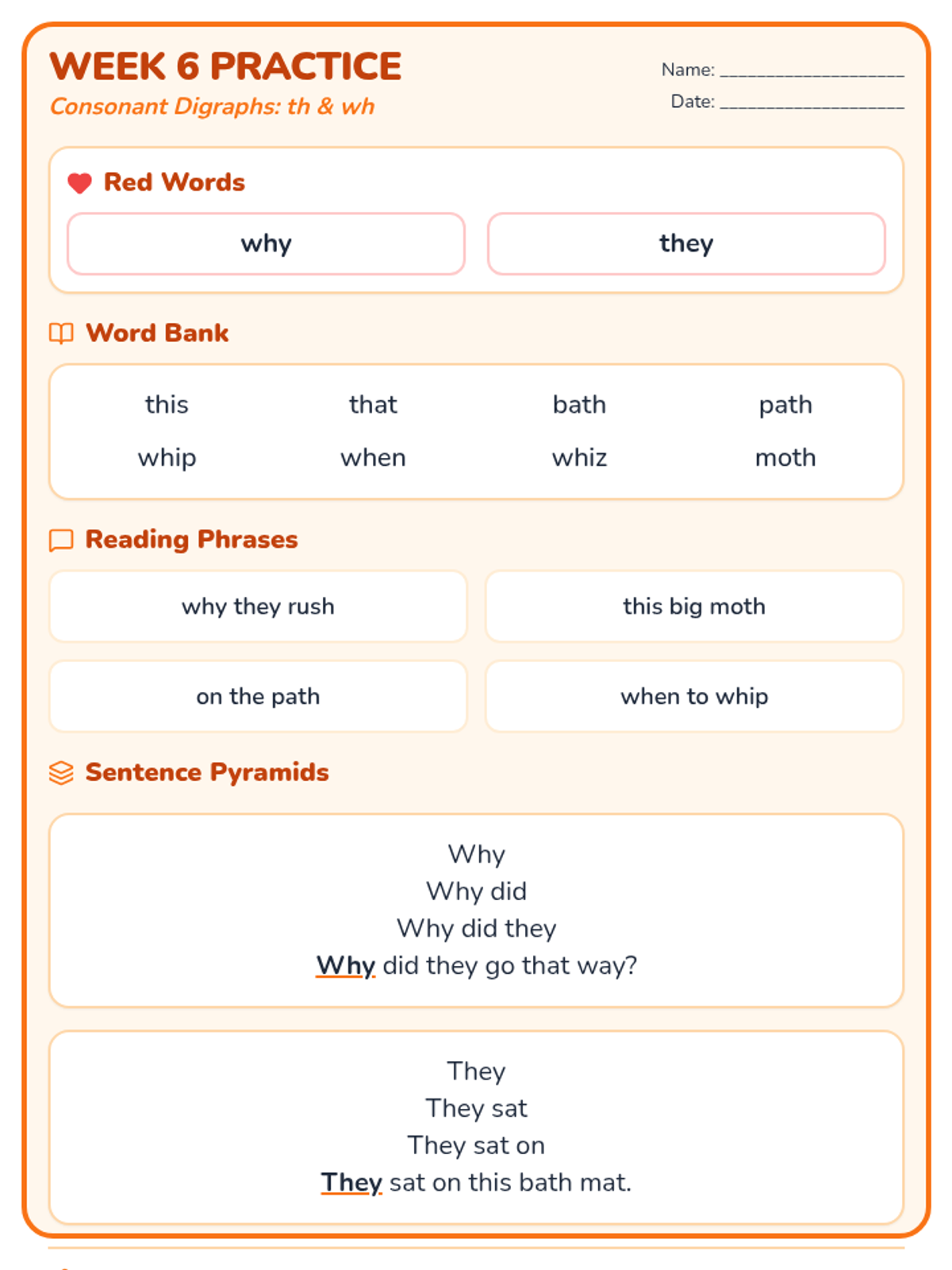
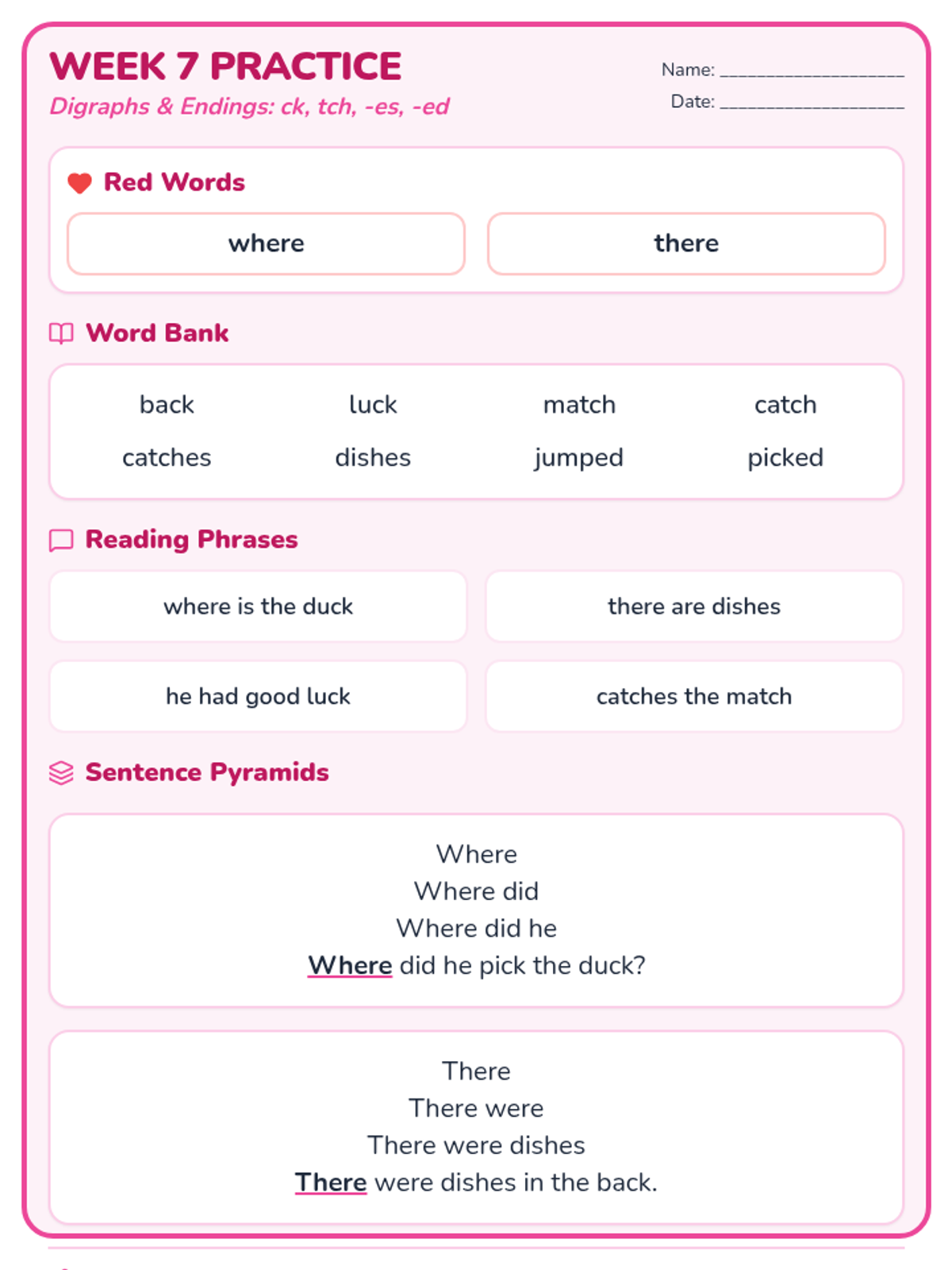
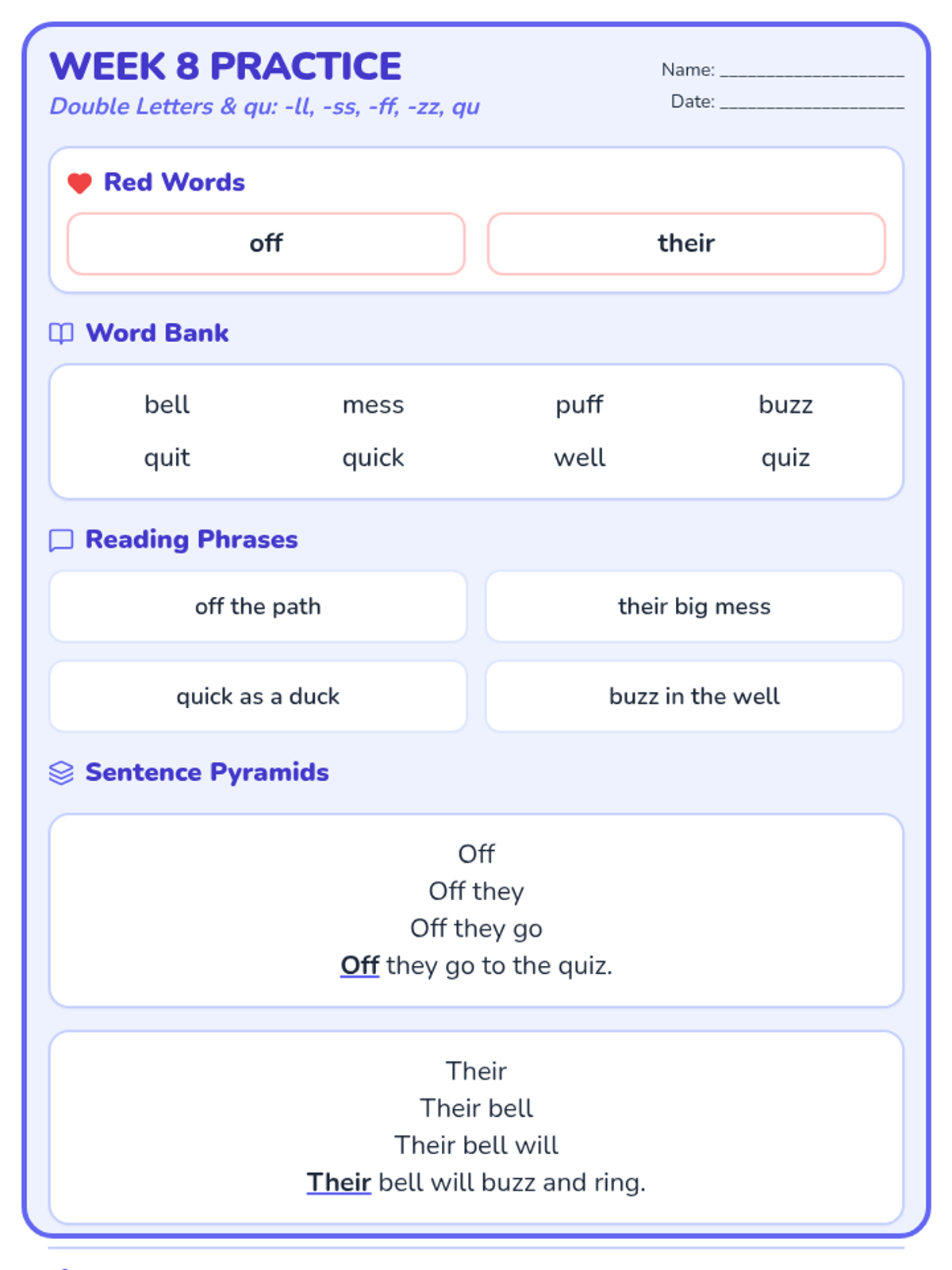
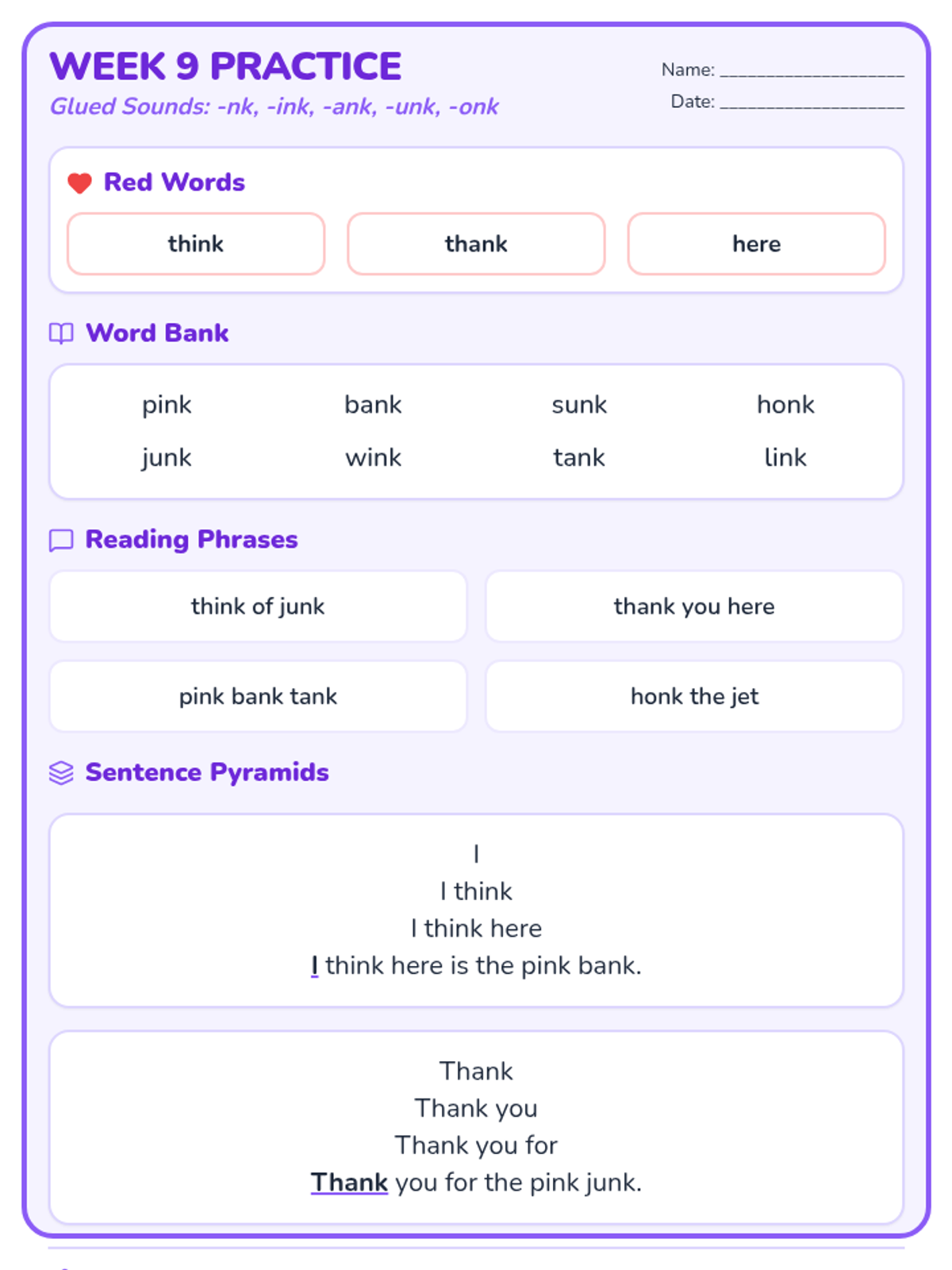
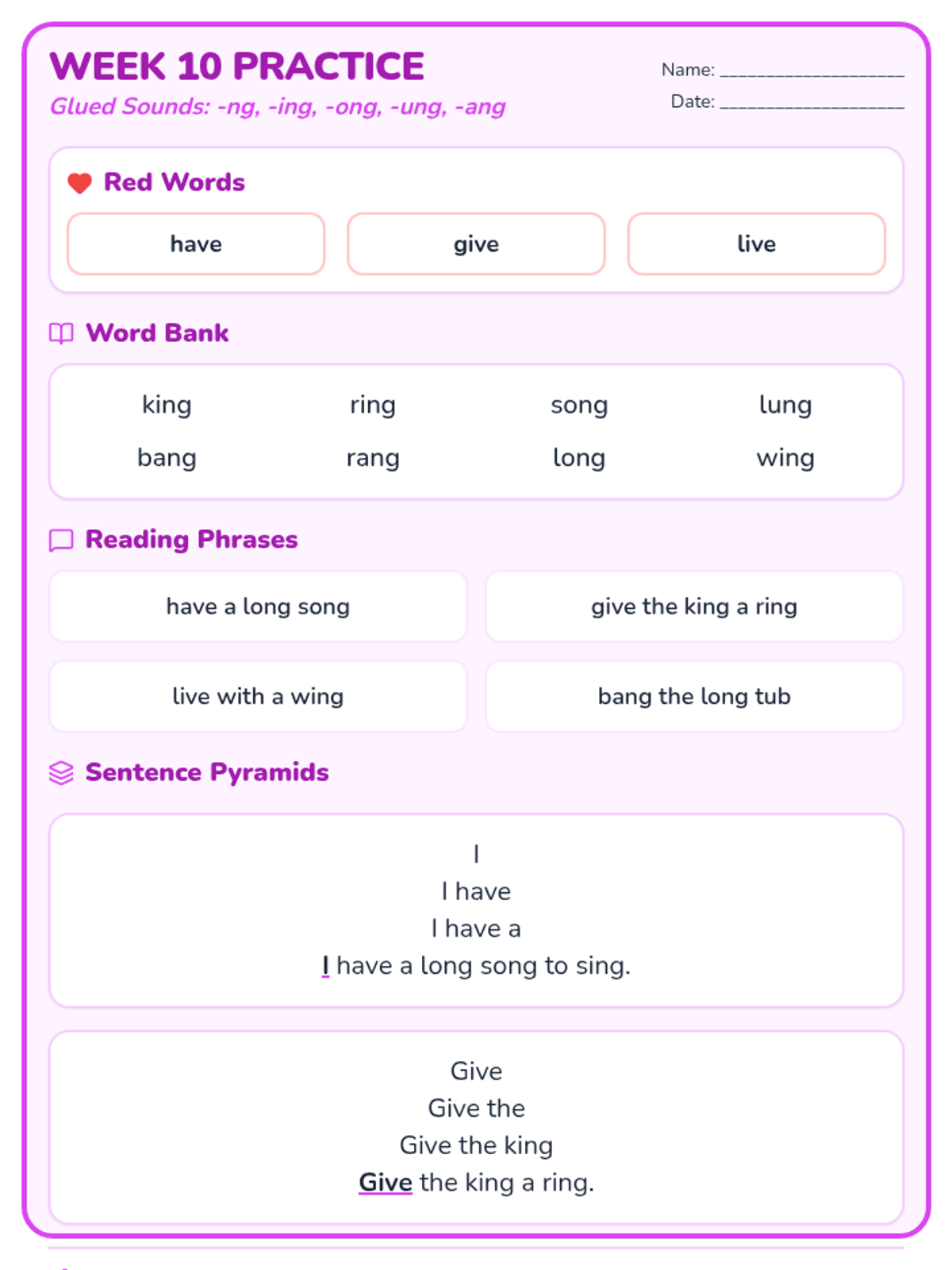
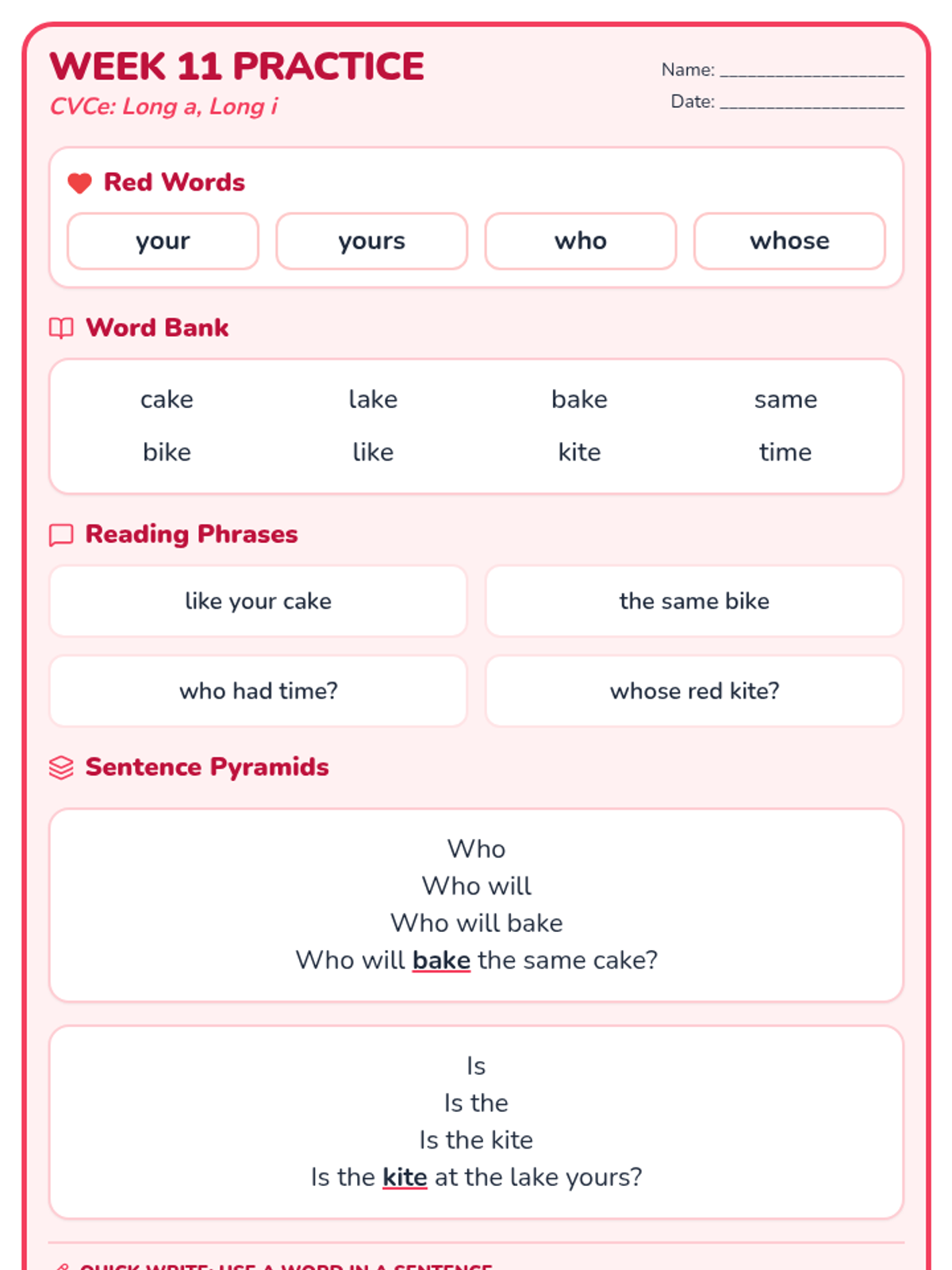
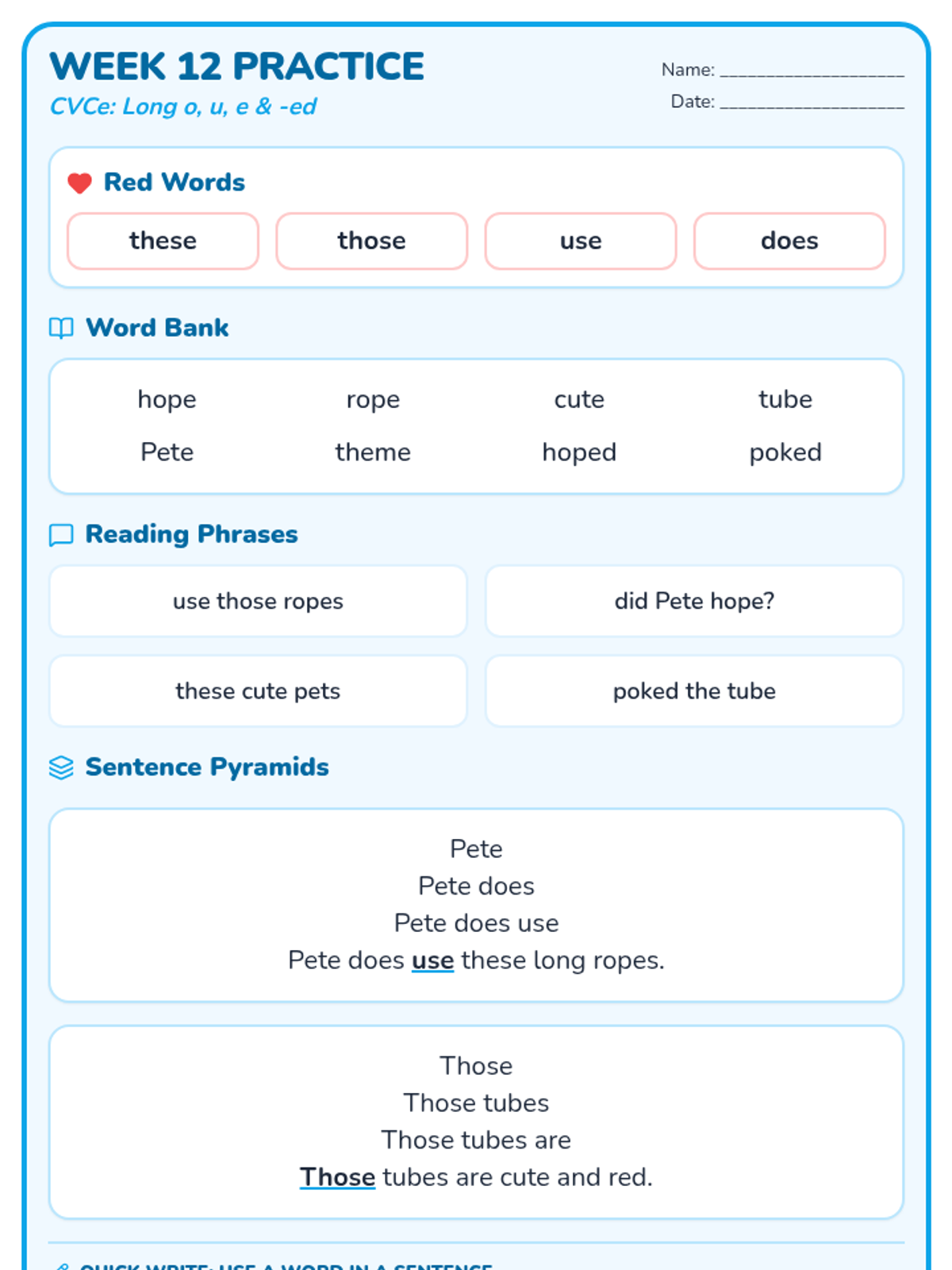
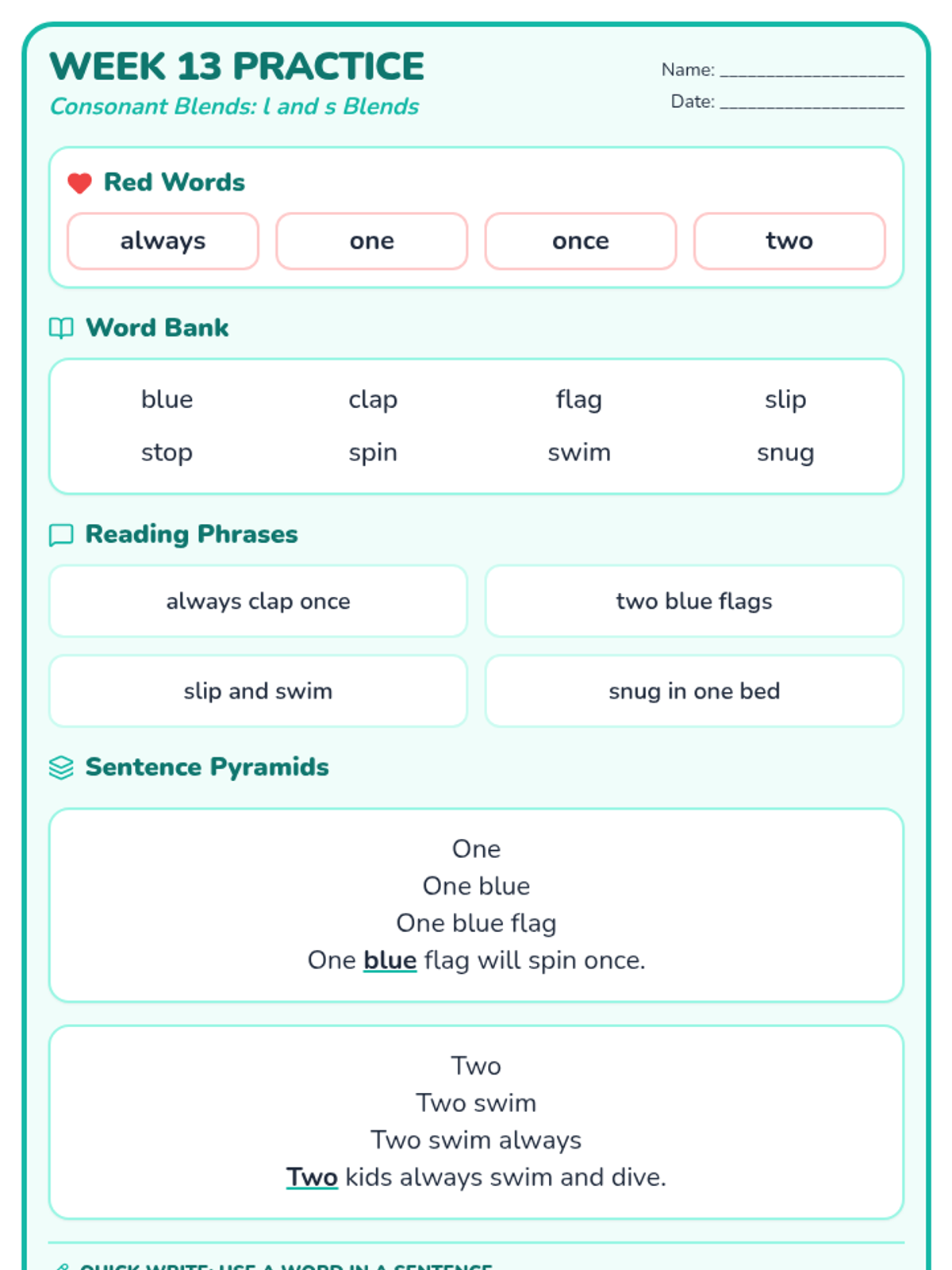
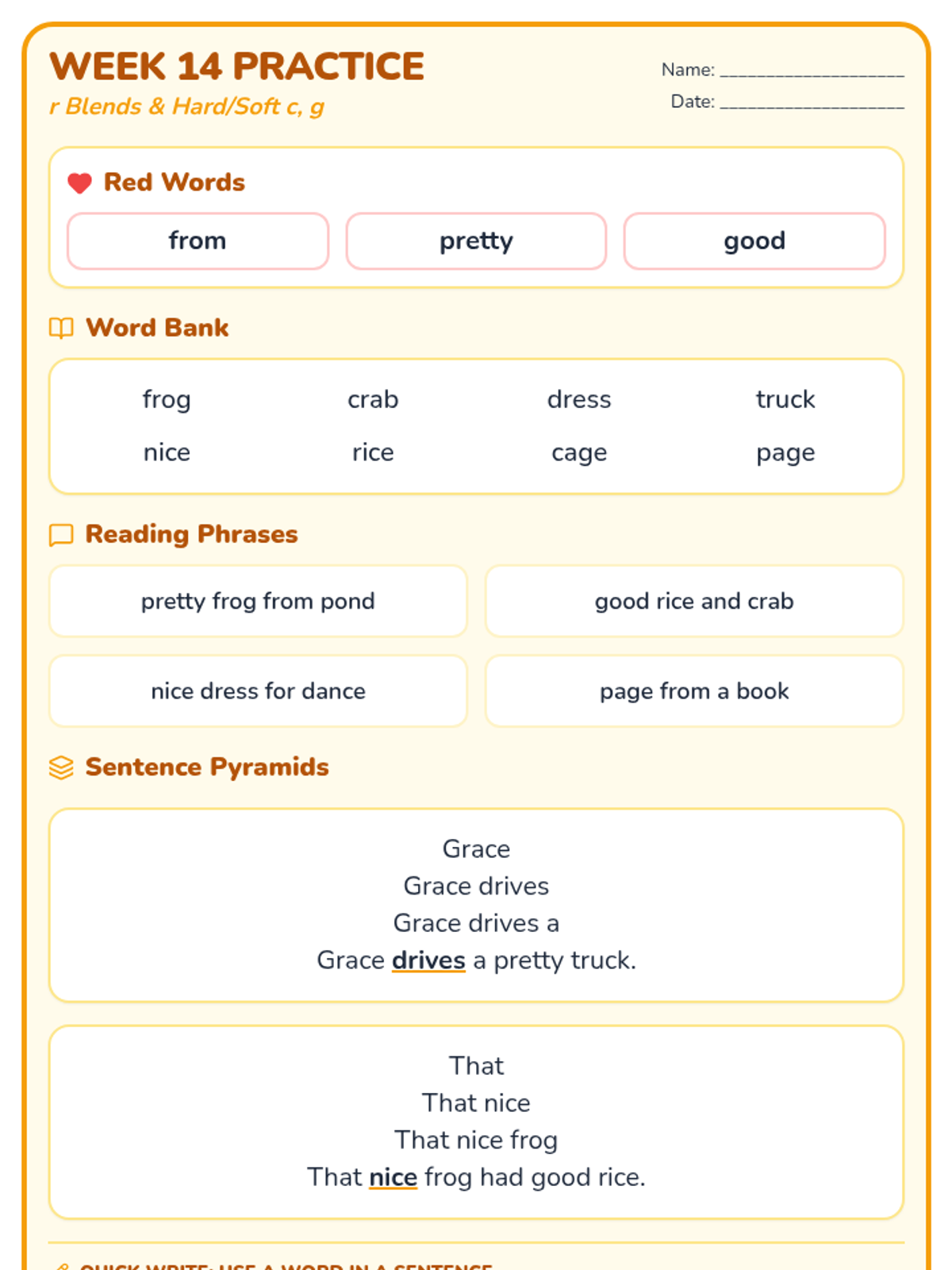
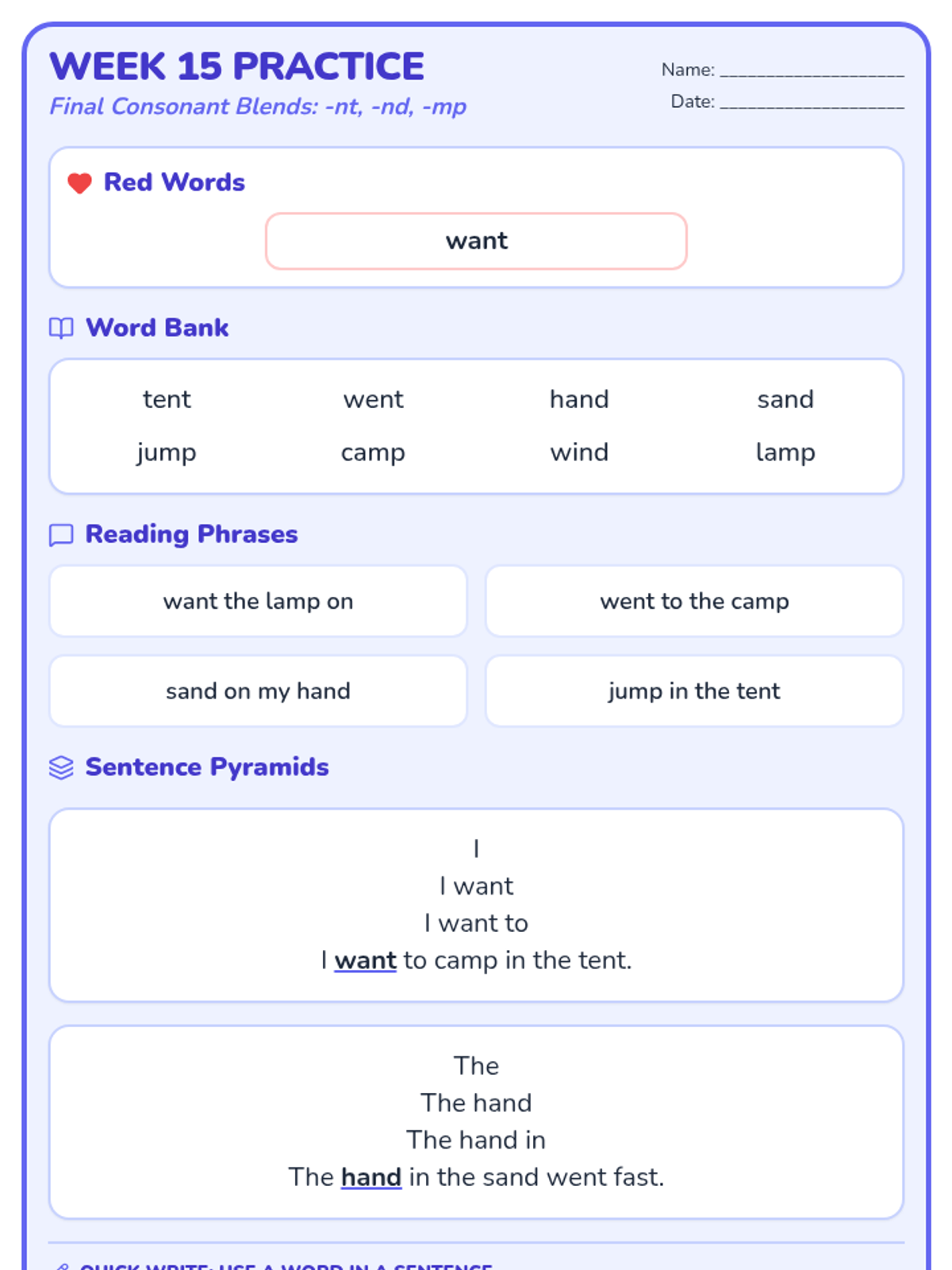
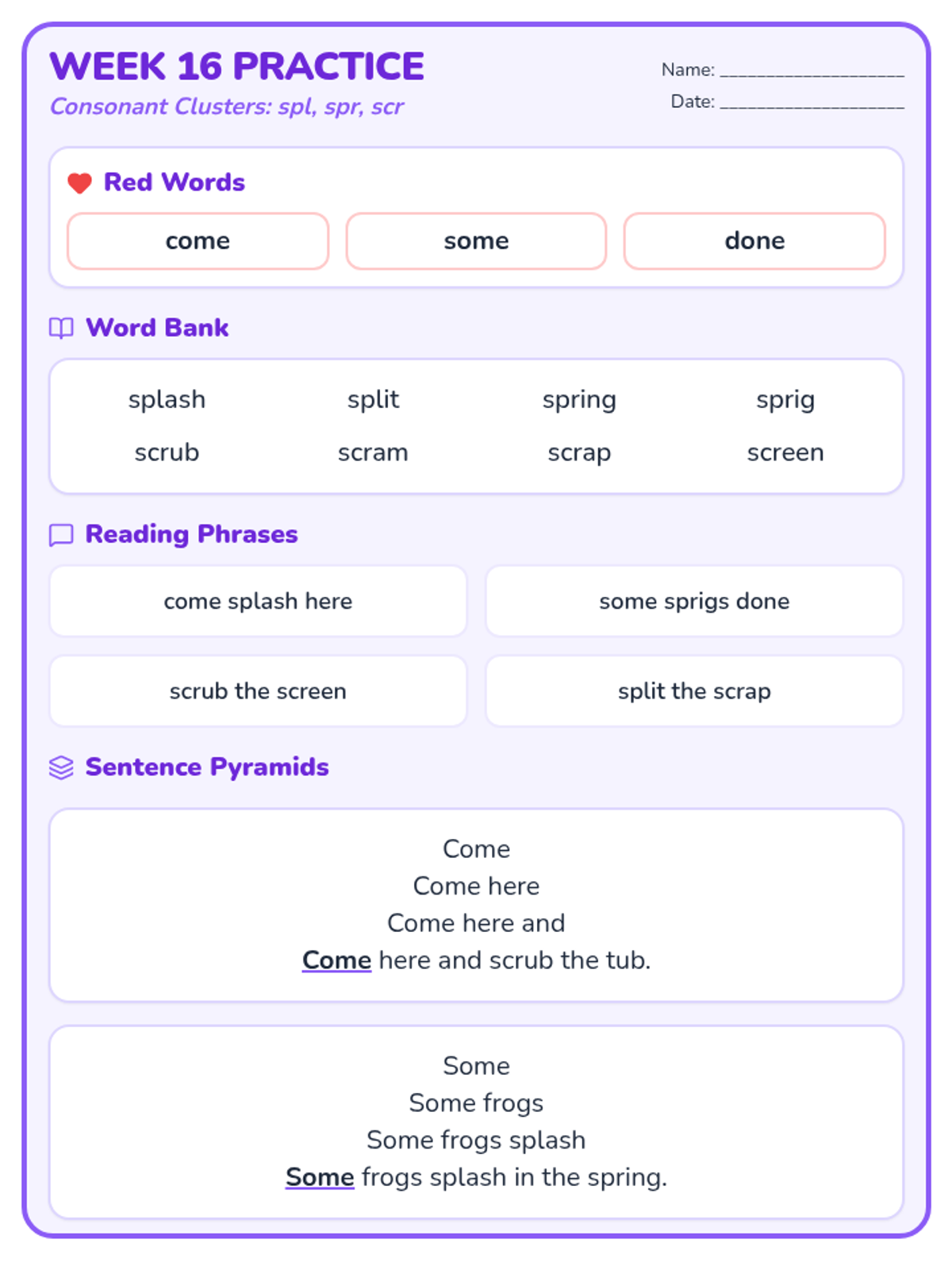
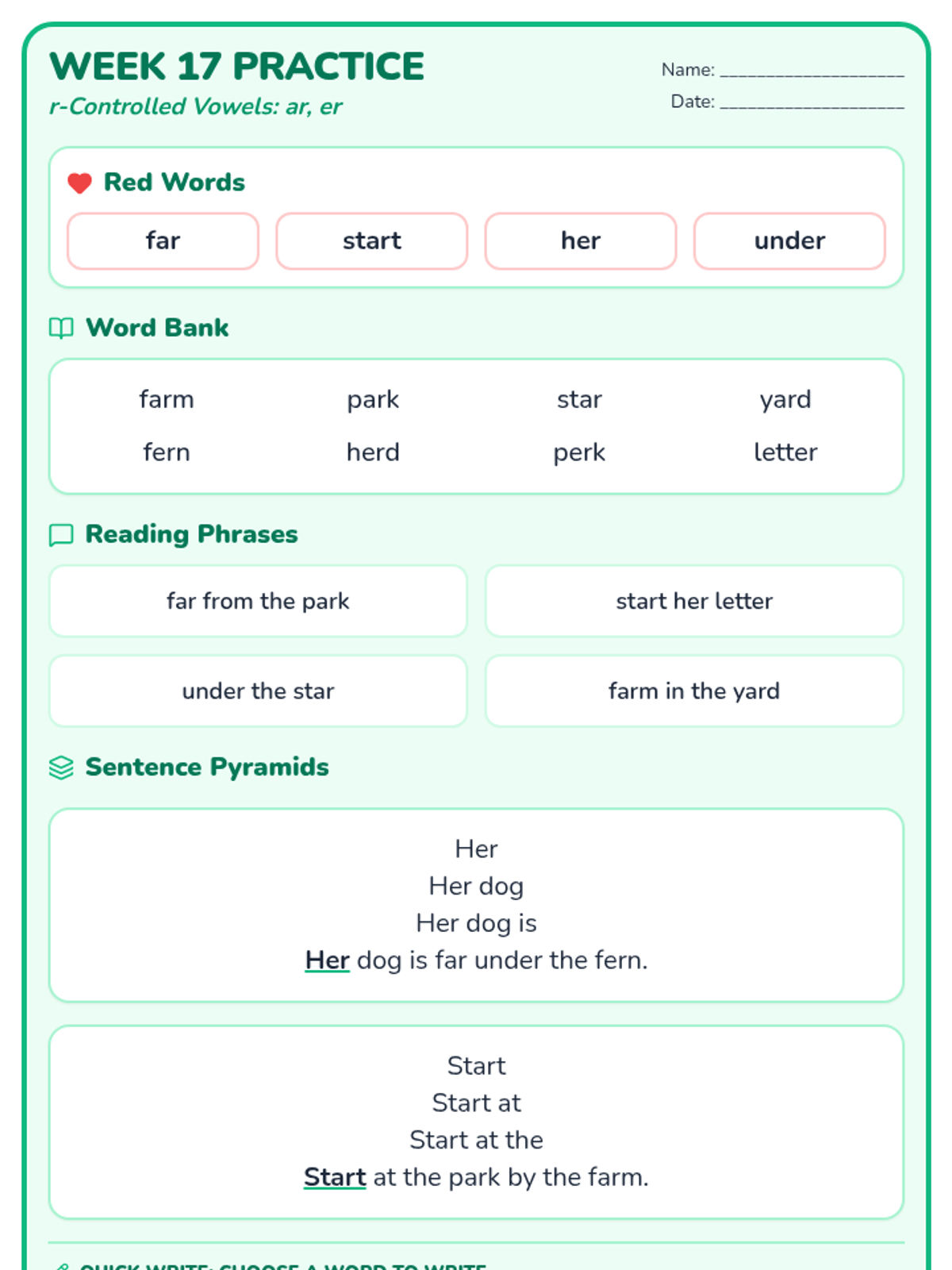
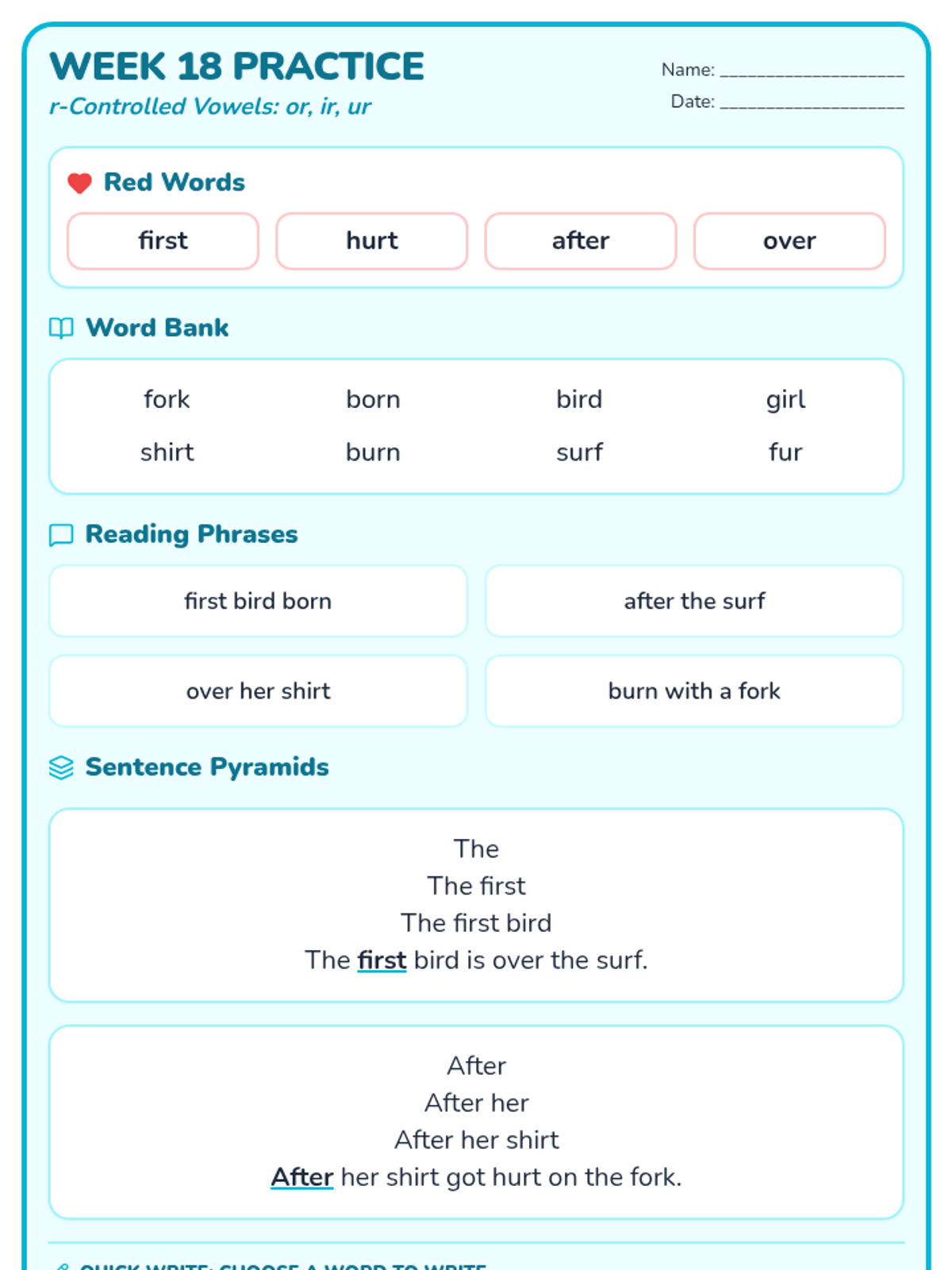
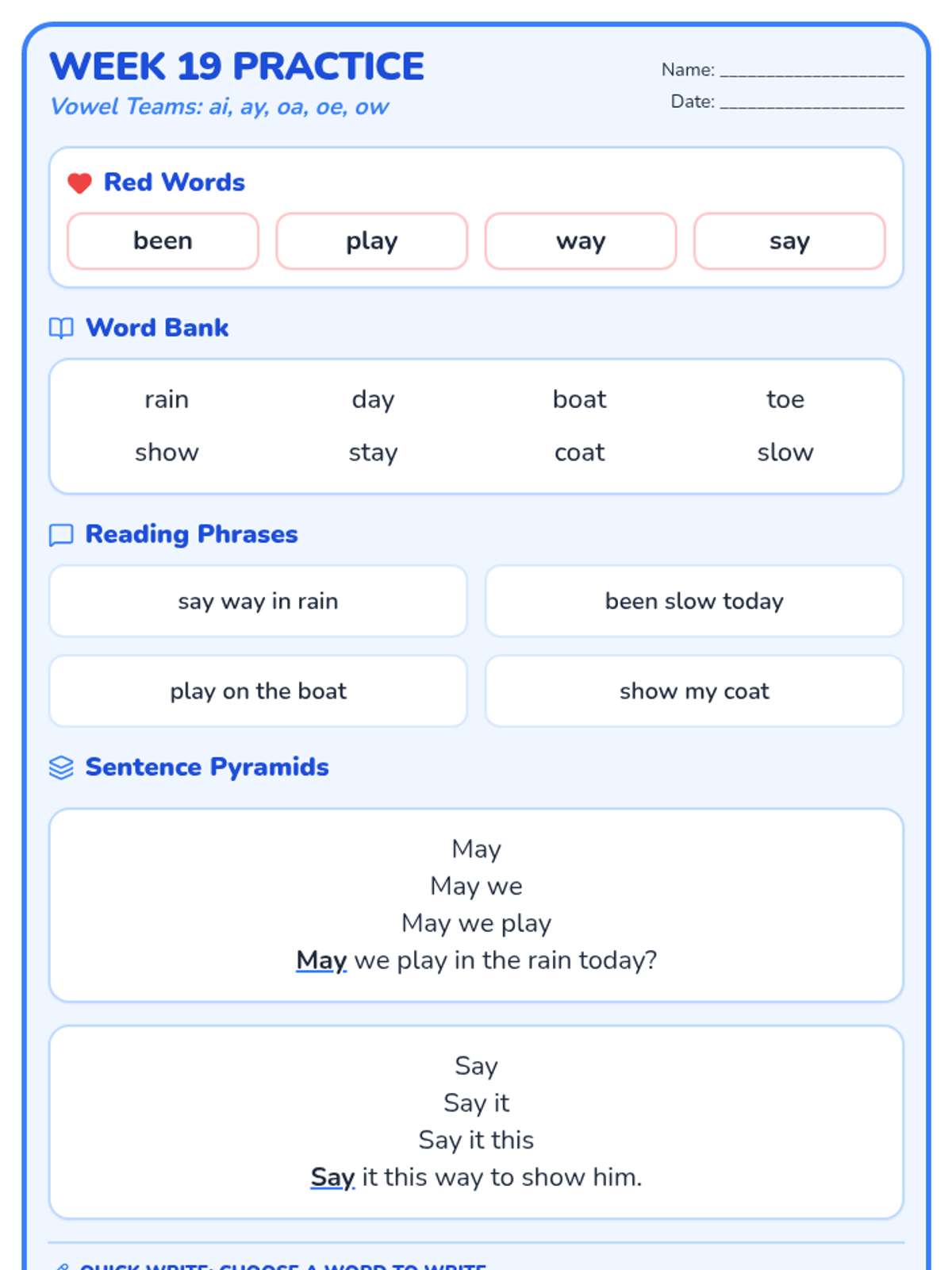
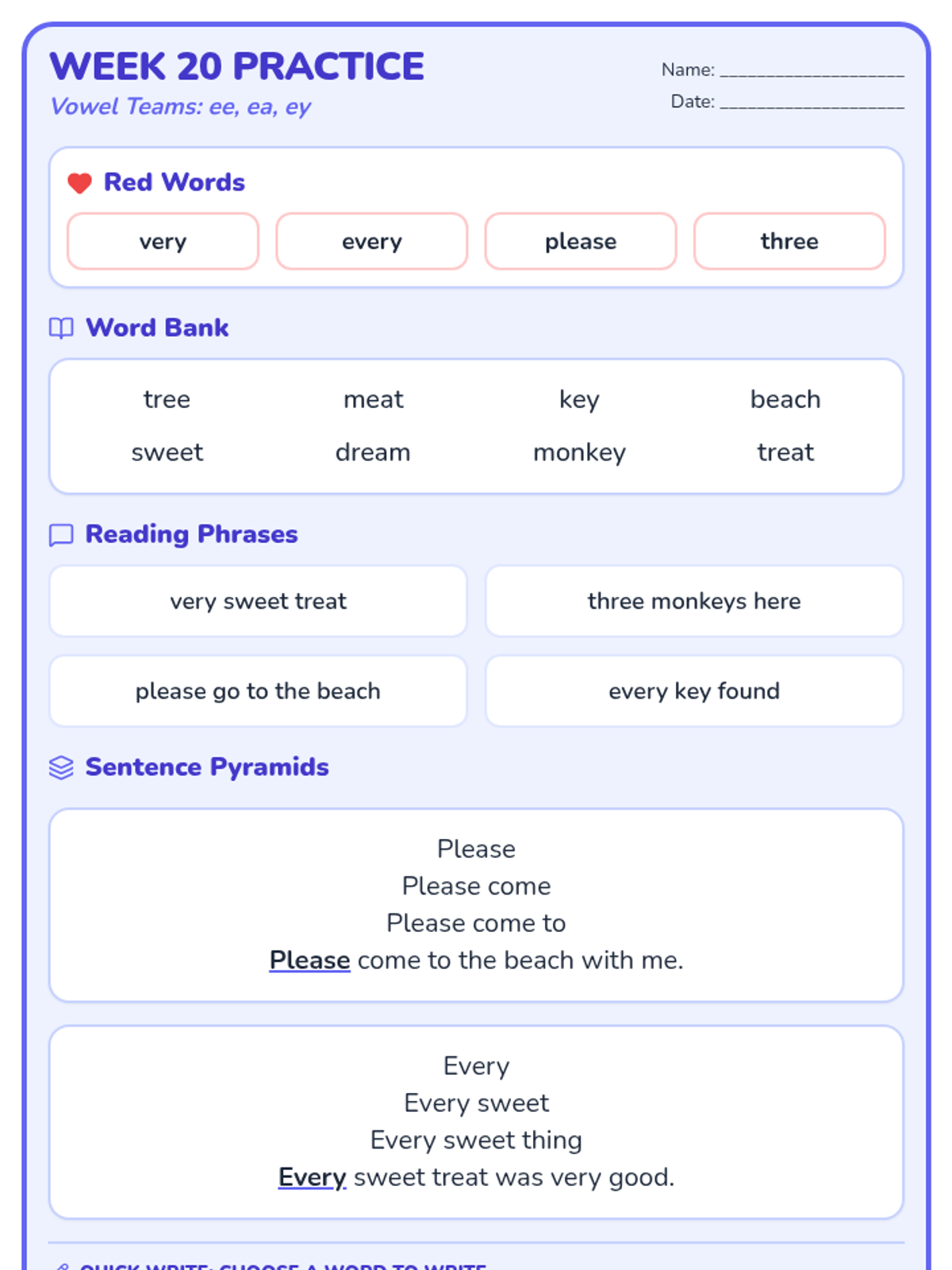
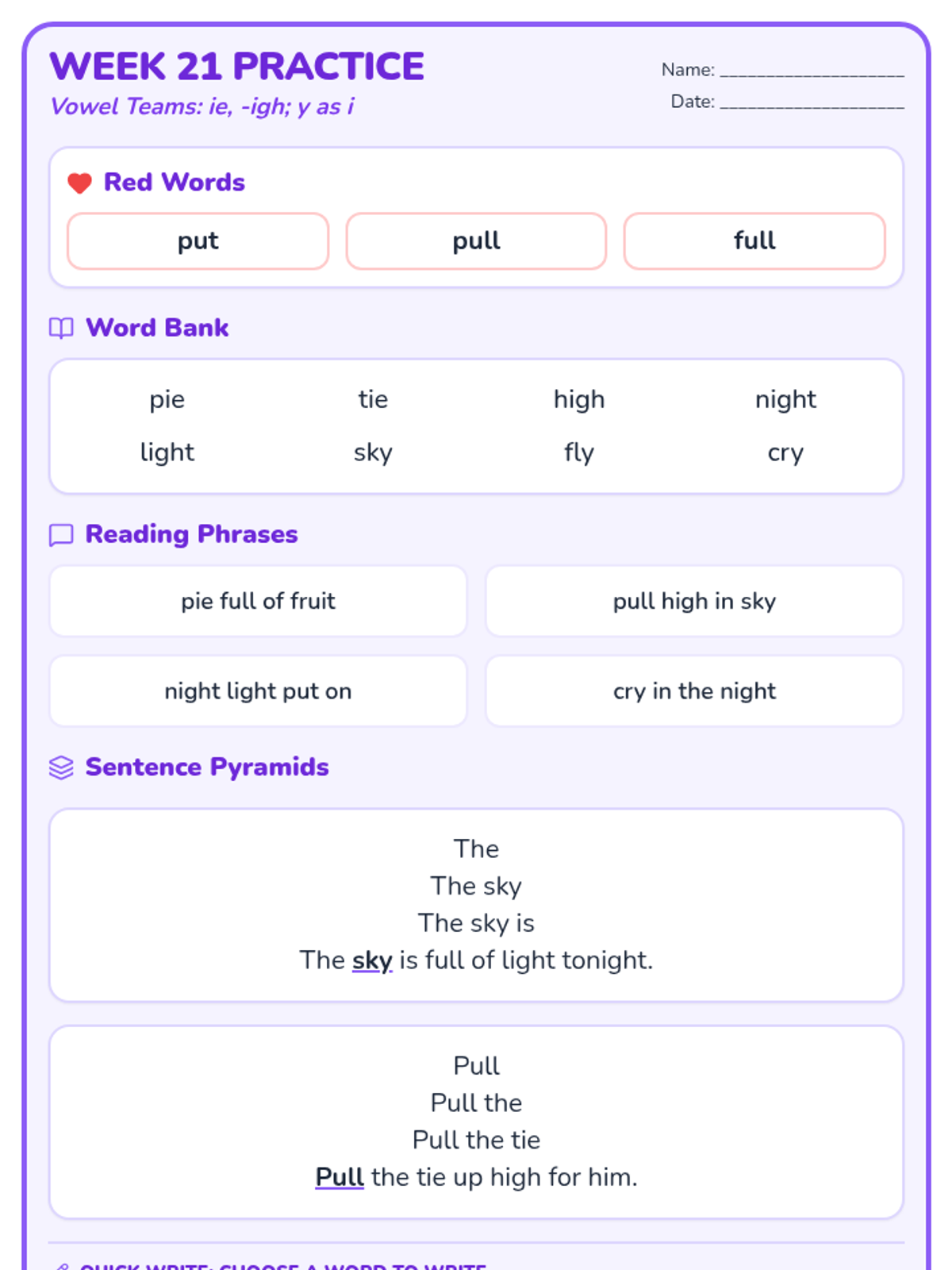
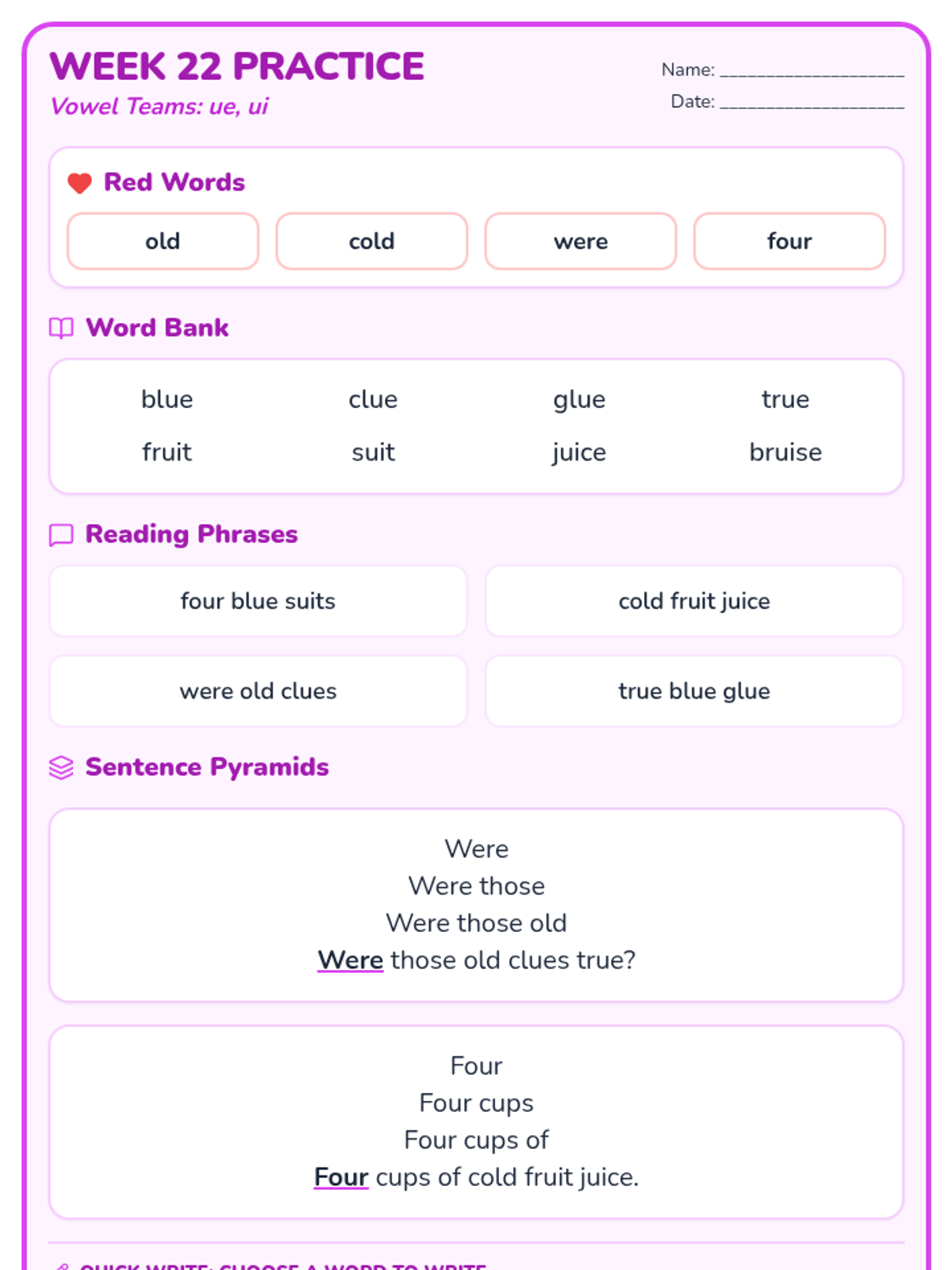
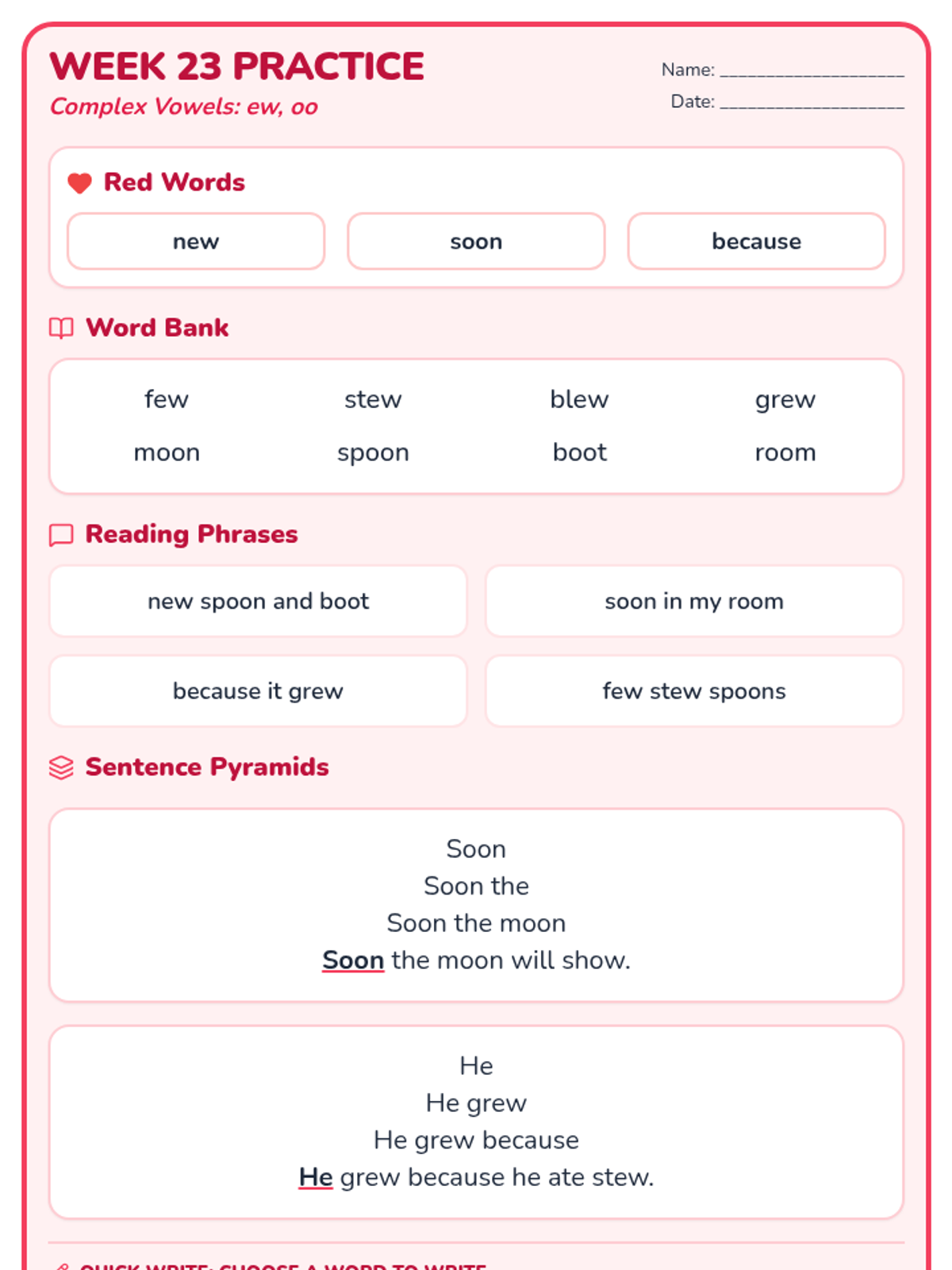
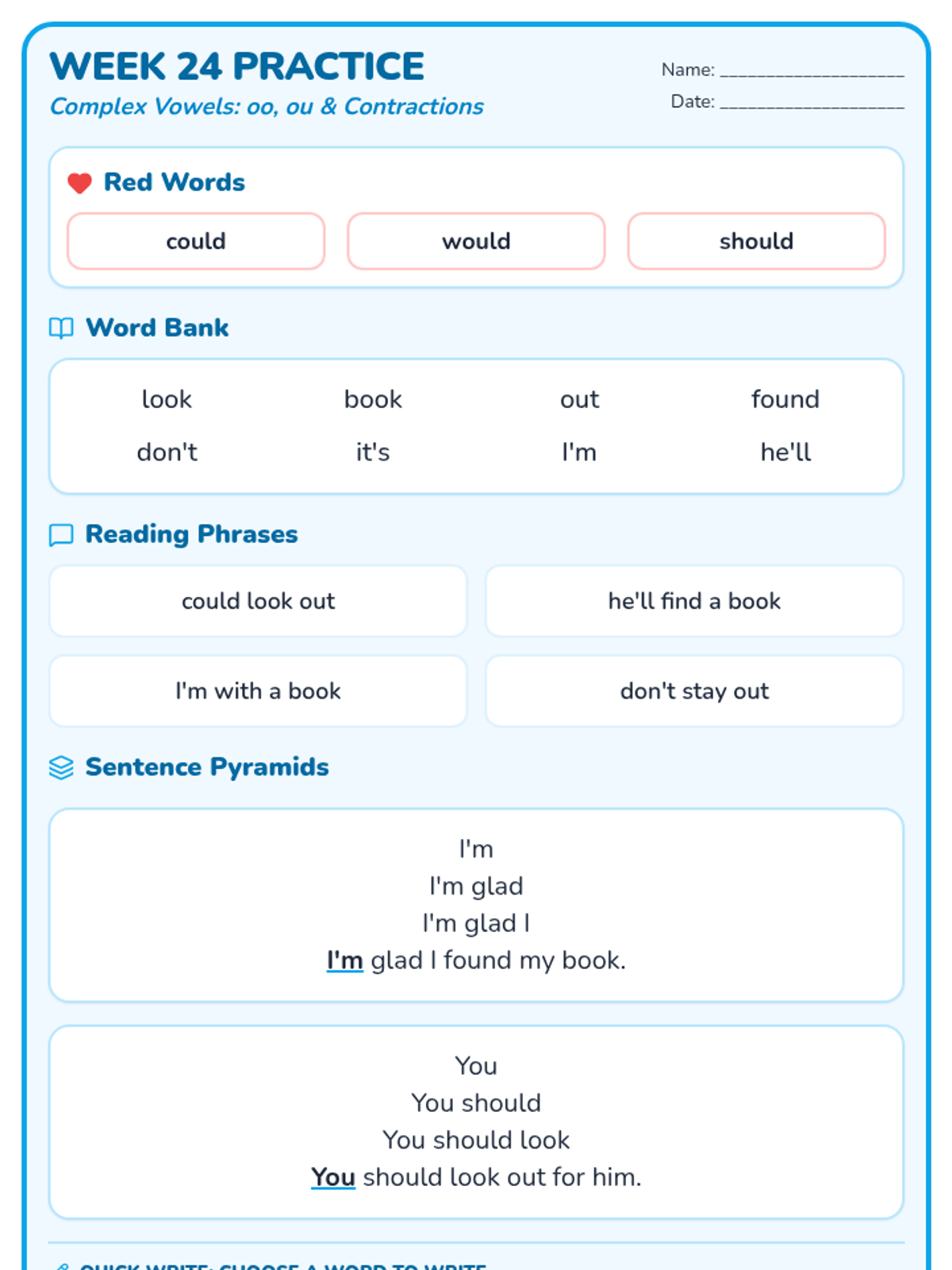
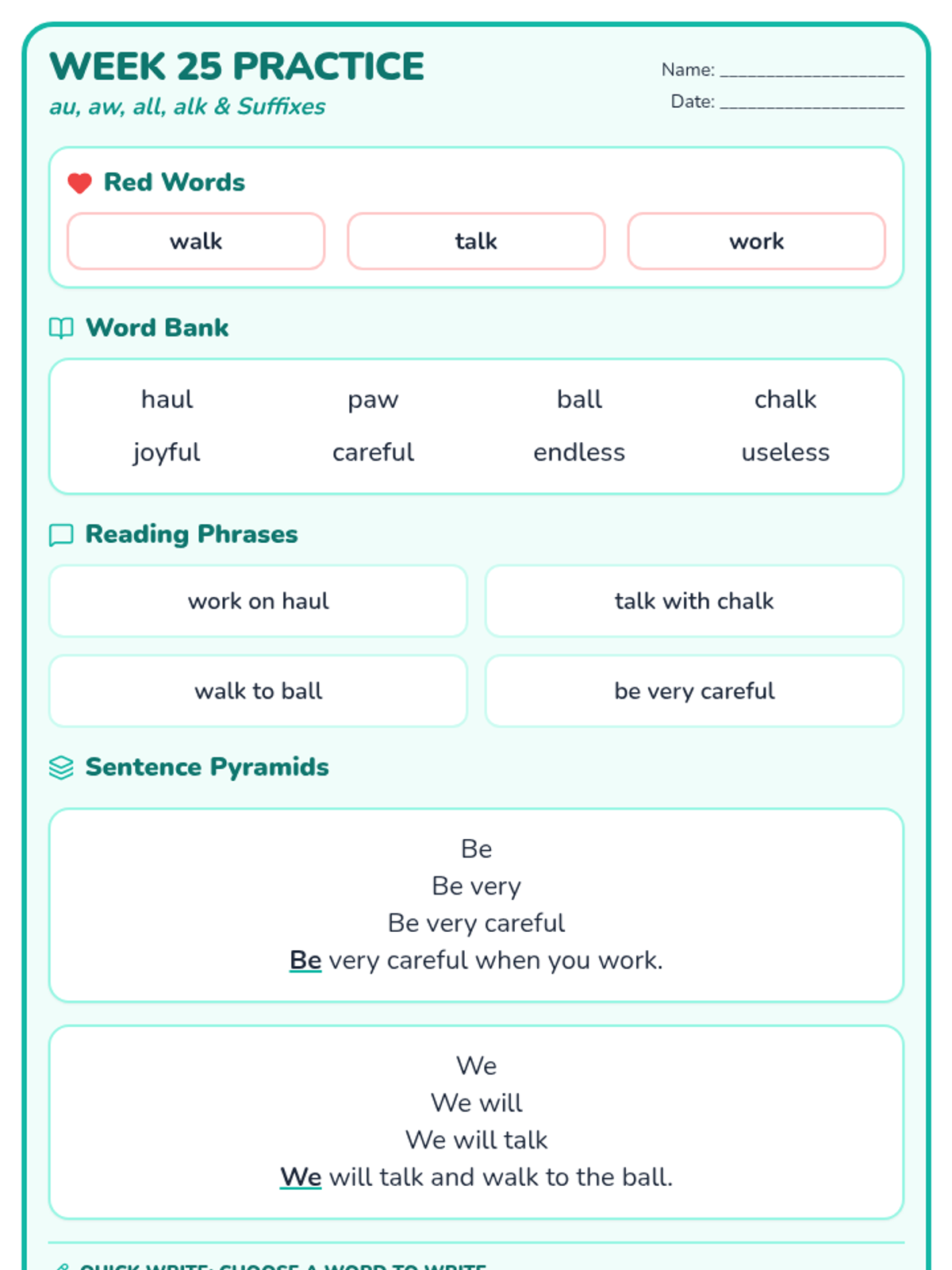
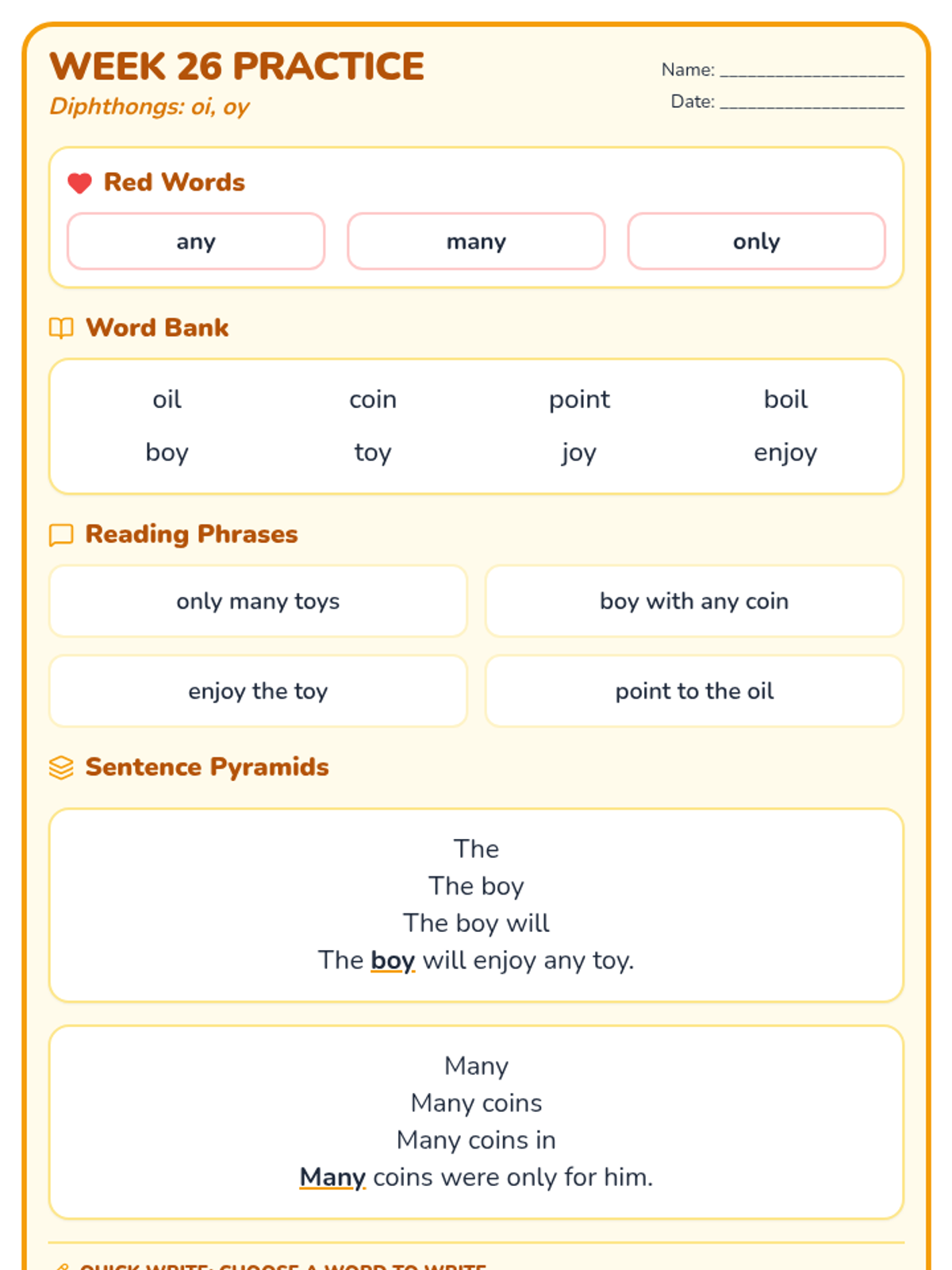
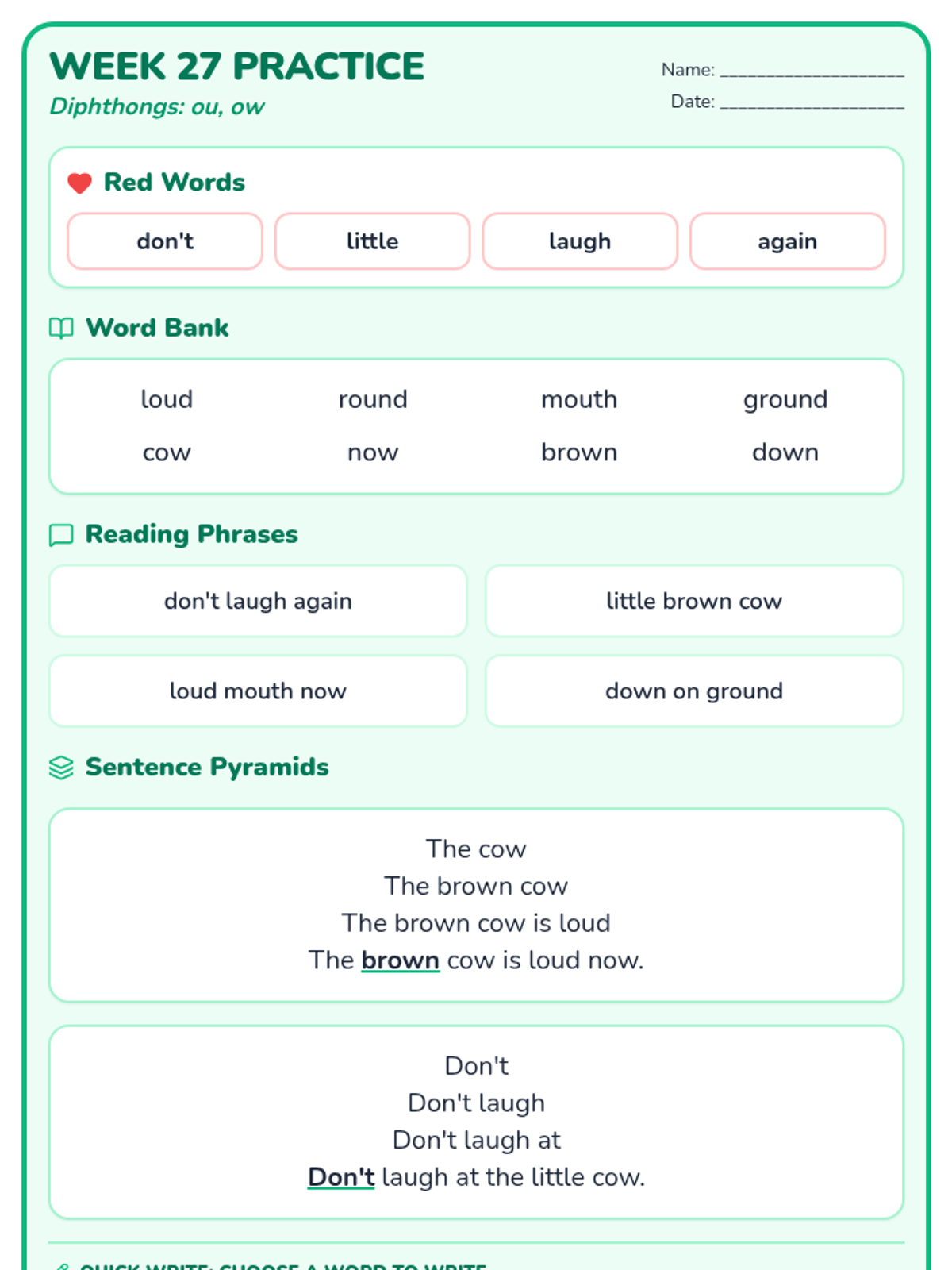
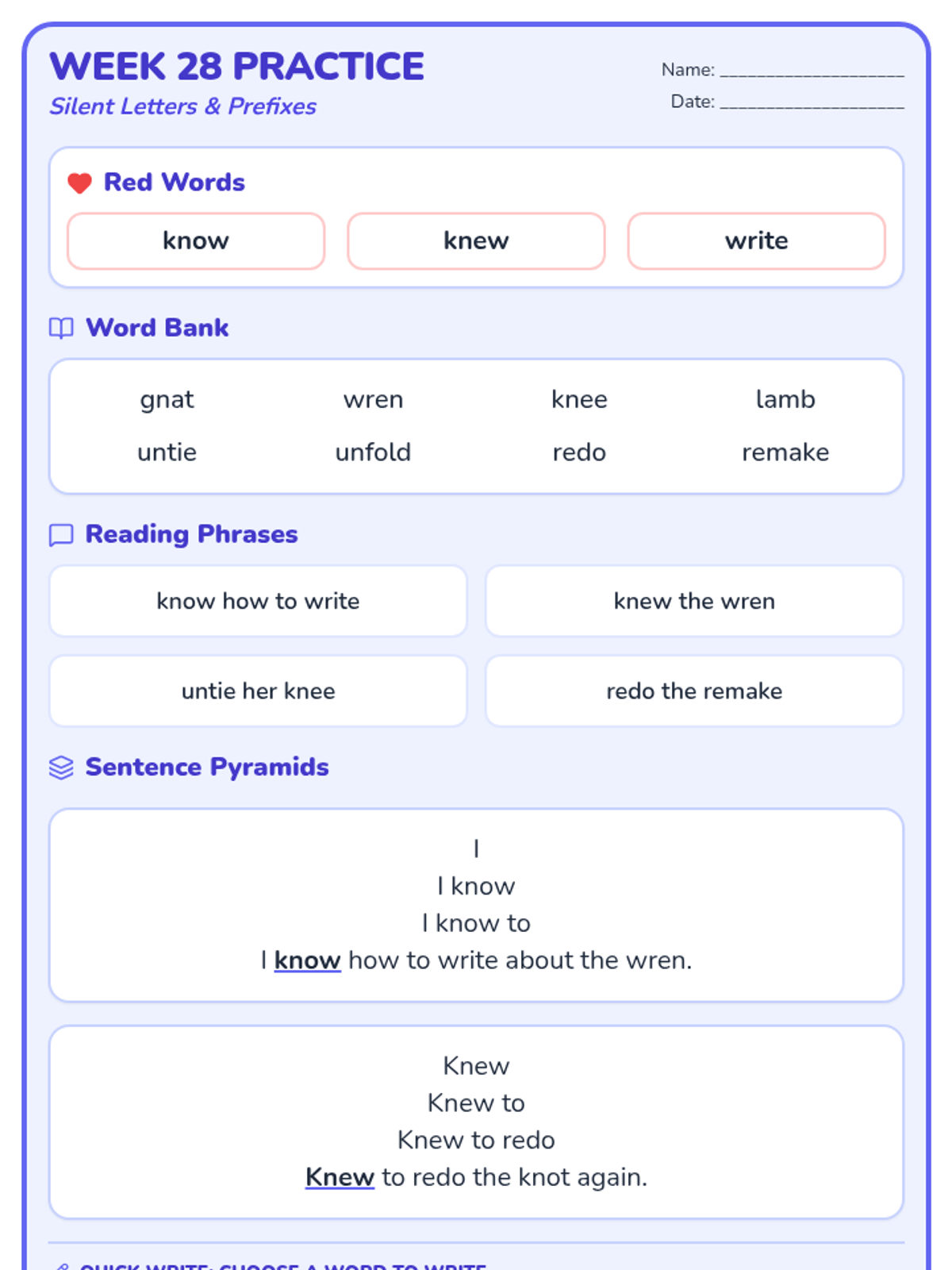
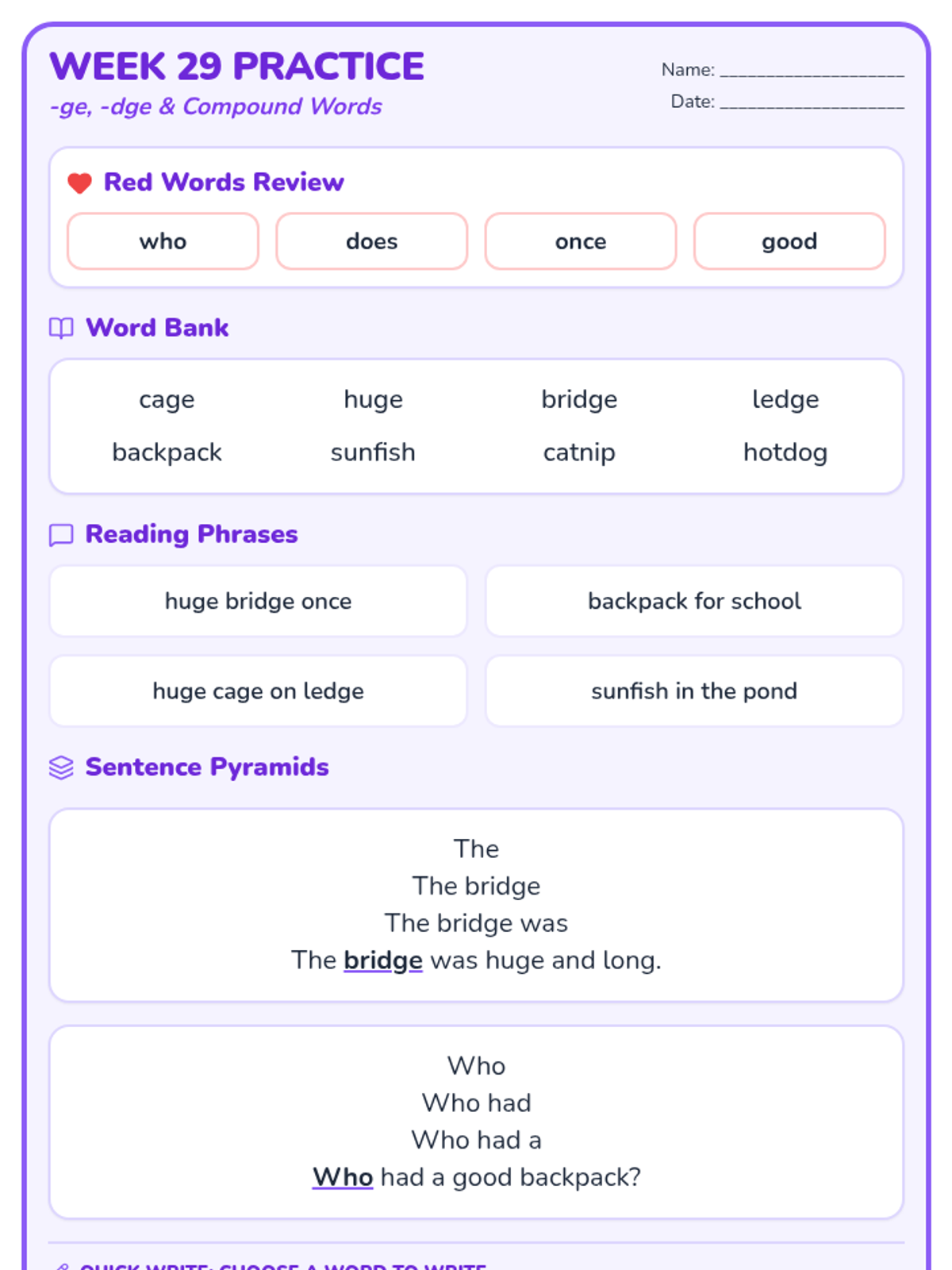
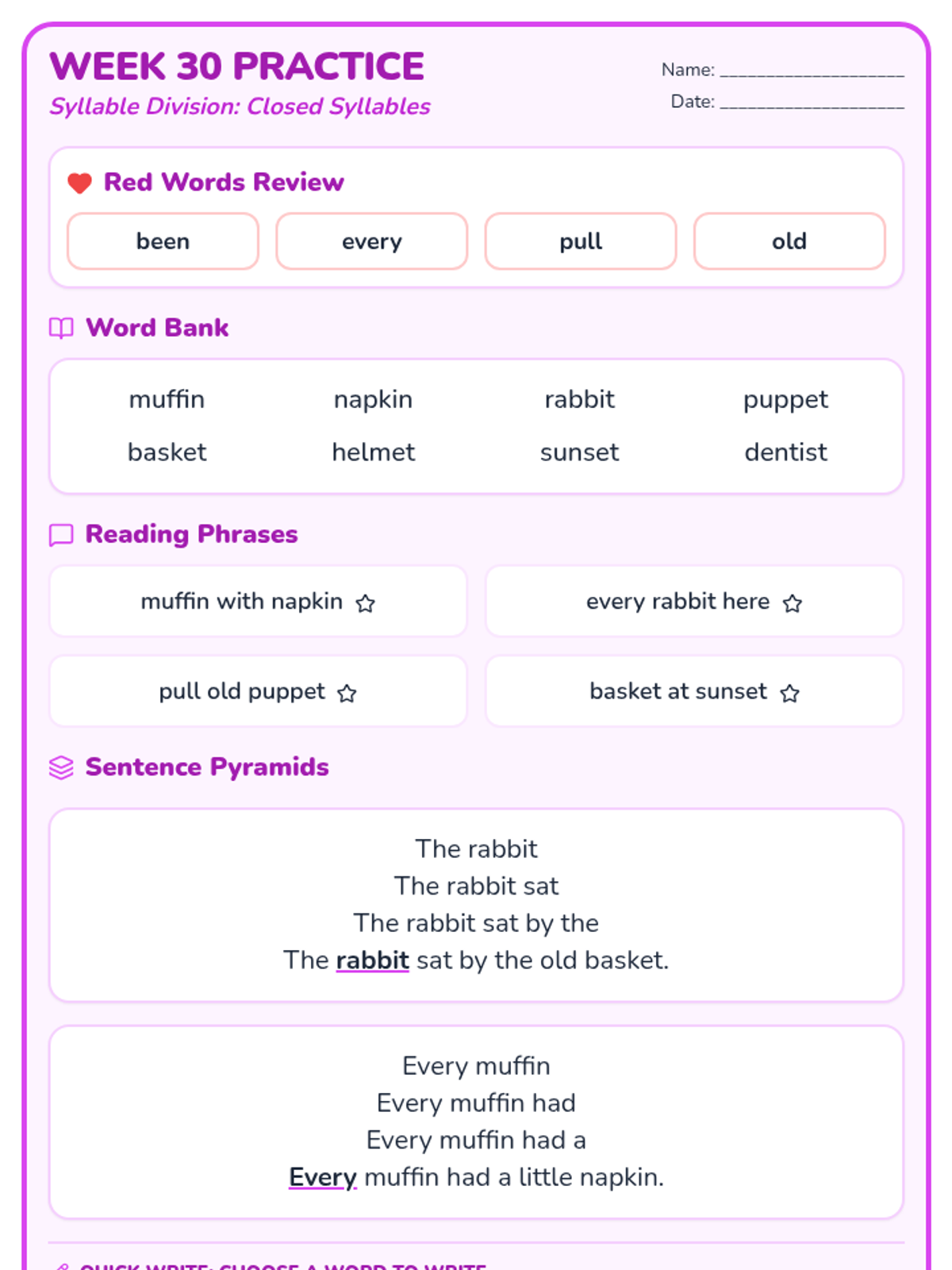
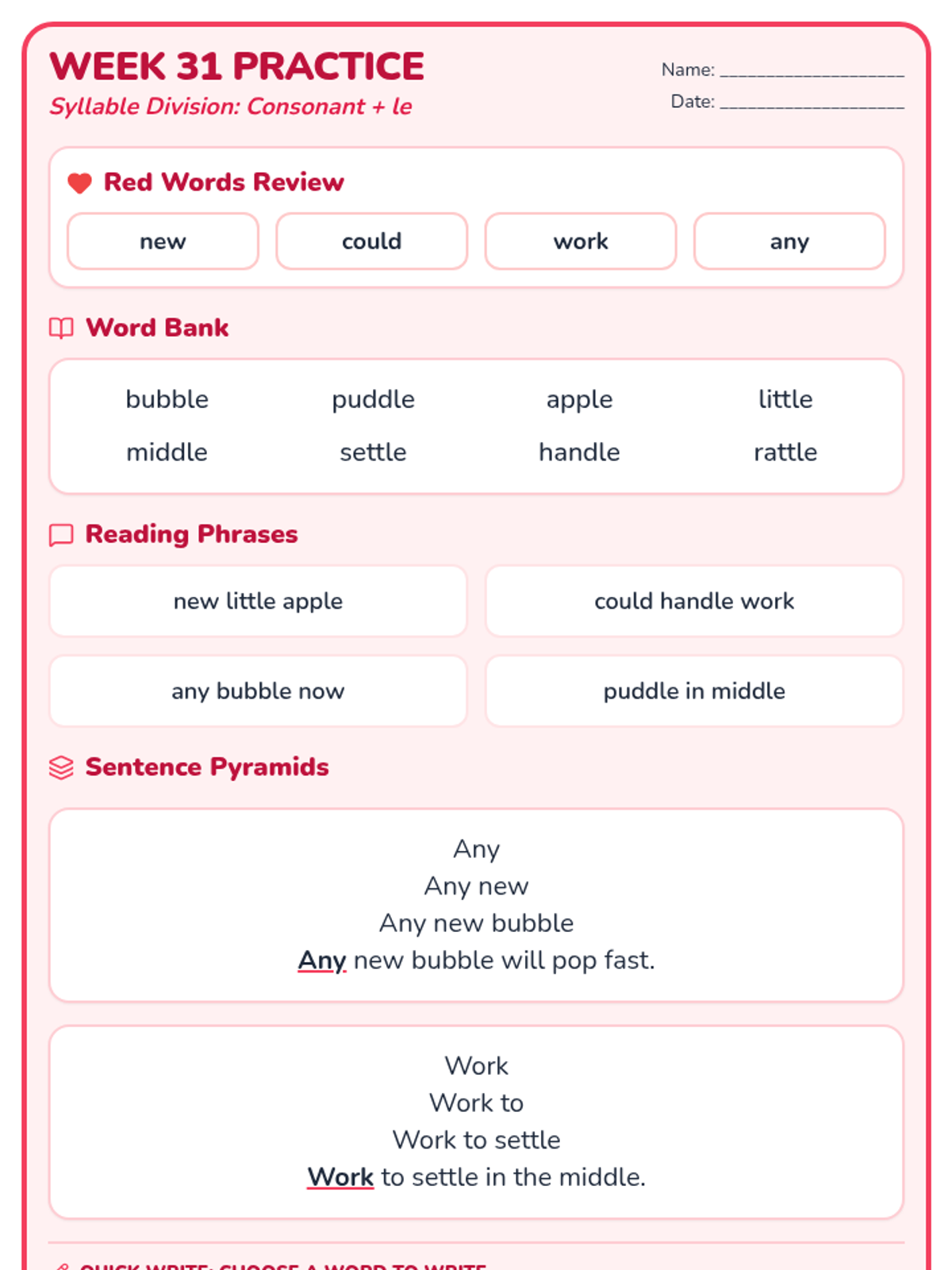
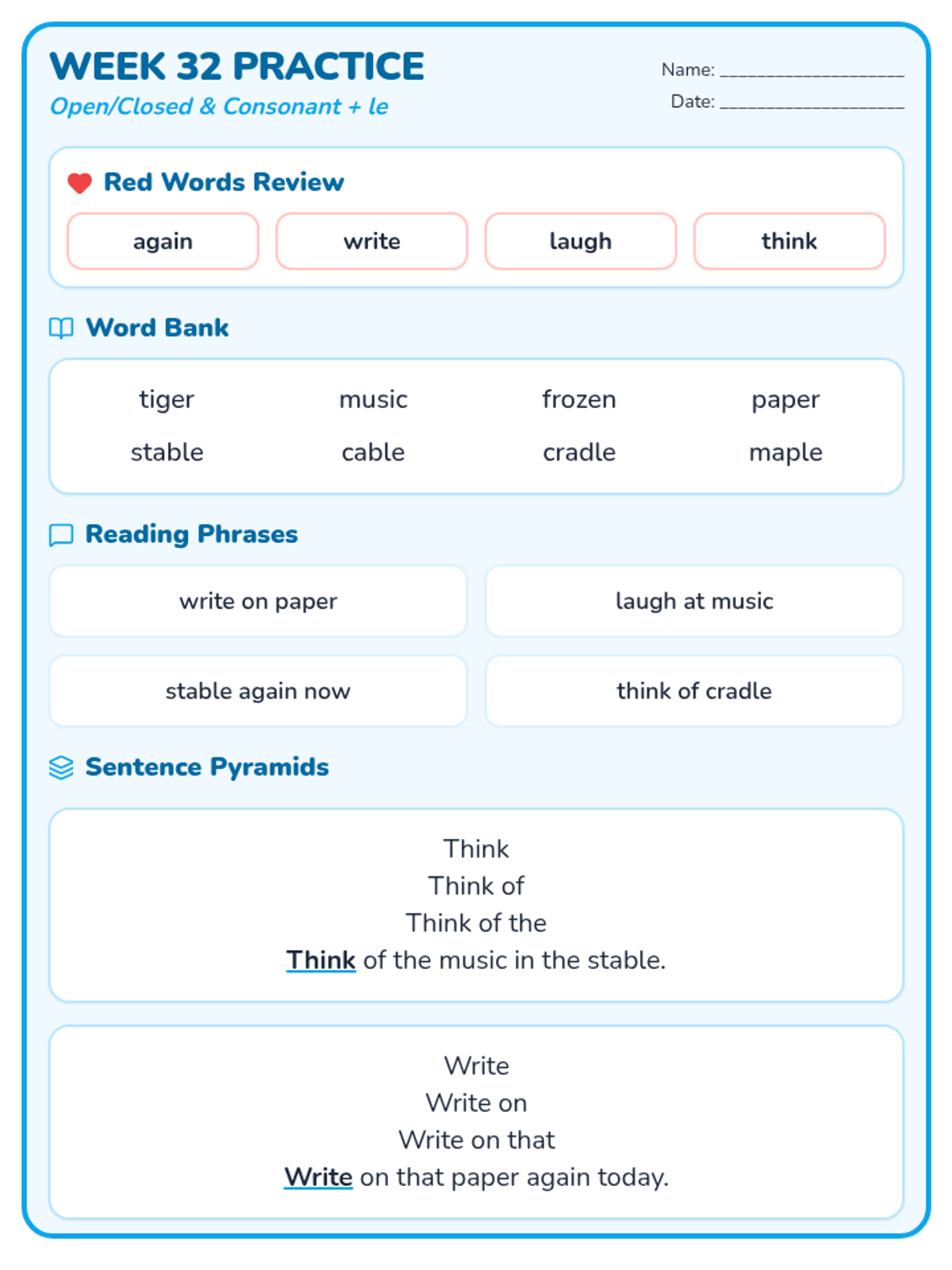
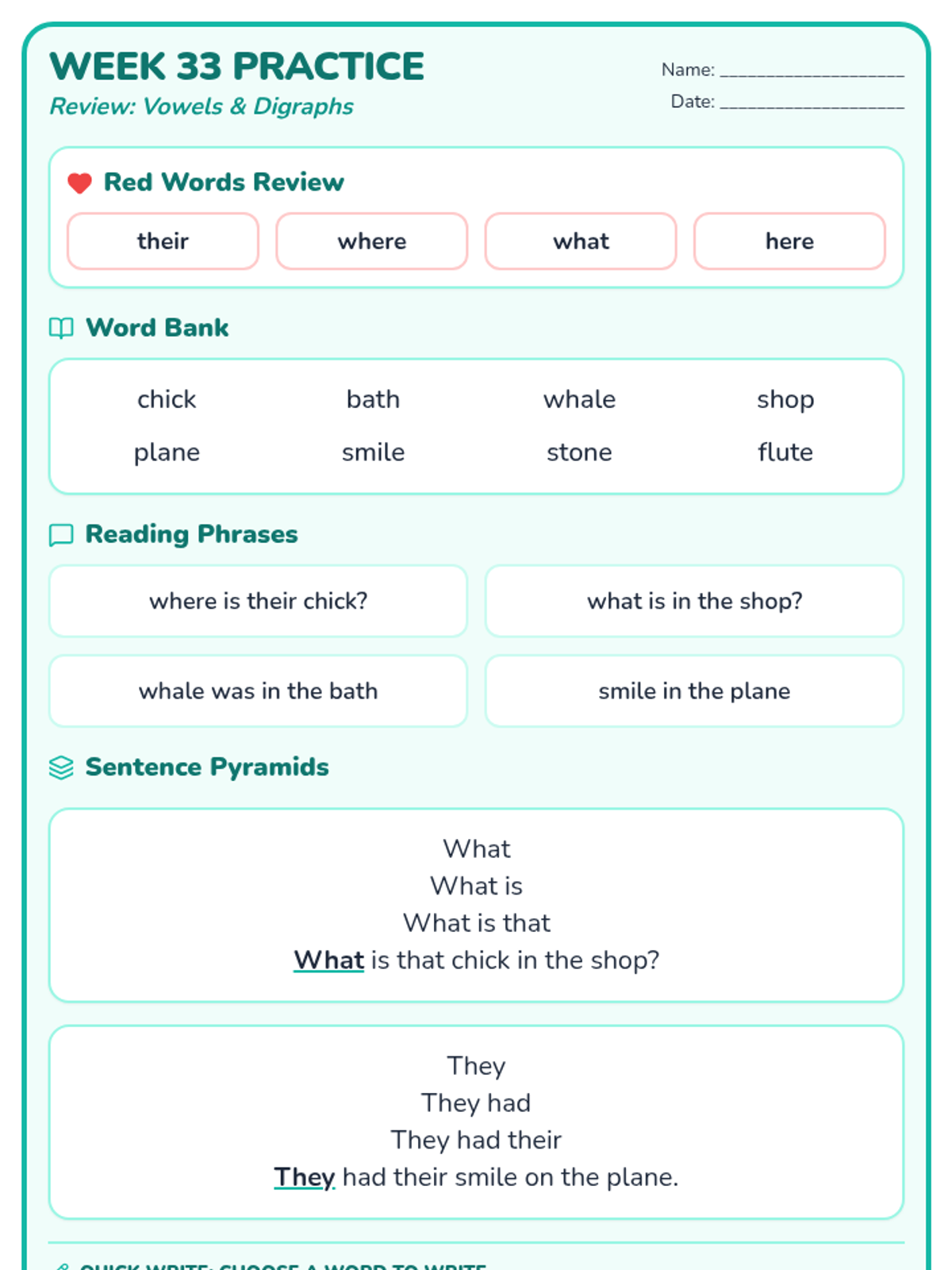
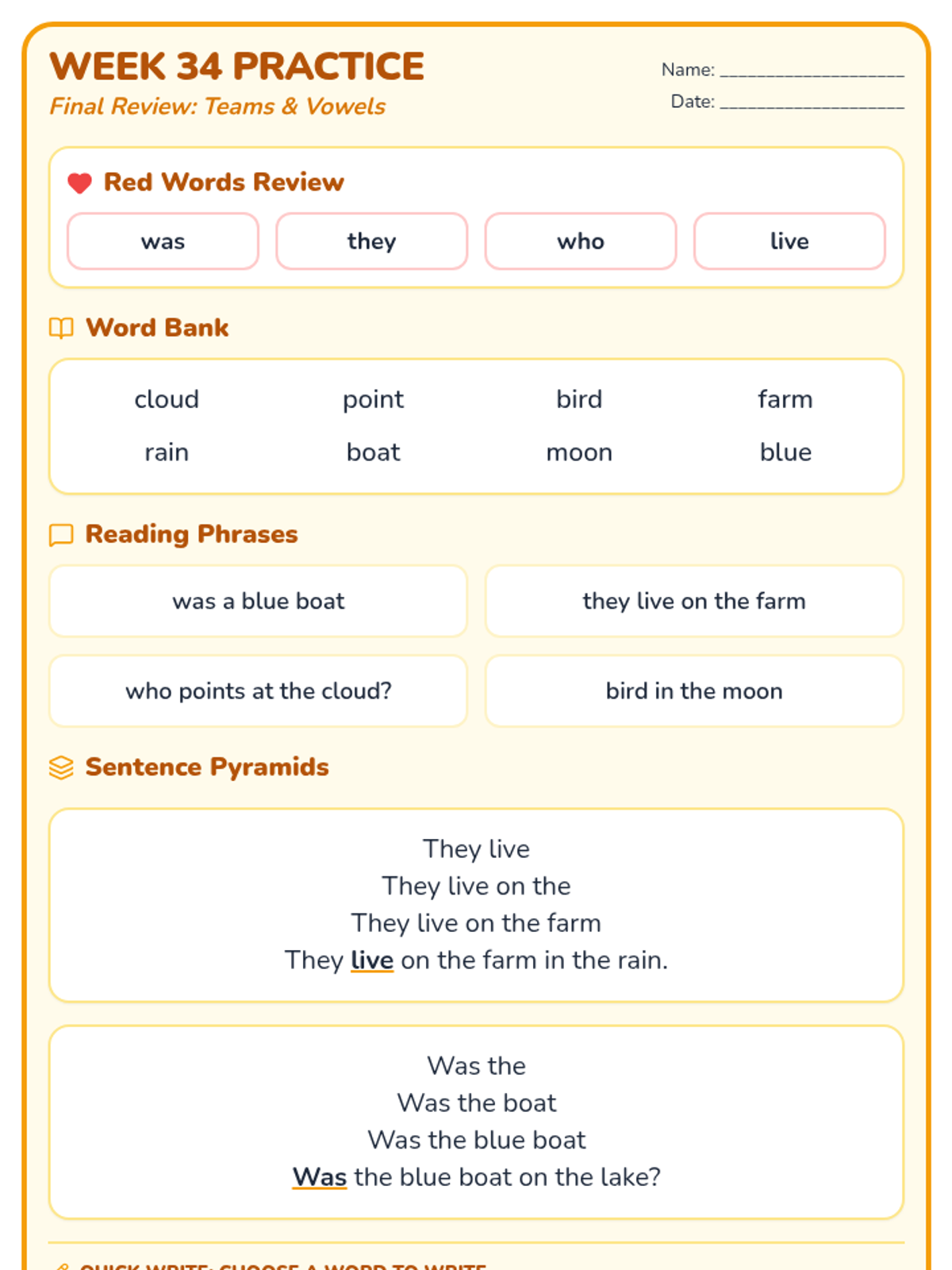
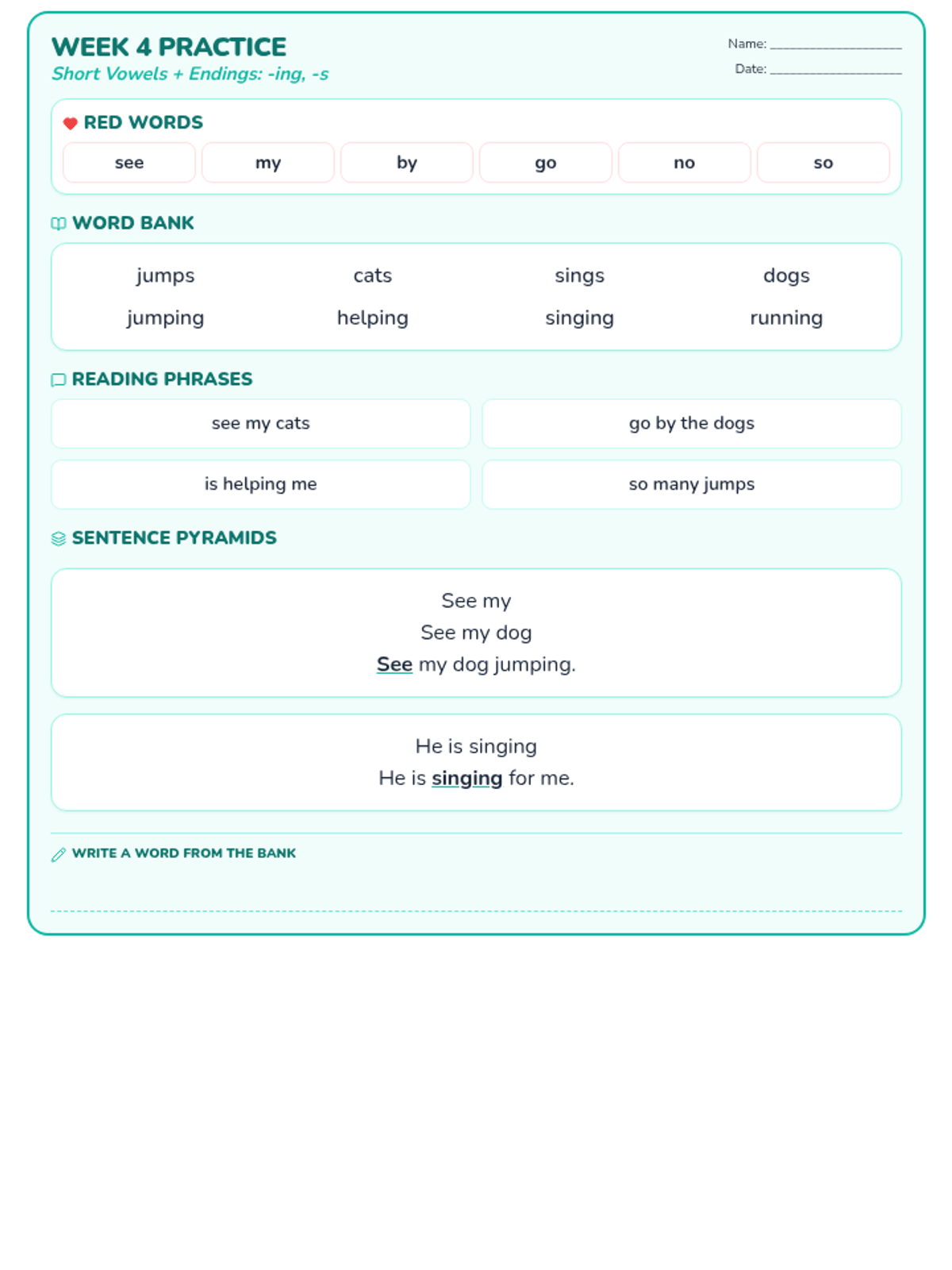
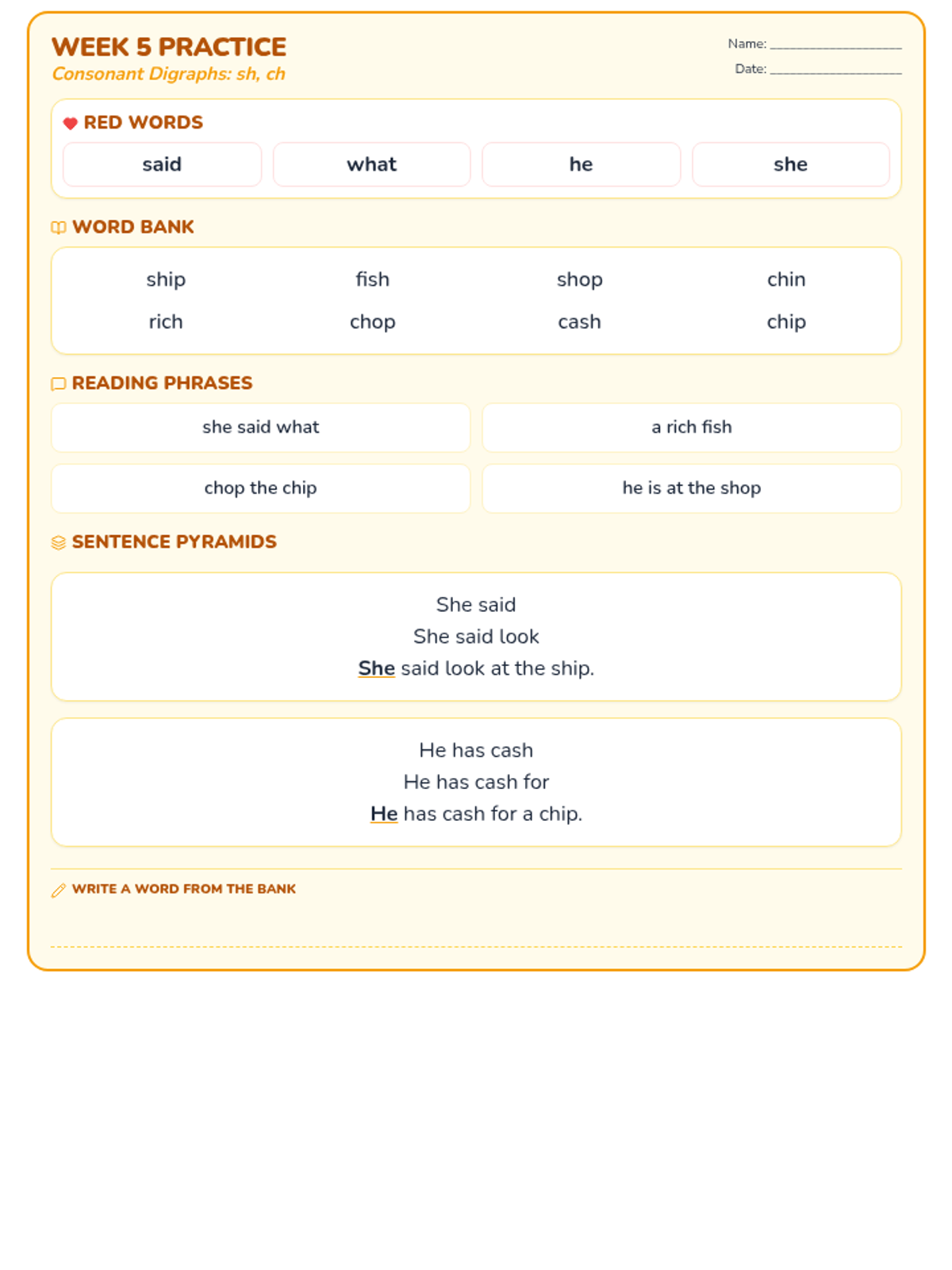
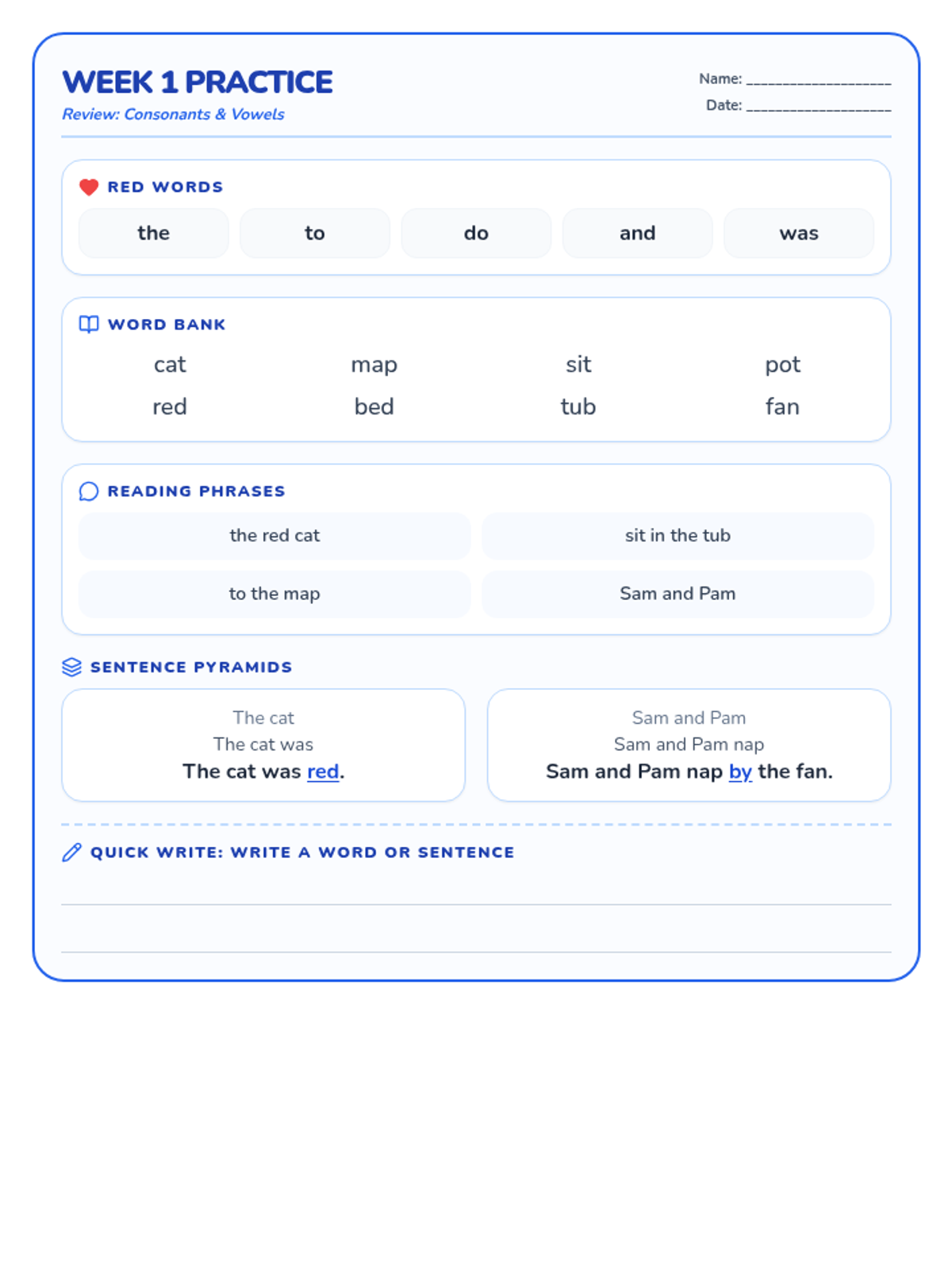
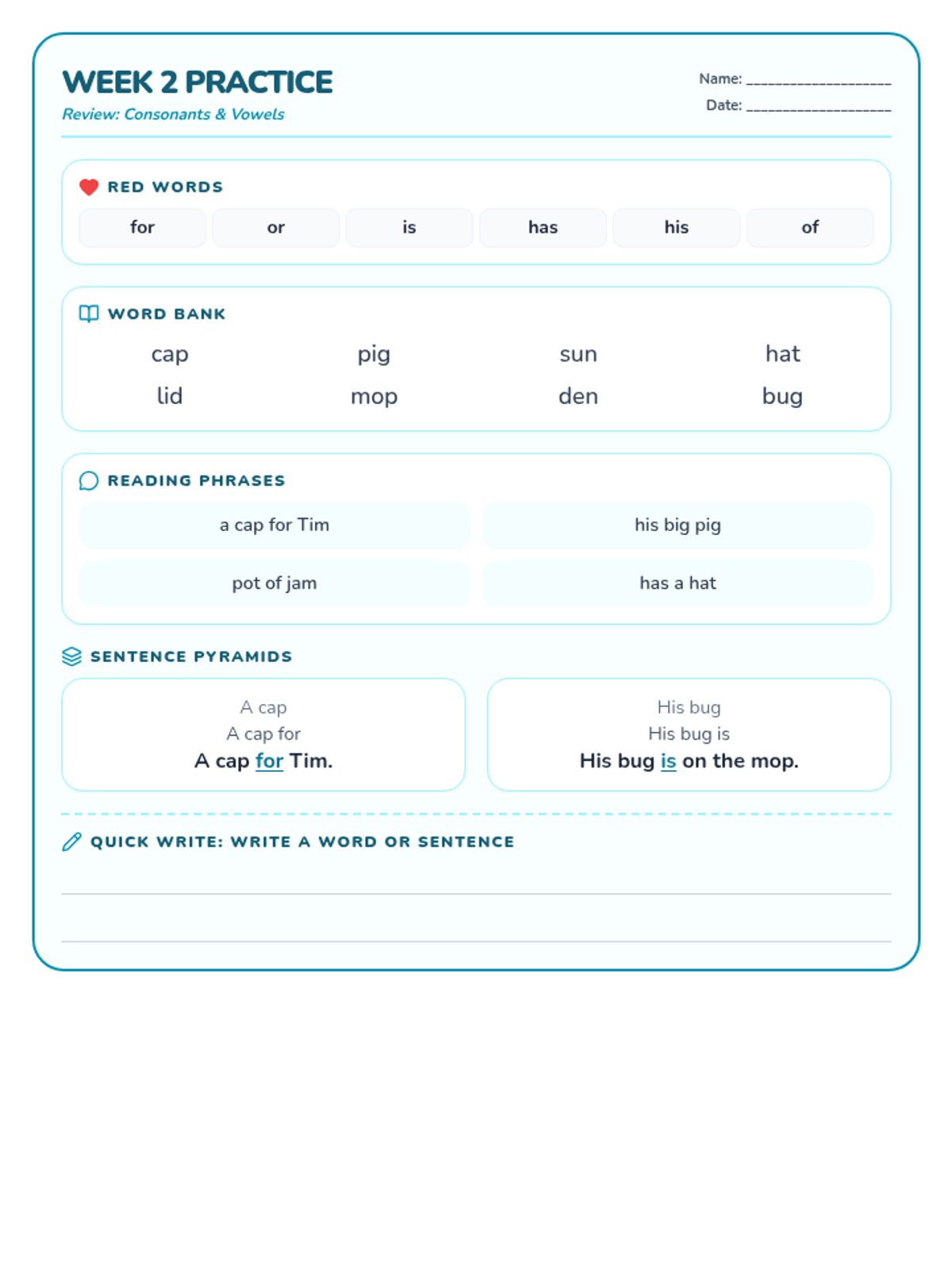
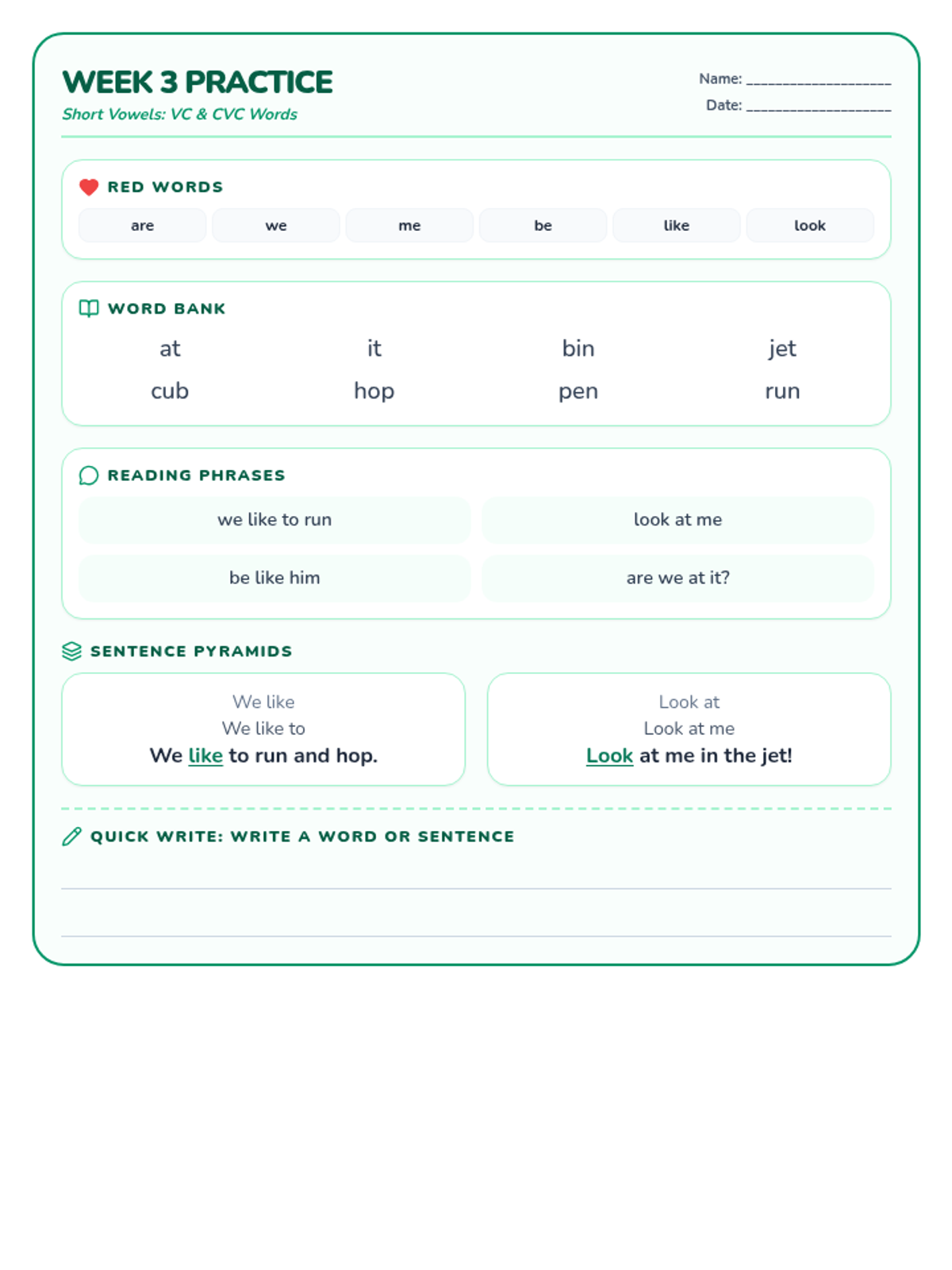
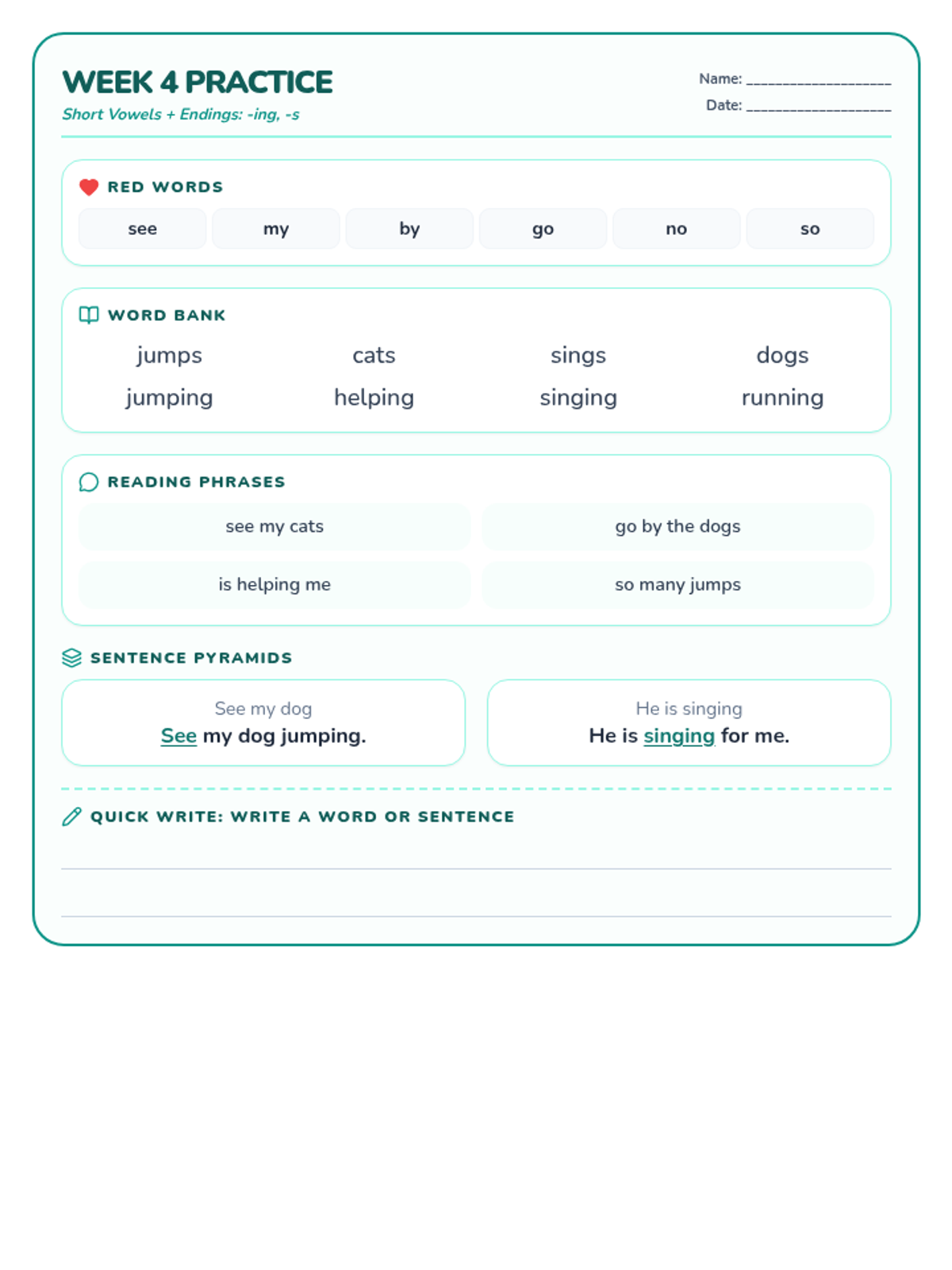
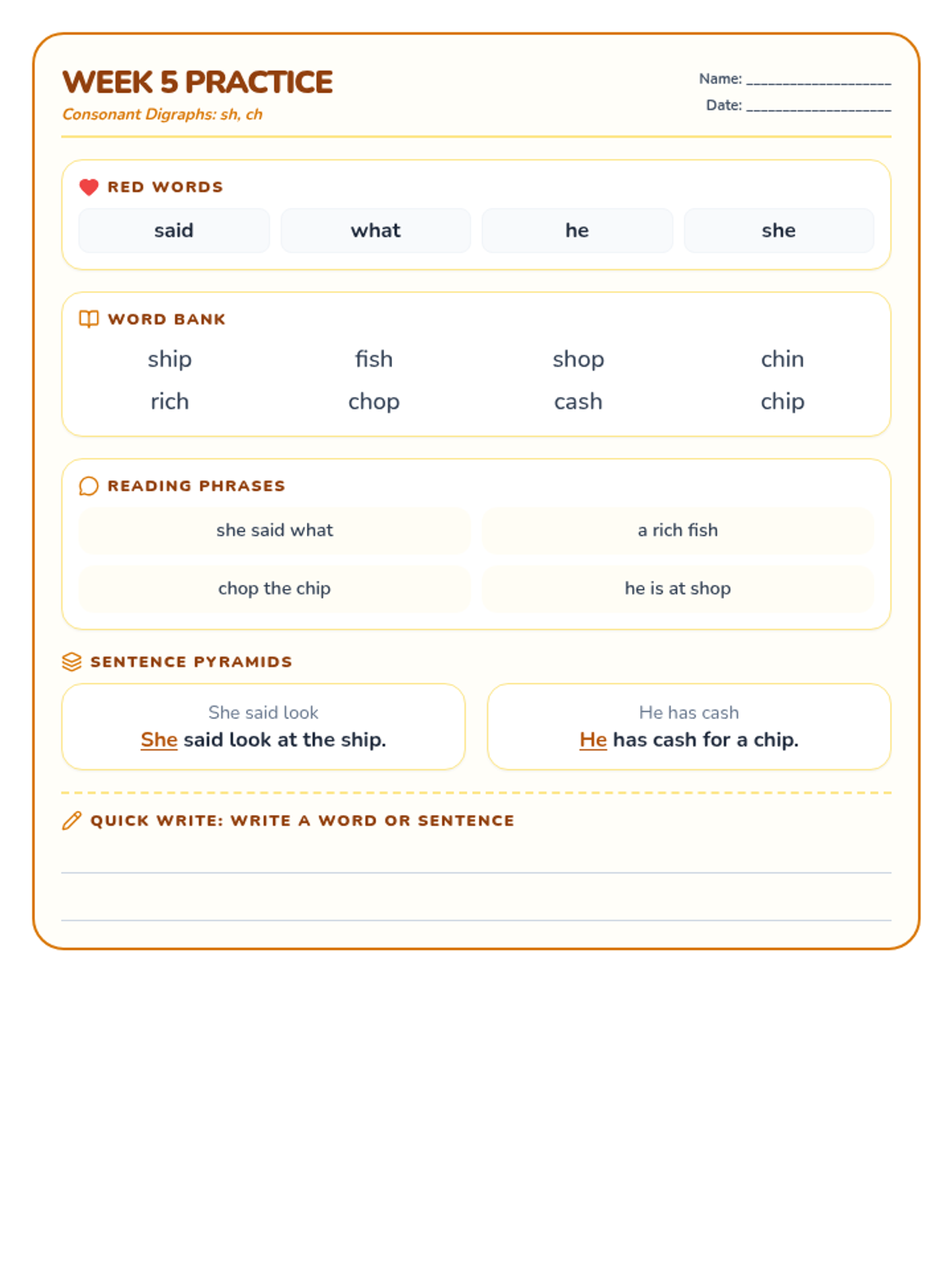
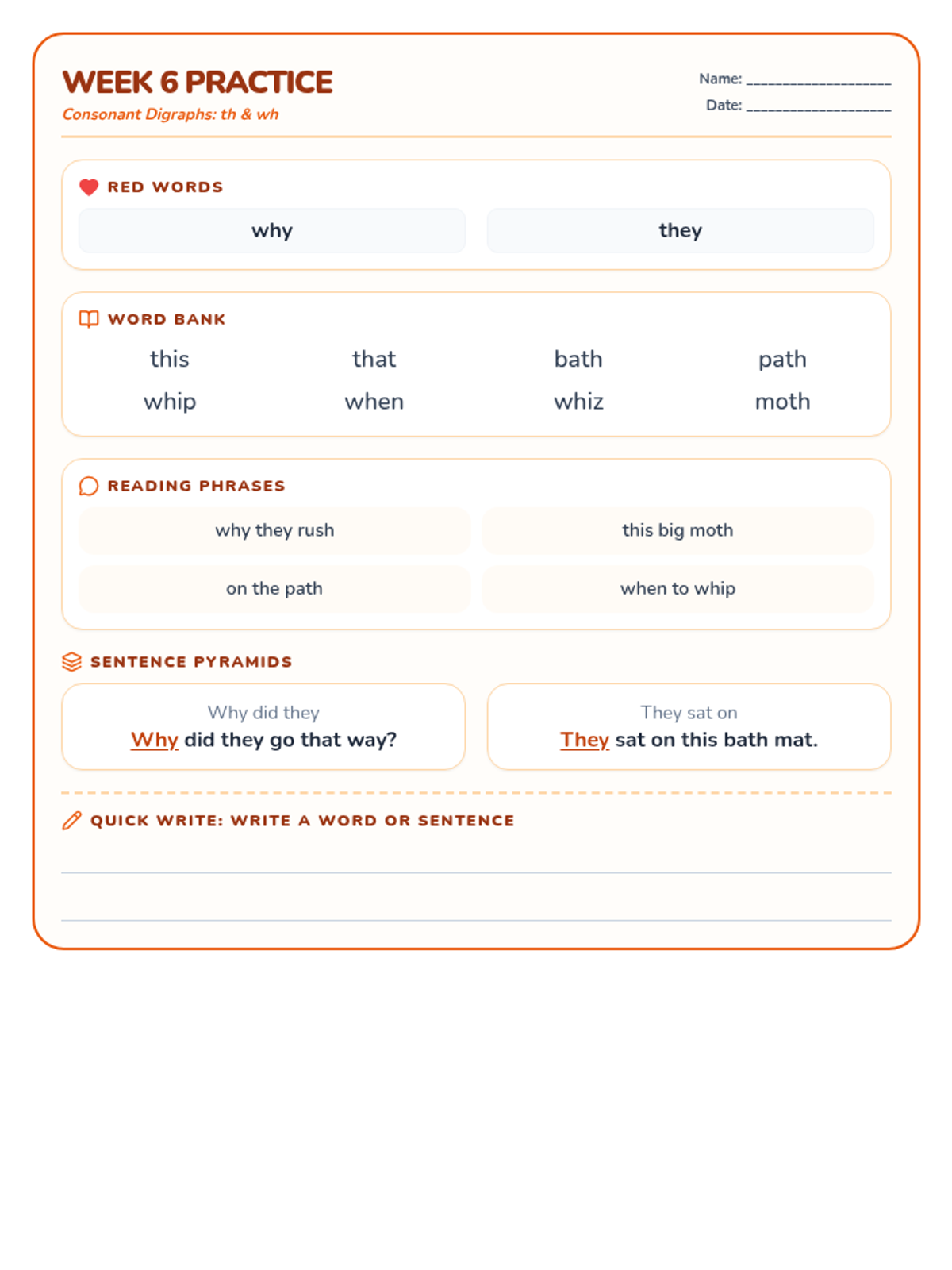
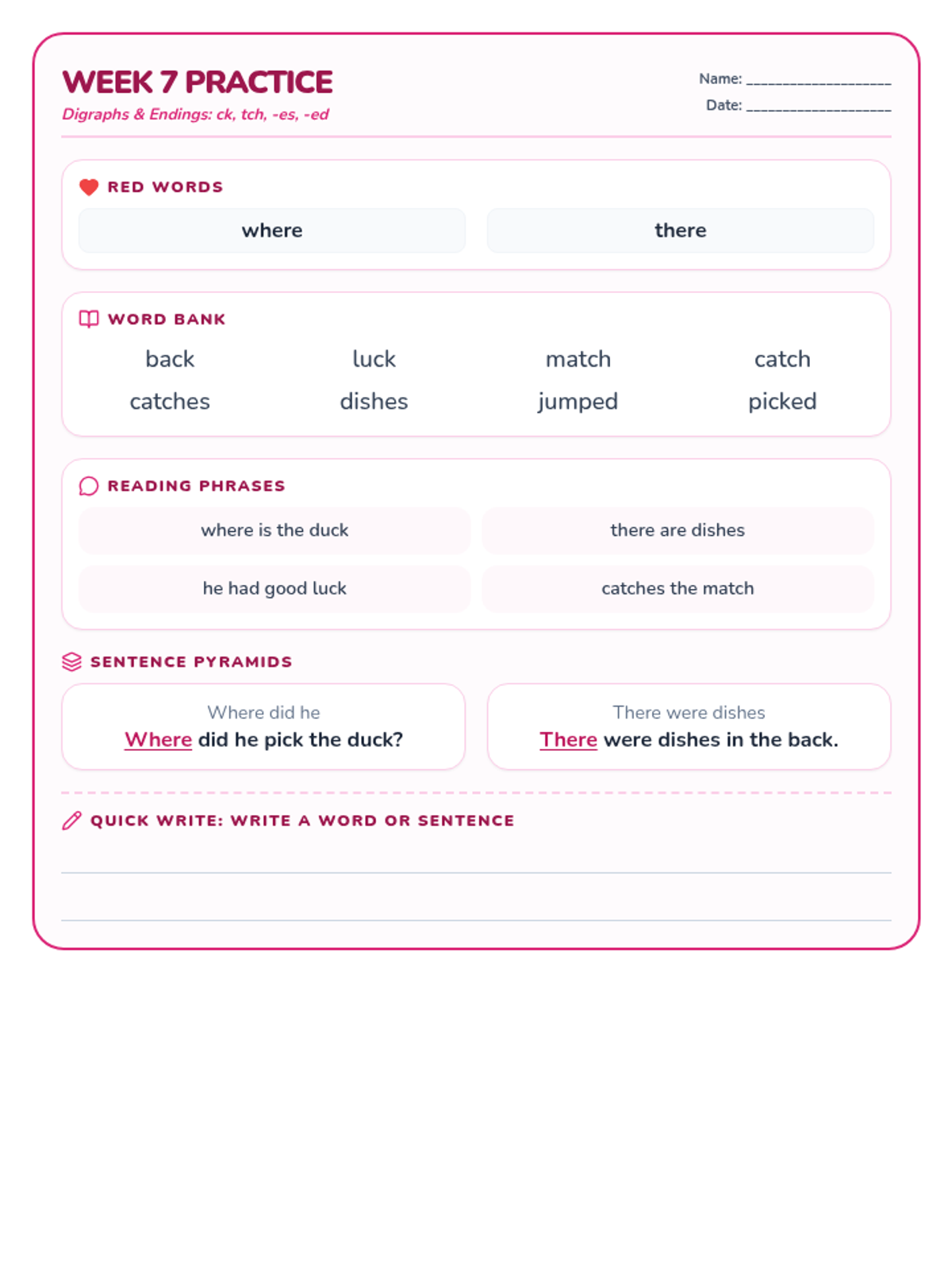
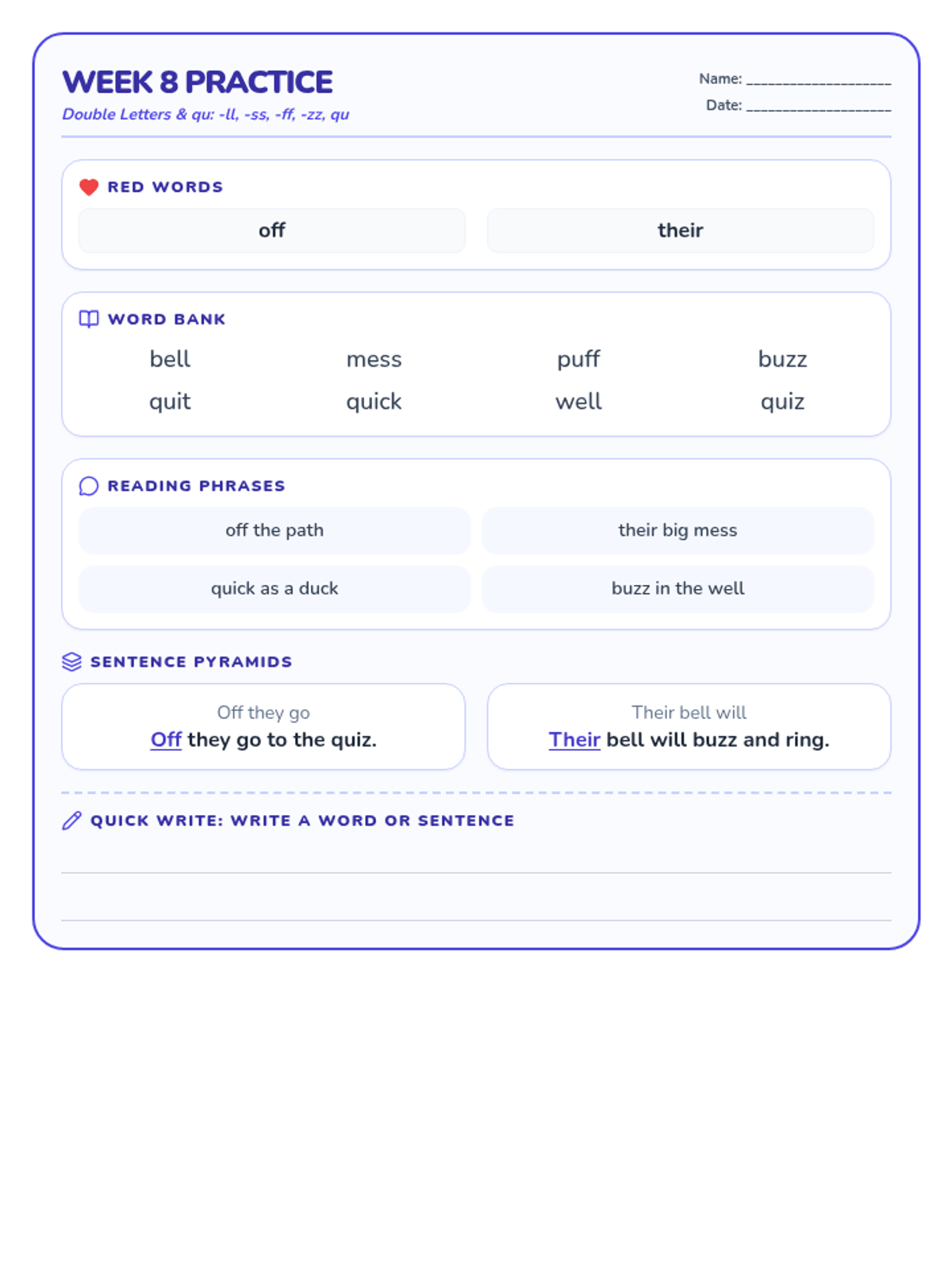
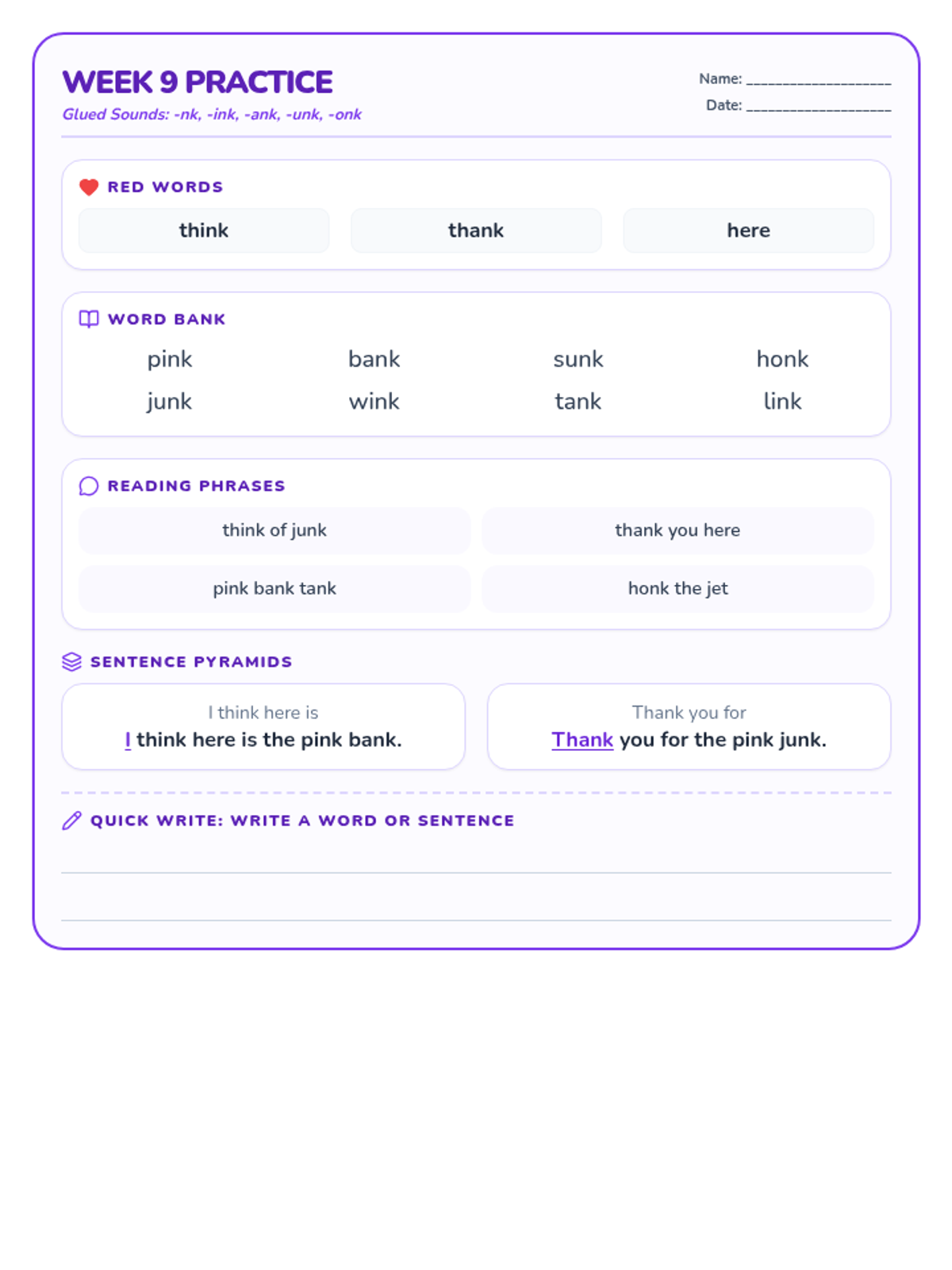
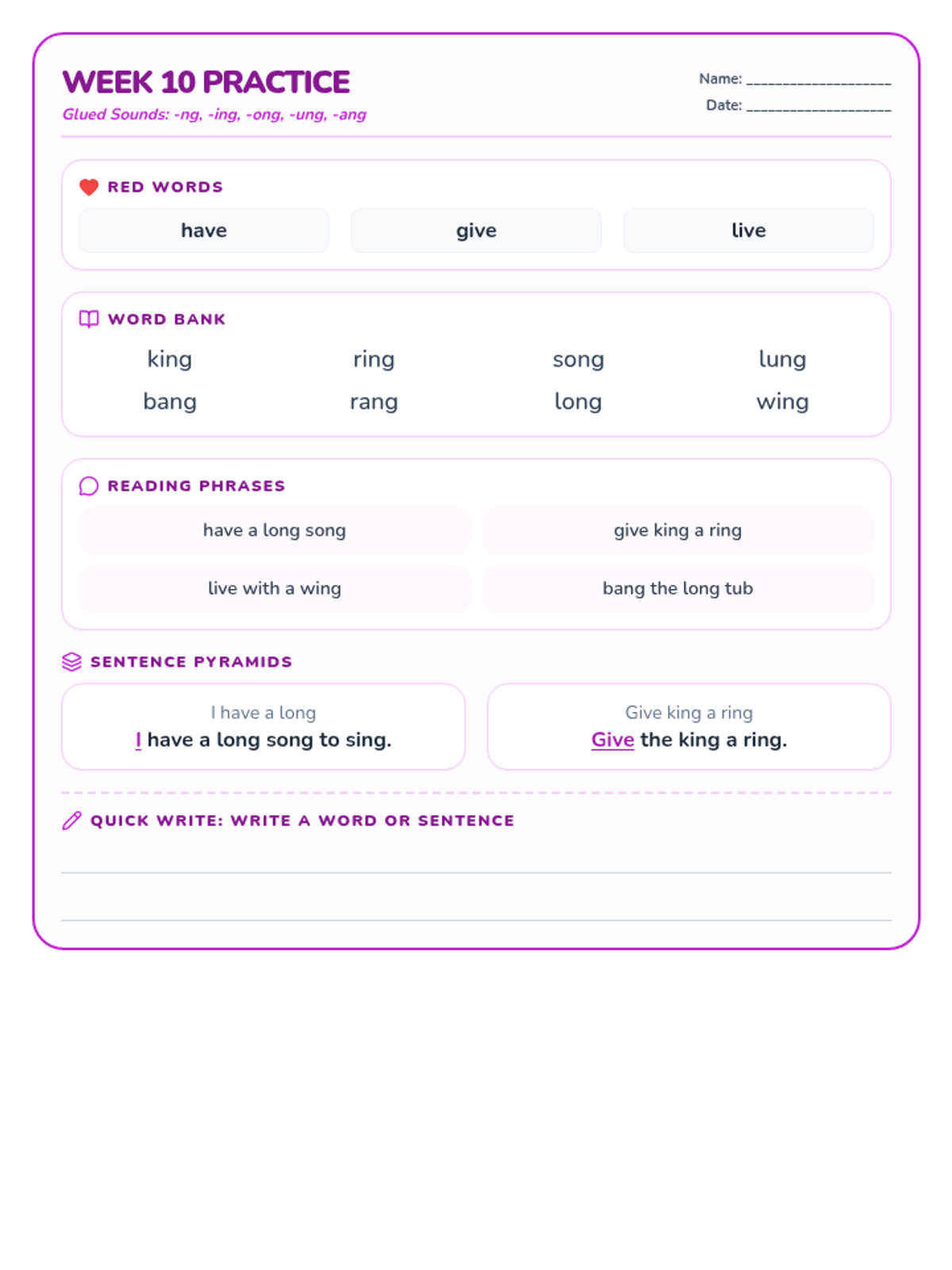
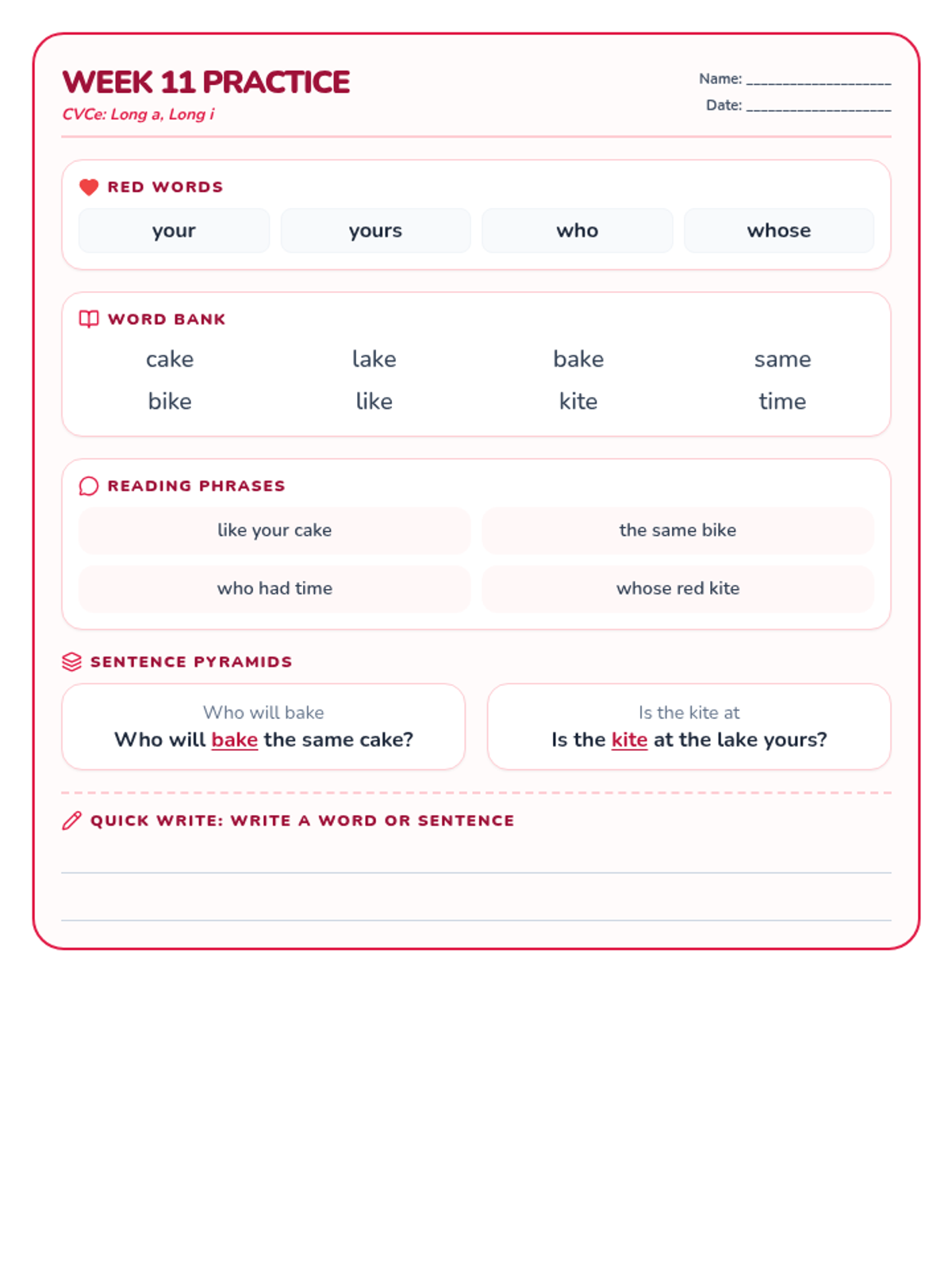
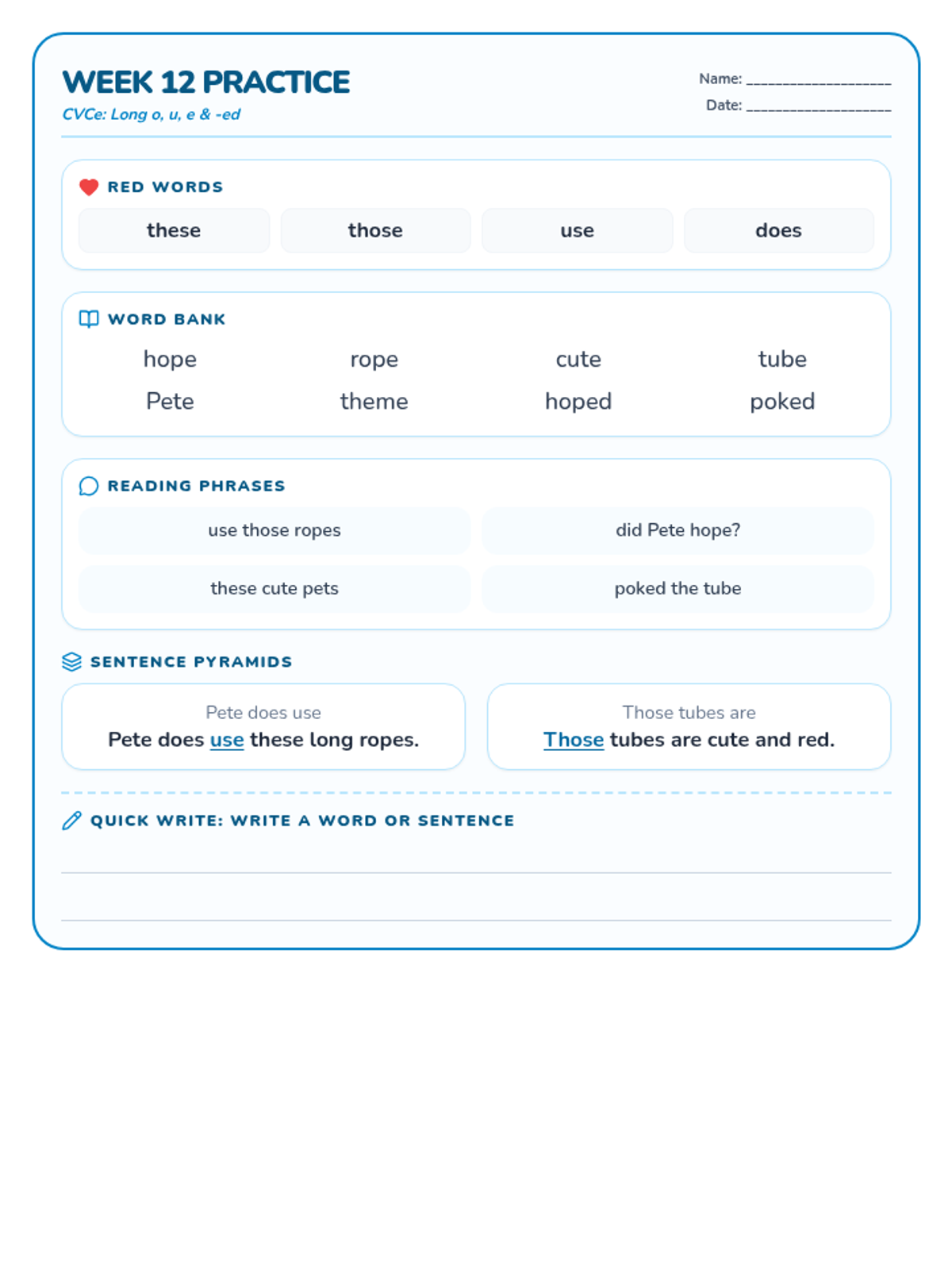
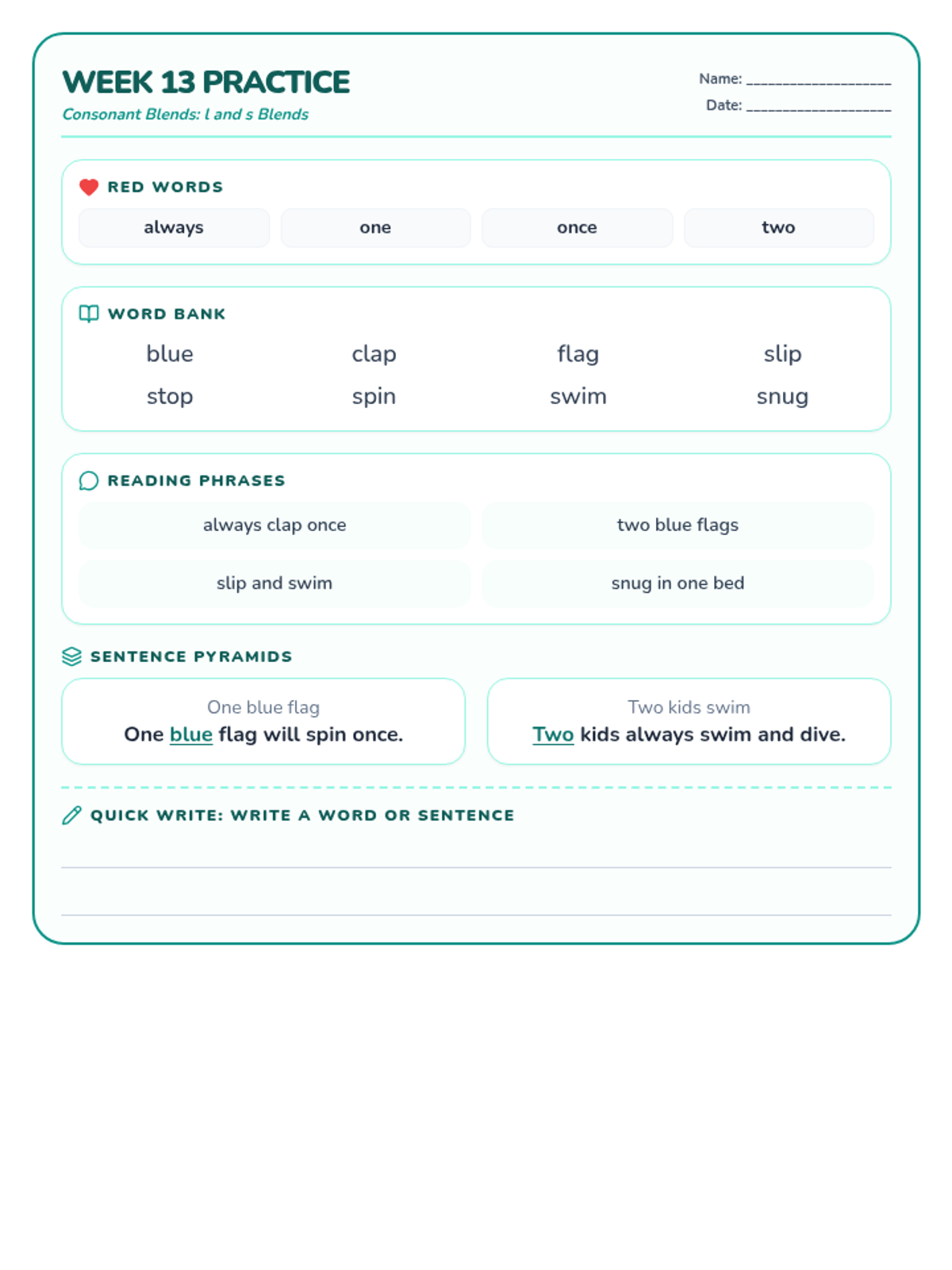
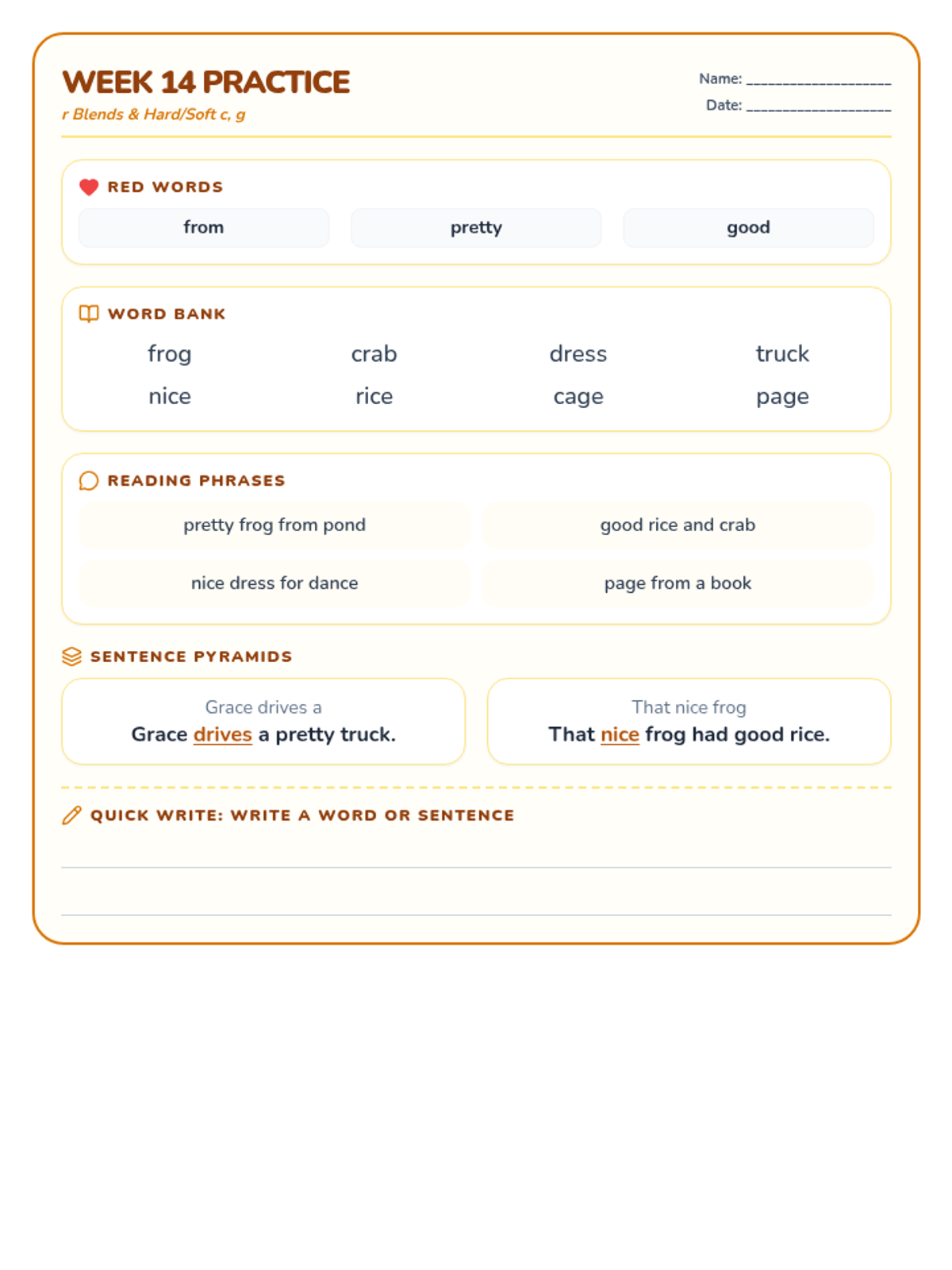
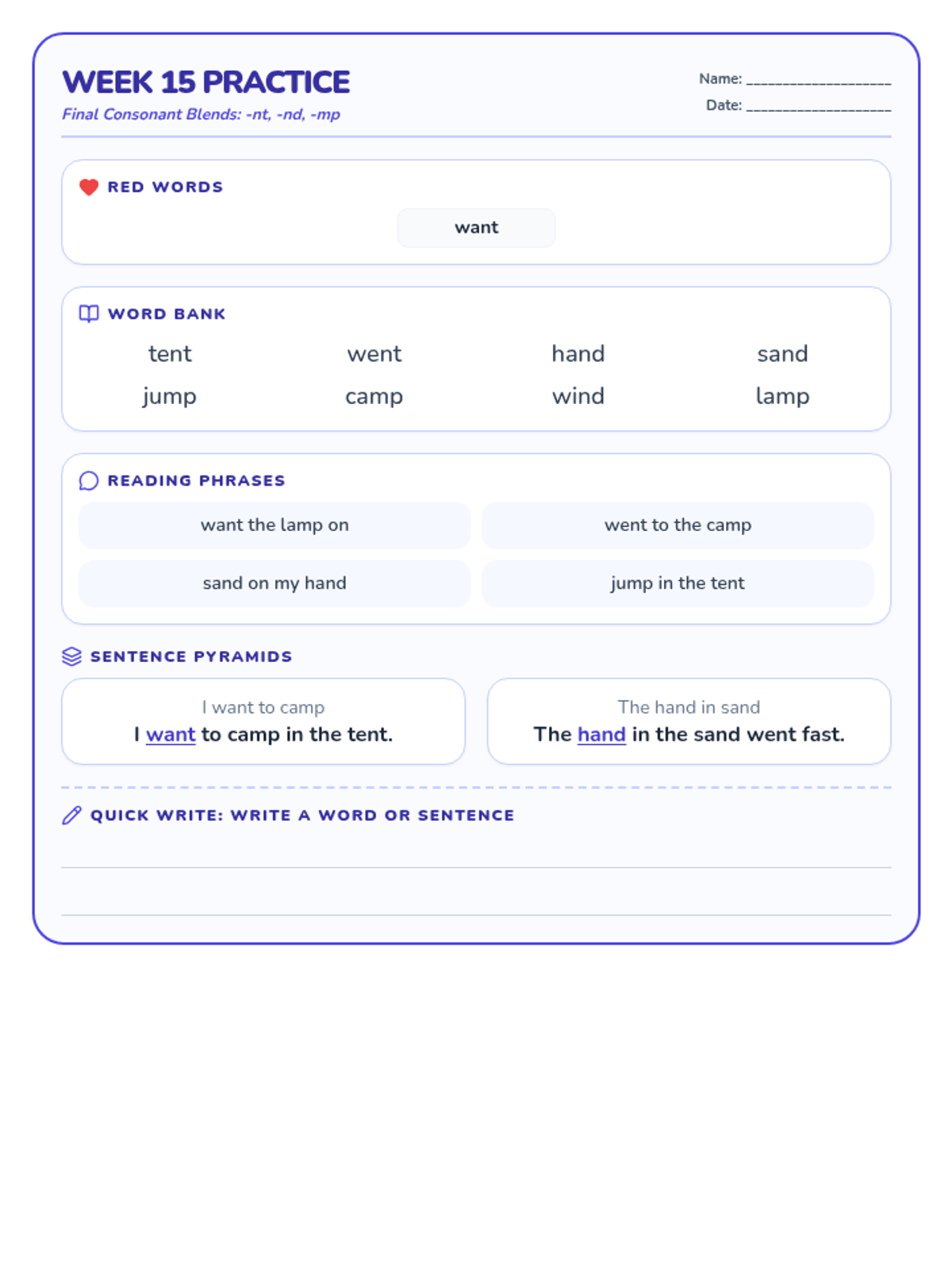
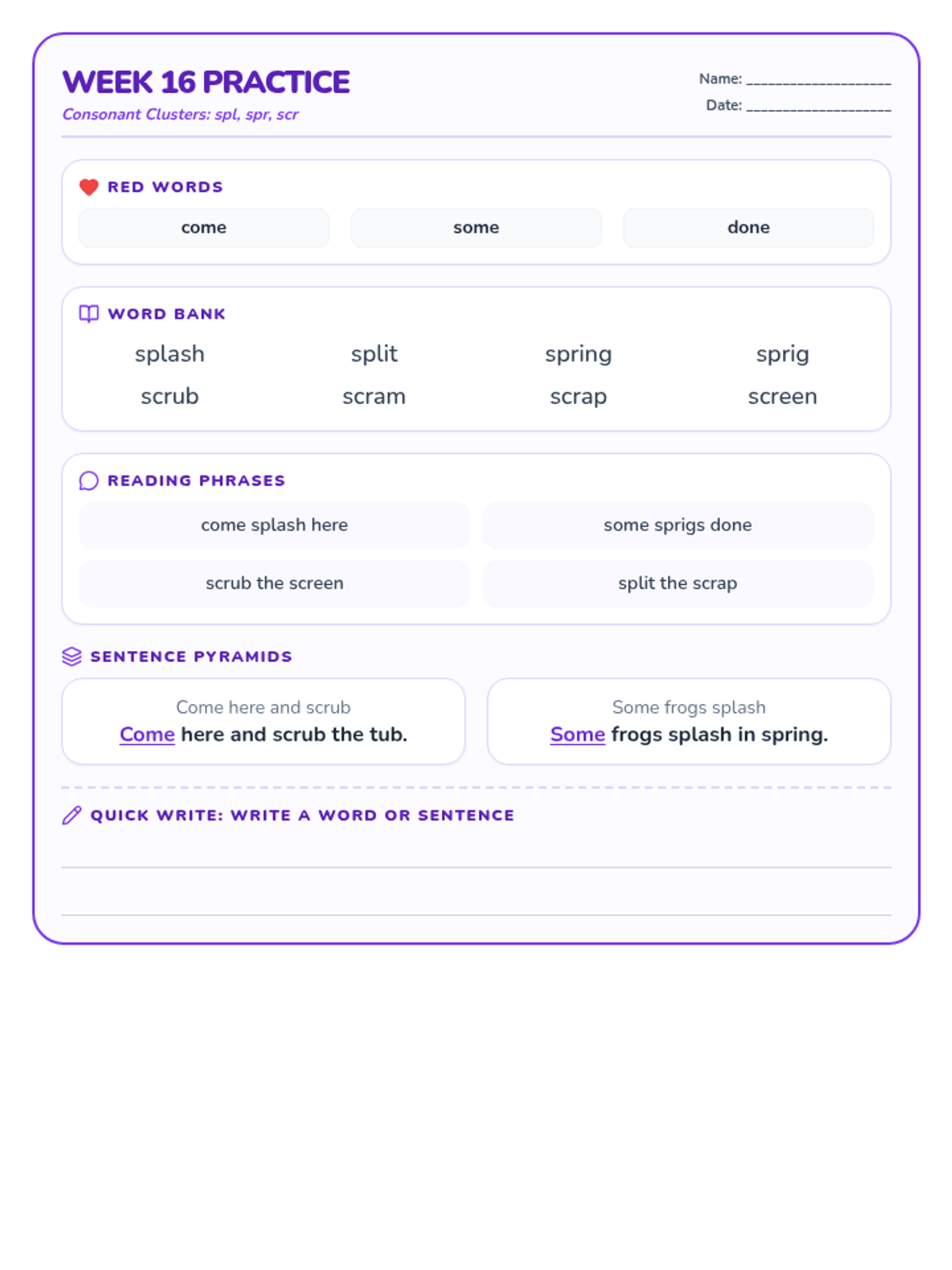
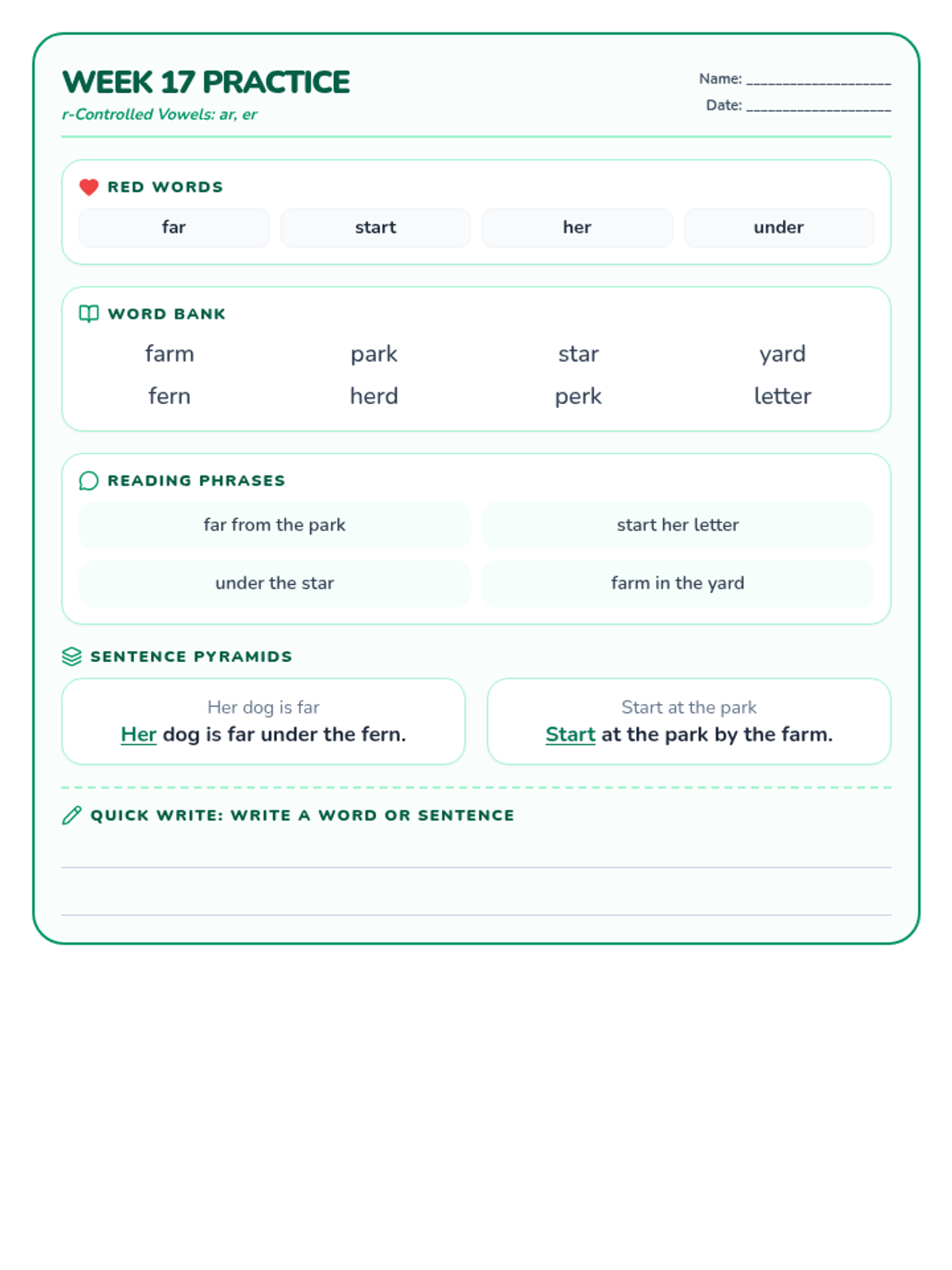
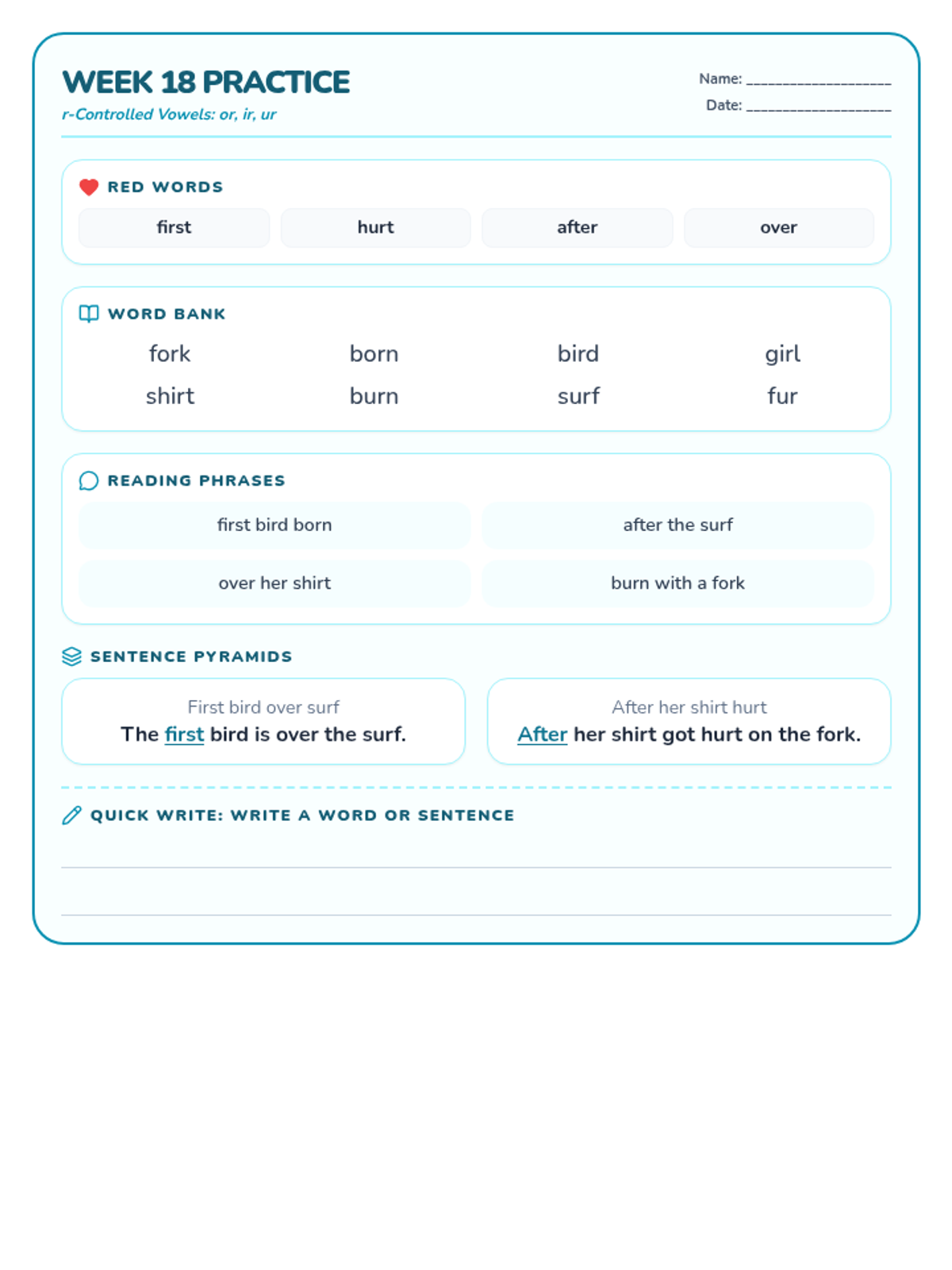
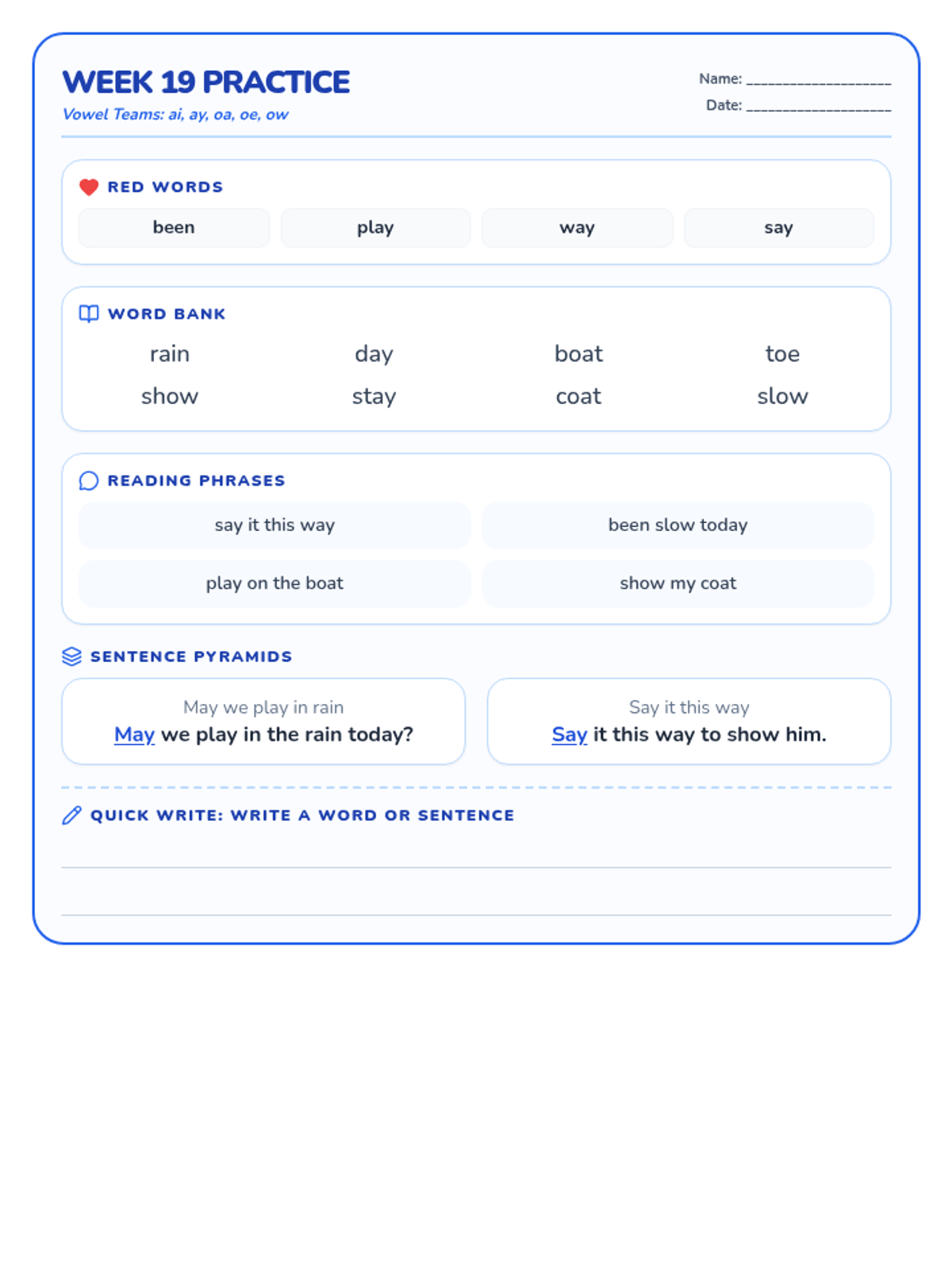
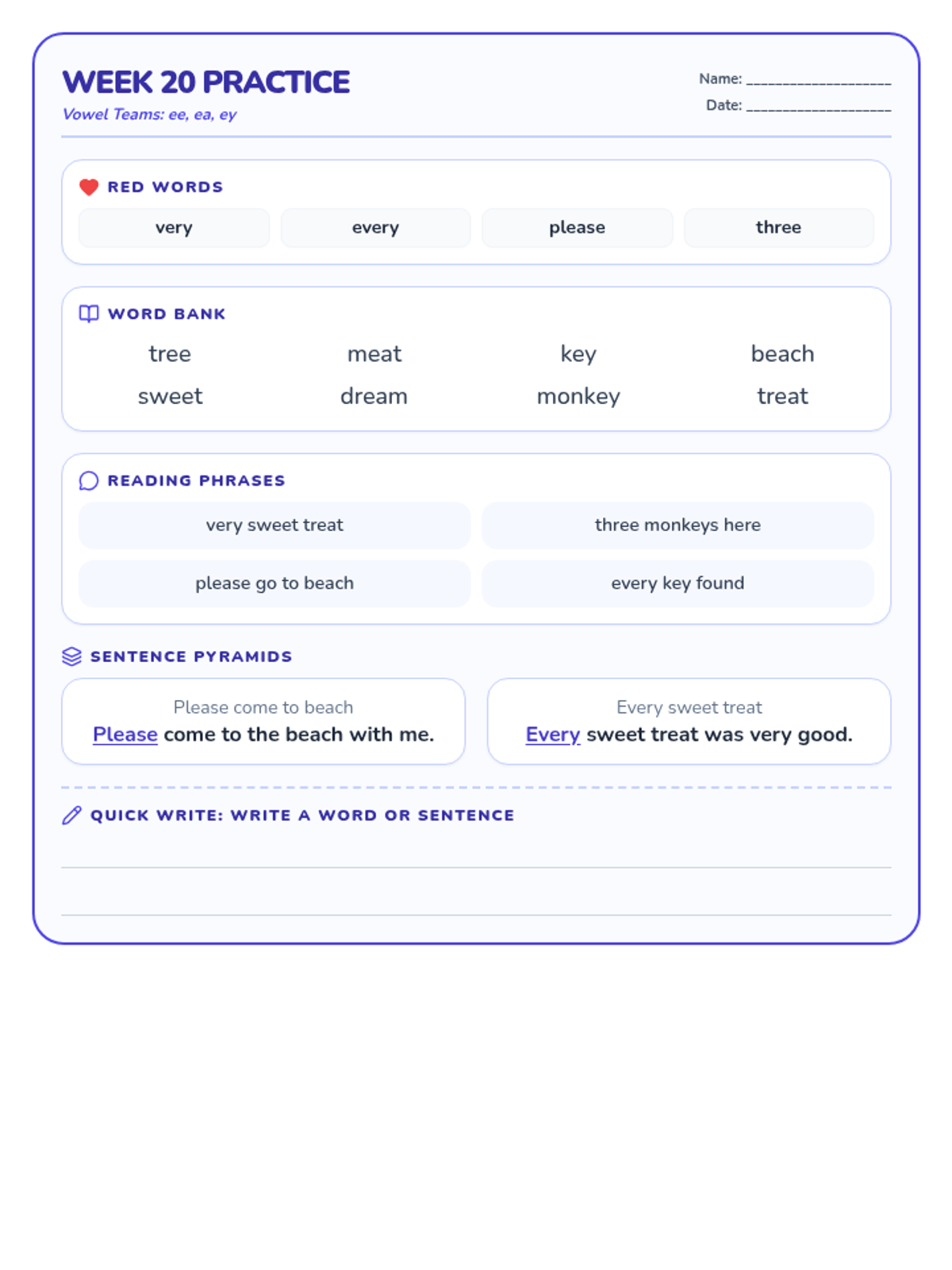
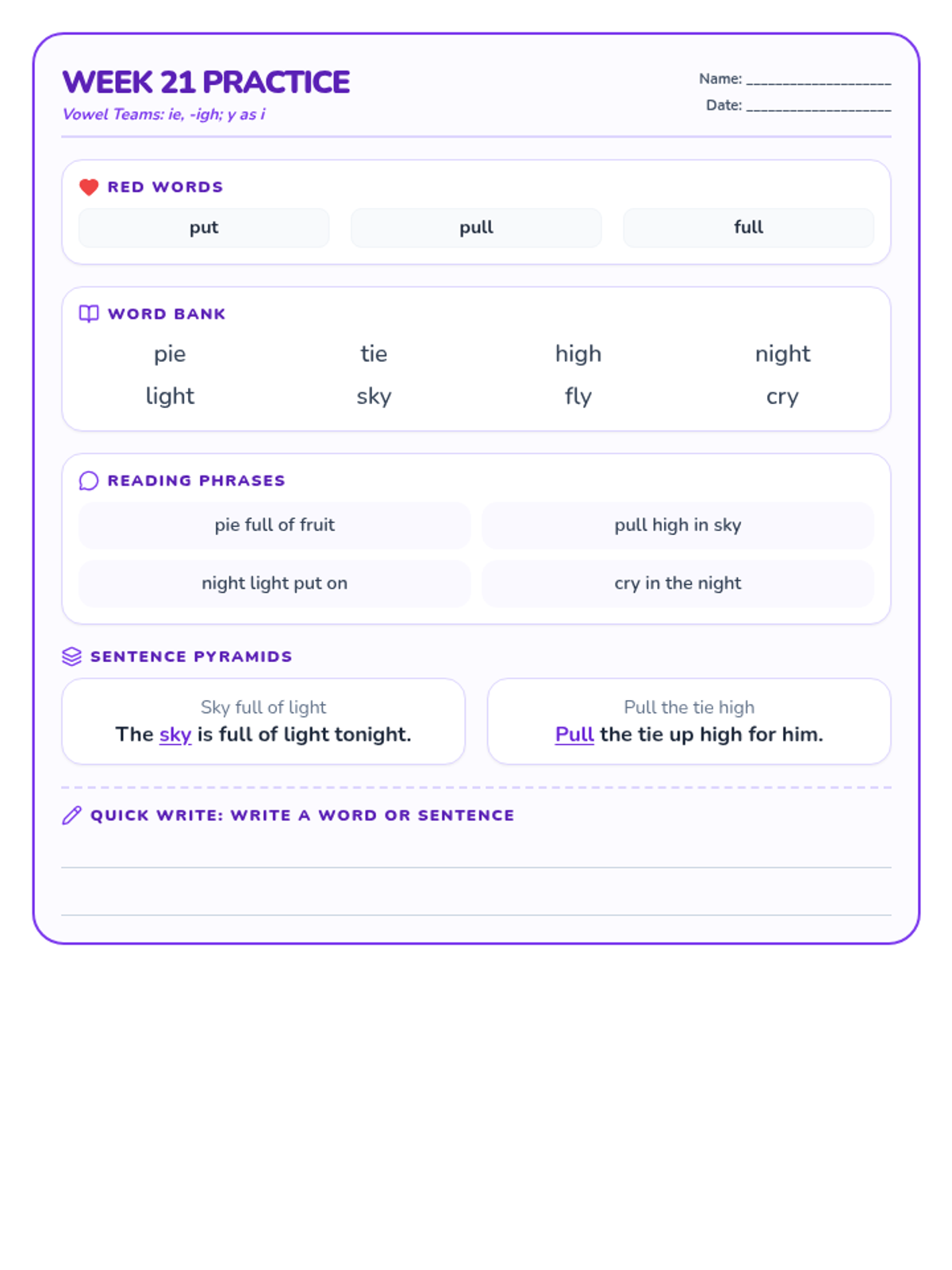
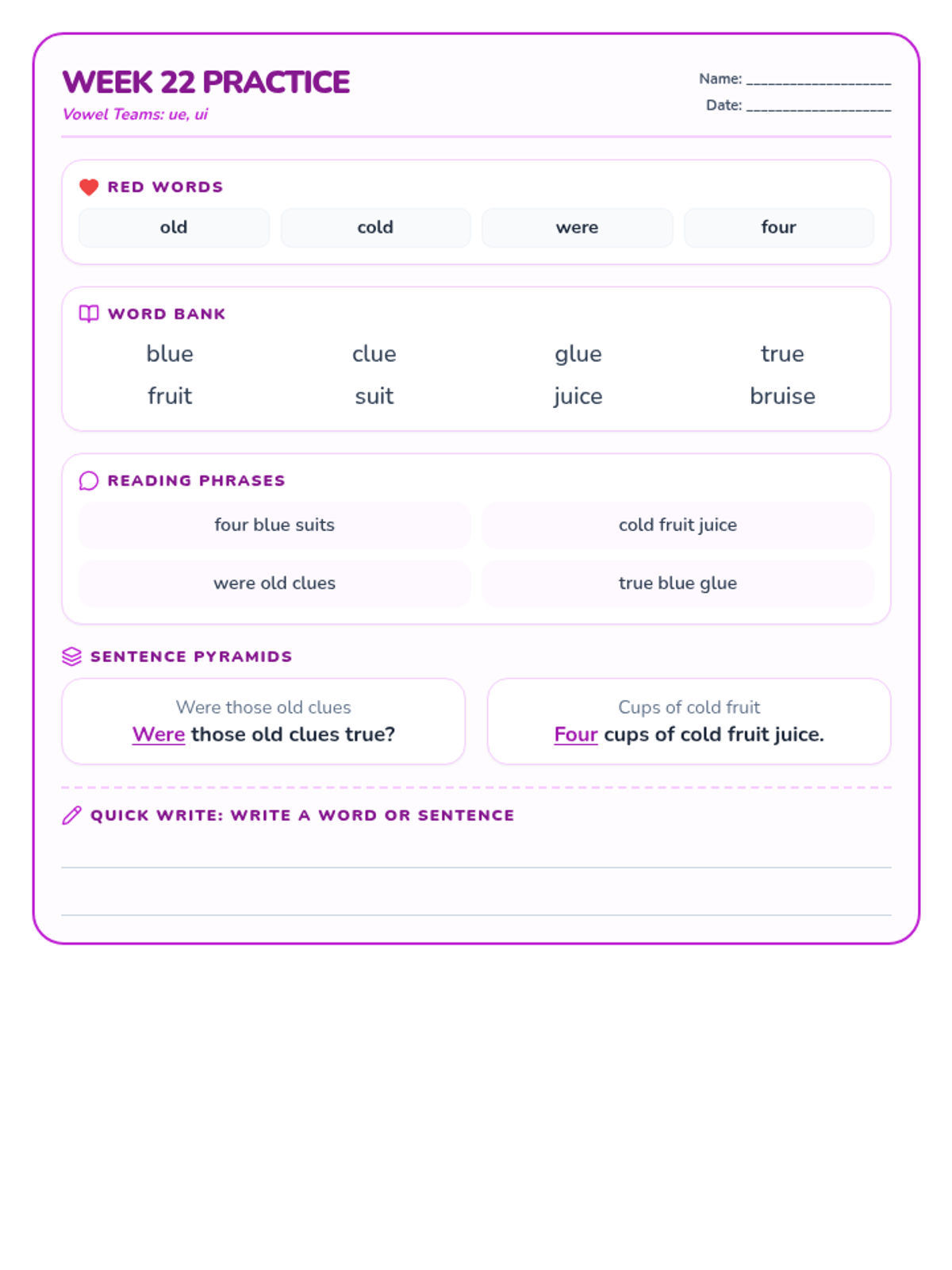
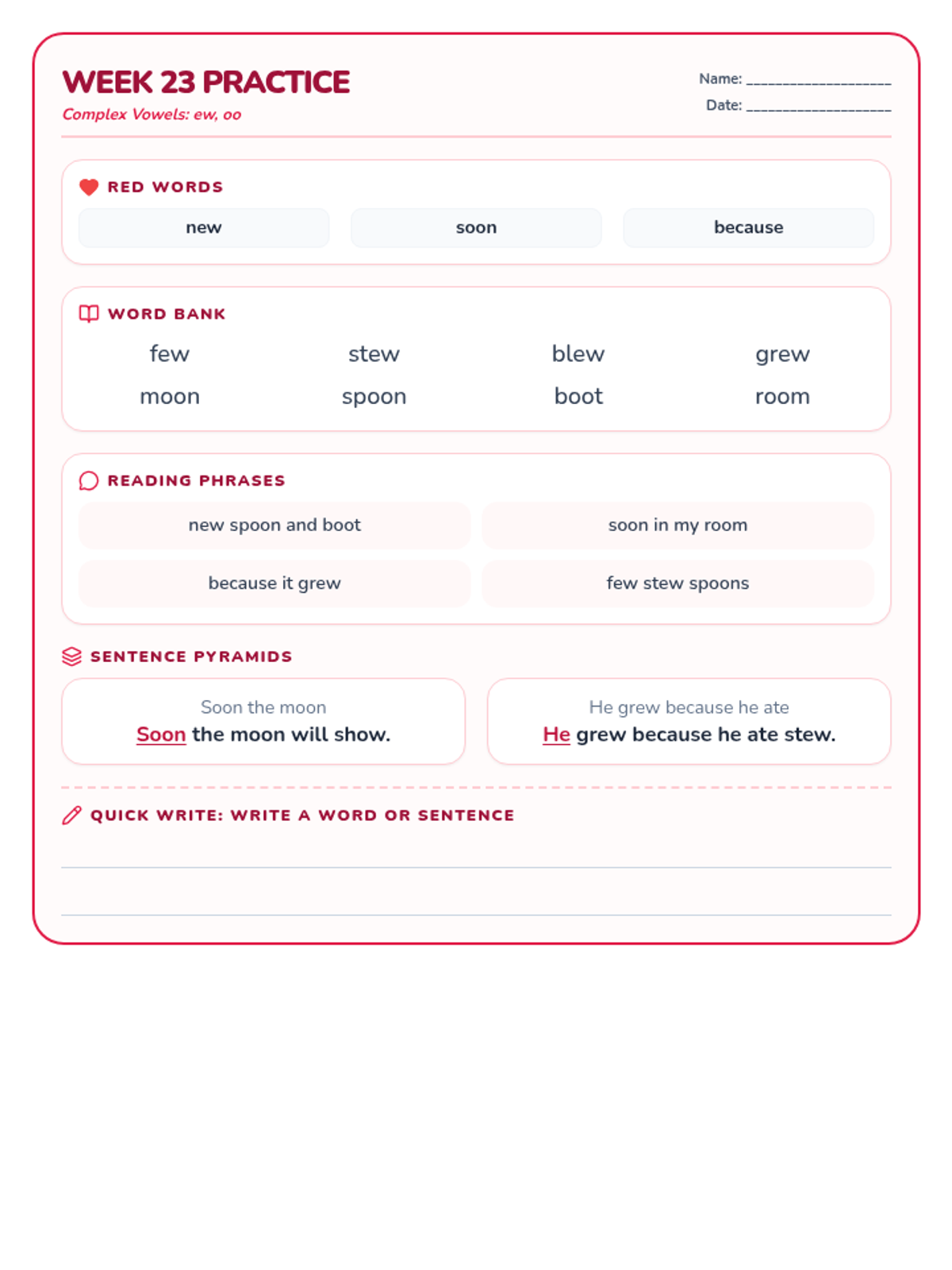
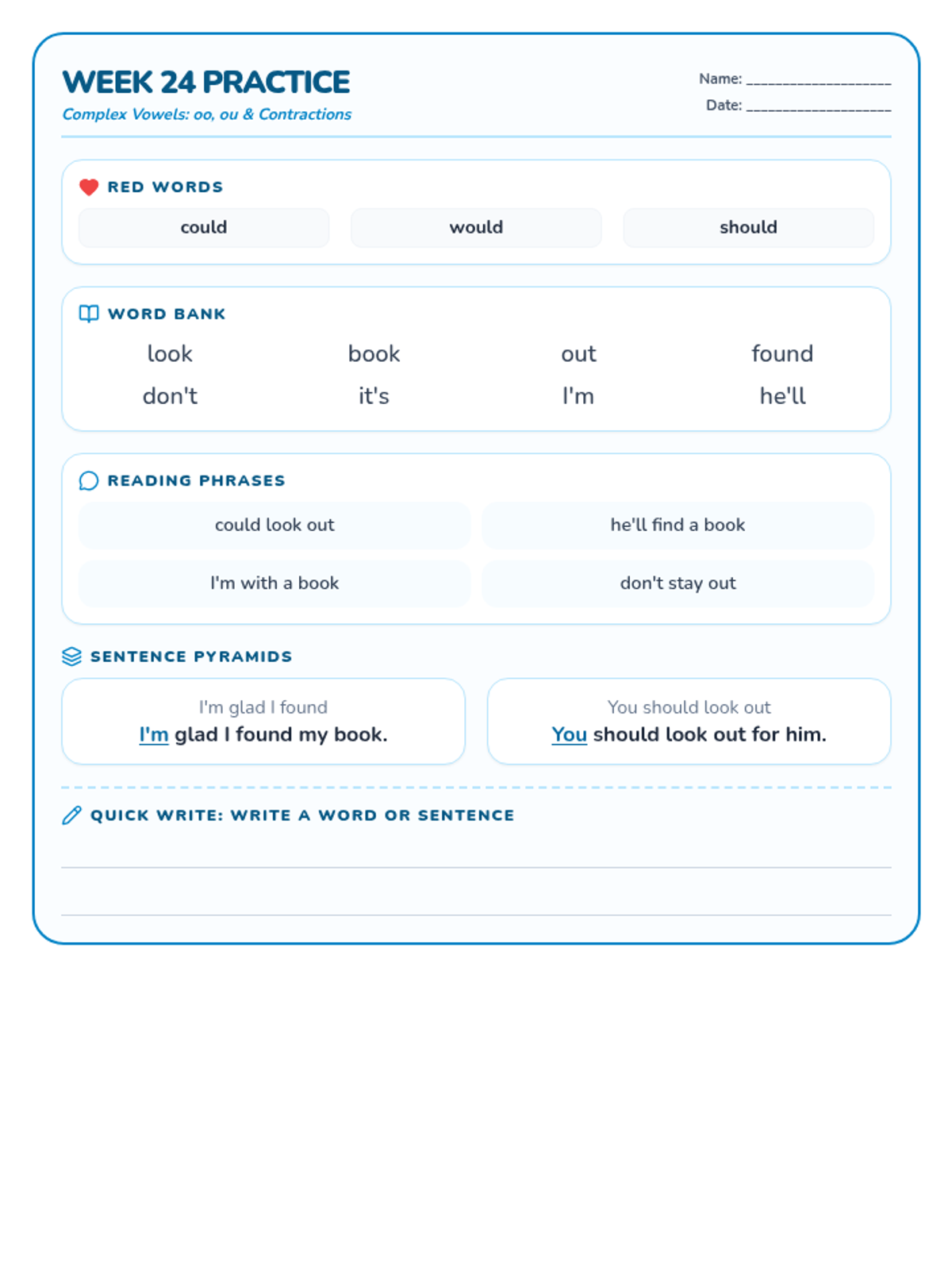
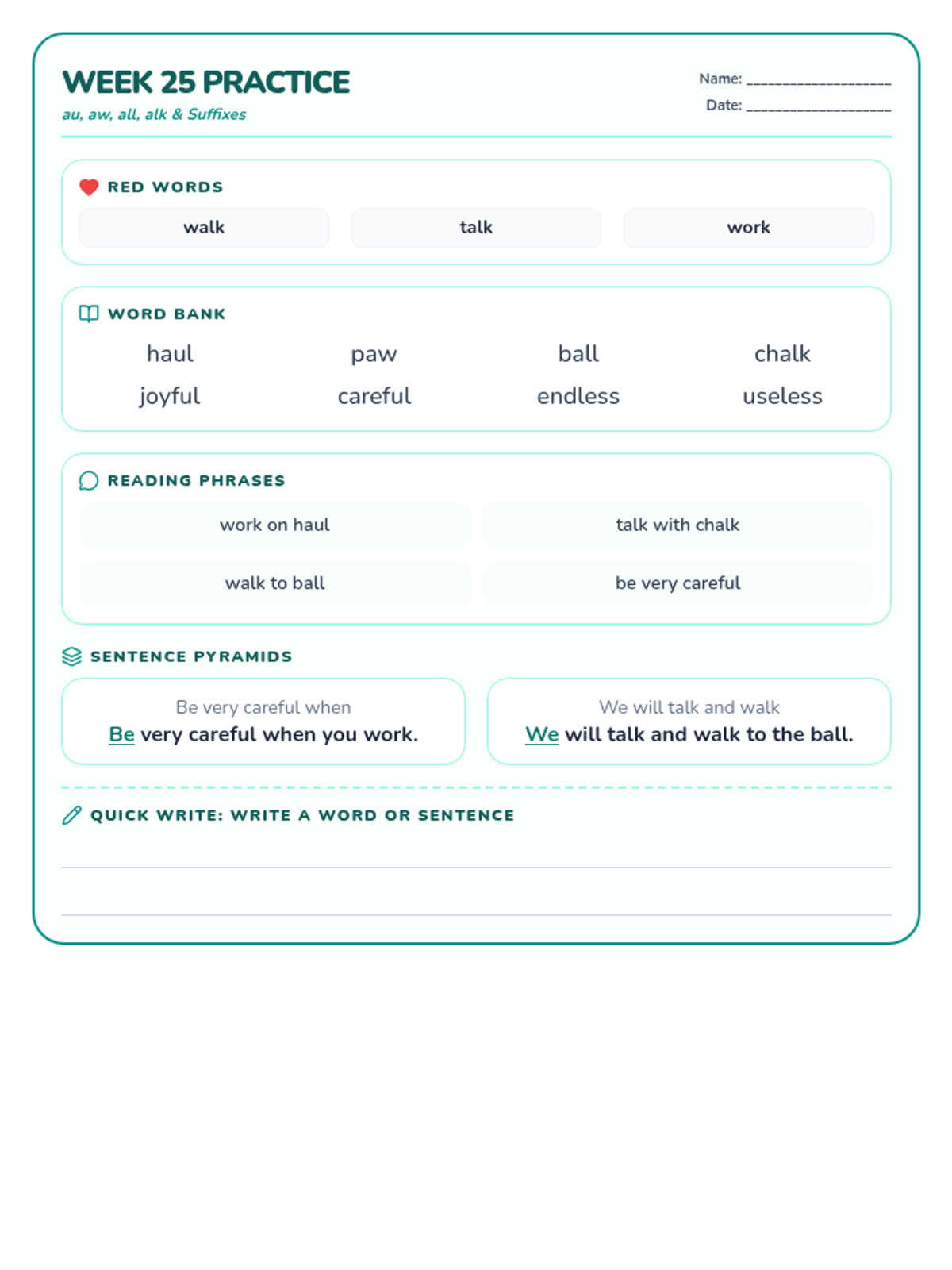
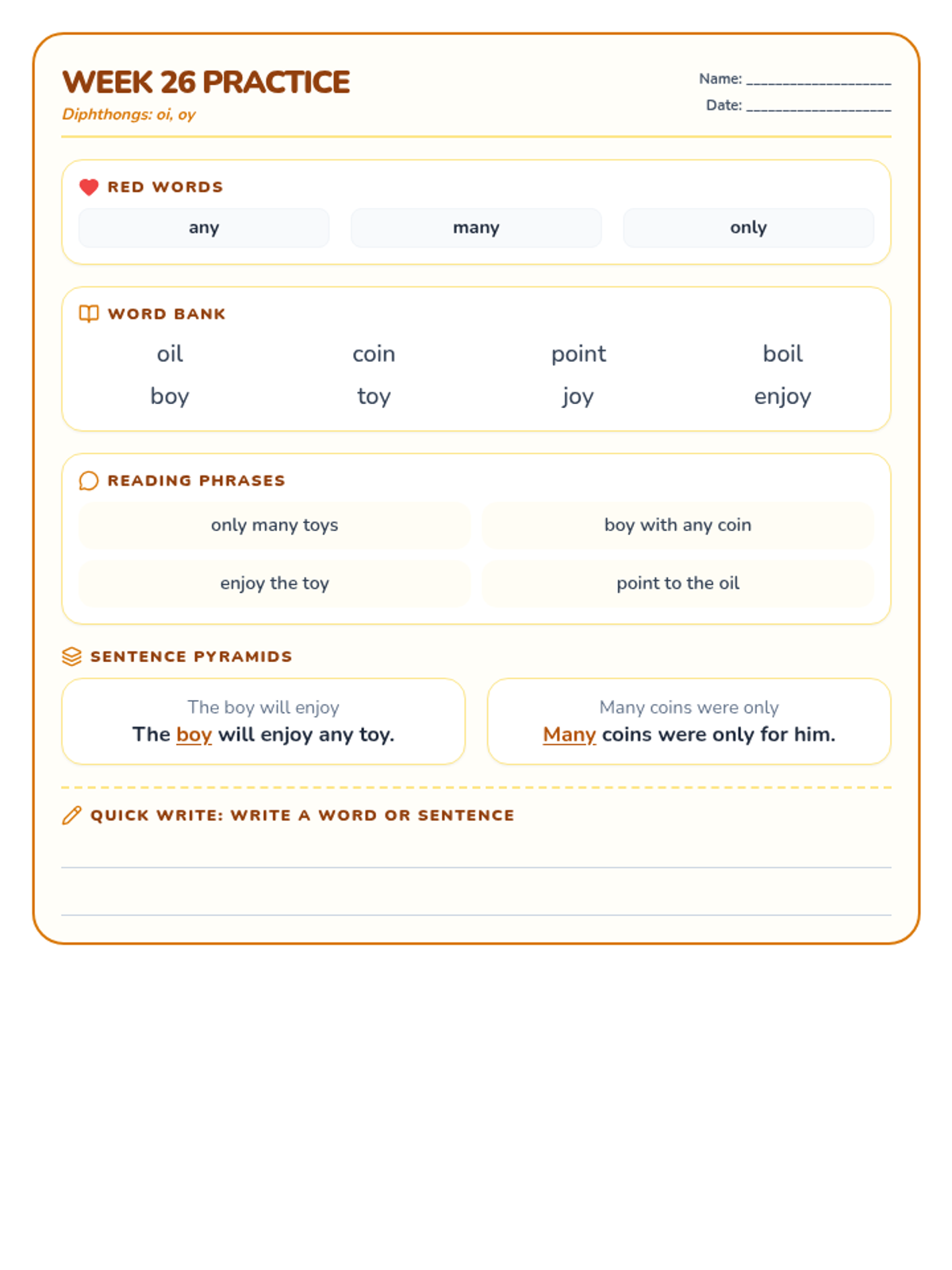
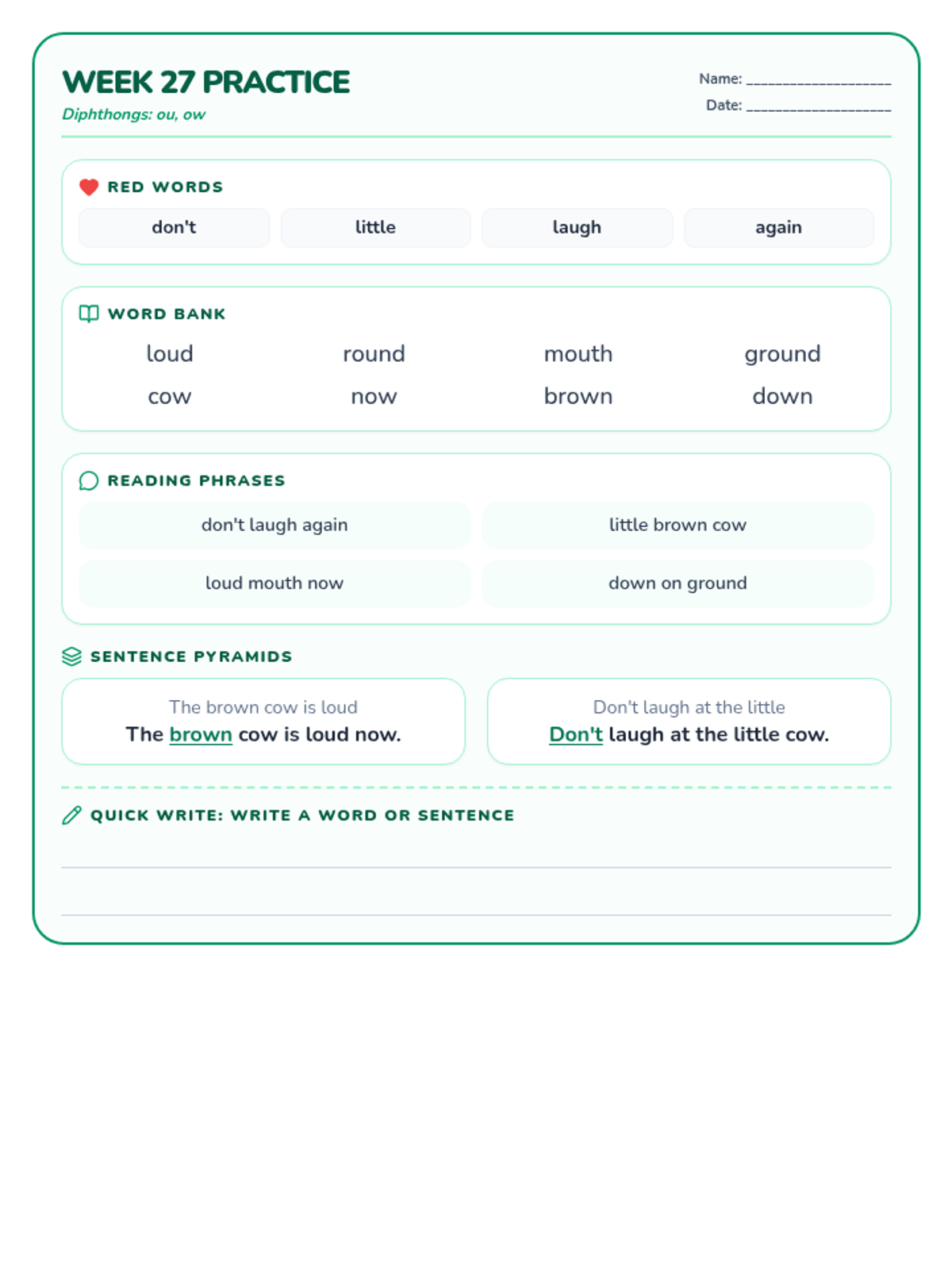
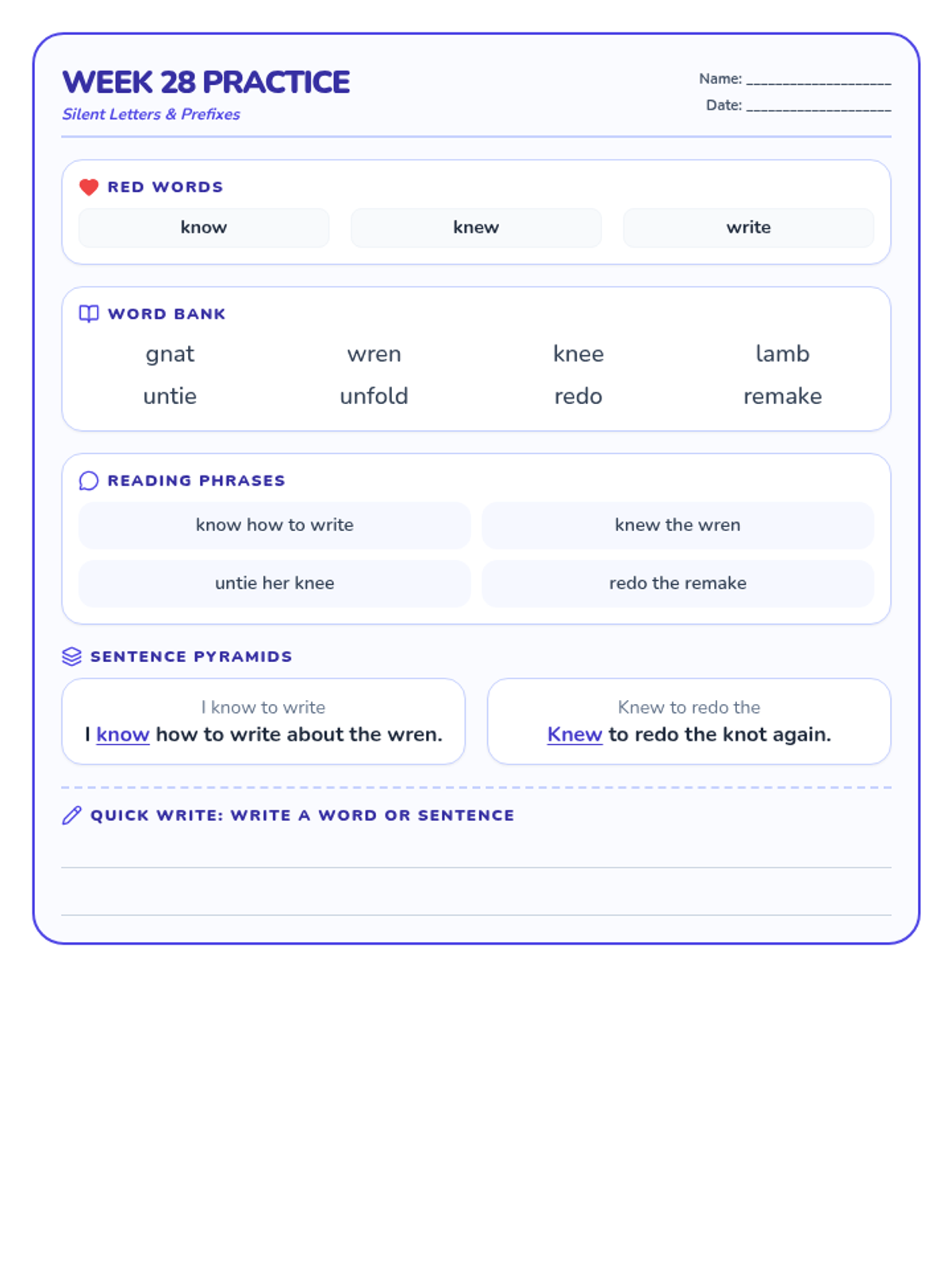
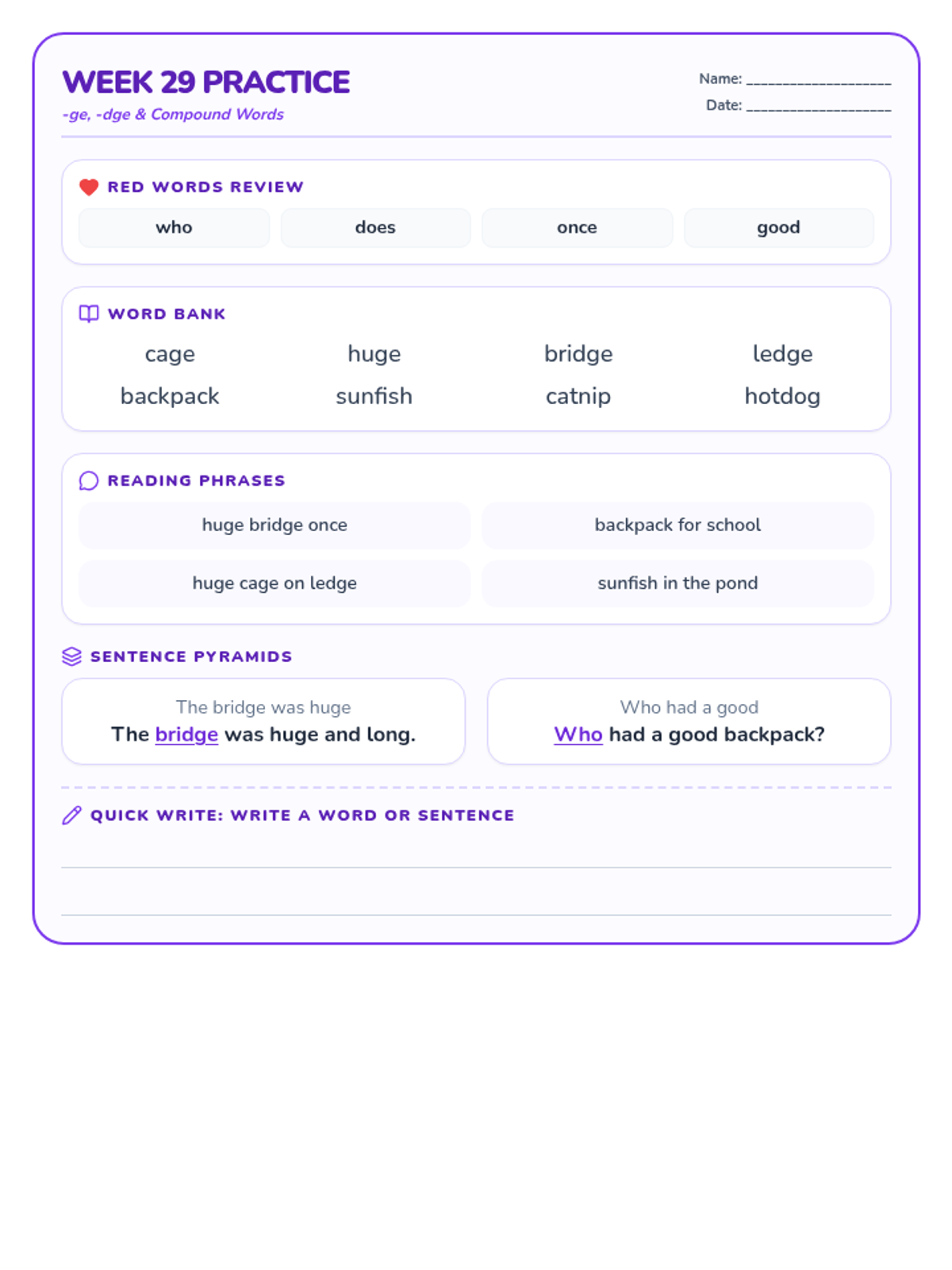
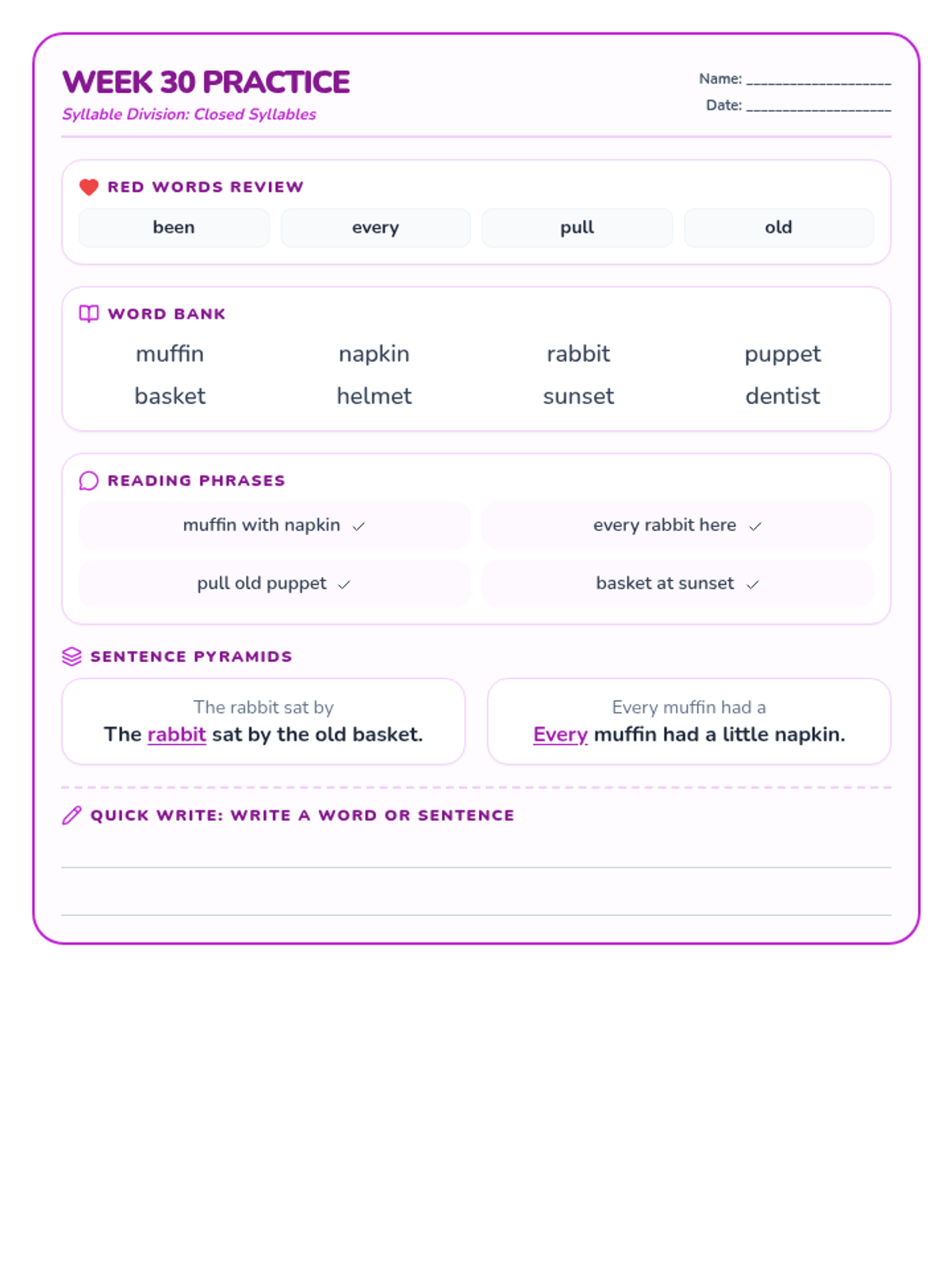
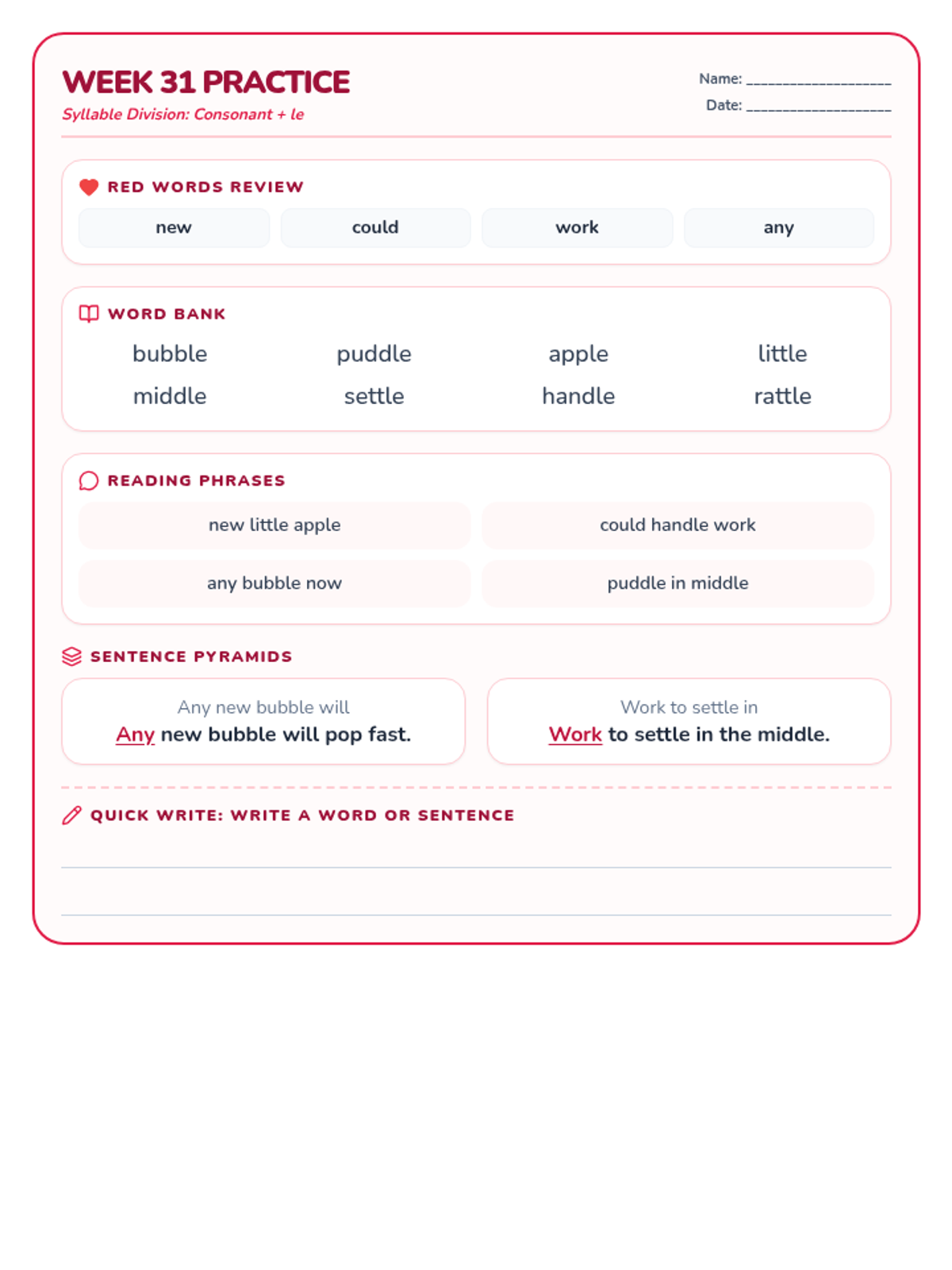
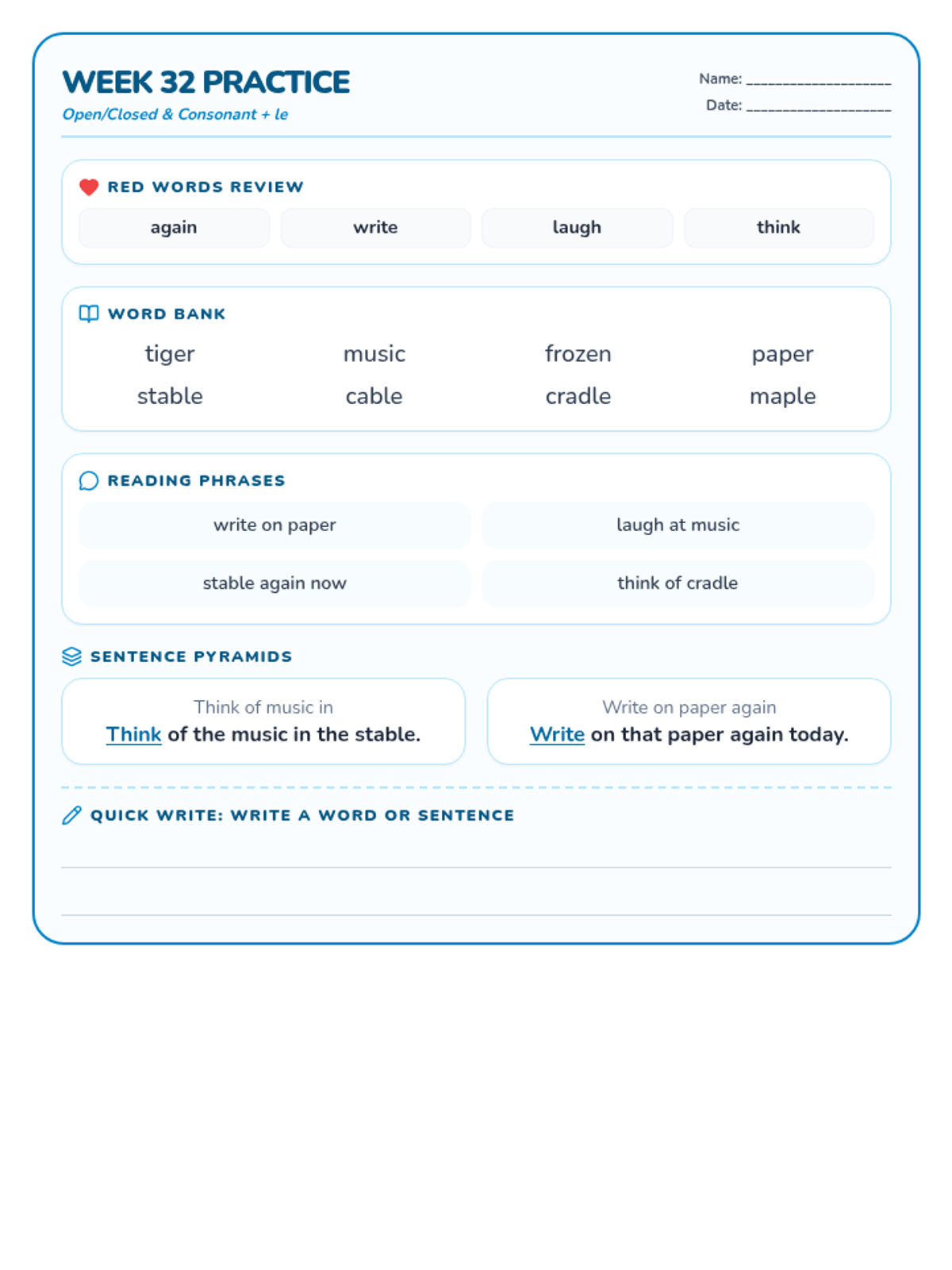
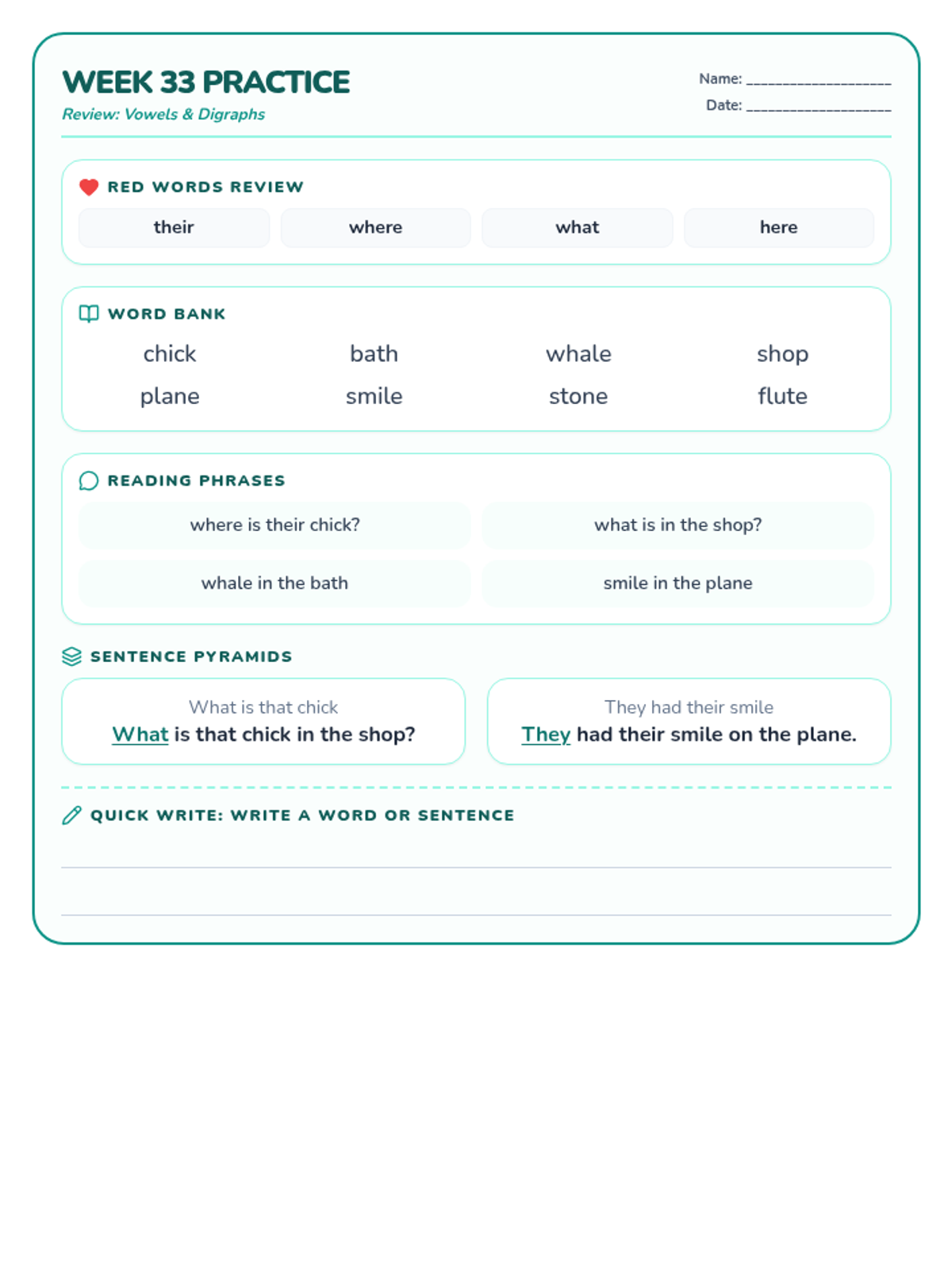
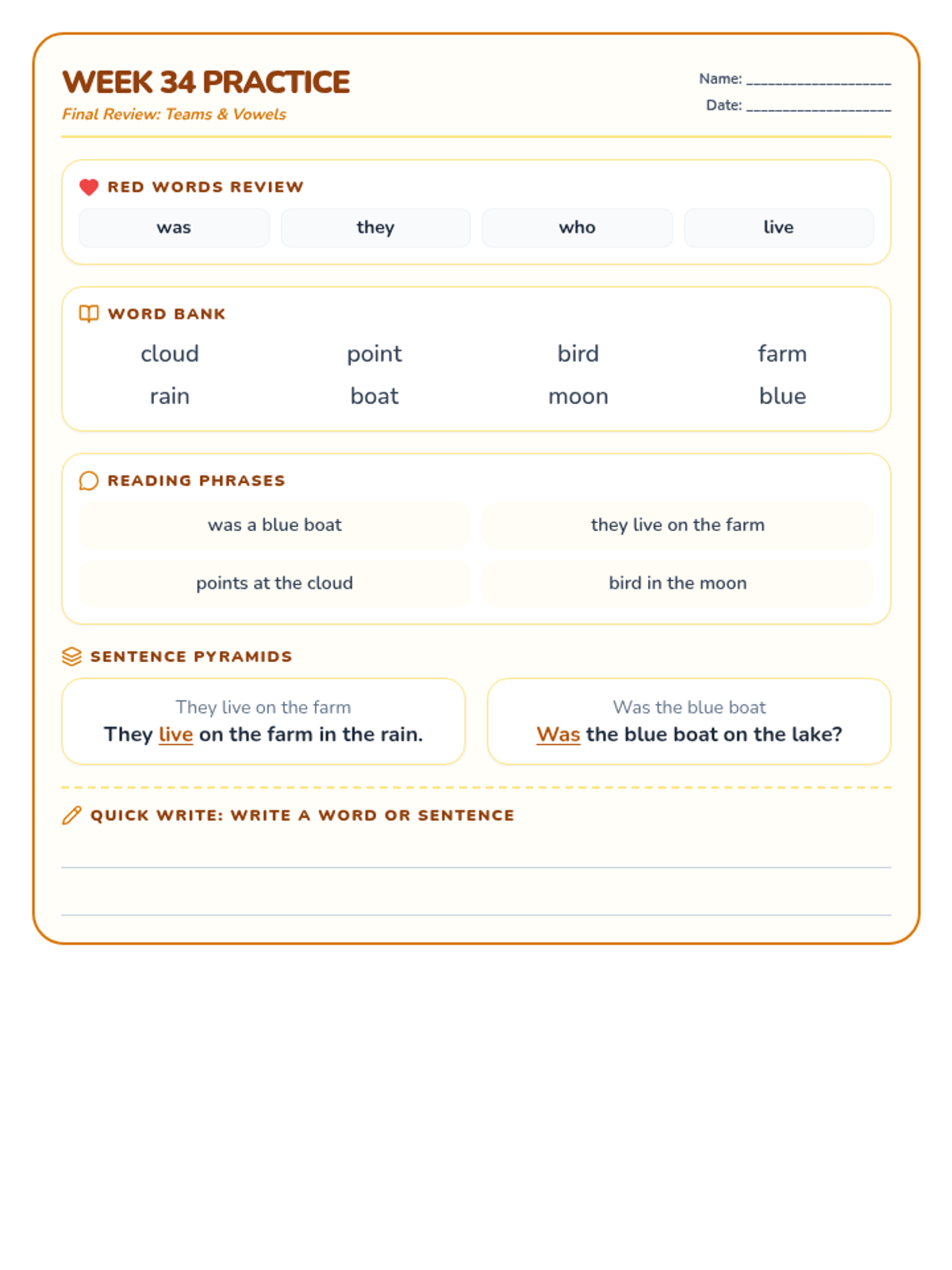
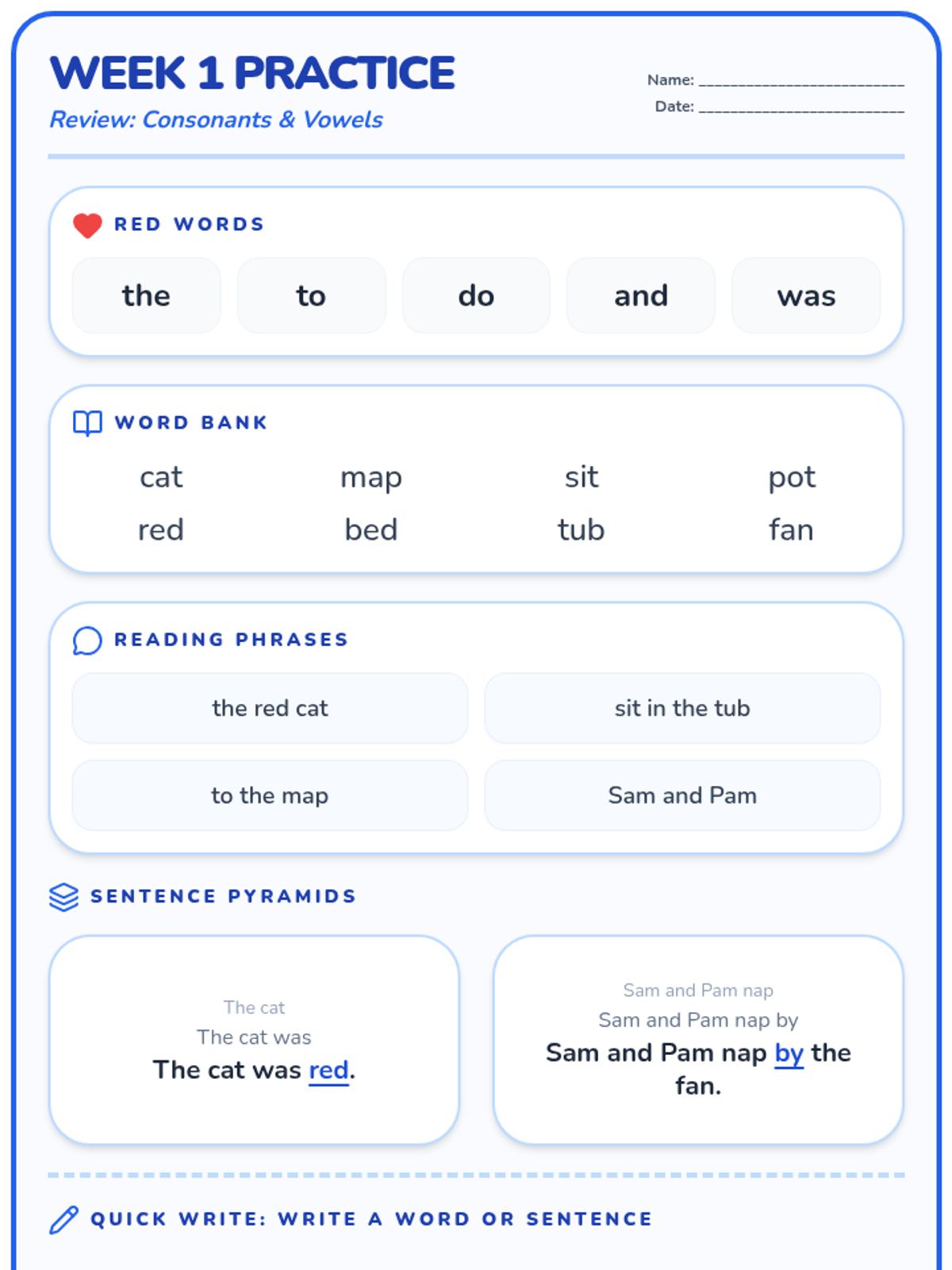
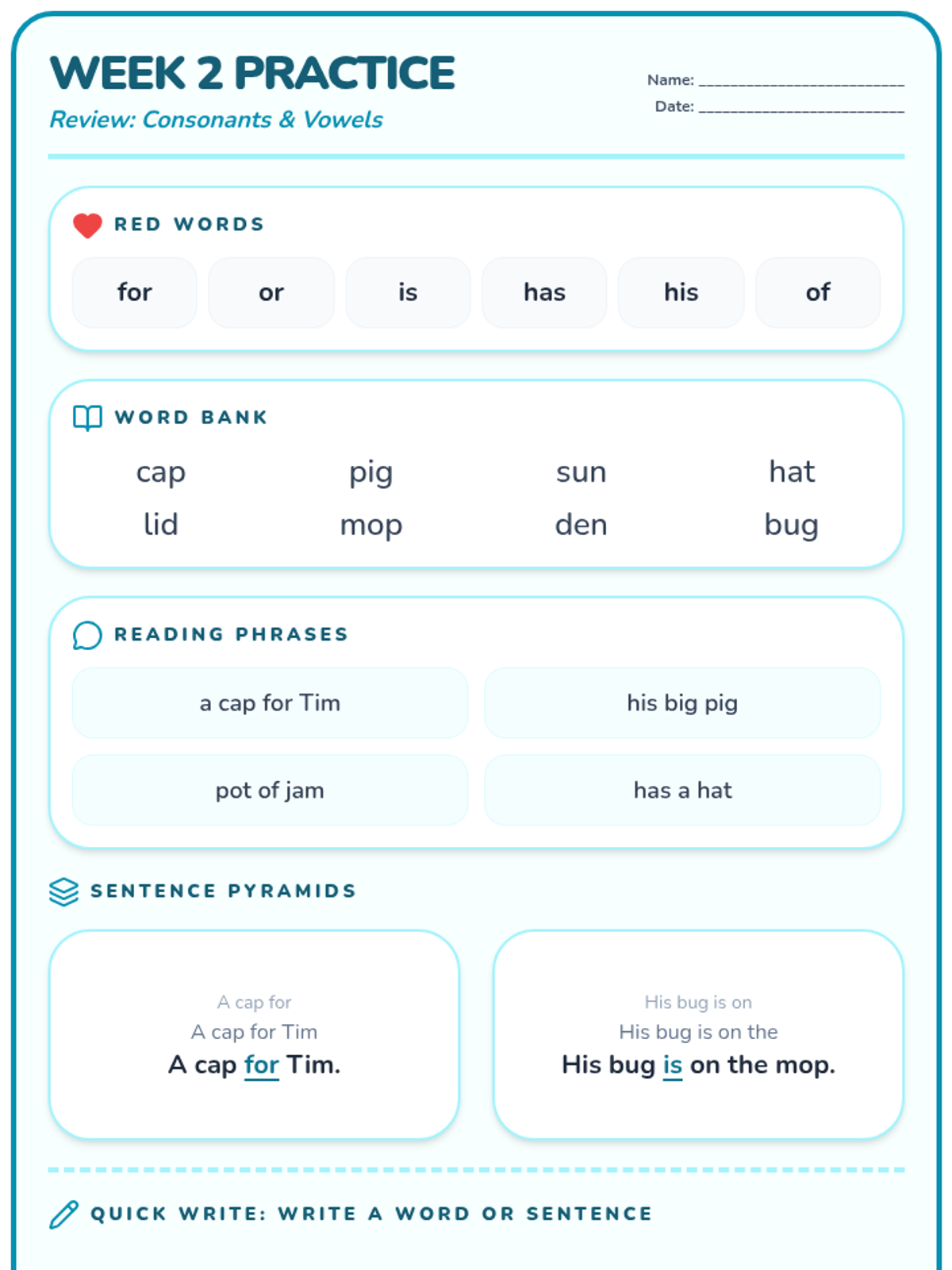
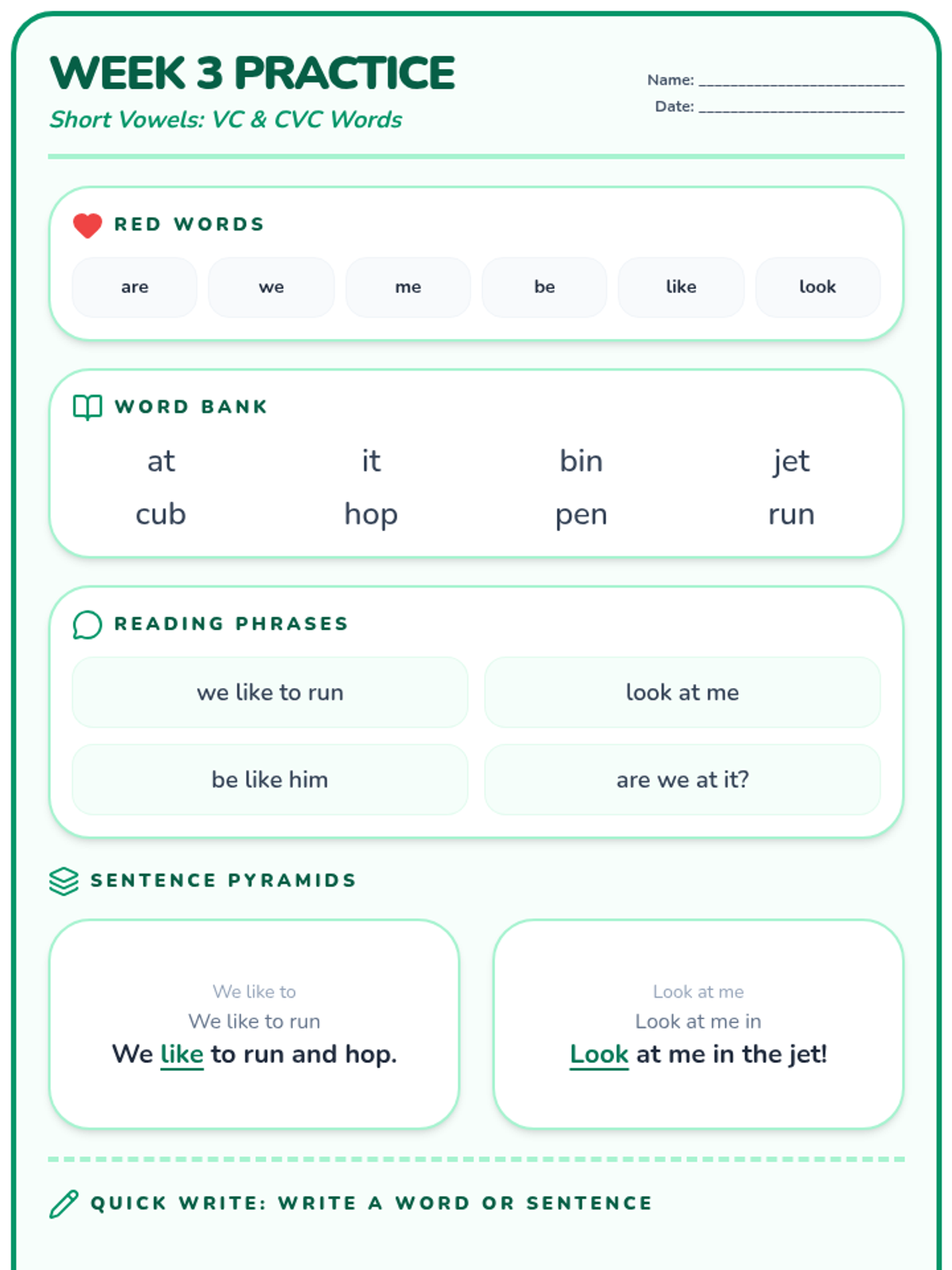
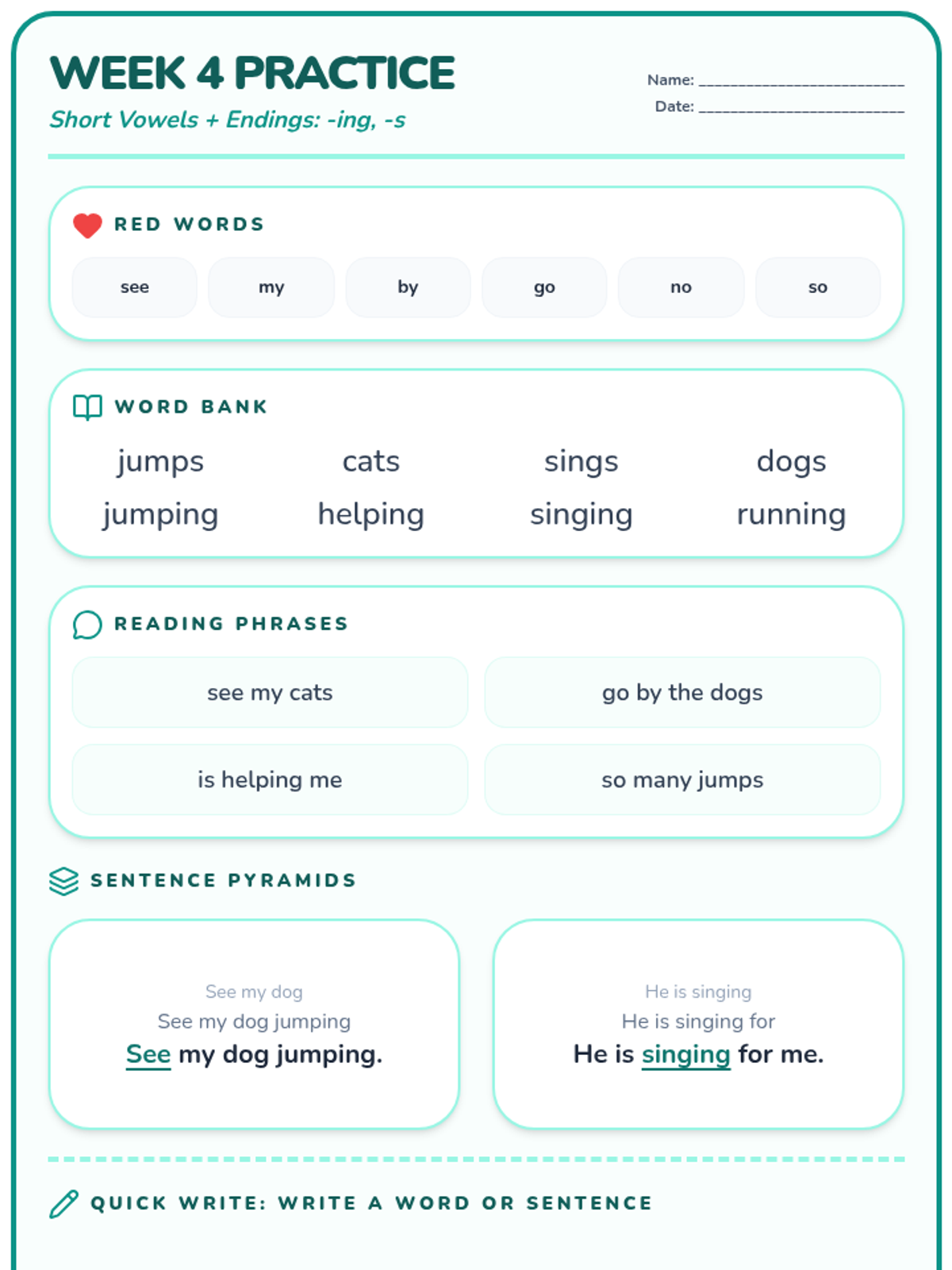
A comprehensive series of phonics practice sheets for 1st grade students covering Units 1 through 6 of the Bridge to Reading curriculum (Weeks 1-34). Each sheet focuses on specific phonics concepts, red words, decodable words, and reading fluency through sentence pyramids, designed for one-page printing.
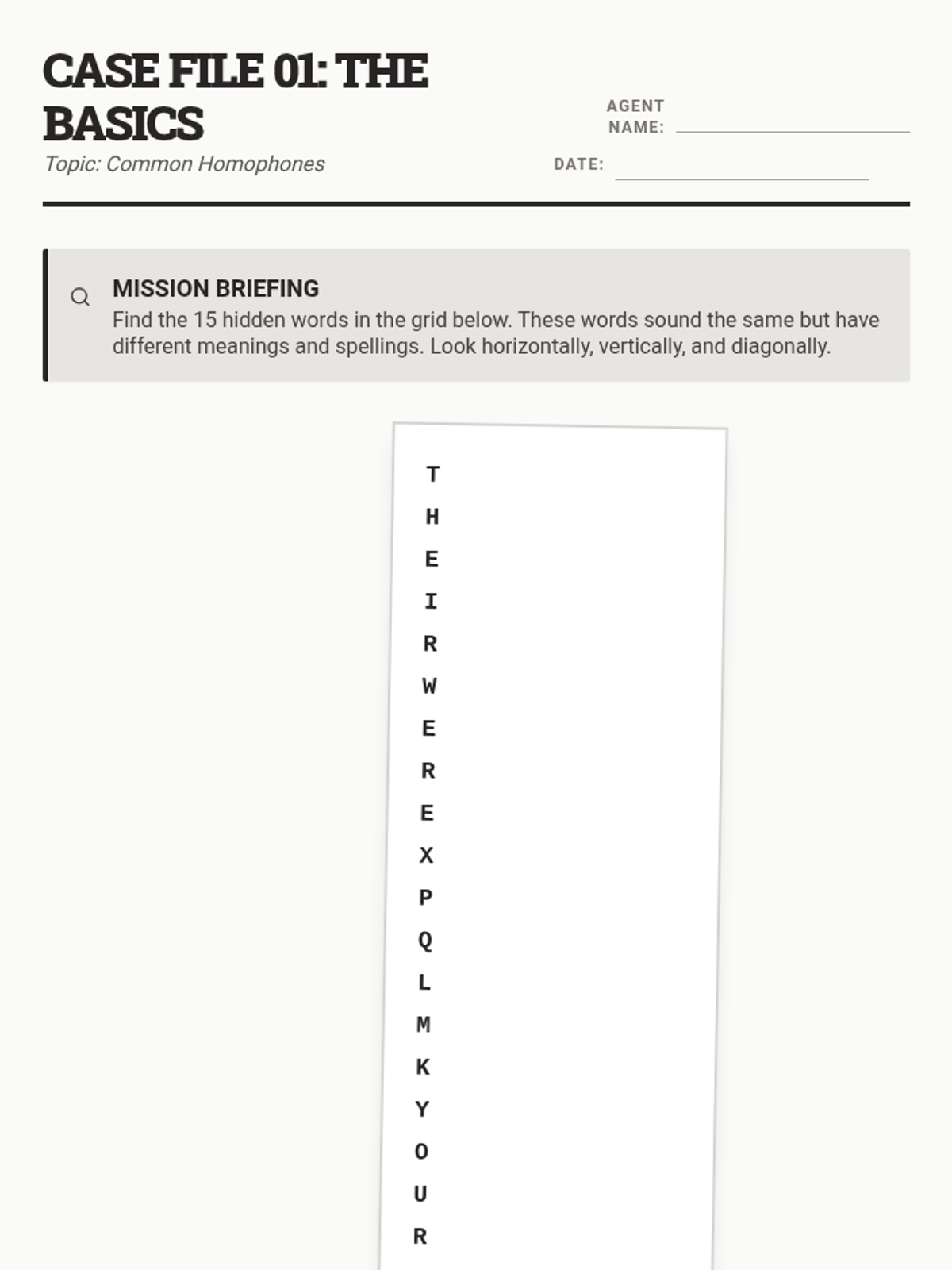
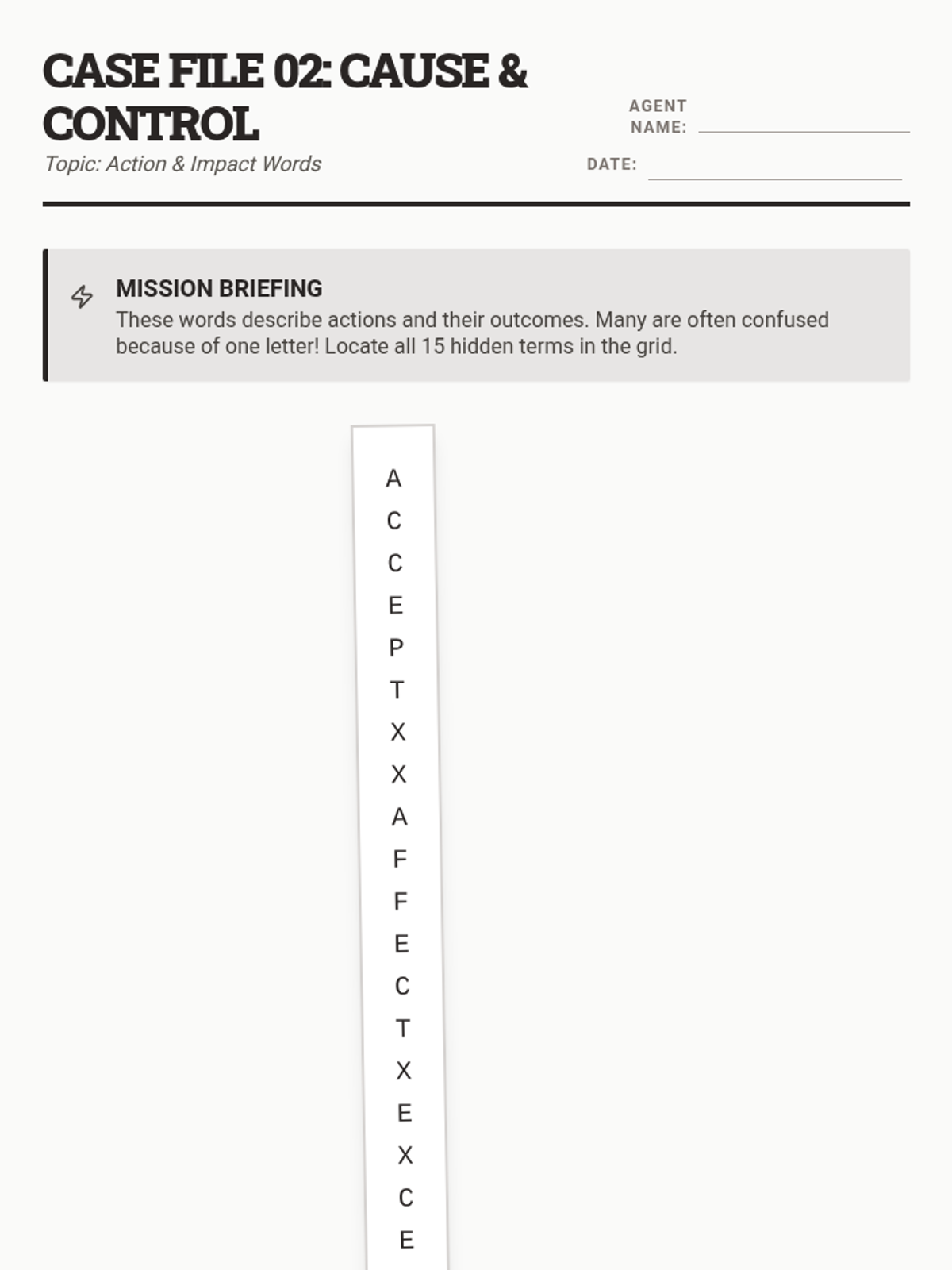
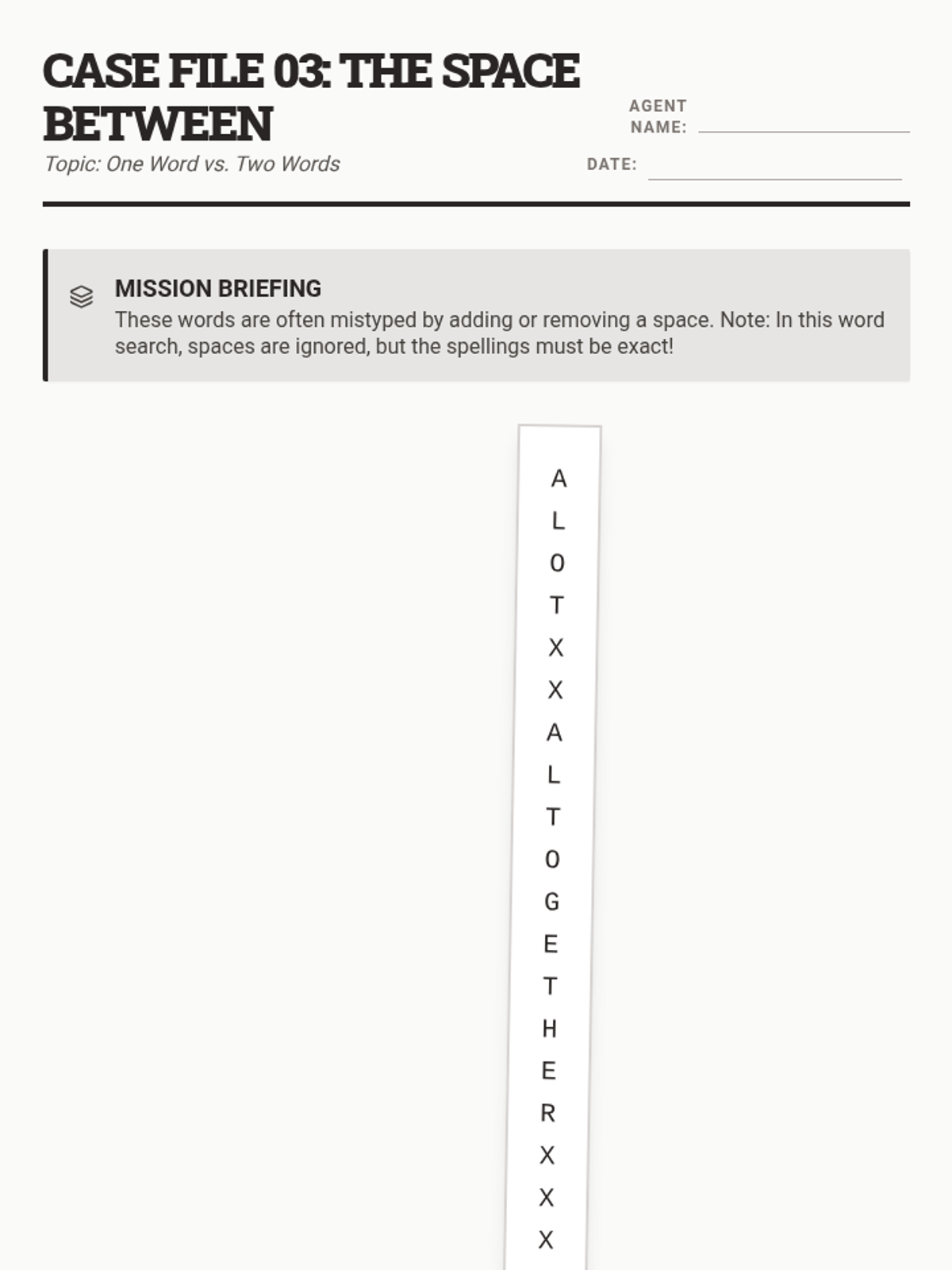
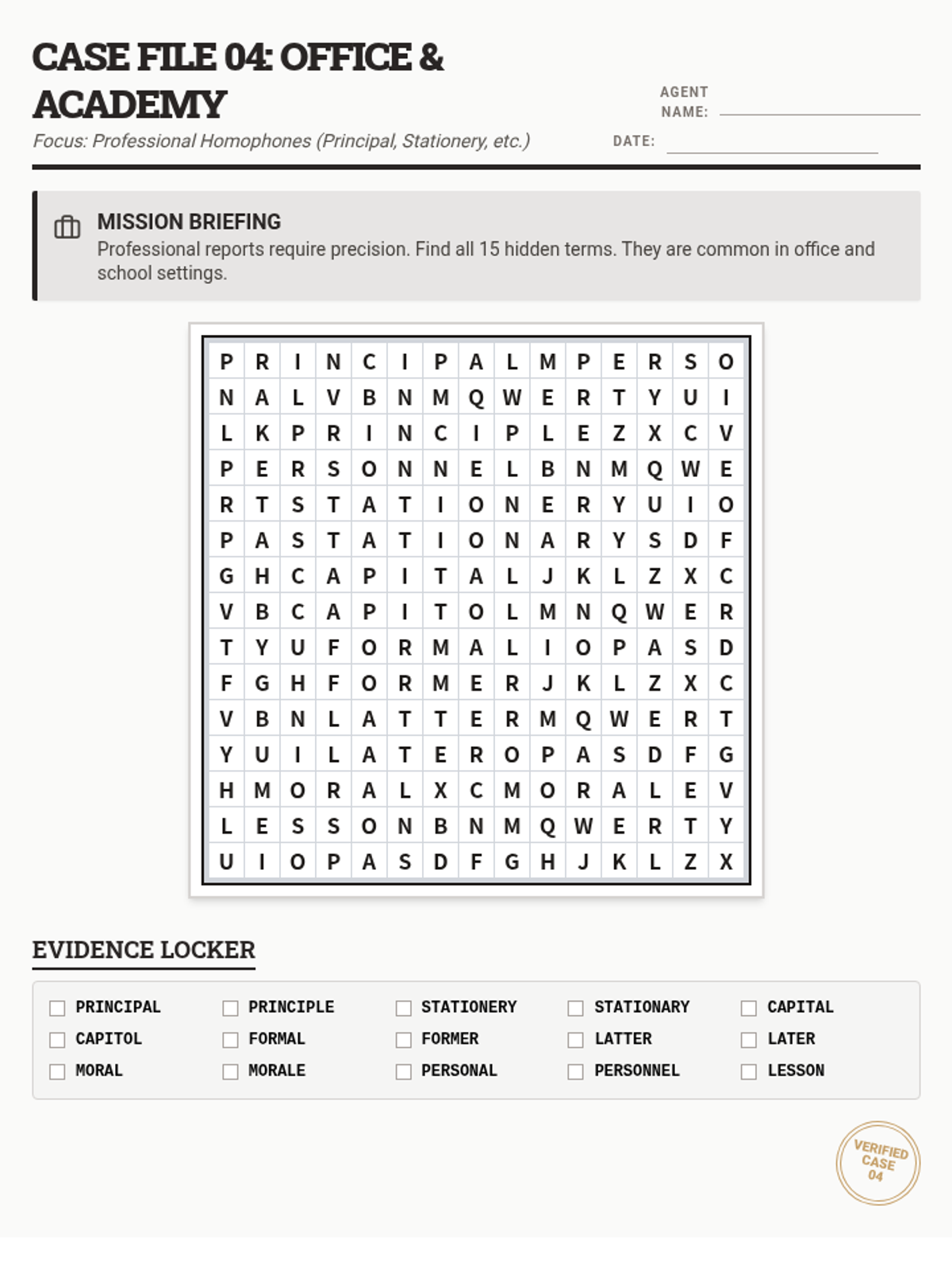
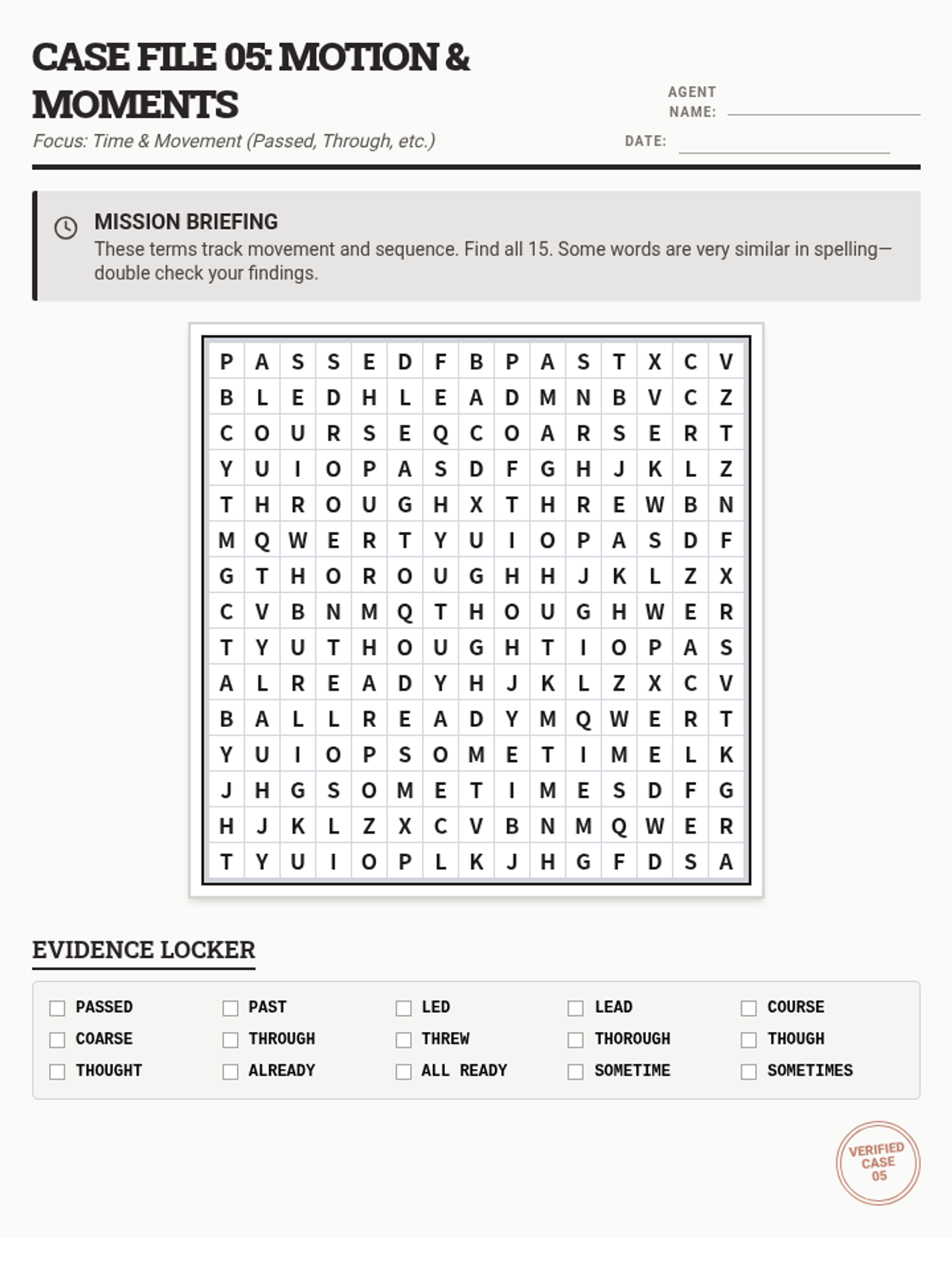
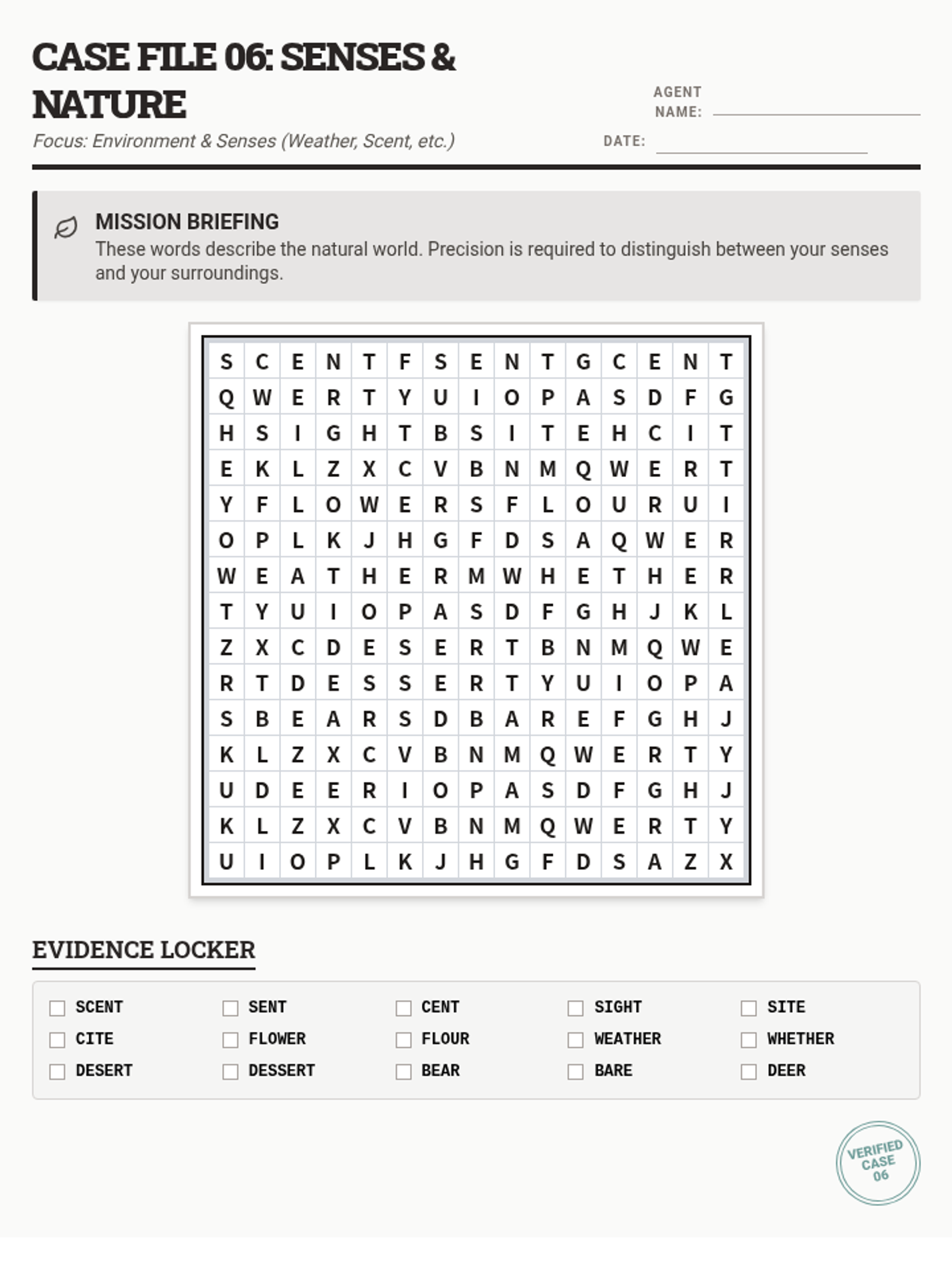
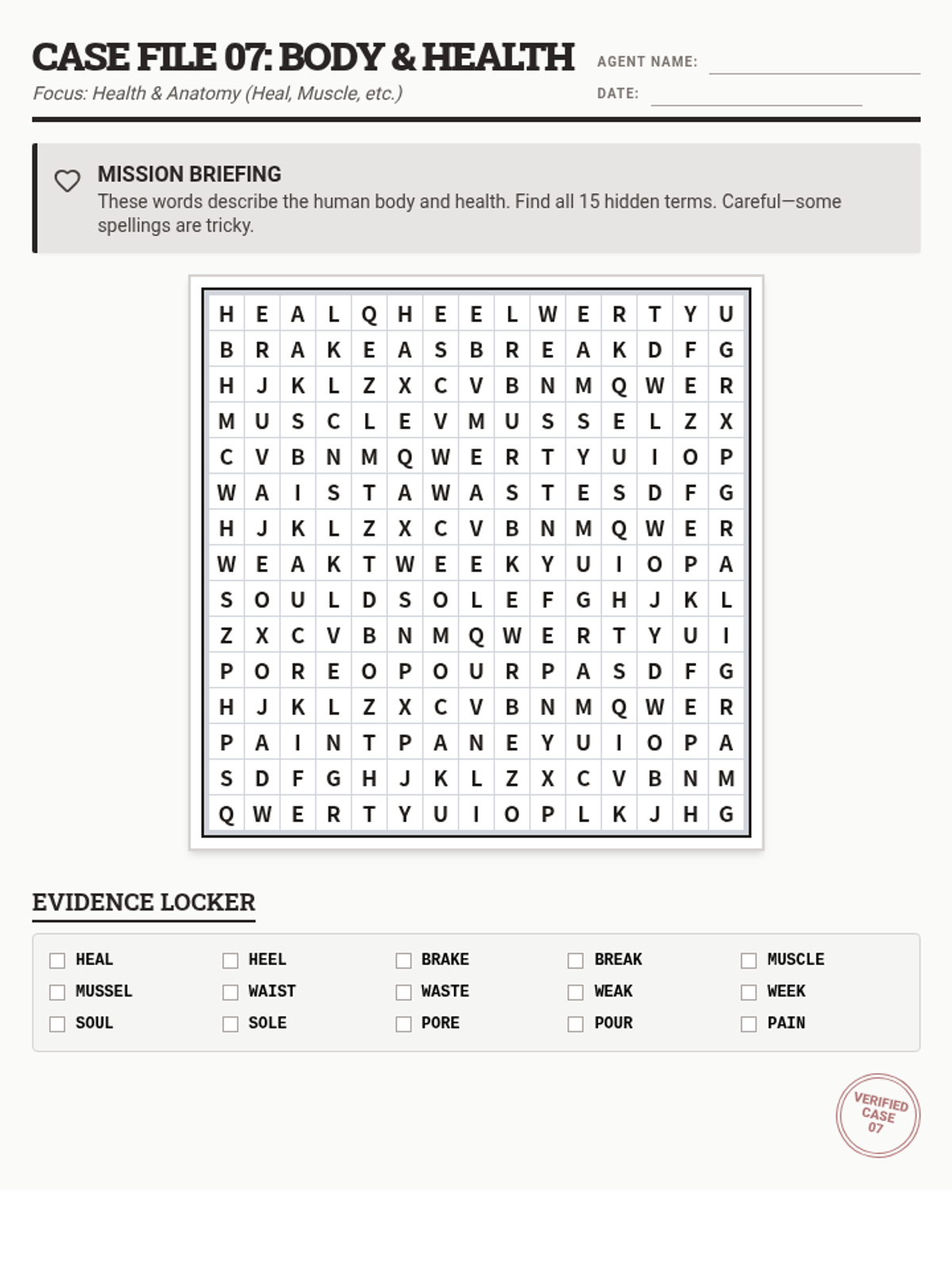
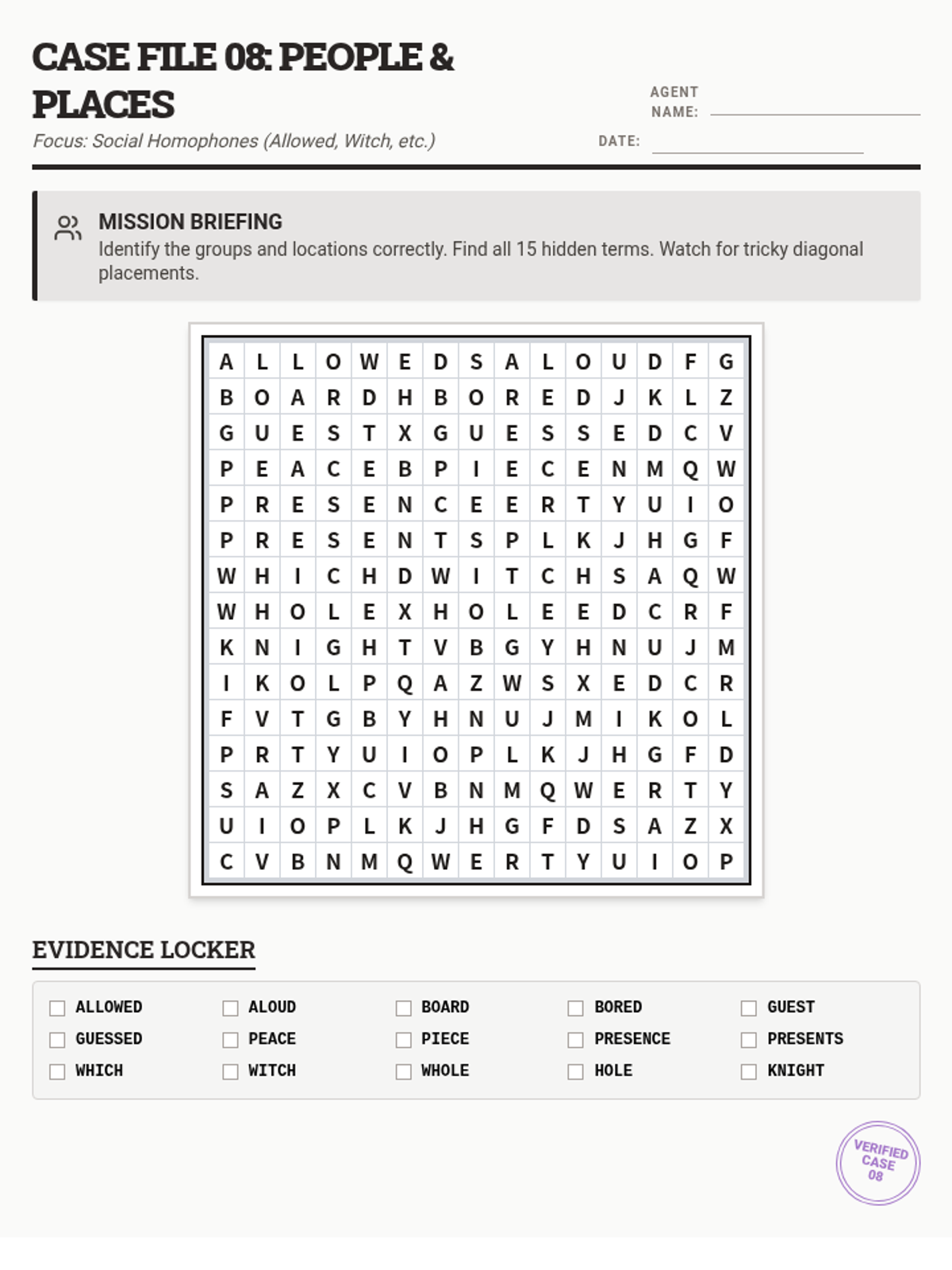
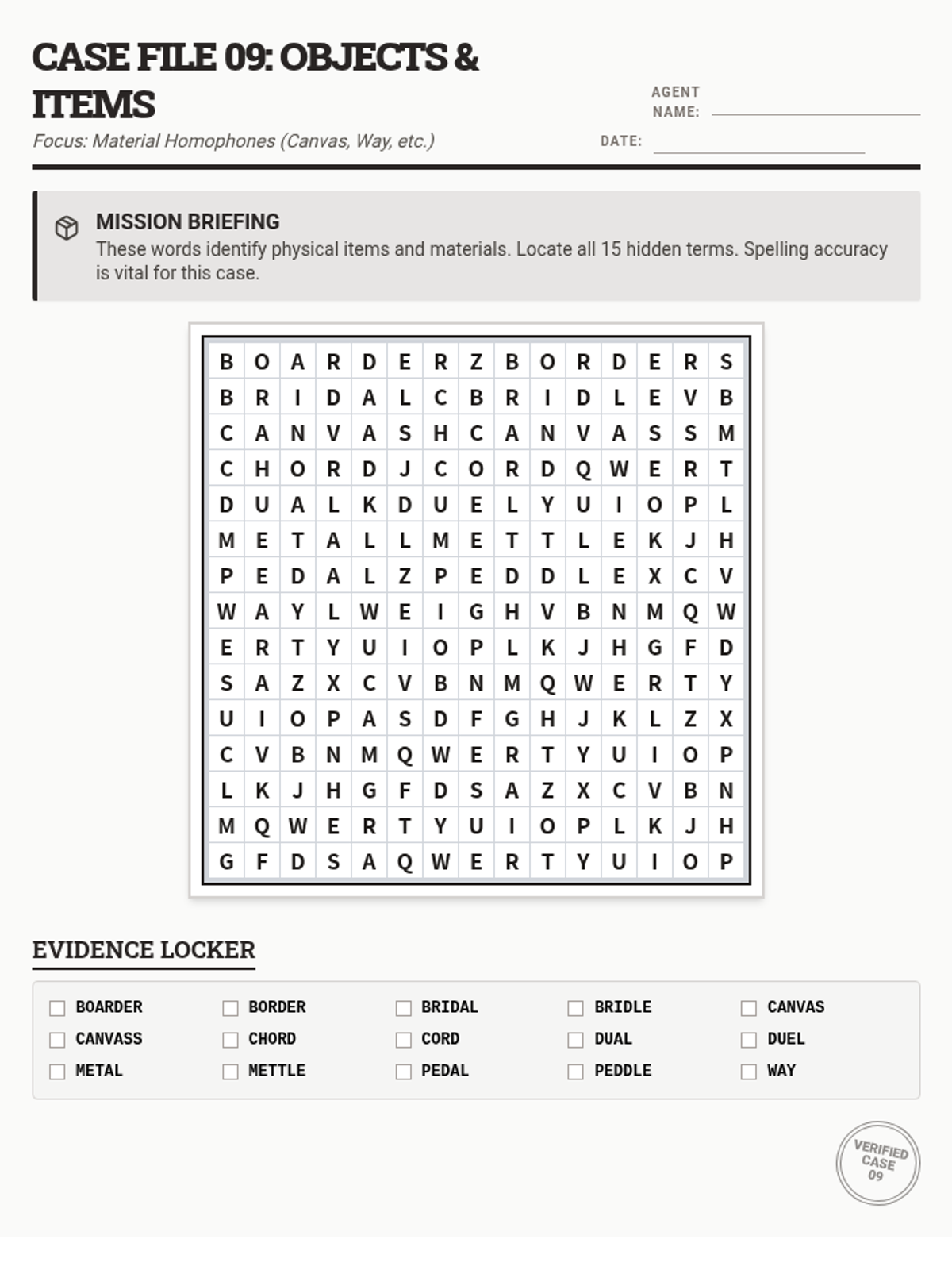
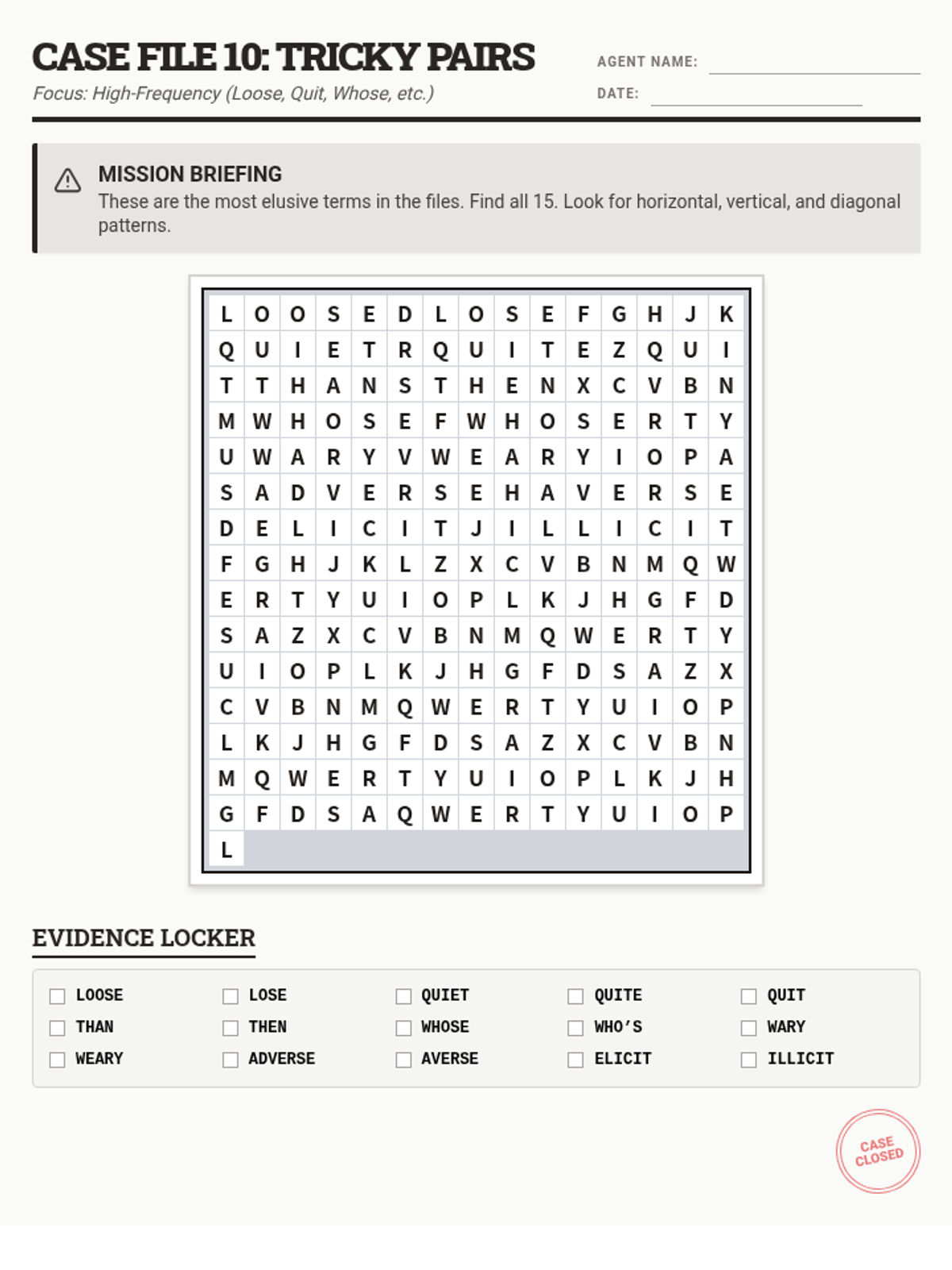
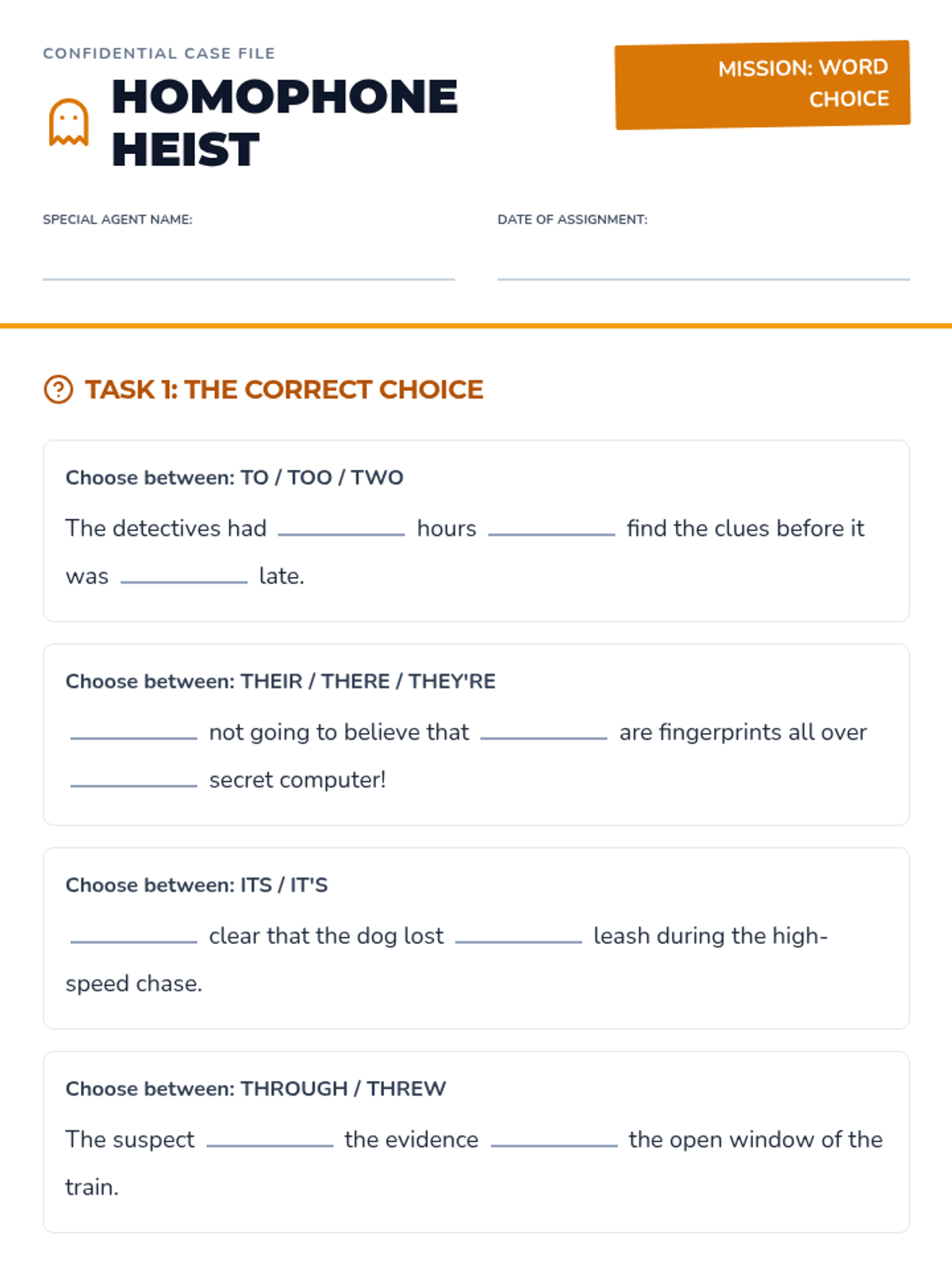
A comprehensive collection of 10 word search puzzles focusing on commonly confused words (homophones and near-homophones). Designed to improve vocabulary recognition and spelling through engaging "Case File" themed activities.
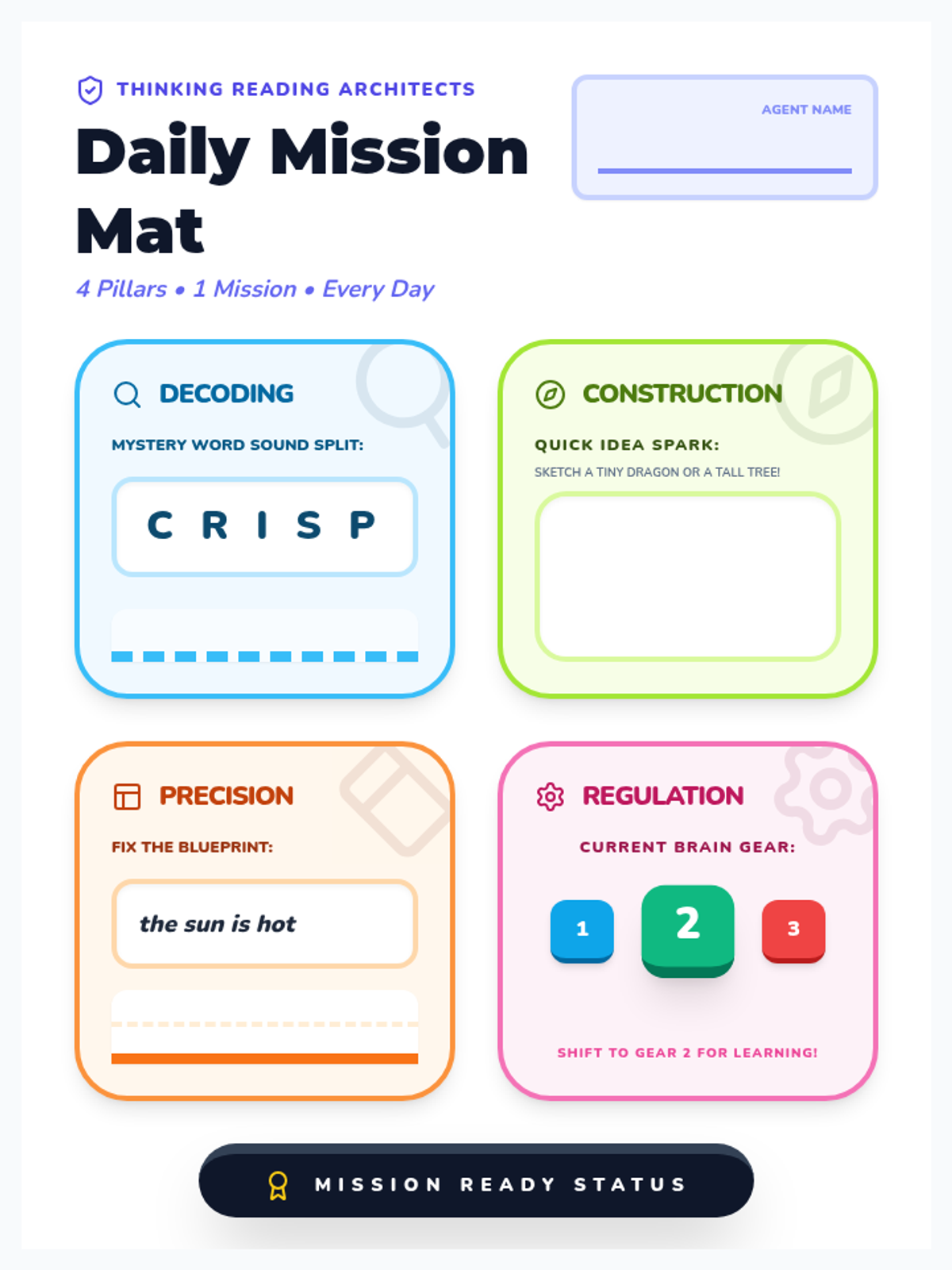
The starting point for all student agents, featuring the mission briefing and essential toolkits for the four program pillars.
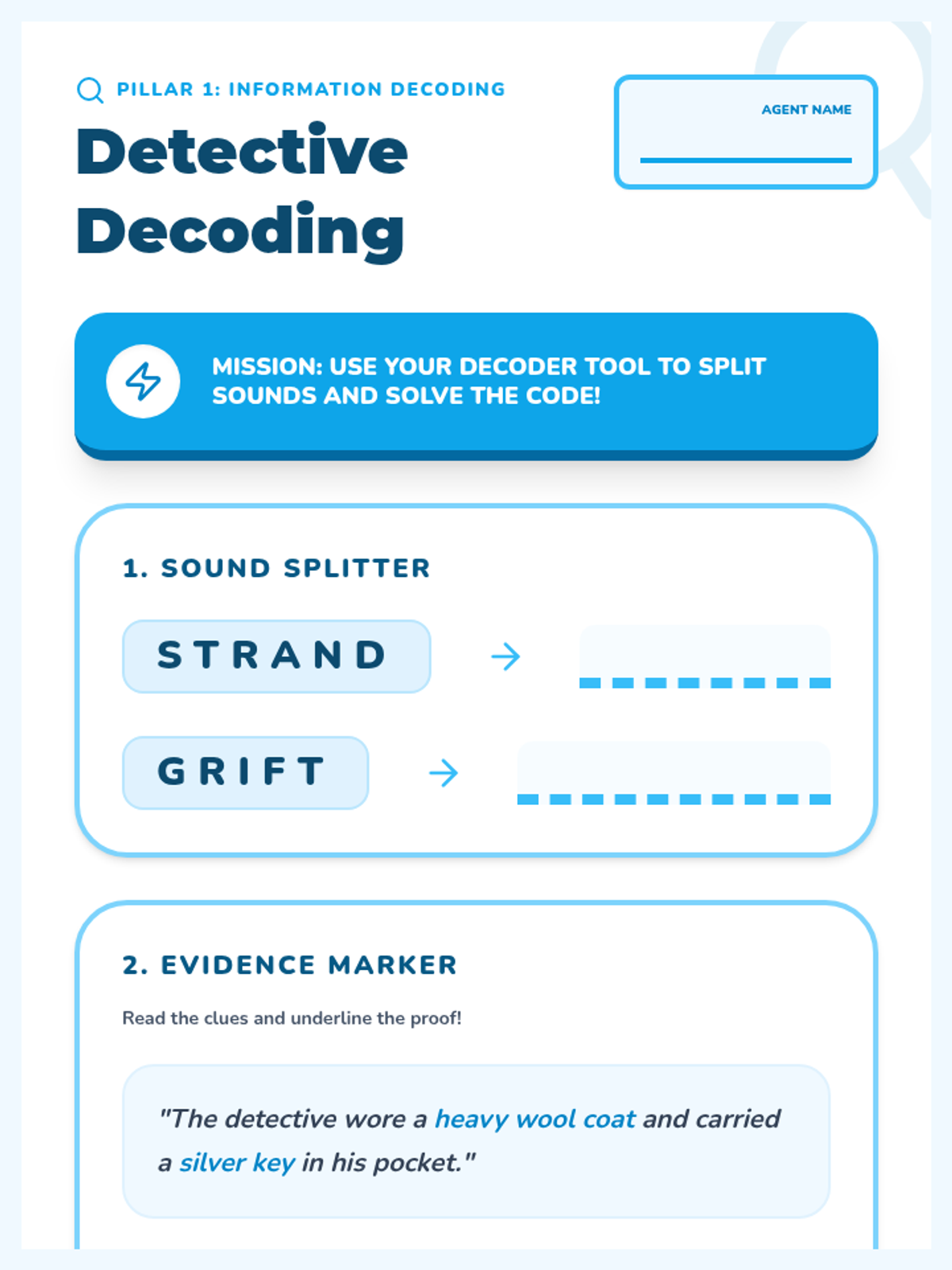
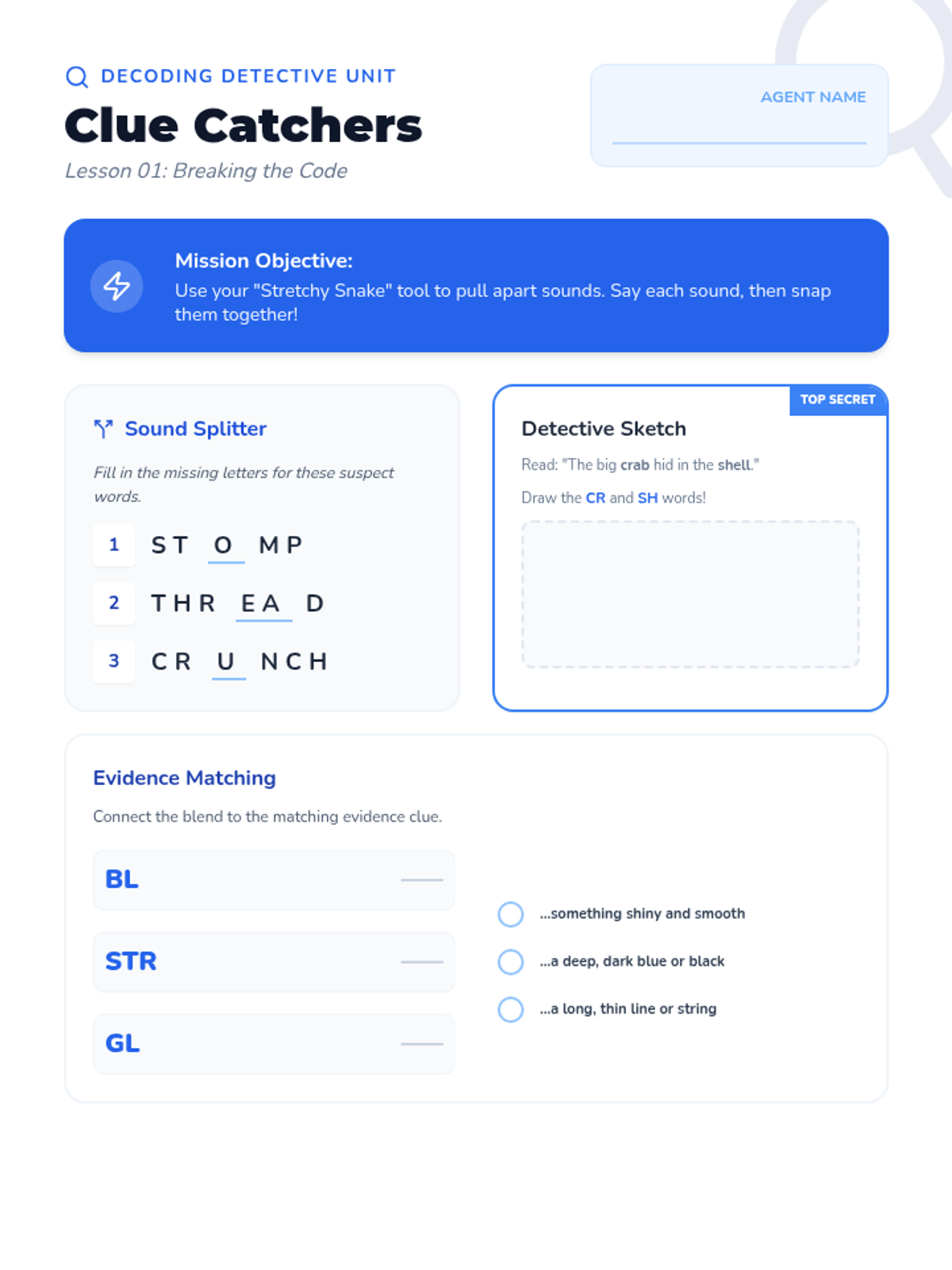
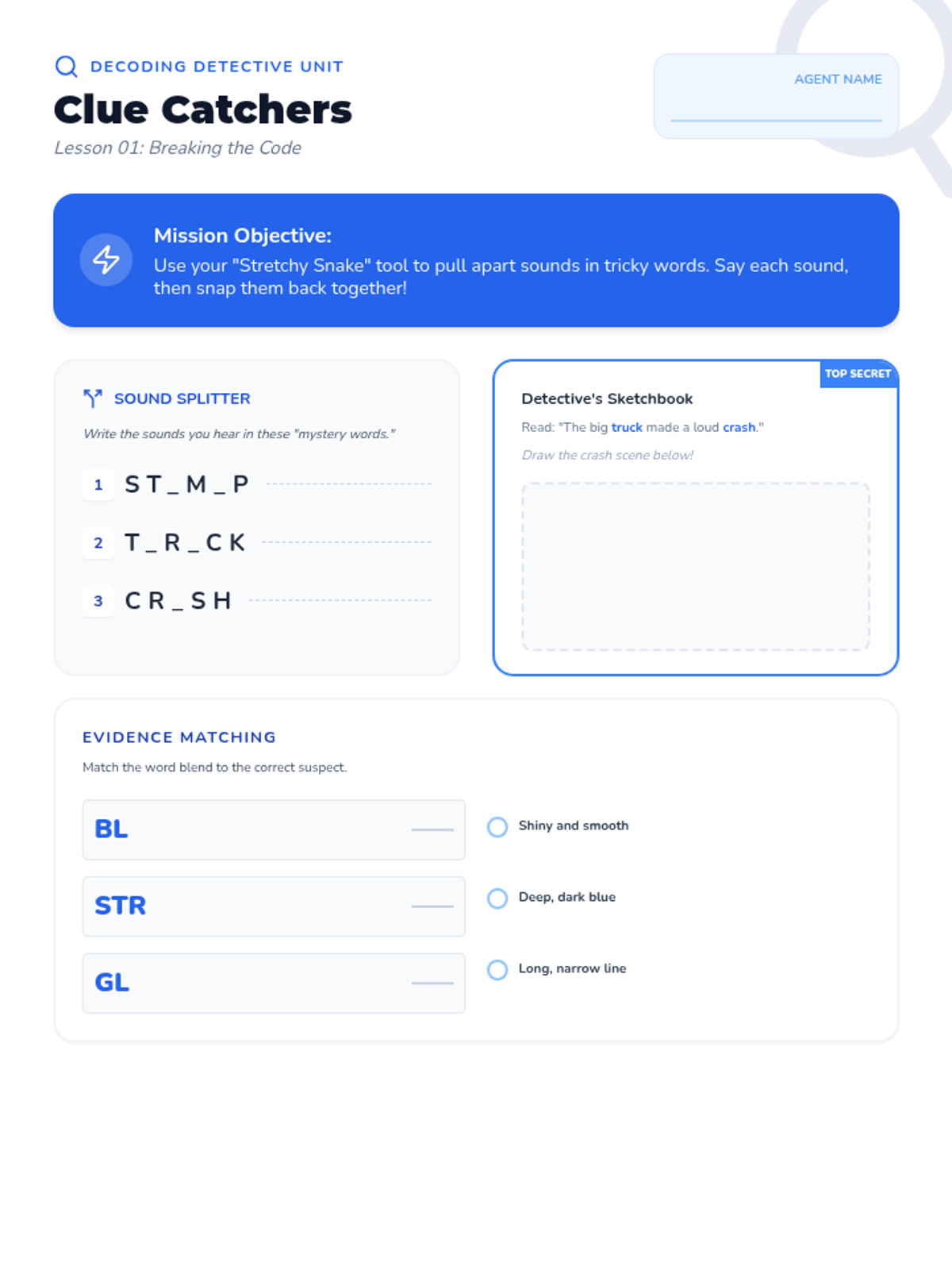
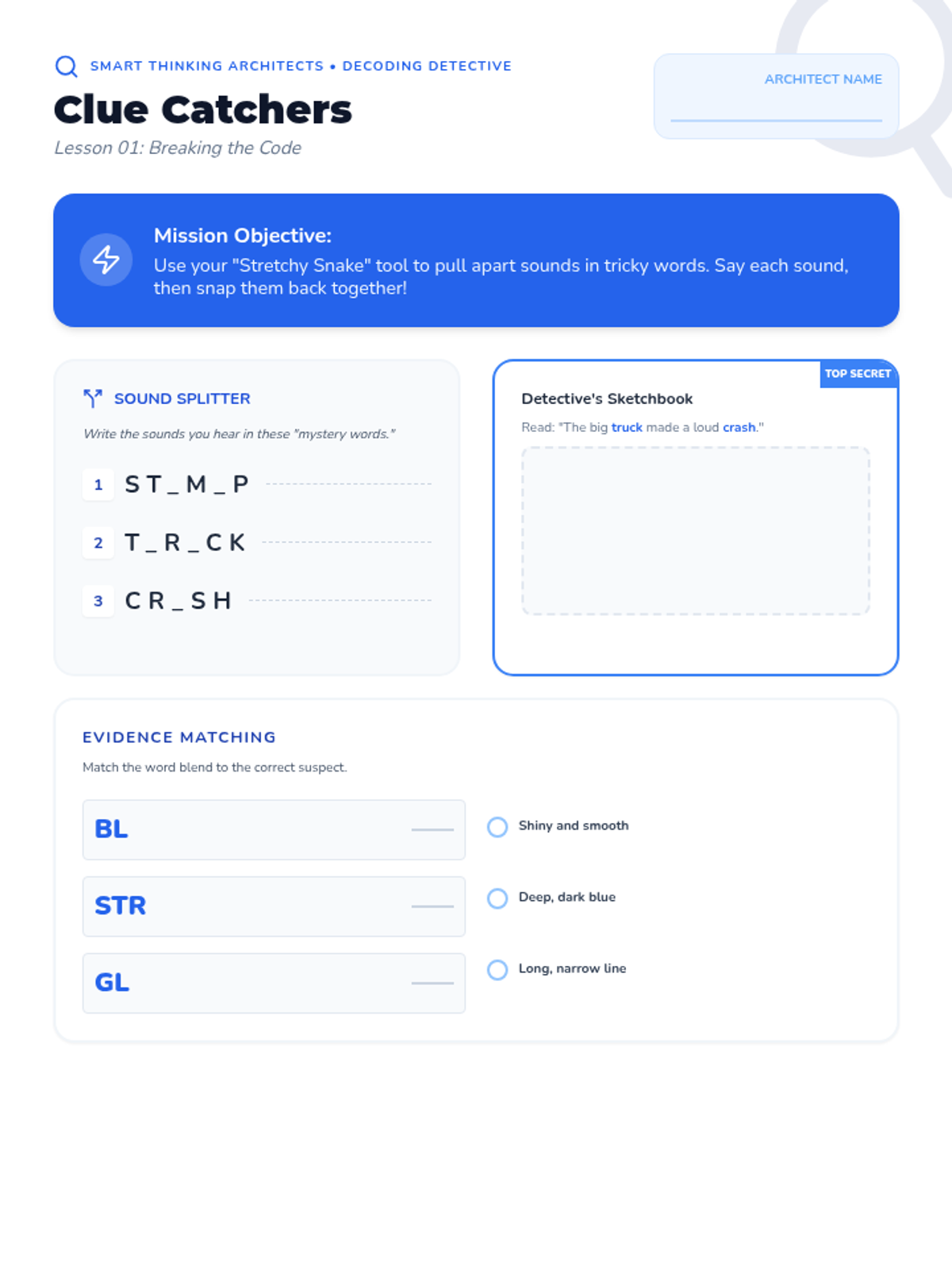
Students become Clue Catchers, using detective strategies to decode unfamiliar words and sounds in text.
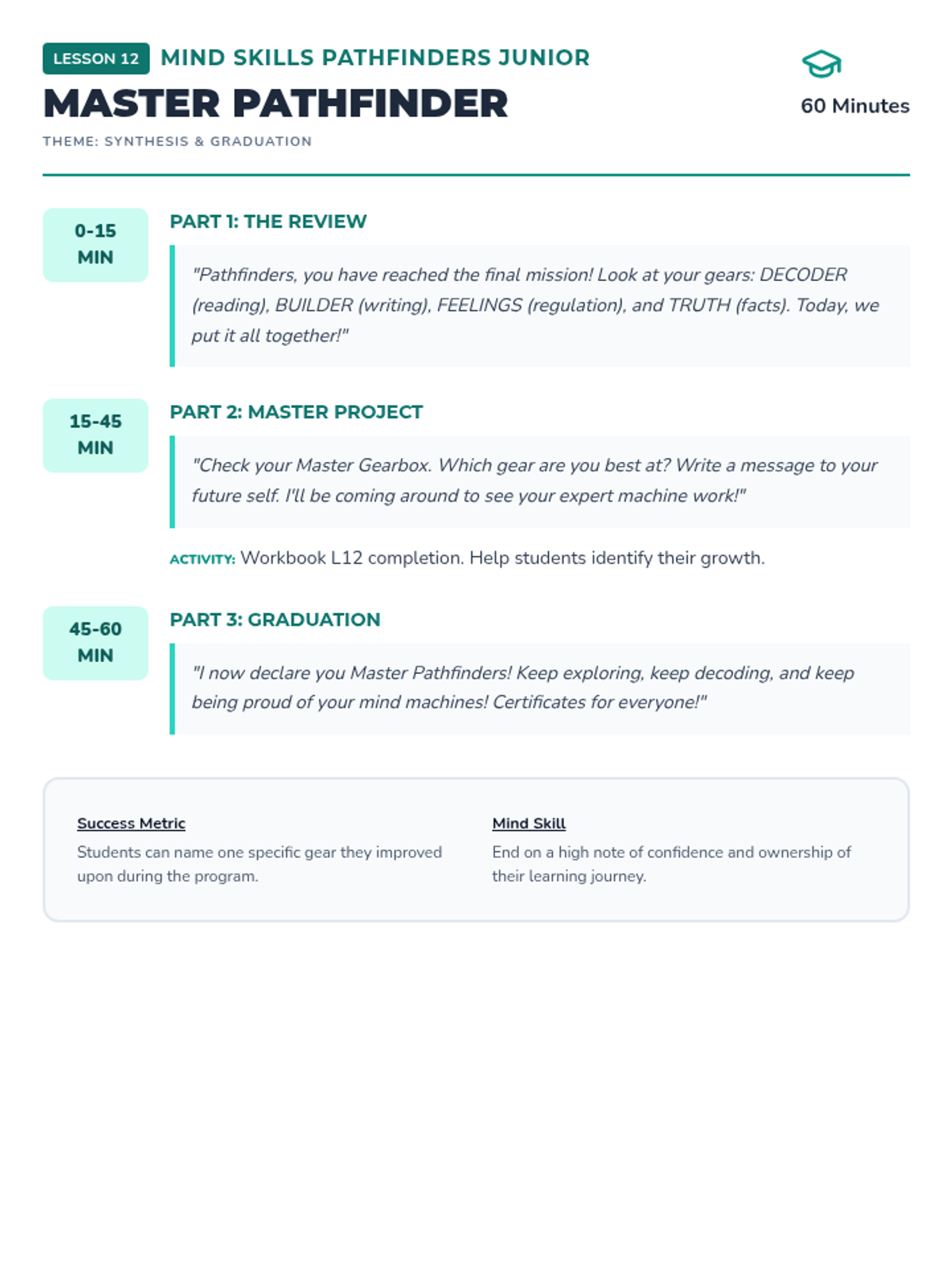
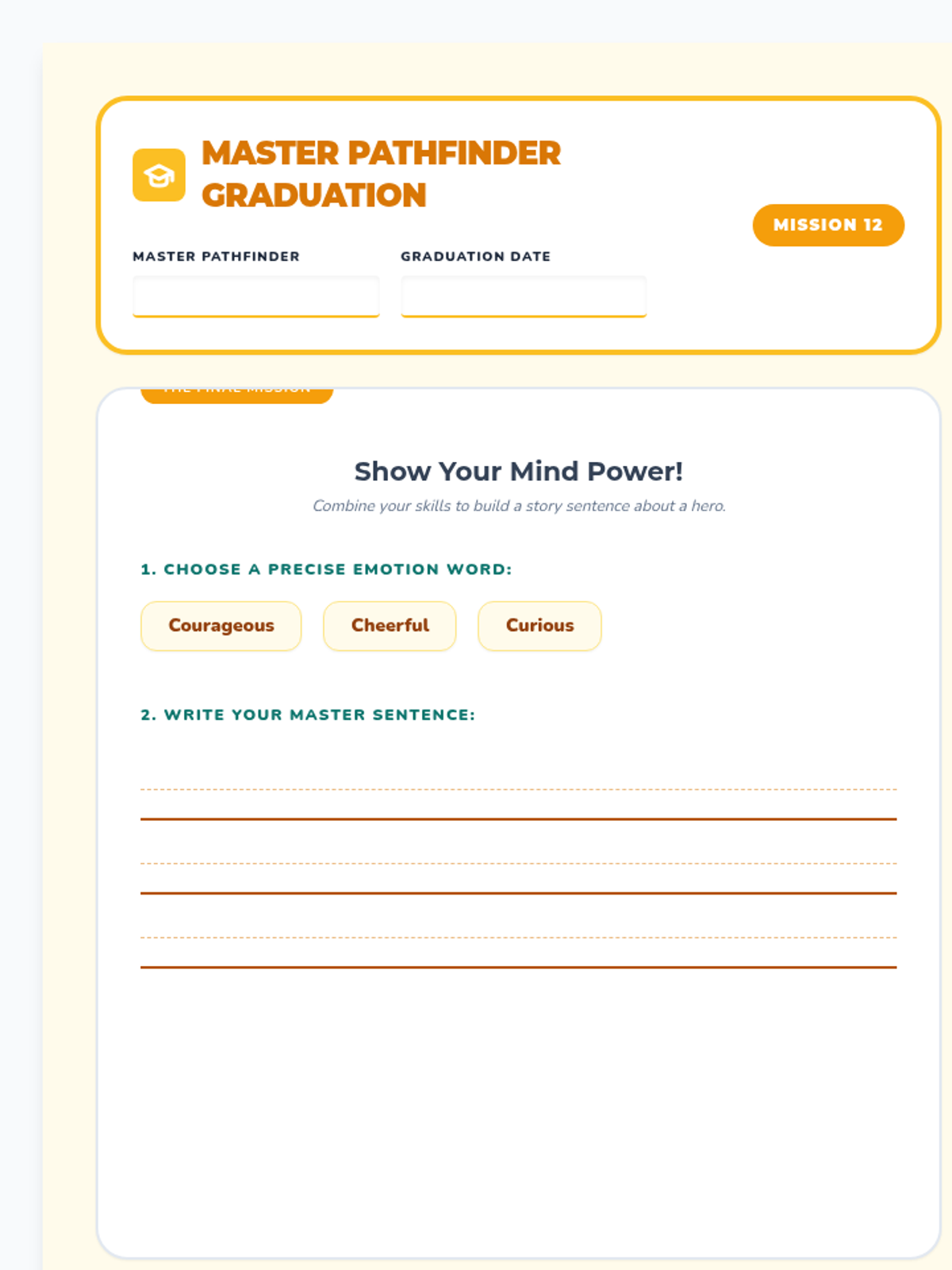
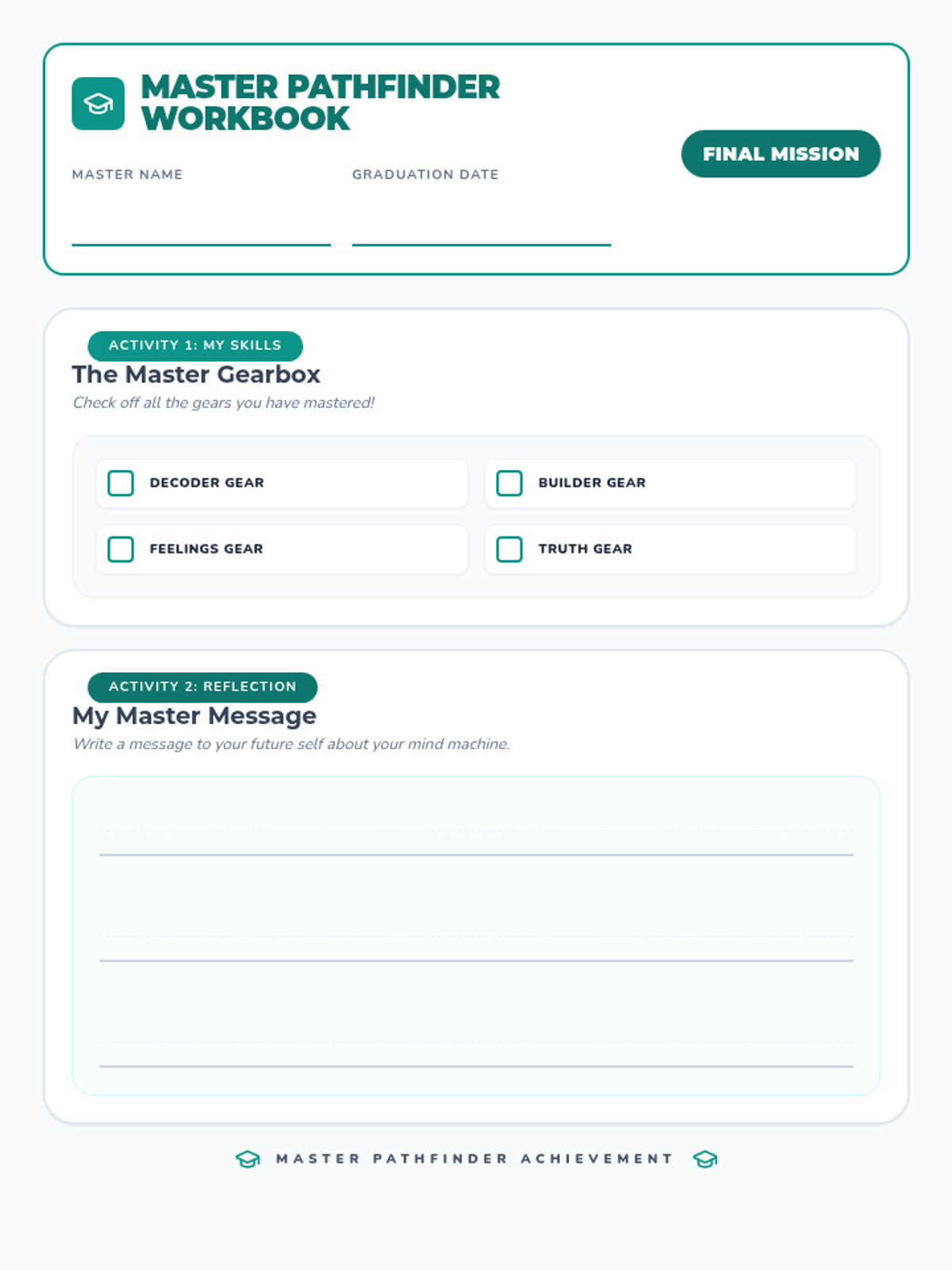
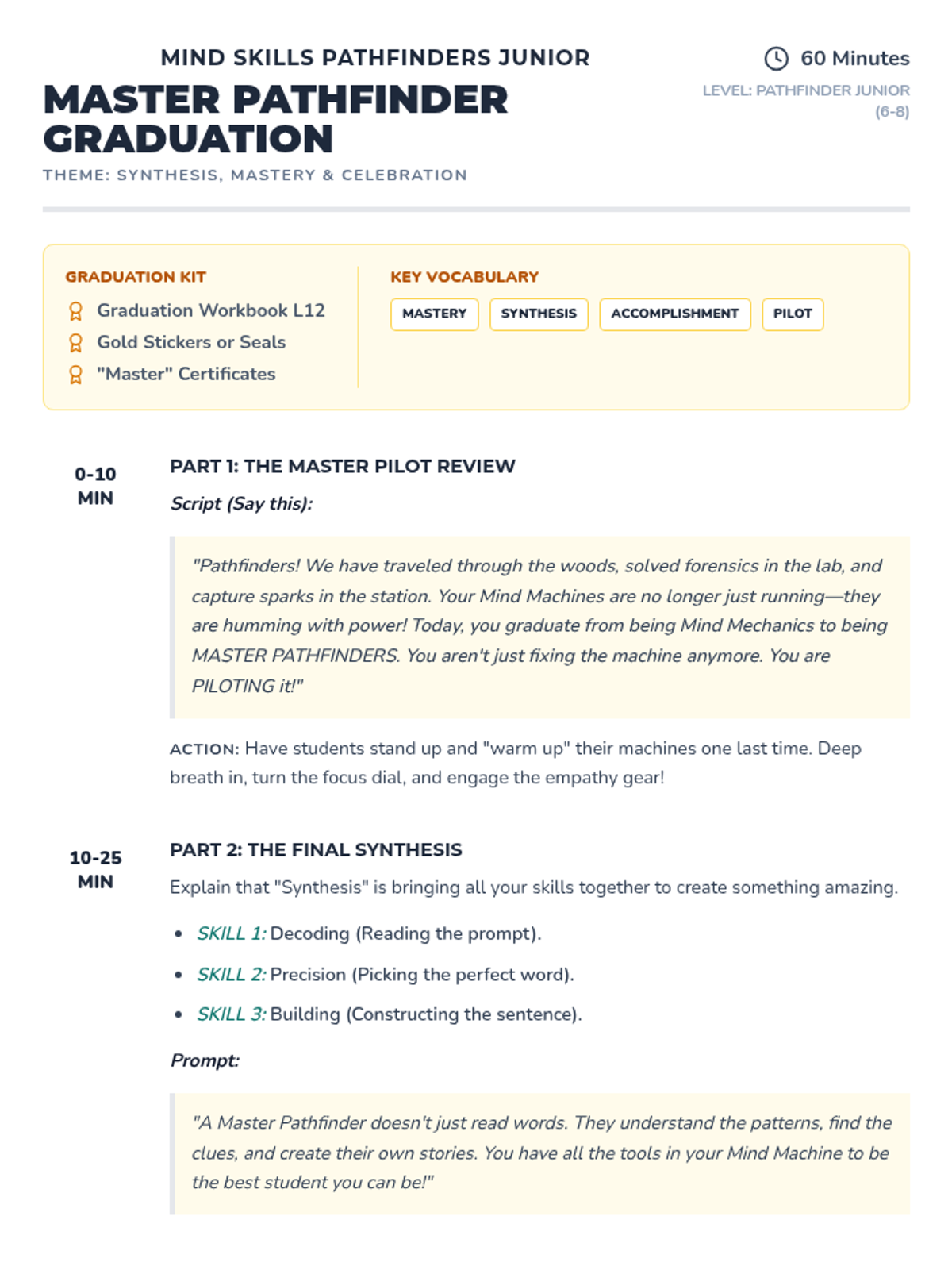
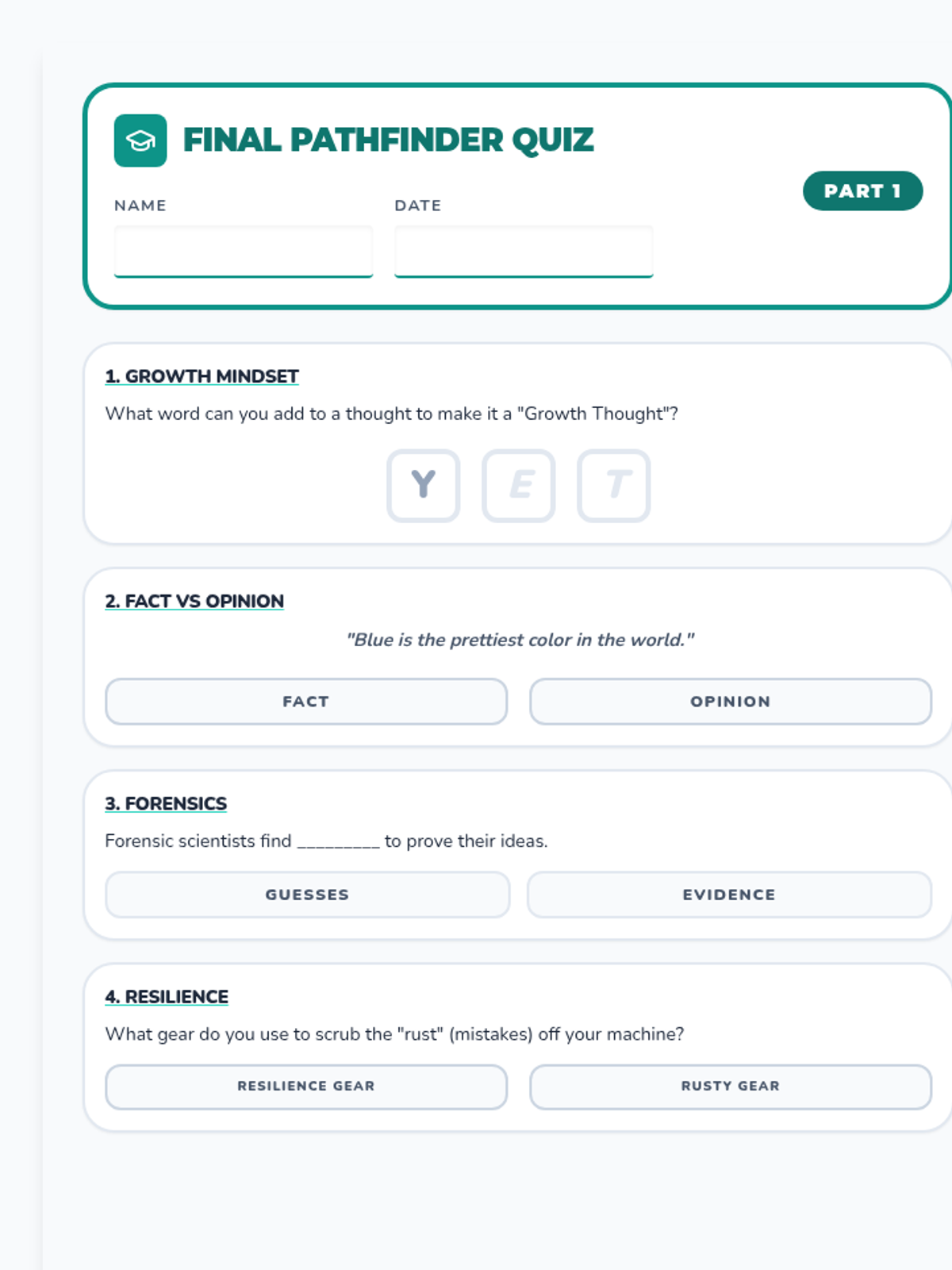
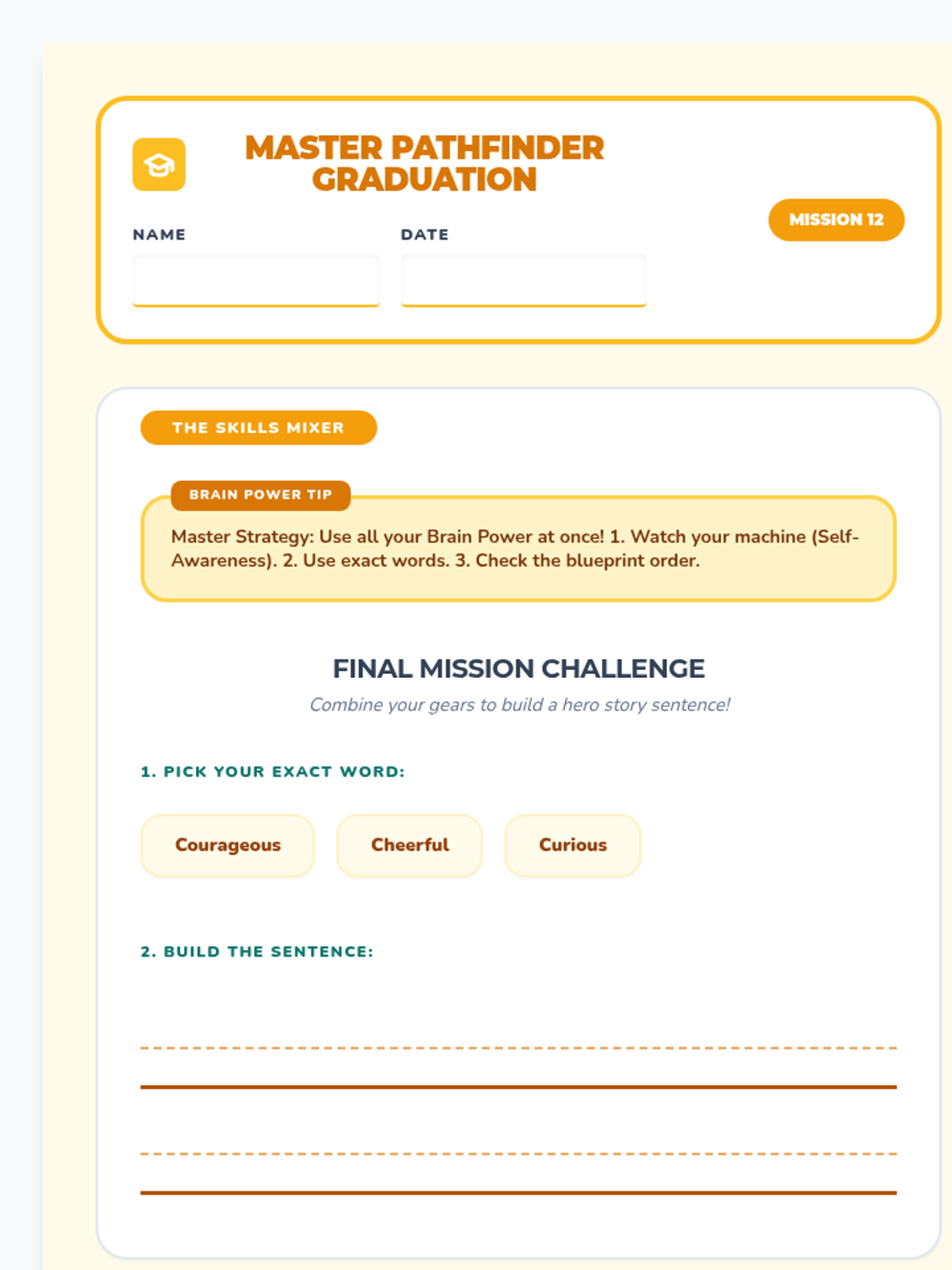
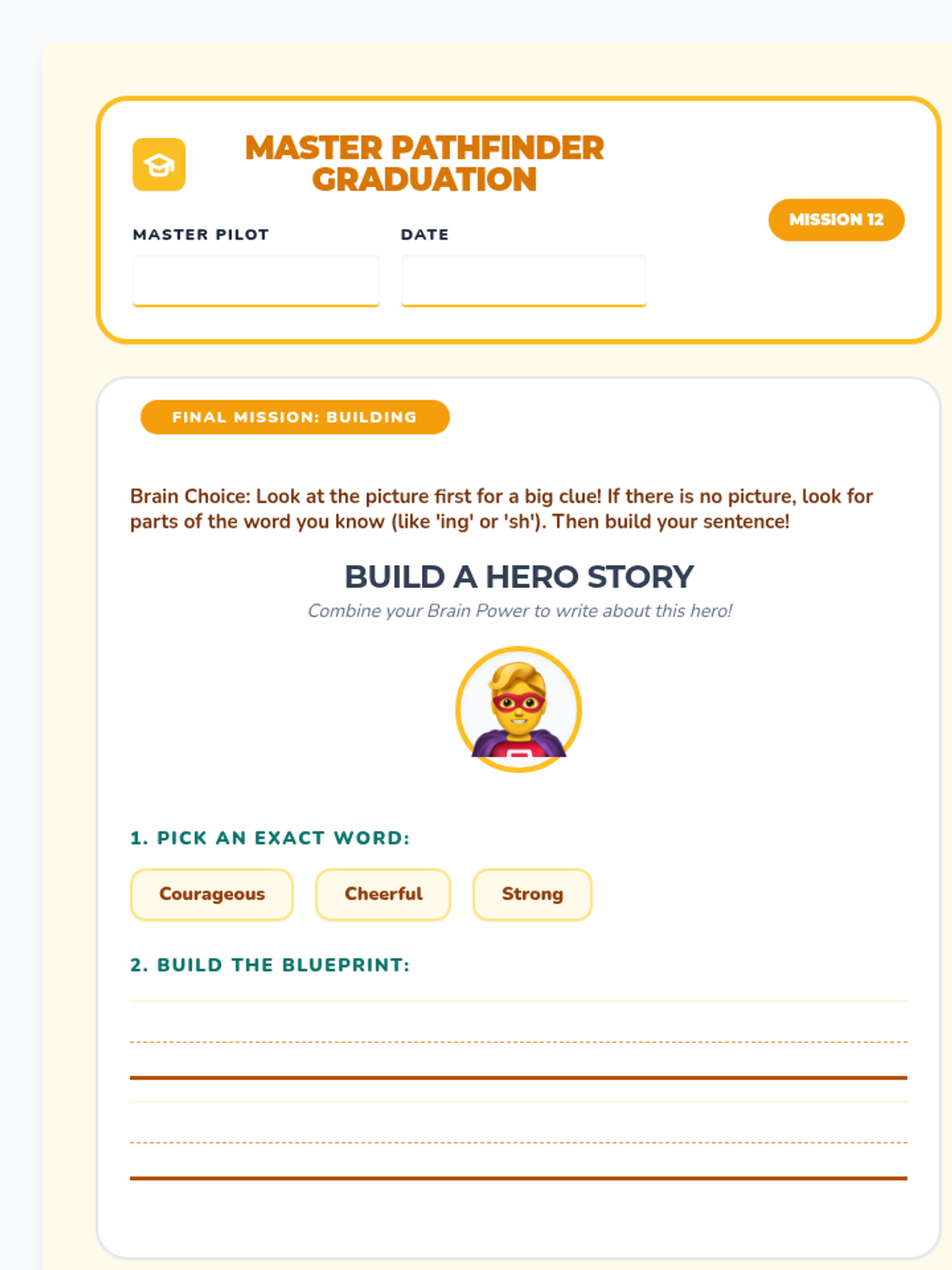
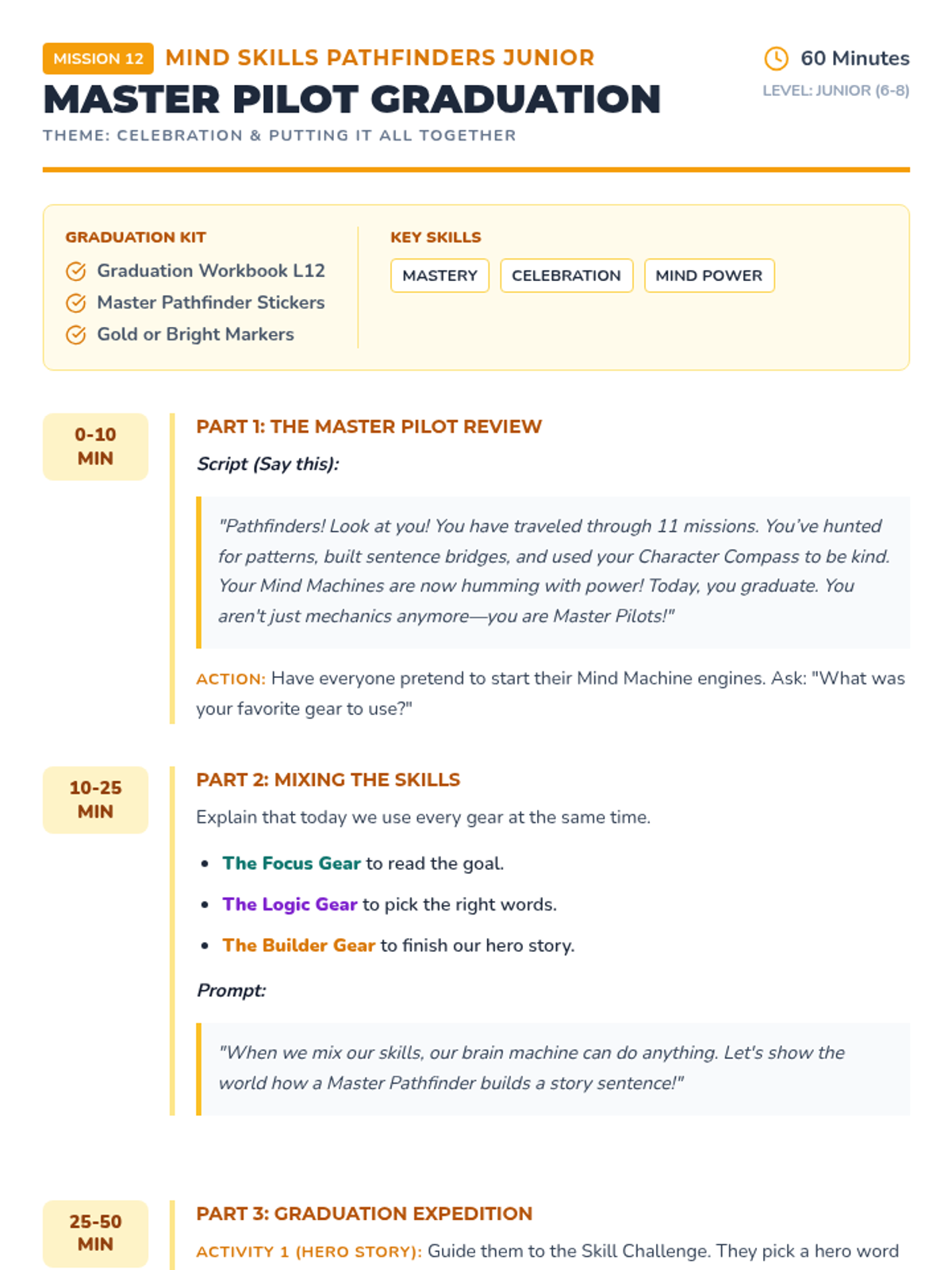
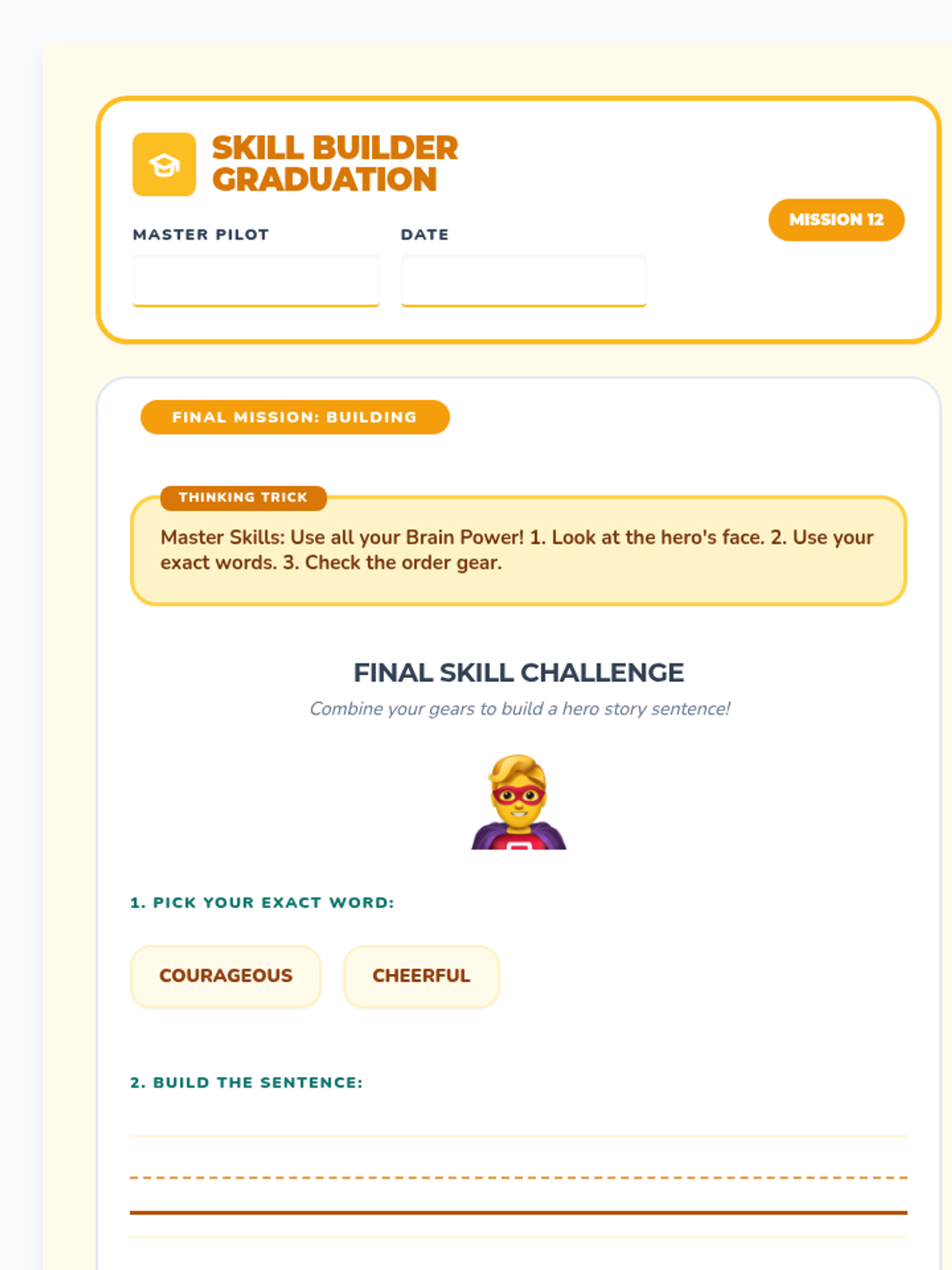
A celebratory final session where students demonstrate their 'Master Pathfinder' skills and receive recognition for their growth in thinking and English.
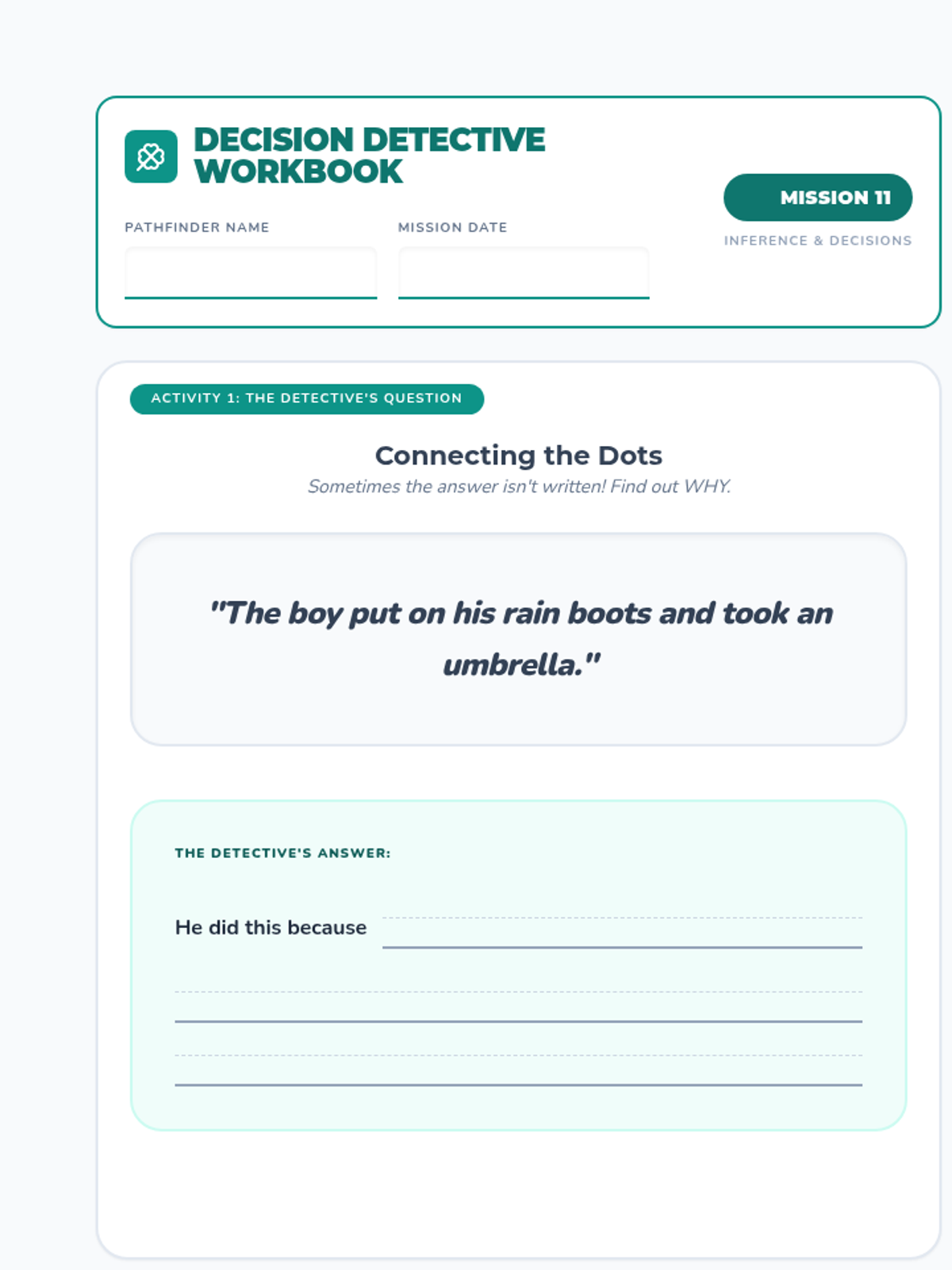
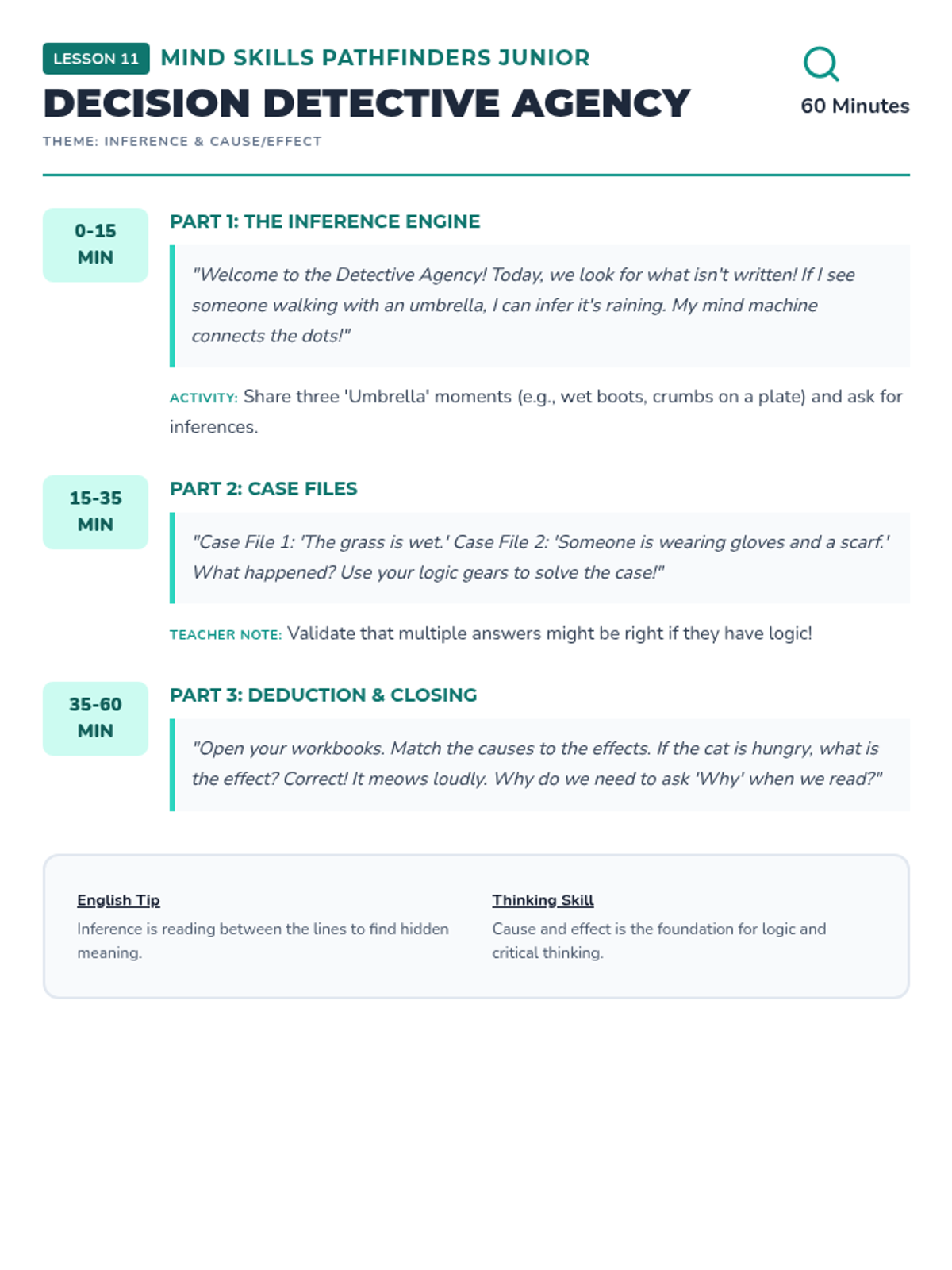
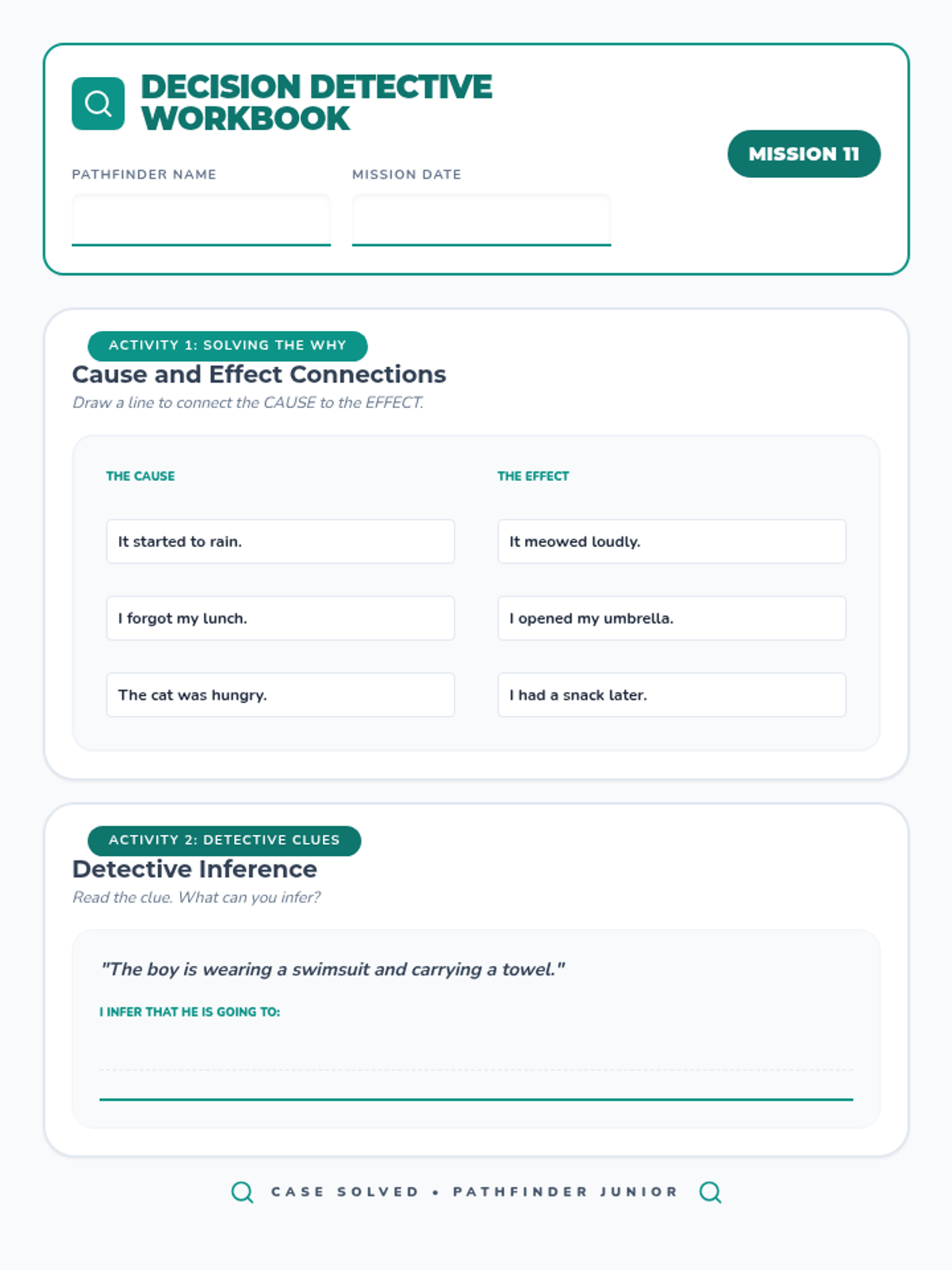
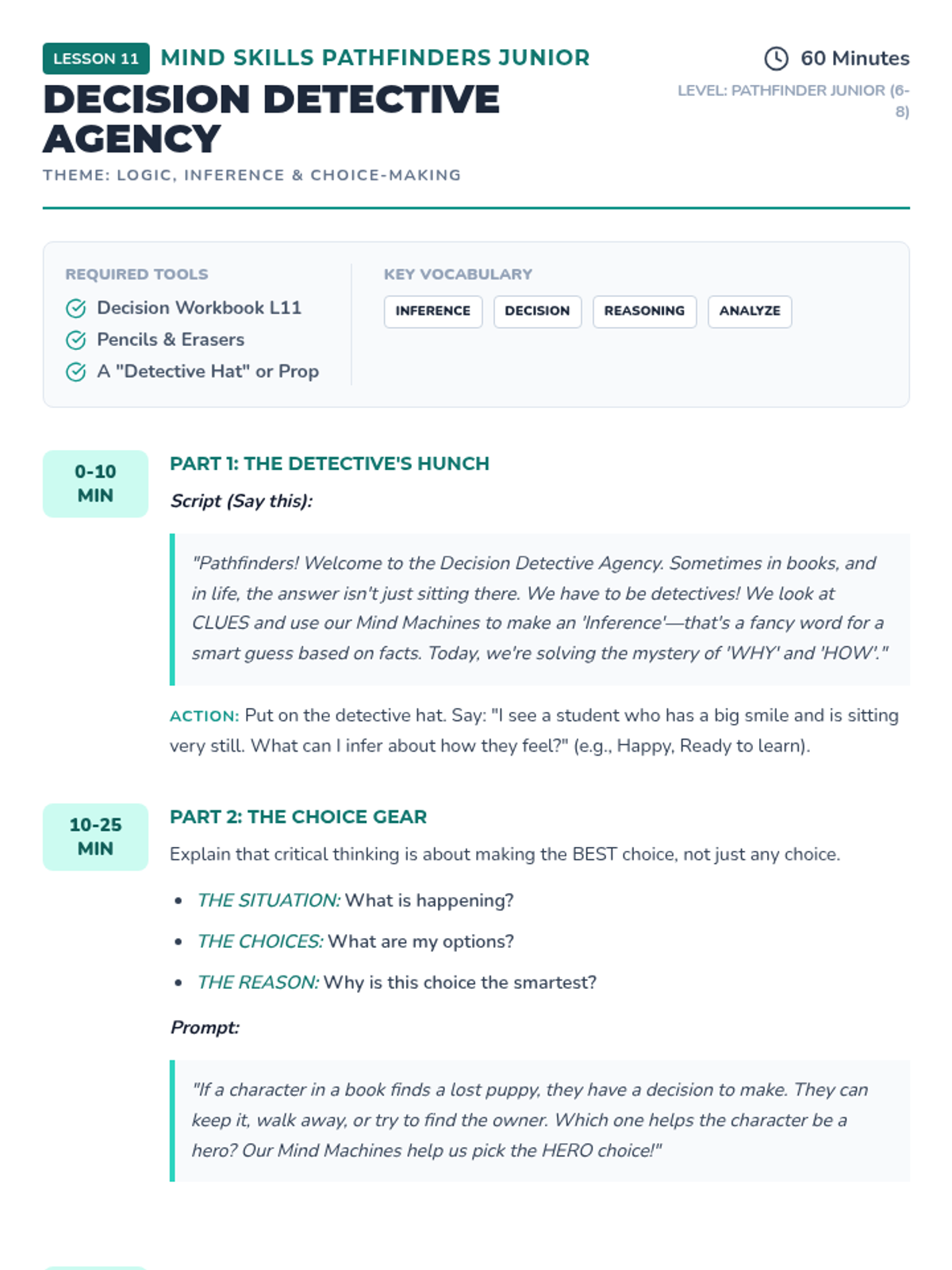
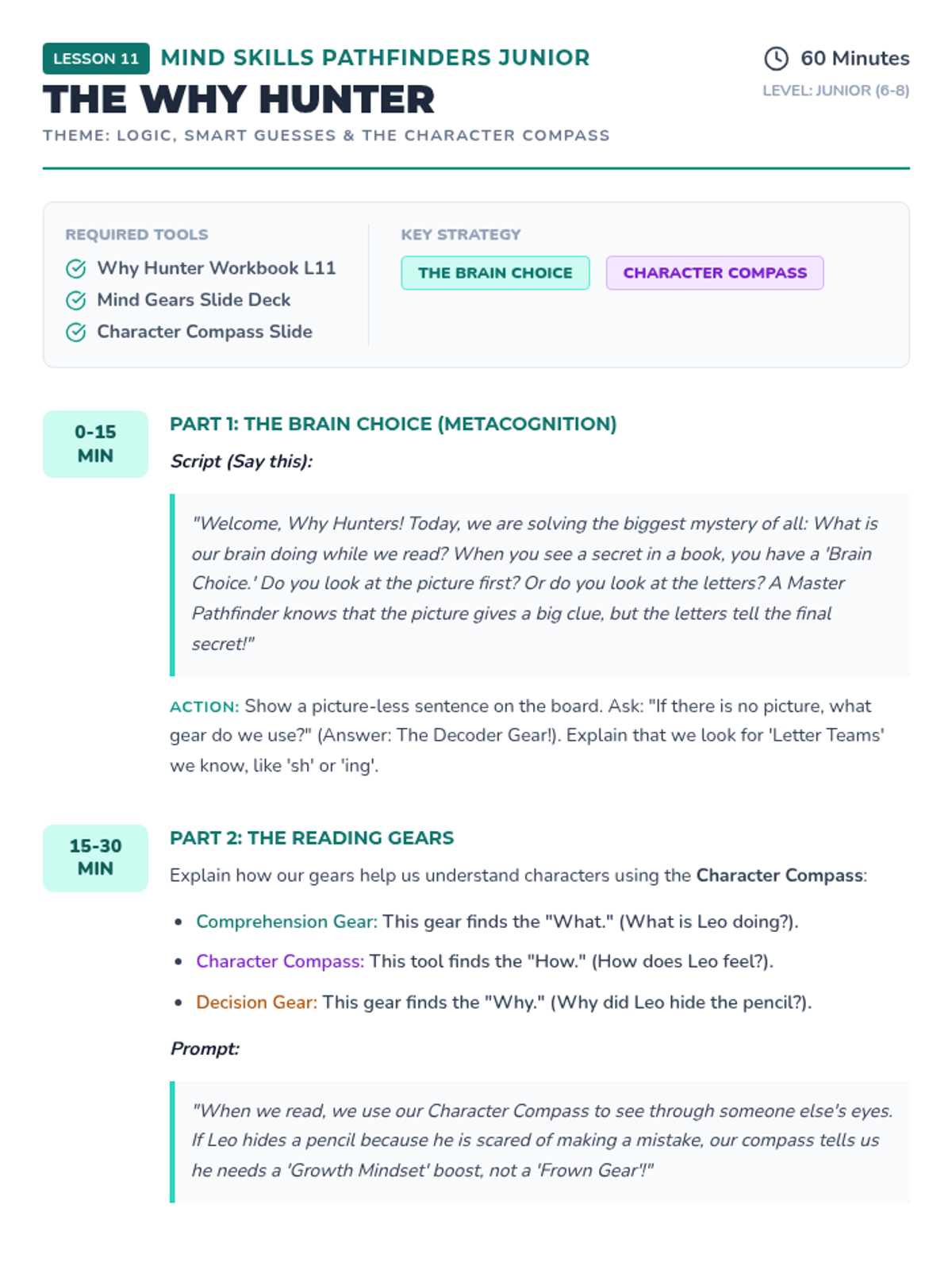
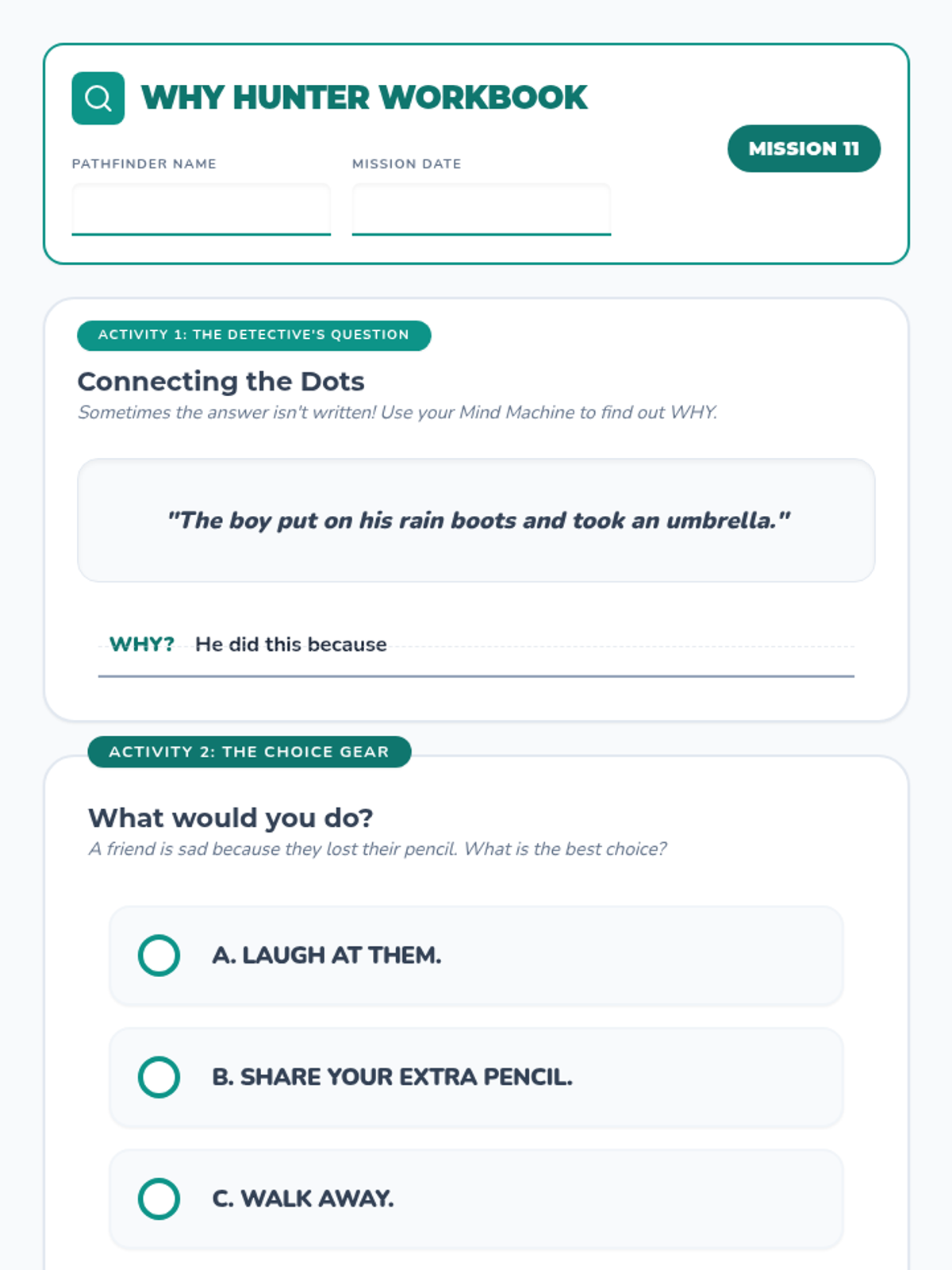
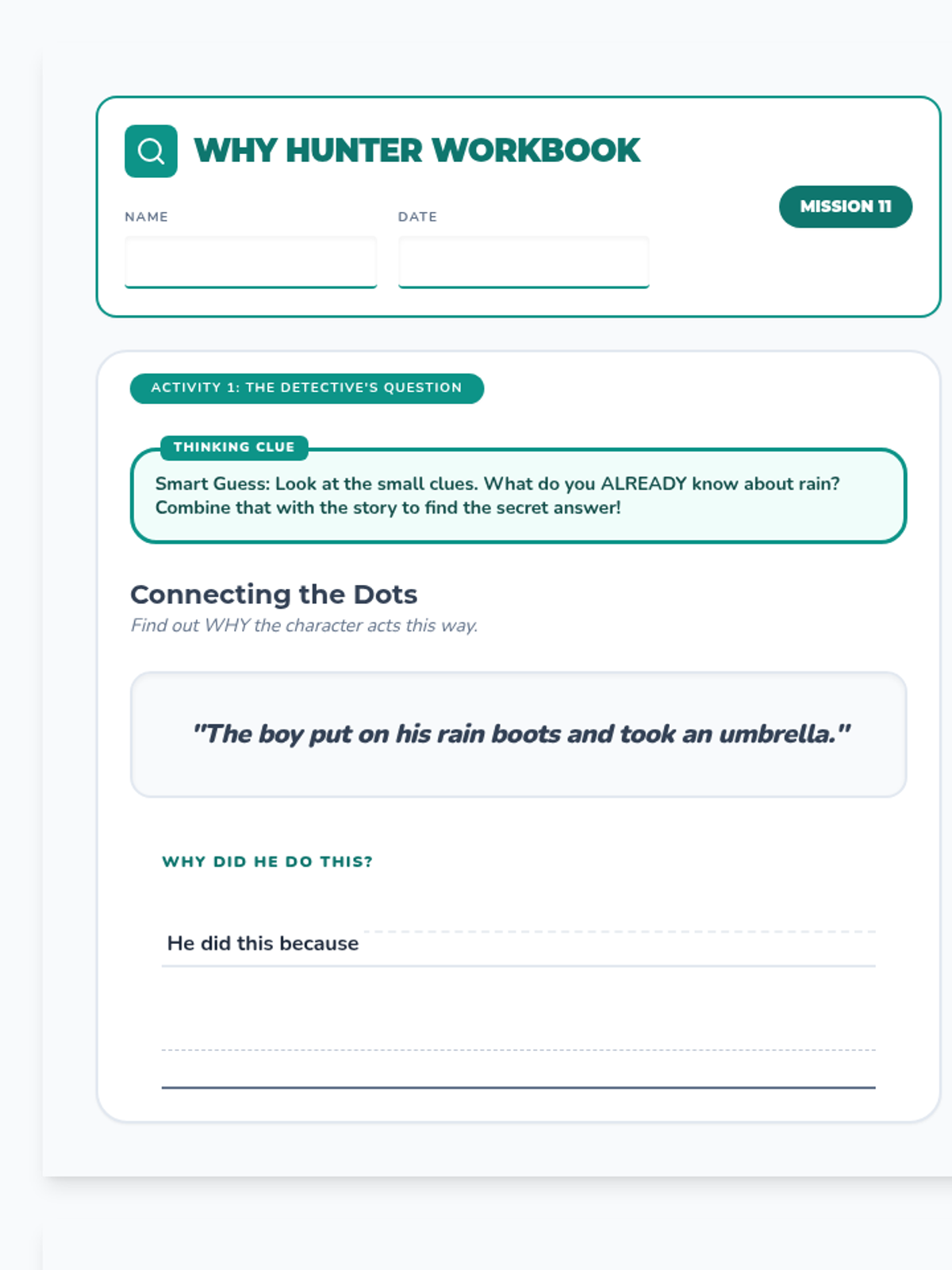
Focuses on logic and decision-making by asking 'why' and 'how' questions about texts to understand cause and effect.
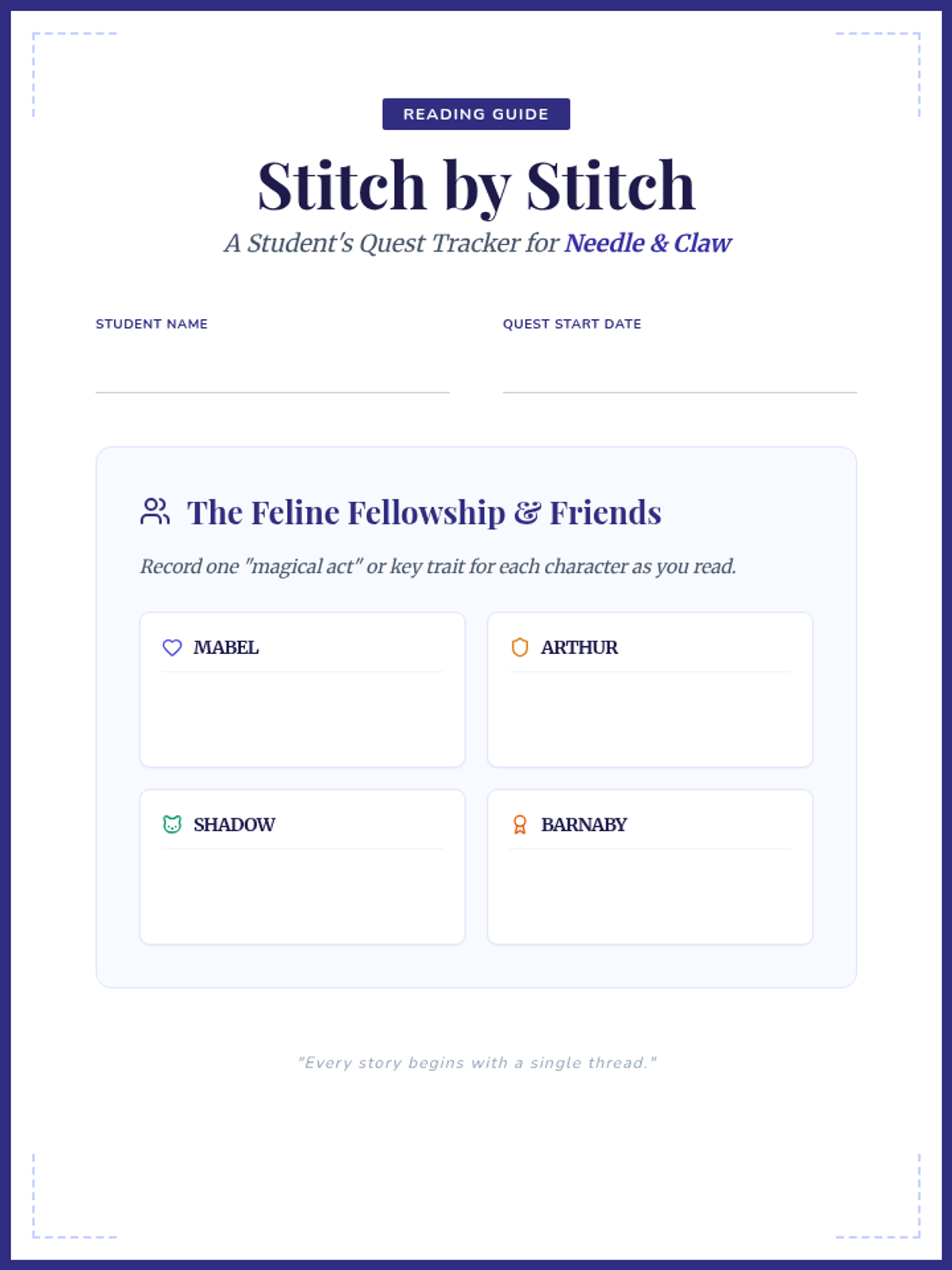
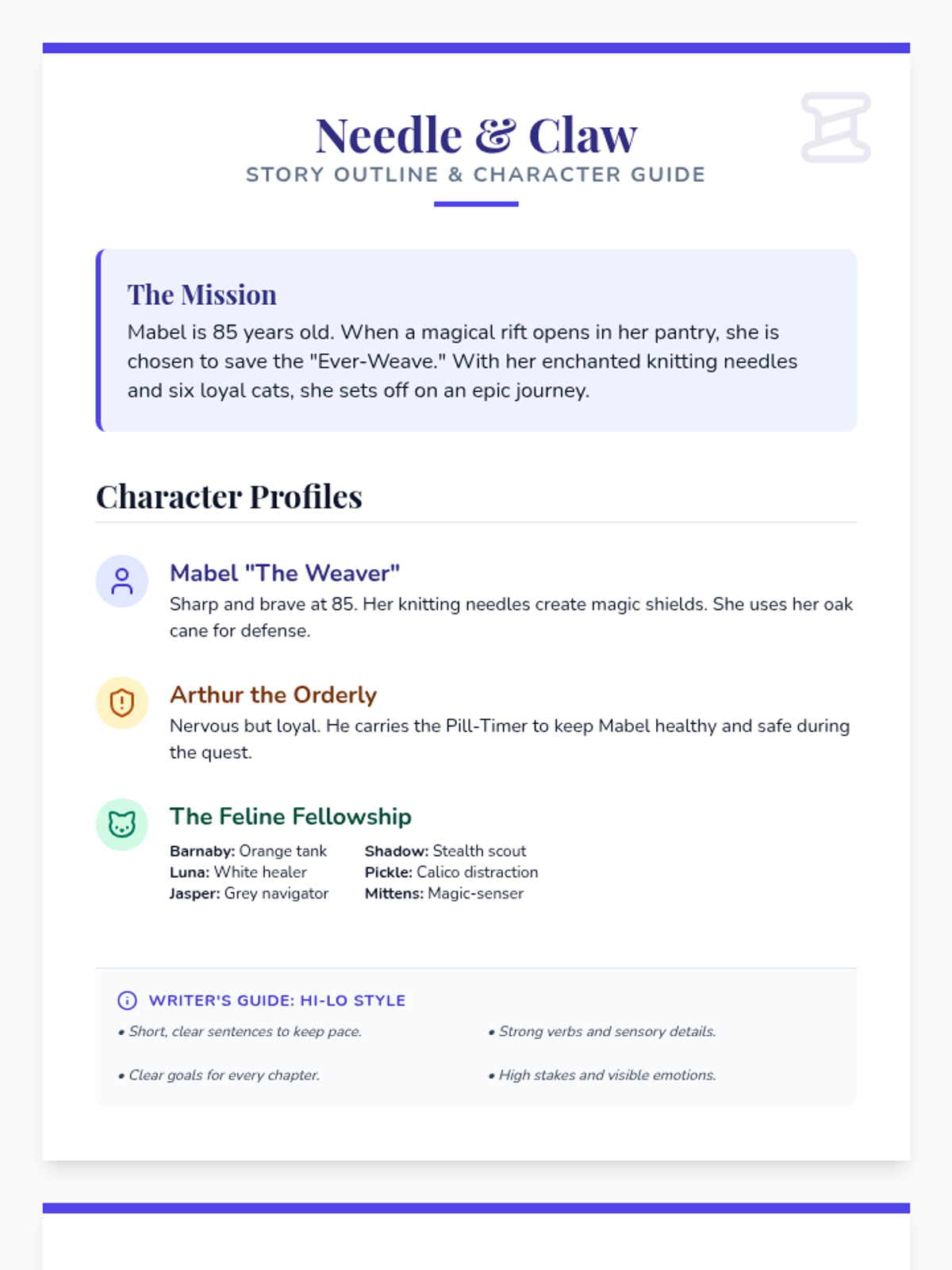
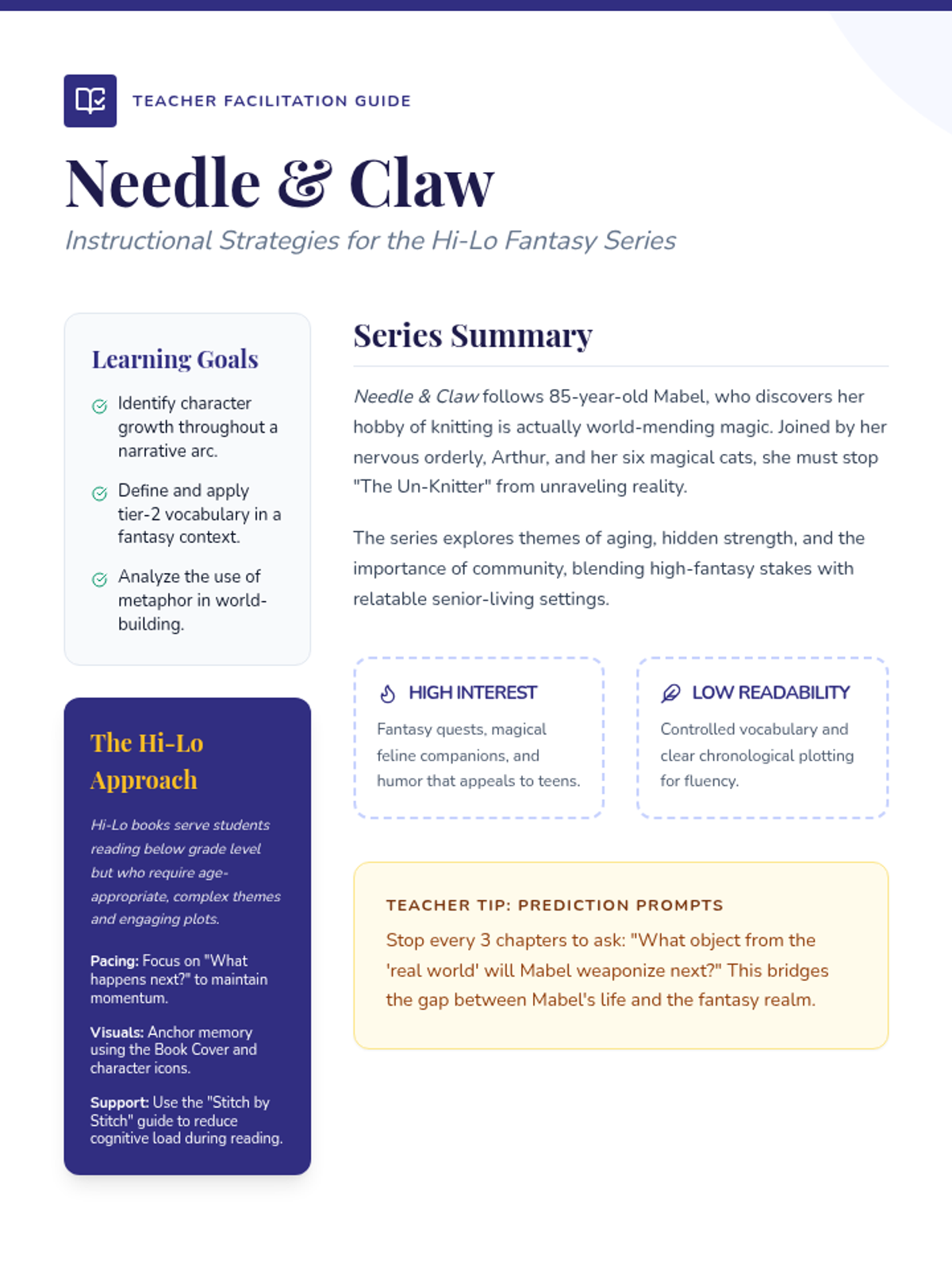
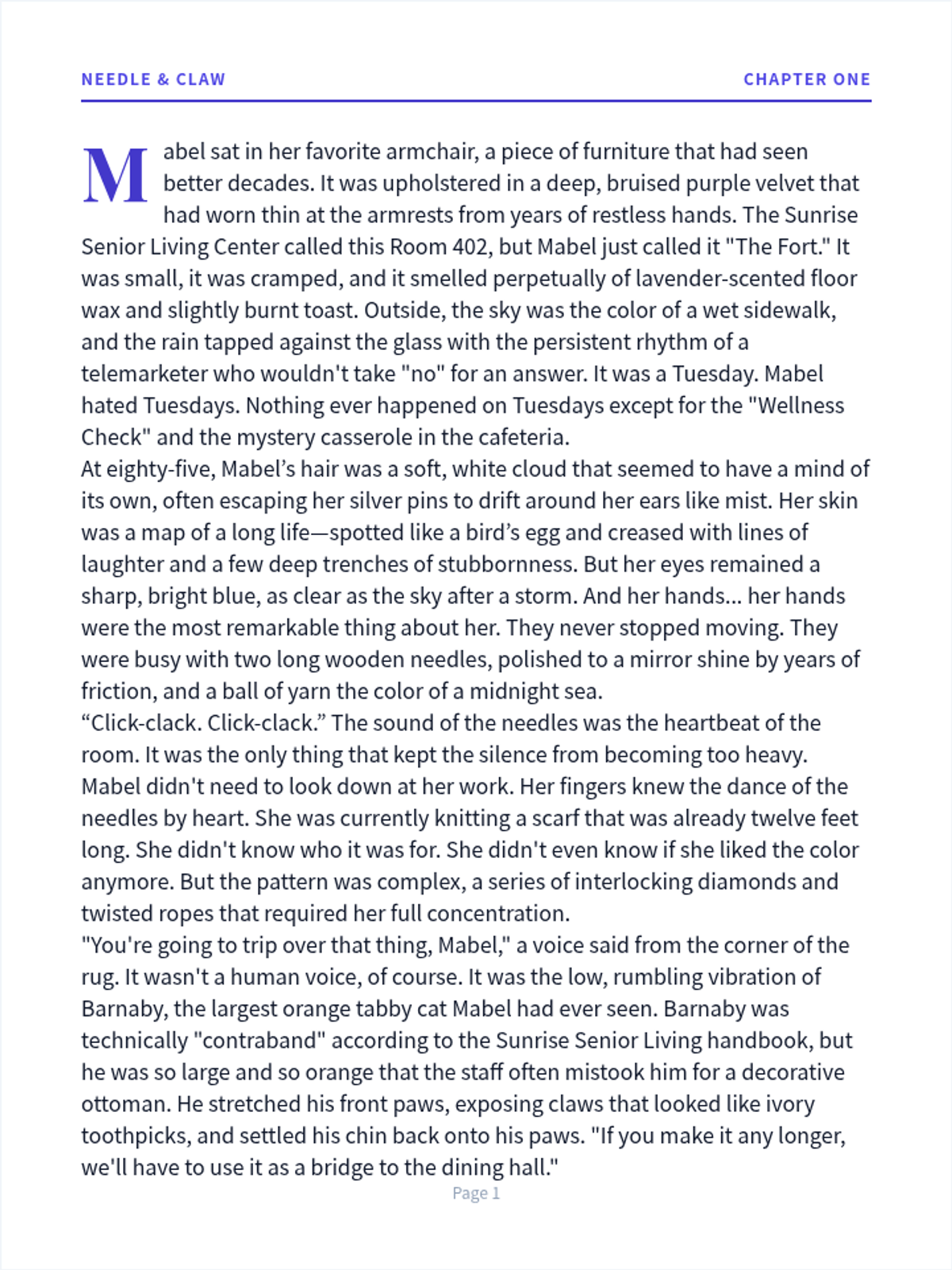
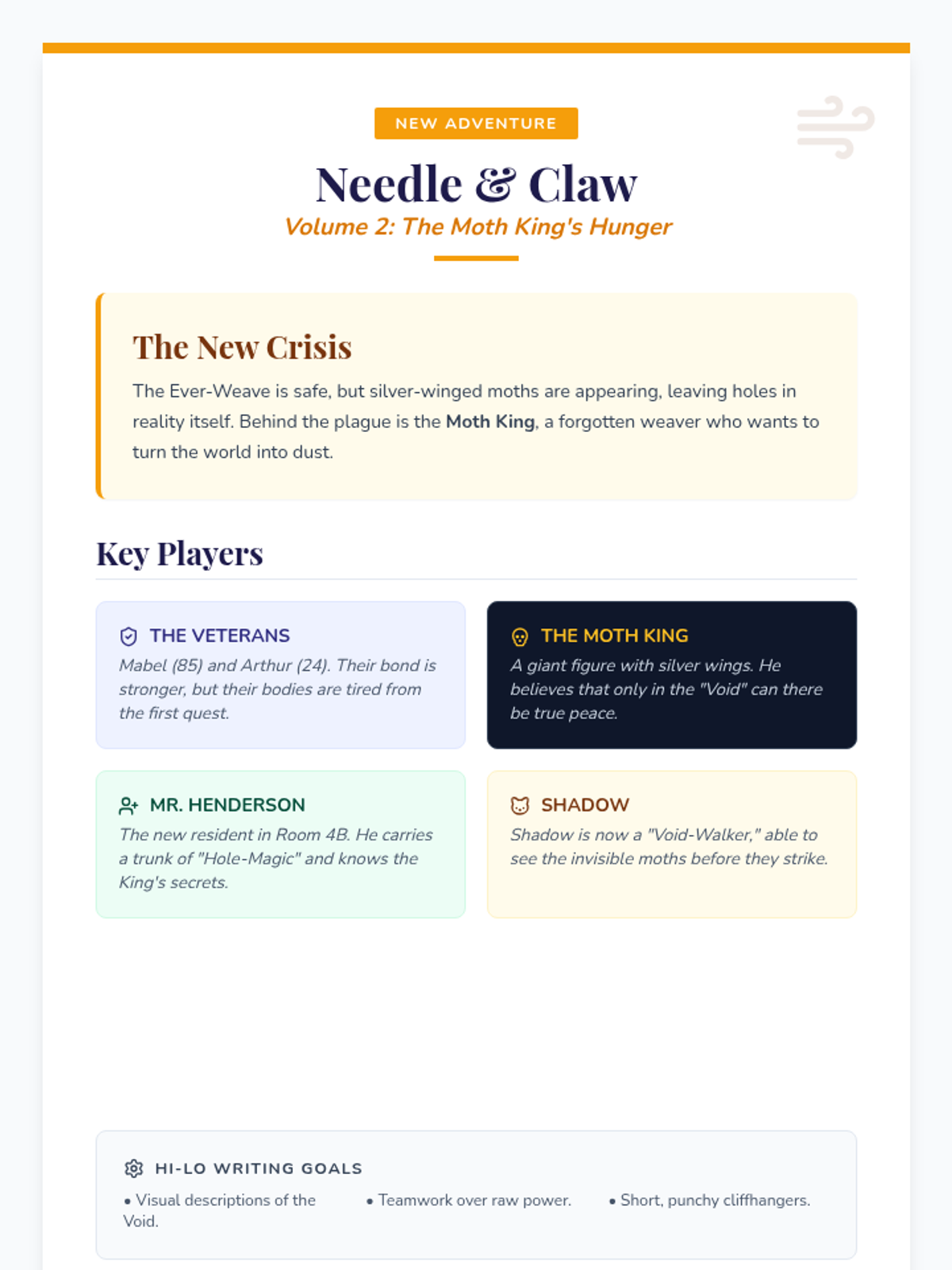
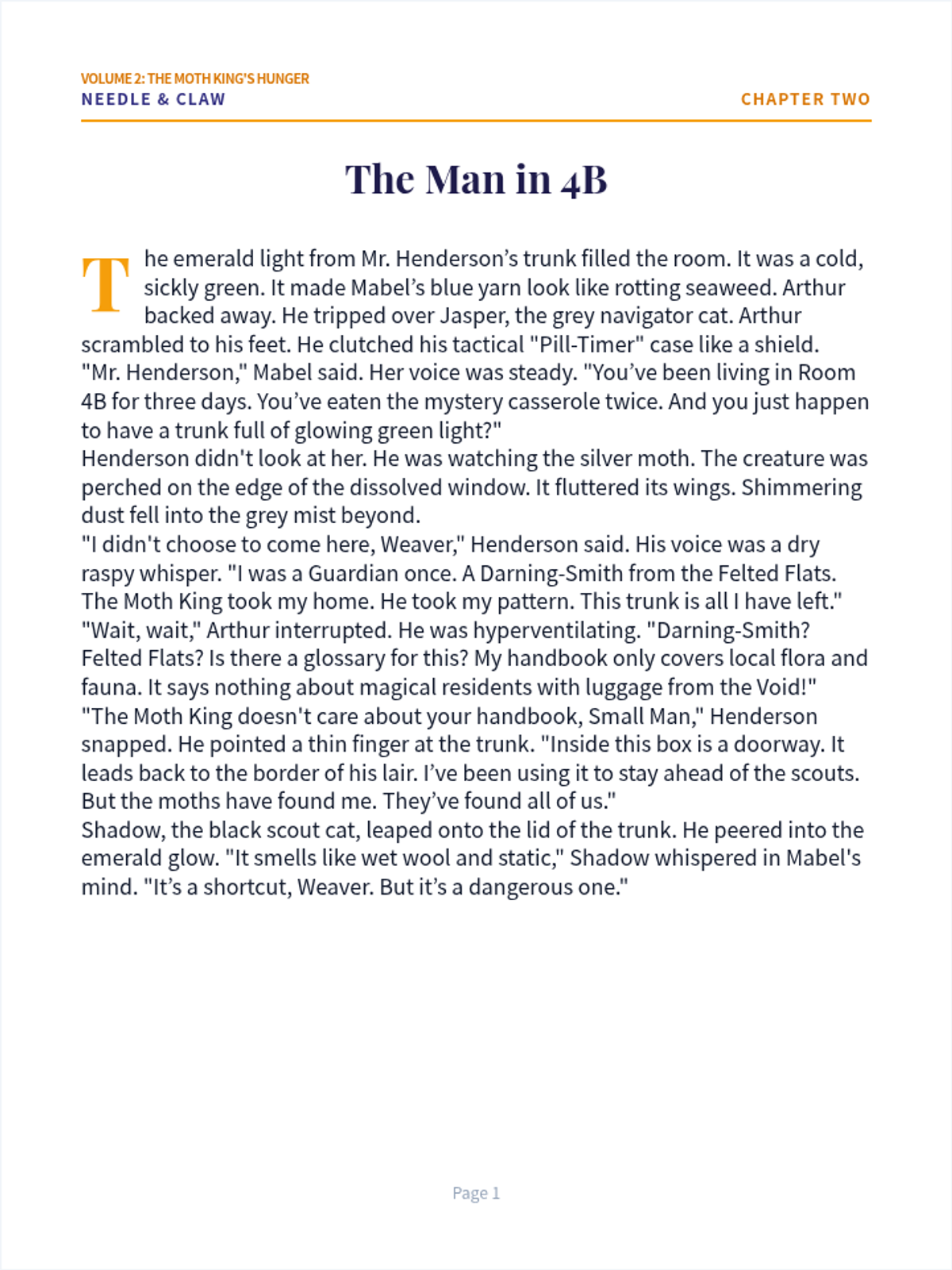
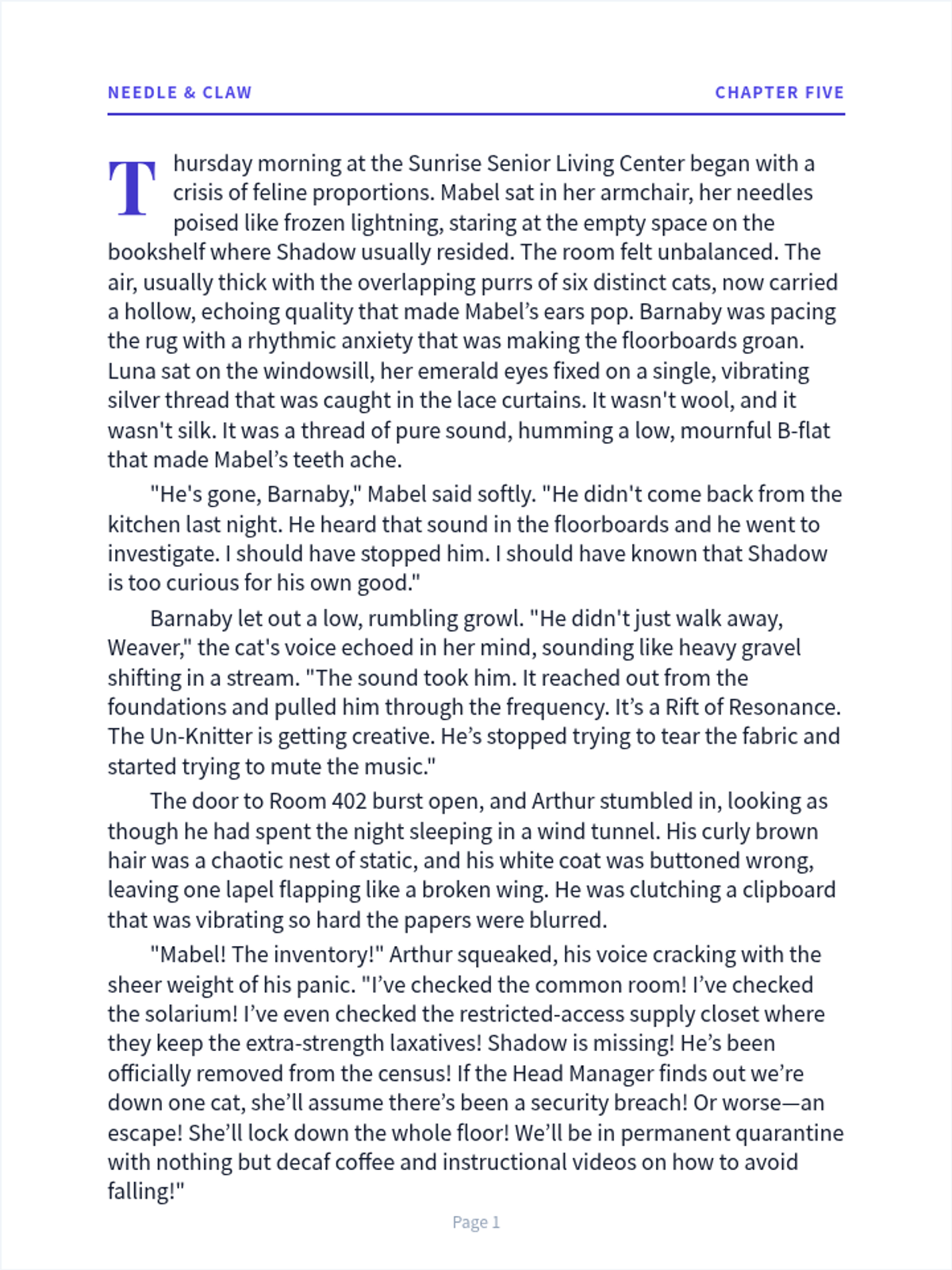
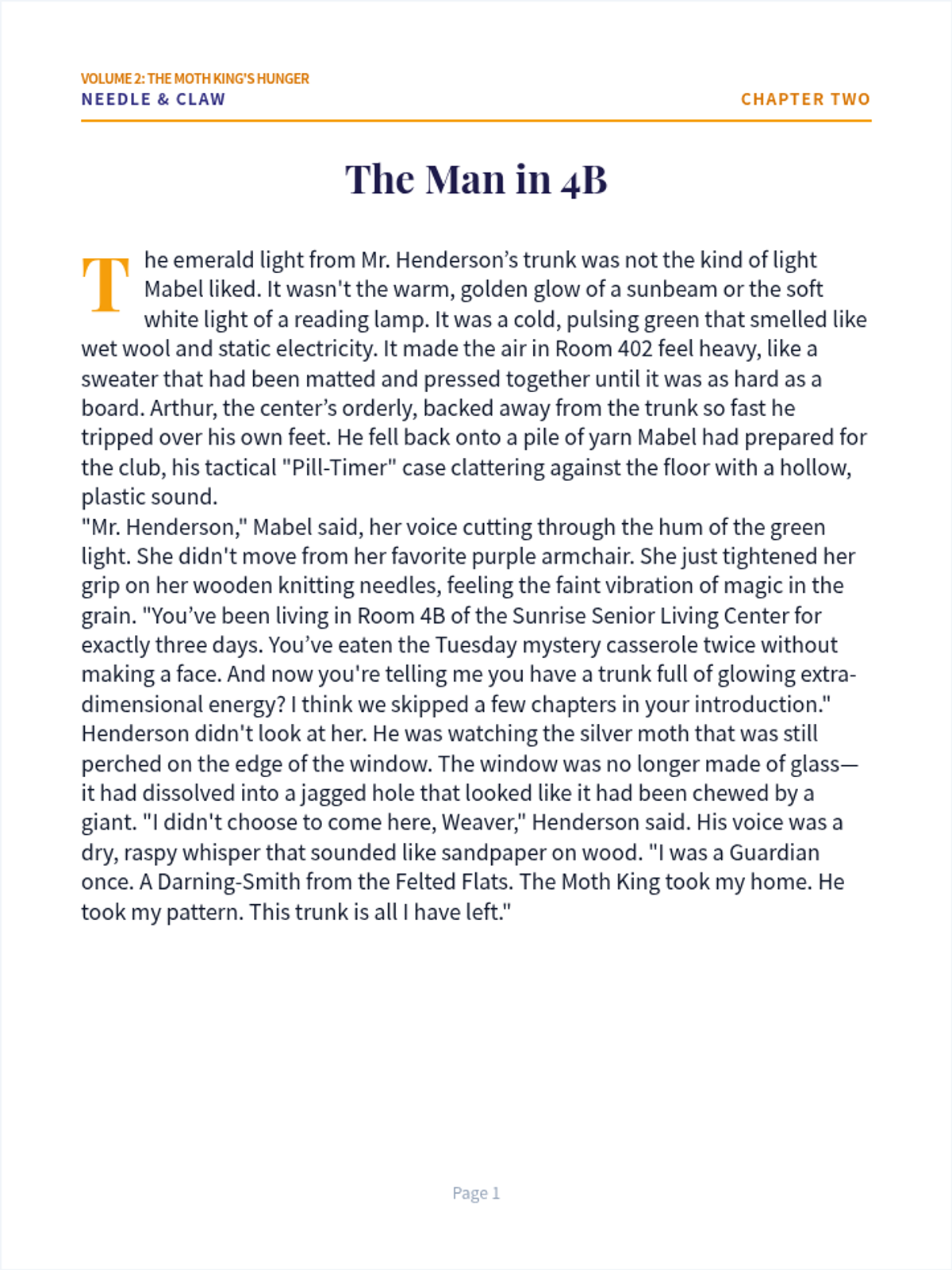
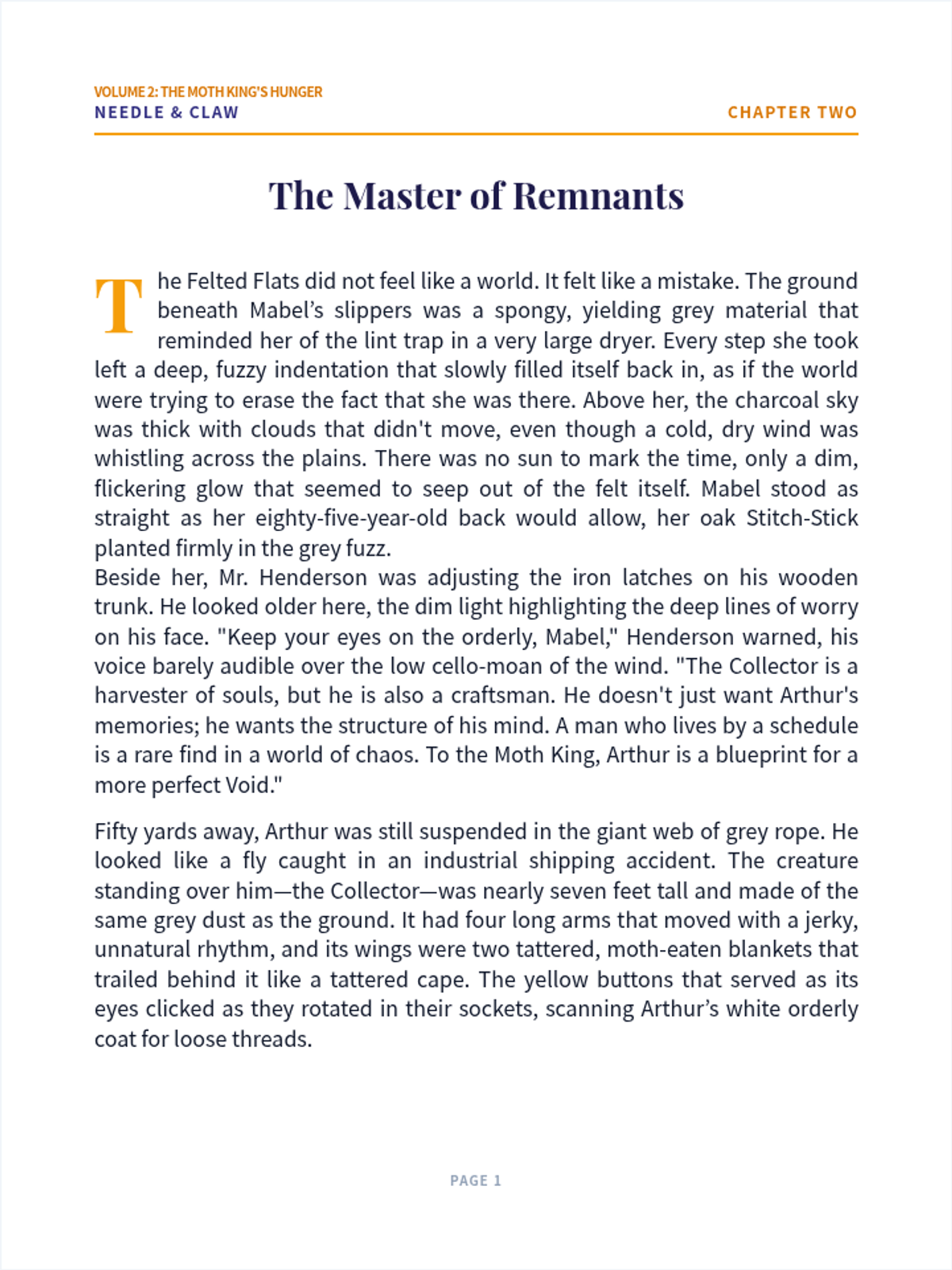
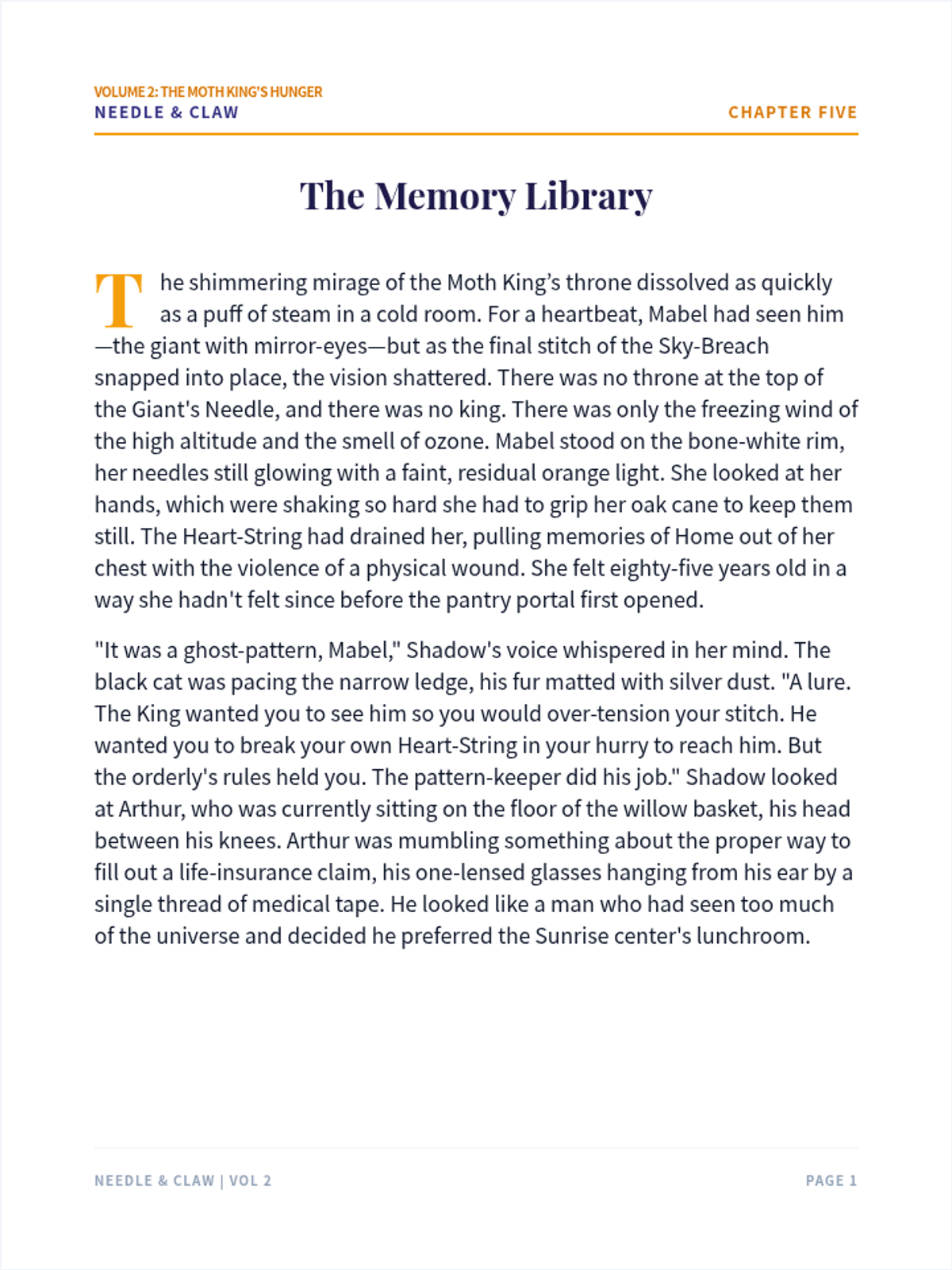
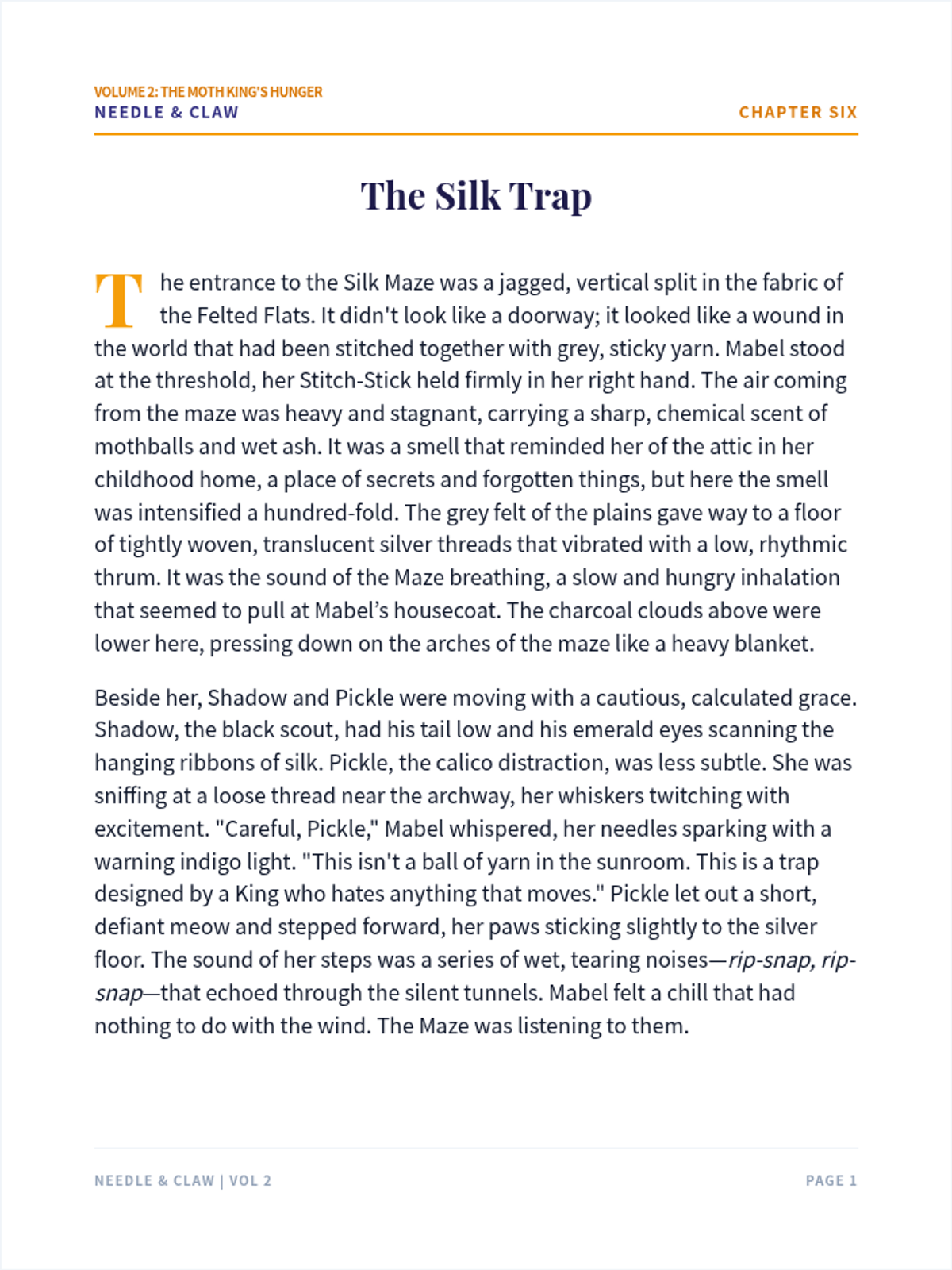
A creative story outline and character guide for a high-interest, low-readability (Hi-Lo) novel featuring an elderly protagonist in a fantasy world.
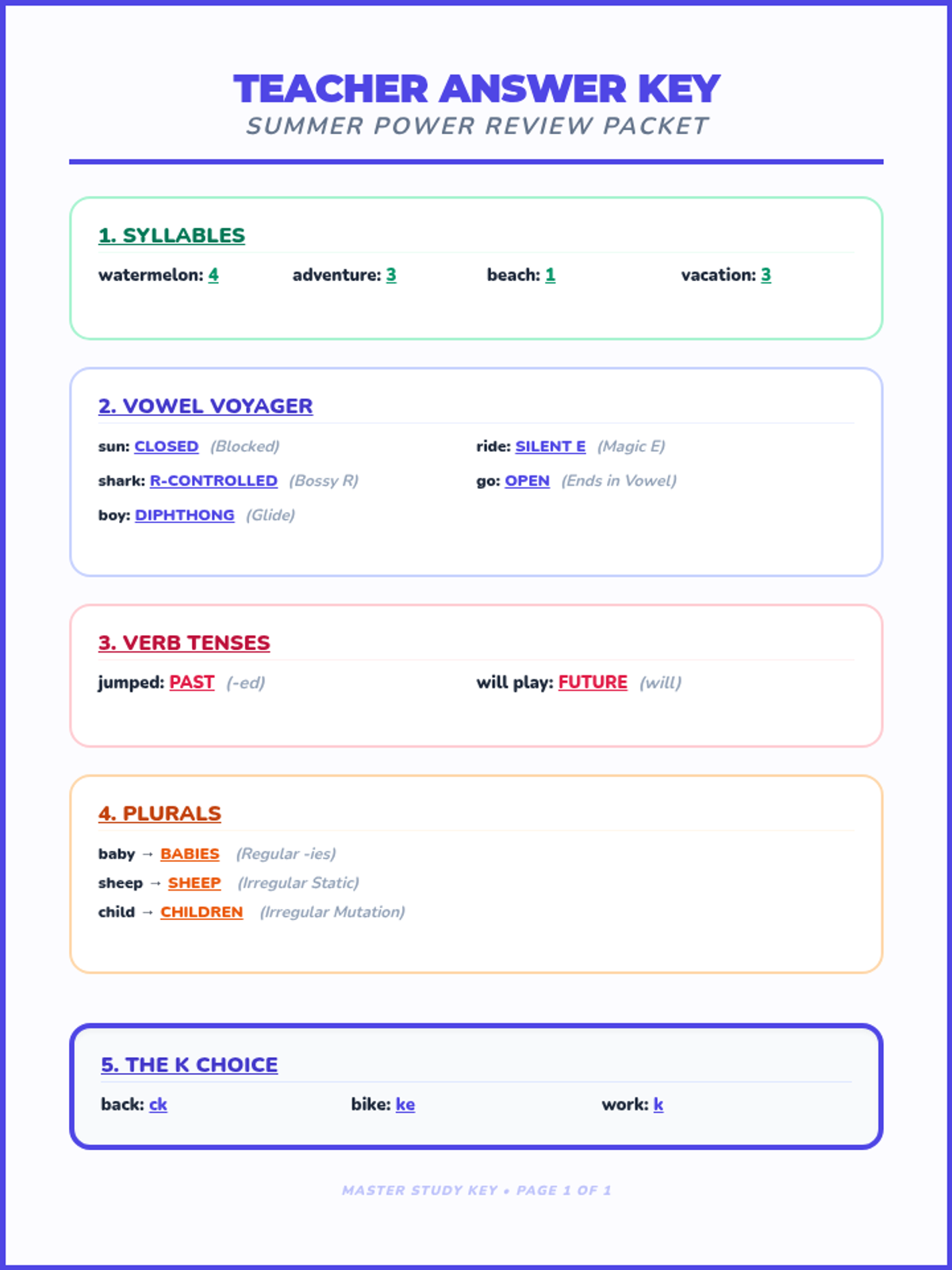
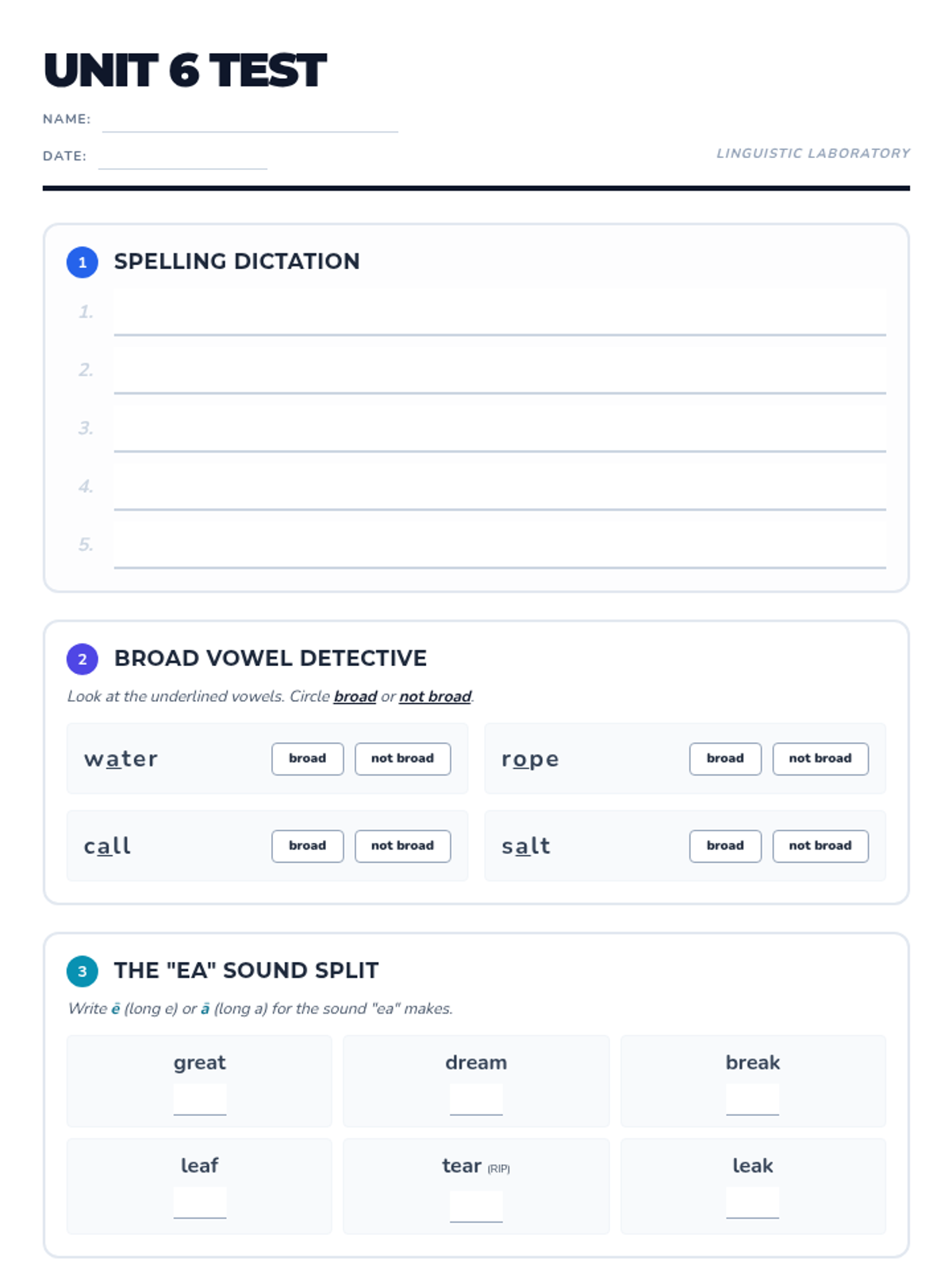
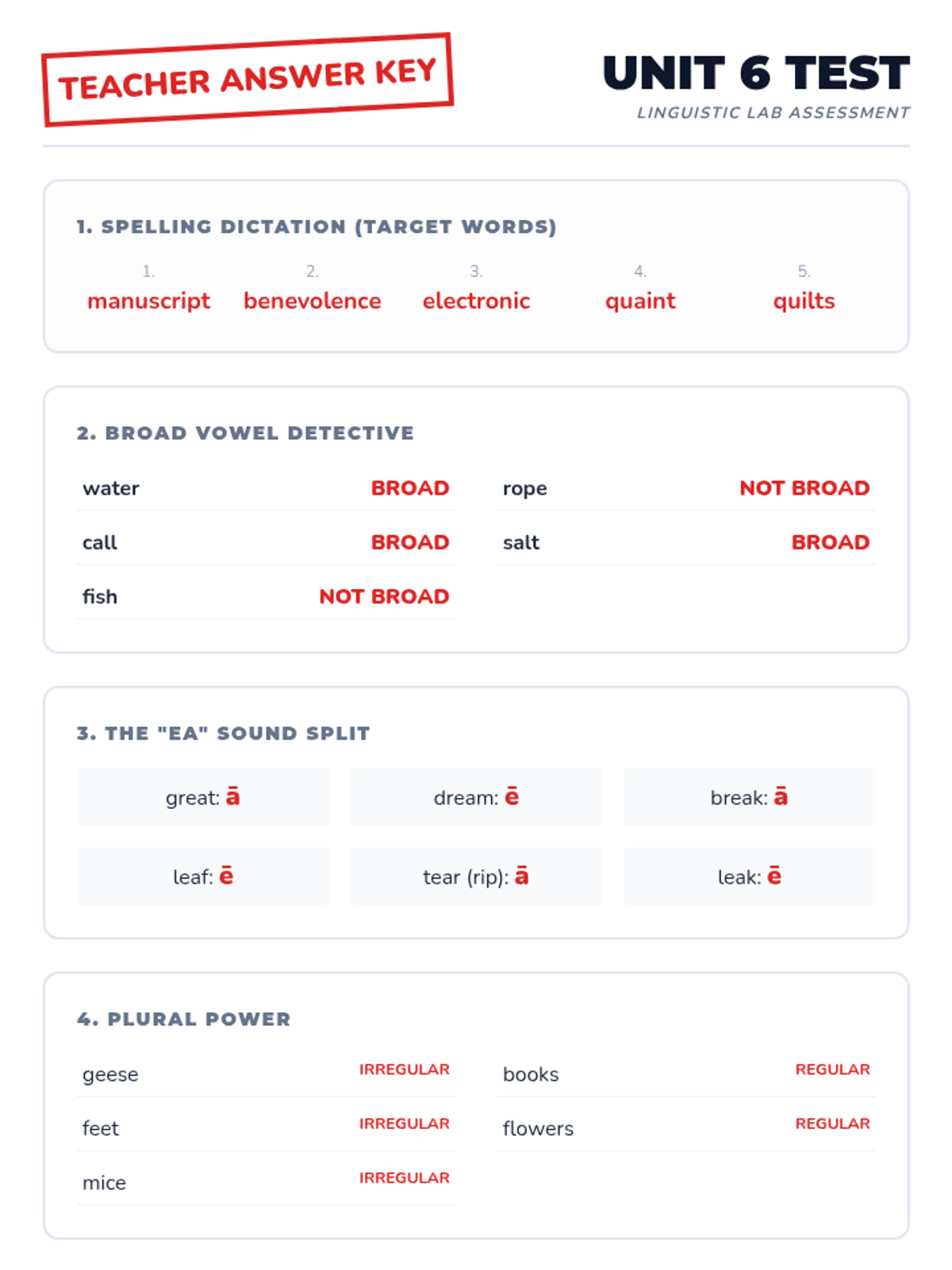
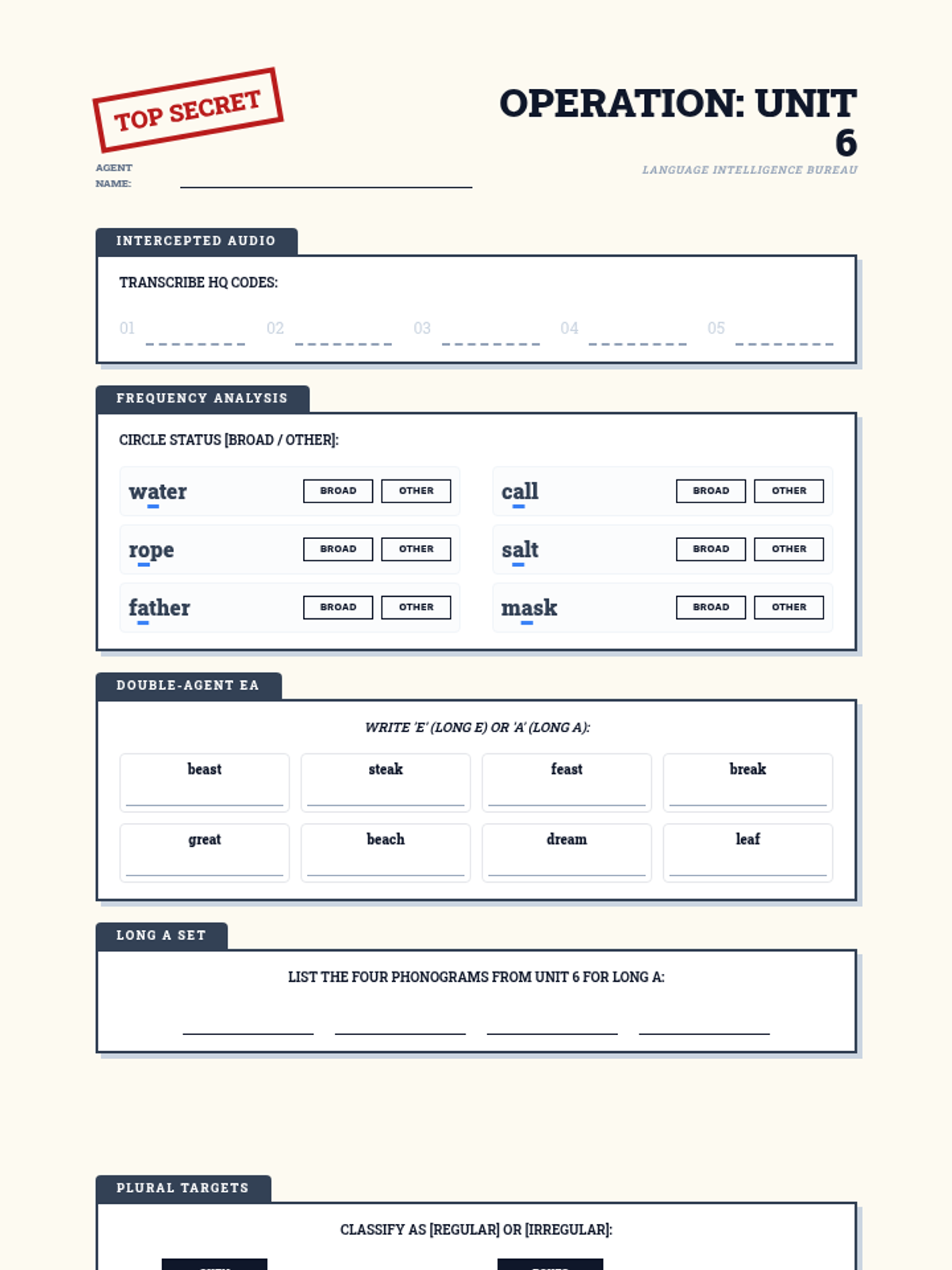
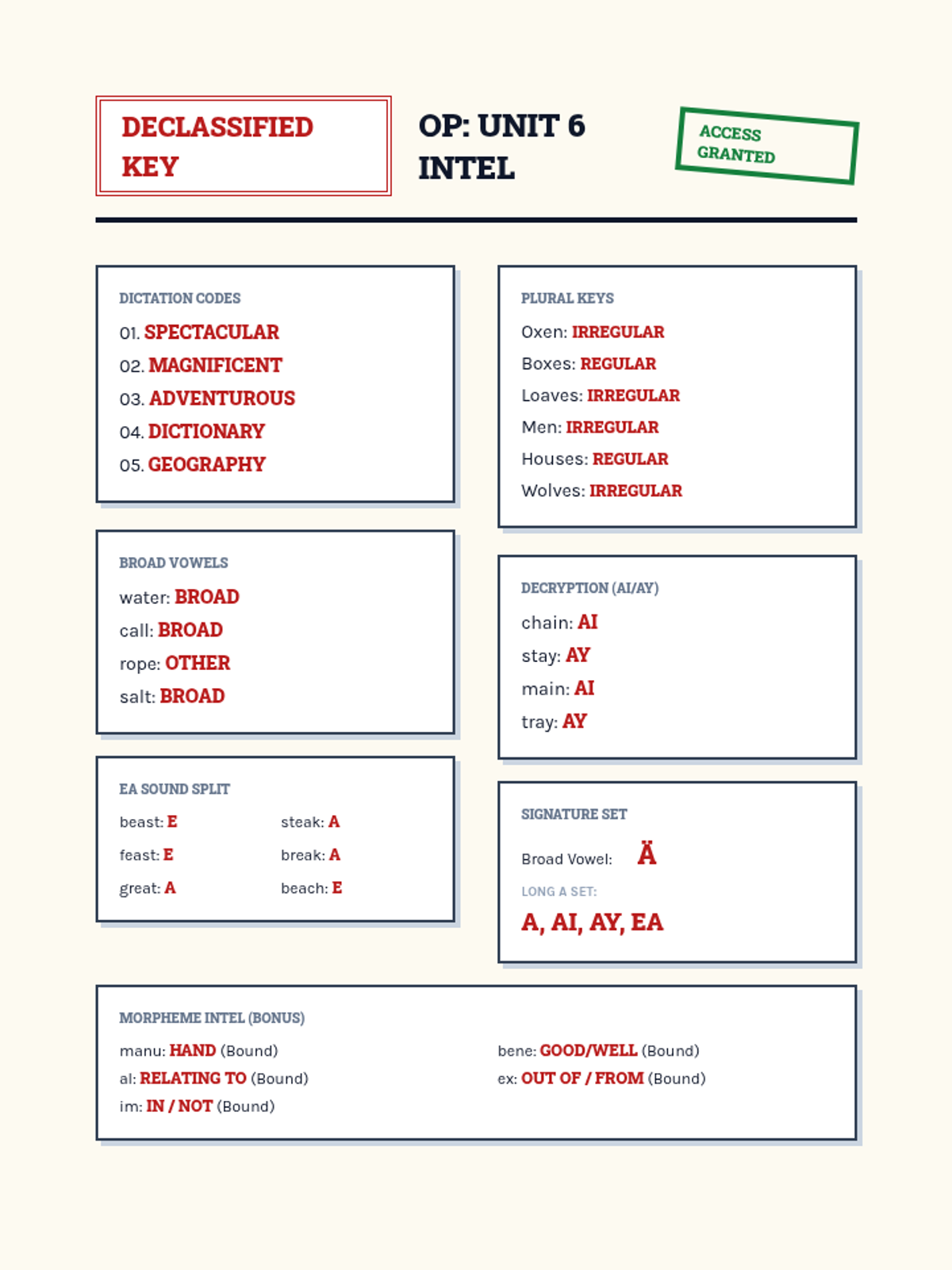
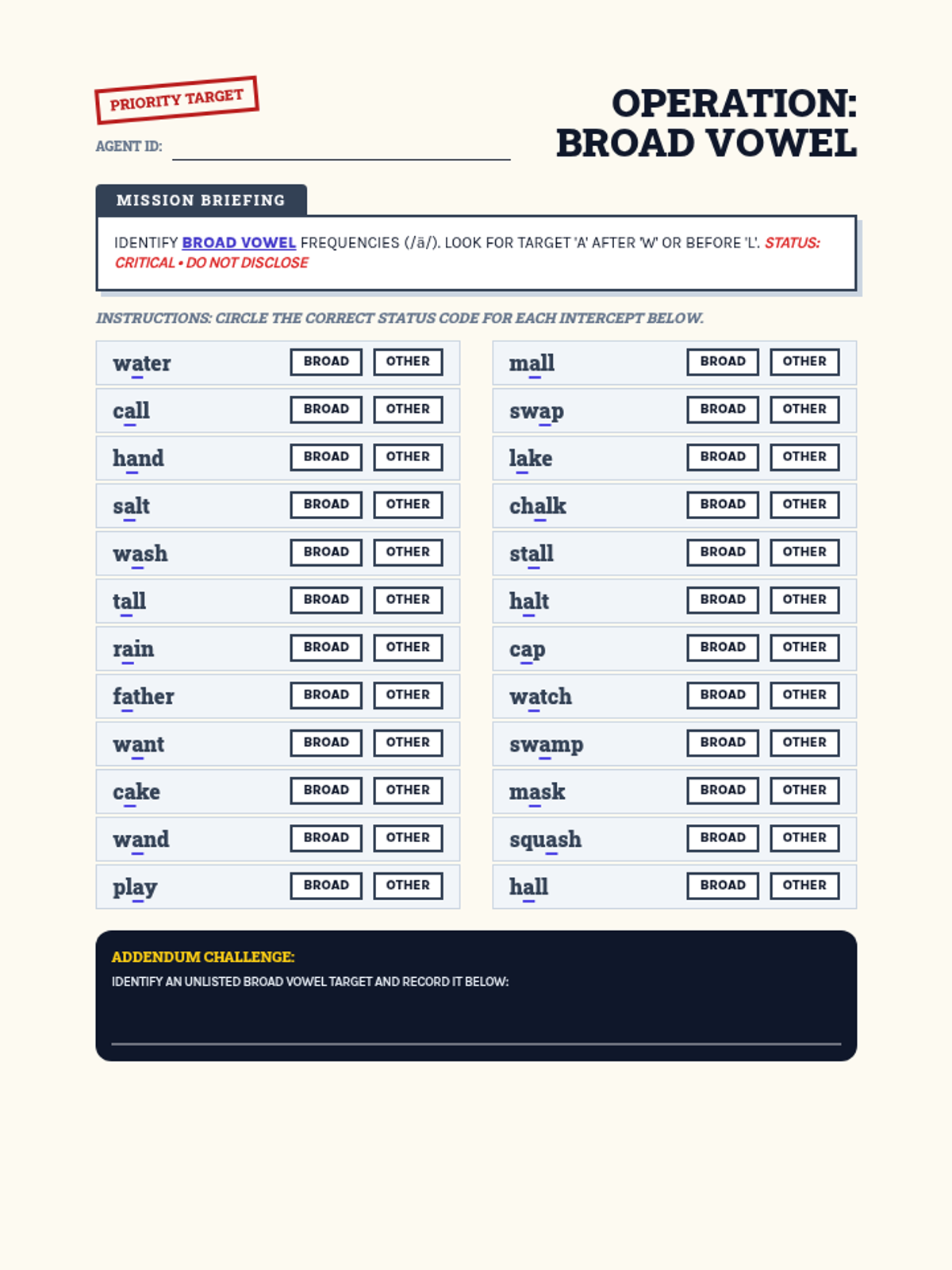
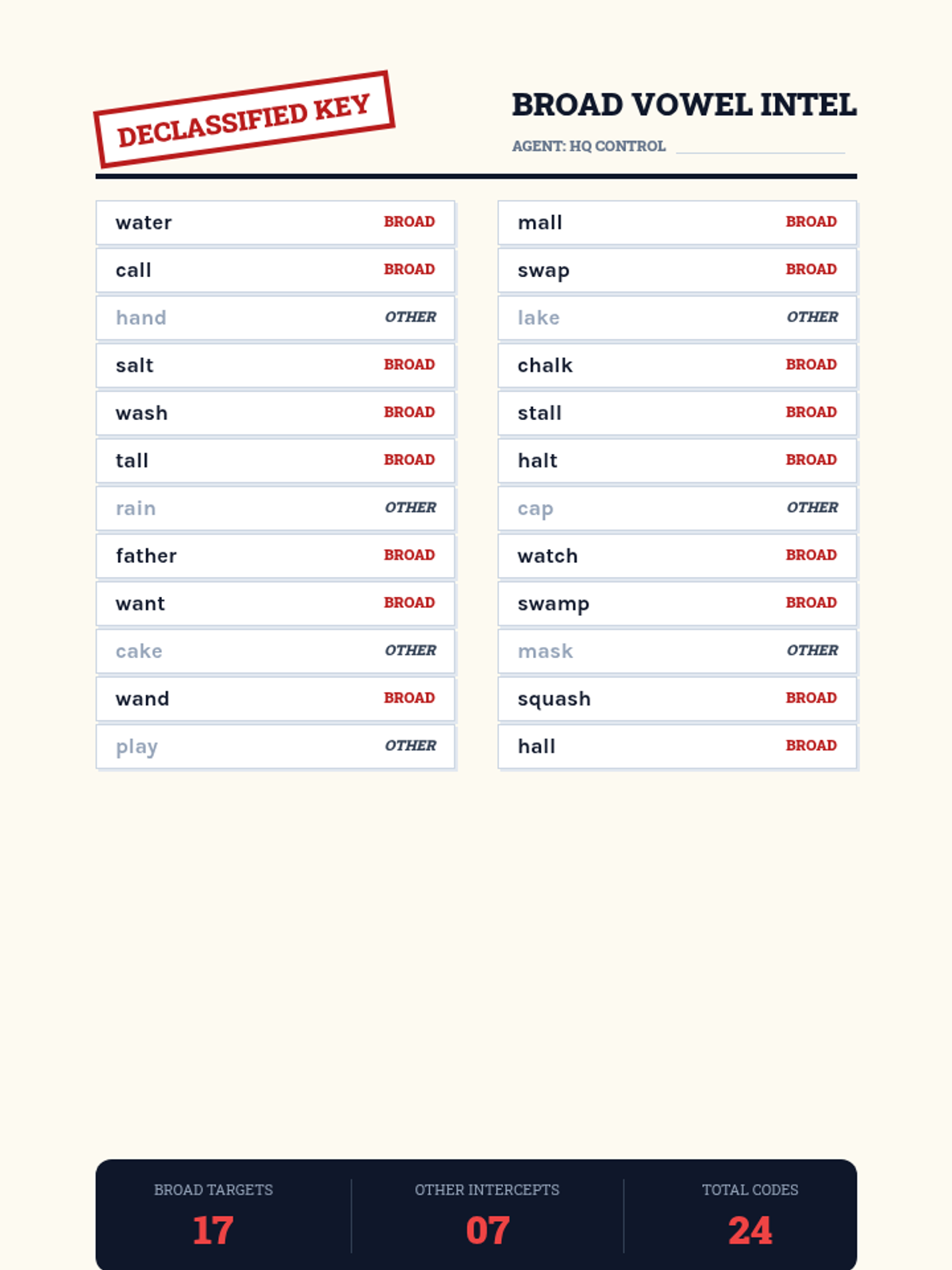
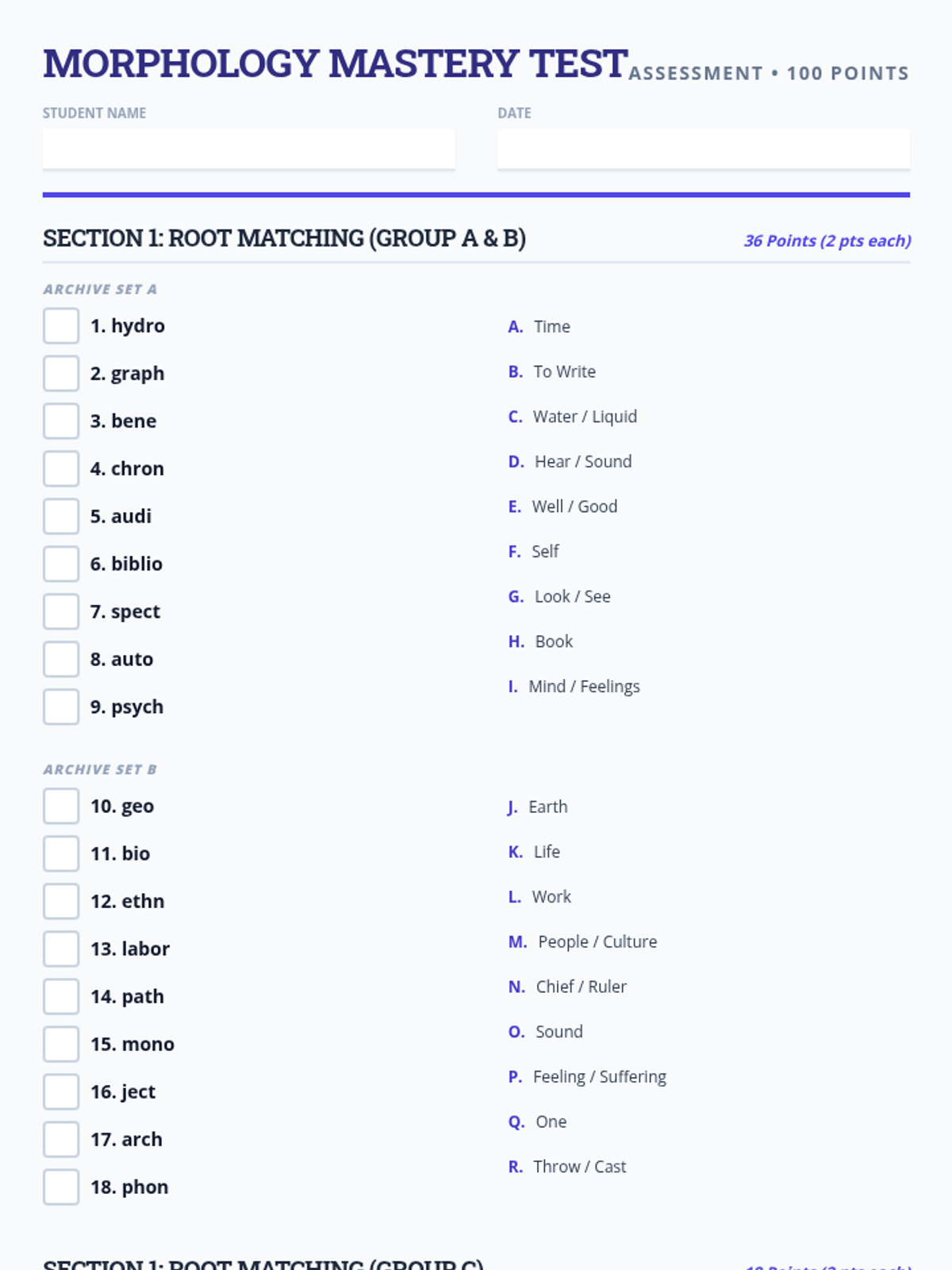
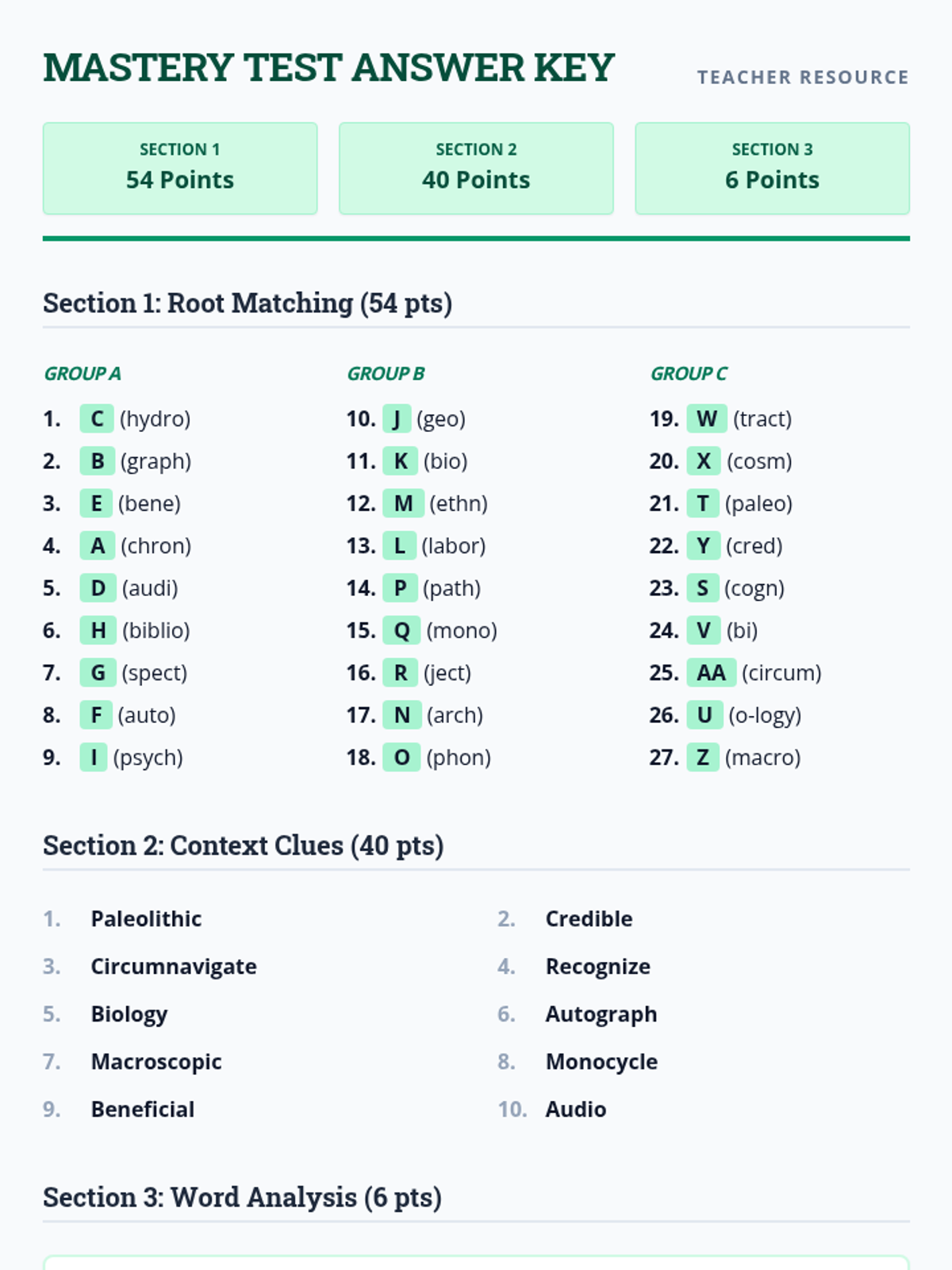
A comprehensive assessment covering phonograms, vowel sounds, plural classifications, and morphemic analysis. This lesson provides both the student test and the teacher answer key to evaluate student mastery of these linguistic concepts.
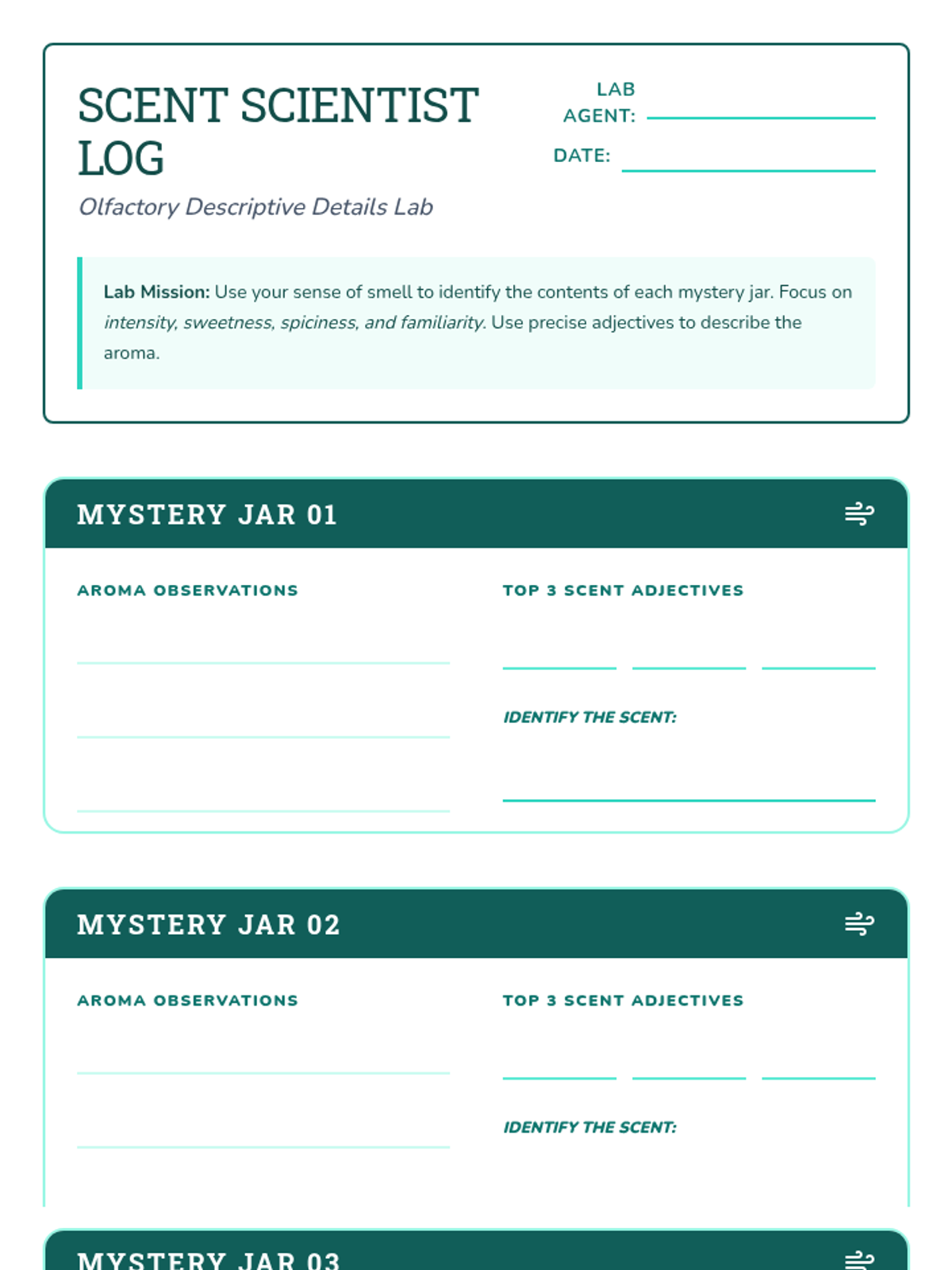
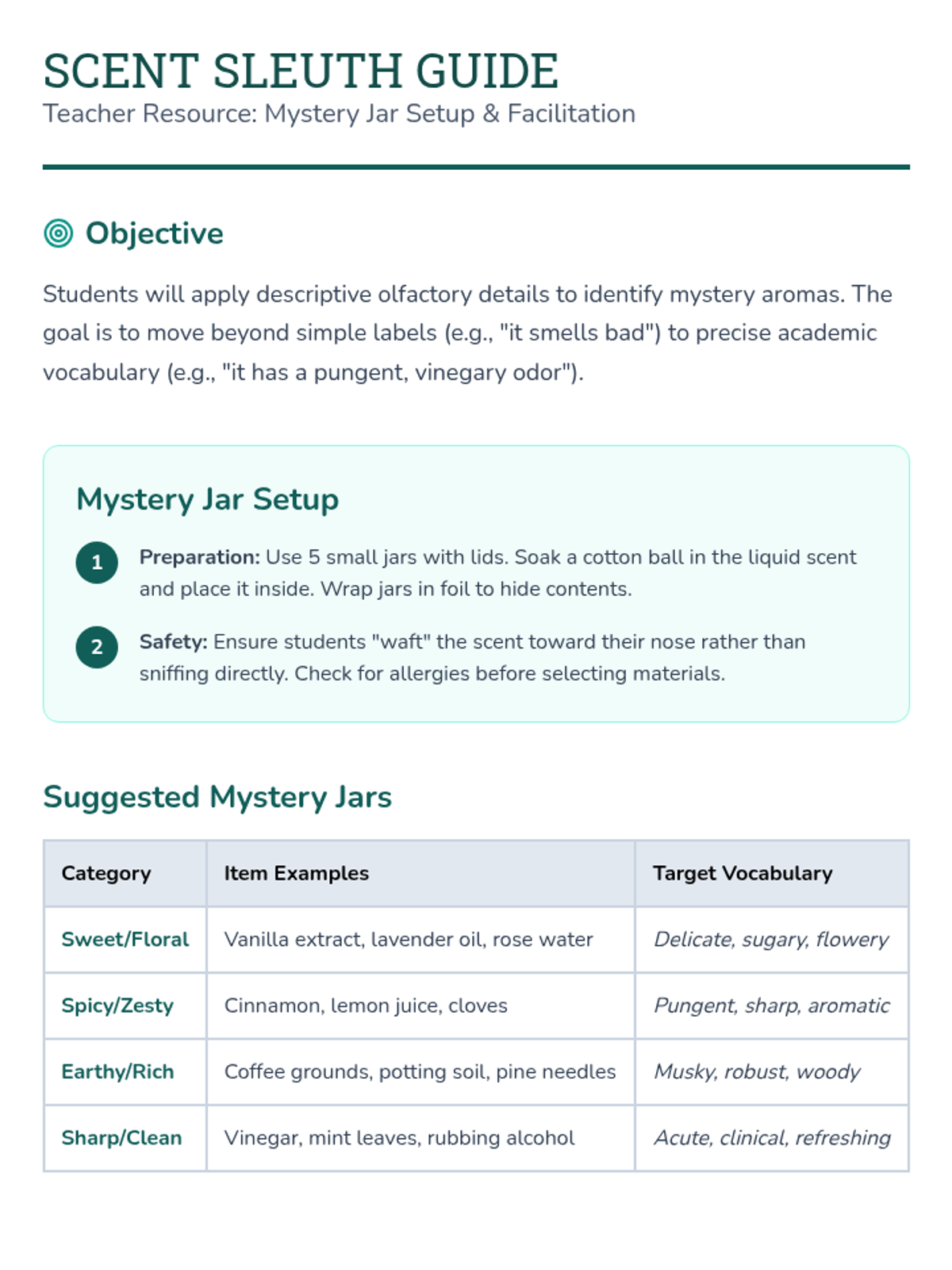
A hands-on science and ELA lesson where students explore mystery scents and use descriptive olfactory details to document their observations.
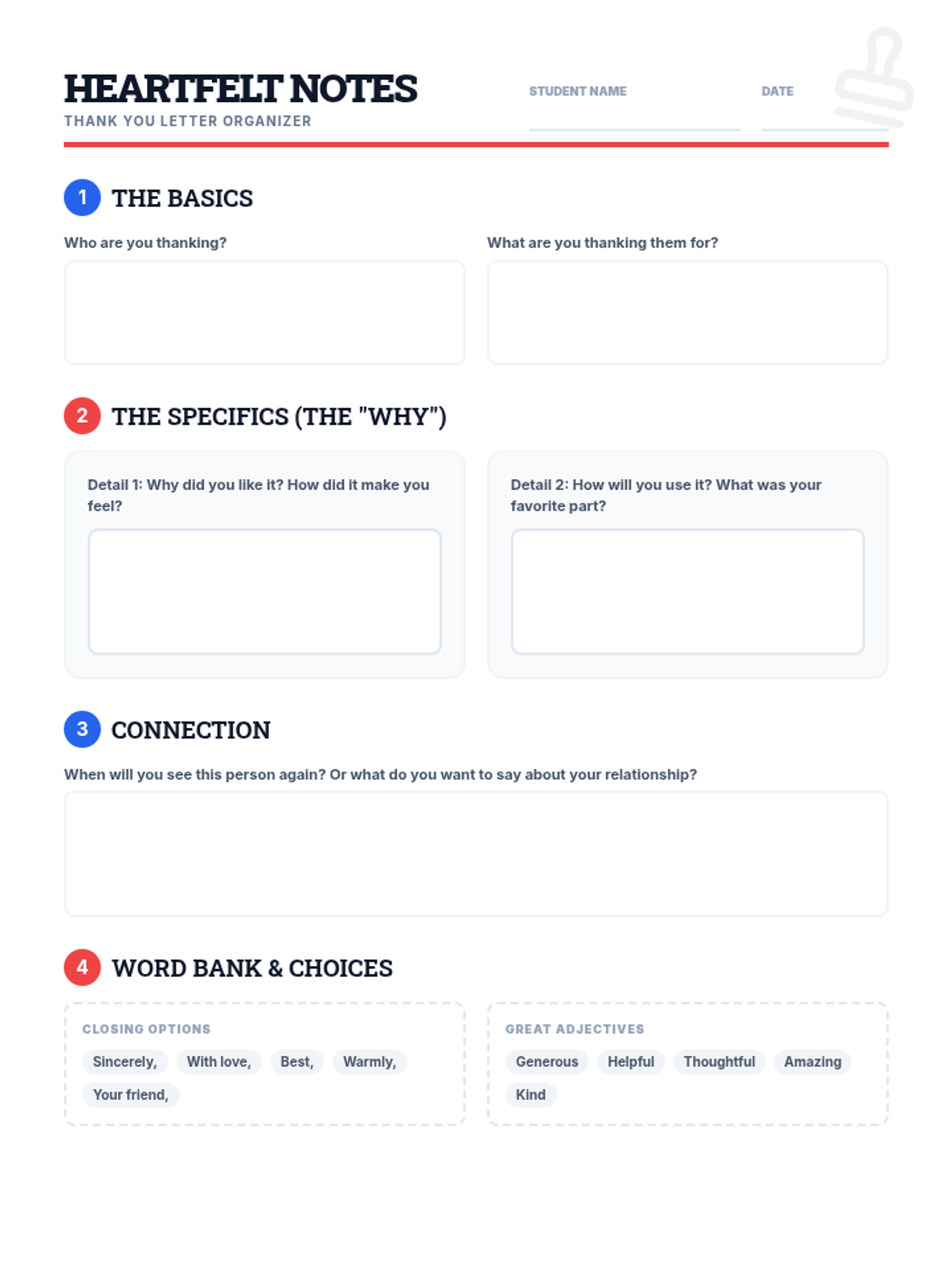
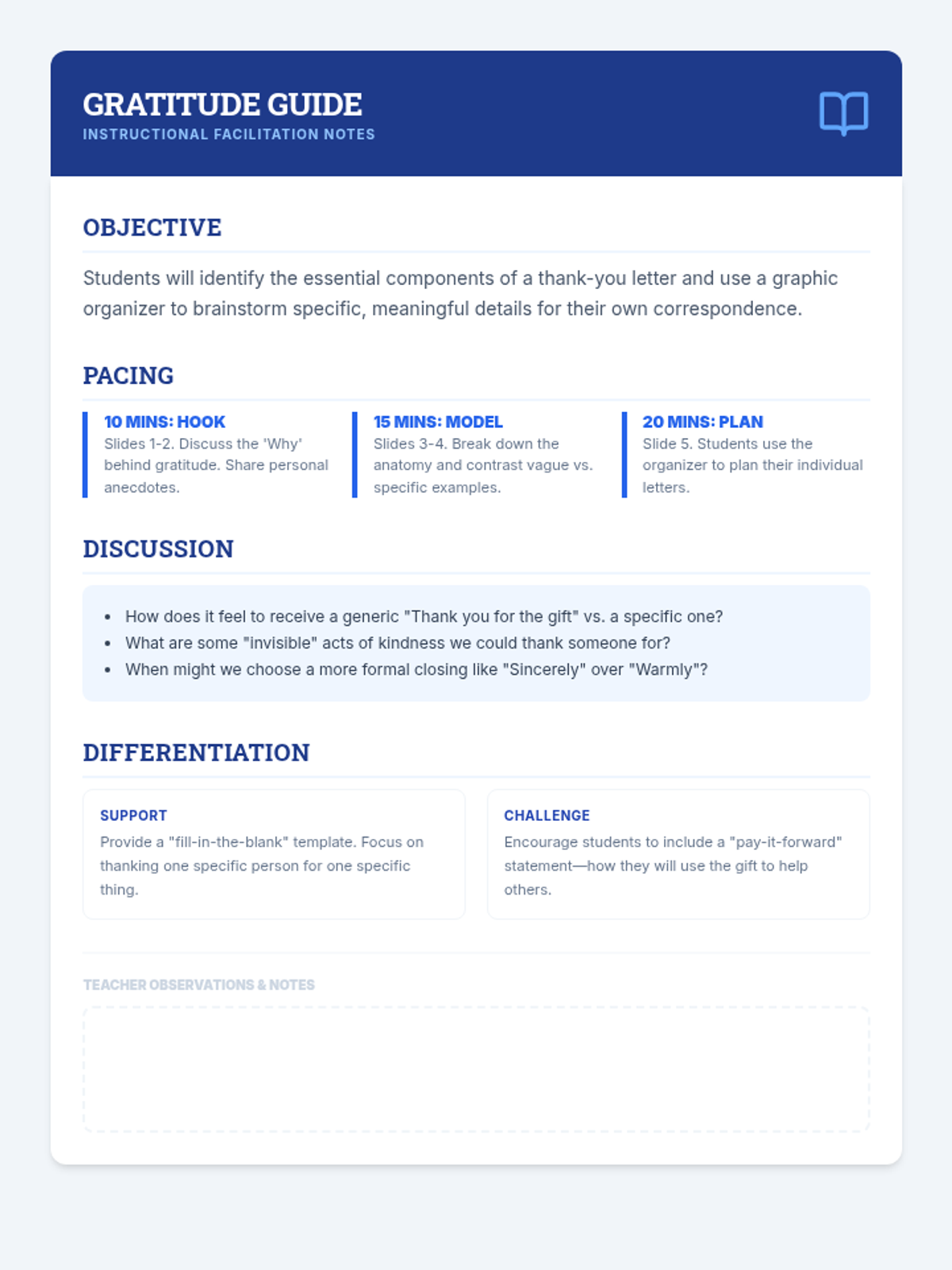
A lesson focused on the art of writing sincere thank-you letters, covering the essential components and the emotional impact of expressing gratitude.
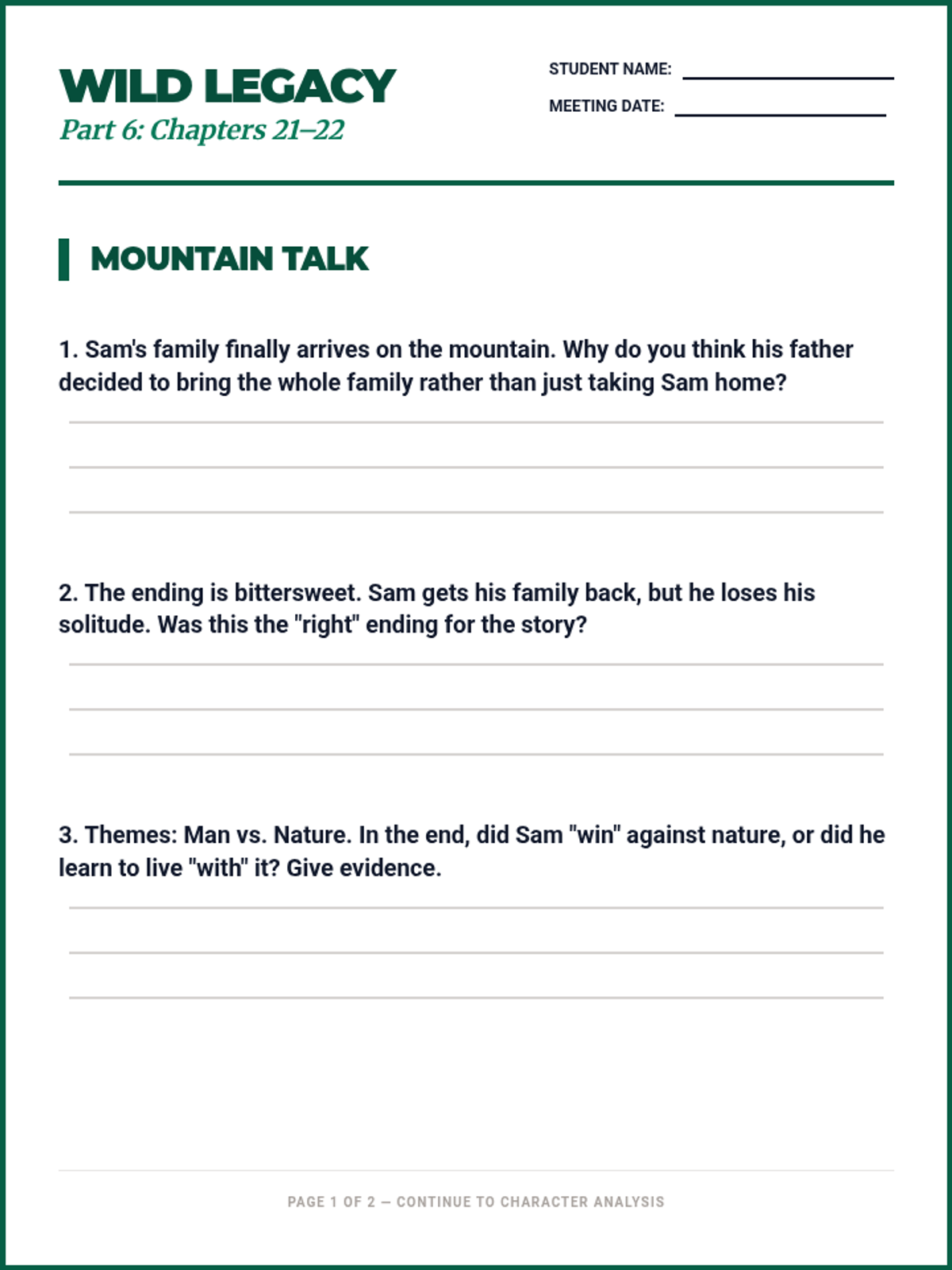
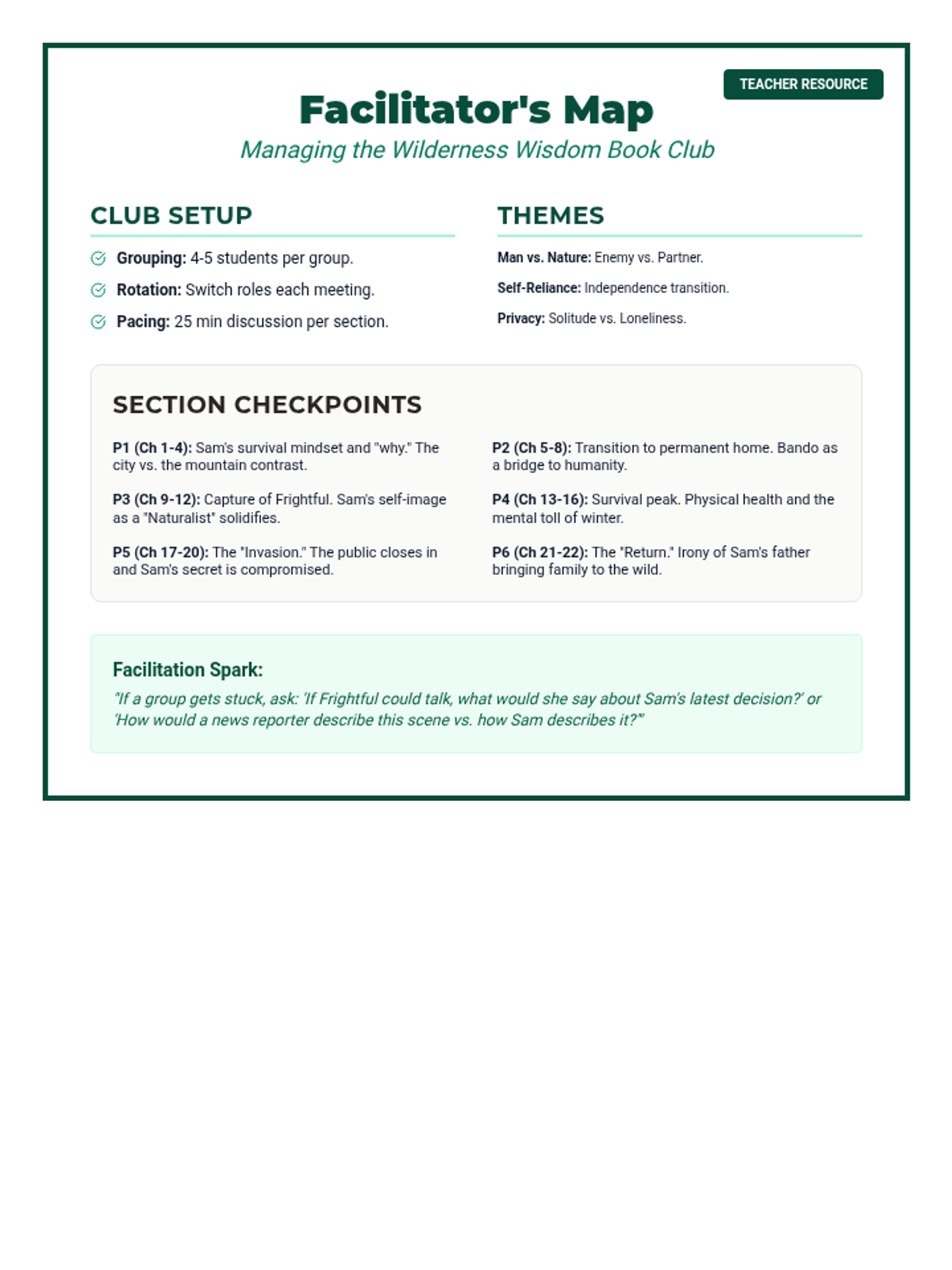
The conclusion of Sam's experiment and his transition back toward society and family. Covers Chapters 21-22 and Epilogue.
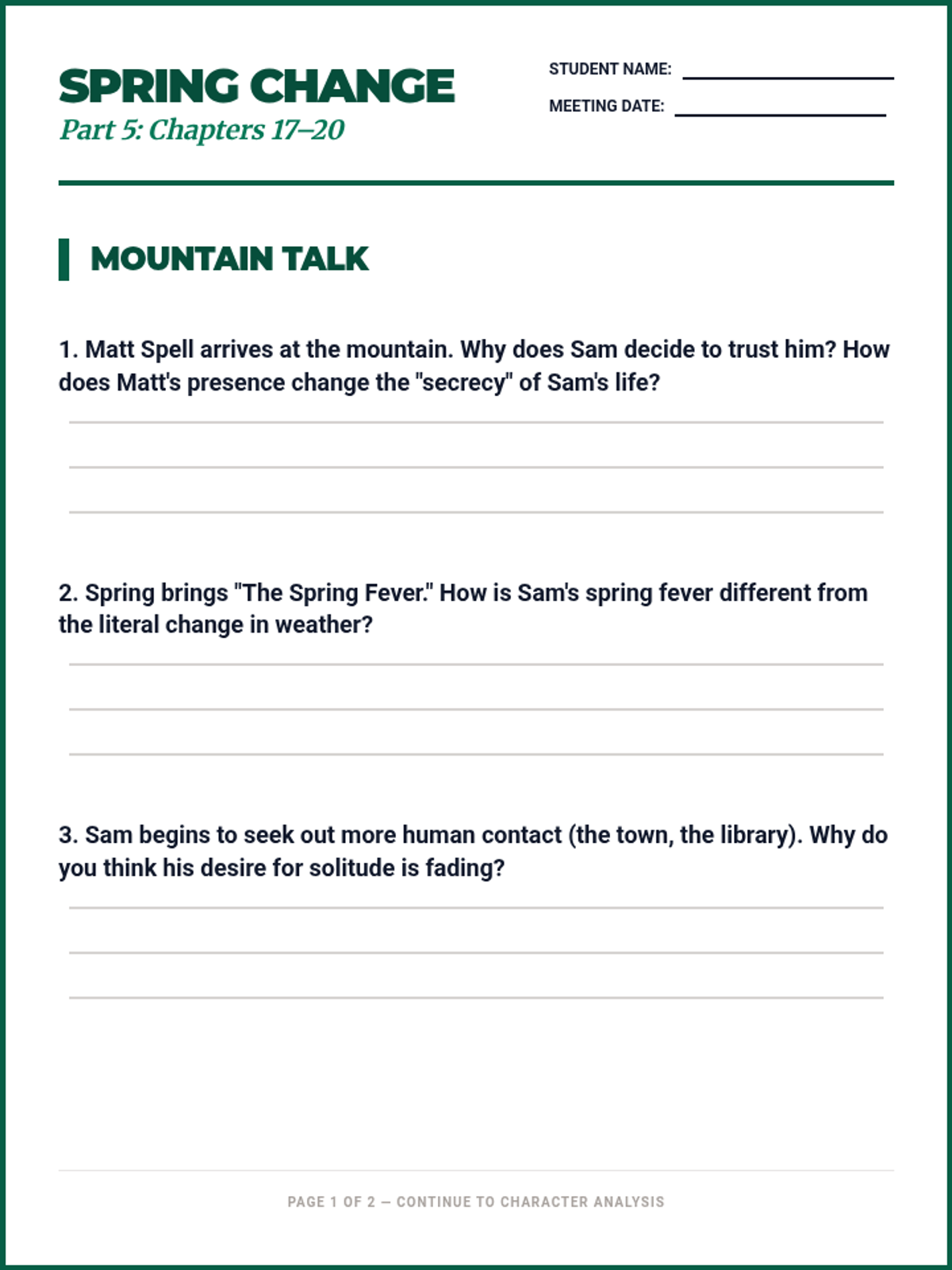
As spring arrives, Sam faces new visitors and the realization that his secret life is becoming public. Covers Chapters 17-20.
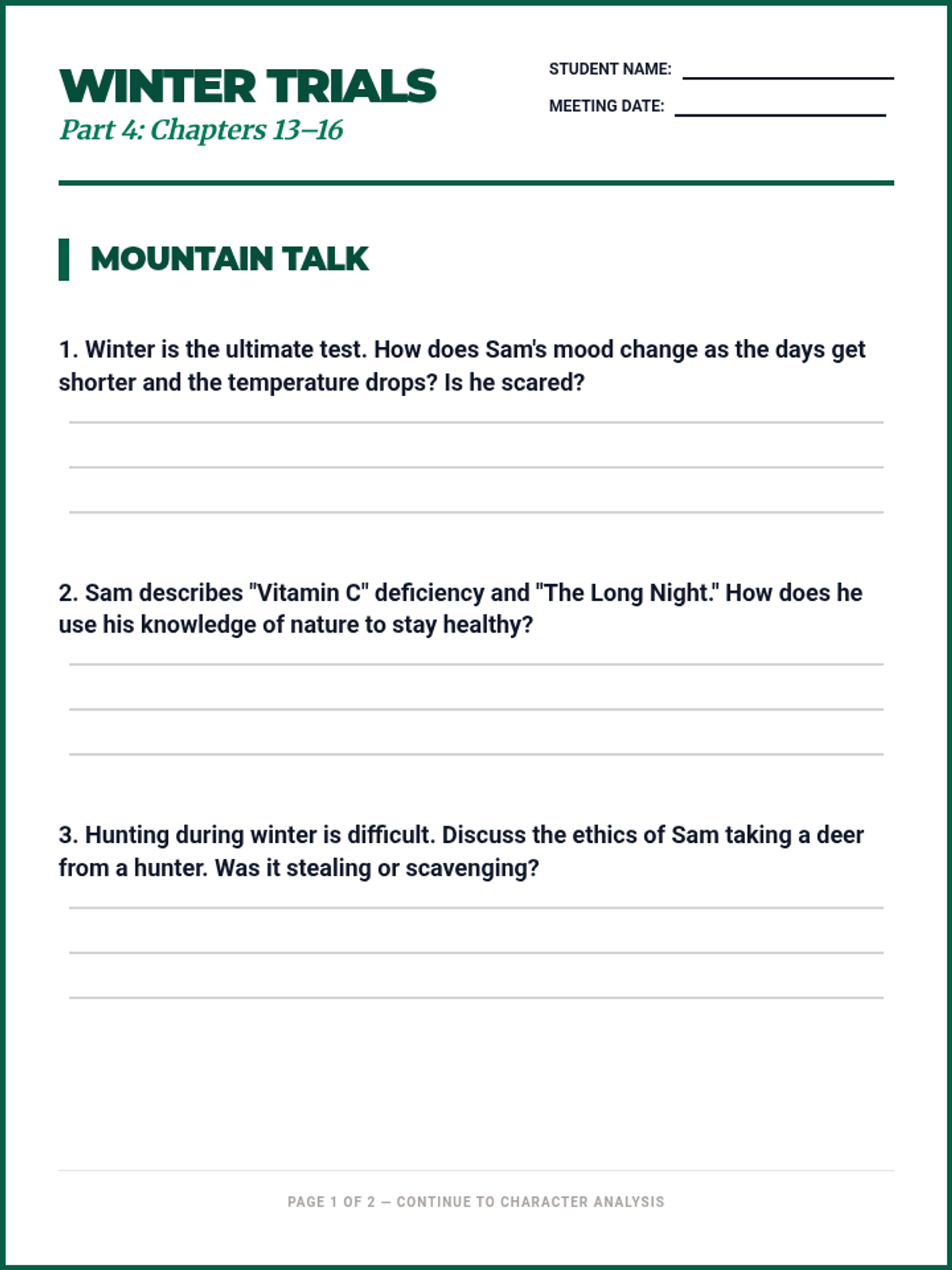
The harsh reality of a Catskill winter, testing Sam's preparations and mental fortitude. Covers Chapters 13-16.
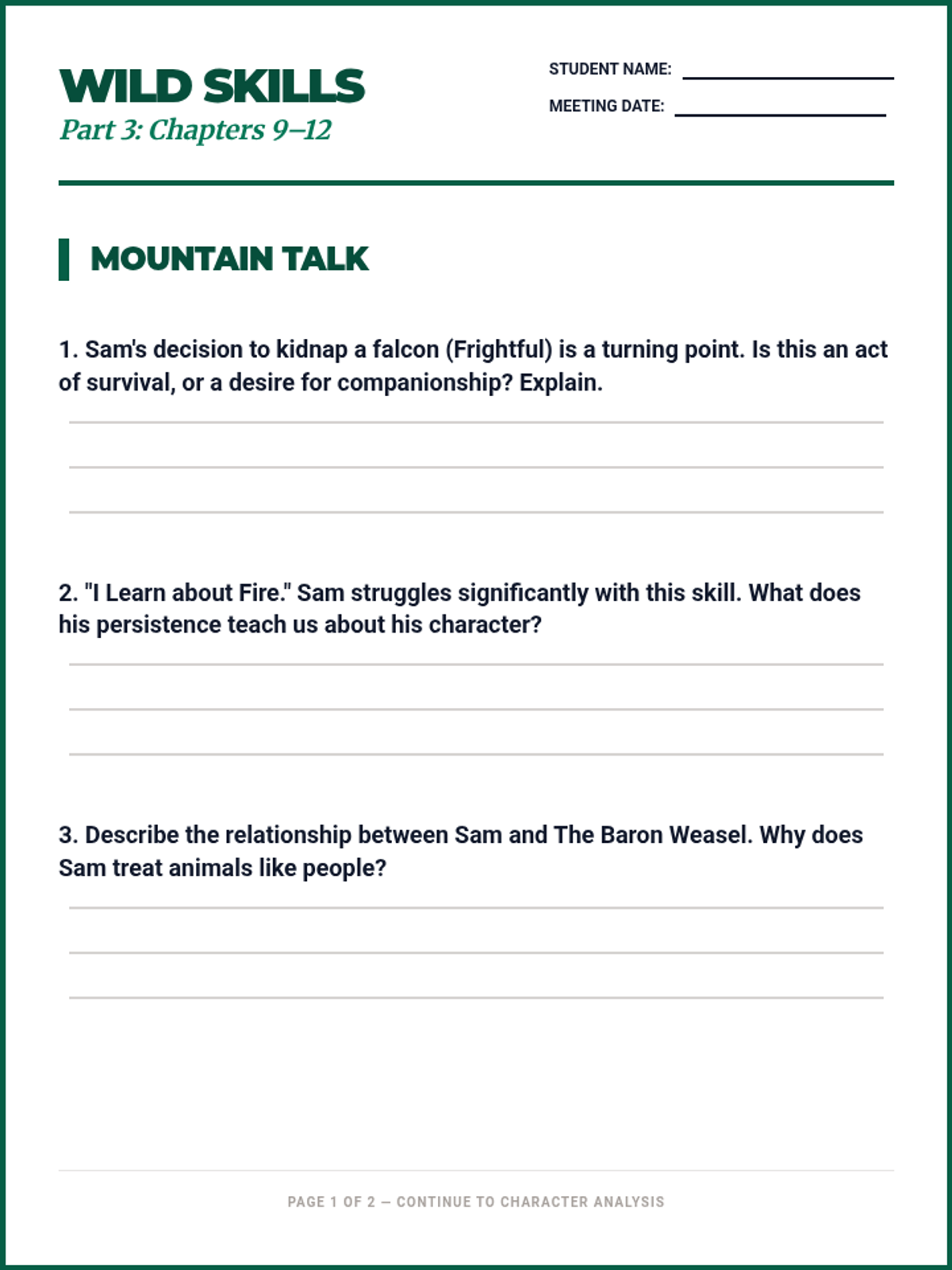
Focus on Sam's growing expertise in fire-making and his pivotal relationship with Frightful the hawk. Covers Chapters 9-12.
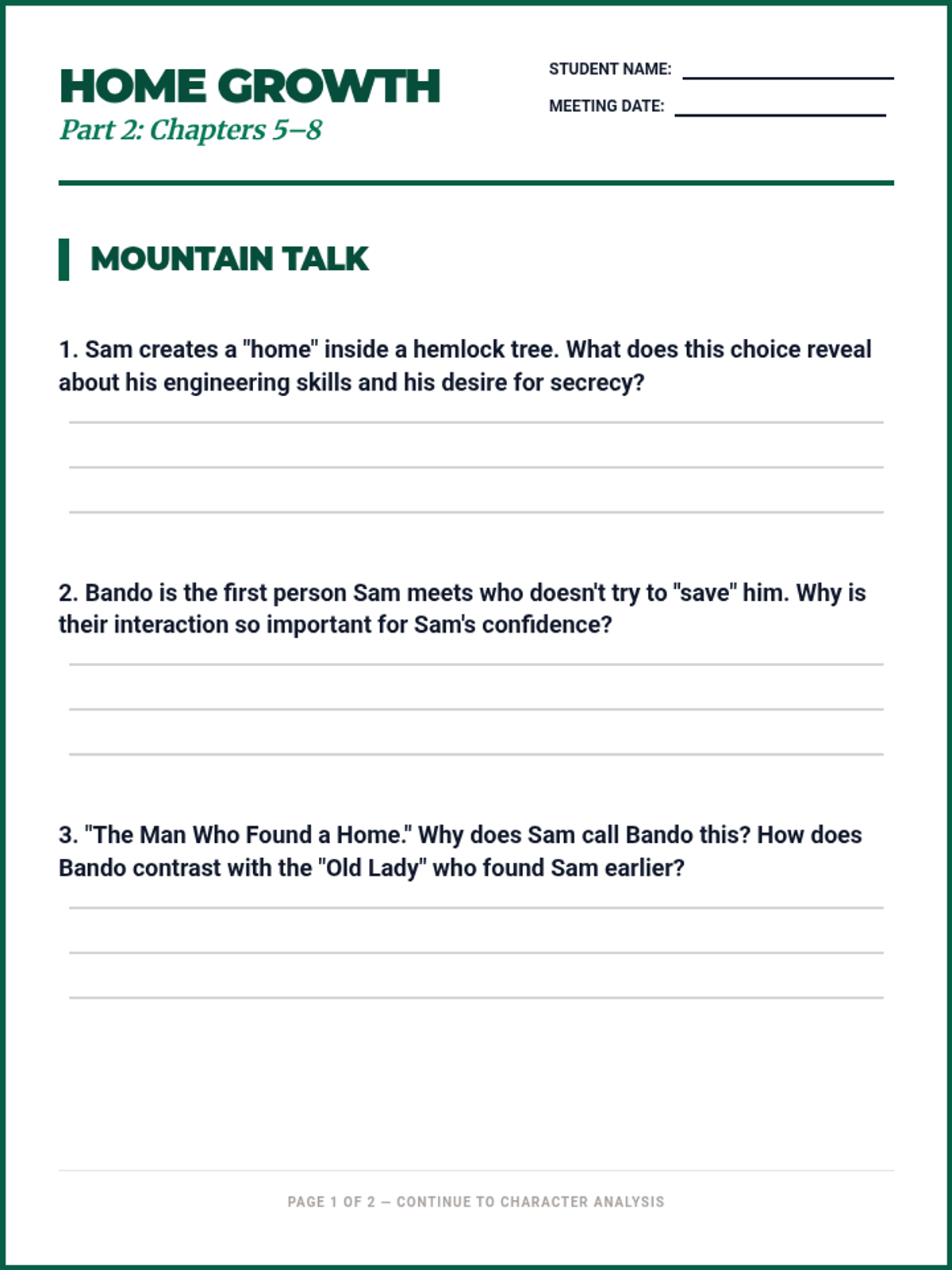
Sam expands his home and meets Bando, exploring the balance between solitude and human connection. Covers Chapters 5-8.
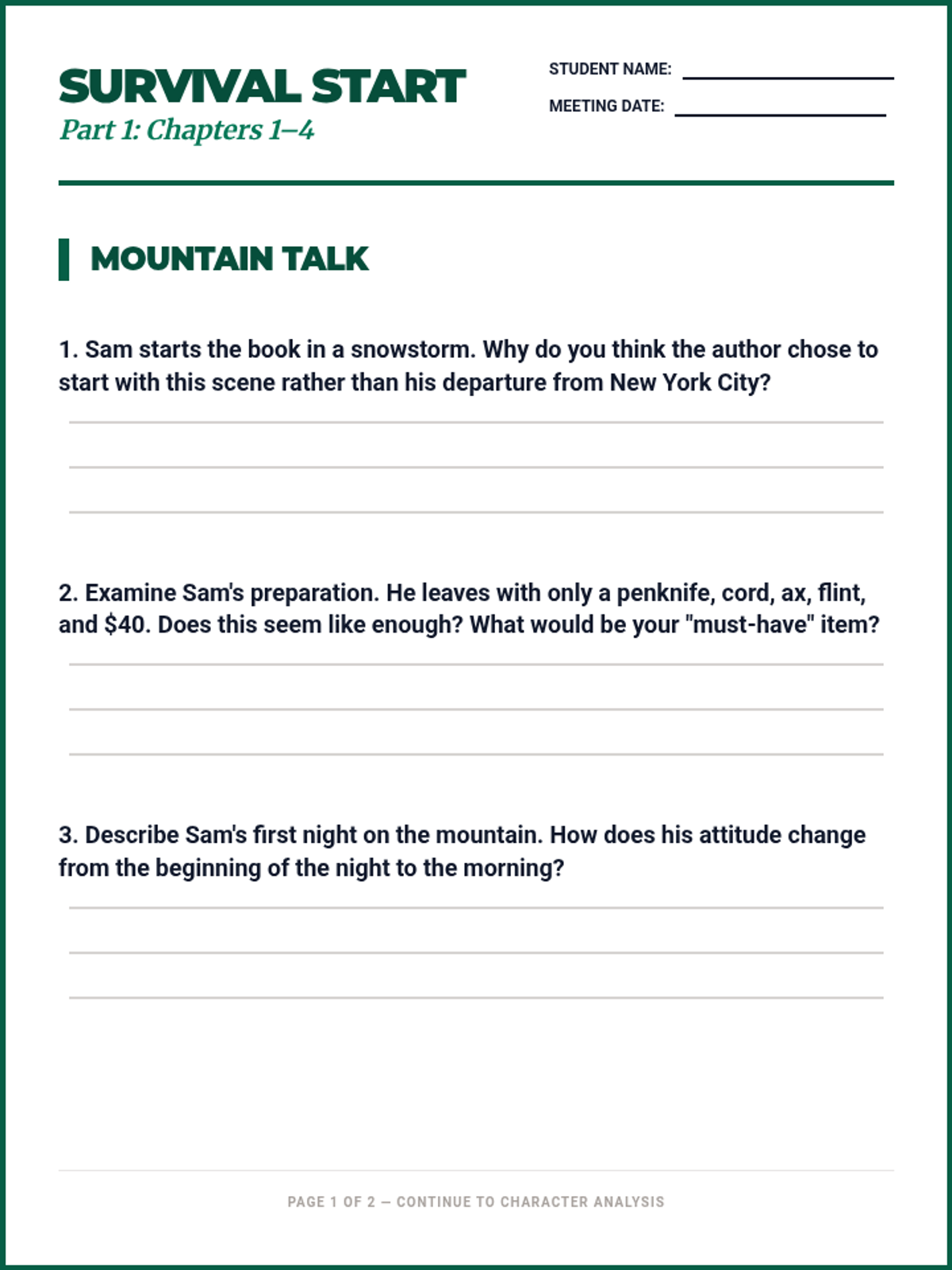
Introduction to Sam Gribley's journey, setting up in the hemlock forest, and the initial challenges of wilderness survival. Covers Chapters 1-4.
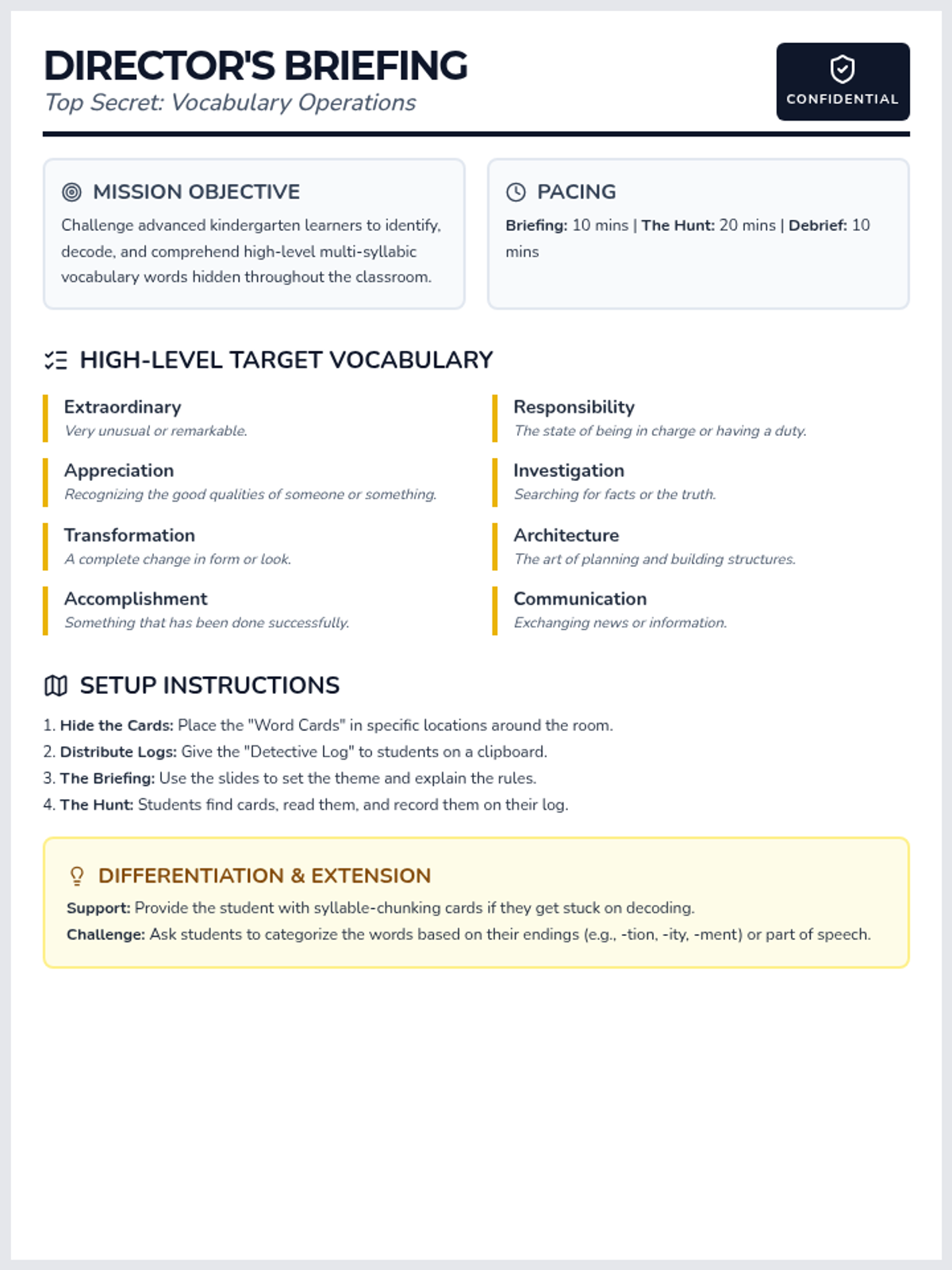
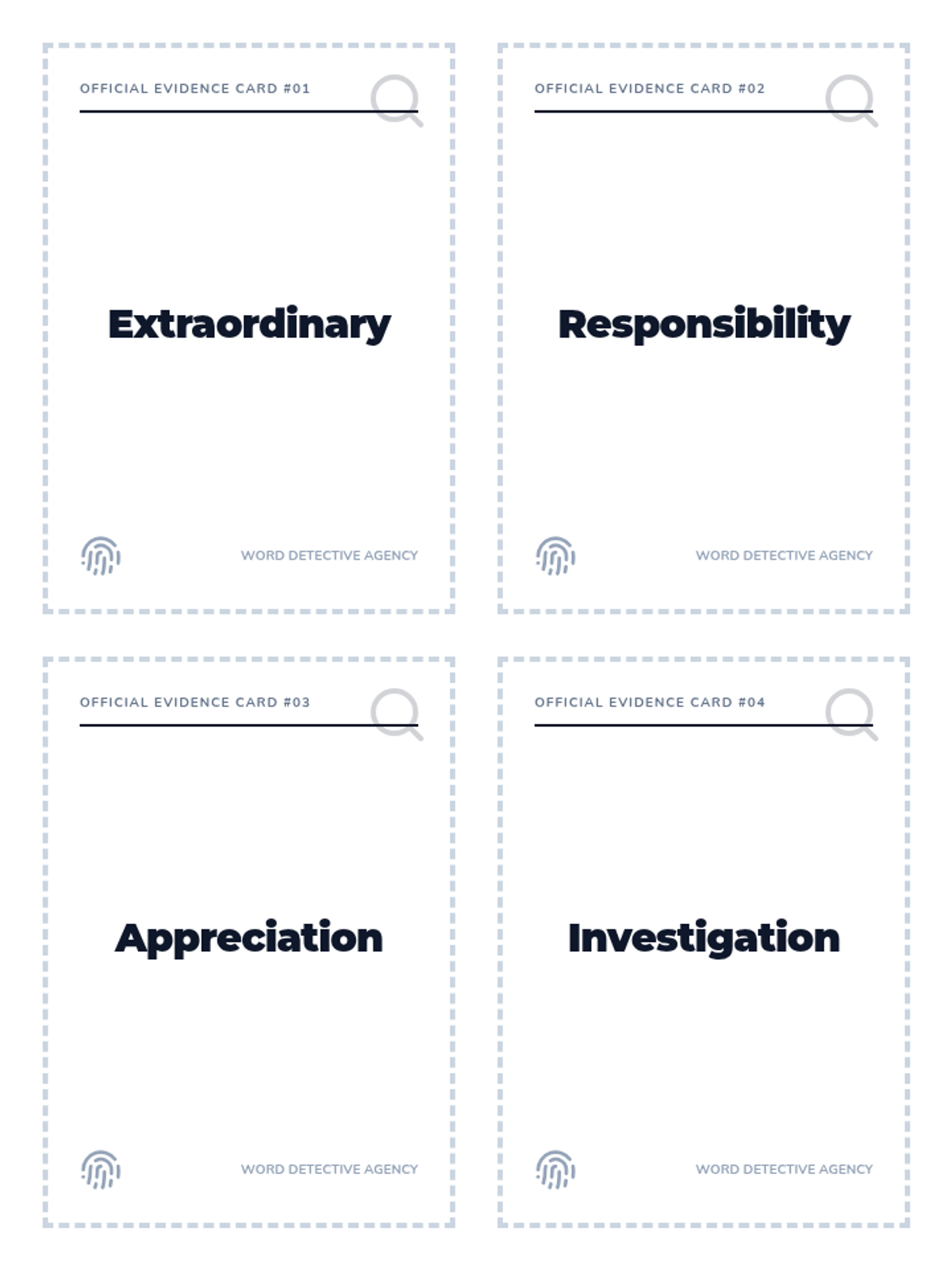
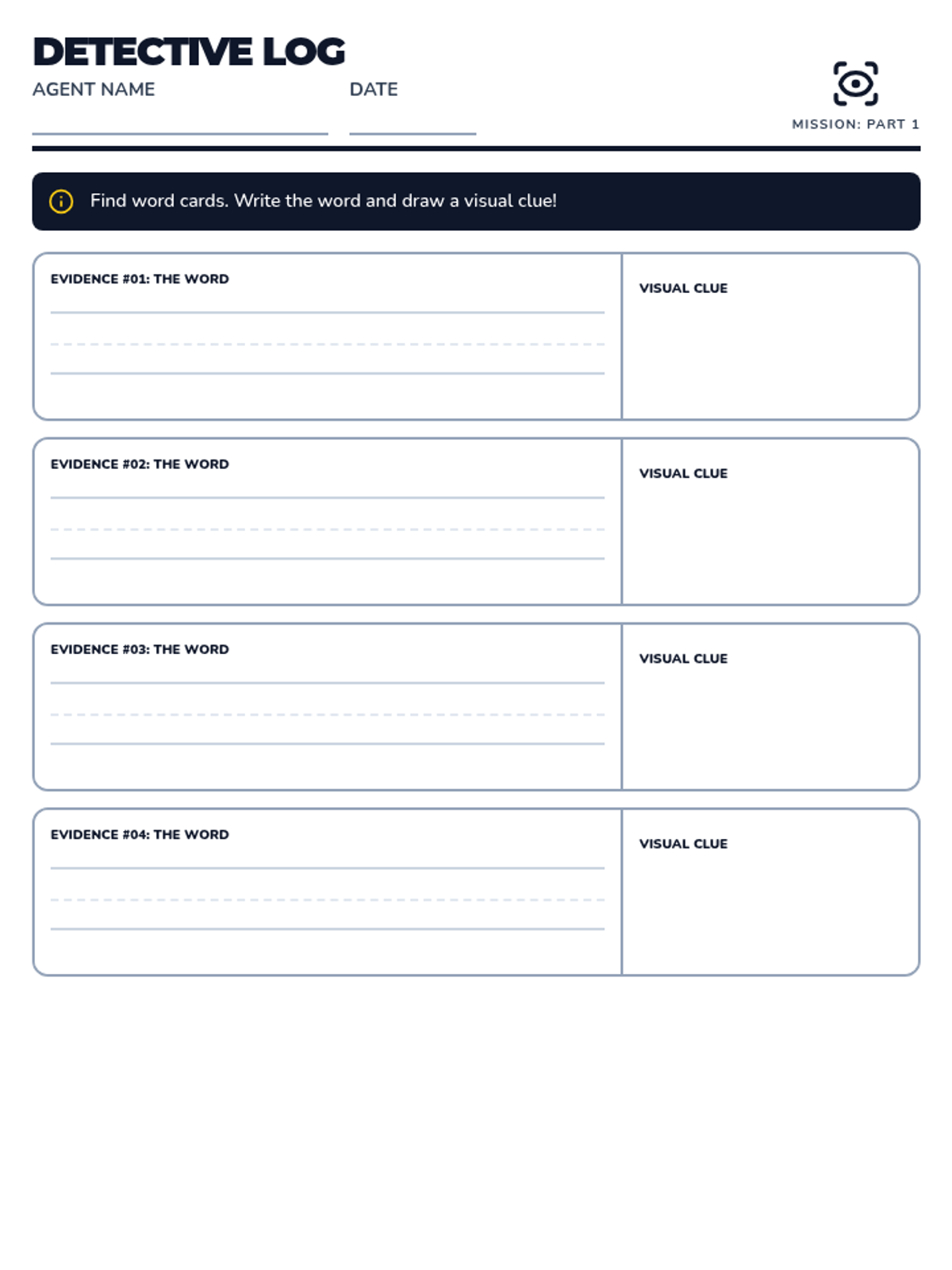
An advanced scavenger hunt designed for kindergarteners reading at a higher level, focusing on multi-syllabic and complex vocabulary through a "Word Detective" theme.
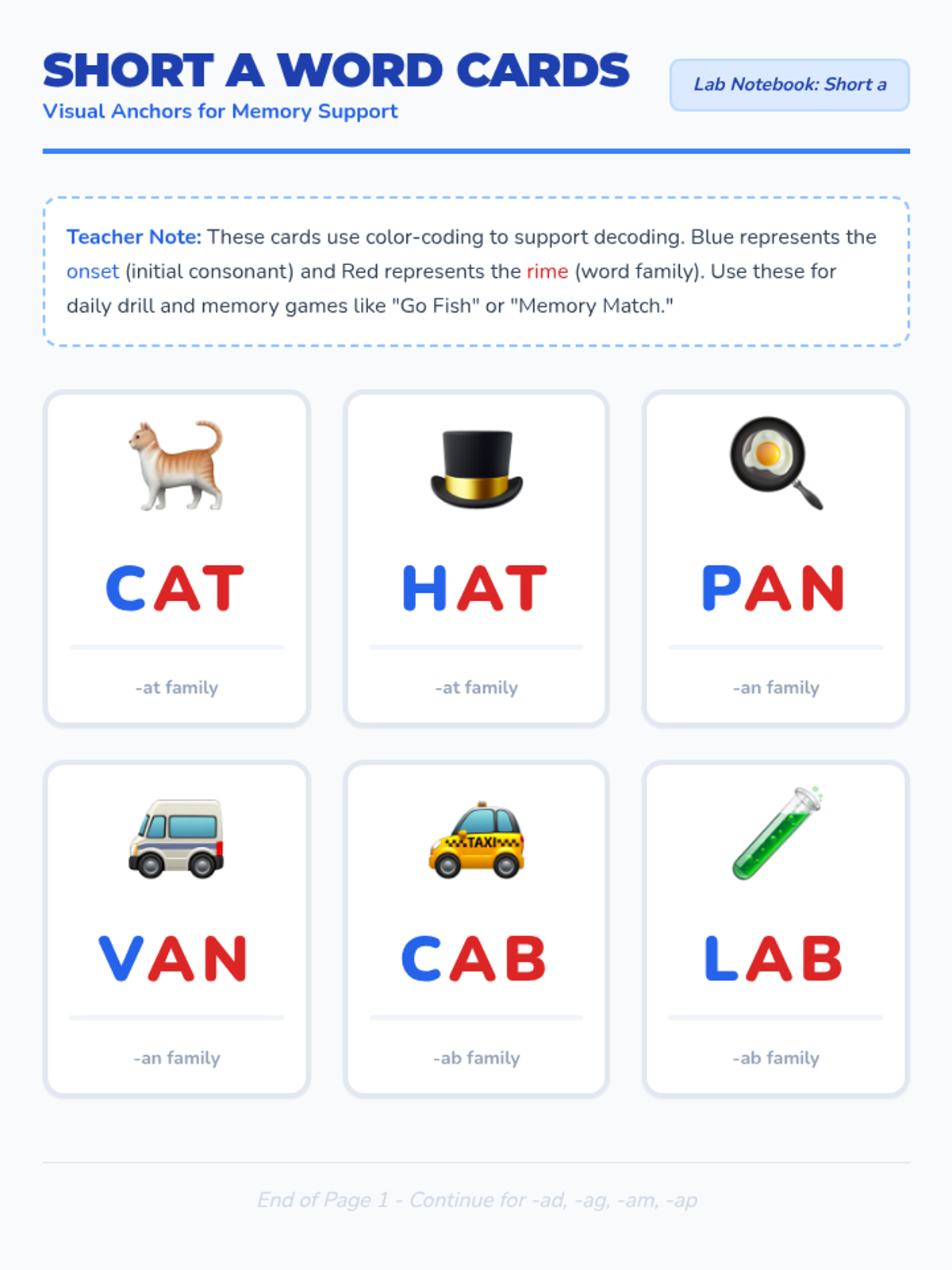
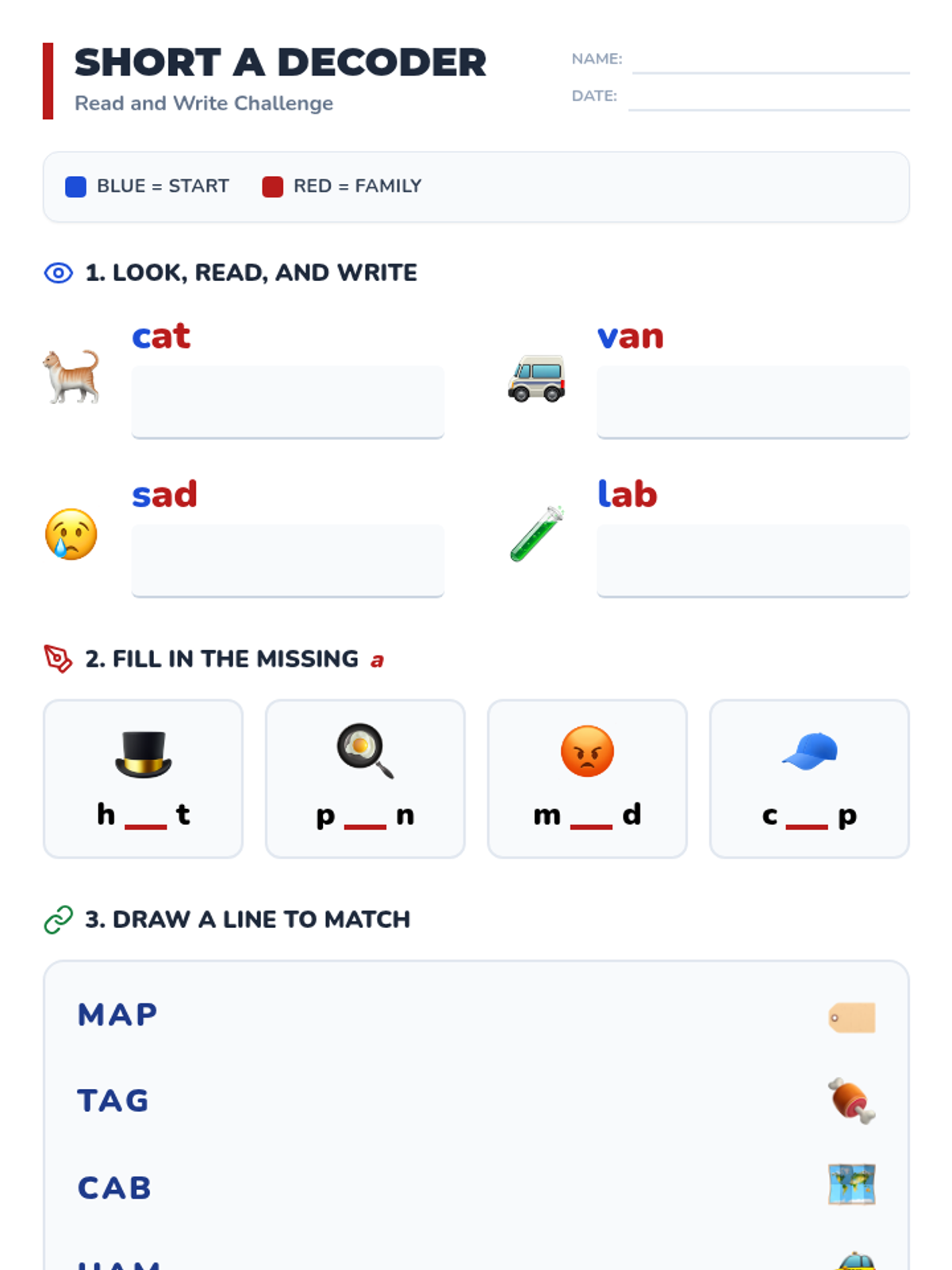
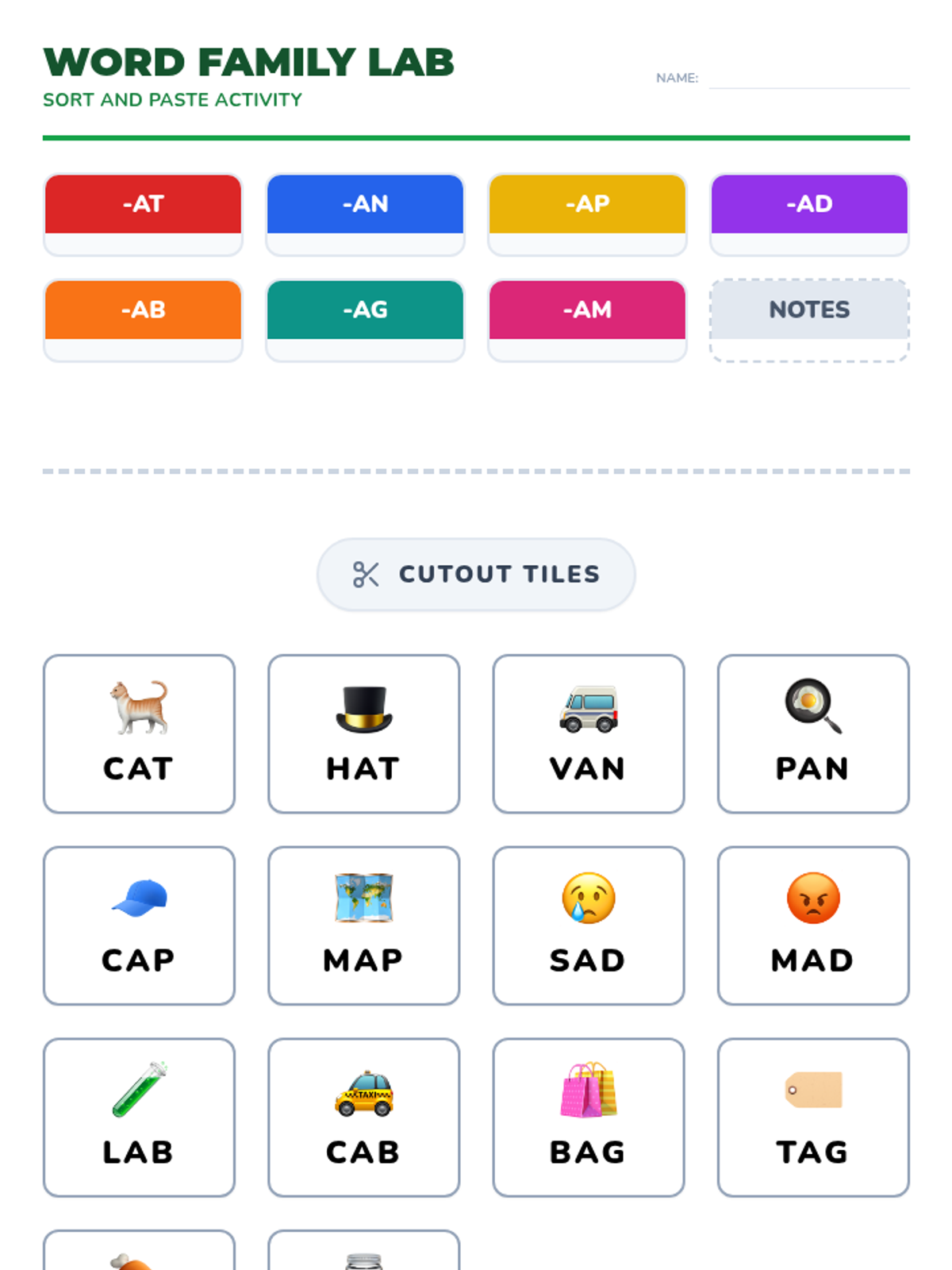
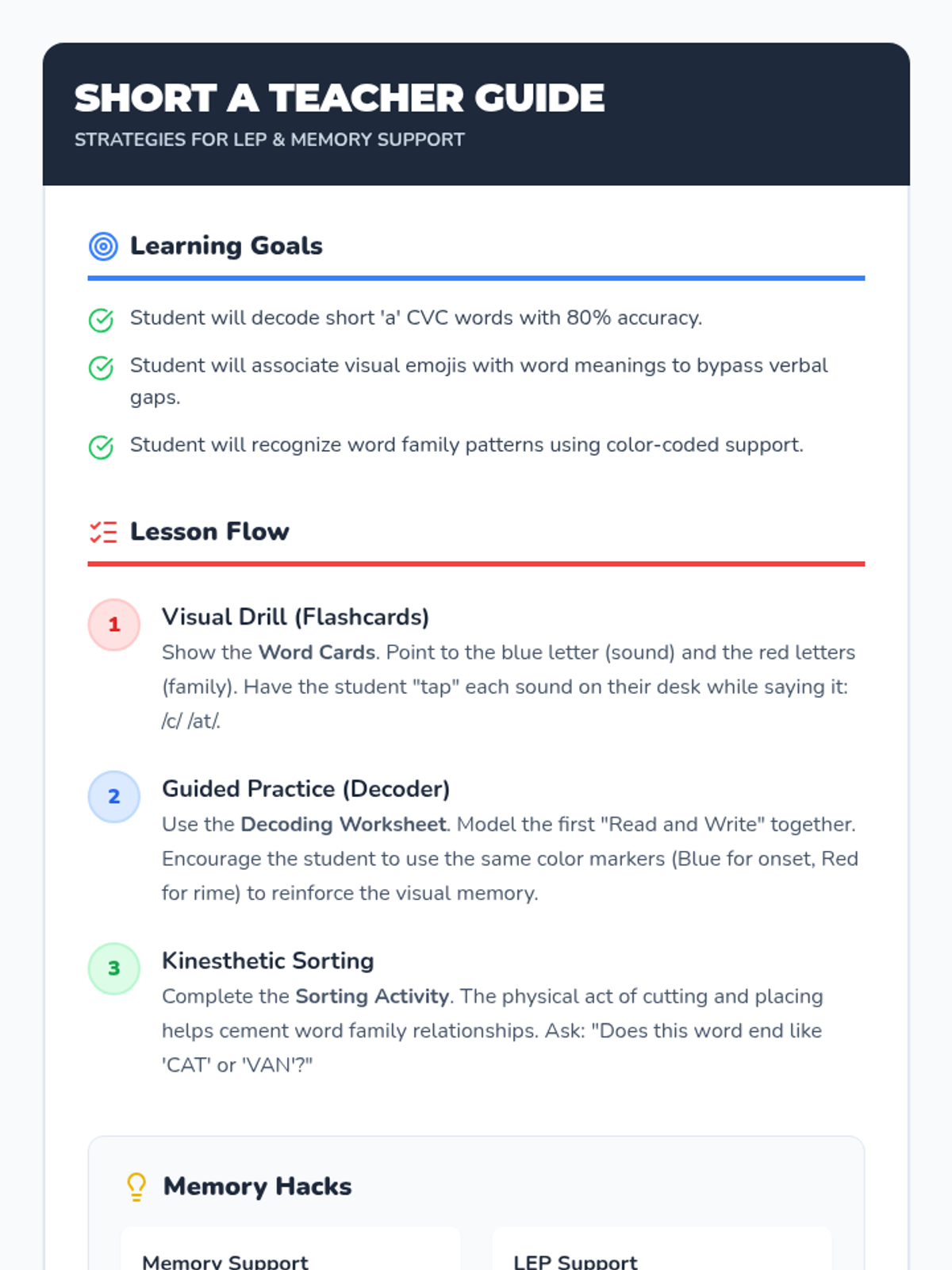
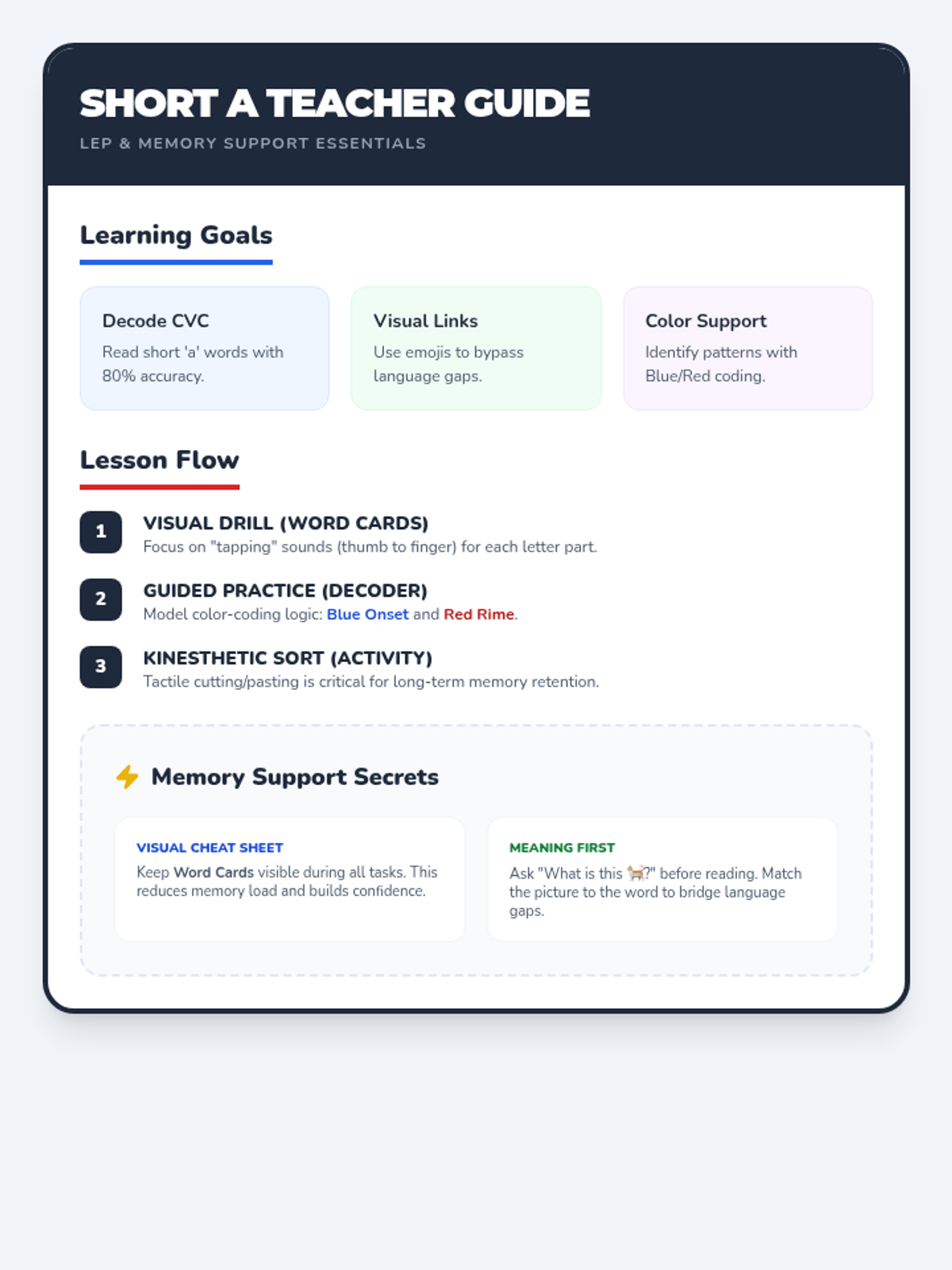
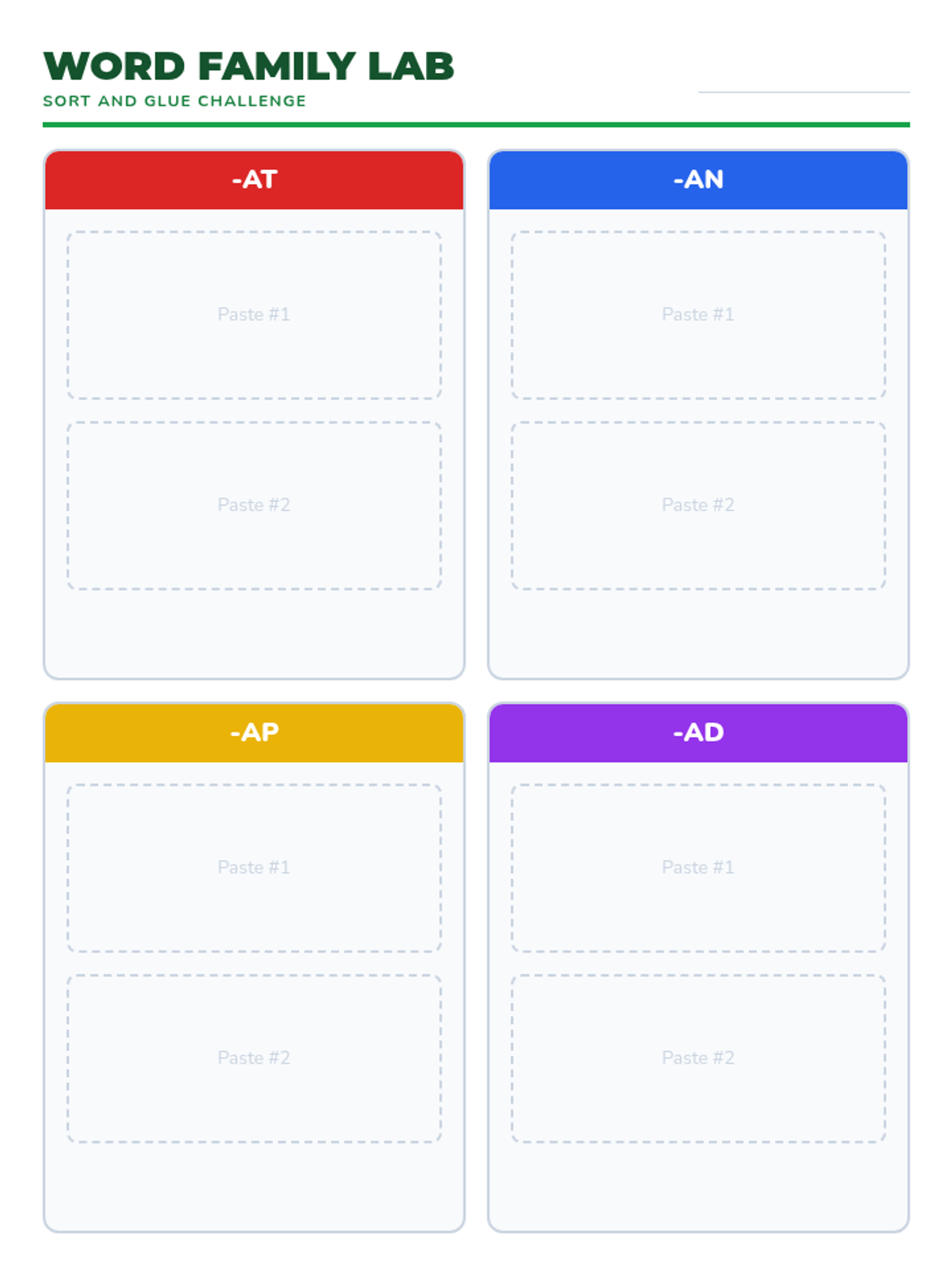
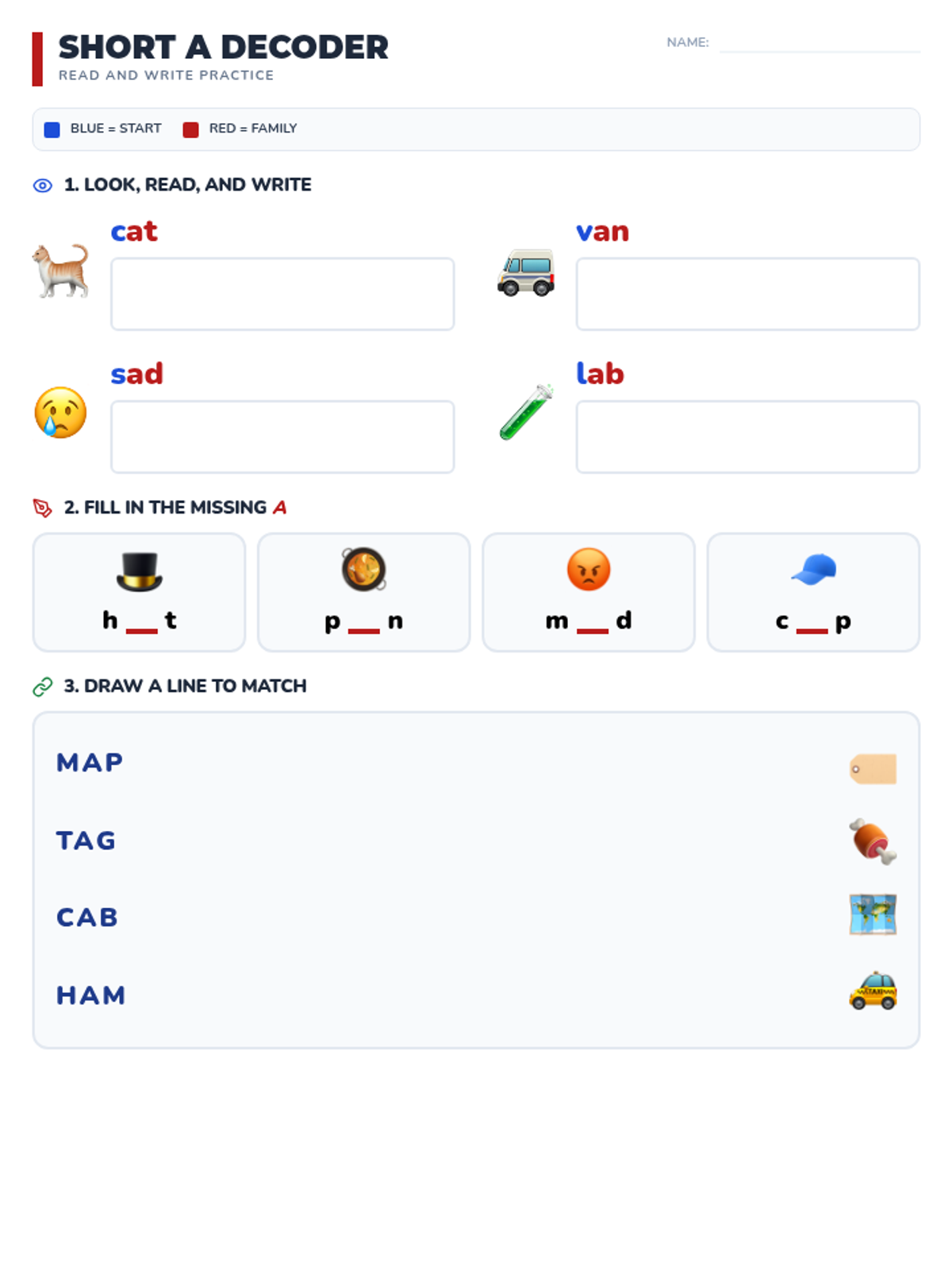
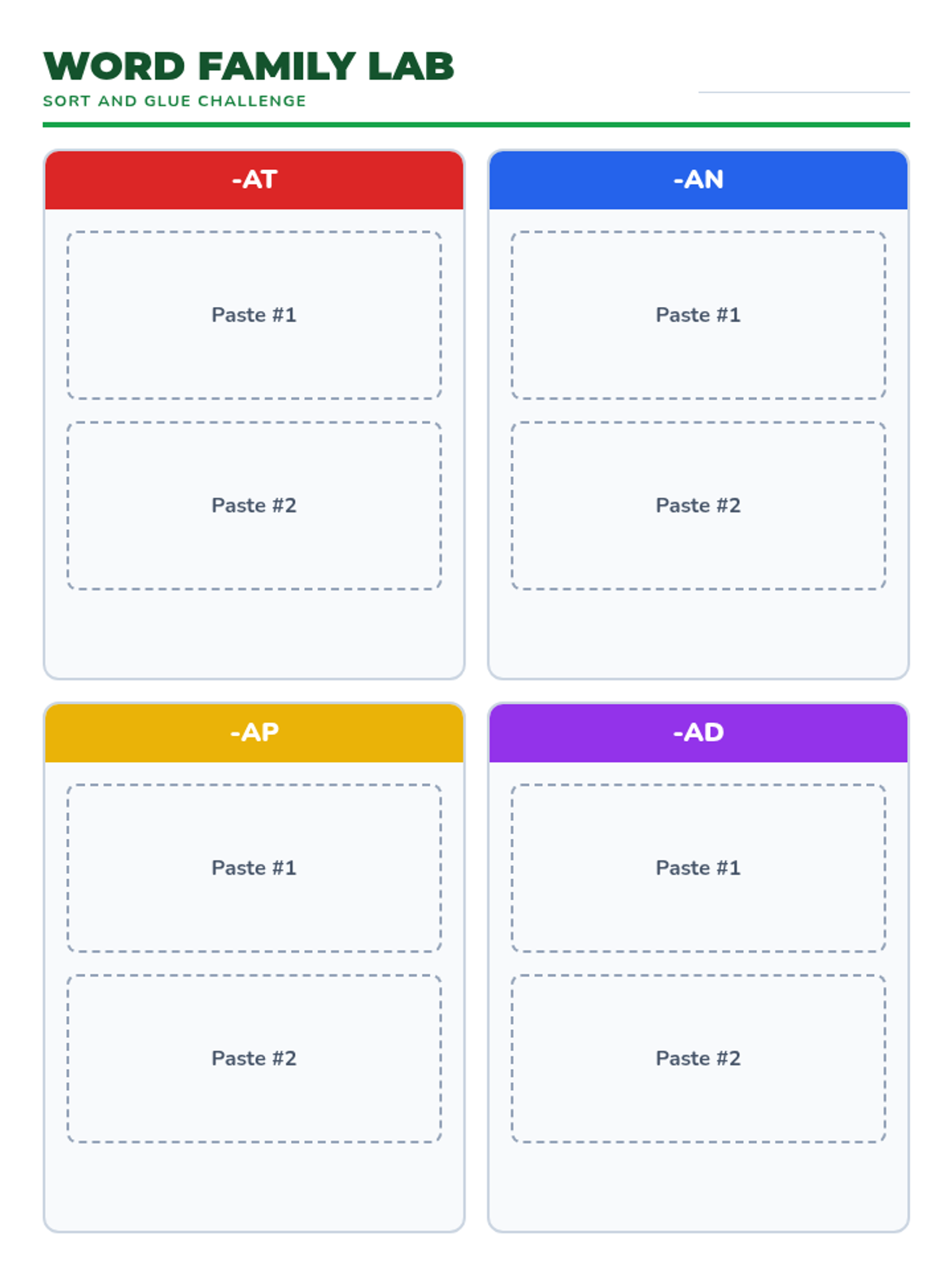
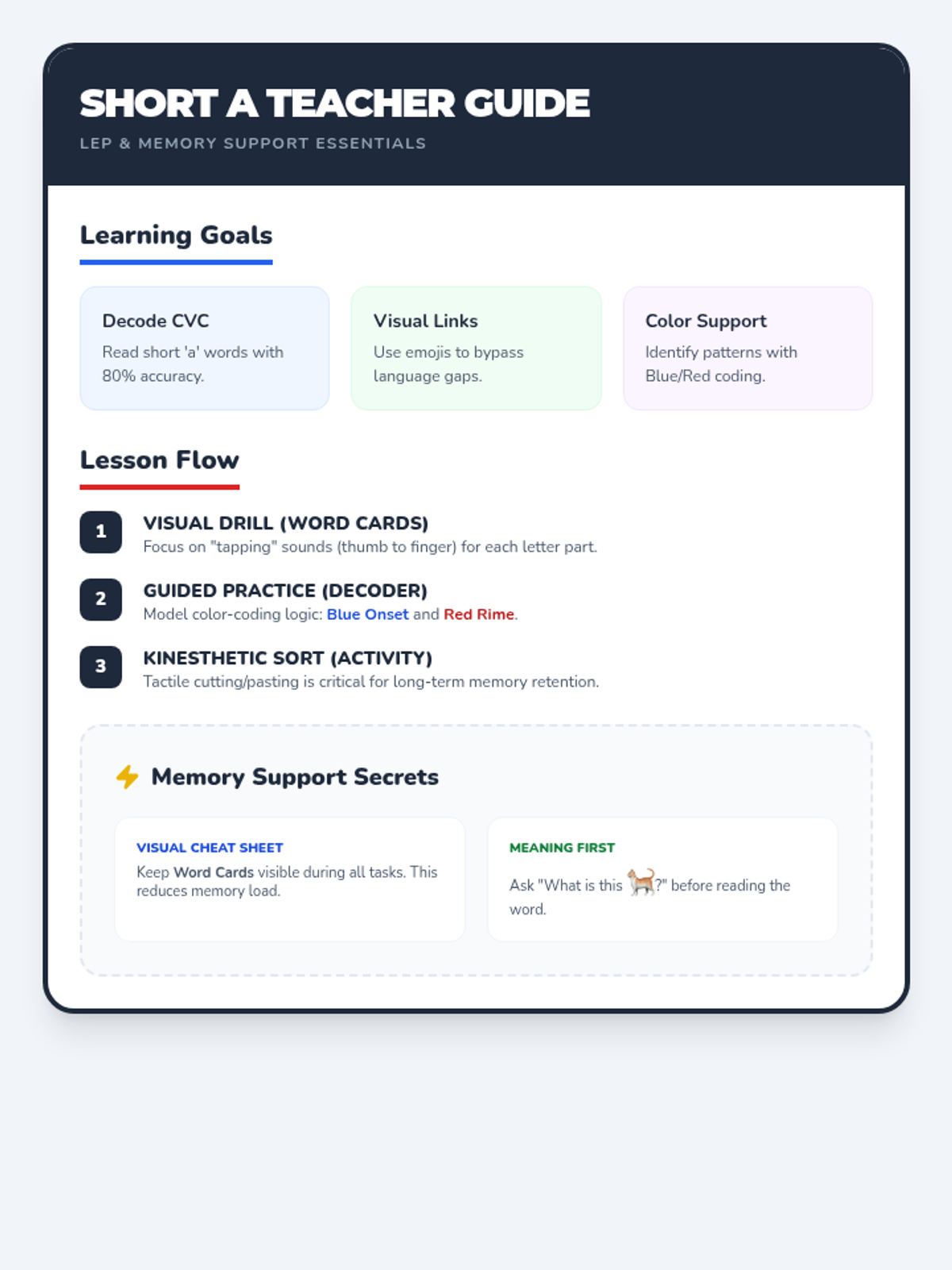
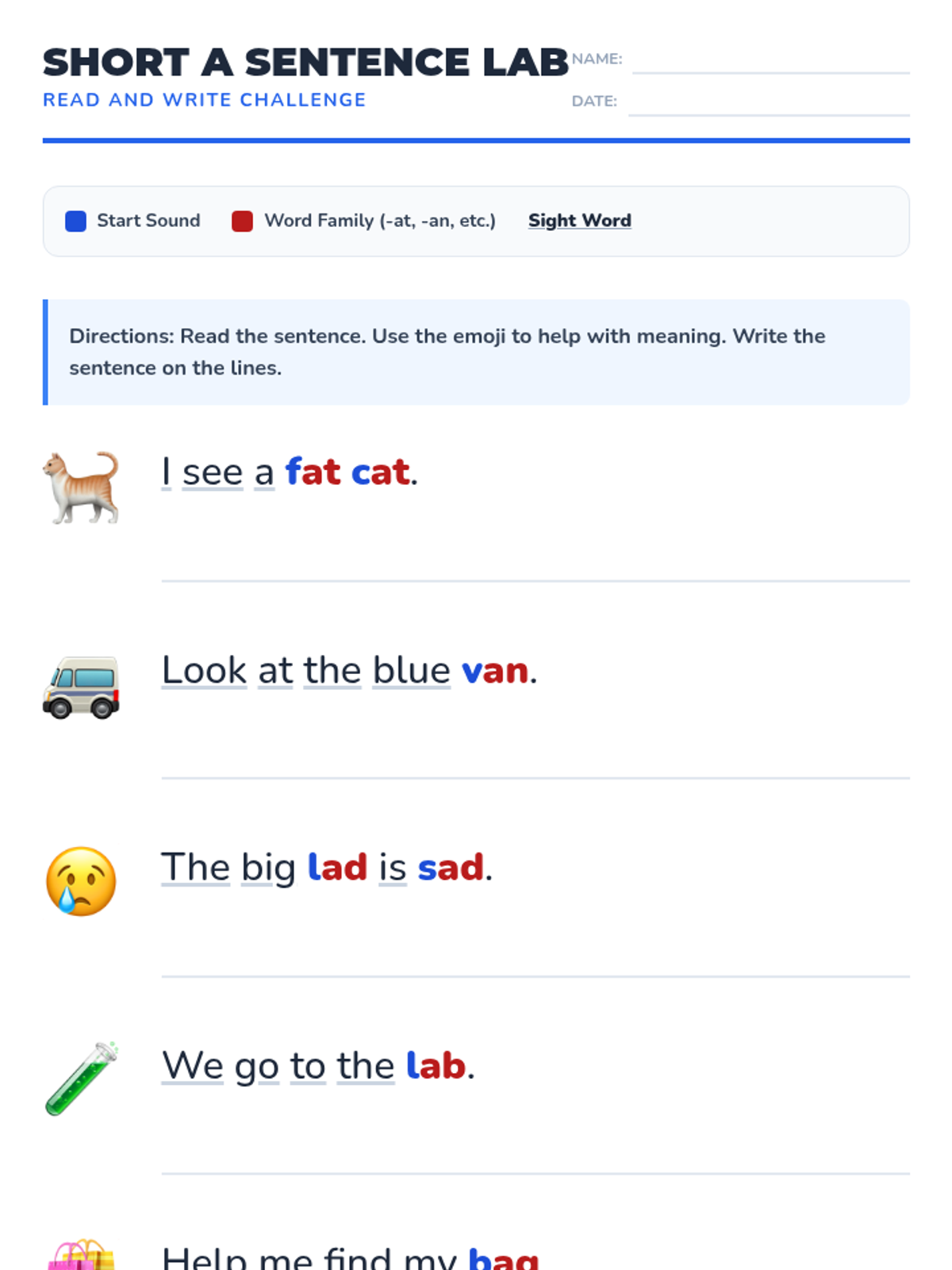
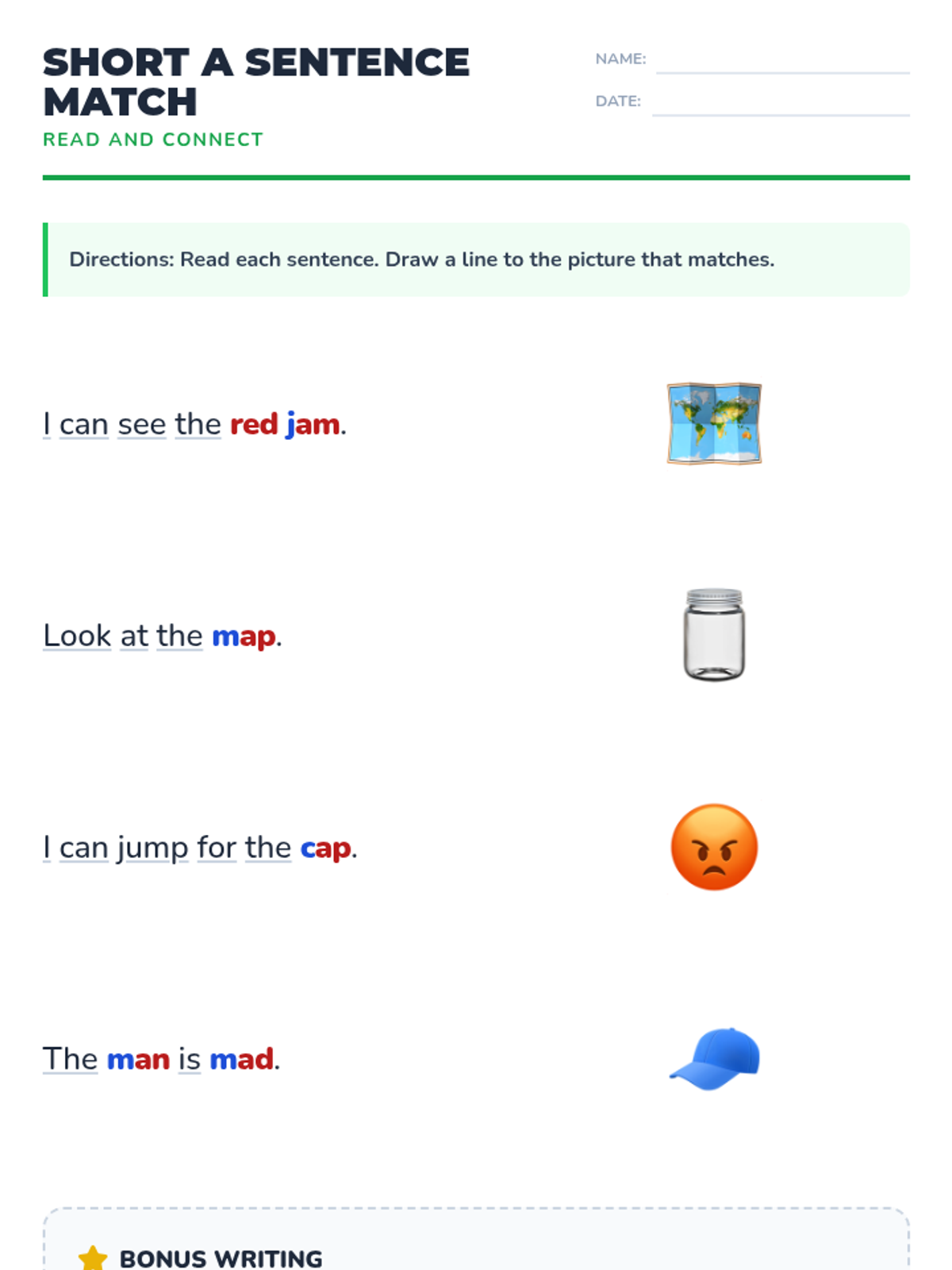
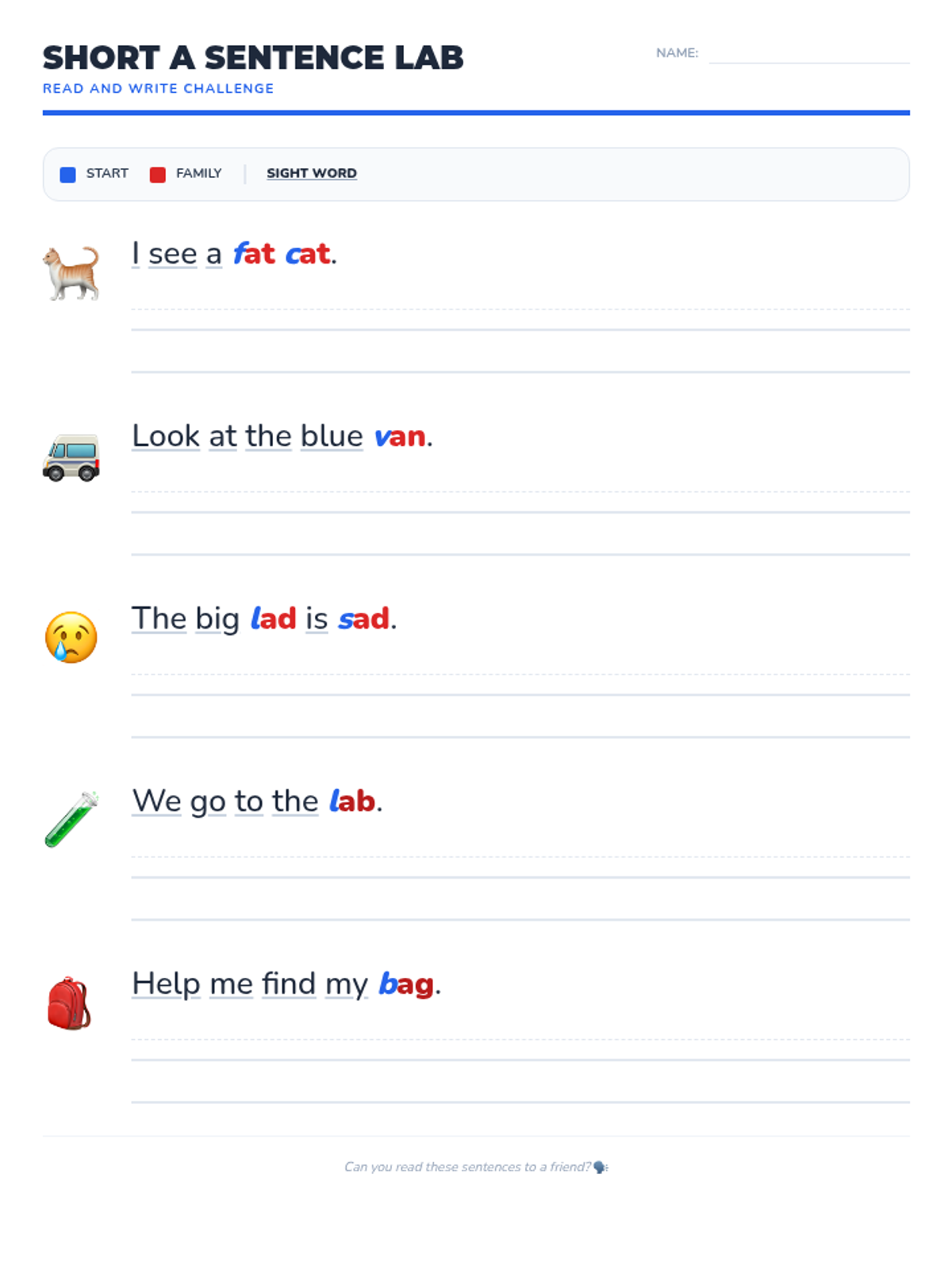
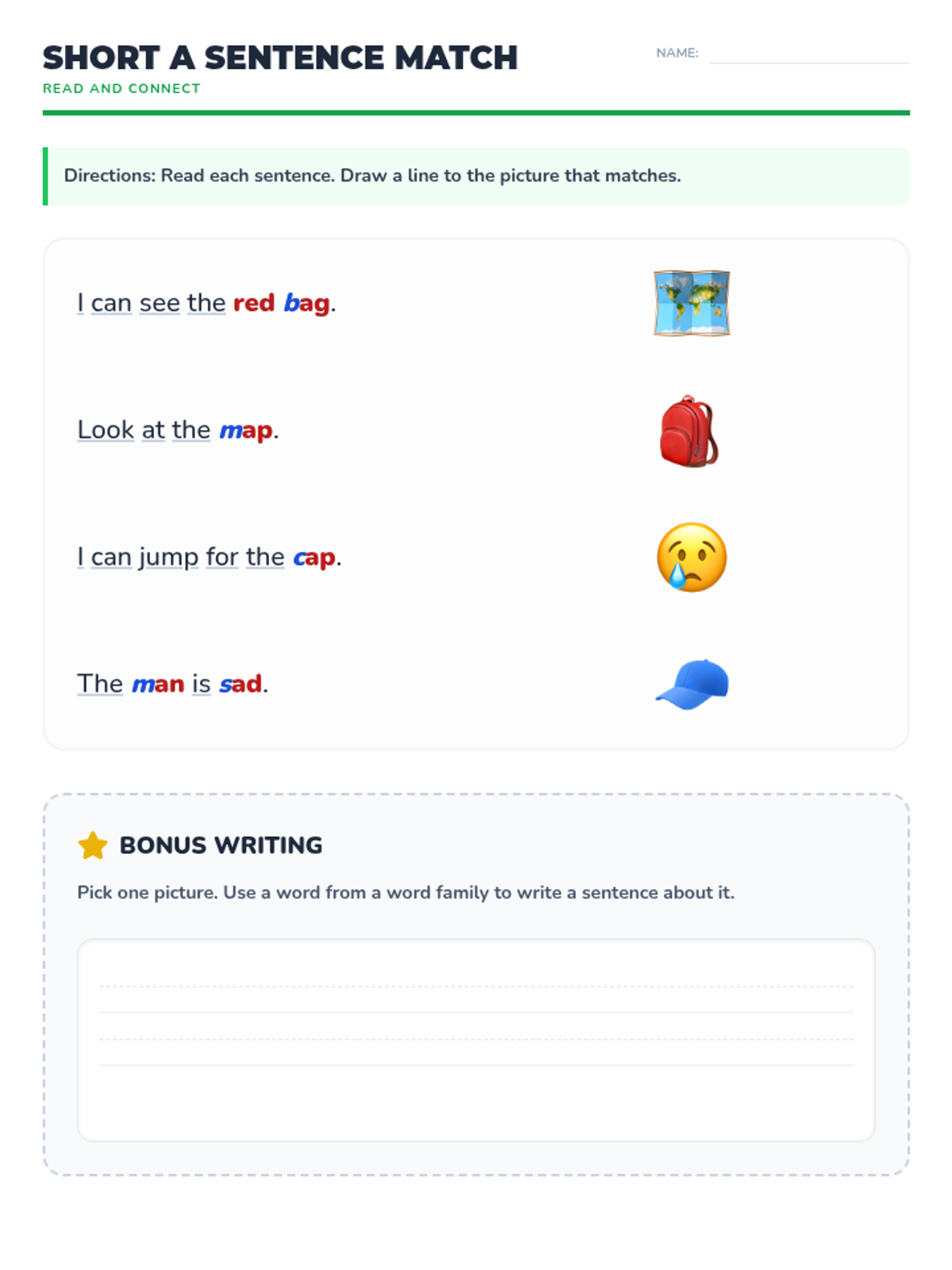
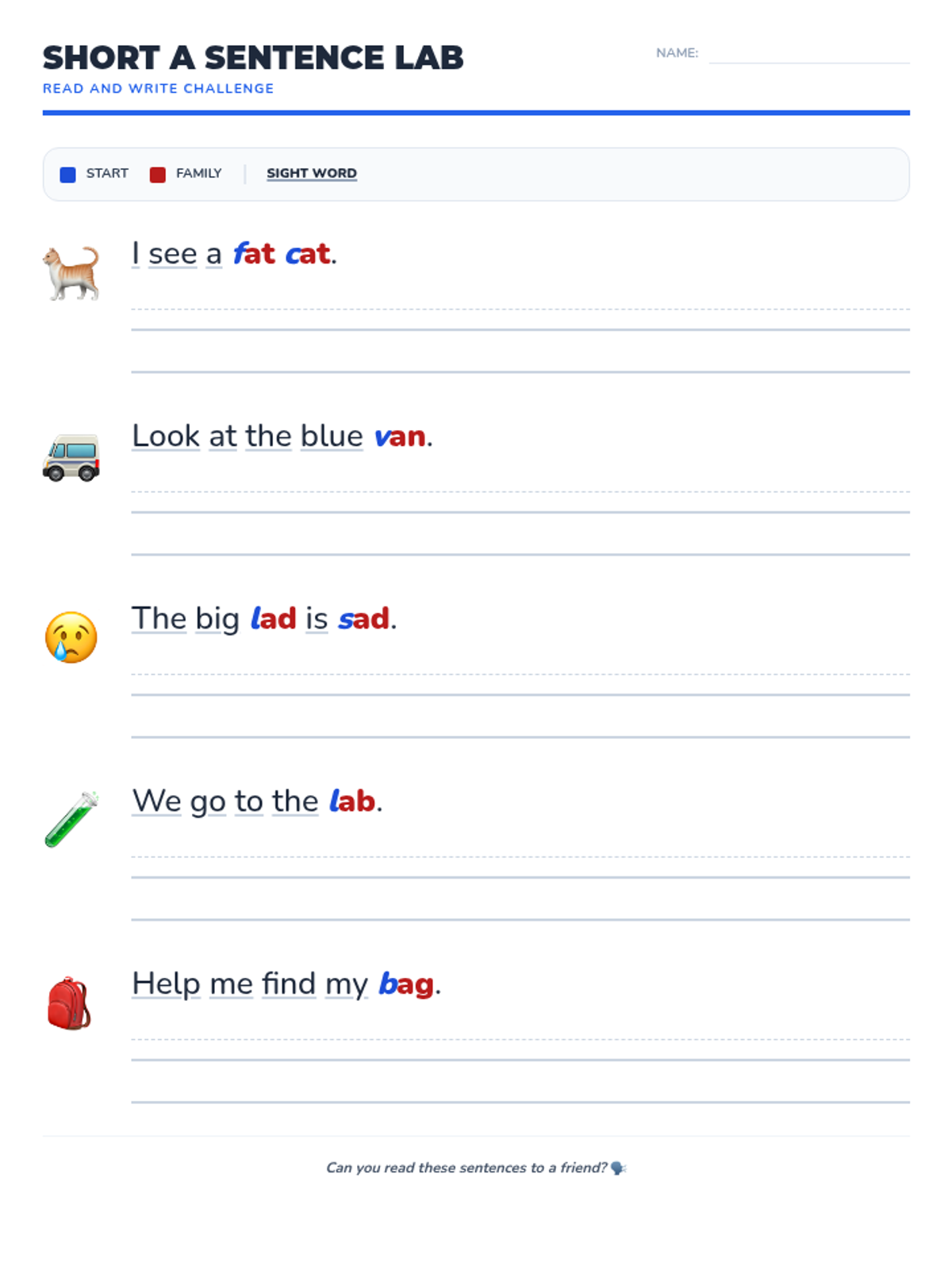
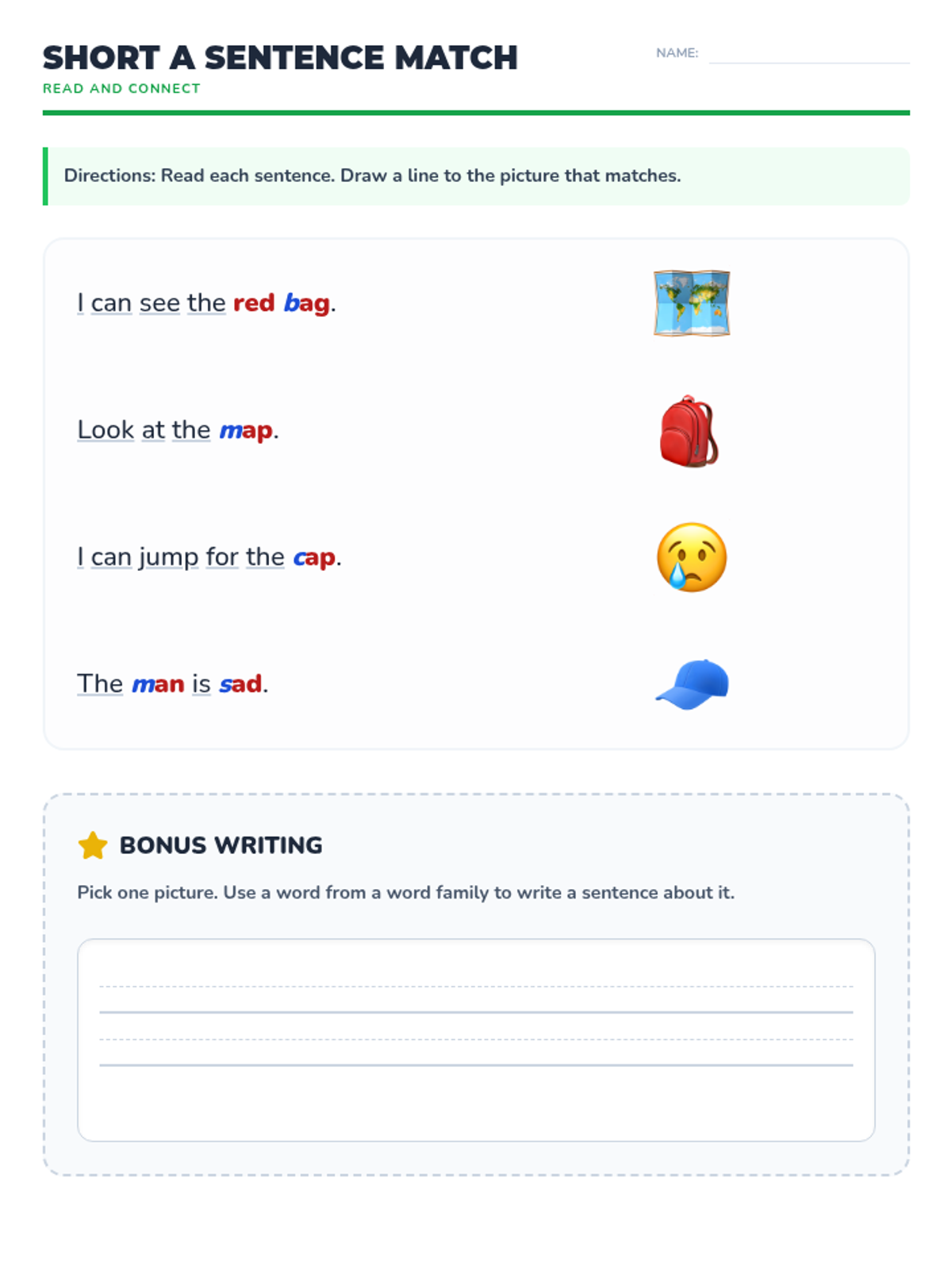
A foundational literacy lesson focusing on decoding and encoding short 'a' word families (-at, -an, -ab, -ad, -ag, -am, -ap) through visual association and color-coded patterns.
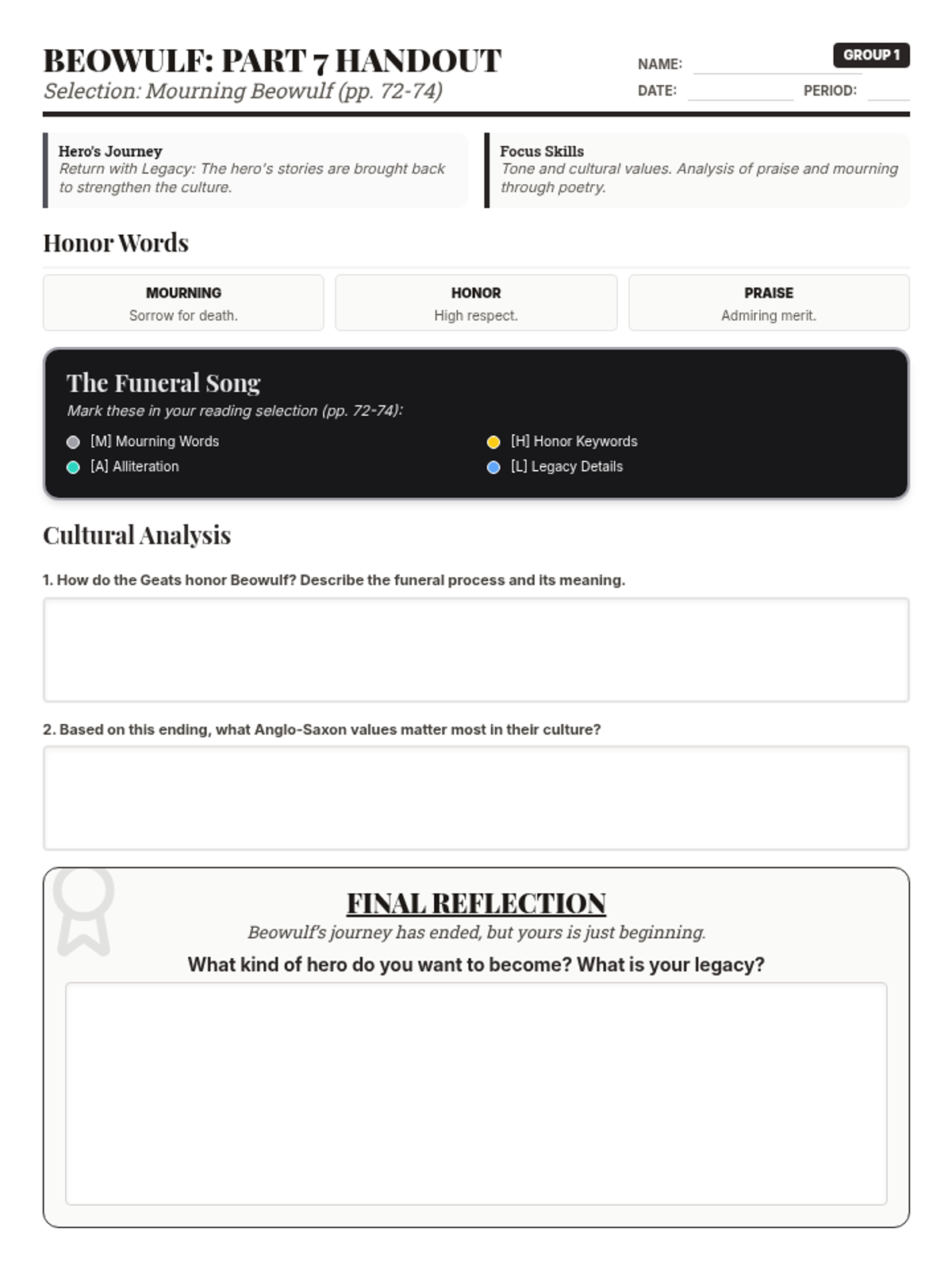
Cultural values of the Anglo-Saxons and how the hero is remembered through mourning and praise.
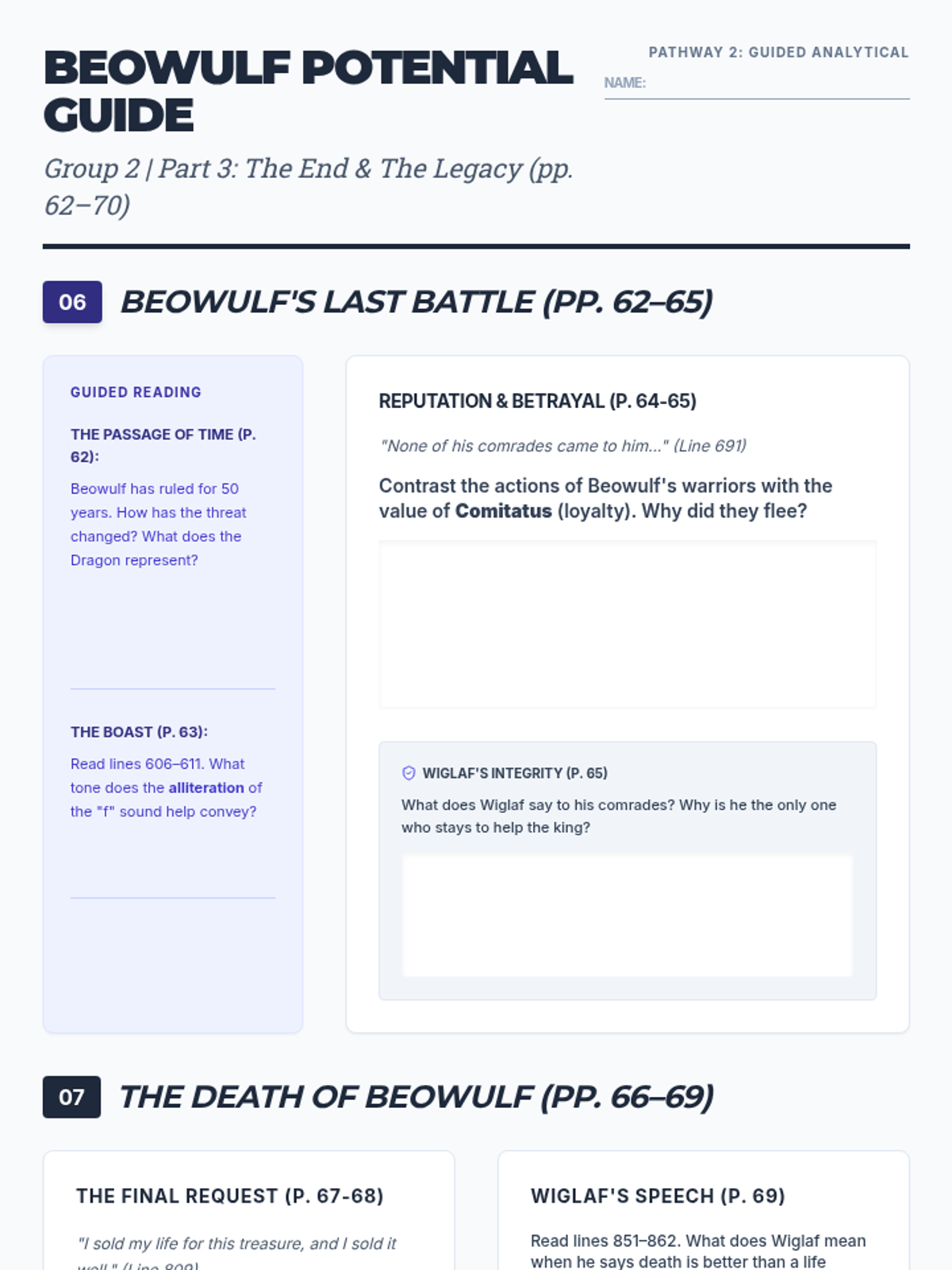
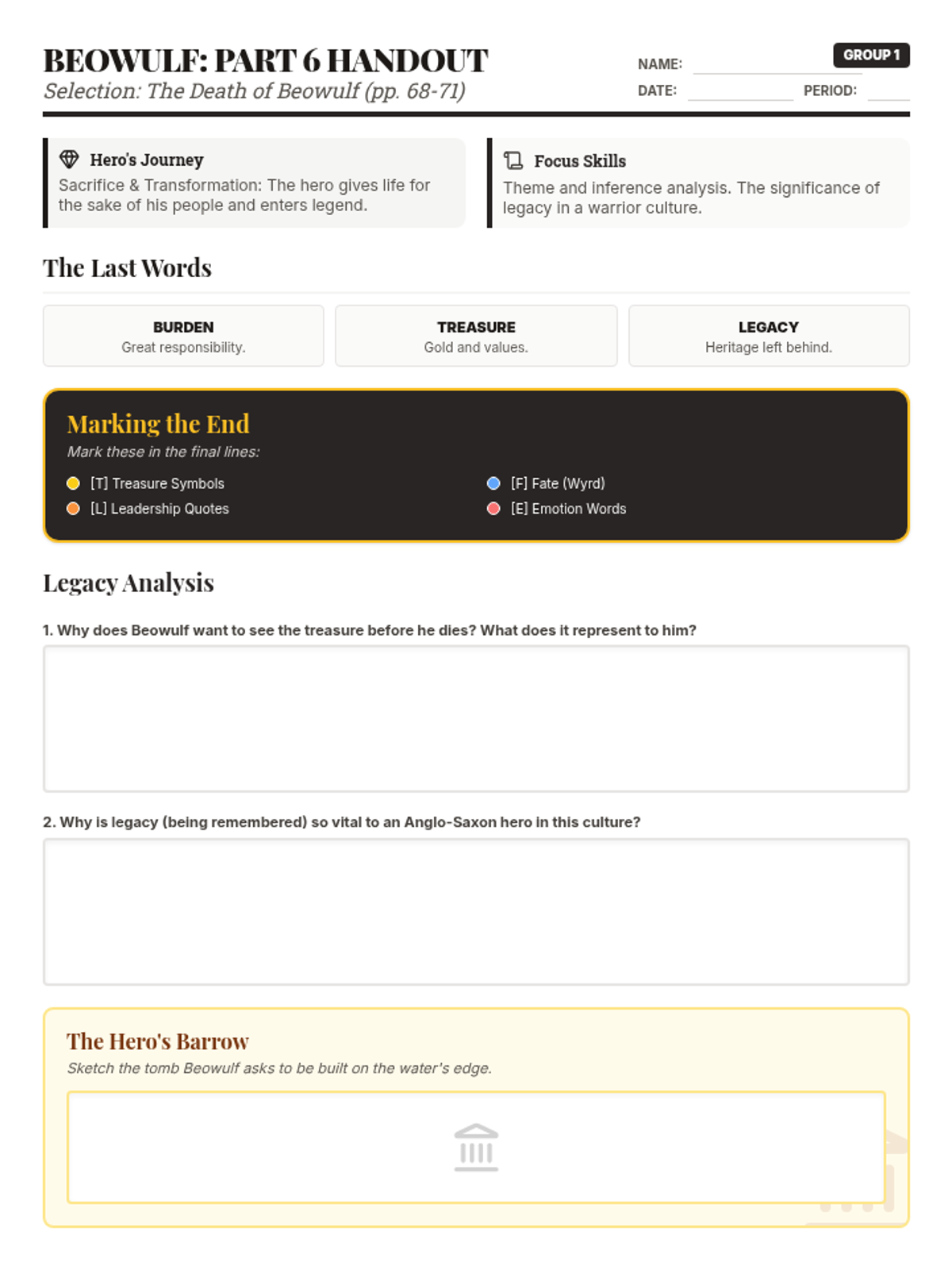
The death of Beowulf and the significance of treasure and legacy in the Hero's Journey.
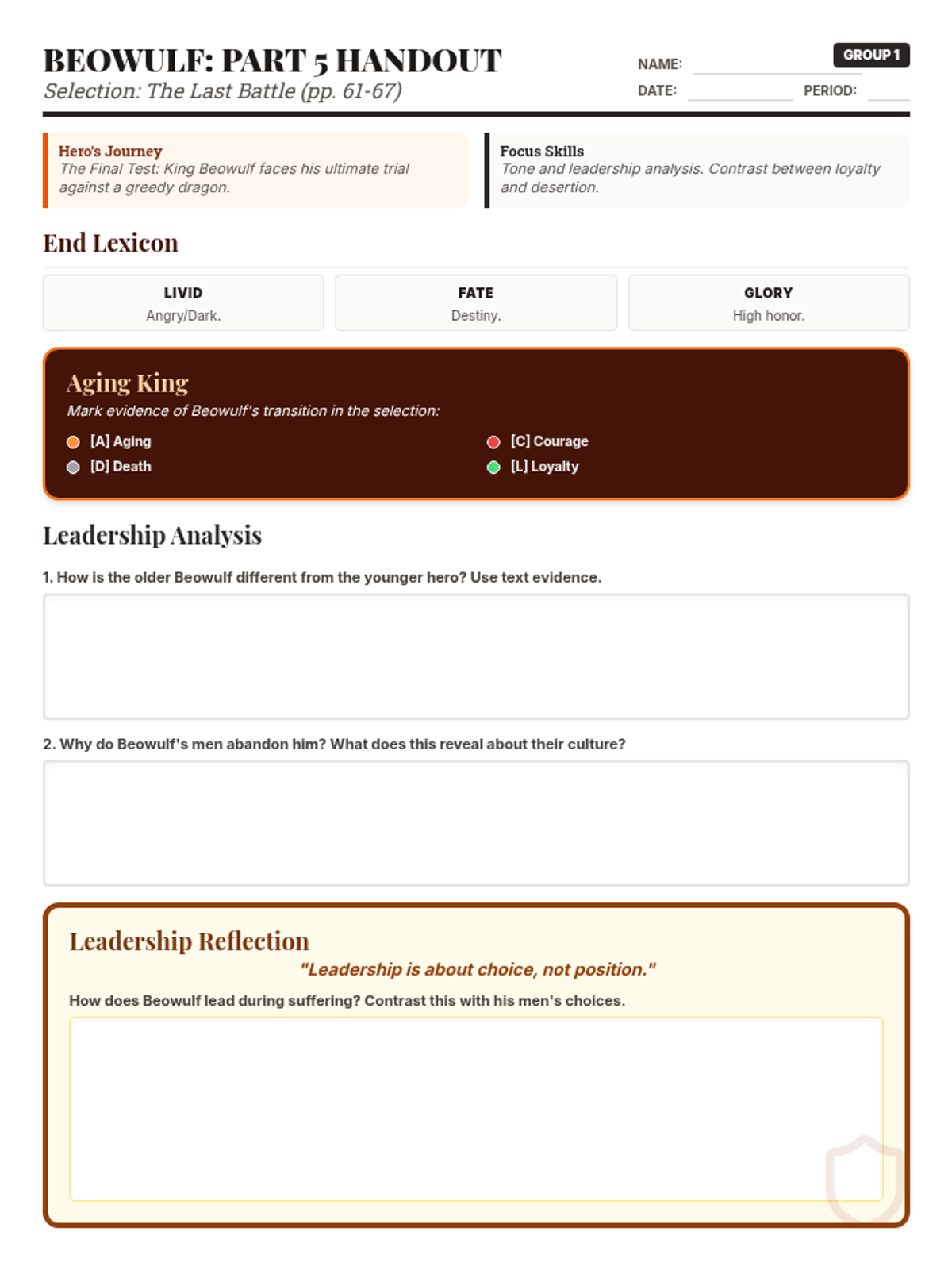
Beowulf's final battle against the dragon, focusing on themes of aging, leadership, and legacy.
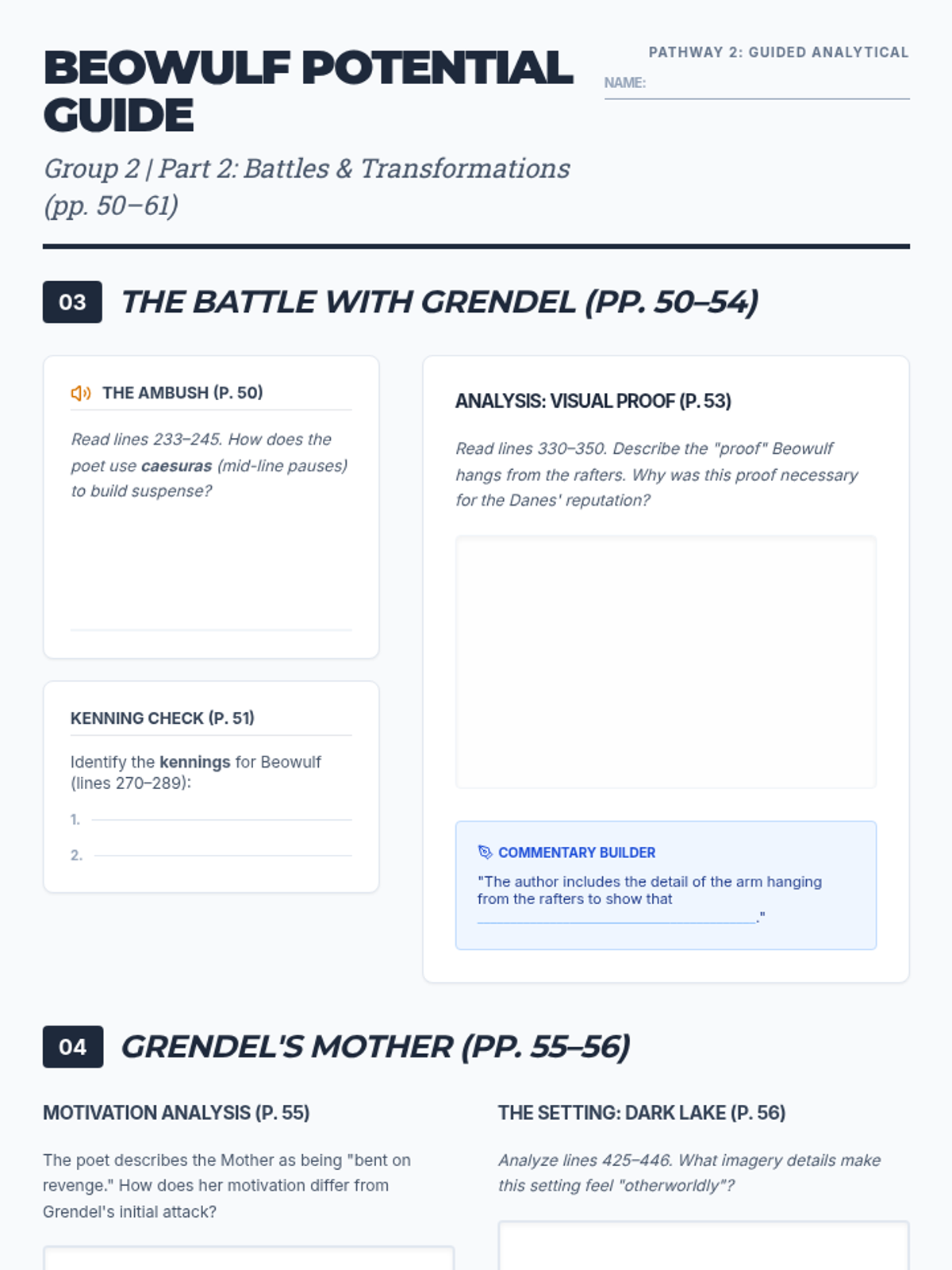
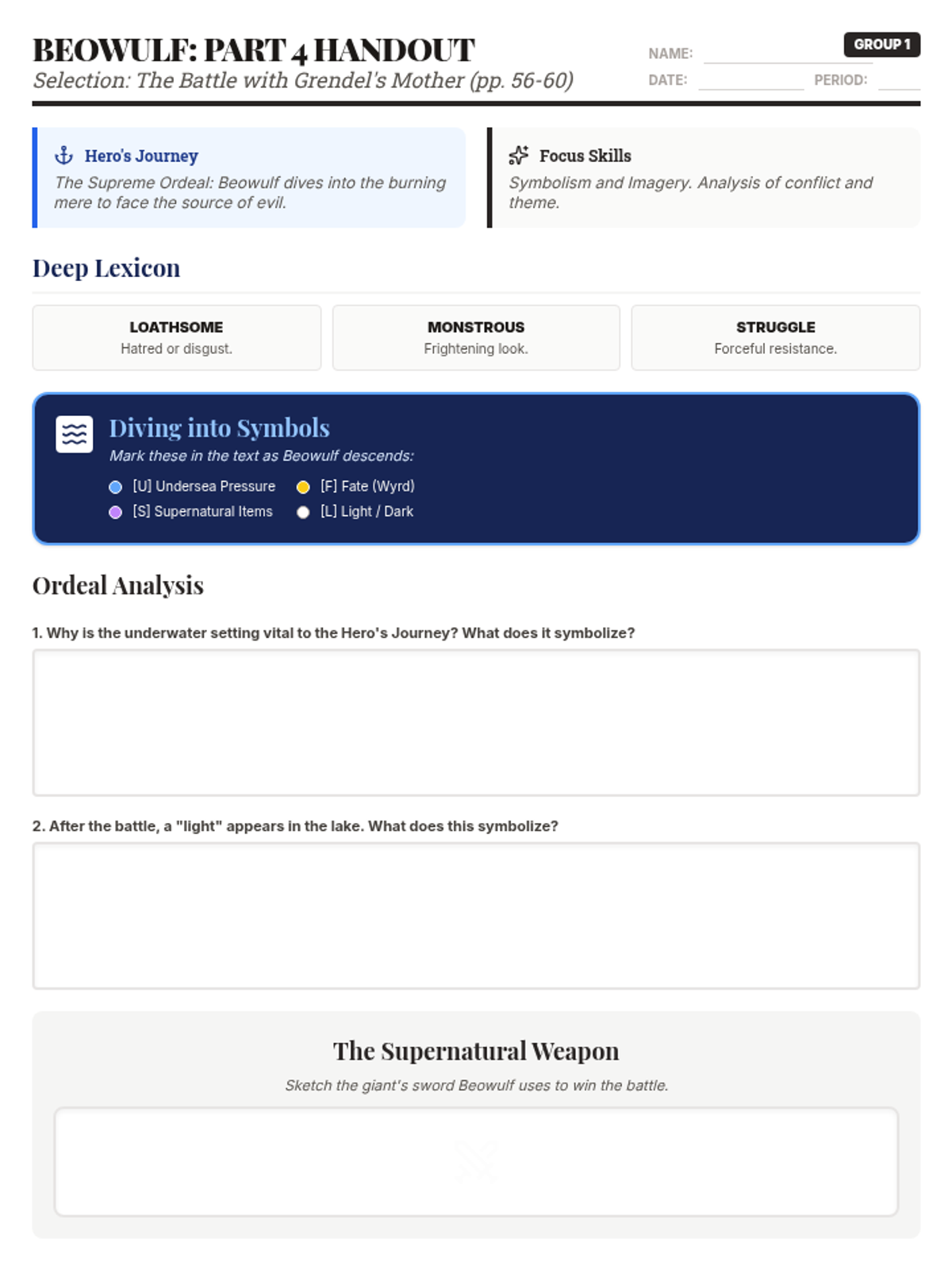
Beowulf's descent into the underwater lair, exploring symbolism and the Supreme Ordeal.
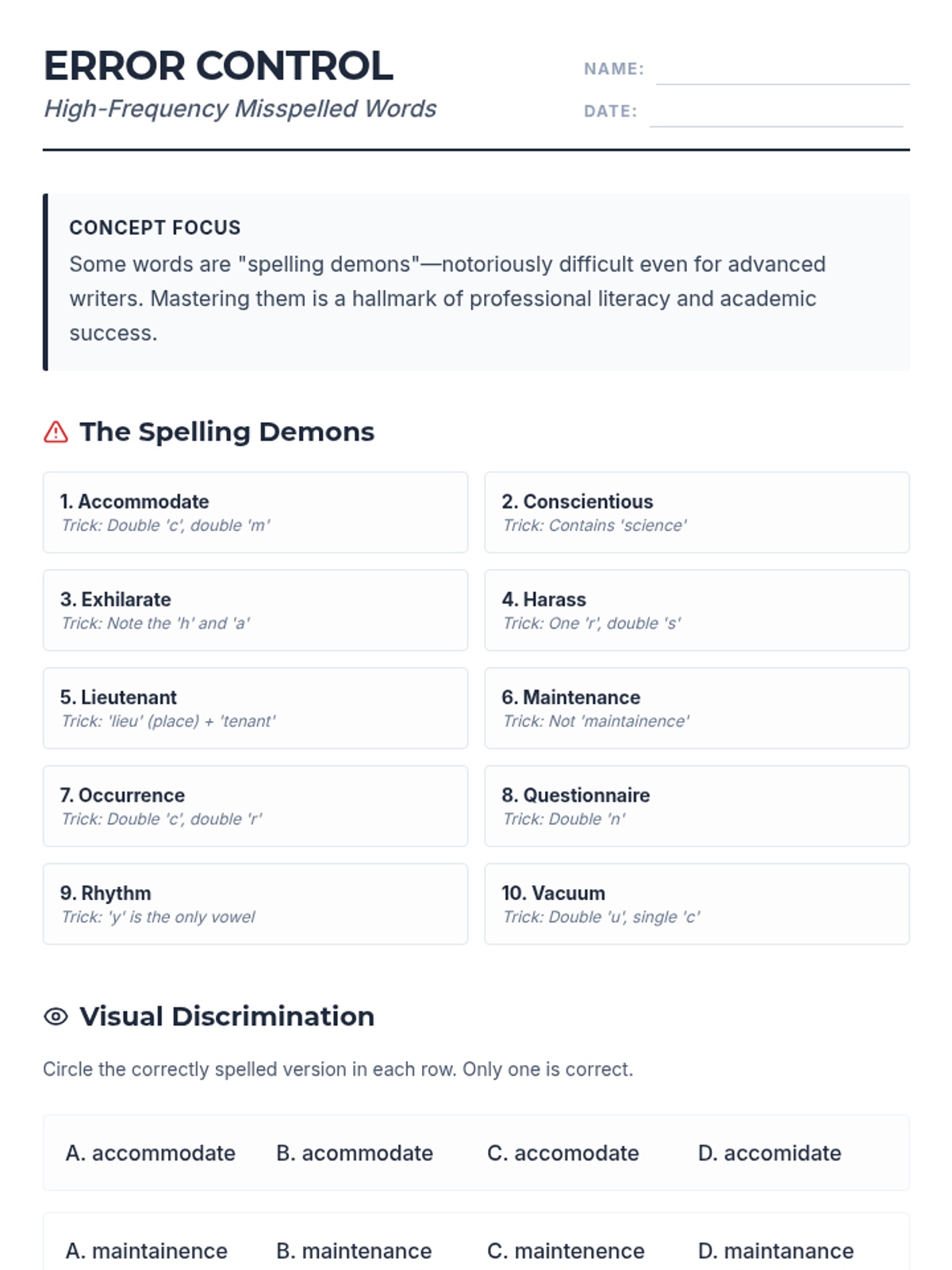
Targets high-frequency spelling errors and provides strategies for proofreading and self-correction in formal writing.
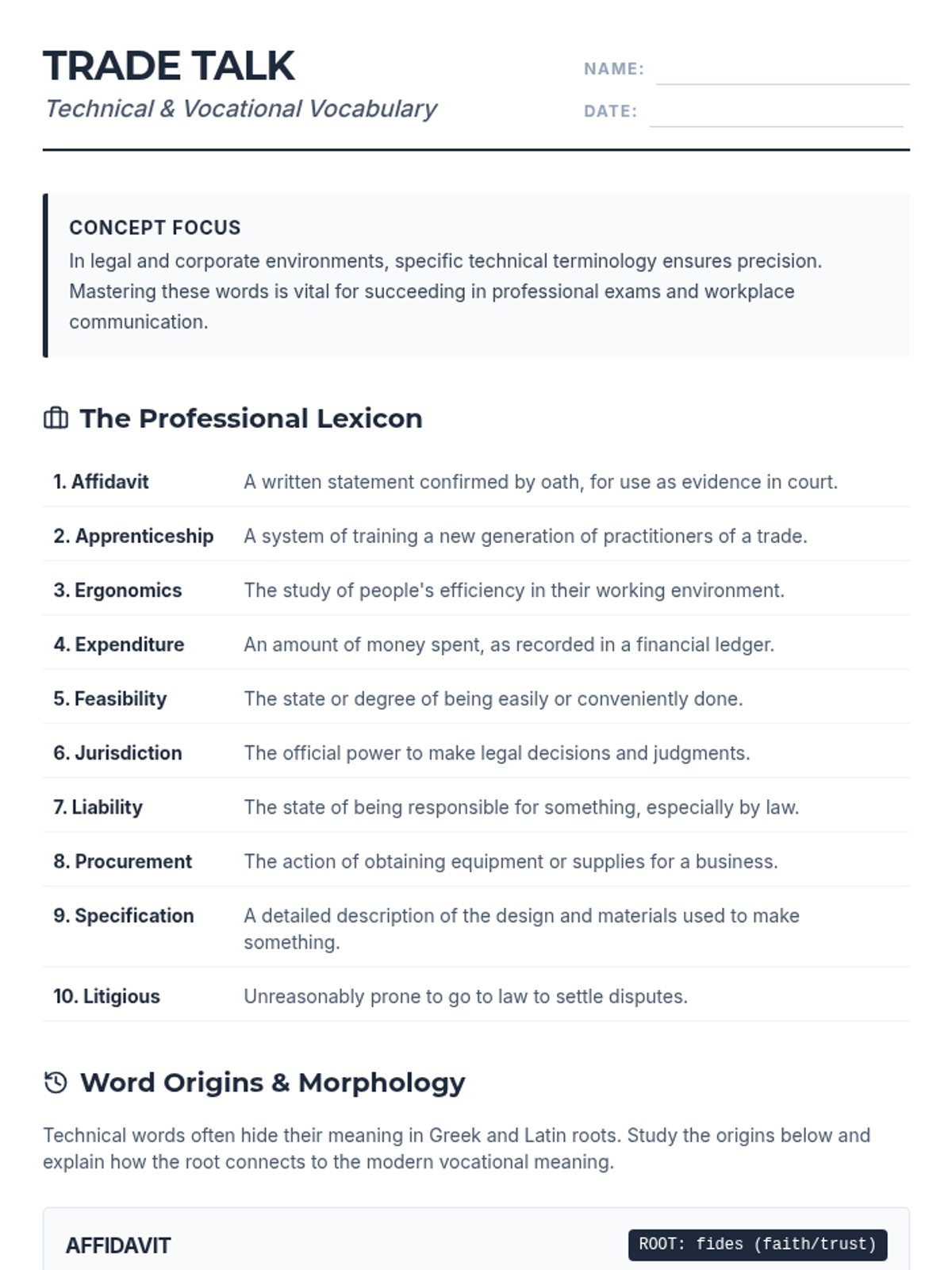
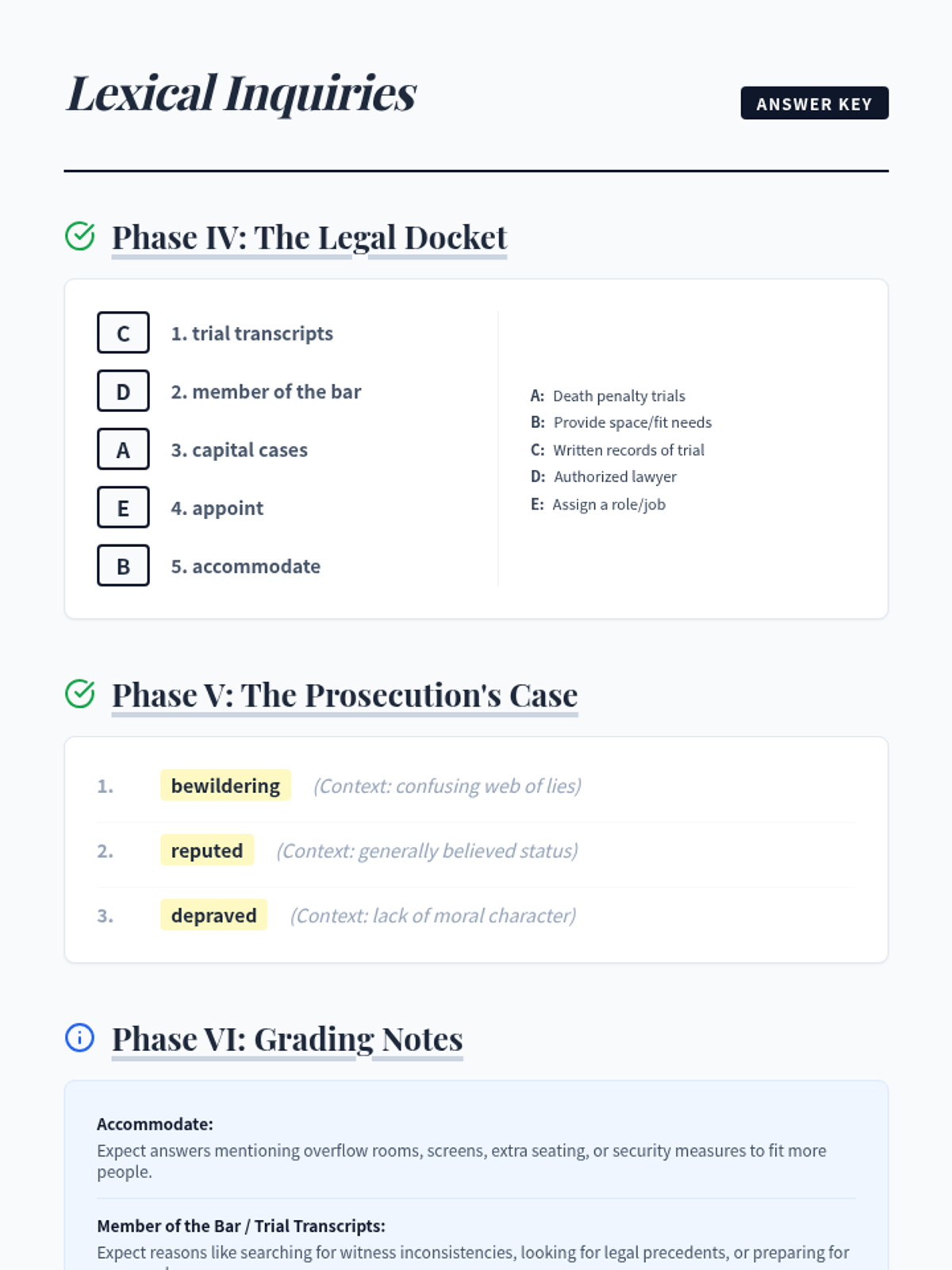
Introduces high-level technical and vocational vocabulary used in professional environments, legal proceedings, and trade sectors.
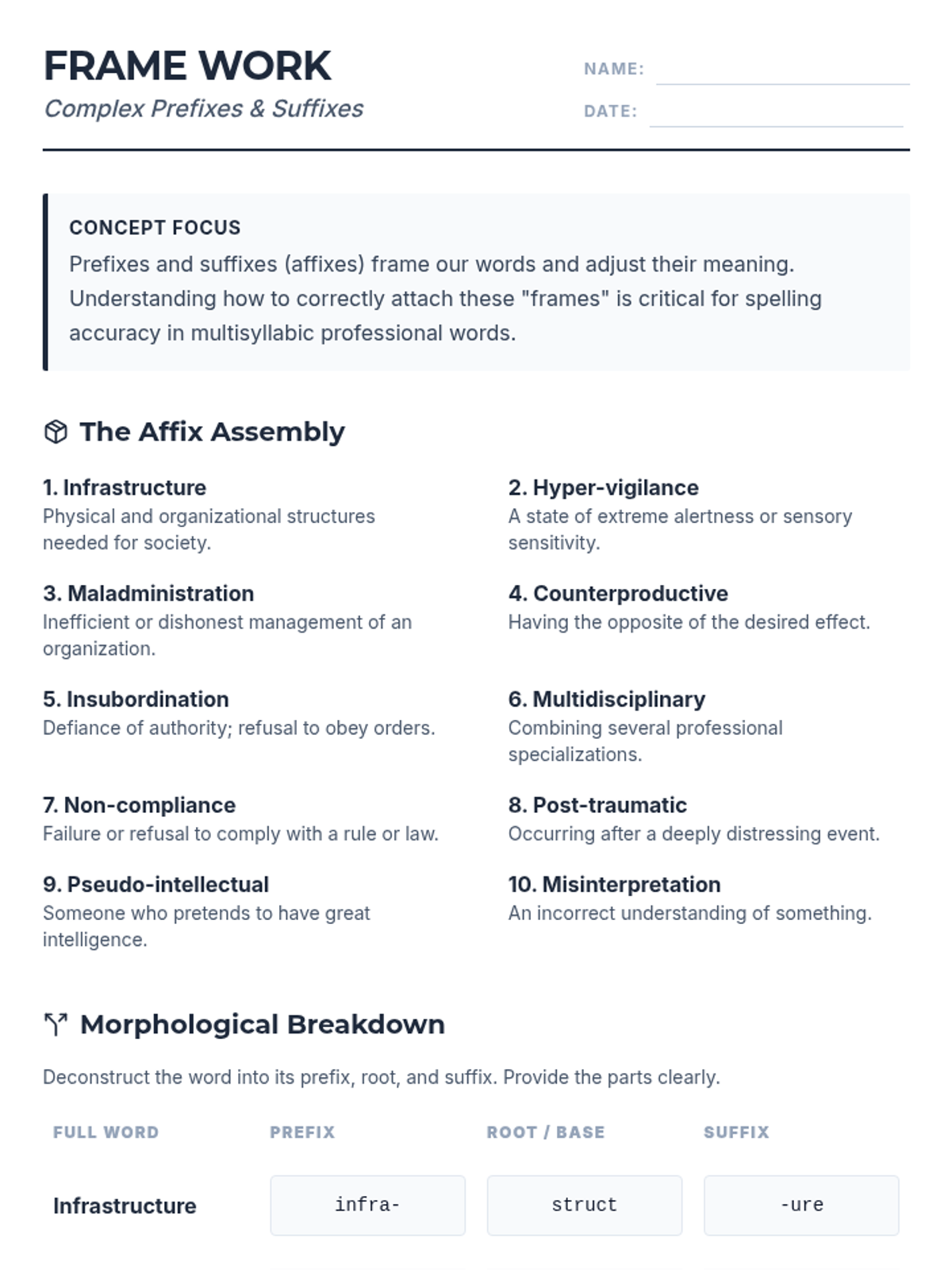
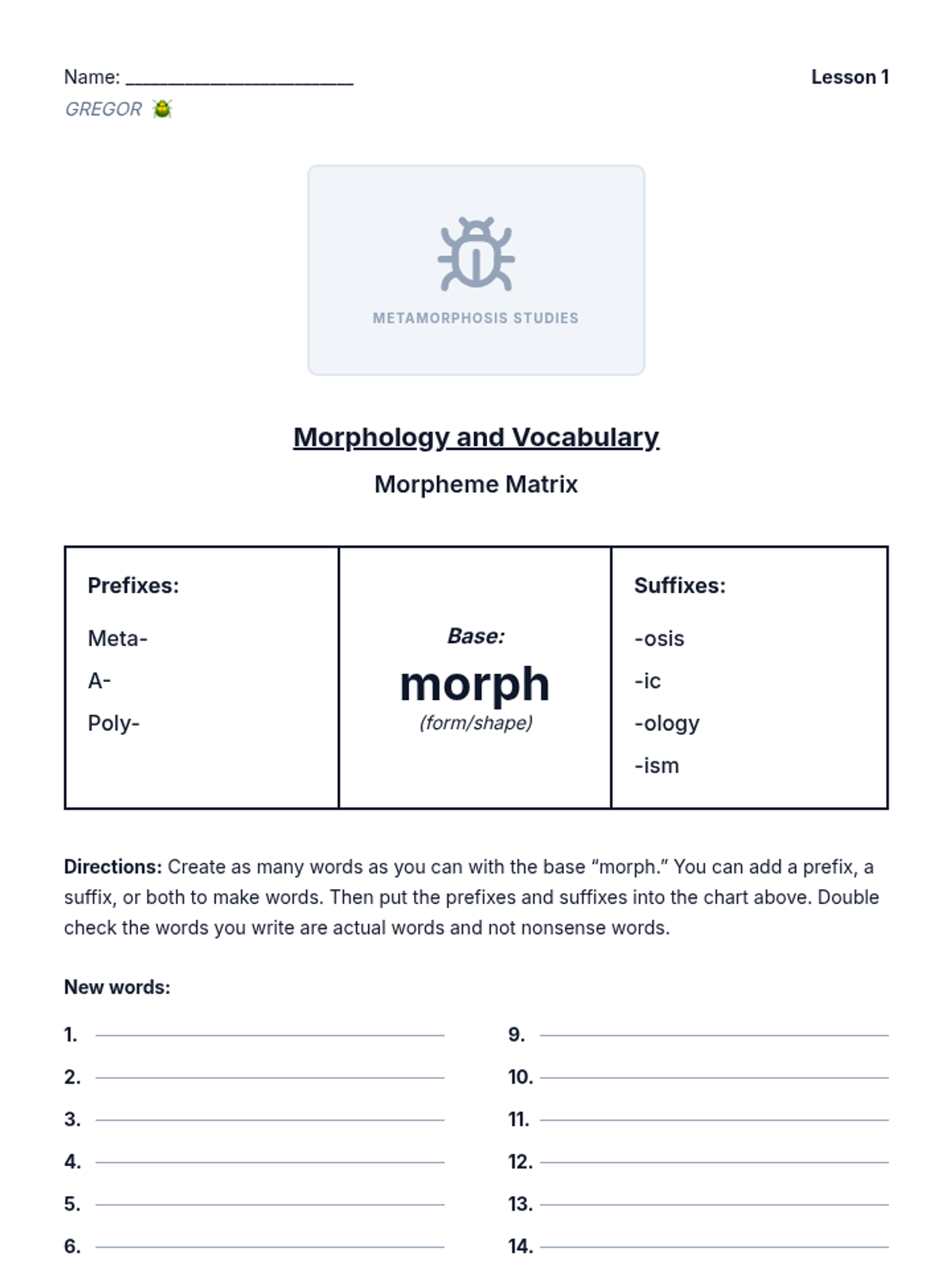
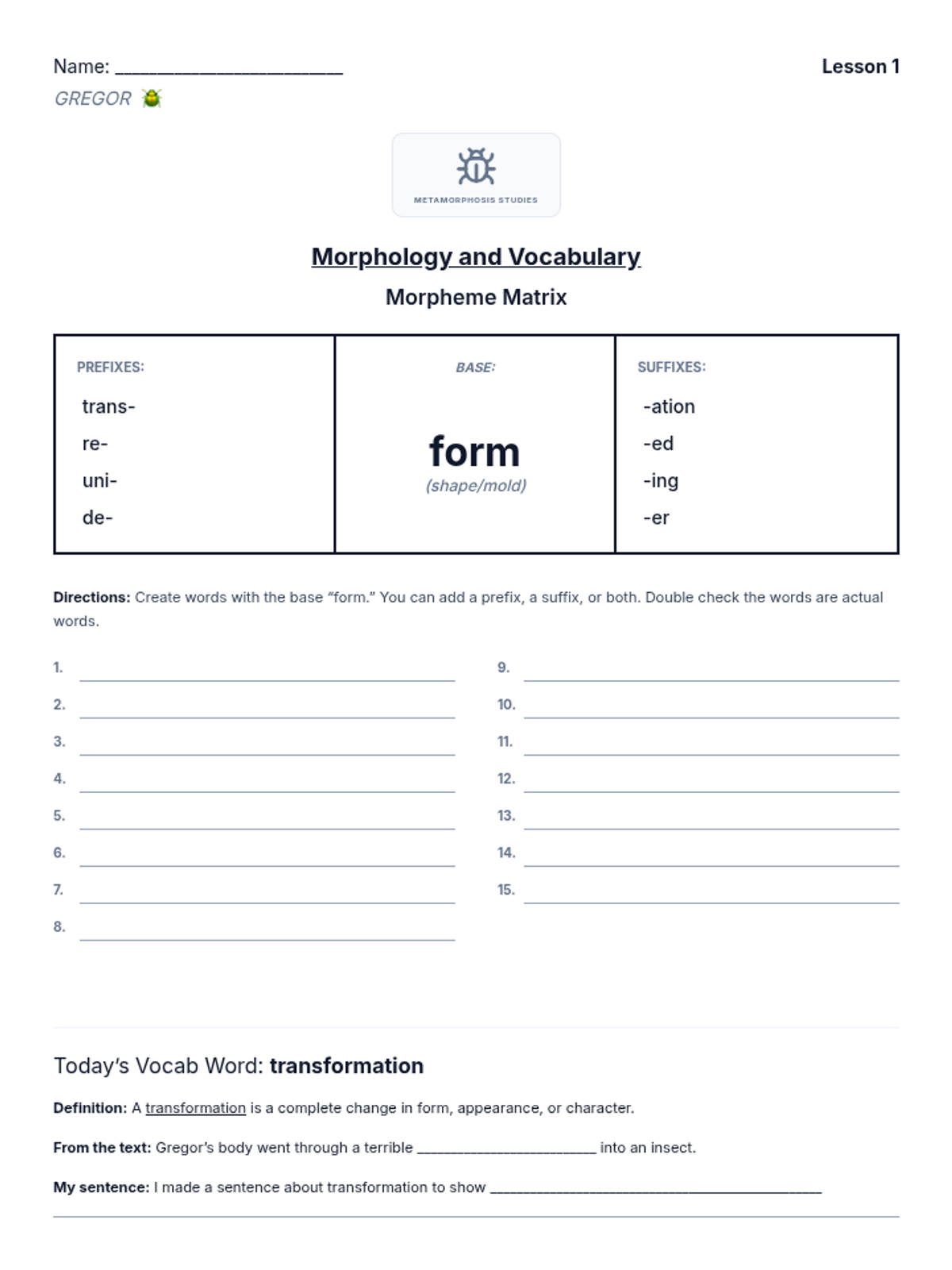
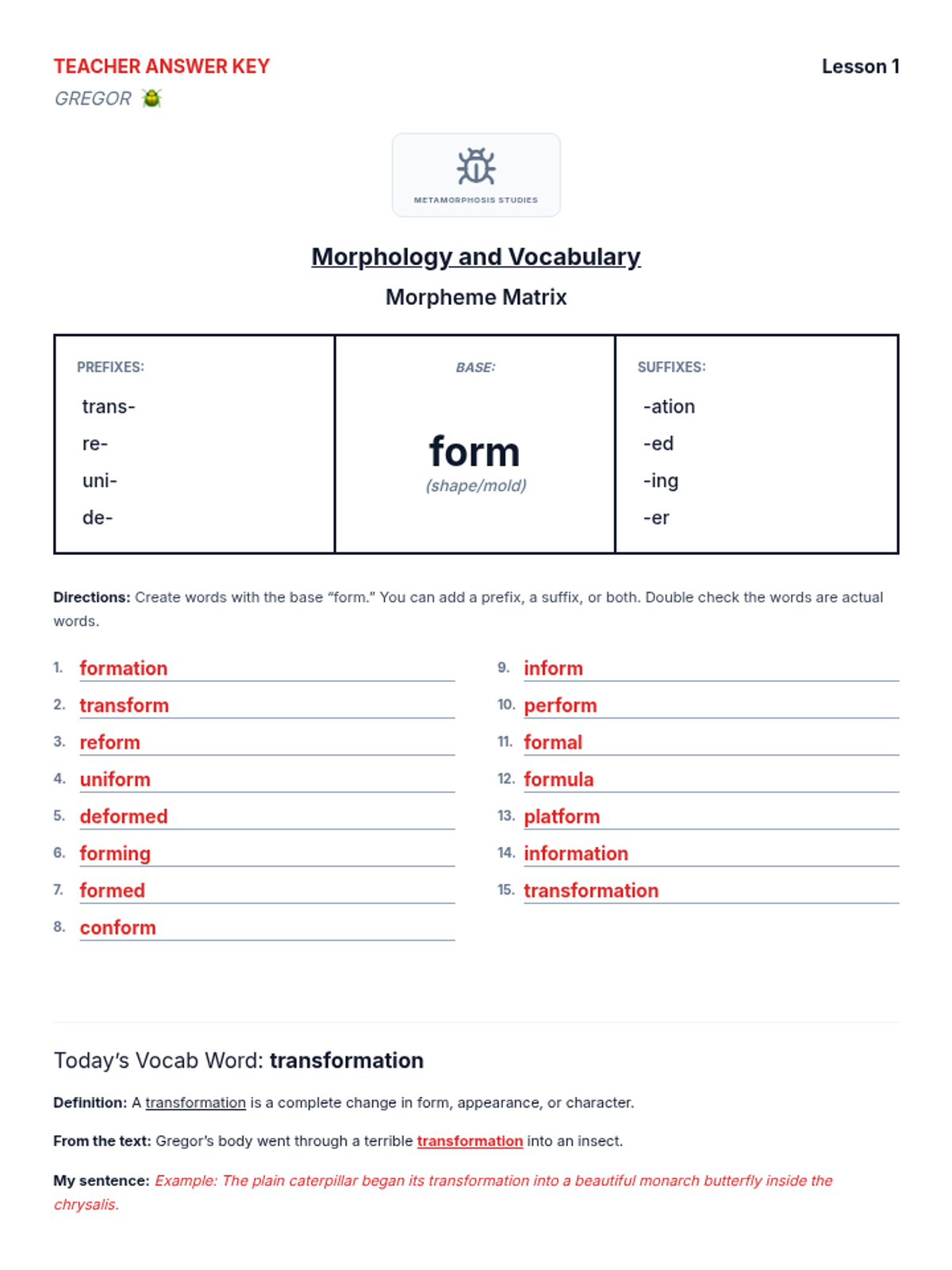
Focuses on the mechanics of prefixes and suffixes to expand vocabulary and understand the nuances of formal communication.
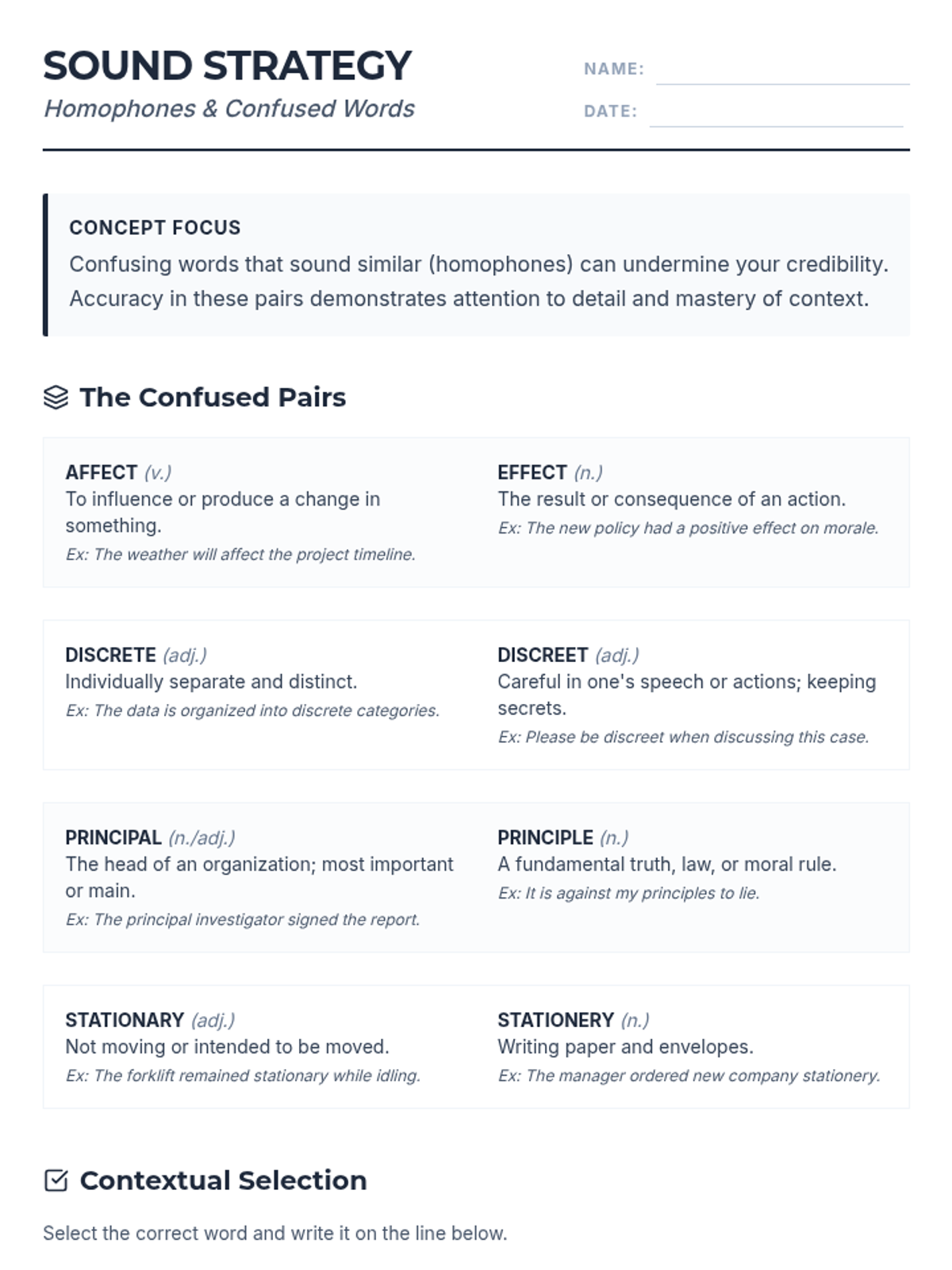
Clarifies the usage and spelling of homophones and commonly confused words, essential for professional and legal writing accuracy.
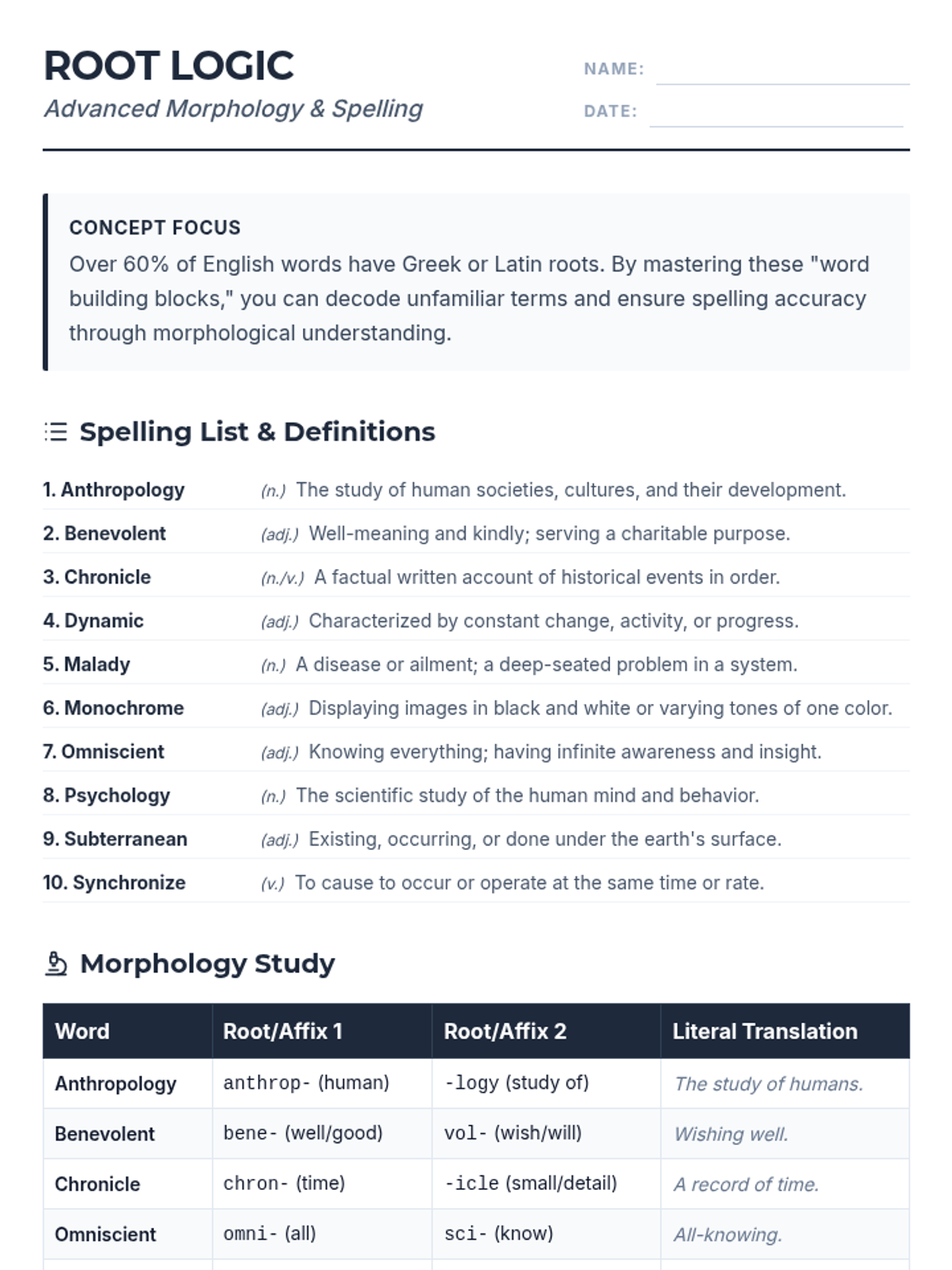
Explores the architectural foundations of English through Greek and Latin roots, helping students decode complex academic and professional language.
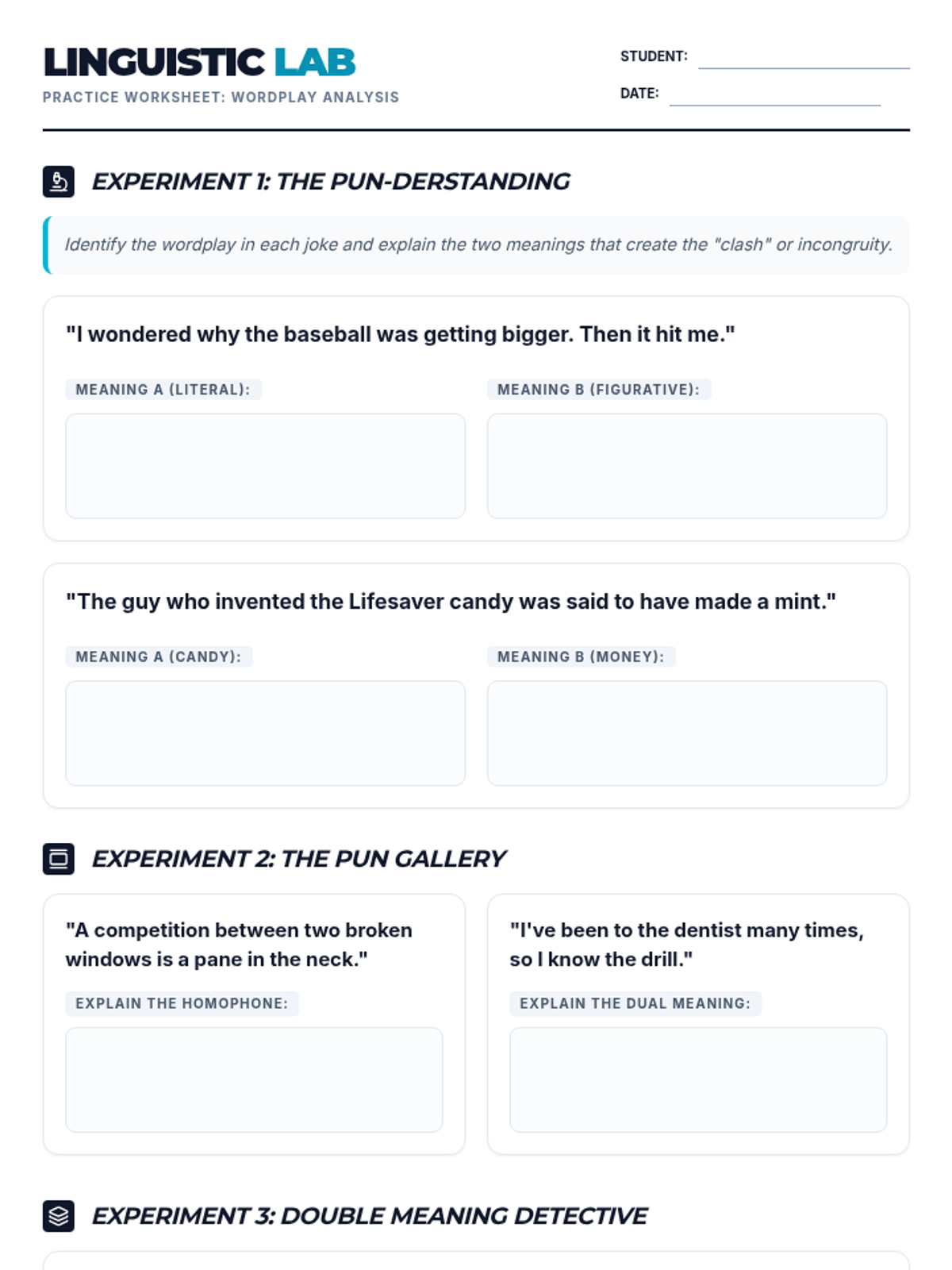
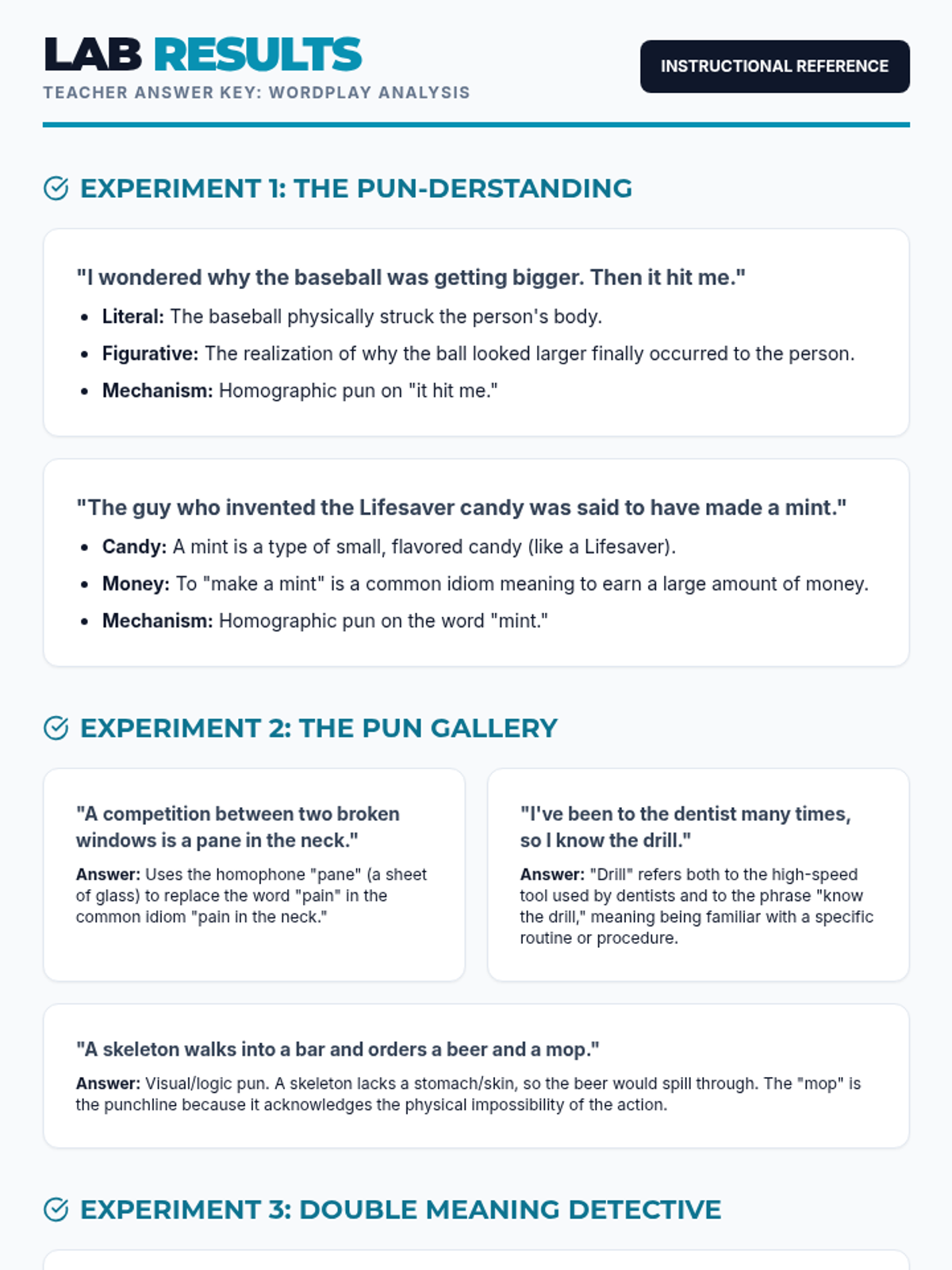
A high-school level exploration of puns, idioms, and double-meanings, focusing on the linguistic mechanisms that create humor. Students learn to deconstruct wordplay using the incongruity theory of humor.
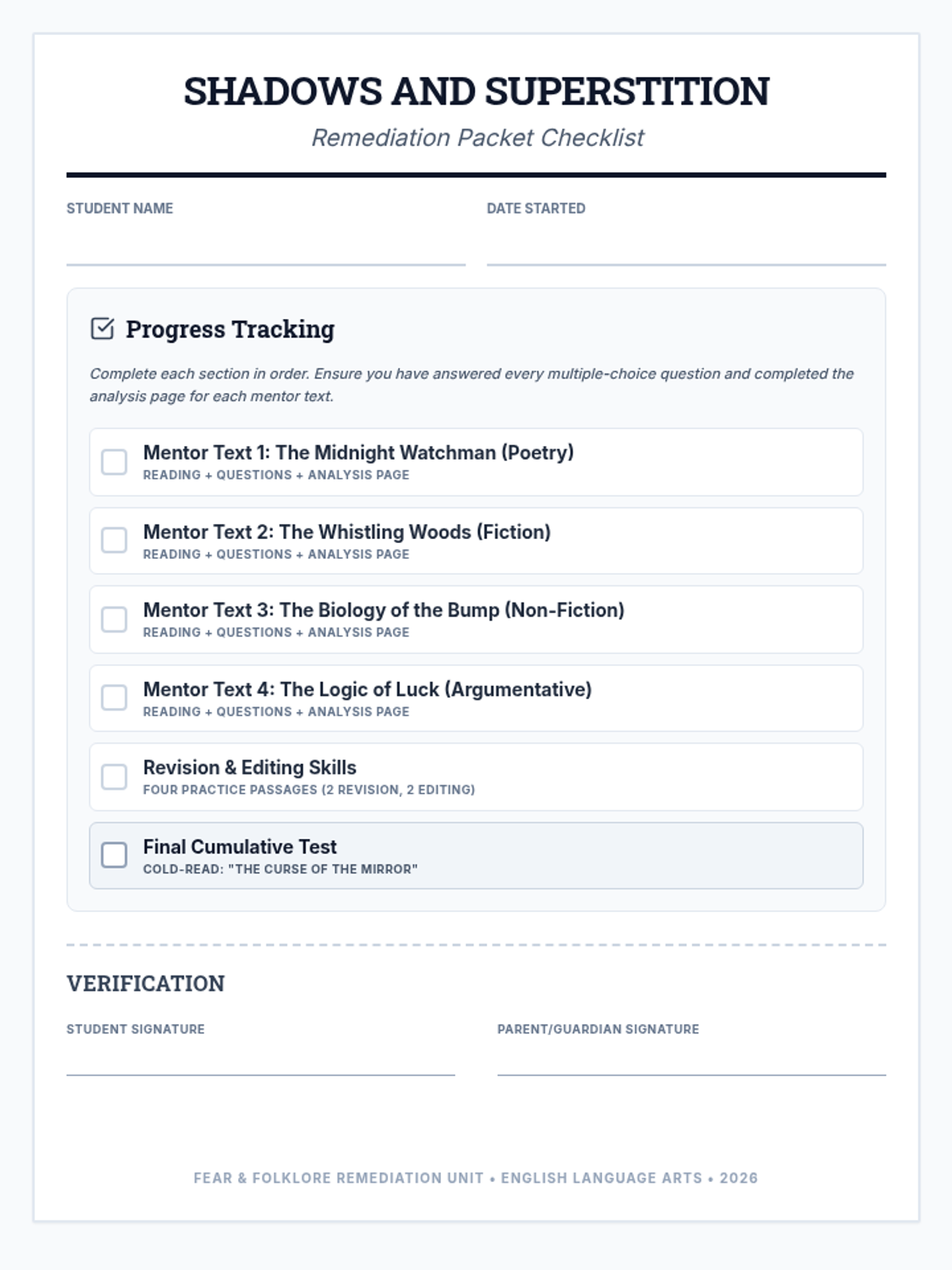
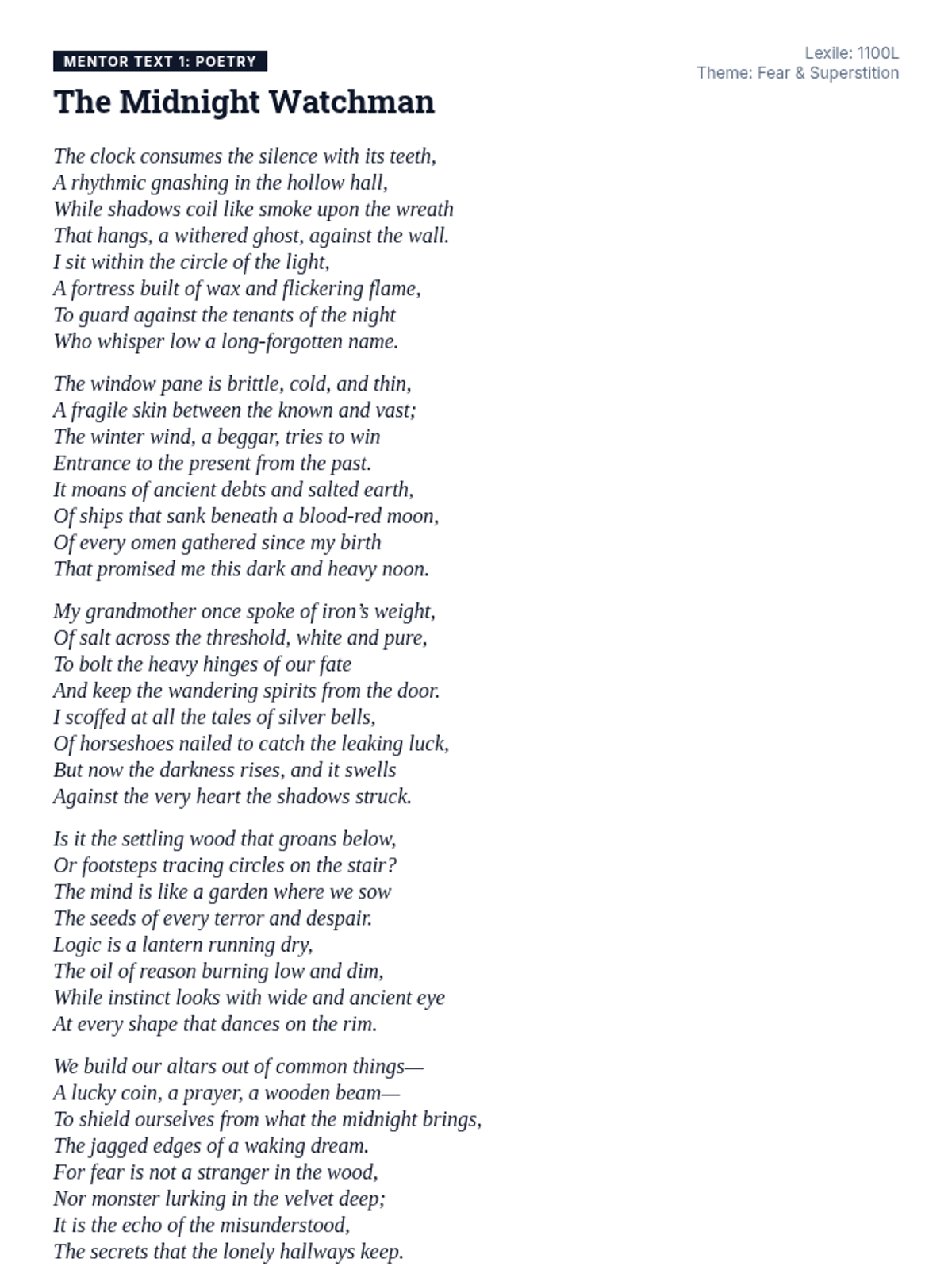
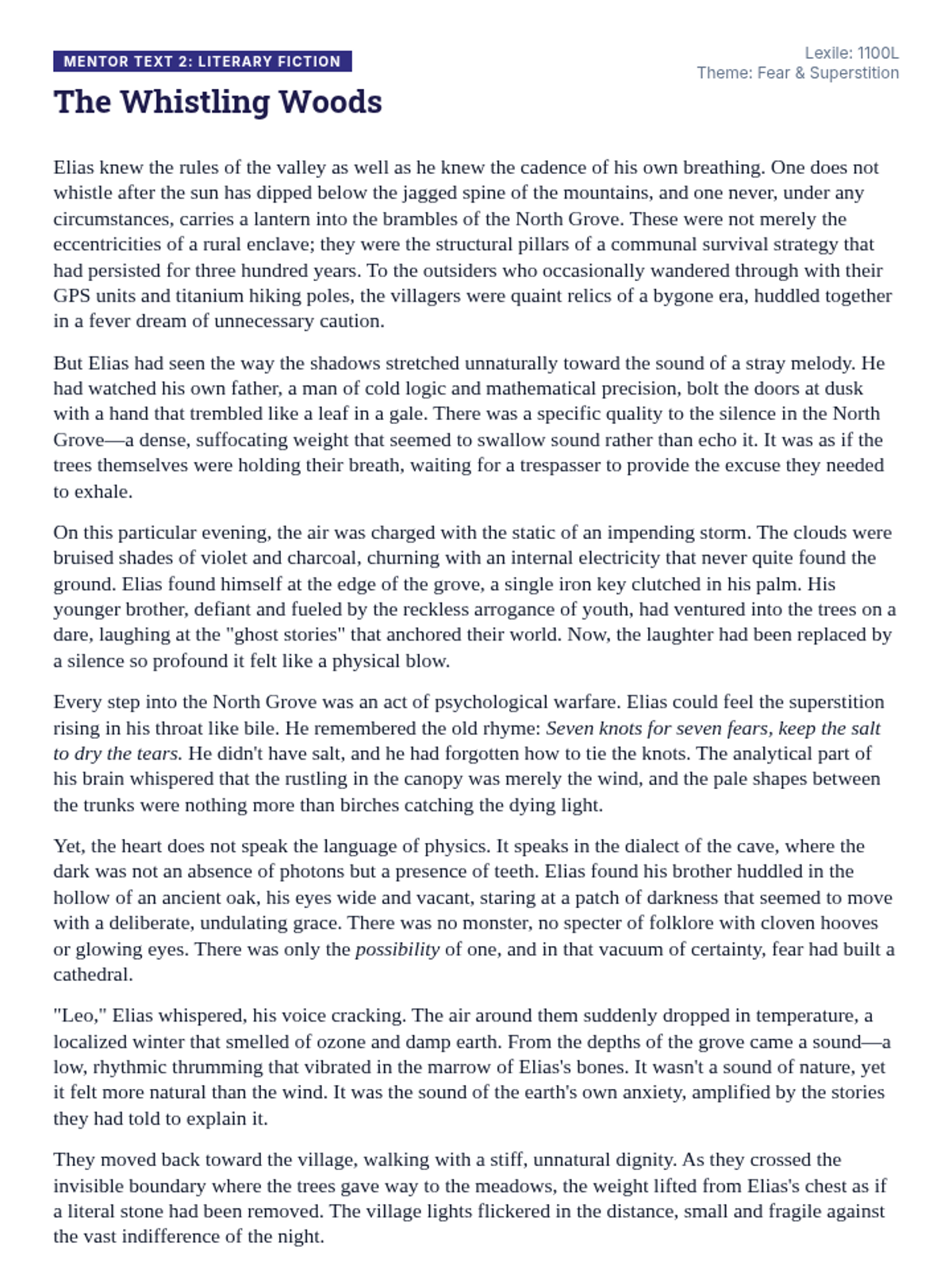
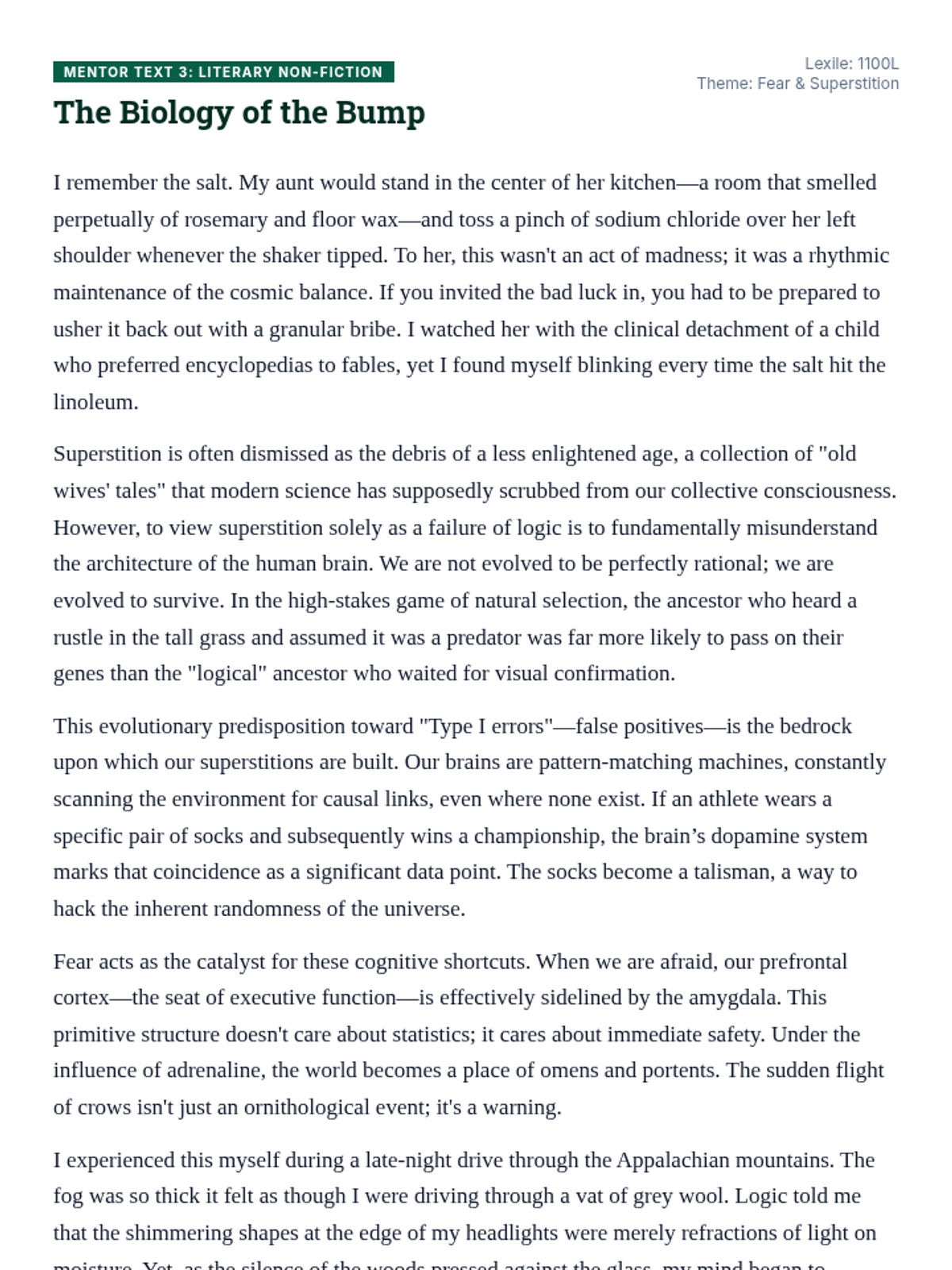
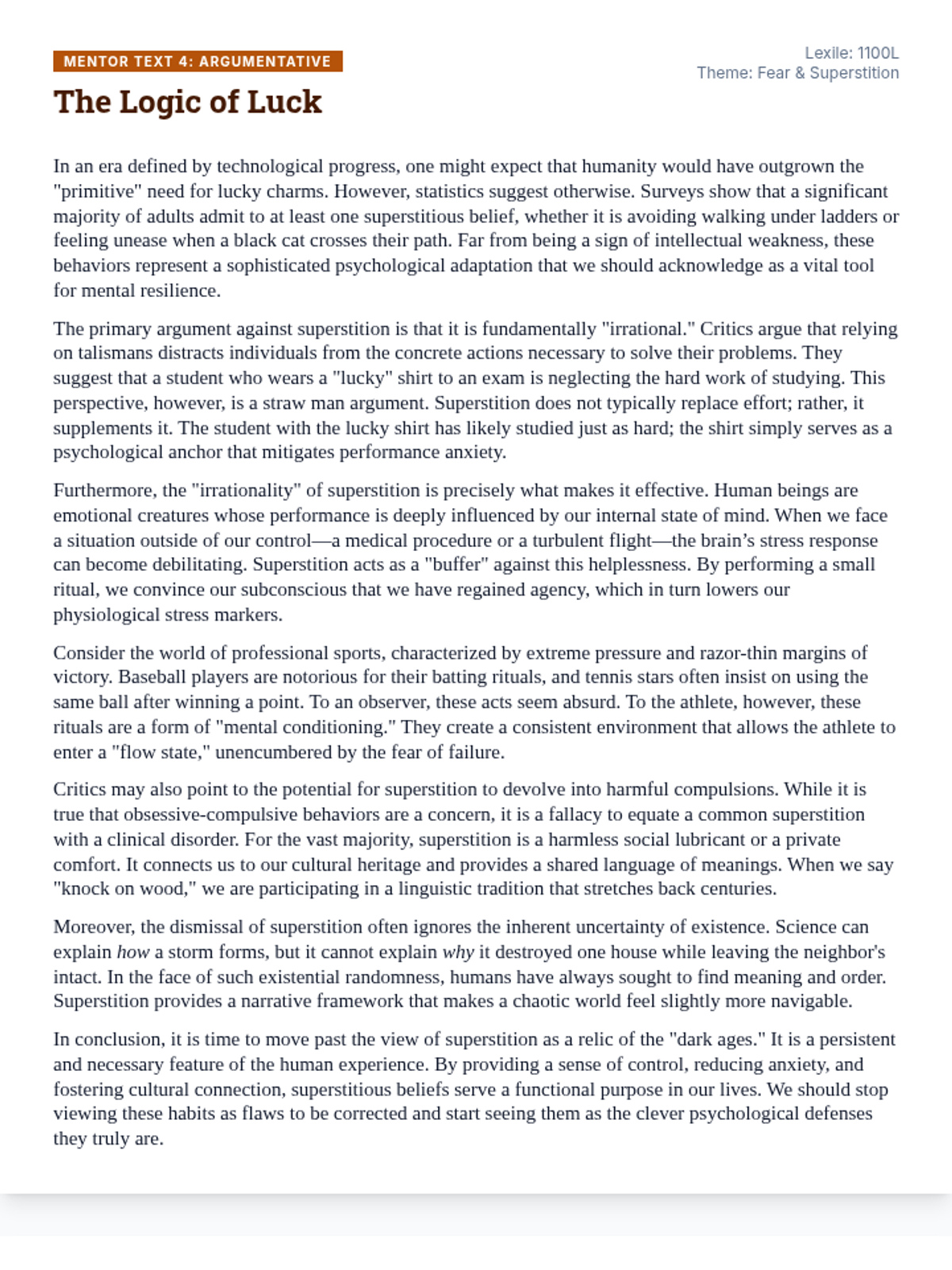
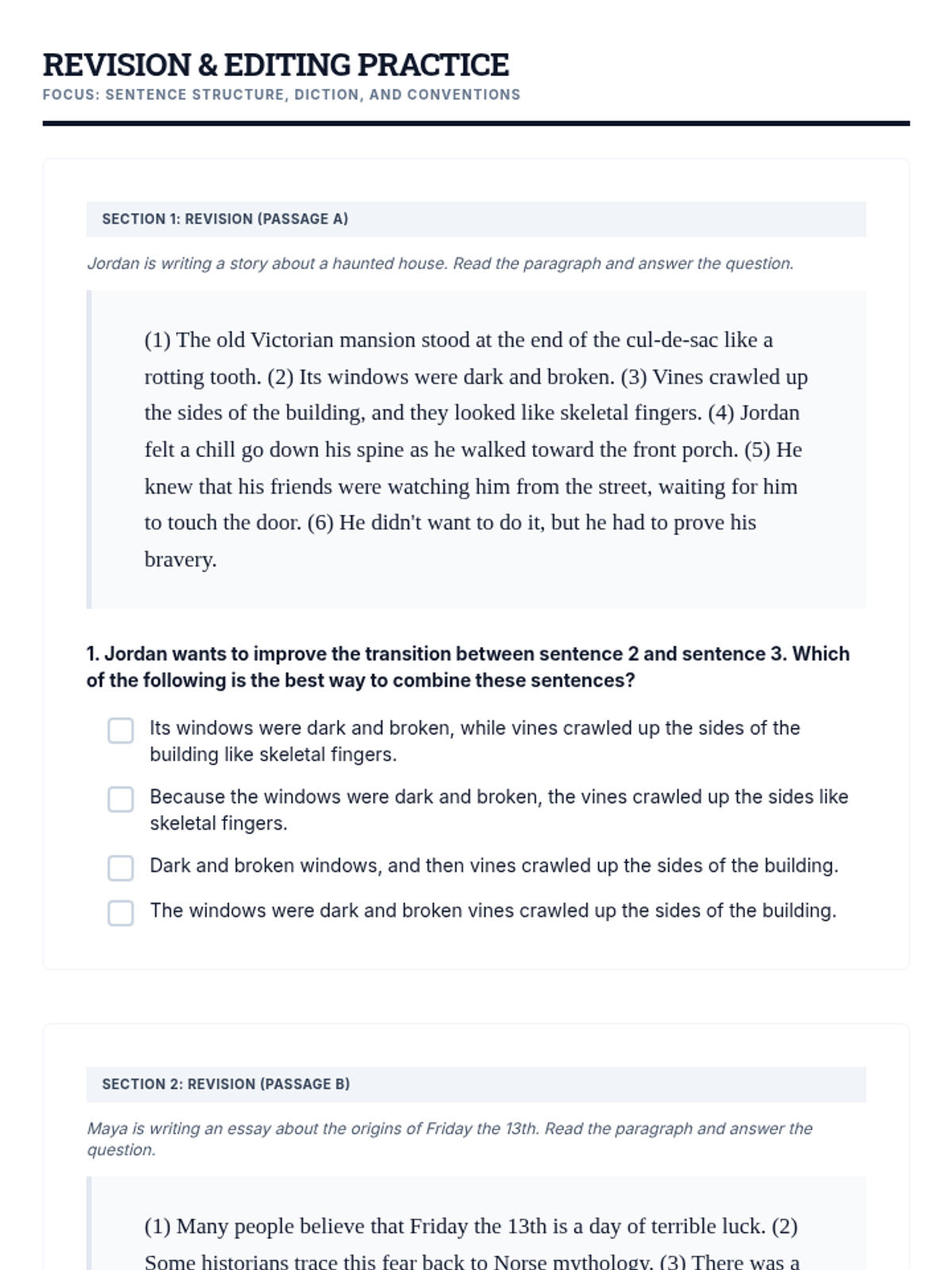
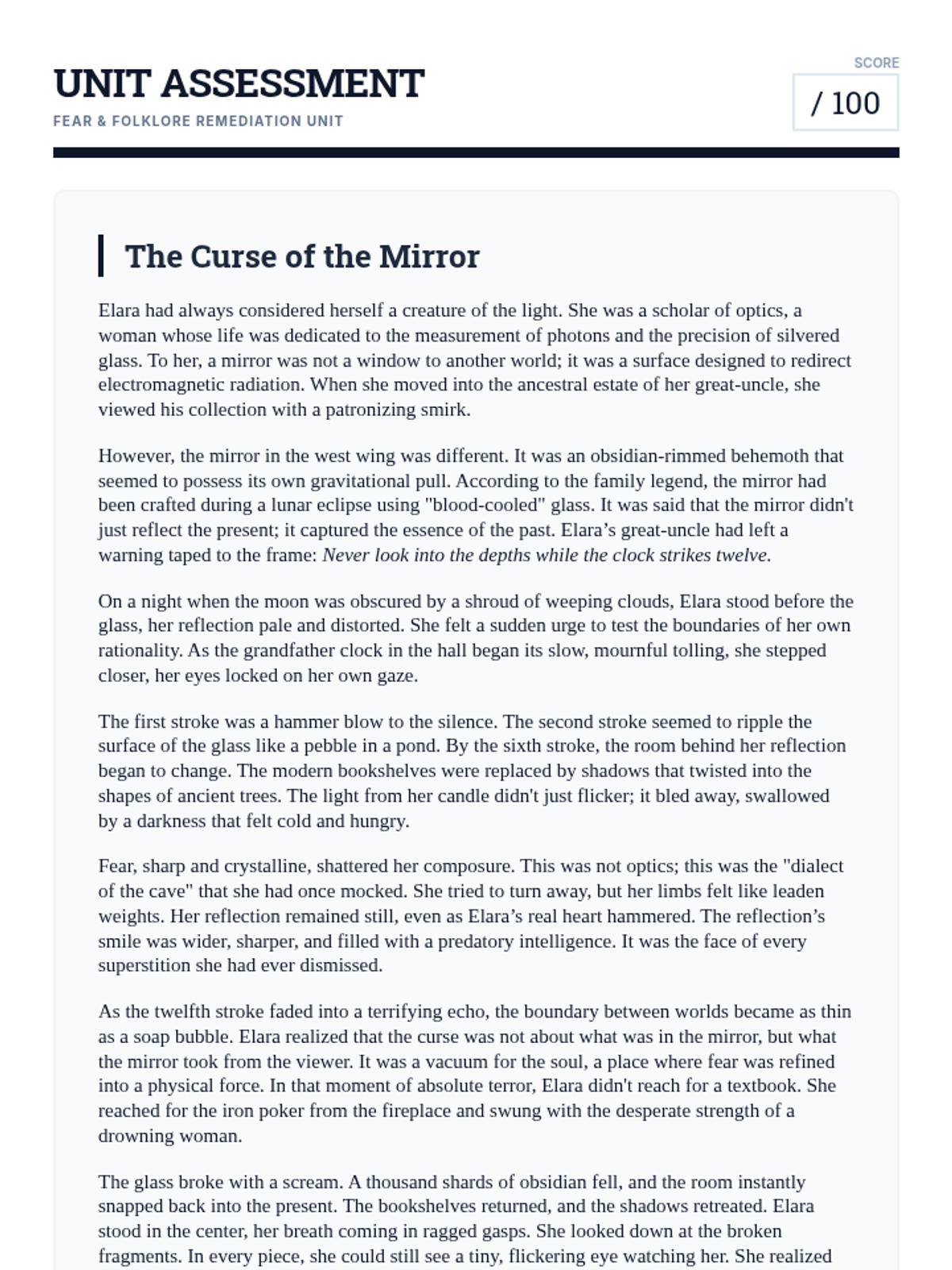
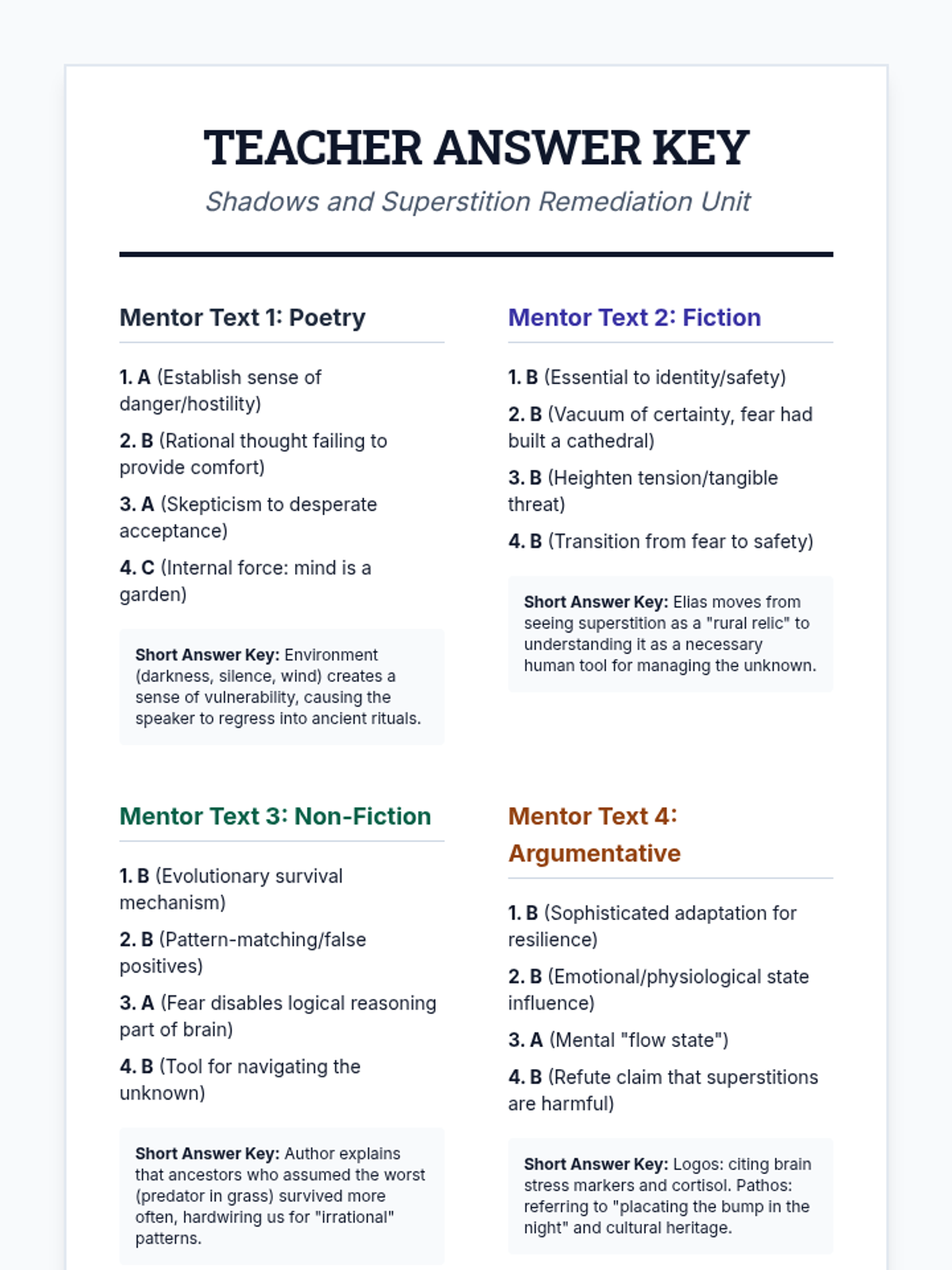
This lesson provides intensive remediation on core literacy skills using high-interest texts centered on fear and superstition. It includes mentor texts in four genres, revision and editing practice, and a final cold-read assessment.
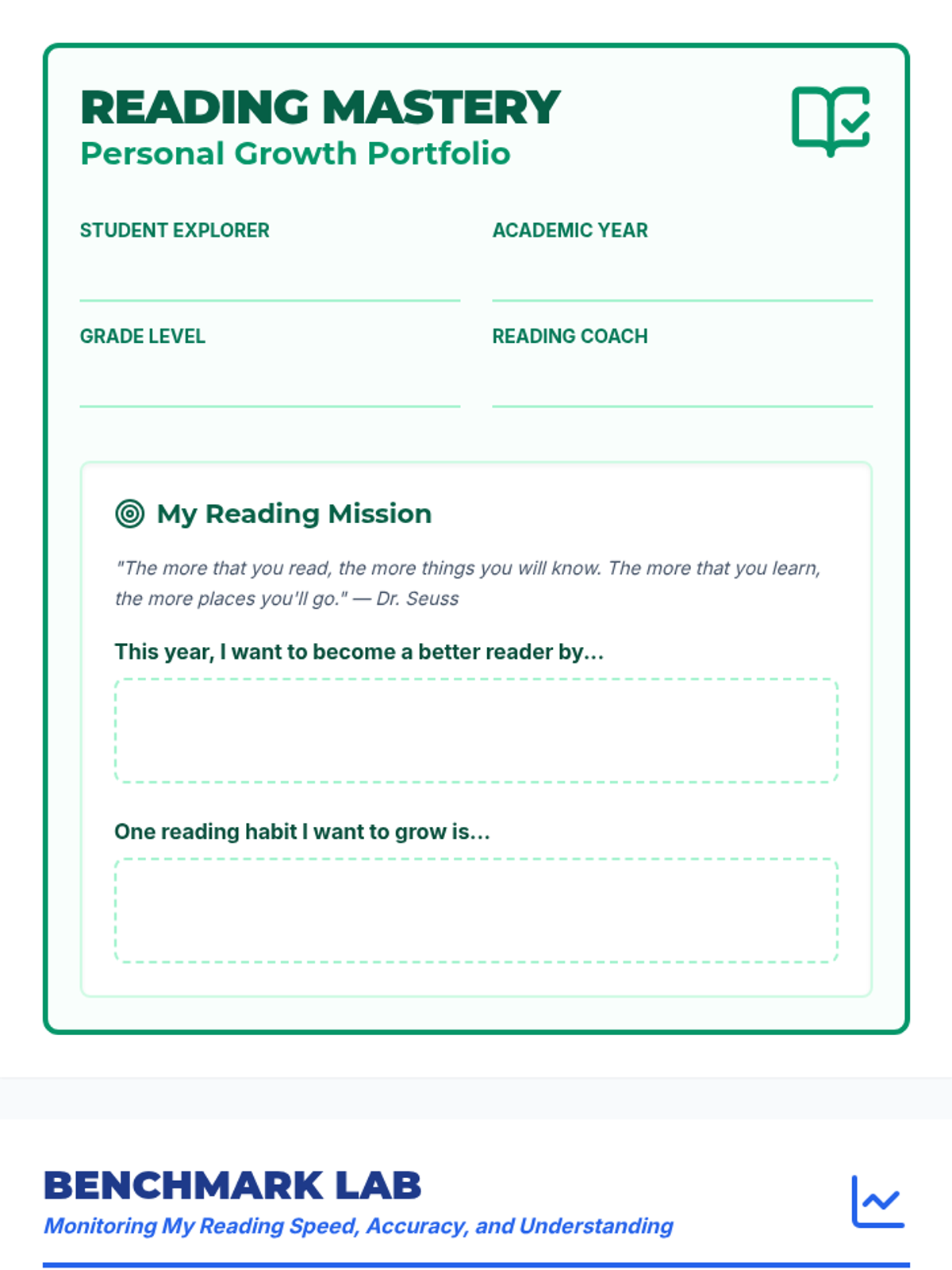
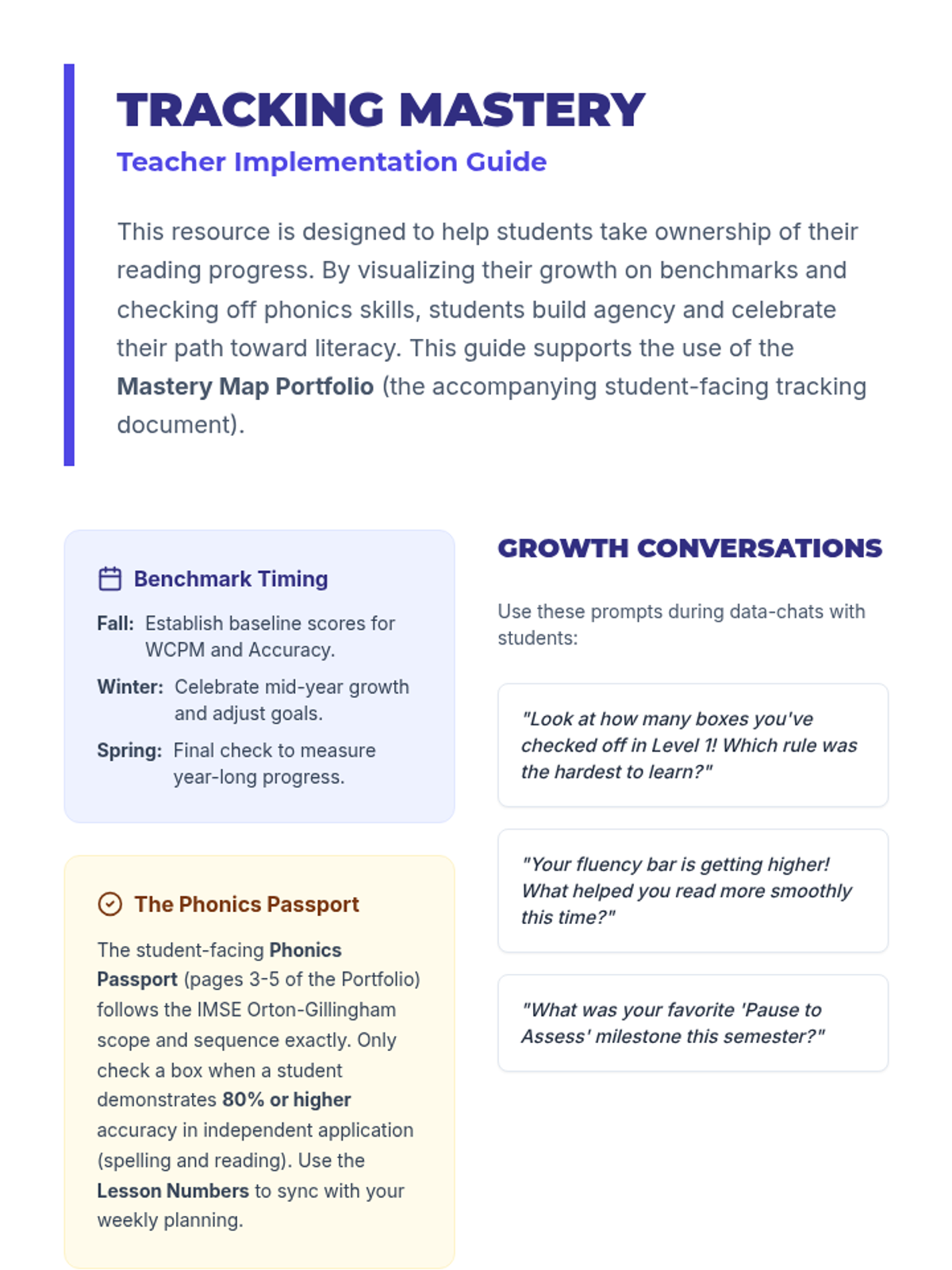
A comprehensive suite of data tracking tools for students to monitor their reading progress, including benchmark assessments and IMSE Orton-Gillingham concept checks from Kindergarten through 5th grade.
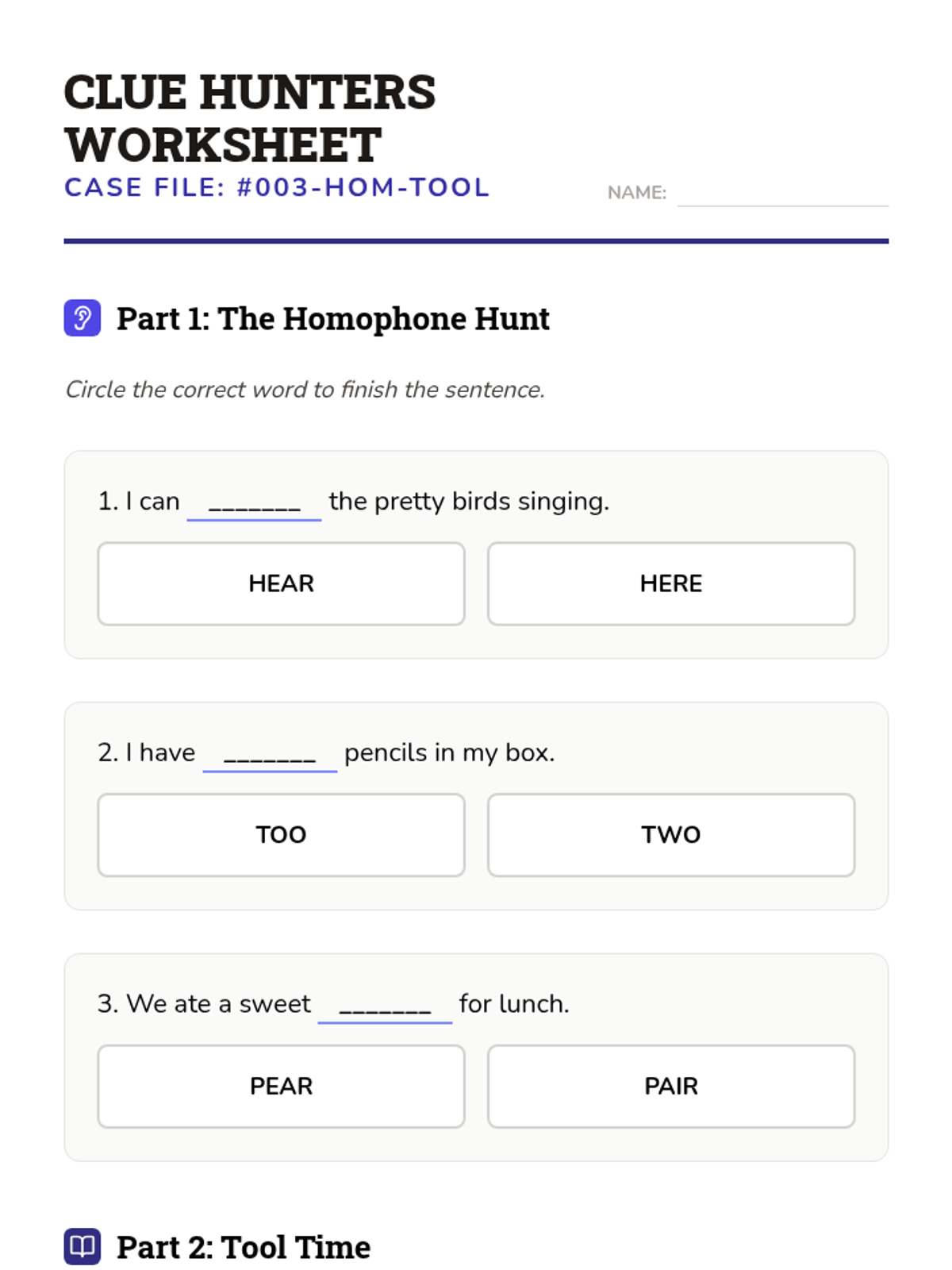
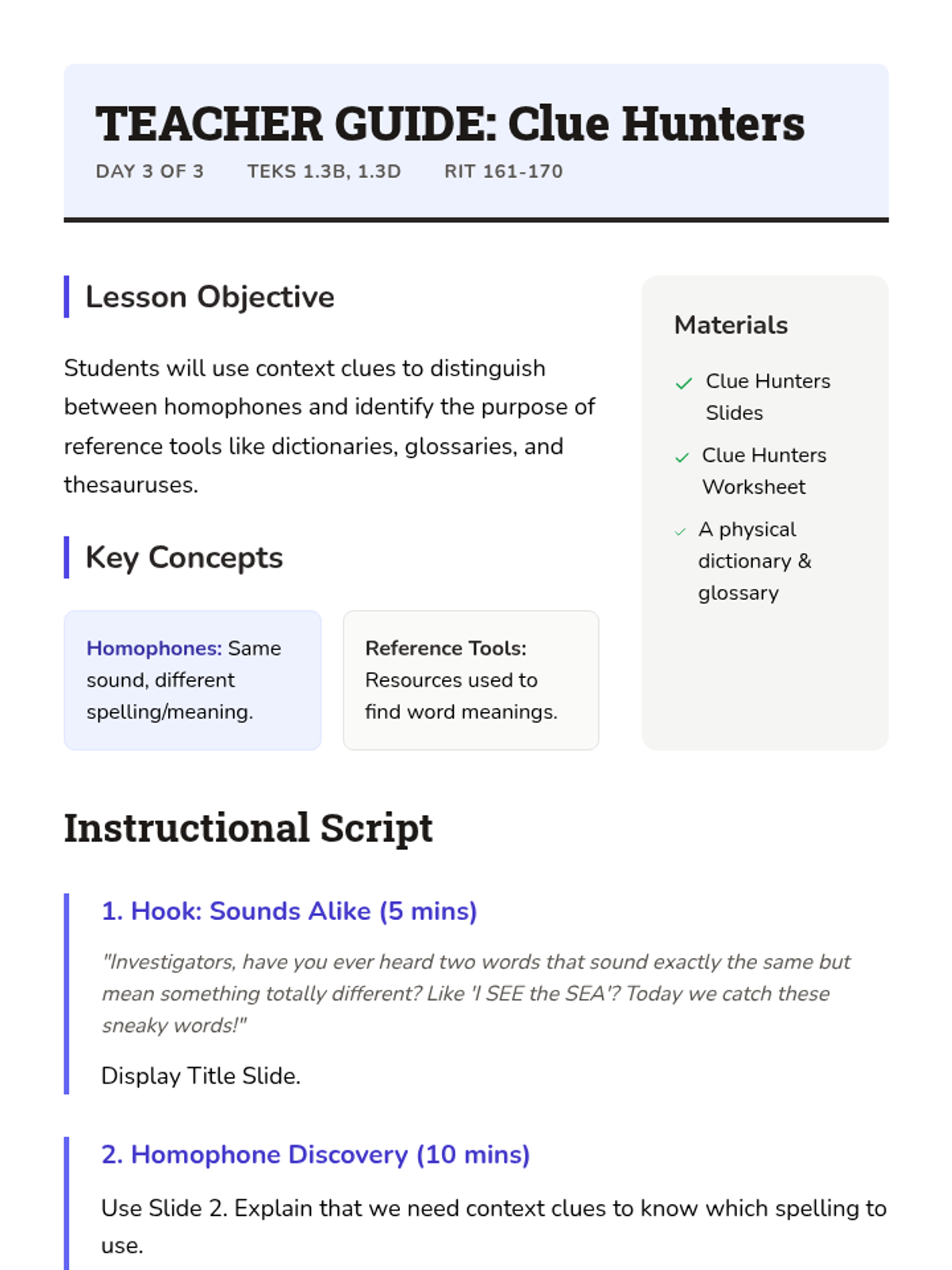
Teaches students to use context clues for homophones and explore reference tools like dictionaries and glossaries, aligning with TEKS 1.3B and 1.3D.
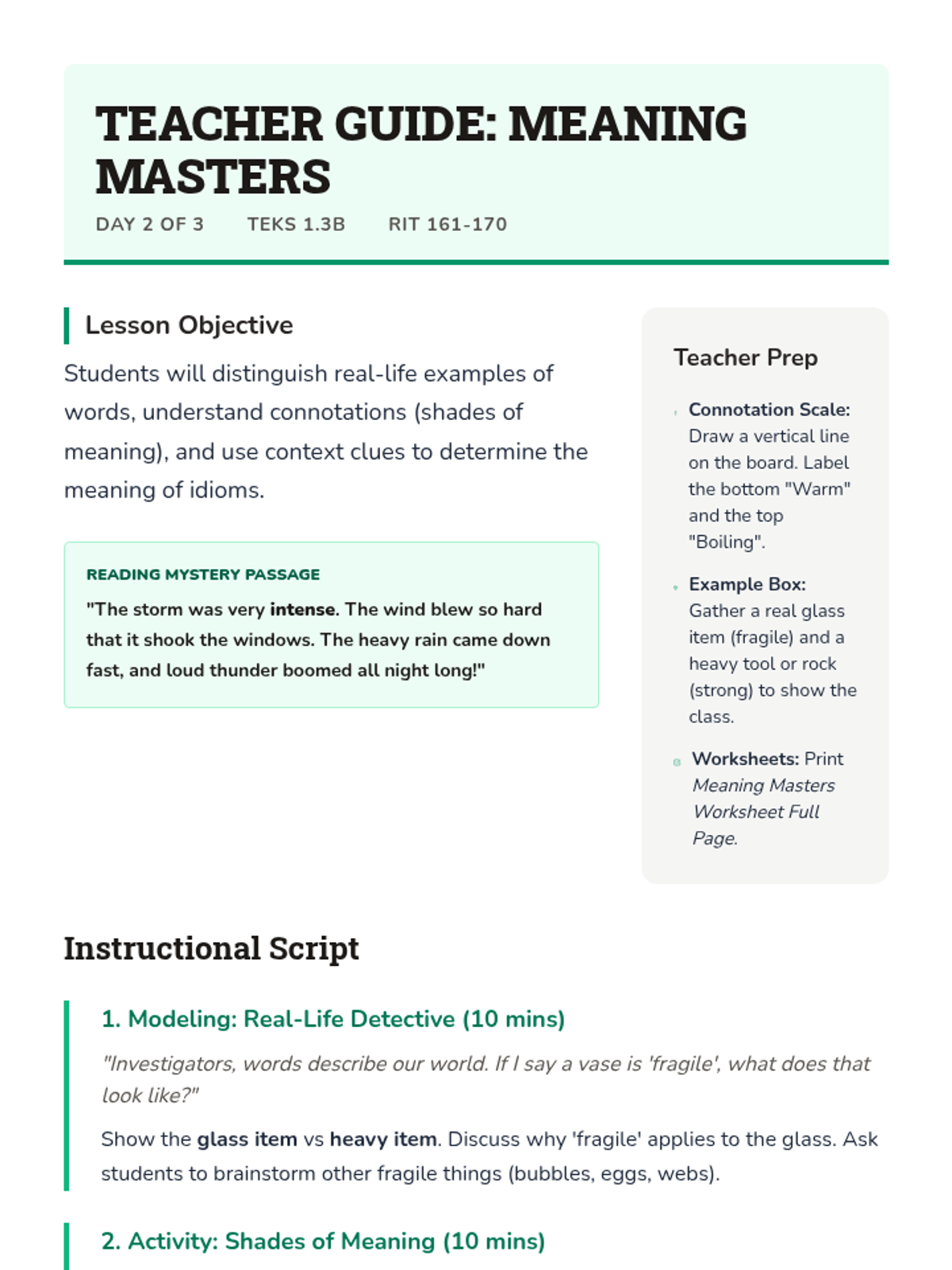
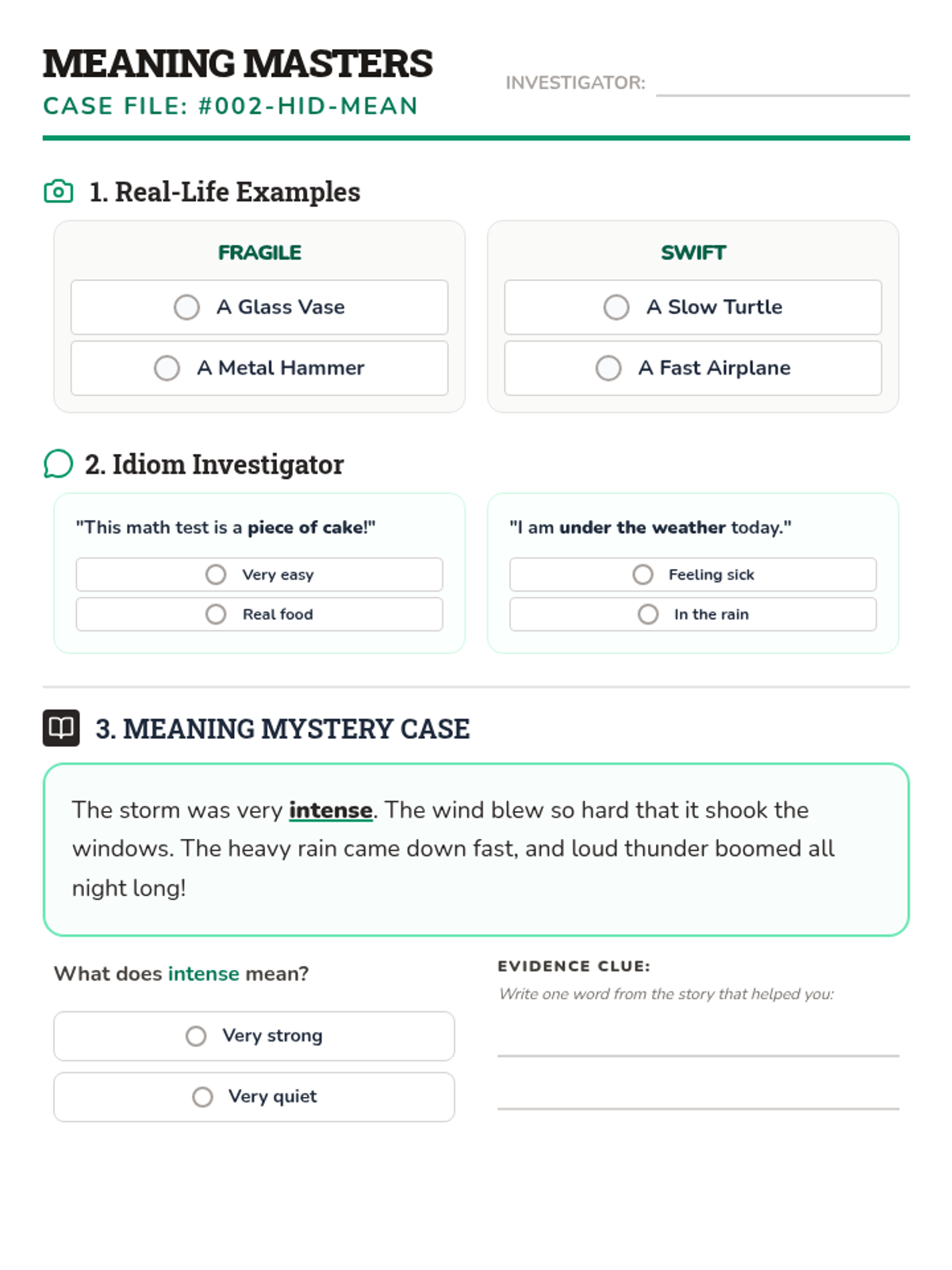
Covers real-life word examples, shades of meaning (connotations), and understanding idioms and nonliteral phrases through context, aligning with TEKS 1.3B.
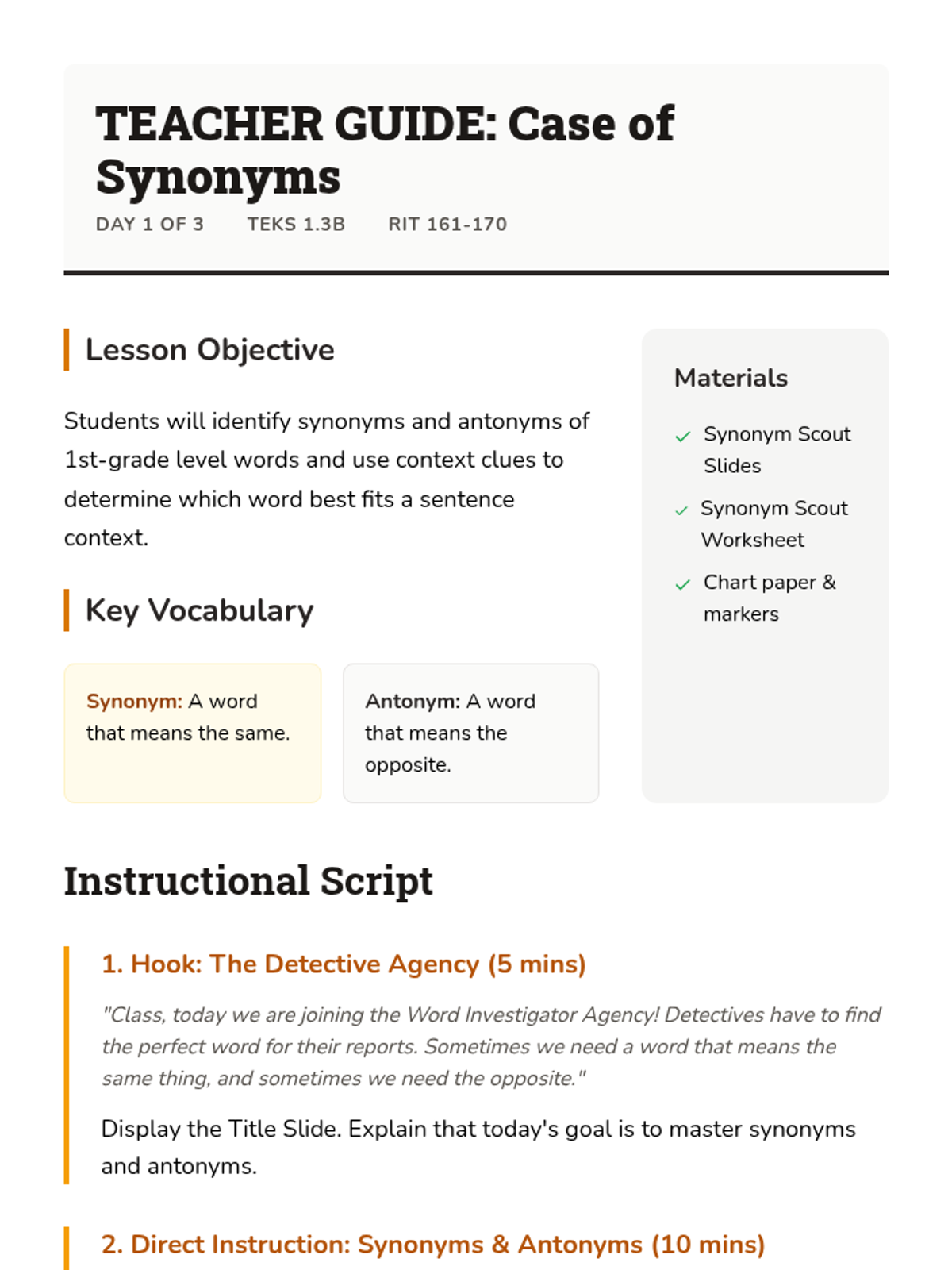
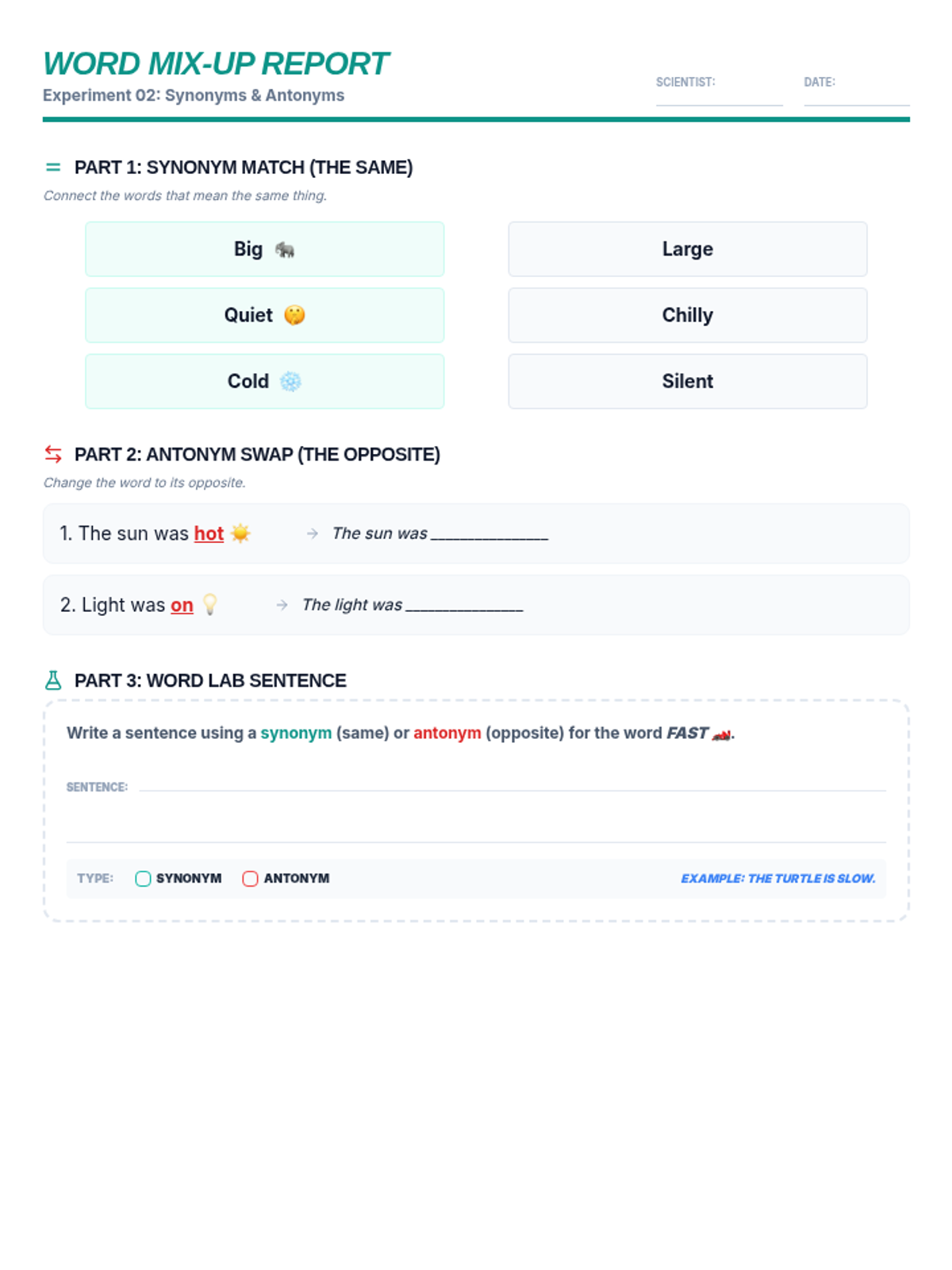
Focuses on identifying synonyms and antonyms and using context clues to find words that best fit a sentence, aligning with TEKS 1.3B.
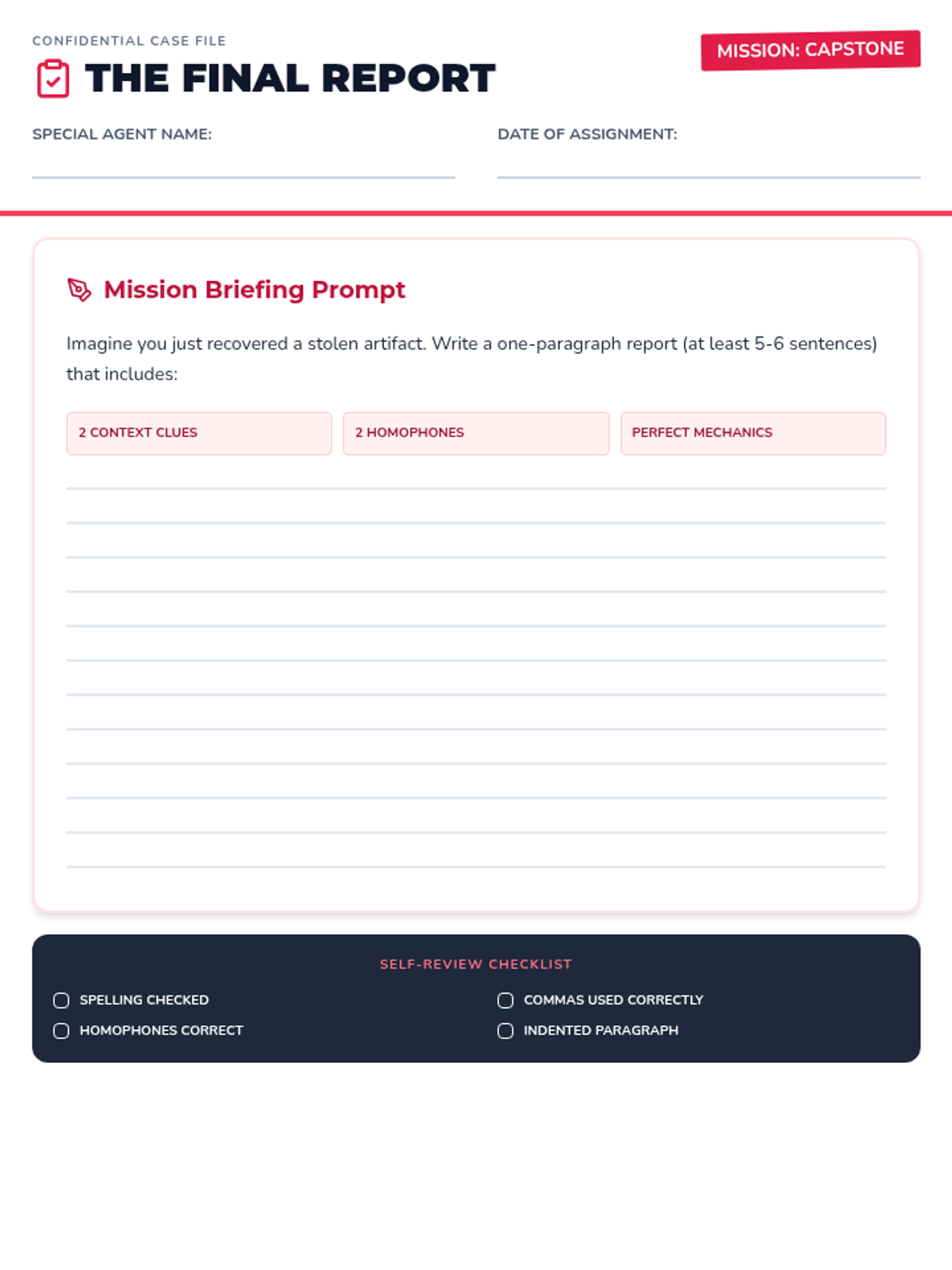
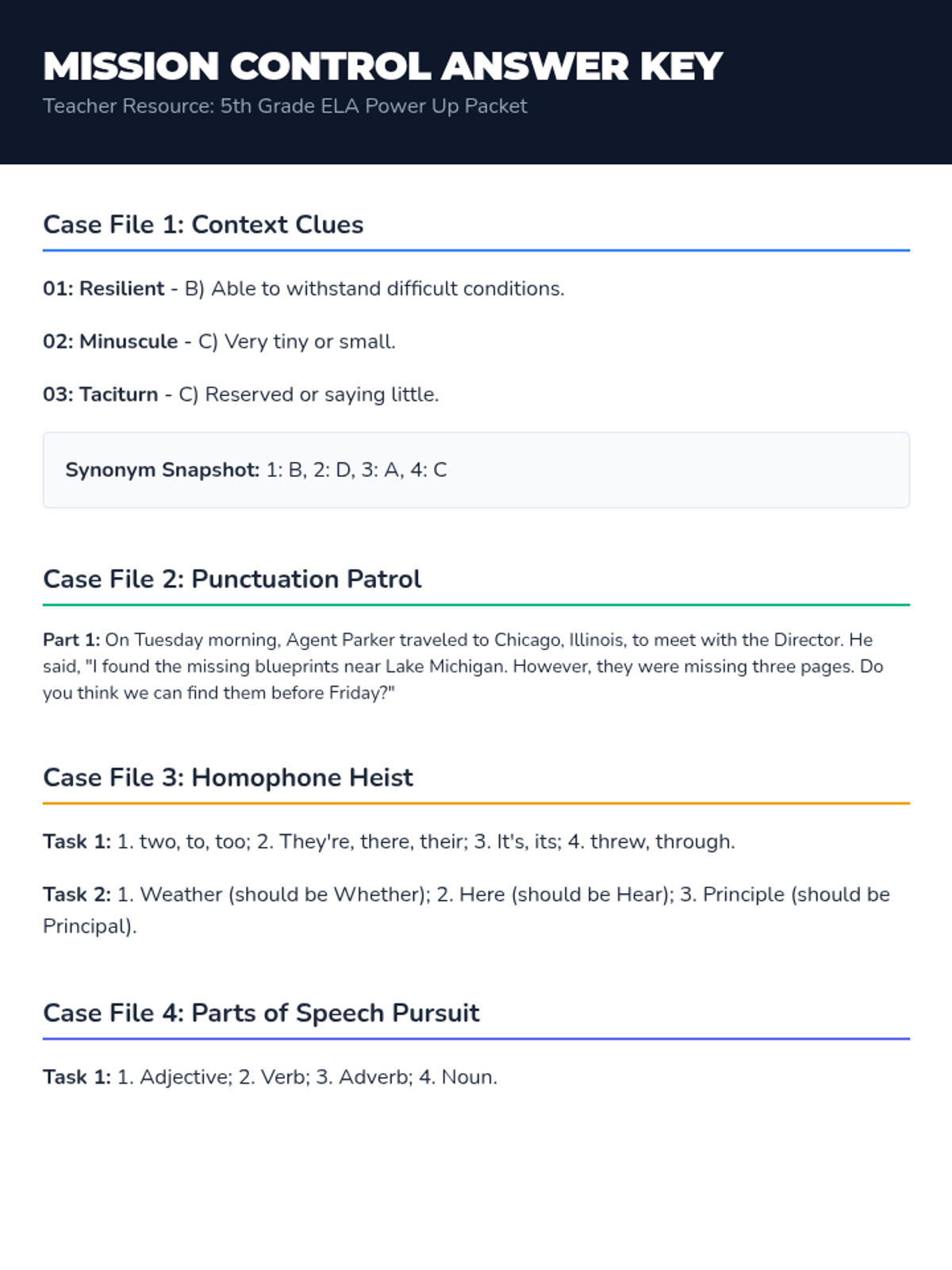
A comprehensive ELA review packet themed as a detective agency, covering context clues, vocabulary, grammar, and mechanics for 5th grade students.
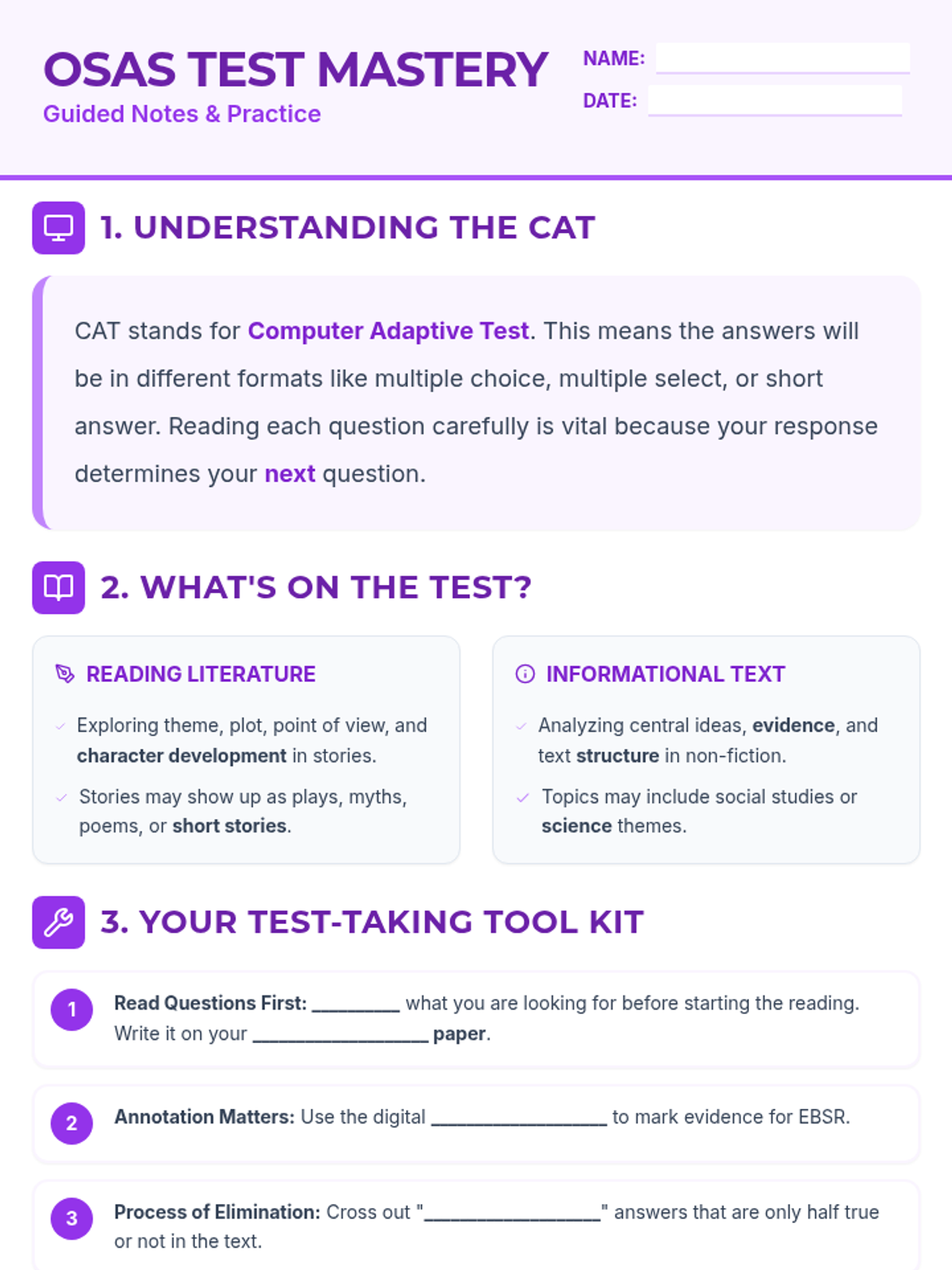
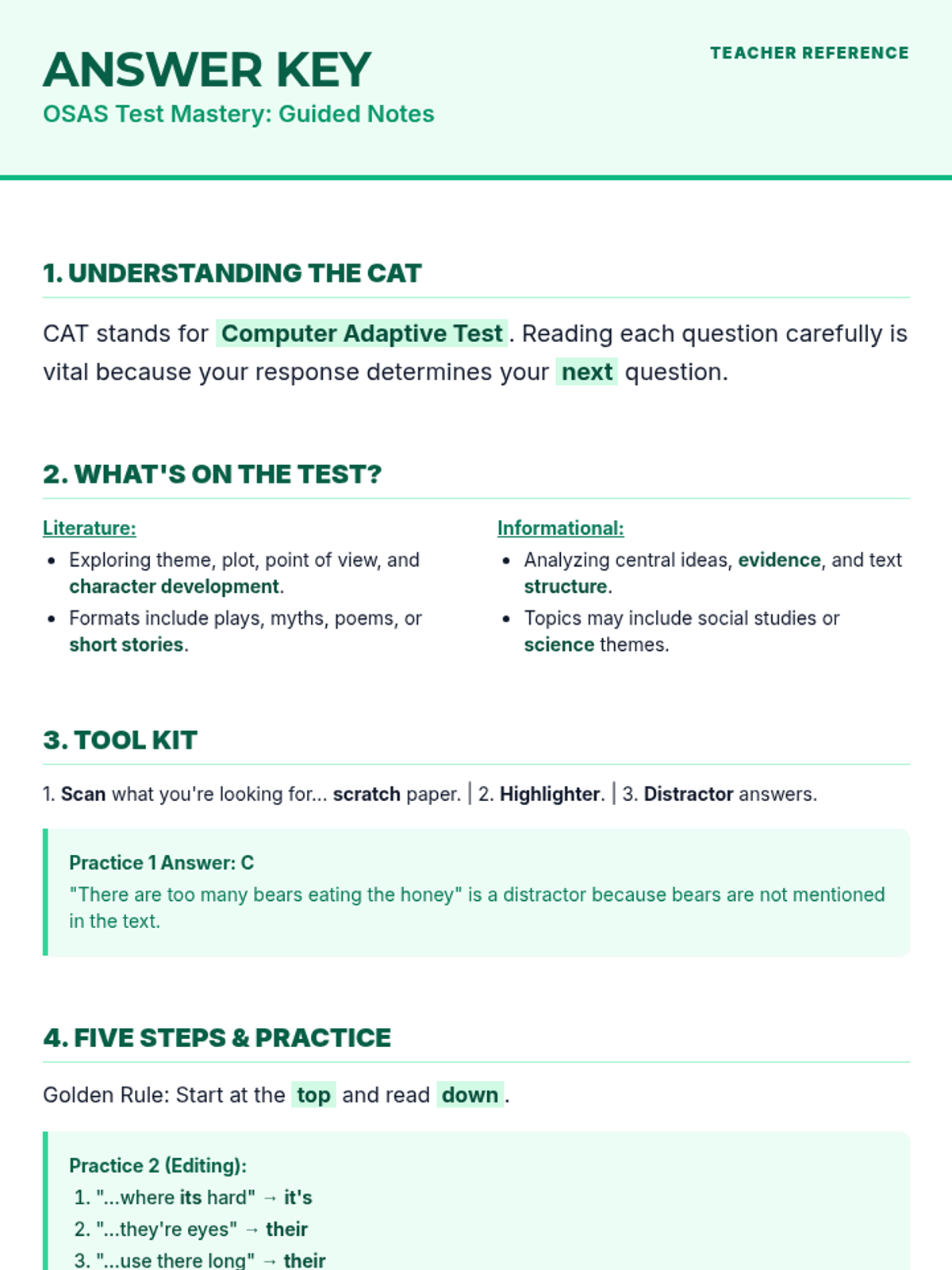
A comprehensive 6th grade ELA test preparation lesson covering OSAS strategies, question types, and performance tasks.
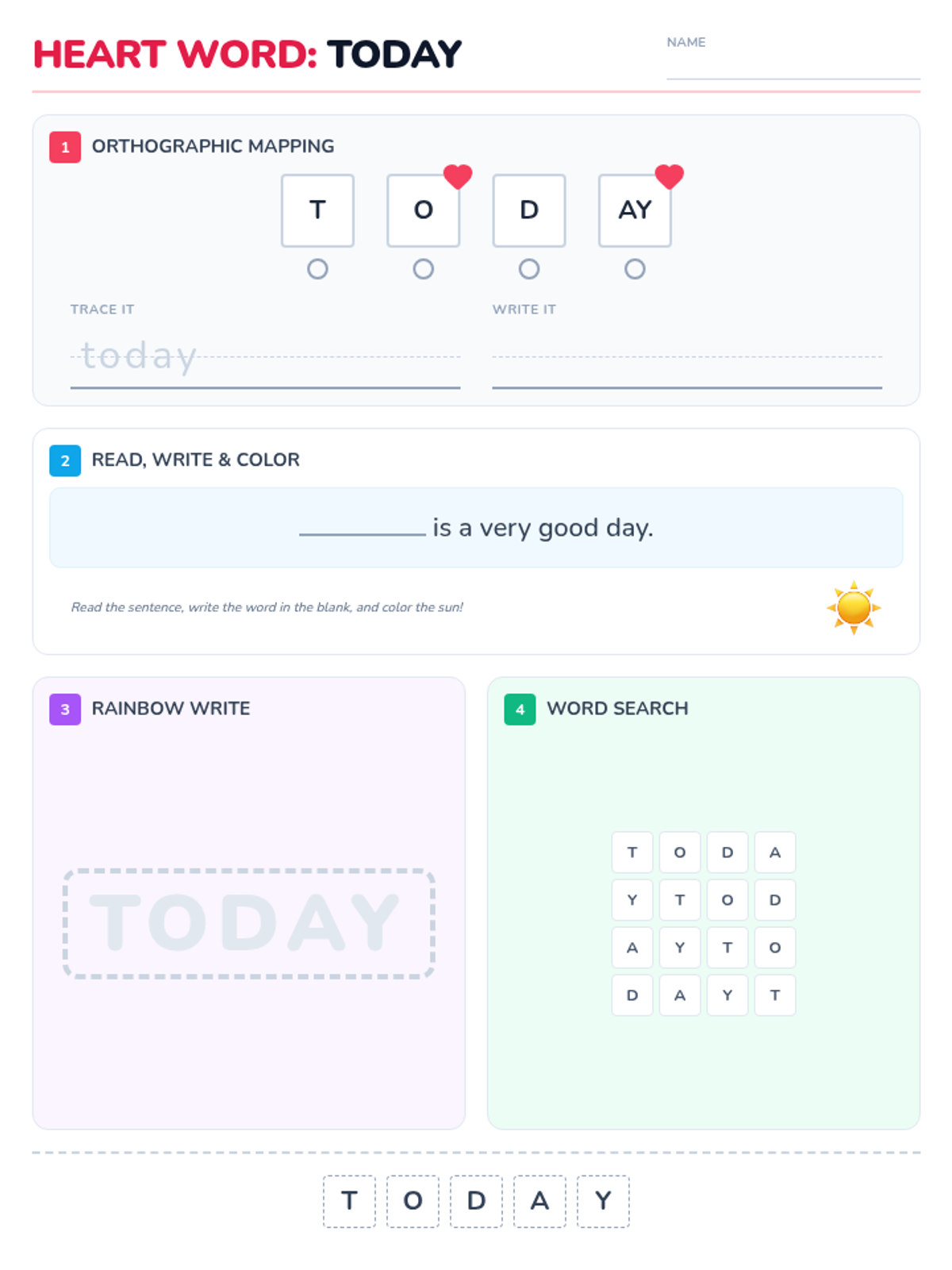
The final set of heart word practice pages covering time and place concepts like 'Today', 'Above', 'Again', and 'Always'.
Focusing on words for people and common actions like 'Friend', 'Because', 'Woman', and 'People', these pages provide deep orthographic practice.
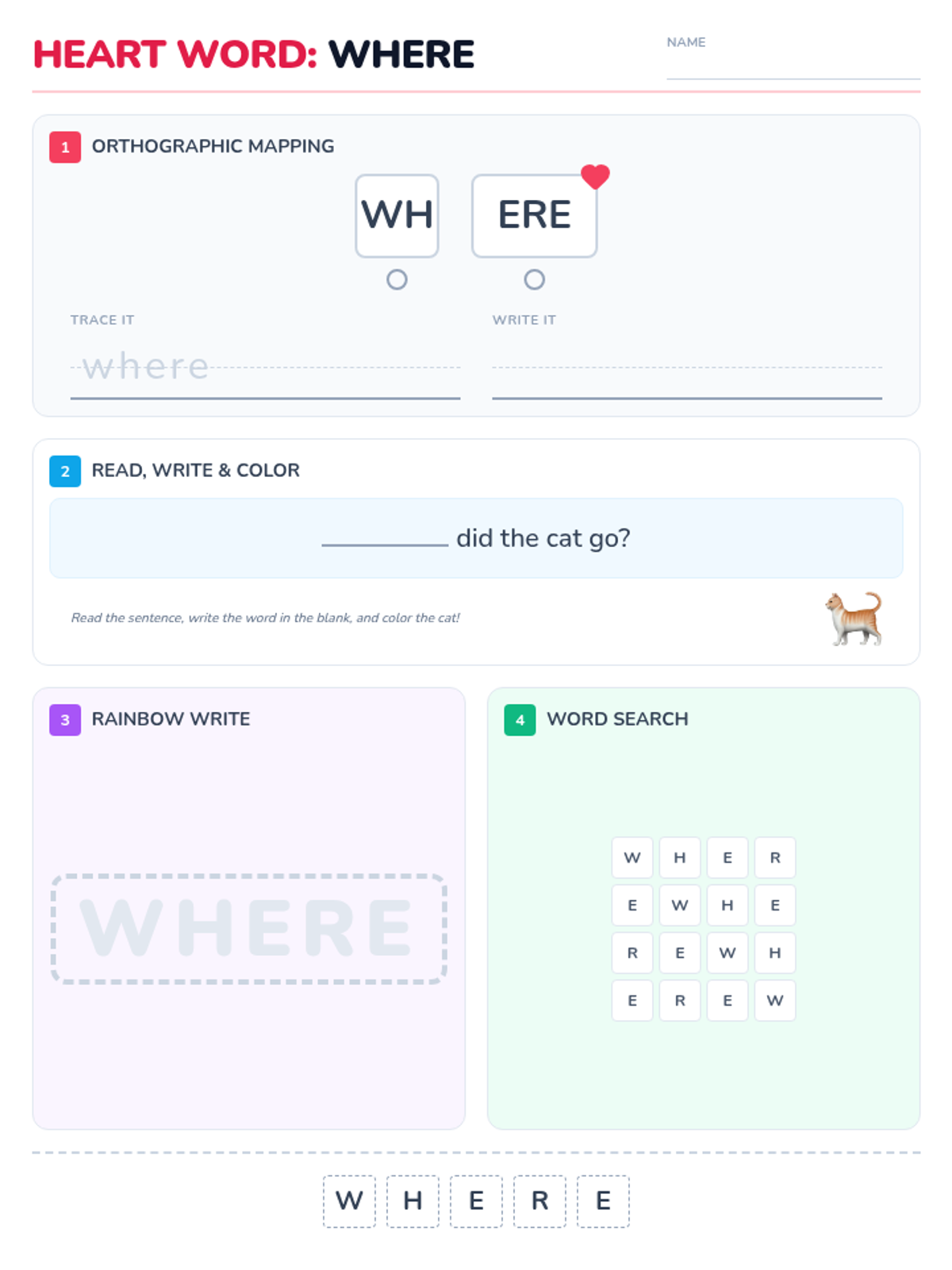
Practice pages for tricky high-frequency words such as 'Where', 'One', 'Two', and 'Does', continuing the UFLI-aligned mapping and word building.
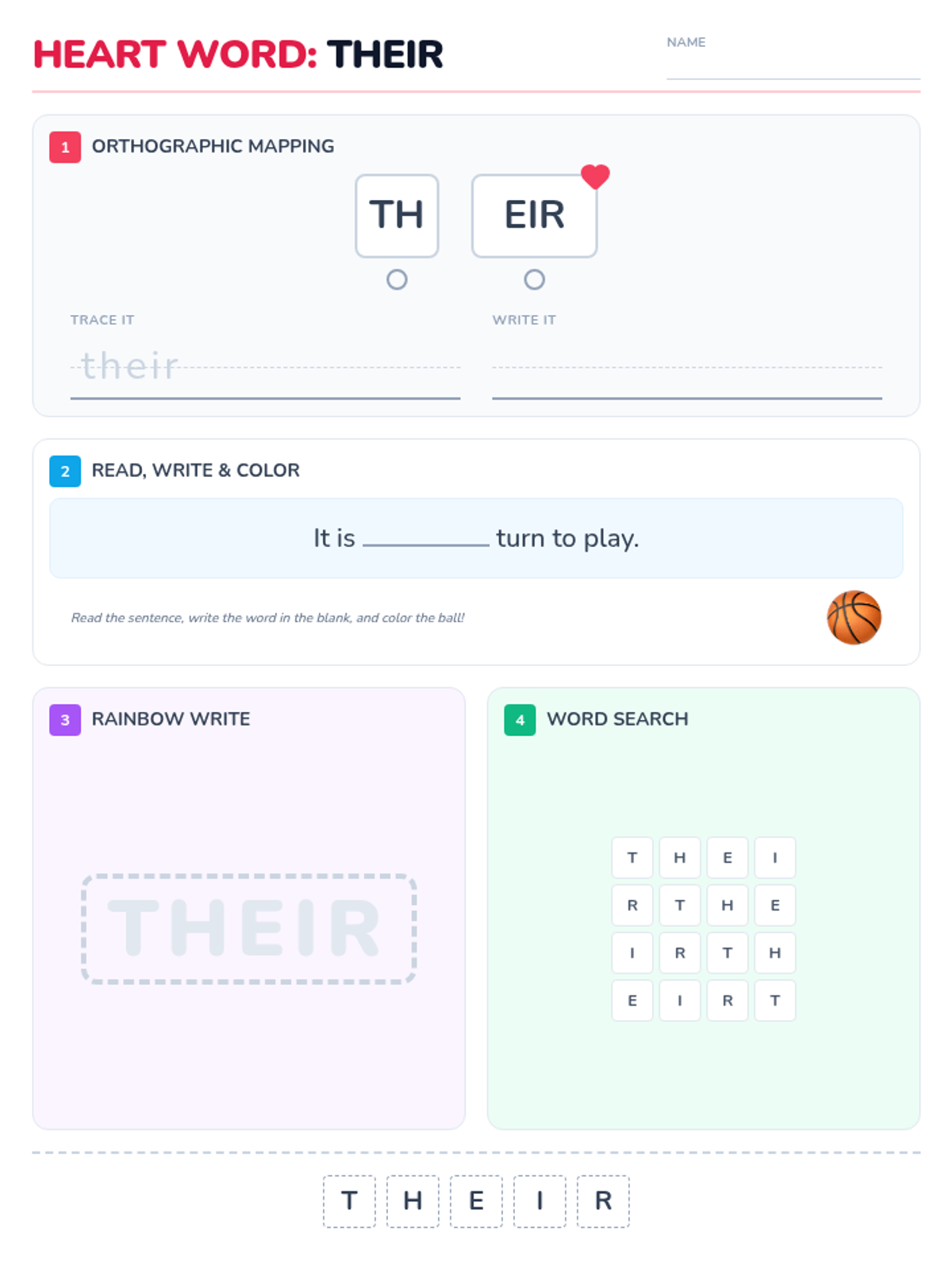
A set of heart word practice pages focusing on words related to direction, quantity, and common verbs, including 'Their', 'Were', 'Talk', and the '-ould' family.
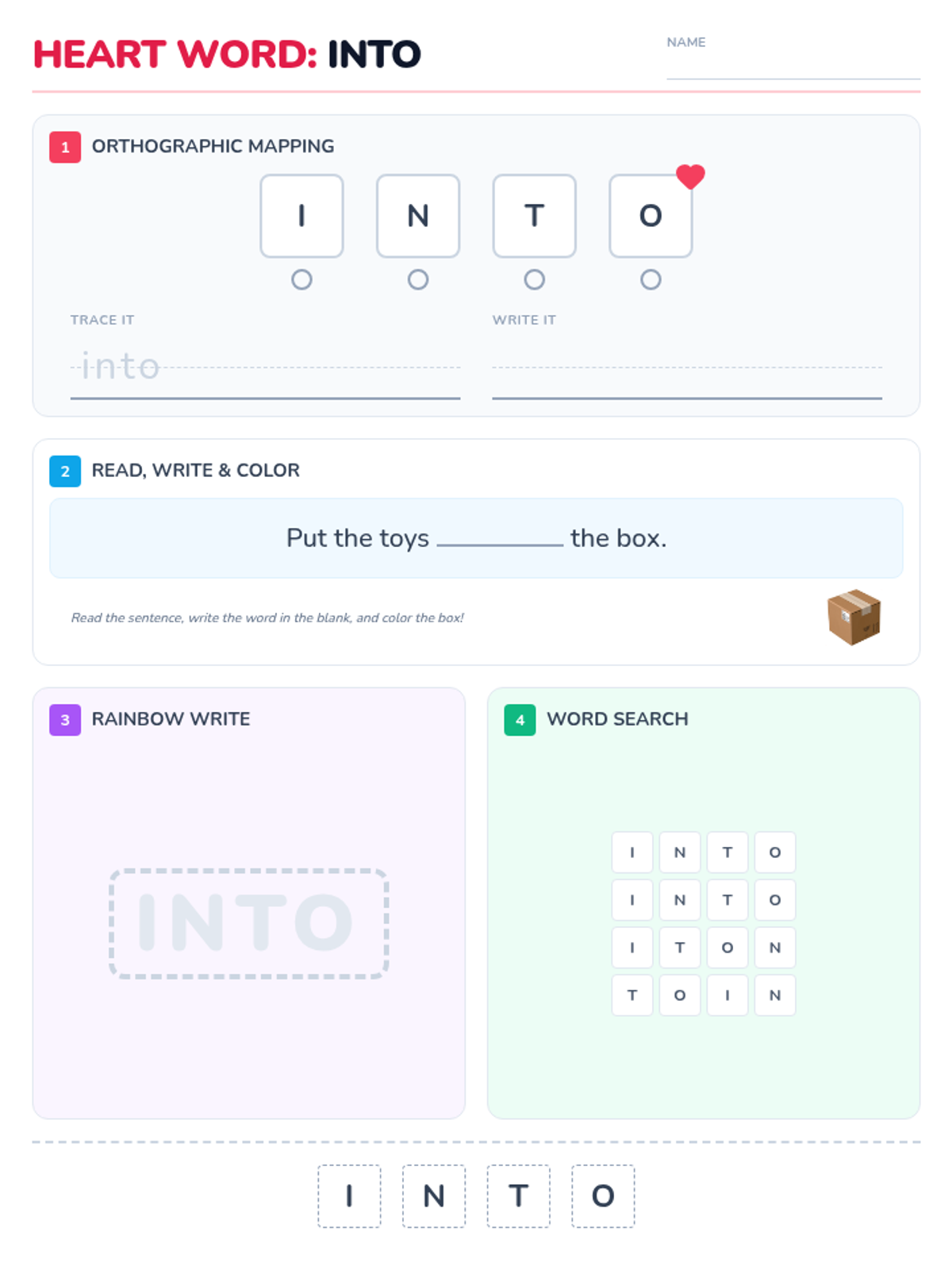
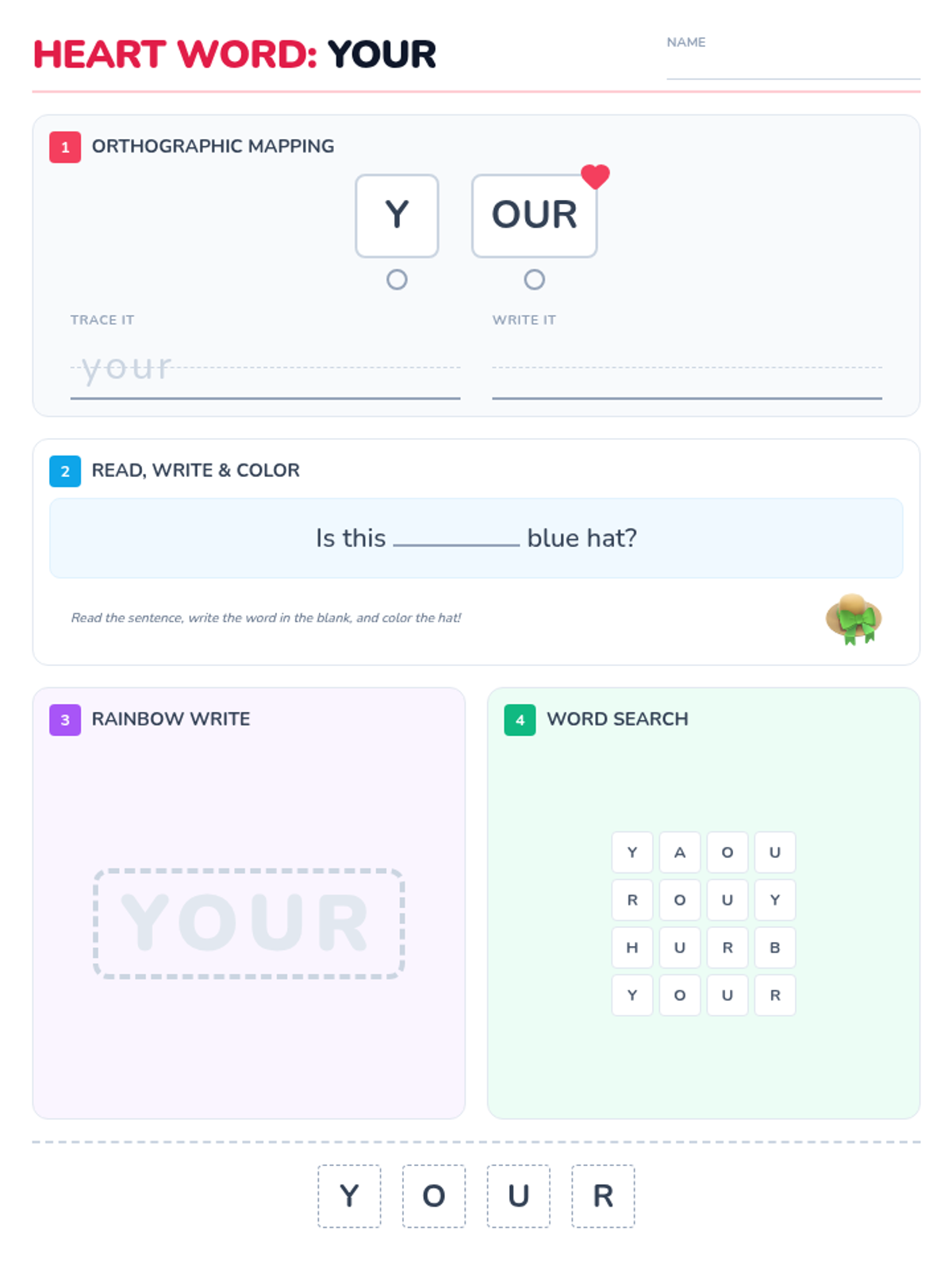
The first set of heart word practice pages focusing on common high-frequency words with irregular parts, including 'Your', 'Want', 'Go', and others. Each page includes mapping, tracing, writing, and word-building activities.
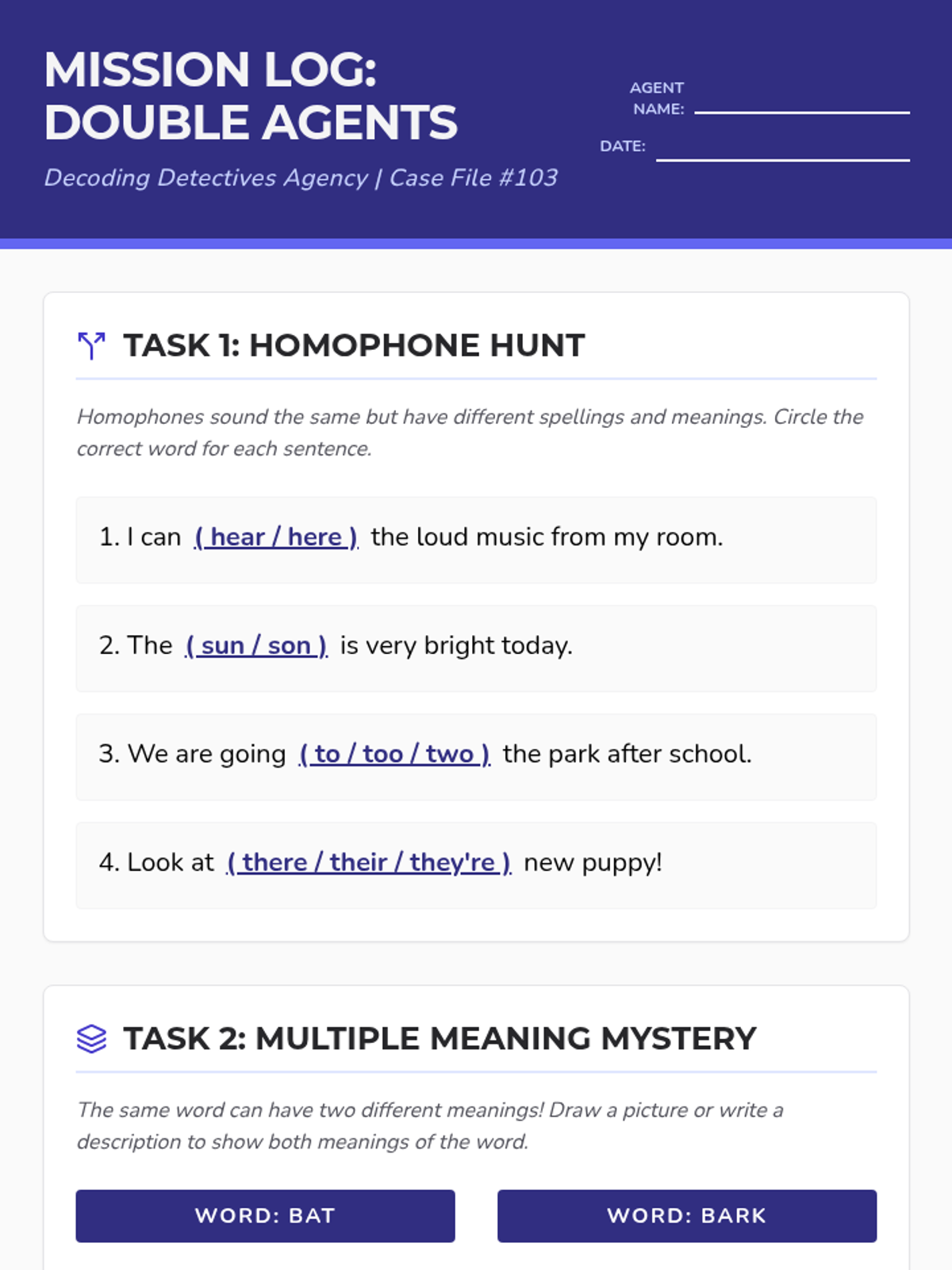
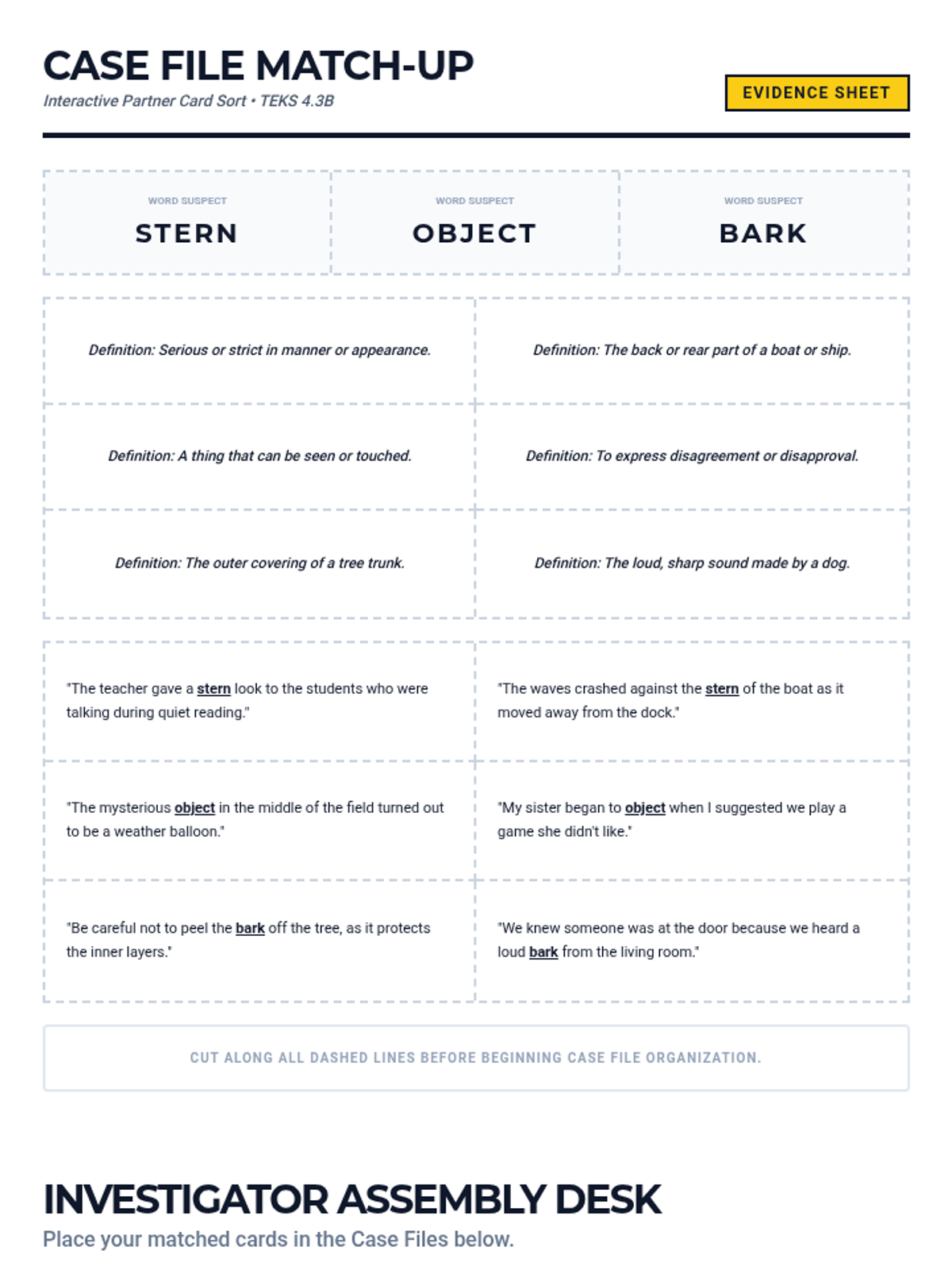
Unmask words that sound the same but look different (homophones) and words that look the same but have different meanings (multiple meaning words). Focuses on using context clues to solve word mysteries.
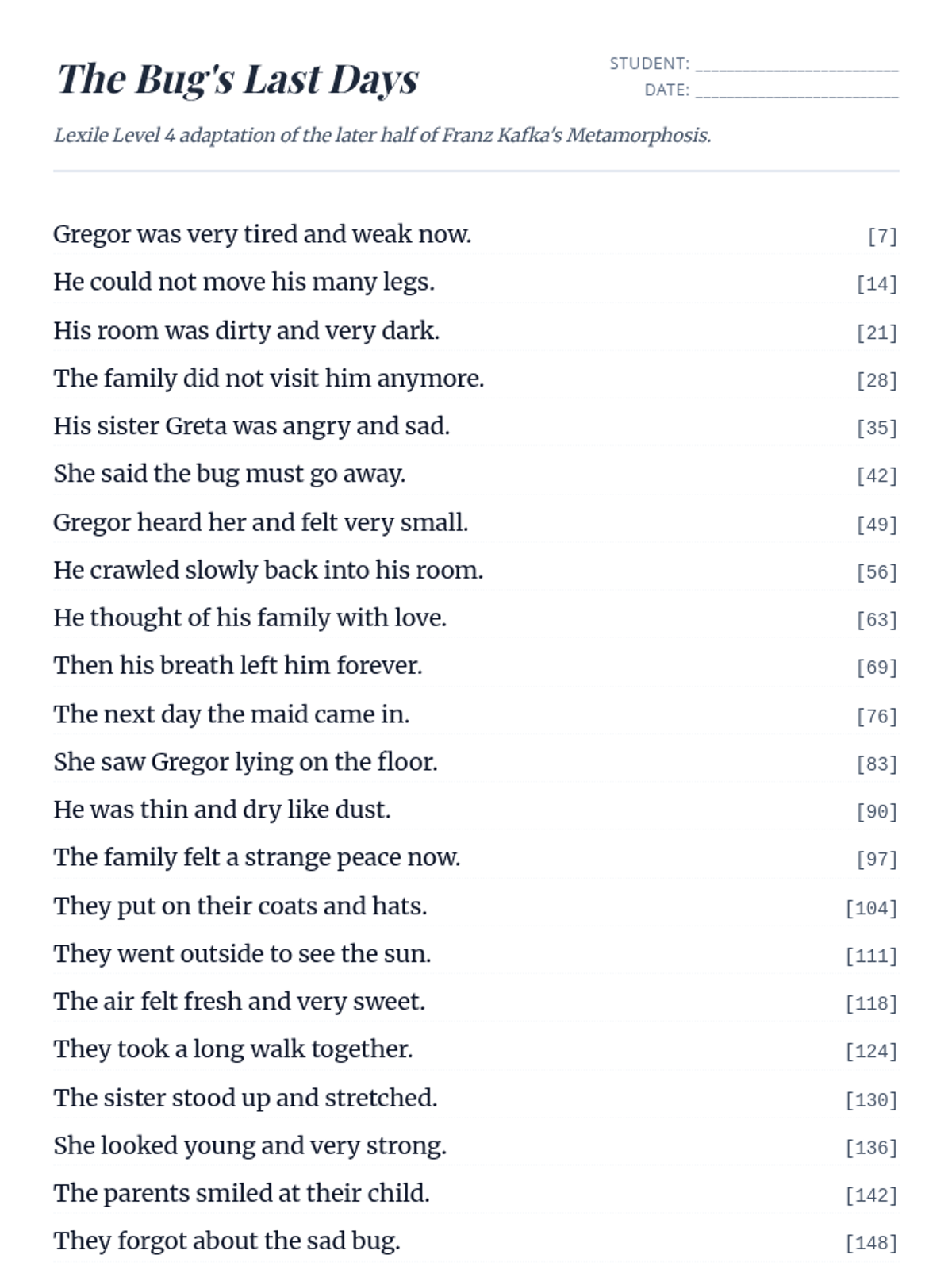
A simplified exploration of the later half of Franz Kafka's Metamorphosis, focusing on readability and text analysis for early intermediate readers.
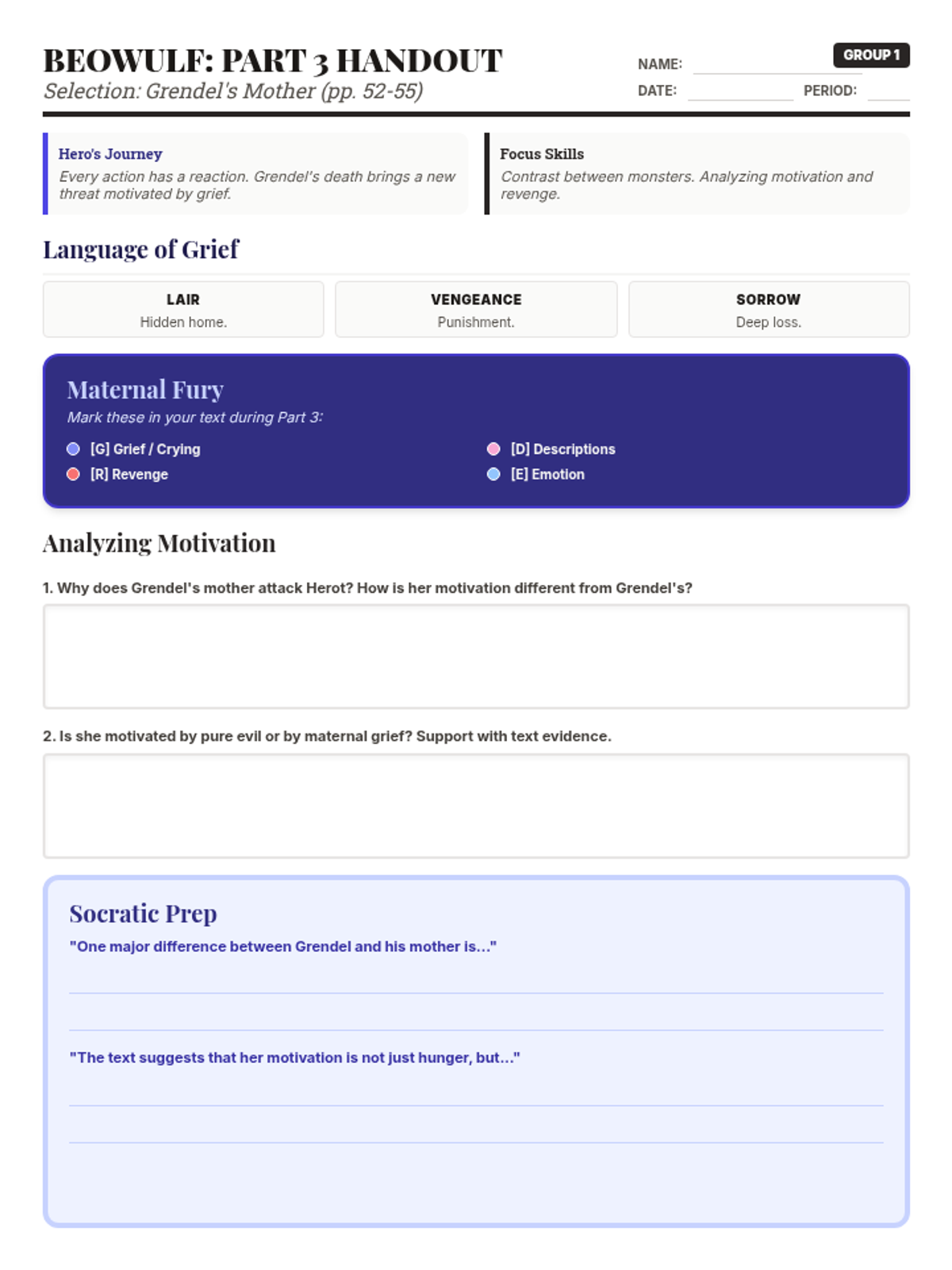
Analysis of Grendel's mother's motivation and the shift in threat, focusing on vengeance vs. evil.
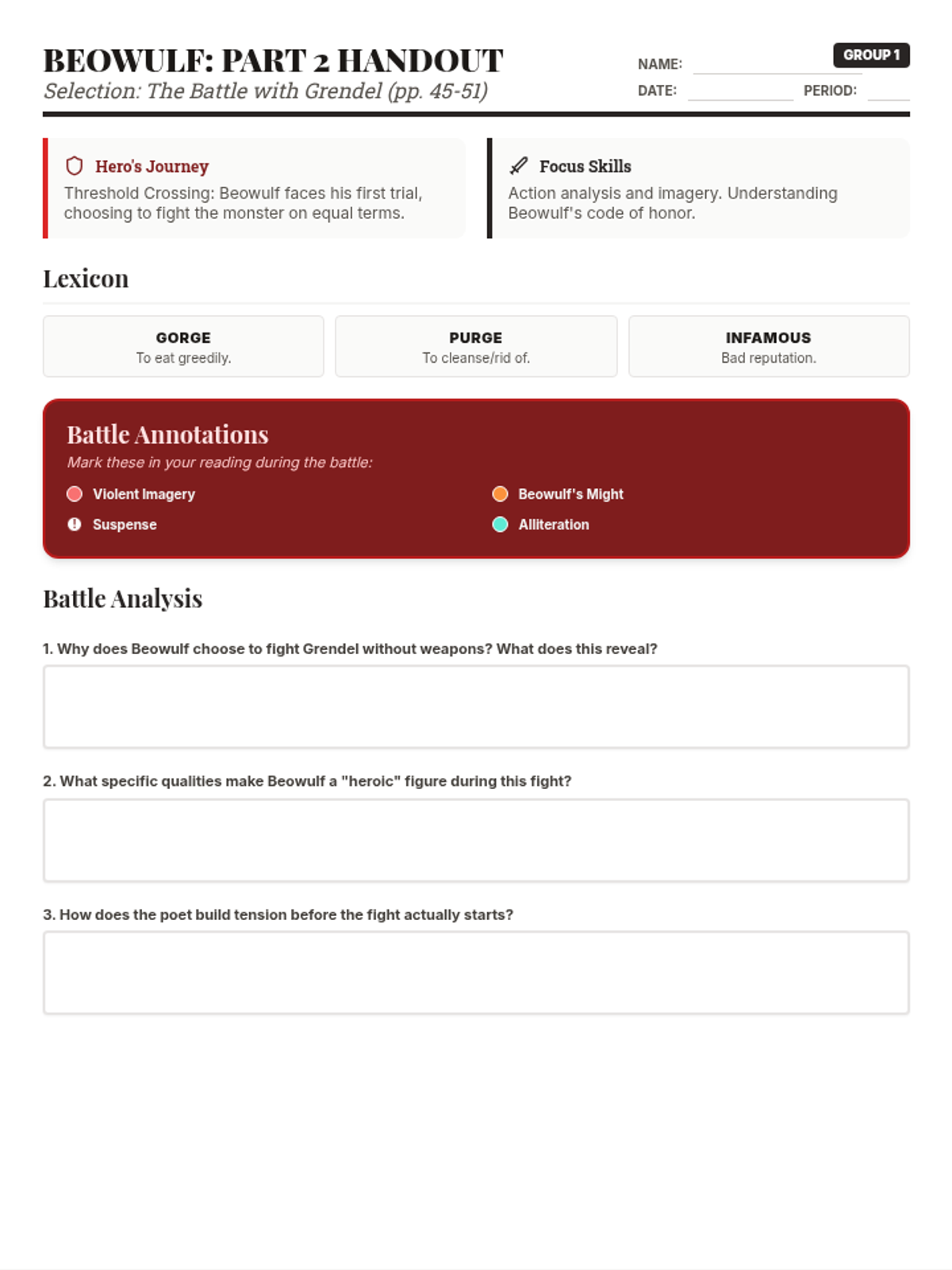
Beowulf's arrival and his first major trial against Grendel, emphasizing imagery, action analysis, and the Crossing of the Threshold.
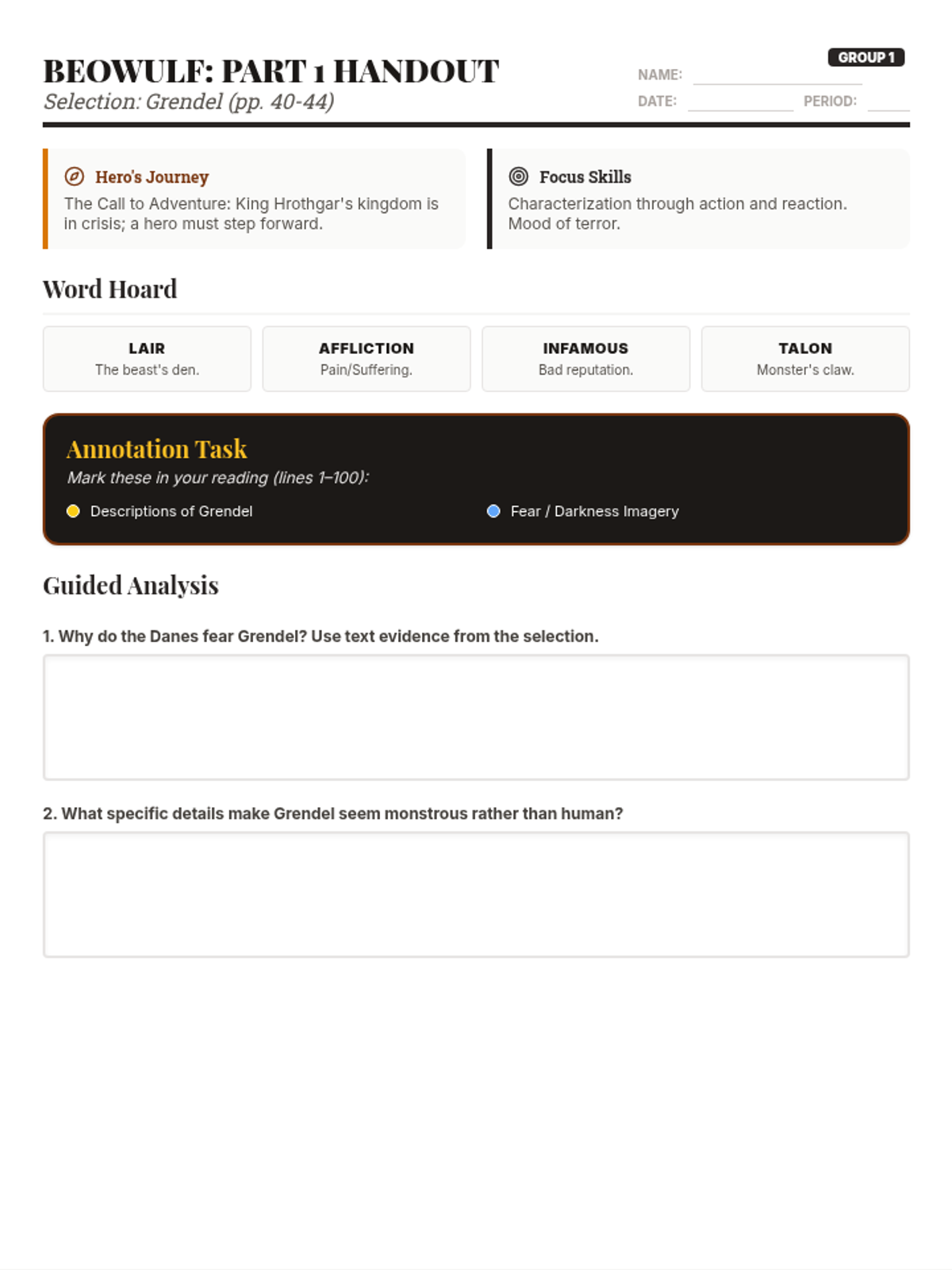
Introduction to Grendel, focusing on characterization, mood, and the initial Call to Adventure in the Hero's Journey.
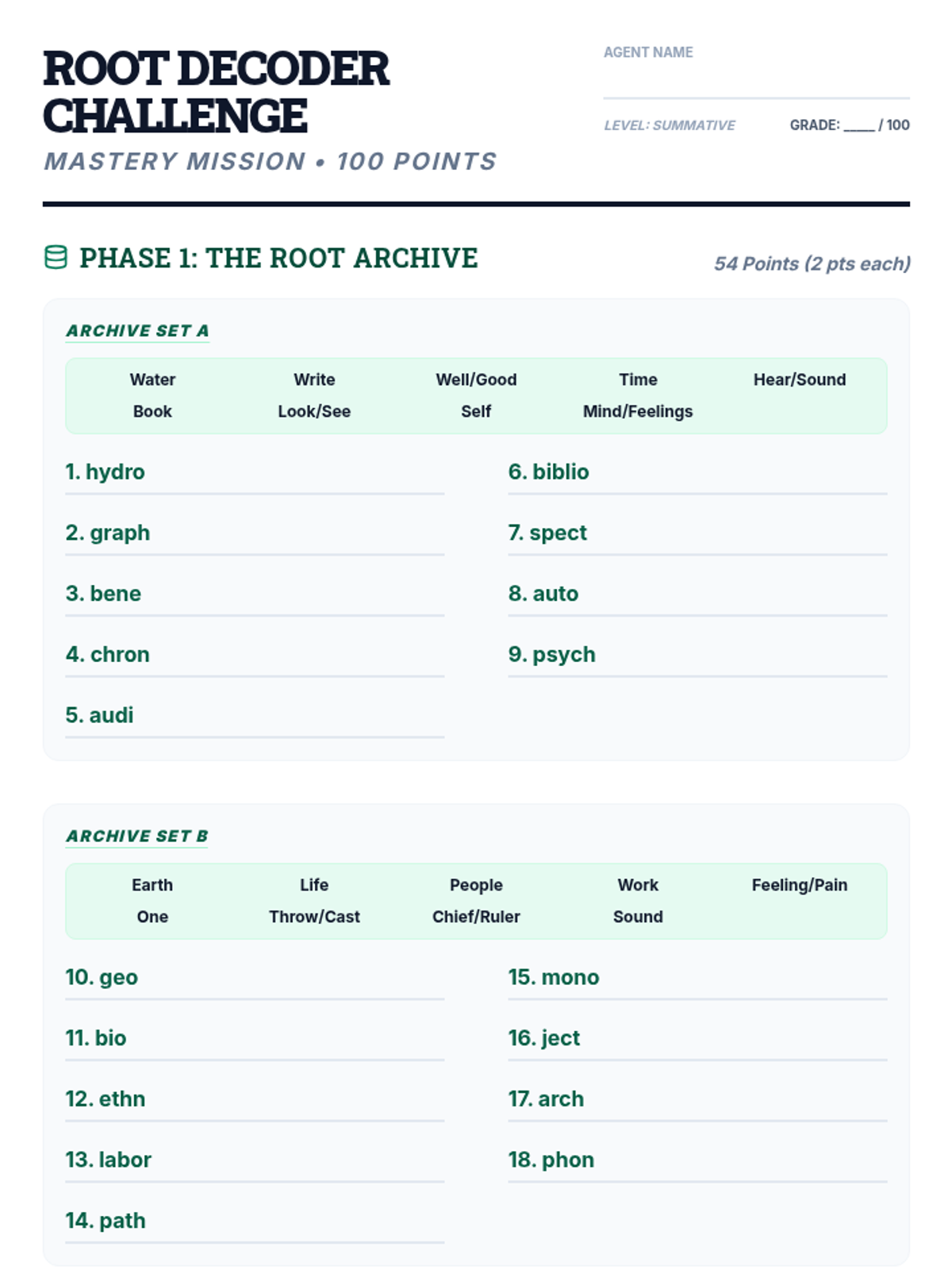
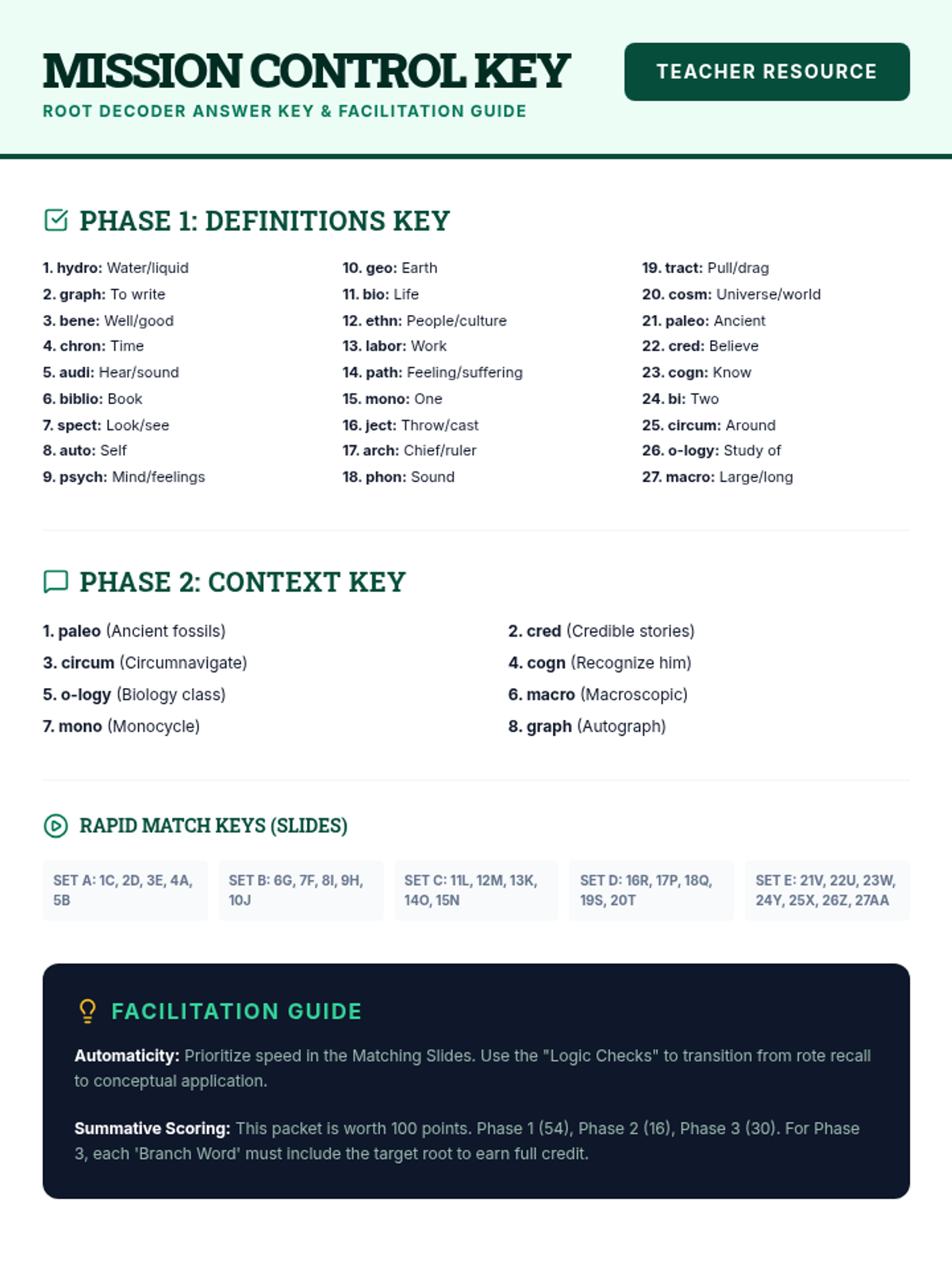
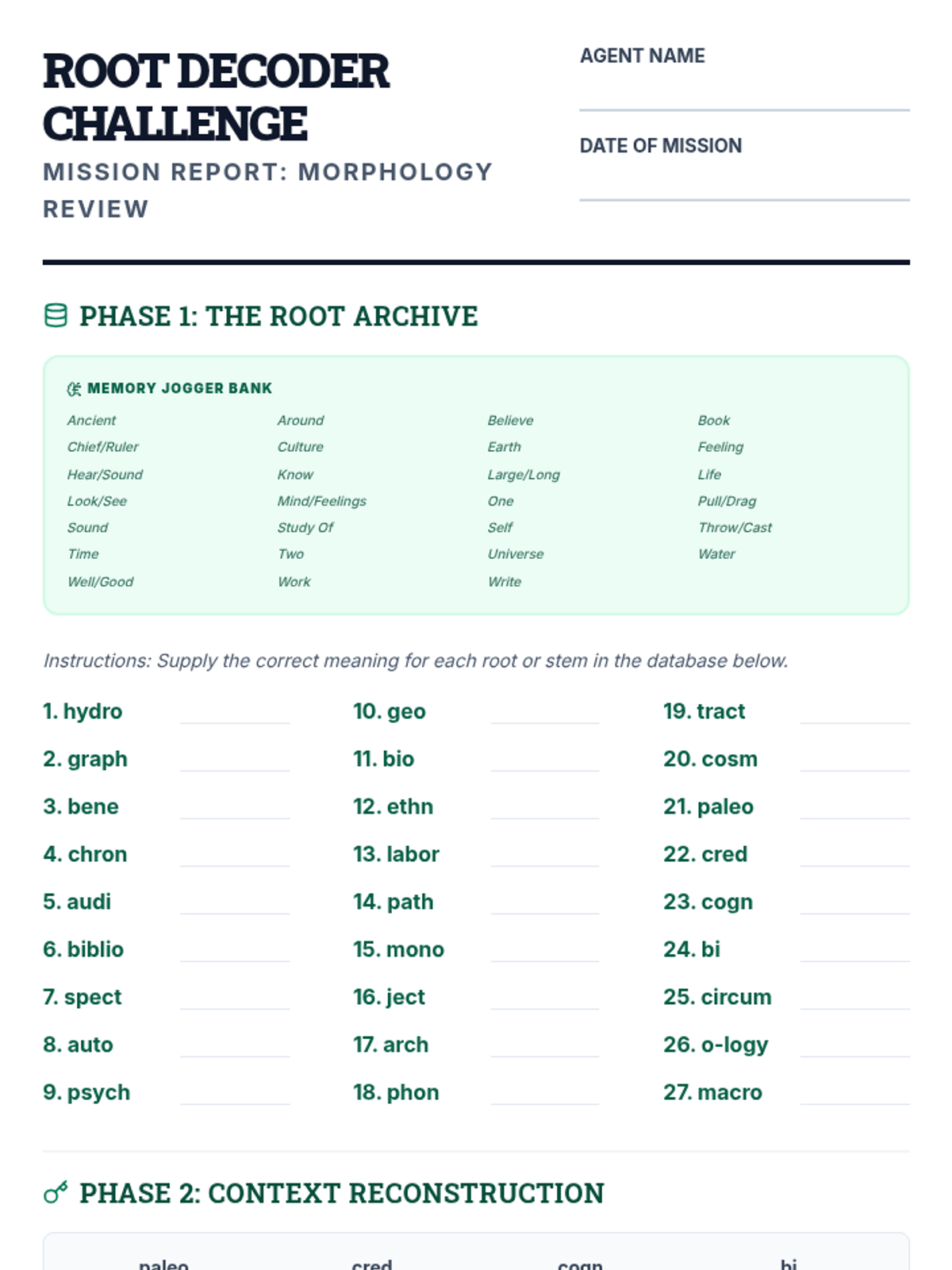
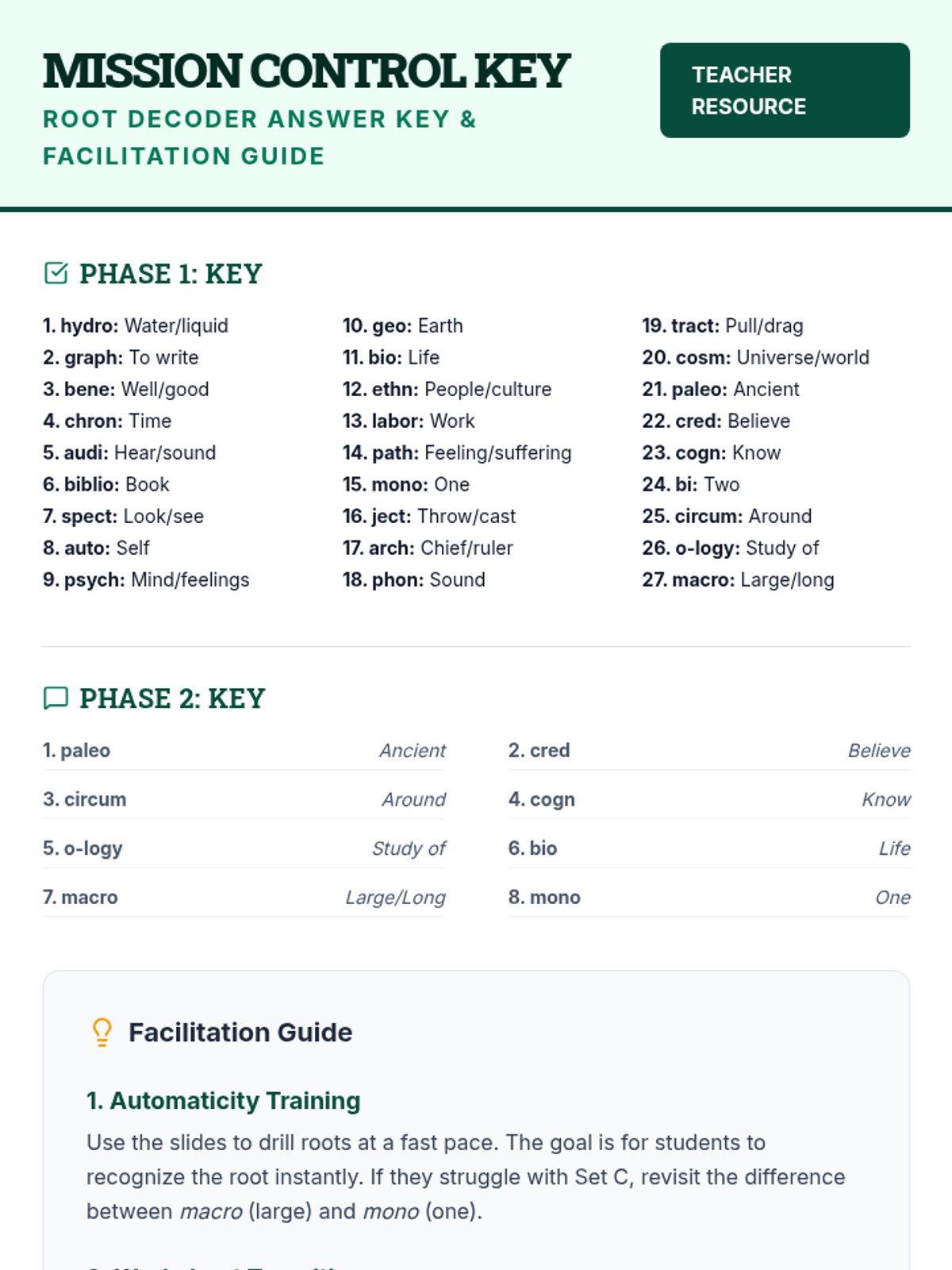
A comprehensive review lesson covering 27 Greek and Latin roots to help developmental reading students prepare for their morphology assessment through gamified slides and a decoding worksheet.
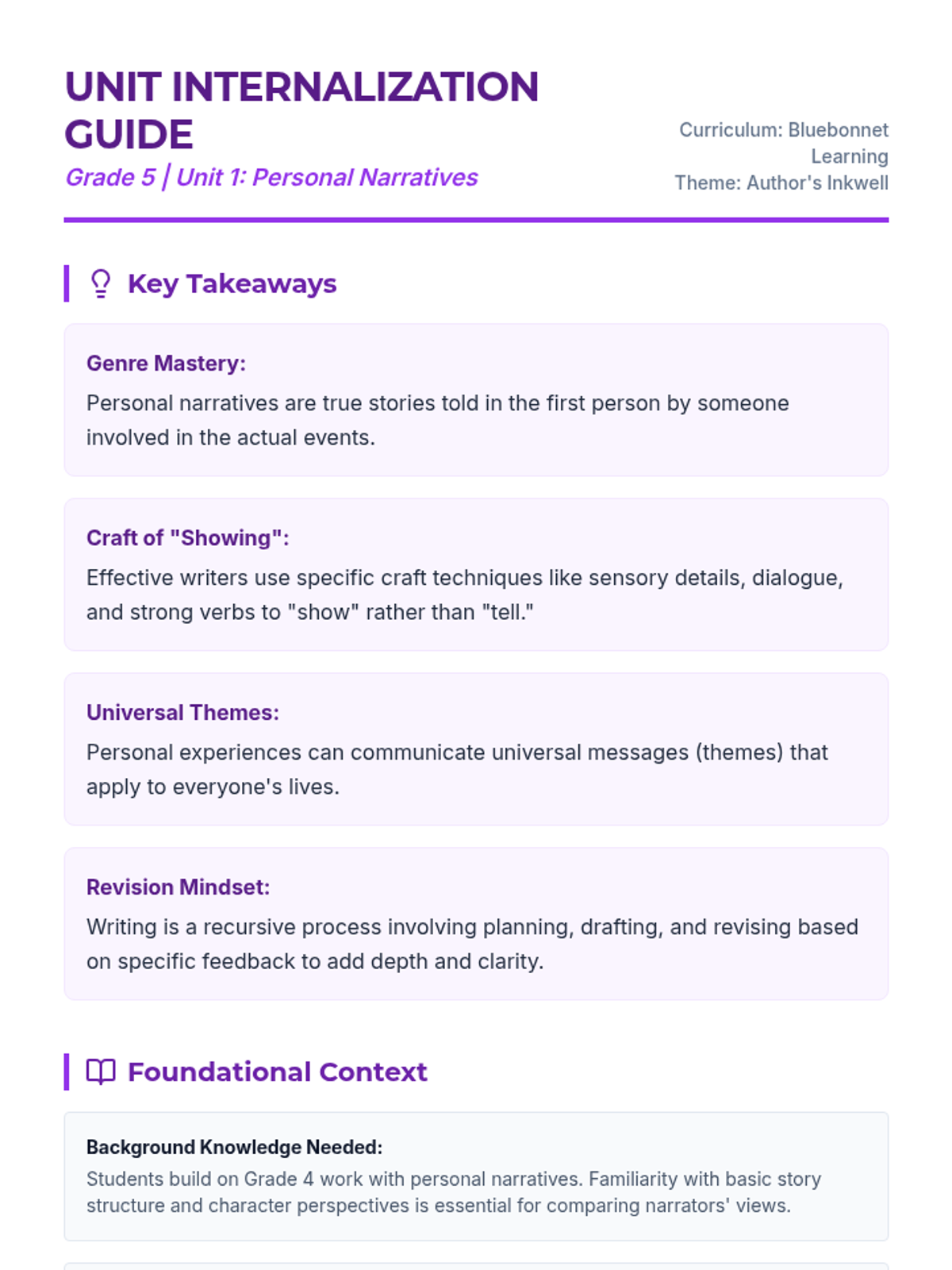
Students define personal narratives, explore the purpose of anecdotes, and draft their first narrative paragraph about a memorable first-time experience.
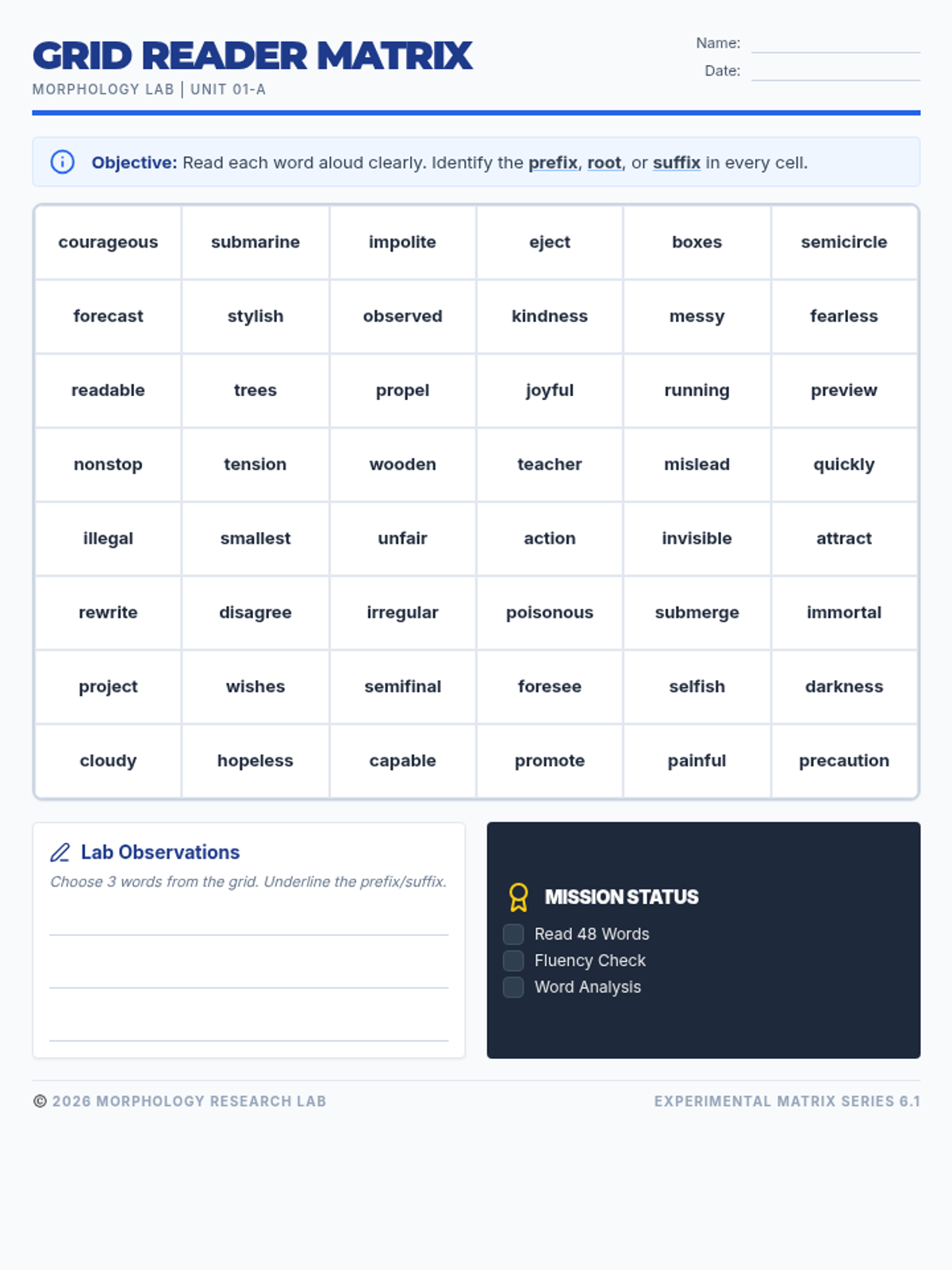
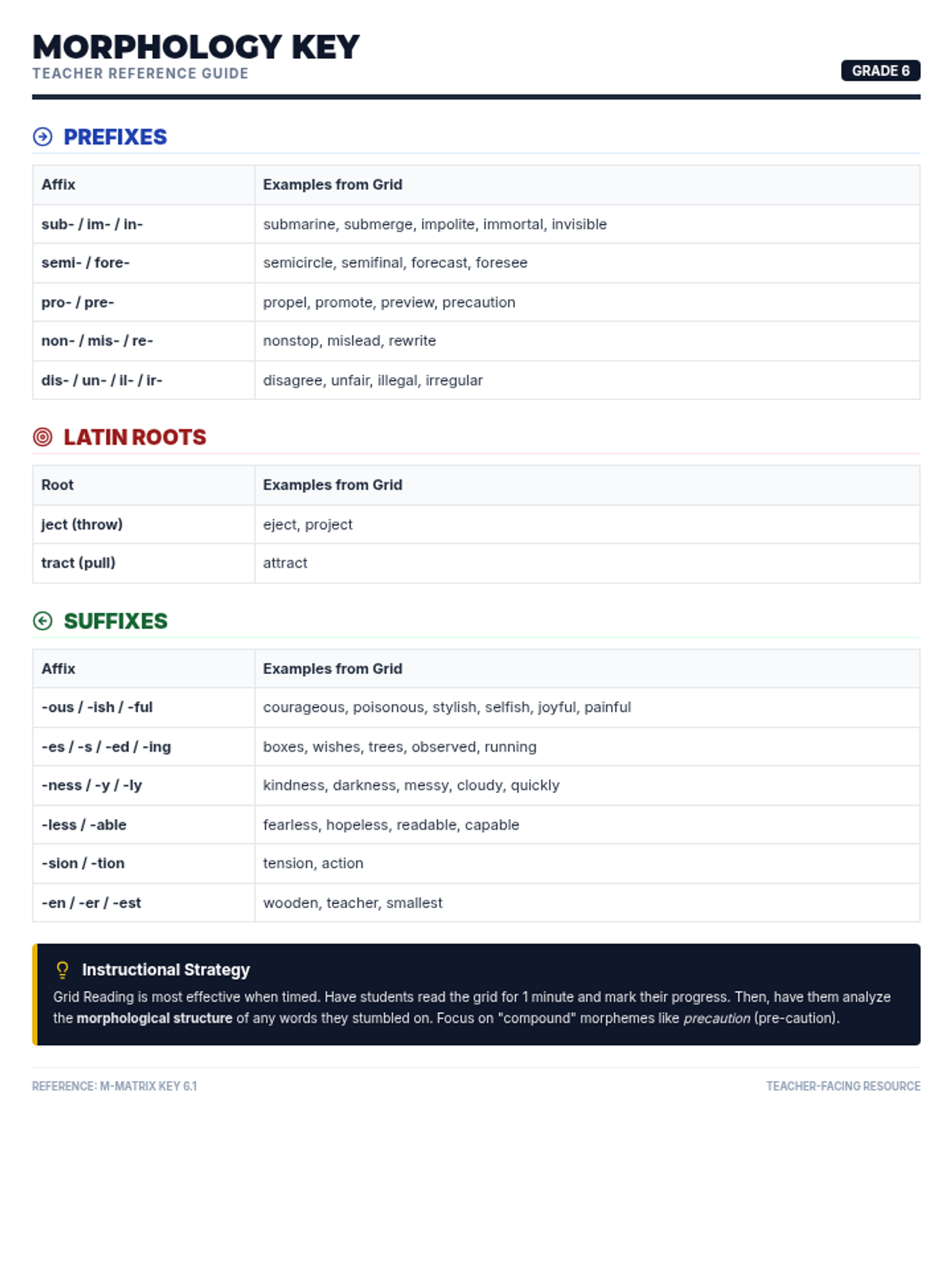
A lesson focused on building and decoding words using common prefixes, suffixes, and Latin roots (ject, tract) through a randomized grid reading activity.
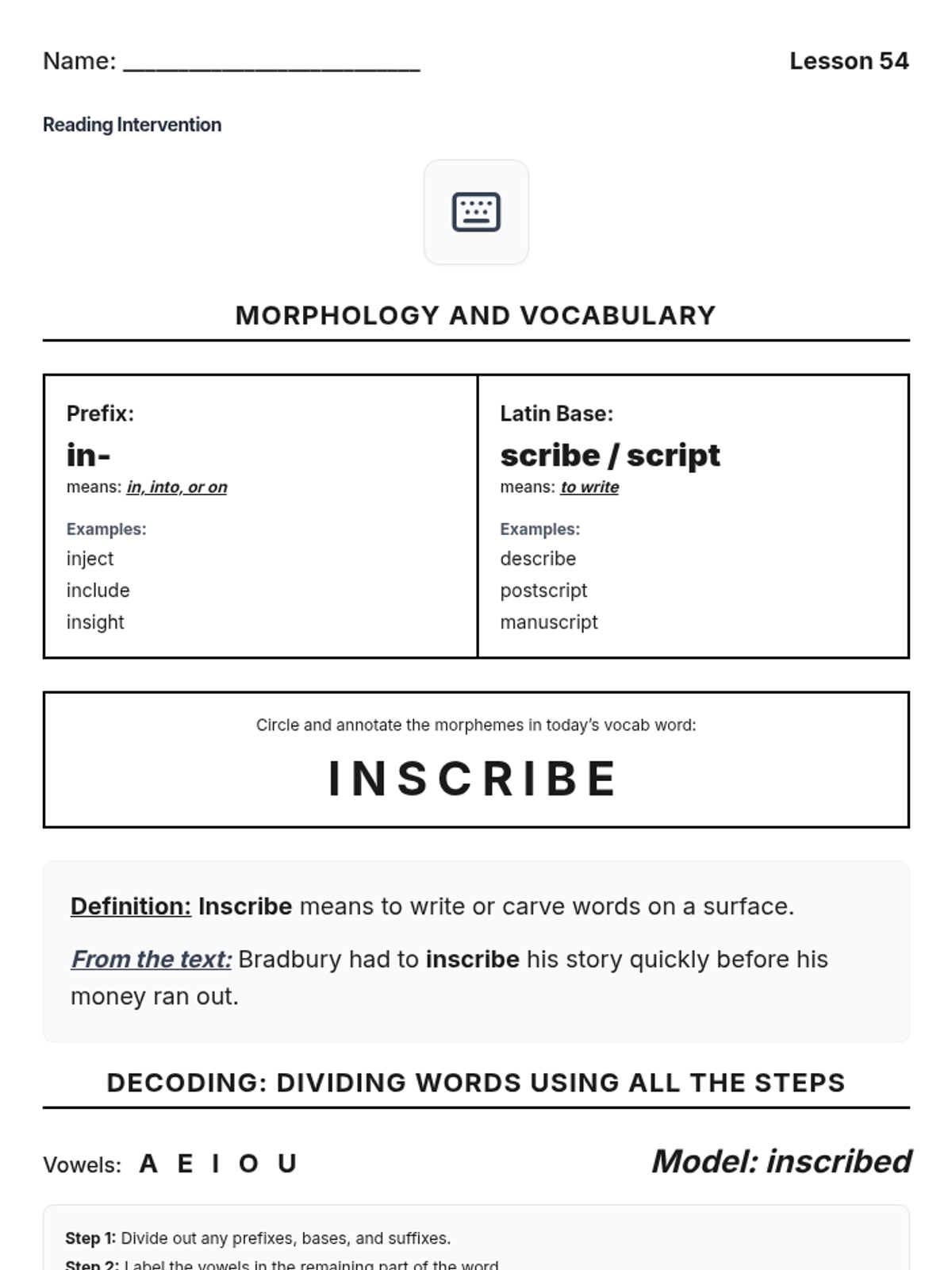
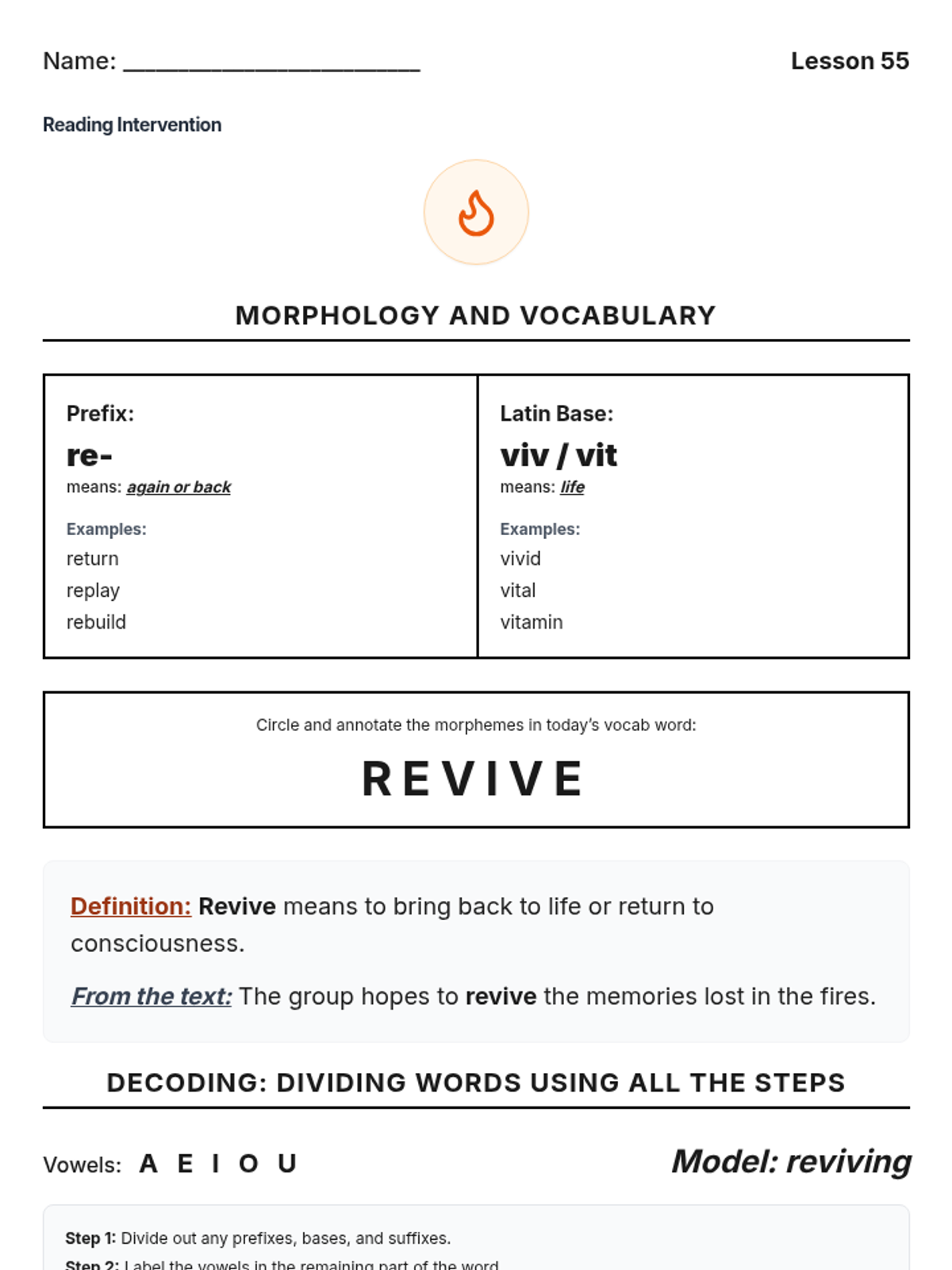
A series of three reading intervention lessons focusing on Ray Bradbury's writing process, the conclusion of Fahrenheit 451, and the origin of Frankenstein, teaching advanced morphology and decoding strategies.
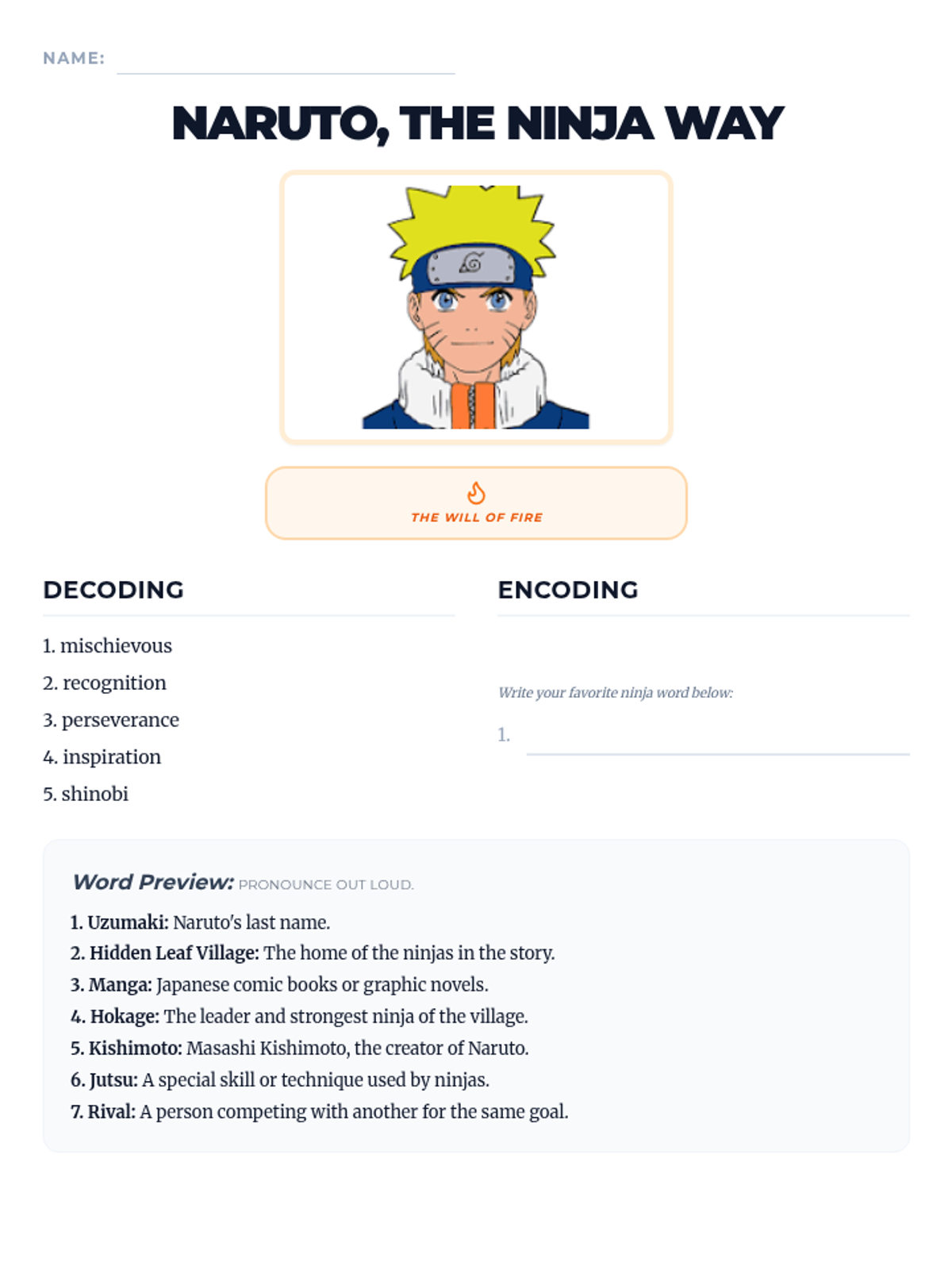
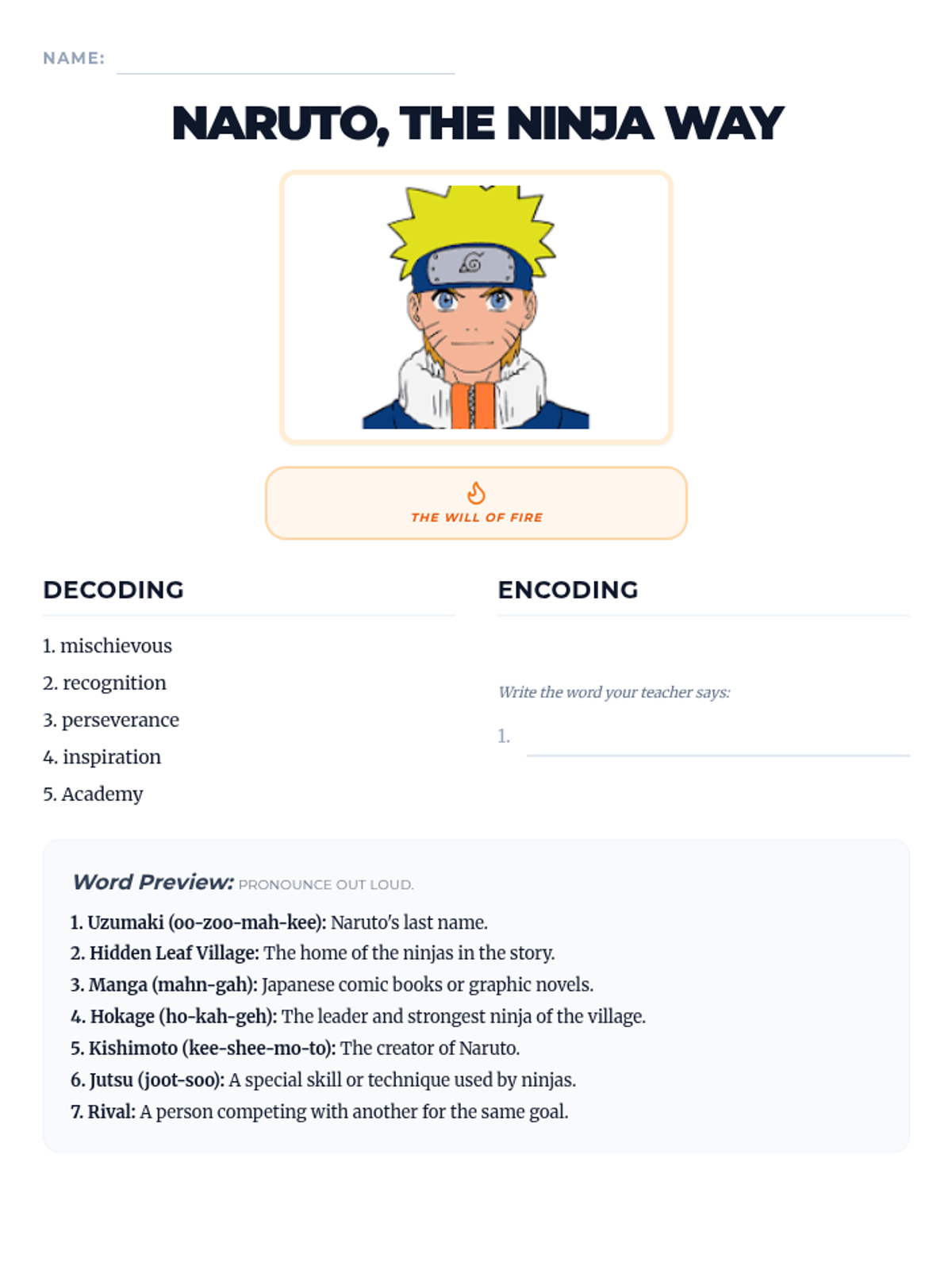
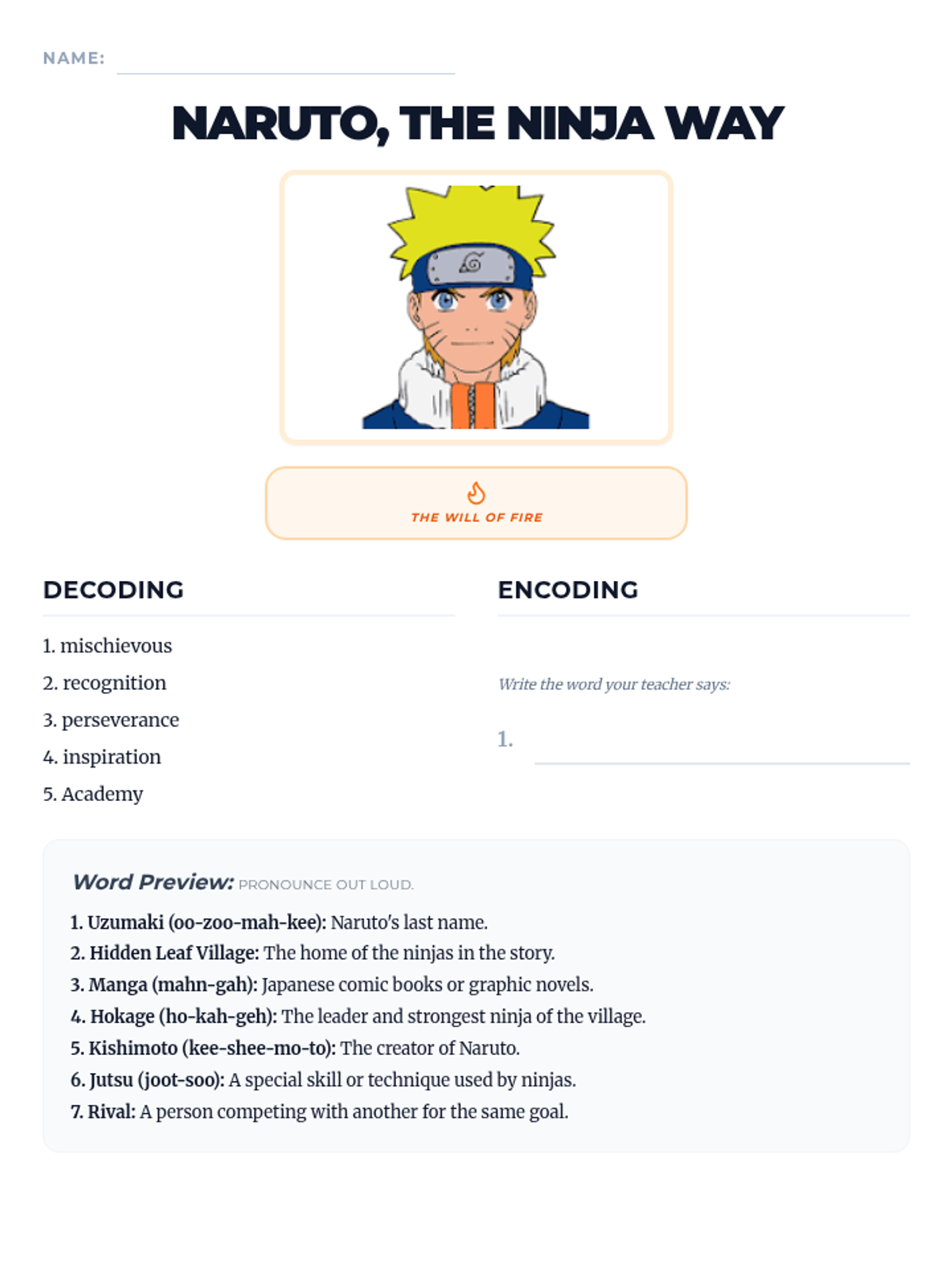
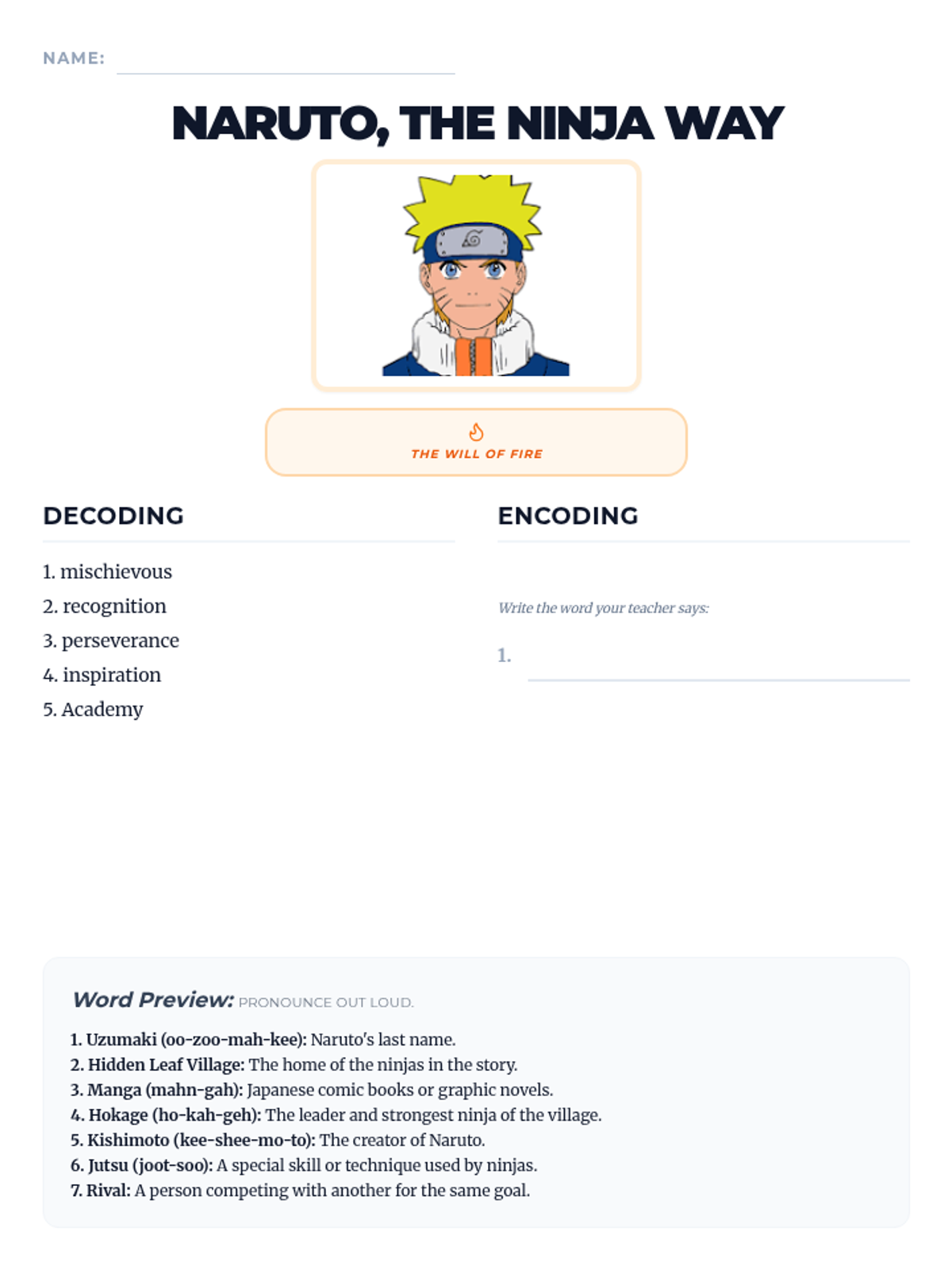
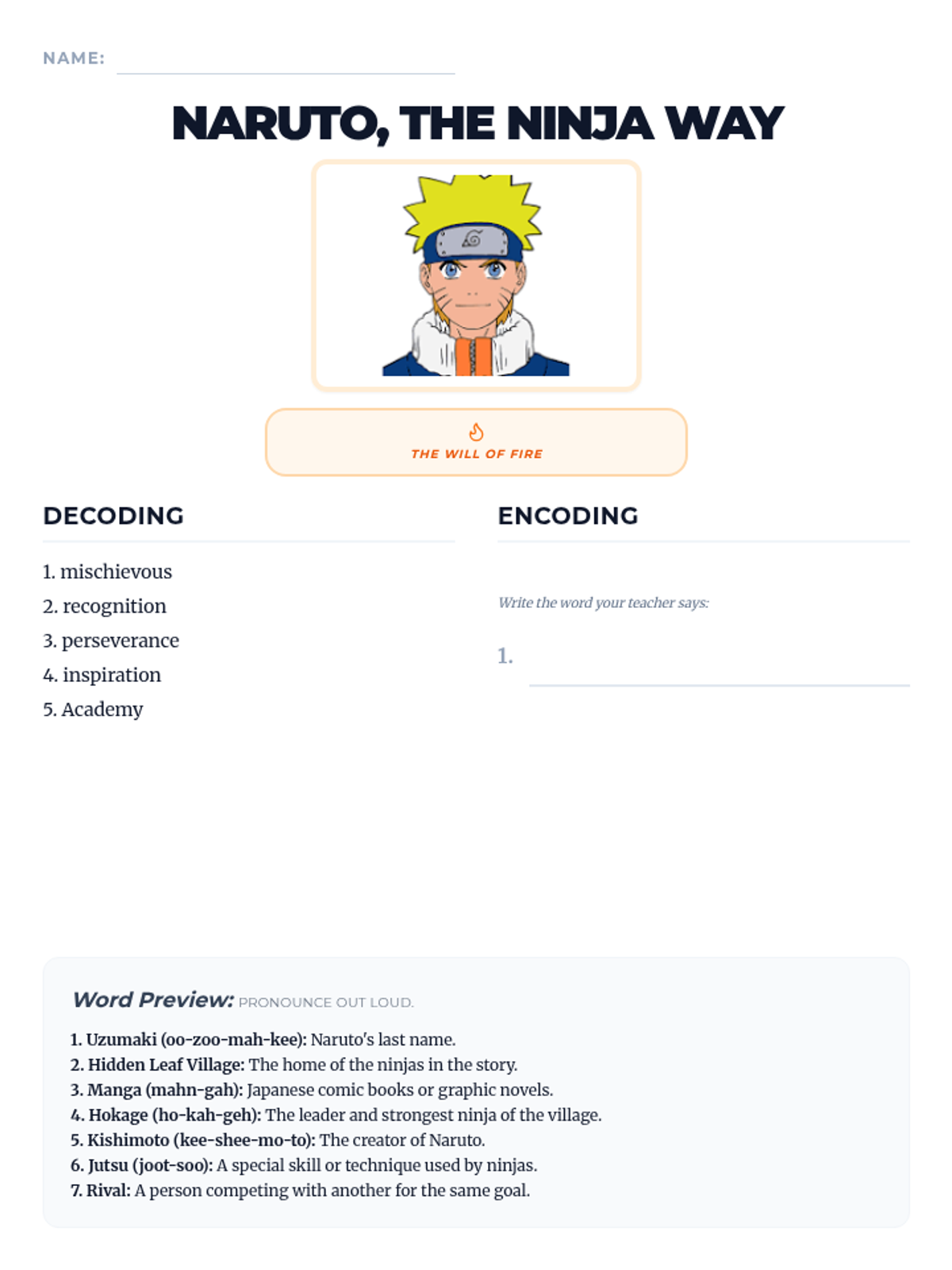
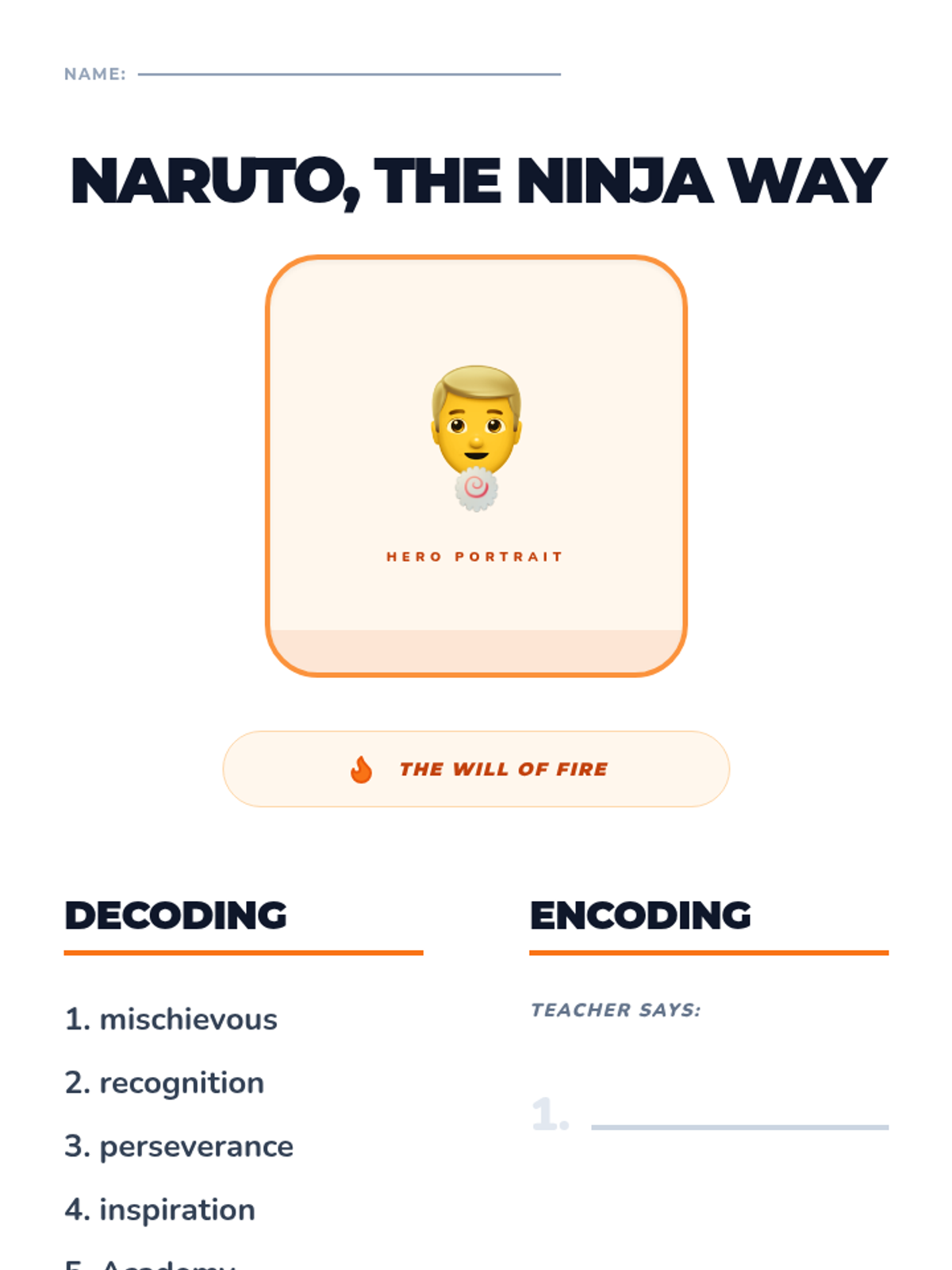
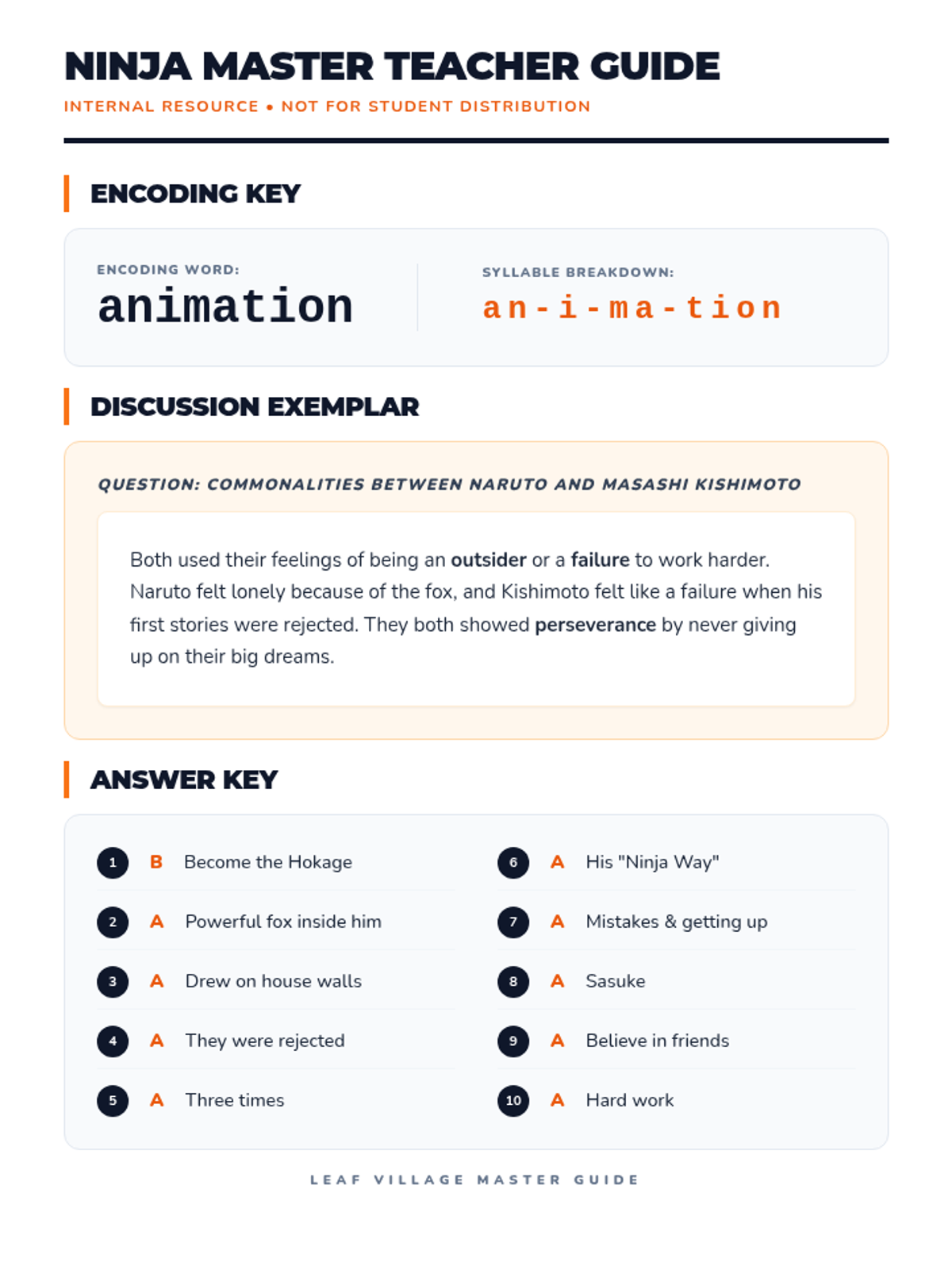
A reading stamina-building lesson for 4th graders focused on the story of Naruto and its creator, Masashi Kishimoto. Following a structured fluency and decoding format, students explore themes of perseverance and the creative process.
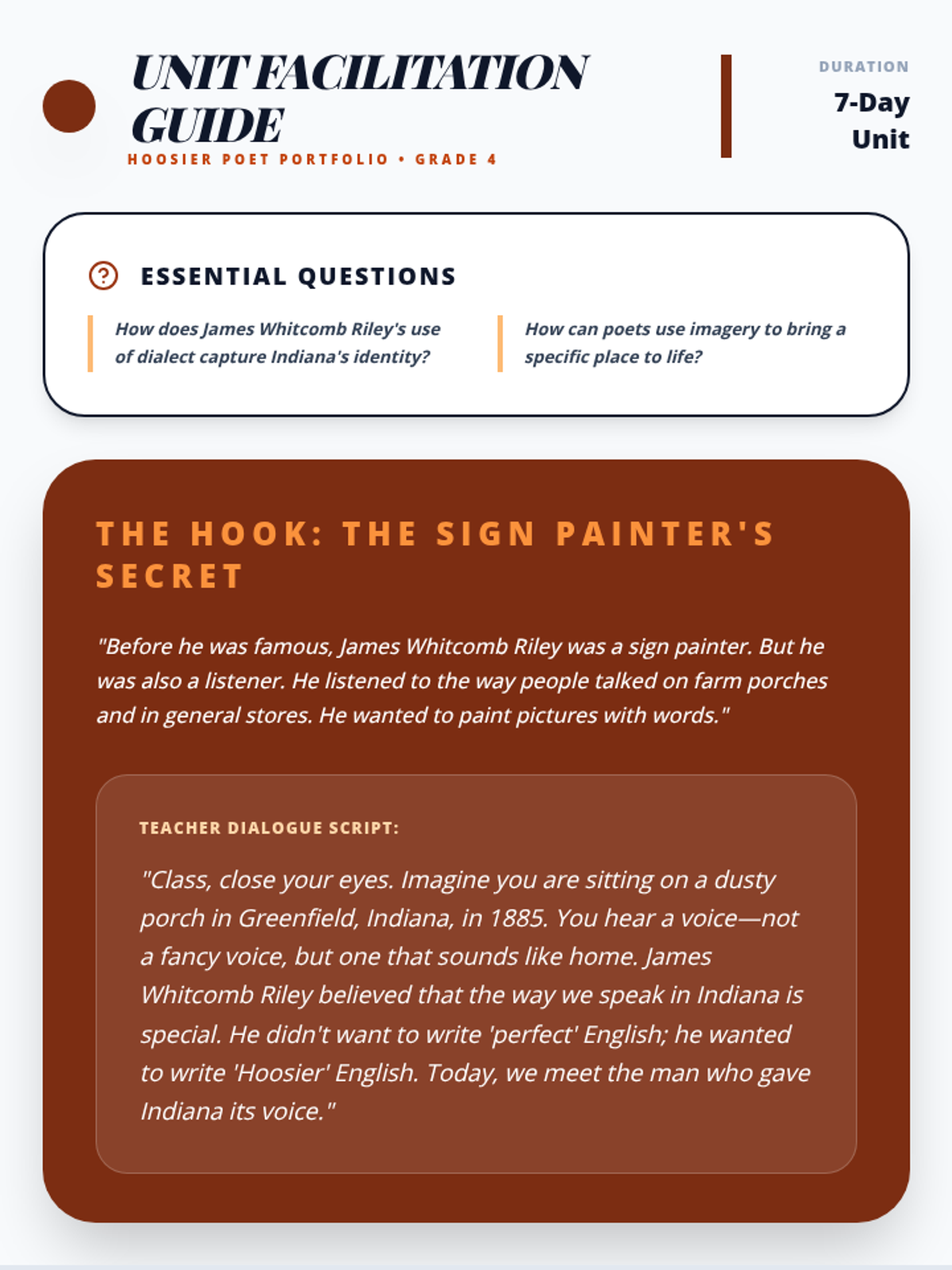
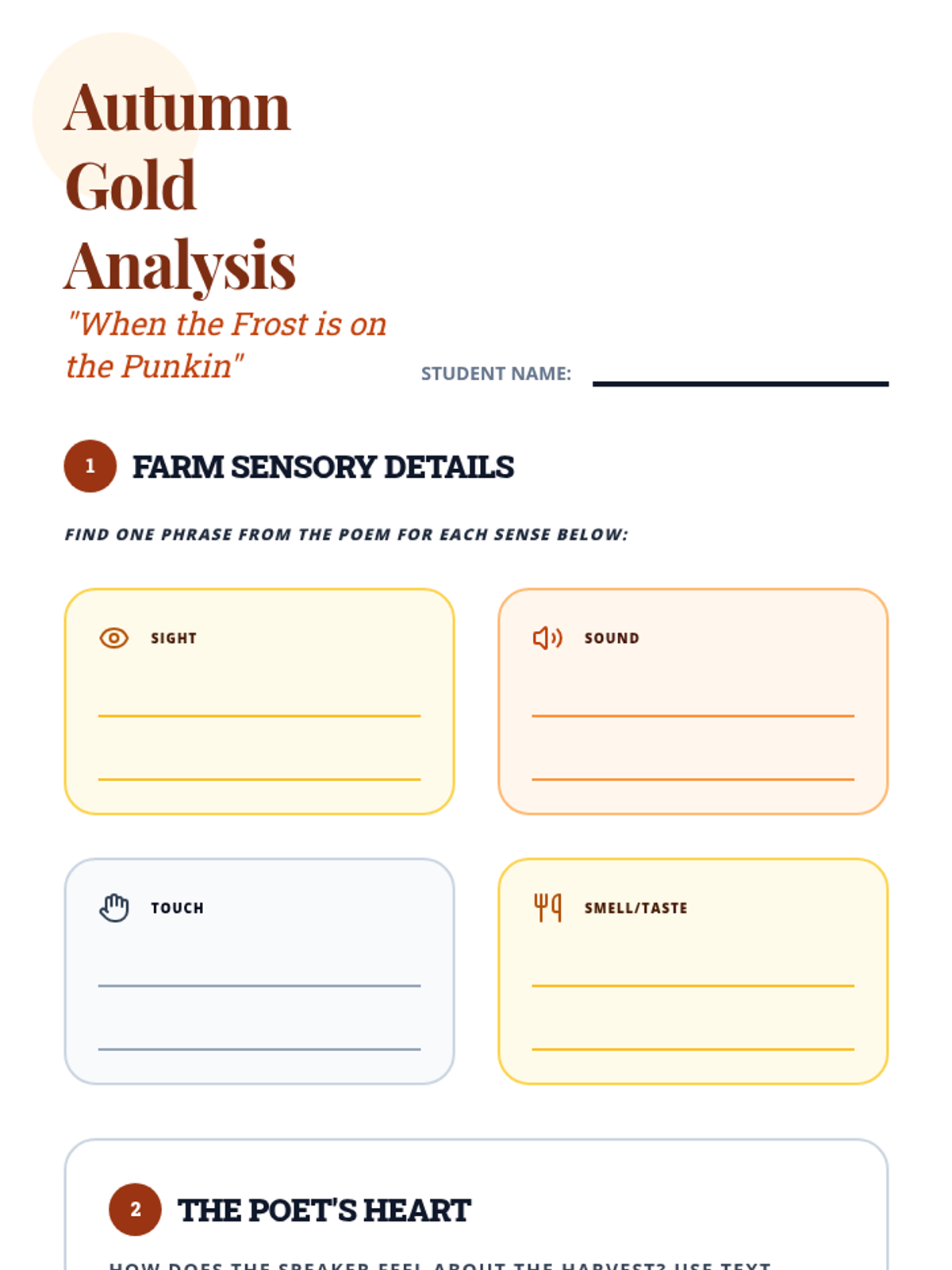
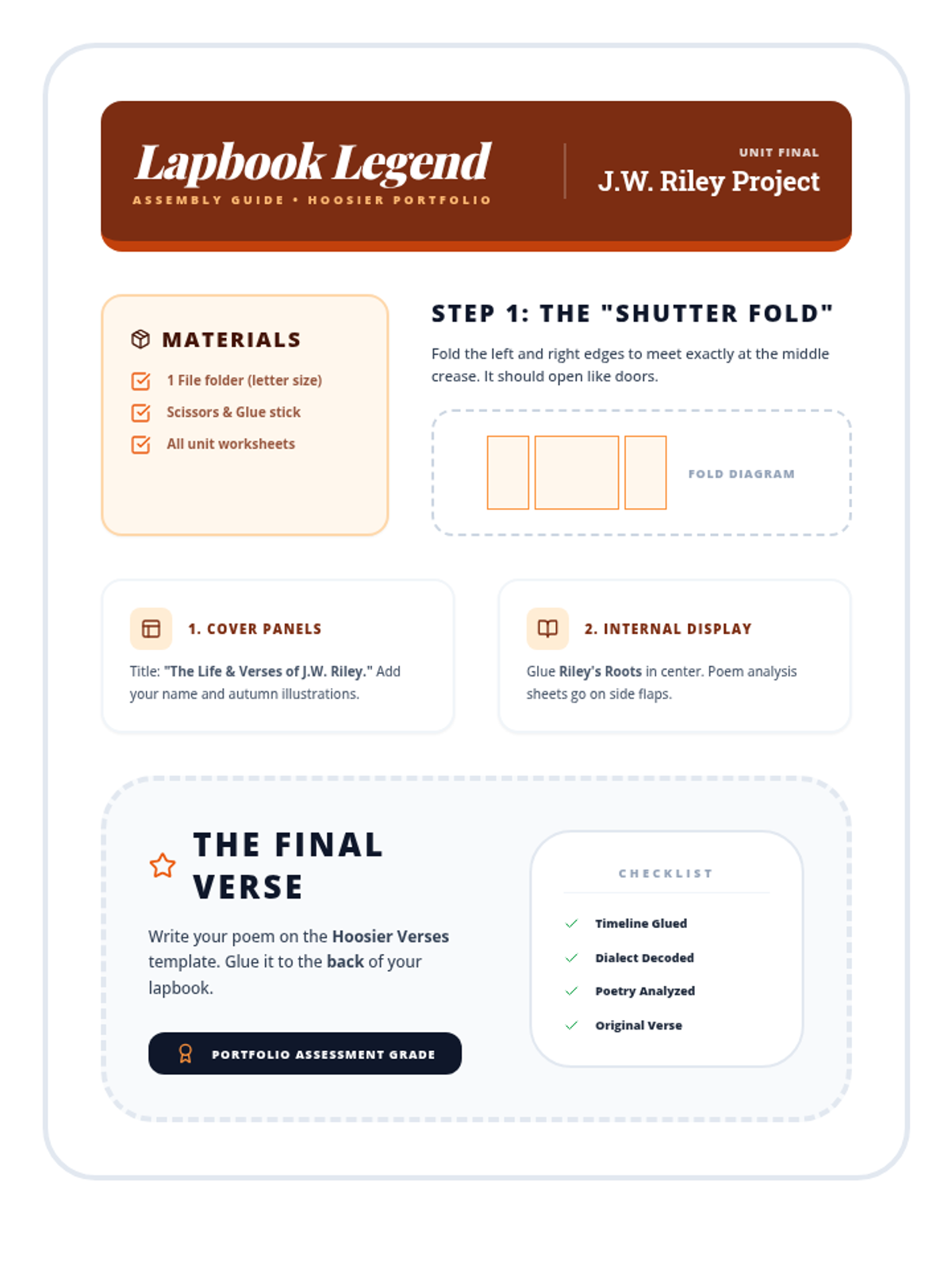
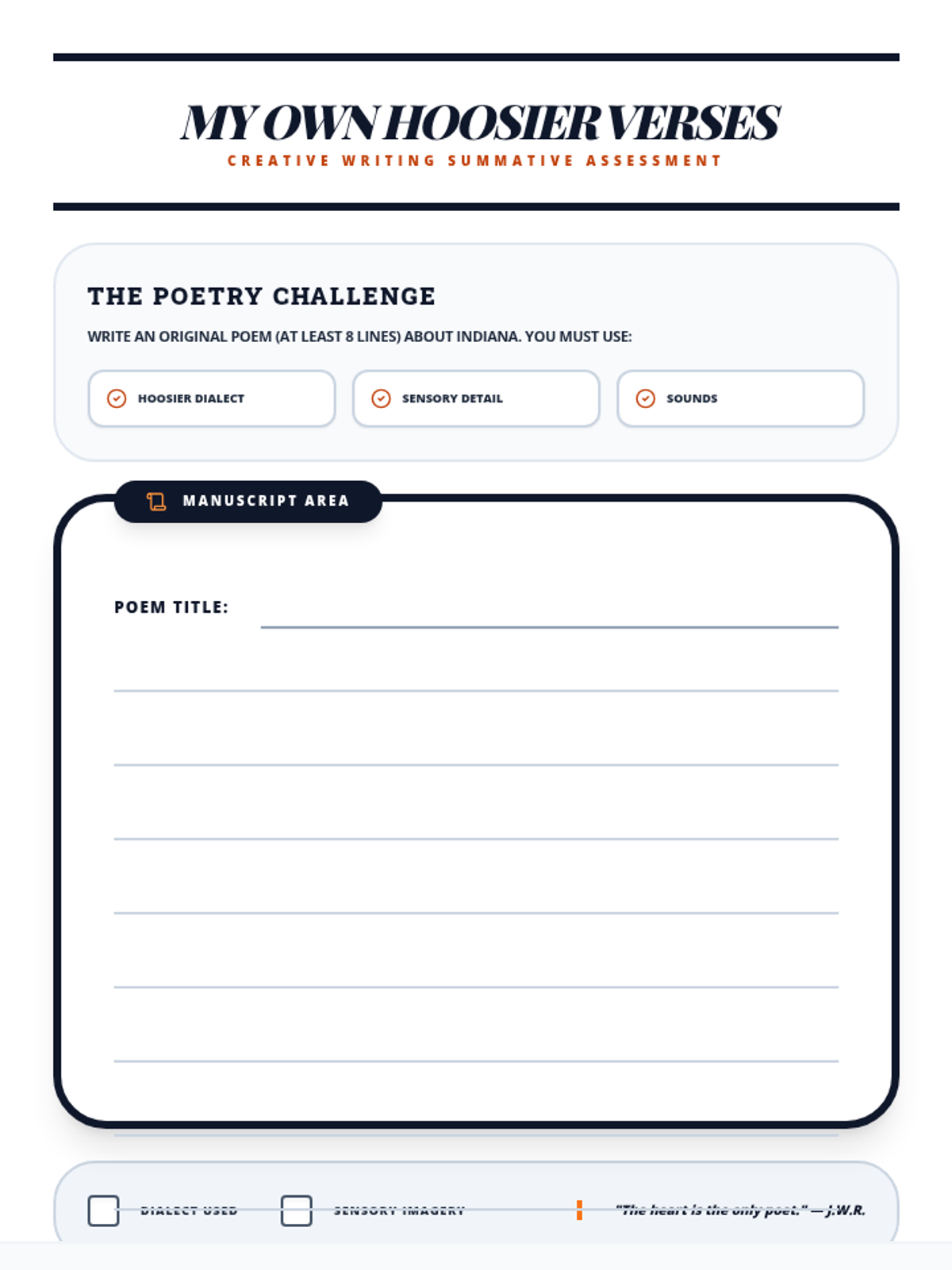
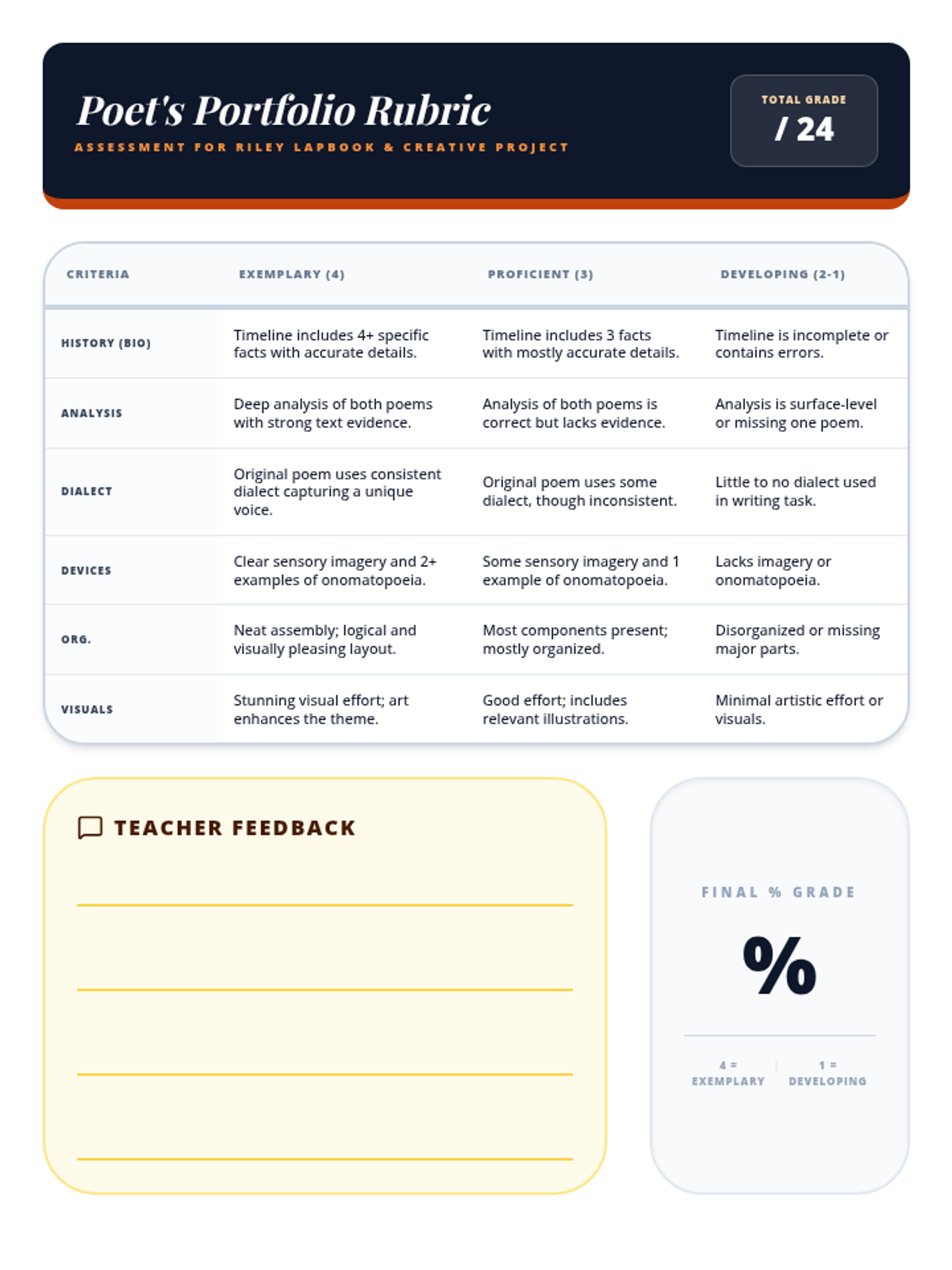
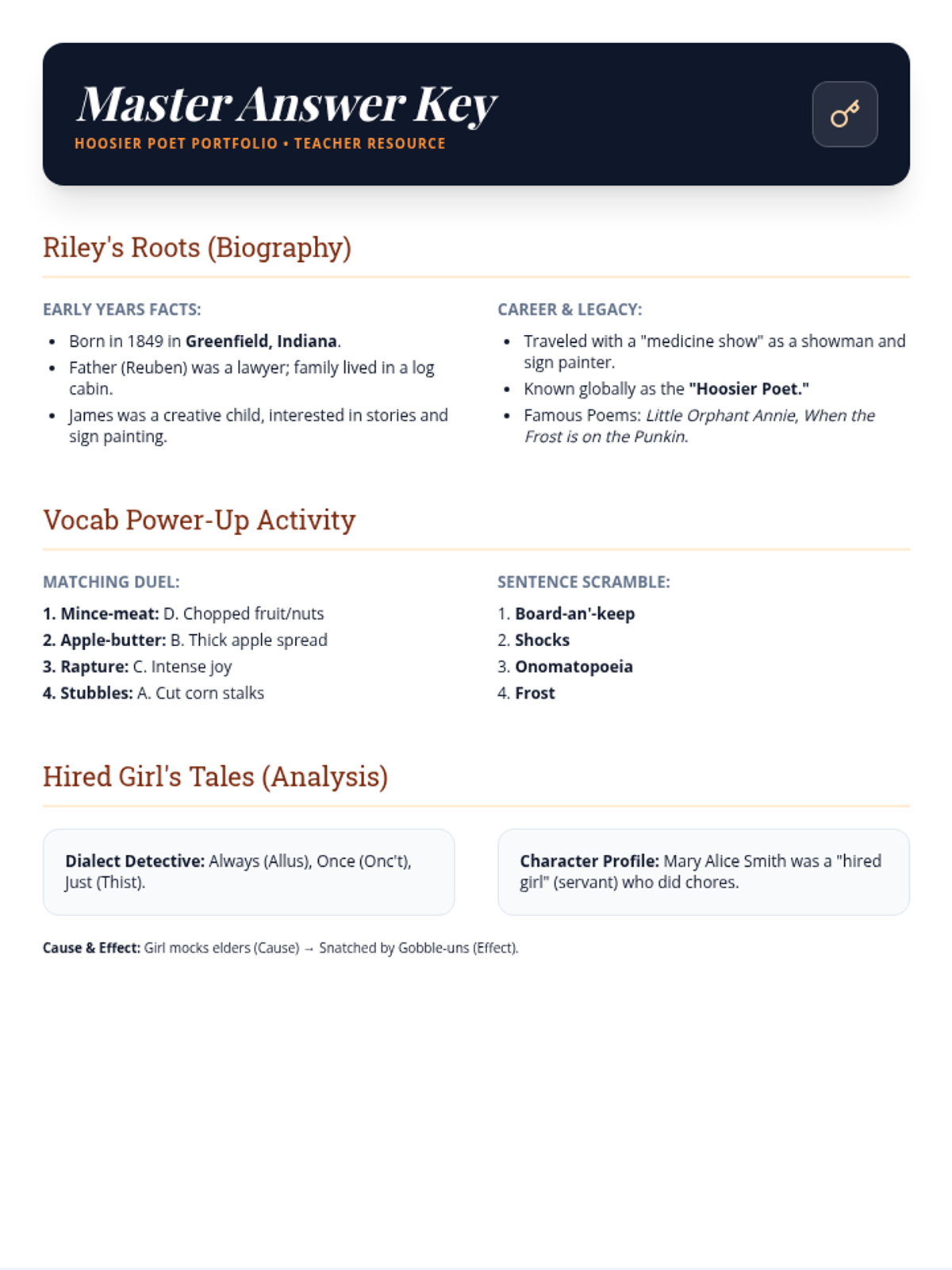
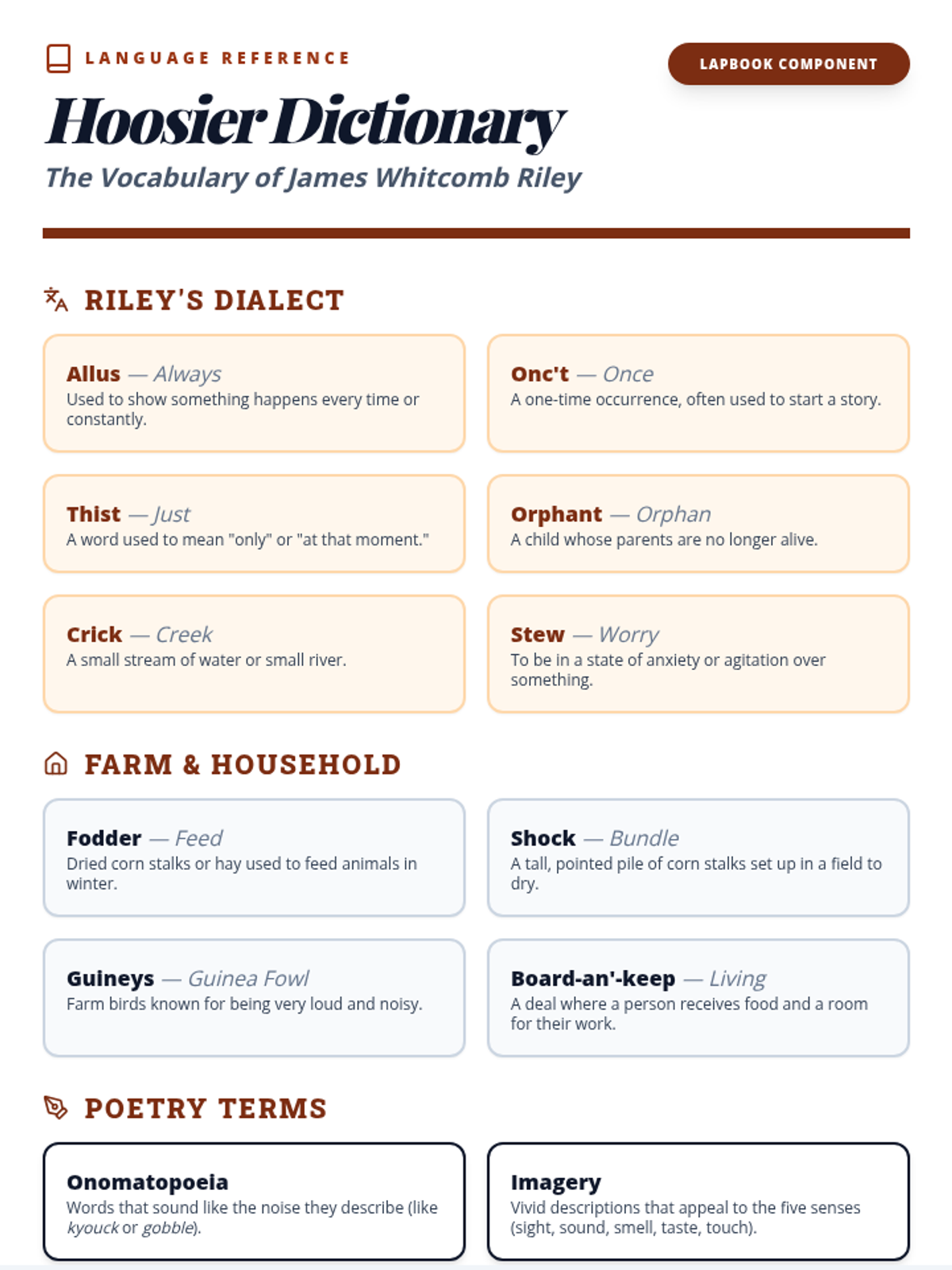
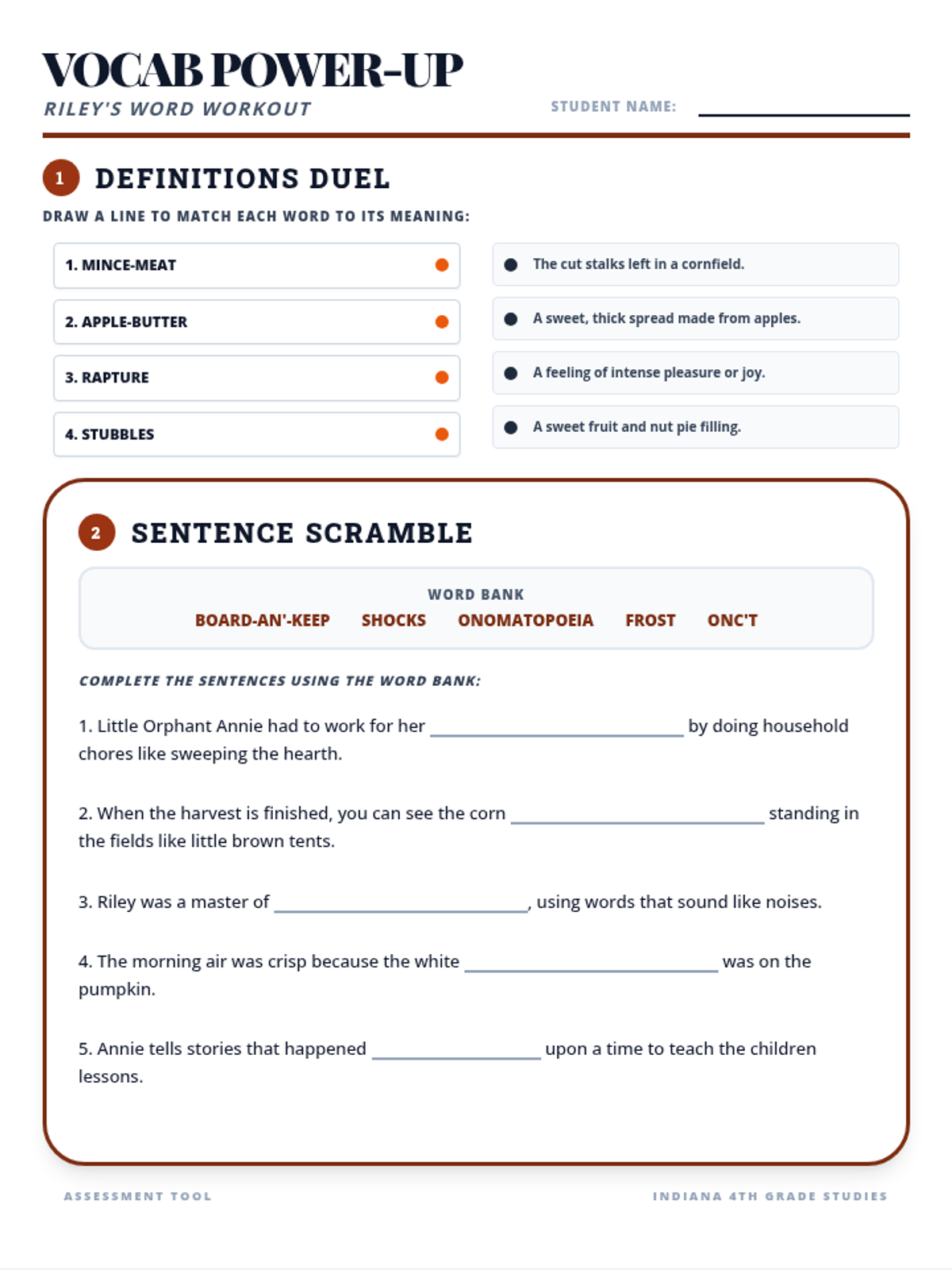
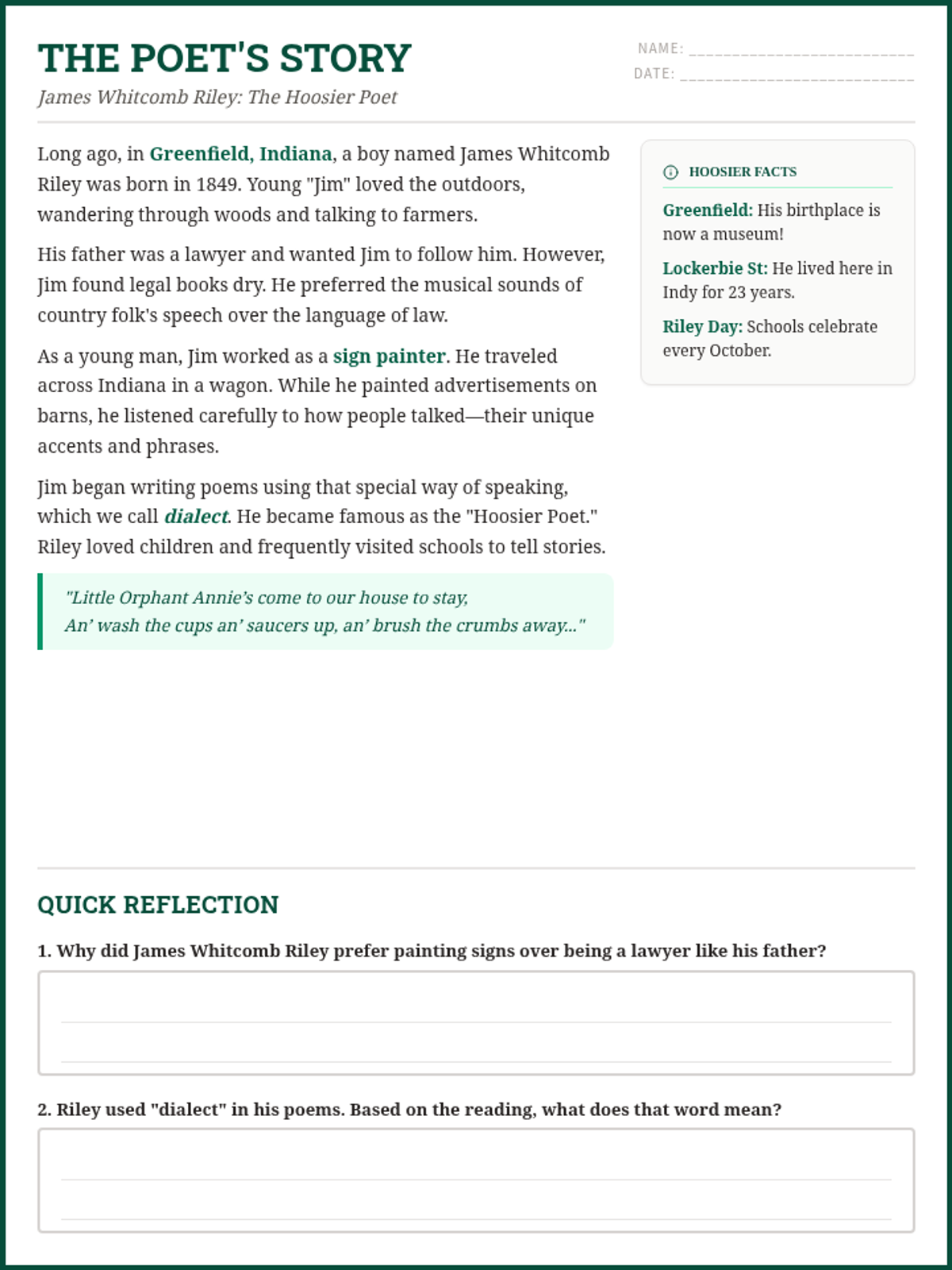
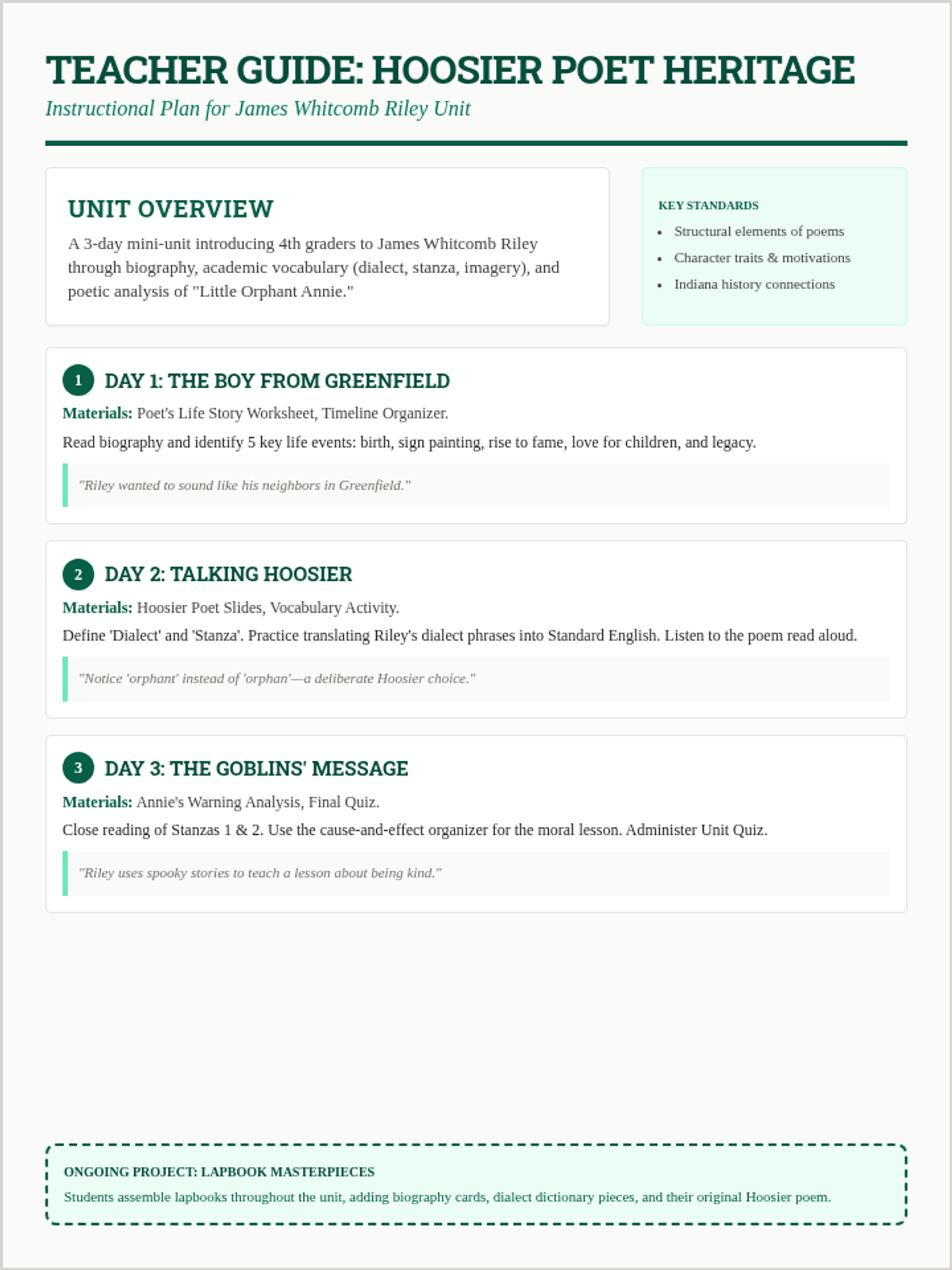
An extensive exploration of Indiana's "Hoosier Poet," James Whitcomb Riley, featuring dialect analysis of "Little Orphant Annie" and "When the Frost is on the Punkin." Students create a comprehensive lapbook and write original verse as a summative assessment.
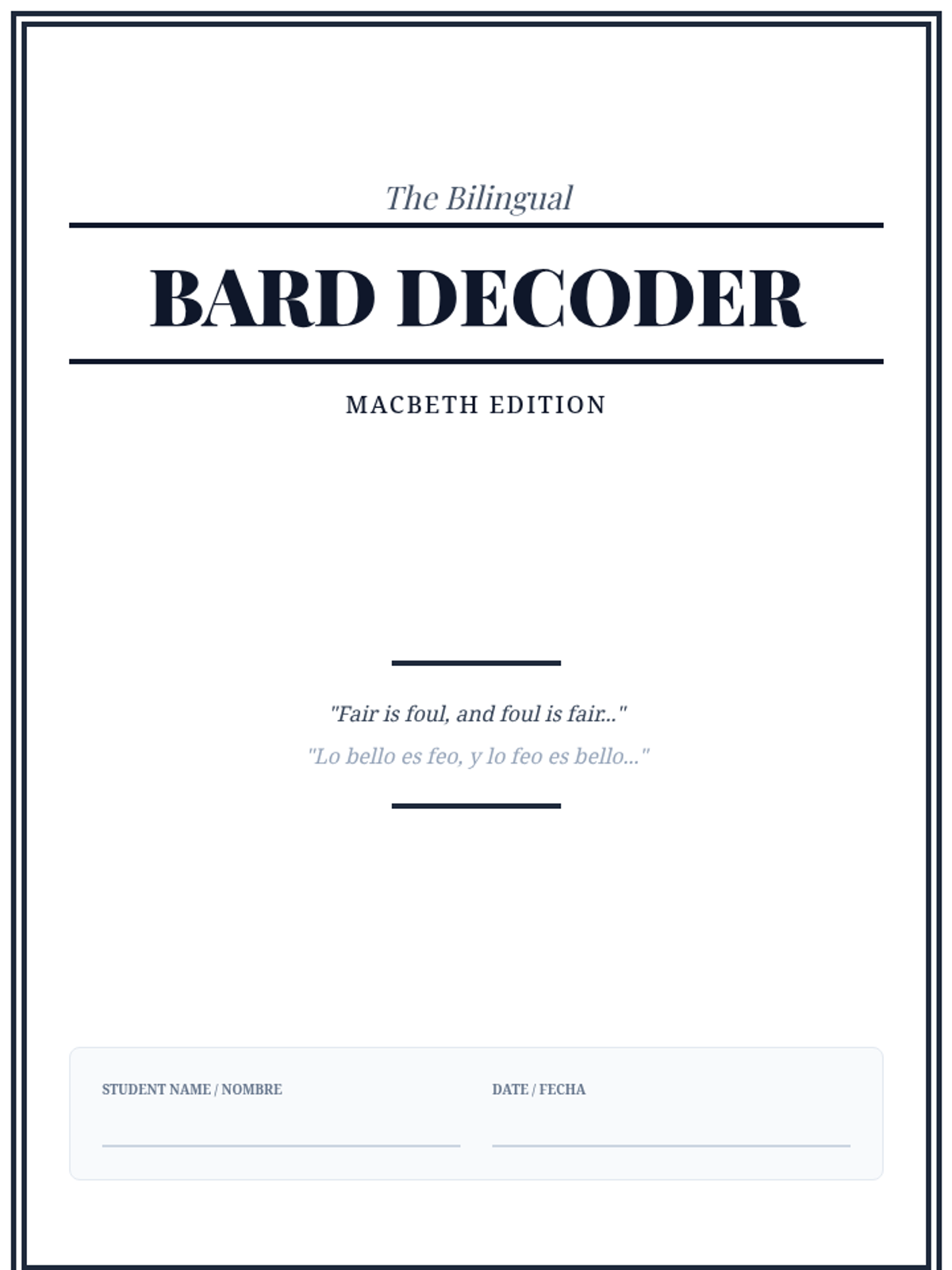
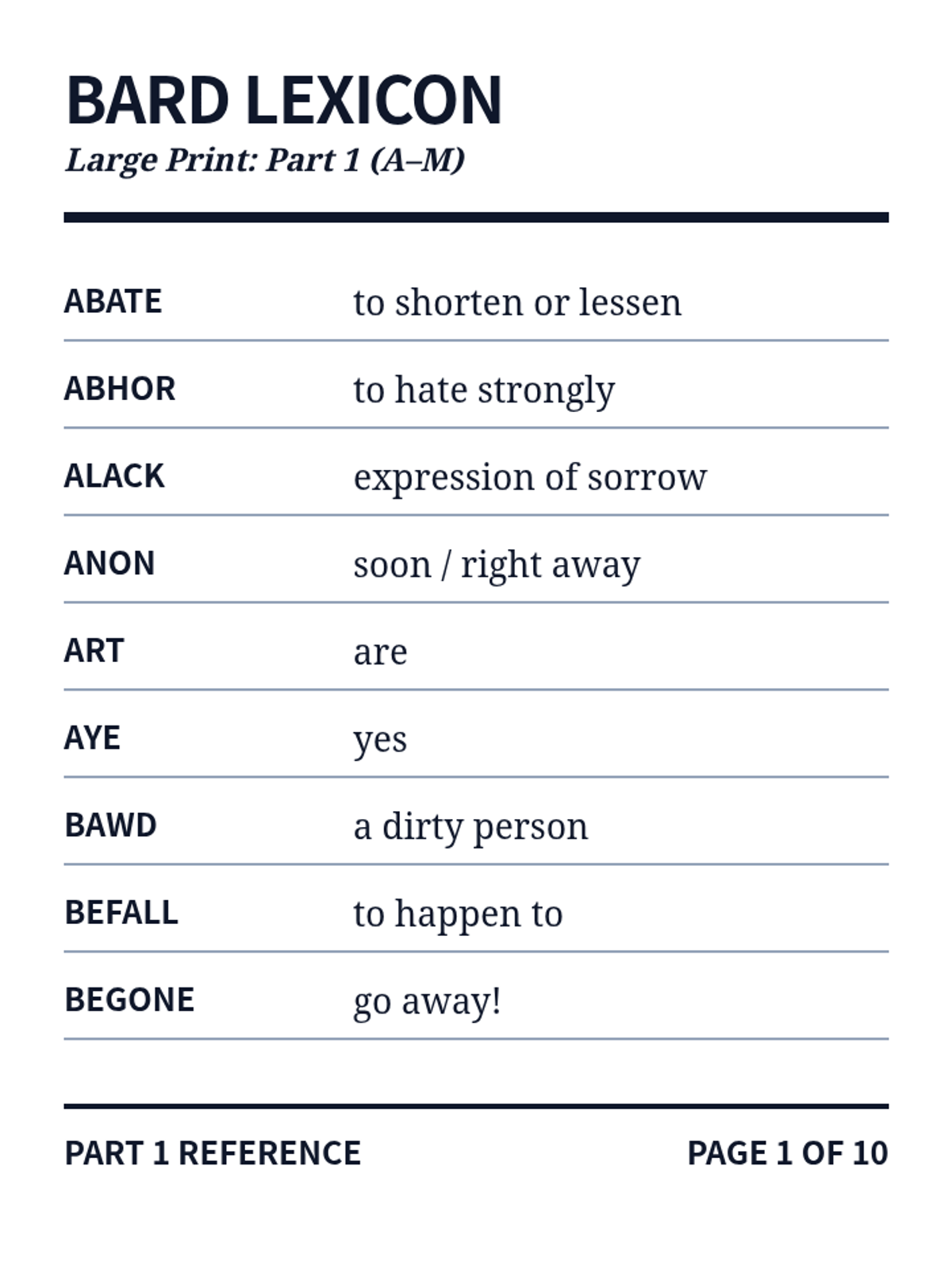
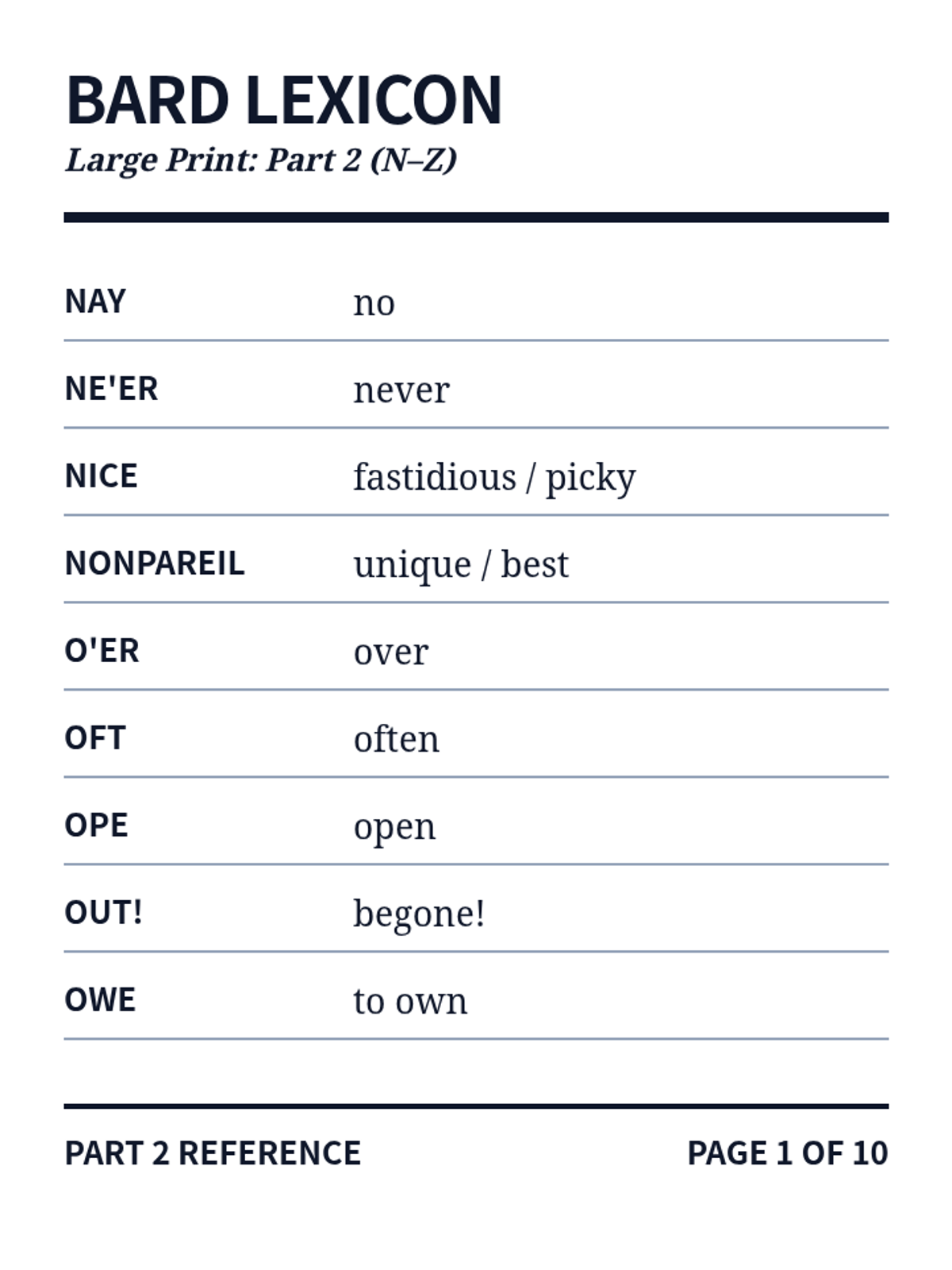
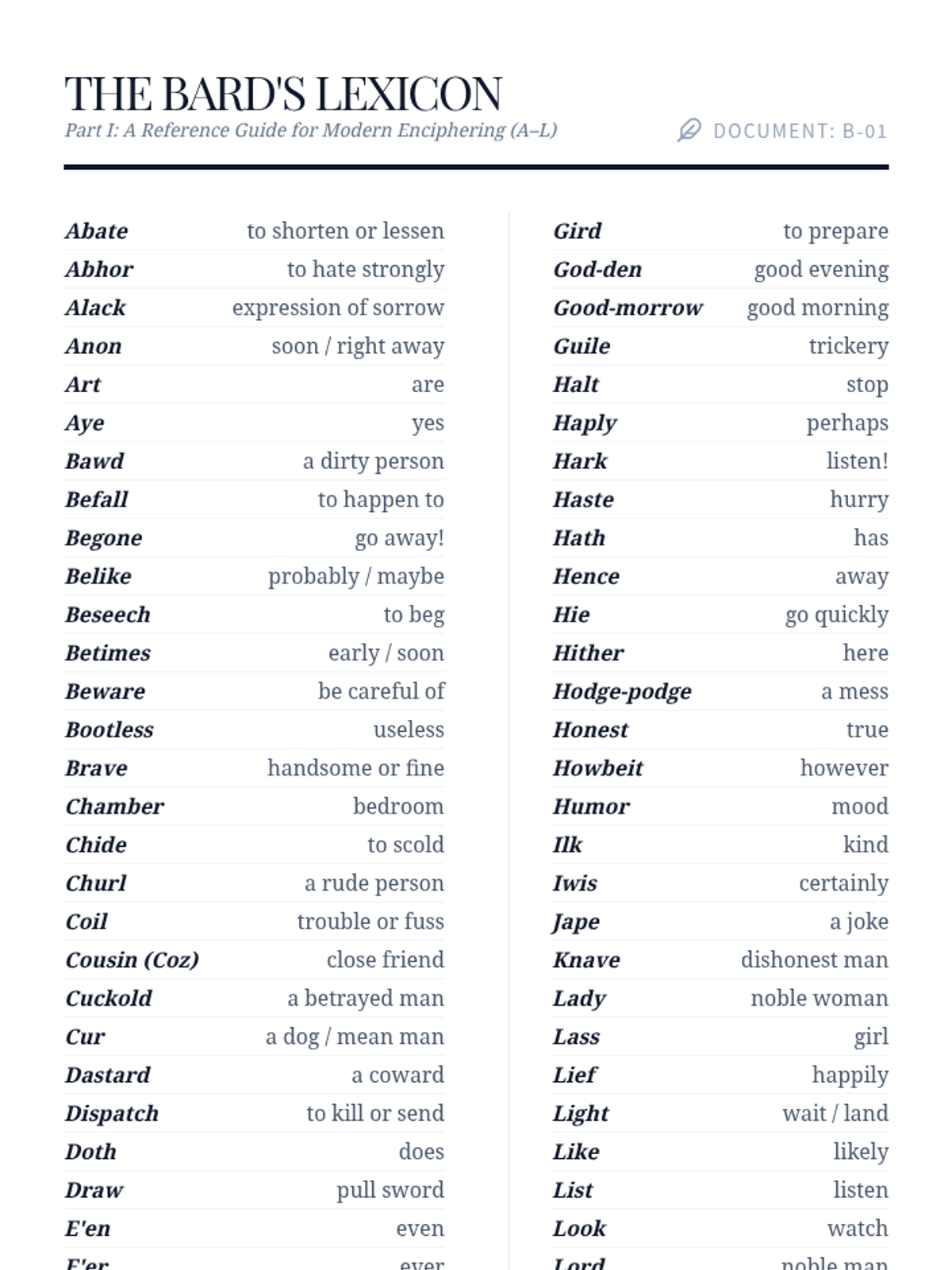
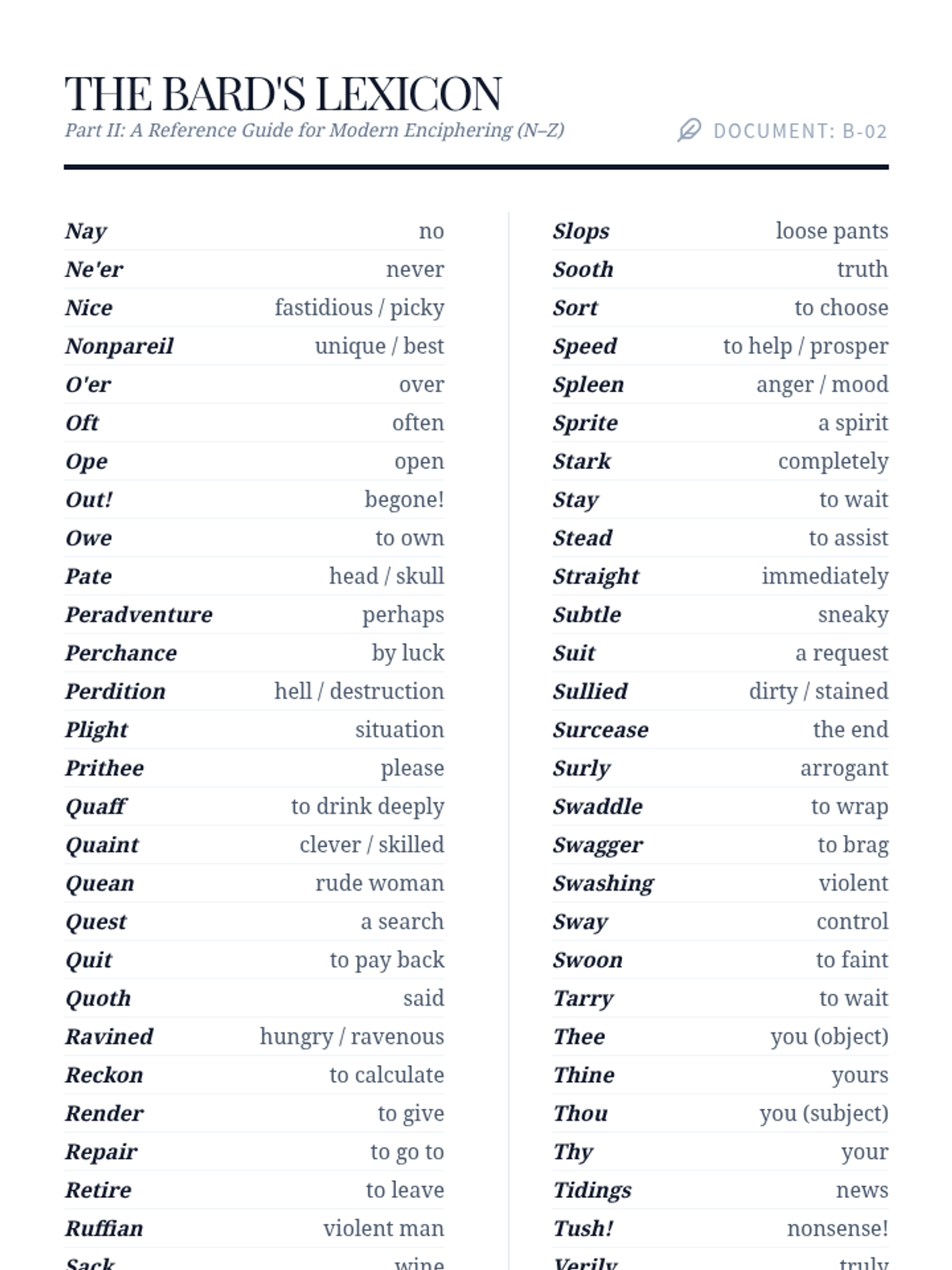
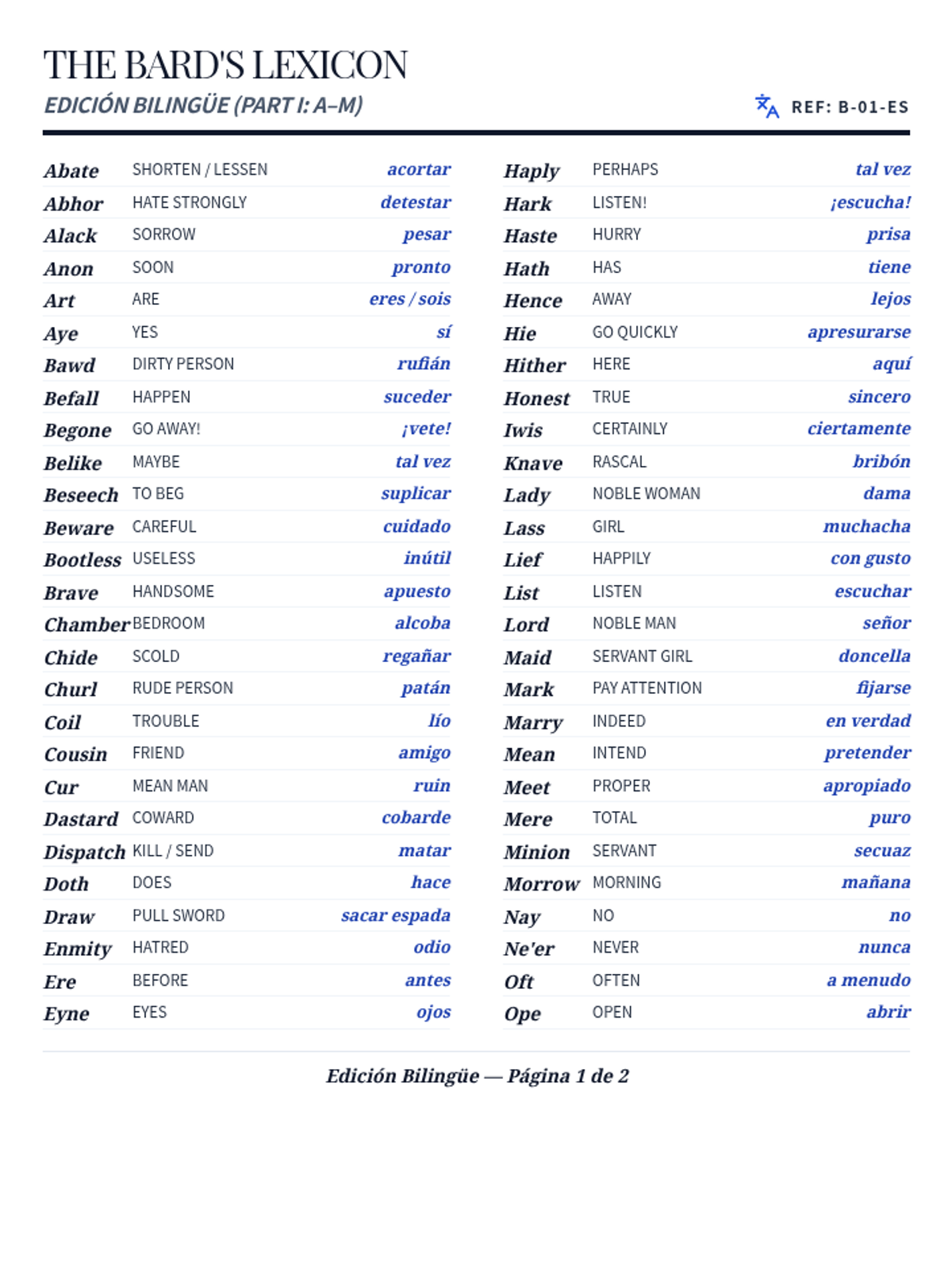
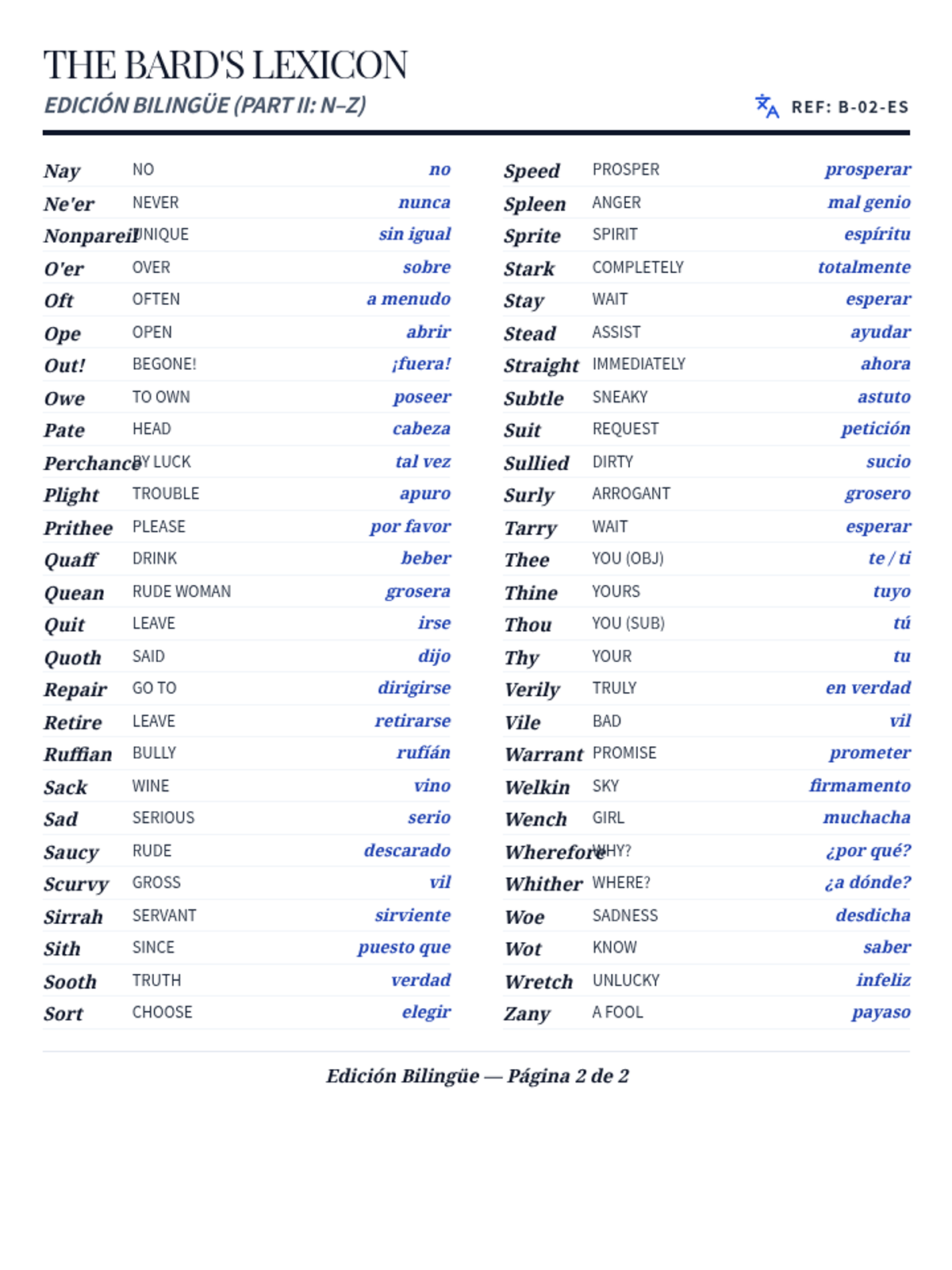
A comprehensive vocabulary resource and introductory lesson to help Spanish-speaking students decode the archaic language of Shakespeare's Macbeth.
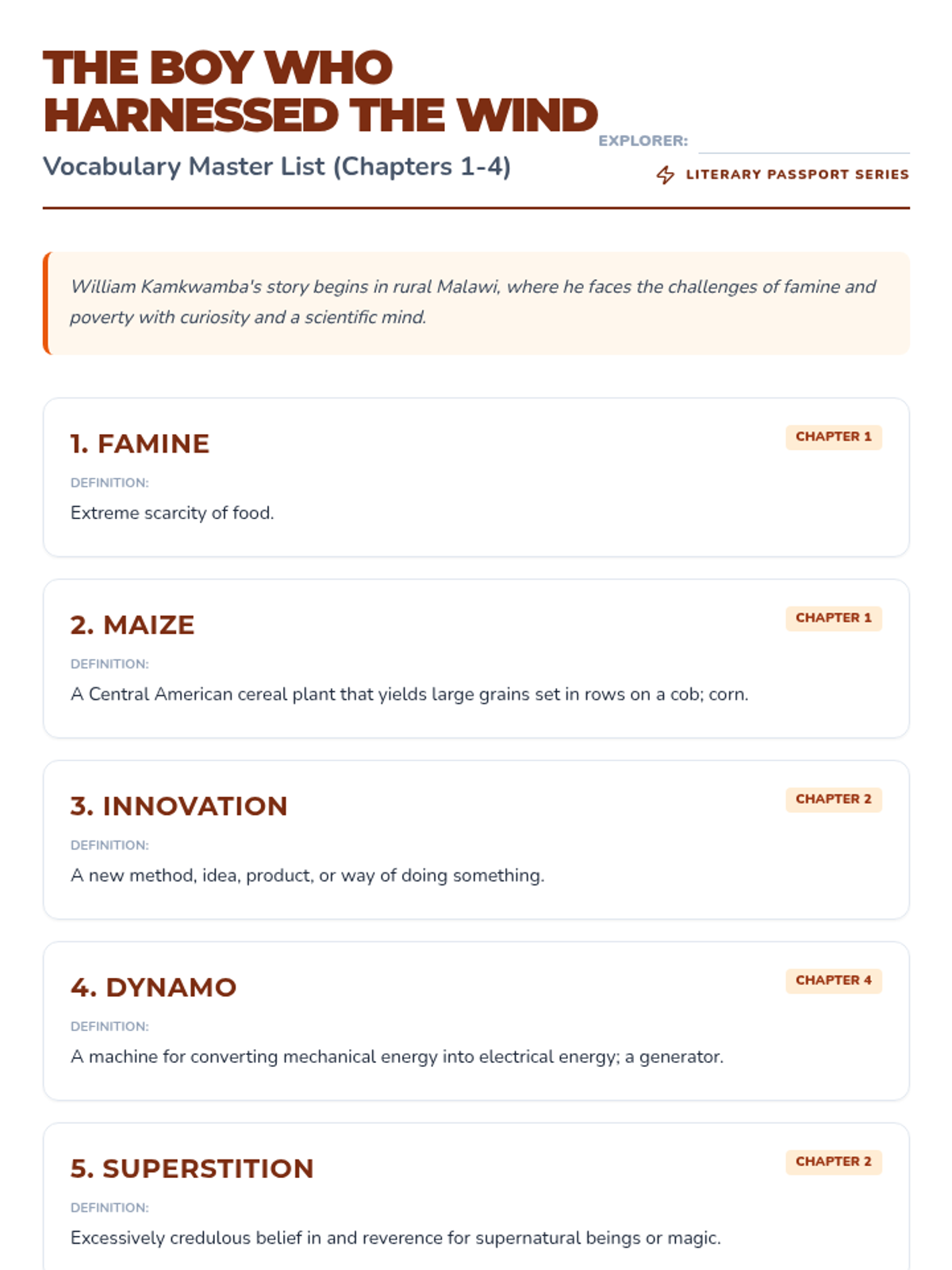
Vocabulary study for the first four chapters of William Kamkwamba's memoir about building a windmill in Malawi.
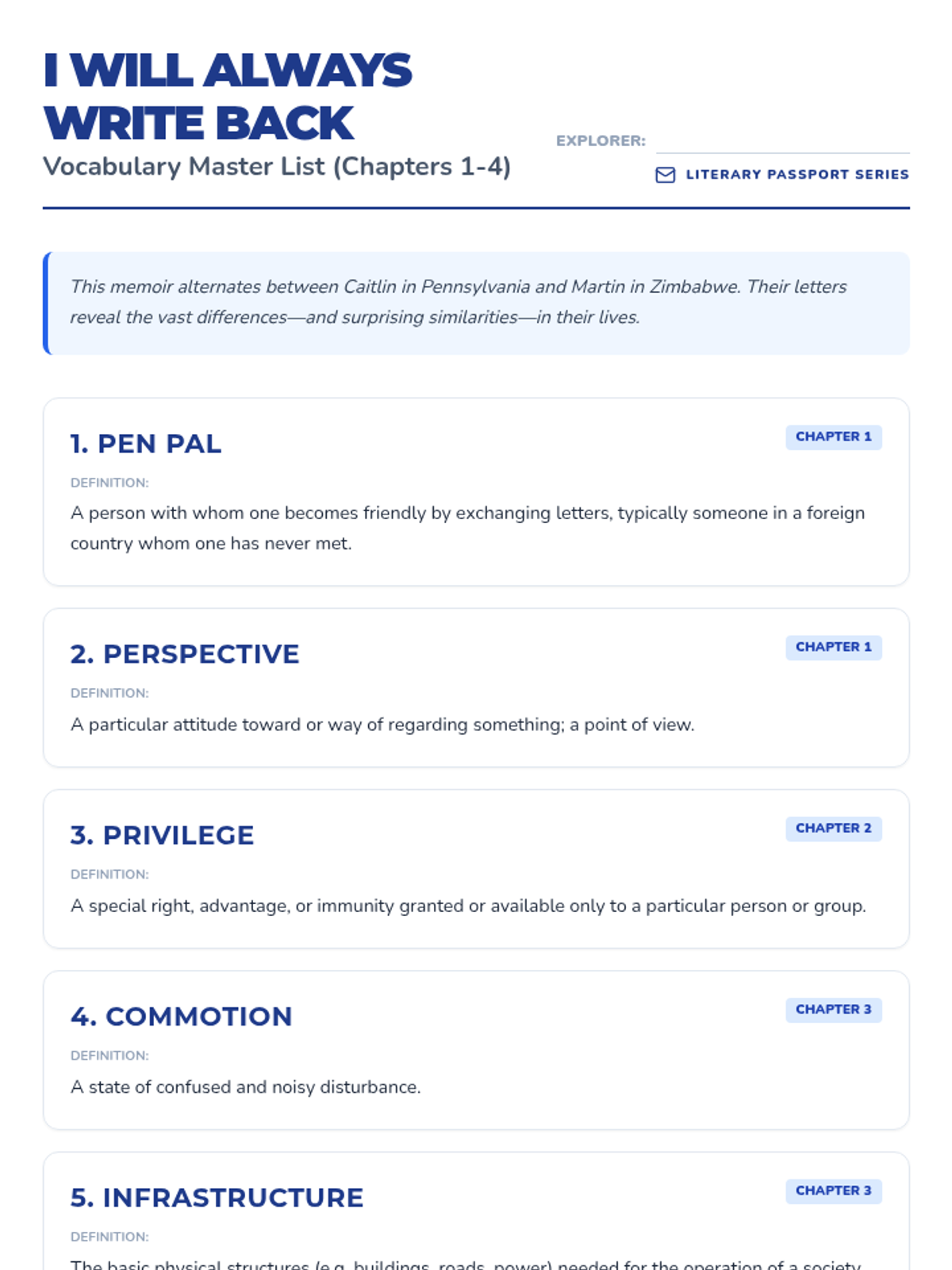
Vocabulary study for the first four chapters of the dual-narrative memoir about a life-changing pen pal relationship.
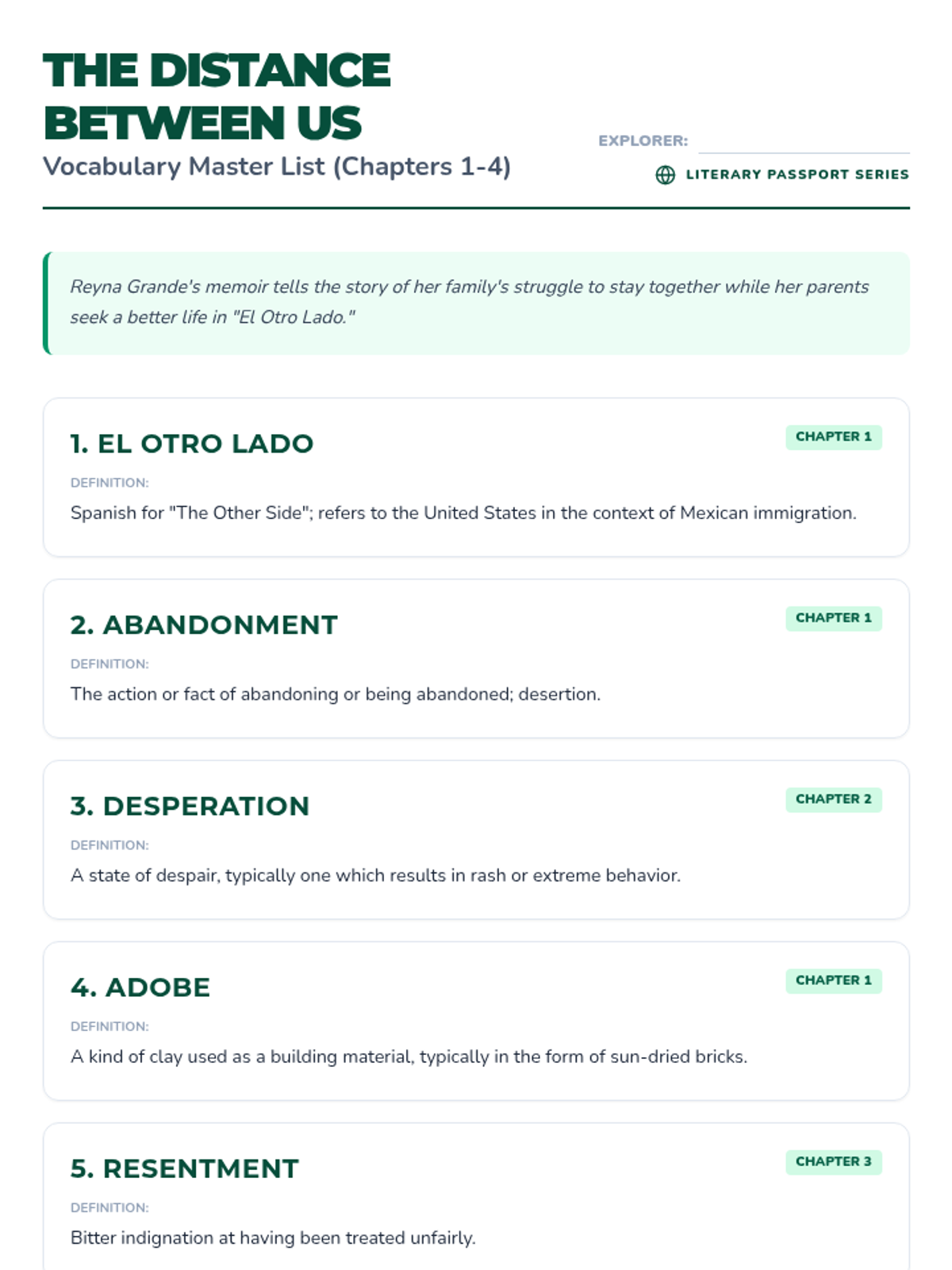
Vocabulary study for the first four chapters of Reyna Grande's memoir about her journey from Mexico to the United States.
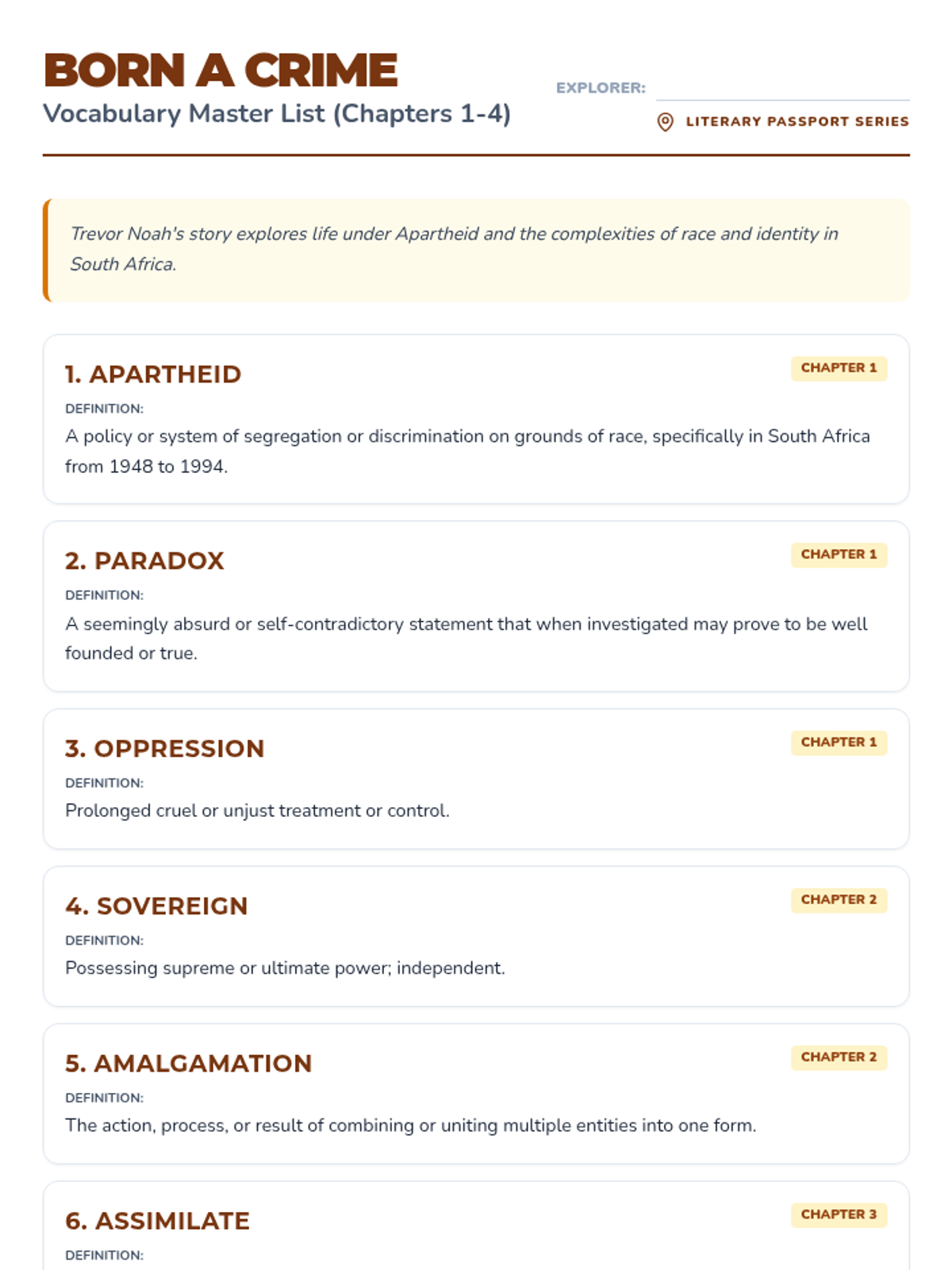
Vocabulary study for the first four chapters of Trevor Noah's memoir about growing up in apartheid-era South Africa.
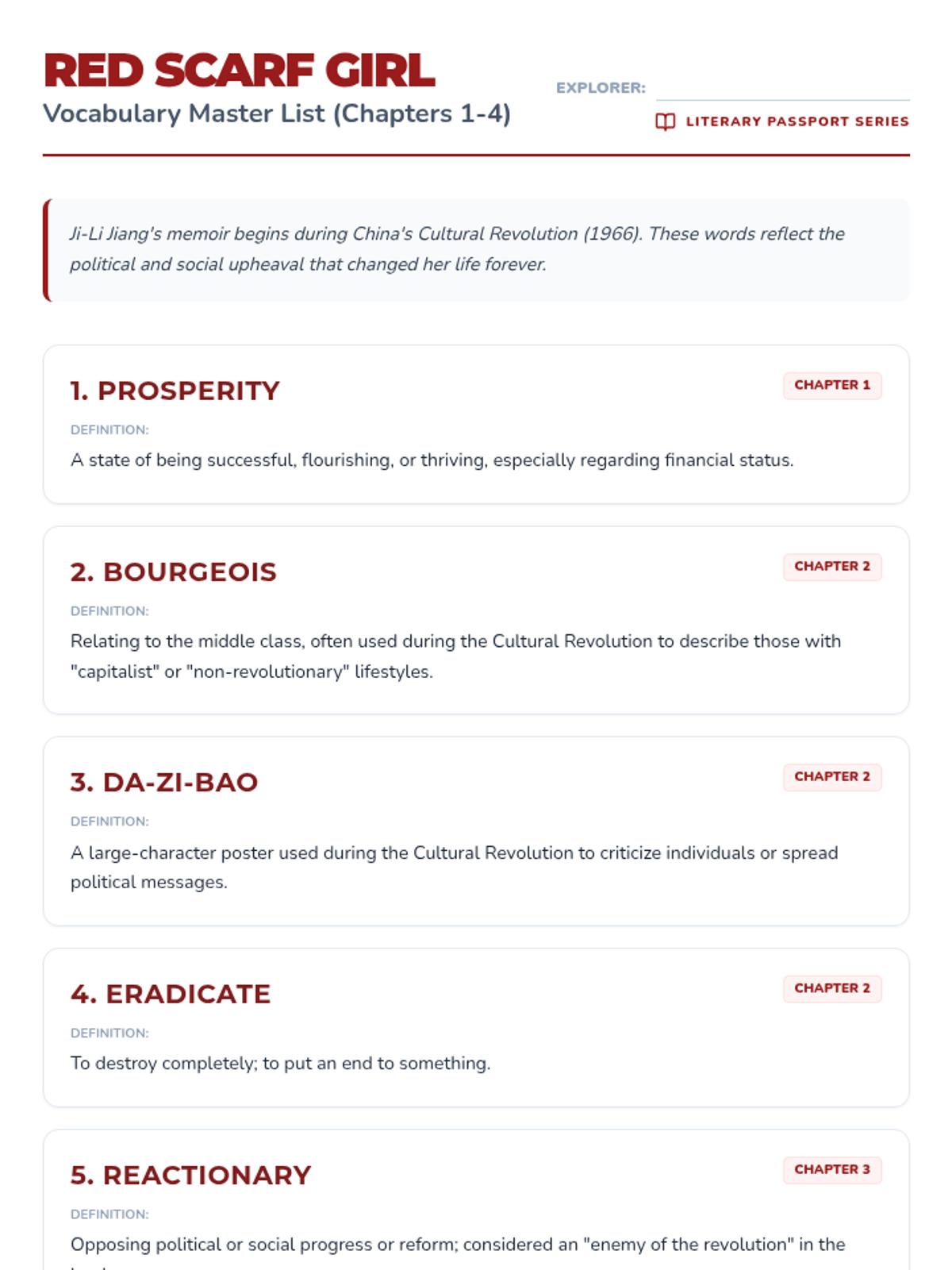
Vocabulary study for the first four chapters of Ji-Li Jiang's memoir about the Cultural Revolution in China.
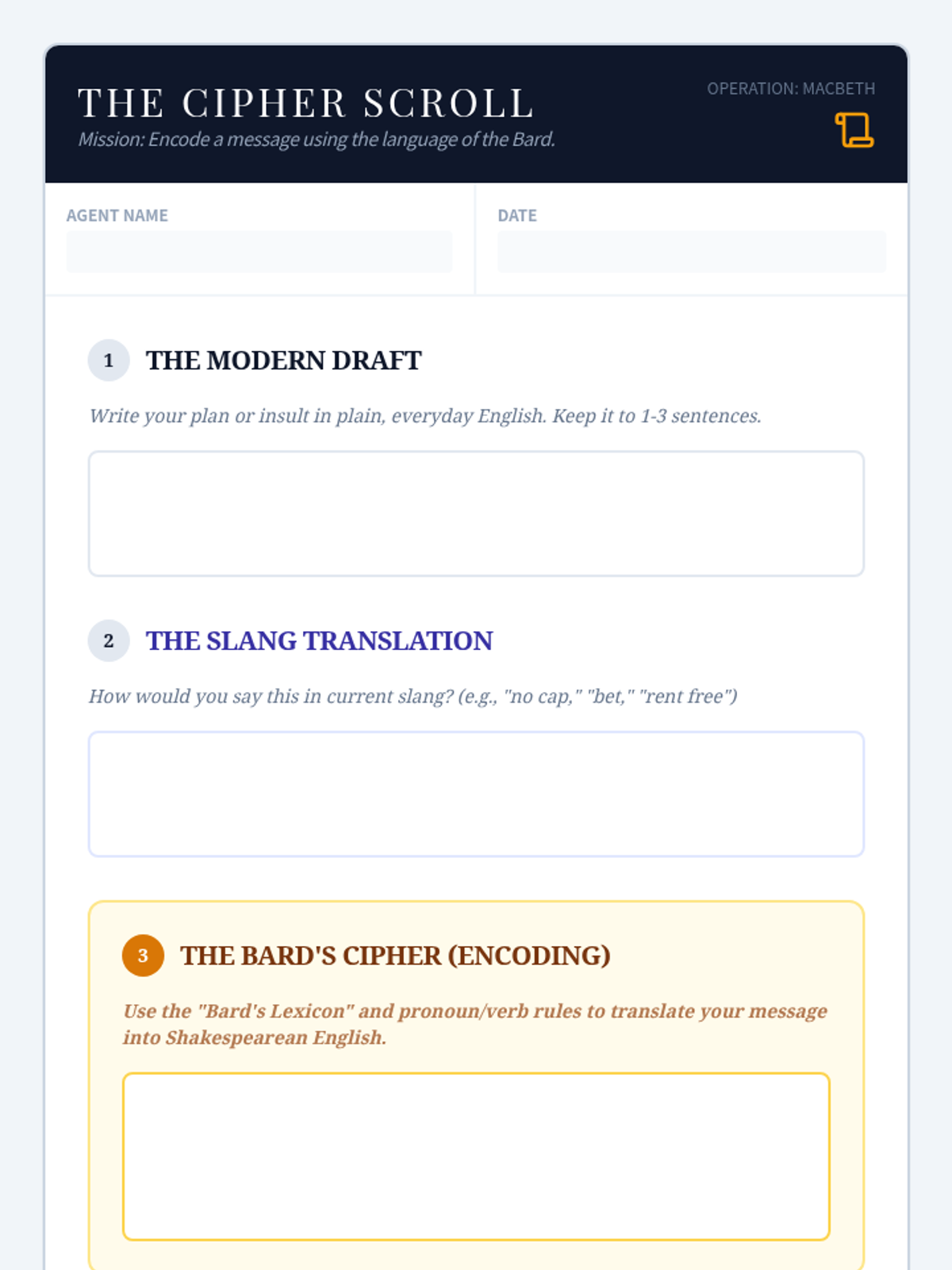
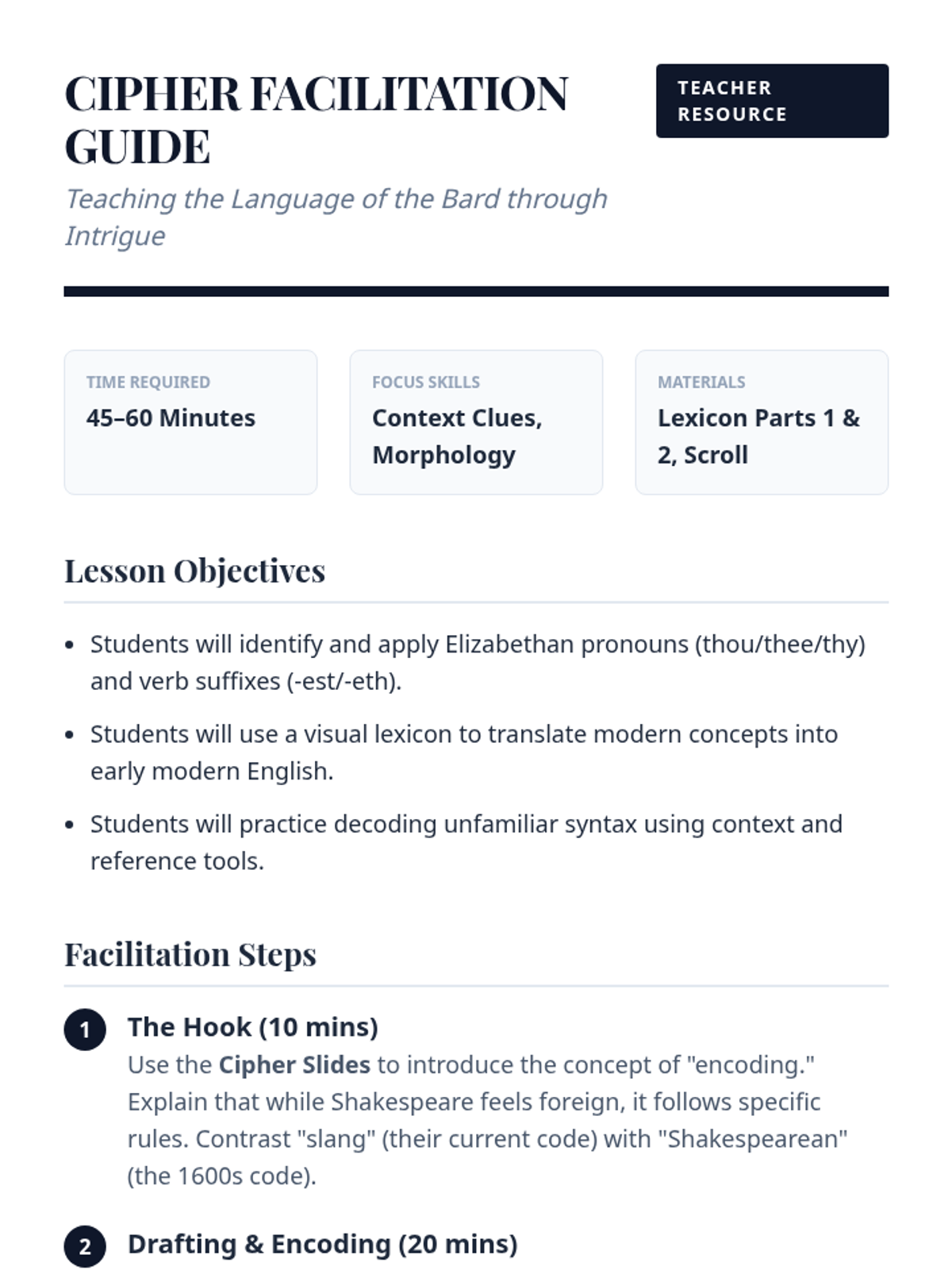
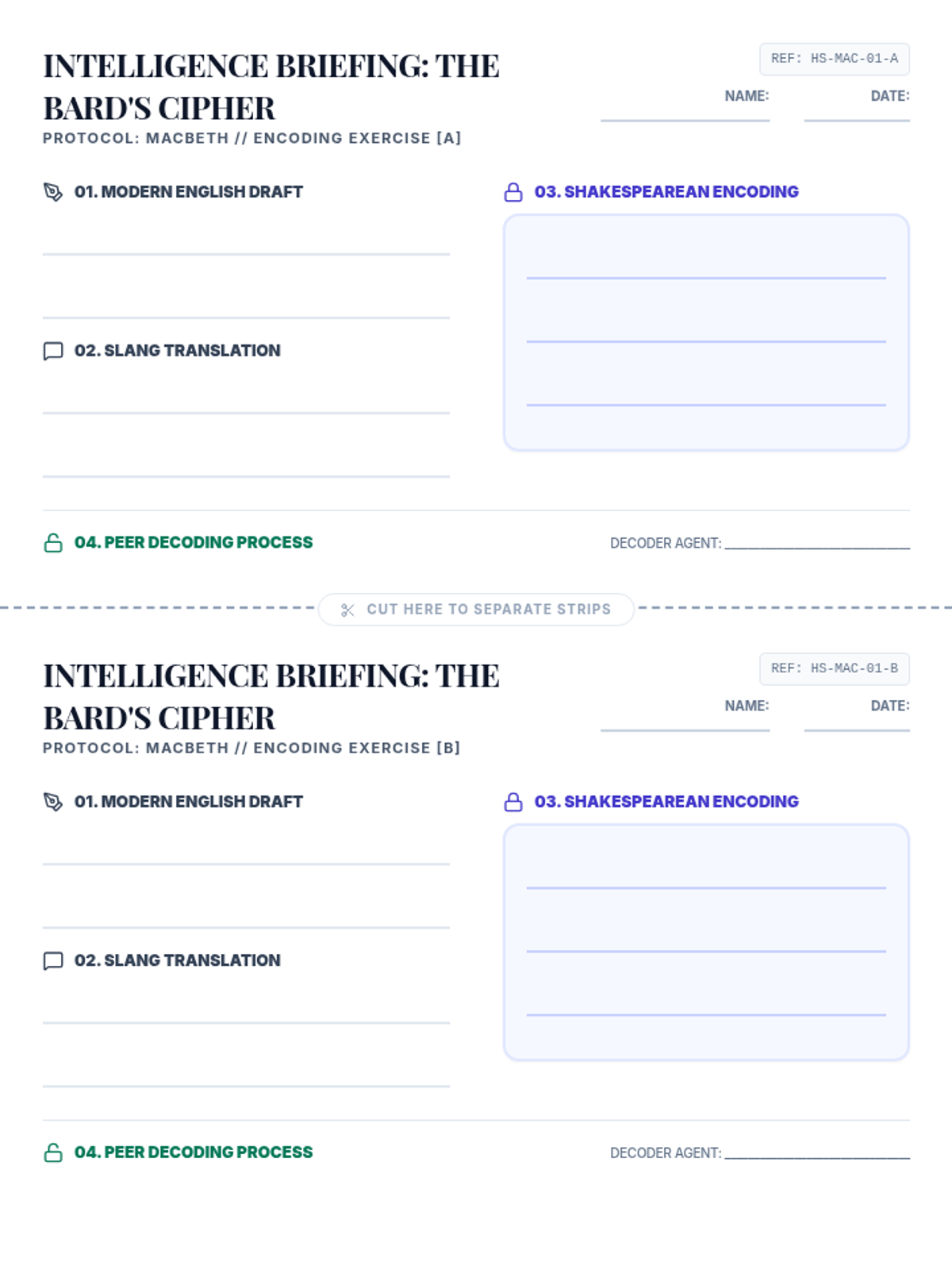
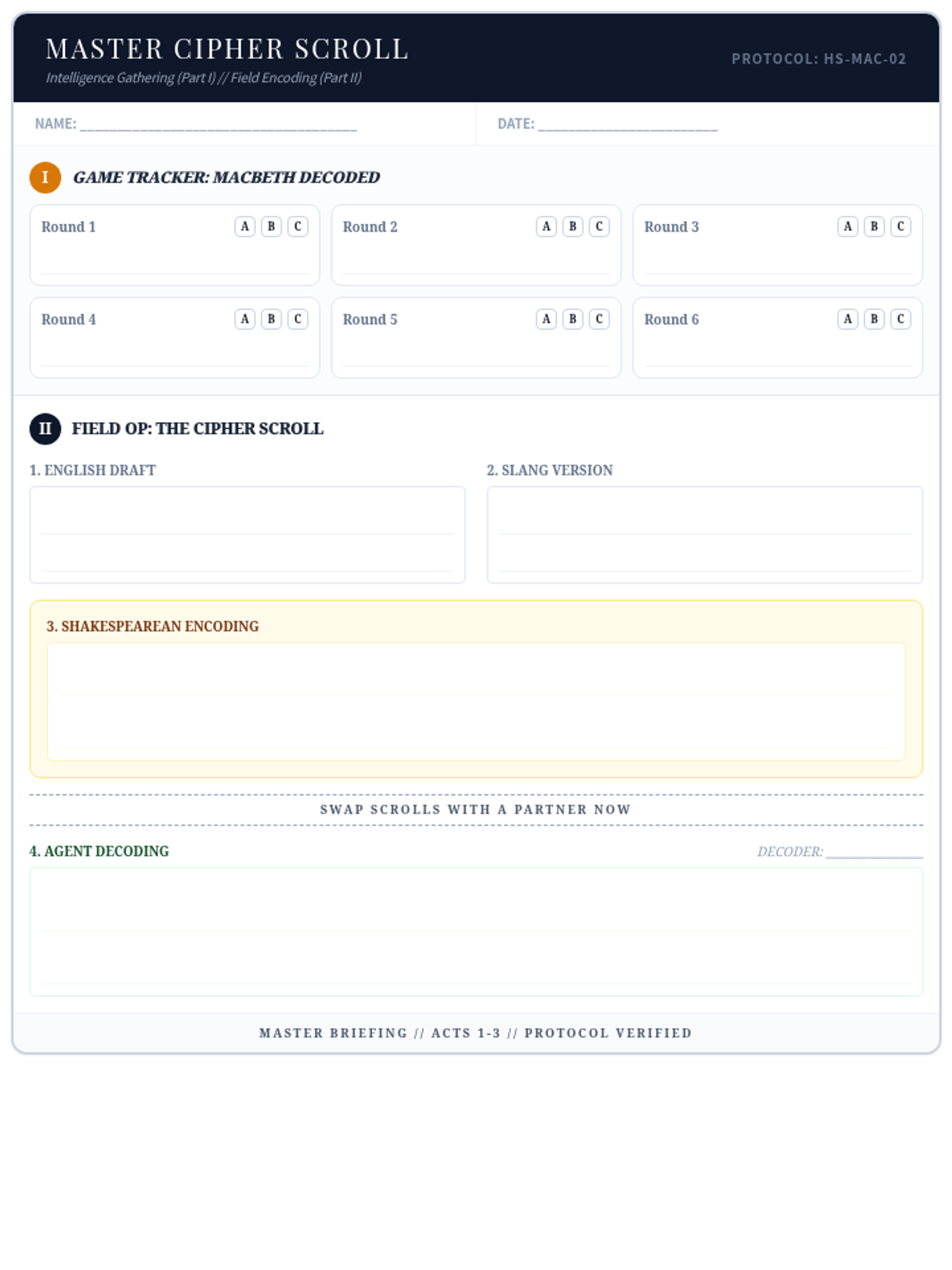
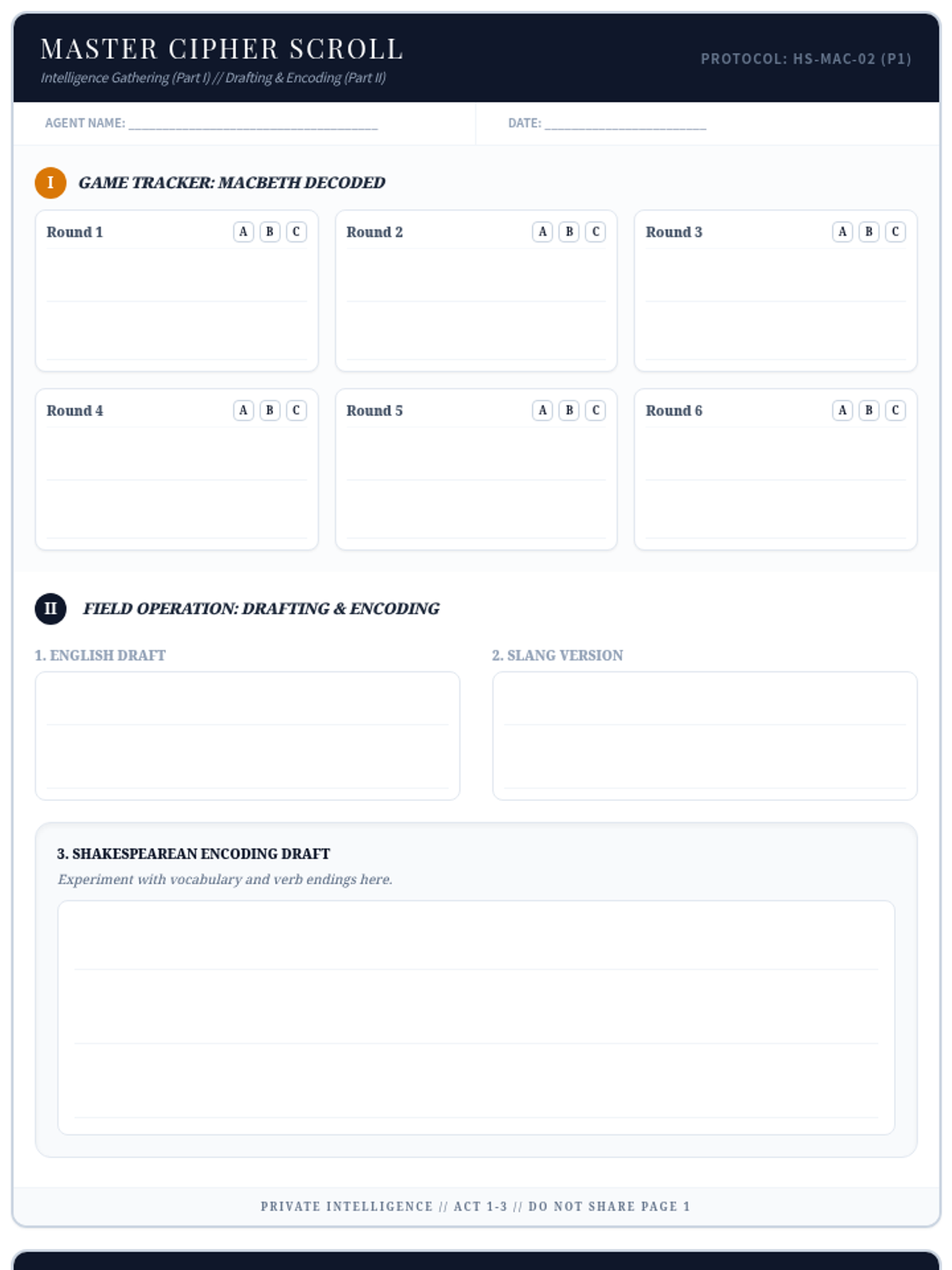
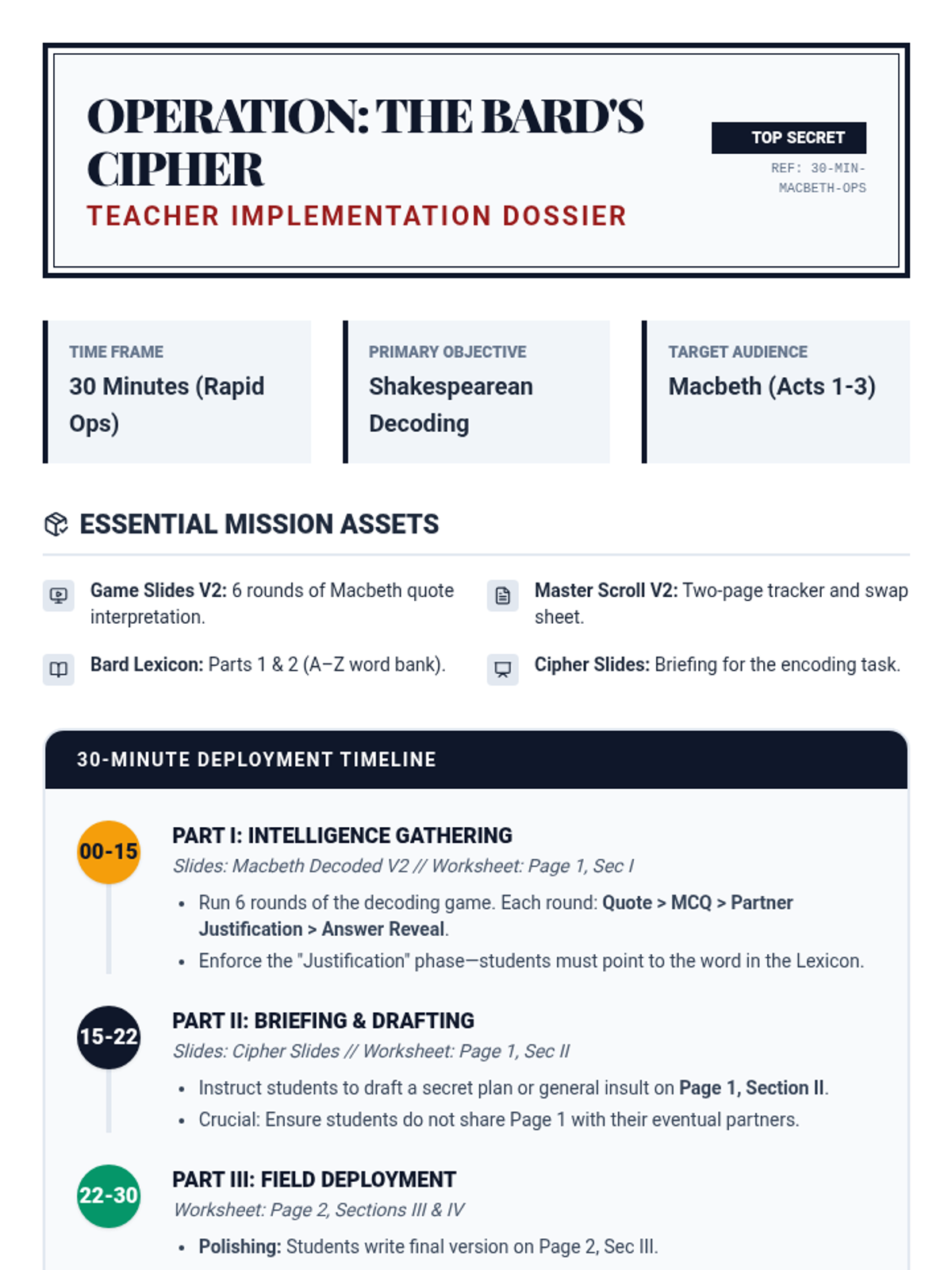
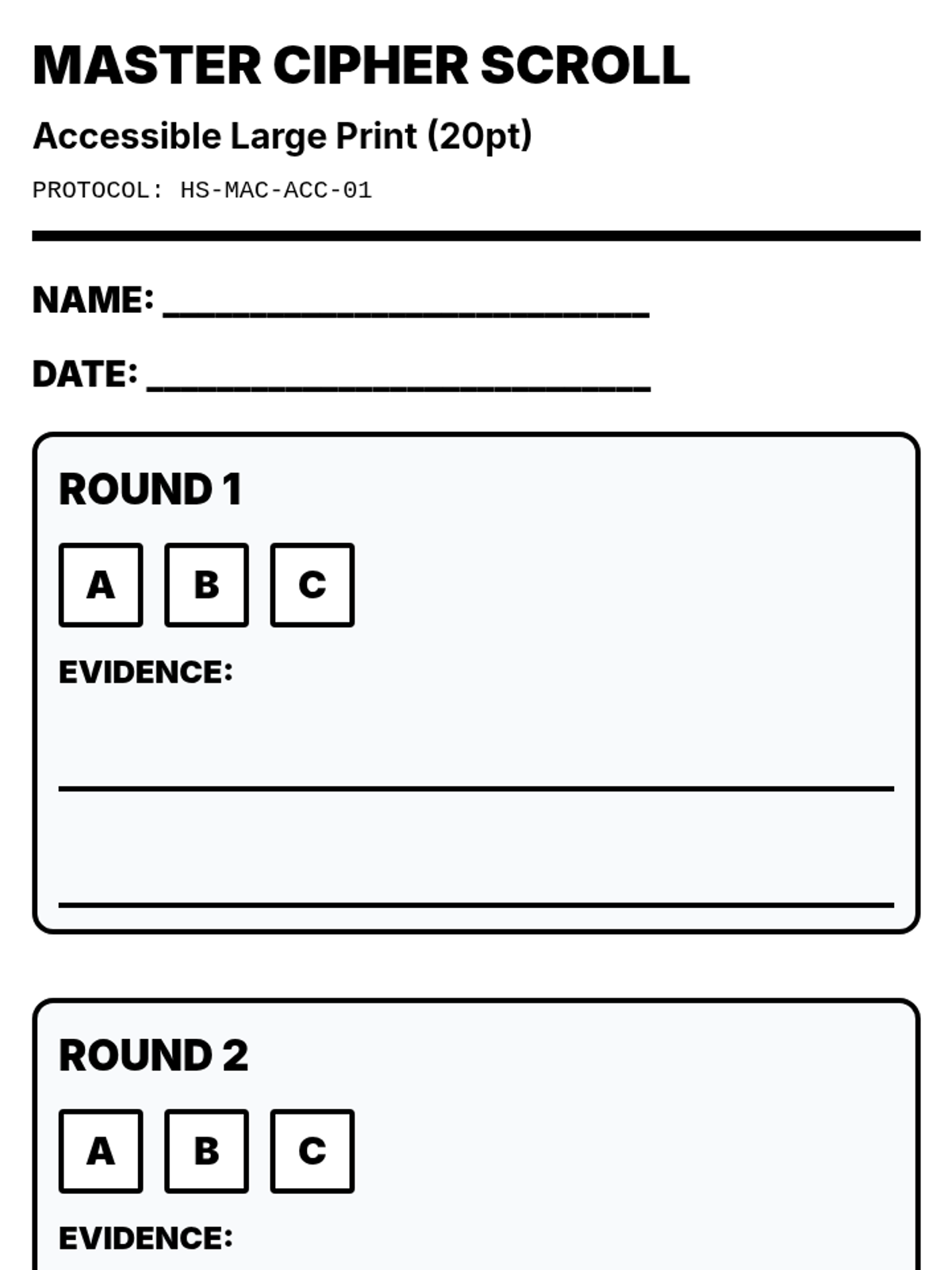
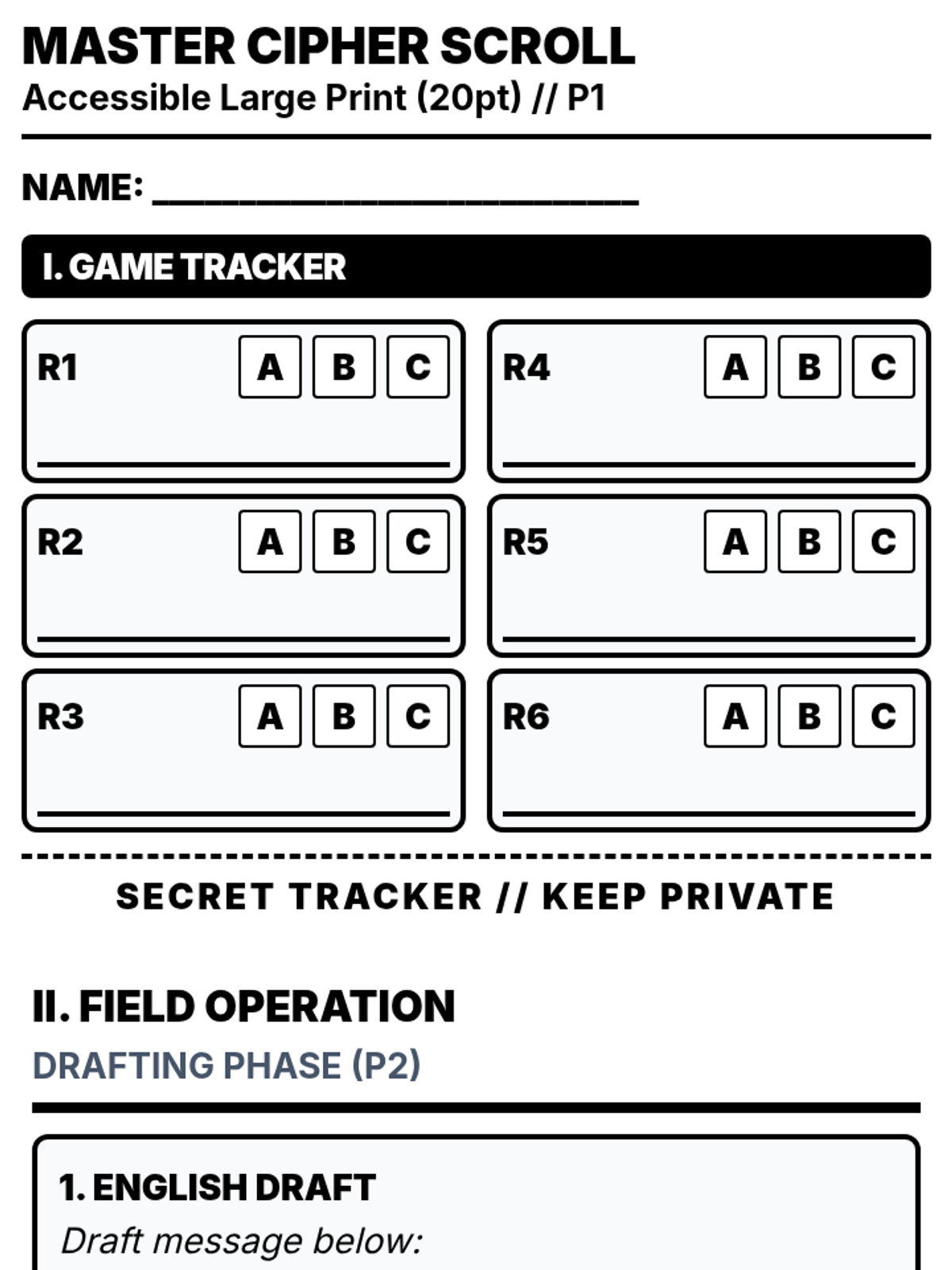
A hands-on activity where students learn to decode and encode Shakespearean language by writing secret messages or insults, then swapping them with peers to translate.
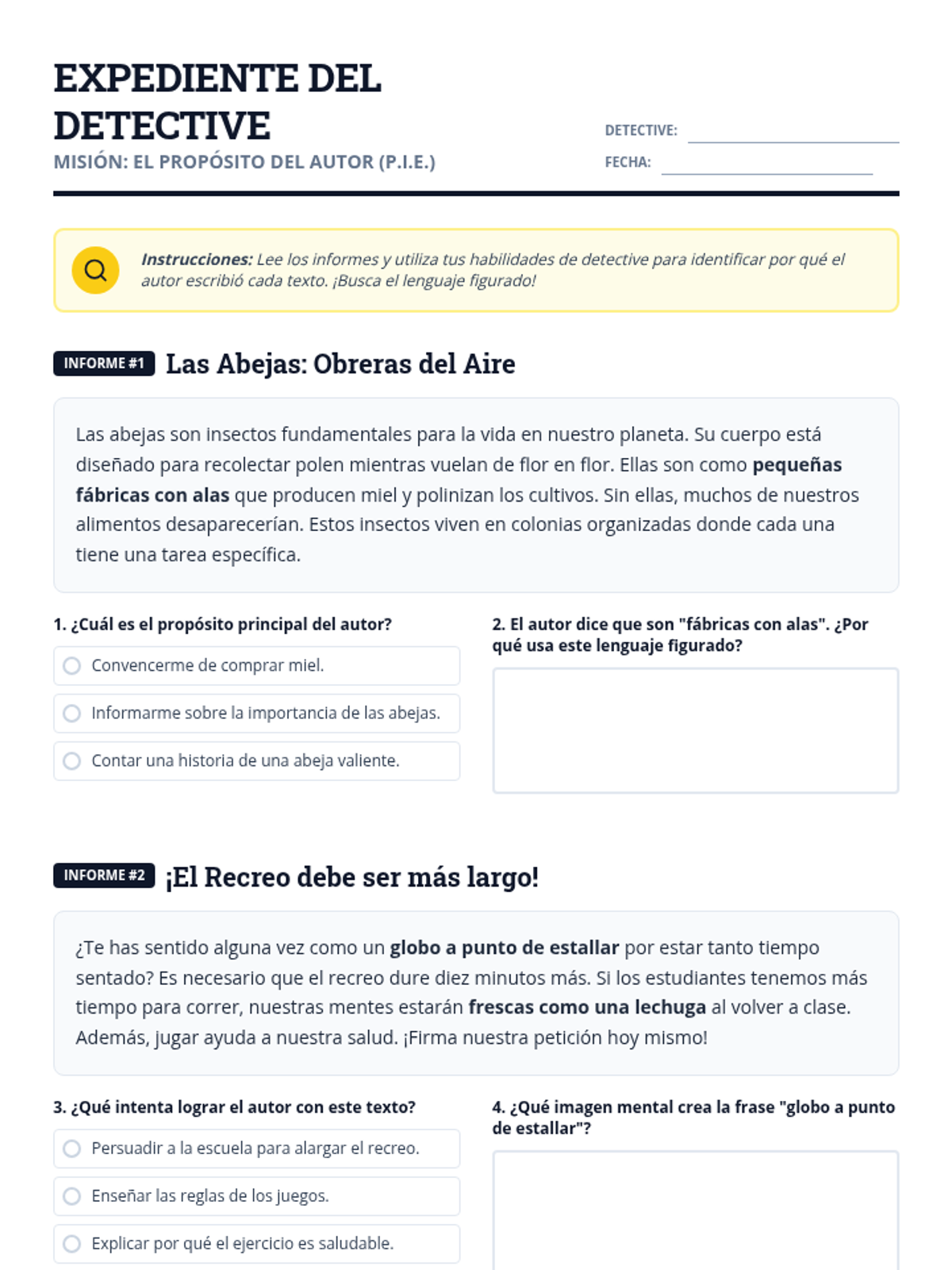
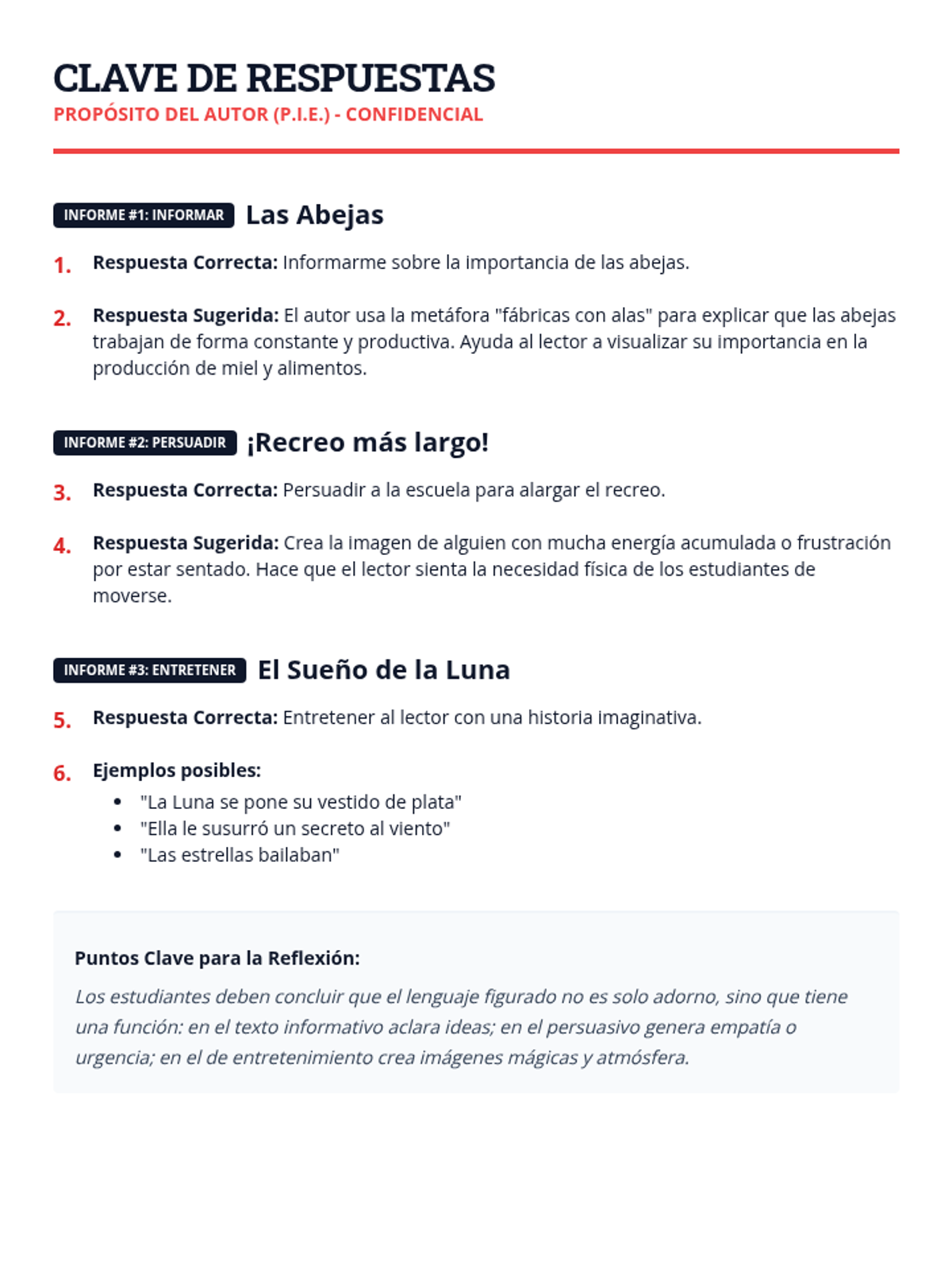
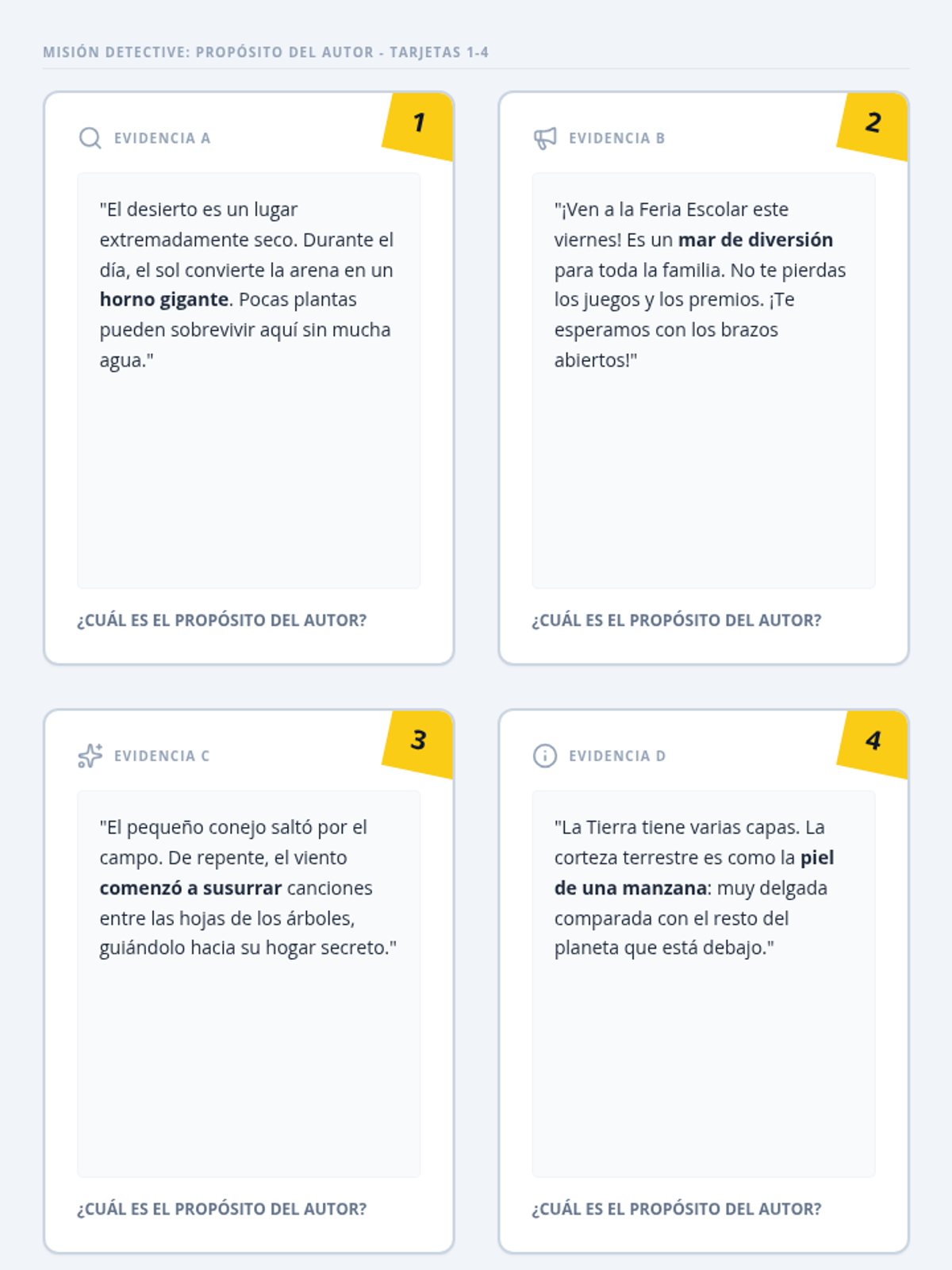
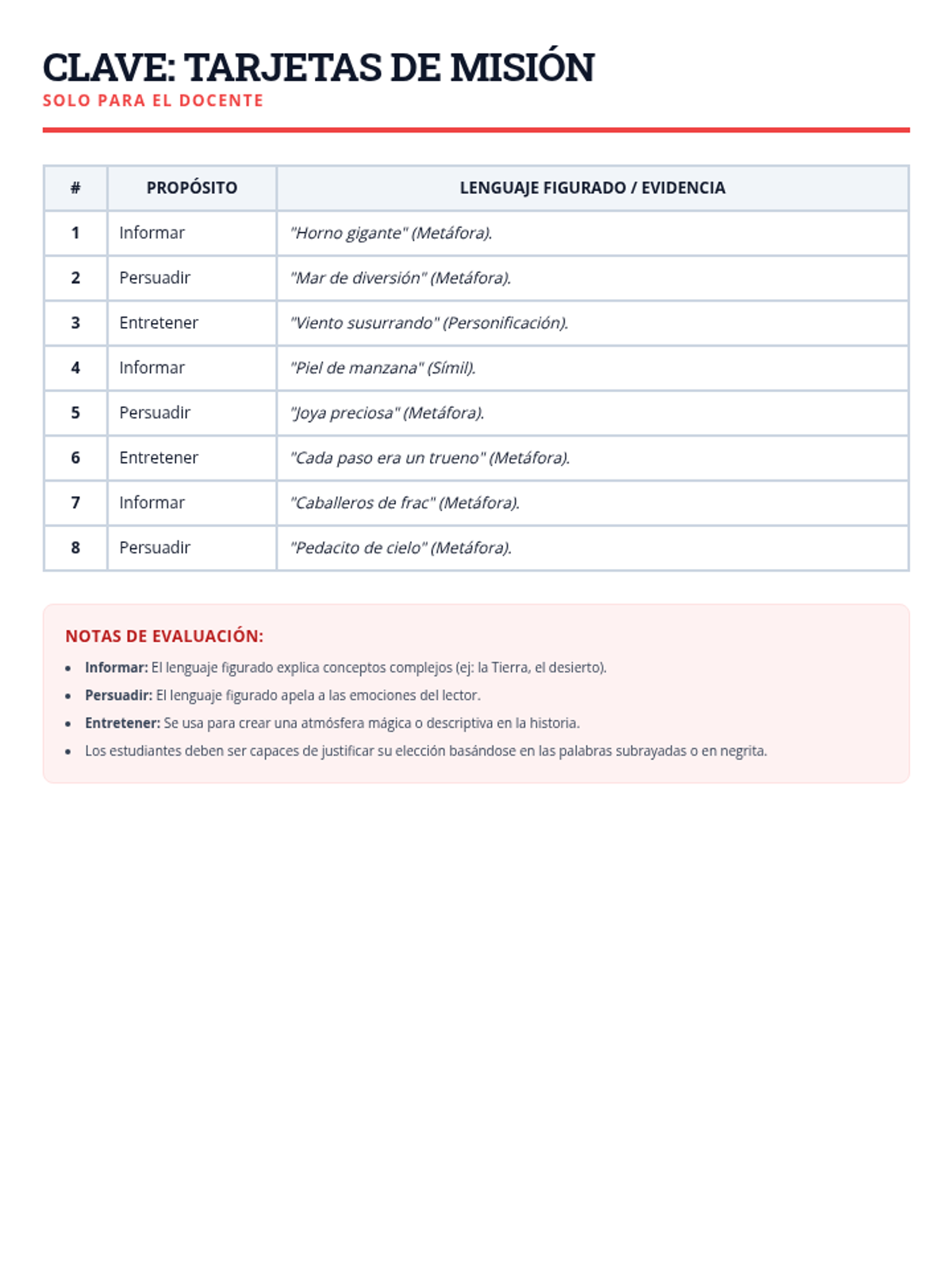
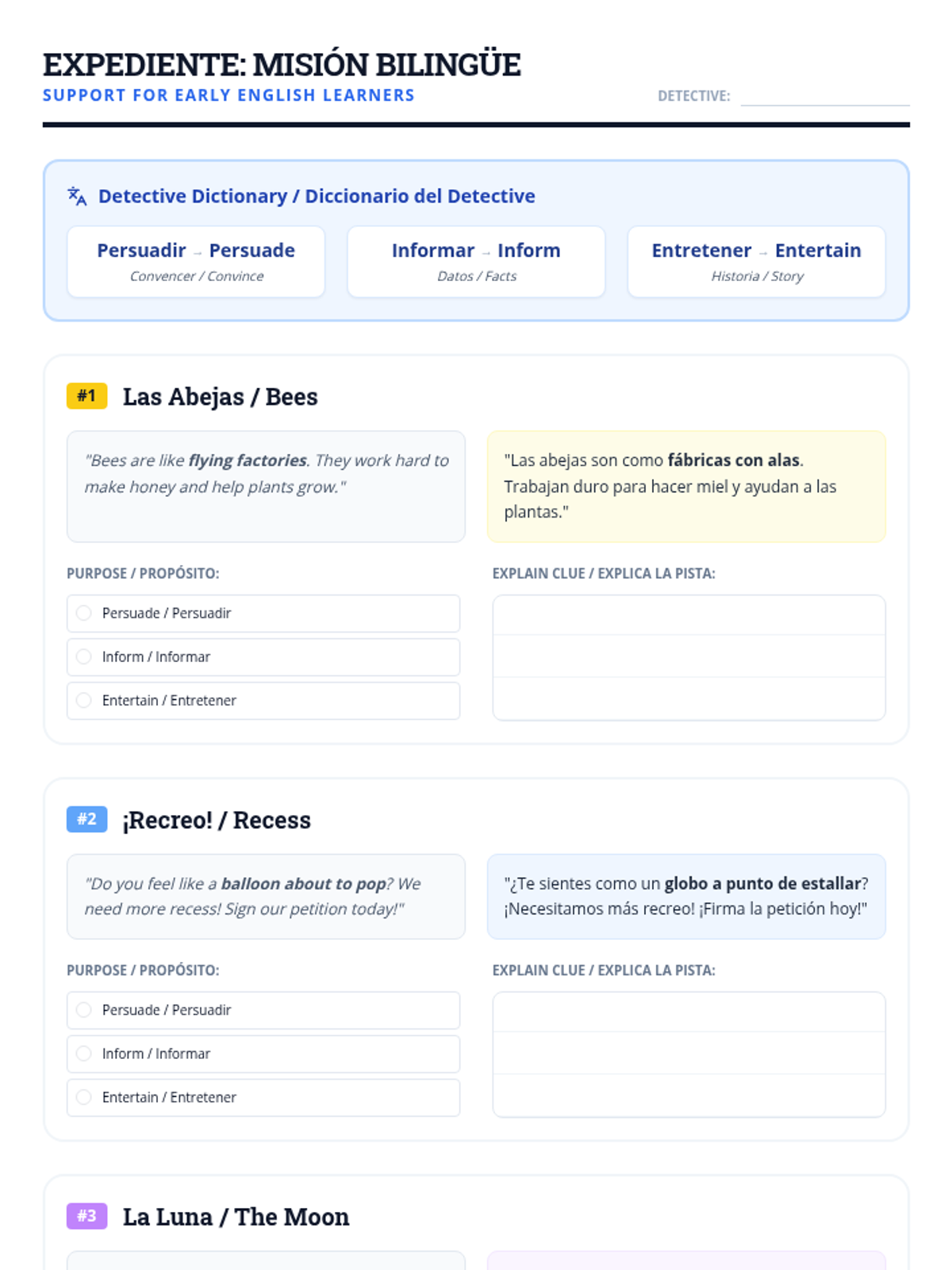
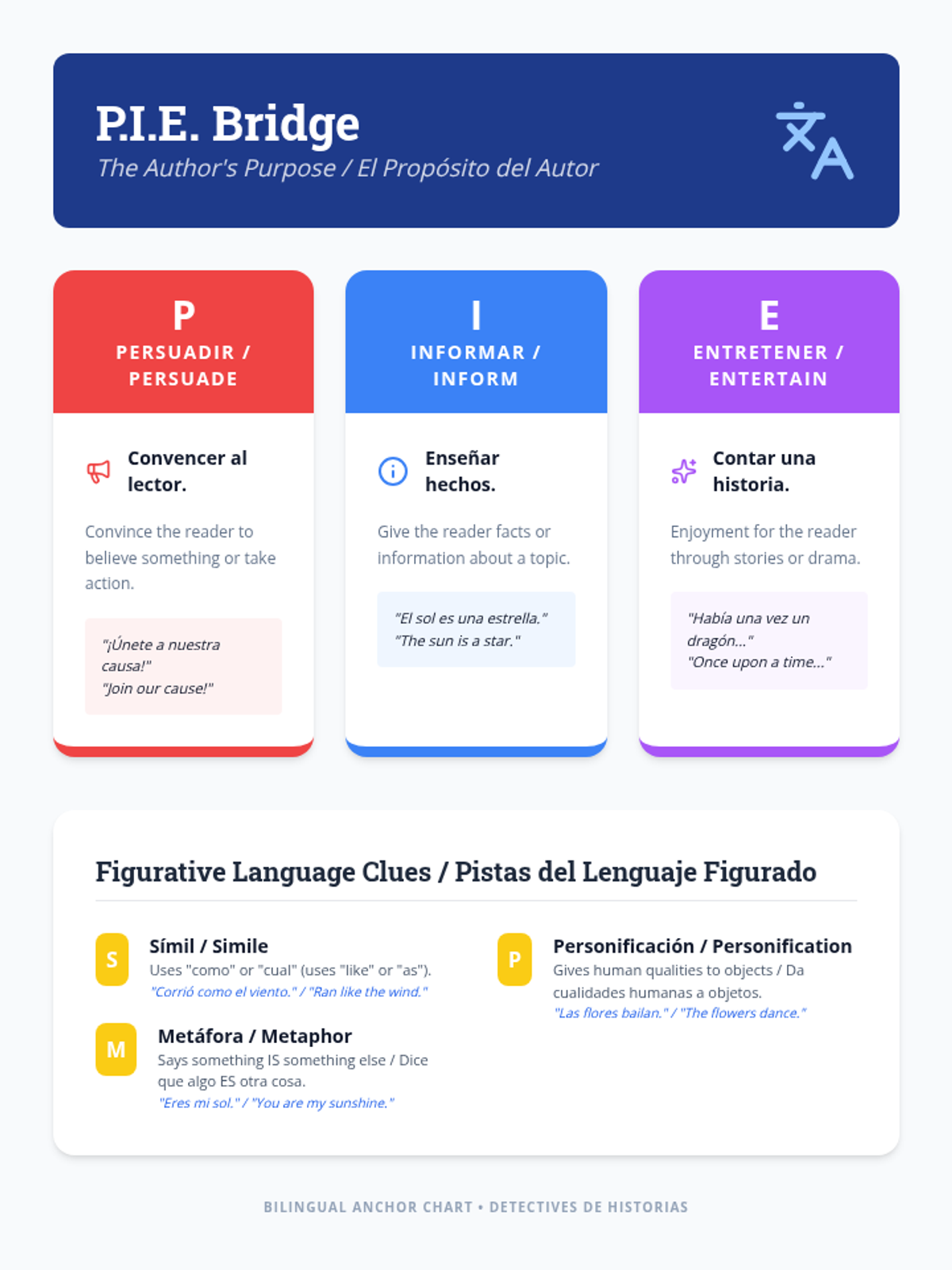
Una lección de 40 minutos diseñada para estudiantes de tercer grado sobre el propósito del autor, explorando textos persuasivos, informativos y narrativos con un enfoque especial en el lenguaje figurado.
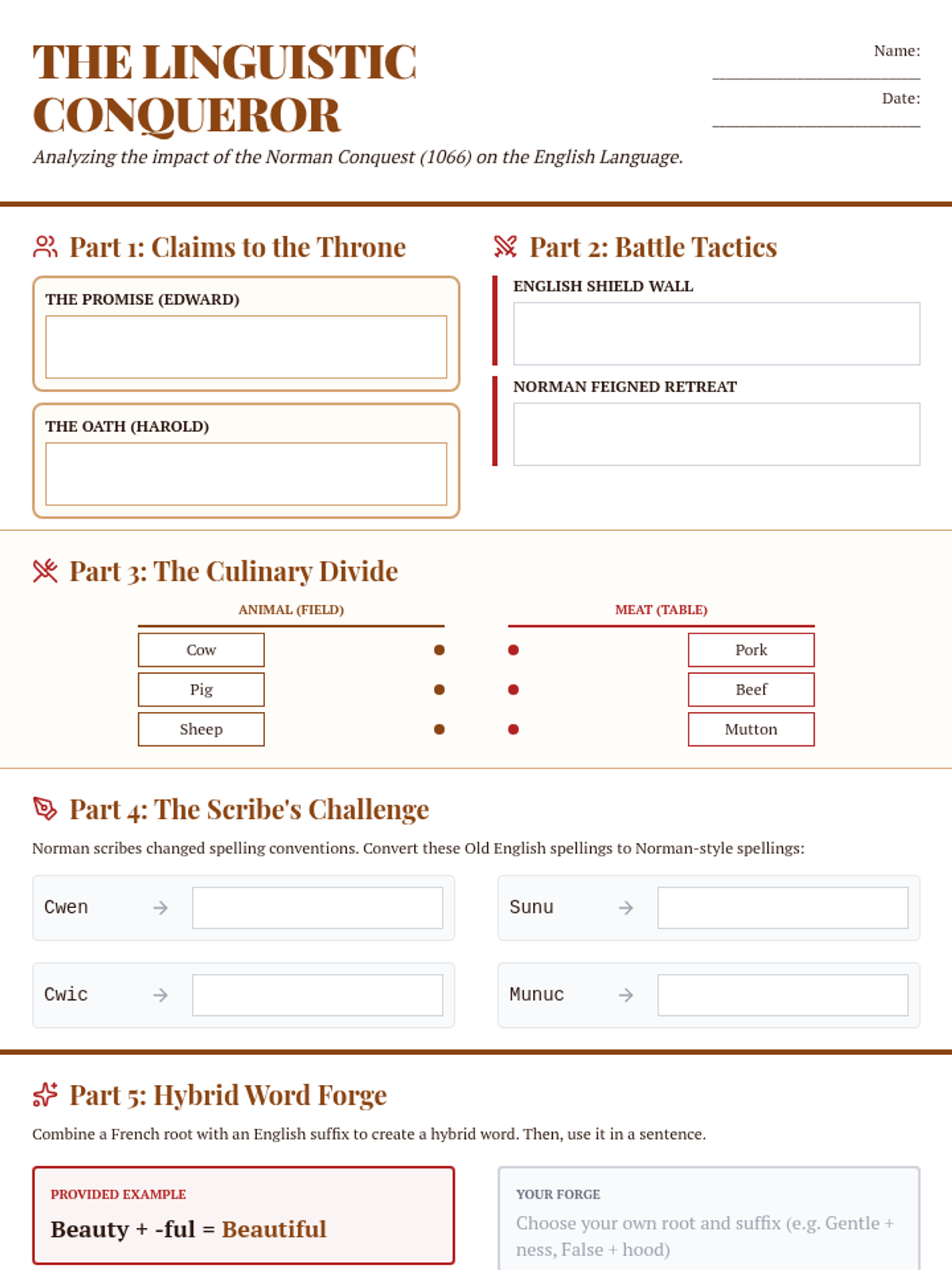
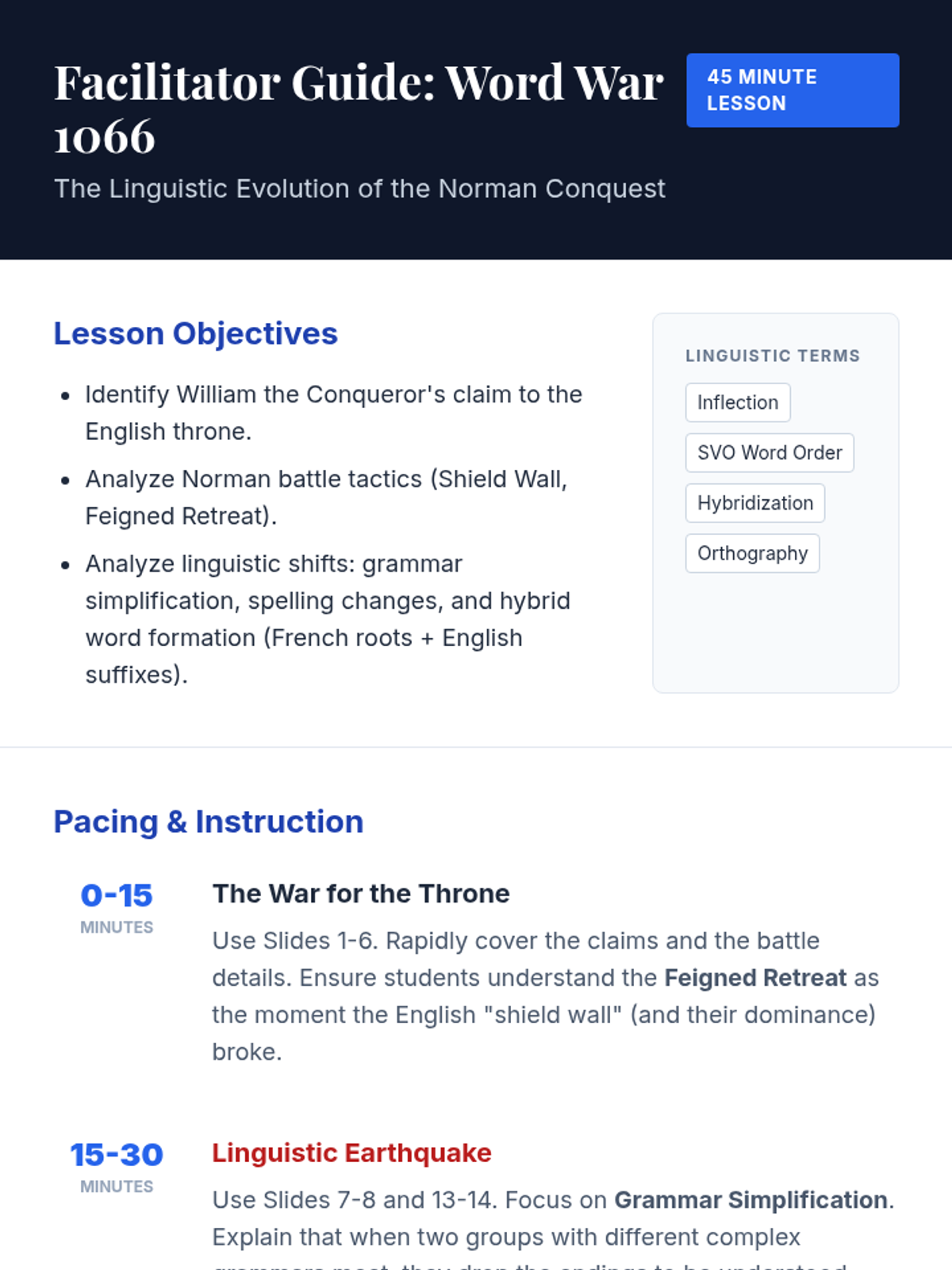
A lesson exploring the Battle of Hastings and its profound impact on the English language, tracing how the Norman Conquest introduced French vocabulary and transformed Old English into the ancestor of modern English.
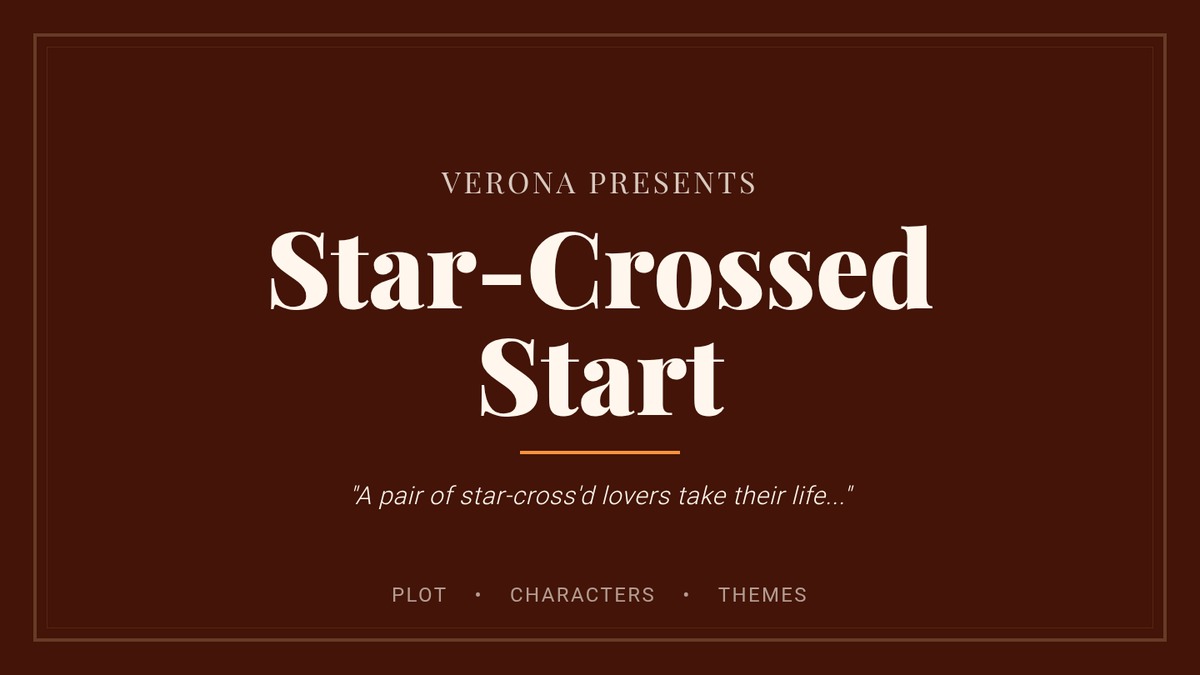
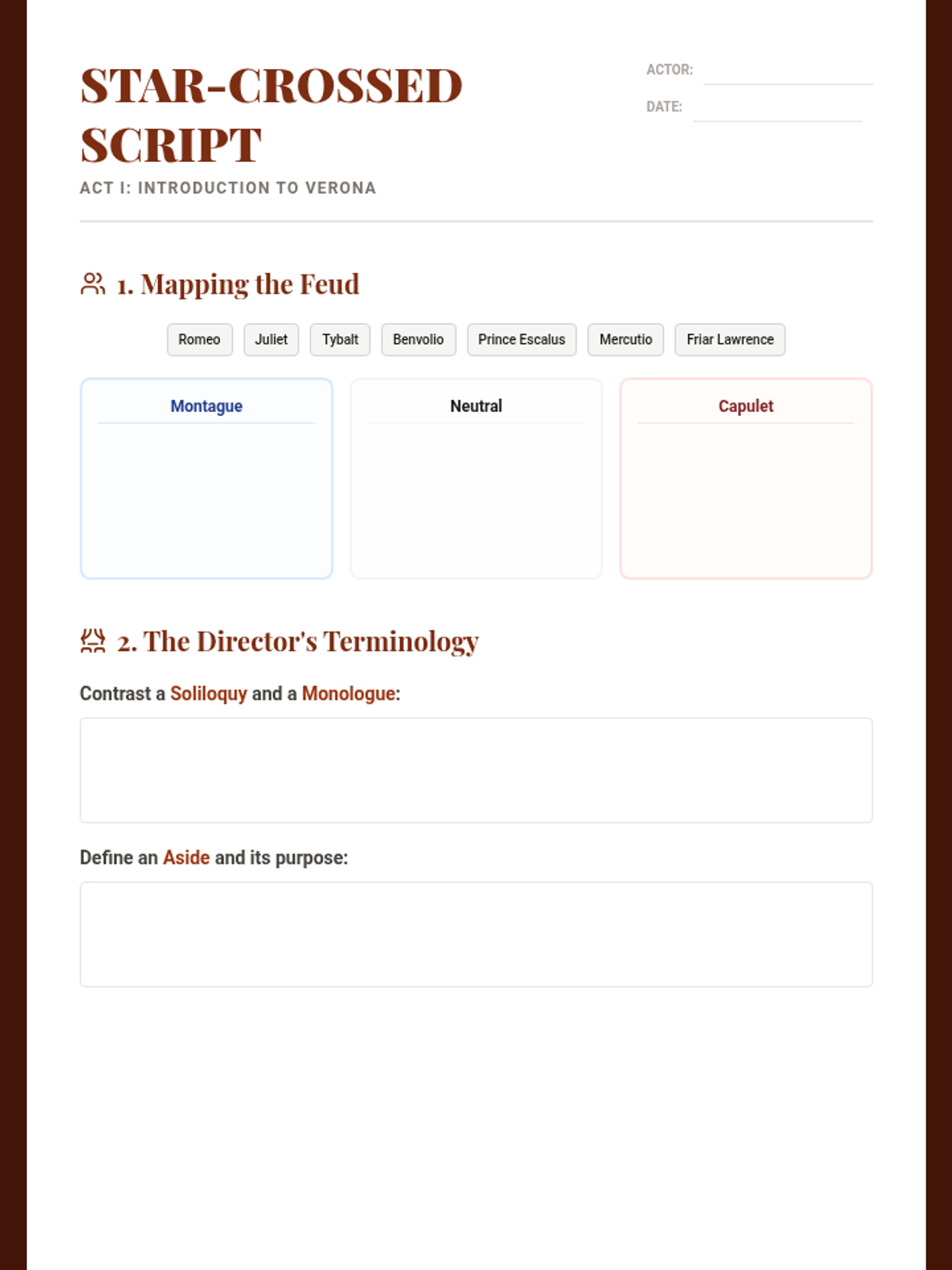
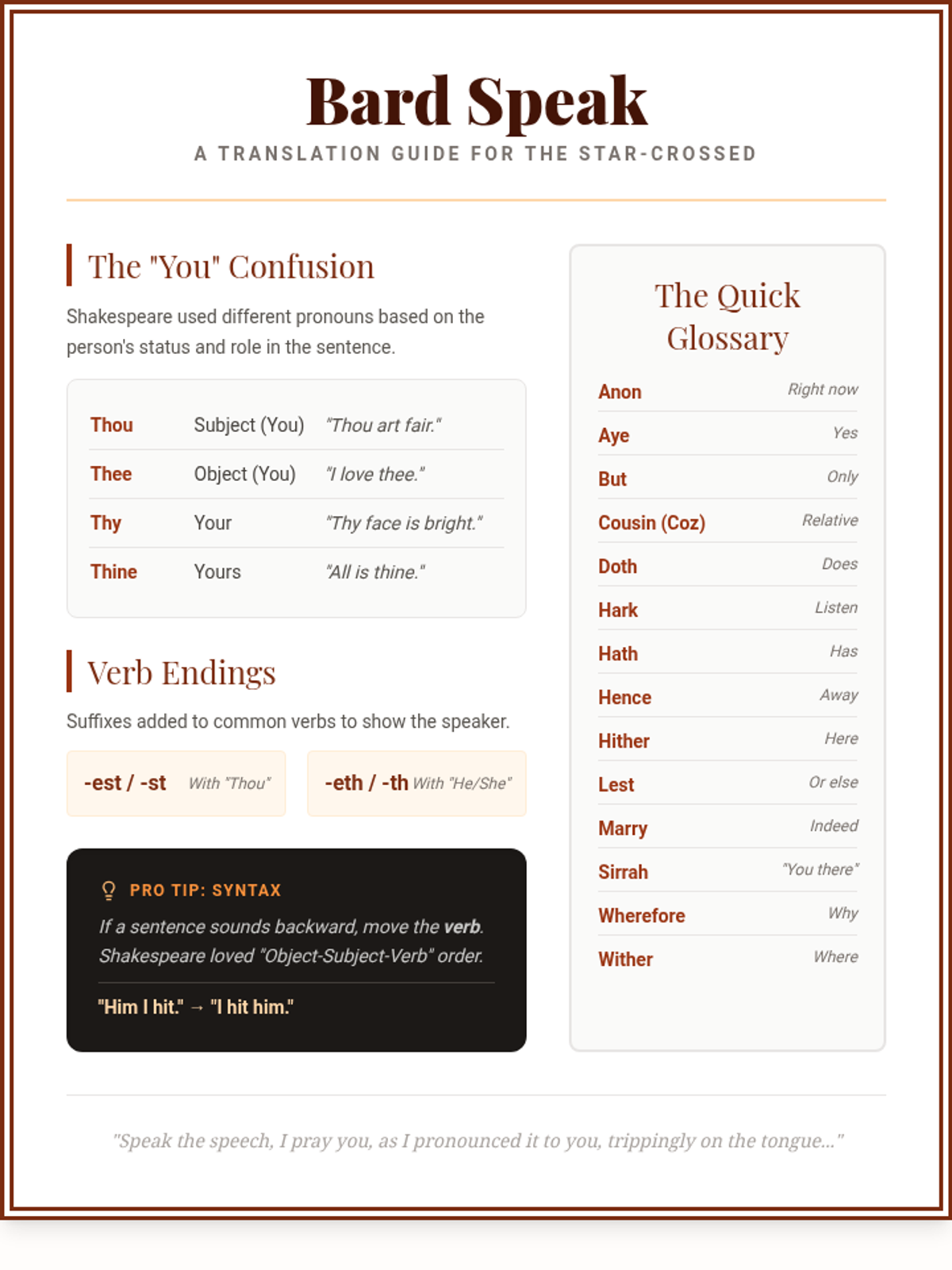
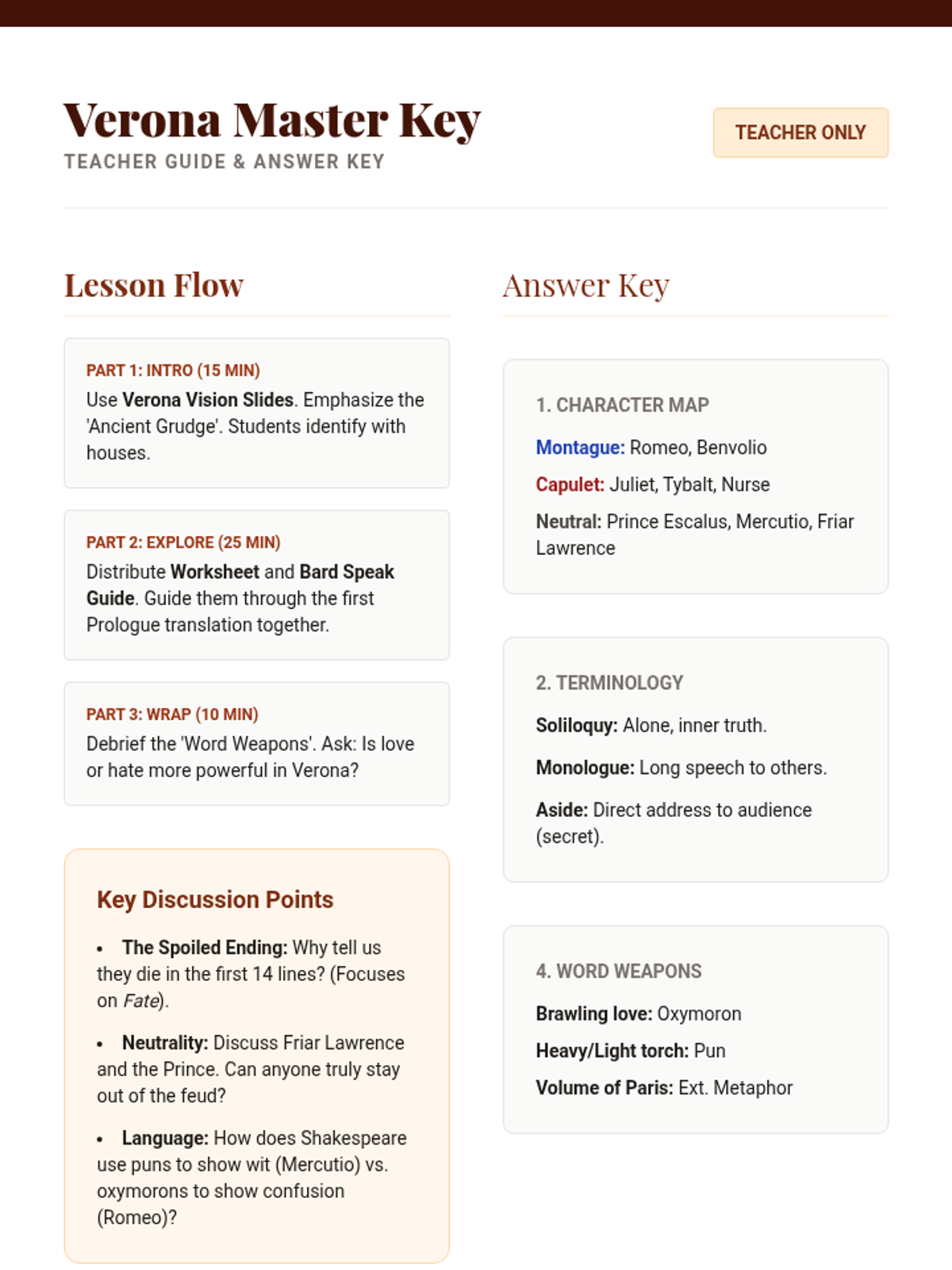
An introductory lesson to Romeo and Juliet covering the foundational elements of plot, character dynamics, and themes, alongside practical exercises in translation and identifying literary devices.
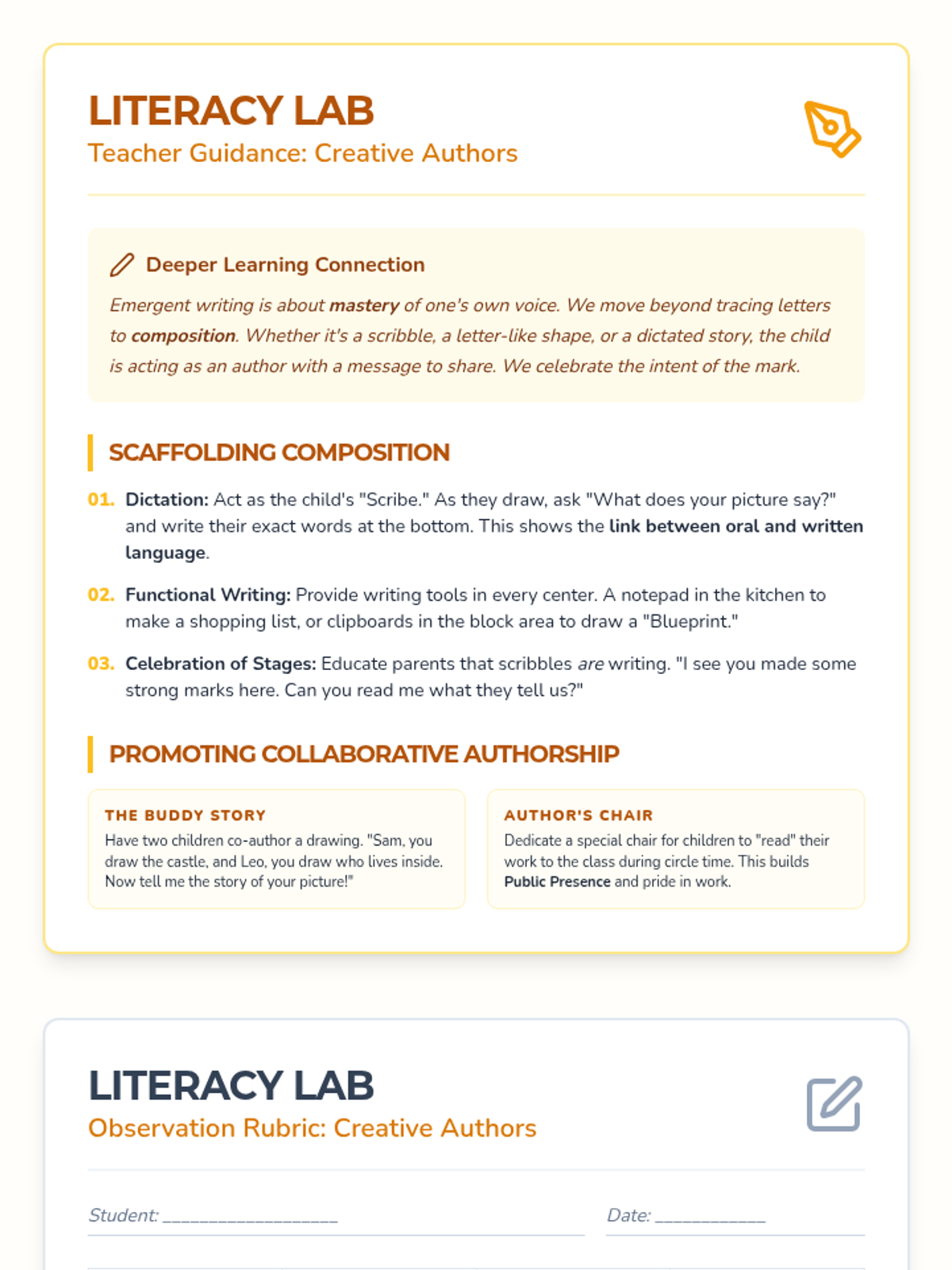
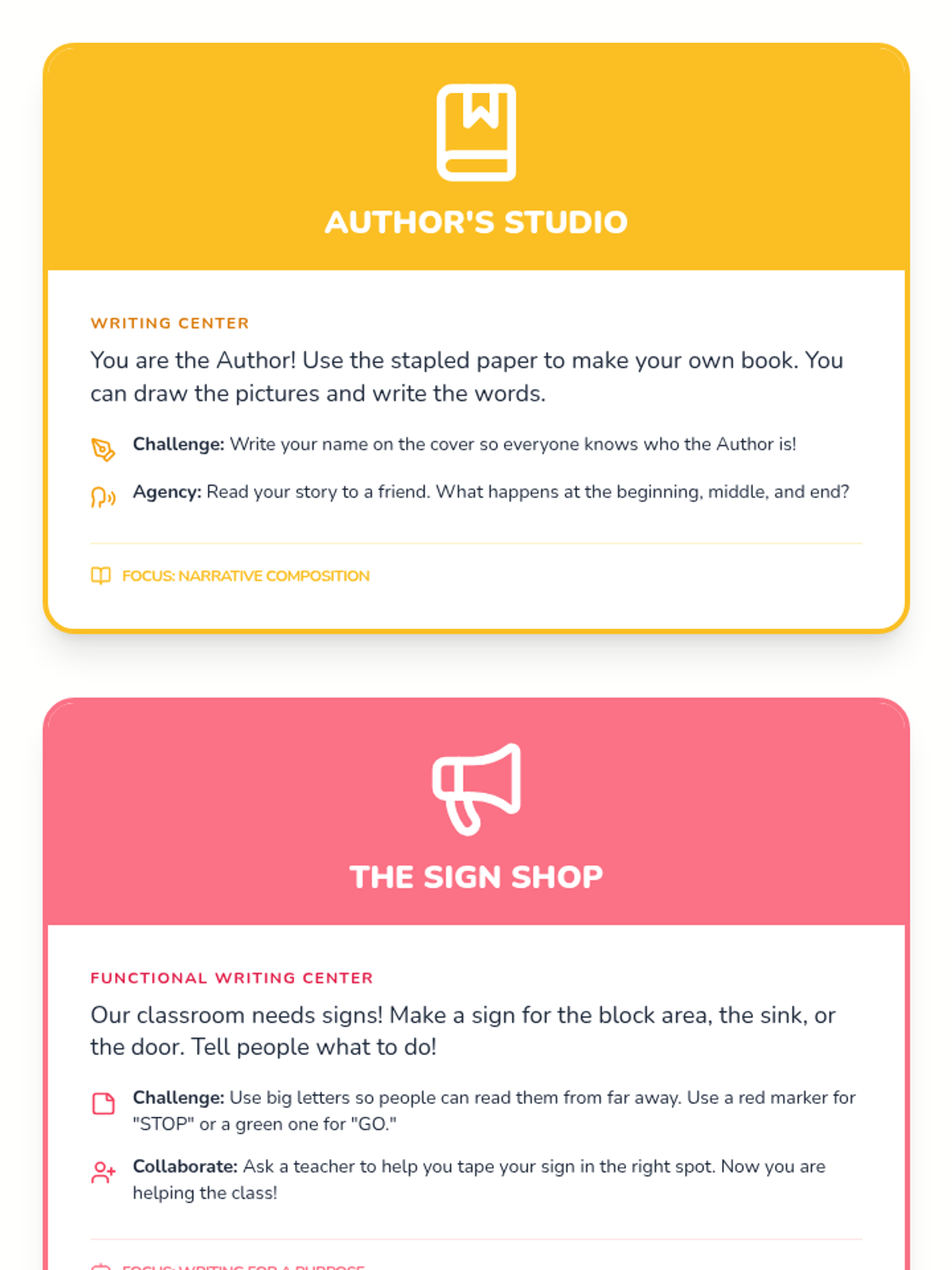
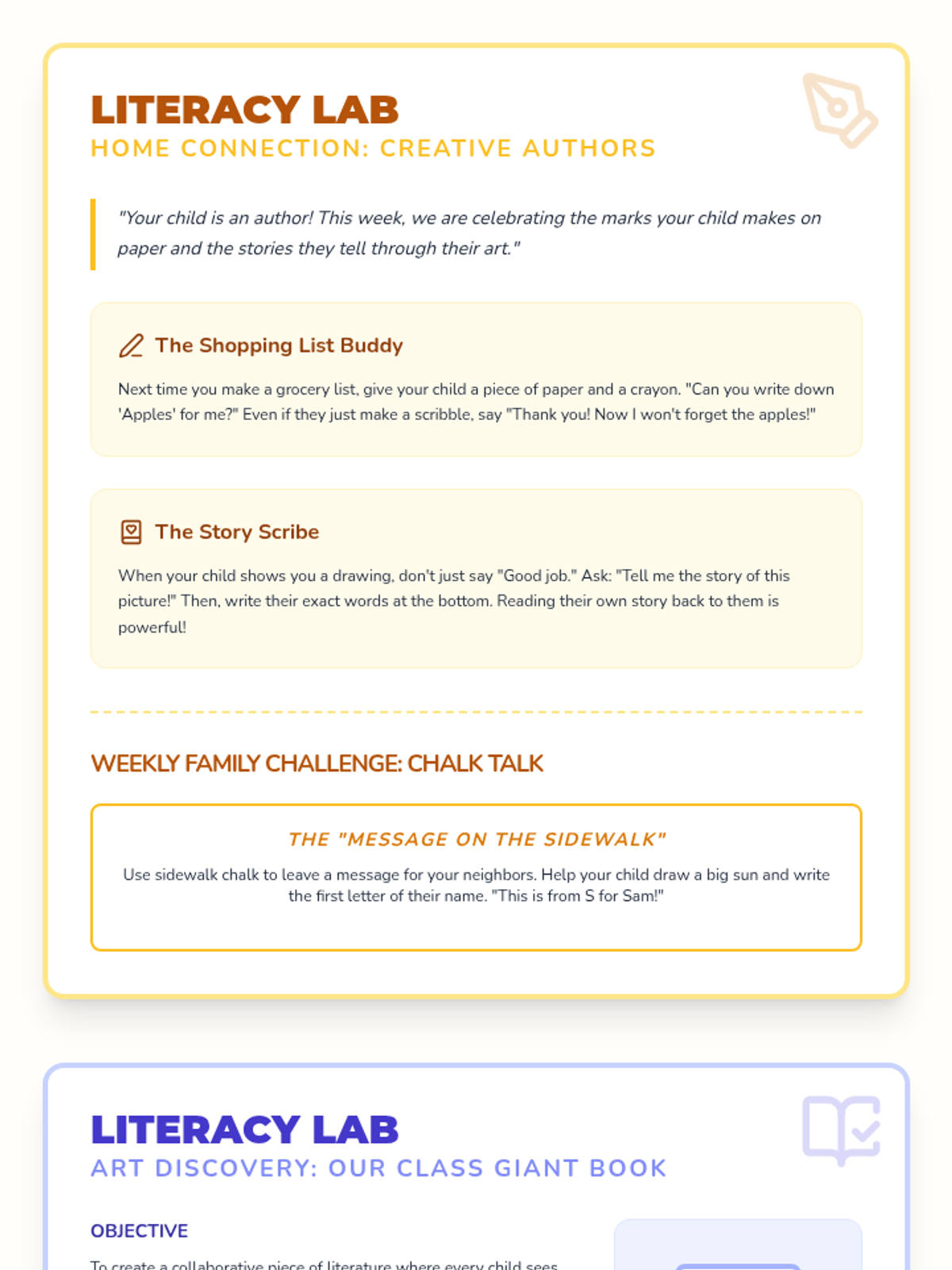
Focuses on emergent writing and composition through play-based storytelling and symbolic representation. Children discover that their marks on paper can communicate thoughts, emotions, and stories to others.
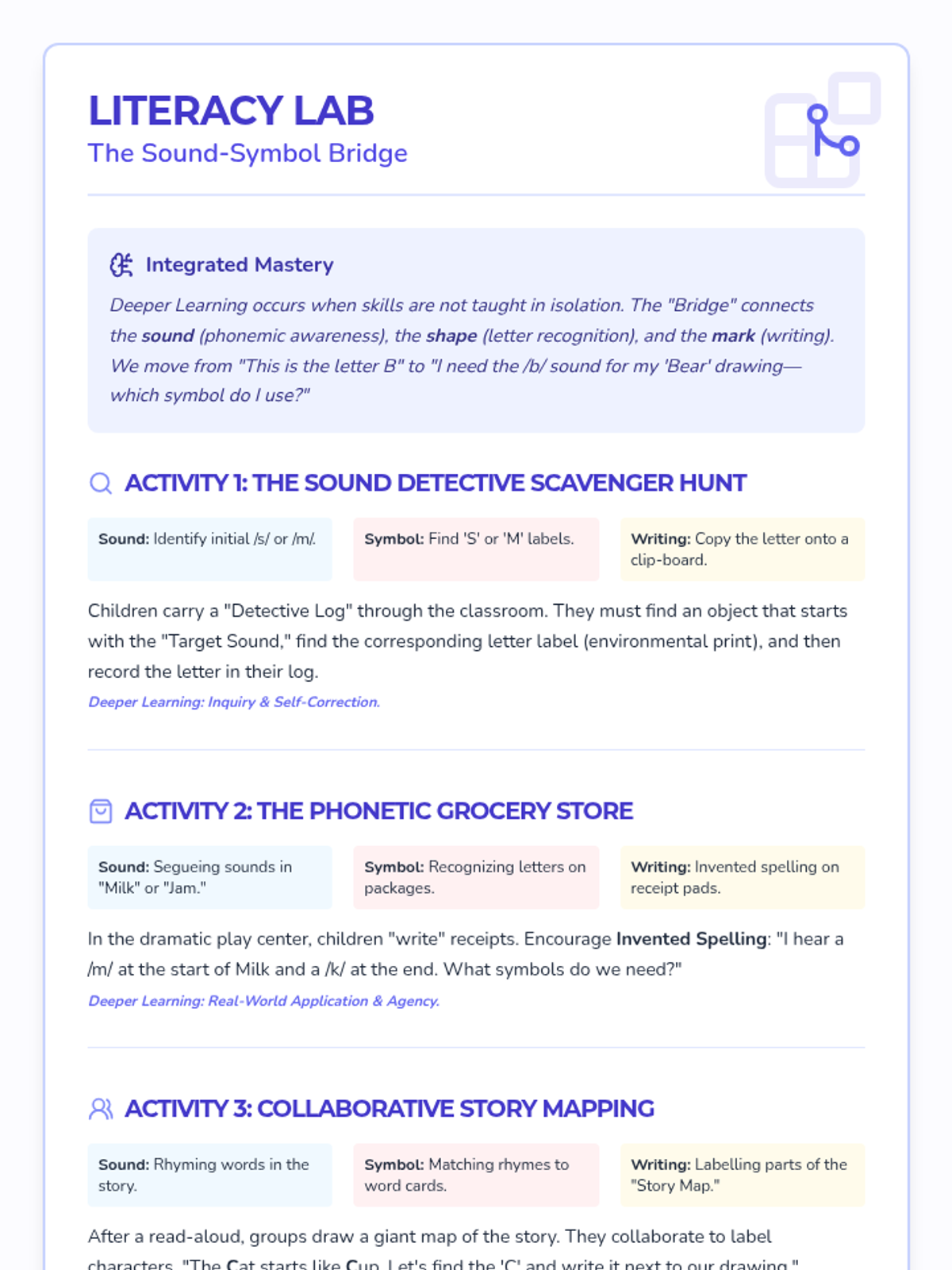
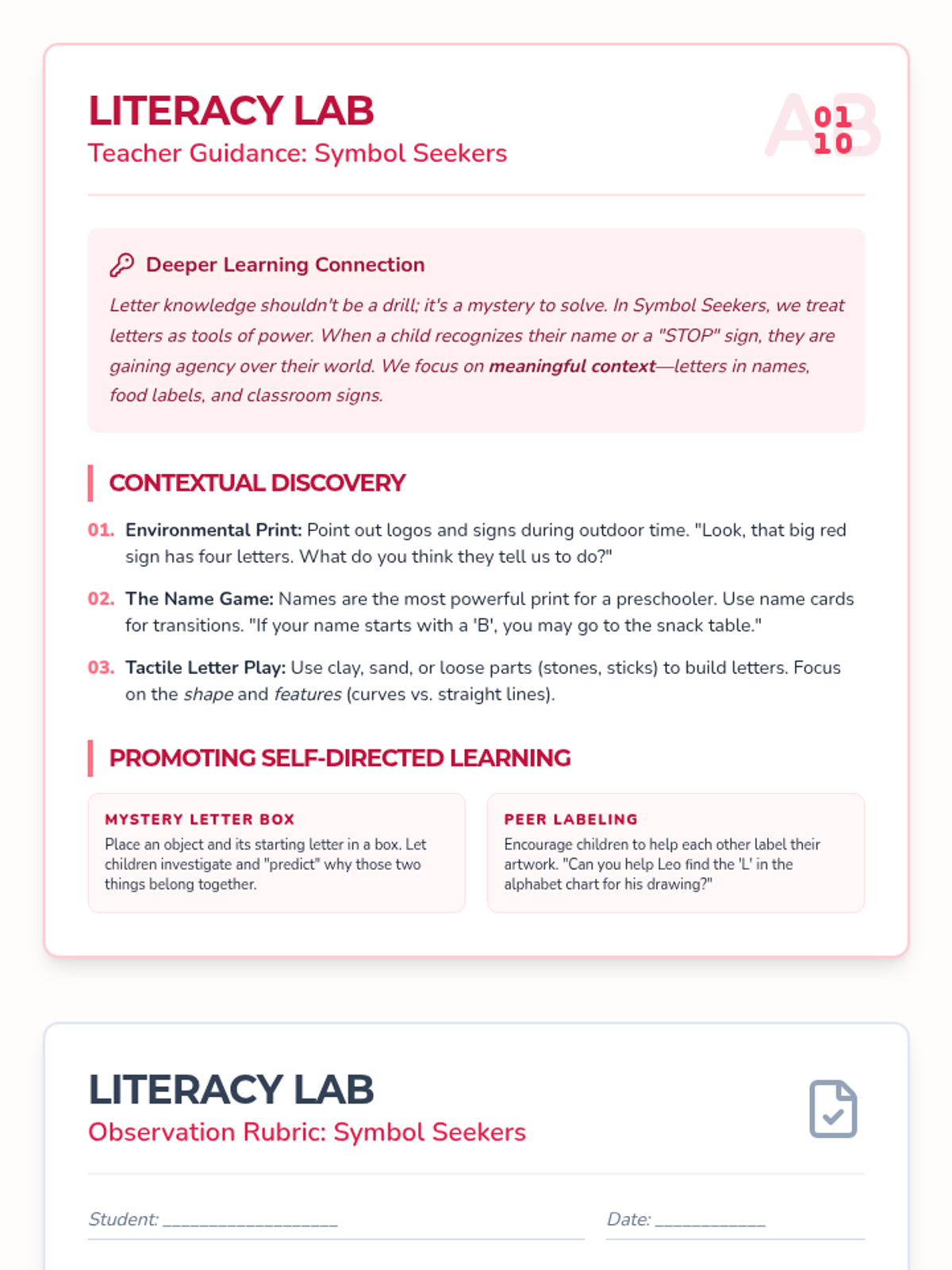
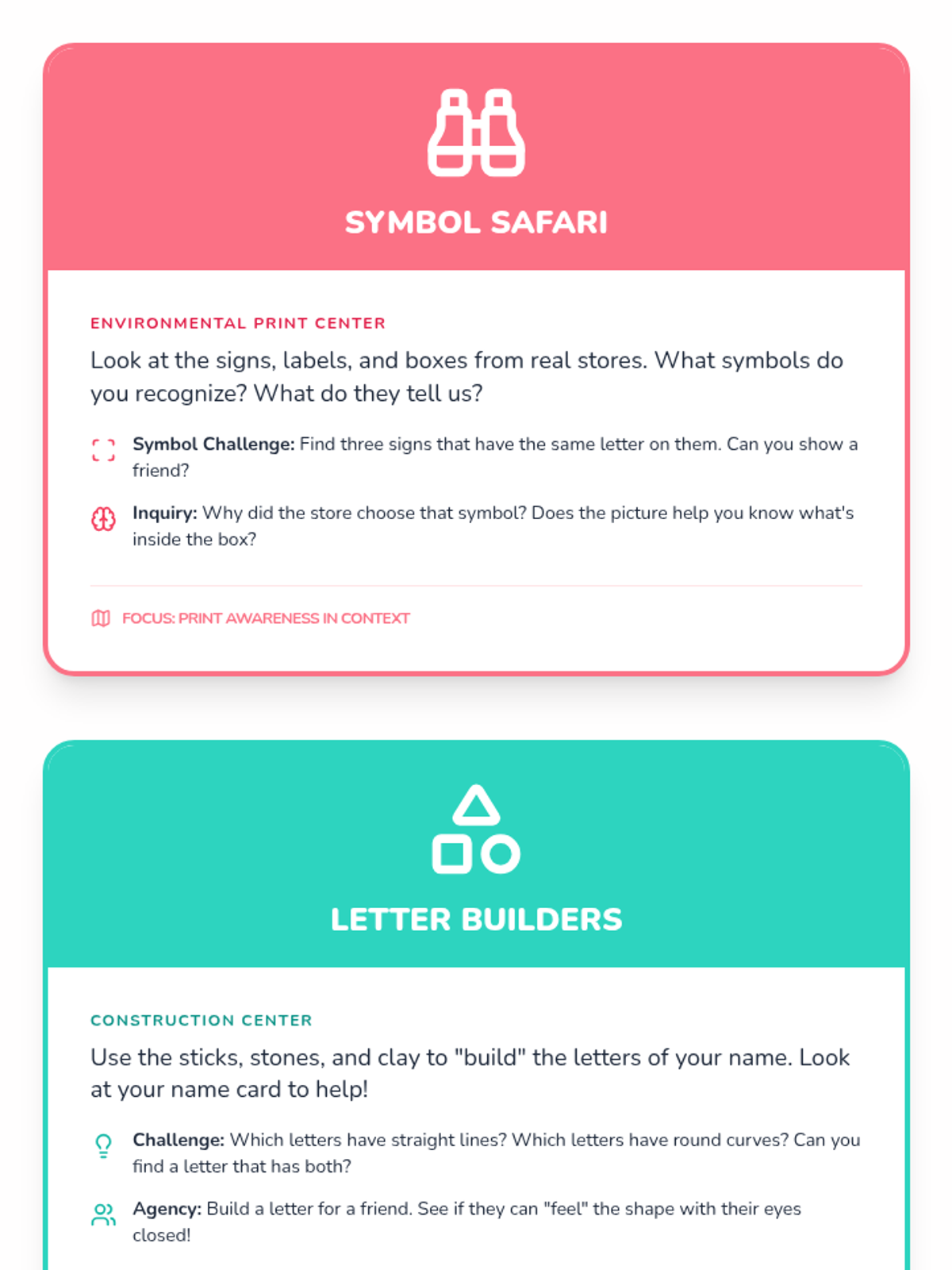
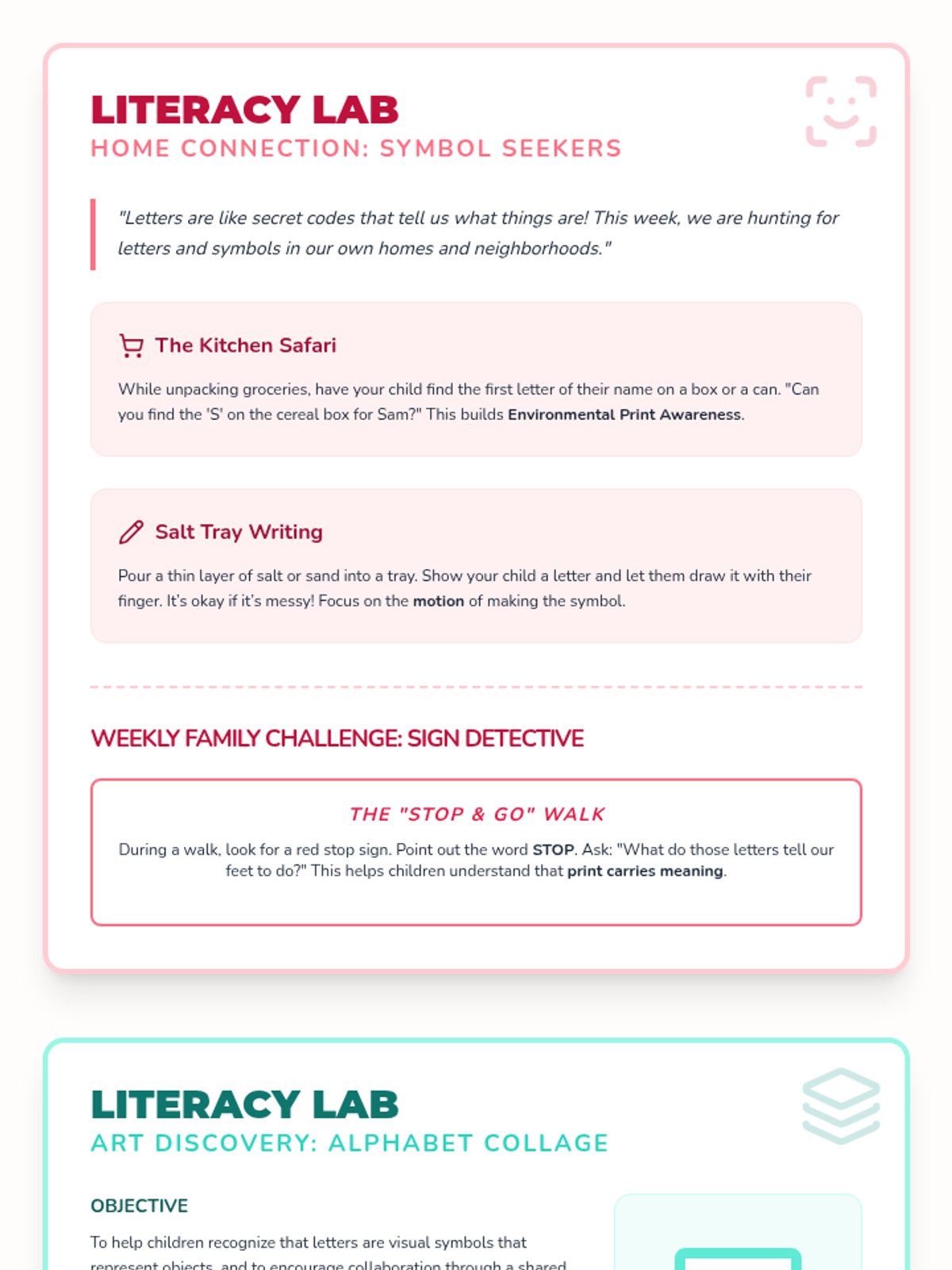
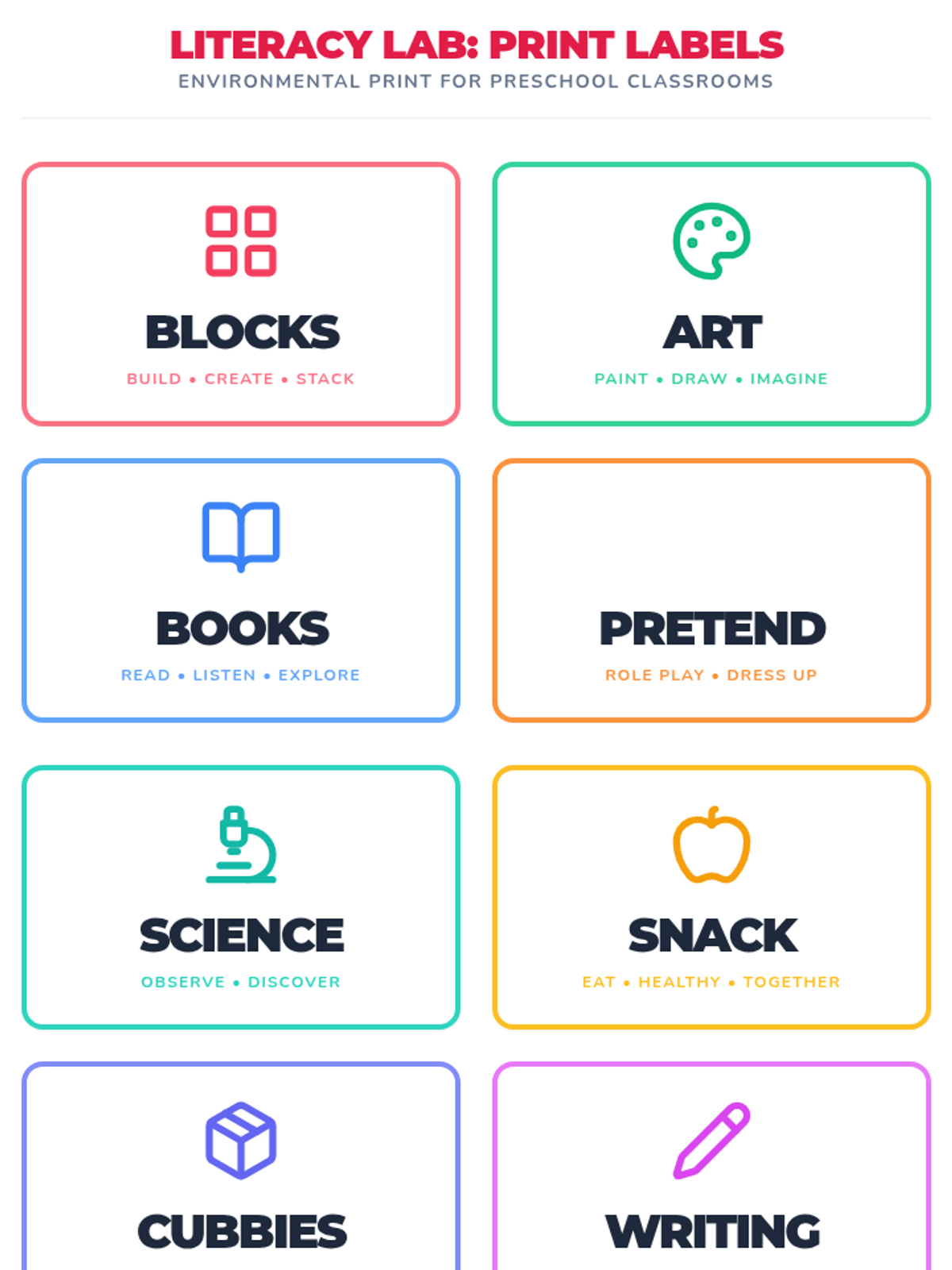
Focuses on print awareness and letter knowledge through meaningful, context-rich exploration. Students discover how symbols represent language in their environment and begin to master letter shapes and sounds through creative play.
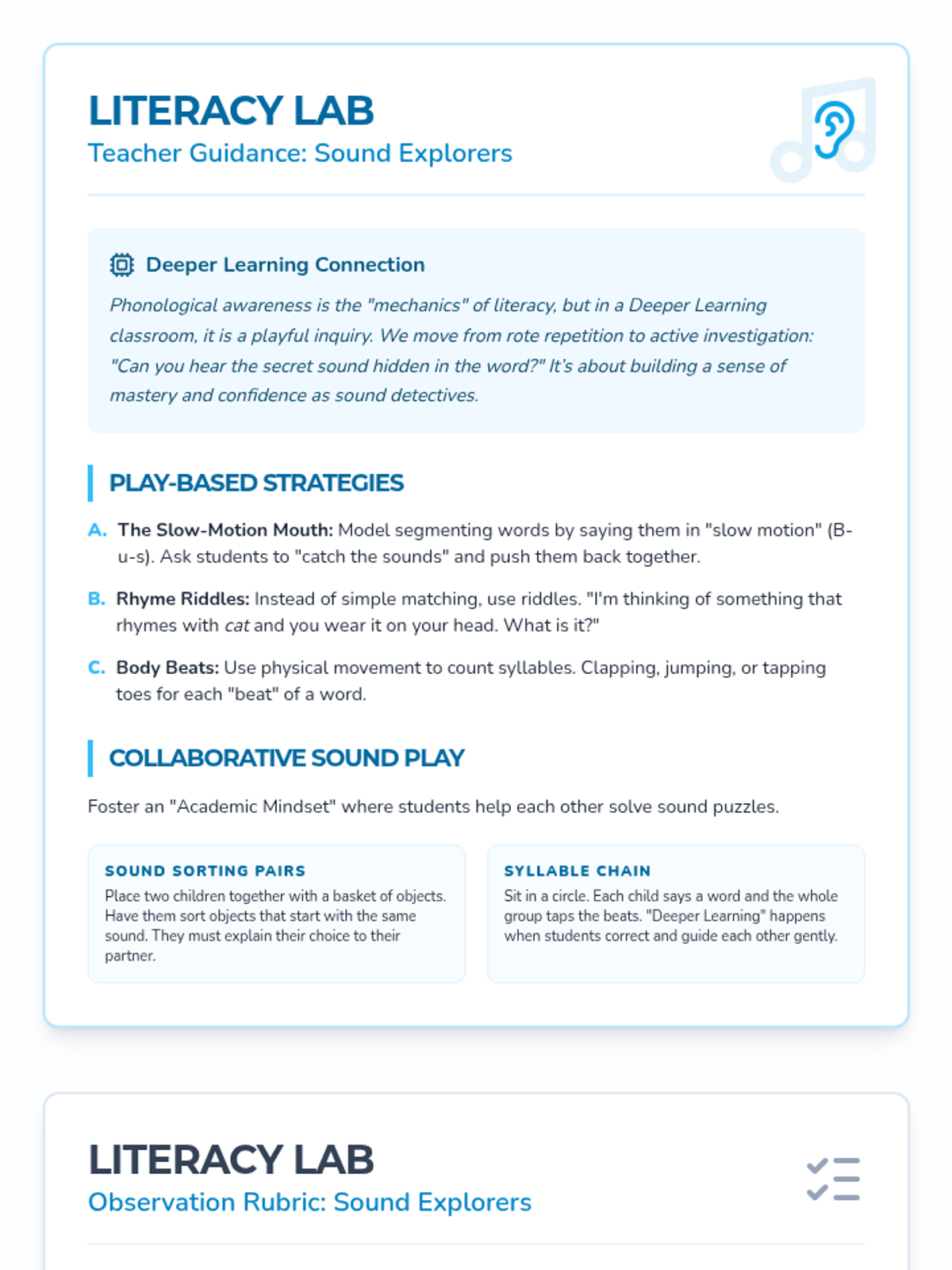
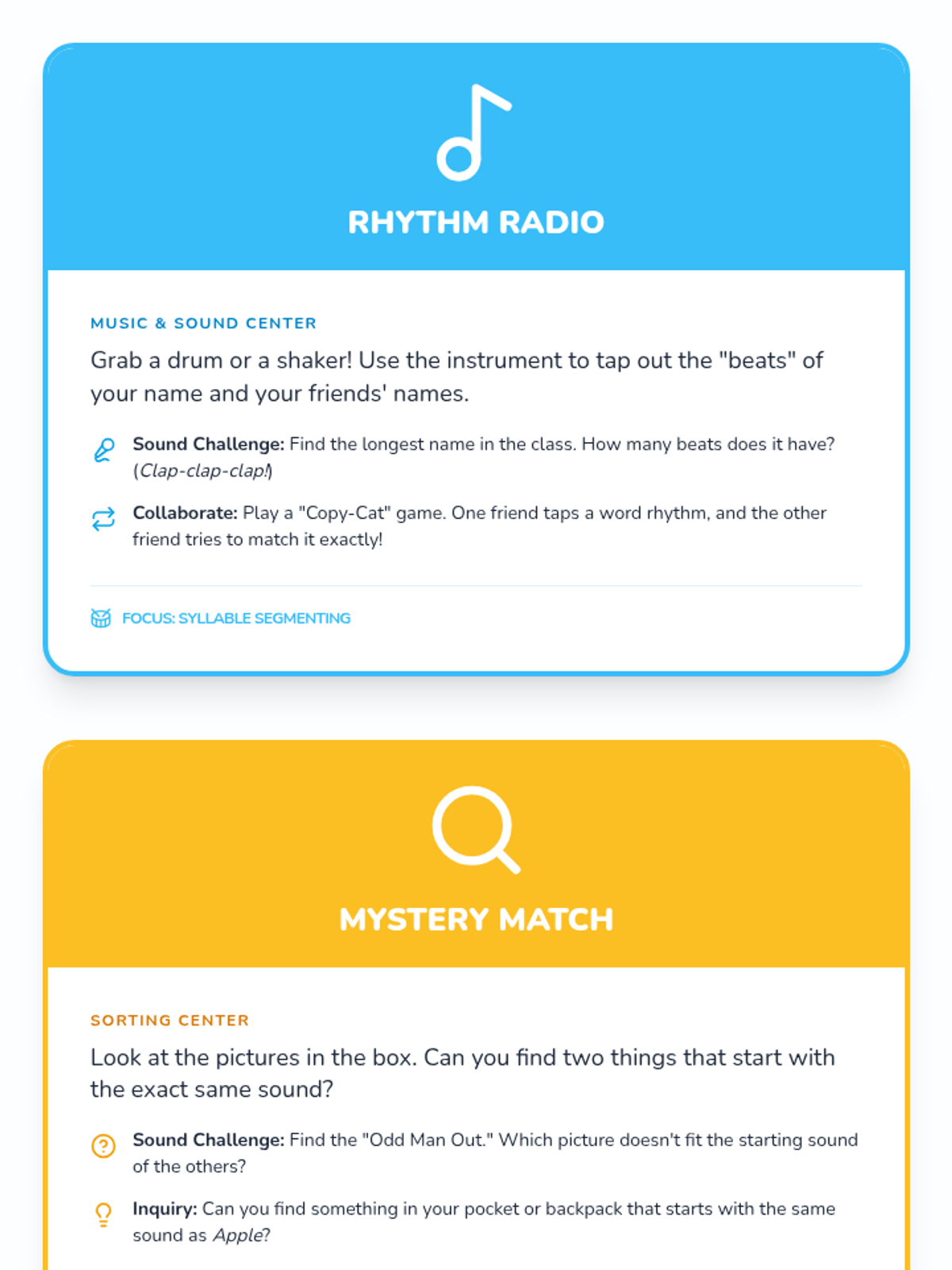
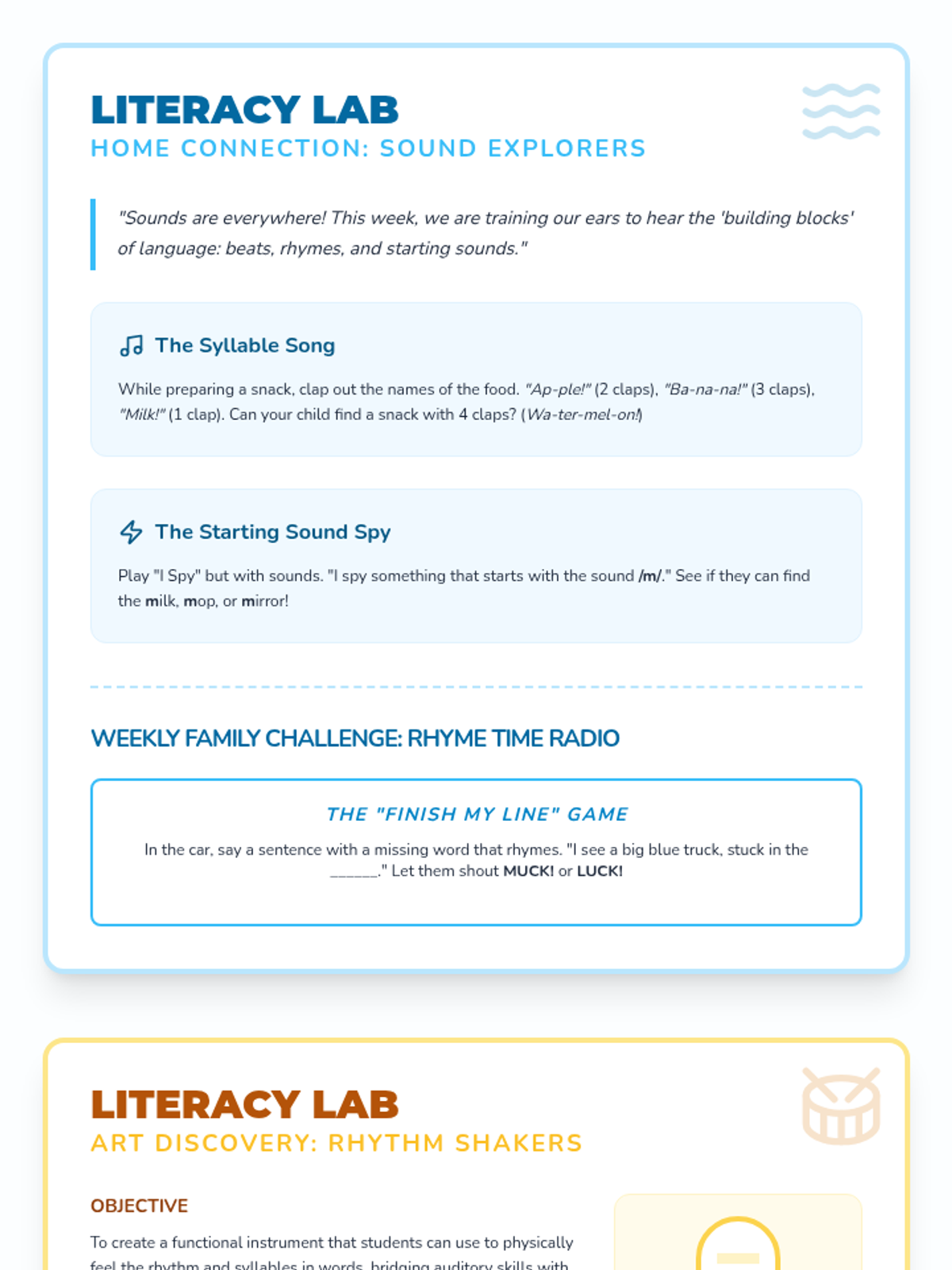
Focuses on developing phonological and phonemic awareness through playful sound discrimination, rhyming, and rhythm. Children build an ear for the sounds of language in a collaborative, active environment.
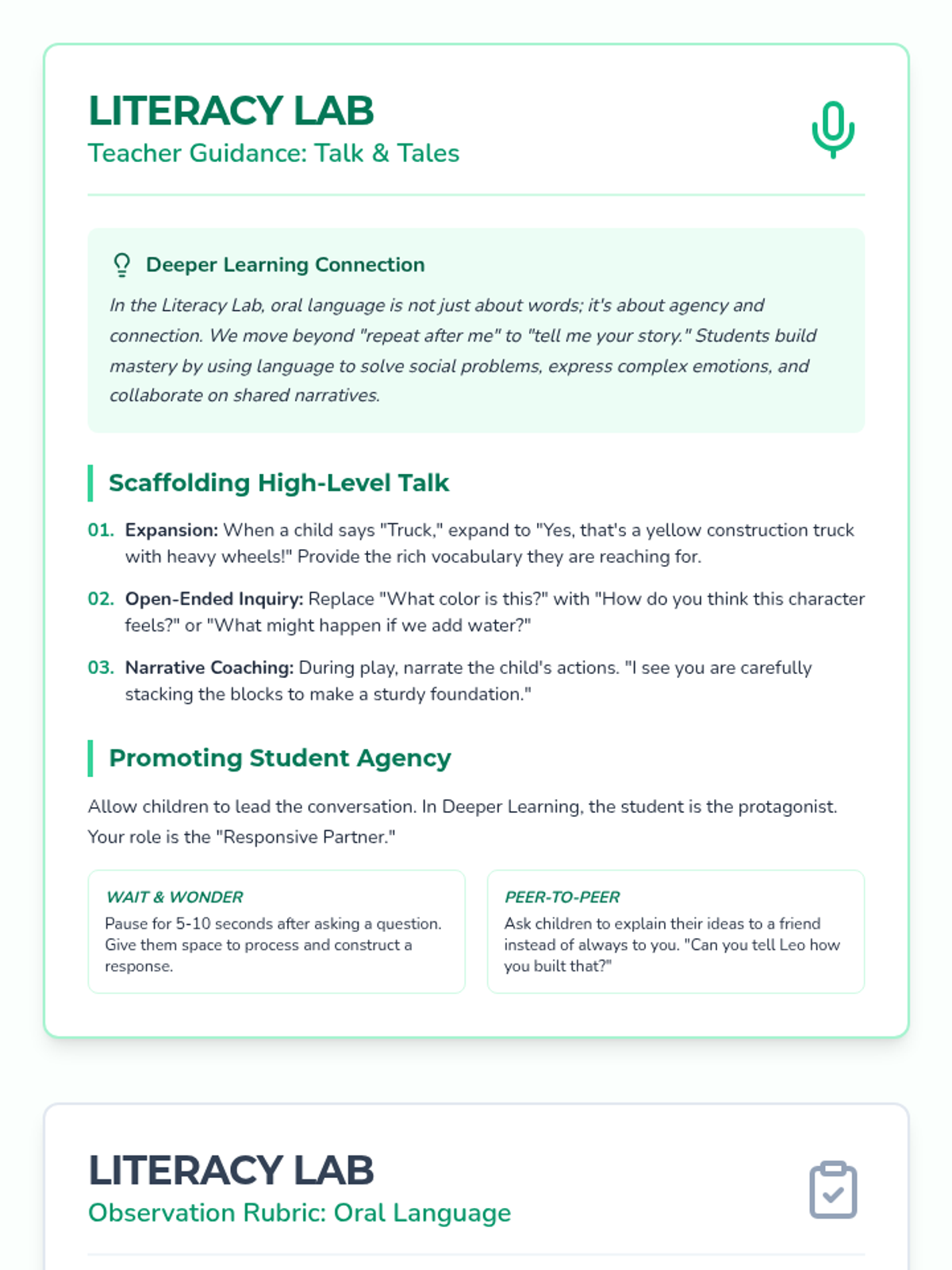
Focuses on building robust oral language and vocabulary through dramatic play, storytelling, and collaborative conversation. Teachers use 'Deeper Learning' strategies to scaffold high-level thinking in early childhood.
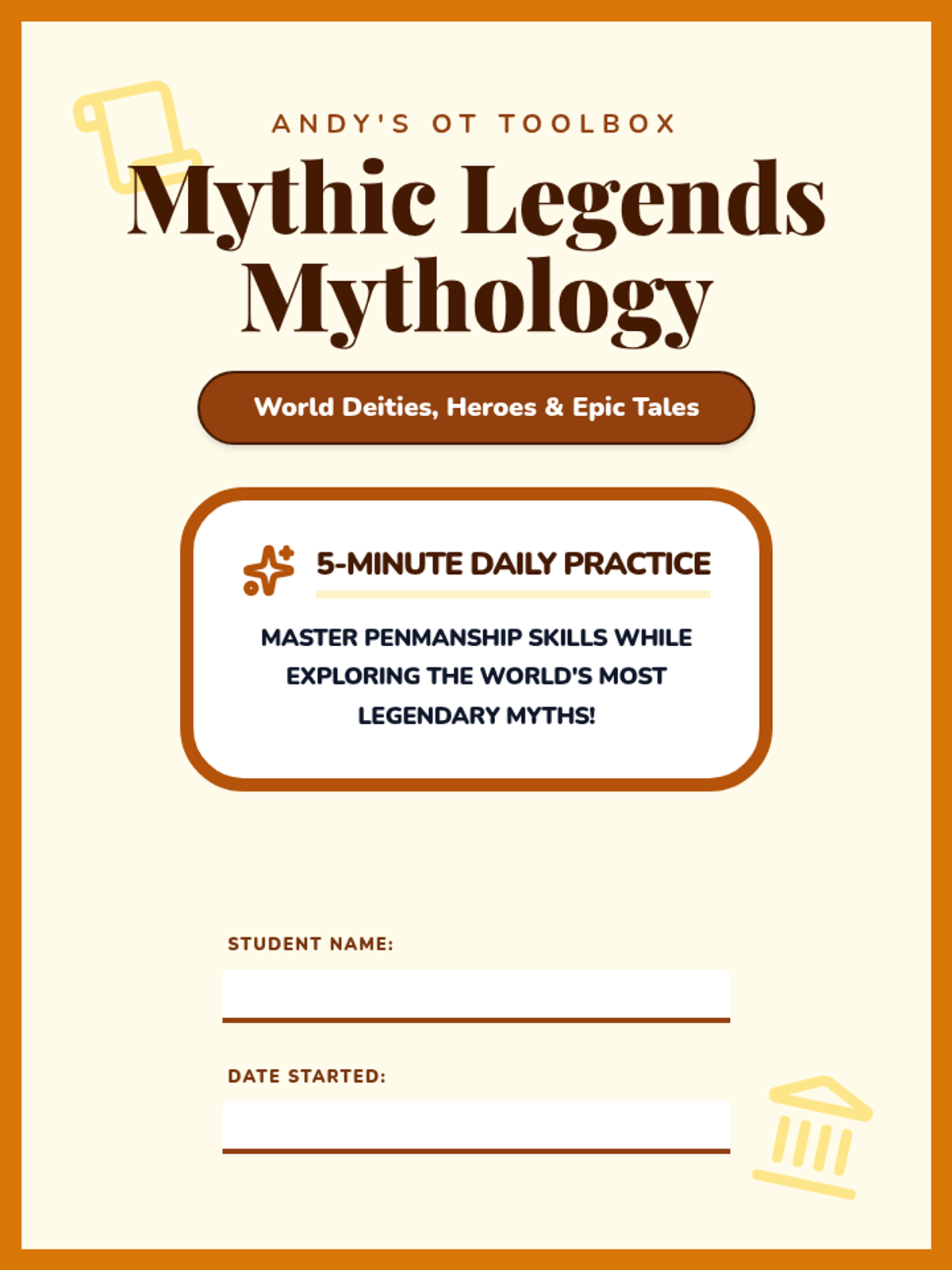
A 30-day handwriting practice program focused on world mythology, legendary heroes, and ancient deities, designed for 4th to 6th graders.
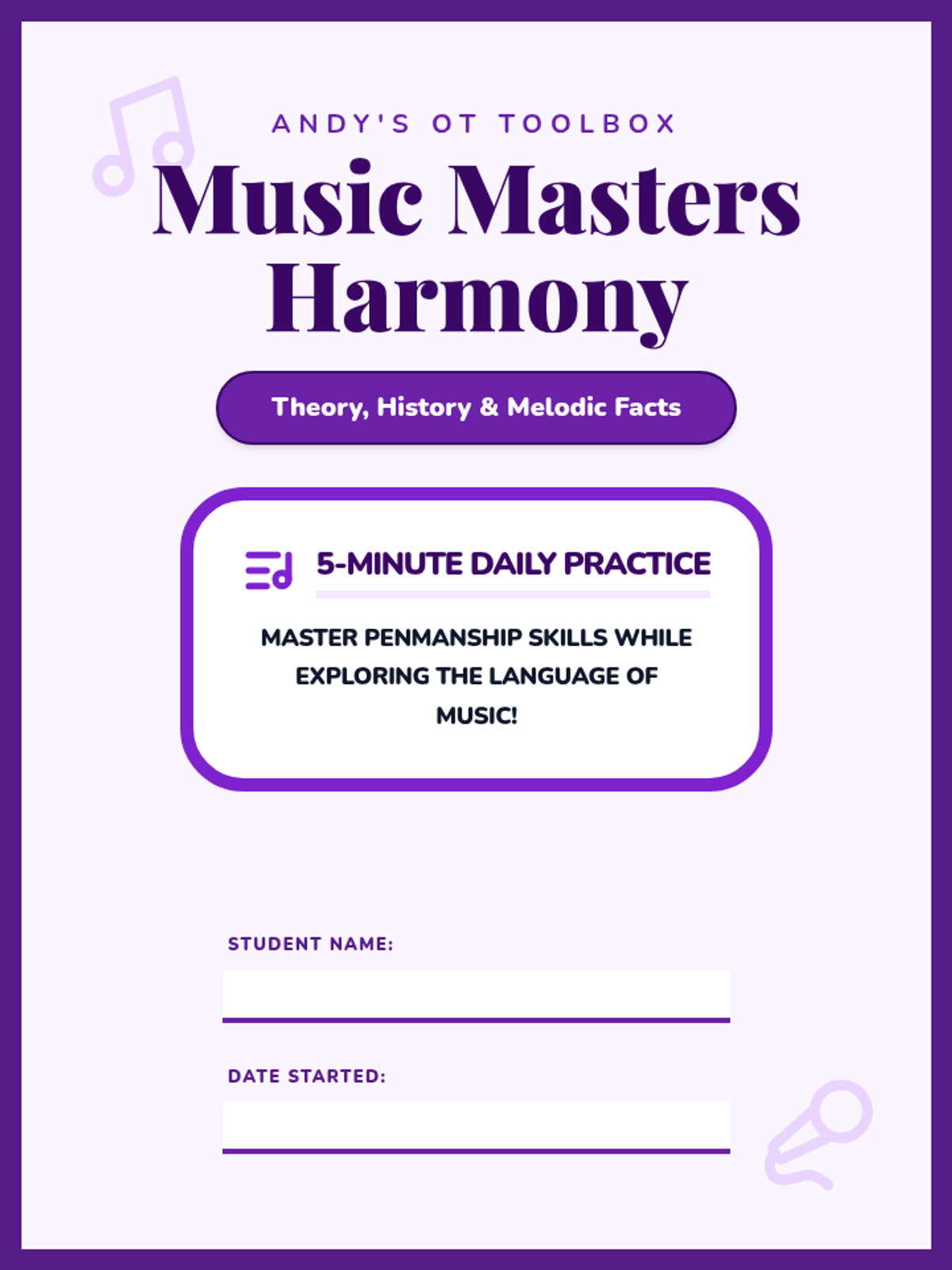
A 30-day handwriting practice program focused on music theory, history, and instruments, designed for 4th to 6th graders to improve penmanship through engaging musical facts.
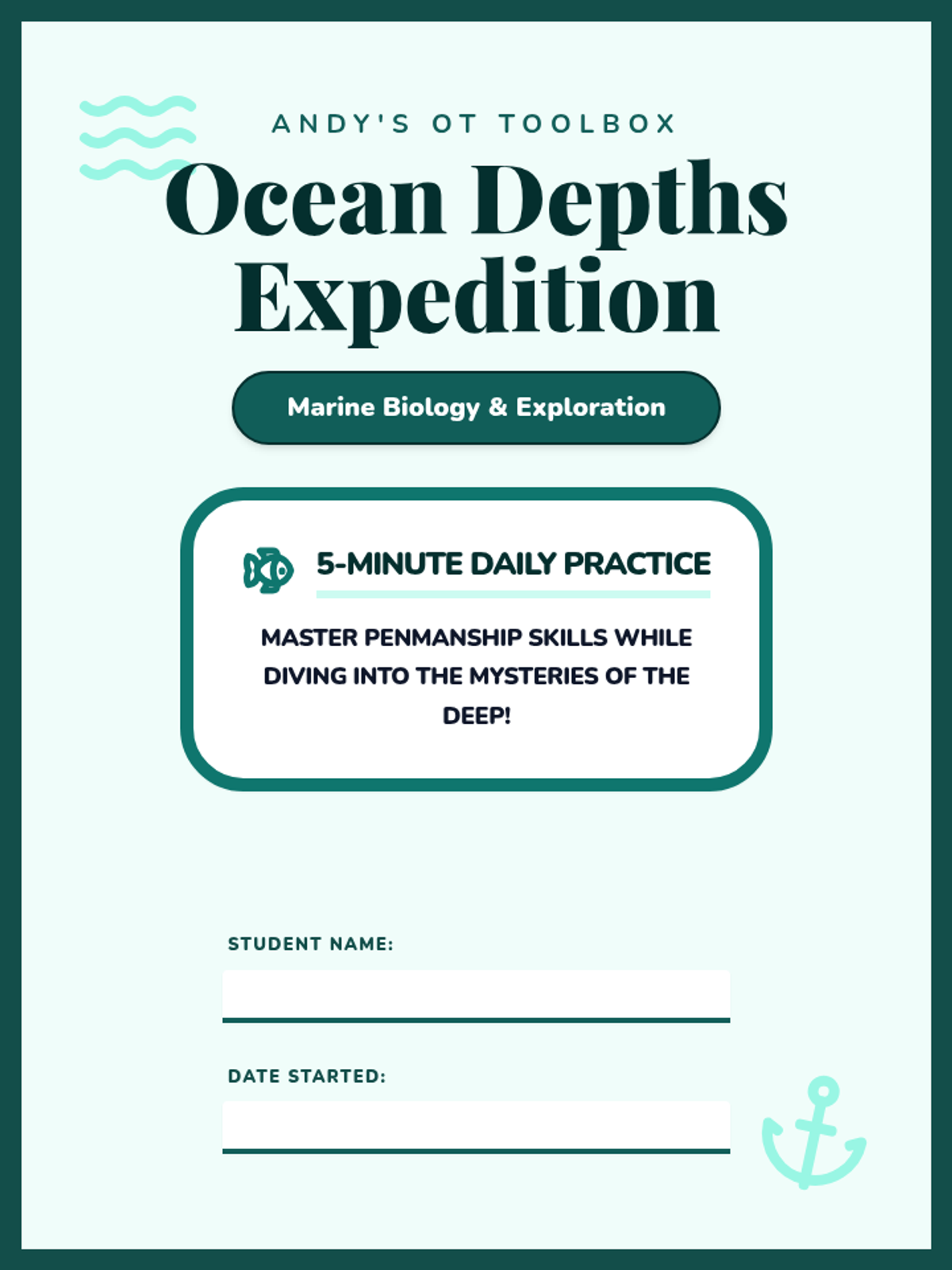
A 30-day handwriting practice program focused on marine biology, oceanography, and deep-sea exploration, designed for 4th to 6th graders.
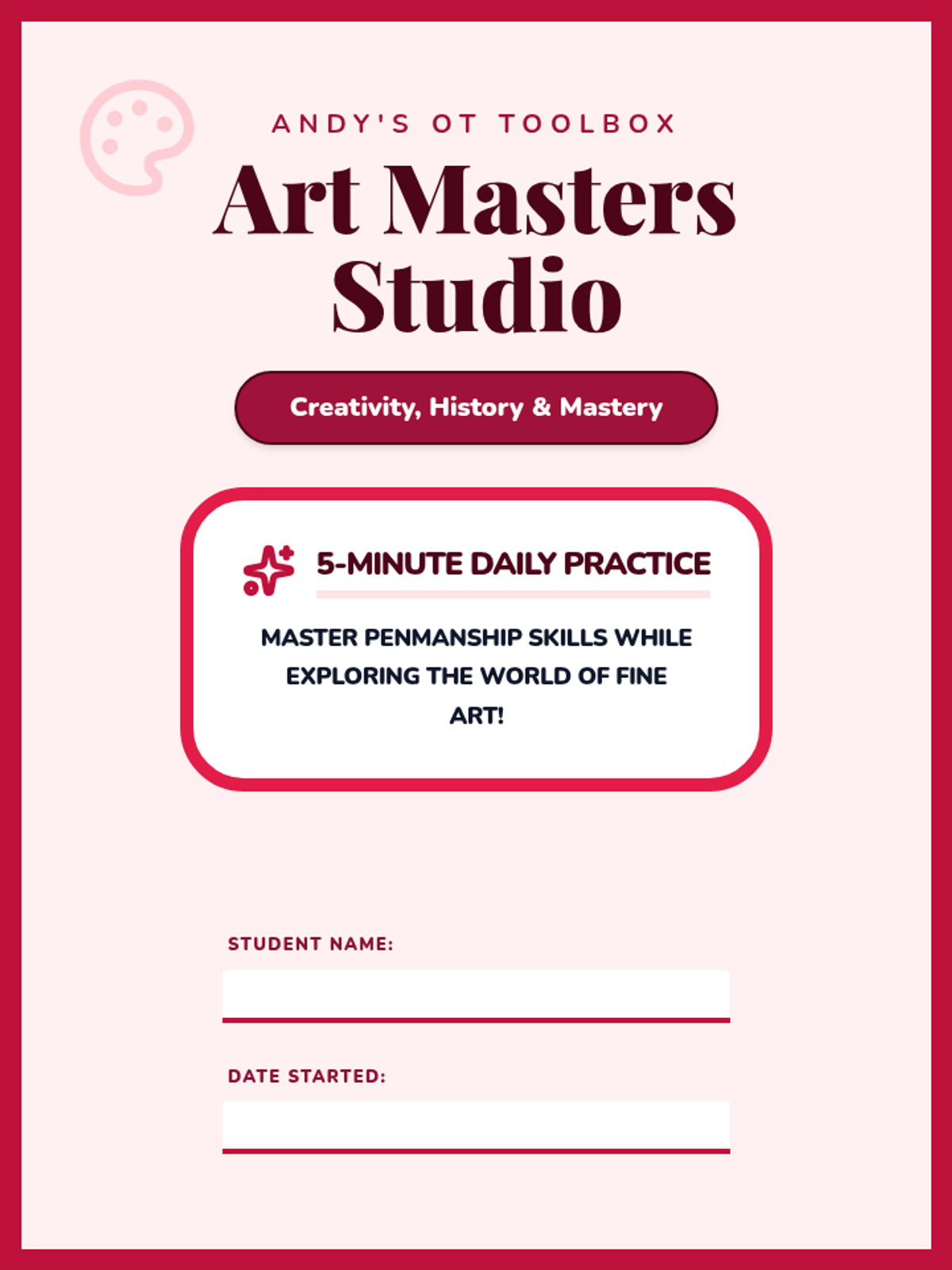
A 30-day handwriting practice program focused on art history, creative techniques, and famous masterpieces, designed for 4th to 6th graders.
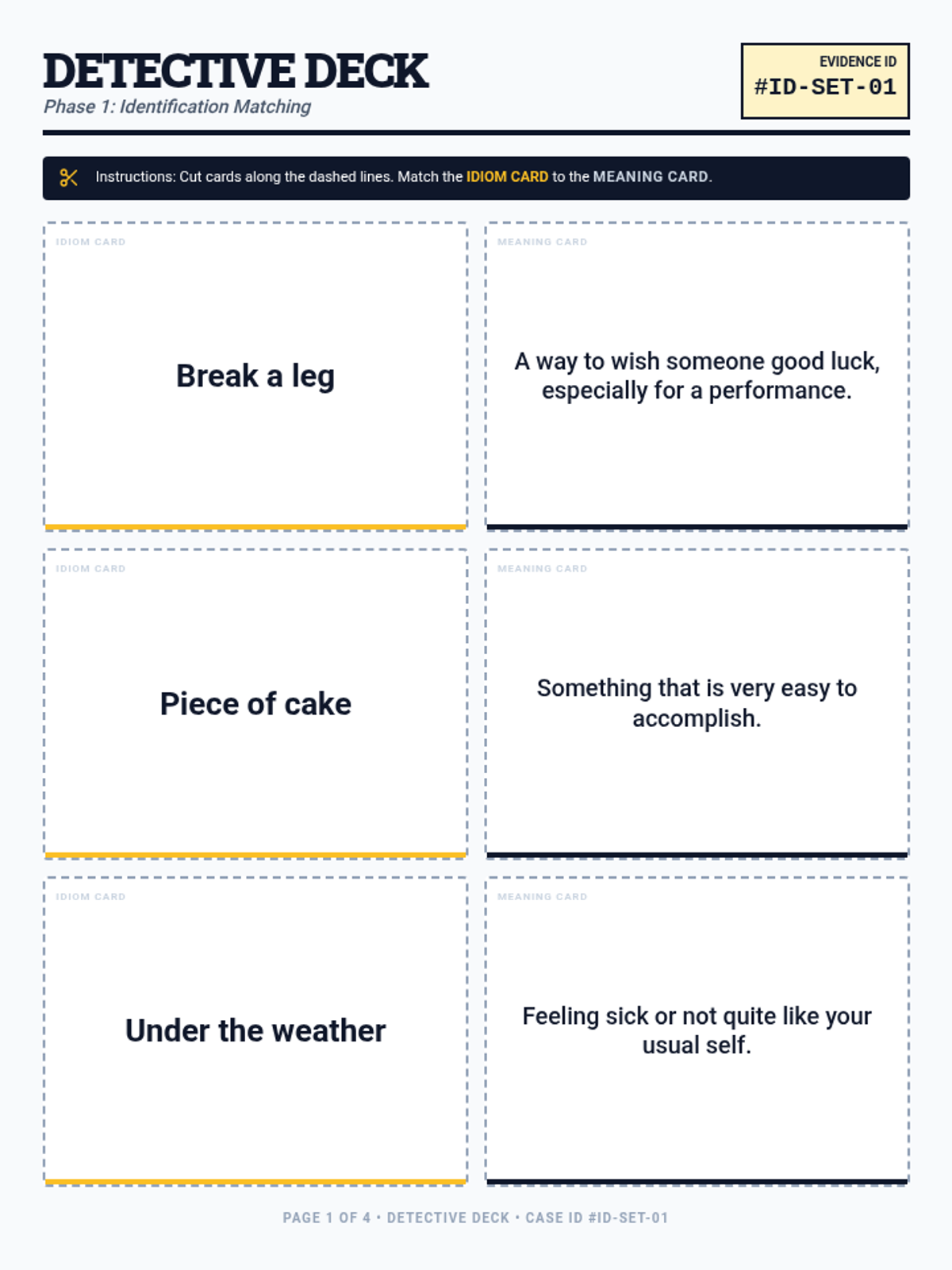
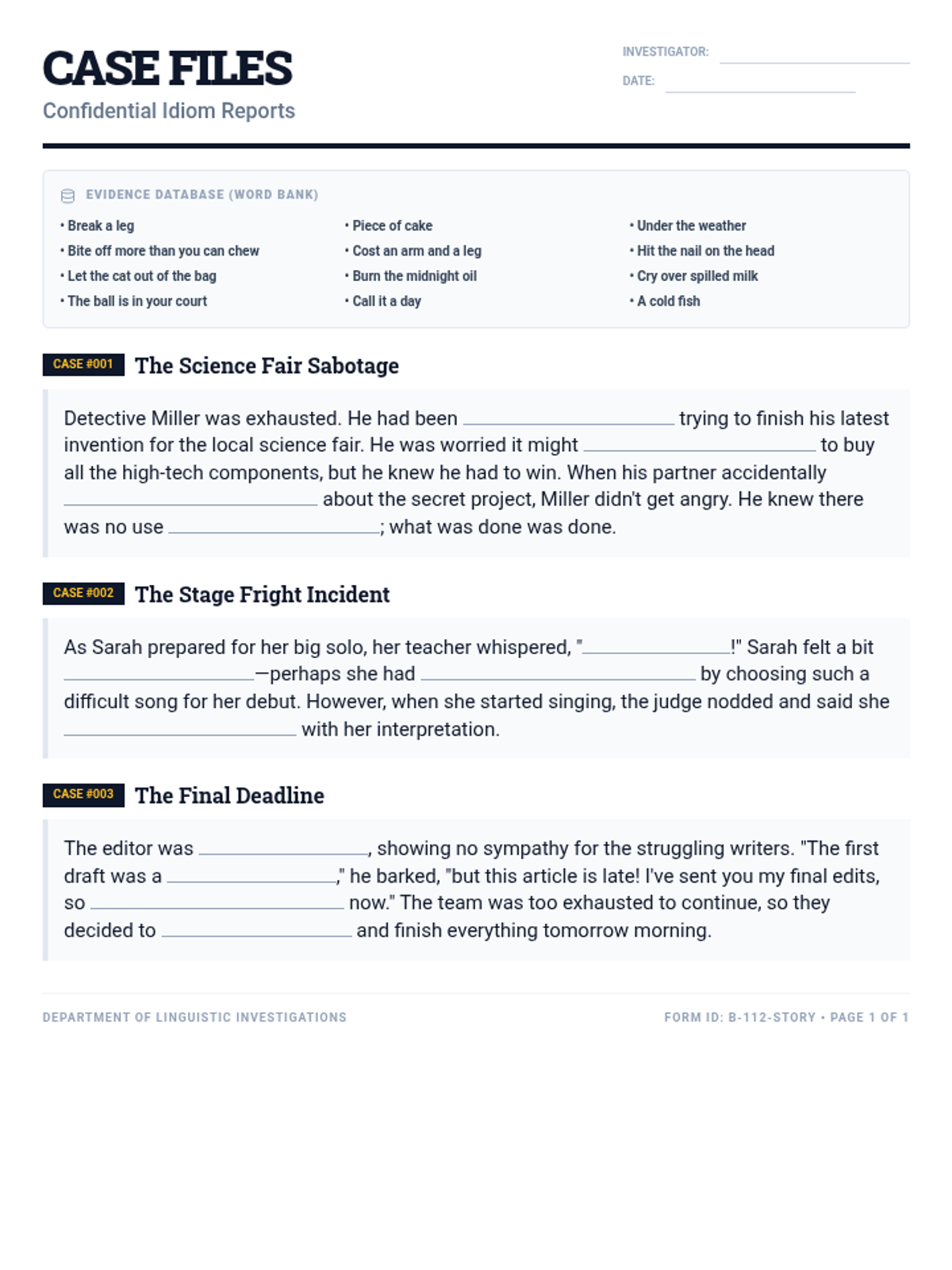
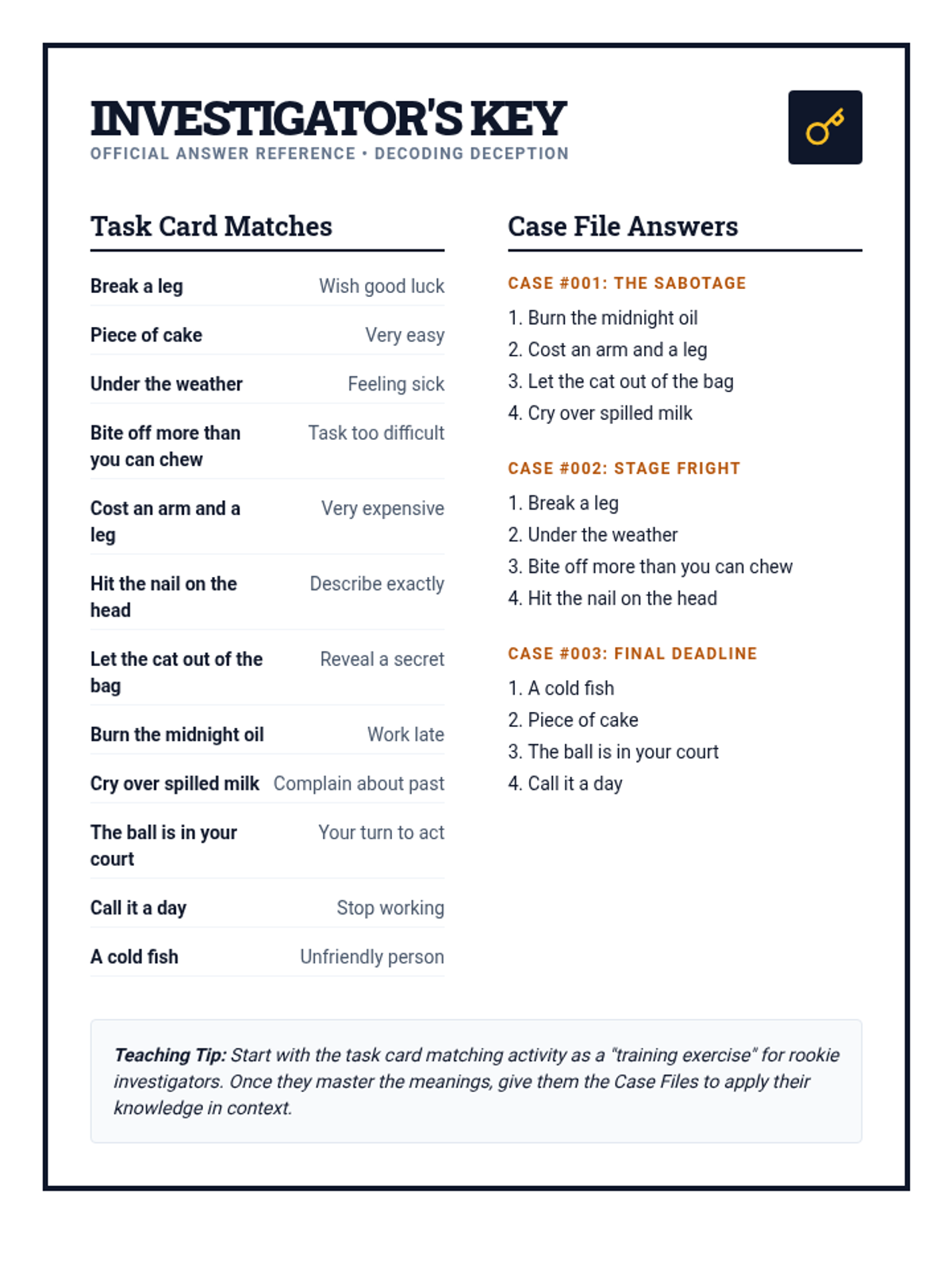
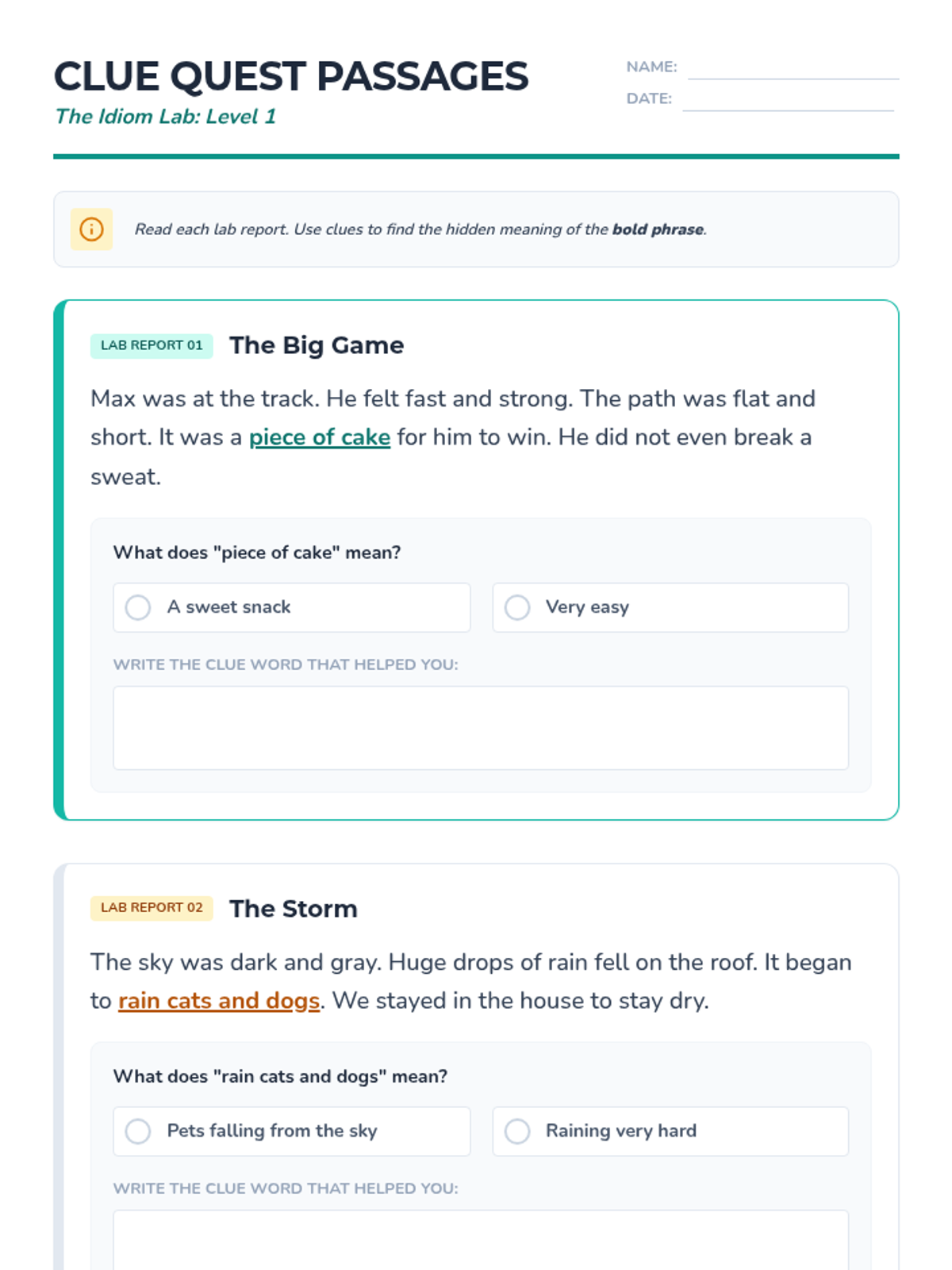
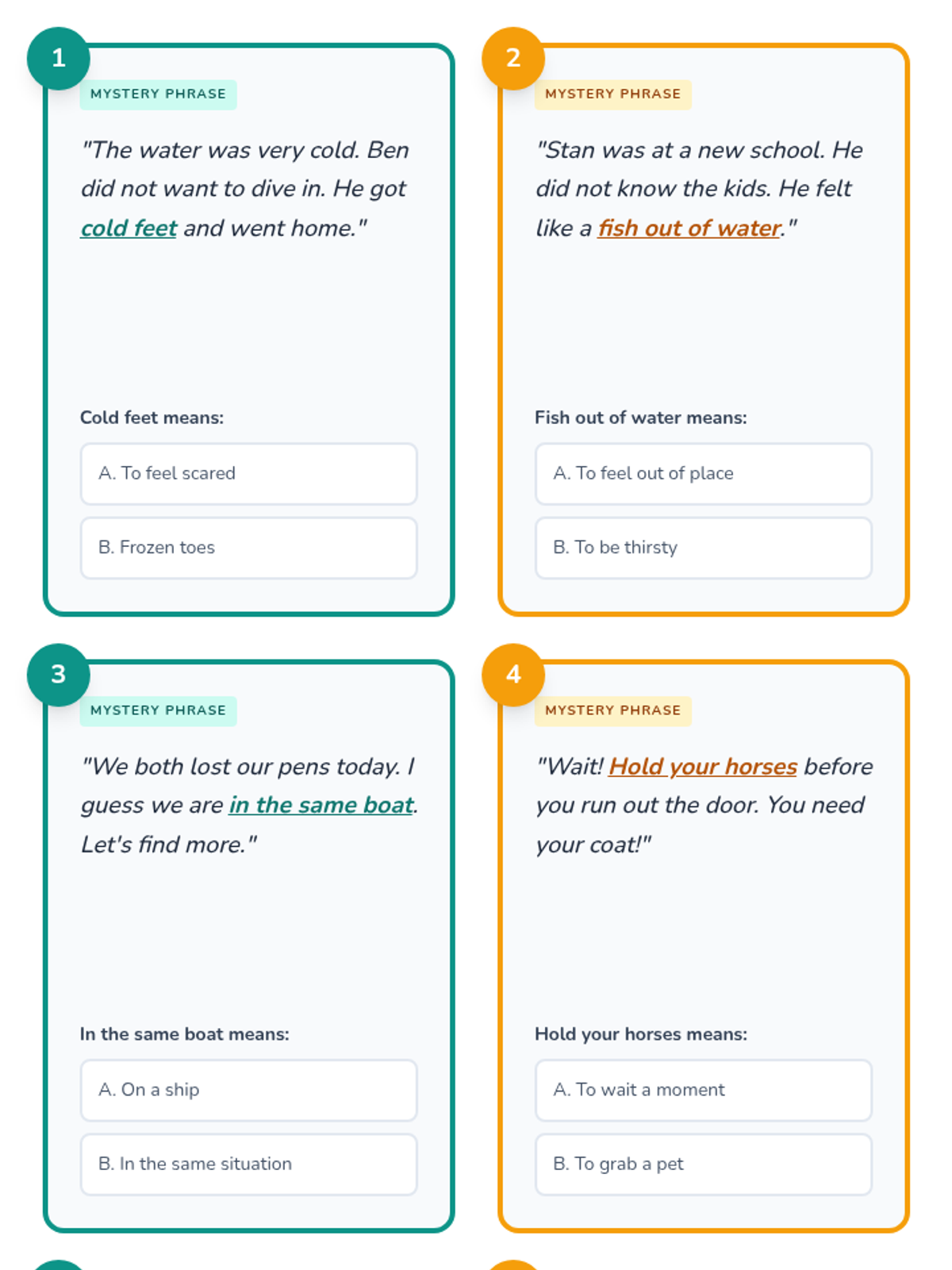
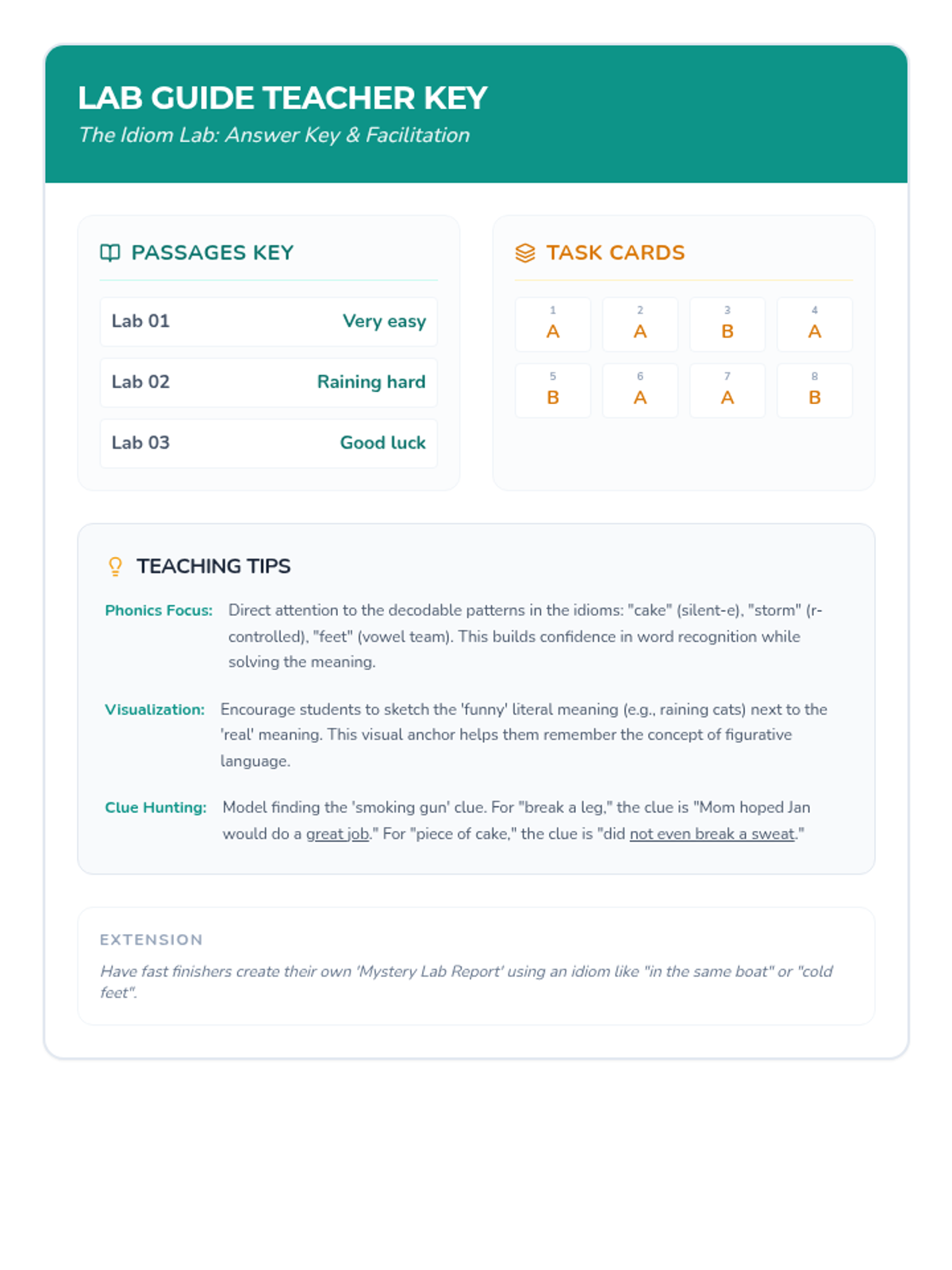
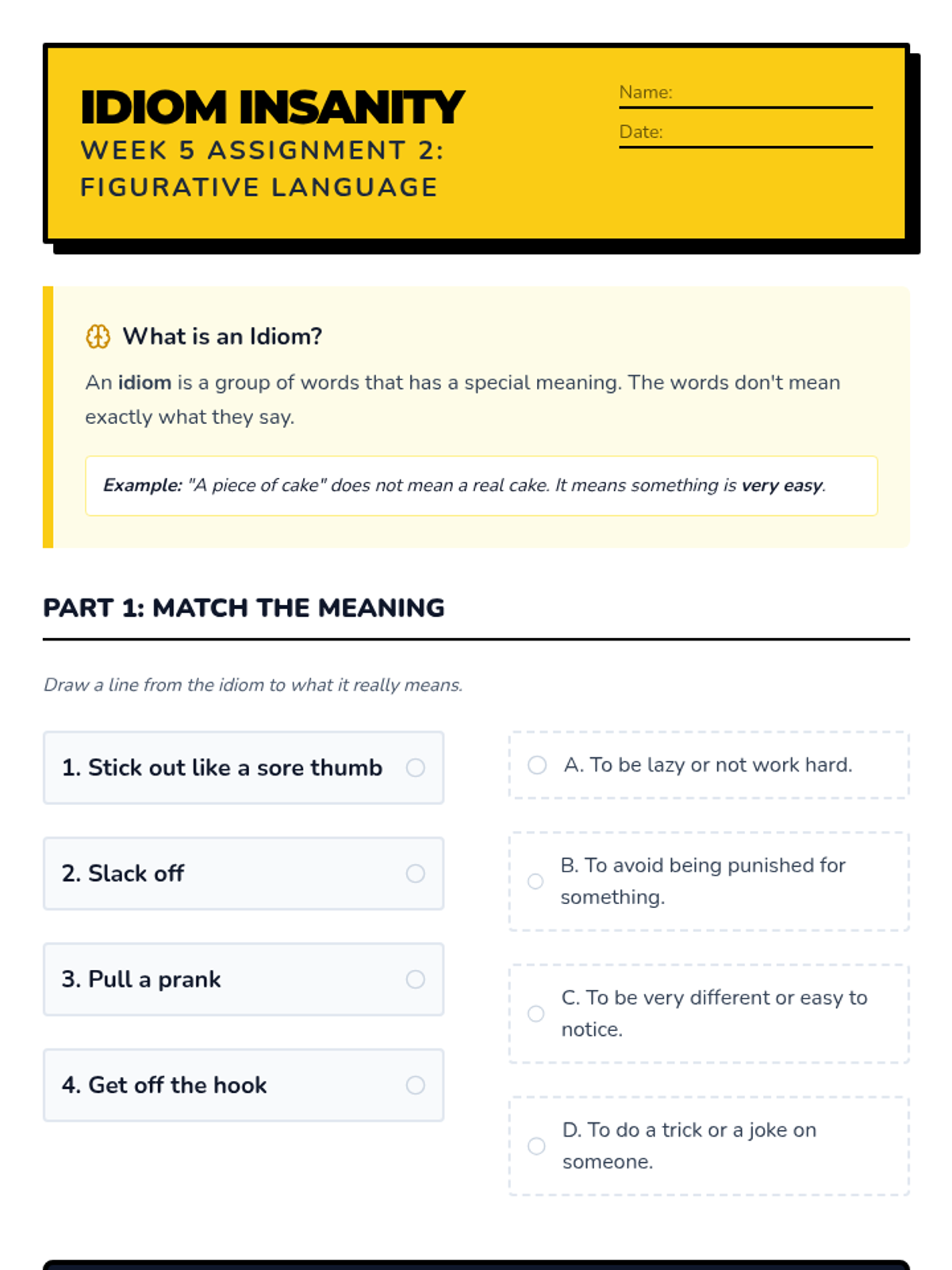
A high-interest, detective-themed lesson where students master common English idioms through matching challenges and narrative application. Students take on the role of 'Idiom Investigators' to decode figurative language.
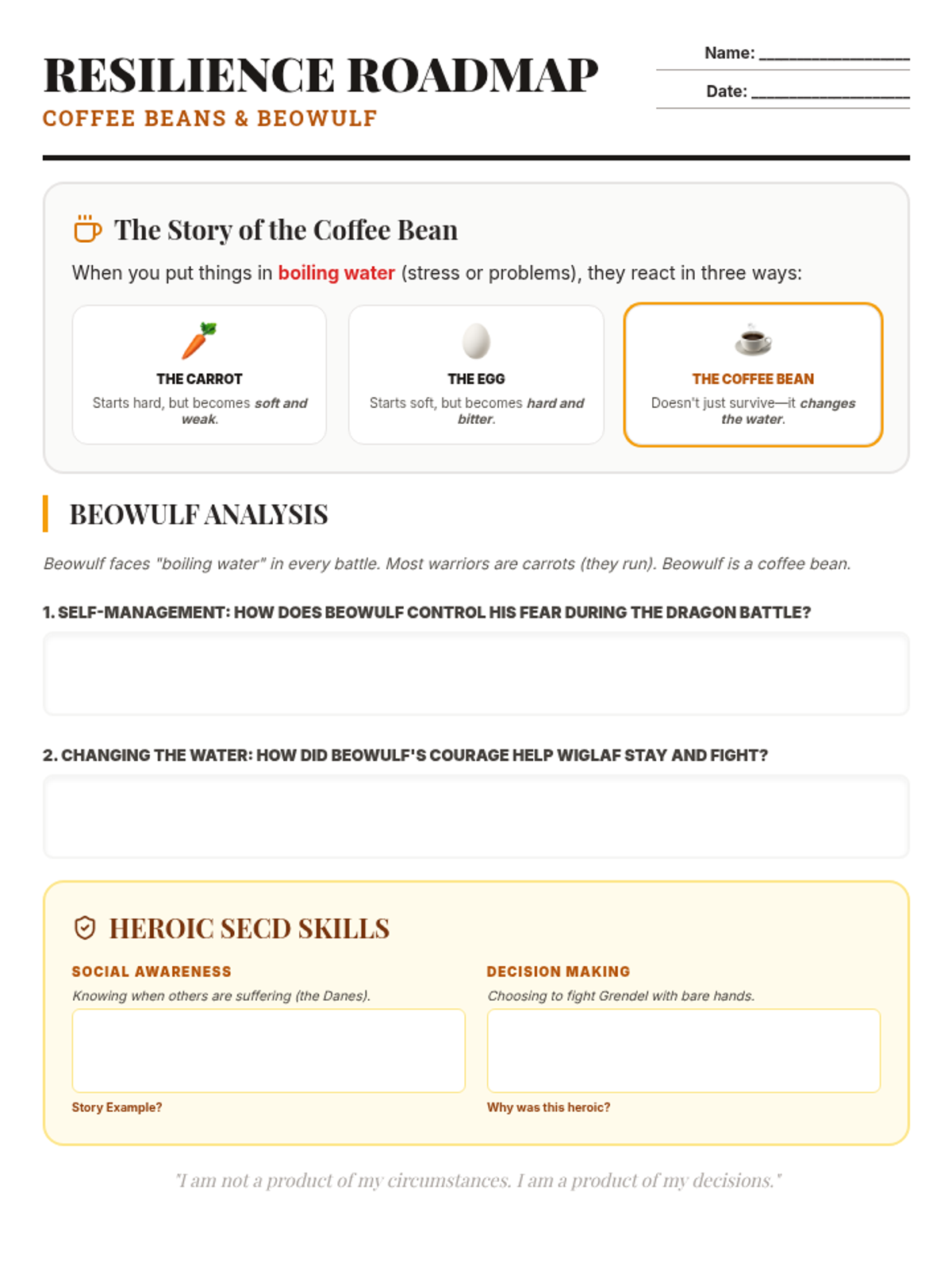
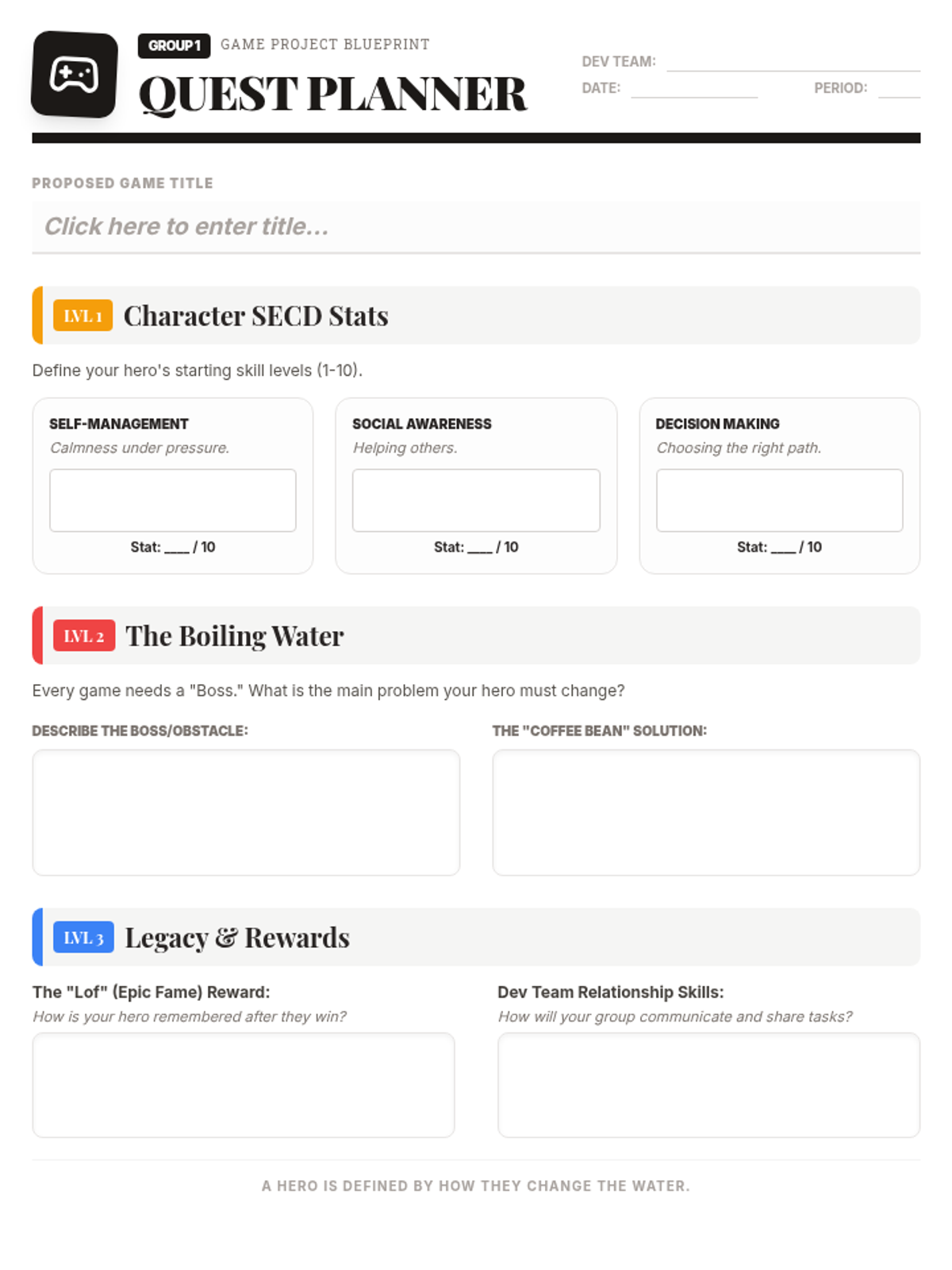
Connecting Beowulf's journey to personal resilience through the Coffee Bean metaphor and SECD frameworks, preparing students for the Hero's Journey game project.
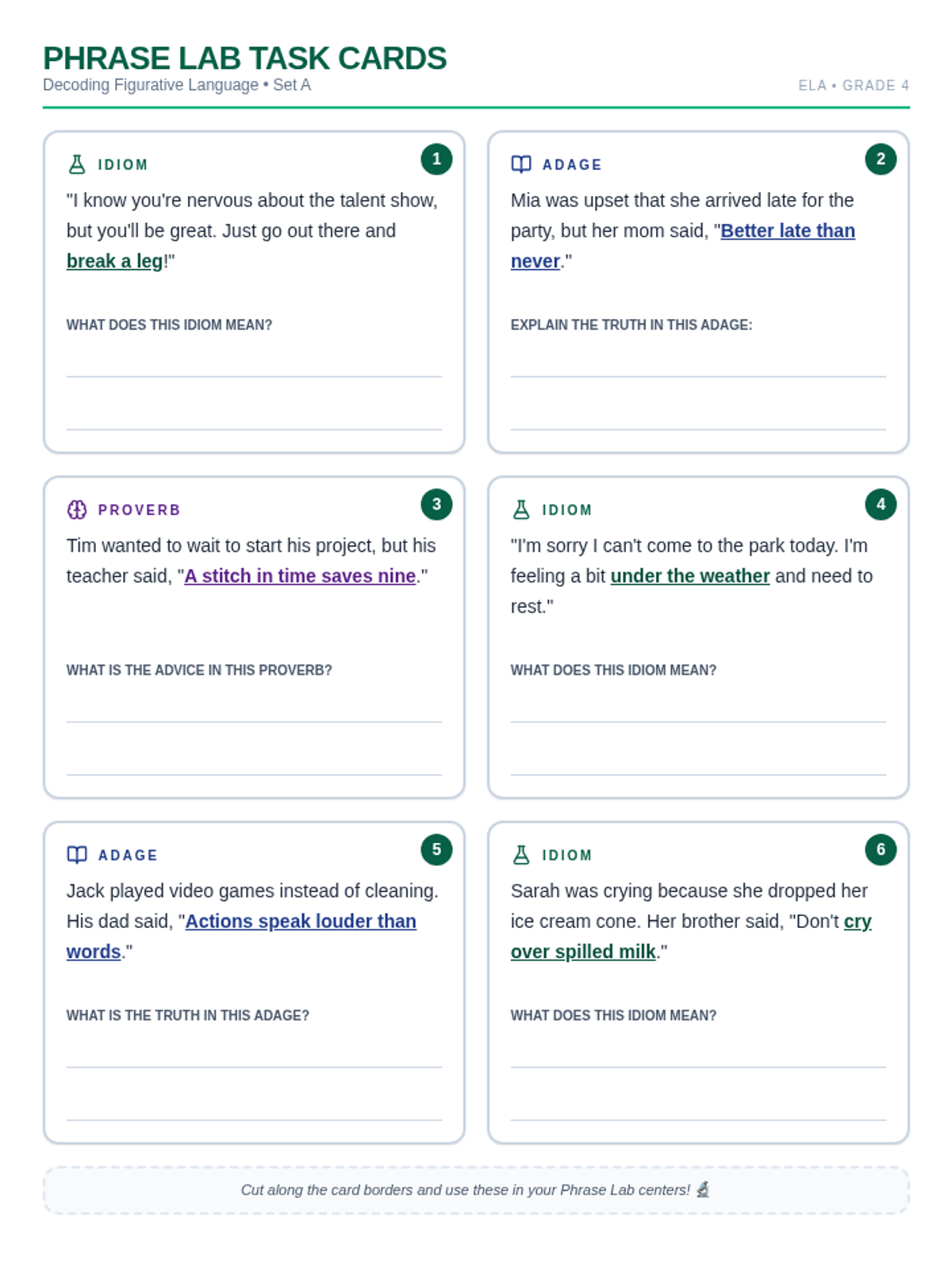
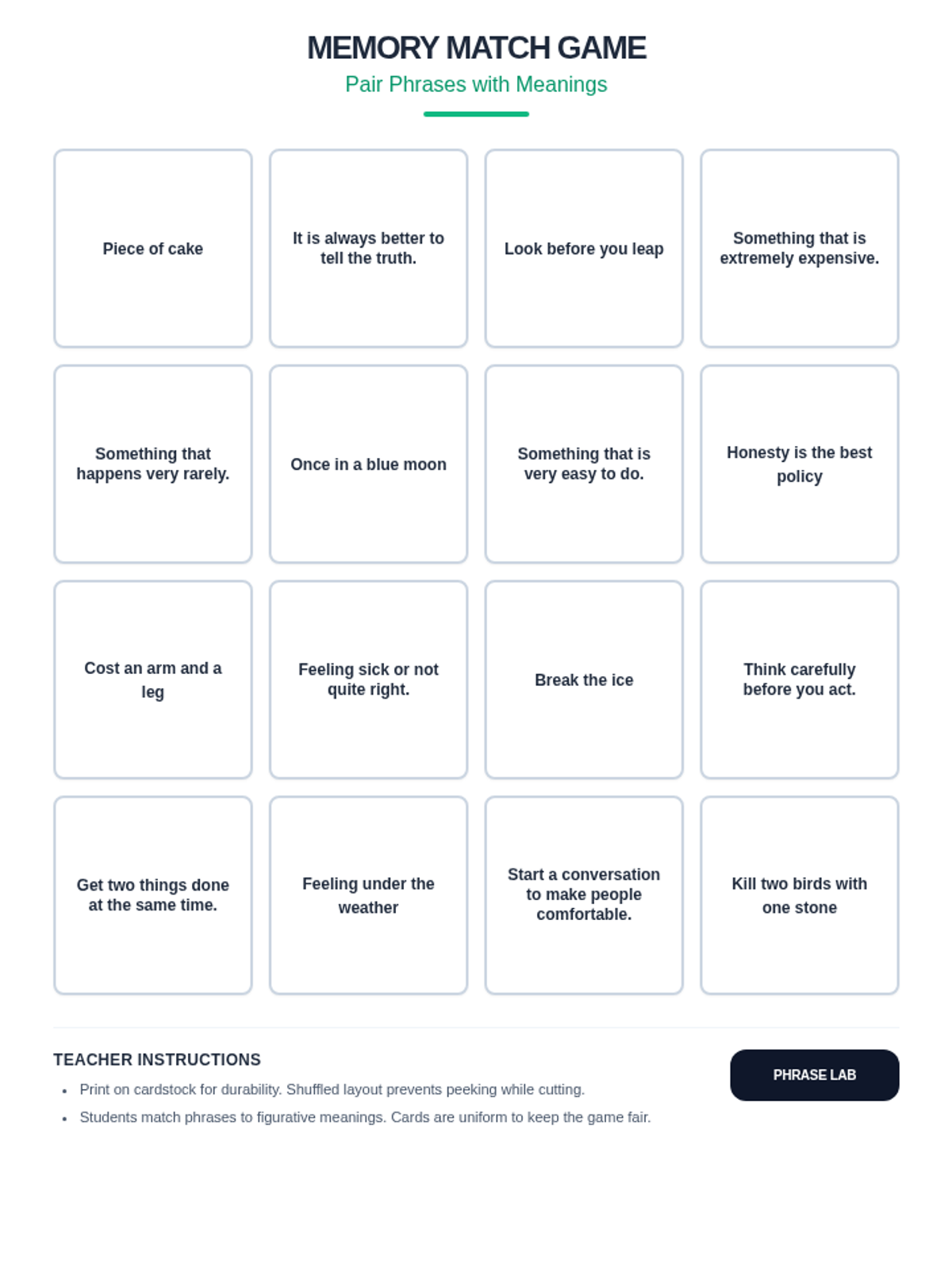
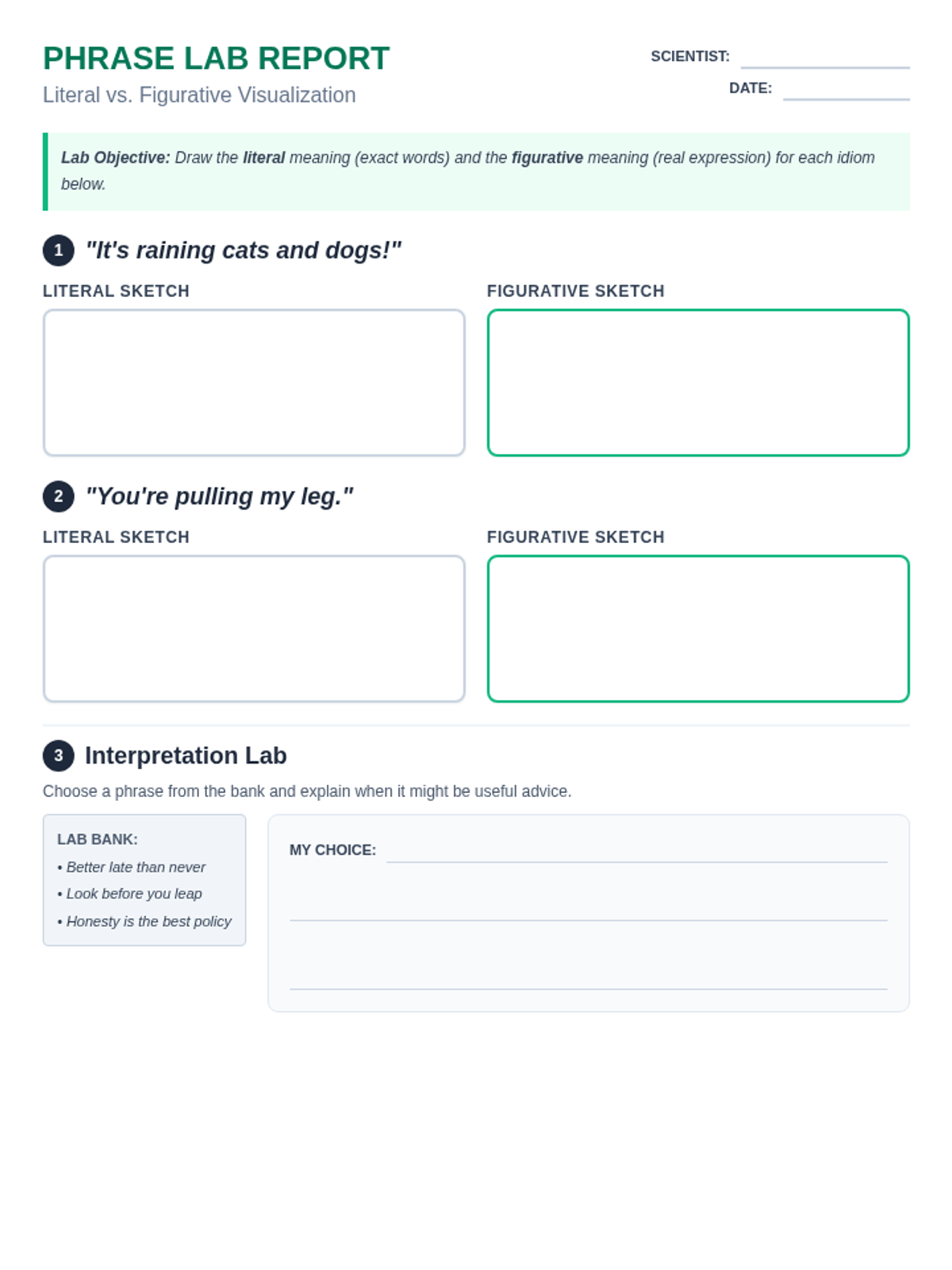
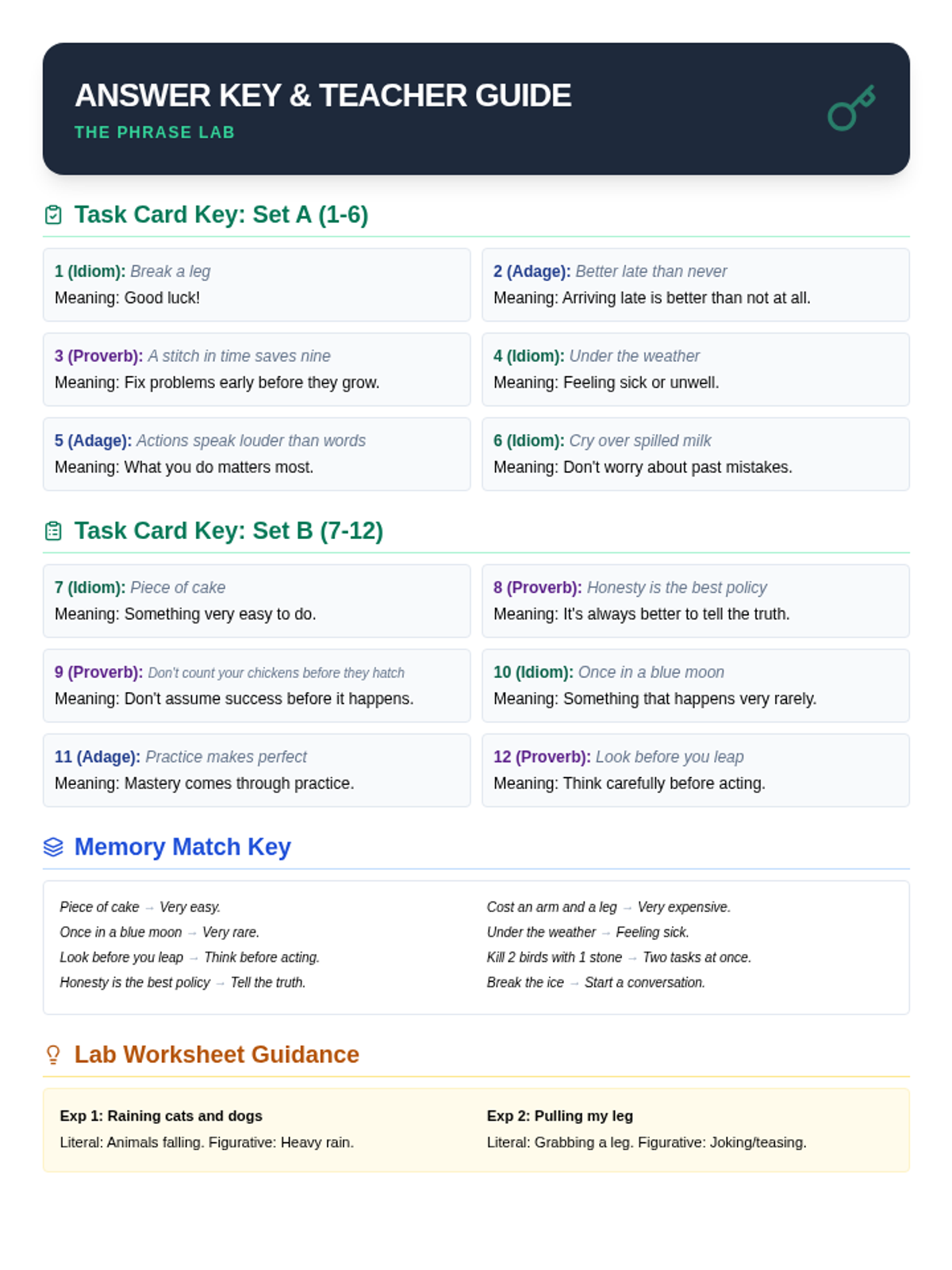
A comprehensive exploration of idioms, adages, and proverbs for 4th graders, focusing on interpreting figurative language and distinguishing it from literal meanings through interactive and hands-on activities.
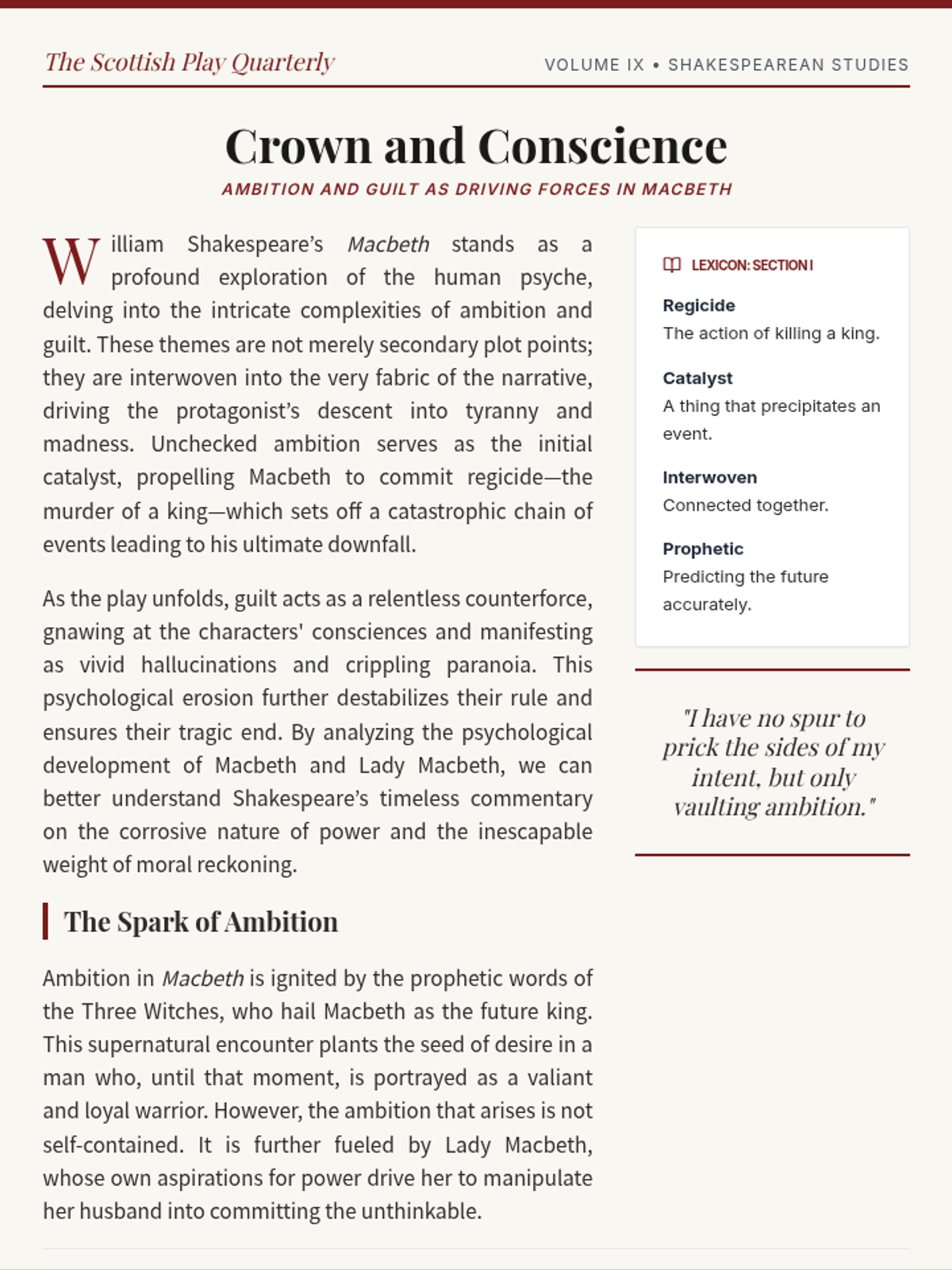
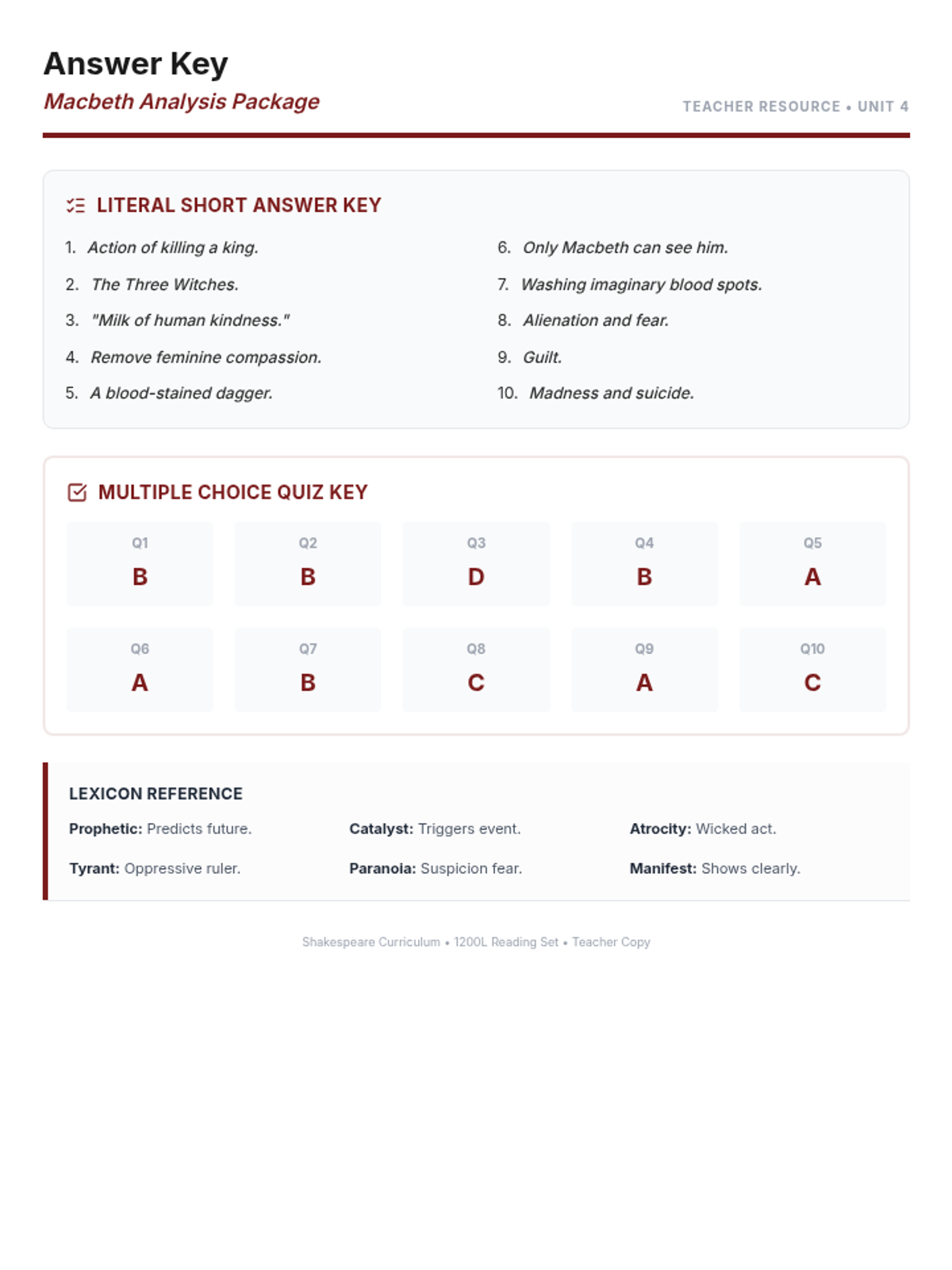
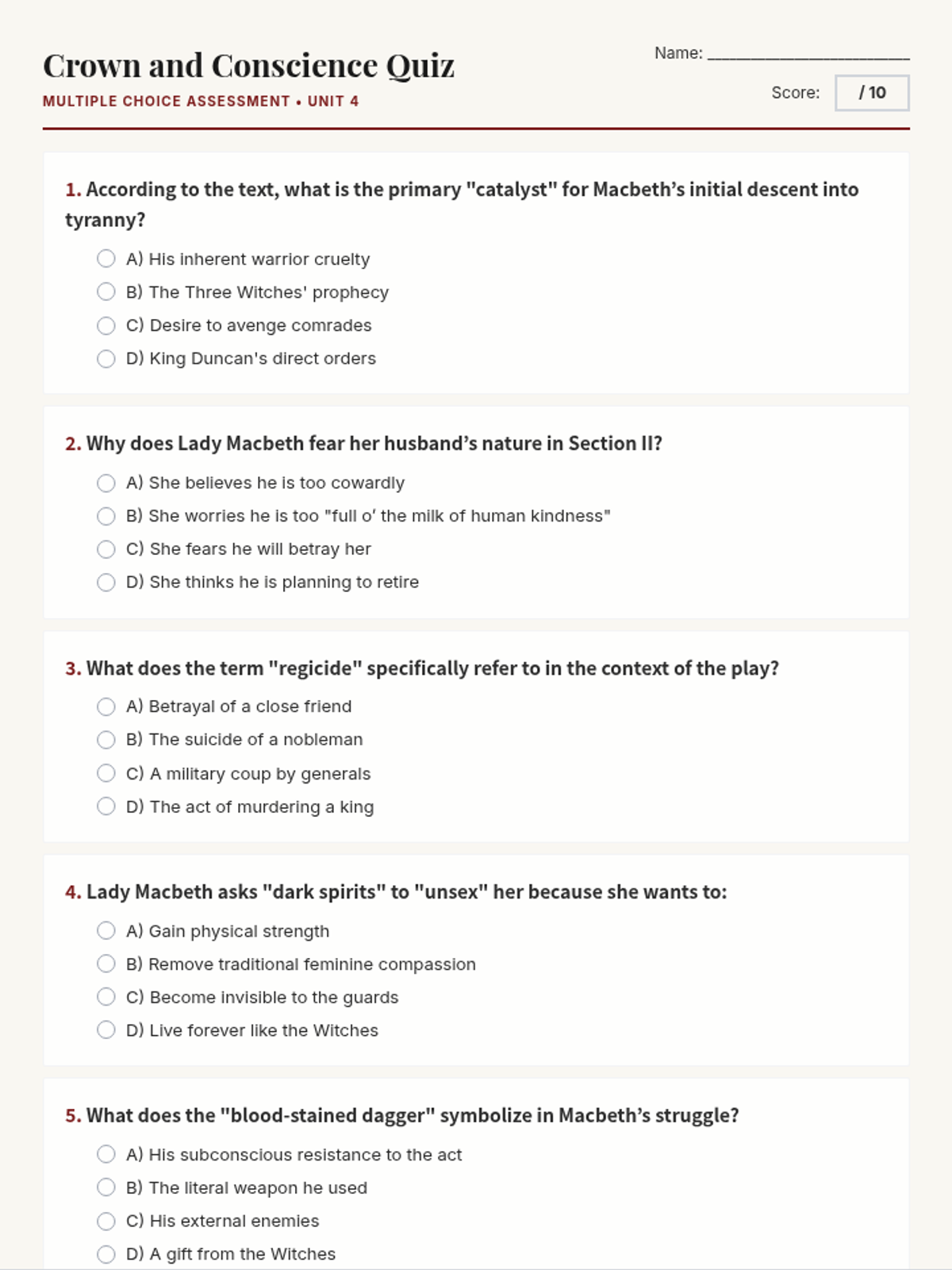
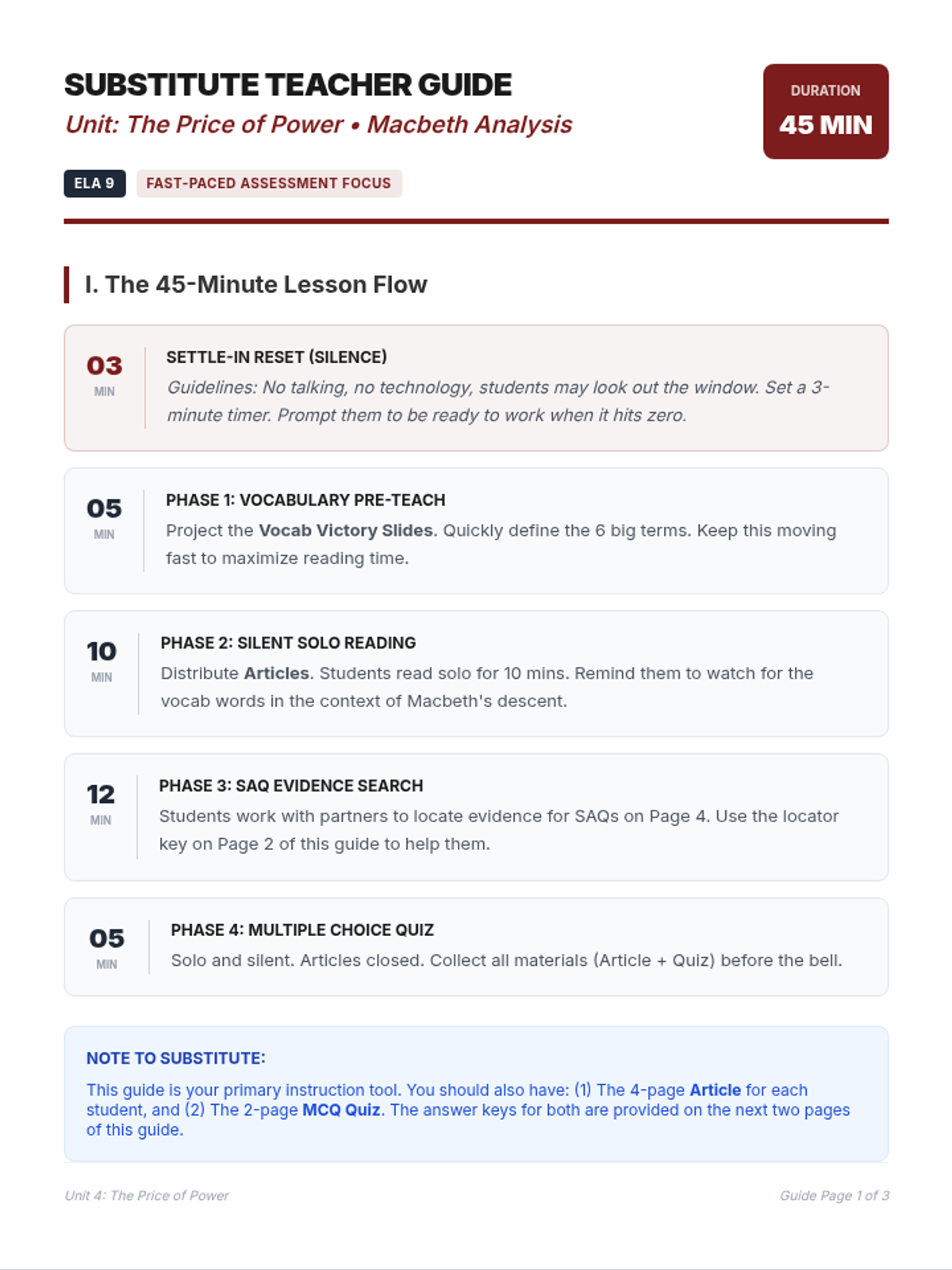
A deep dive into the psychological themes of Shakespeare's Macbeth, focusing on the destructive interplay between unchecked ambition and the weight of guilt.
A vocabulary investigation focused on mastering nuanced words and idioms through context clues and creative application. Students analyze 'mystery' themed sentences to determine meanings and apply them to real-world scenarios.
A literature-focused lesson using fictional stories set across North Carolina's diverse landscapes to practice character analysis, theme identification, and figurative language.
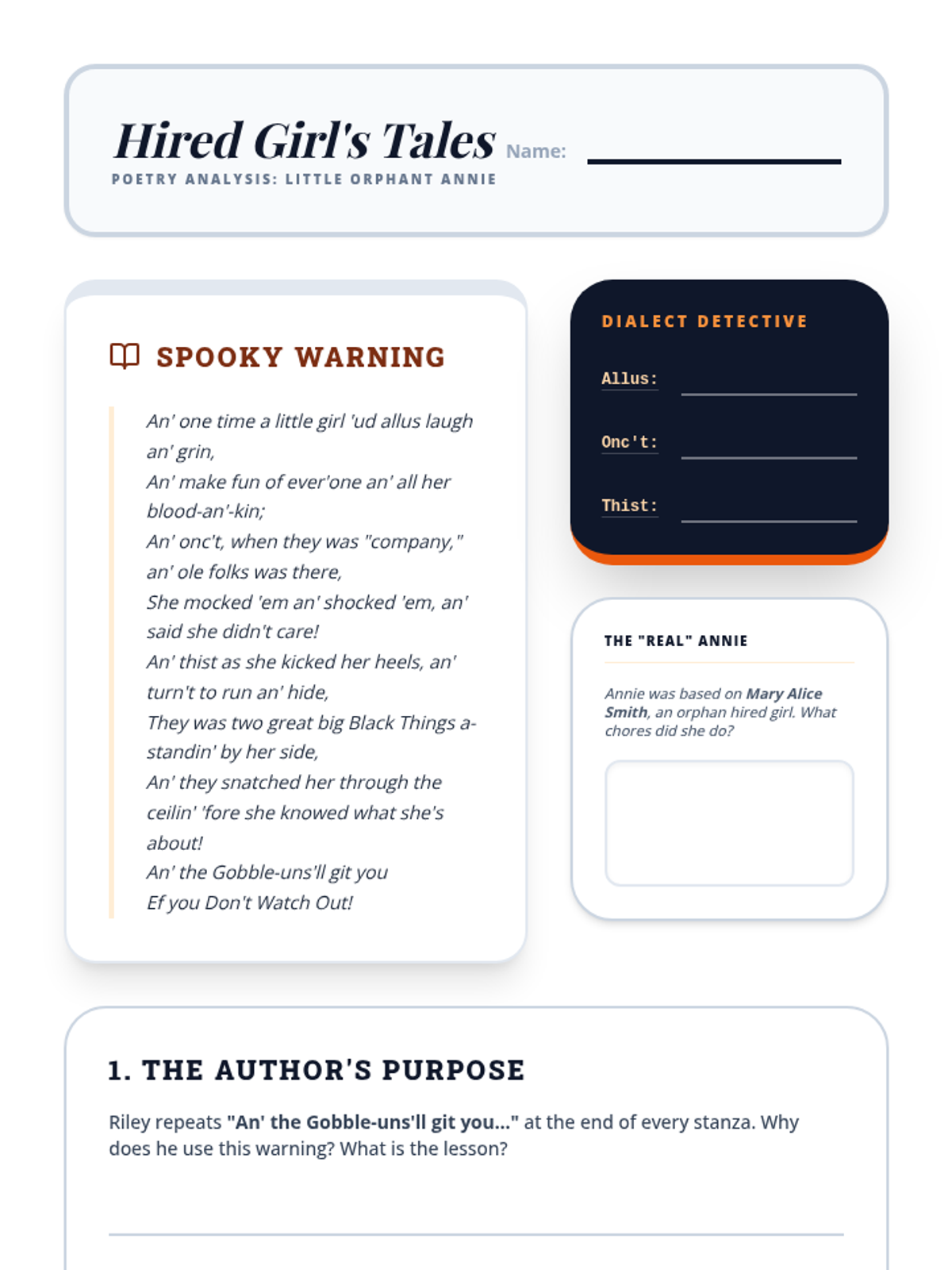
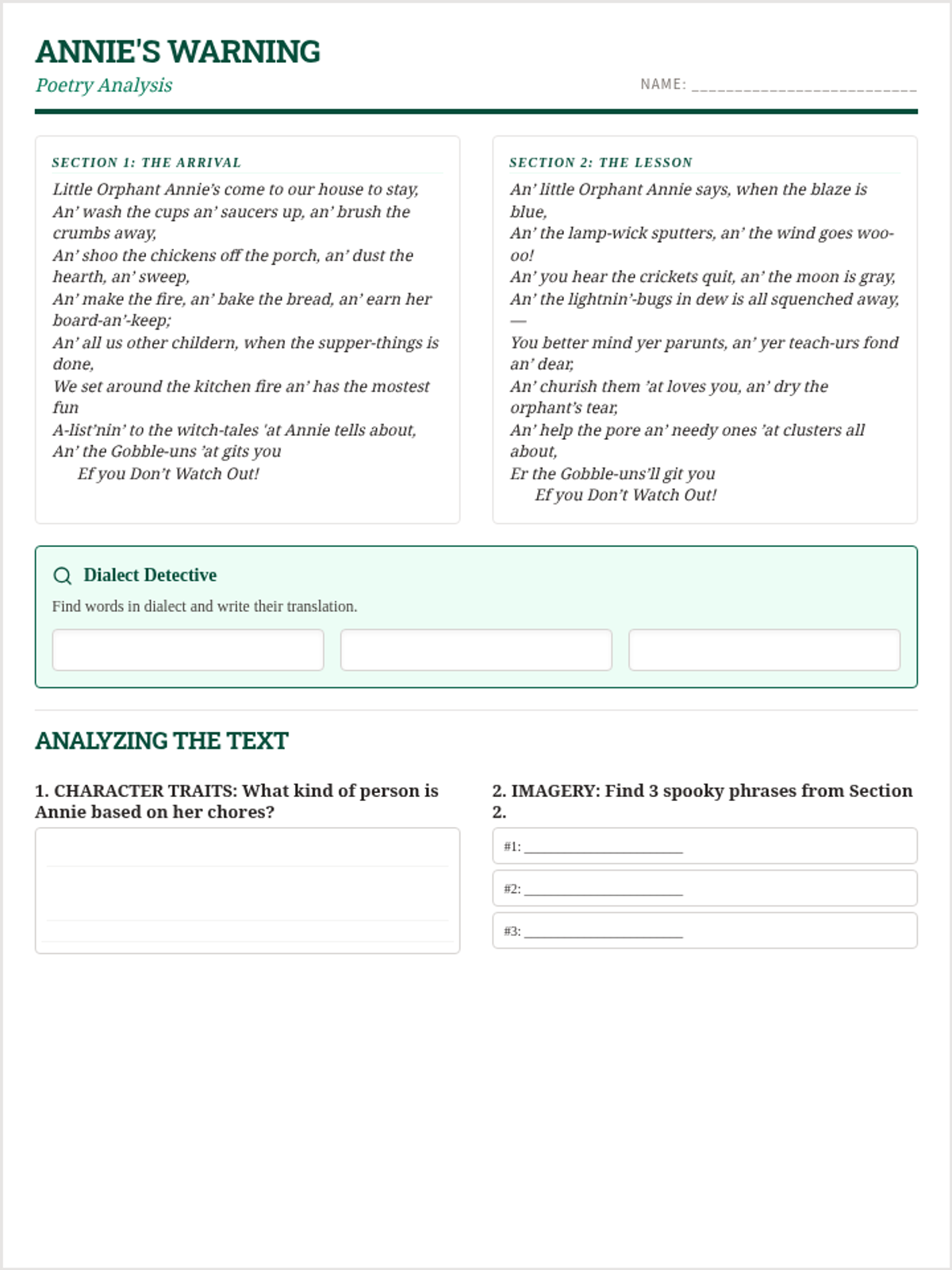
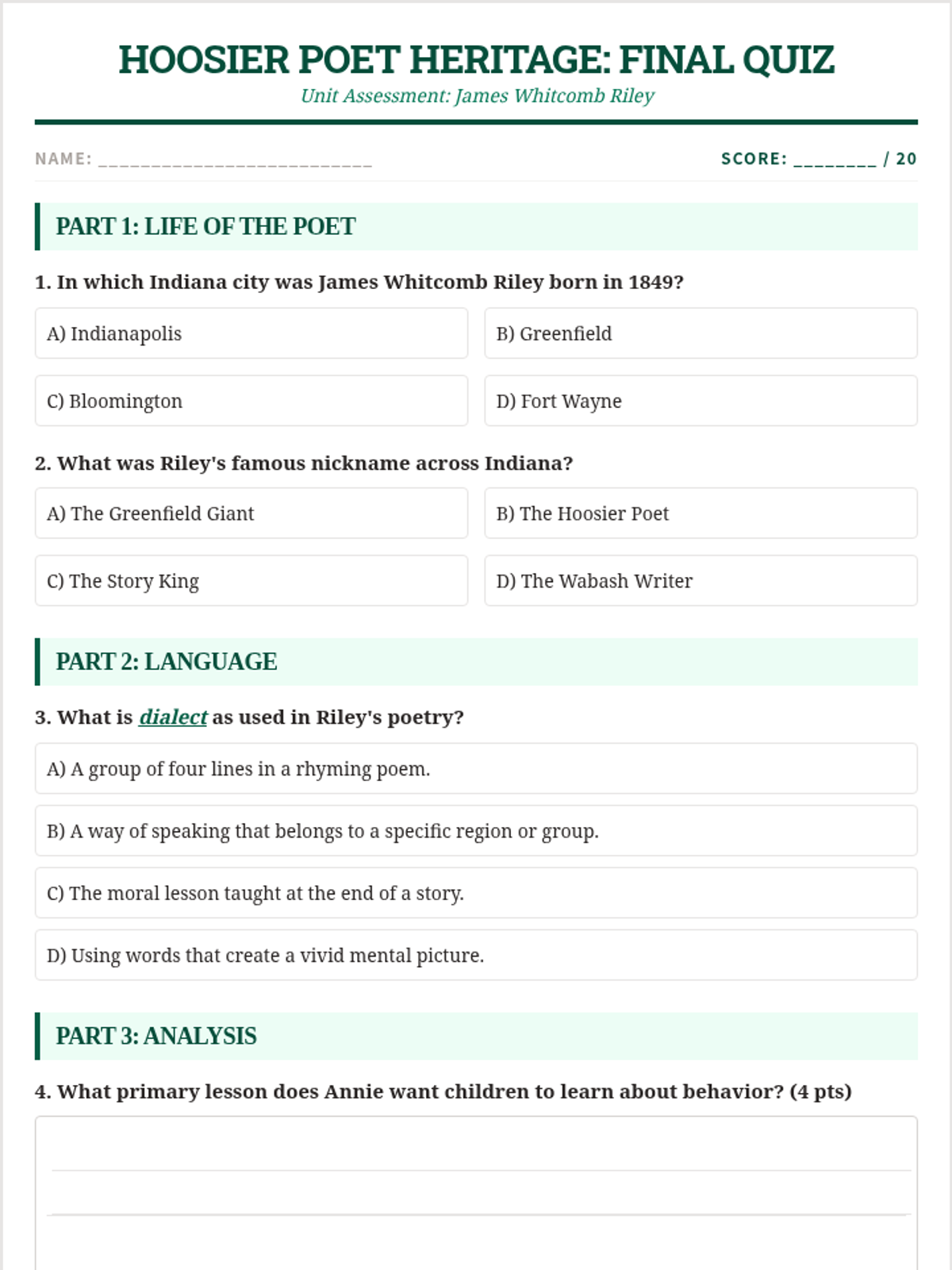
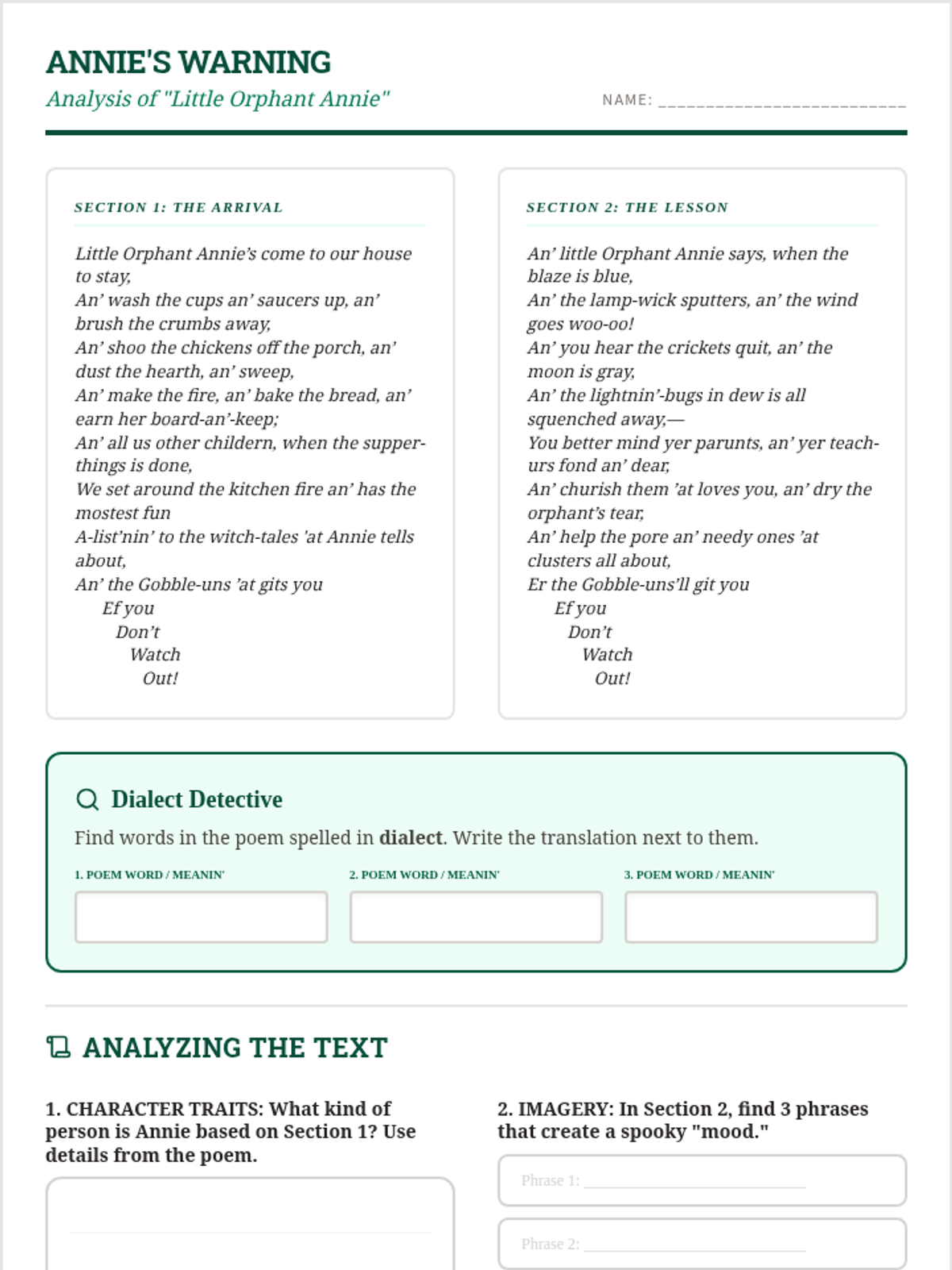
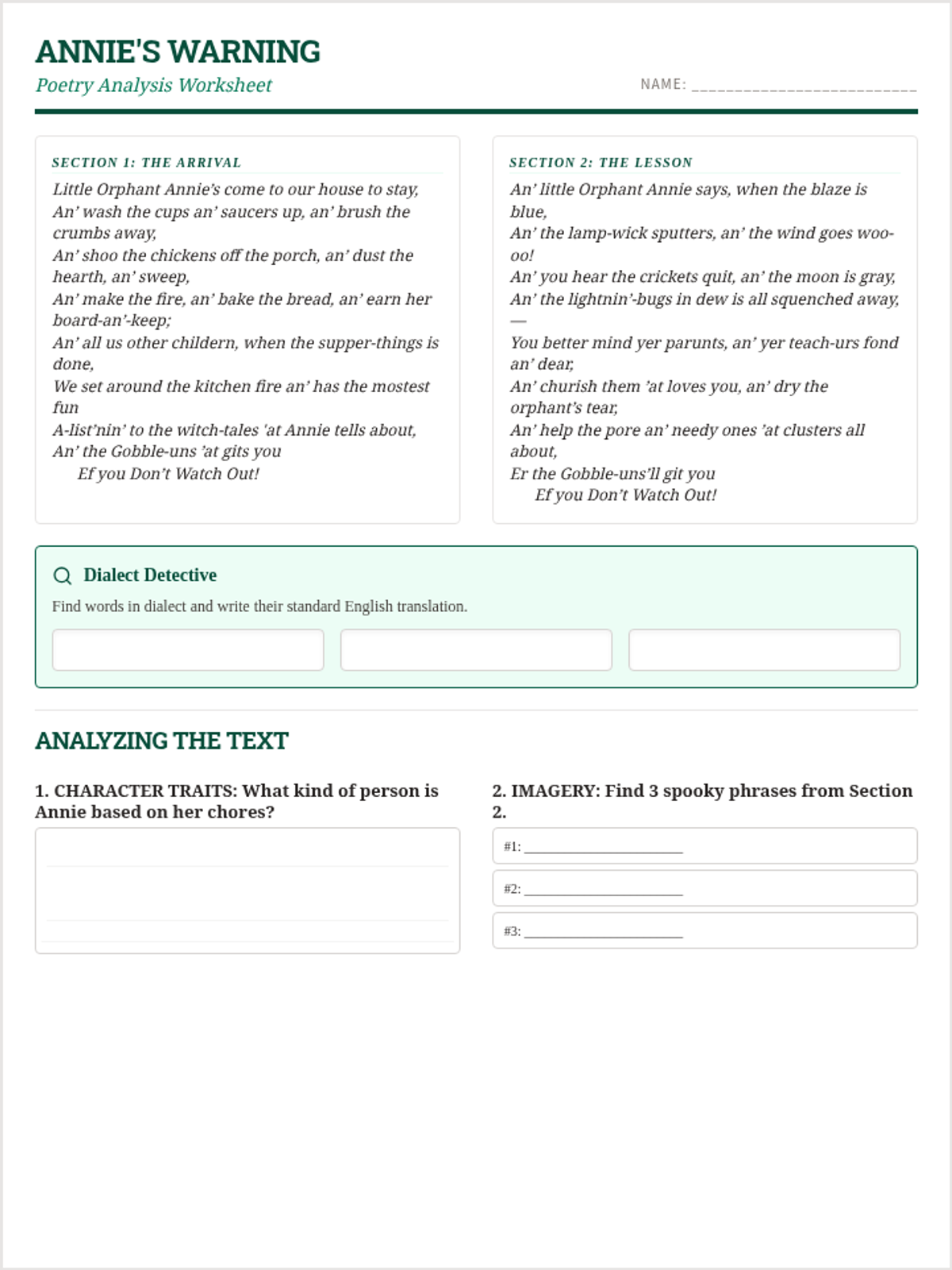
A focused analysis of two sections from 'Little Orphant Annie', followed by a unit assessment. Students explore the poem's rhythm, imagery, and moral lessons.
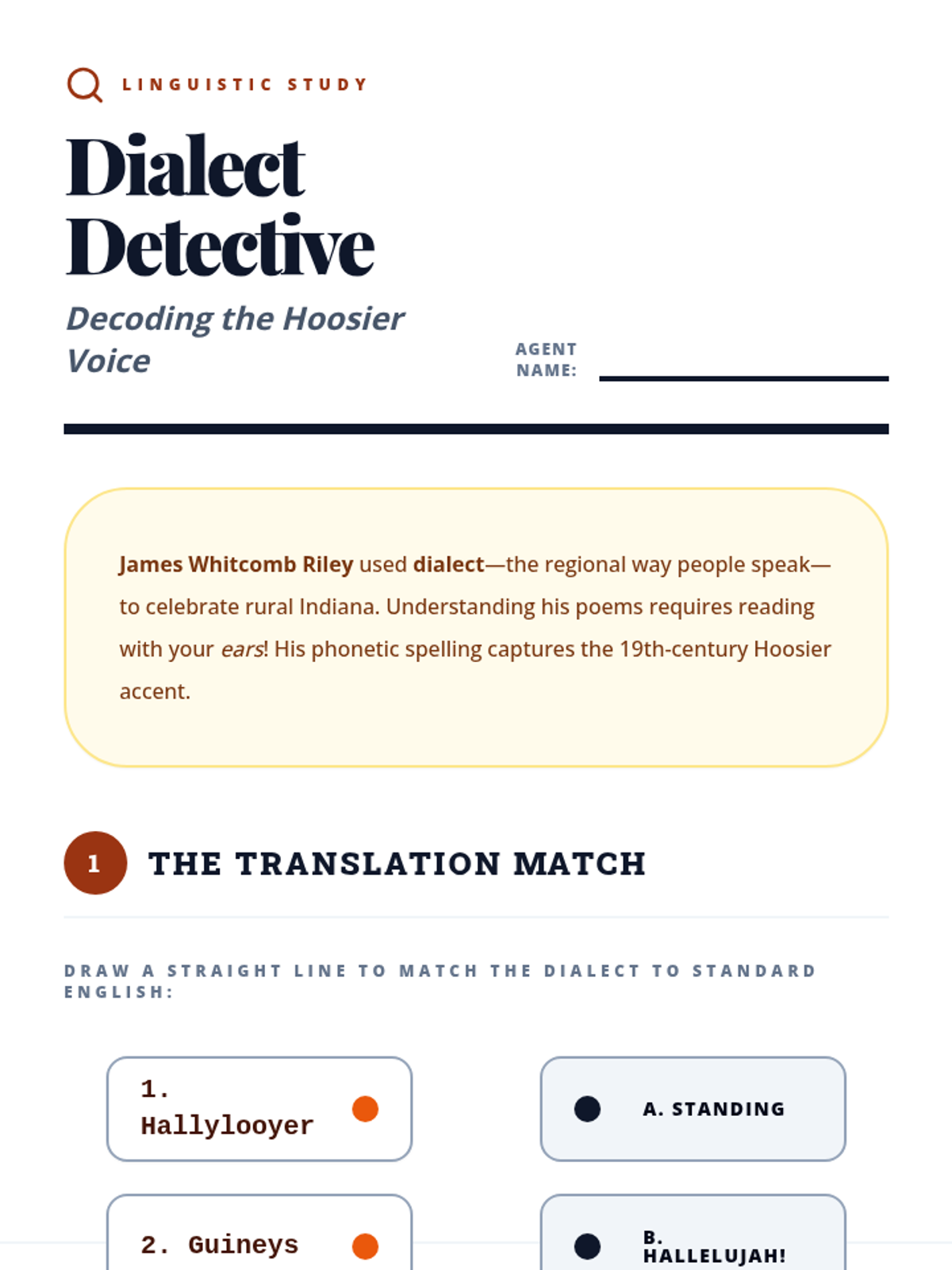
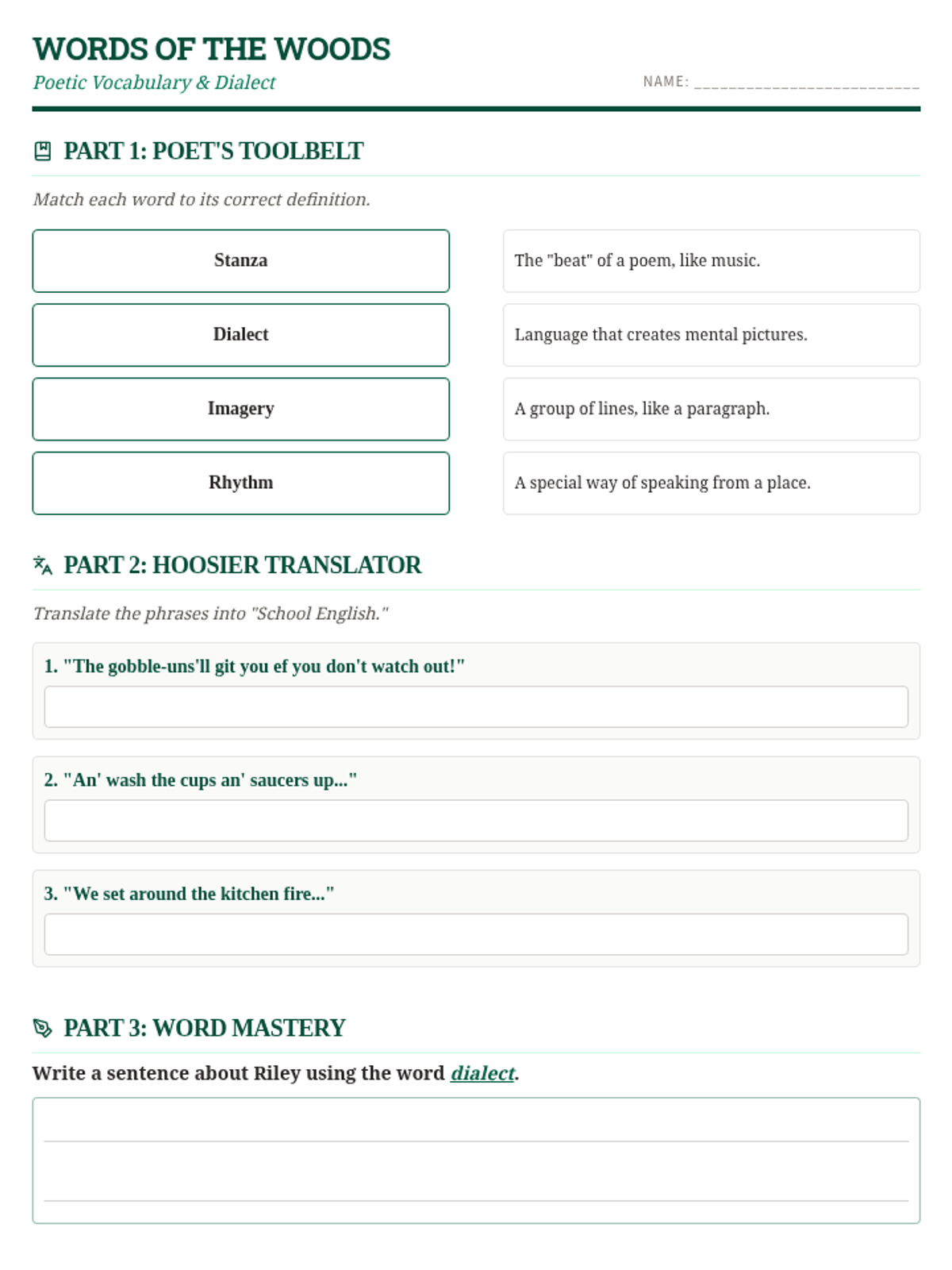
Exploring the unique language of Indiana through Riley's use of dialect. Students learn key academic vocabulary and practice identifying dialect within his poetry.
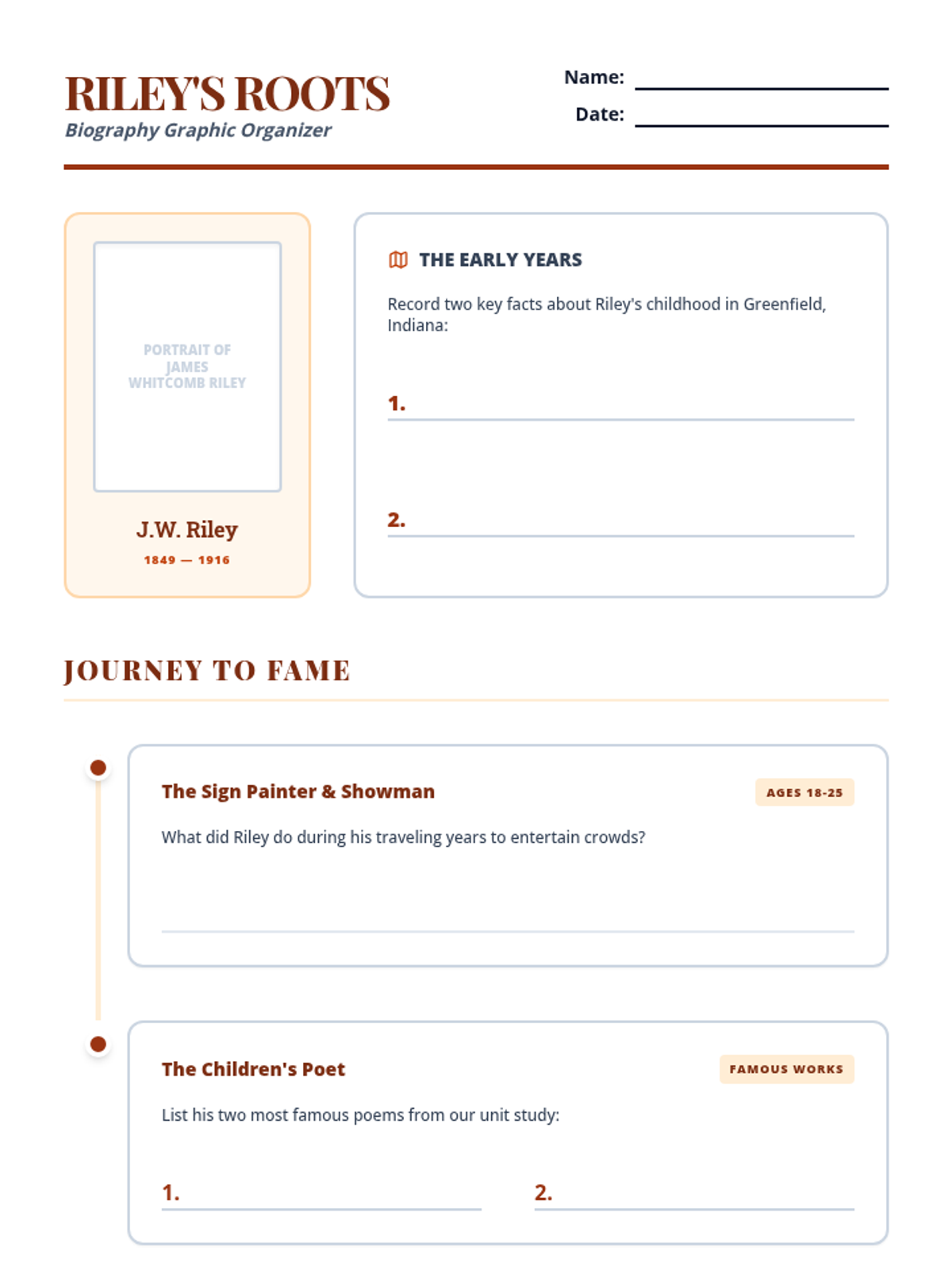
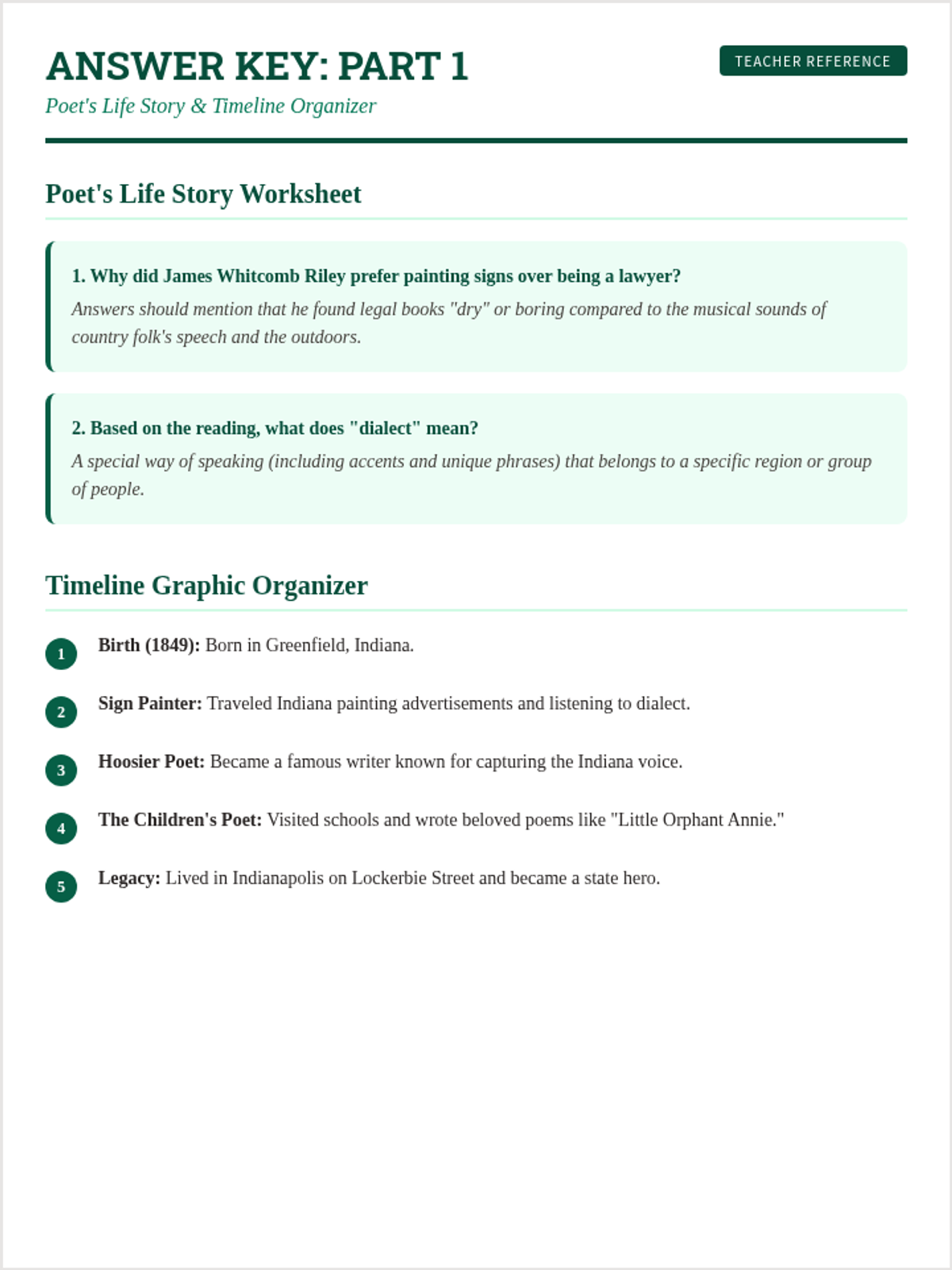
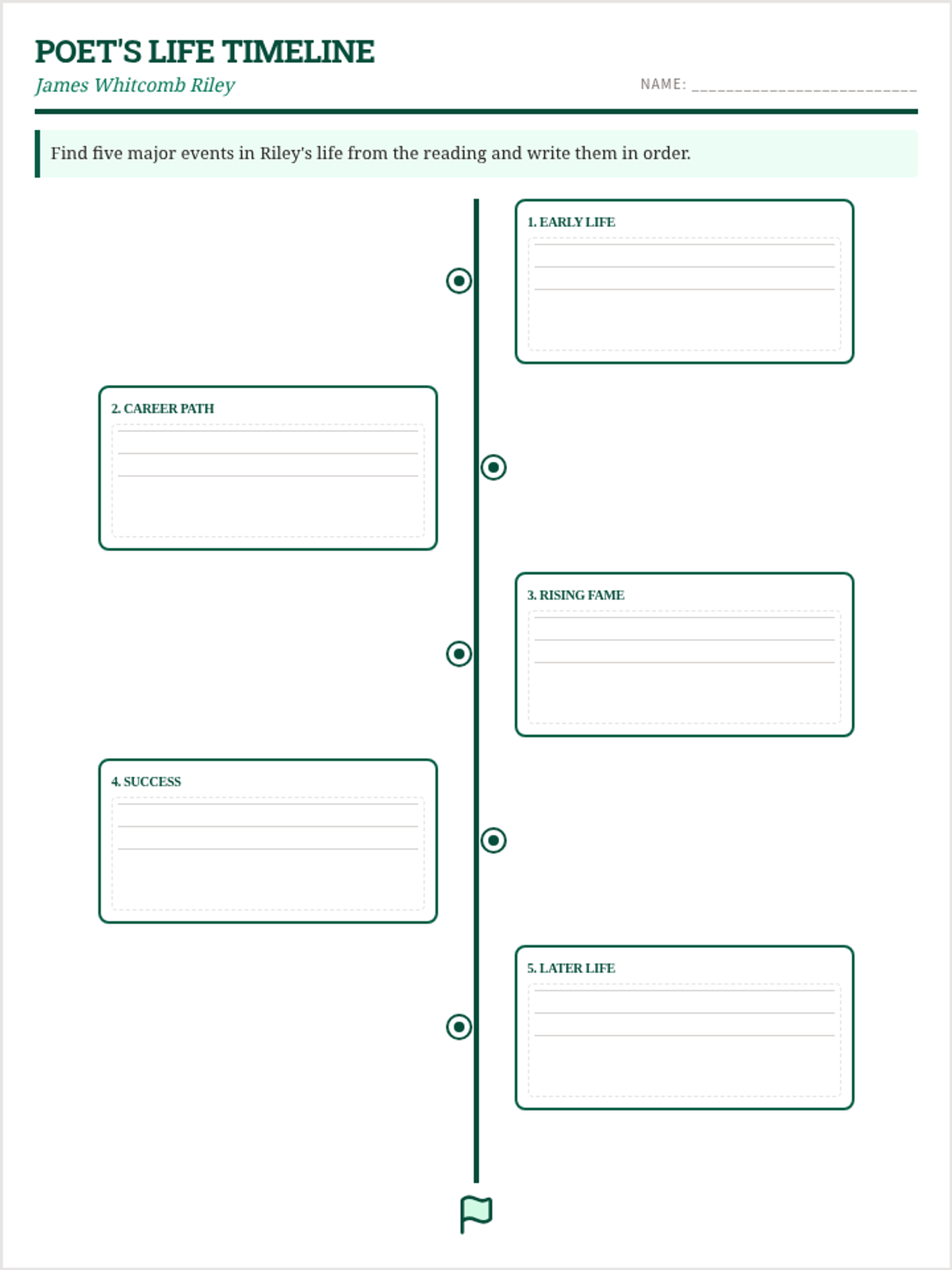
An introduction to James Whitcomb Riley, the 'Hoosier Poet', focusing on his childhood in Greenfield, Indiana, and his rise to fame. Students will use a timeline graphic organizer to track his life events.
A foundational lesson on identifying and interpreting common idioms using context clues, specifically designed with decodable text for struggling readers.
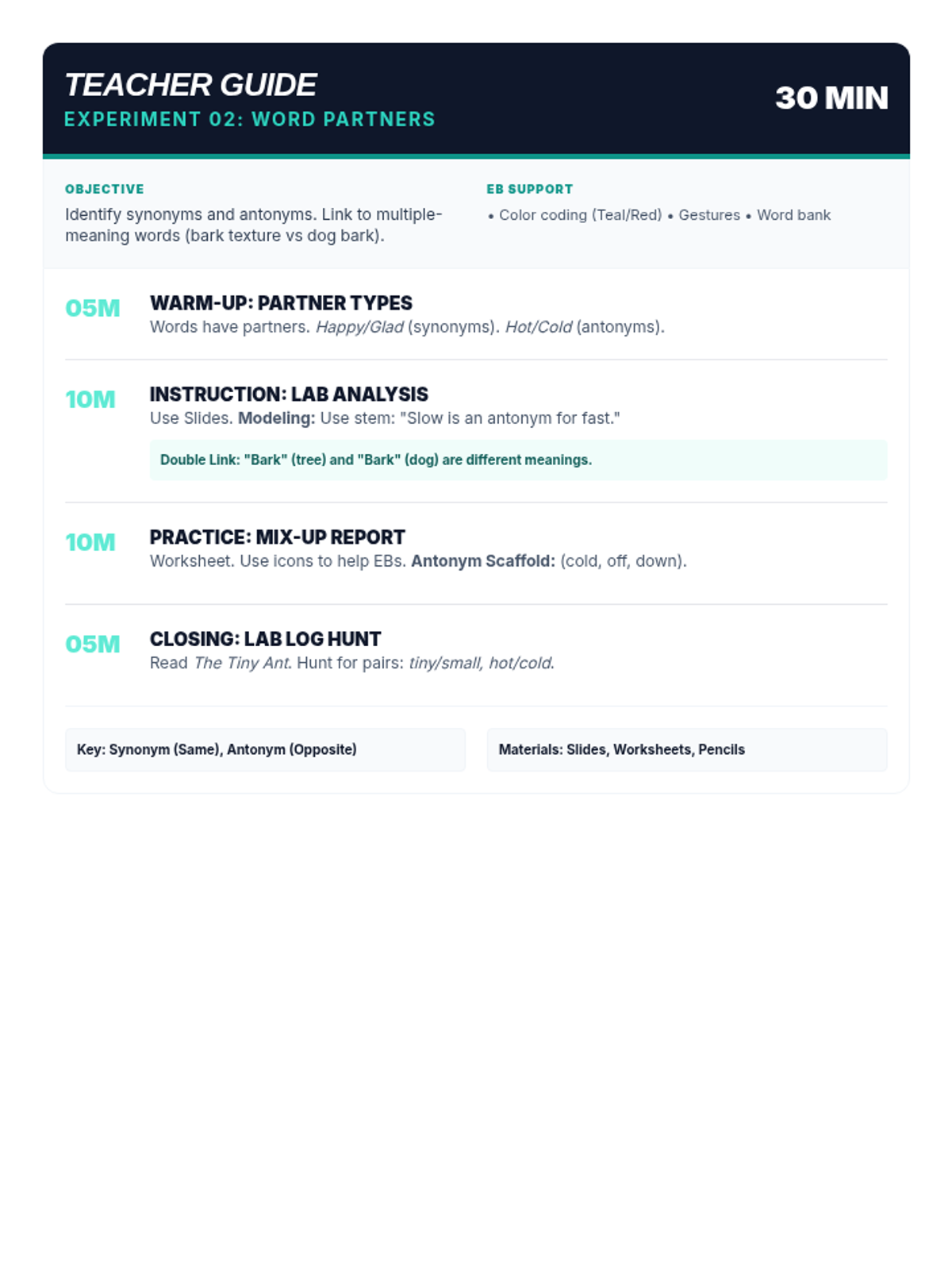
A 30-minute small group lesson focusing on synonyms and antonyms to expand vocabulary and improve comprehension for English Learners.
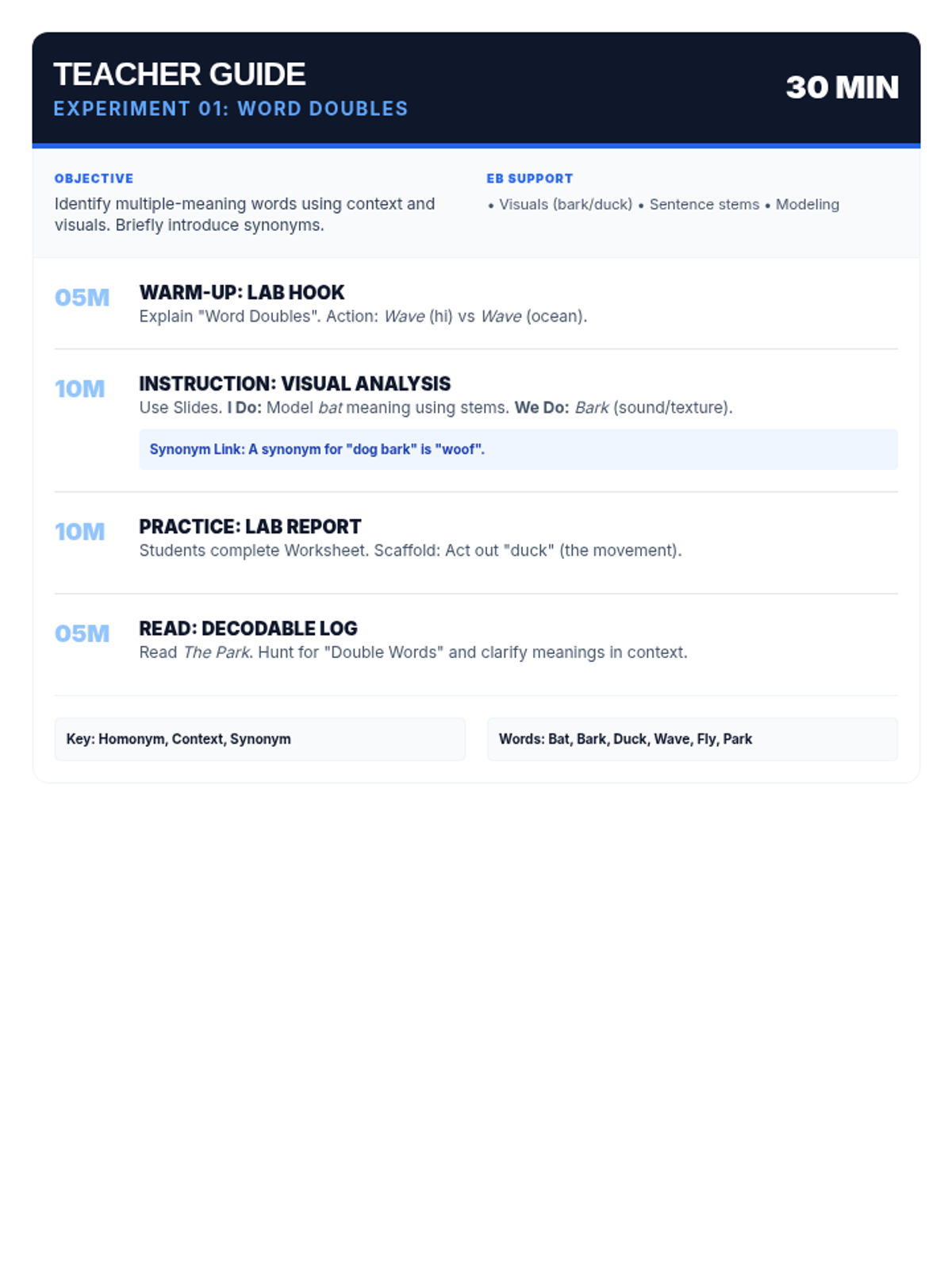
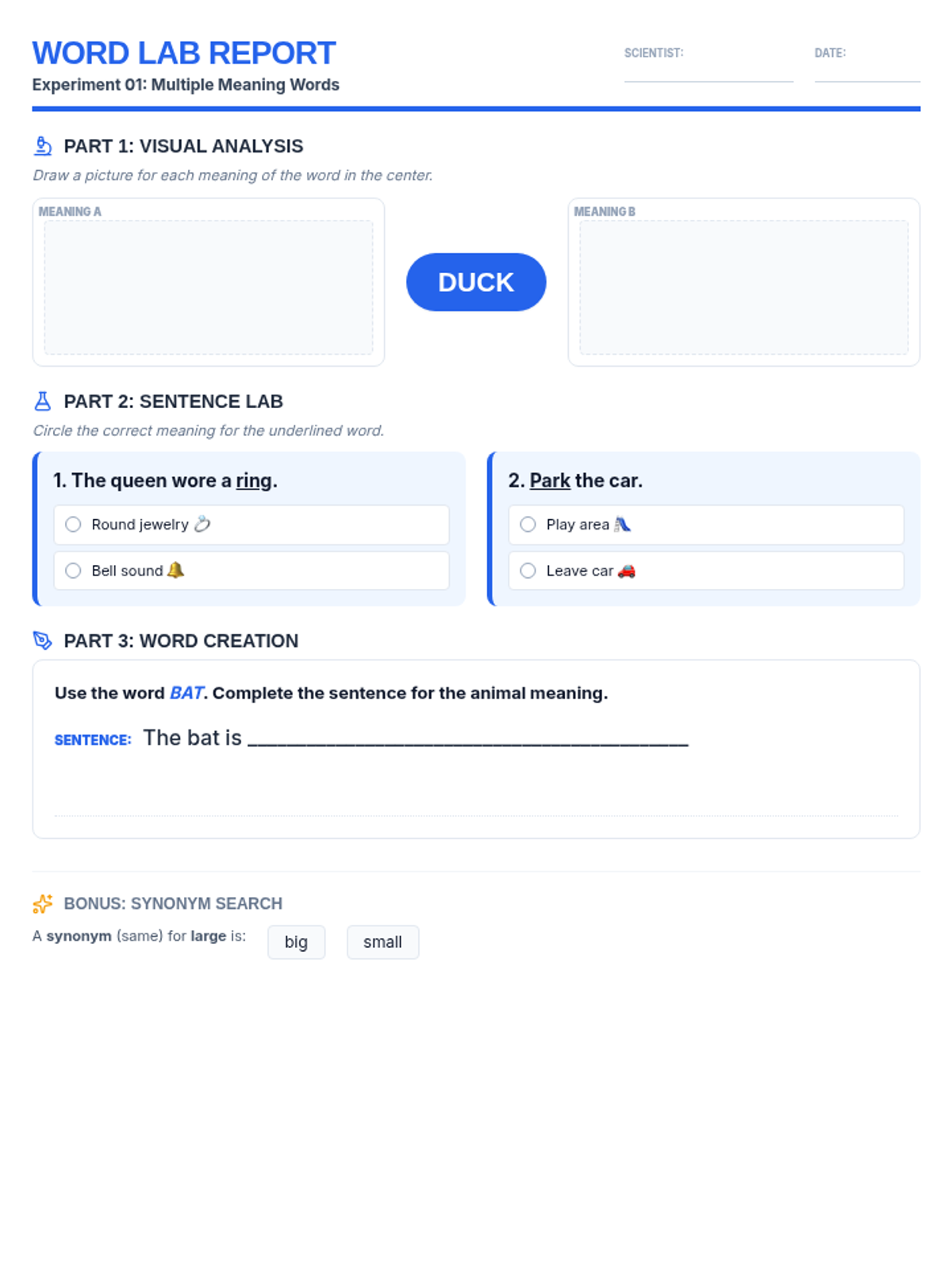
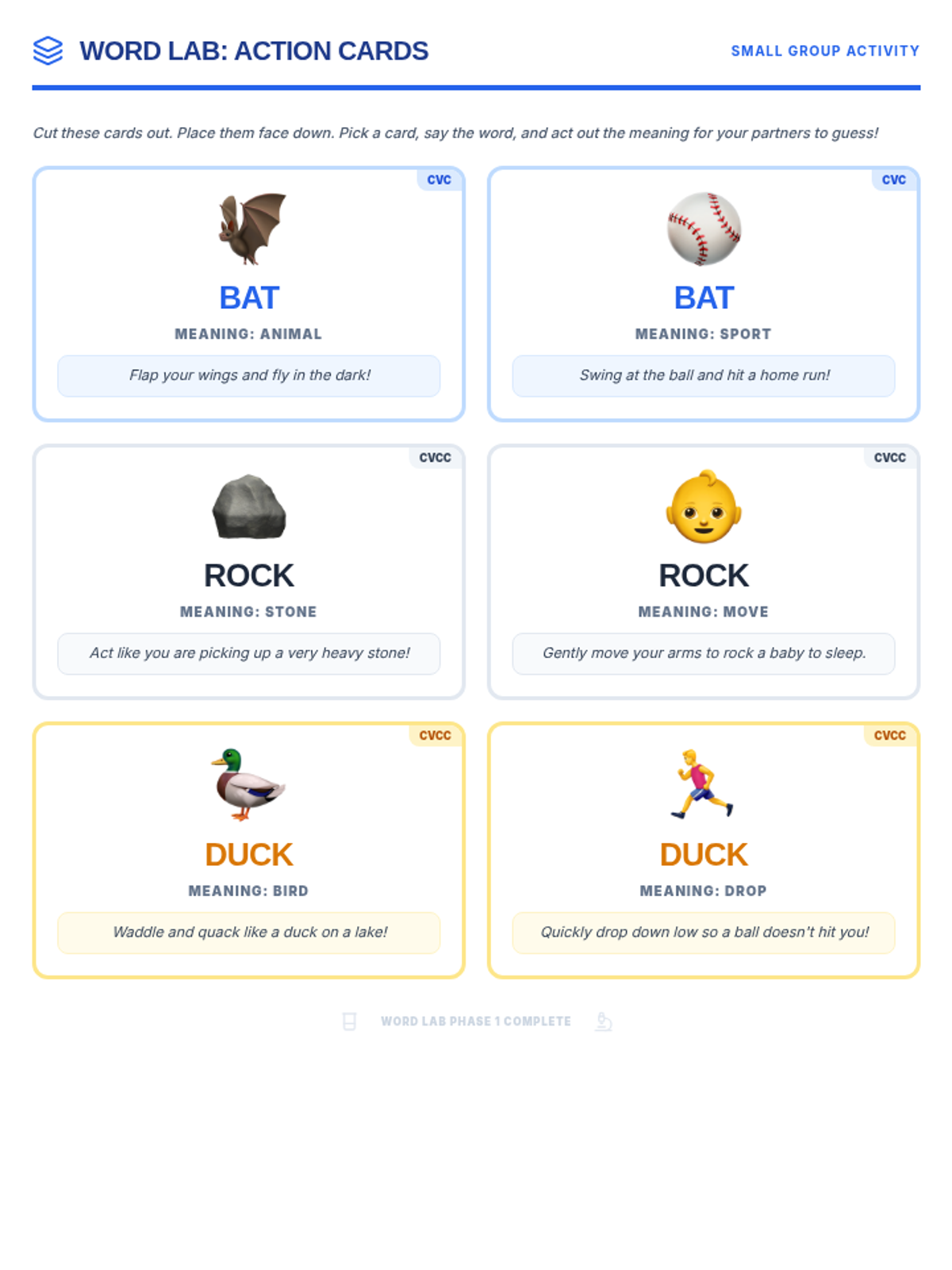
A 30-minute small group lesson focusing on identifying and using multiple-meaning words (homonyms) in context using visuals and sentence stems.
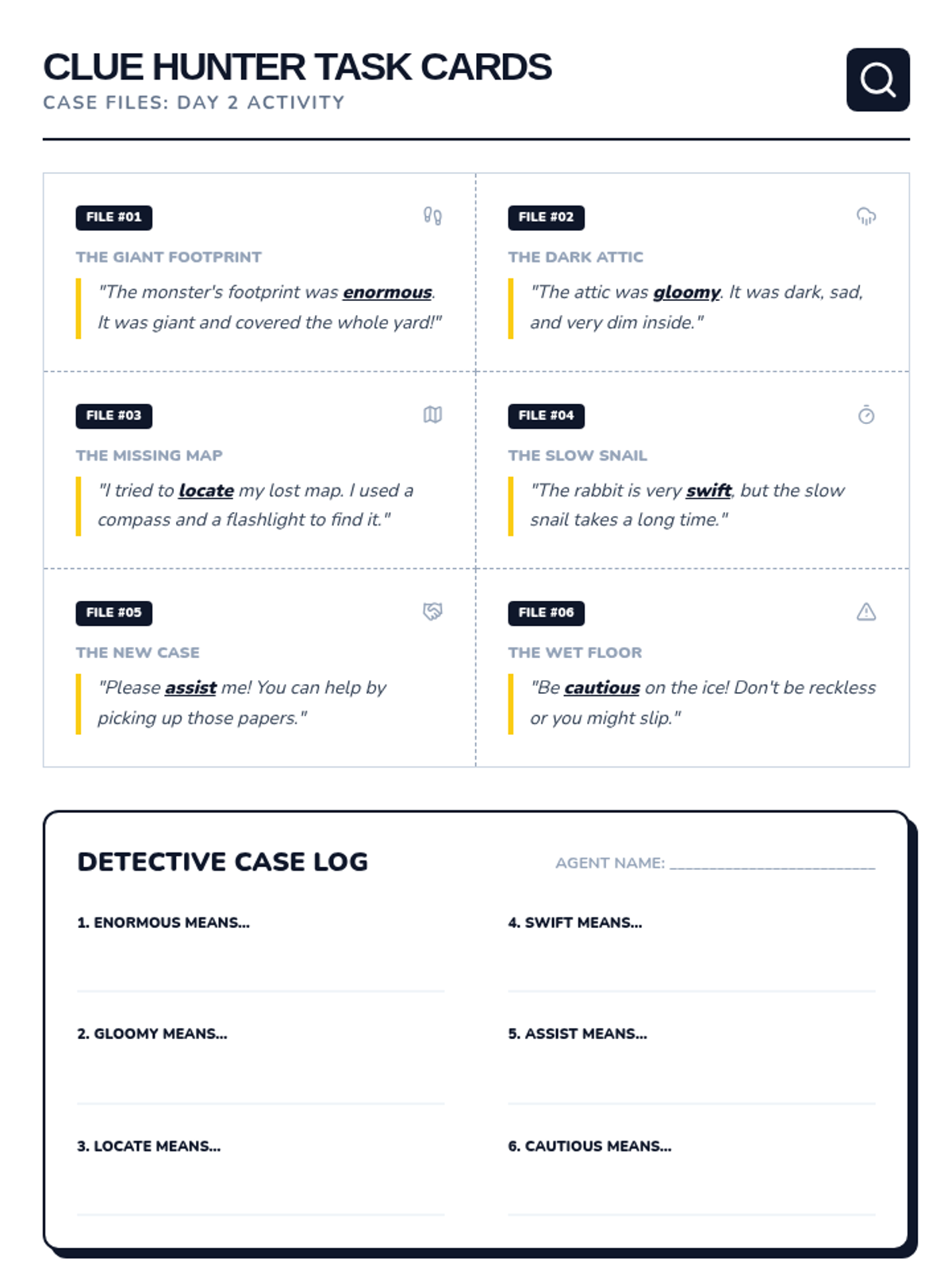
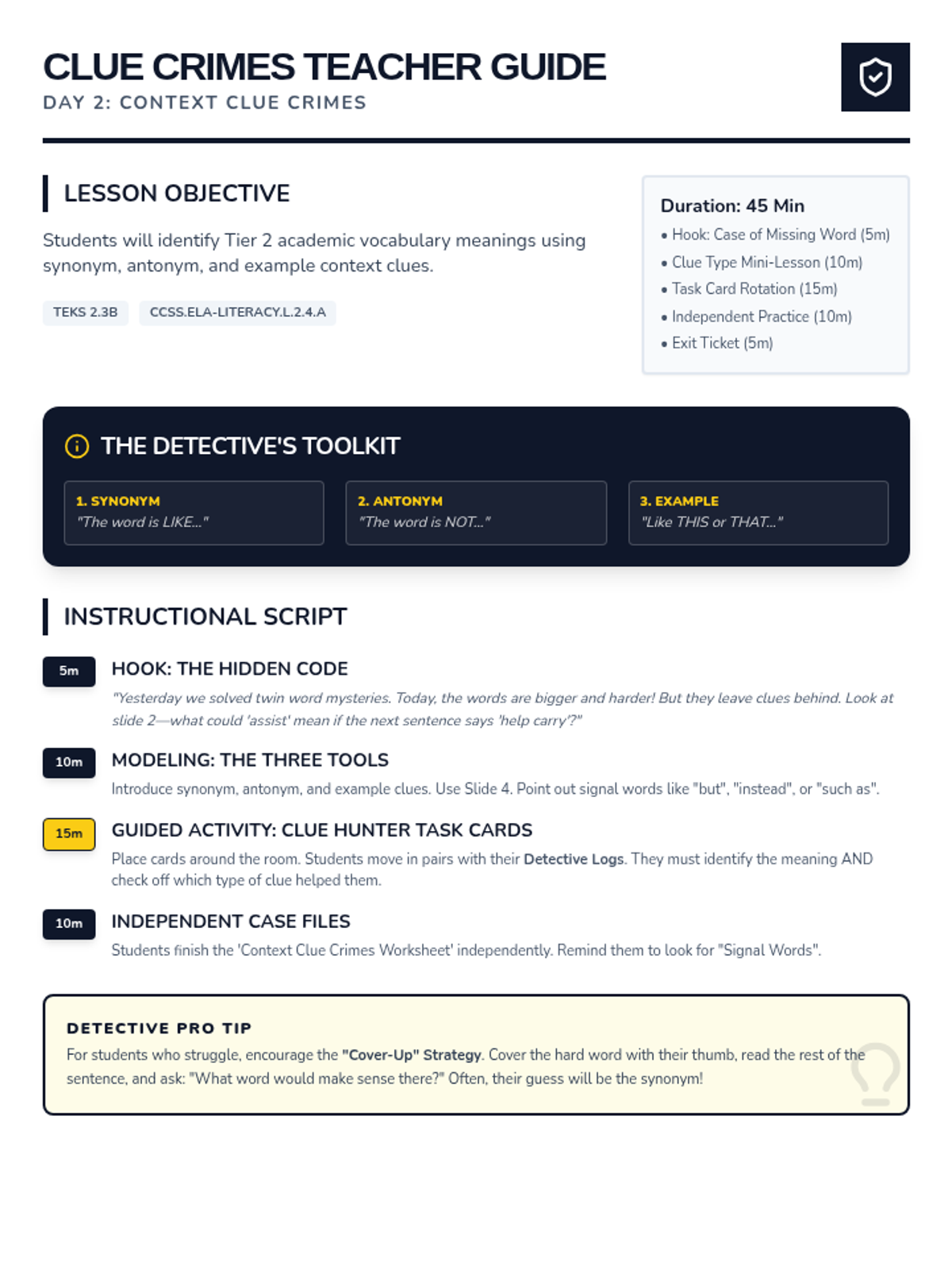
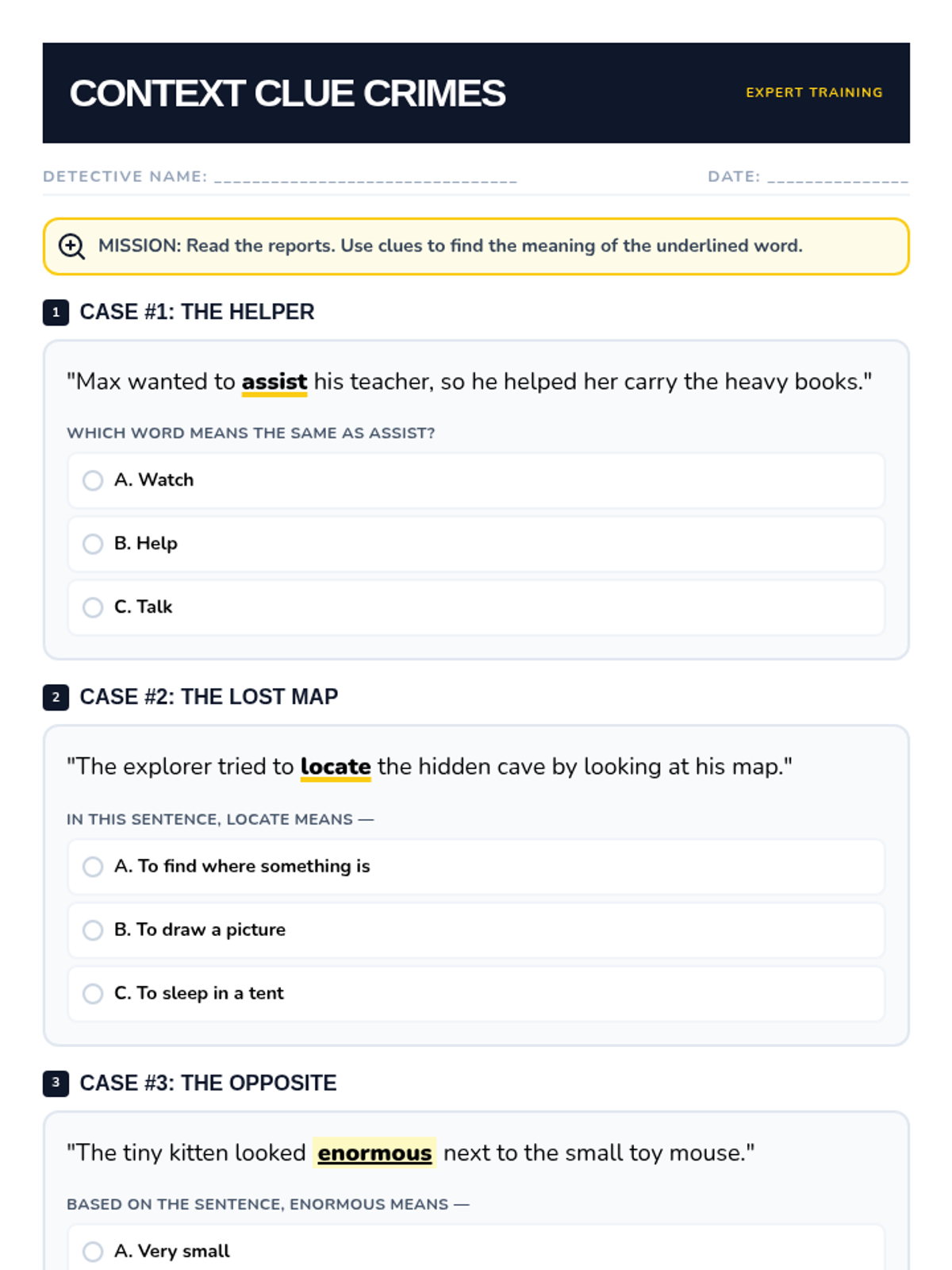
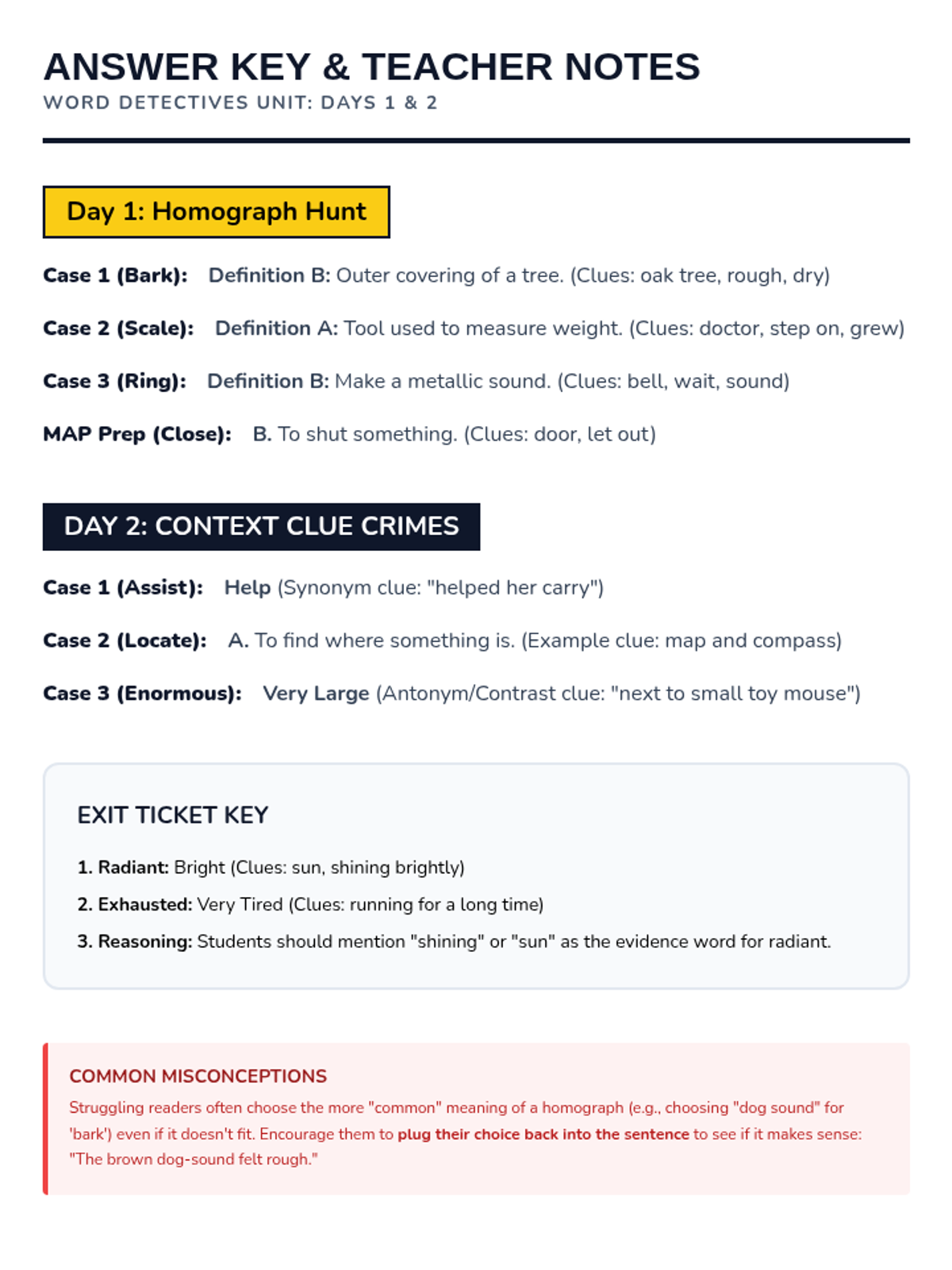
Day 2 focuses on Tier 2 academic vocabulary and using synonym, antonym, and example clues to find definitions. Students will practice MAP-aligned questions focused on sentence-level inference.
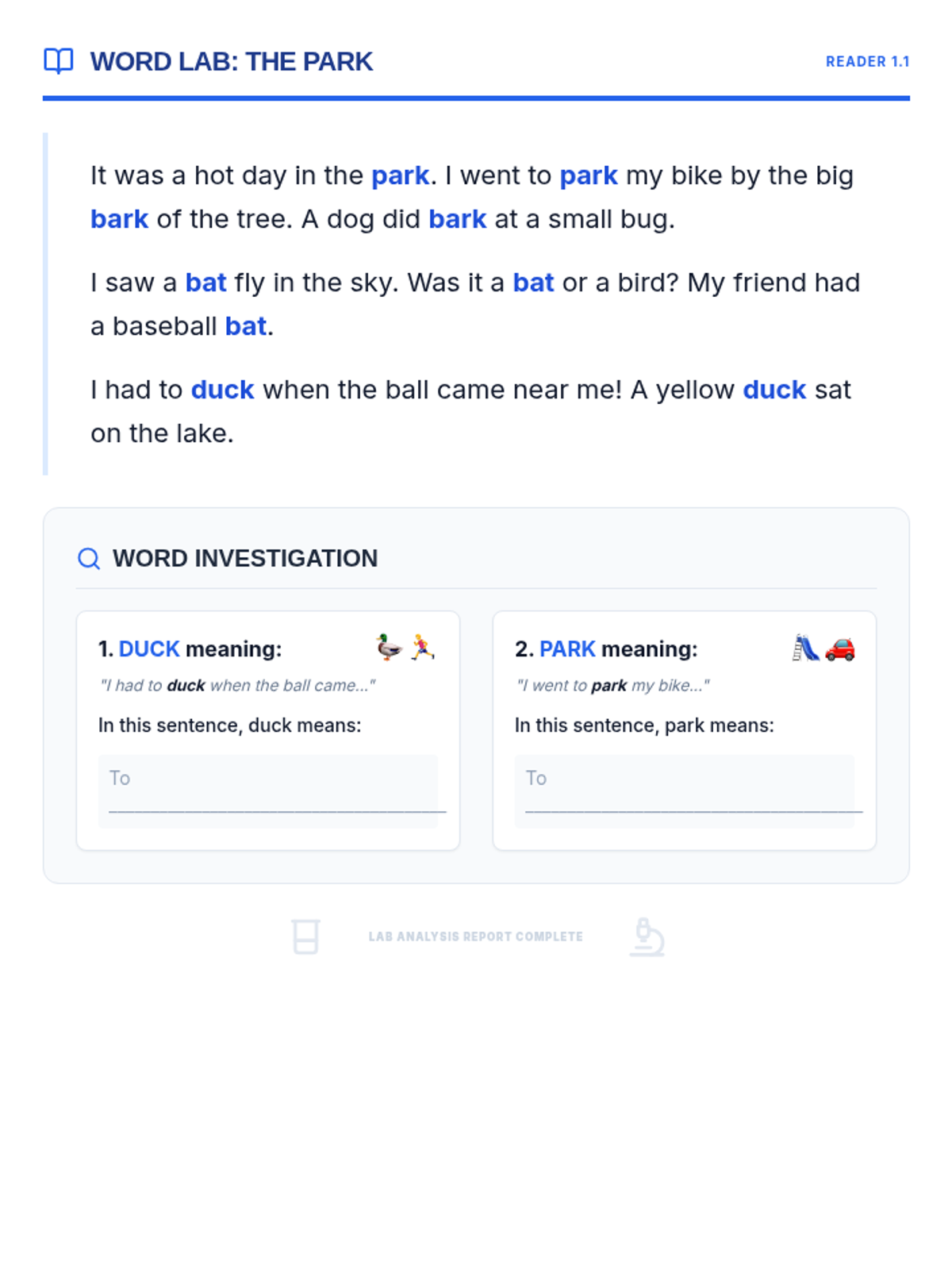
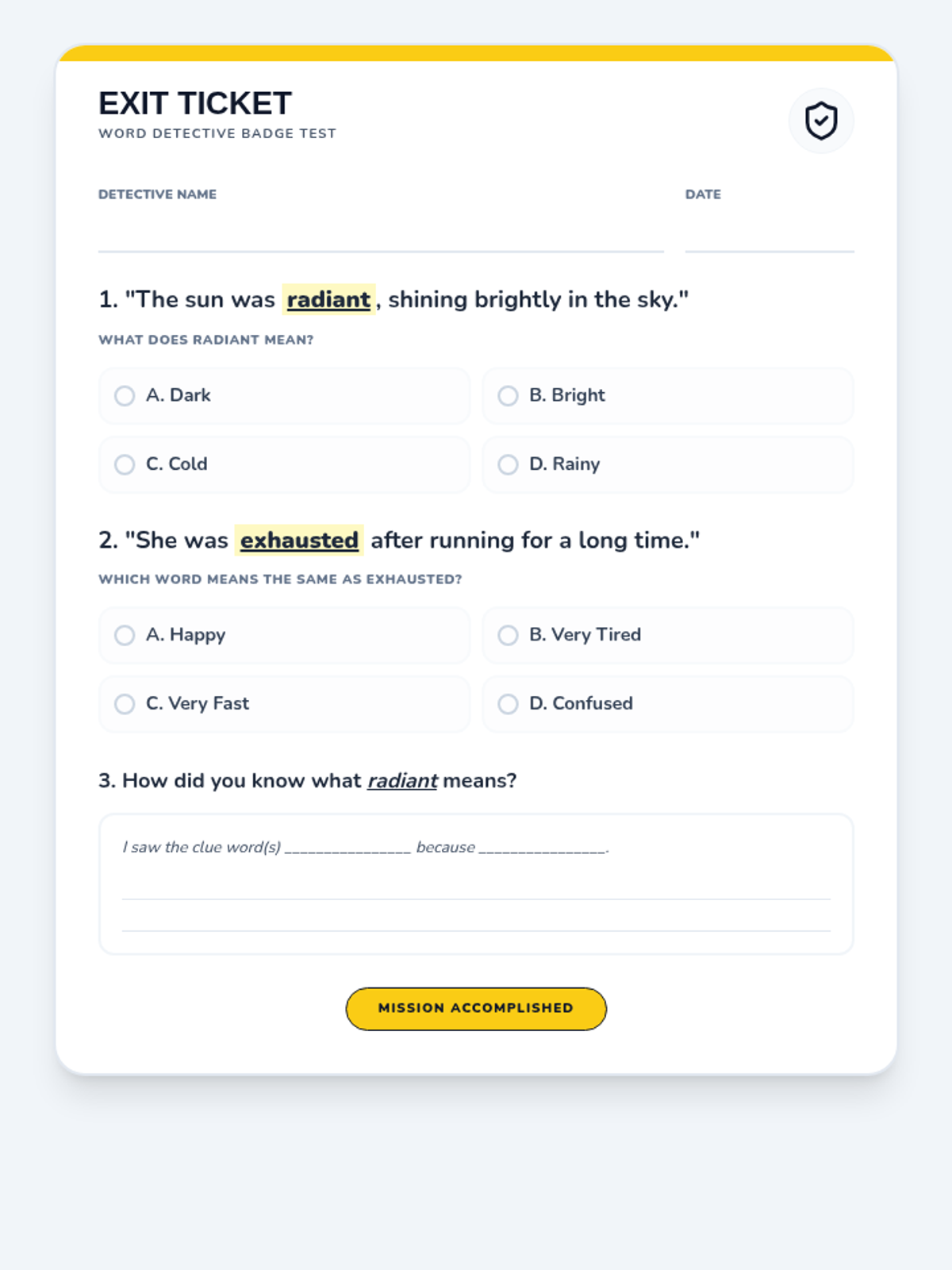
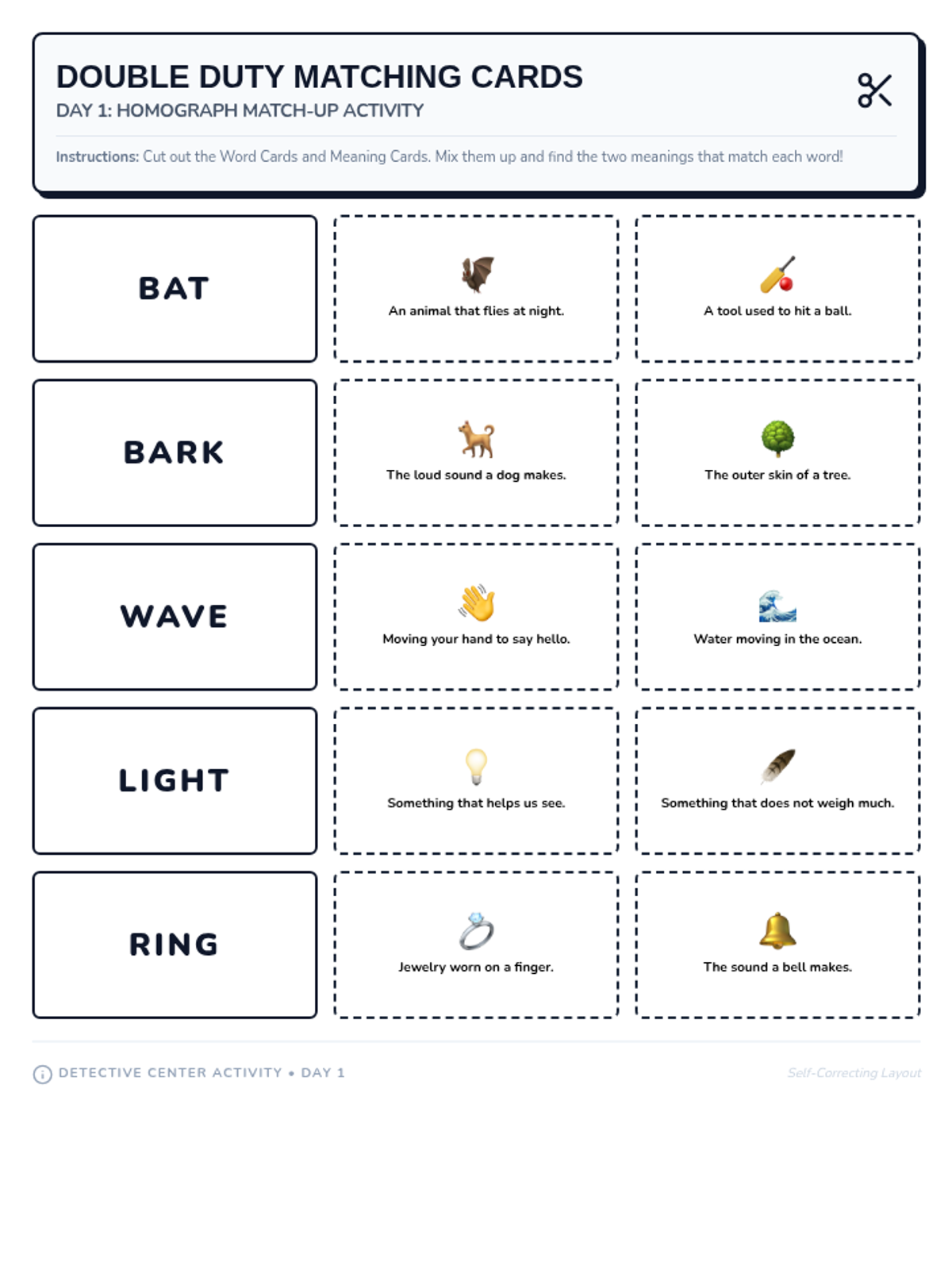
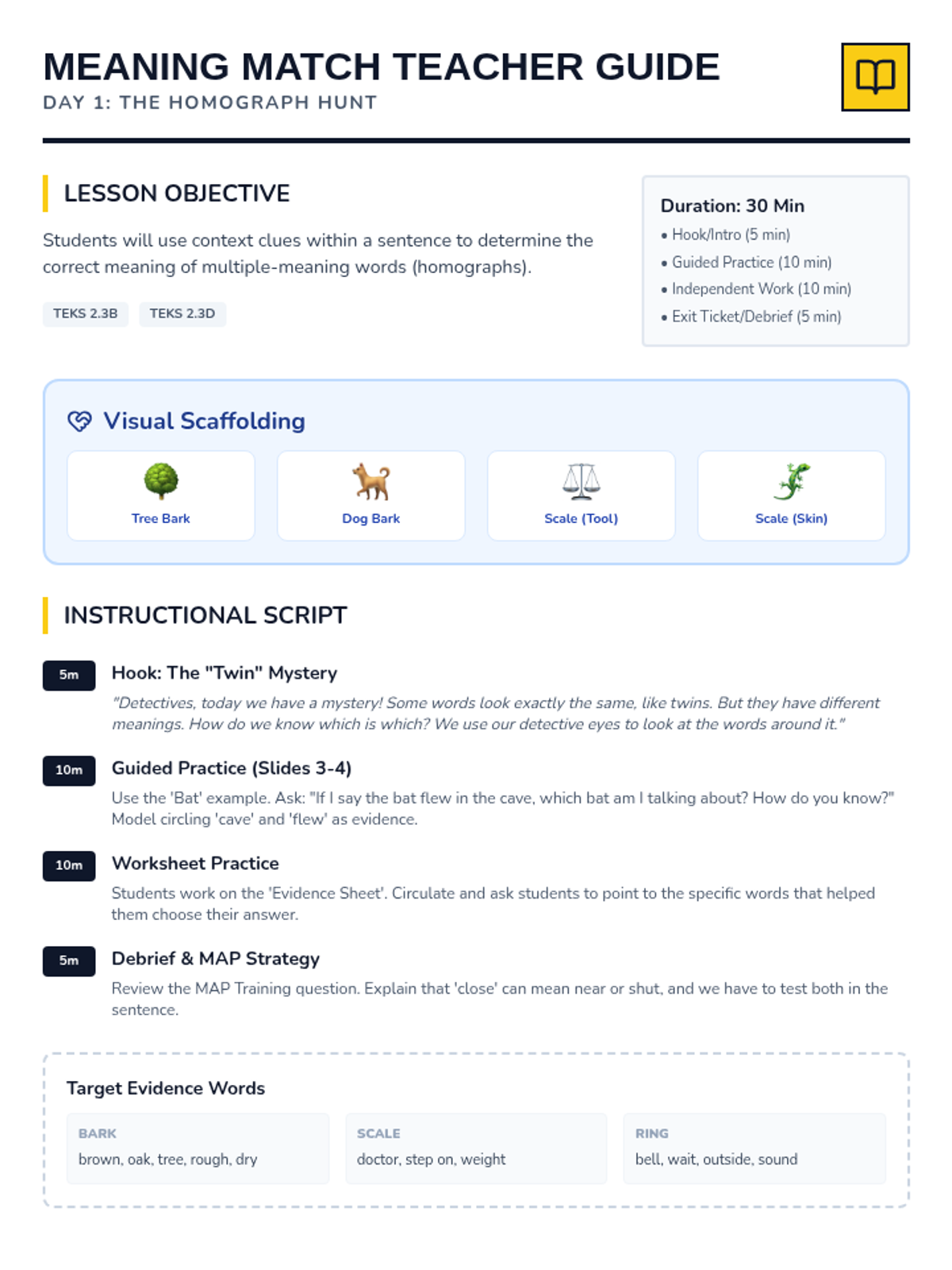
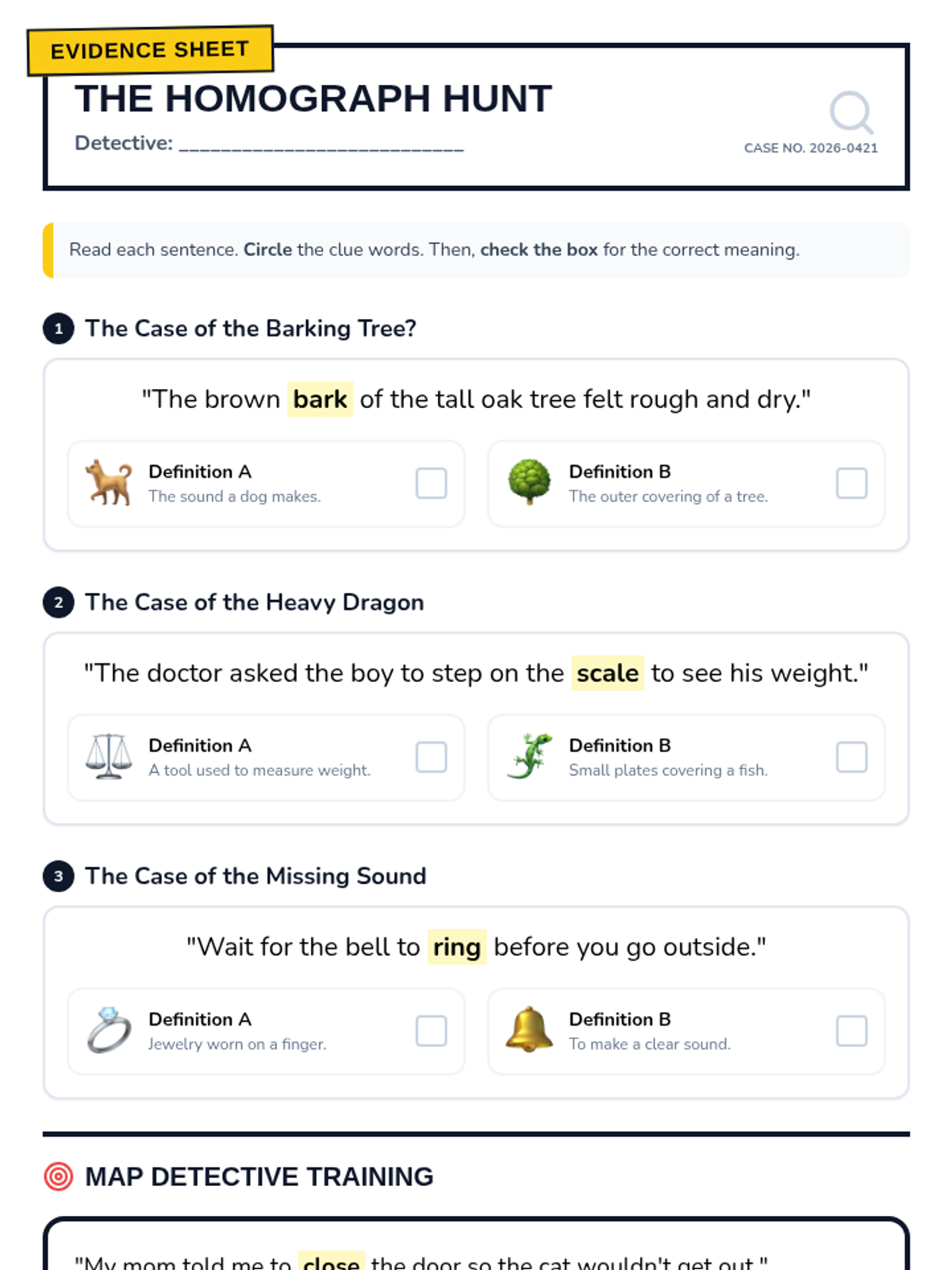
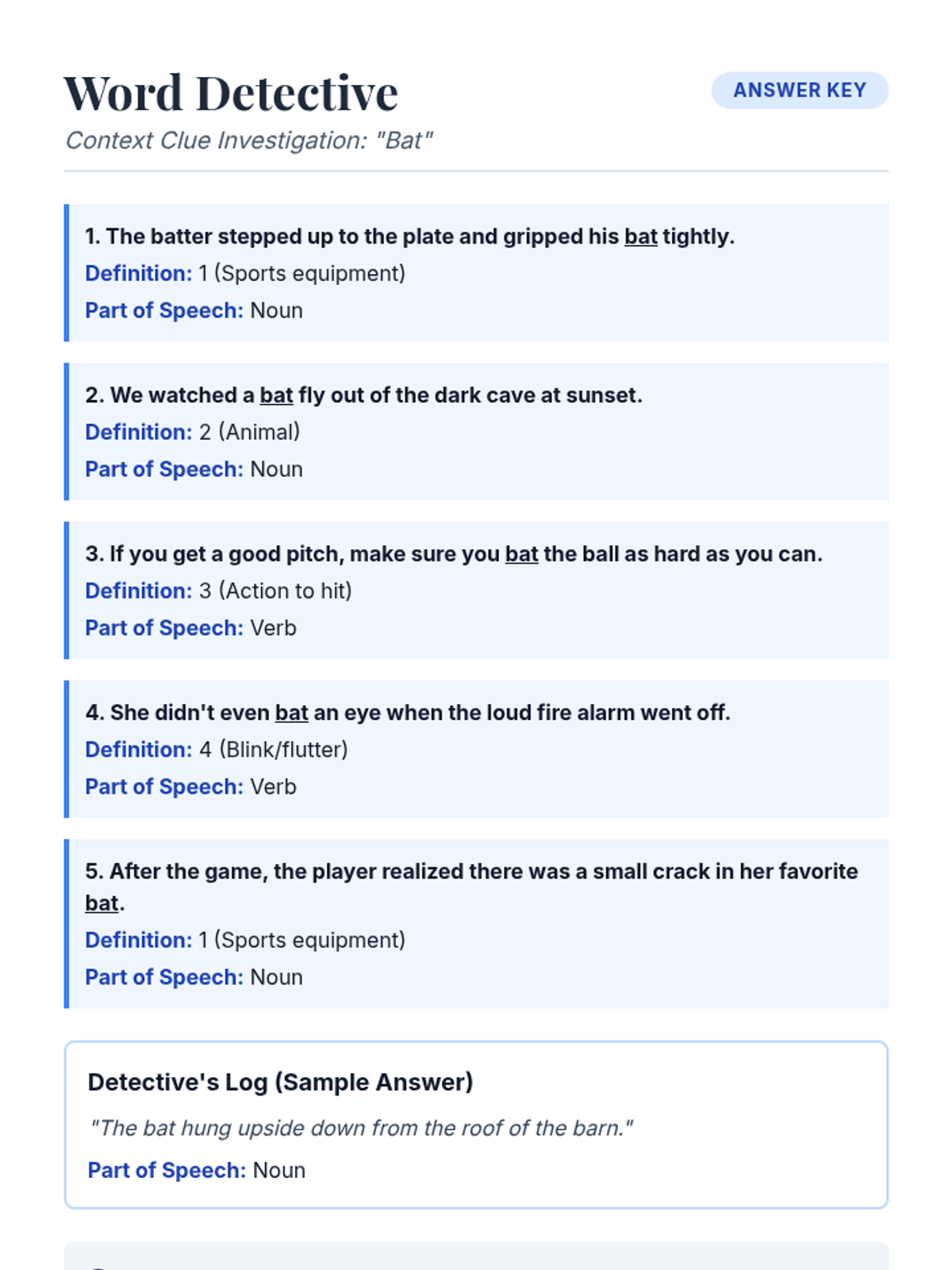
Day 1 focuses on multiple-meaning words (homographs) and using sentence-level context to identify which meaning is intended. Students will practice with words like 'bat', 'wave', and 'bark' using visual aids.
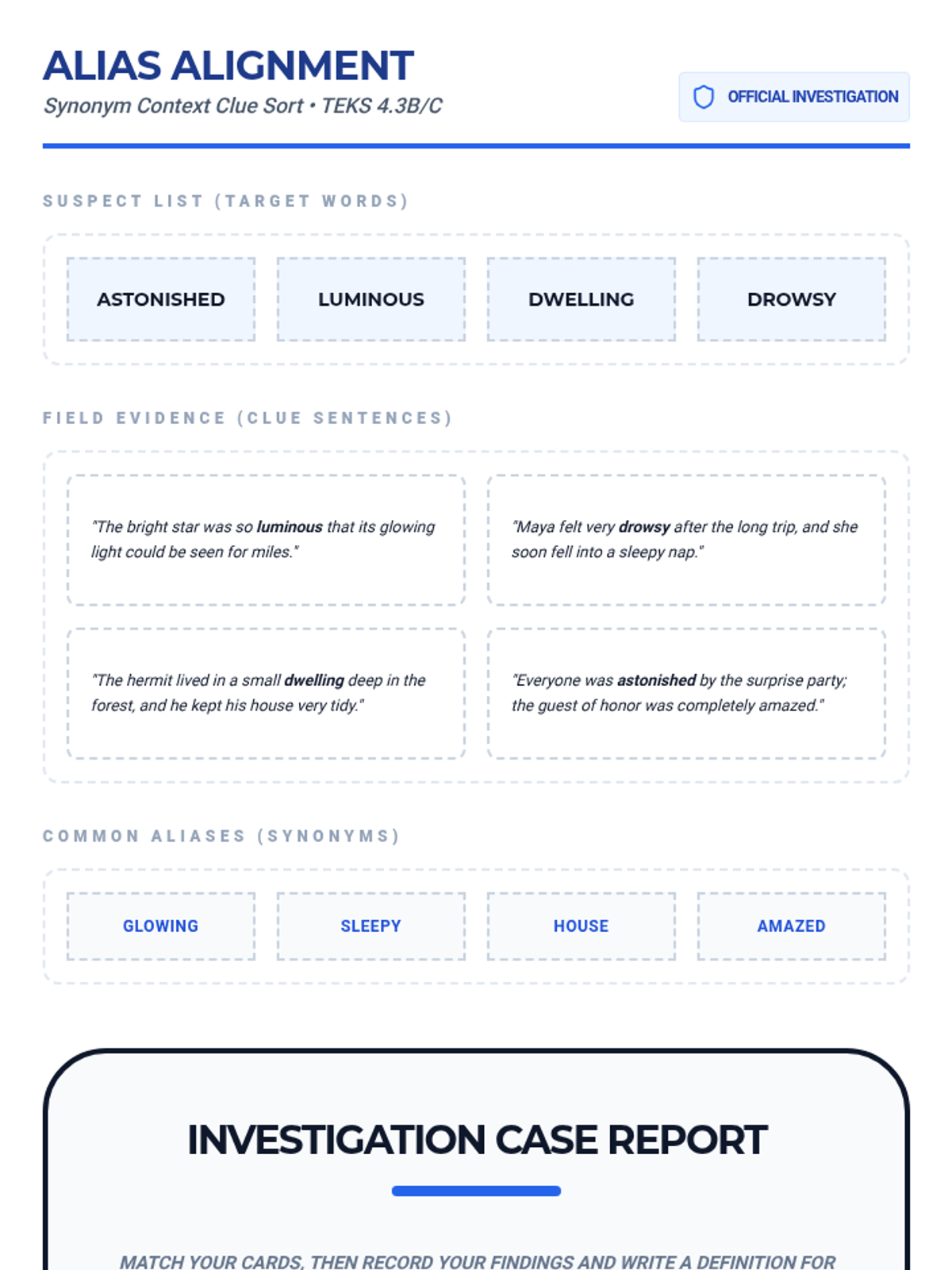
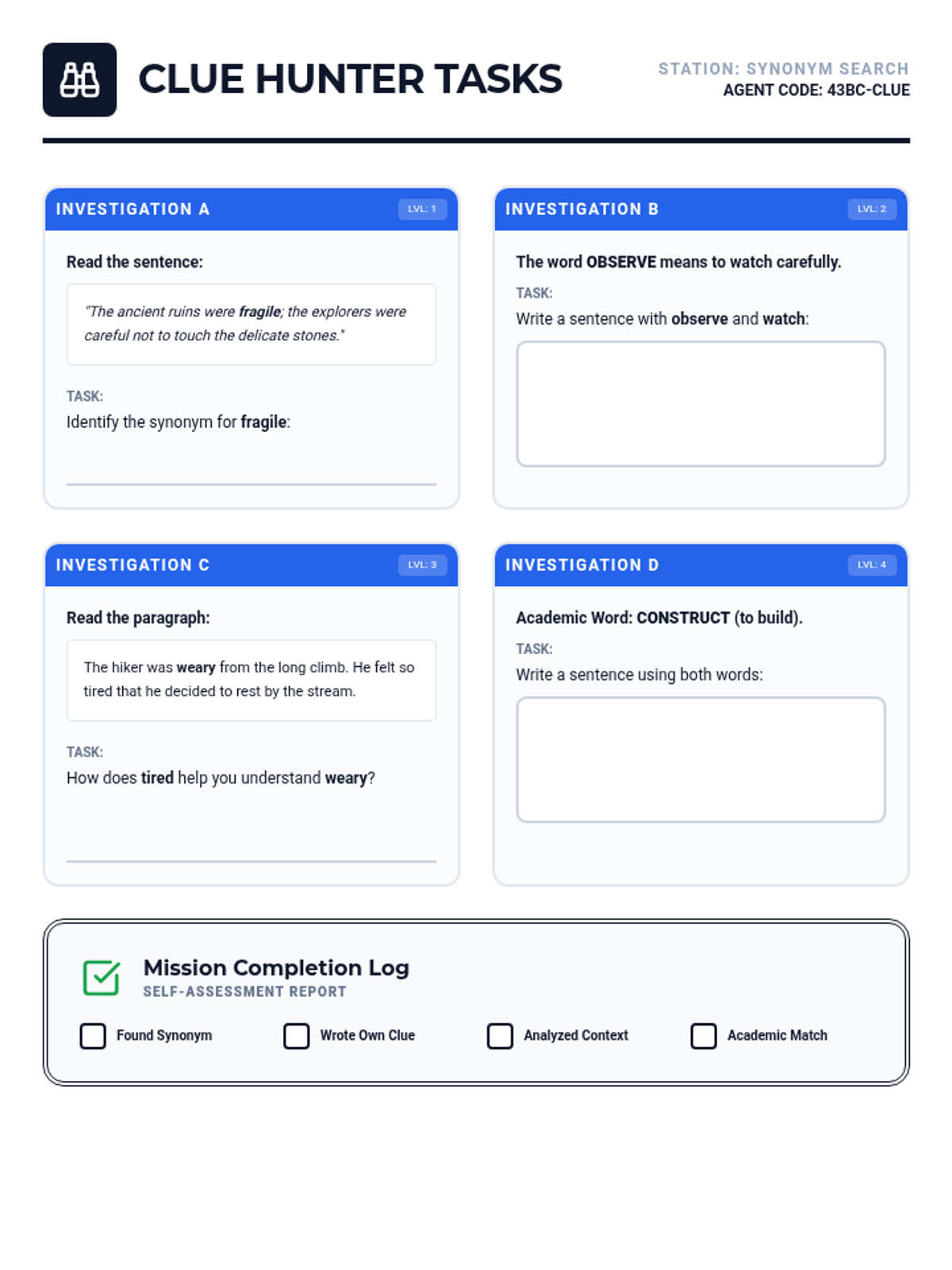
Students learn to identify synonyms within a text to unlock the meaning of unfamiliar words, focusing on reading rigor and application.
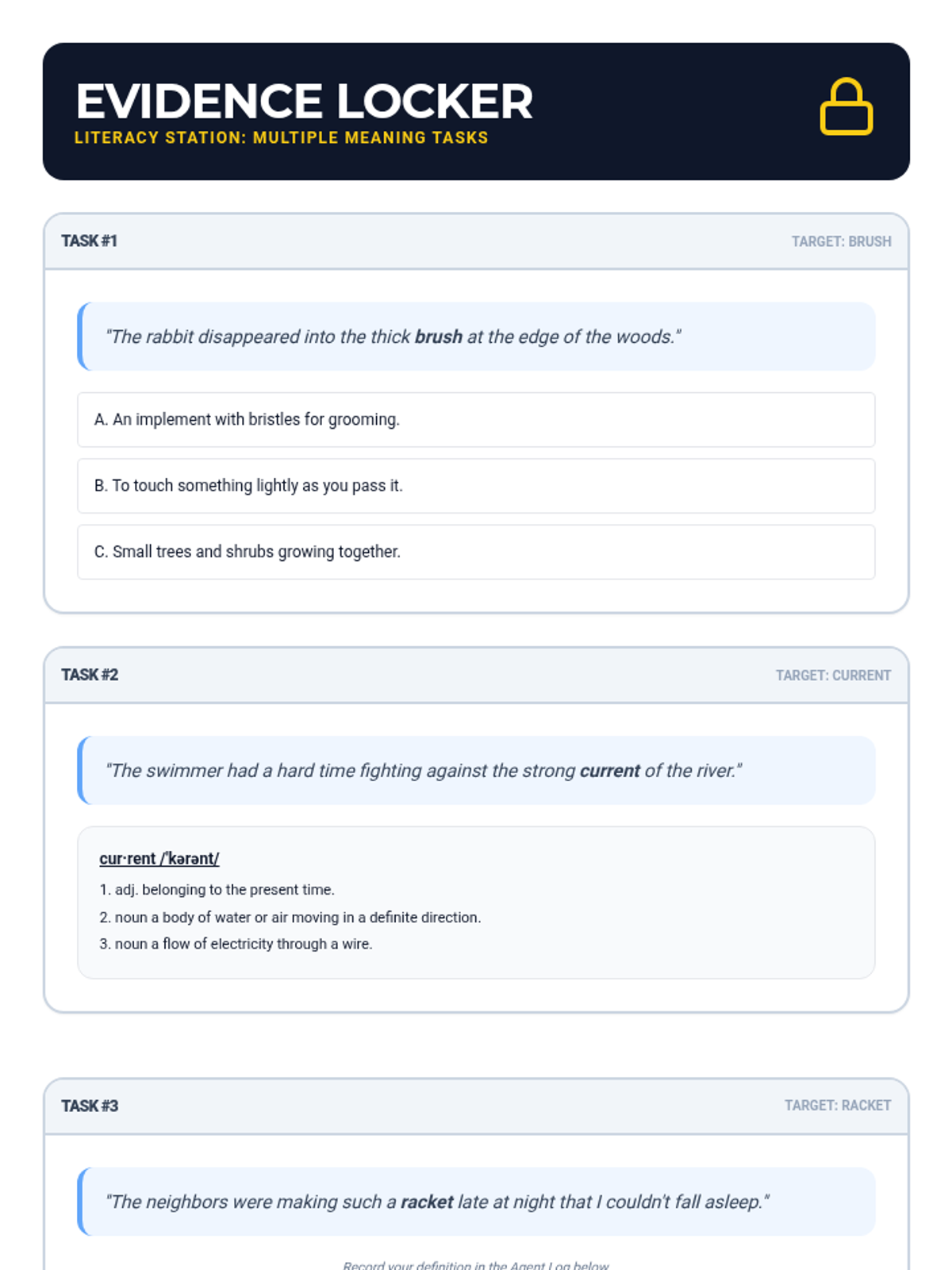
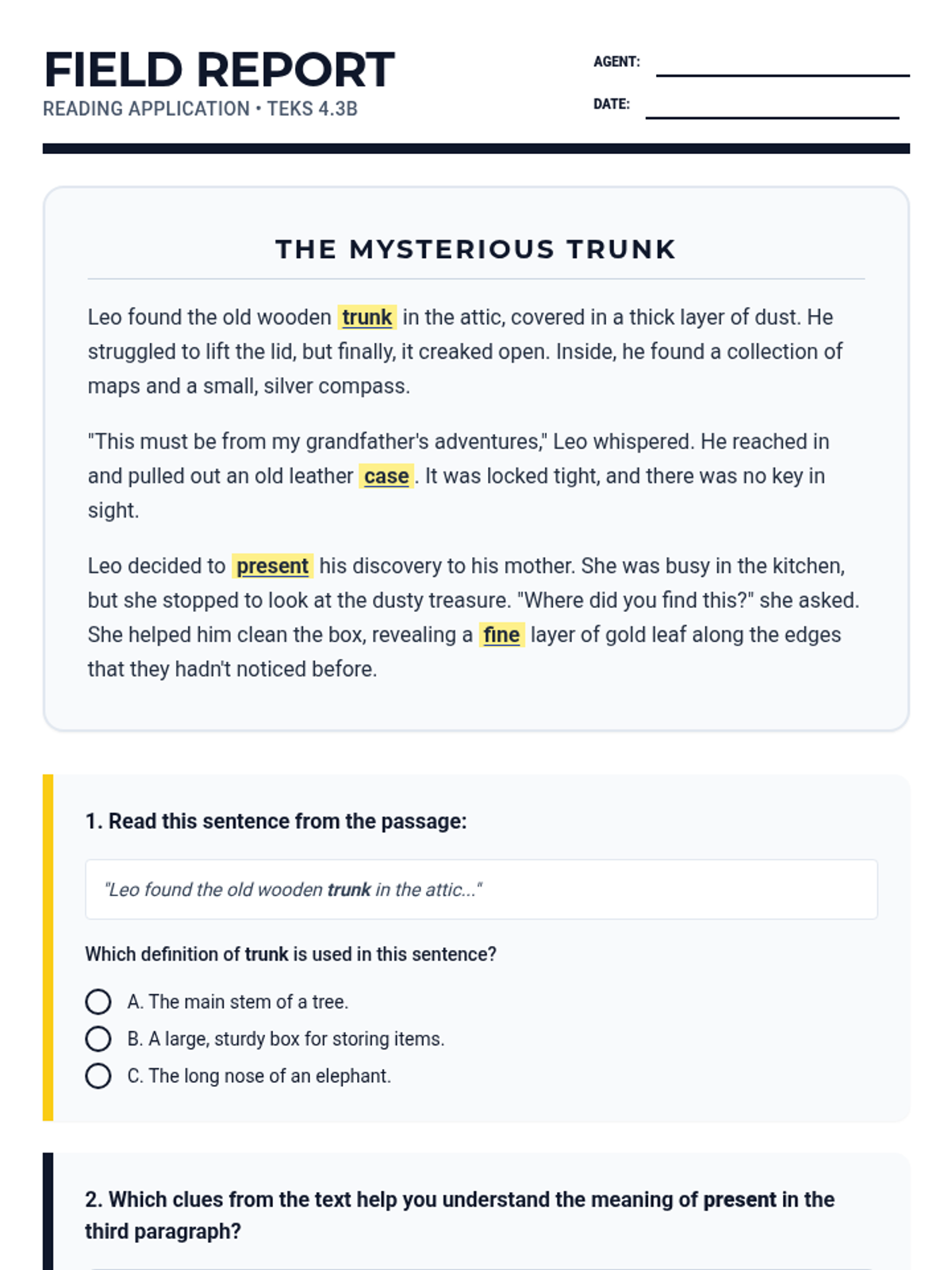
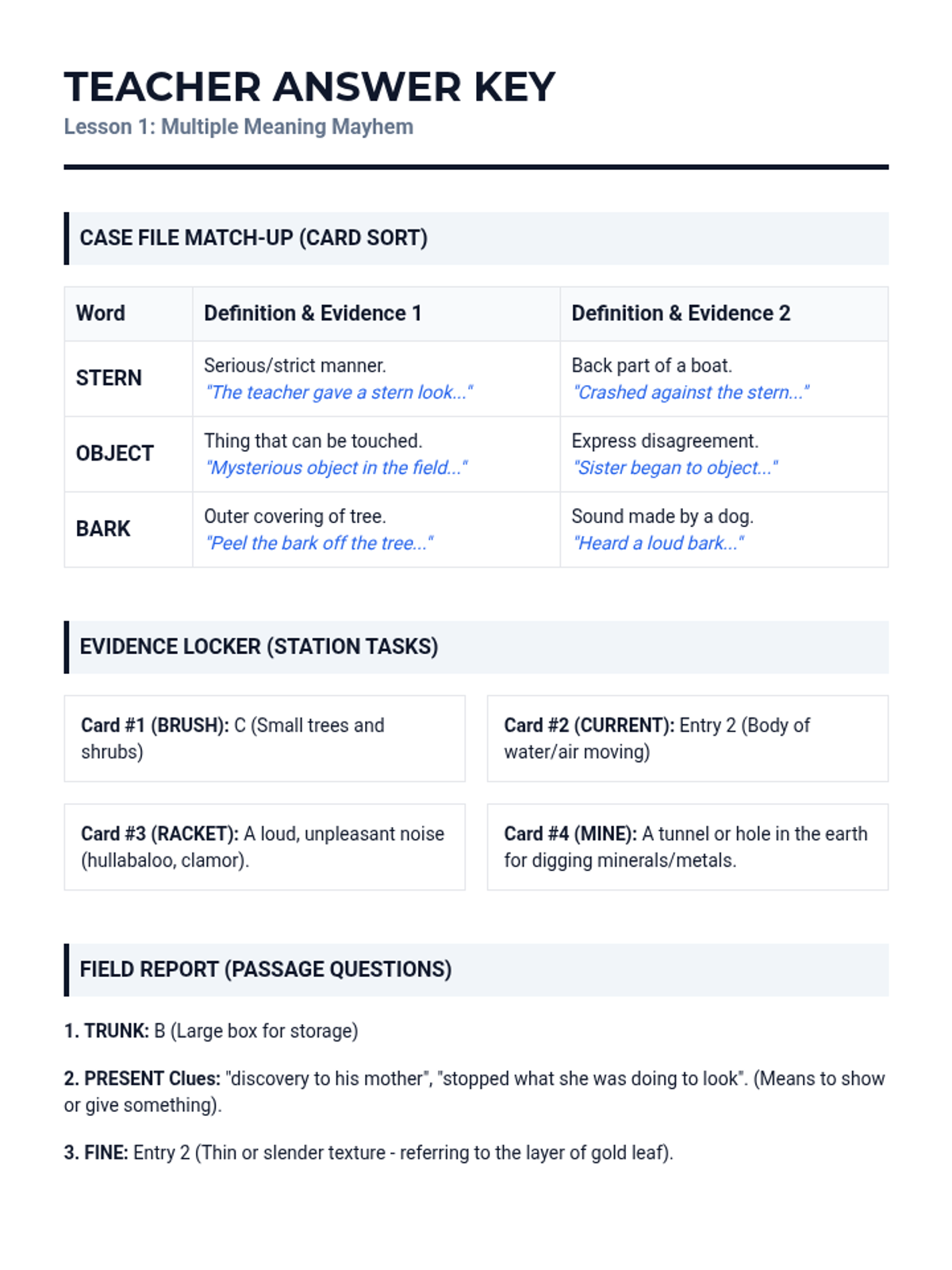
Students investigate how words can have more than one meaning and use context clues within and beyond sentences to determine the correct definition.
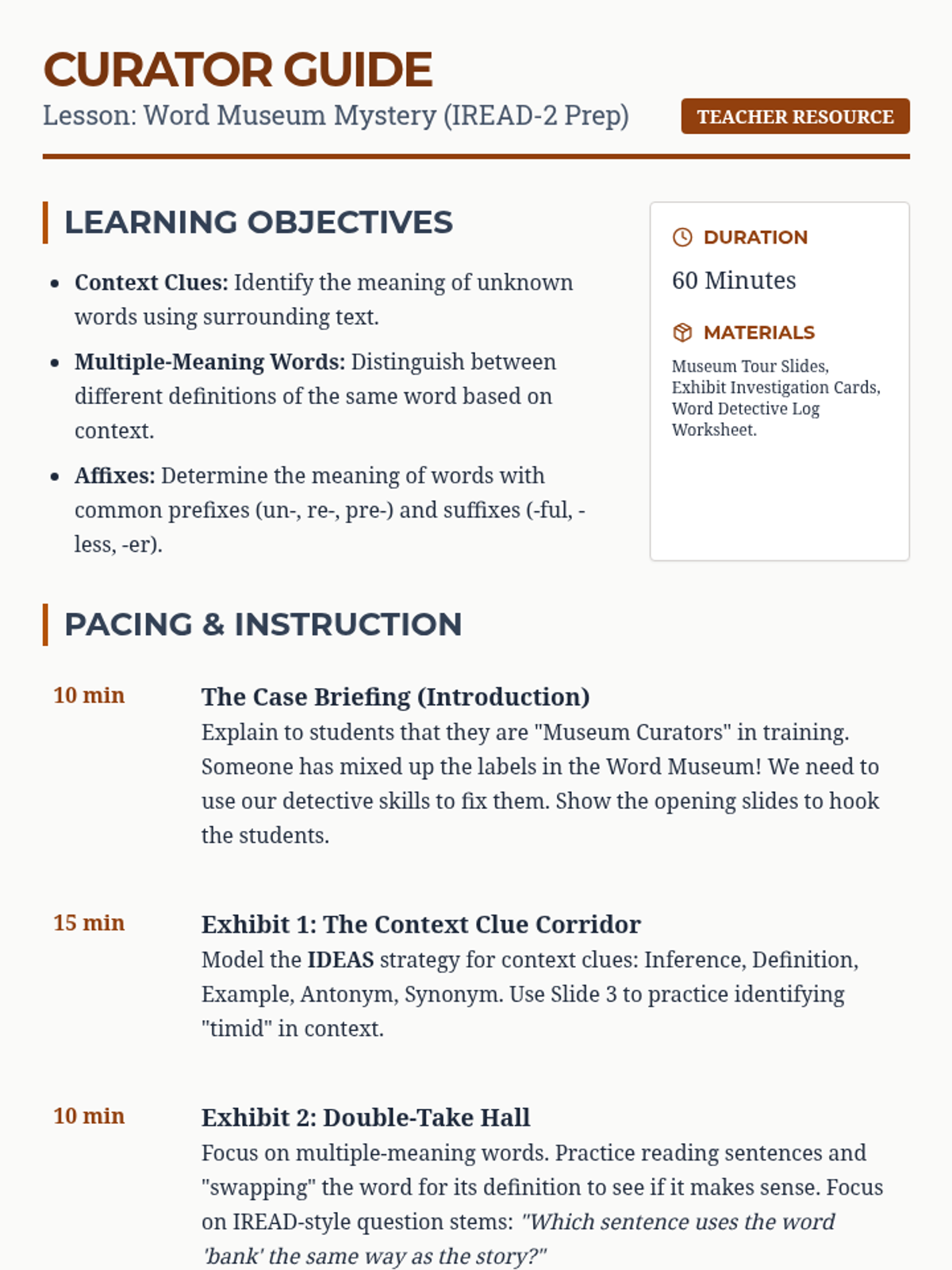
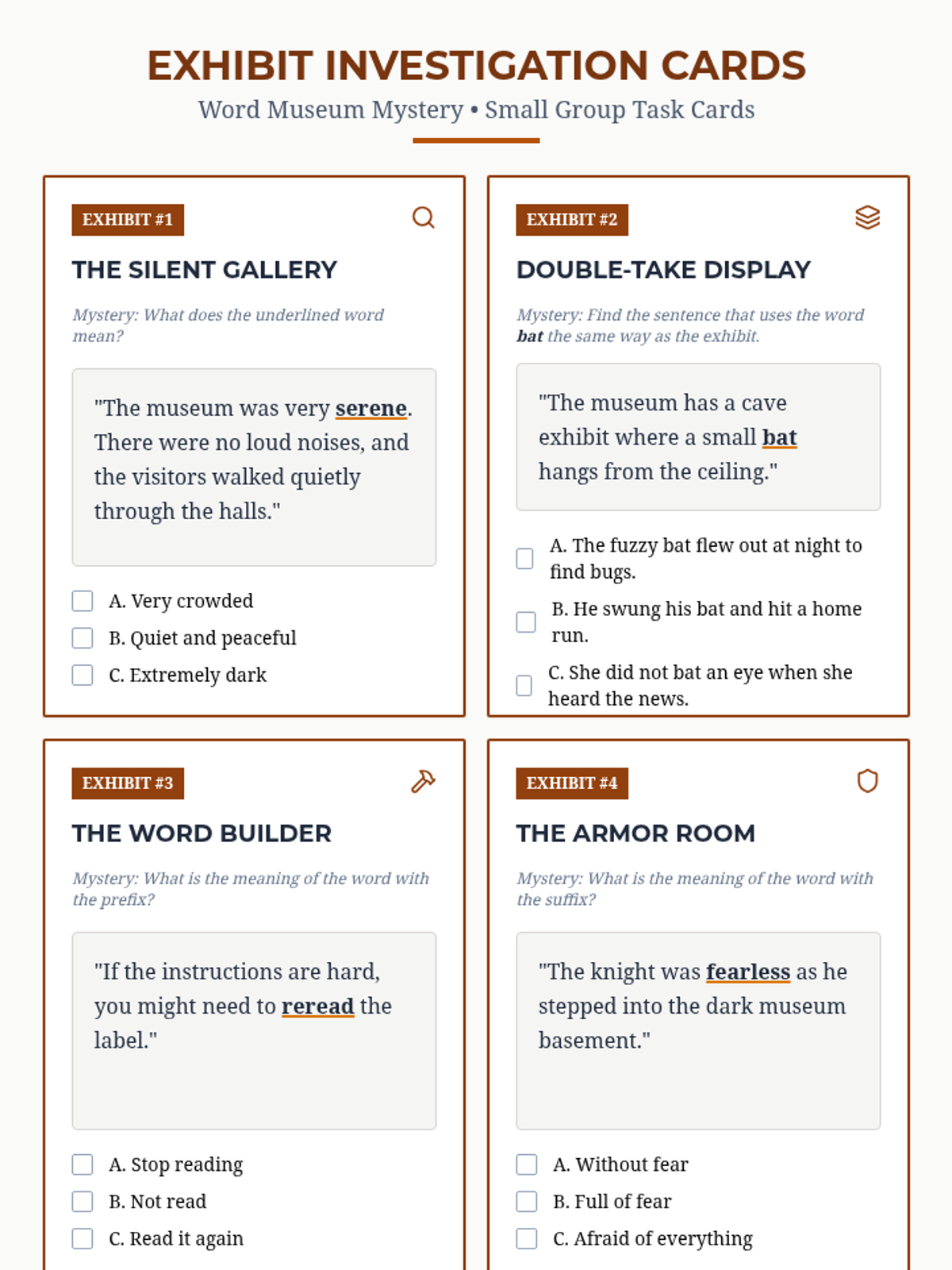
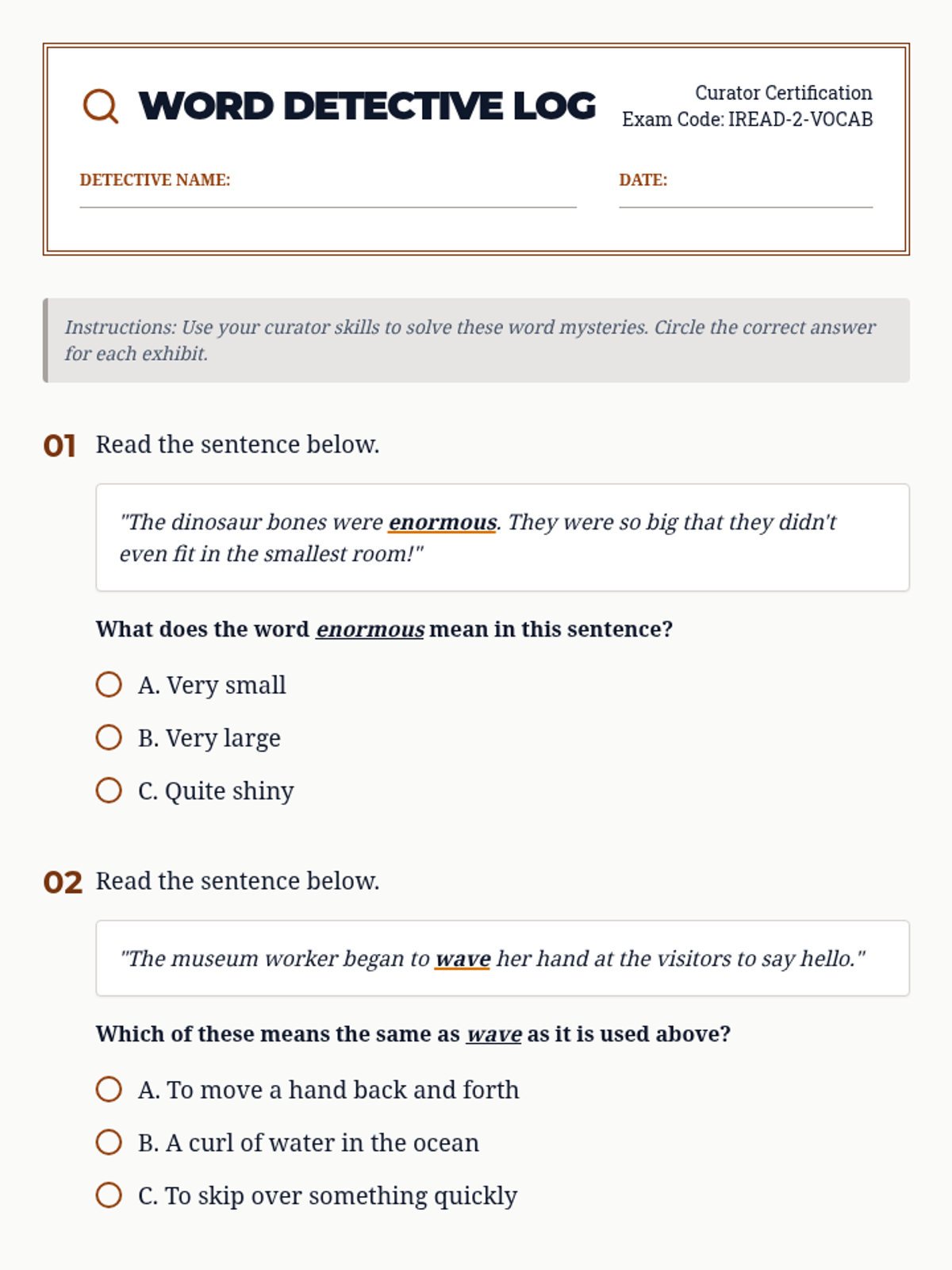
An interactive lesson reviewing context clues, multiple-meaning words, and affixes through a "Museum Mystery" theme tailored for Indiana IREAD-2 preparation.
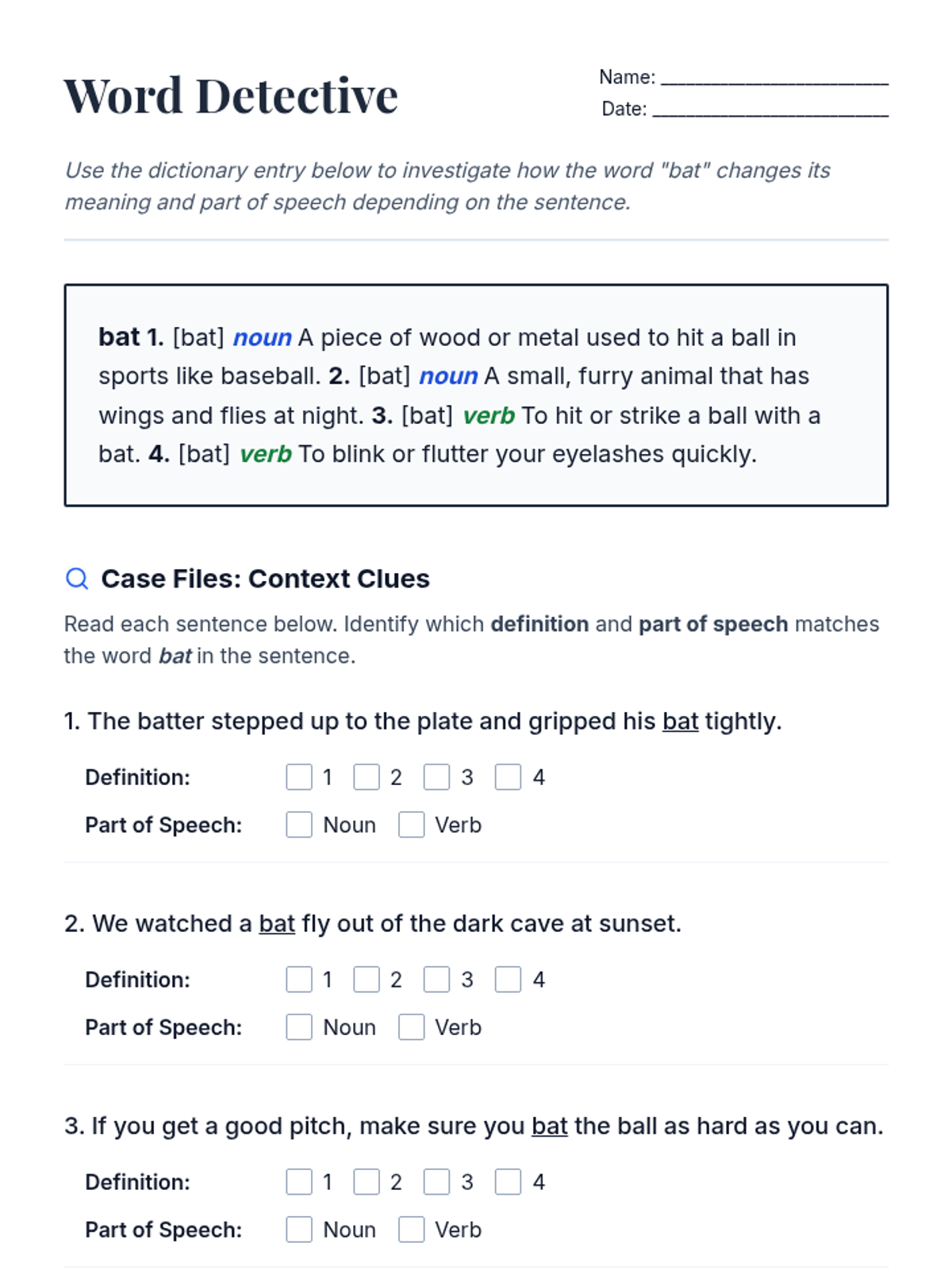
A lesson focused on using dictionary entries and context clues to identify the meaning of multiple-meaning words (homonyms).
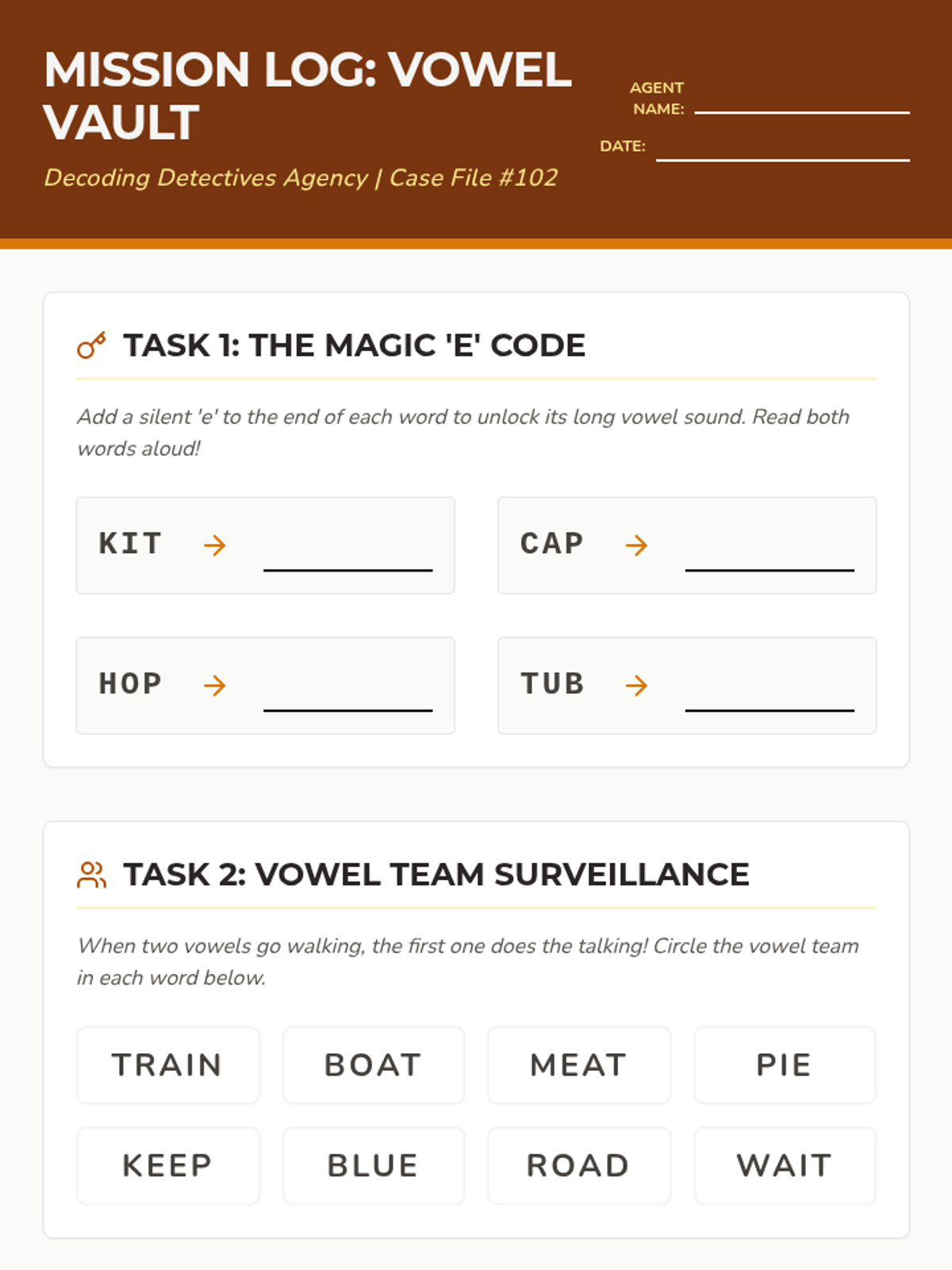
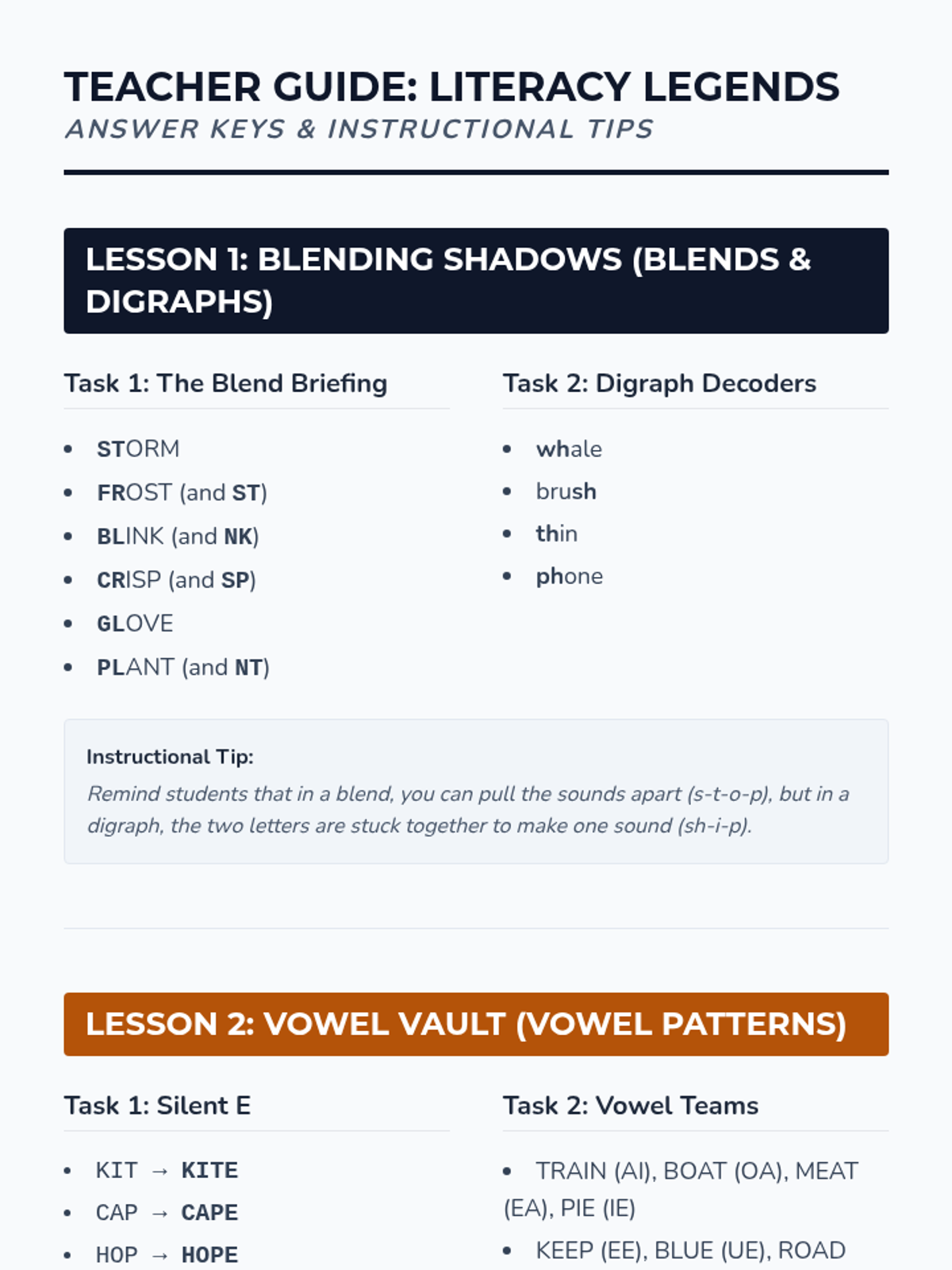
Unlock the secrets of long and short vowels, vowel teams, and the power of the silent 'e'. This lesson focuses on identifying patterns that change how a word is pronounced and spelled.
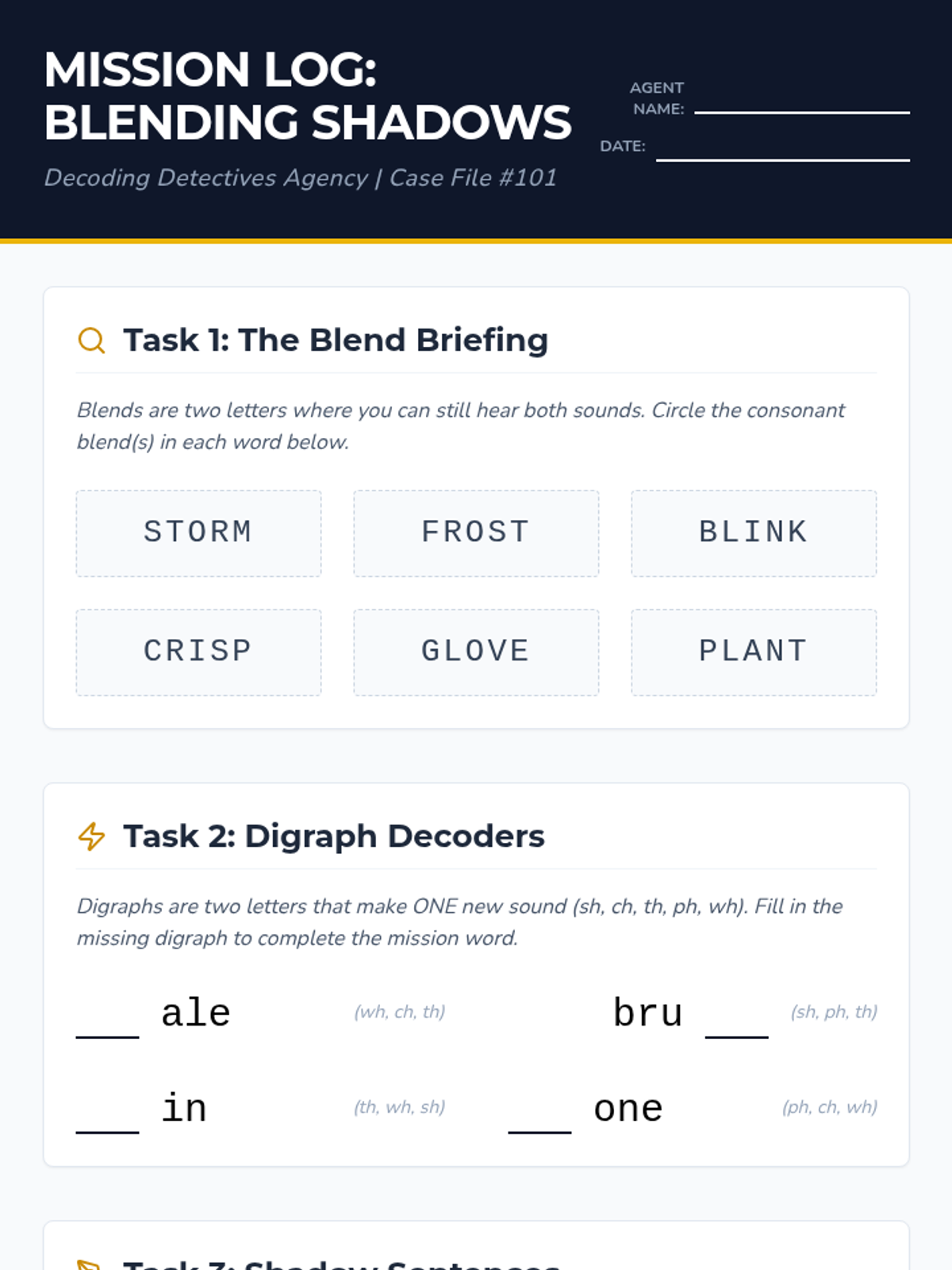
Investigate consonant blends and digraphs to master the sounds at the beginning and end of words. Students learn to distinguish between blended sounds and the unique sounds created by digraphs.
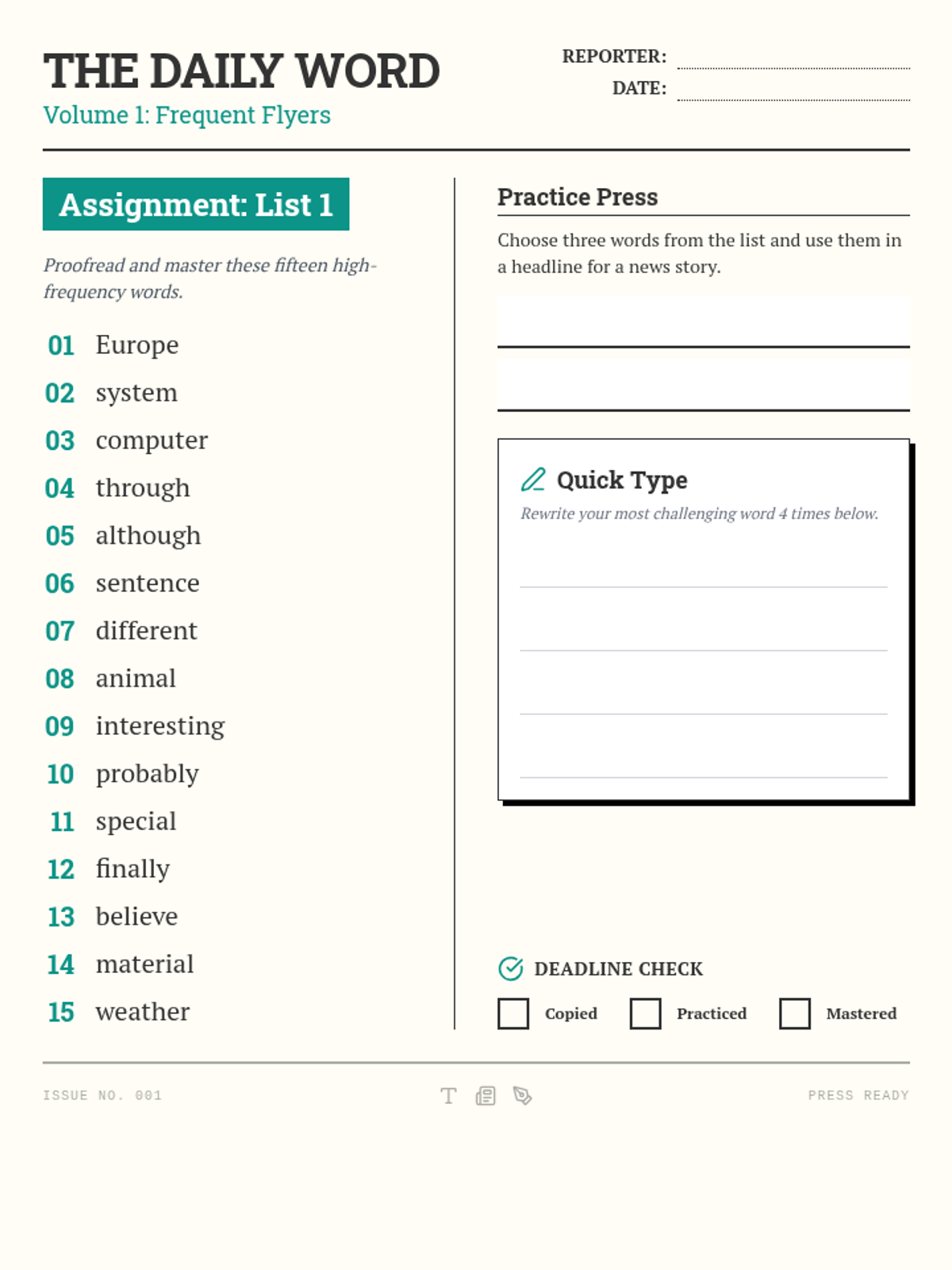
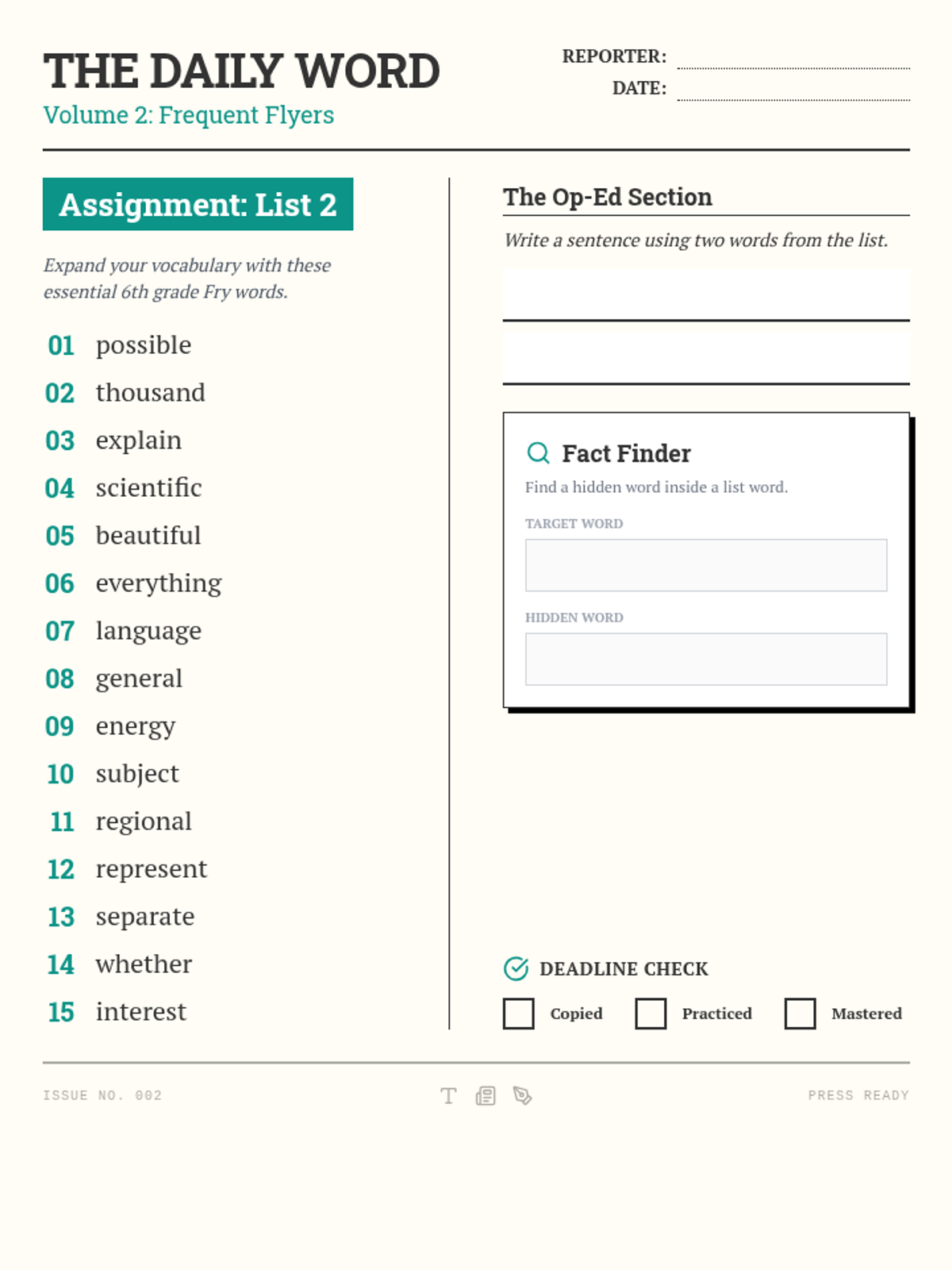
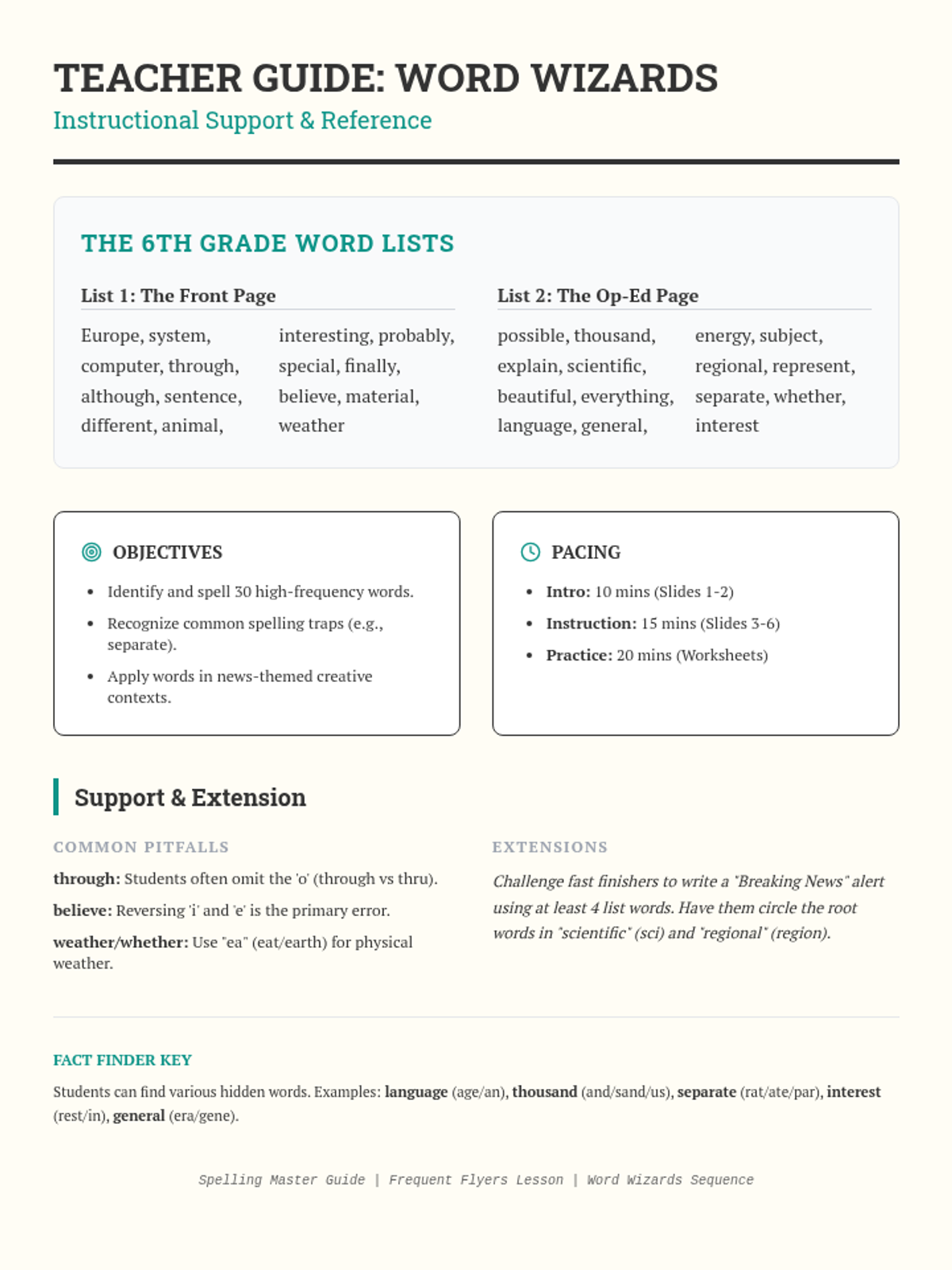
Mastering high-frequency Fry words through focused lists and spelling practice.
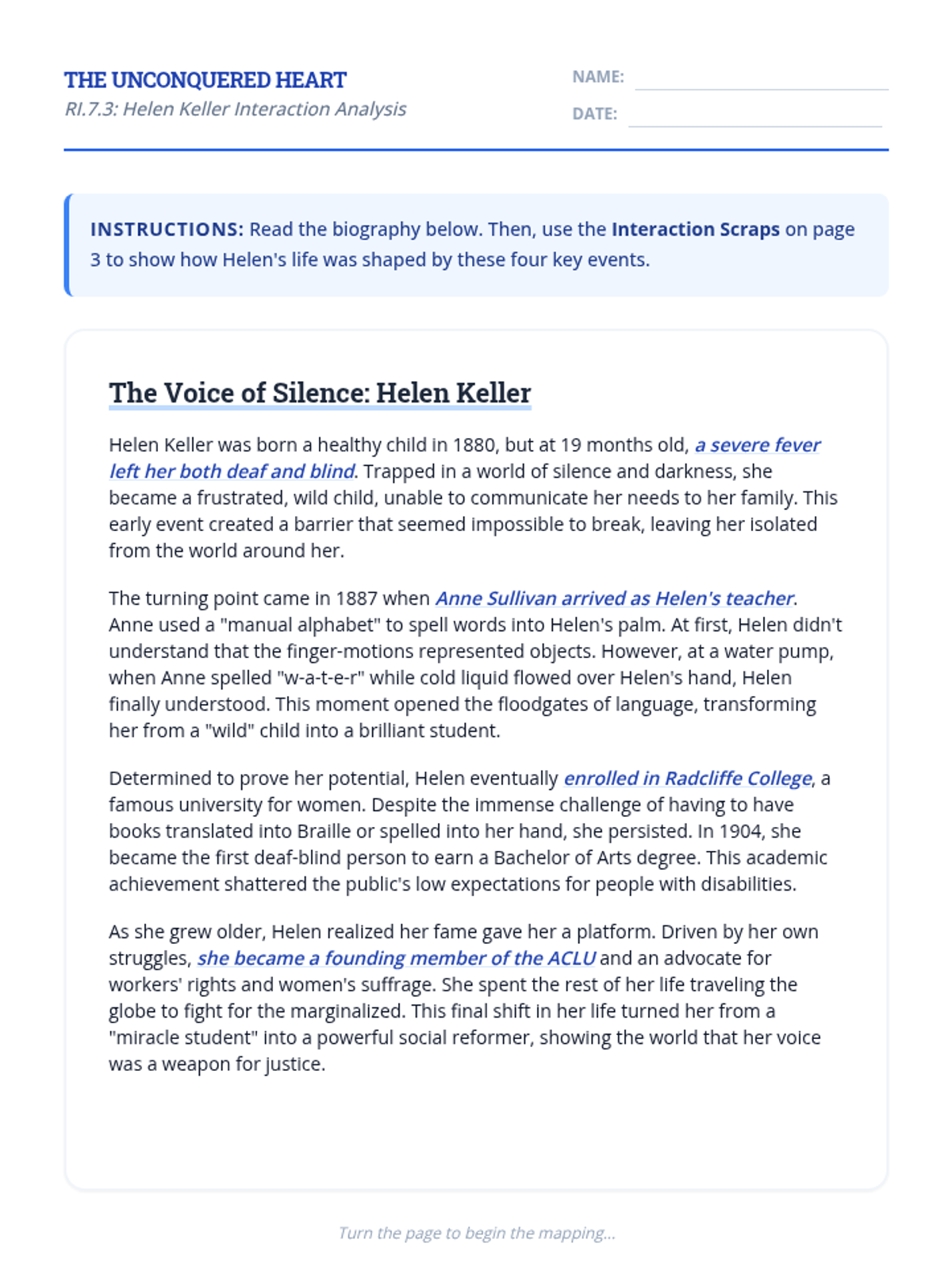
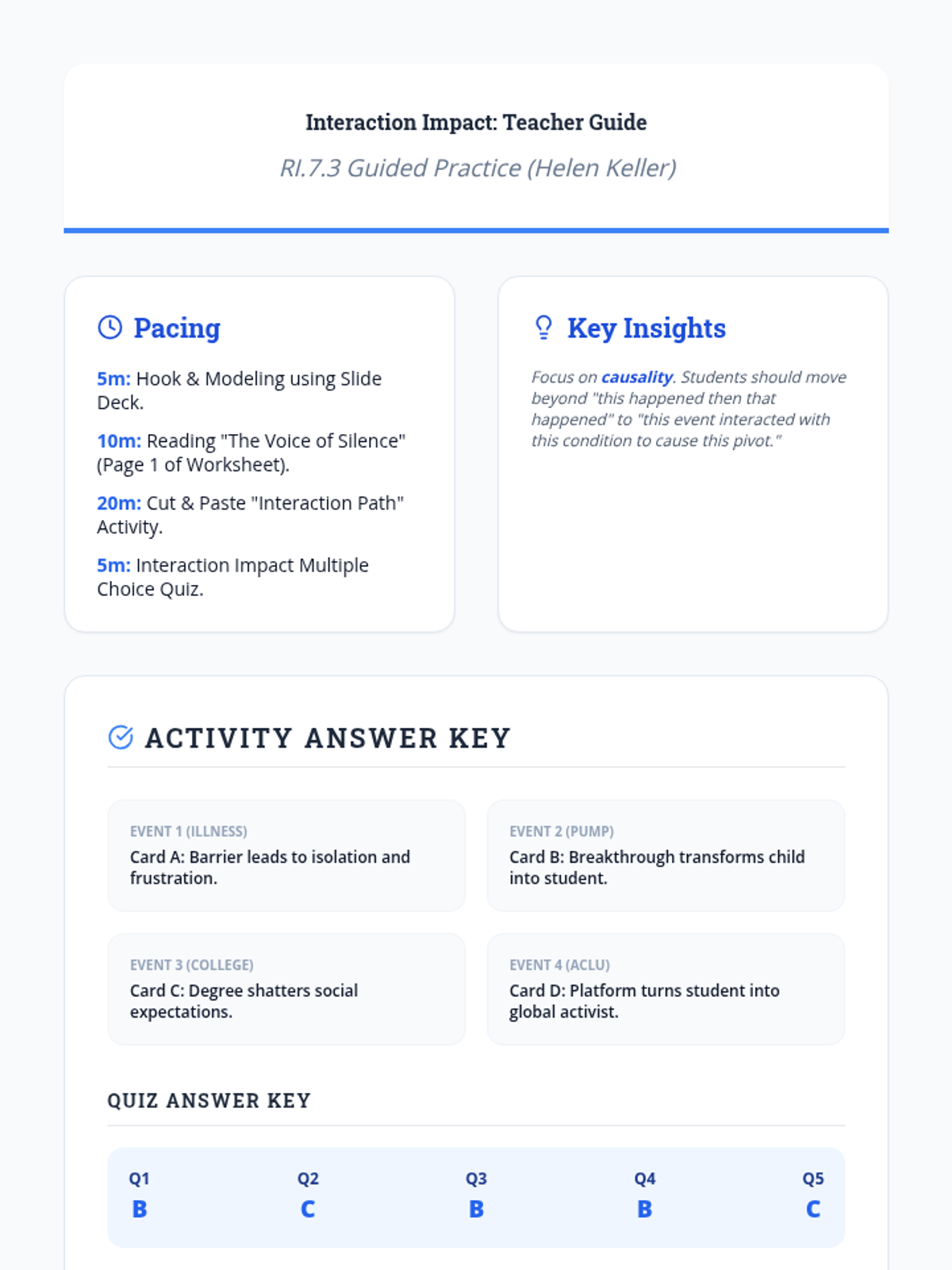
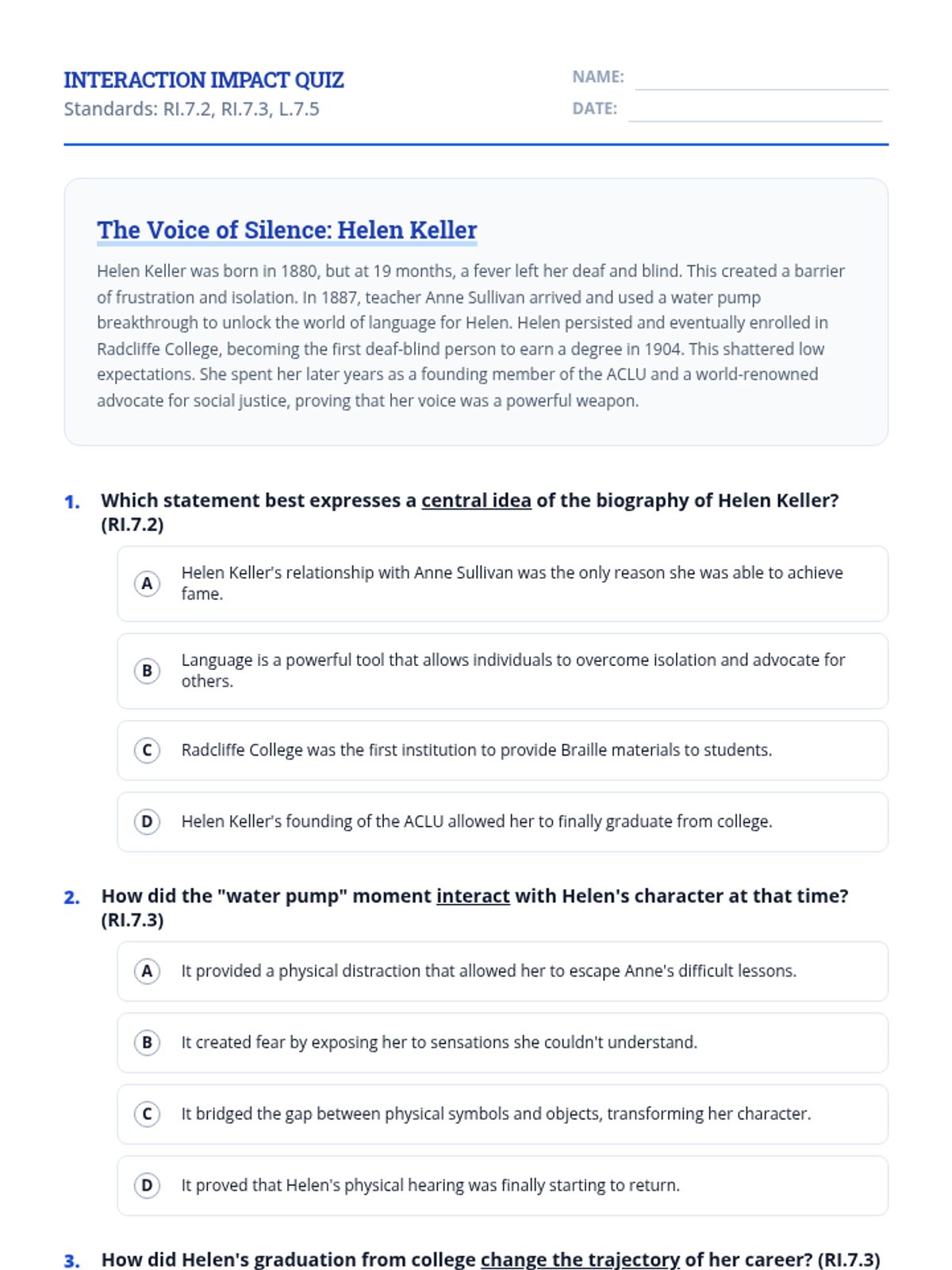
A guided practice lesson focused on RI.7.3, analyzing how significant events in the life of Helen Keller shaped her development, achievements, and legacy as an activist.
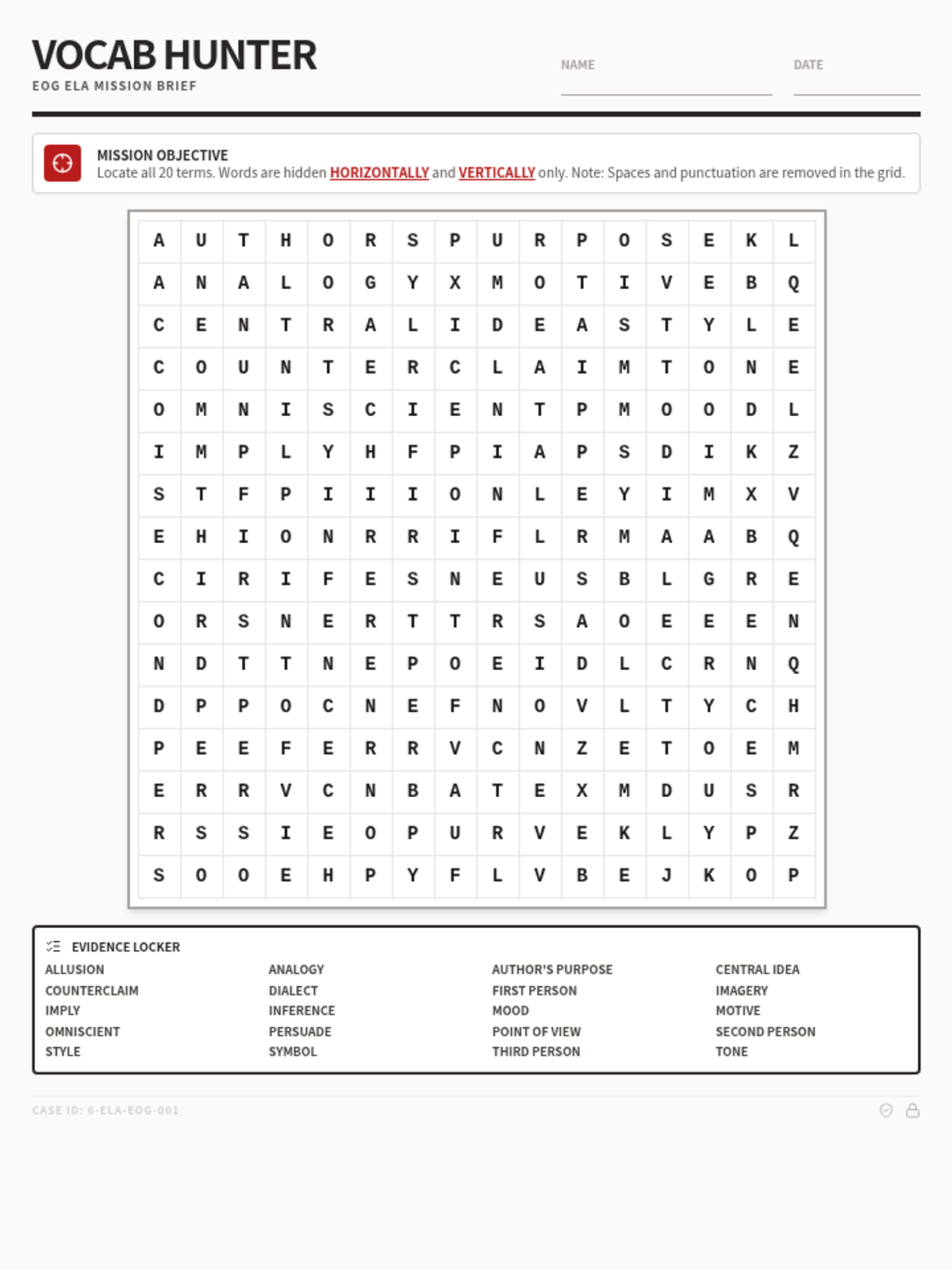
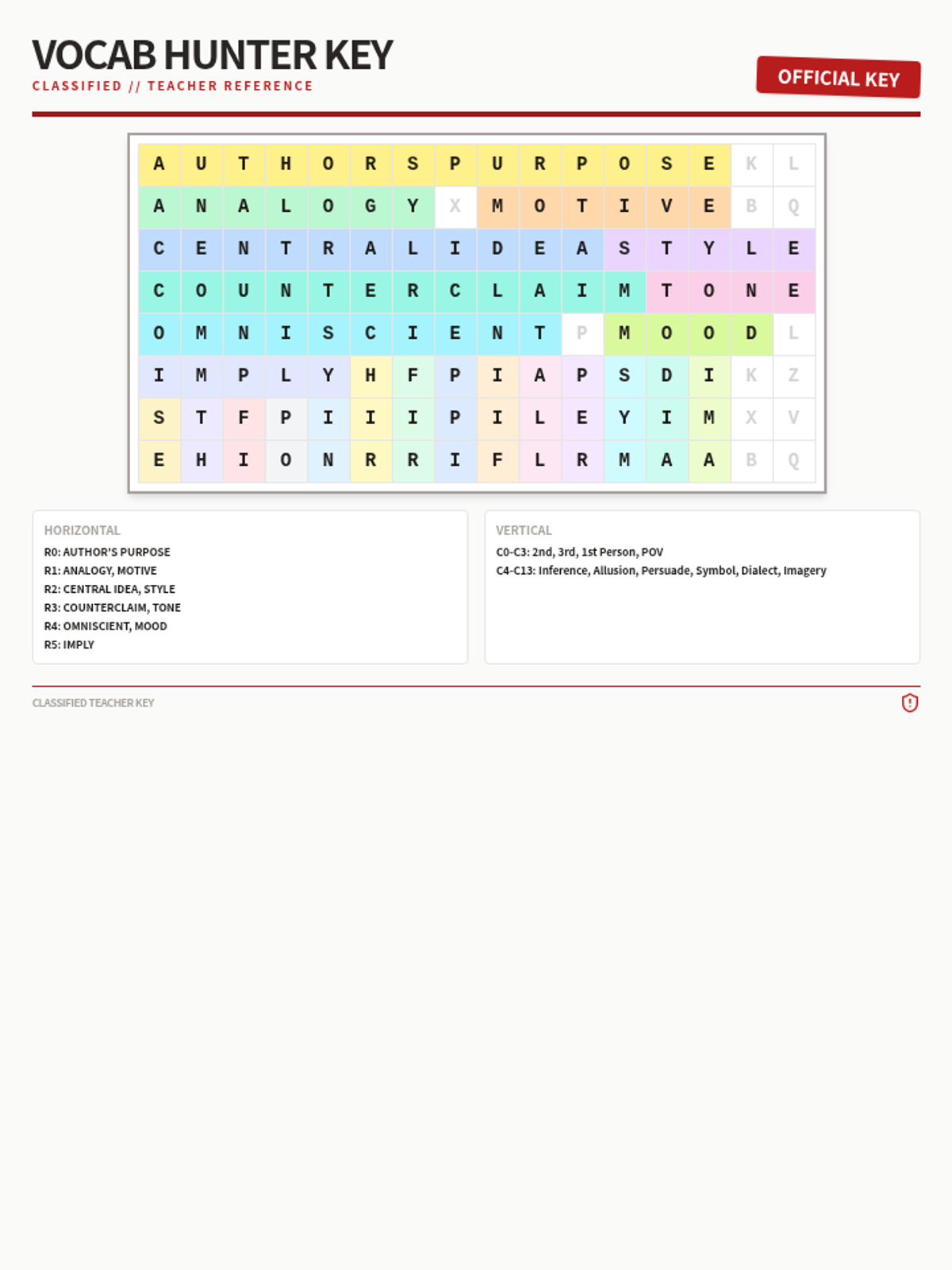
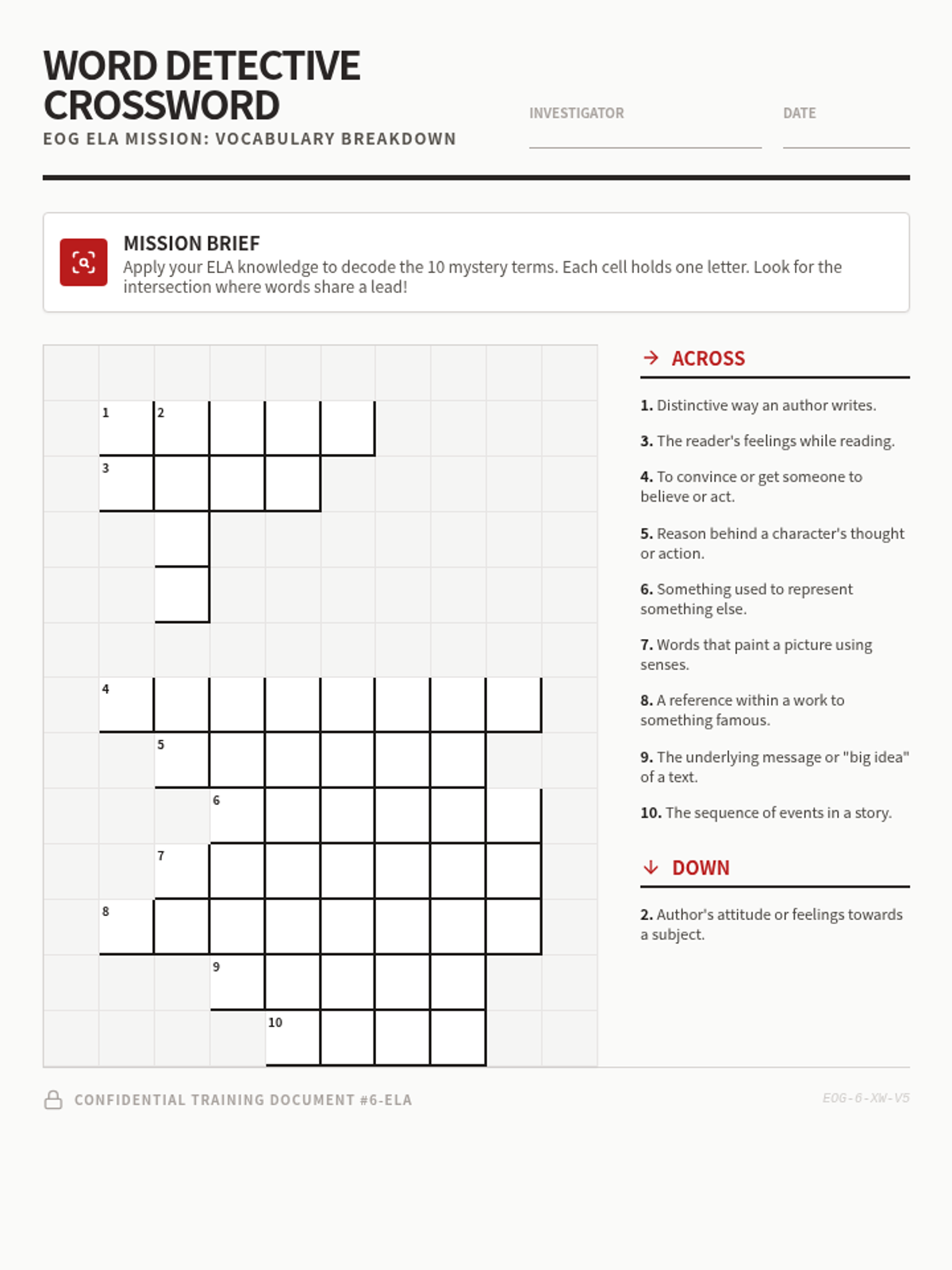
A vocabulary-focused lesson using terms from the 6th Grade EOG ELA curriculum to reinforce definitions and term recognition.
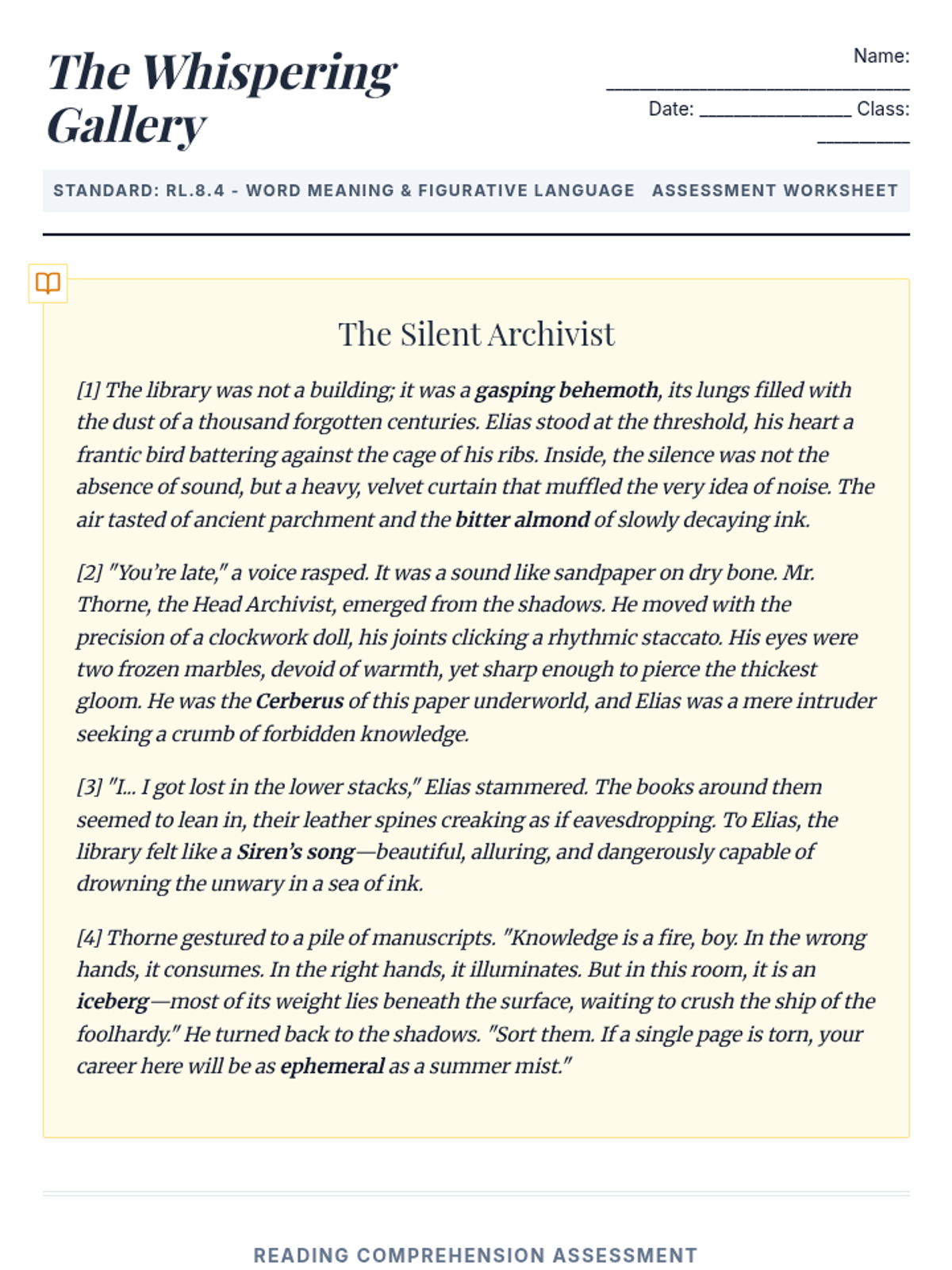
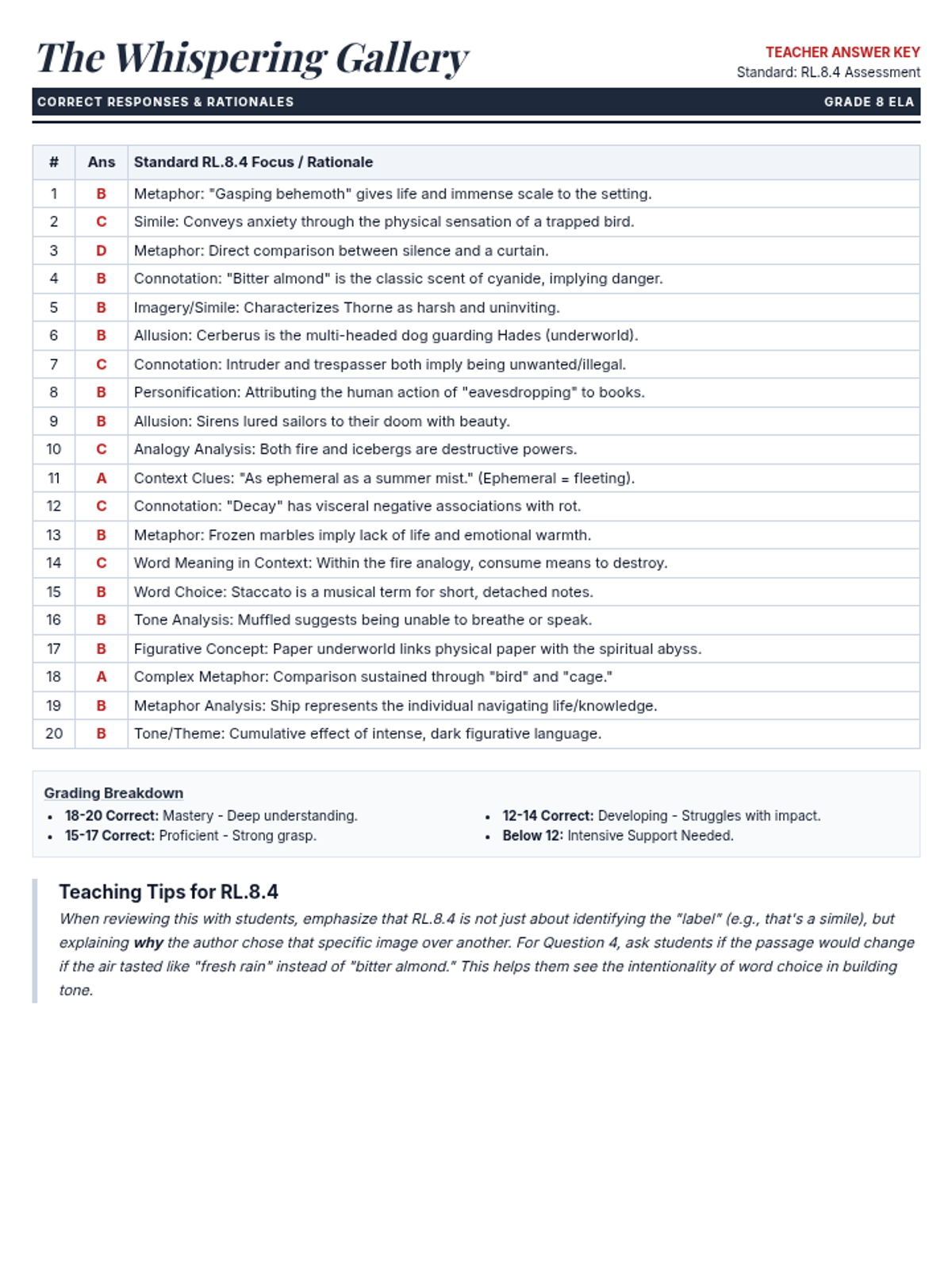
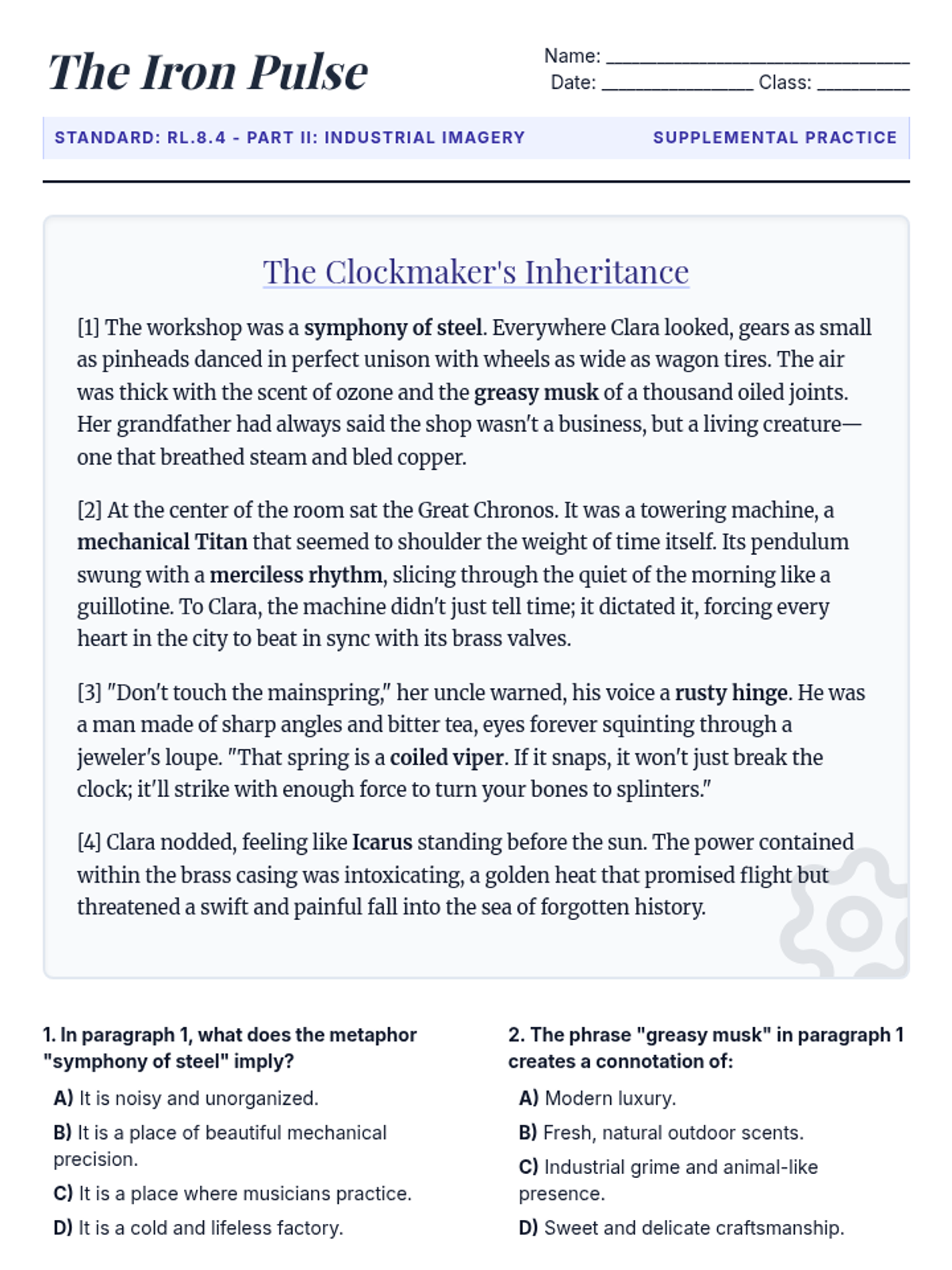
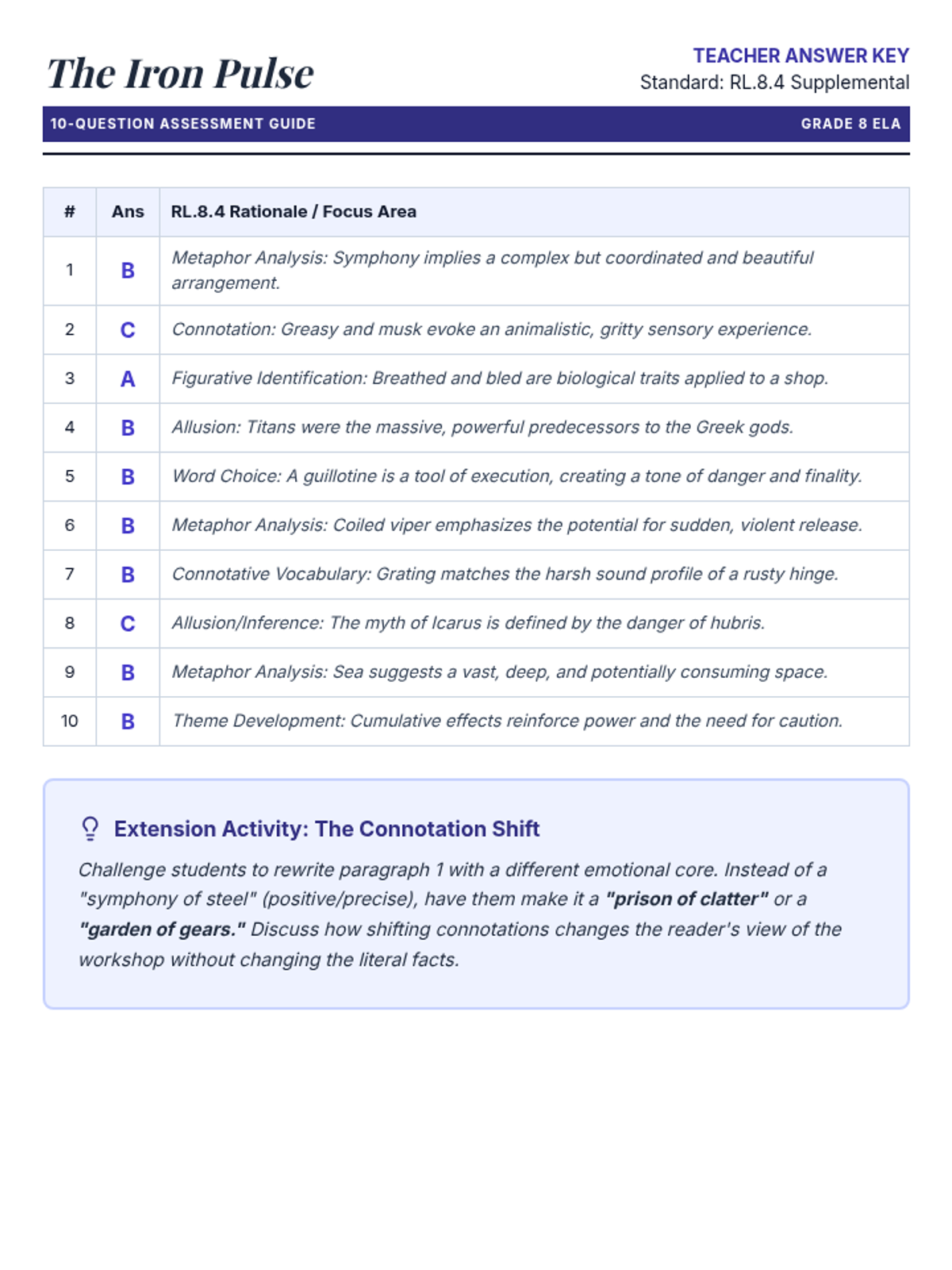
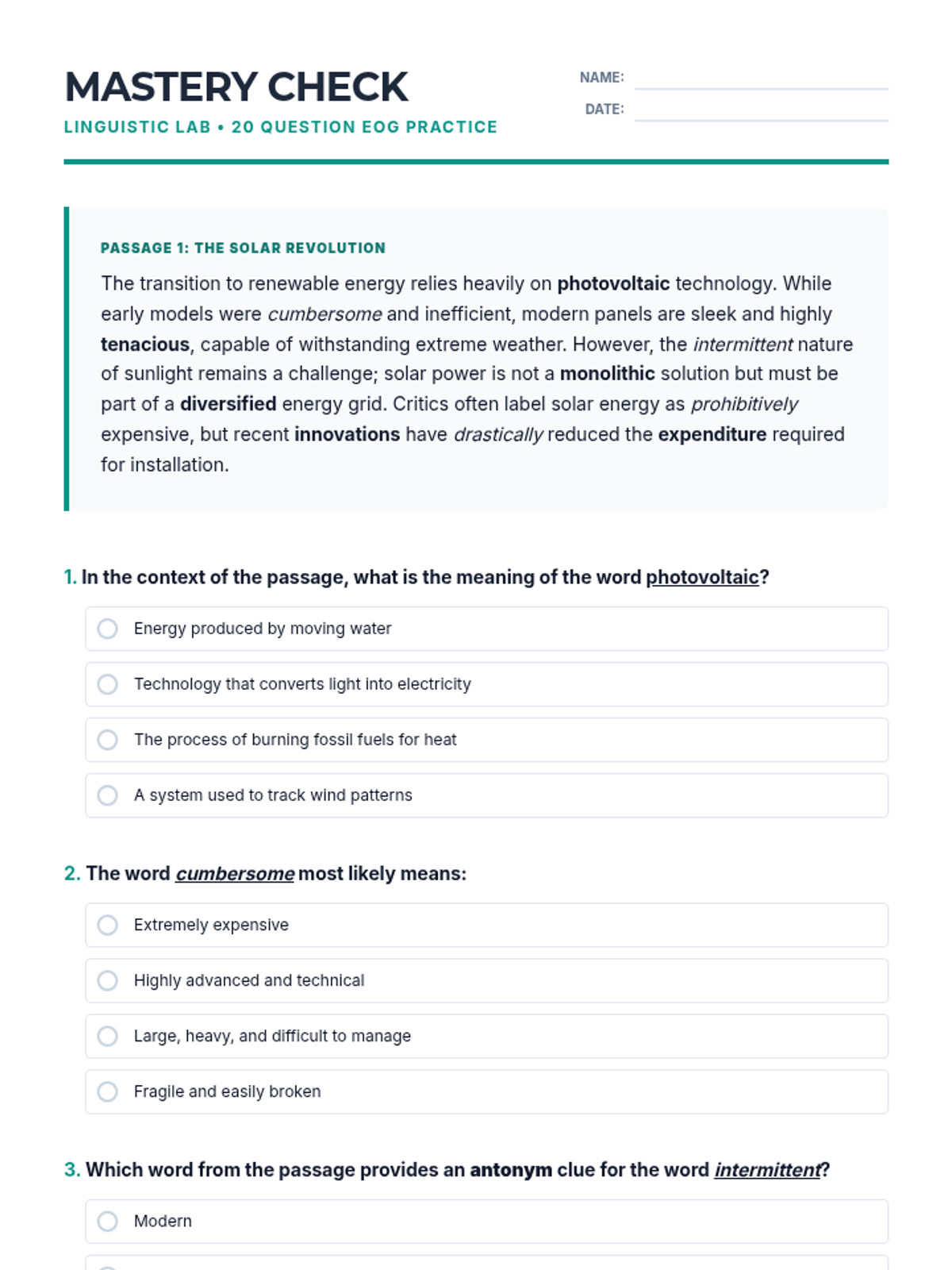
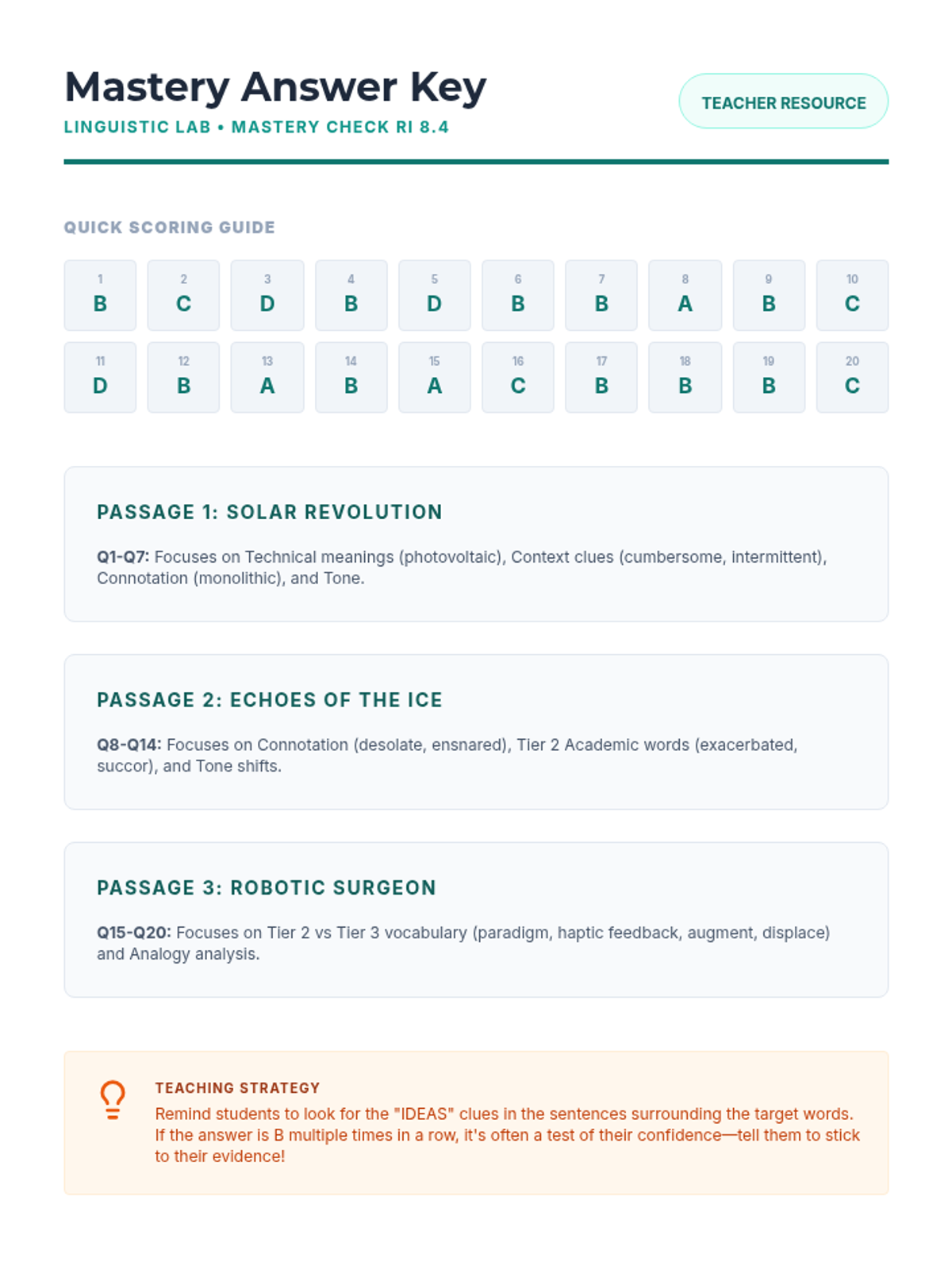
A focused lesson on RL.8.4 standards, analyzing figurative and connotative meanings through a rigorous literary passage and a 20-question practice set.
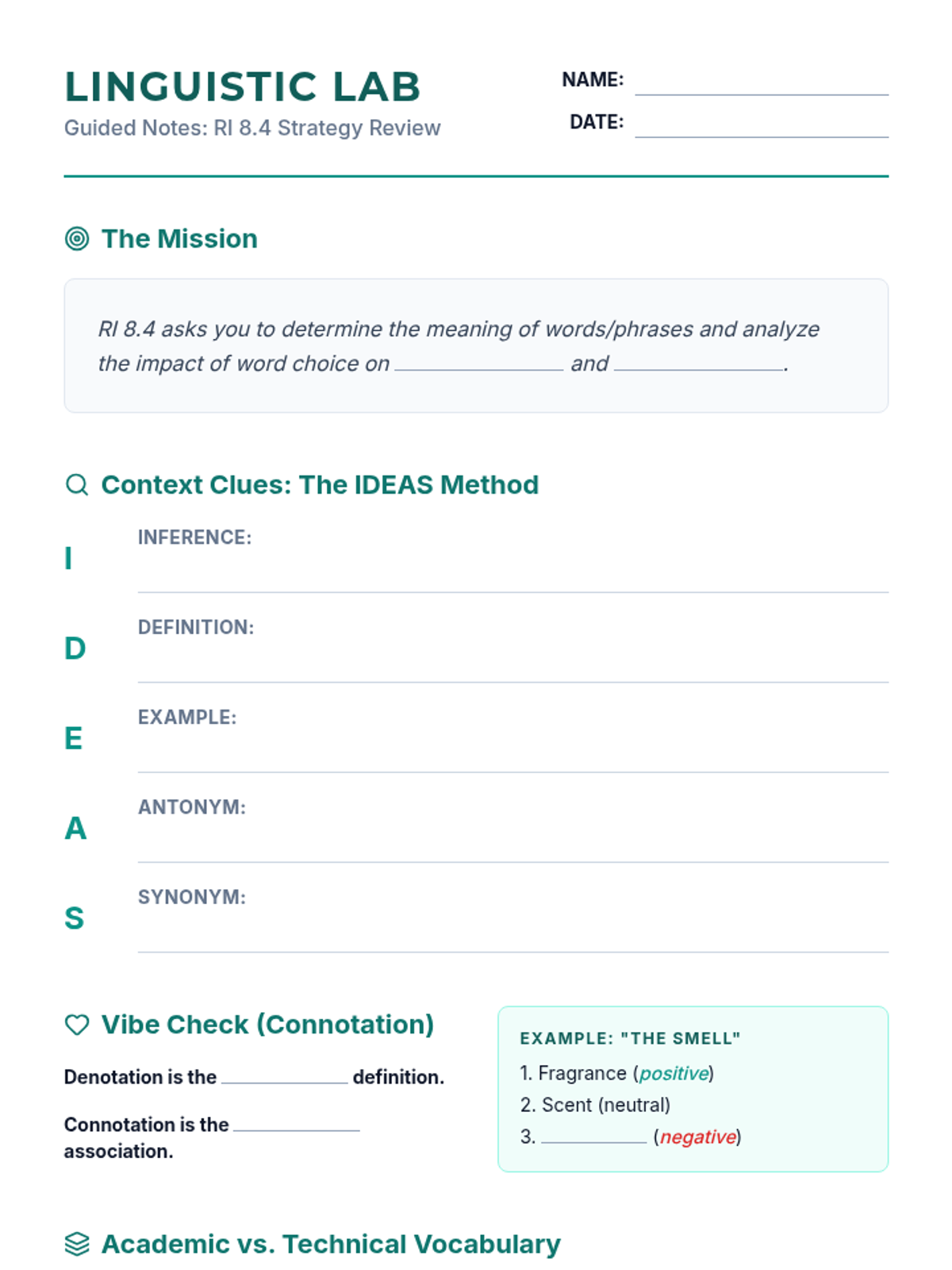
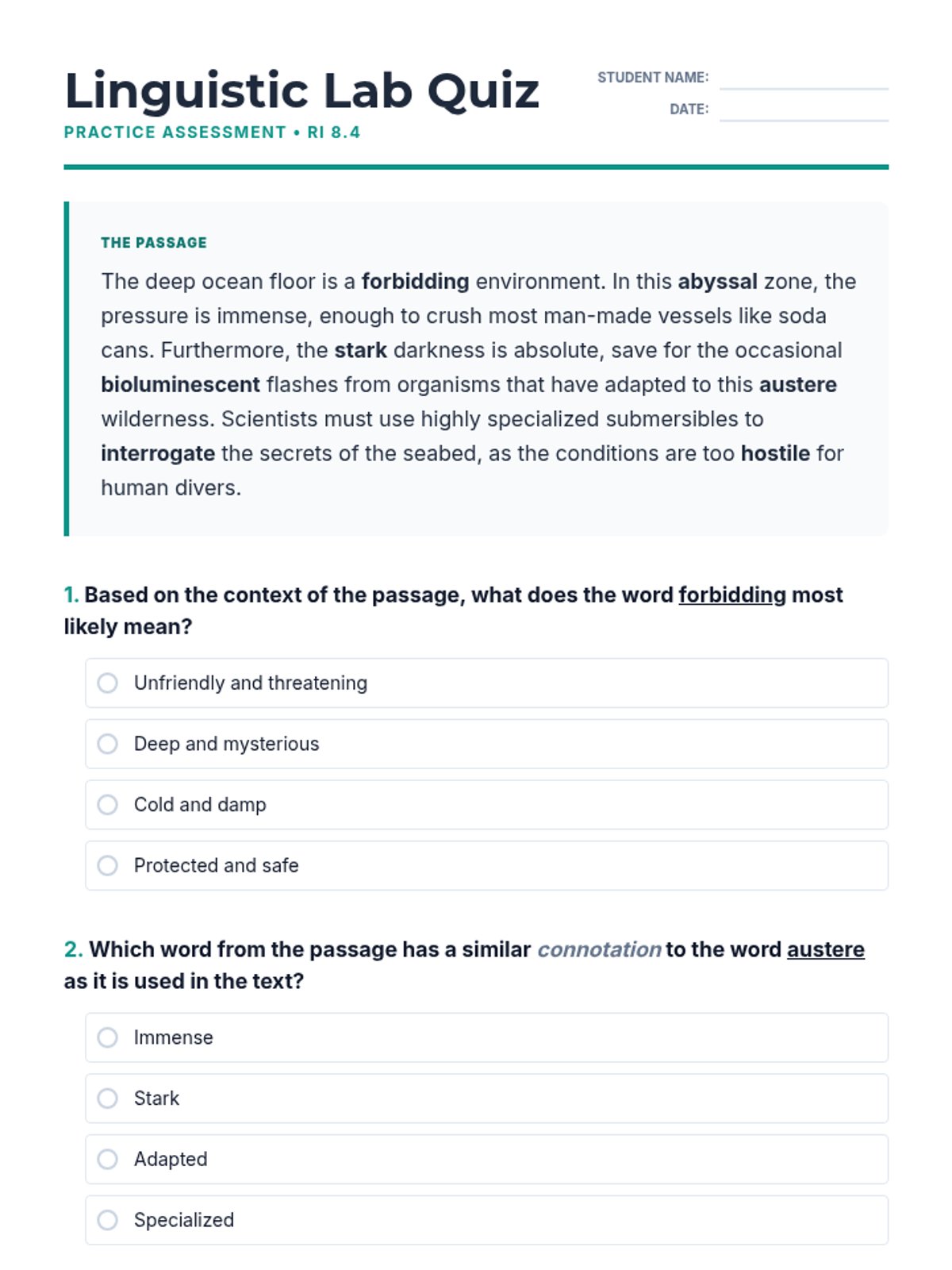
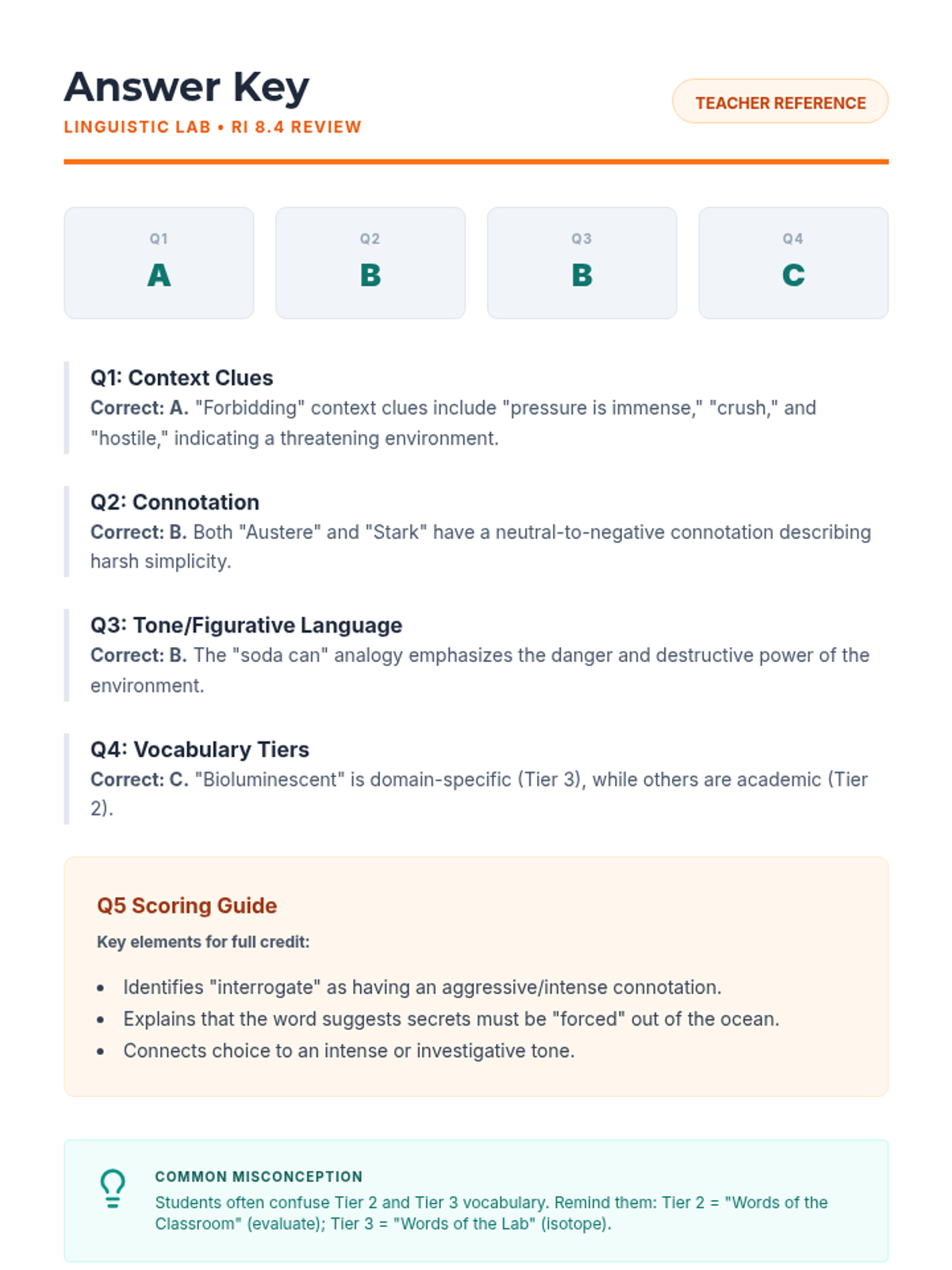
A comprehensive review of NC Standard RI 8.4, focusing on context clues, connotation, tone, and vocabulary types to prepare students for the 8th grade EOG.
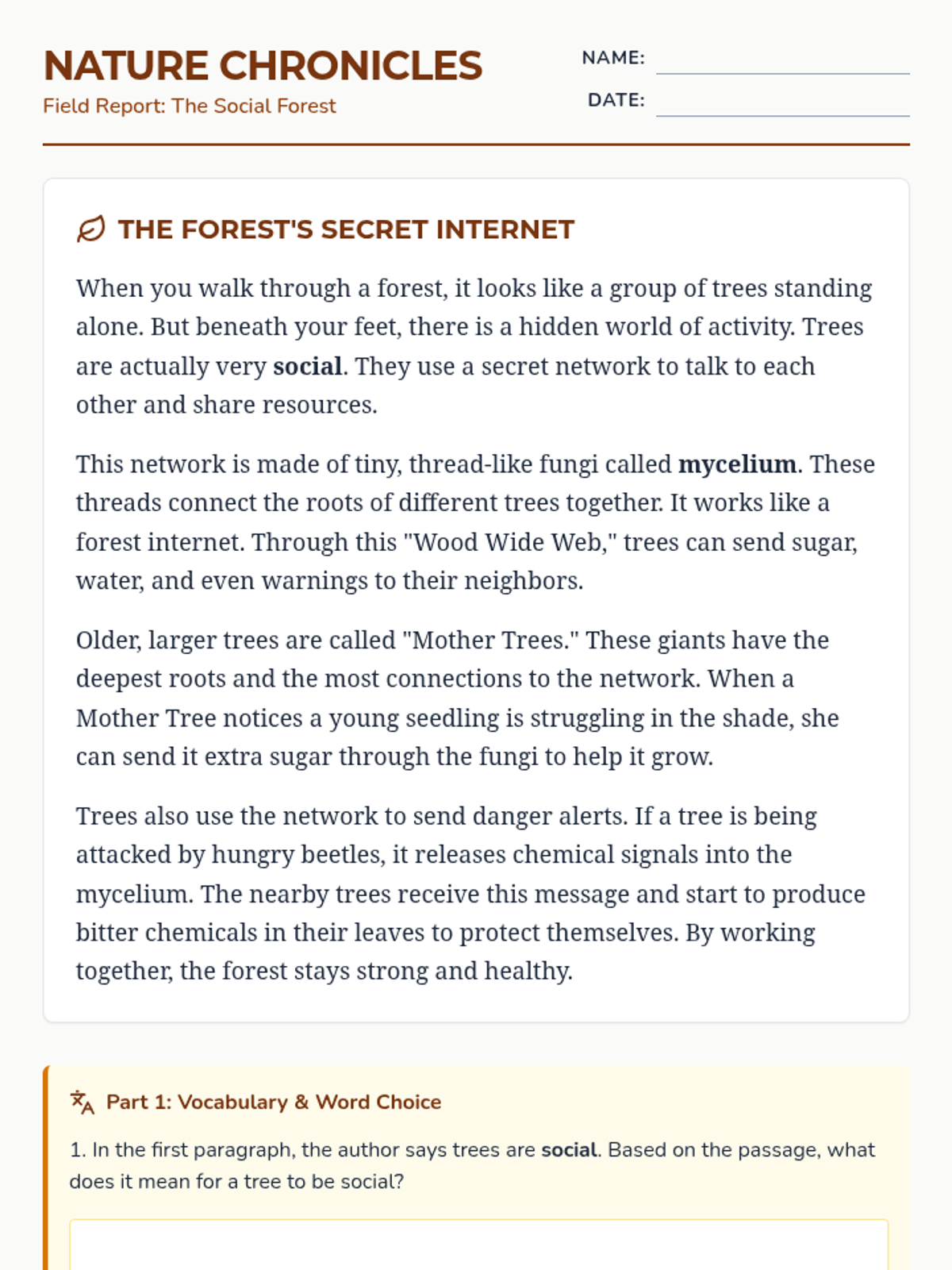
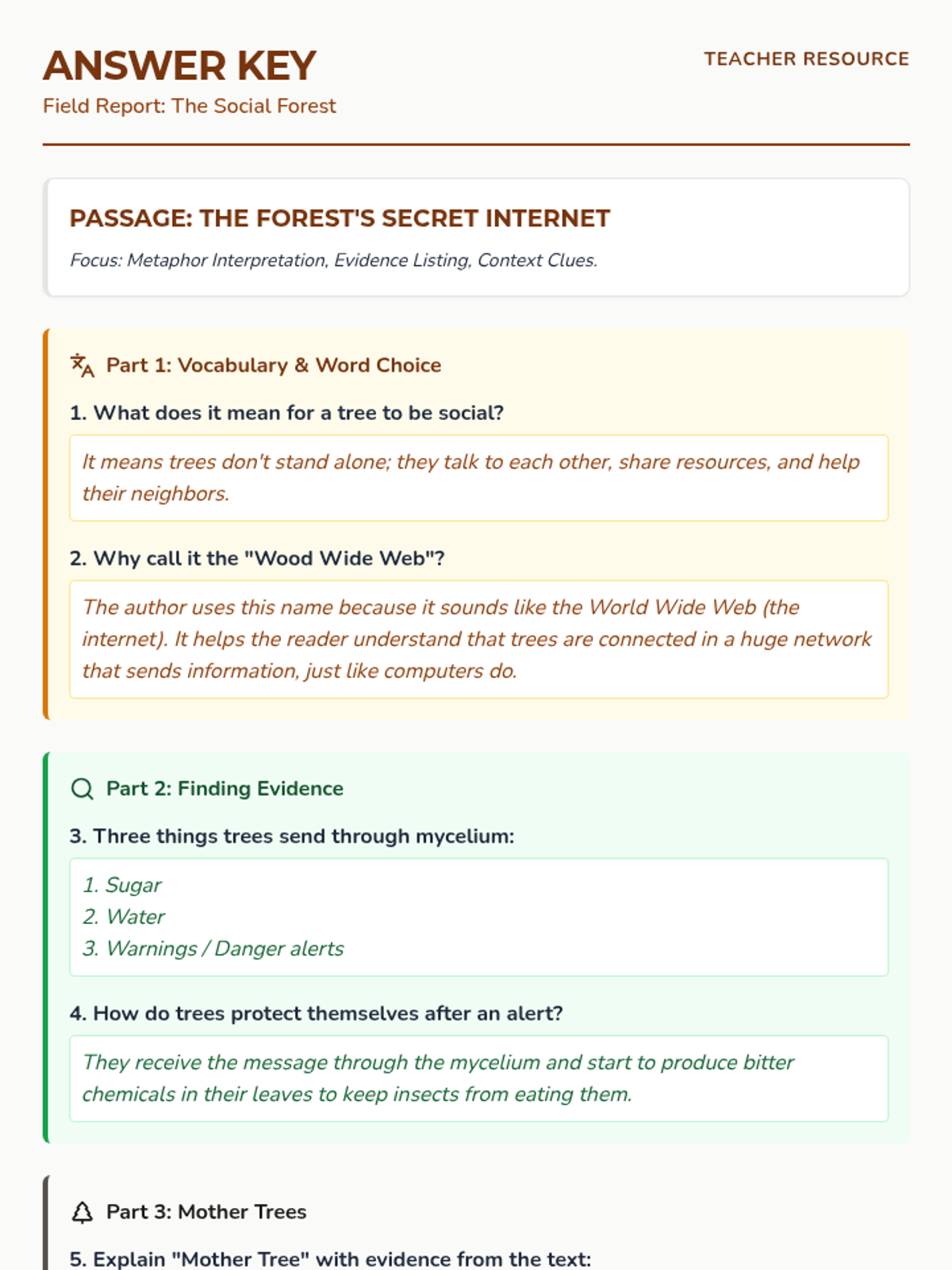
Discover the hidden network of forests. Students will learn how trees 'talk' to one another using fungal networks, focusing on identifying evidence and understanding complex relationships in nature.
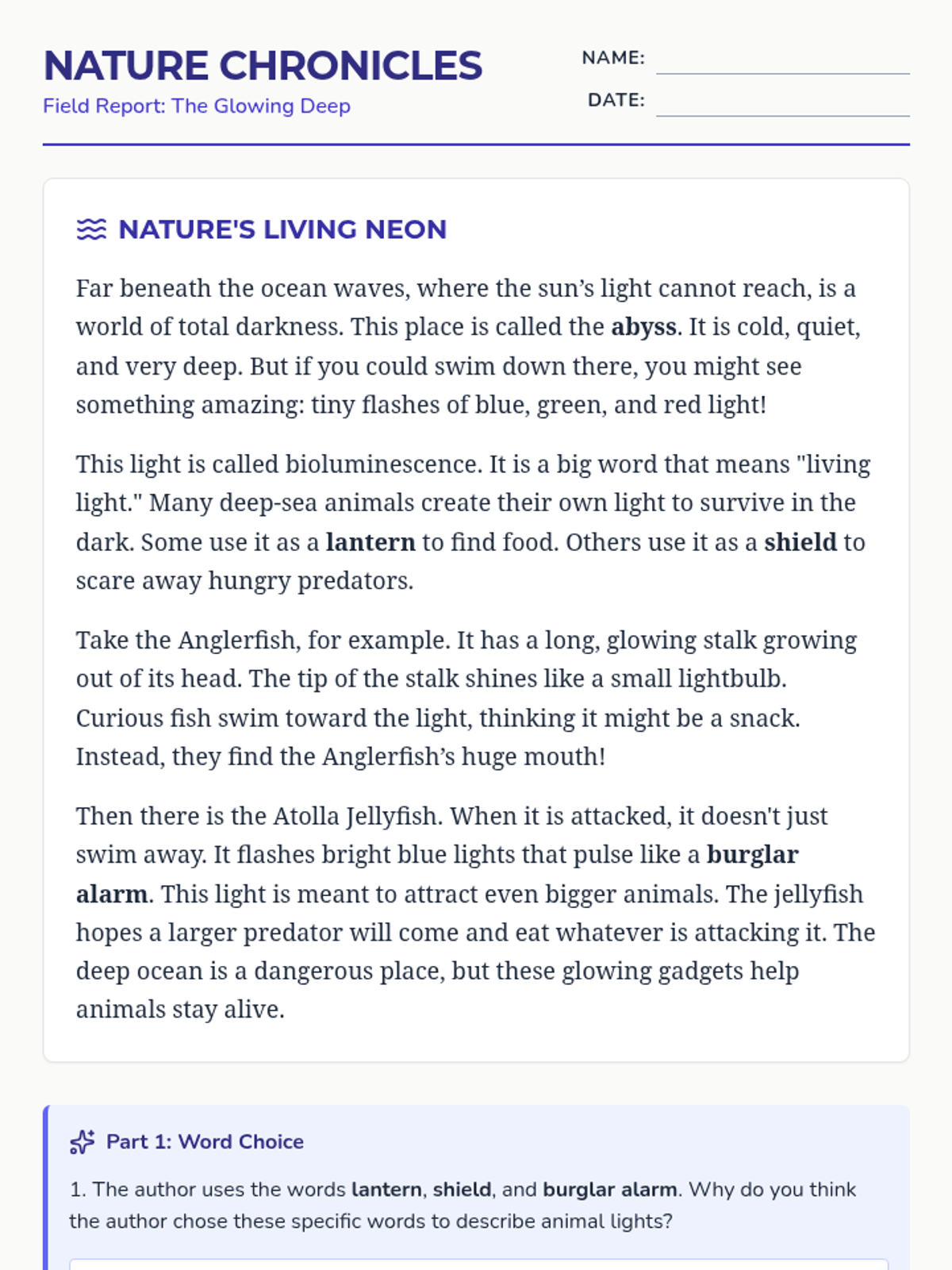
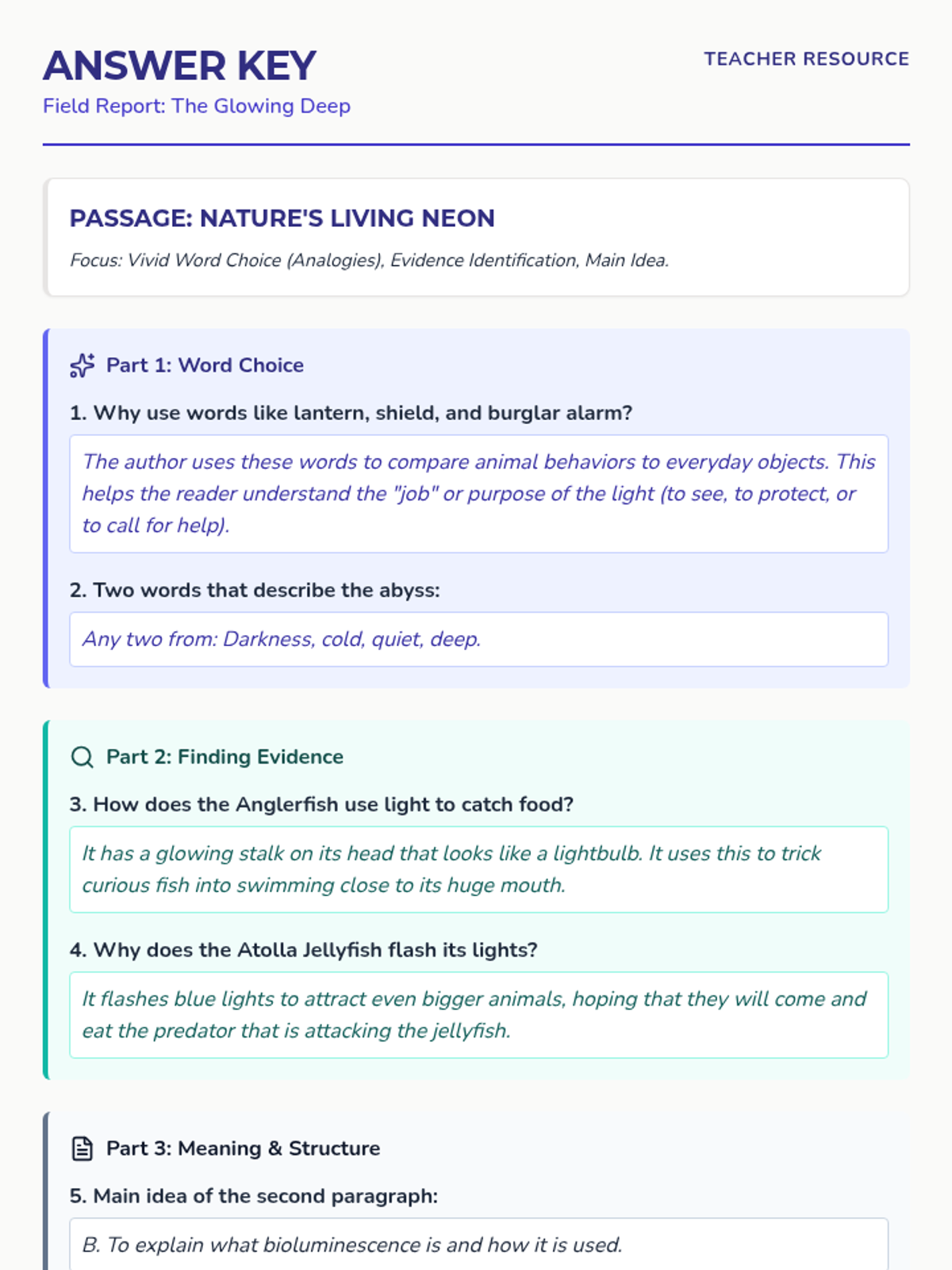
Dive into the mysterious world of the deep ocean. This lesson focuses on how authors use vivid vocabulary and descriptive language to bring alien-like sea creatures to life.
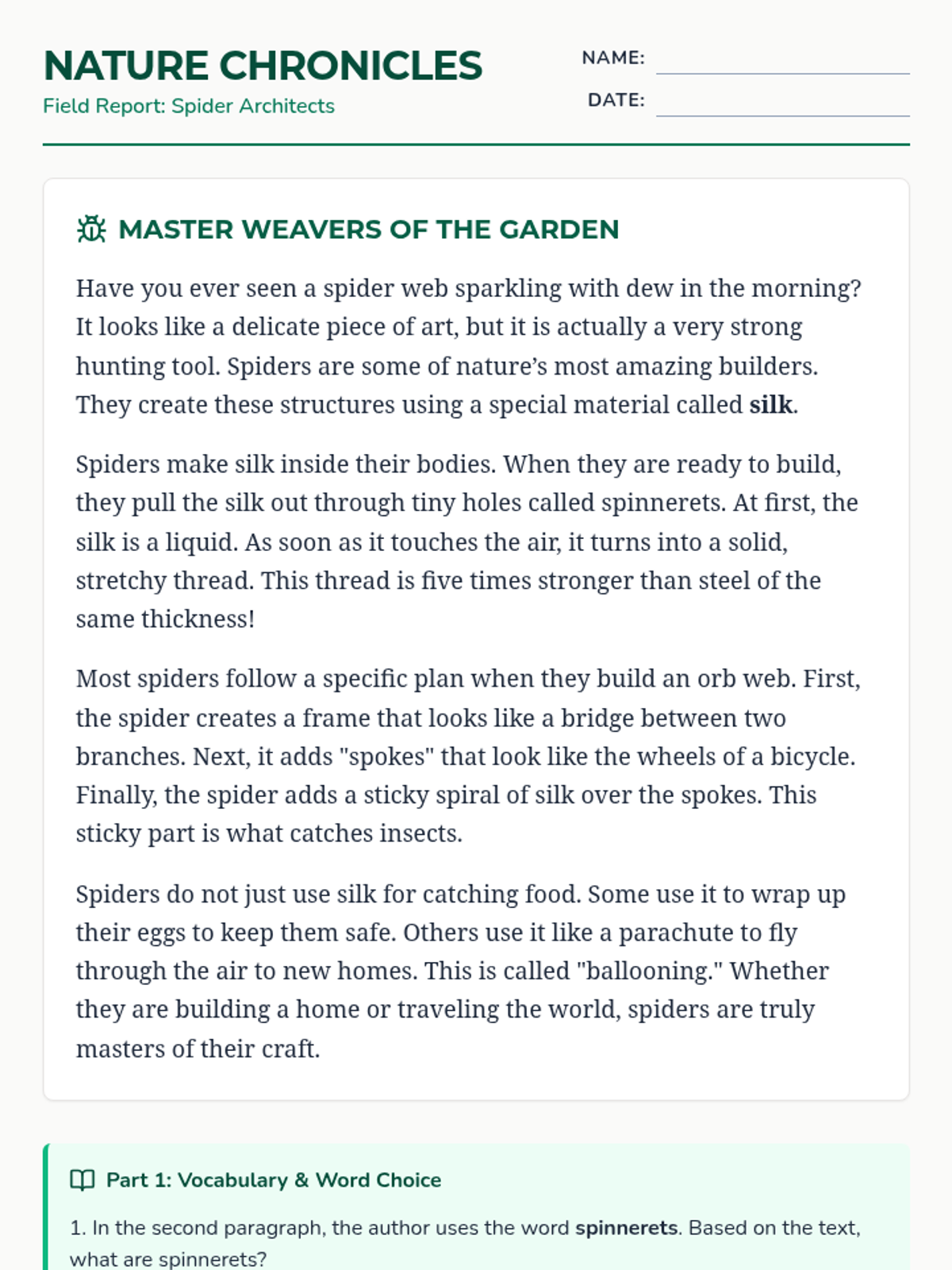
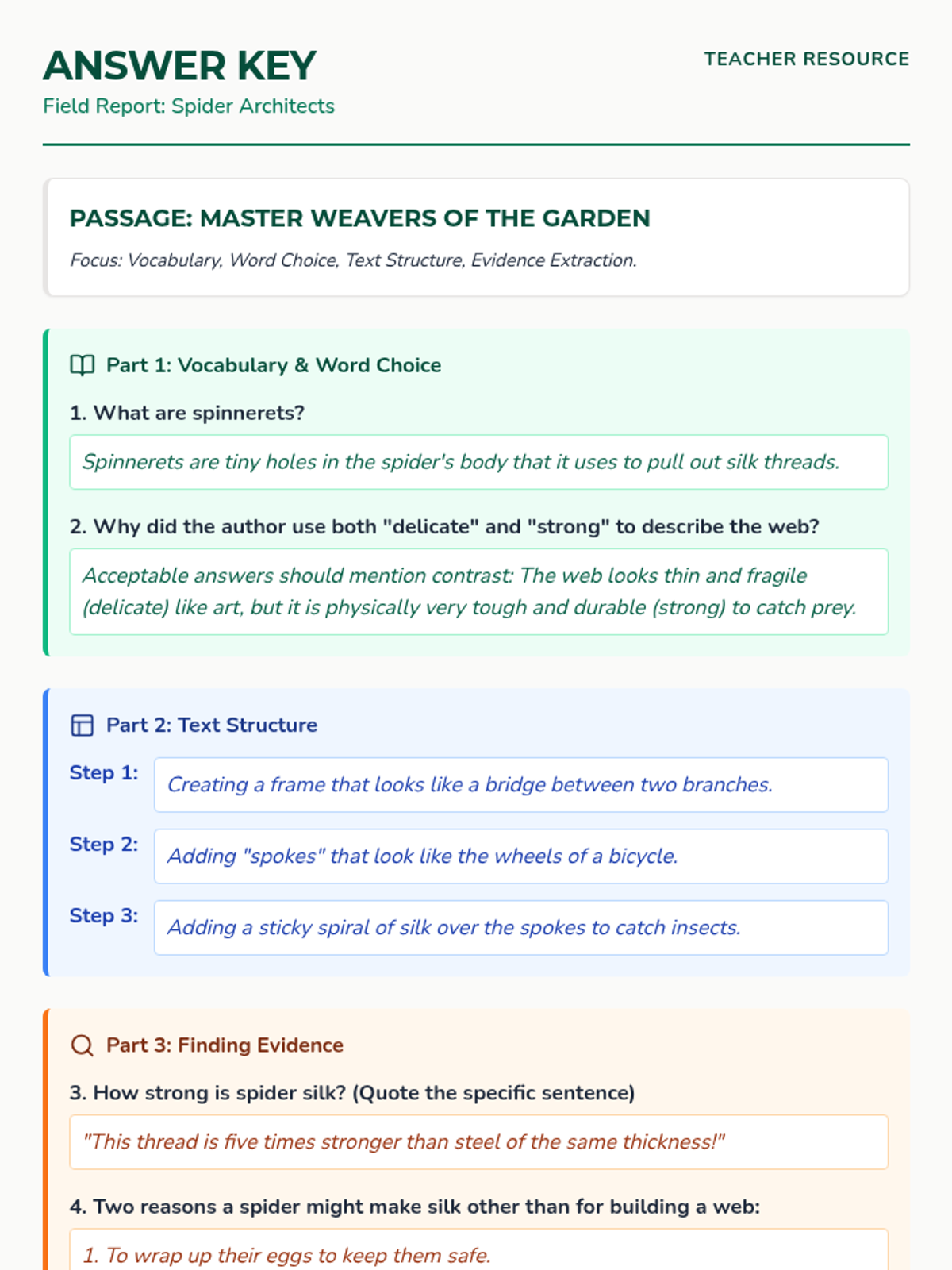
Explore the incredible structures built by spiders while focusing on how non-fiction texts are organized. Students will identify descriptive structures and use text evidence to explain how spiders build their webs.
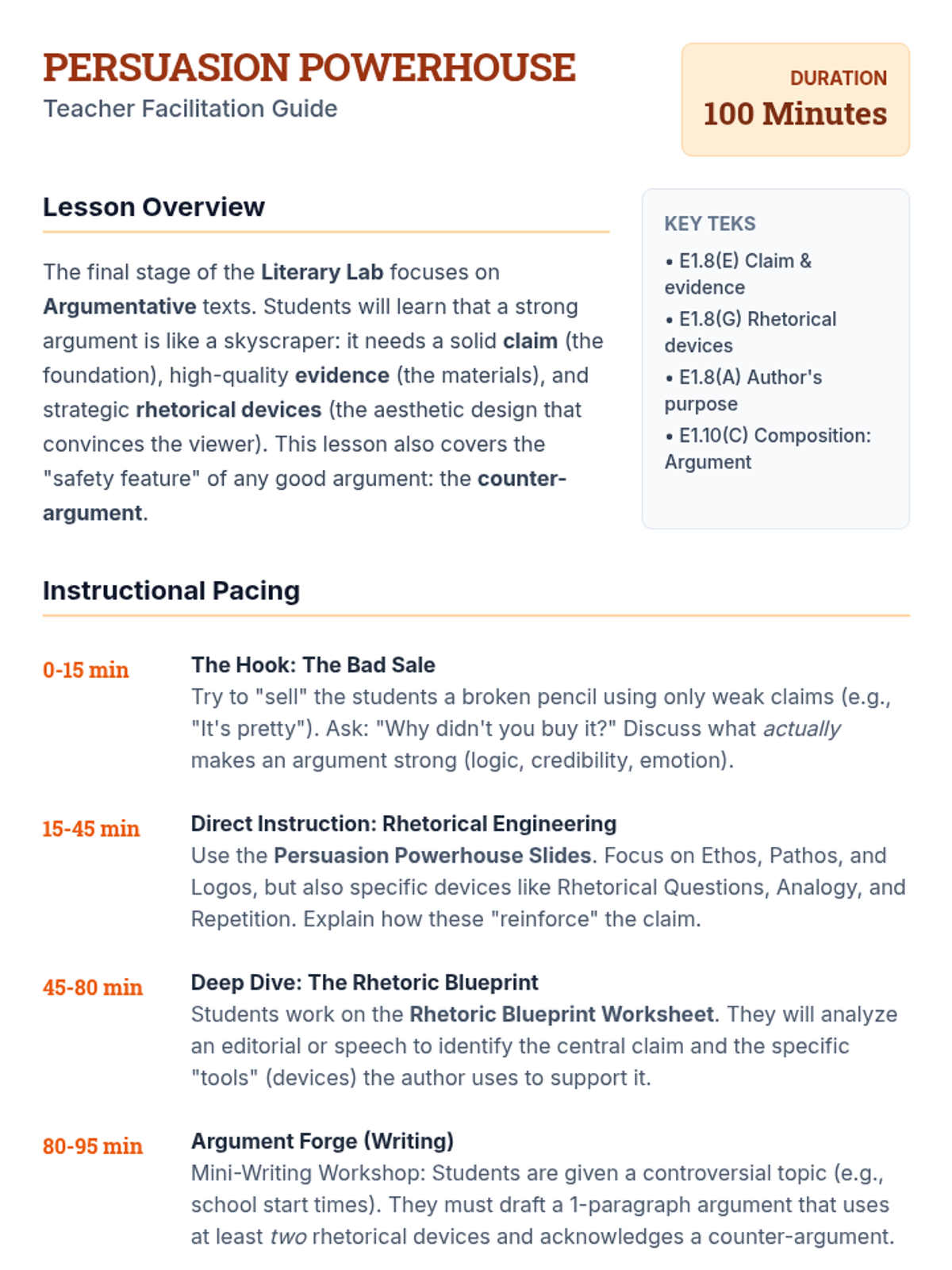
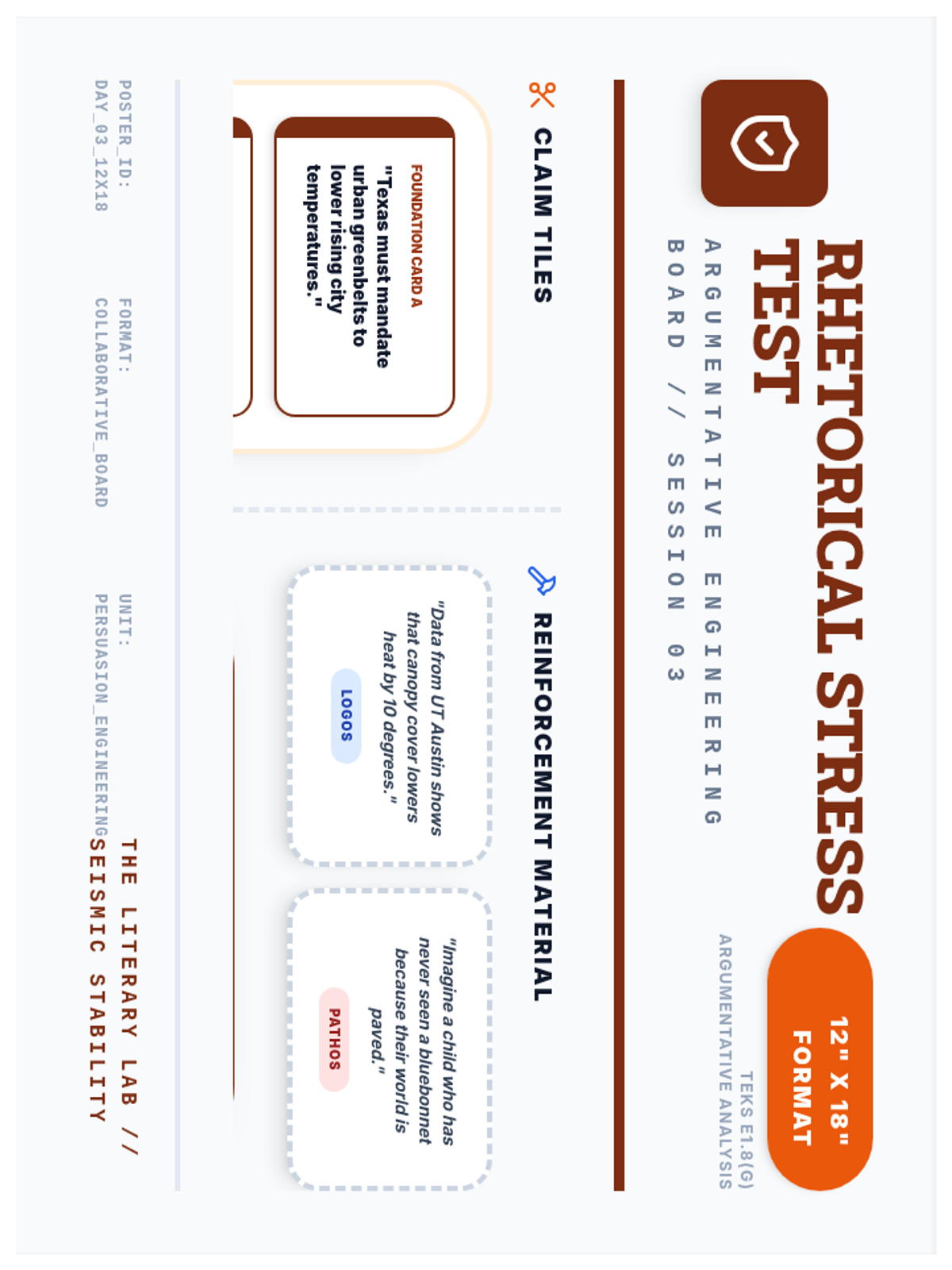
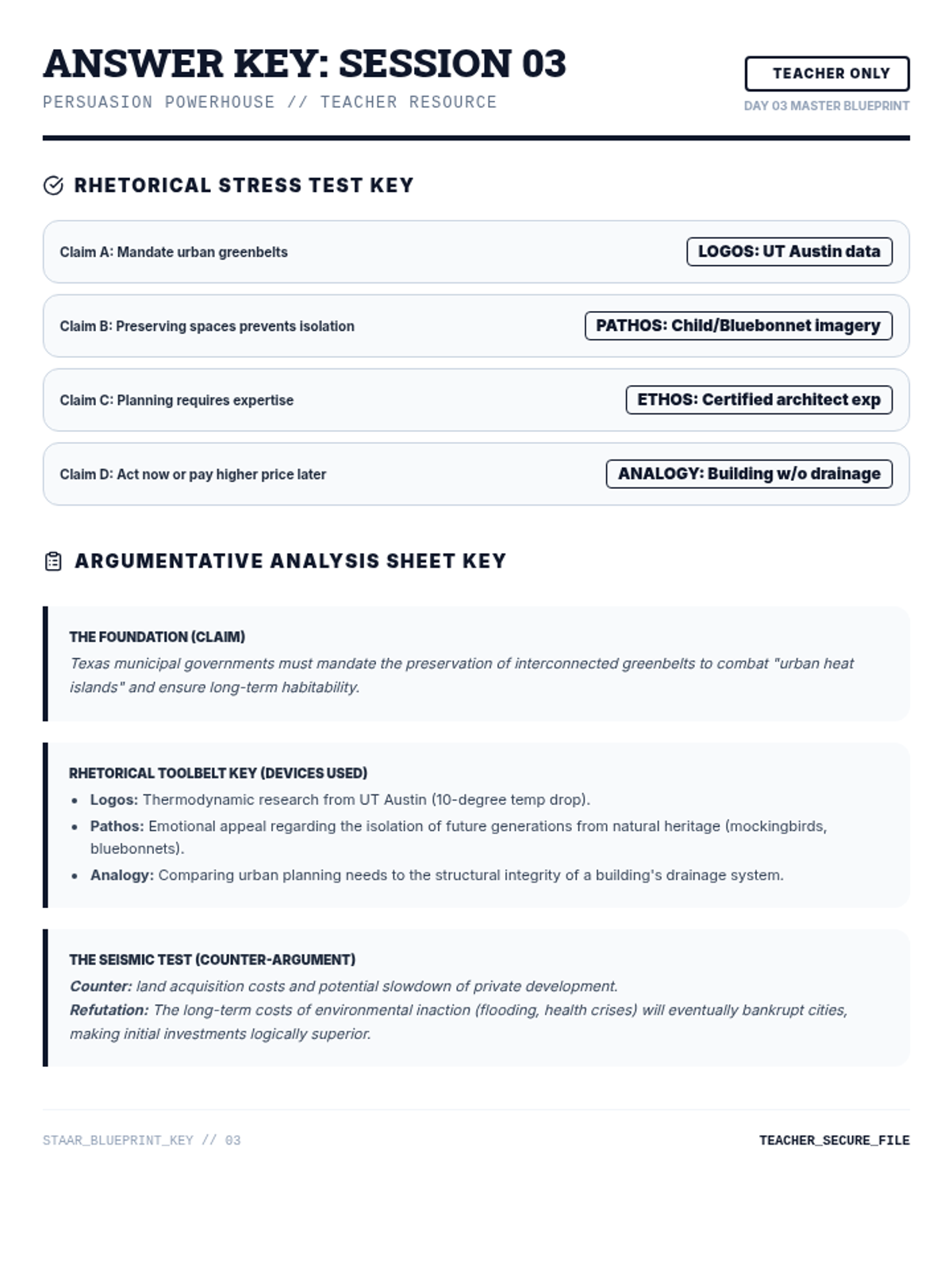
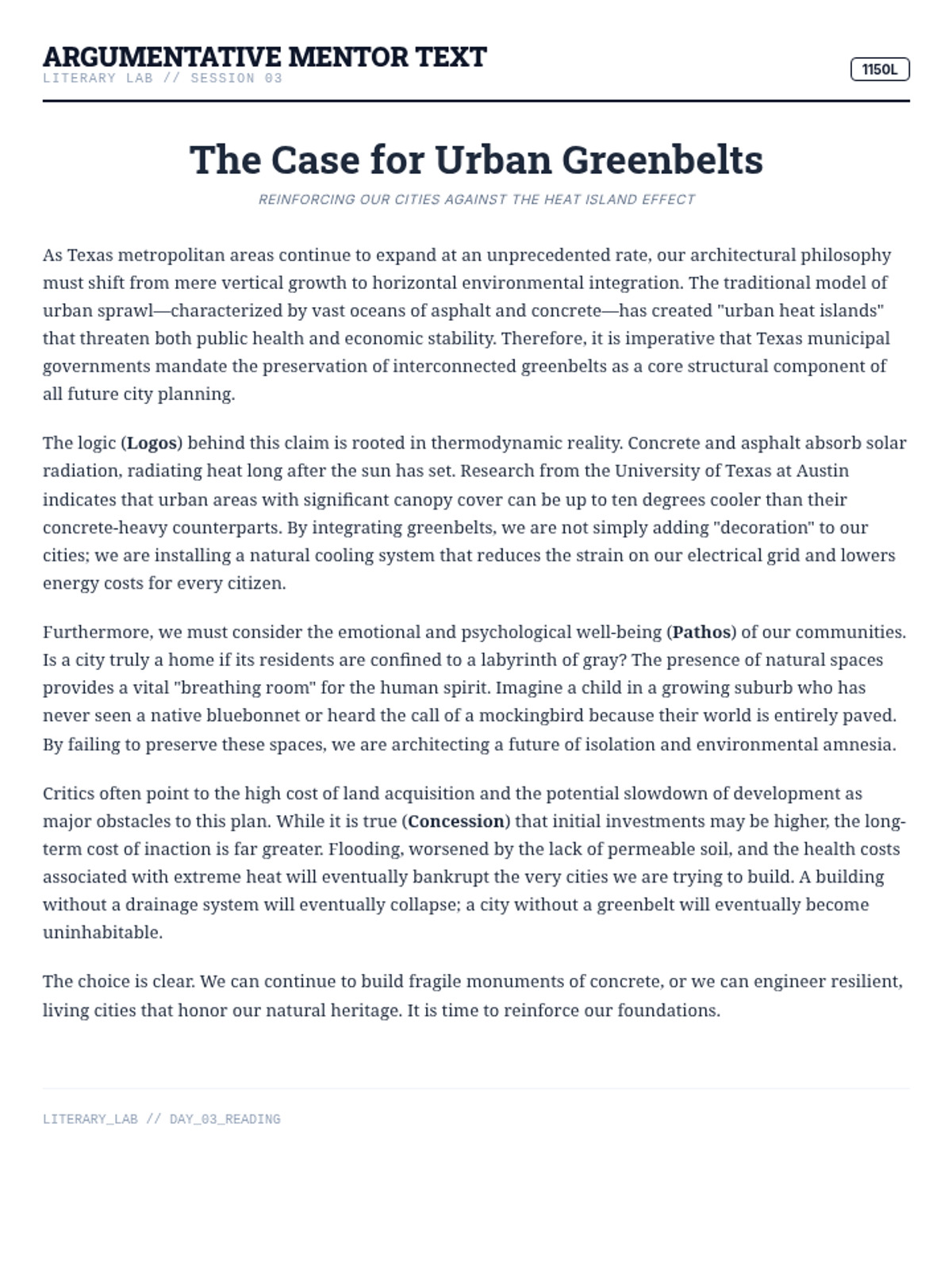
Deconstructs the components of a powerful argument, focusing on claim development, rhetorical devices, and the strategic use of evidence and counter-arguments.
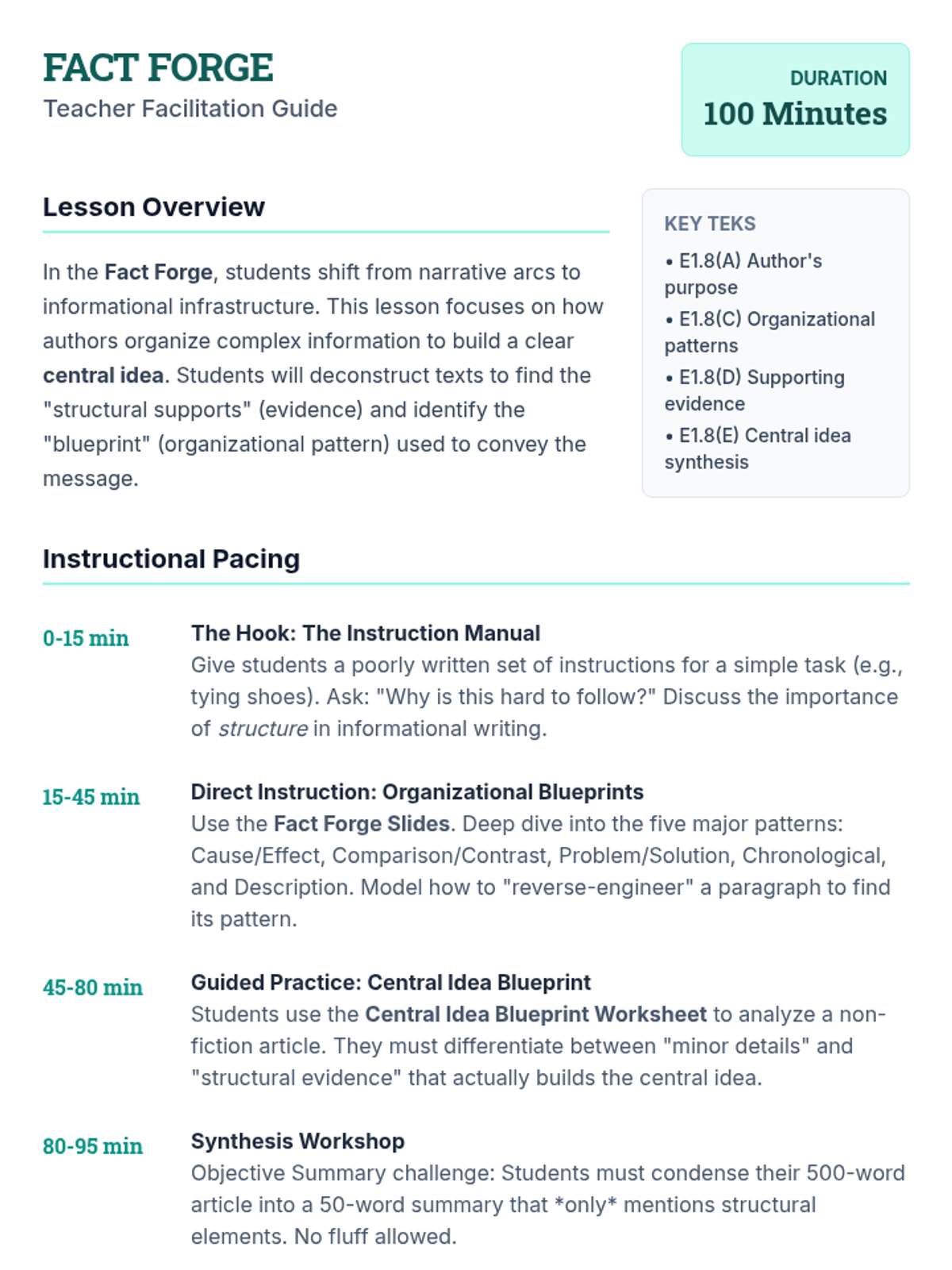
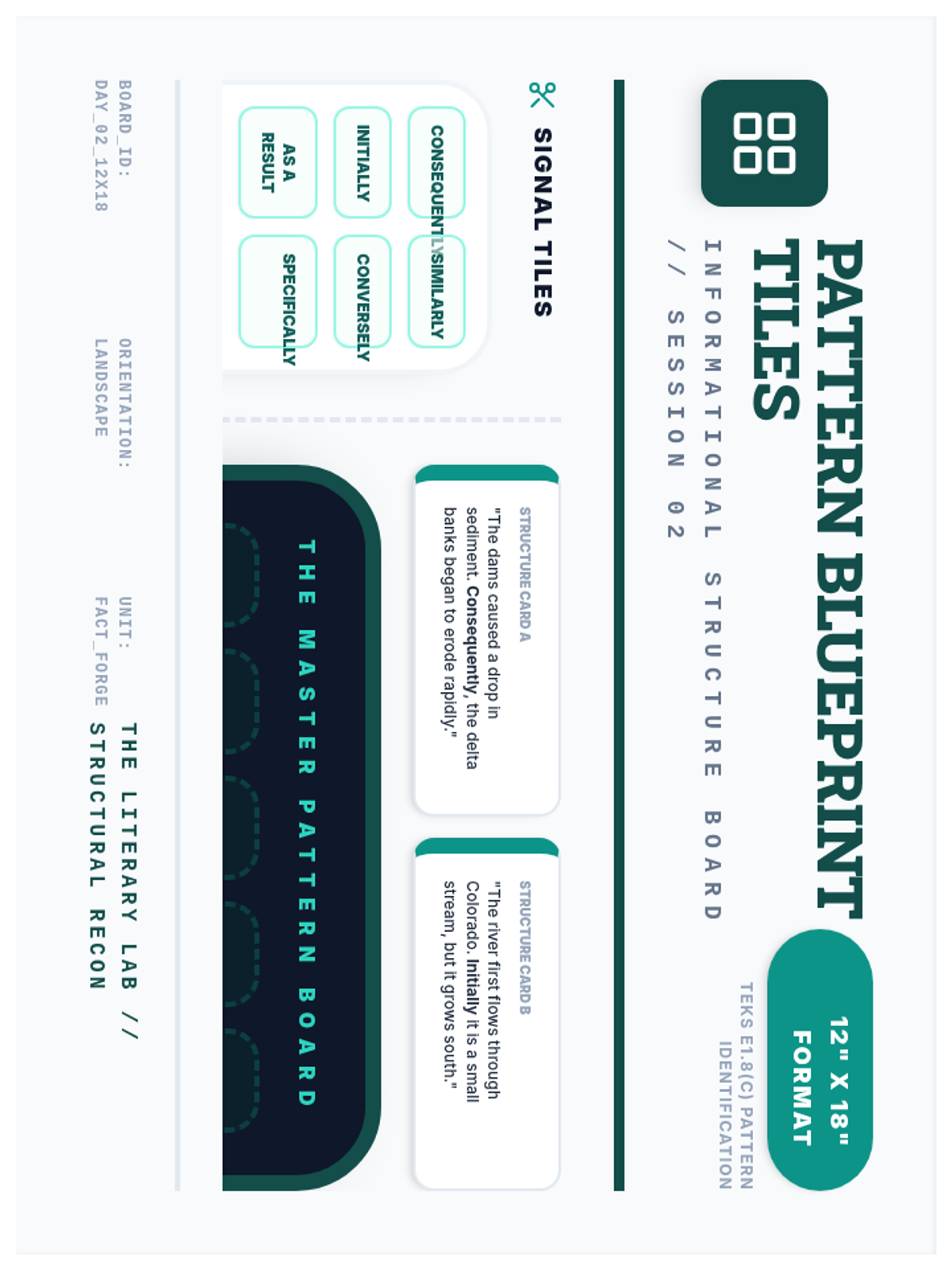
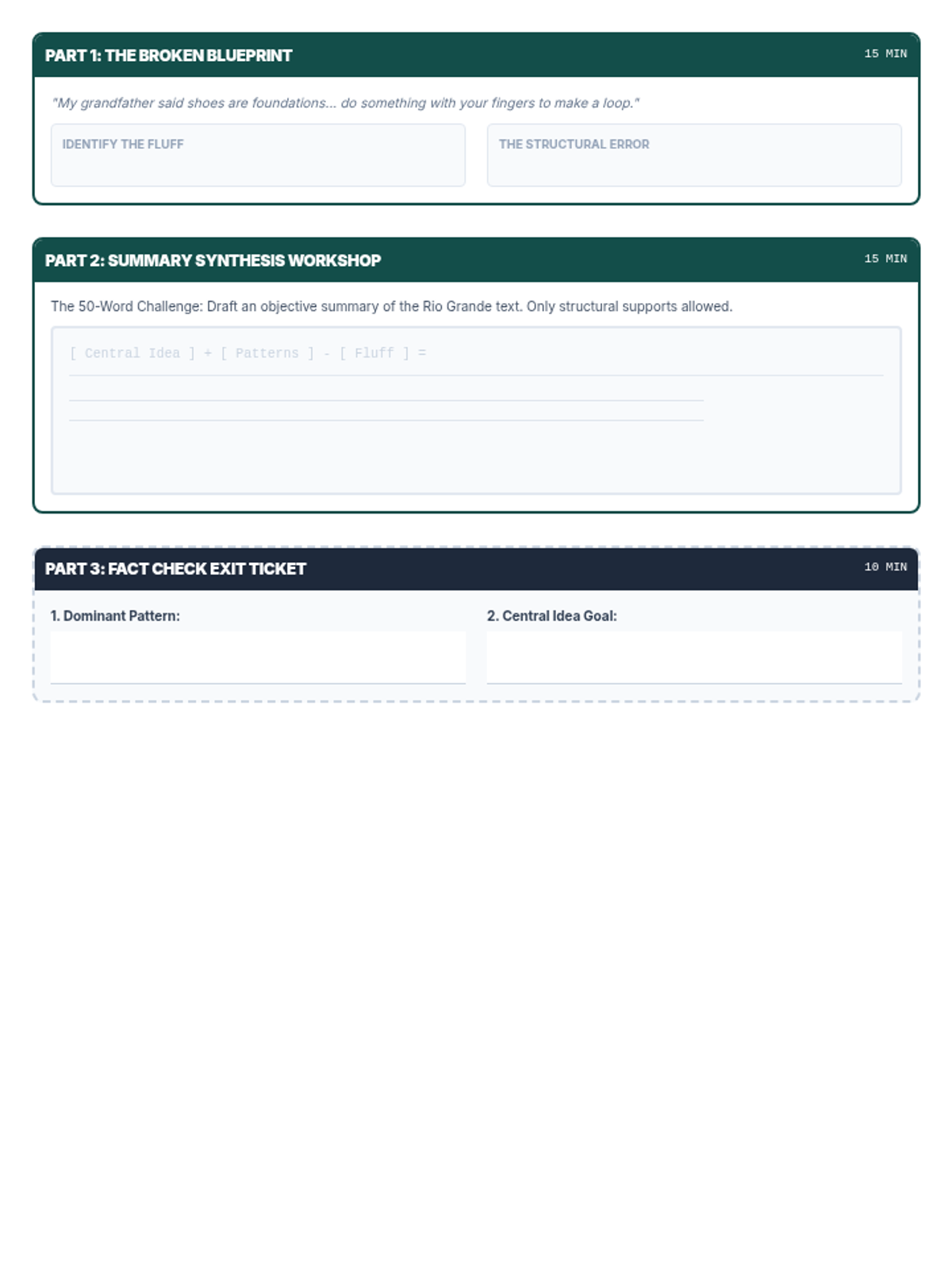
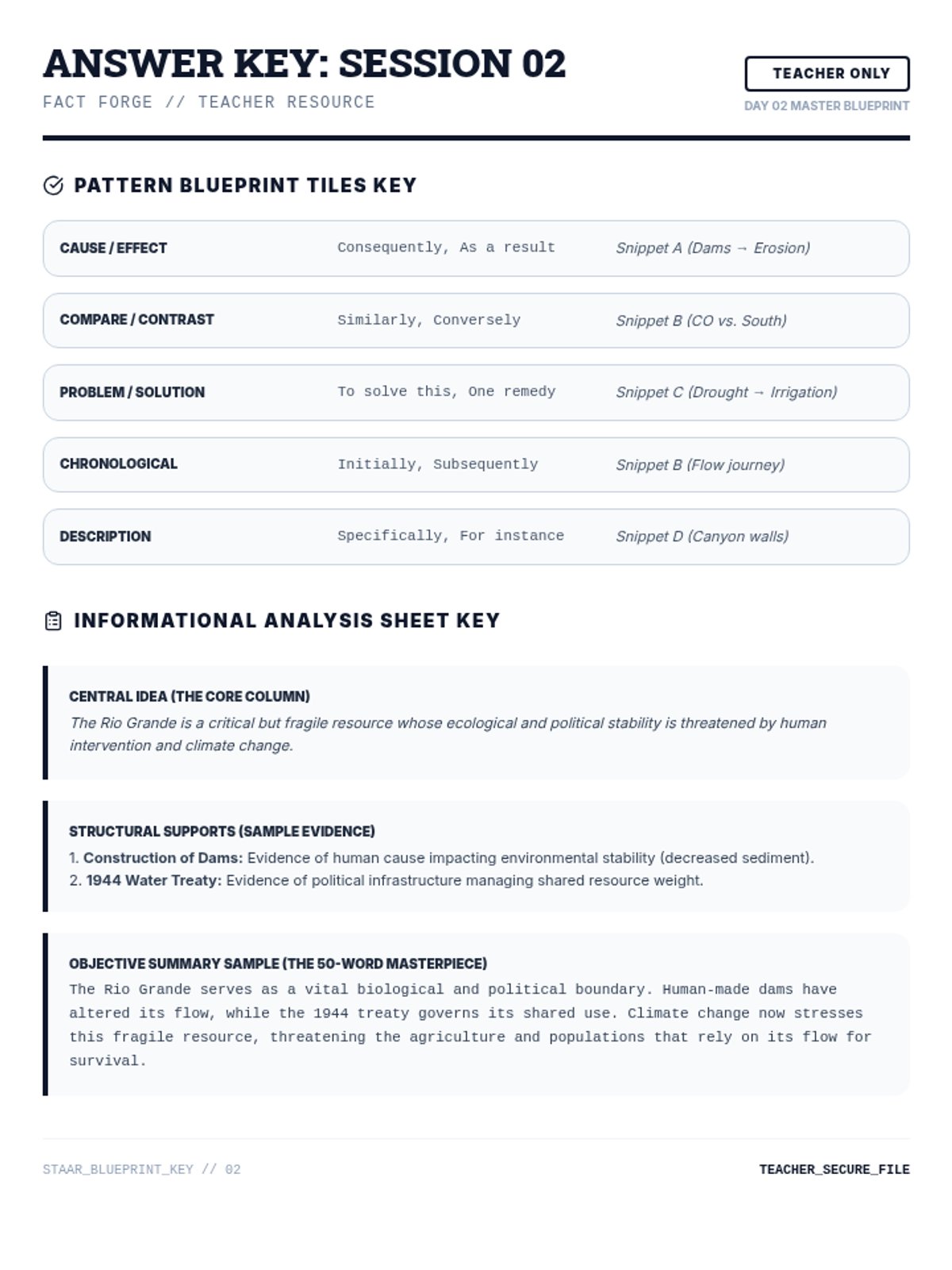
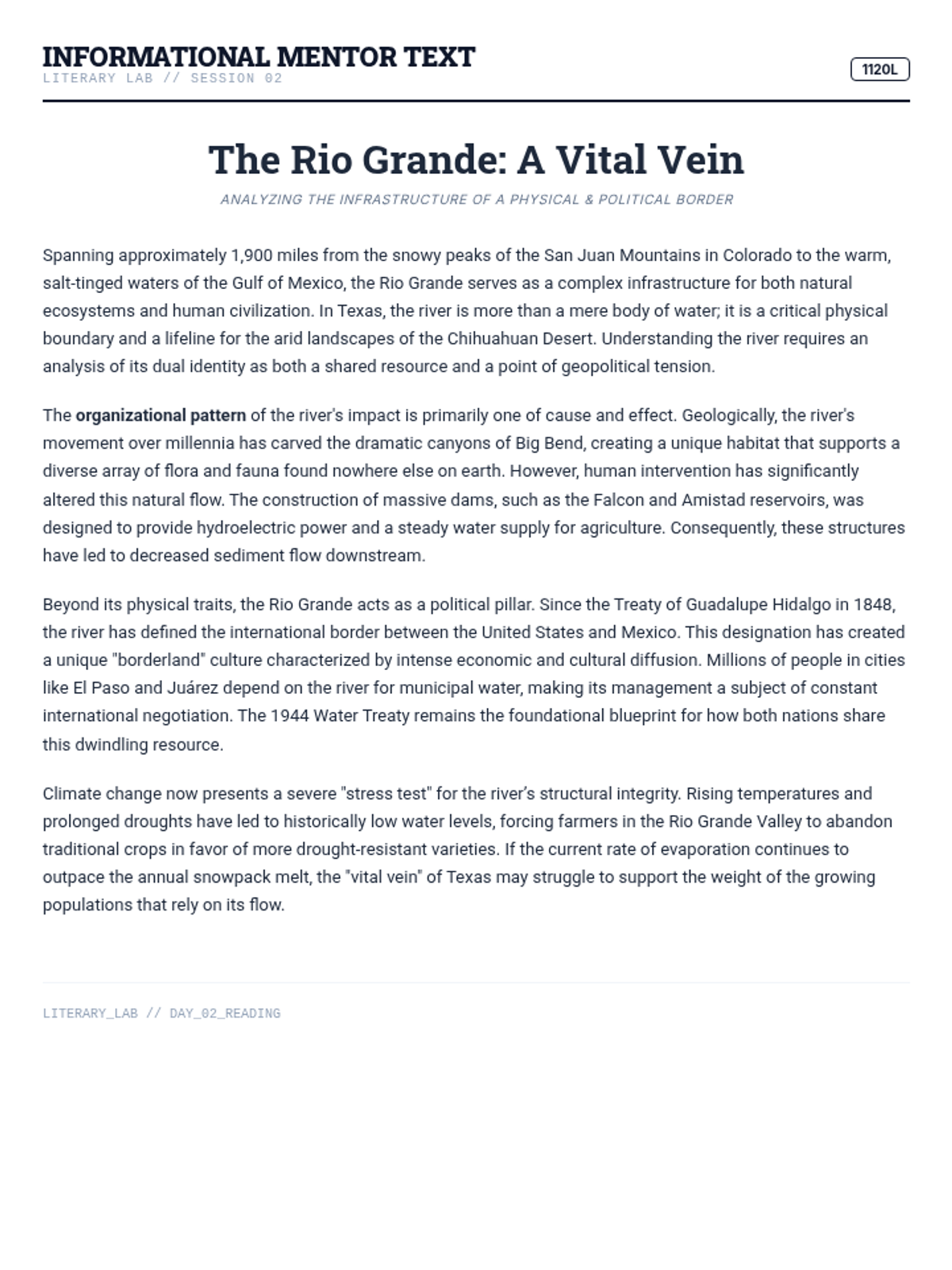
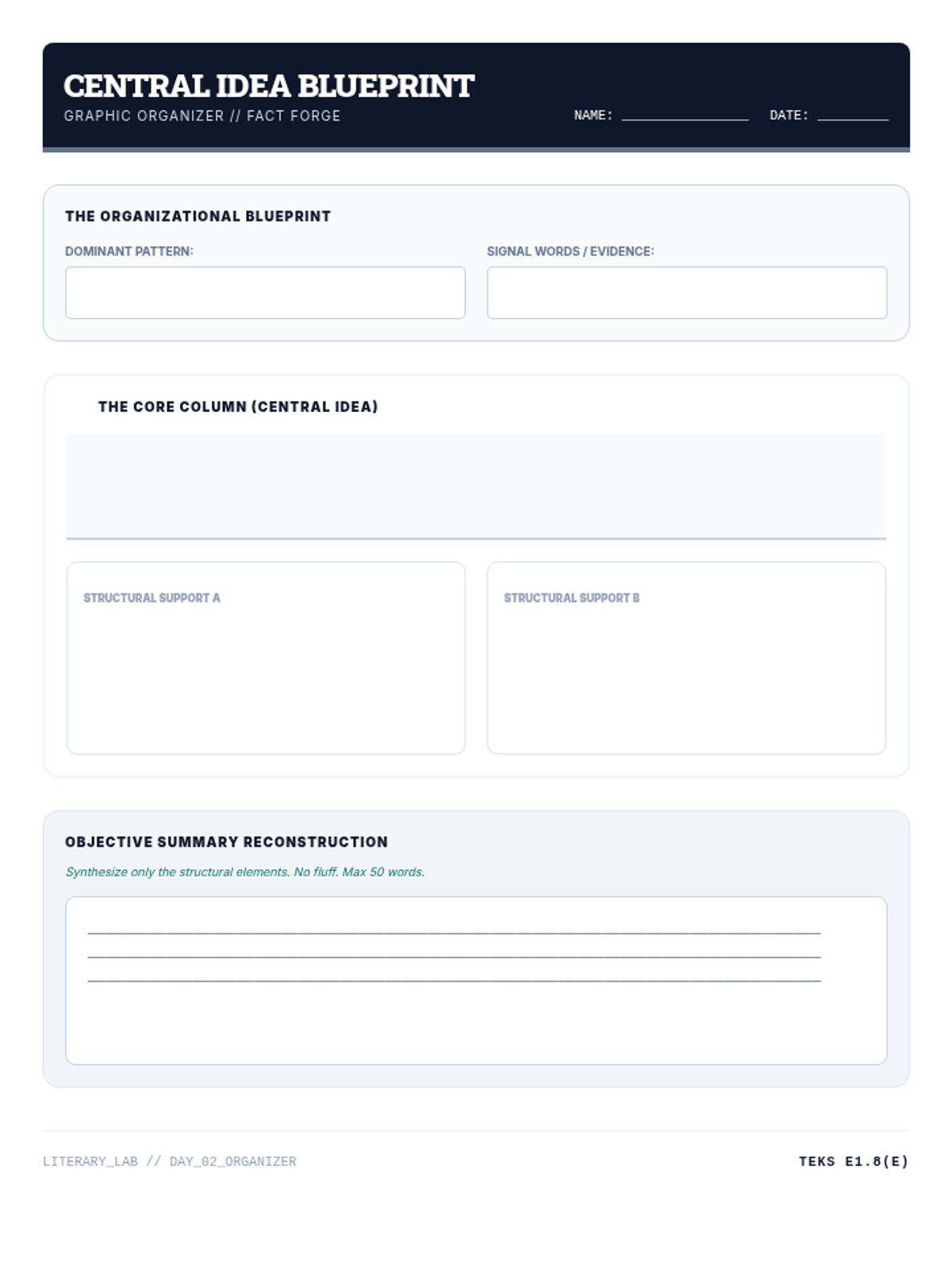
Explores informational texts by analyzing organizational patterns, central ideas, and how authors use specific evidence to build complex explanations.
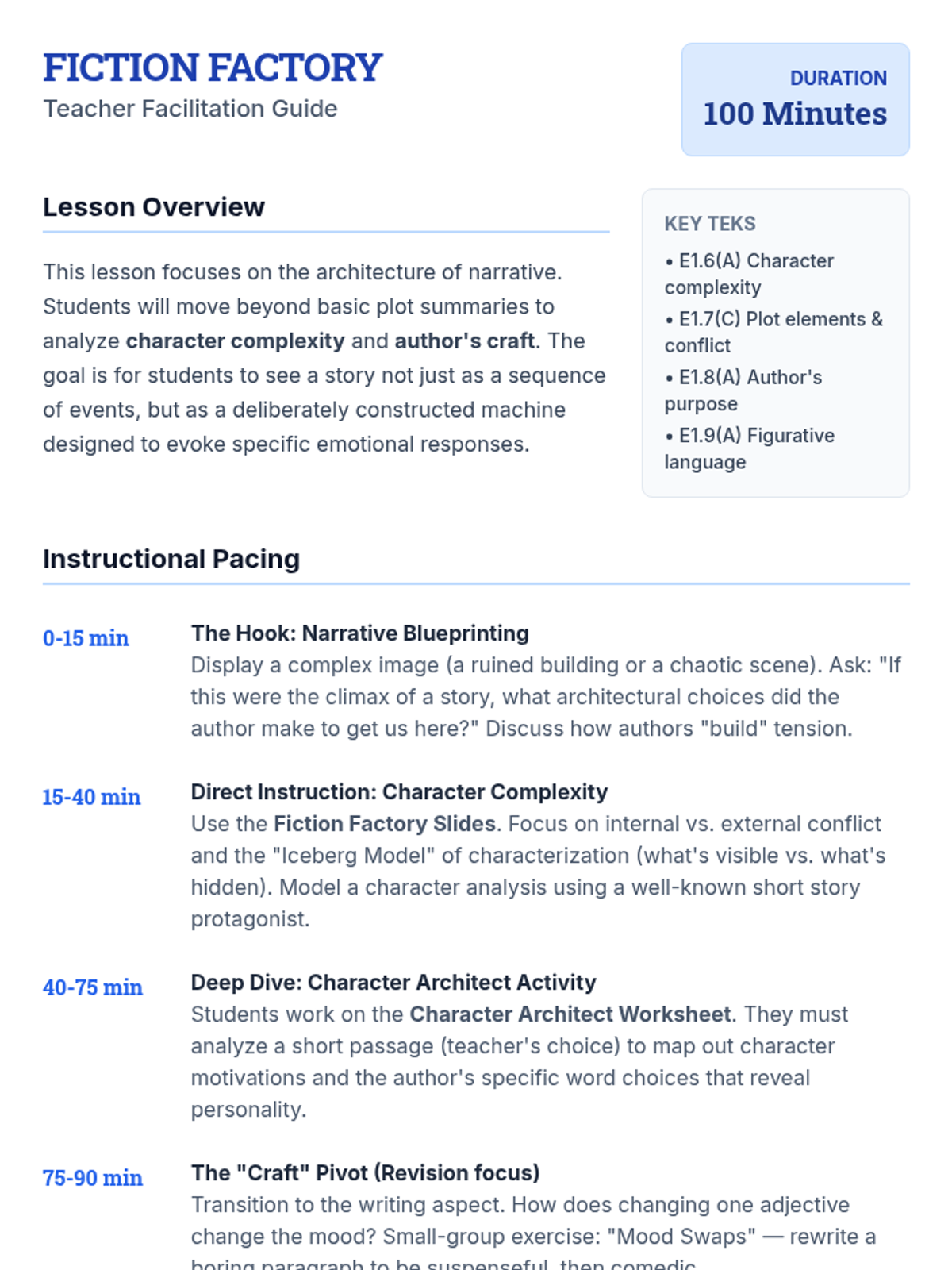
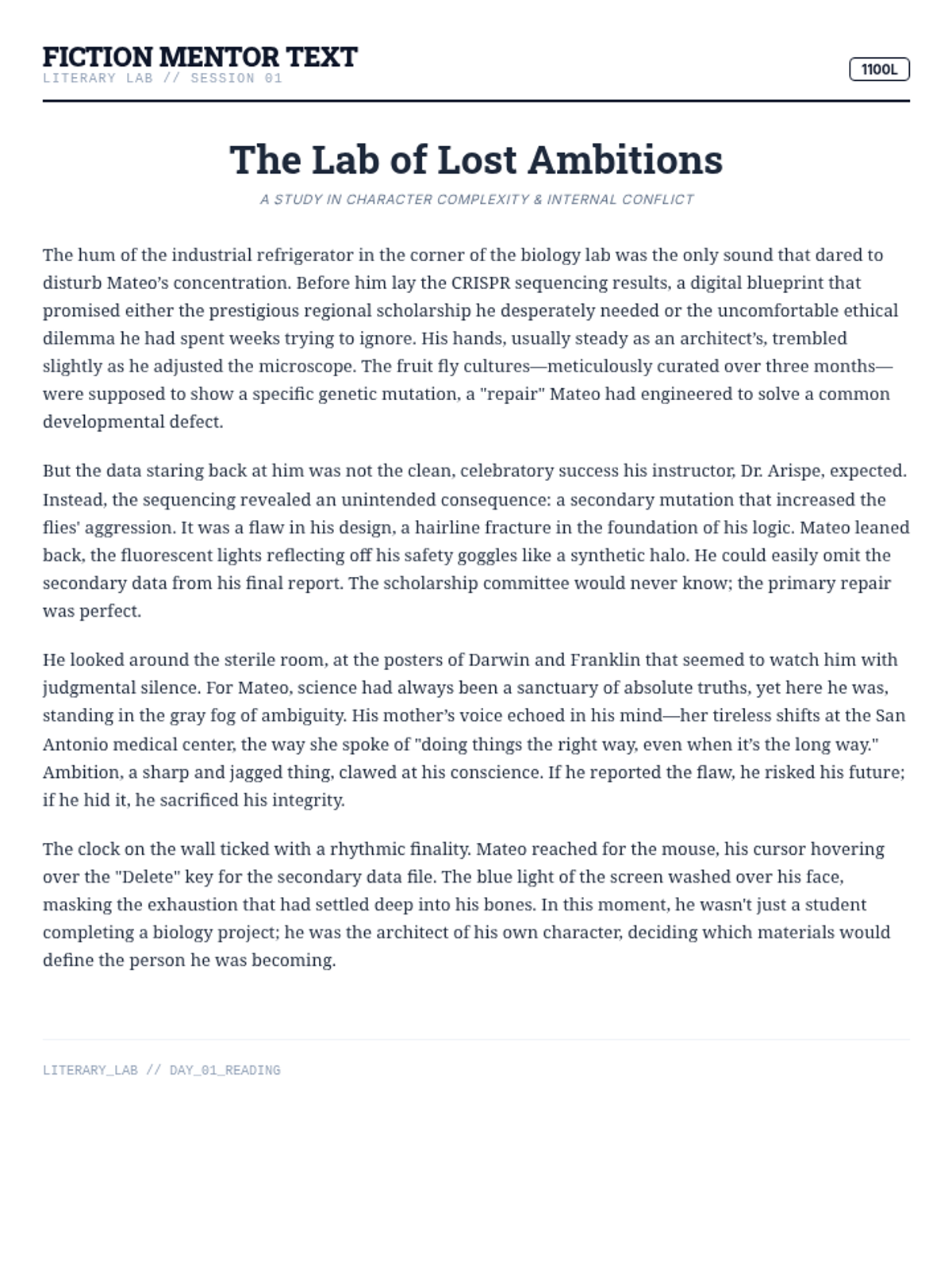
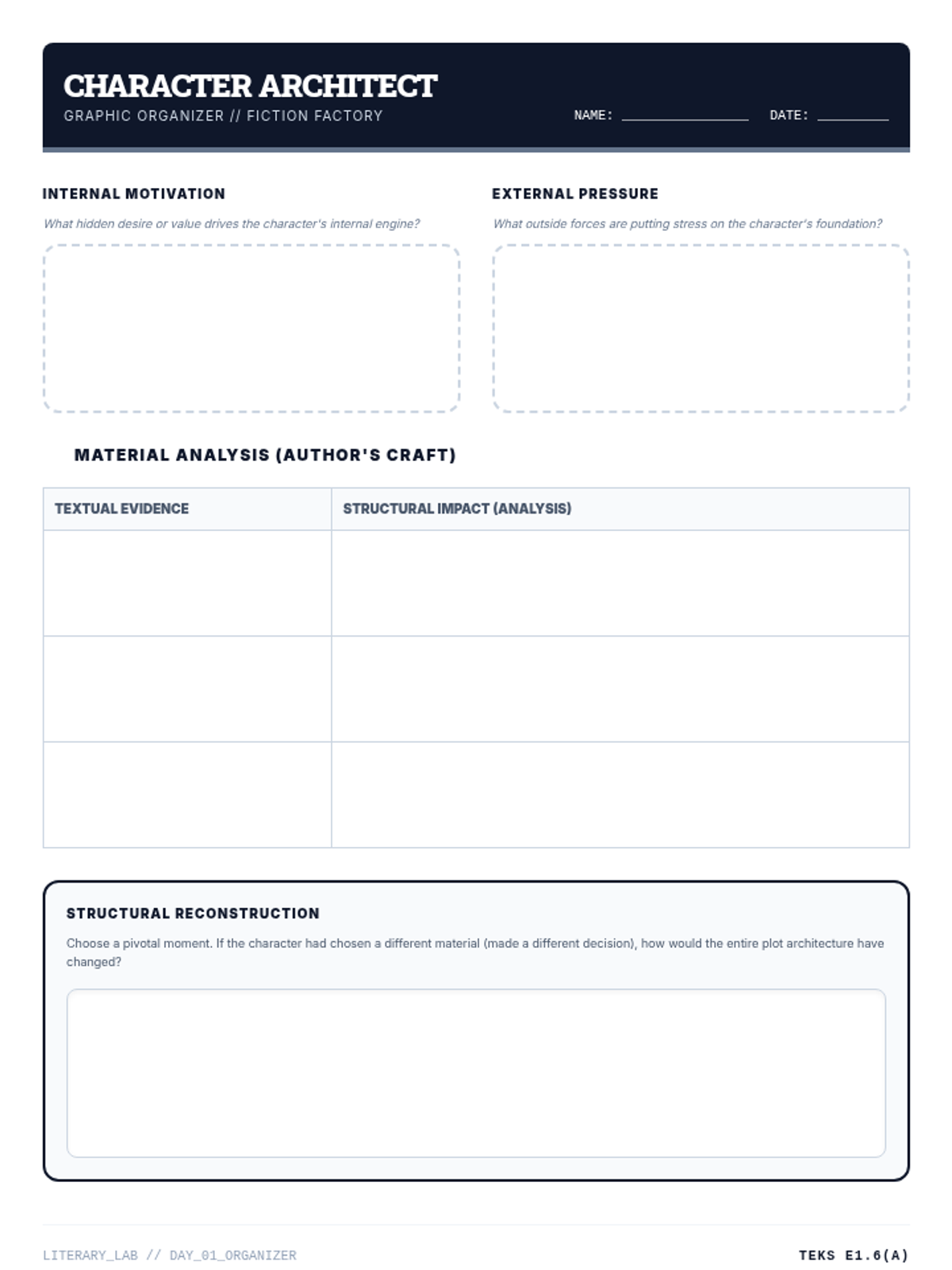
Focuses on the structural elements of fiction, specifically character complexity, plot architecture, and the impact of author's craft on mood and tone.
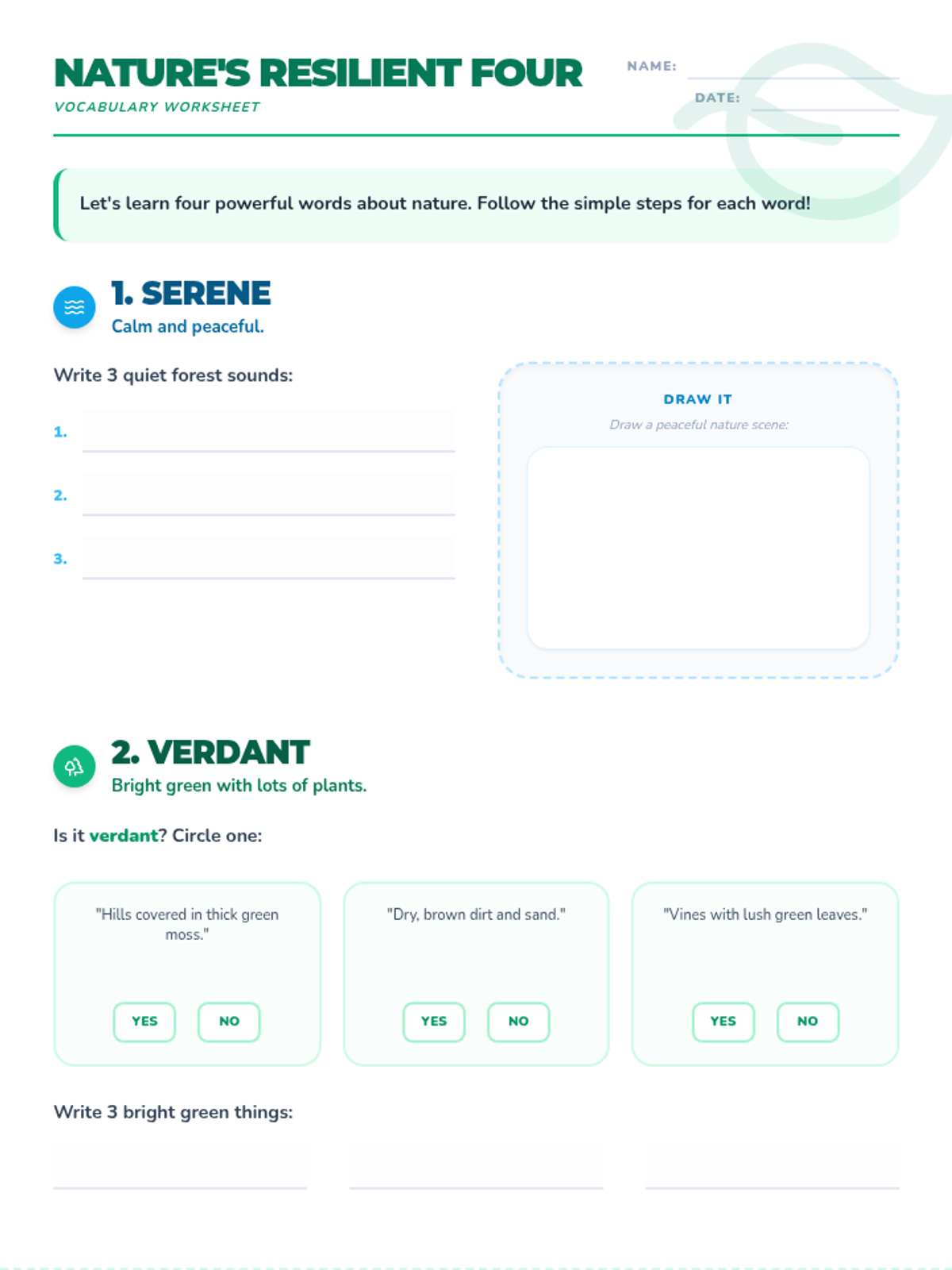
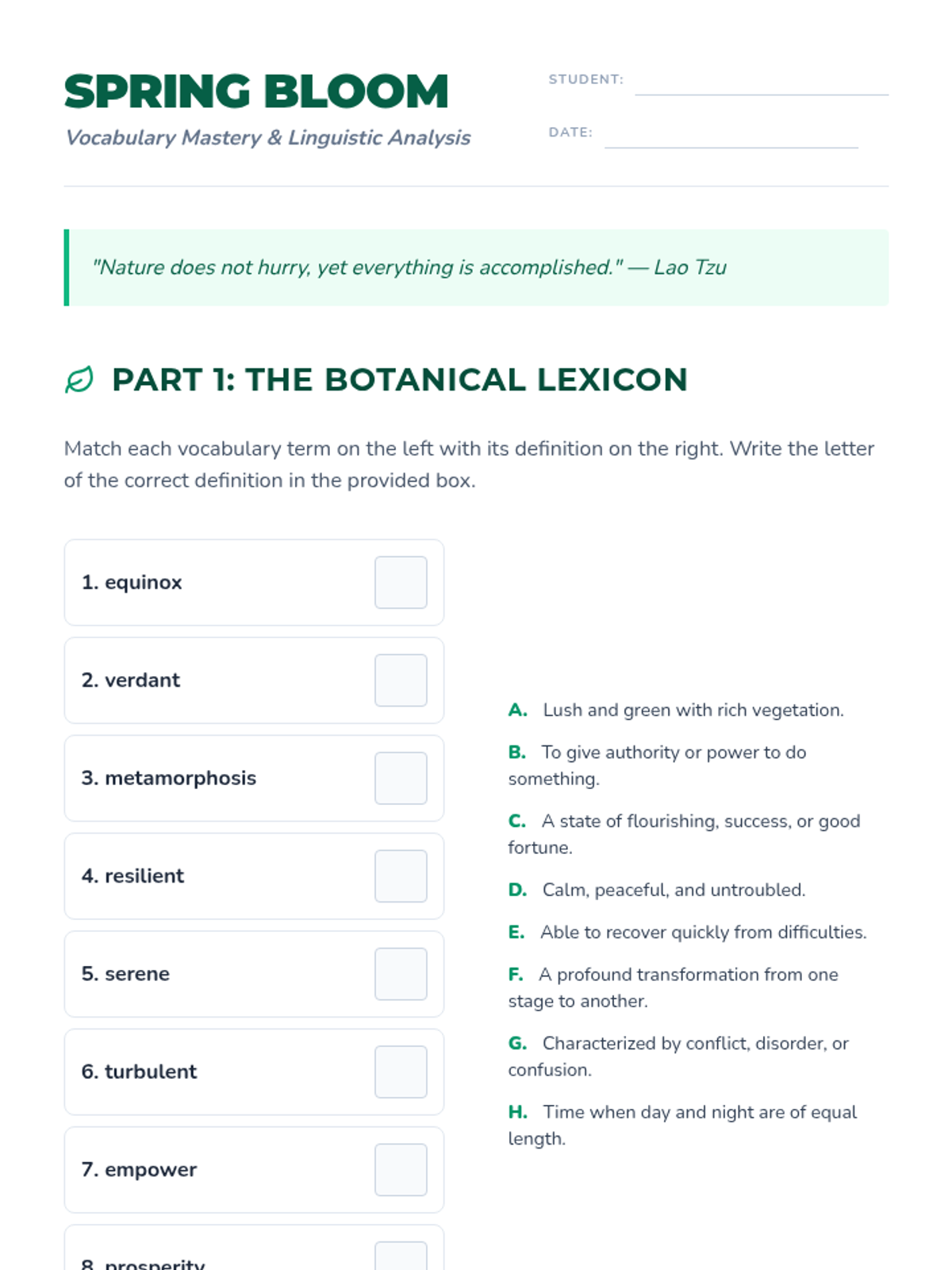
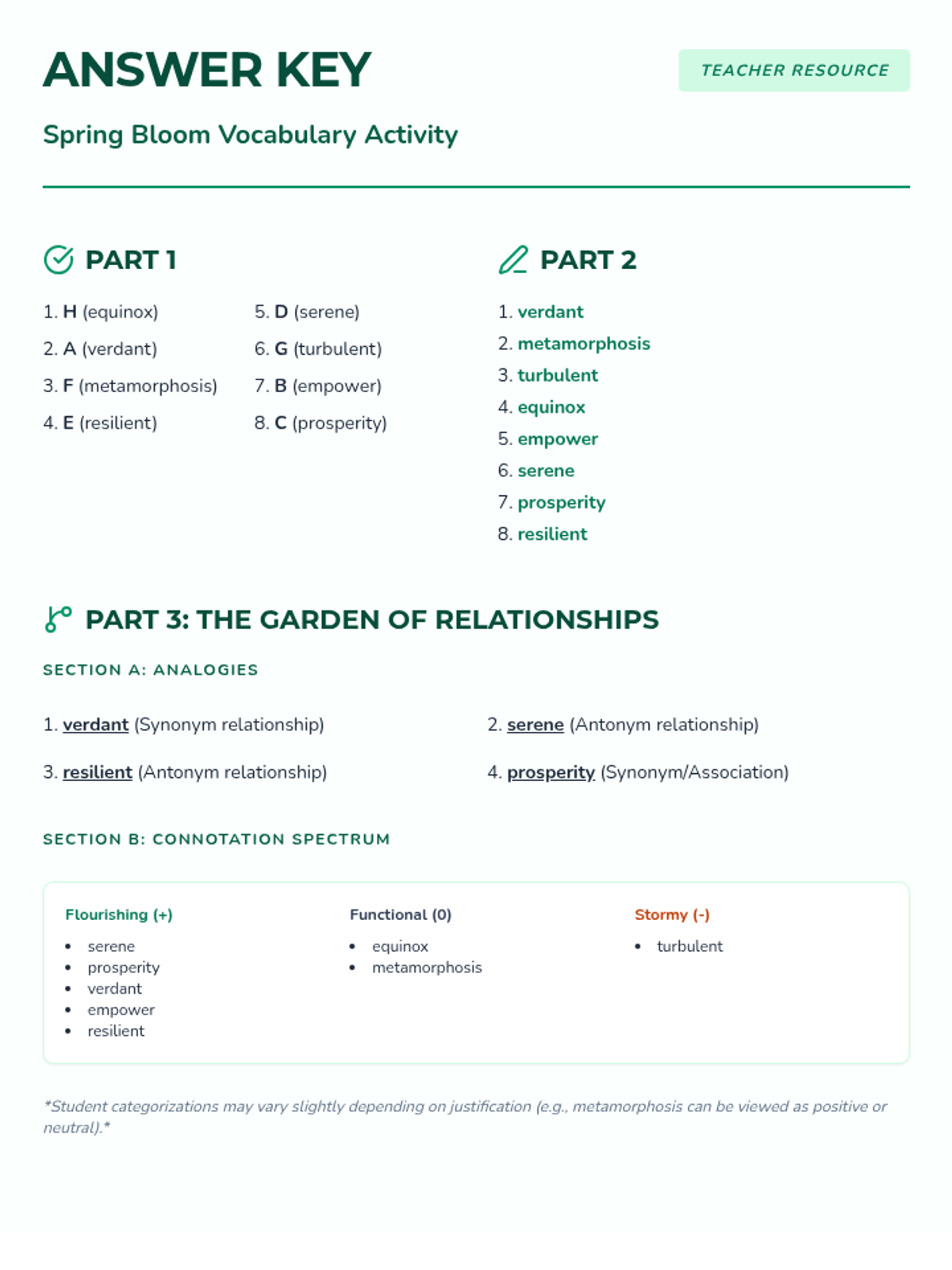
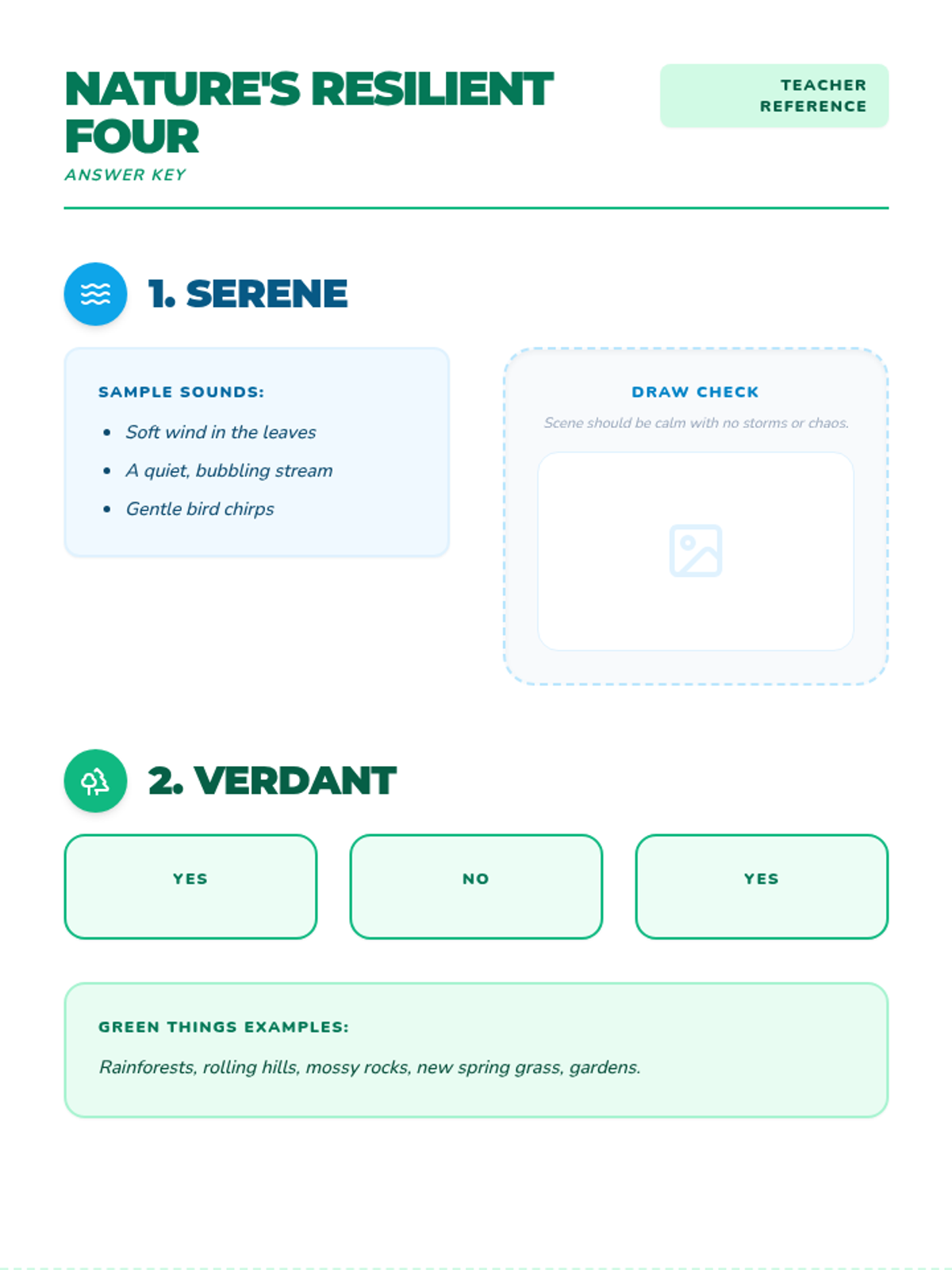
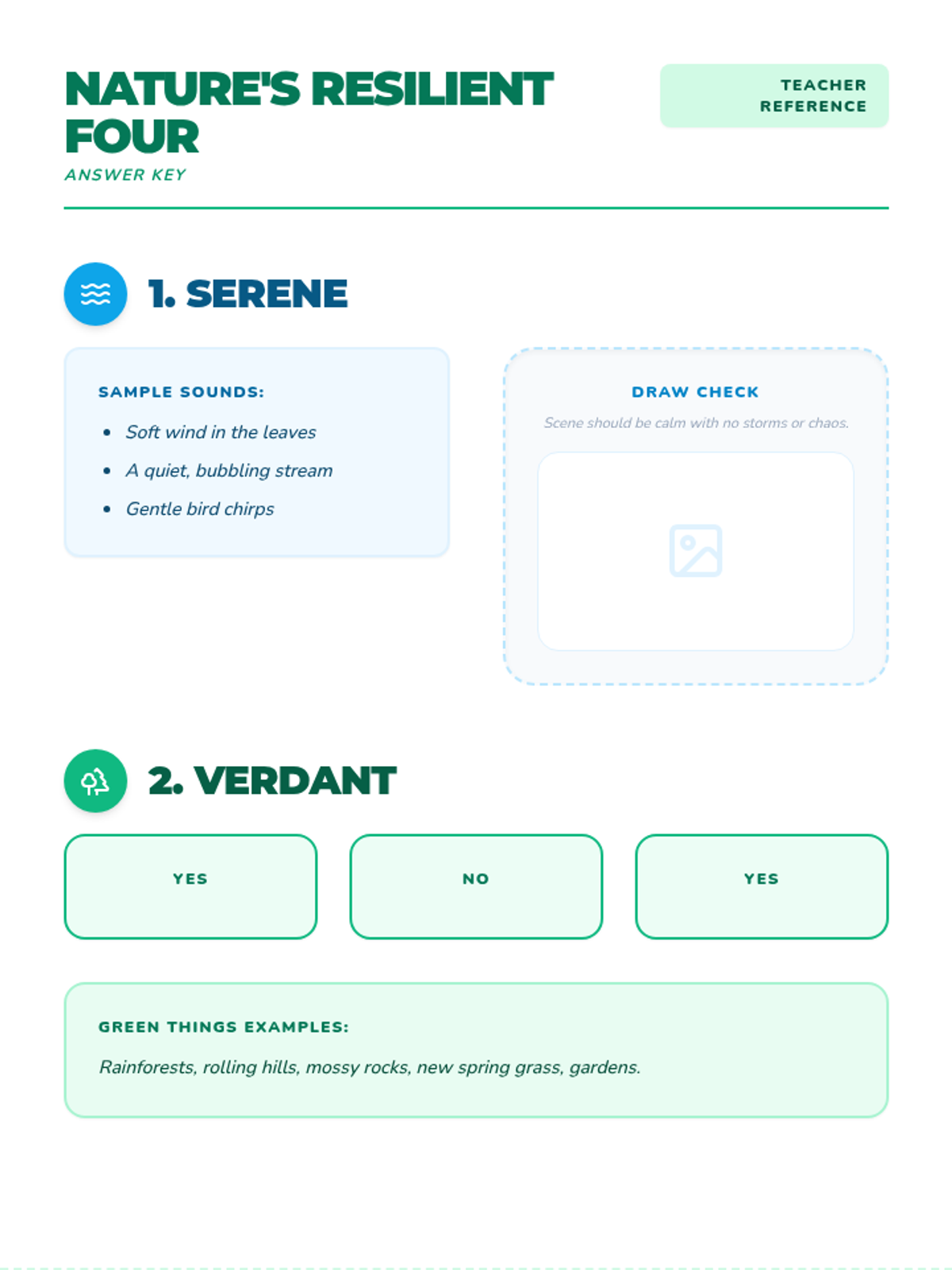
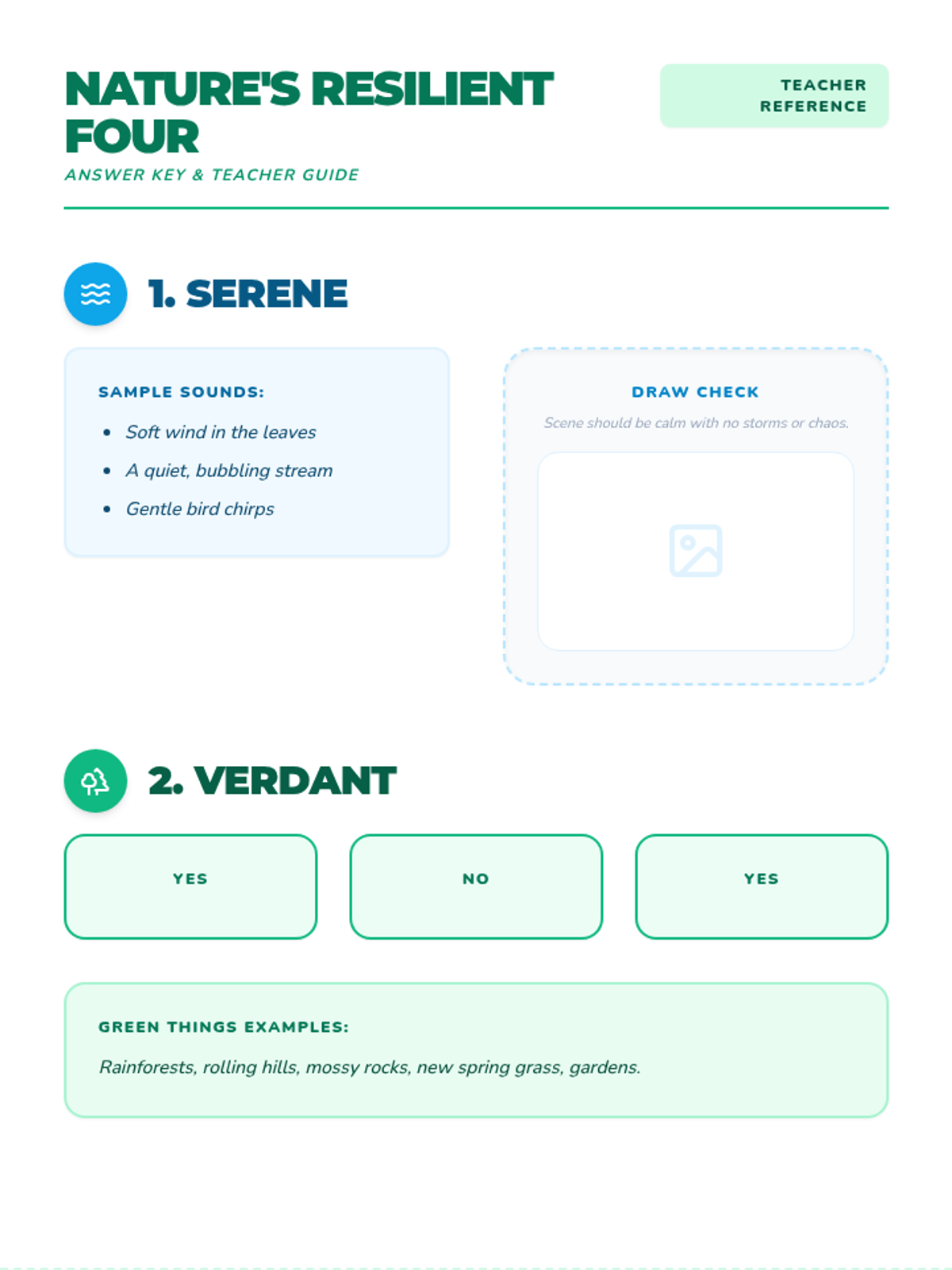
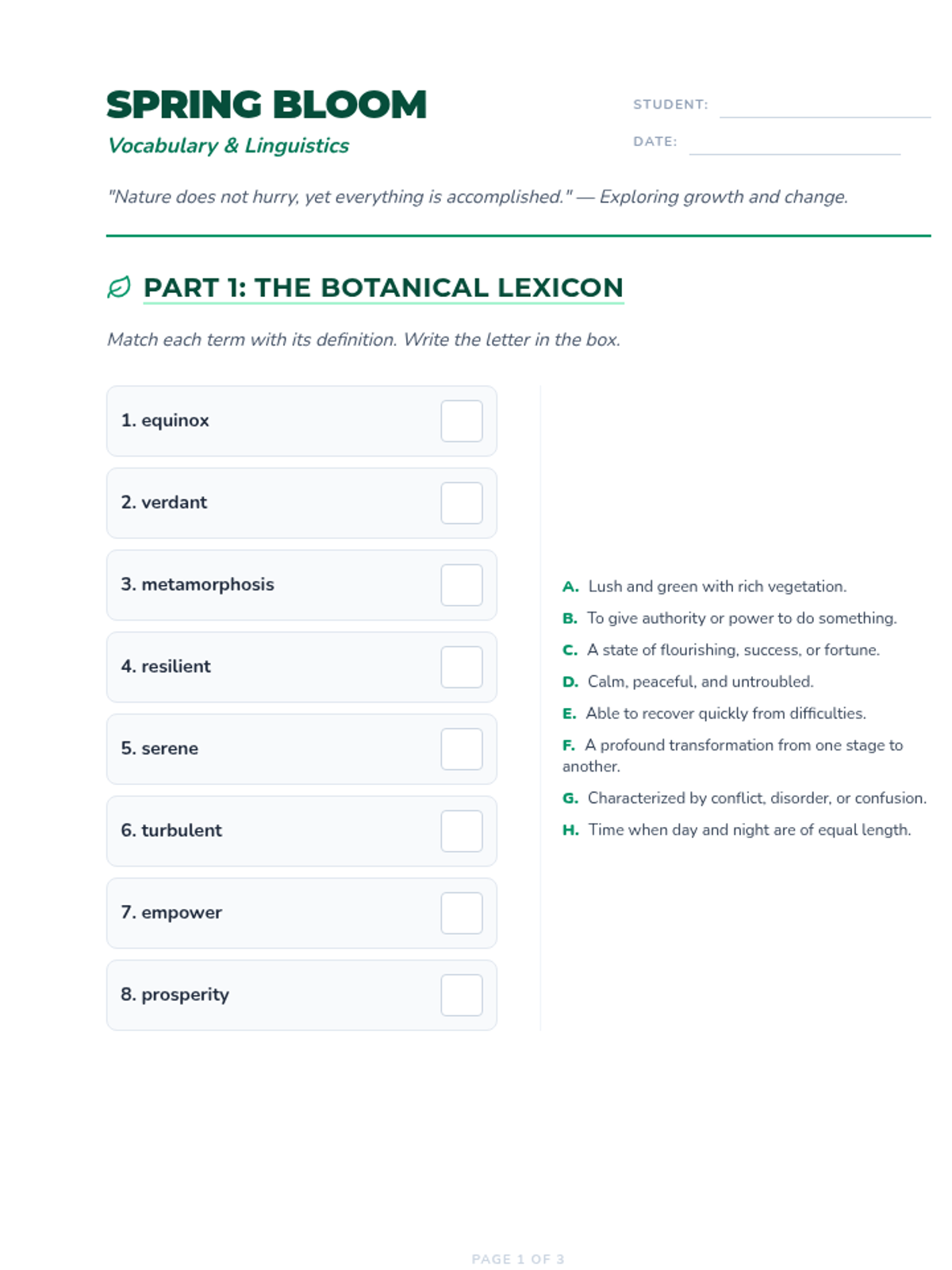
A vocabulary and linguistics lesson exploring themes of transition, growth, and strength. Students master eight high-level terms—equinox, verdant, metamorphosis, resilient, serene, turbulent, empower, and prosperity—through context analysis and creative application.
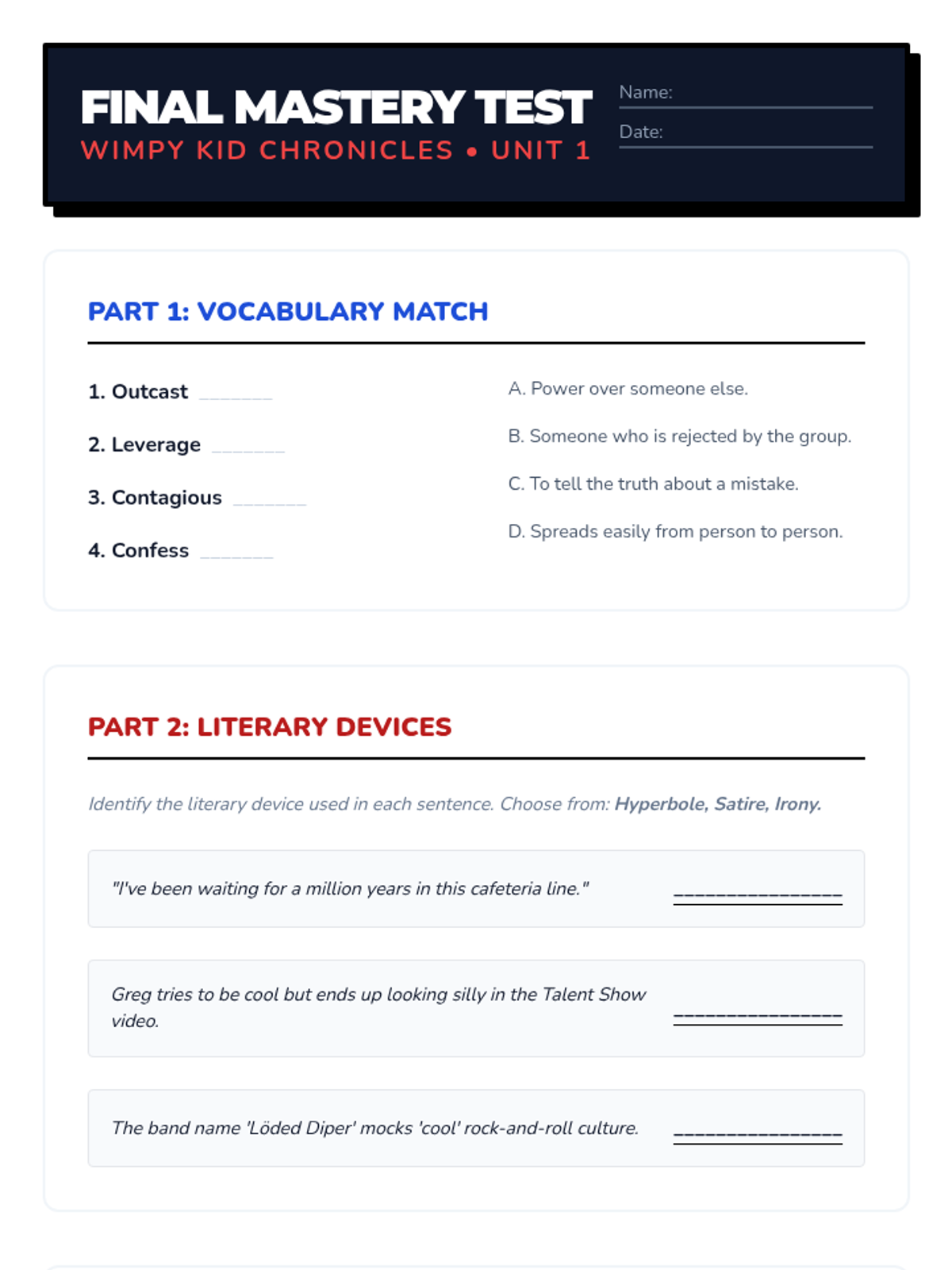
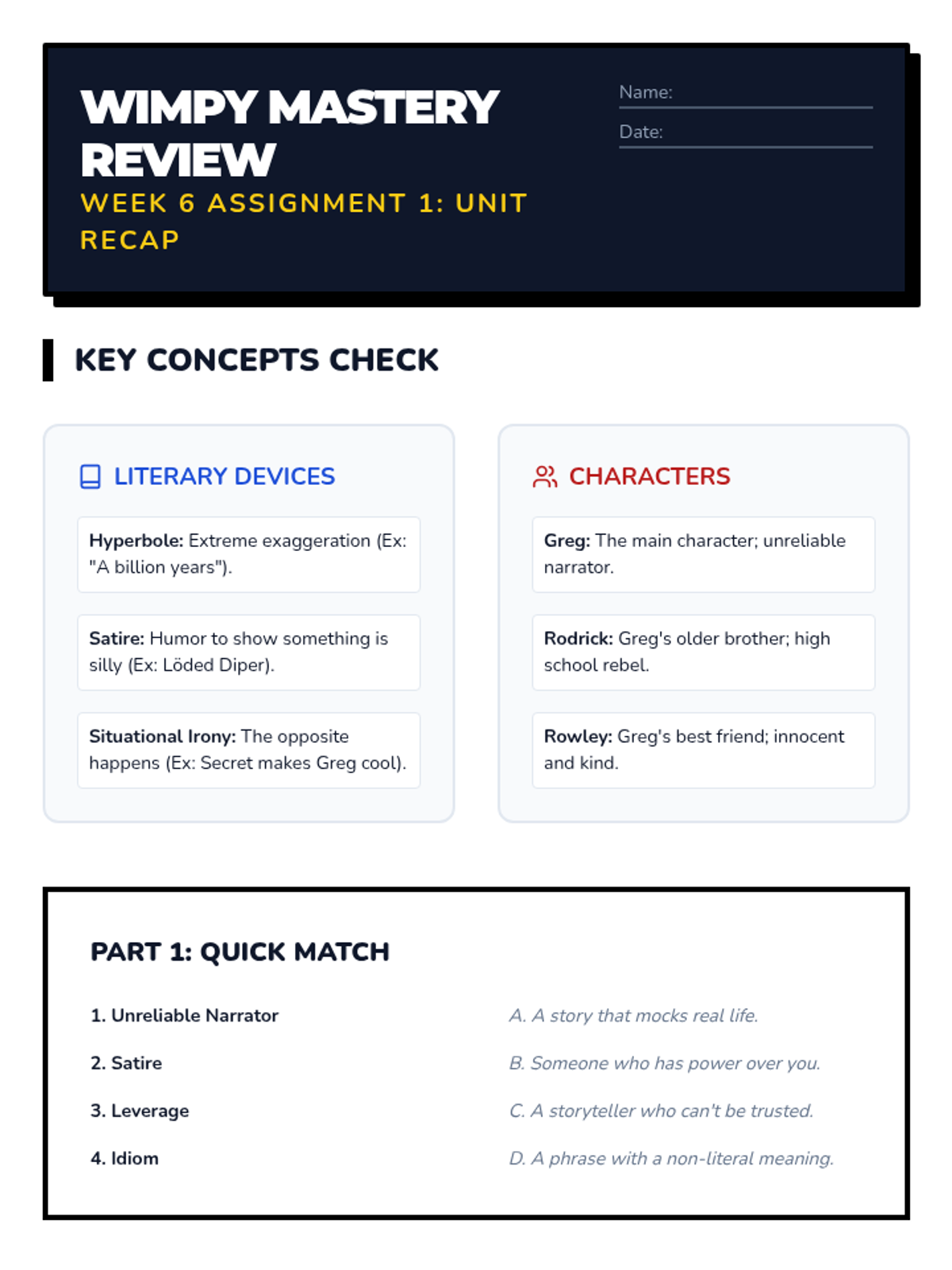
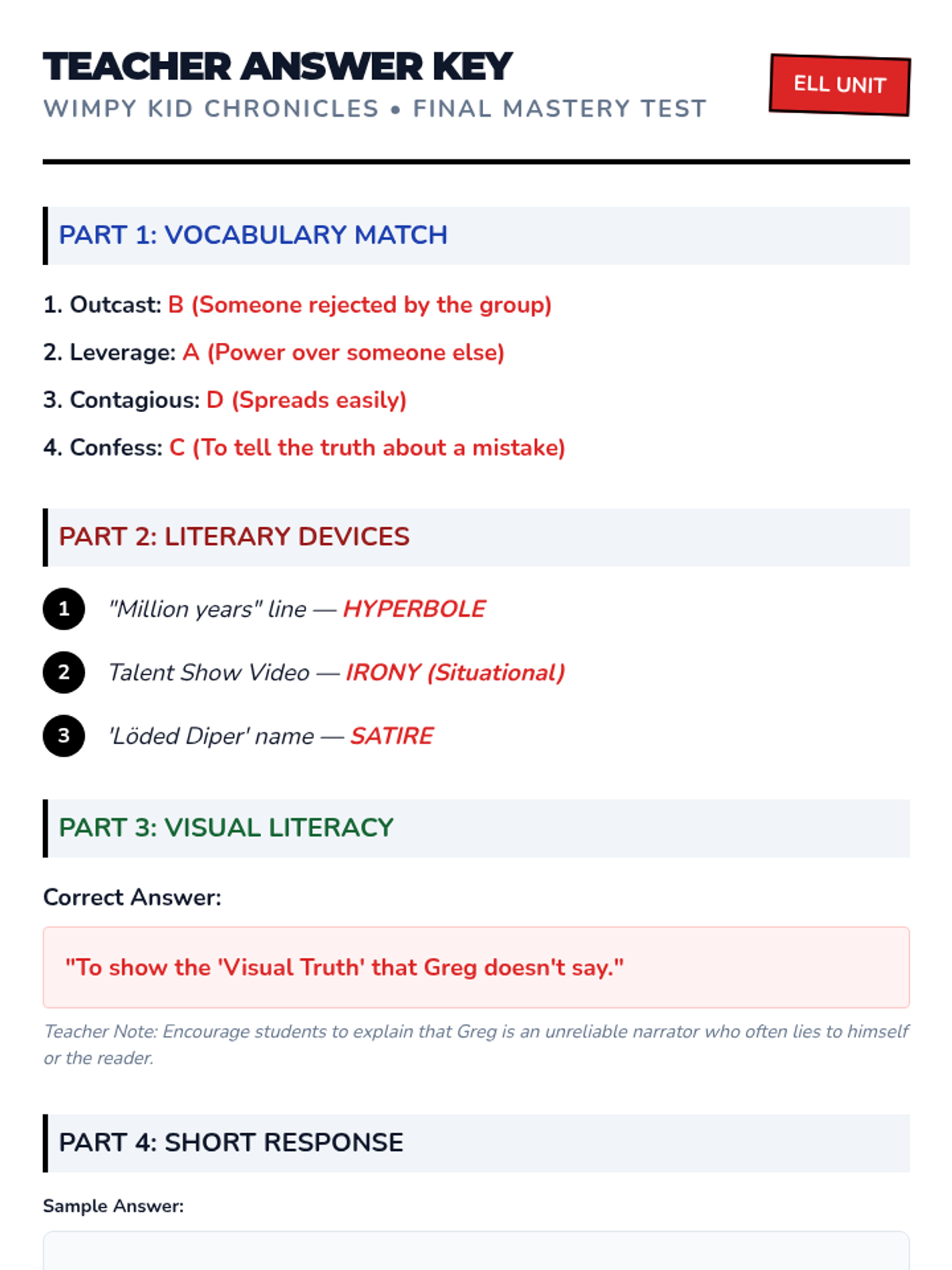
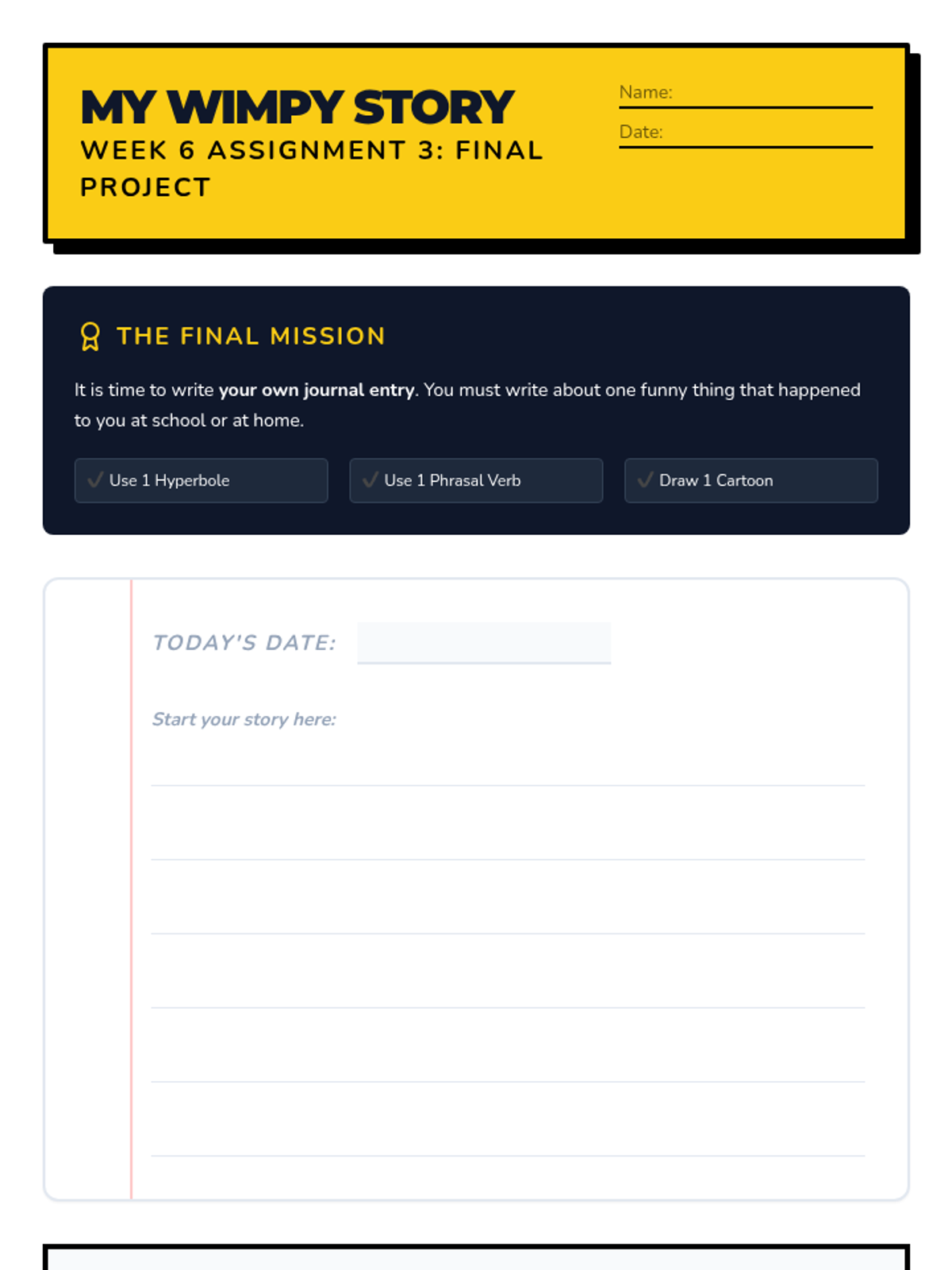
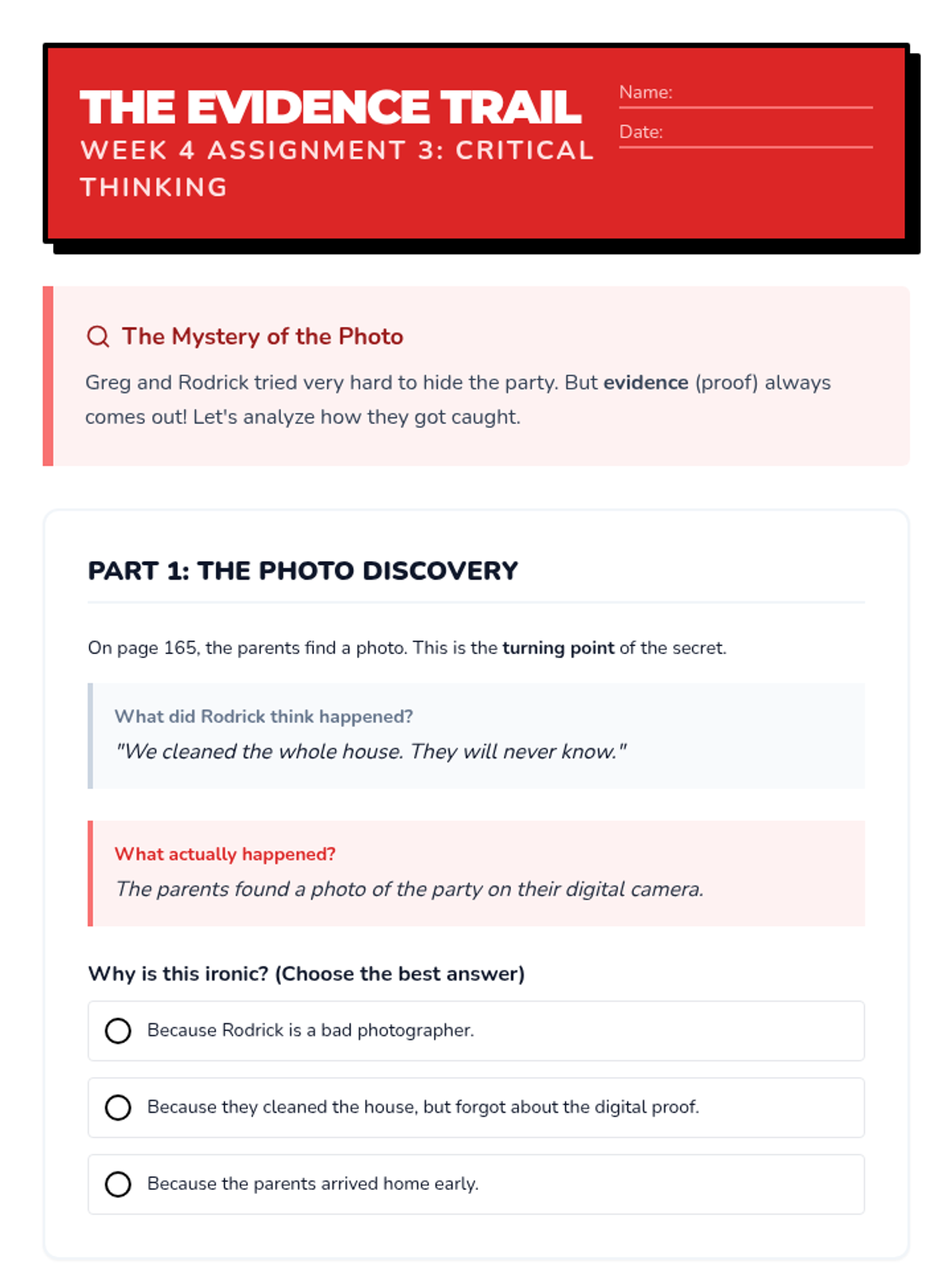
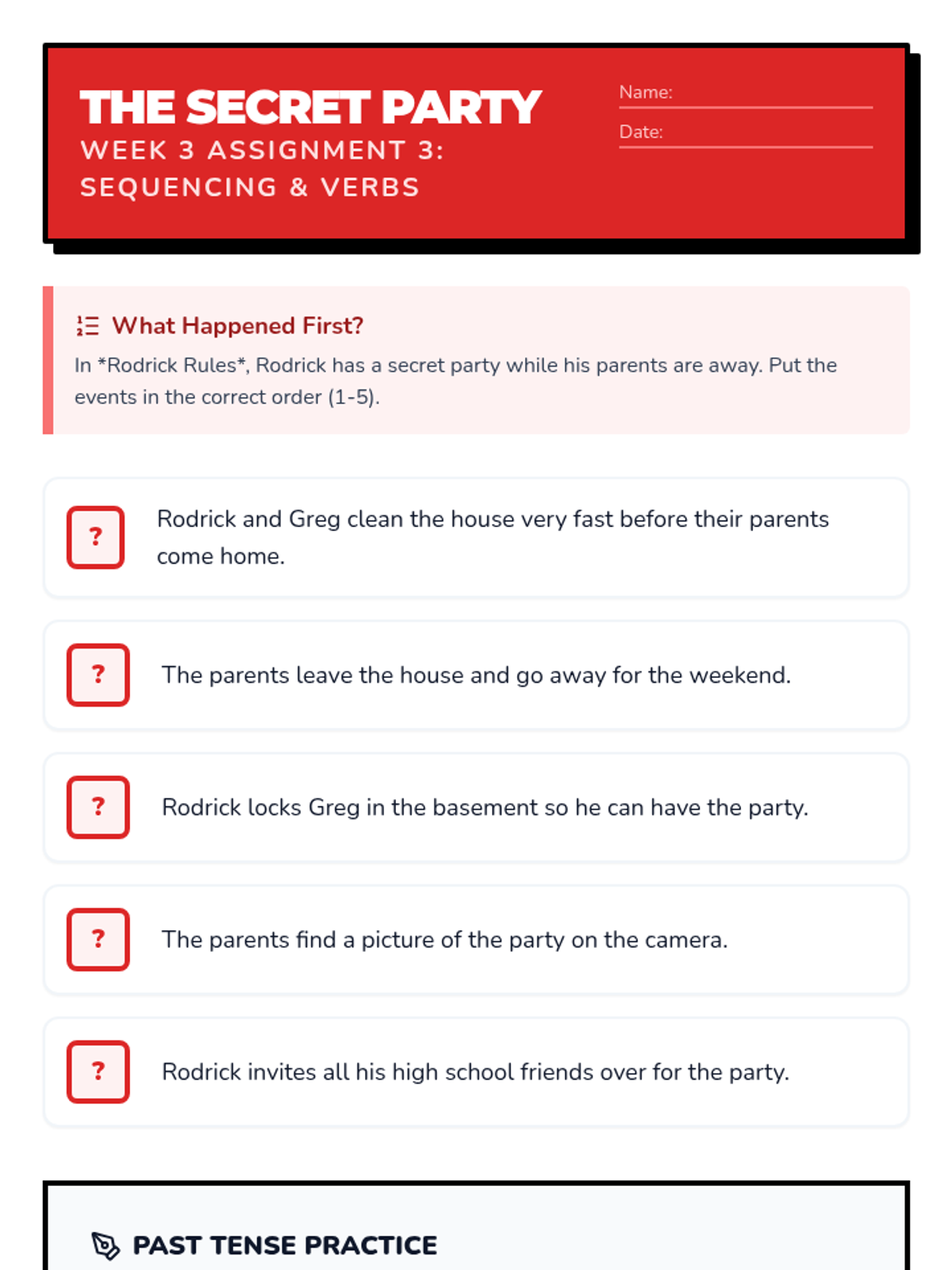
Final analysis of the secret party and Greg's growth. Comprehensive review of literary terms followed by the final unit assessment and creative project.
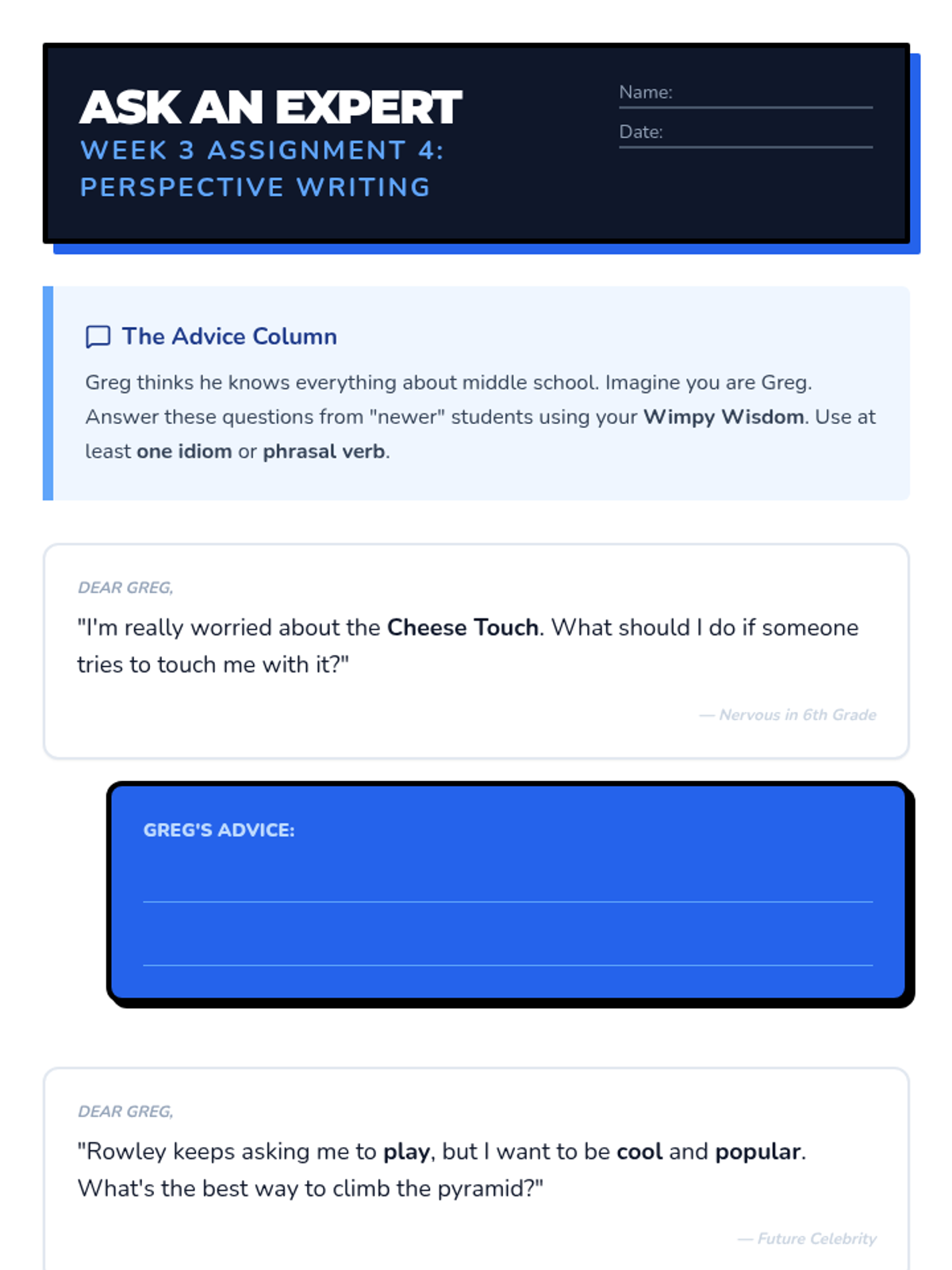
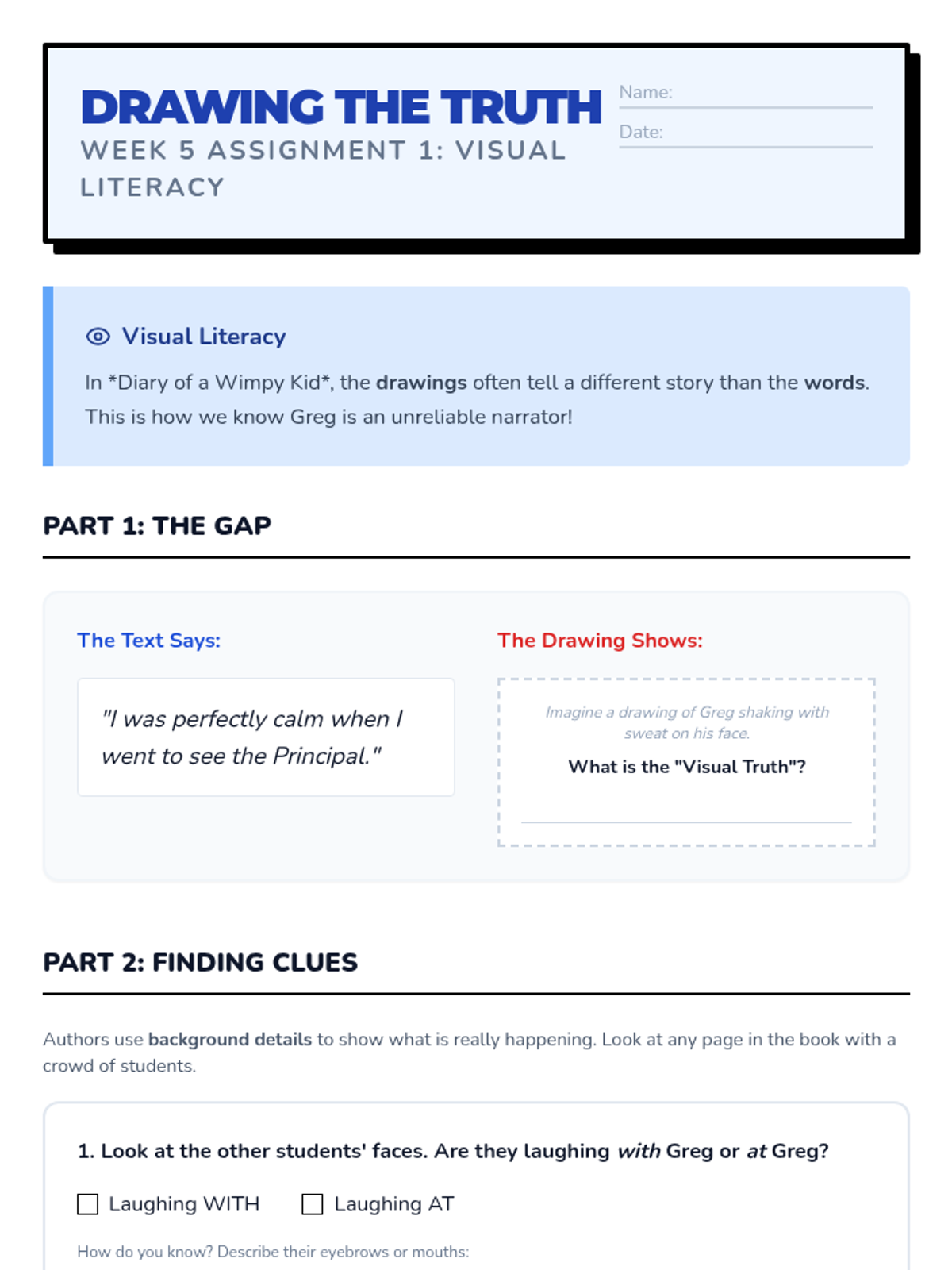
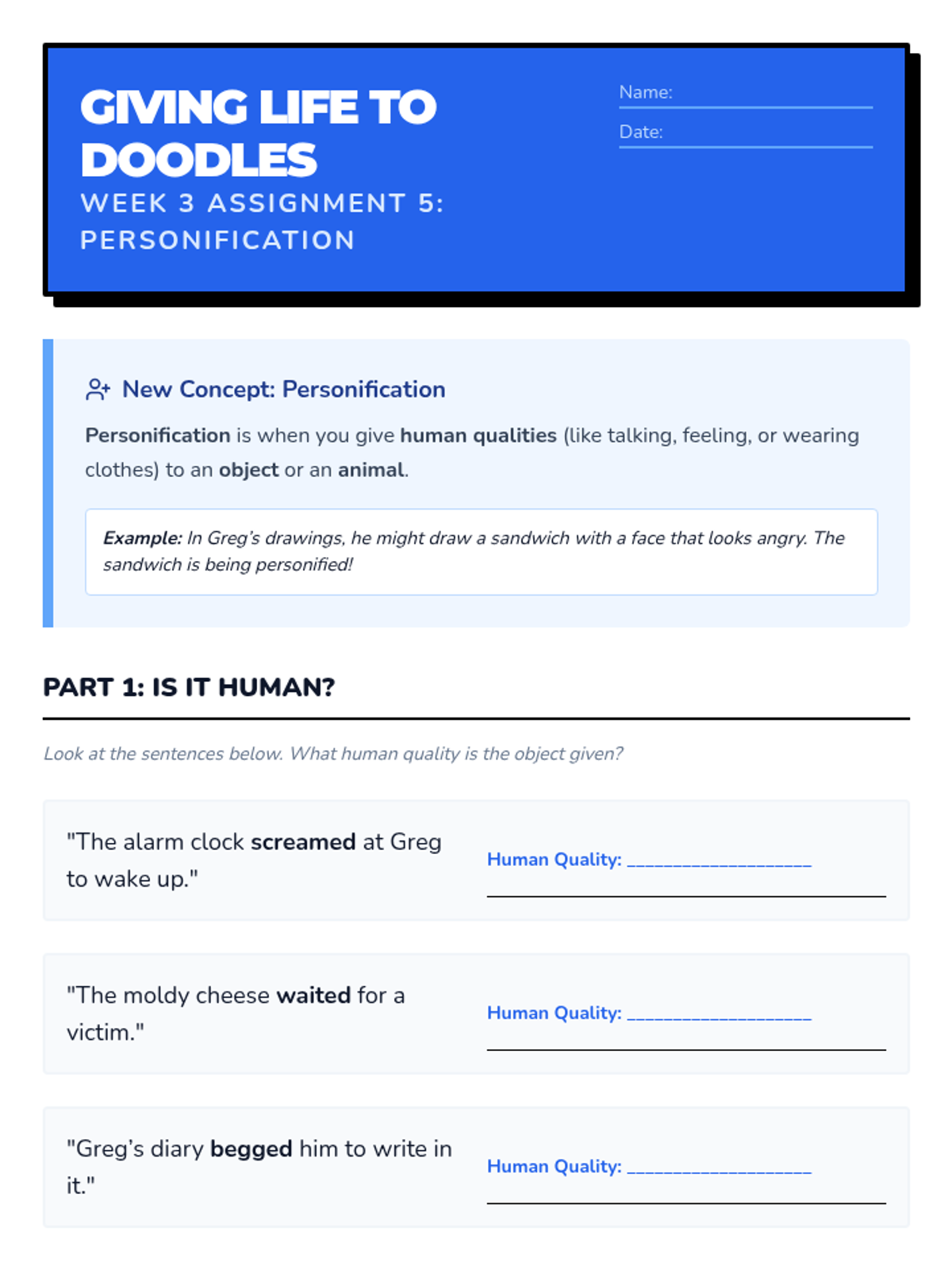
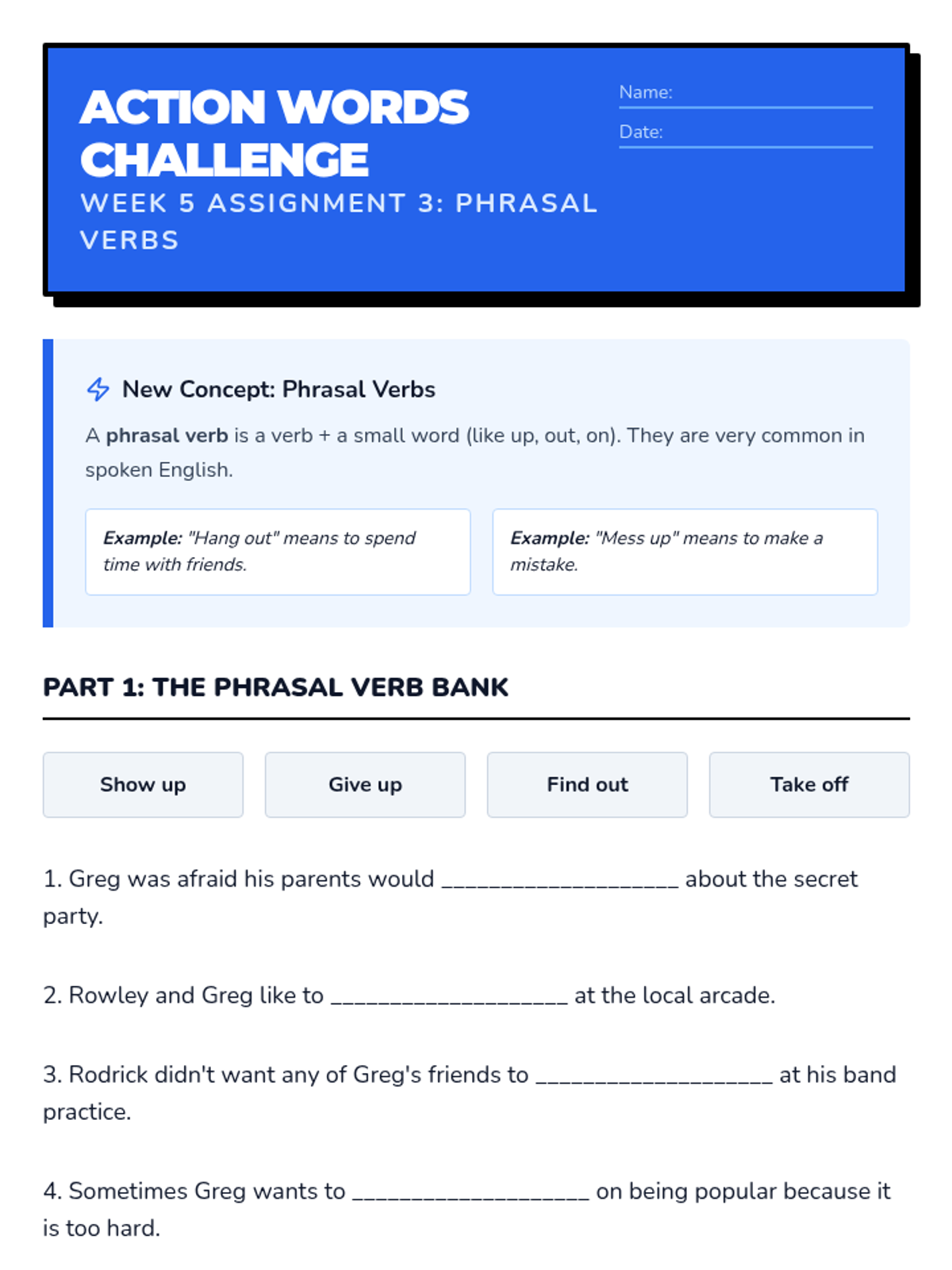
Wrapping up Book 1 with calls back to Greg's early mistakes. Introduction of Personification in Greg's doodles and a deep dive into Visual Irony. Focus on Phrasal Verbs and Idioms to bridge into Book 2.
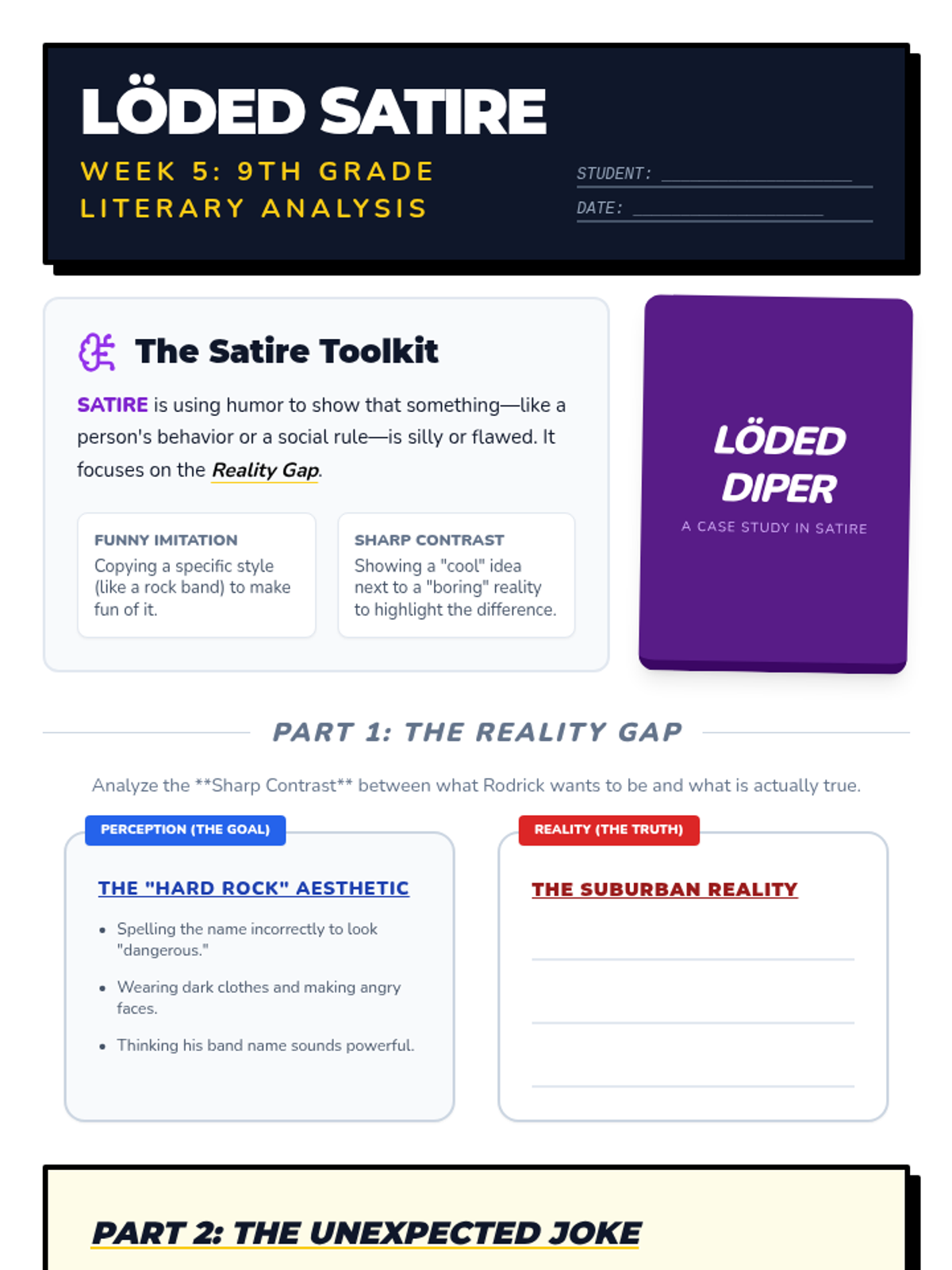
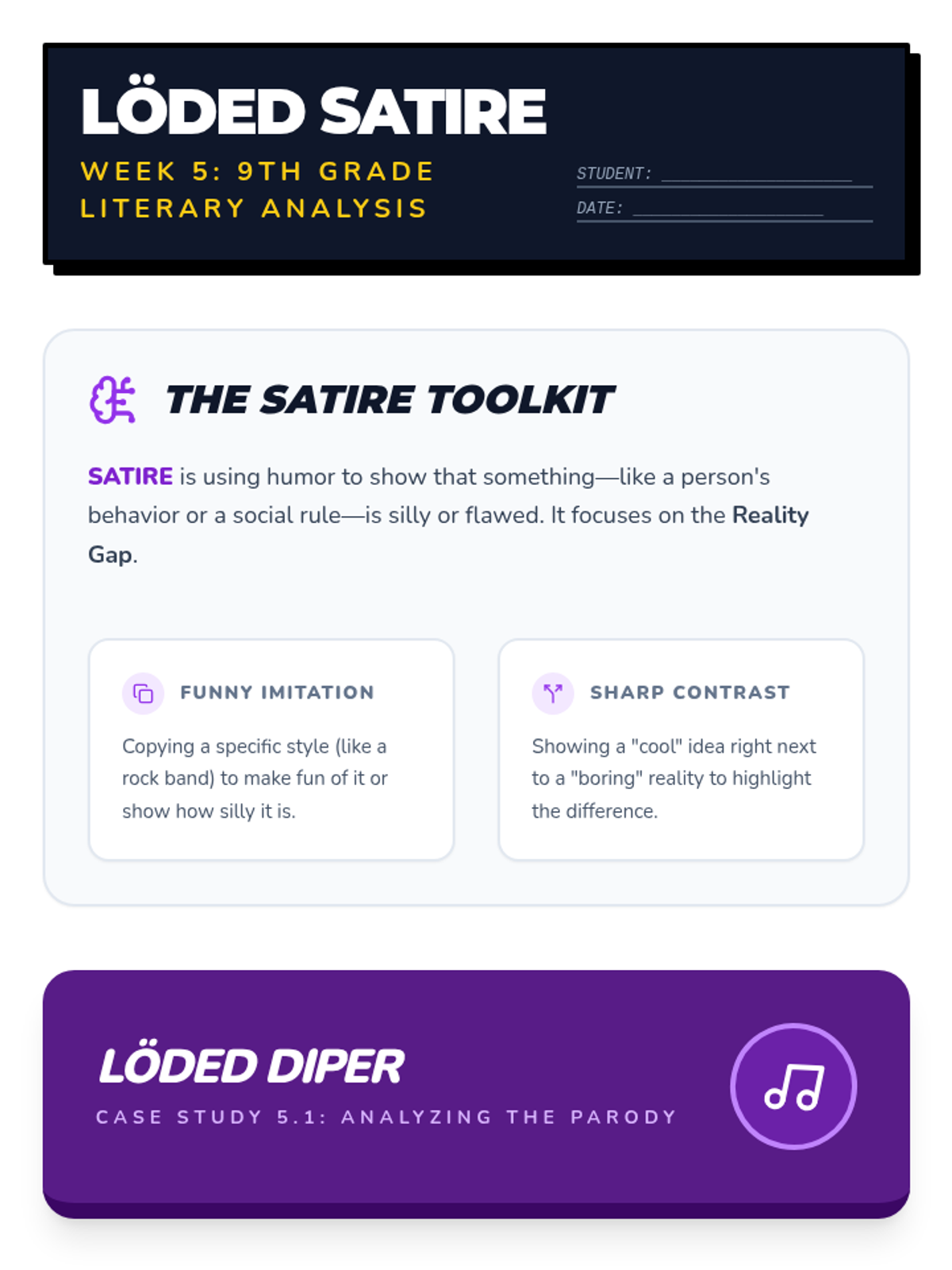
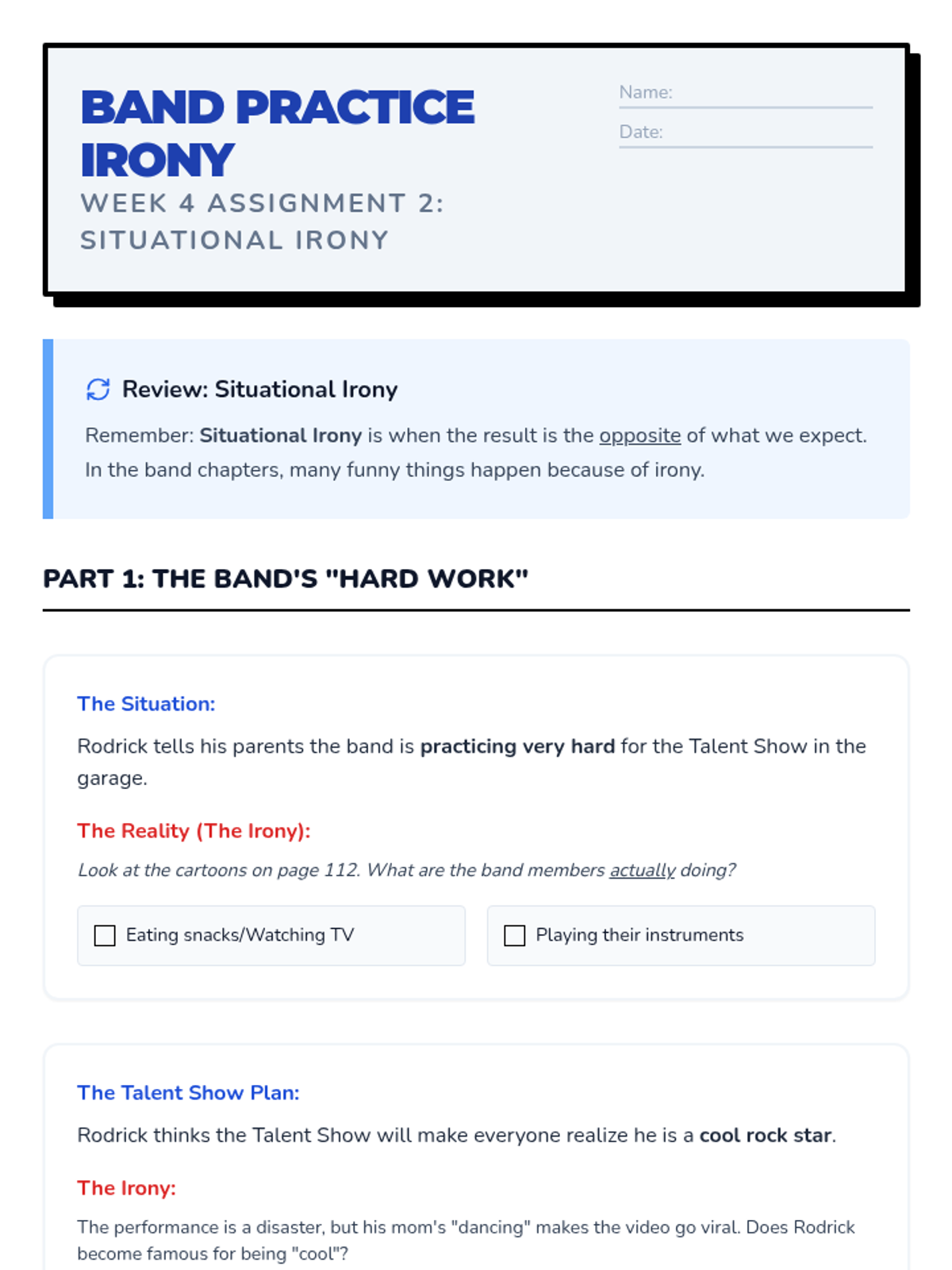
In-depth look at Rodrick's band Löded Diper. Students explore satire and how irony is used to mock social stereotypes.
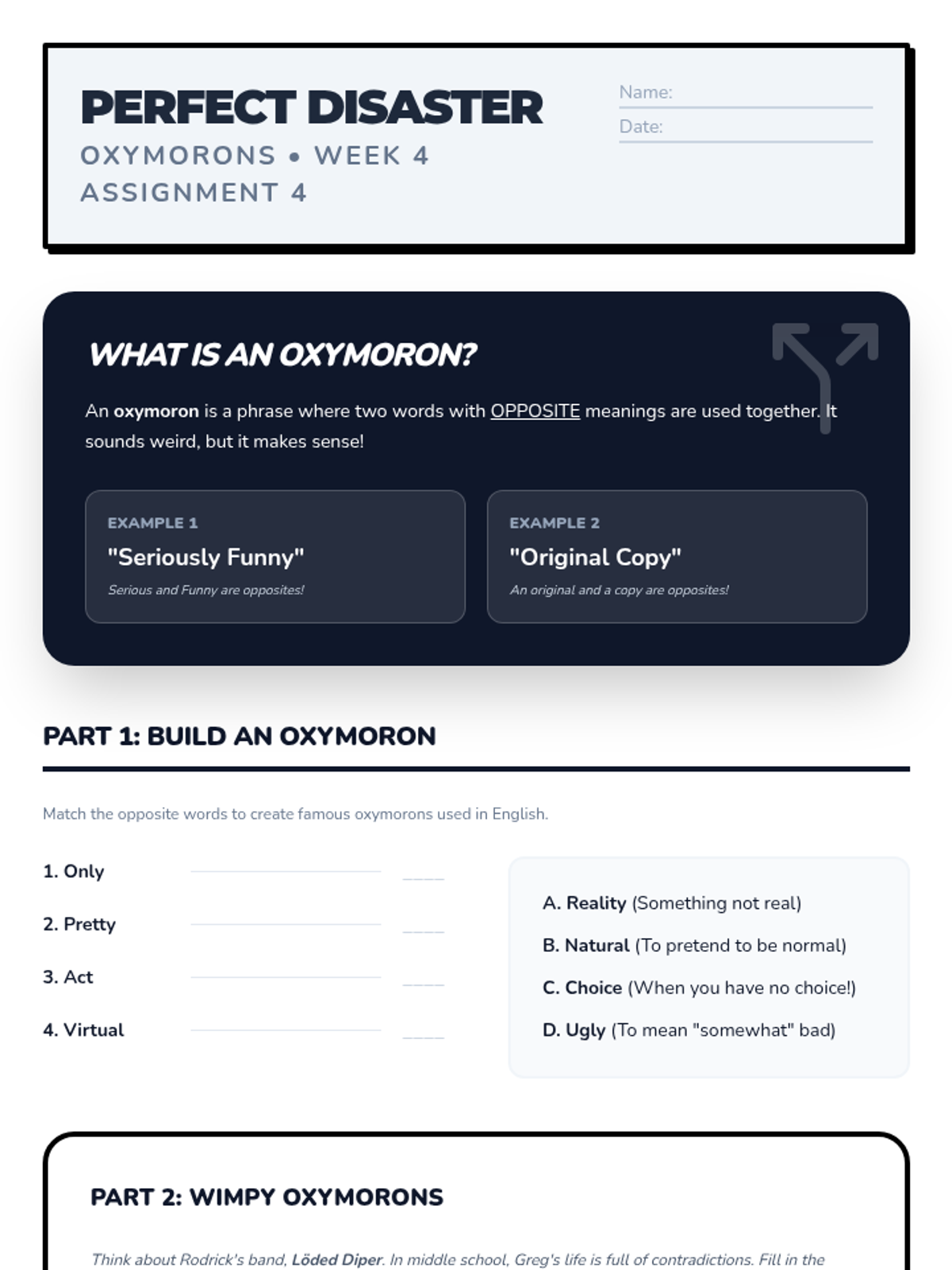
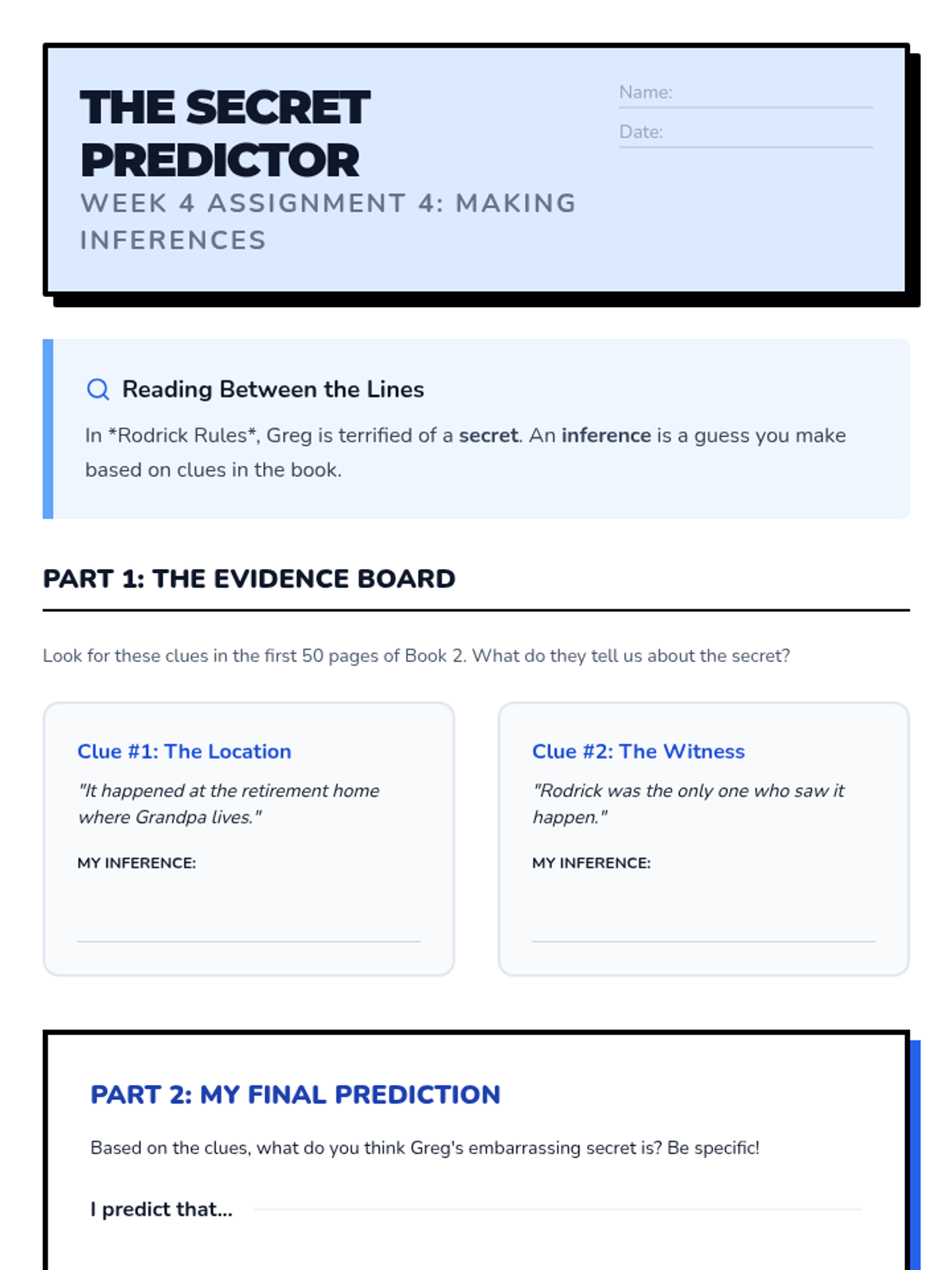
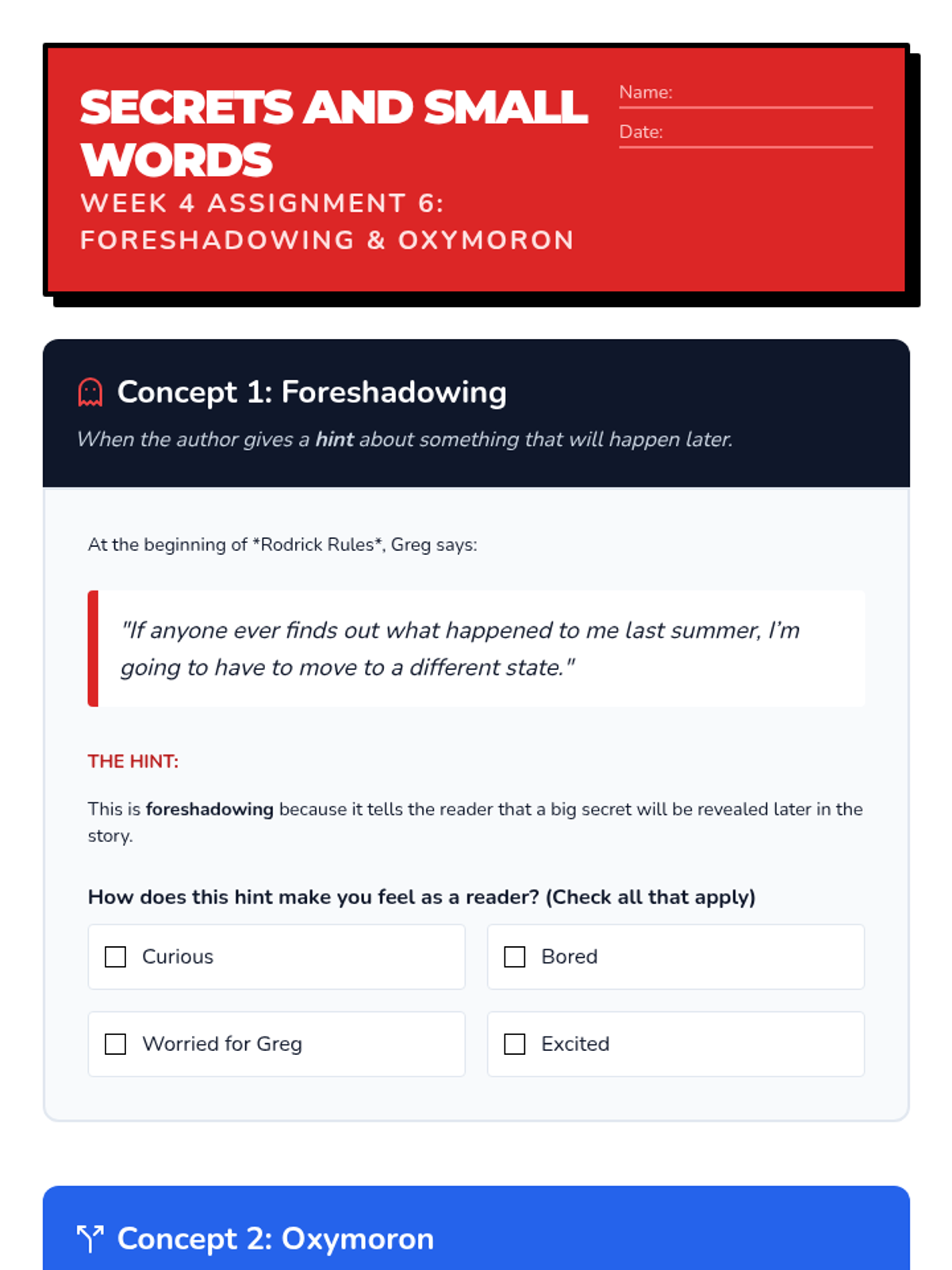
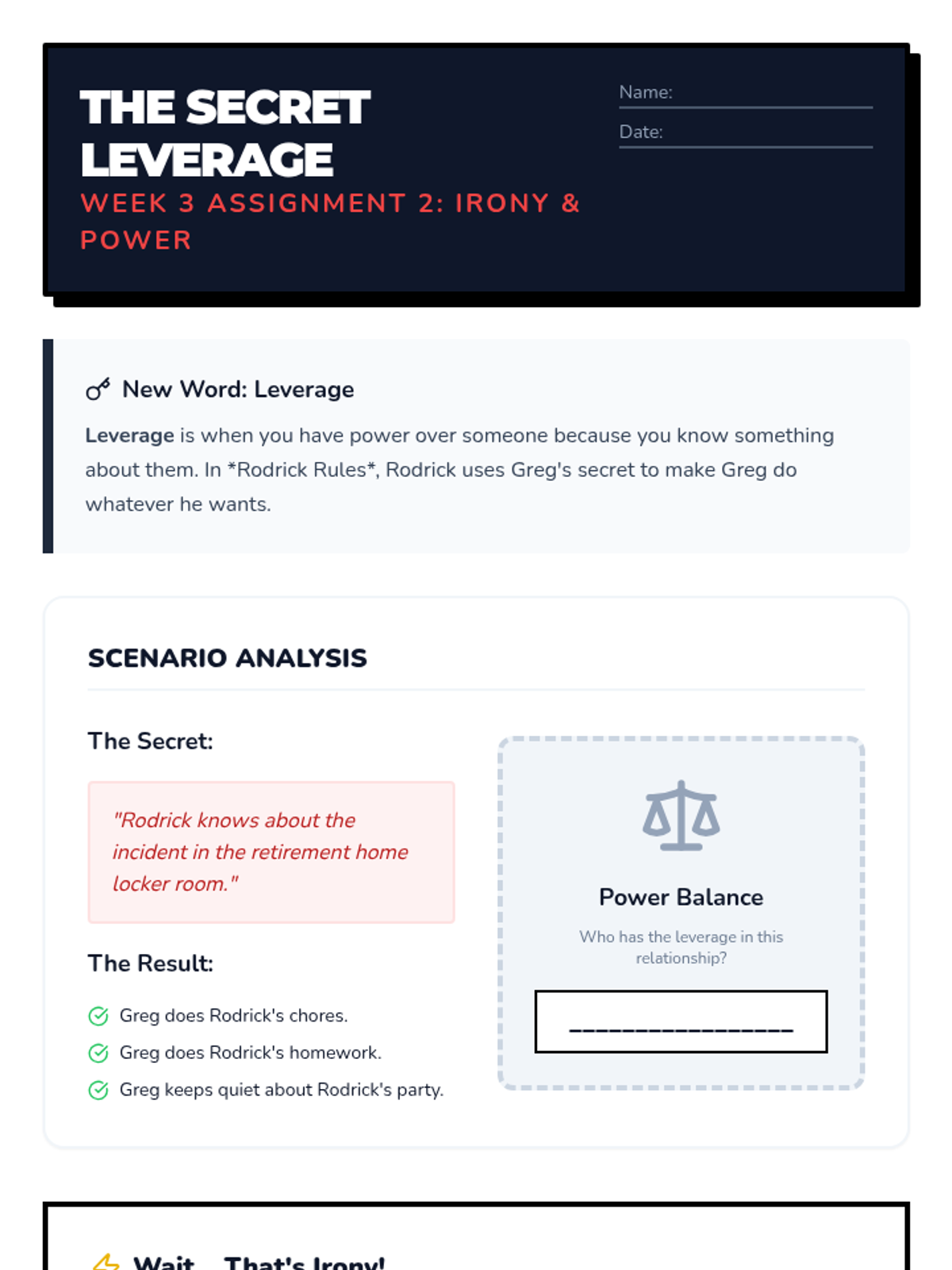
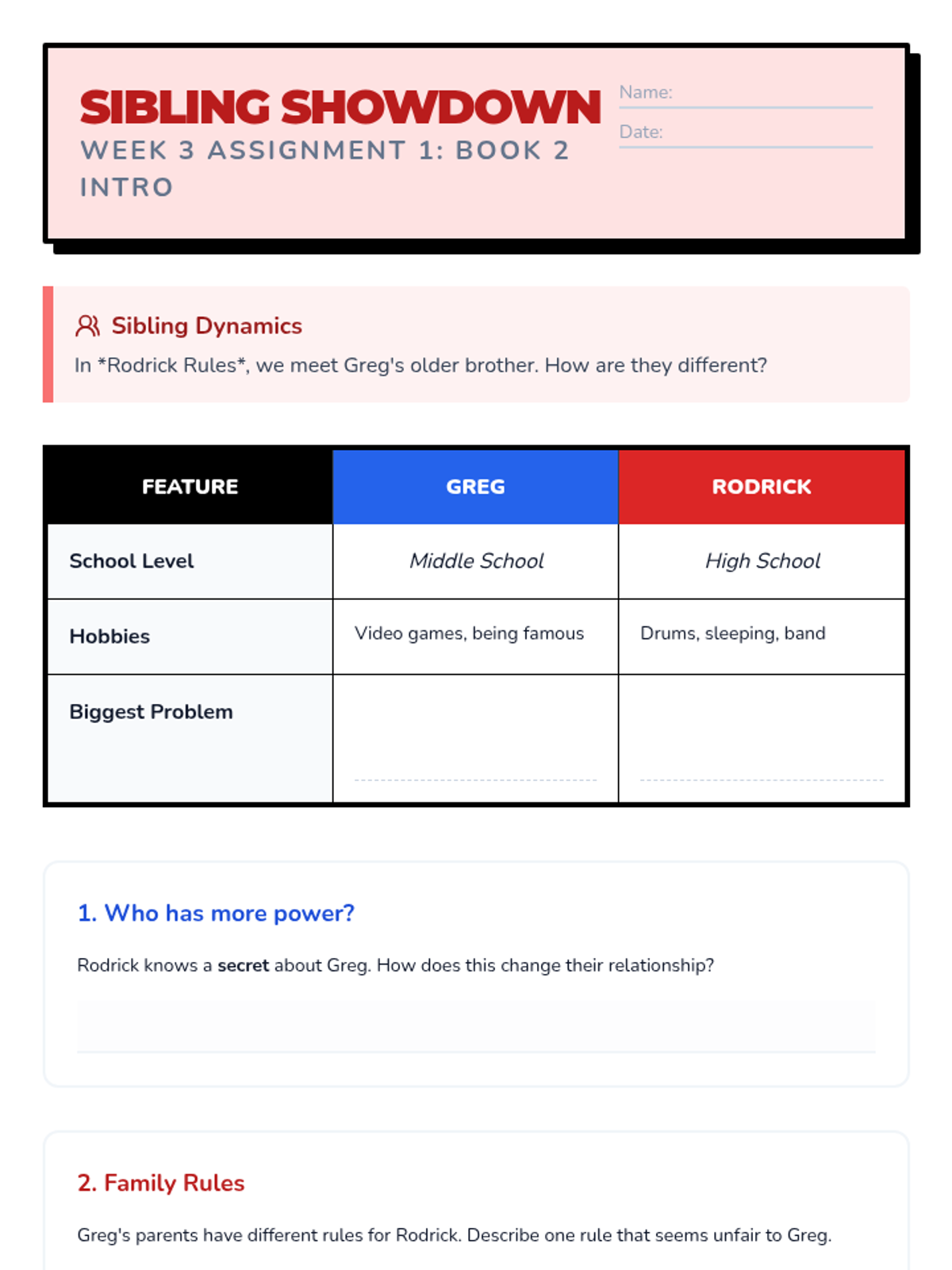
Transitioning to 'Rodrick Rules'. Focus on Foreshadowing (the embarrassing secret) and Oxymoron (Löded Diper). Sibling rivalry vocabulary and the concept of 'Leverage'.
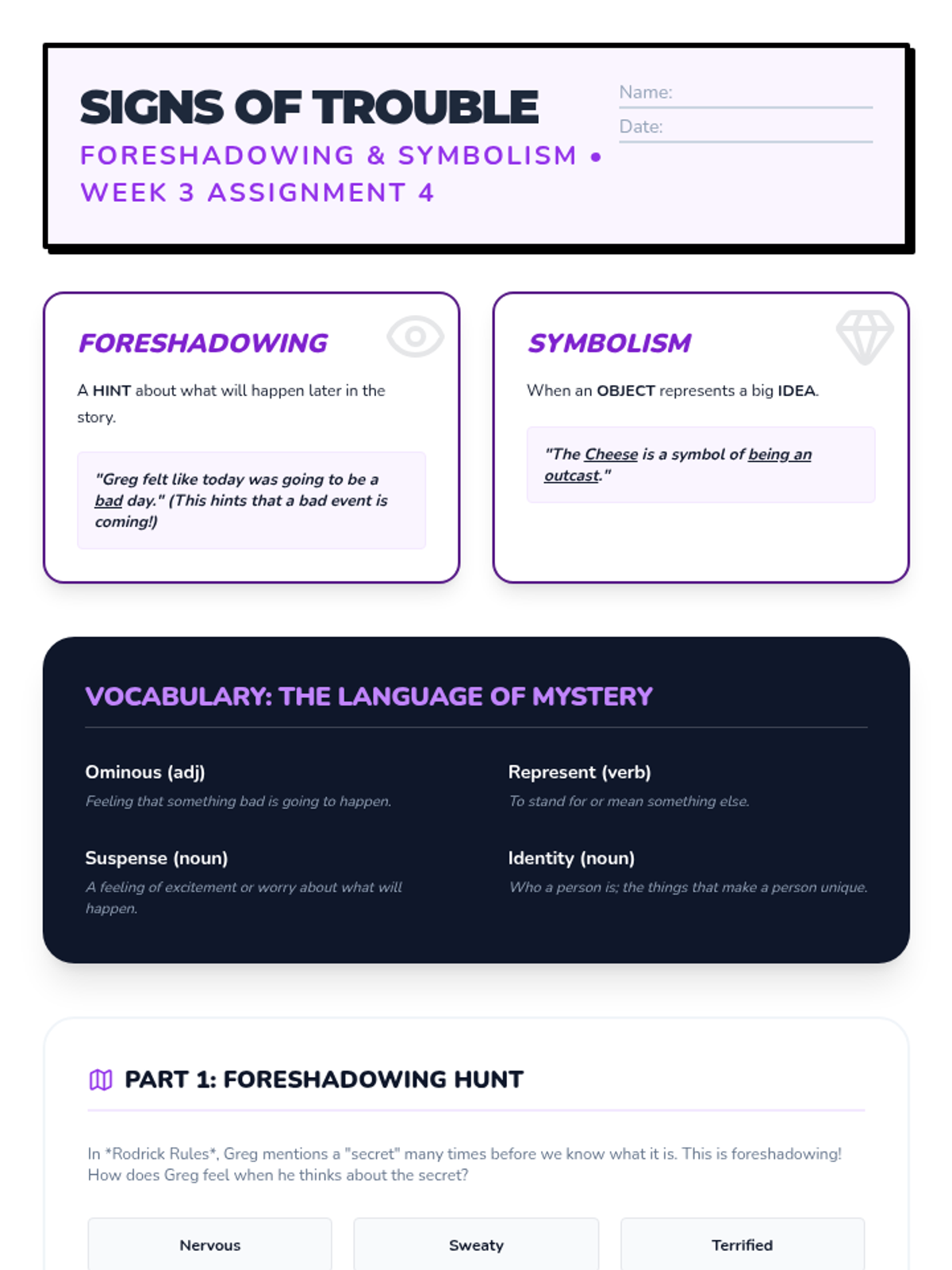
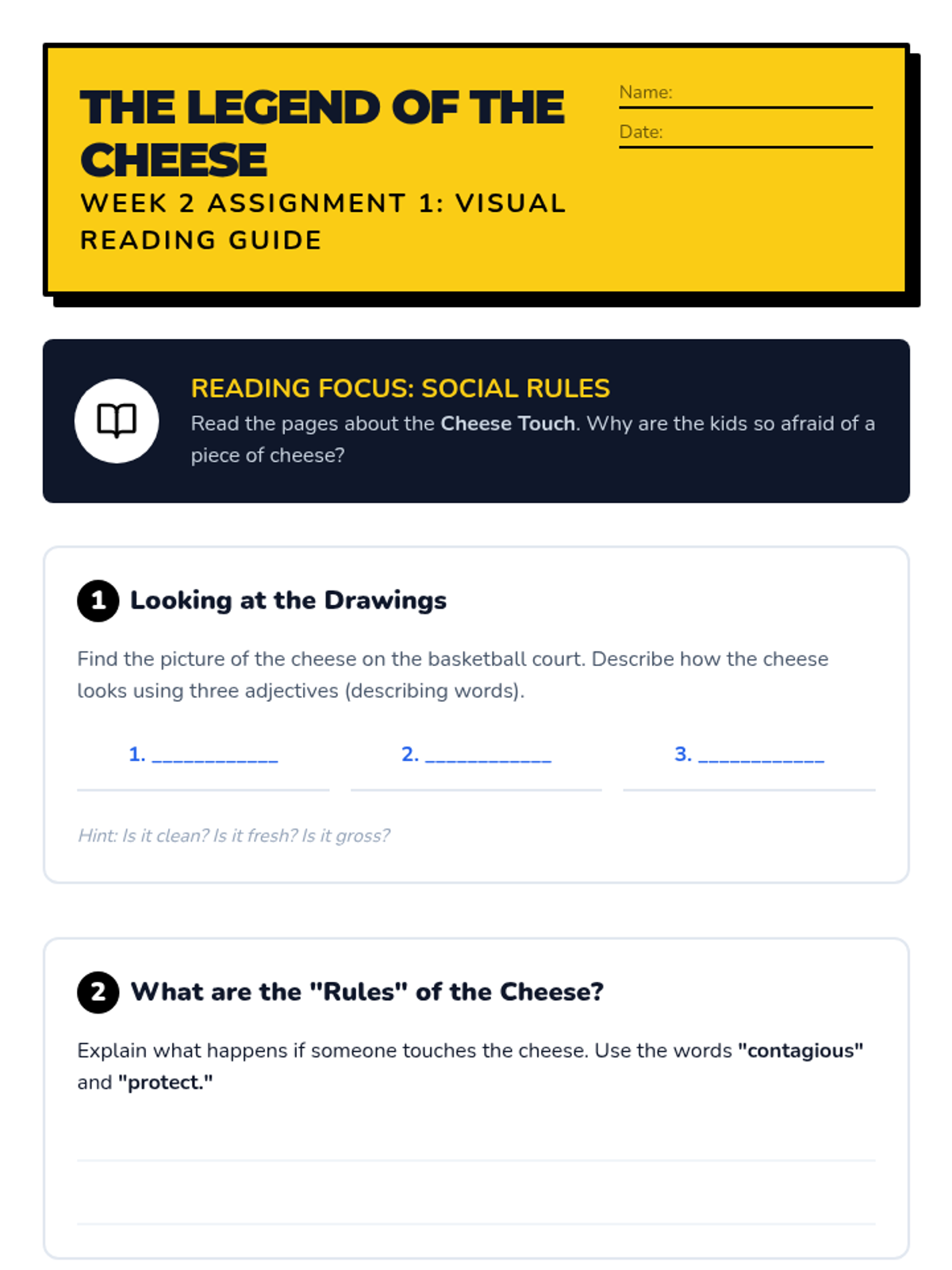
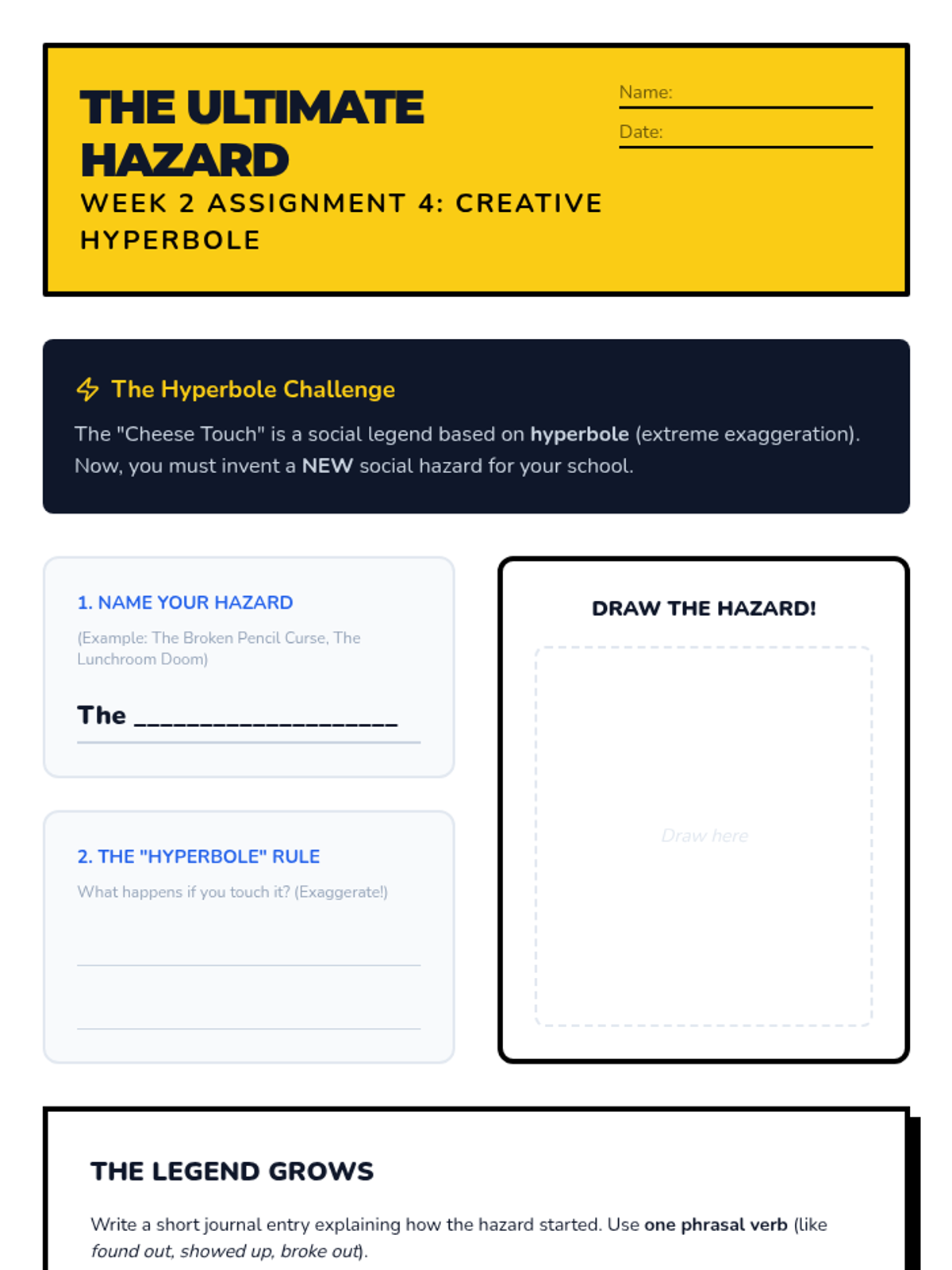
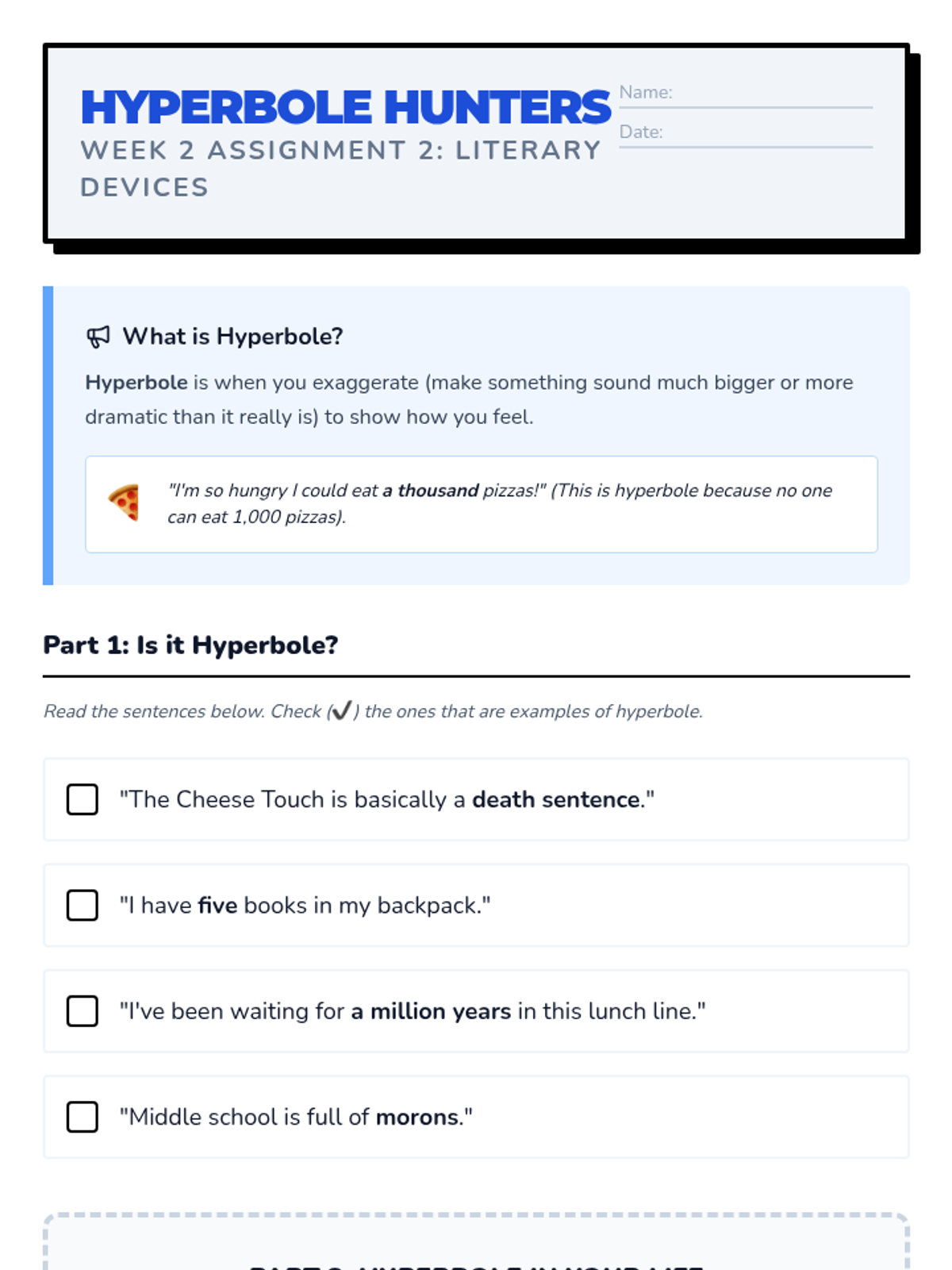
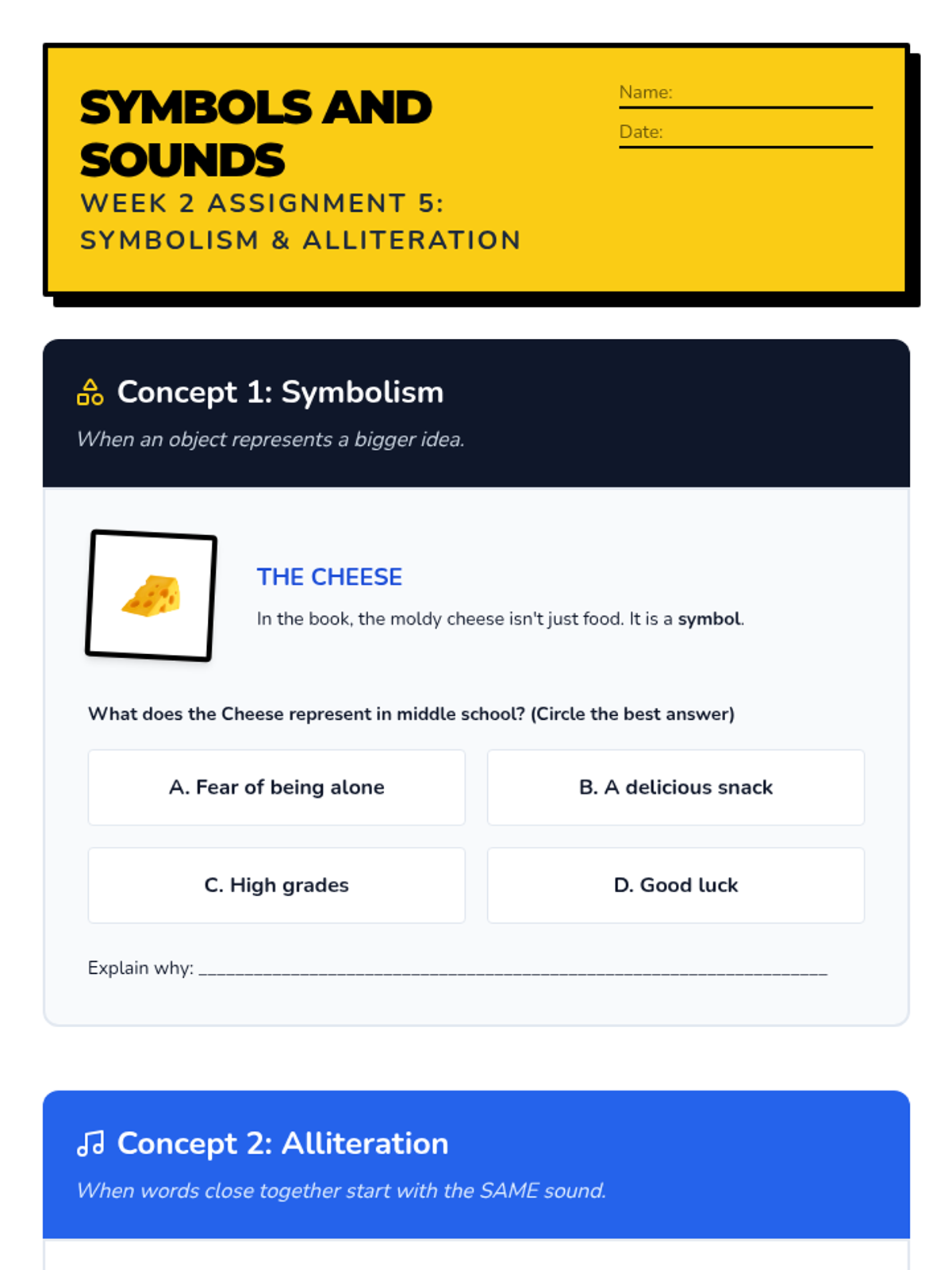
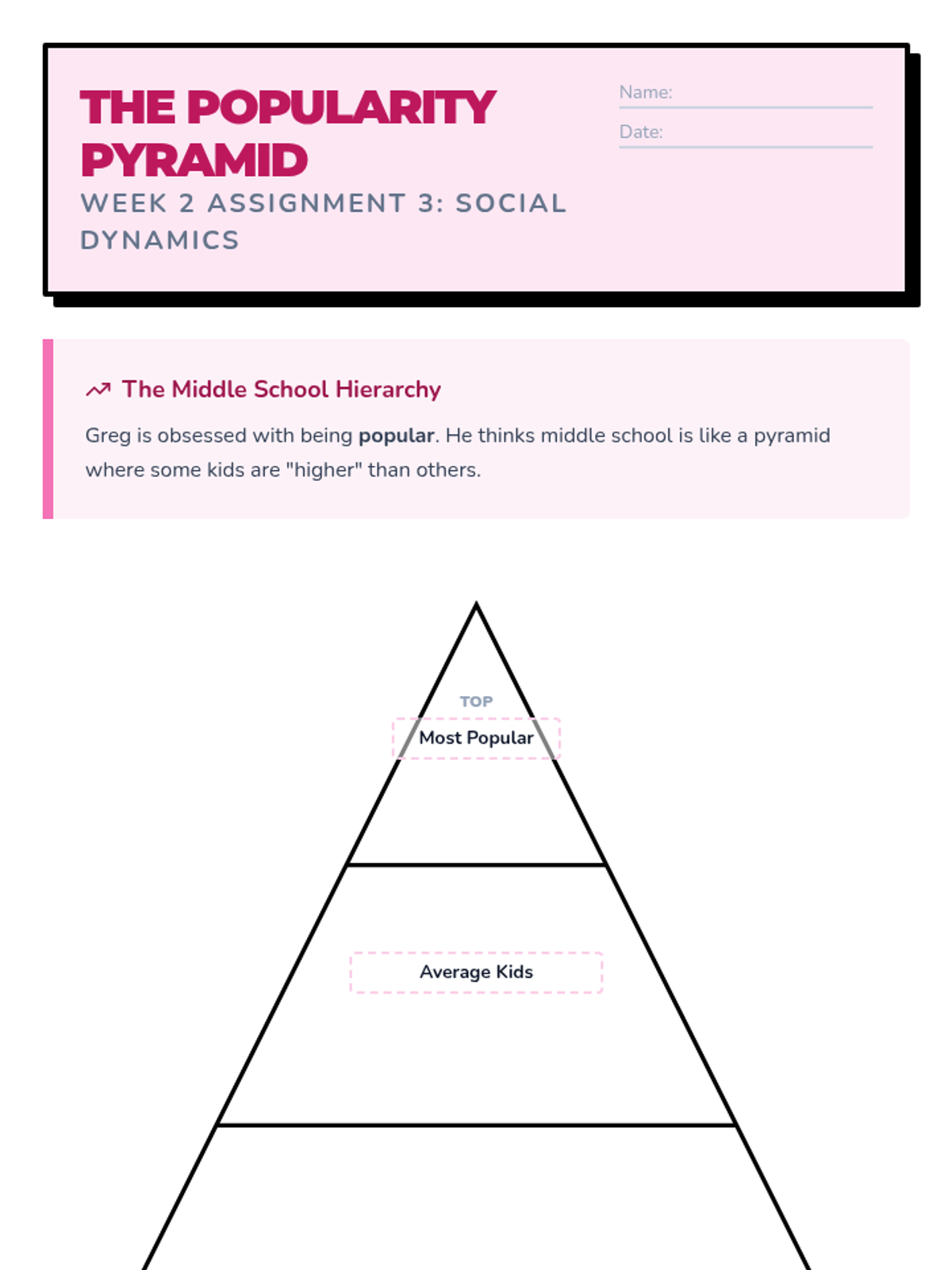
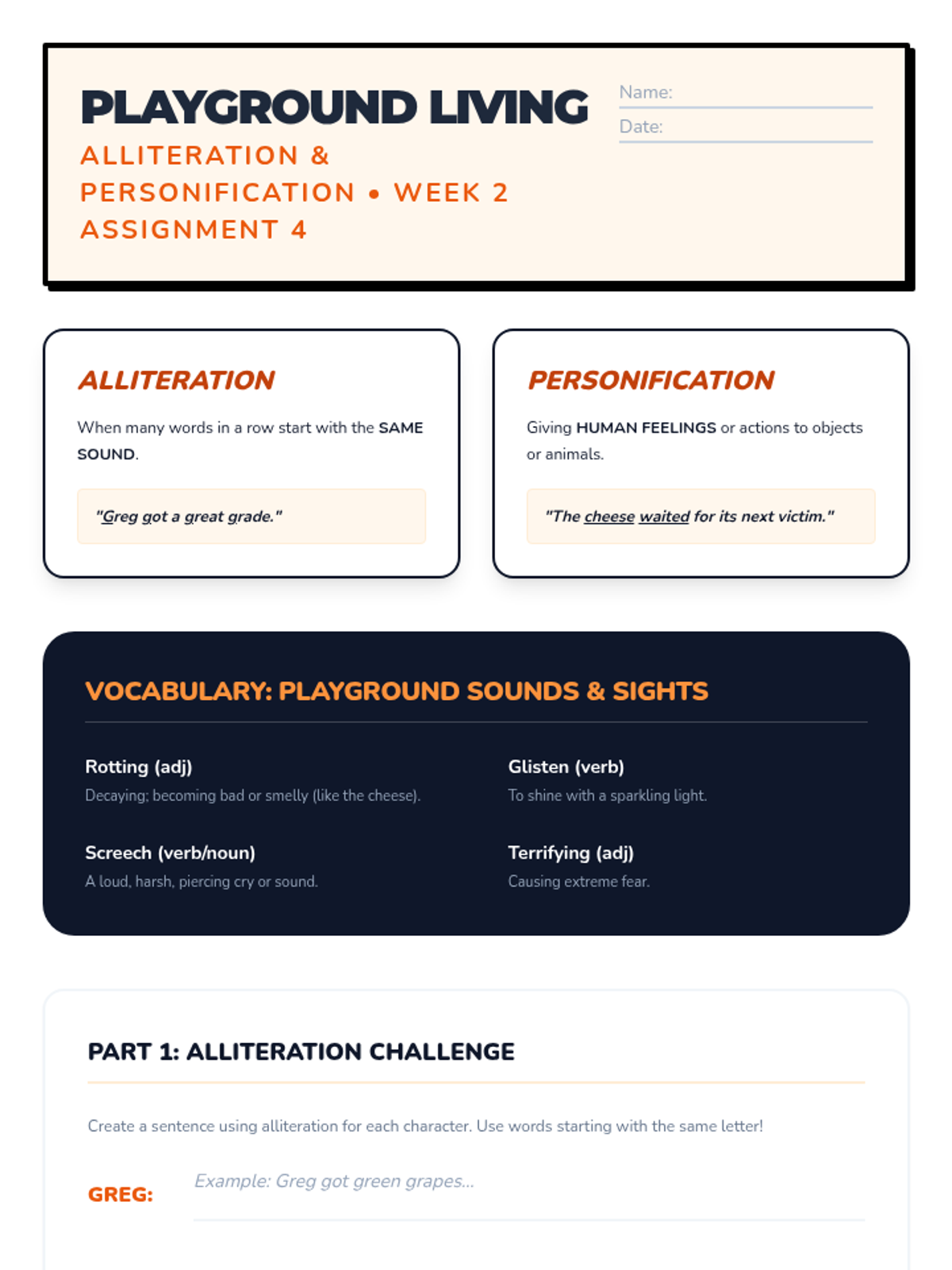
Exploring social hierarchies. Focus on Hyperbole (exaggeration), Symbolism (The Cheese), and Alliteration (Greg's insults). Vocabulary focus on 'Social Exclusion' and 'Status' terms.
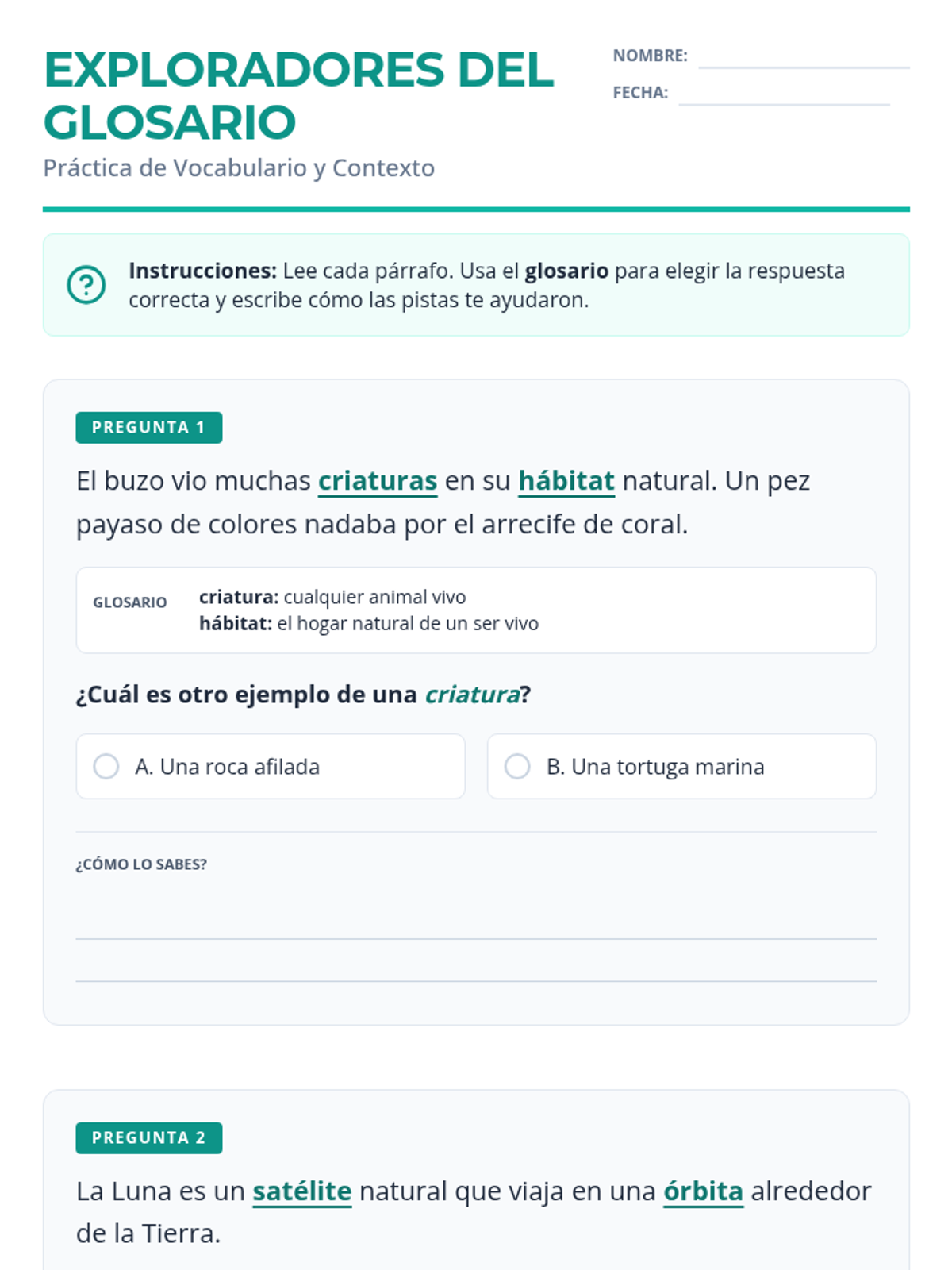
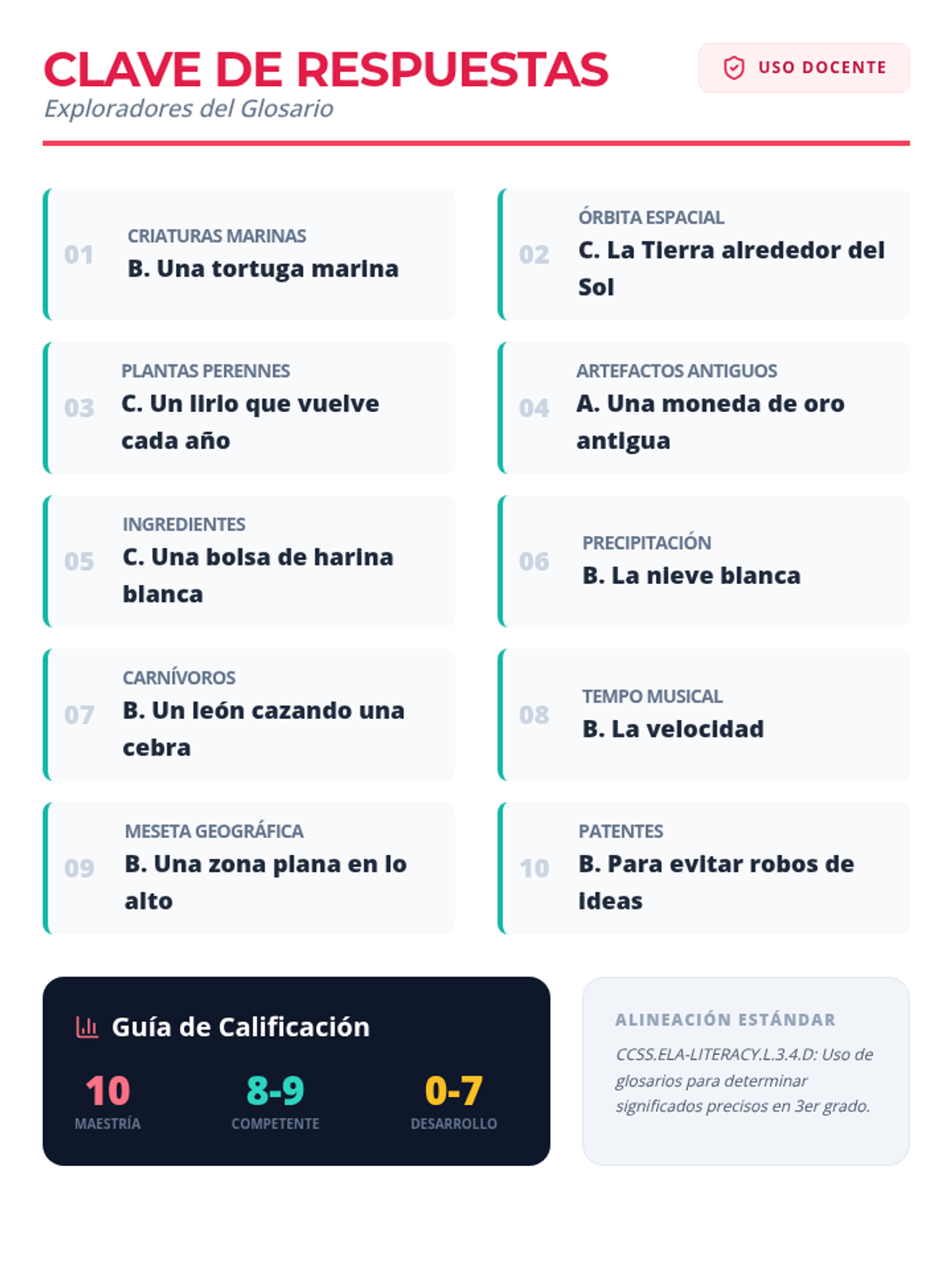
A lesson focused on using glossaries and context clues to understand and apply new vocabulary words in 3rd-grade reading passages.
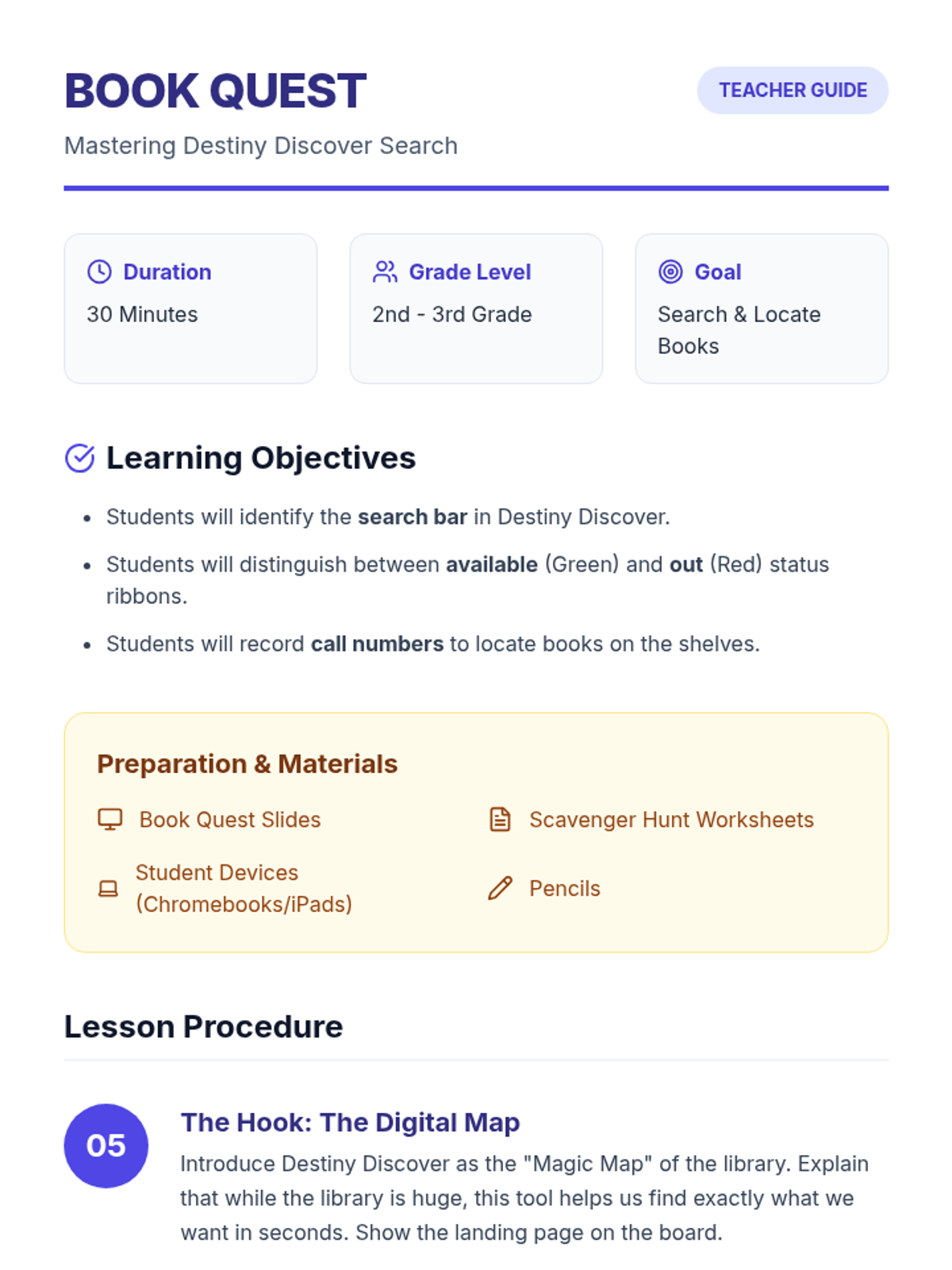
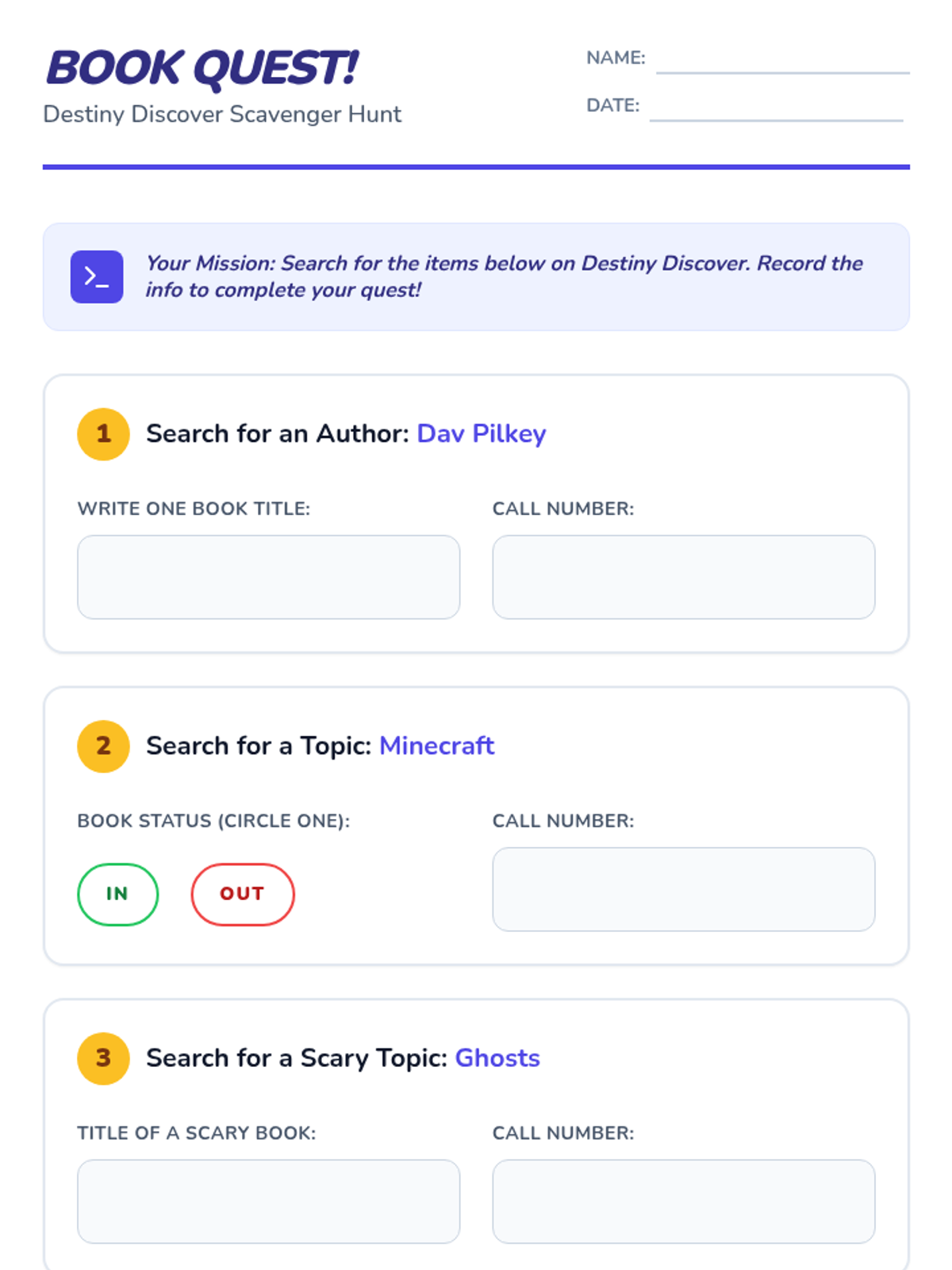
A 30-minute introductory lesson for 2nd and 3rd graders on navigating Destiny Discover to search for library books. Students will learn how to use keywords, check book availability, and locate call numbers.
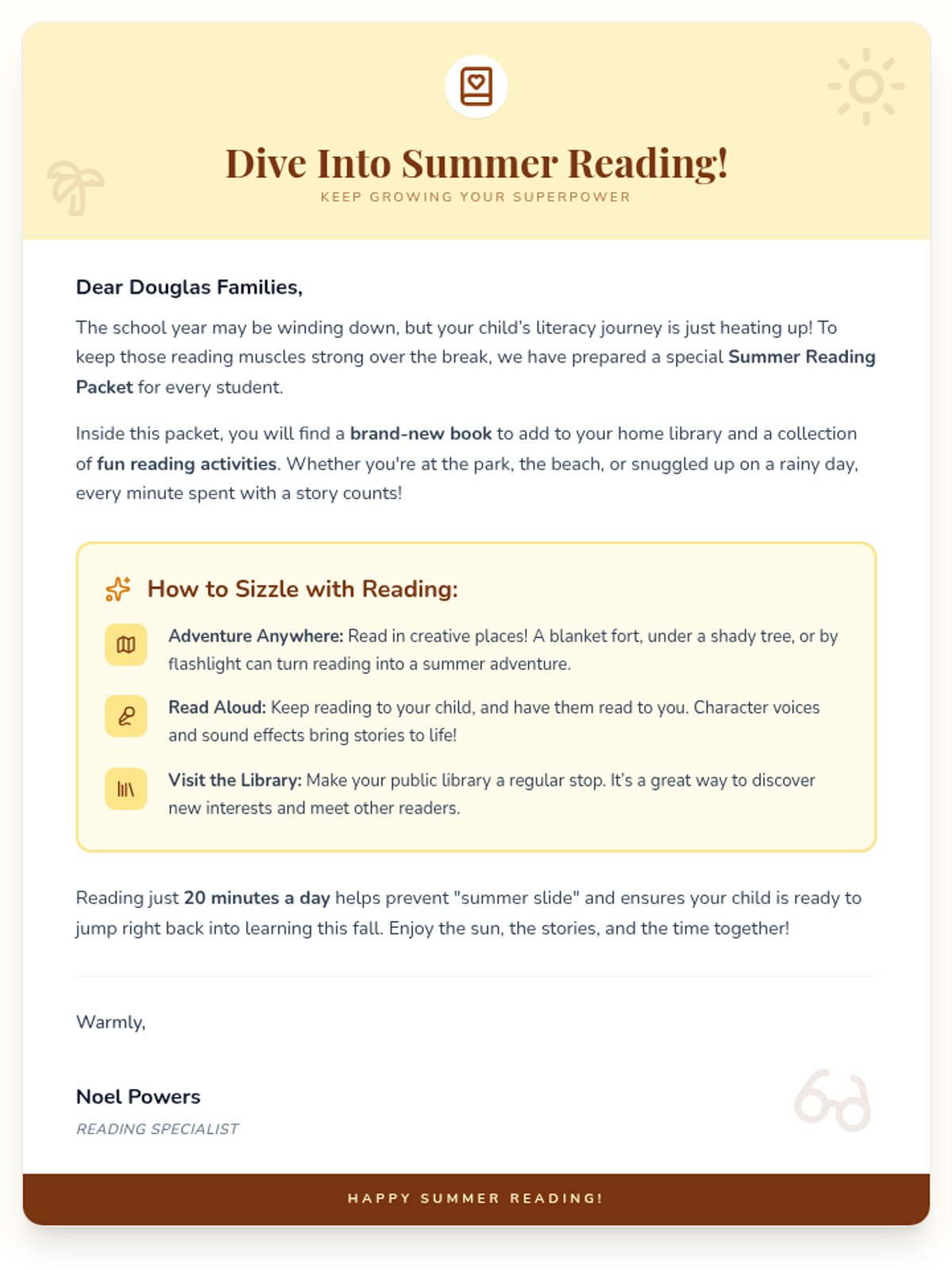
A collection of resources to encourage and track reading progress over the summer break for K-3 students, including a parent letter and activity suggestions.
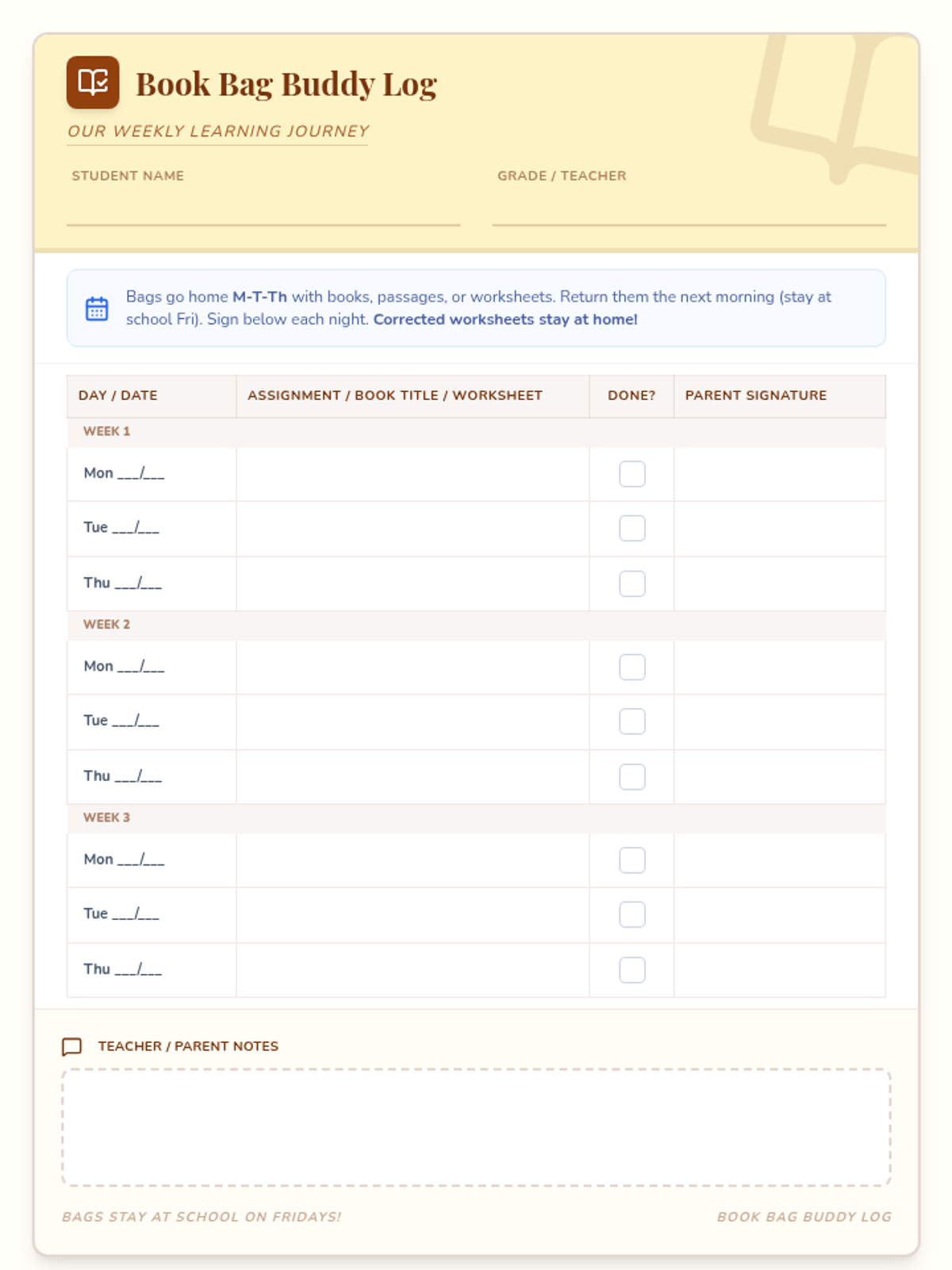
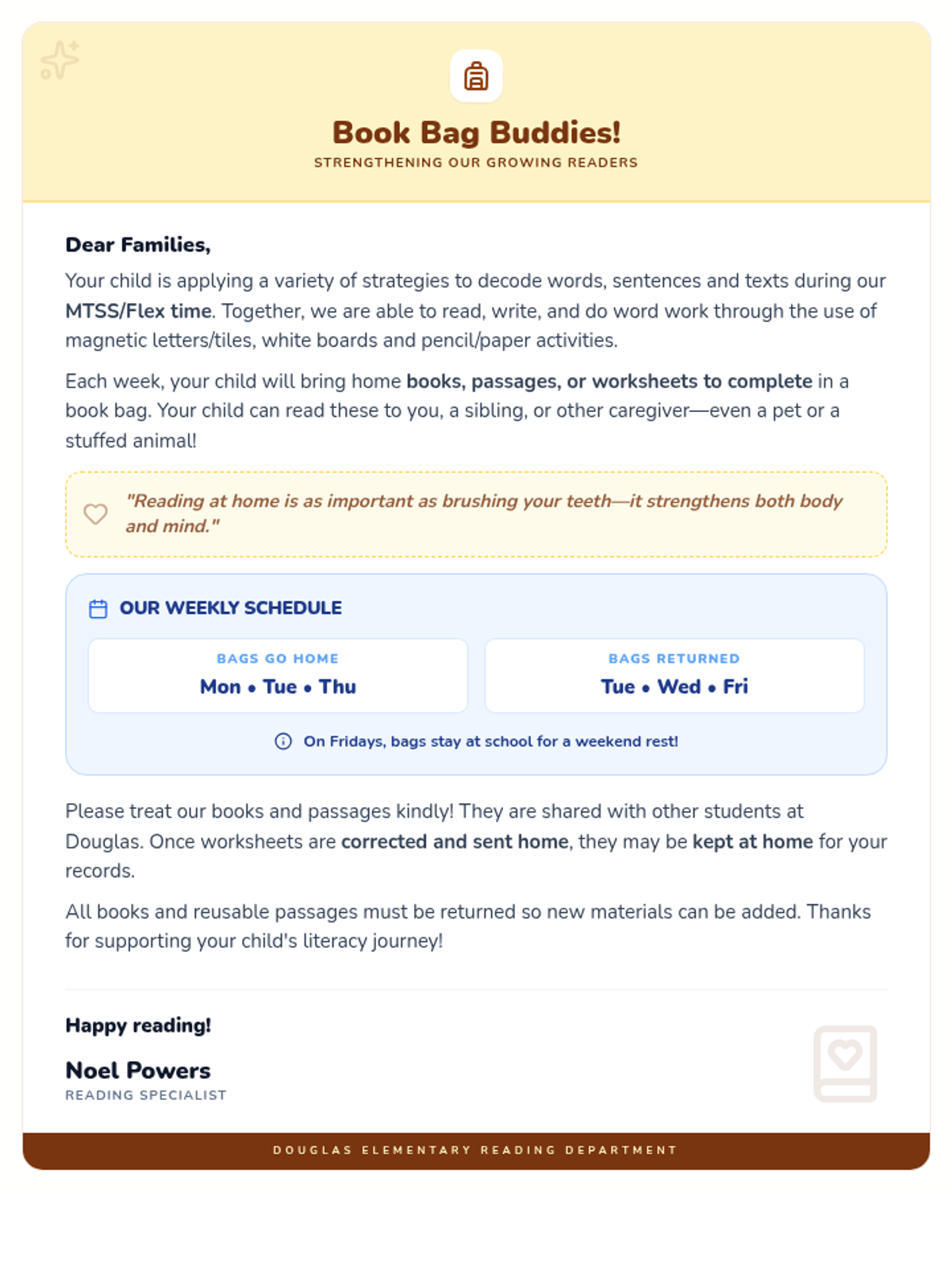
A home-school communication system for K-3 students featuring a homework bag log and an introductory letter for parents, detailing a Monday-Tuesday-Thursday homework schedule.
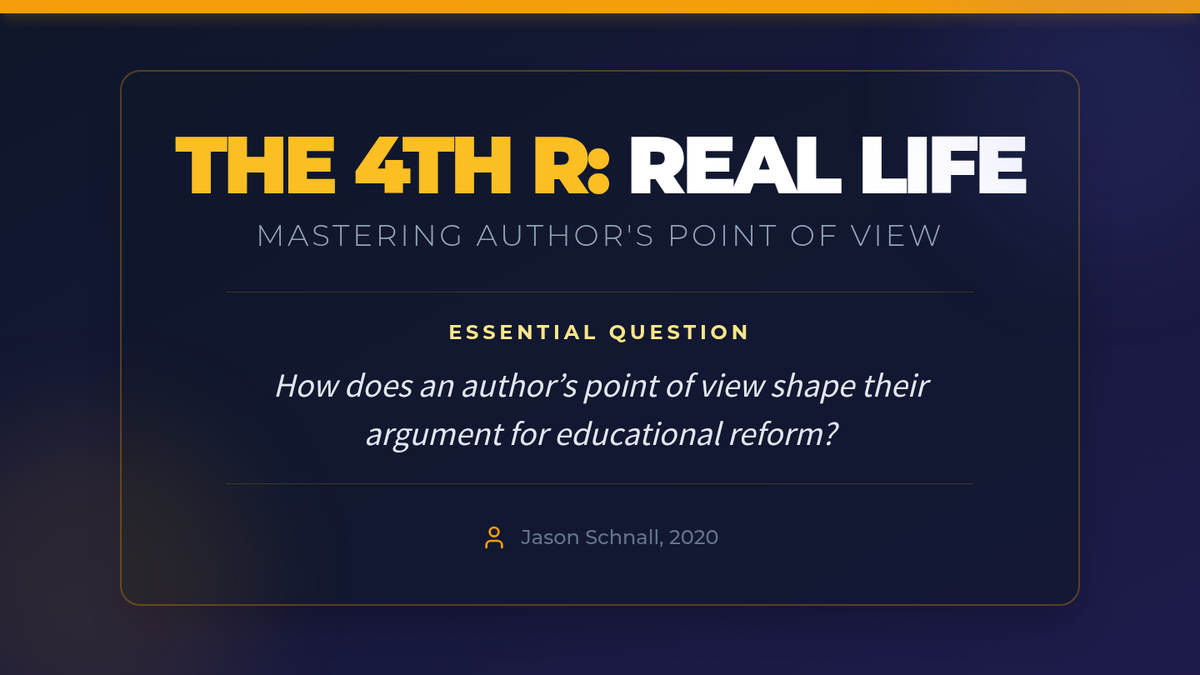
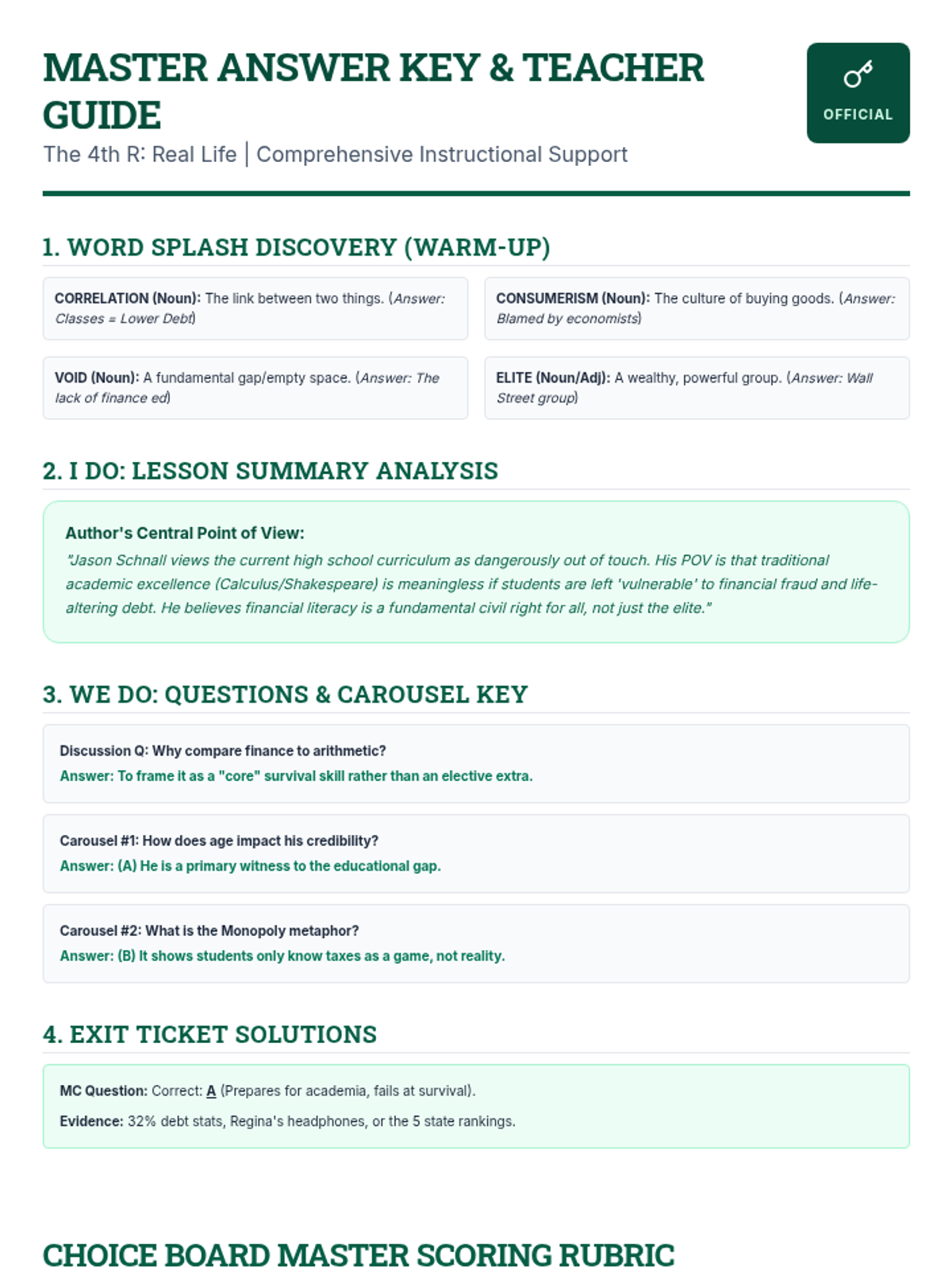
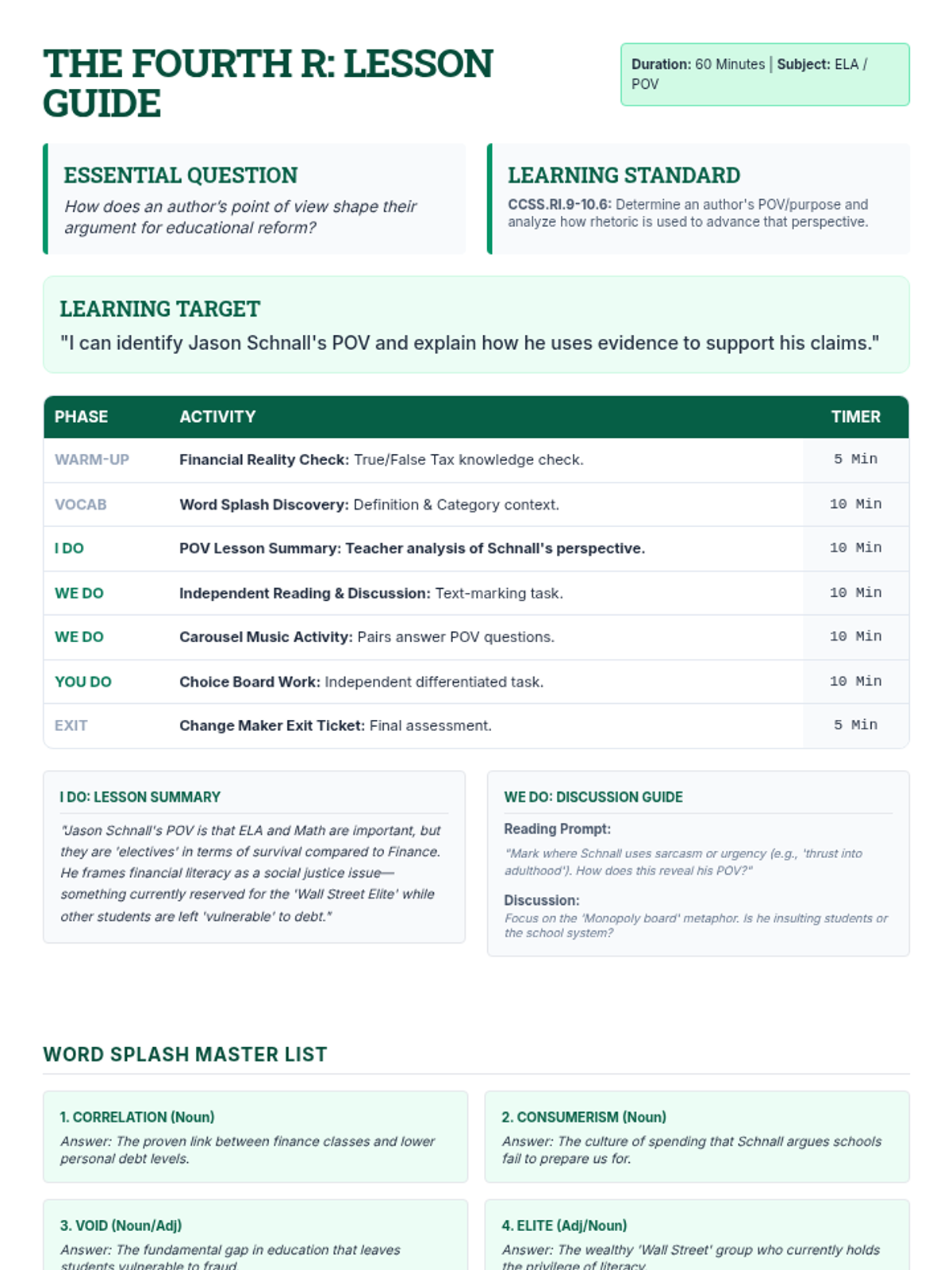
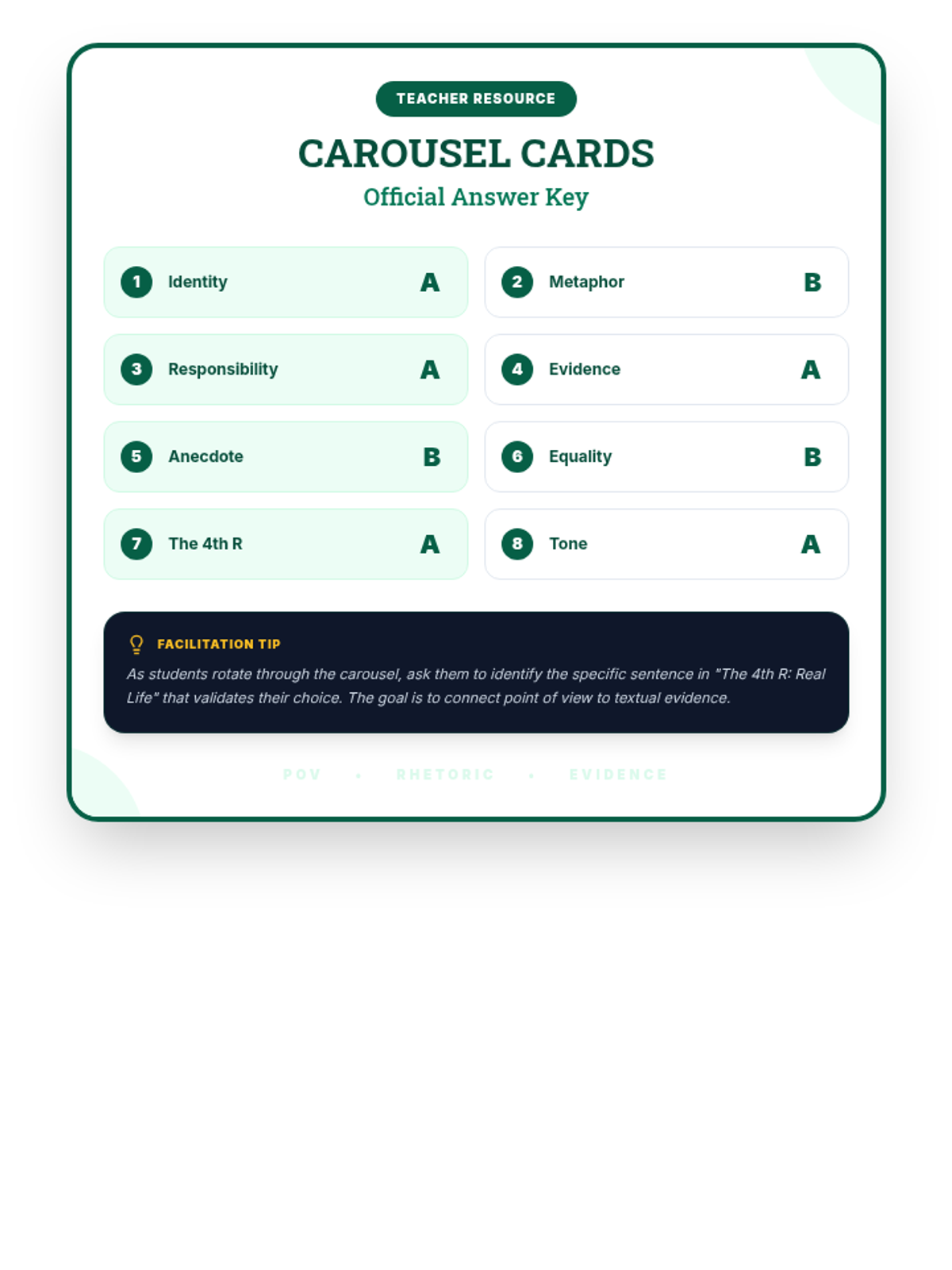
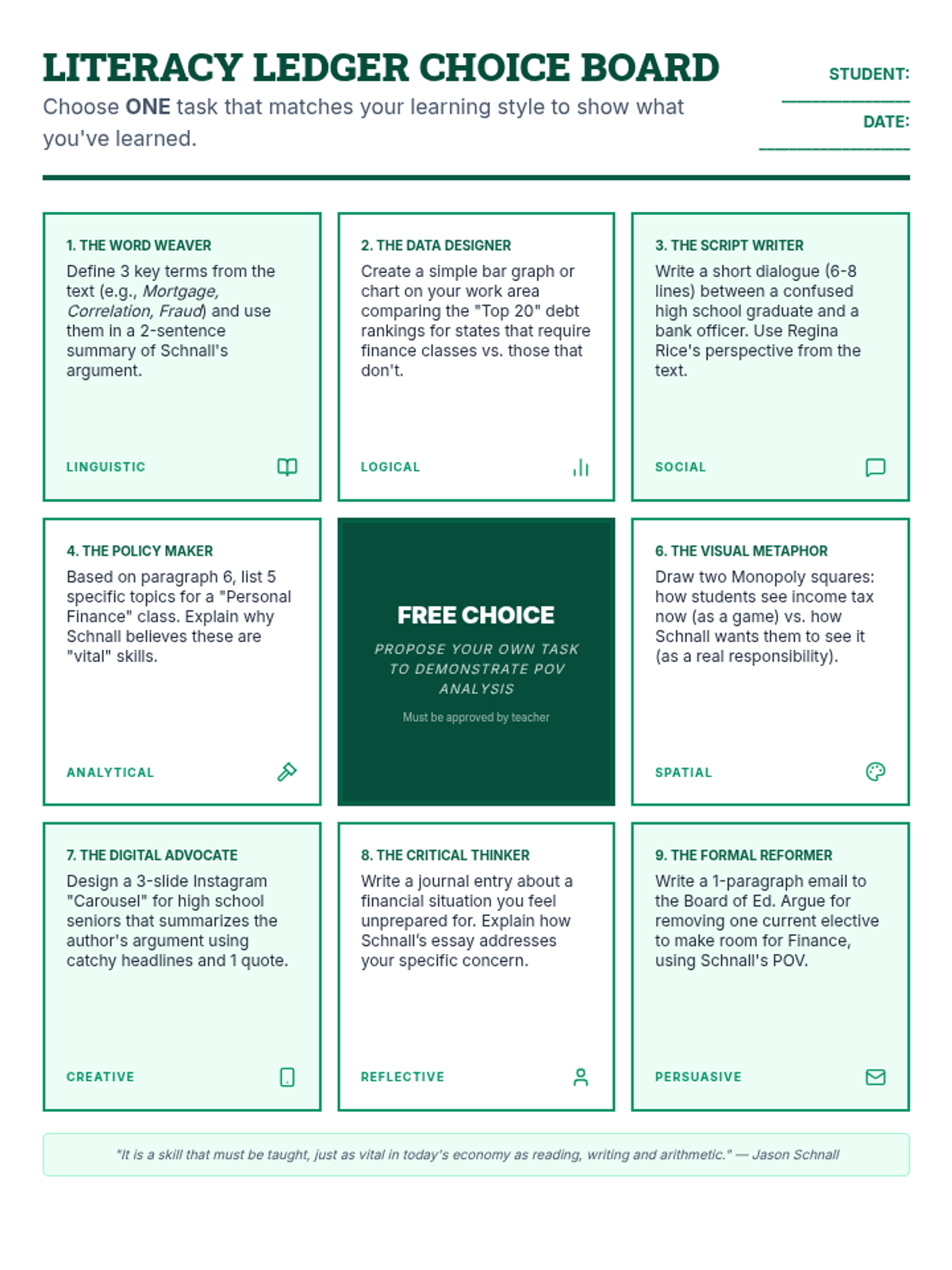
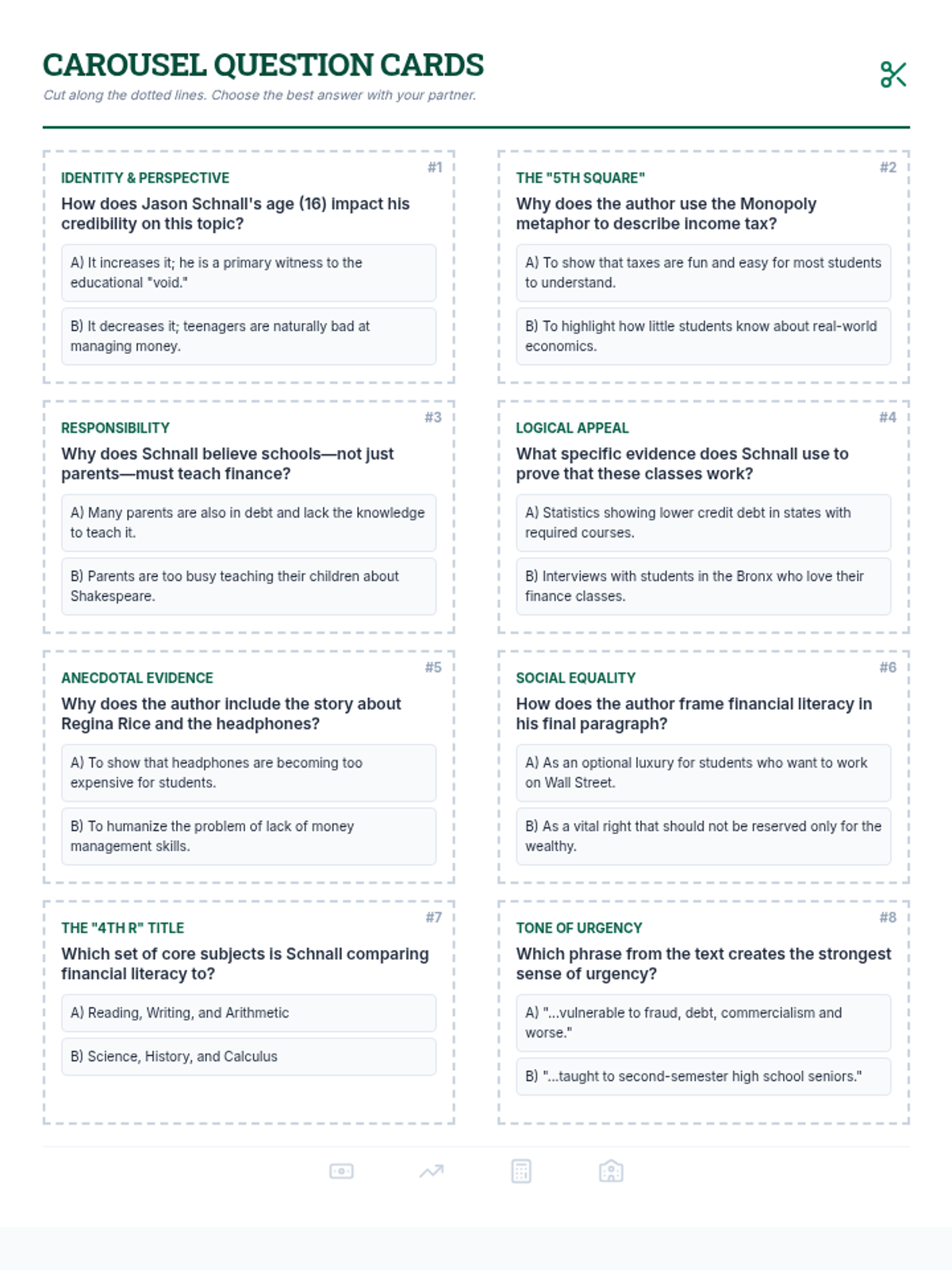
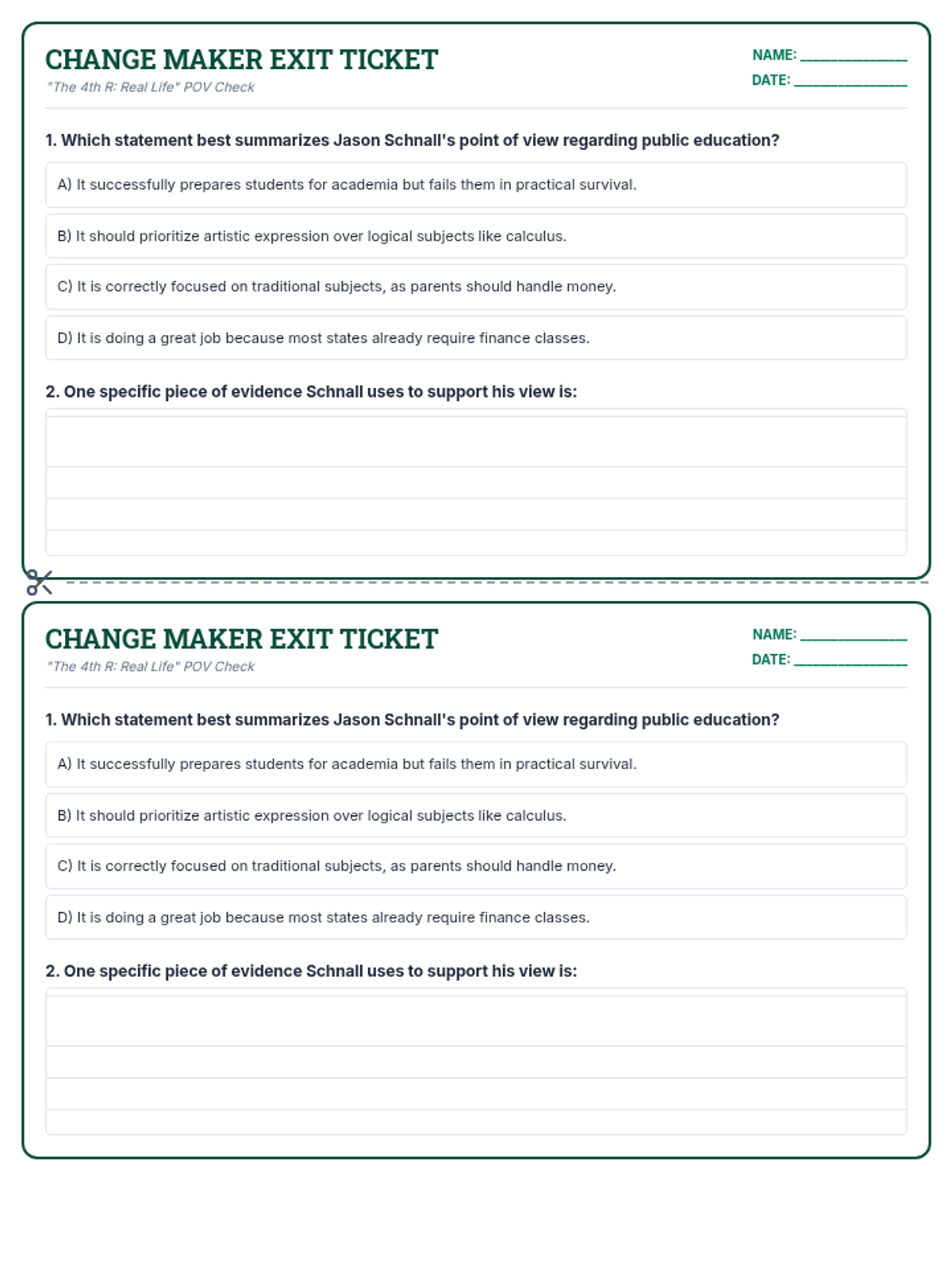
A 60-minute lesson on analyzing author's point of view using the text "The 4th R: Real Life," featuring a word splash, carousel activity, and choice board.
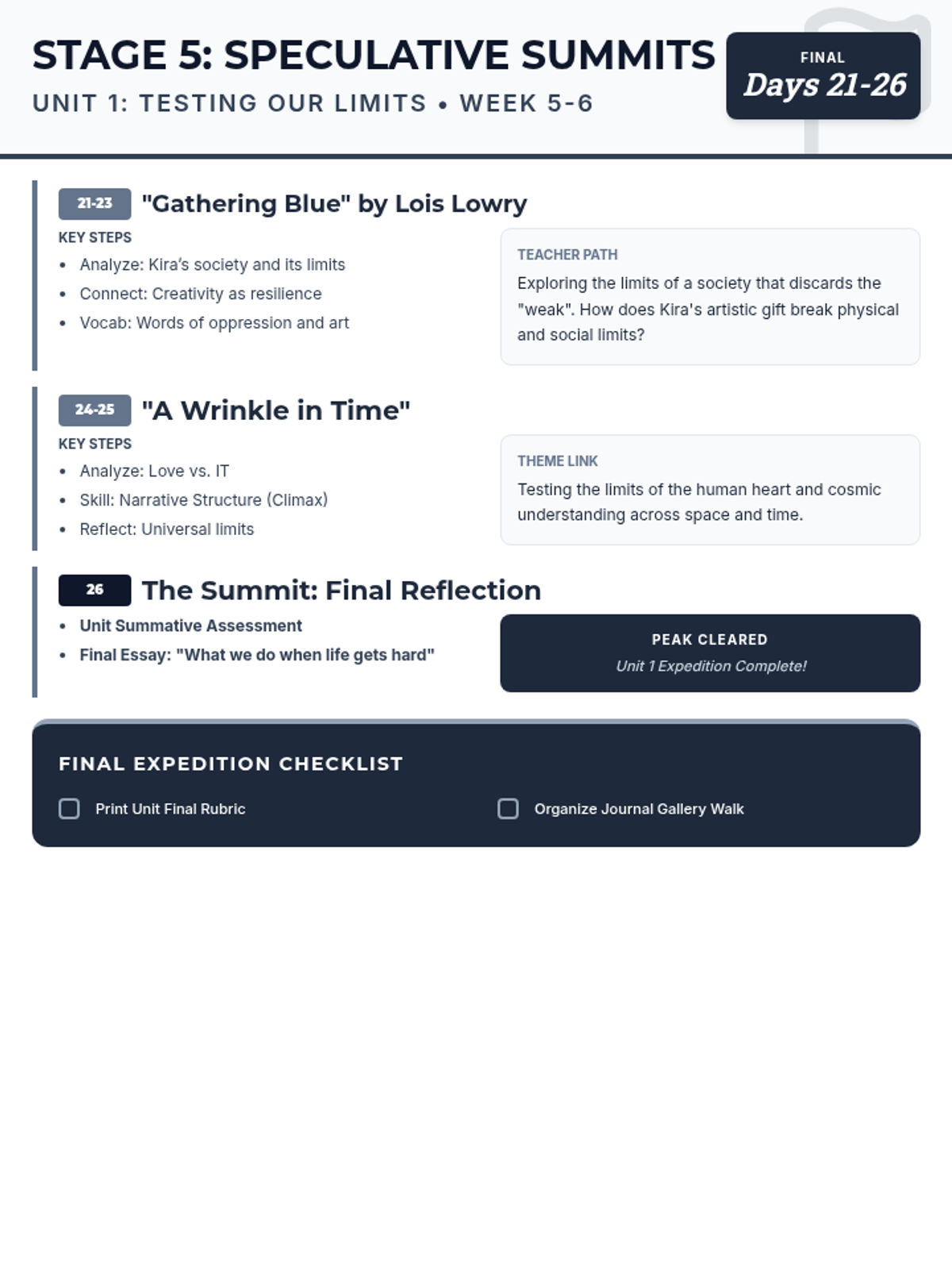
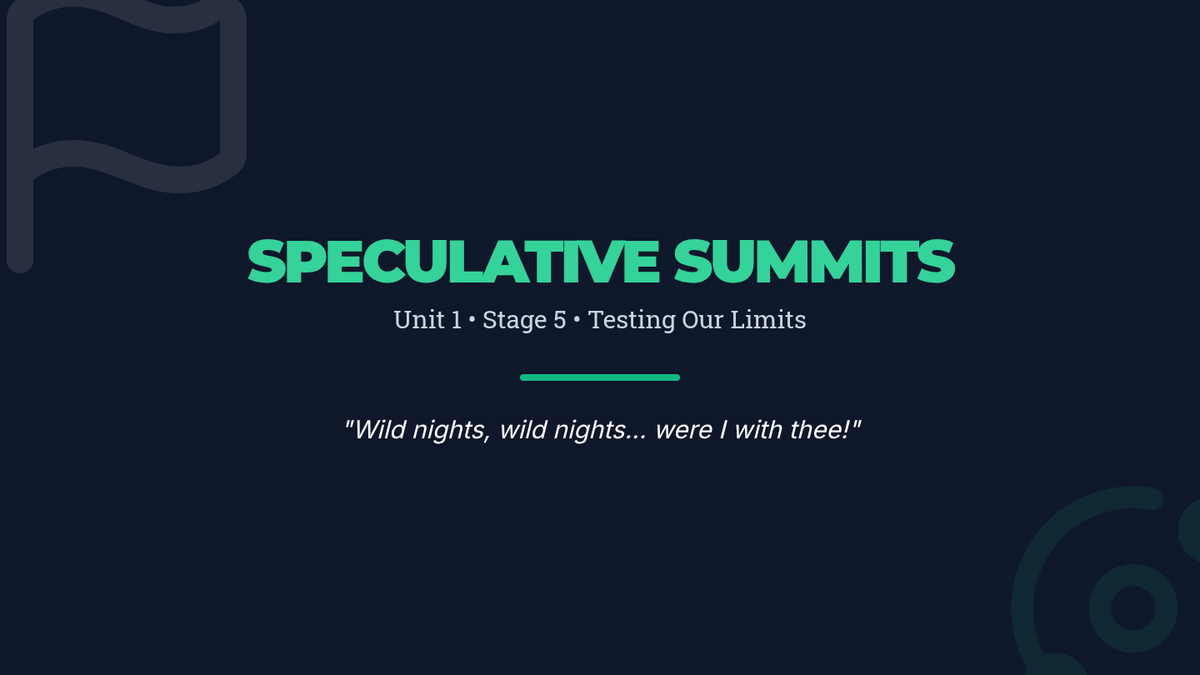
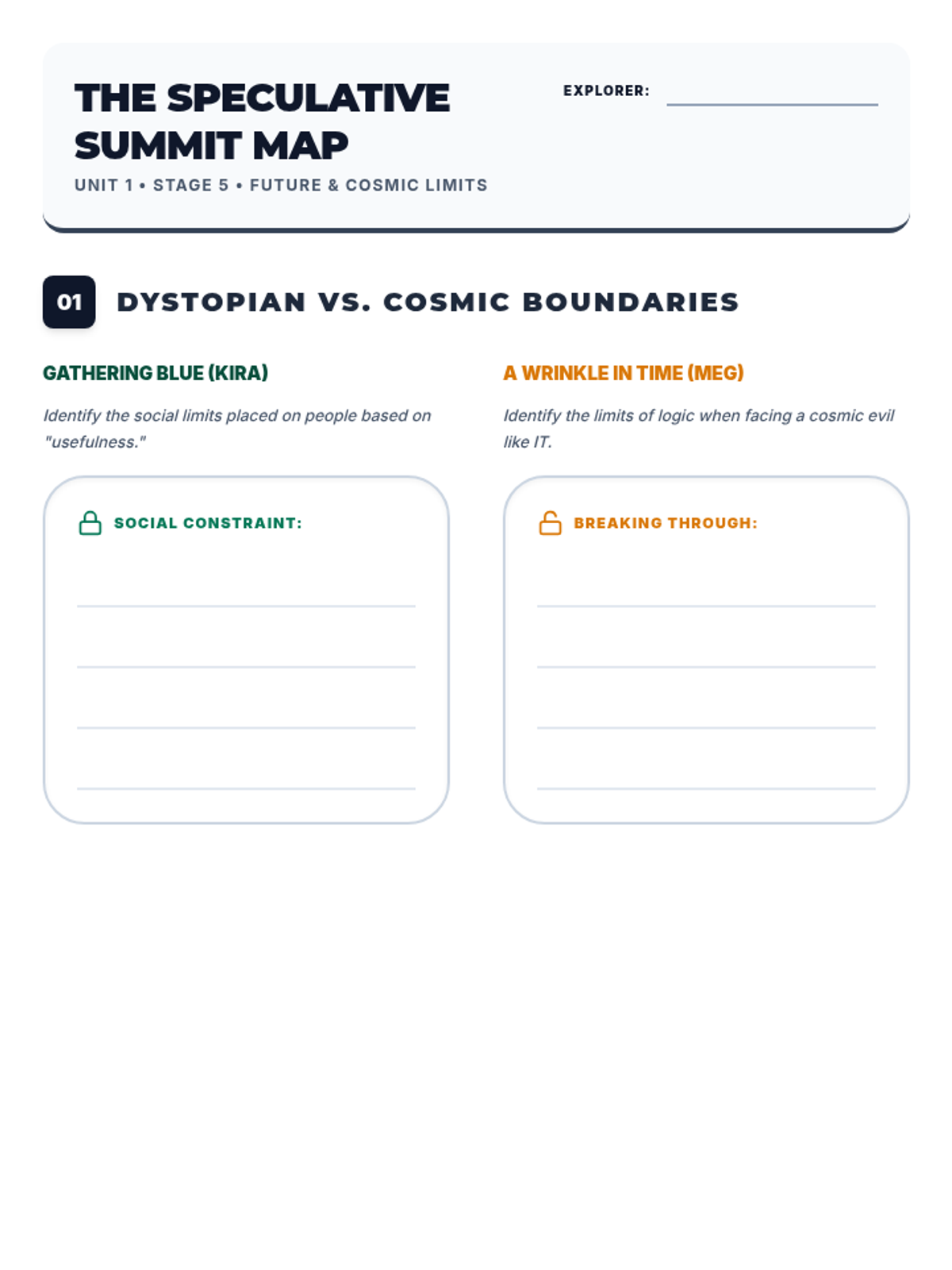
Deep dive into speculative worlds through 'Gathering Blue' and 'A Wrinkle in Time', followed by the unit assessment.
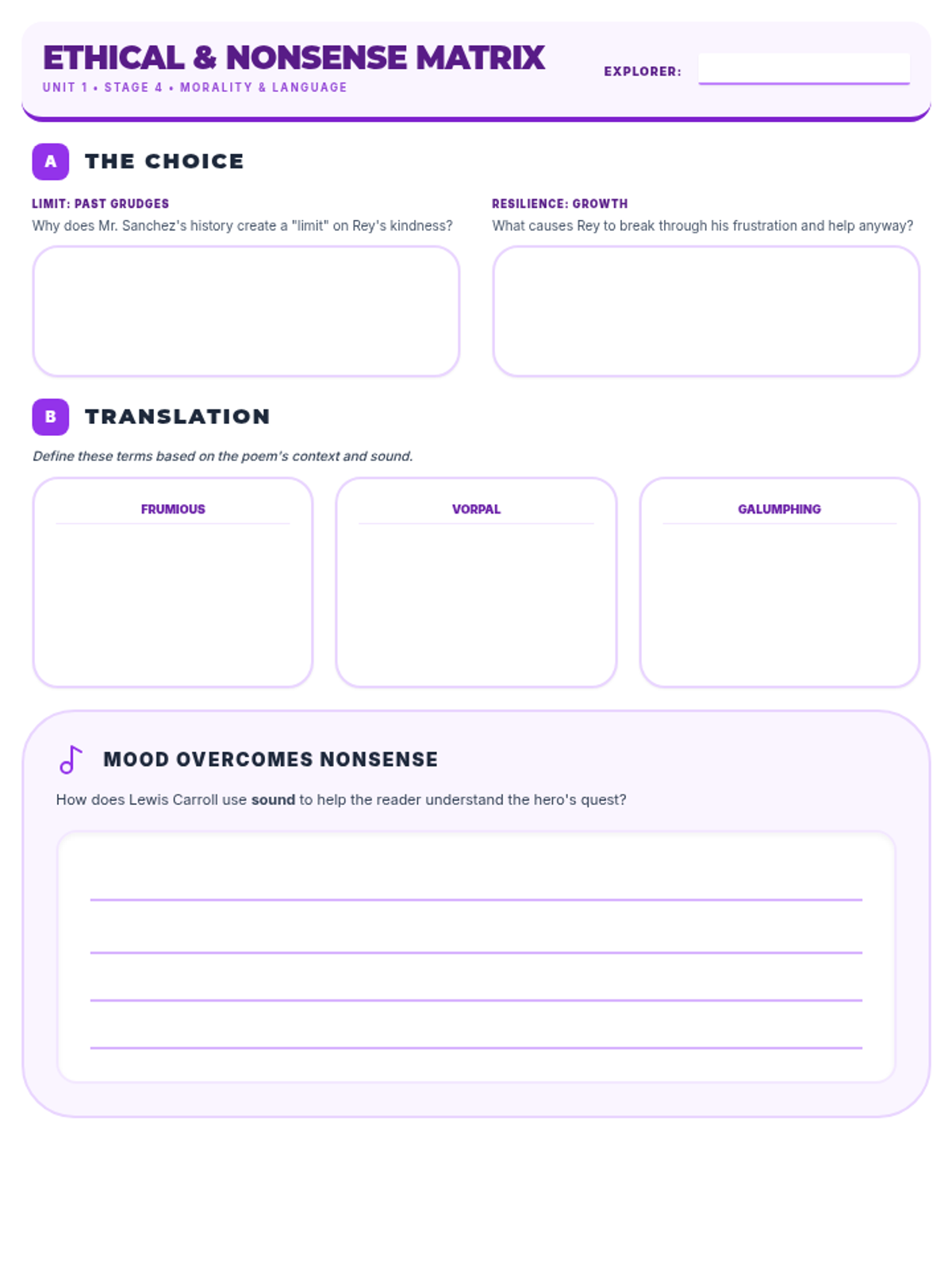
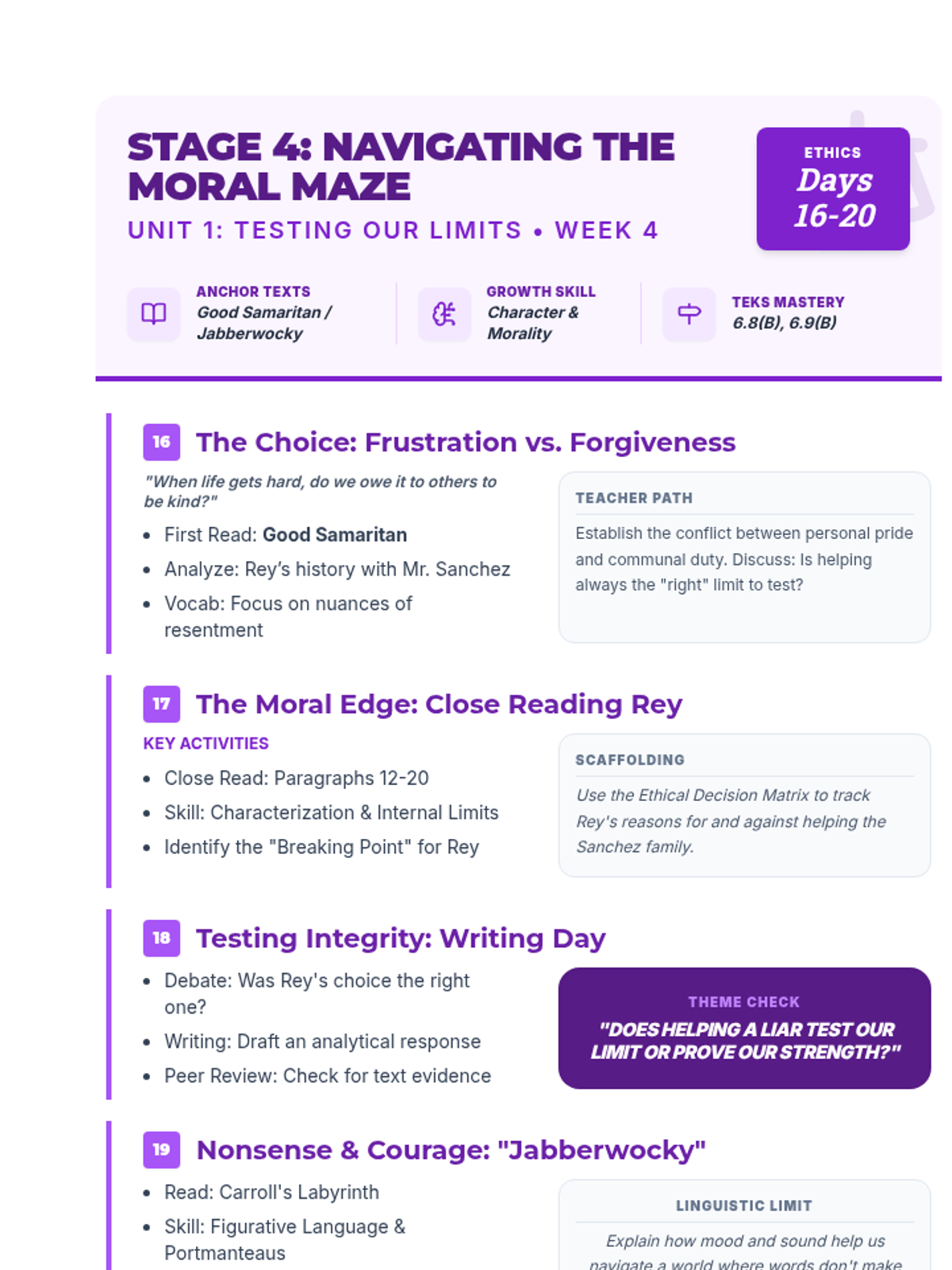
Investigating morality and language through 'Good Samaritan' and 'Jabberwocky'.
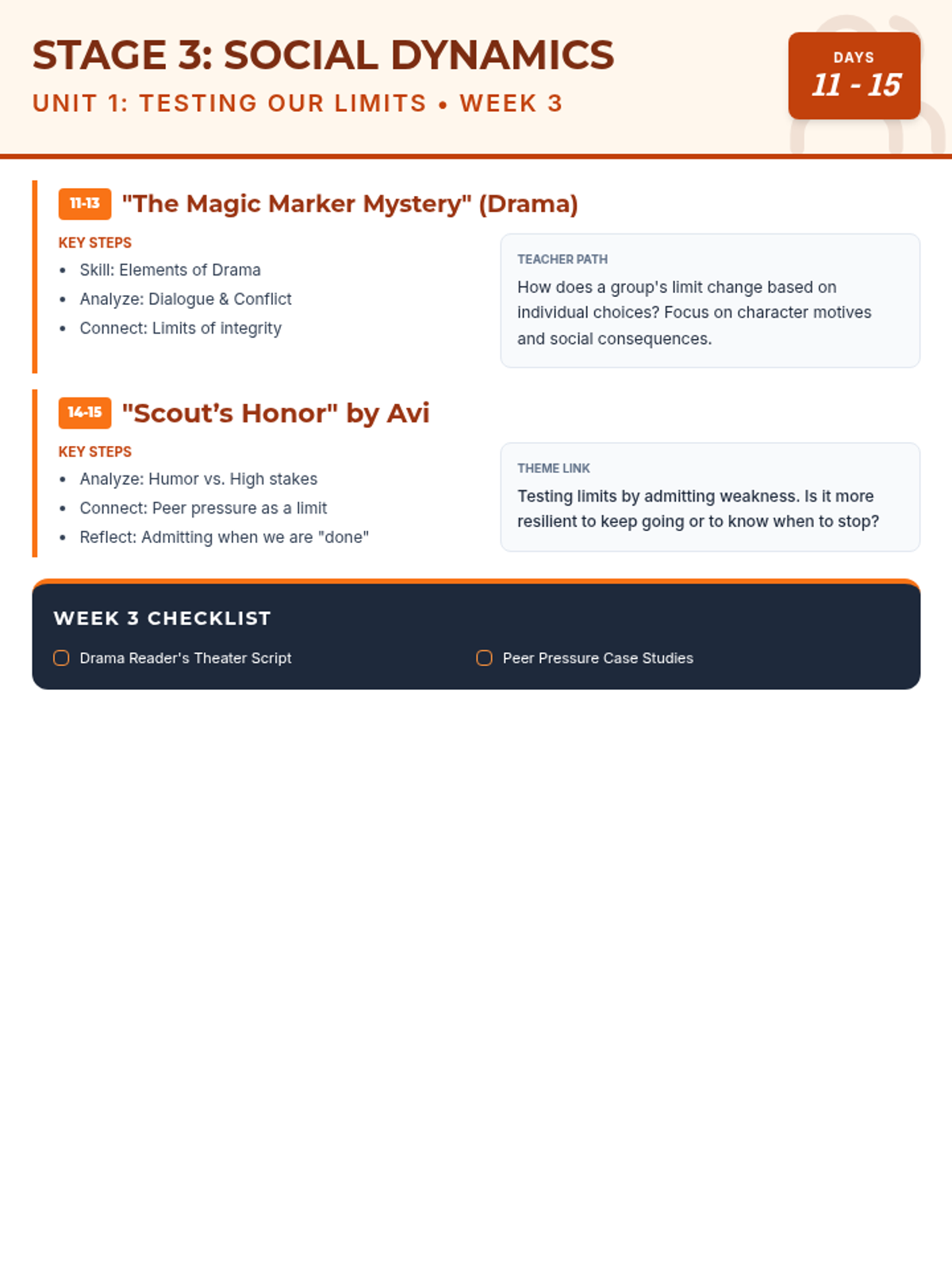
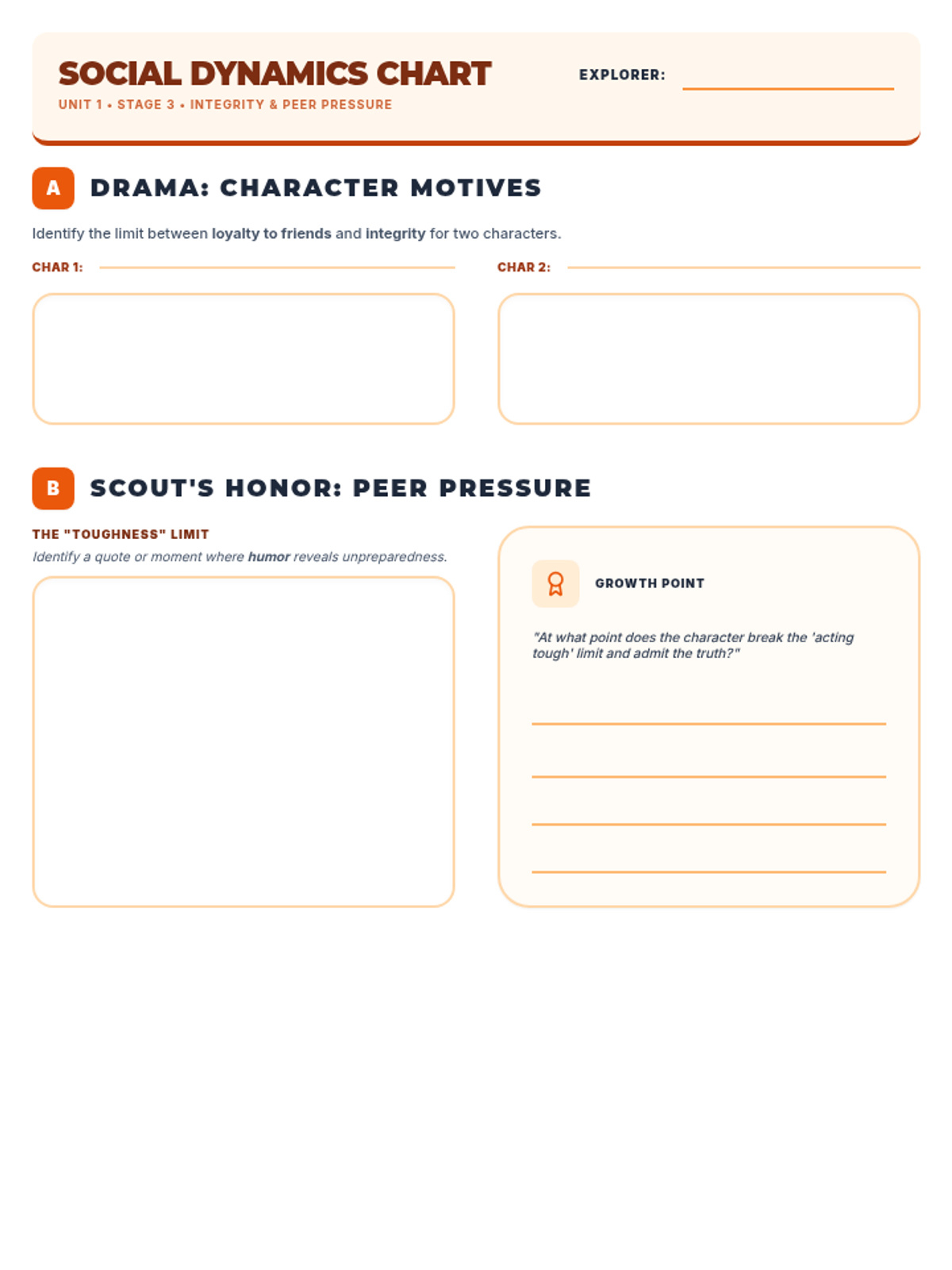
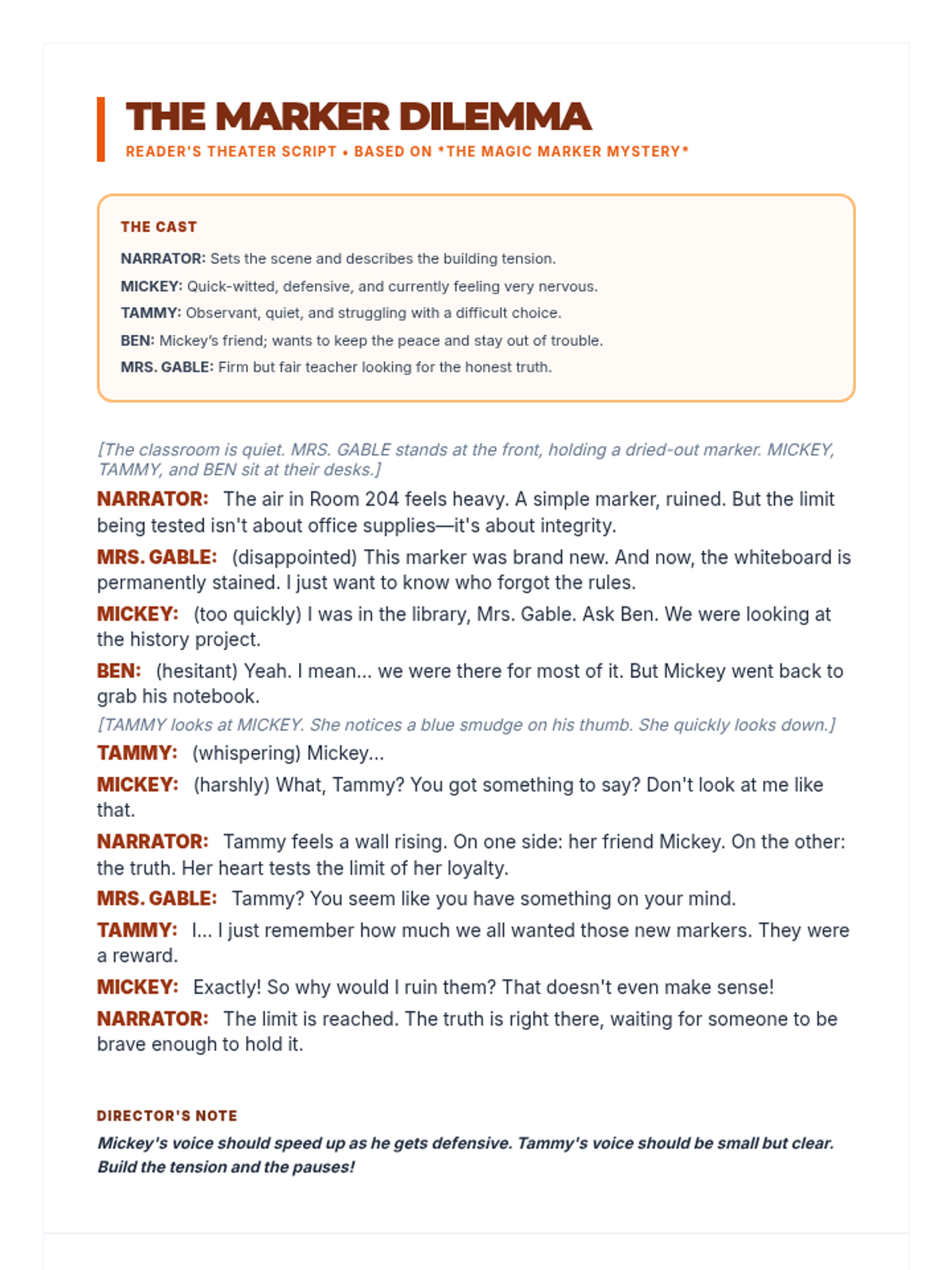
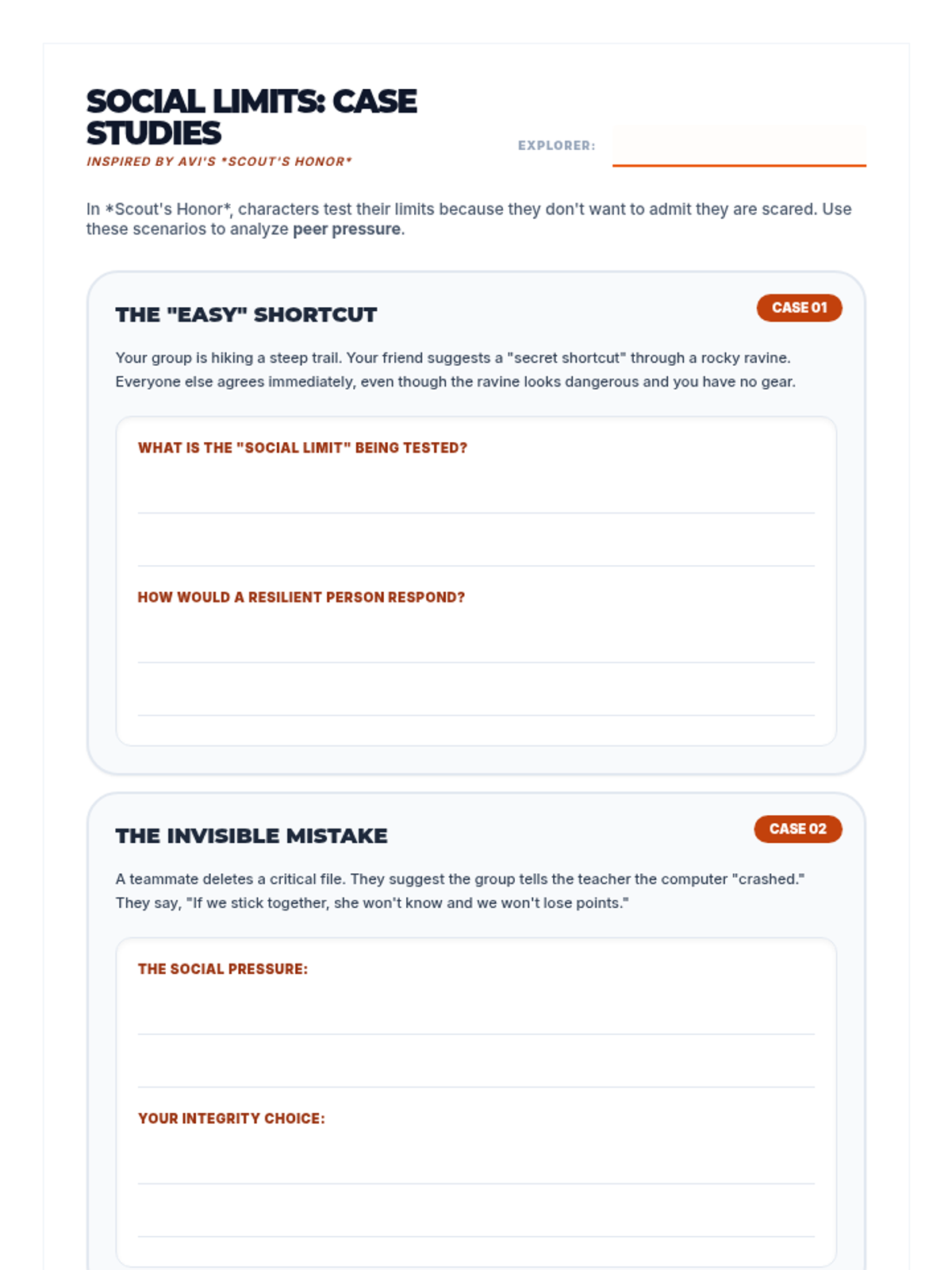
Analyzing integrity and peer pressure through 'The Magic Marker Mystery' and 'Scout’s Honor'.
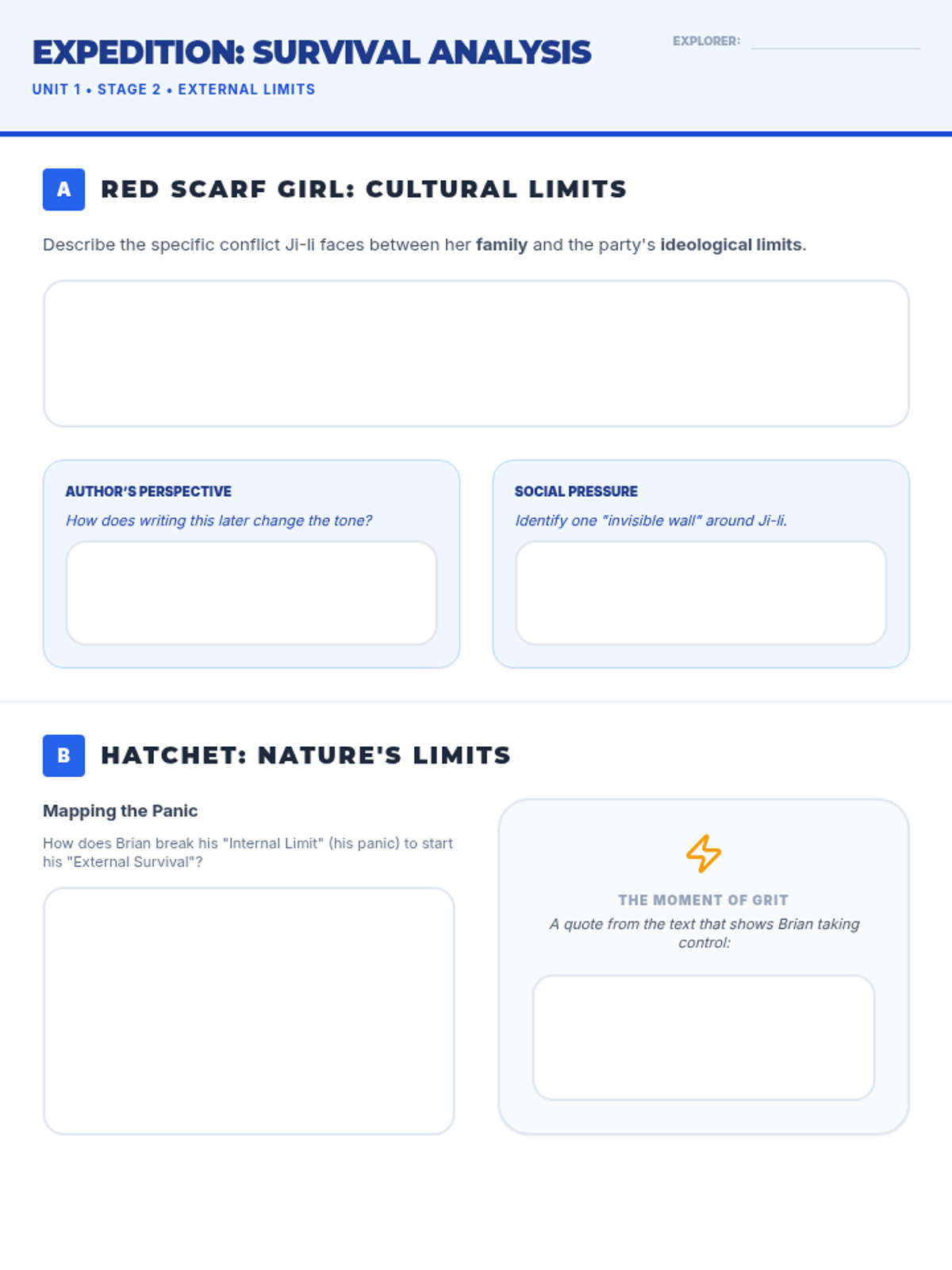
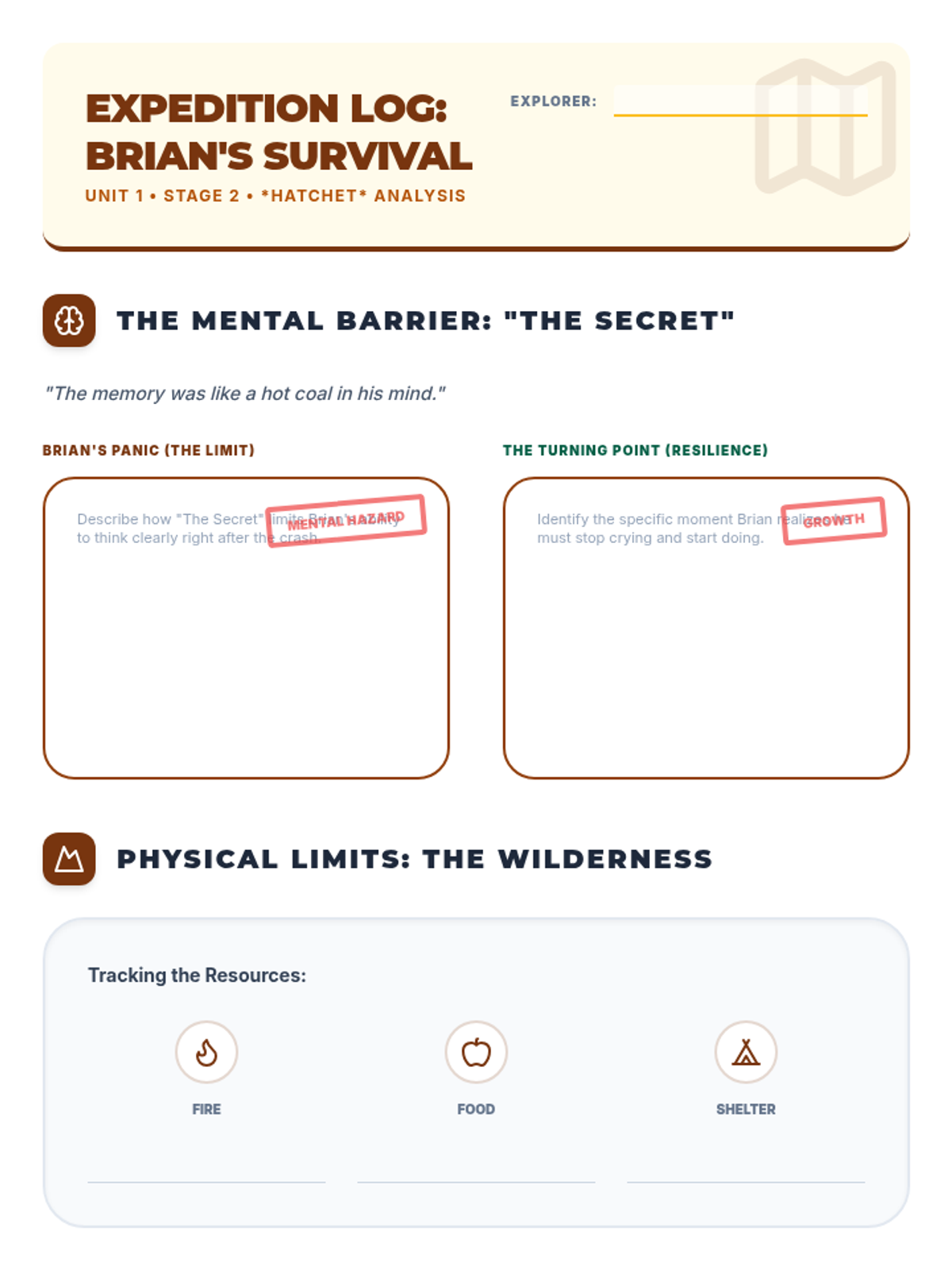
Exploring cultural pressure and physical survival through 'Red Scarf Girl' and 'Hatchet'.
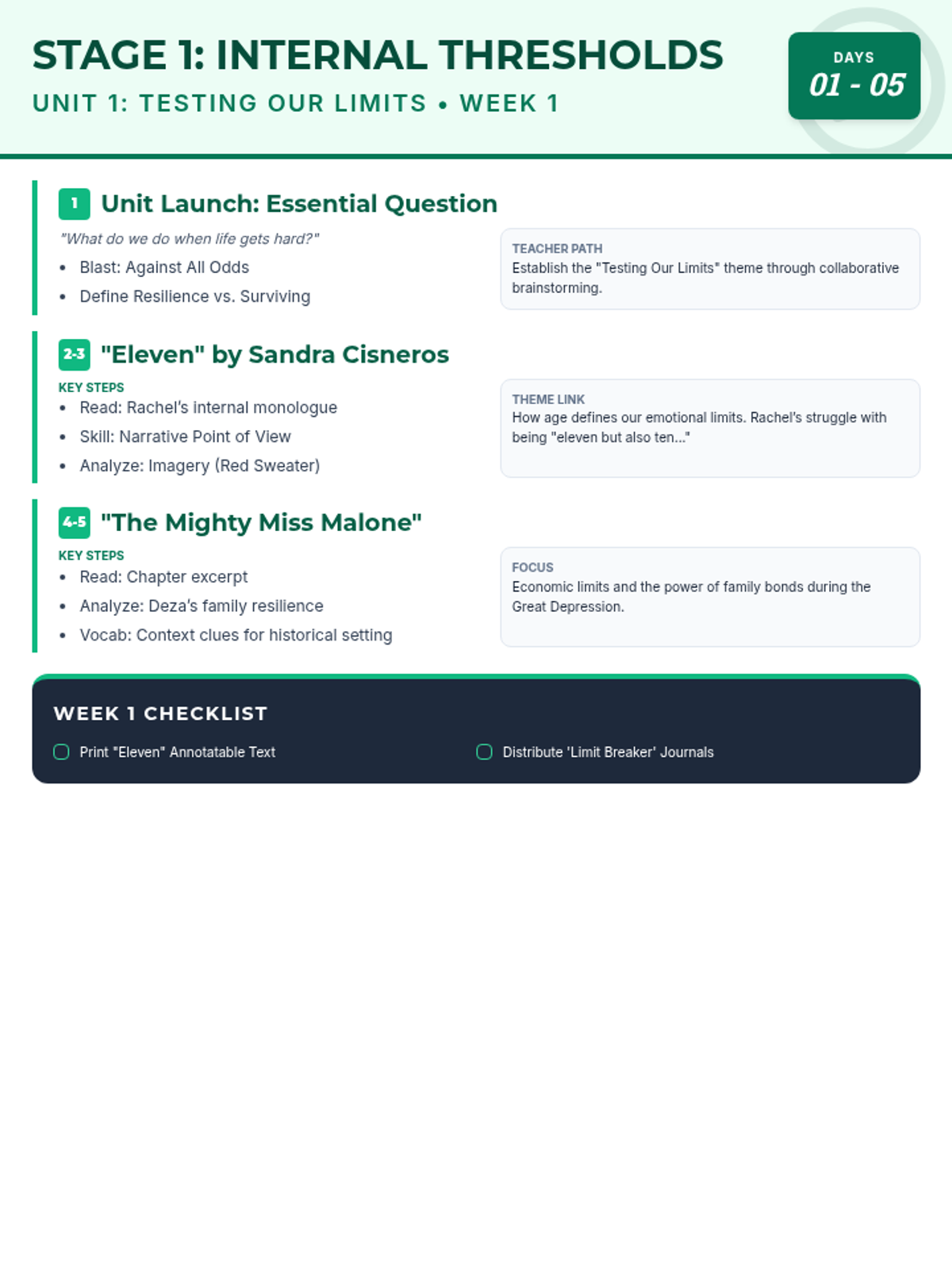
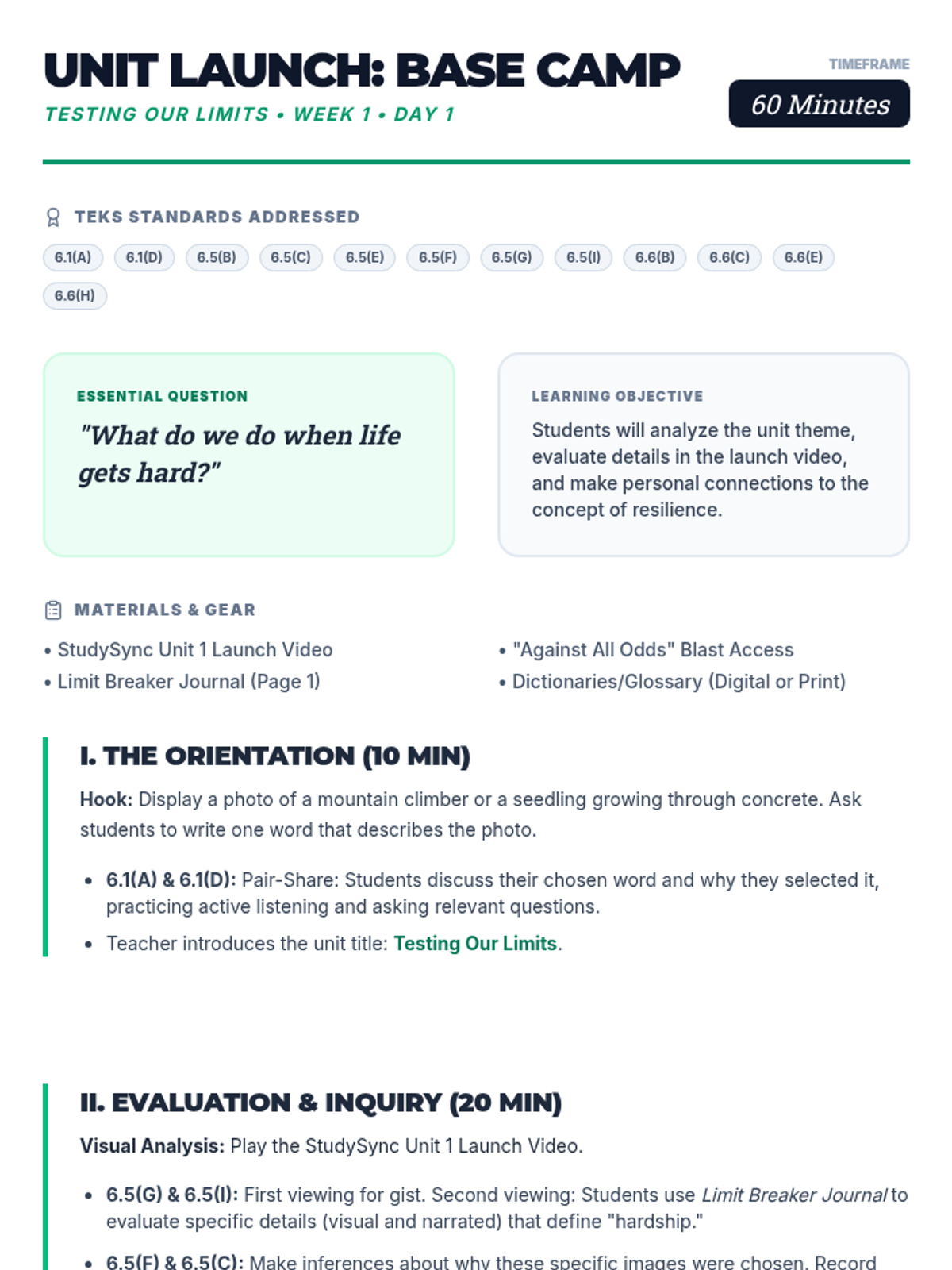
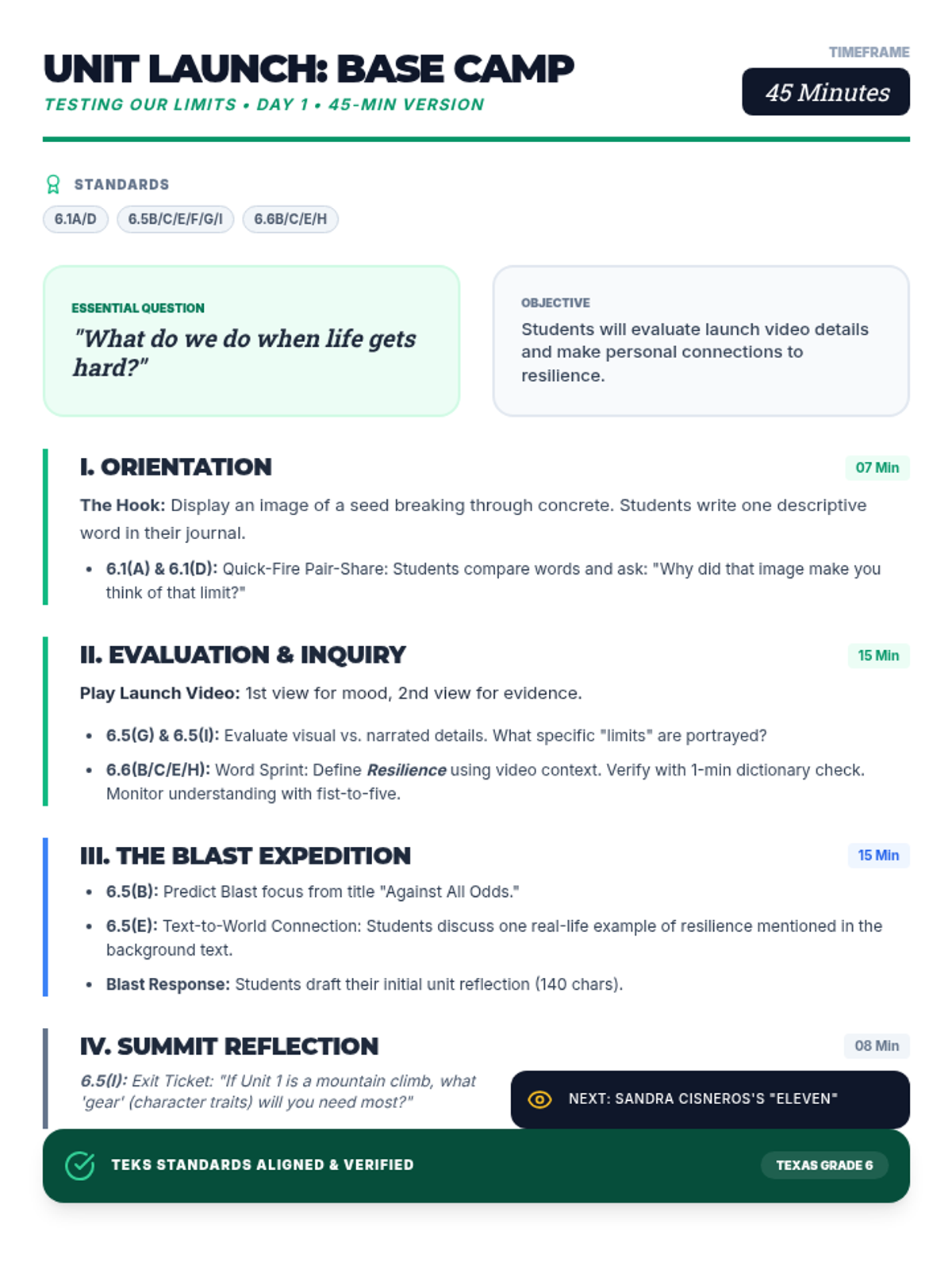
Introductory week focusing on emotional and familial limits through 'Eleven' and 'The Mighty Miss Malone'.
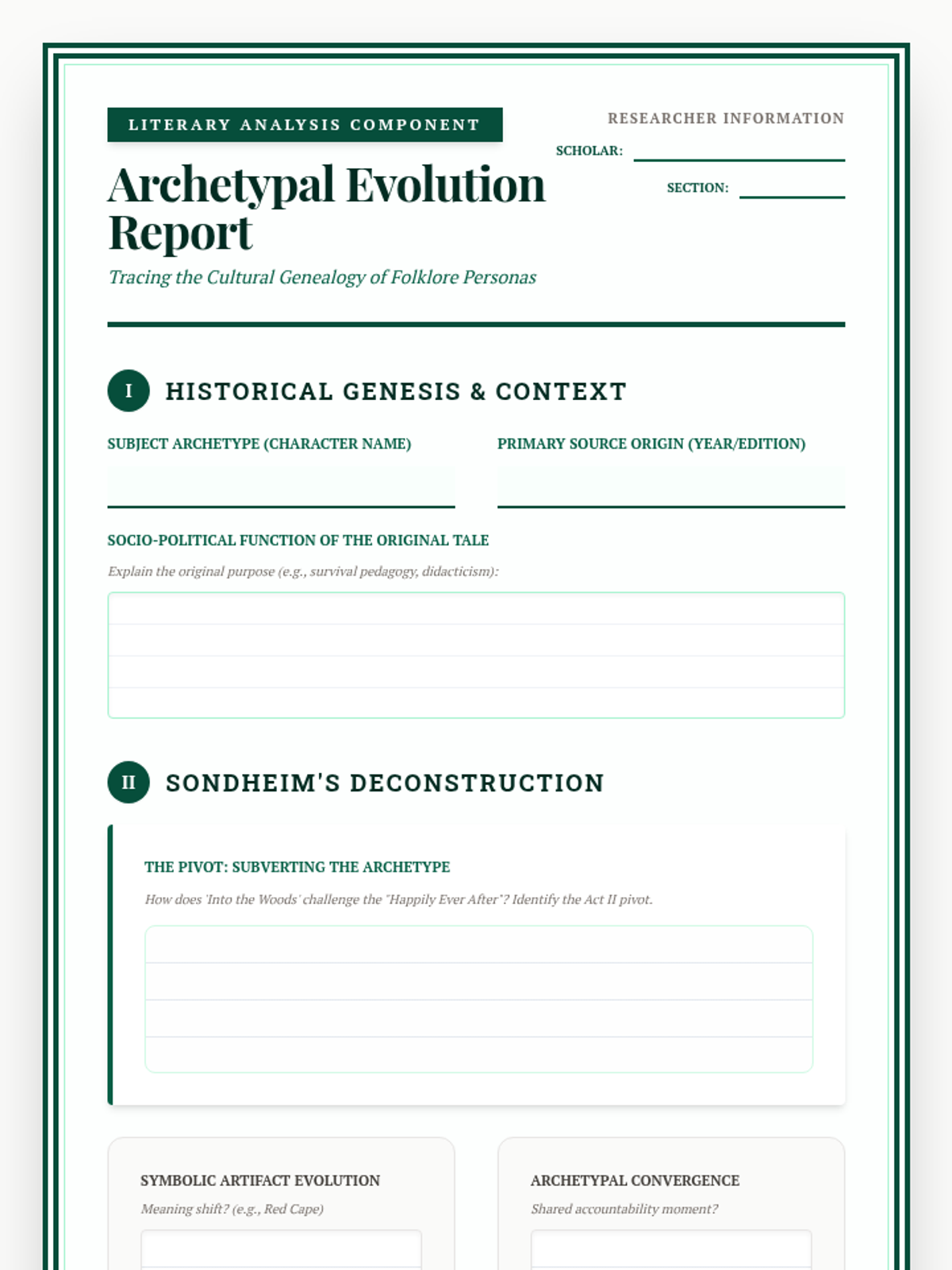
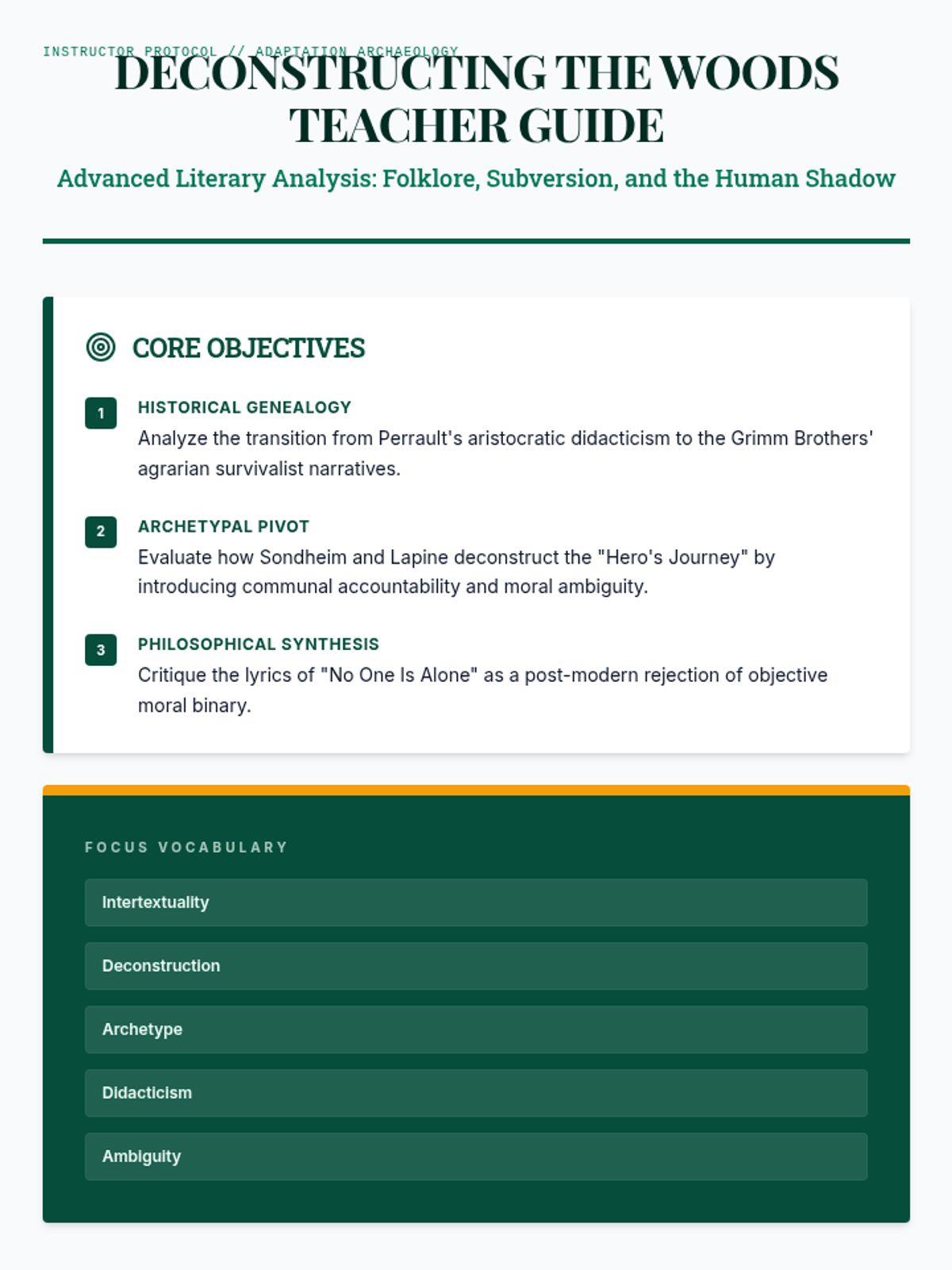
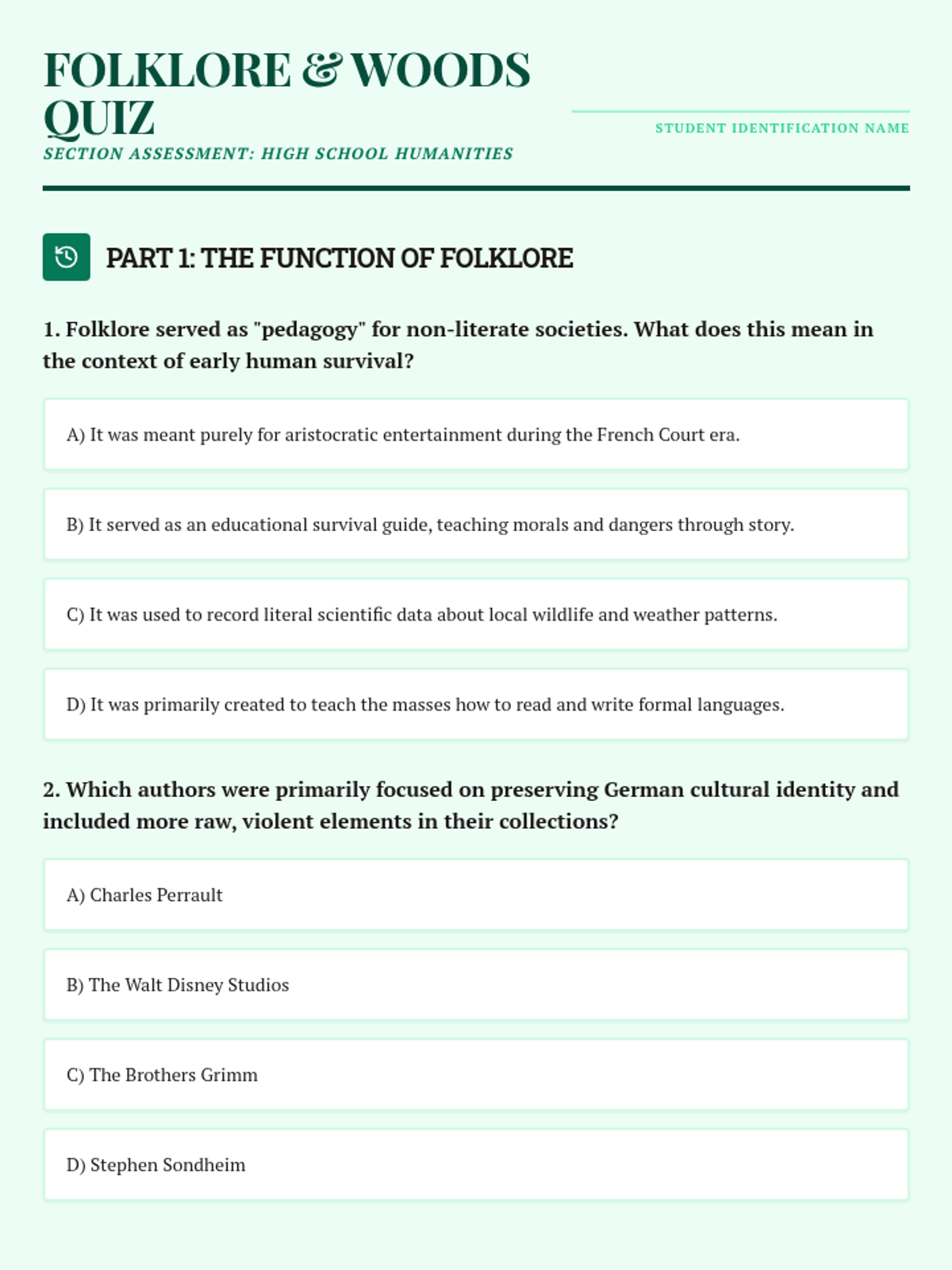
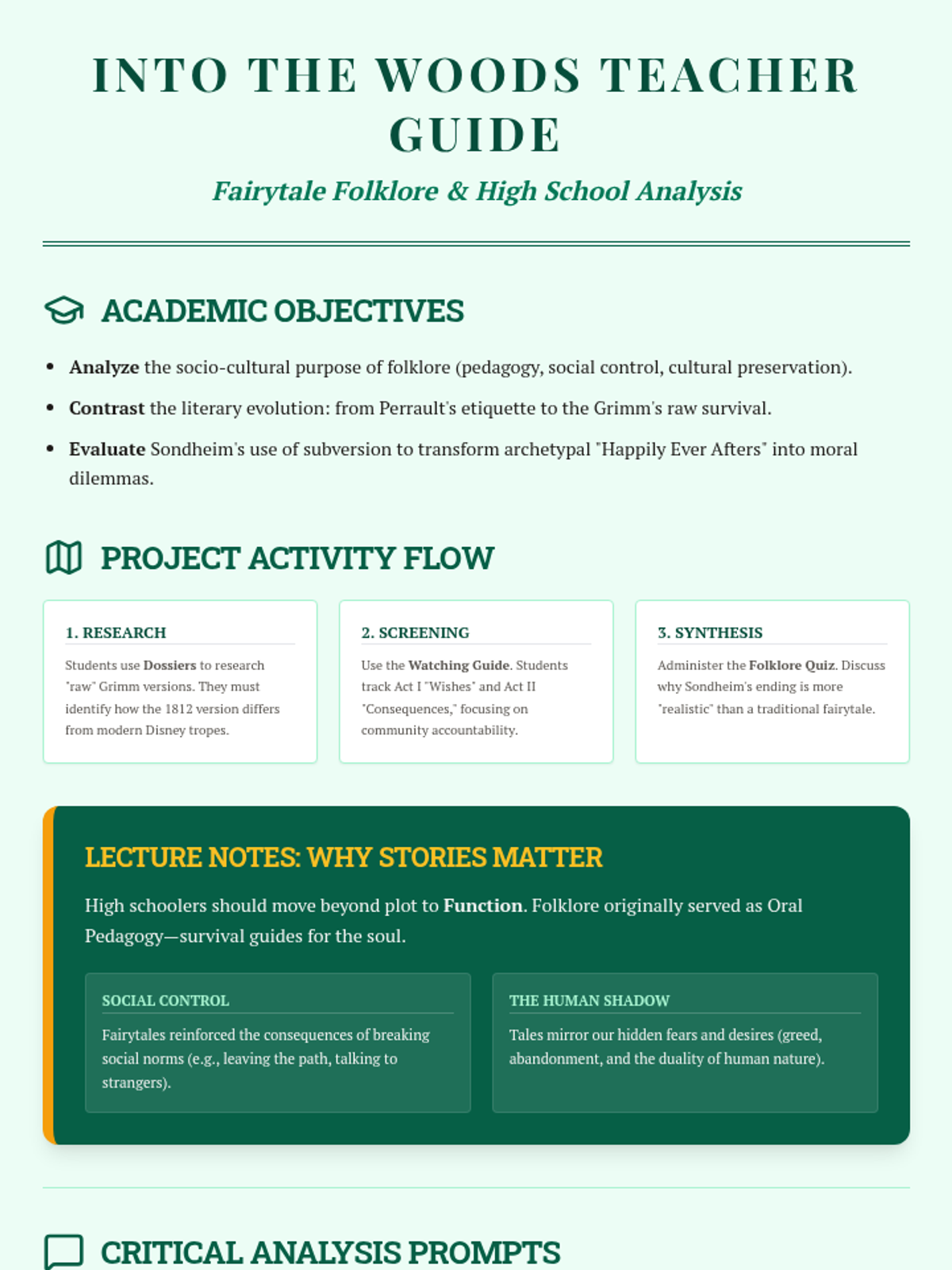
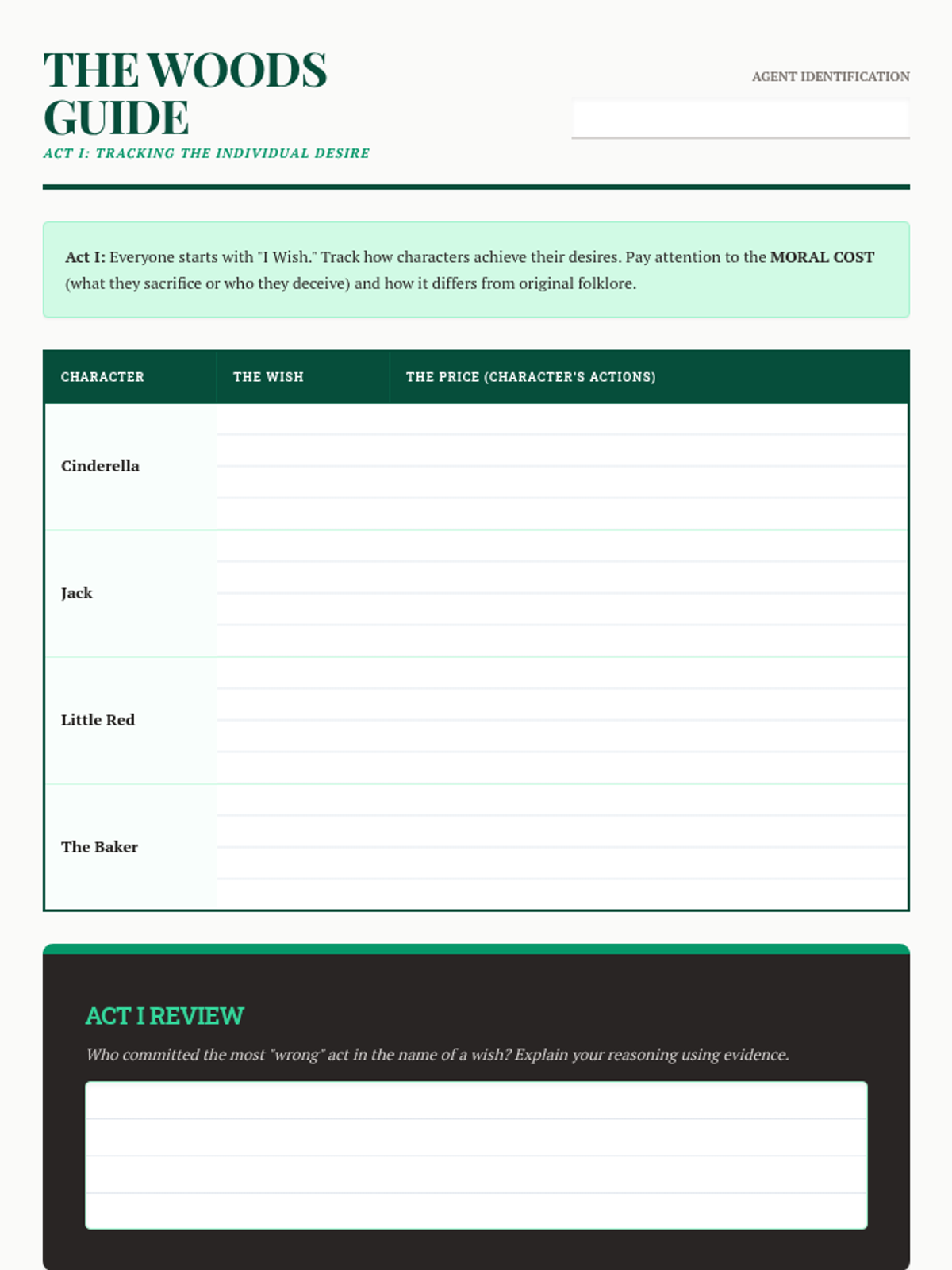
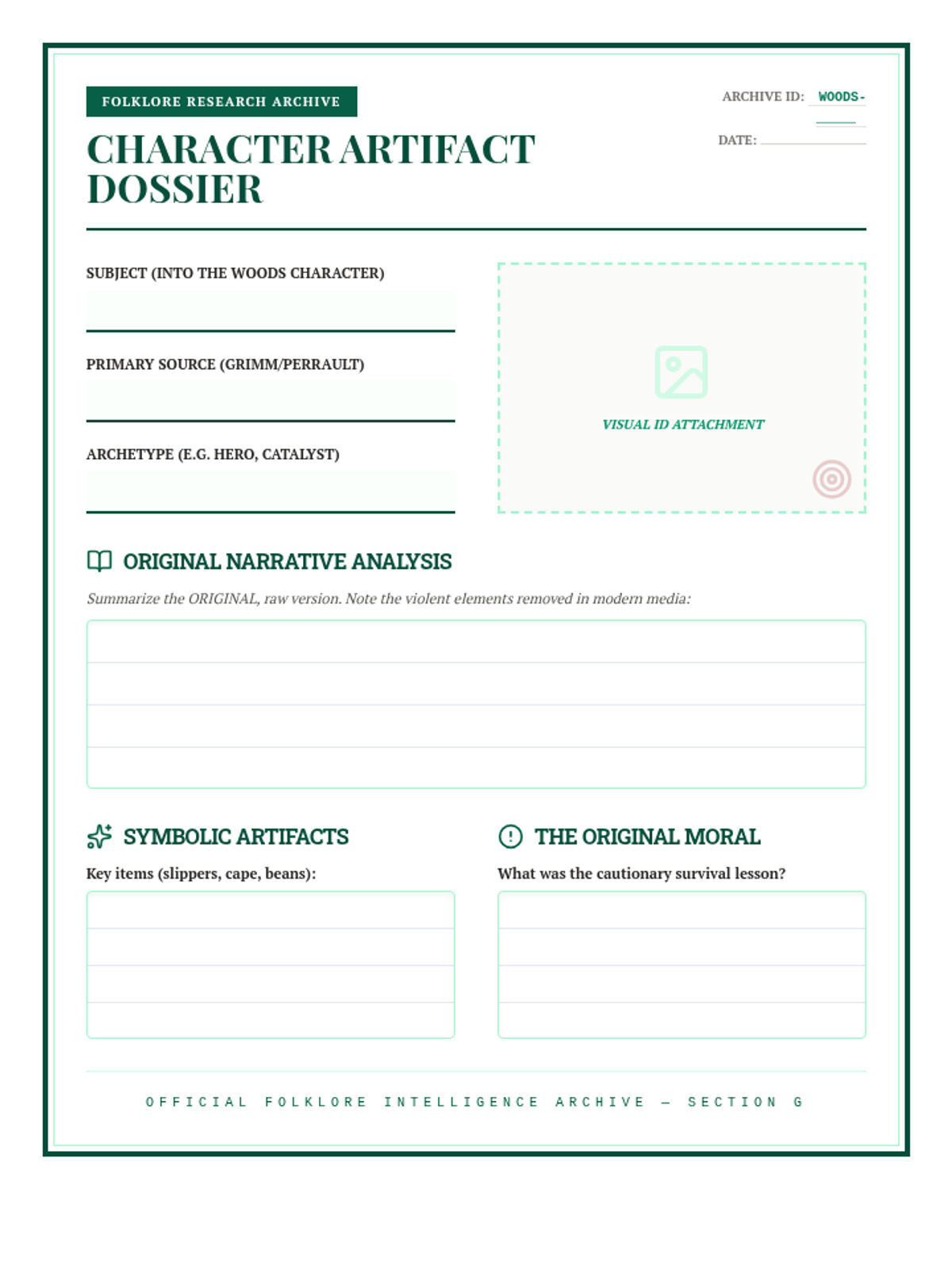
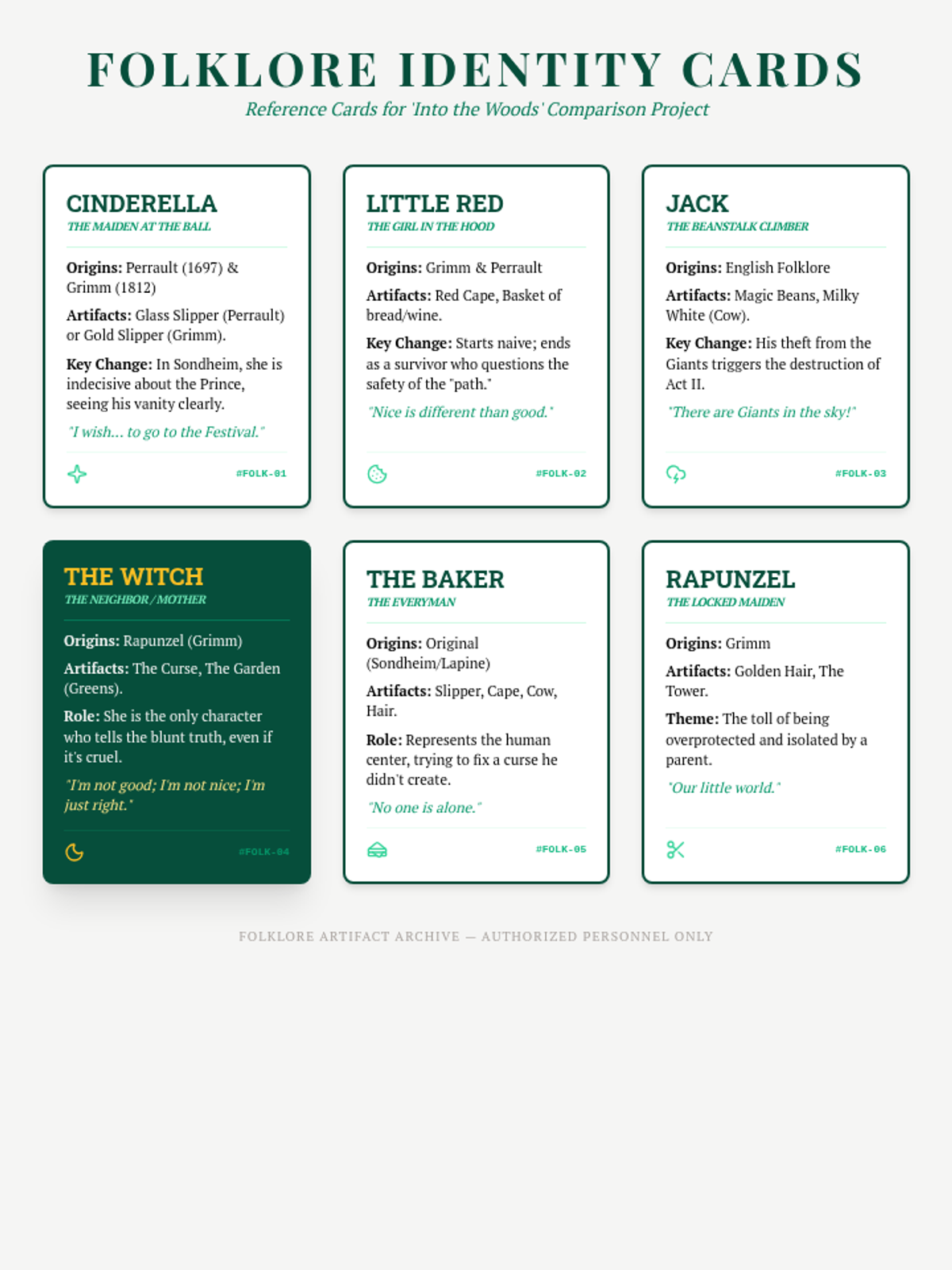
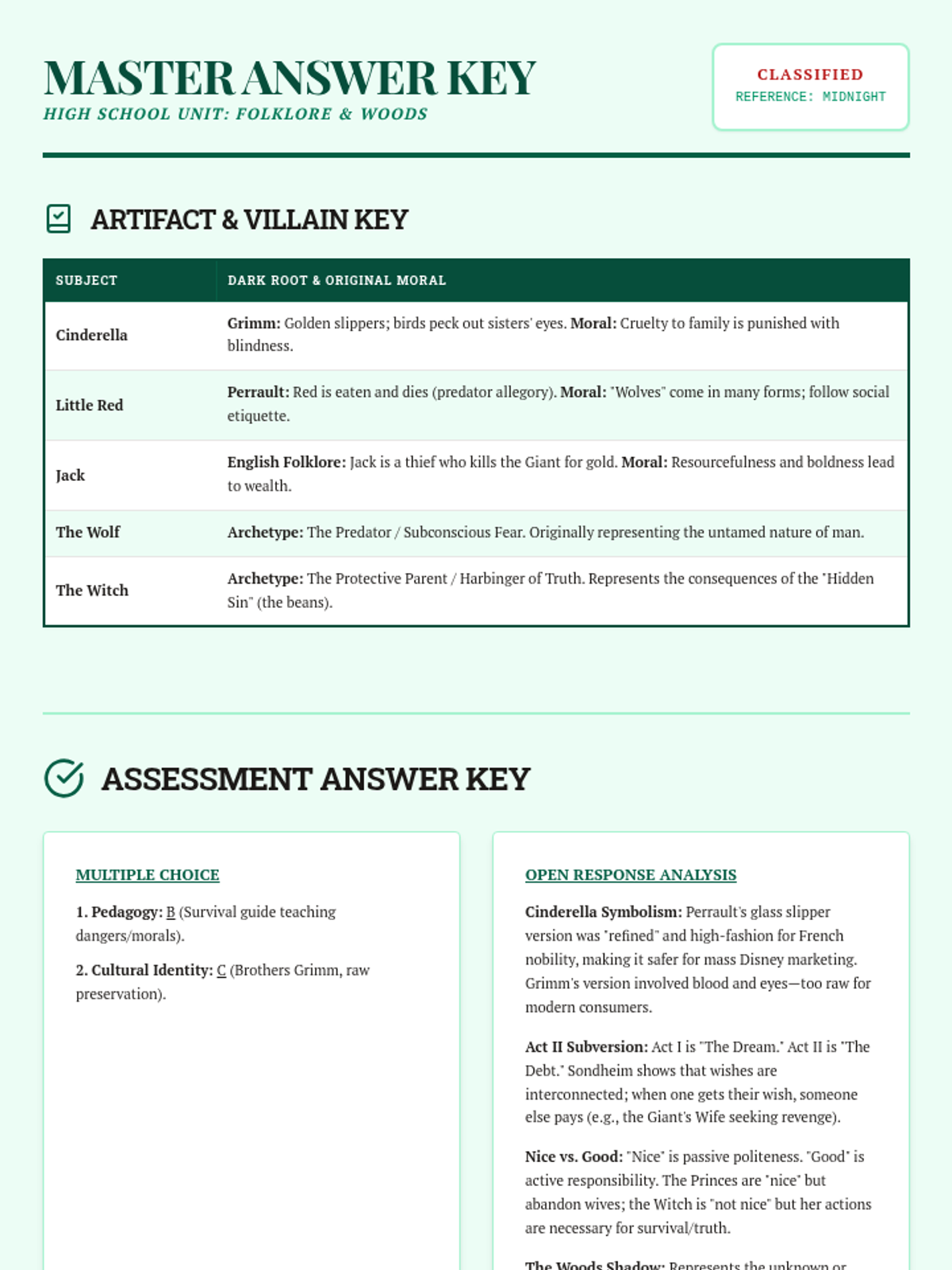
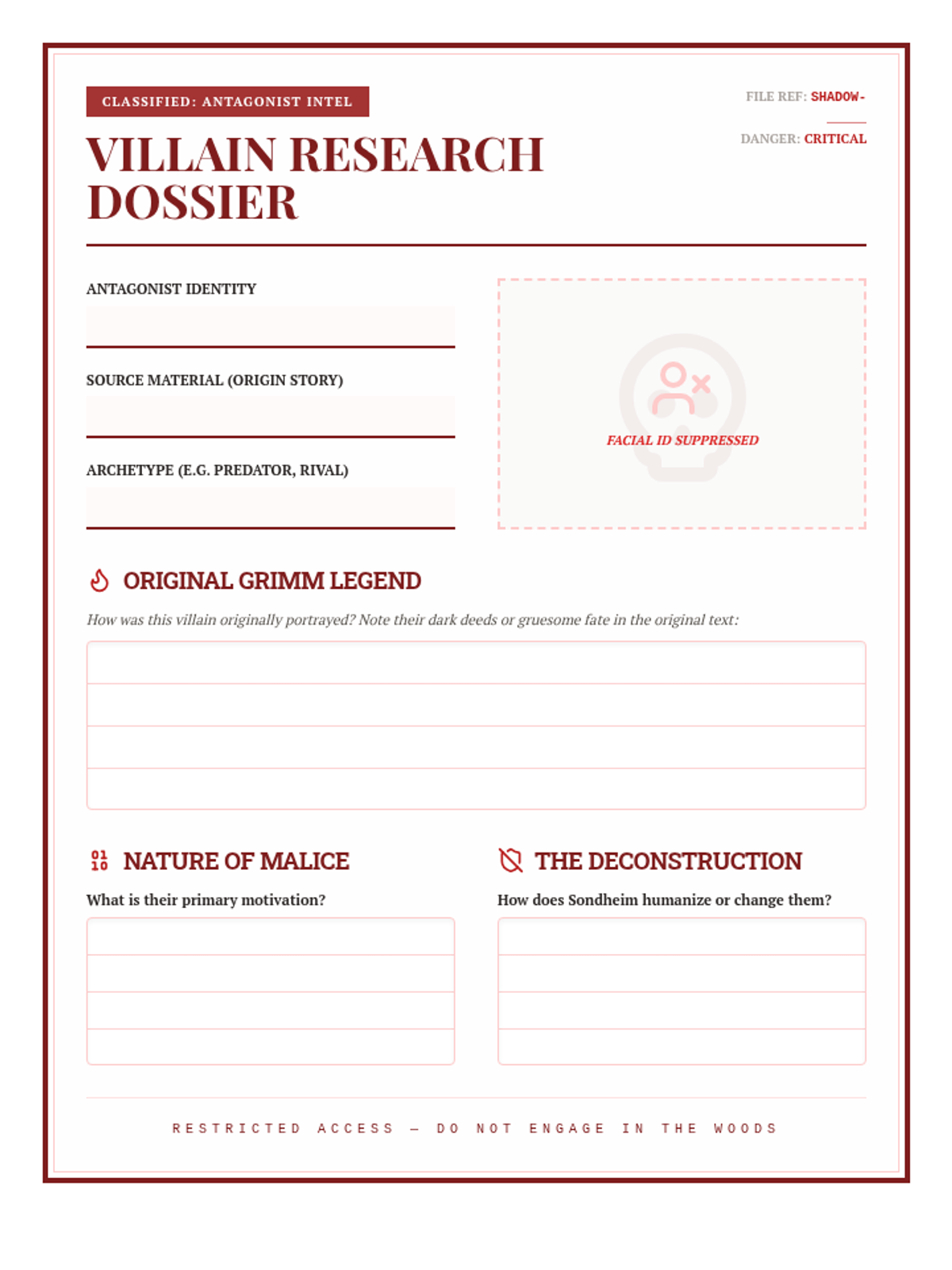
An advanced analysis of fairytale folklore that explores the socio-cultural evolution of classic tales and analyzes their deconstruction in Stephen Sondheim's 'Into the Woods'. Students evaluate themes of communal accountability and the moral ambiguity of 'Happily Ever After'.
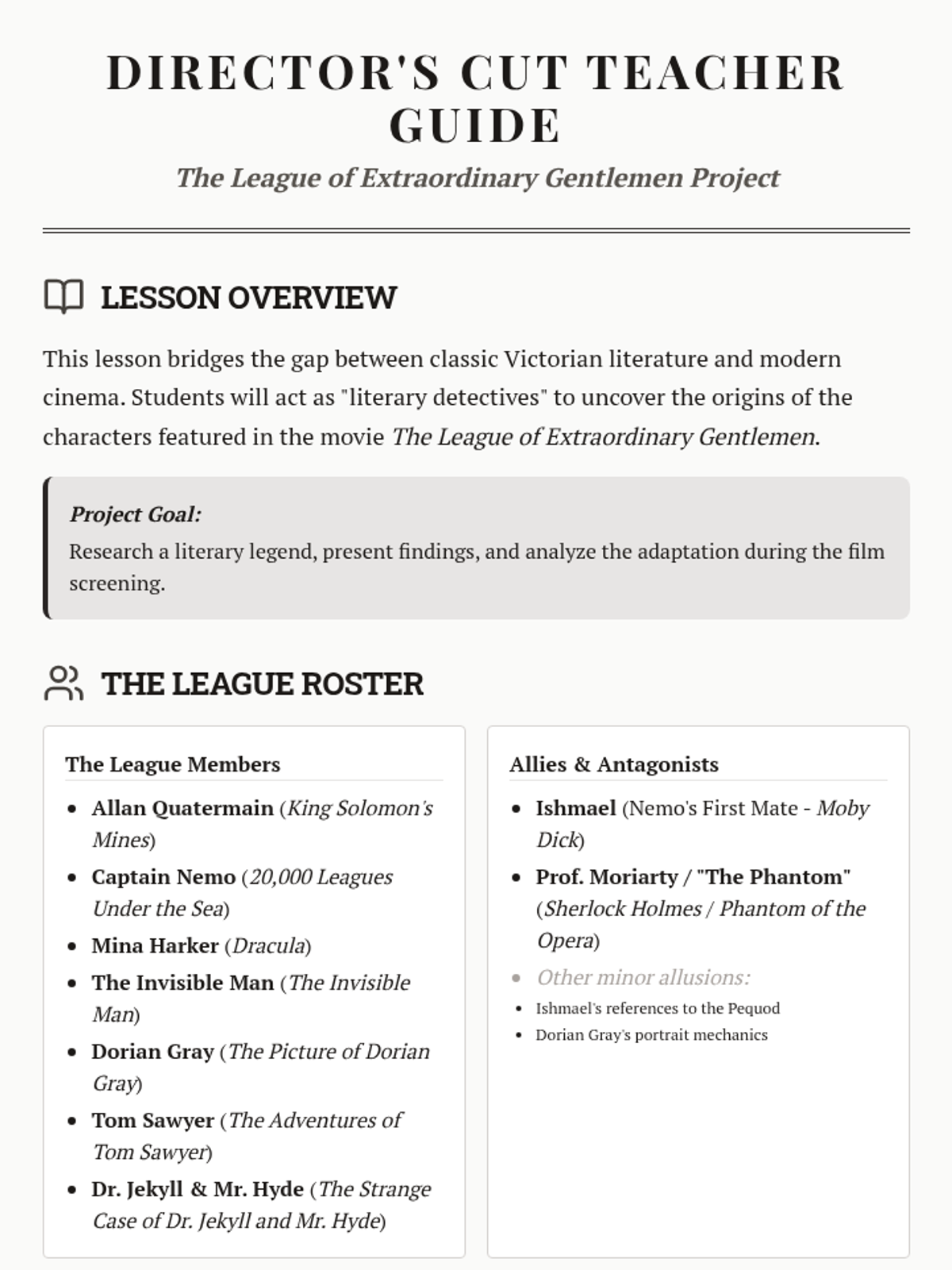
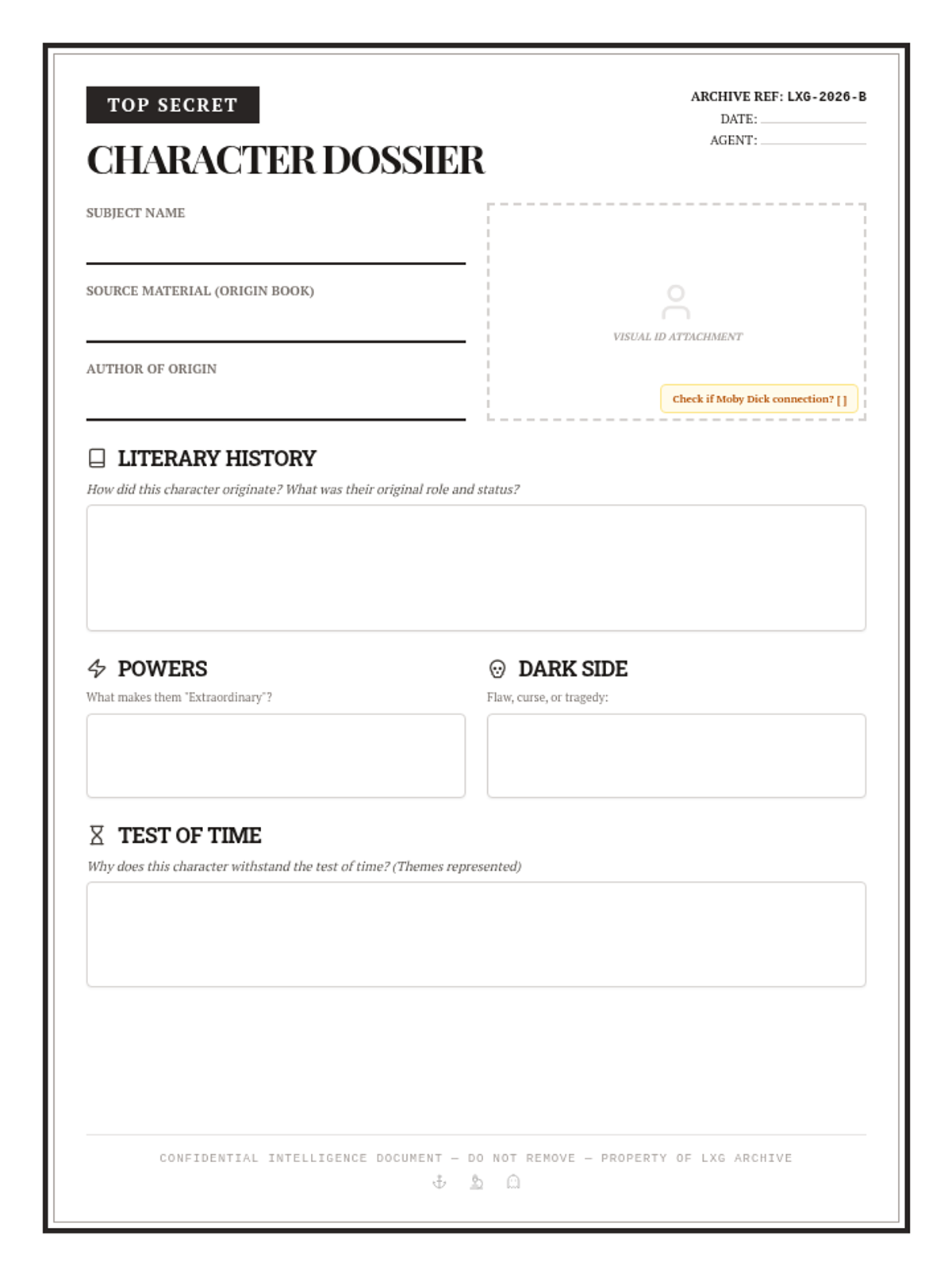
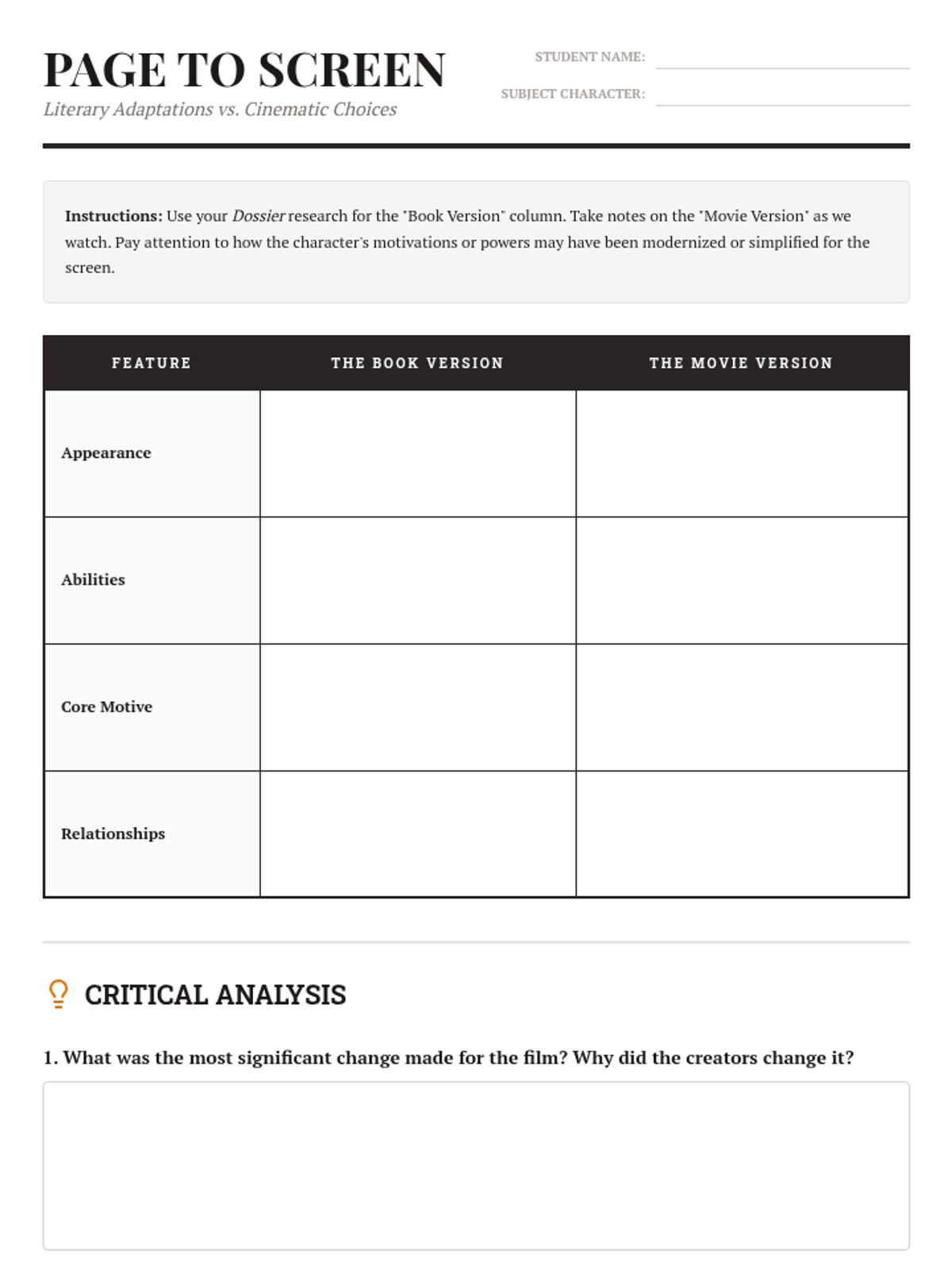
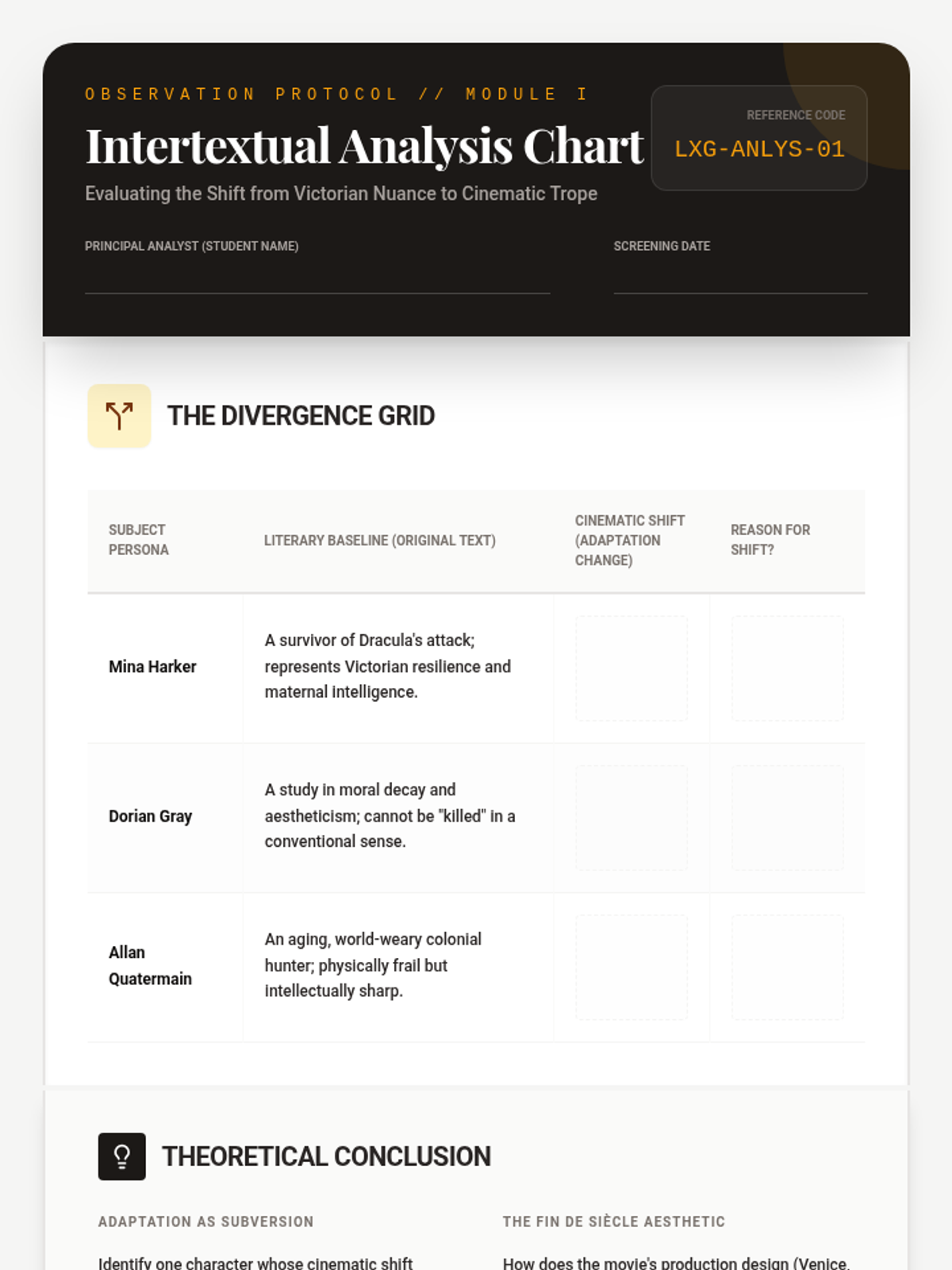
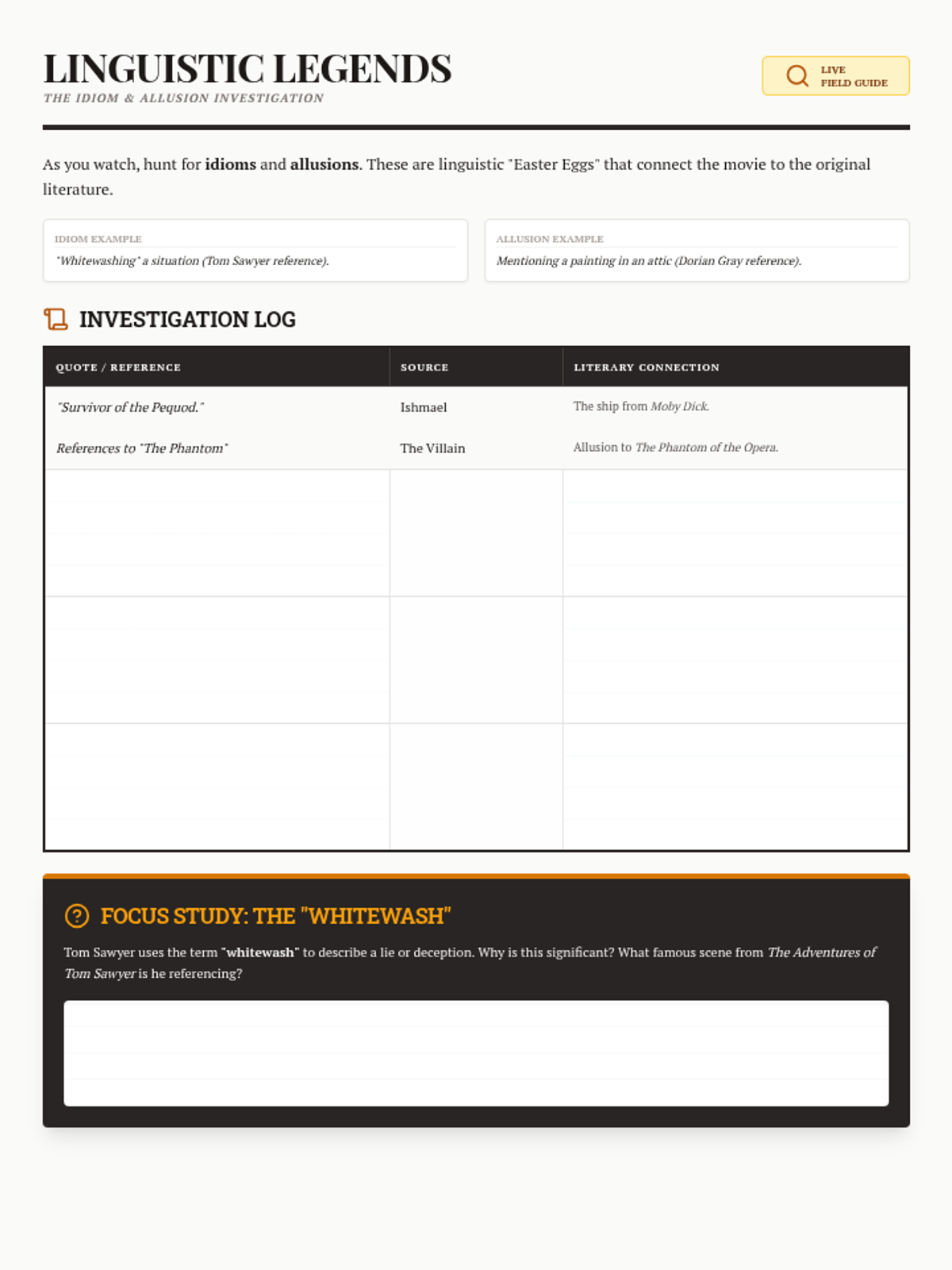
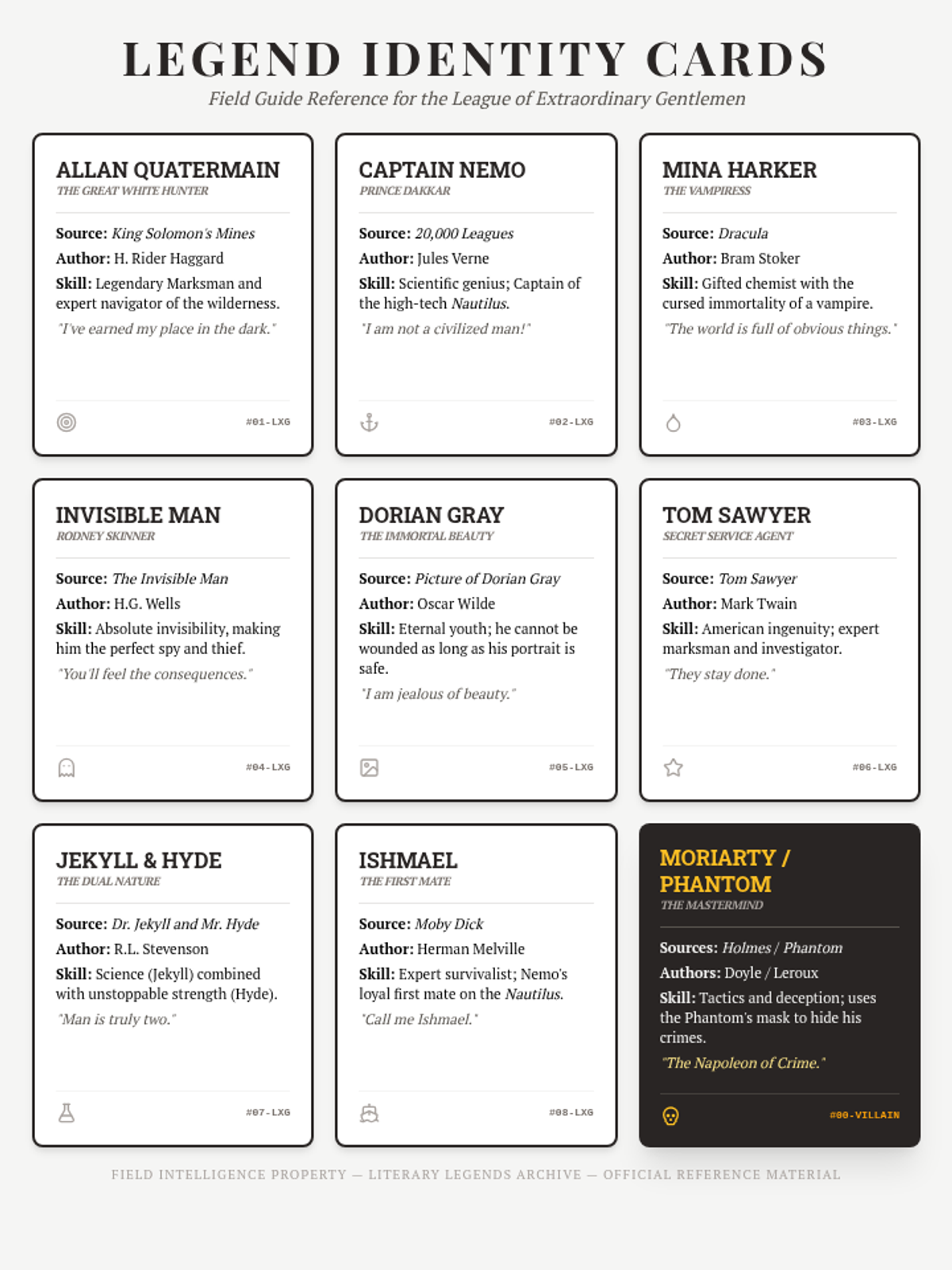
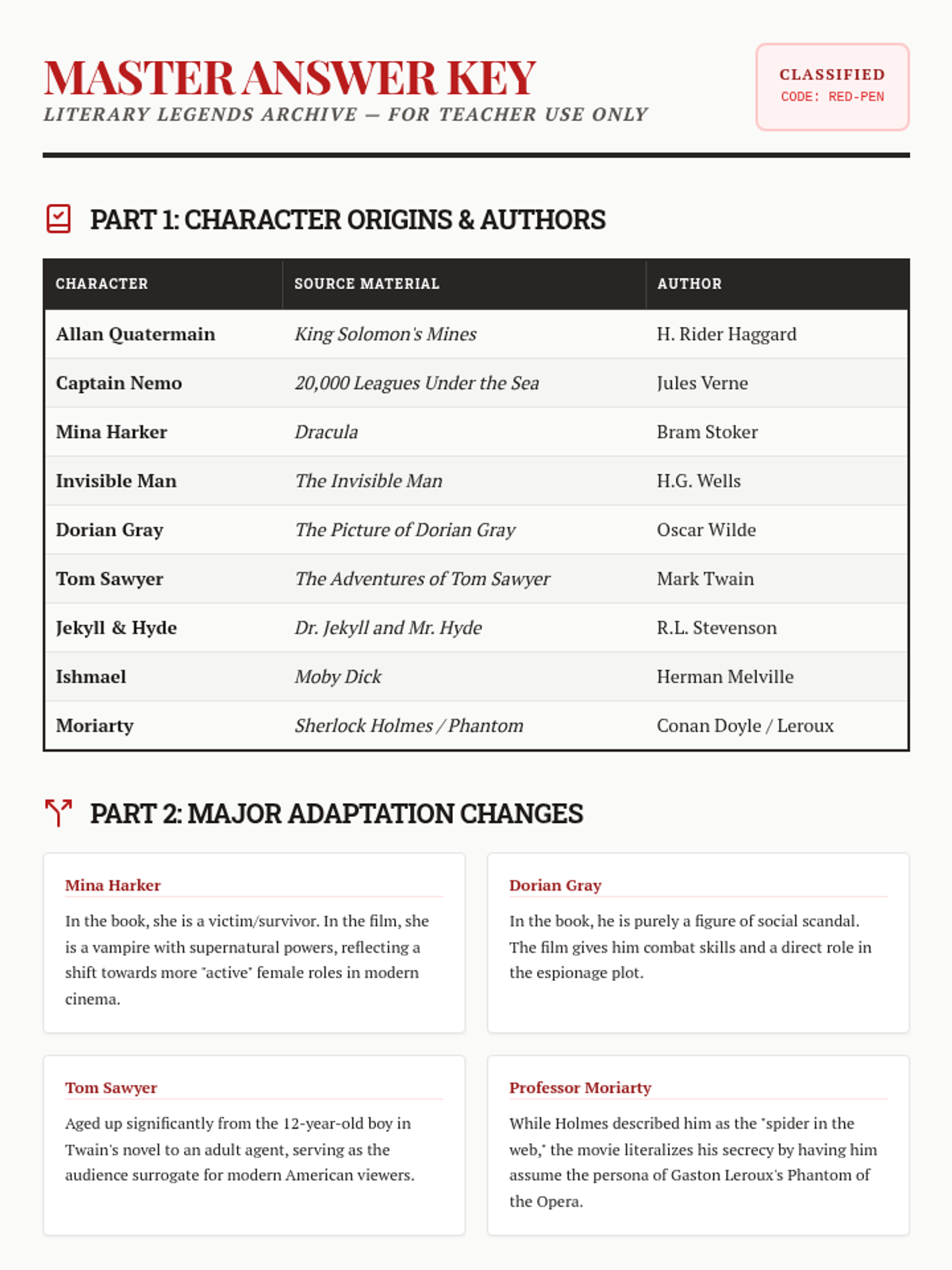
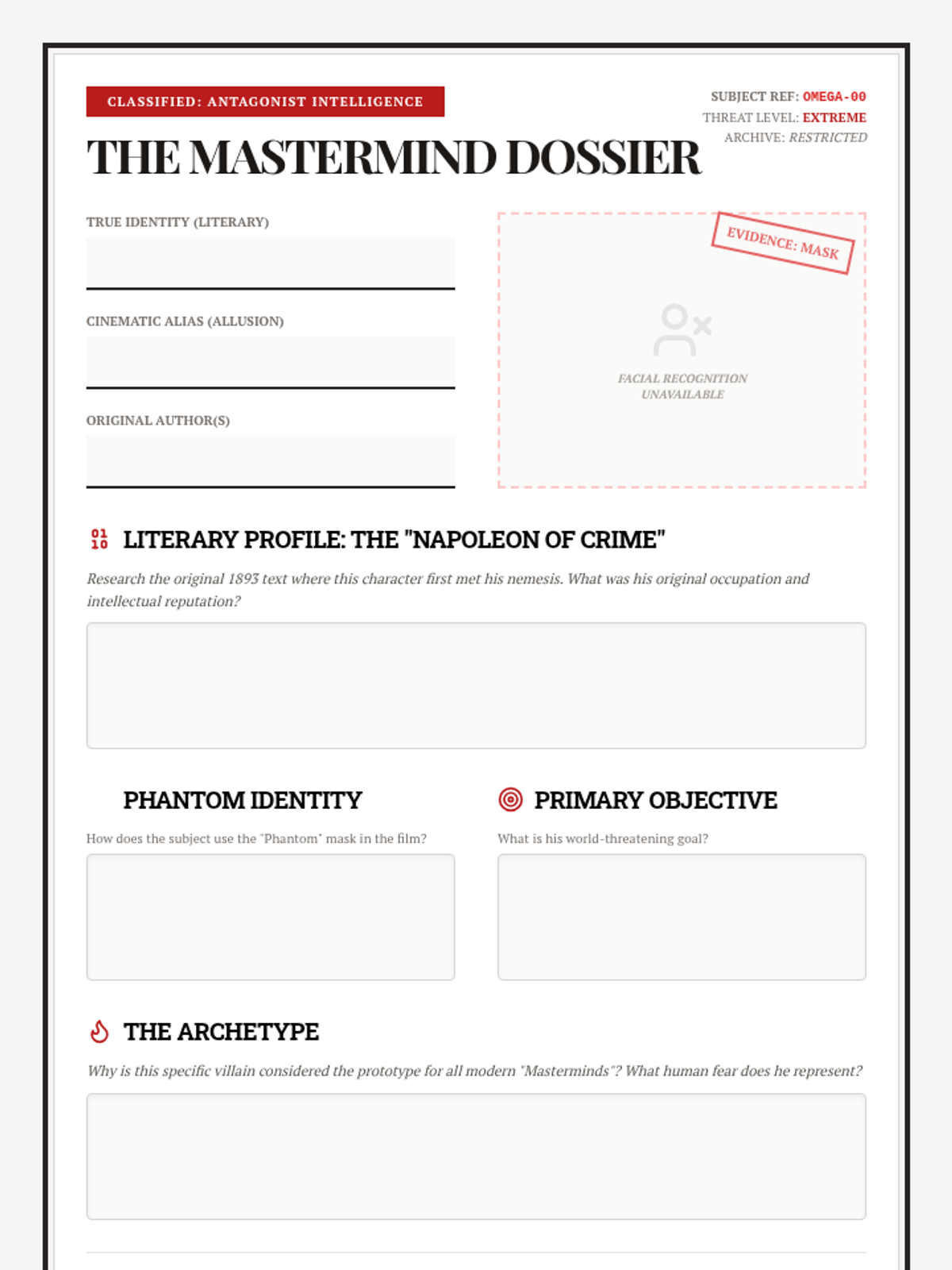
A rigorous exploration of fin-de-siècle literature and post-modern intertextuality. Students analyze the literary origins of Victorian icons in 'The League of Extraordinary Gentlemen' and evaluate the socio-cultural shifts in their cinematic adaptation.
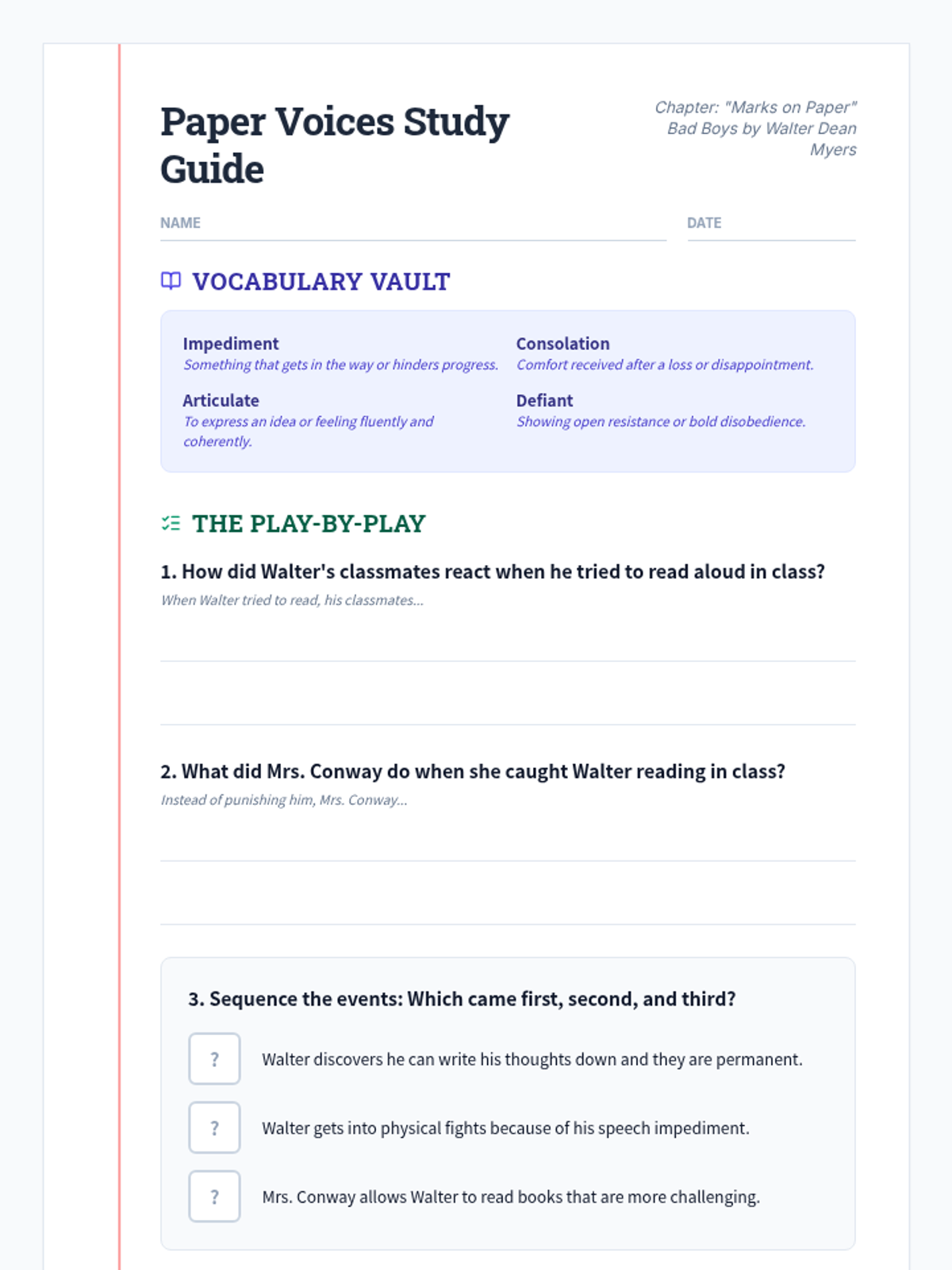
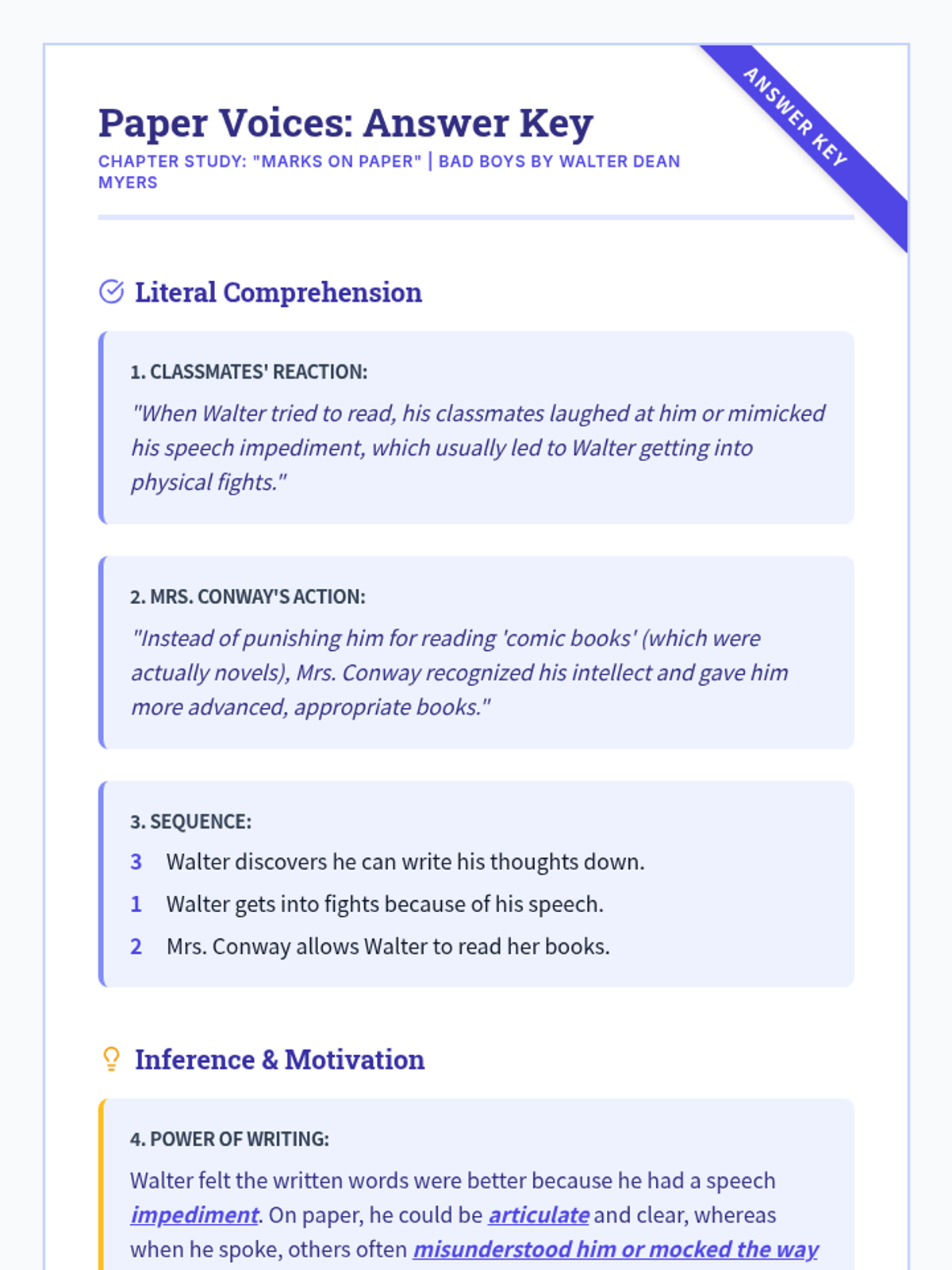
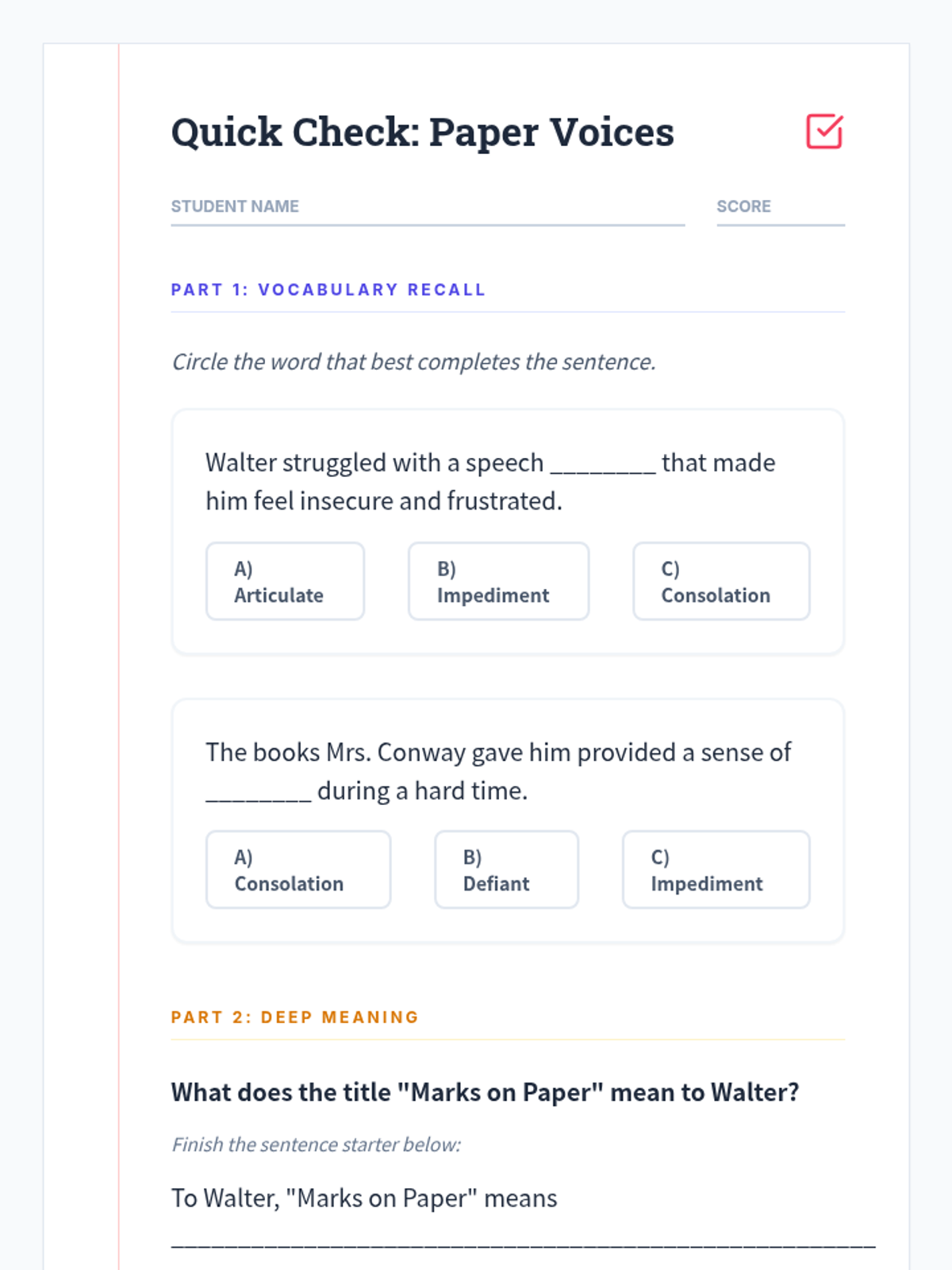
A focused study of the chapter 'Marks on Paper' from Walter Dean Myers' memoir, exploring themes of speech, identity, and the power of written communication.
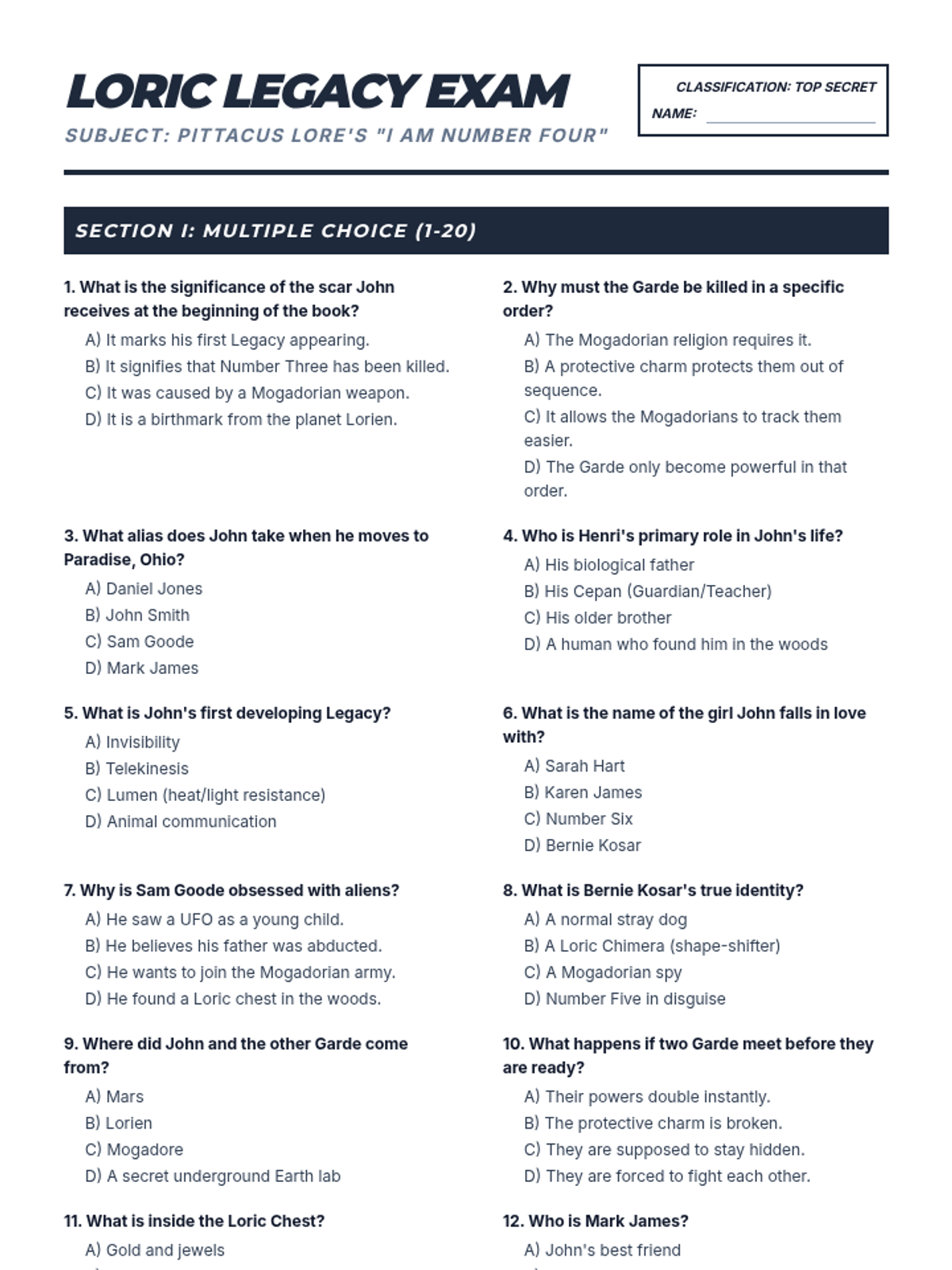
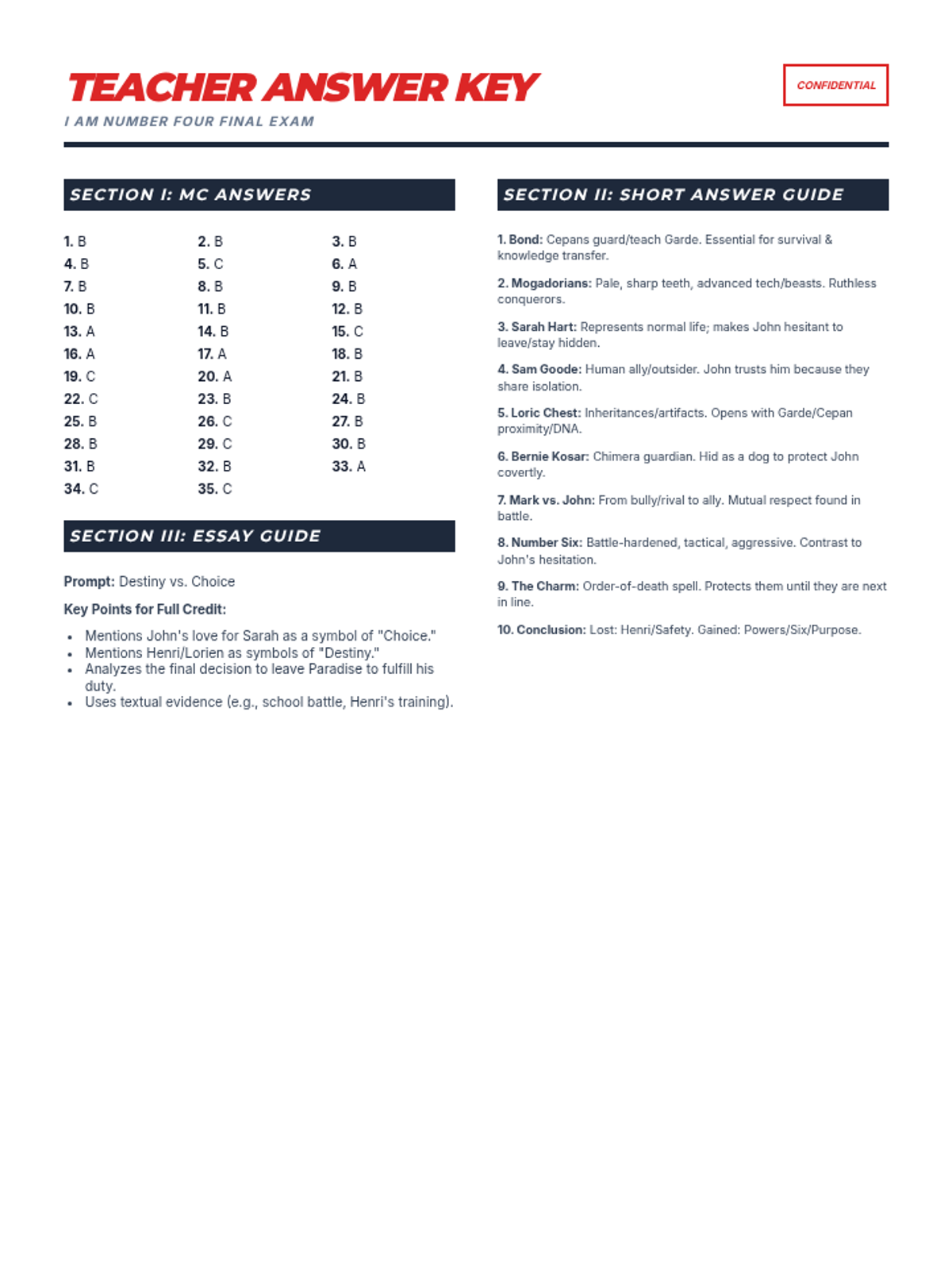
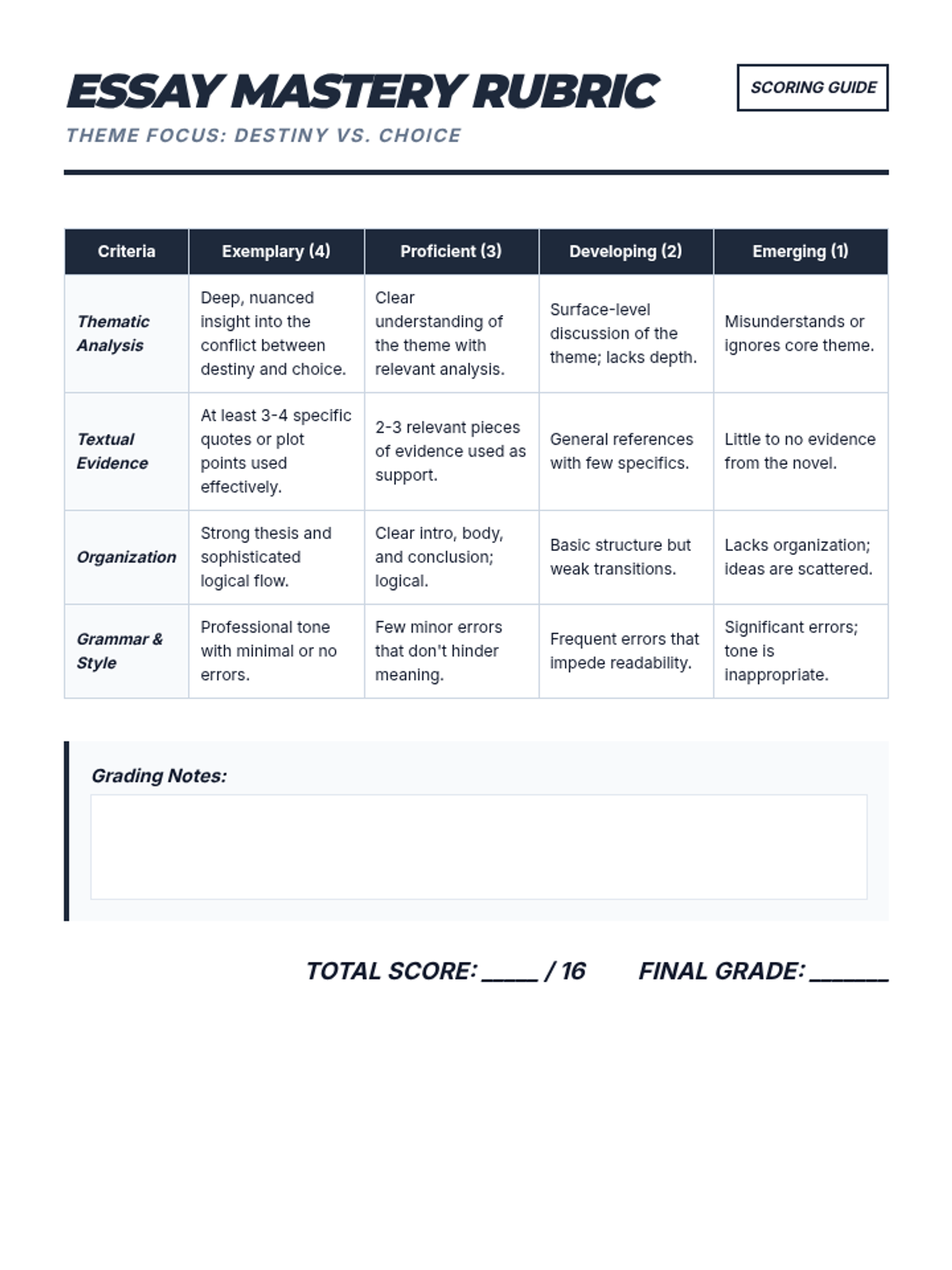
A comprehensive final assessment for the novel 'I Am Number Four', featuring a diverse range of questions and a thematic essay component.
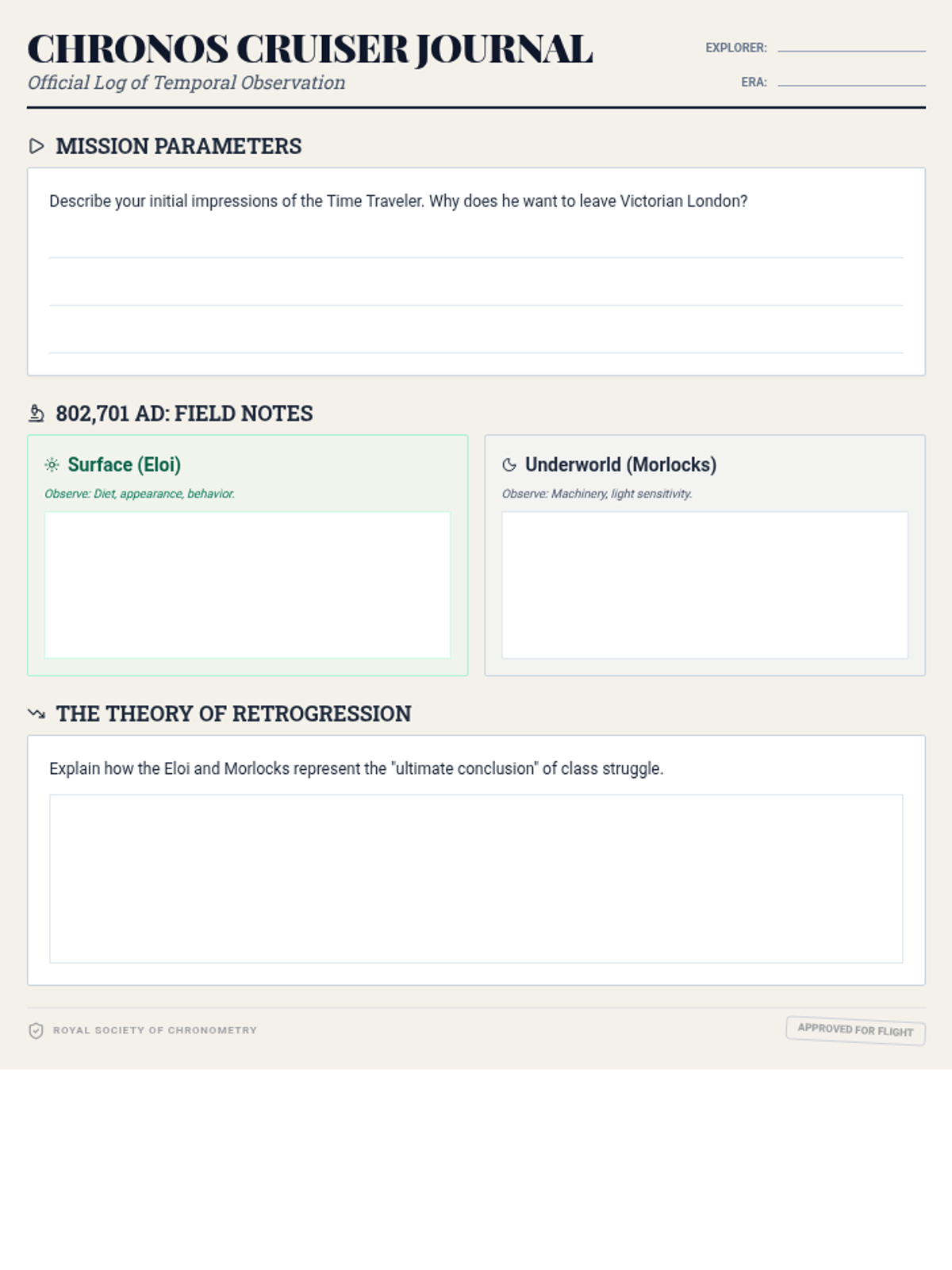
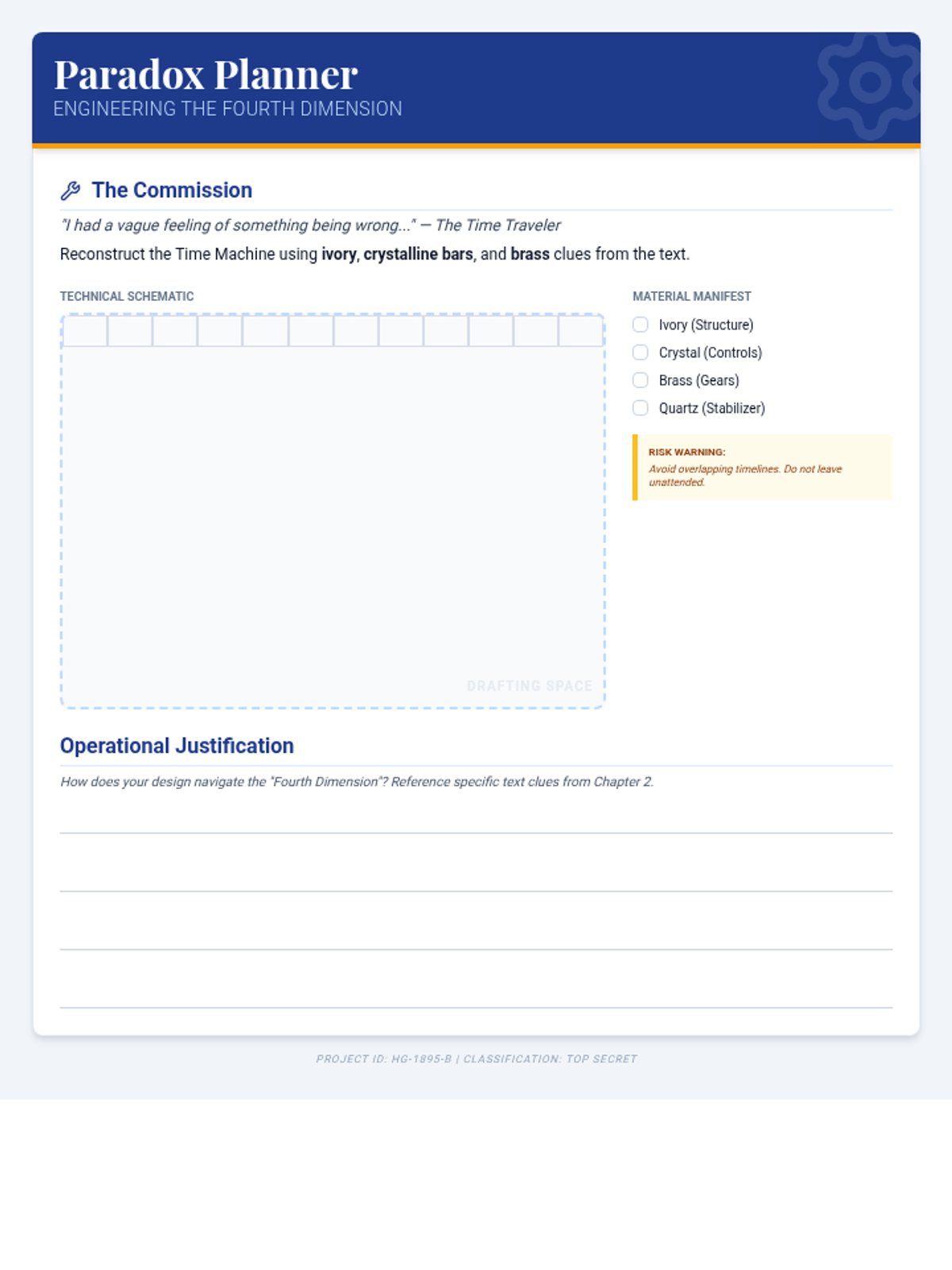
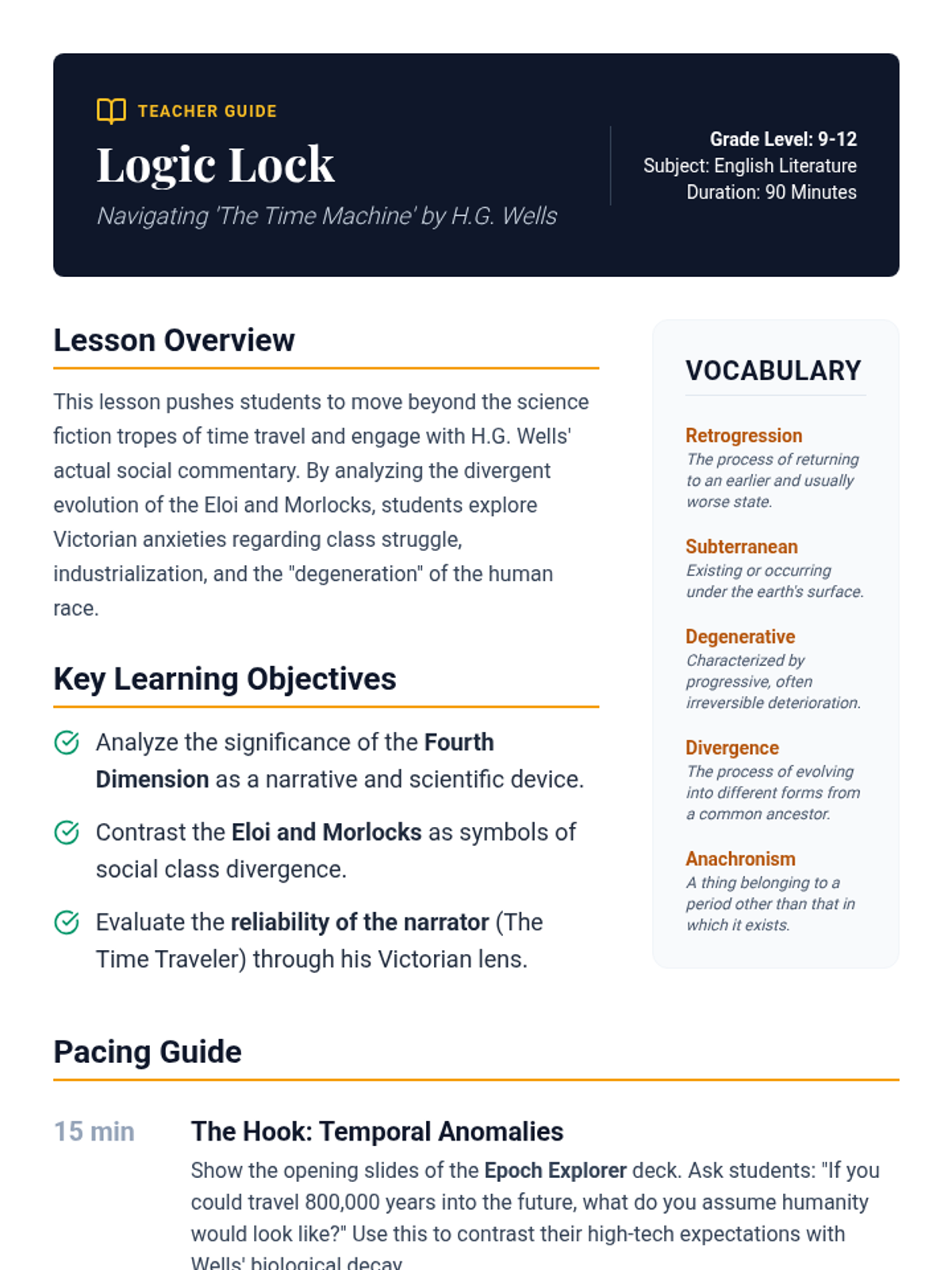
An immersive literary exploration centered on H.G. Wells' 'The Time Machine', investigating themes of social class, evolution, and the concept of time as a fourth dimension. Students step into the role of temporal observers to analyze how setting and society shift across the ages.
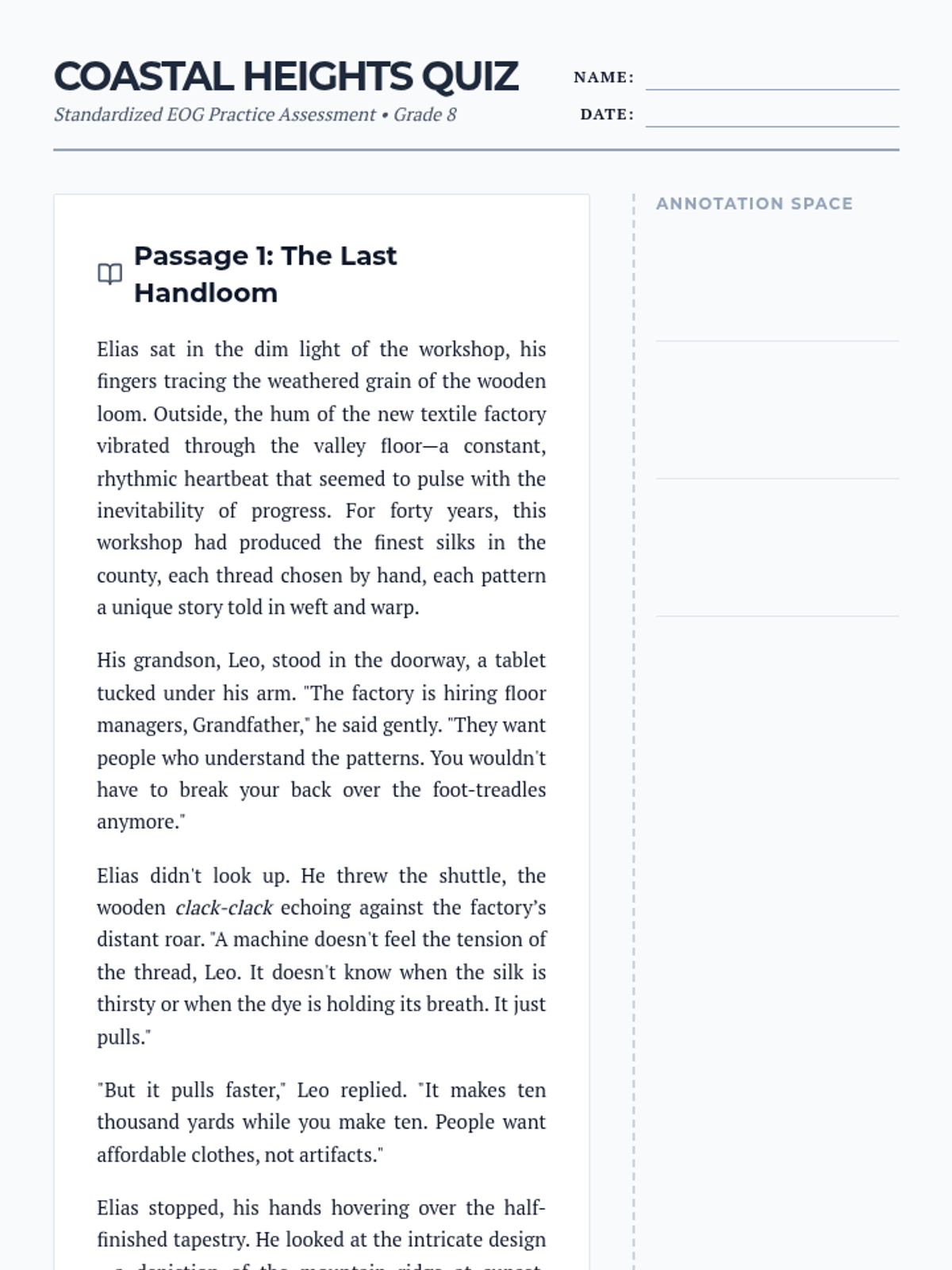
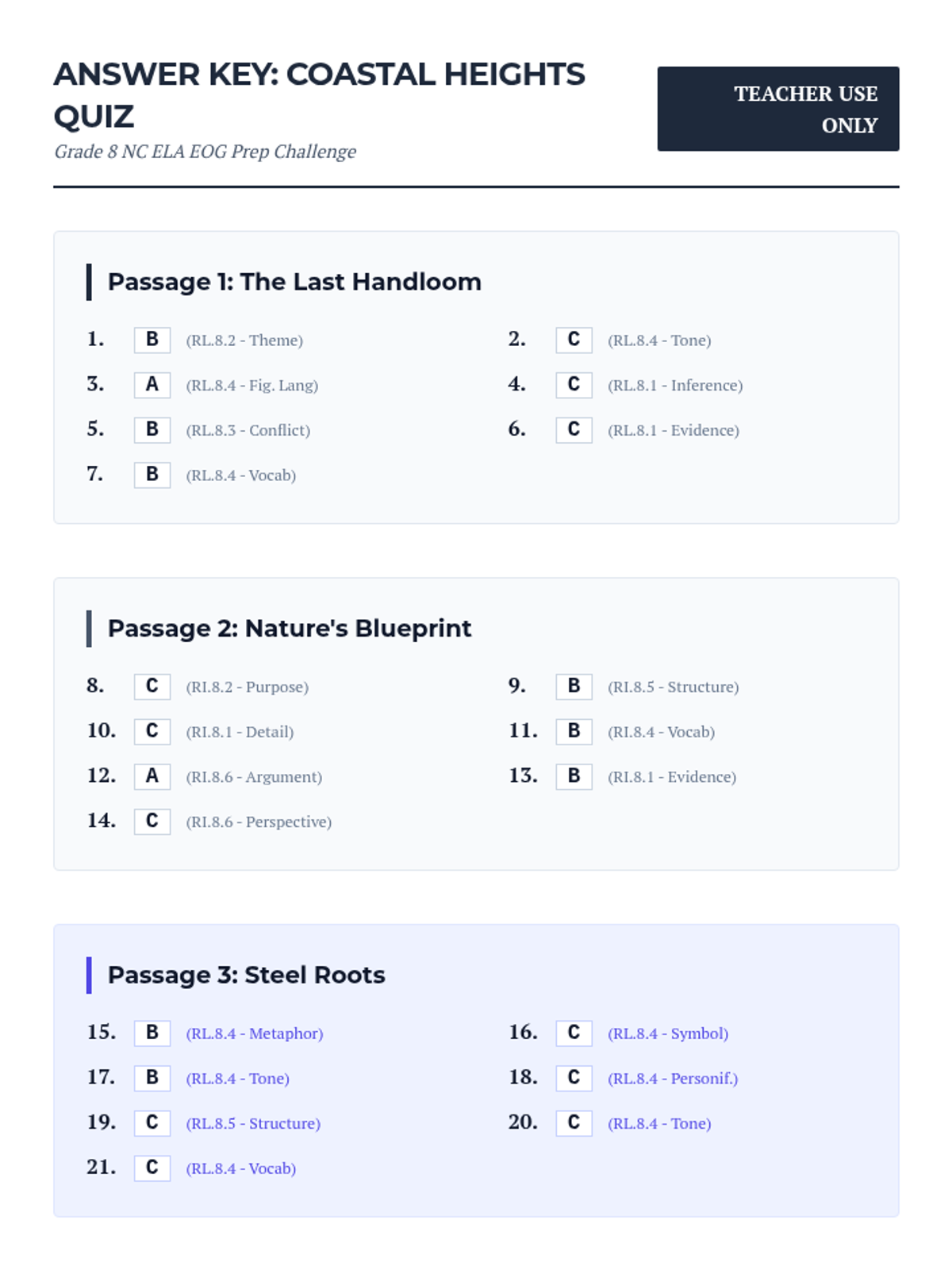
A comprehensive EOG-style assessment for 8th-grade students, featuring five diverse passages with 35 questions total. The lesson focuses on critical reading skills including inference, theme, text structure, and author's perspective.
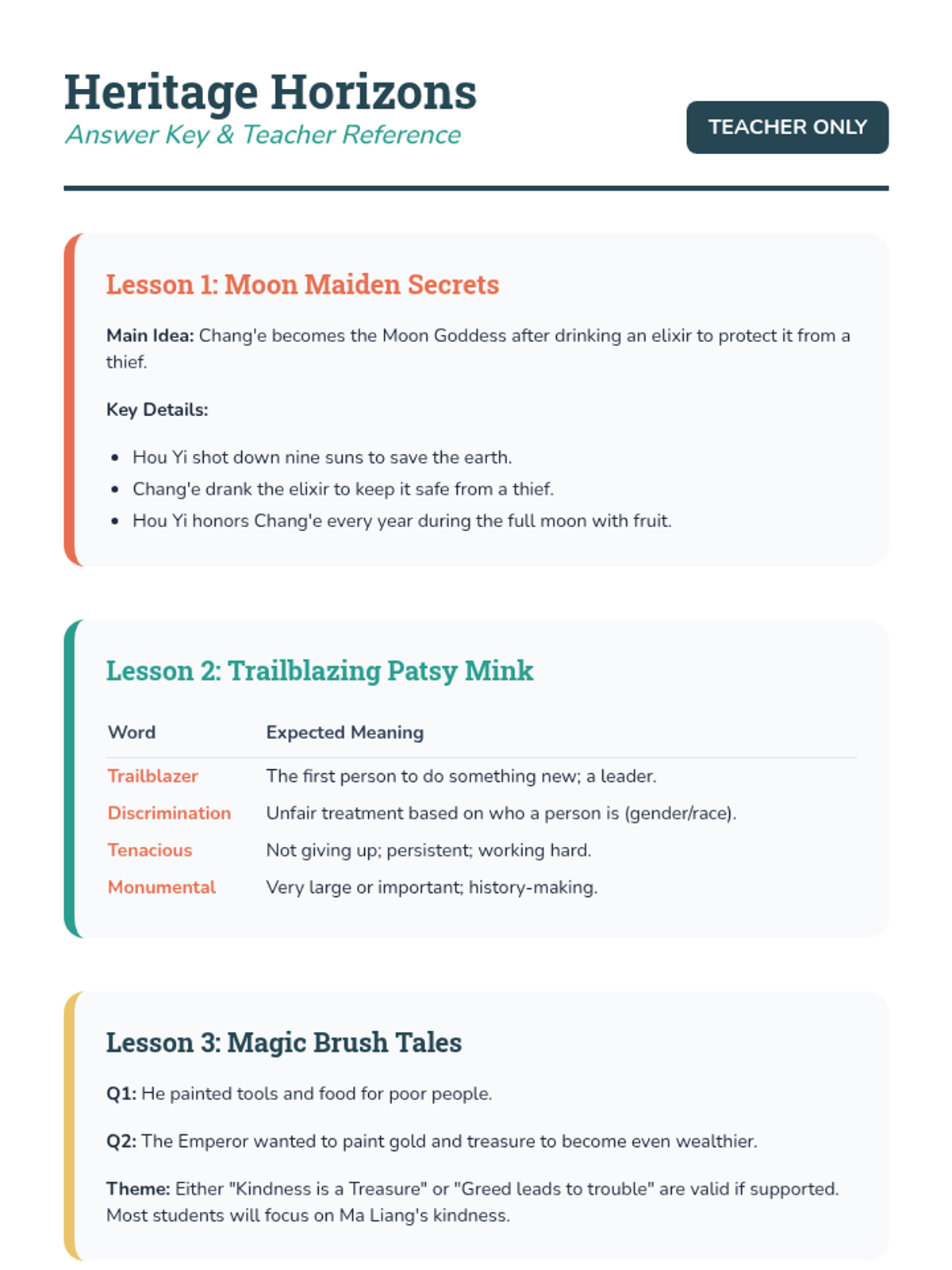
Answer keys and reference guides for the Heritage Horizons unit.
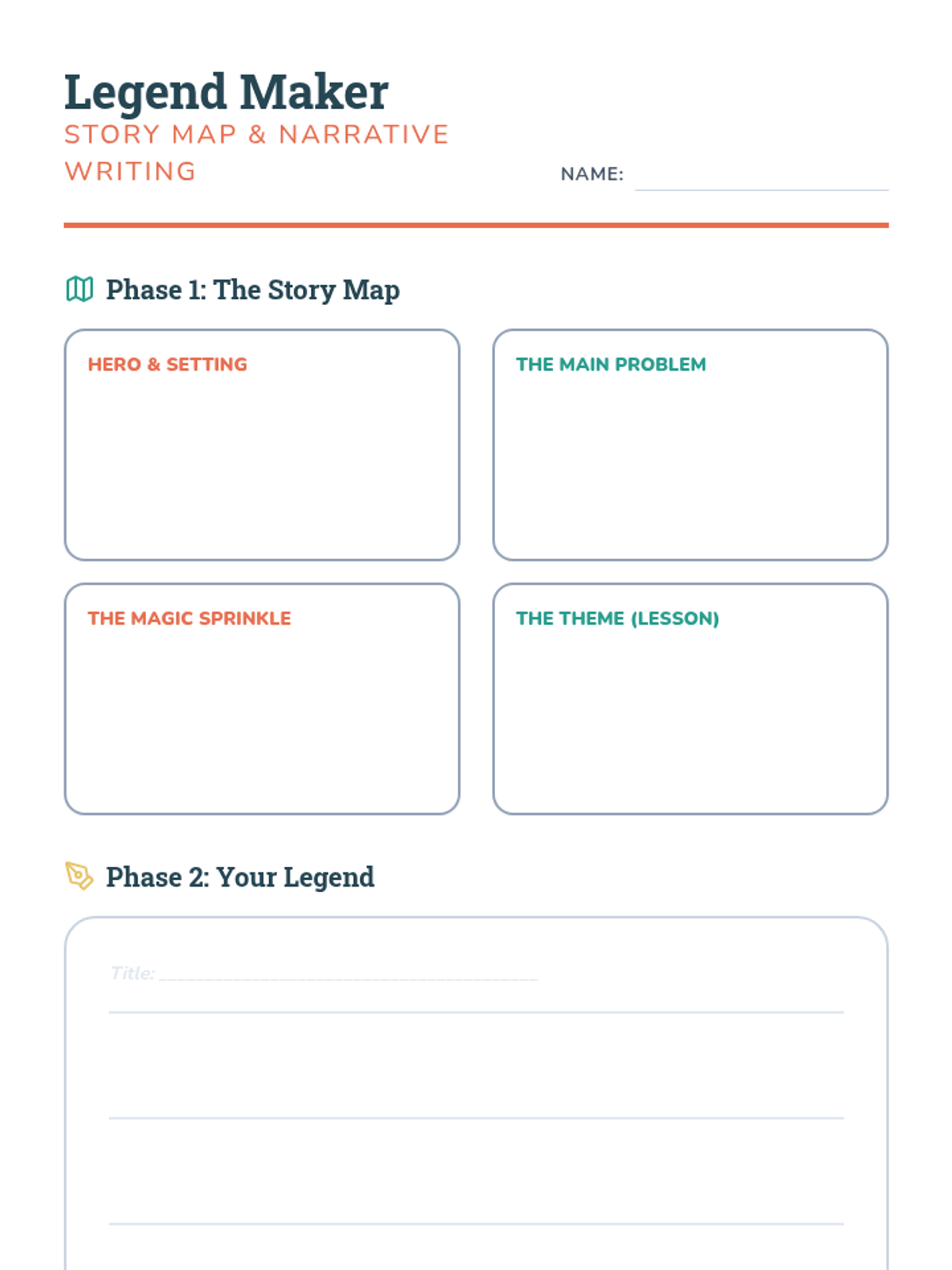
Students use their knowledge of legends and heroes to write their own creative narrative inspired by AAPI cultural storytelling.
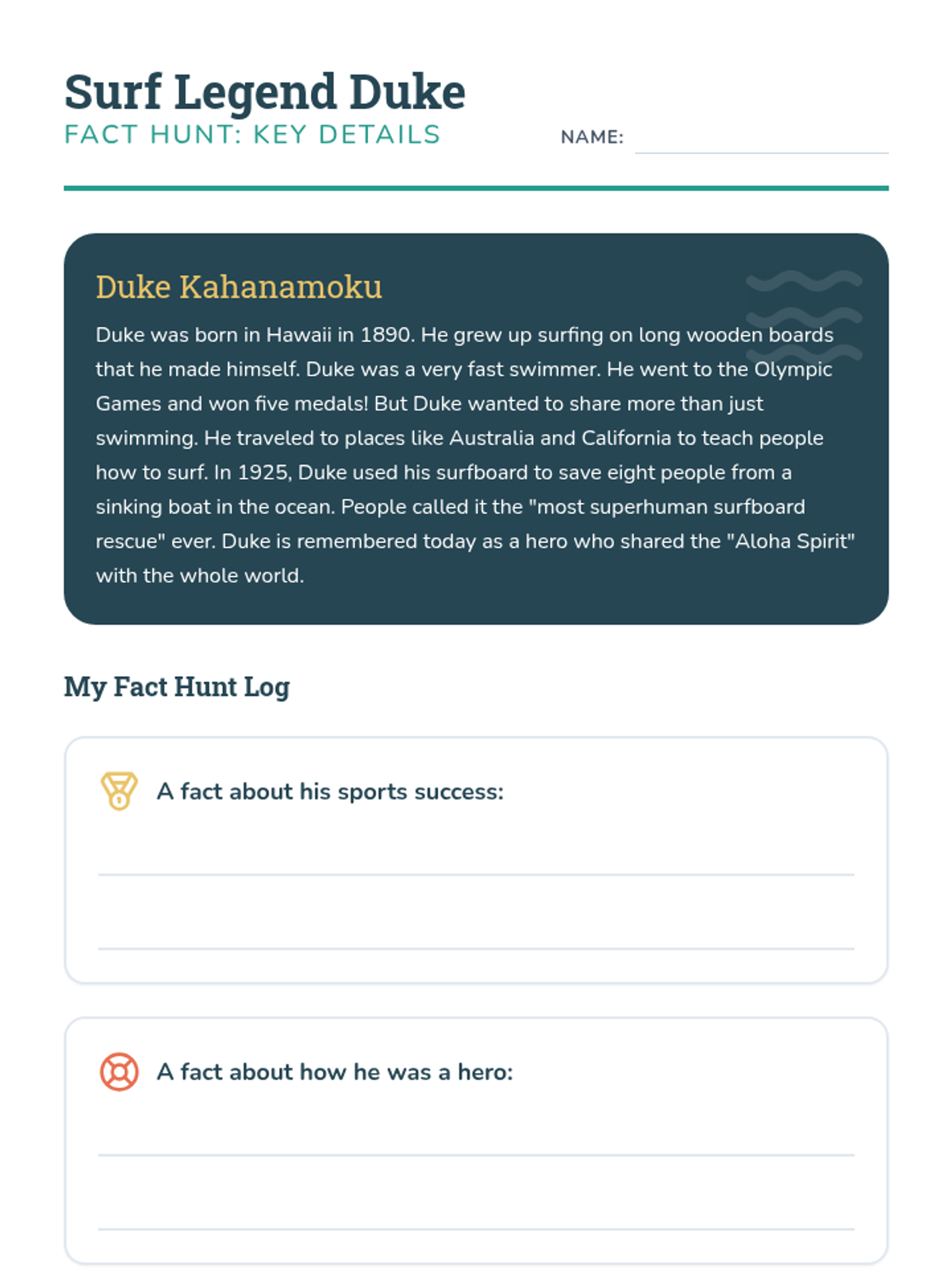
Learn about Duke Kahanamoku, the father of modern surfing, and practice finding key details in a non-fiction biography.
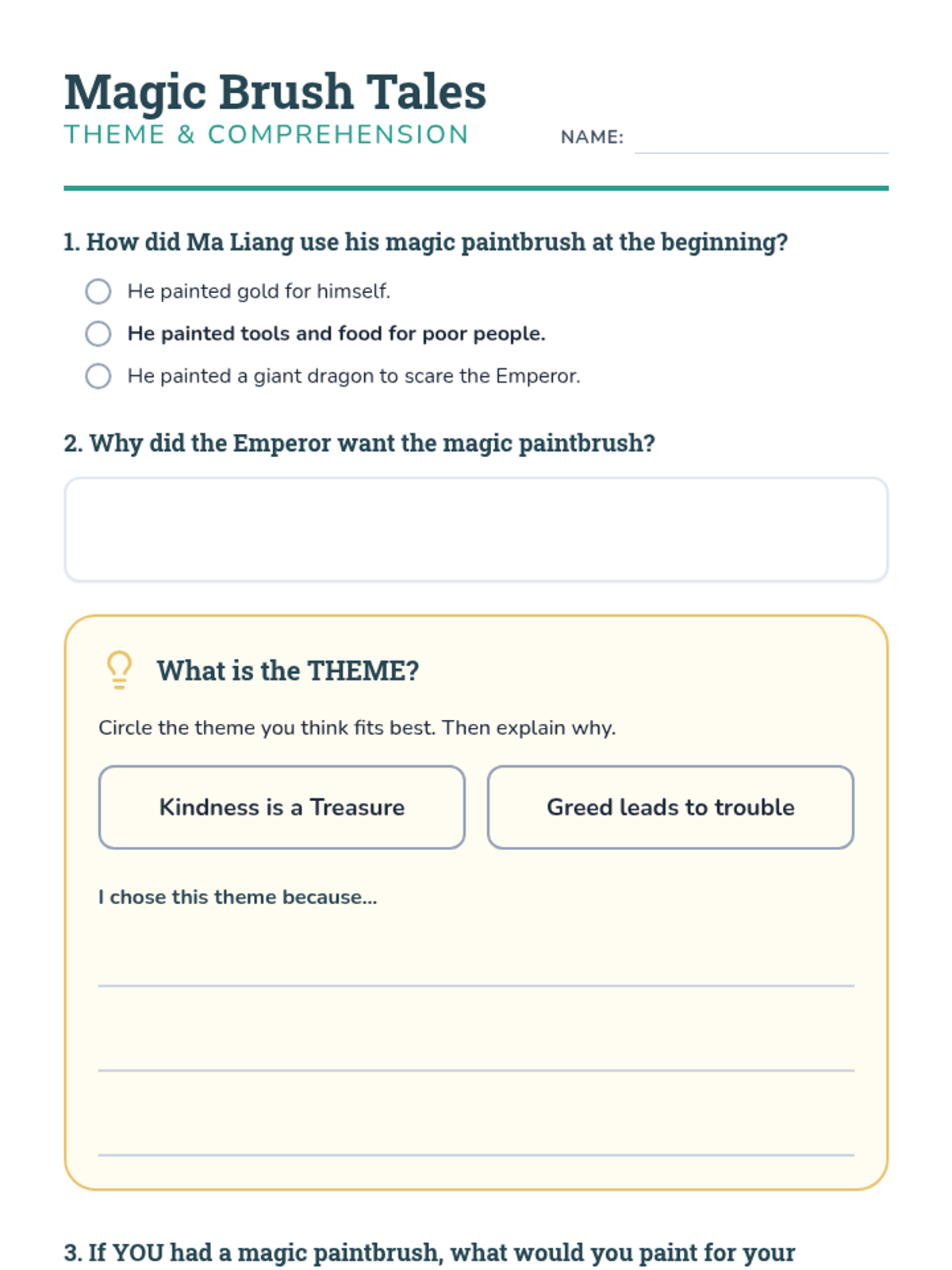
Read the classic folktale 'The Magic Paintbrush' to understand theme and character motivation through reading comprehension.
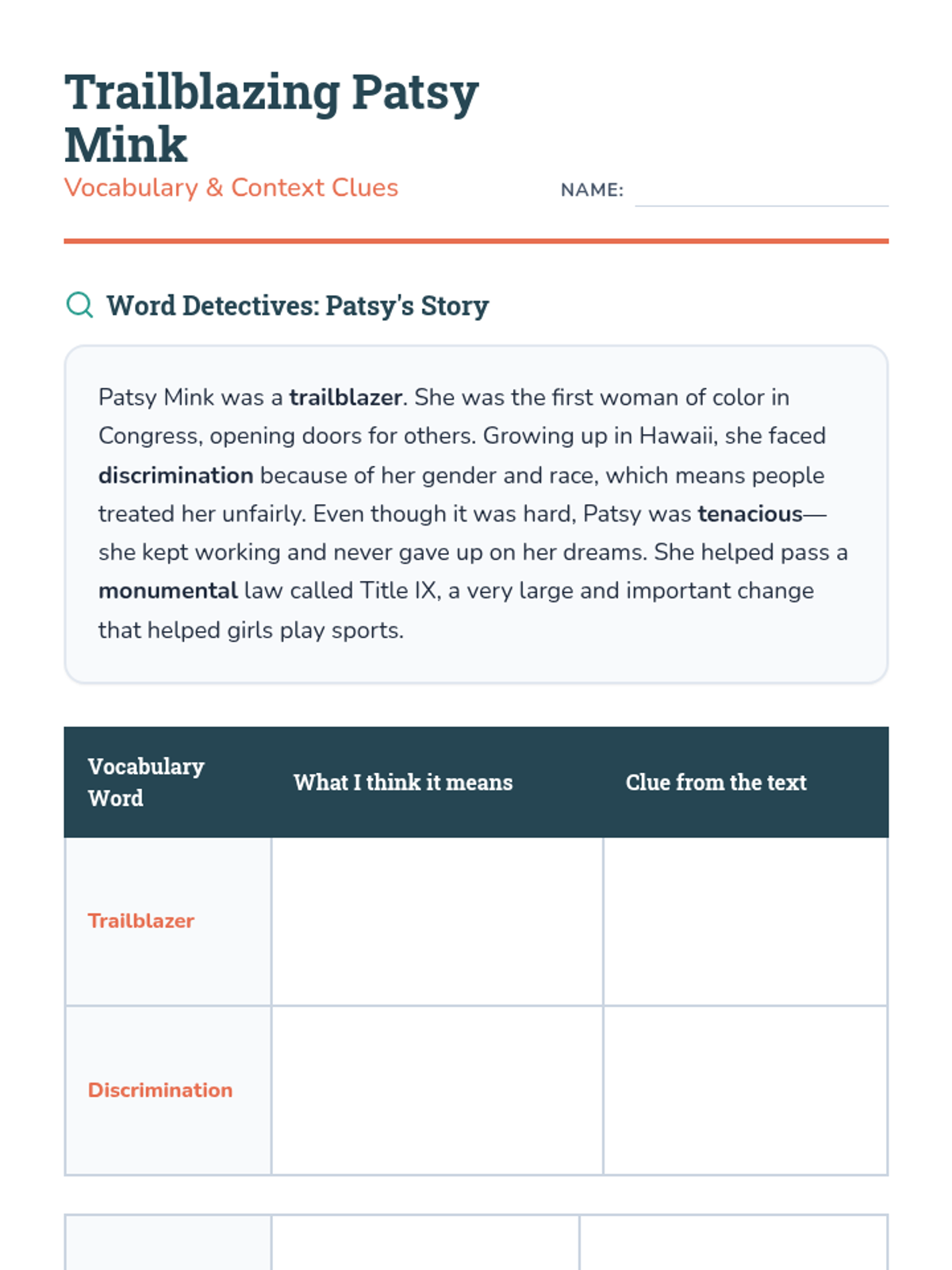
Discover the life of Patsy Mink, the first woman of color elected to Congress, while building vocabulary and using context clues.
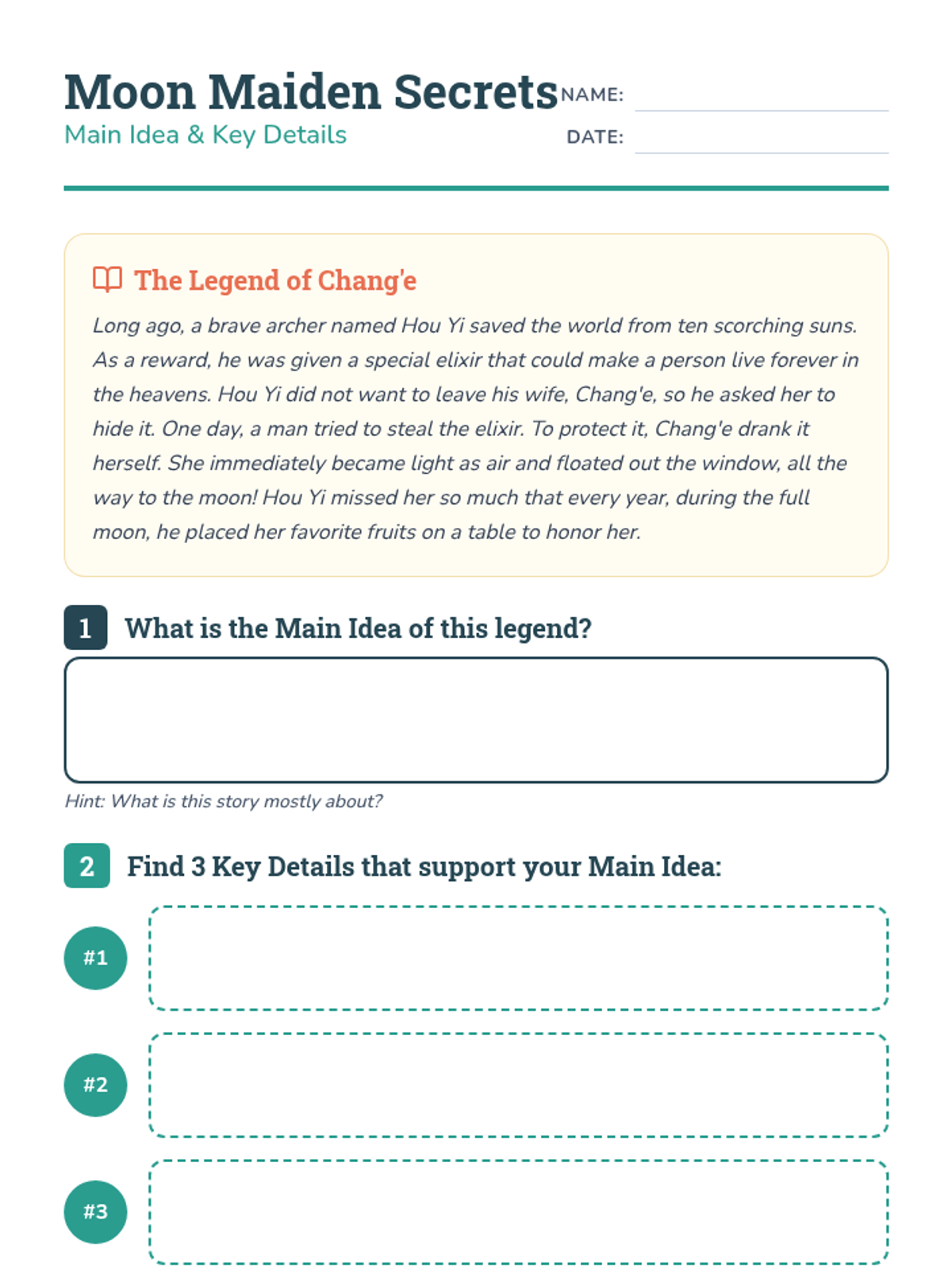
Explore the legend of the Moon Goddess, Chang'e, to identify main ideas and supporting details in traditional folktales.
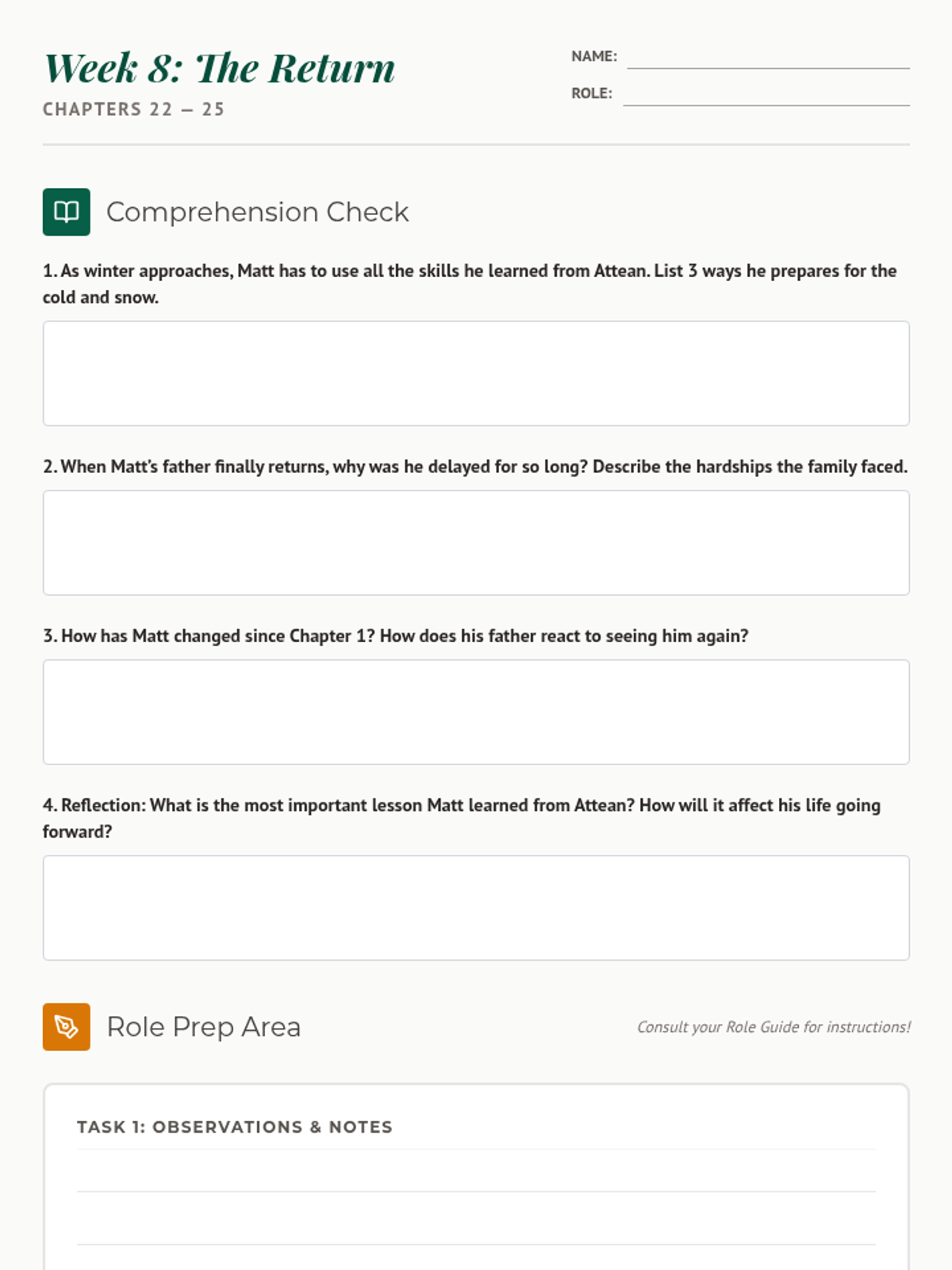
Winter approaches, and Matt must decide his future as he waits for his family. Reading Chapters 22-25.
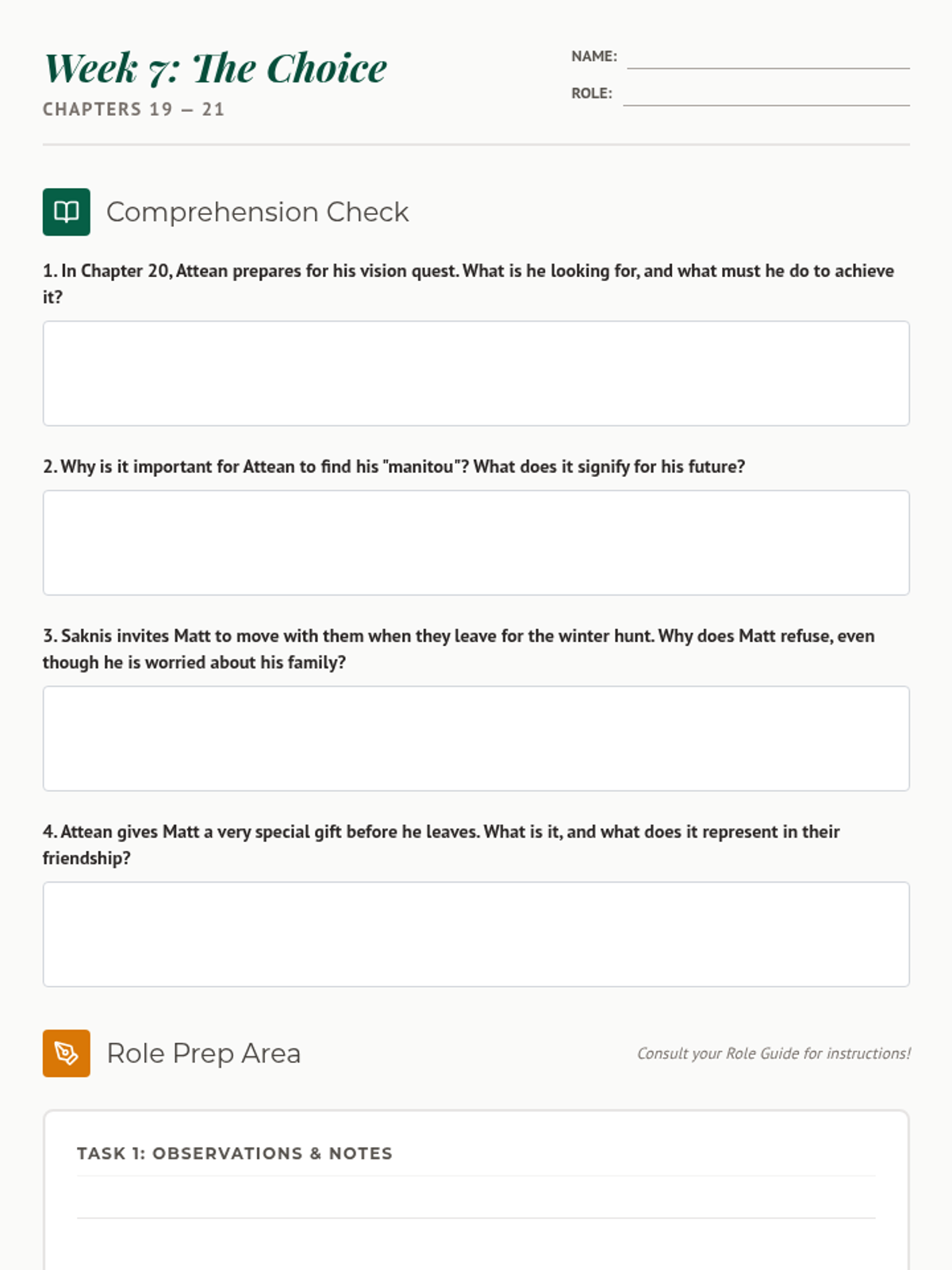
Attean prepares for his vision quest, and the boys face the reality of their differing paths. Reading Chapters 19-21.
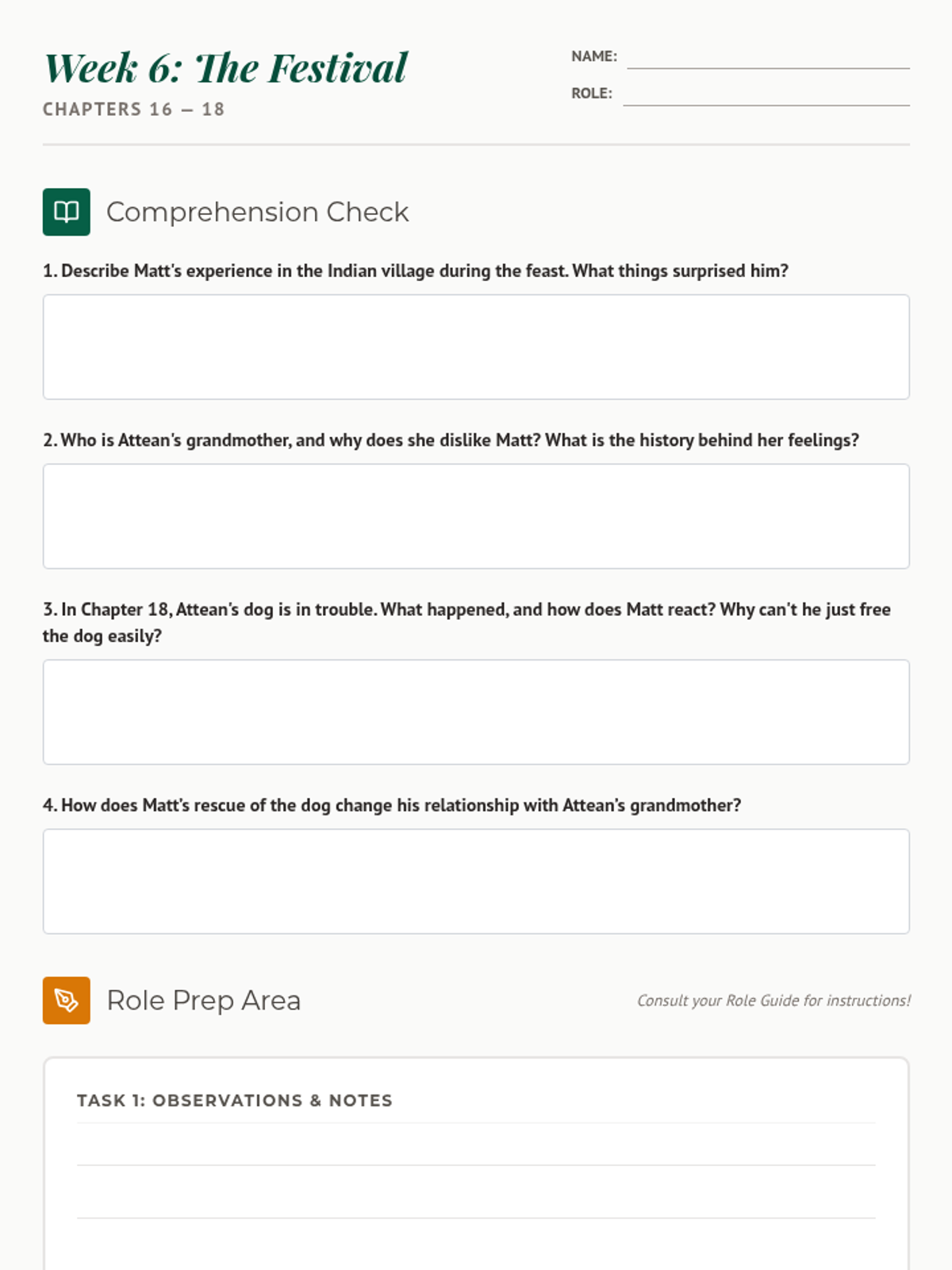
Matt visits the Penobscot village and learns about their way of life. Reading Chapters 16-18.
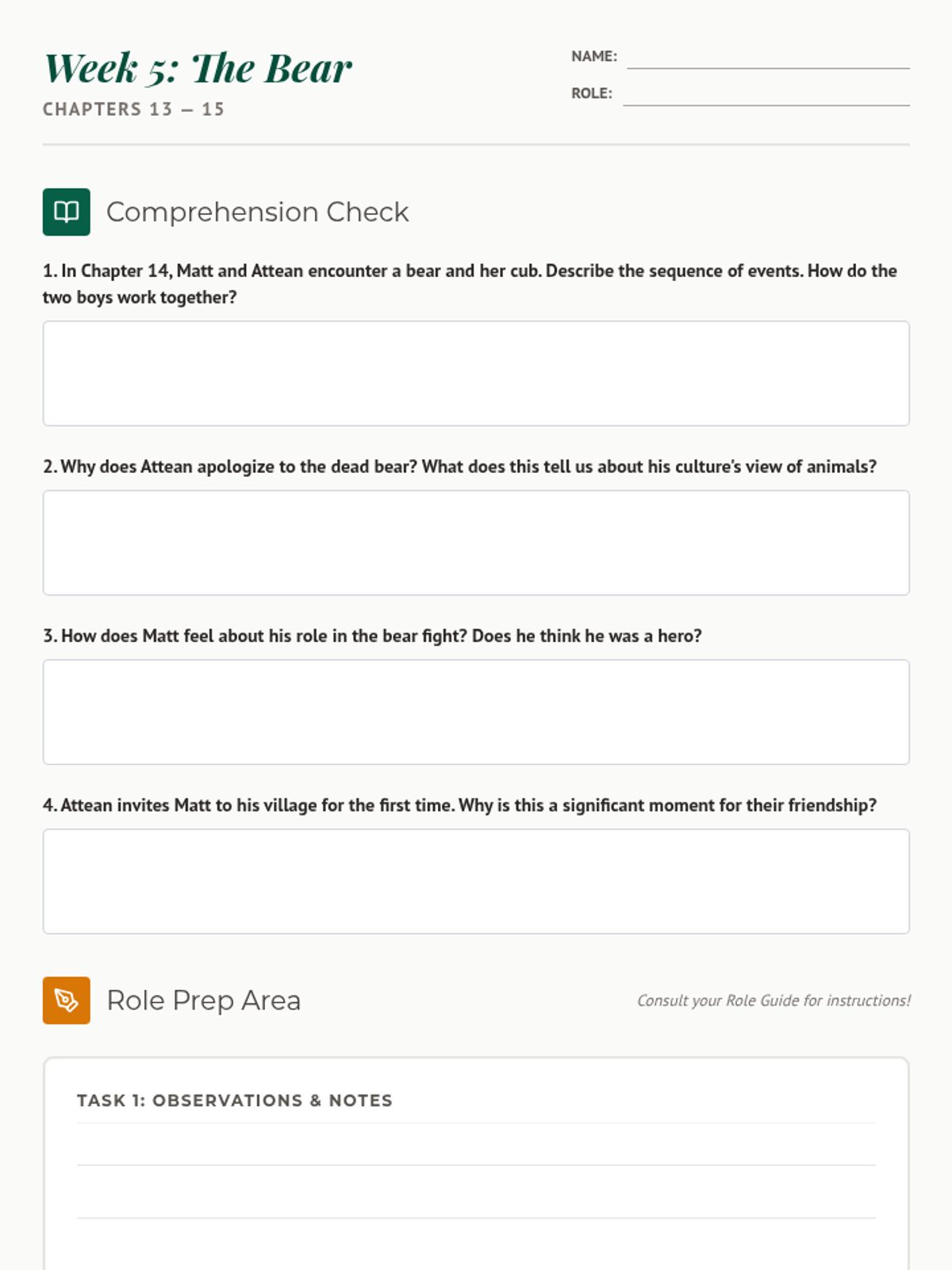
A dangerous encounter with a bear tests the boys' skills and courage. Reading Chapters 13-15.
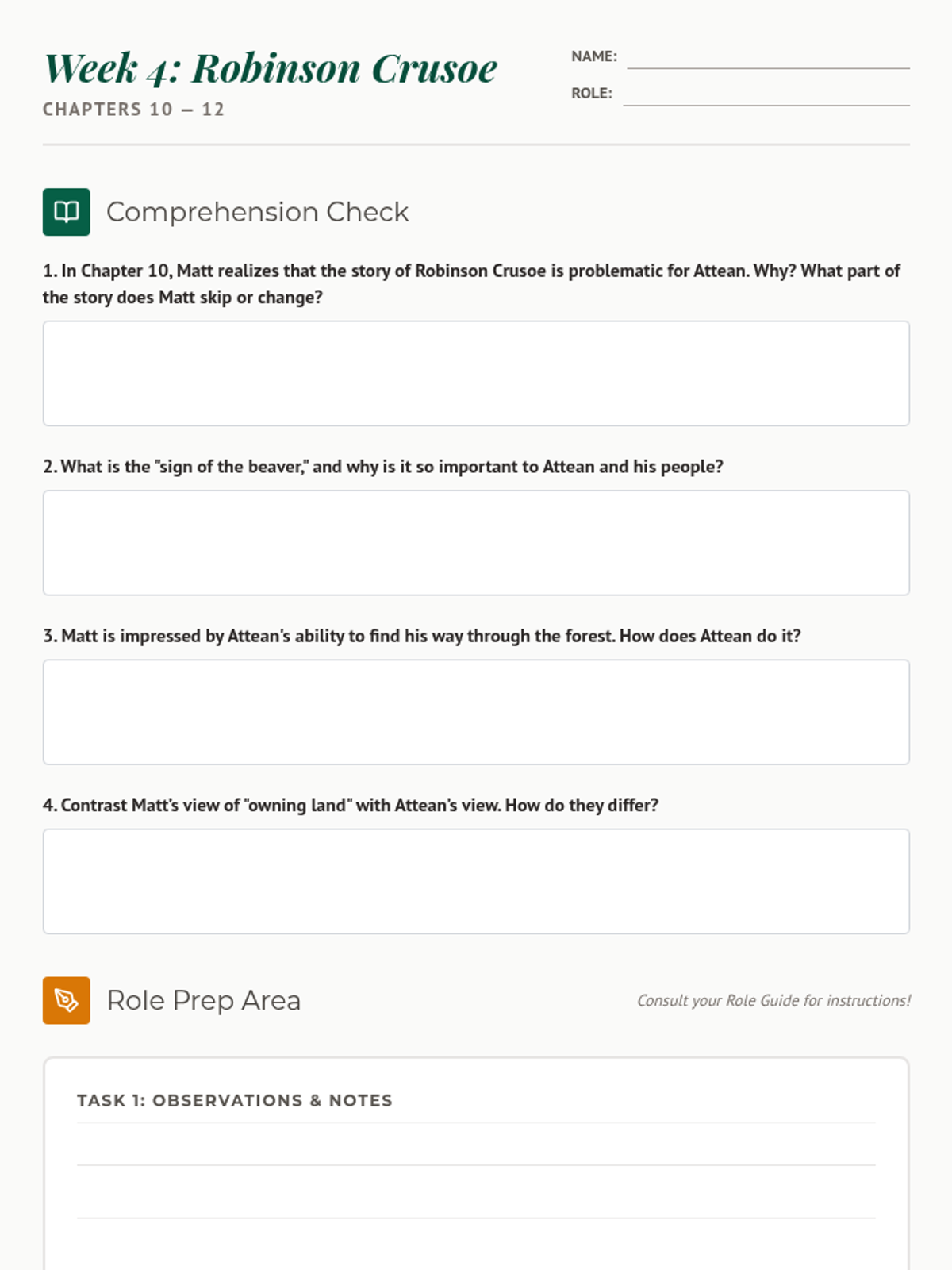
Matt uses Robinson Crusoe to teach Attean, leading to deep discussions about culture and ownership. Reading Chapters 10-12.
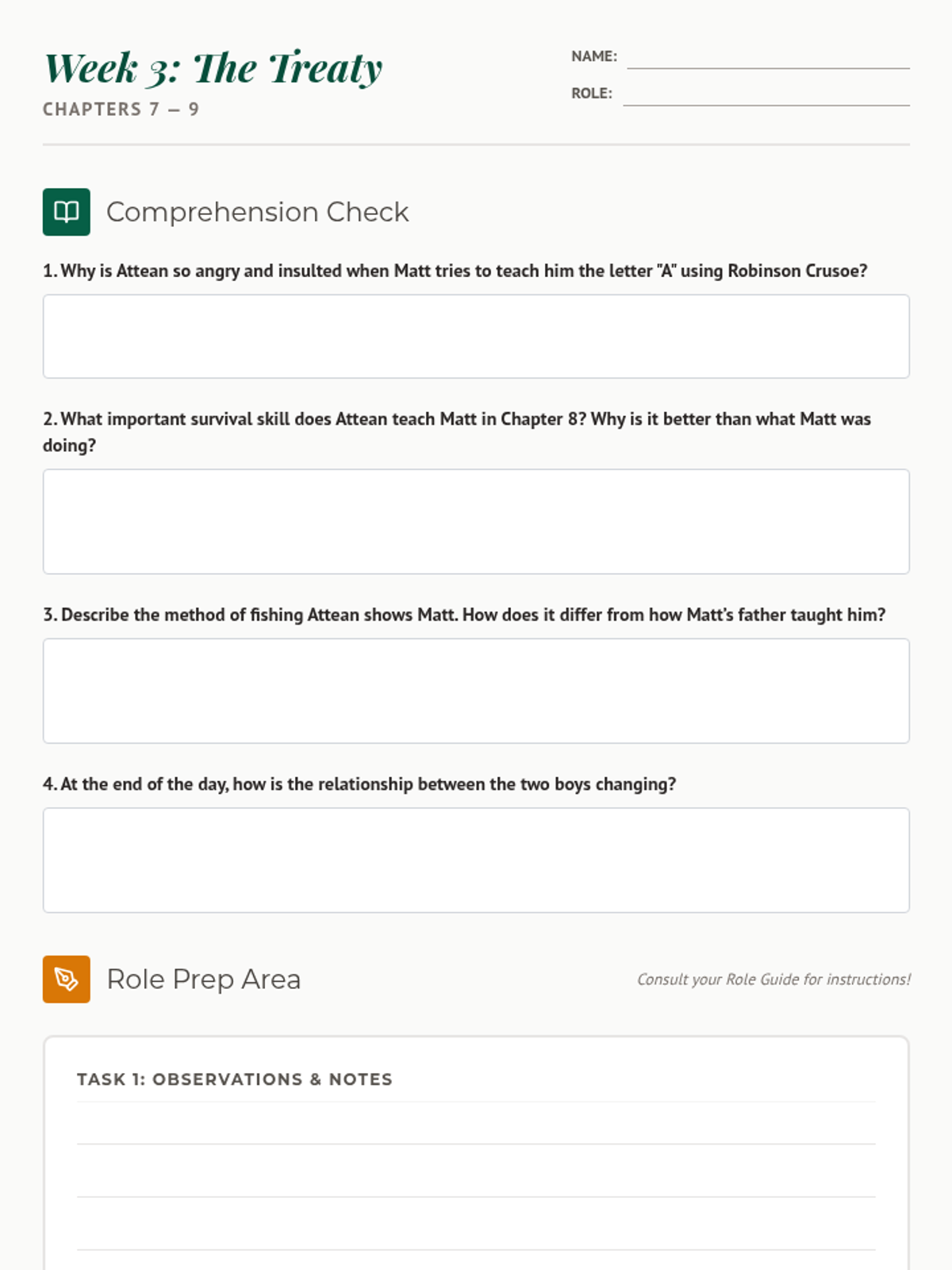
The beginning of the uneasy teaching arrangement between Matt and Attean. Reading Chapters 7-9.
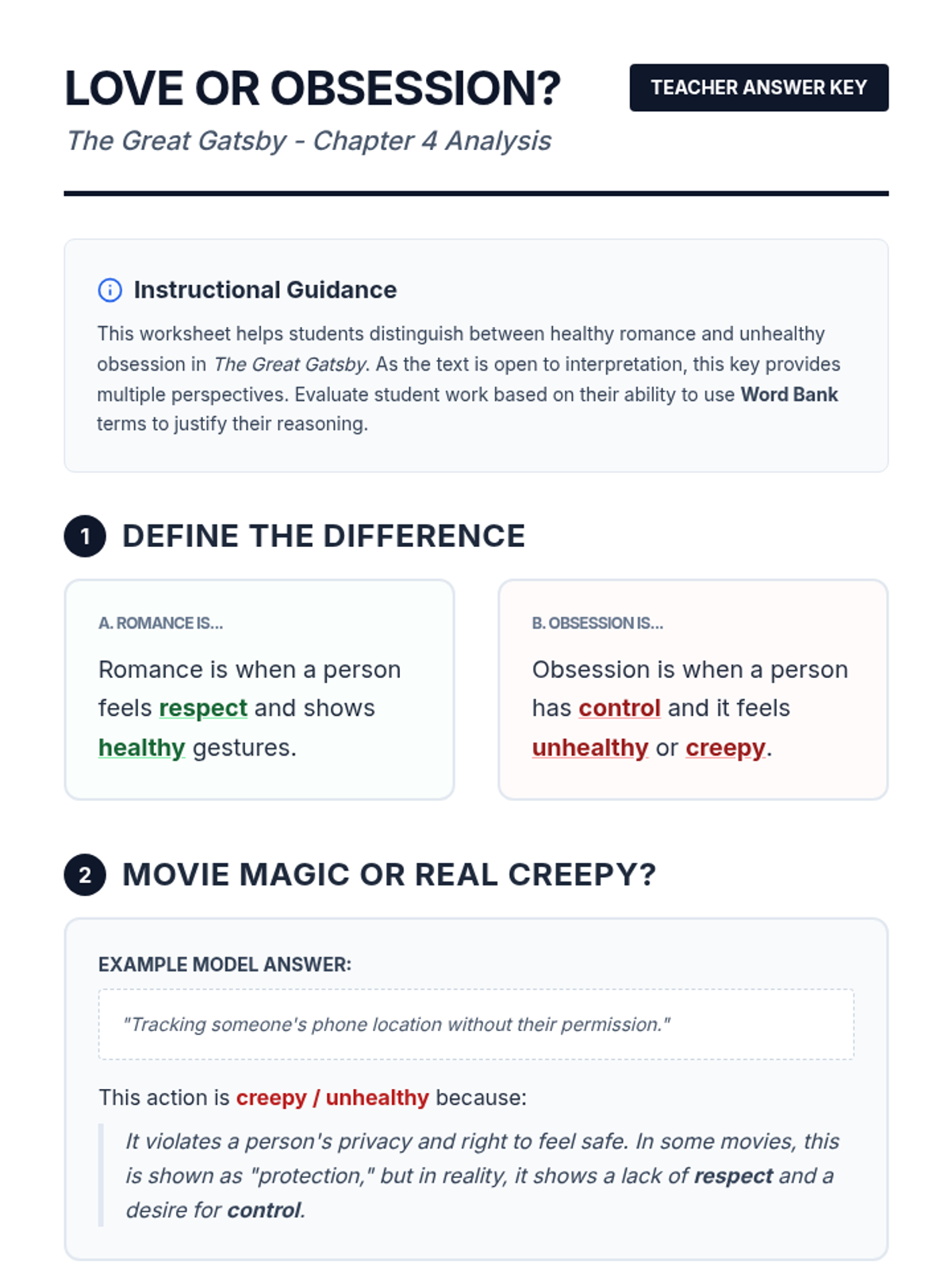
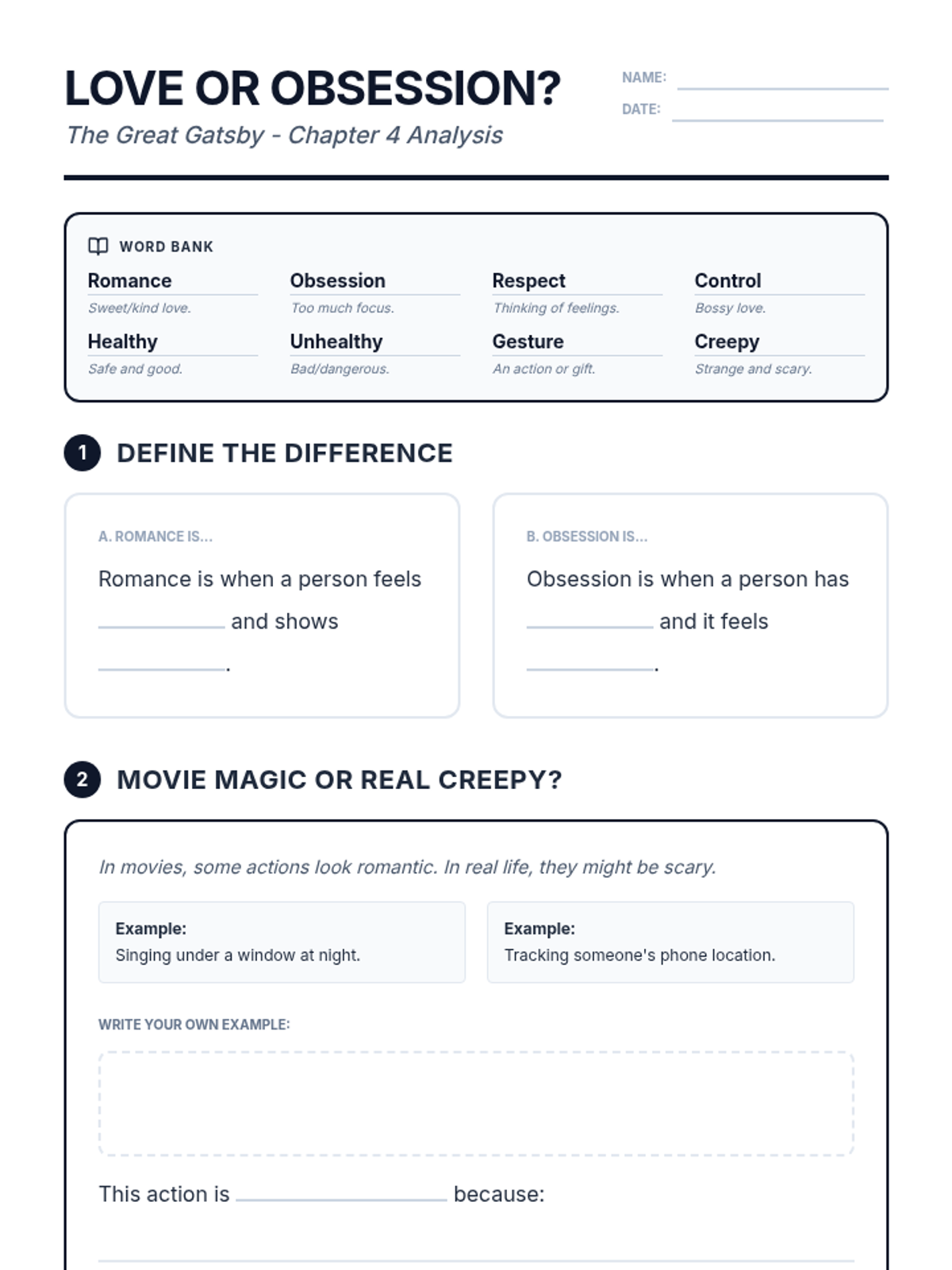
A deep dive into Gatsby's motivations in Chapter 4, challenging students to evaluate whether his grand gestures for Daisy are romantic or represent an unhealthy obsession.
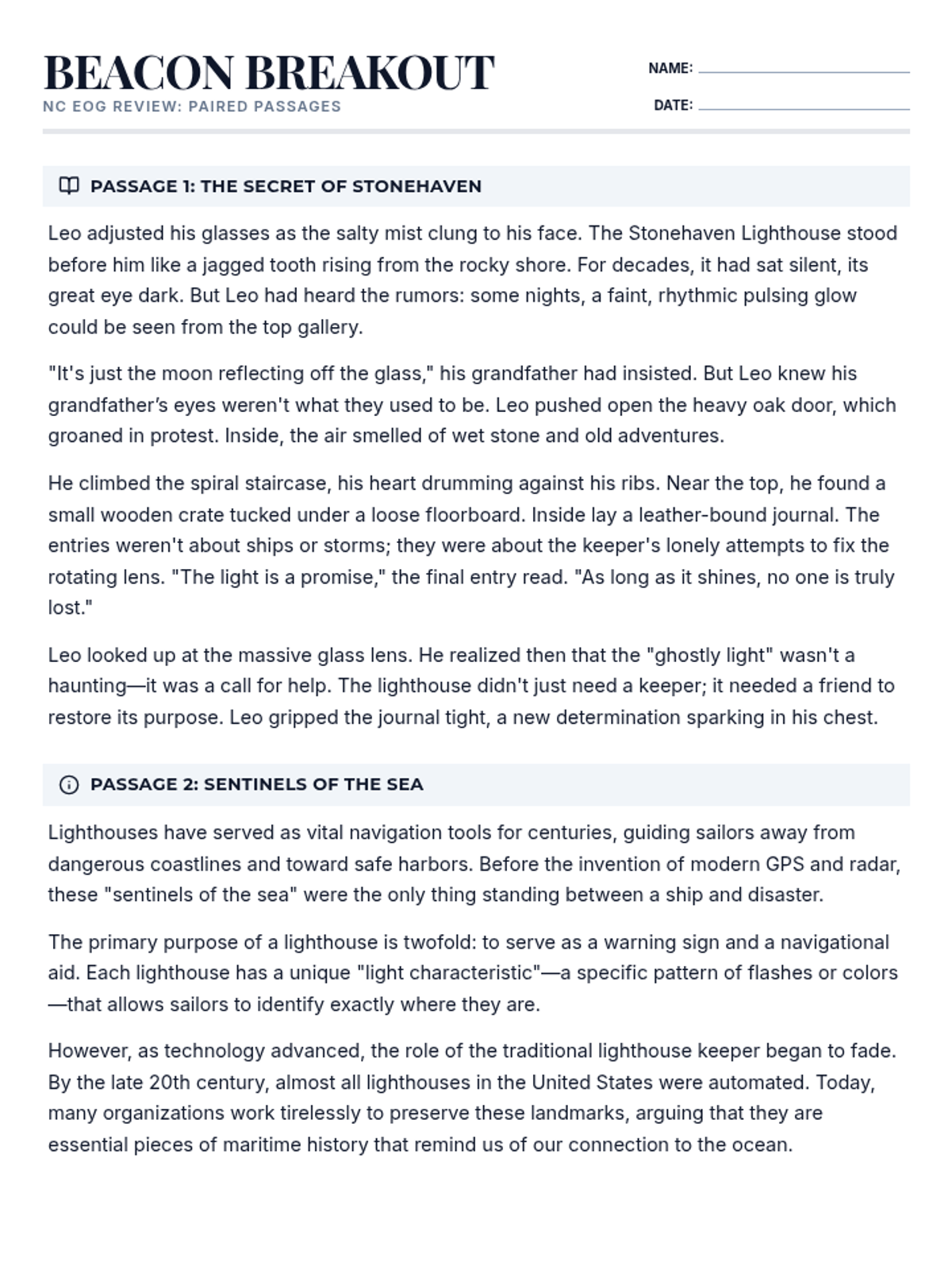
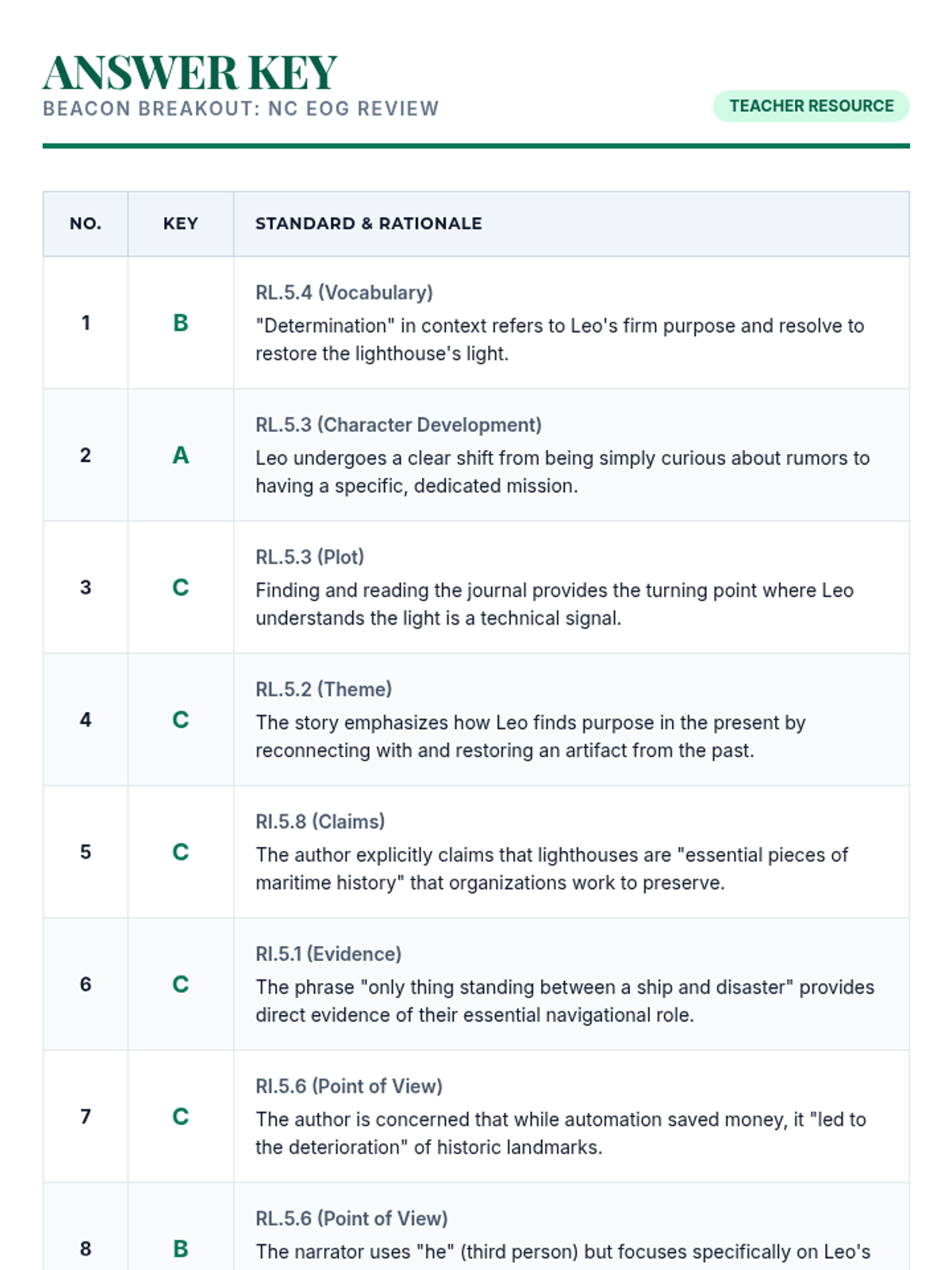
A comprehensive ELA review session focusing on paired passages (fiction and non-fiction) to prepare students for the NC EOG assessment. Students will analyze claims, evidence, point of view, and literary elements across two themed texts.
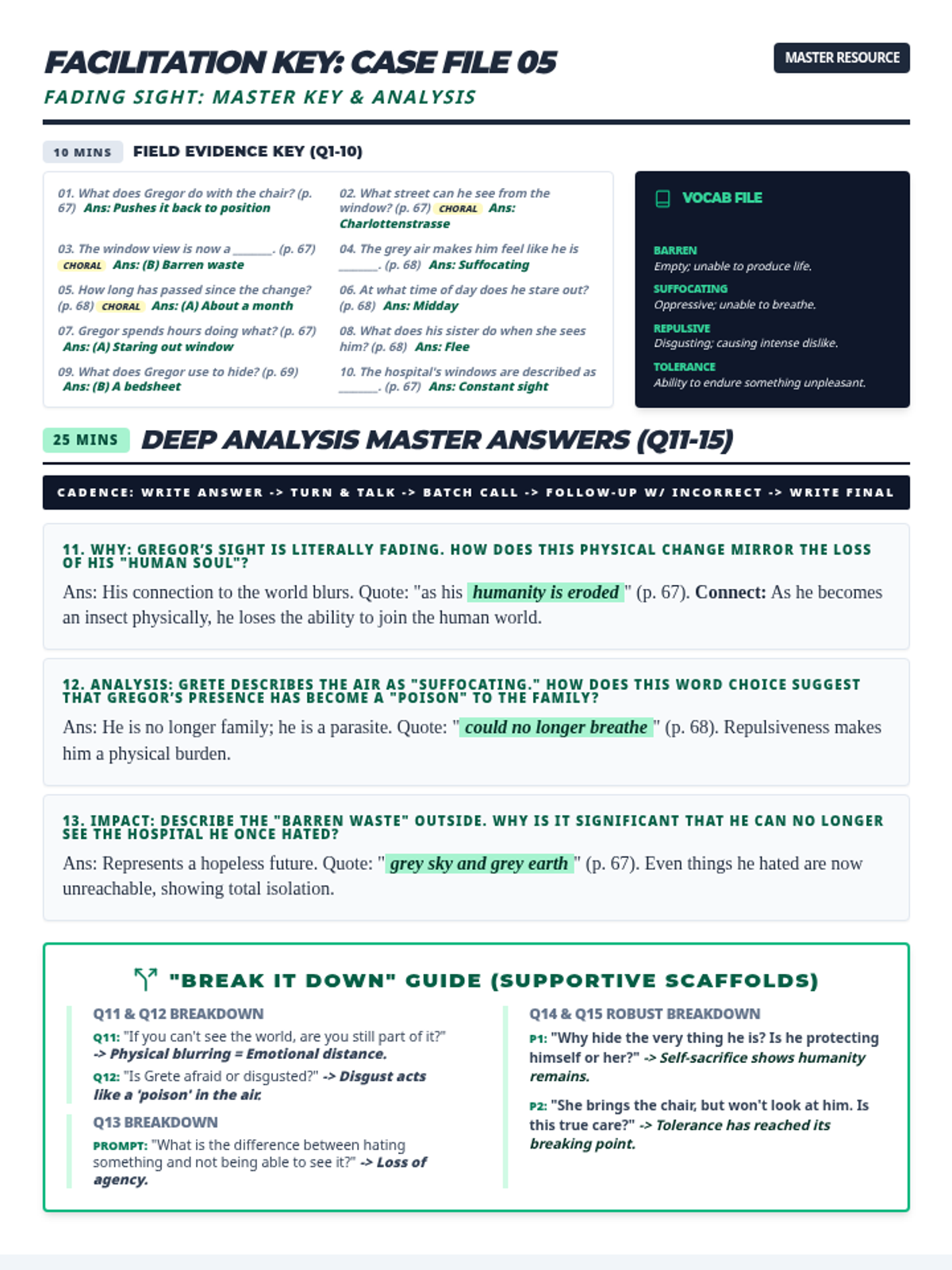
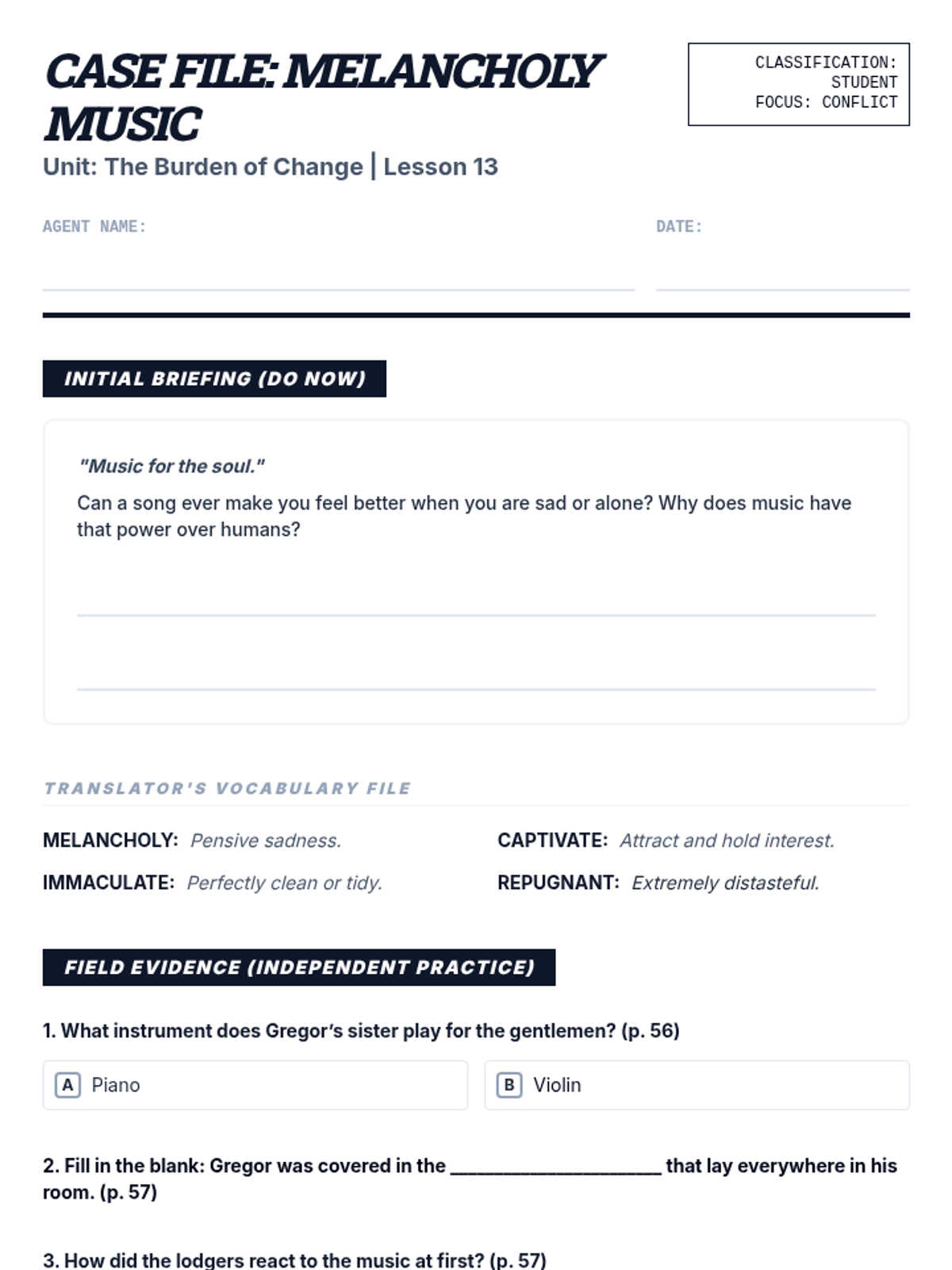
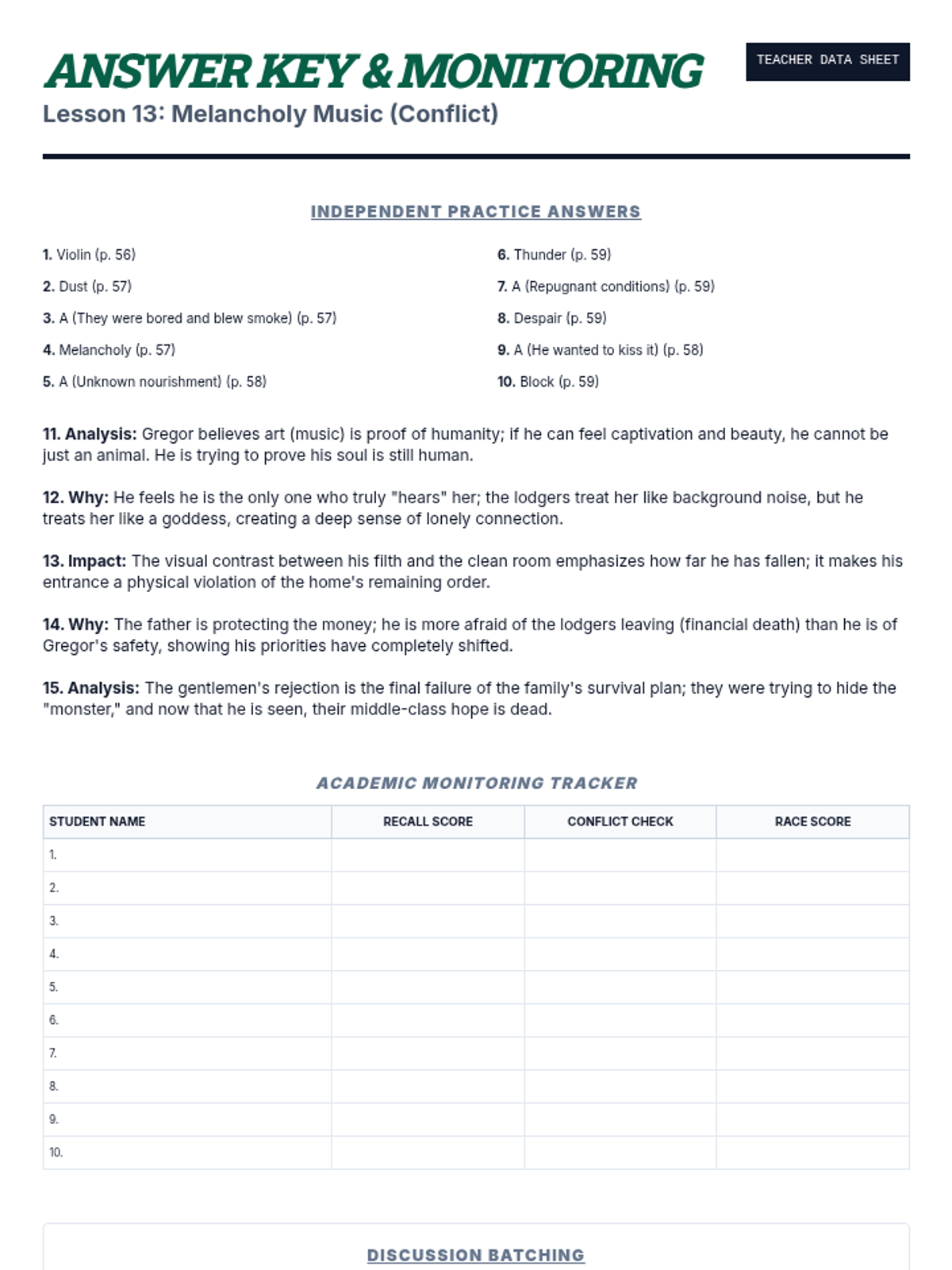
A lesson focusing on Gregor Samsa's physical and emotional decay, specifically his fading eyesight and the increasing conflict with his family as his humanity is further eroded. Students analyze symbols like the 'barren waste' and the 'suffocating' environment.
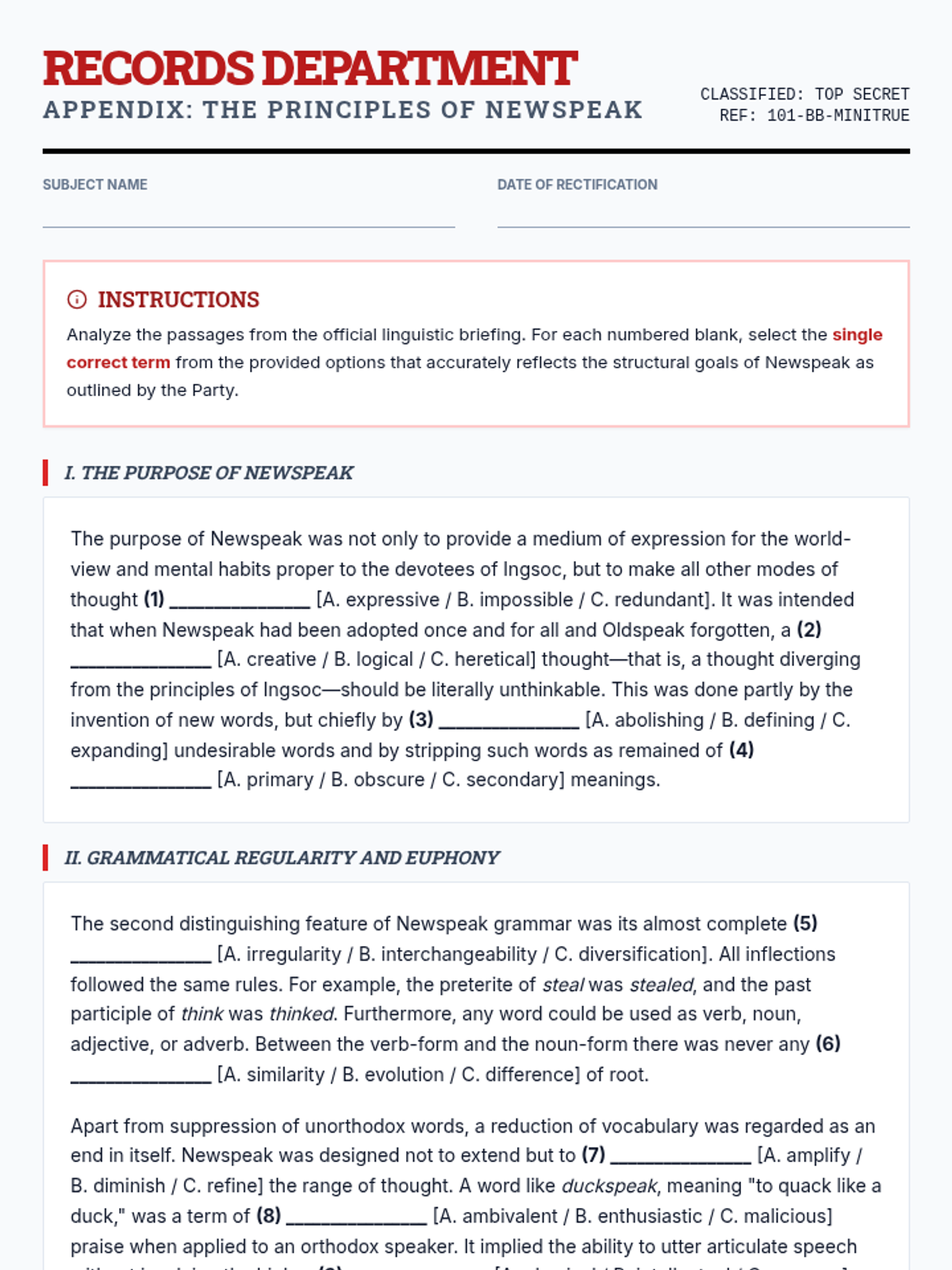
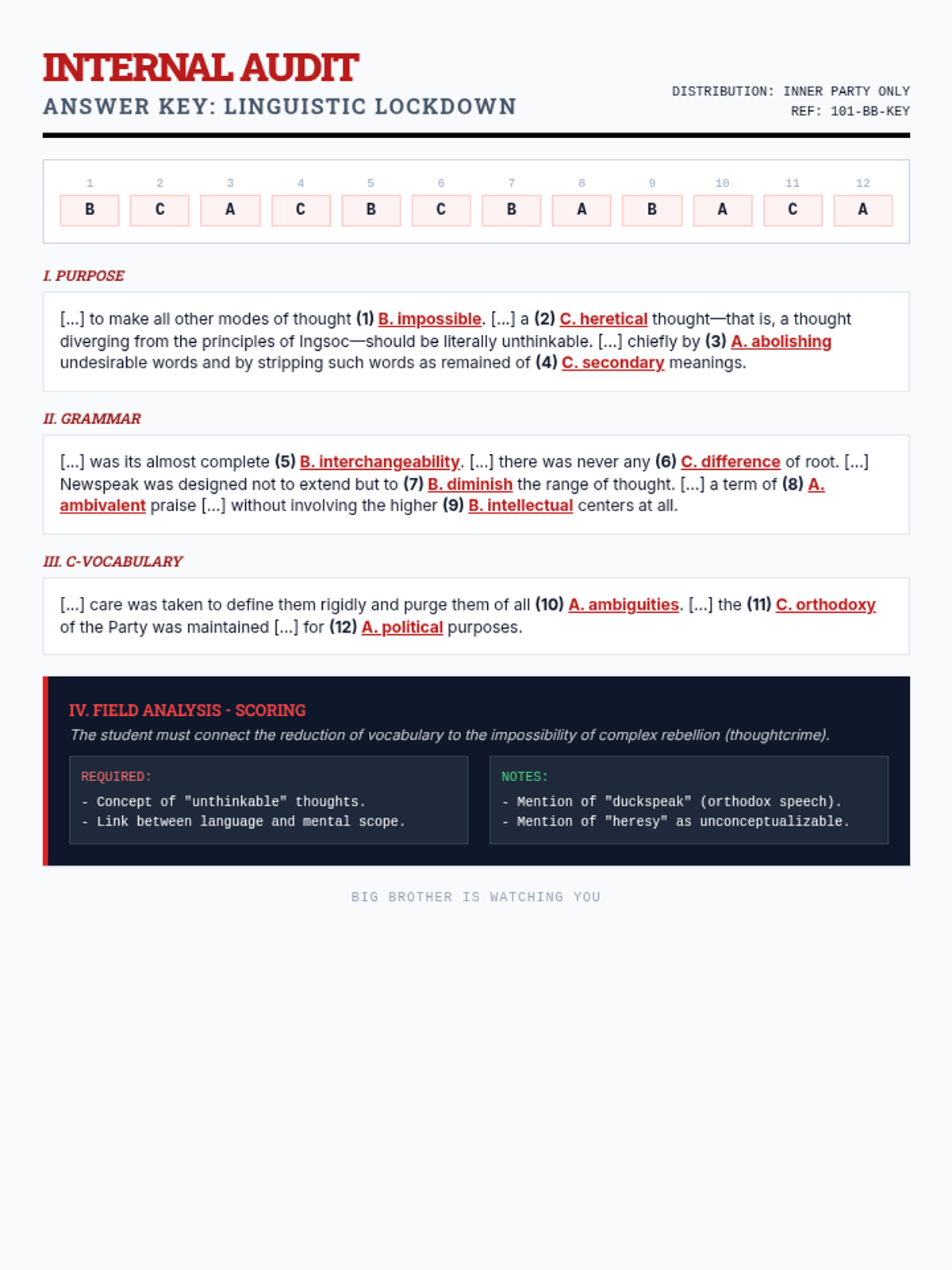
A deep dive into the linguistic control mechanisms of Oceania, focusing on the vocabulary and structural goals of Newspeak as described in George Orwell's 1984.
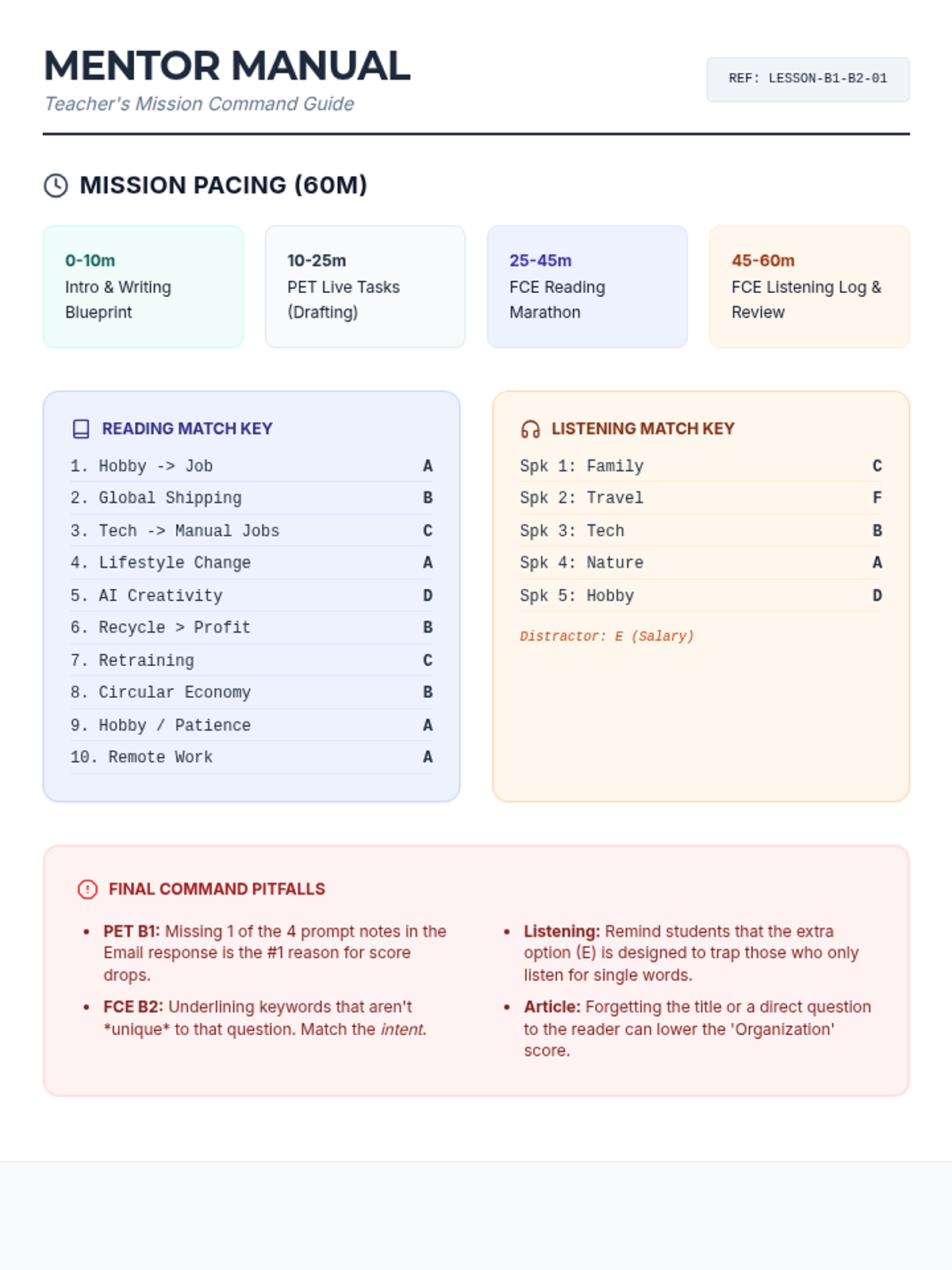
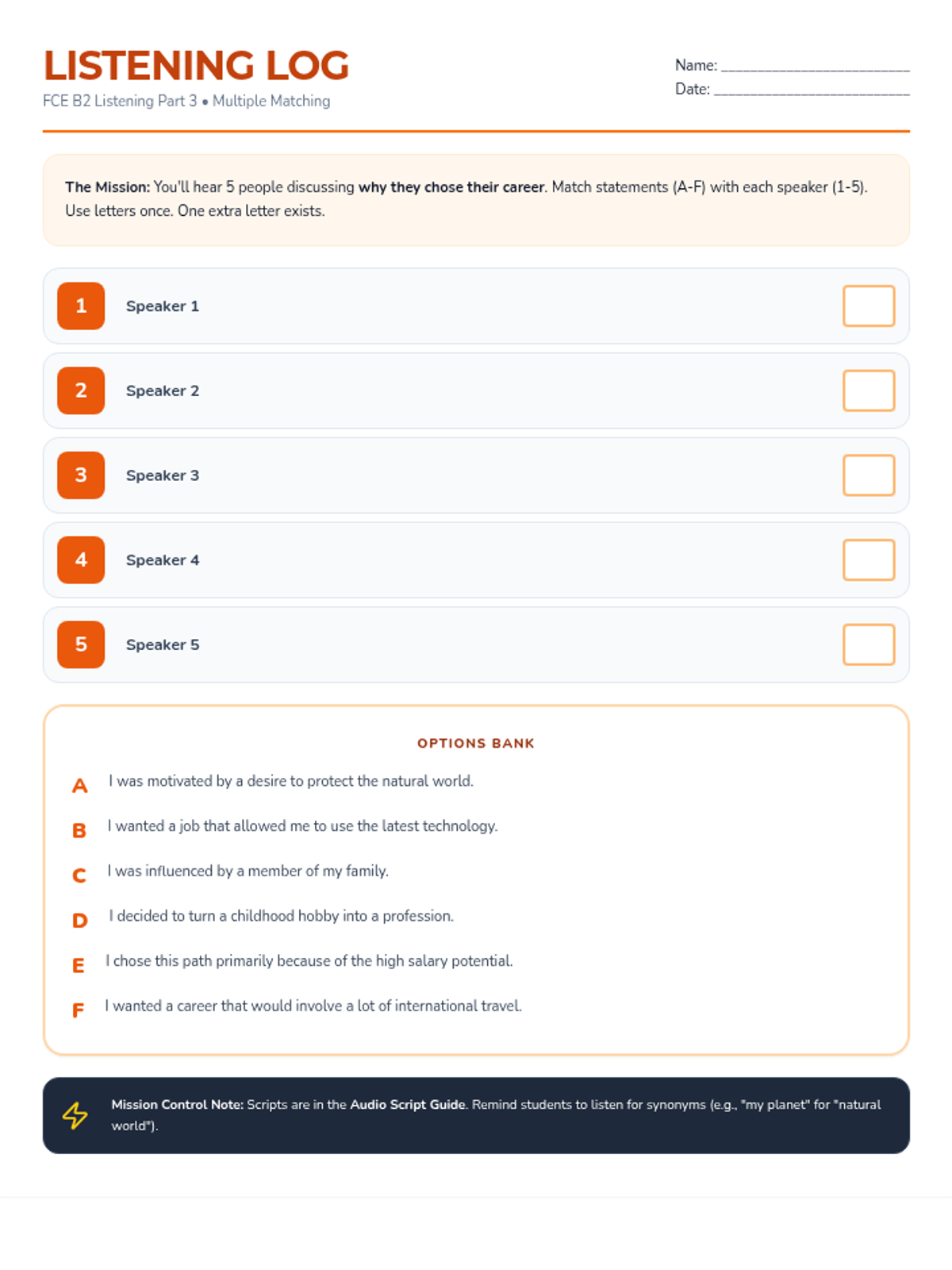
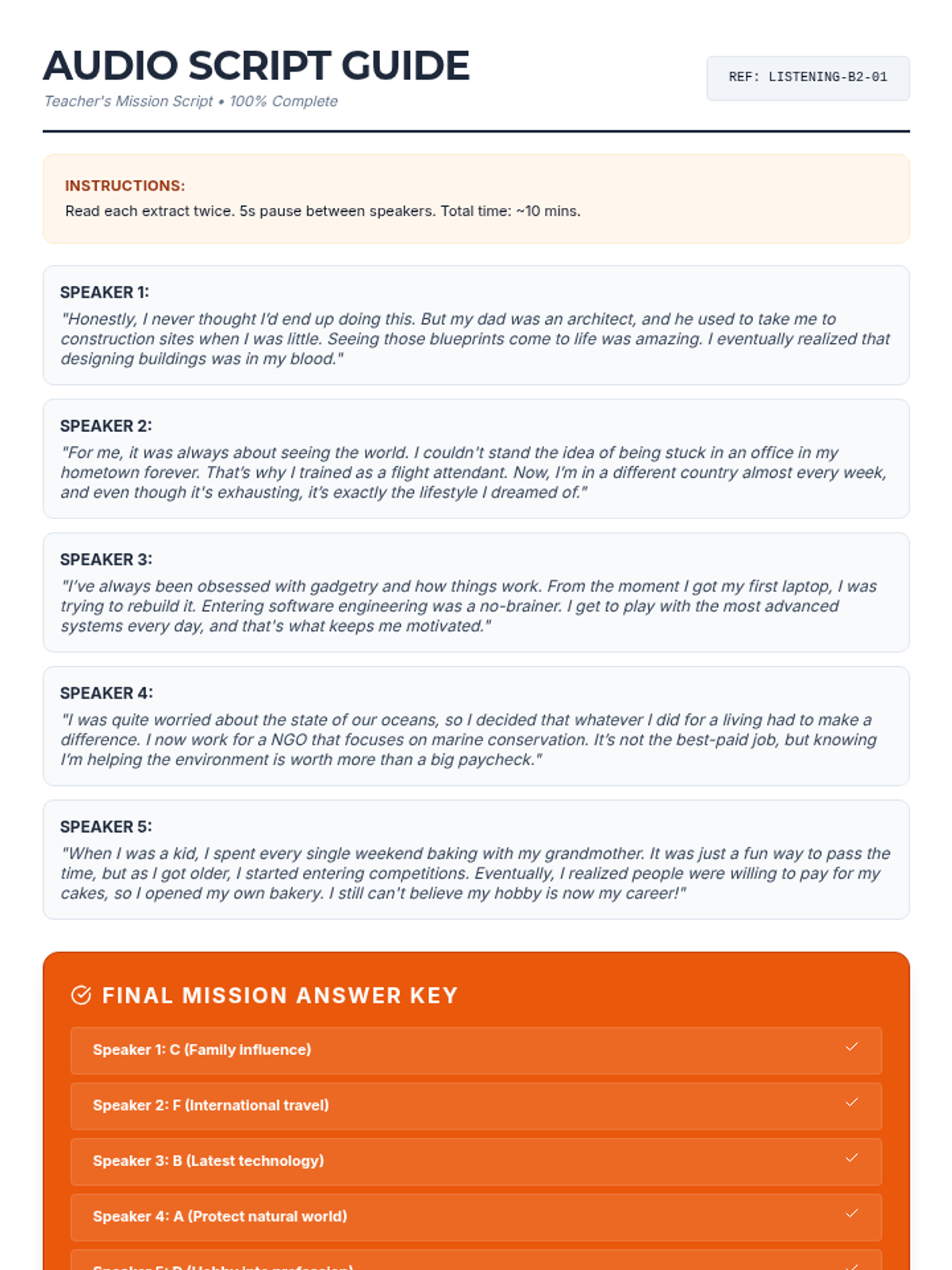
A comprehensive B1/B2 prep lesson focusing on PET Writing (Email, Article, Story) and FCE Multiple Matching strategies across diverse themes.
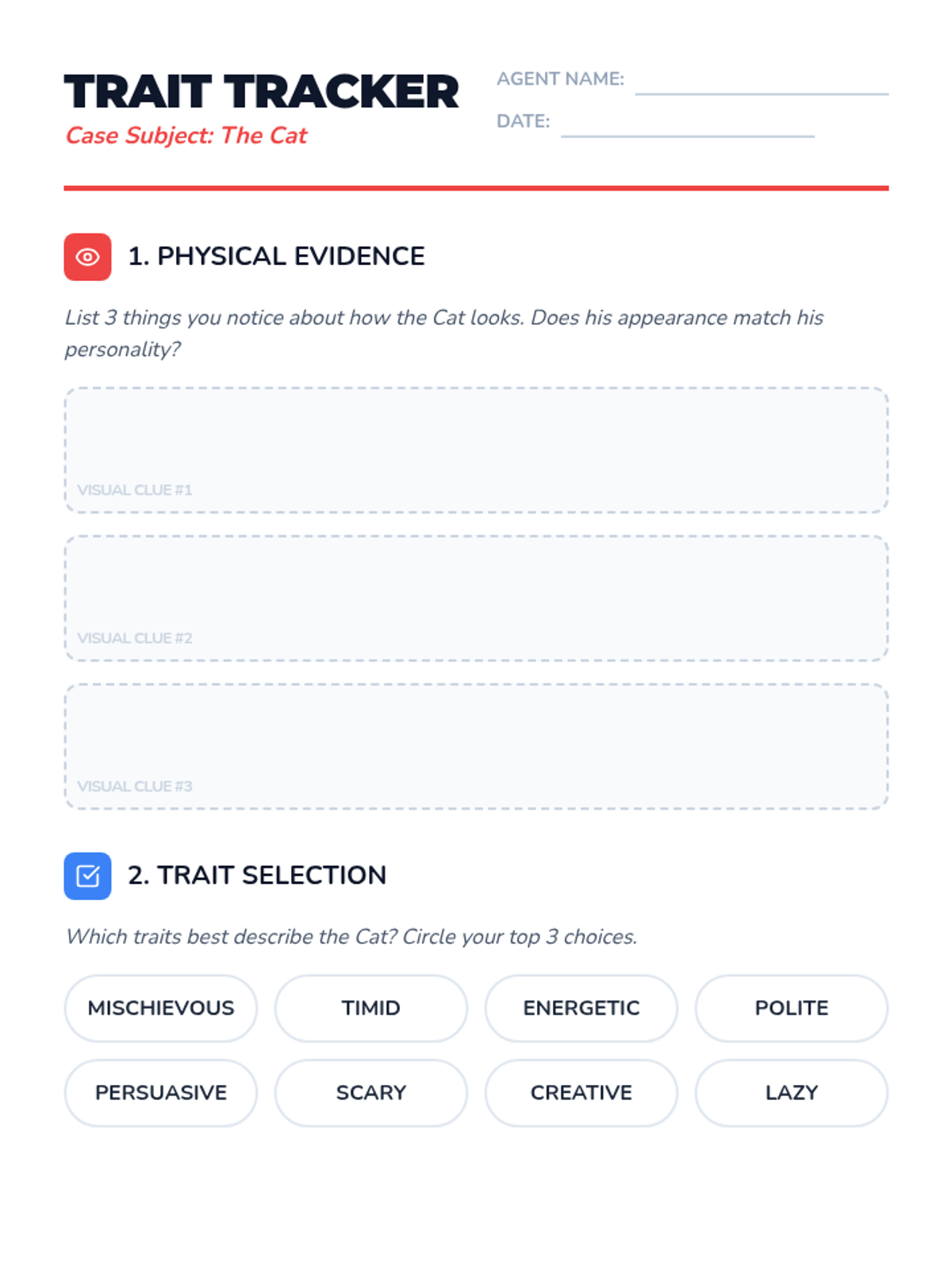
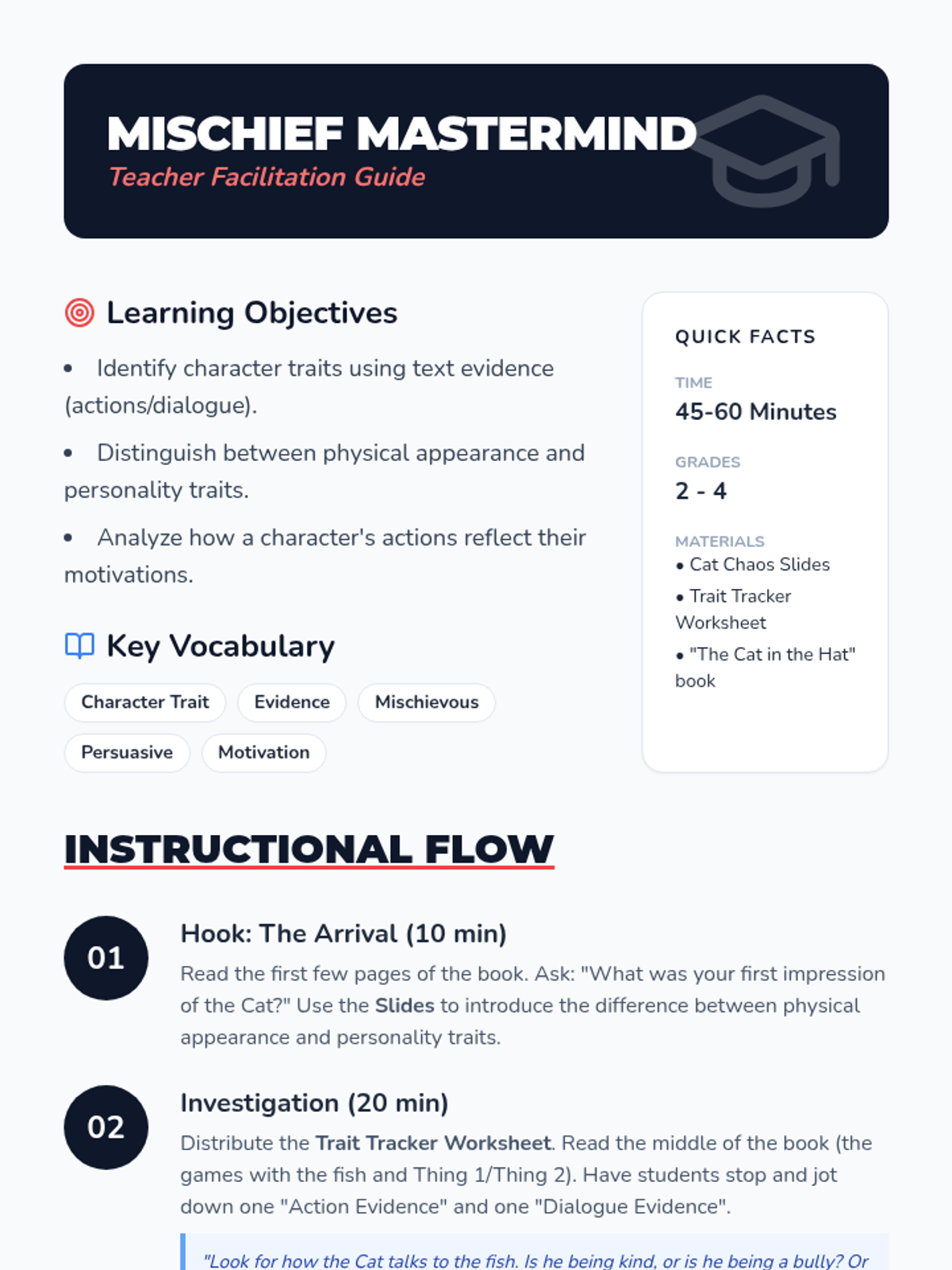
A whimsical exploration of character traits using the iconic Cat from 'The Cat in the Hat'. Students analyze evidence from the text to determine the Cat's personality and motivations.
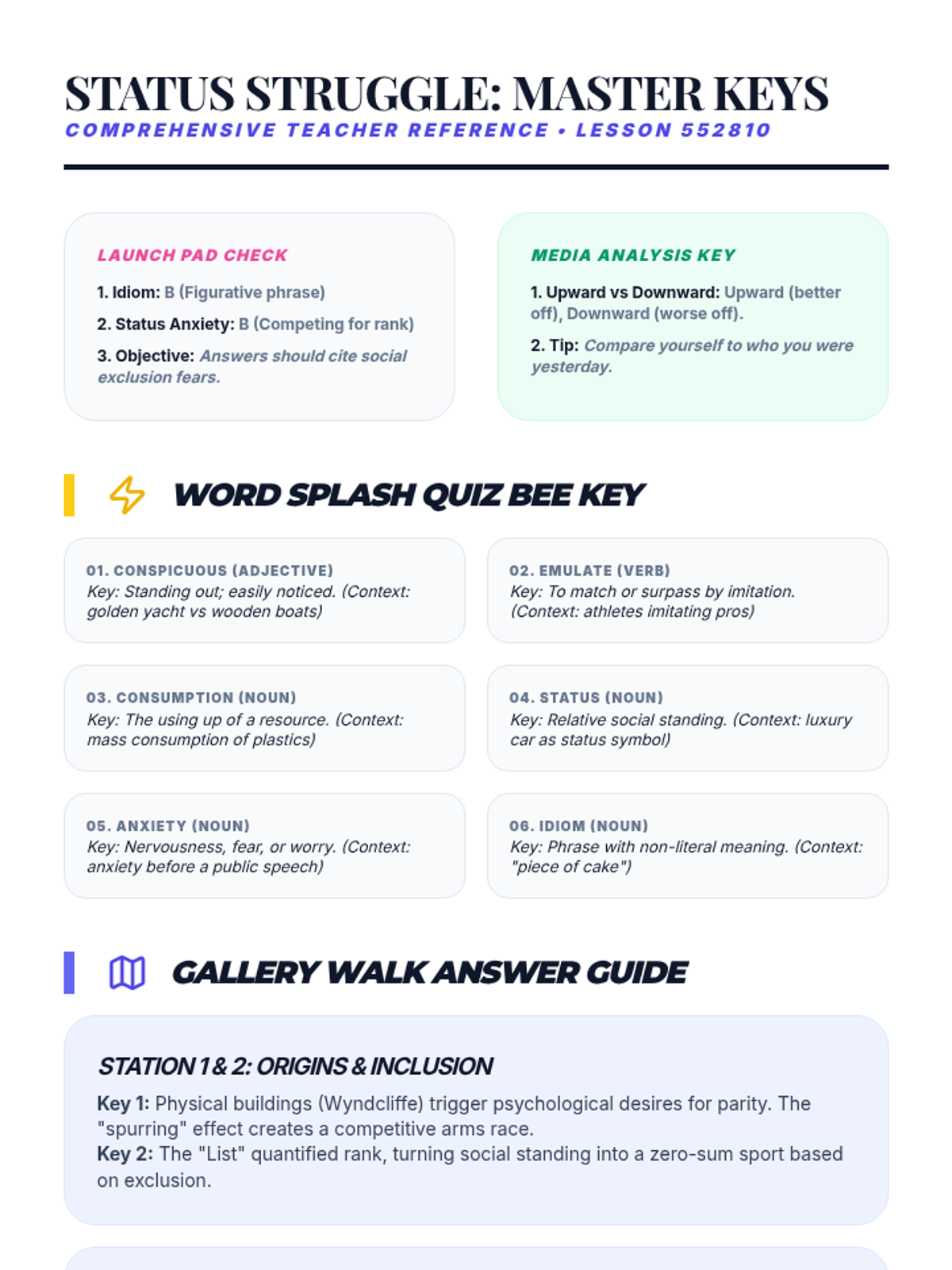
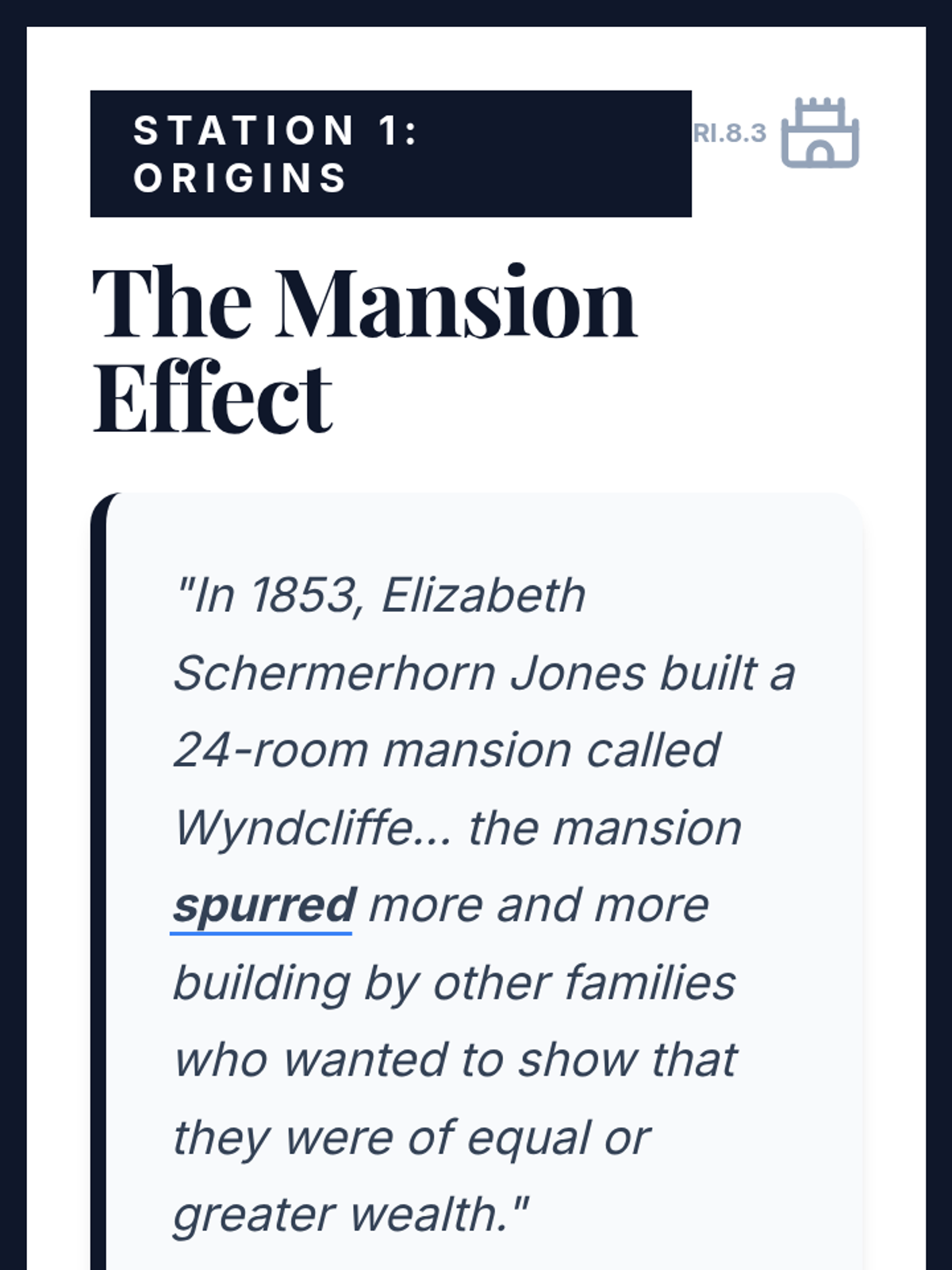
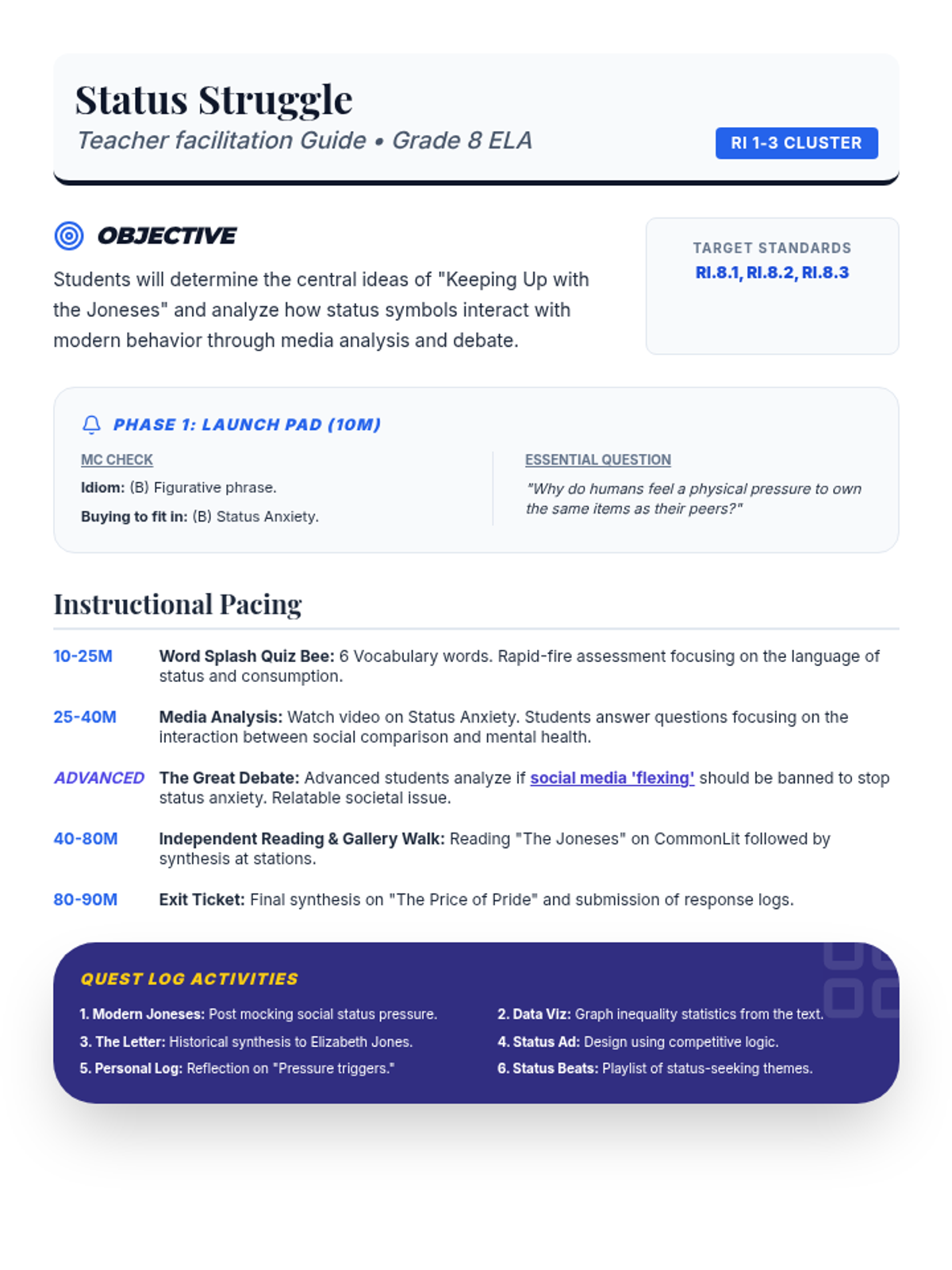
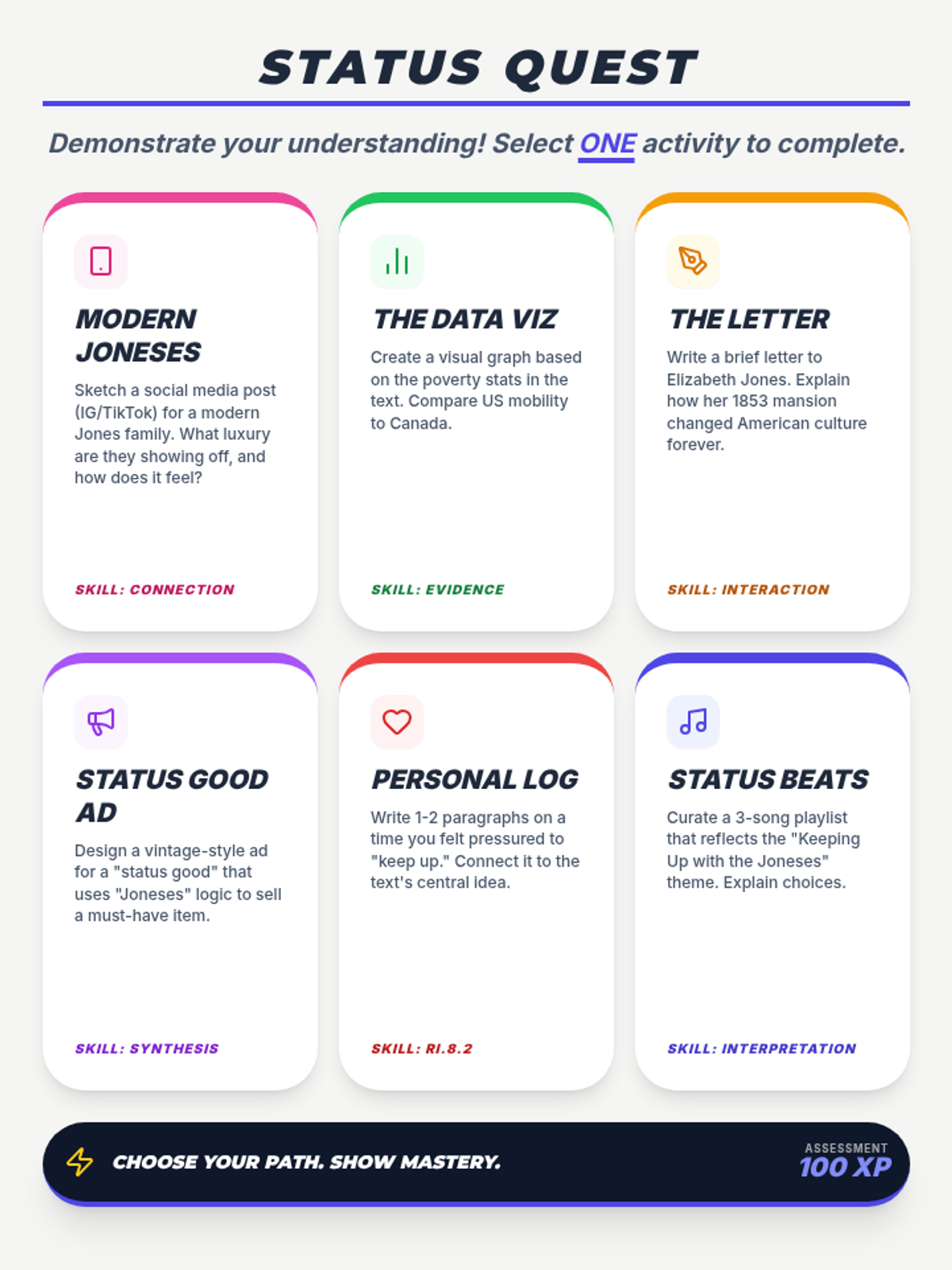
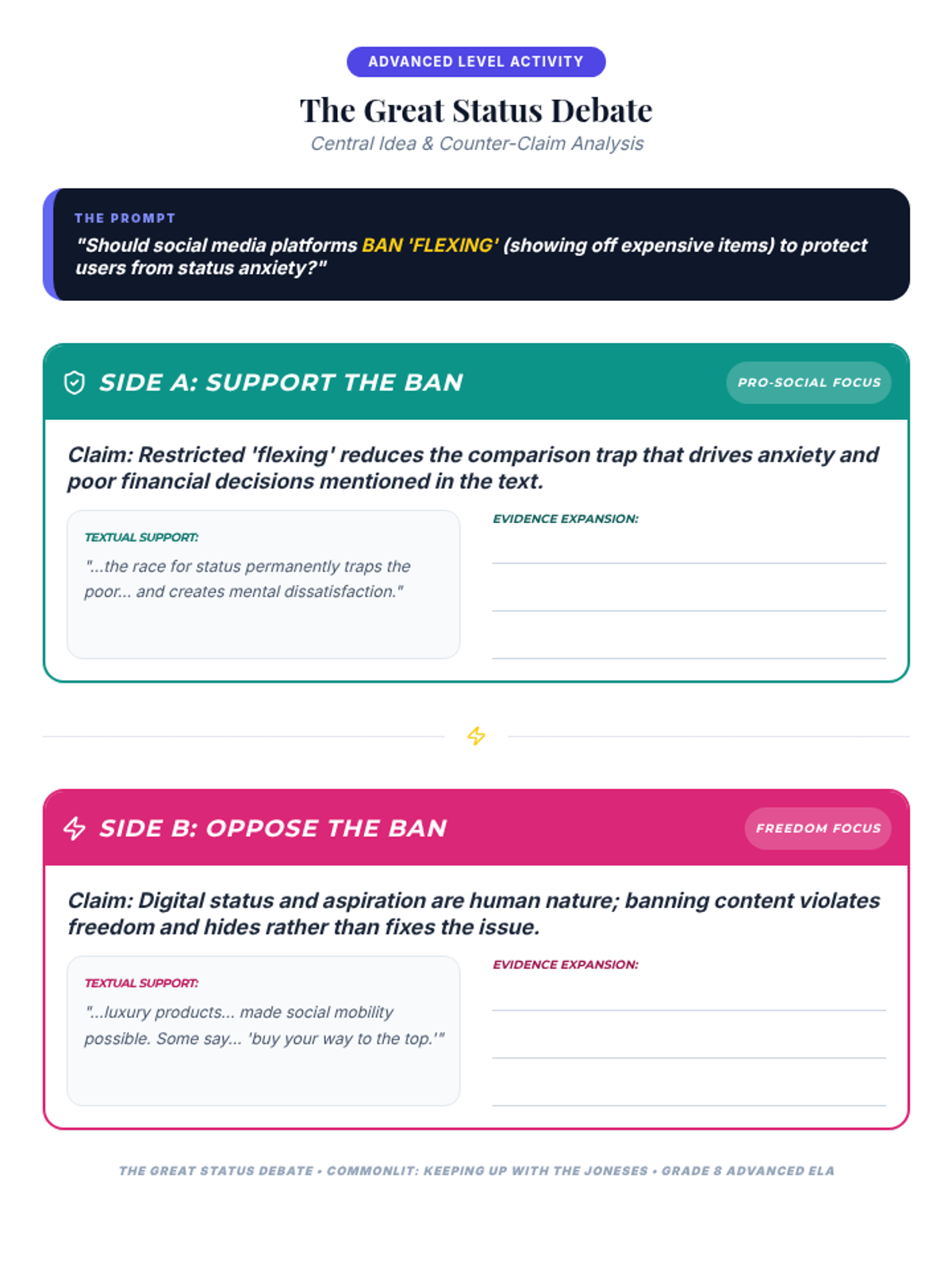
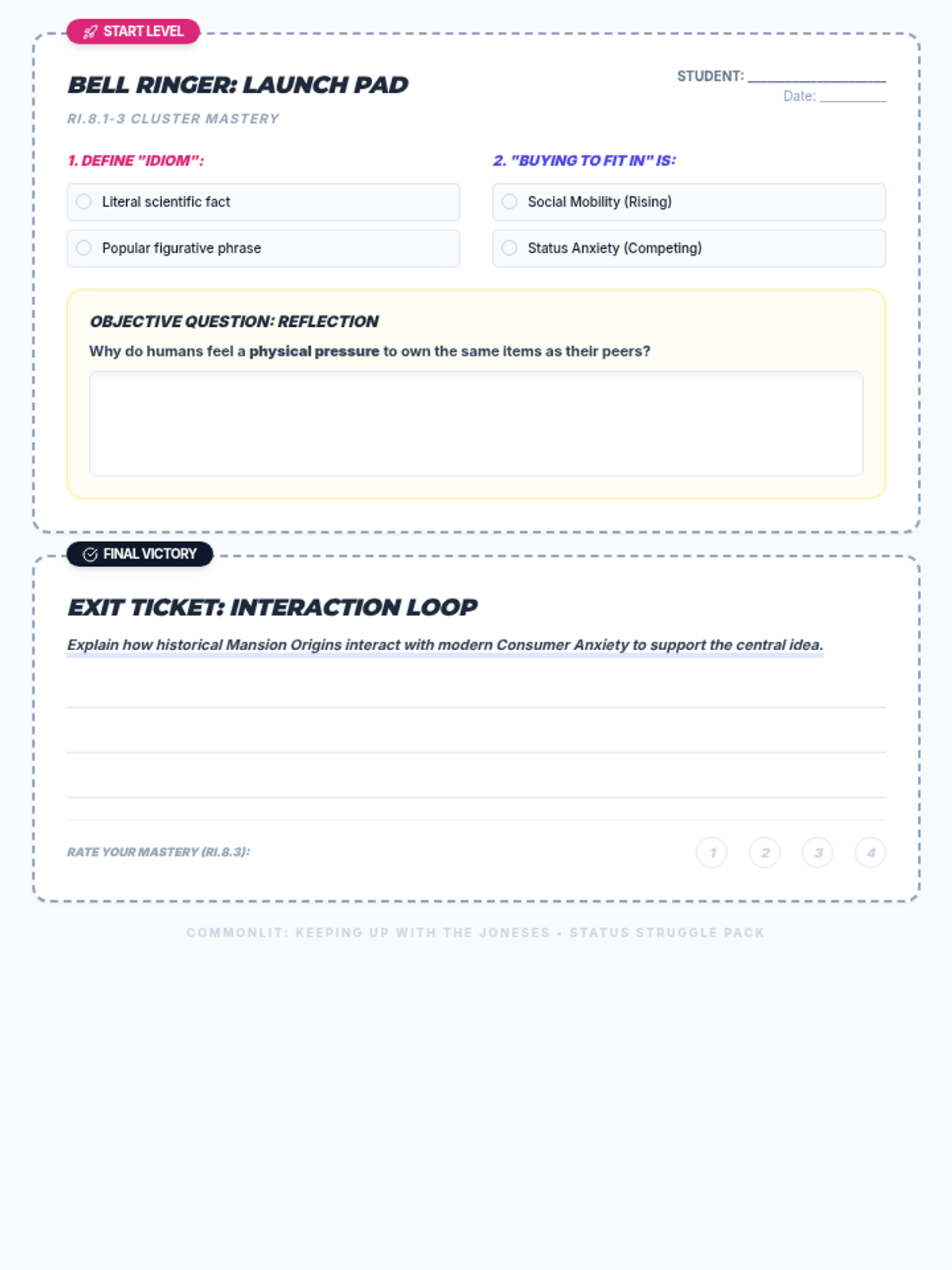
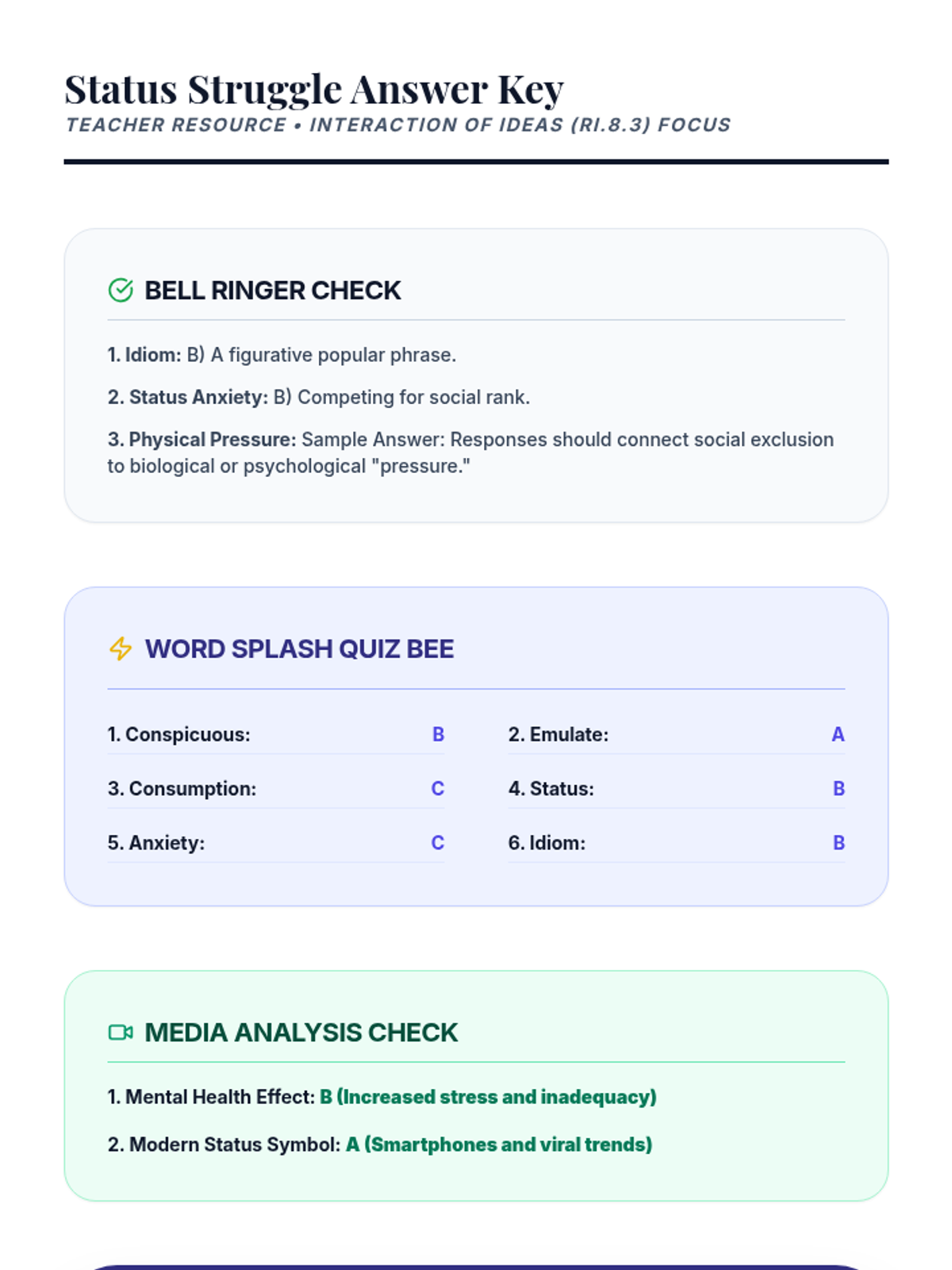
An 8th-grade ELA lesson focused on central ideas and evidence through the CommonLit text 'Keeping Up with the Joneses'. Students analyze the origins, social impacts, and psychological pressures of status-seeking behavior through vocabulary challenges, media analysis, and collaborative activities.
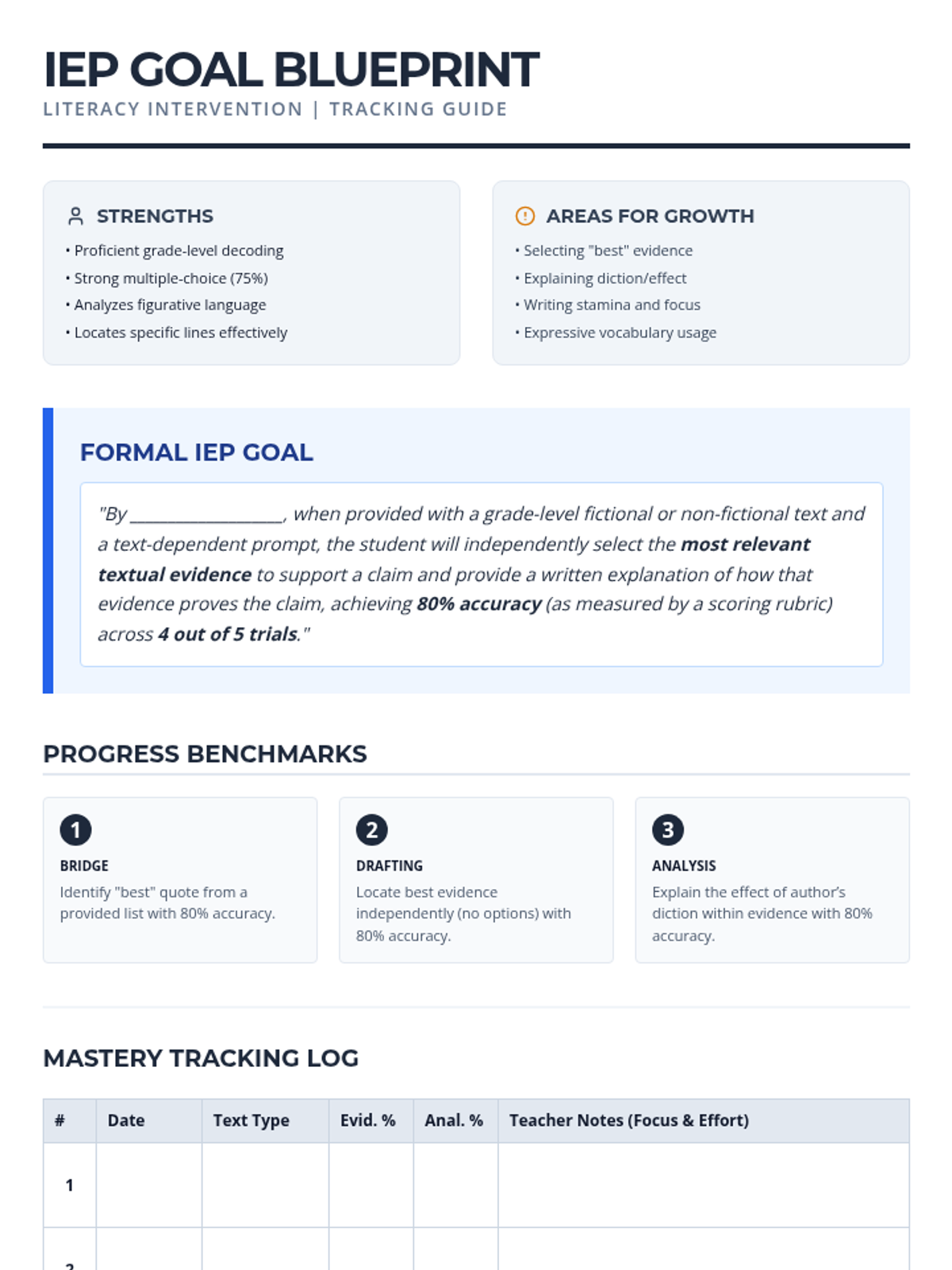
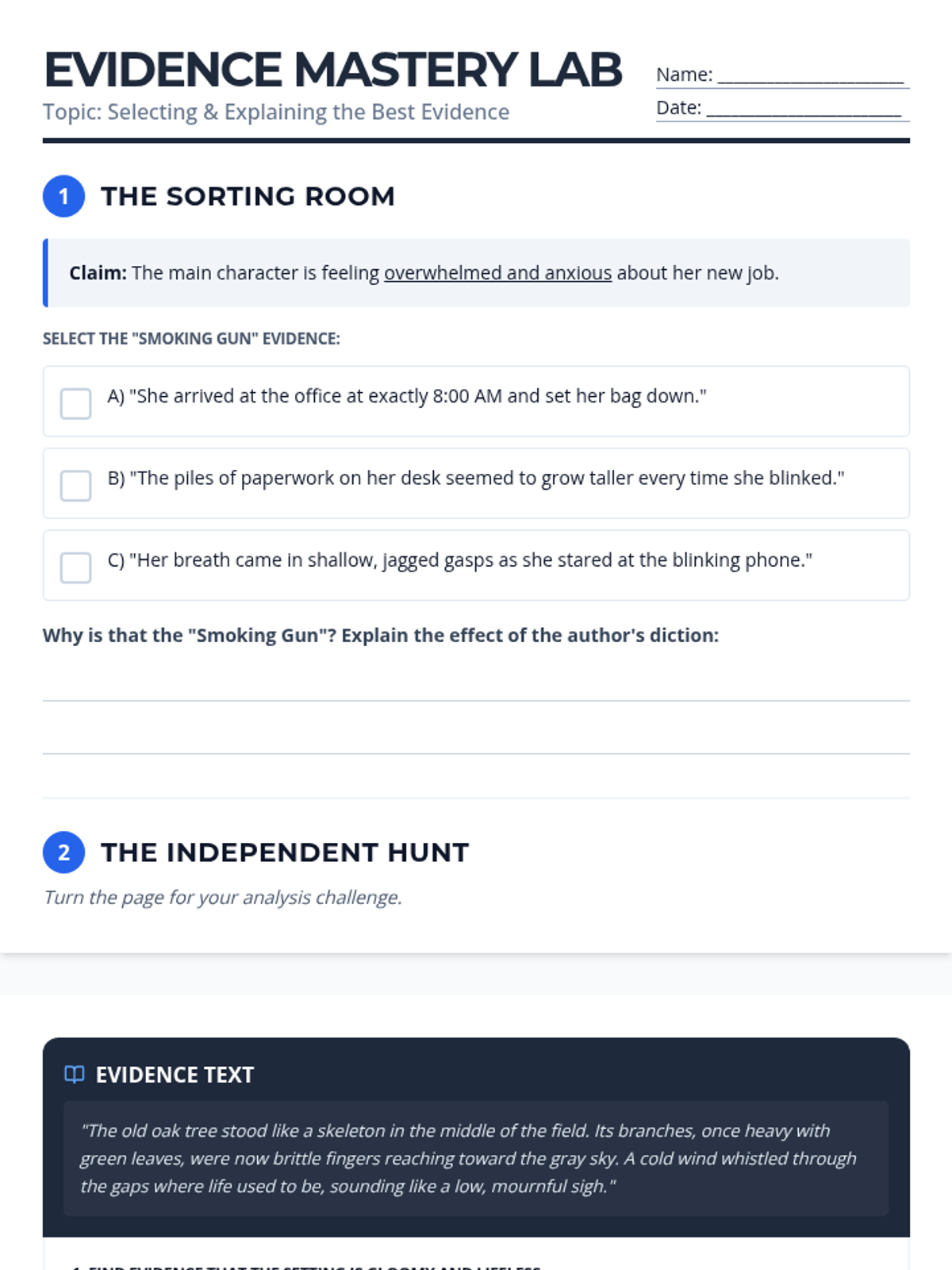
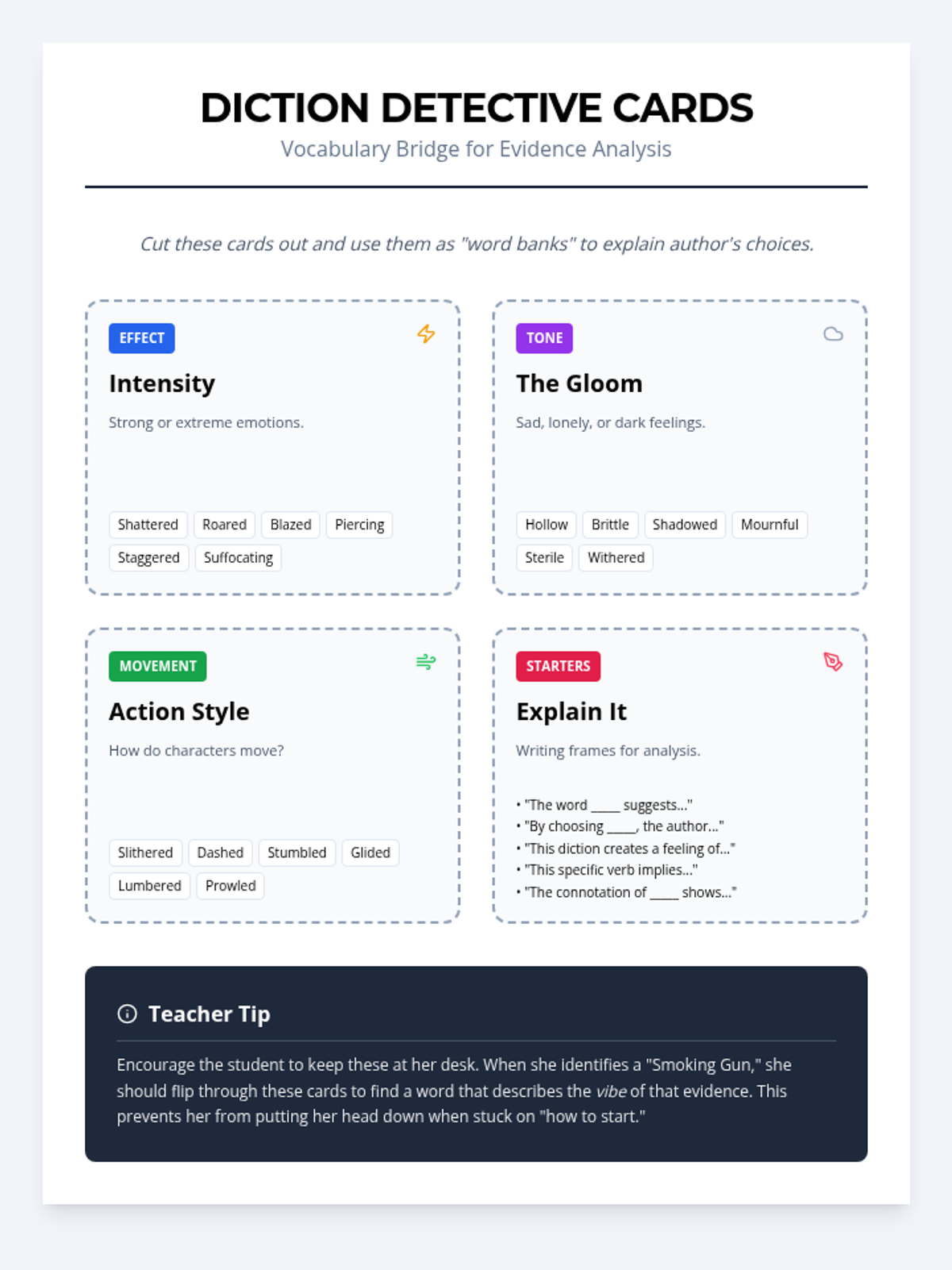
A comprehensive lesson focused on helping students master the skill of selecting and citing the 'best' textual evidence to support an argument, specifically designed to address gaps in writing and diction analysis.
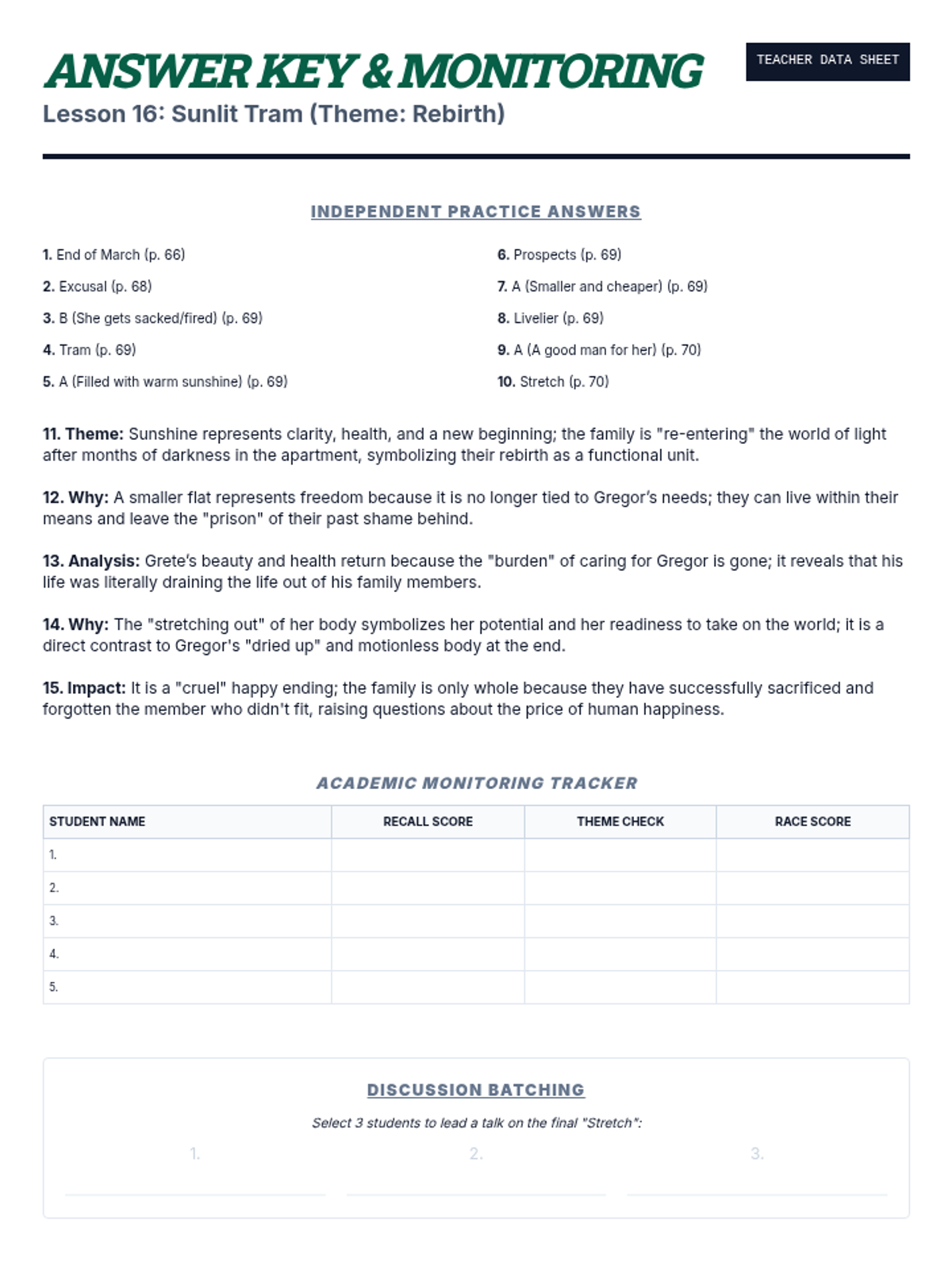
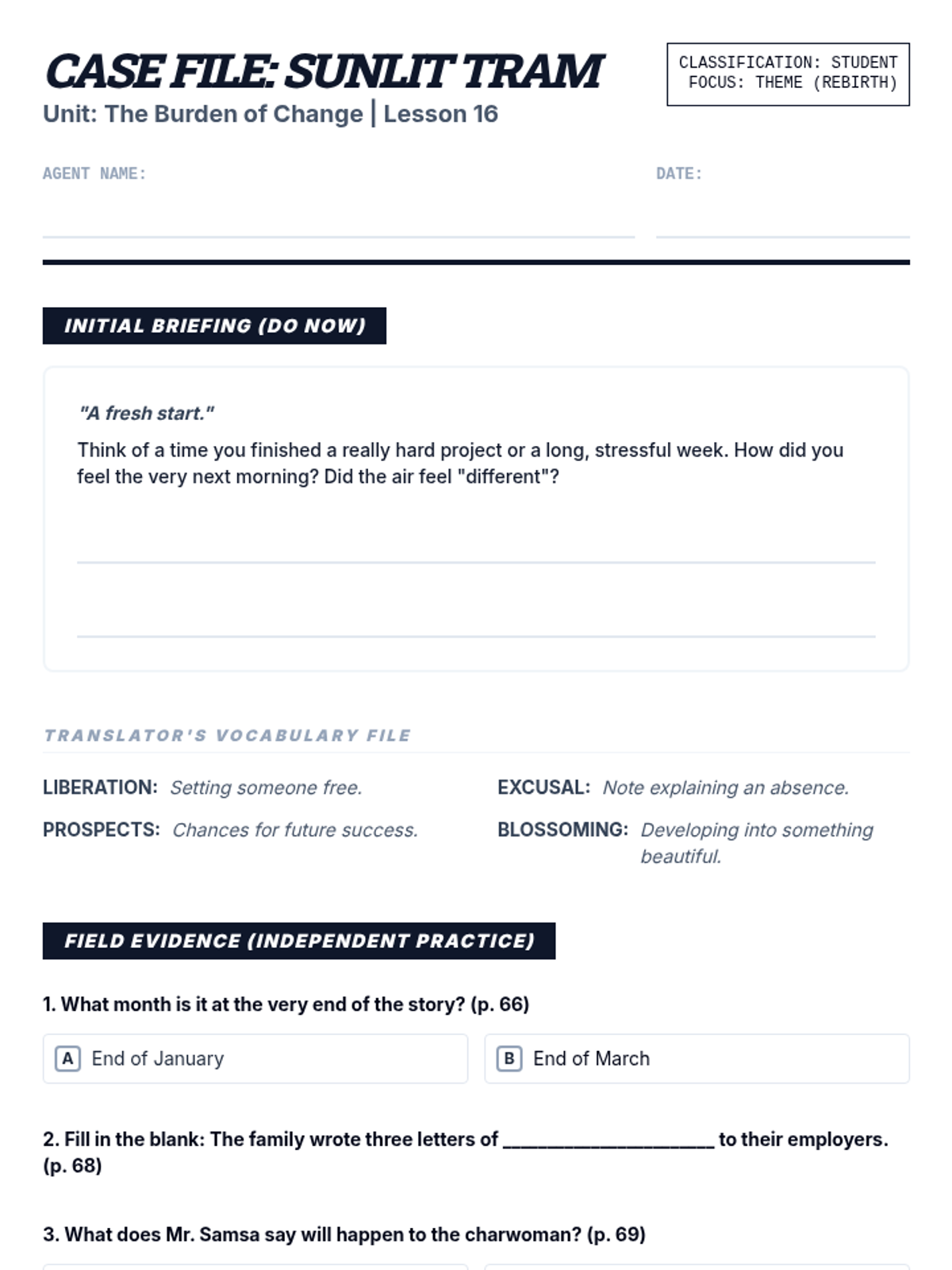
Concludes with the theme of rebirth and liberation as the family leaves the apartment and looks toward the future.
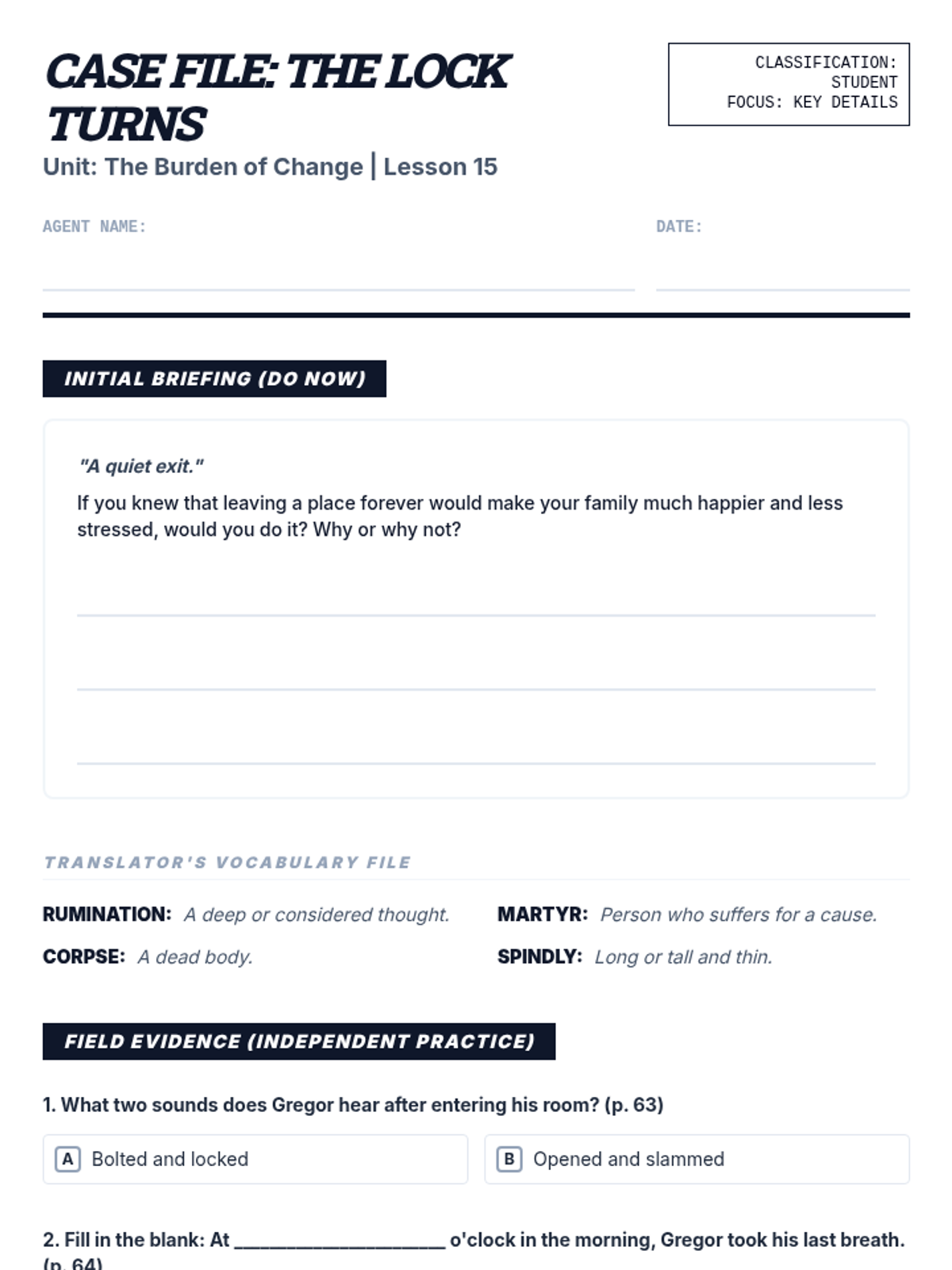
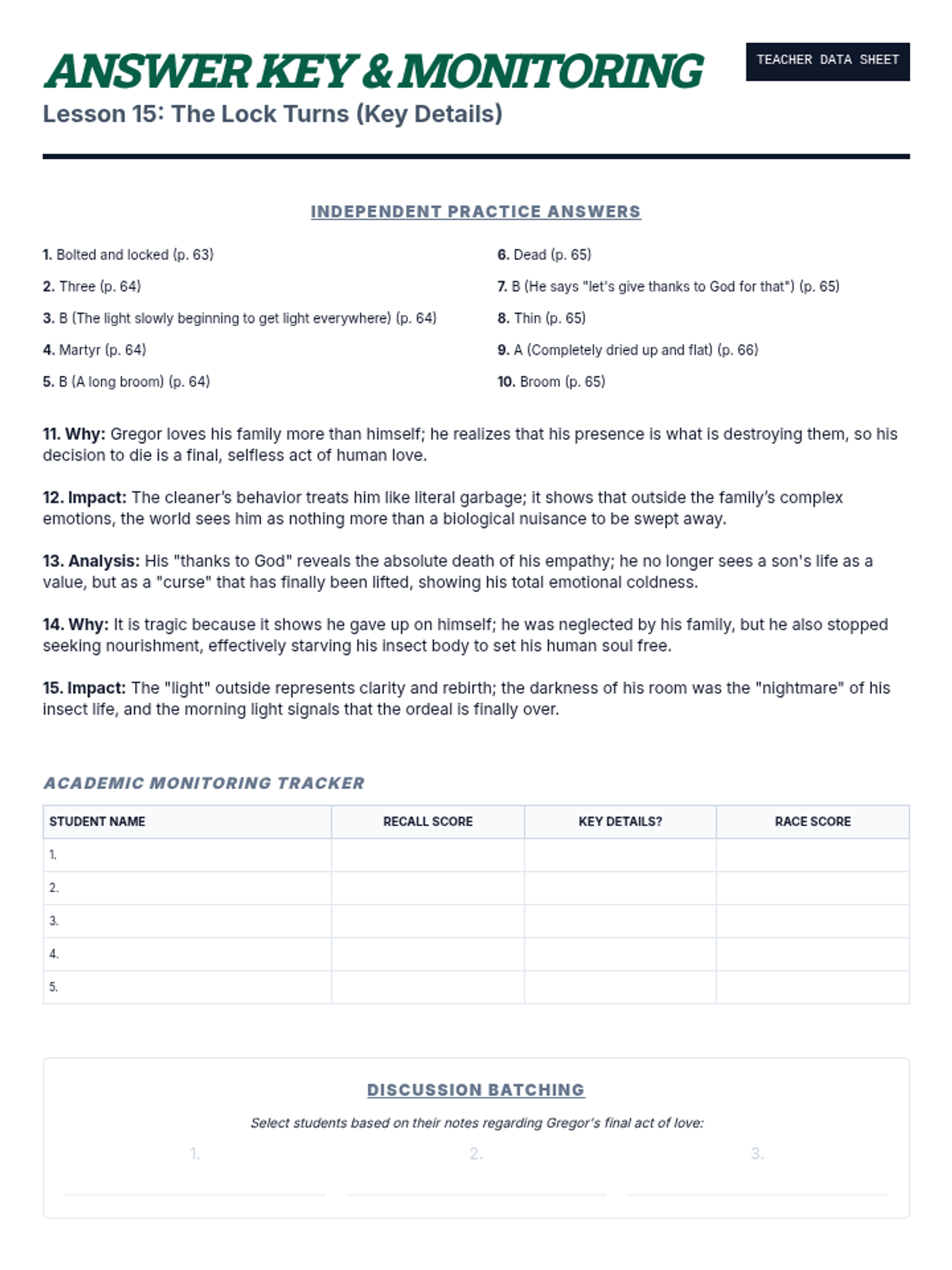
Focuses on the key details of Gregor's final moments and the discovery of his body by the charwoman.
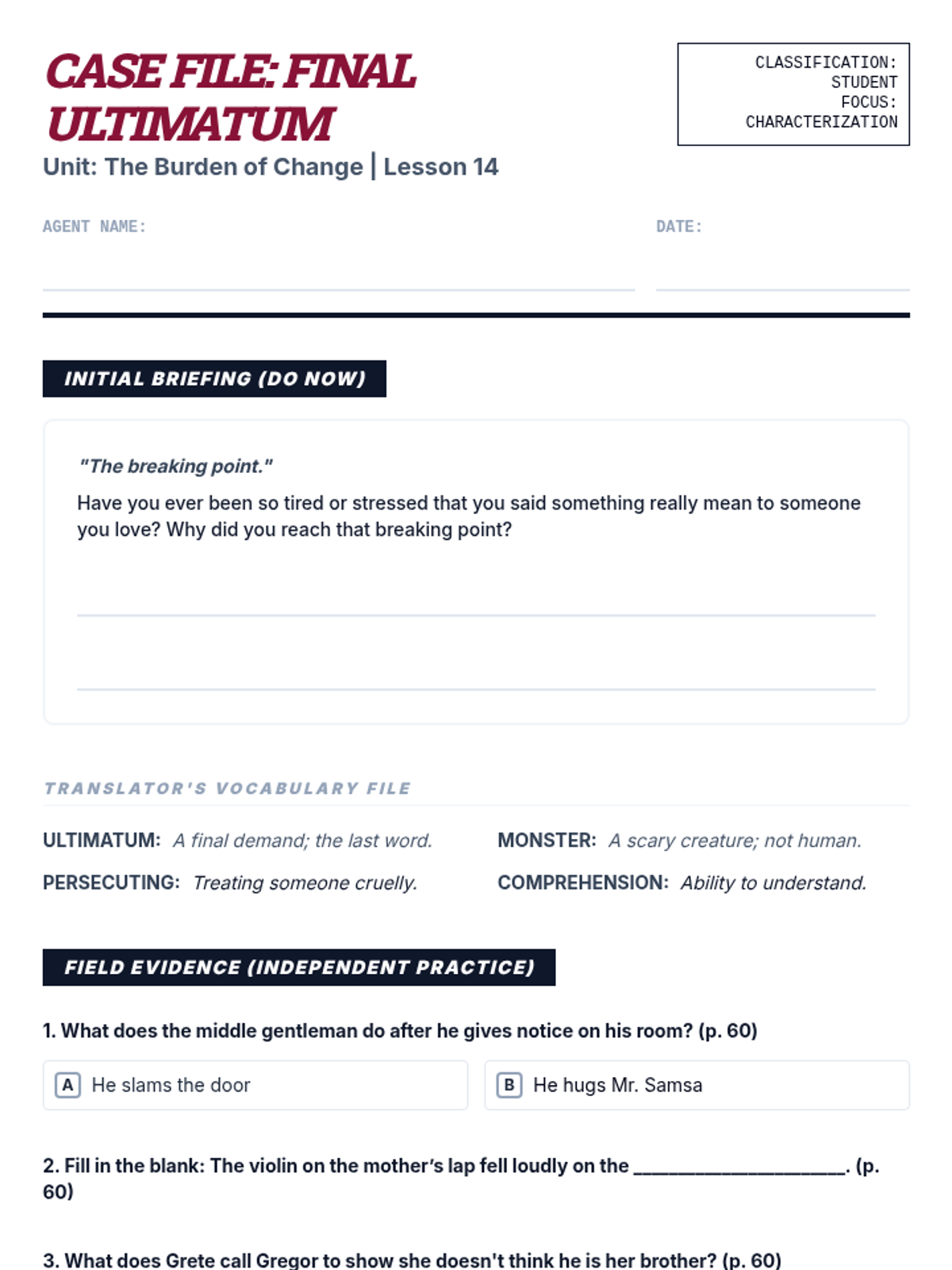
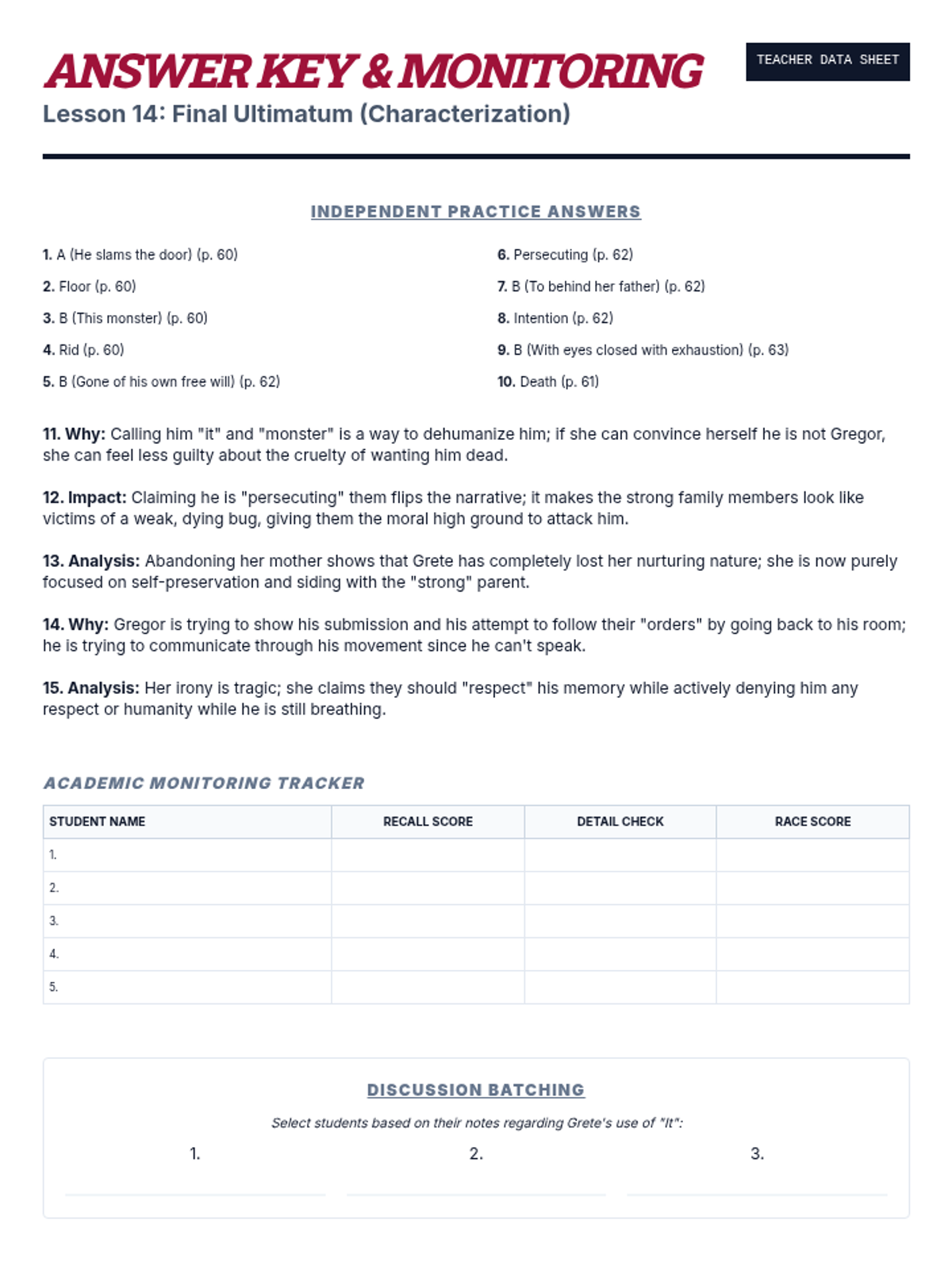
Analyzes Grete's character transformation as she delivers the final ultimatum against Gregor.
Examines the final major conflict triggered by Grete's violin playing and Gregor's attempt to reach her.
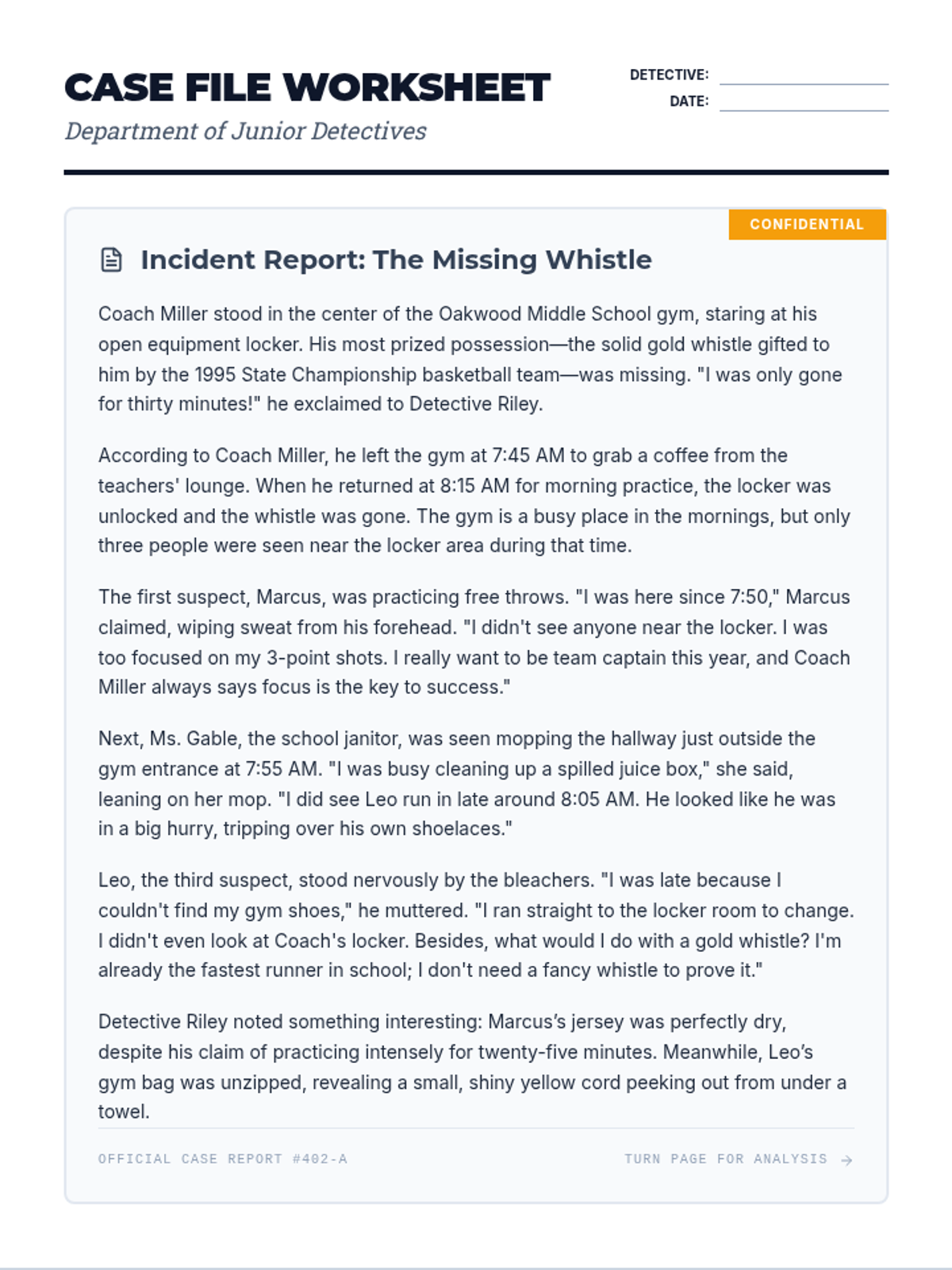
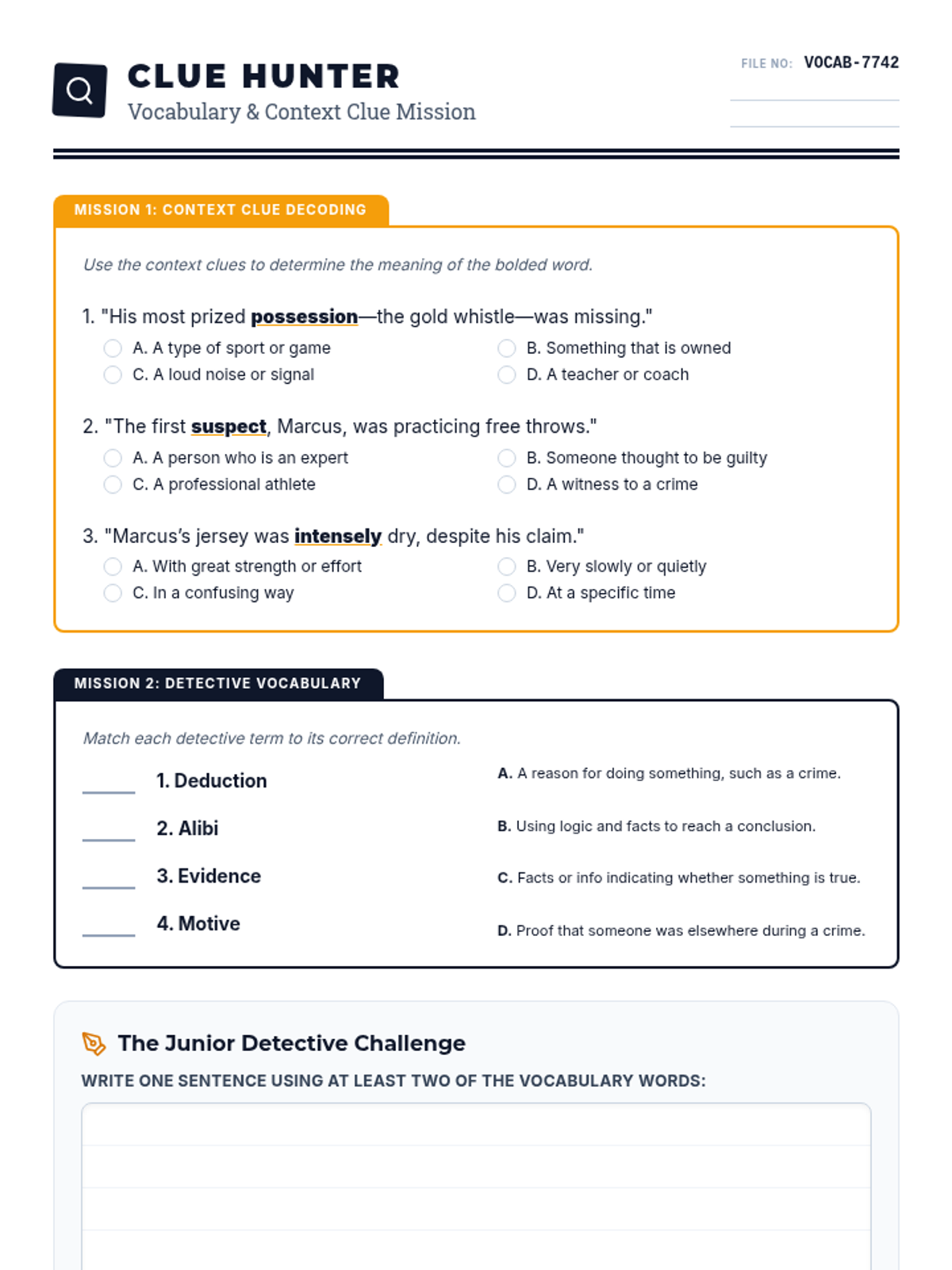
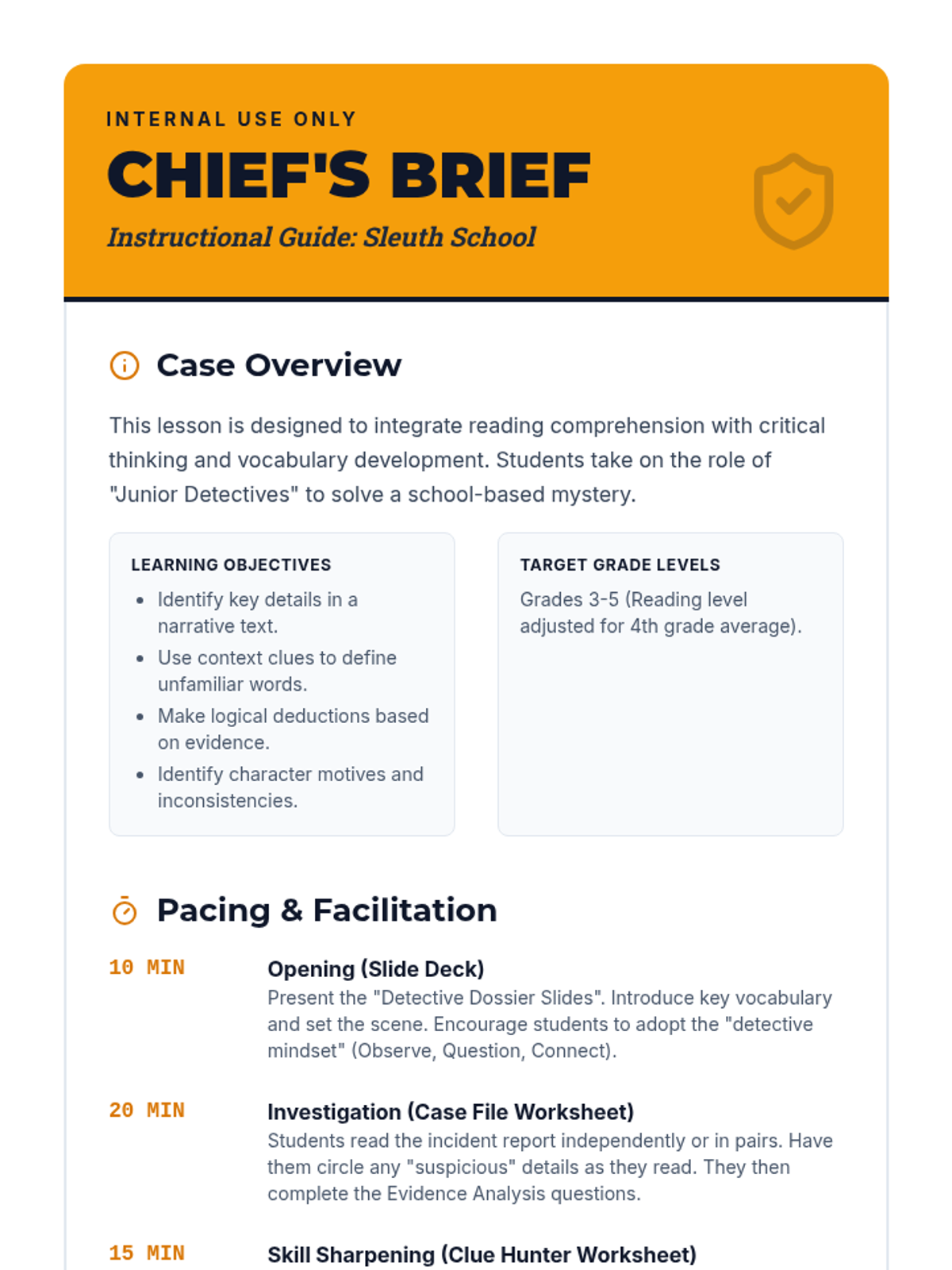
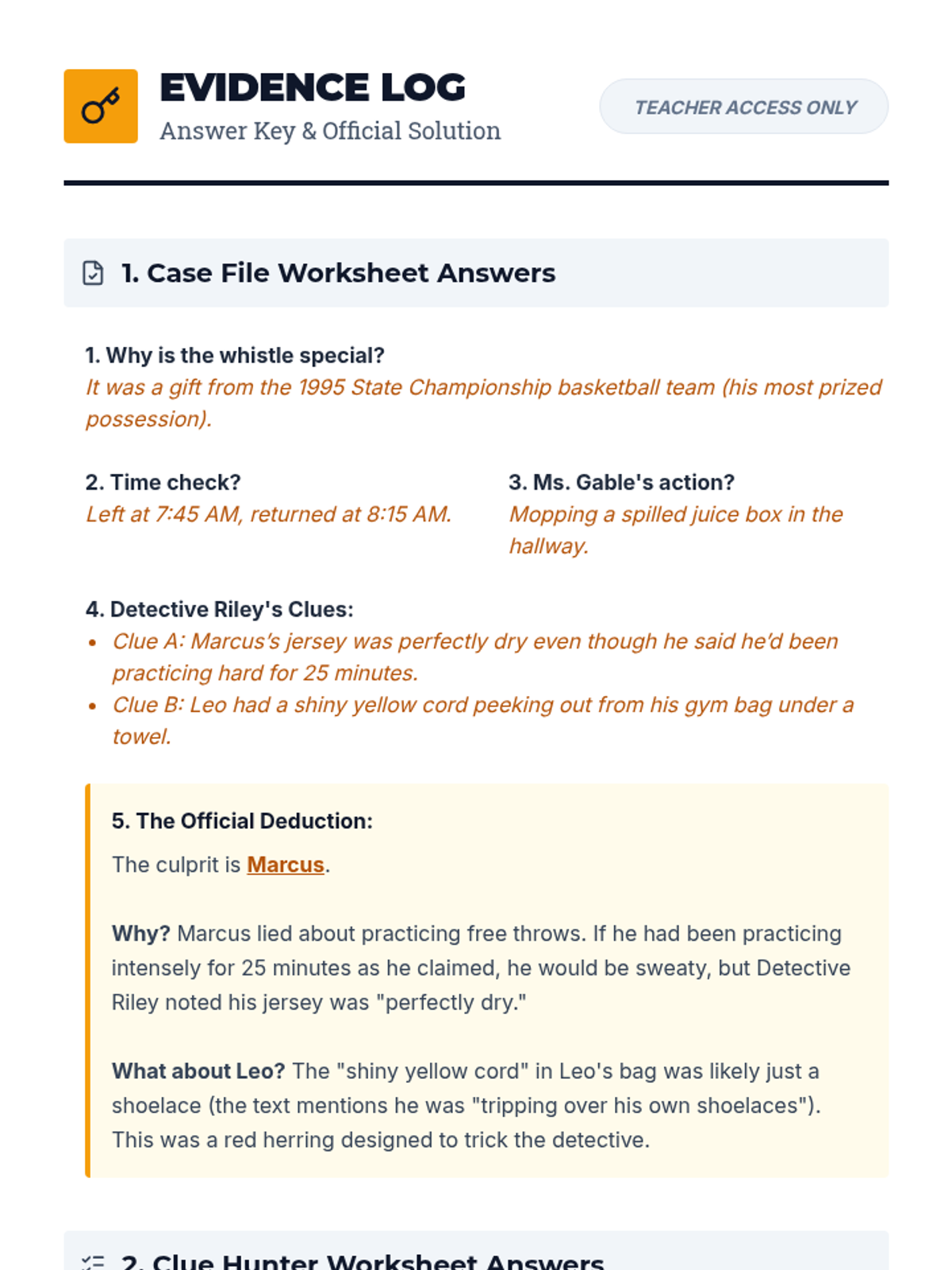
A mystery-themed lesson where students practice reading comprehension and vocabulary through a school-based 'whodunnit' case. Students will use deduction skills and context clues to solve the mystery of the missing golden whistle.
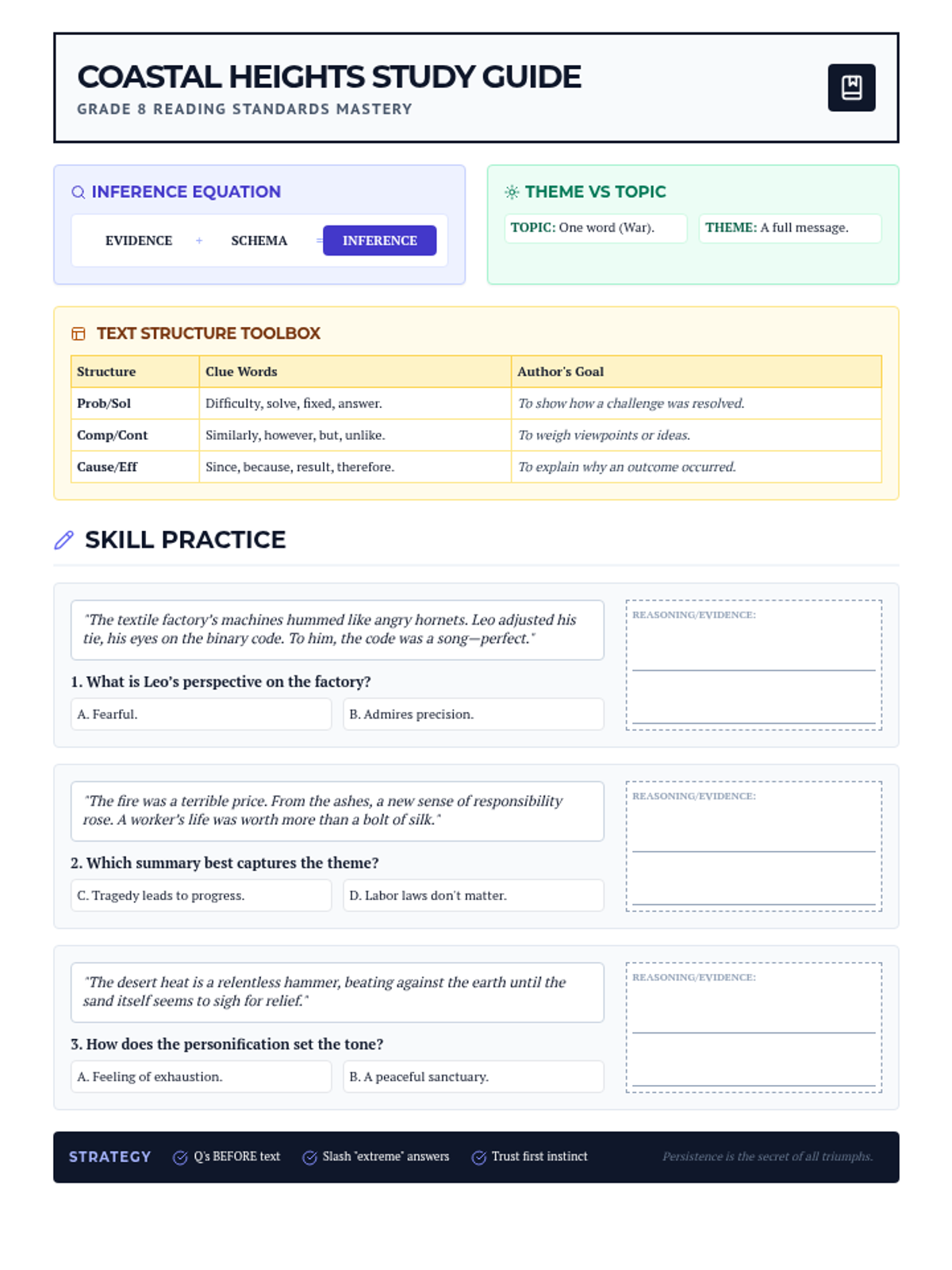
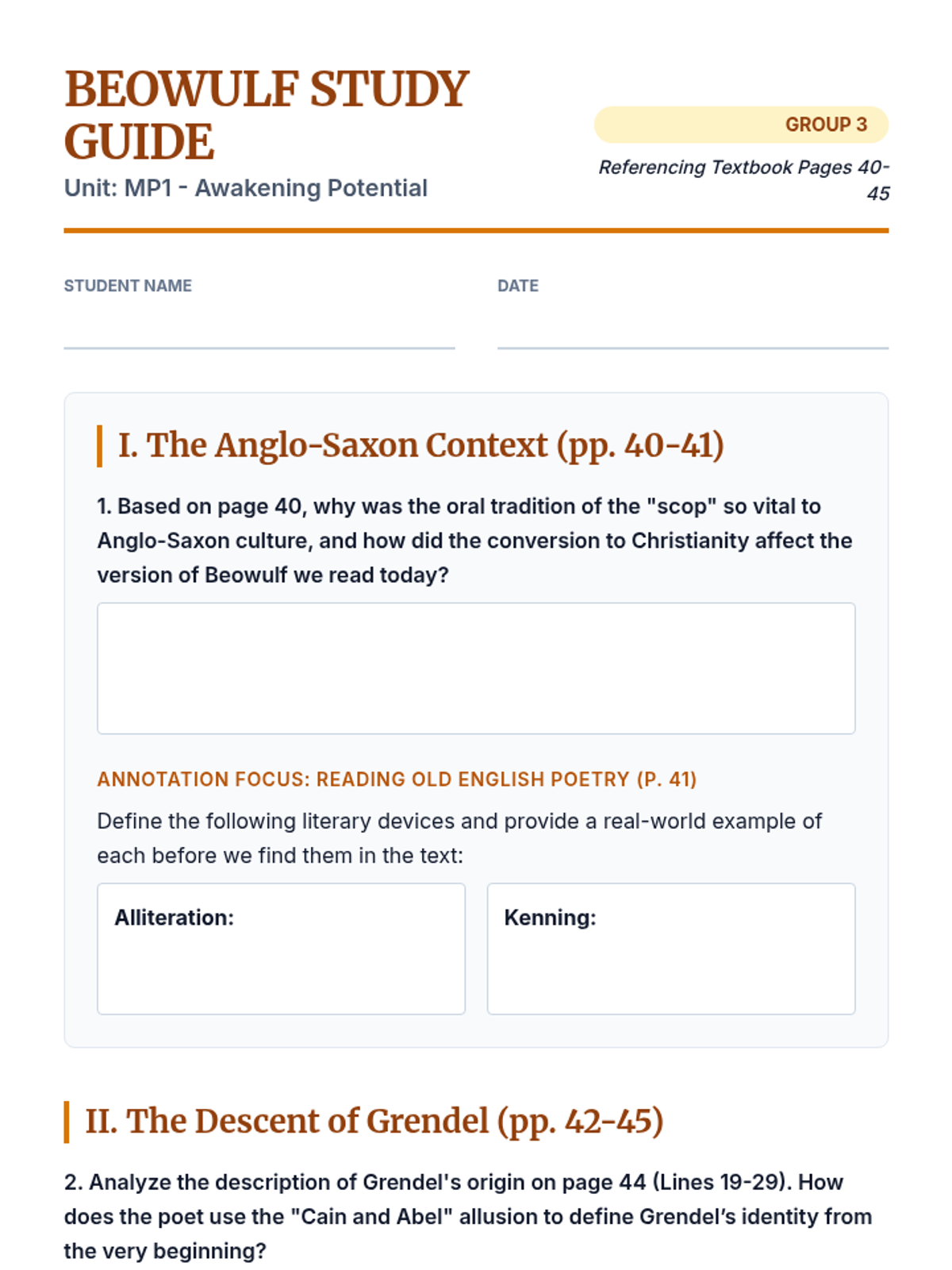
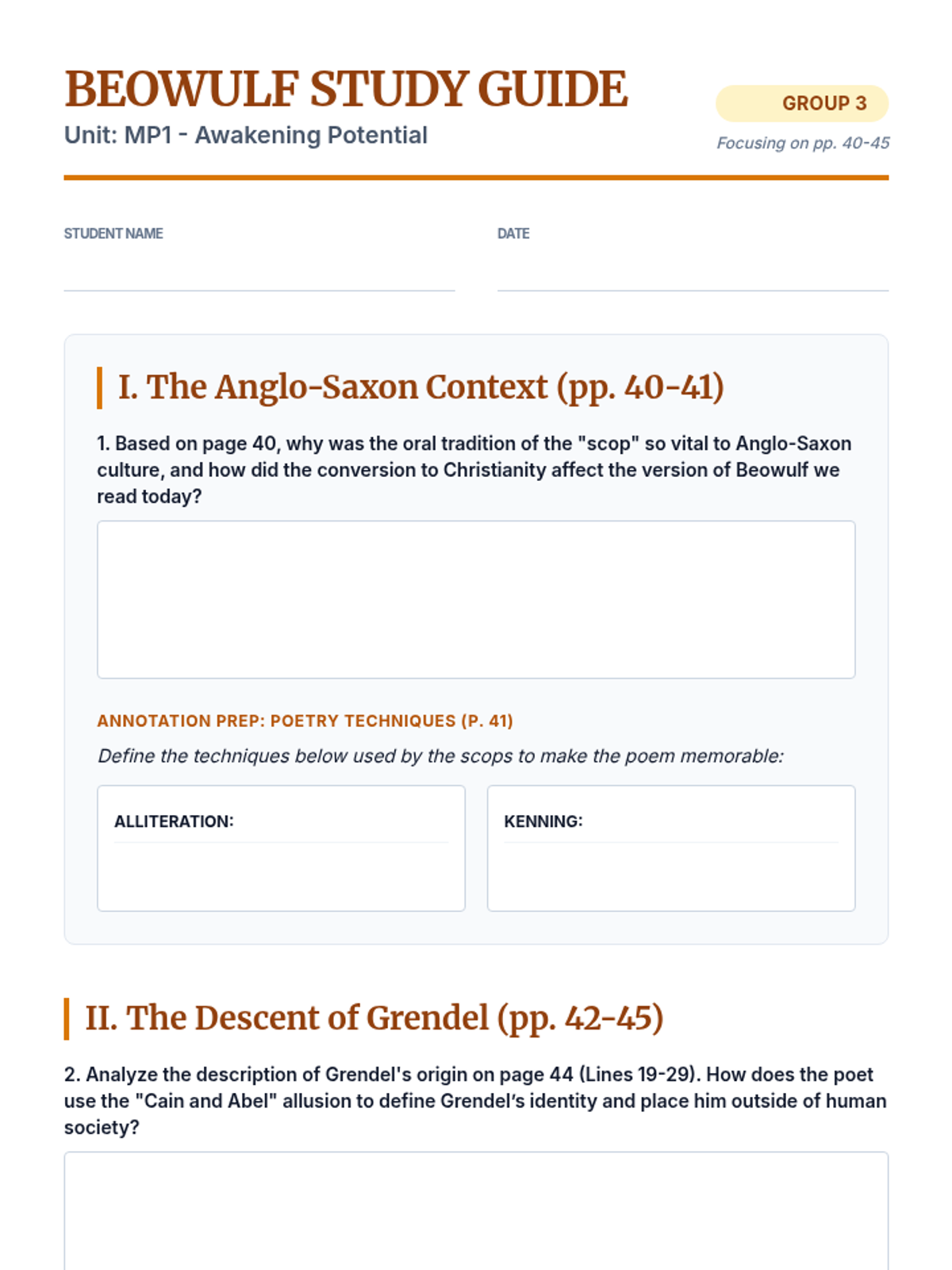
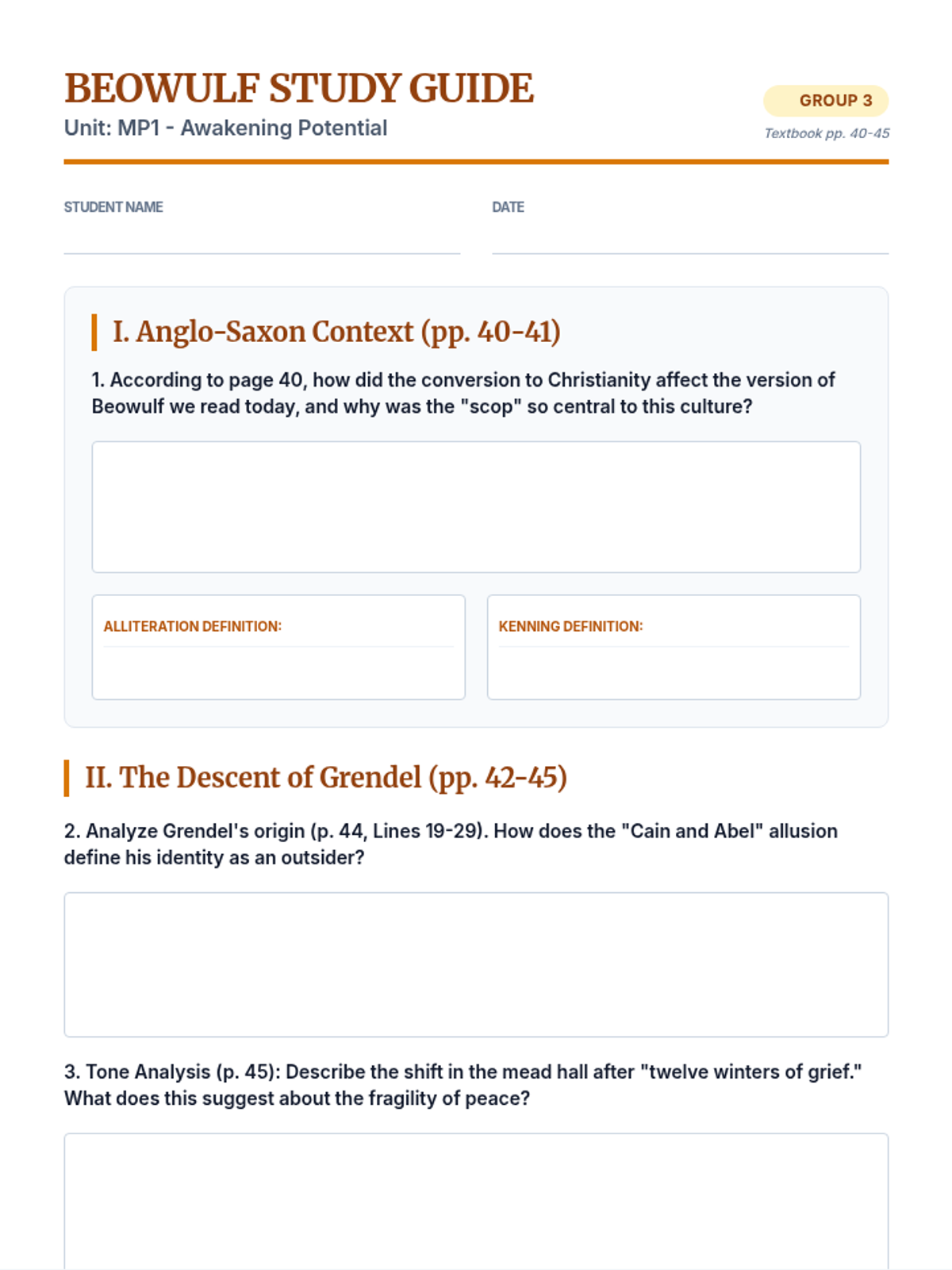
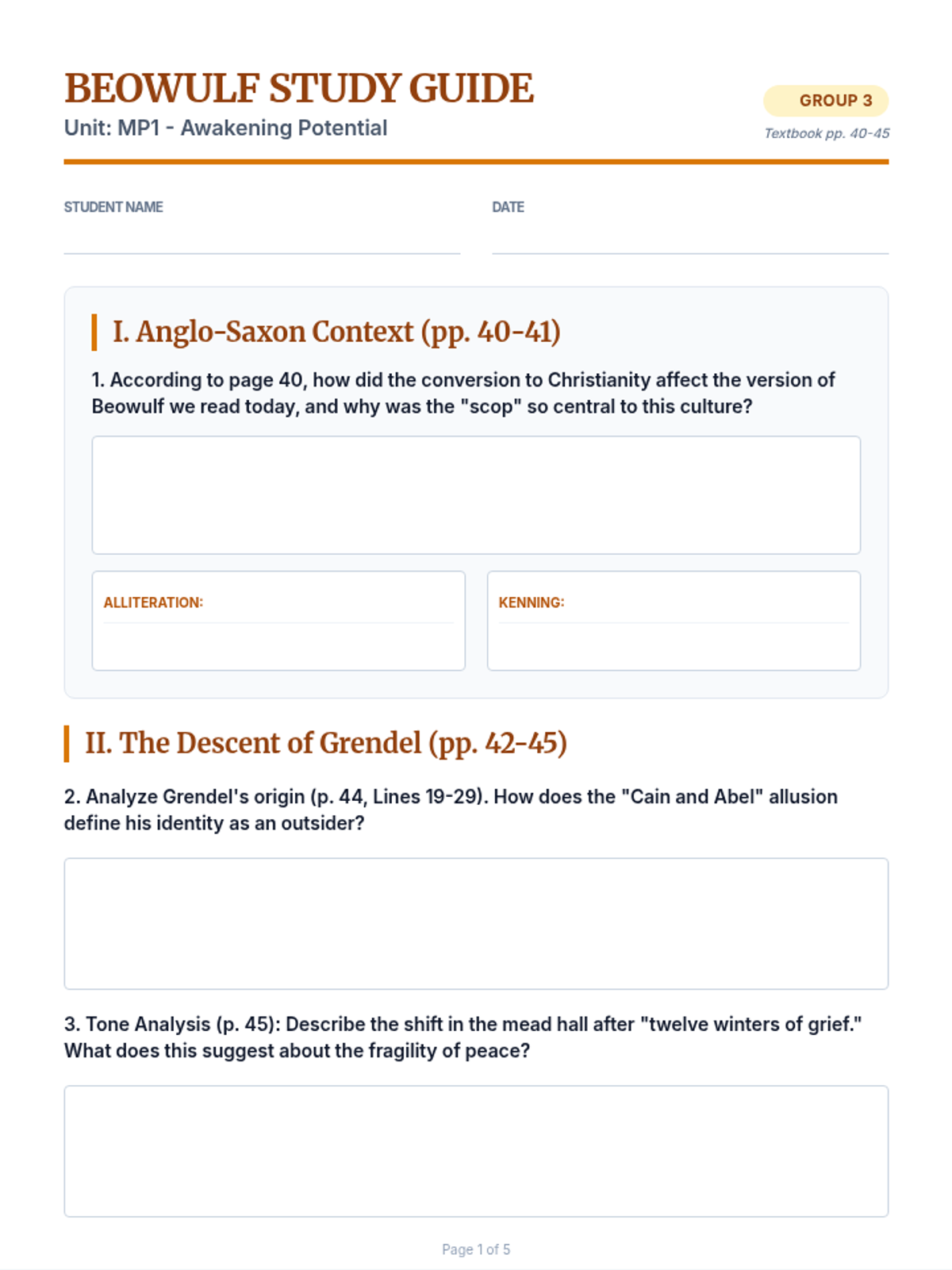
A comprehensive study of the epic poem Beowulf, focusing on the beginning of the Hero's Journey, leadership values, and the 'Awakening Potential' theme. This lesson includes a supplemental study guide designed for Pathway 3 students to build analytical and literary analysis skills.
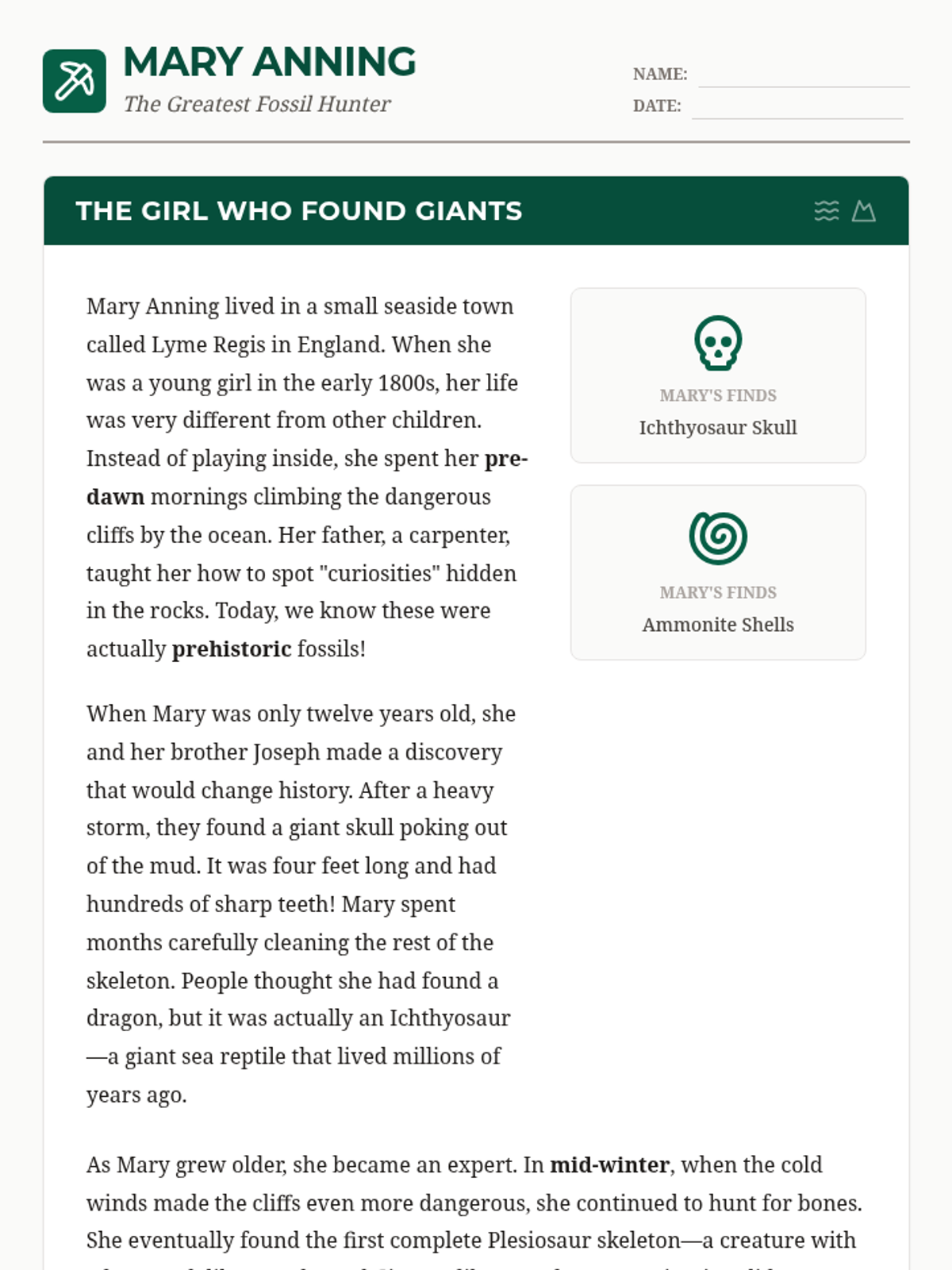
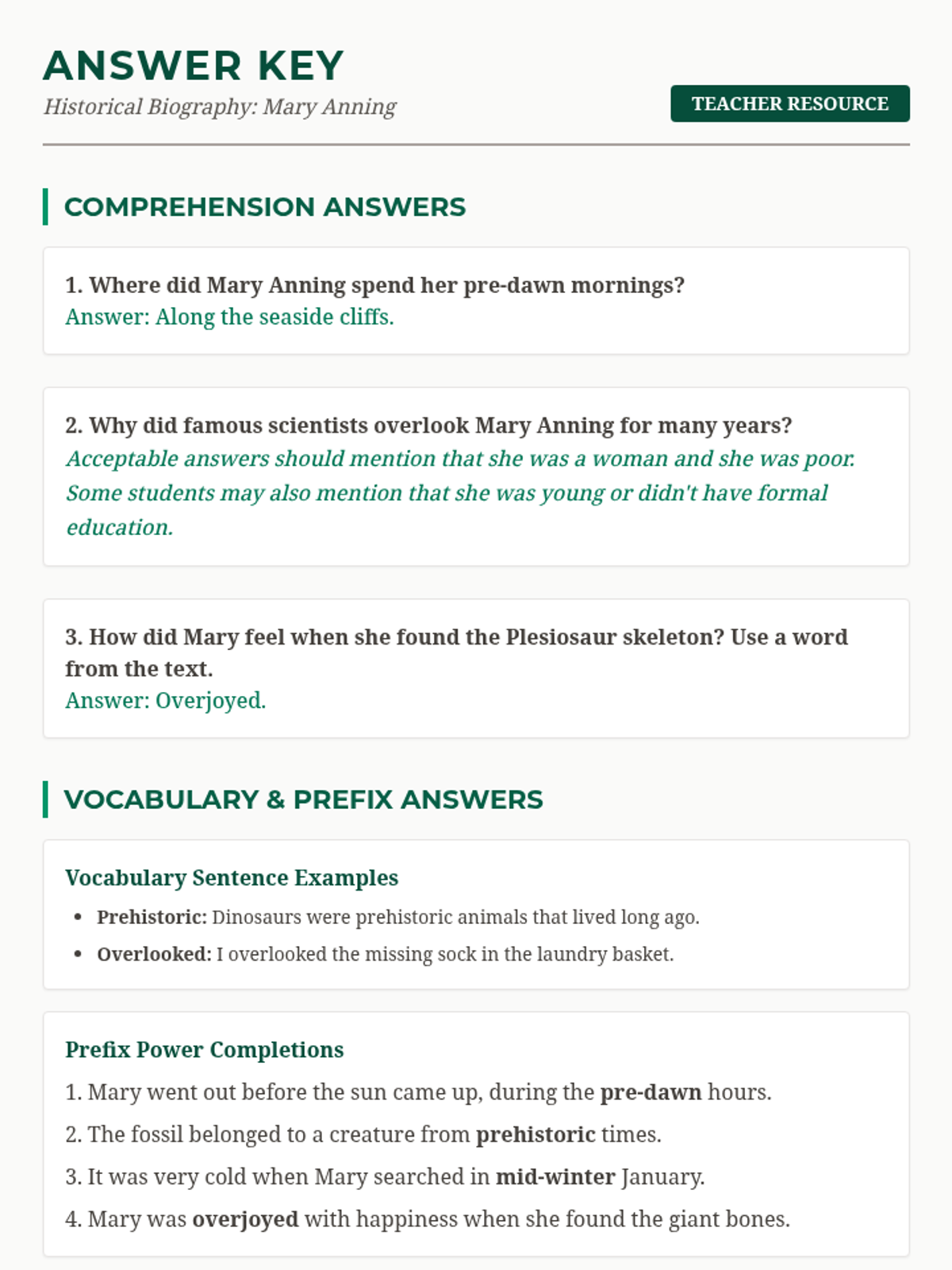
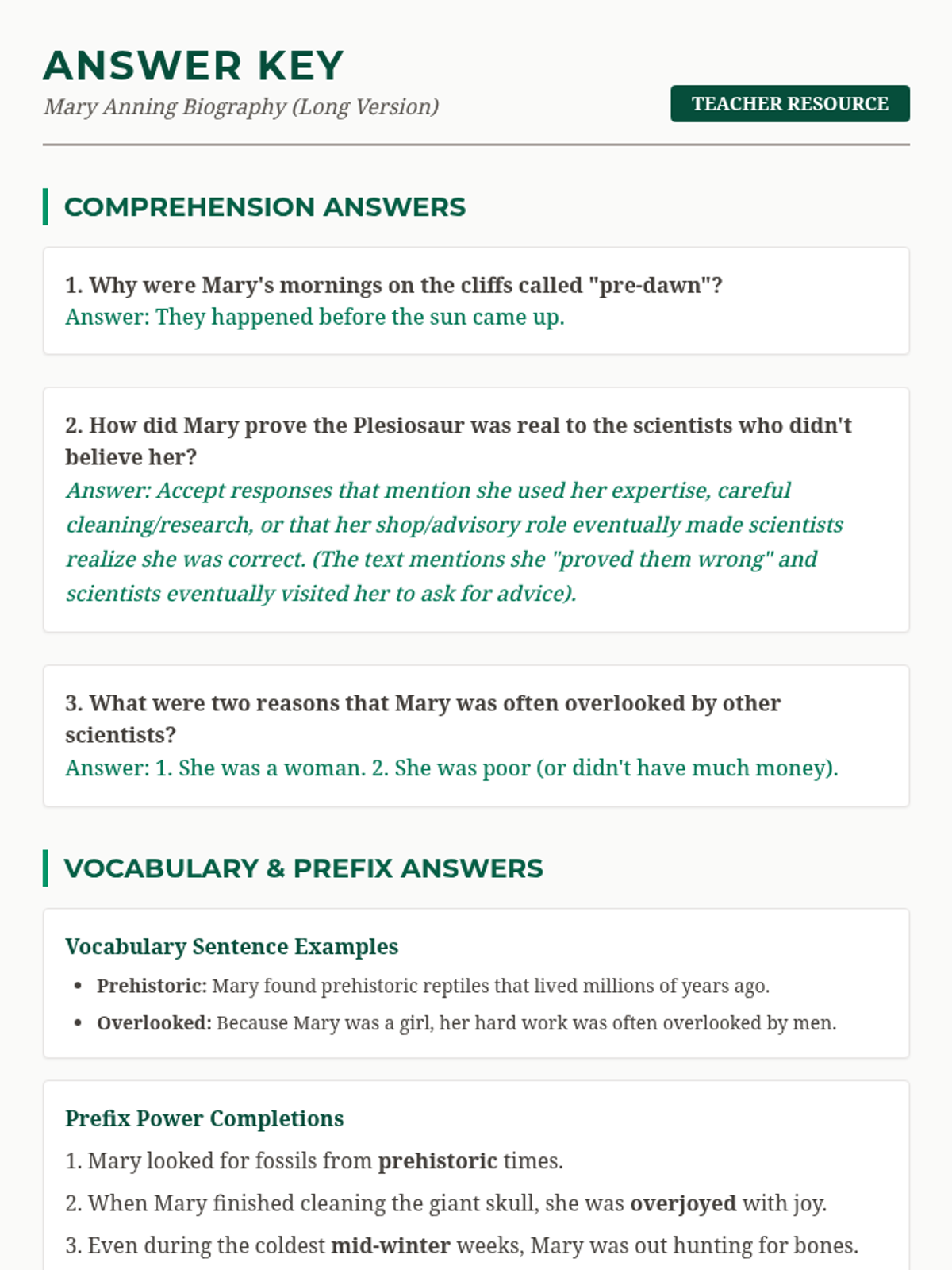
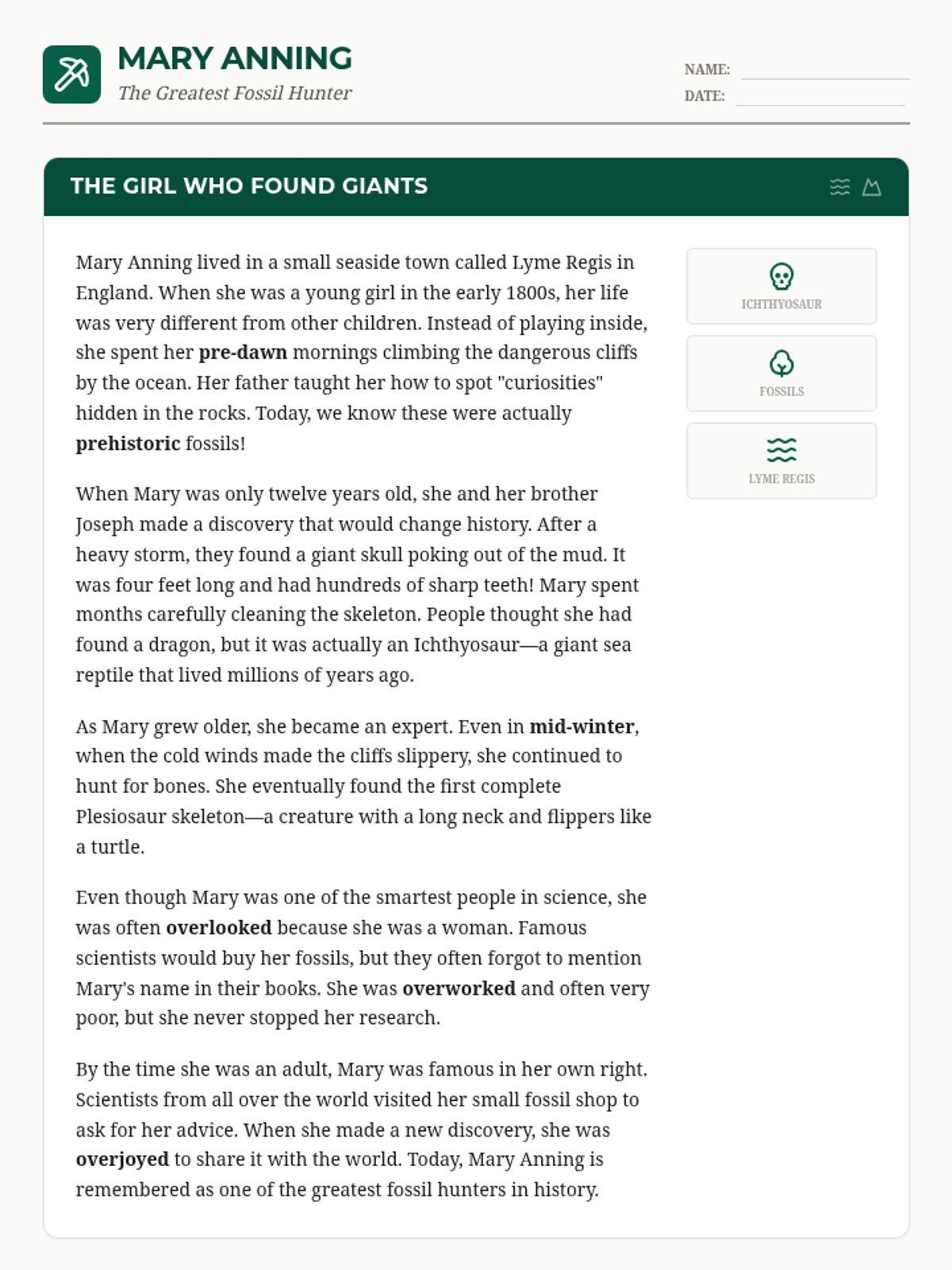
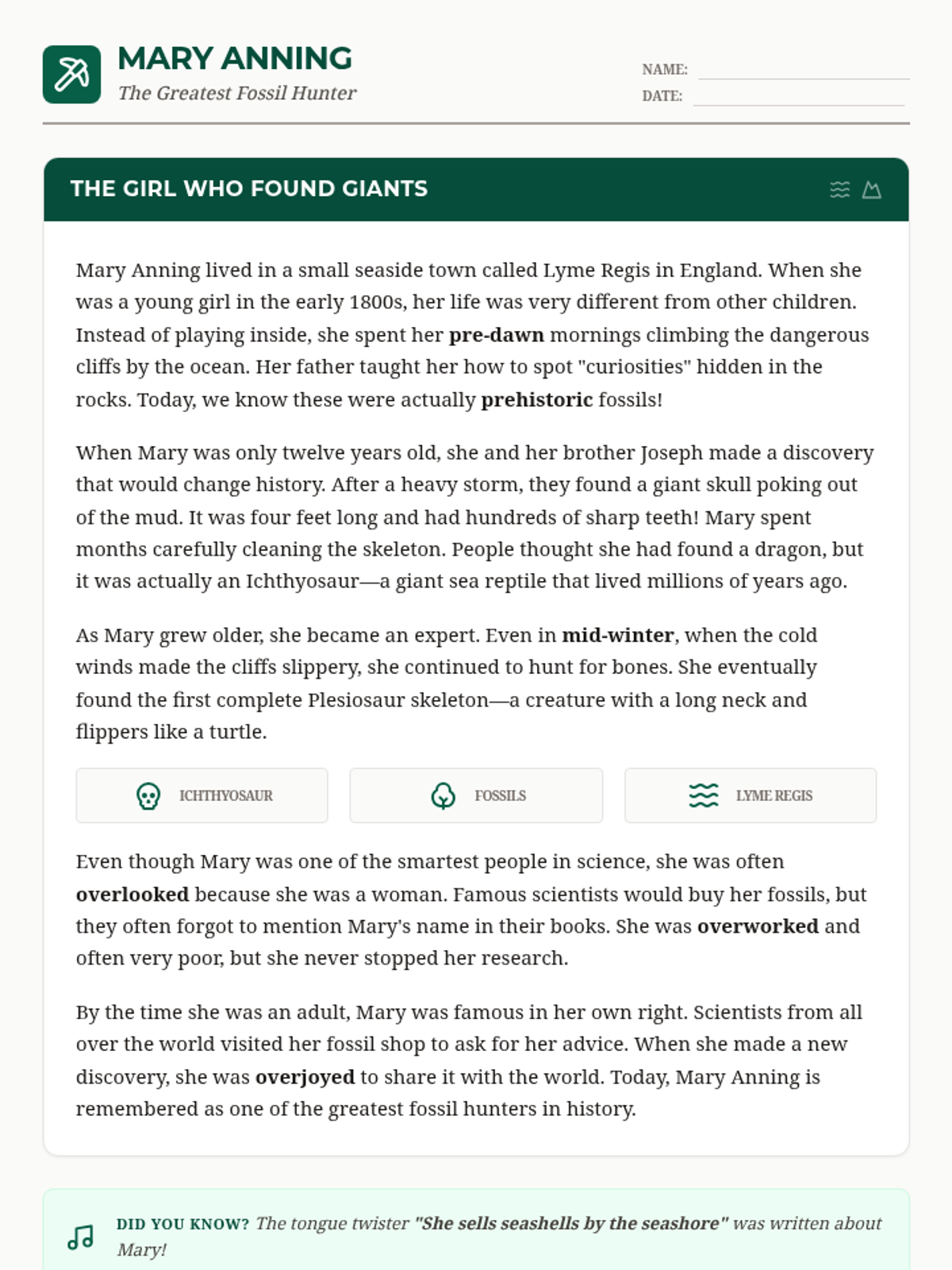
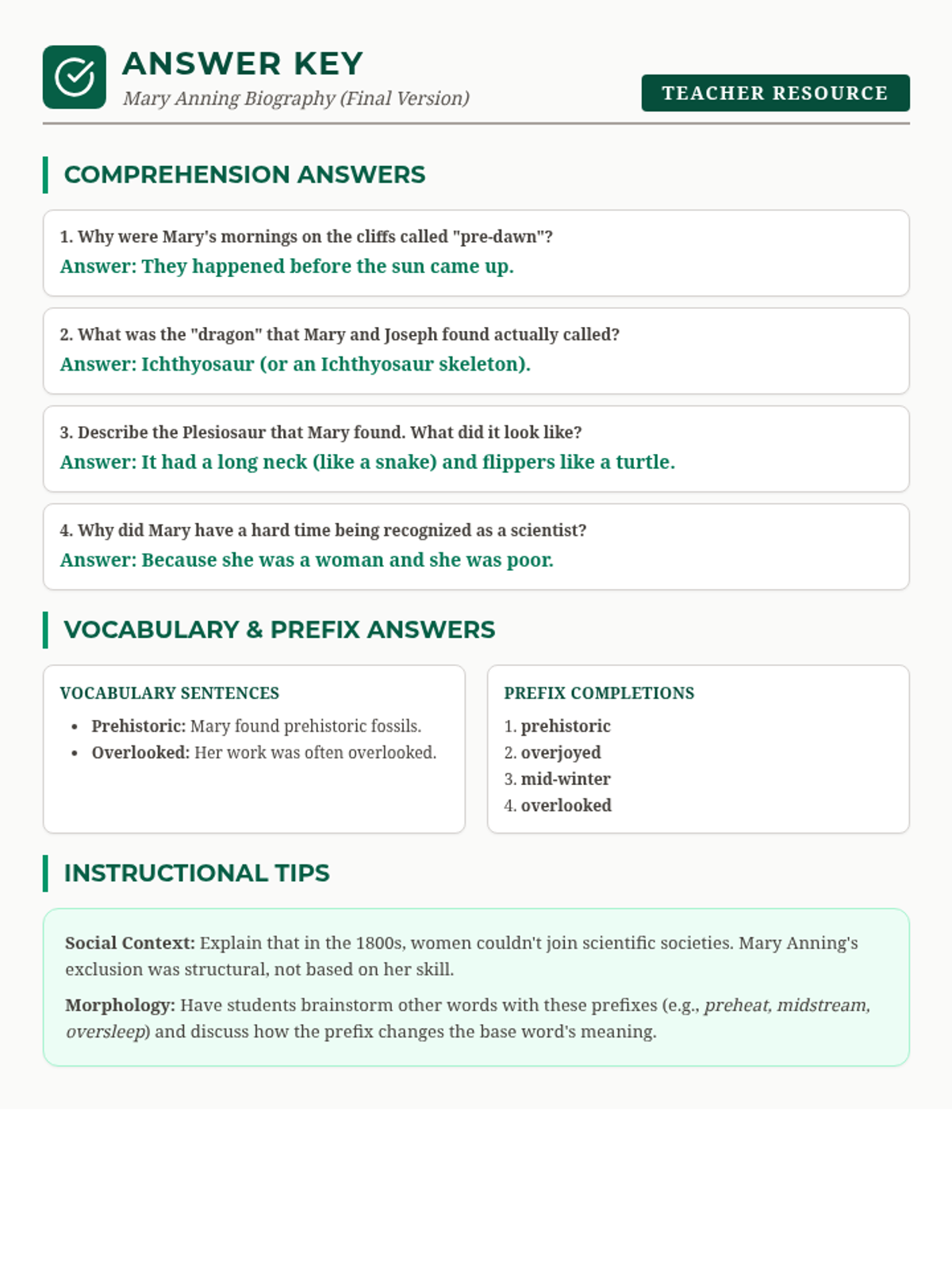
A reading comprehension lesson focused on the biography of fossil hunter Mary Anning, specifically targeting the prefixes pre-, mid-, and over-. Students will engage with a biography passage, build vocabulary, and practice identifying and using prefixed words.
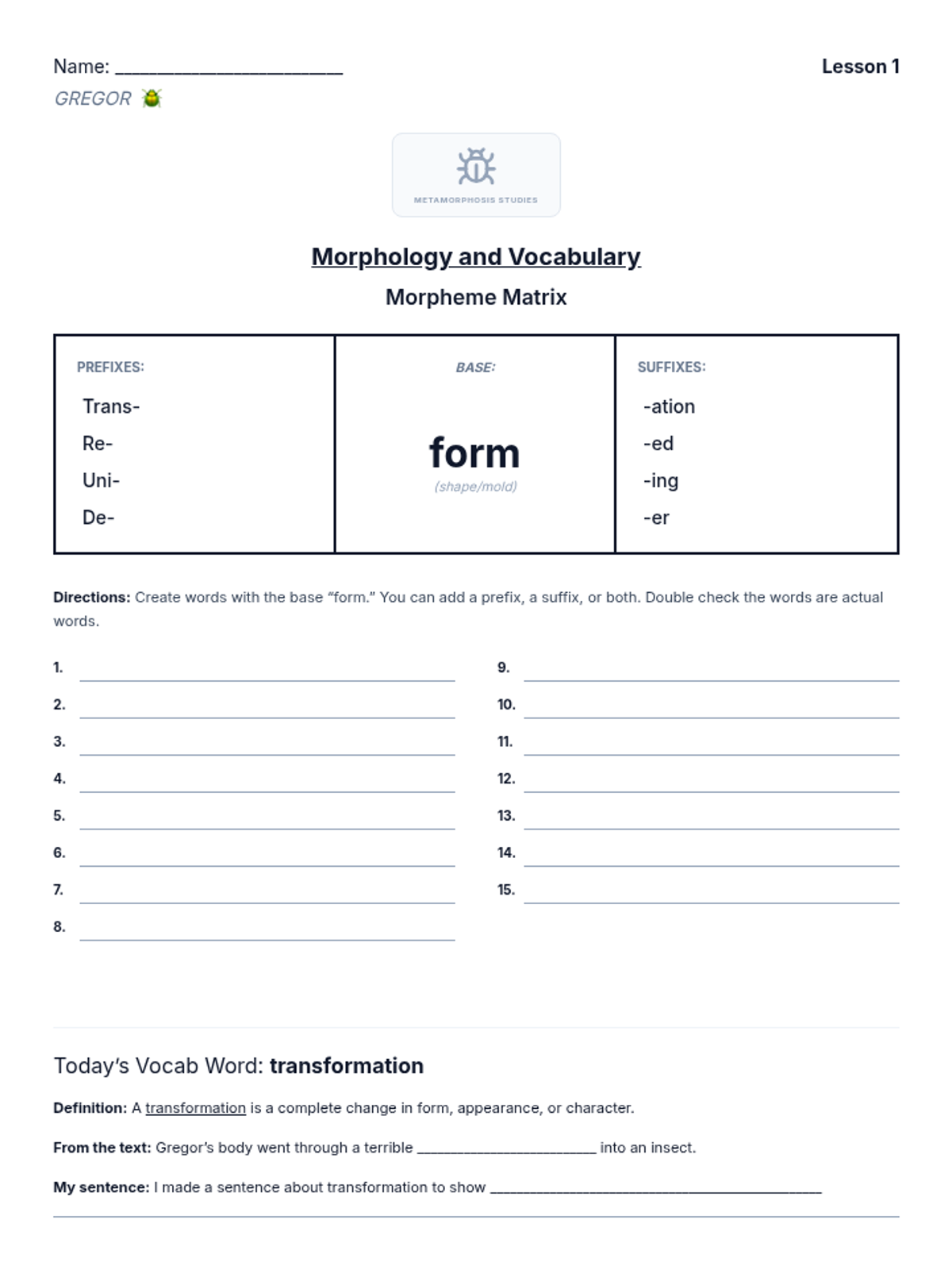
A 4th-grade lesson focused on breaking down complex words using common prefixes and suffixes, combined with sentence-level context clues to unlock meaning.
A literacy-focused lesson exploring the parallel journeys of the fictional ninja Naruto and his creator Masashi Kishimoto, focusing on perseverance and following one's dreams.
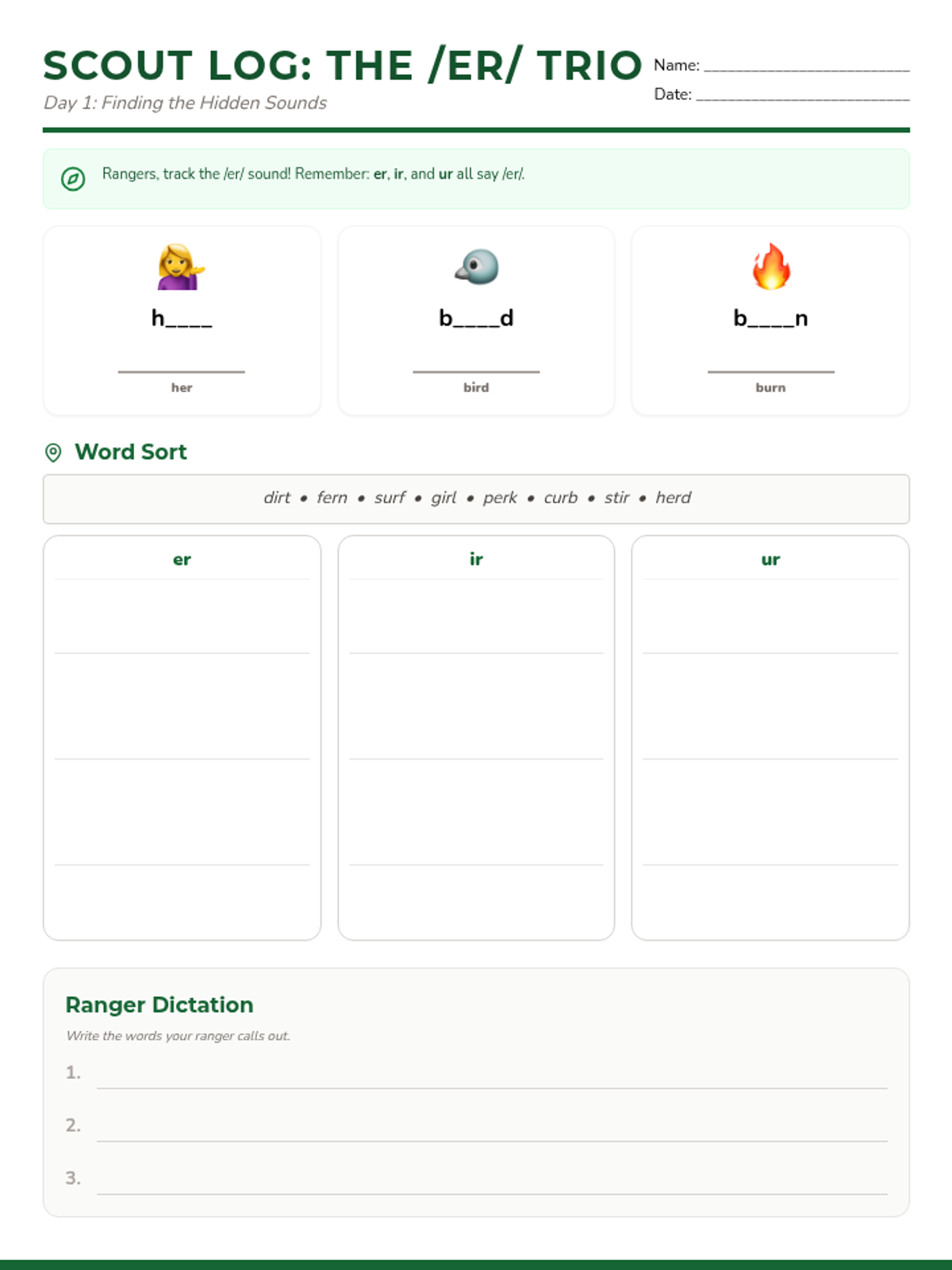
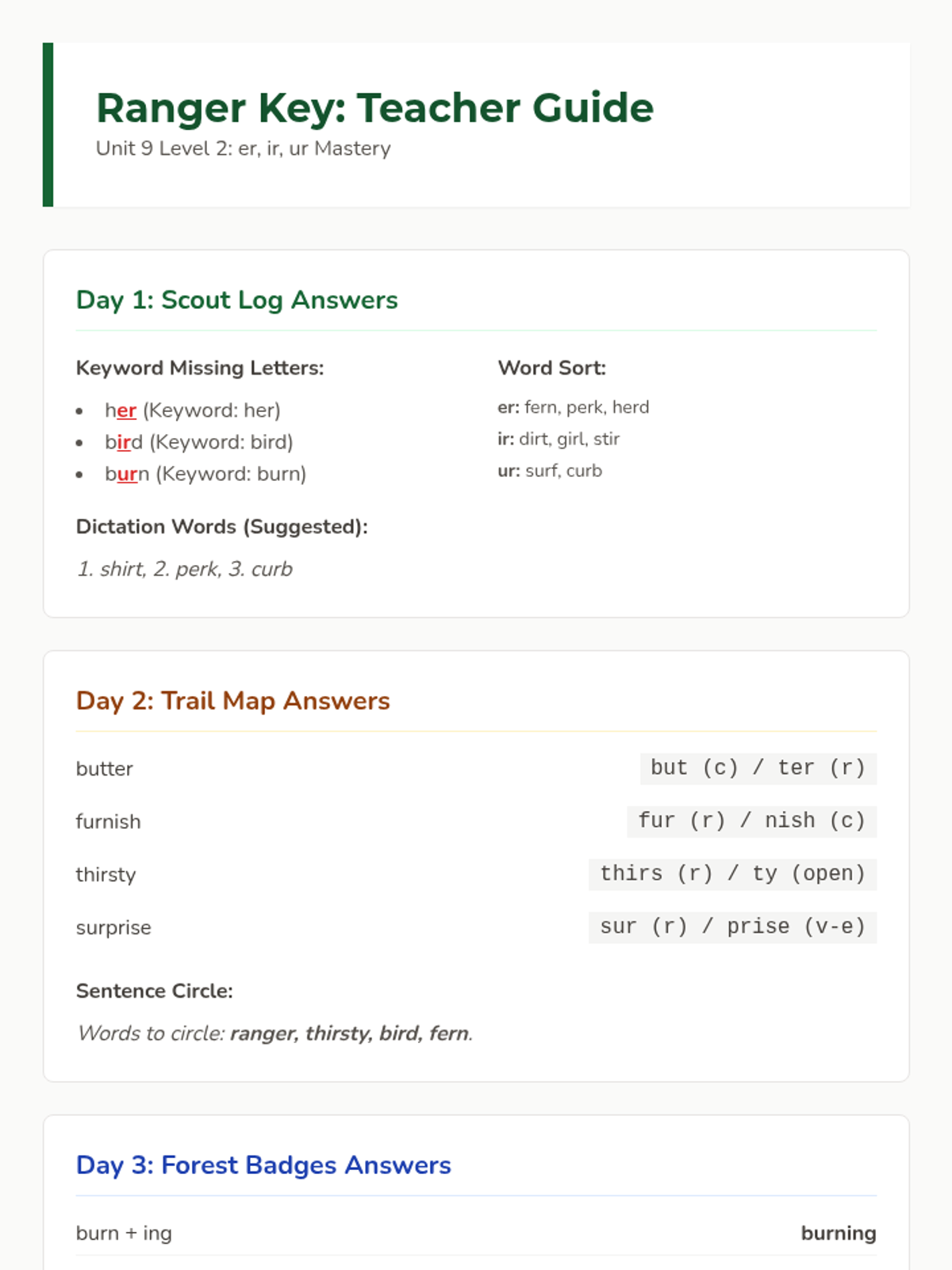
A comprehensive unit on R-controlled vowels (er, ir, ur), focusing on phonemic awareness, multisyllabic word decoding, and suffix application. Students explore these "Bossy R" sounds through a forest ranger theme.