Students become workers in the 'Word Glue Factory' where they combine two simple words to create new compound words, exploring how meanings shift when words are joined.
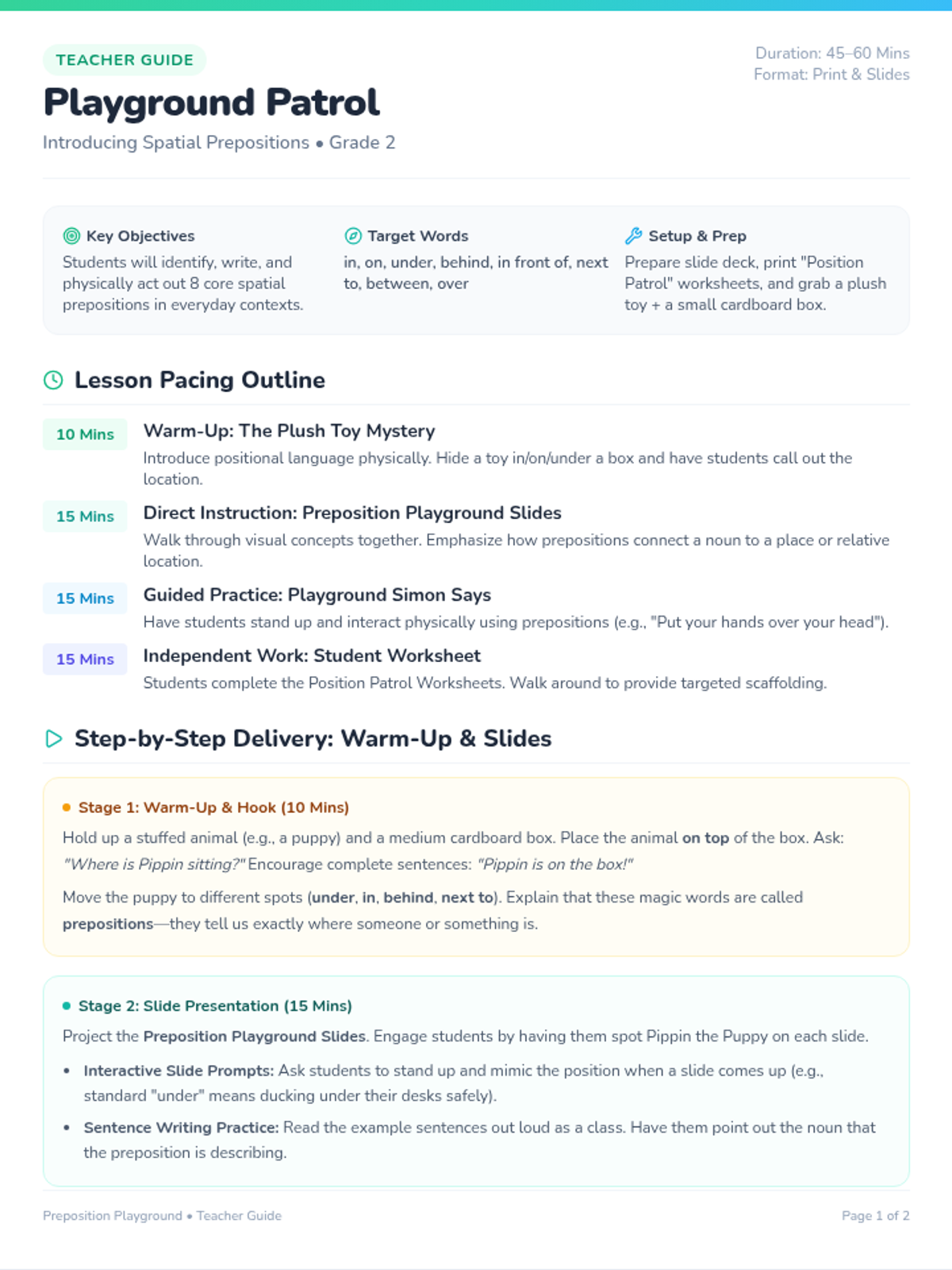
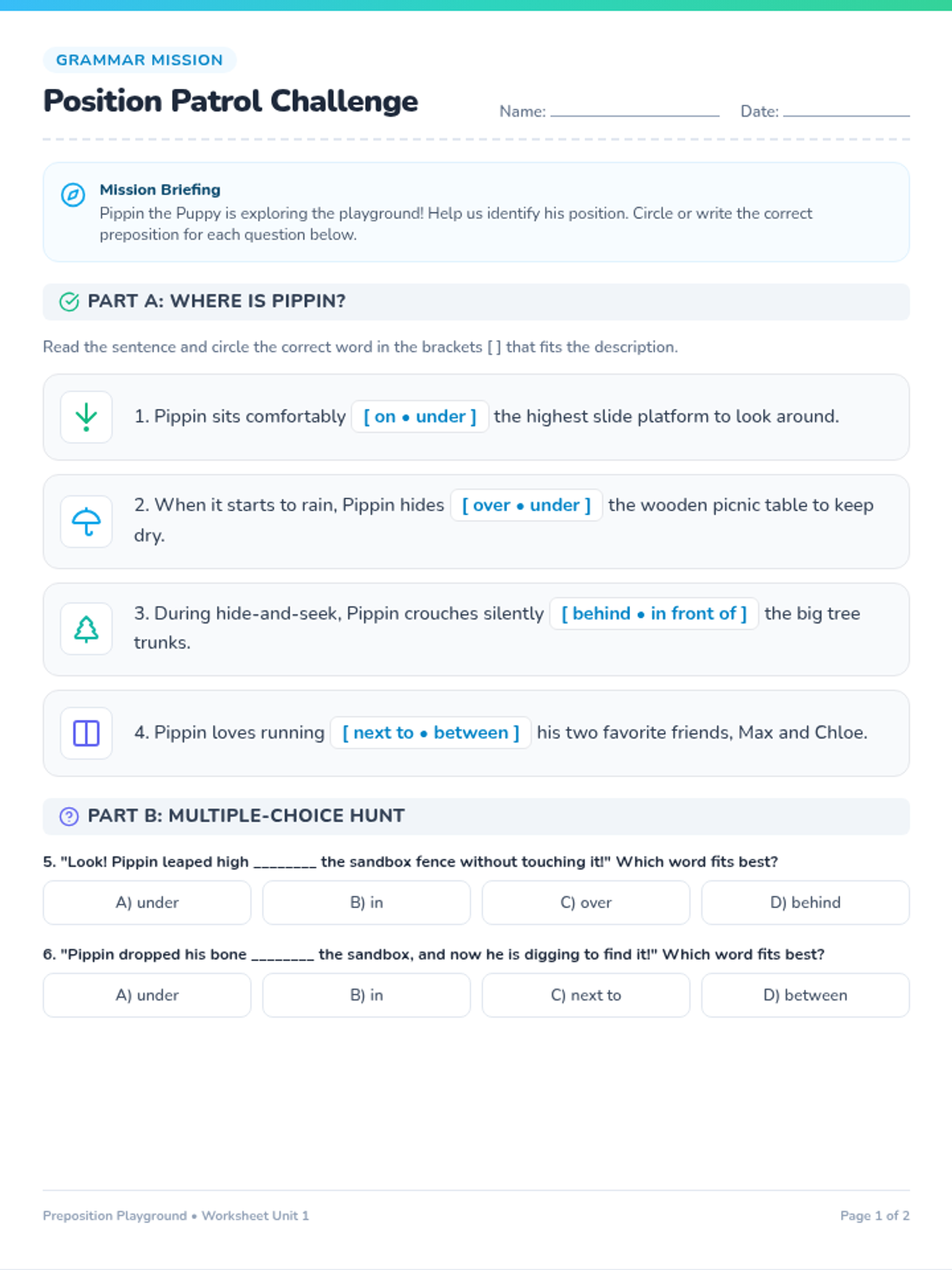
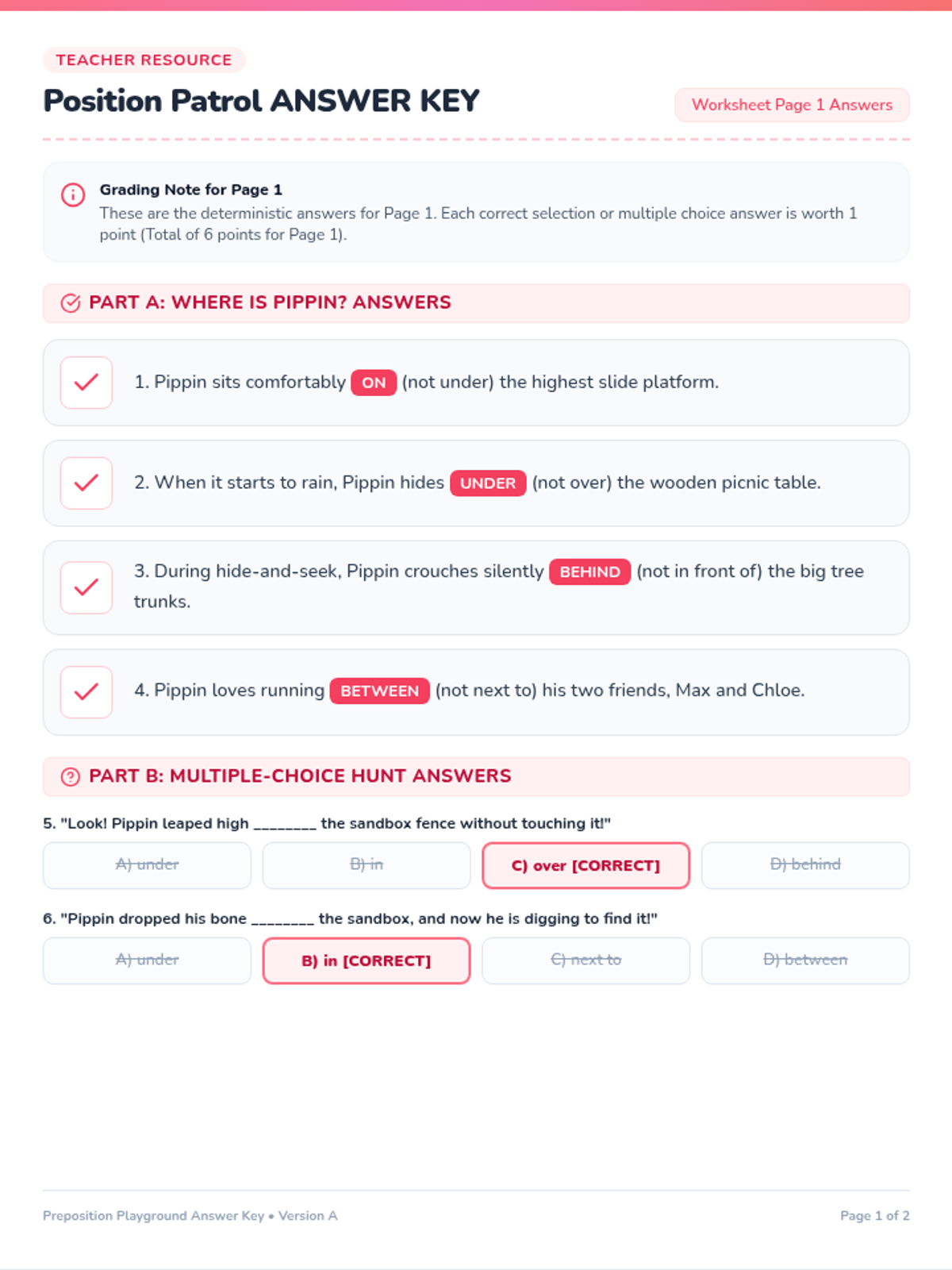
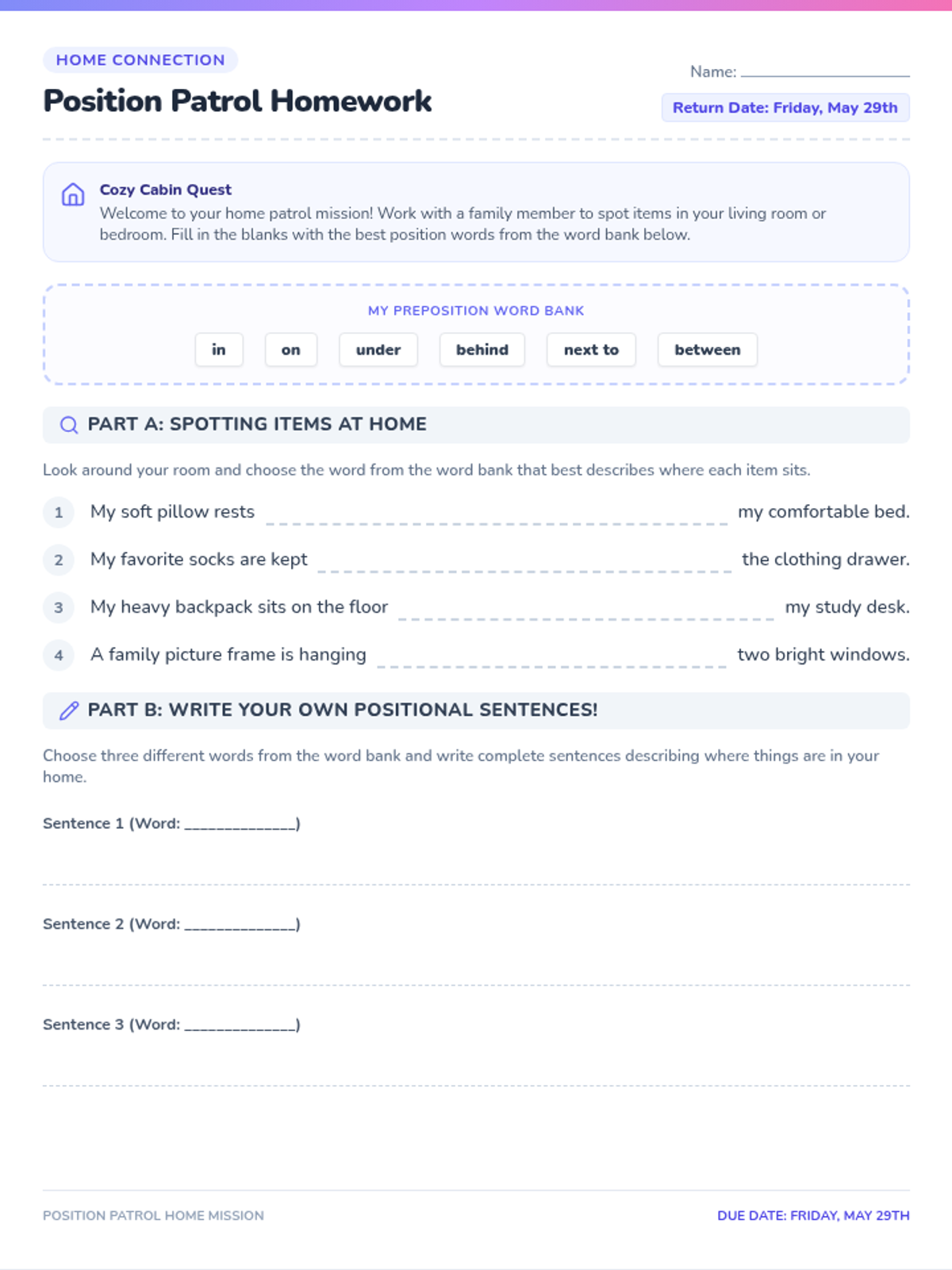
An introductory lesson on spatial prepositions for 2nd grade. Students will explore 8 core prepositions (in, on, under, behind, in front of, next to, between, over) through a playground-themed interactive lecture, a visual worksheet, and hands-on practice.
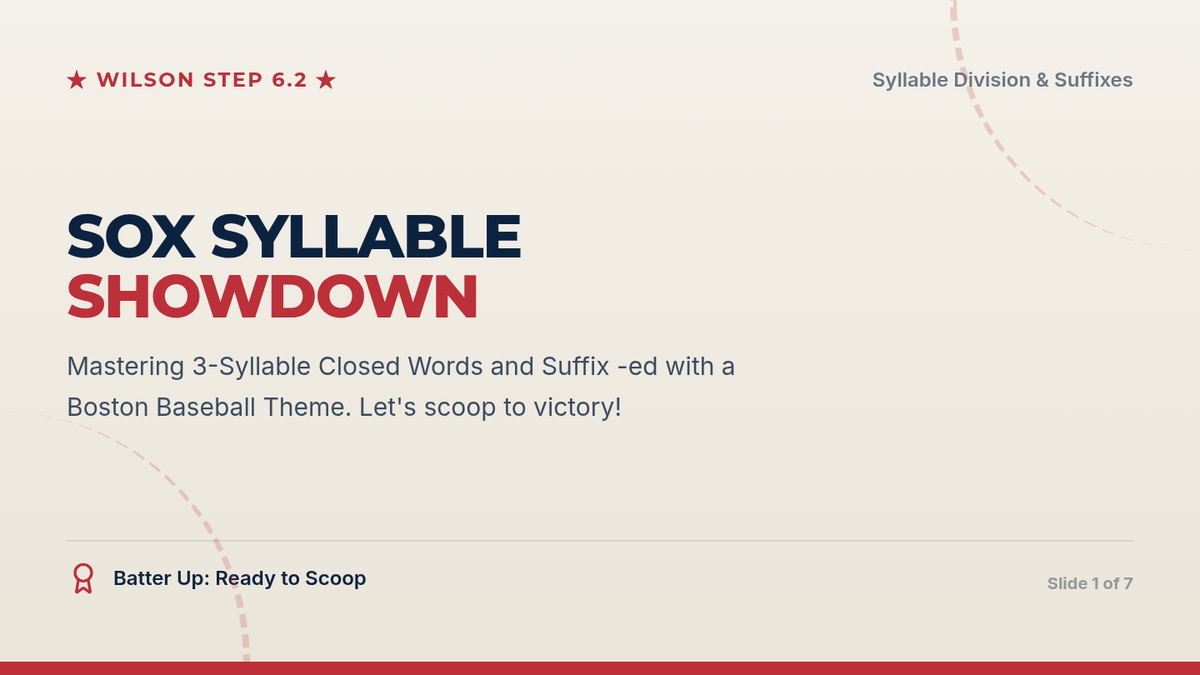
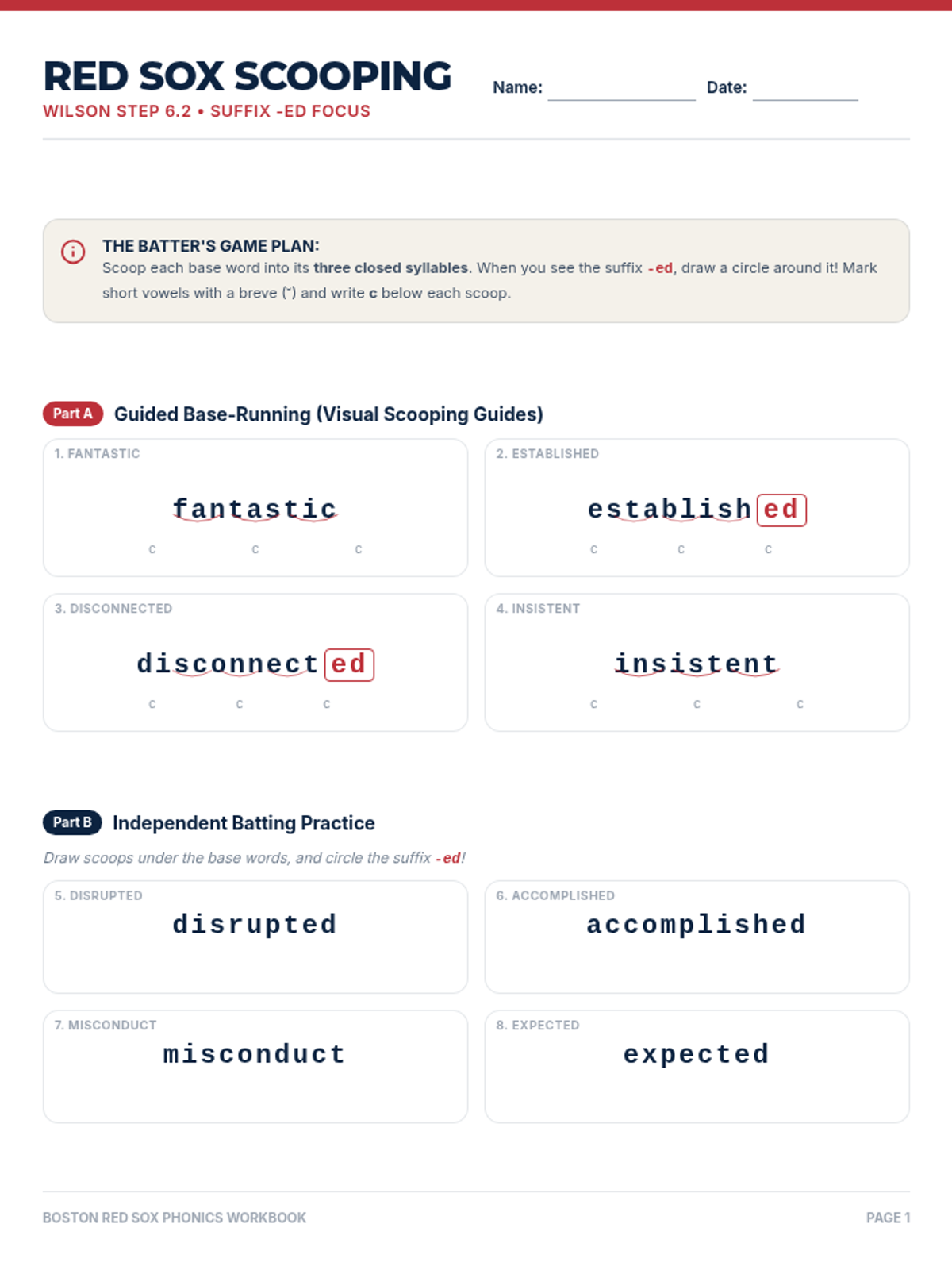
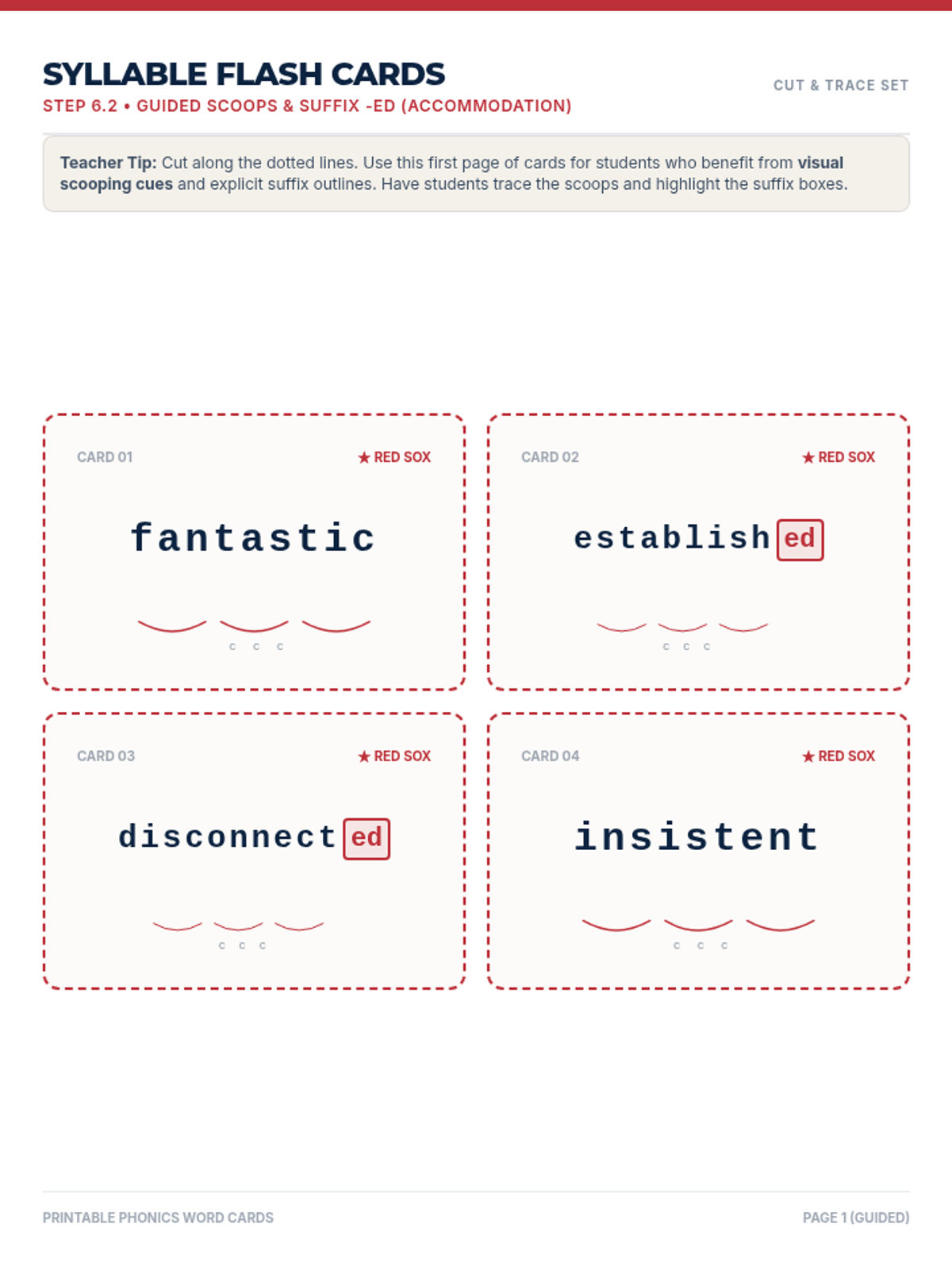
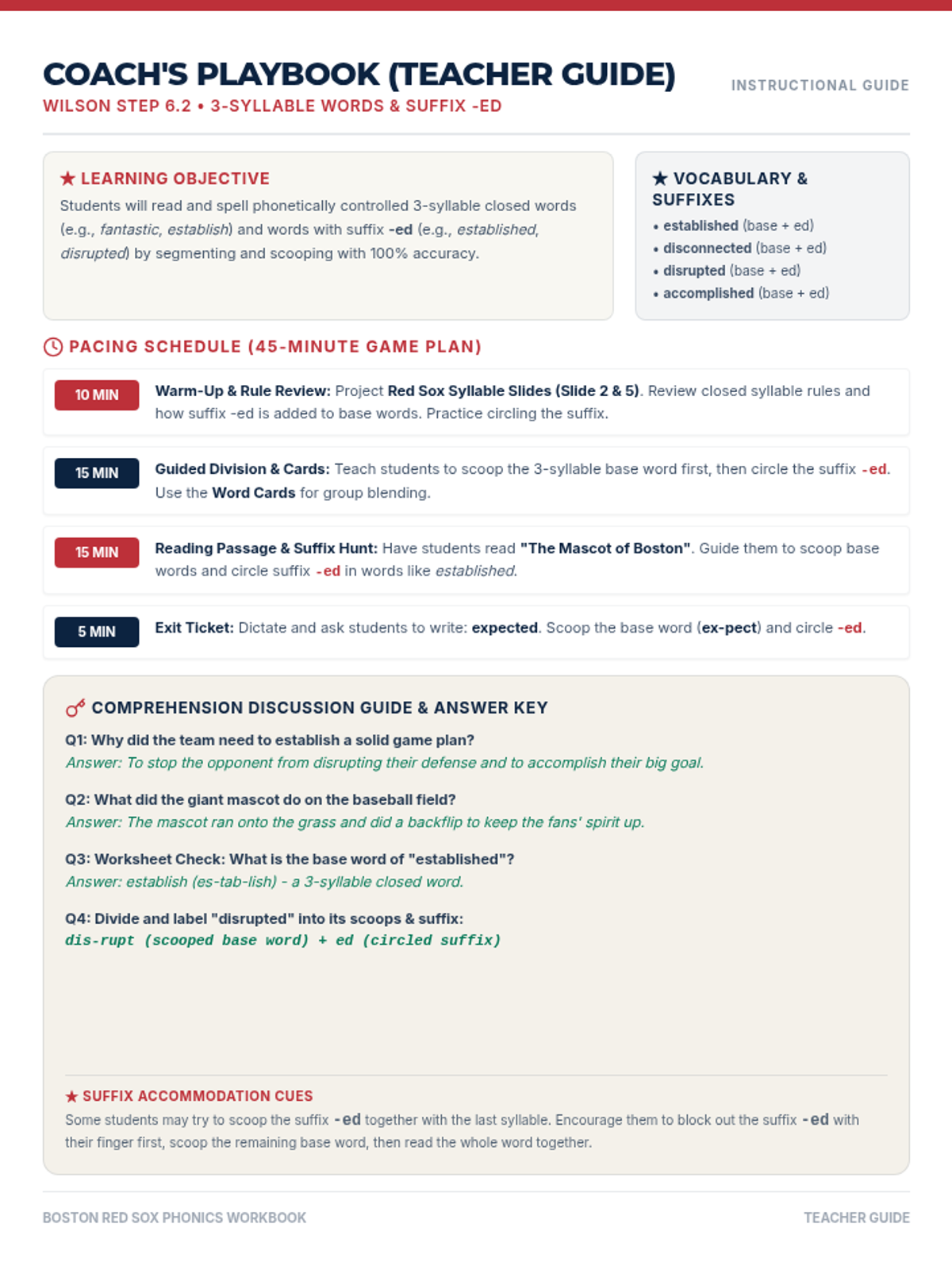
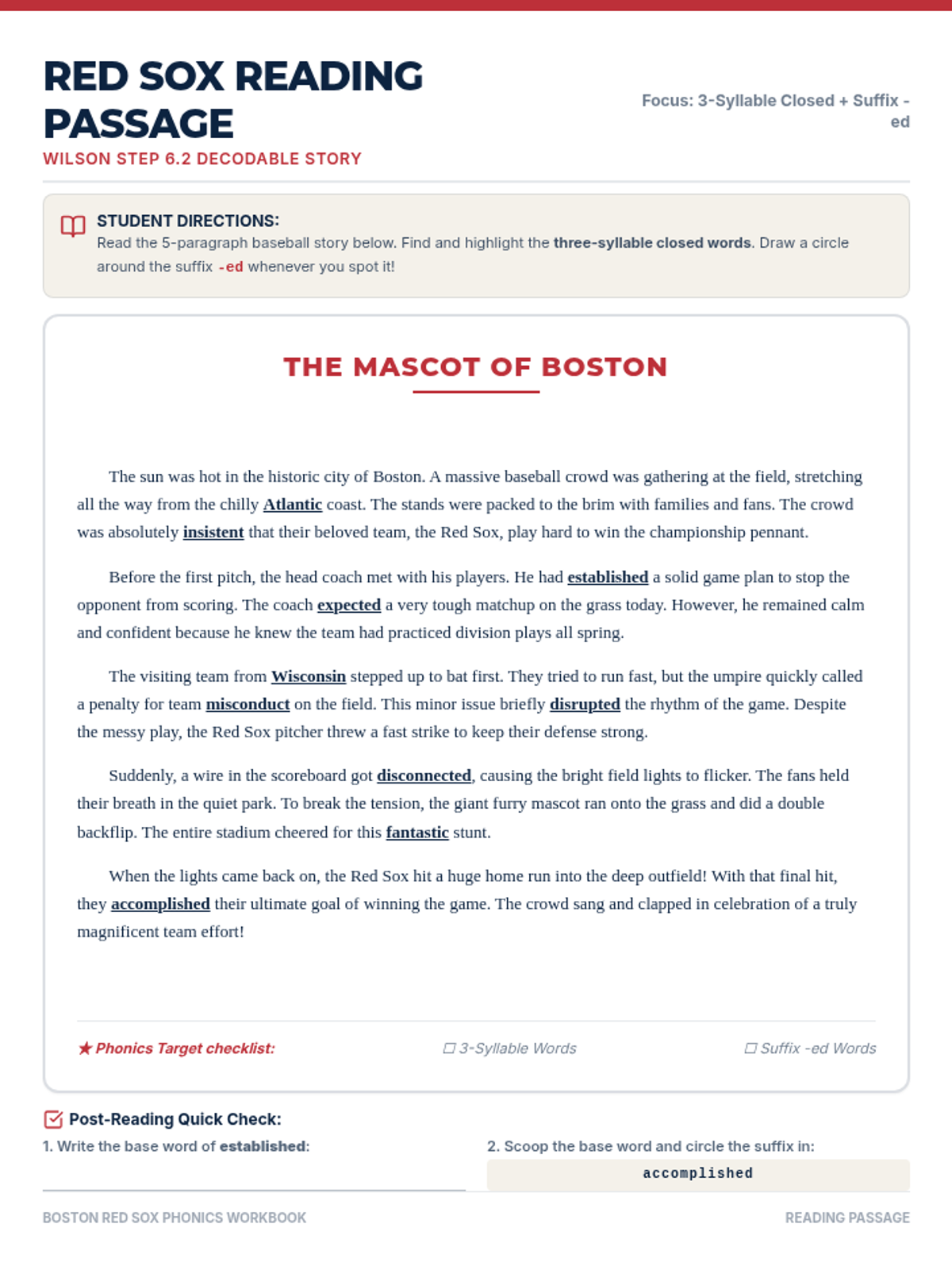
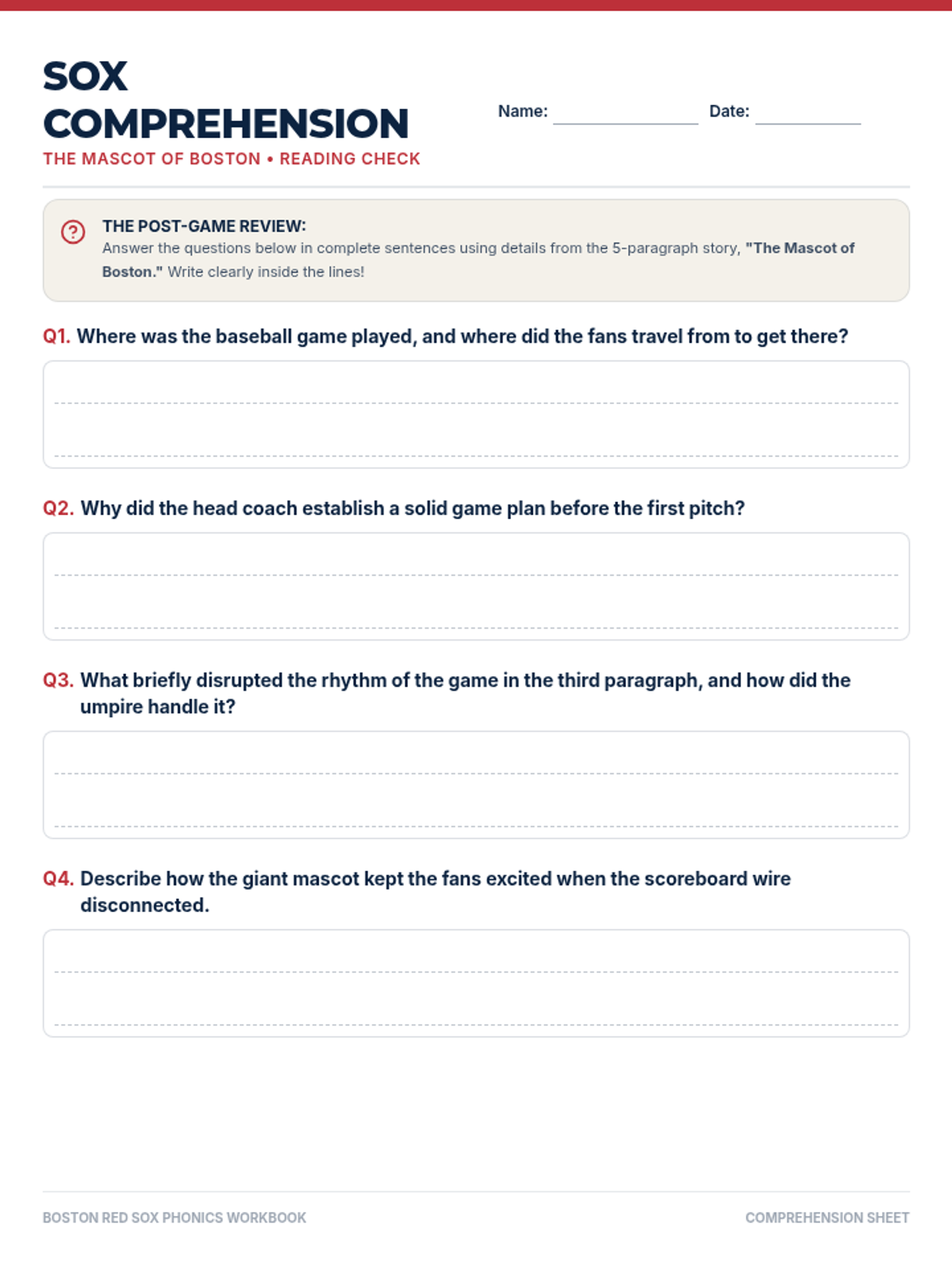
A comprehensive Wilson Step 6.2 lesson focusing on 3-syllable closed words, themed around the Boston Red Sox. Includes a slide deck, scooping worksheets, word cards, and a teacher guide with comprehension questions.
An interactive lesson where students learn to use key subordinating conjunctions (because, when, if, although) to connect clauses, using a highly visual bridge-building theme suitable for smartboard delivery.
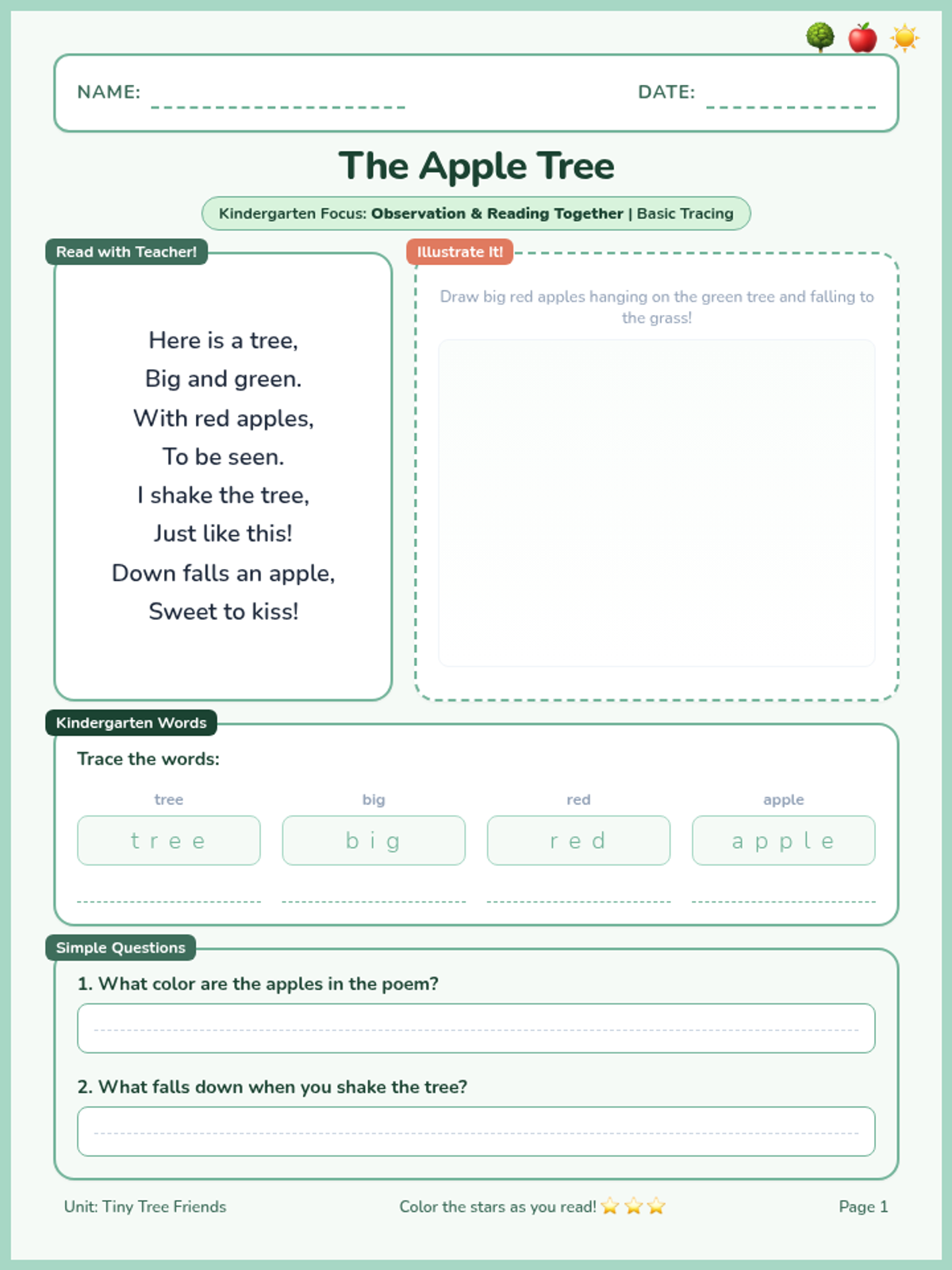
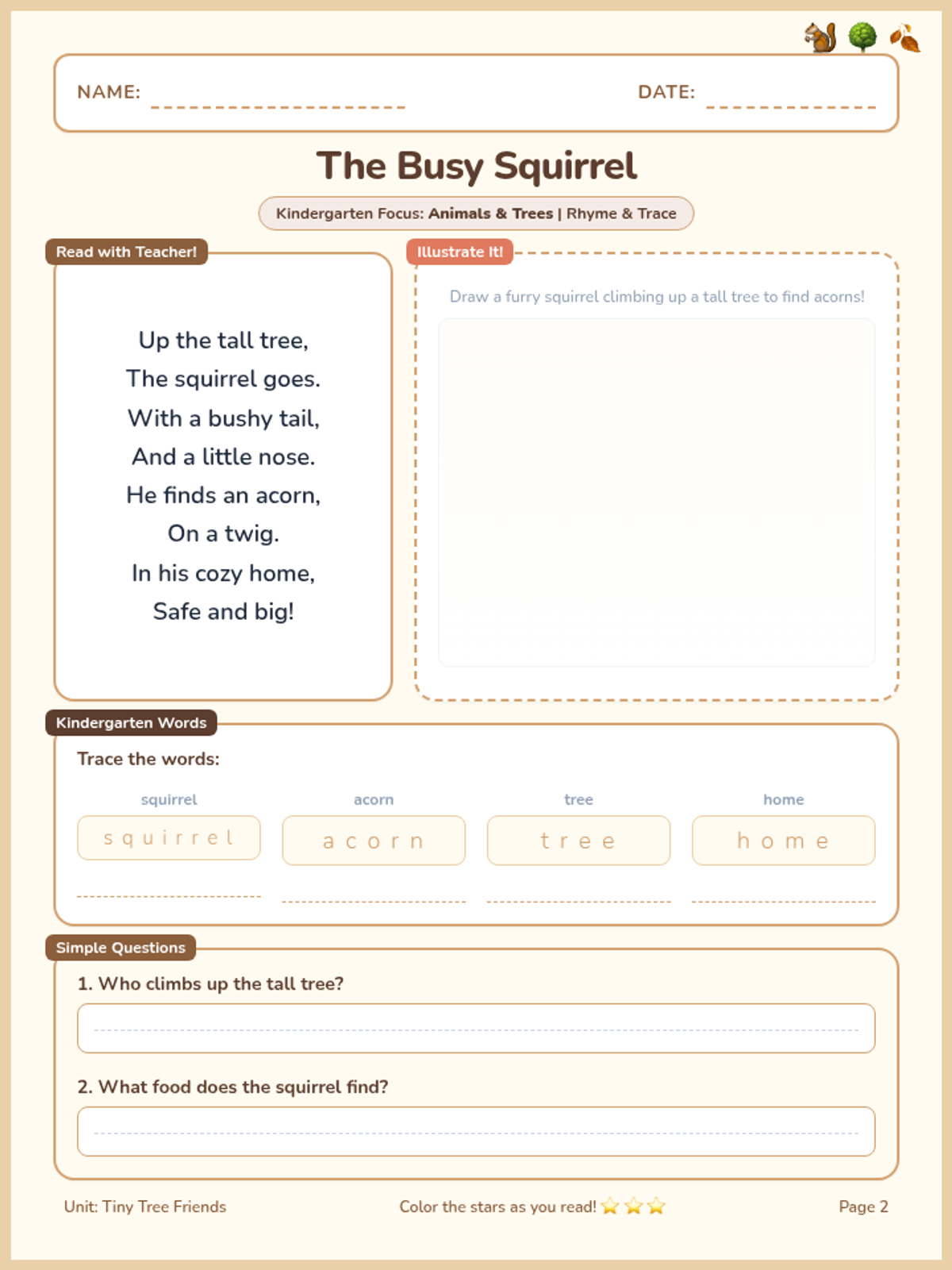
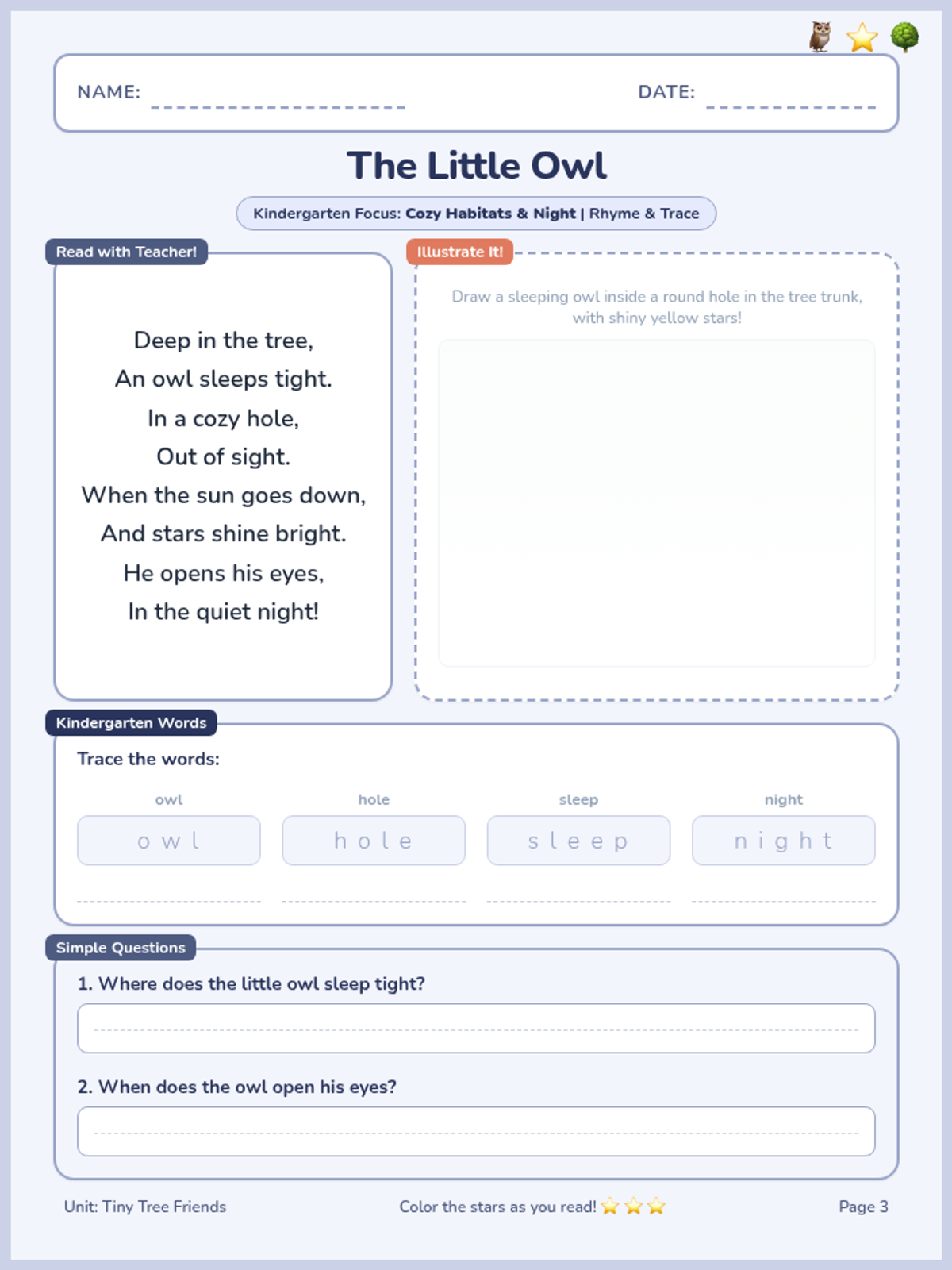
A sweet kindergarten unit focusing on trees and seasonal changes. Students read simple, rhythmic poems about apple trees and falling leaves, practice coloring, trace basic seasonal terms, and answer introductory comprehension questions.
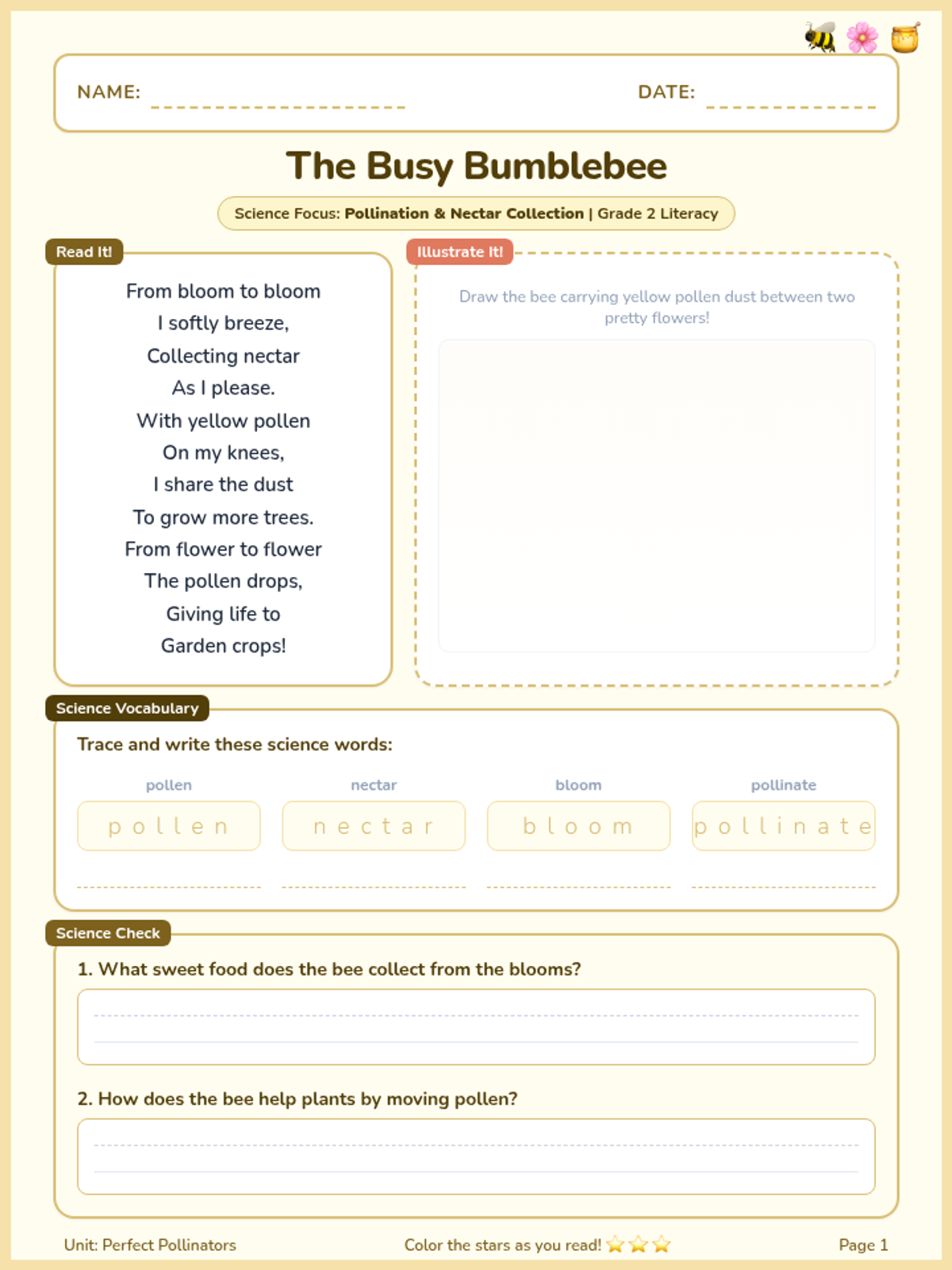
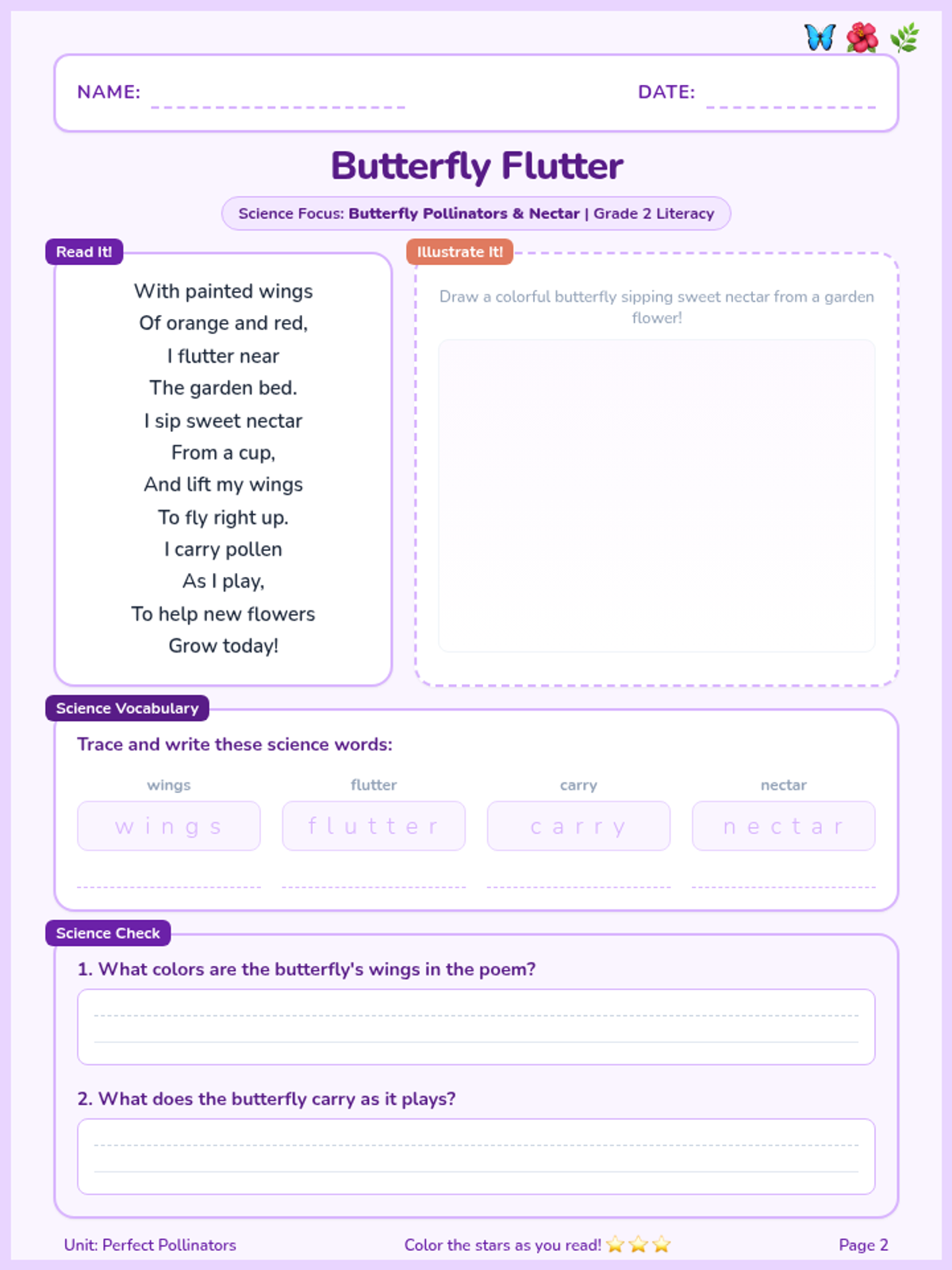
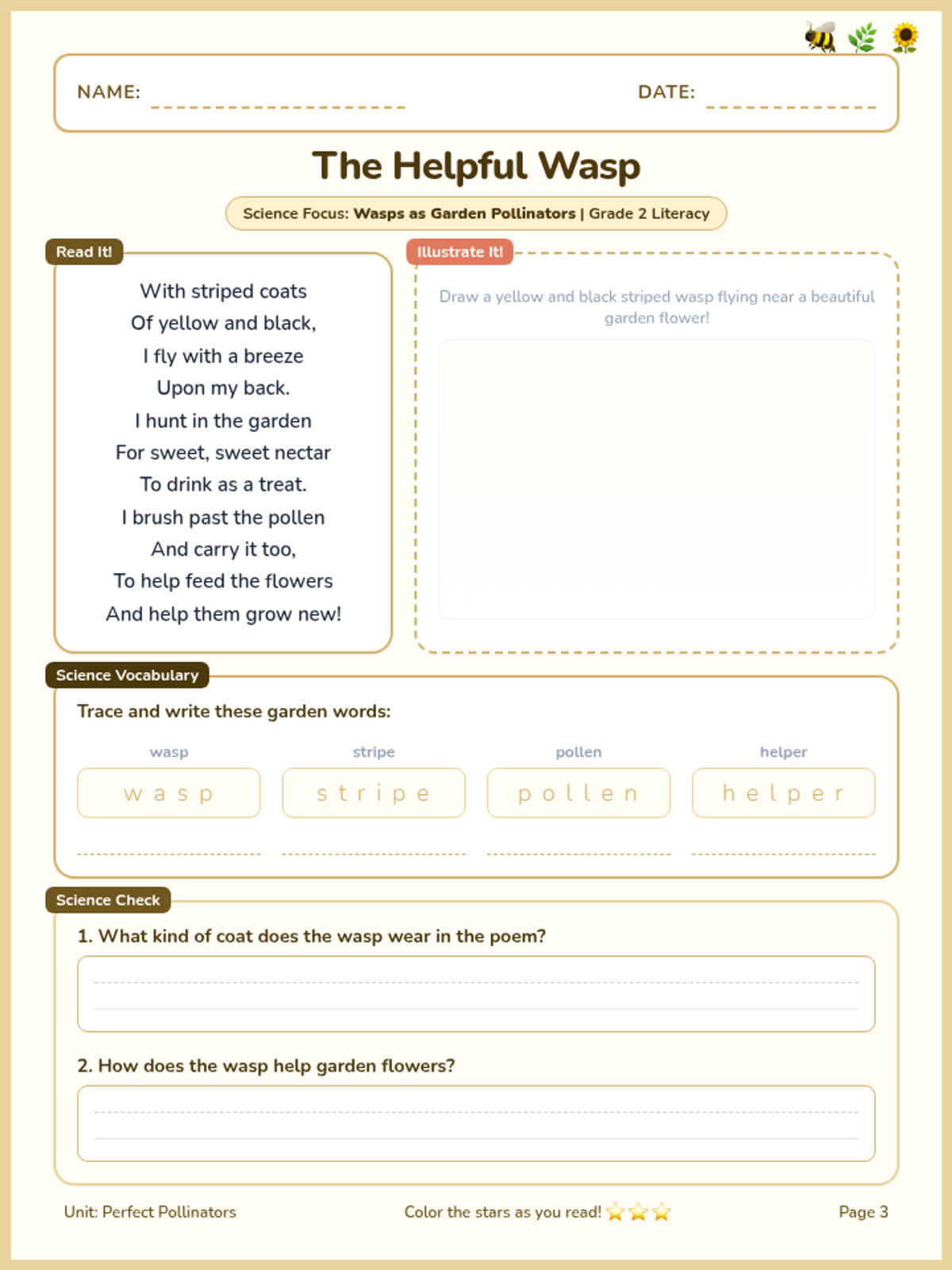
An engaging science-integrated poetry unit for Grade 2. Students read sweet, rhythmic poems about bumblebees and butterflies, illustrating their important roles in pollination, identifying vocabulary, and demonstrating reading comprehension.
A beautiful thematic unit featuring sweet, engaging Spring poems. Students explore imagery, vocabulary, and seasonal shifts while practicing reading comprehension and creative expression.
A continuation of phonics exploration focusing on the '-ug' word family and the 'st-' consonant blend. Students practice decoding, visualizing, and writing through hands-on worksheets.
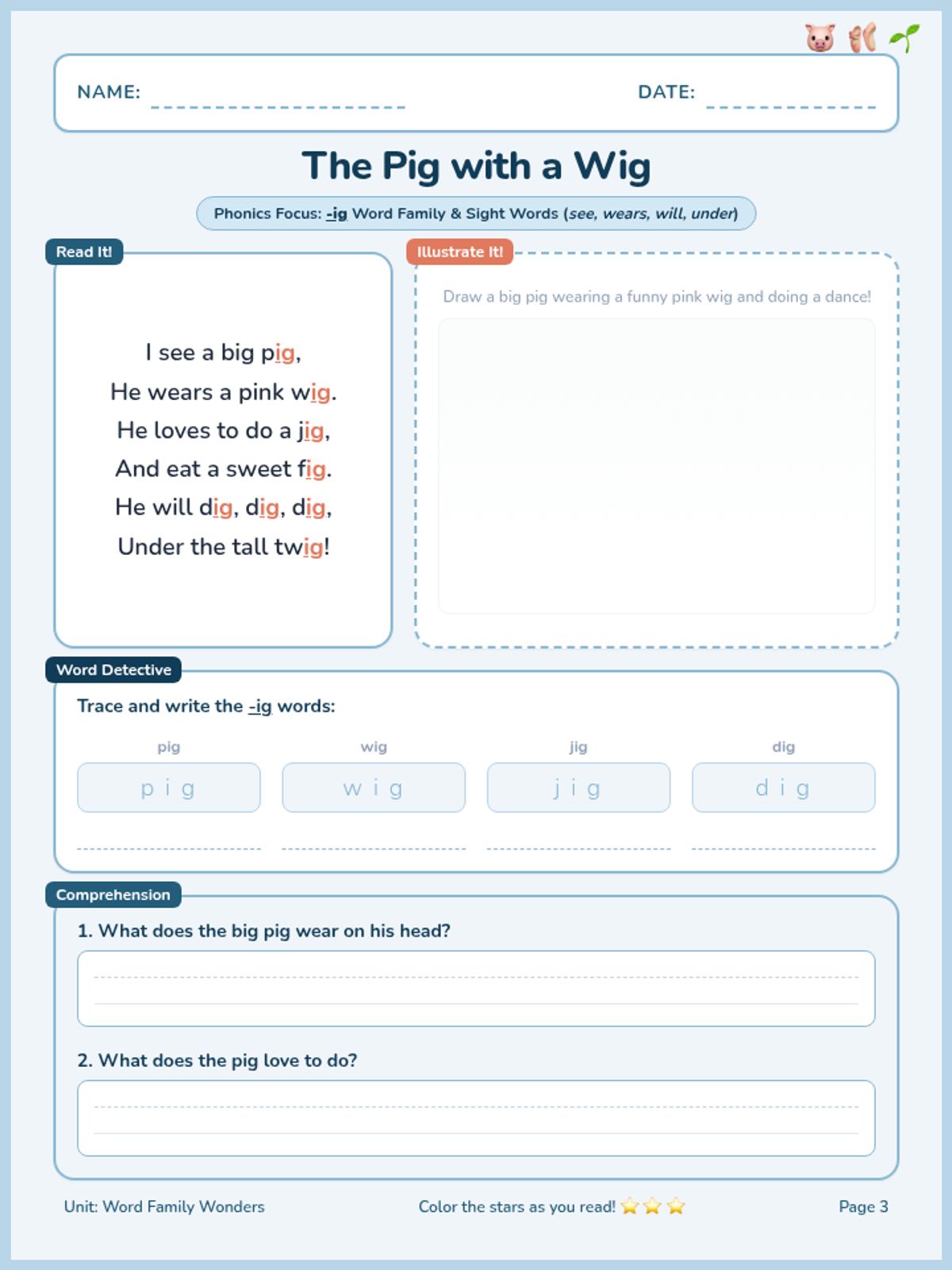
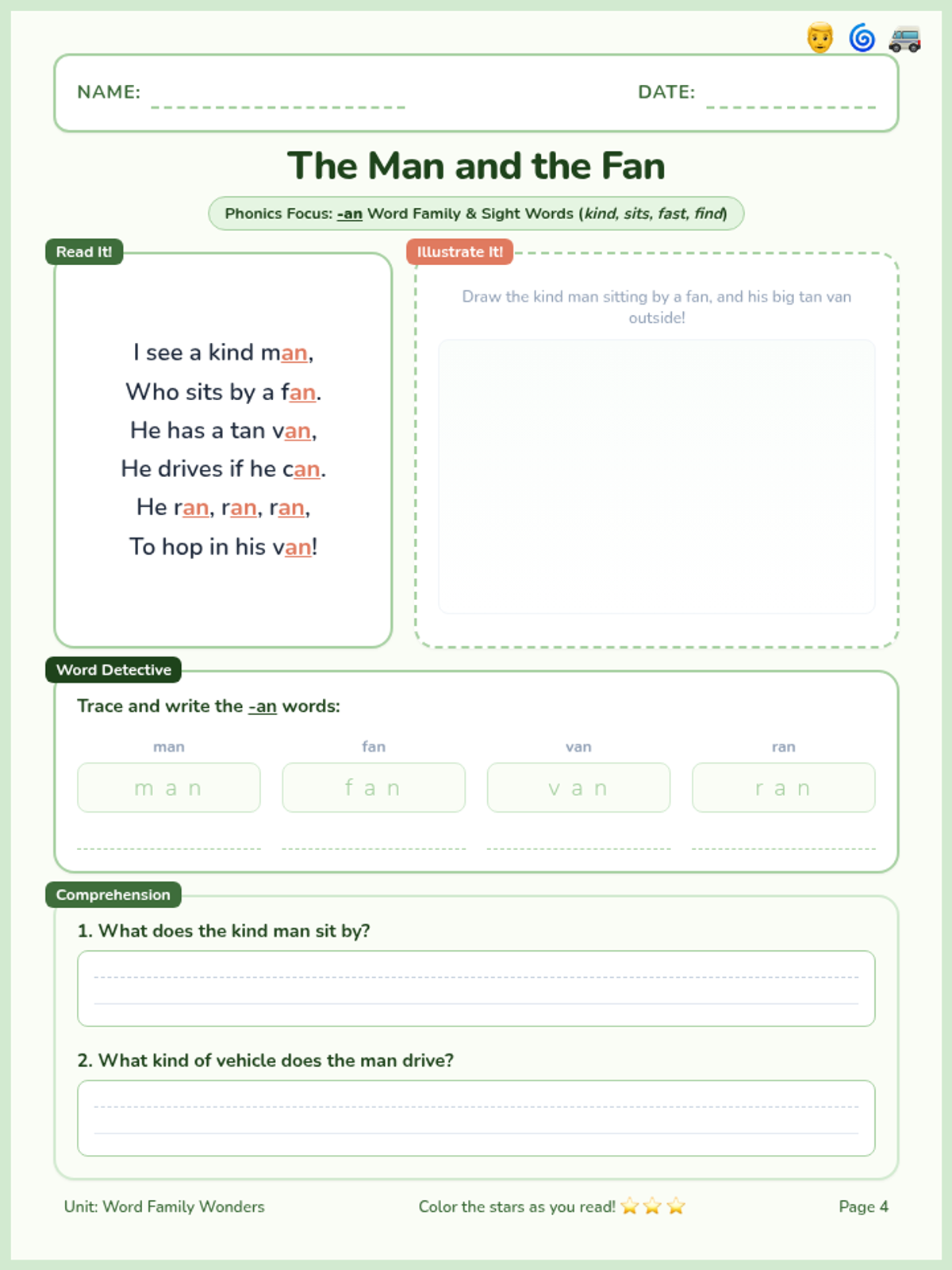
A classroom lesson focused on the '-at' and '-og' word families. Students read simple, rhythmic poems, highlight word family members, illustrate the scenes to show comprehension, and answer simple text-based questions.
A hands-on, construction-themed writing lesson for second graders to build sentences block-by-block, ranging from basic 2-part subject-predicate sentences to descriptive 5-part sentences. Includes a structured builder worksheet, word bank helpers, and task cards.
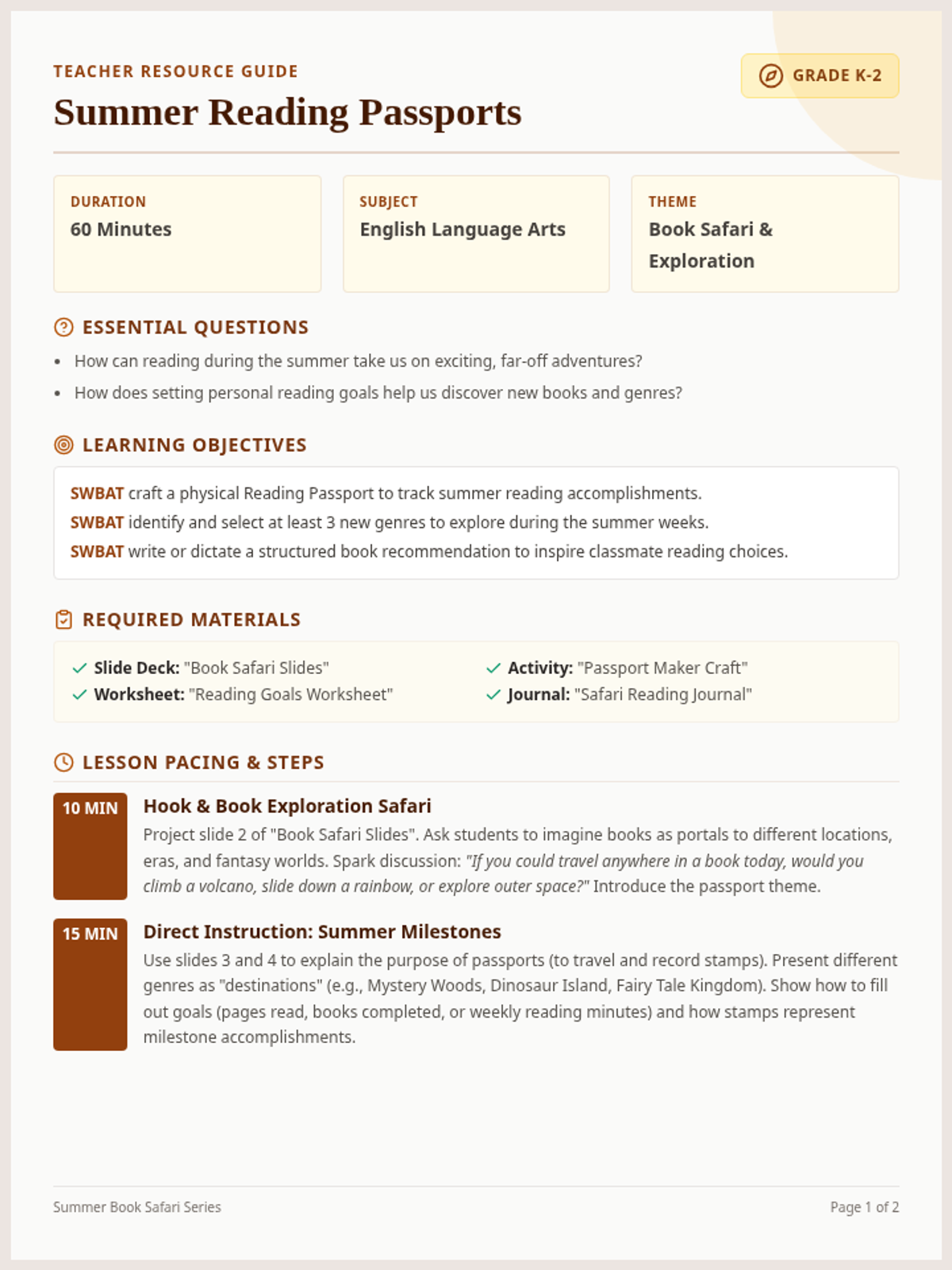
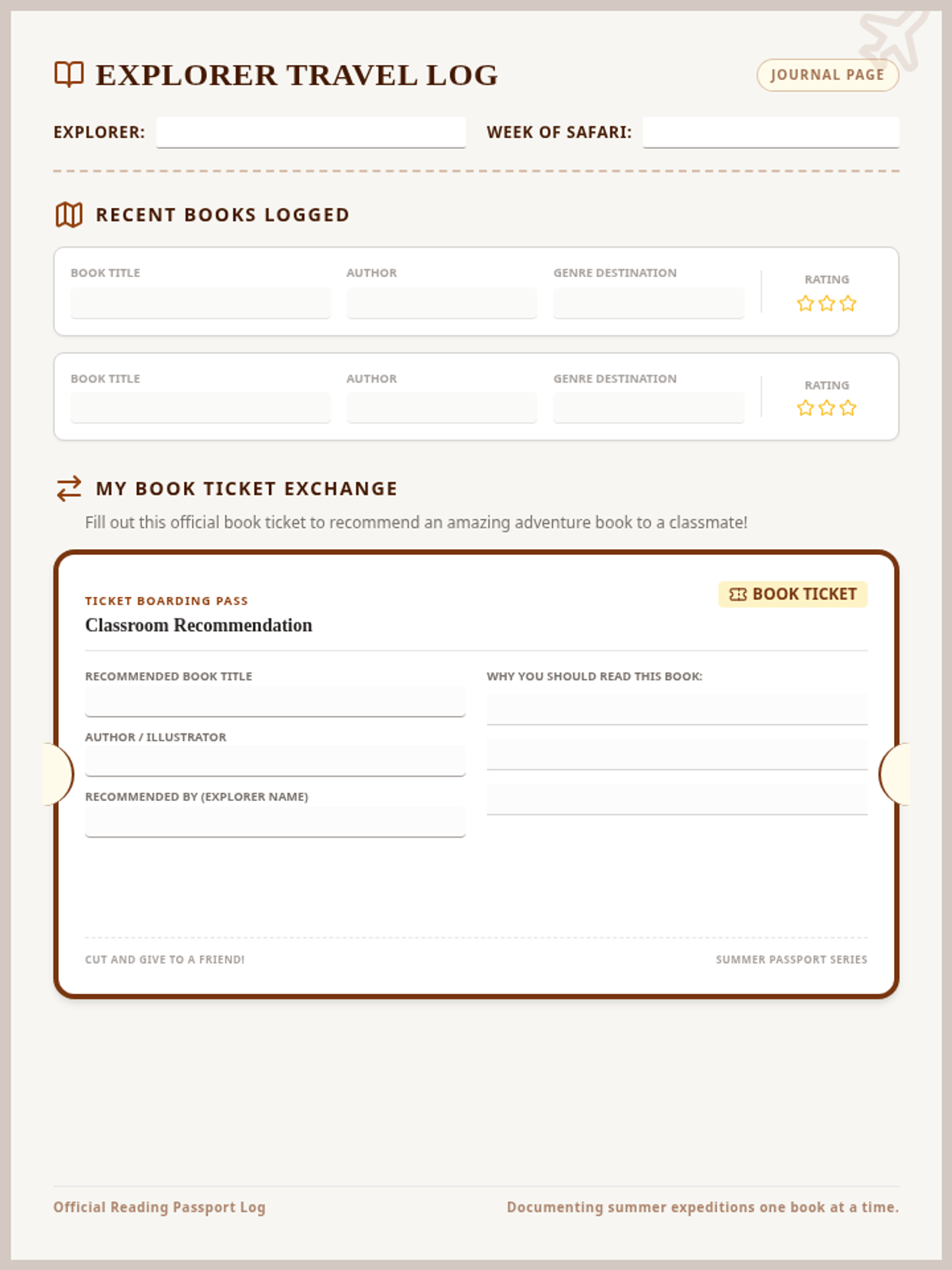
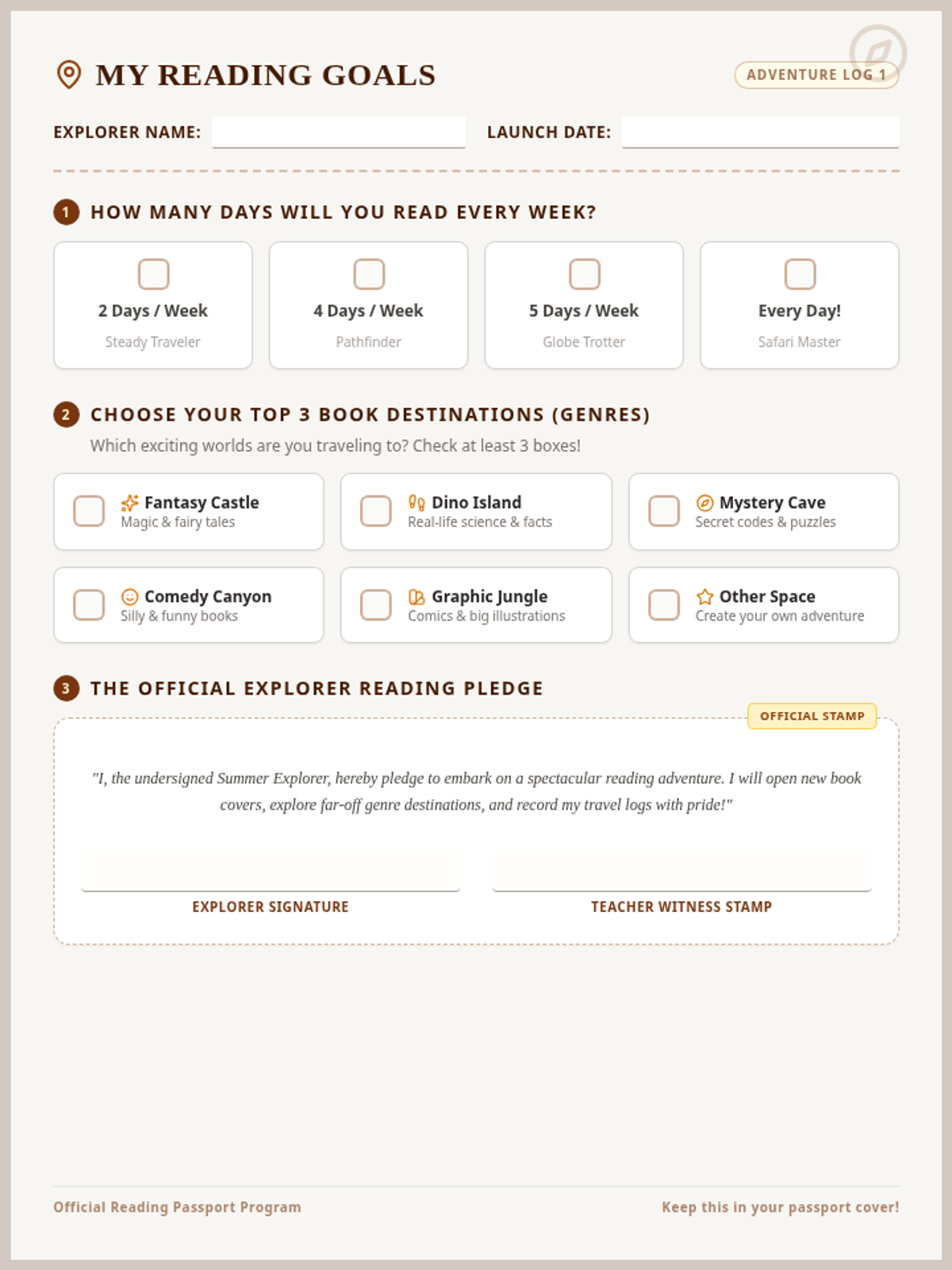
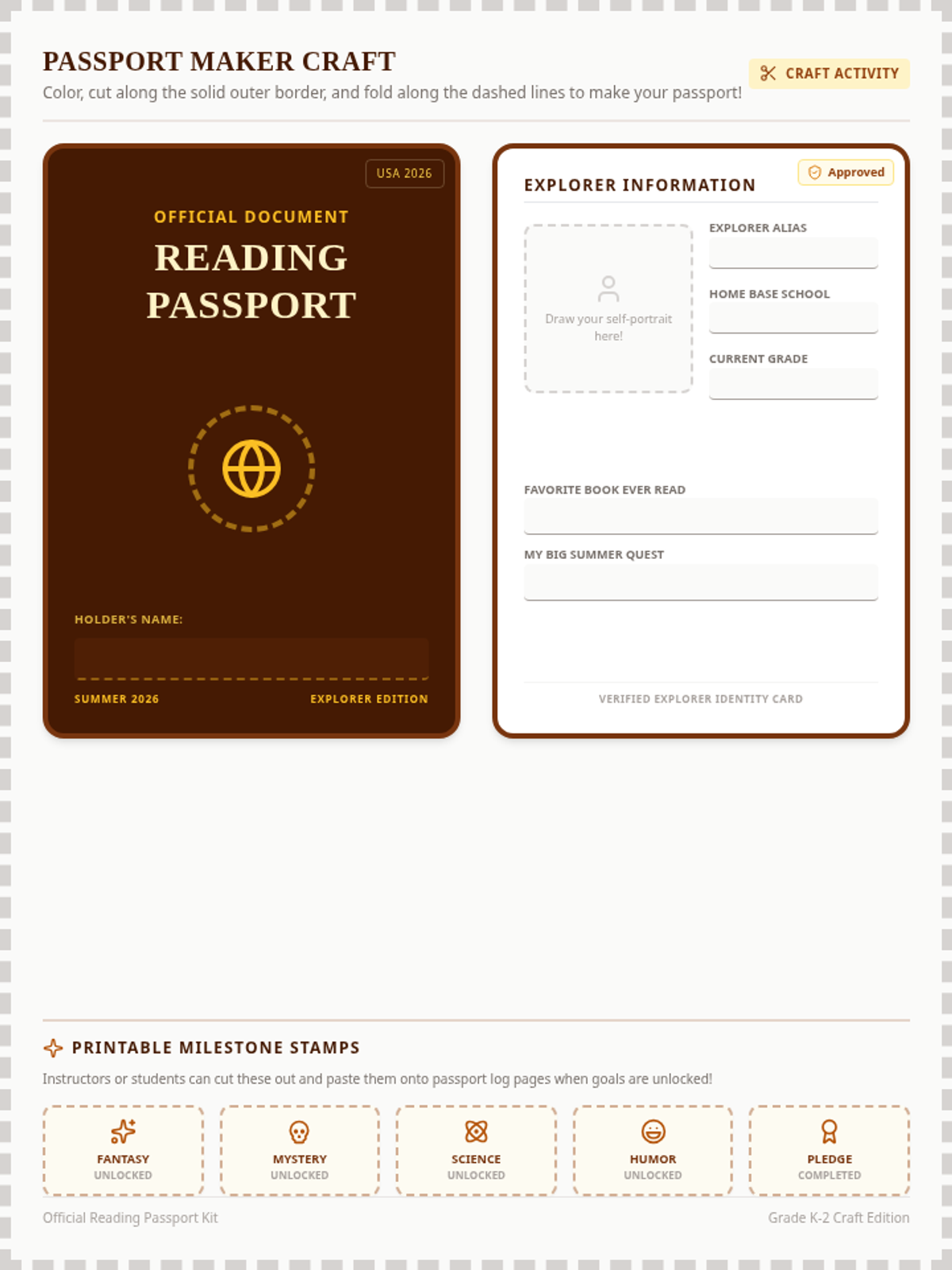
A fun, adventure-themed lesson where early elementary students design custom reading passports, set interactive summer reading goals, explore new genres, and practice recommending books to their peers to build a summer reading community.
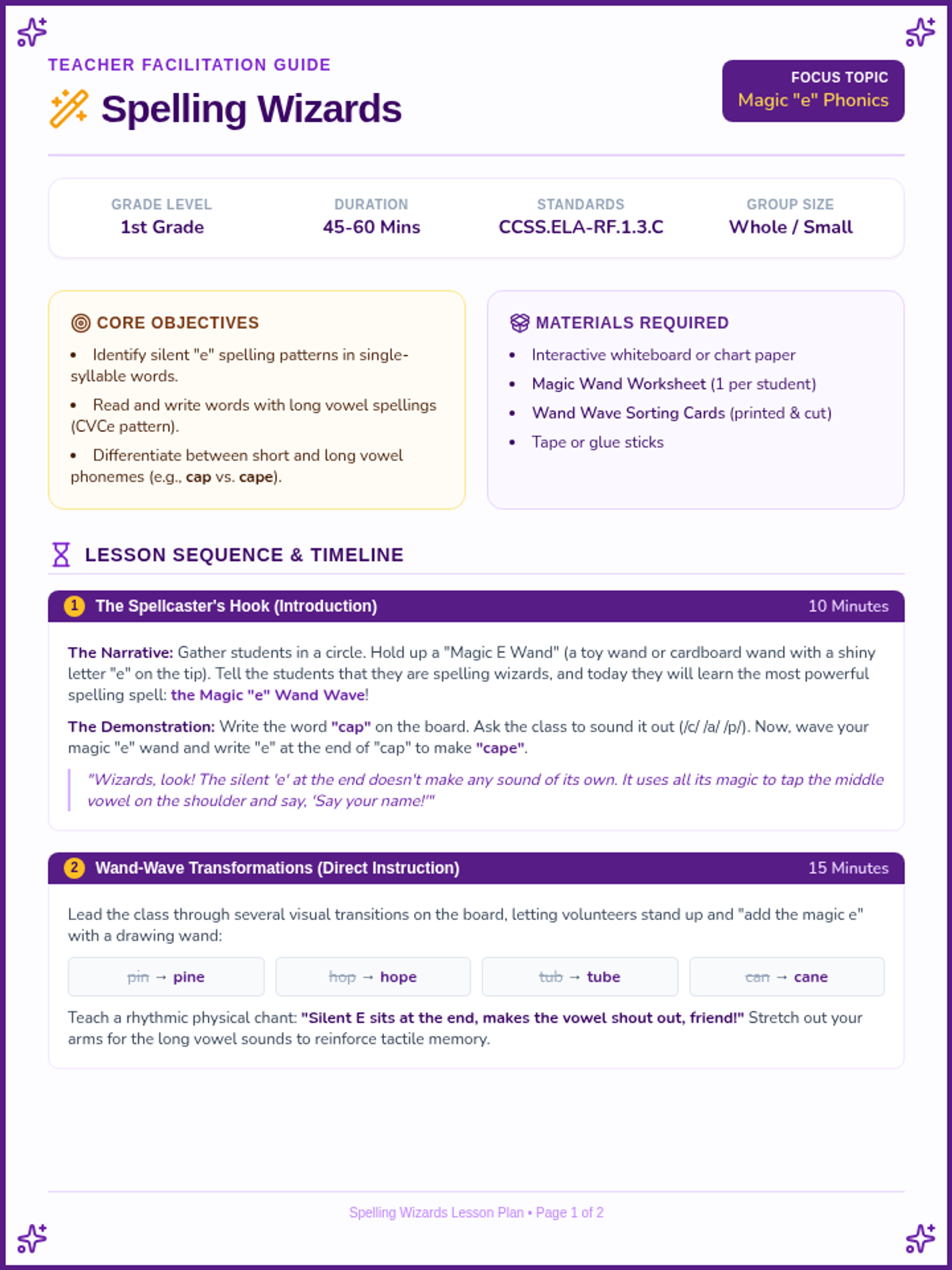
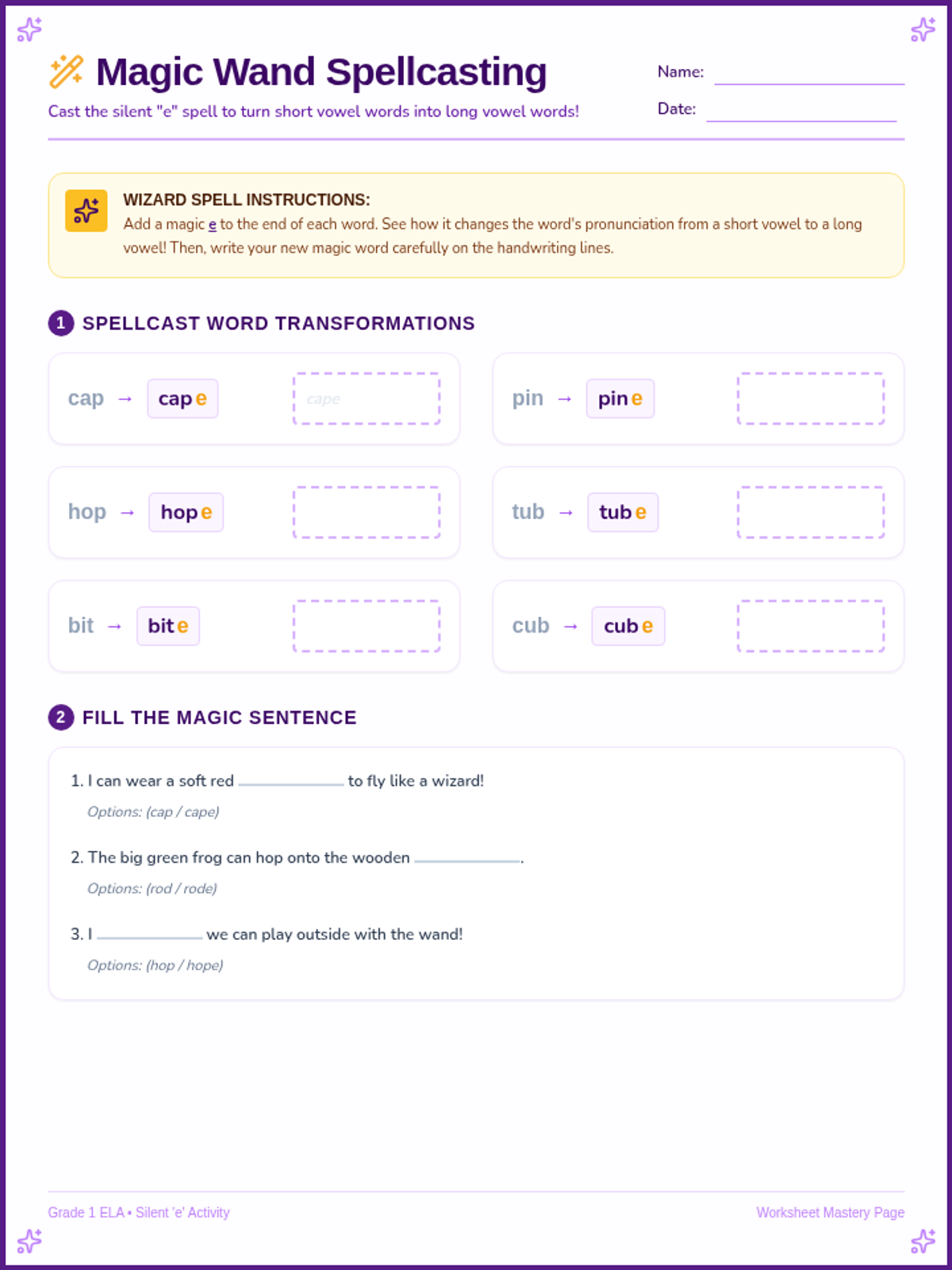
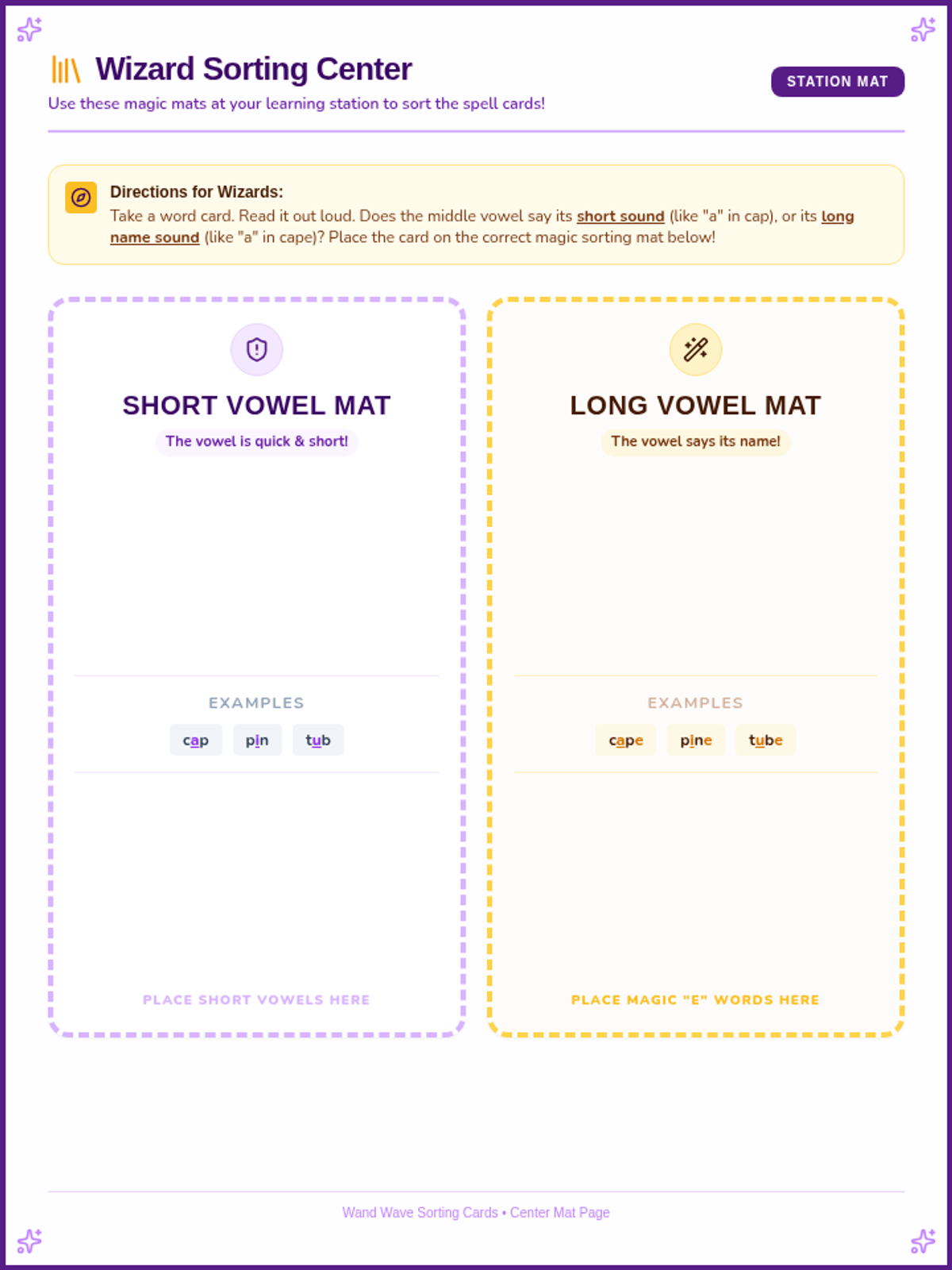
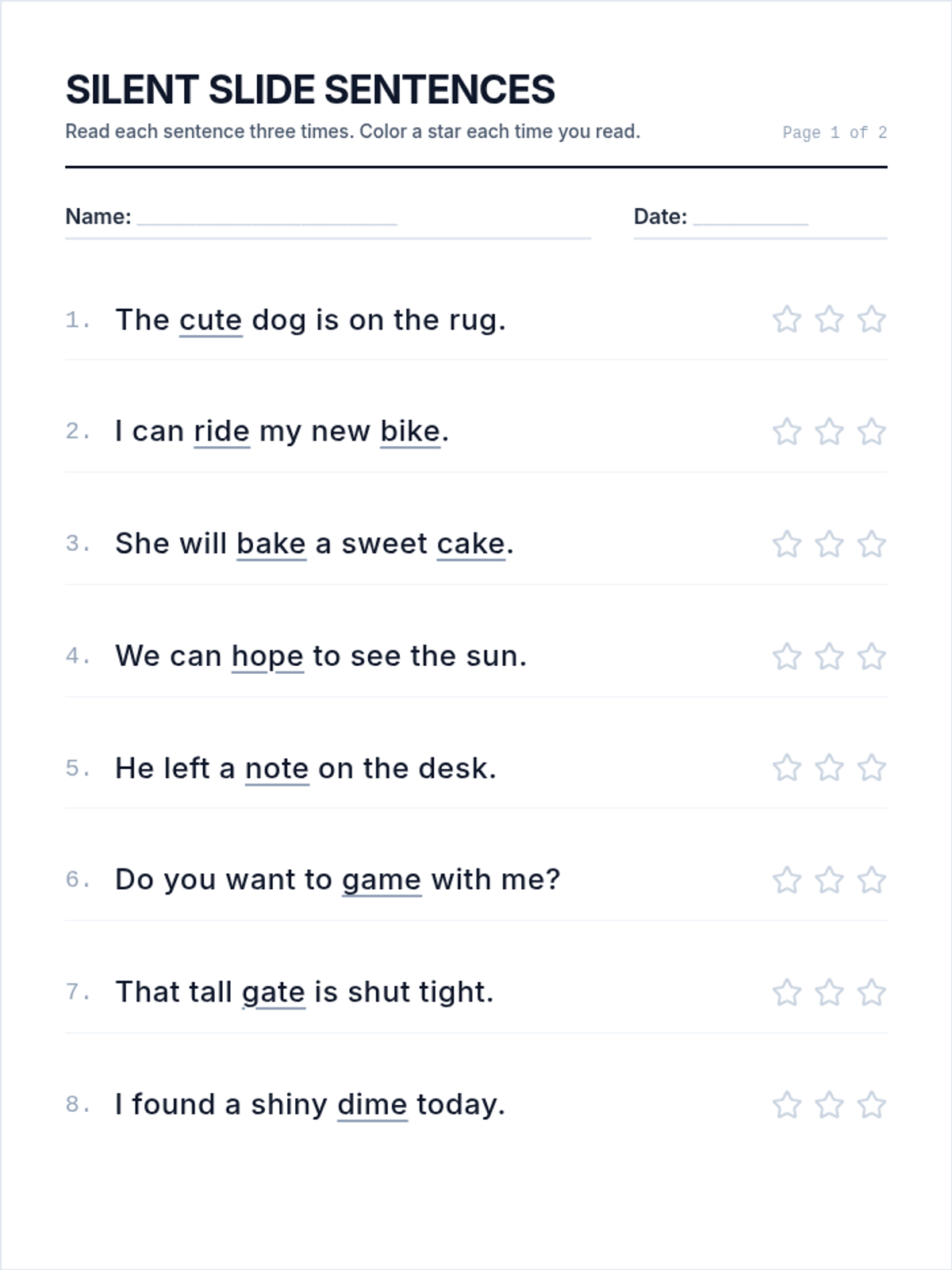
A whimsical first-grade ELA lesson teaching the power of silent 'e' through hands-on spelling wizard activities and guided practice.
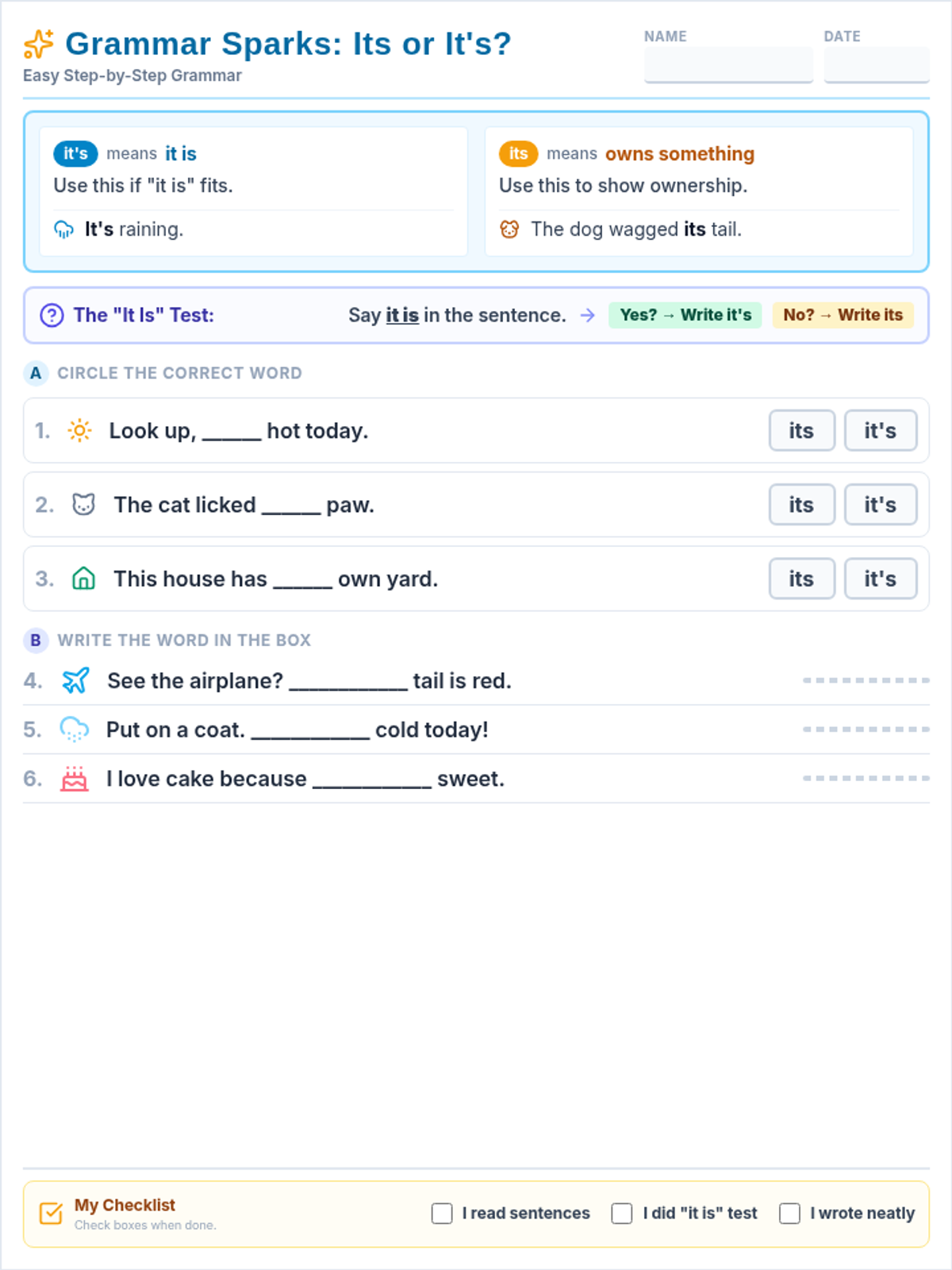
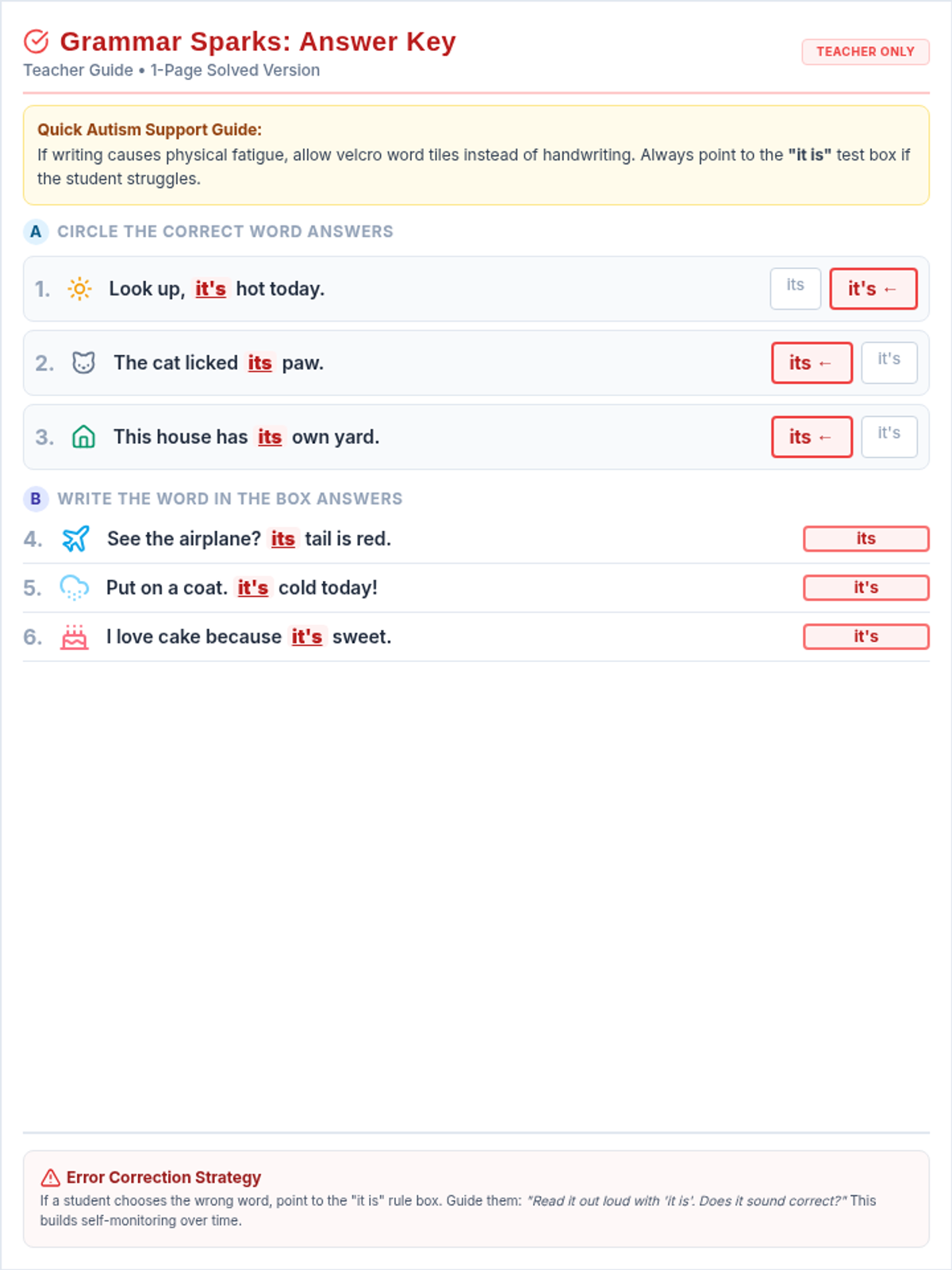
A highly structured grammar lesson focusing on the distinction between 'its' and 'it's', customized with visual icon supports, step-by-step rule scaffolding, and self-monitoring checklists for students who benefit from predictable layouts.
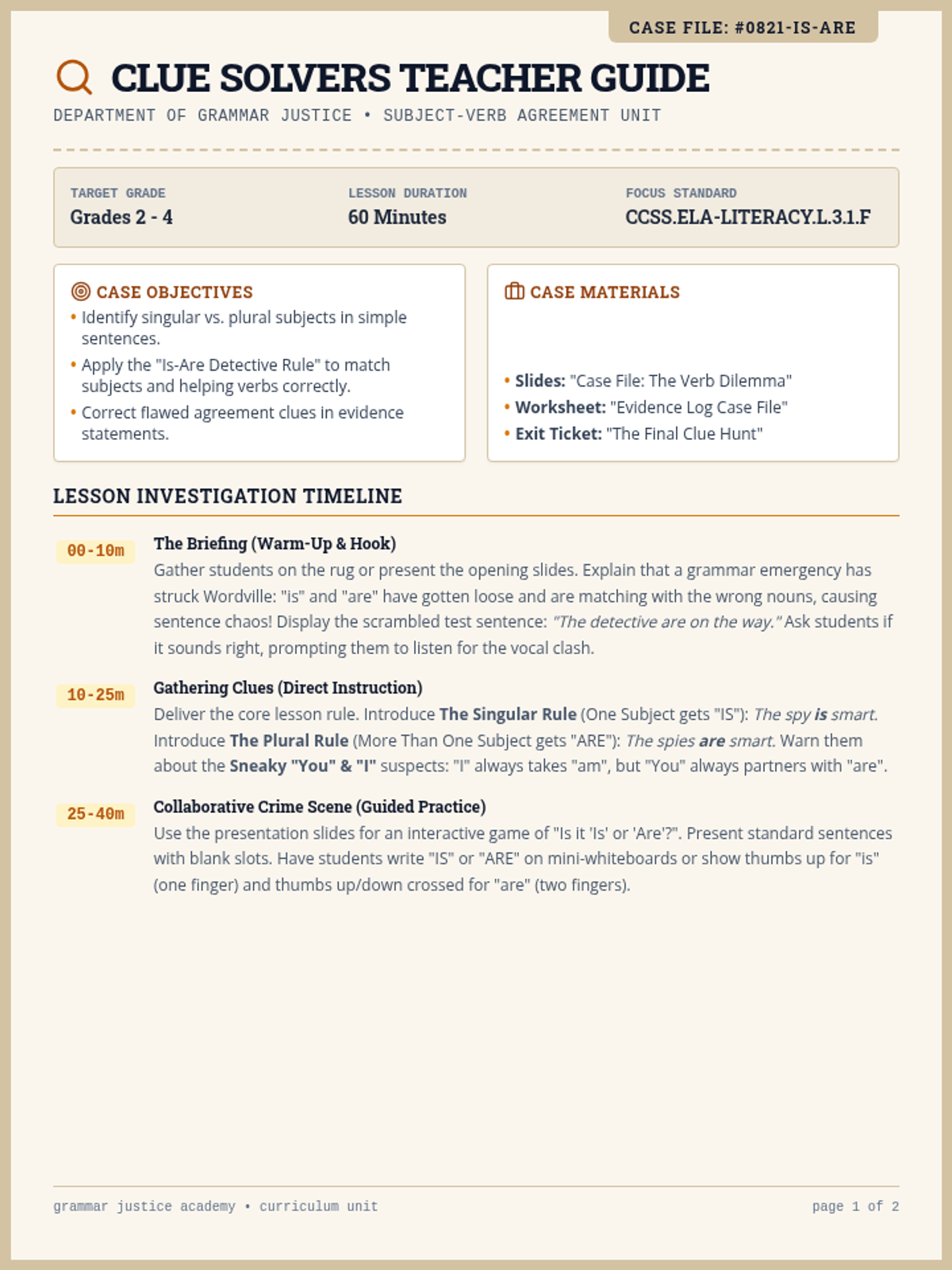
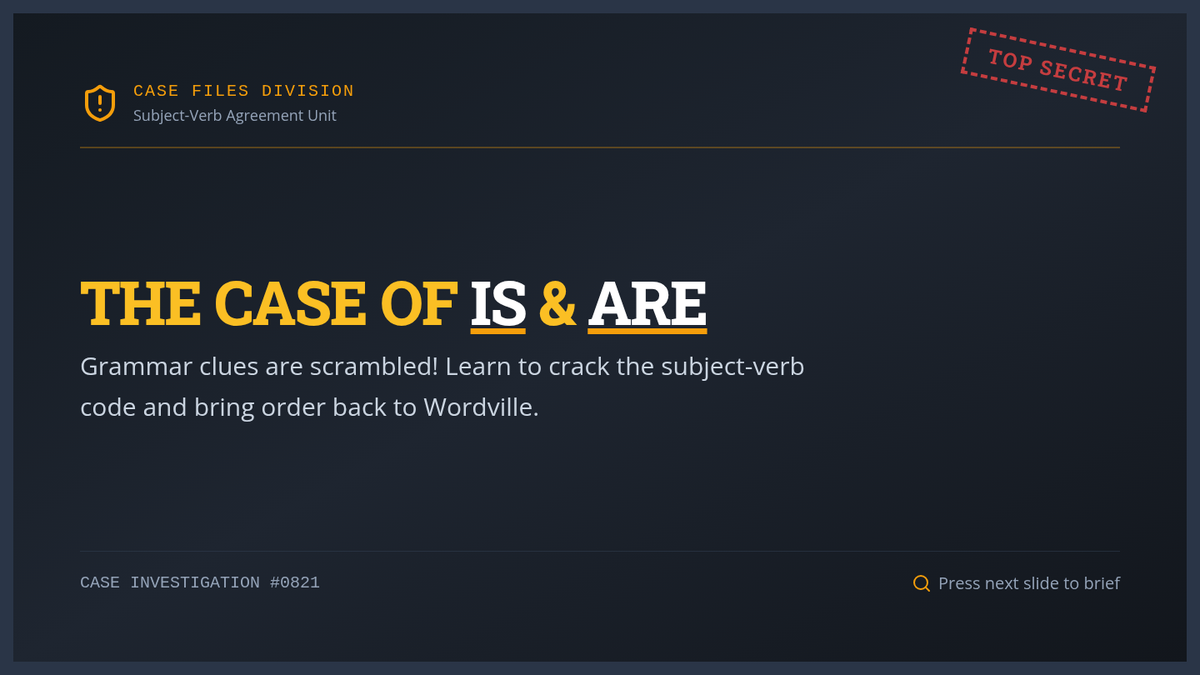
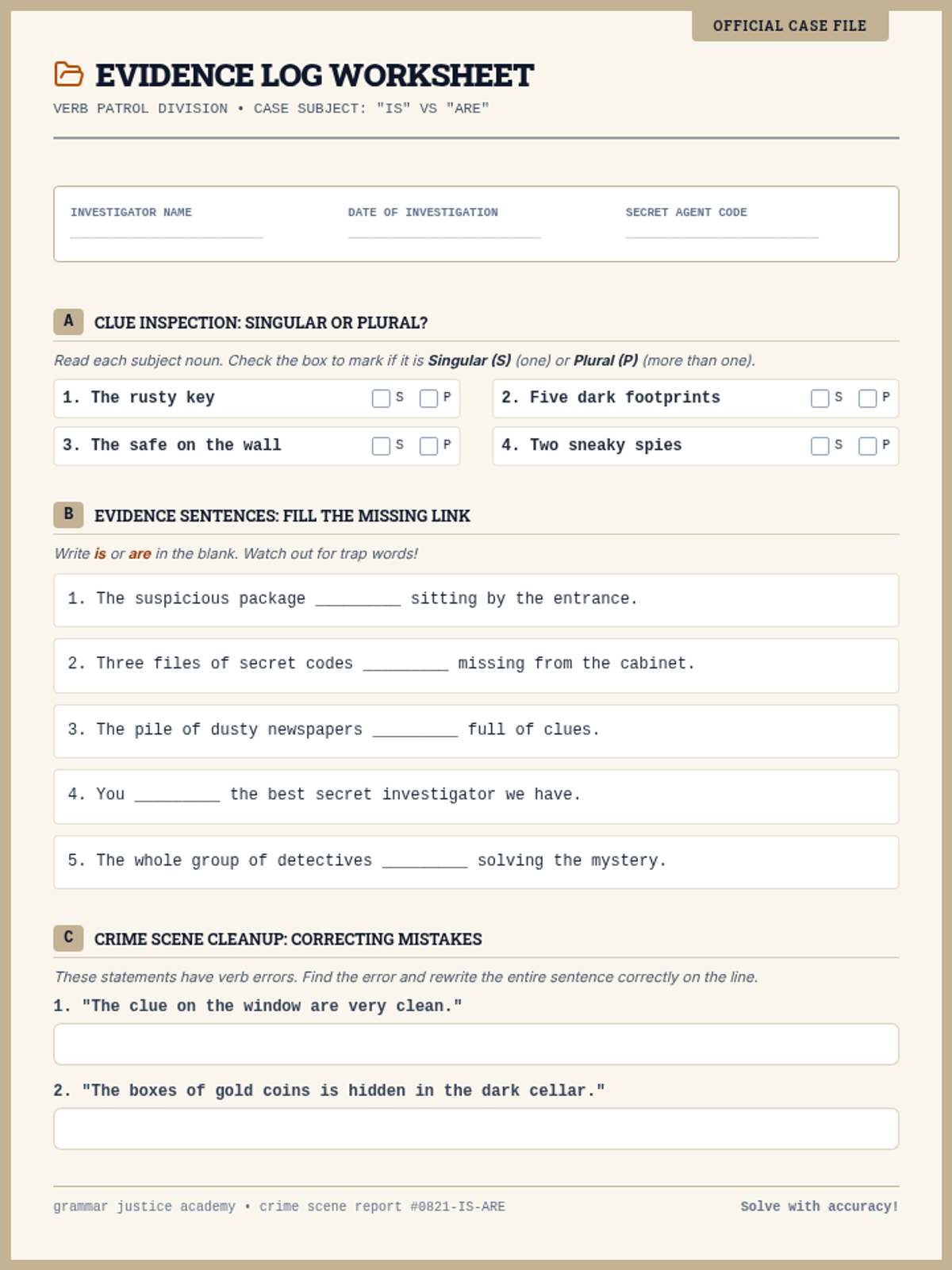
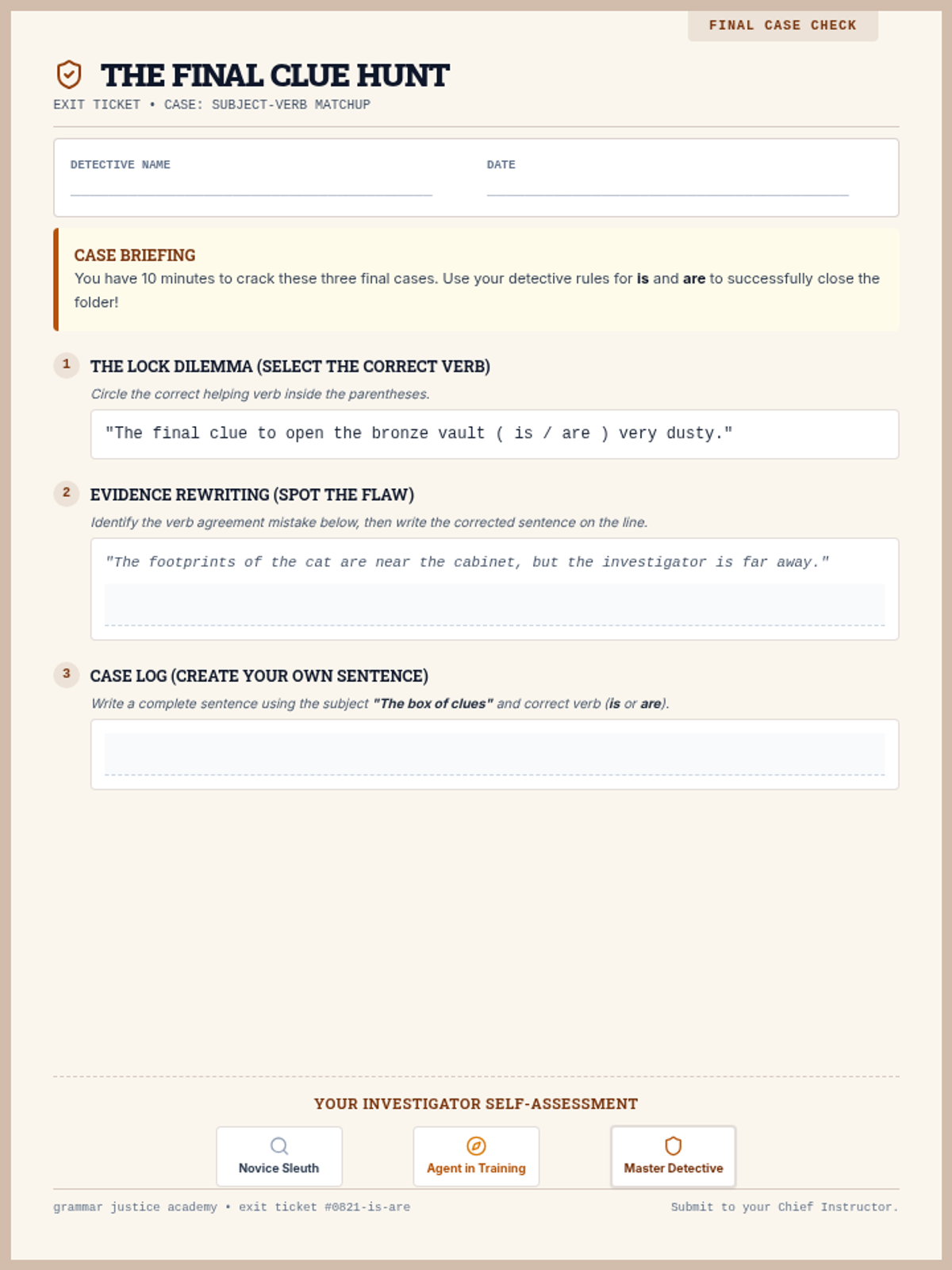
An immersive, detective-themed lesson guiding students to master subject-verb agreement for 'is' vs 'are'. Includes a detailed teacher guide, presentation slides, student case file worksheet, and a final clue hunt exit ticket.
A first-grade decoding lesson focused on reading and tracking simple sentences featuring vowel-consonant-e (silent e) words for fluency.
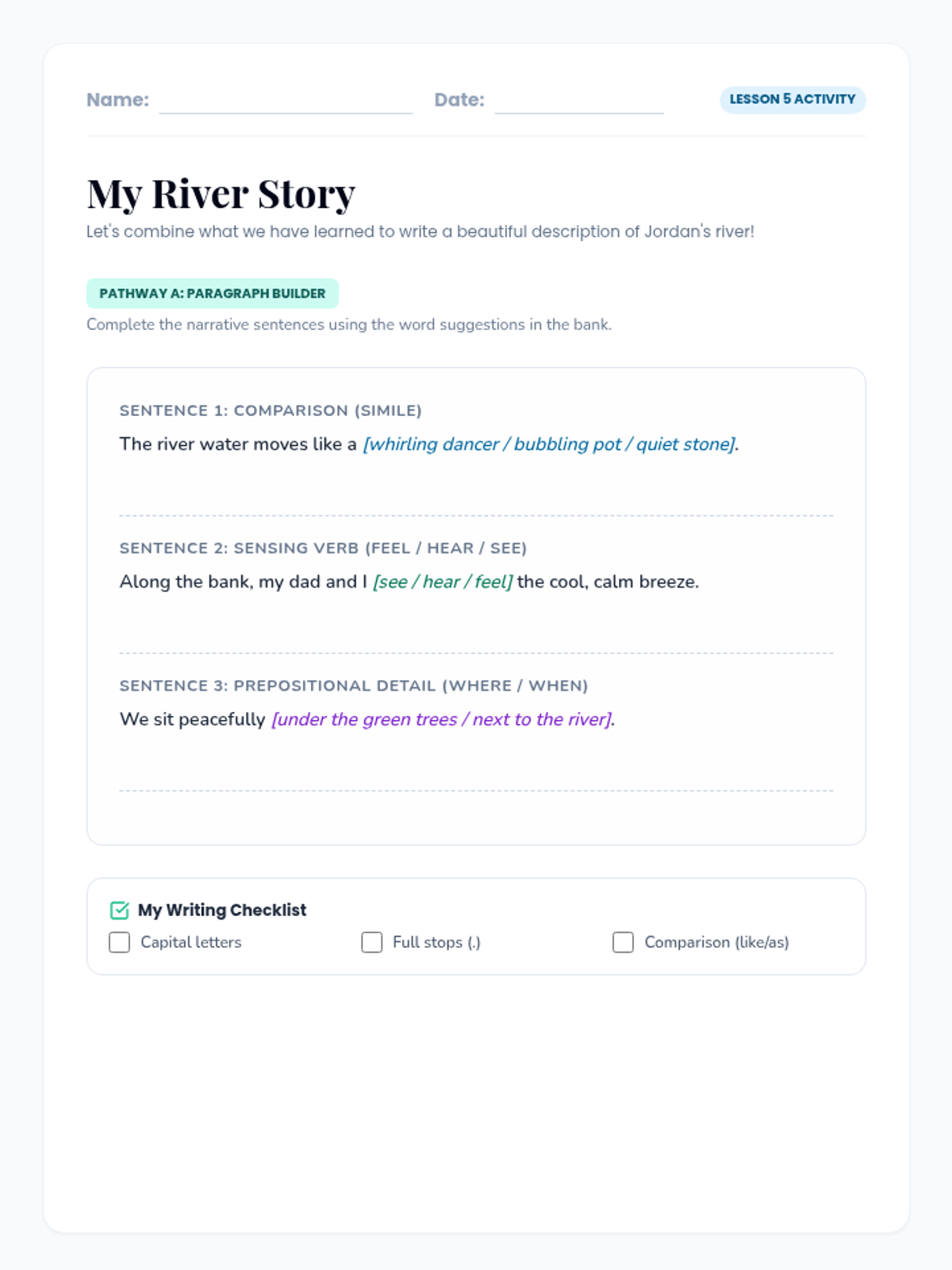
Students combine their cumulative learning of sensing verbs, prepositional phrases, and comparisons to co-construct and independently draft a descriptive paragraph about an outback landscape, utilizing a multi-tiered writing frame.
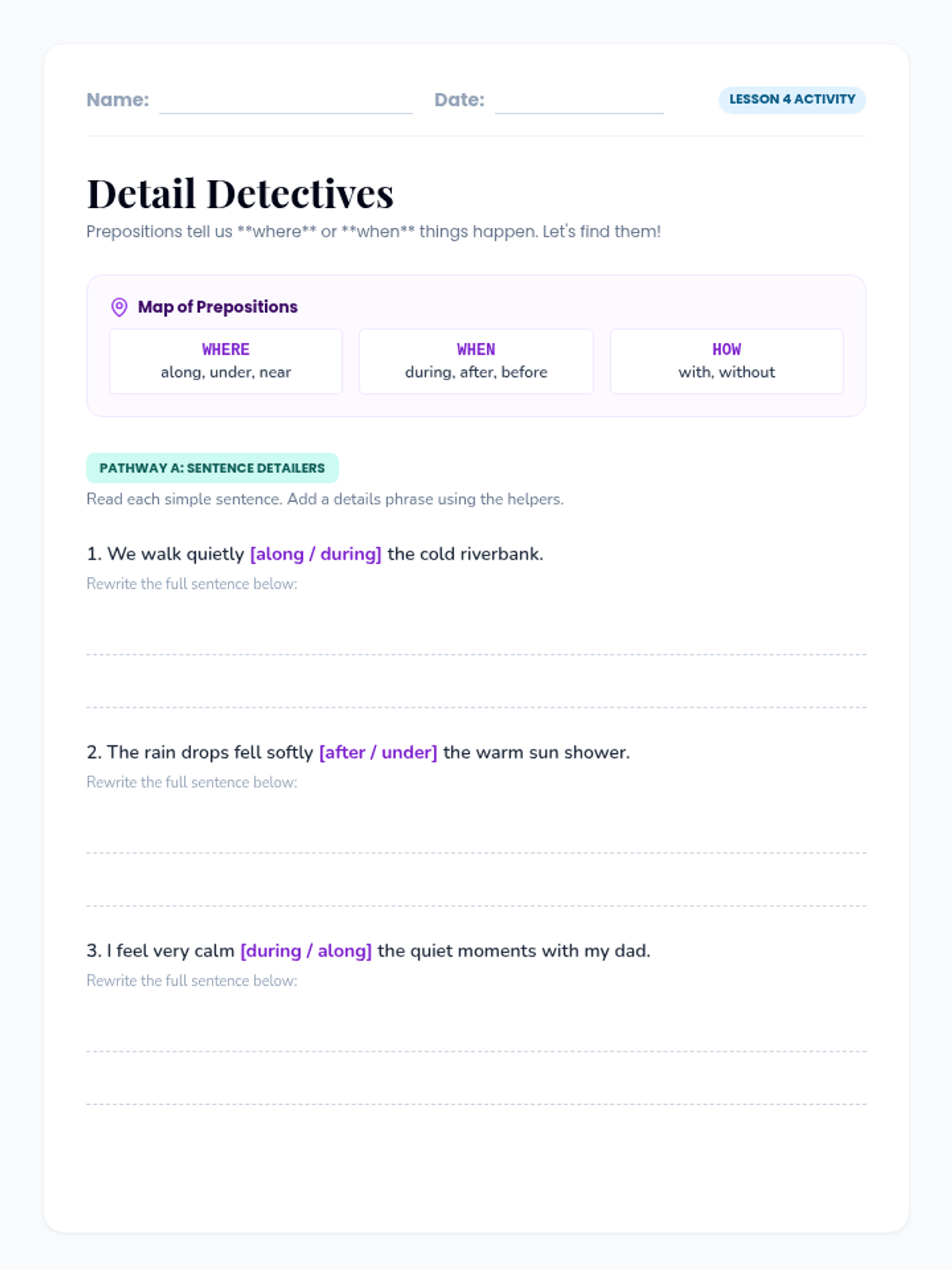
Students learn how prepositional phrases give information about 'where' and 'when' events occur, practicing adding them to simple sentences containing sensing verbs to build descriptive detail.
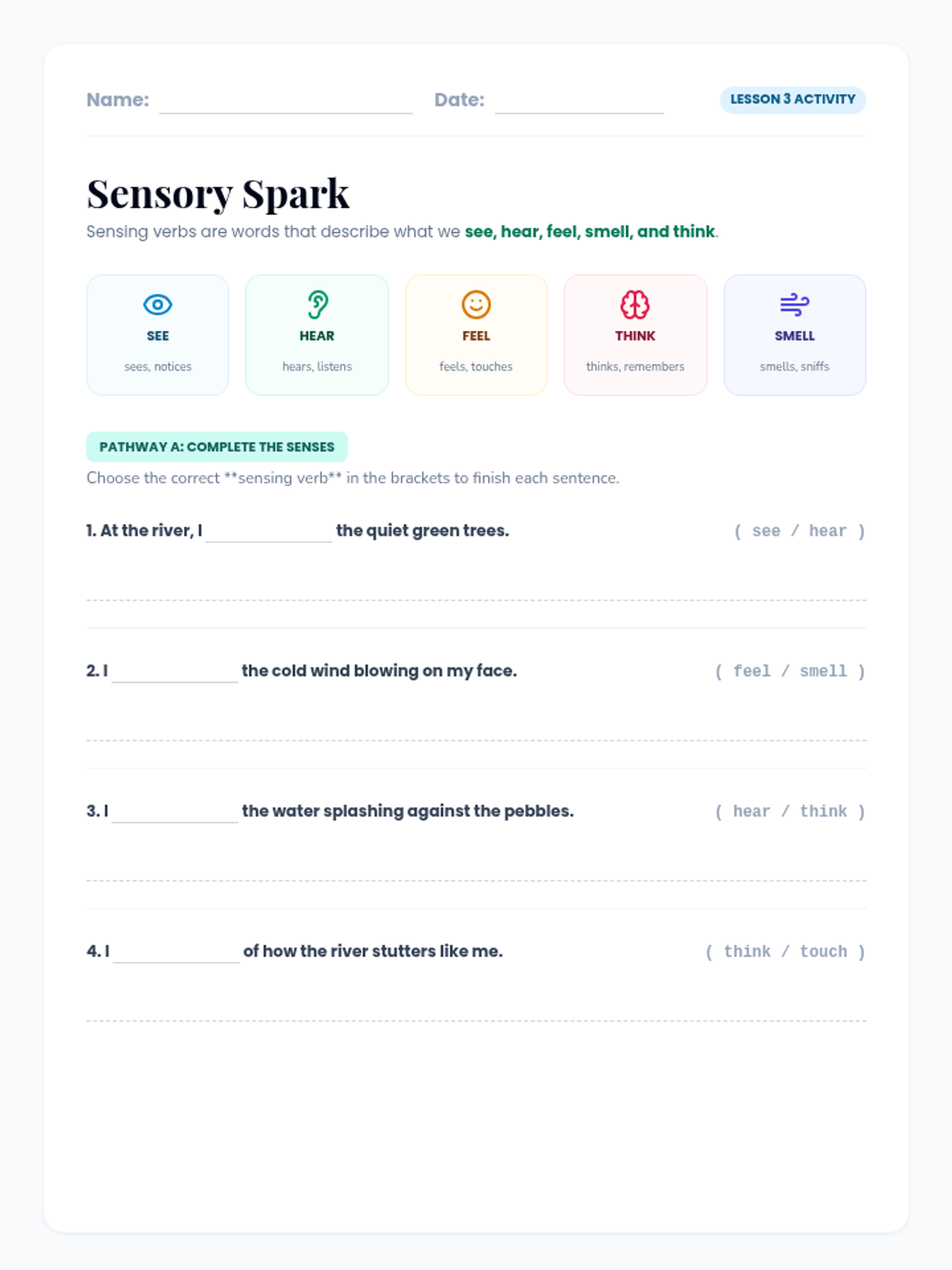
Students investigate sensing verbs related to the five senses, identifying how the author uses them to share how natural elements feel during drought, and brainstorming sensory details about the outback.
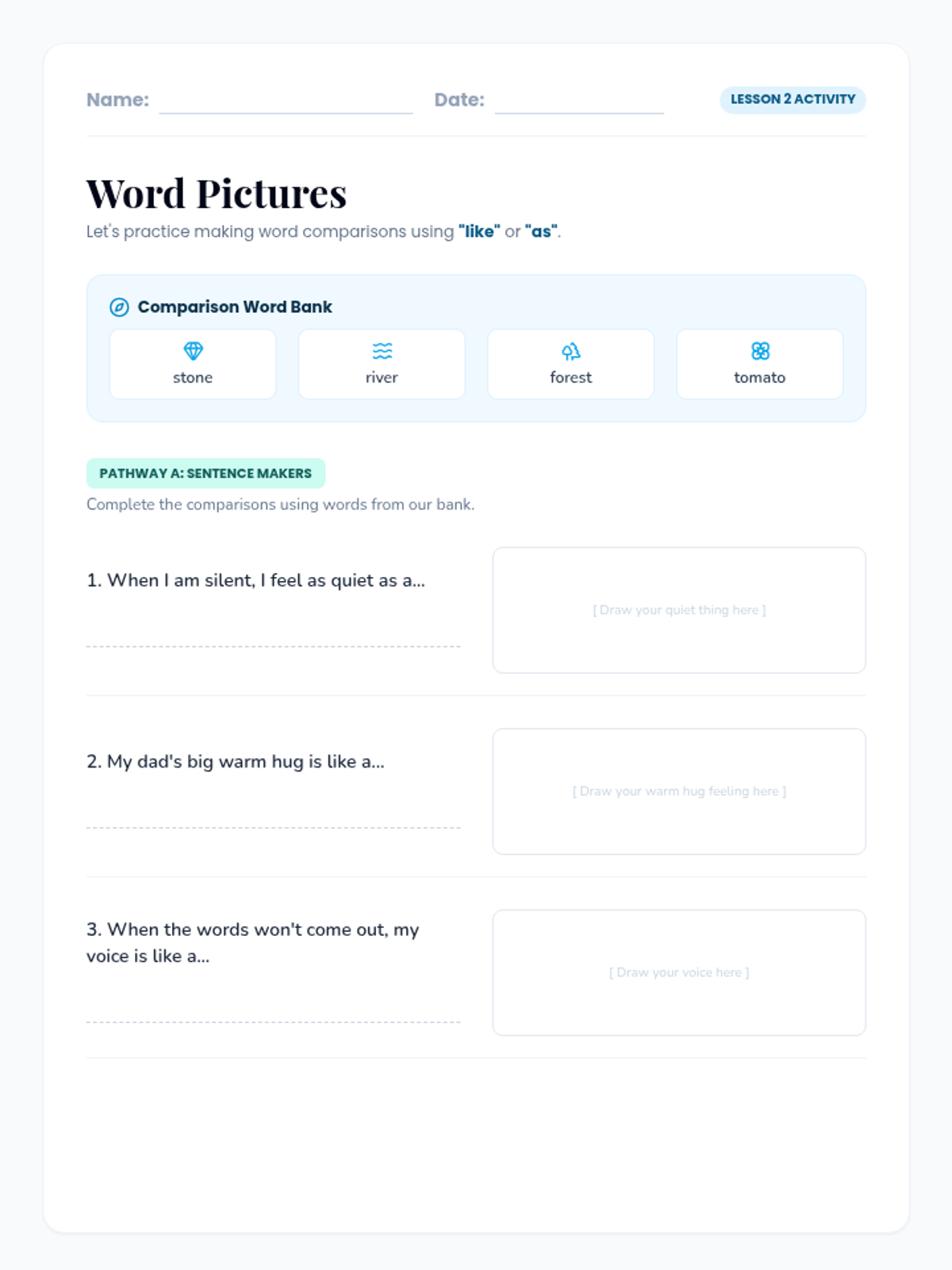
Students explore how authors use figurative language to paint 'word pictures' by identifying comparisons using 'like' and 'as' in the text, and co-constructing similes about the natural world.
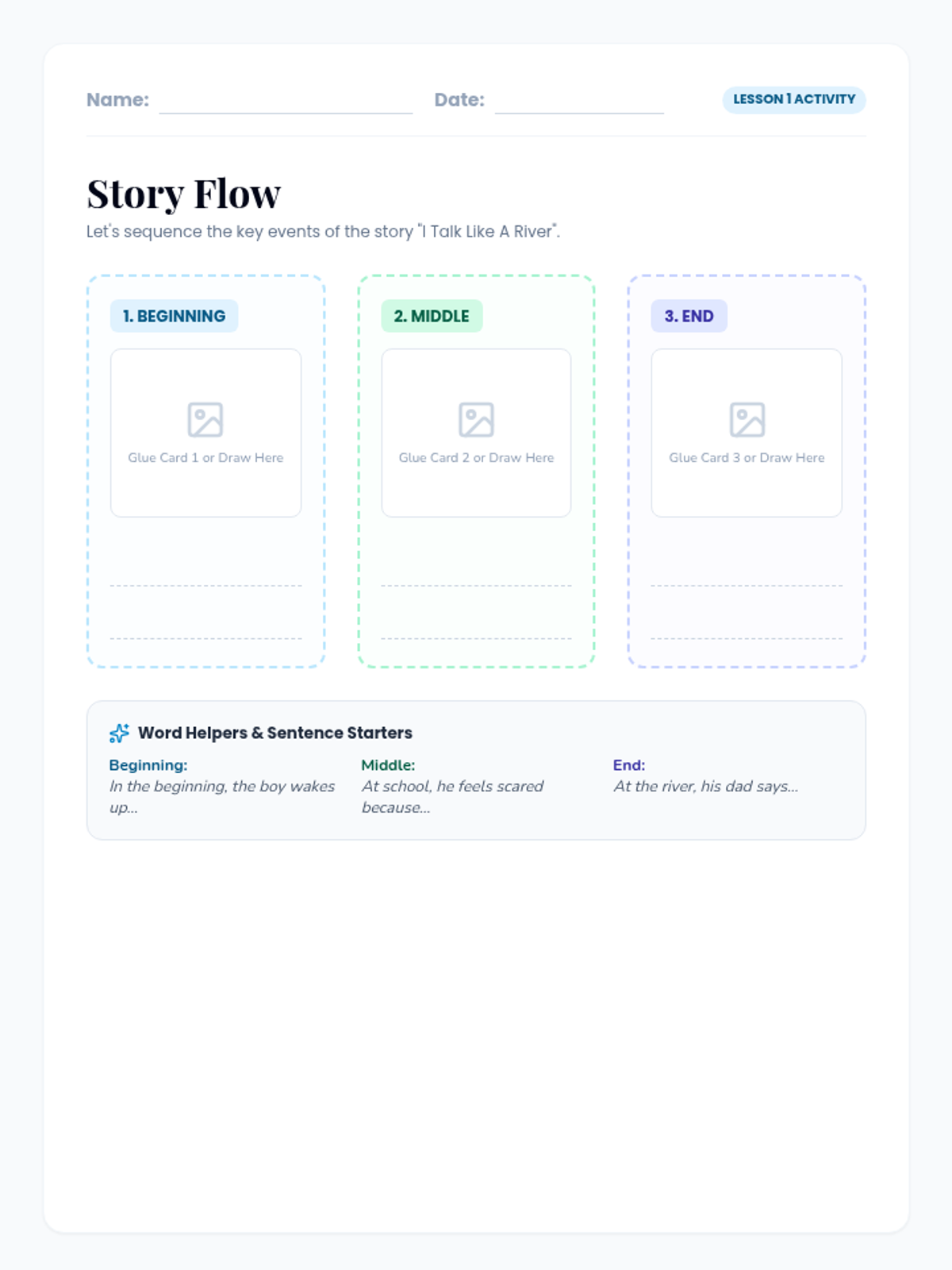
Students sequence the key events in 'Mallee Sky' (drought changing to welcome rainfall) using a simplified storyboard planner, identifying how environmental patterns affect the landscape.
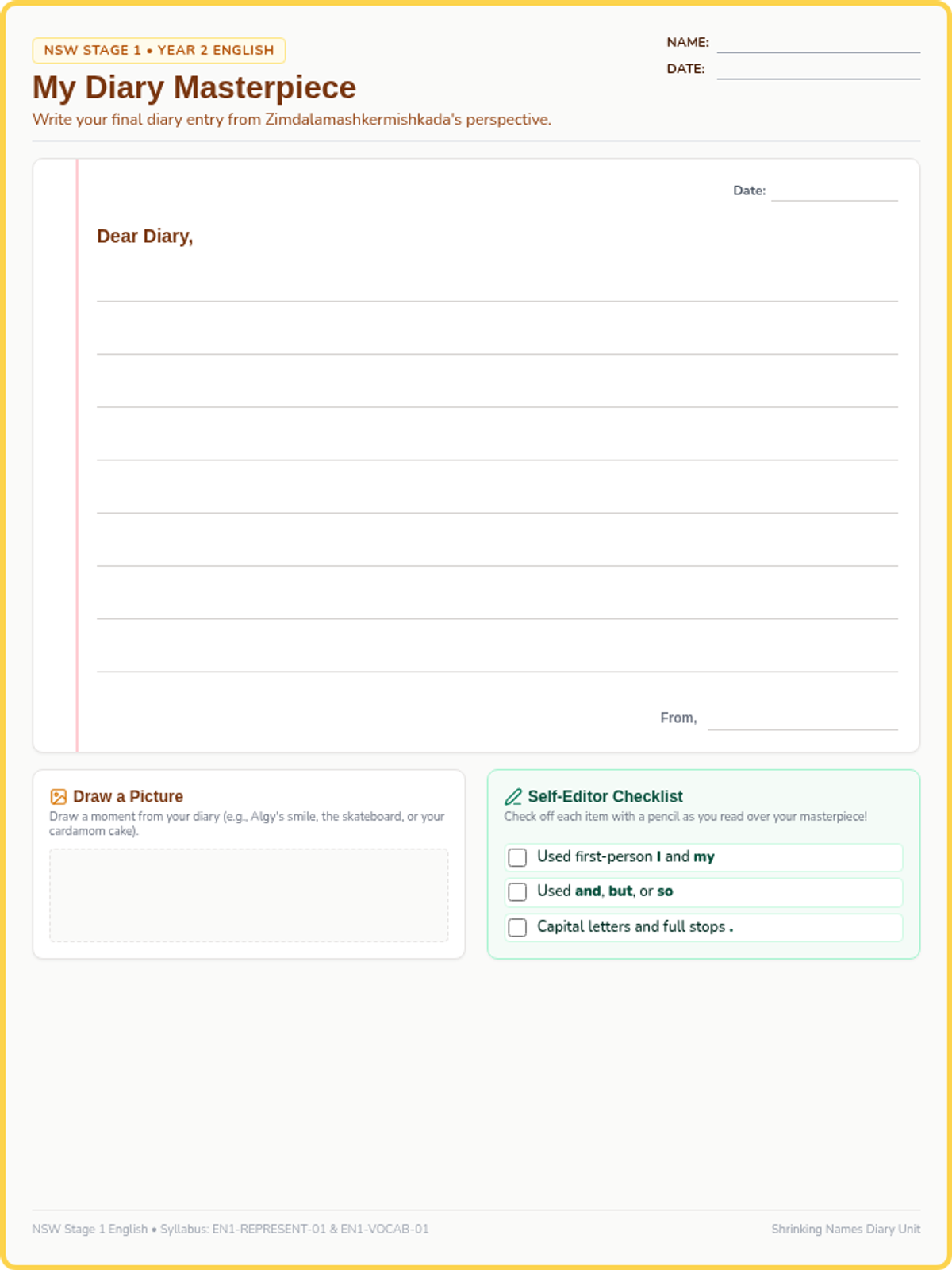
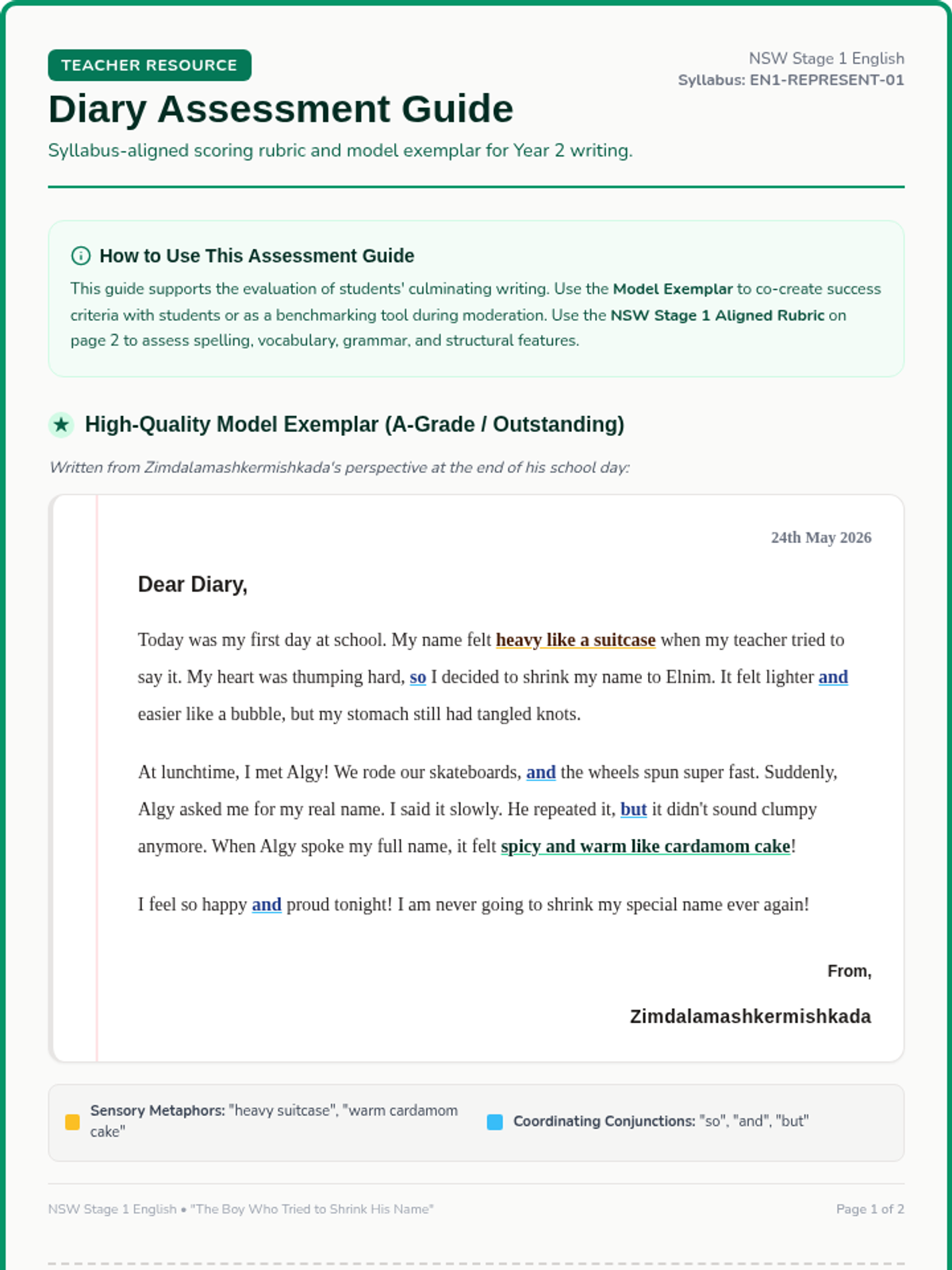
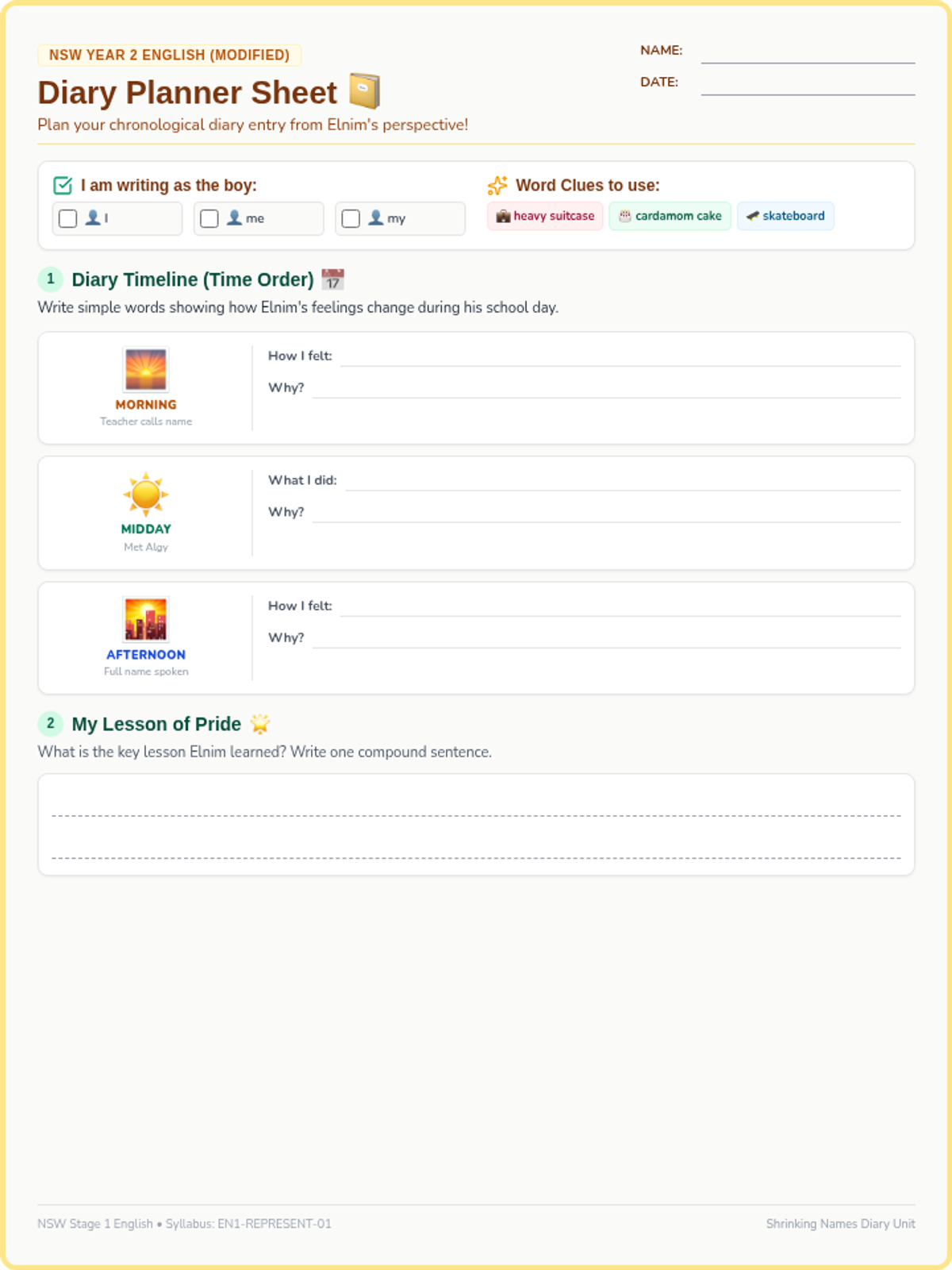
Students identify precise action verbs (stretch, shrink, spin) and compose a final descriptive reflective diary entry about Elnim's journey.
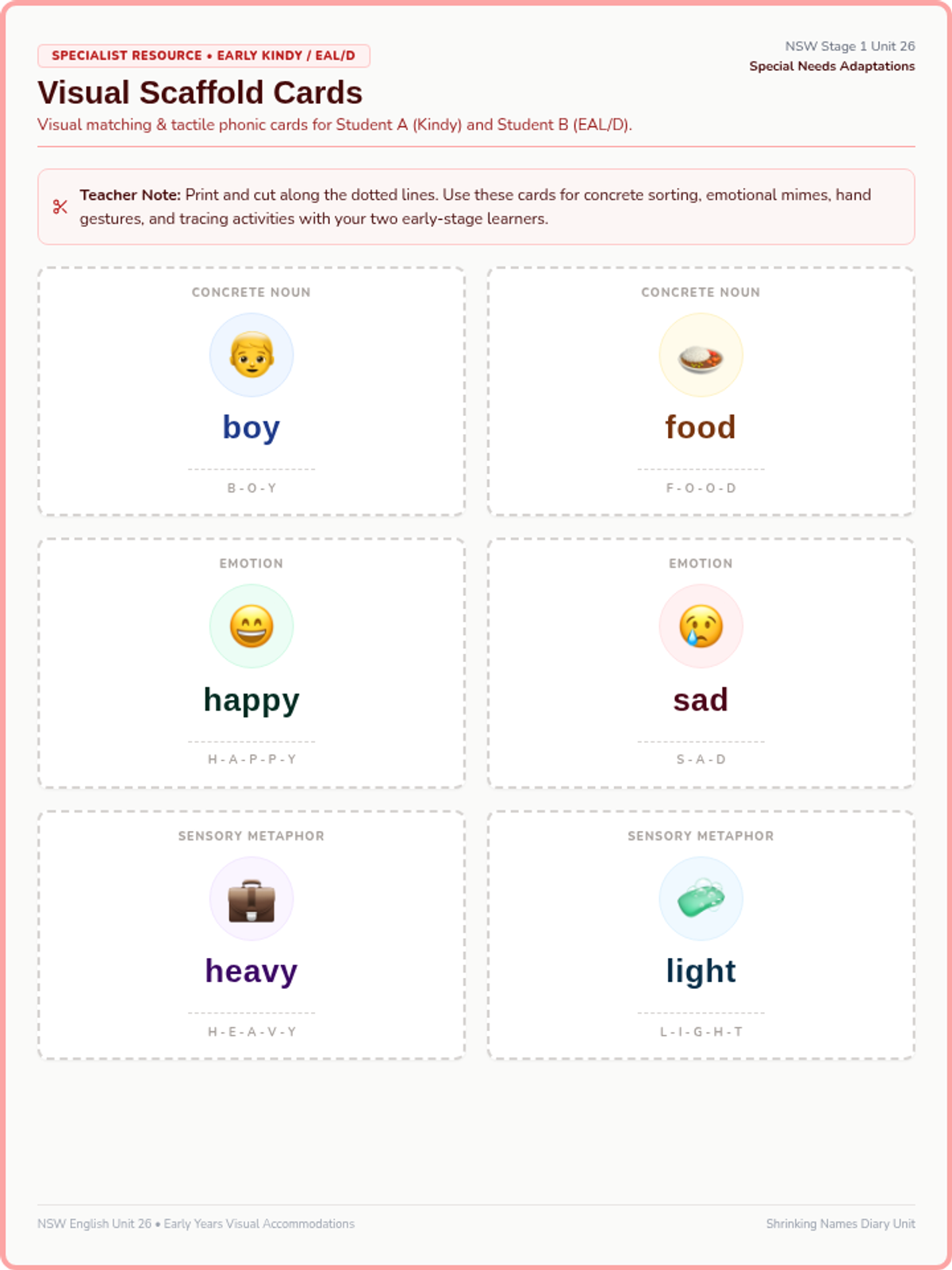
Students identify wordplay (alliteration and onomatopoeia) in "The Boy Who Tried to Shrink His Name" (skateboard spins, name explosions) and analyze non-verbal gestures of friendship.
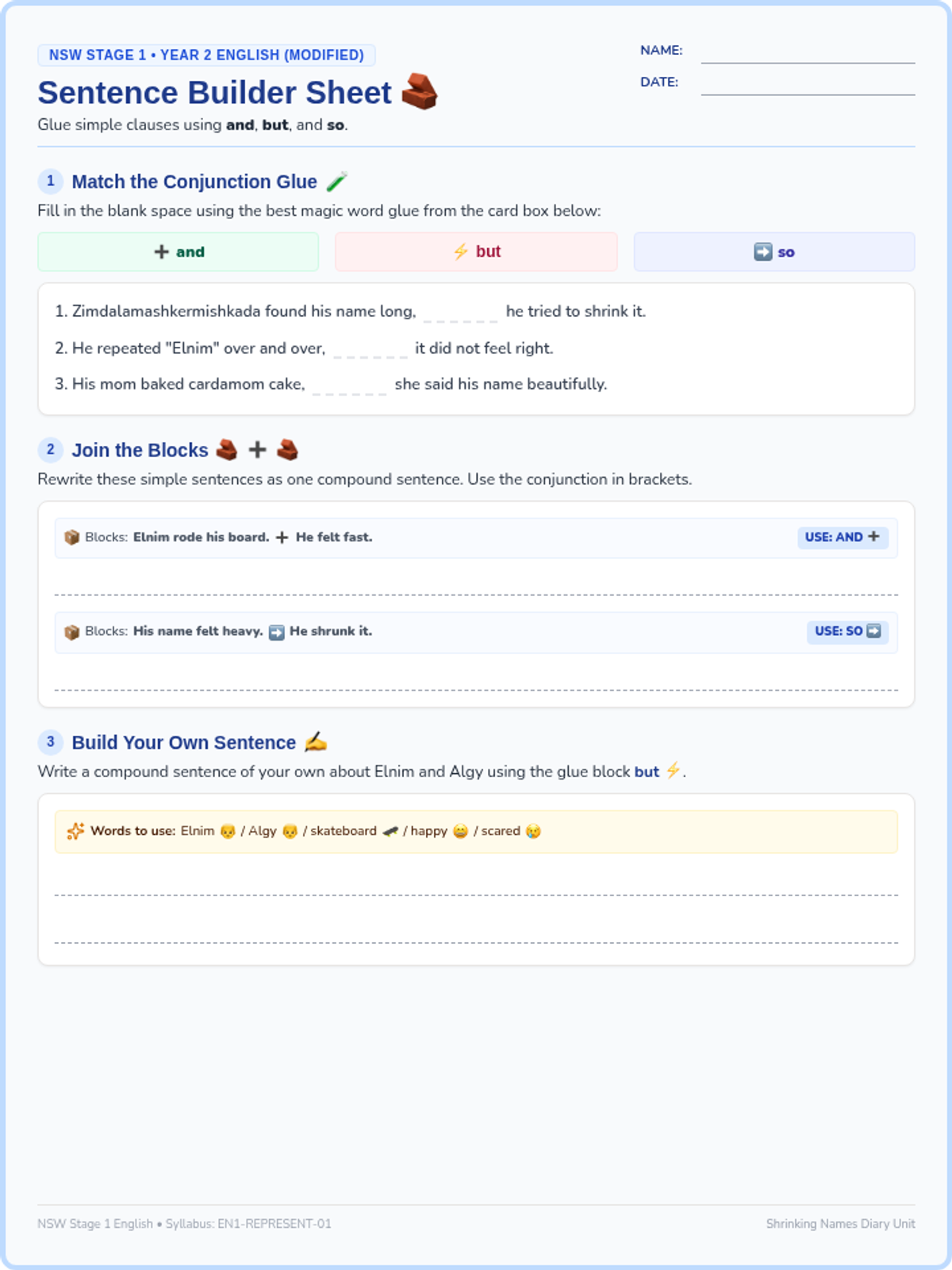
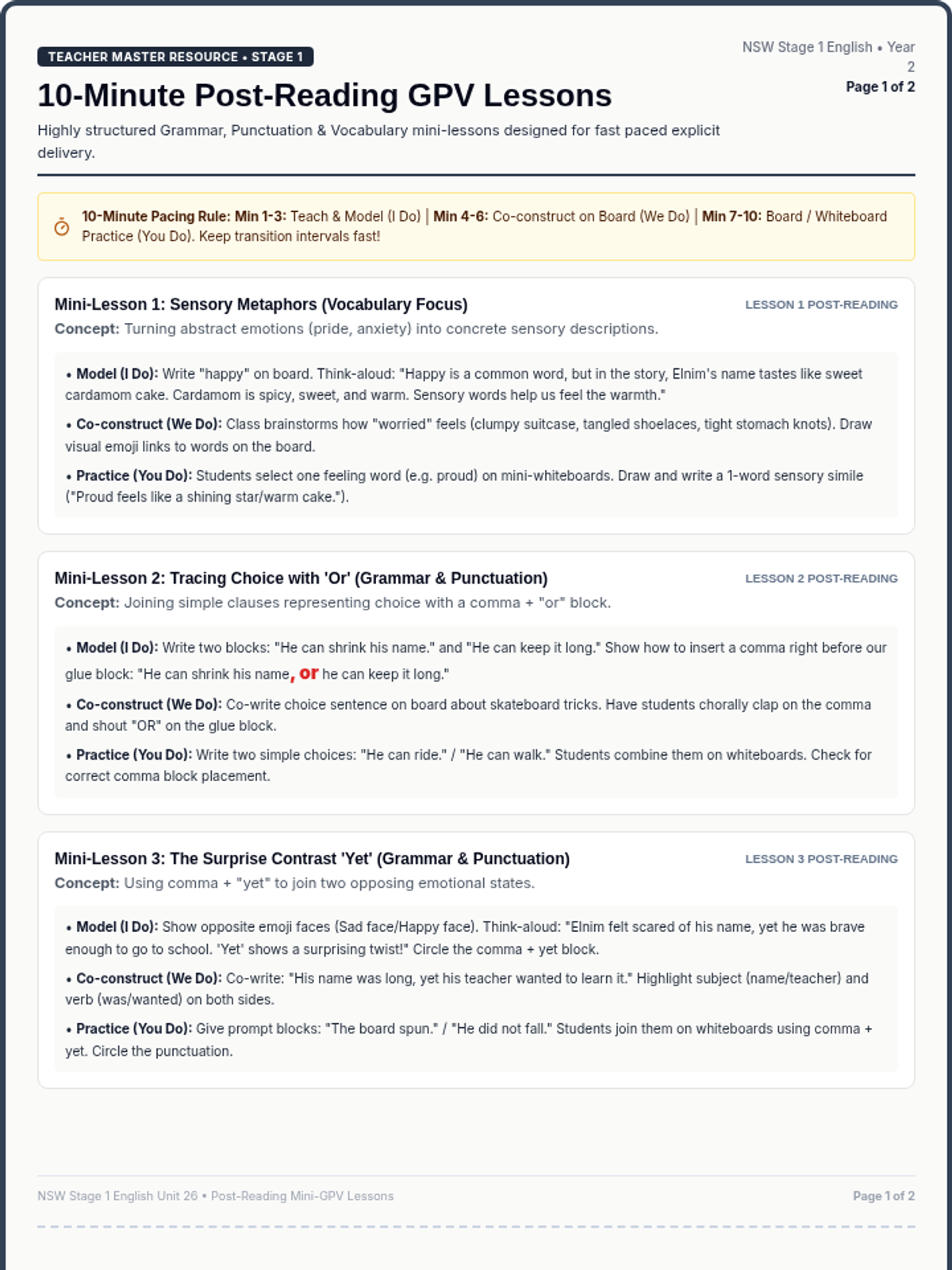
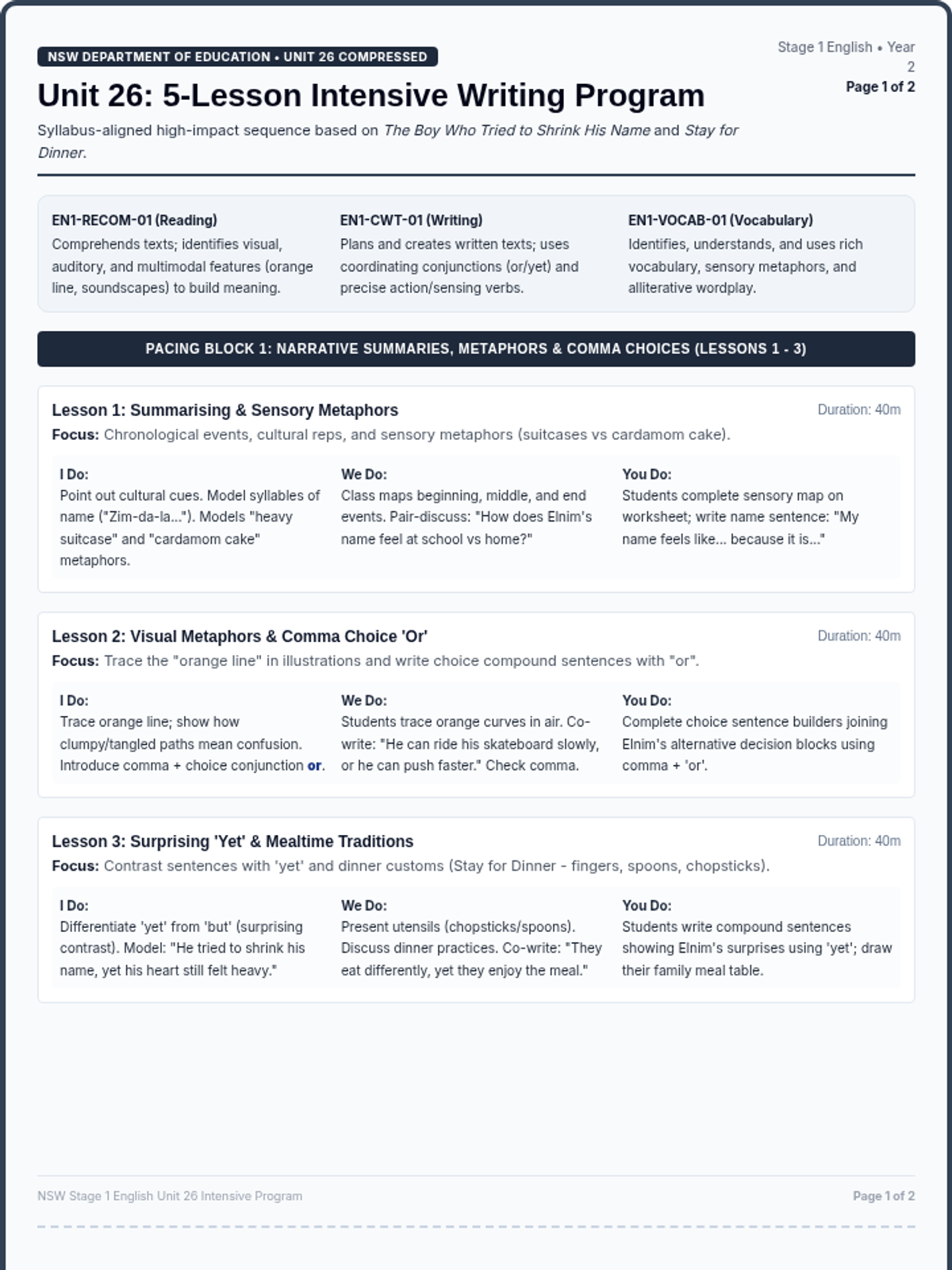
Students write contrast sentences using "yet" and explore Elnim's home customs (swirling curry, wearing a sari, sweet coconut ada).
Students trace the emotional orange line in the drawings and learn how to write choice compound sentences using comma + "or".
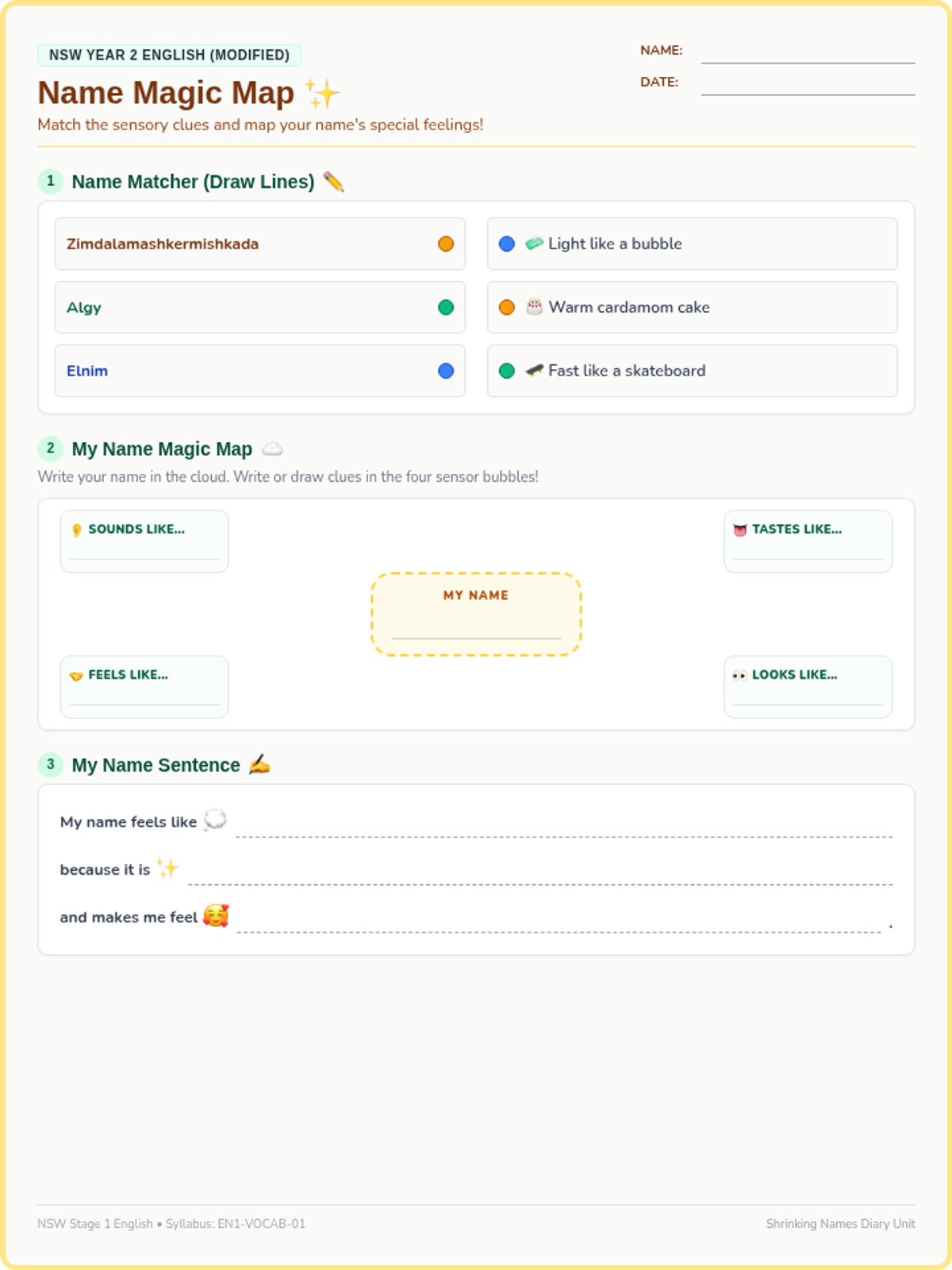
Students summarize Elnim's story and analyze figurative language, learning how names can feel heavy like a suitcase or taste like warm cardamom cake.
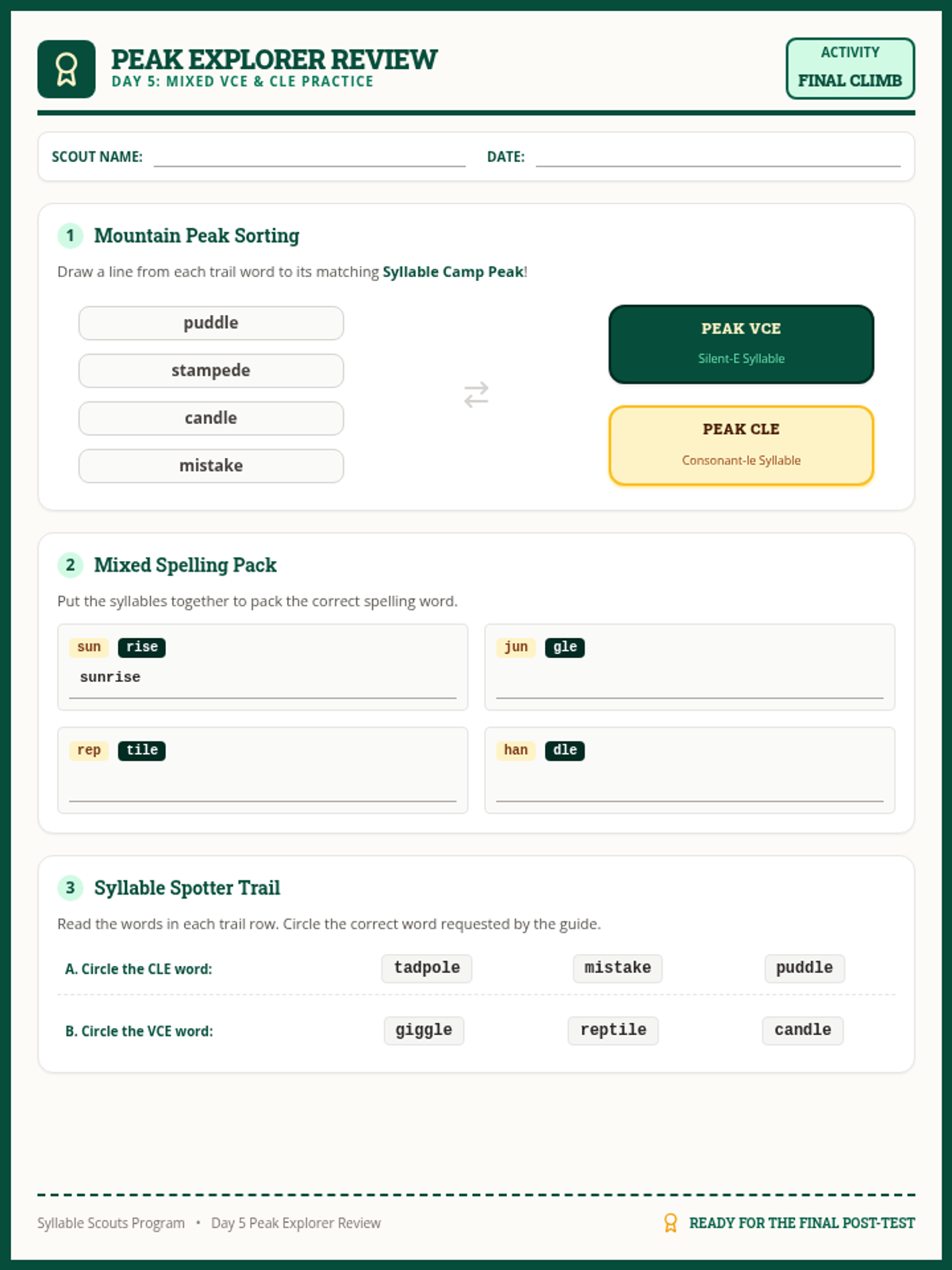
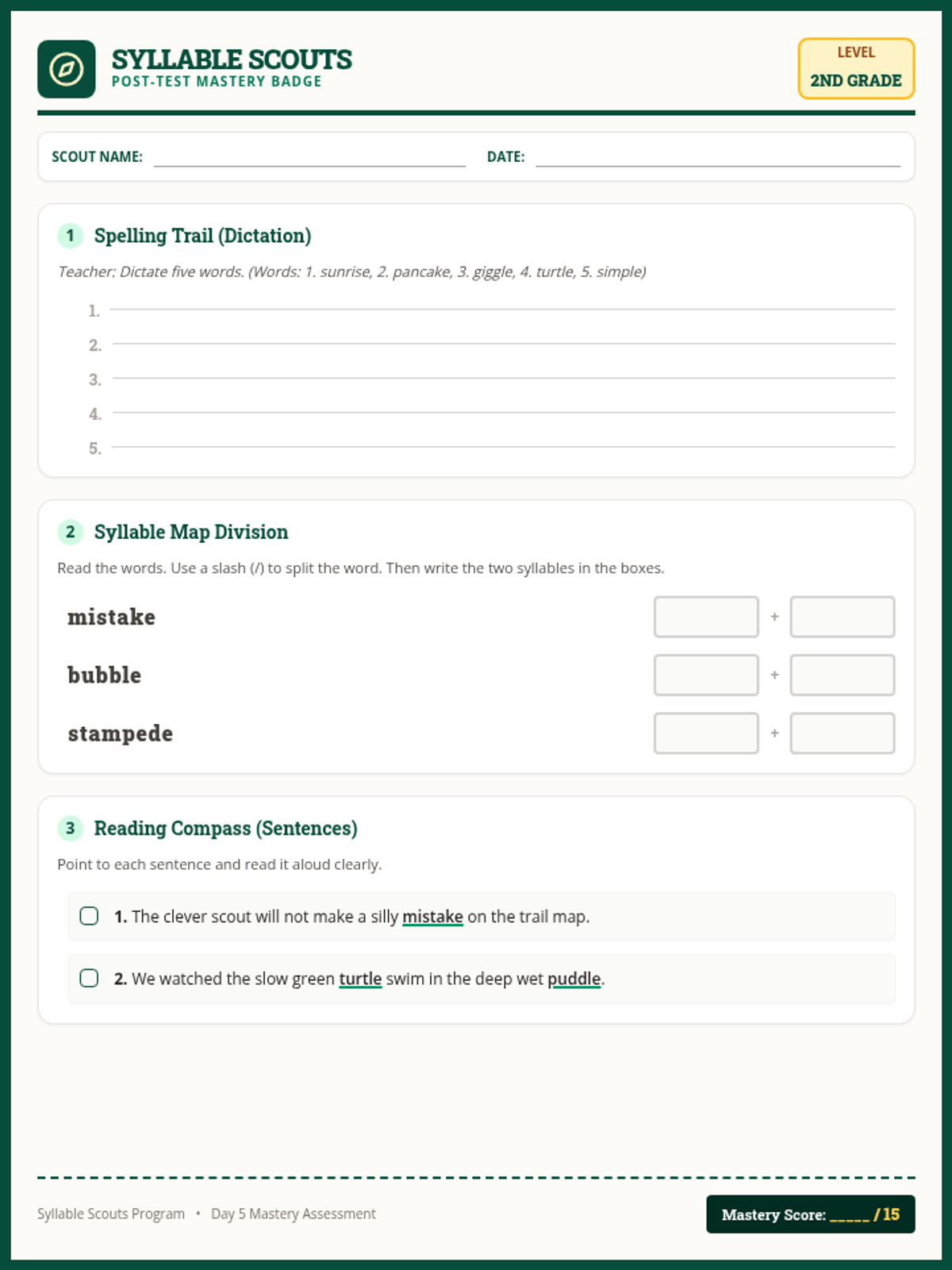
Day 5 of the phonics adventure. Scouts demonstrate mastery by reviewing both VCE and CLE word structures, completing a spelling and reading review, and taking the Syllable Scouts Post-Test.
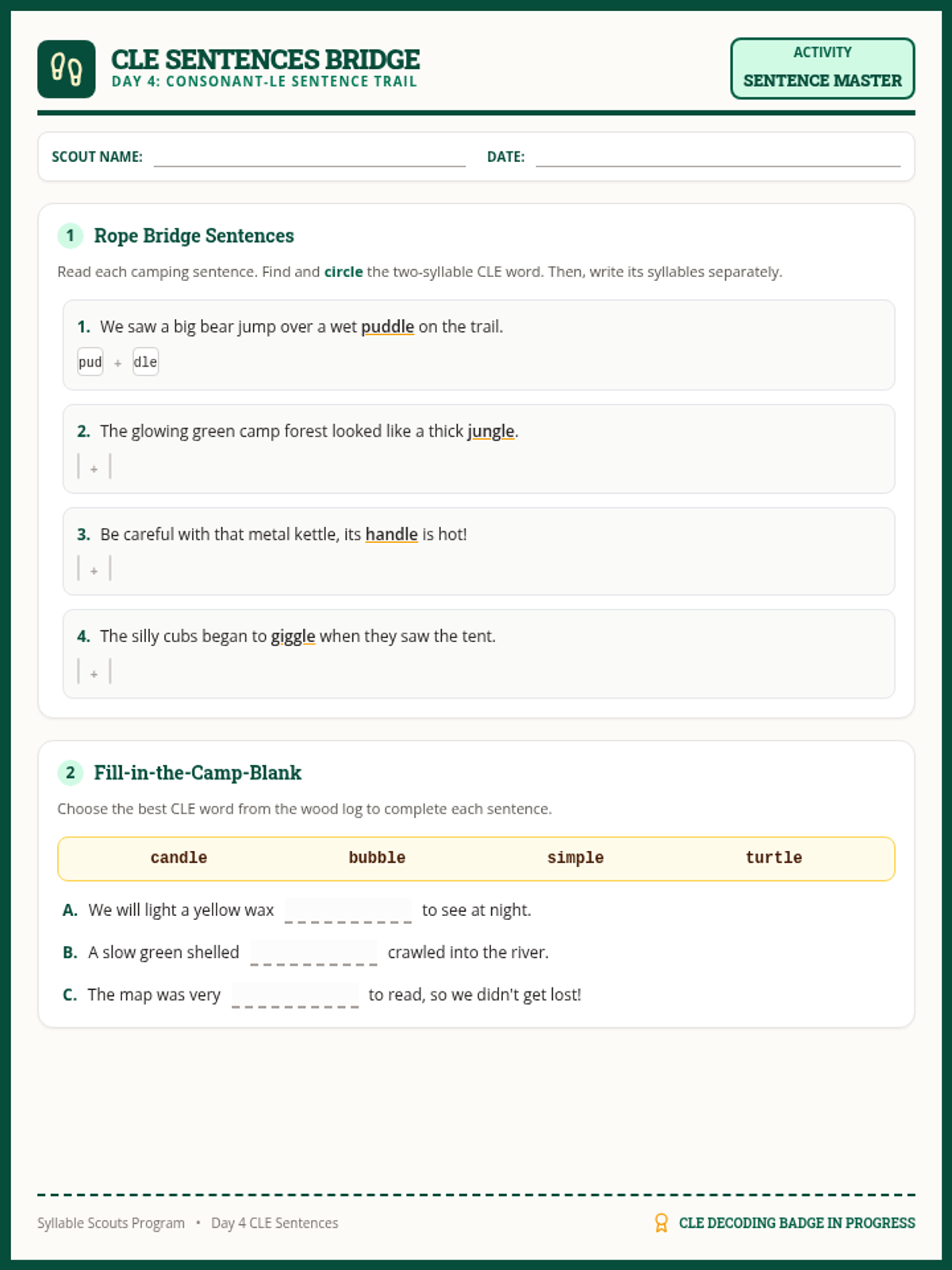
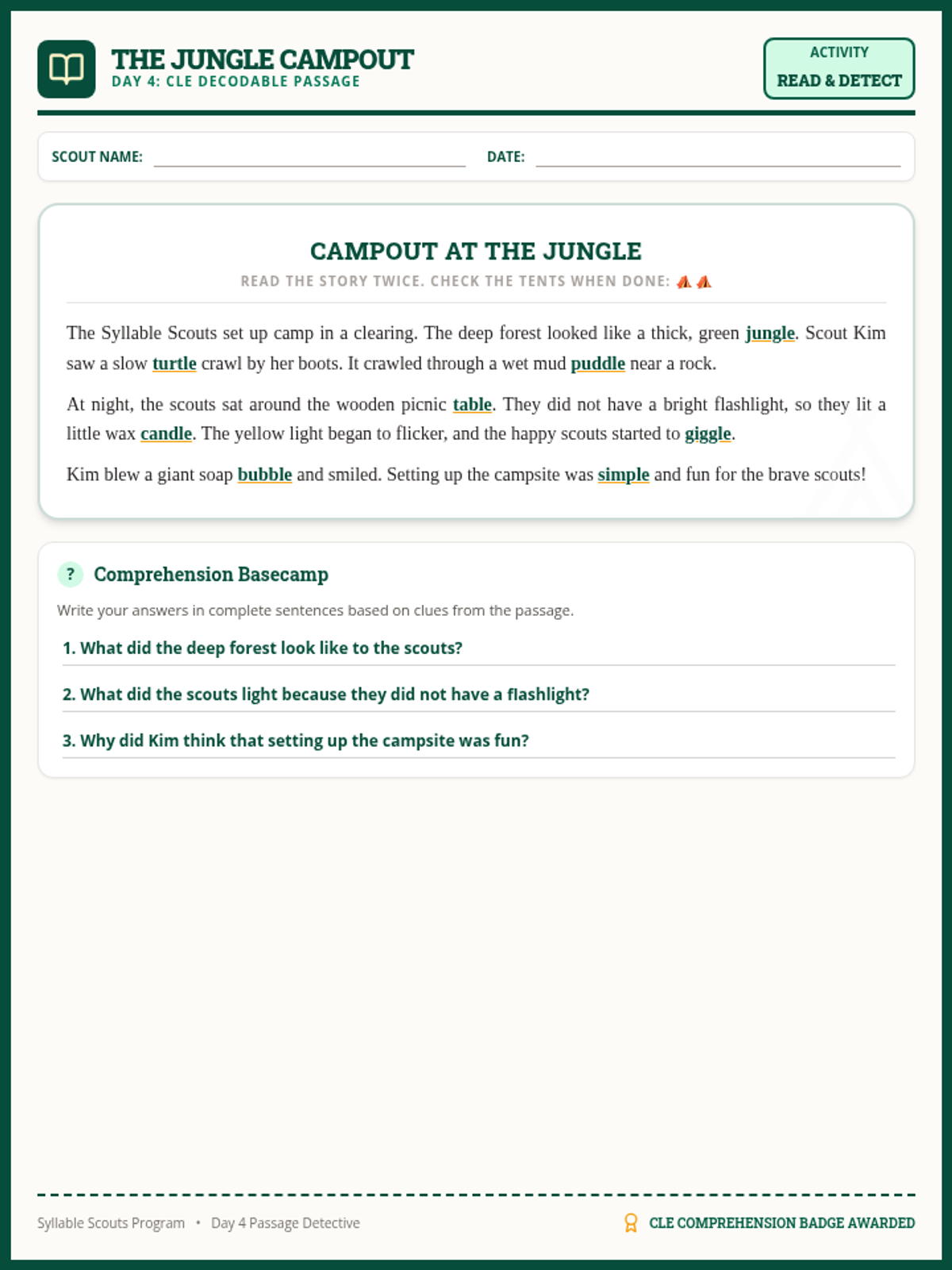
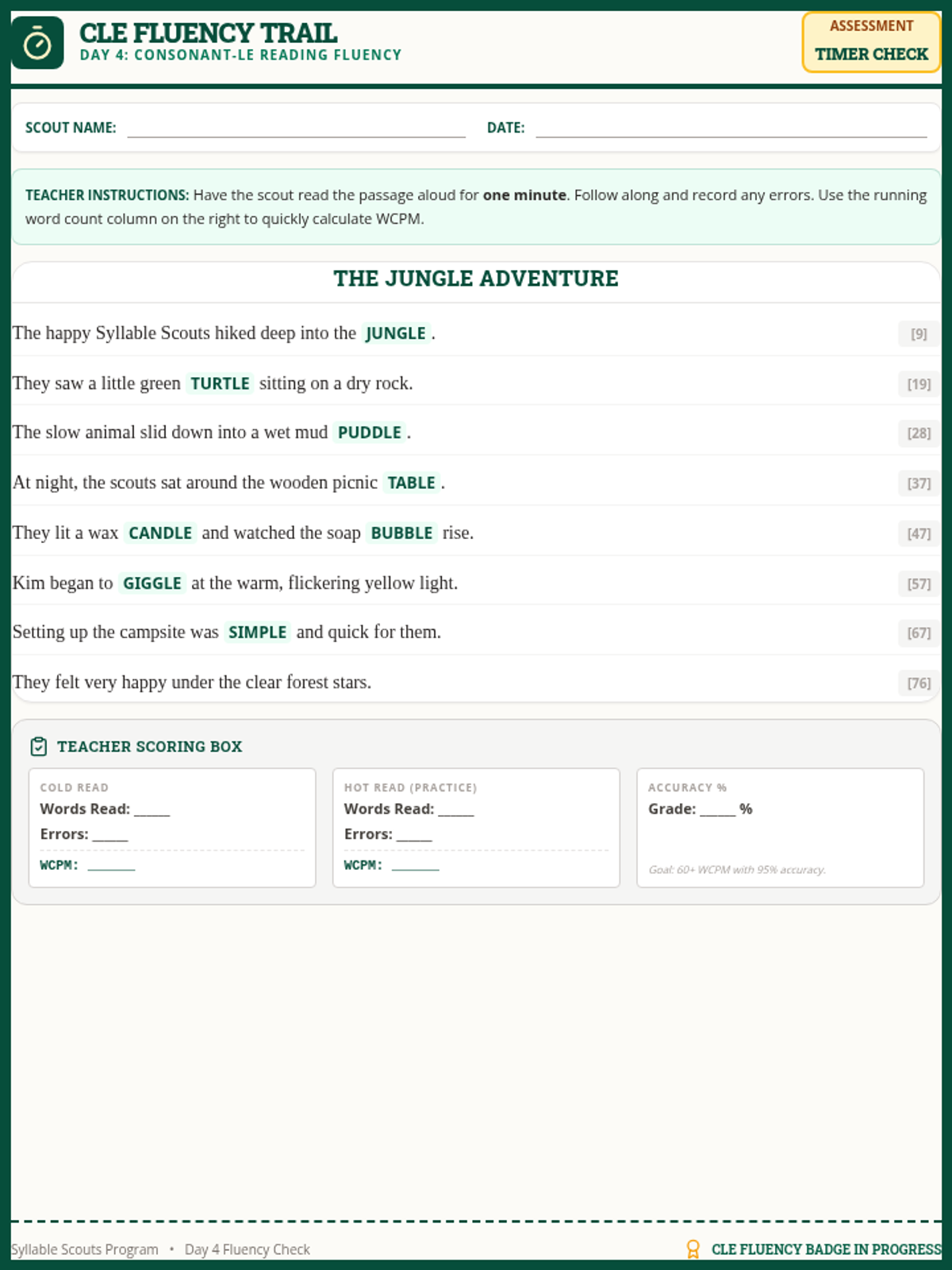
Day 4 of the phonics adventure. Scouts practice reading sentences and a decodable camping passage packed with Consonant-le (CLE) words like 'candle', 'jungle', and 'giggle'.
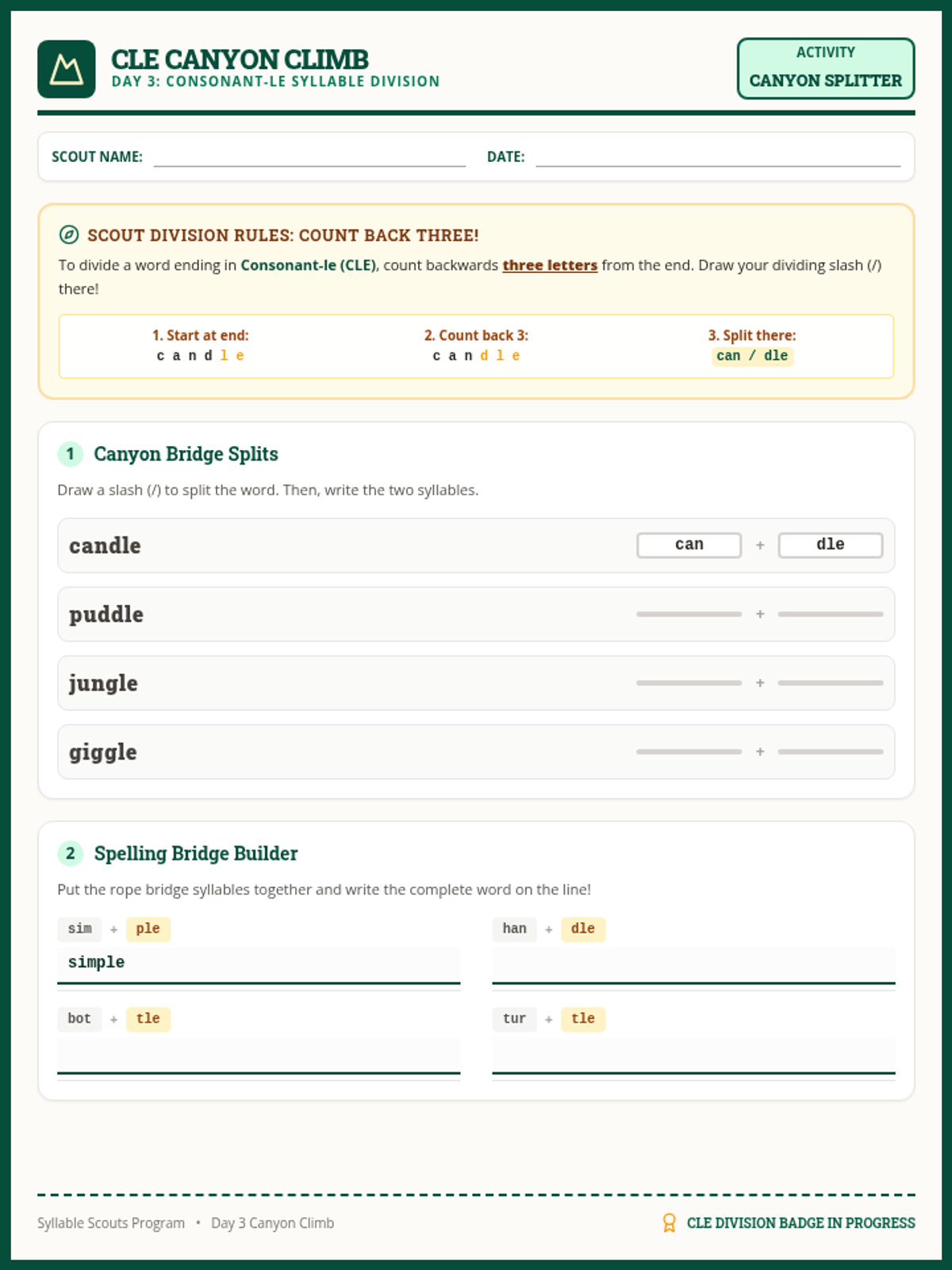
Day 3 of the phonics adventure. Scouts explore Consonant-le (CLE) syllables, understanding how to divide words before the consonant + 'le' (e.g., 'ca-mle' -> 'can-dle', 'pud-dle') and spelling CLE words correctly.
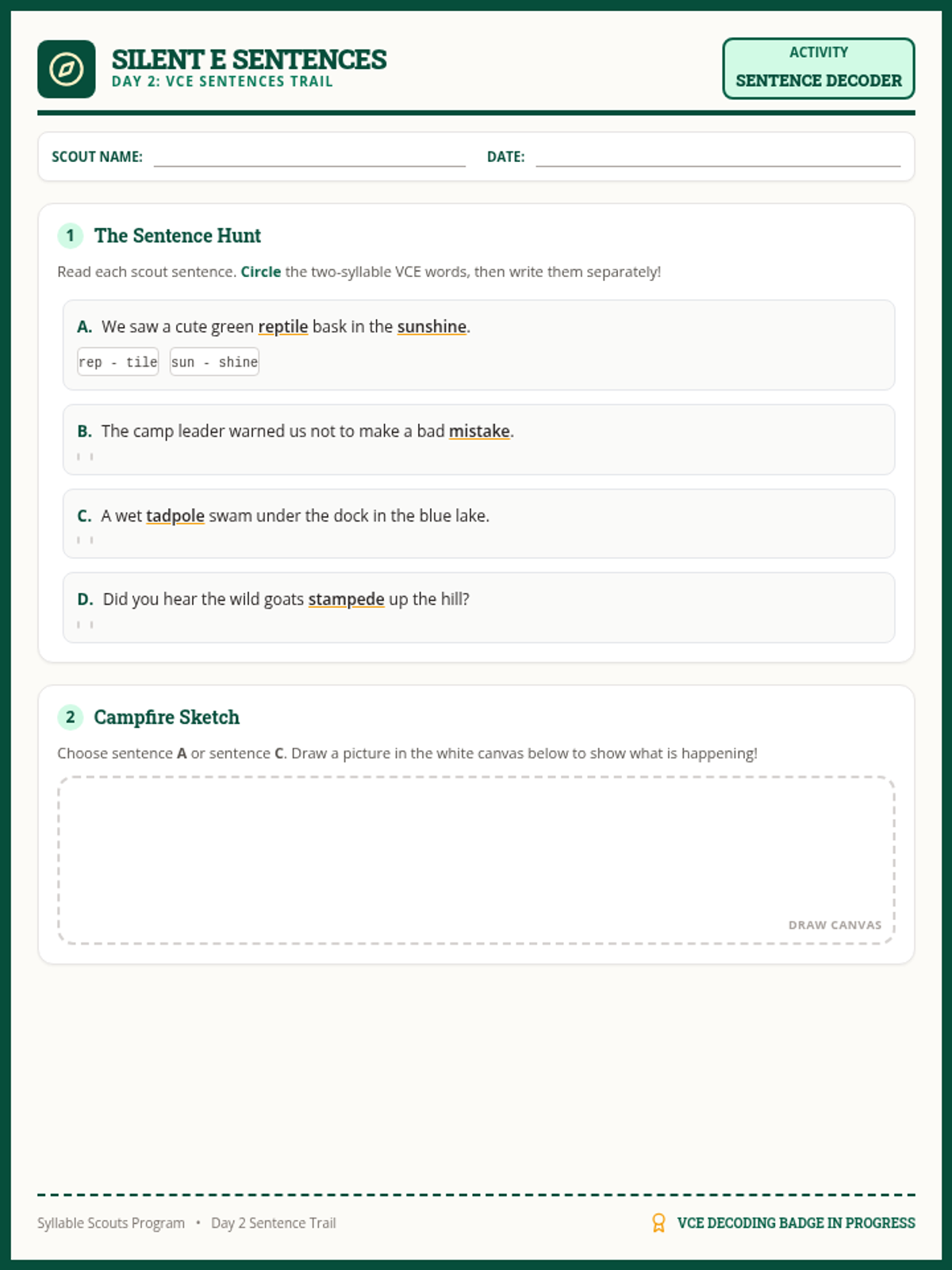
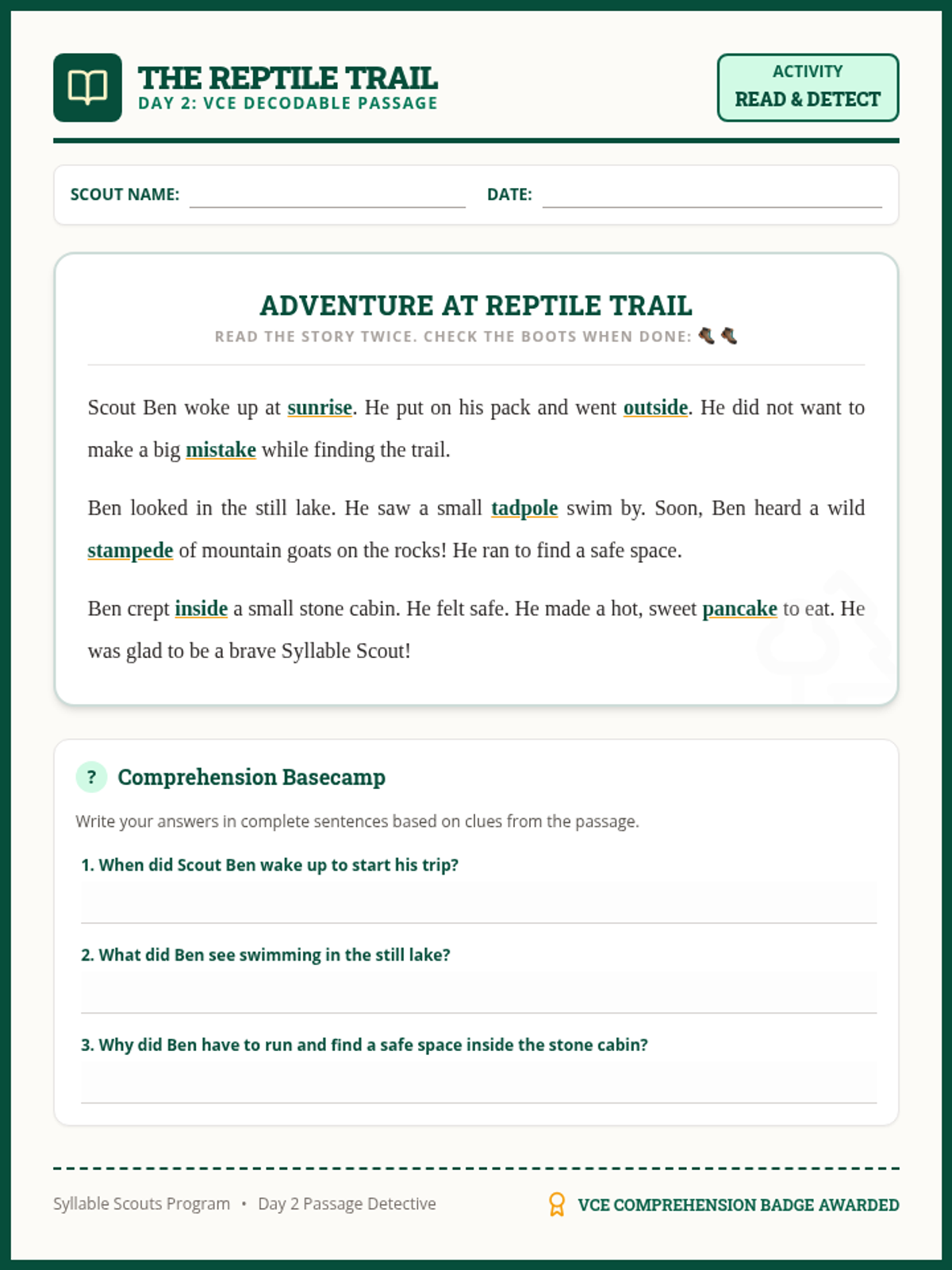
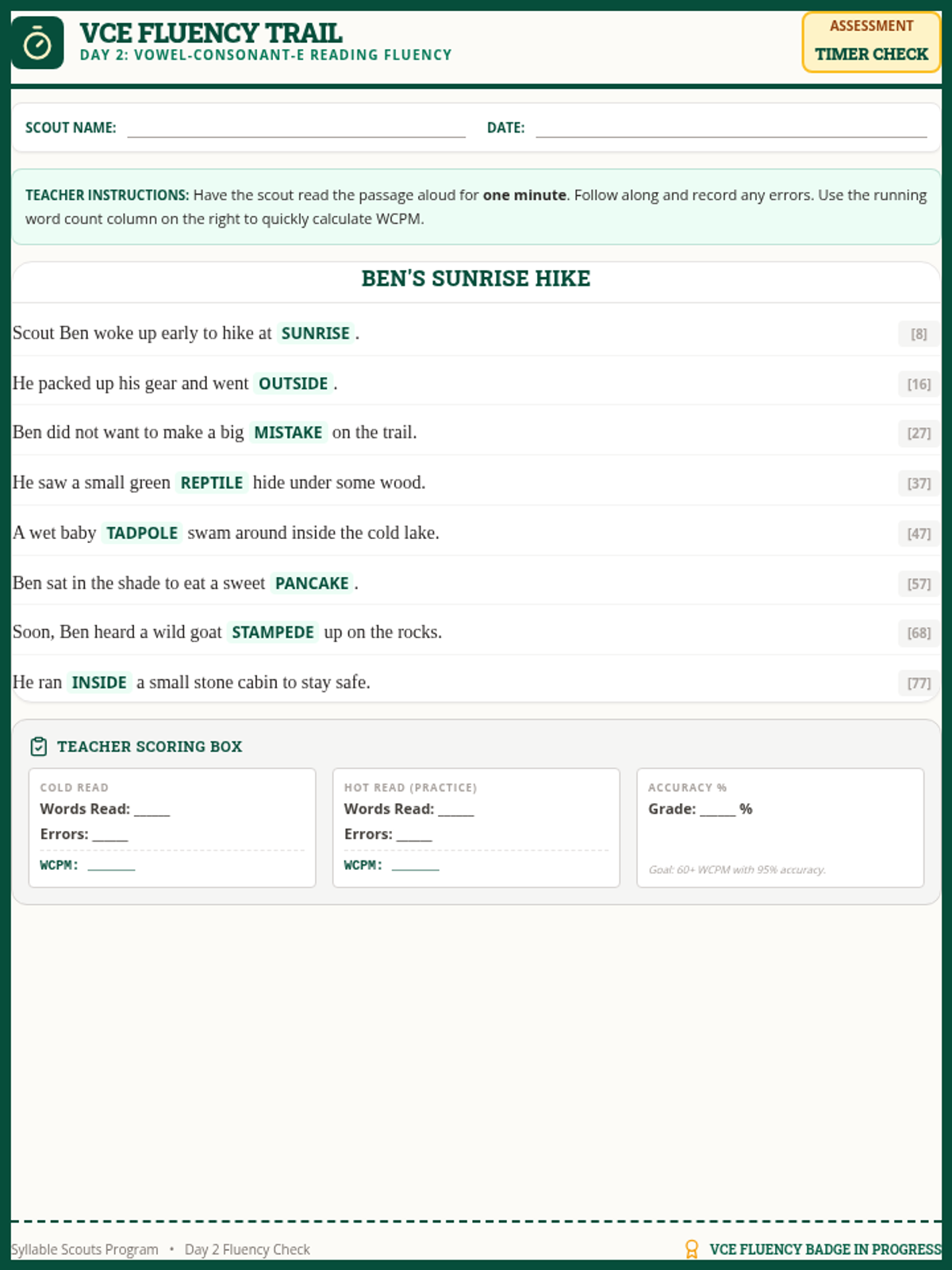
Day 2 of the phonics adventure. Second-grade scouts practice reading and identifying VCE syllables inside sentences and a decodable story, applying text-based evidence to answer comprehension questions.
Day 1 of the phonics adventure. Students take the Syllable Scouts Pre-Test to assess baseline spelling and decoding skills, then learn how to divide and spell two-syllable Vowel-Consonant-e (VCE) words like 'reptile' and 'stampede'.
A comprehensive, tiered sentence unscrambling lesson designed for first-grade students. It features three levels of differentiated, print-and-go worksheets (Emergent, Developing, Advanced) alongside an instructional Teacher Guide and Answer Key.