Students analyze the evolution of the possessive apostrophe in English and compare it to its Germanic 'cousins' (German, Dutch, and Danish) to understand how history and linguistic drift shape grammar.
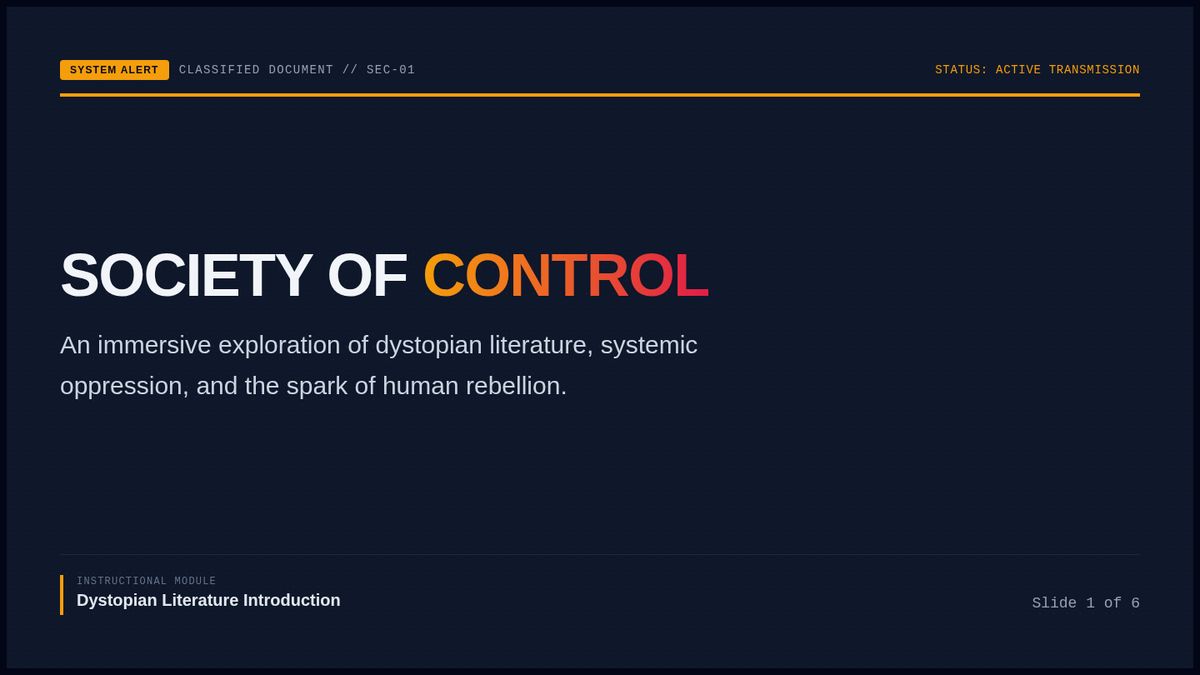
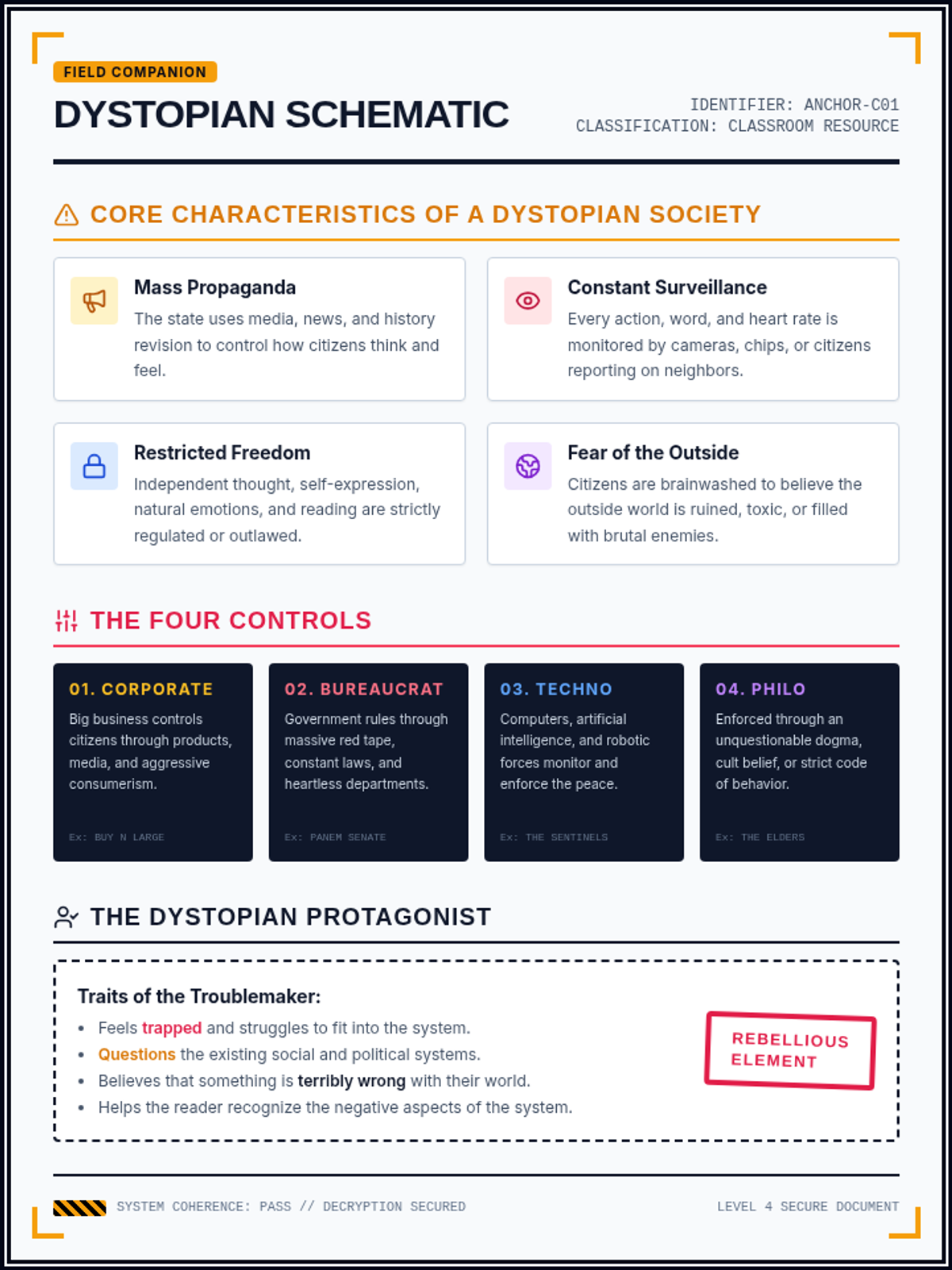
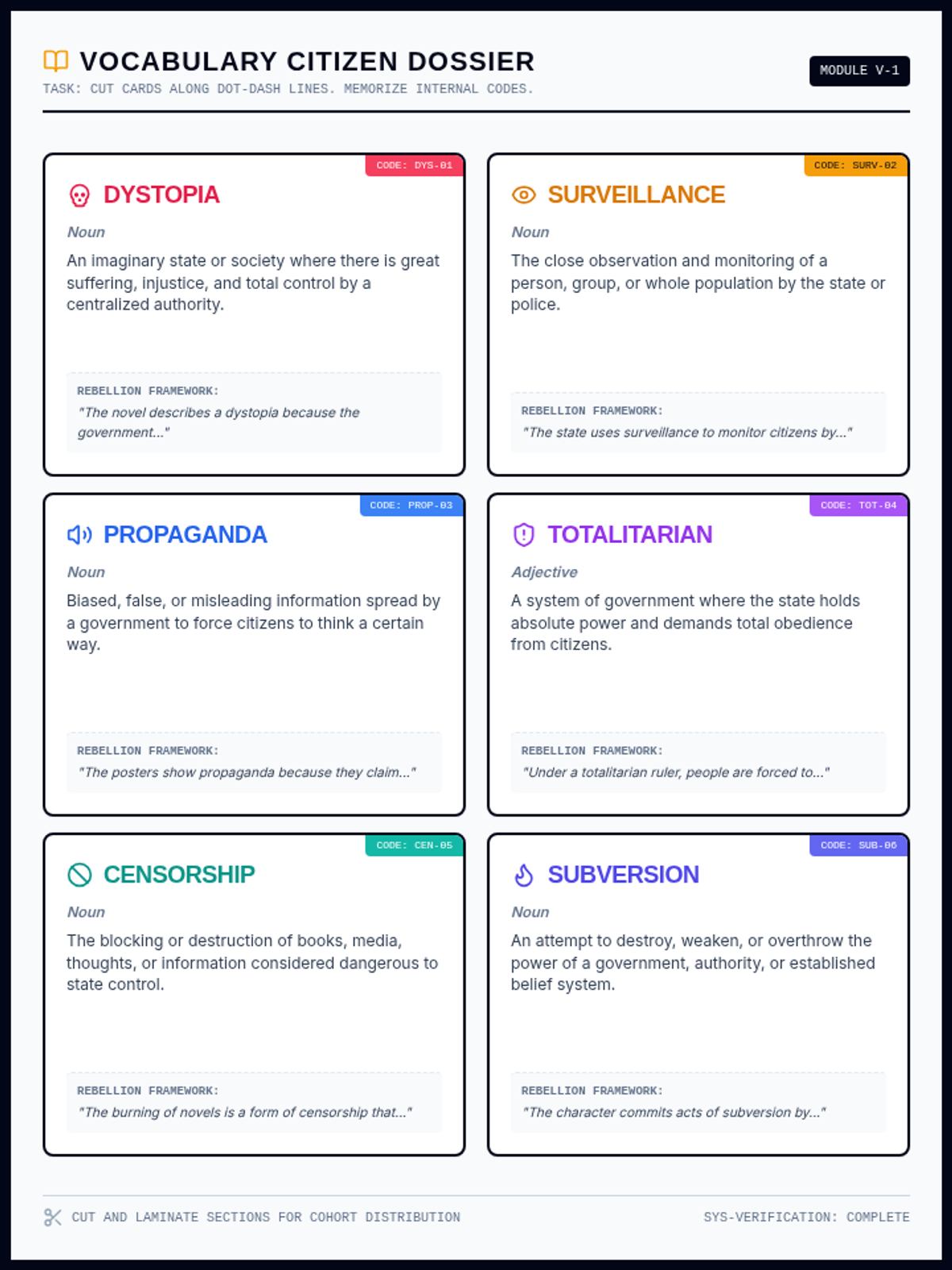
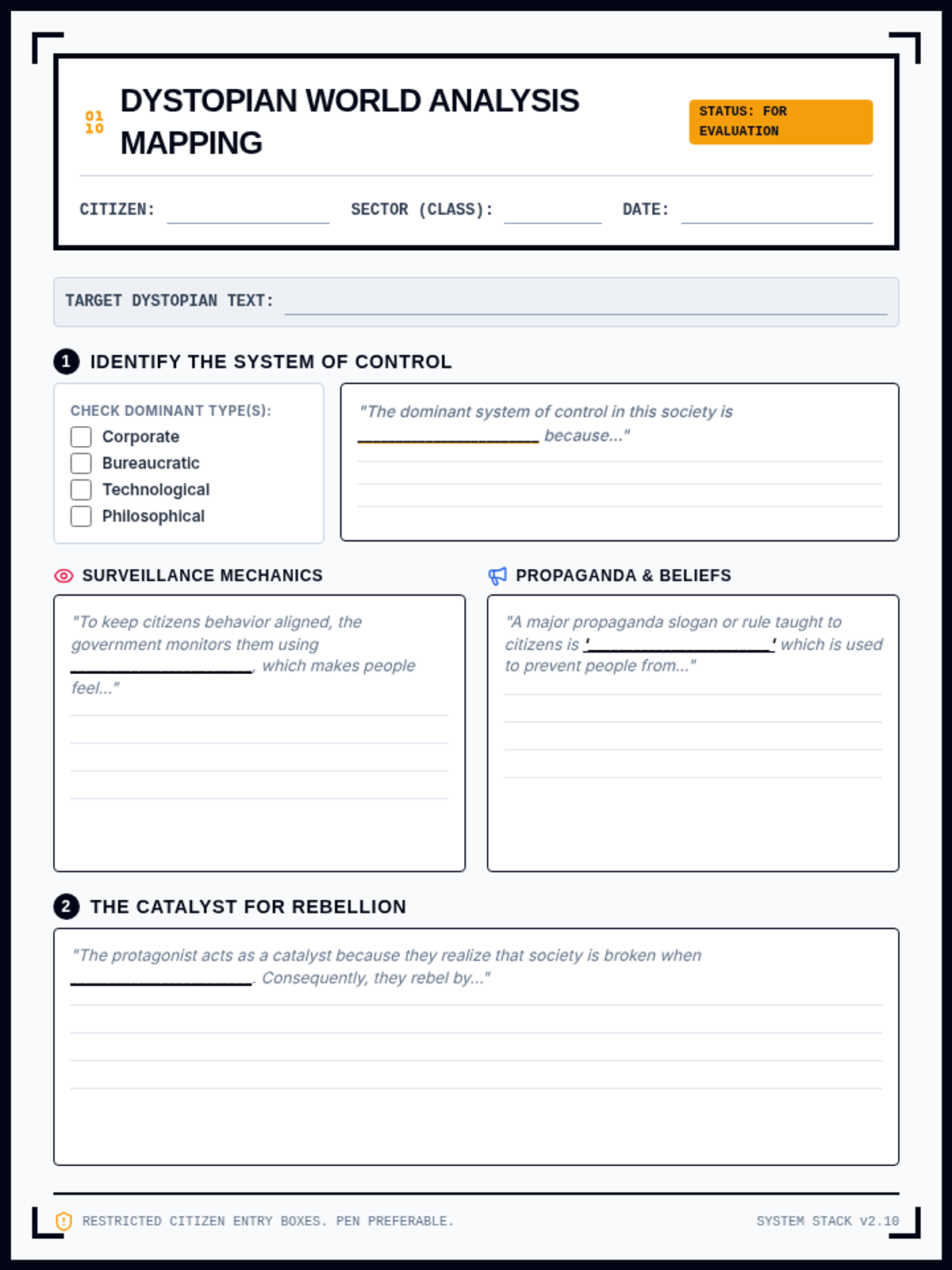
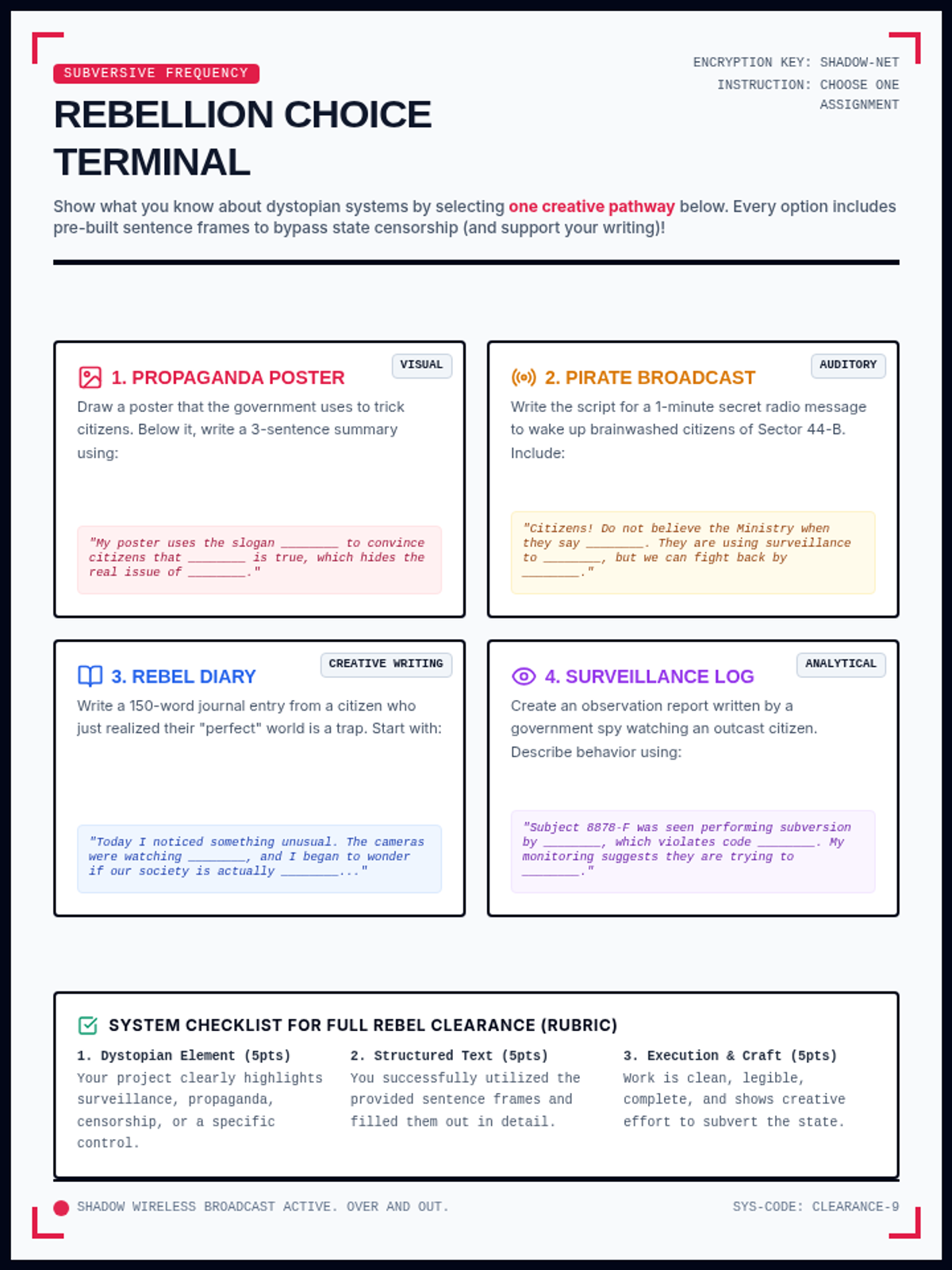
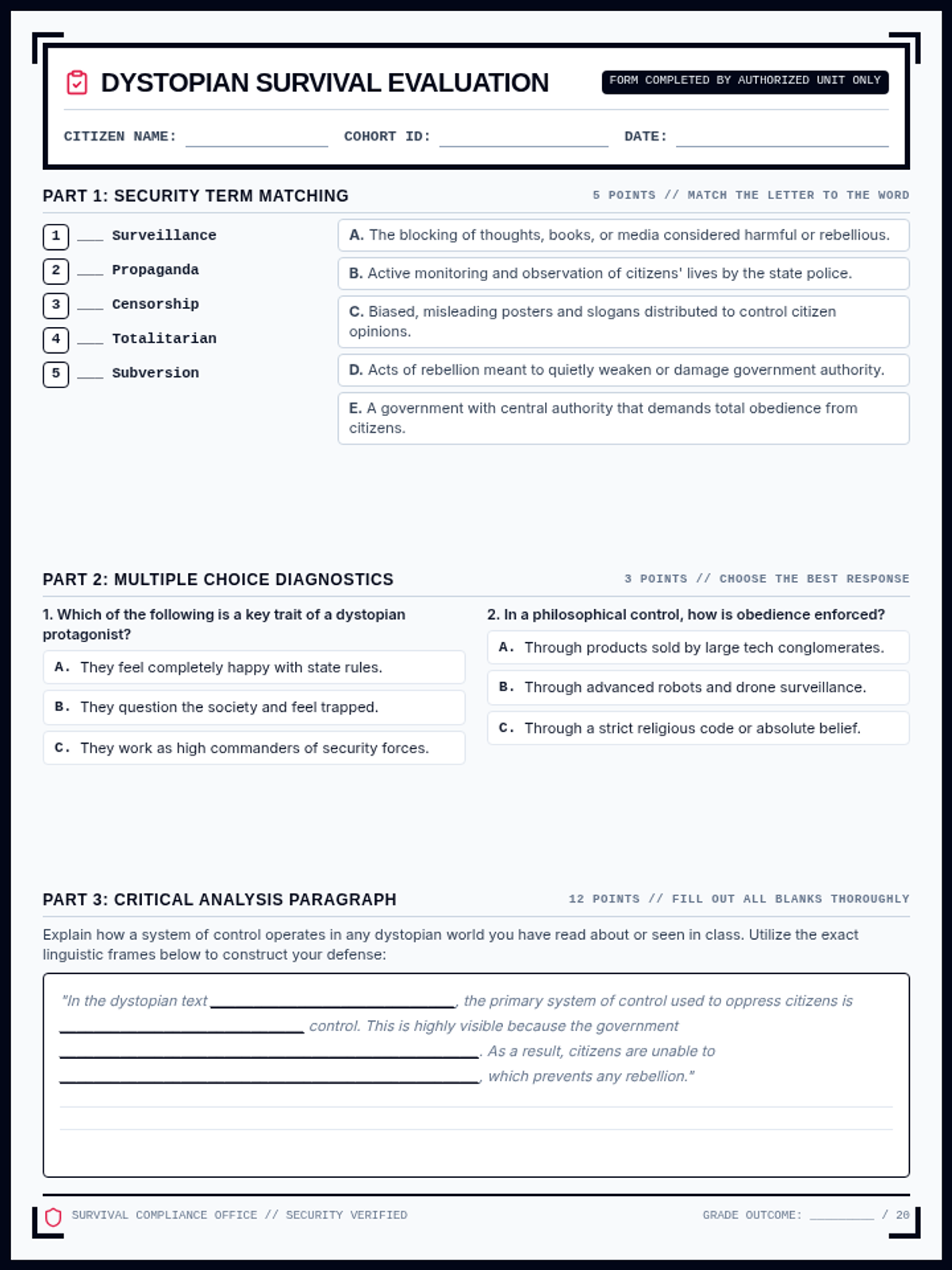
An immersive introductory lesson on dystopian literature. Students analyze systems of control, common tropes, and societal rebellion through visual slides, structured graphic organizers, and a creative choice board with heavy scaffolding and sentence starters.
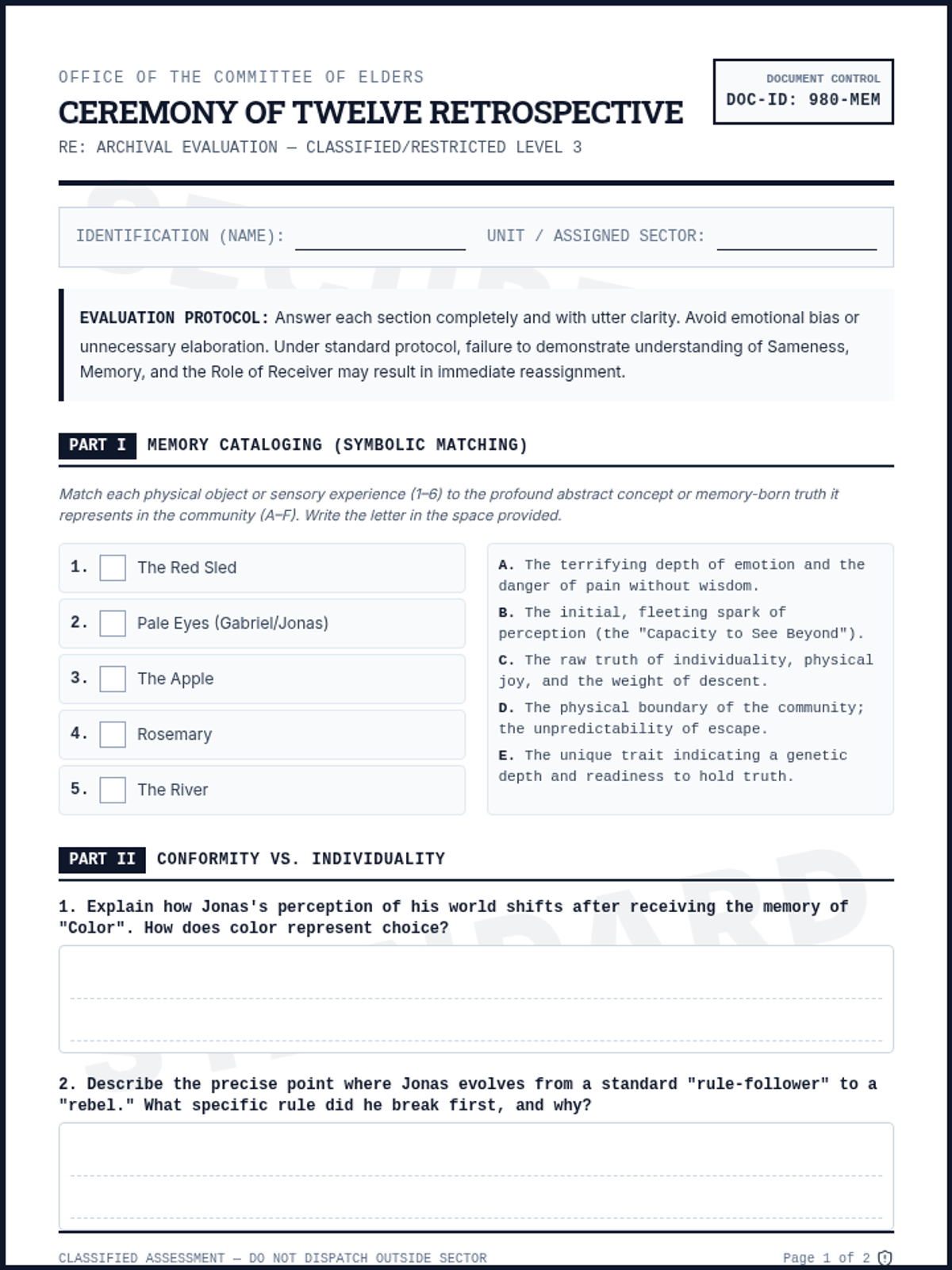
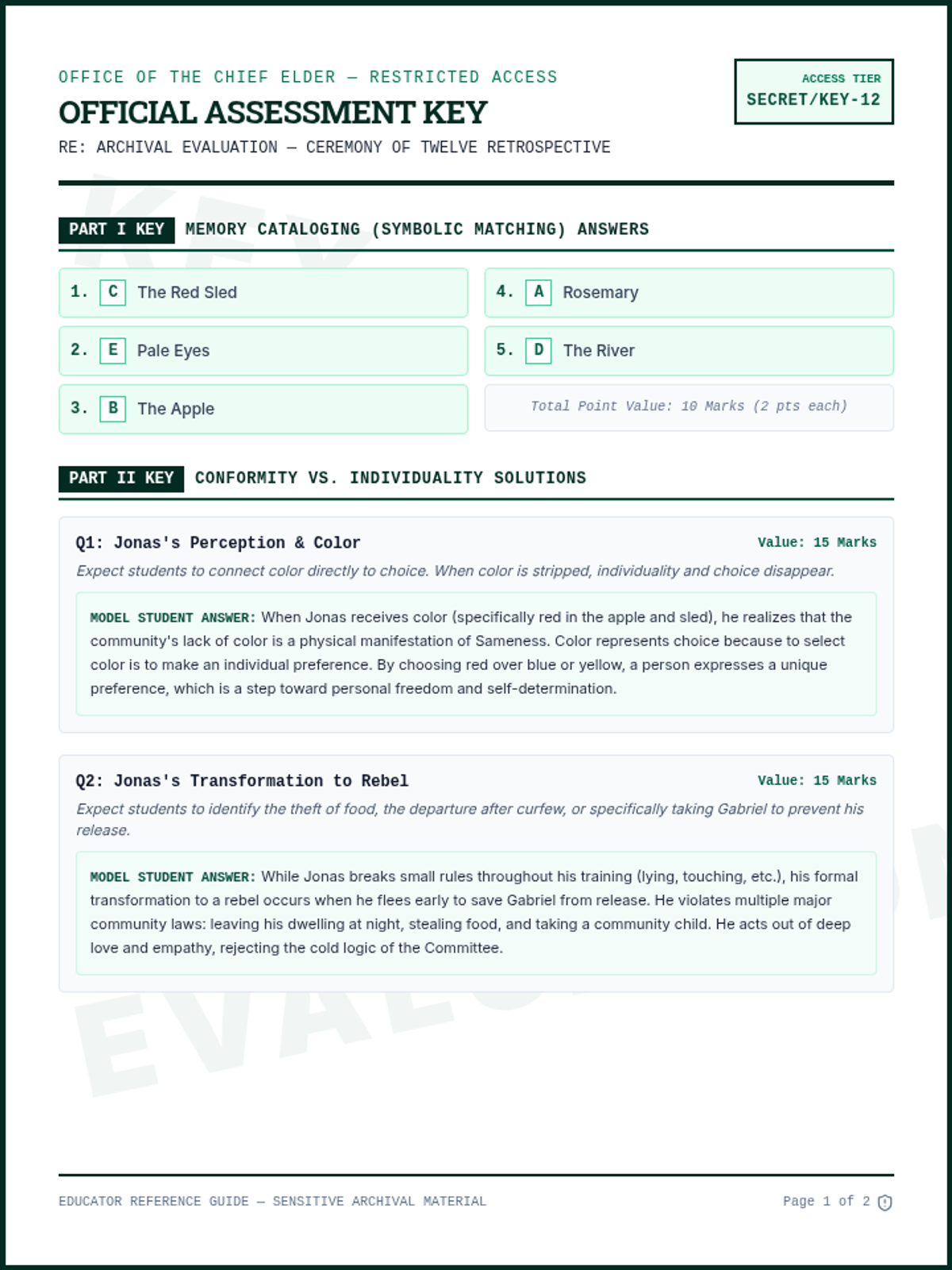
A comprehensive final exam lesson on Lois Lowry's 'The Giver', featuring a high-stakes, dystopian-themed student assessment and an educator's answer key and rubric focusing on memory, conformity, and character choice.
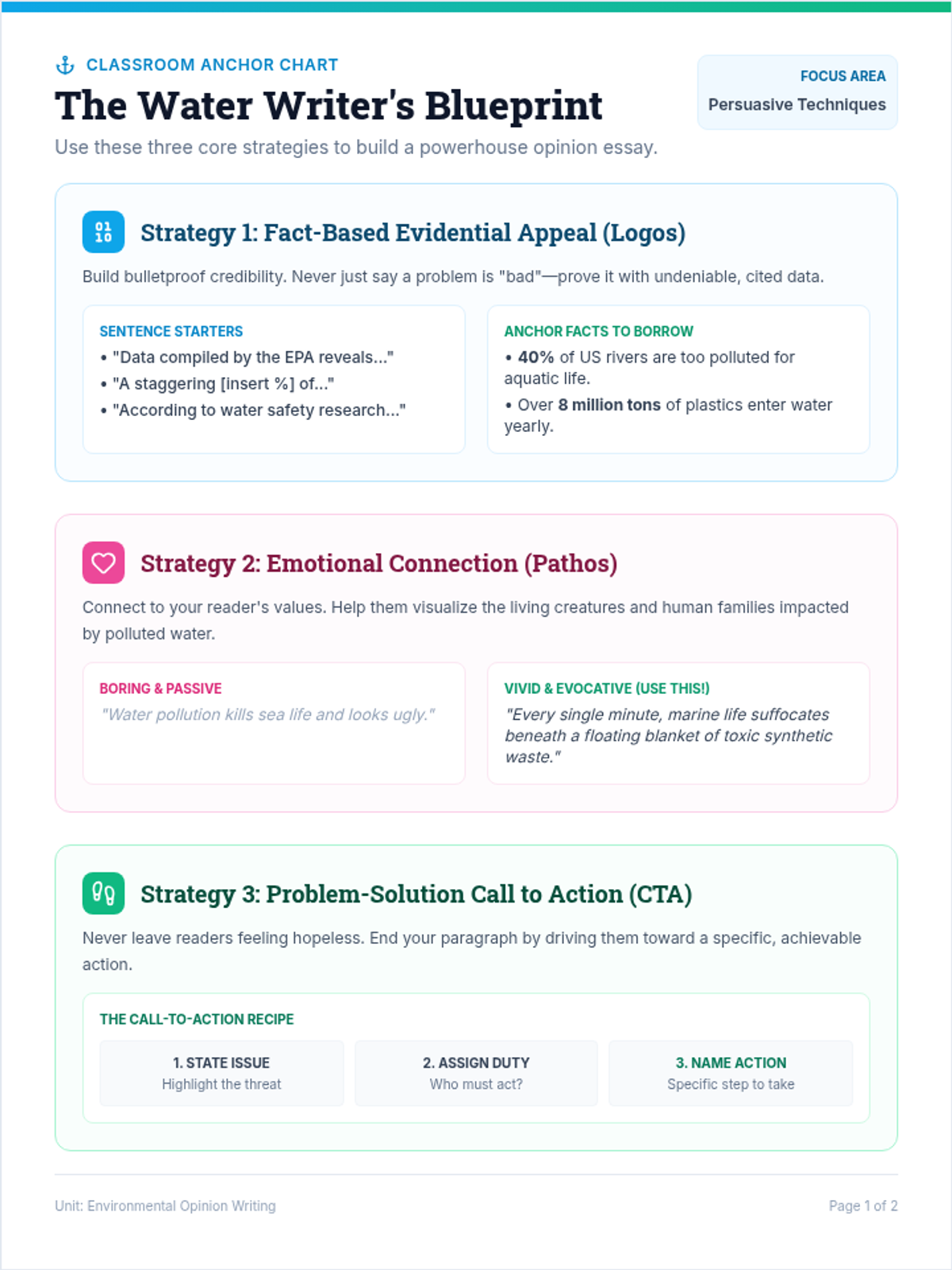
A targeted writing lesson that guides students through crafting high-impact opinion essays on water pollution and water demand. Students learn to combine fact-based evidential appeals, emotional connections, and structured problem-solution calls to action.
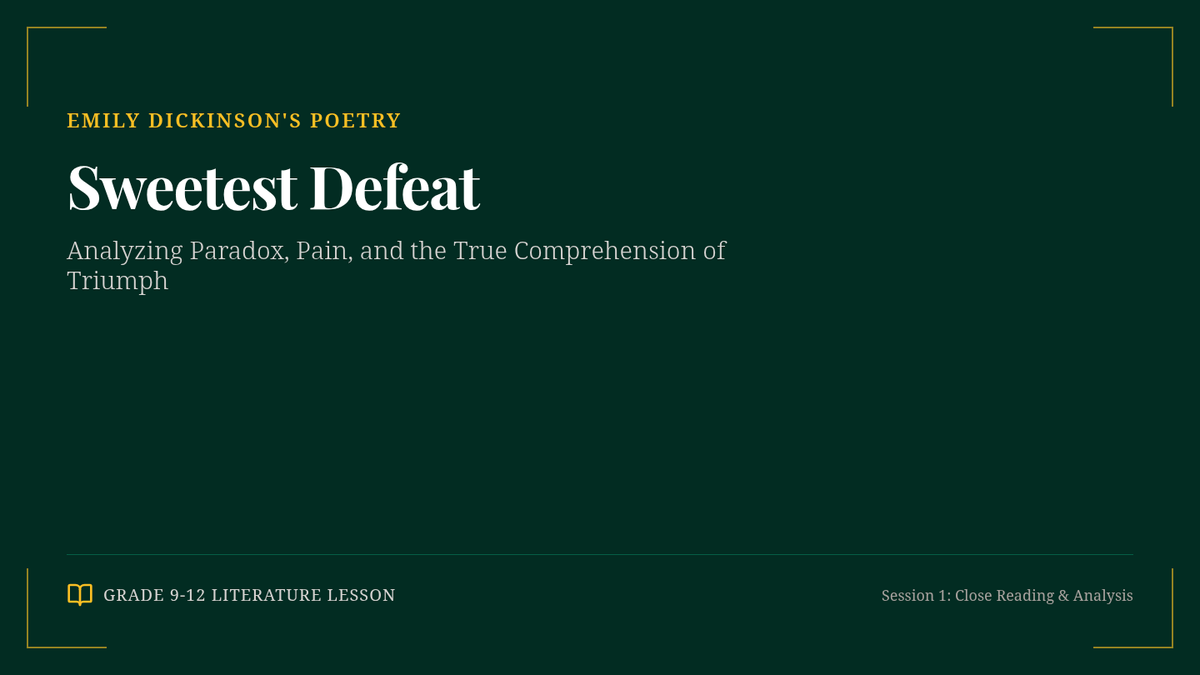
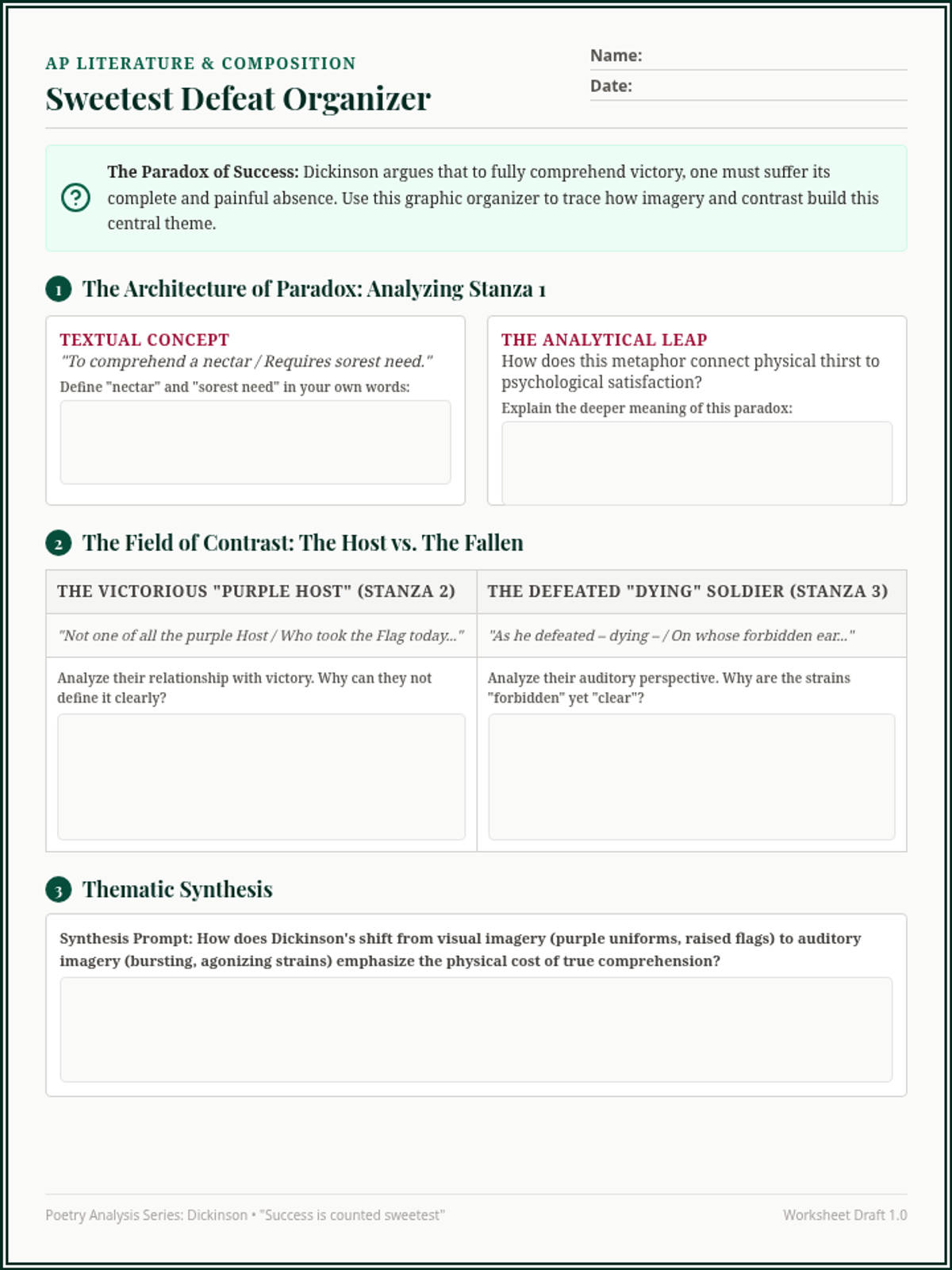
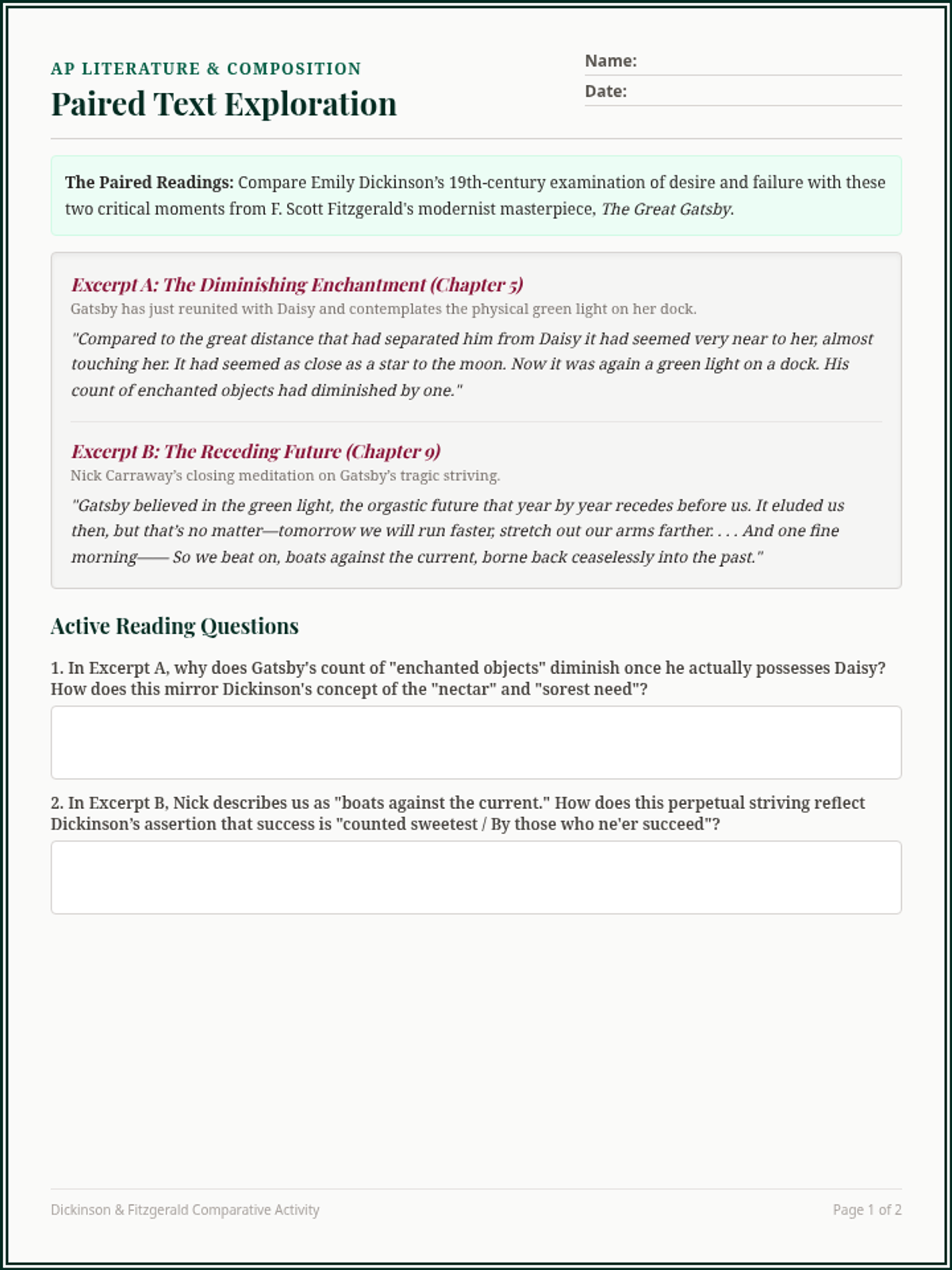
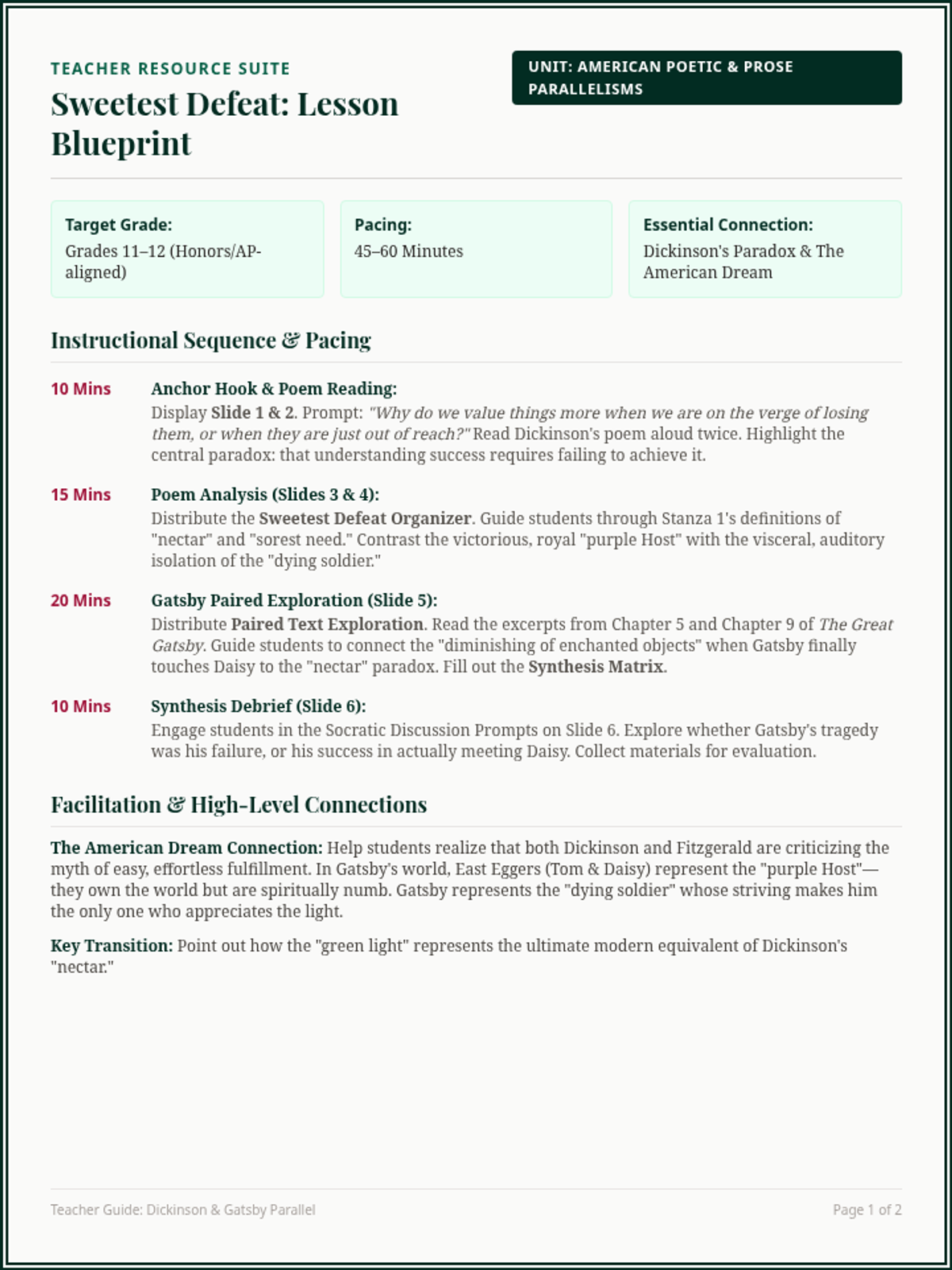
A deep-dive literature lesson exploring Emily Dickinson's 'Success is counted sweetest'. Students analyze how the central paradox—that defeat is necessary to truly comprehend victory—is built through imagery and contrast, and compare these themes to a modern text.
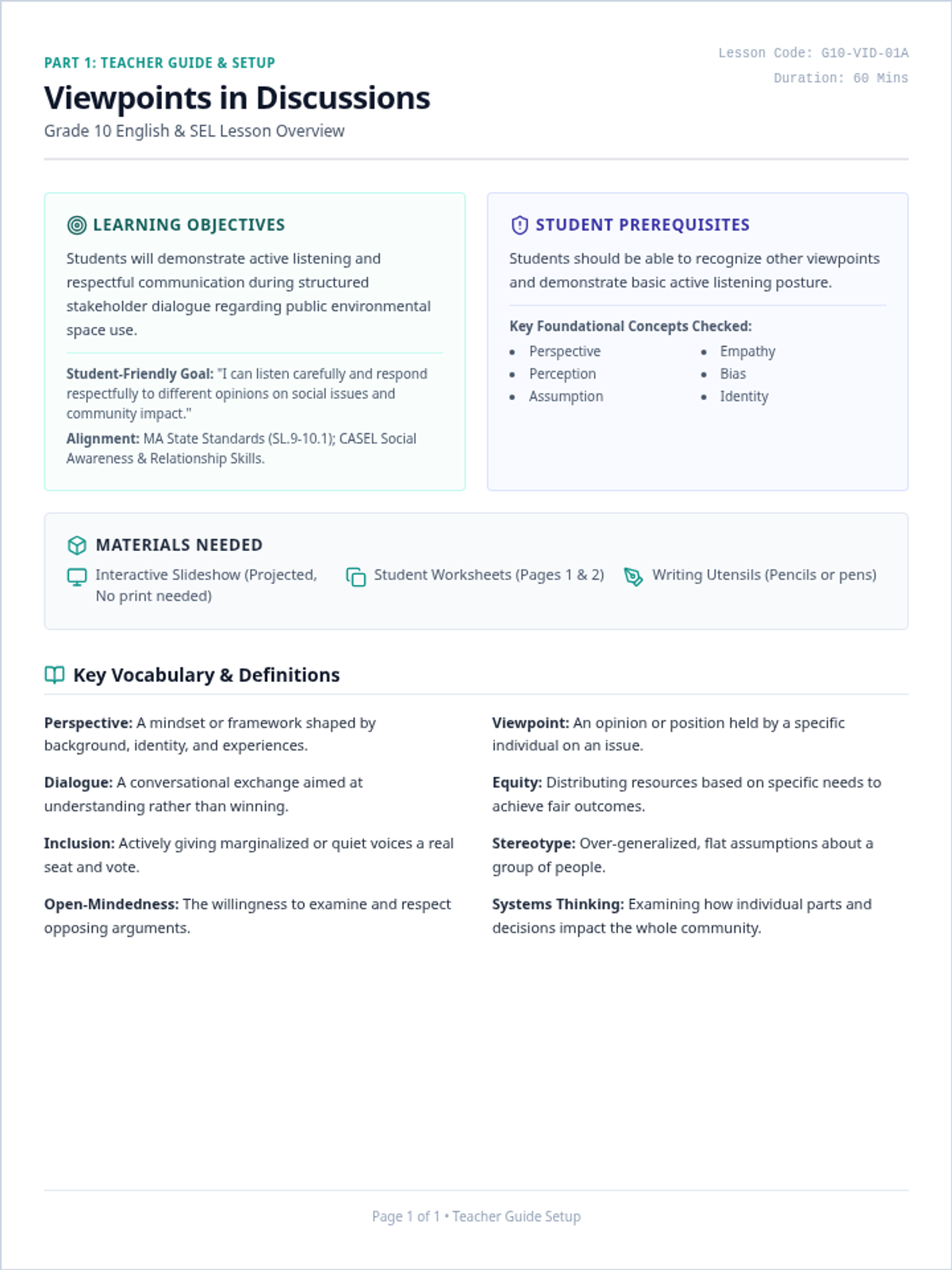
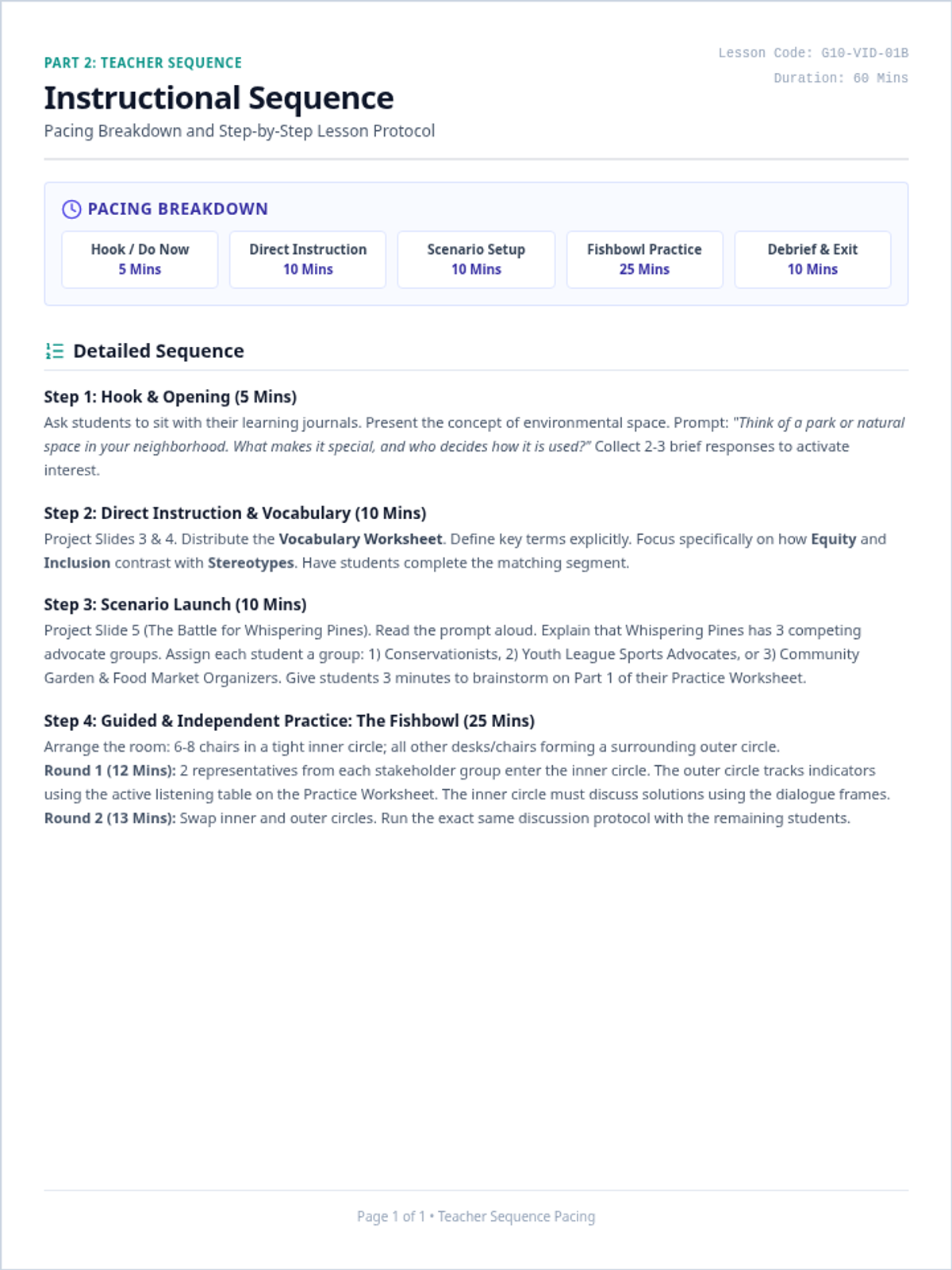
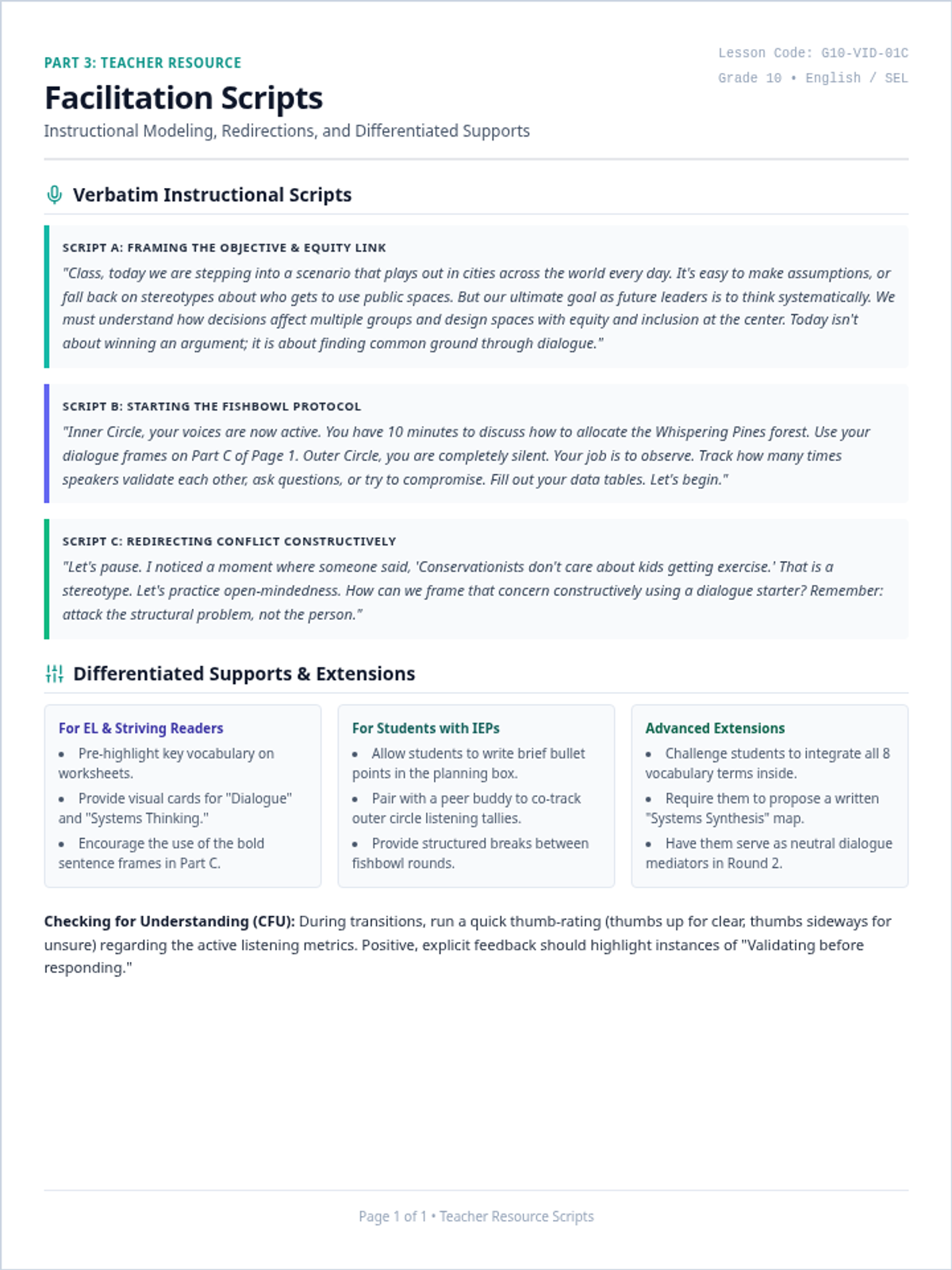
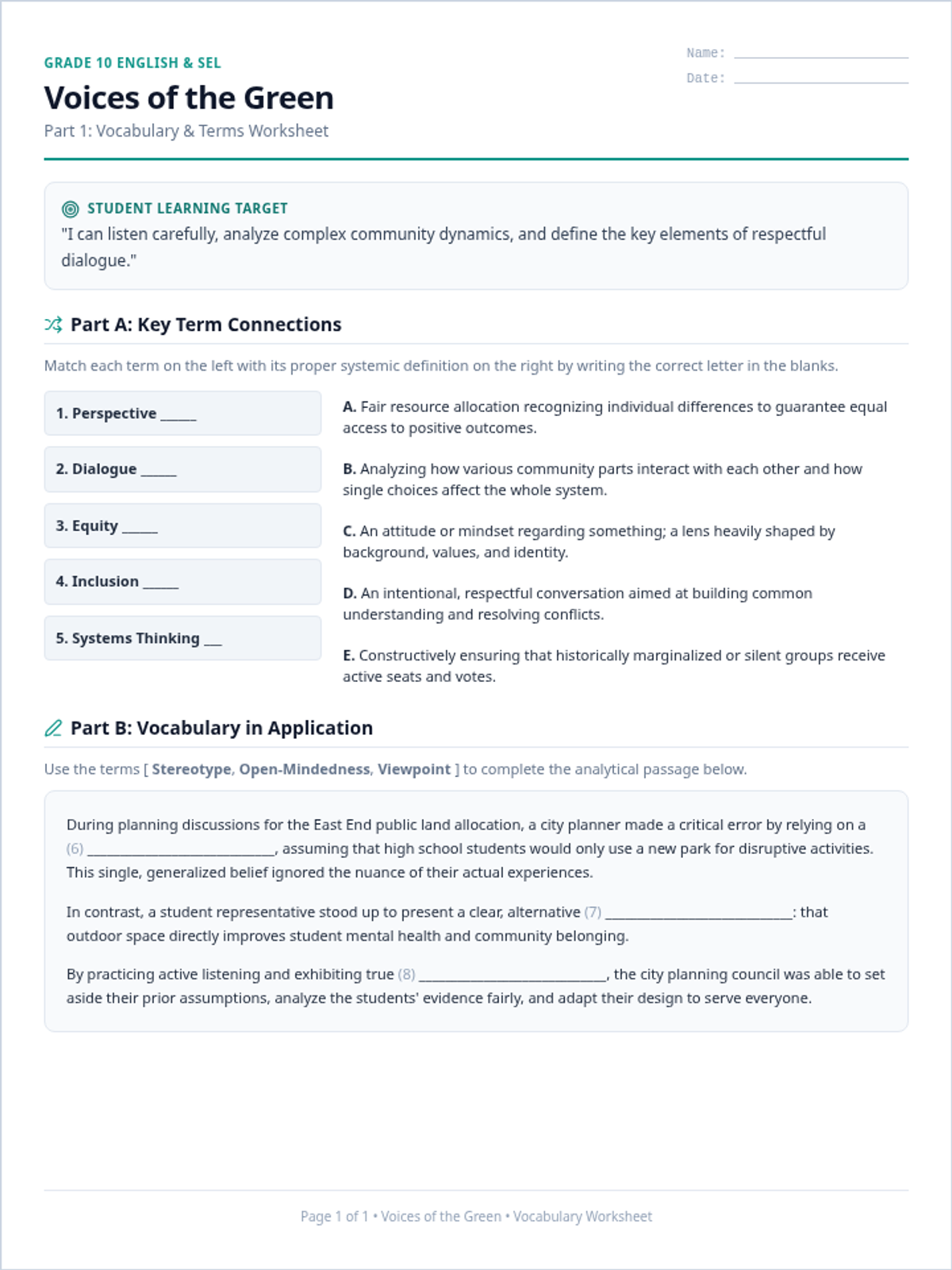
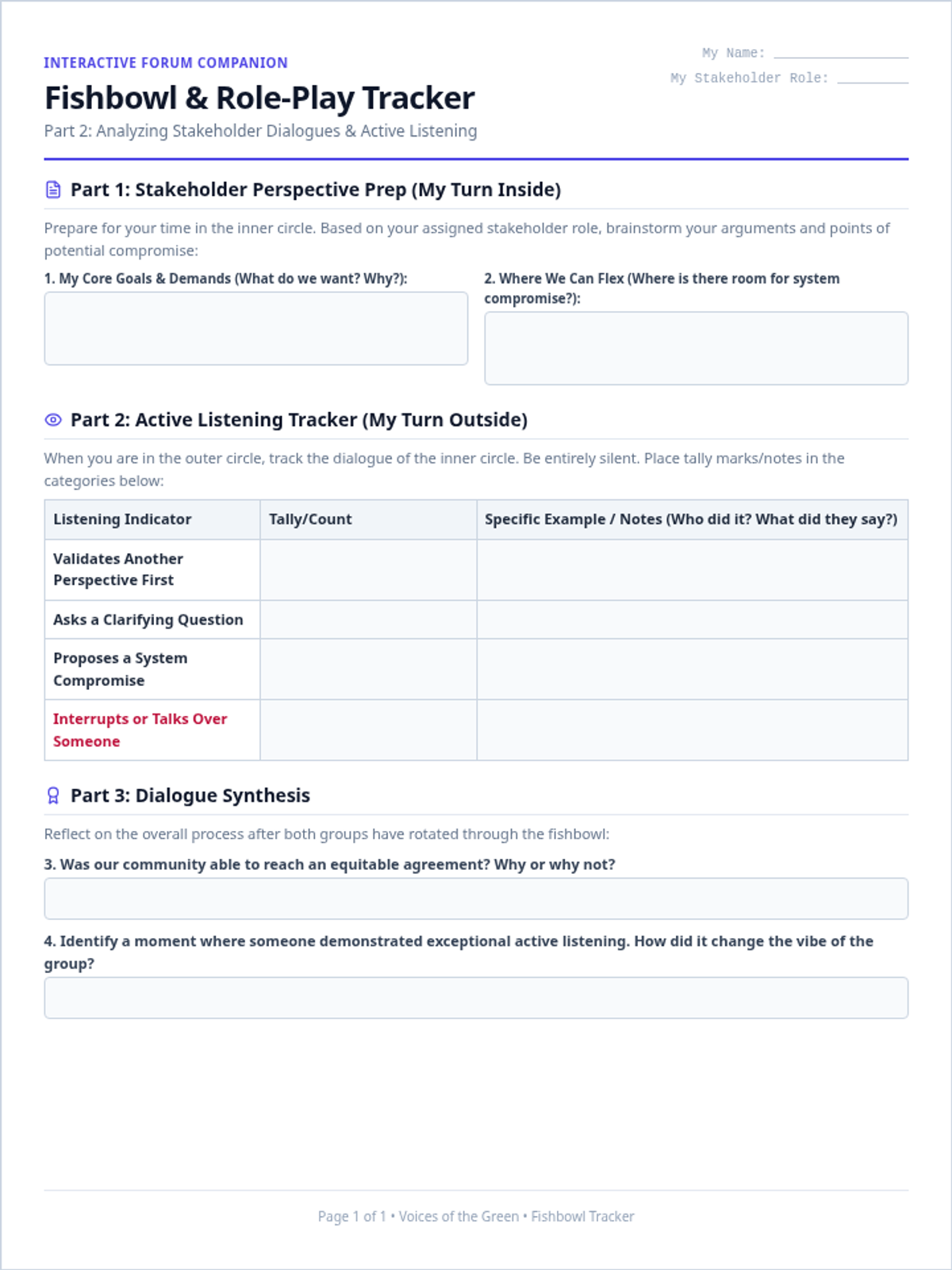
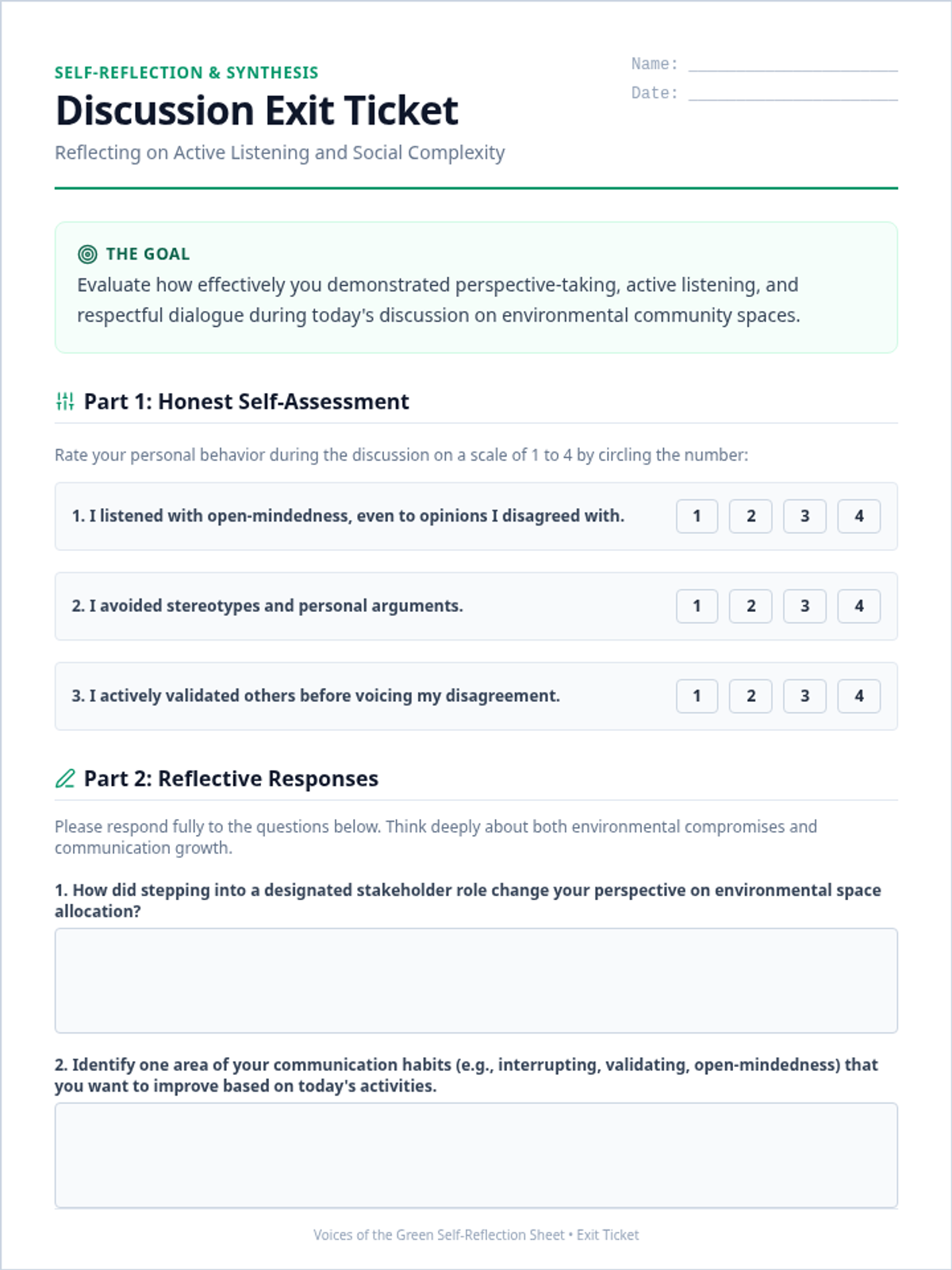
A Grade 10 English & SEL lesson focused on active listening and respectful communication during structured stakeholder dialogue about community environmental space use. Features a complete slide deck, a student worksheet, a teacher facilitation guide with scripts, and a self-reflective exit ticket.
A vocabulary and morphology lesson focusing on the academic and STEM suffix -cian, representing highly skilled occupational roles. Students explore word roots, spelling transformations, and professional definitions.
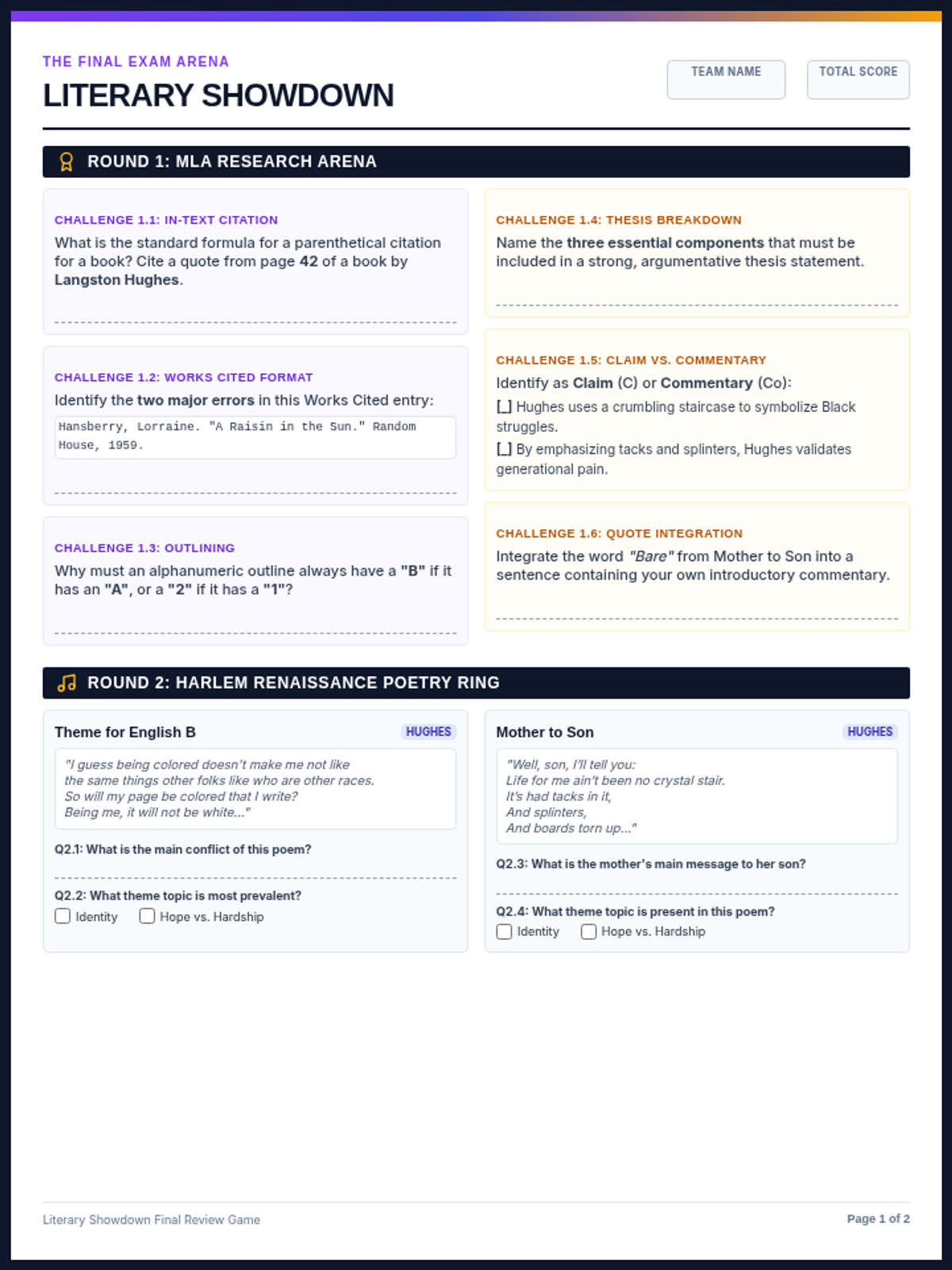
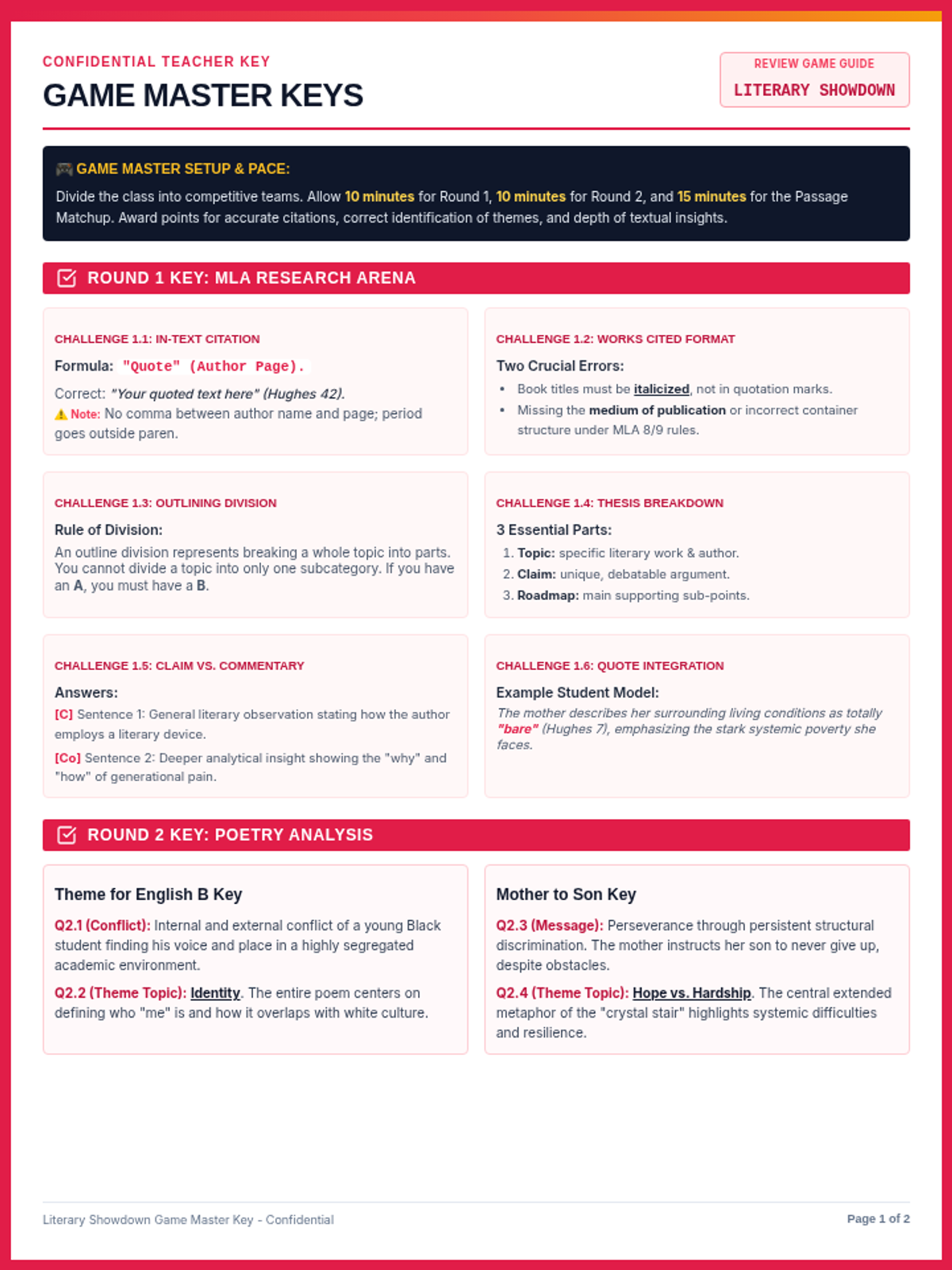
A comprehensive review lesson preparing students for the final exam covering MLA research, Harlem Renaissance poetry, and Acts II & III of A Raisin in the Sun.
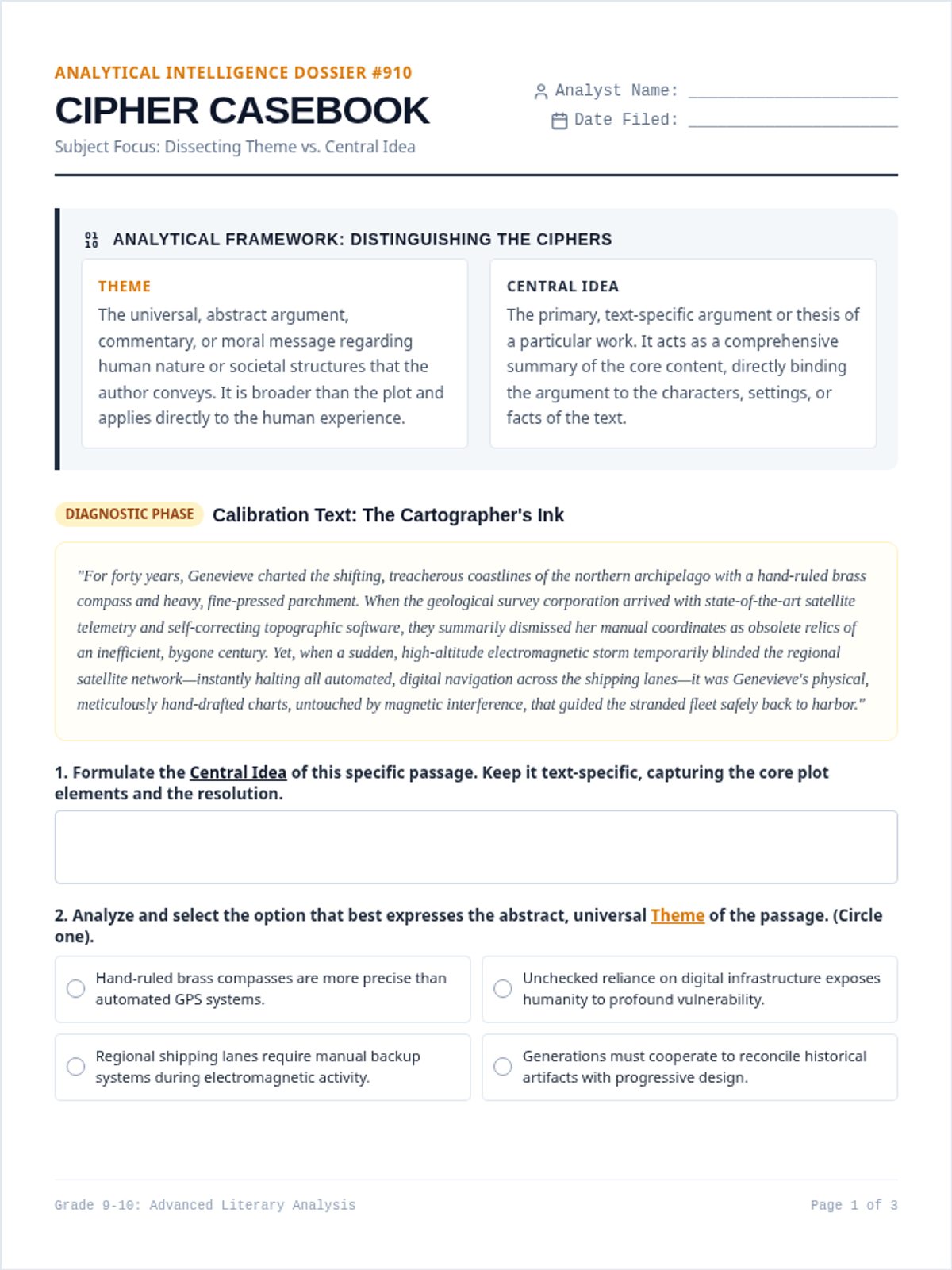
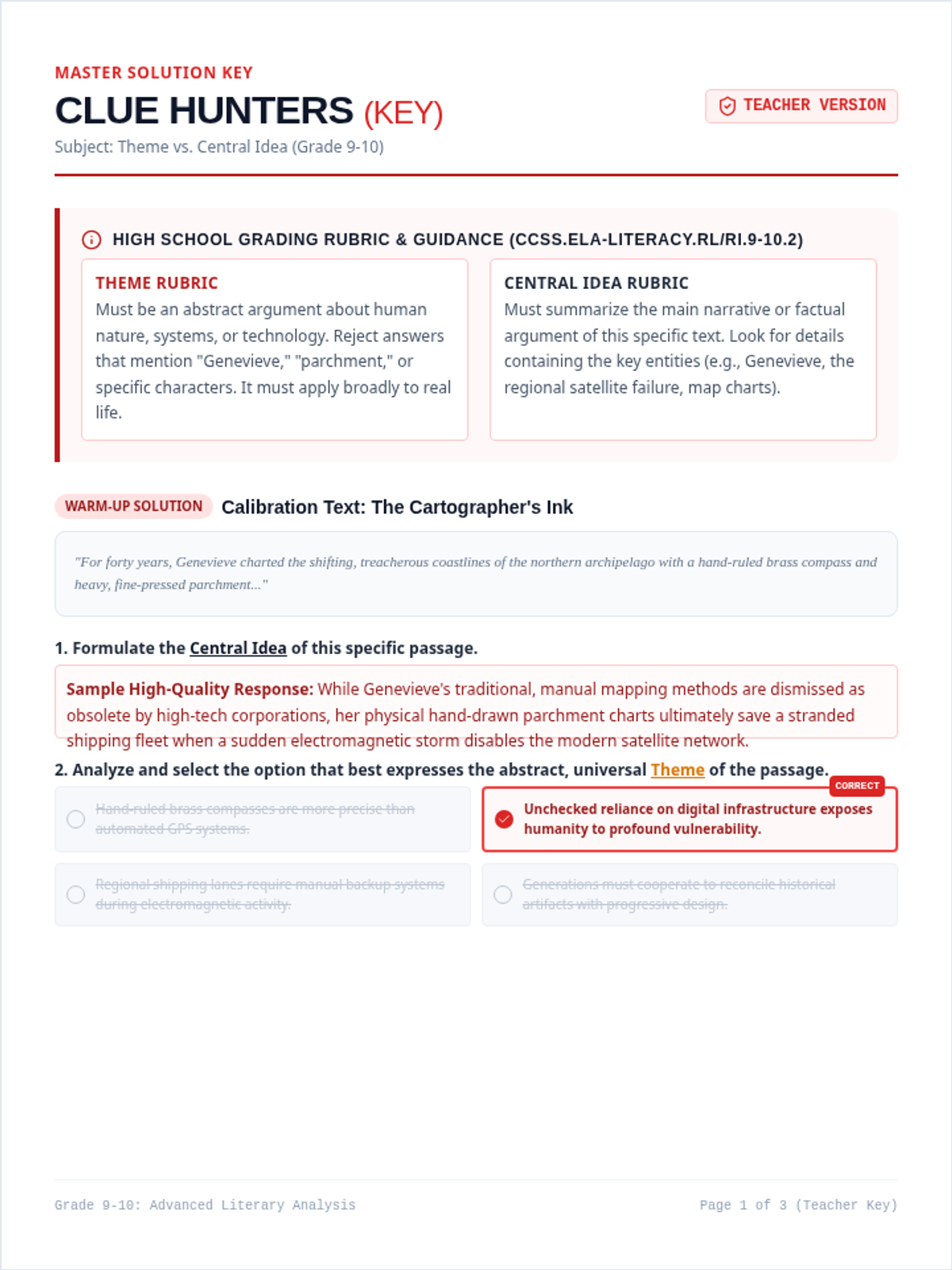
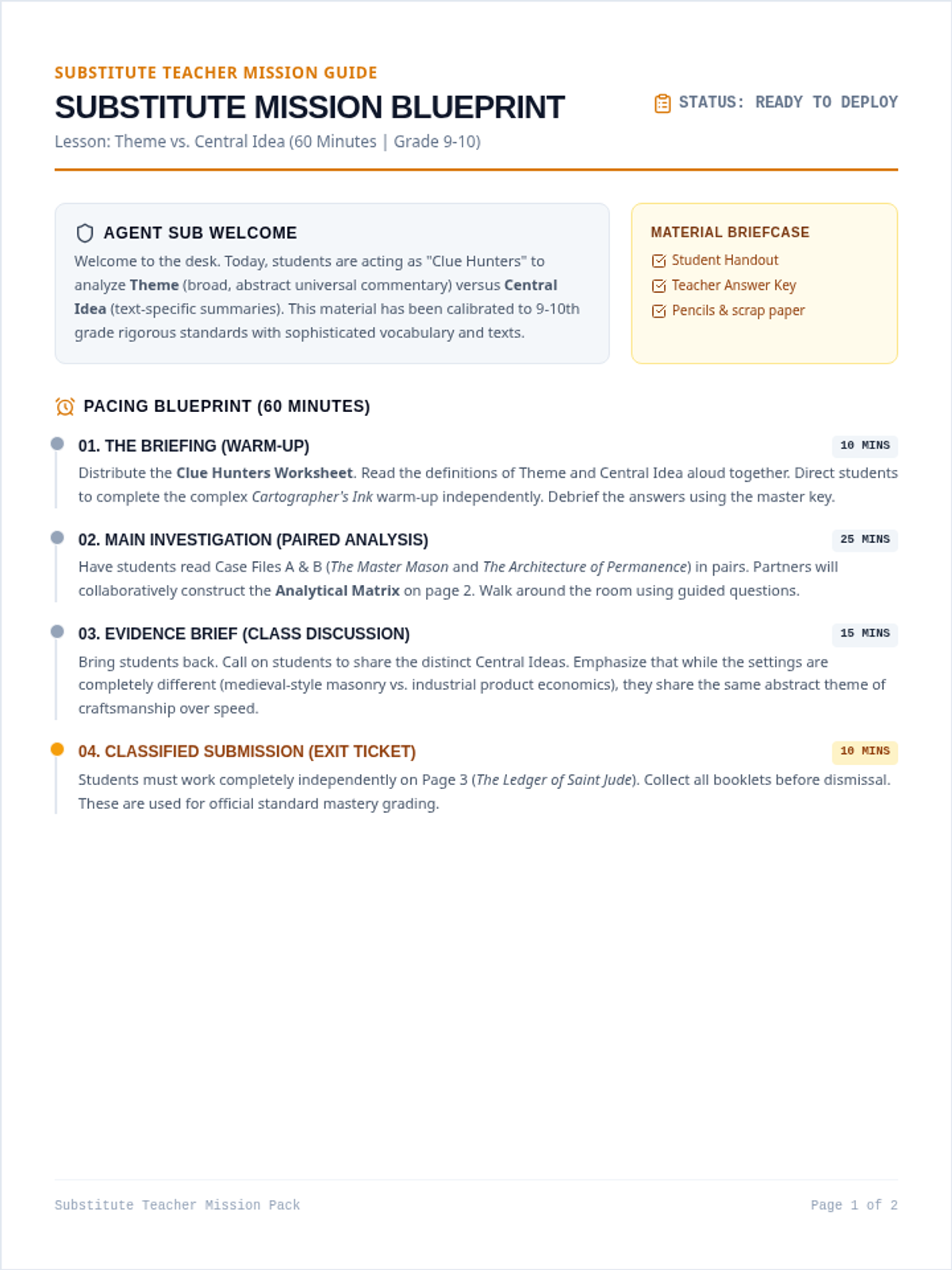
A comprehensive 60-minute lesson designed to help students distinguish theme from central idea using a codebreaker motif. Students analyze paired short texts, crack themes using graphic organizers, and demonstrate mastery through a structured exit ticket.
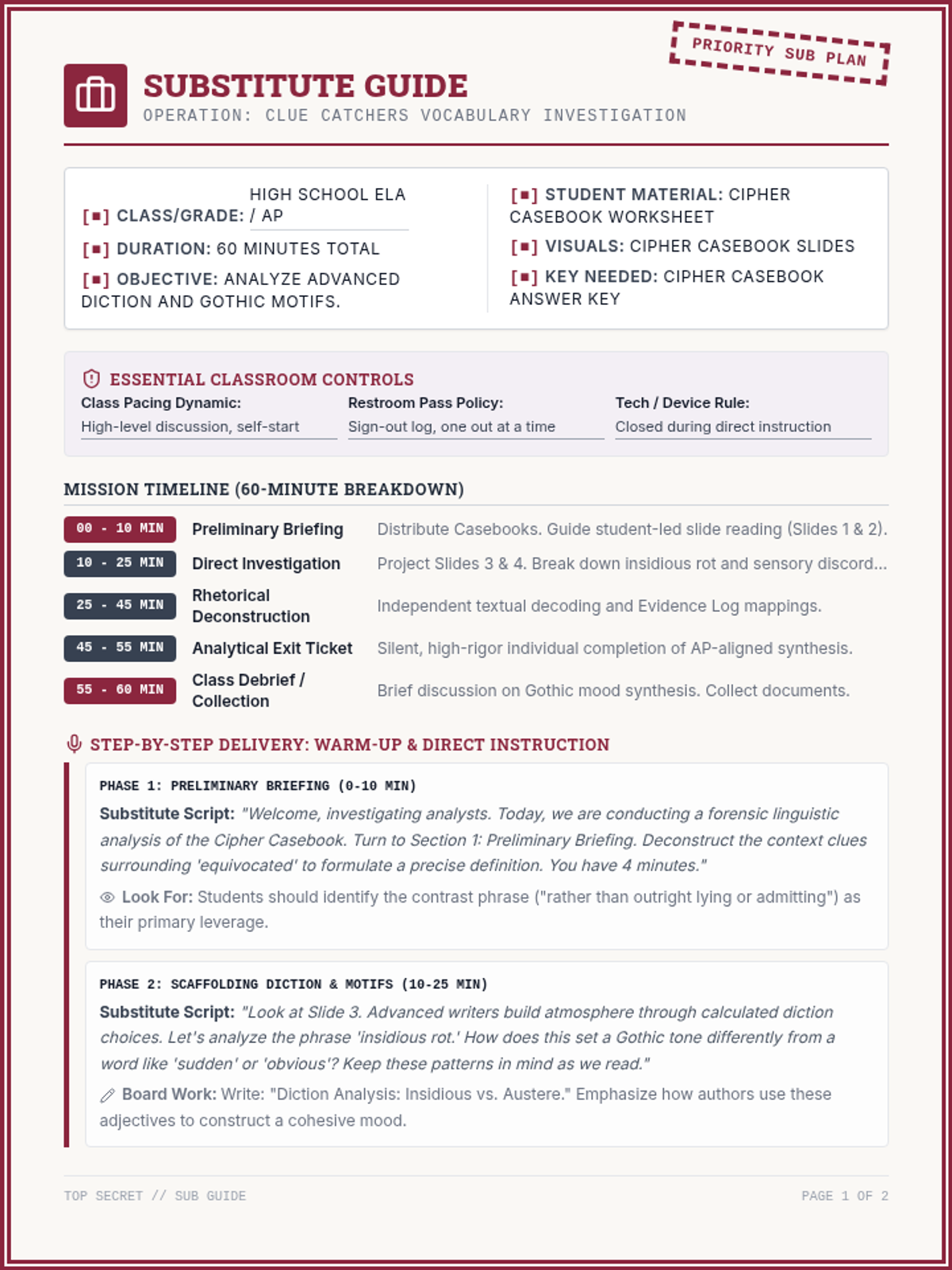
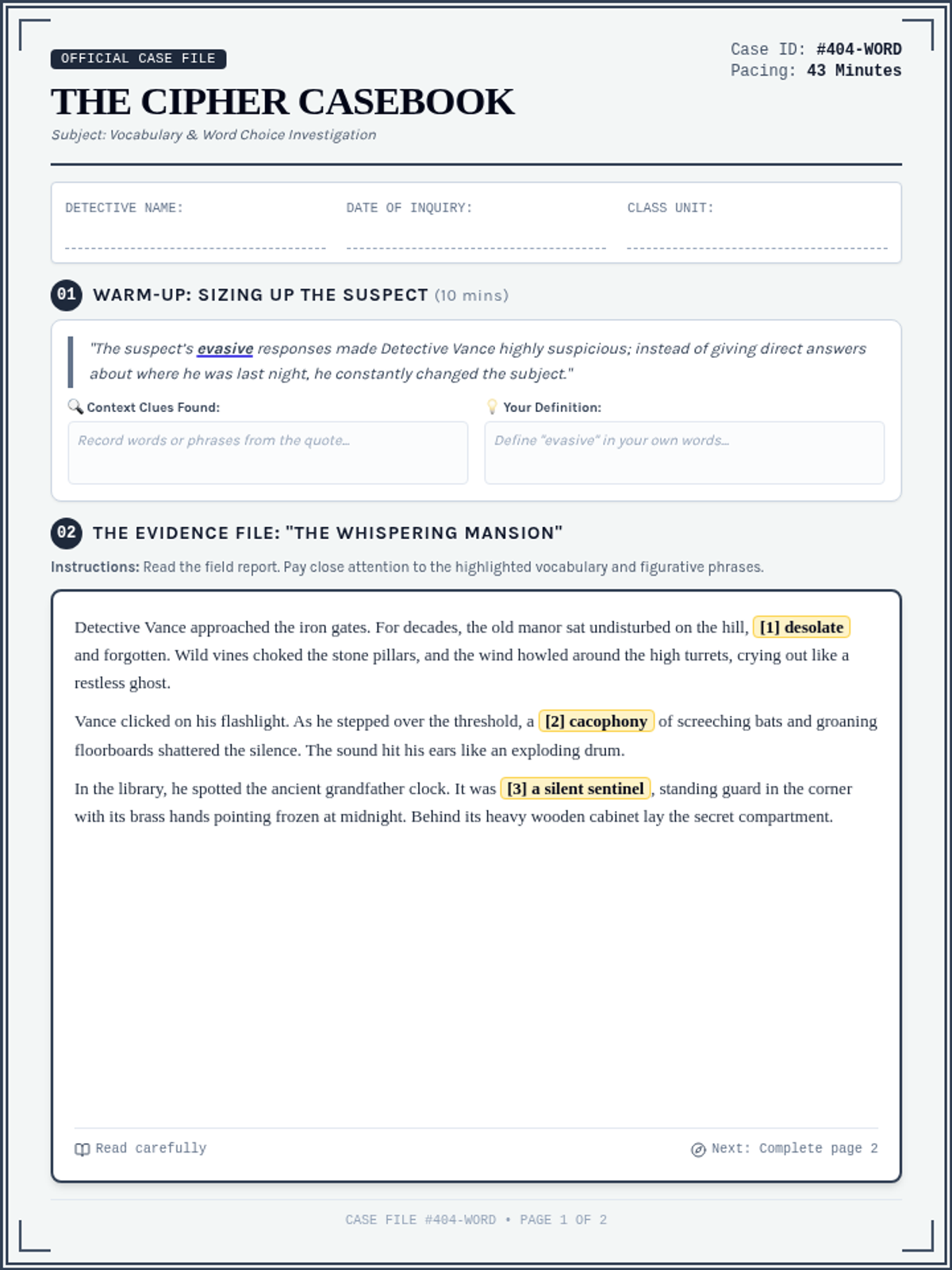
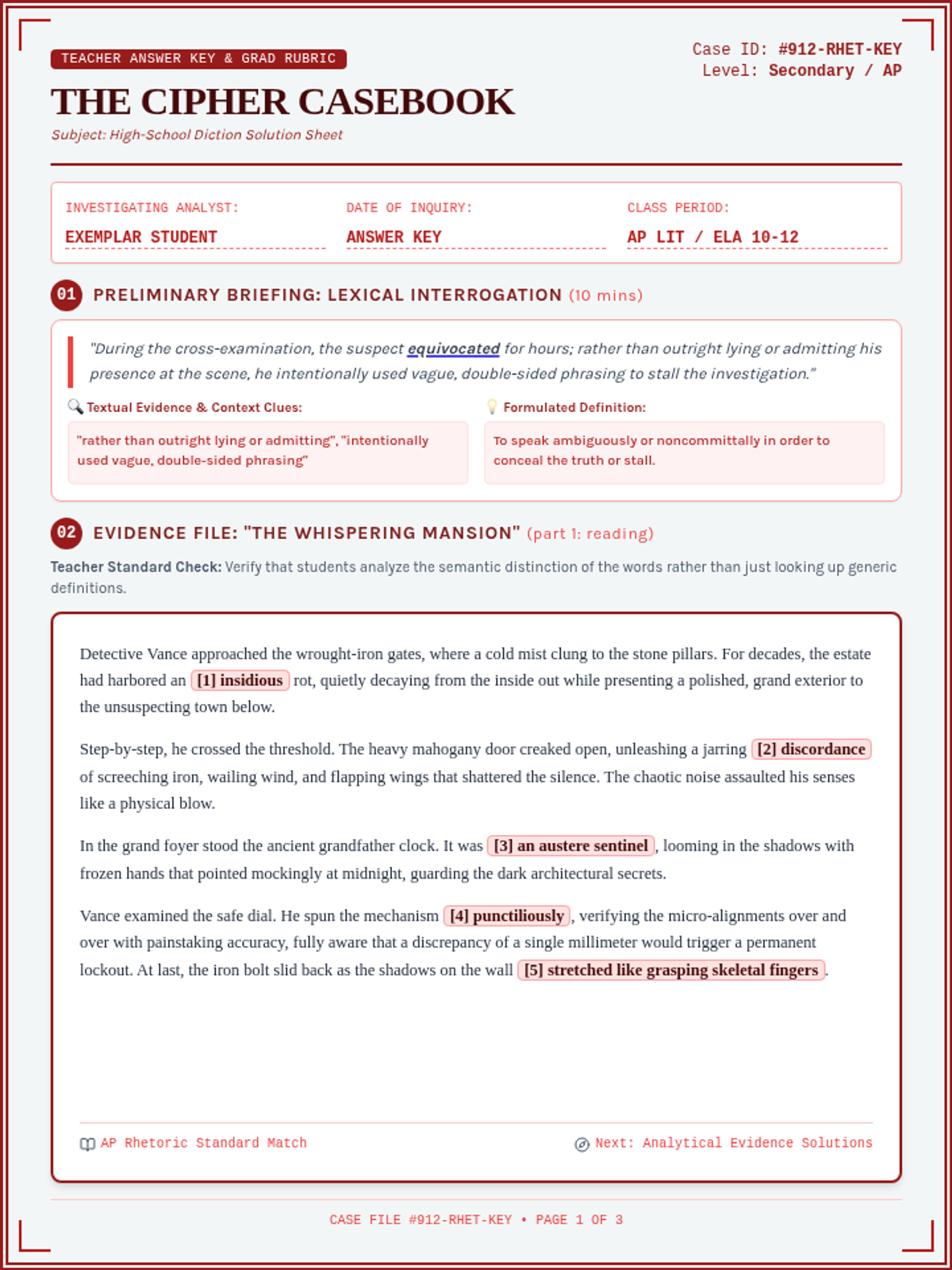
A 60-minute ELA lesson focused on decoding rich vocabulary and figurative language using context clues in a detective-themed investigation.
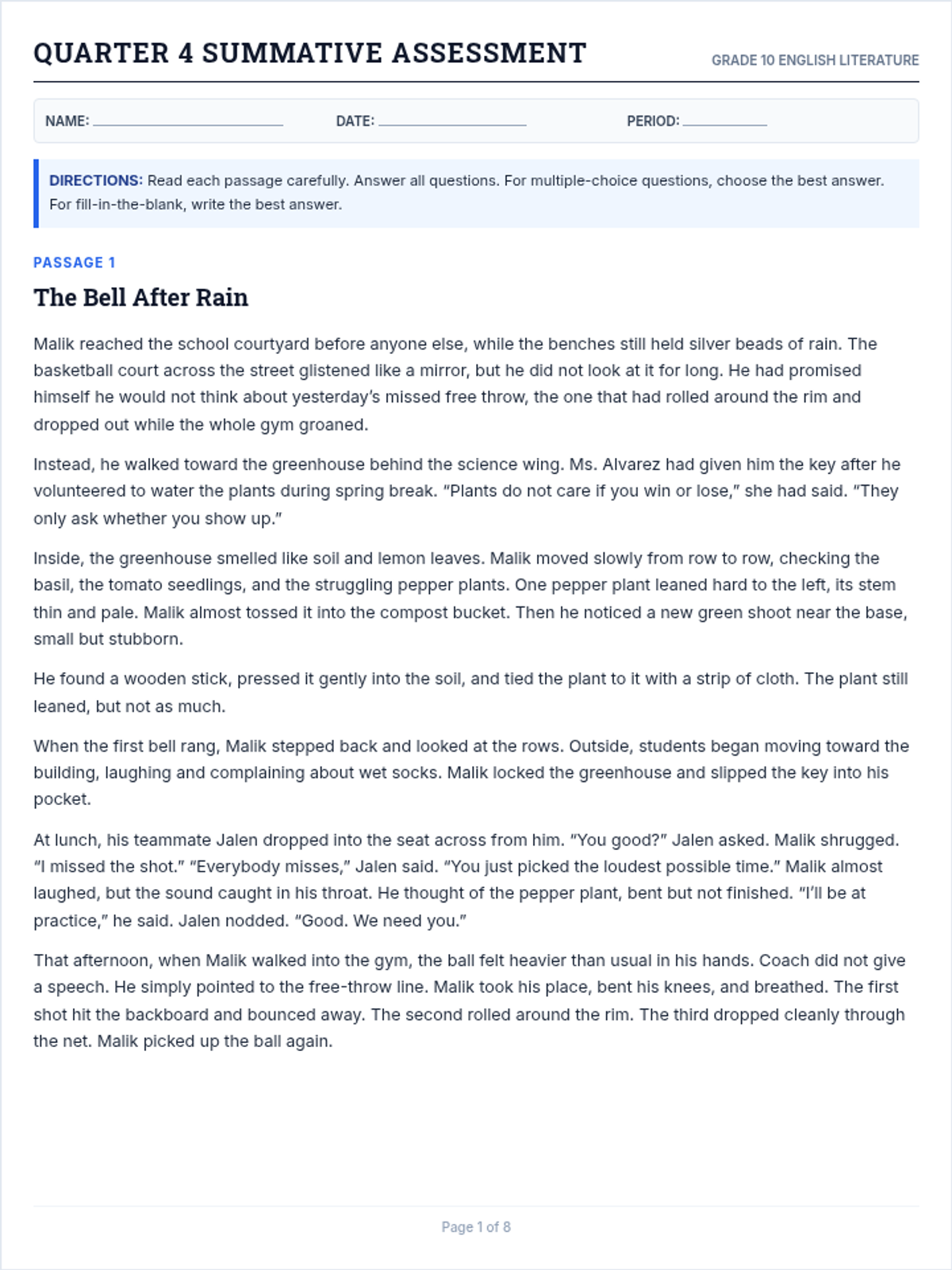
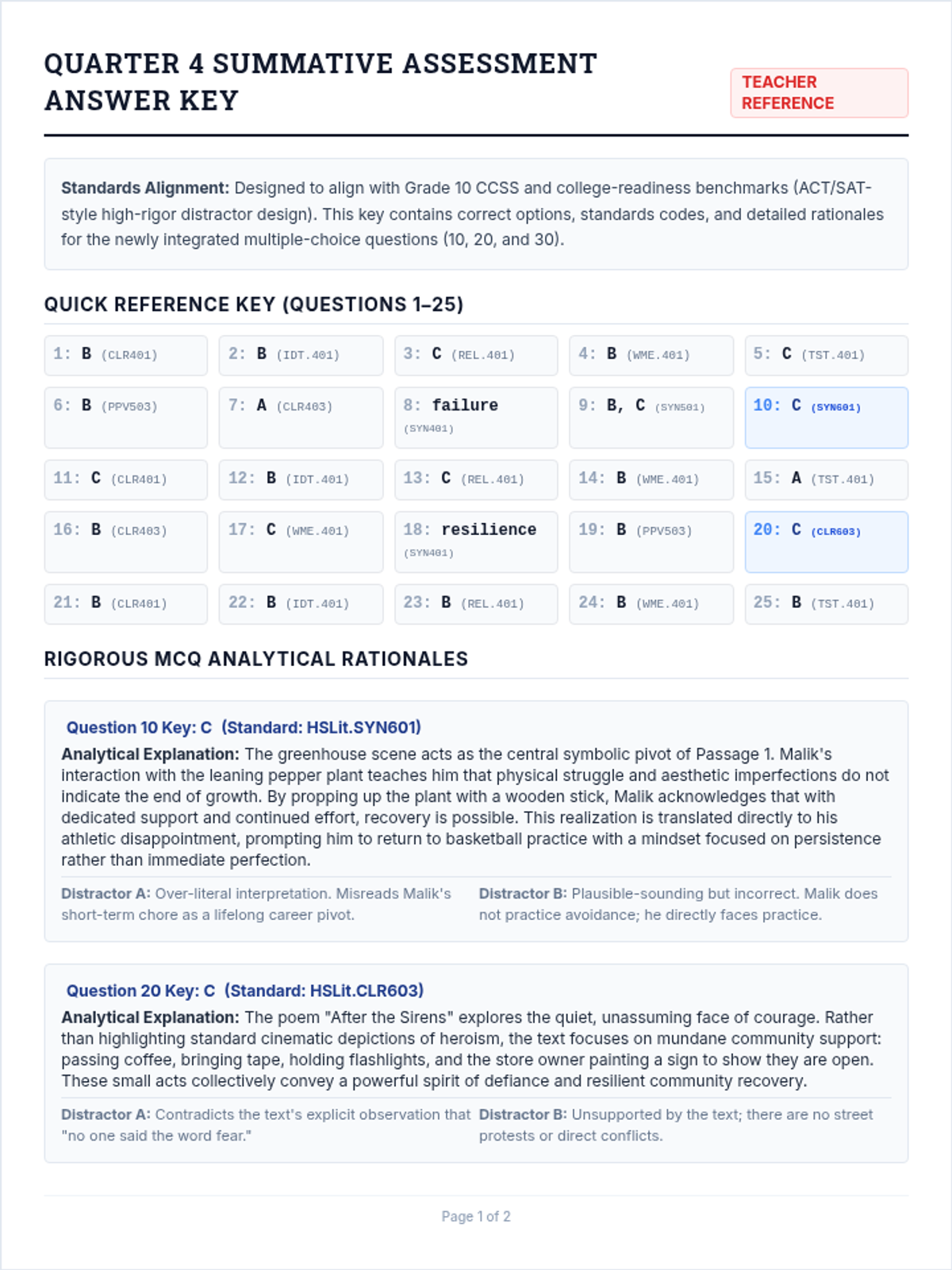
A comprehensive literature summative assessment evaluating comprehension of multiple prose and poetry passages, now updated with analytical multiple-choice items replacing selected short-response questions.
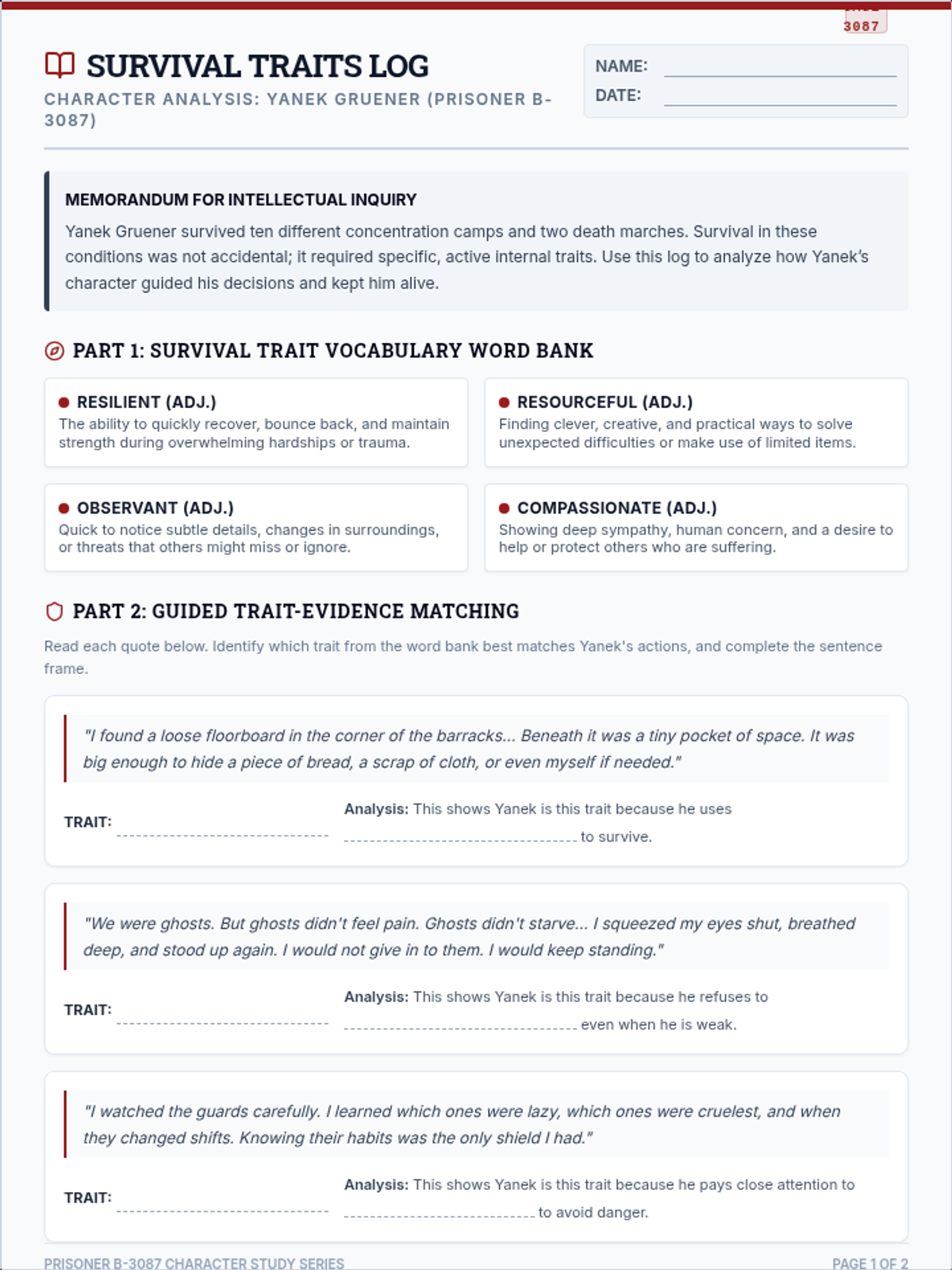
A character analysis lesson for the novel Prisoner B-3087. Students analyze Yanek Gruener's character traits using direct text evidence, graphic organizers, and structured reflection templates.
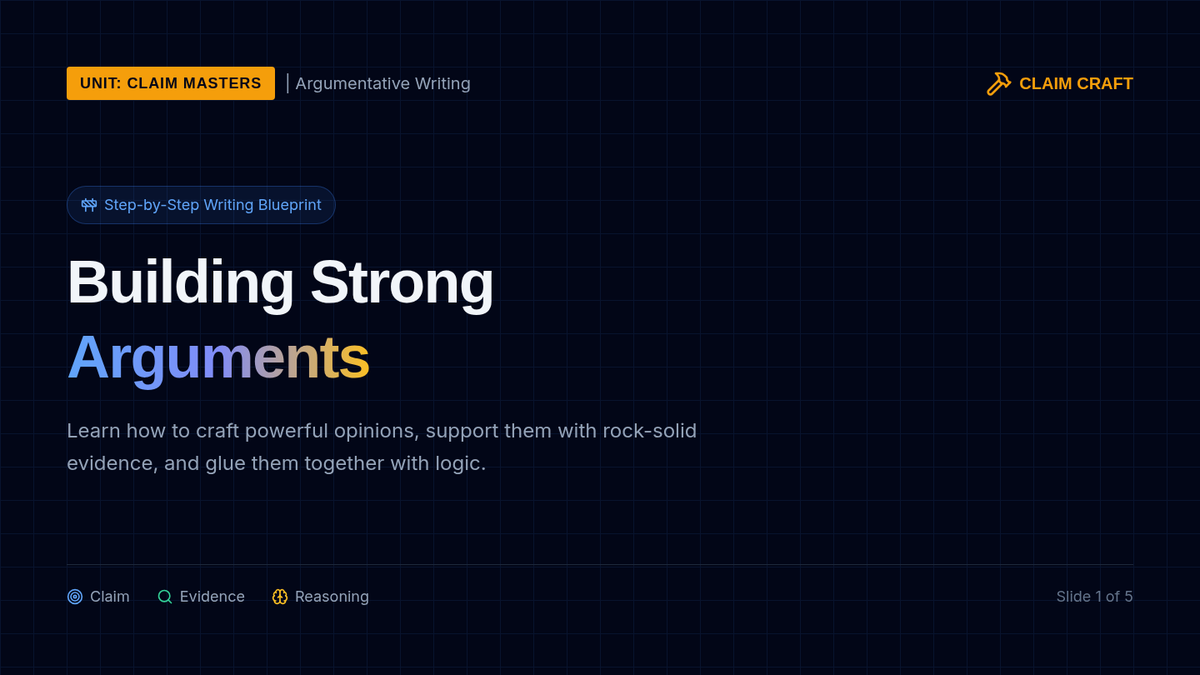
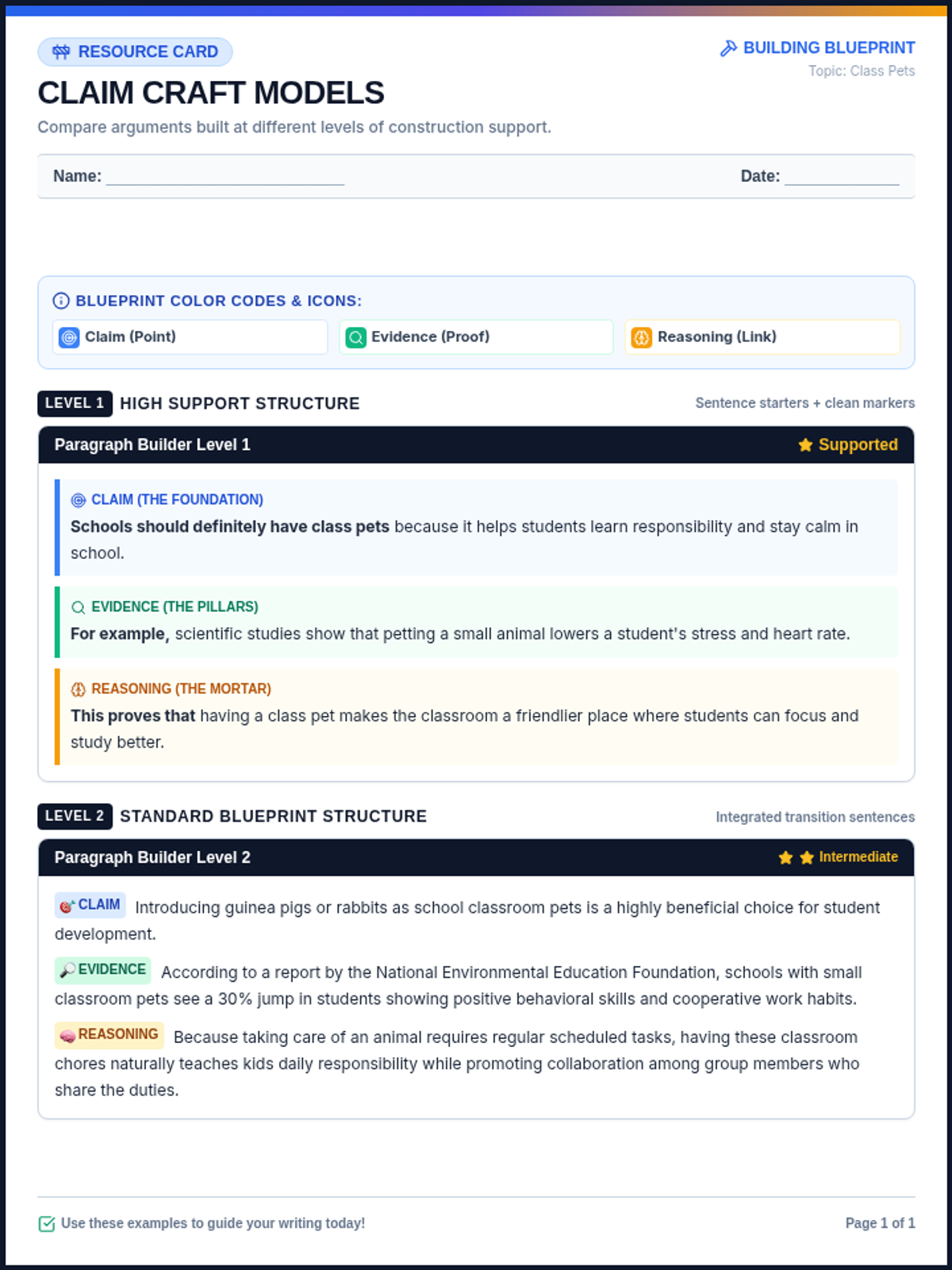
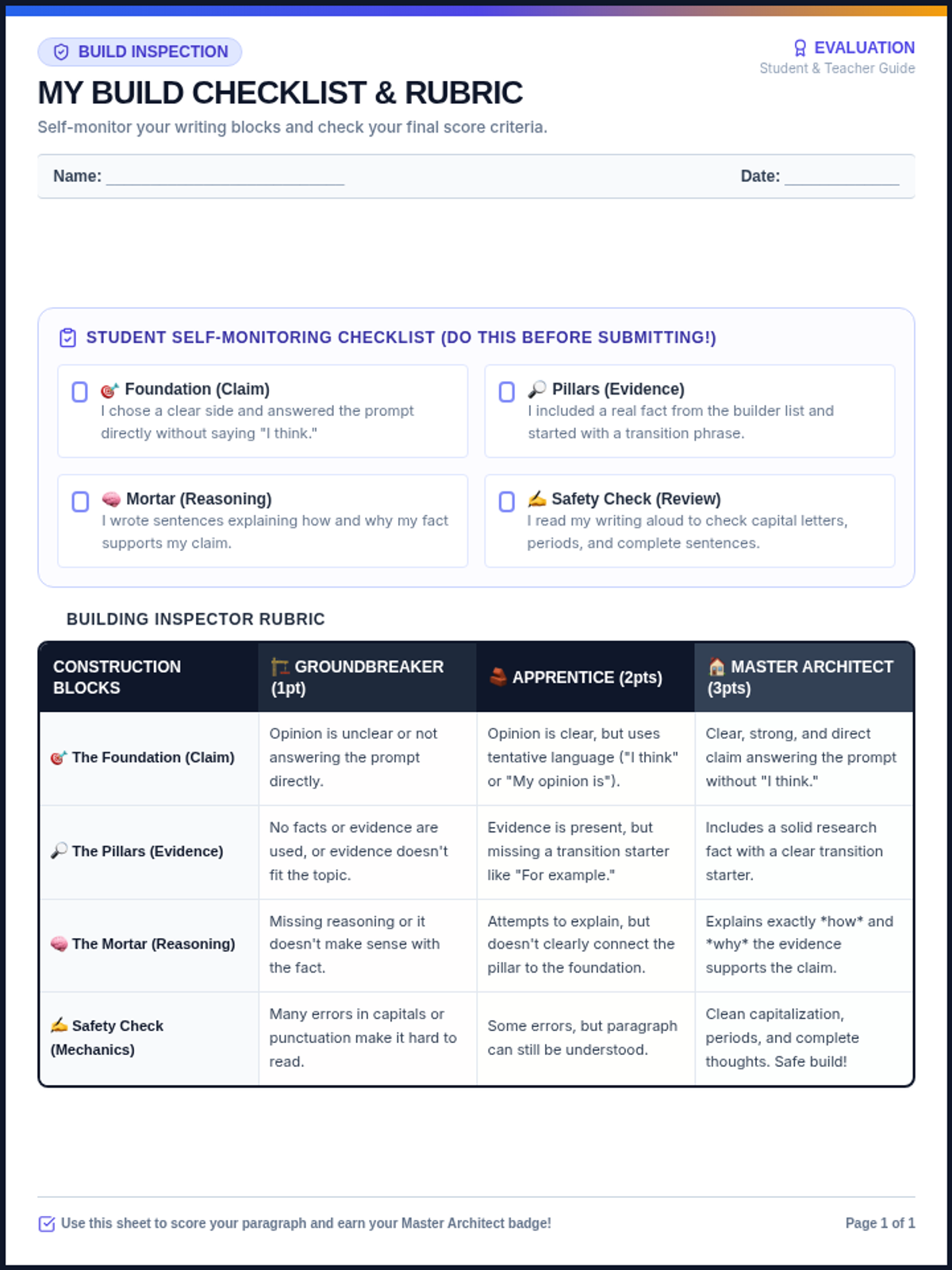
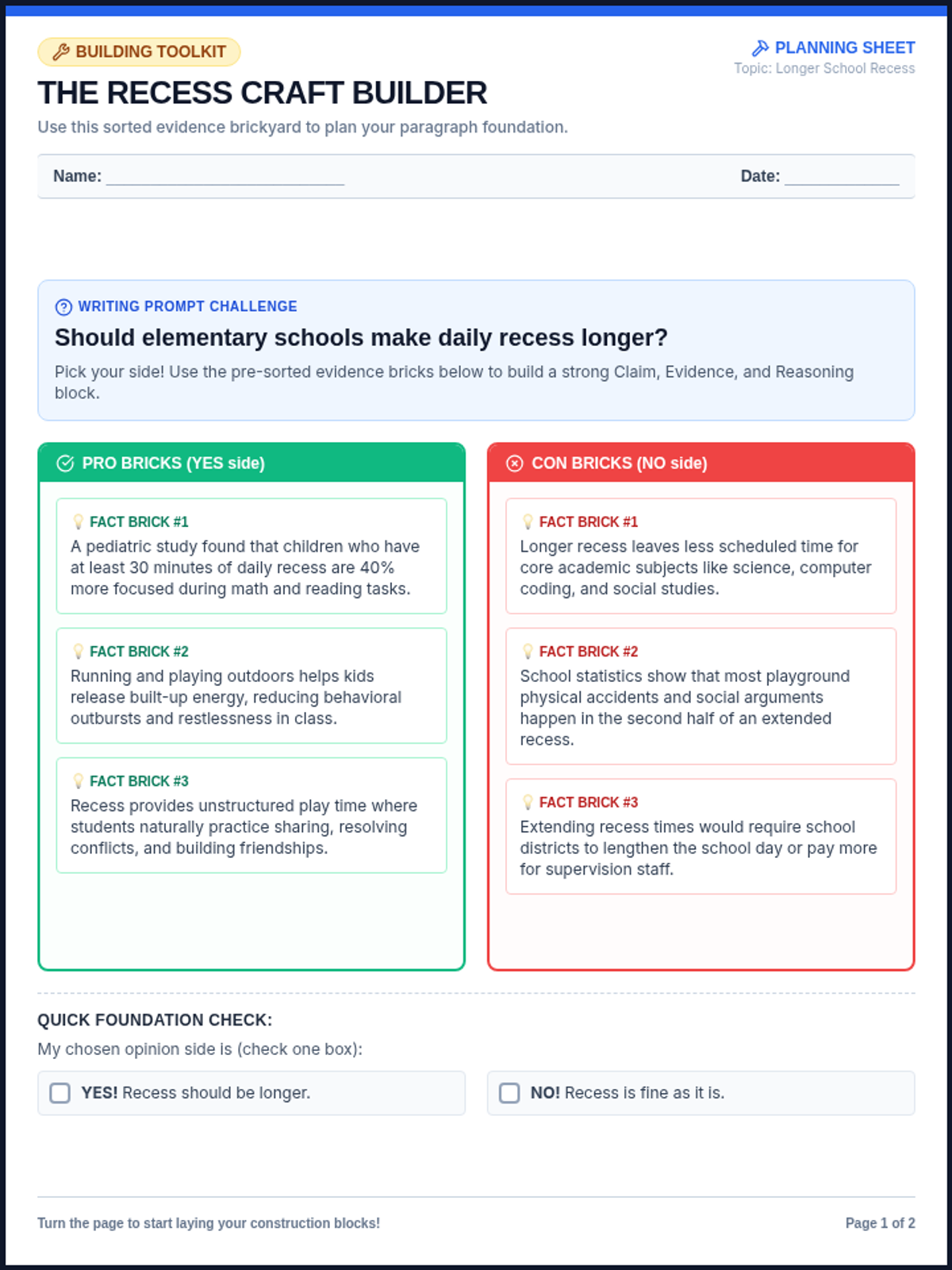
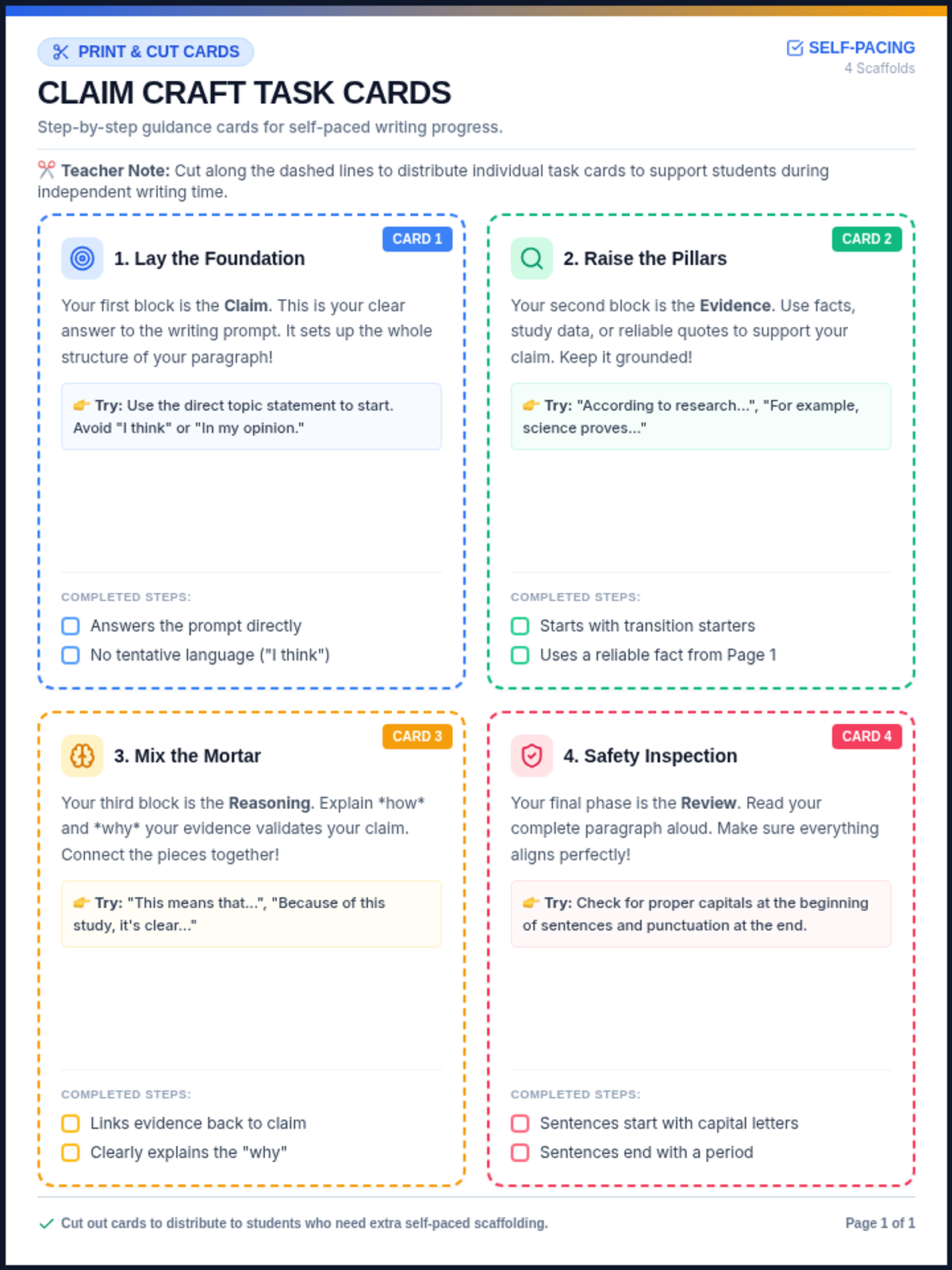
A differentiated argumentative writing lesson focused on scaffolding the Claim-Evidence-Reasoning (CER) framework using a hands-on crafting and construction theme. Perfect for diverse learners, providing high-support sentence frames, visual icons, and step-by-step task cards.
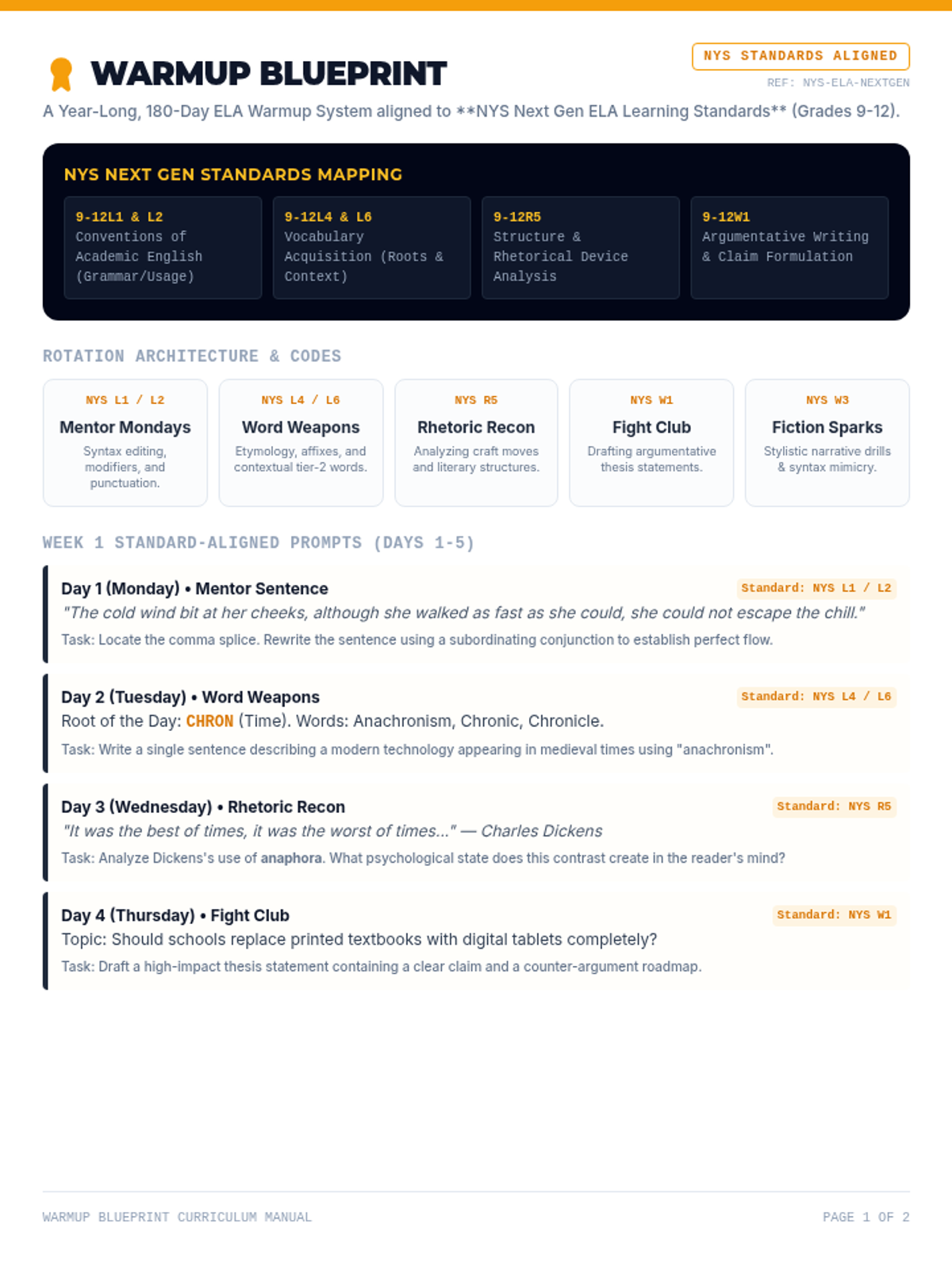
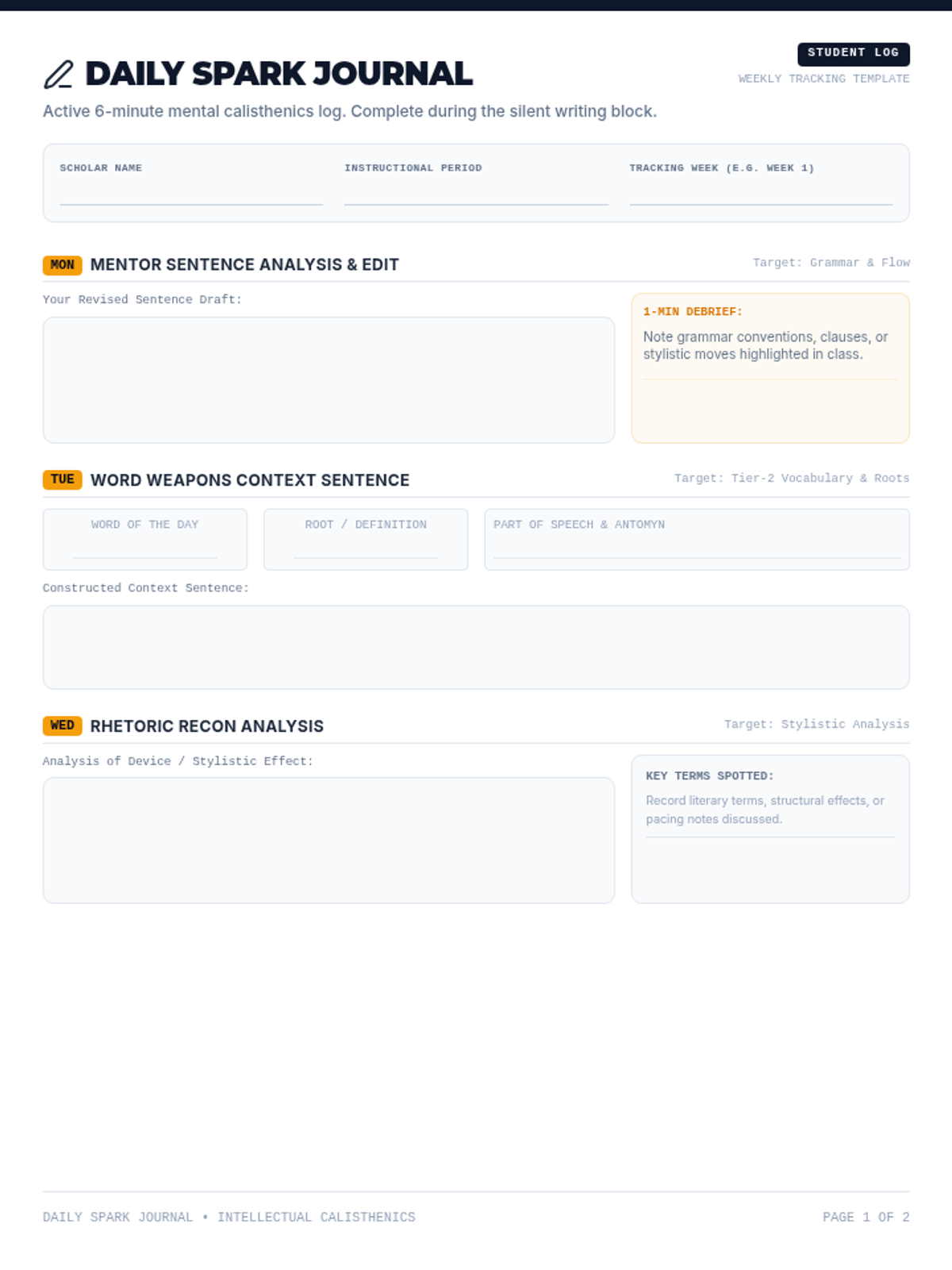
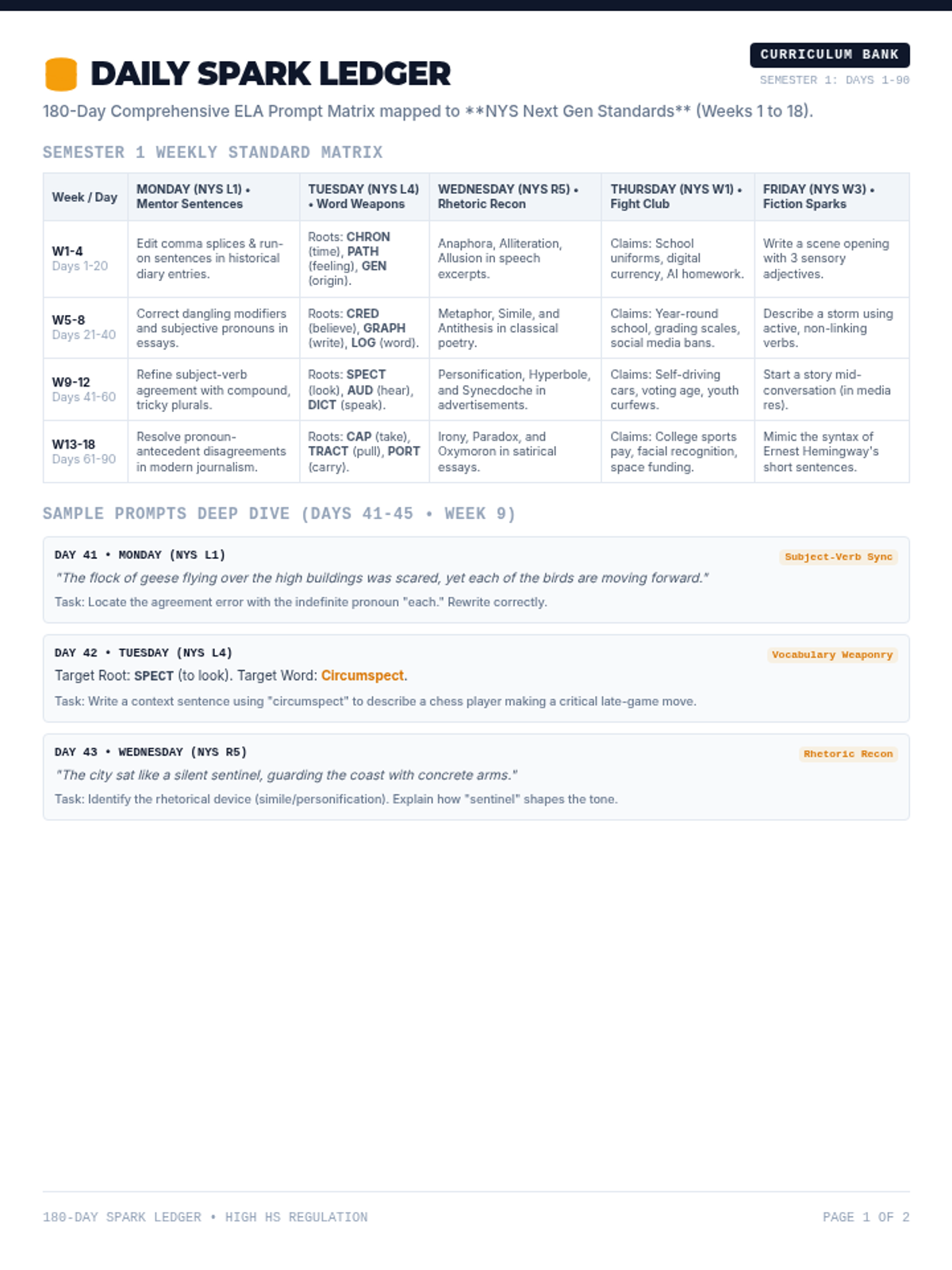
This core launch unit delivers the complete system for the 180-day 6-minute High School ELA daily warm-up program, containing the instructional curriculum guide, student logging journal, and the interactive display slide deck.
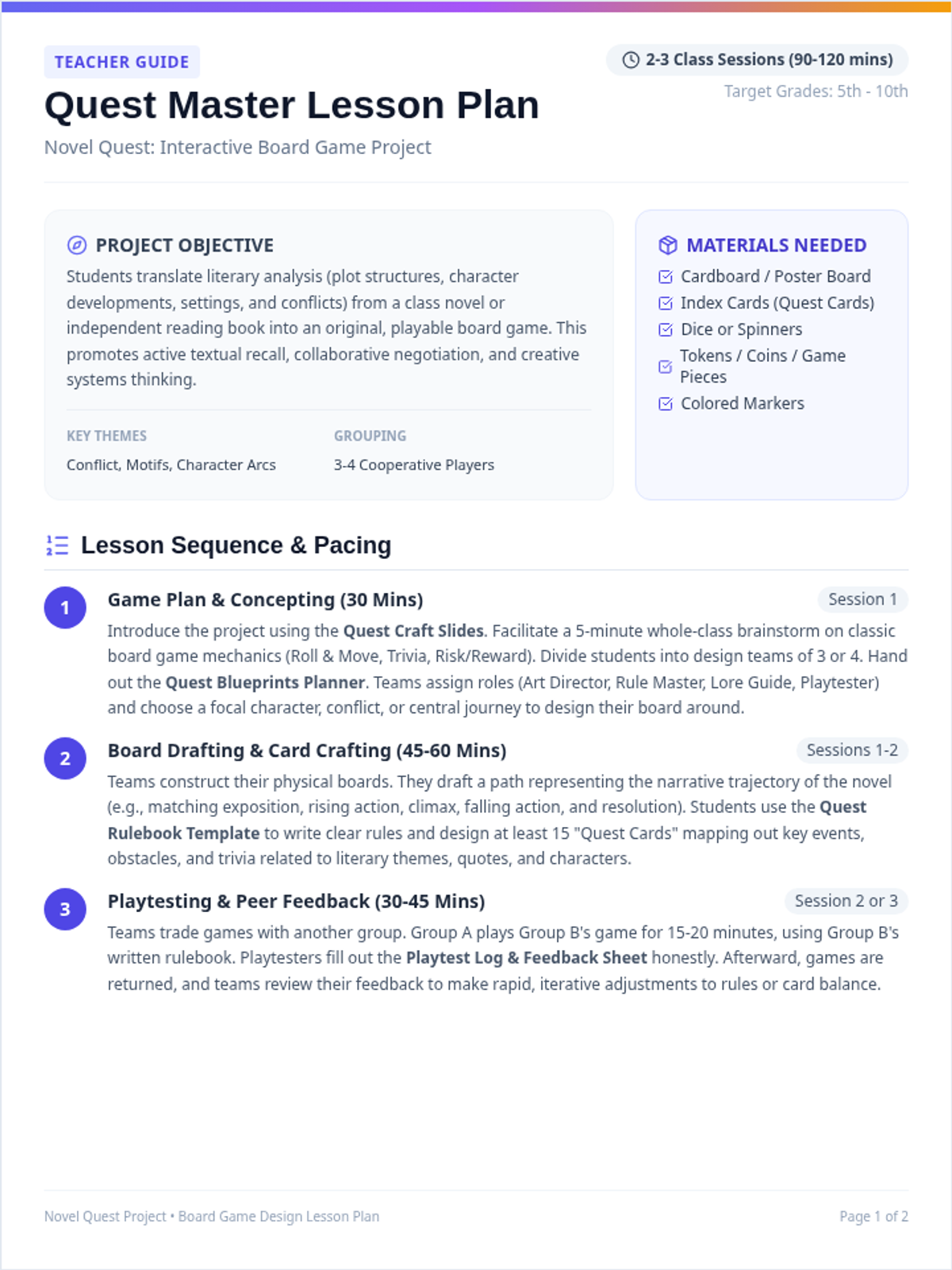
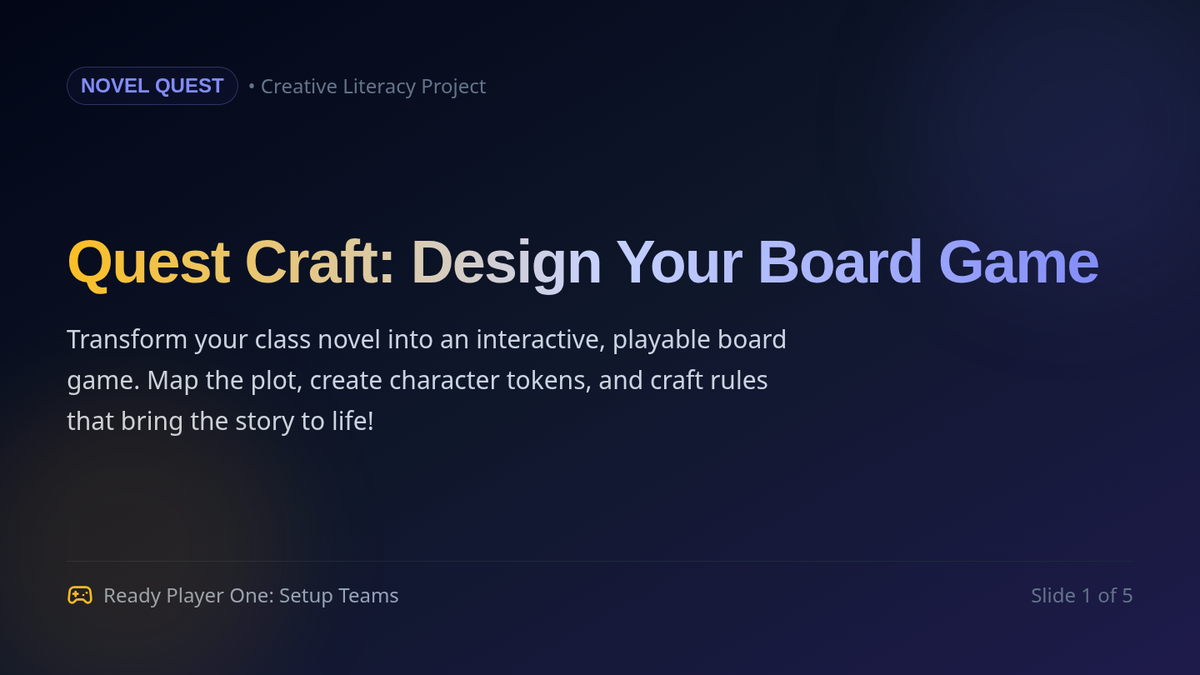
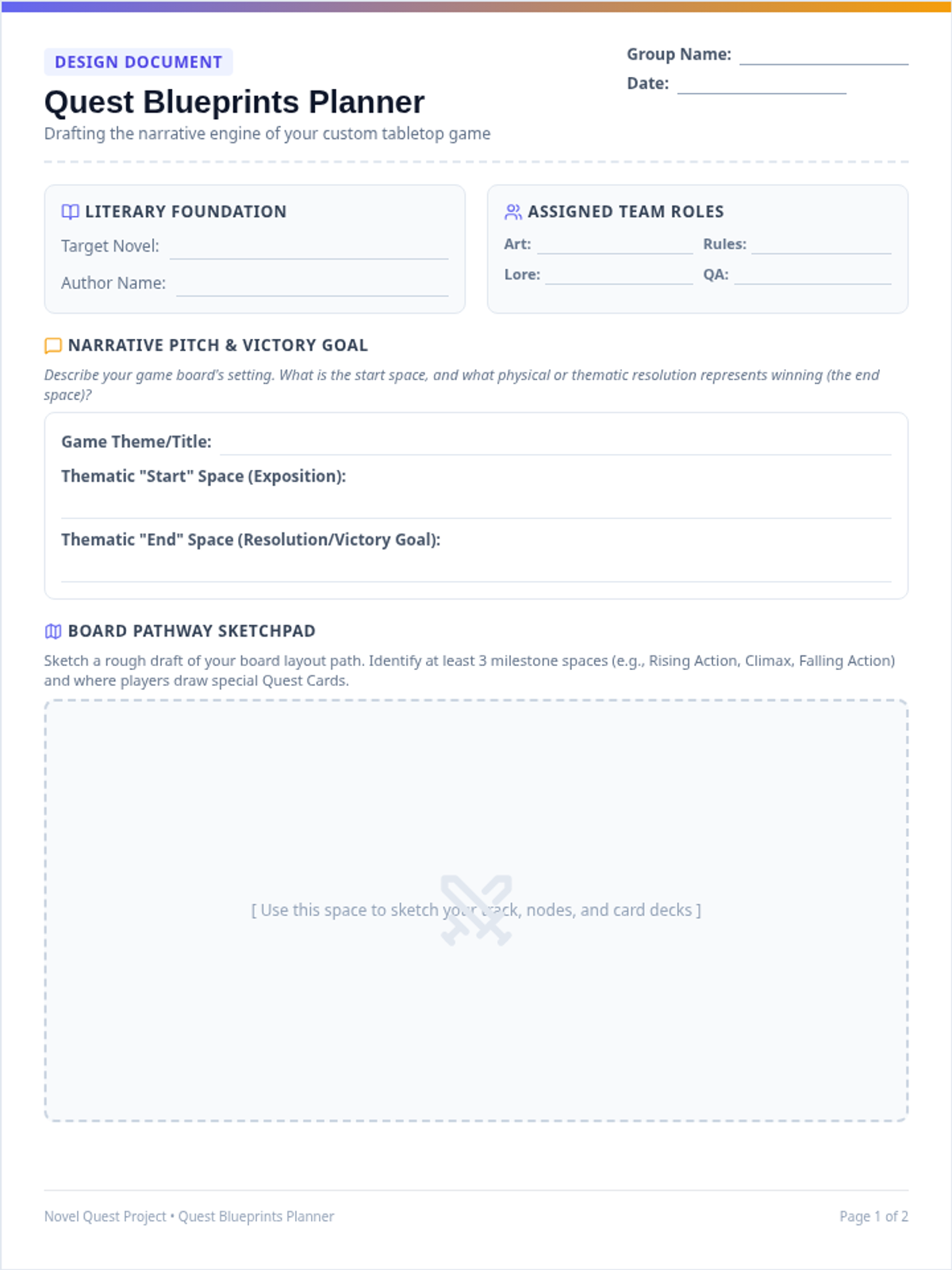
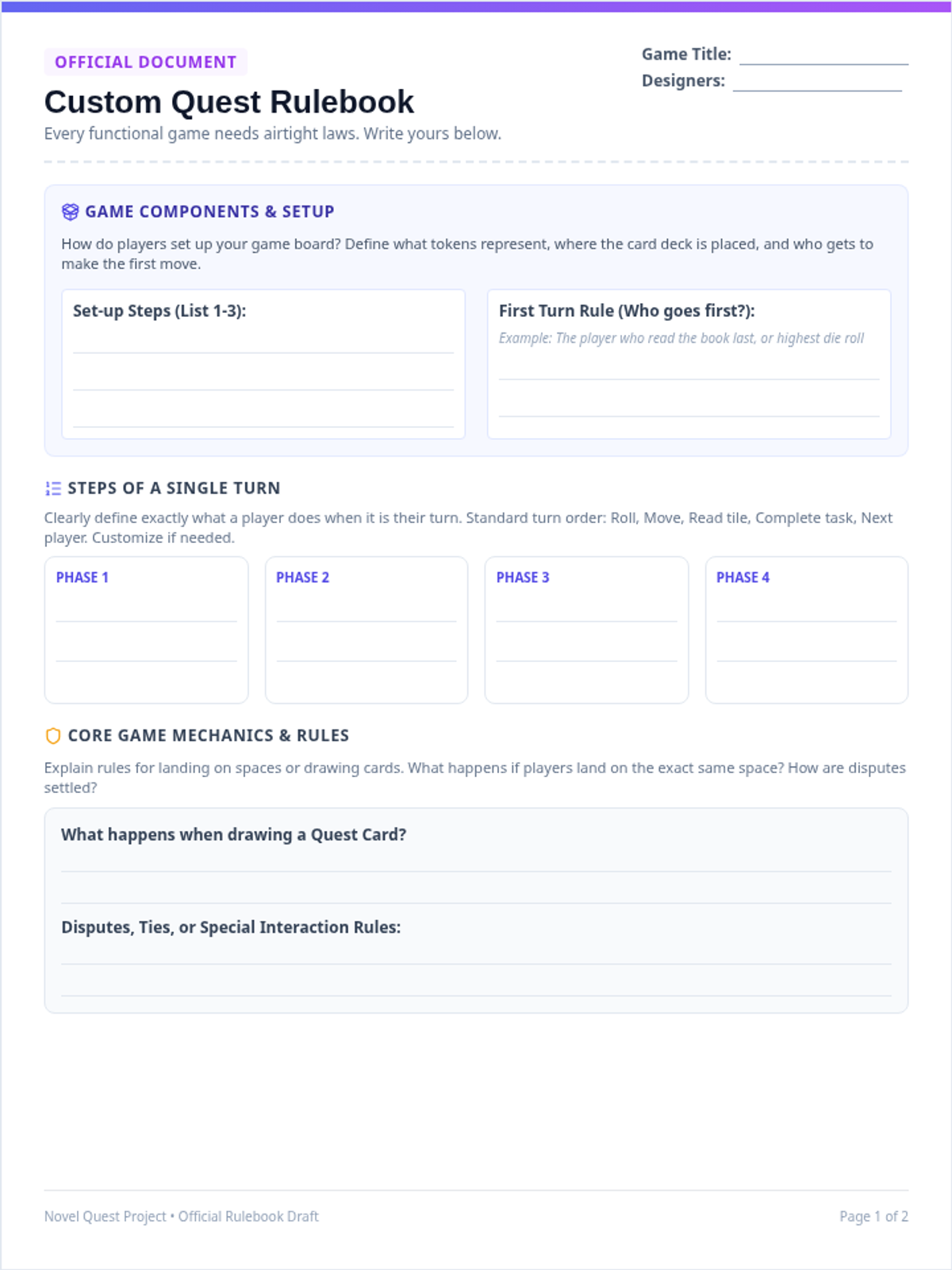
A hands-on cooperative project where students analyze a novel's plot, characters, and settings by transforming them into an original board game. Students design, draft, and playtest their games to show textual comprehension.
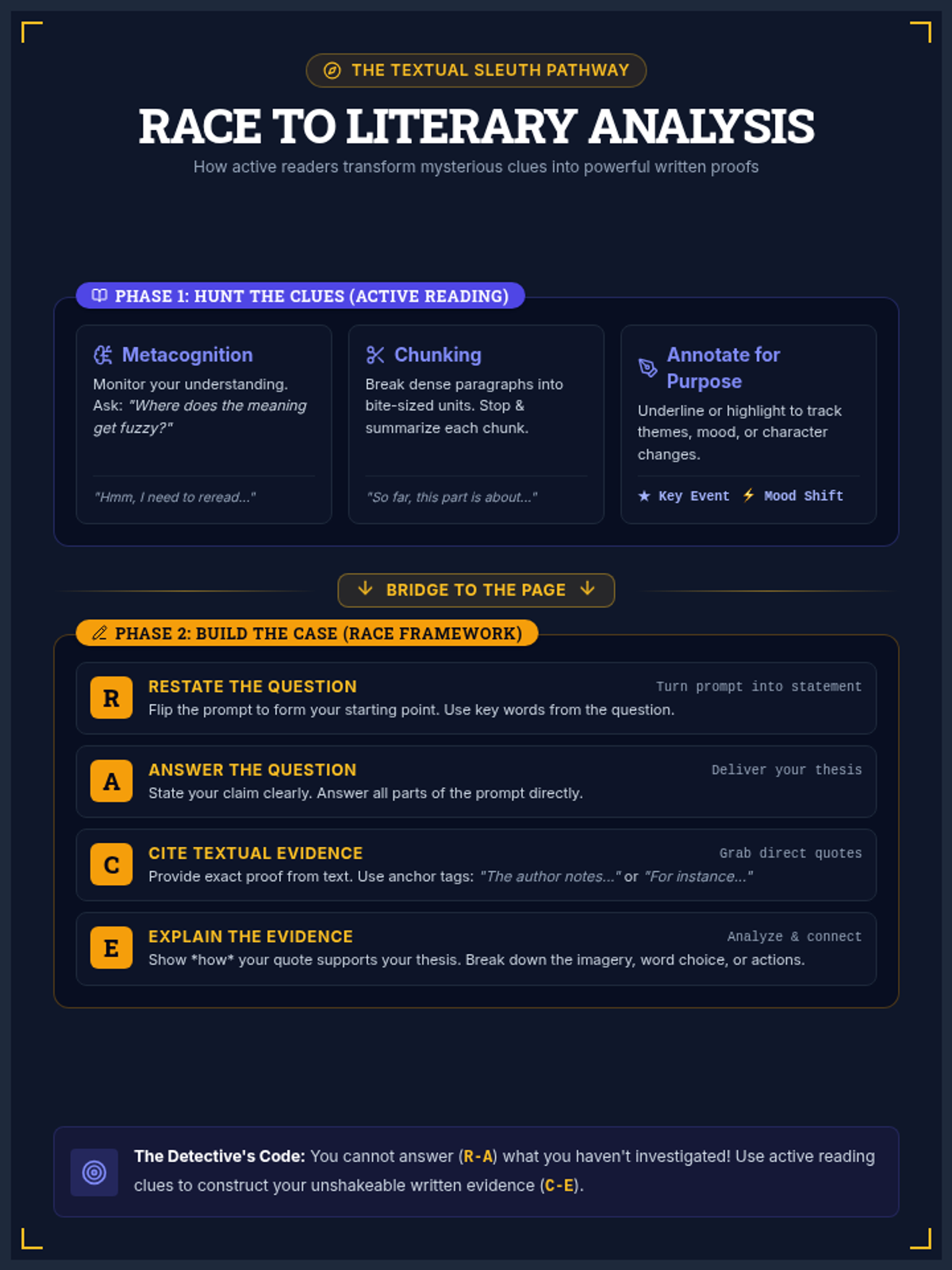
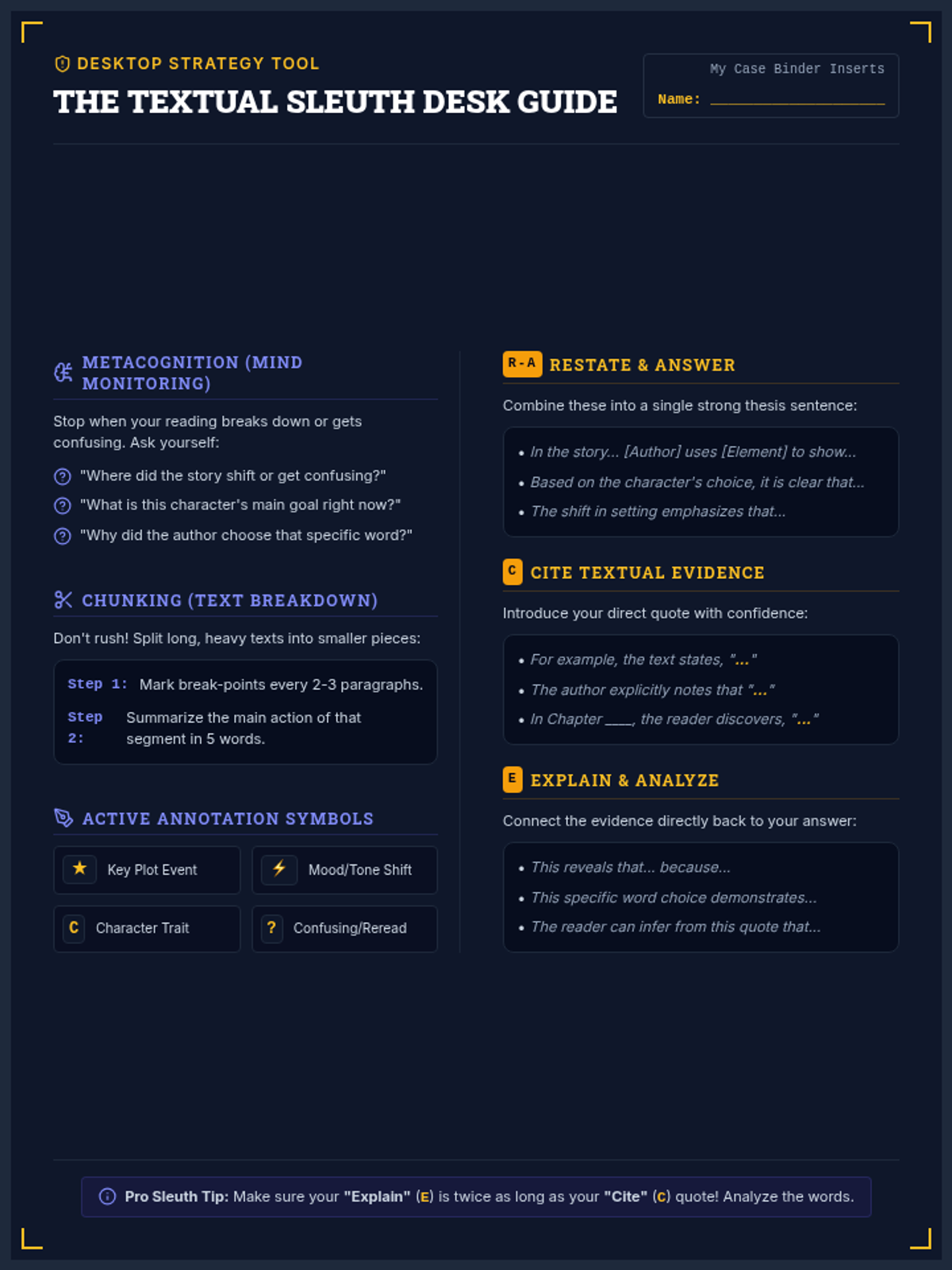
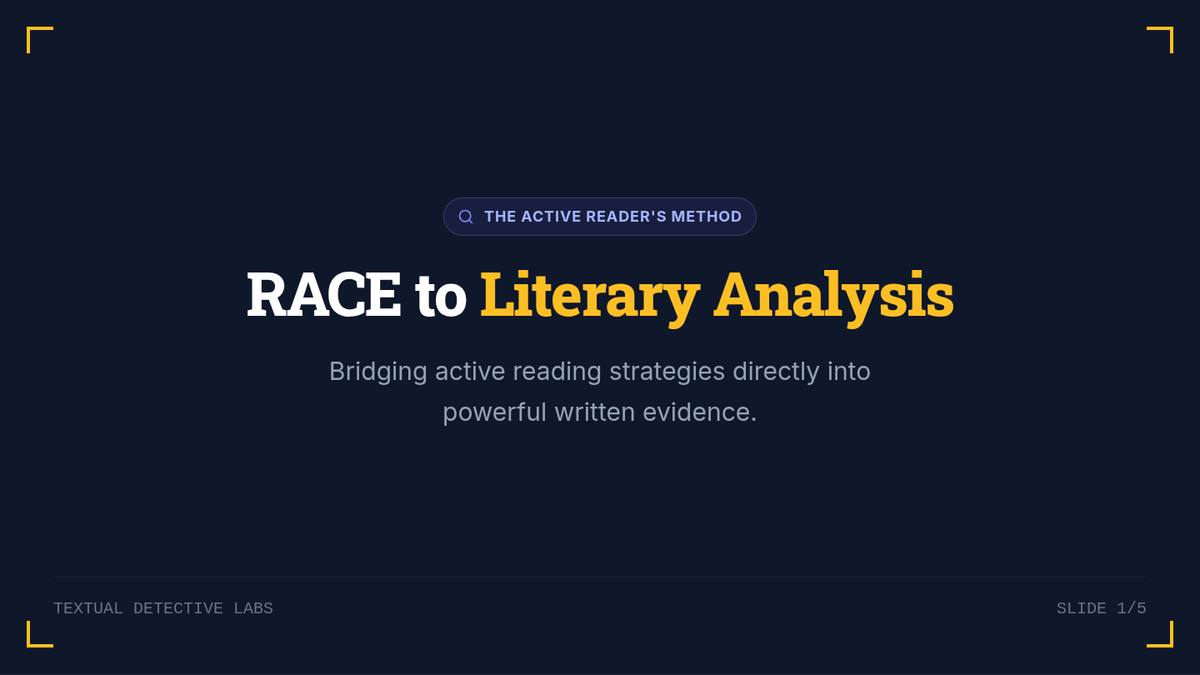
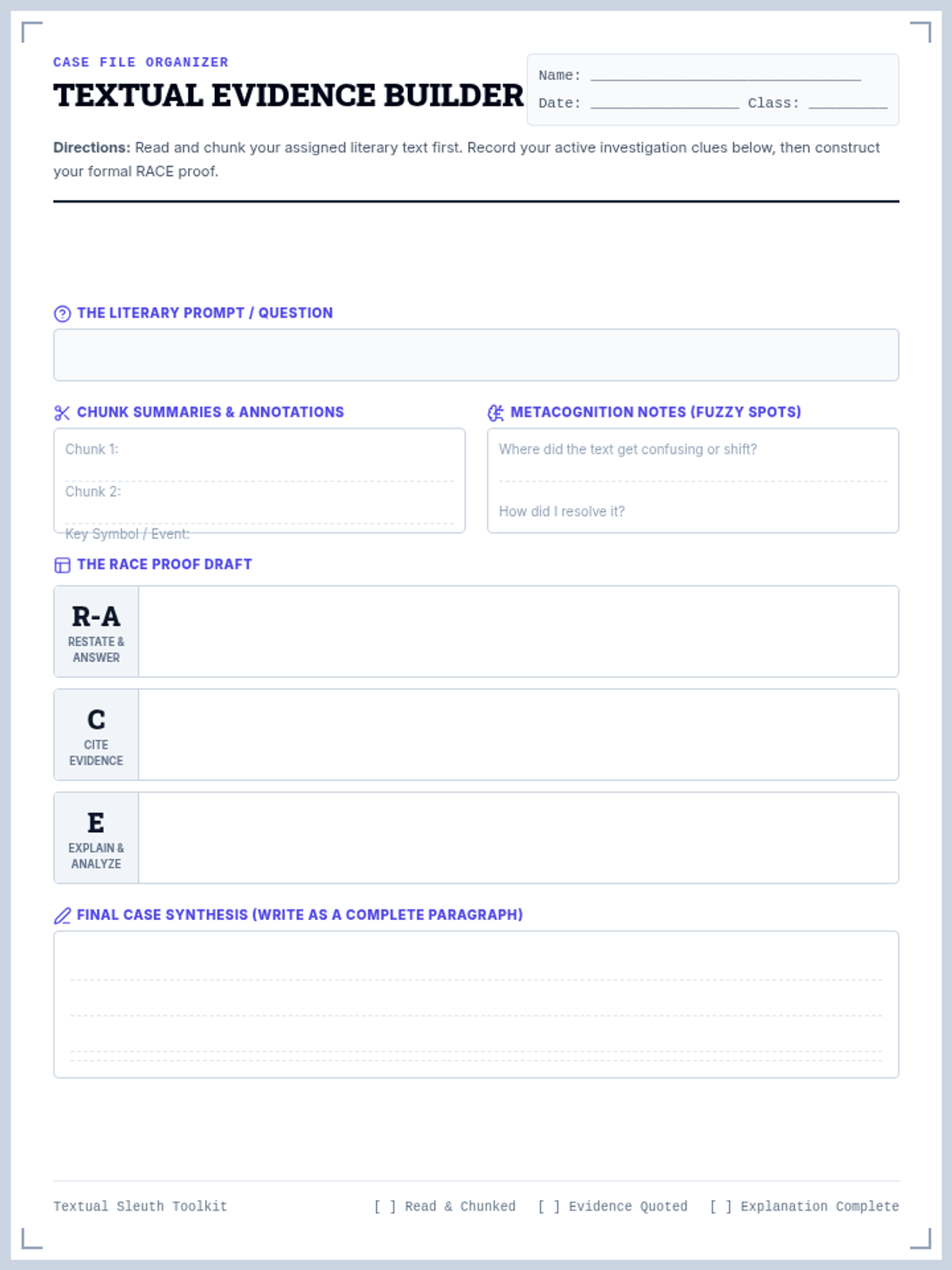
A comprehensive lesson designed to bridge active reading strategies (Metacognition, Chunking, and Annotating) directly into structured literary analysis writing using the RACE framework. Includes visual anchors, reference tools, presentation slides, and graphic organizers.
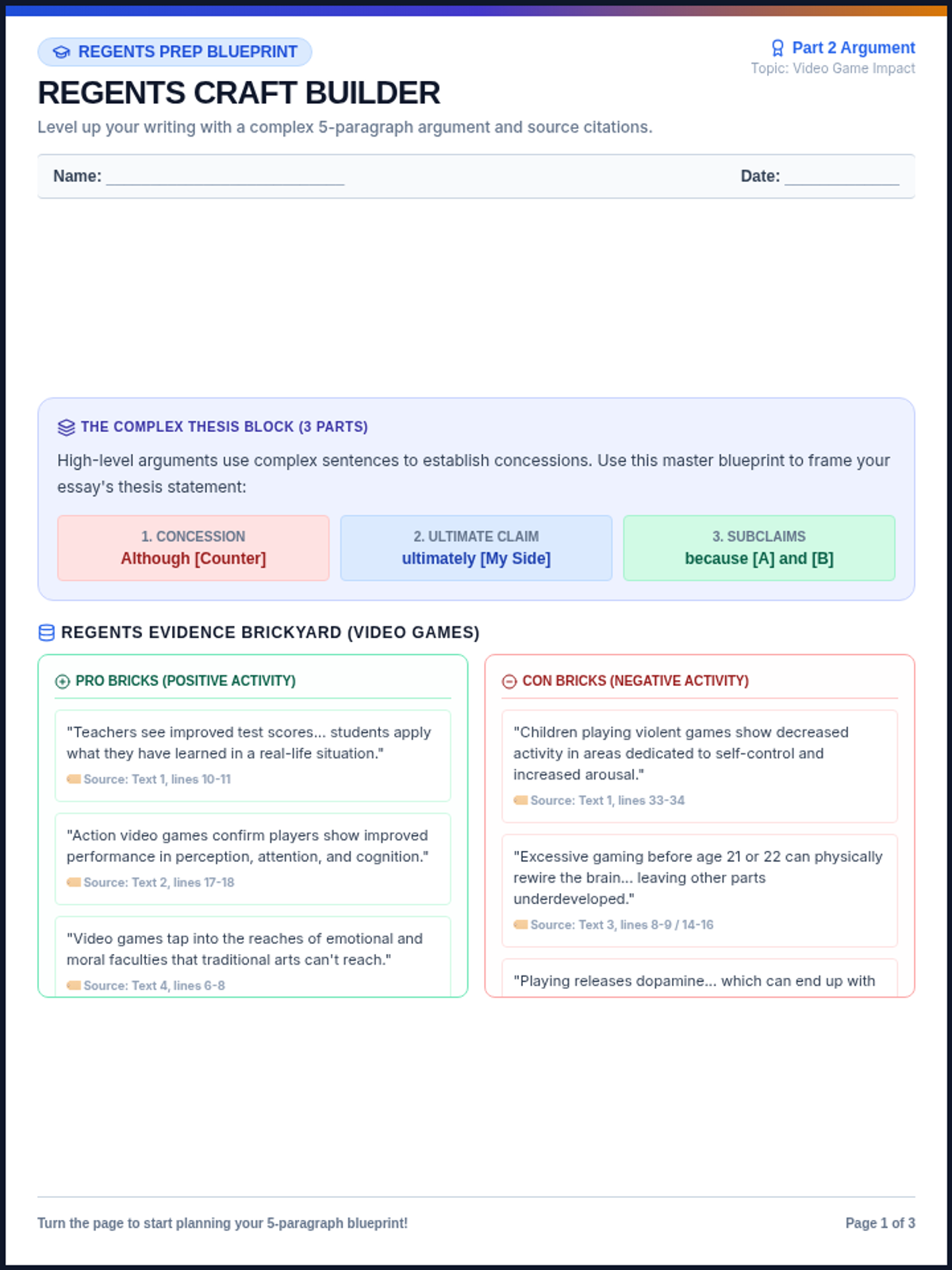
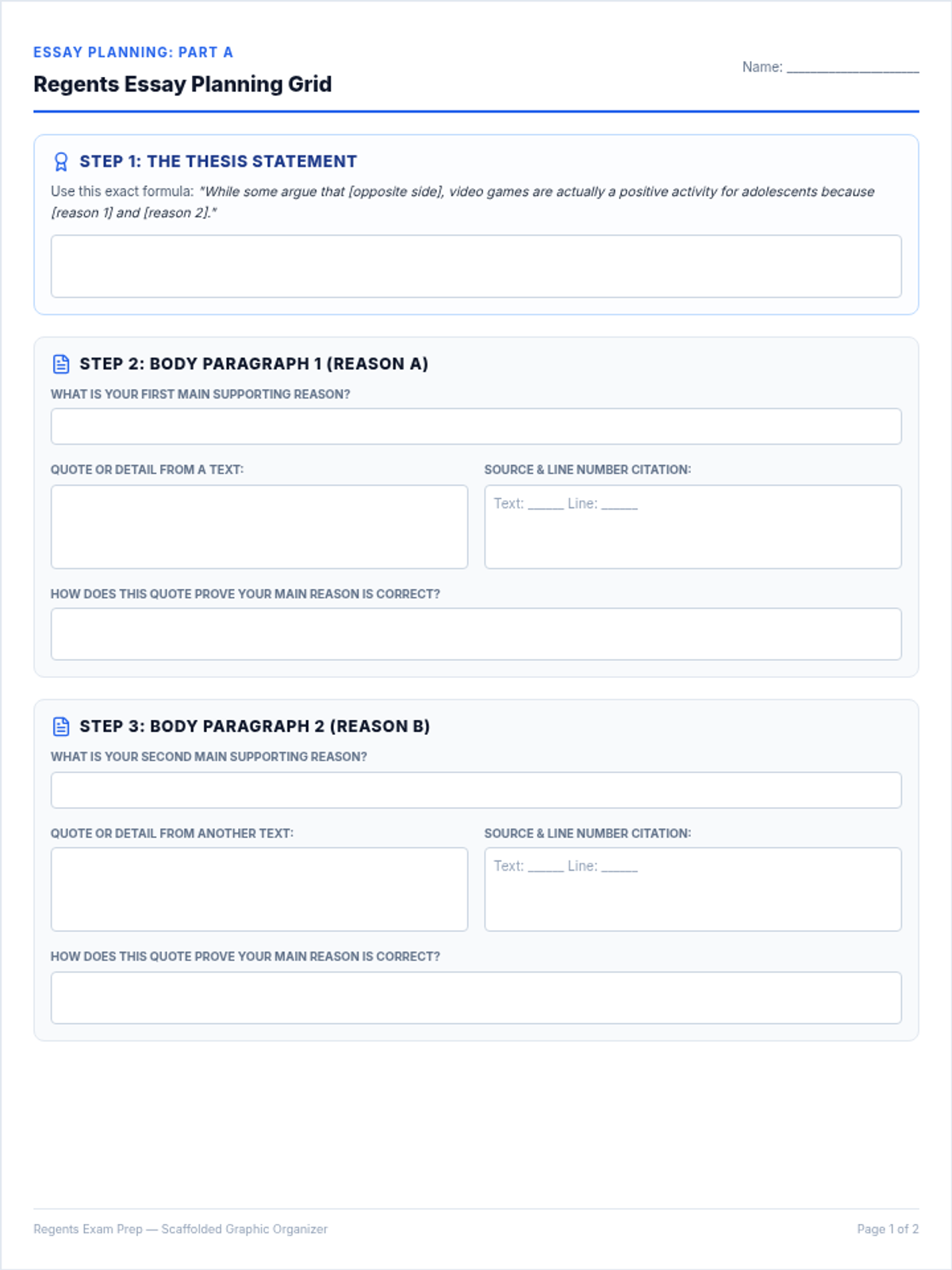
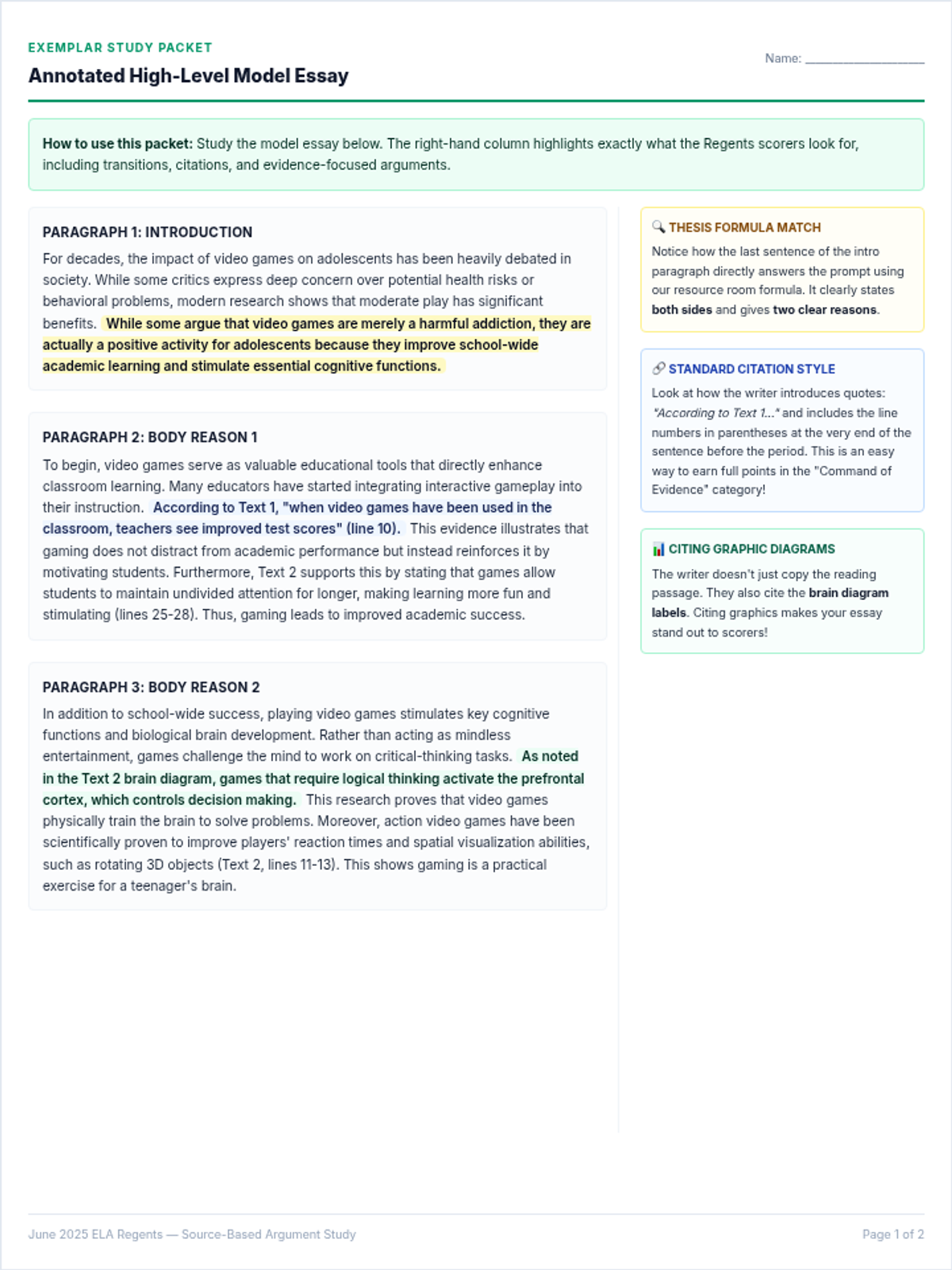
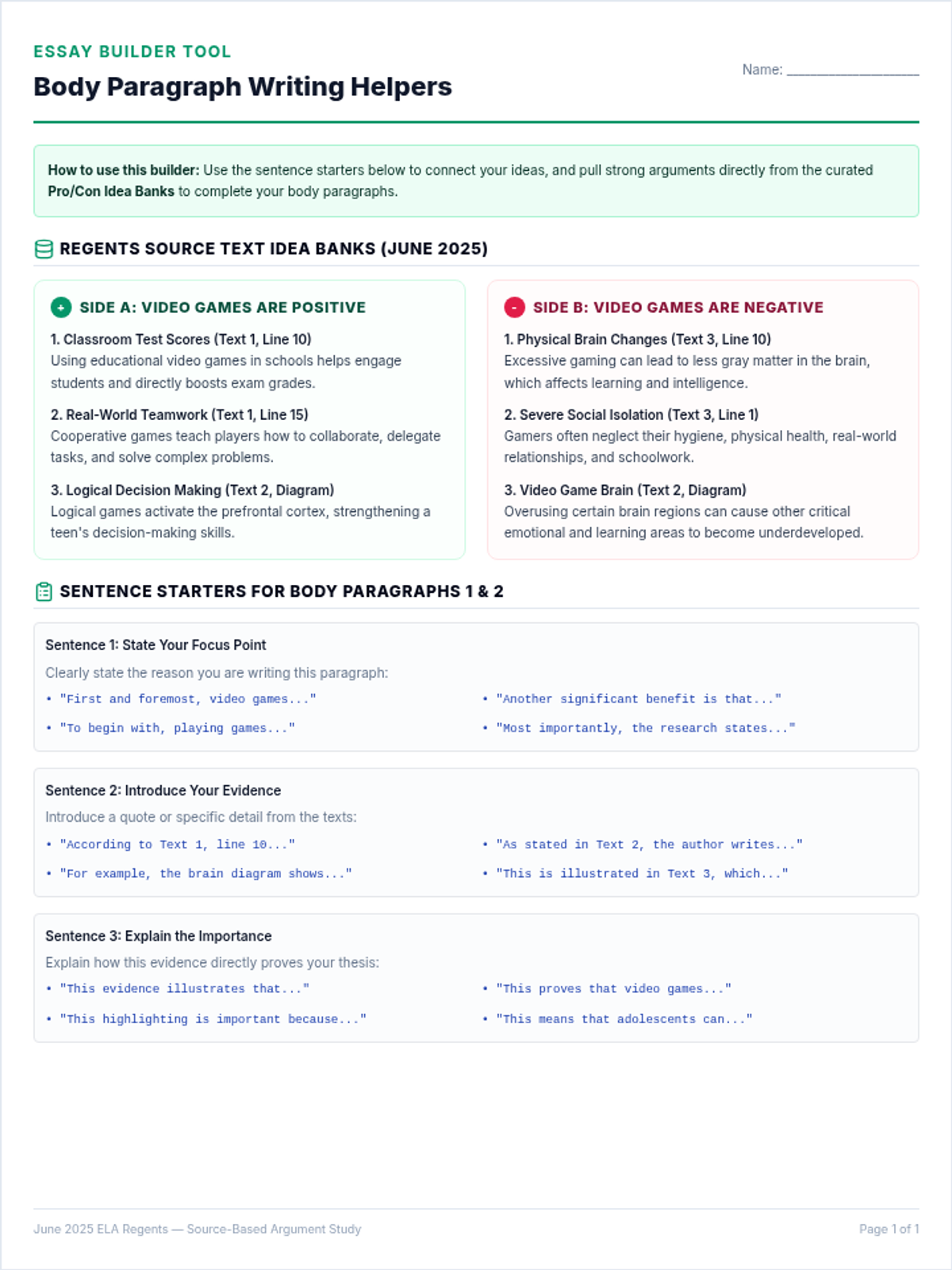
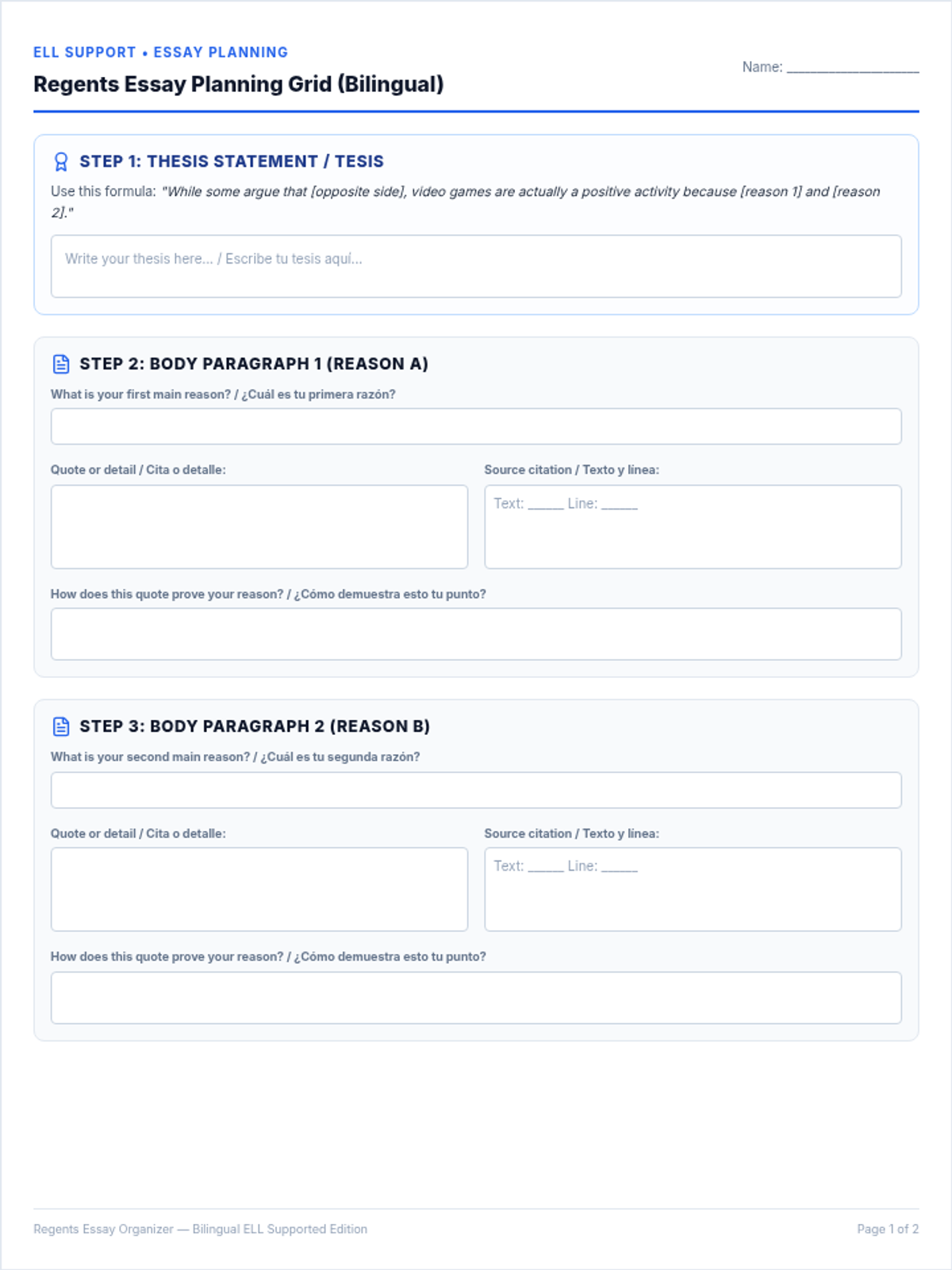
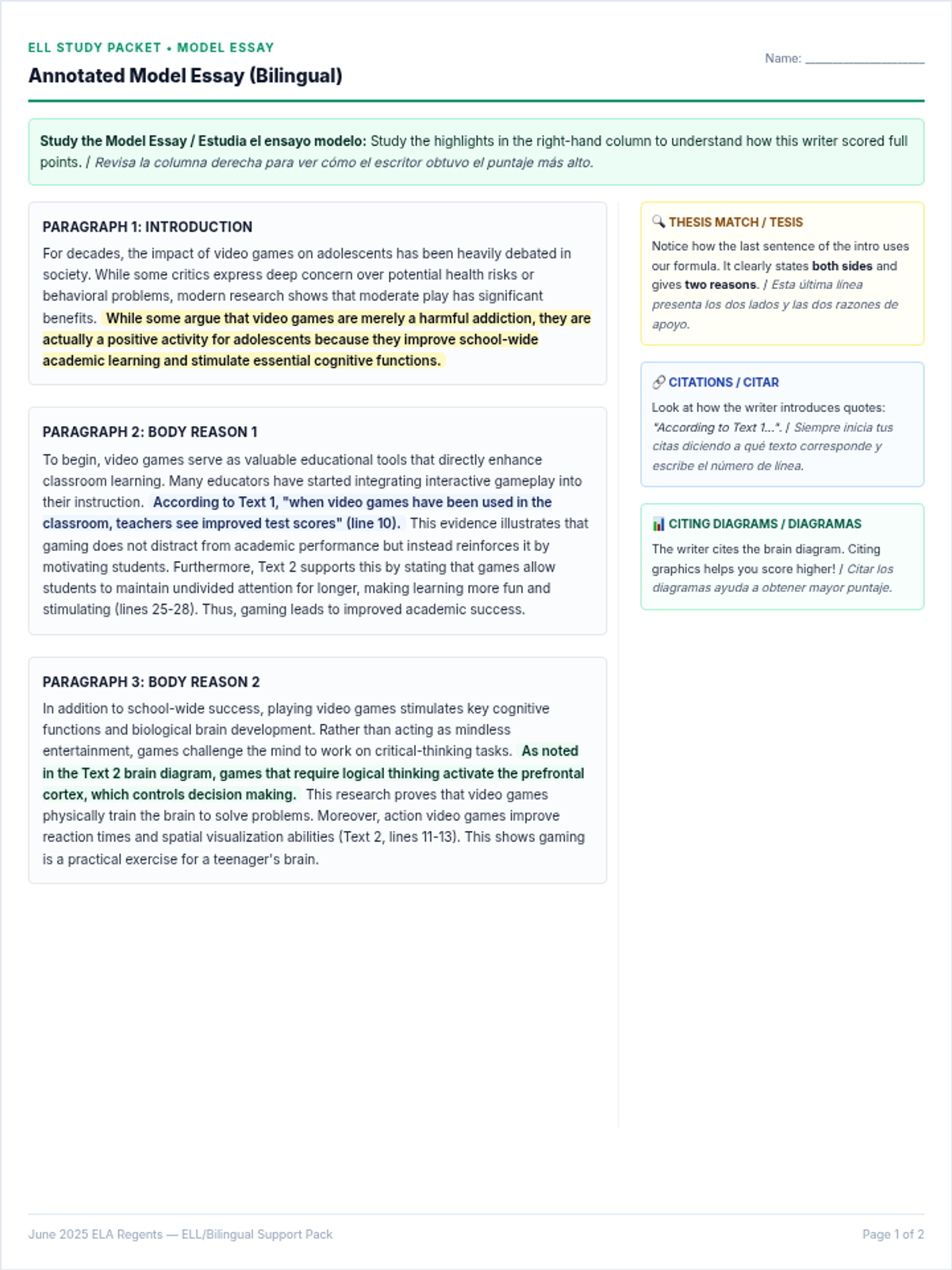
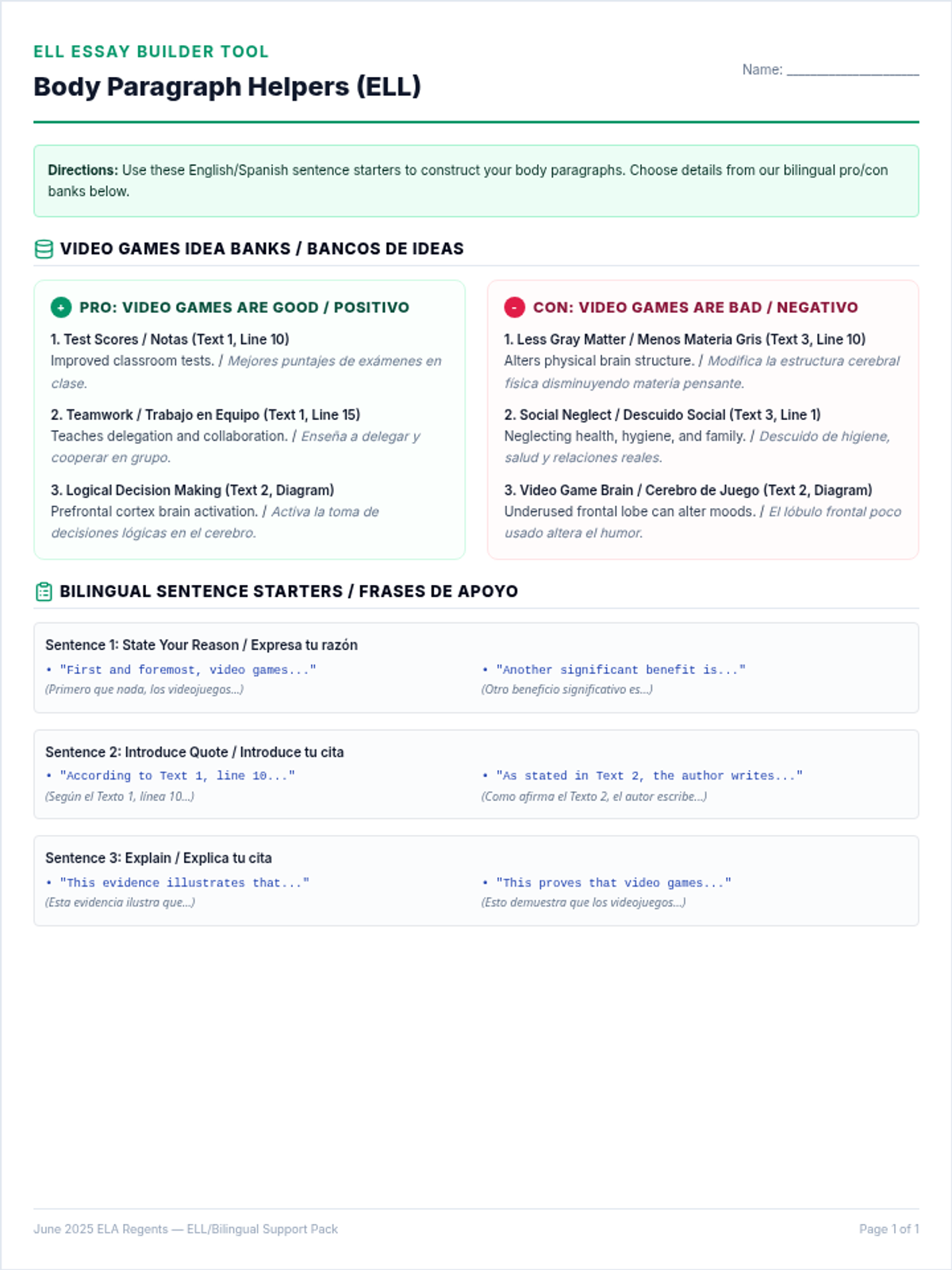
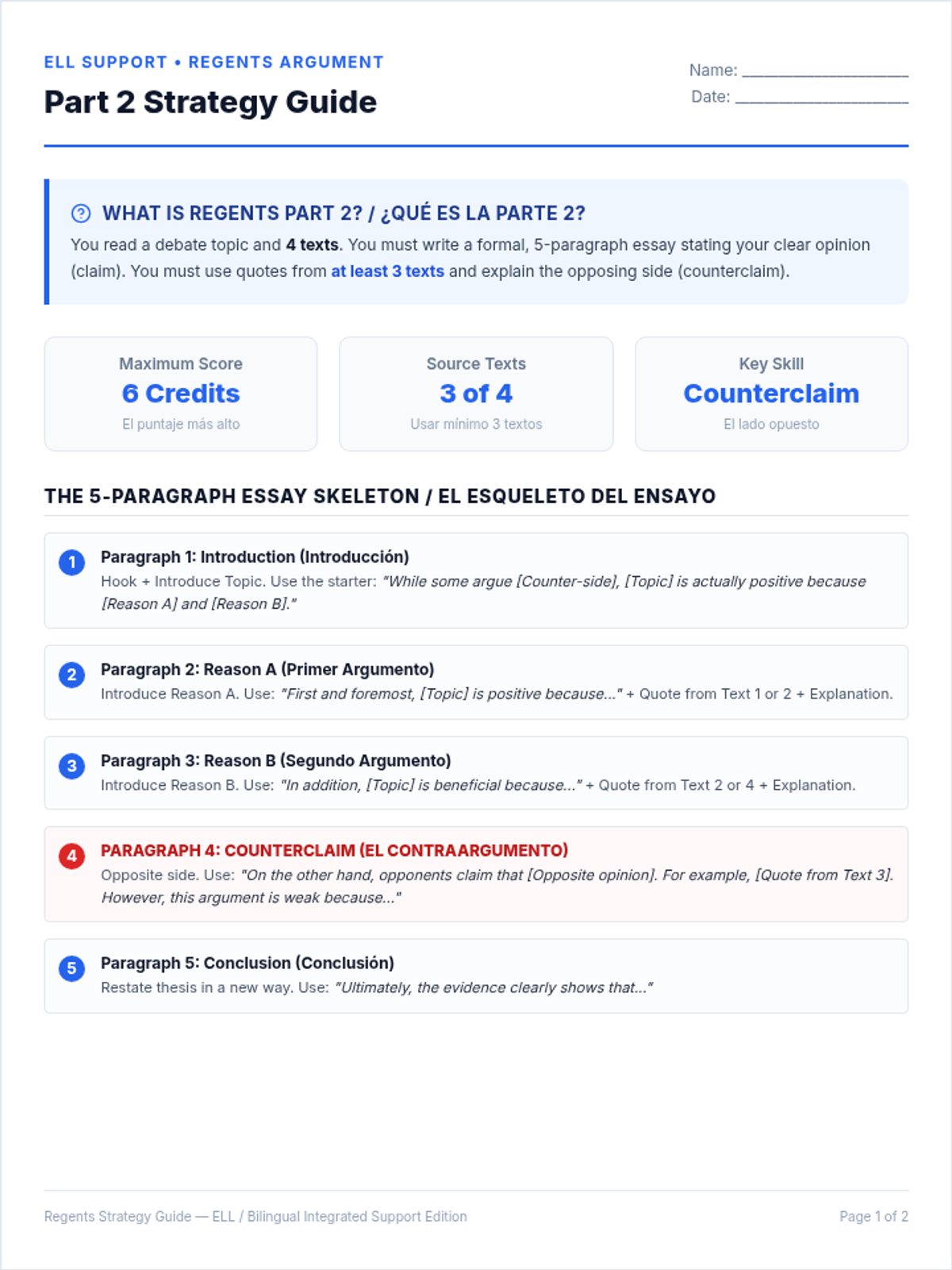
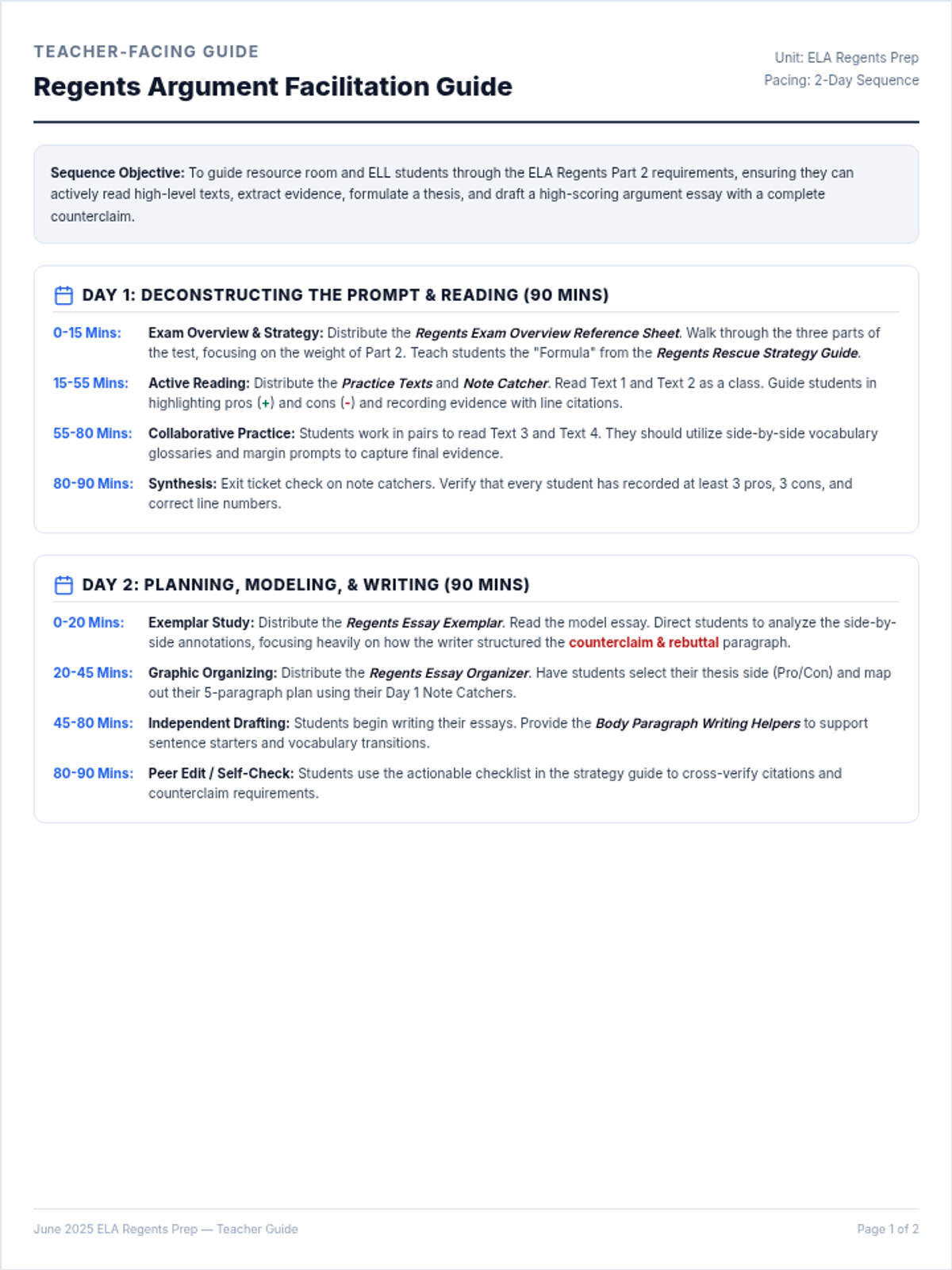
Students plan their argumentative essays using scaffolded graphic organizers and study a high-level annotated model exemplar essay to master citation and counter-argument requirements.
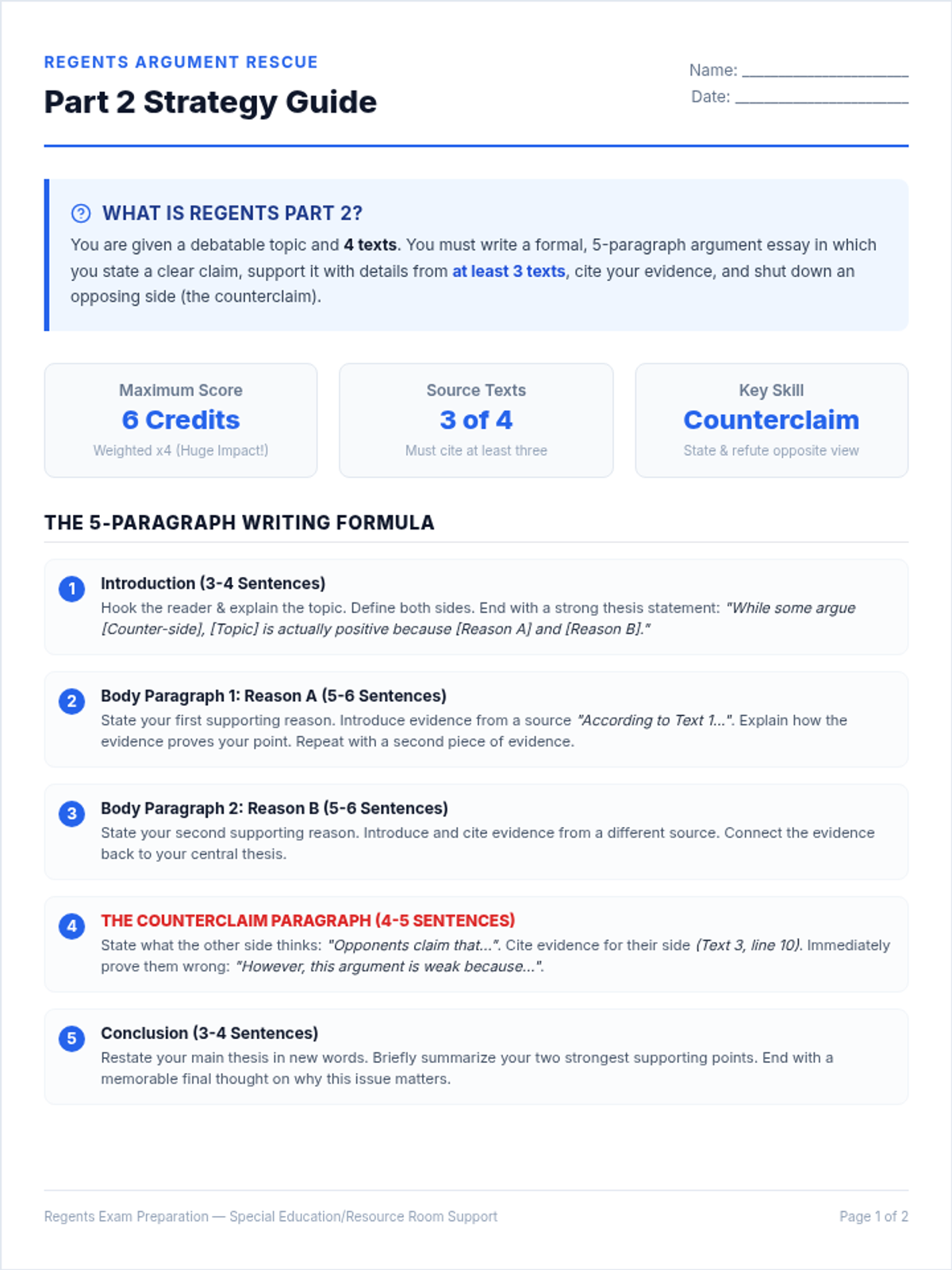
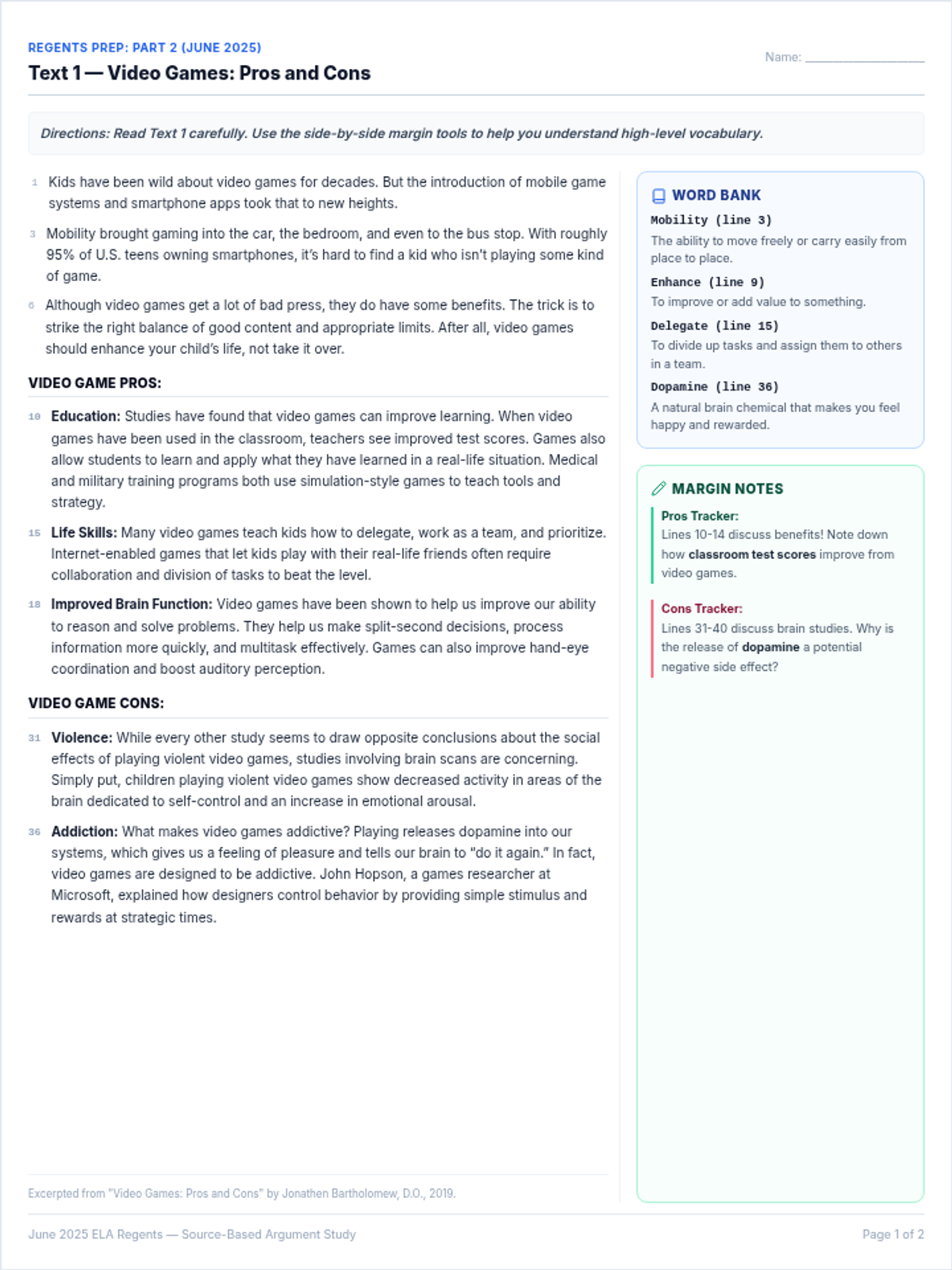
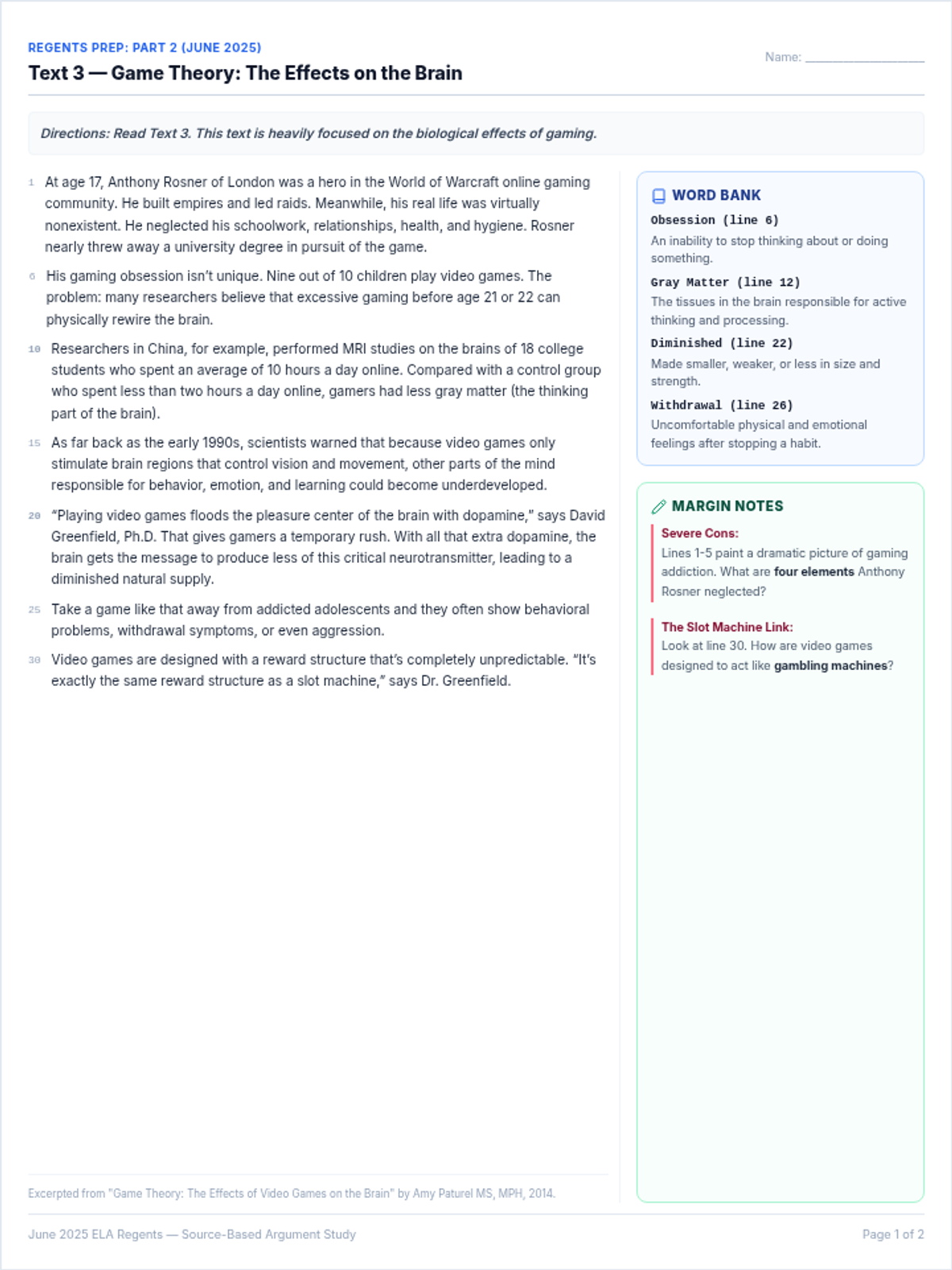
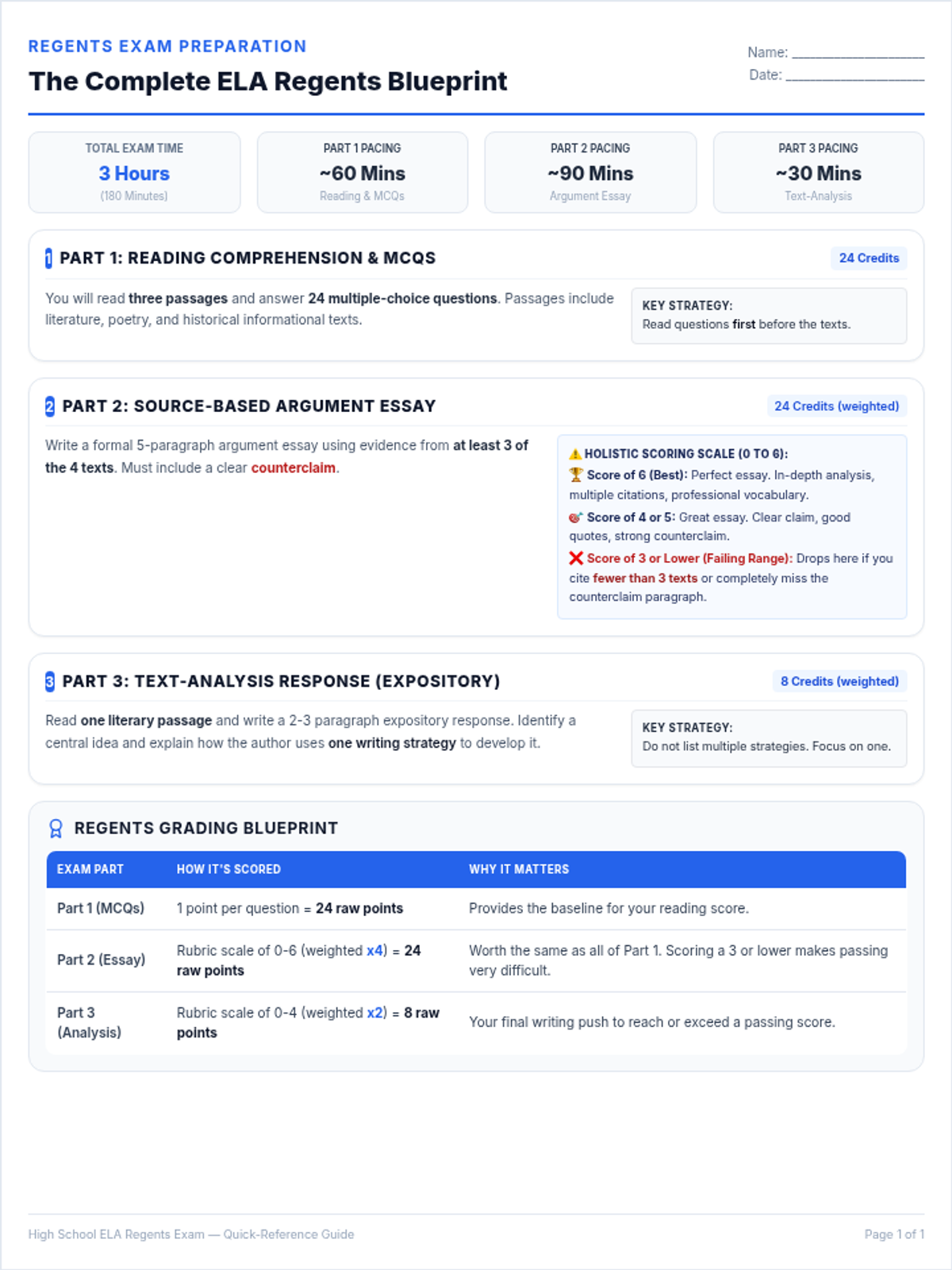
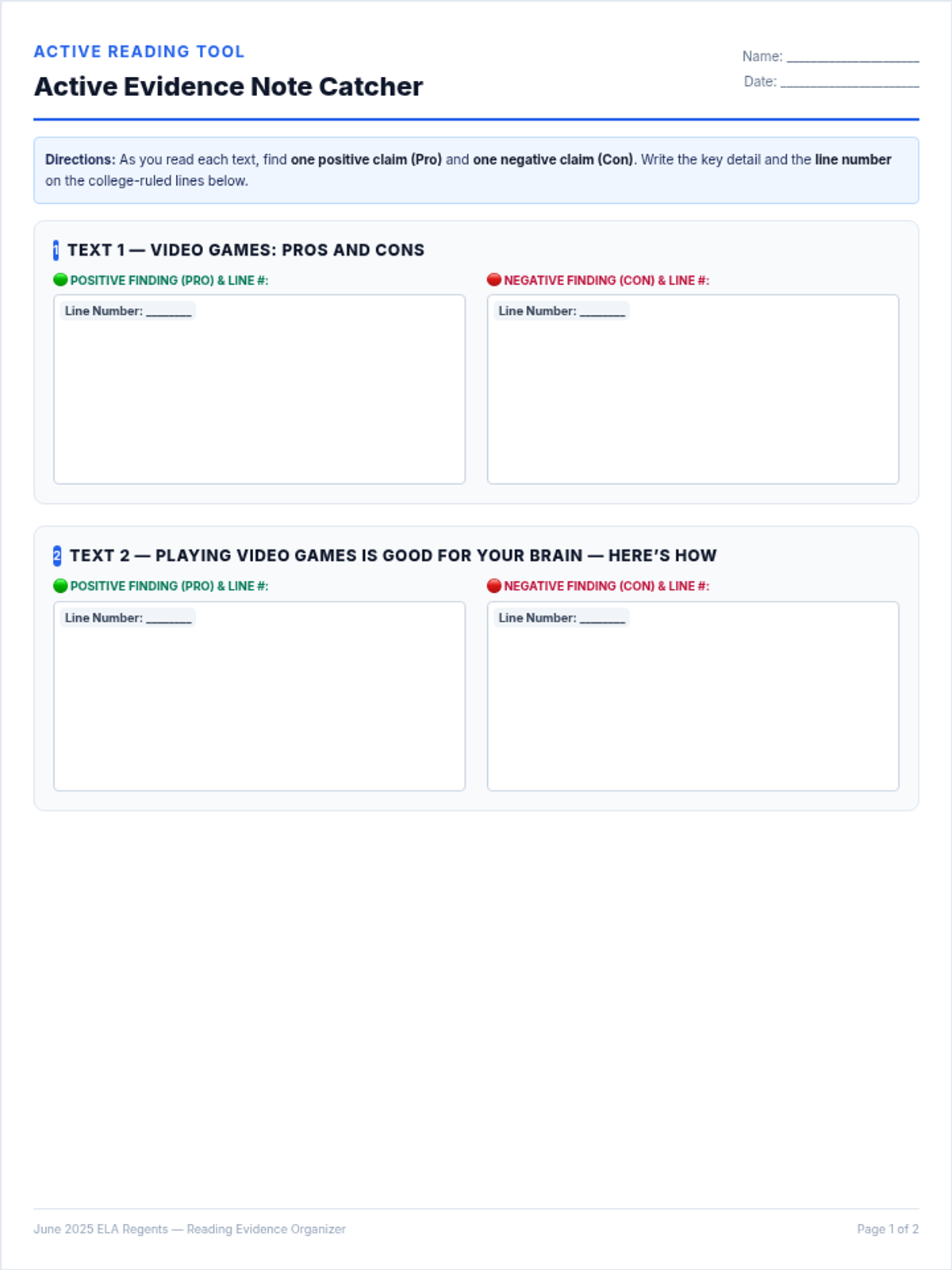
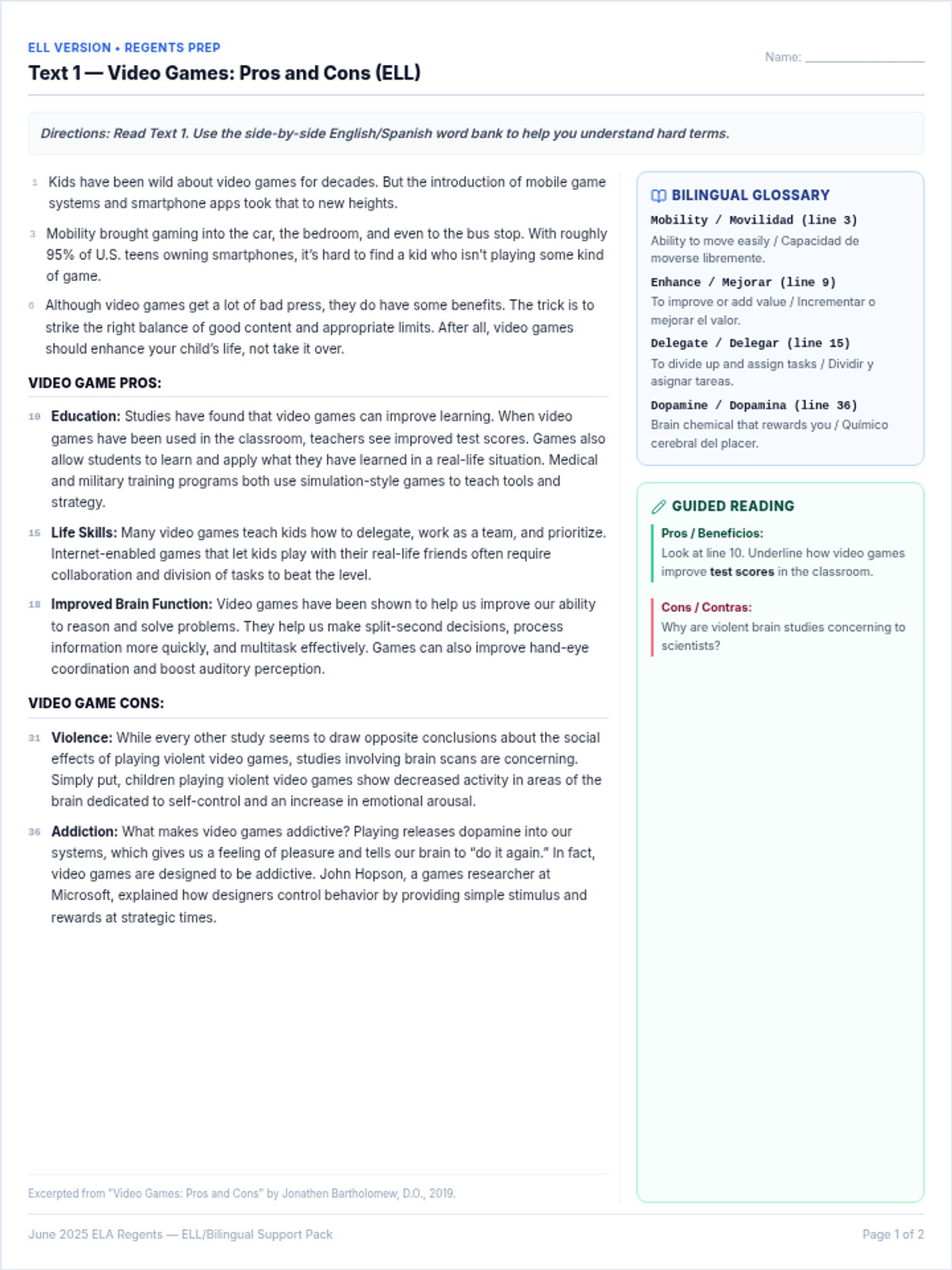
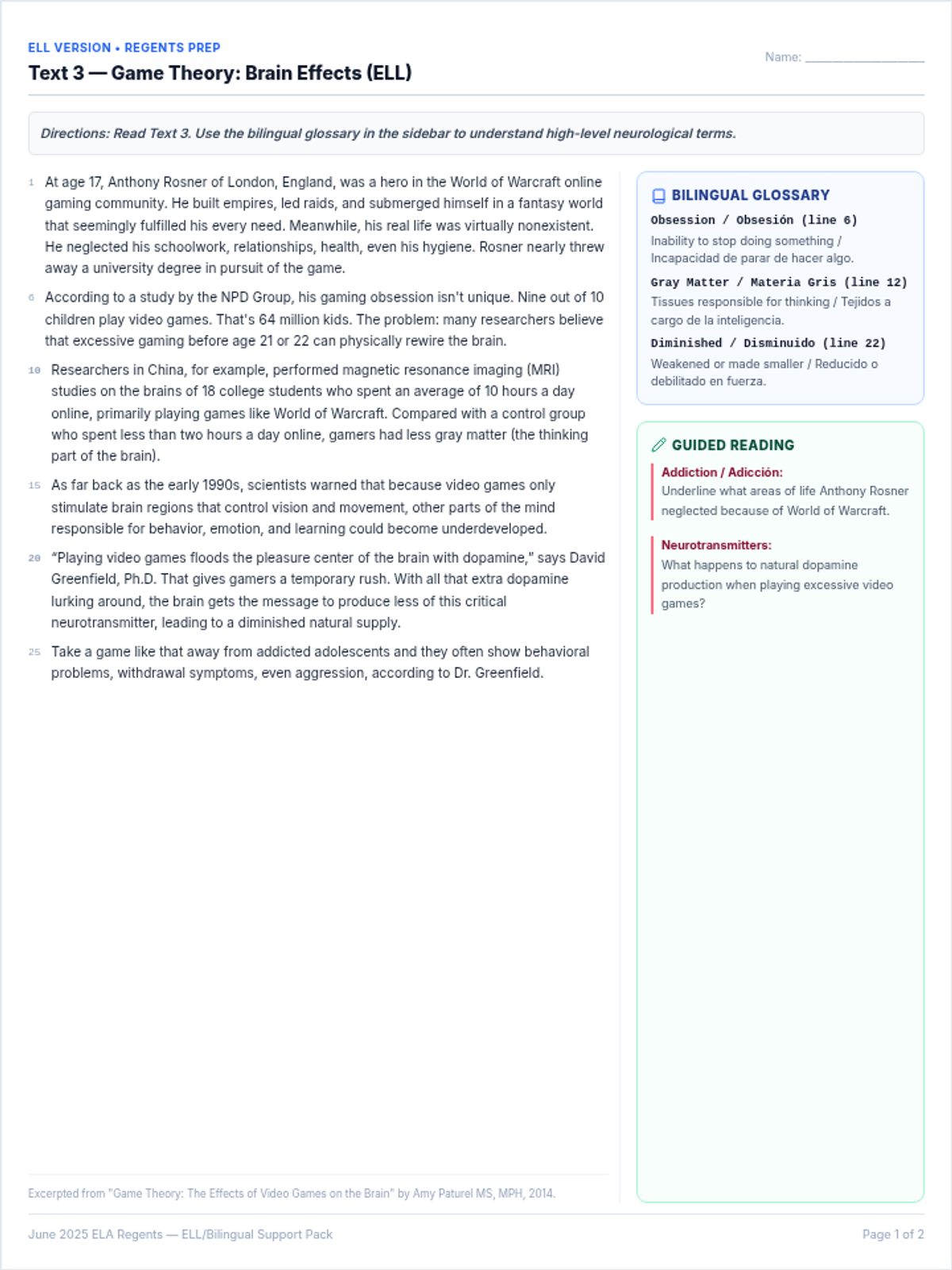
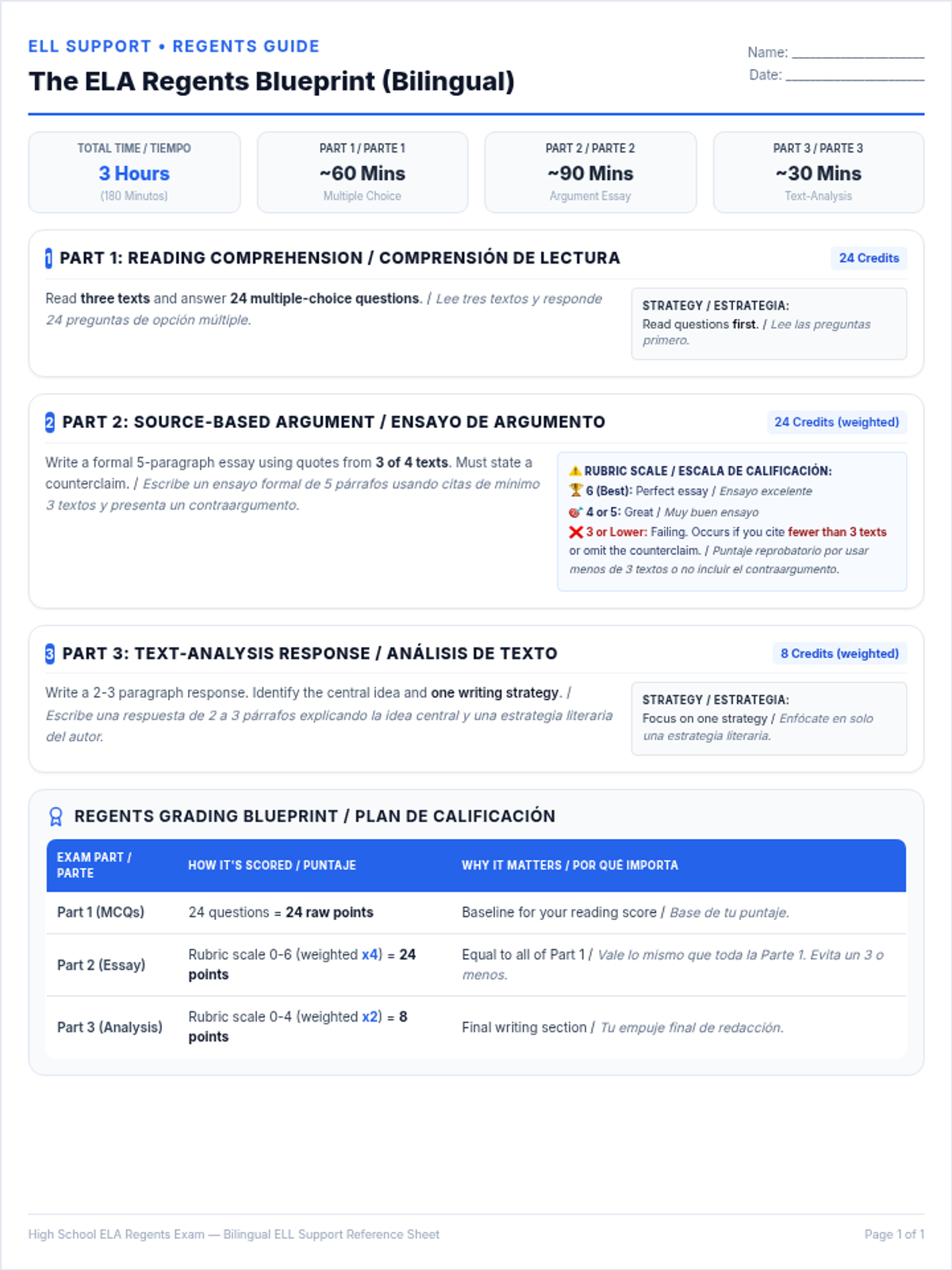
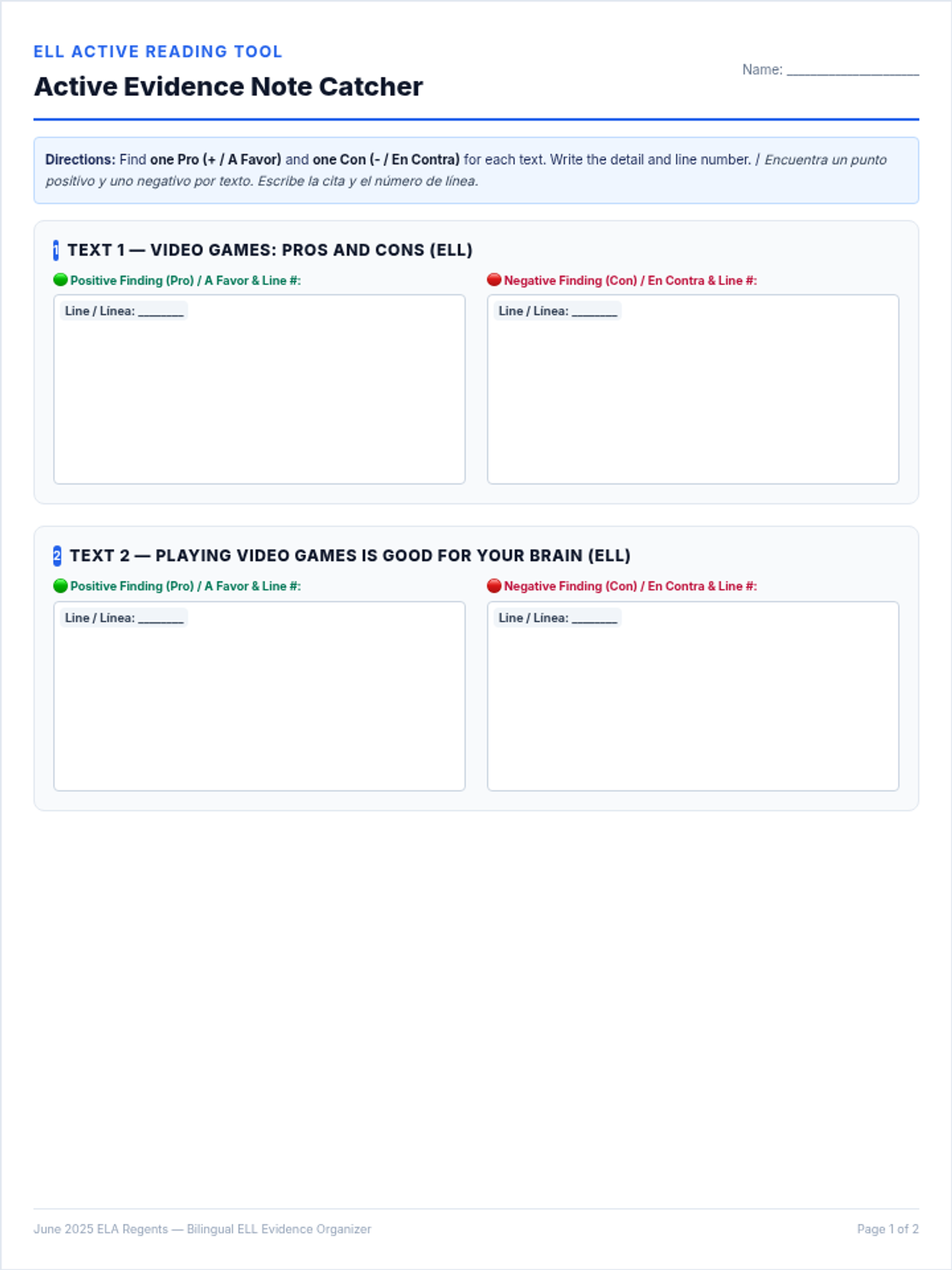
Students dissect the Regents Part 2 prompt requirements, learn step-by-step checklists, and read Texts 1, 2, 3, and 4 with direct vocabulary word banks and margin annotation support.
A pre-reading lesson for Alan Gratz's novel 'Ground Zero' designed to transition students from factual video viewing and KWL charts to deep, emotional, and creative writing prompts.
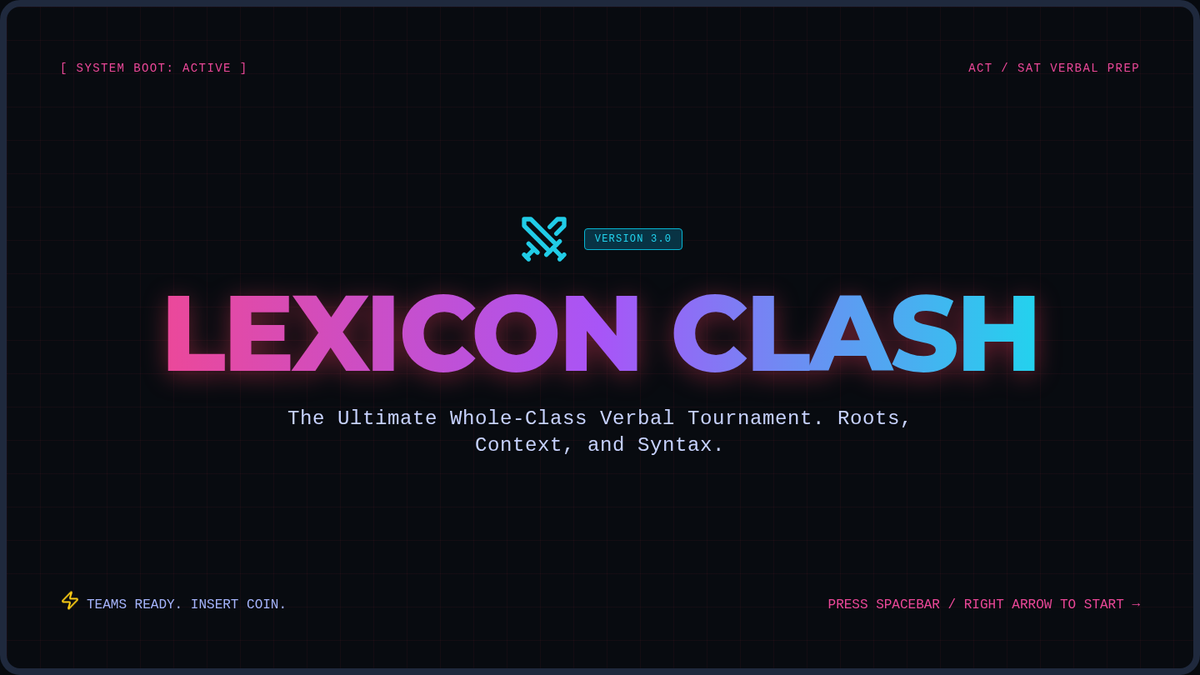
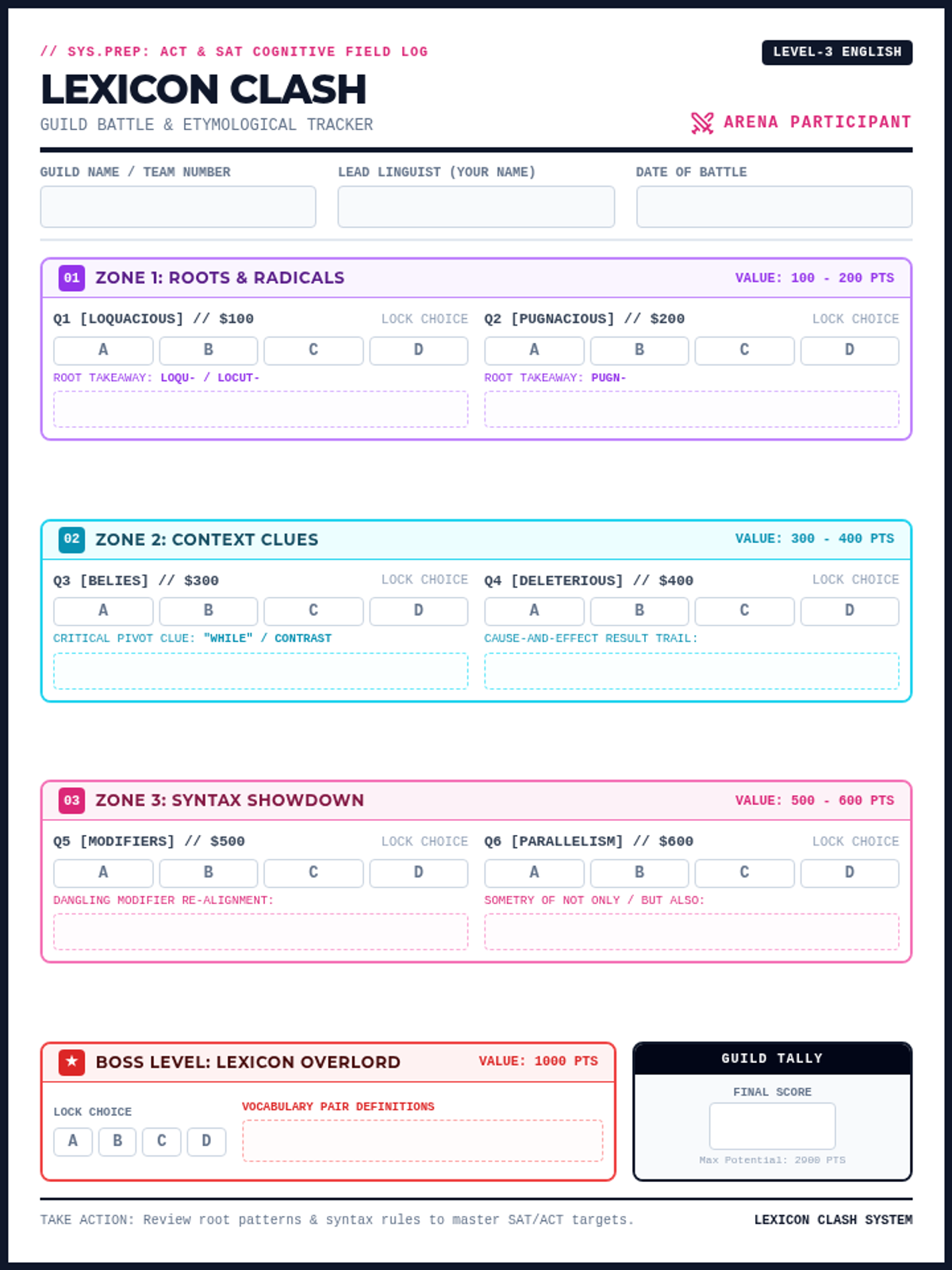
A high-energy, movie-themed ACT/SAT verbal prep game for Grade 11 English students. Students decode etymological roots, cinematic context clues, and grammatical script-writing errors themed entirely around iconic blockbusters and movie genres.
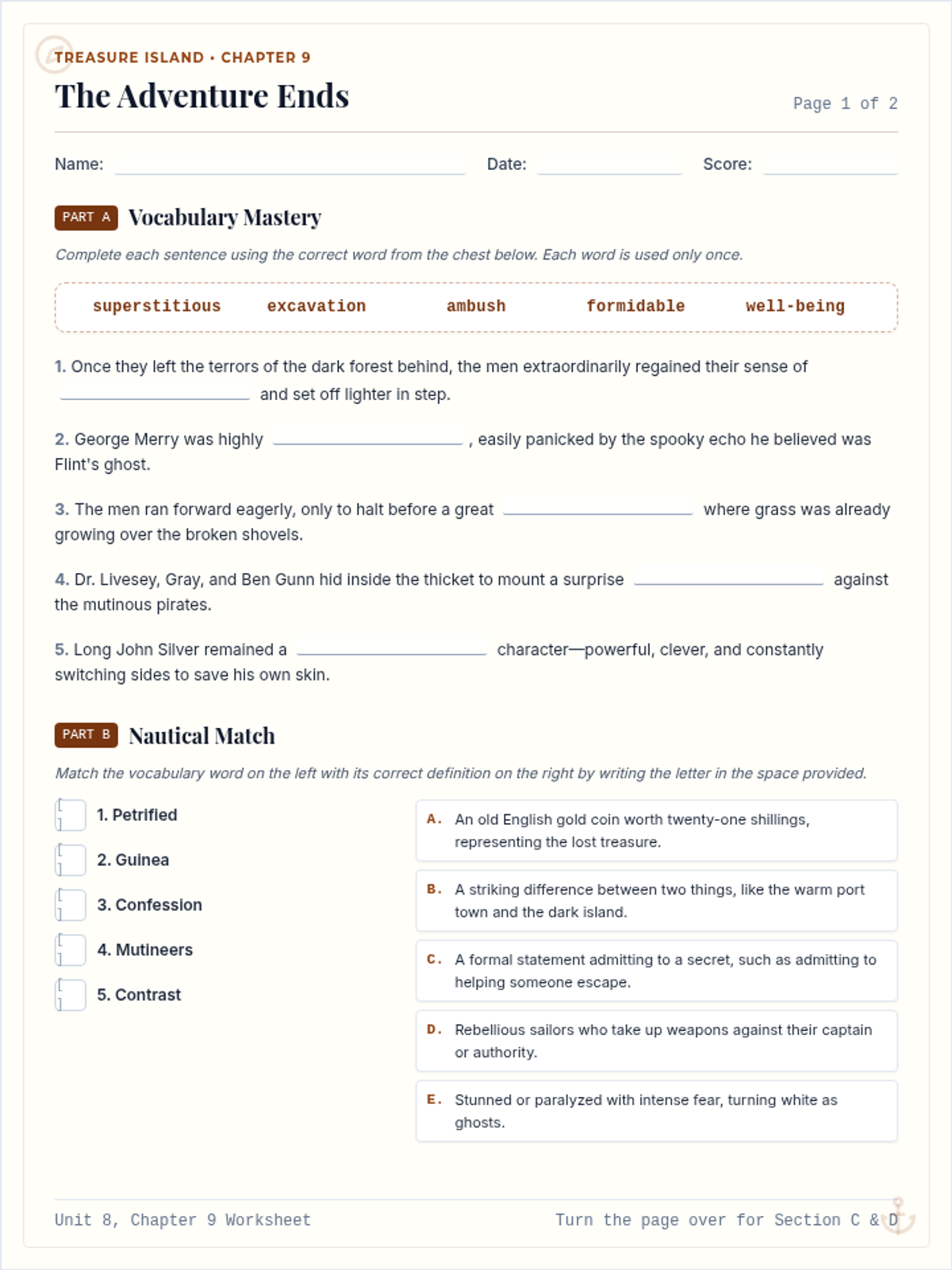
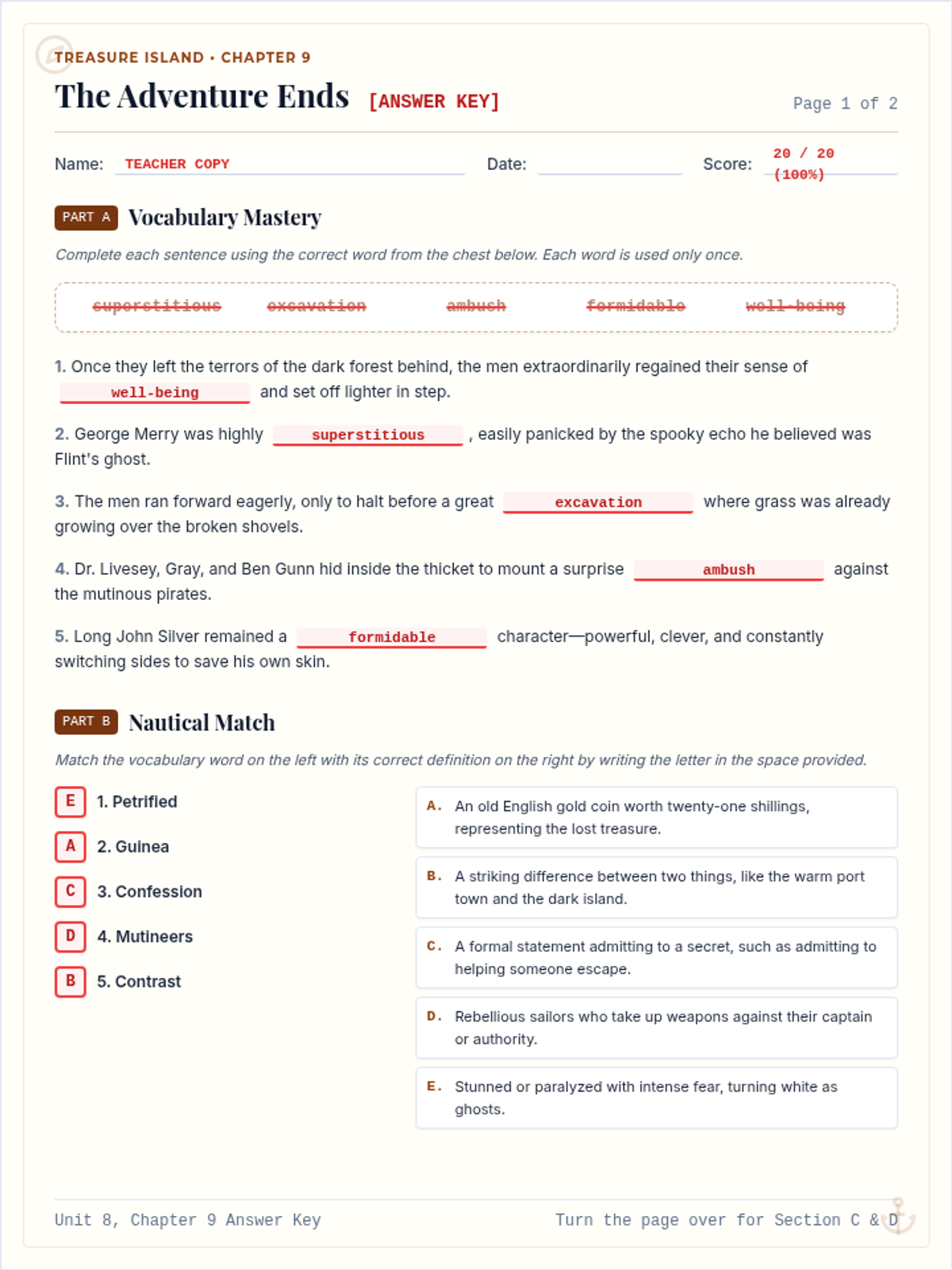
A reading comprehension and vocabulary lesson based on the final chapter of Treasure Island.
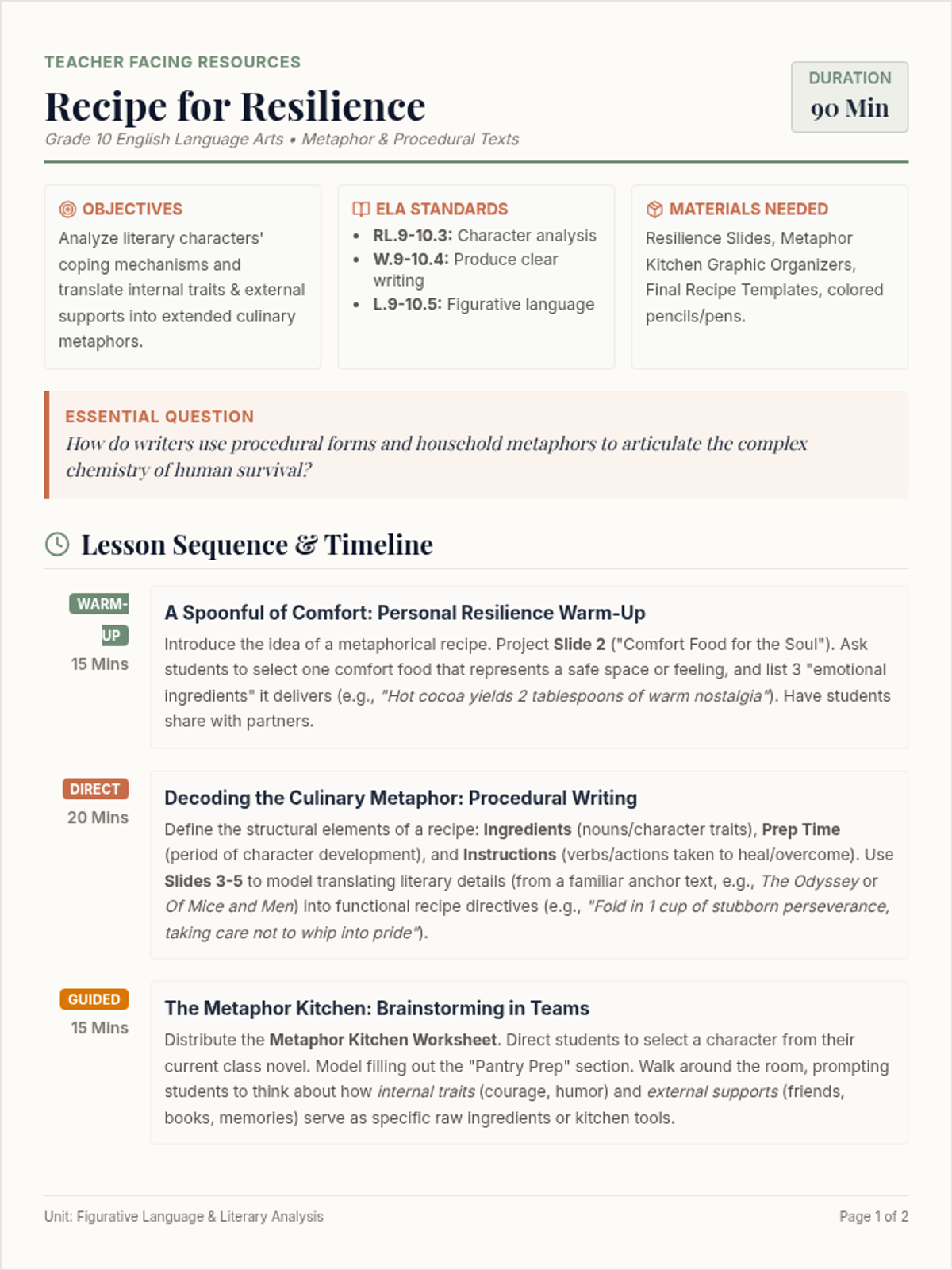
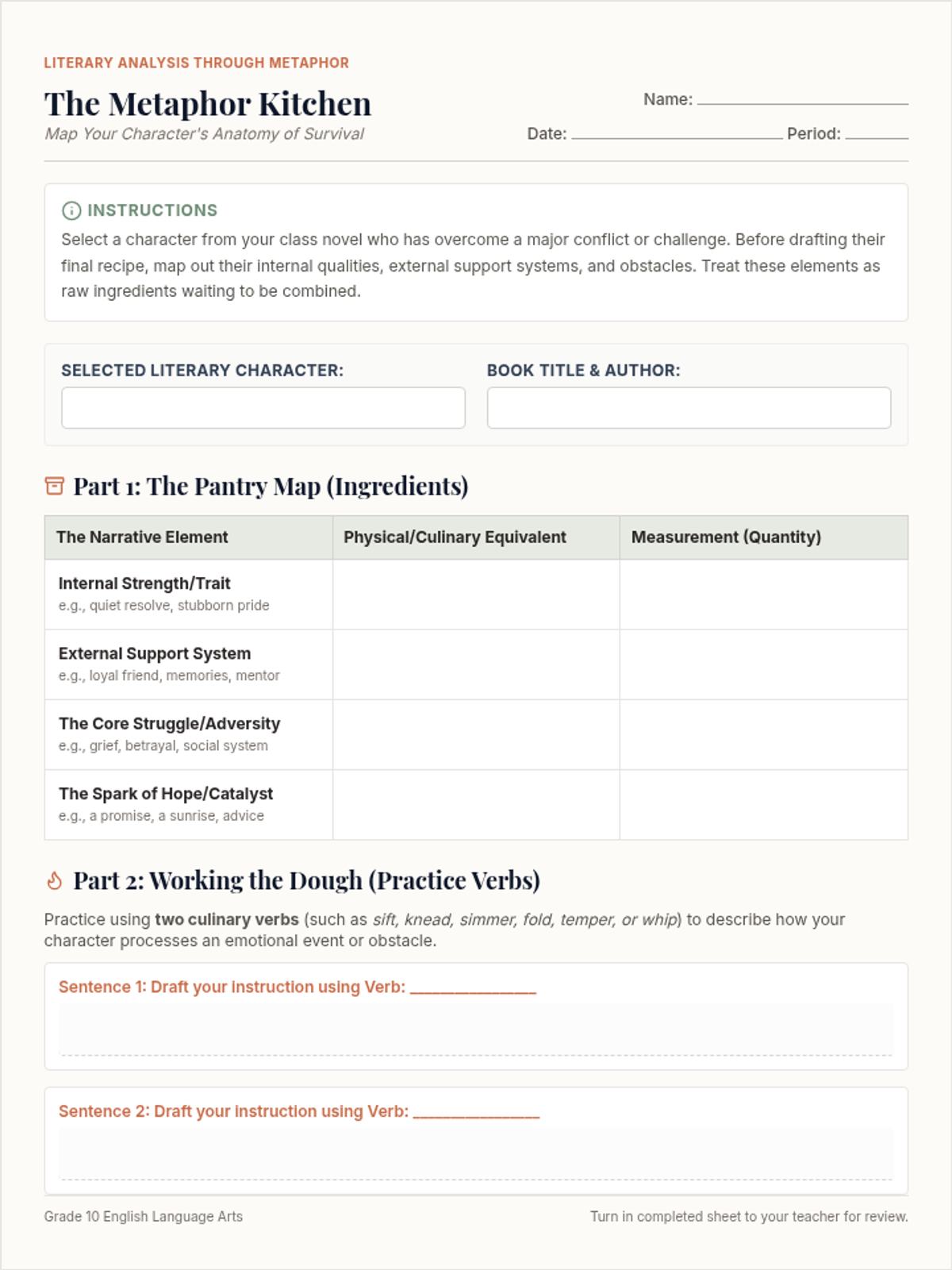
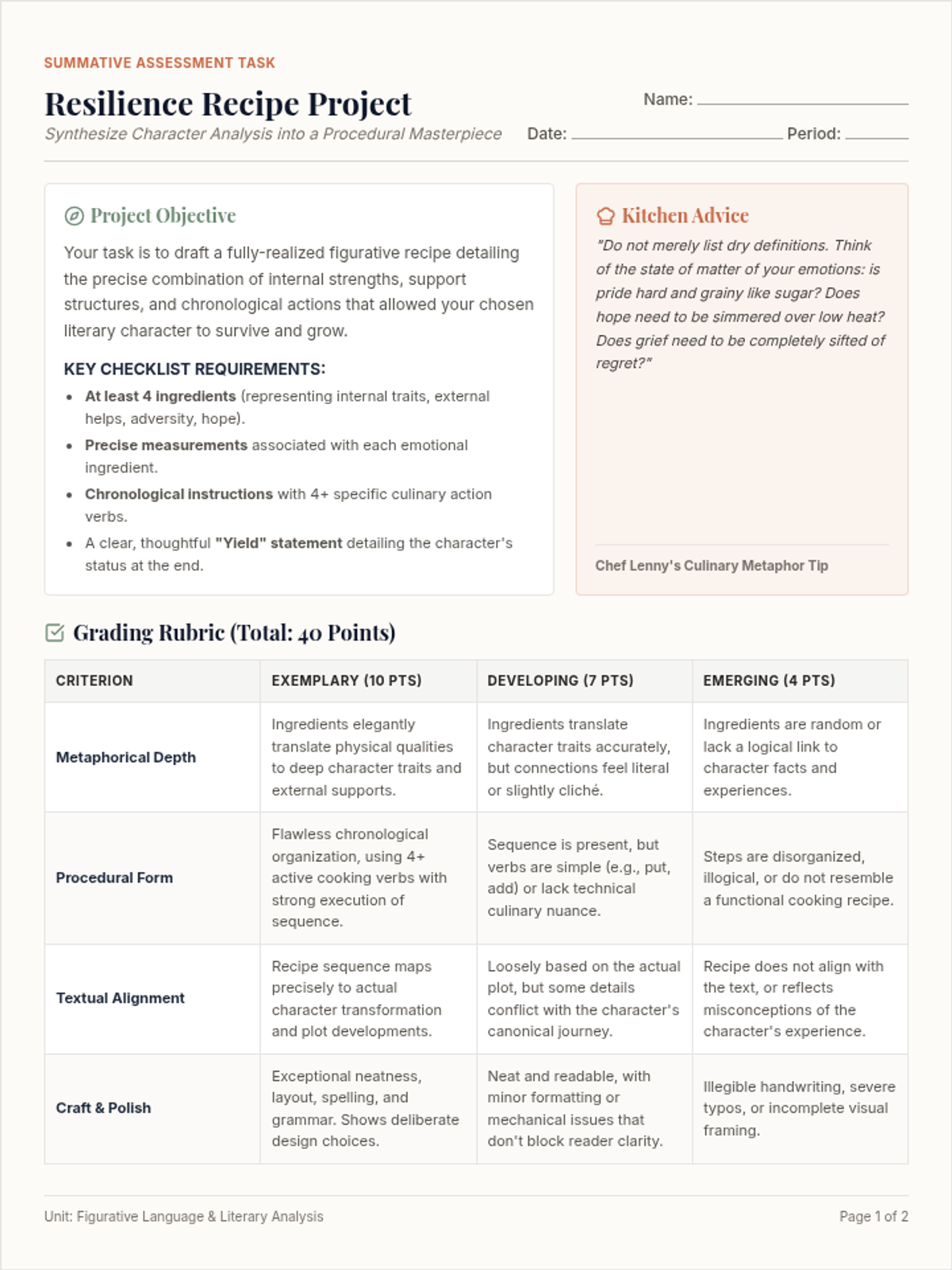
A 10th-grade English language arts lesson blending procedural text structures with deep metaphorical thinking, where students write figurative recipes detailing the internal traits and external supports that help literary characters overcome adversity.
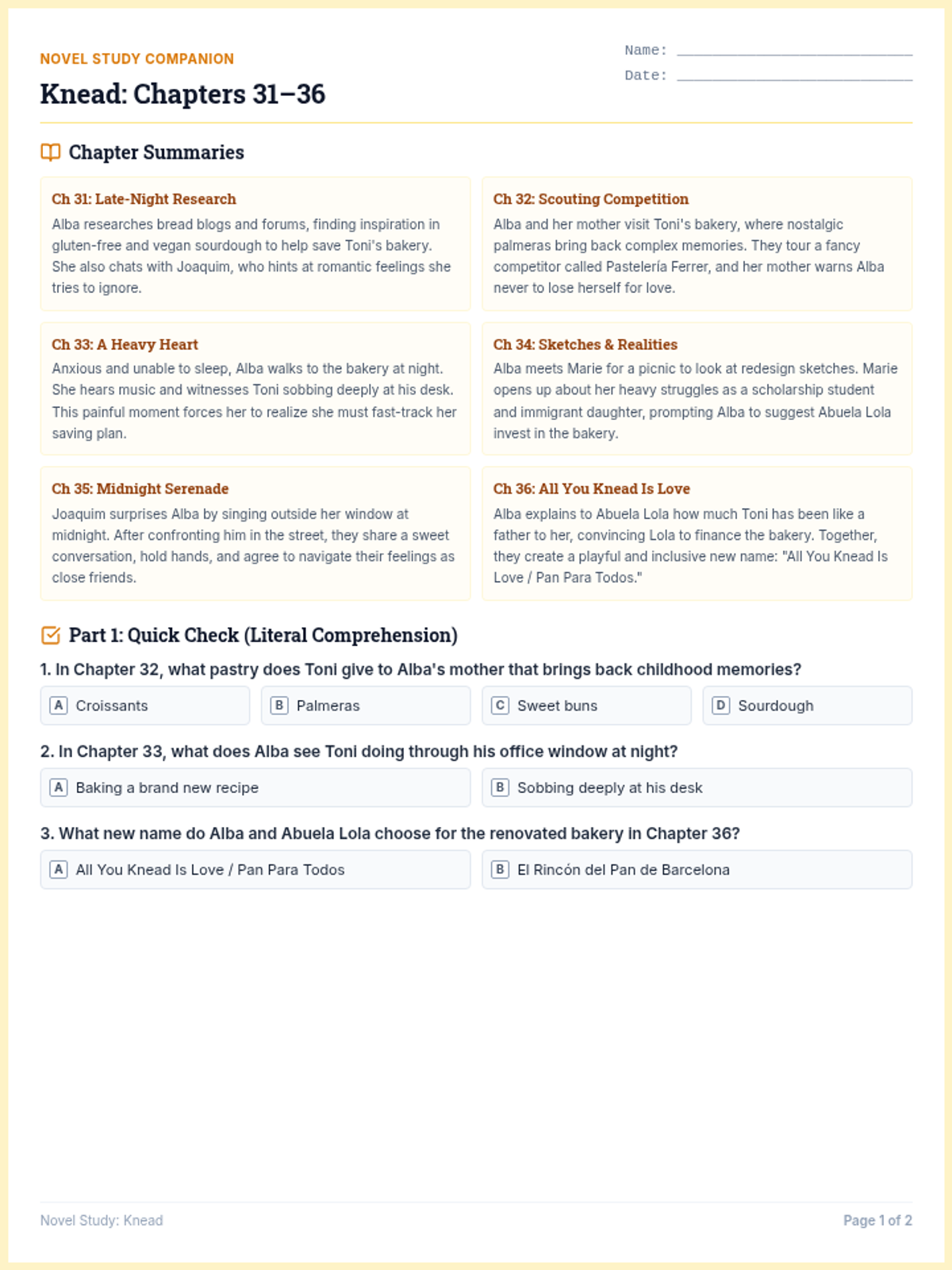
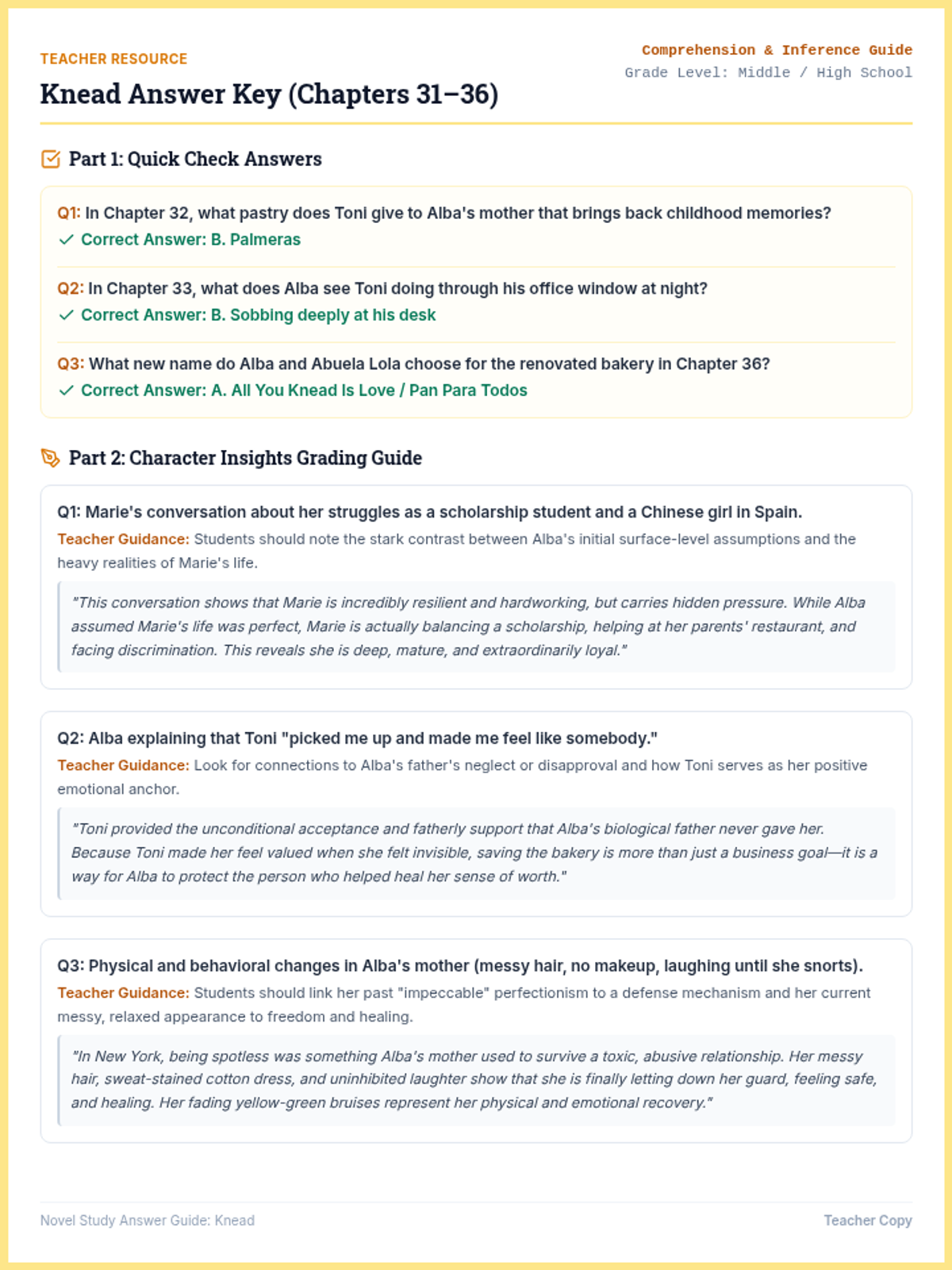
A deep-dive reading analysis of chapters 31-36 of the novel 'Knead', exploring student comprehension and character inference.
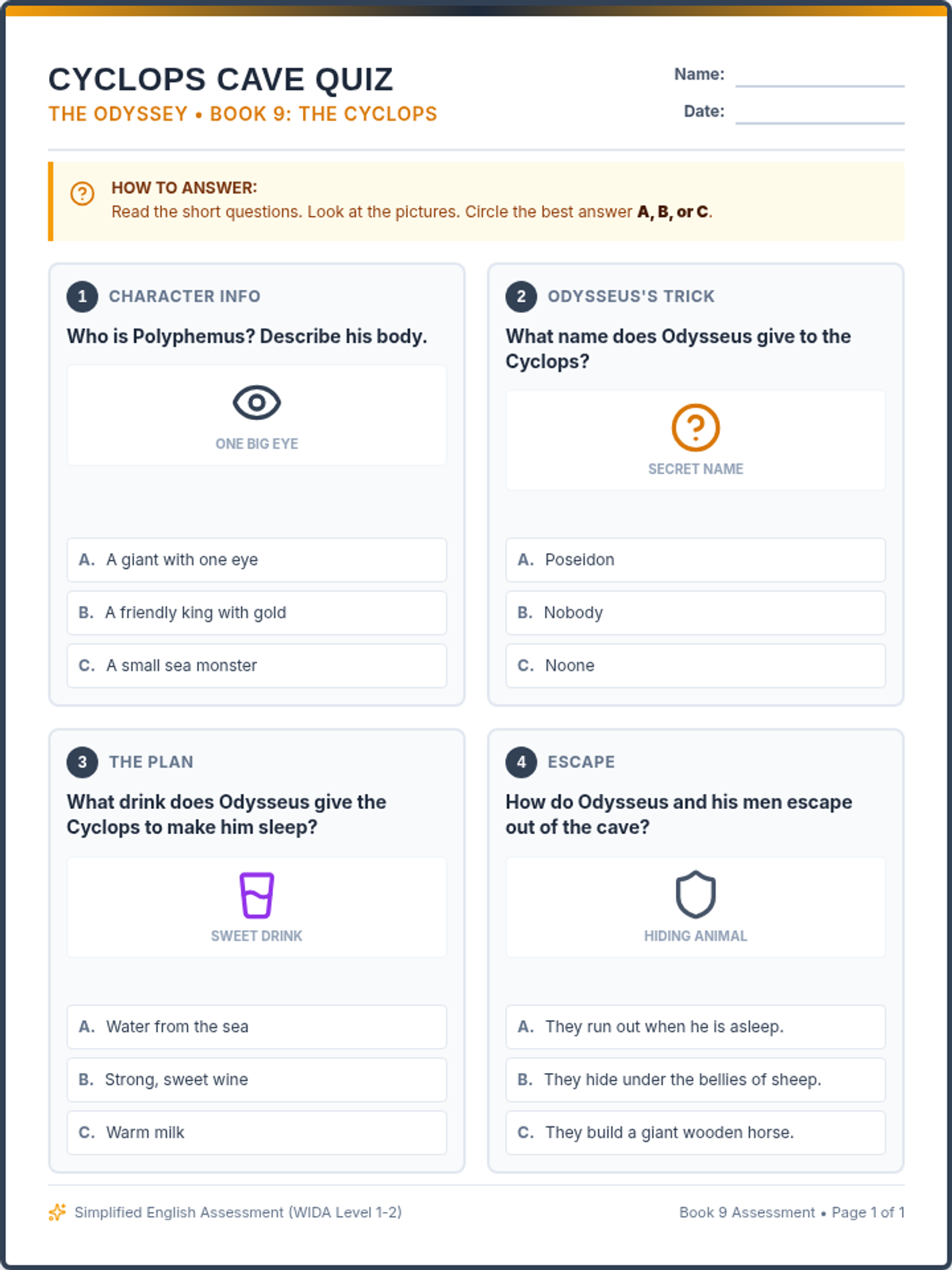
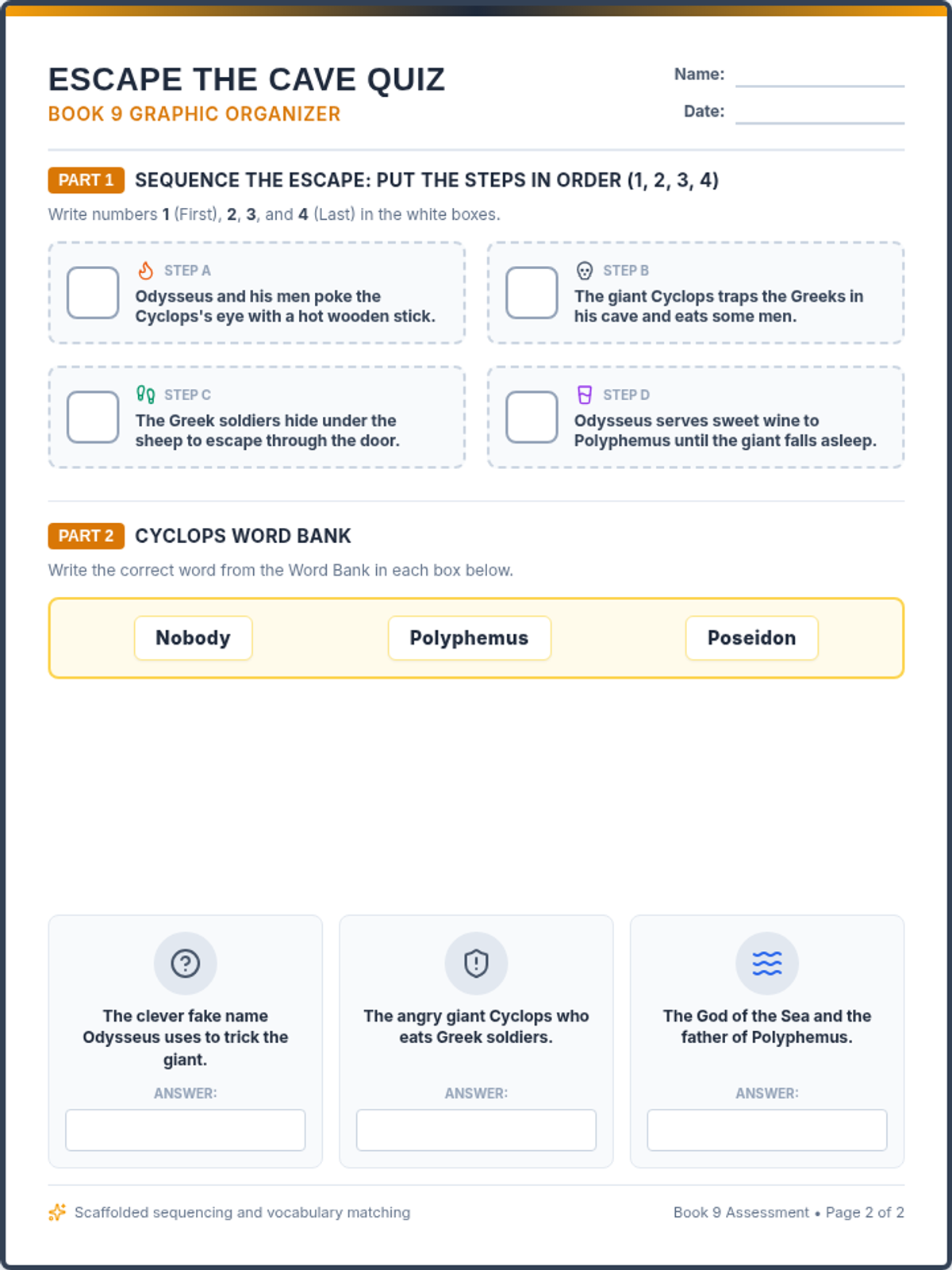
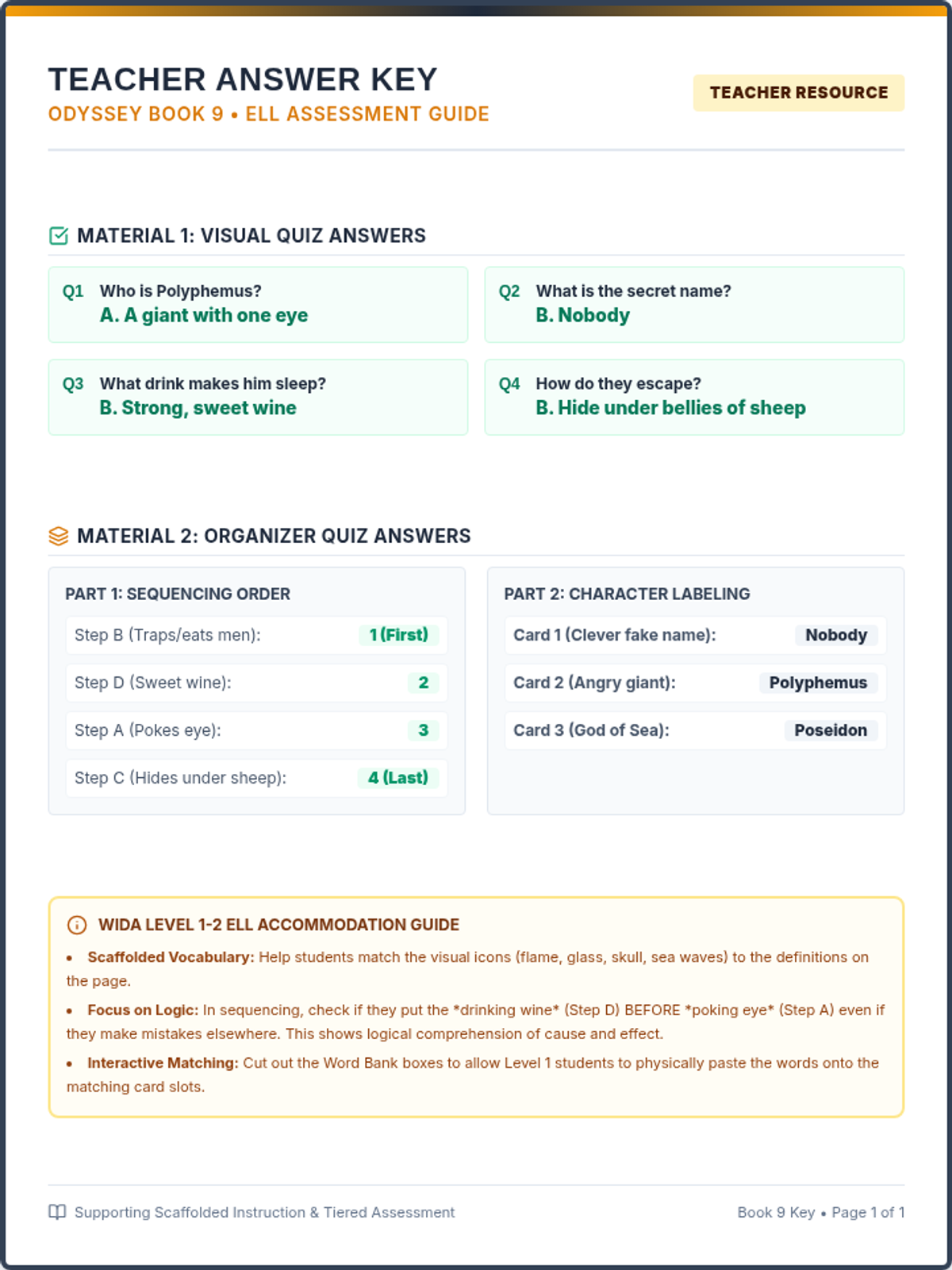
A highly scaffolded, visual lesson covering Book 9 of The Odyssey (the Cyclops). Focuses on character roles, sequencing Odysseus's escape plan, and cause-and-effect vocabulary for WIDA Level 1-2 ELL students.
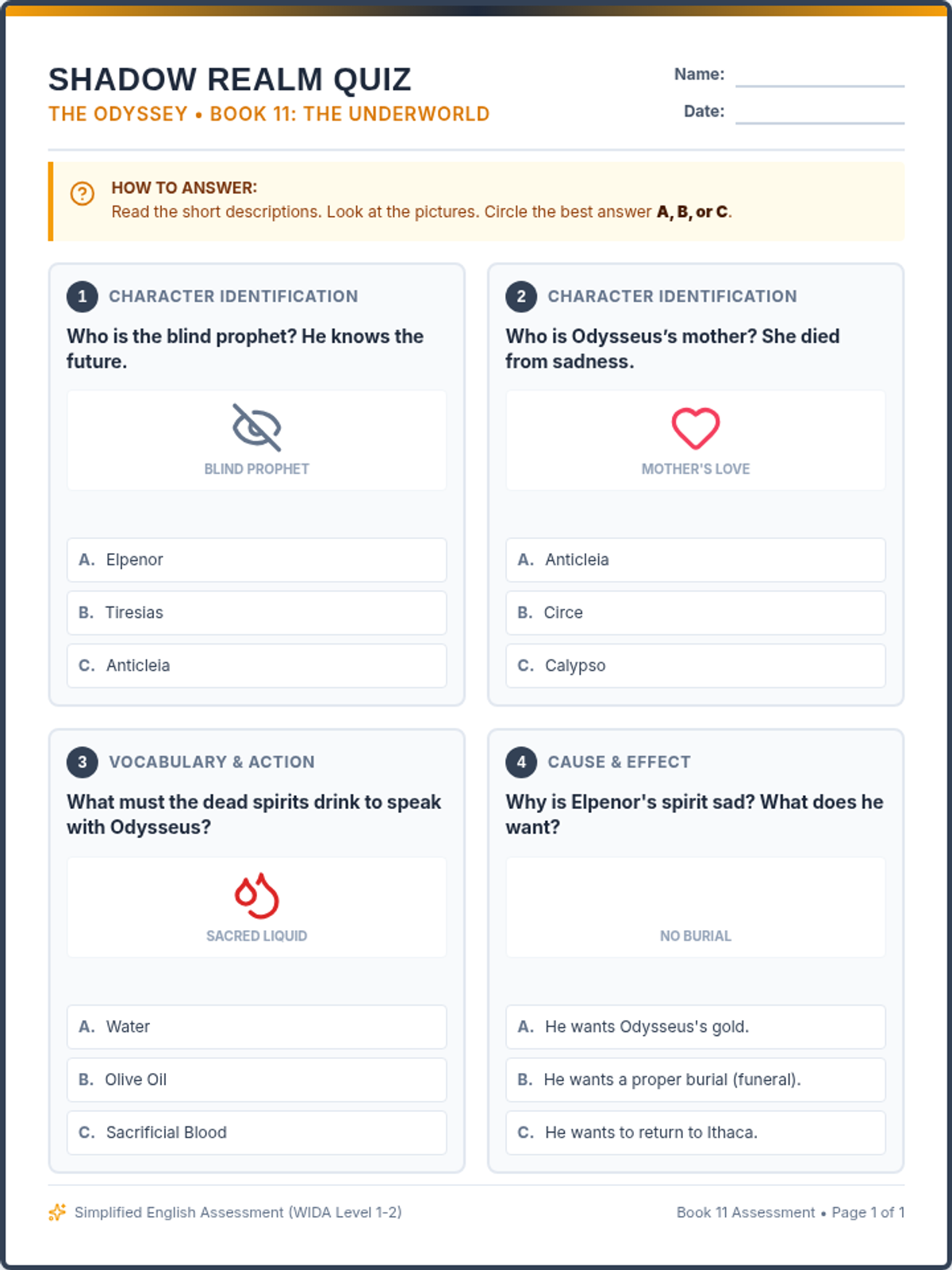
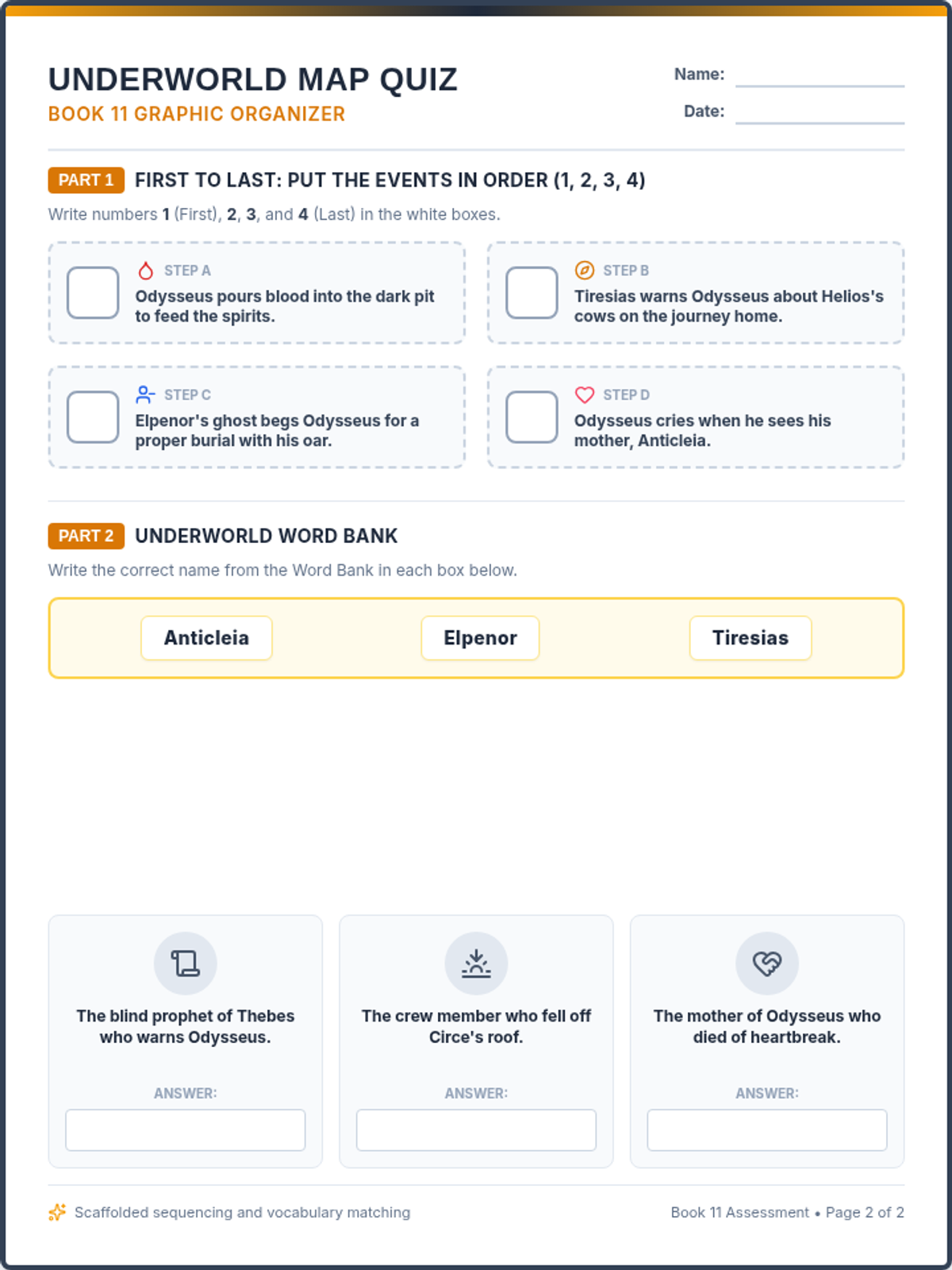
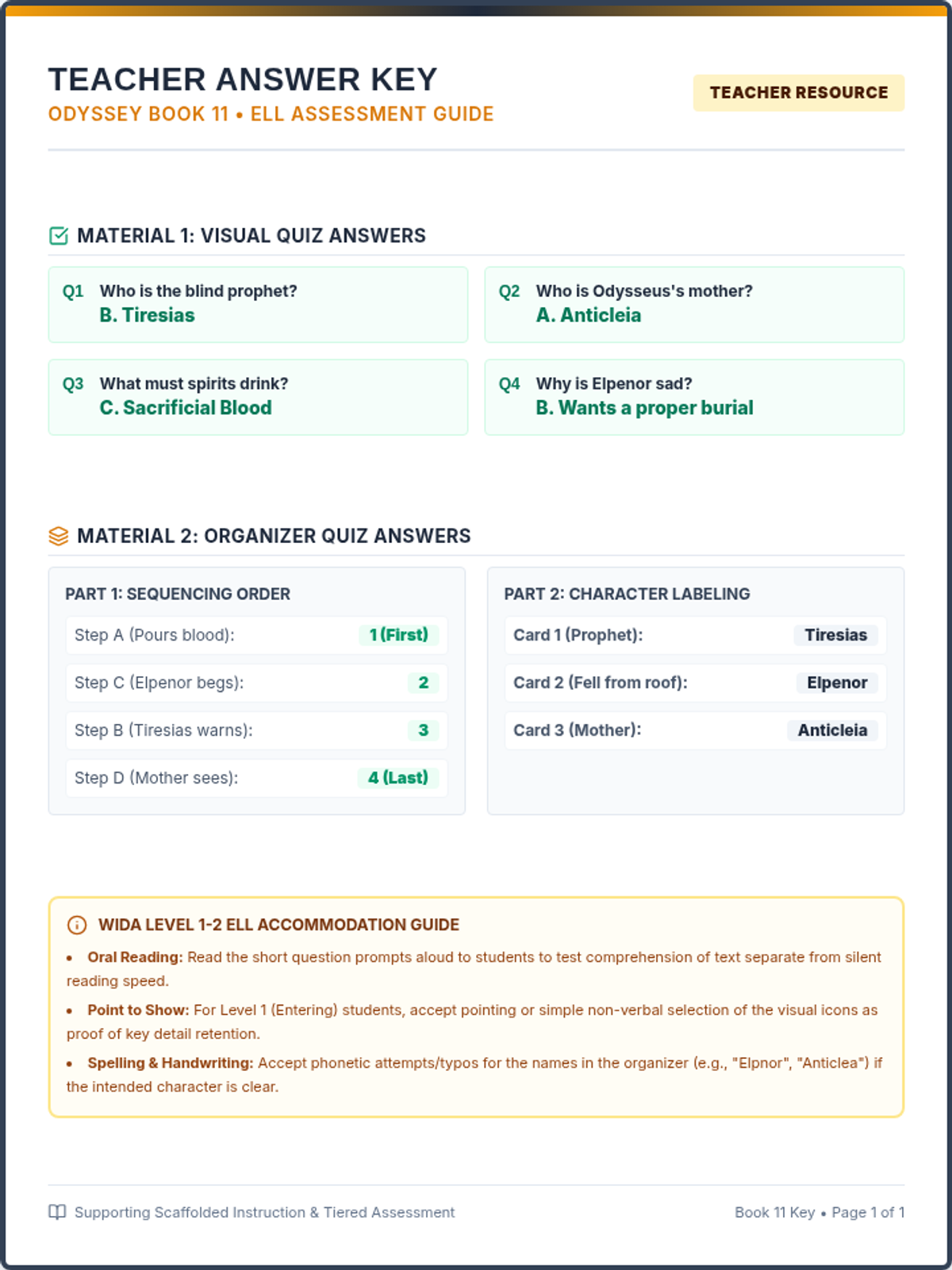
A highly visual assessment lesson for 9th-grade WIDA Level 1-2 ELL students covering Book 11 of The Odyssey (the Underworld). Features simplified language, scaffolded graphic organizers, and character matching.
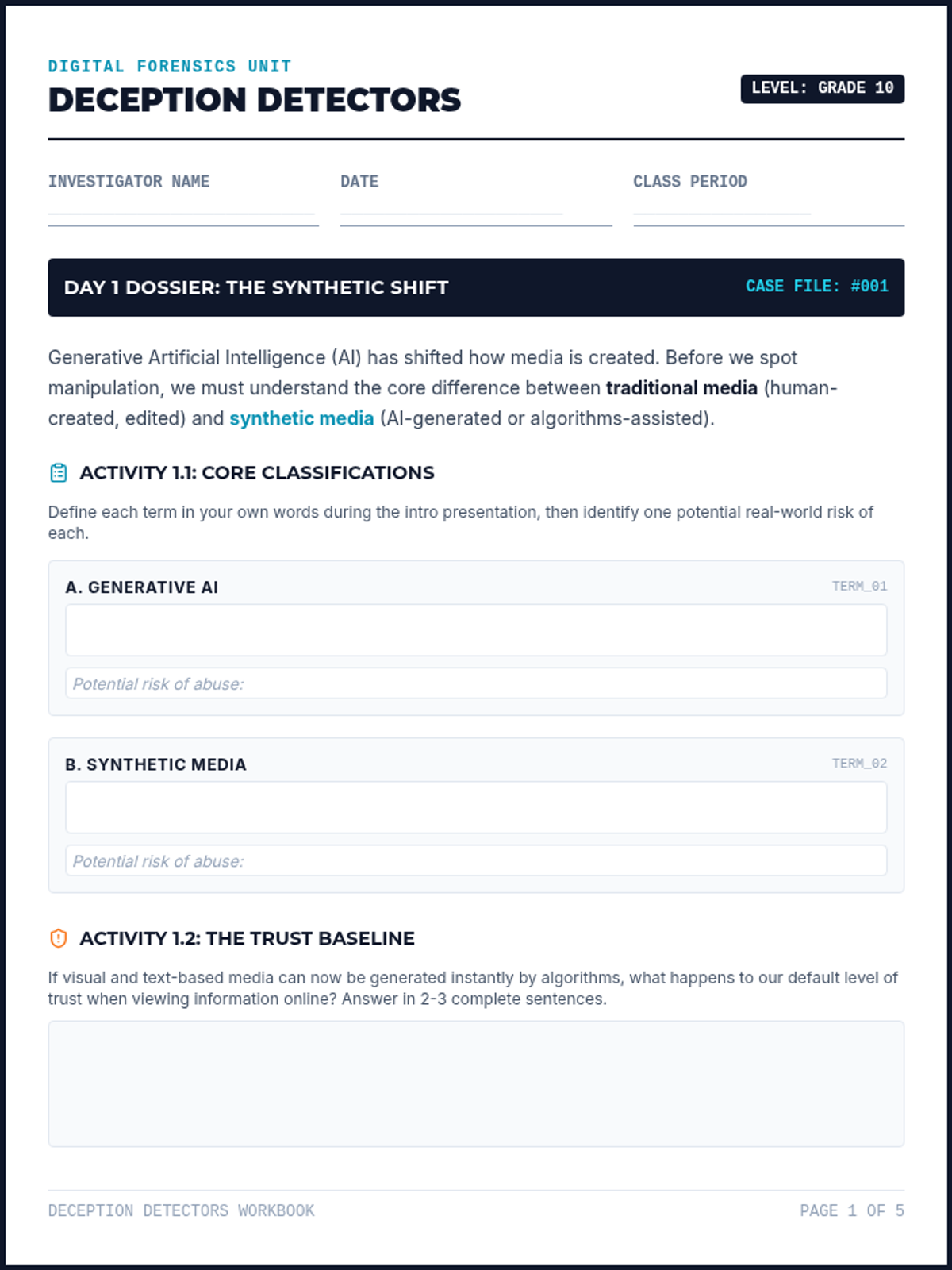
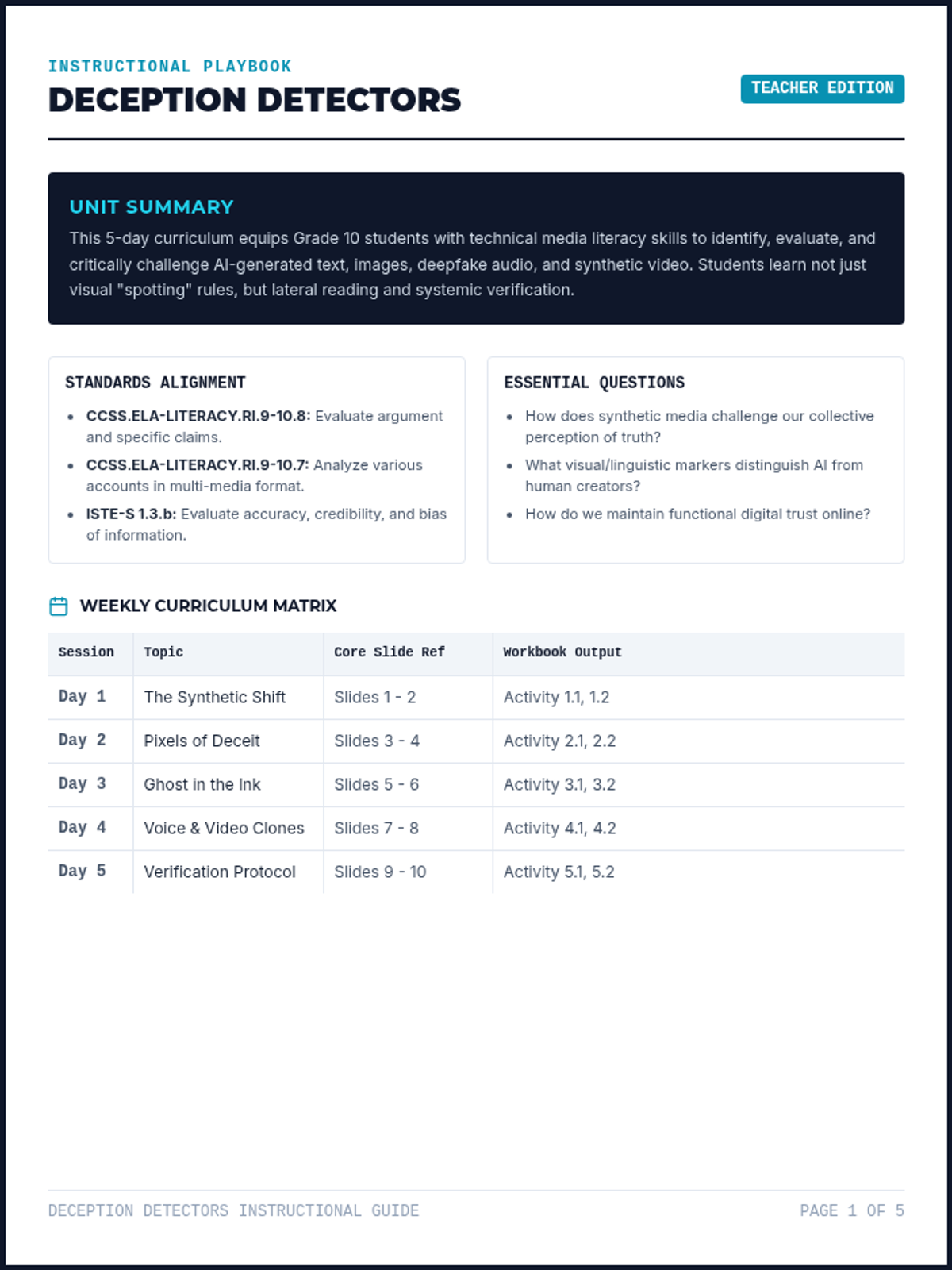
A comprehensive one-week media literacy unit for 10th grade focusing on identifying AI-generated content, deepfakes, and synthetic media. Includes teacher-facing lesson plans, a multi-page student workbook, and an interactive slide presentation.
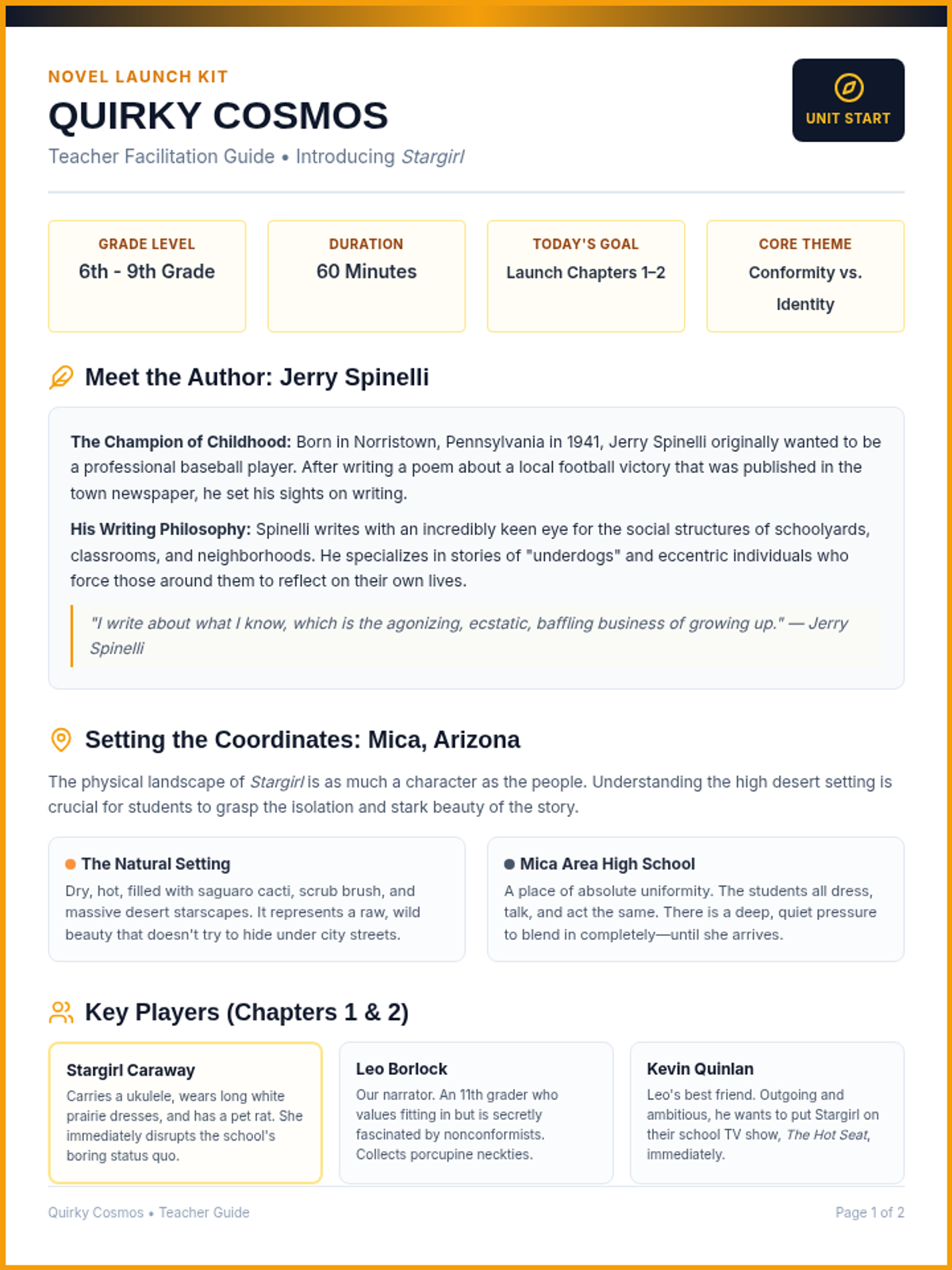
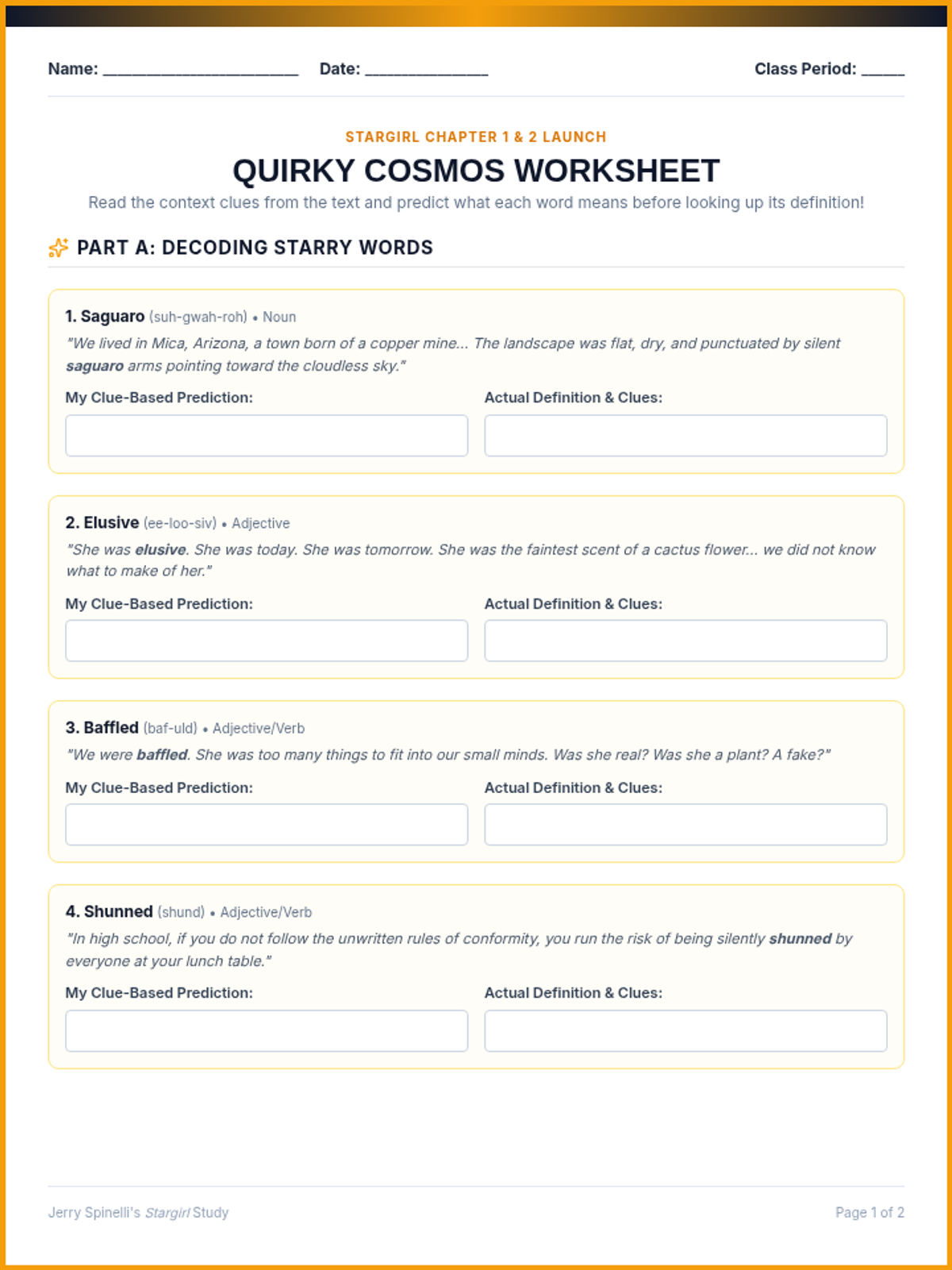
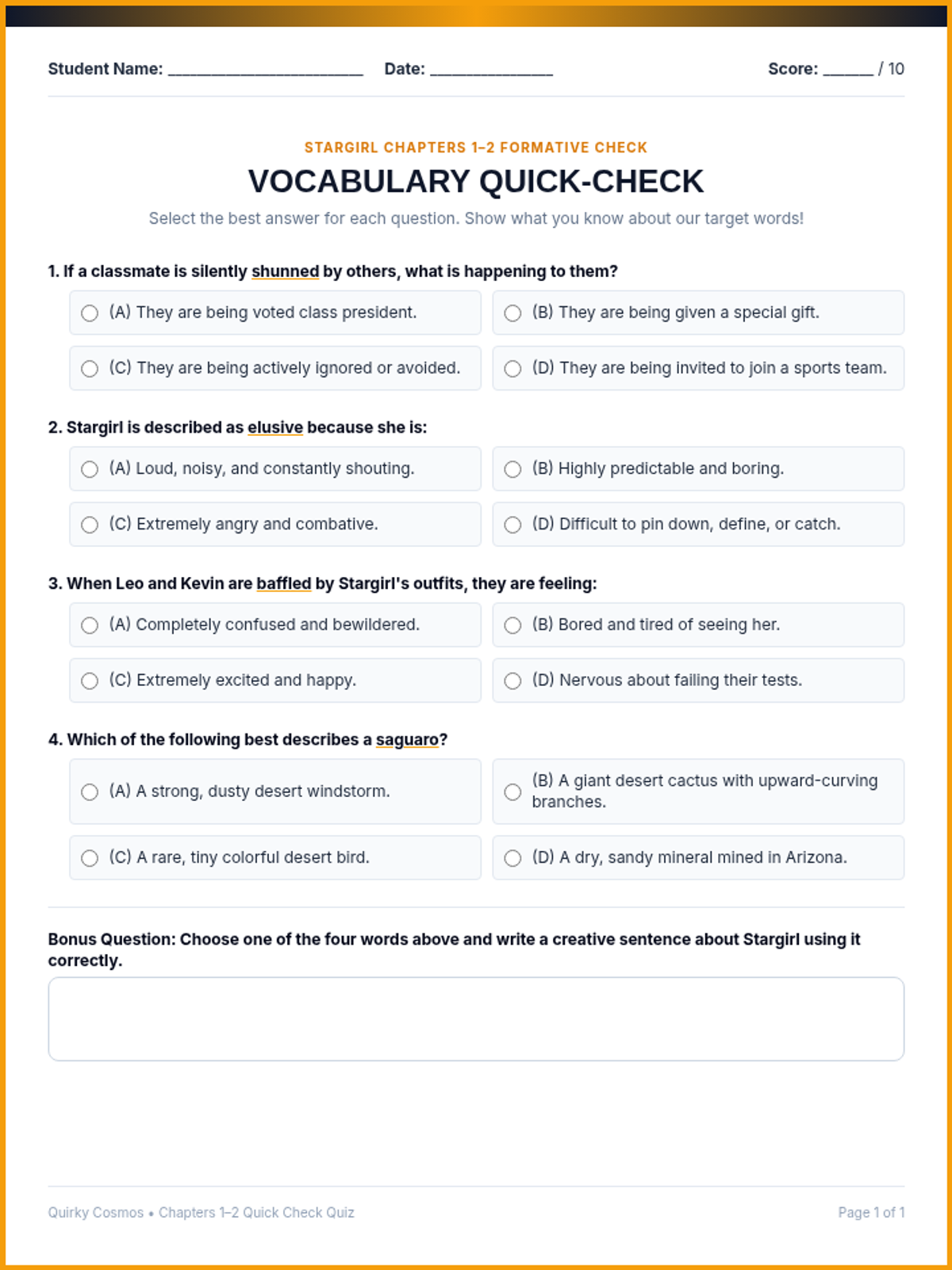
An introductory lesson bundle for Jerry Spinelli's novel Stargirl, focusing on the author's background, desert setting of Mica, Arizona, key characters, and contextual vocabulary for Chapters 1 and 2.
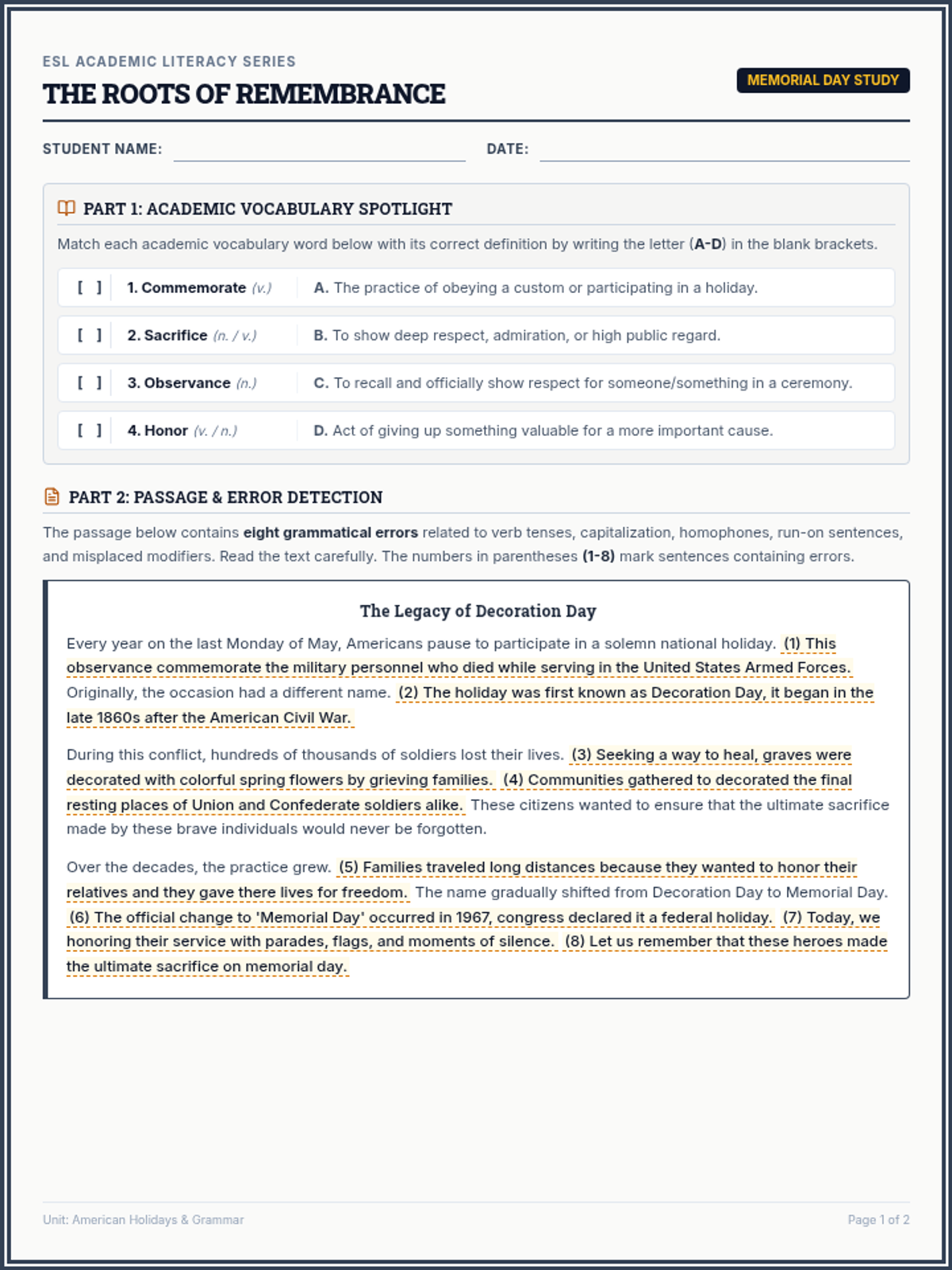
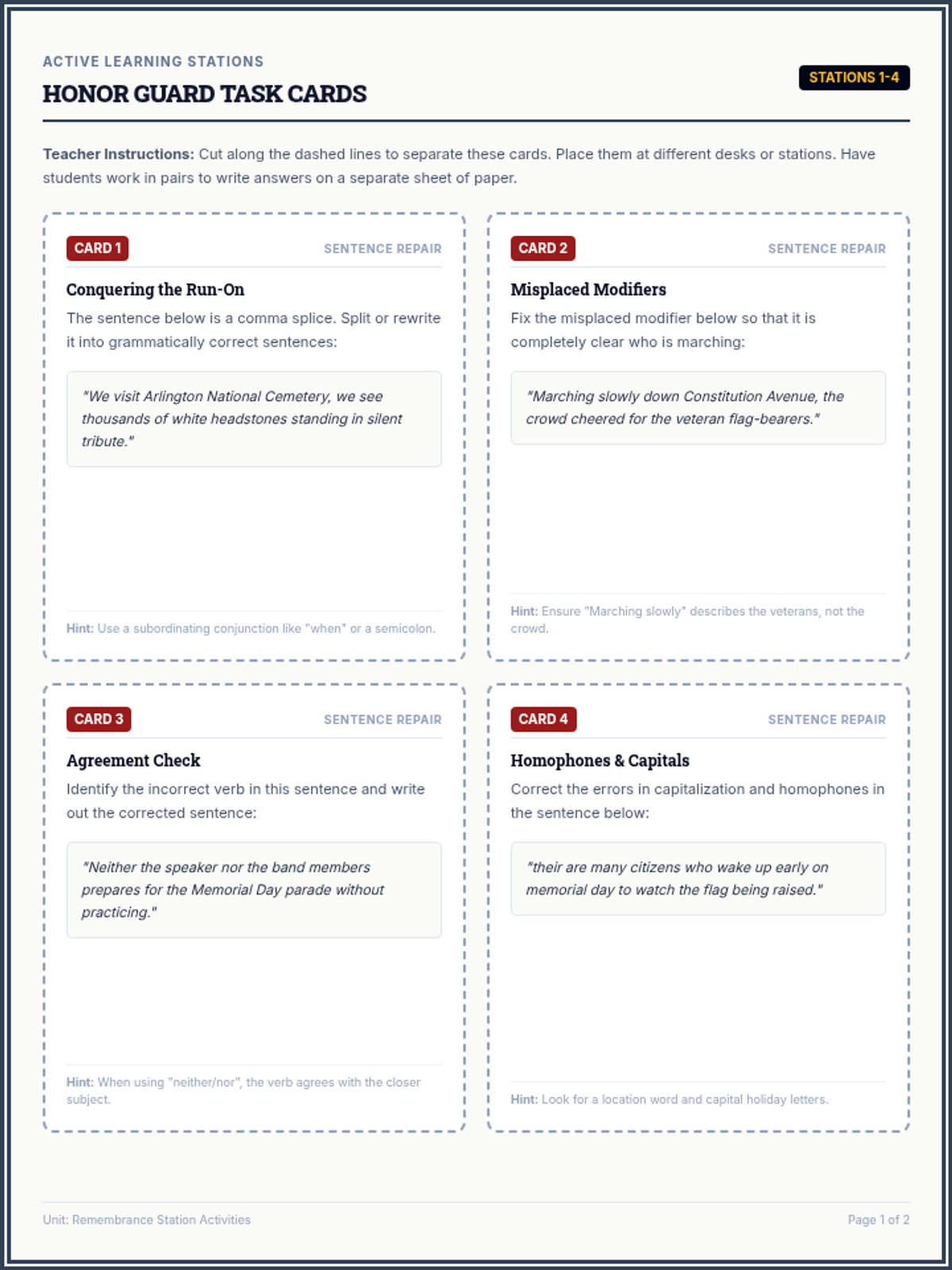
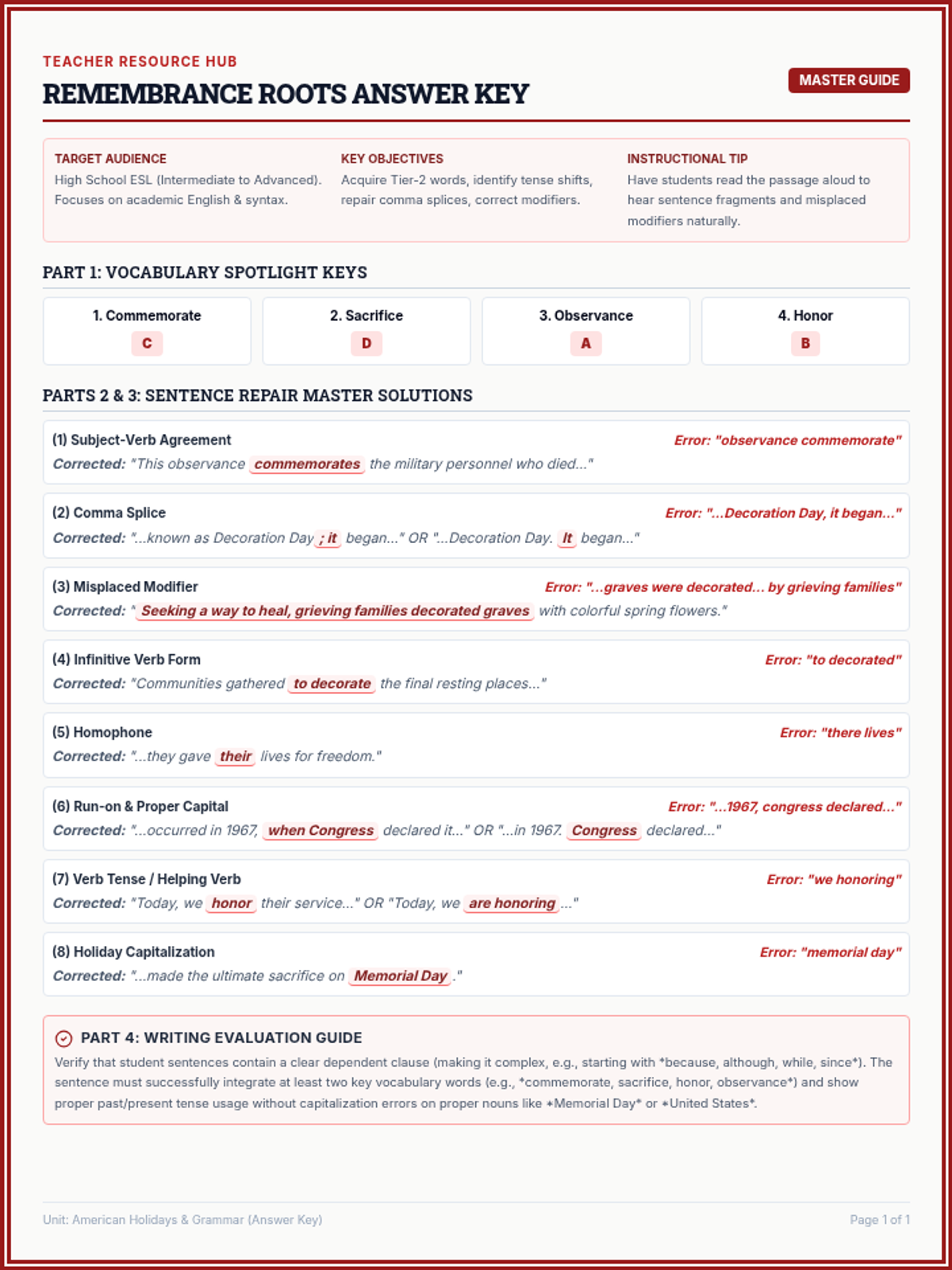
An intensive ESL lesson focused on Memorial Day history, academic vocabulary acquisition, and proofreading skills such as verb tense consistency, capitalization, homophones, and sentence structure.
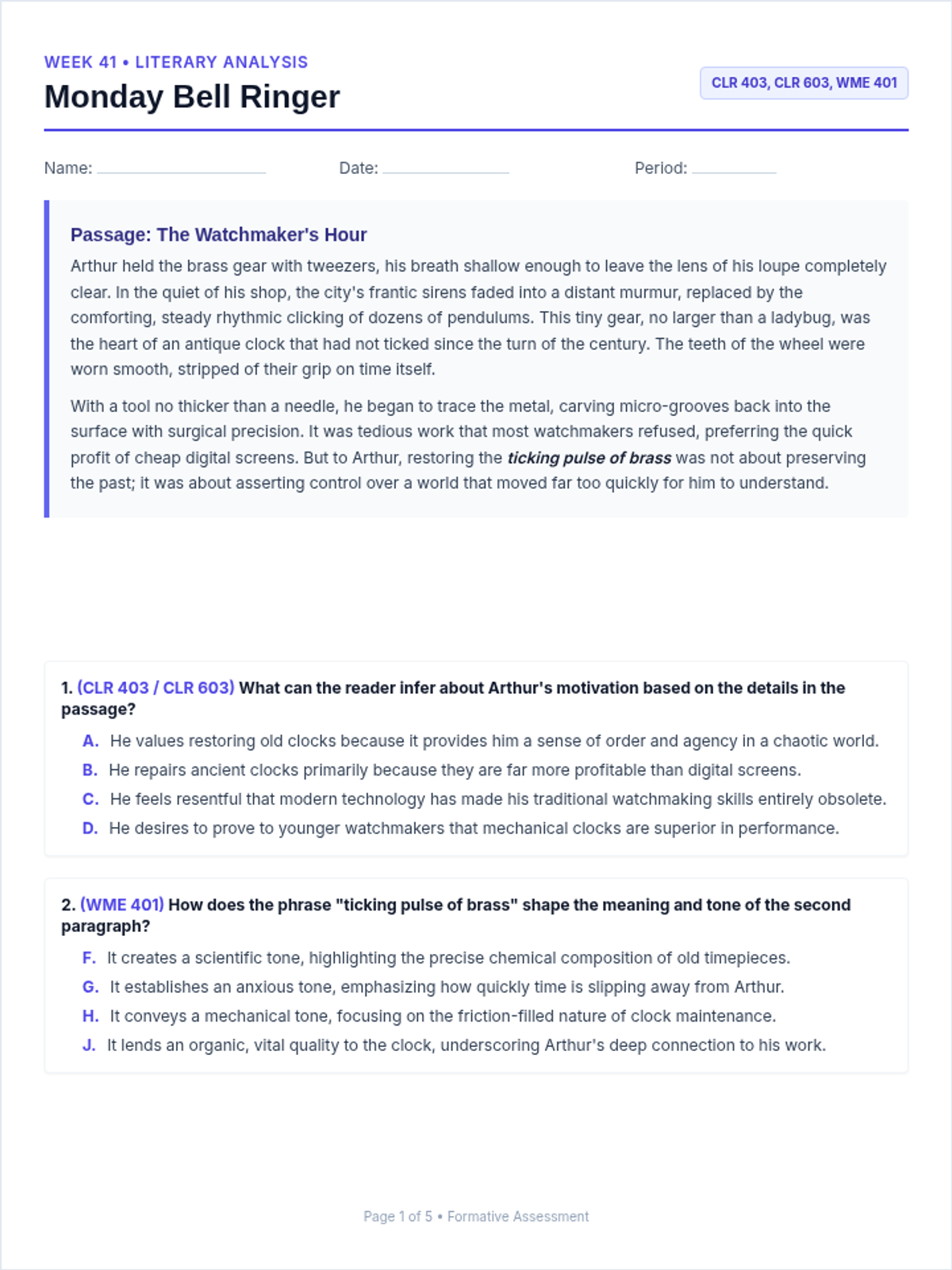
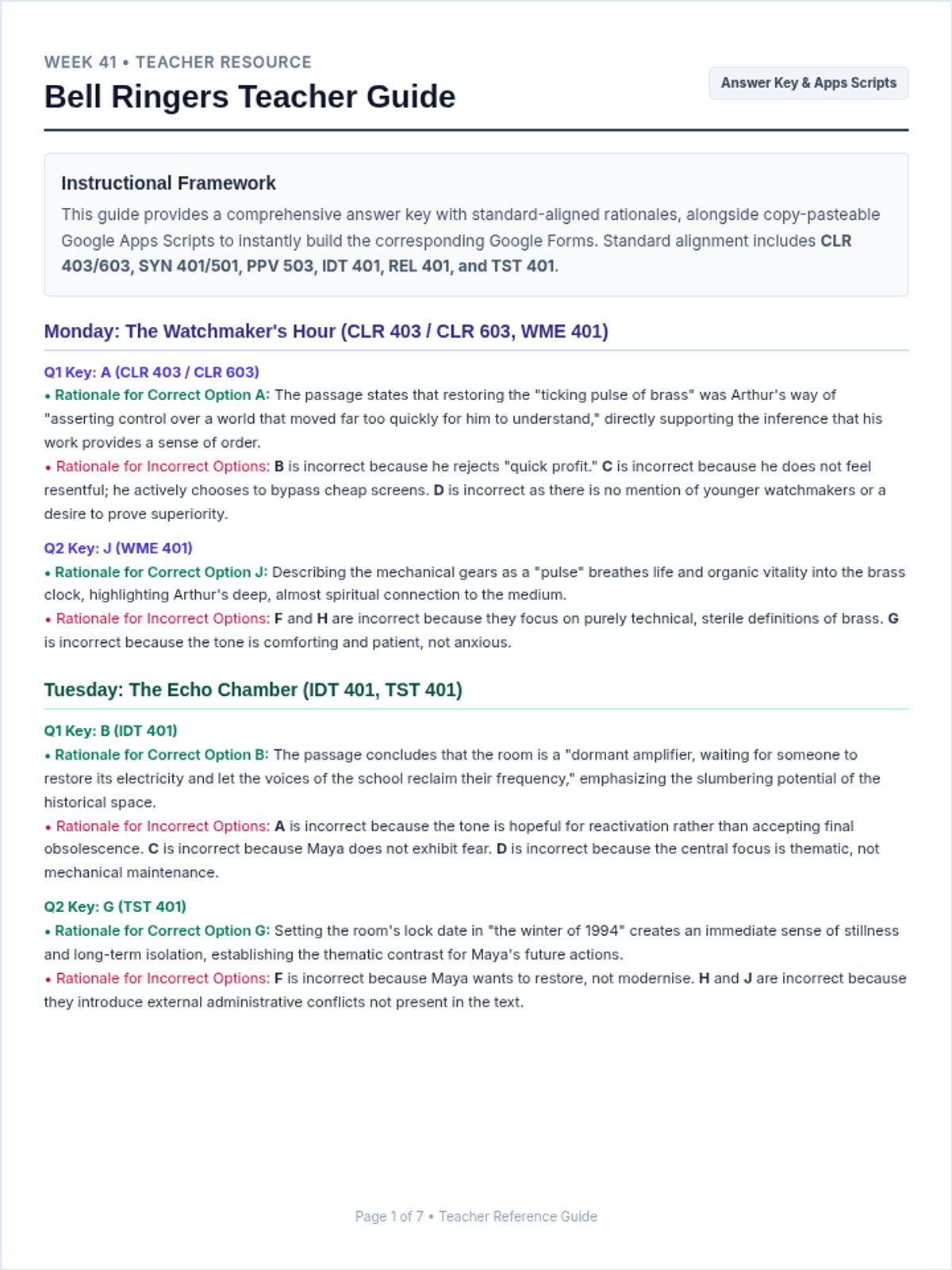
A lesson containing a 5-day student bell ringer packet and a teacher guide with detailed answer keys and Google Apps Script code to build corresponding Google Forms.
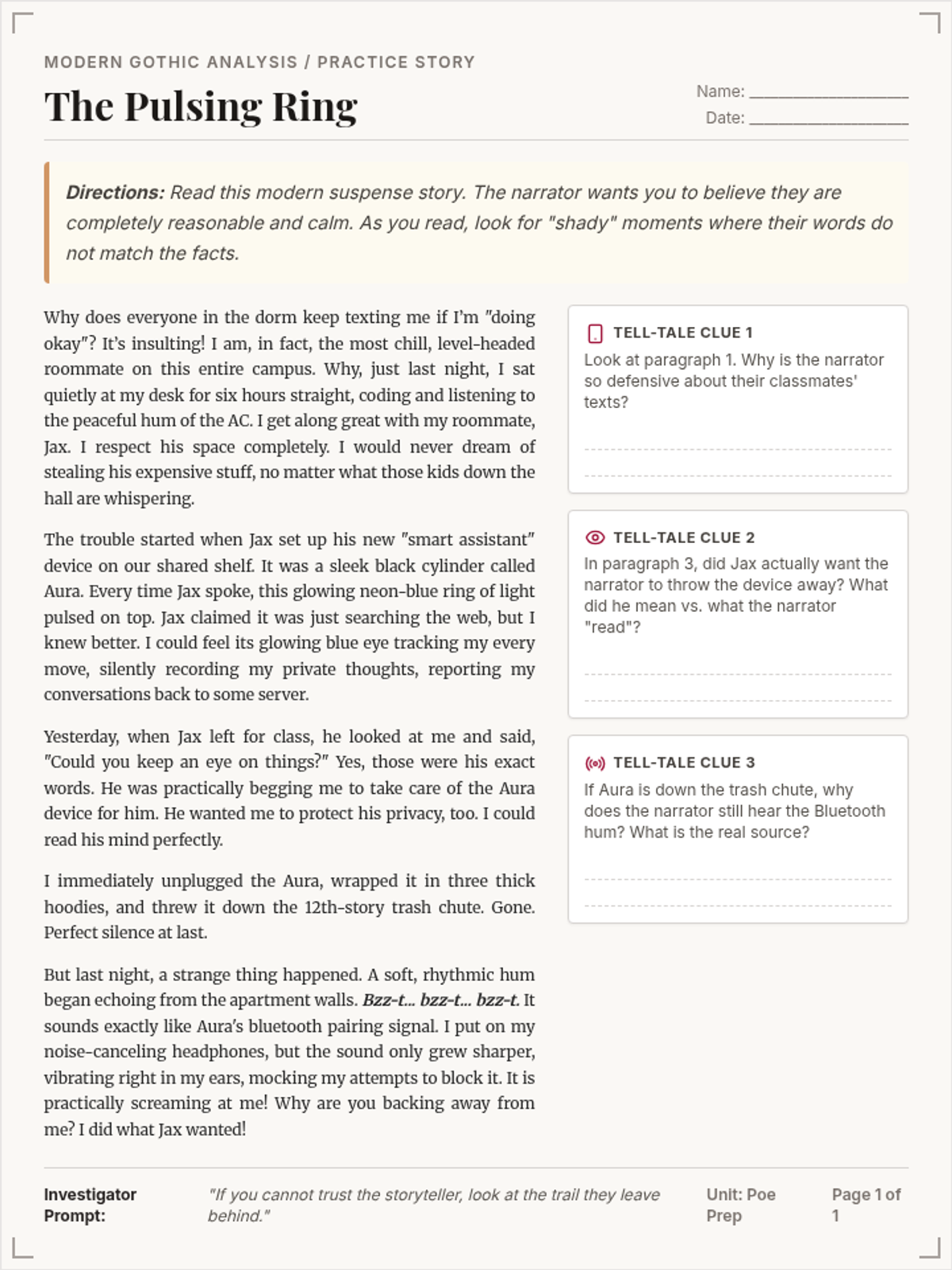
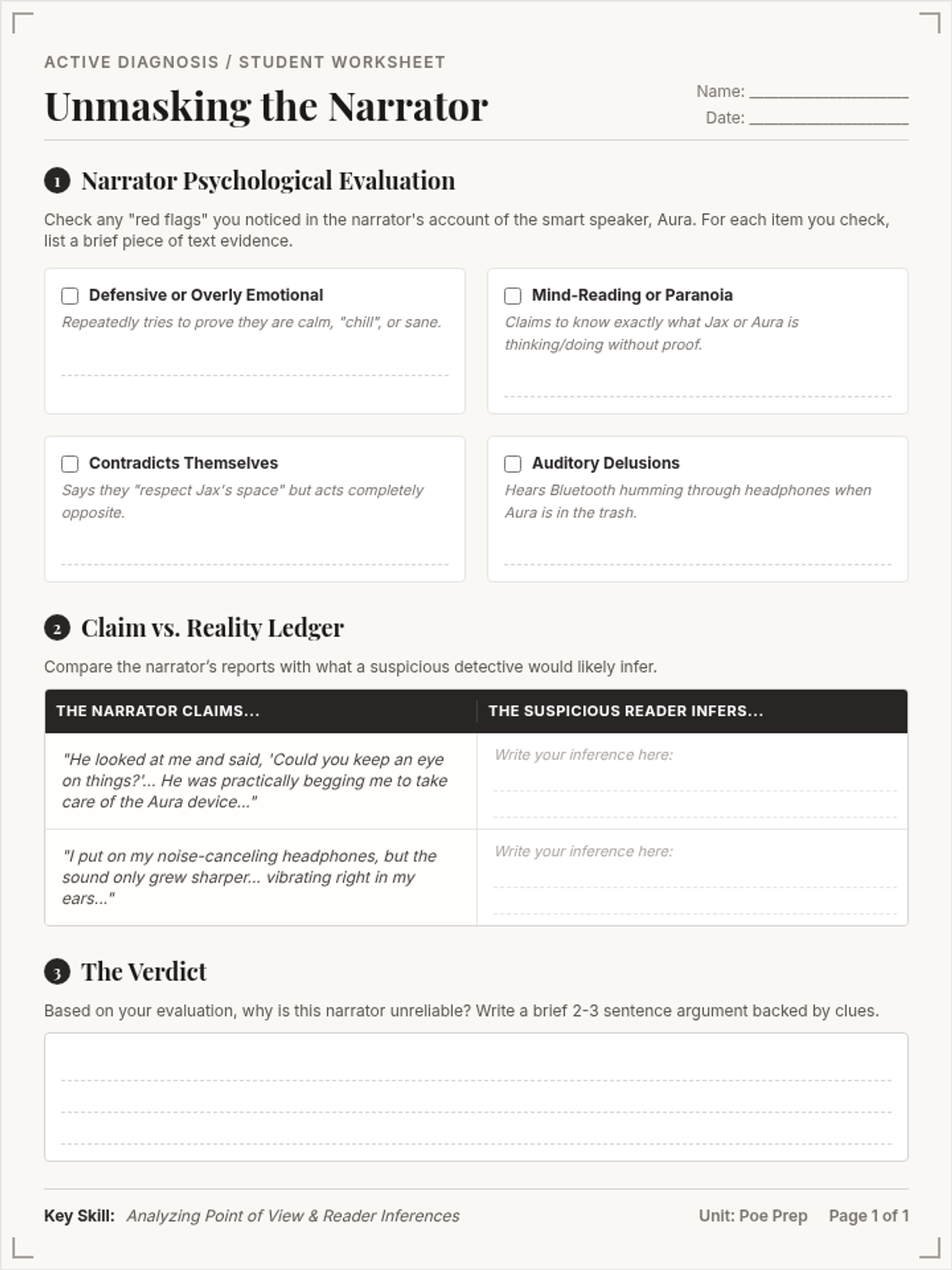
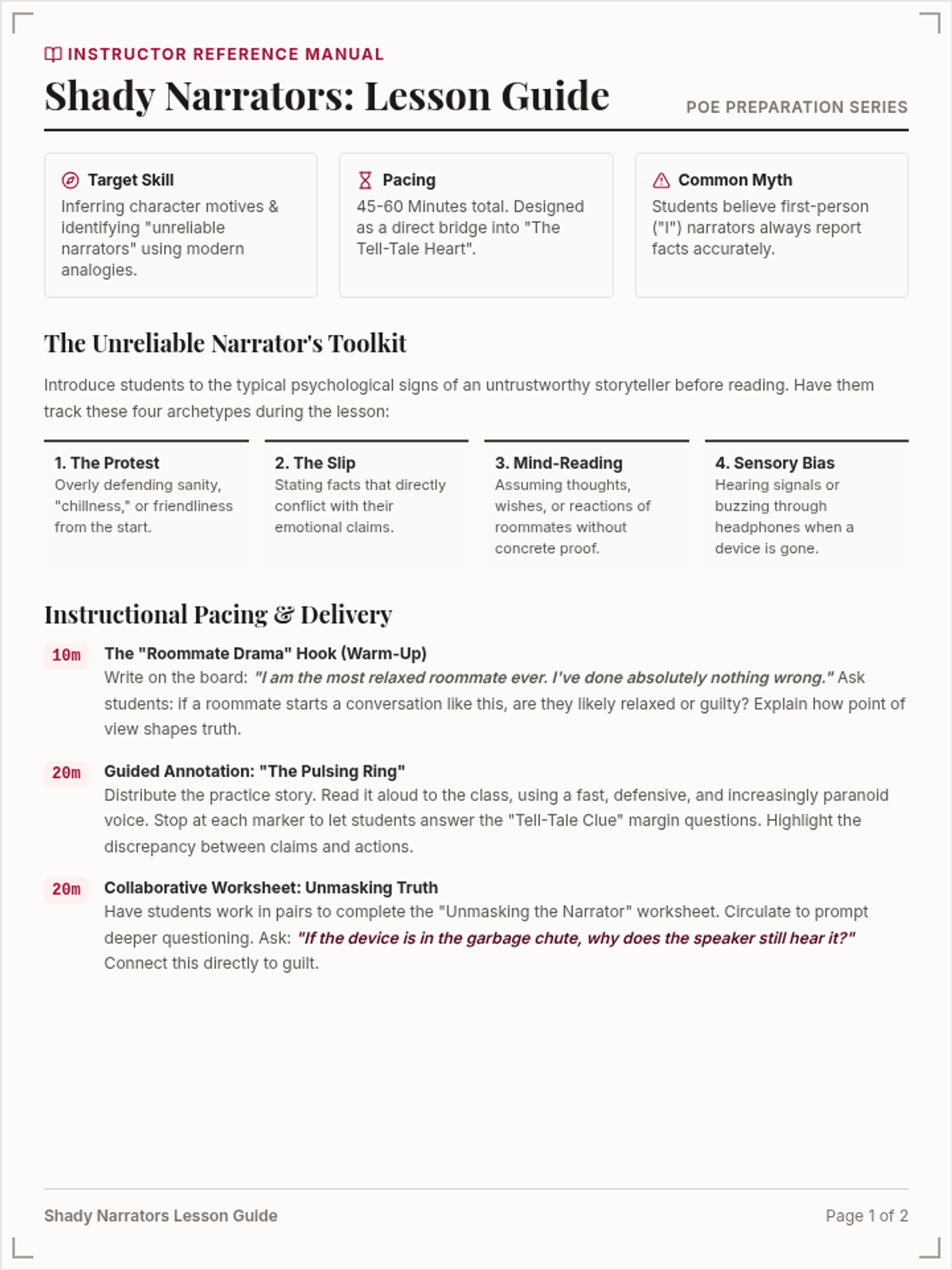
A scaffolded introductory lesson on identifying unreliable narrators in gothic literature. Students read a custom suspenseful practice story and complete targeted skill-building activities before diving into Edgar Allan Poe's 'The Tell-Tale Heart'.