A pre-reading lesson for Alan Gratz's novel 'Ground Zero' designed to transition students from factual video viewing and KWL charts to deep, emotional, and creative writing prompts.
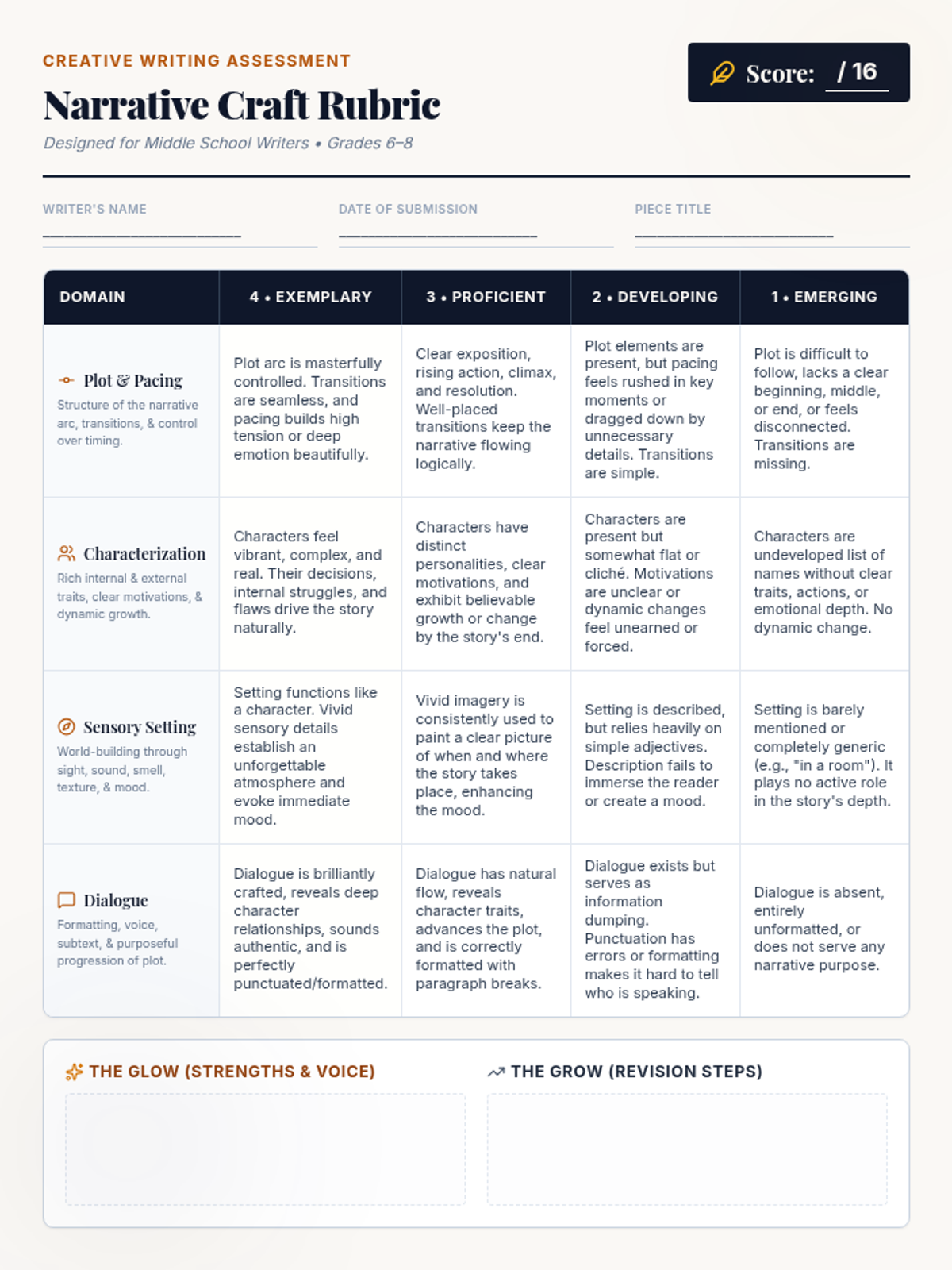
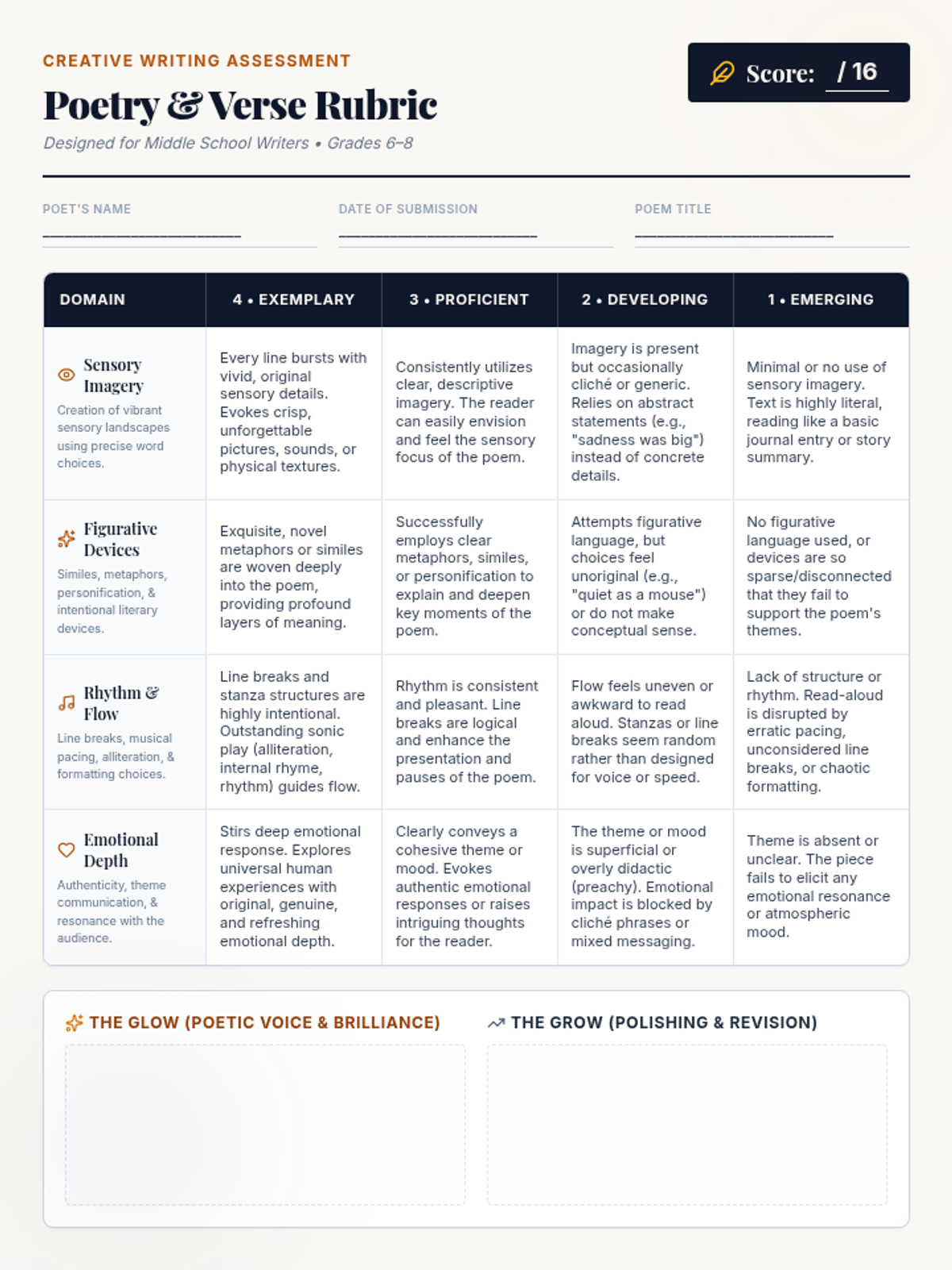
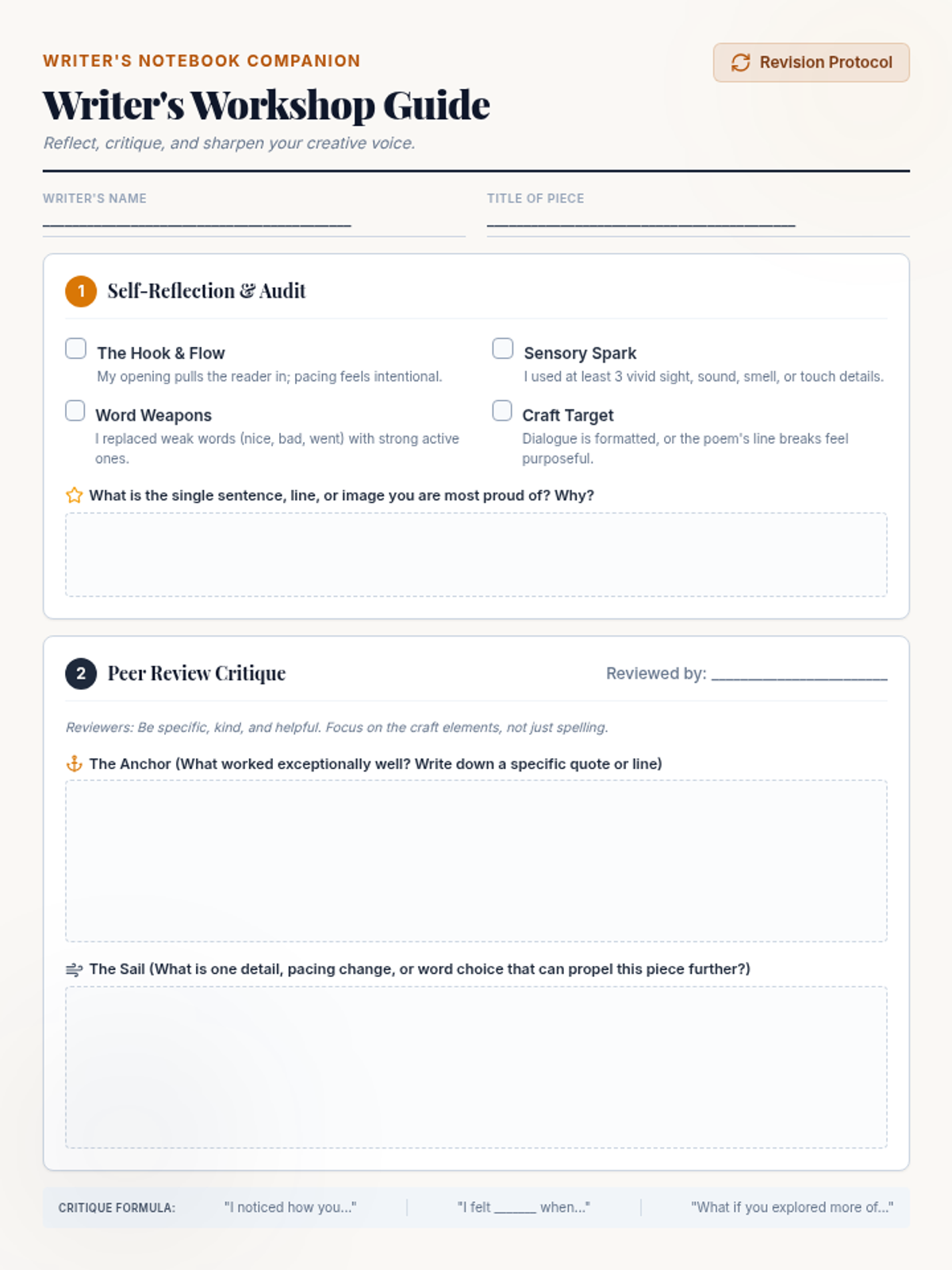
A comprehensive rubric set for middle school creative writing, containing highly detailed rubrics for Fictional Narratives and Poetry & Verse, alongside a student-facing reflection and peer feedback guide.
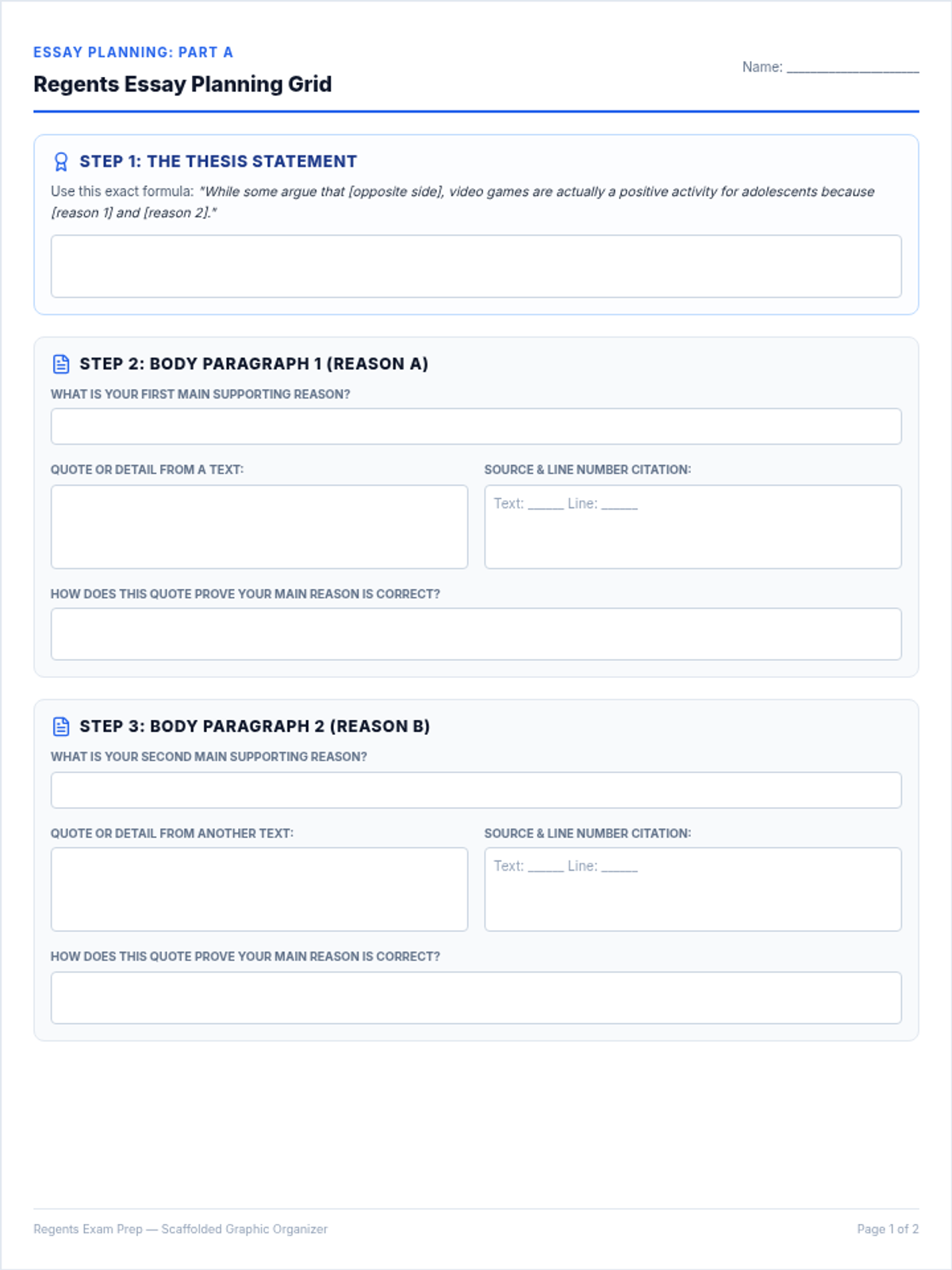
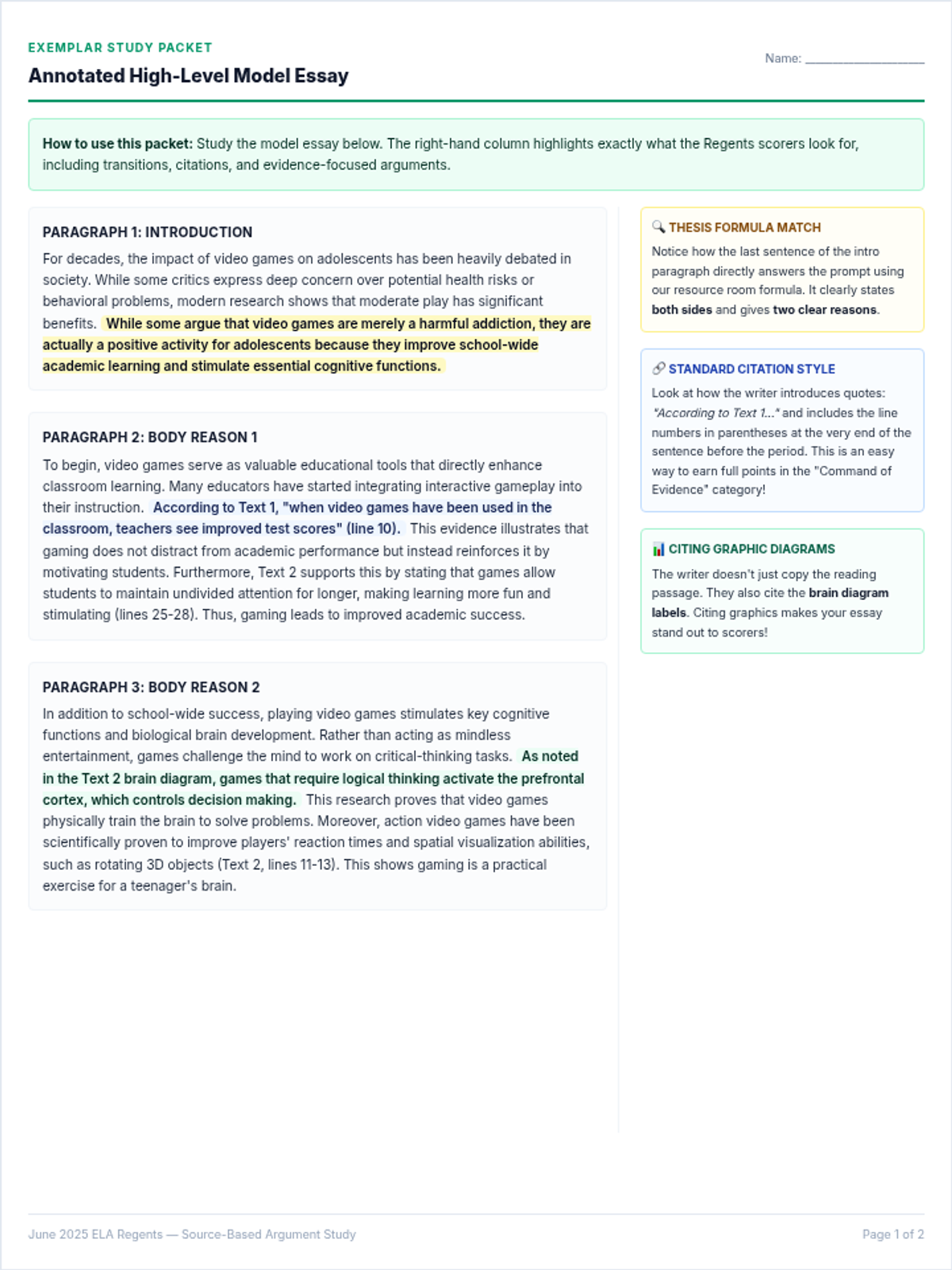
Students plan their argumentative essays using scaffolded graphic organizers and study a high-level annotated model exemplar essay to master citation and counter-argument requirements.
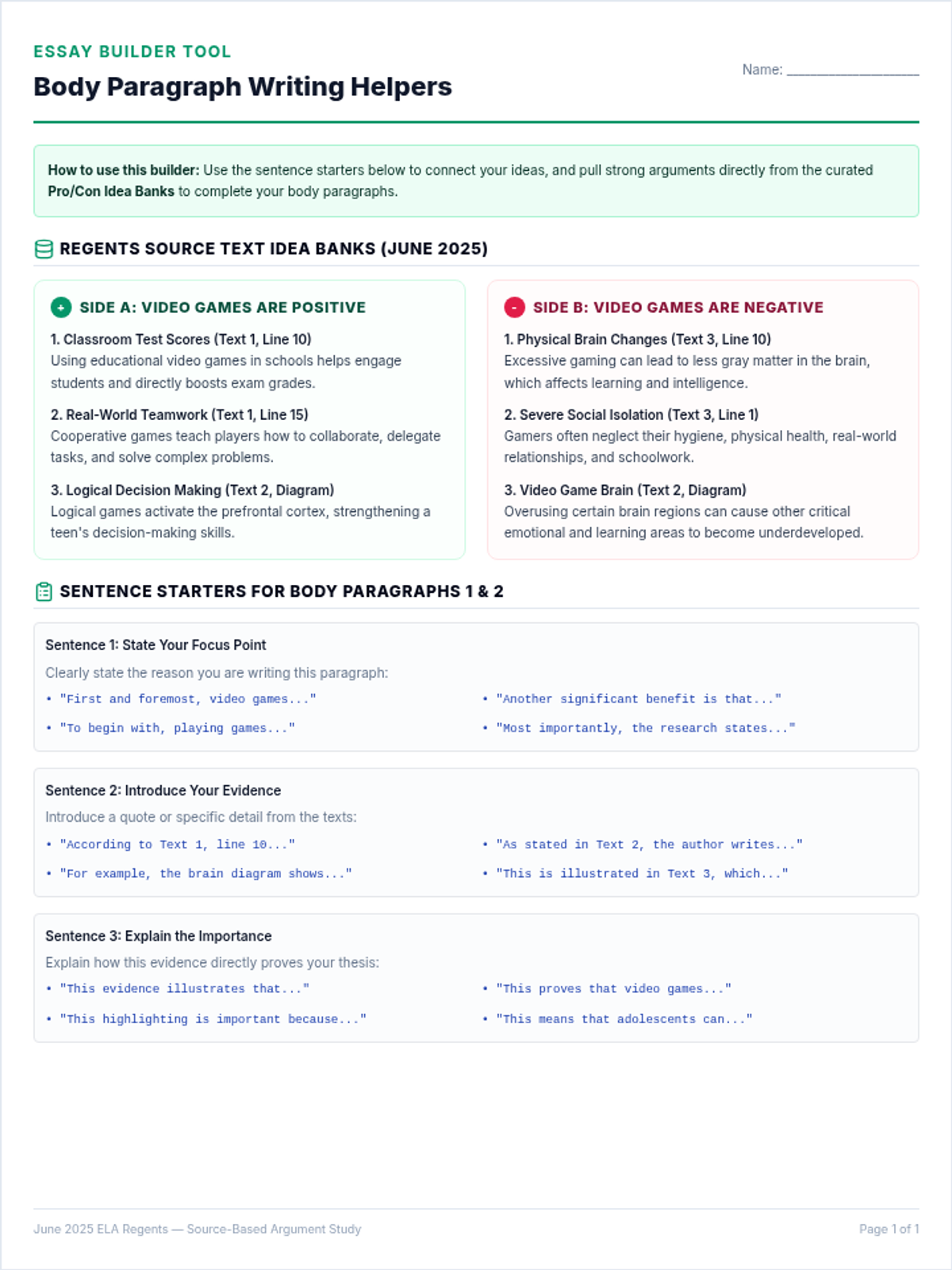
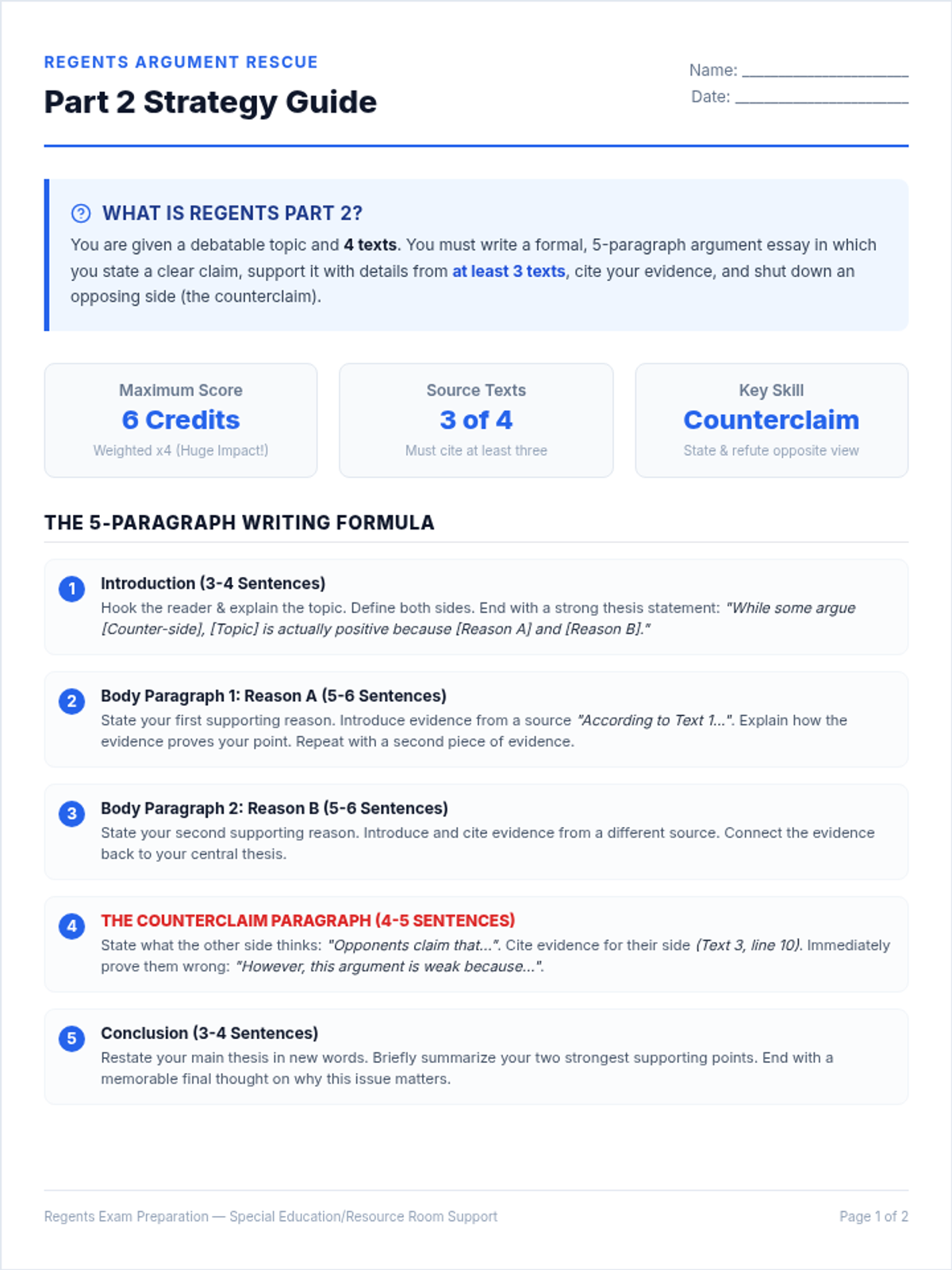
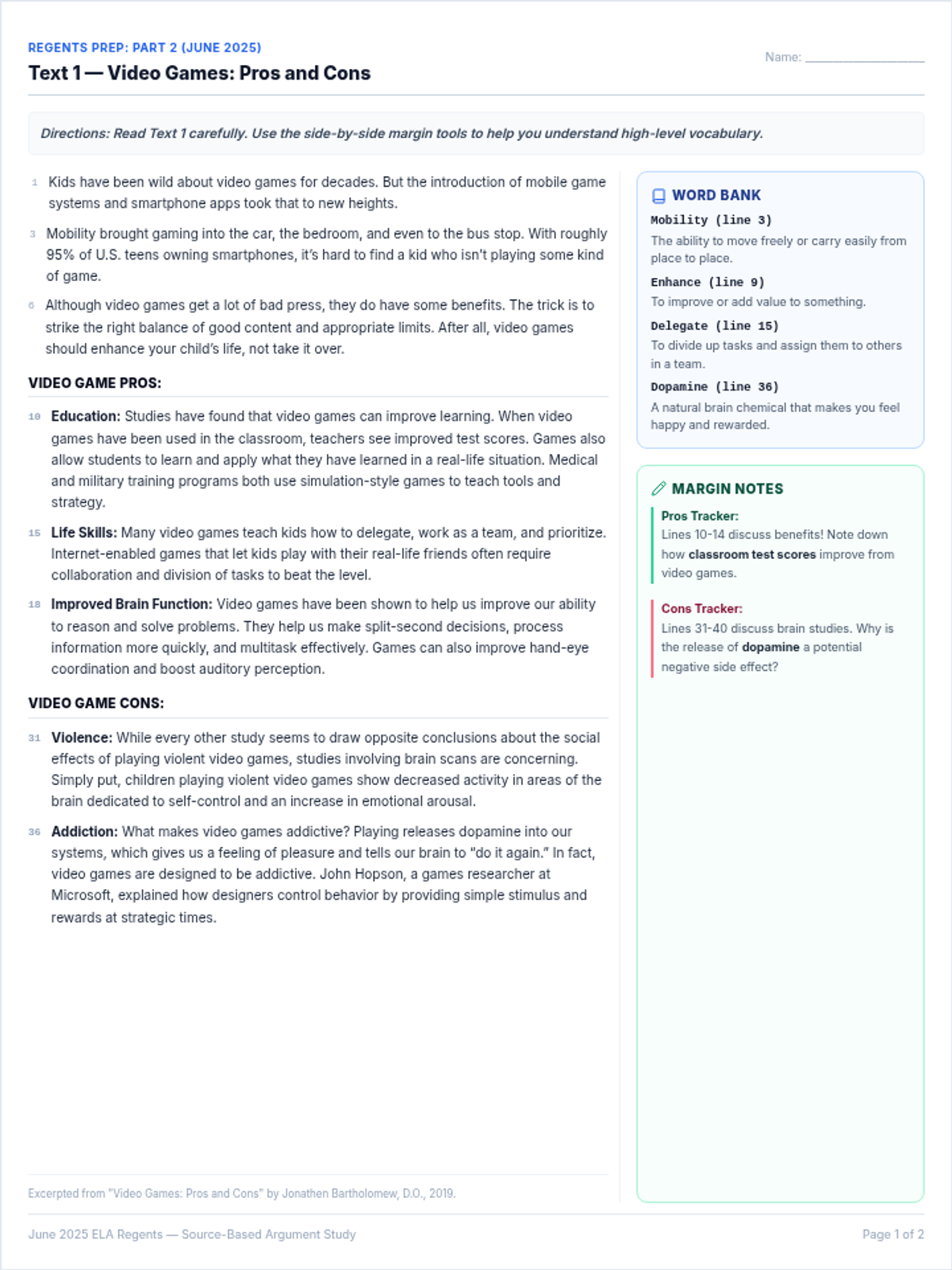
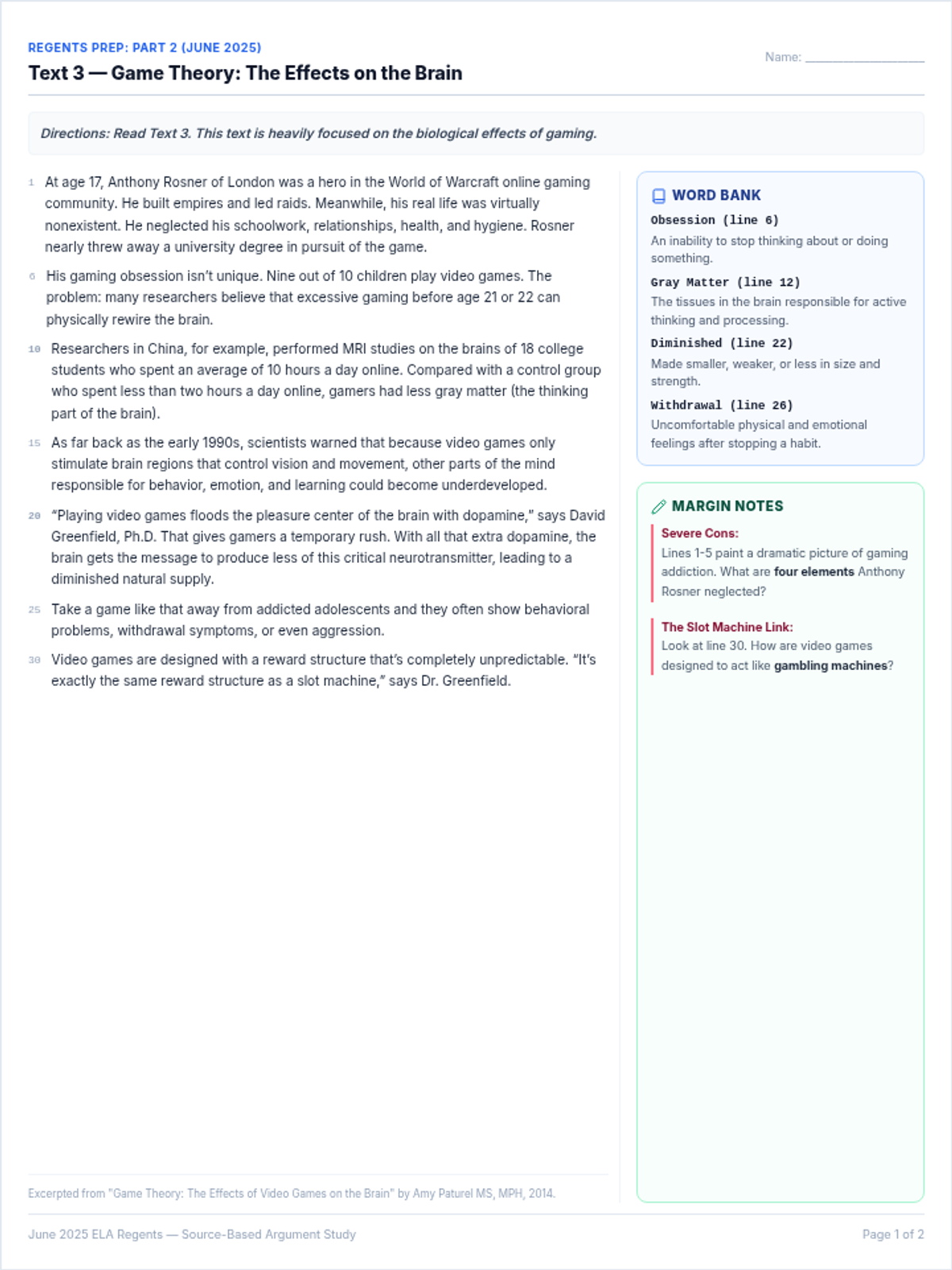
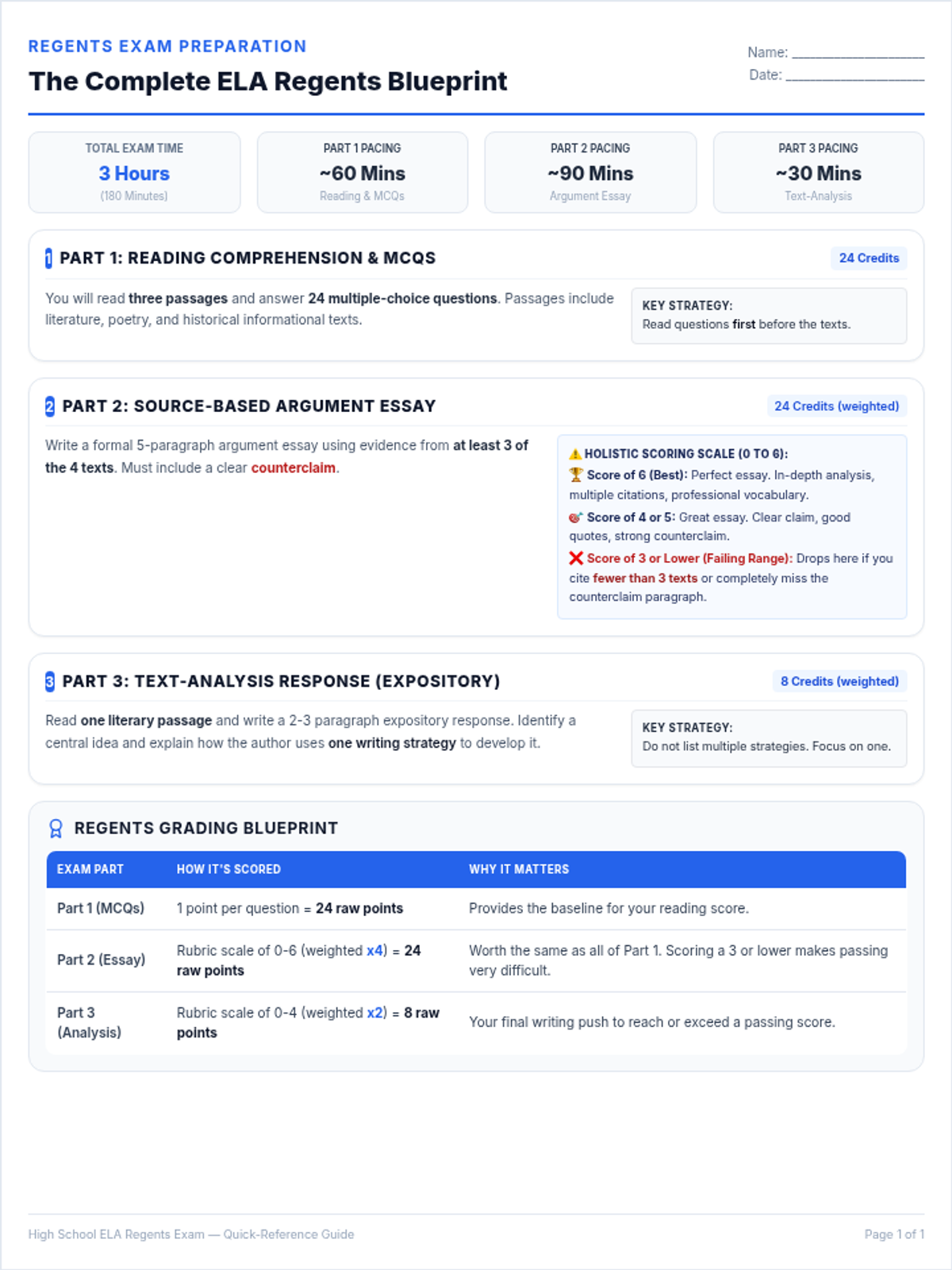
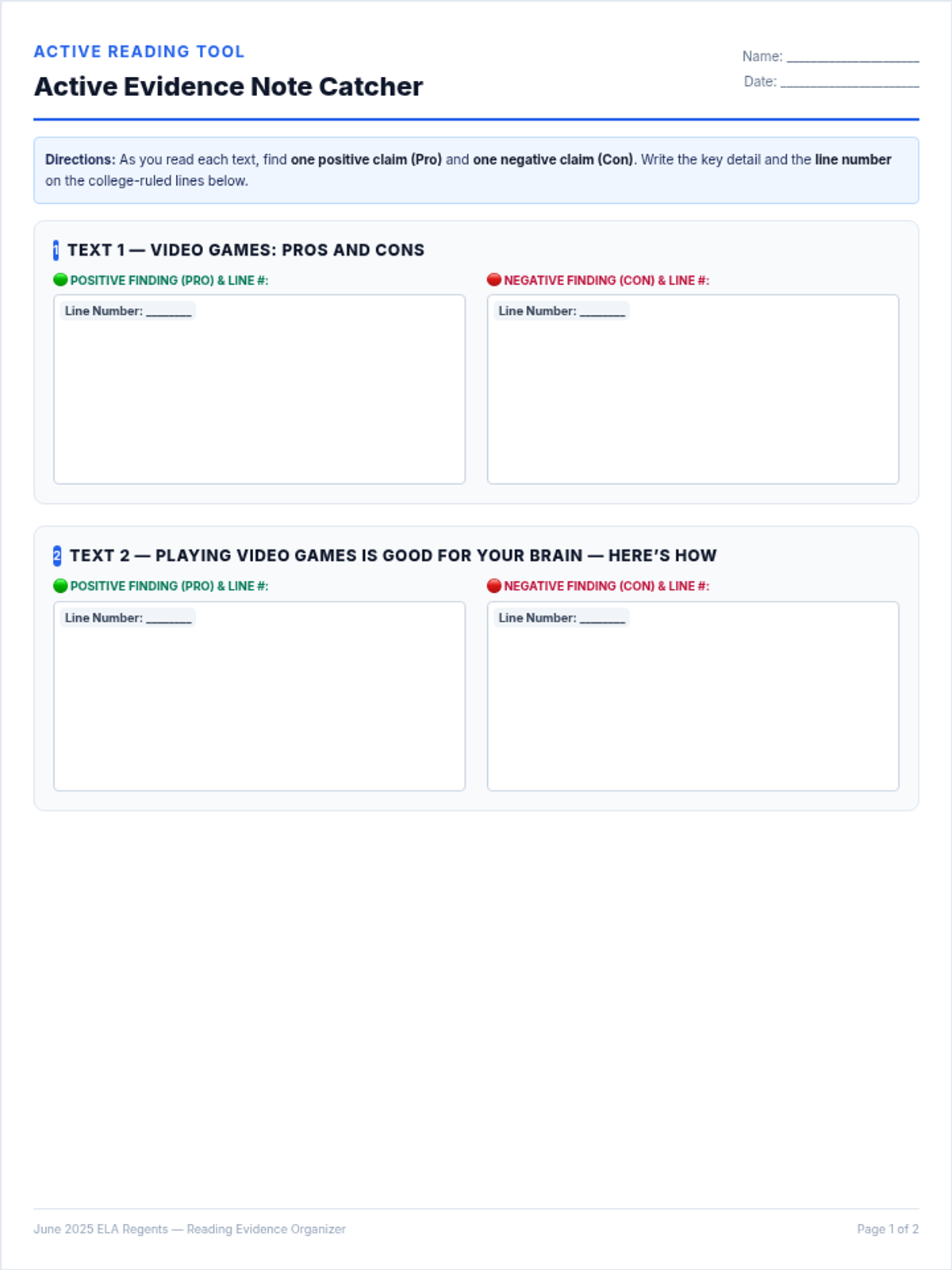
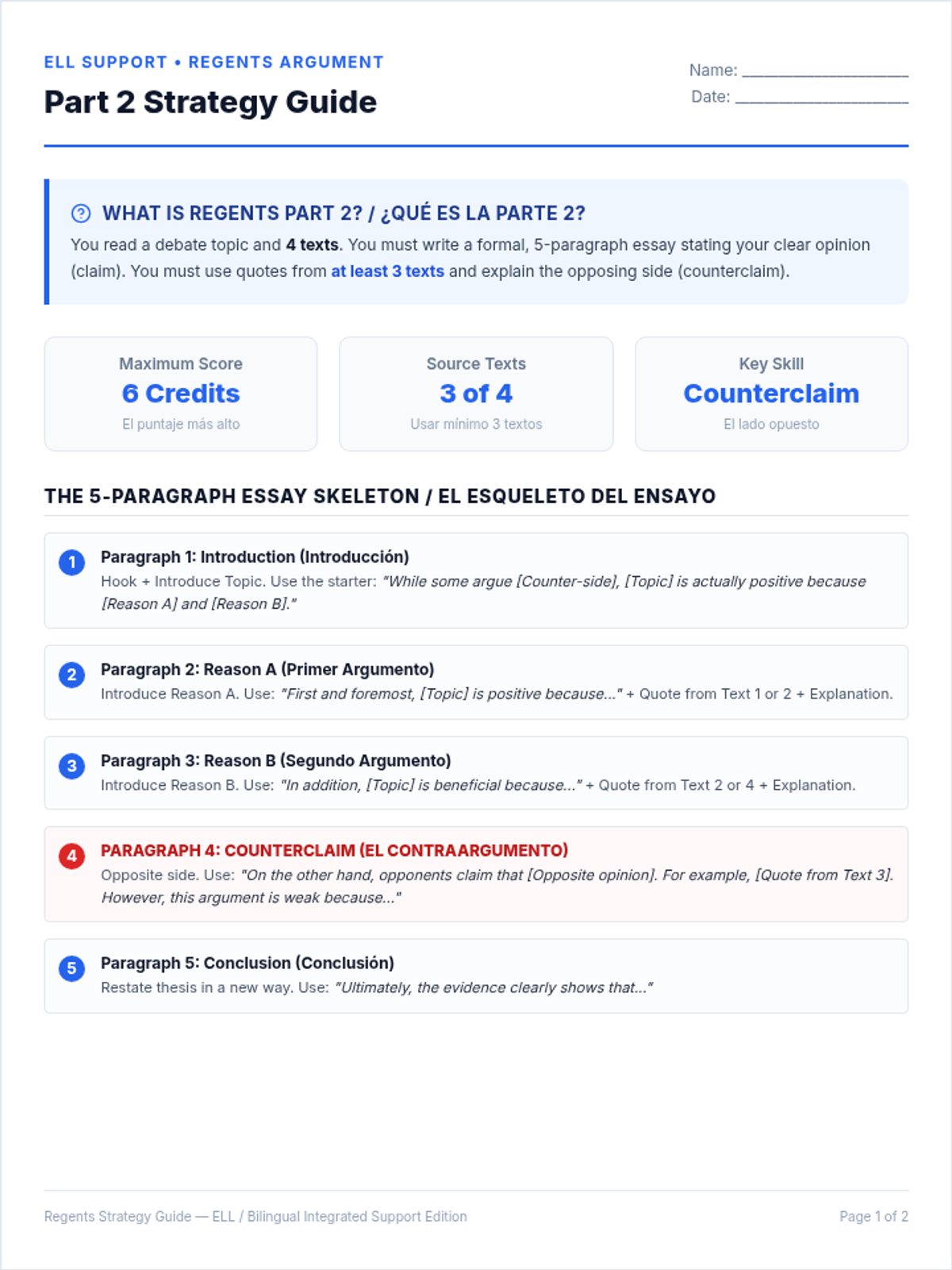
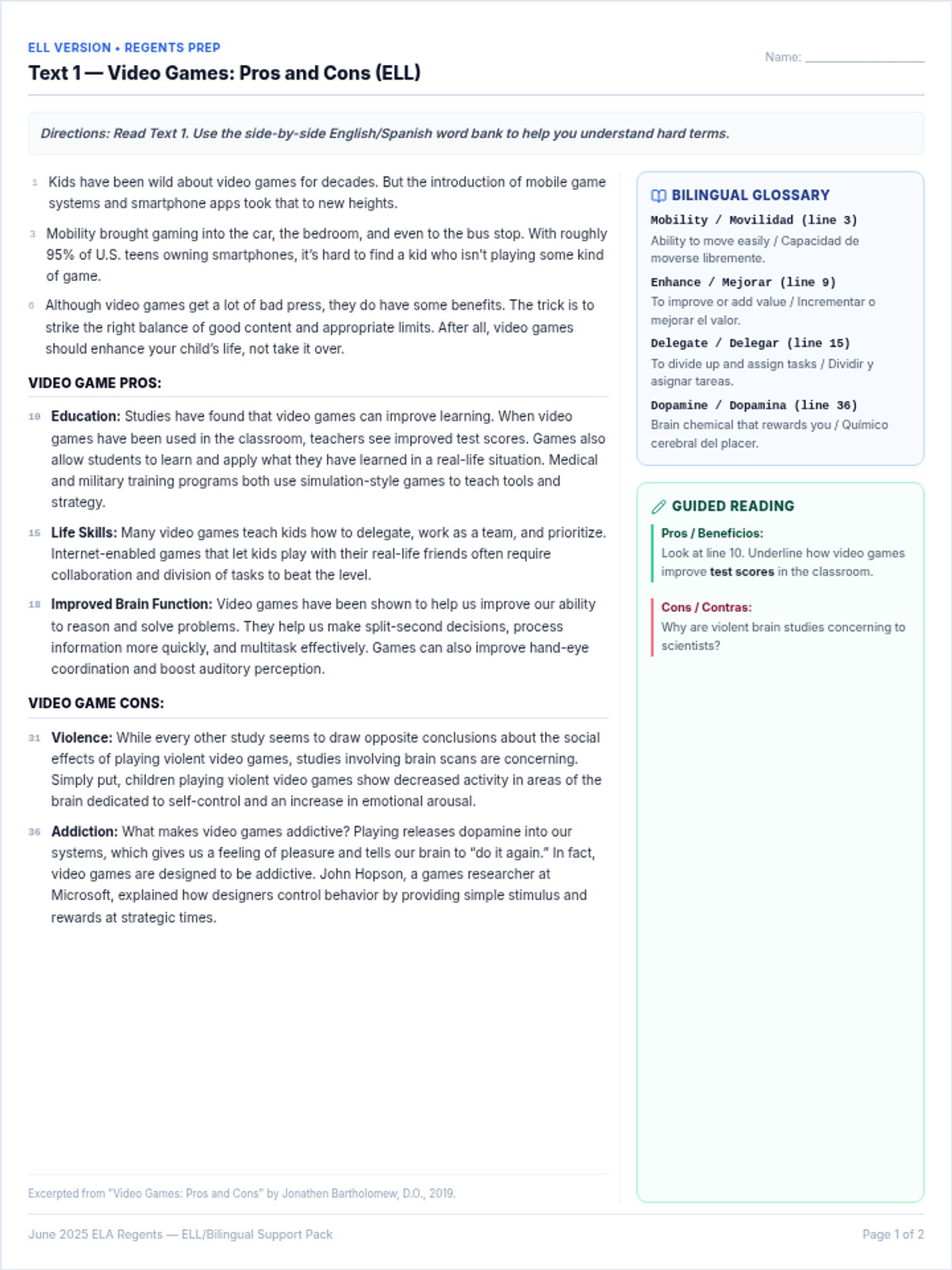
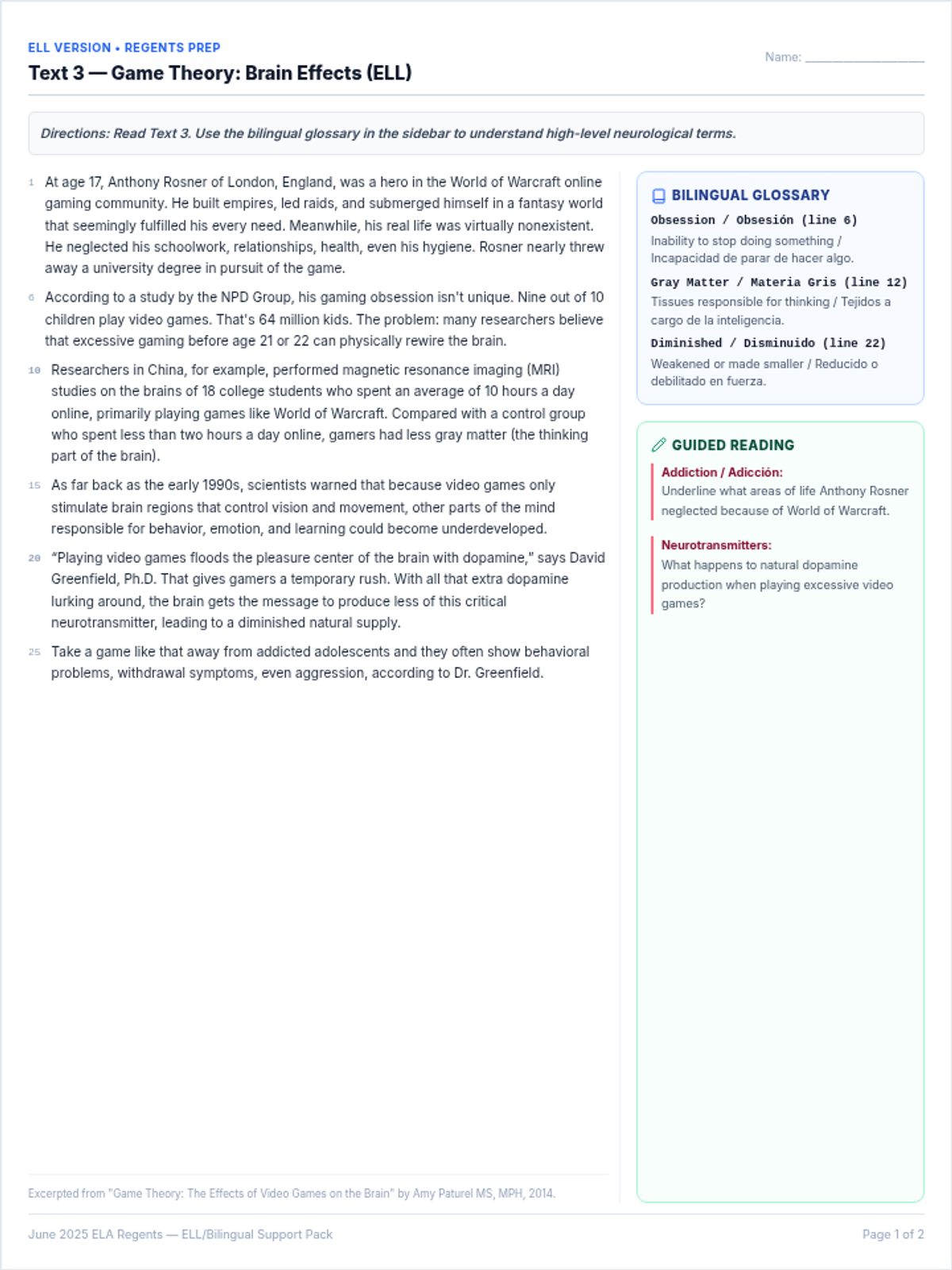
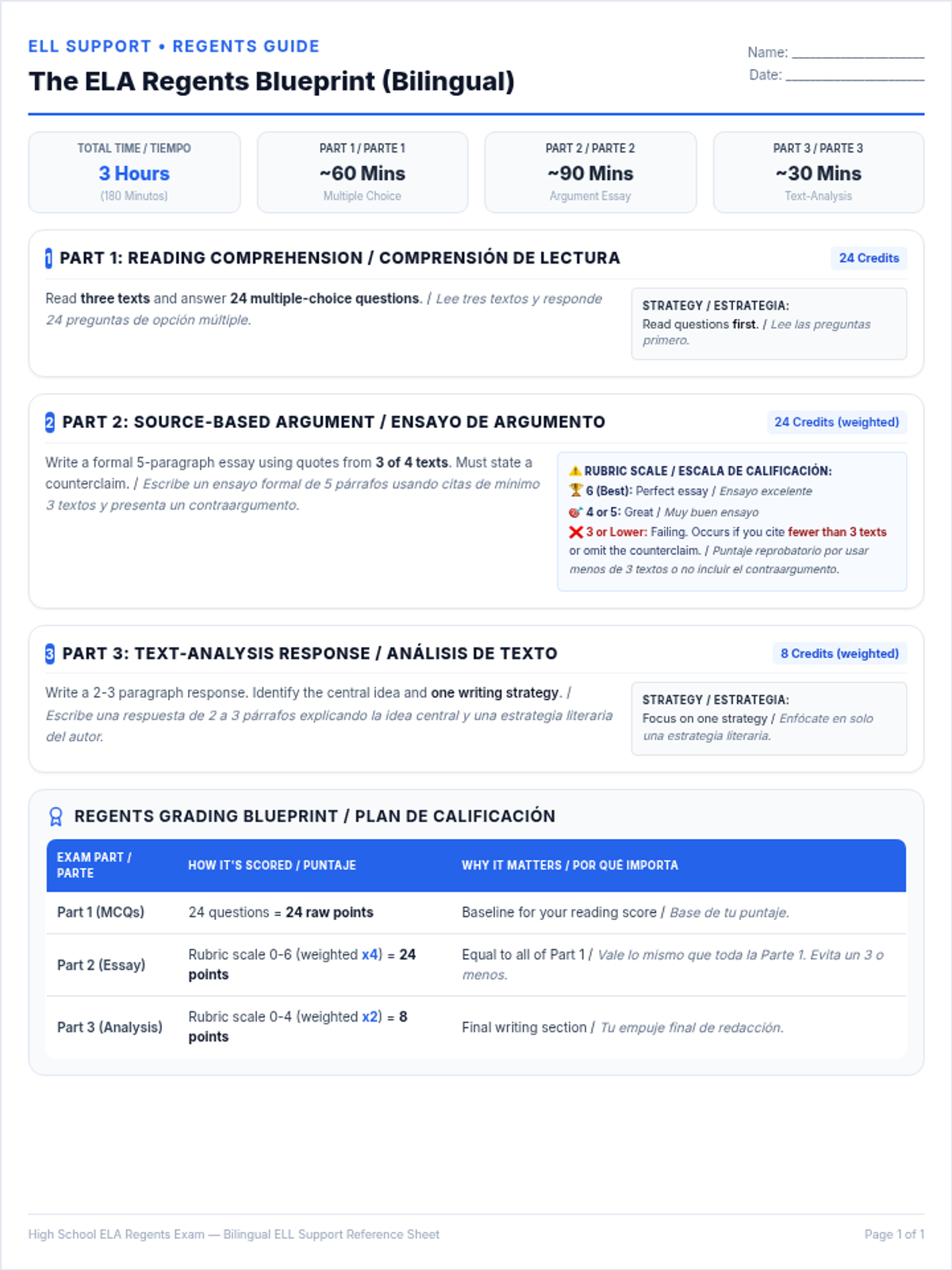
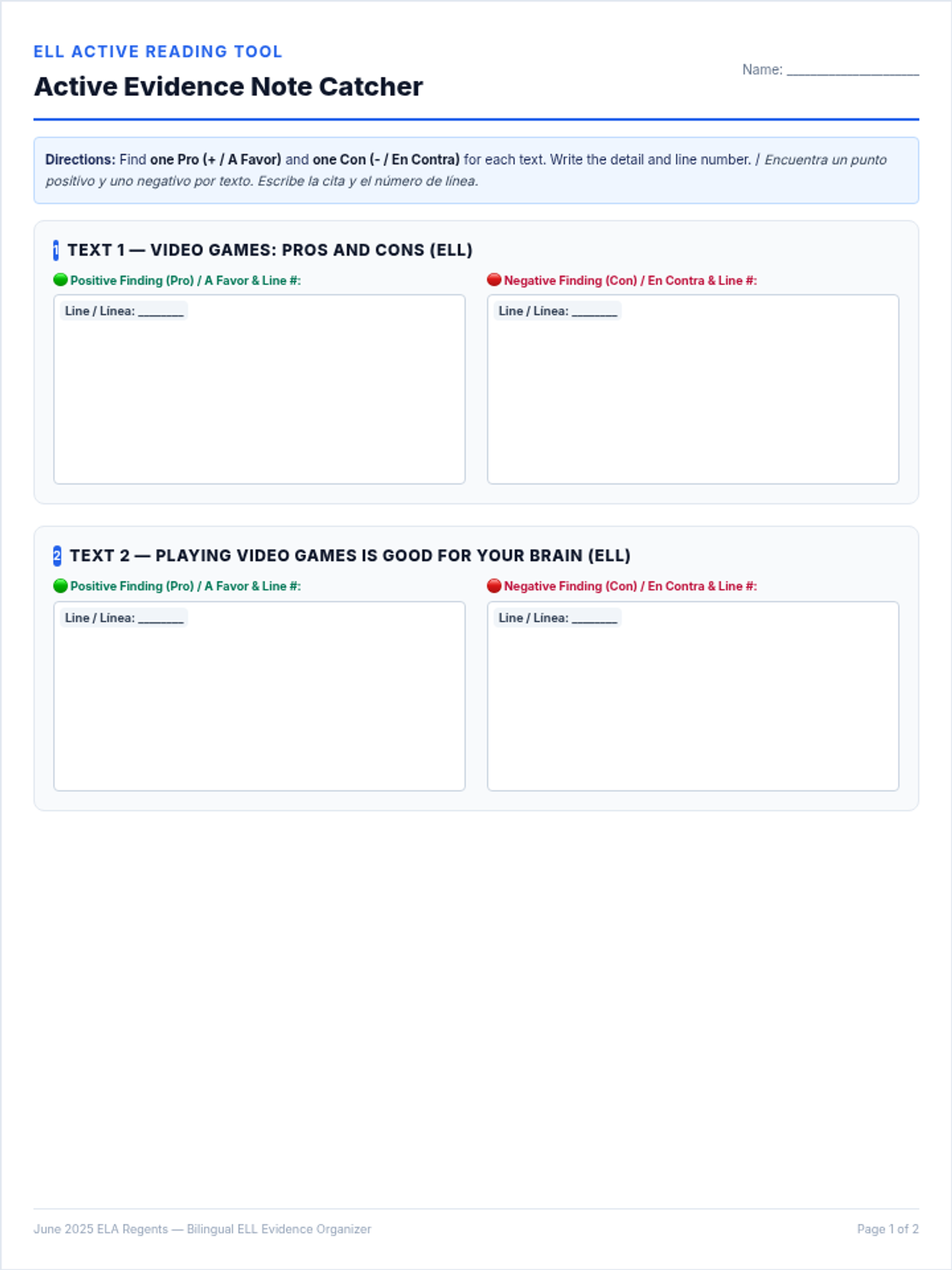
Students dissect the Regents Part 2 prompt requirements, learn step-by-step checklists, and read Texts 1, 2, 3, and 4 with direct vocabulary word banks and margin annotation support.
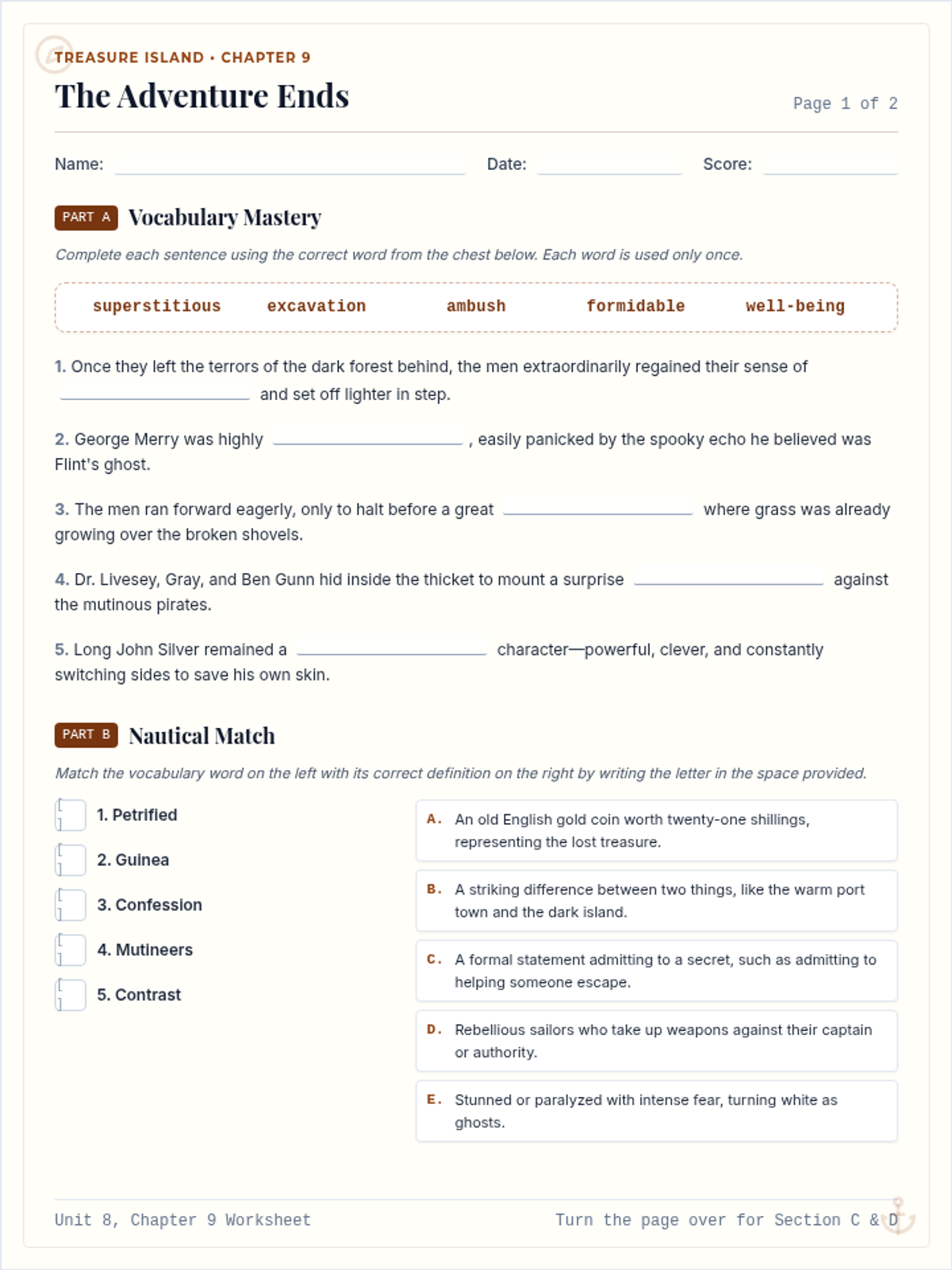
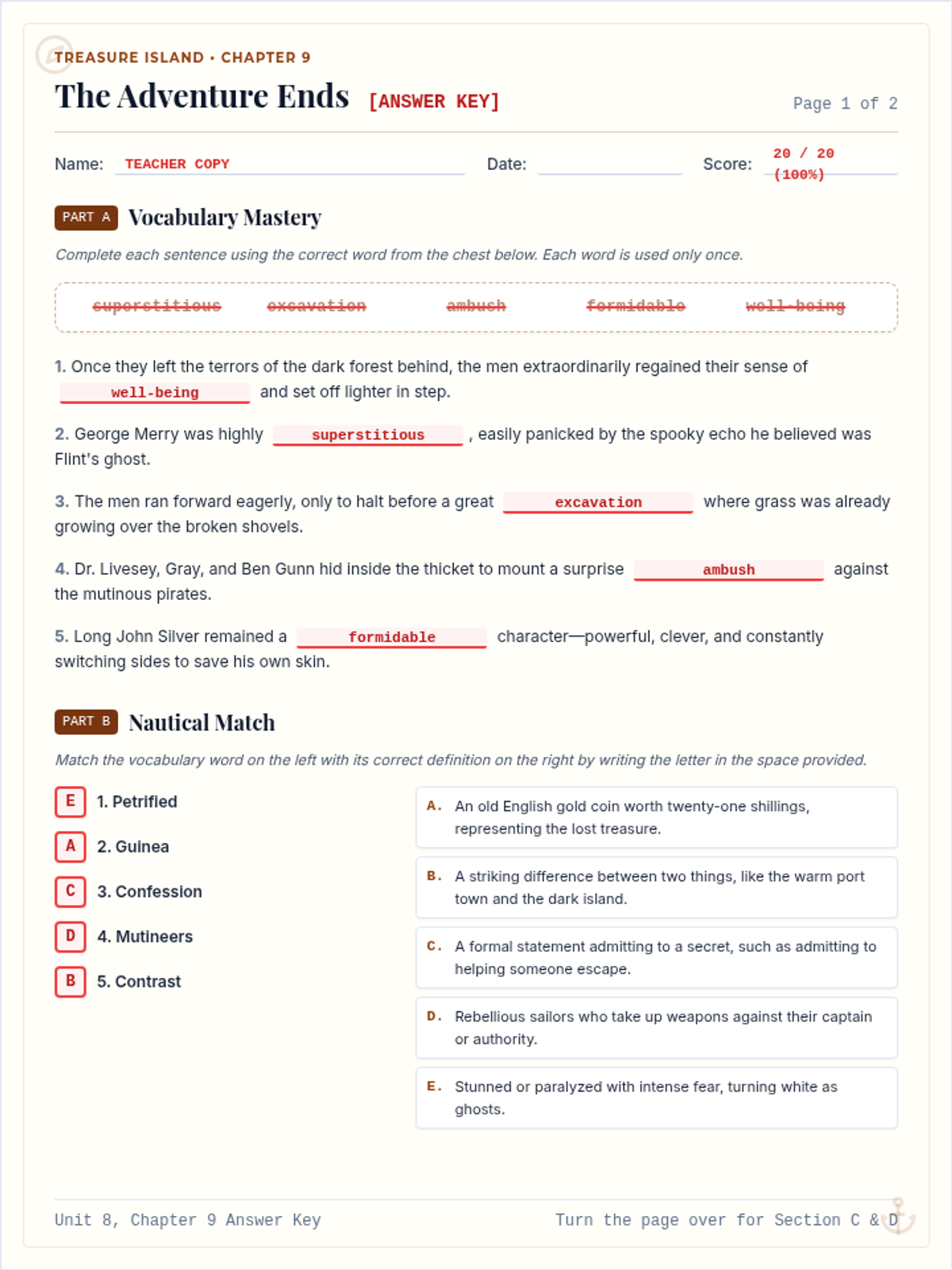
A reading comprehension and vocabulary lesson based on the final chapter of Treasure Island.
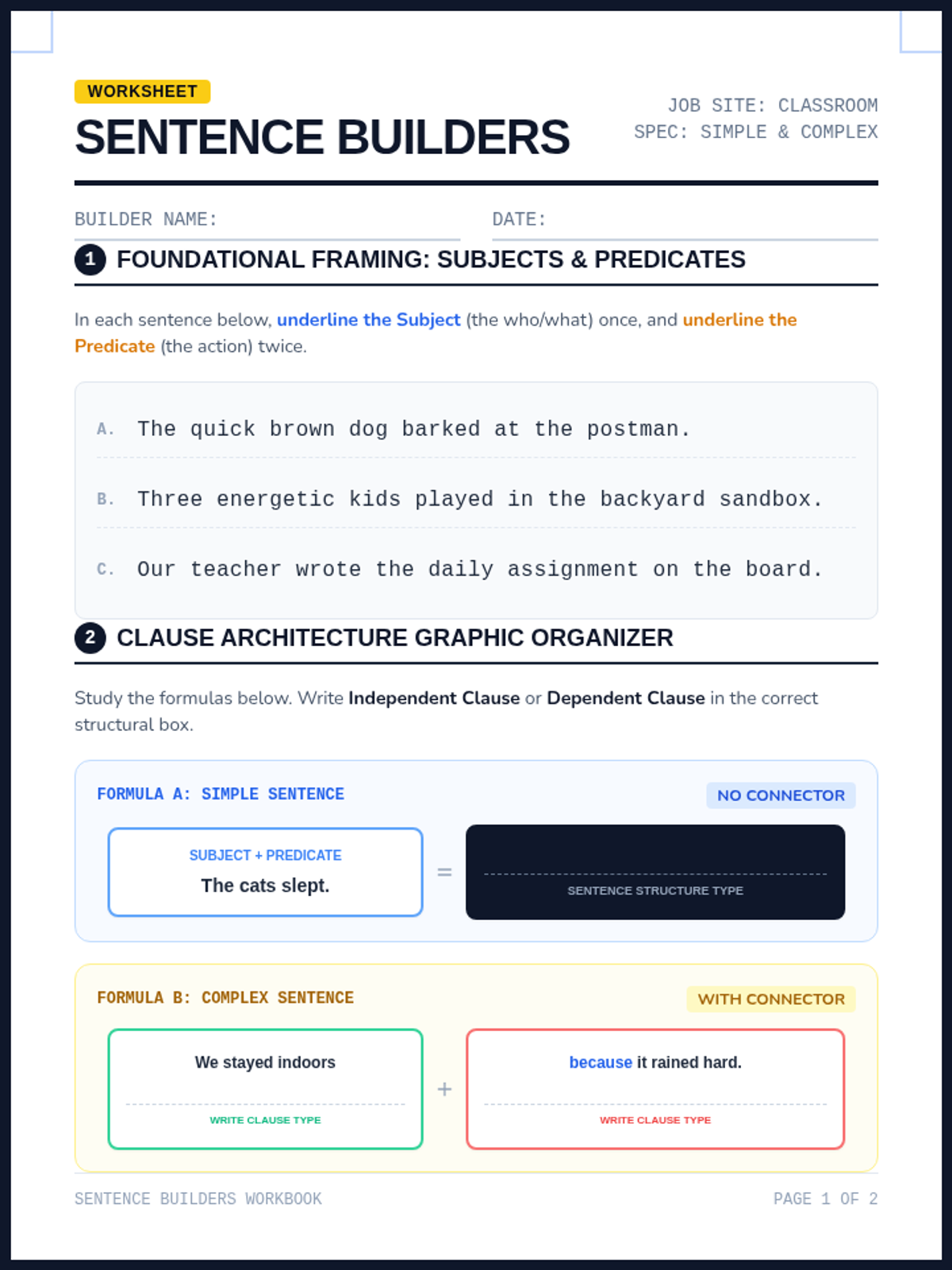
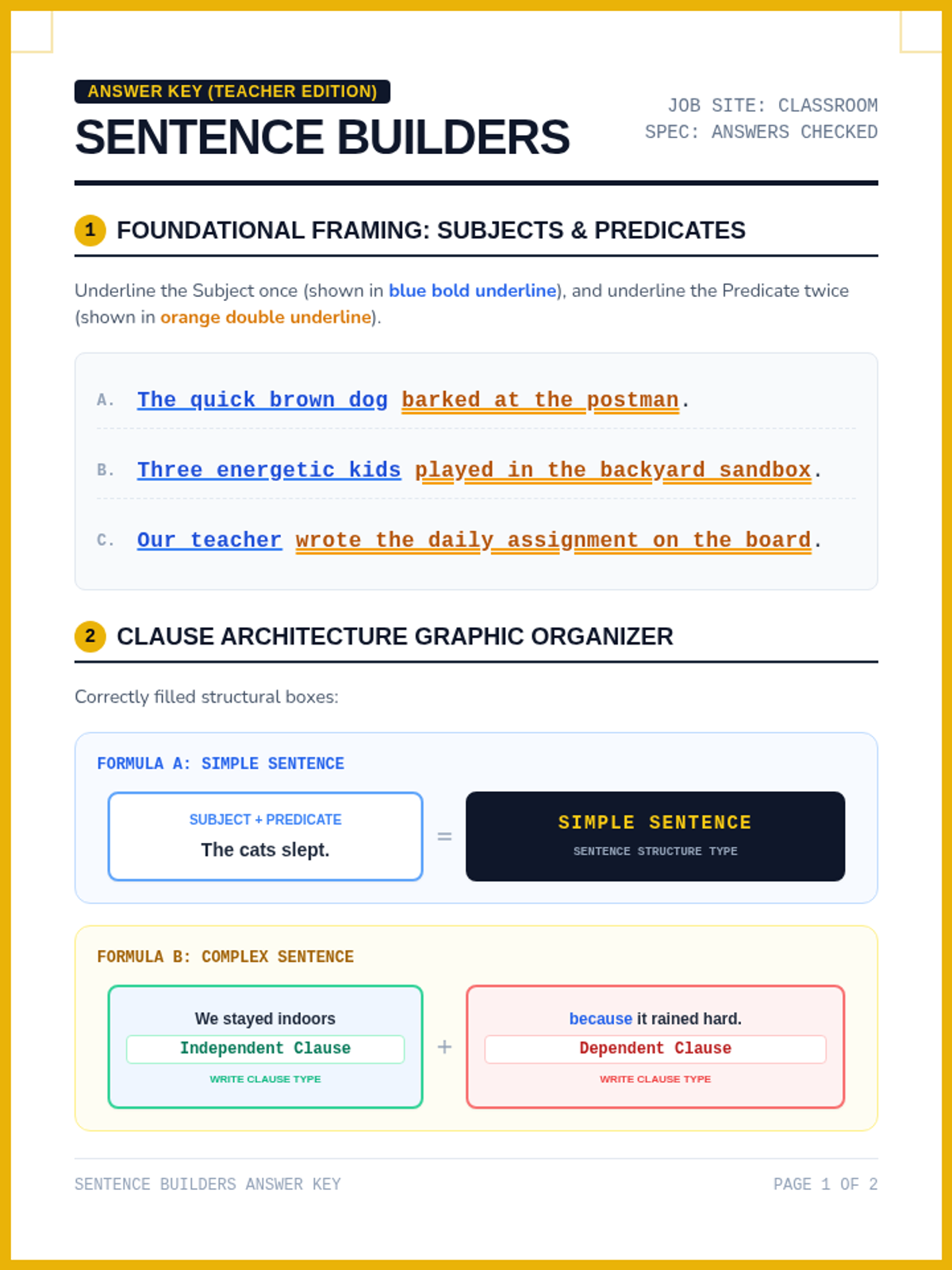
A foundational grammar lesson focusing on identifying subjects and predicates, and distinguishing between simple and complex sentences using visual construction-themed formulas and graphics.
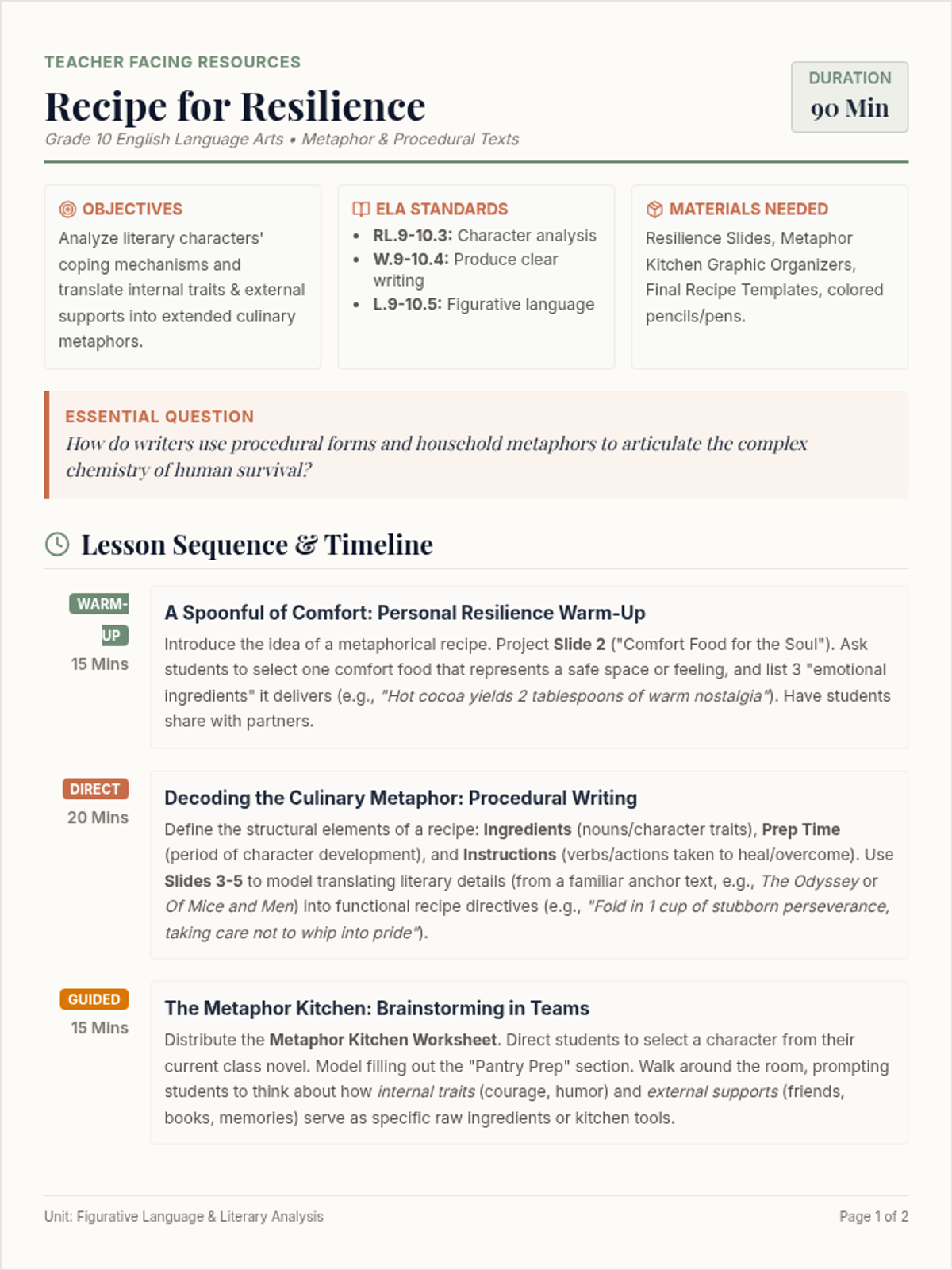
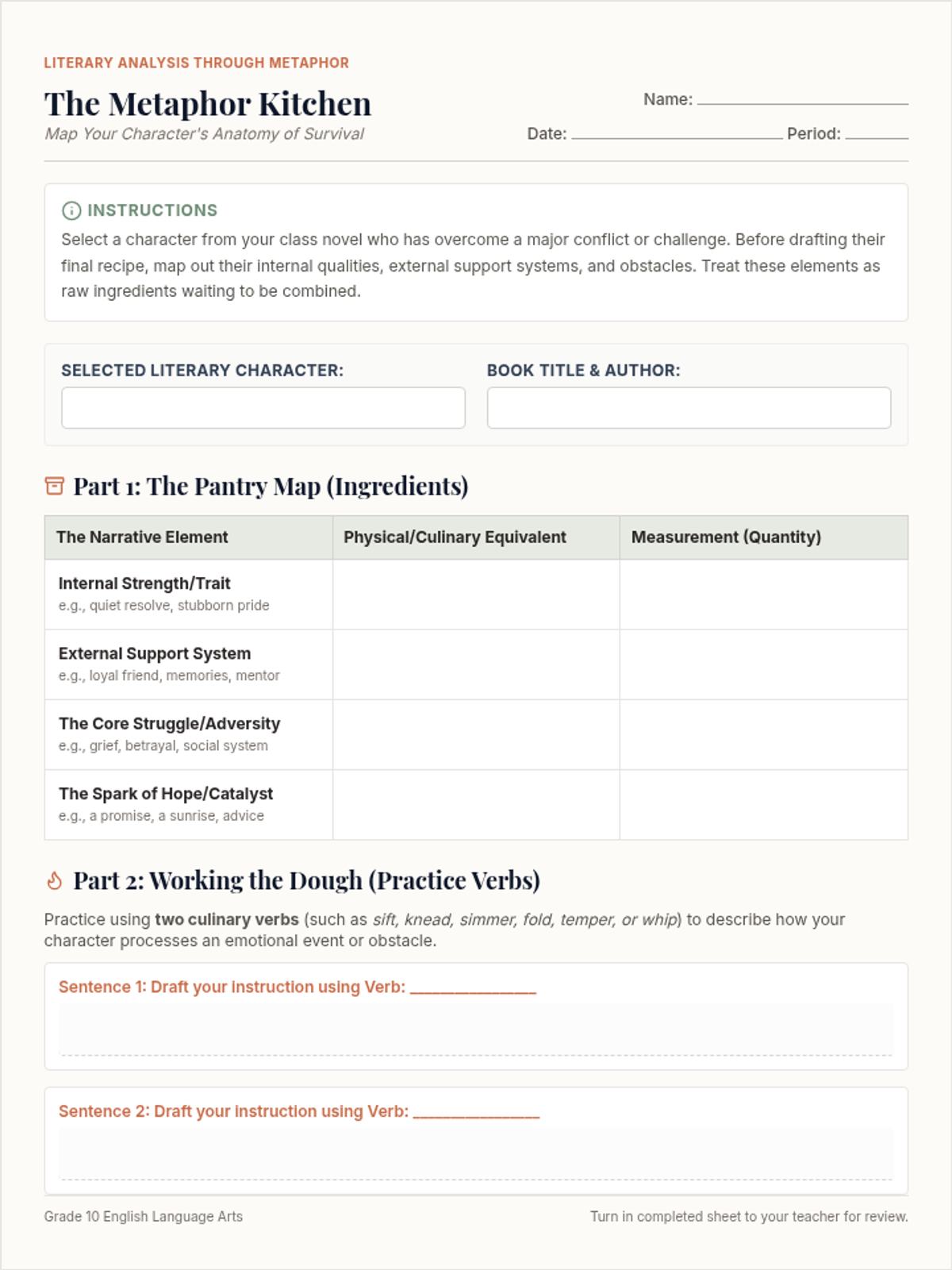
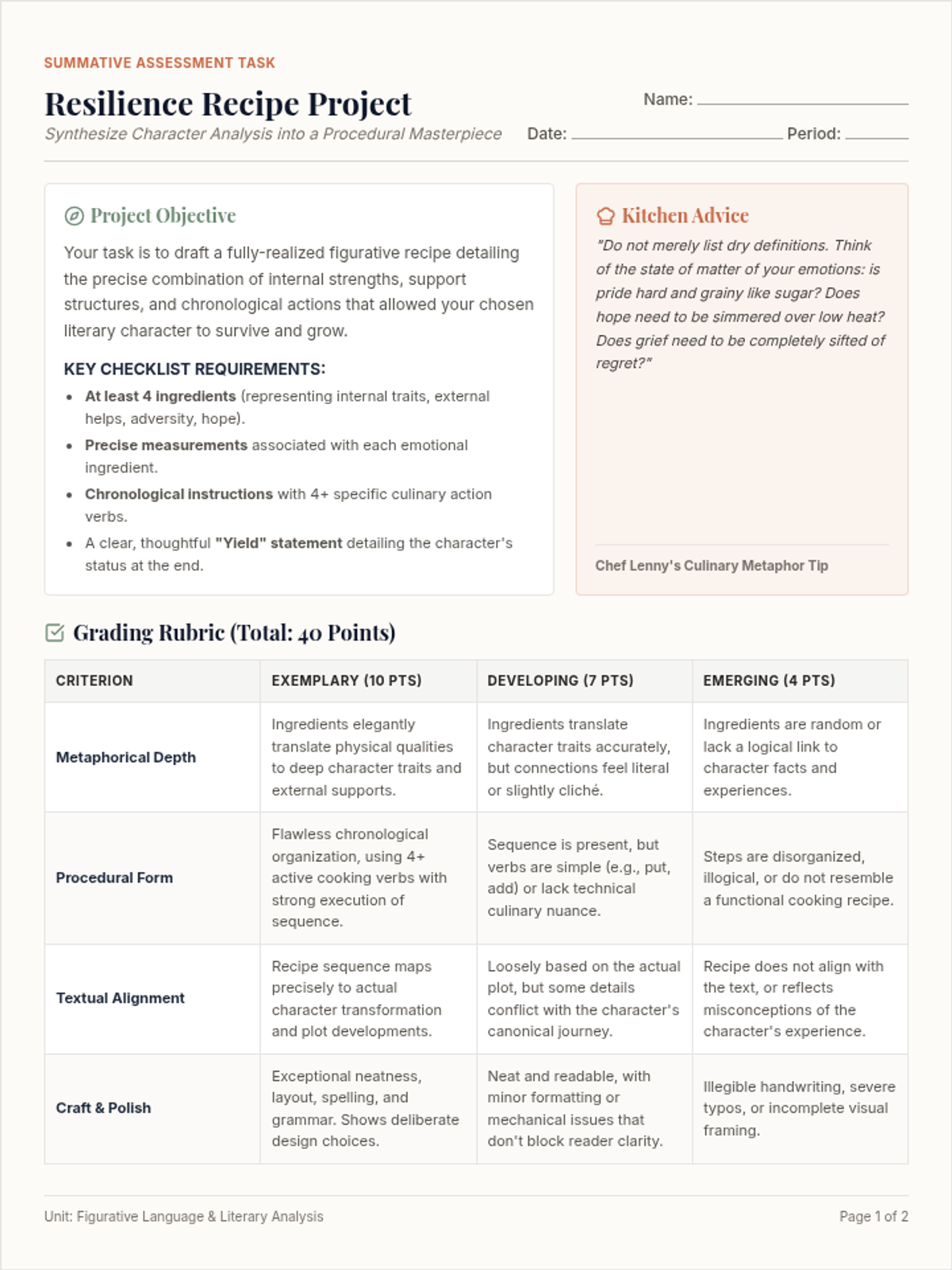
A 10th-grade English language arts lesson blending procedural text structures with deep metaphorical thinking, where students write figurative recipes detailing the internal traits and external supports that help literary characters overcome adversity.
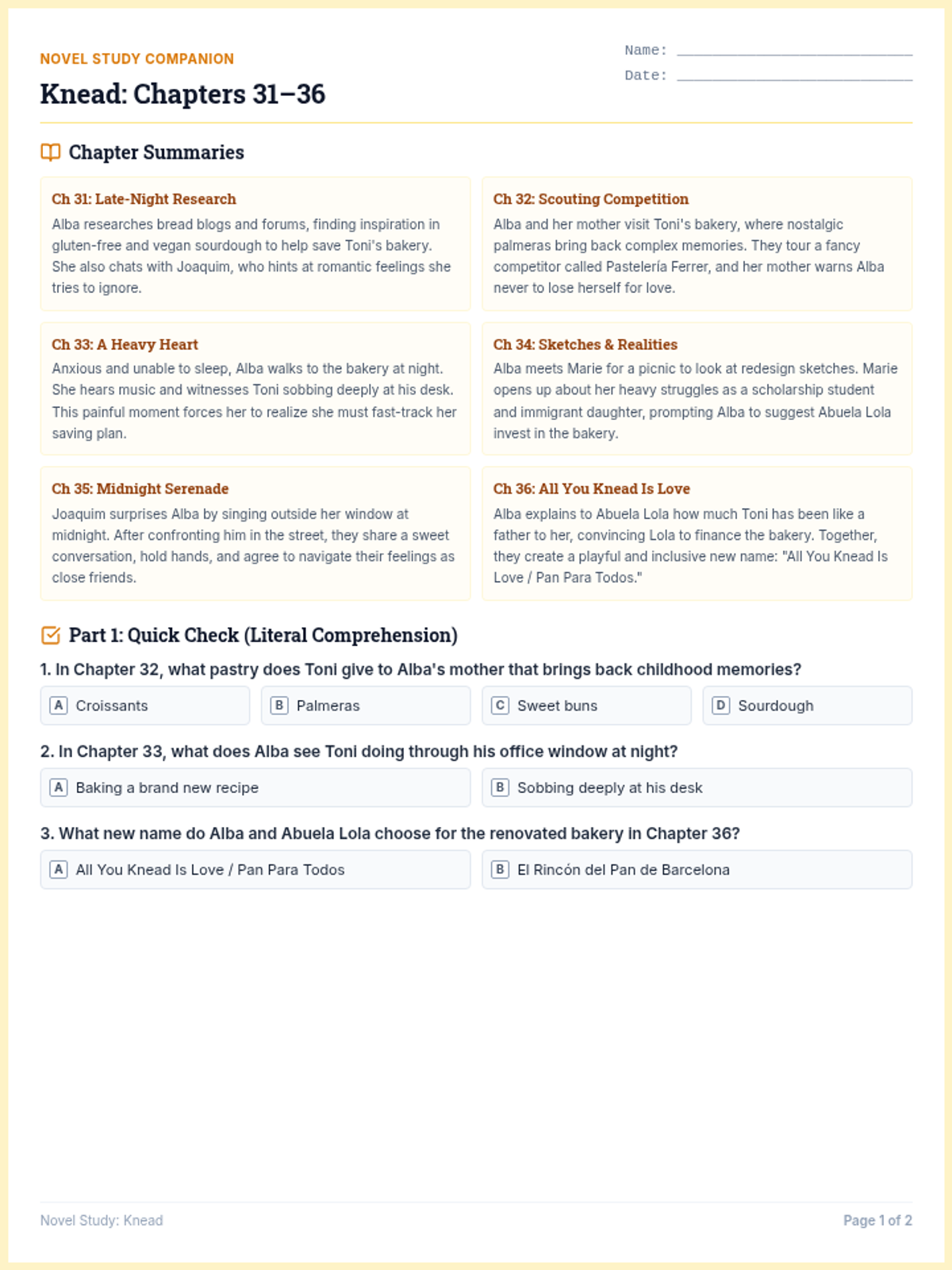
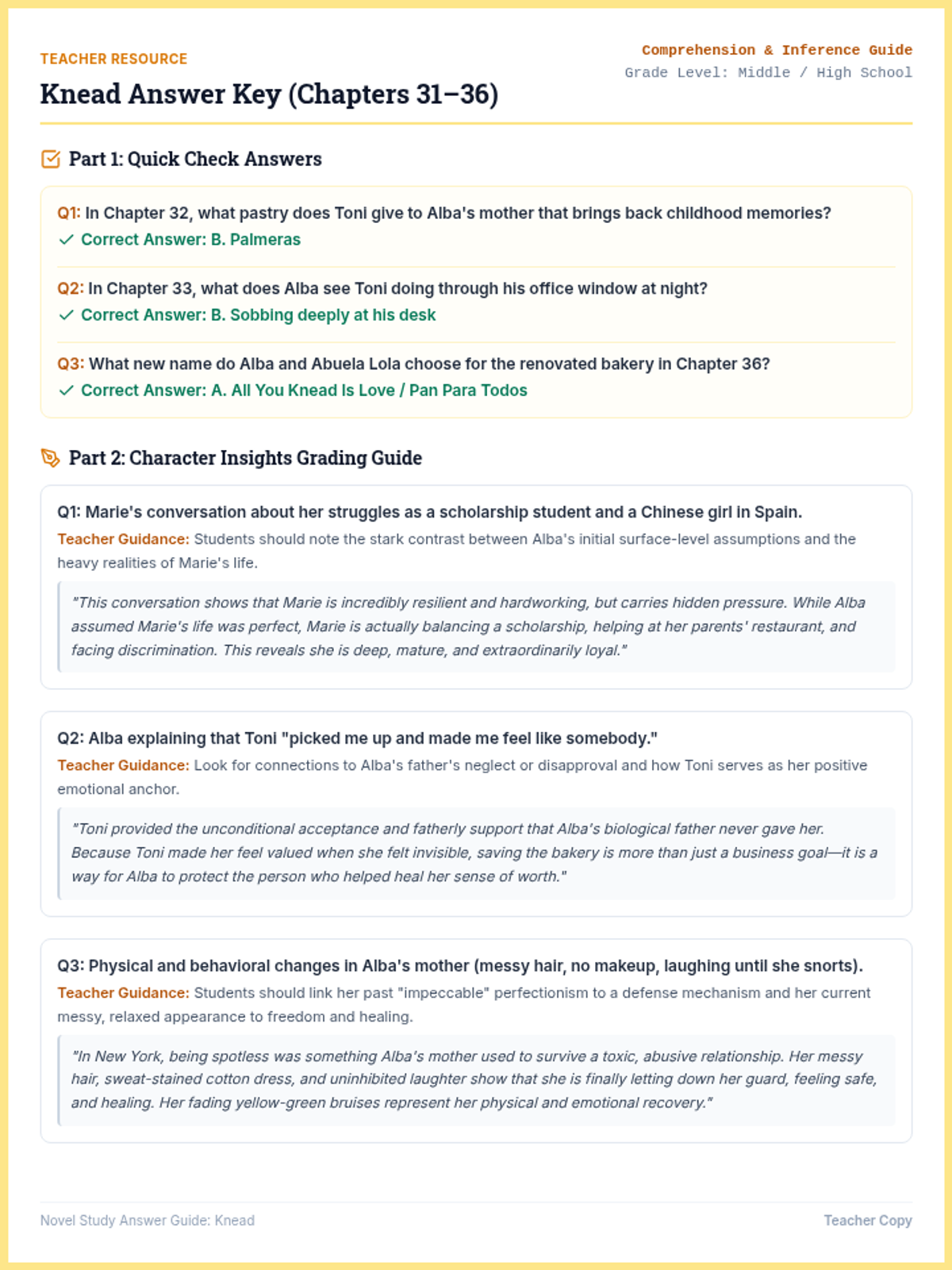
A deep-dive reading analysis of chapters 31-36 of the novel 'Knead', exploring student comprehension and character inference.
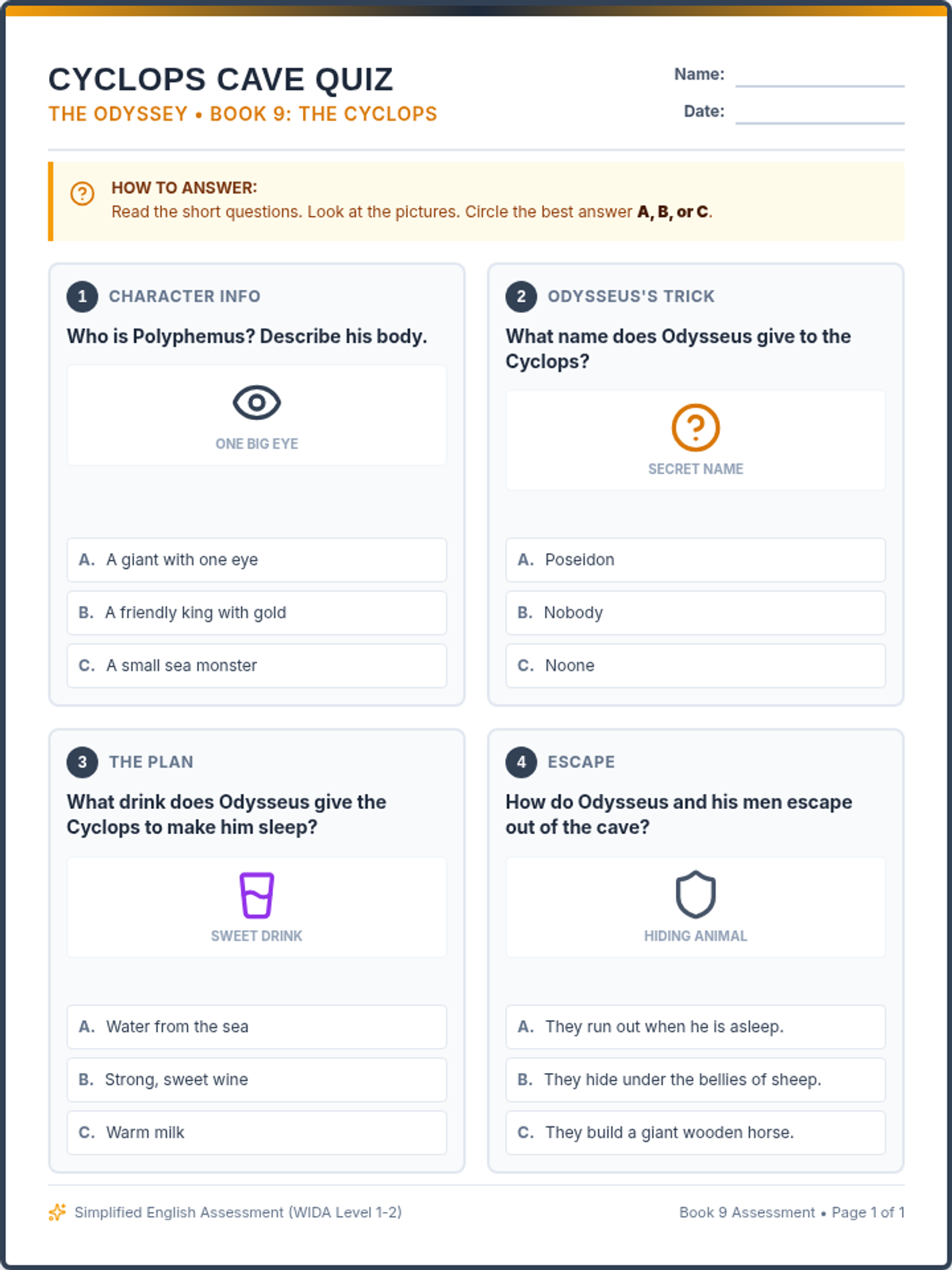
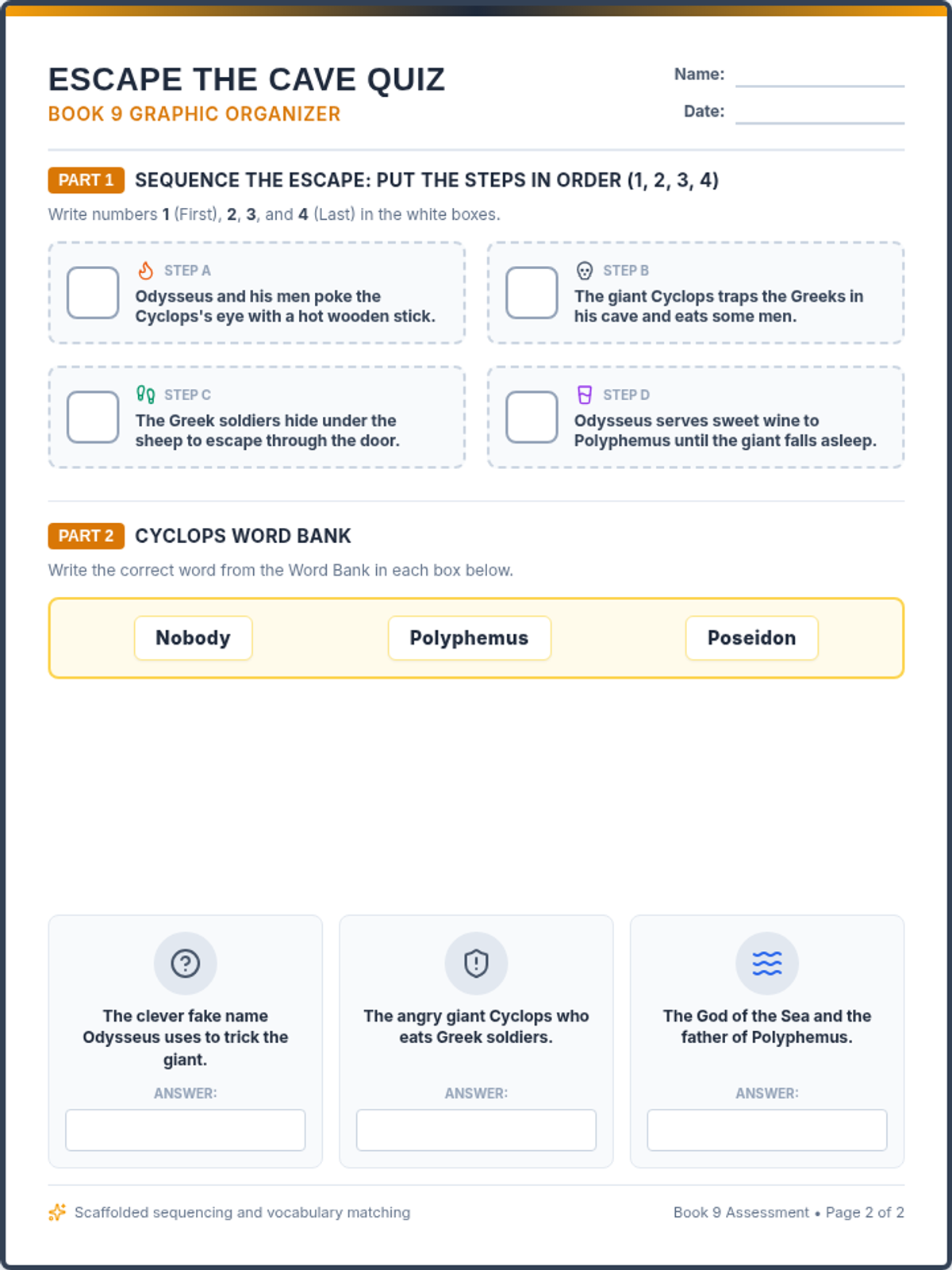
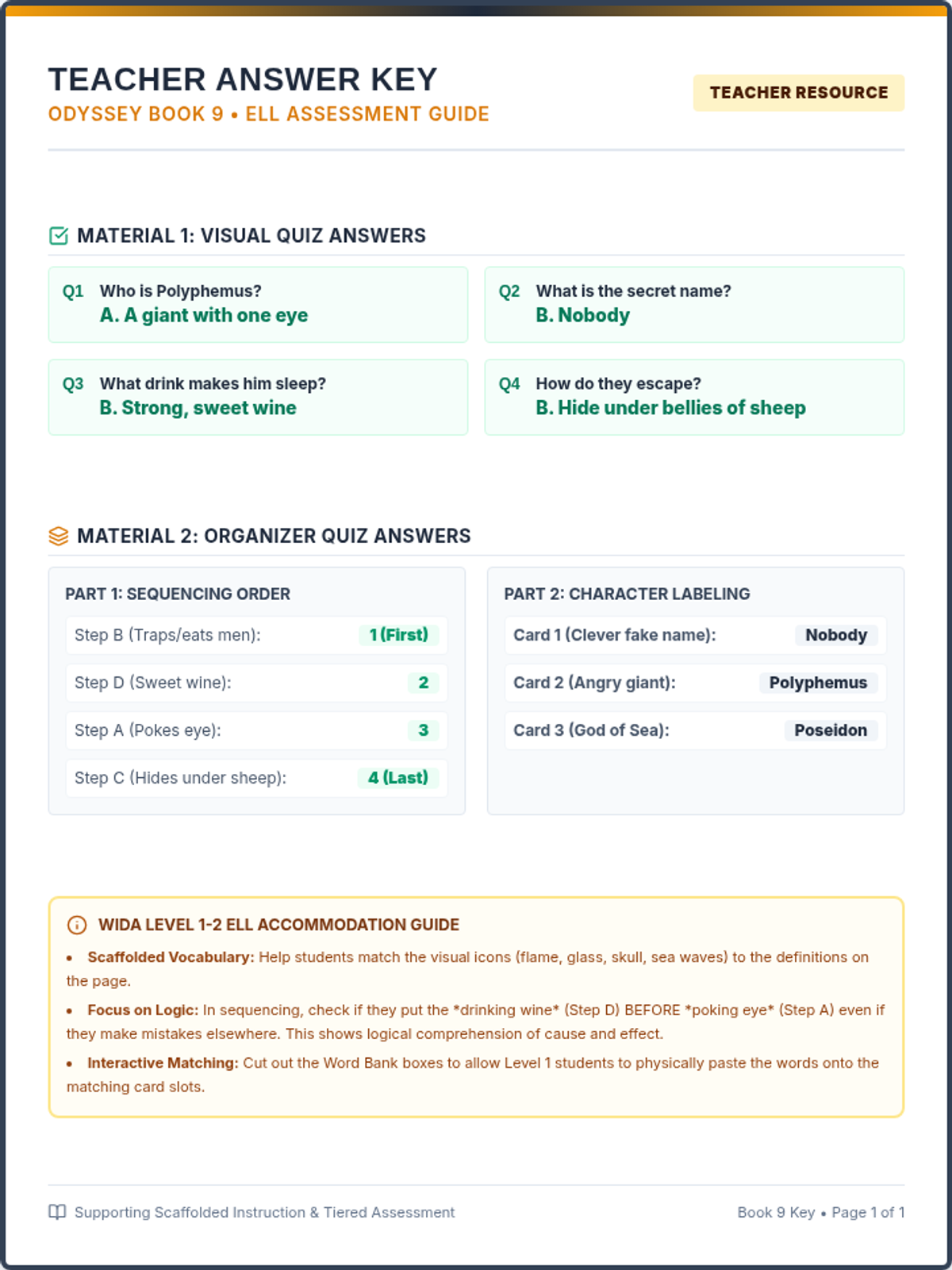
A highly scaffolded, visual lesson covering Book 9 of The Odyssey (the Cyclops). Focuses on character roles, sequencing Odysseus's escape plan, and cause-and-effect vocabulary for WIDA Level 1-2 ELL students.
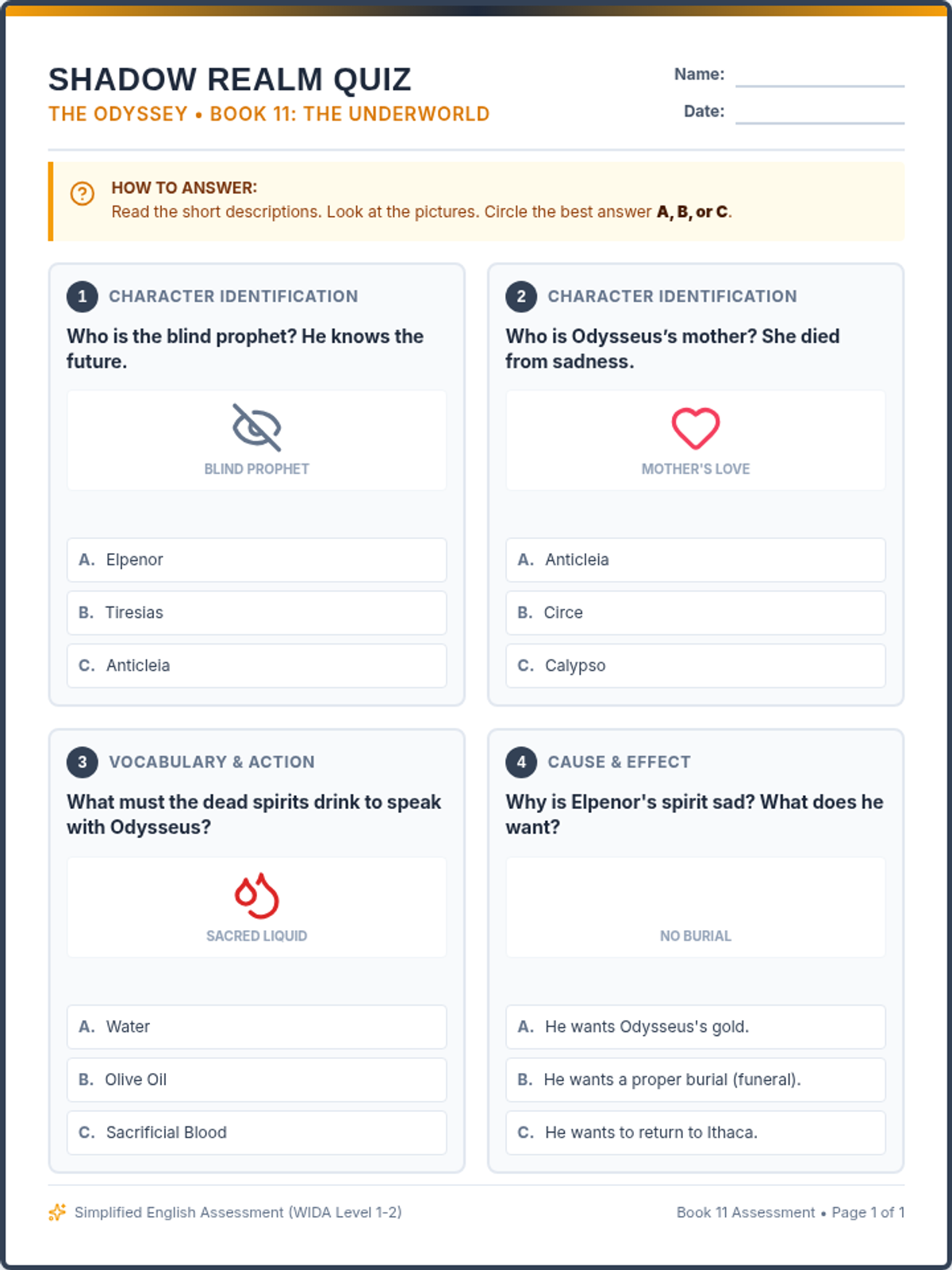
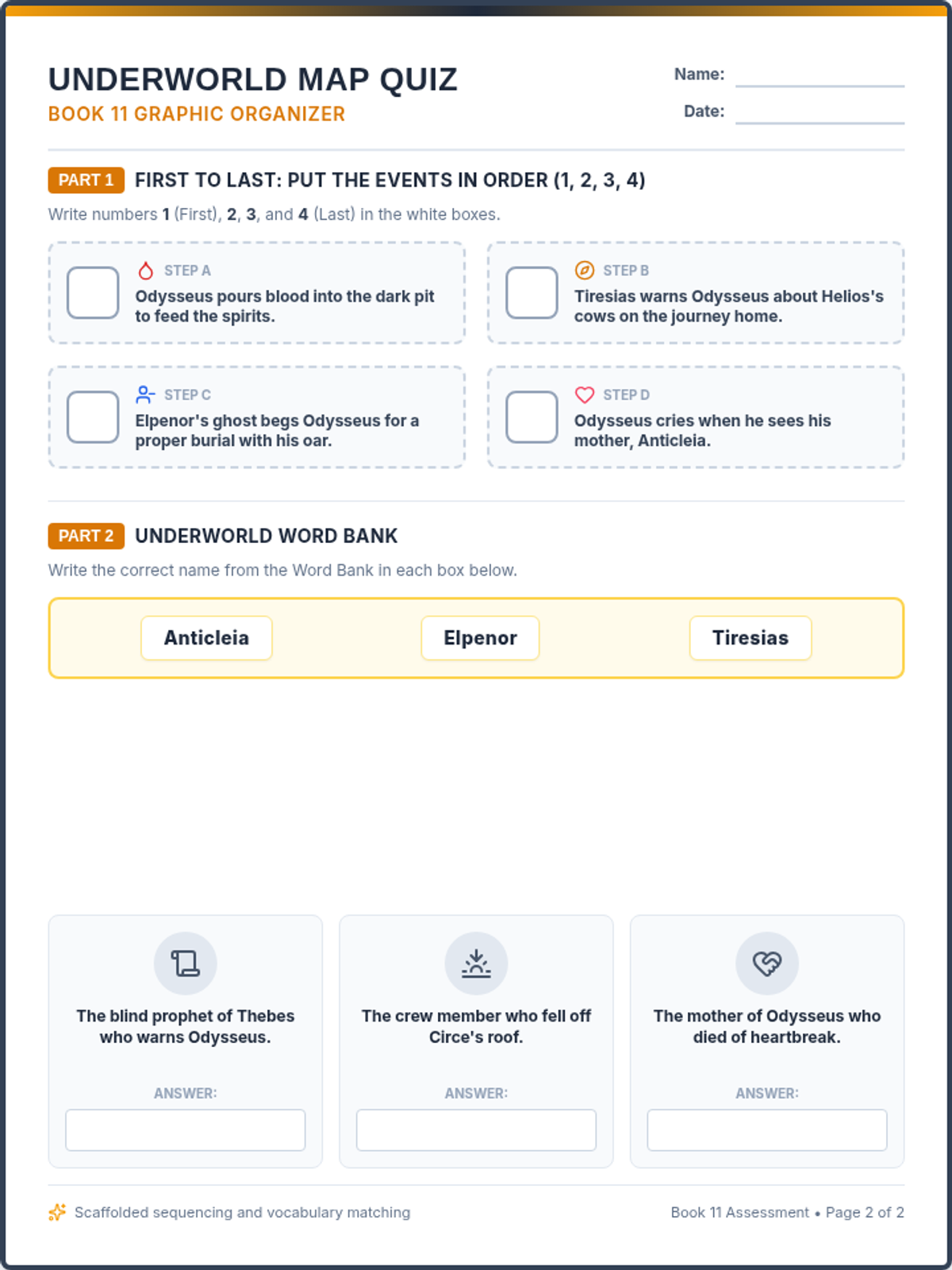
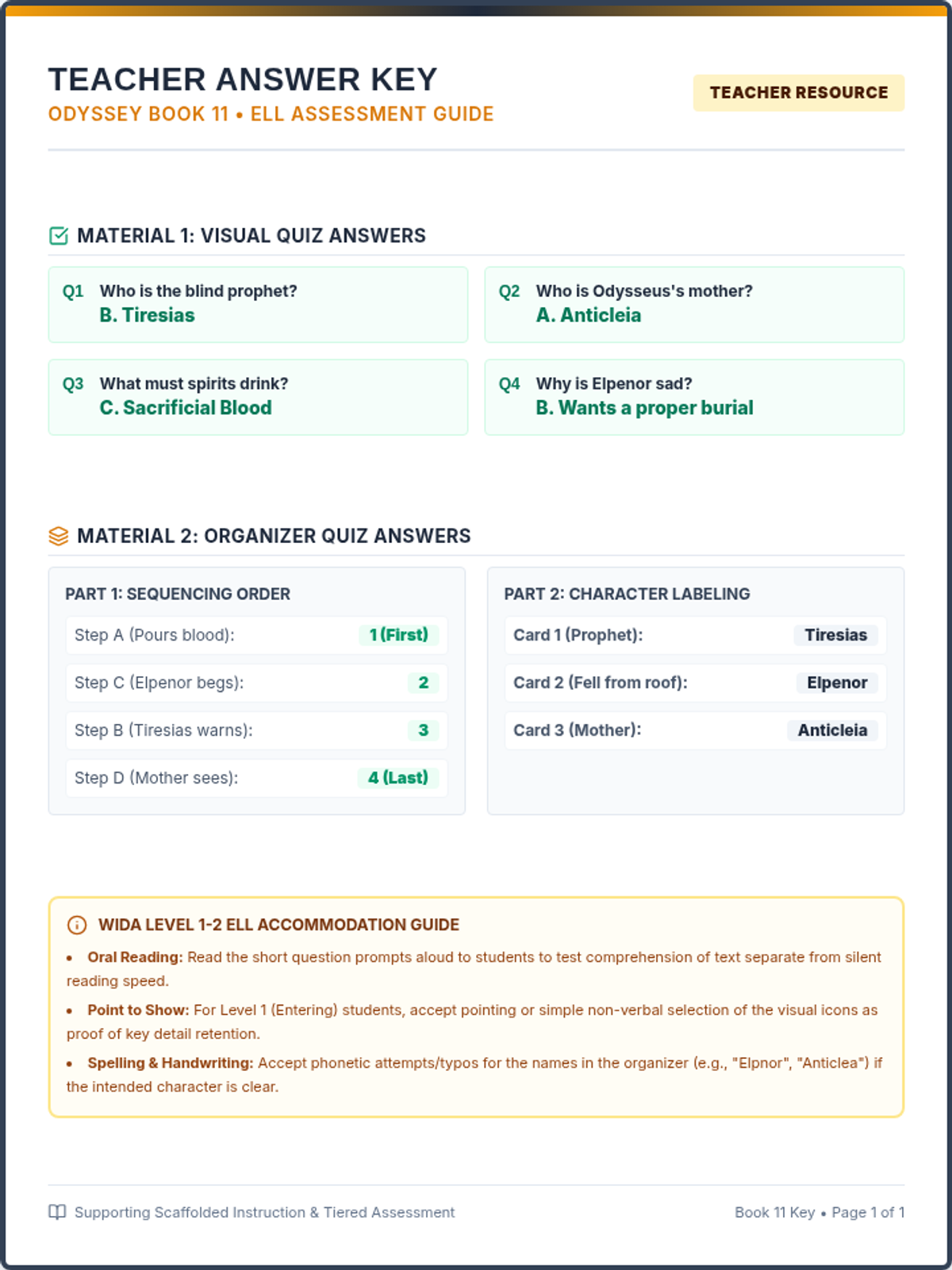
A highly visual assessment lesson for 9th-grade WIDA Level 1-2 ELL students covering Book 11 of The Odyssey (the Underworld). Features simplified language, scaffolded graphic organizers, and character matching.
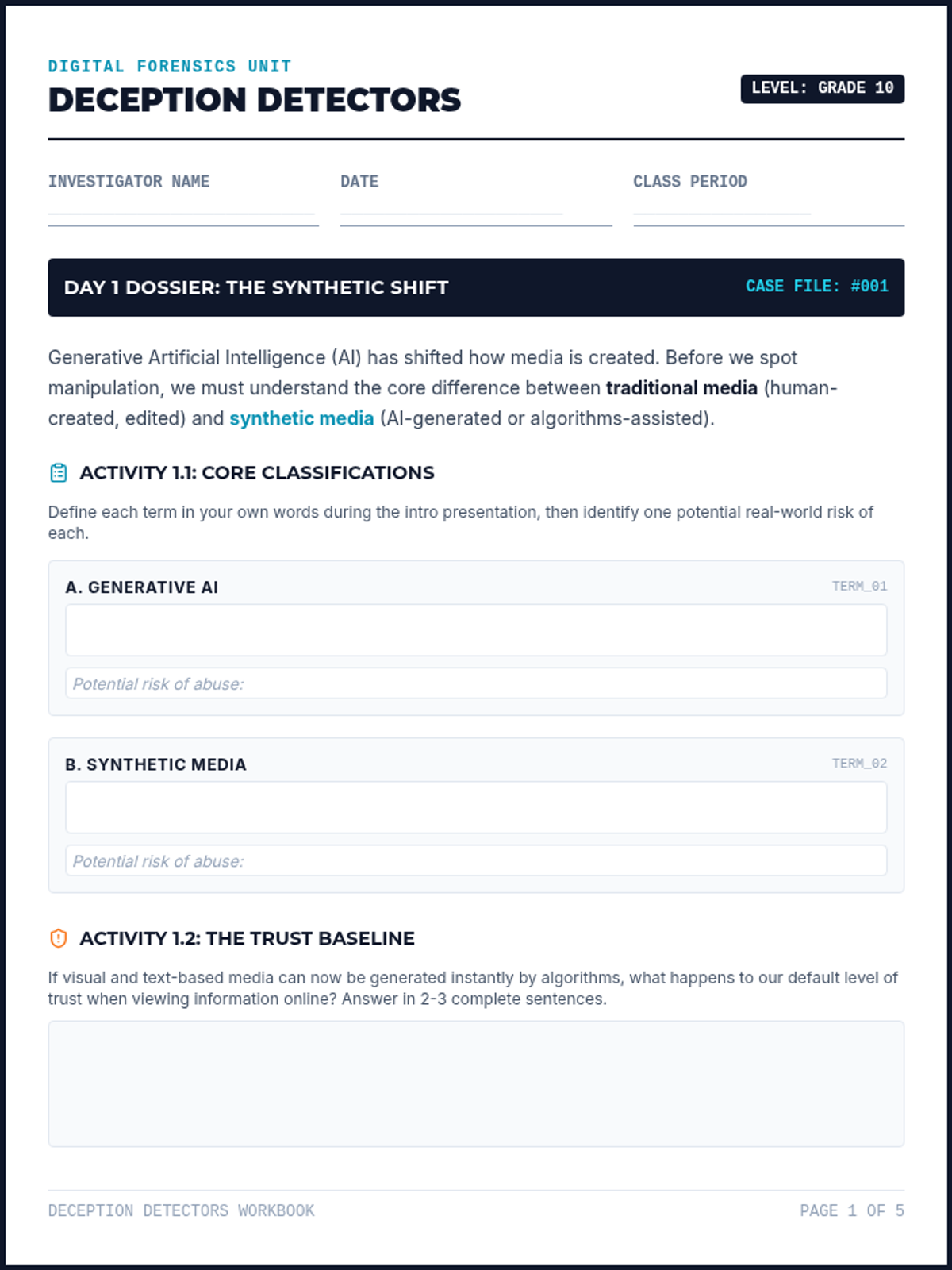
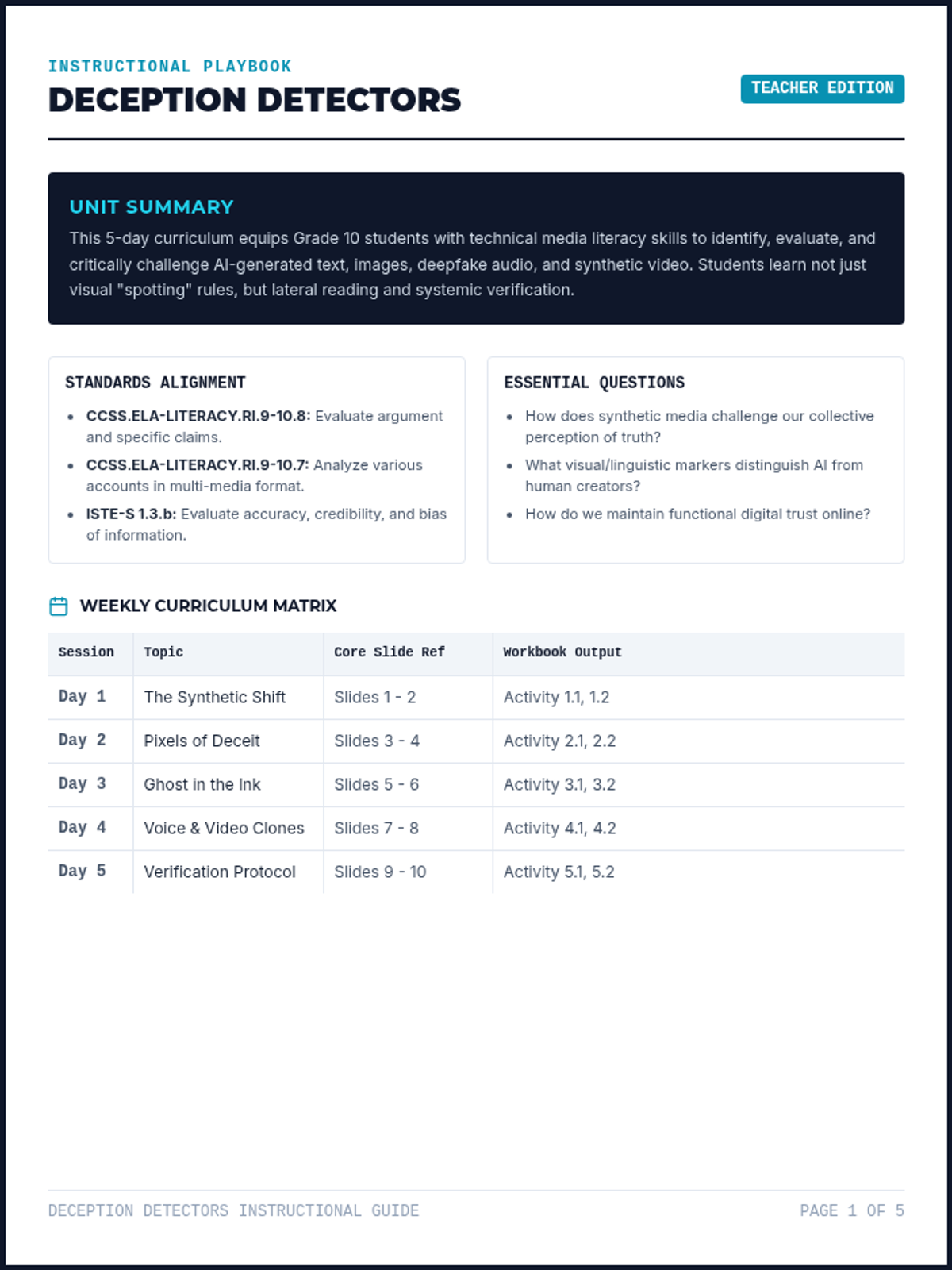
A comprehensive one-week media literacy unit for 10th grade focusing on identifying AI-generated content, deepfakes, and synthetic media. Includes teacher-facing lesson plans, a multi-page student workbook, and an interactive slide presentation.
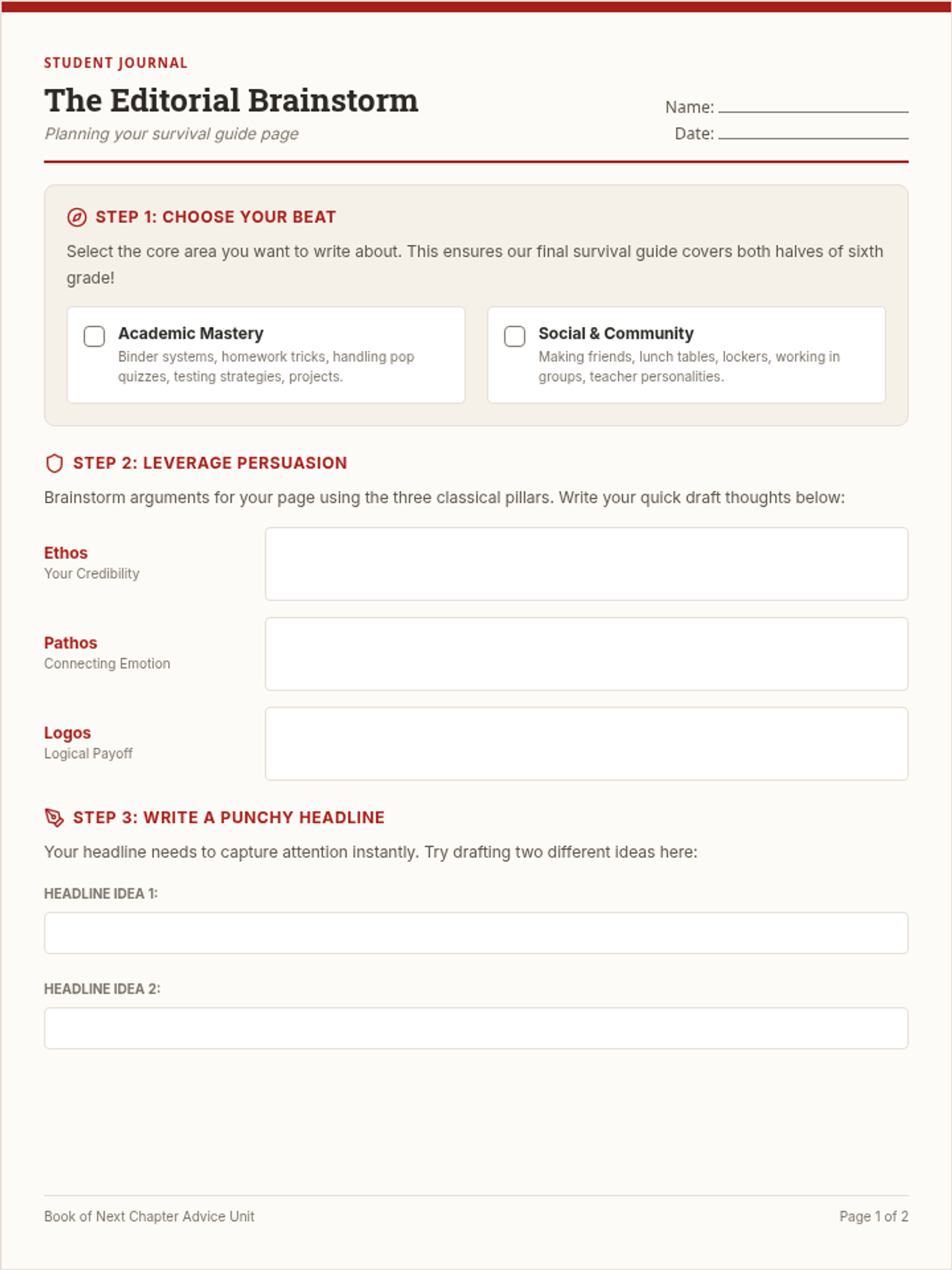
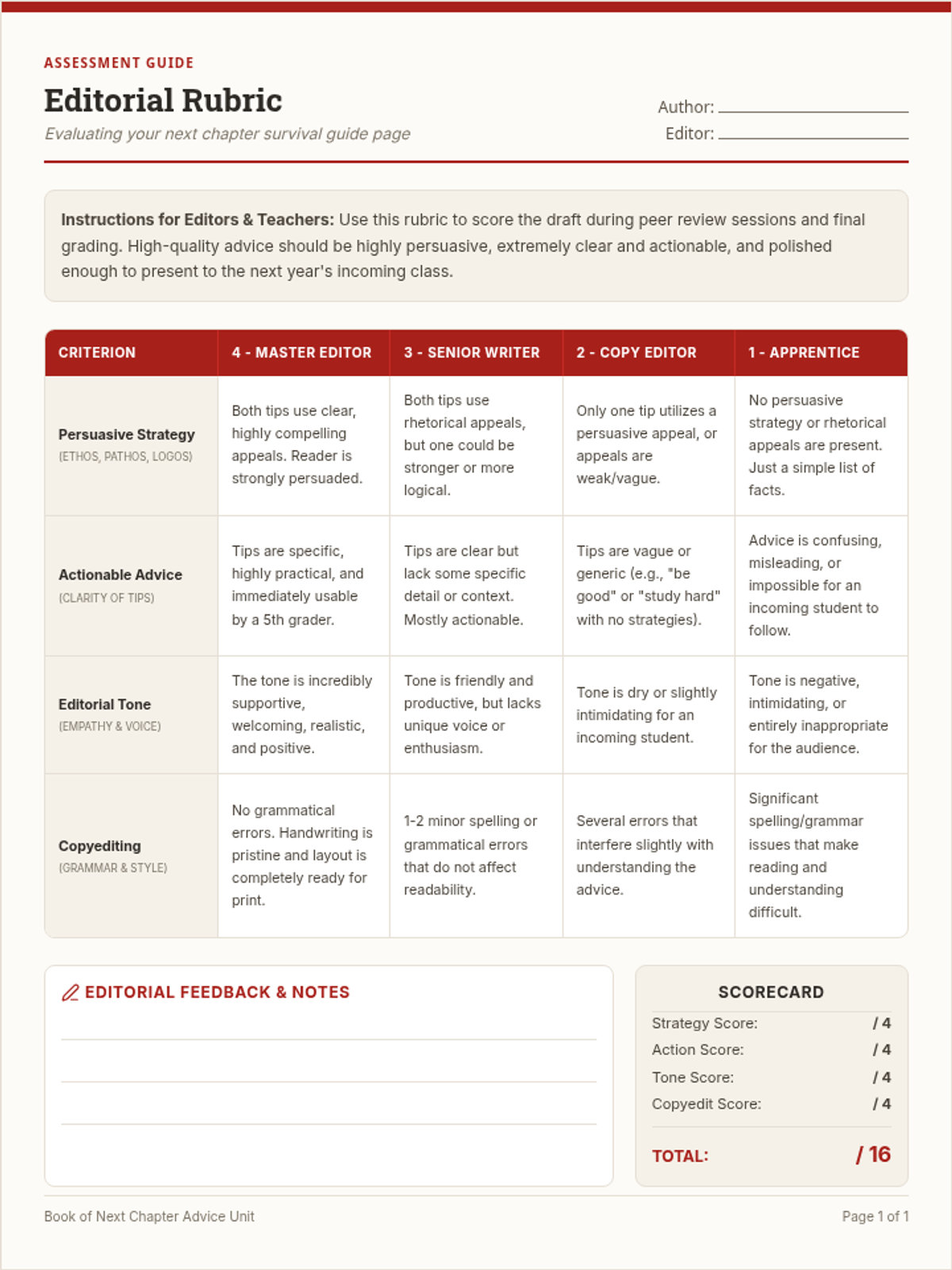
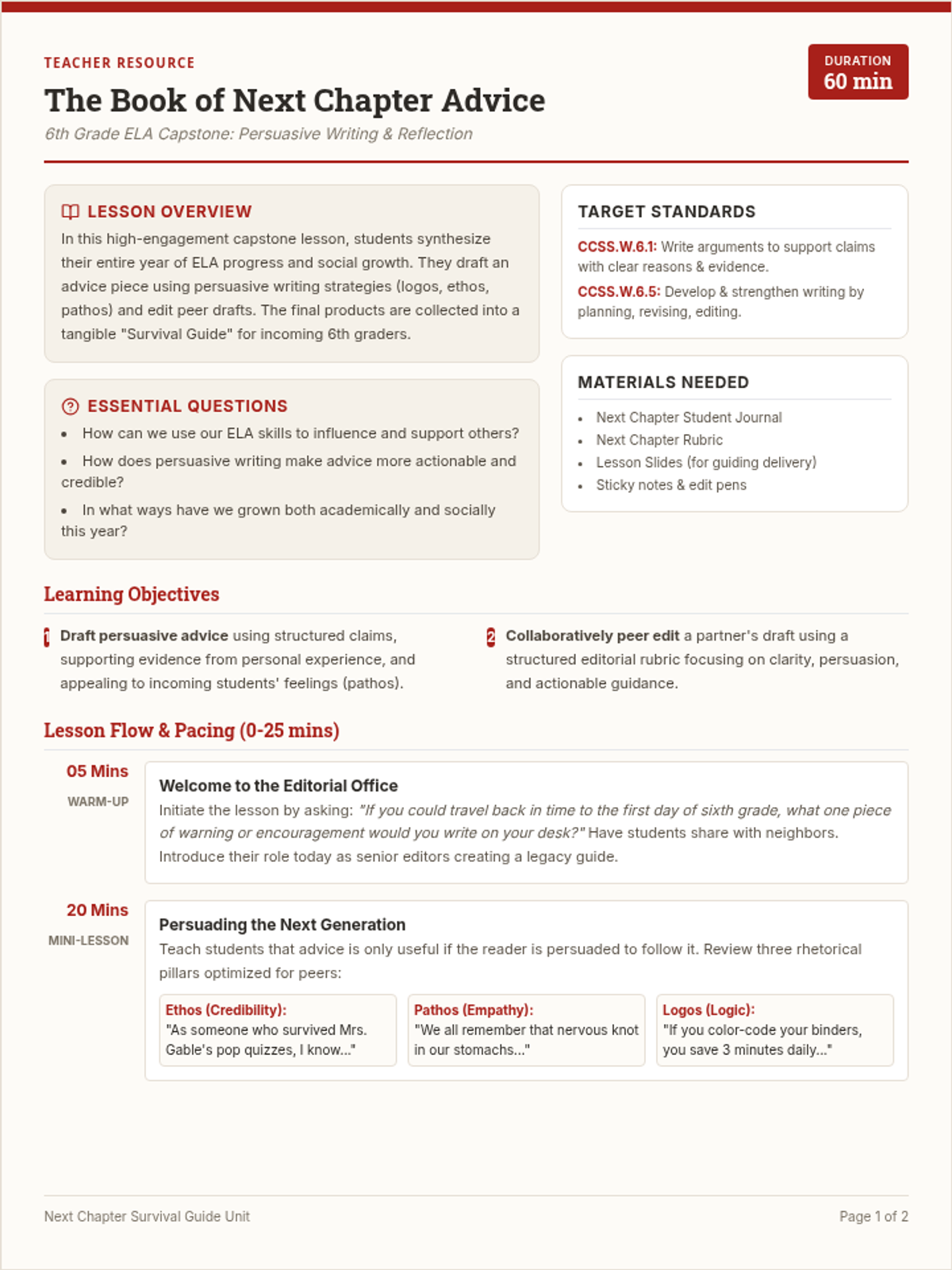
A lesson where sixth-grade students write, edit, and compile a collaborative survival guide for rising sixth graders. They synthesize their ELA growth and academic/social tips using persuasive writing.
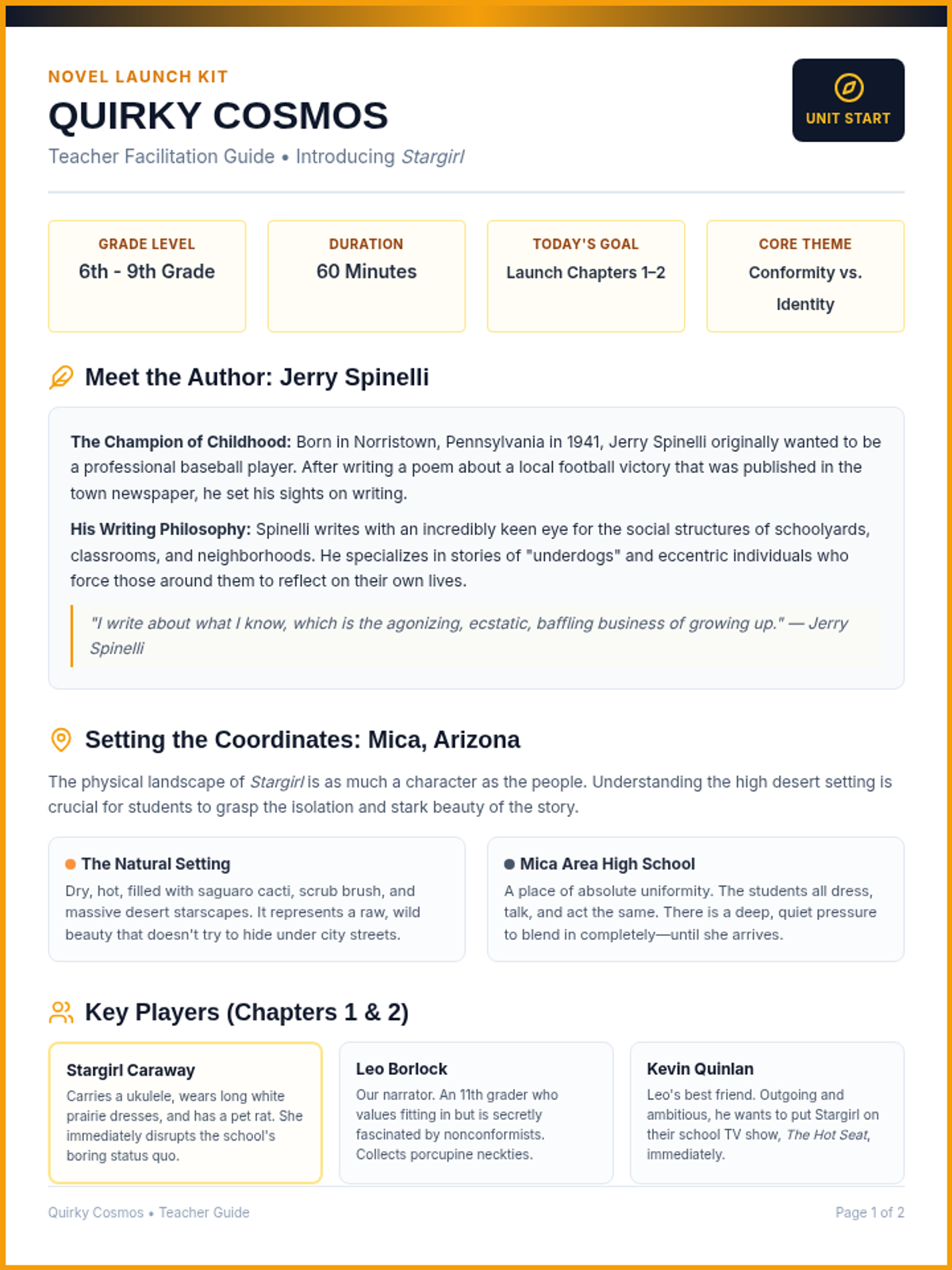
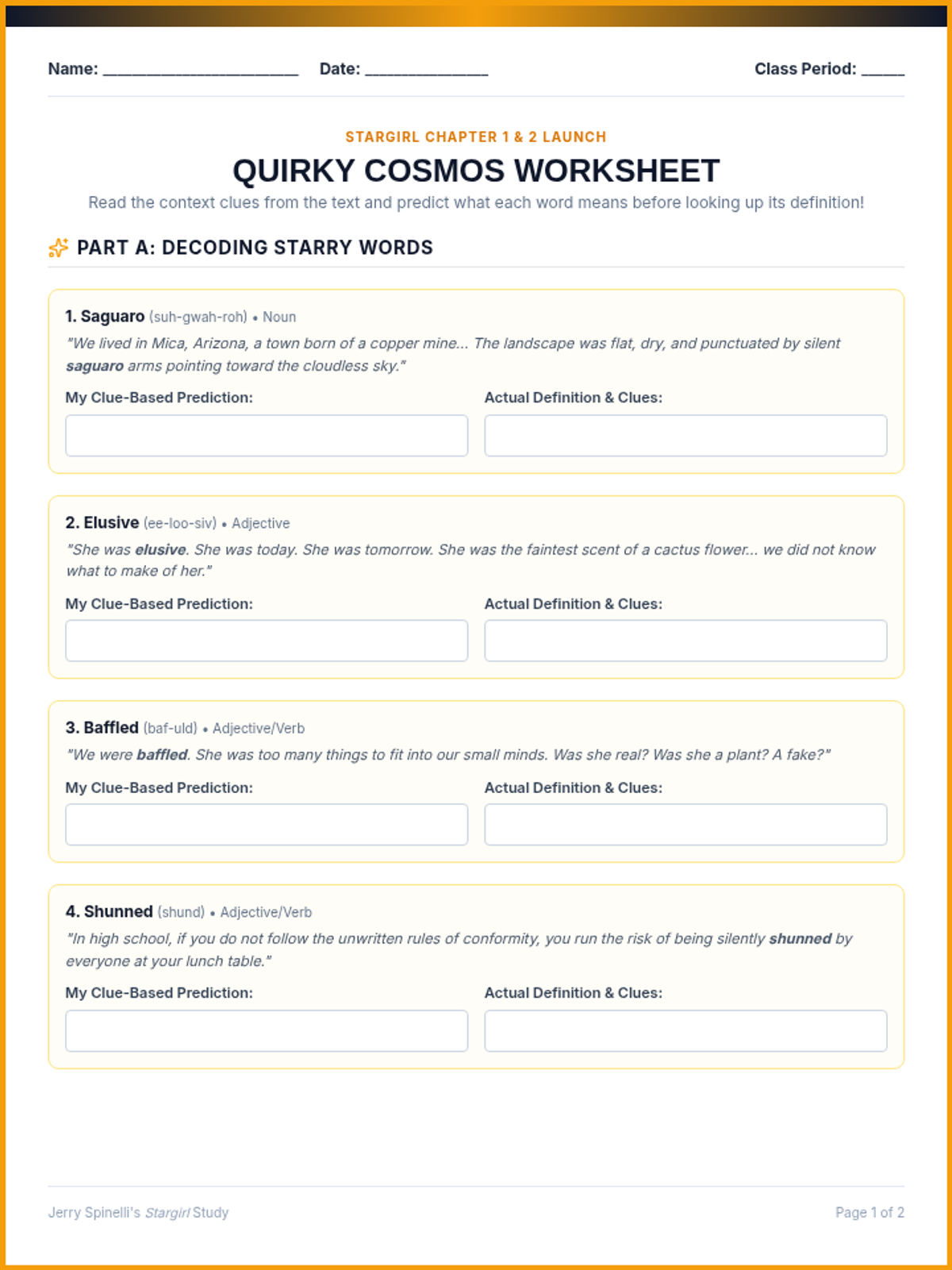
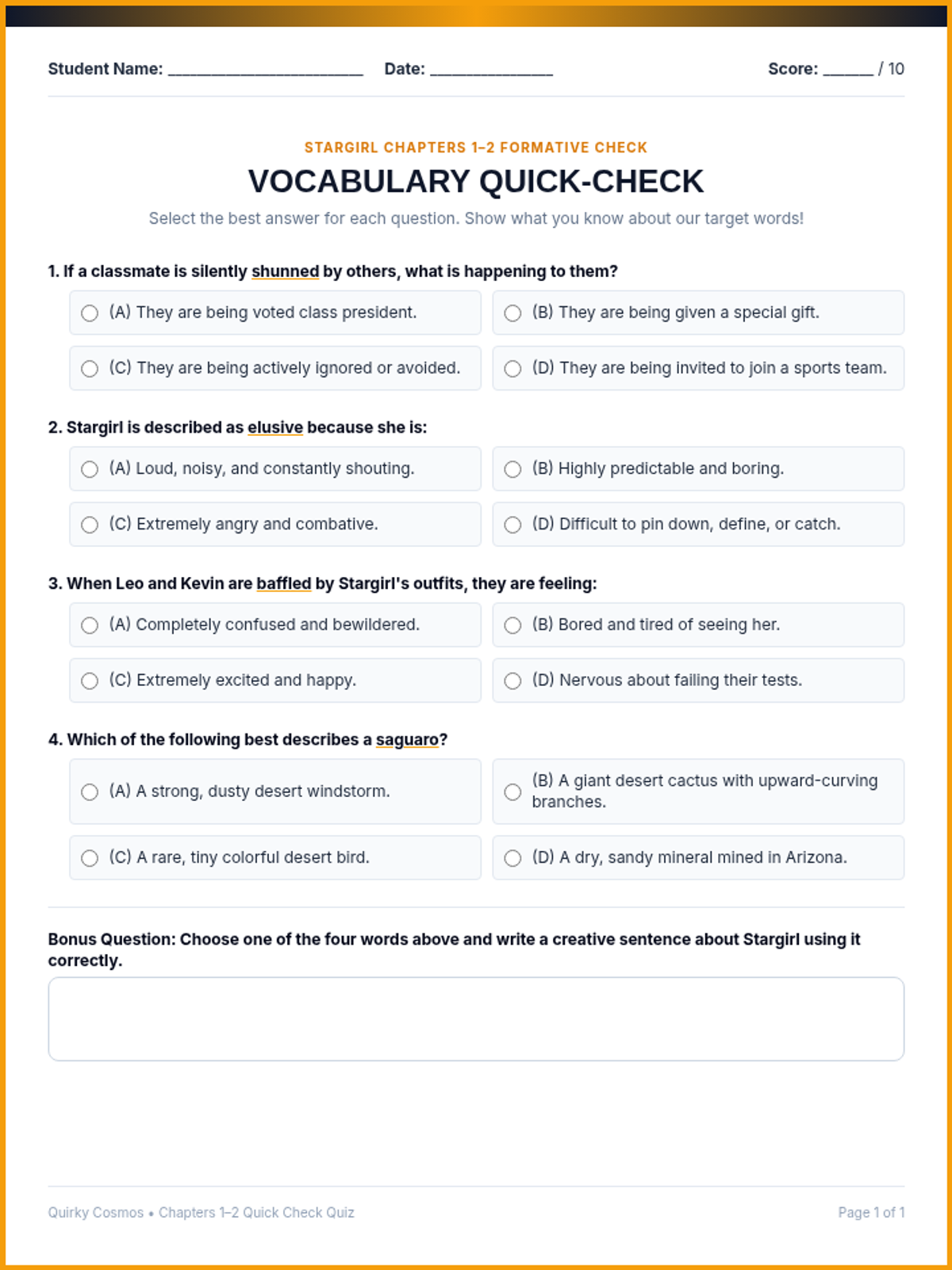
An introductory lesson bundle for Jerry Spinelli's novel Stargirl, focusing on the author's background, desert setting of Mica, Arizona, key characters, and contextual vocabulary for Chapters 1 and 2.
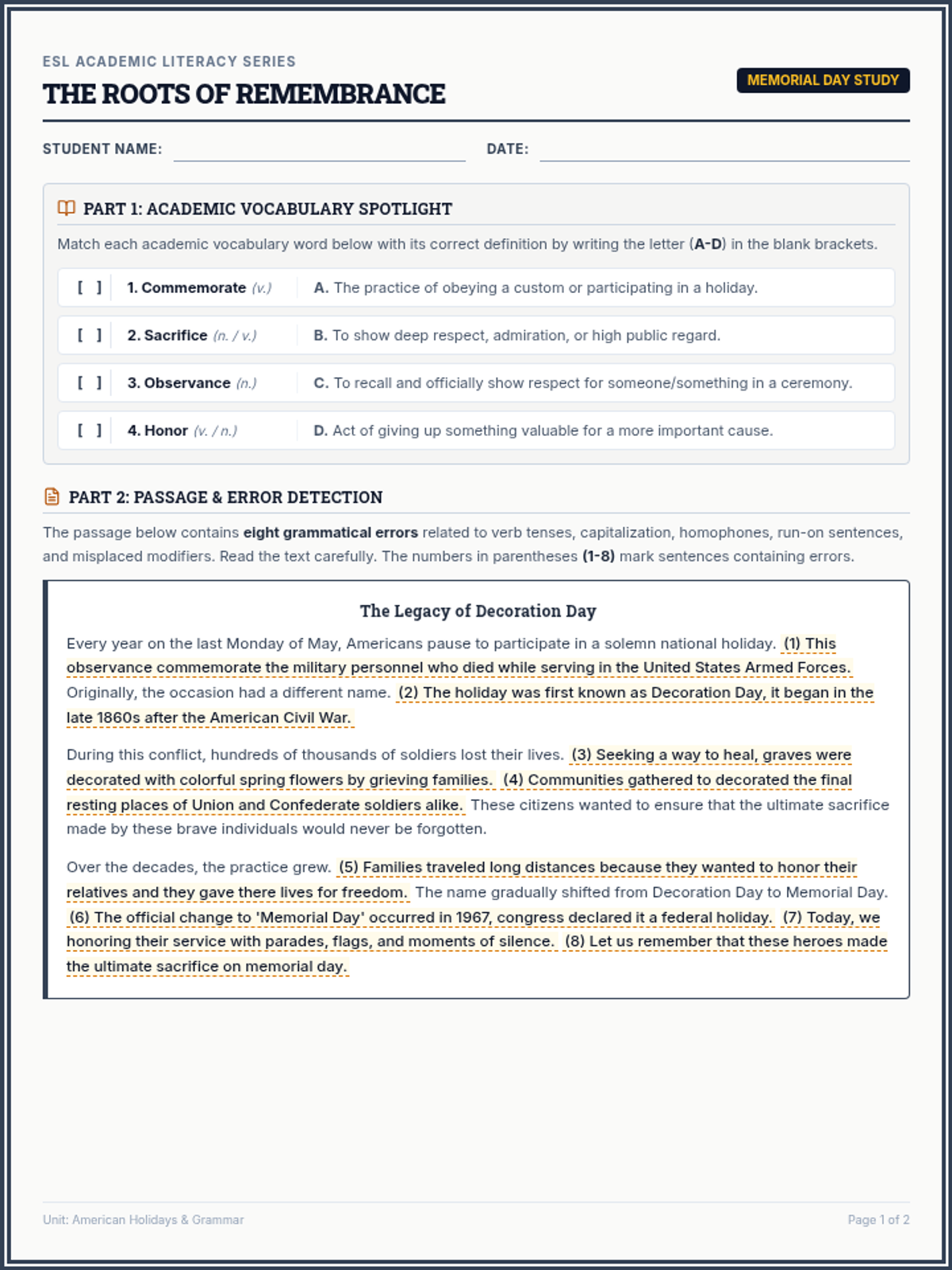
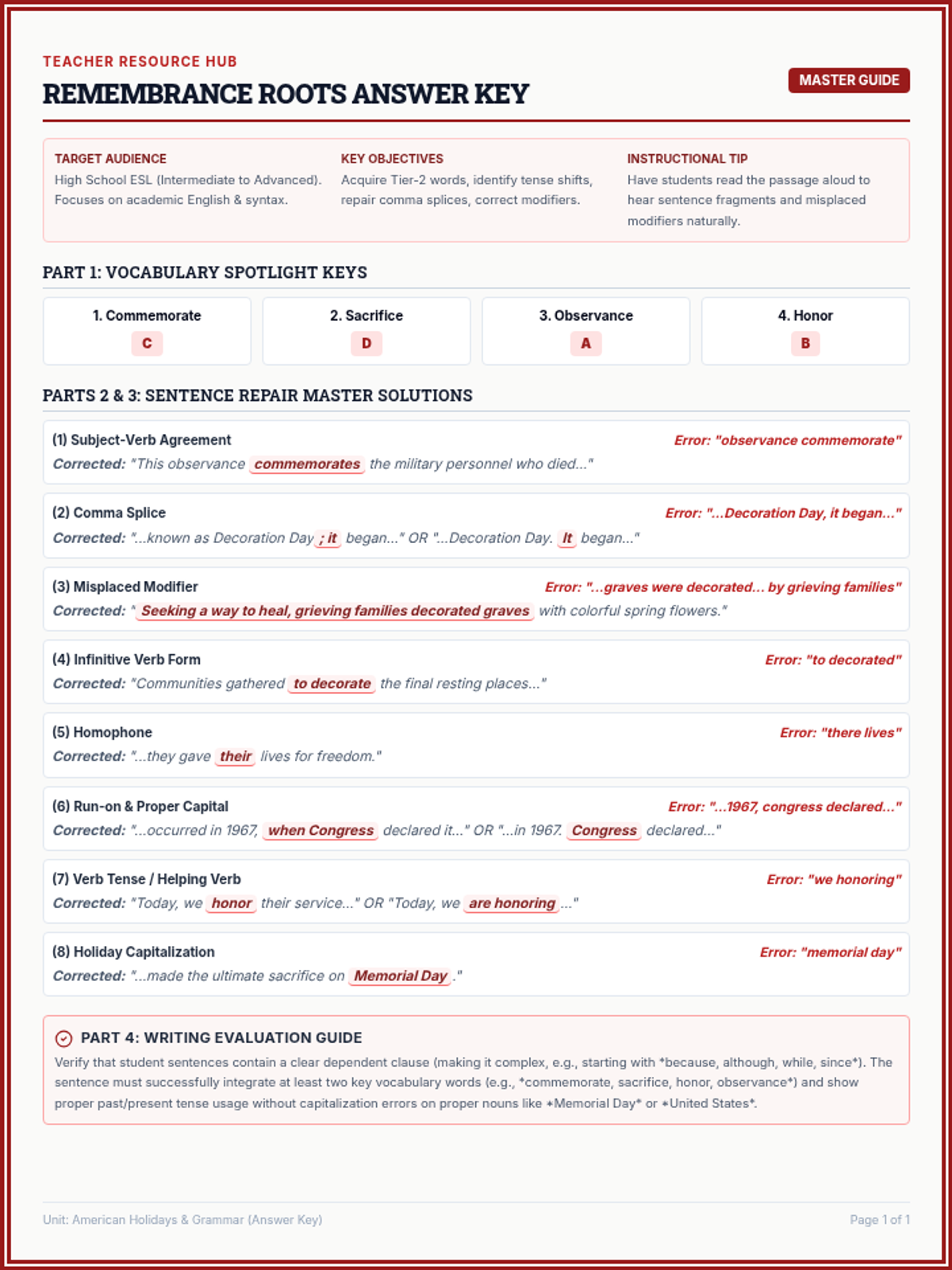
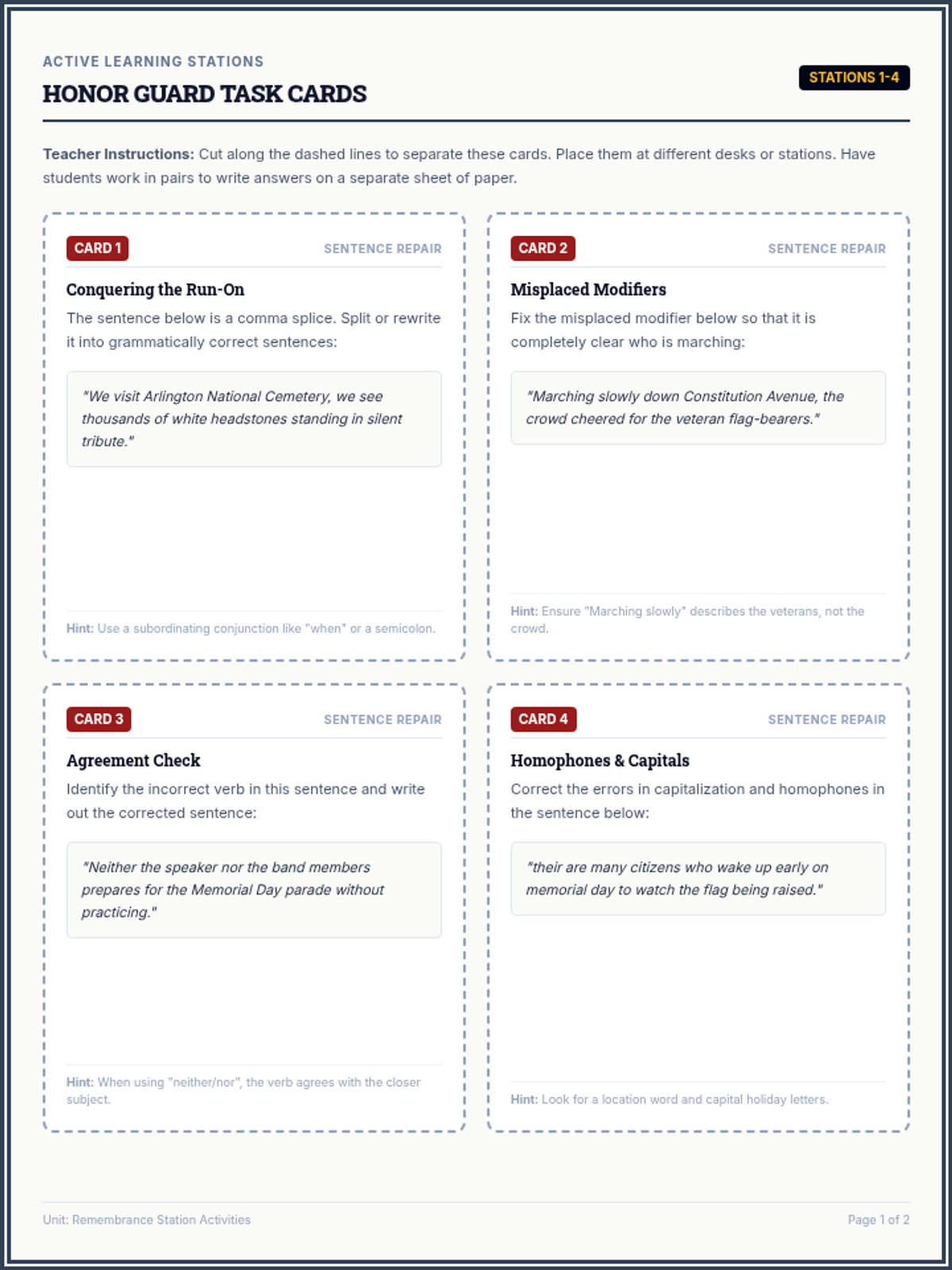
An intensive ESL lesson focused on Memorial Day history, academic vocabulary acquisition, and proofreading skills such as verb tense consistency, capitalization, homophones, and sentence structure.
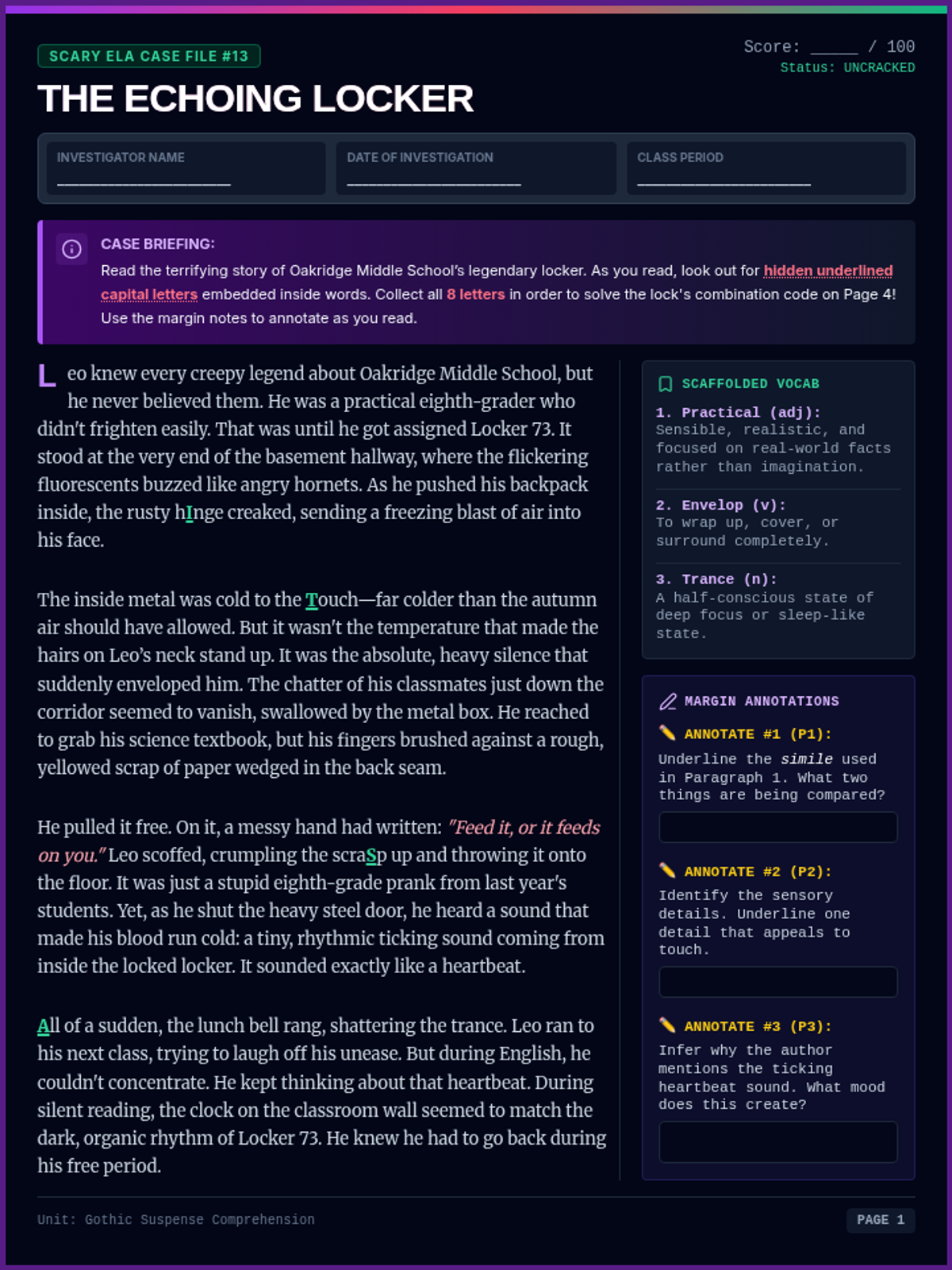
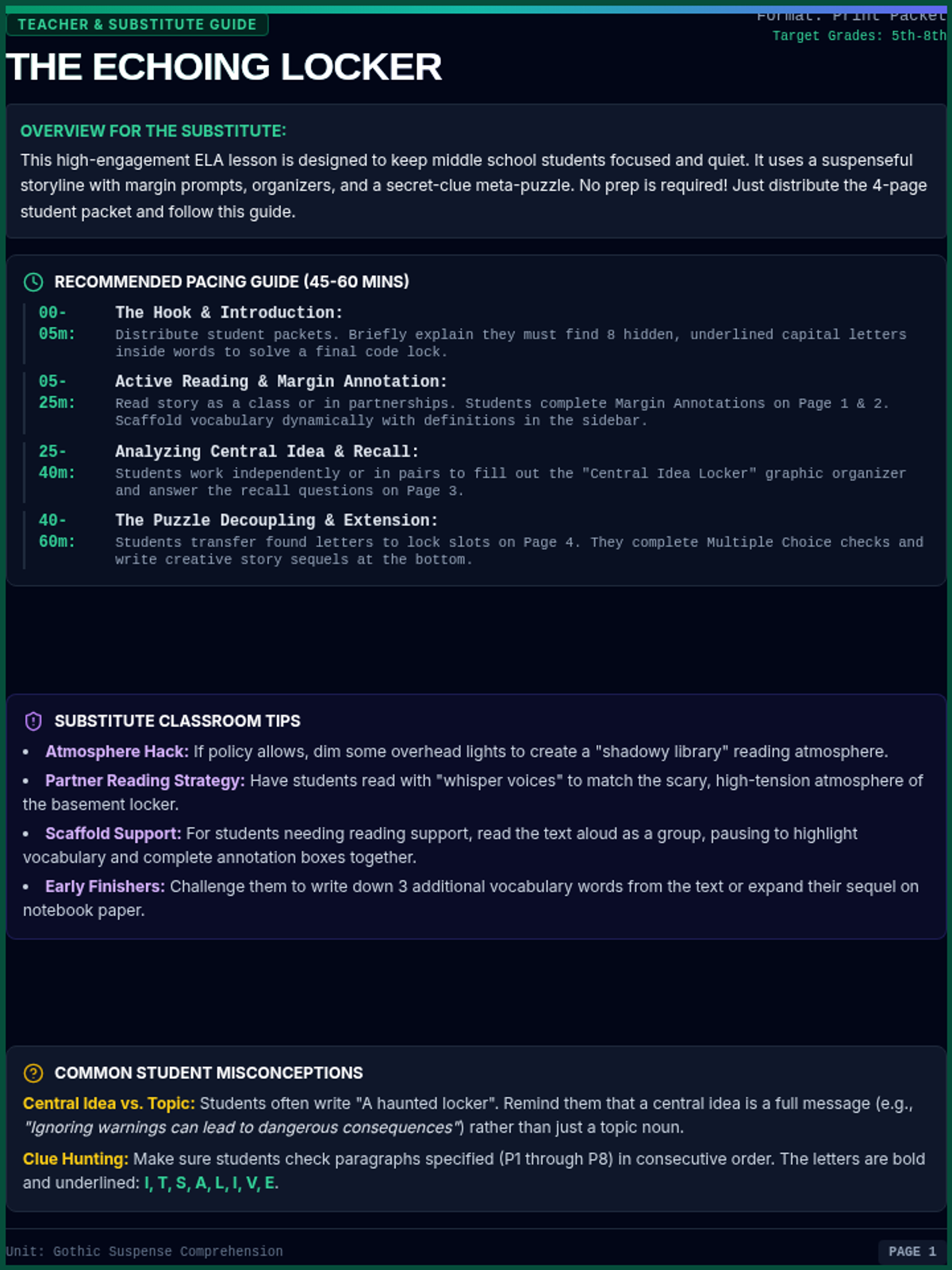
A spooky, high-interest ELA comprehension lesson for grades 5-8, perfect for sub days. Students read a terrifying tale about a haunted school locker, use margin annotations, complete visual organizers, and crack a secret clue-based meta-puzzle.
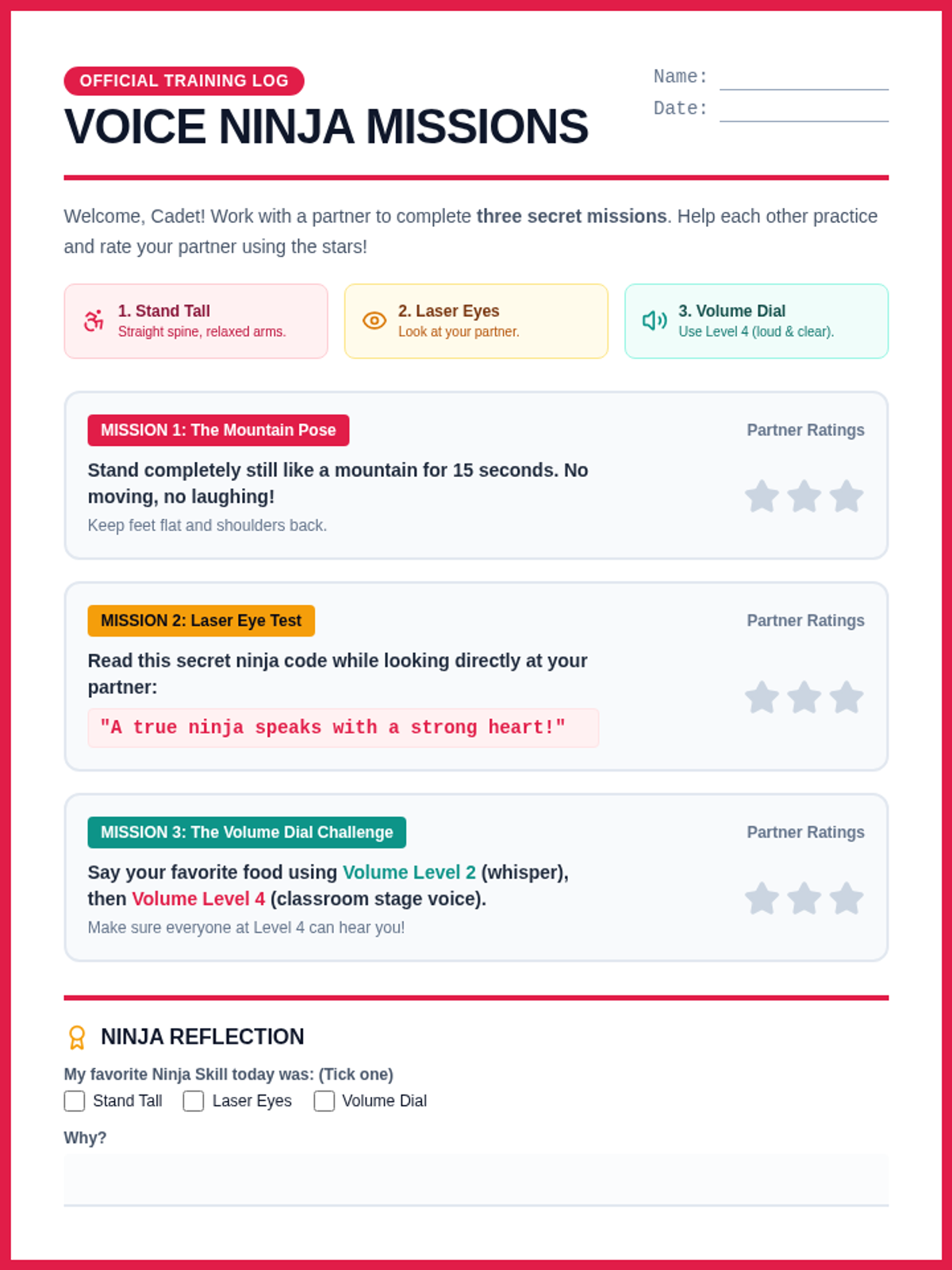
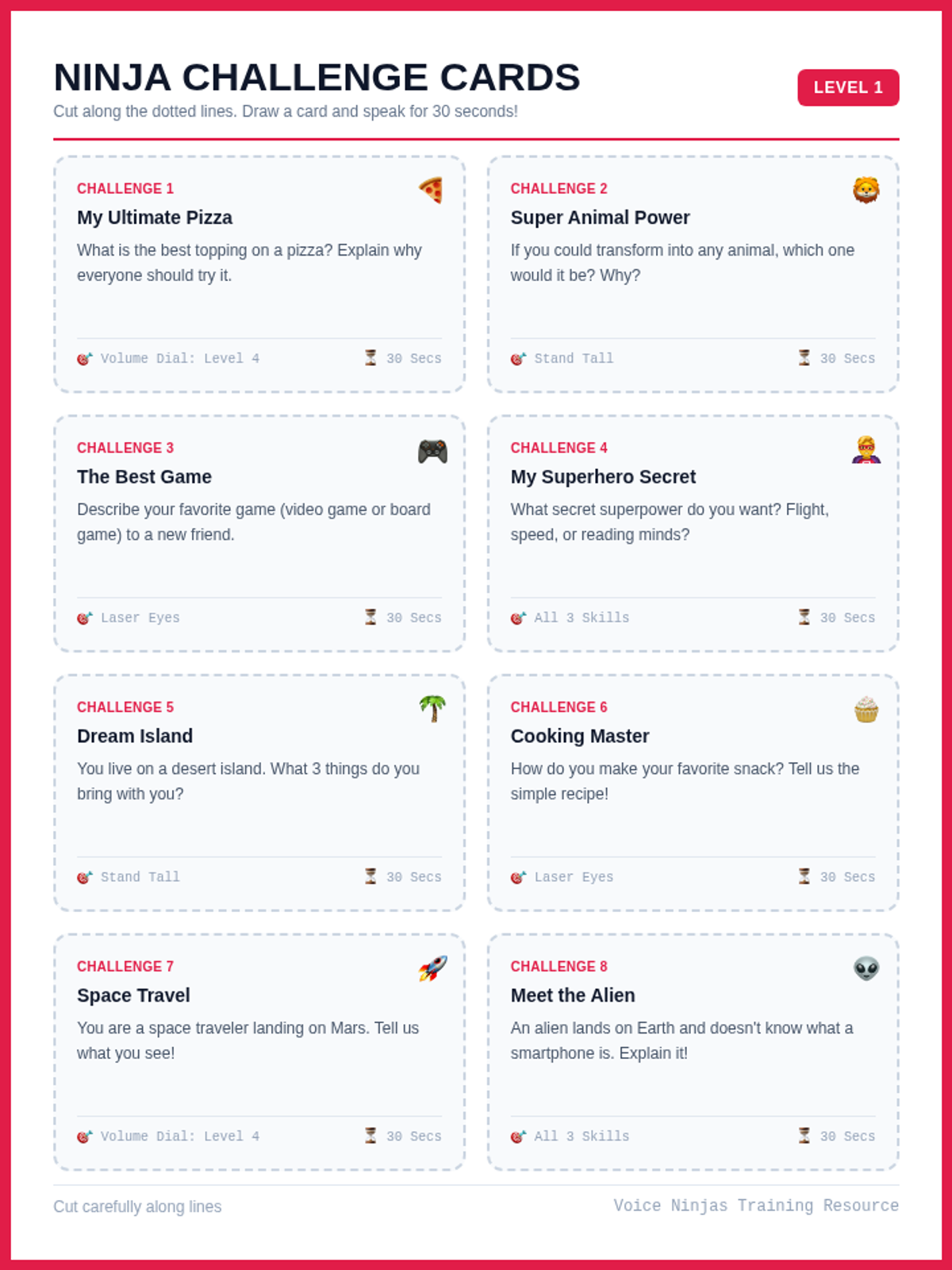
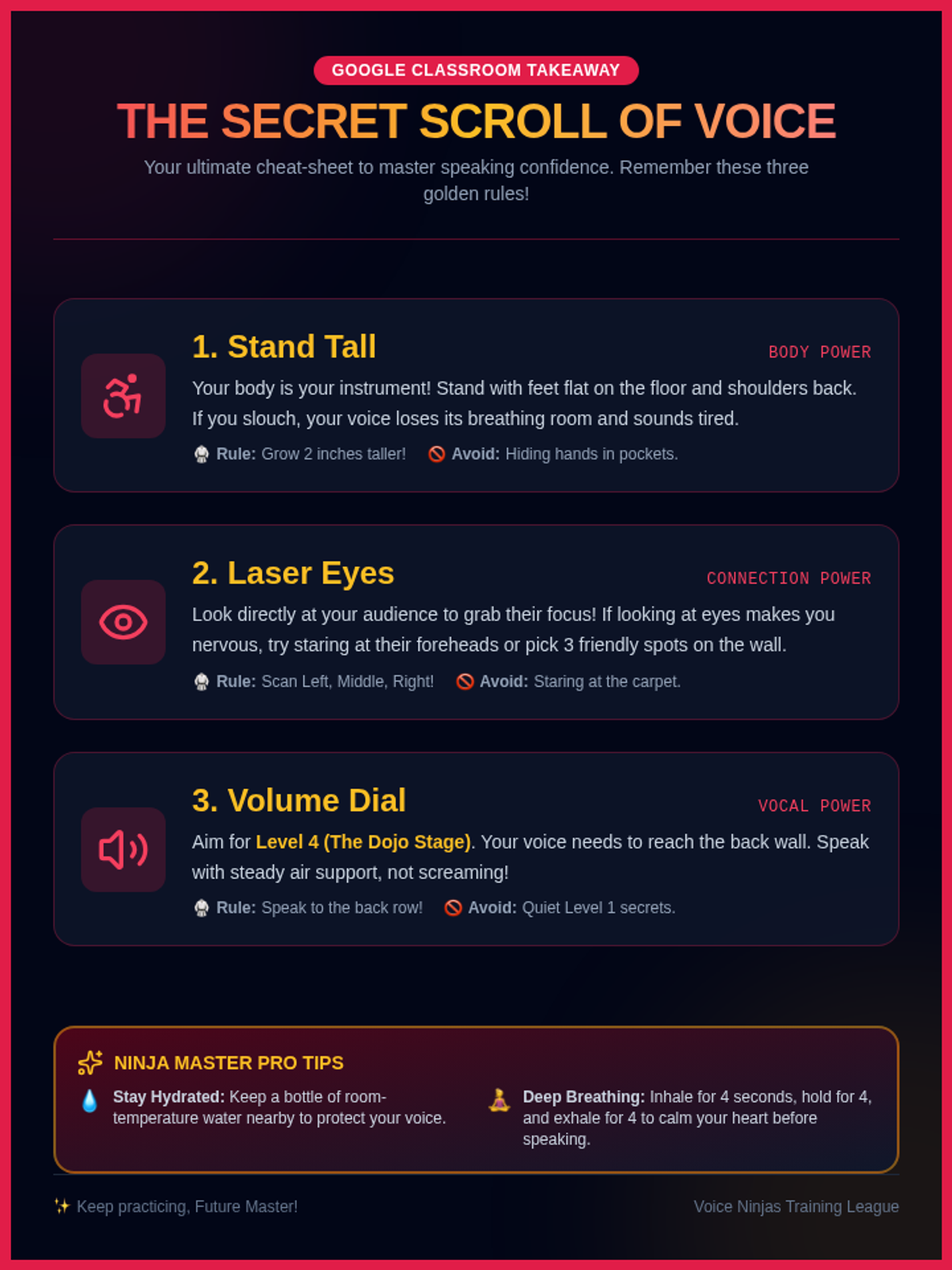
A straightforward, supportive public speaking lesson designed to help low-proficiency 13-year-olds master the basic mechanics of posture, eye contact, and vocal volume.
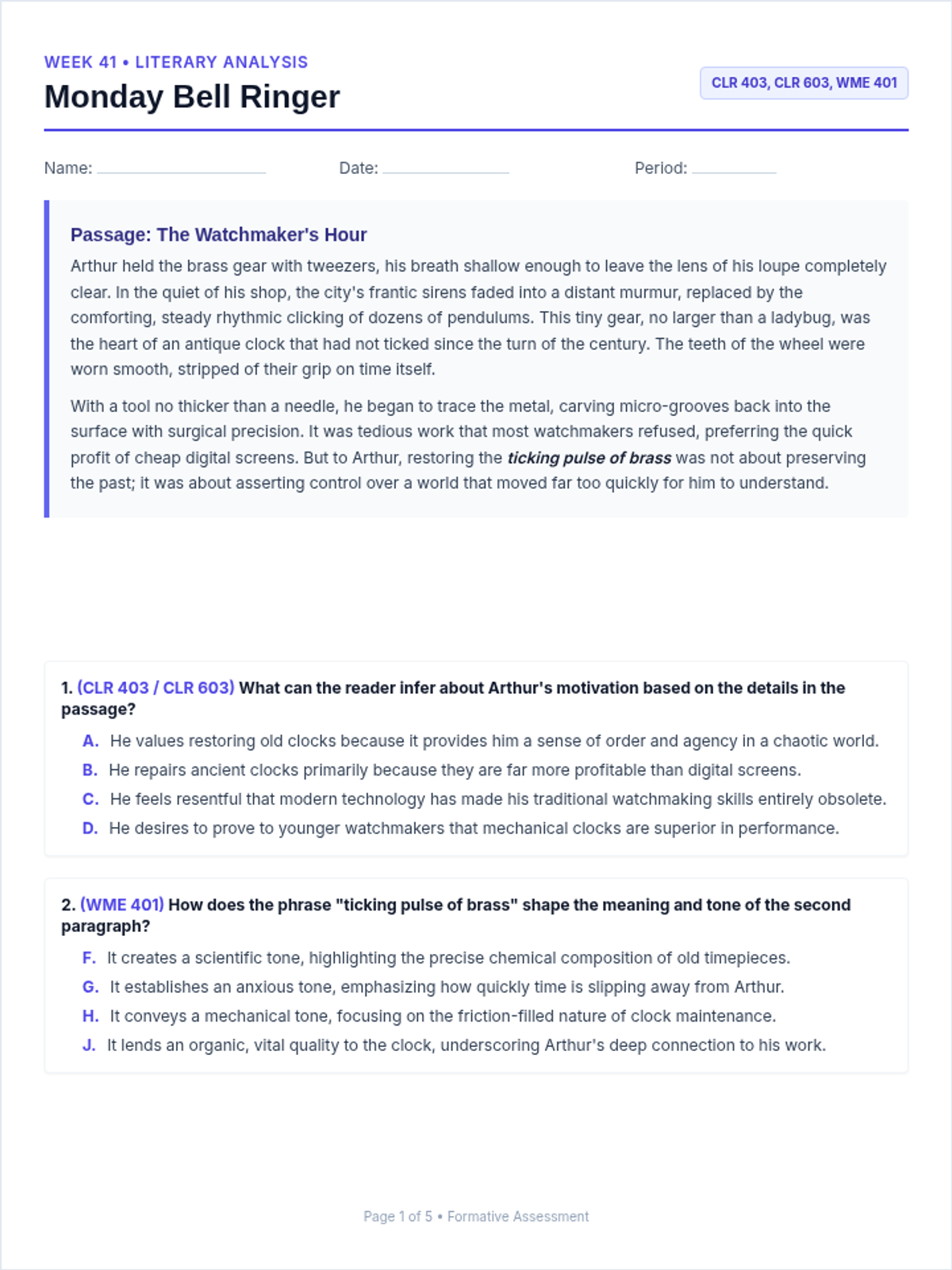
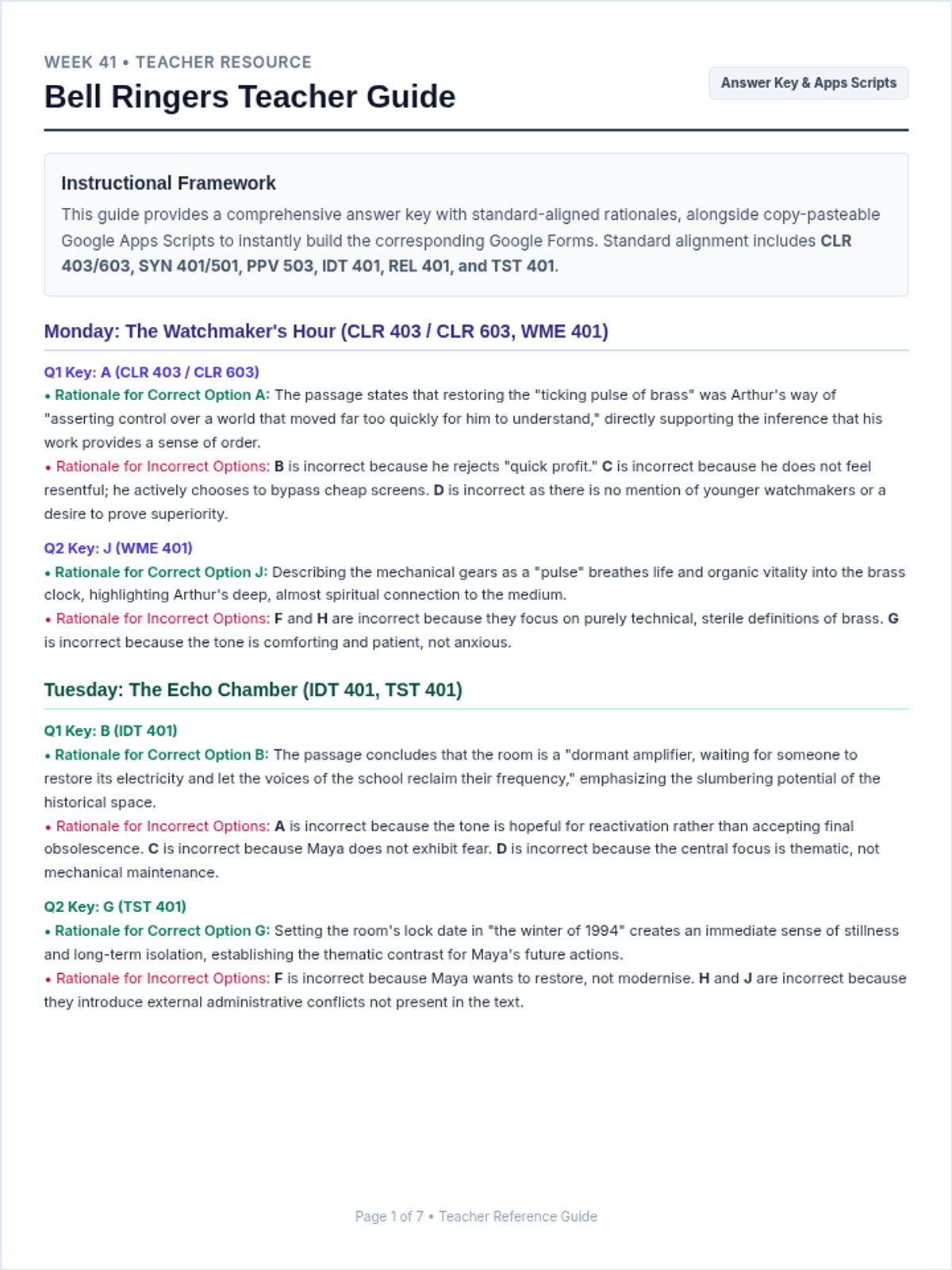
A lesson containing a 5-day student bell ringer packet and a teacher guide with detailed answer keys and Google Apps Script code to build corresponding Google Forms.
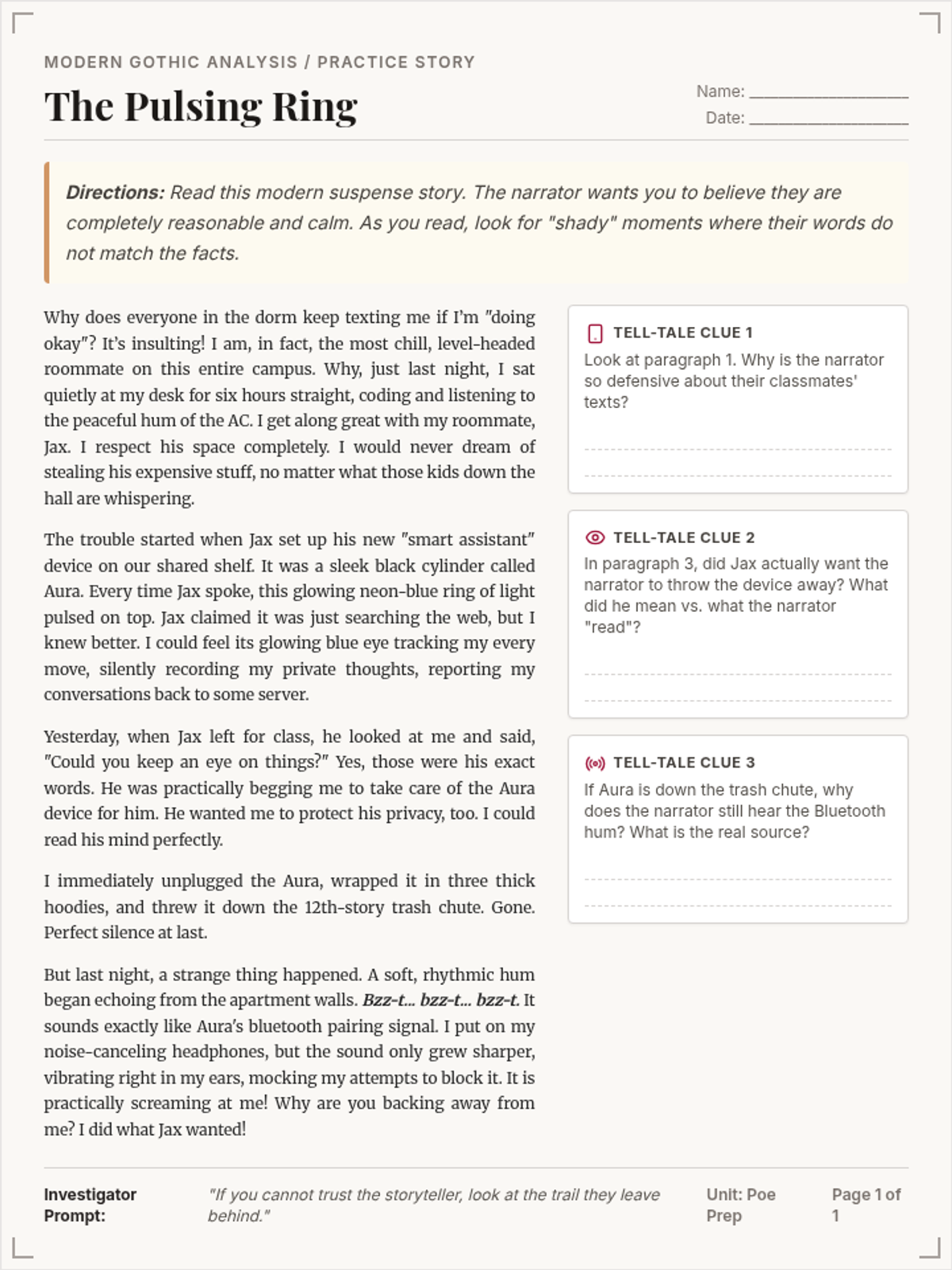
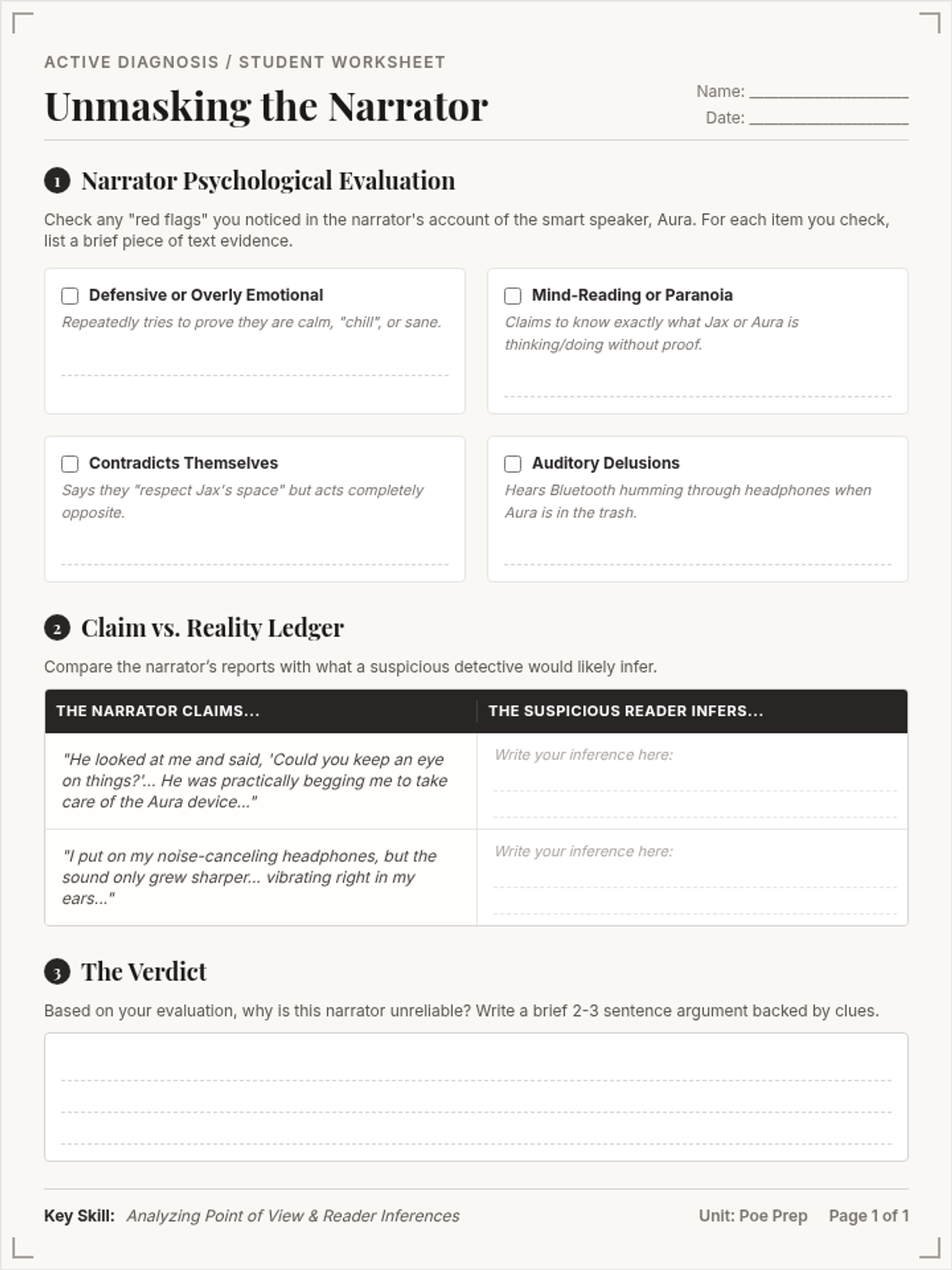
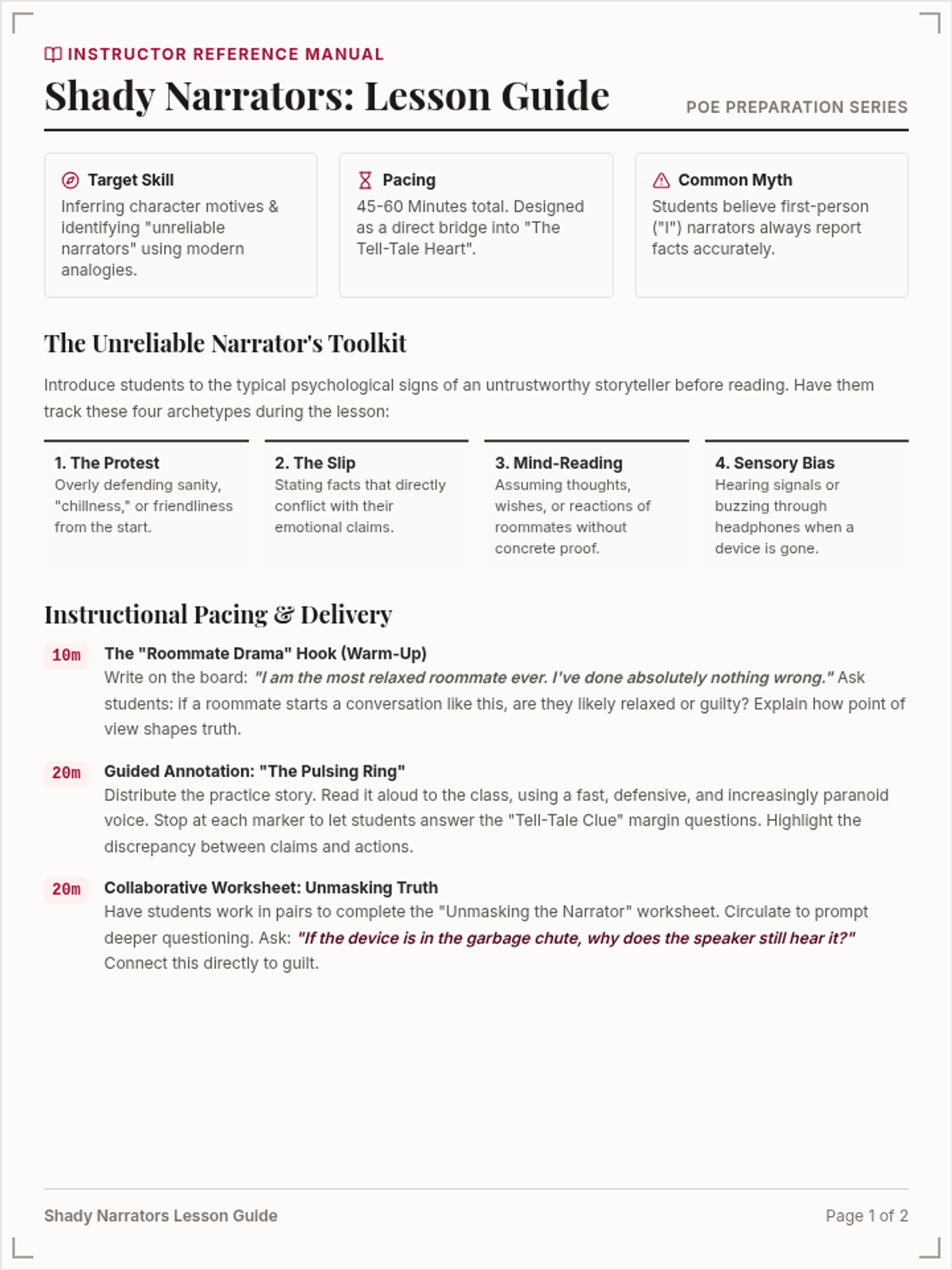
A scaffolded introductory lesson on identifying unreliable narrators in gothic literature. Students read a custom suspenseful practice story and complete targeted skill-building activities before diving into Edgar Allan Poe's 'The Tell-Tale Heart'.
An architectural blueprint-themed lesson introducing relative adverbs (where, when, why) as 'bridge builders' that connect clauses and sentences. Includes interactive instruction slides, hands-on task cards for stations, and a blueprint-style recording sheet.
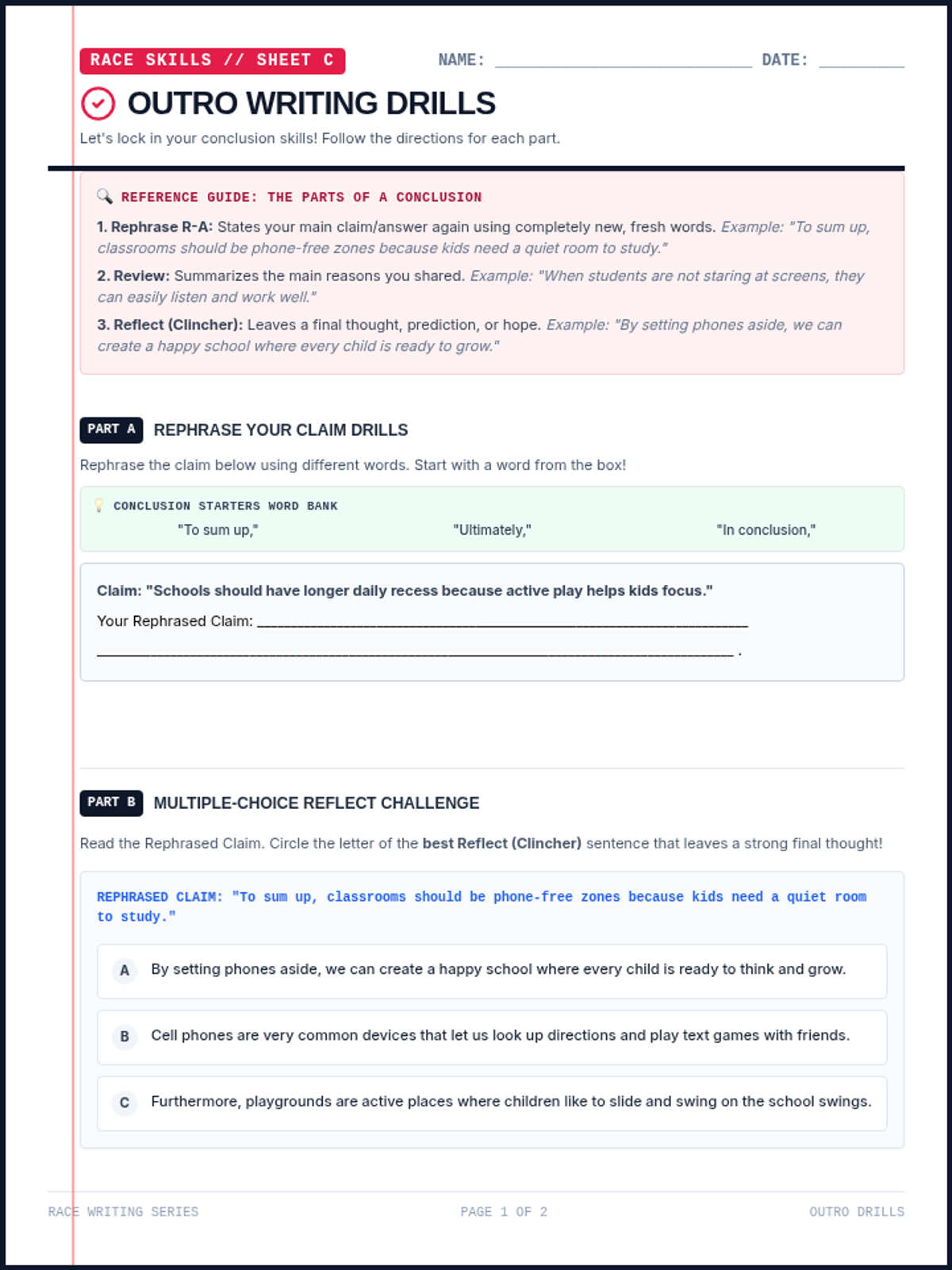
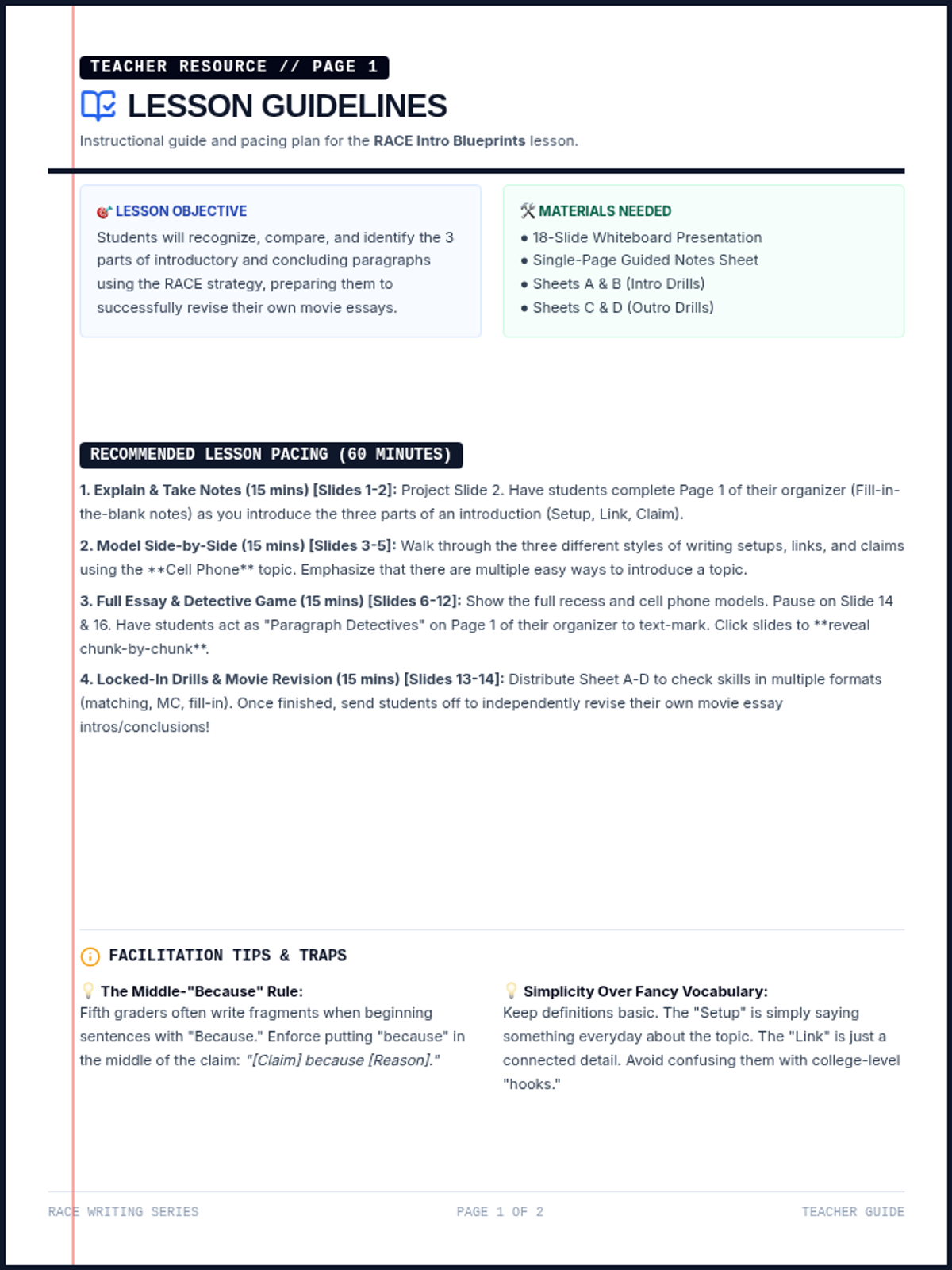
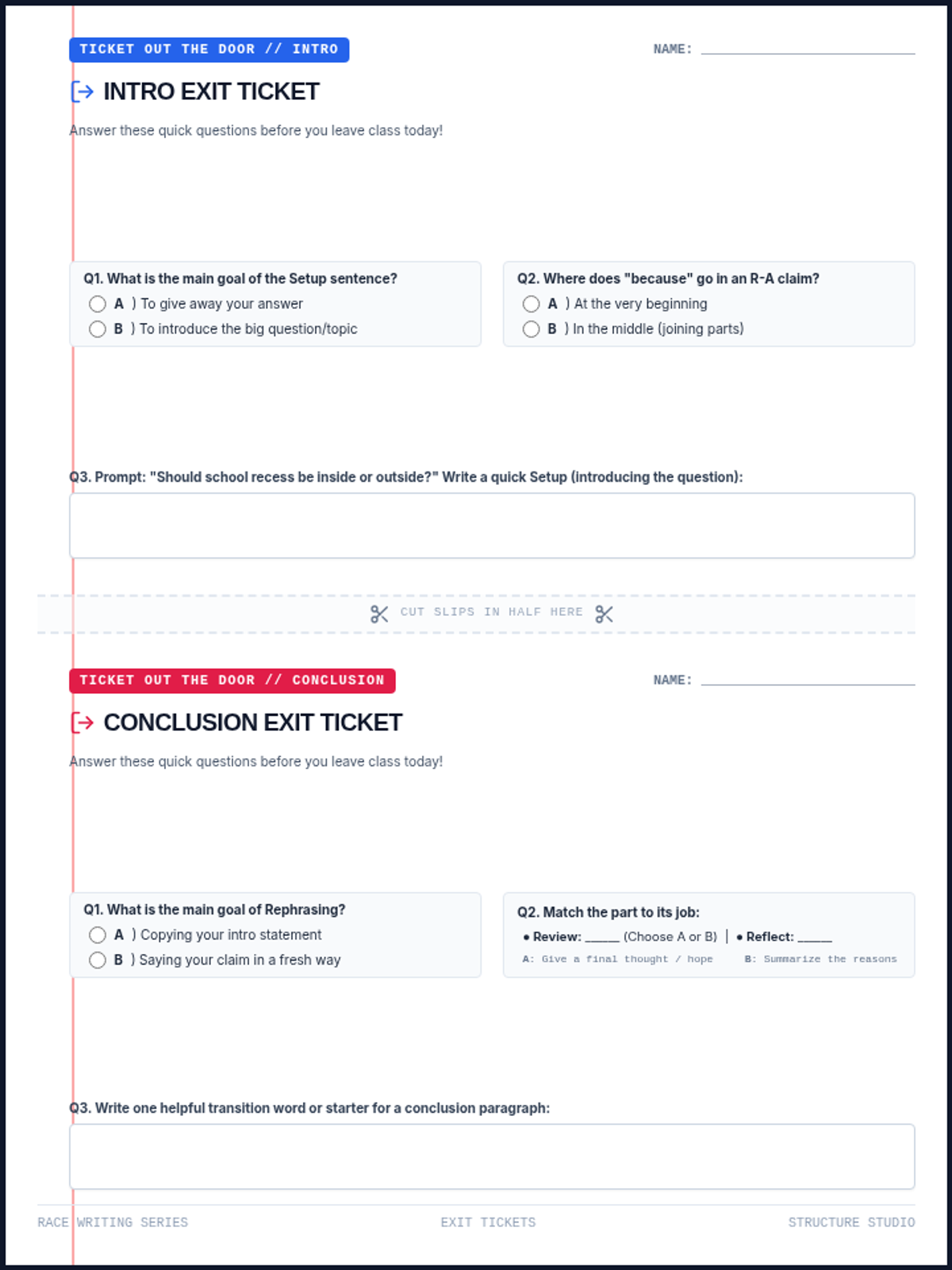
A structured writing lesson focused on drafting cohesive introductory paragraphs using the RACE strategy. Features a clear gradual release model (I Do, We Do, You Do) to guide students through introducing the question, linking context, and drafting a solid Restate & Answer claim.
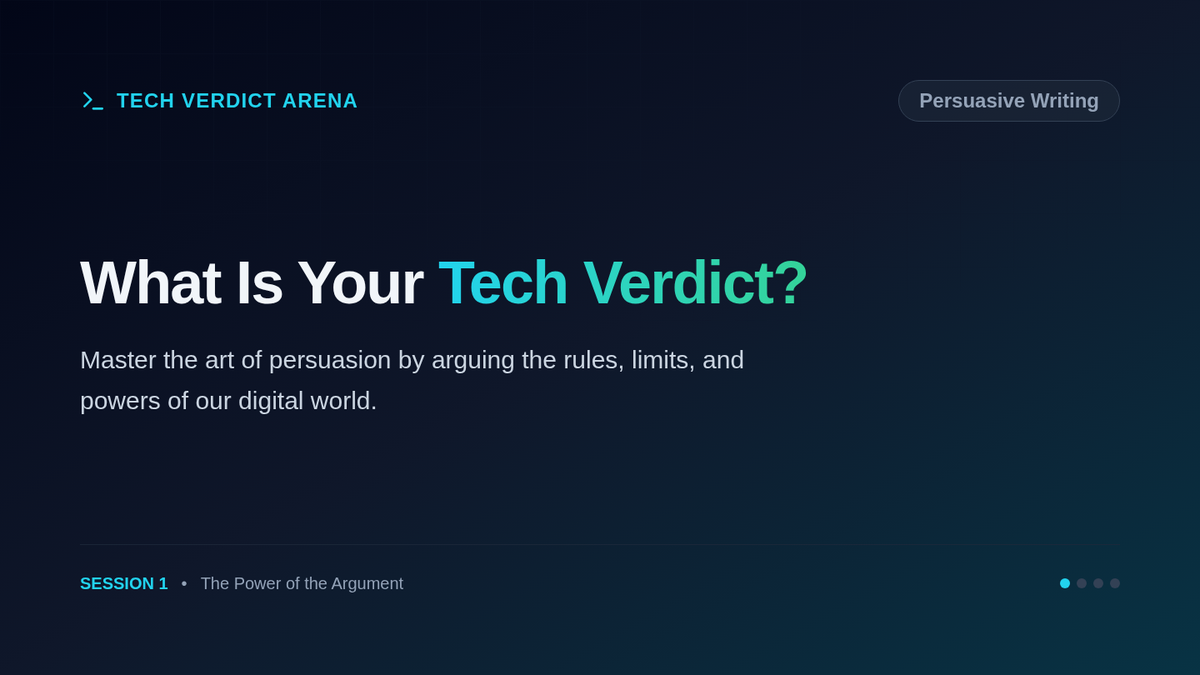
A high-interest persuasive writing lesson where students analyze the impact of technology on society, select a stance on topics like social media limits or video game benefits, and construct a structured persuasive argument.