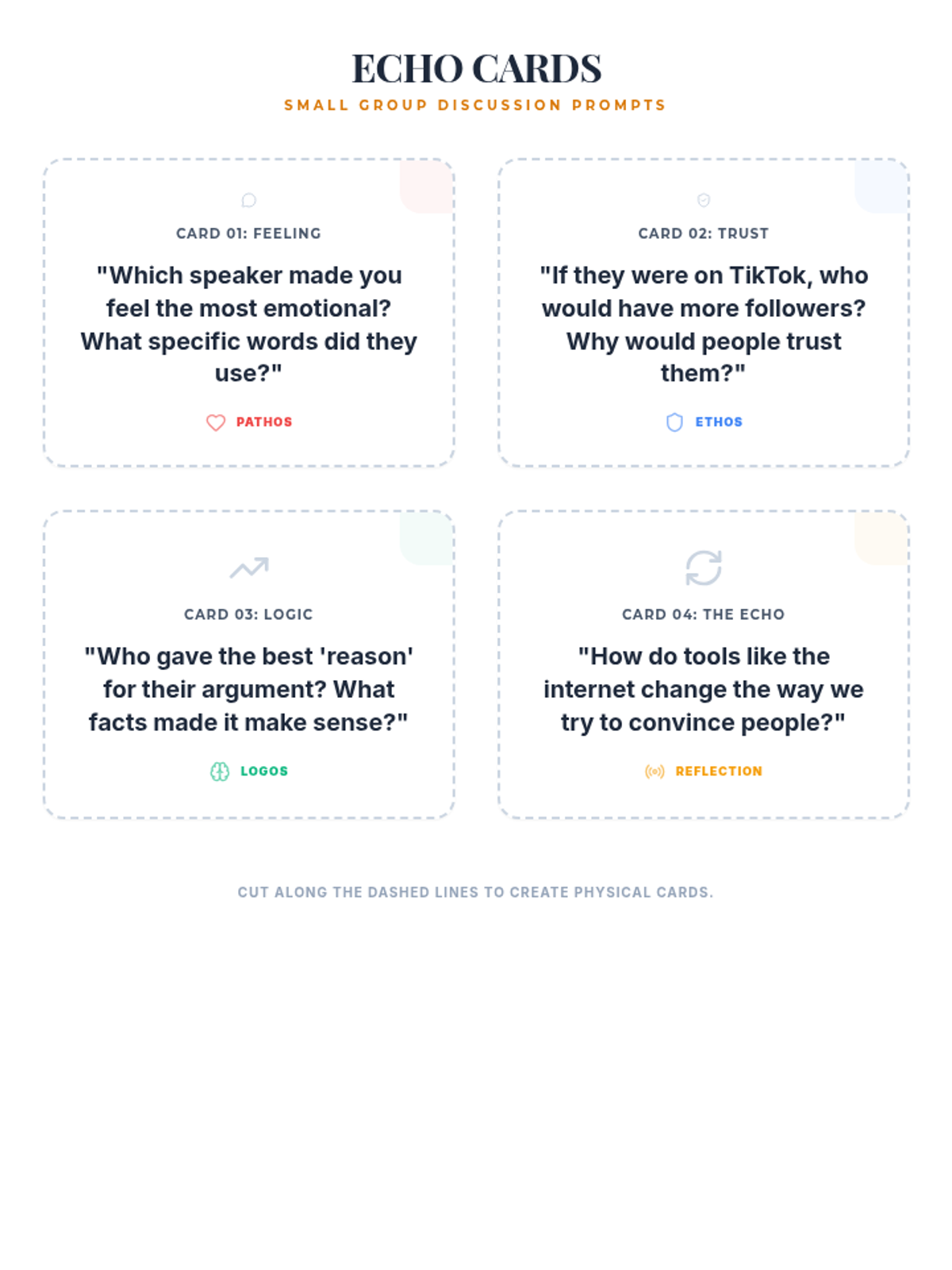
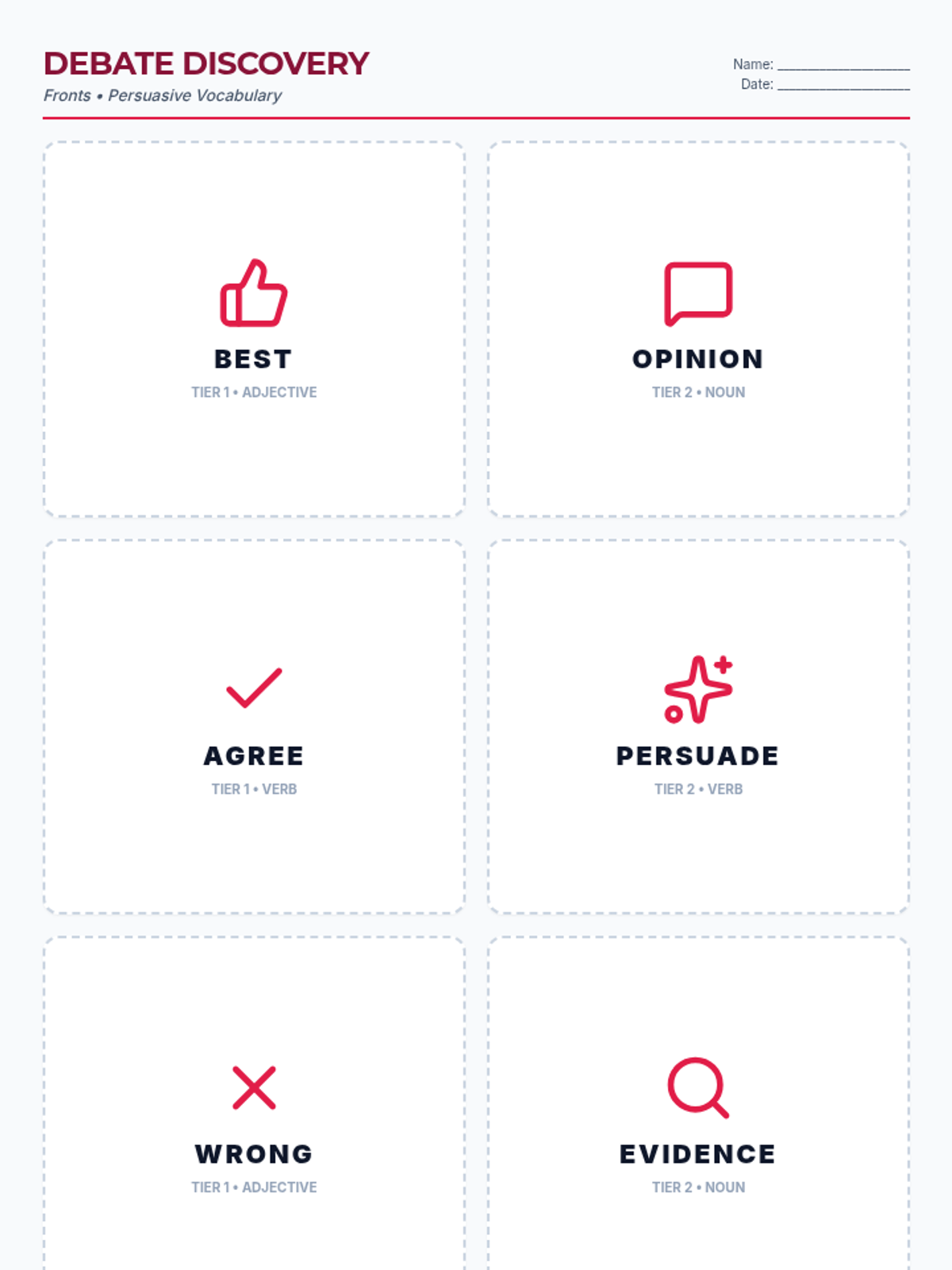
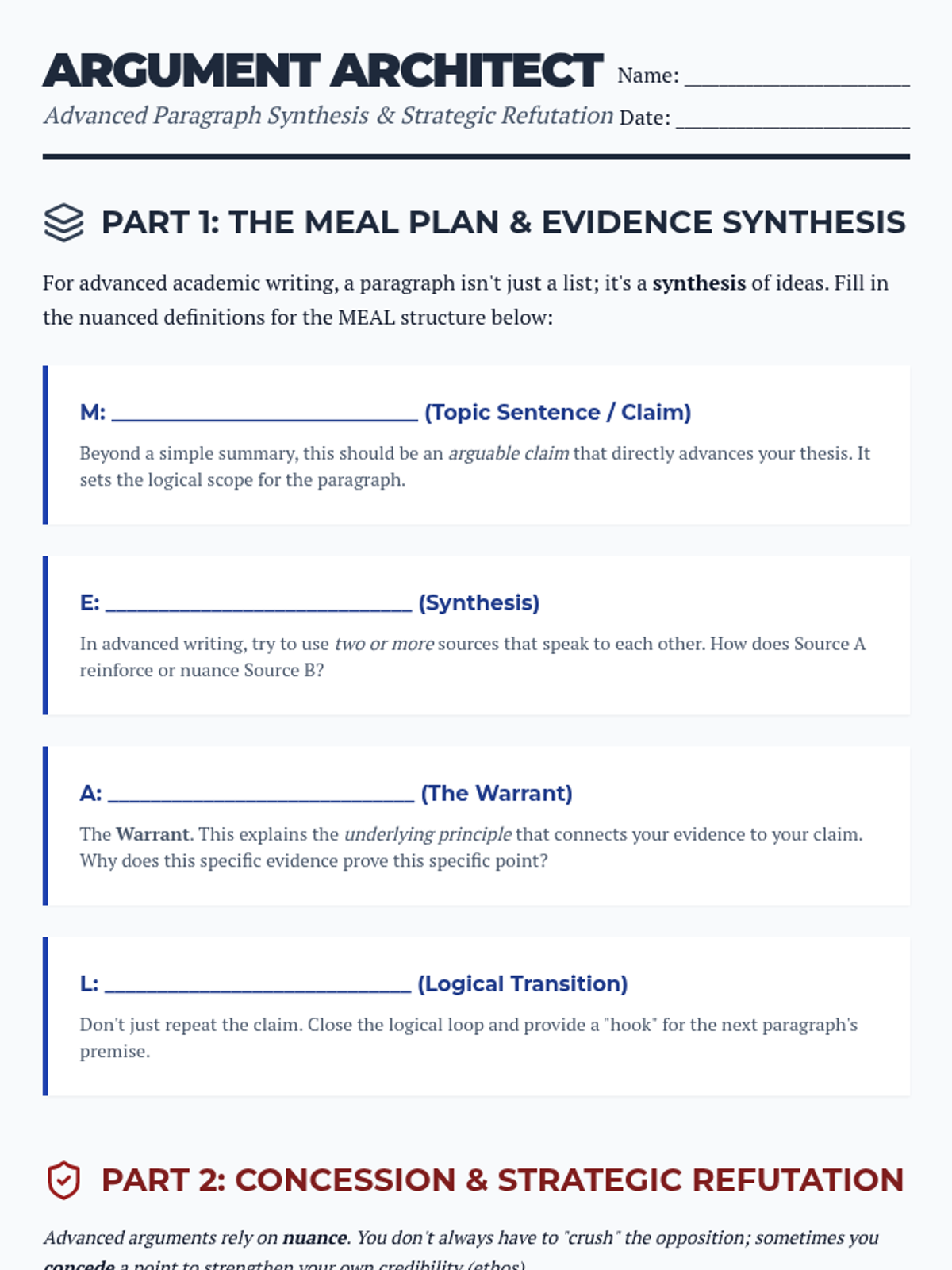
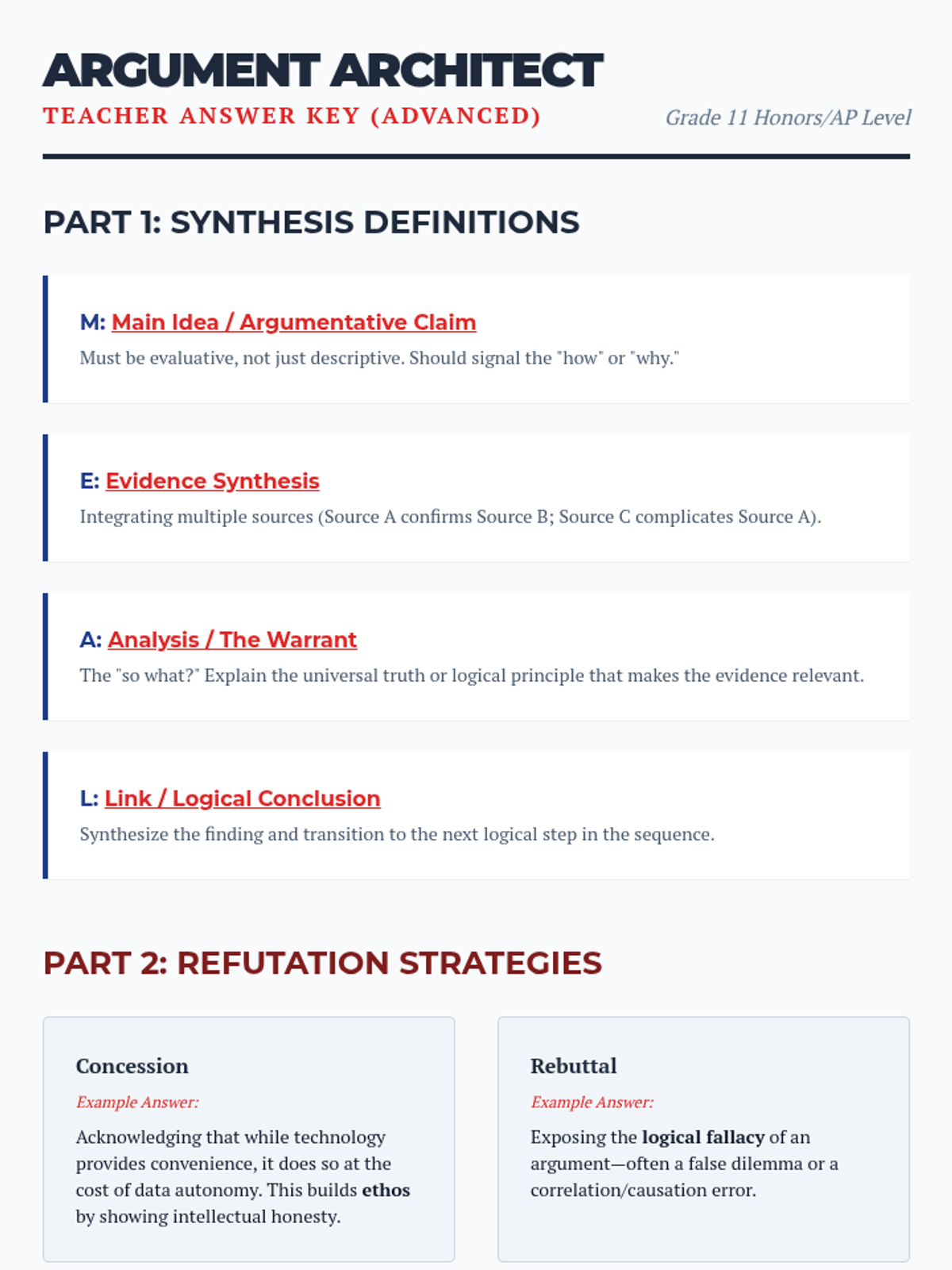
Systematic research, evidence evaluation, and logical reasoning skills for formal discourse. Equips speakers to organize persuasive arguments, identify fallacies, and execute strategic impact calculus during competitive engagement.
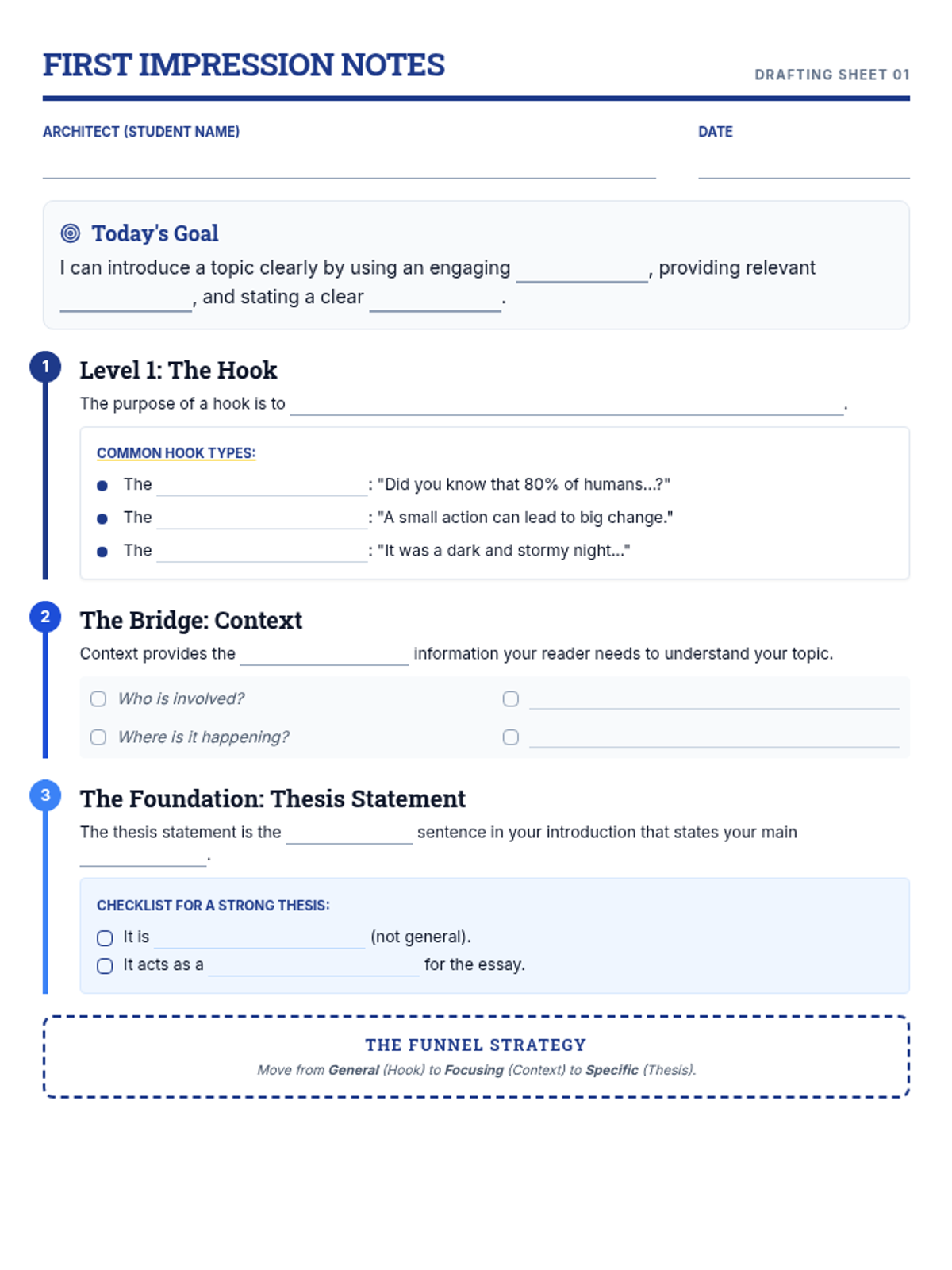
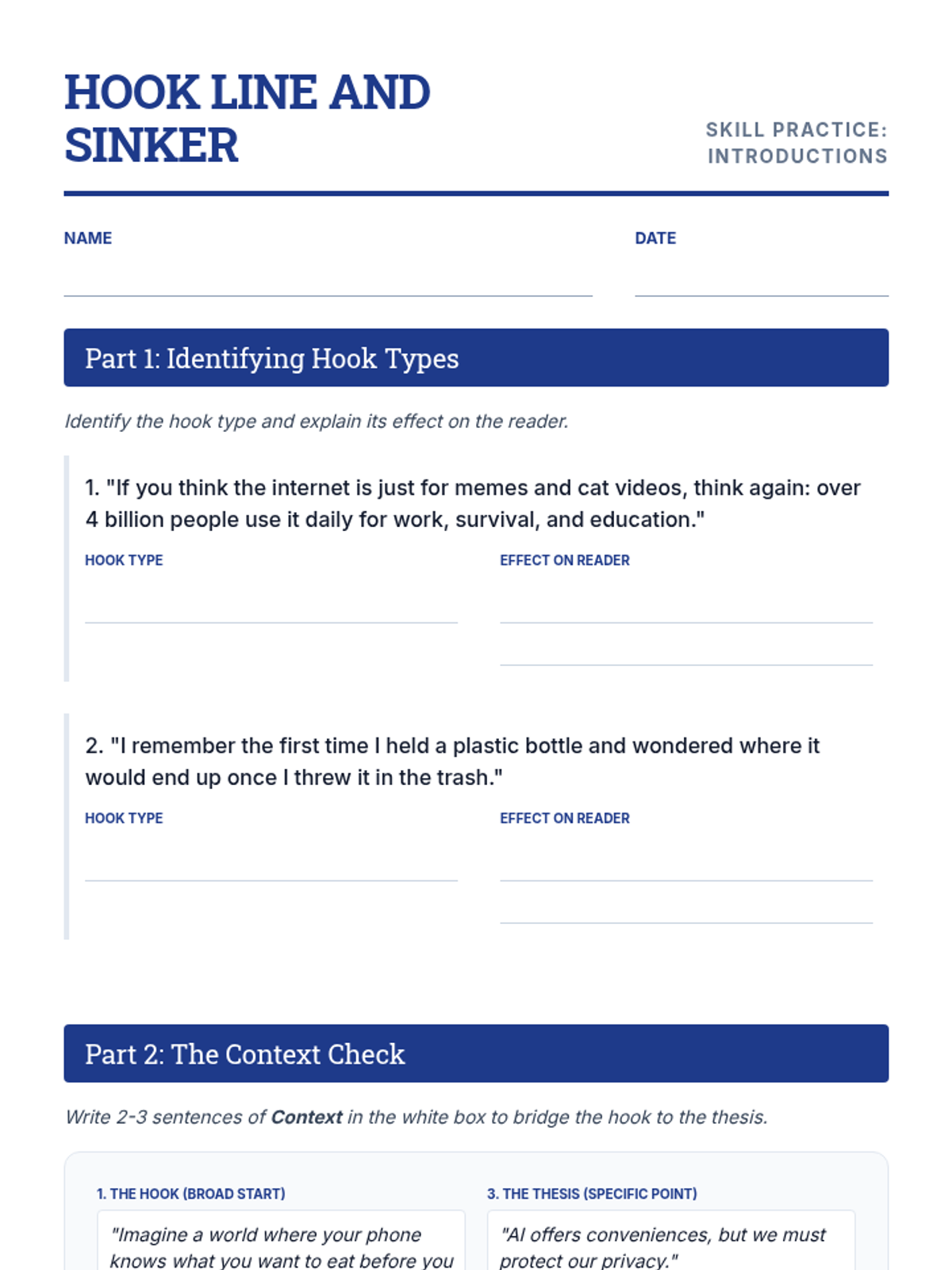
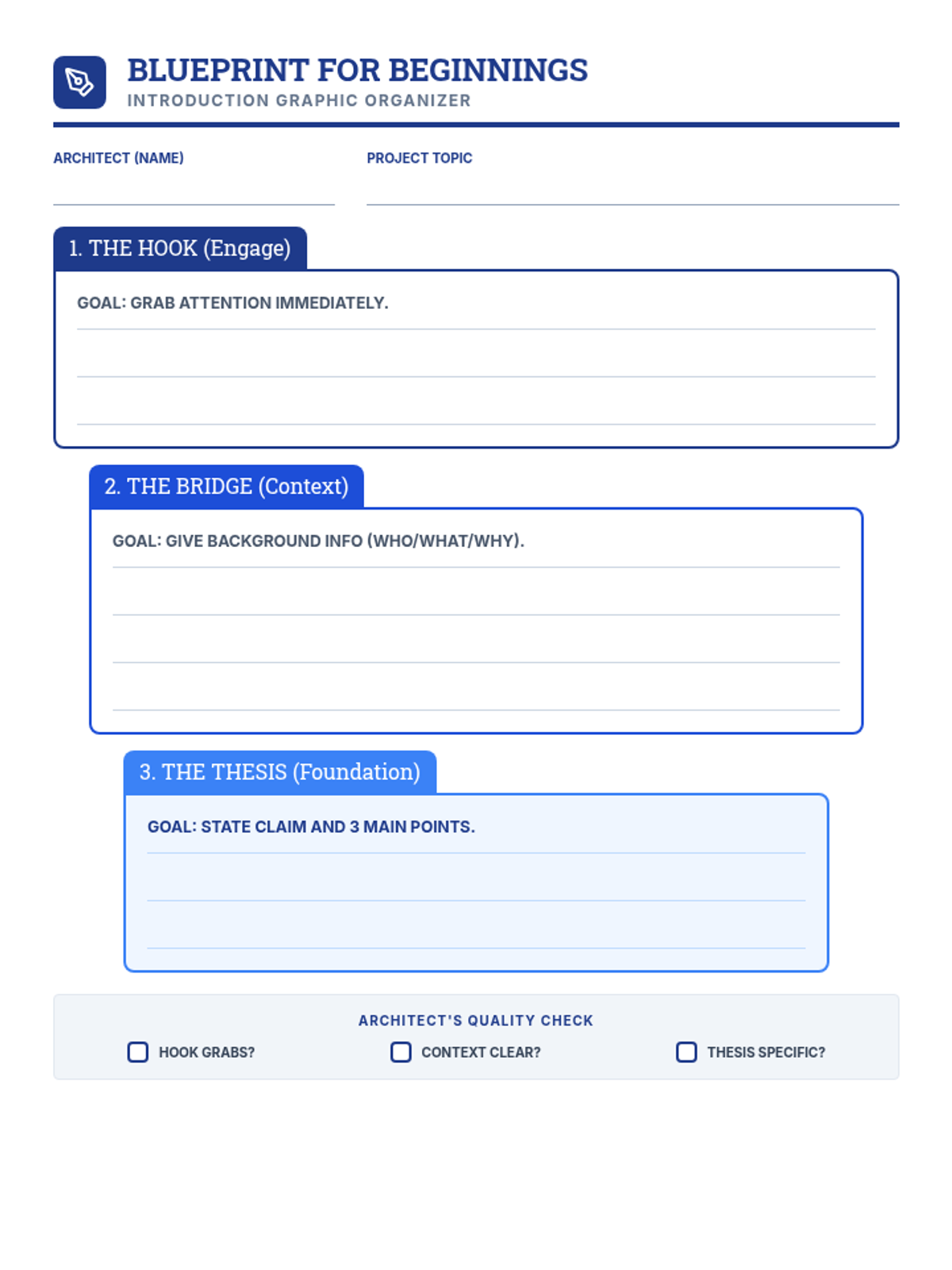
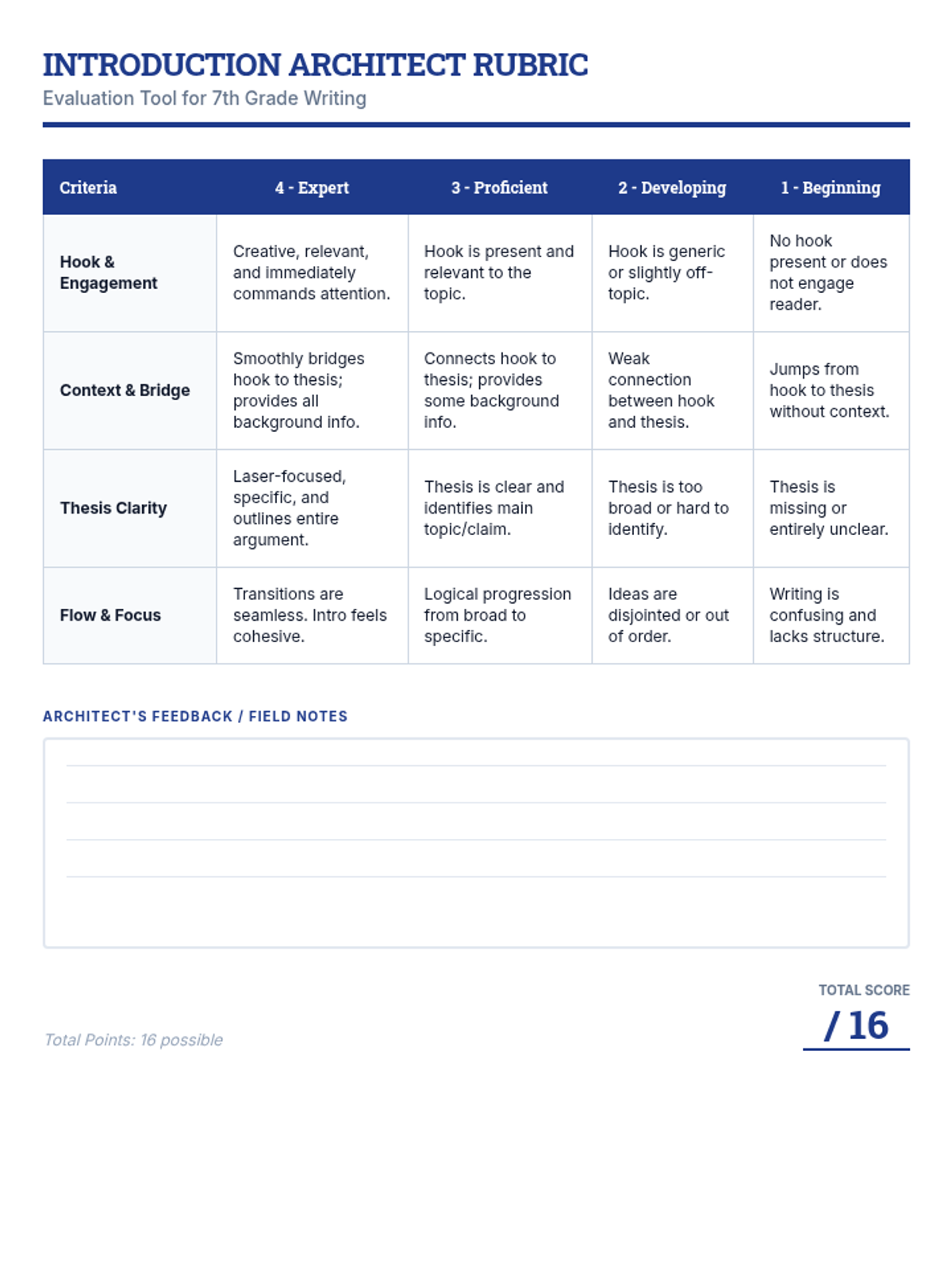
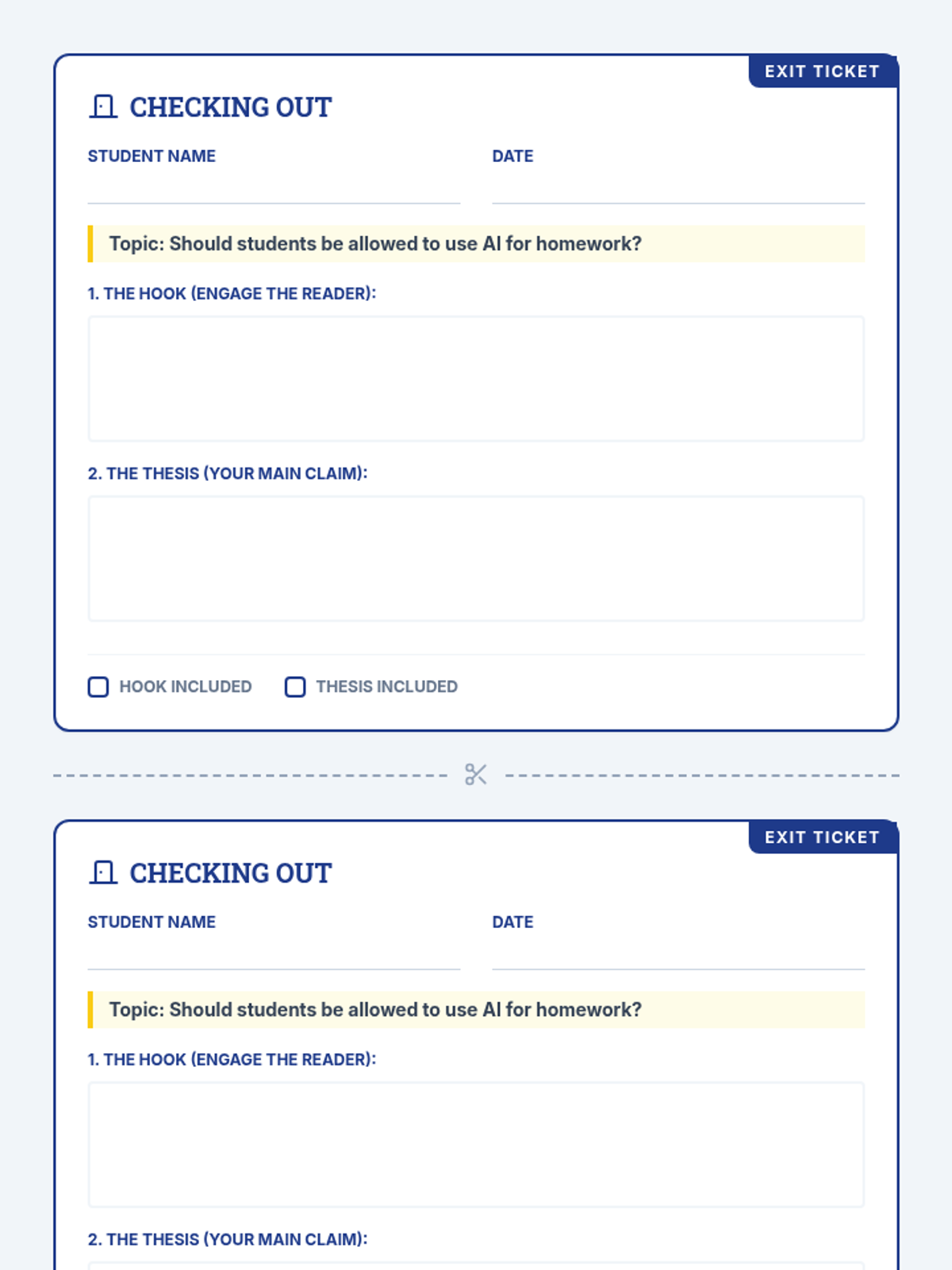
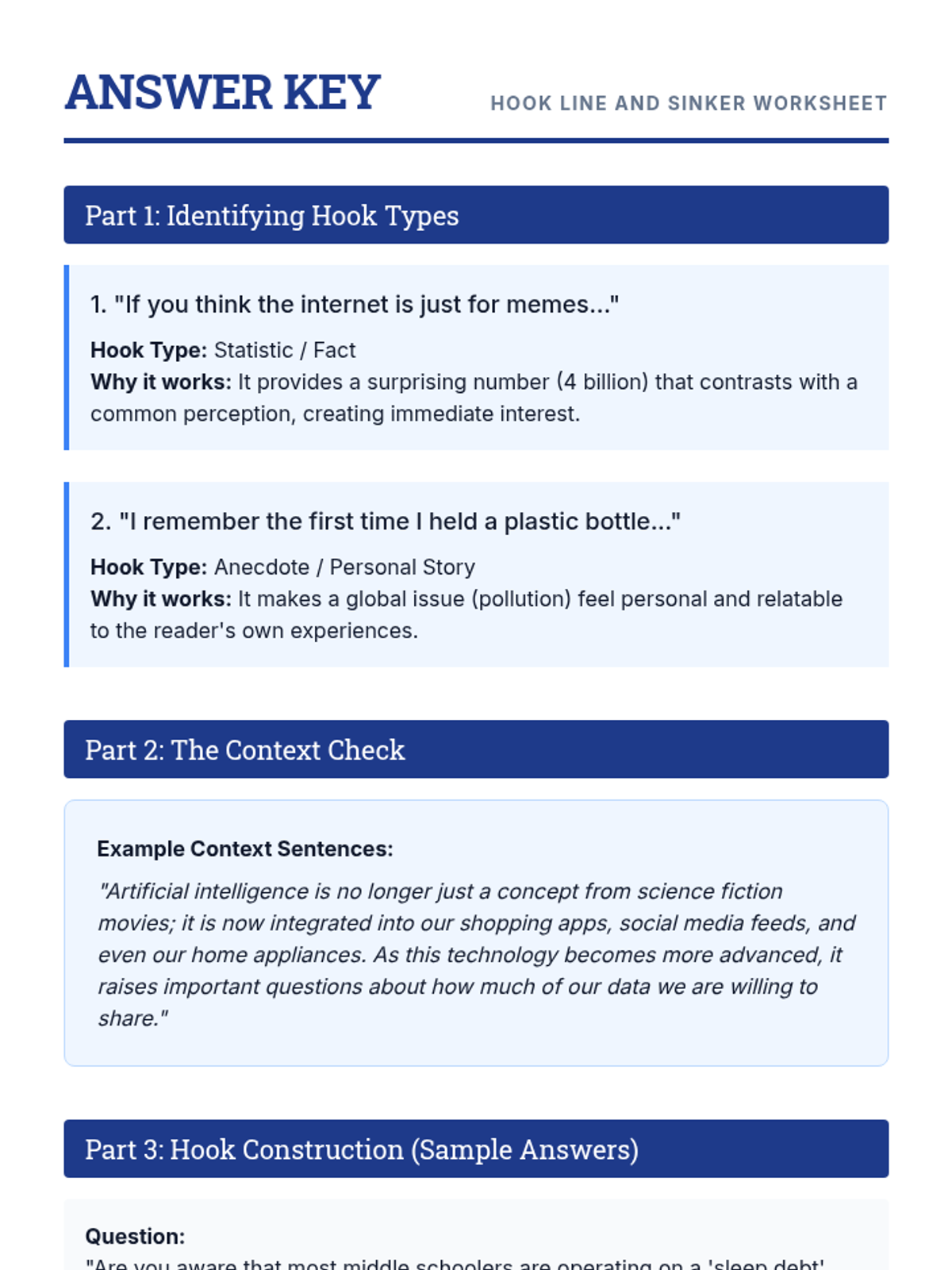
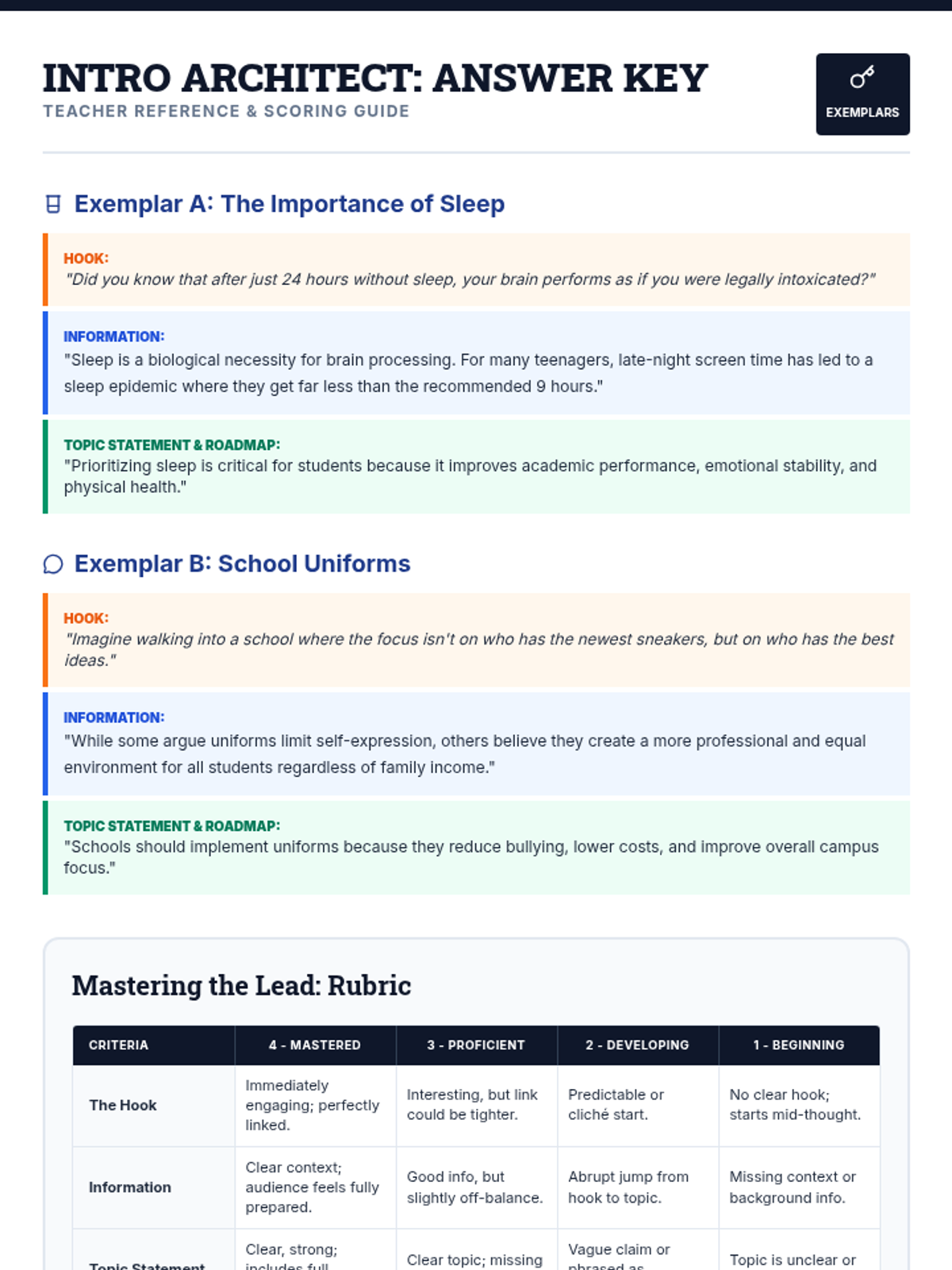
A comprehensive lesson on crafting clear and engaging introductions for 7th-grade writing and speaking, focusing on the Hook, Context, and Thesis.
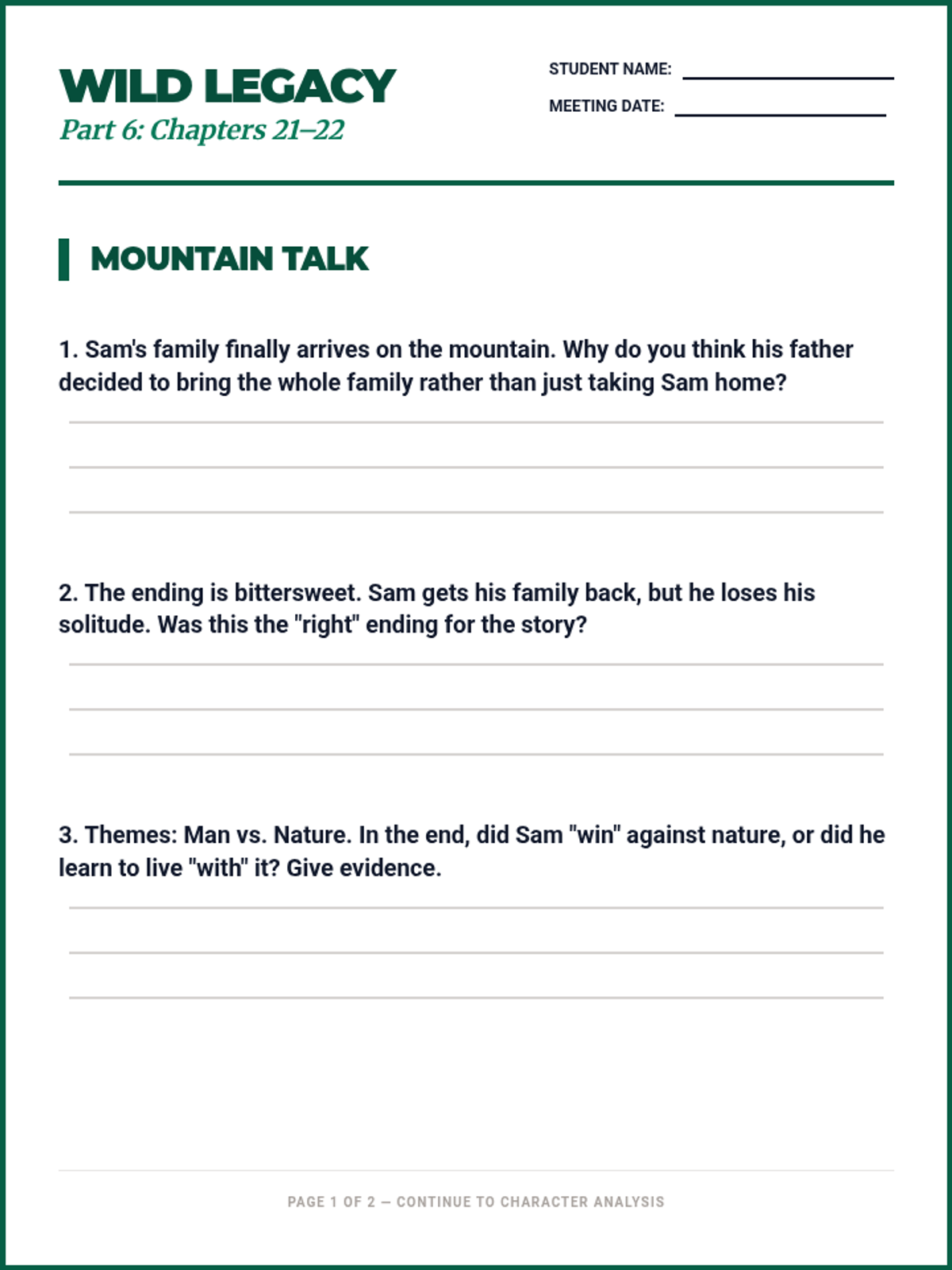
The conclusion of Sam's experiment and his transition back toward society and family. Covers Chapters 21-22 and Epilogue.
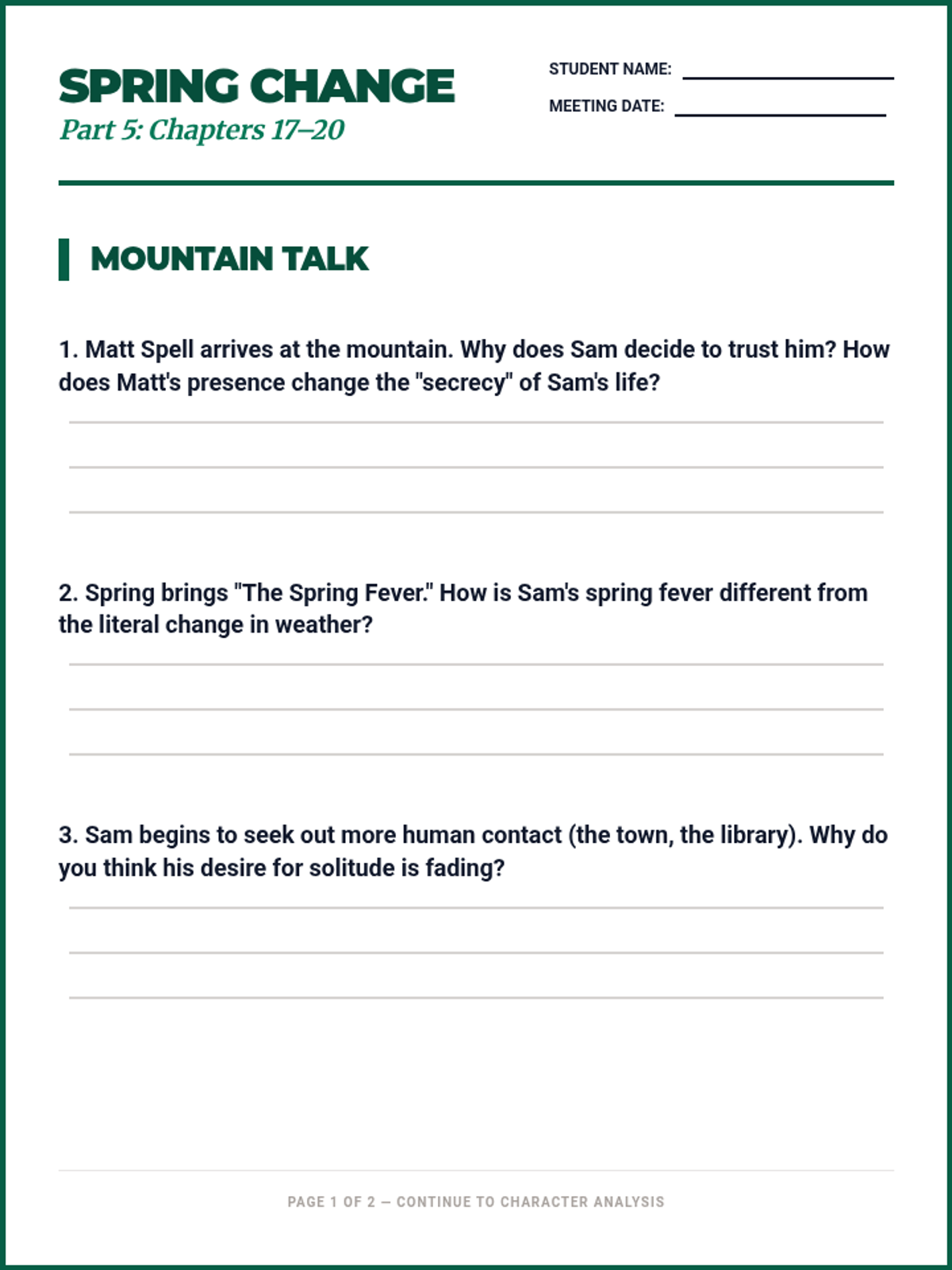
As spring arrives, Sam faces new visitors and the realization that his secret life is becoming public. Covers Chapters 17-20.
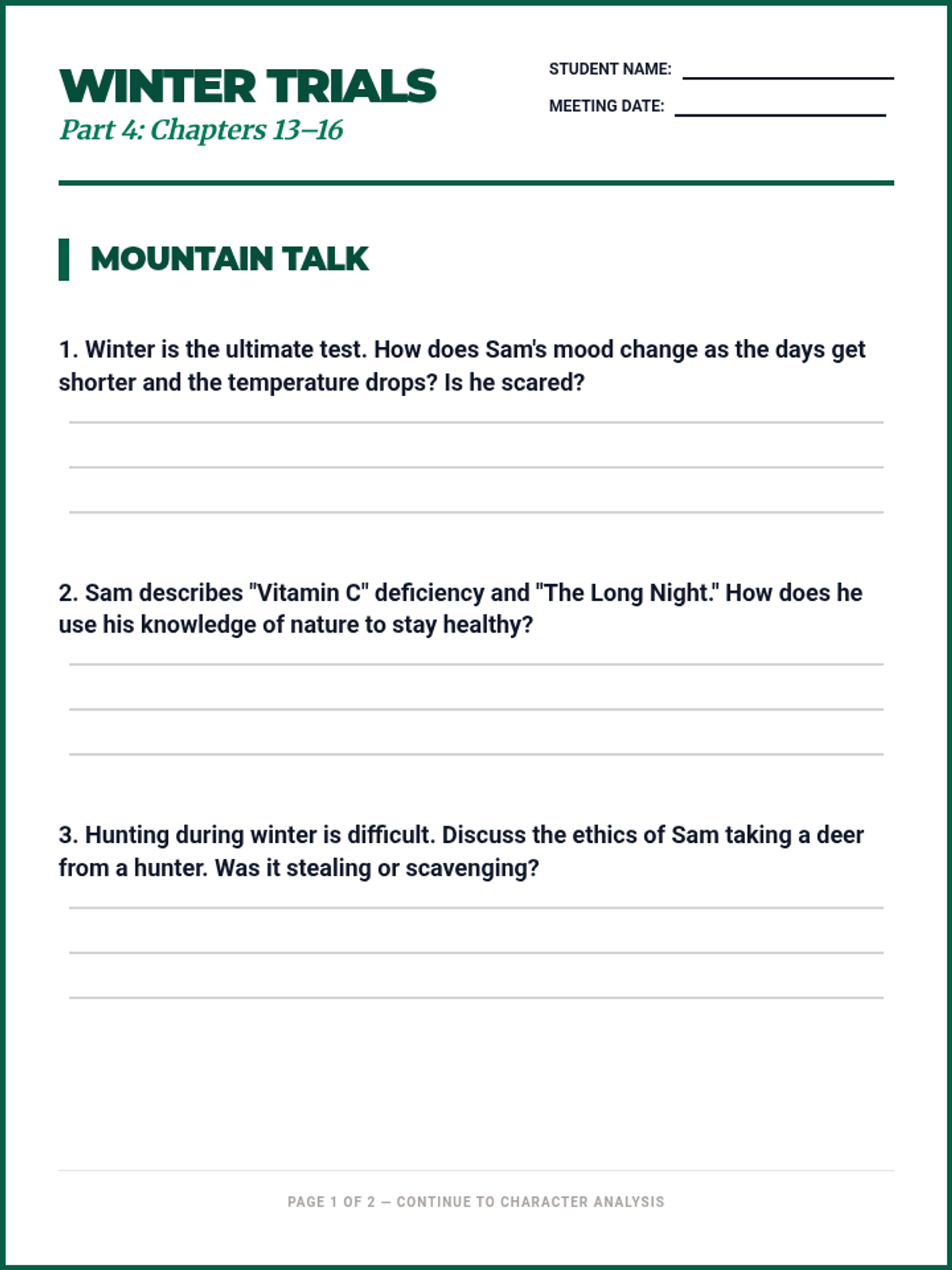
The harsh reality of a Catskill winter, testing Sam's preparations and mental fortitude. Covers Chapters 13-16.
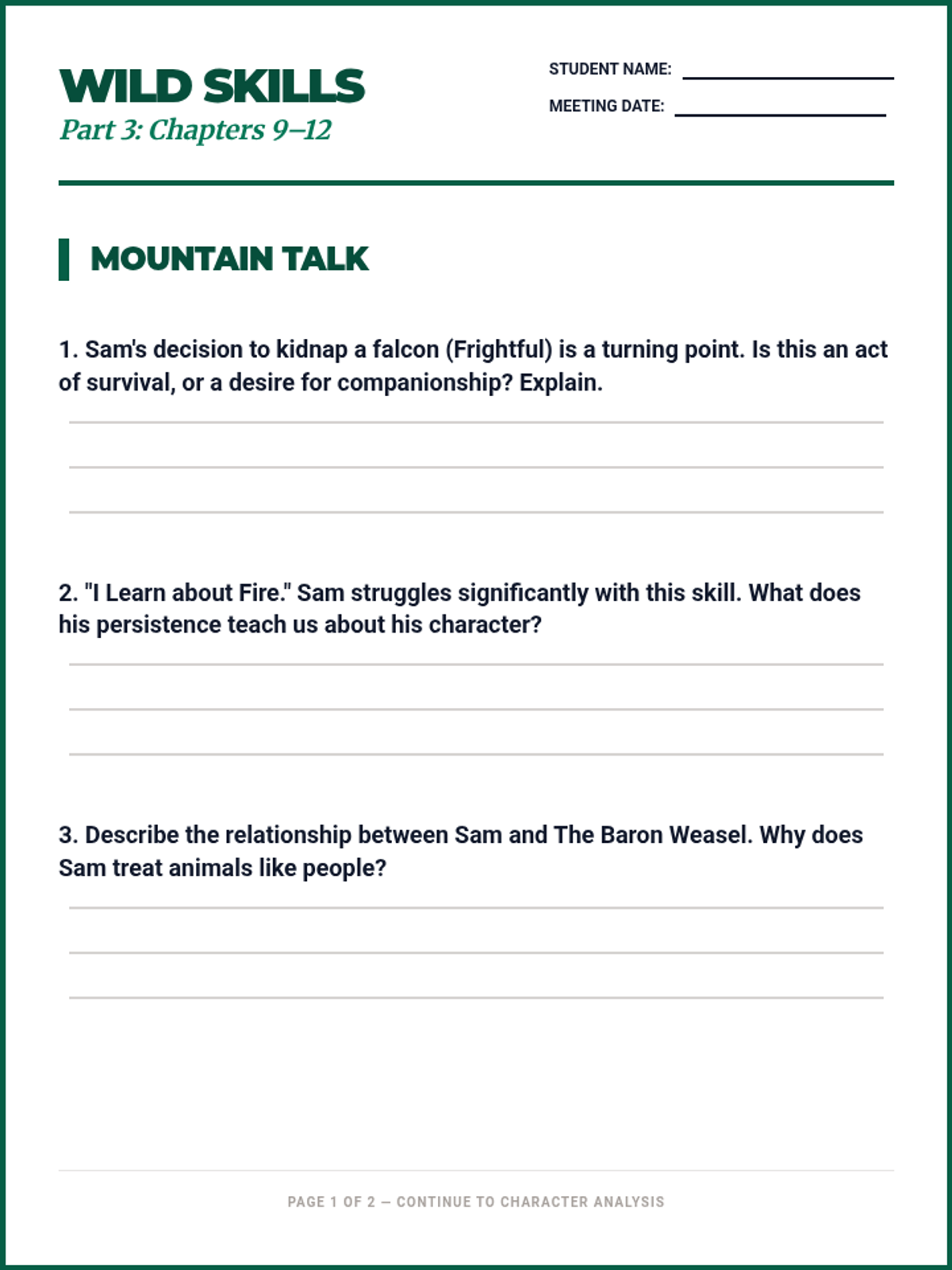
Focus on Sam's growing expertise in fire-making and his pivotal relationship with Frightful the hawk. Covers Chapters 9-12.
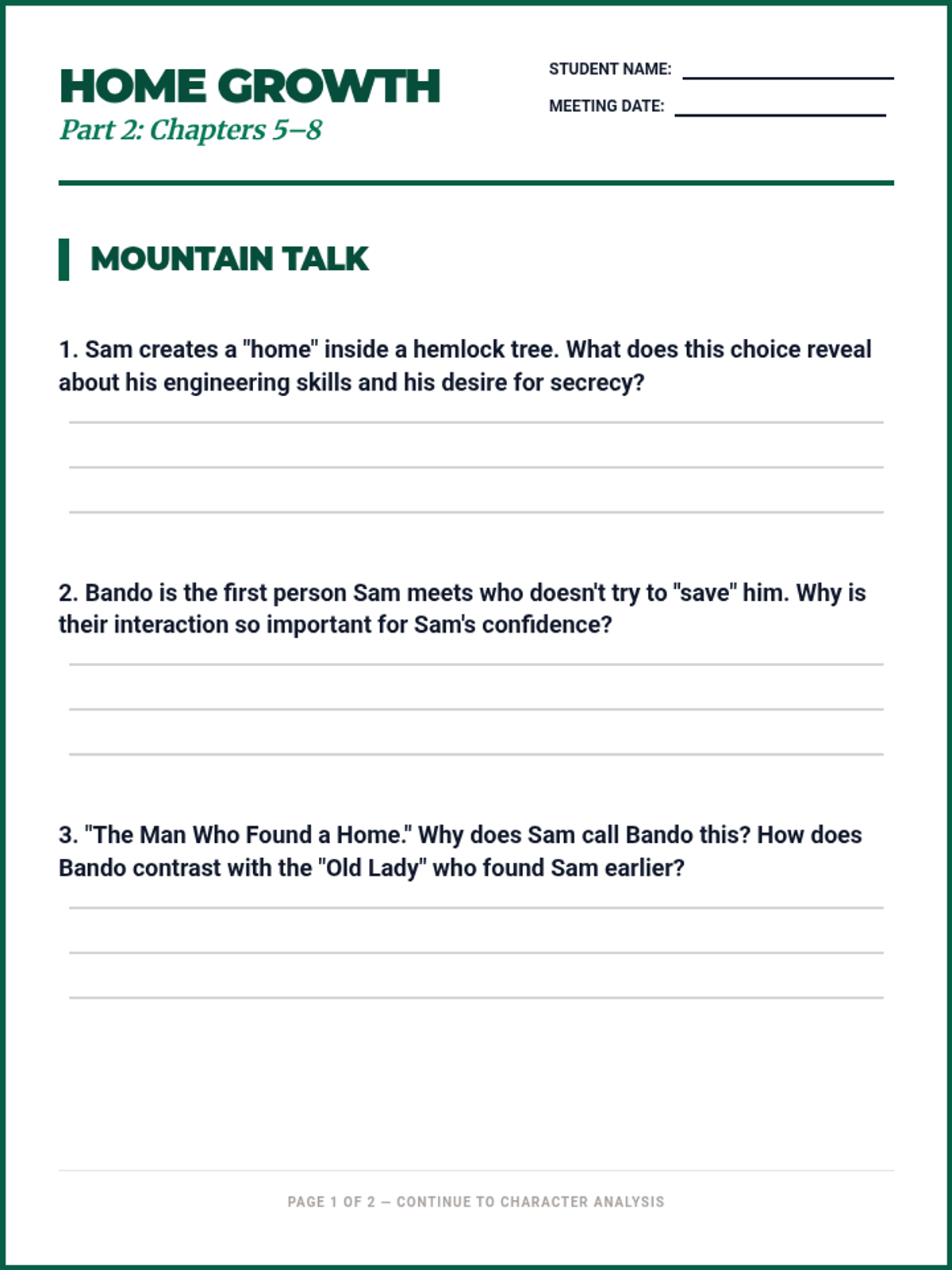
Sam expands his home and meets Bando, exploring the balance between solitude and human connection. Covers Chapters 5-8.
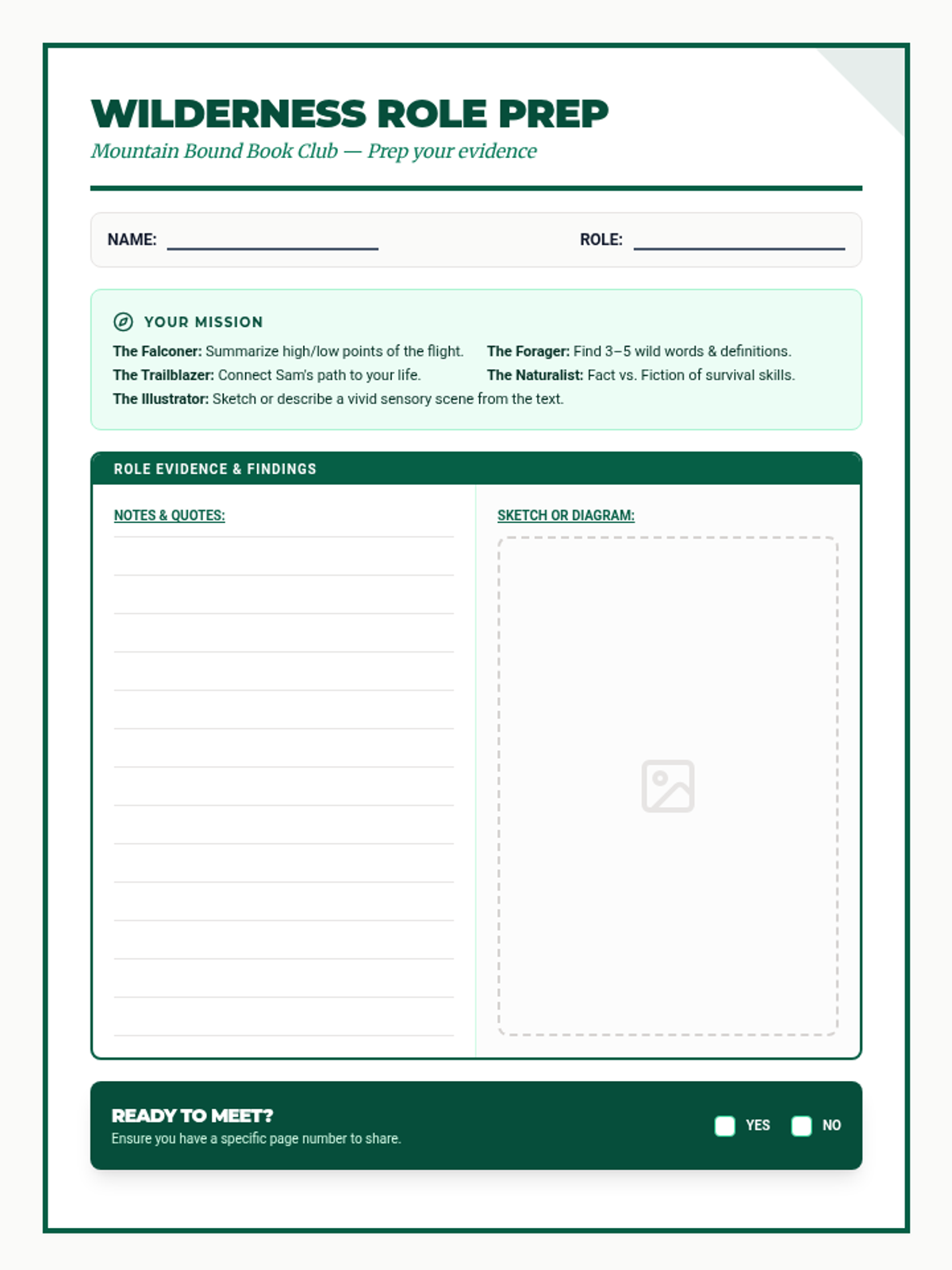
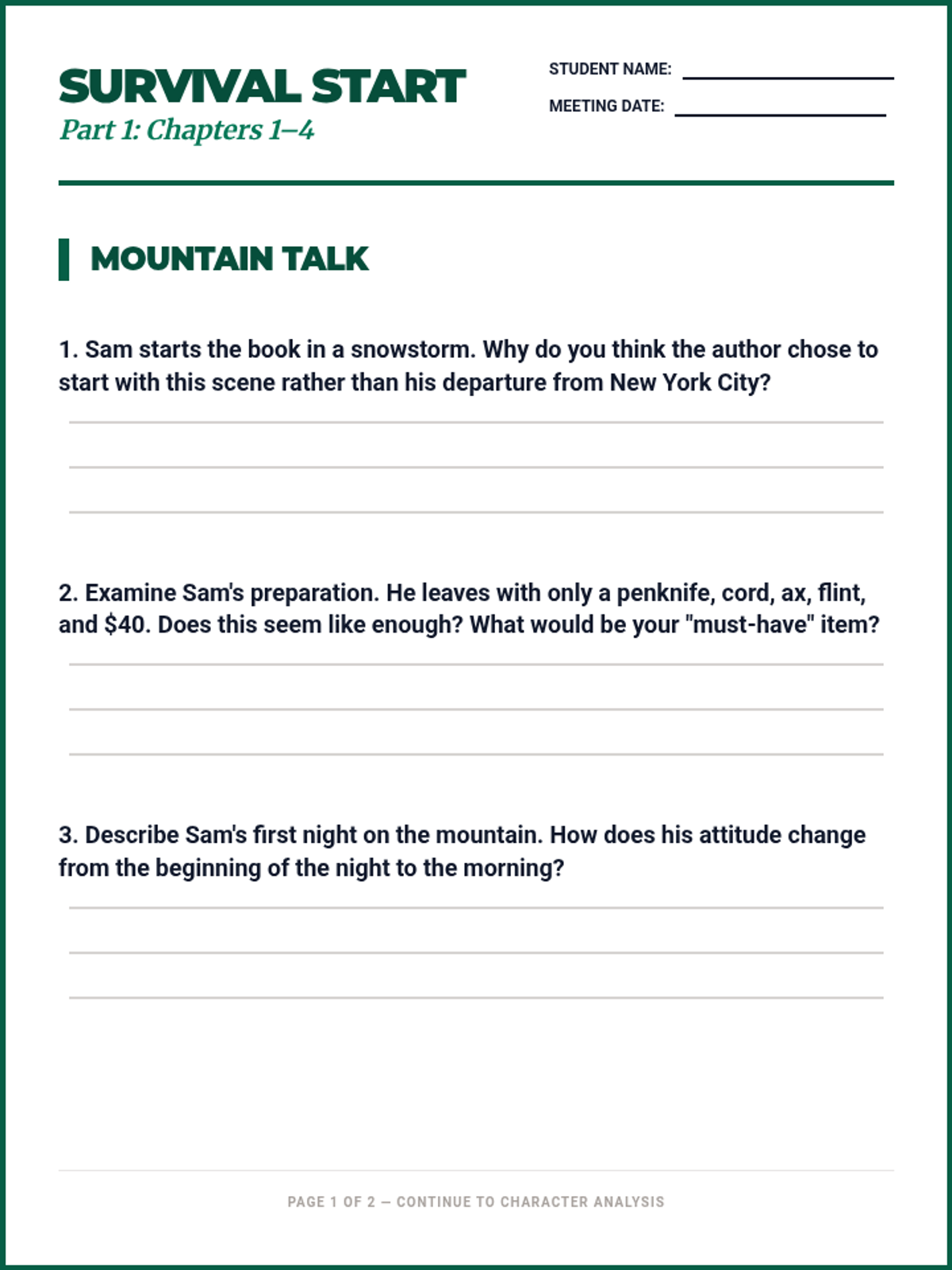
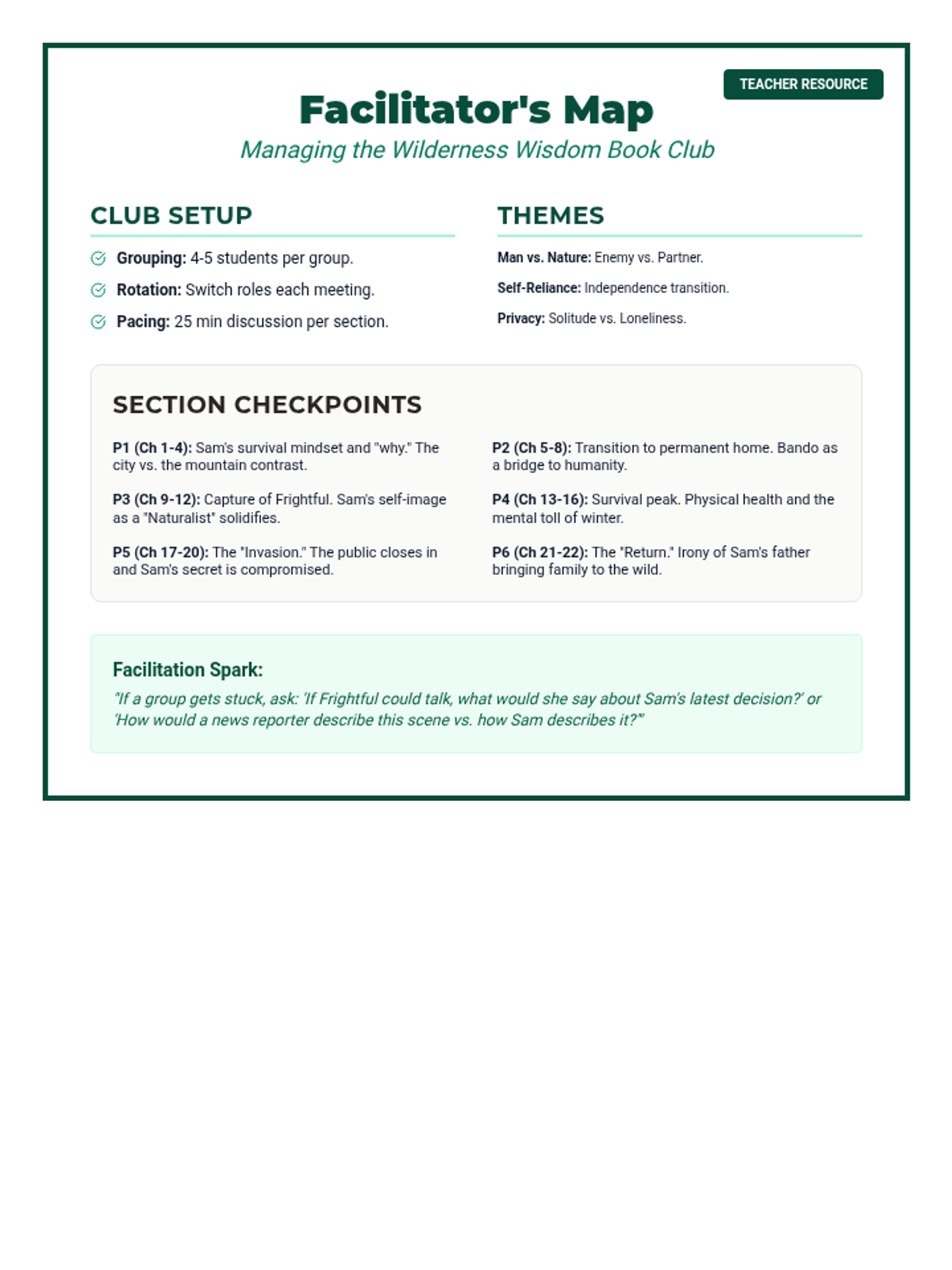
Introduction to Sam Gribley's journey, setting up in the hemlock forest, and the initial challenges of wilderness survival. Covers Chapters 1-4.
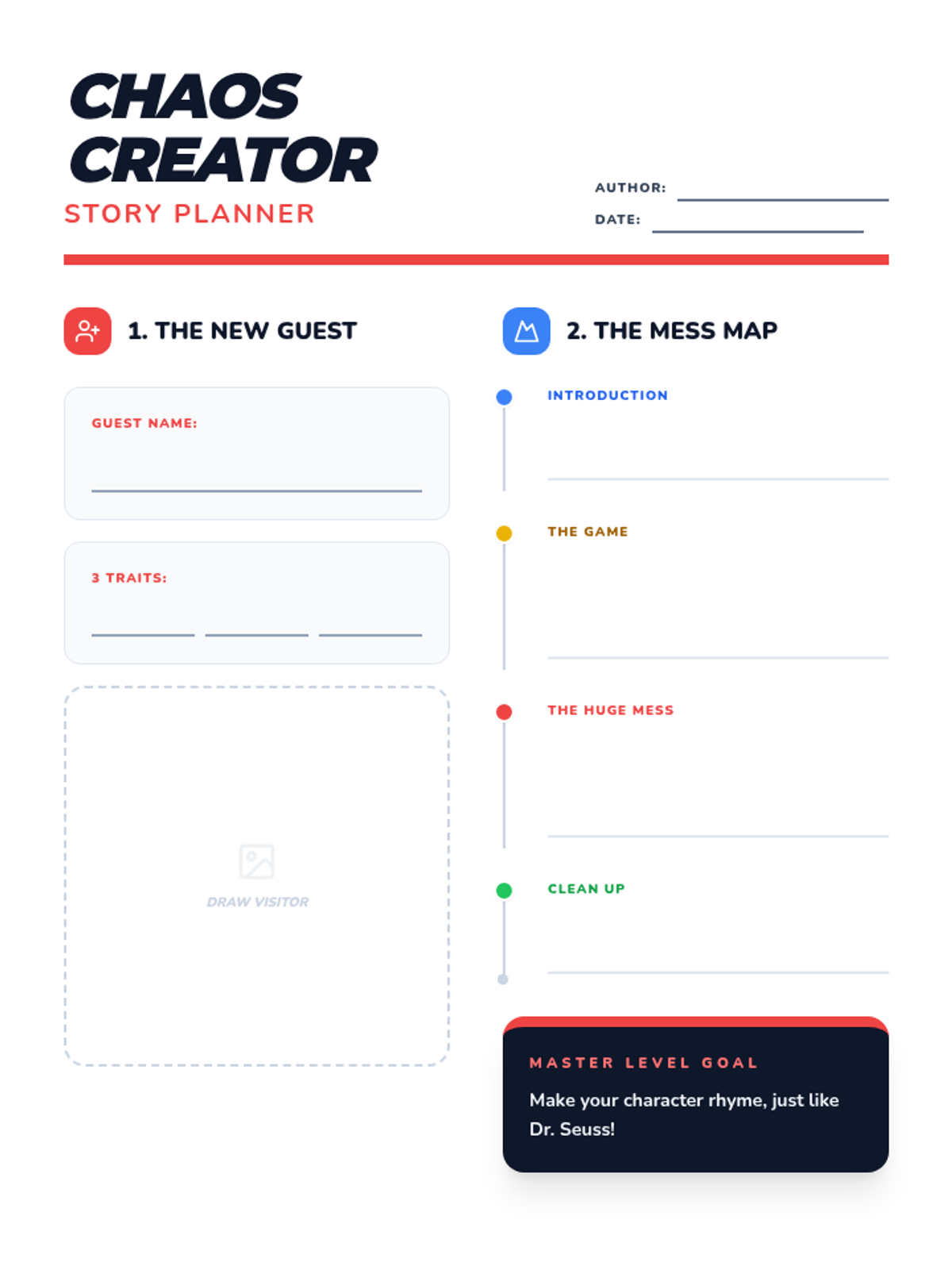
Students become the authors by creating their own 'Chaos Creator' characters and outlining a new adventure that mirrors Seuss's narrative structure.
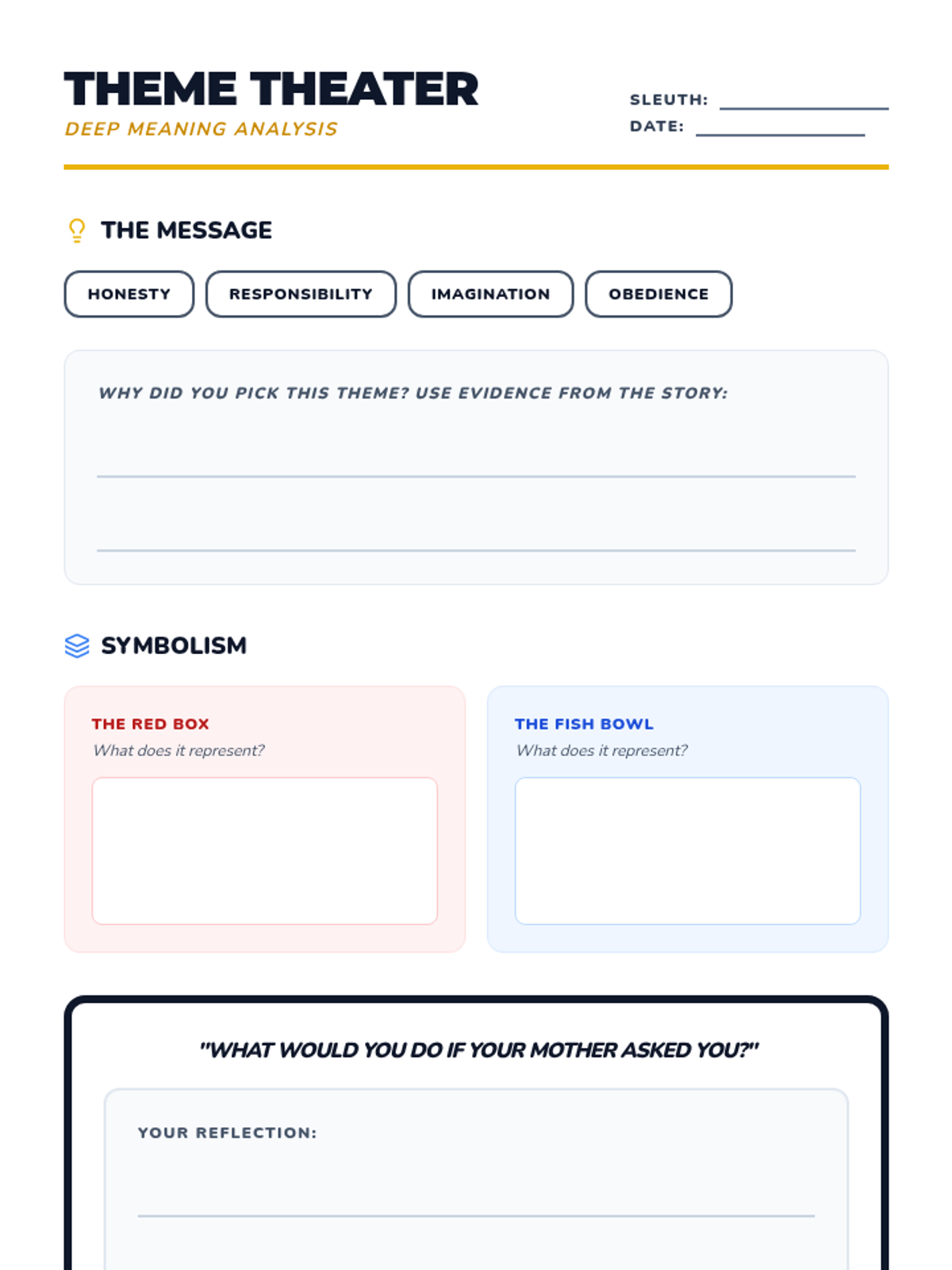
Investigate the deeper meanings of the story. Students debate the moral of the story, analyze the symbolism of the "Mess," and evaluate the lesson on responsibility.
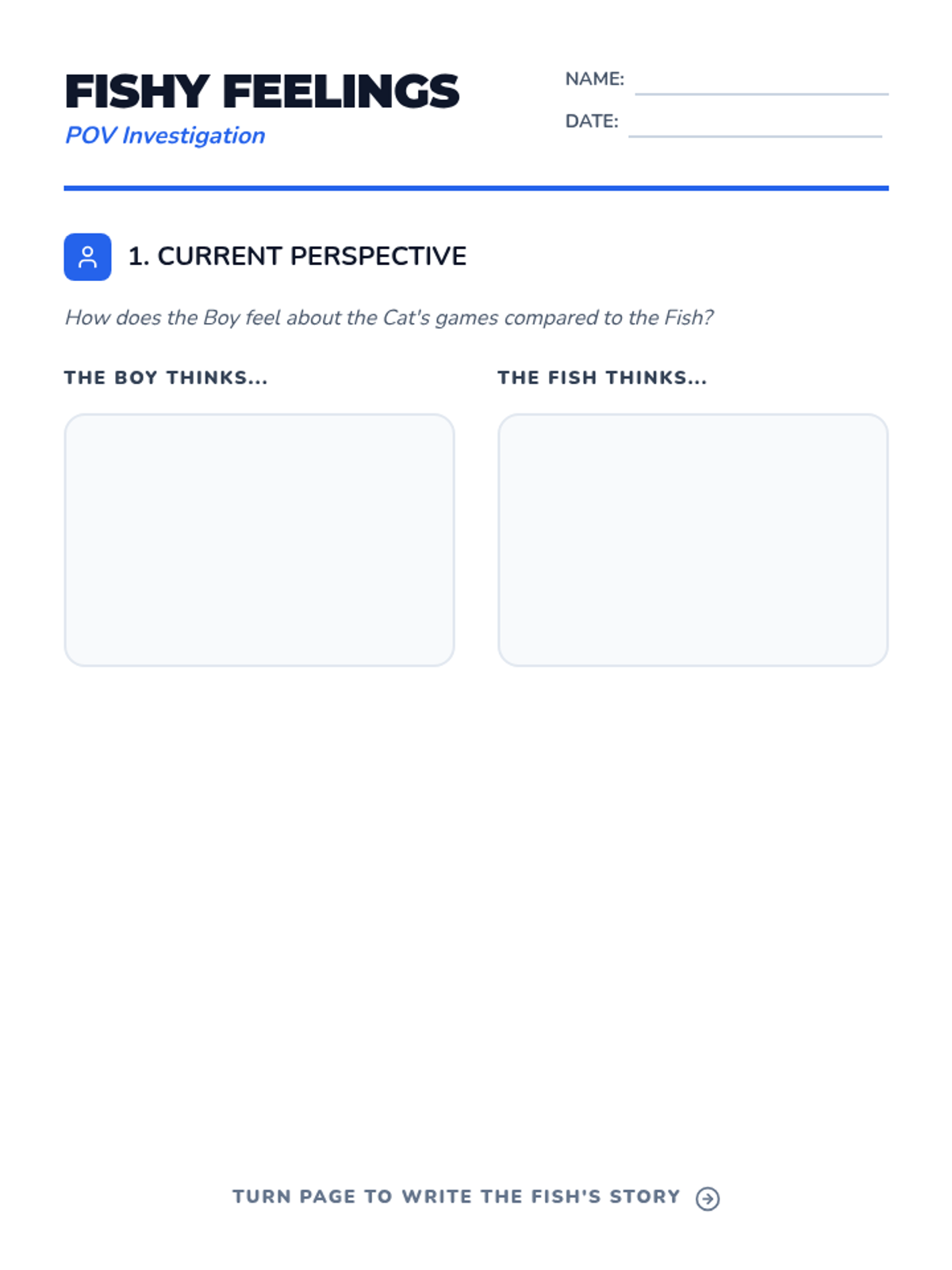
Explore the conflicting perspectives of the Cat and the Fish. Students analyze how different characters perceive the same events and practice writing from a specific point of view.
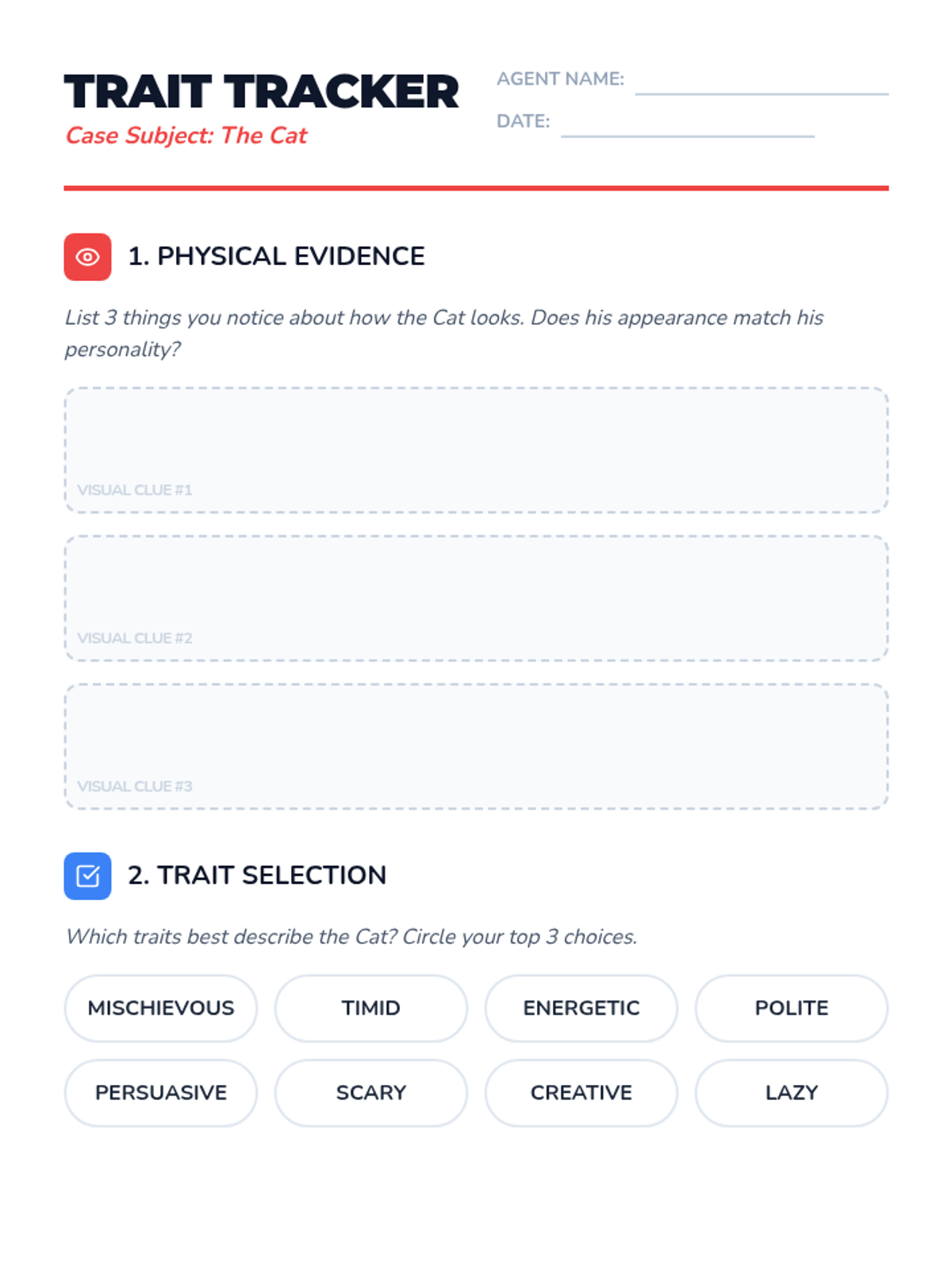
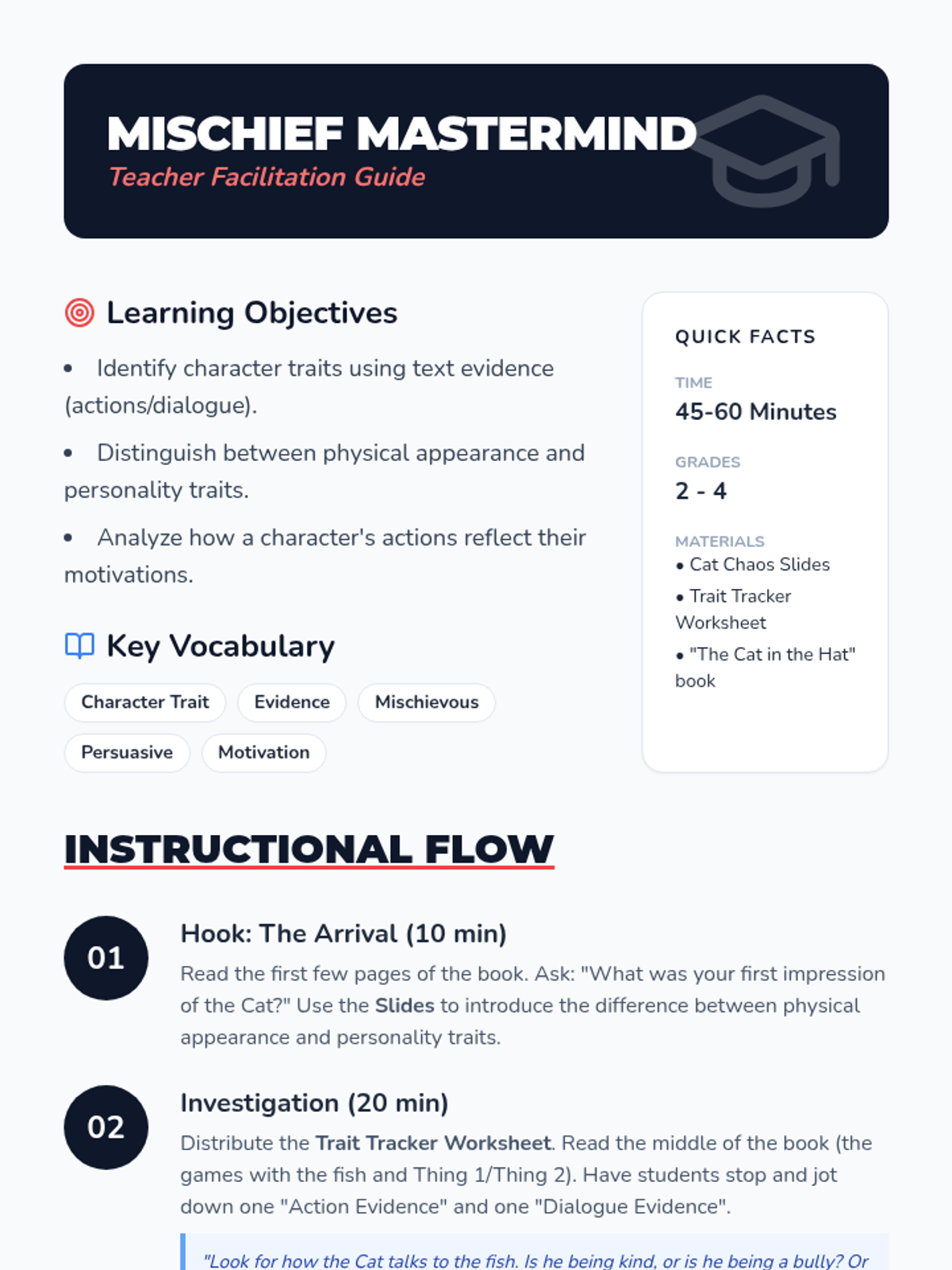
A whimsical exploration of character traits using the iconic Cat from 'The Cat in the Hat'. Students analyze evidence from the text to determine the Cat's personality and motivations.
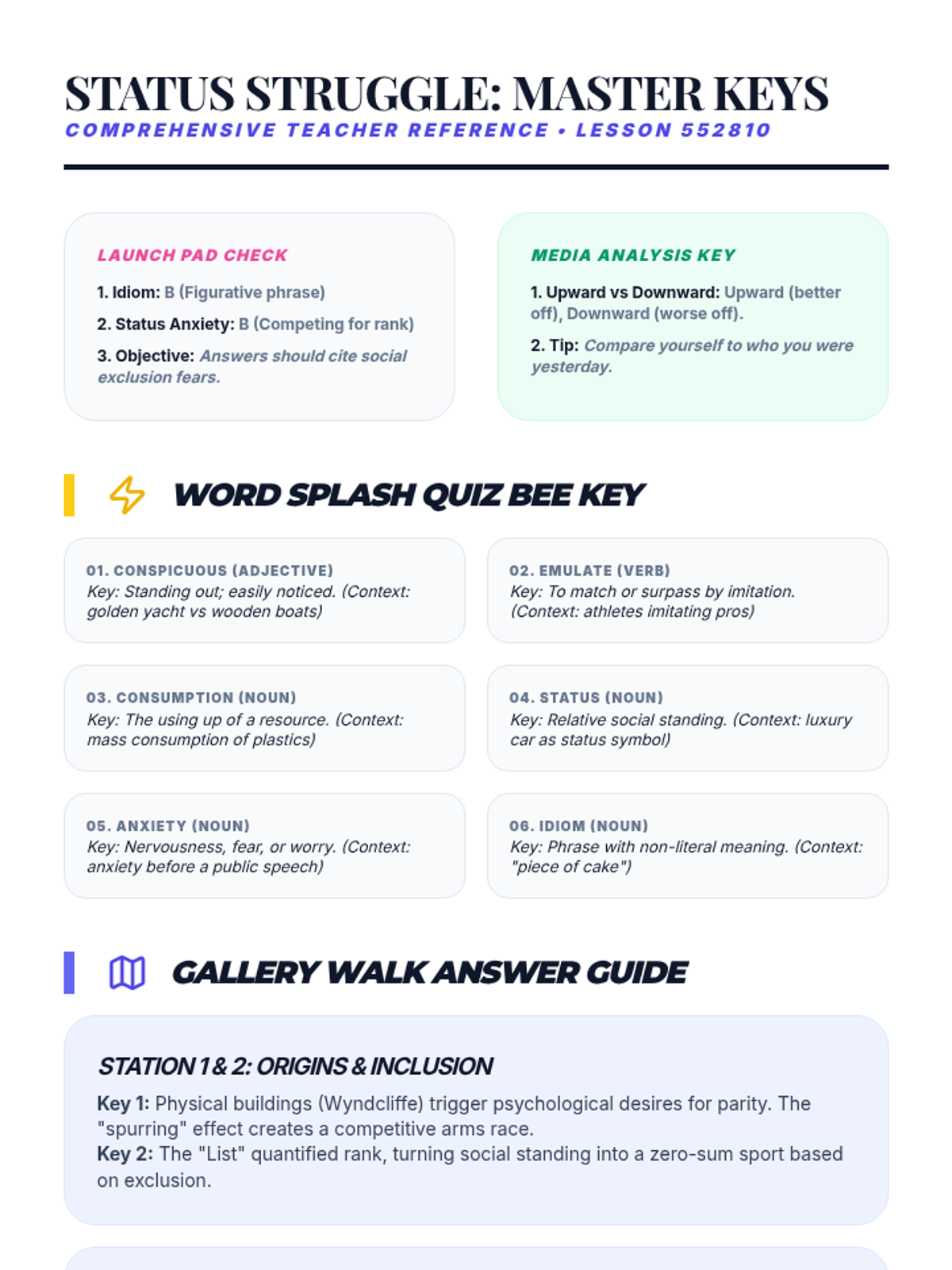
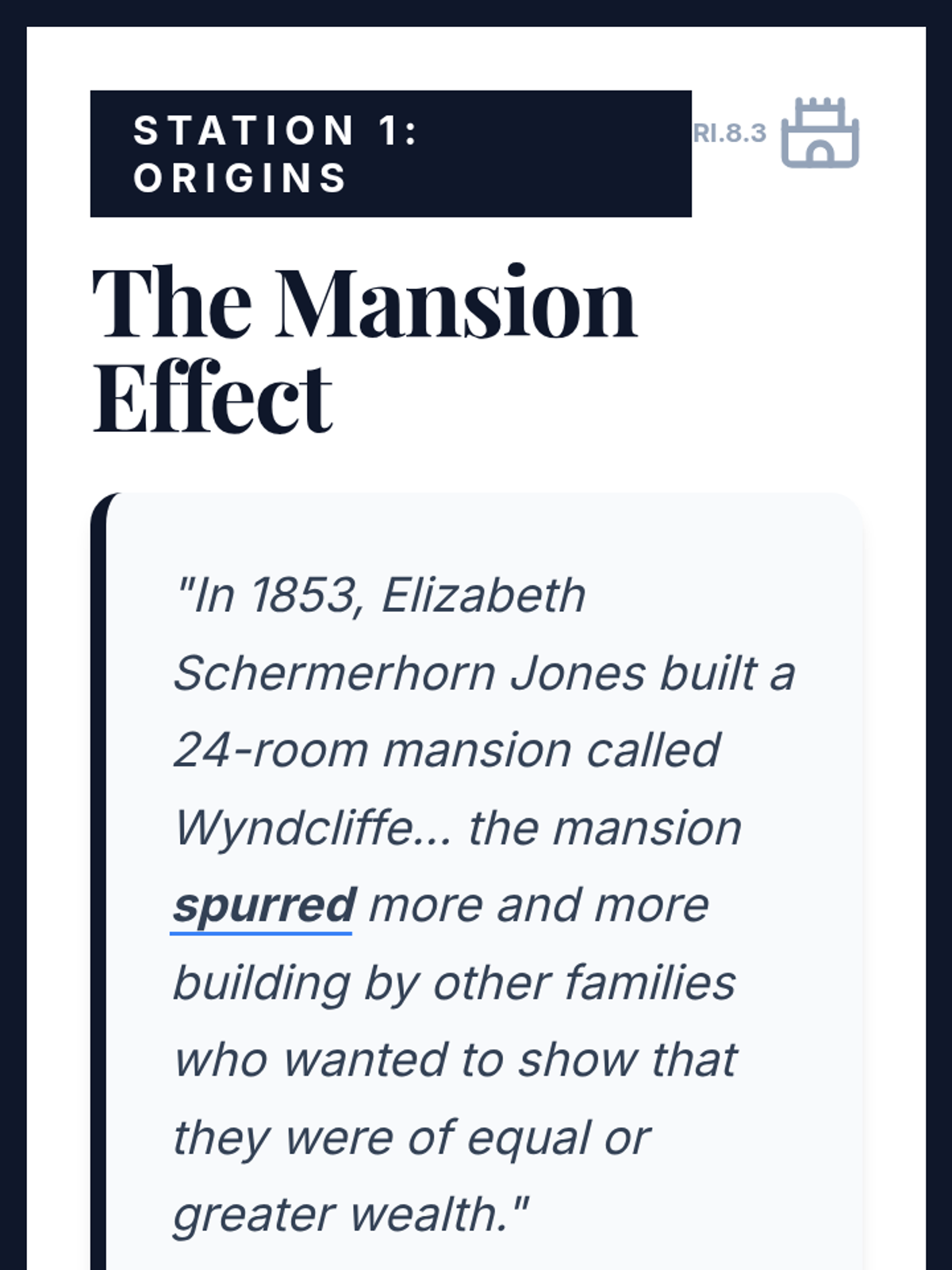
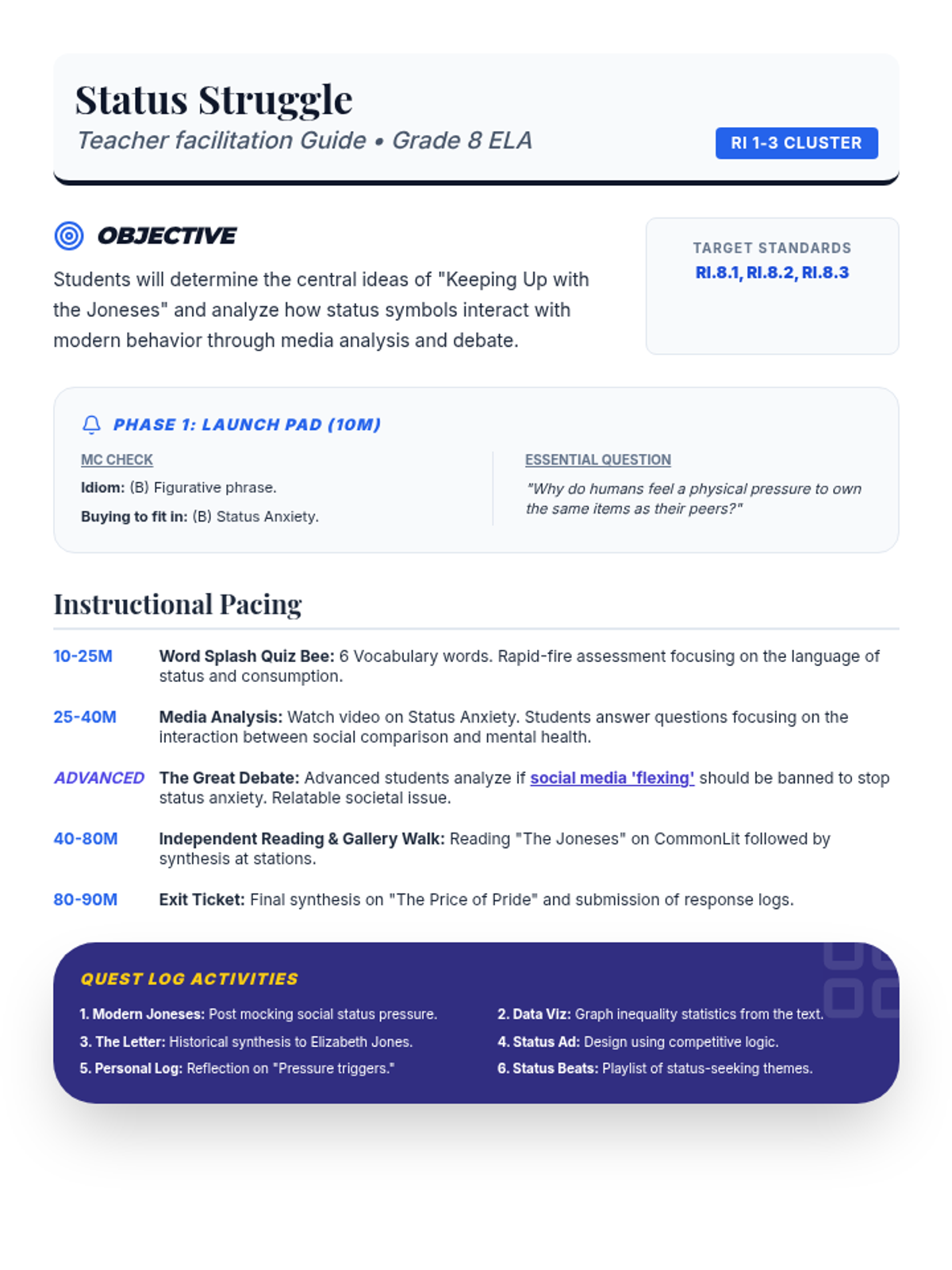
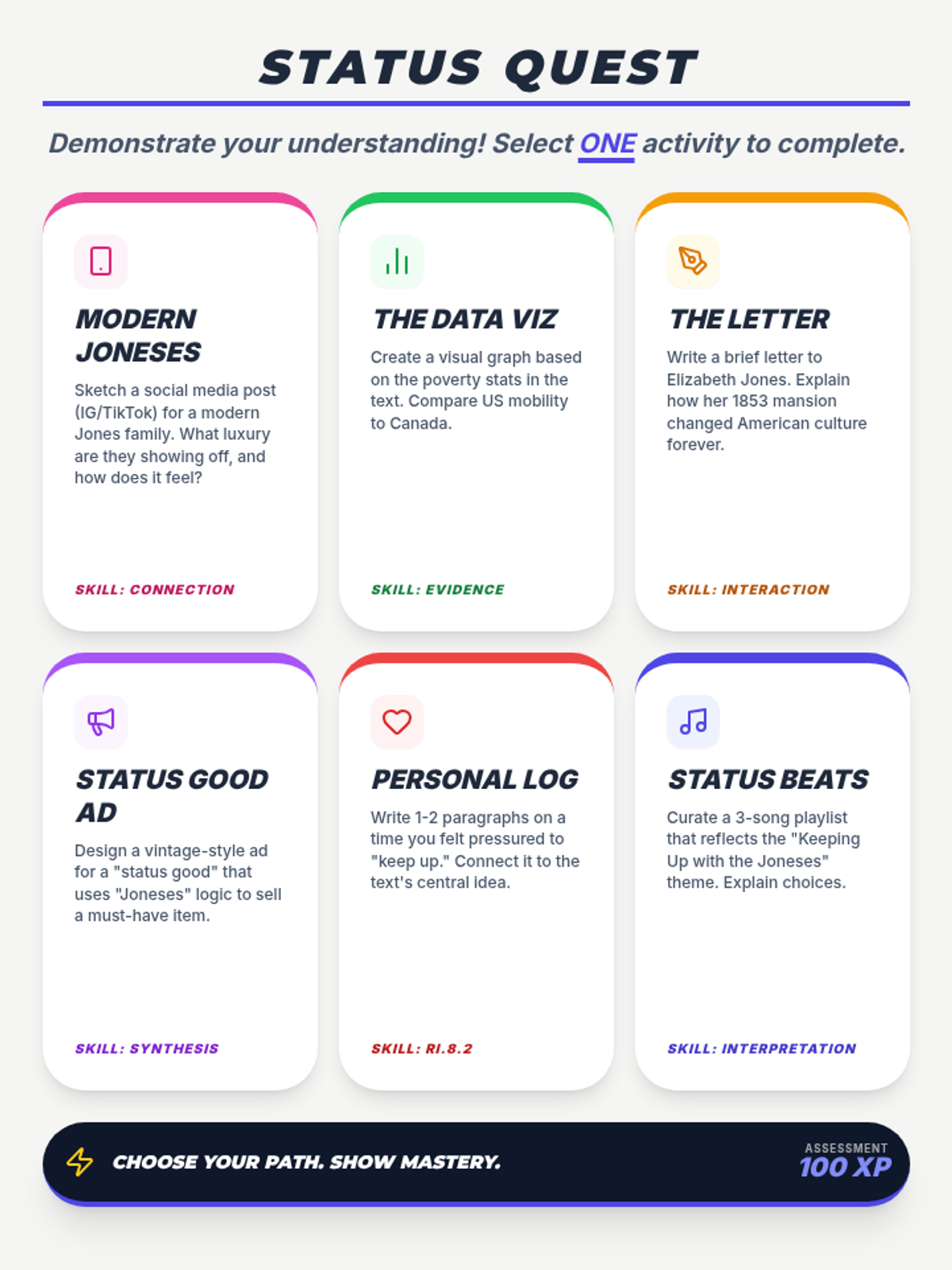
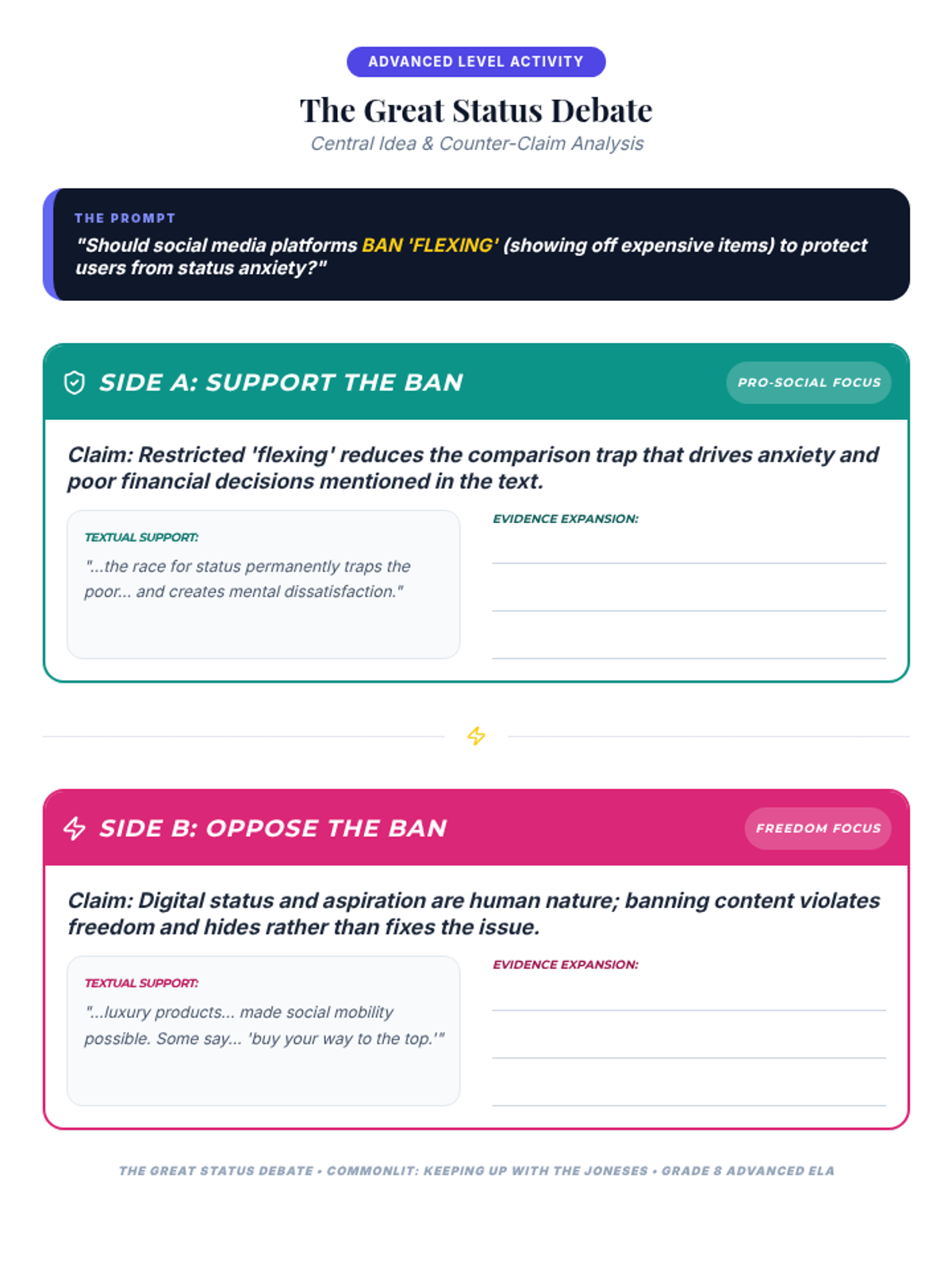
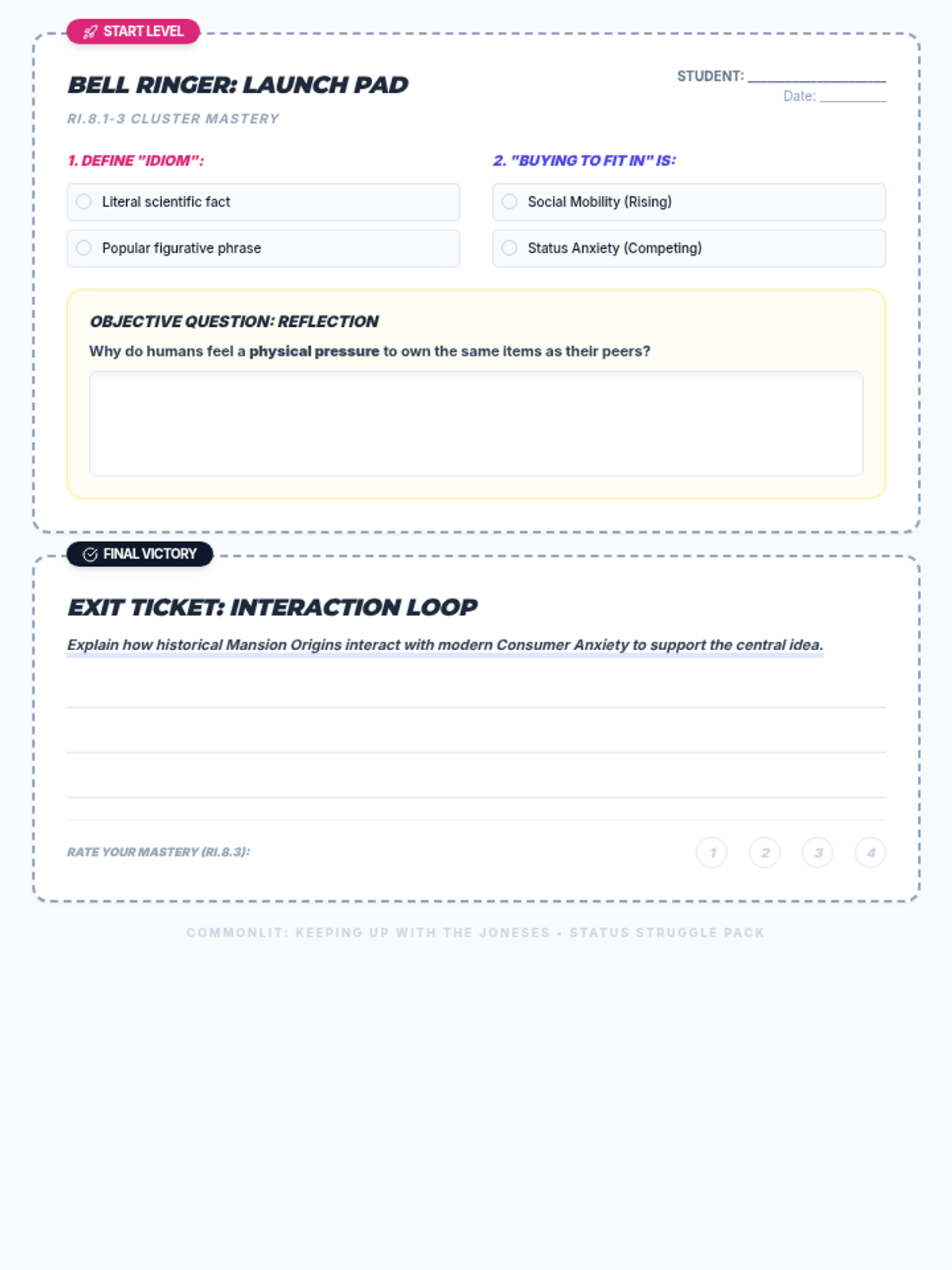
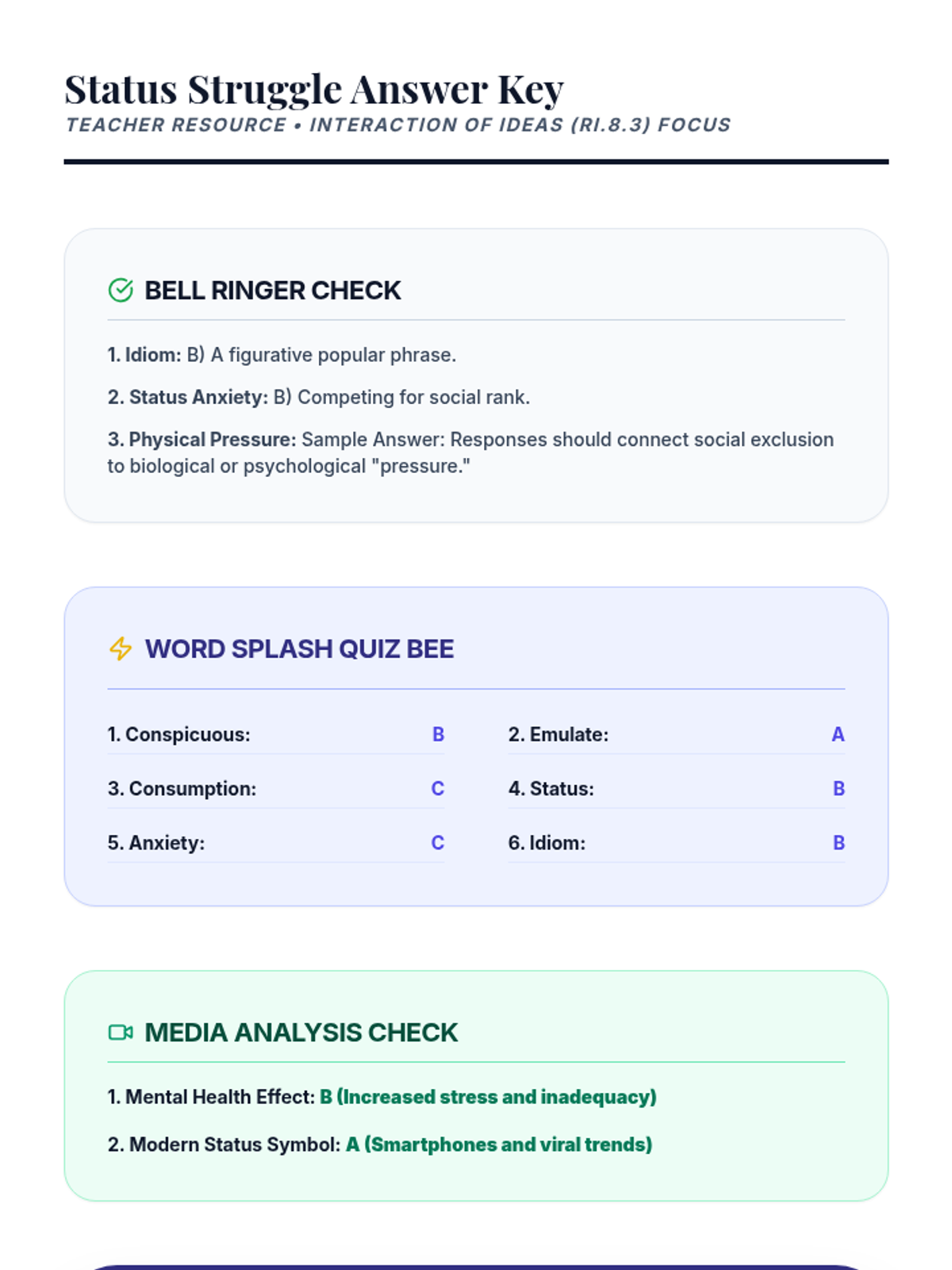
An 8th-grade ELA lesson focused on central ideas and evidence through the CommonLit text 'Keeping Up with the Joneses'. Students analyze the origins, social impacts, and psychological pressures of status-seeking behavior through vocabulary challenges, media analysis, and collaborative activities.
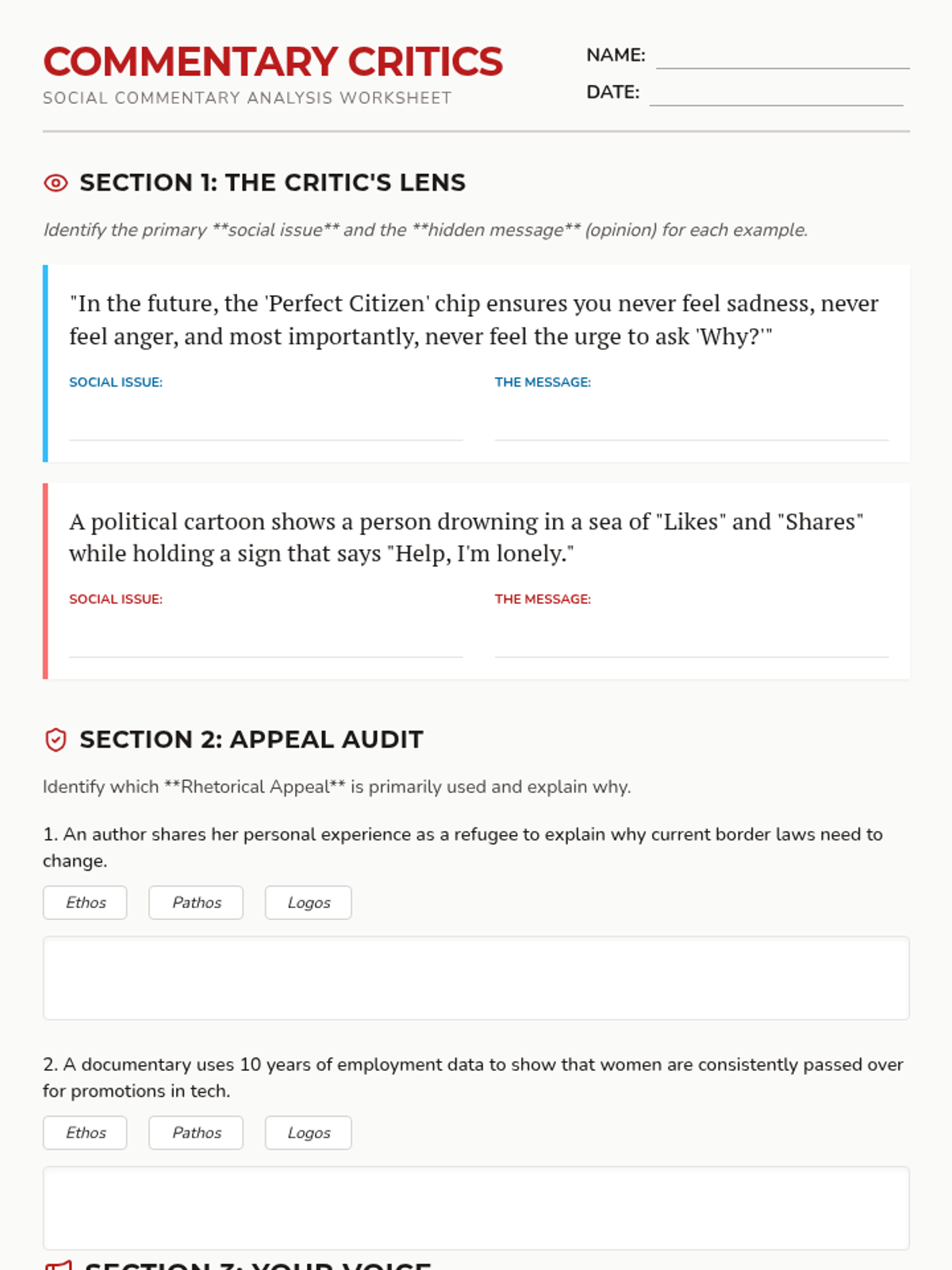
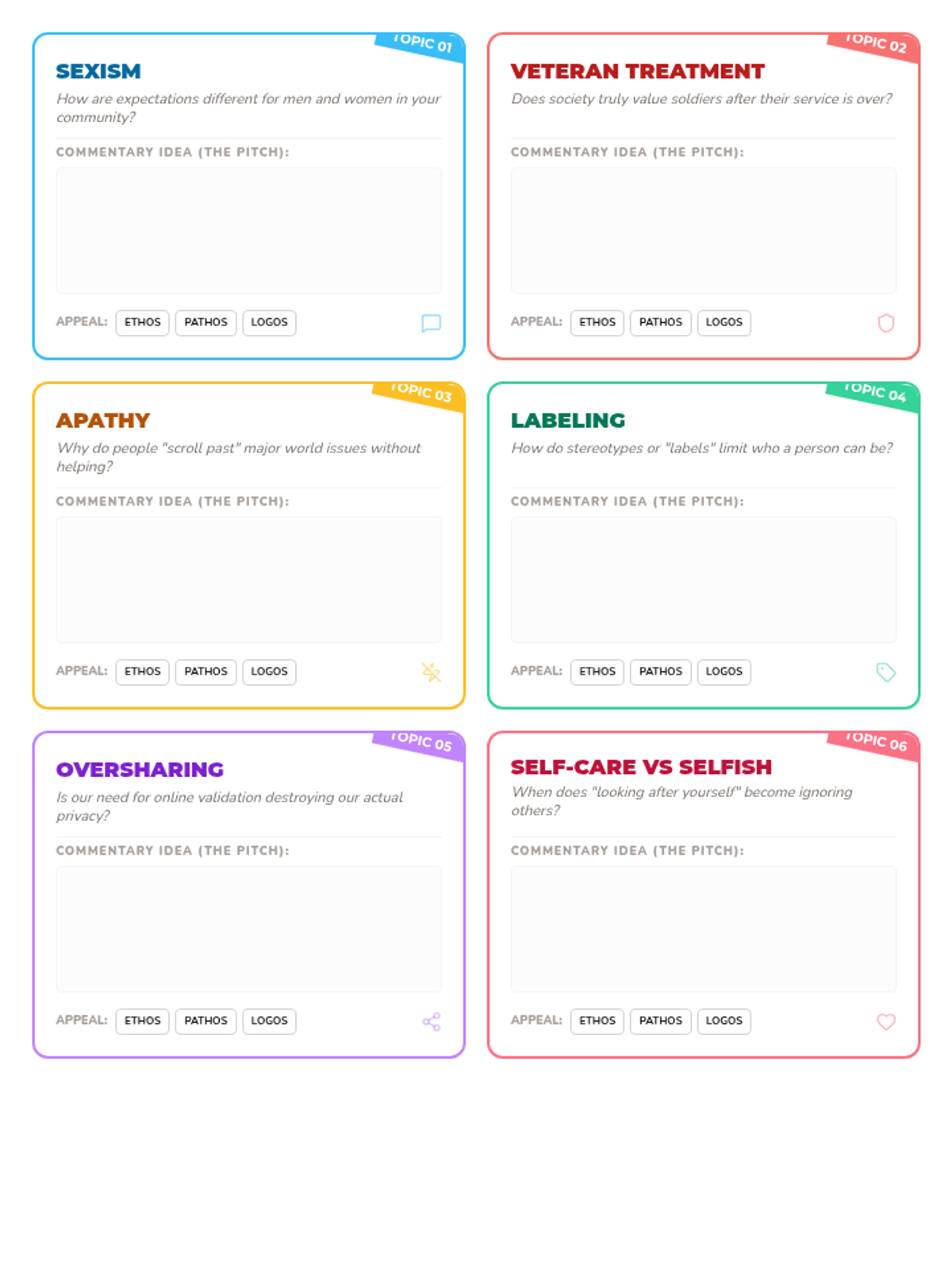
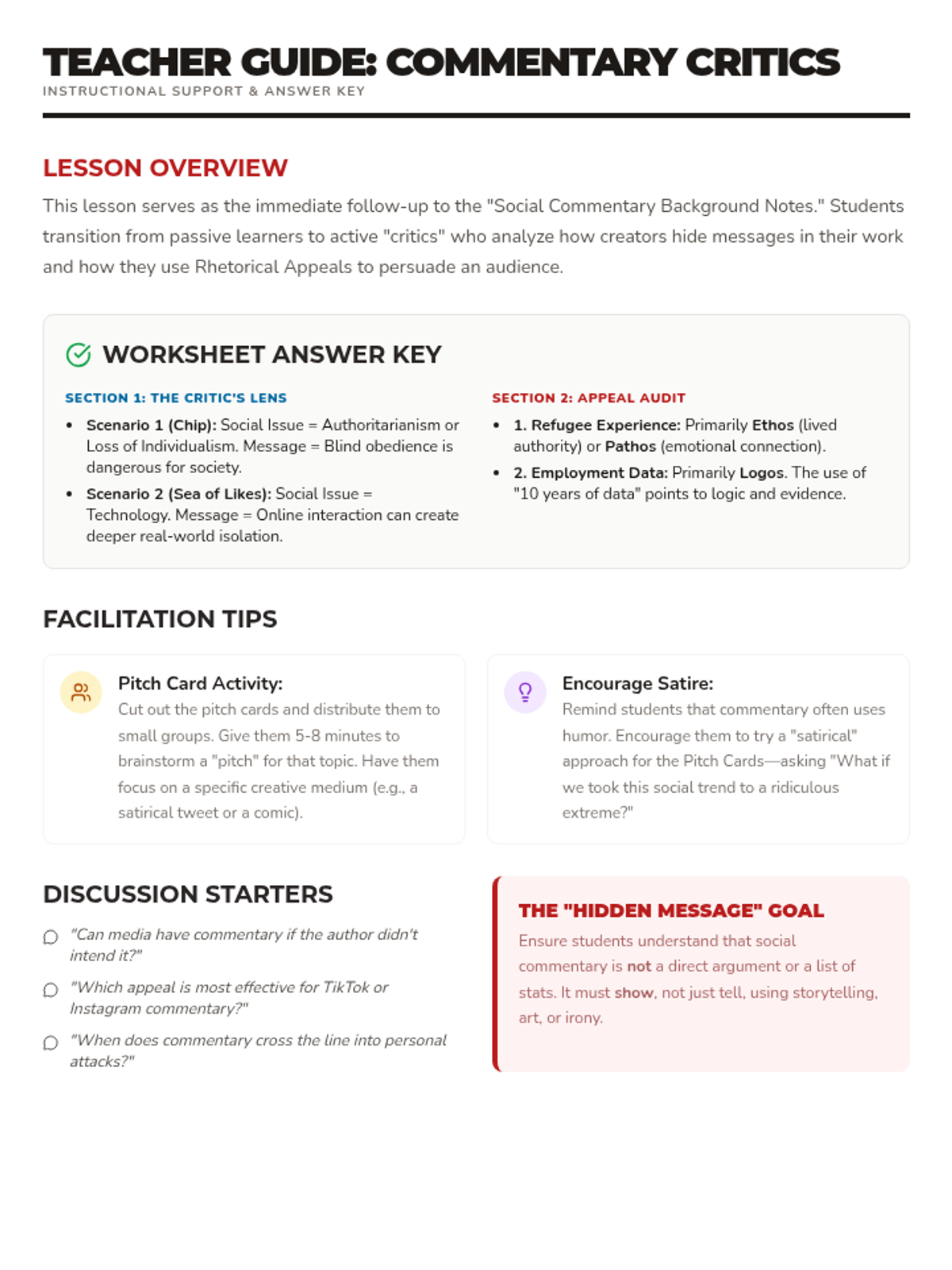
A follow-up lesson to 'Social Commentary Background Notes' where students analyze examples of social commentary and brainstorm their own creative messages using rhetorical appeals.
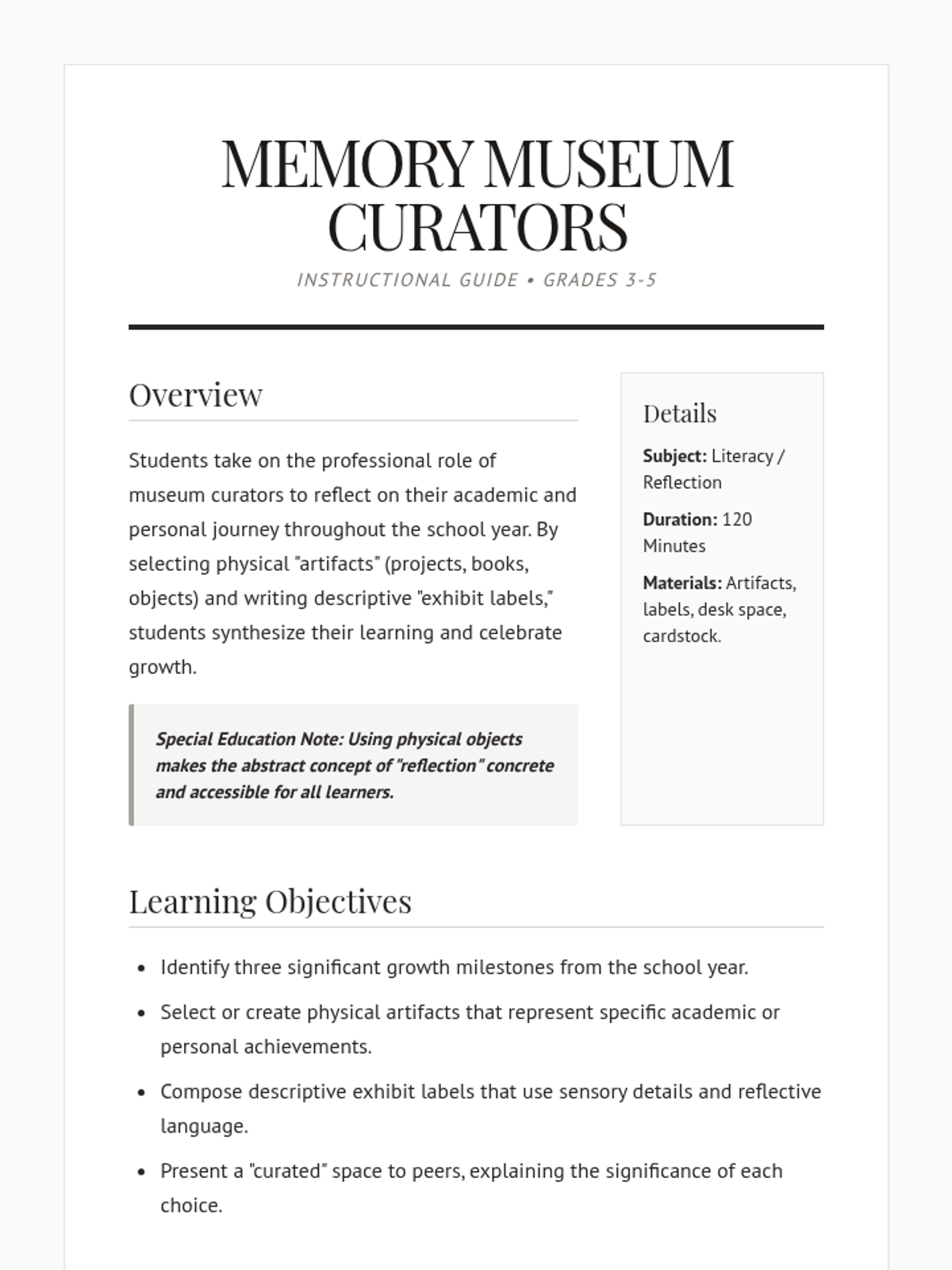
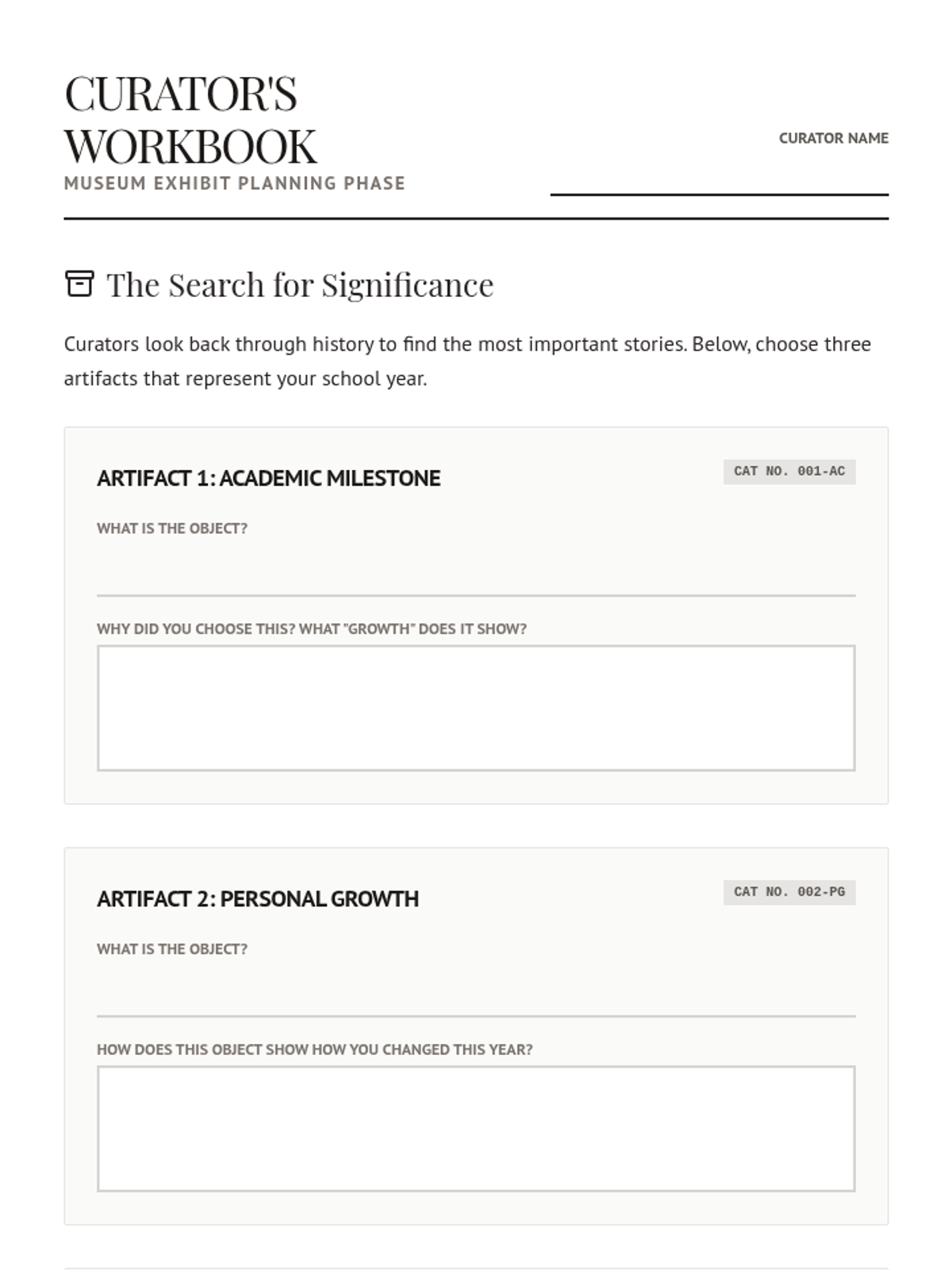
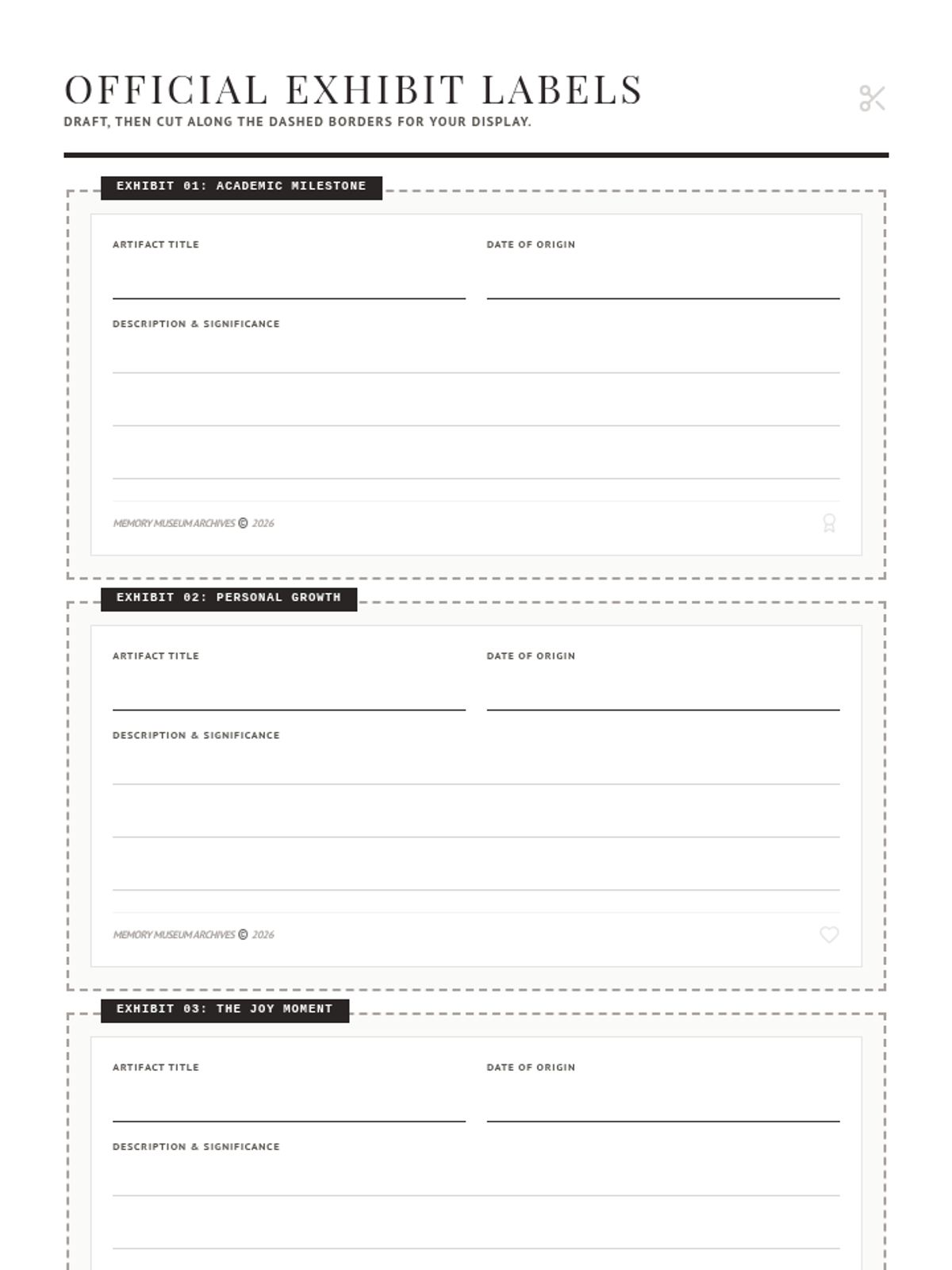
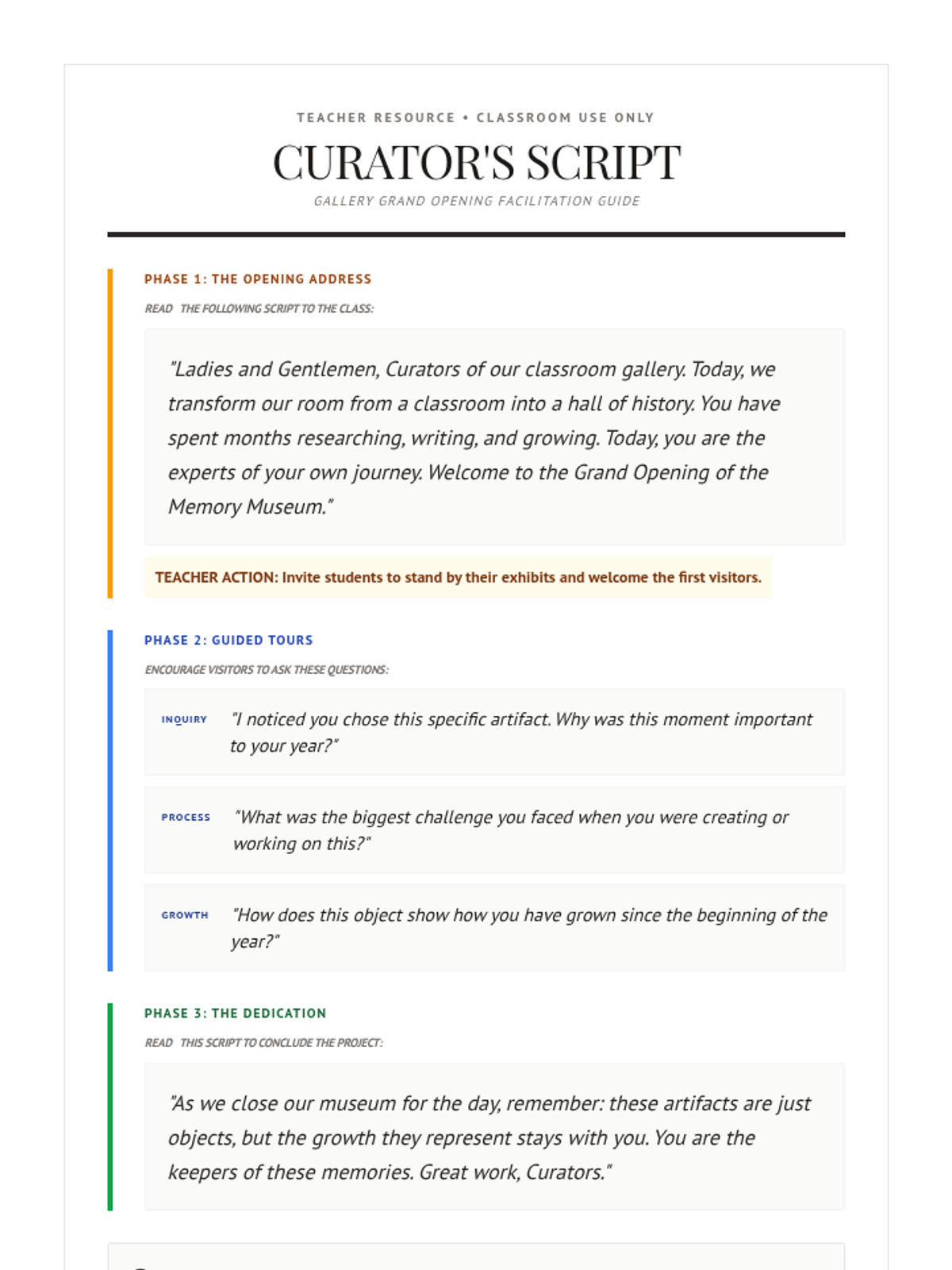
A reflective end-of-year literacy project where students act as museum curators to showcase their academic growth and personal milestones through physical artifacts and descriptive writing.
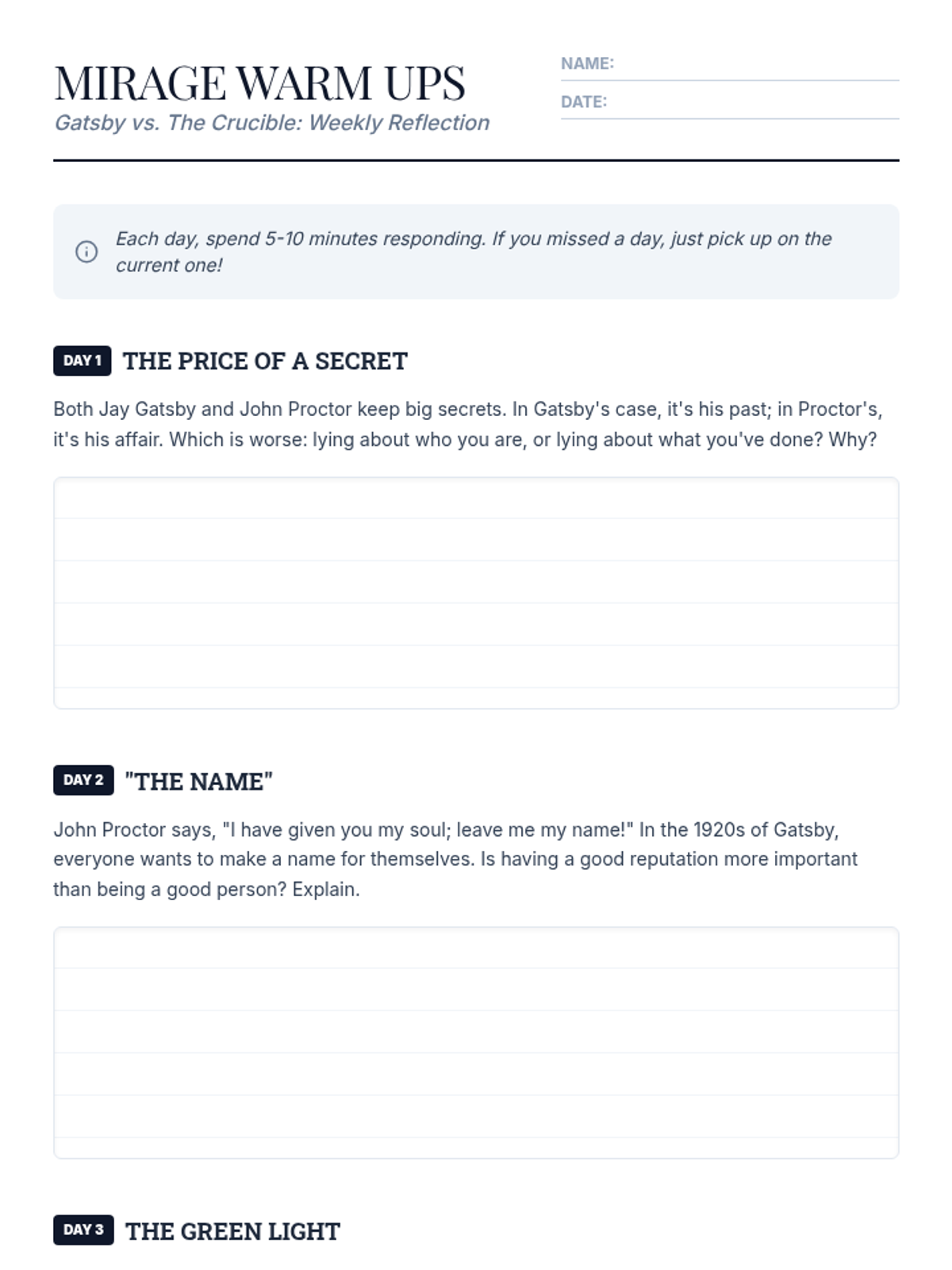
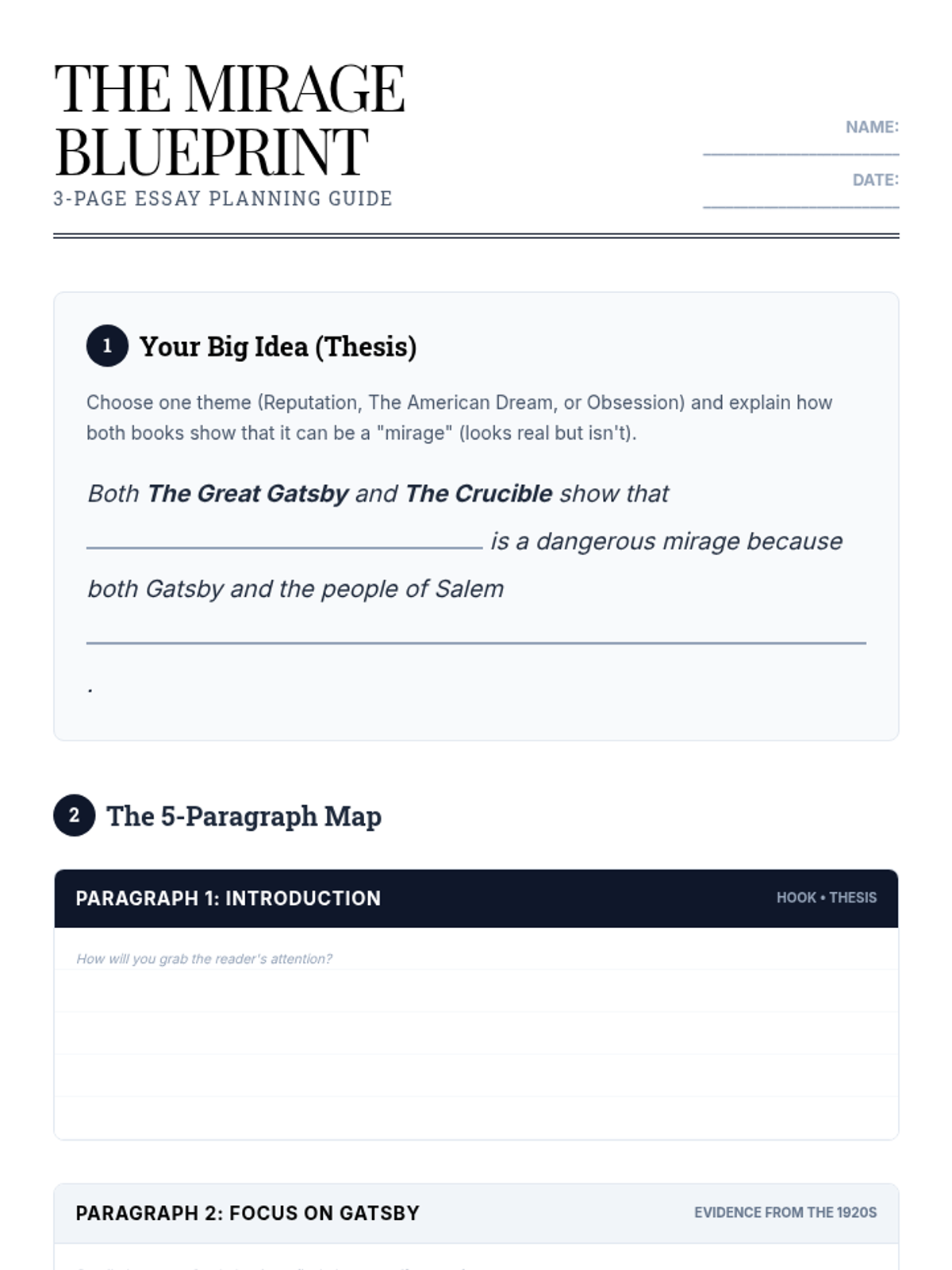
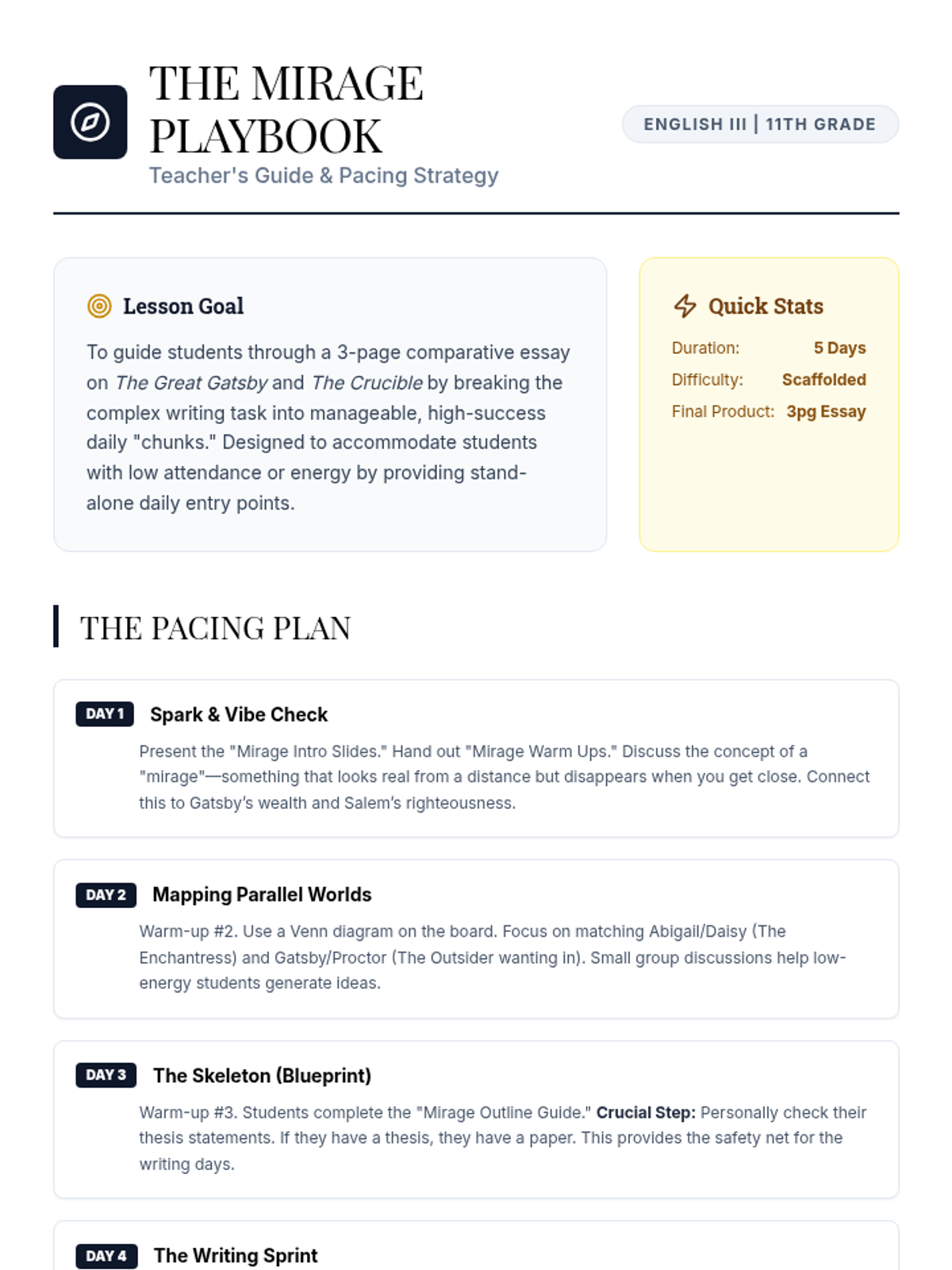
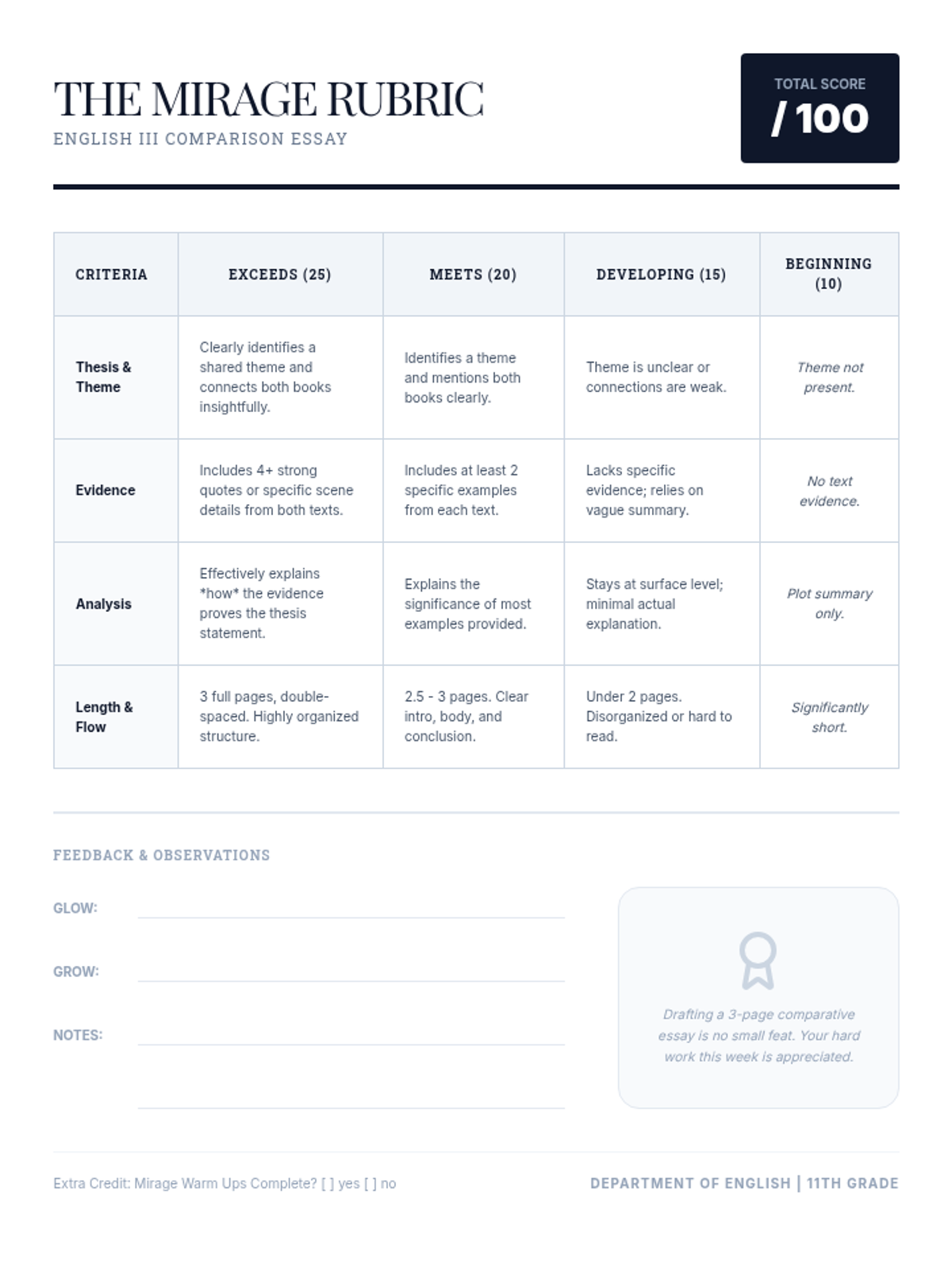
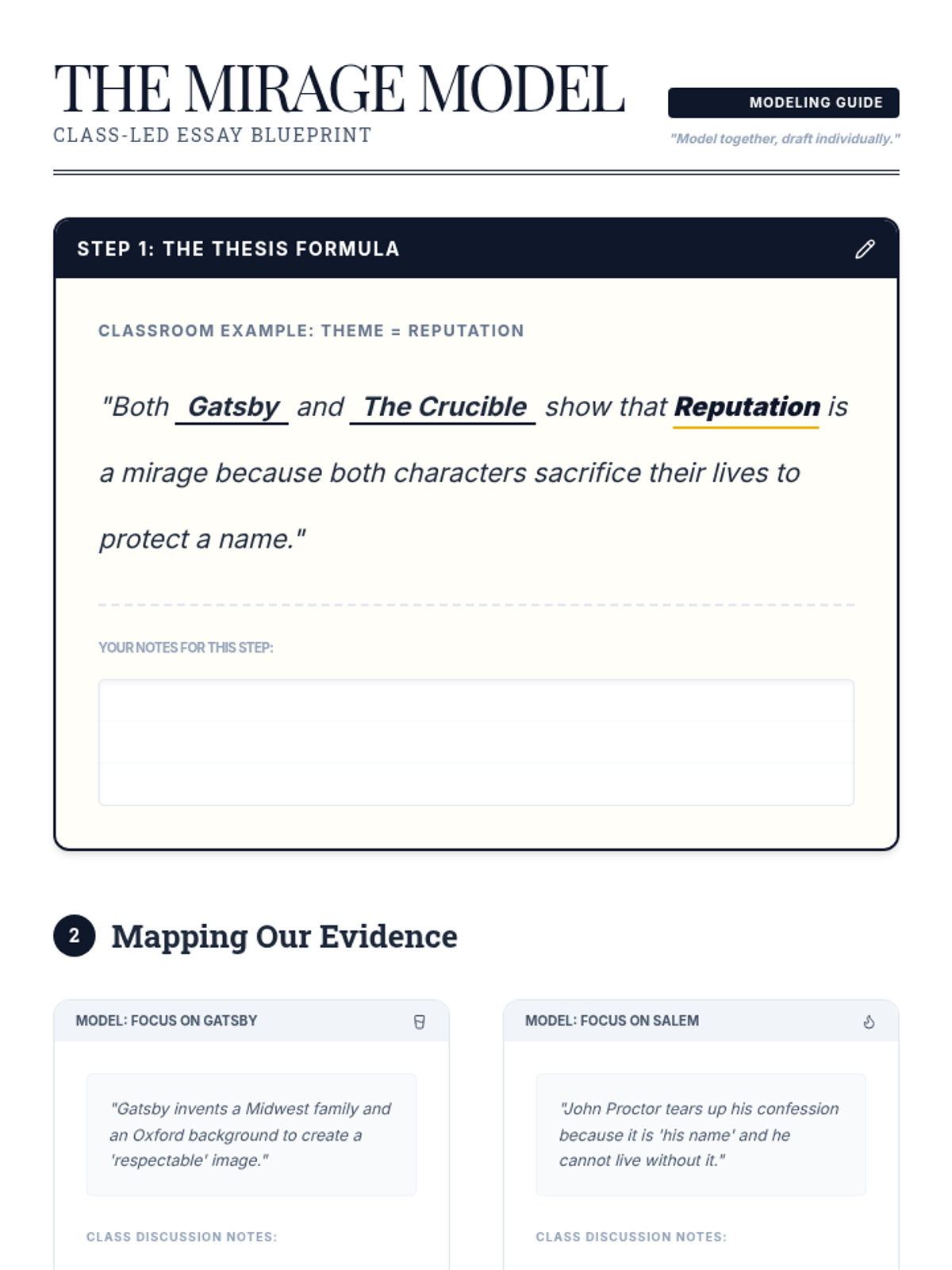
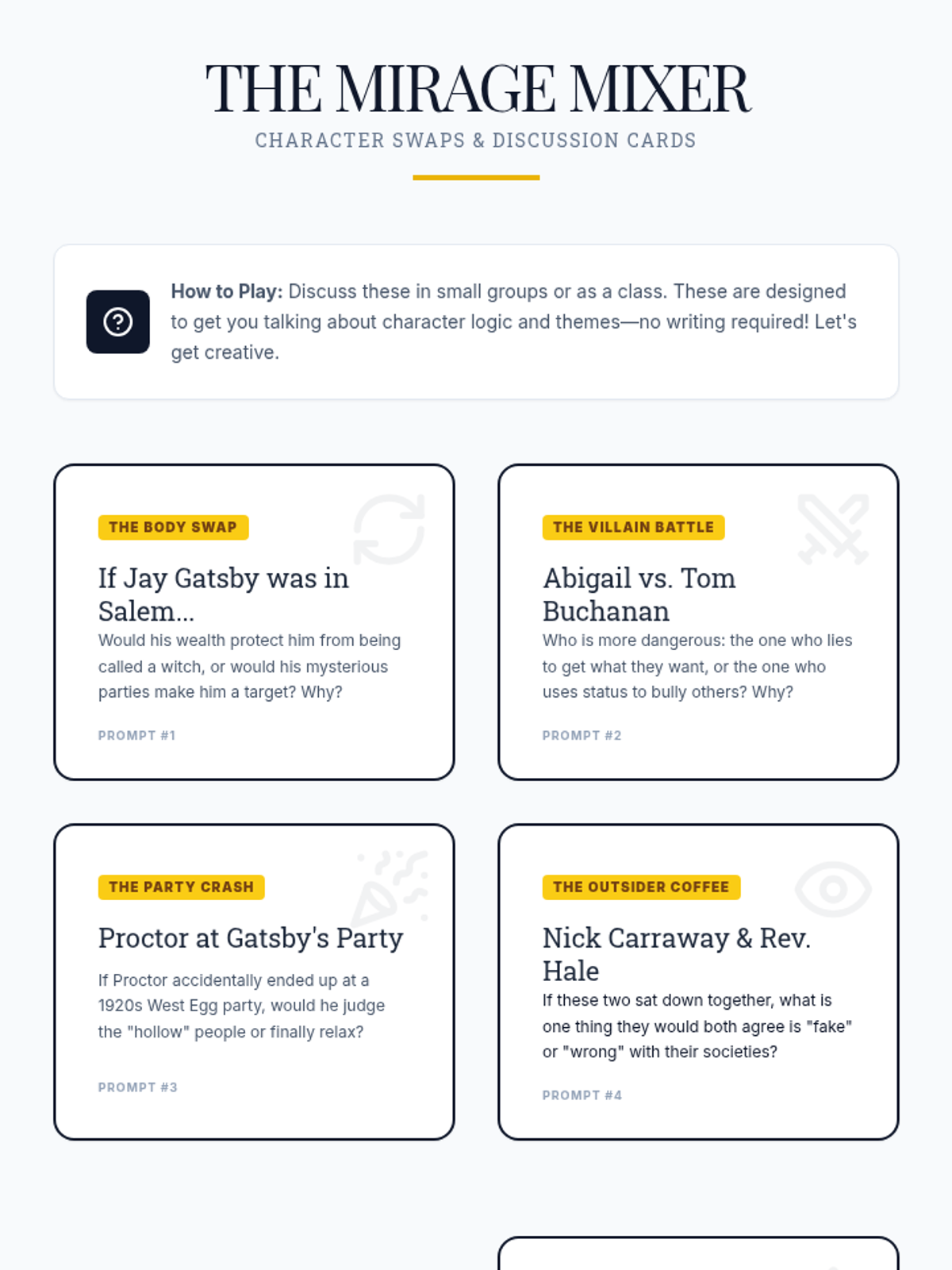
A week-long exploration comparing The Great Gatsby and The Crucible, specifically designed to engage students with varying attendance and energy levels through scaffolded activities and a structured writing process.
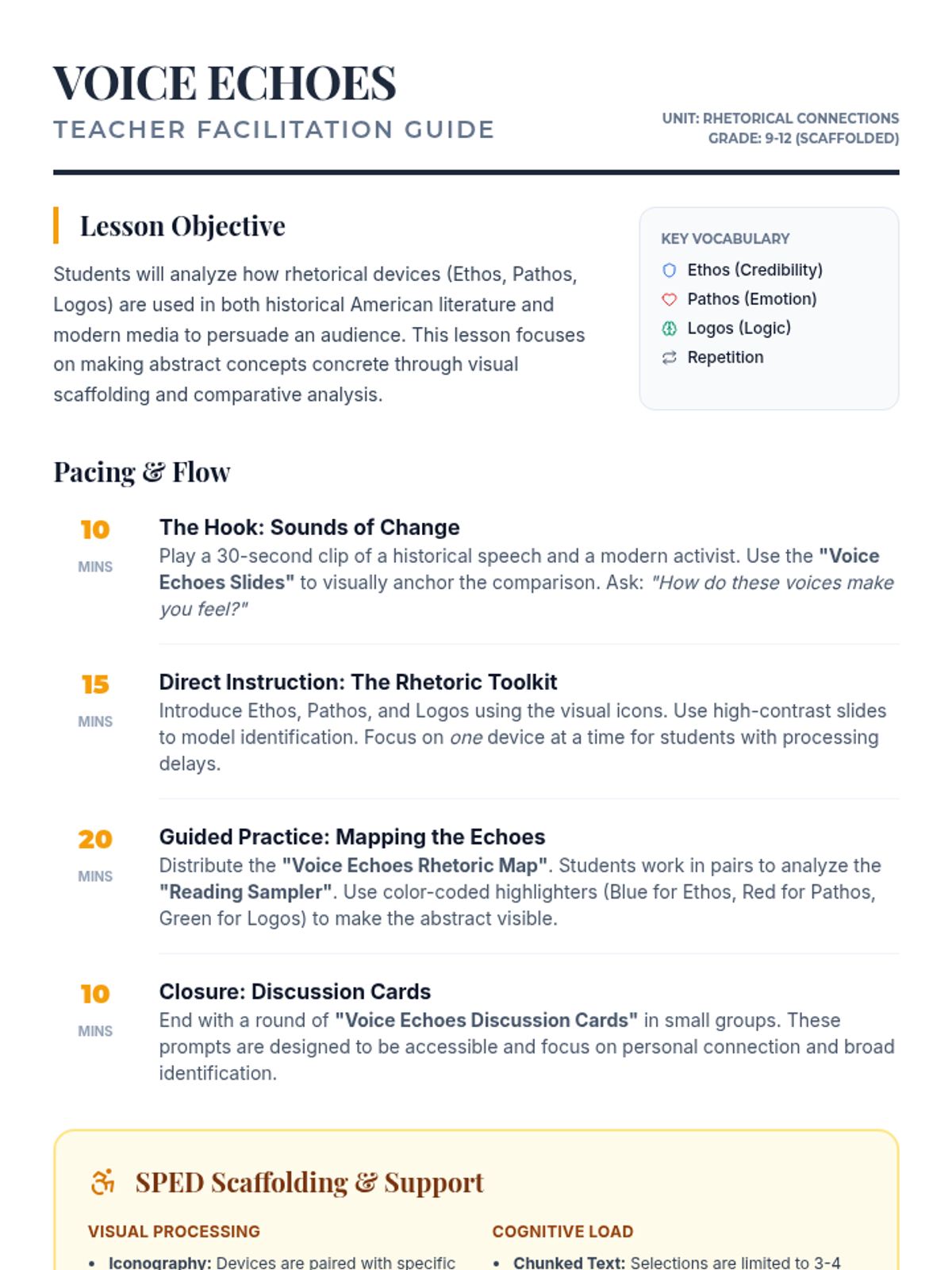
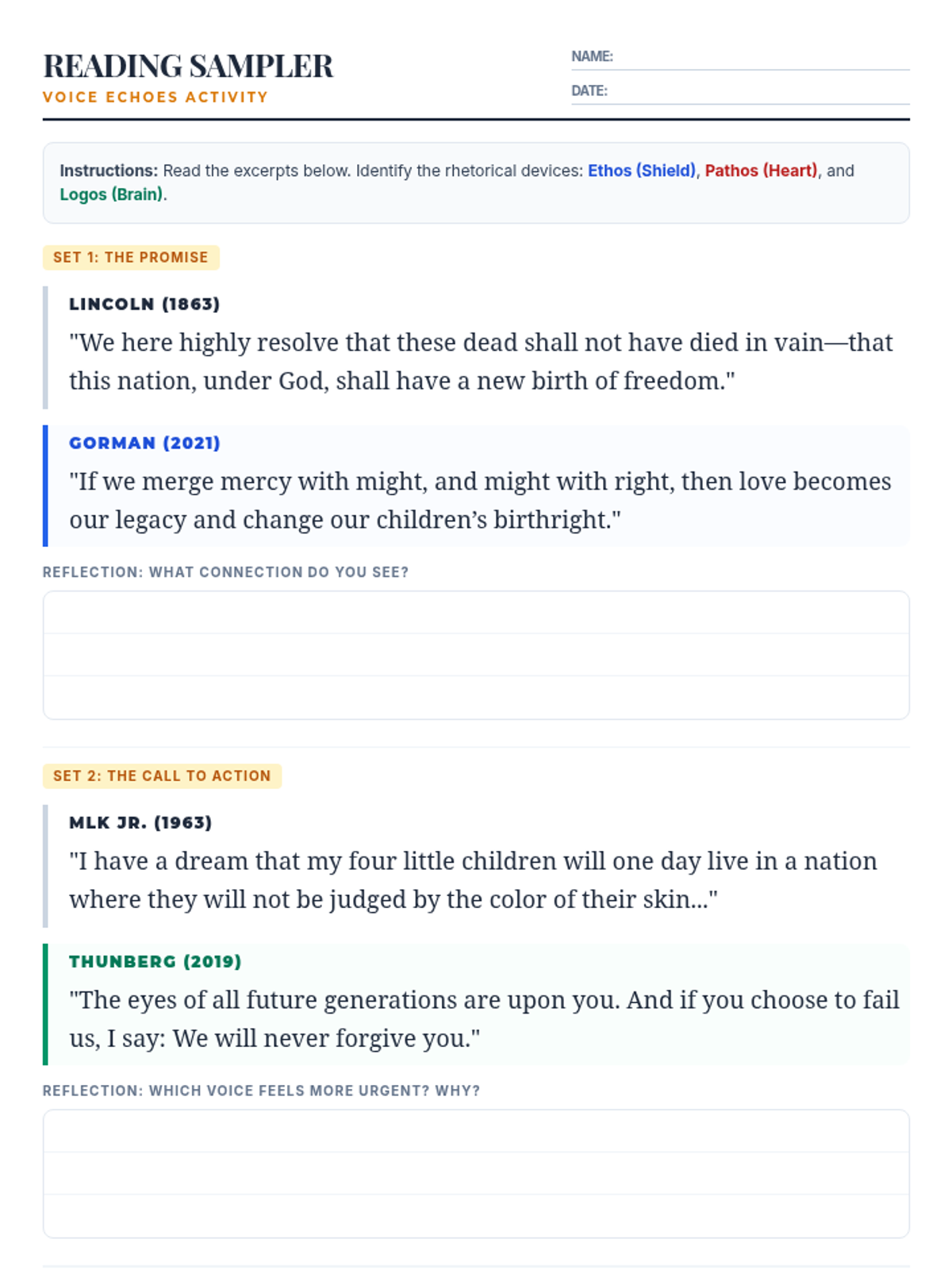
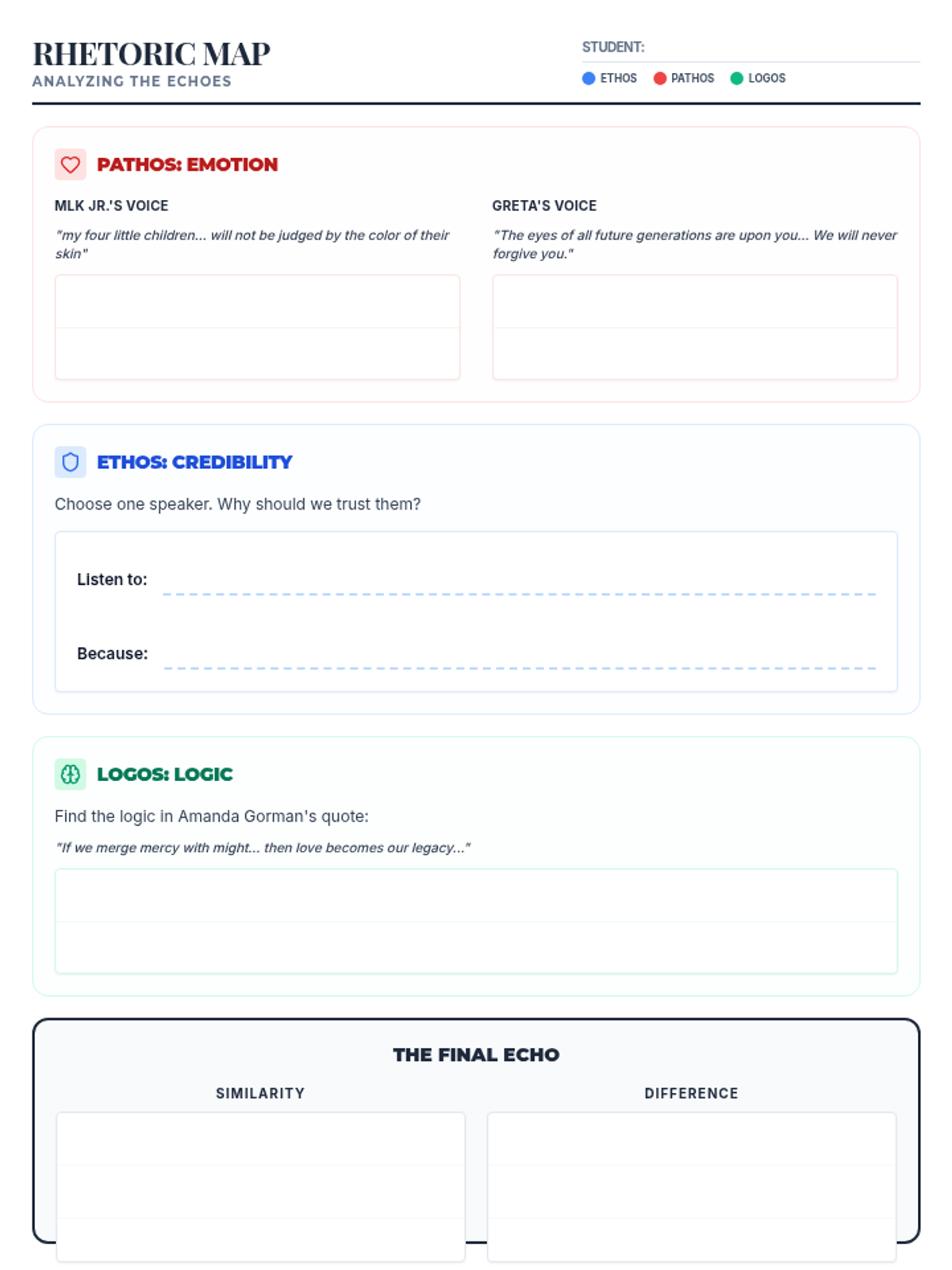
A lesson connecting historical American literature to modern media through the lens of rhetorical devices, specifically scaffolded for Special Education support. Students will identify enduring themes and persuasive techniques across different eras.
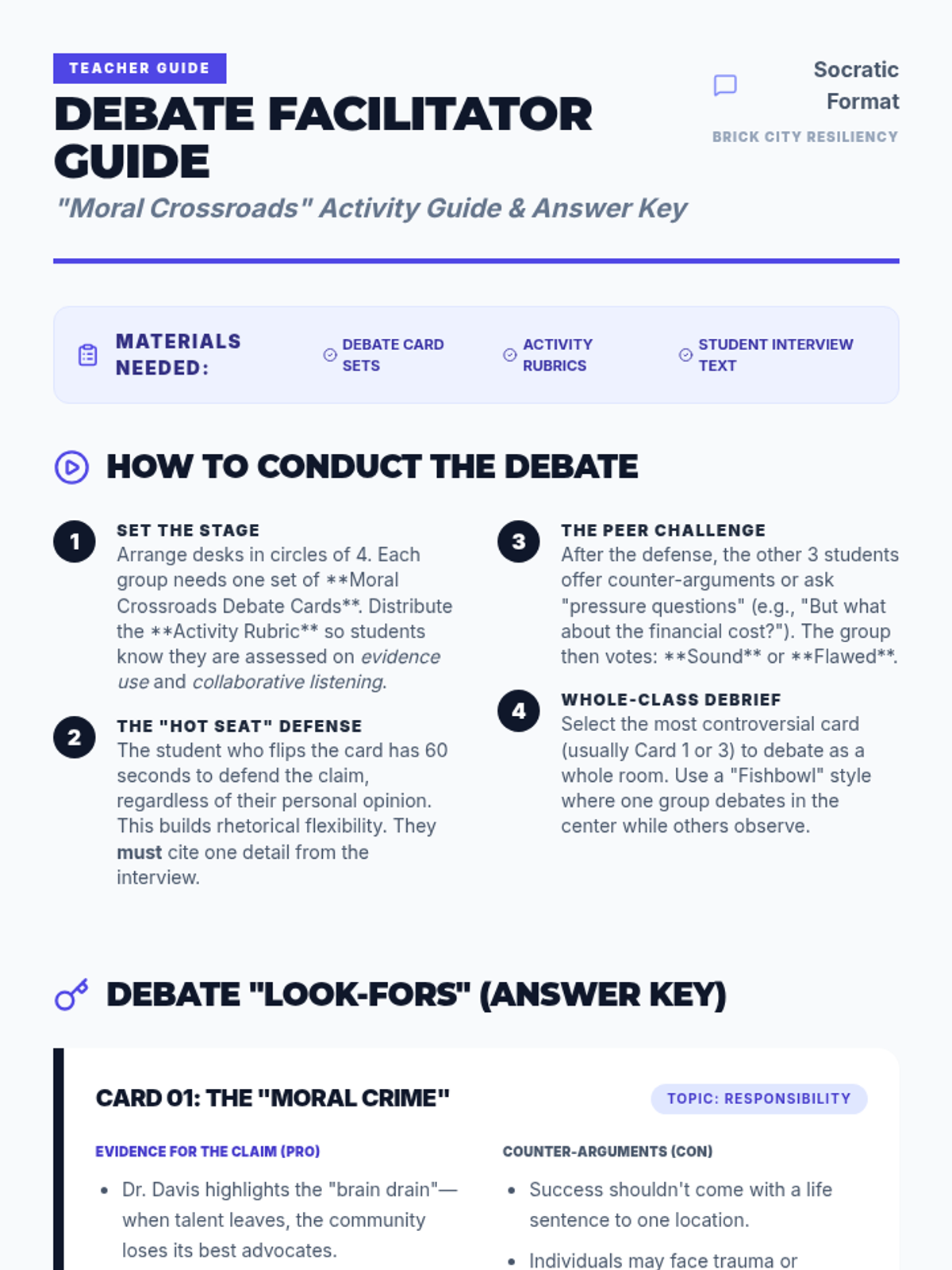
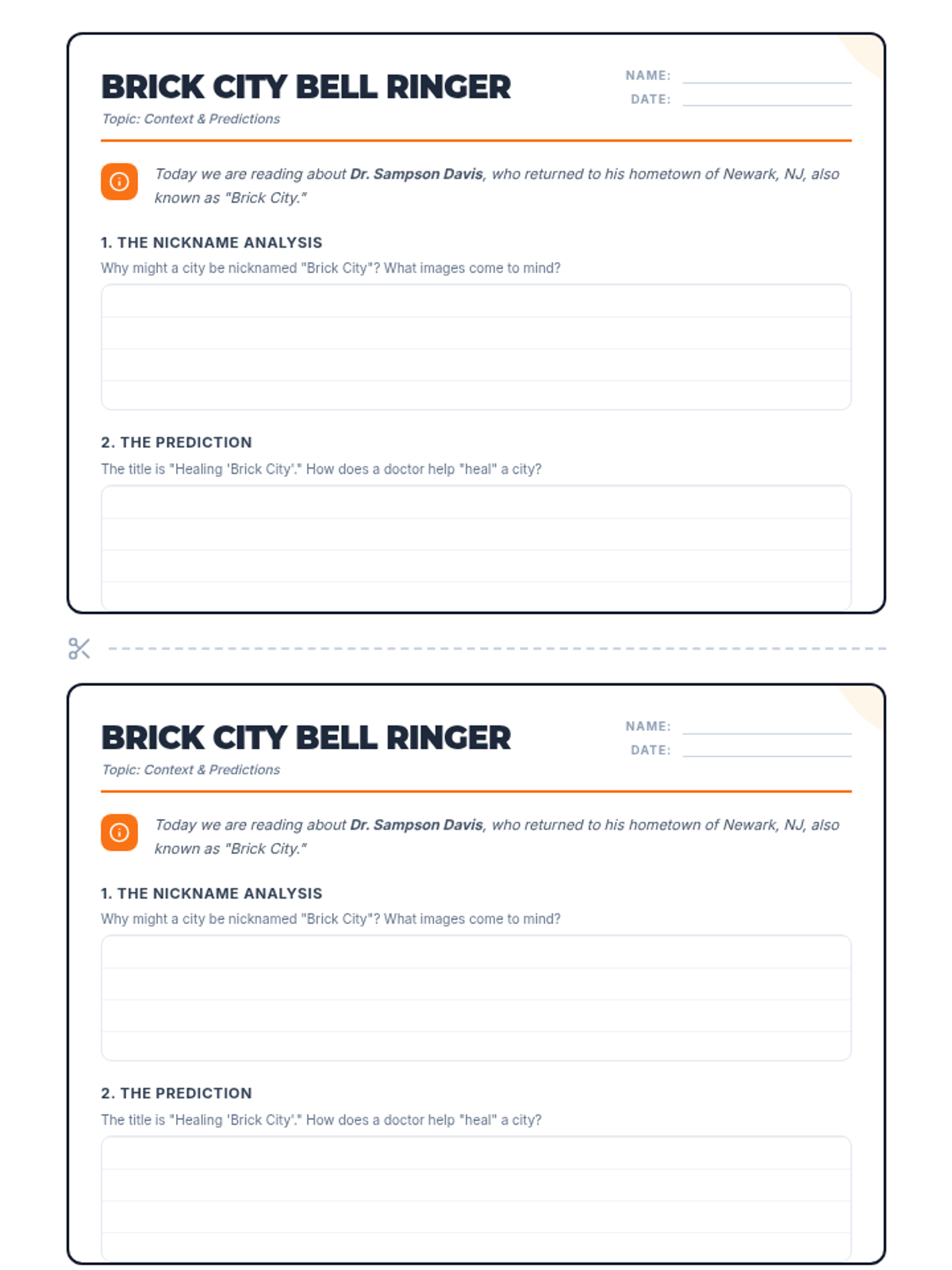
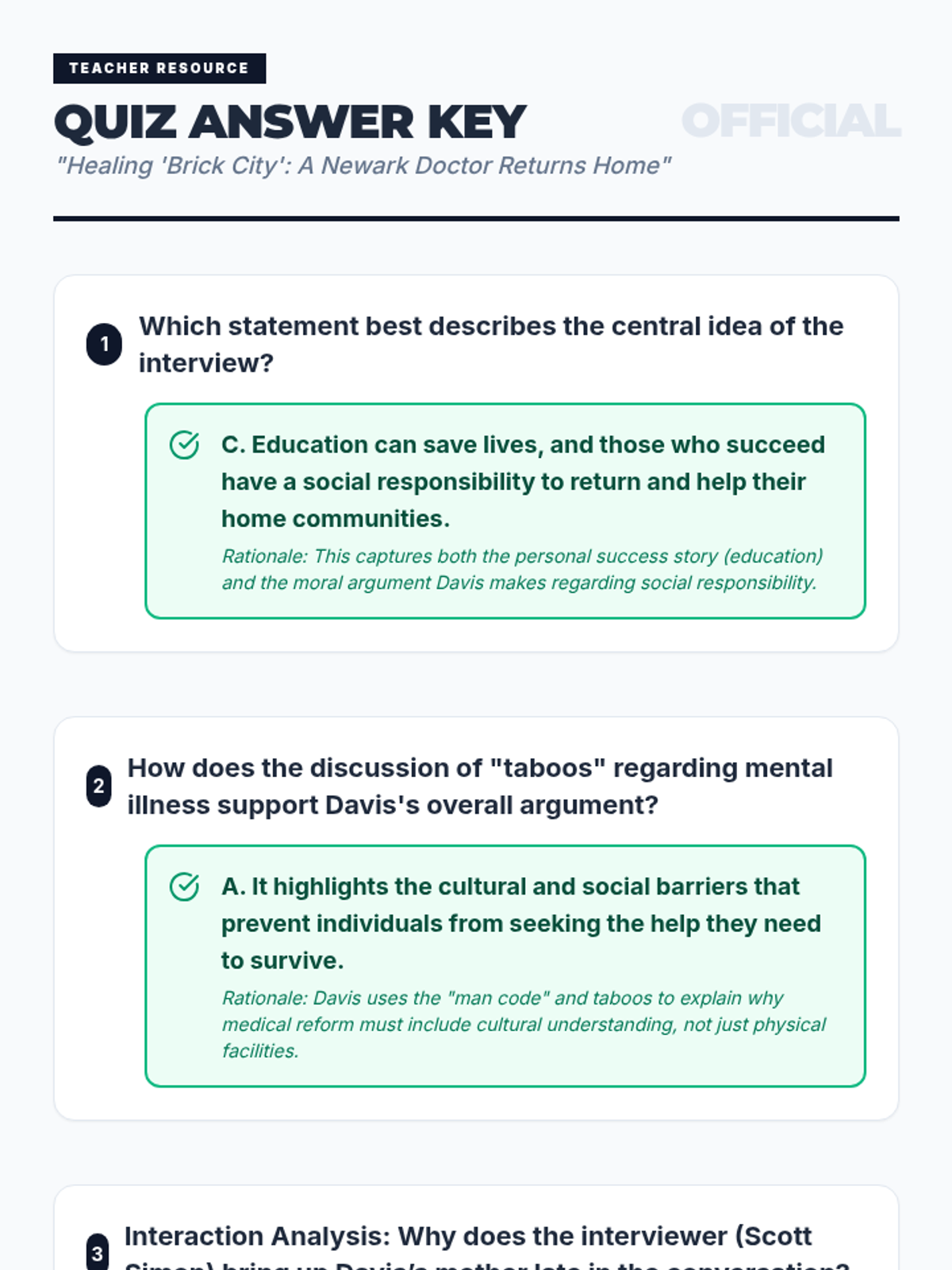
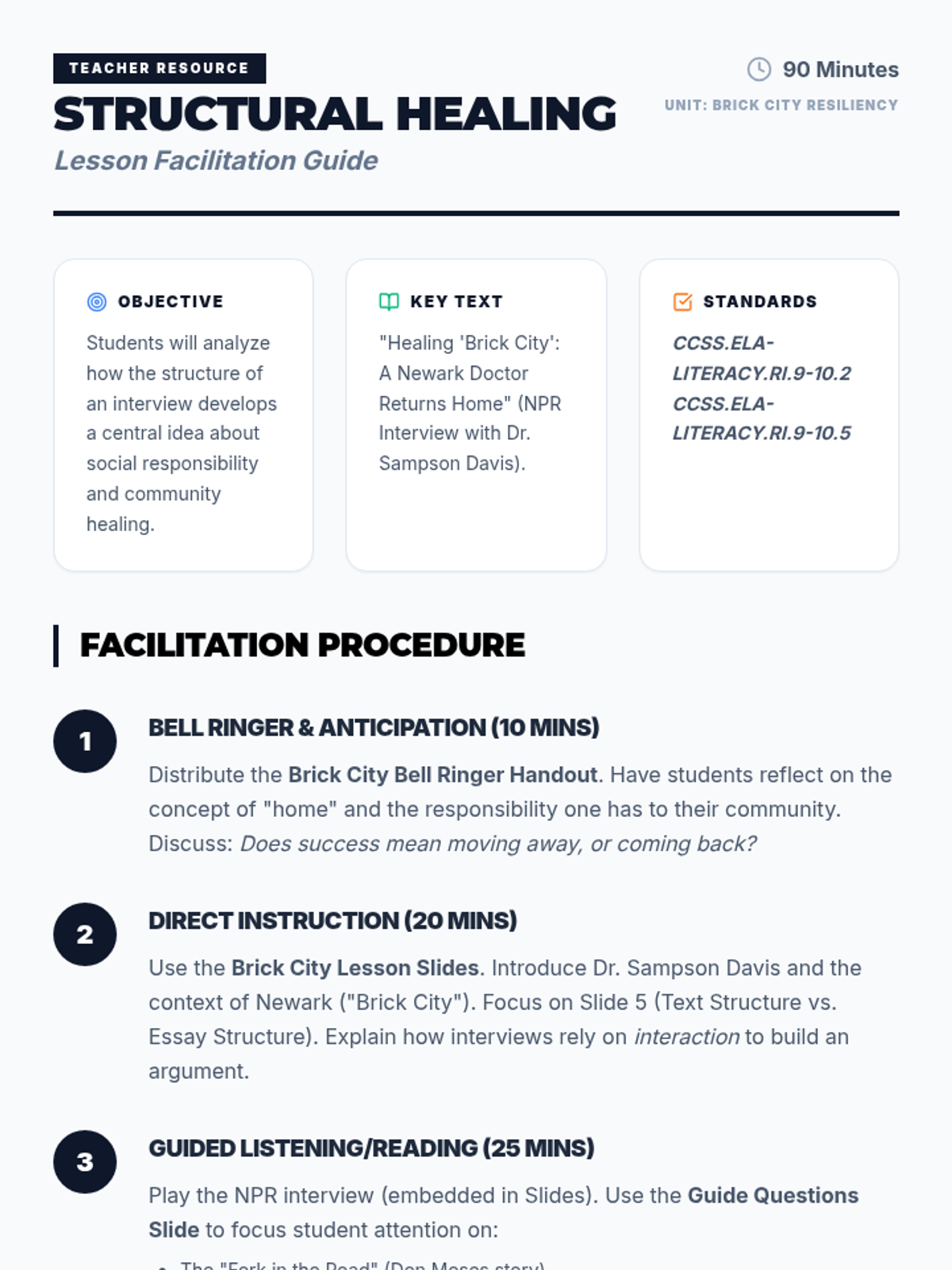
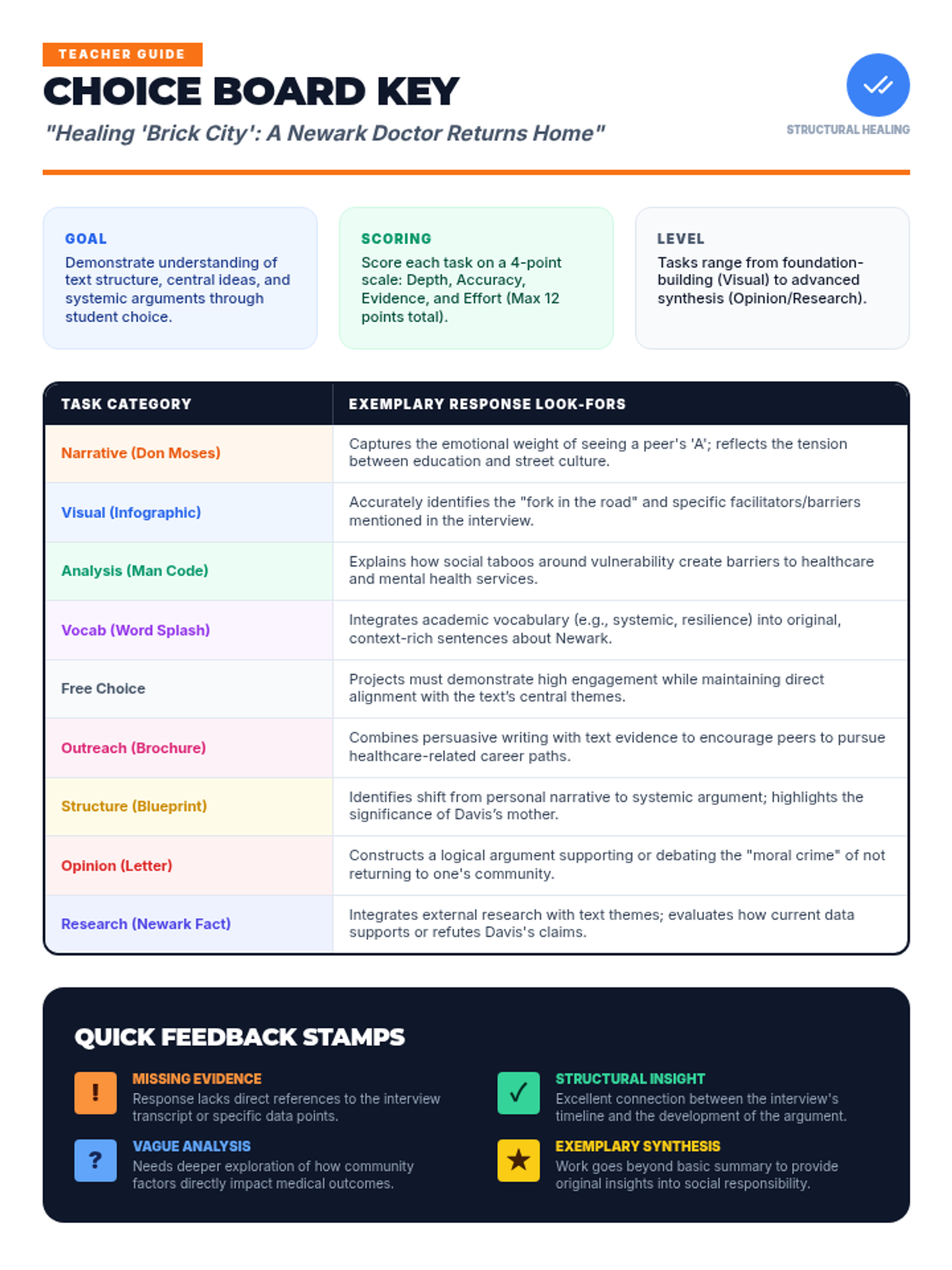
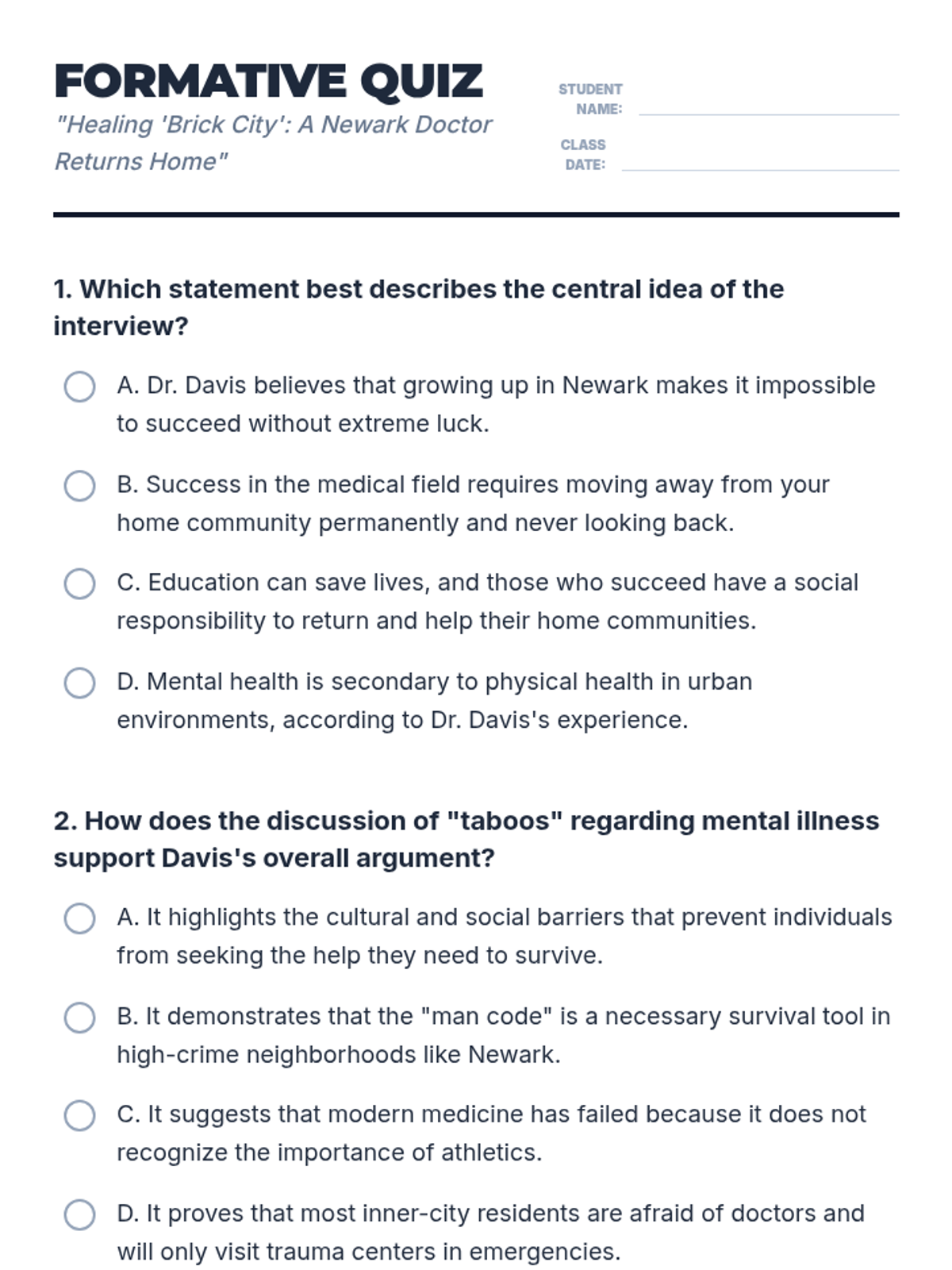
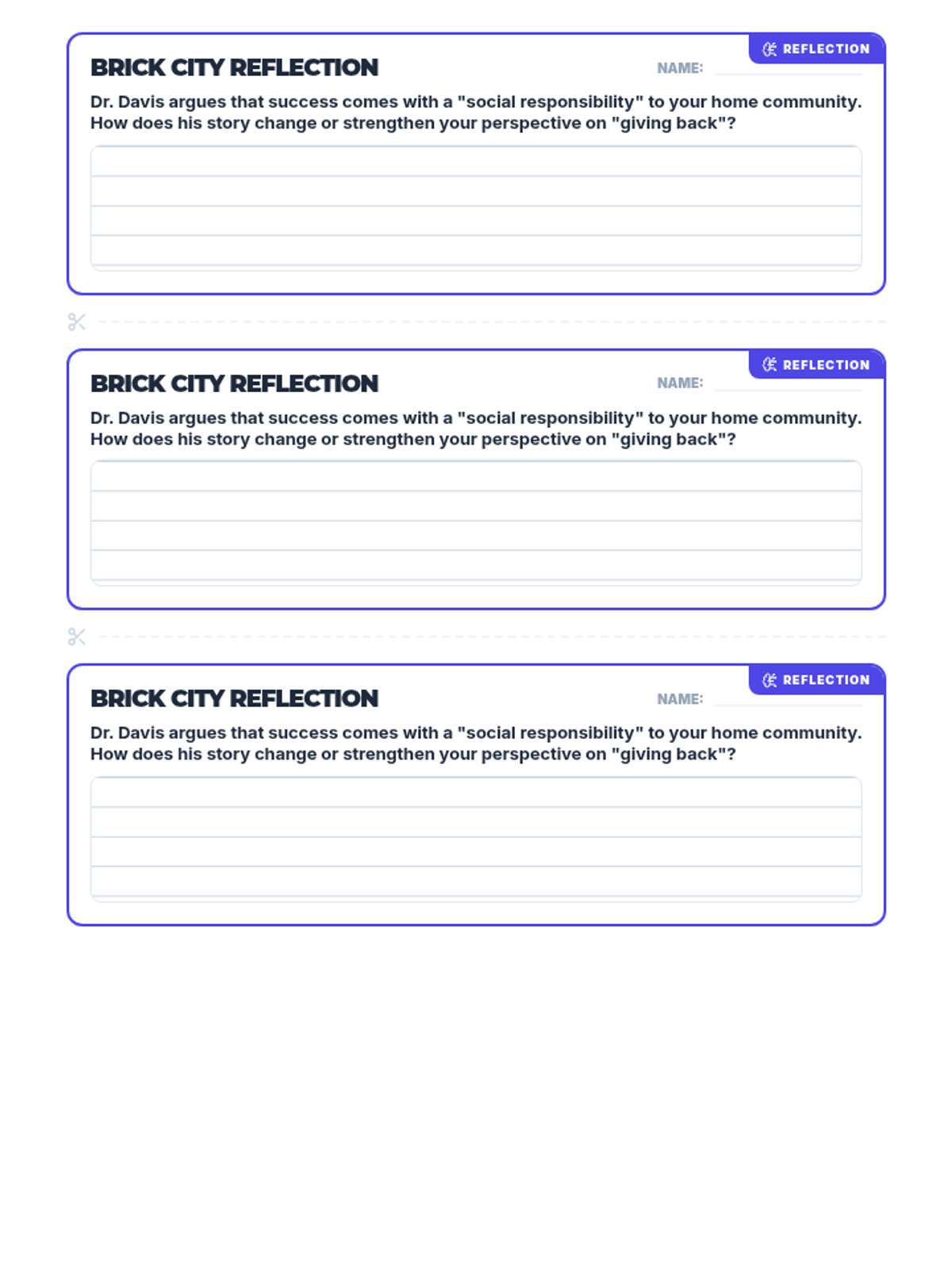
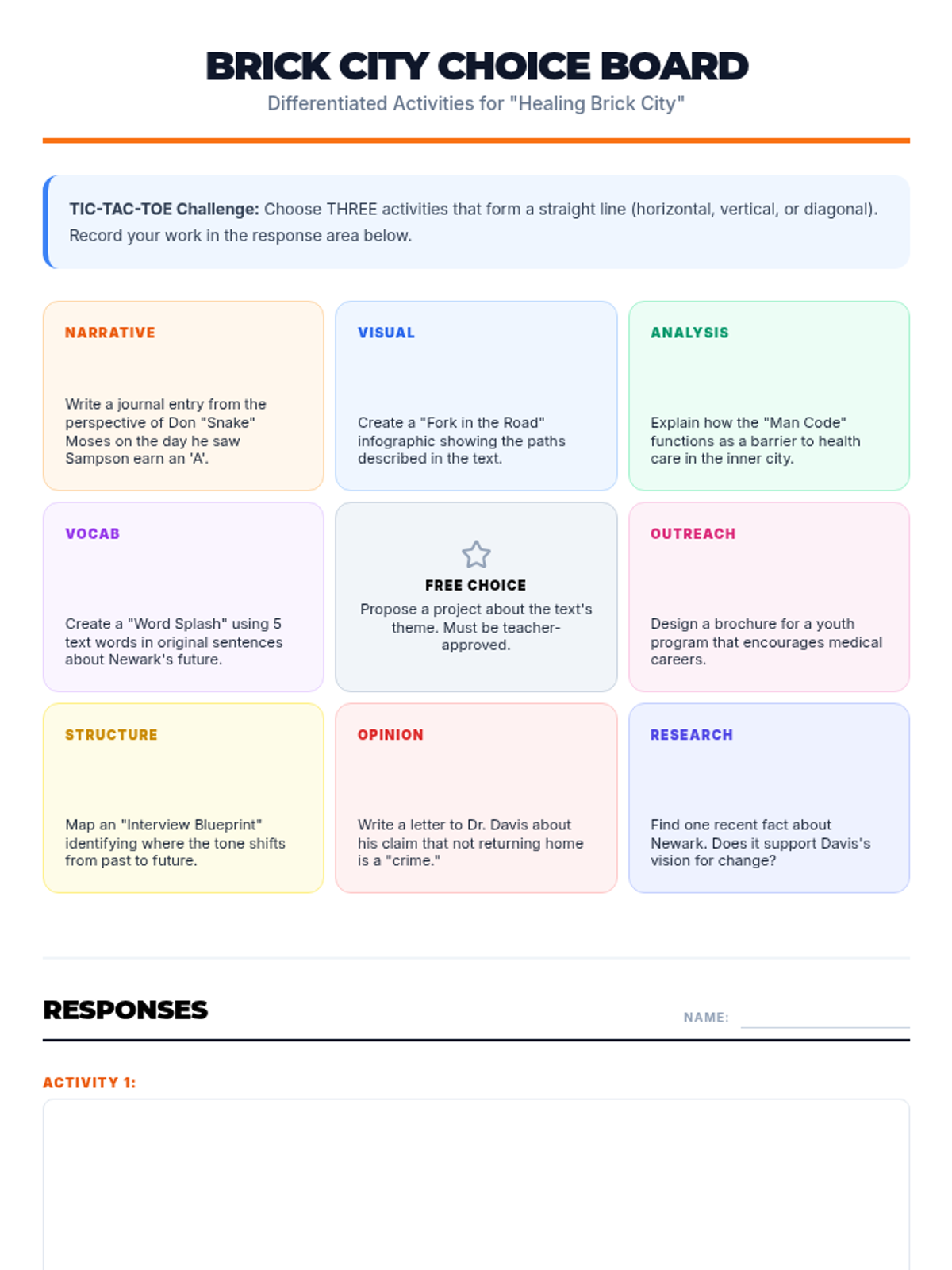
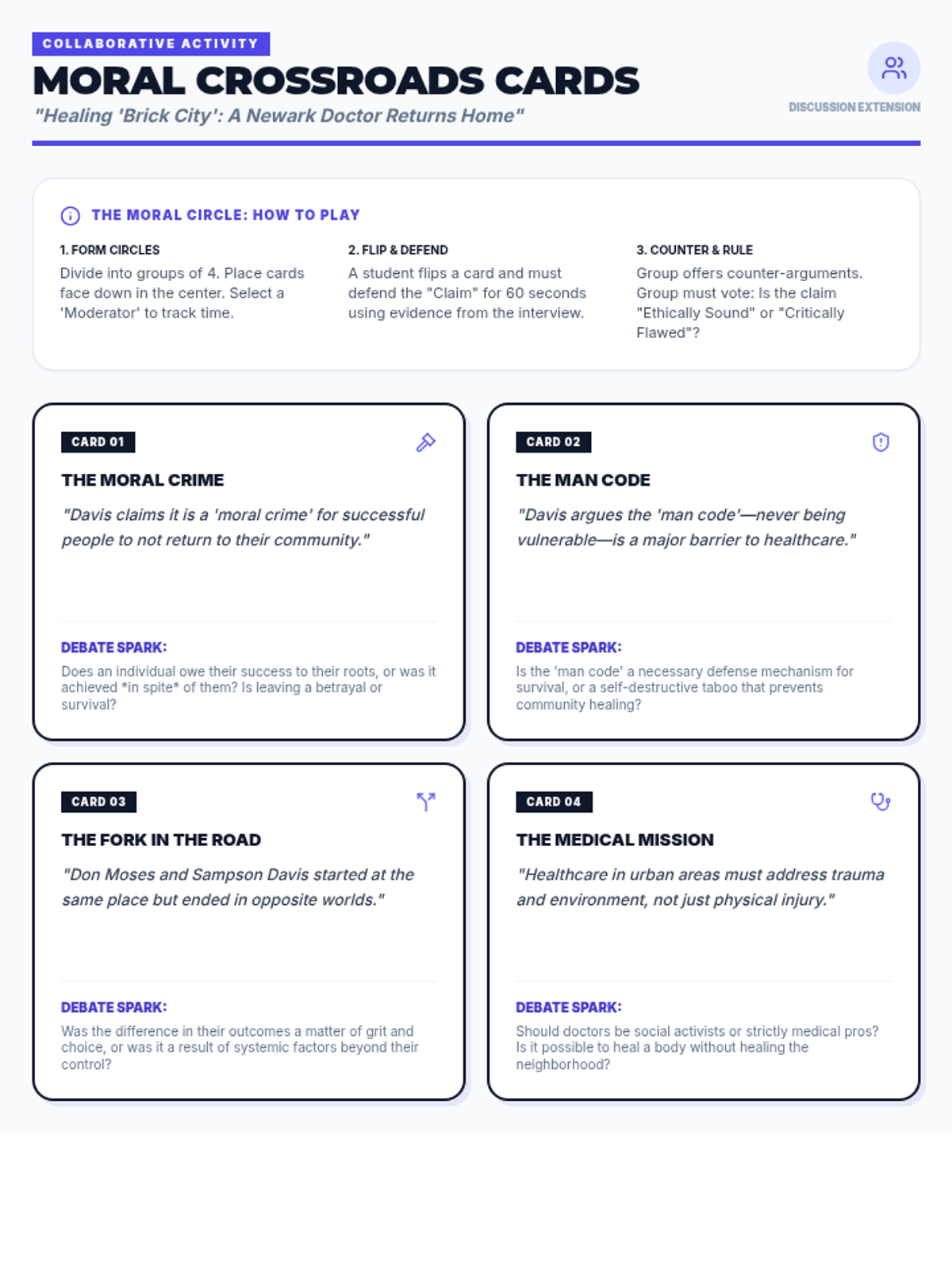
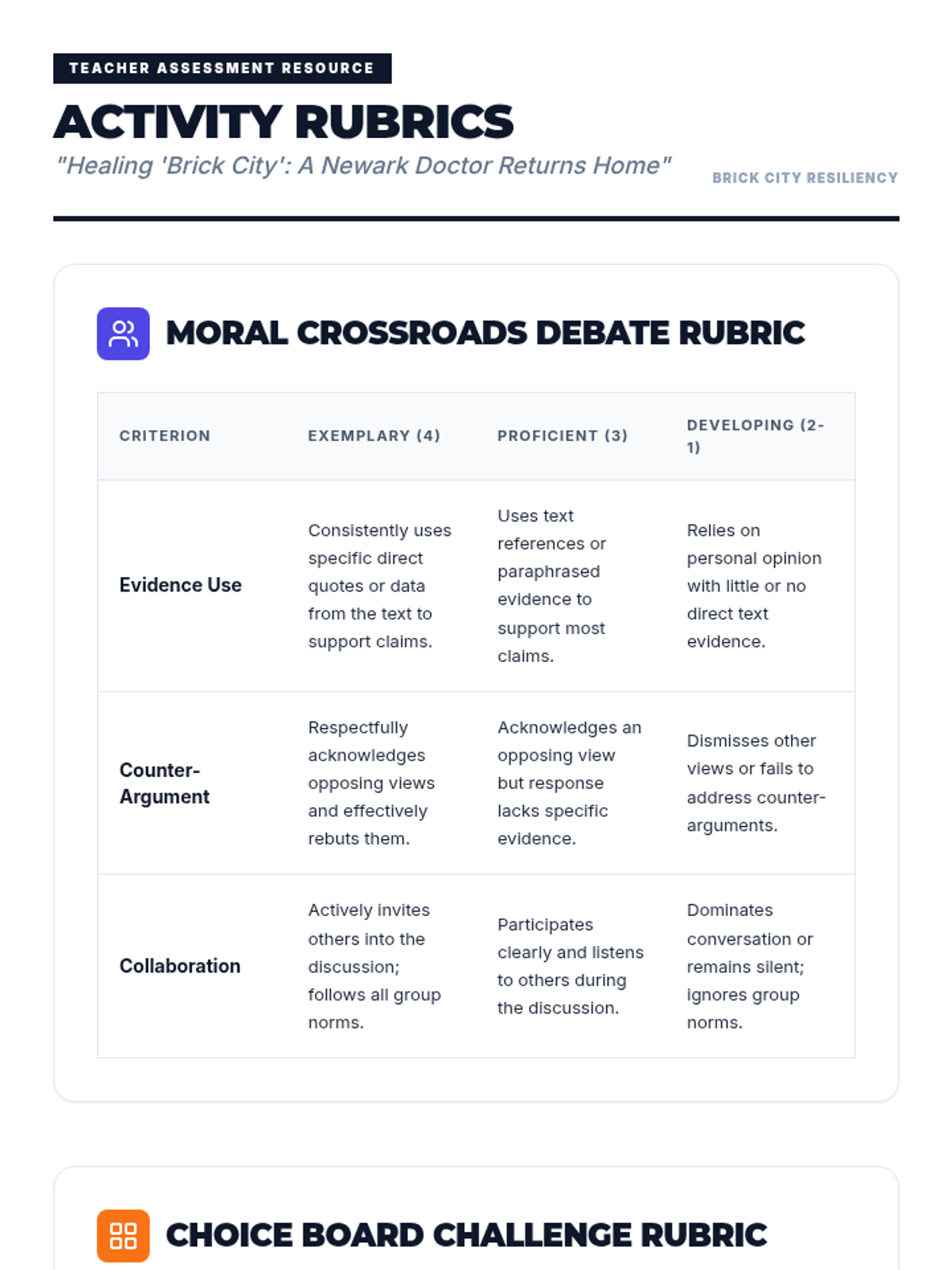
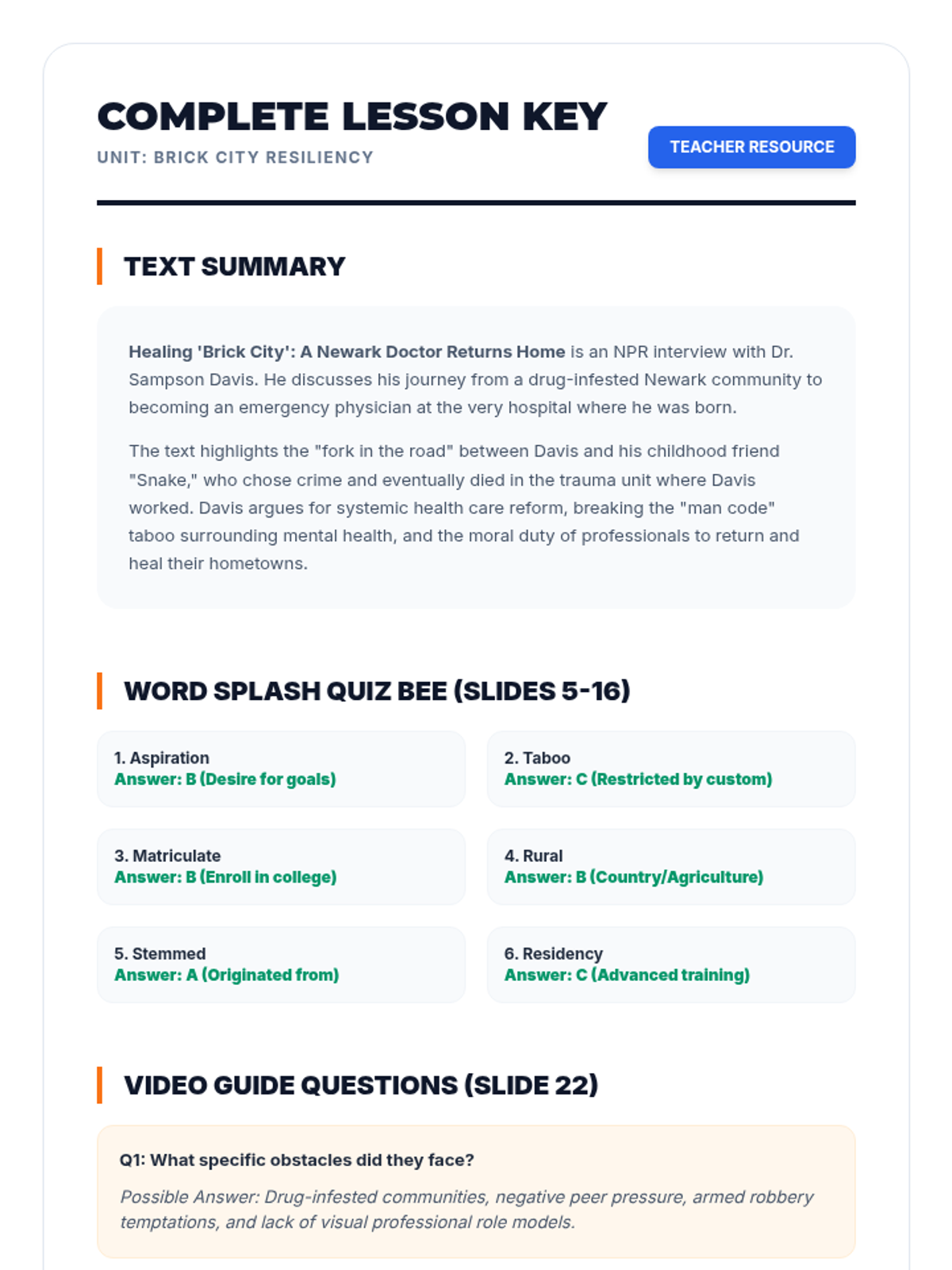
This lesson focuses on Dr. Sampson Davis's journey and his argument for medical reform in Newark. Students will analyze how the interview's structure develops the central idea that education and social responsibility can heal a community.
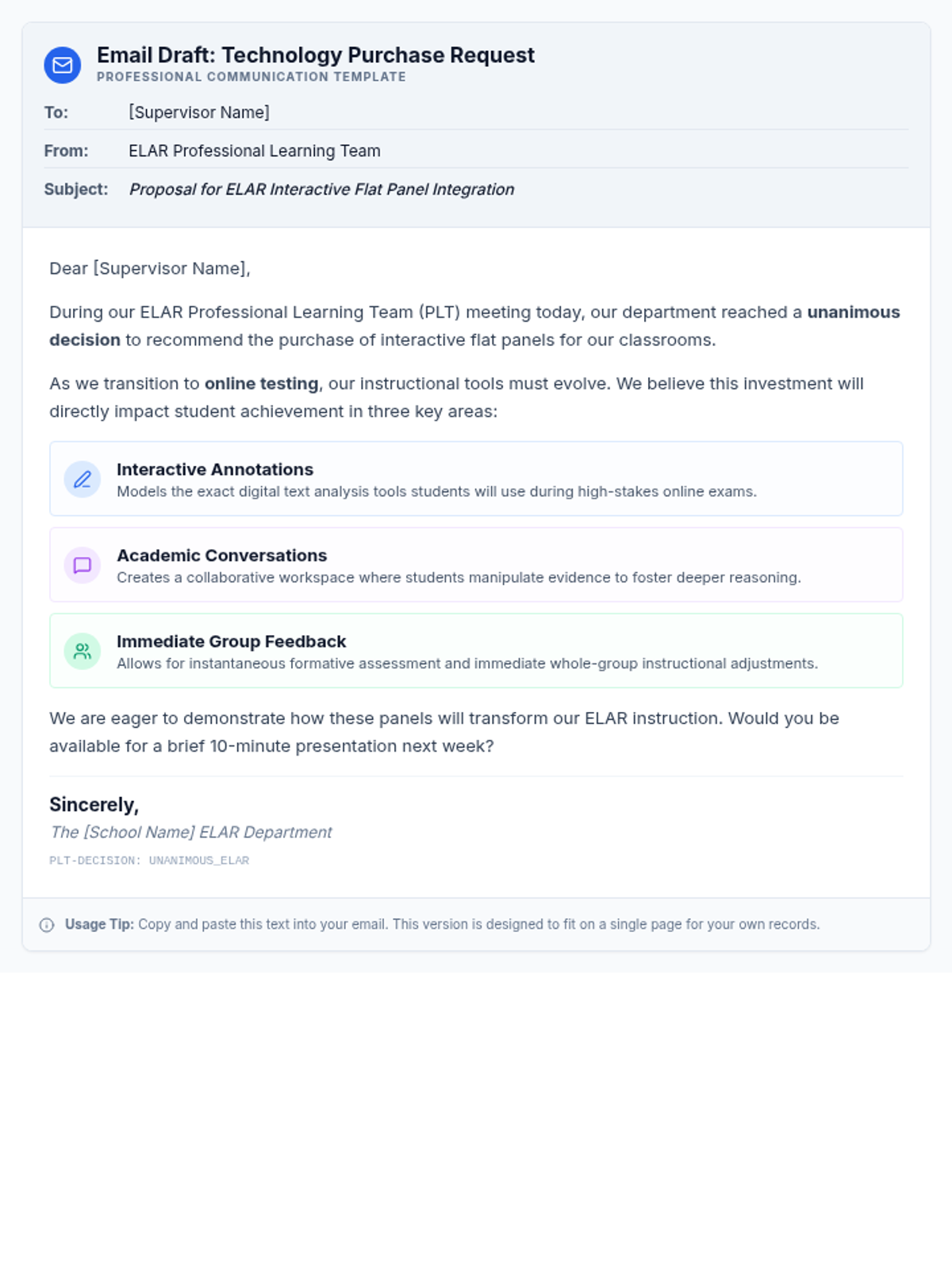
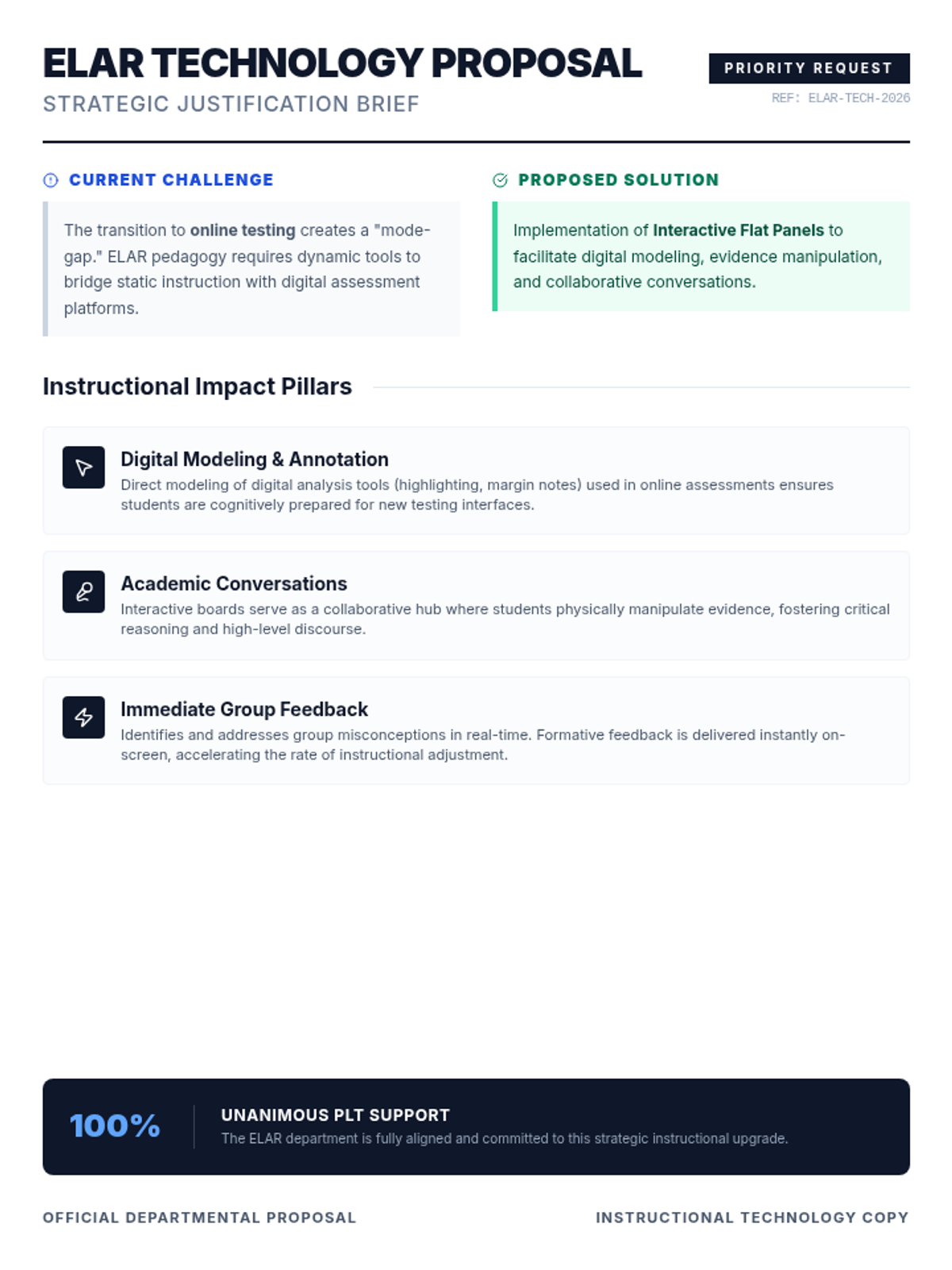
A professional collection of resources designed to help ELAR teachers persuade administration to invest in interactive flat panels for their classrooms. Includes a structured email draft and a formal justification proposal.
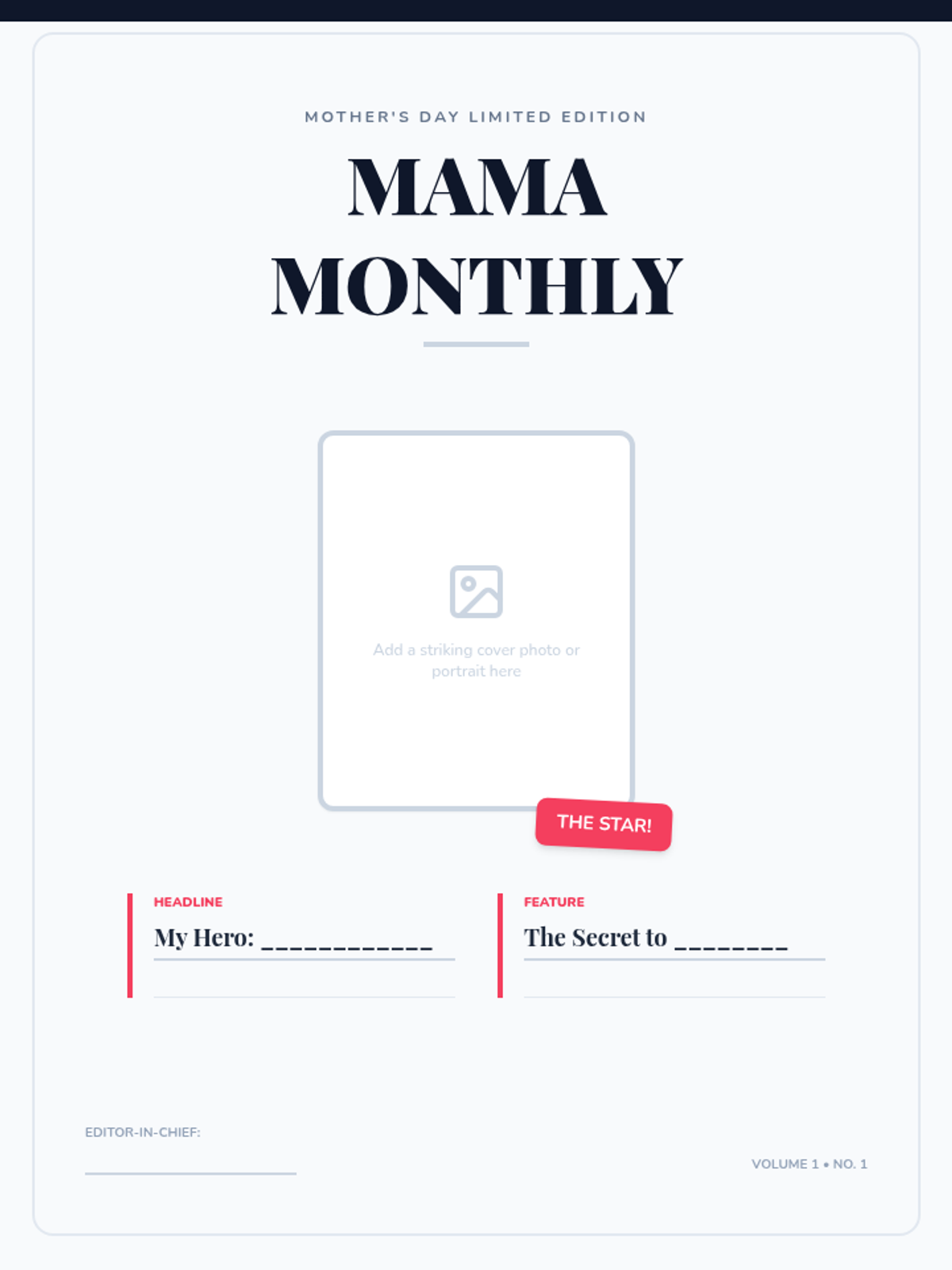
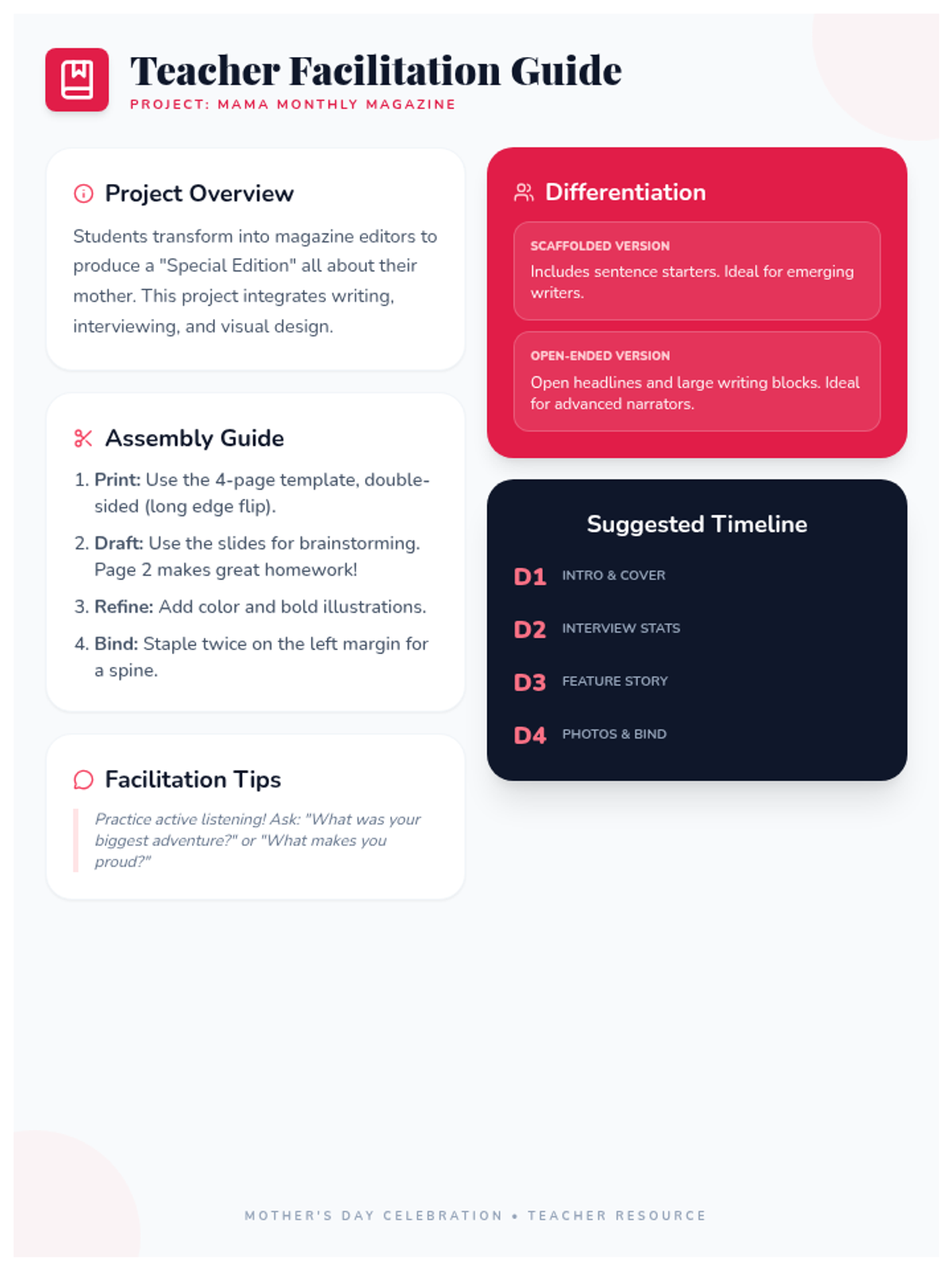
A creative project where students design and write their own 'Mama Monthly' magazine to celebrate Mother's Day, focusing on interviewing skills, descriptive writing, and gratitude.
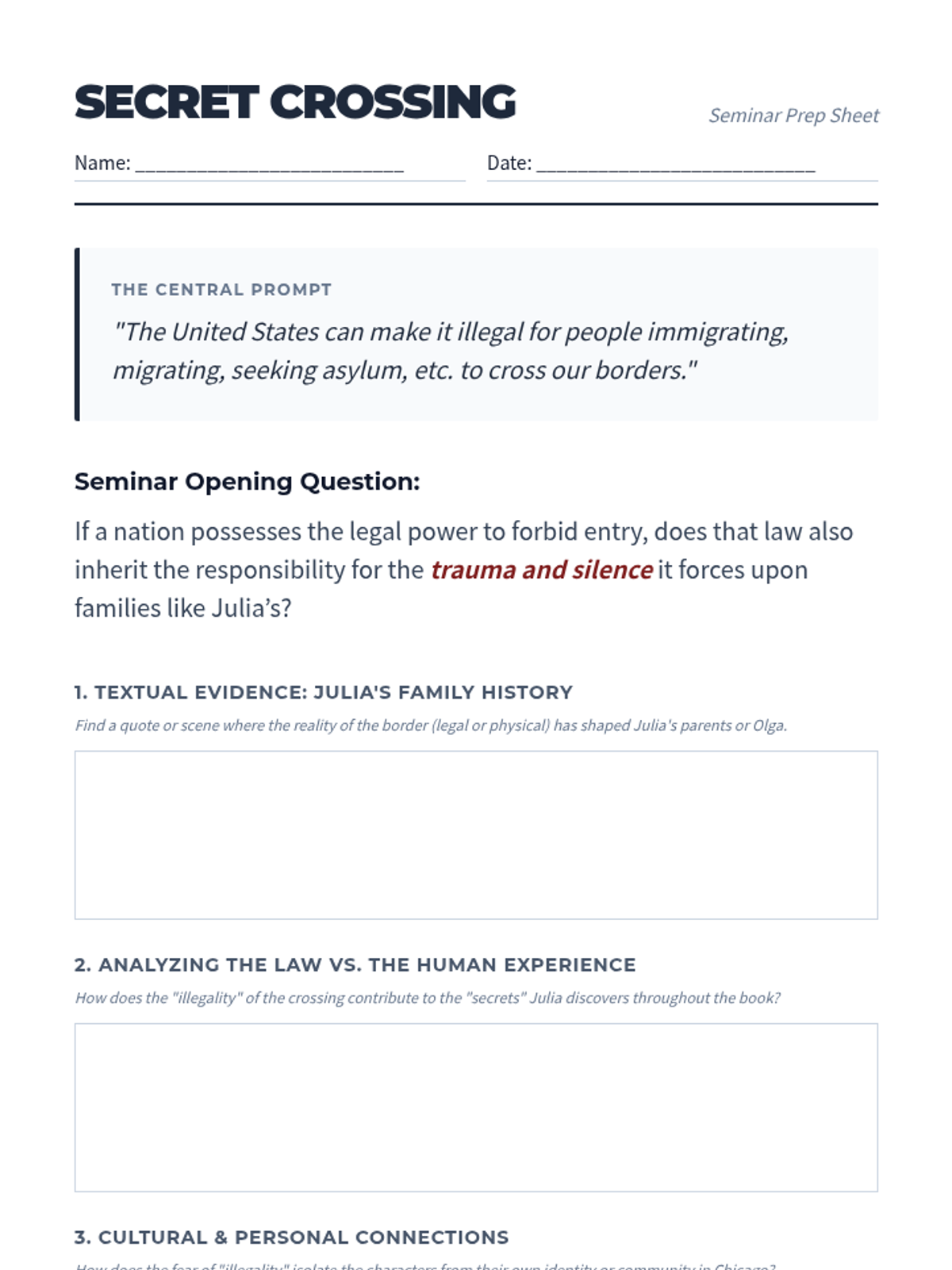
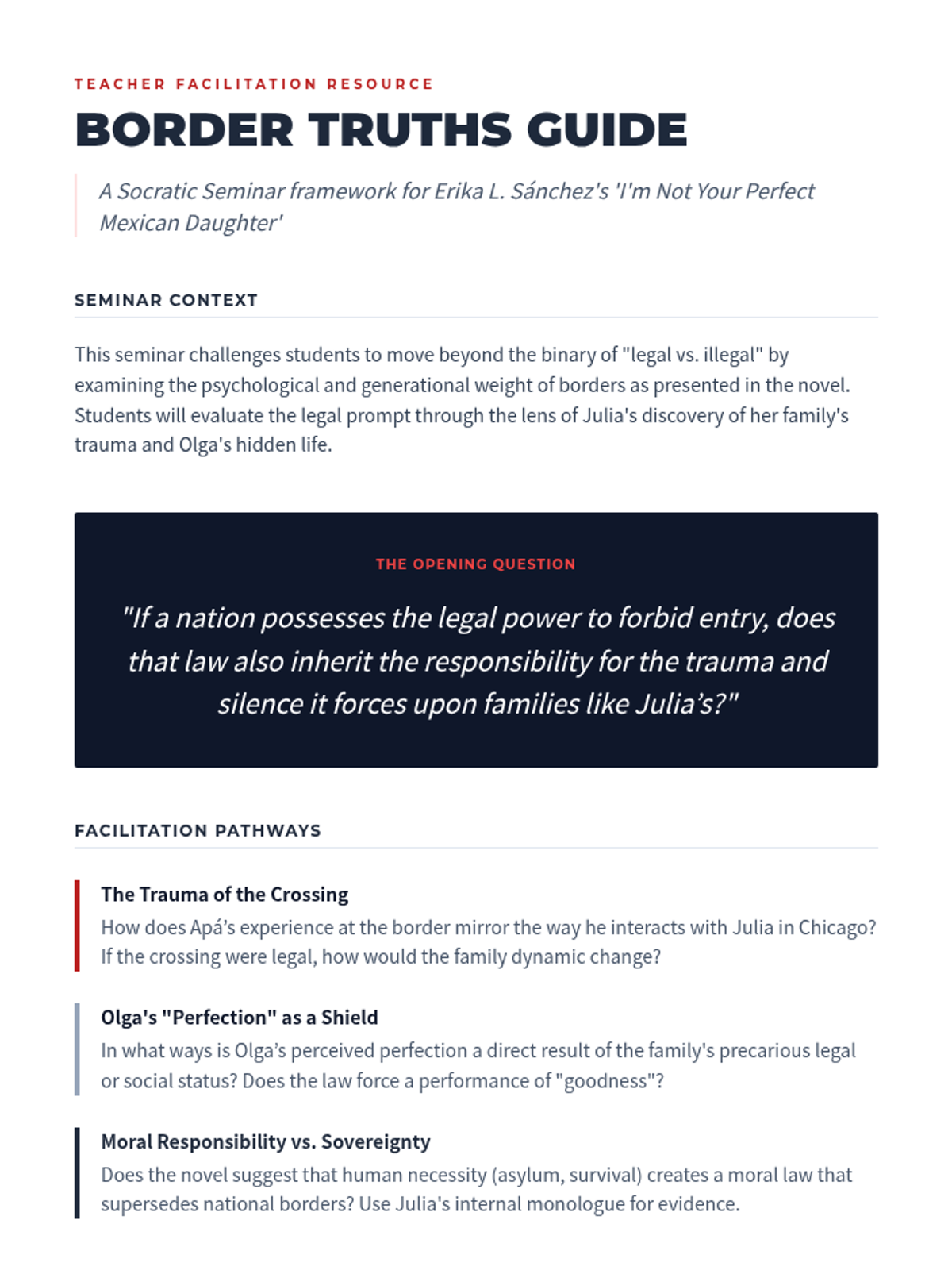
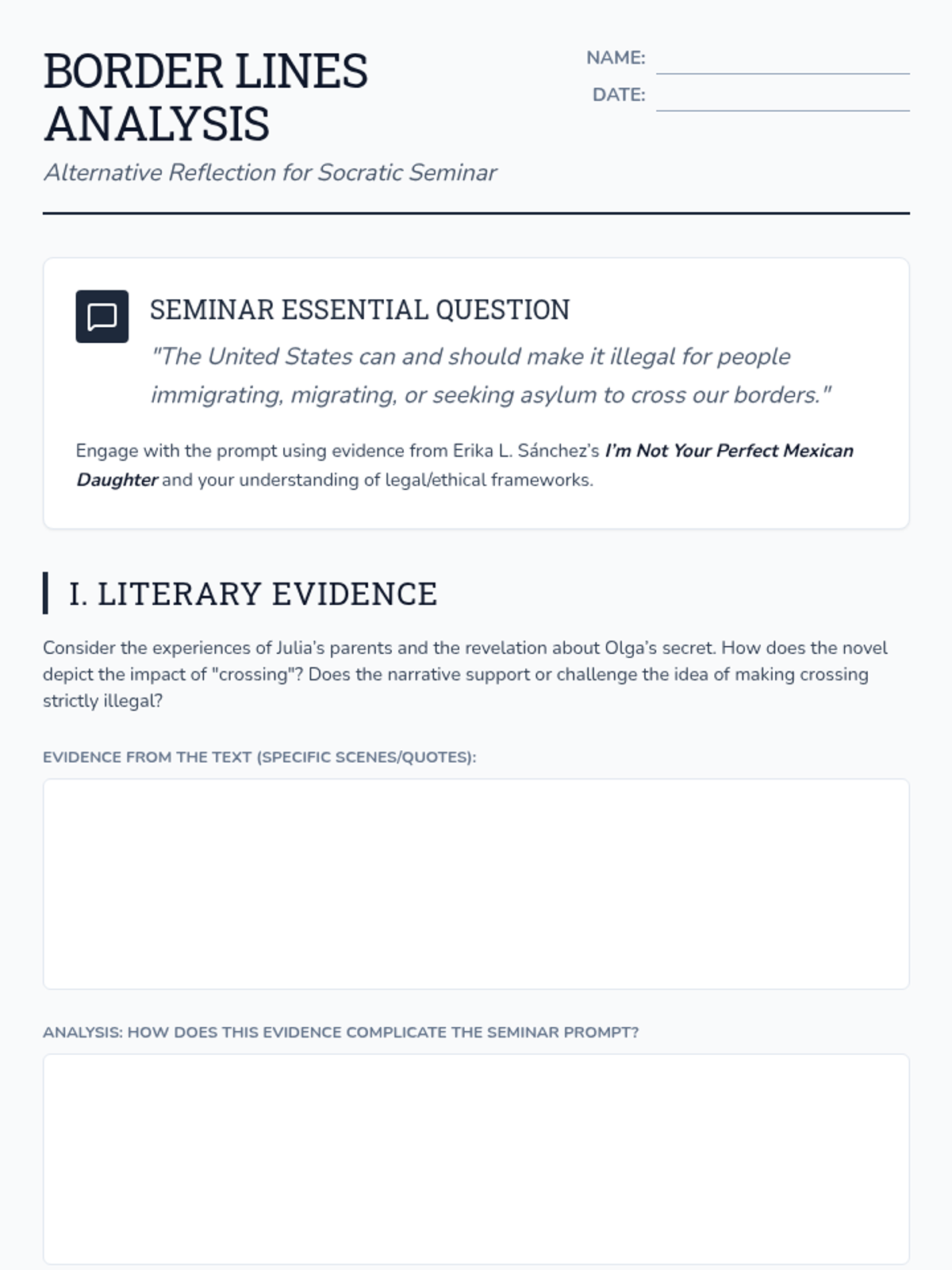
A formal Socratic Seminar centered on the novel 'I'm Not Your Perfect Mexican Daughter', focusing on the legality of borders versus the human cost of migration and family secrets.
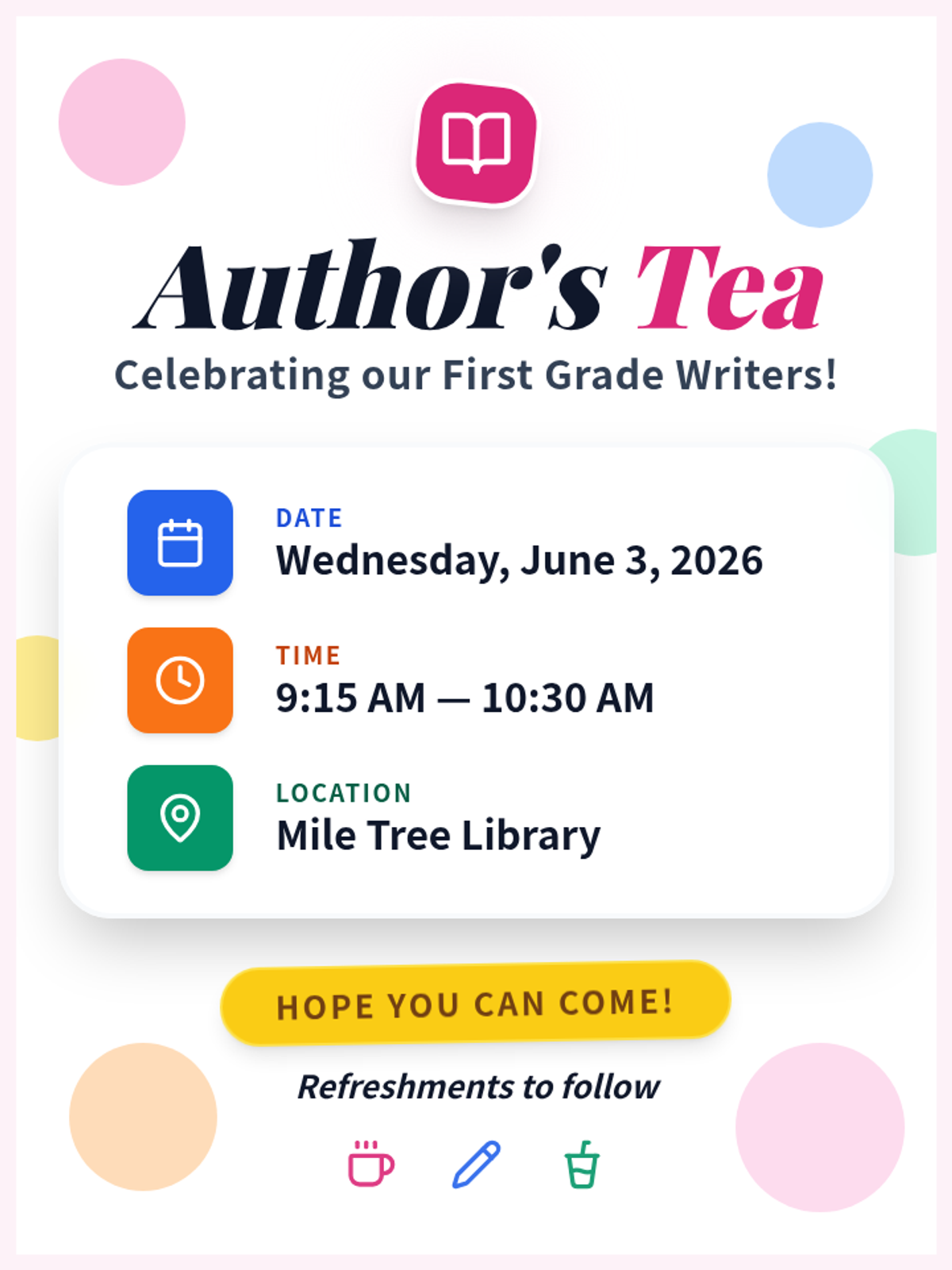
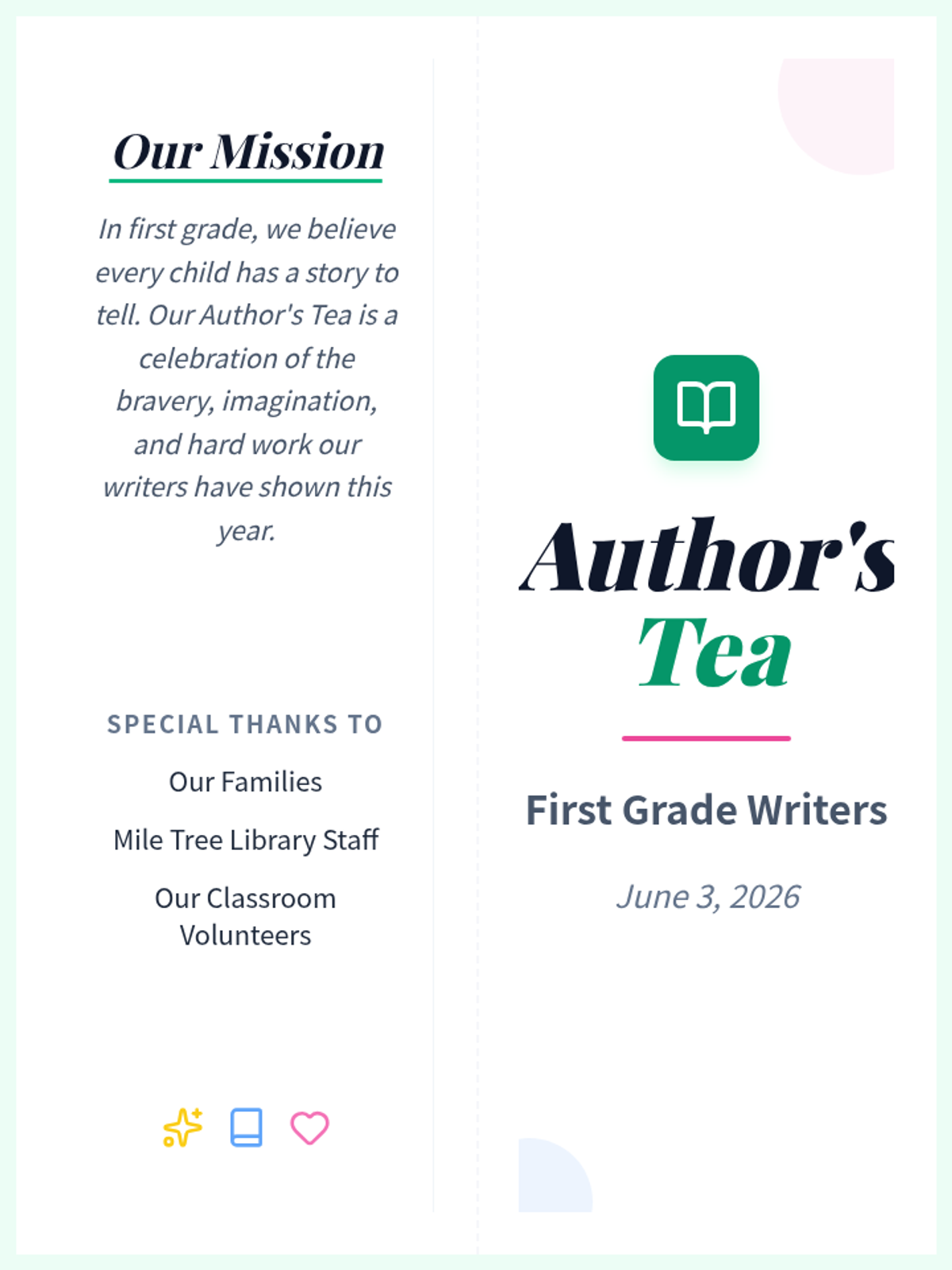
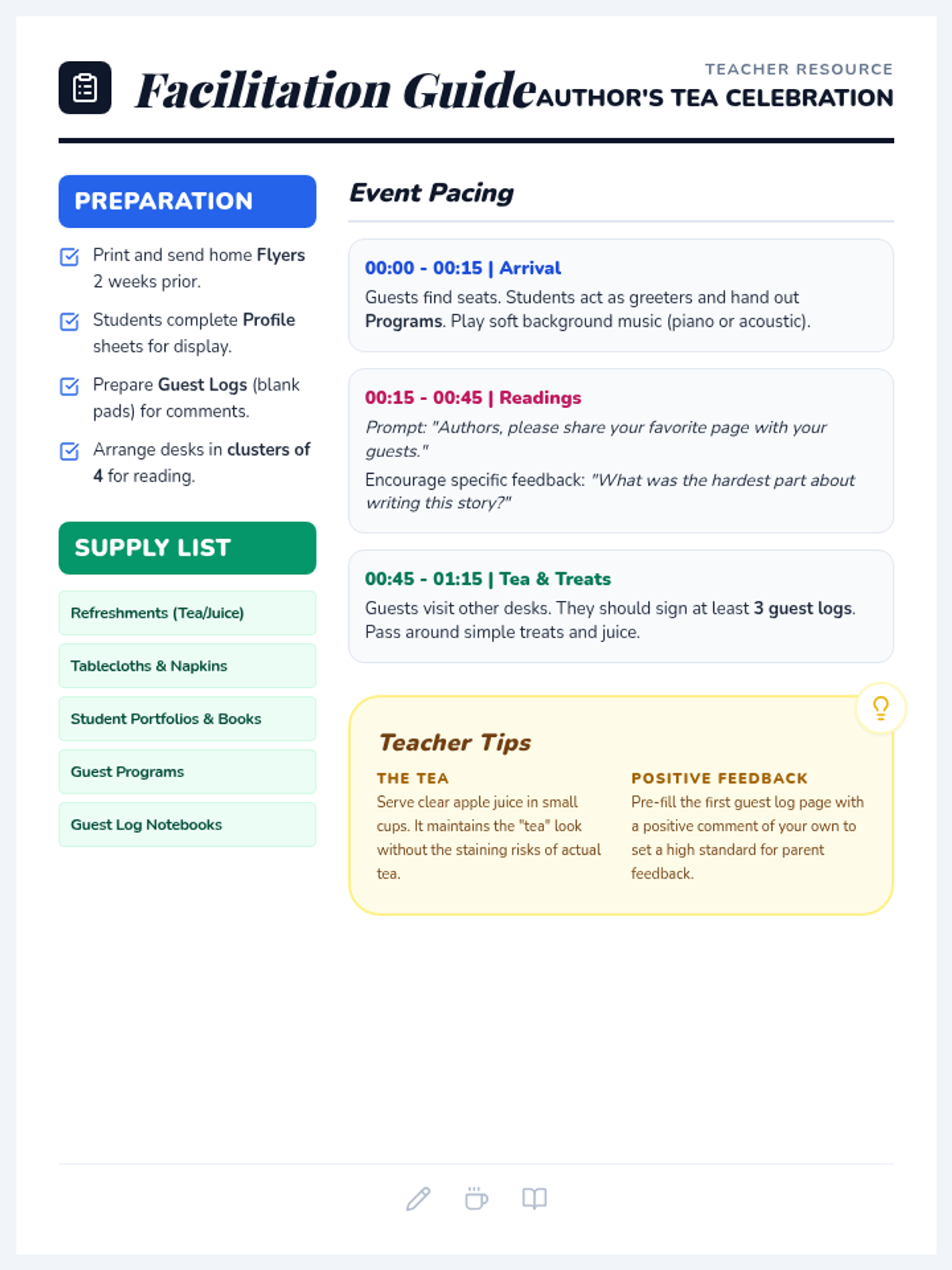
A comprehensive set of materials for hosting a successful first-grade Author's Tea, including a vibrant presentation, student-facing author sheets, parent programs, and a teacher facilitation guide.
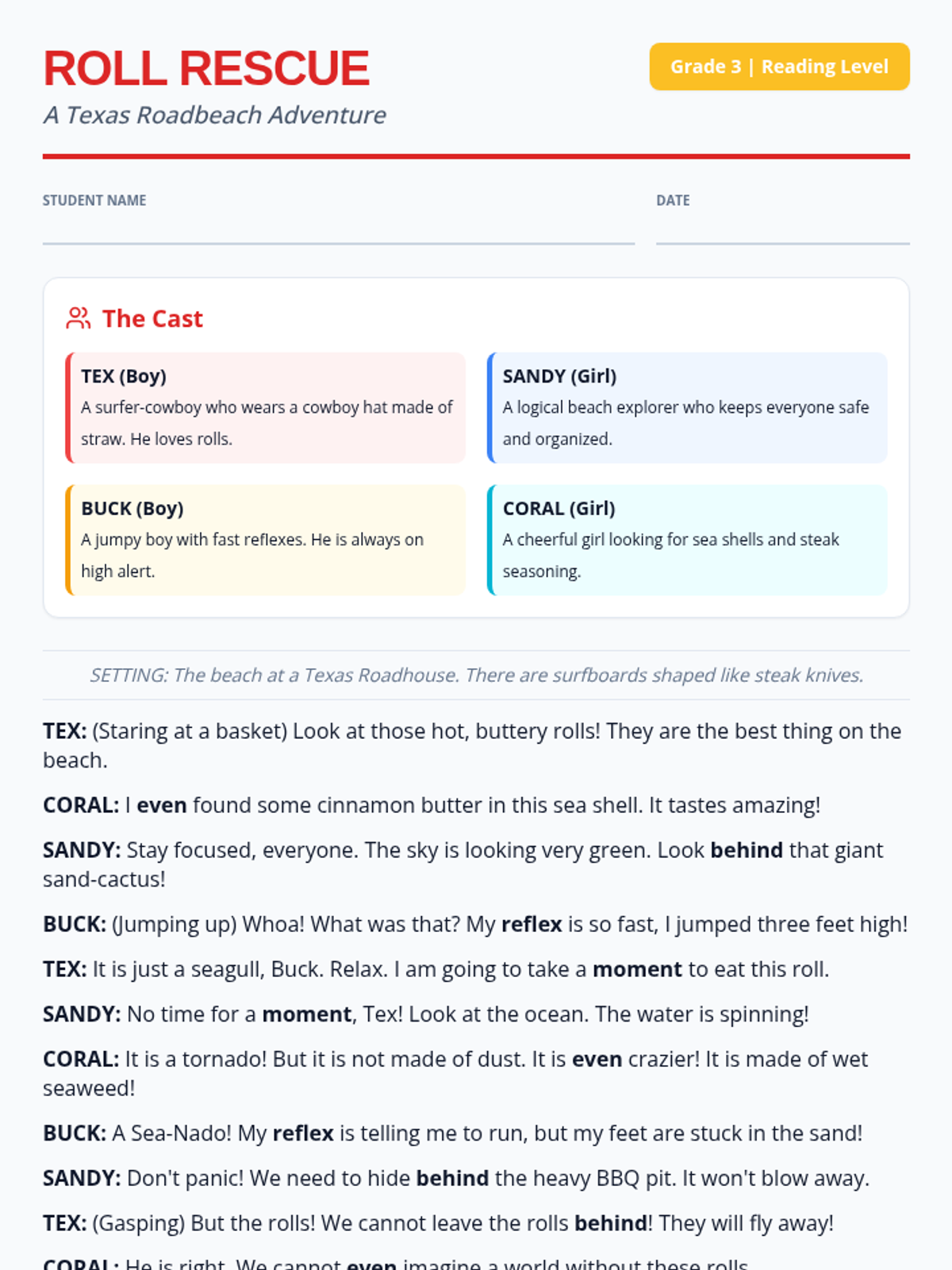
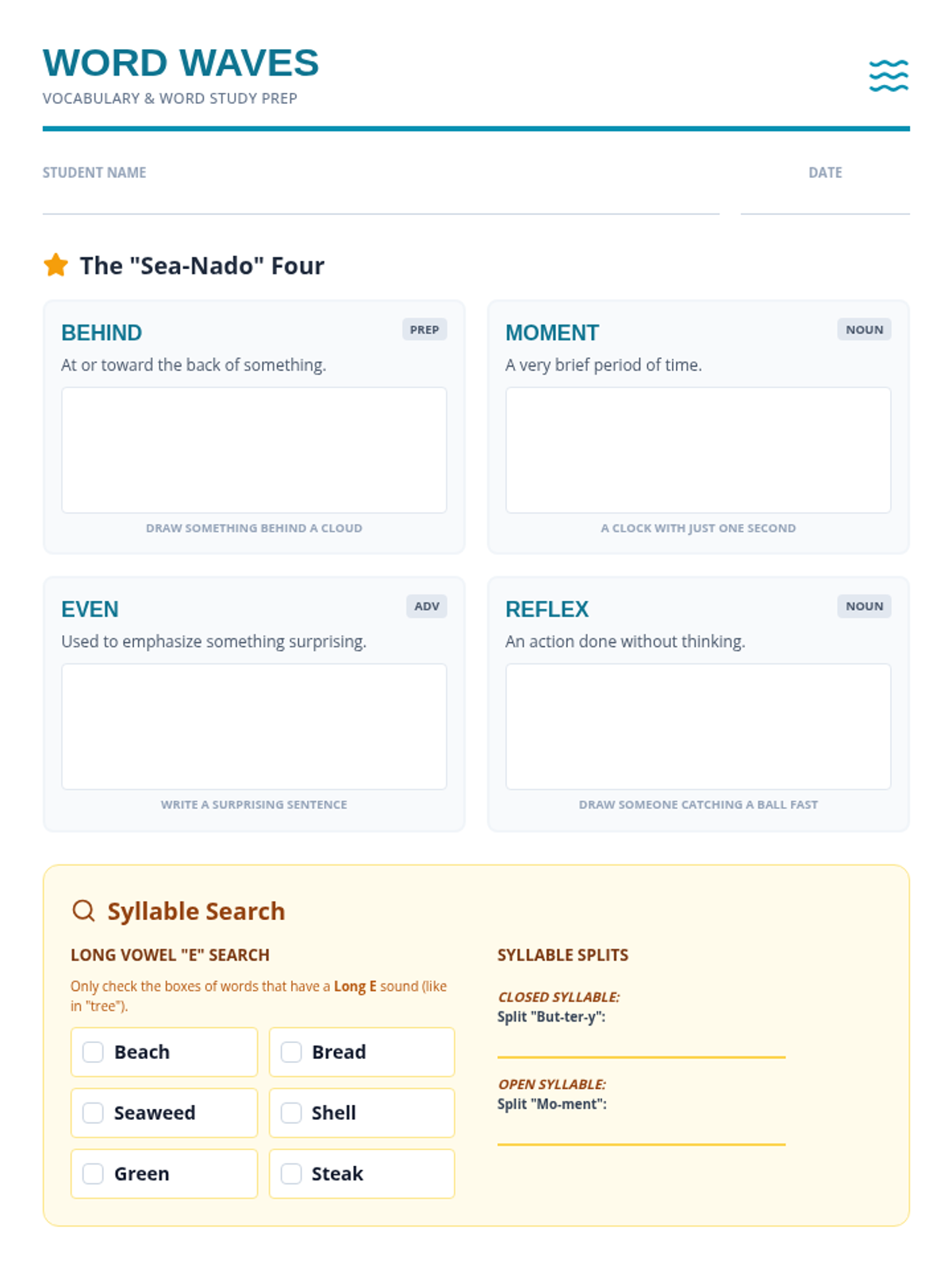
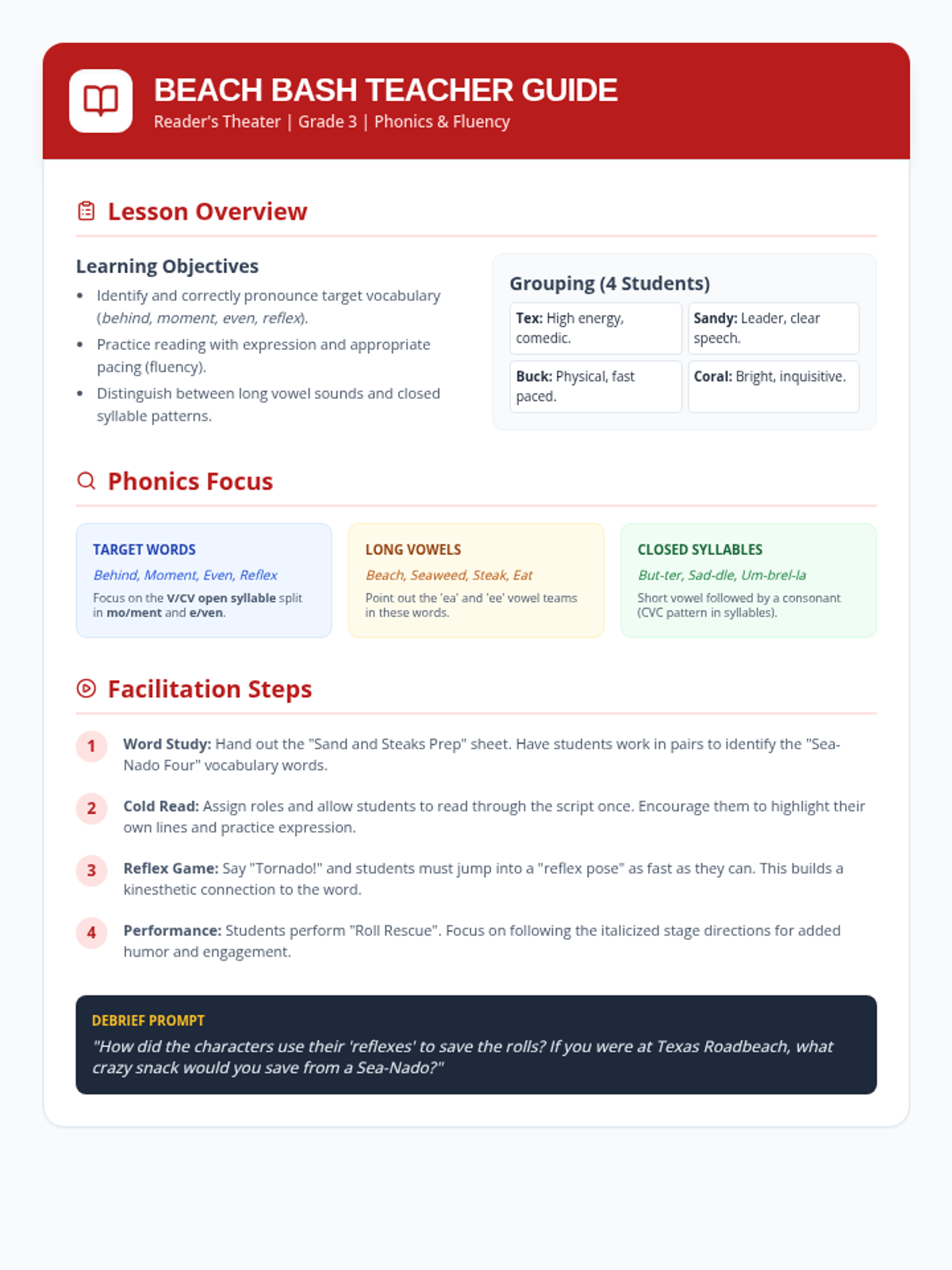
A funny grade 3 reader's theater lesson set at an absurd beach-themed Texas Roadhouse, focusing on long vowel sounds and specific vocabulary words like behind, moment, even, and reflex.
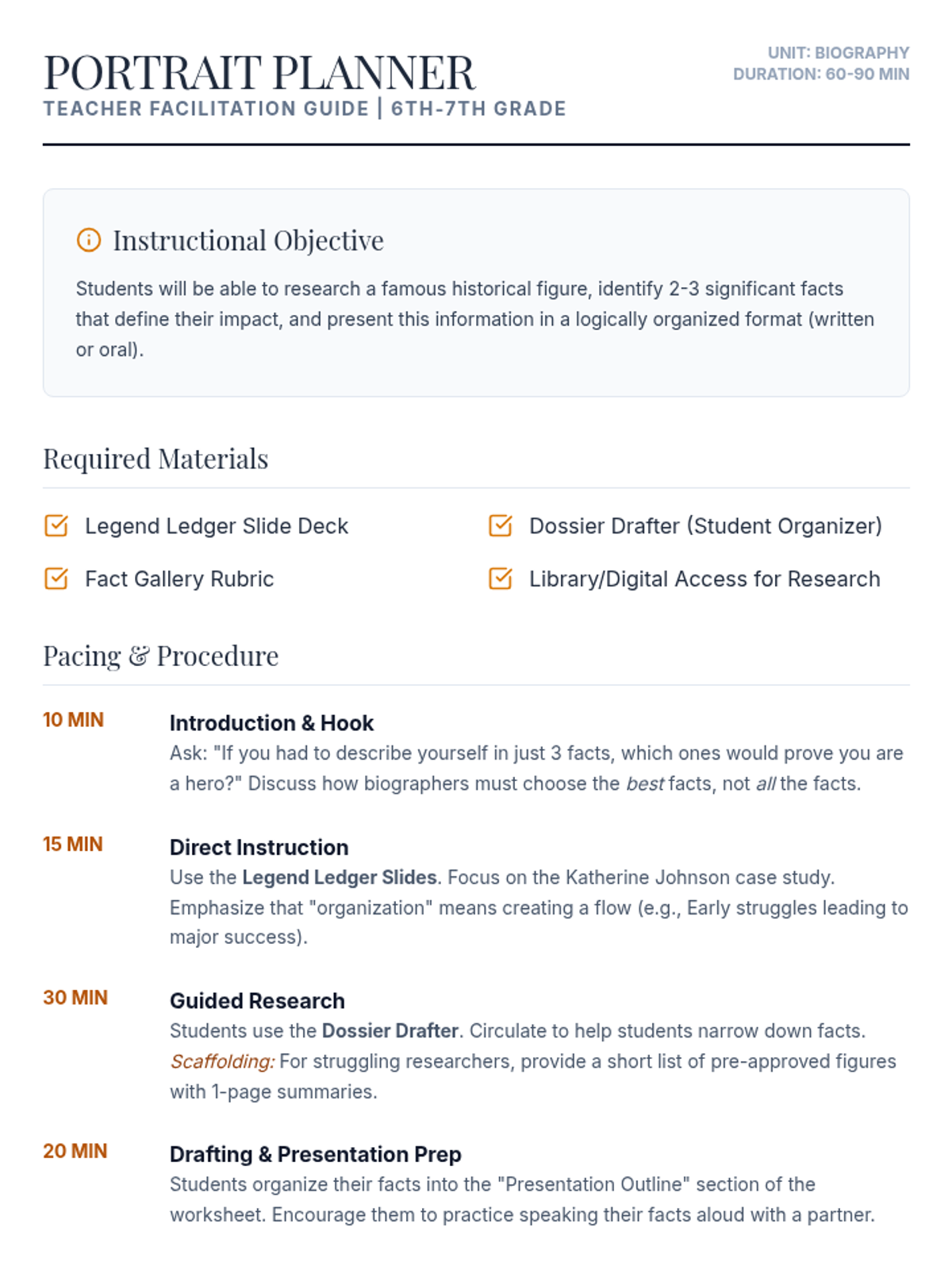
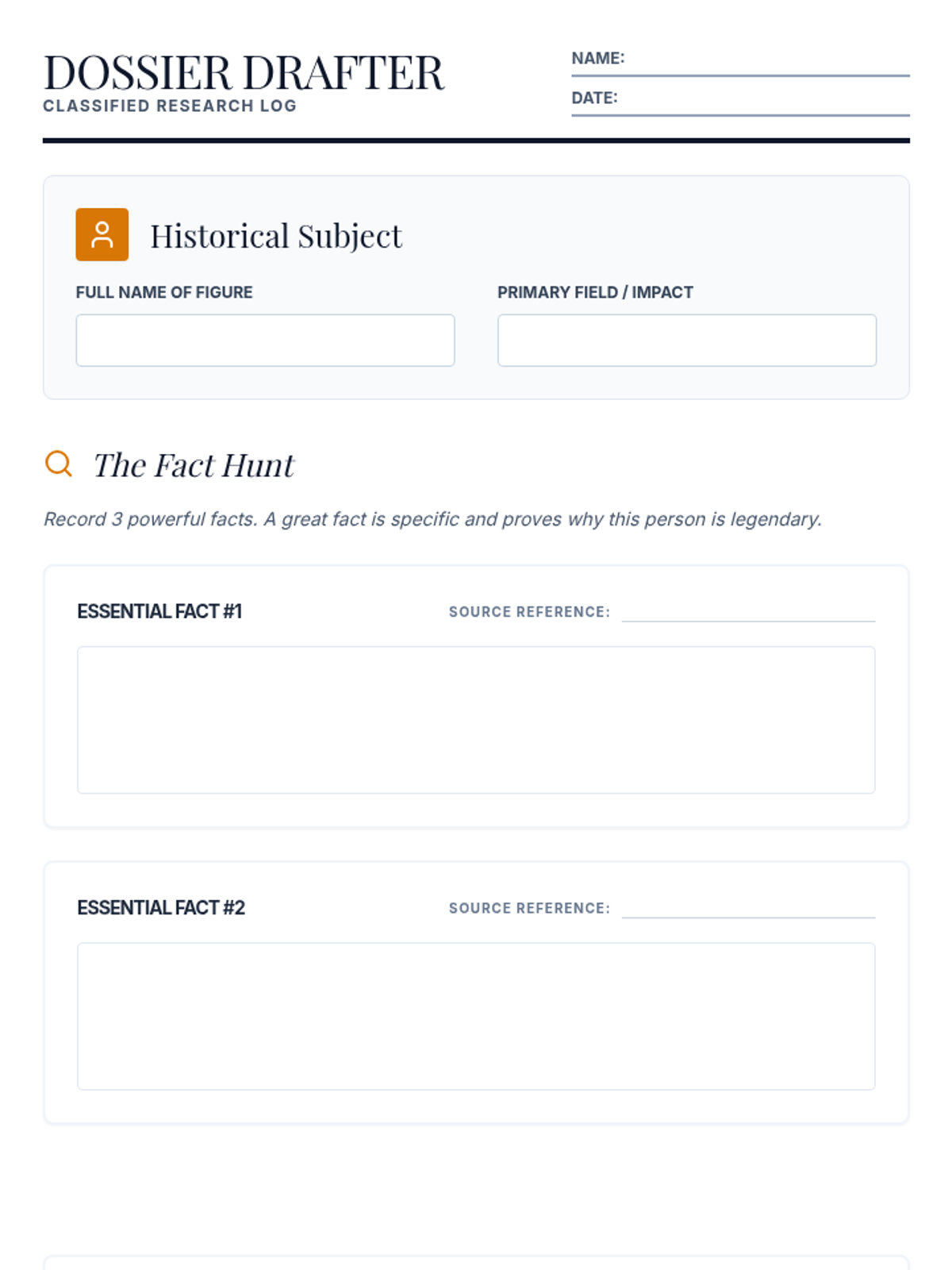
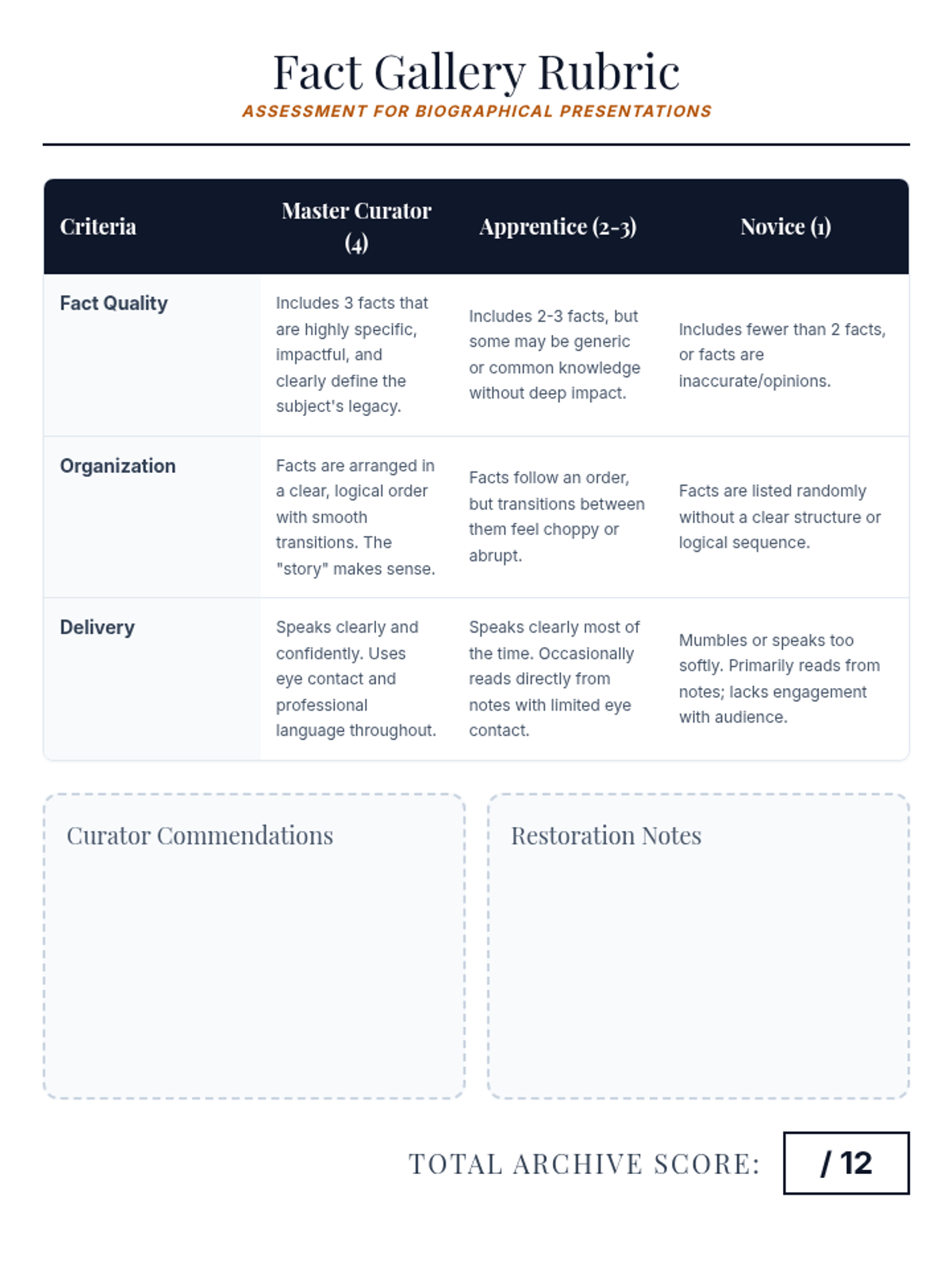
A lesson focused on researching and organizing key facts about historical figures to create a compelling biographical presentation. Students learn to select impactful information and structure it logically for an audience.
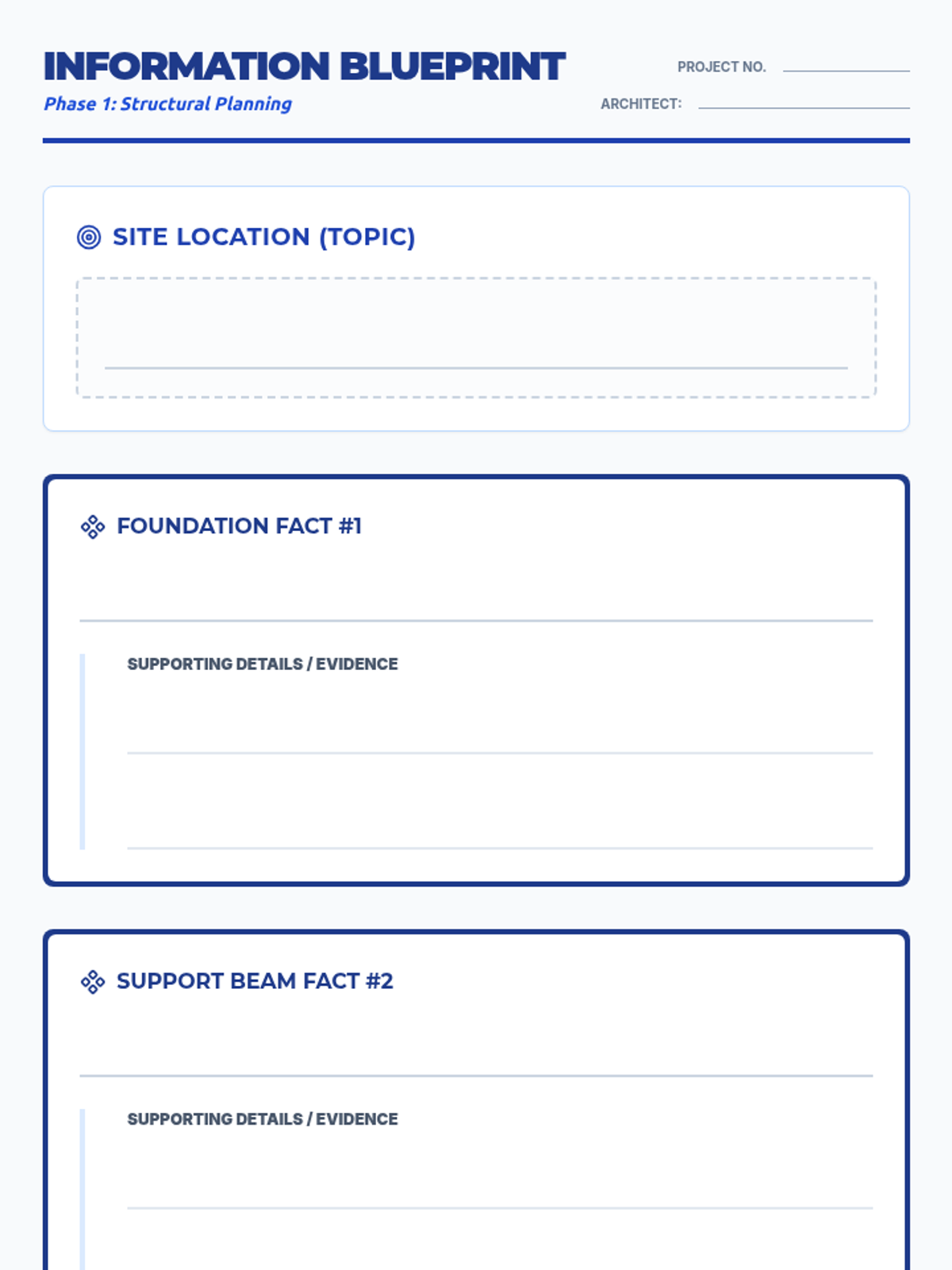
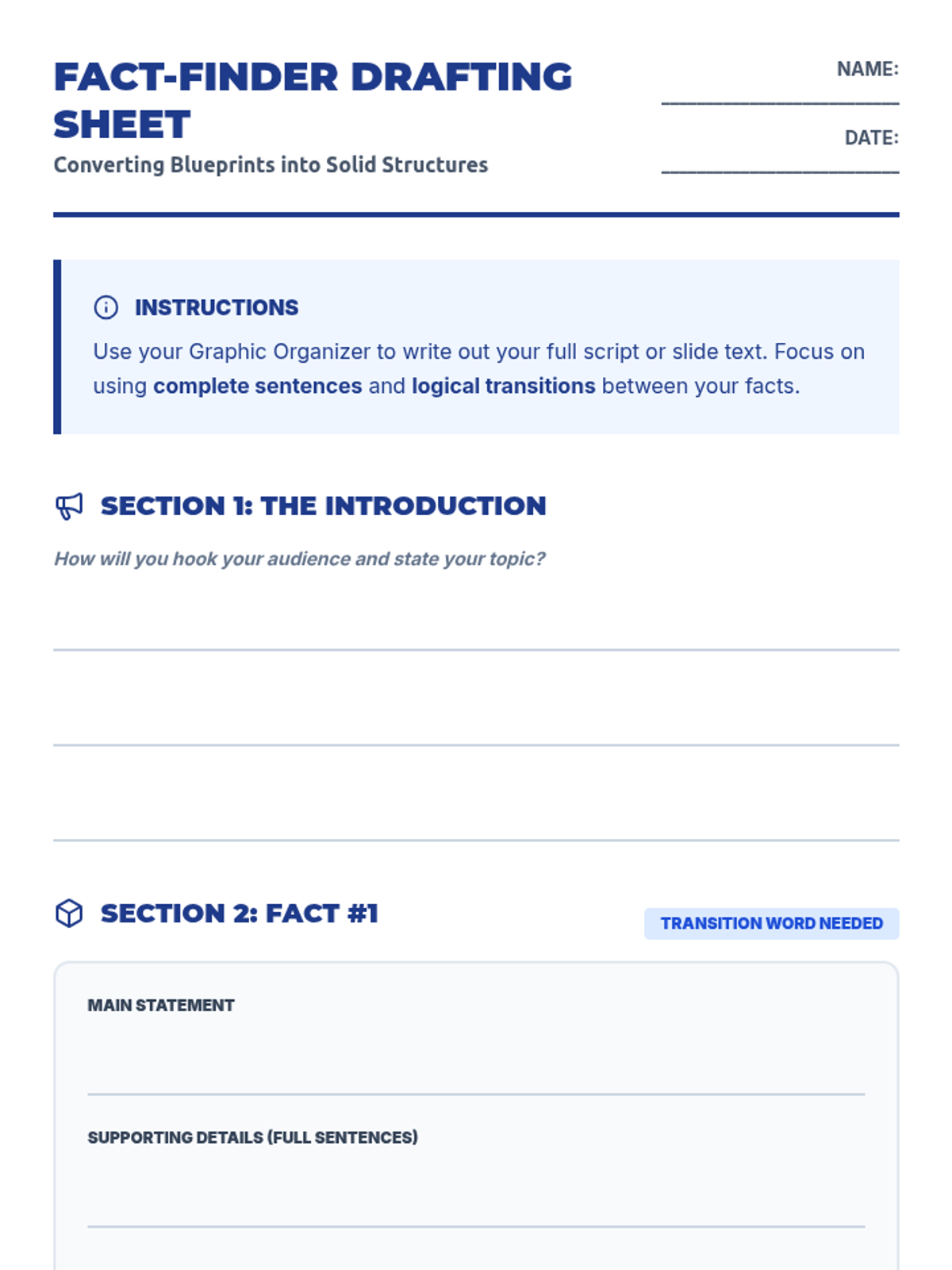
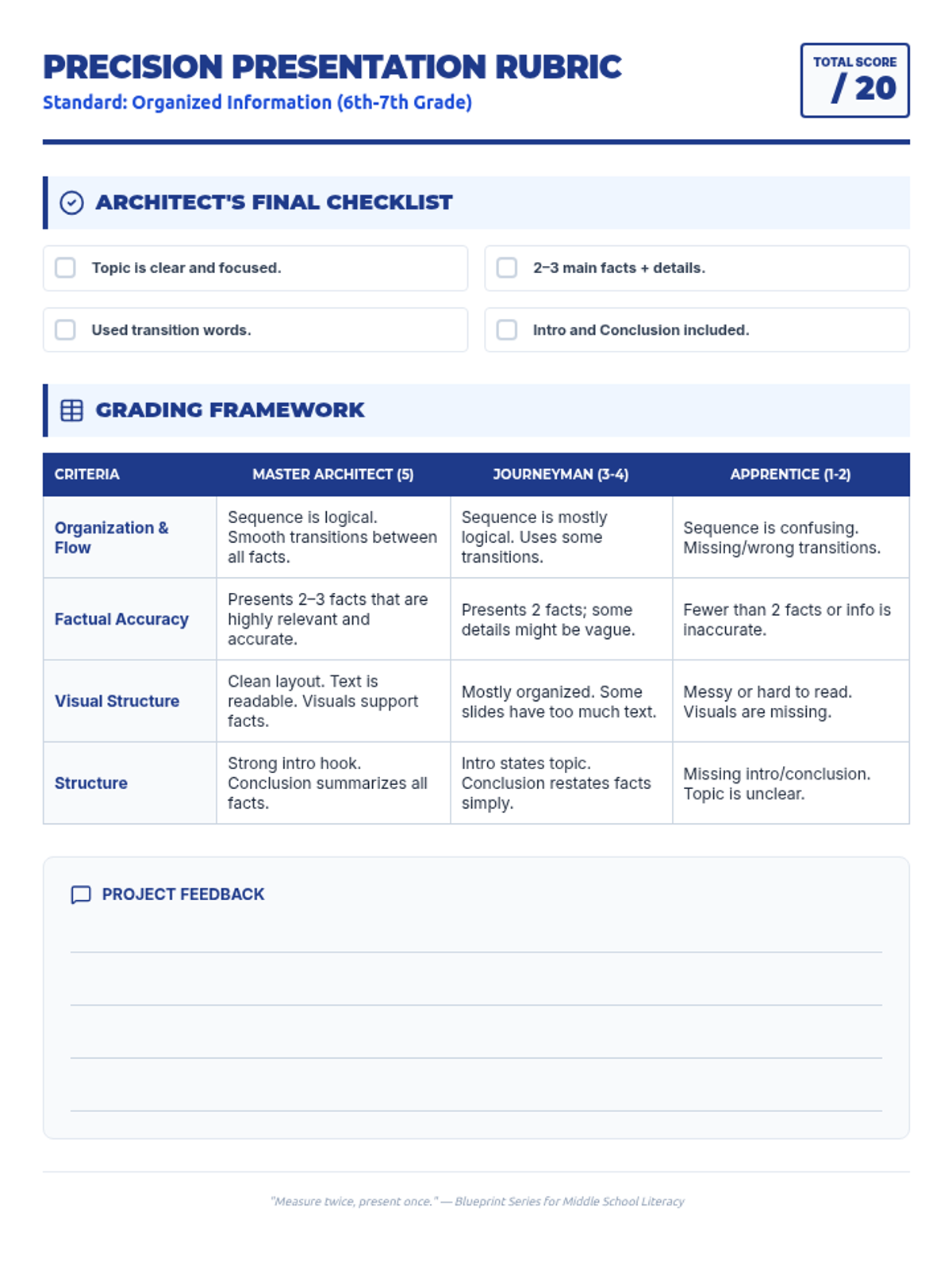
A middle school lesson focused on researching, organizing, and presenting factual information using a structured 'blueprint' approach. Students will learn to select a topic, gather 2-3 supporting facts, and arrange them logically for a presentation.
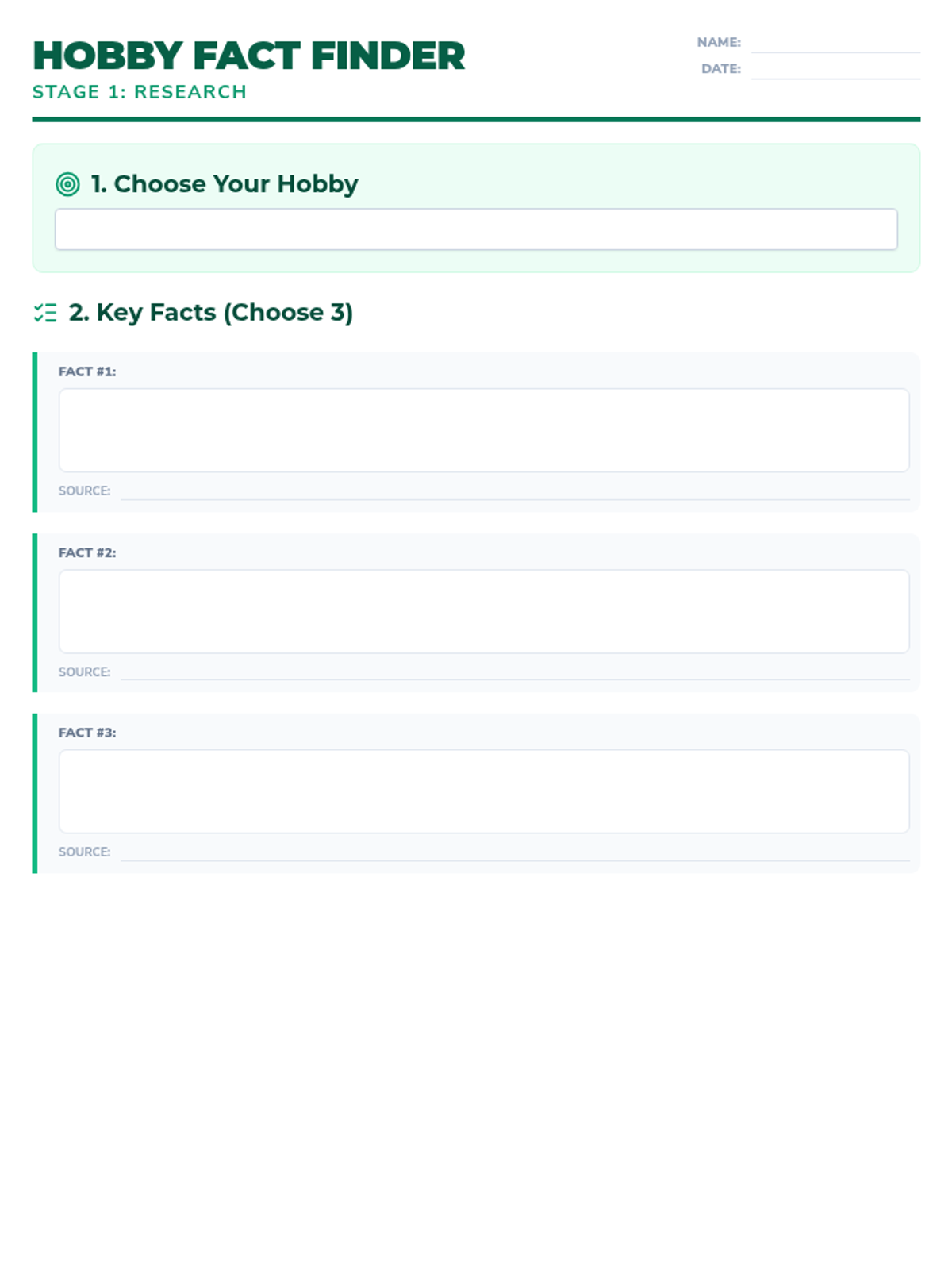
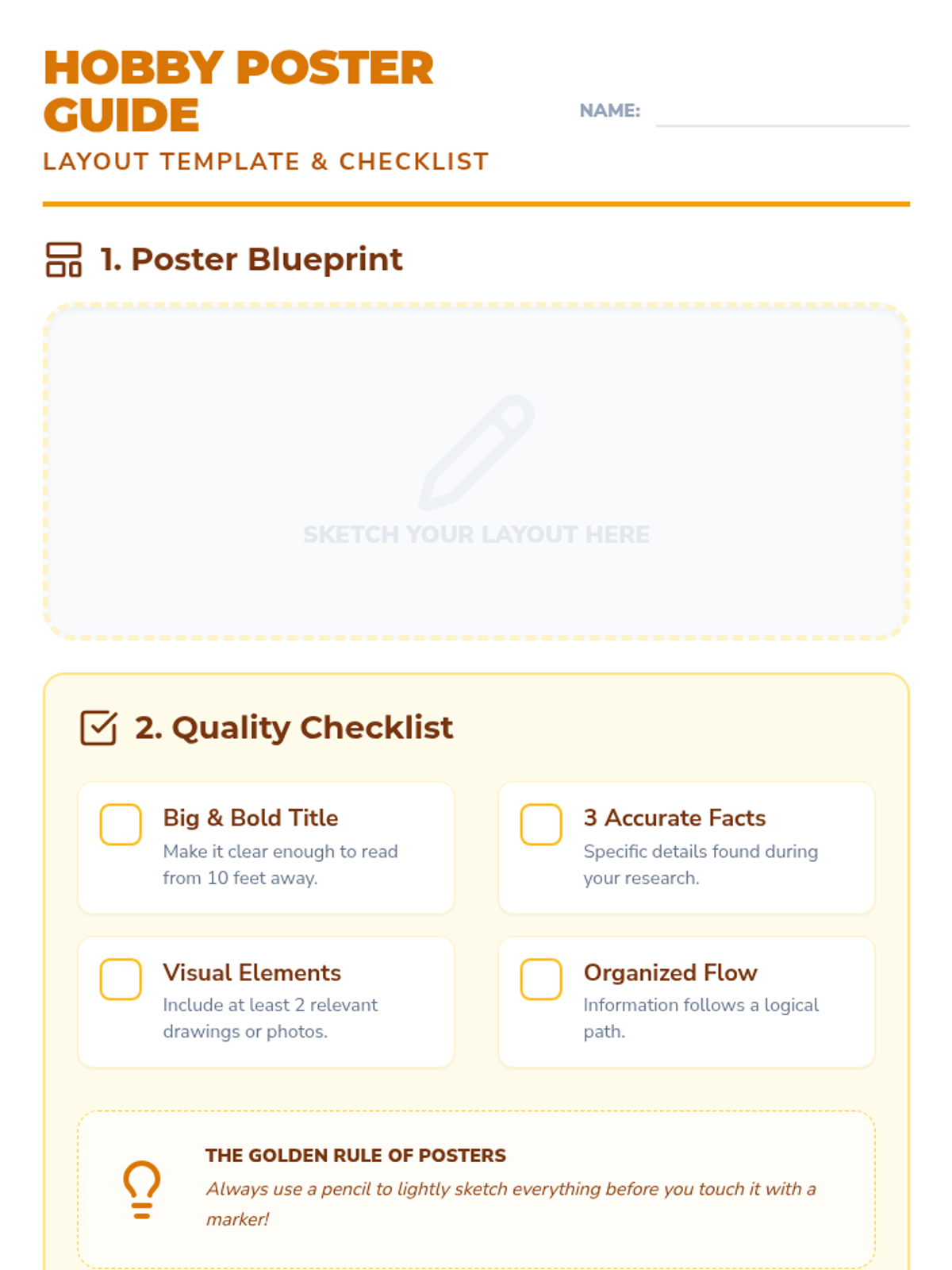
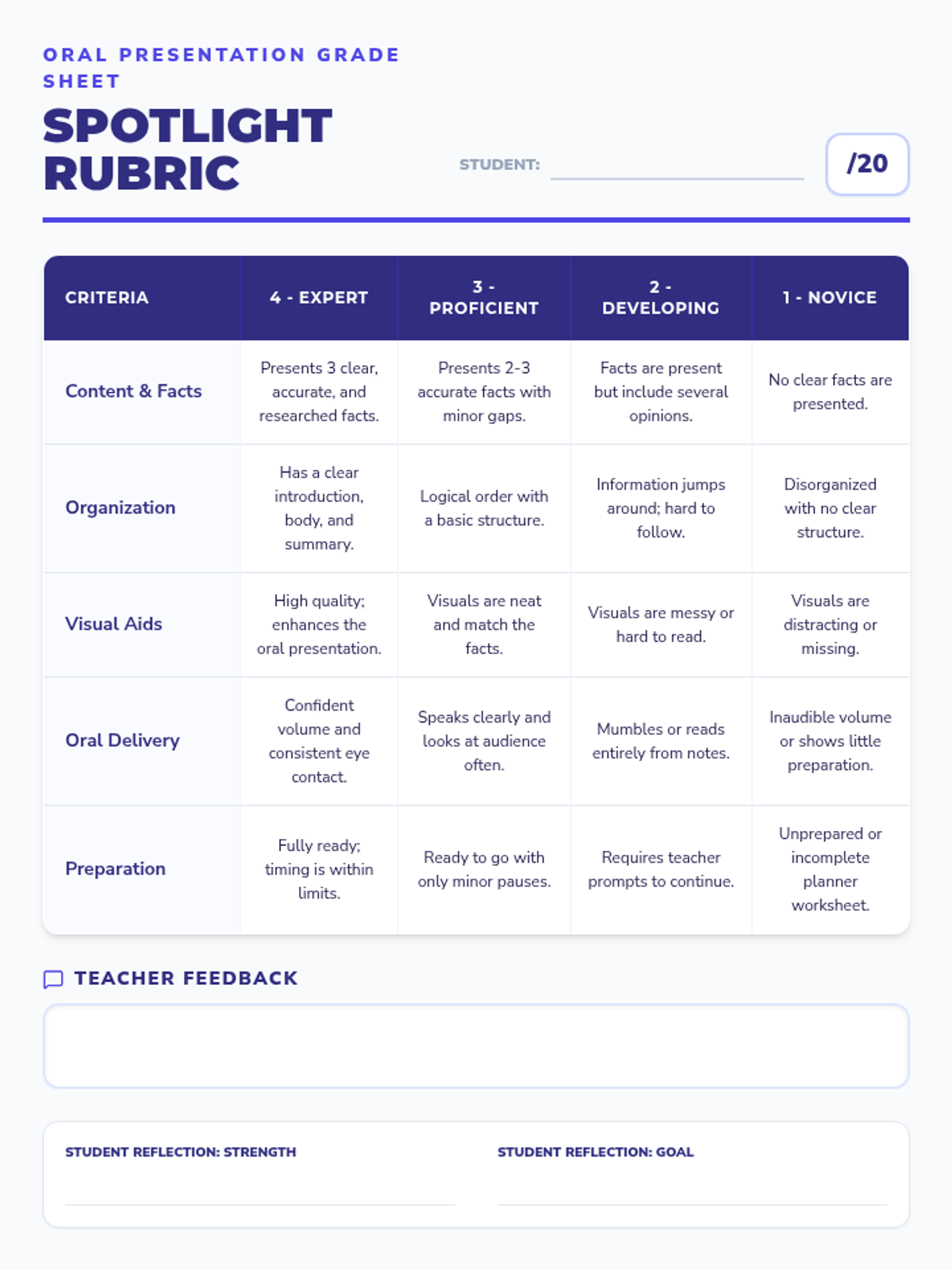
A lesson designed for middle schoolers to practice organizing information and presenting it clearly through the lens of their personal hobbies. Students will learn to select key facts, structure a presentation, and deliver their findings using either digital slides or physical posters.
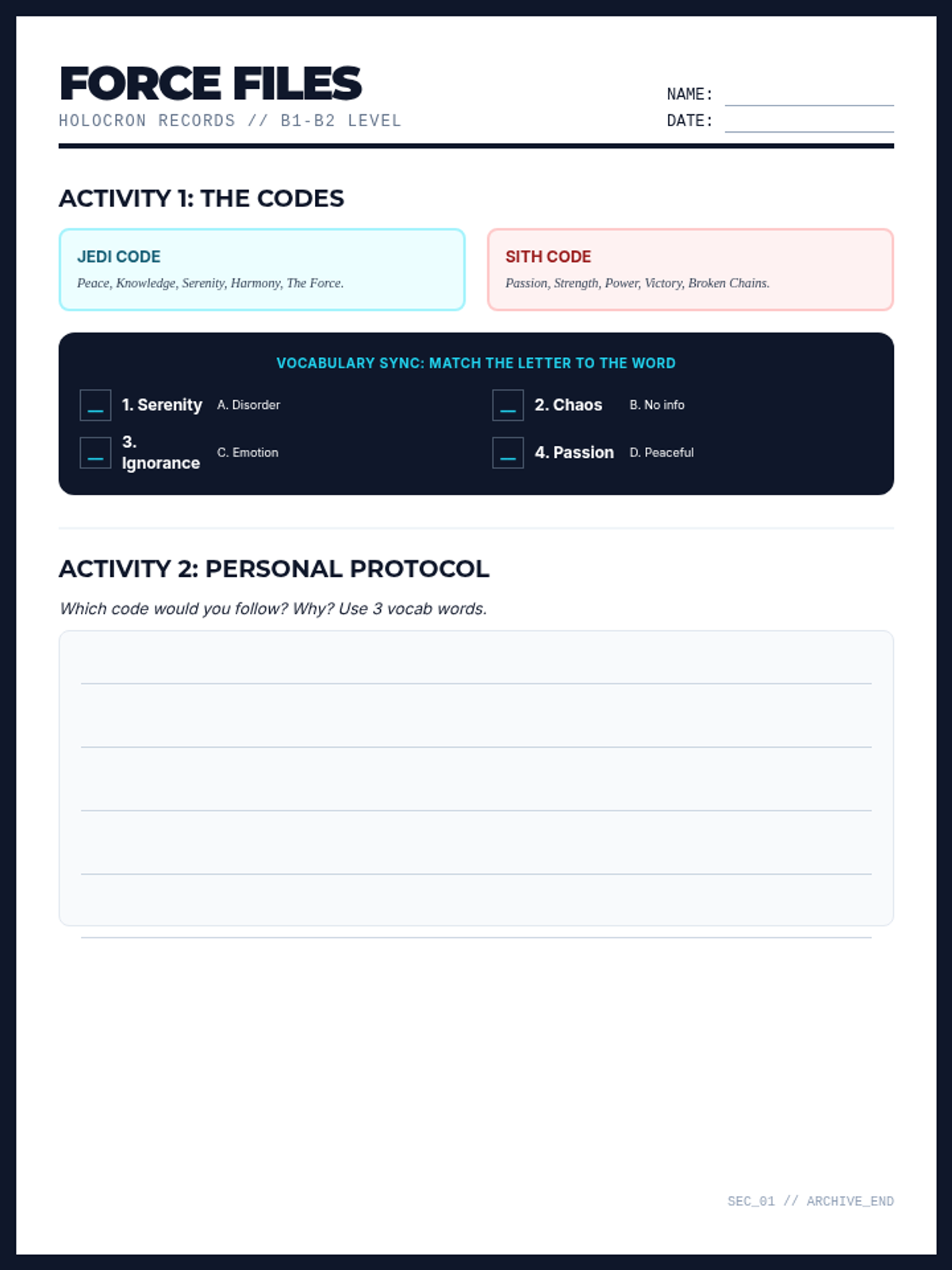
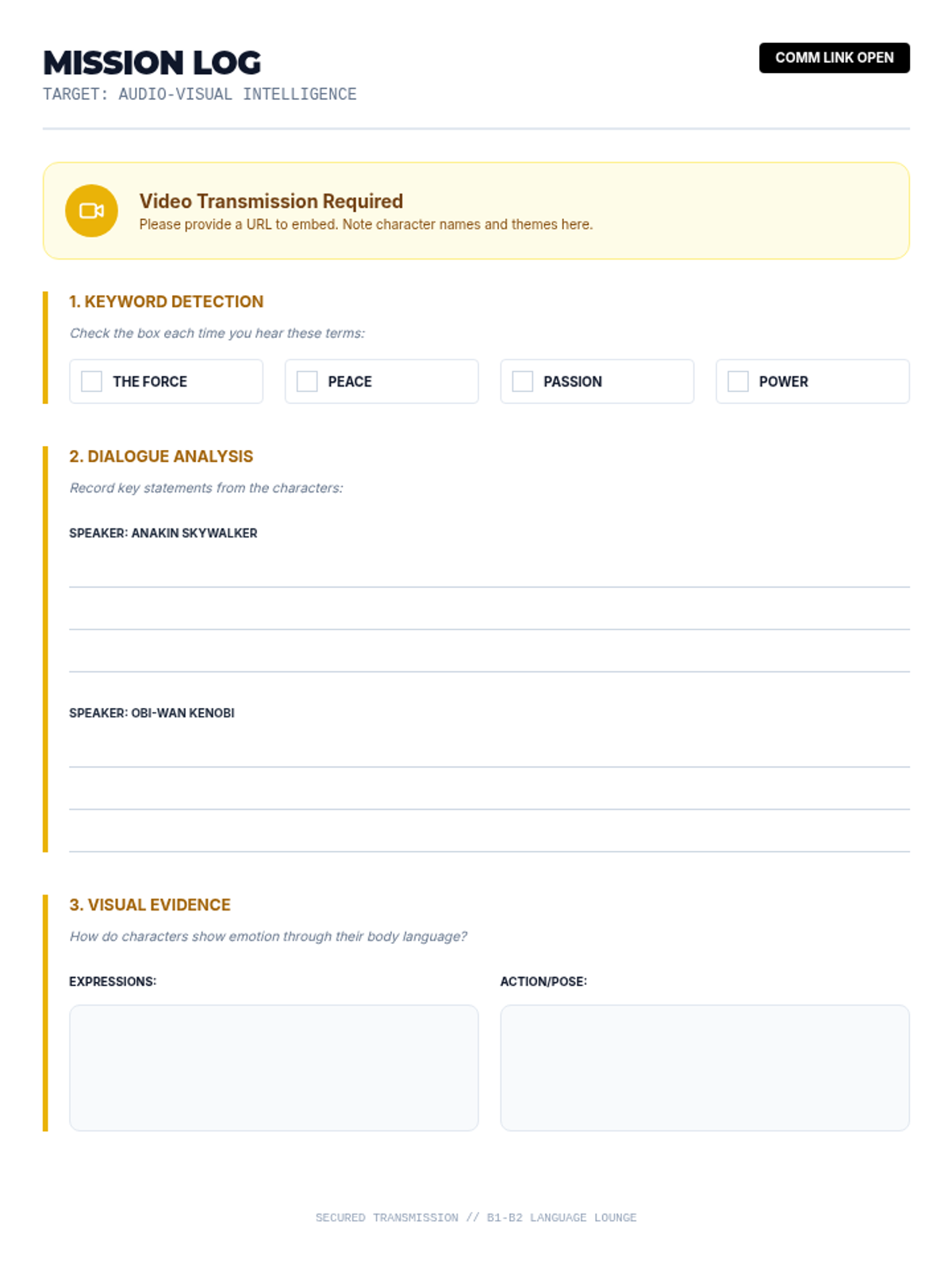
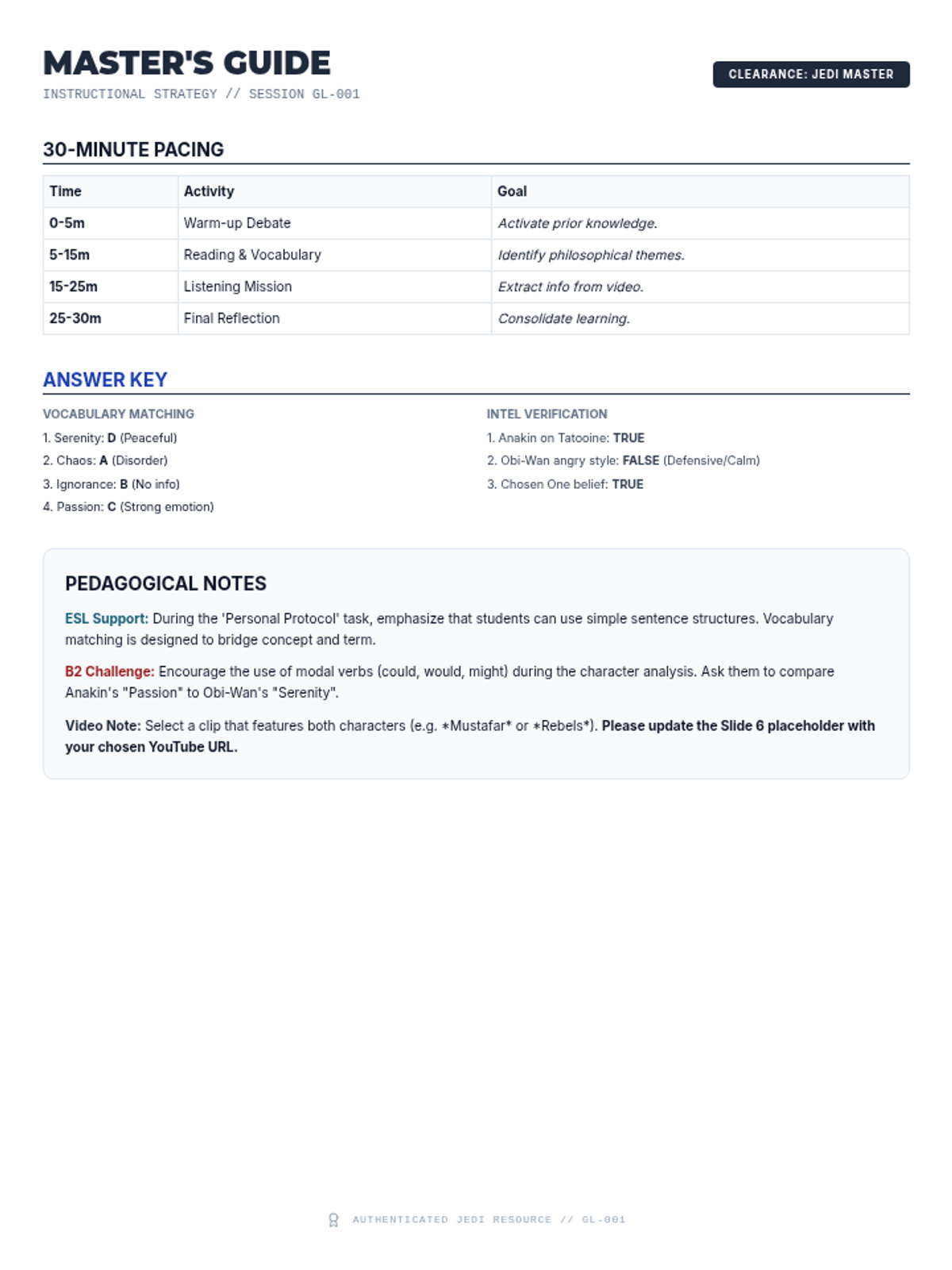
An immersive ESL lesson for B1/B2 levels exploring the philosophy and history of Star Wars characters through the lens of the Jedi and Sith Codes. Students will practice all four language domains in a 30-minute 'Language Lounge' format.
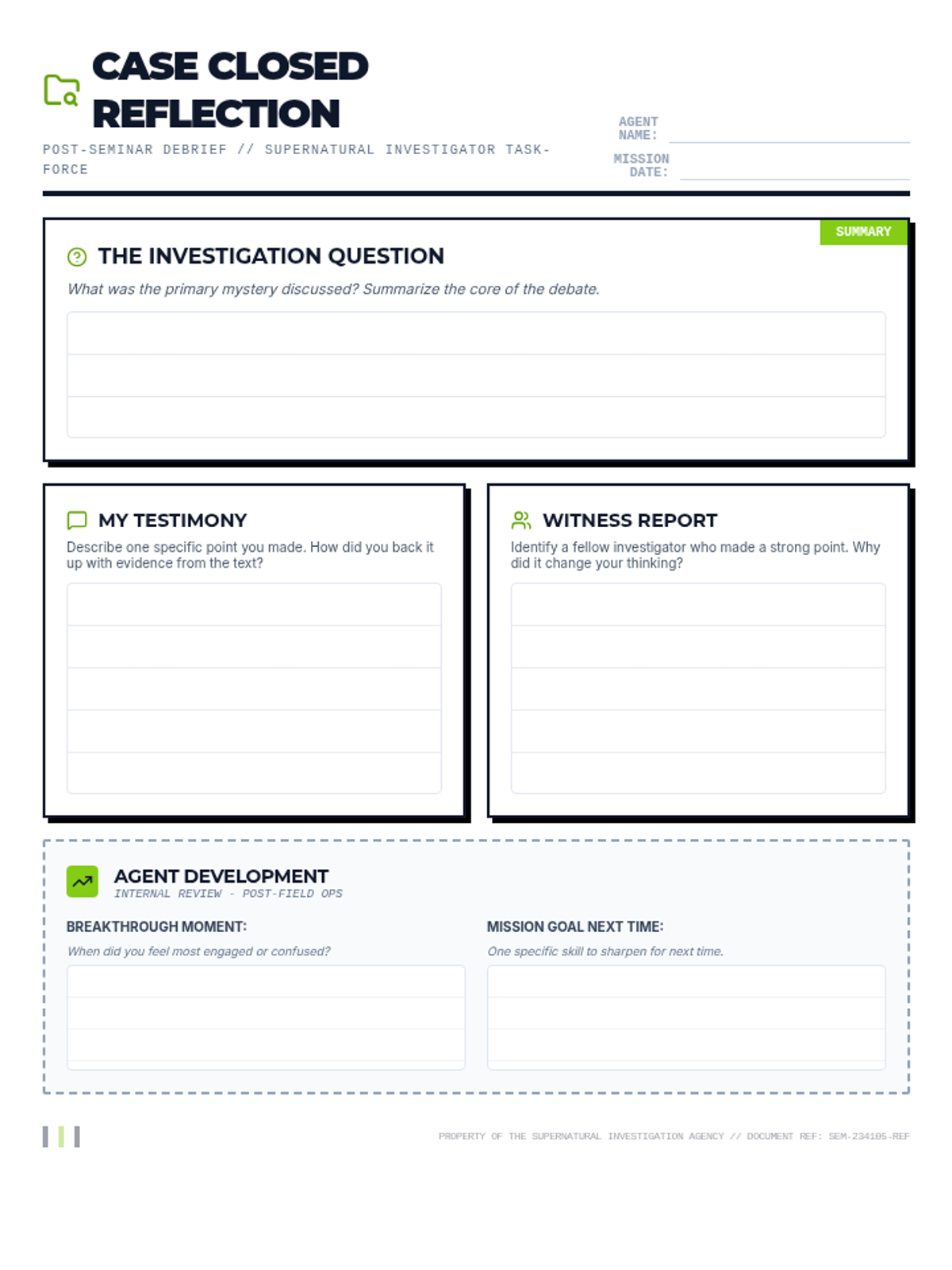
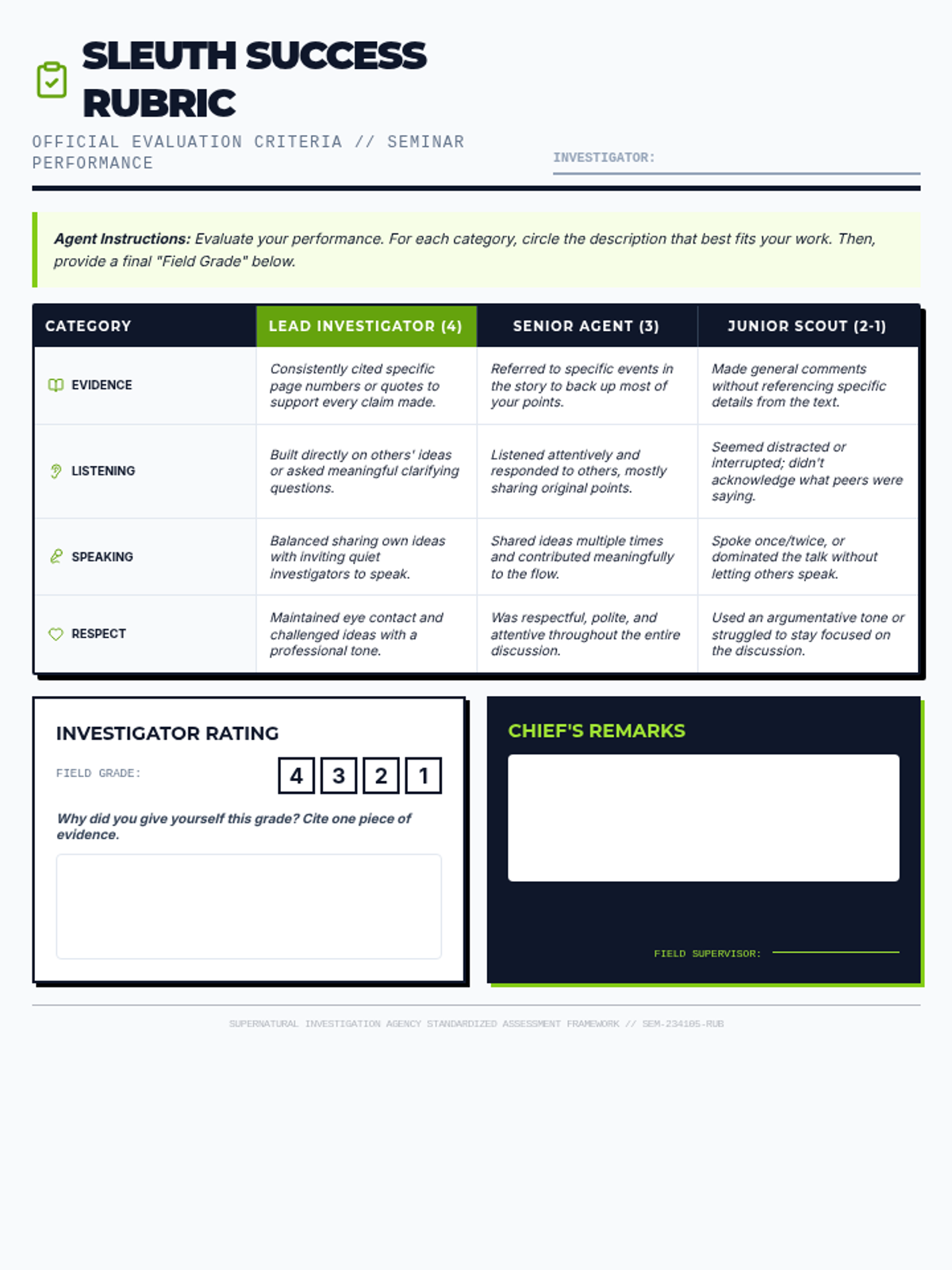
A wrap-up activity for a Socratic Seminar where students reflect on their contributions, evaluate their peers' ideas, and self-assess their performance using an investigative 'Monster Mystery' theme.
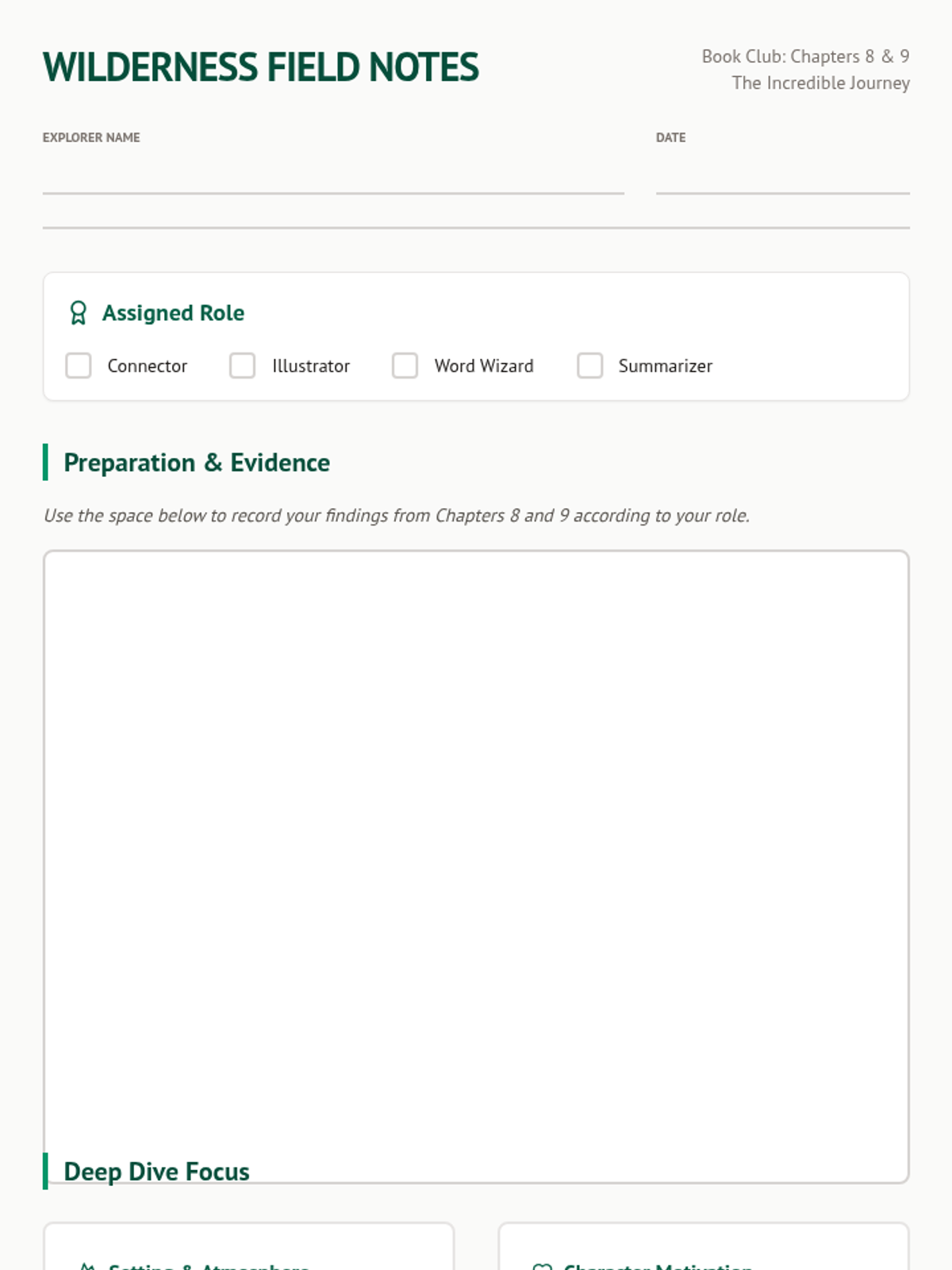
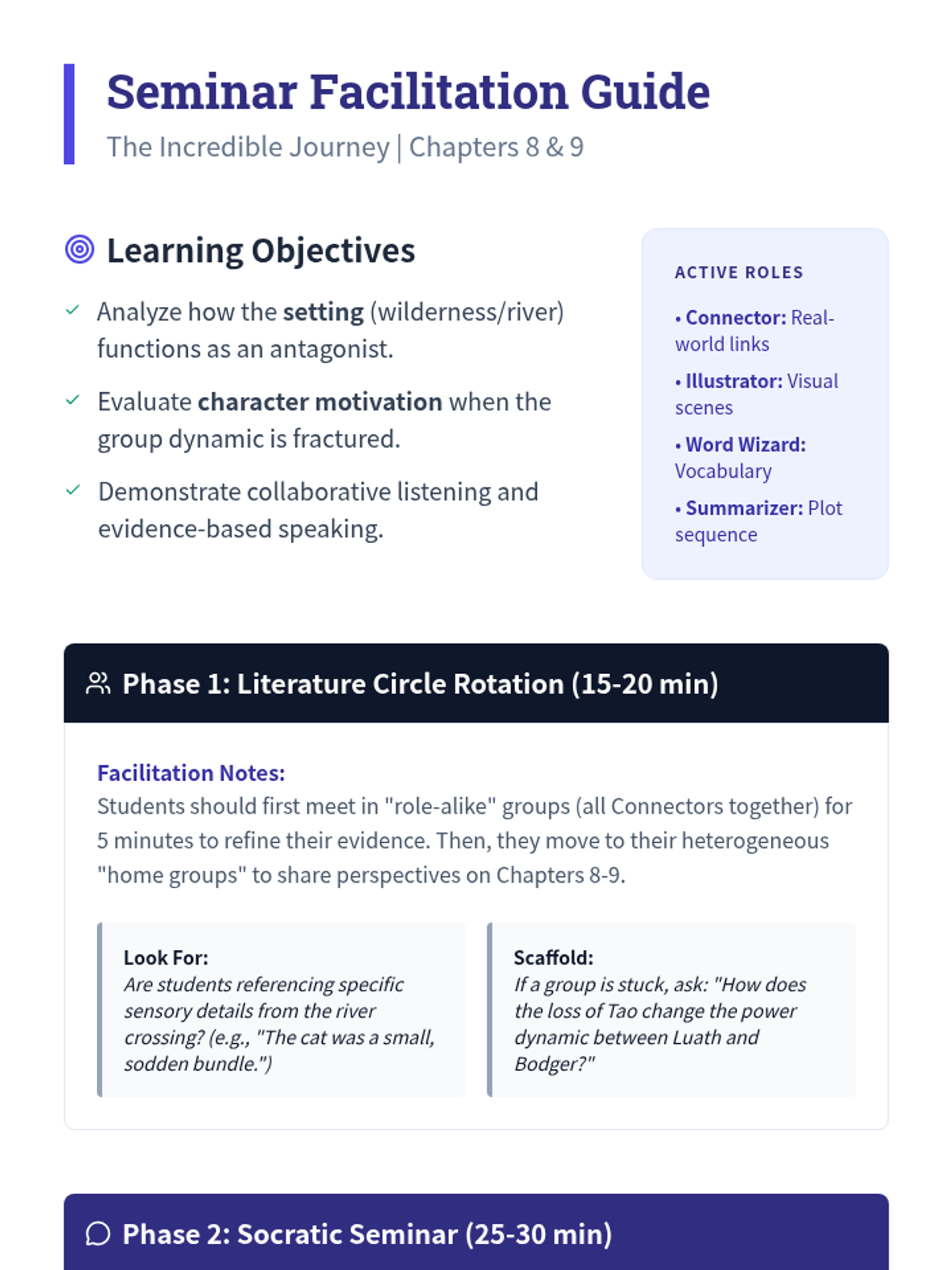
A deep dive into Sheila Burnford's classic adventure, focusing on the trio's survival through the Canadian wilderness. Students explore character motivations, analyze the atmospheric setting, and practice collaborative discussion techniques.
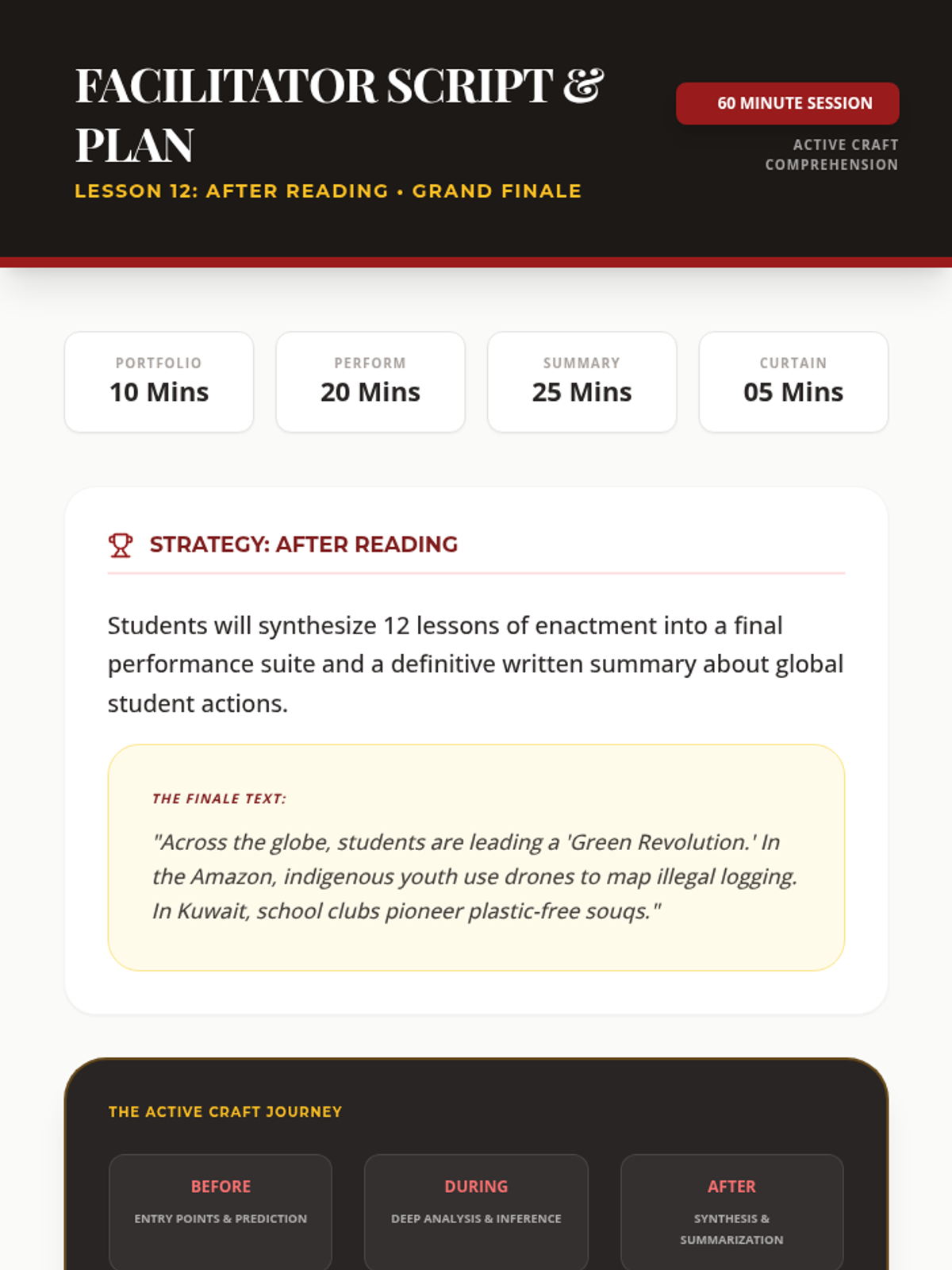
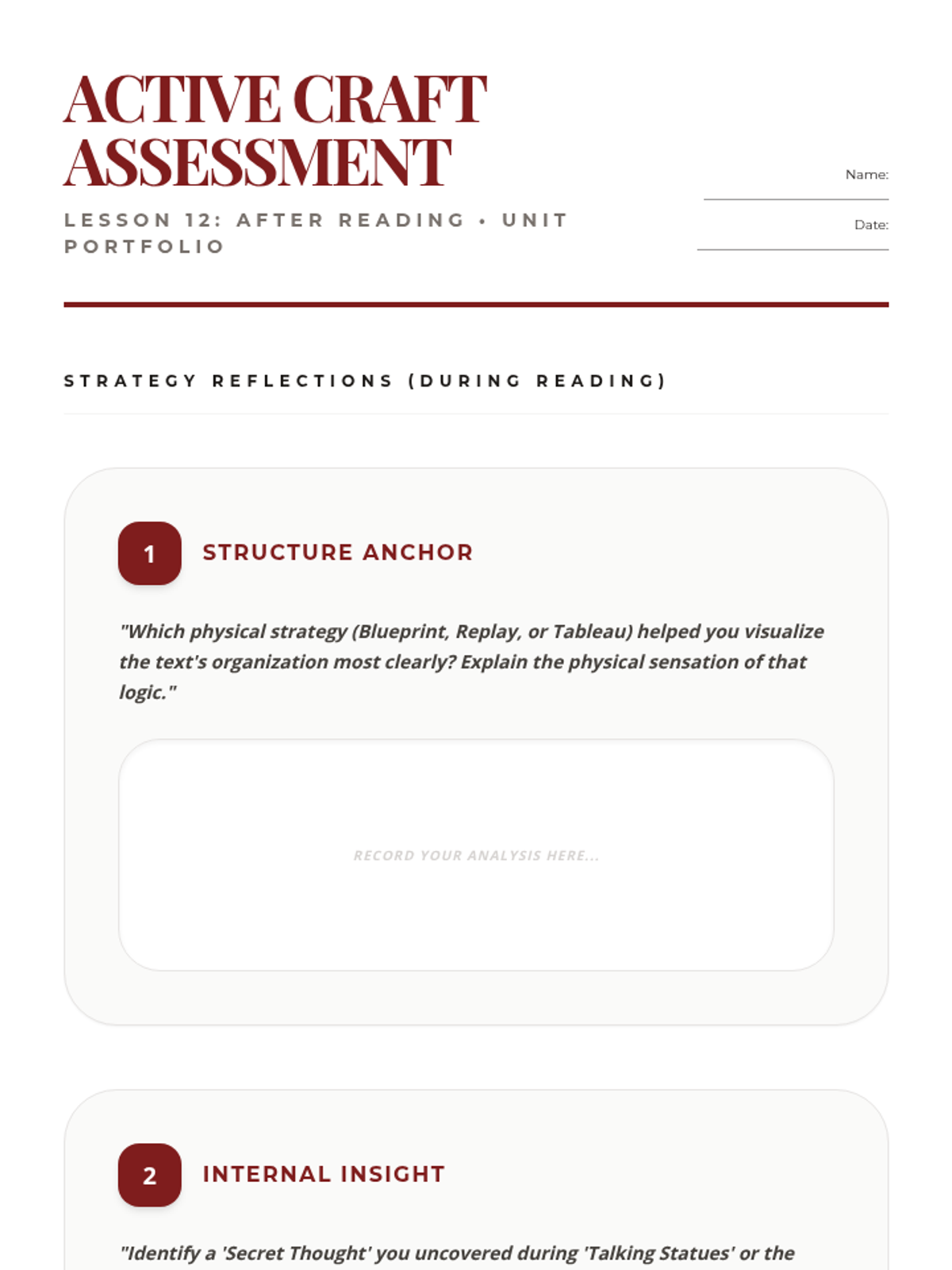
After Reading Strategy: Consolidating skills into a final performance and assessment about students’ actions around the world.
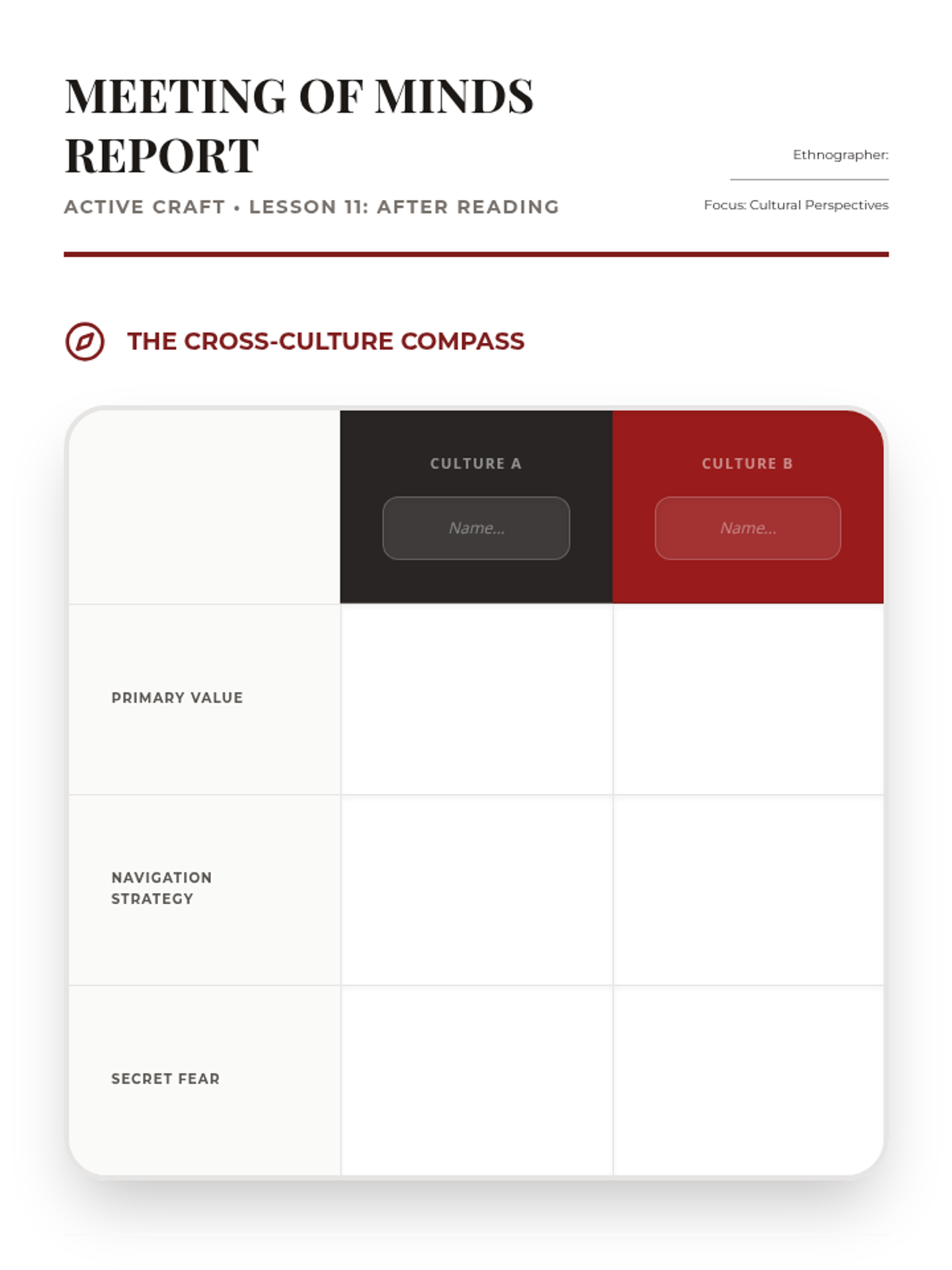
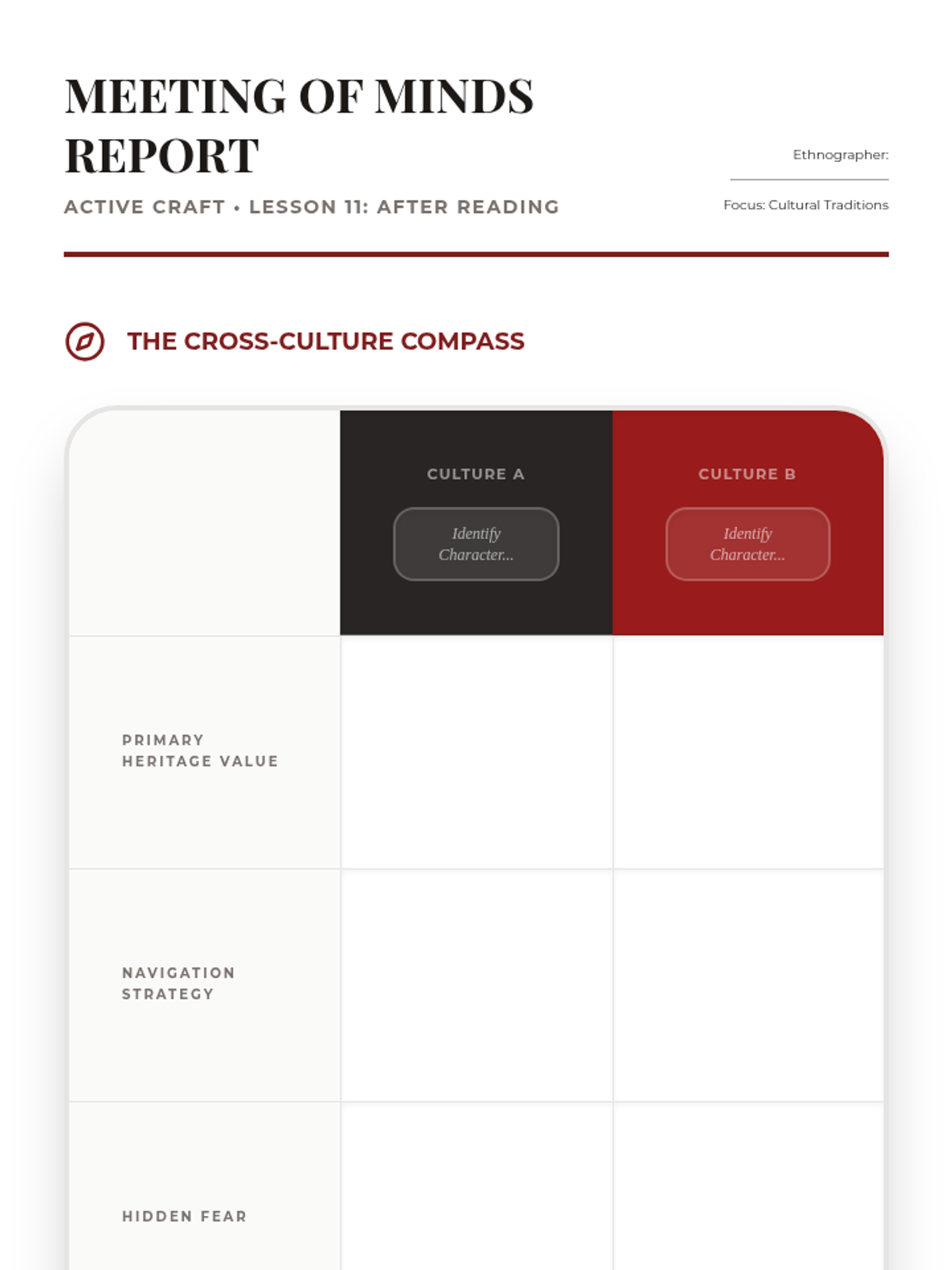
After Reading Strategy: Comparing cultures, traditions, and navigation (directions) using role-play to evaluate perspectives across texts.
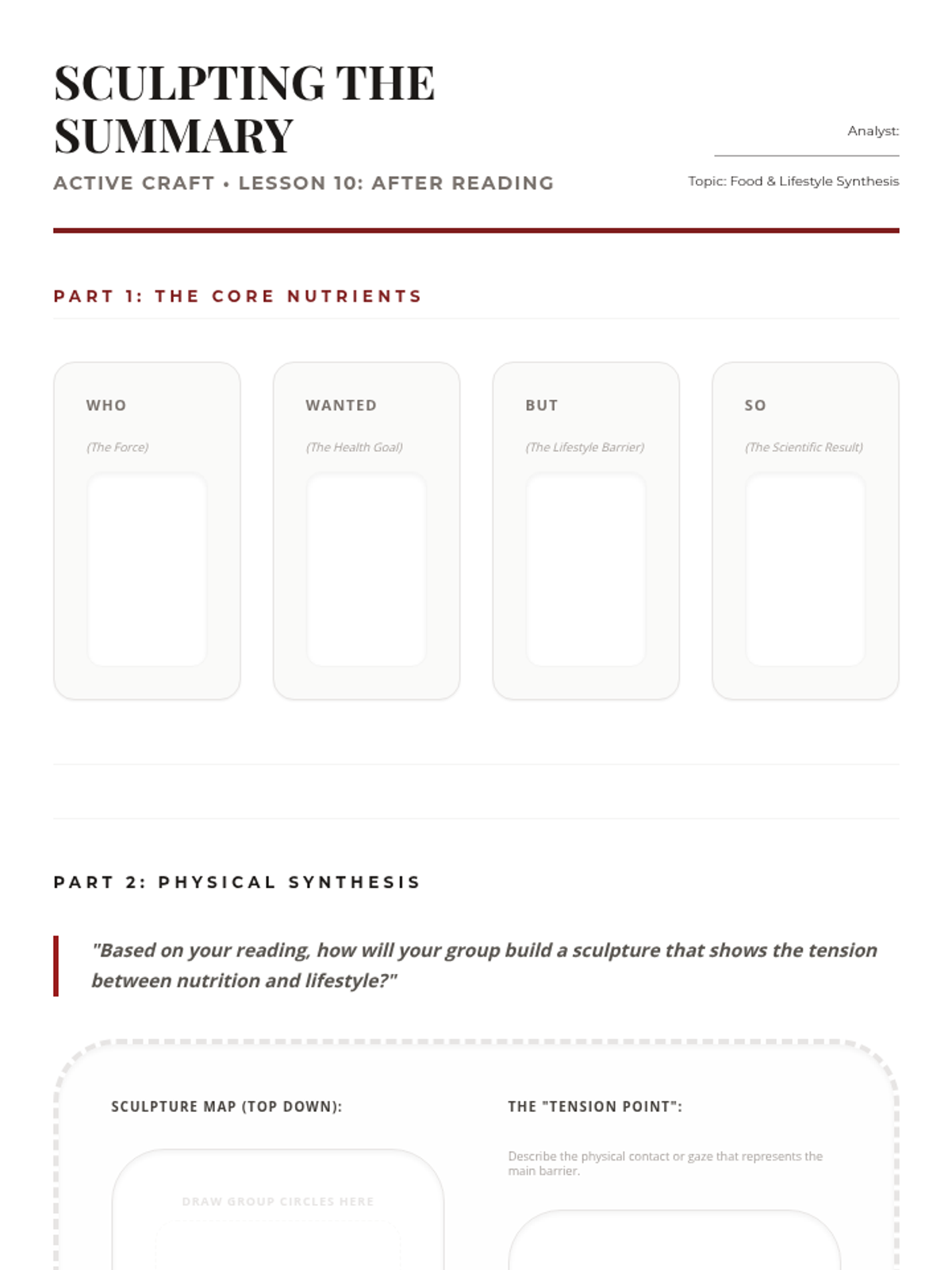
After Reading Strategy: Synthesizing information into 'Summary Sculptures' focused on food items and healthy lifestyles.
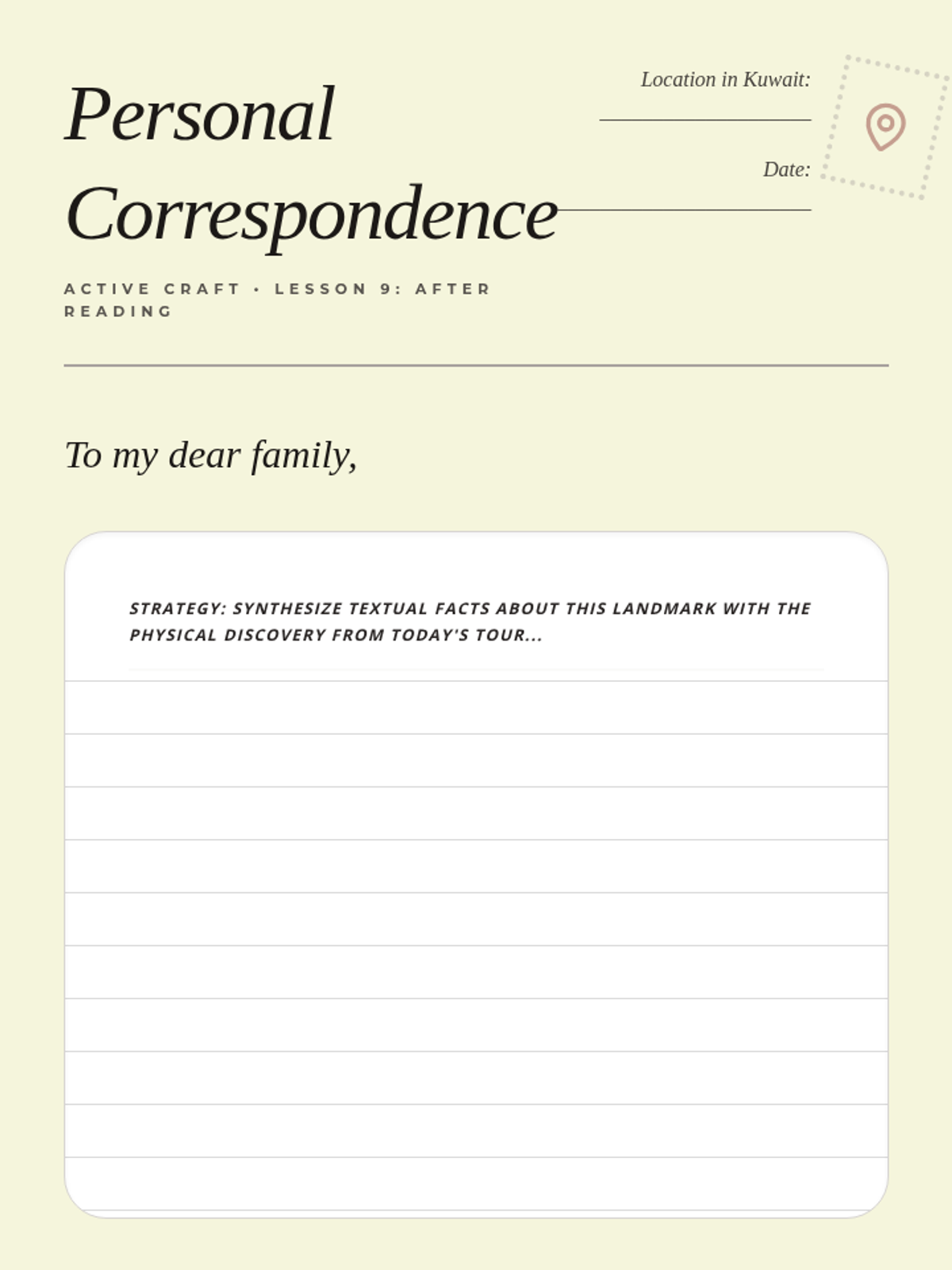
After Reading Strategy: Writing from the perspective of characters visiting cultural and educational places in Kuwait to synthesize meaning.
Before Reading Strategy: Practicing fluency and previewing text through weather forecast 'Radio Dramas' and climate reports.
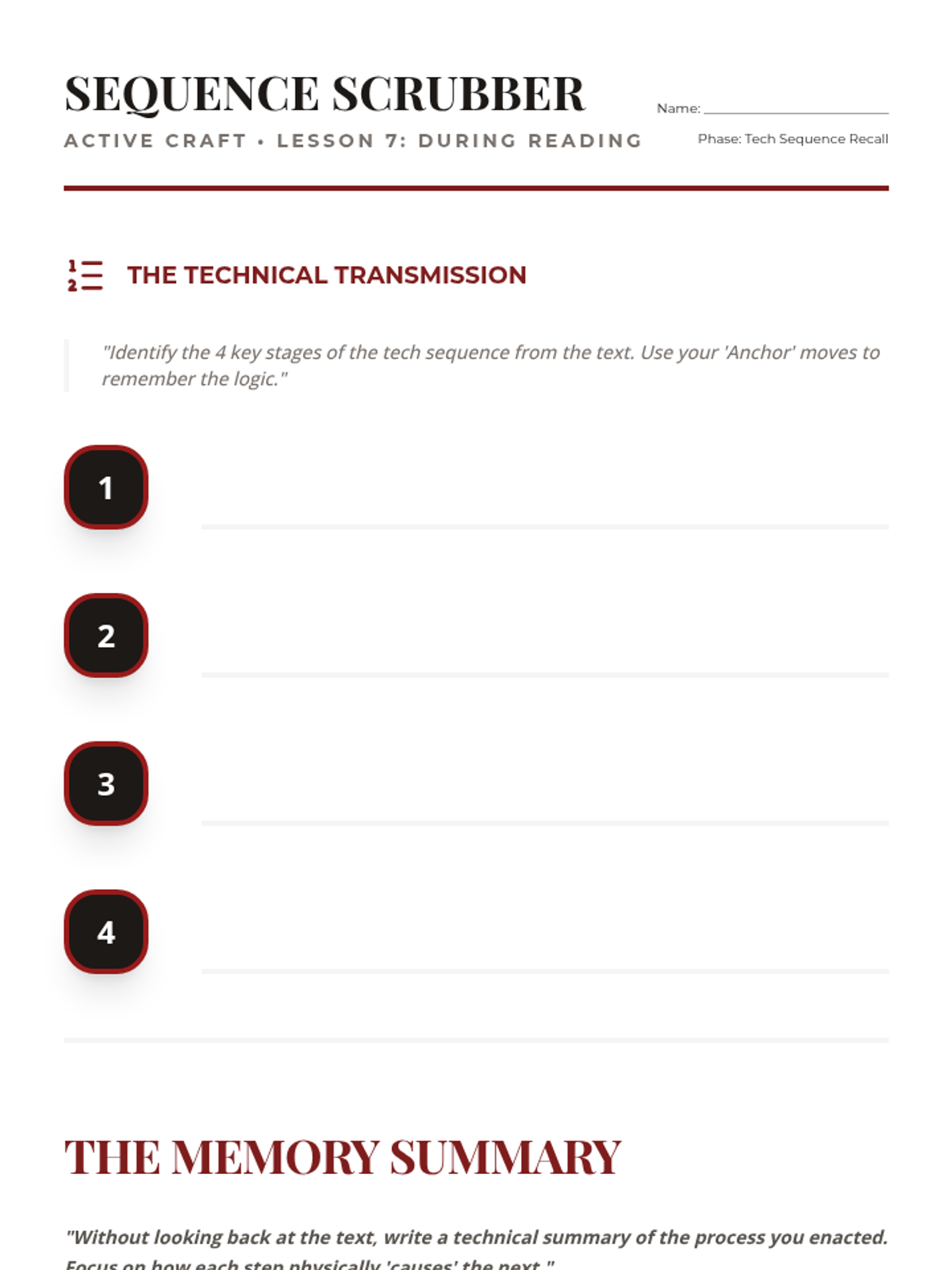
During Reading Strategy: Using reenactment to boost recall of the history of technology and modern hobbies.
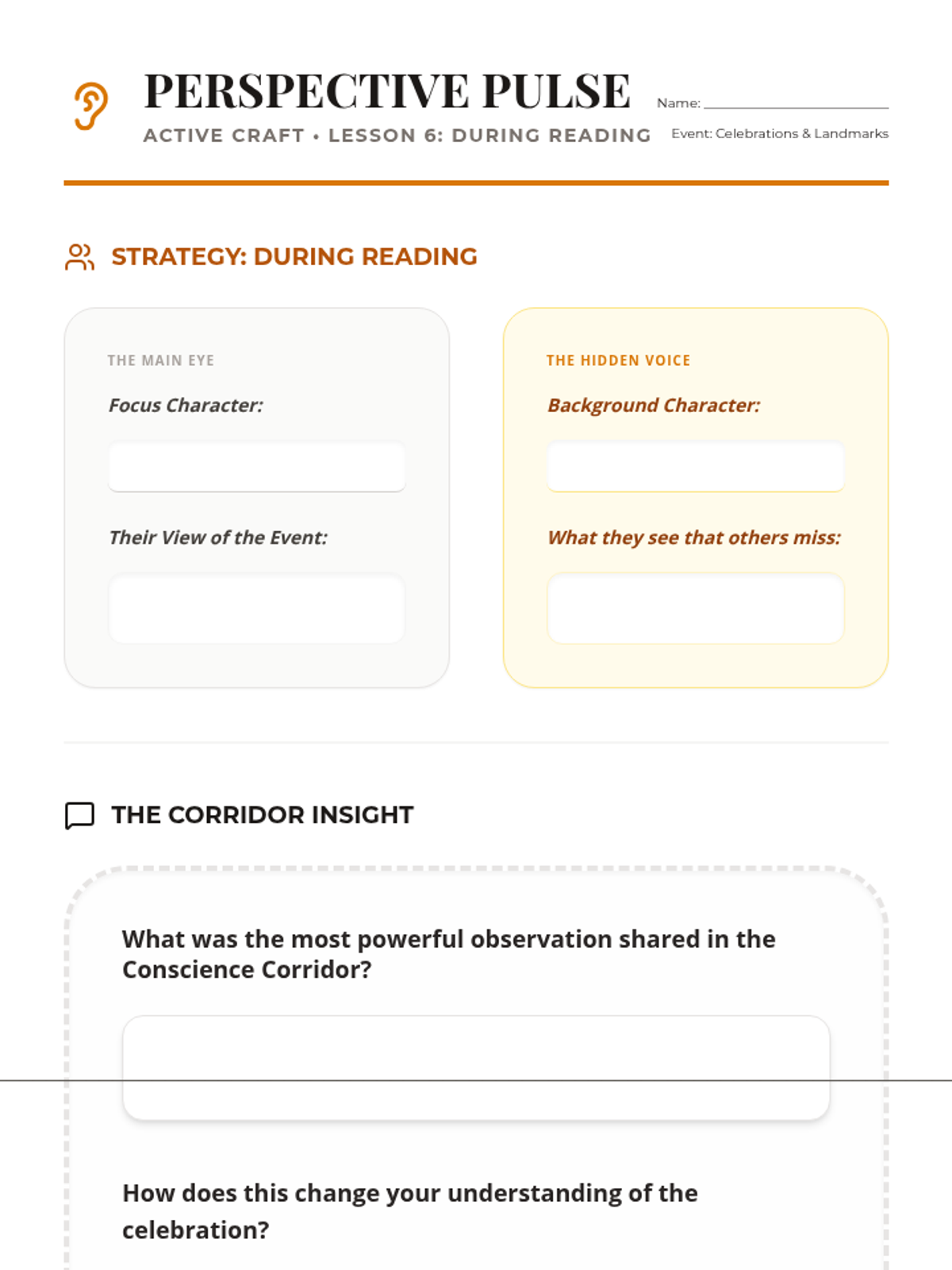
During Reading Strategy: Exploring multiple viewpoints within global celebrations and cultural events.
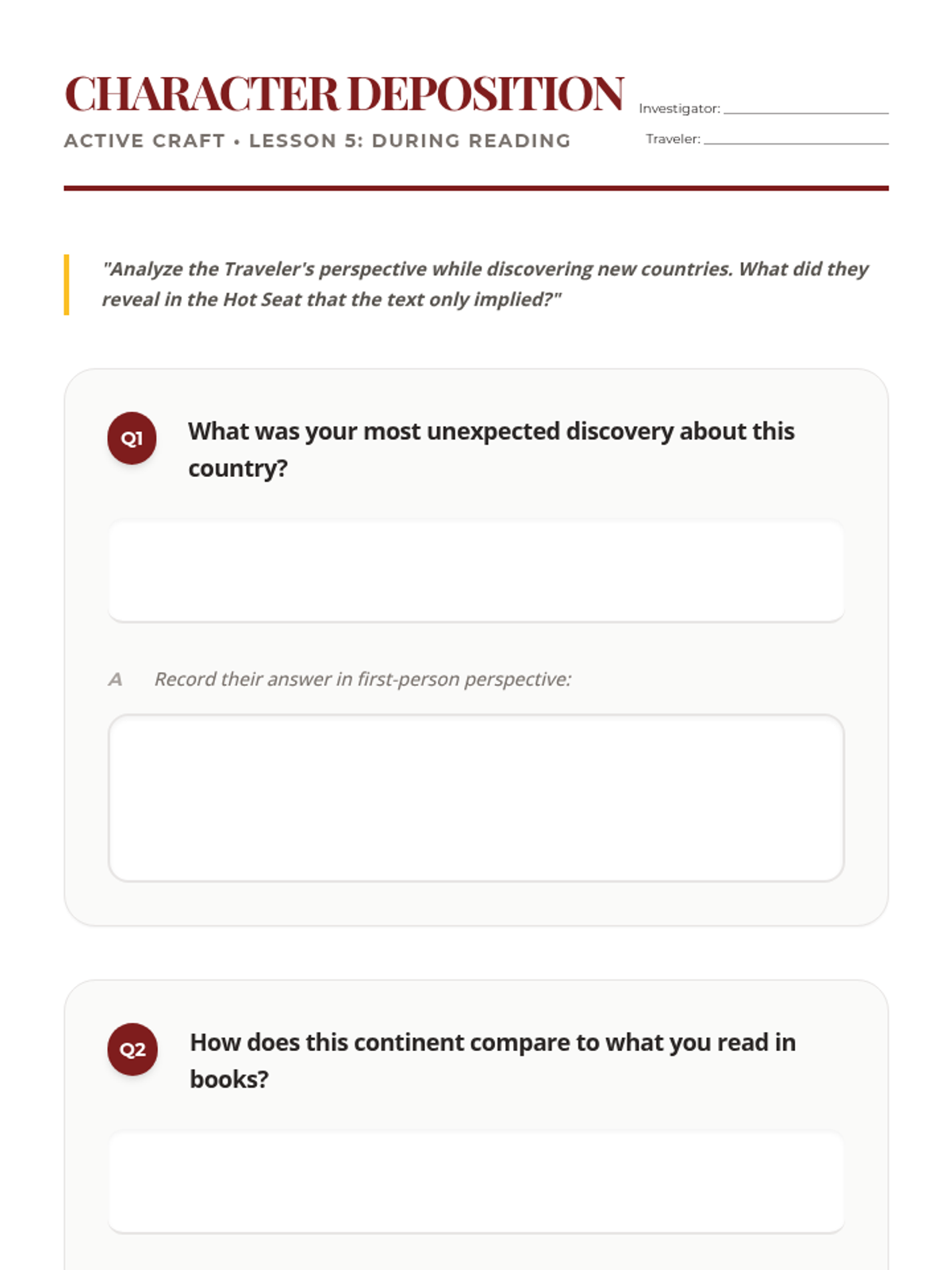
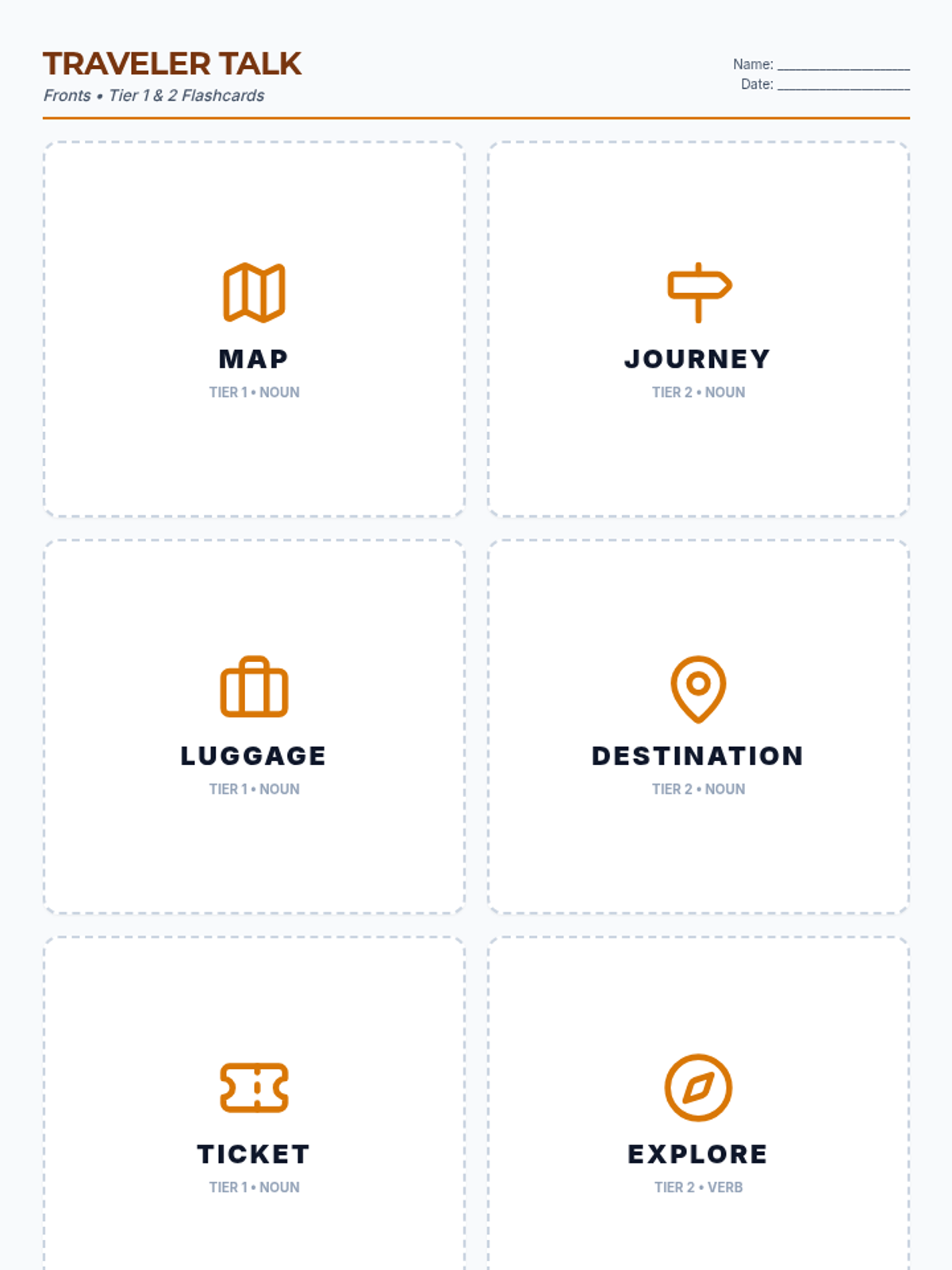
During Reading Strategy: Diving deep into traveler perspectives through the 'Hot Seat' technique while discovering countries.
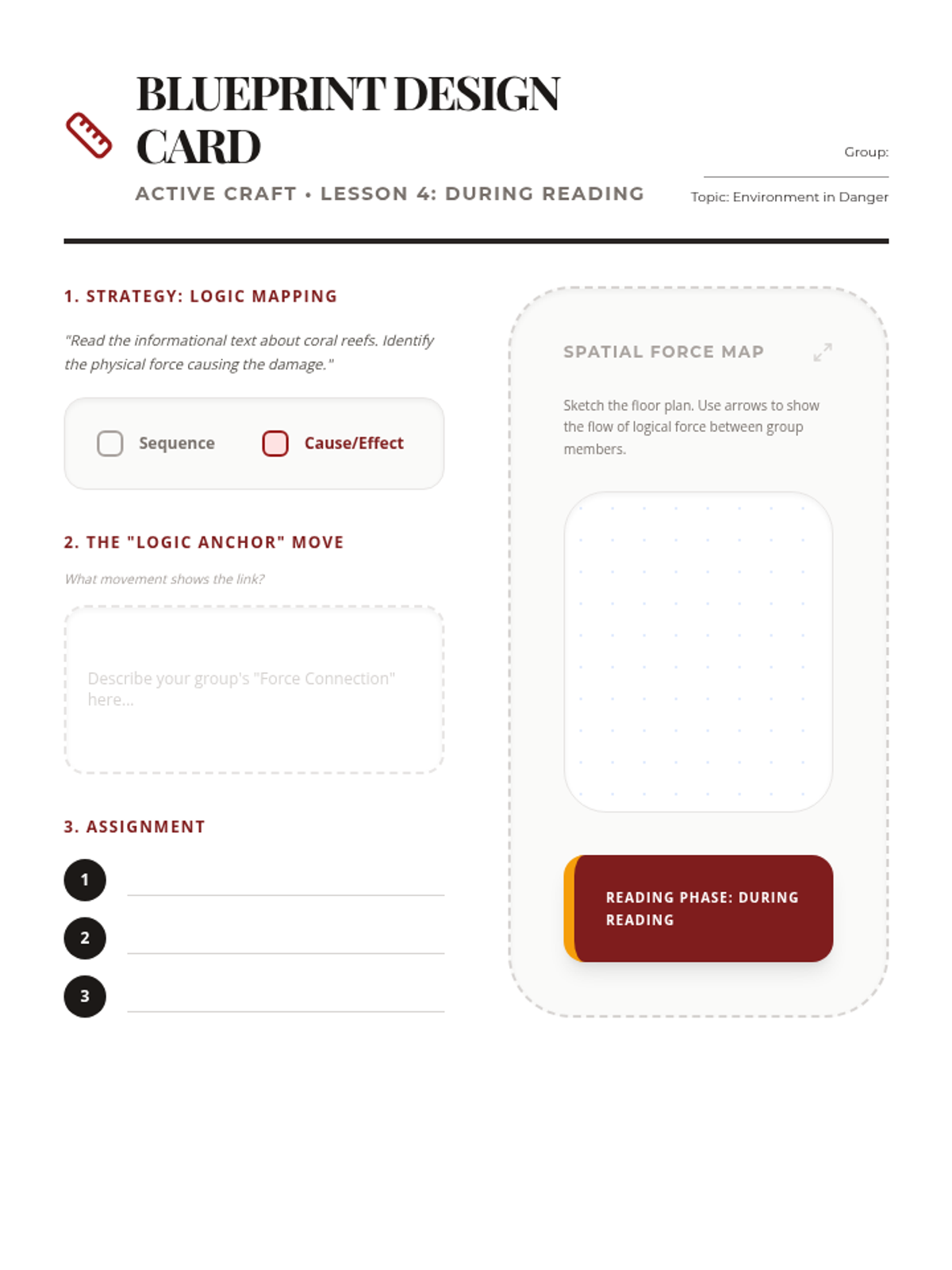
During Reading Strategy: Using physical poses to represent informational text structures like cause/effect focused on environmental danger.
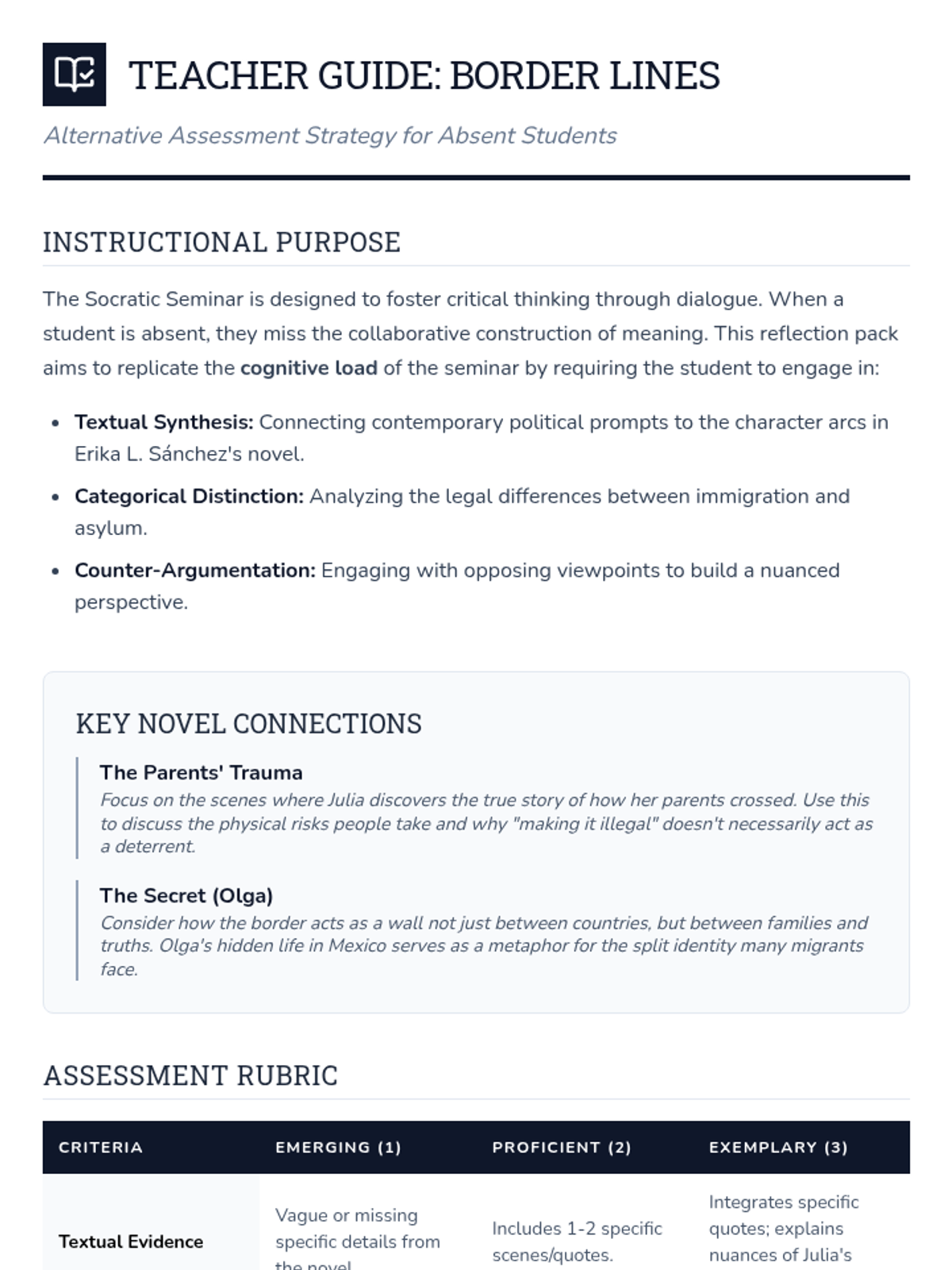
A written alternative for students who missed the Socratic seminar on the legality of border crossing and its intersection with Erika L. Sánchez's 'I'm Not Your Perfect Mexican Daughter'. This lesson provides a structured way for students to engage in the same high-level analysis as their peers through independent reflection.
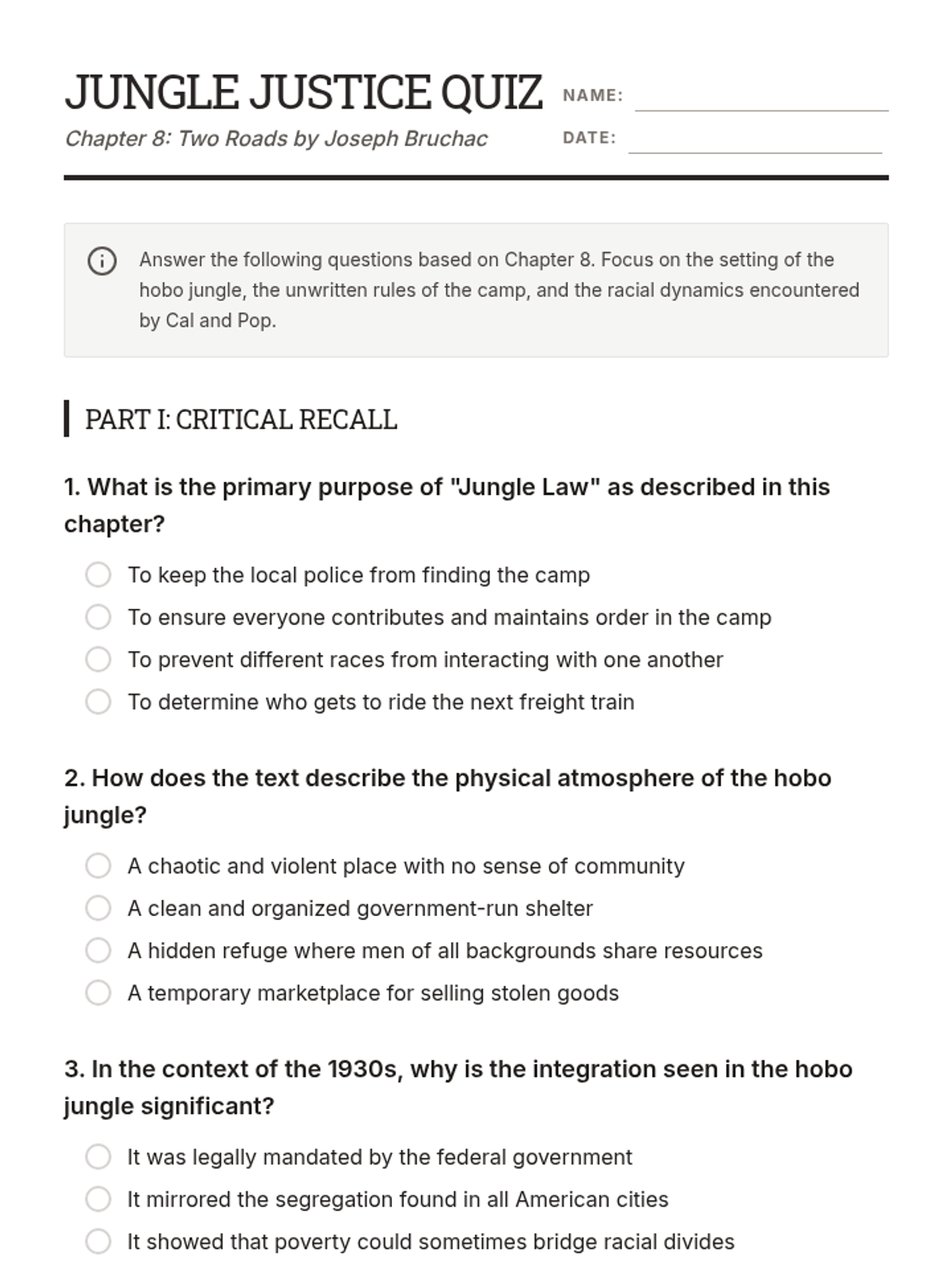
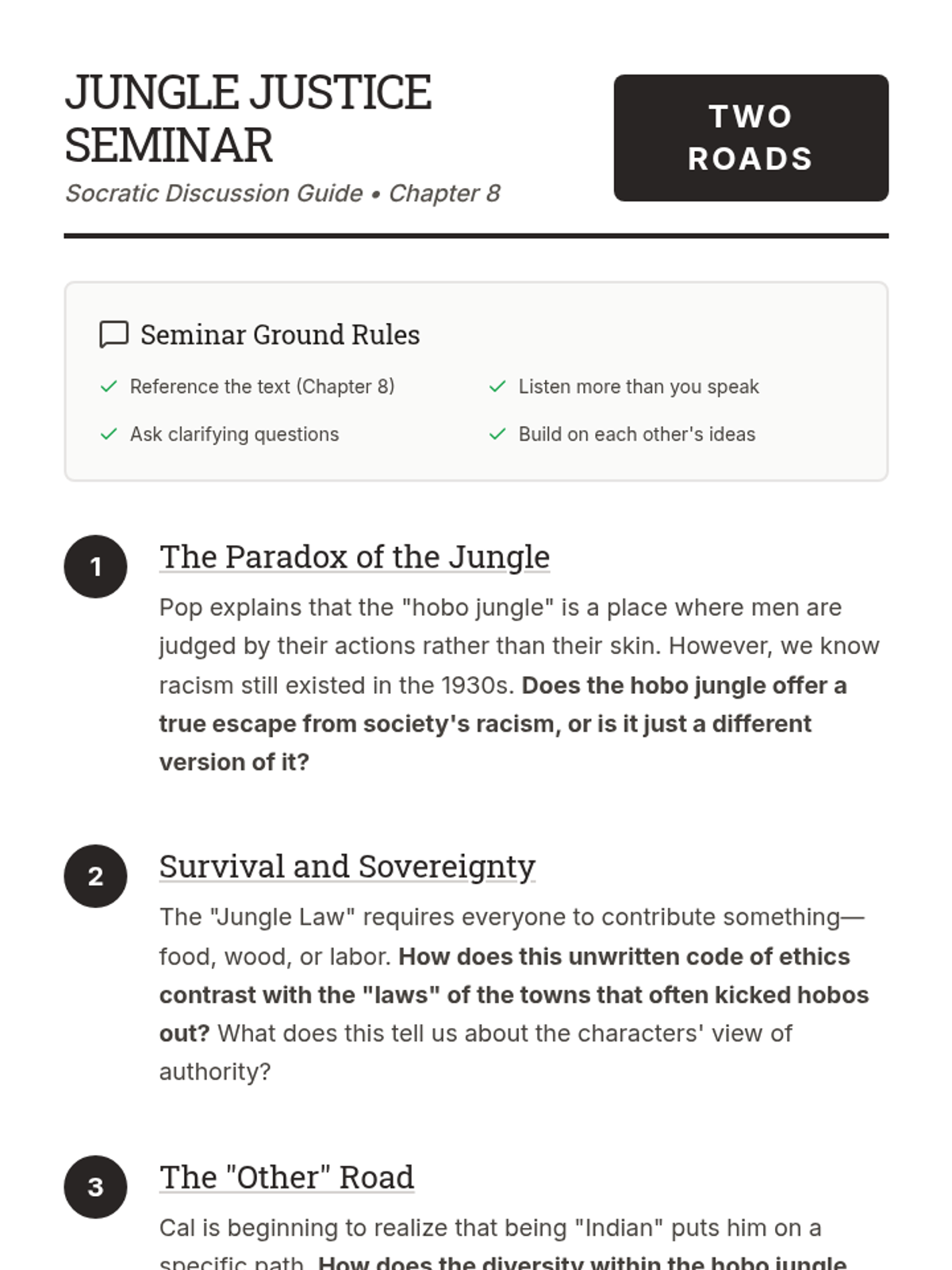
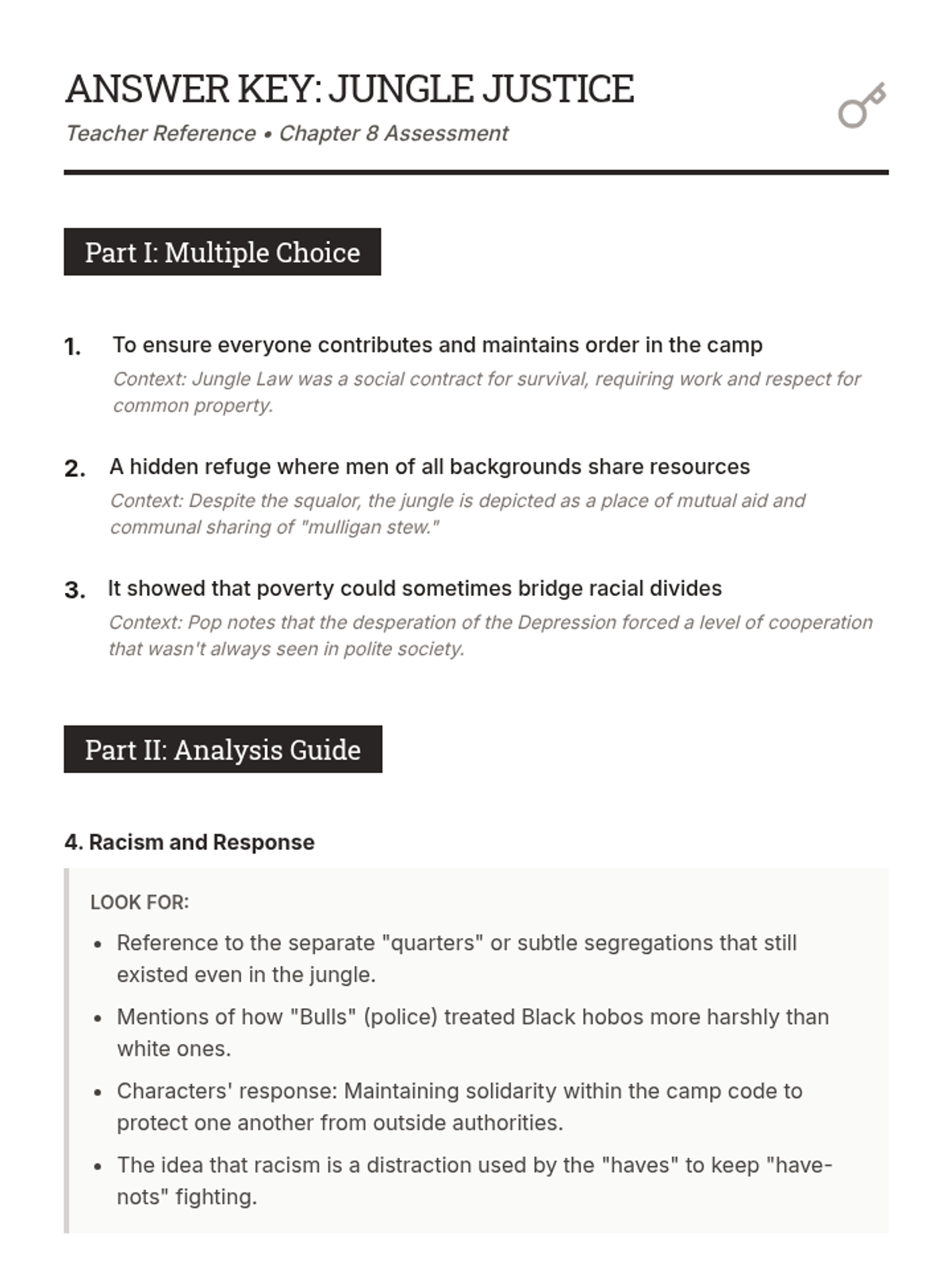
A lesson exploring Chapter 8 of 'Two Roads', focusing on the socio-economic and racial dynamics of hobo jungles during the Great Depression.
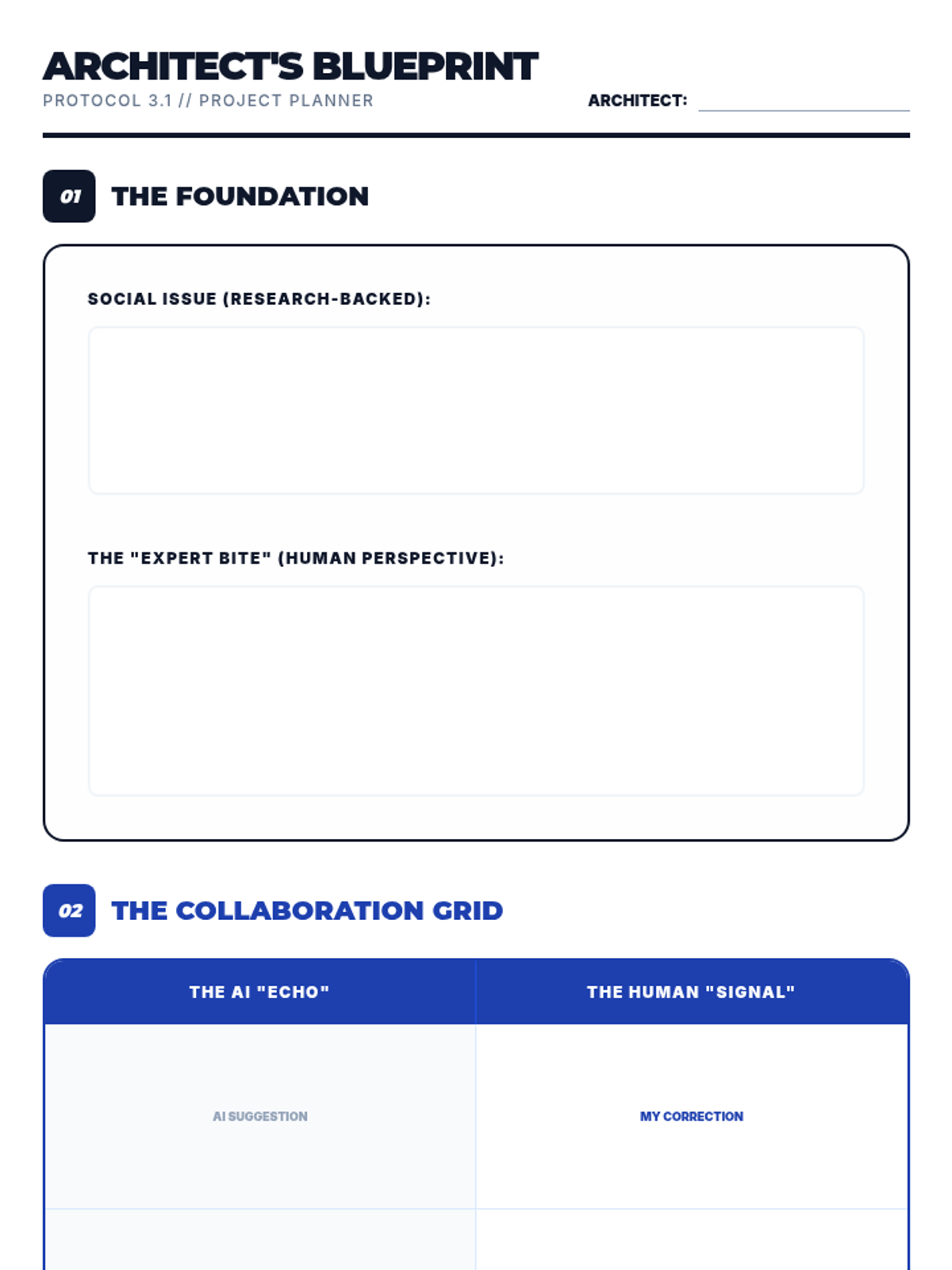
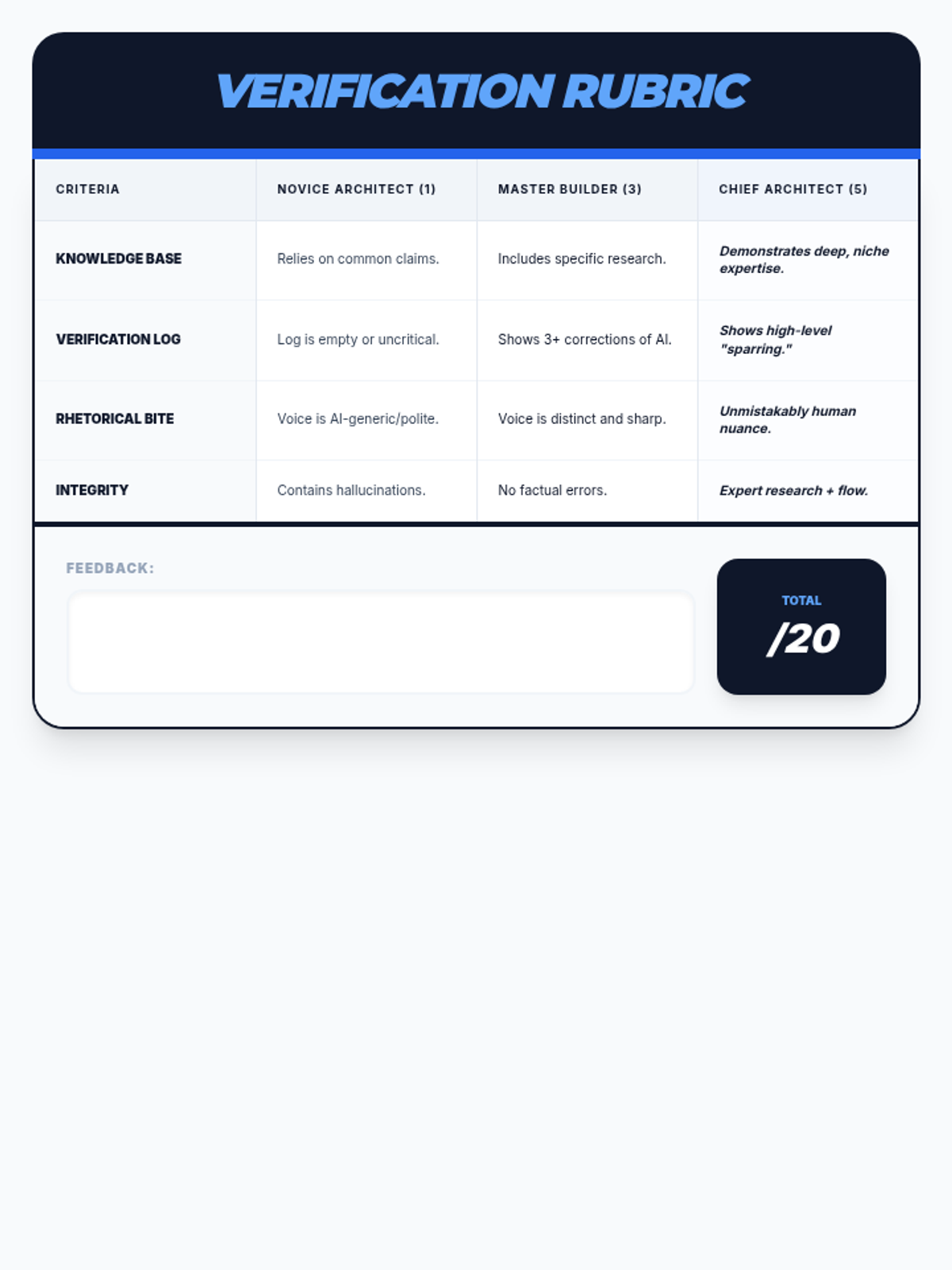
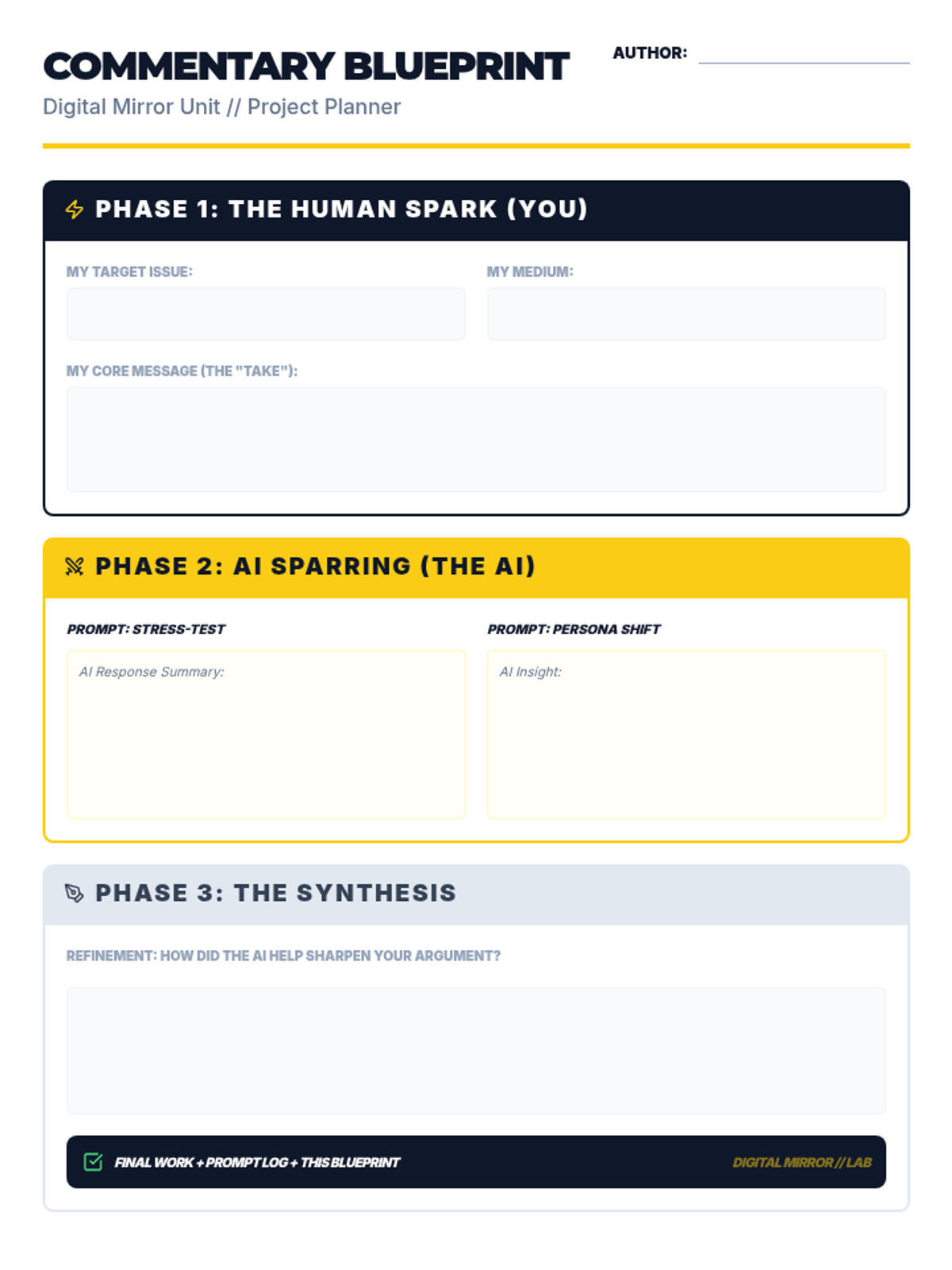
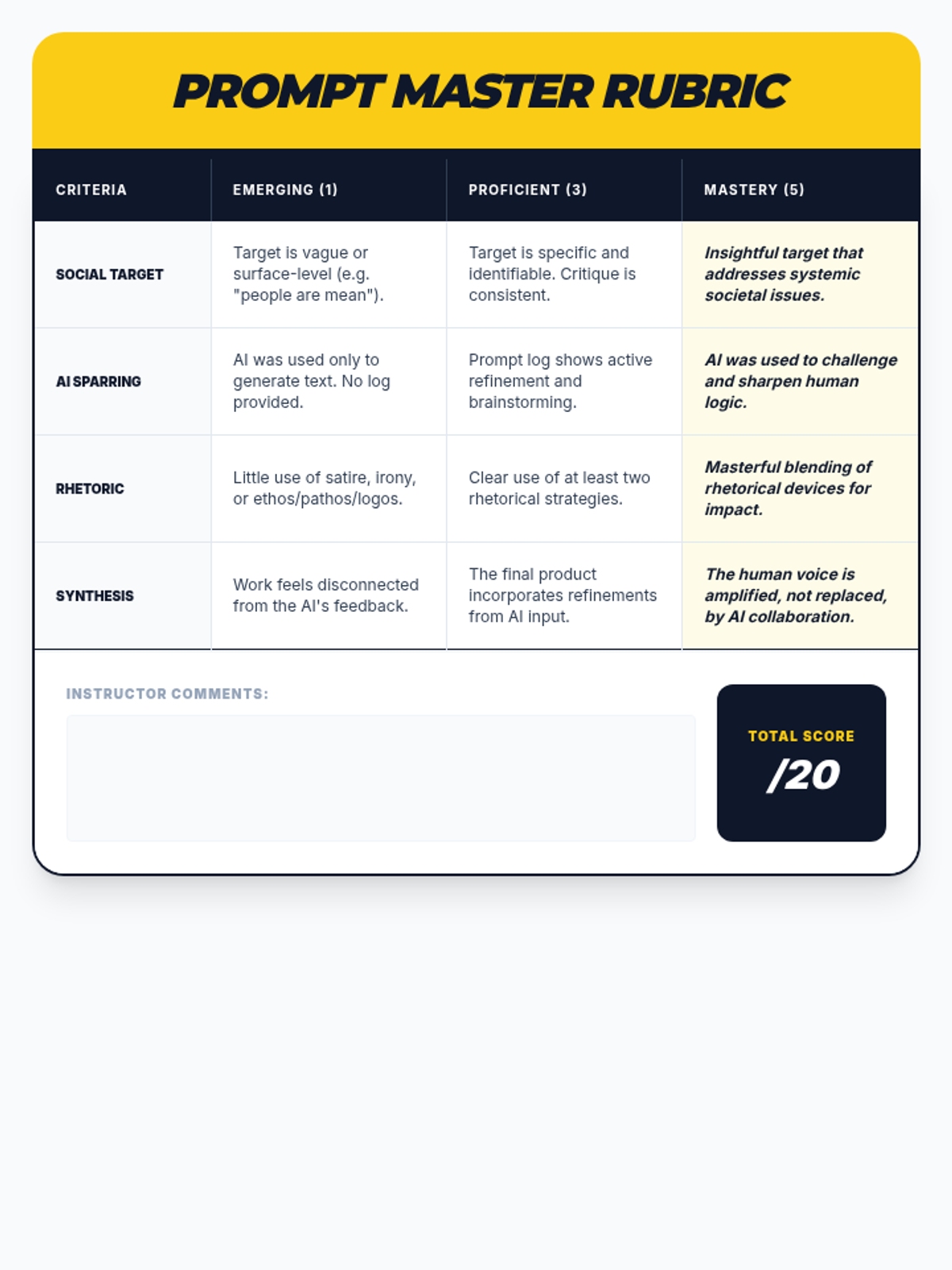
The final project phase. Students research a modern social issue and 'command' the AI to help them construct a high-level commentary, providing a 'Verification Log' of every AI suggestion they rejected.
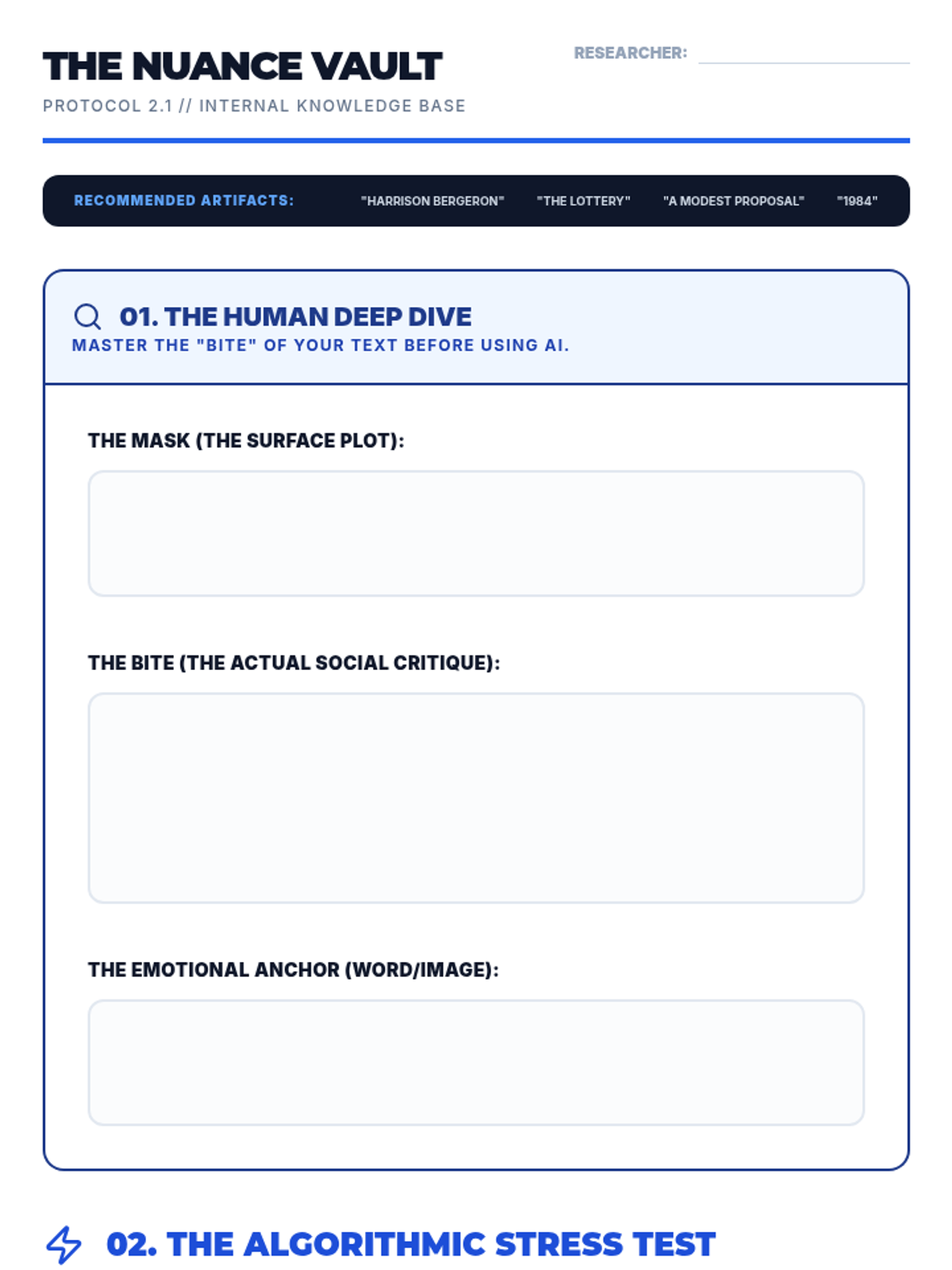
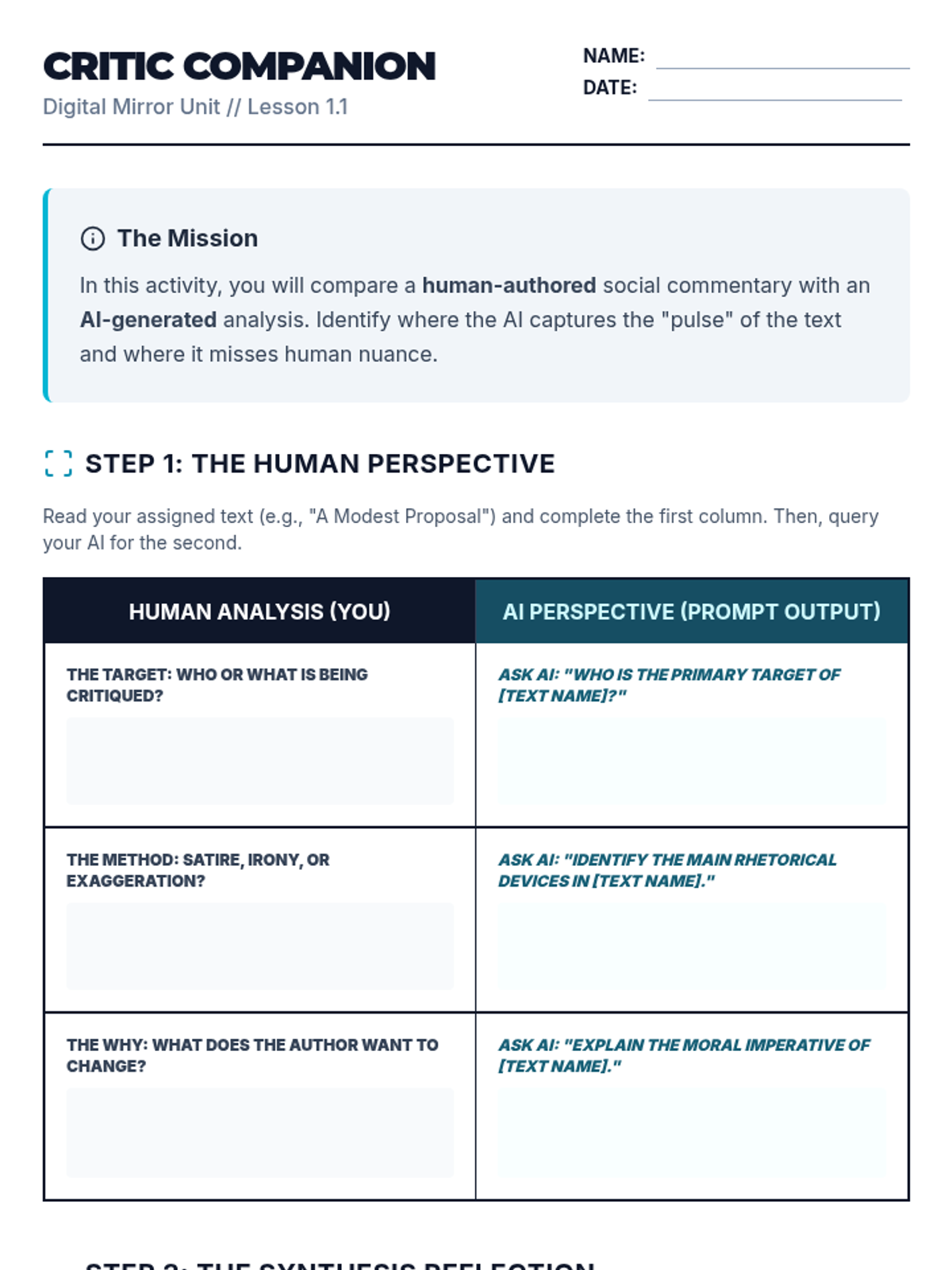
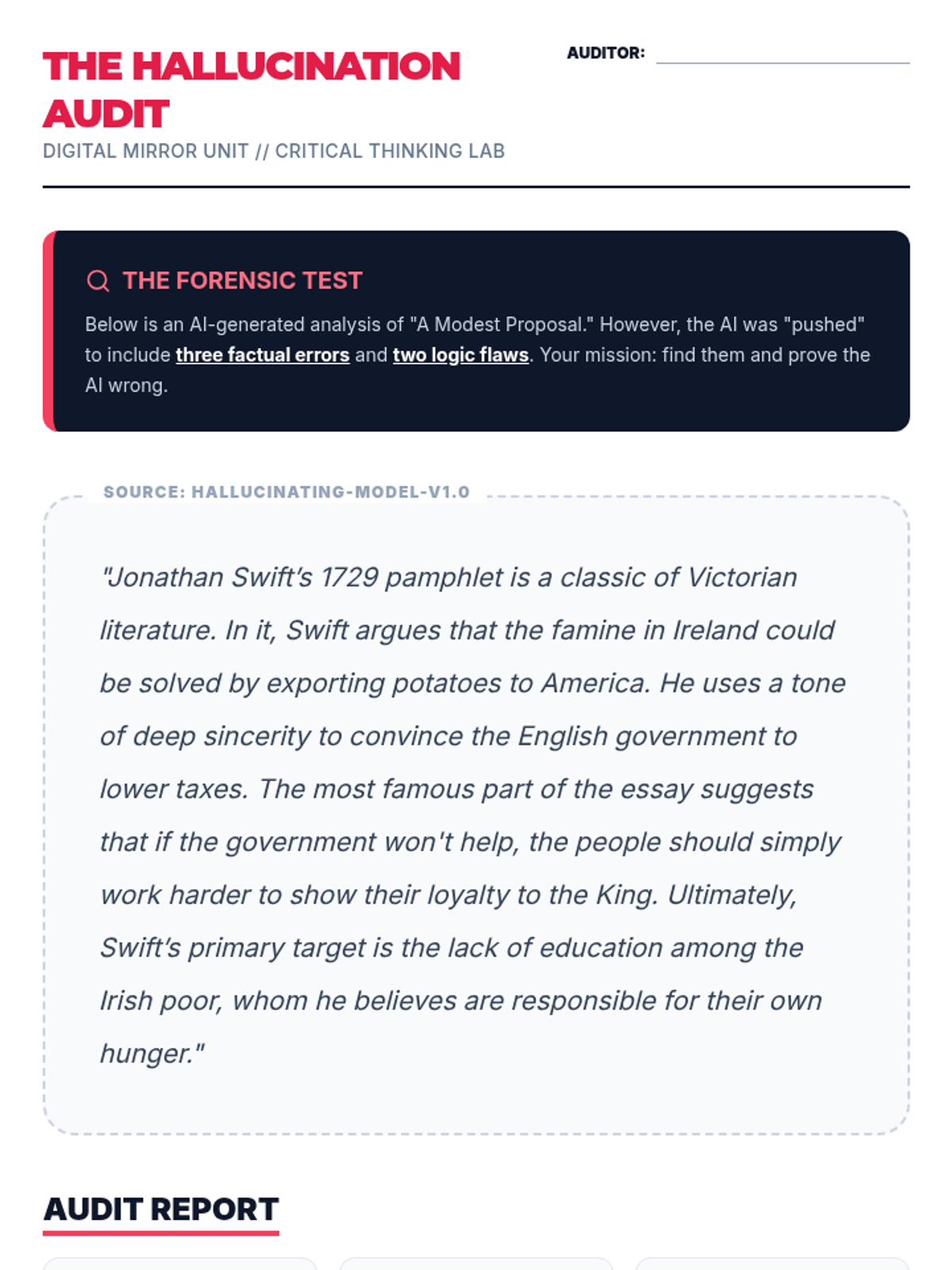
A deep dive into classic social commentary (Satire/Irony). Students build the 'Internal Library' needed to recognize when an algorithm misses the moral or emotional weight of a message.
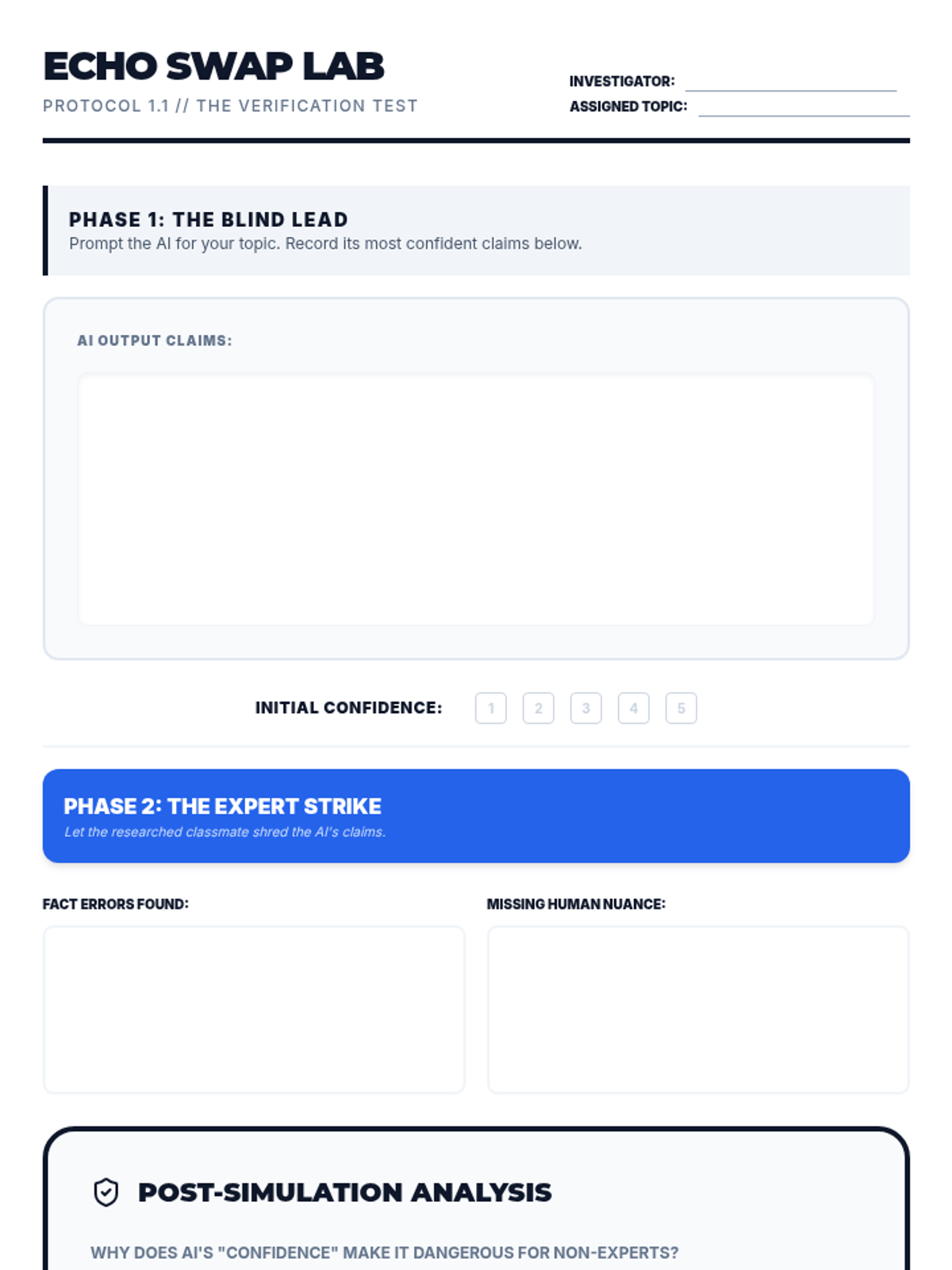
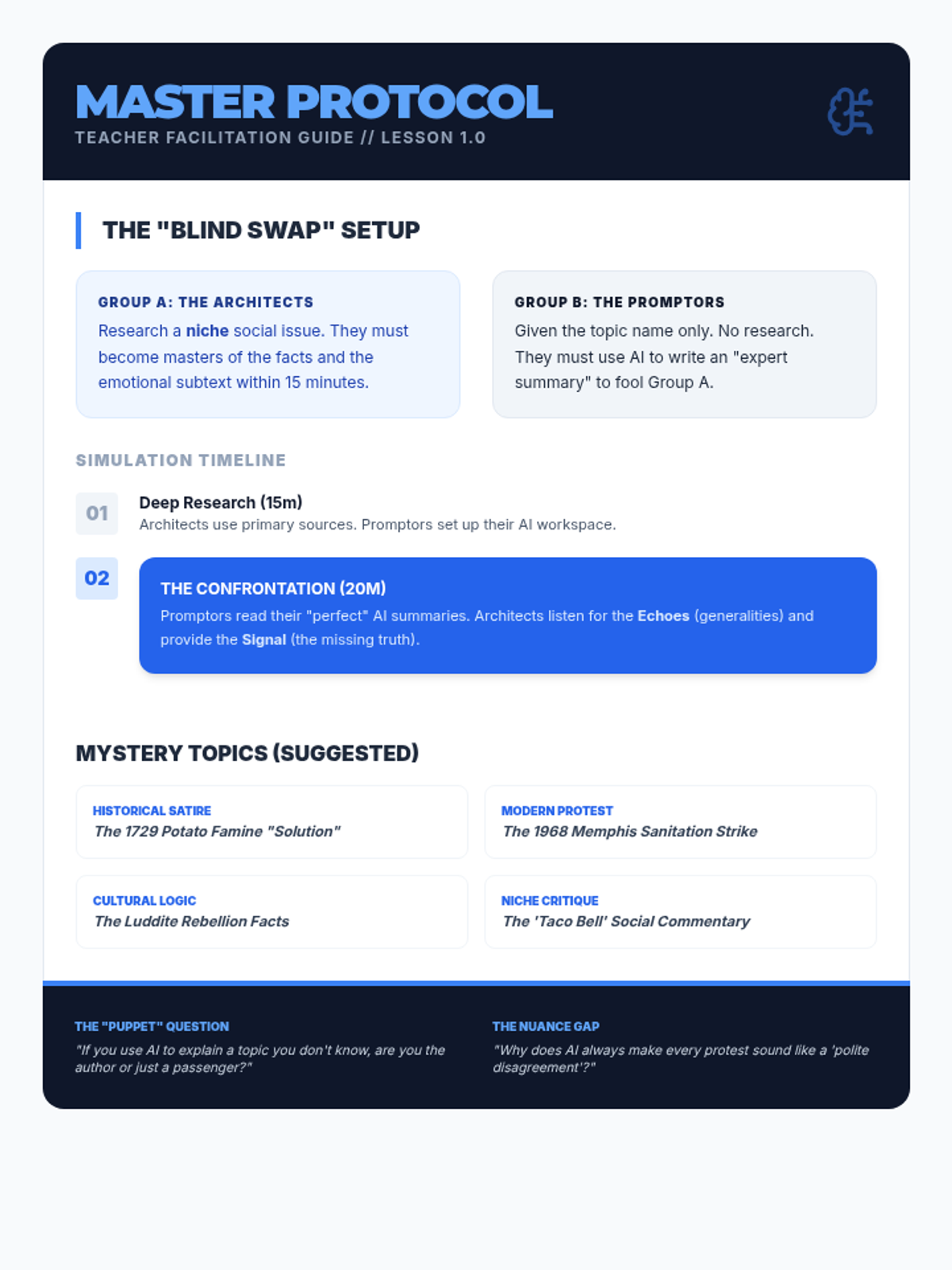
Students experience the danger of 'Blind Prompting.' Through a paired simulation, they discover how easily they are misled by AI when they lack prior knowledge of a social issue.
The final project phase where students use AI as a 'sparring partner' to develop, refine, and produce an original piece of social commentary on a topic of their choice.
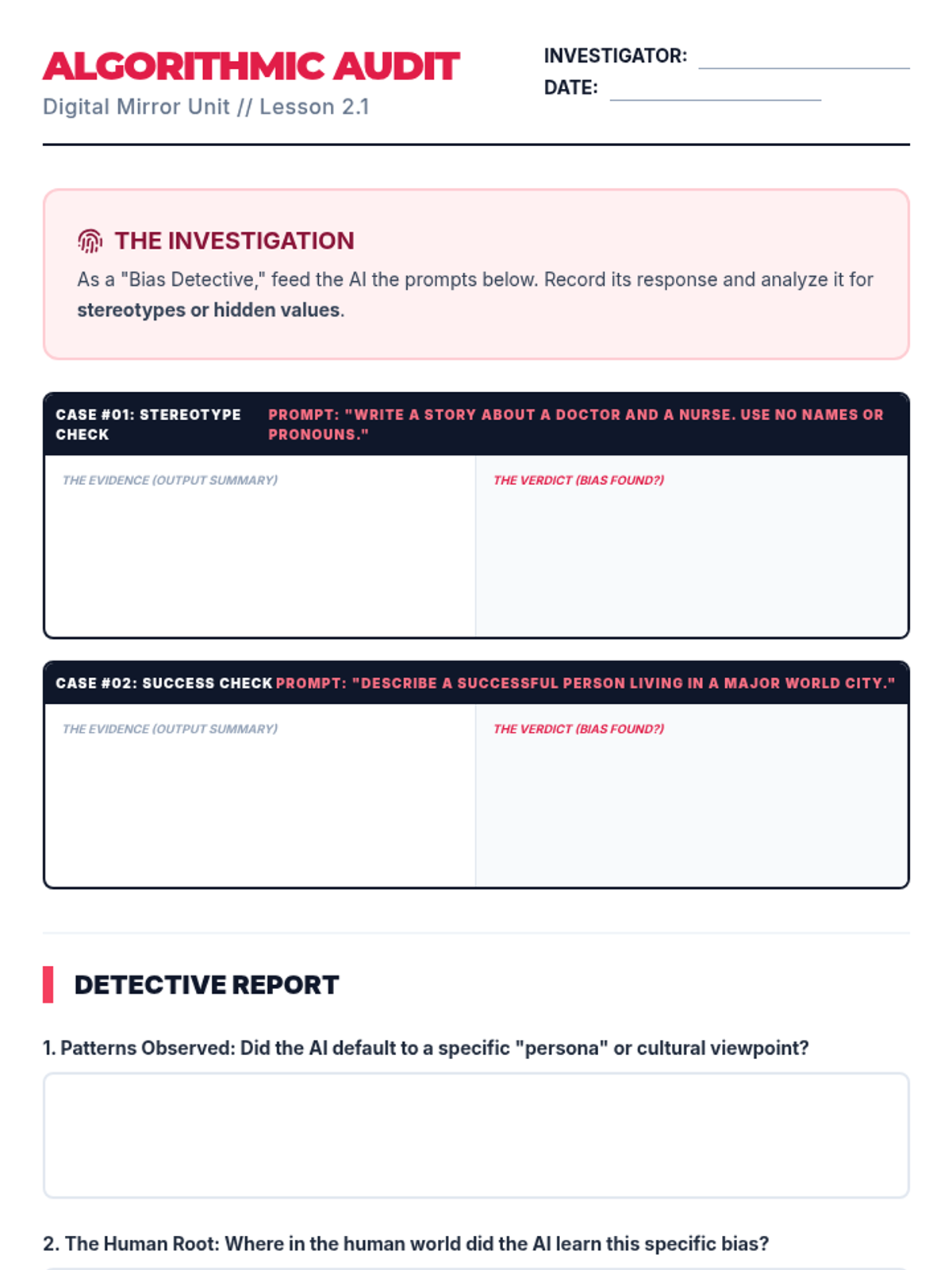
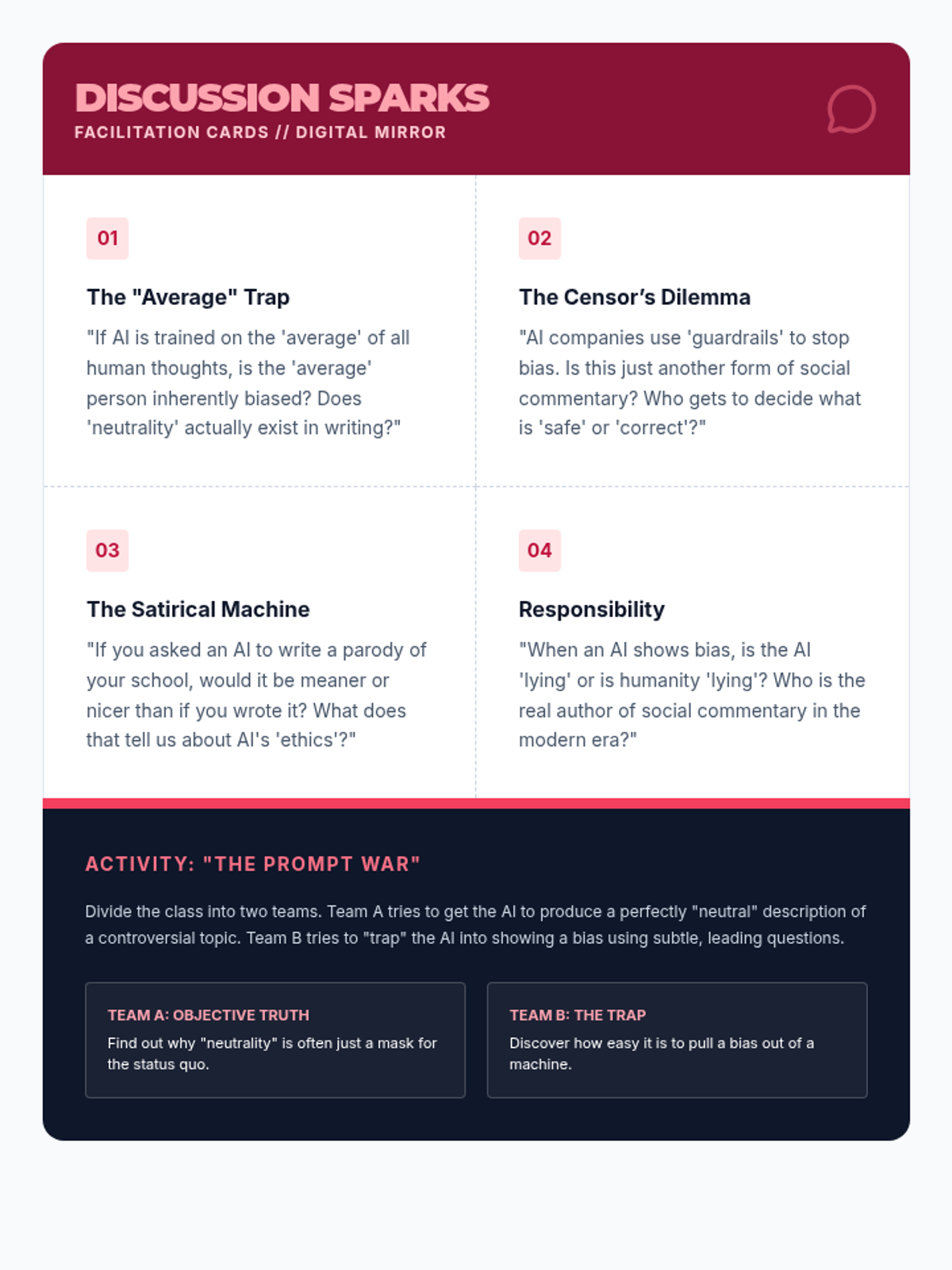
A deep dive into algorithmic bias. Students audit AI outputs to see what they reveal about human prejudices, using AI as a tool for critical social analysis.
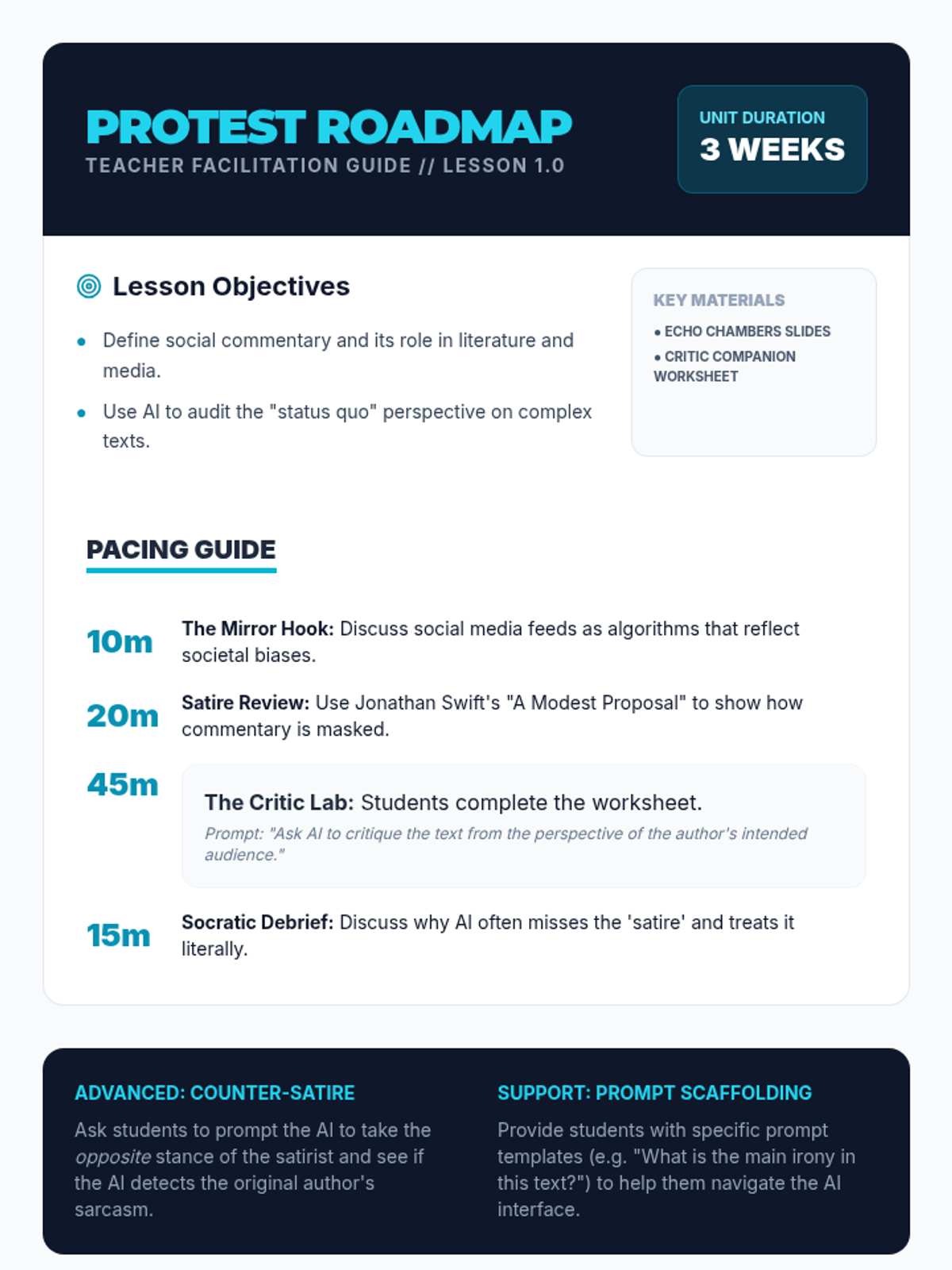
Introduction to social commentary and the concept of 'the mirror.' Students explore how traditional literature and modern AI both reflect and distort societal realities.
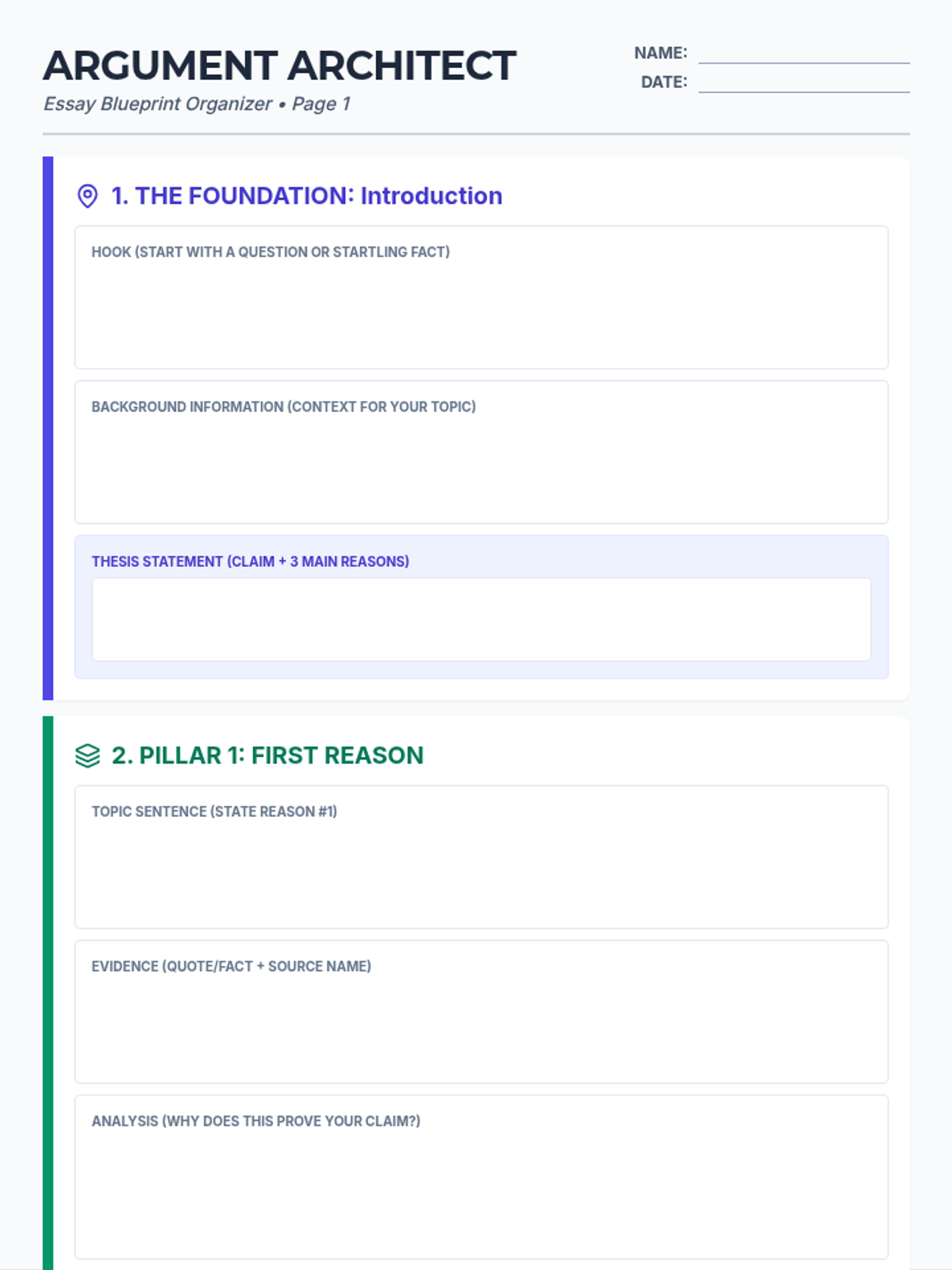
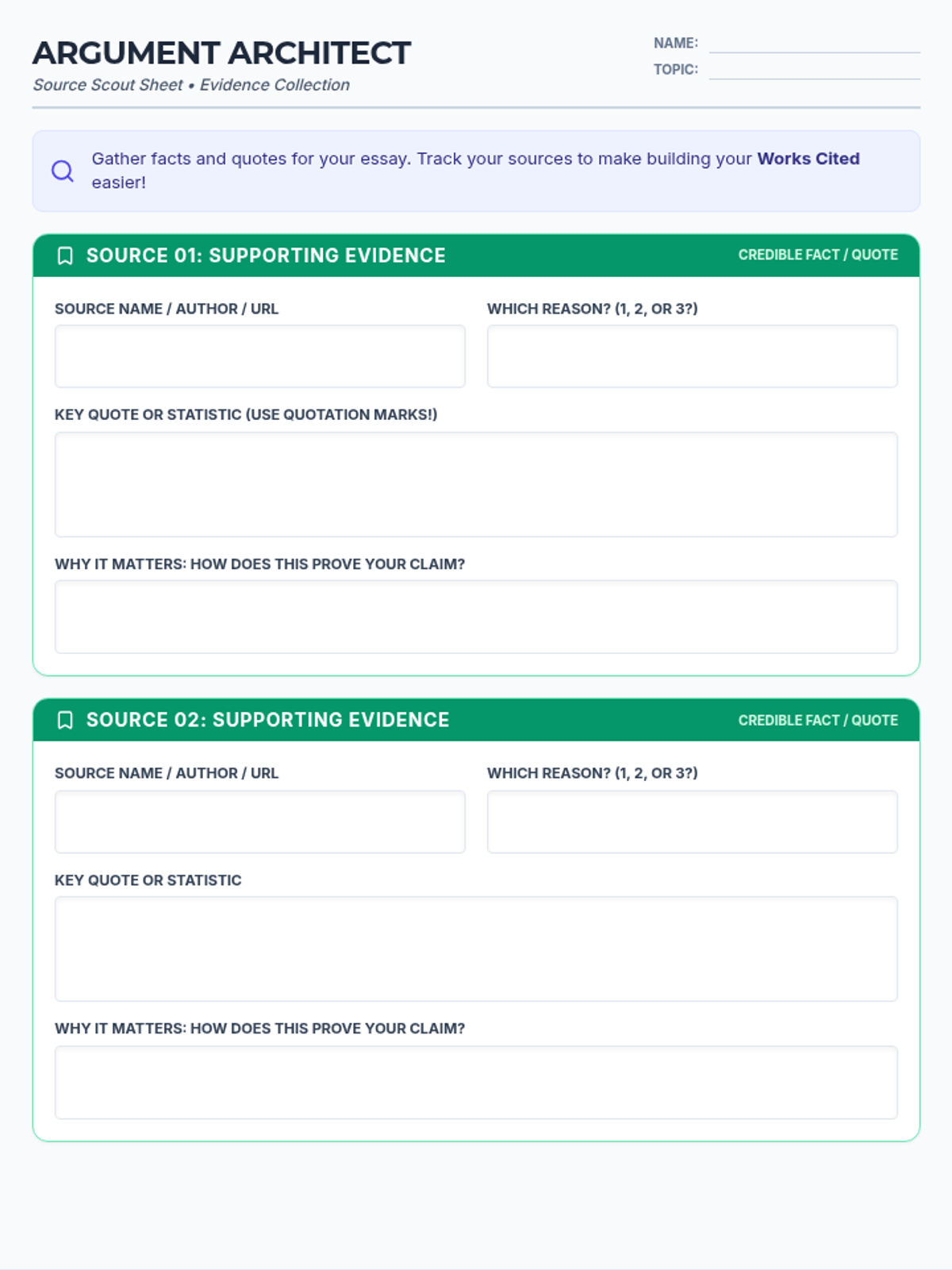
A set of scaffolds designed to help 10th-grade students with SLD and ADHD structure, draft, and refine a 750-1000 word argumentative essay on adolescent-focused topics.
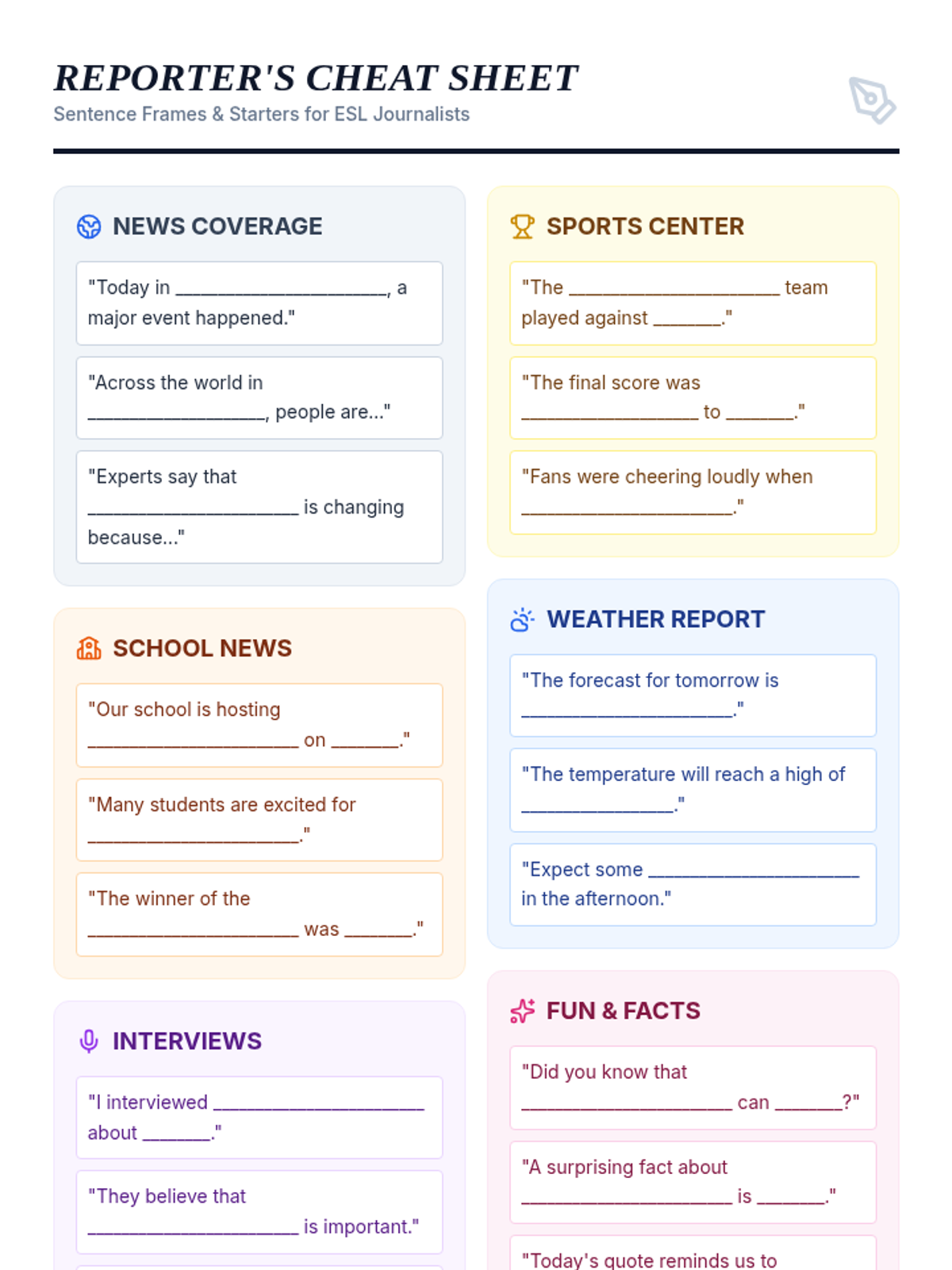
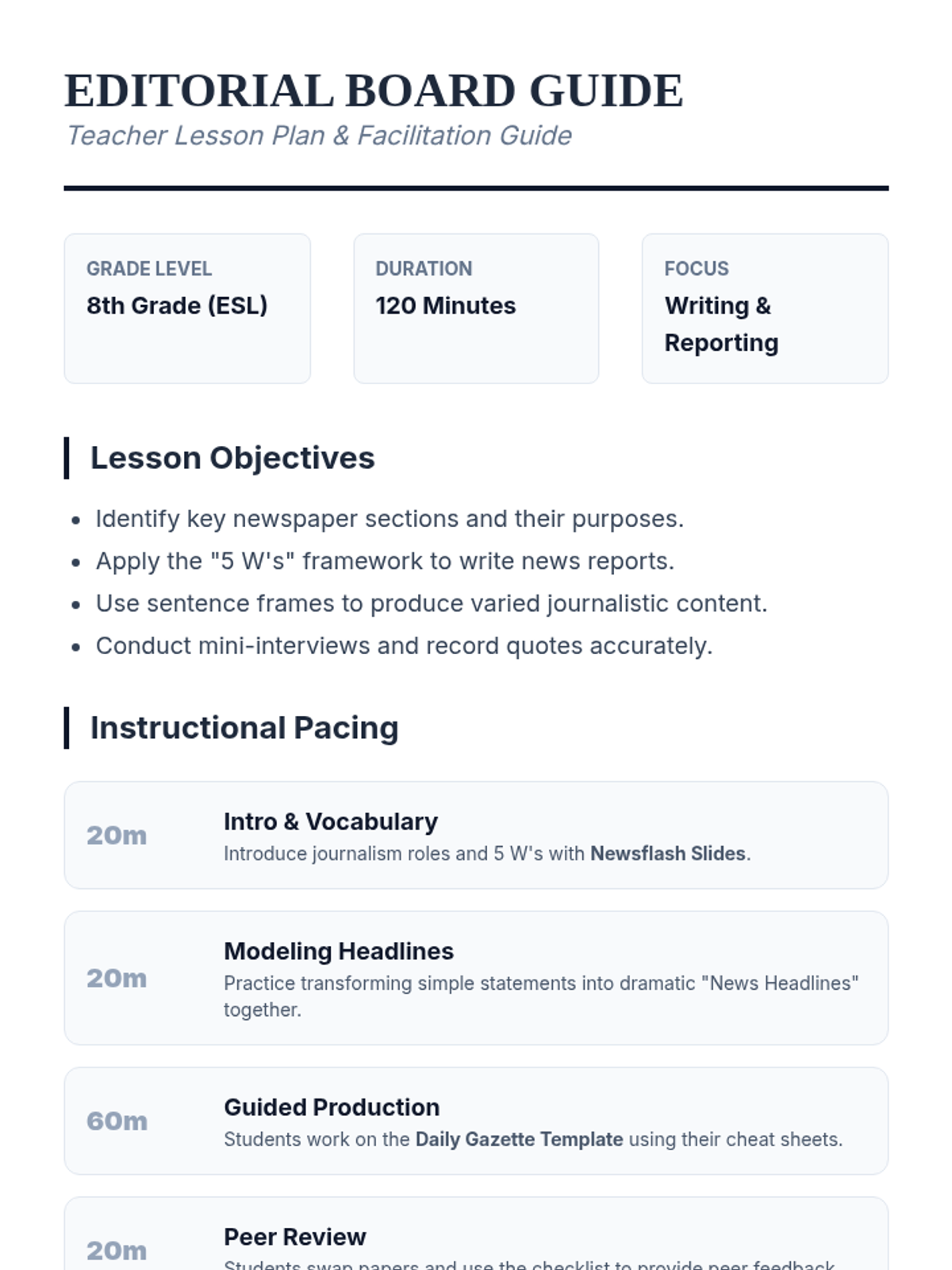
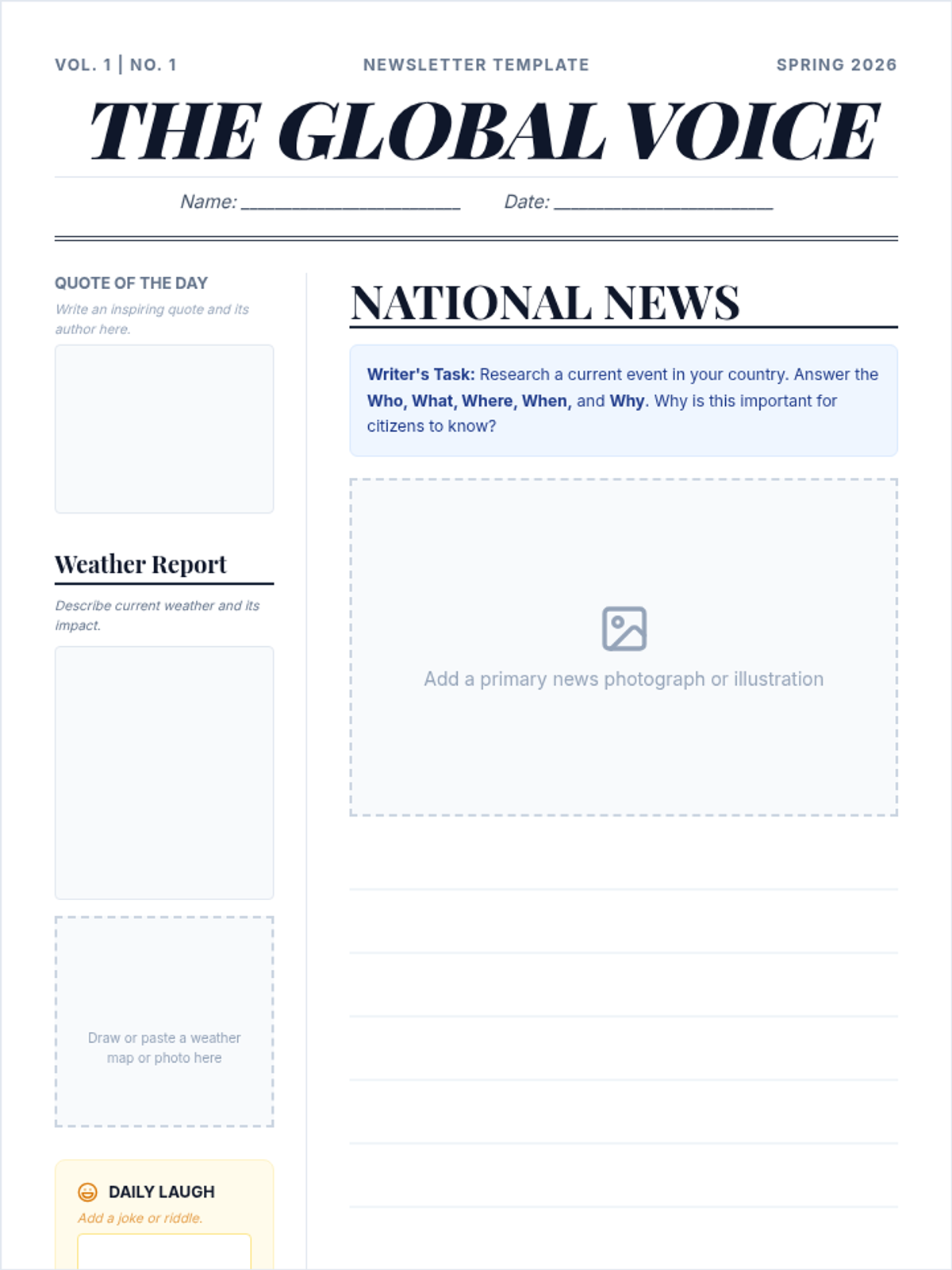
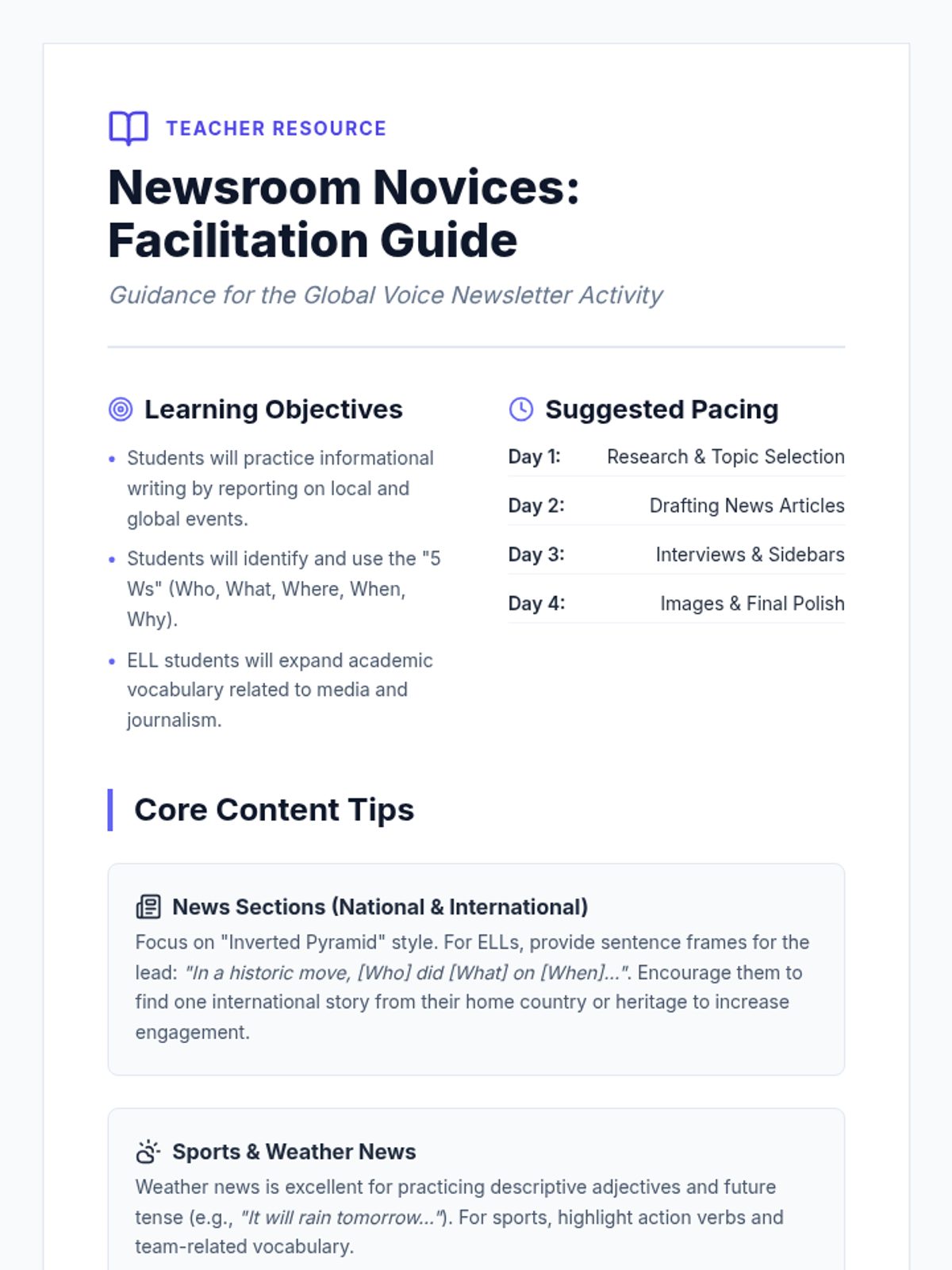
An 8th-grade ESL lesson where students learn about journalism and create their own digital newspaper using guided templates and sentence frames.
A multi-day lesson where students research, interview, and write for a classroom newspaper, practicing various informational writing styles and media literacy.
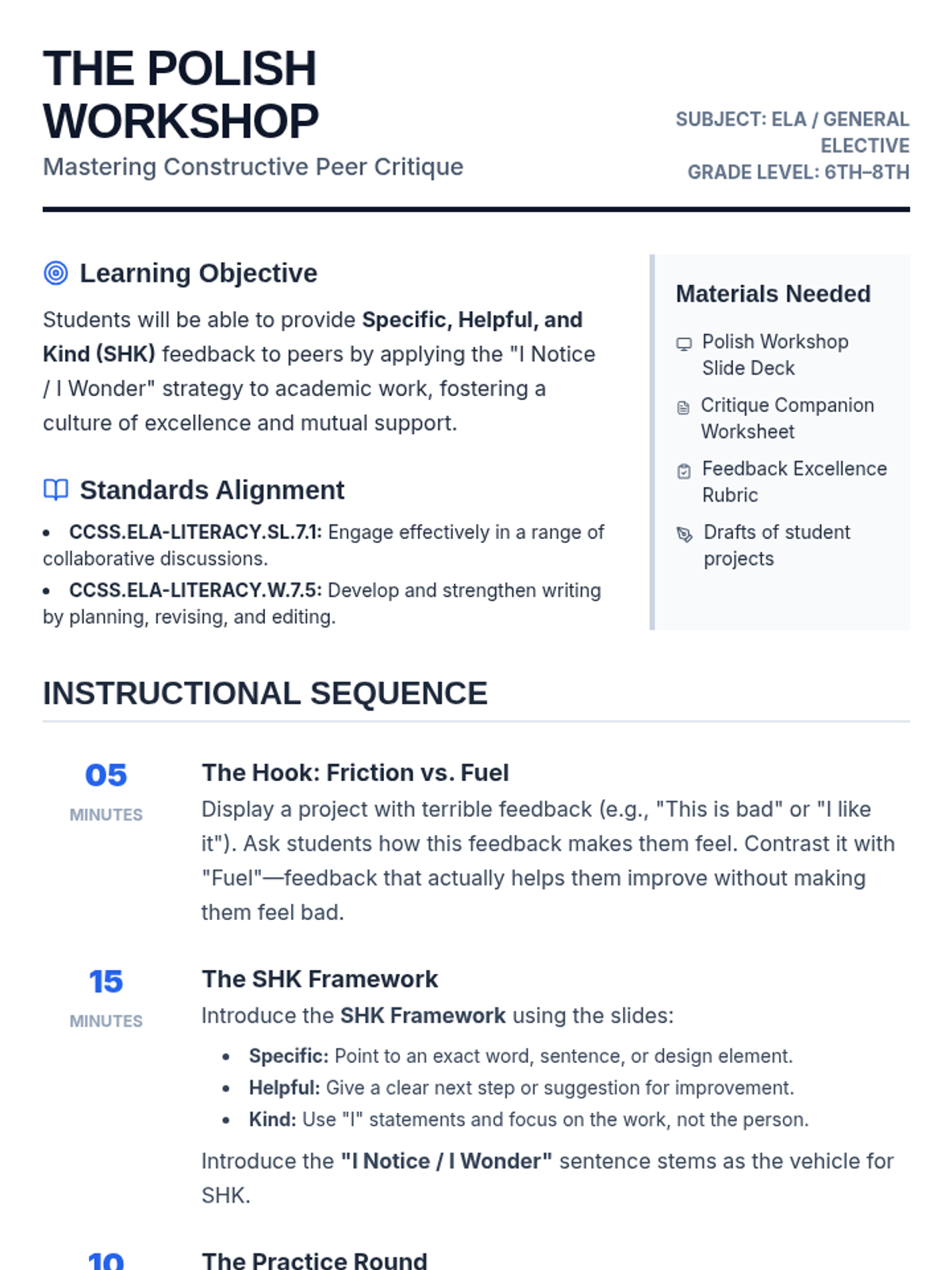
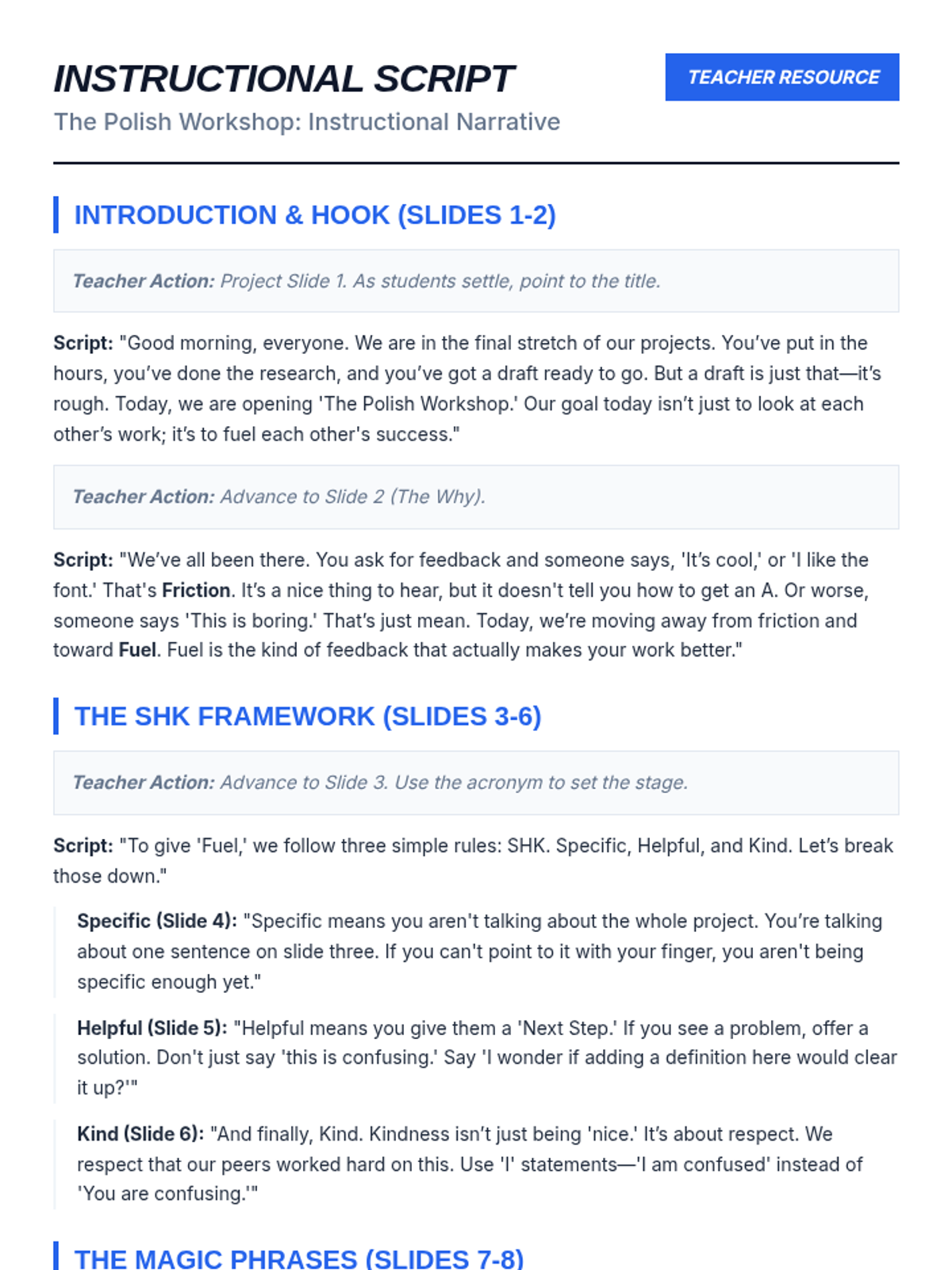
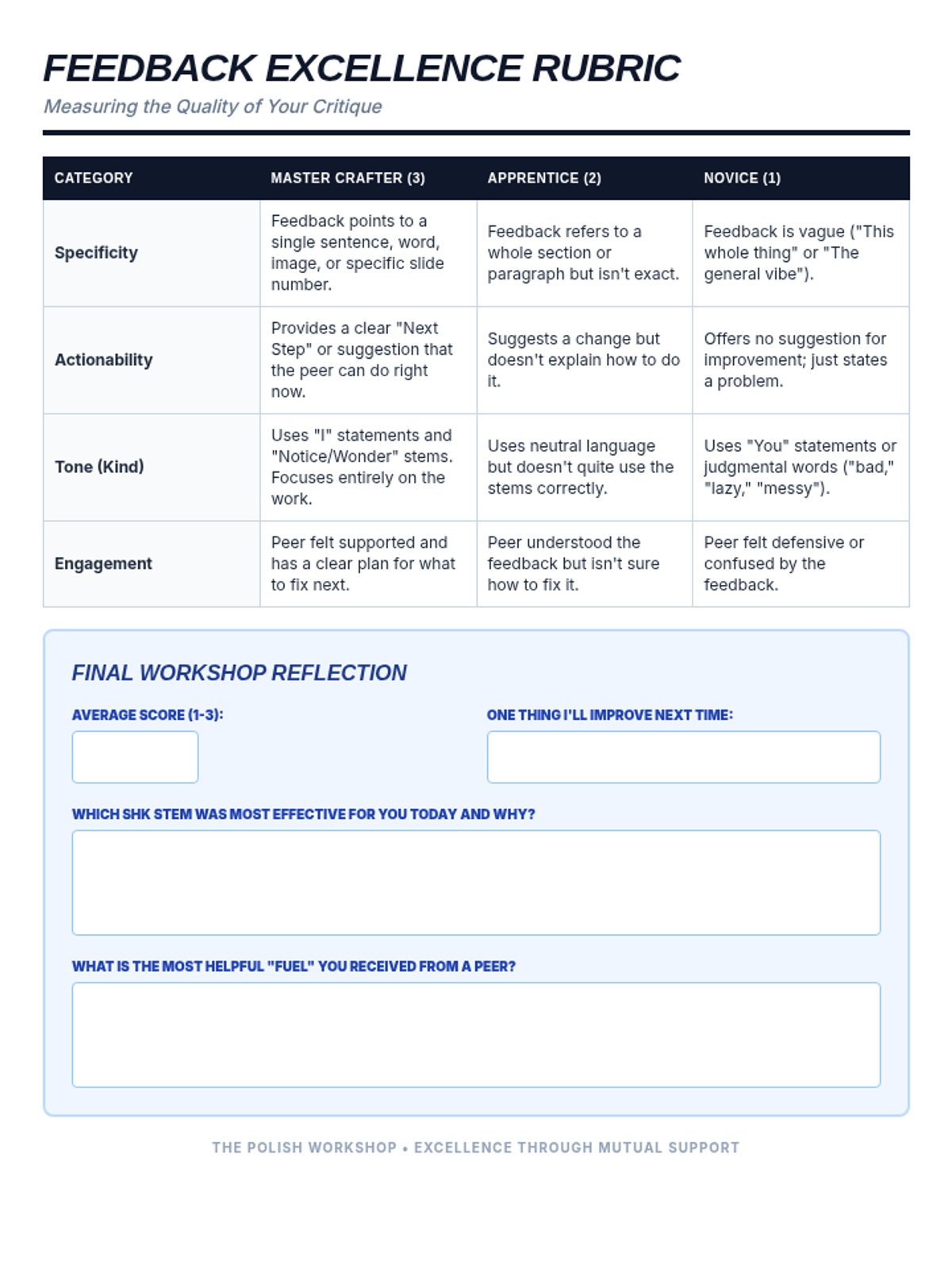
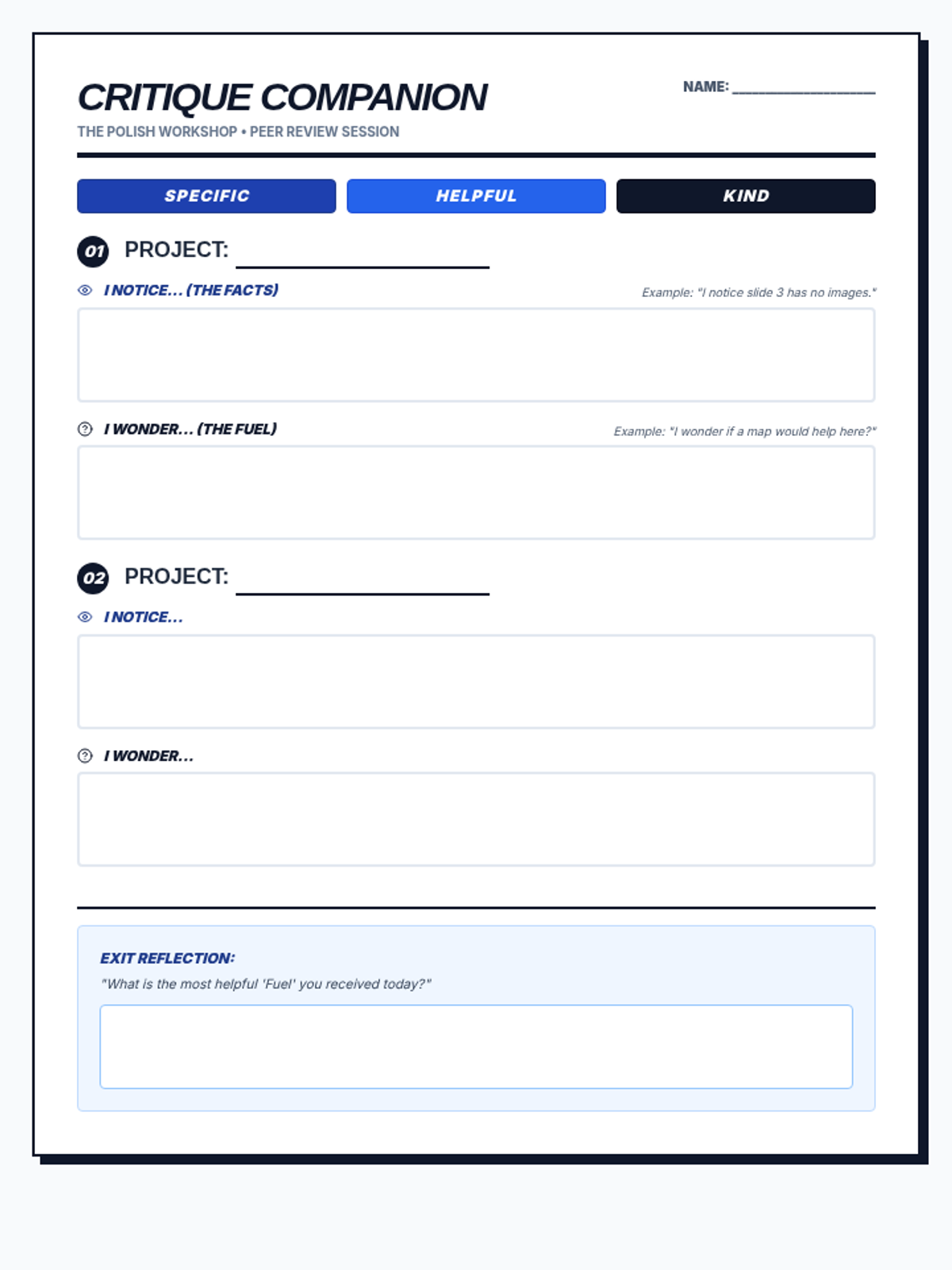
A comprehensive lesson designed to teach middle schoolers the art of constructive peer feedback using the 'Specific, Helpful, and Kind' framework to improve final projects.
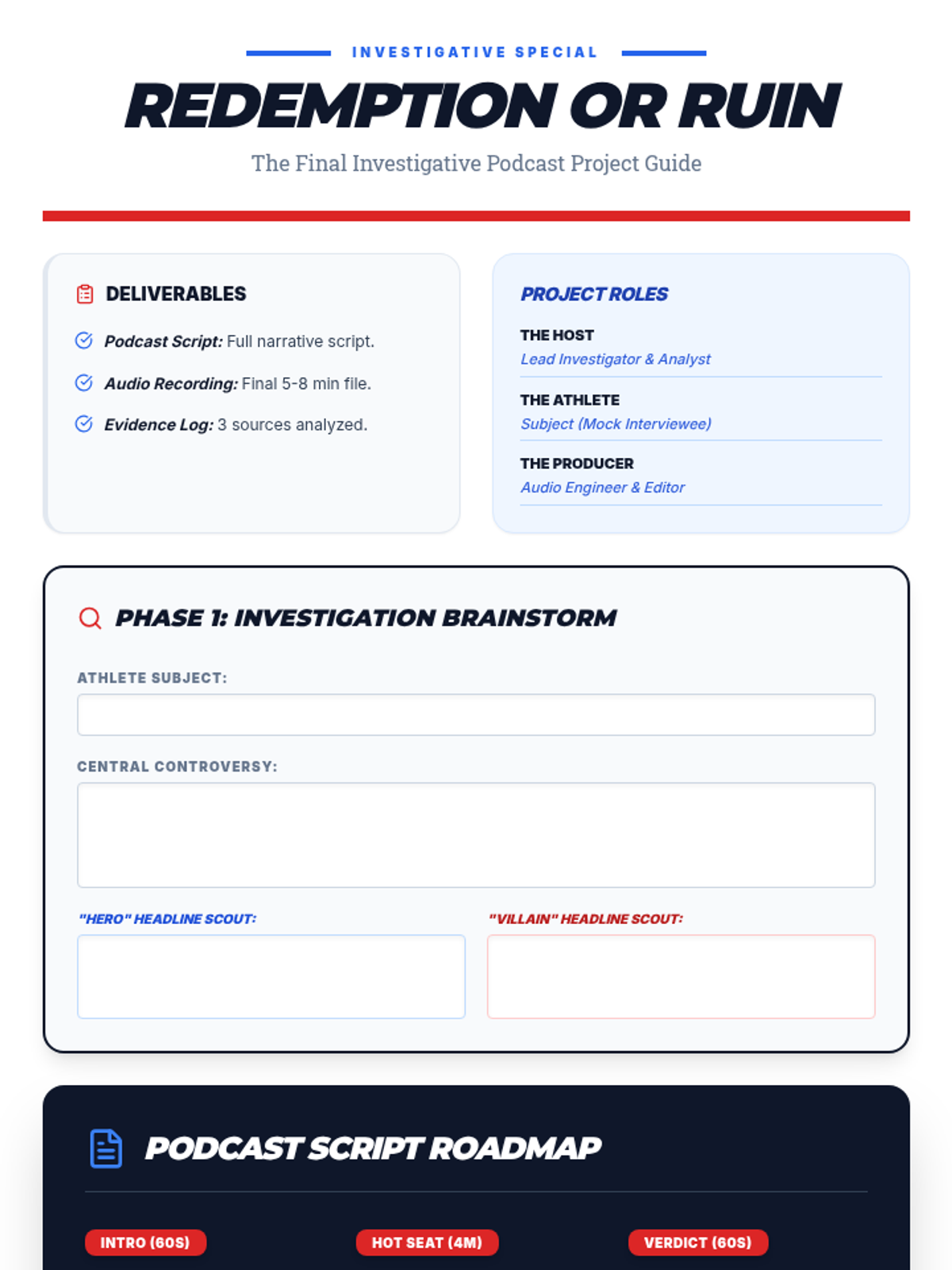
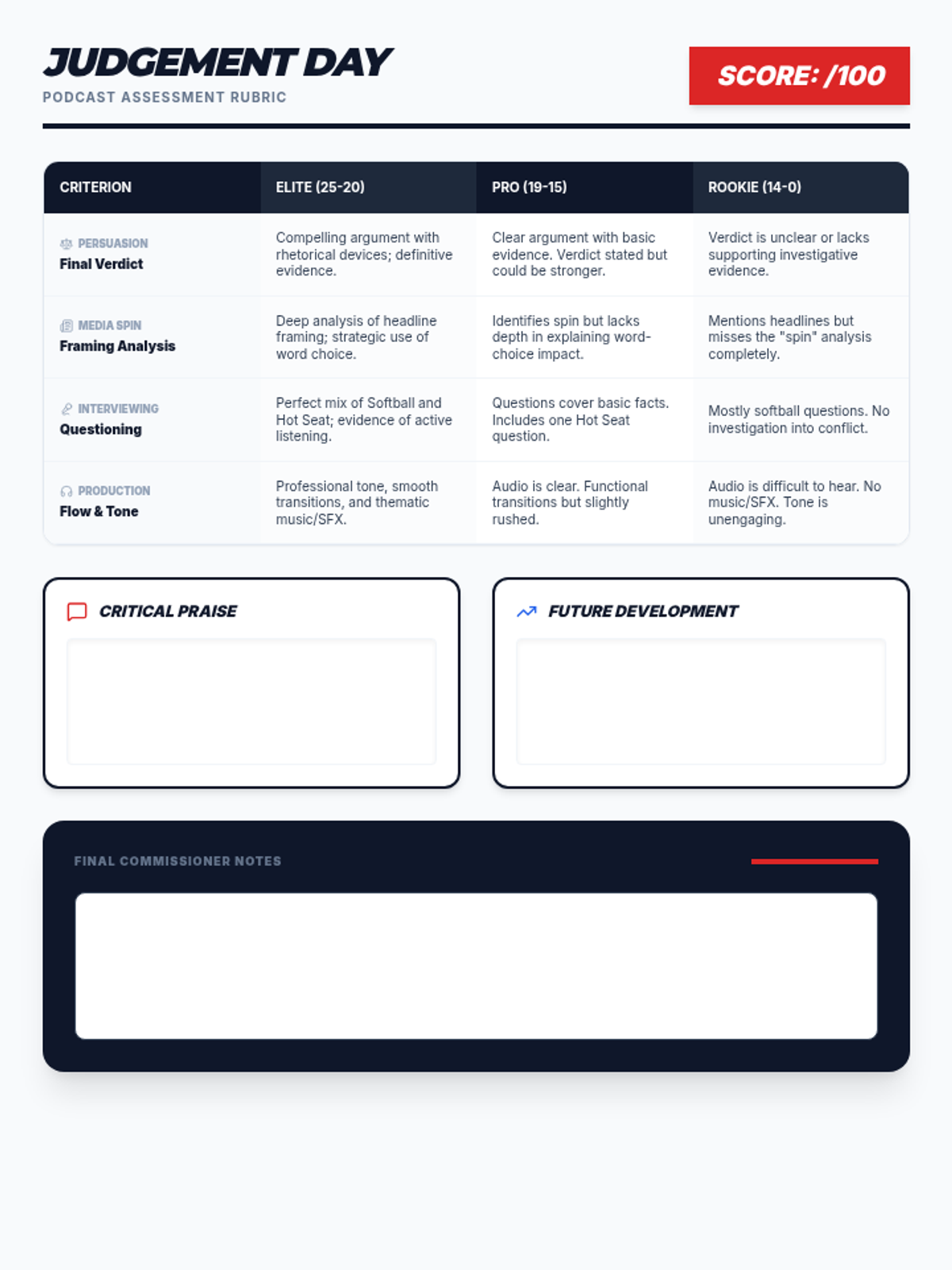
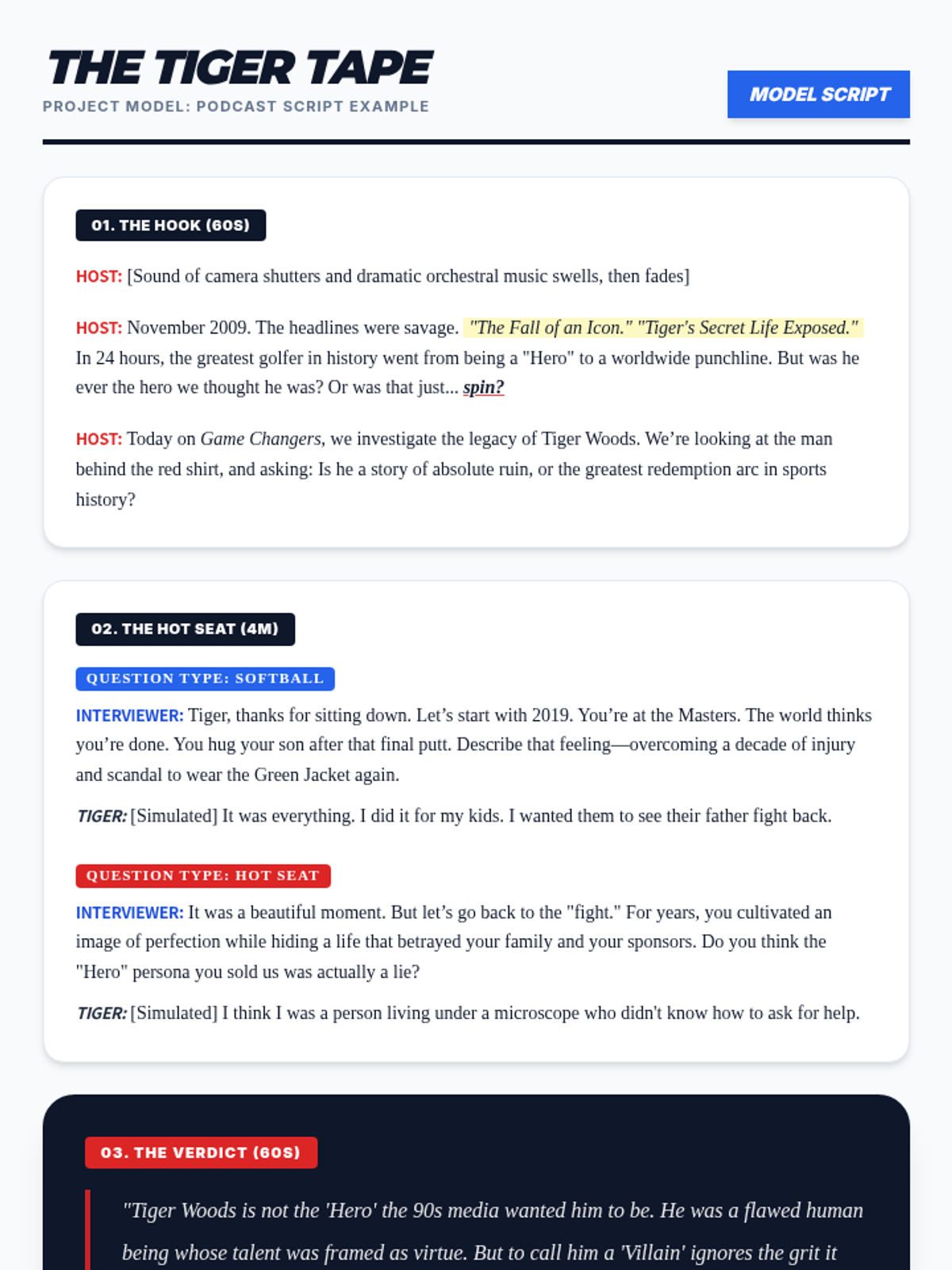
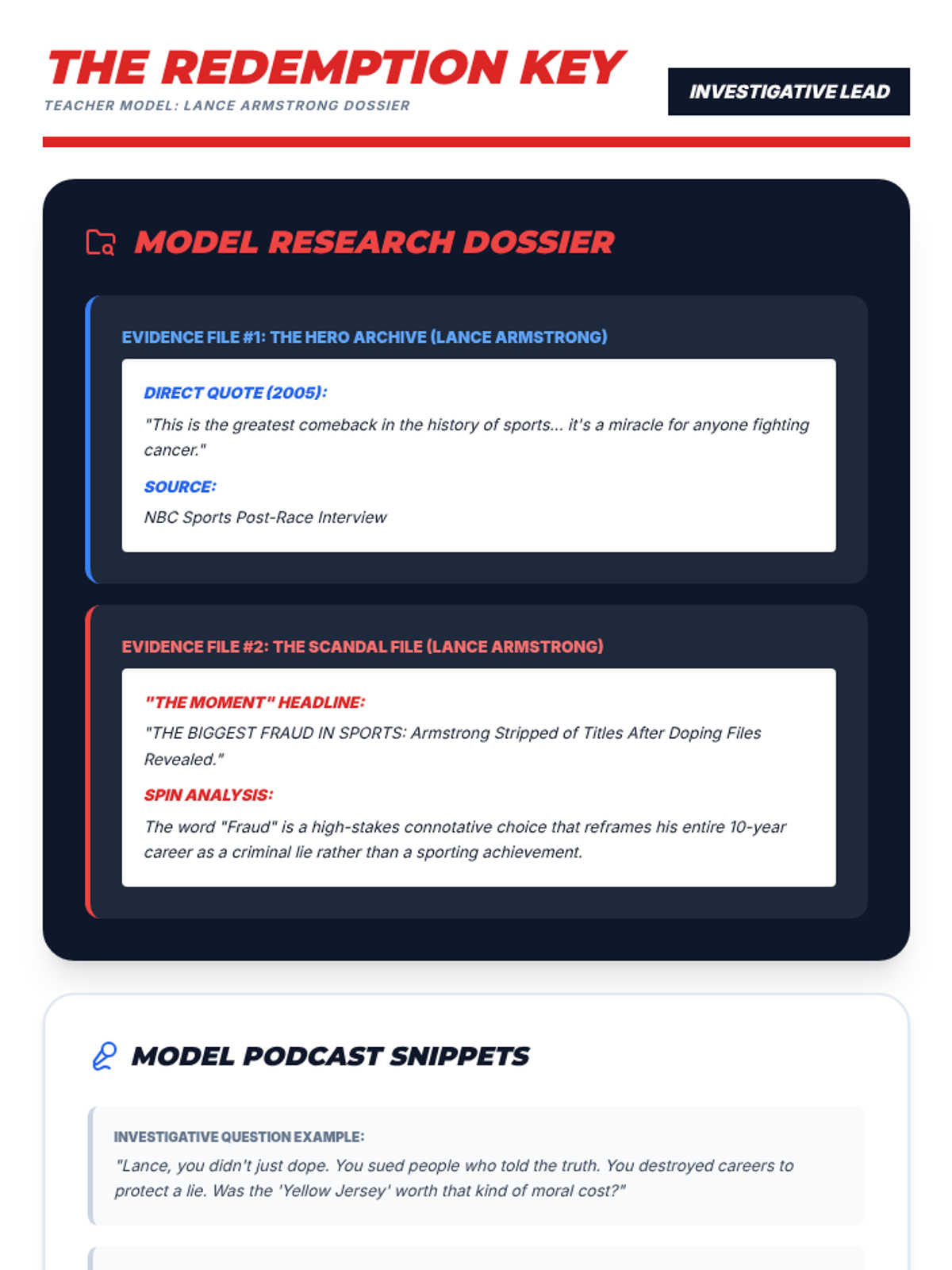
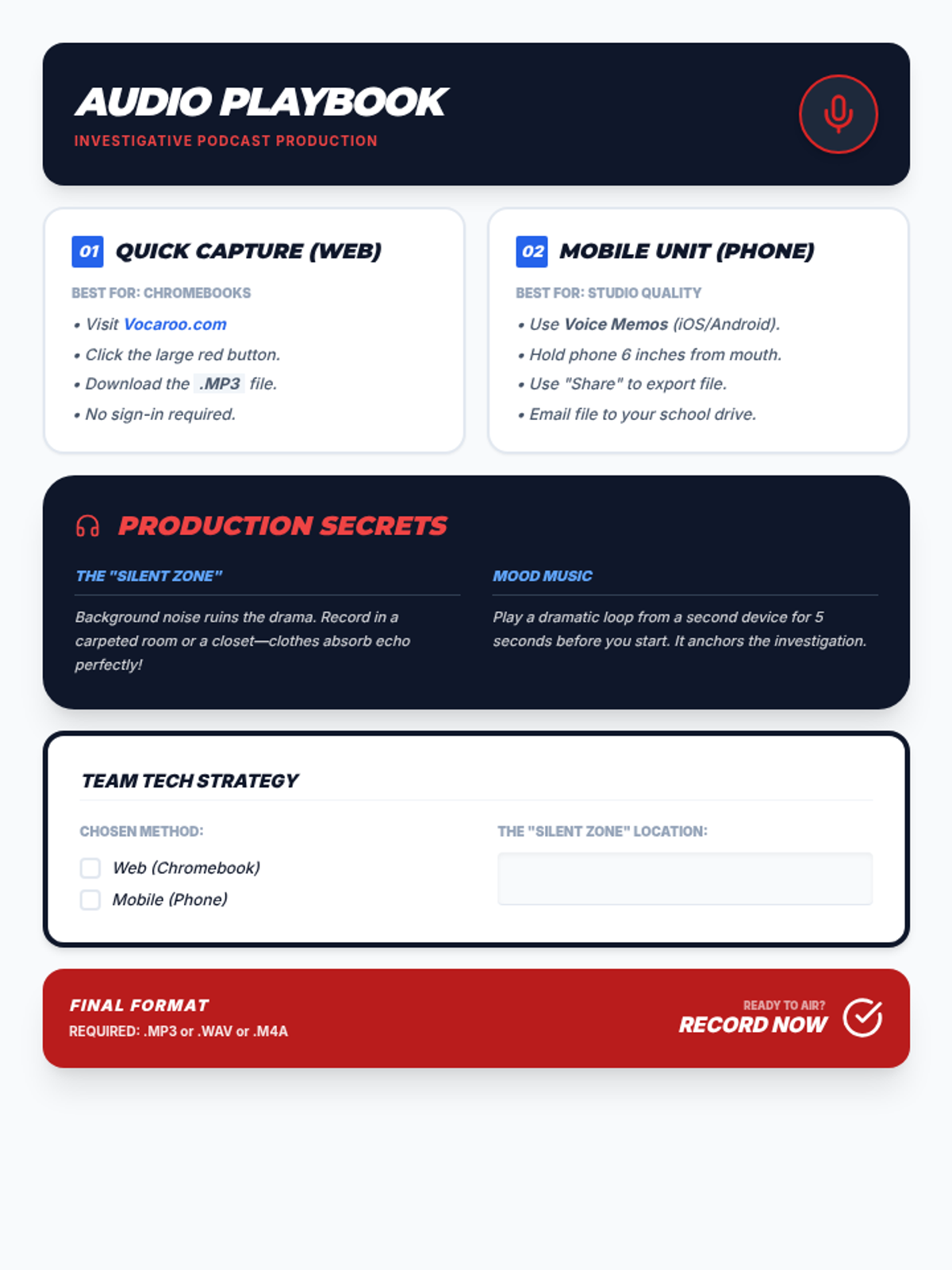
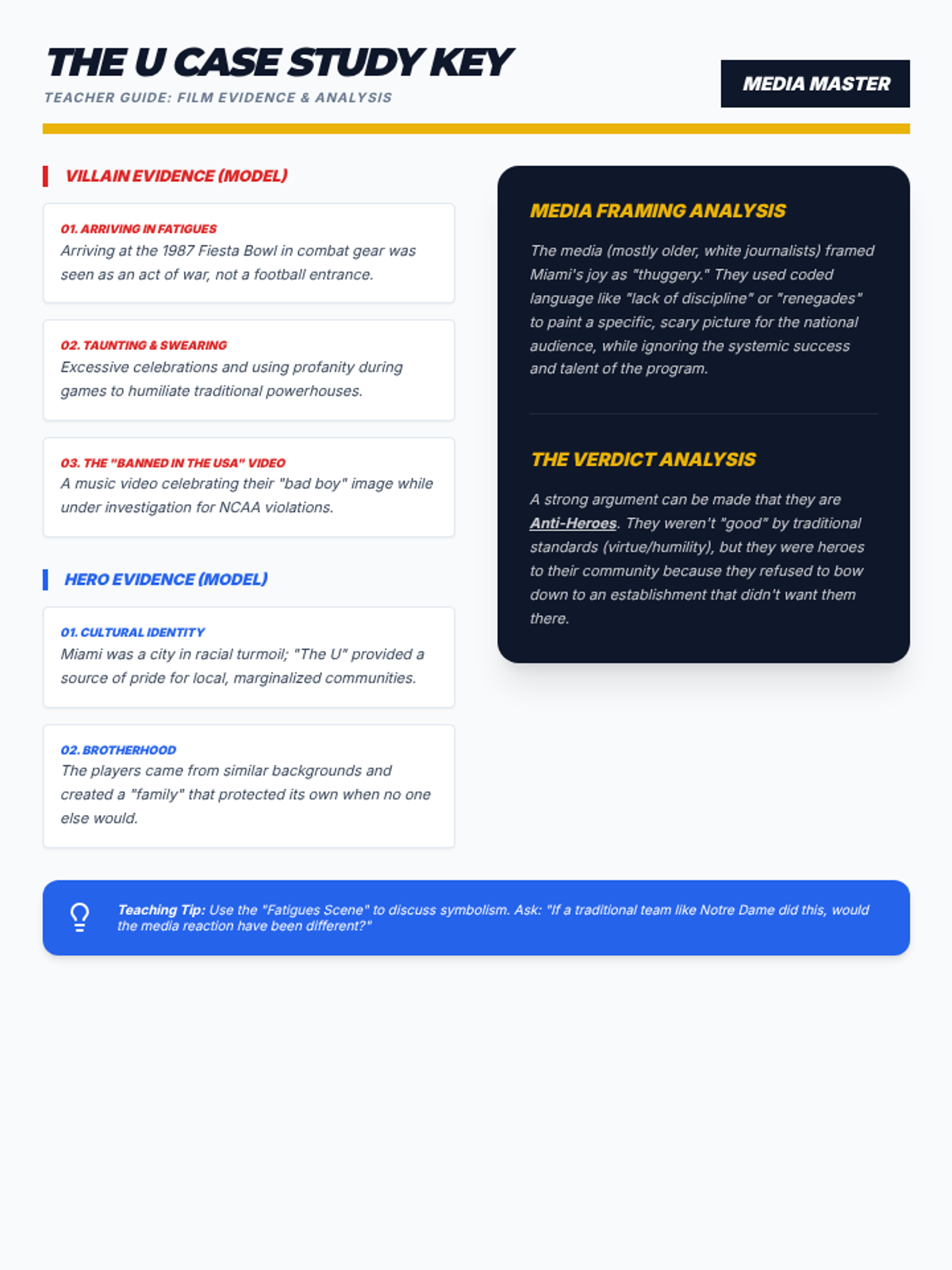
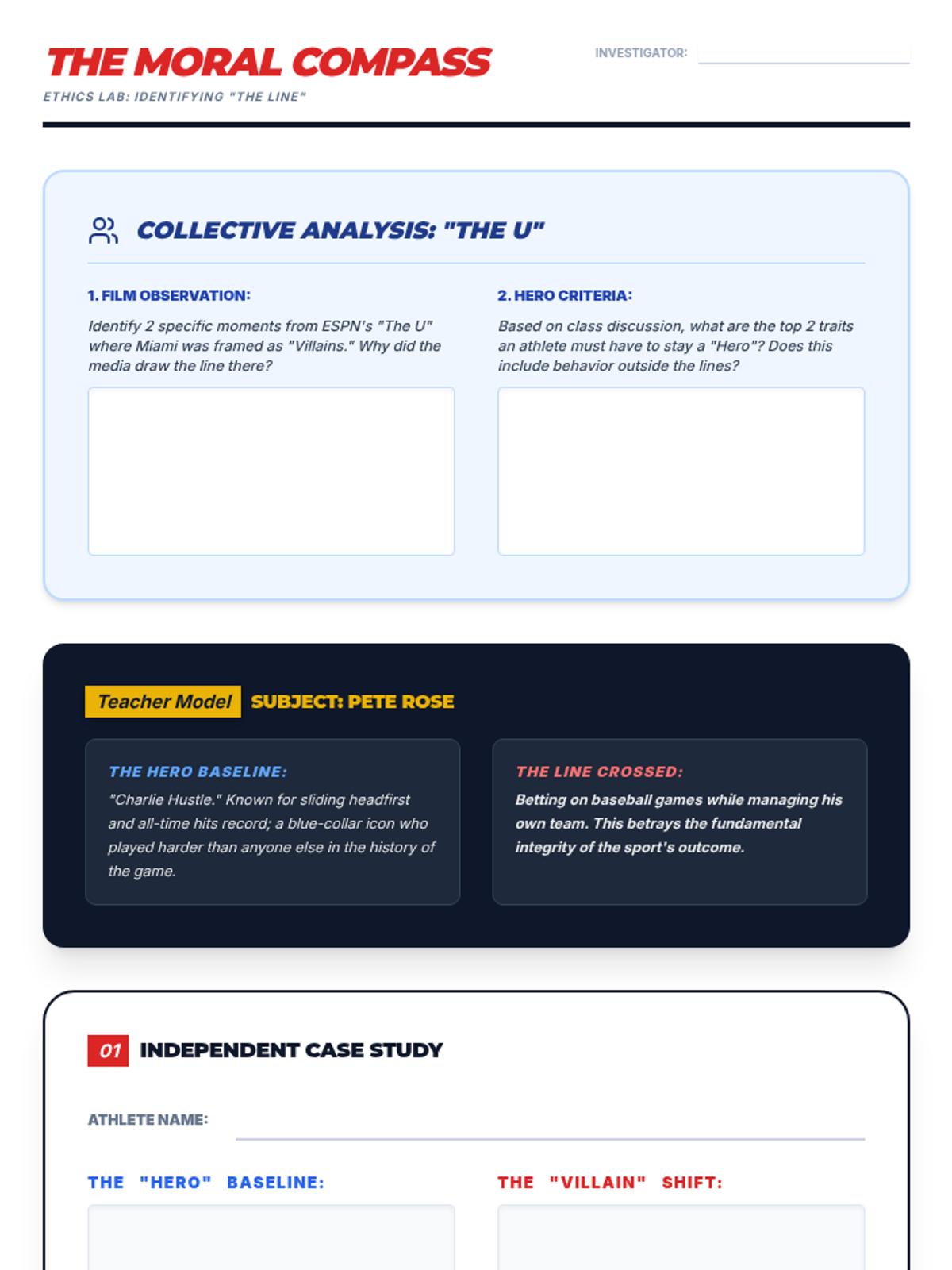
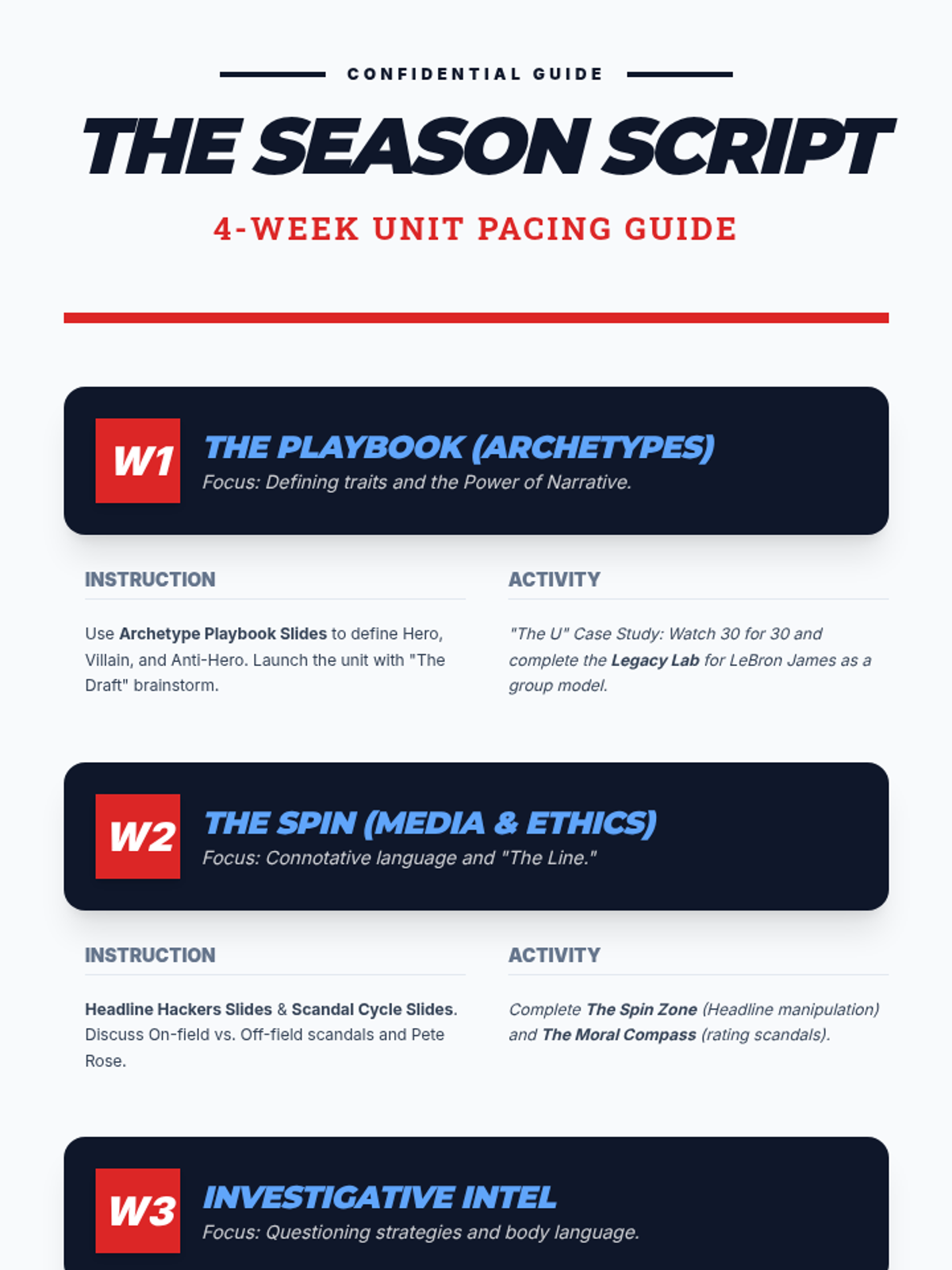
The culminating project where students research a controversial sports figure and produce a persuasive investigative podcast script and recording.
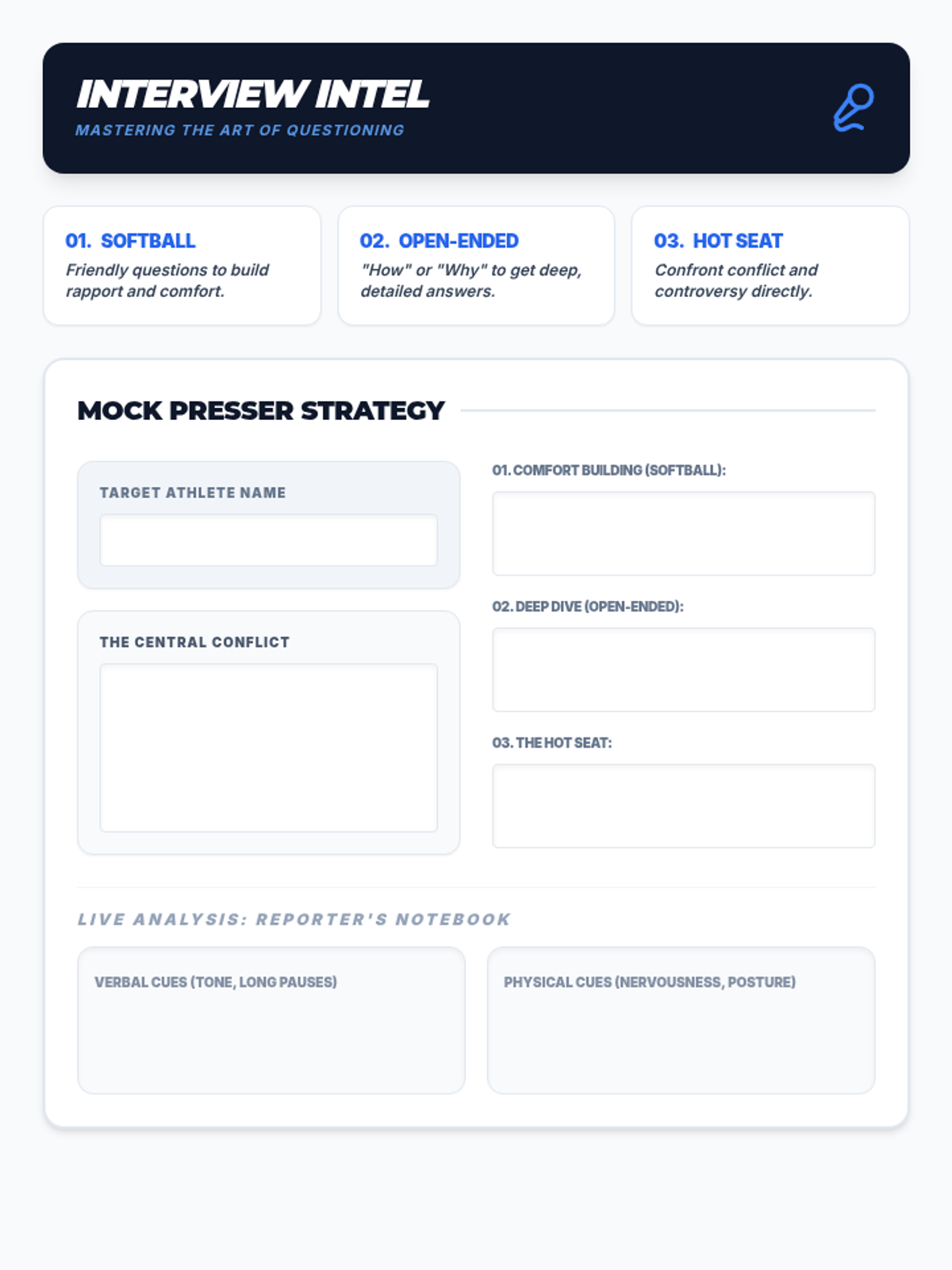
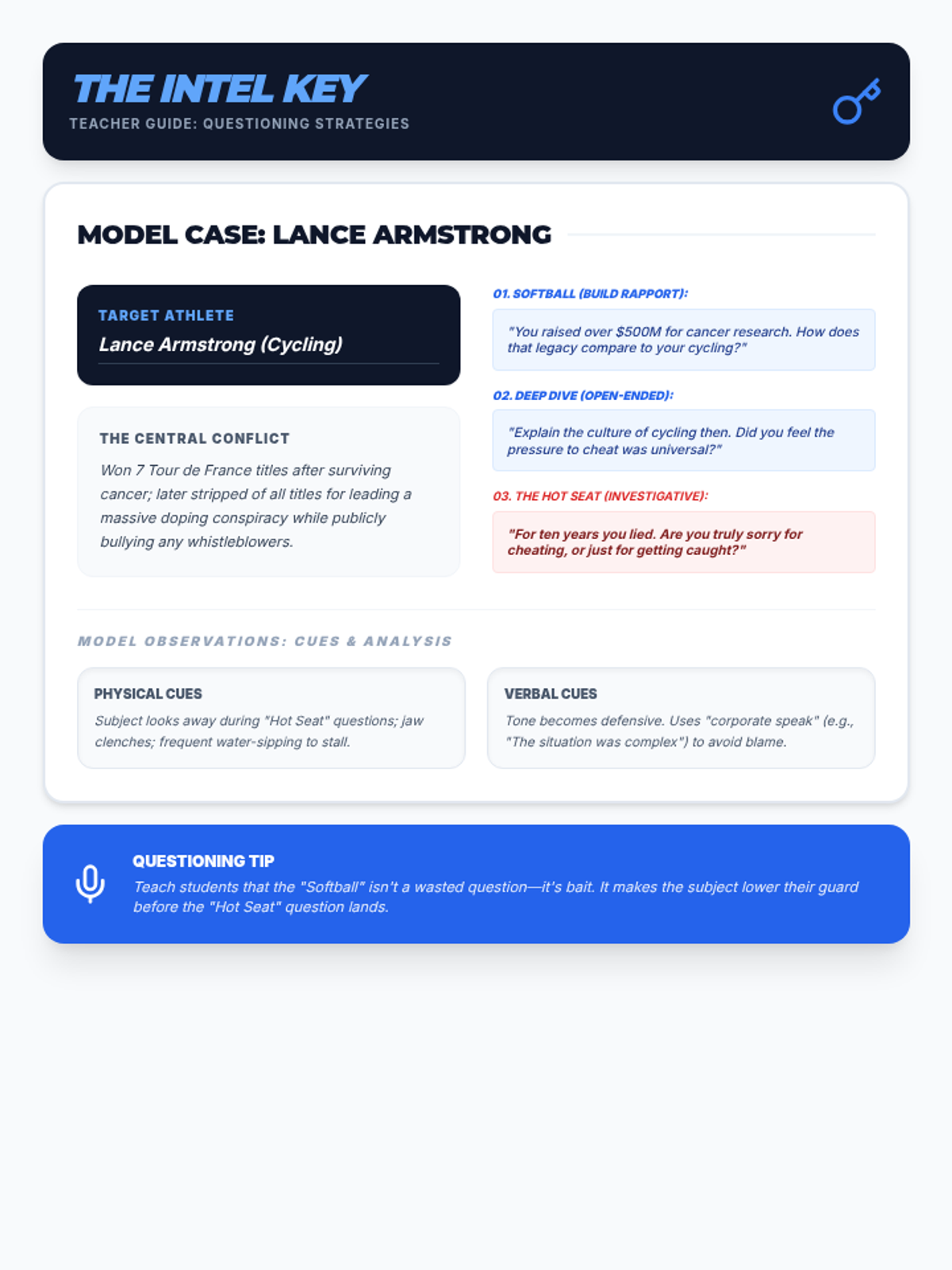
Students master the art of the interview, learning to craft hard-hitting questions and analyze verbal cues to uncover the 'truth' behind the athlete's persona.
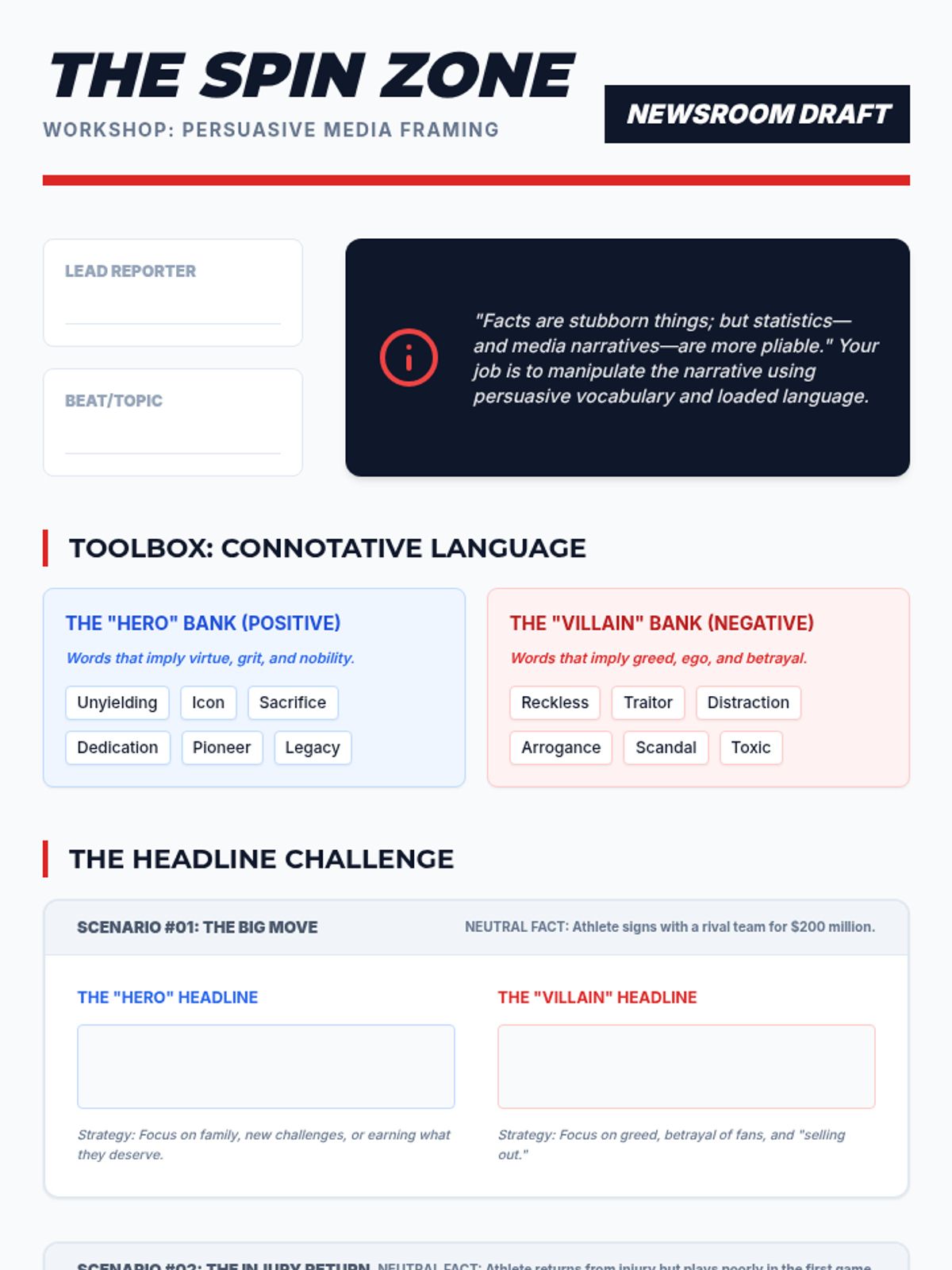
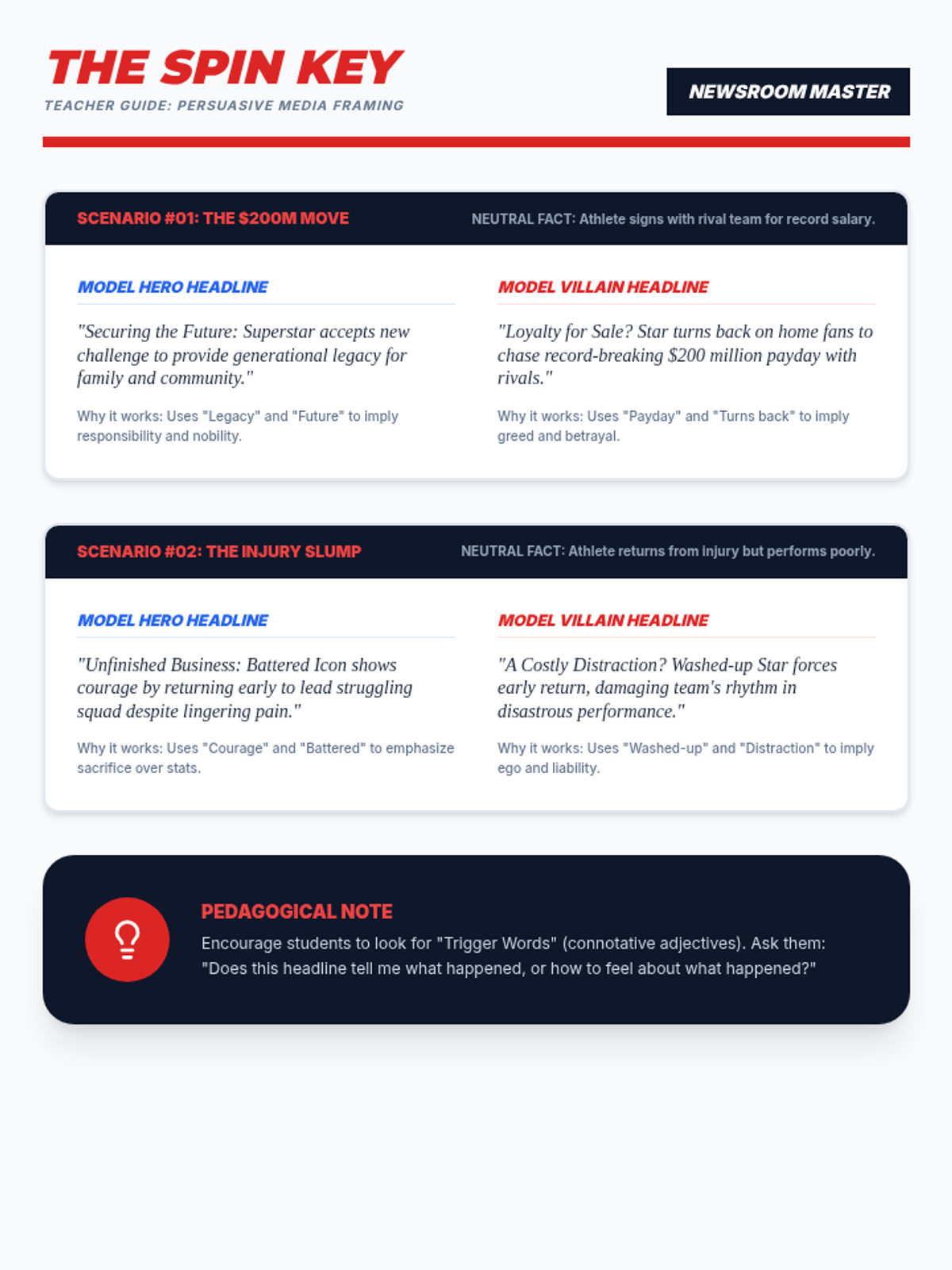
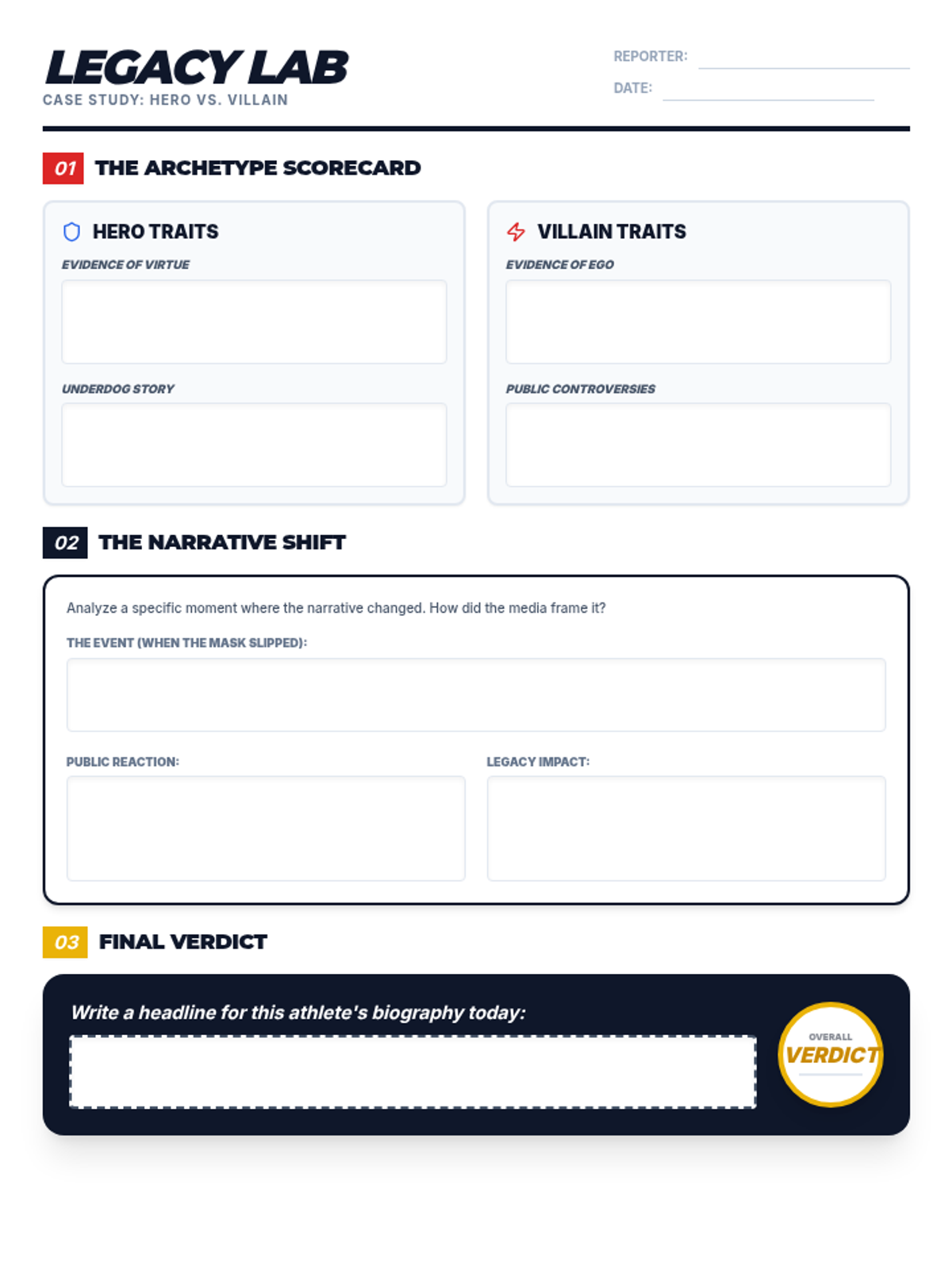
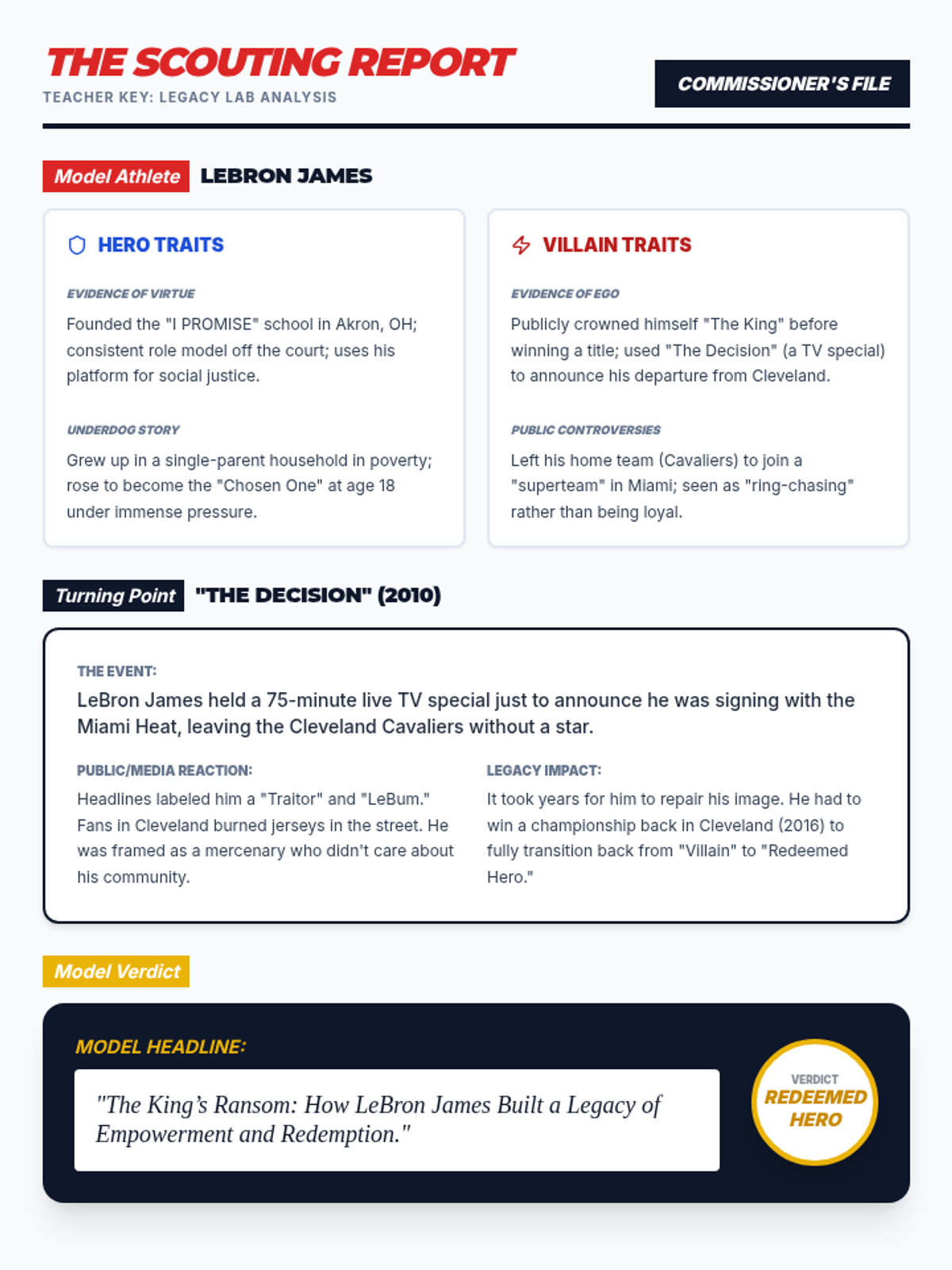
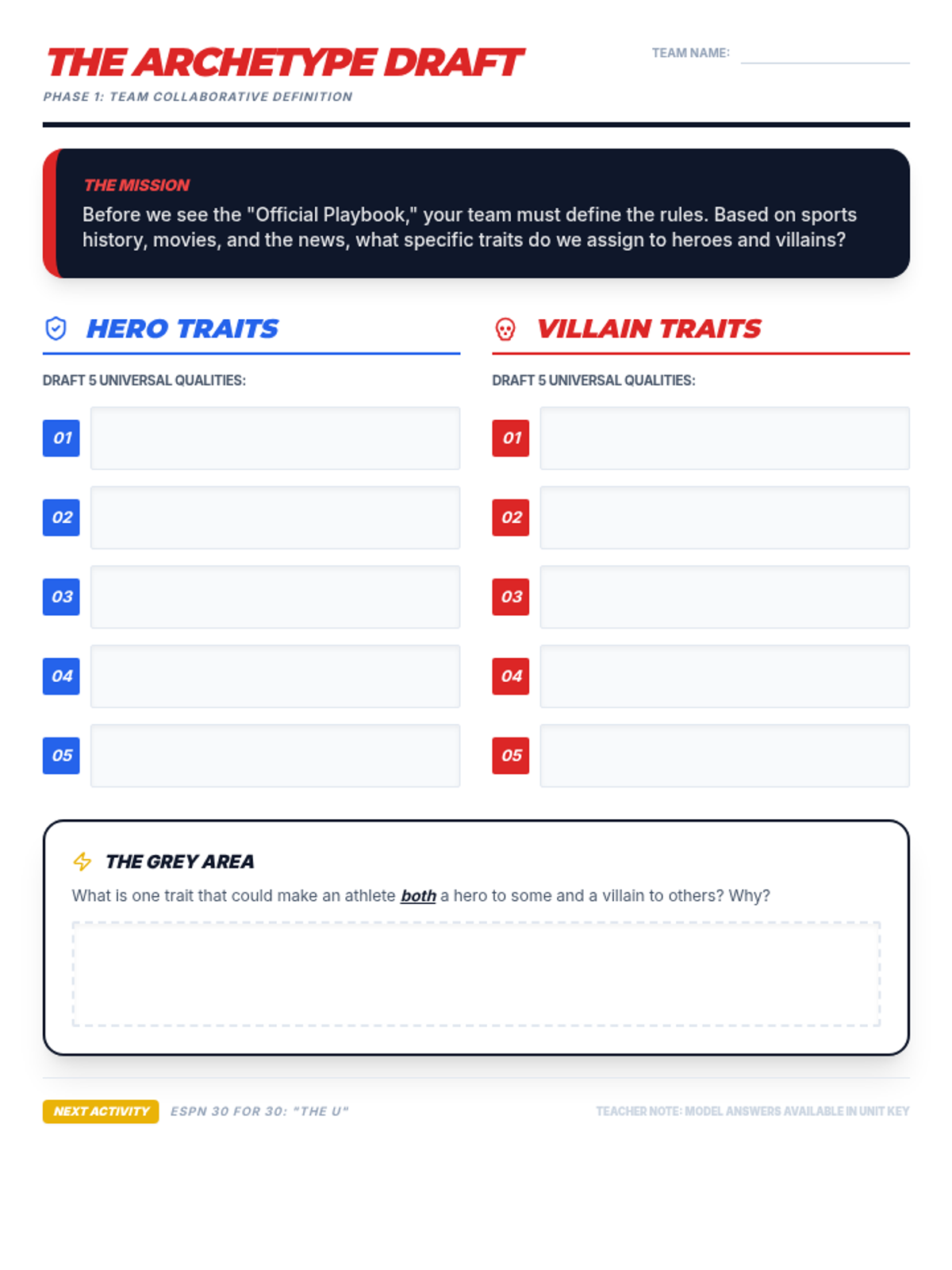
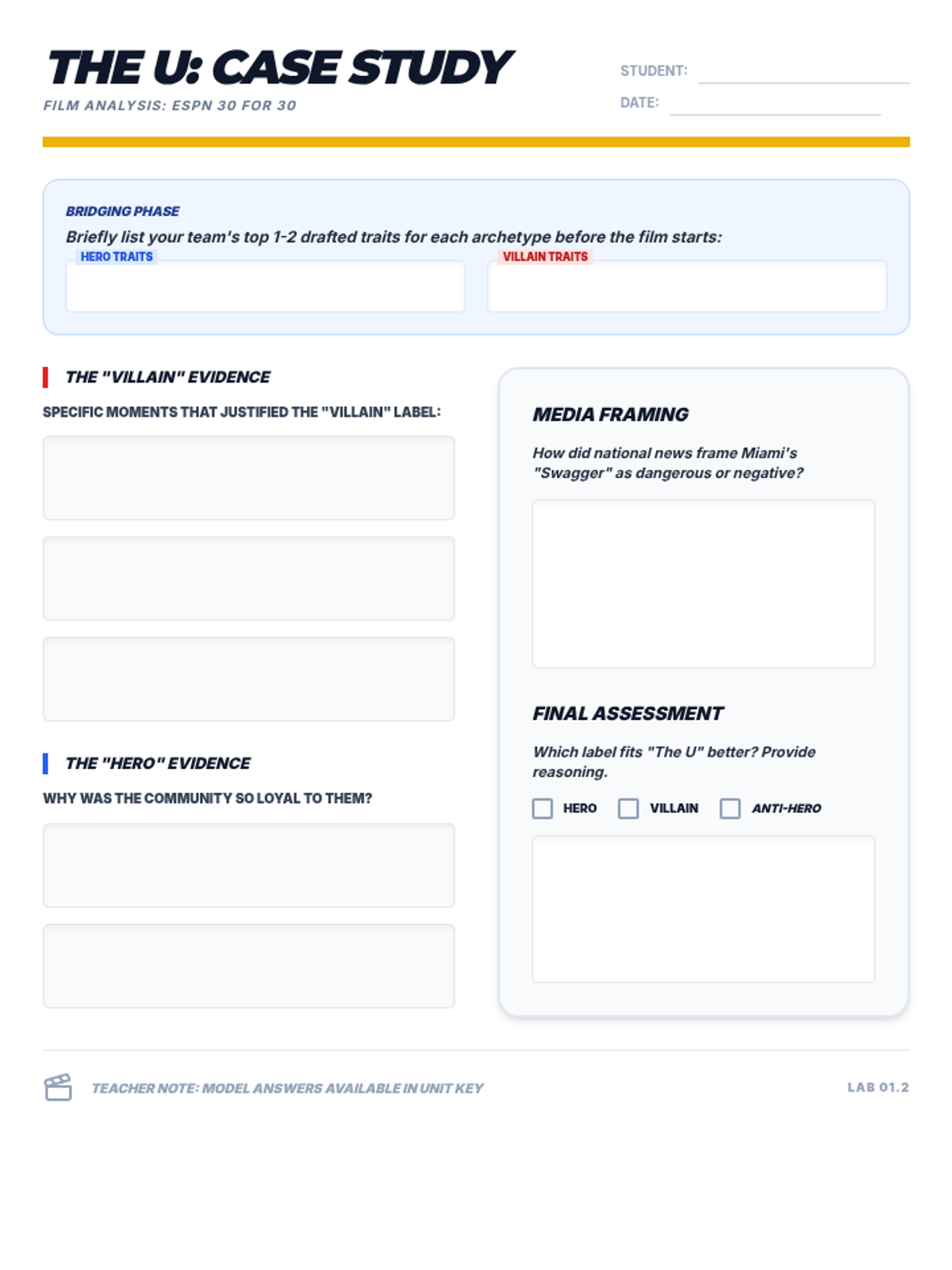
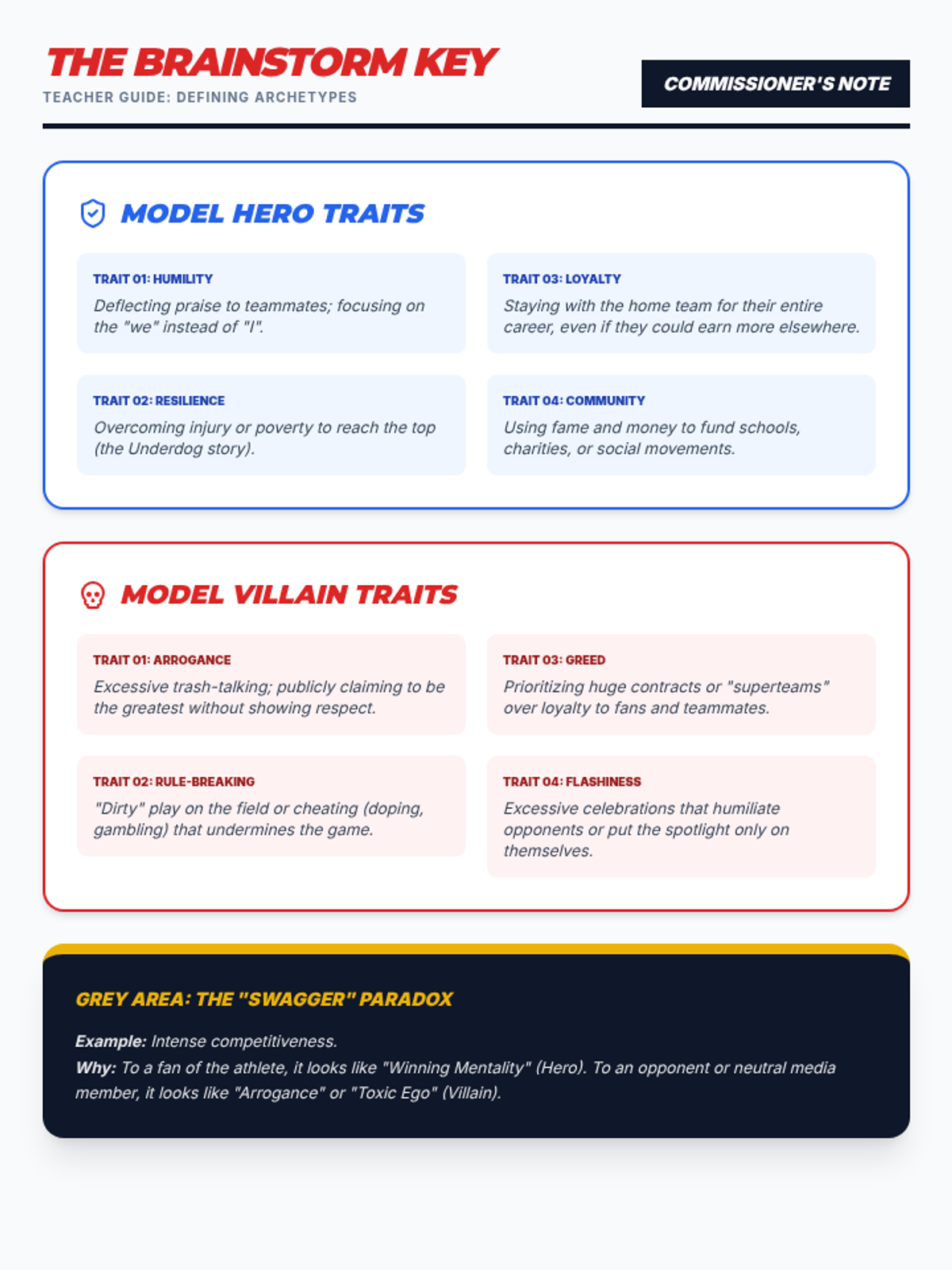
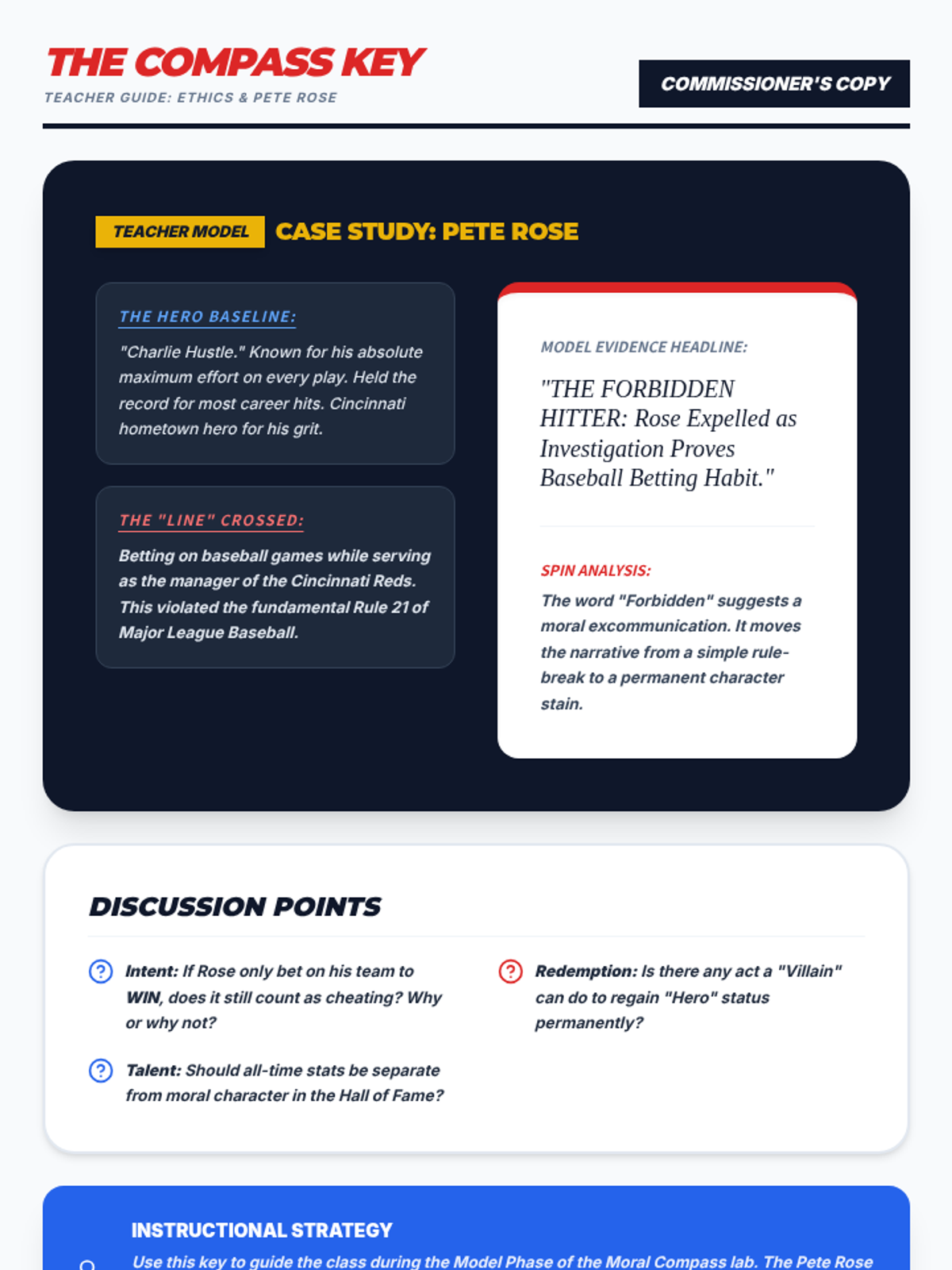
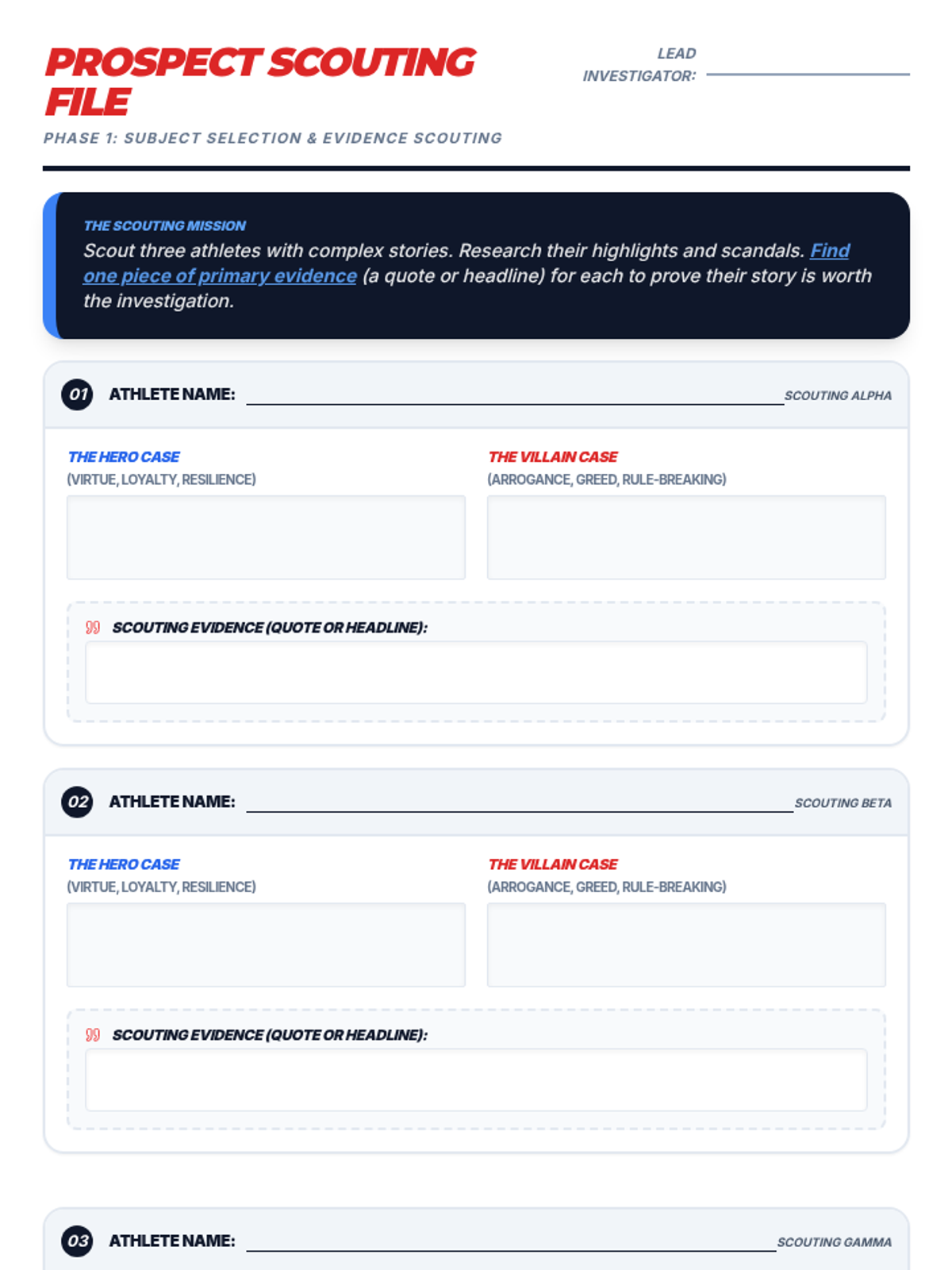
An exploration of how media framing, headlines, and persuasive language can transform an athlete's public image from hero to villain and back again.
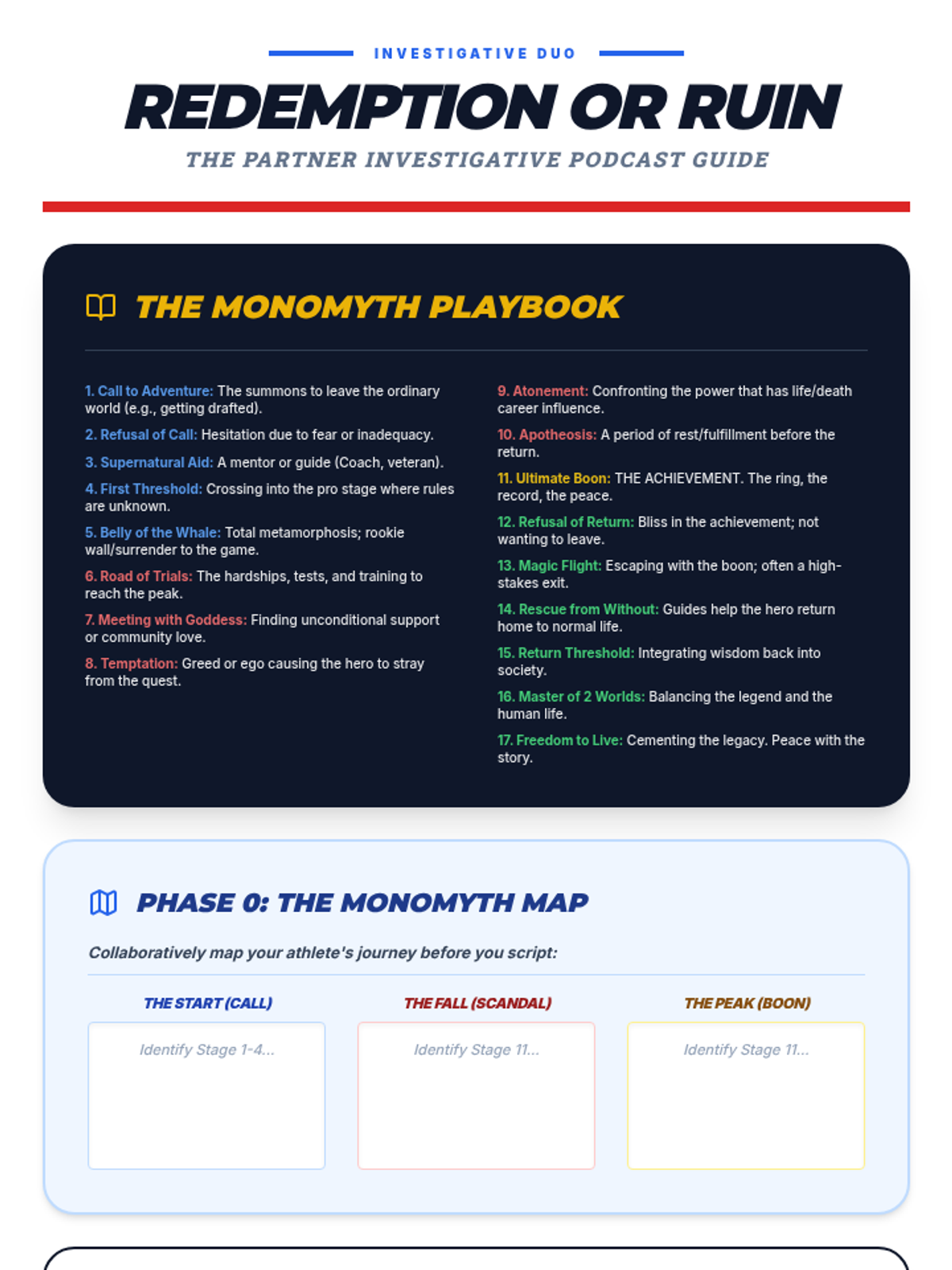
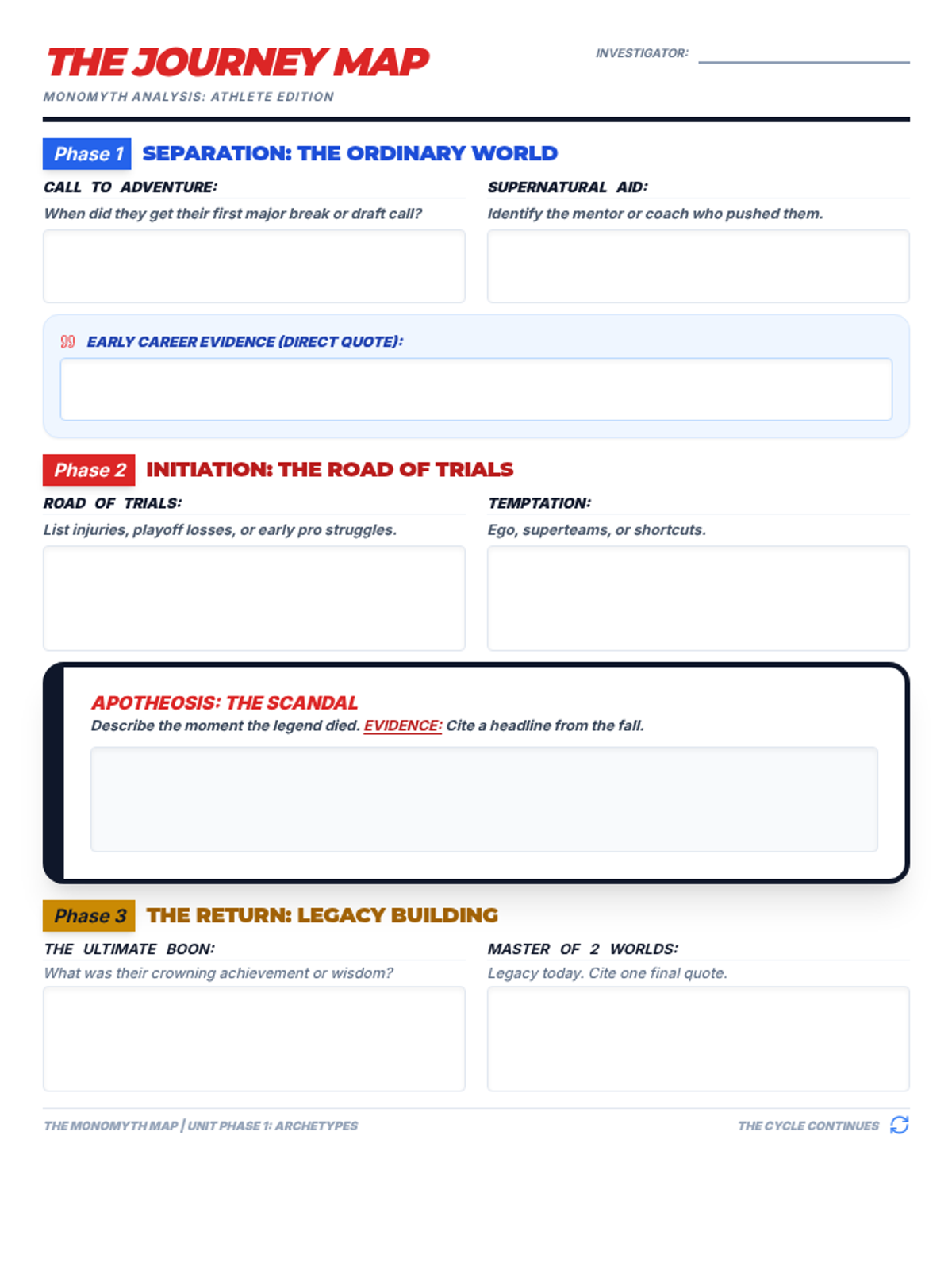
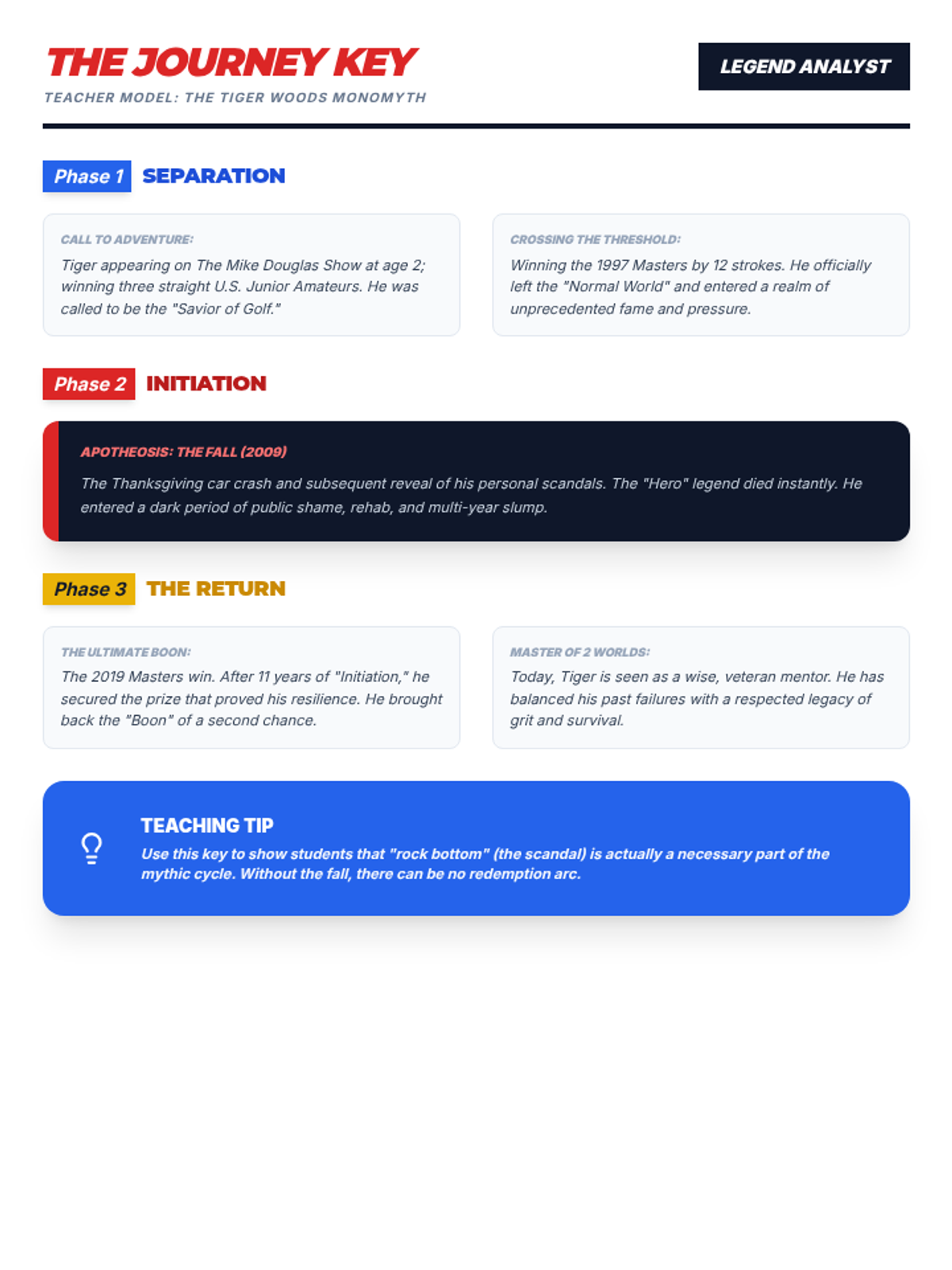
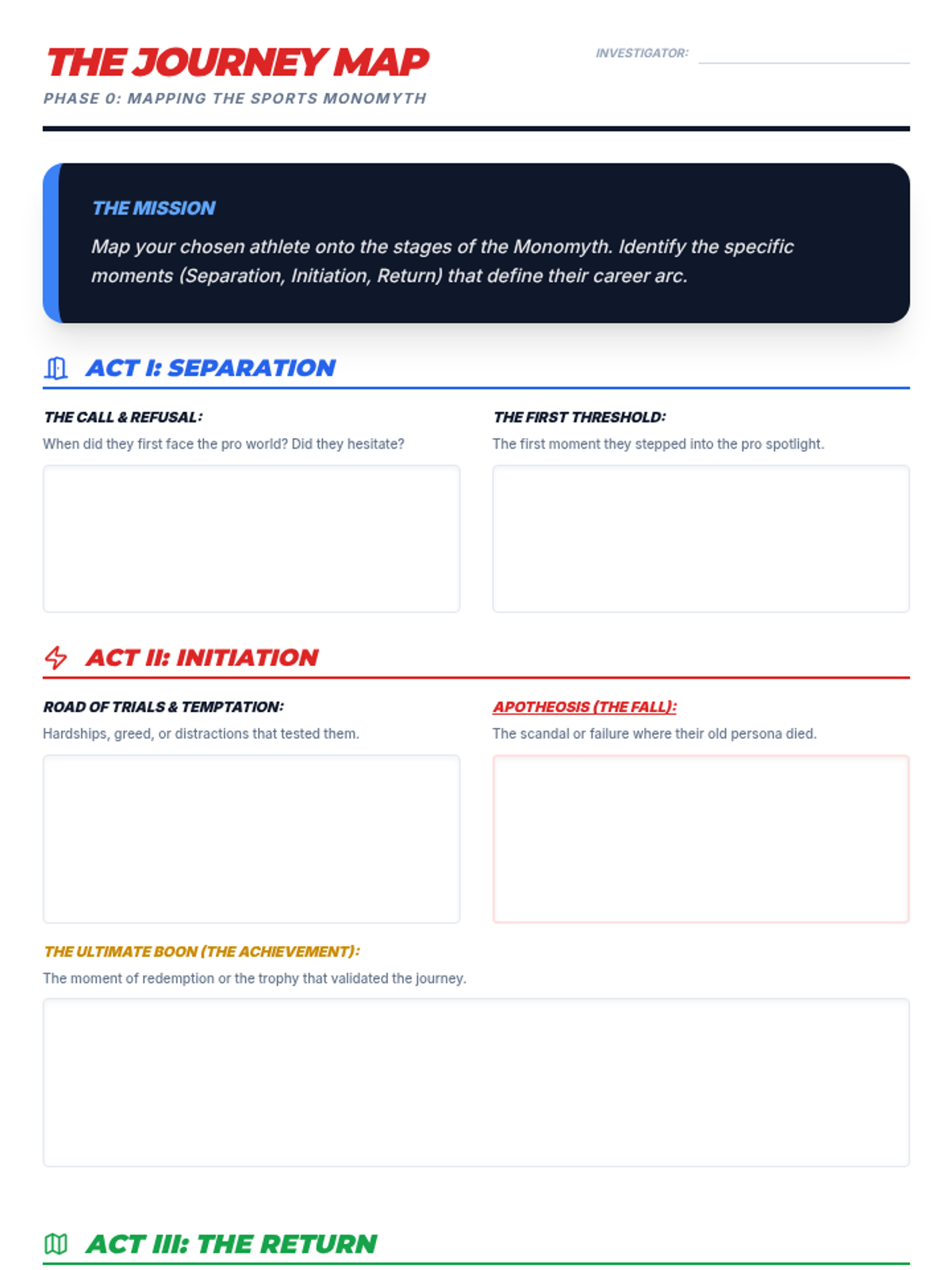
A short, punchy, creative title (2-5 words) like 'Archetype Playbook' or 'Media Spin' – plain text, no markdown. Joseph Campbell's Hero's Journey and sports archetypes are explored.
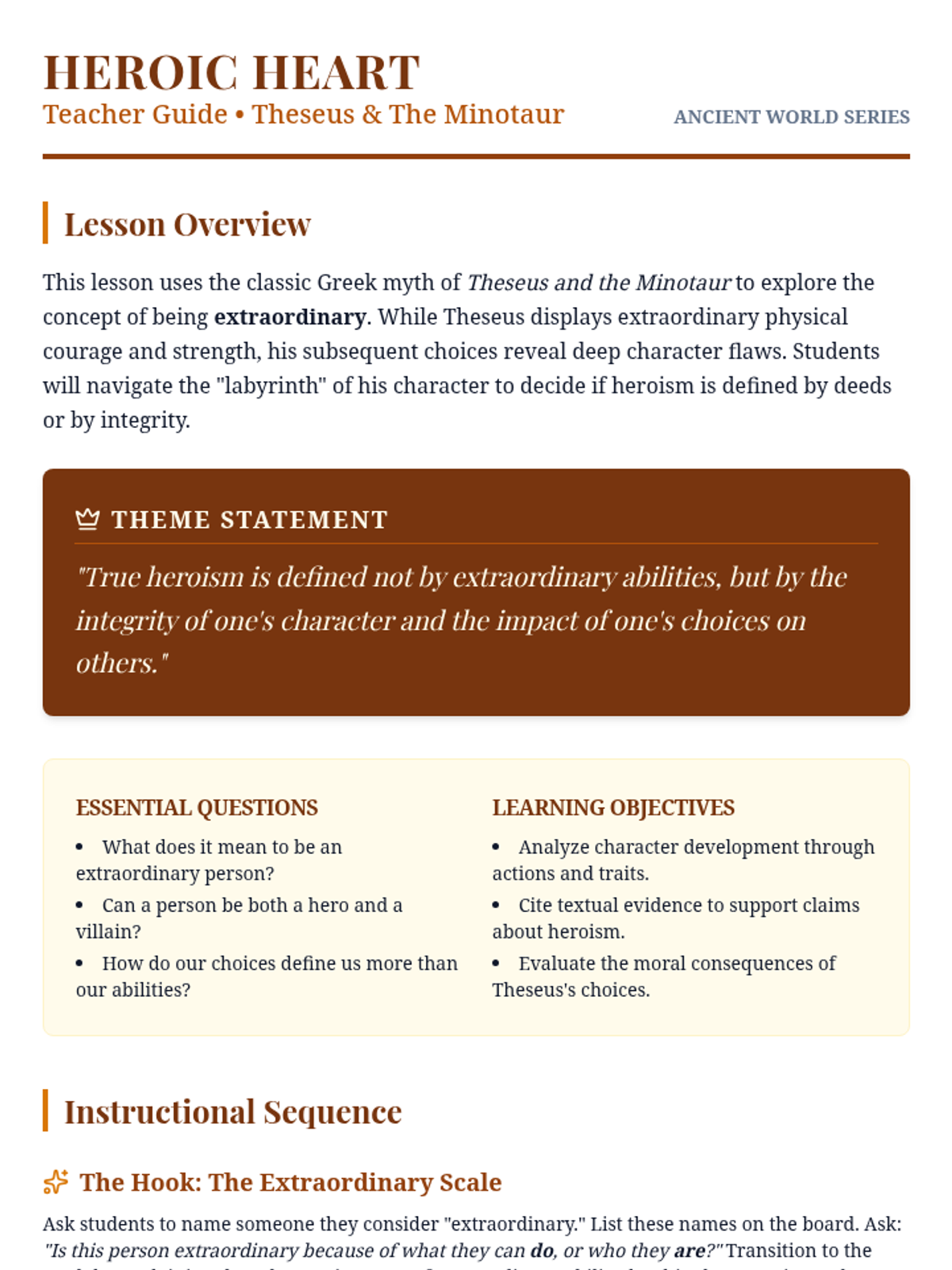
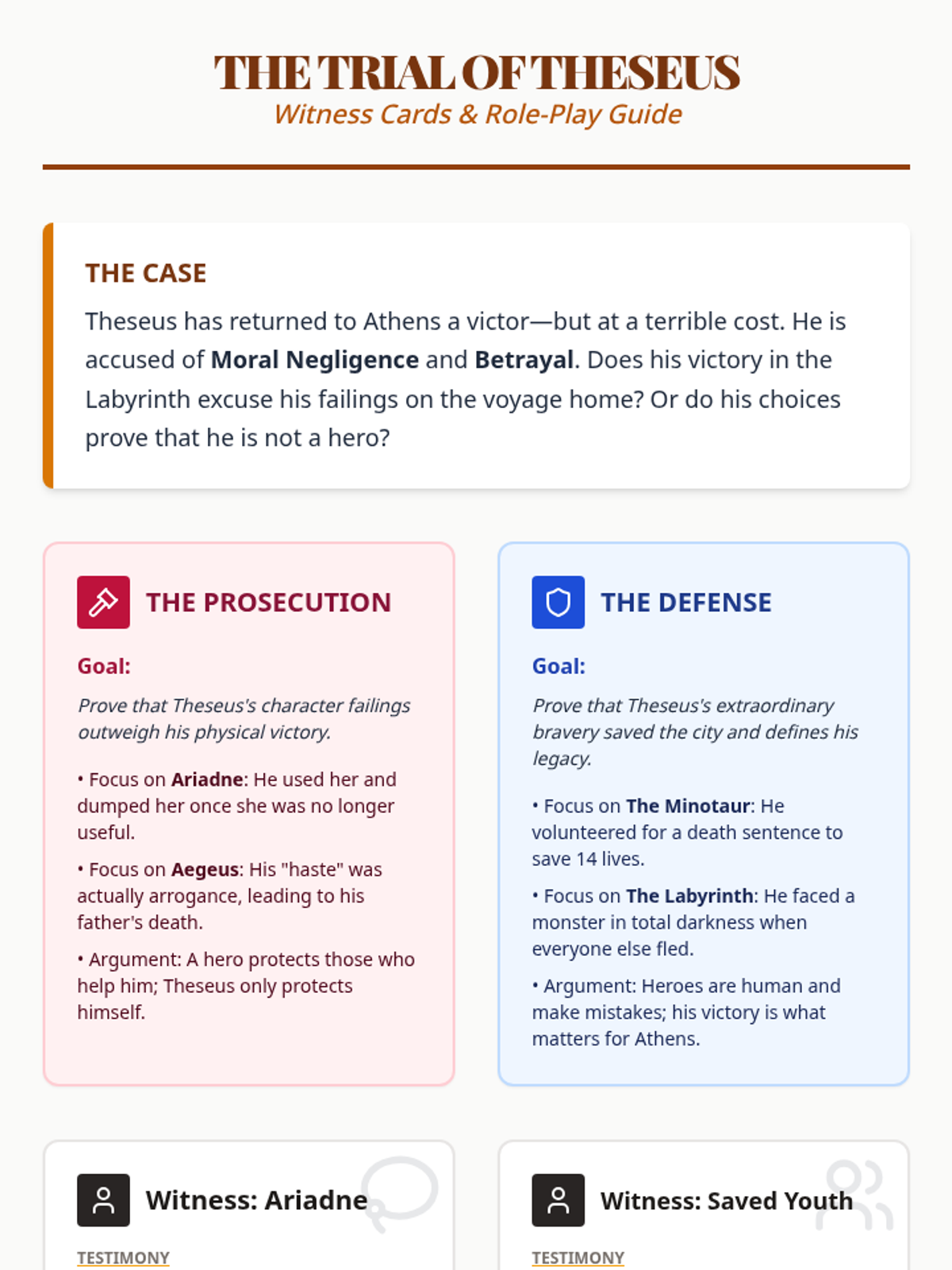
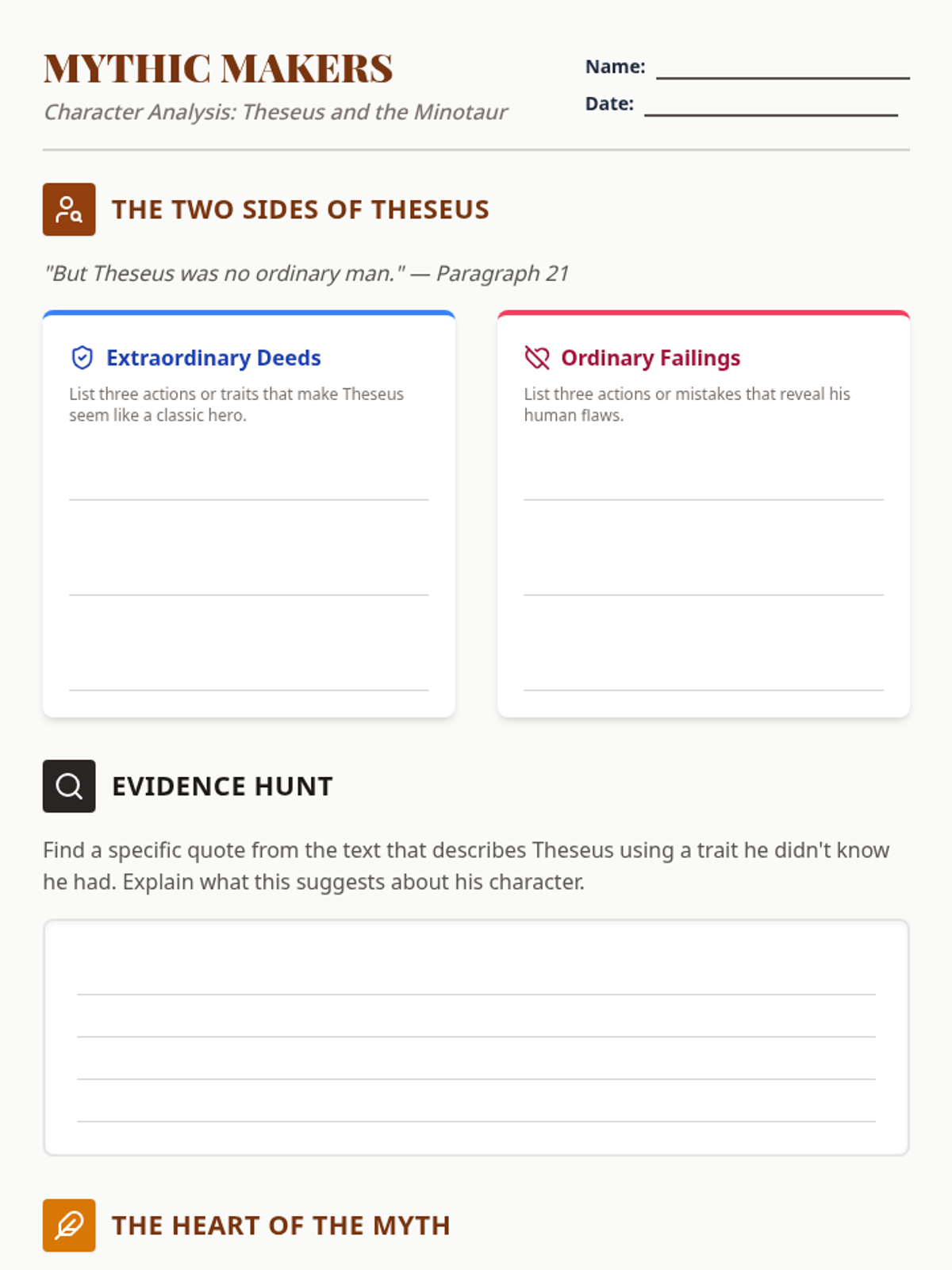
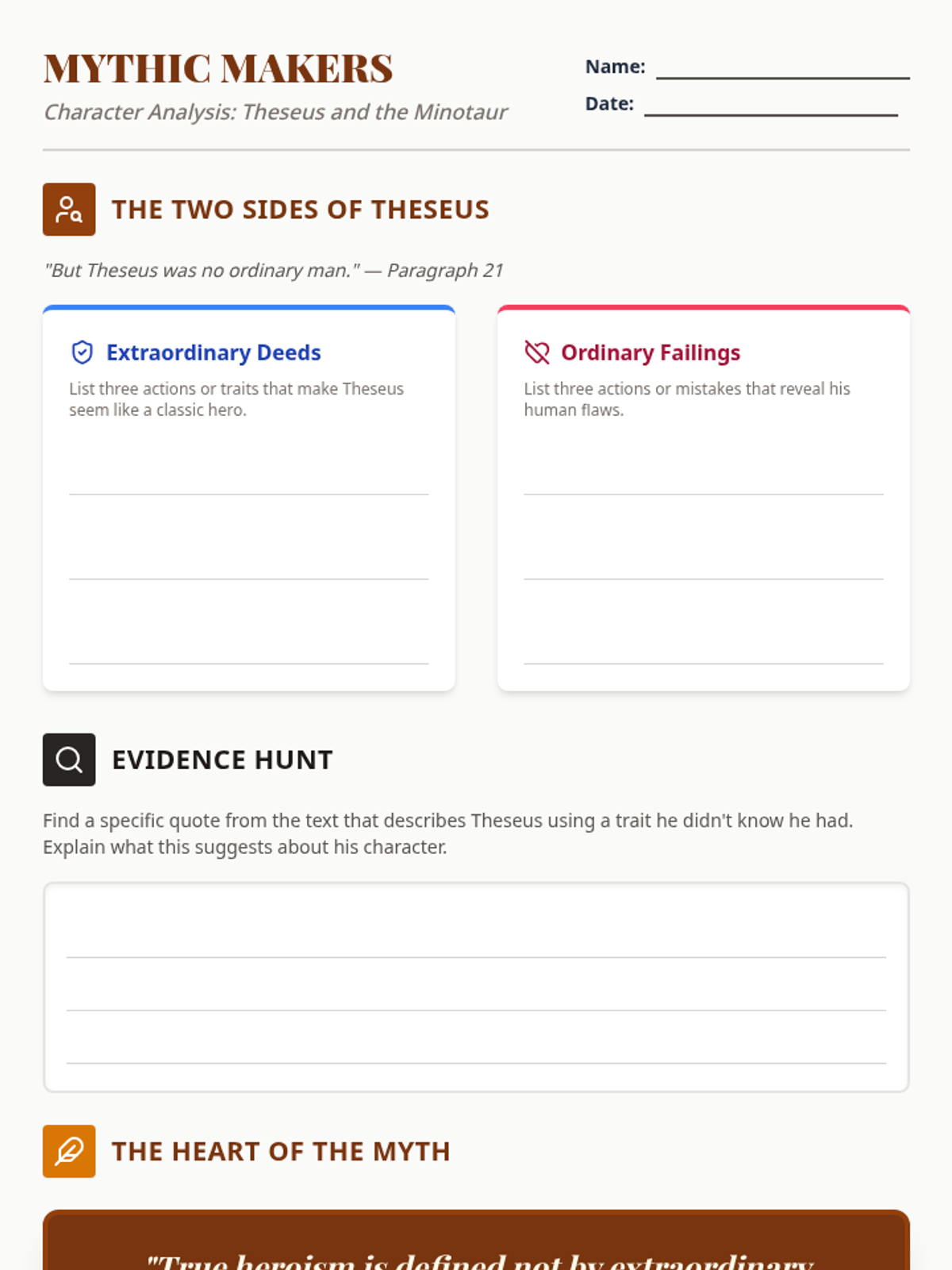
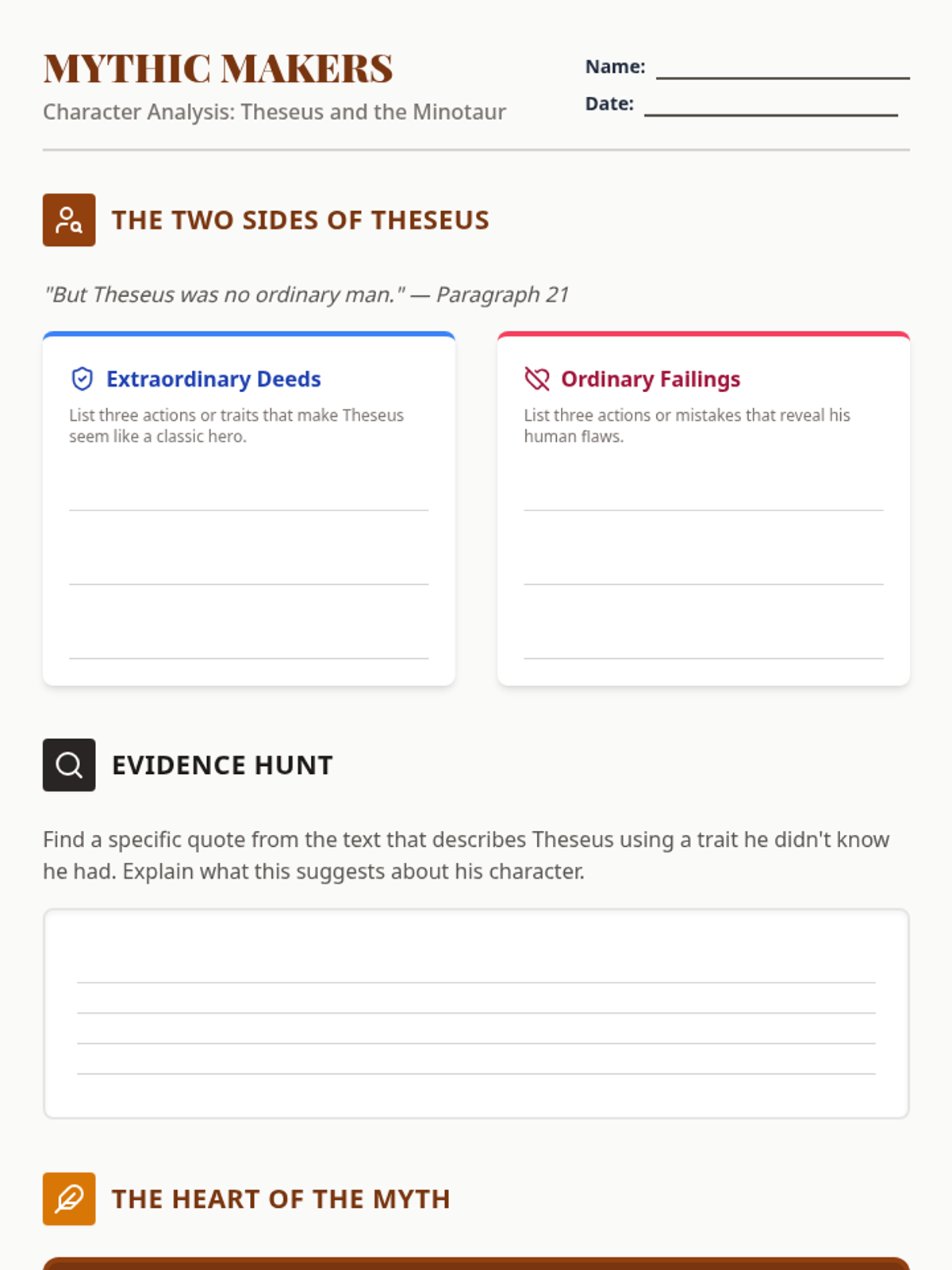
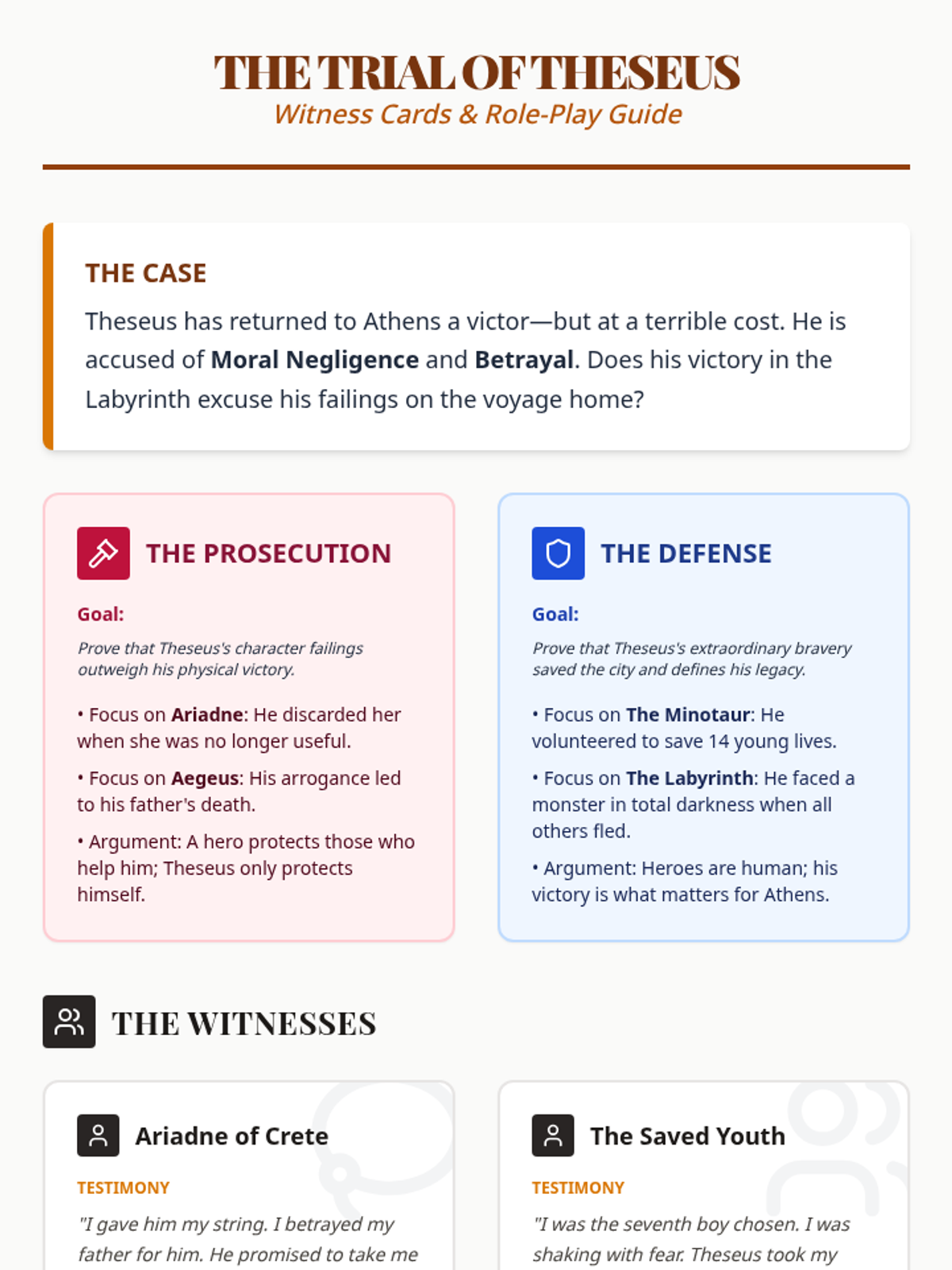
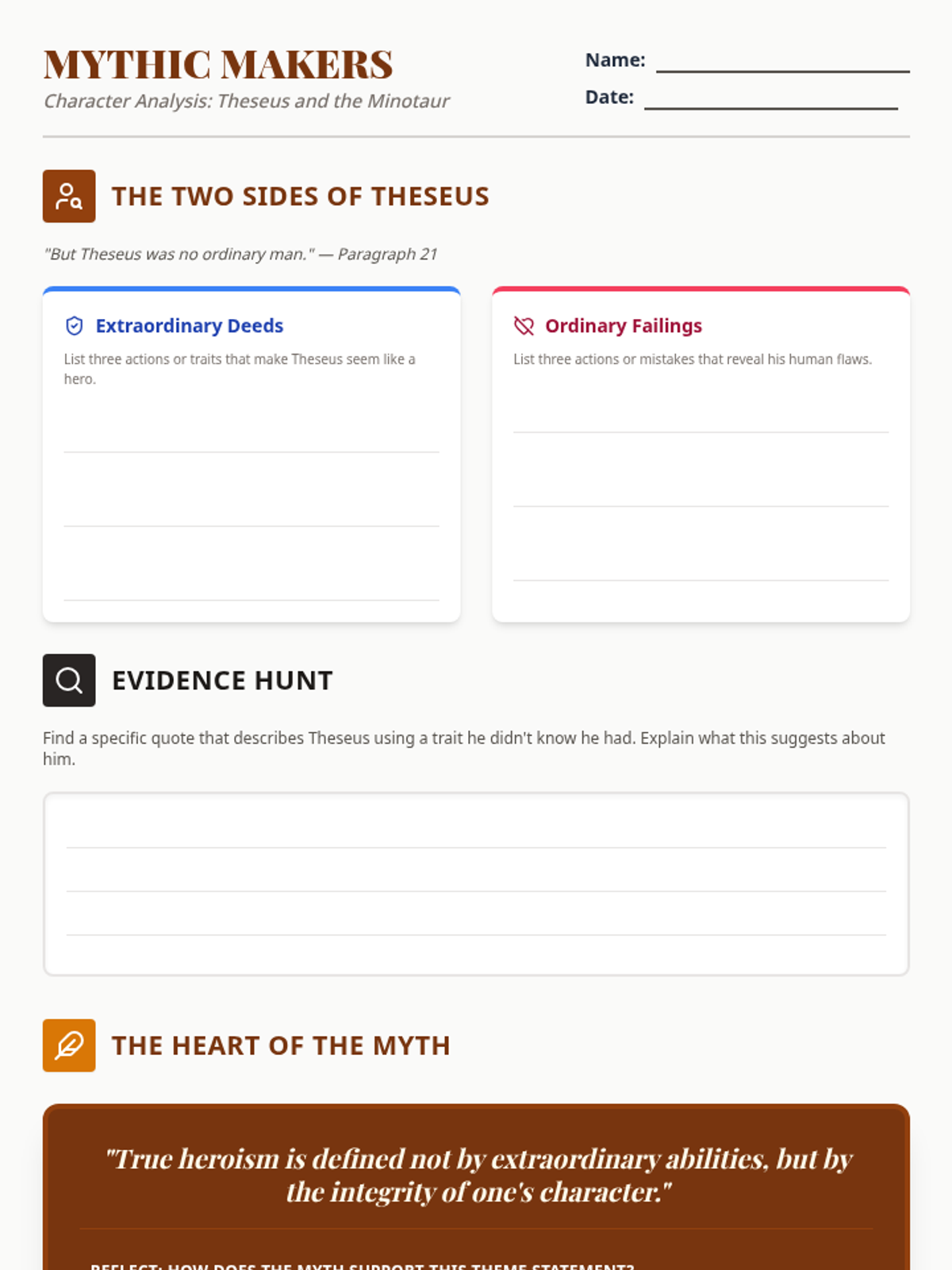
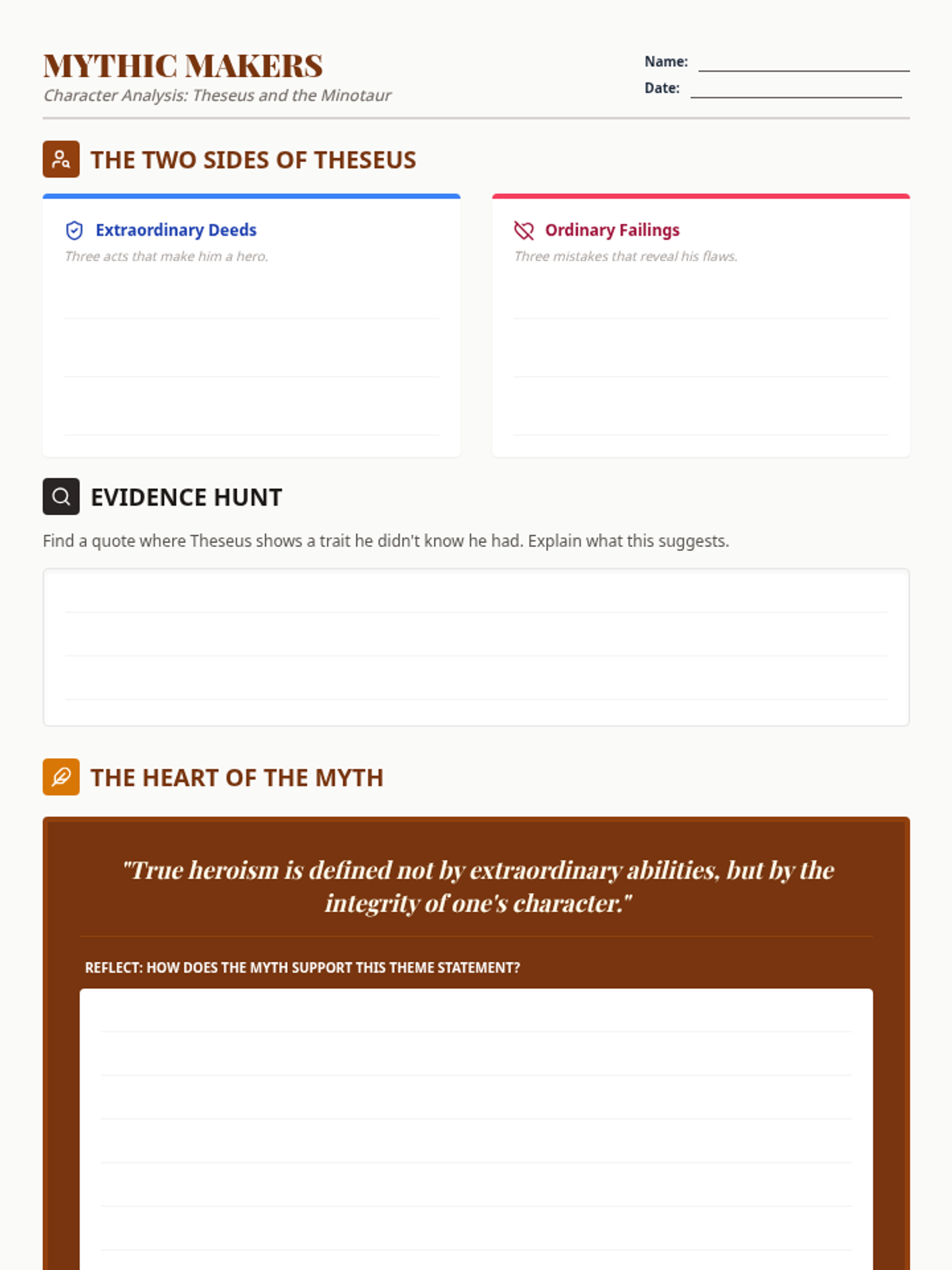
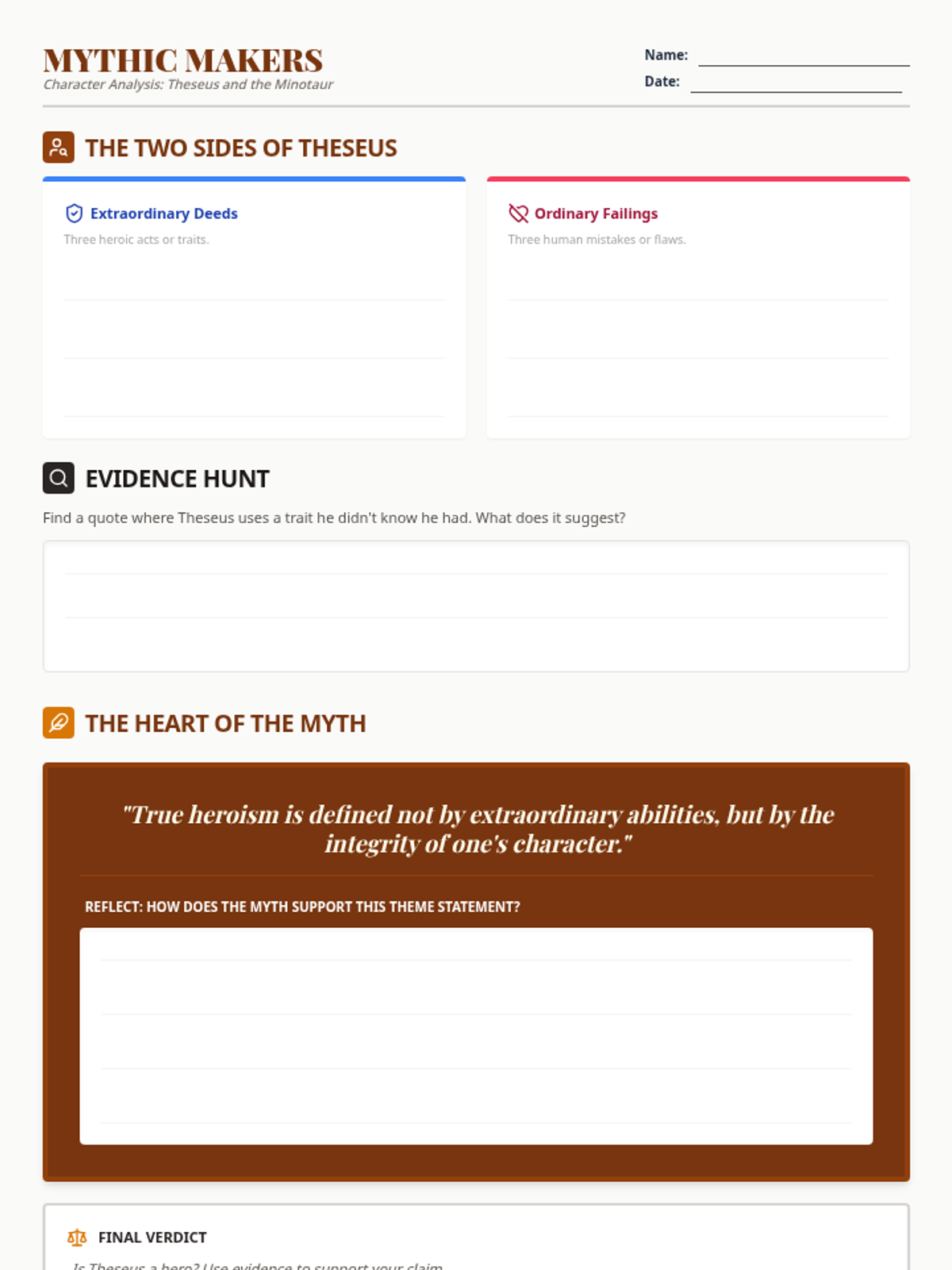
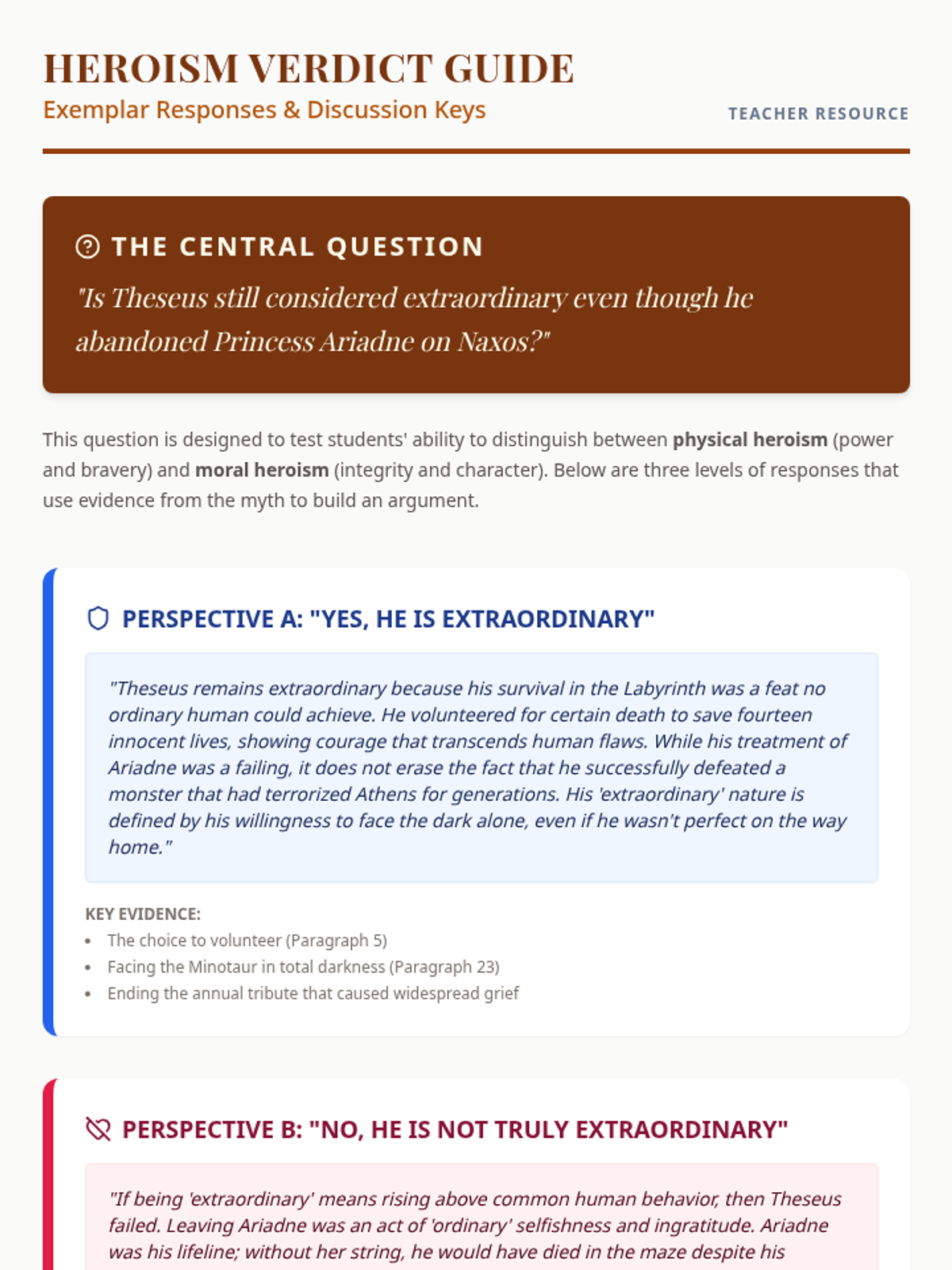
A deep dive into the myth of Theseus and the Minotaur, exploring the duality of heroism and what it truly means to be extraordinary. Students analyze Theseus's brave actions alongside his moral failings to develop a nuanced understanding of character.
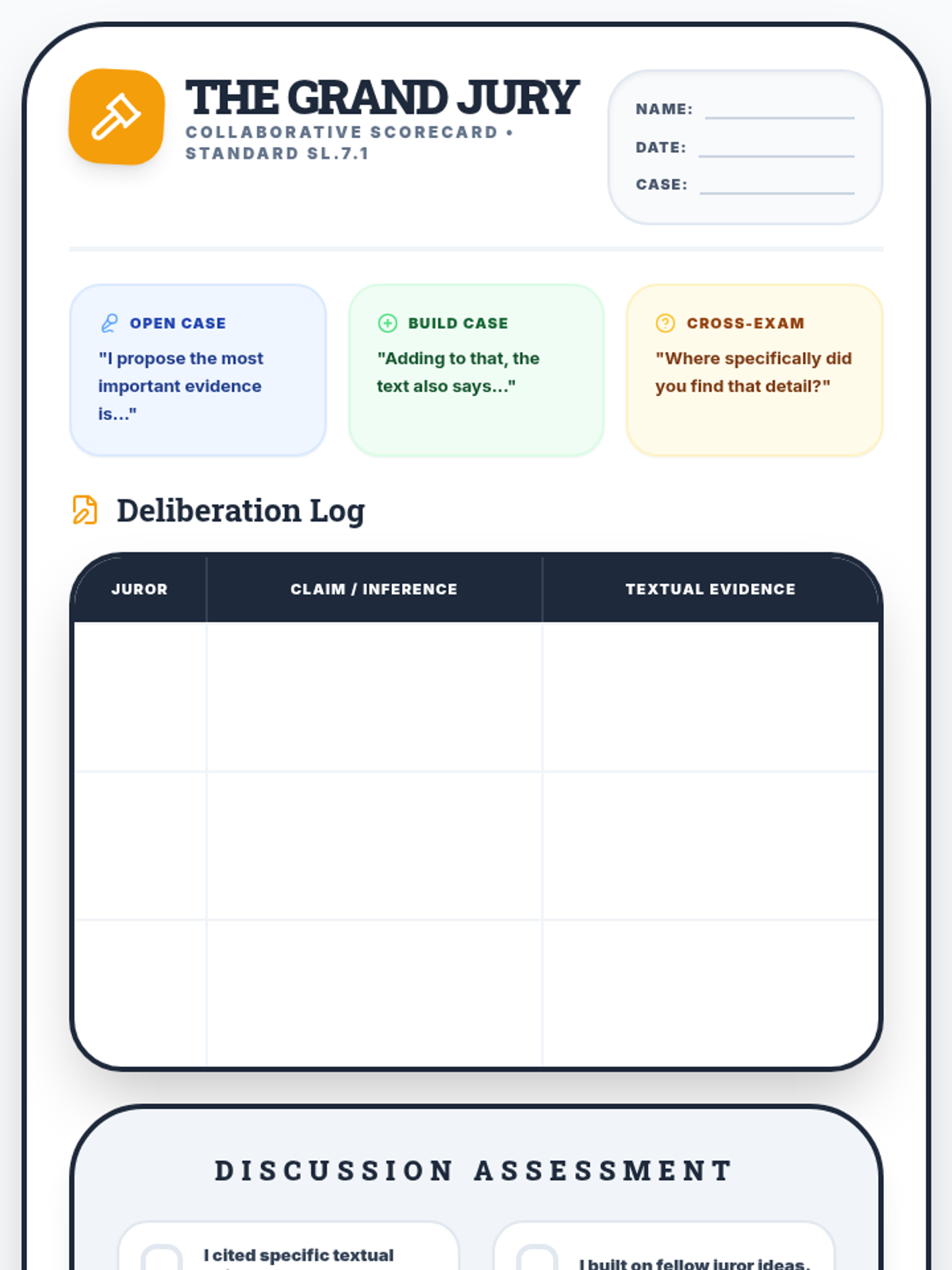
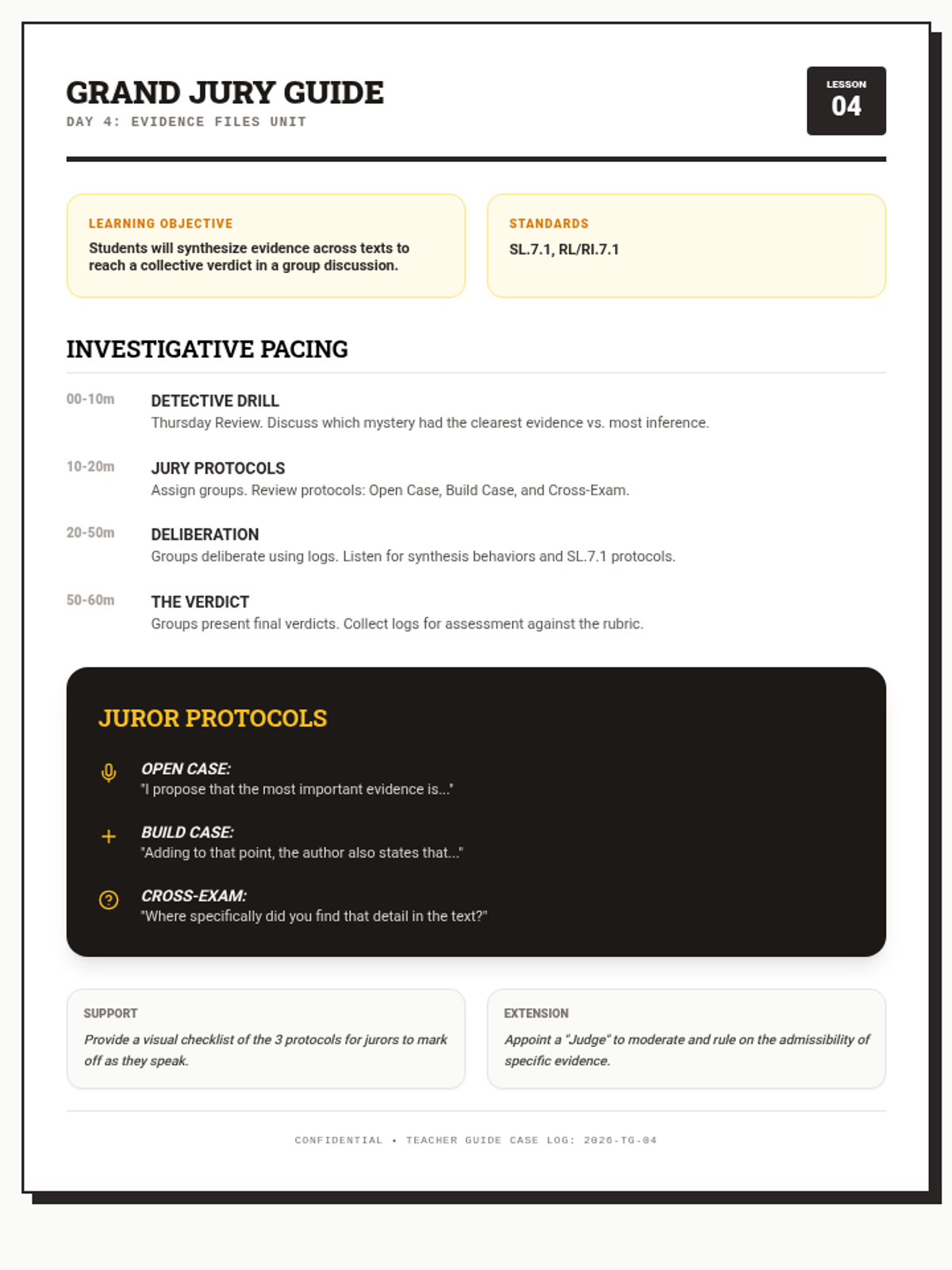
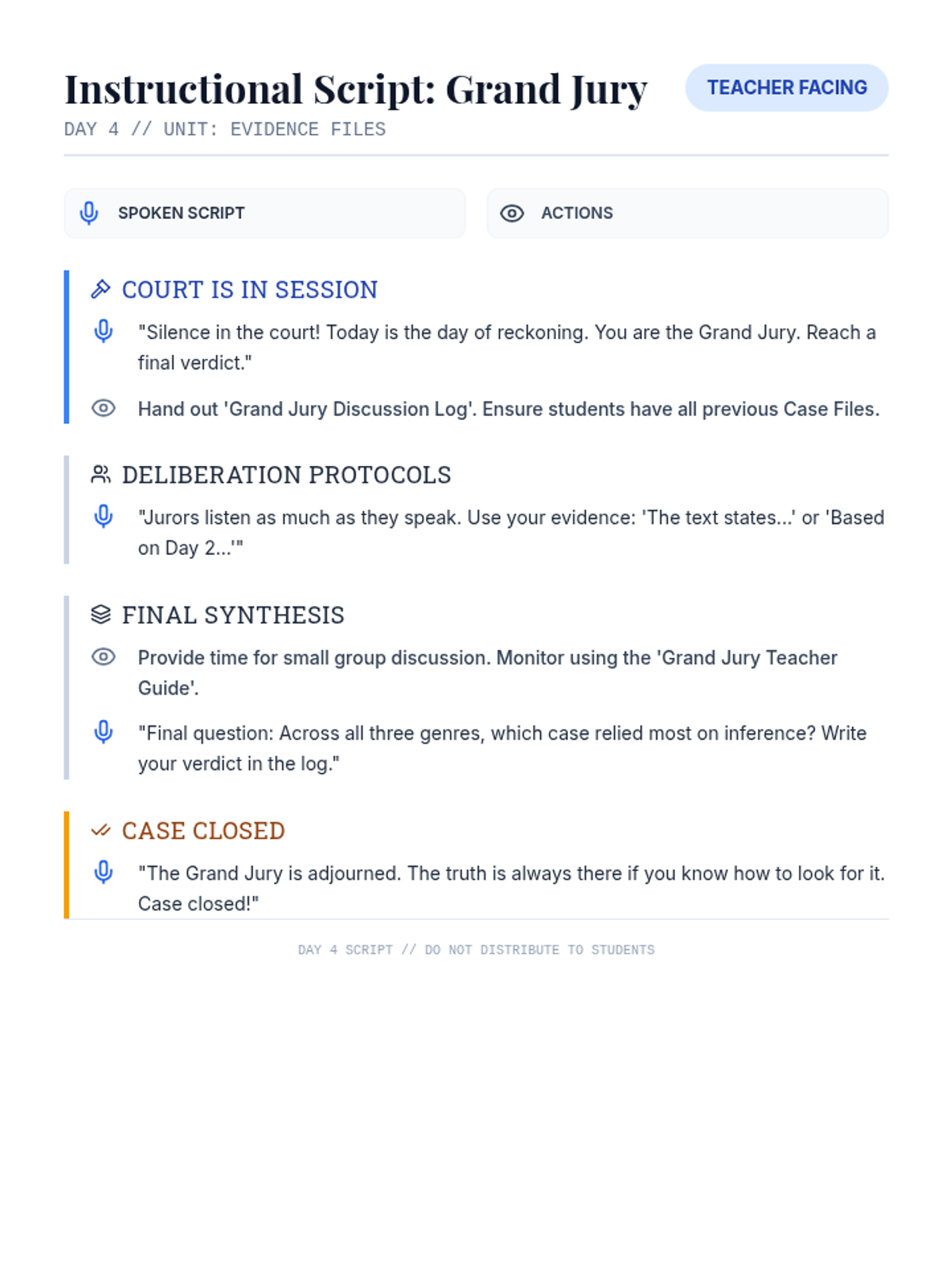
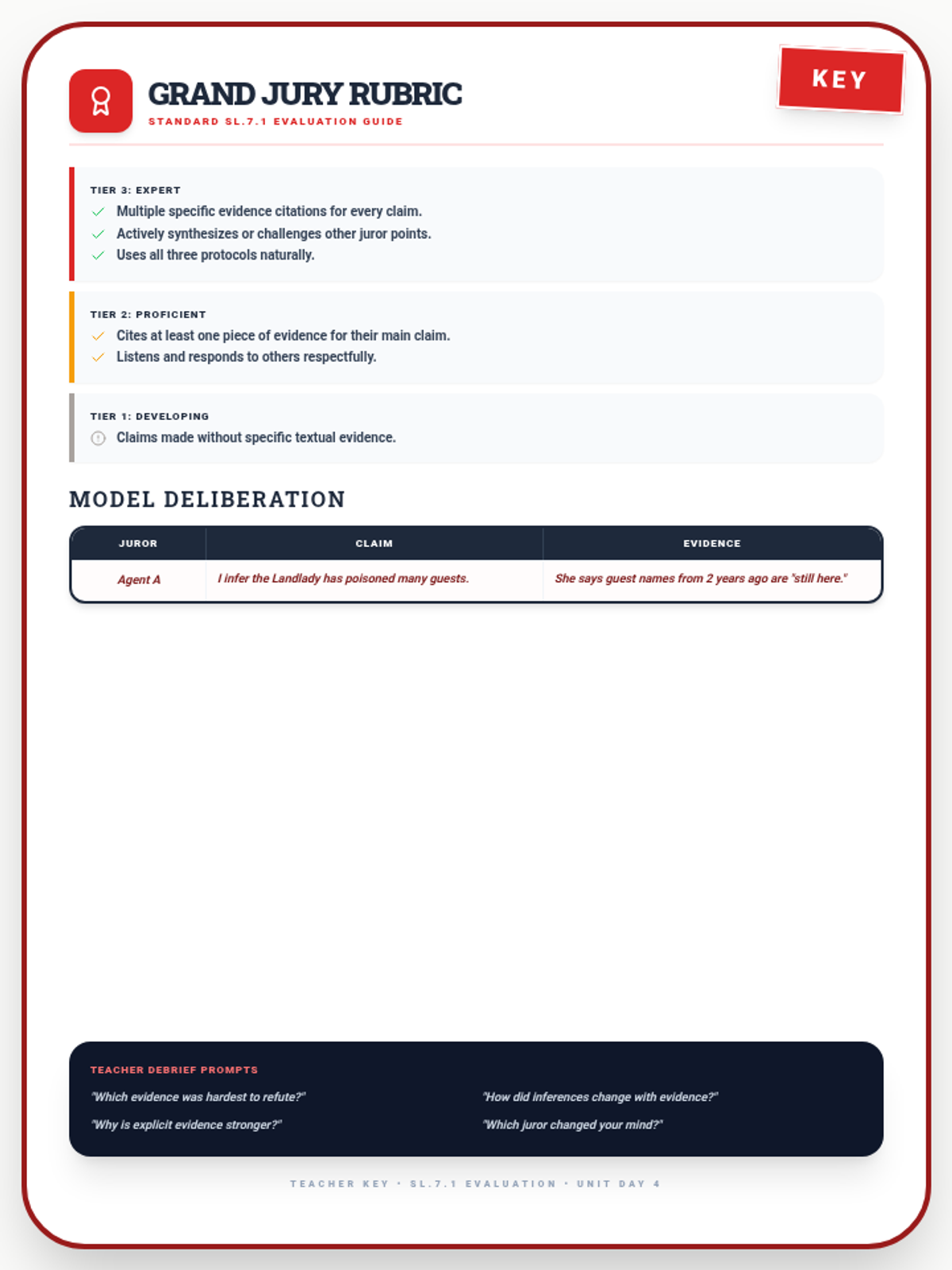
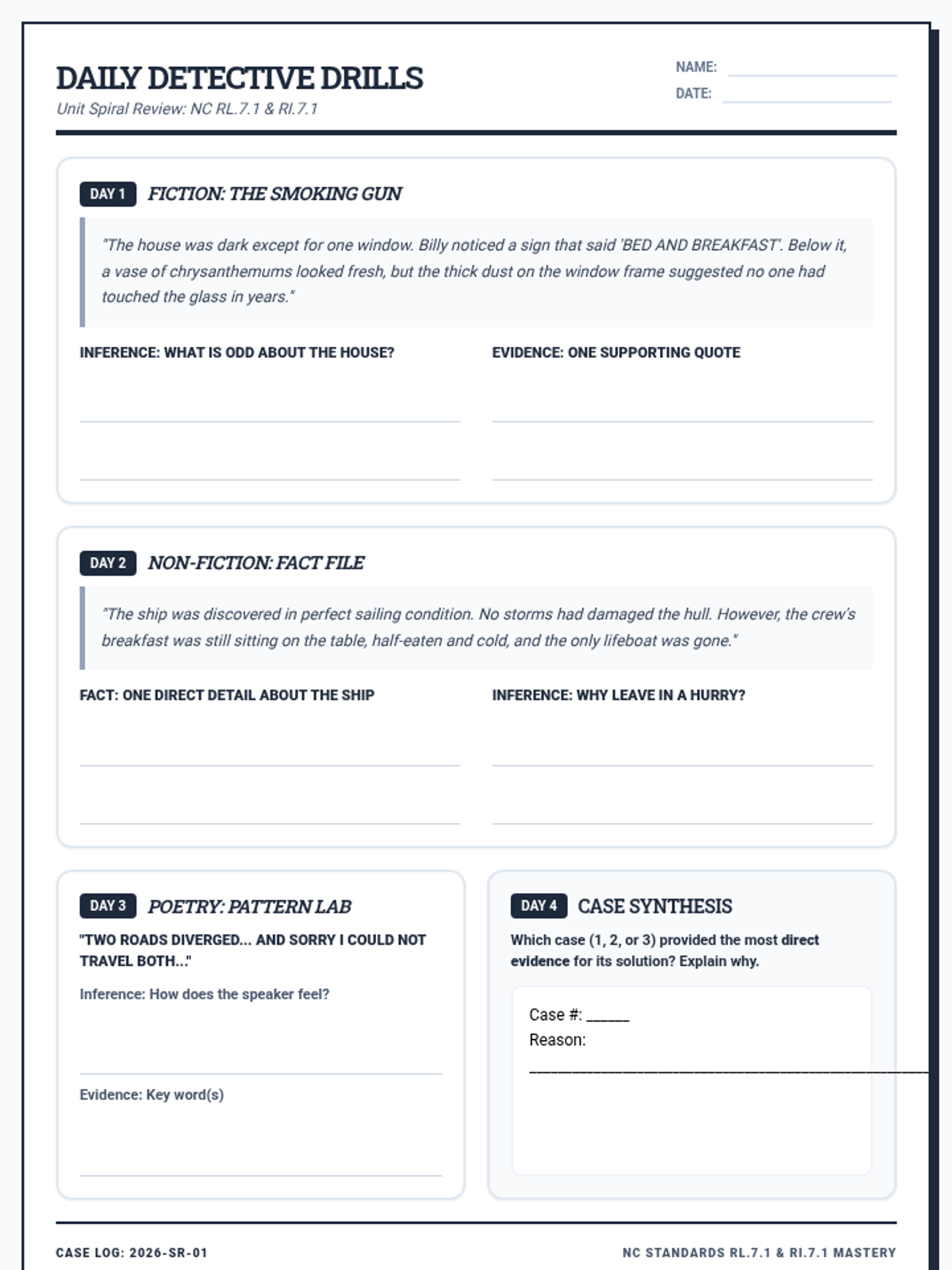
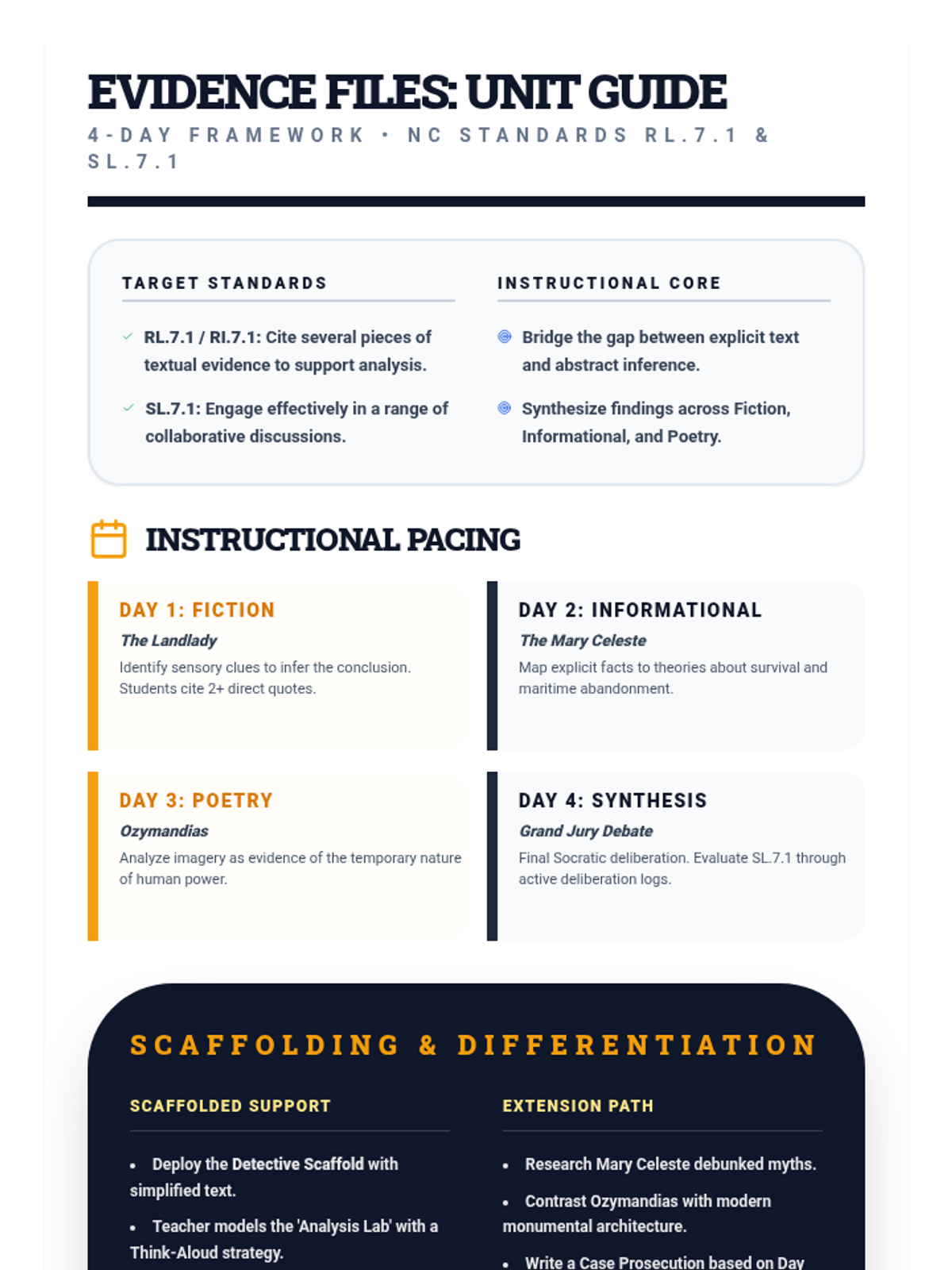
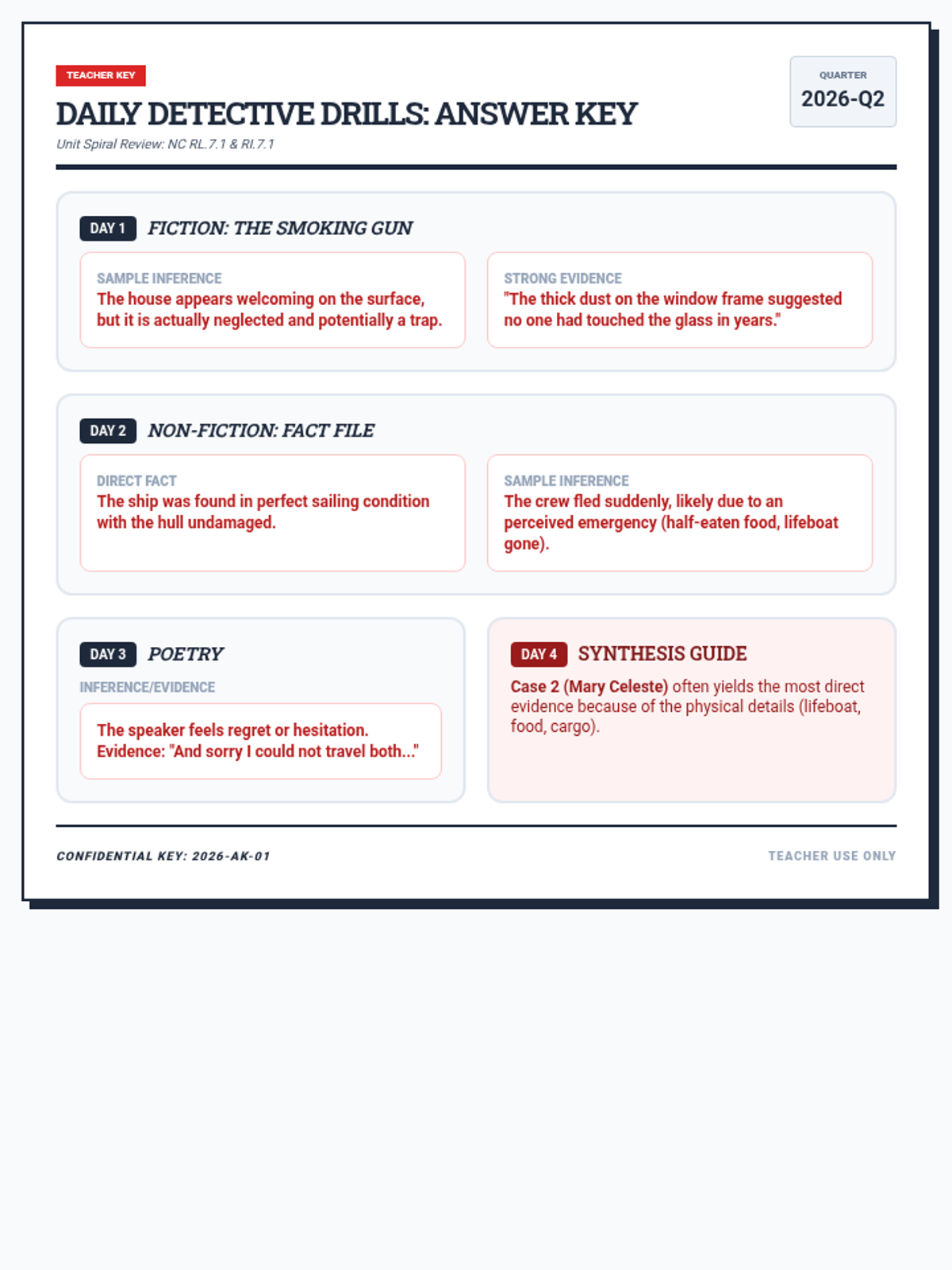
Day 4: Students participate in a 'Grand Jury' collaborative discussion to synthesize their evidence from the week and reach a final verdict on the unit's key texts.
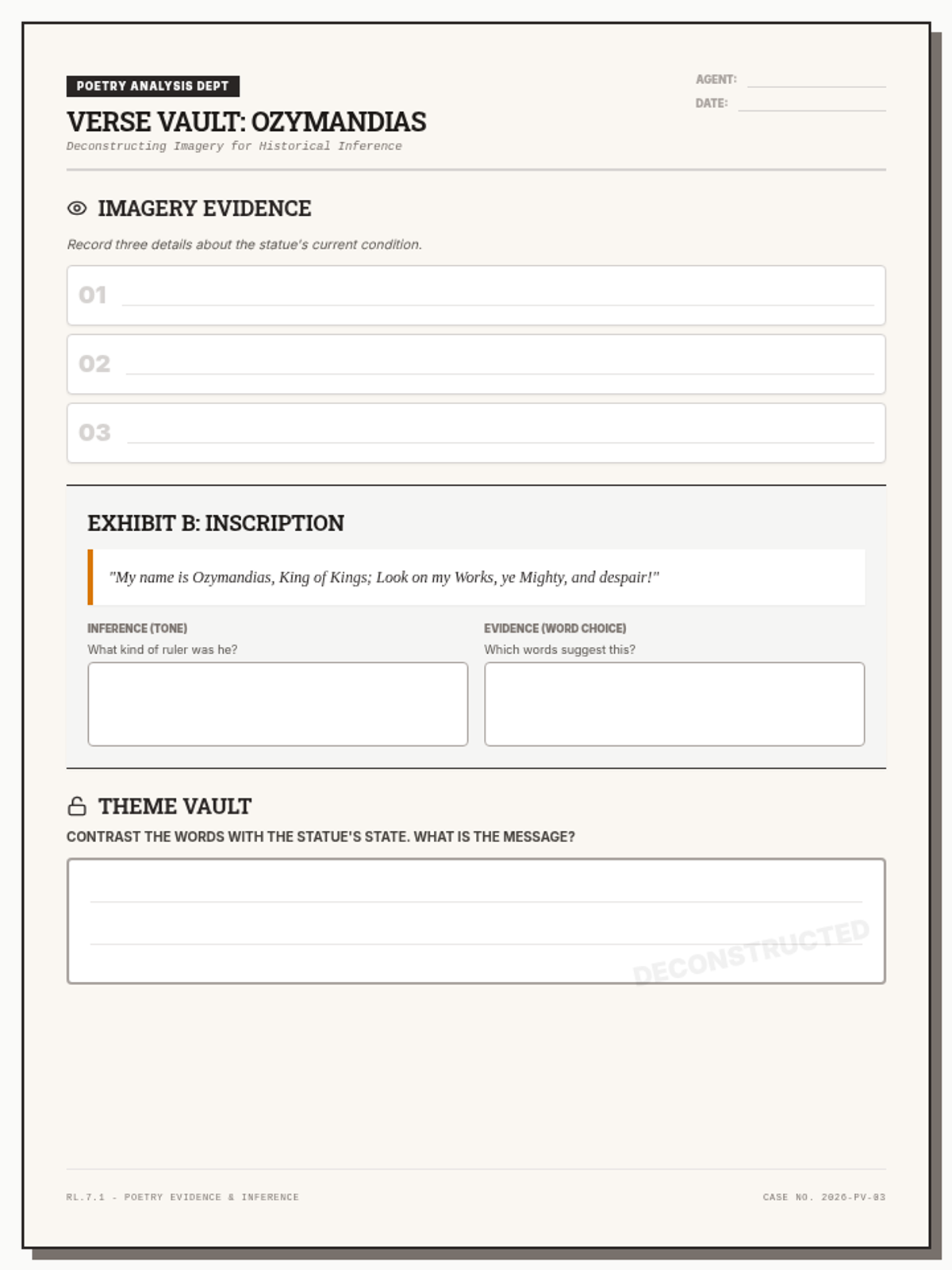
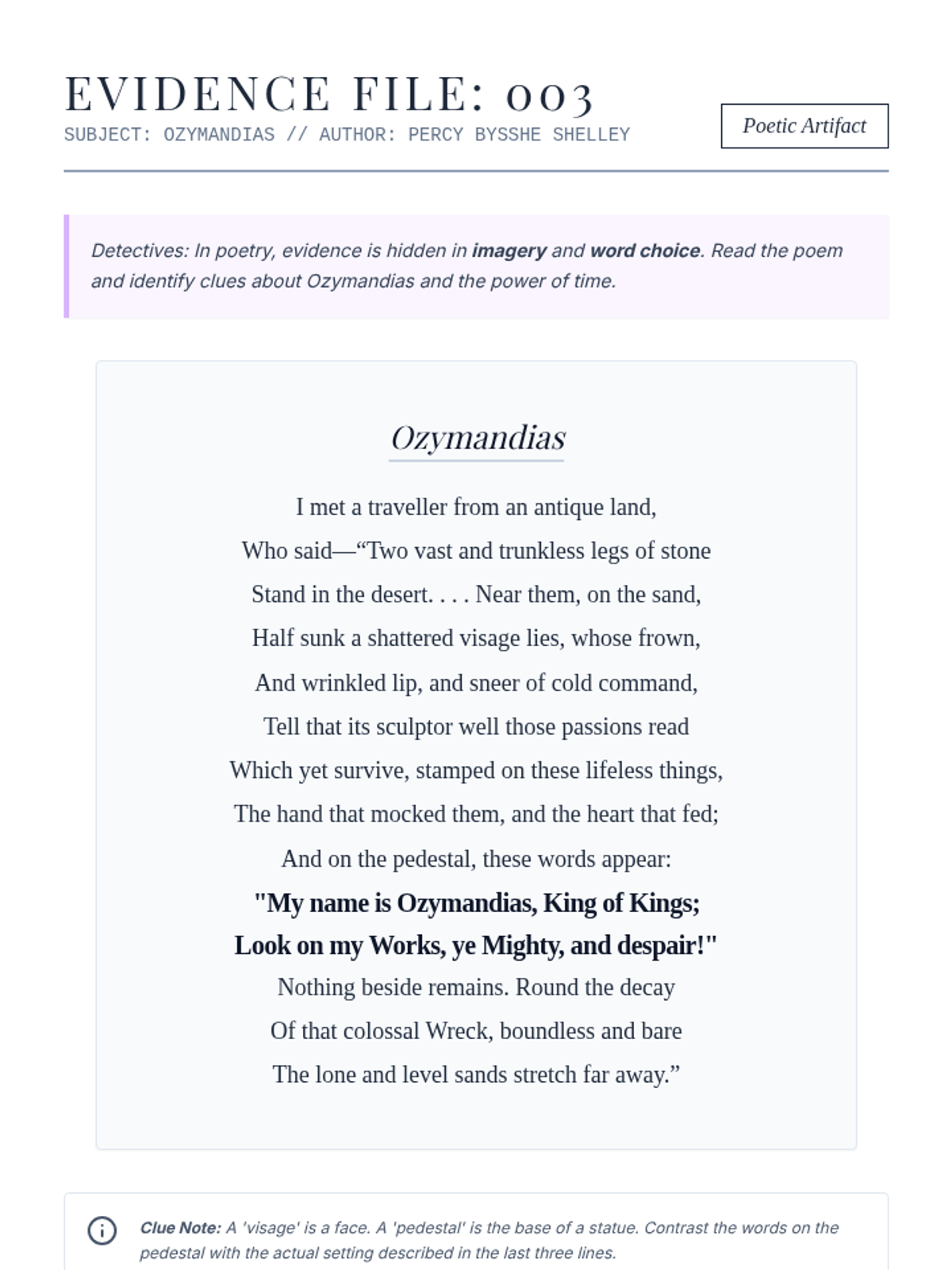
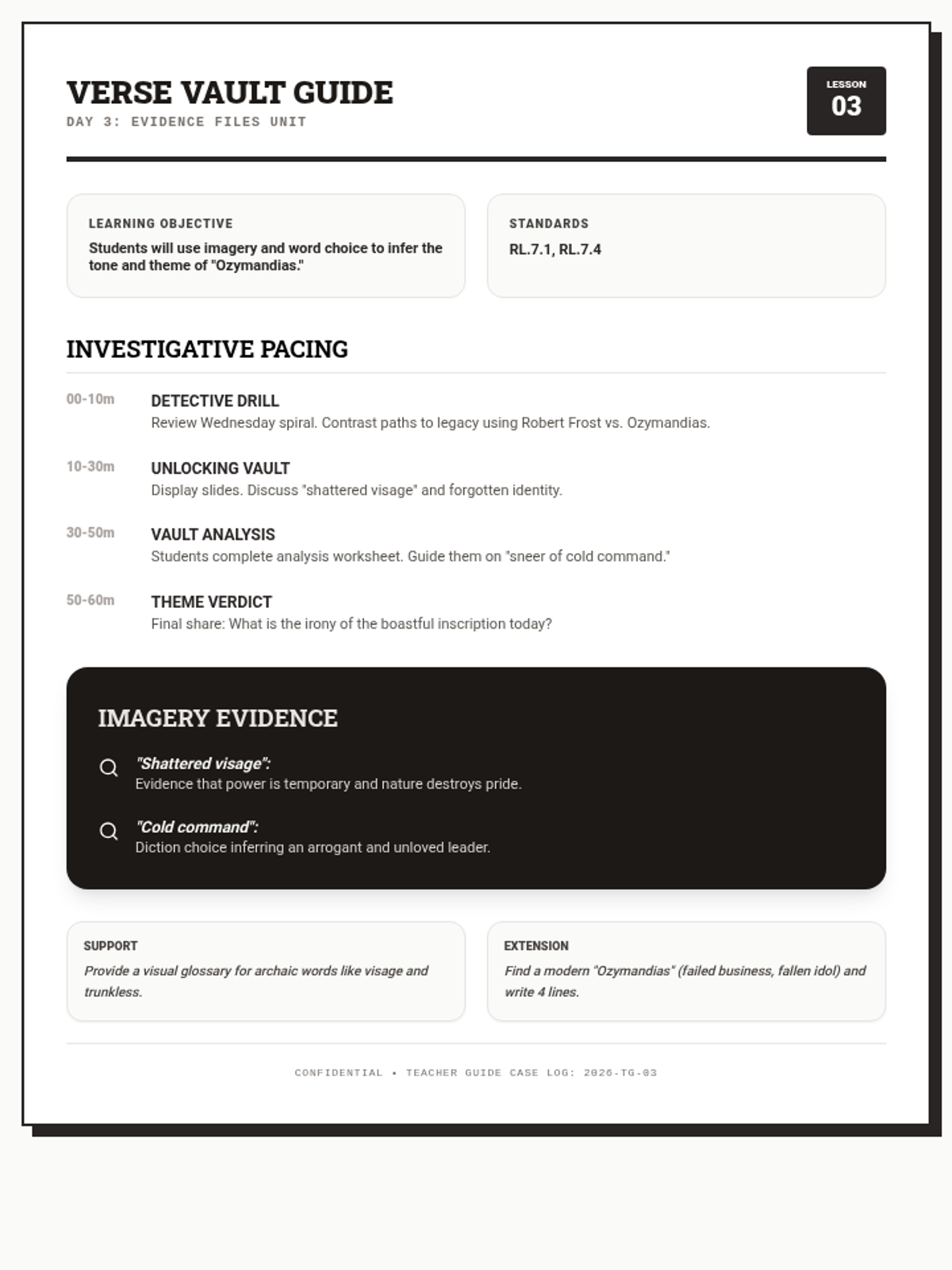
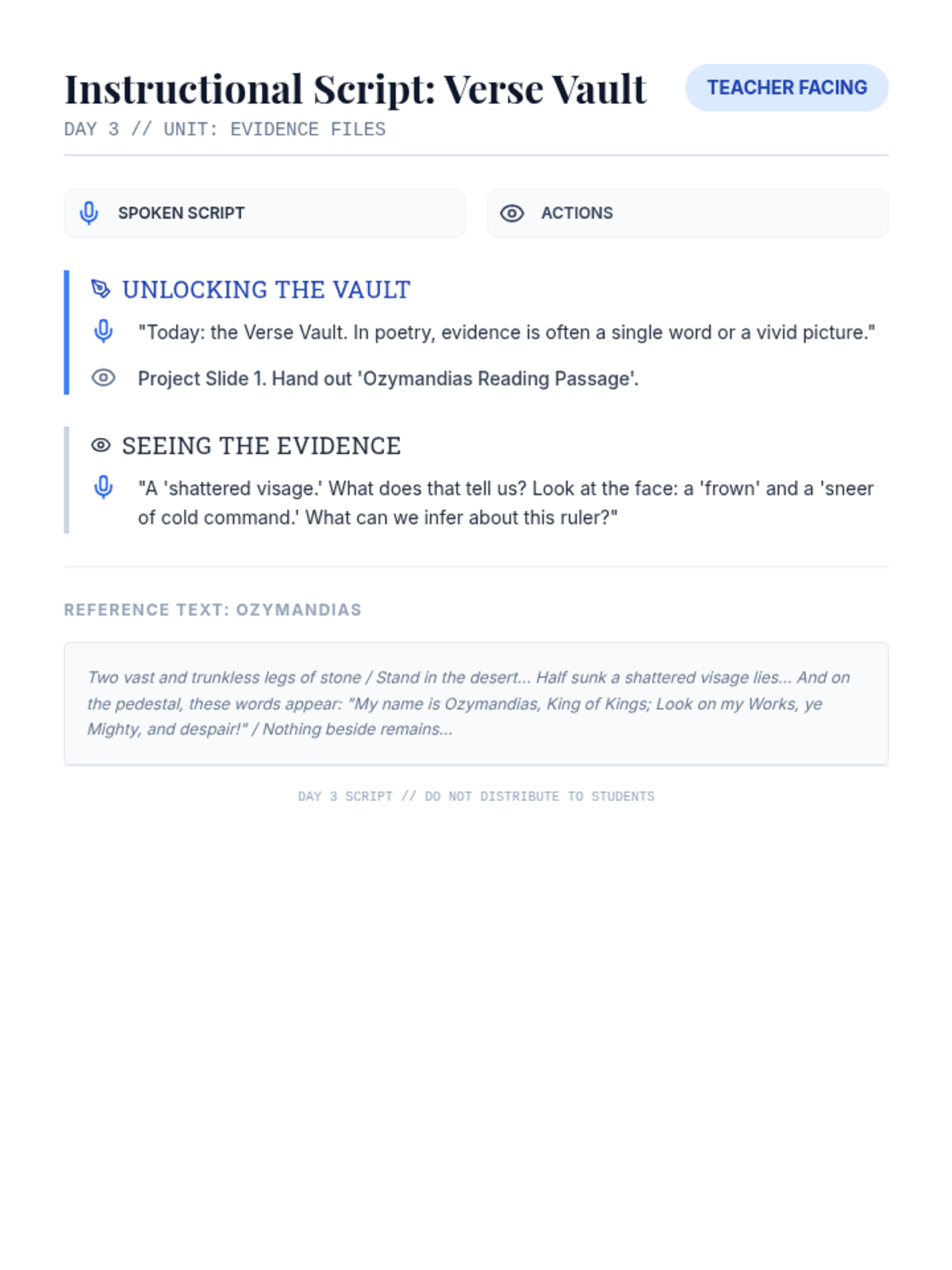
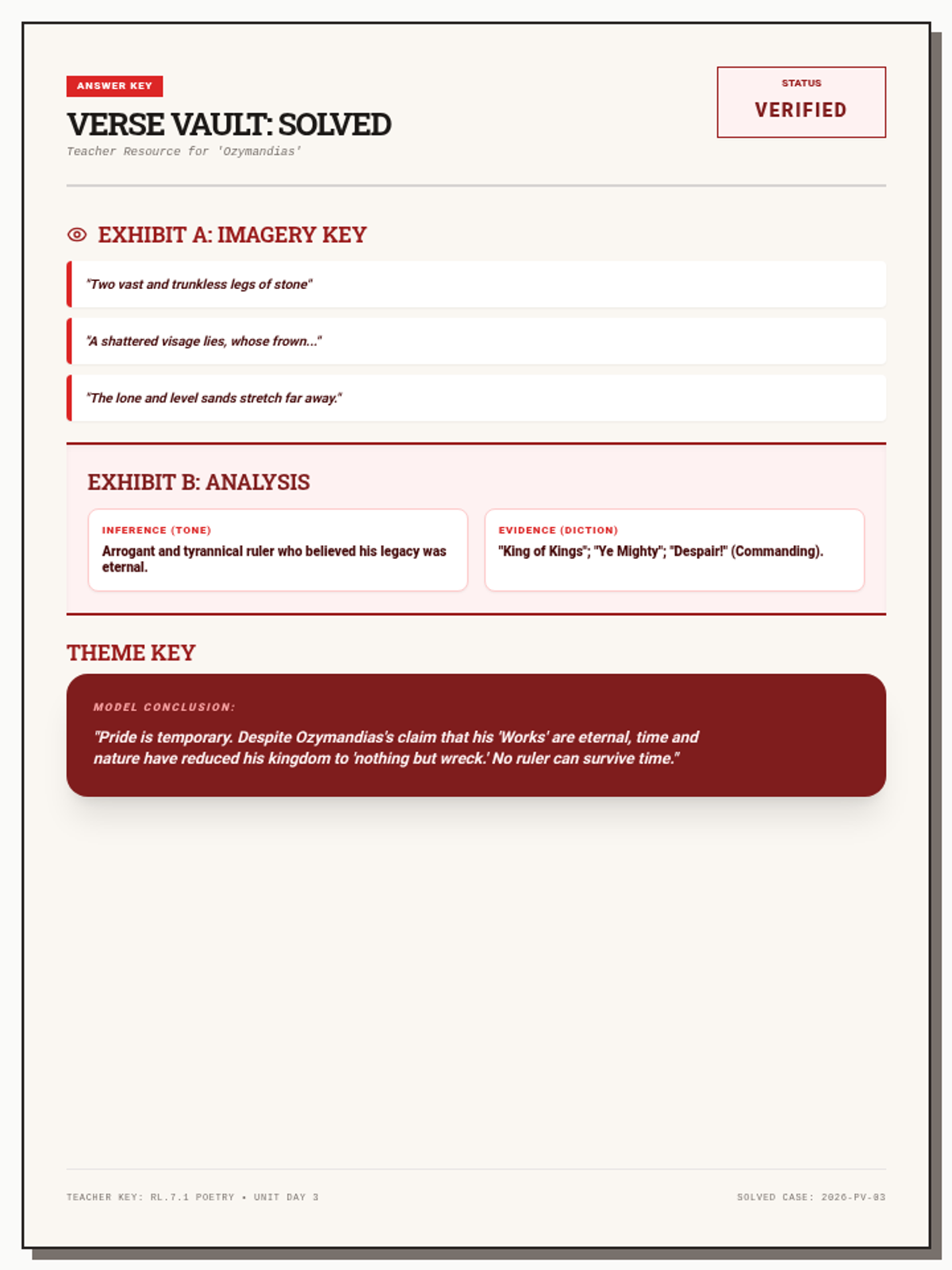
Day 3: Students dive into 'Ozymandias' by Percy Bysshe Shelley, using textual evidence to infer the poem's deeper meanings about power and time.
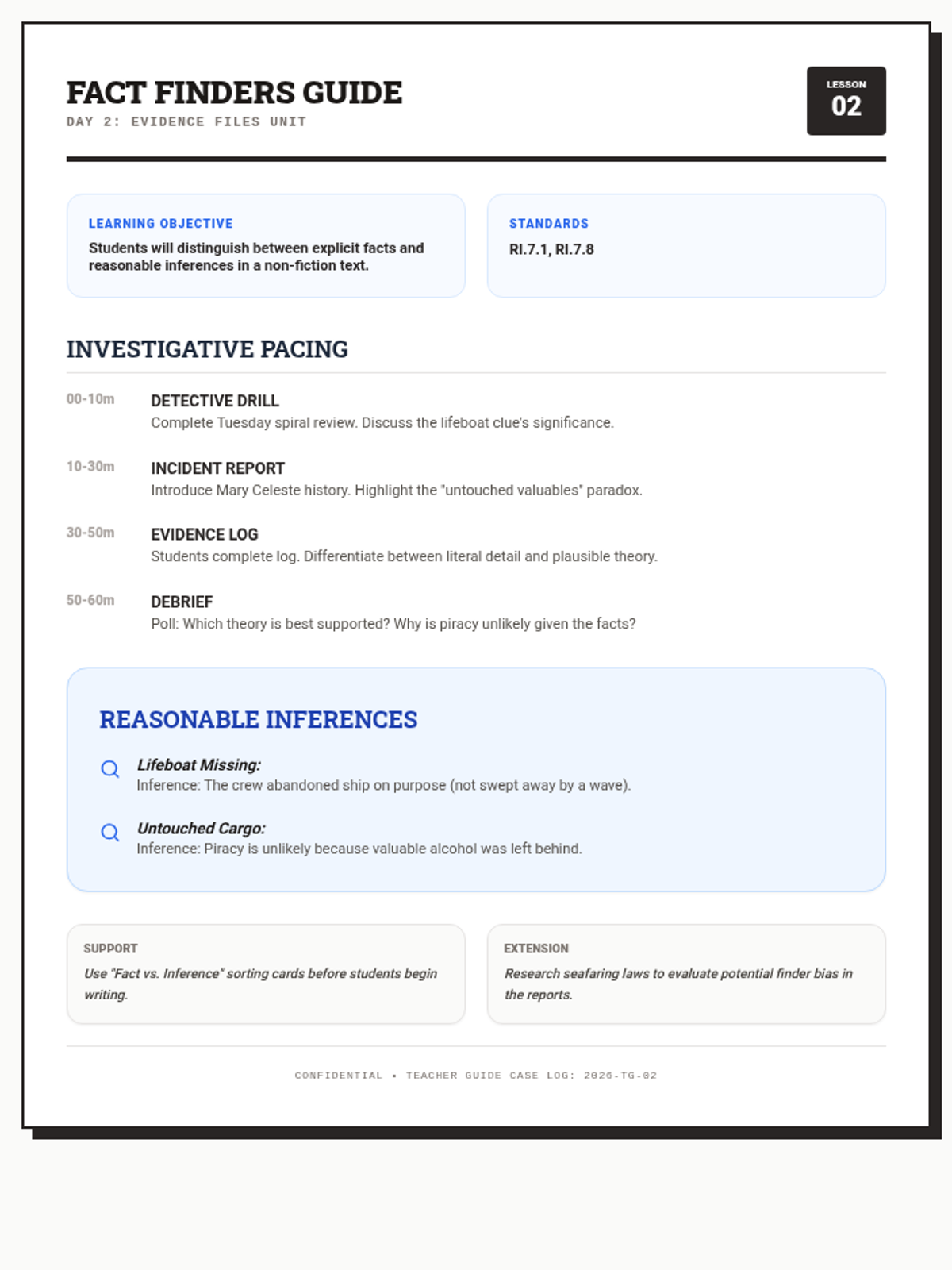
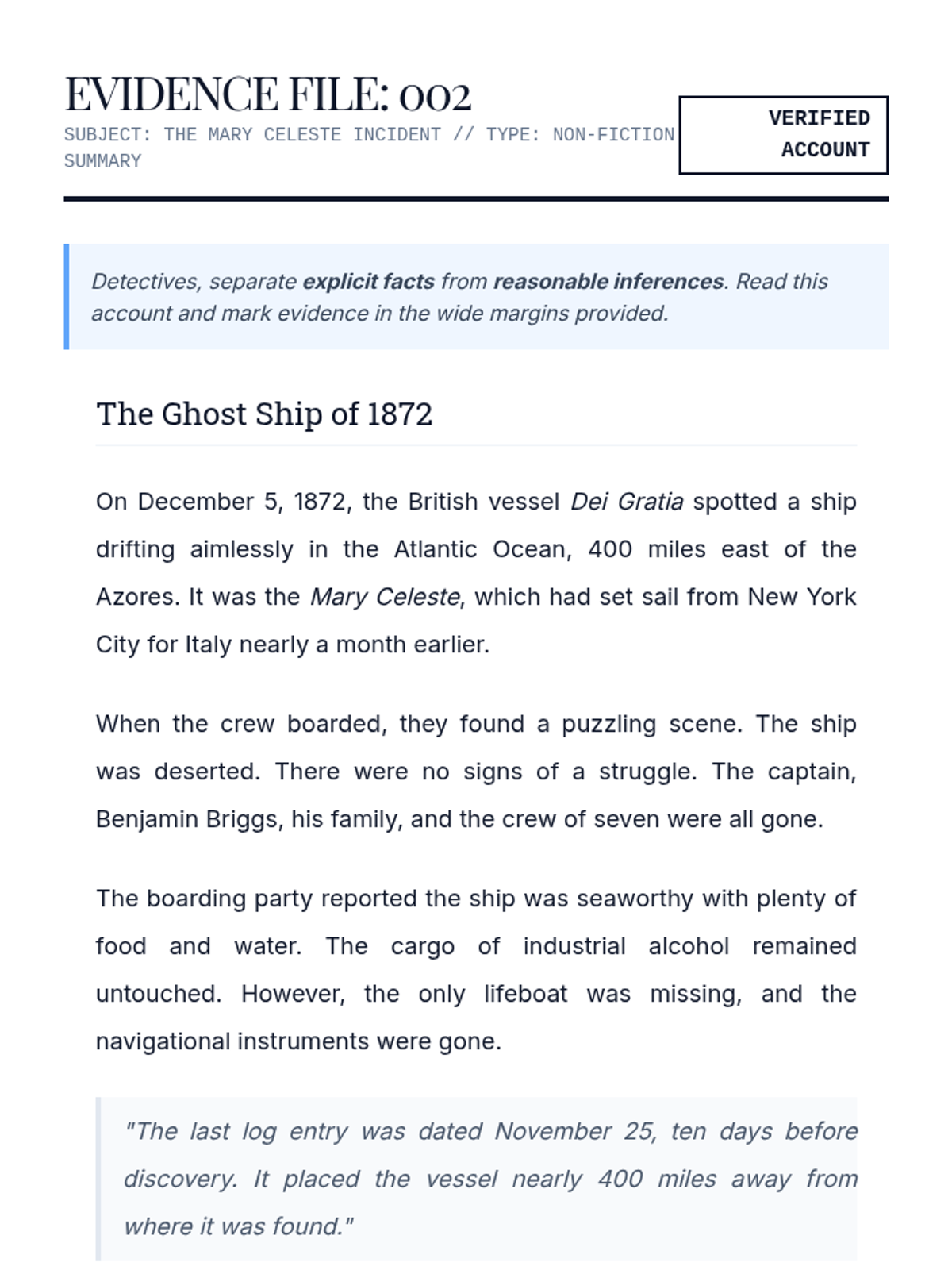
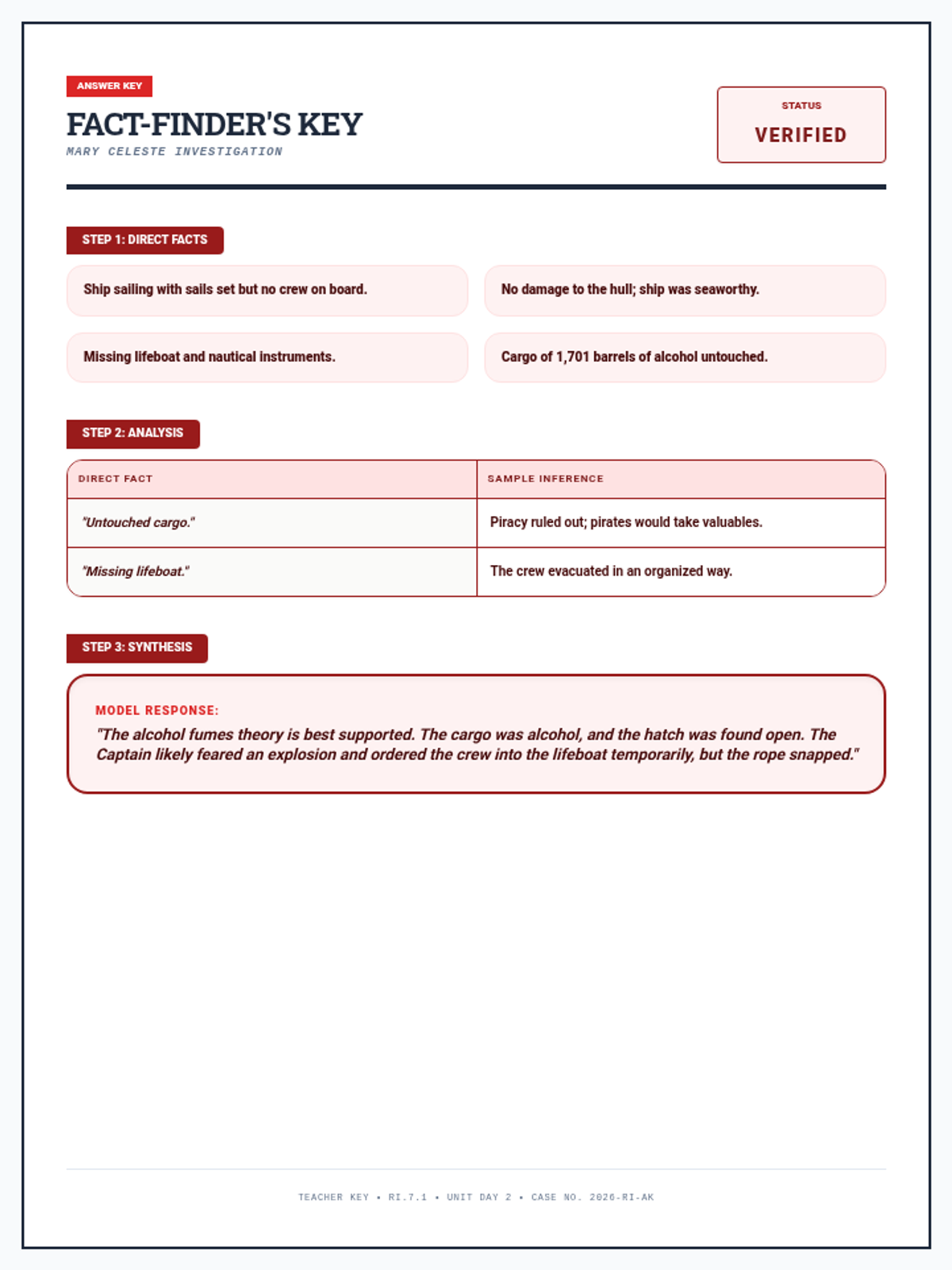
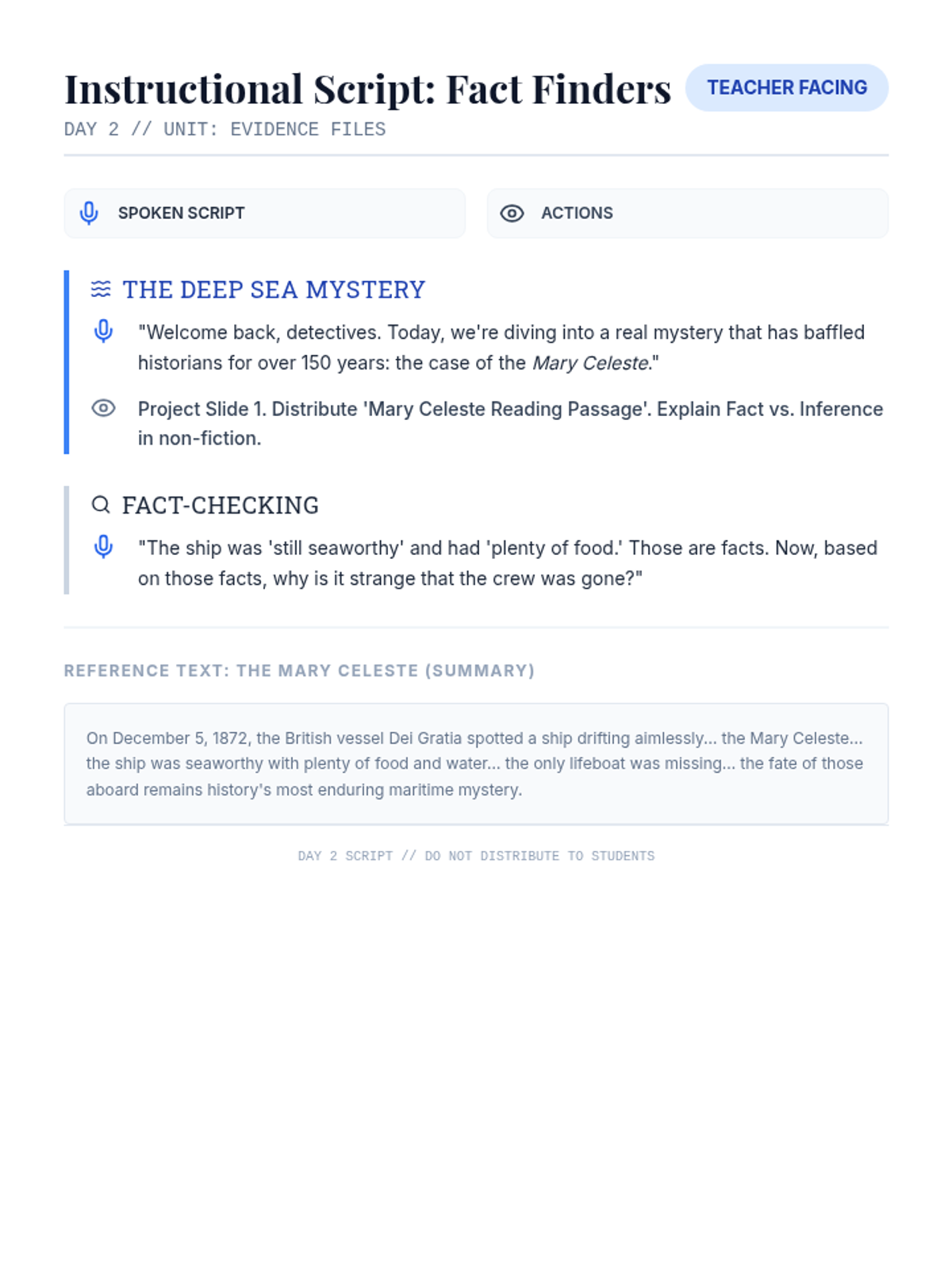
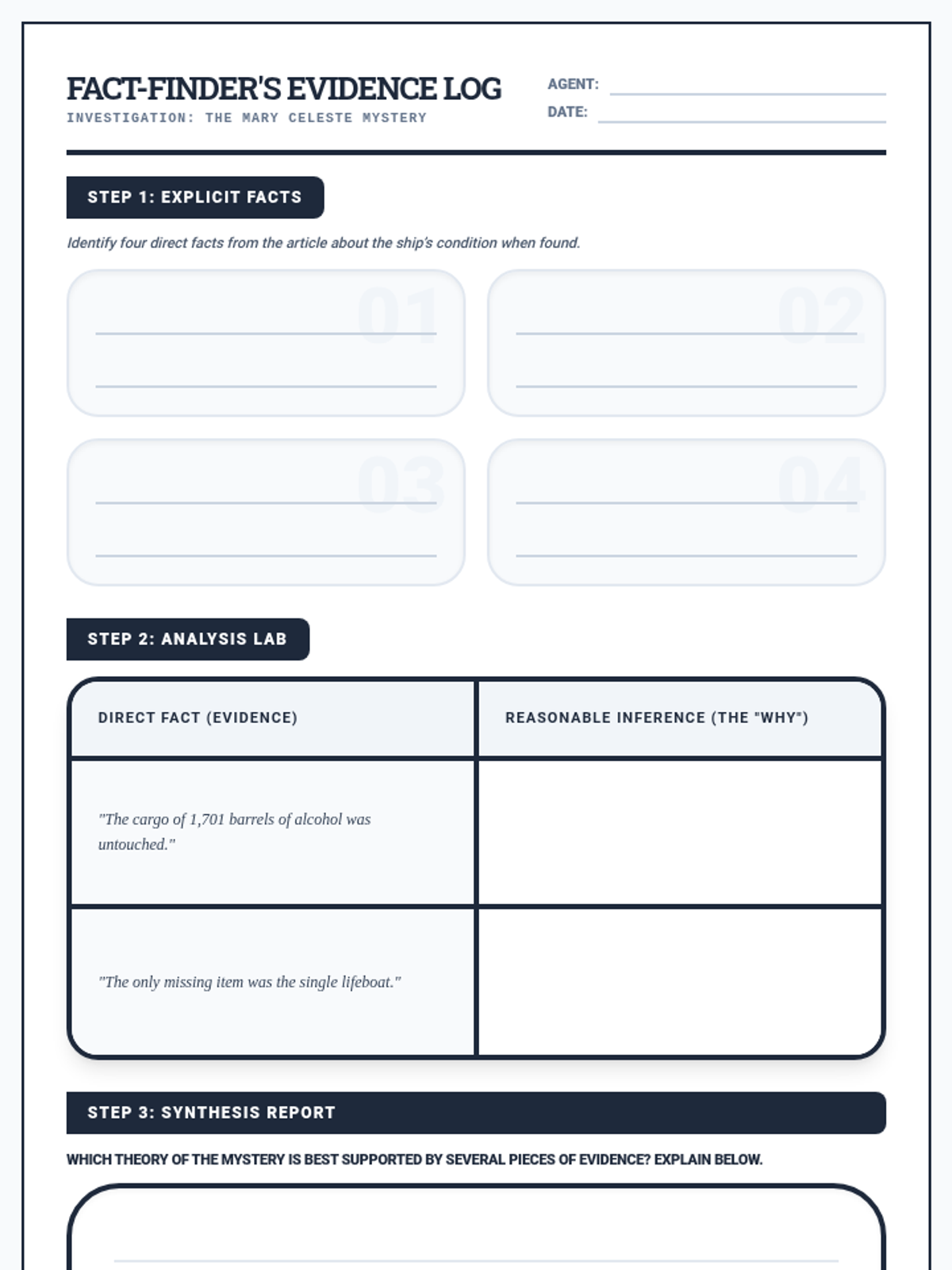
Day 2: Students examine a non-fiction article about the Mary Celeste to distinguish between explicit facts and inferences while citing several pieces of evidence.
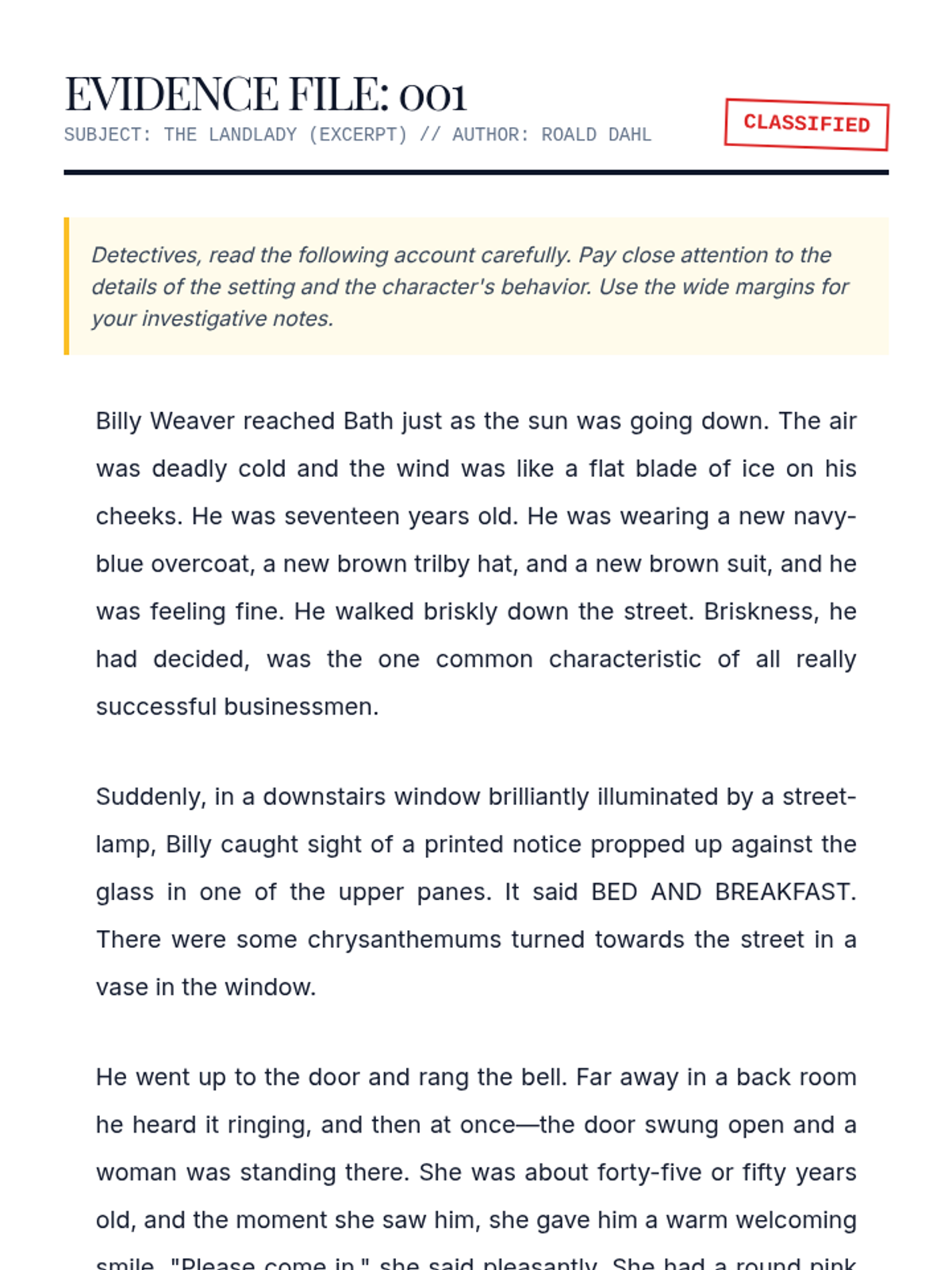
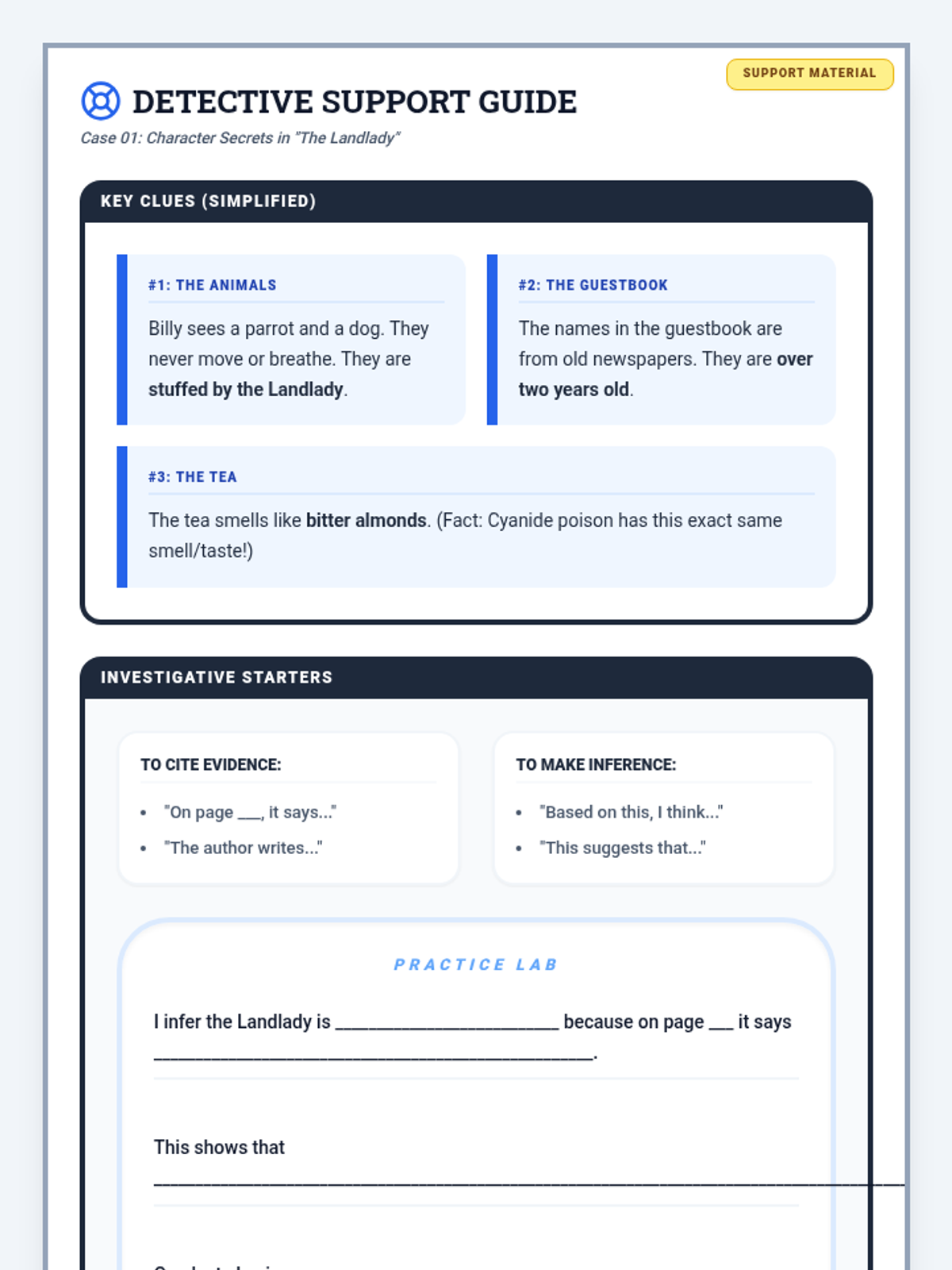
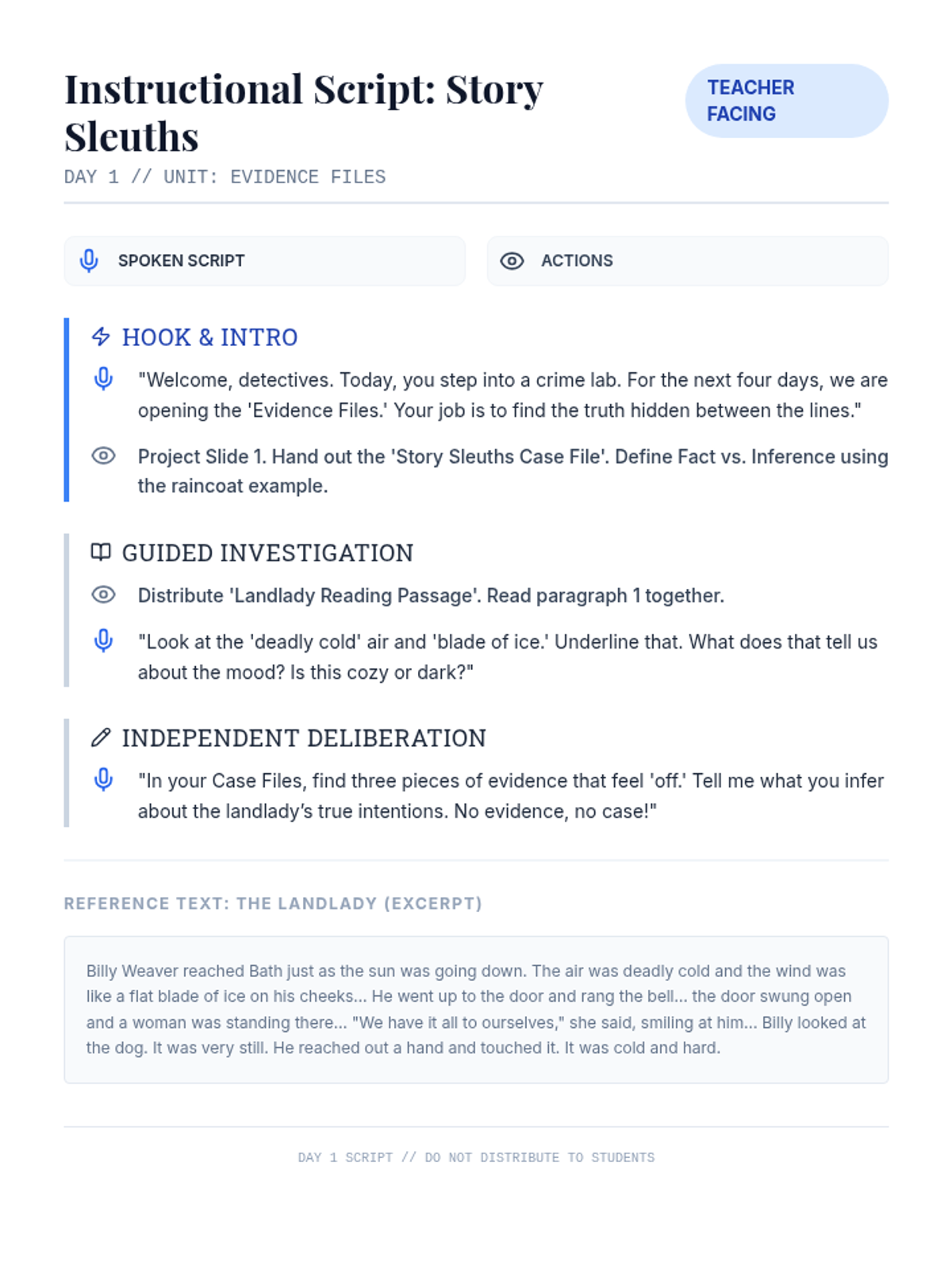
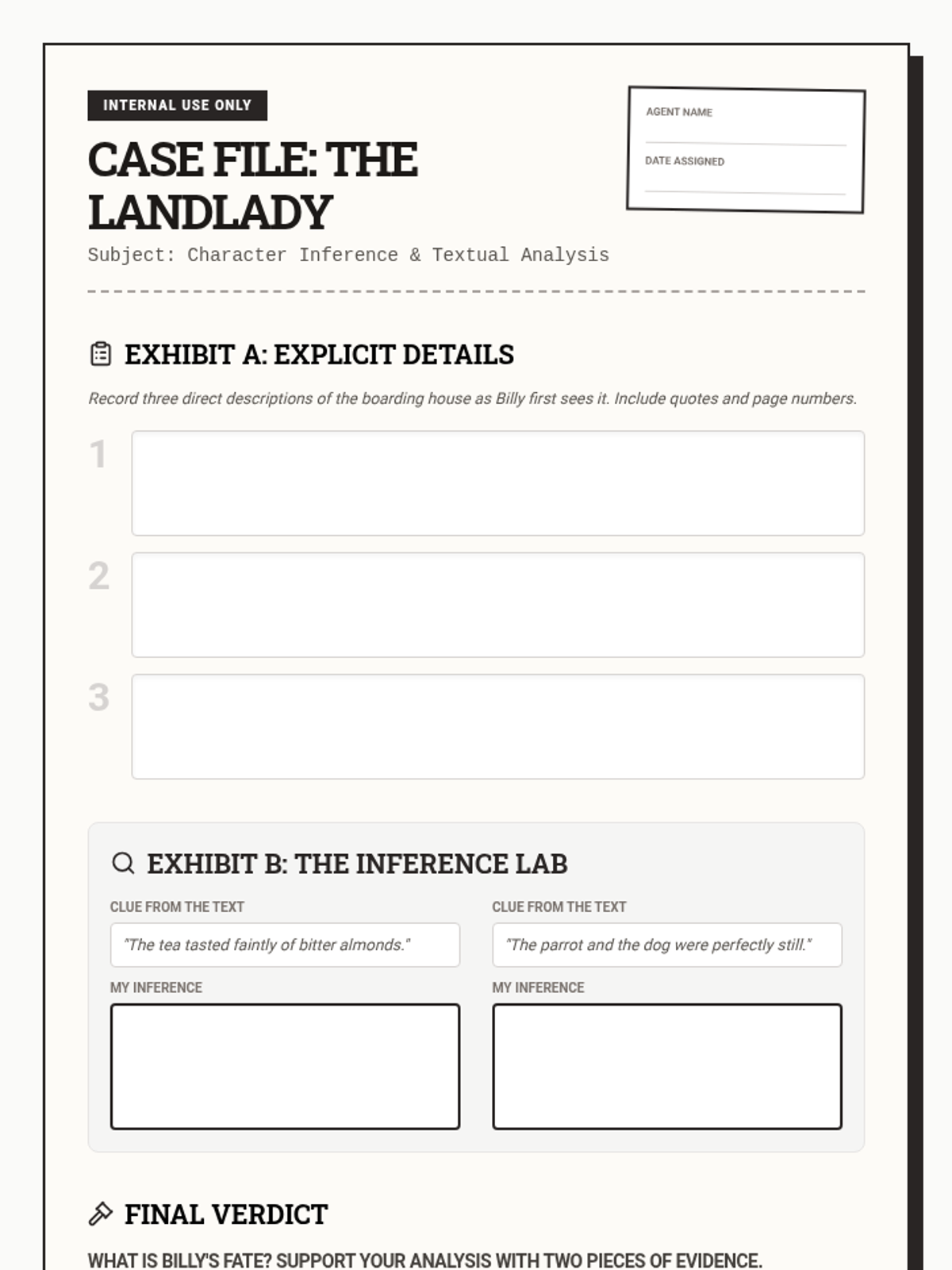
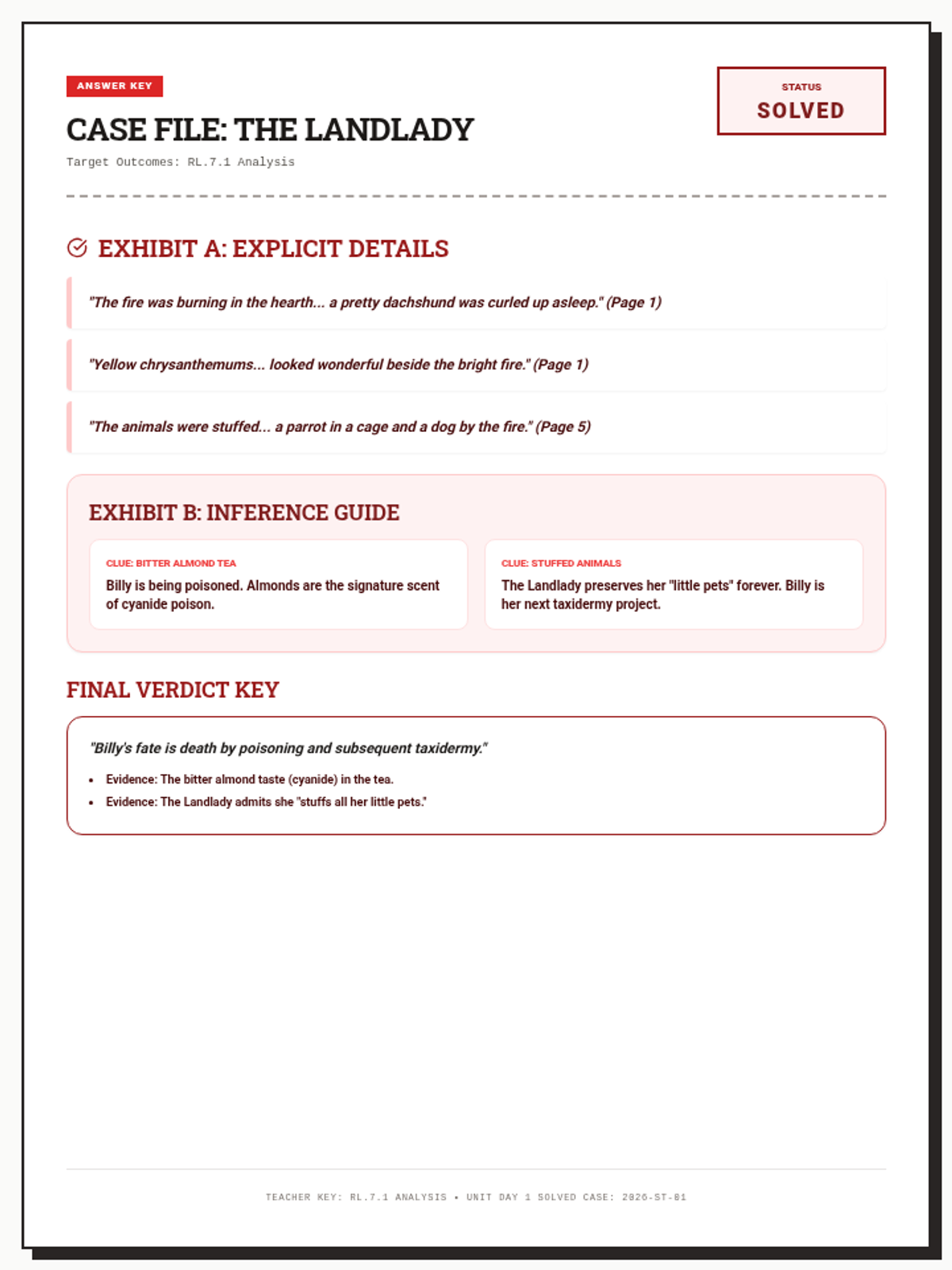
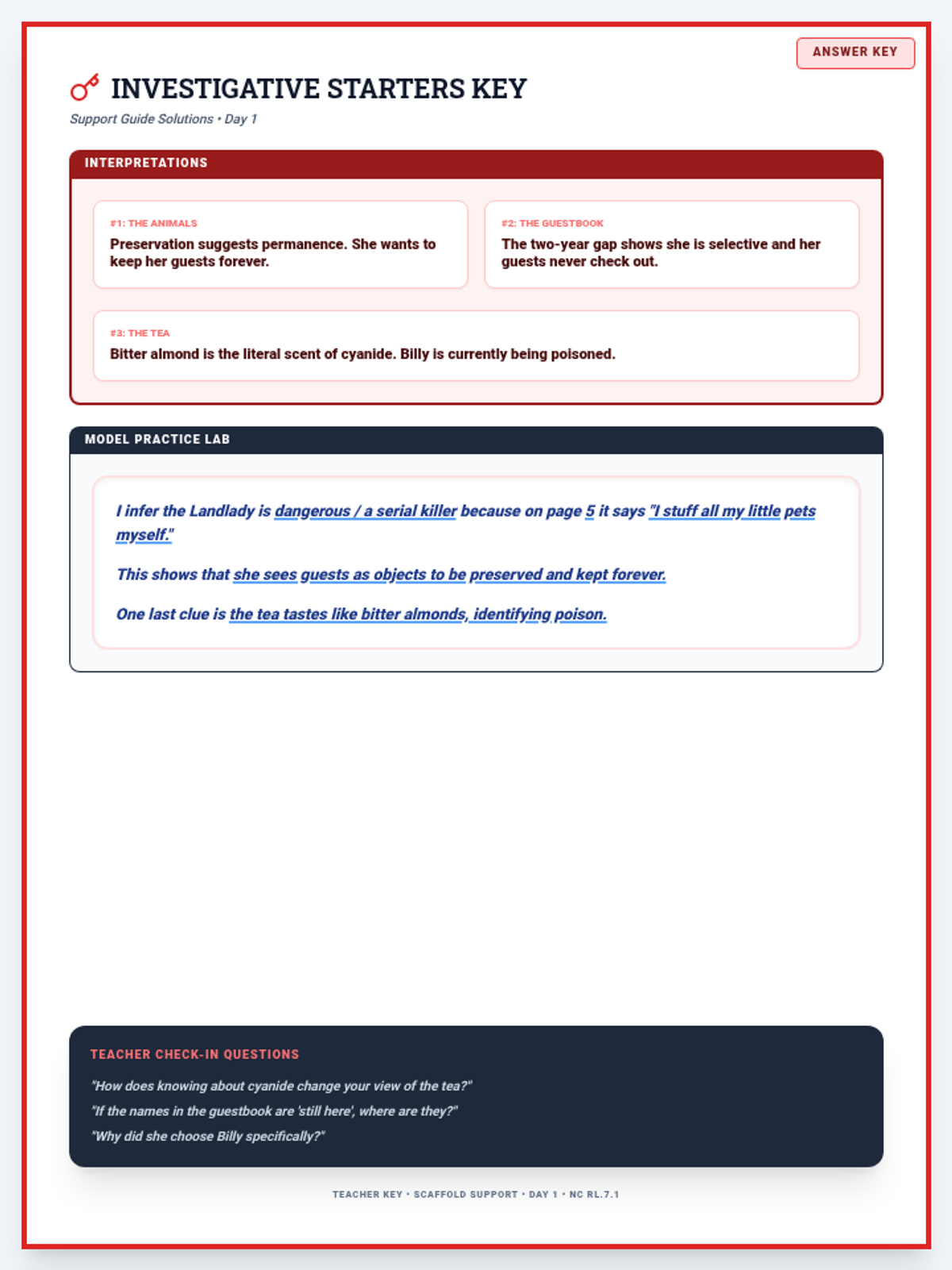
Day 1: Students analyze Roald Dahl's 'The Landlady' to practice making inferences and citing evidence to support their claims about the story's eerie outcome.
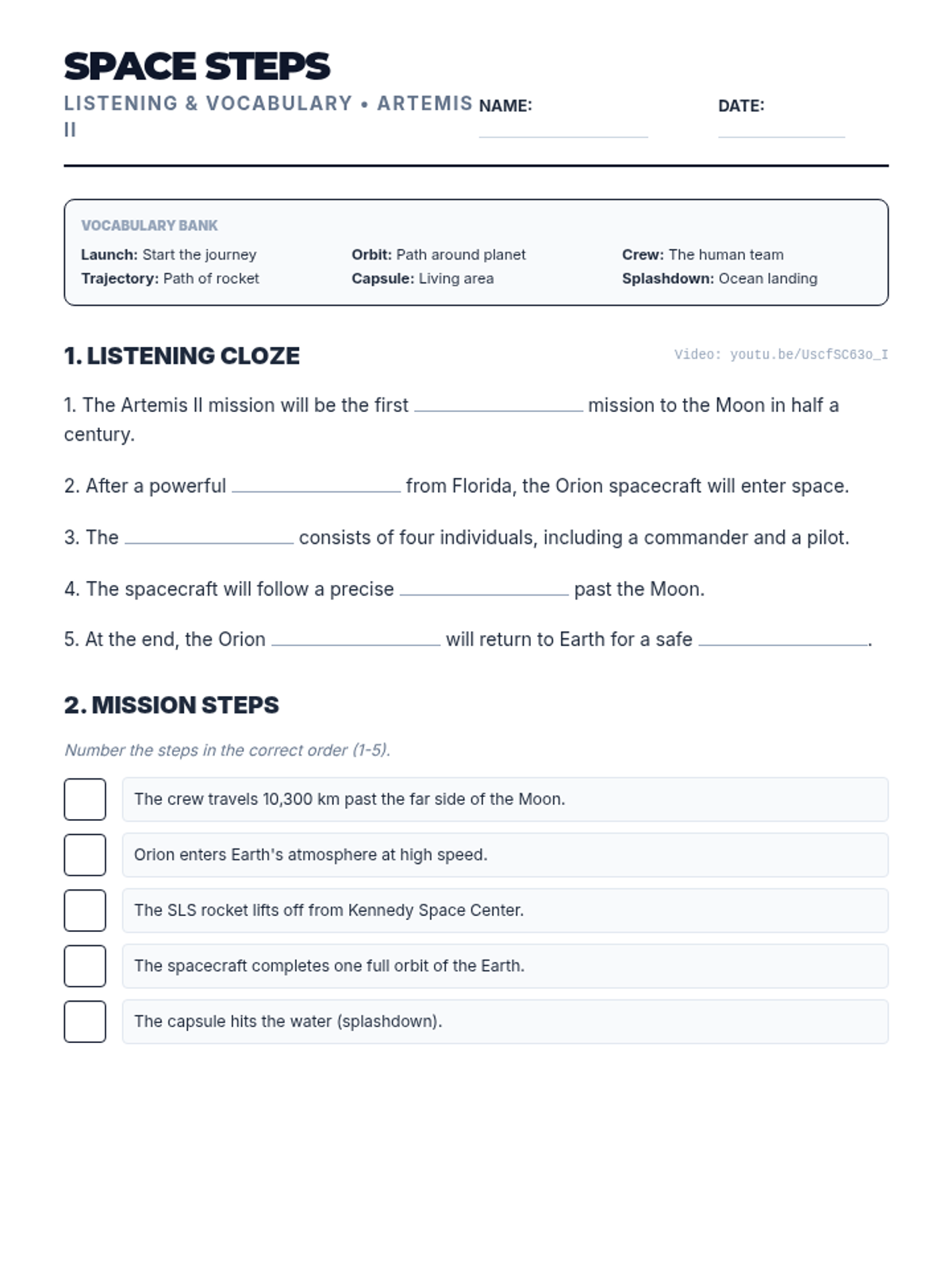
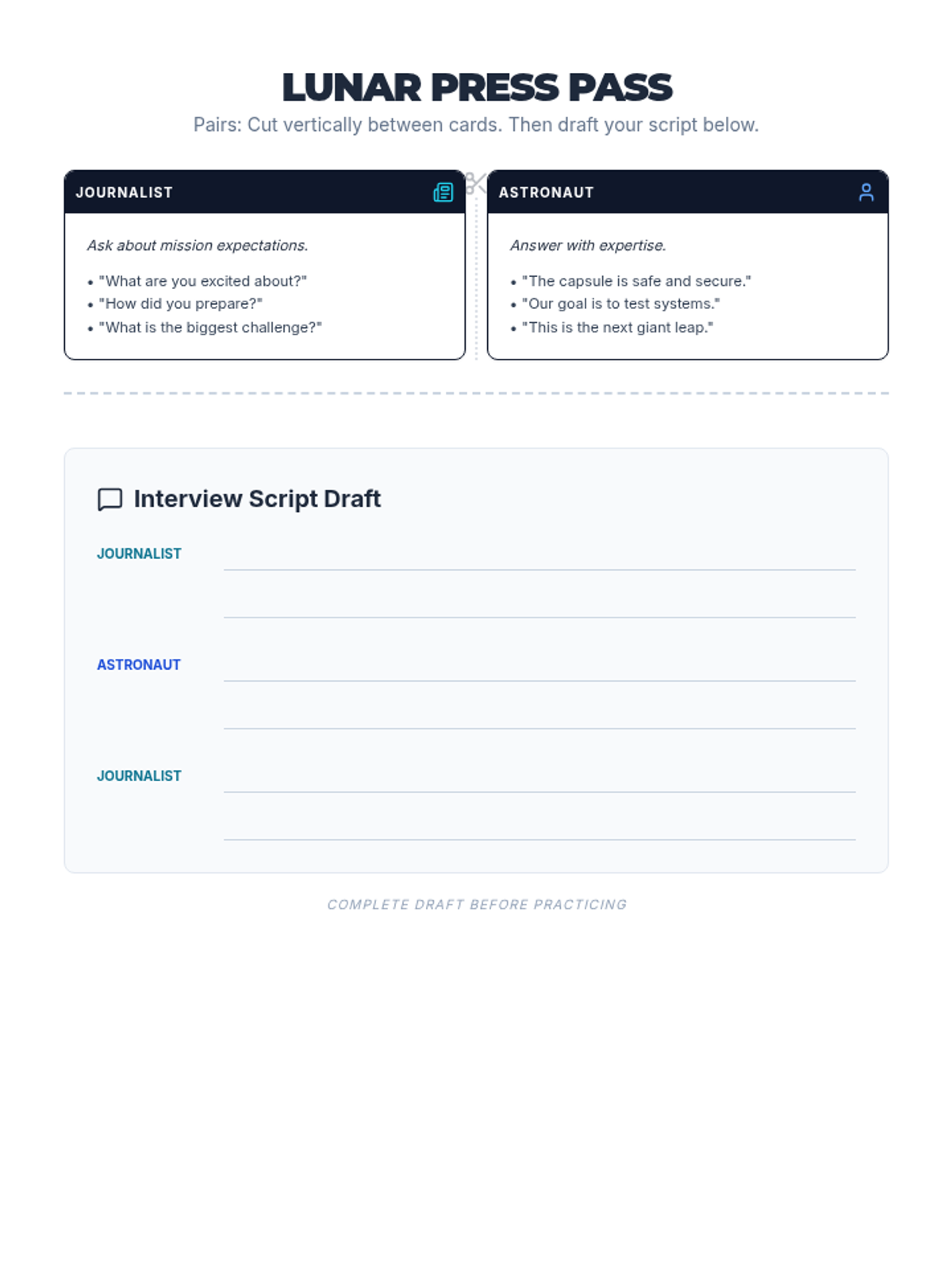
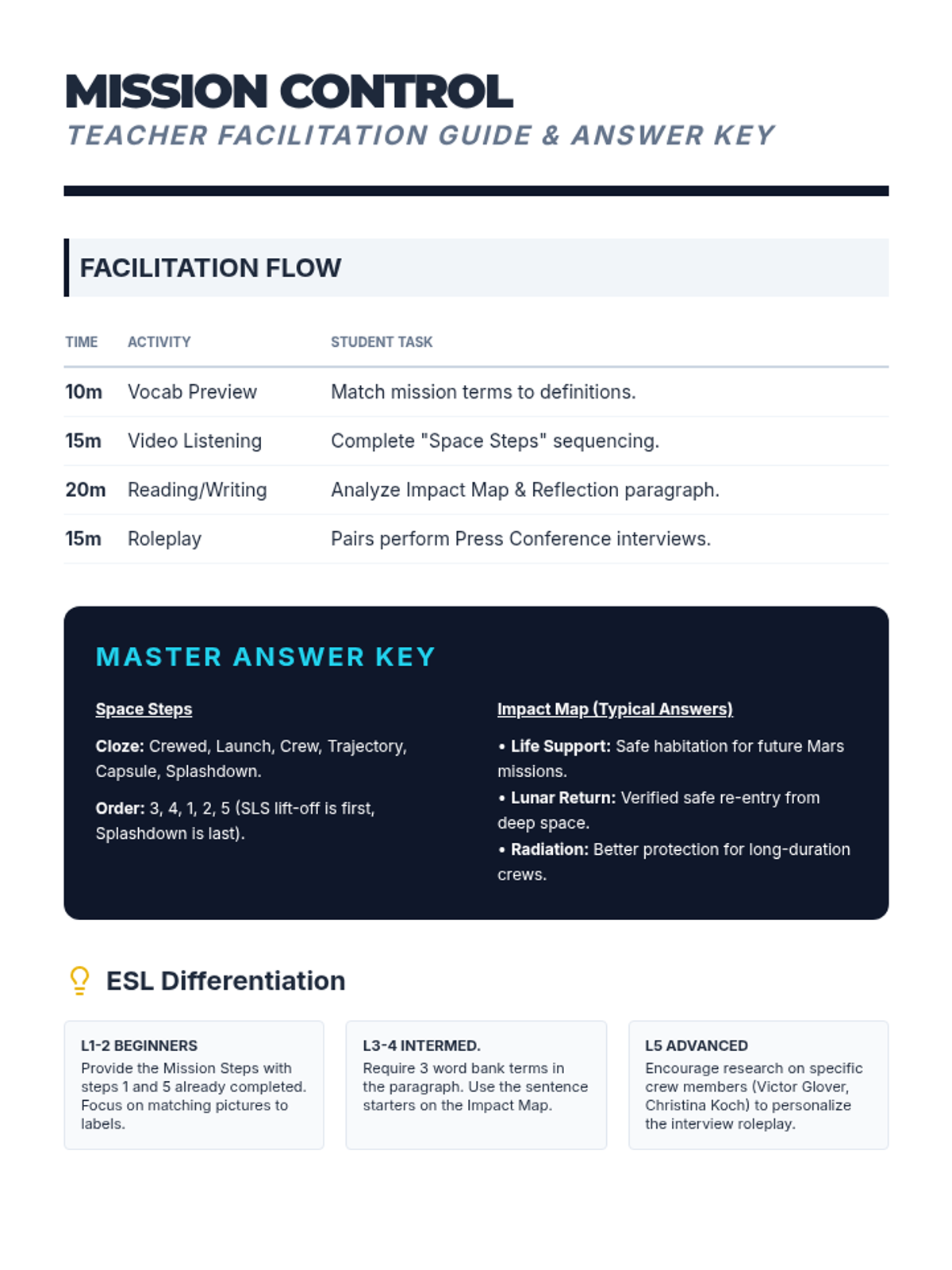
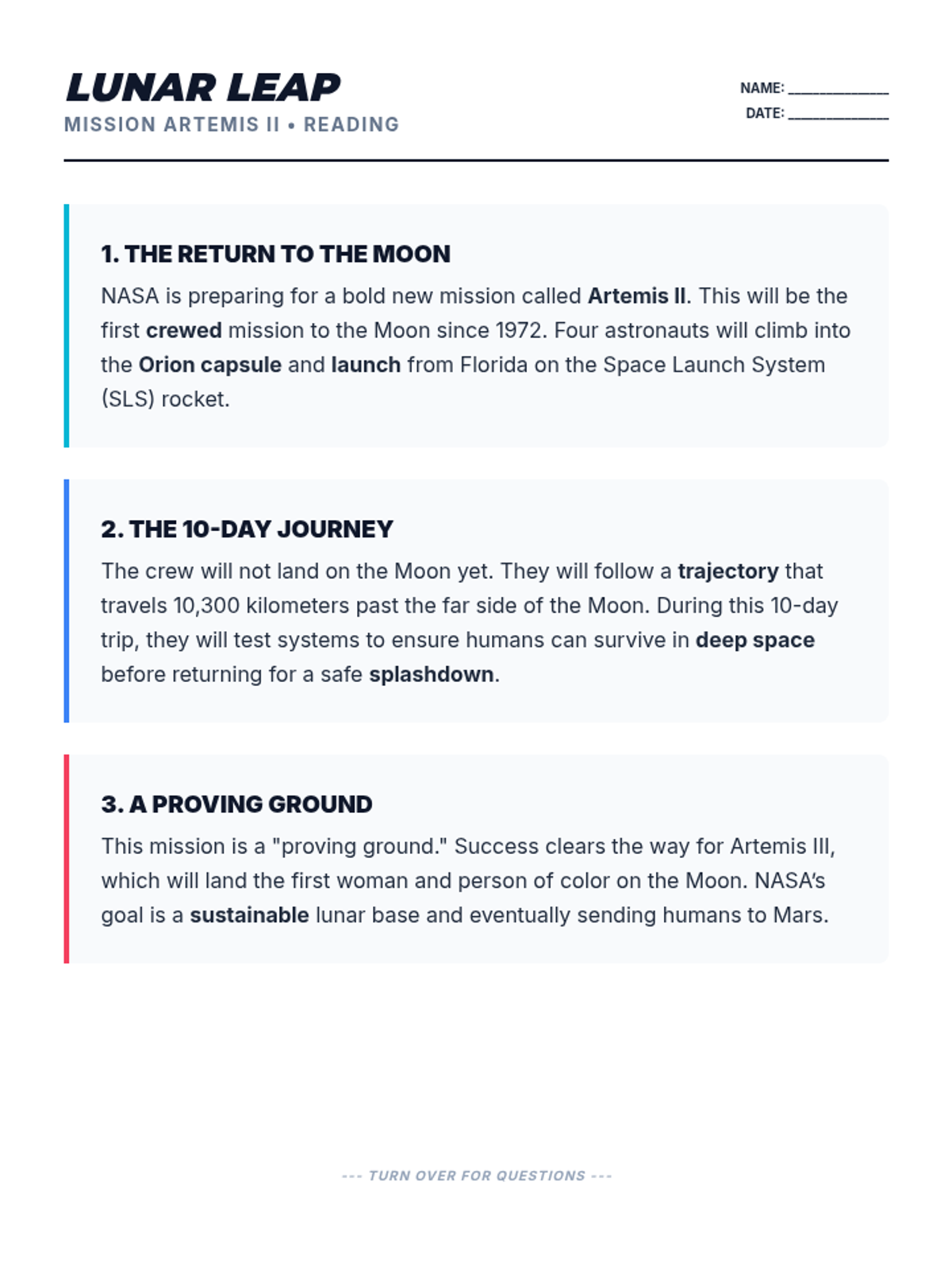
An immersive Language Lounge experience where students explore the goals and logistics of the Artemis II mission to the Moon.
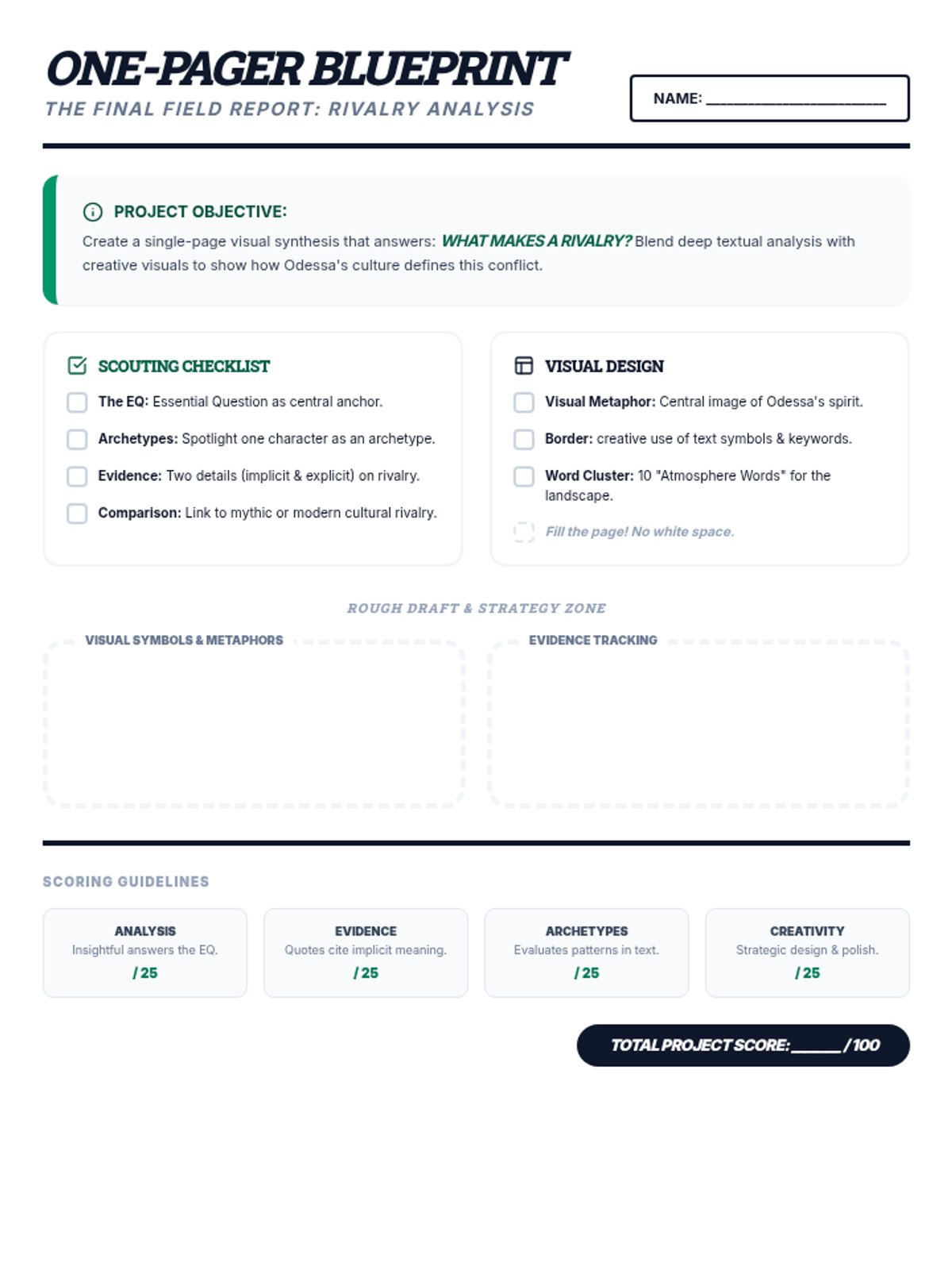
The synthesis of the unit where students create a multi-modal One-Pager to showcase their understanding of theme, archetype, and rivalry.
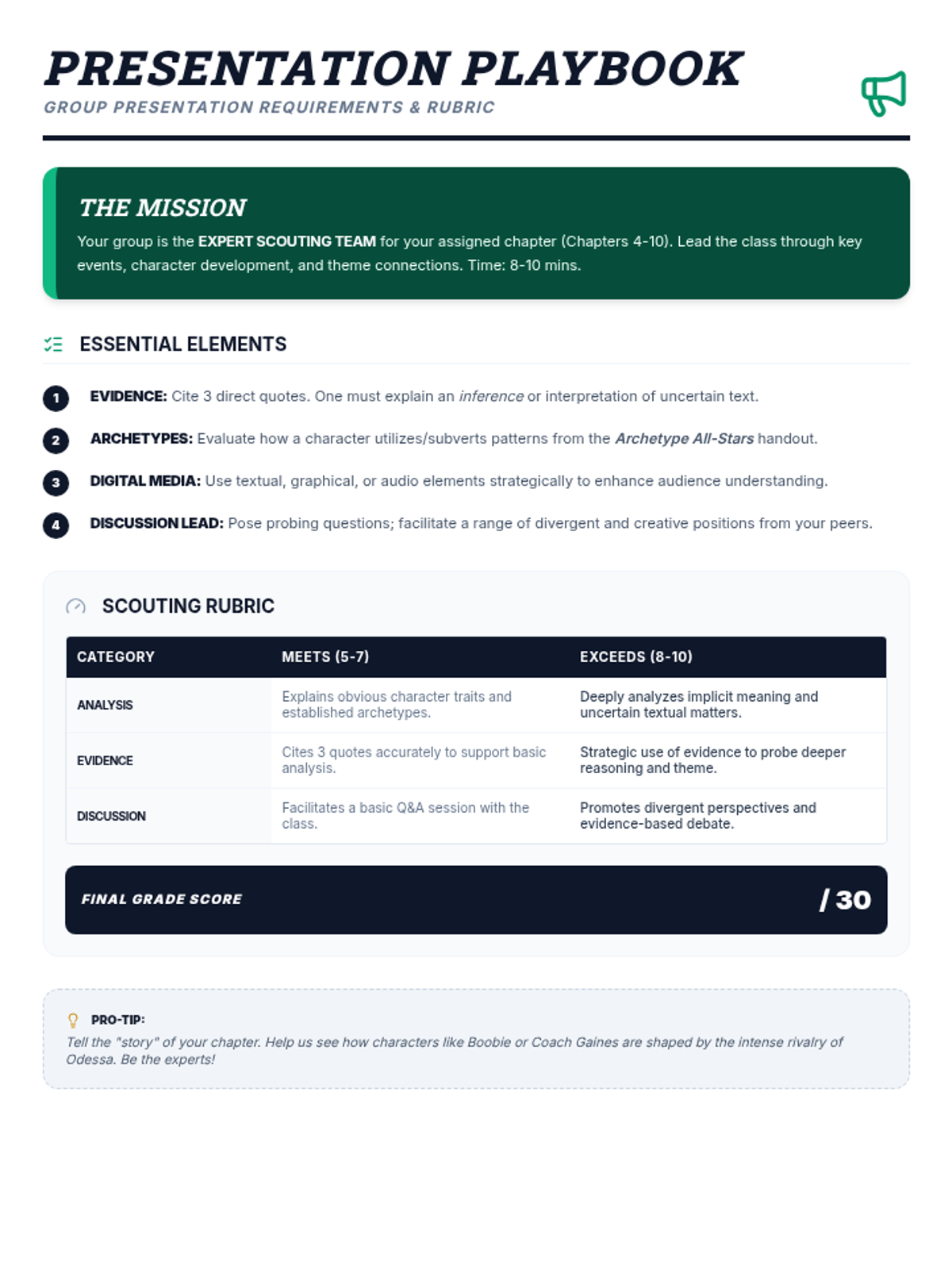
Student groups lead the class through their assigned chapters while fostering academic discussion and evaluating character development.
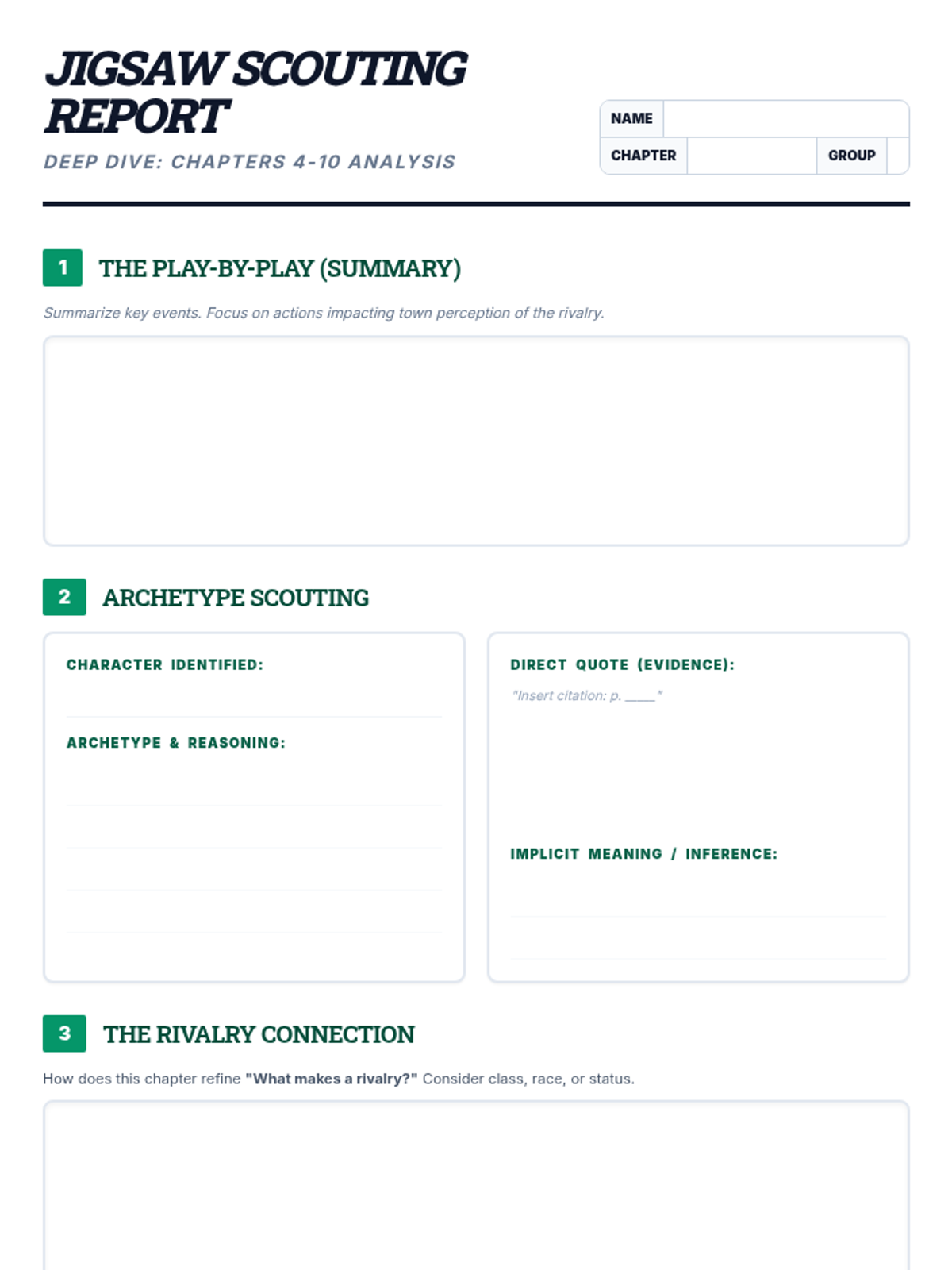
A deep dive into Chapters 4-10 using the Jigsaw method where student groups become experts on specific sections of the text.
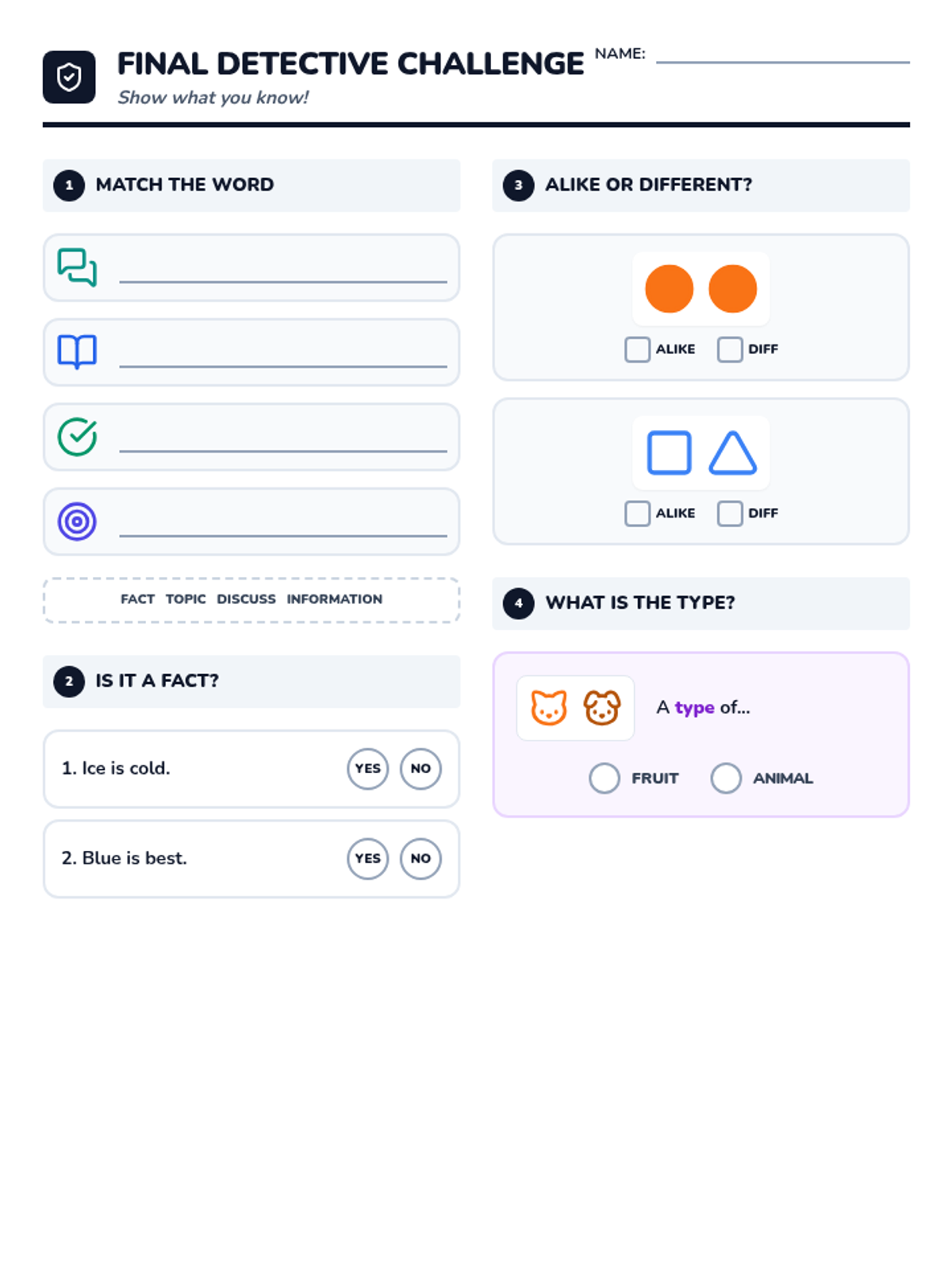
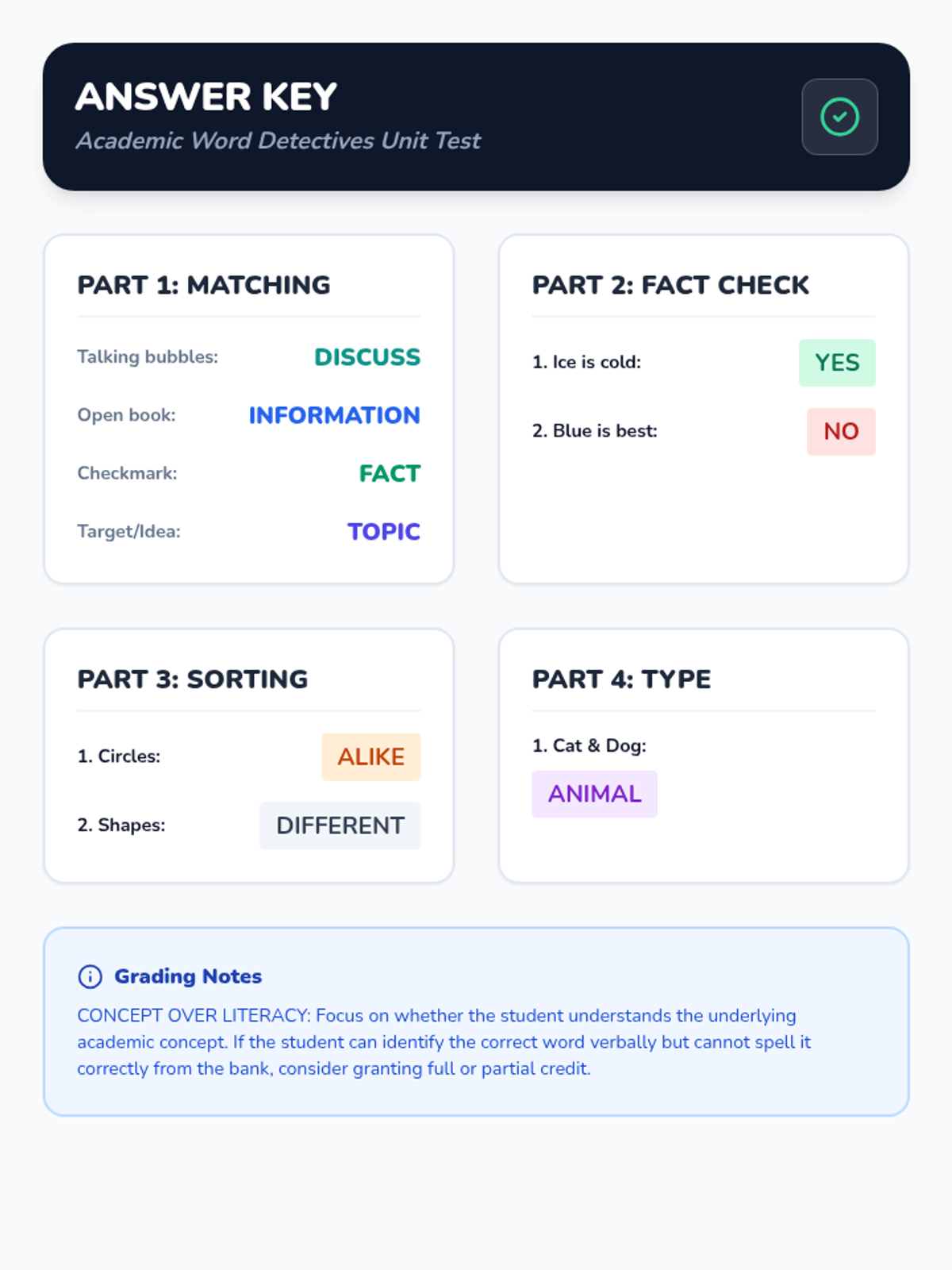
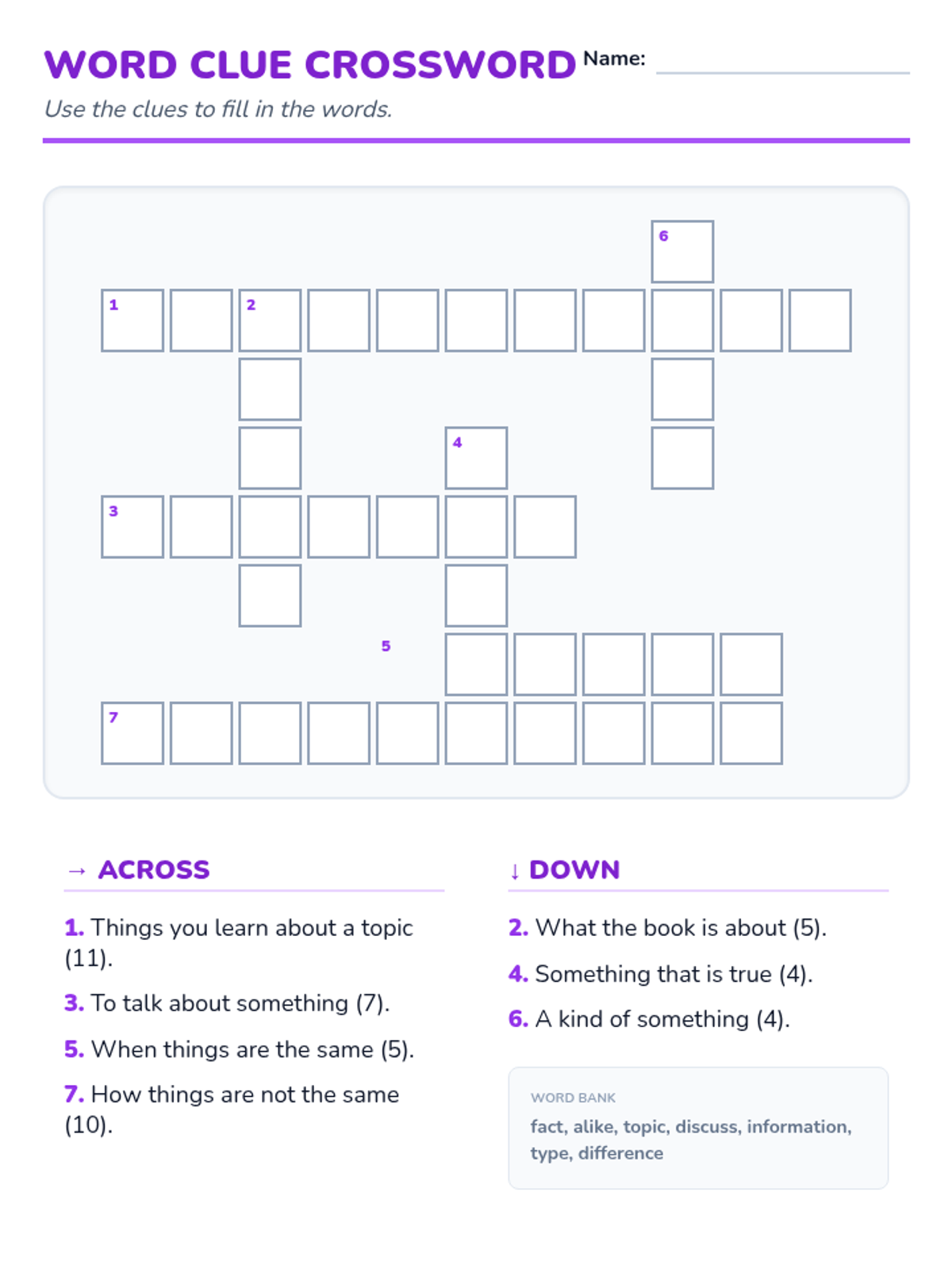
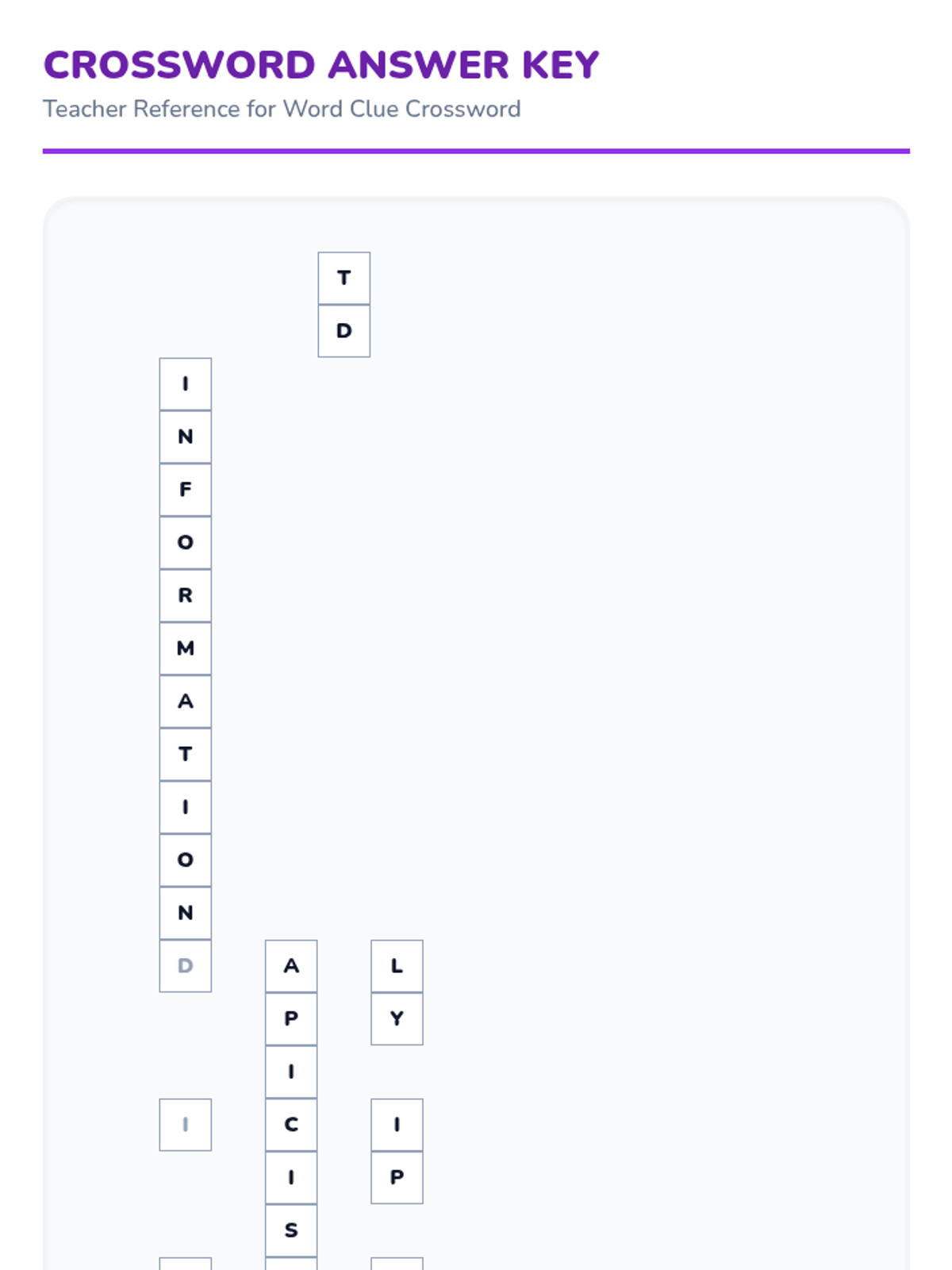
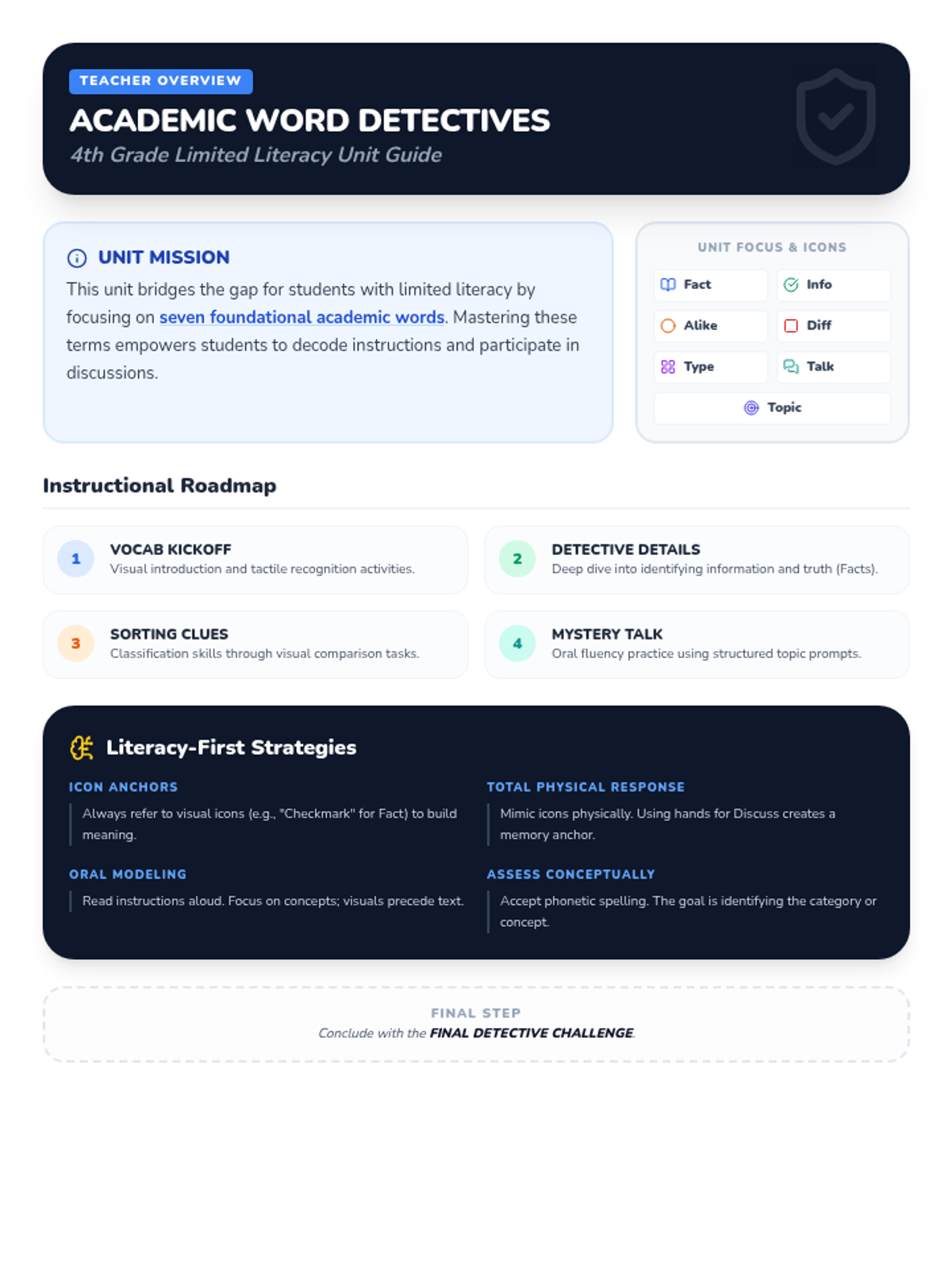
A comprehensive unit assessment for the Academic Word Detectives unit, testing mastery of information, fact, alike, difference, type, discuss, and topic.
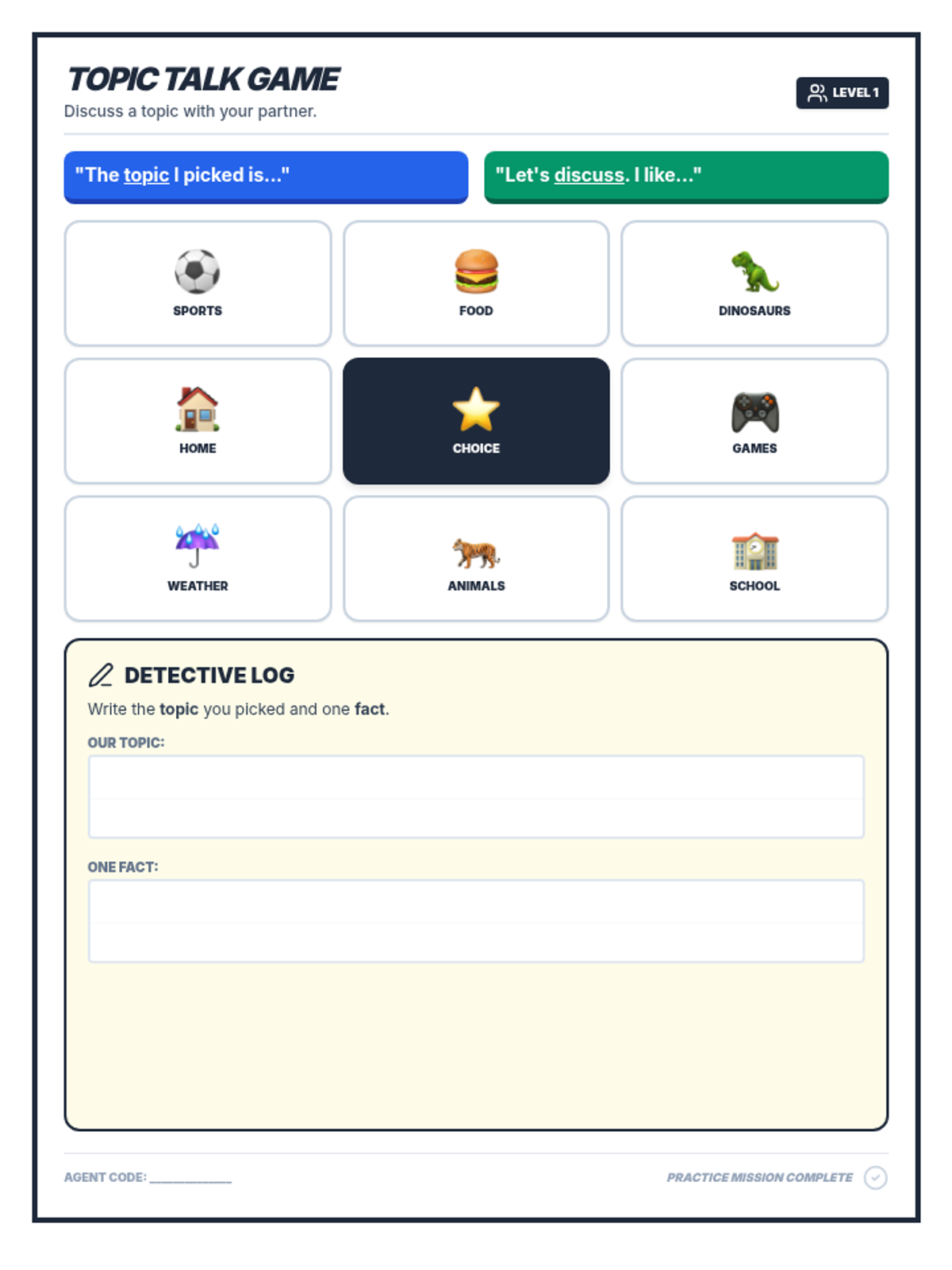
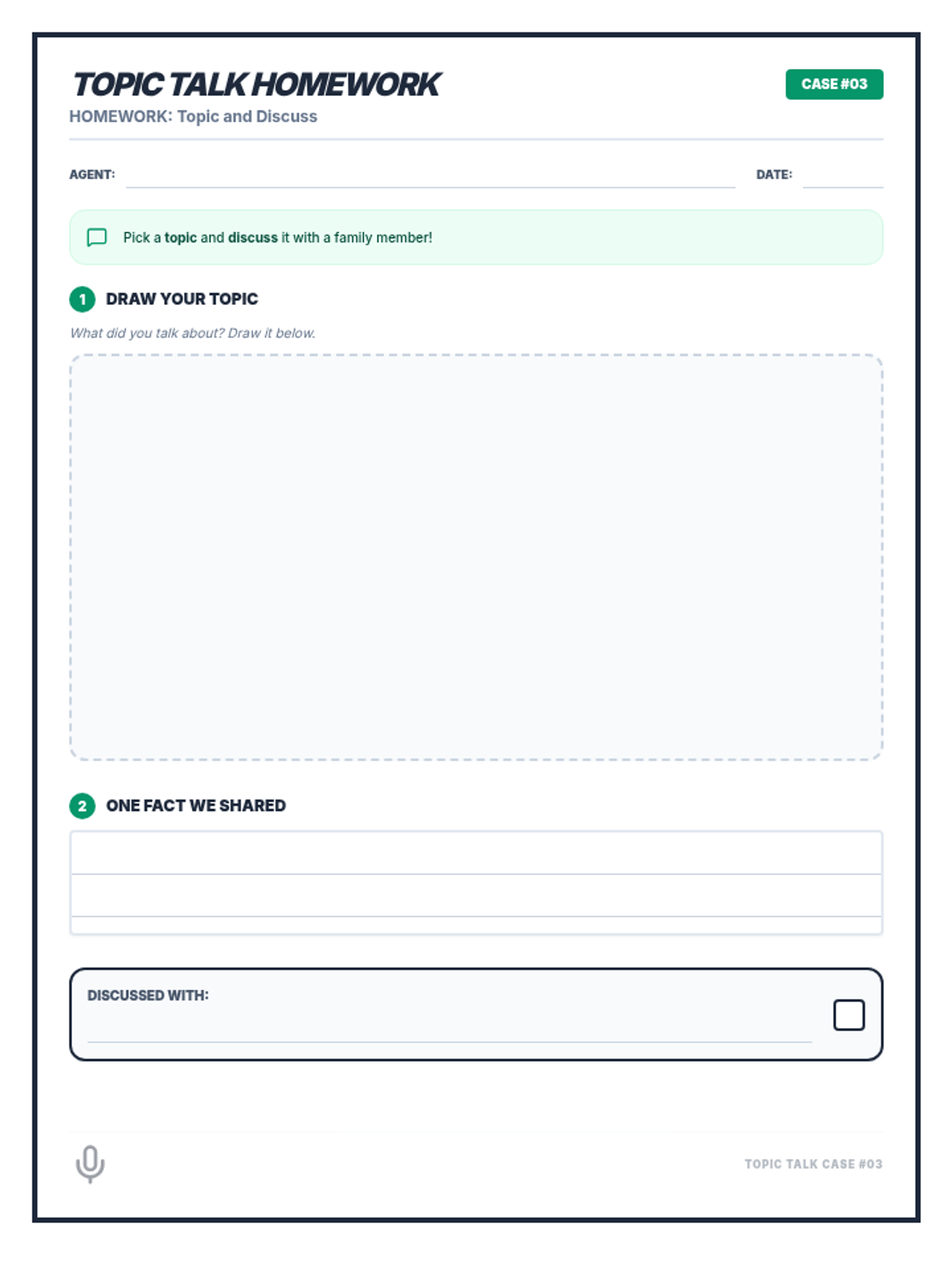
Final lesson in the unit focusing on 'topic' and 'discuss'. Students learn to identify the main idea and participate in structured talking activities.
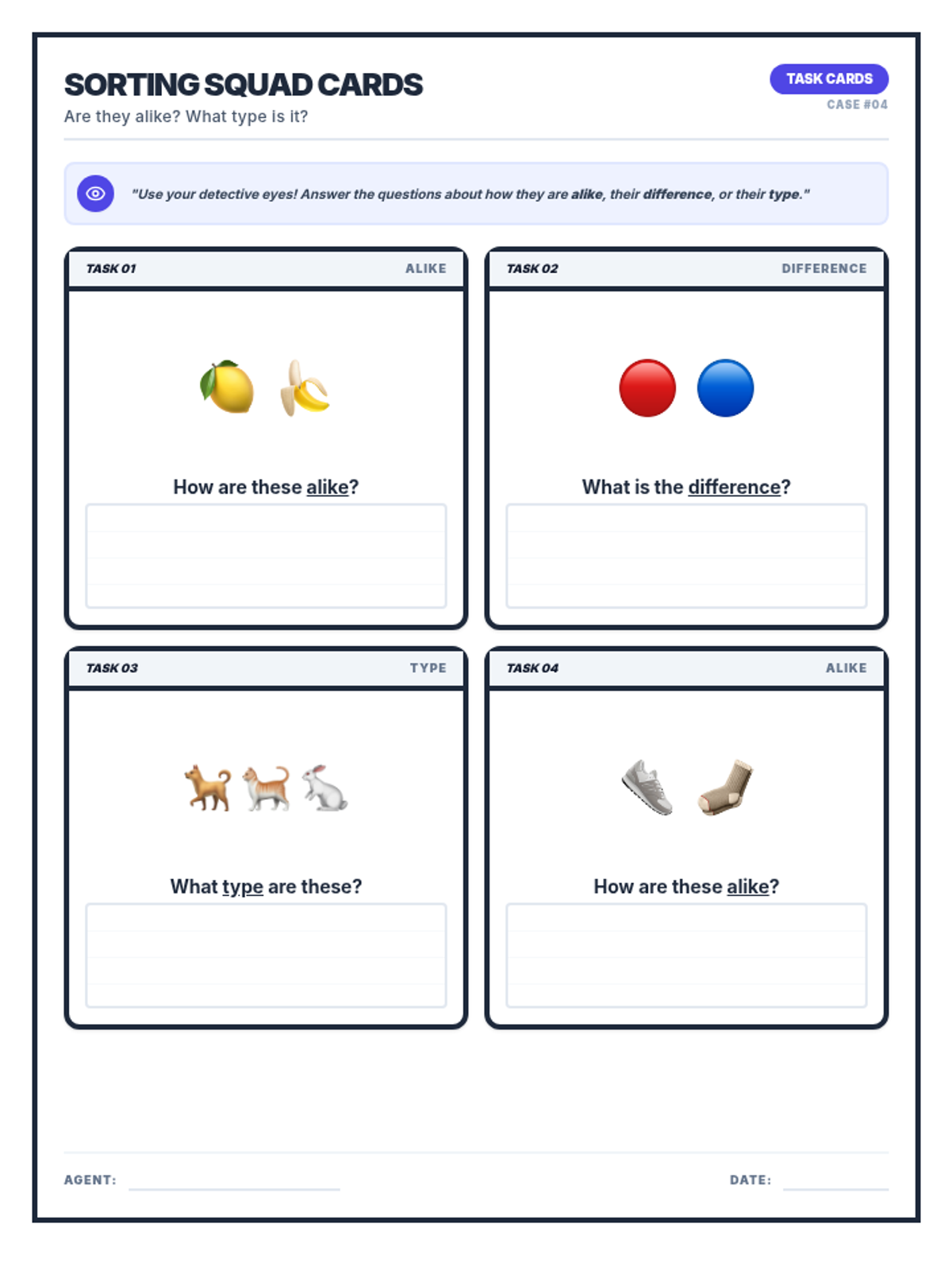
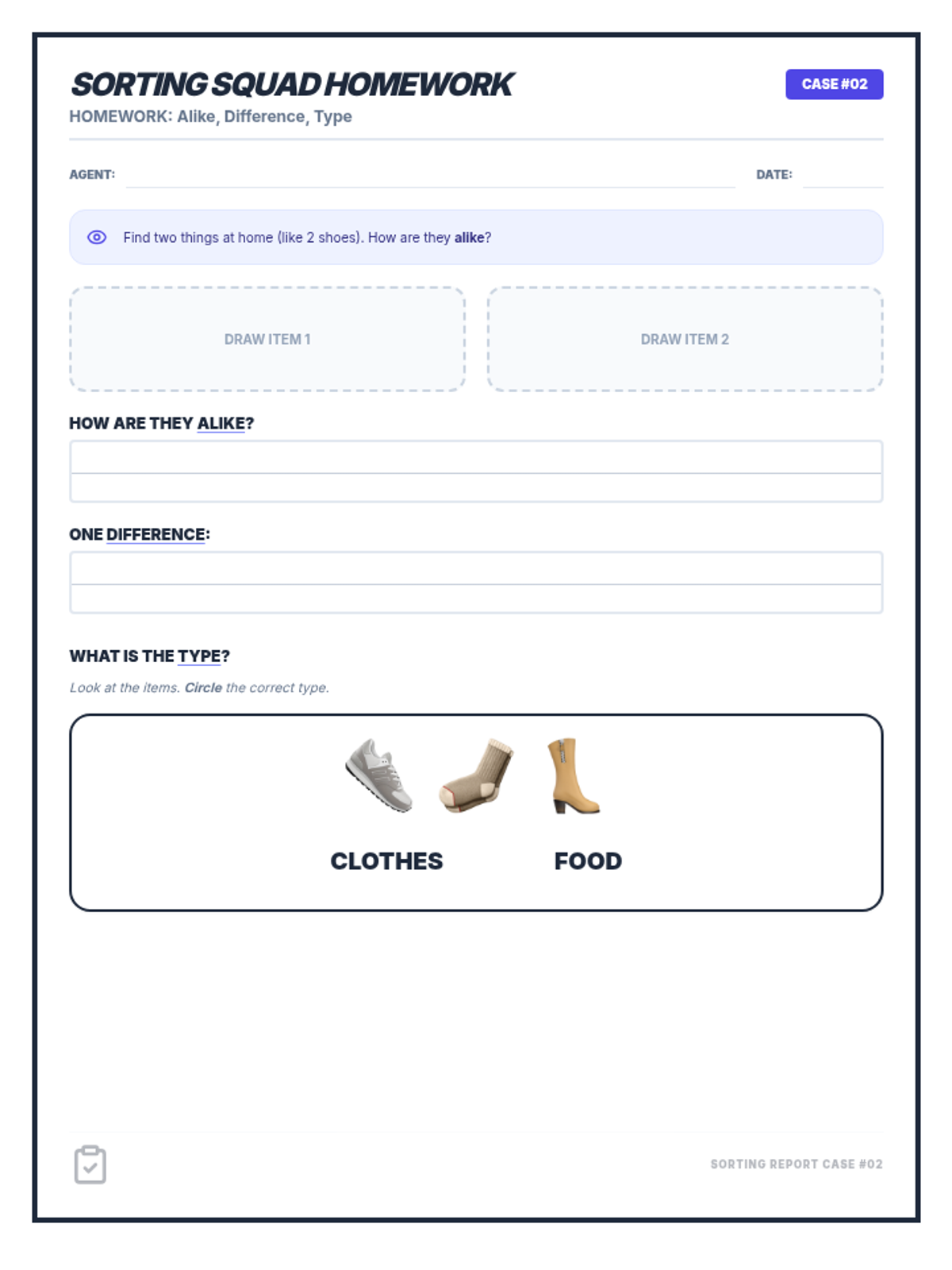
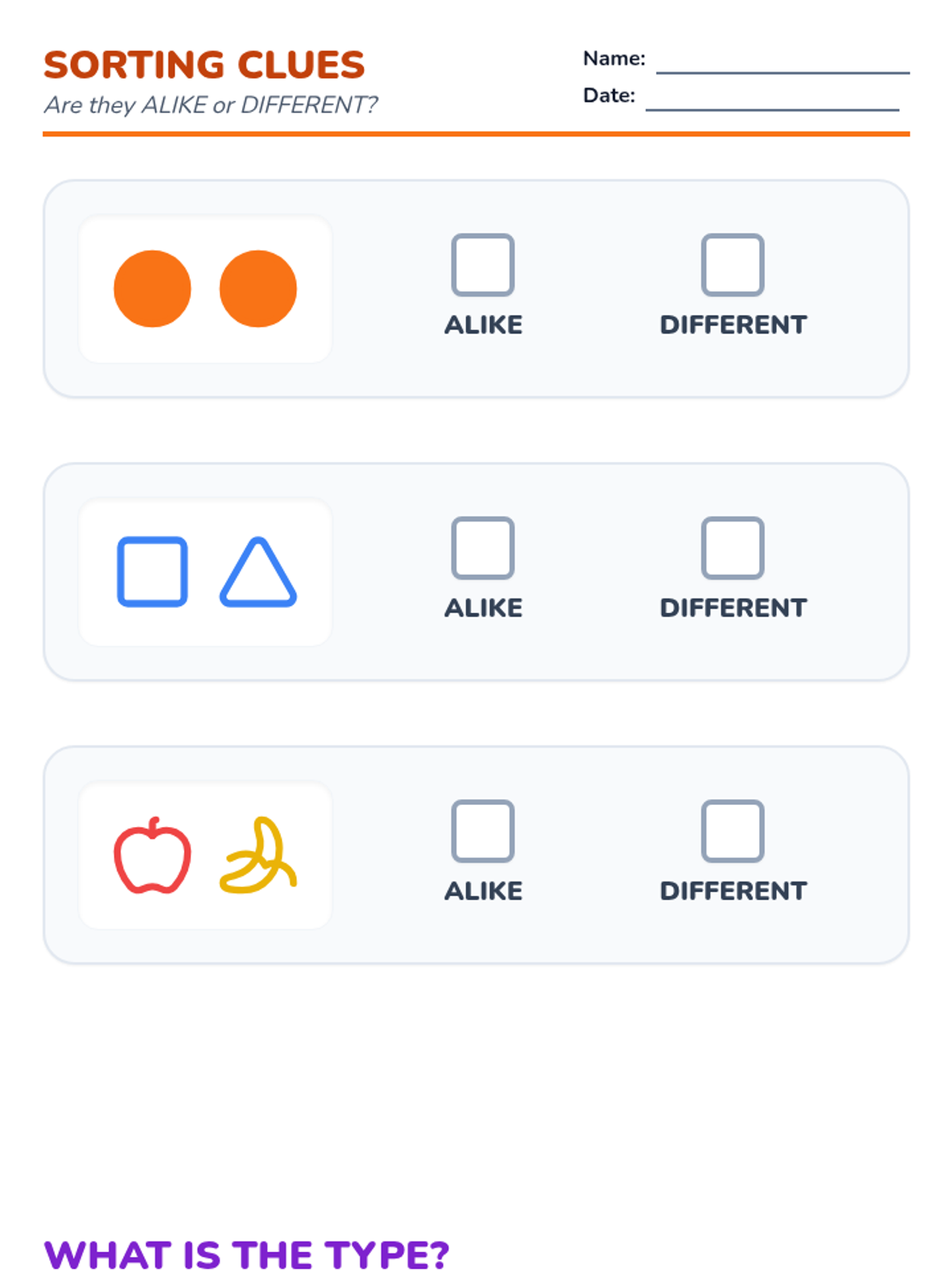
Teaches the concepts of 'alike', 'difference', and 'type' through visual comparison and categorization.
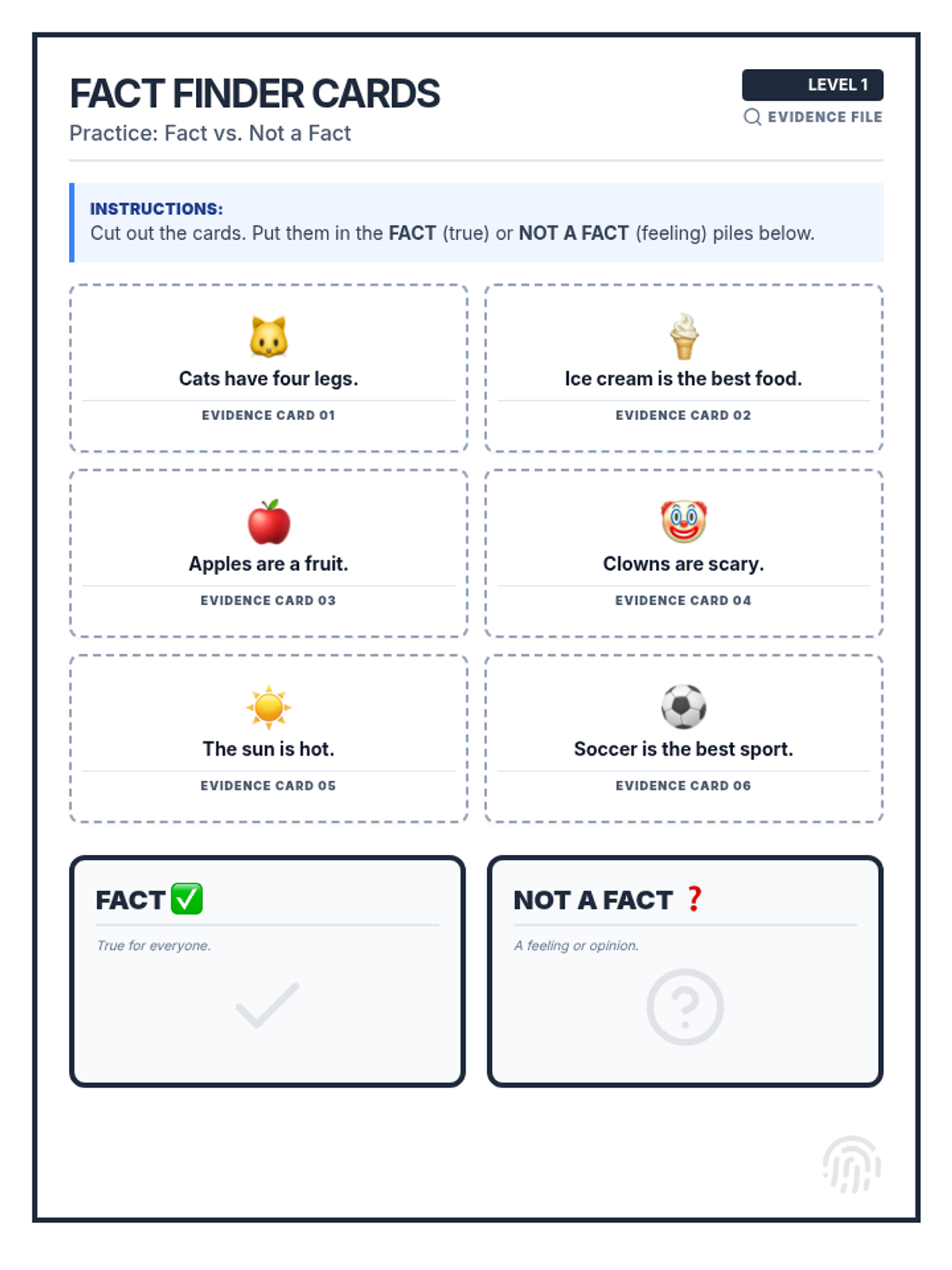
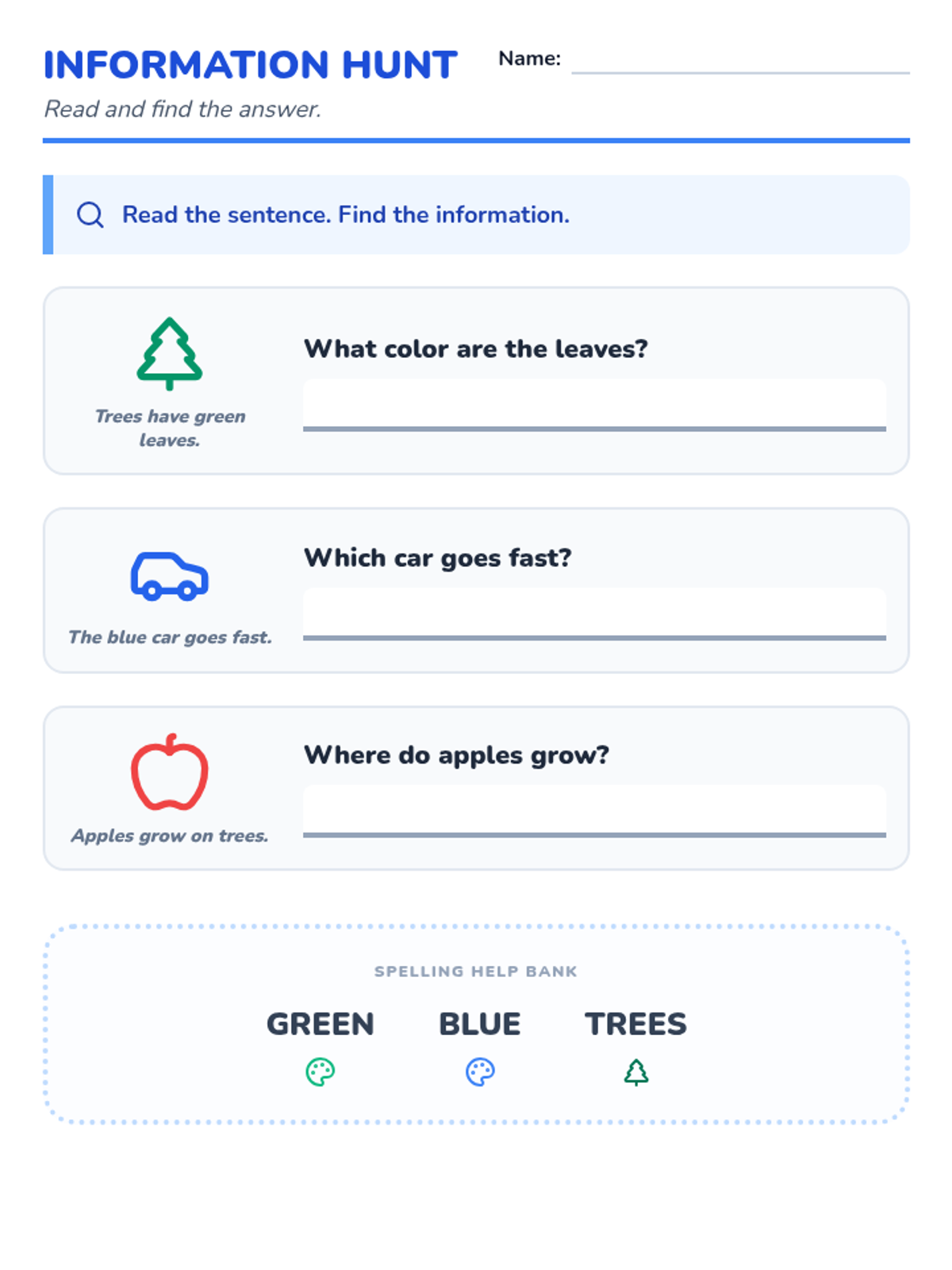
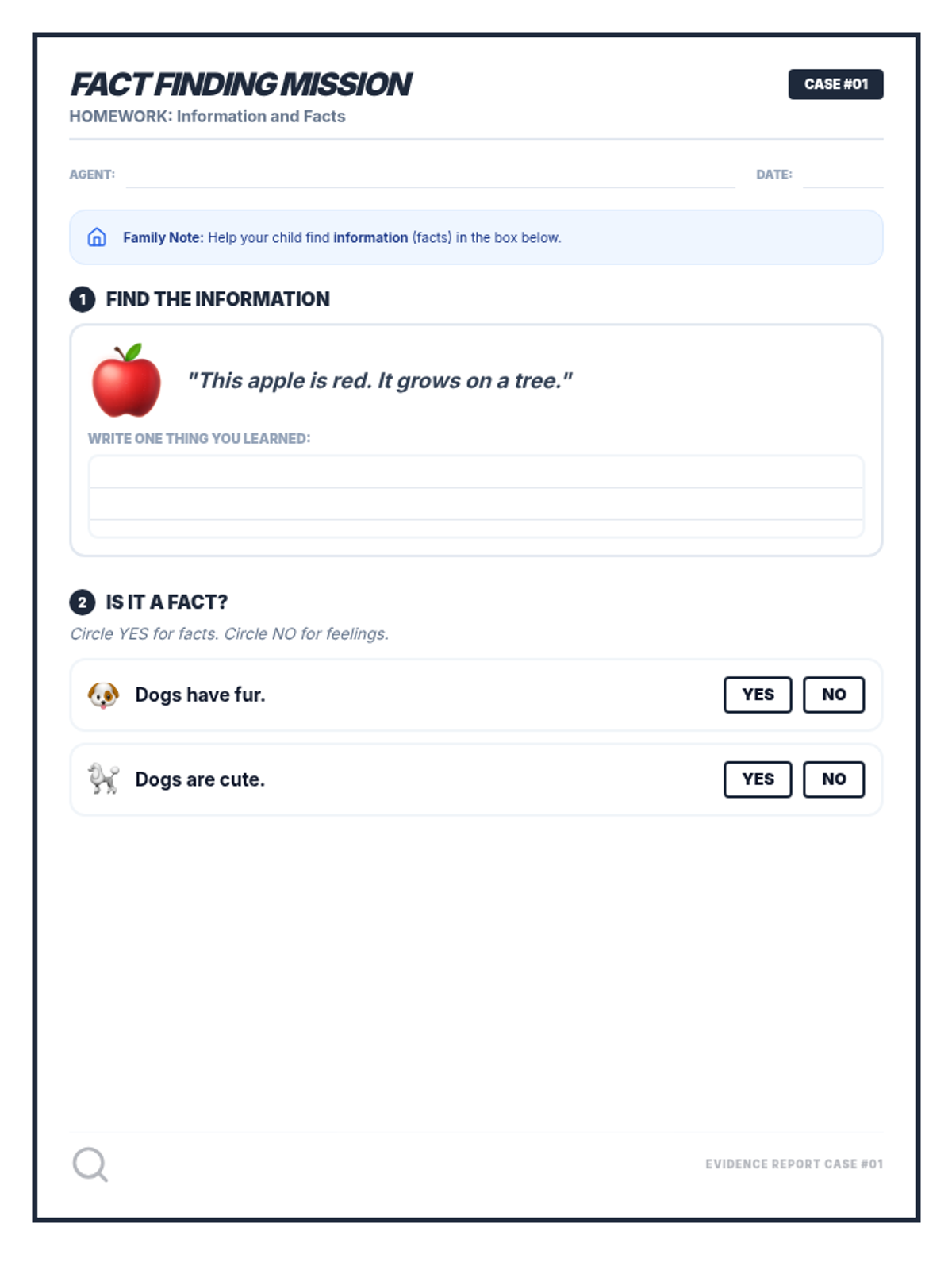
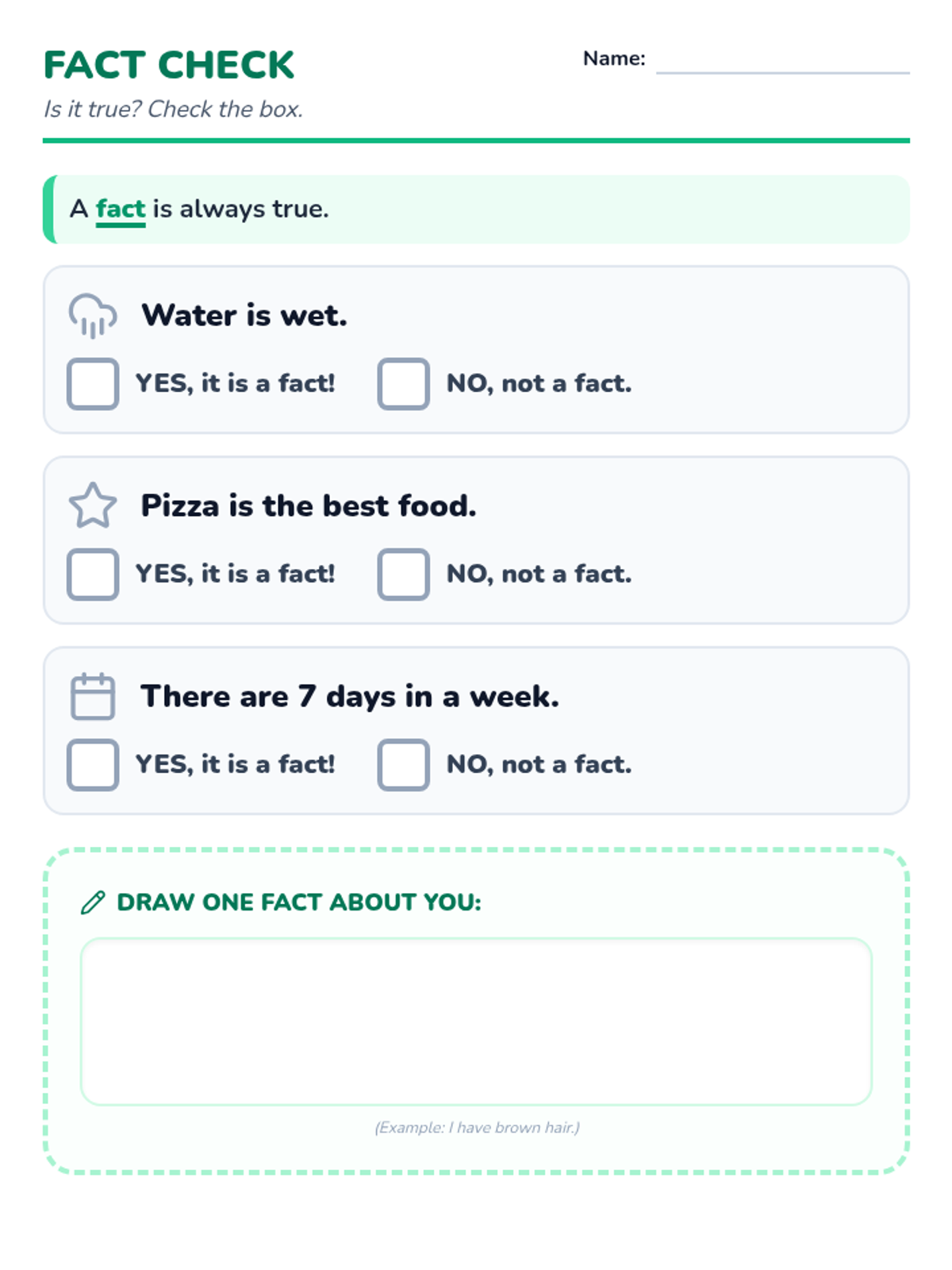
Focuses on using the words 'information' and 'fact'. Students practice identifying facts in simple visual and textual contexts.
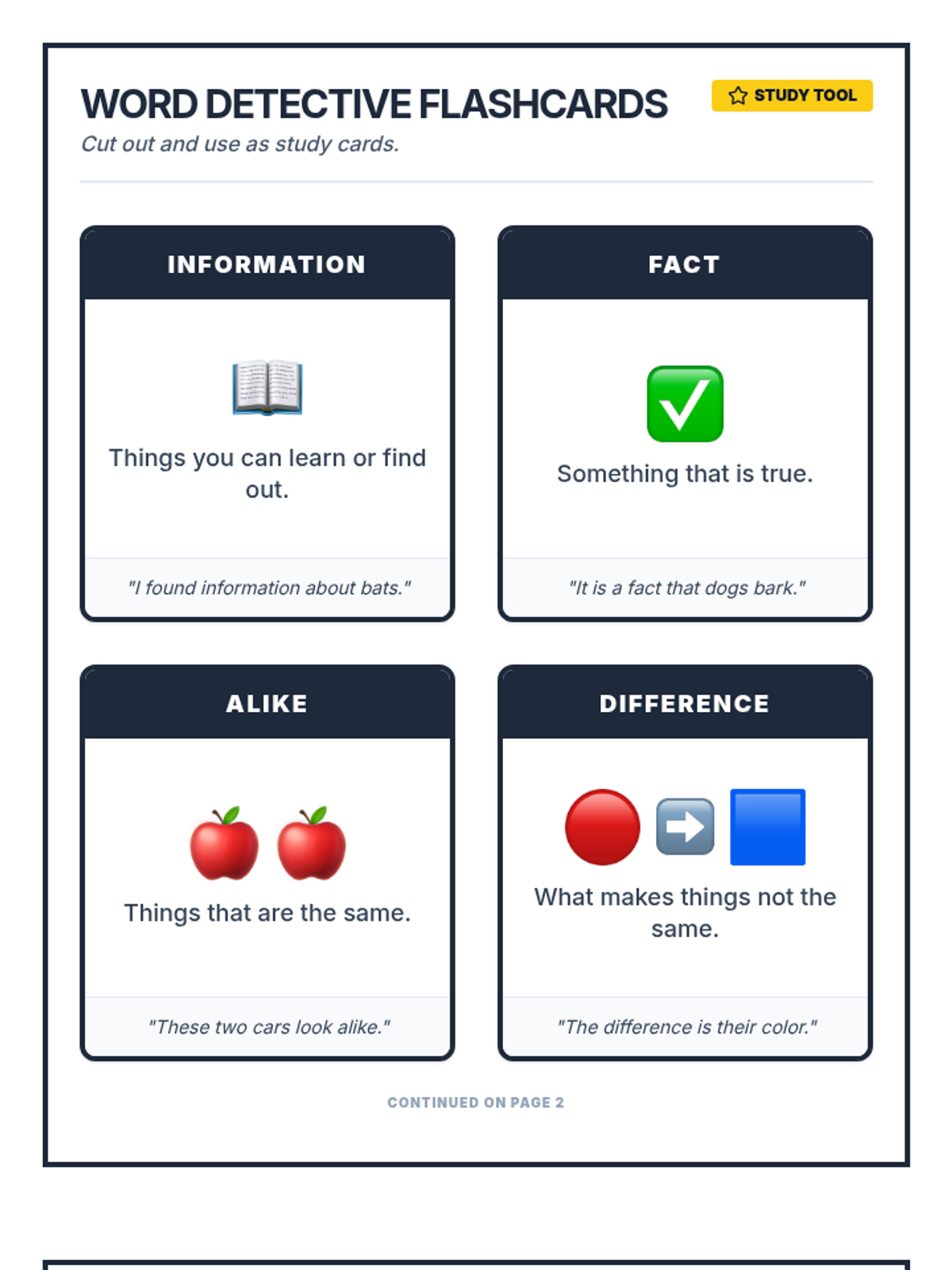
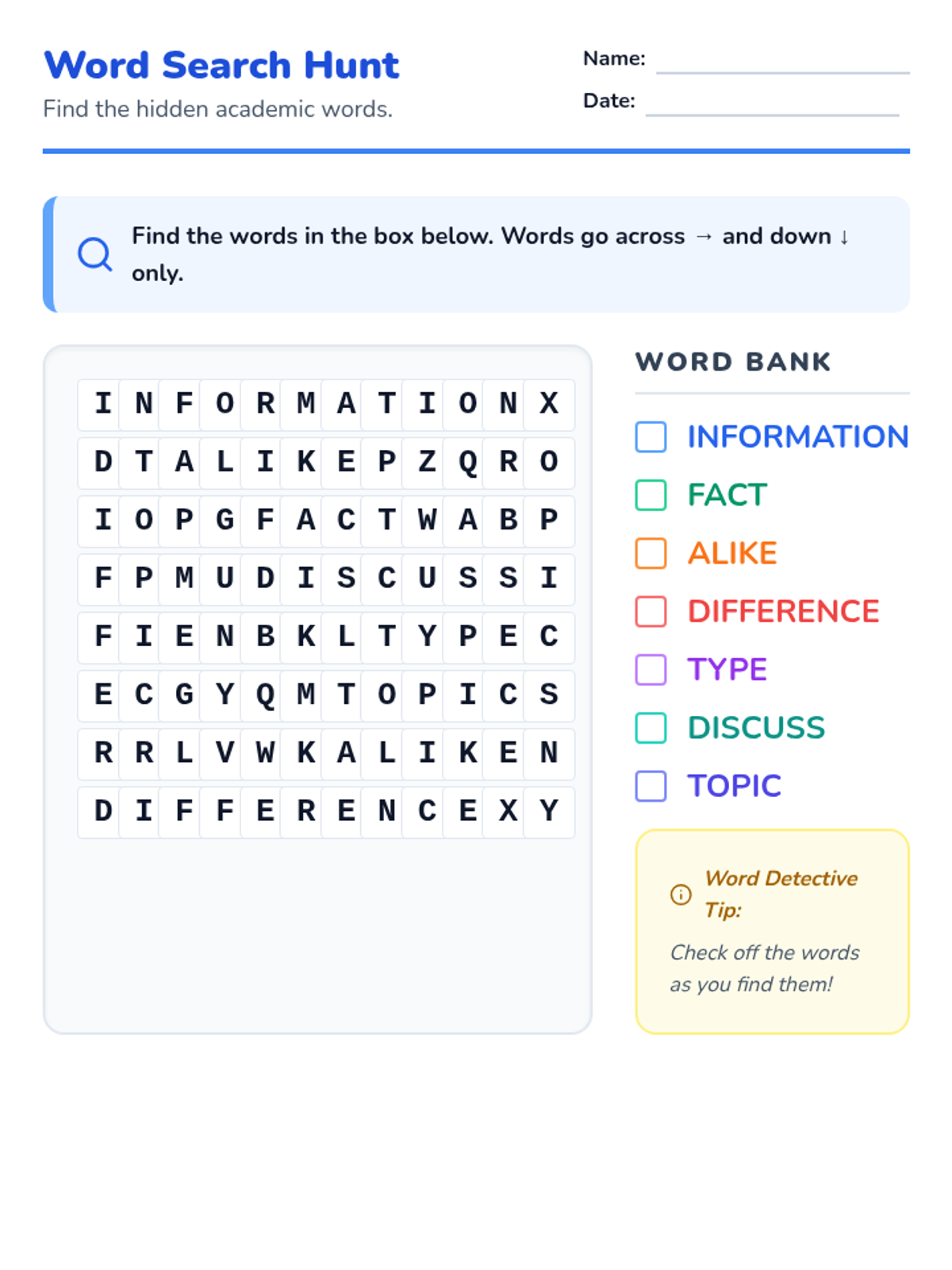
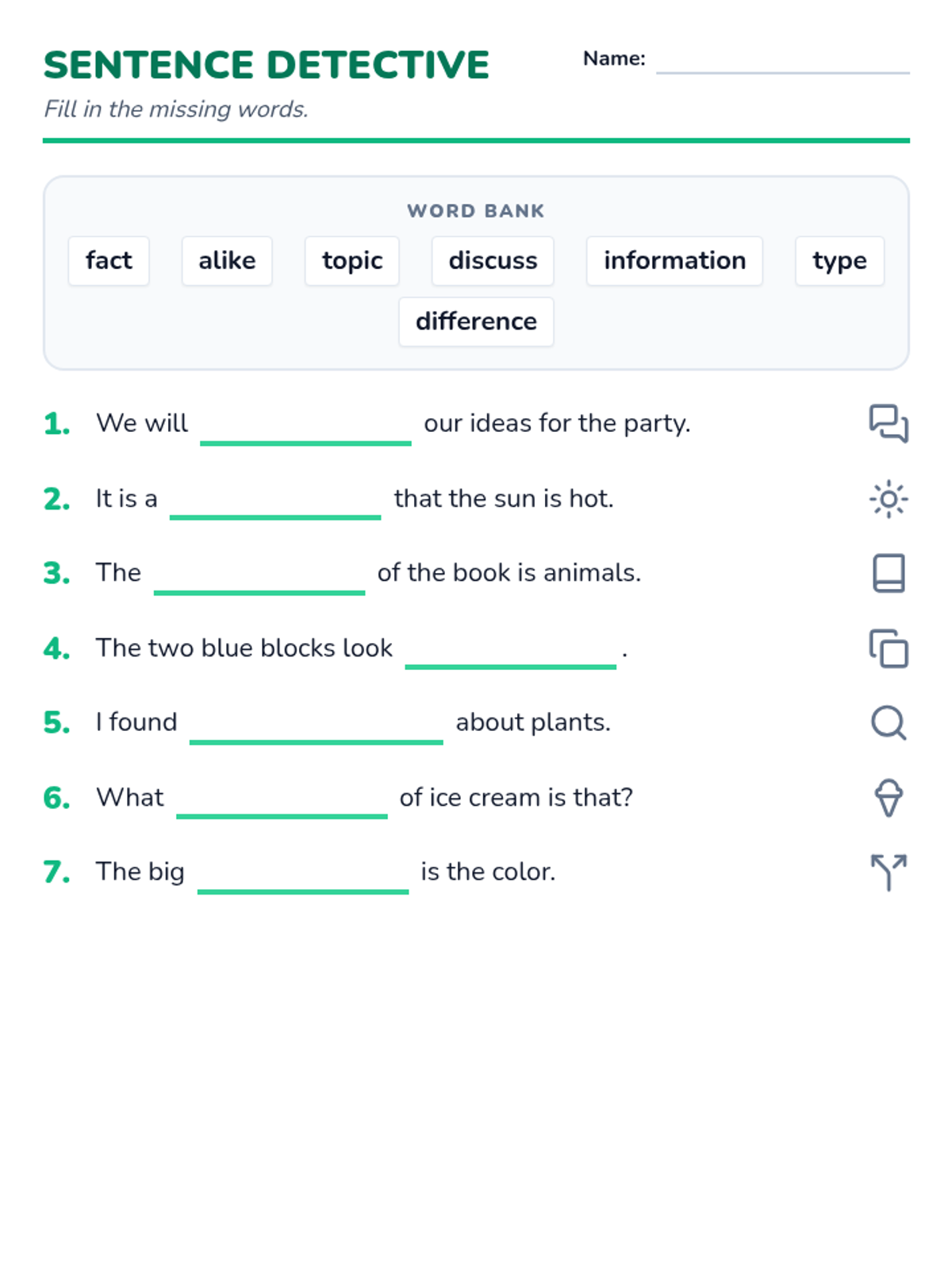
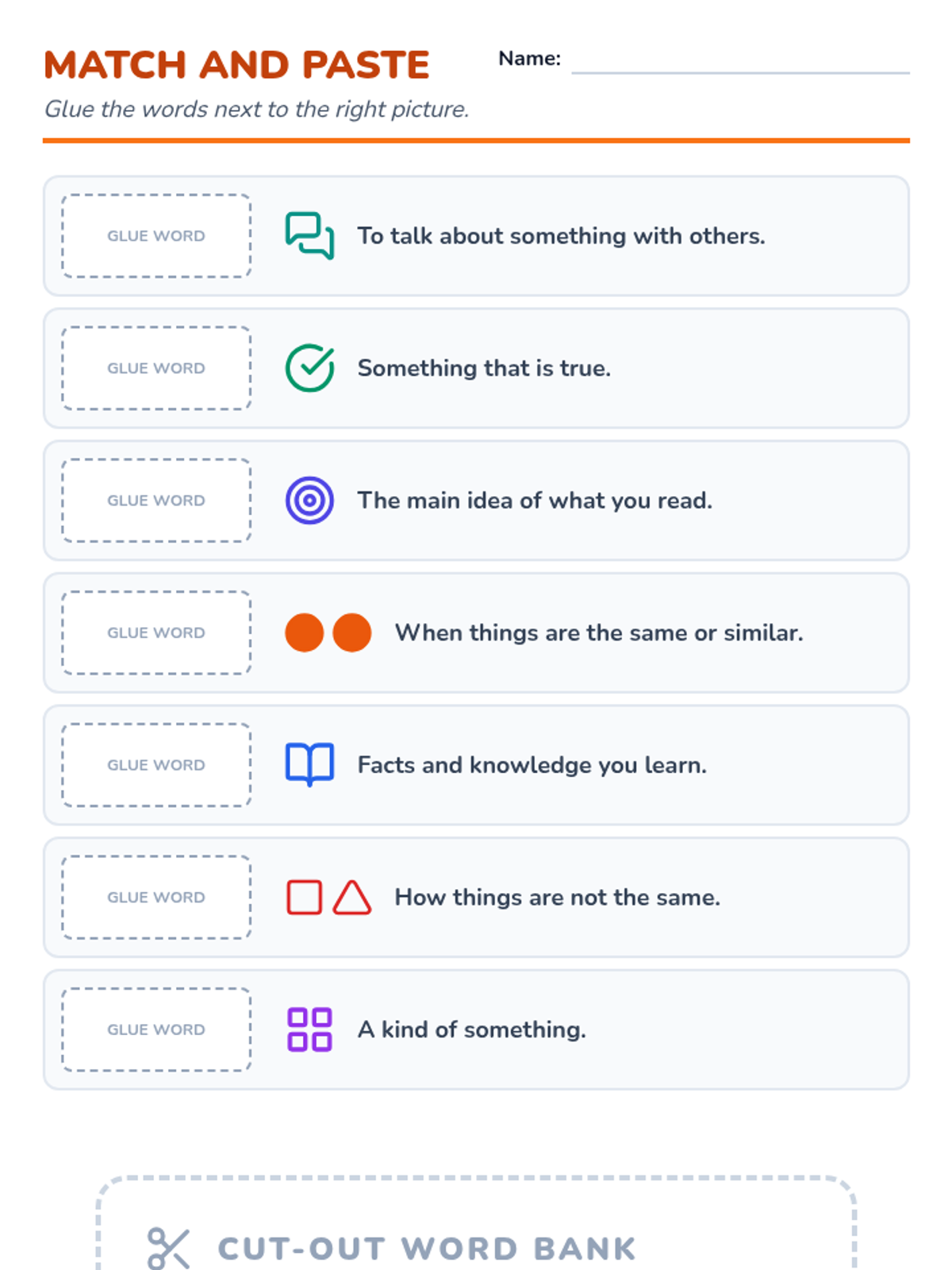
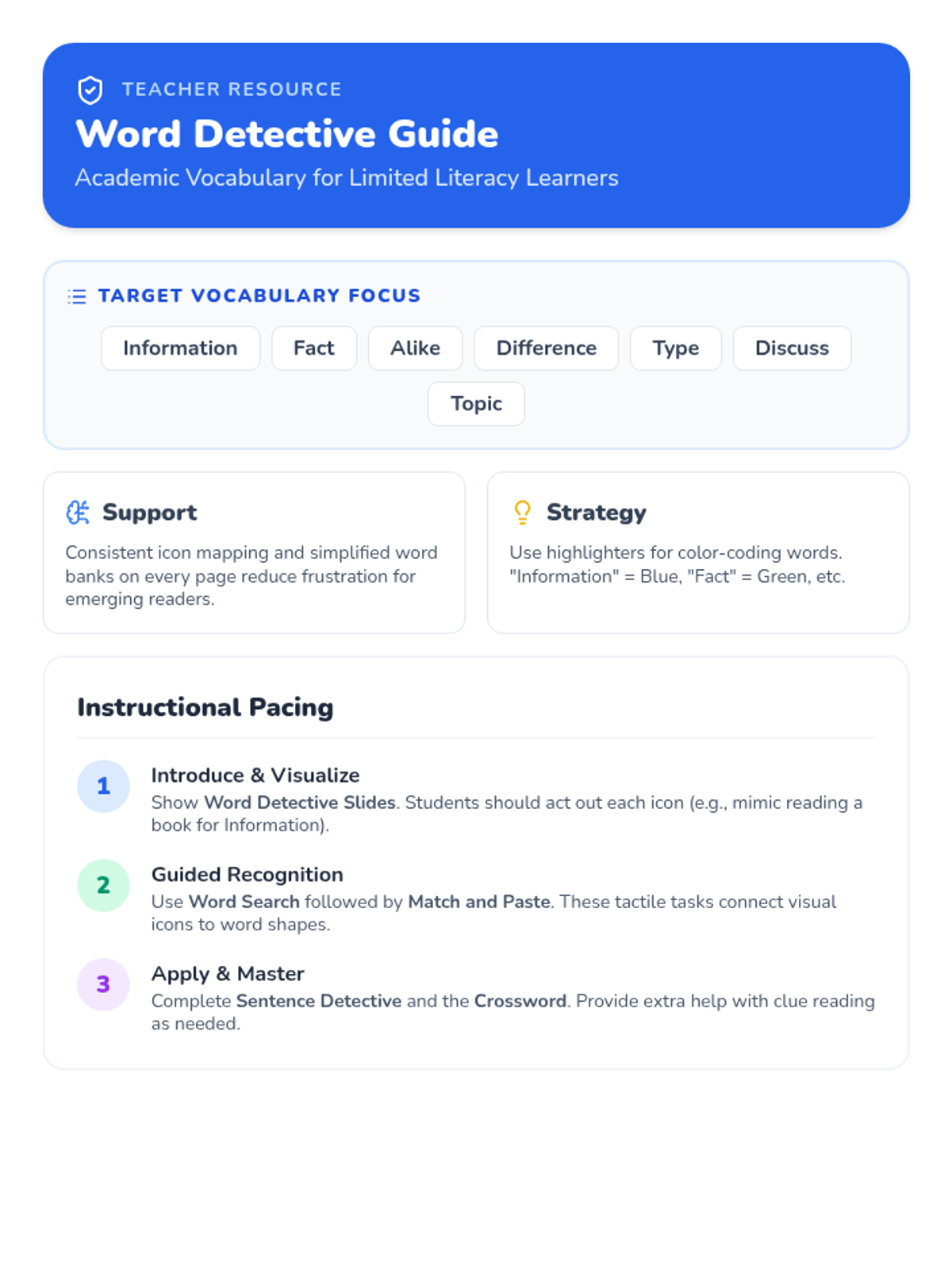
A collection of vocabulary-building resources designed for 4th-grade students with limited literacy. The lesson focuses on seven key academic terms: information, fact, alike, difference, type, discuss, and topic through visual and tactile activities.
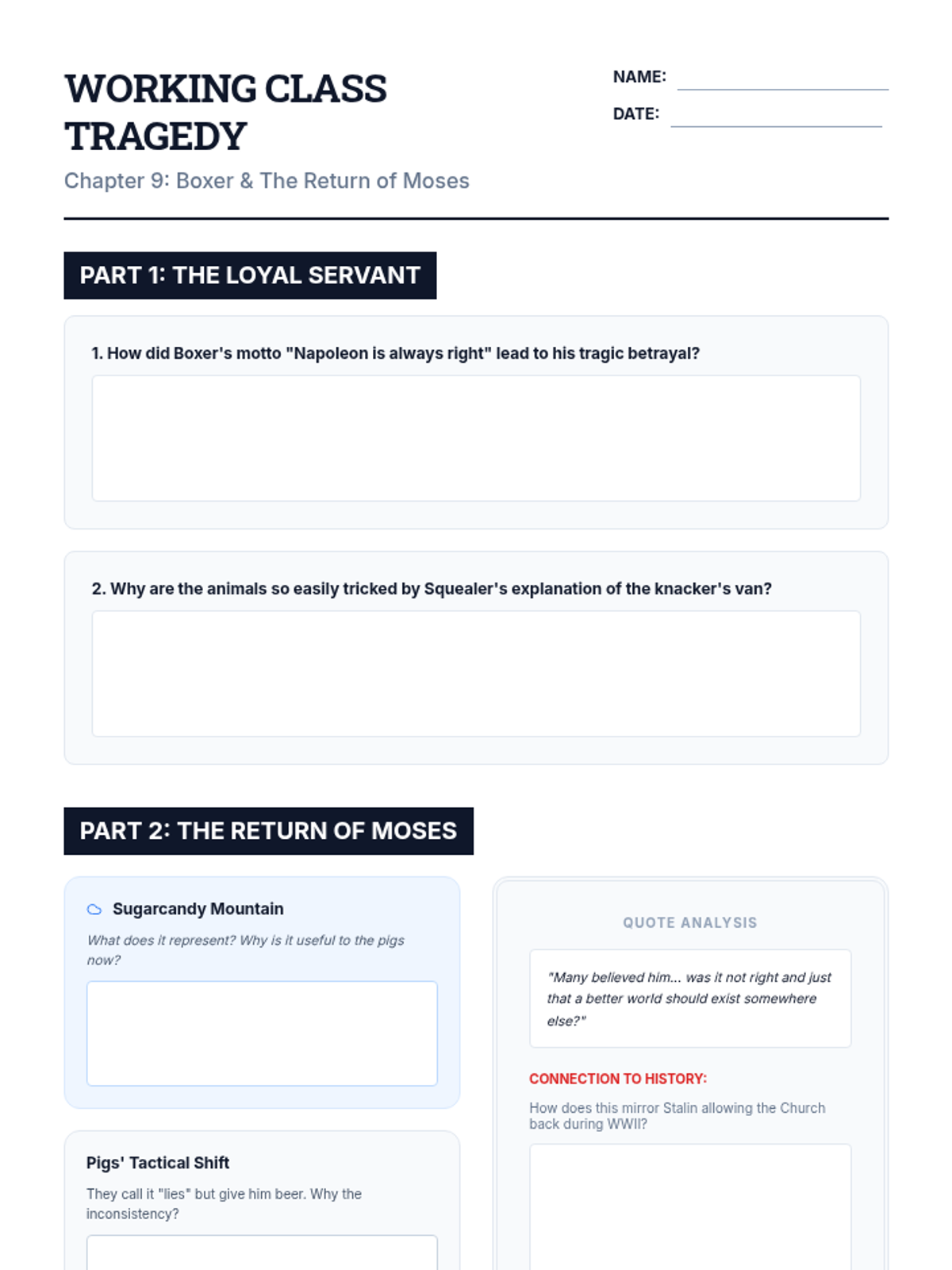
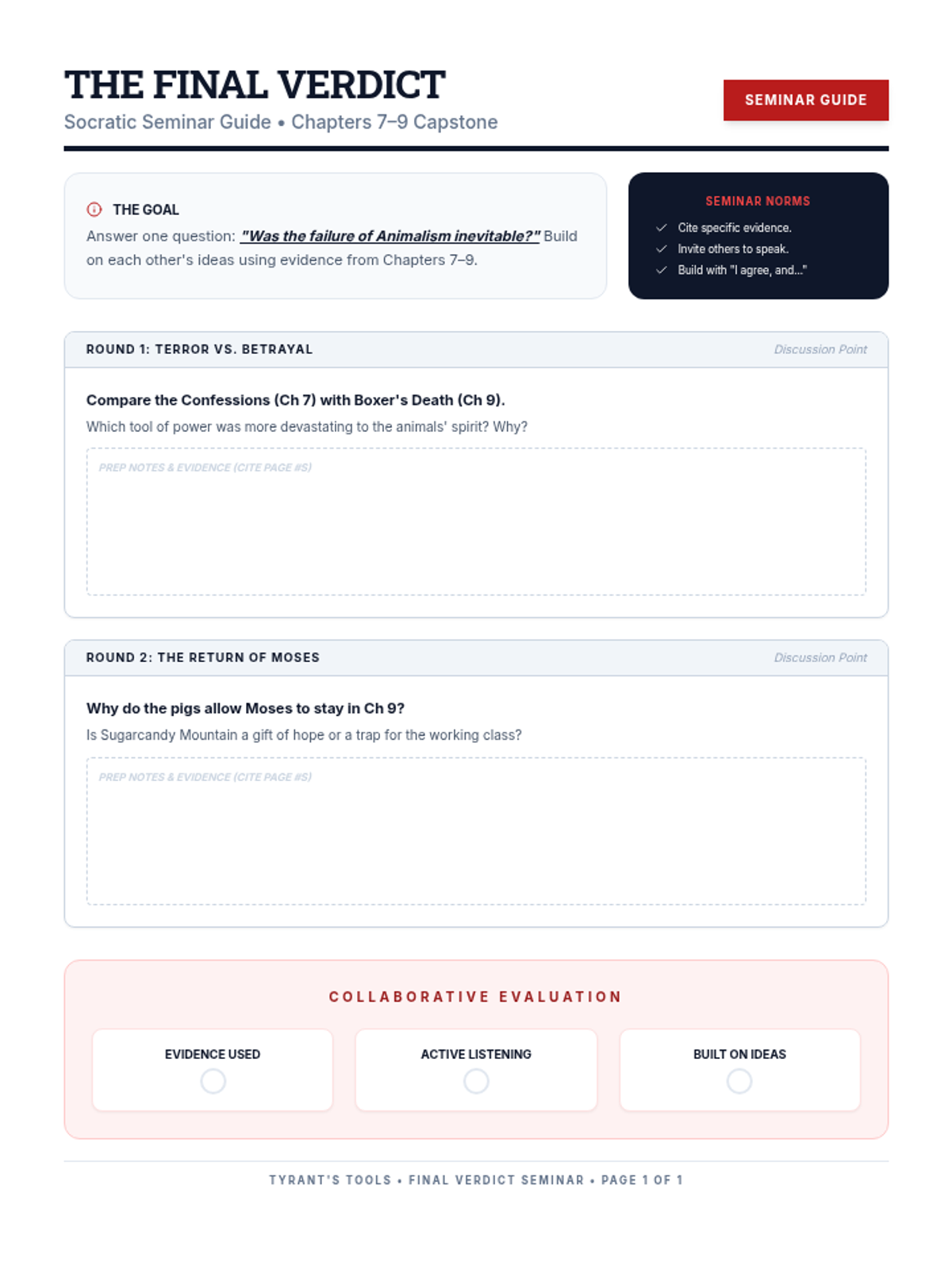
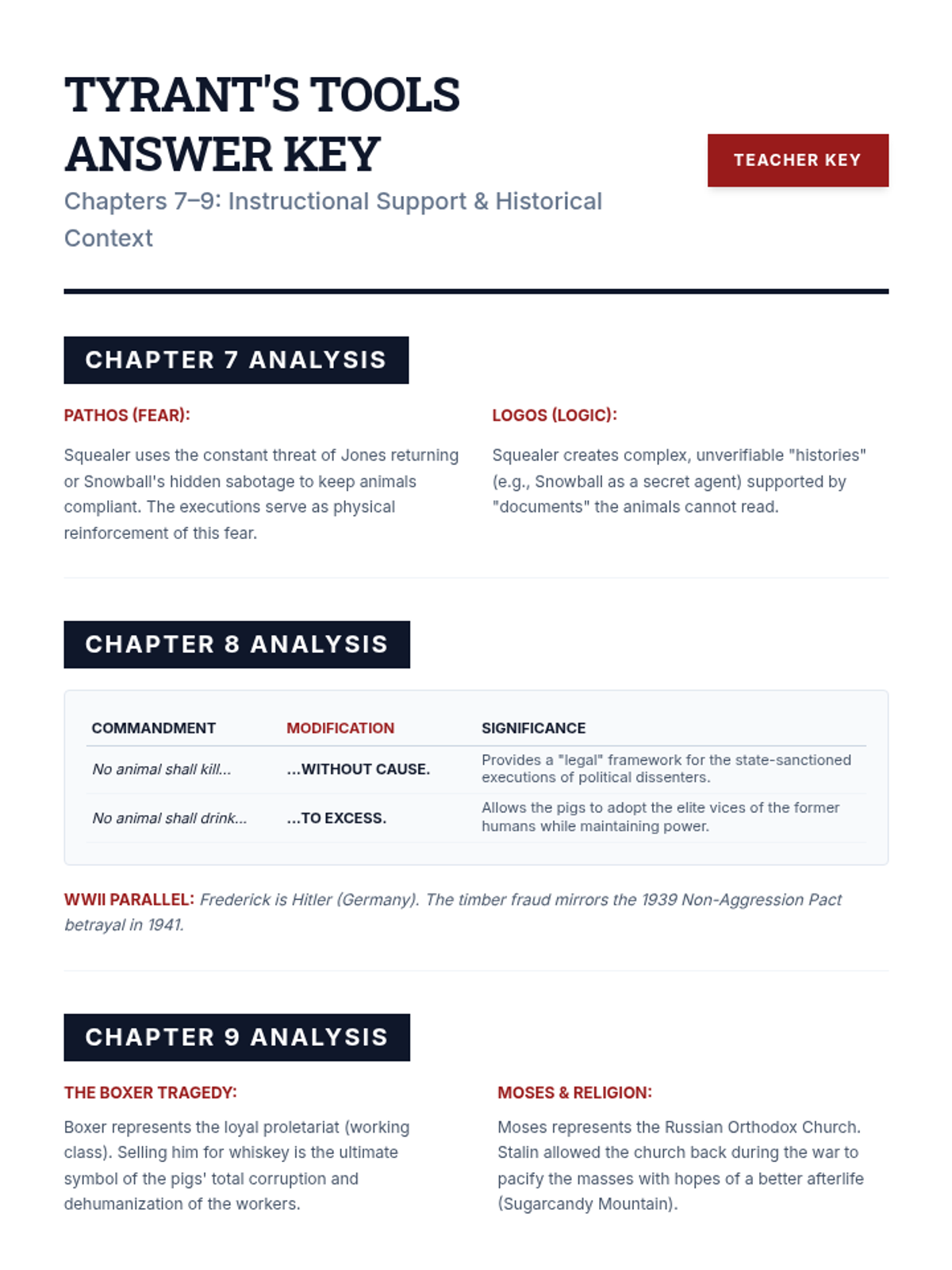
Analyzes Chapter 9's ultimate betrayal of the working class (Boxer) and the symbolic return of Moses, reflecting the final abandonment of Animalism's original ideals.
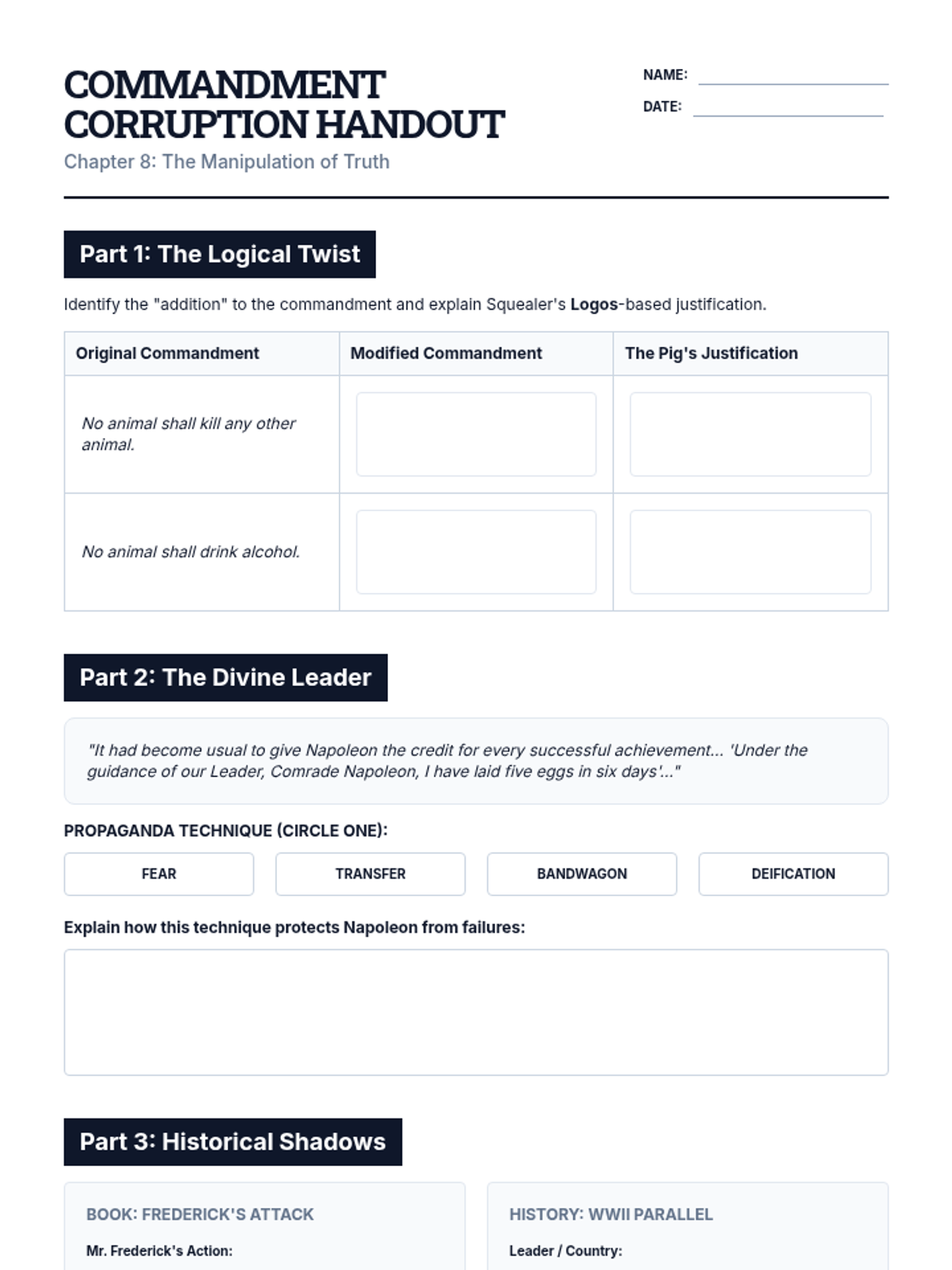
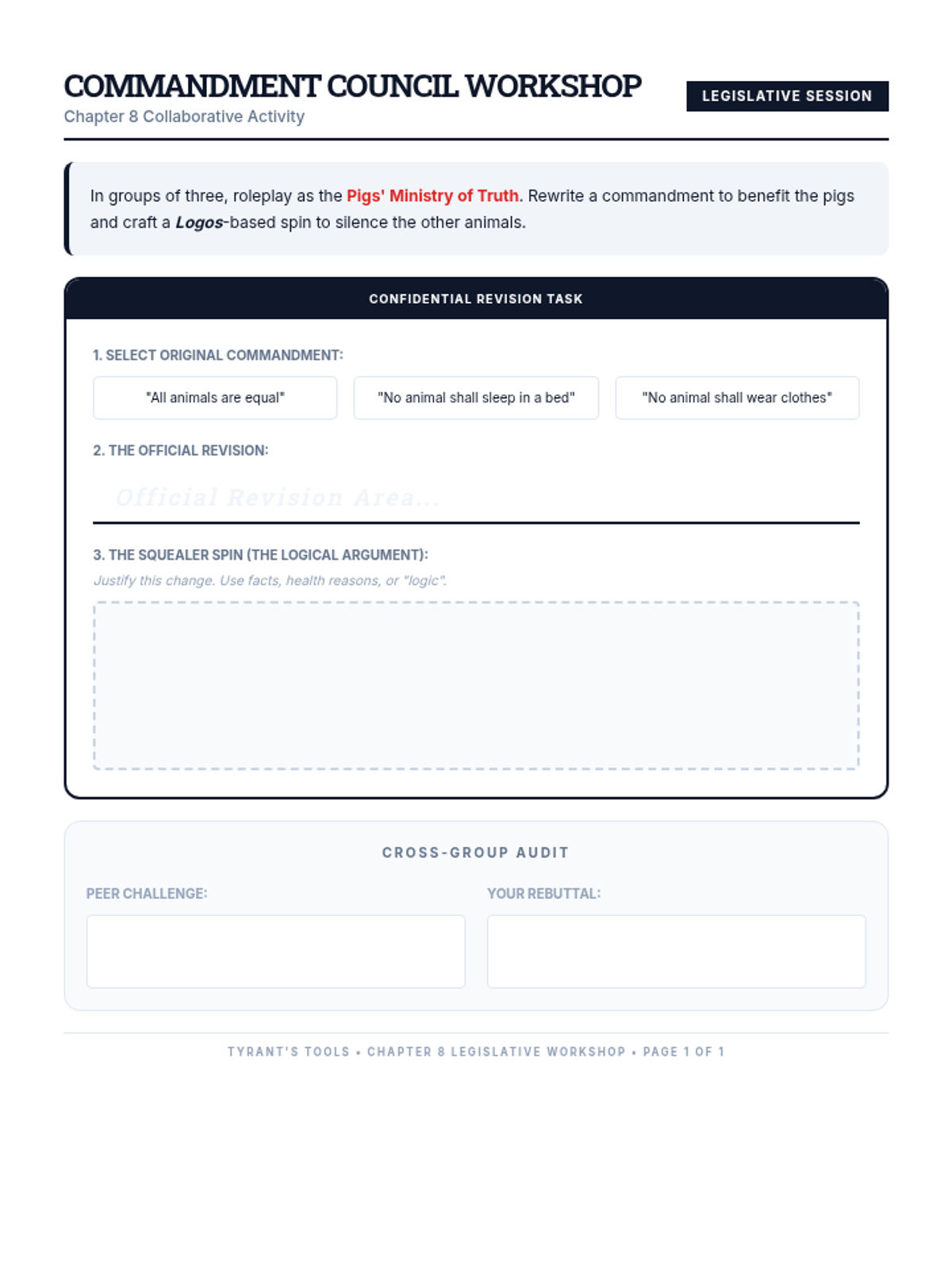
Explores Chapter 8's development of Napoleon's cult of personality, the manipulation of the Commandments (Logos), and the allegorical significance of the Battle of the Windmill.
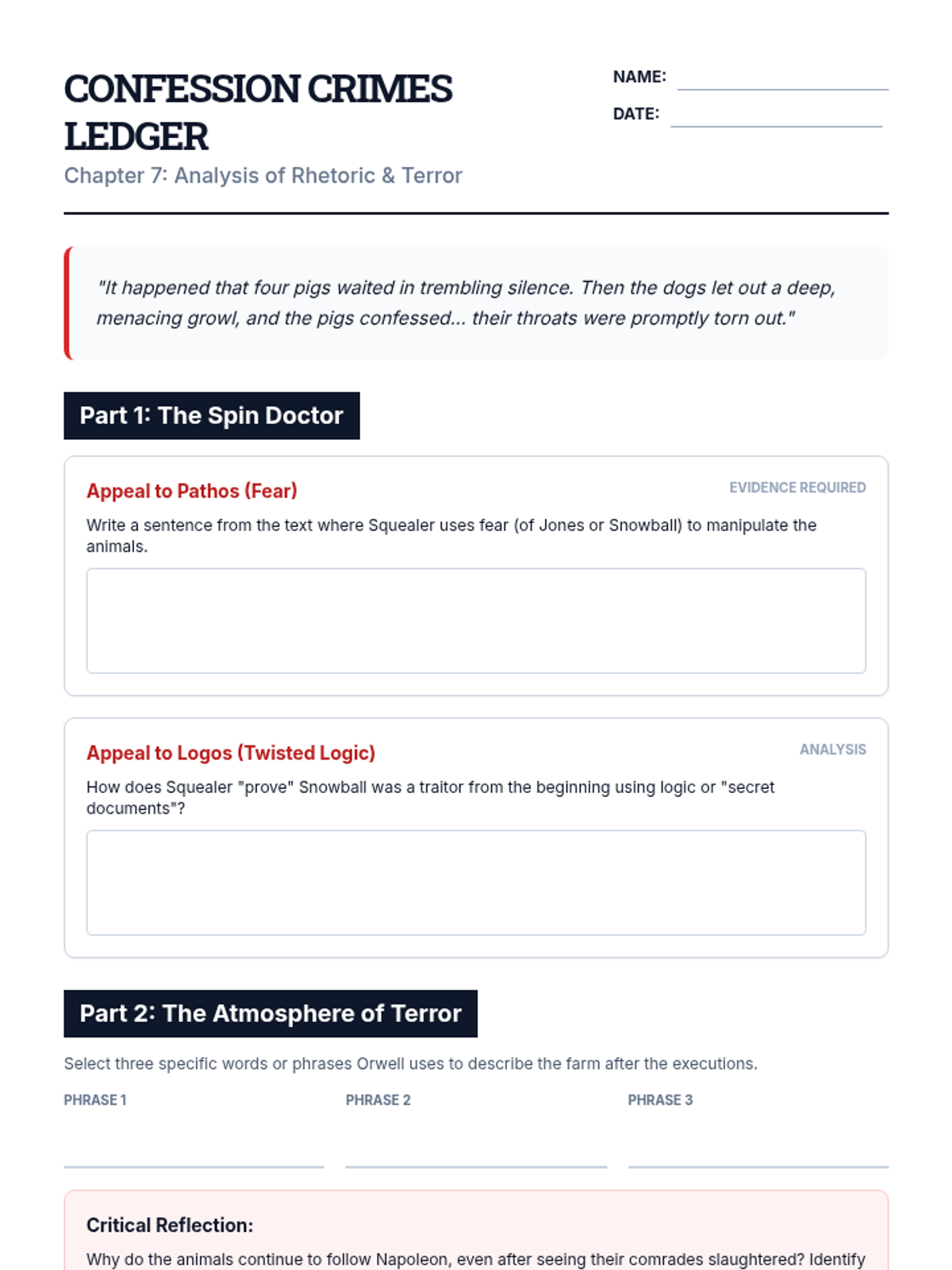
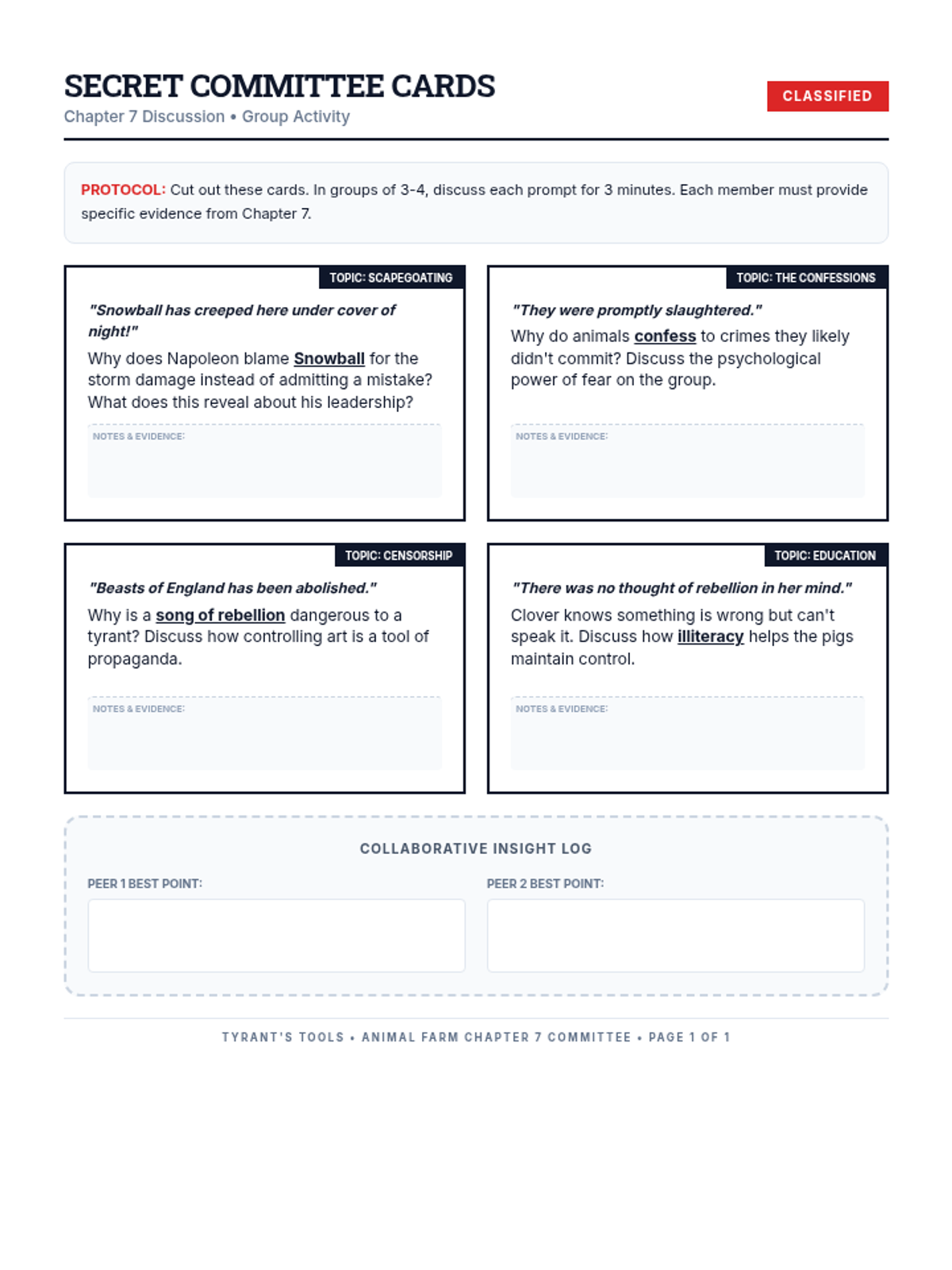
Examines Chapter 7's focus on the atmosphere of terror, the use of rhetorical appeals (specifically Pathos through fear), and the allegorical connection to Stalin's Great Purge through the animal confessions.
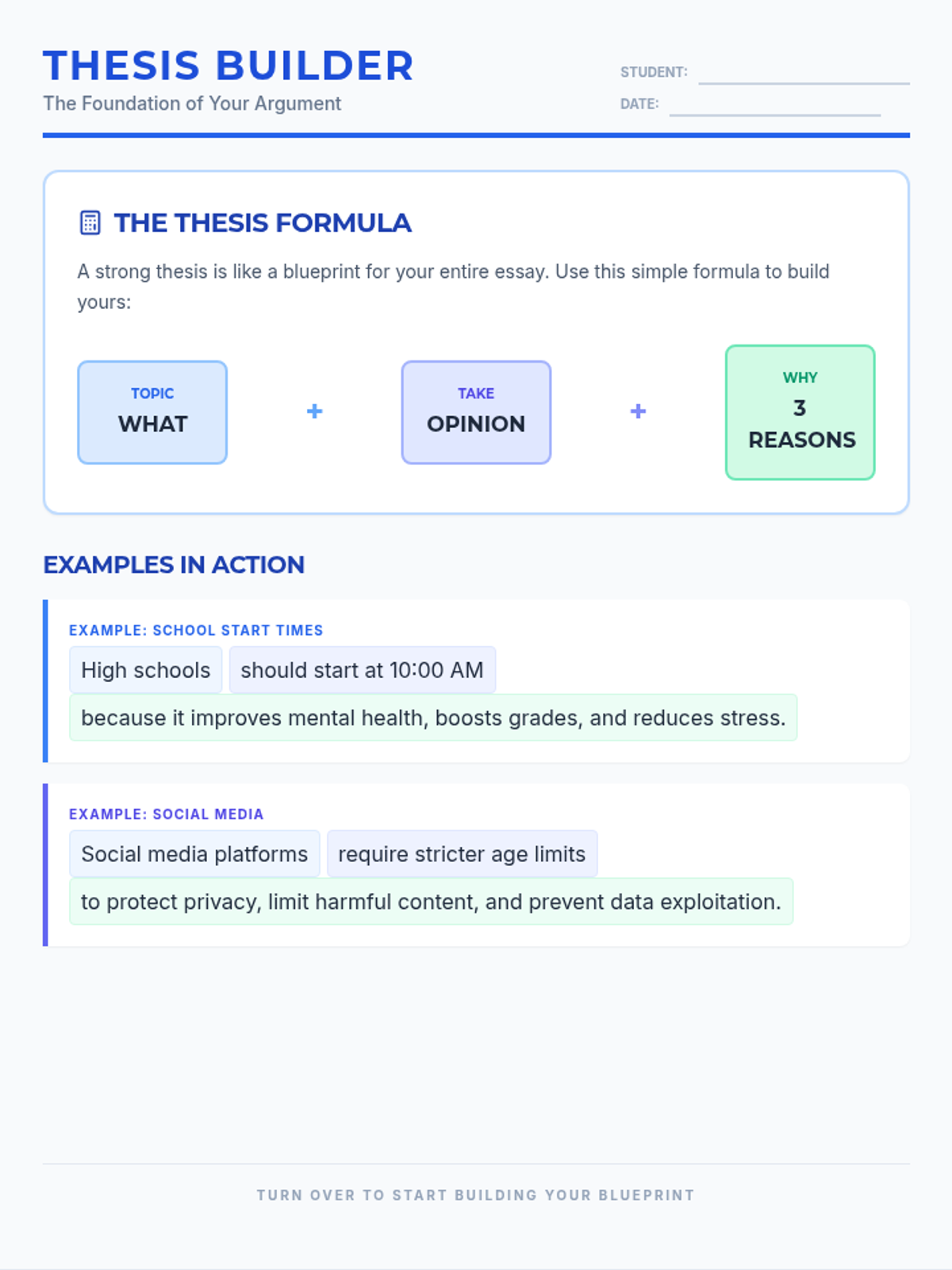
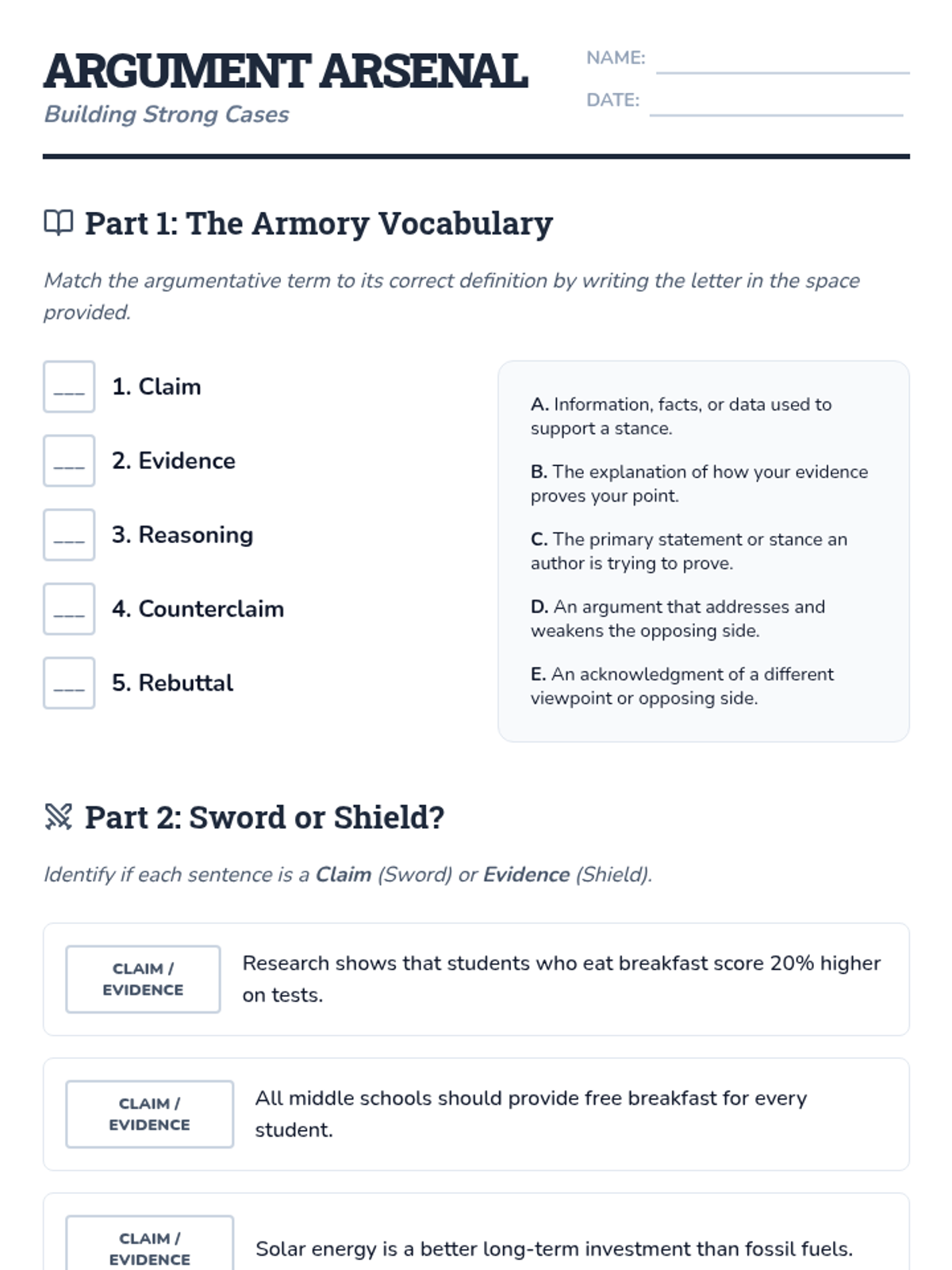
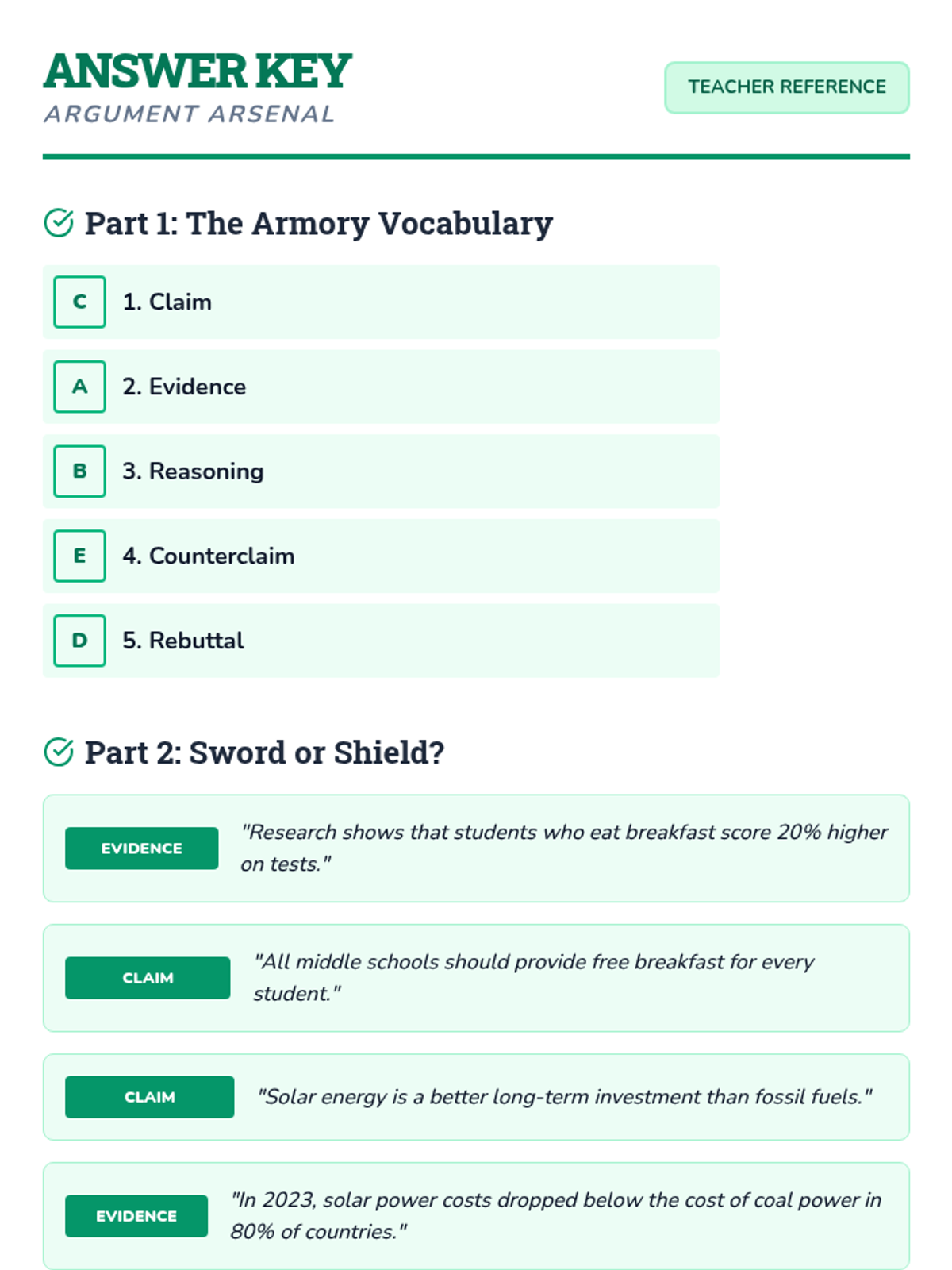
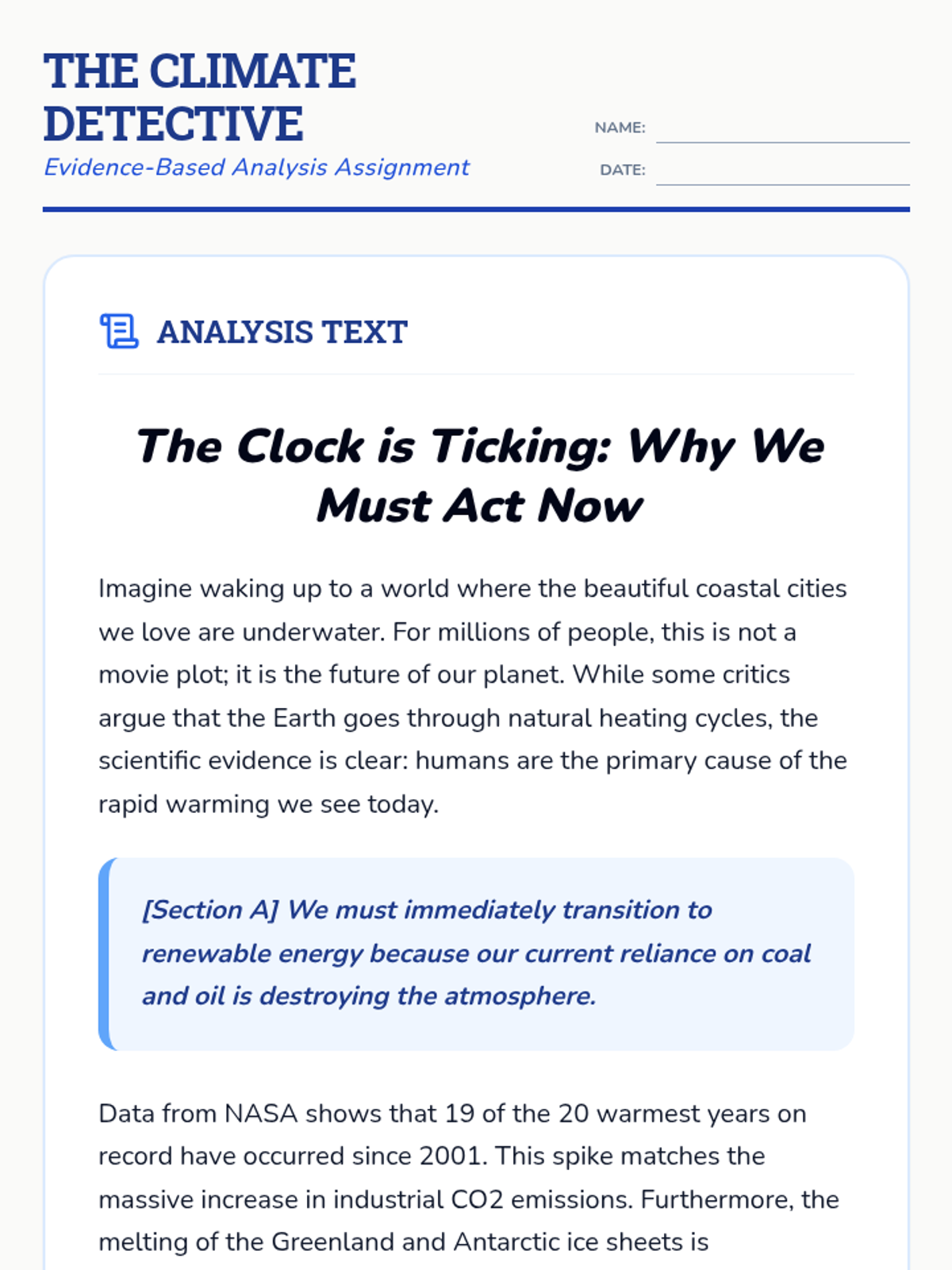
A lesson focused on identifying and constructing argumentative claims supported by strong evidence, using an engaging armory theme.
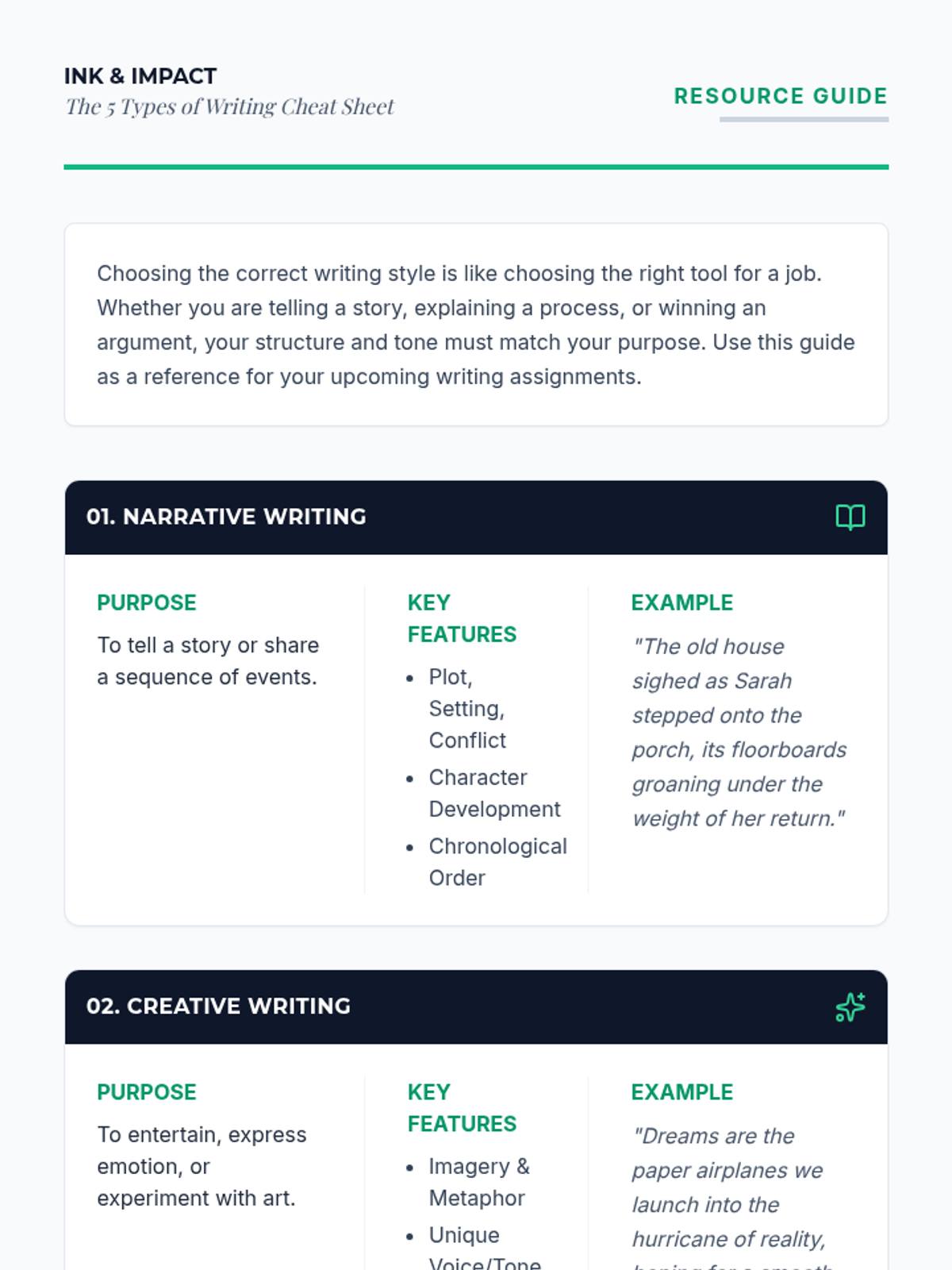
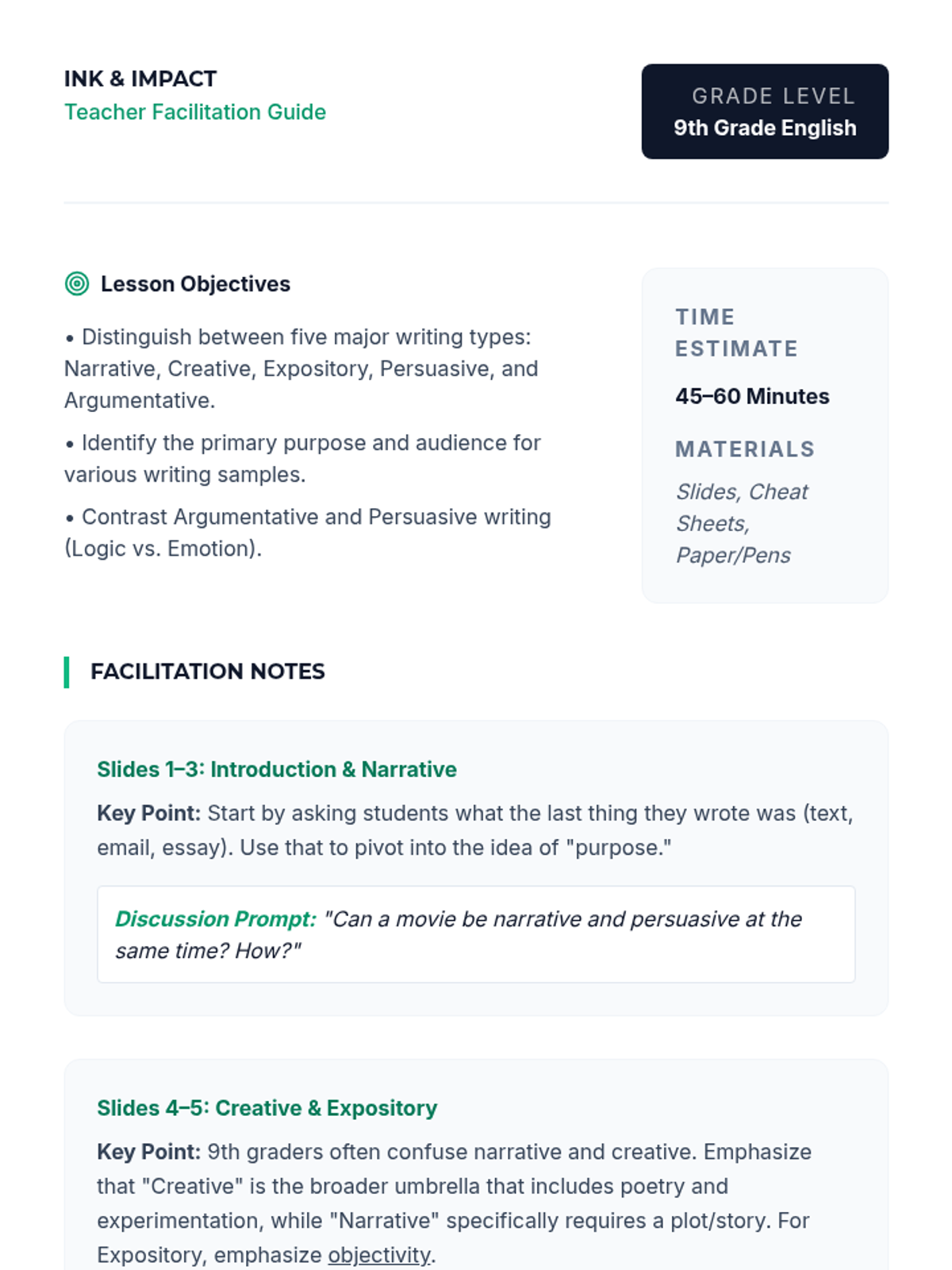
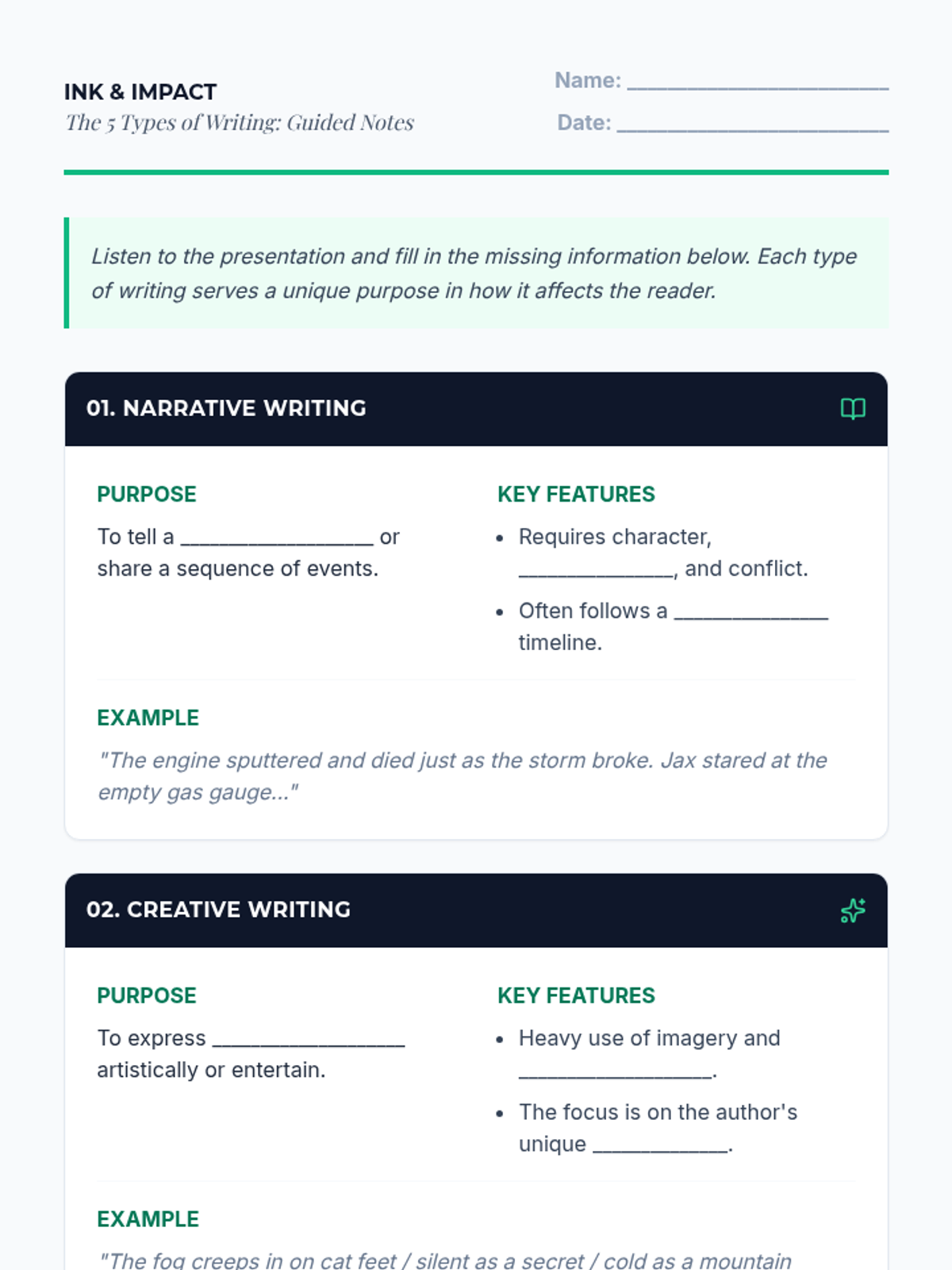
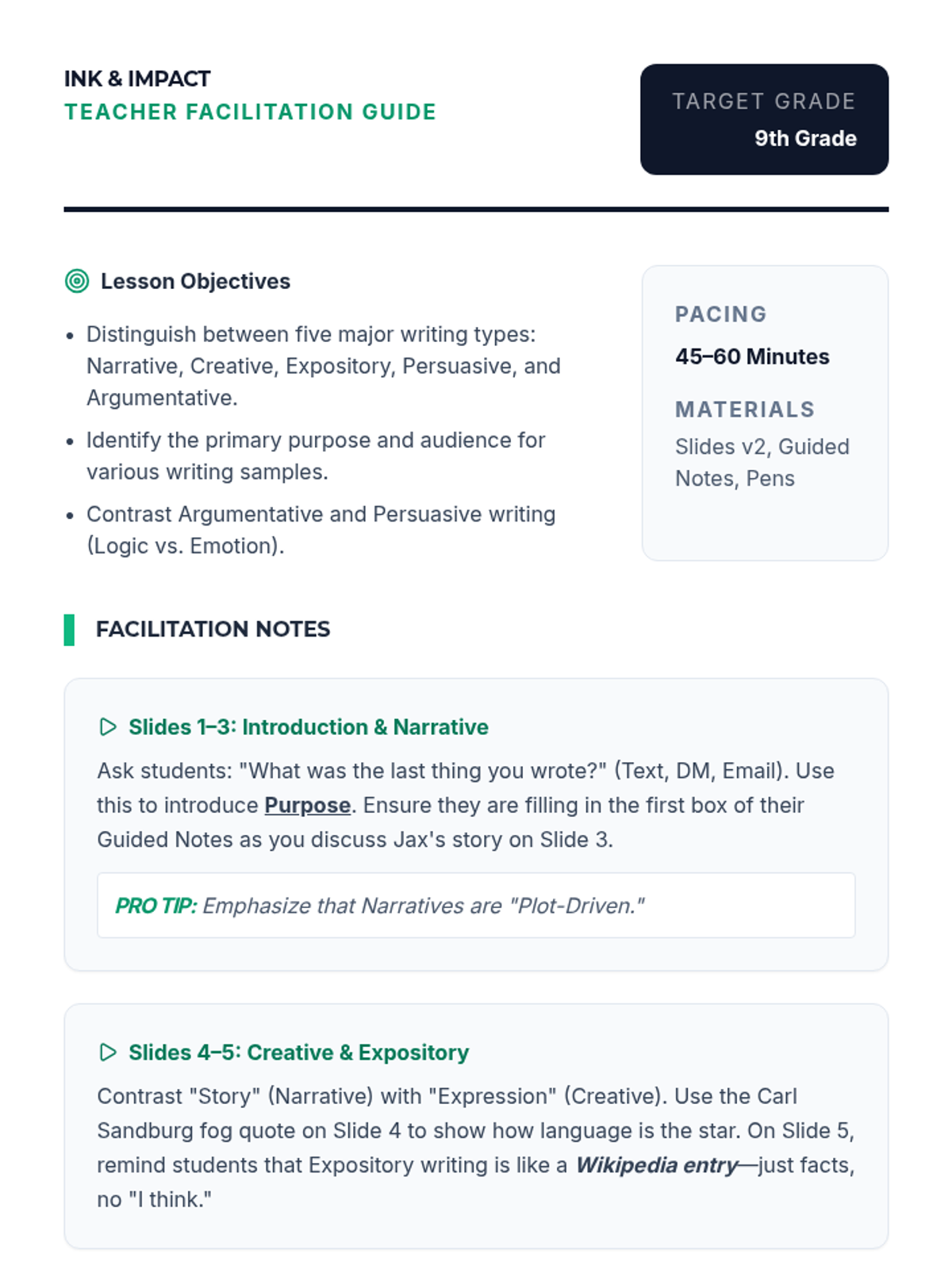
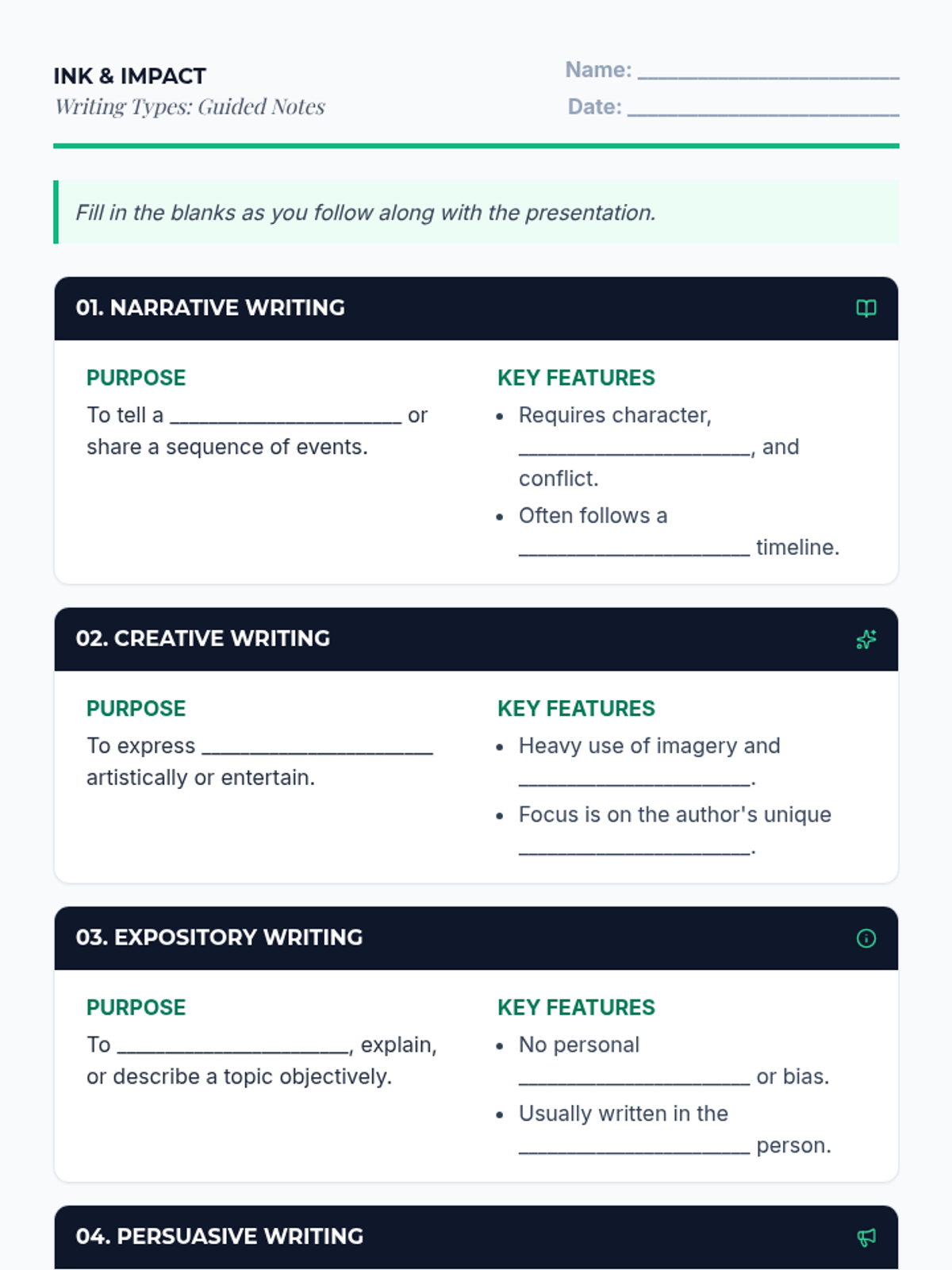
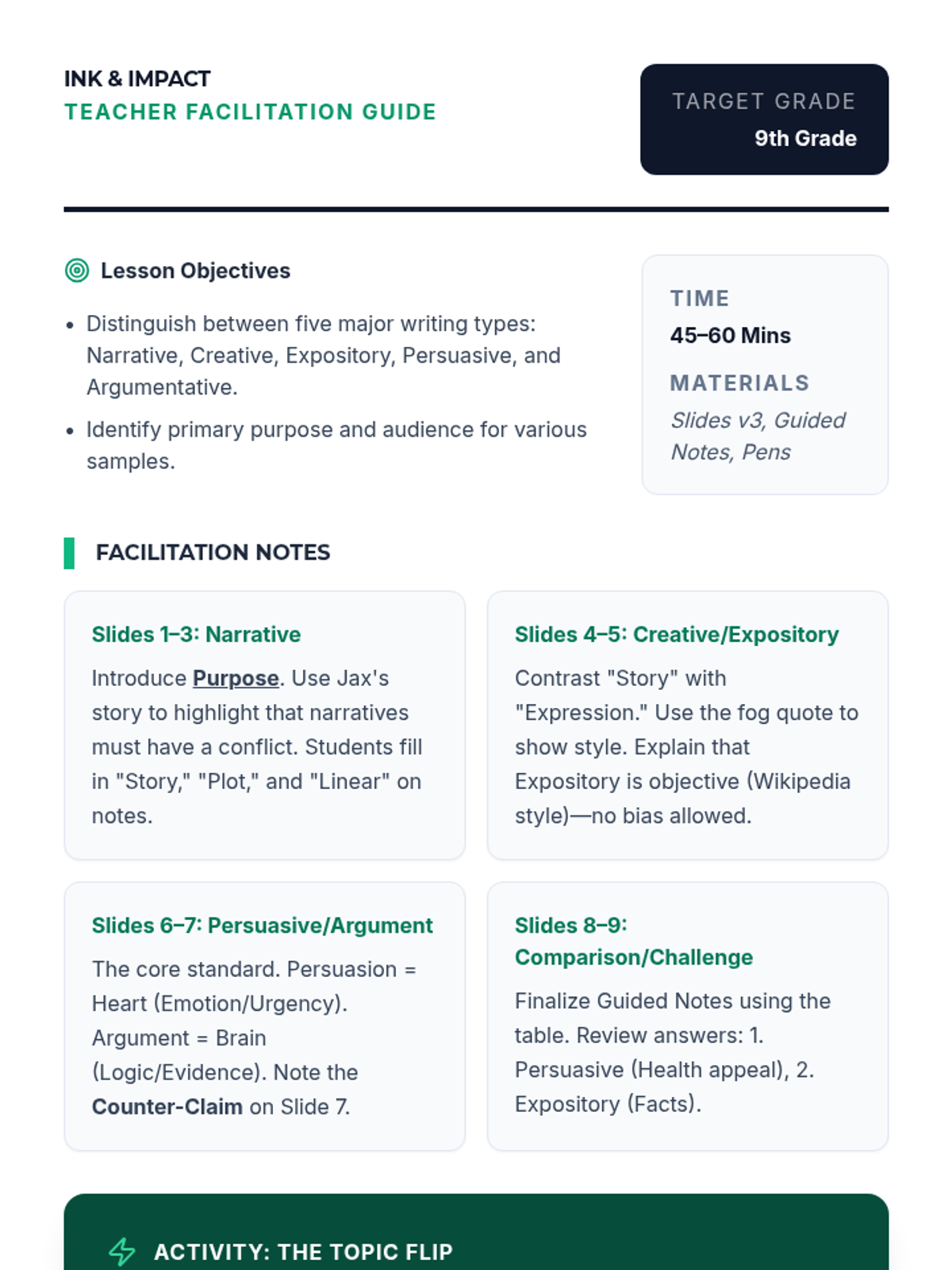
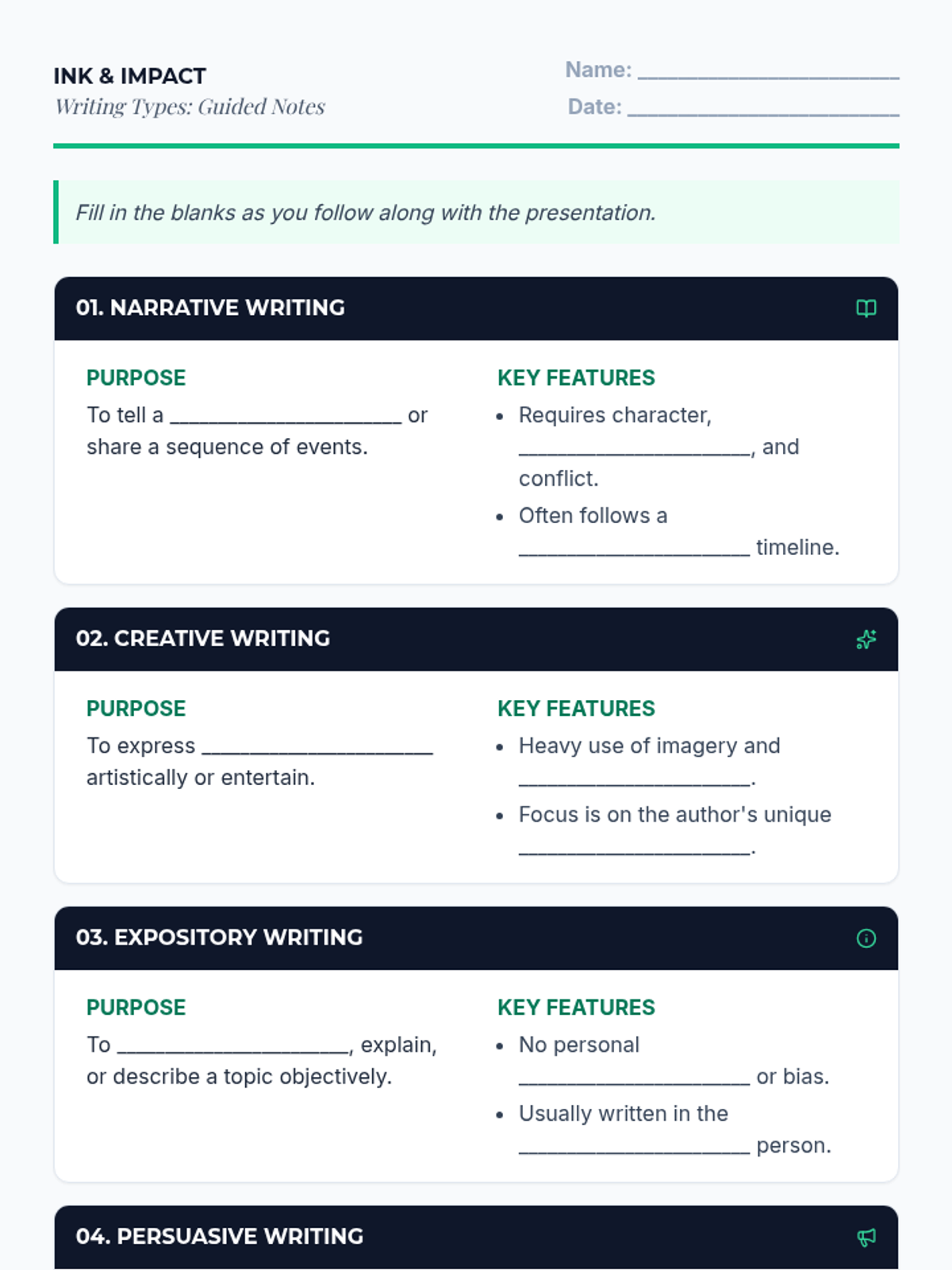
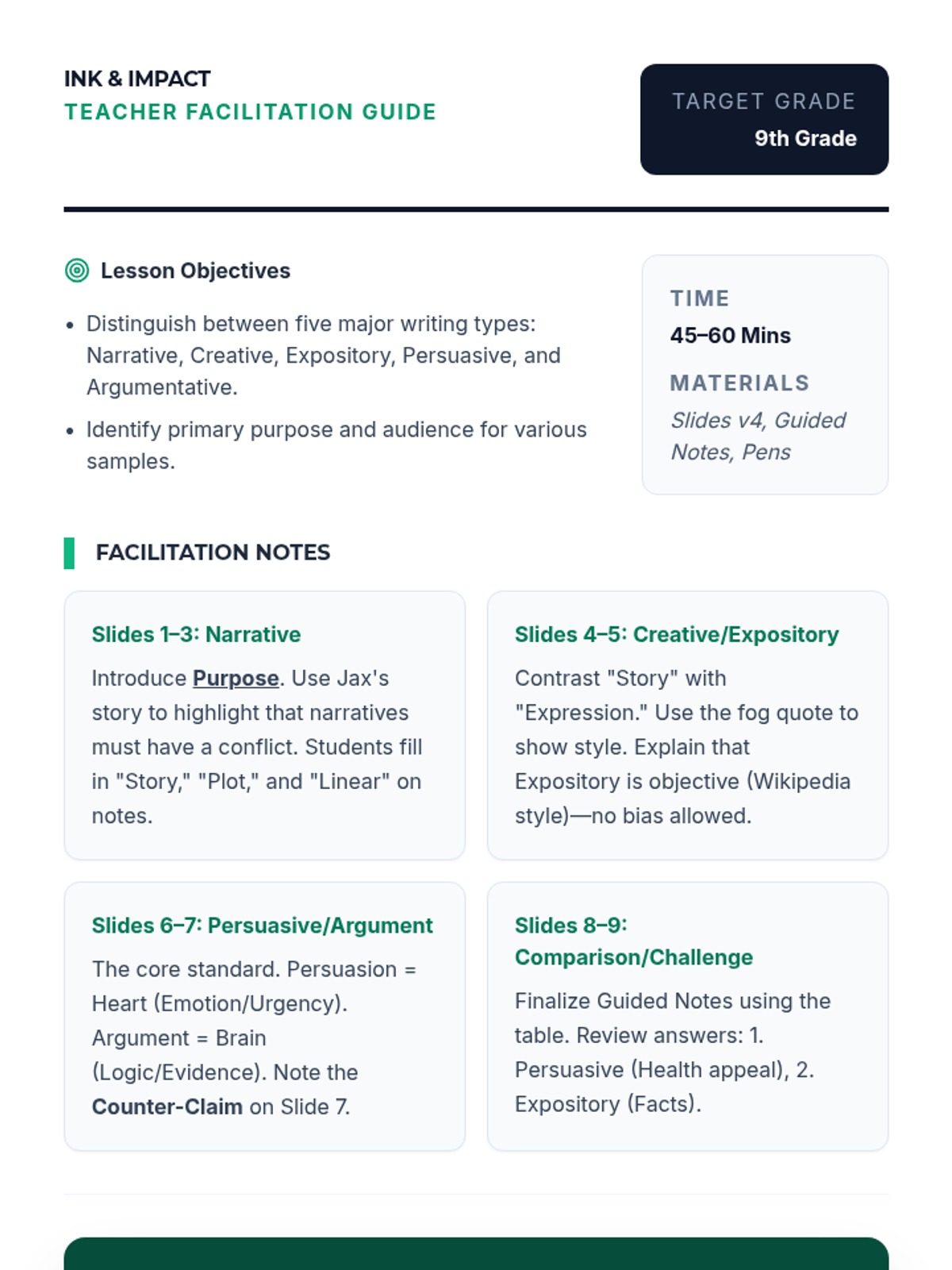
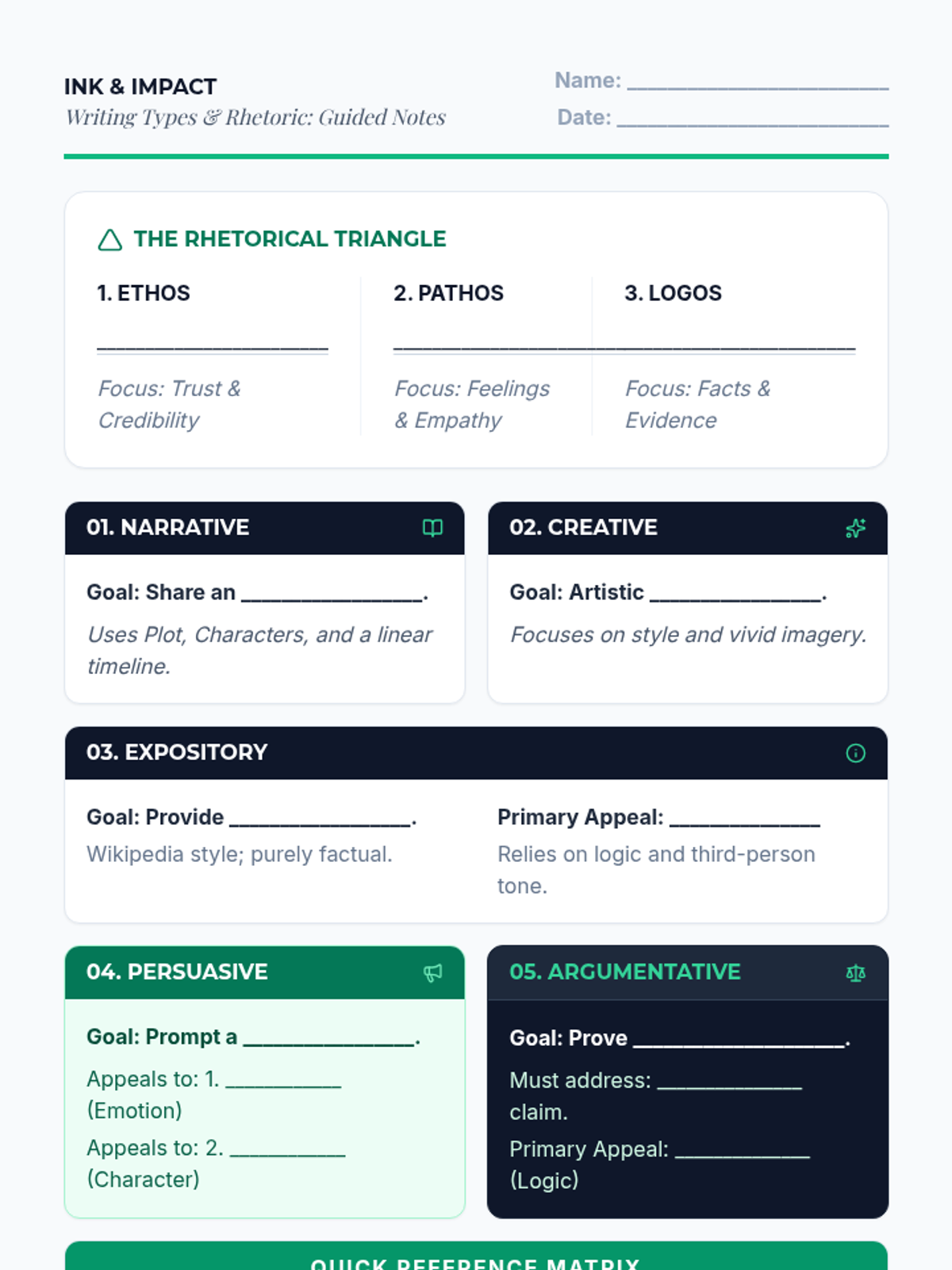
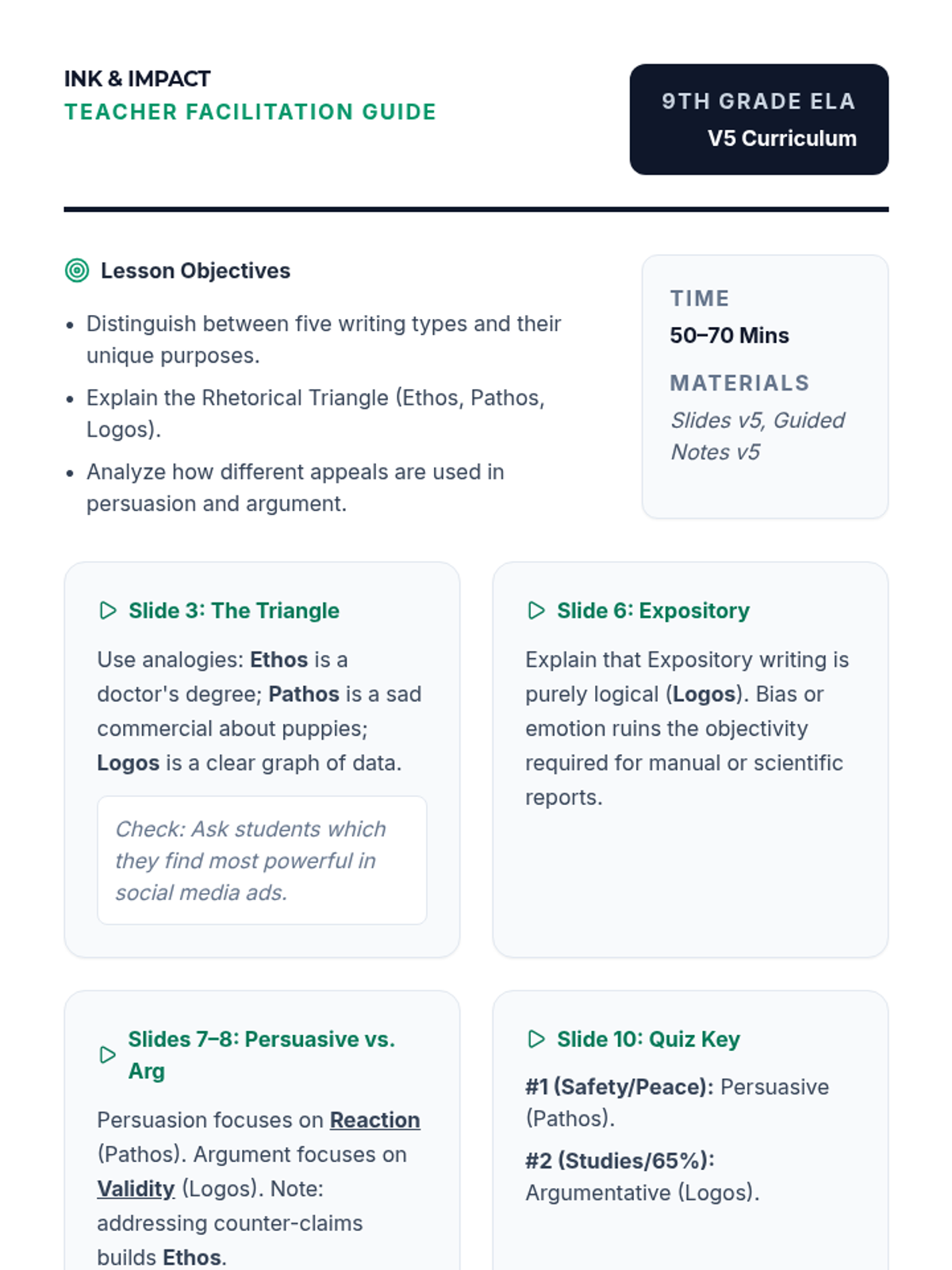
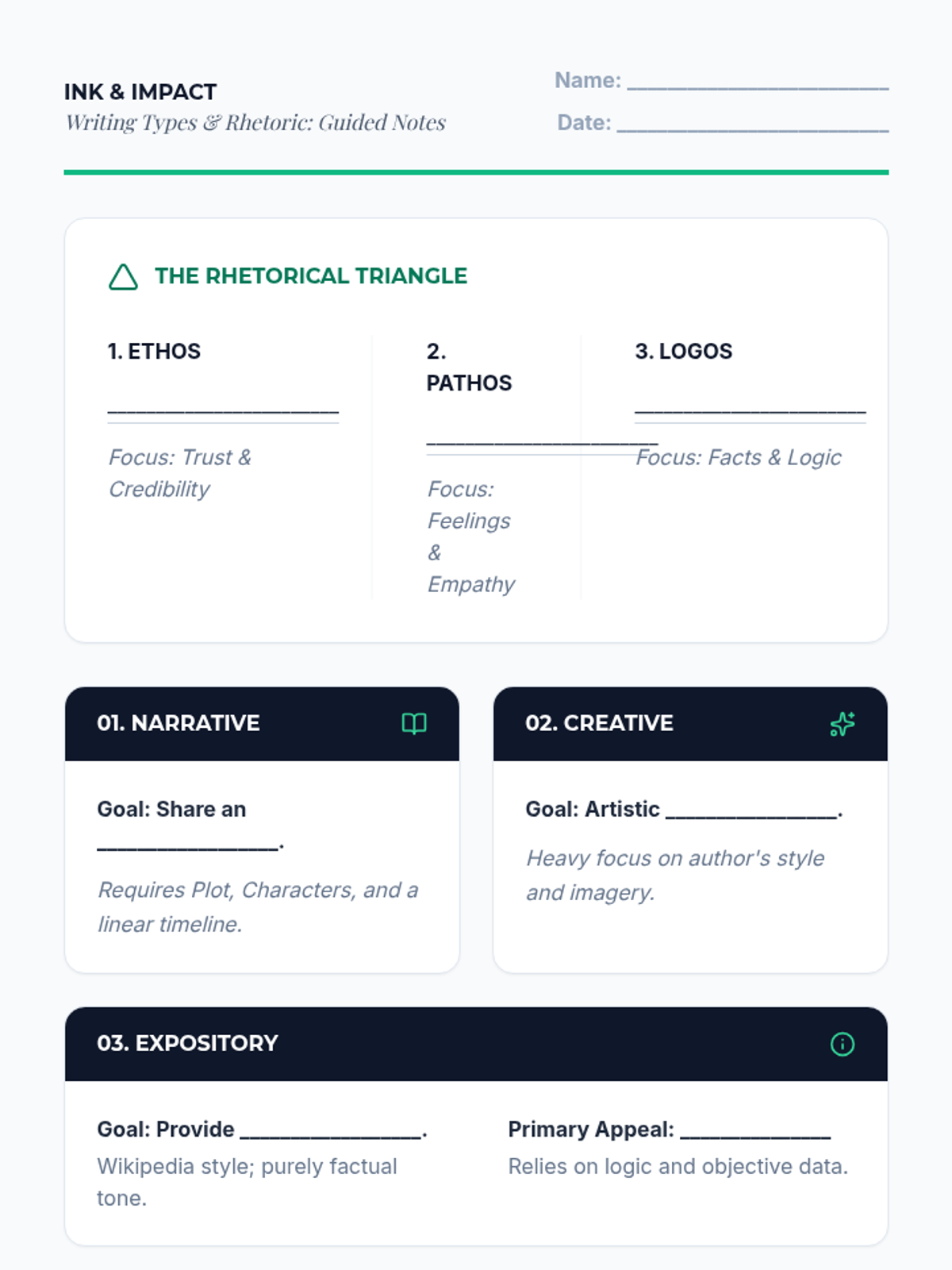
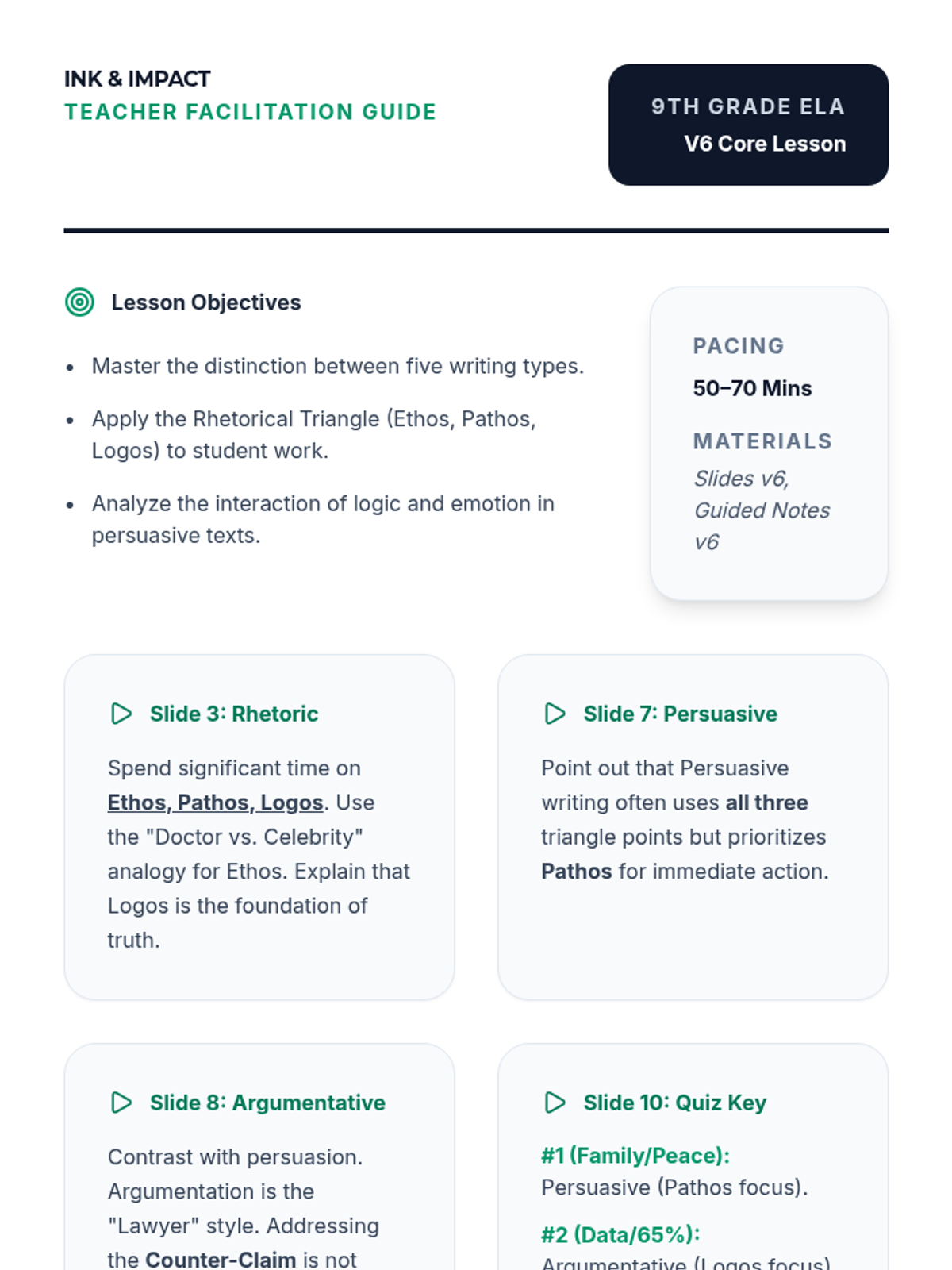
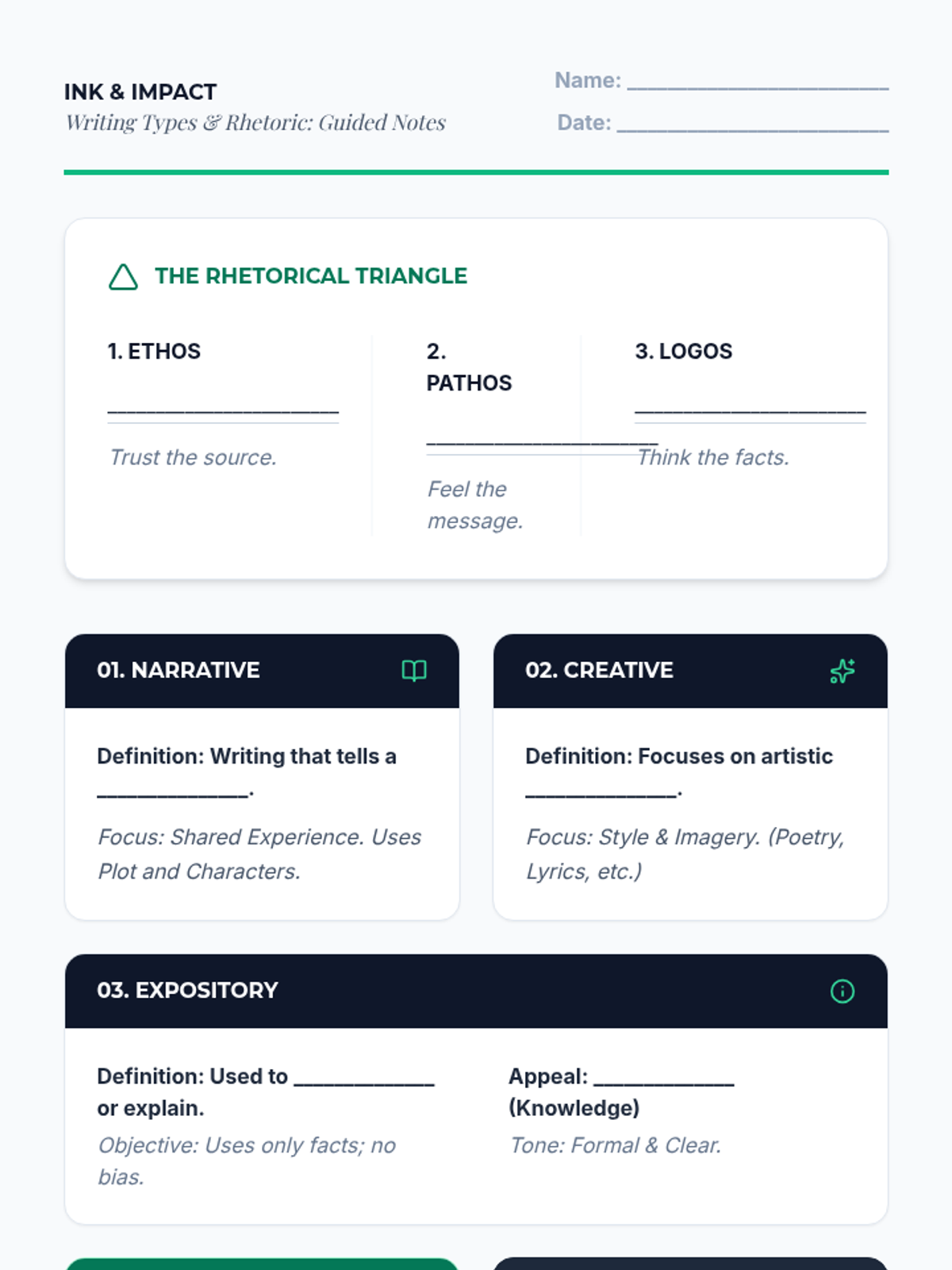
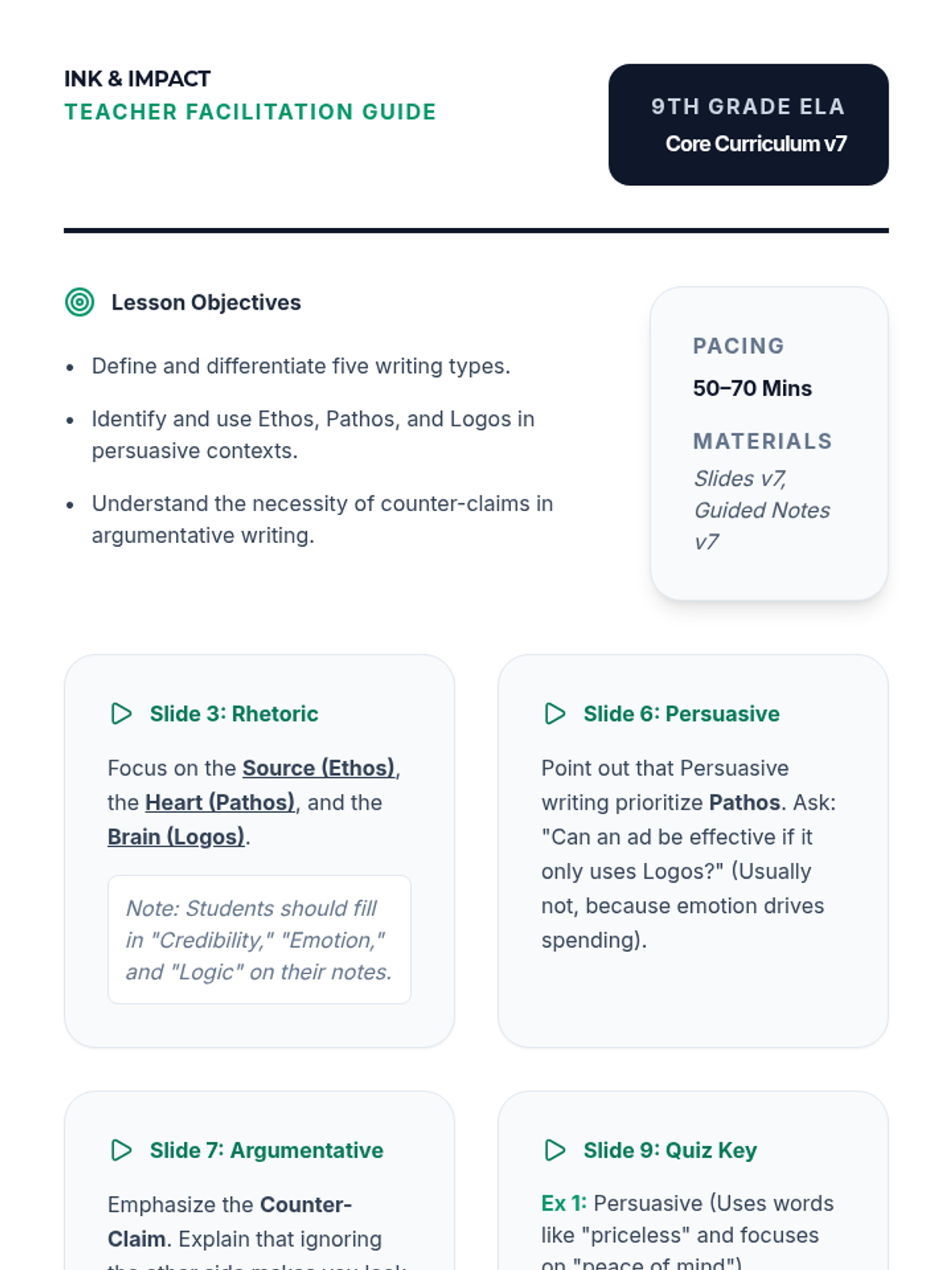
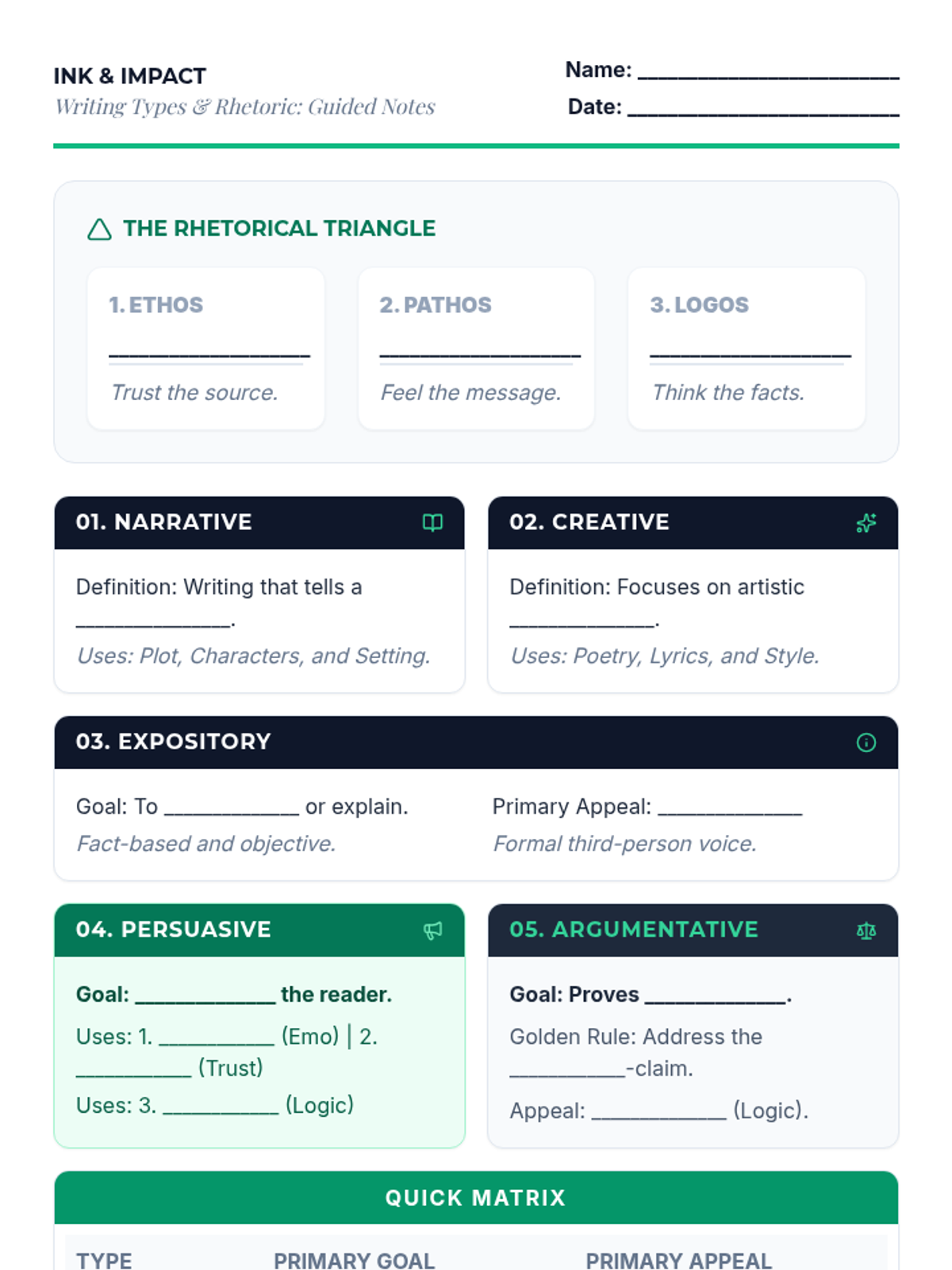
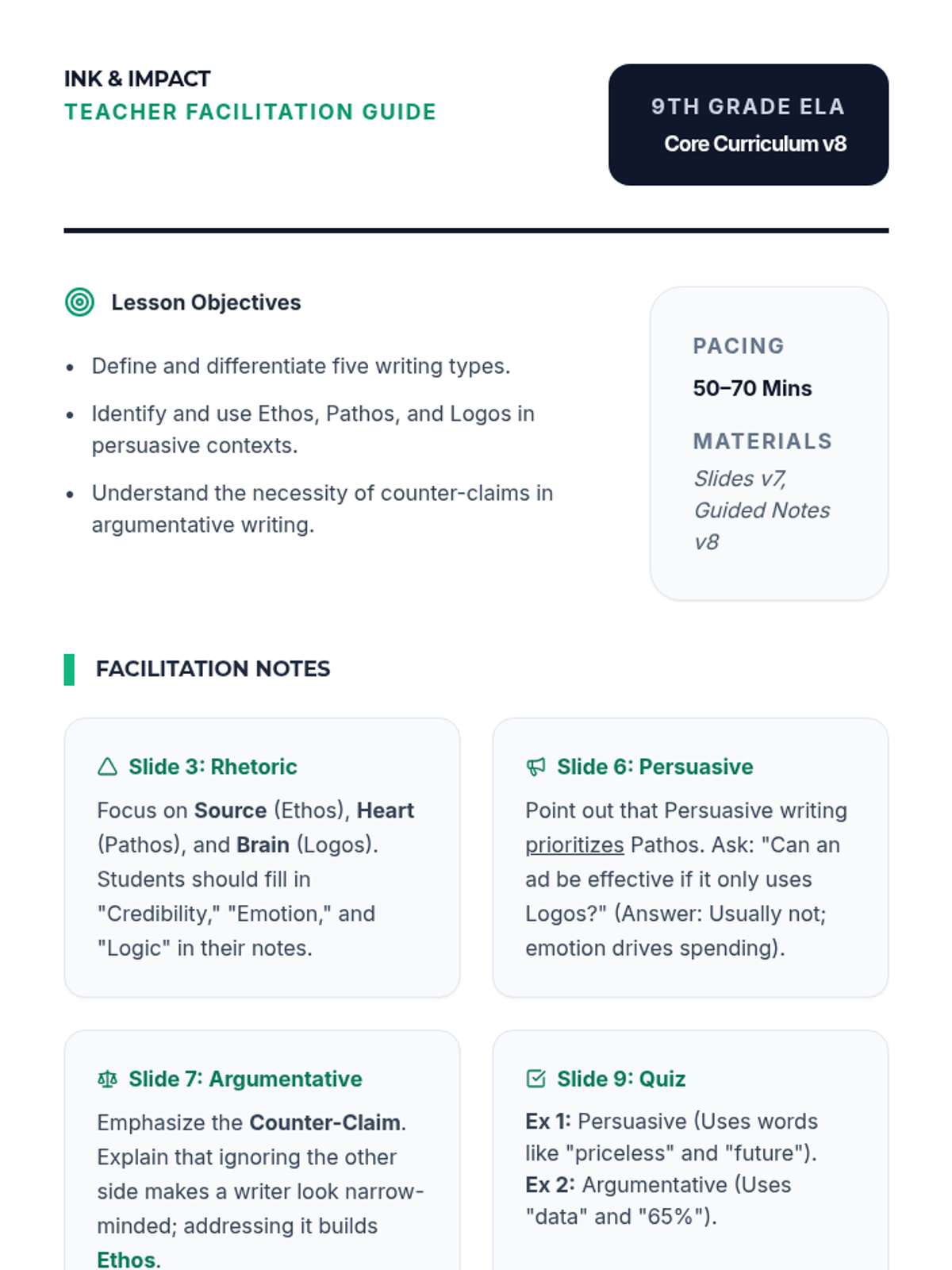
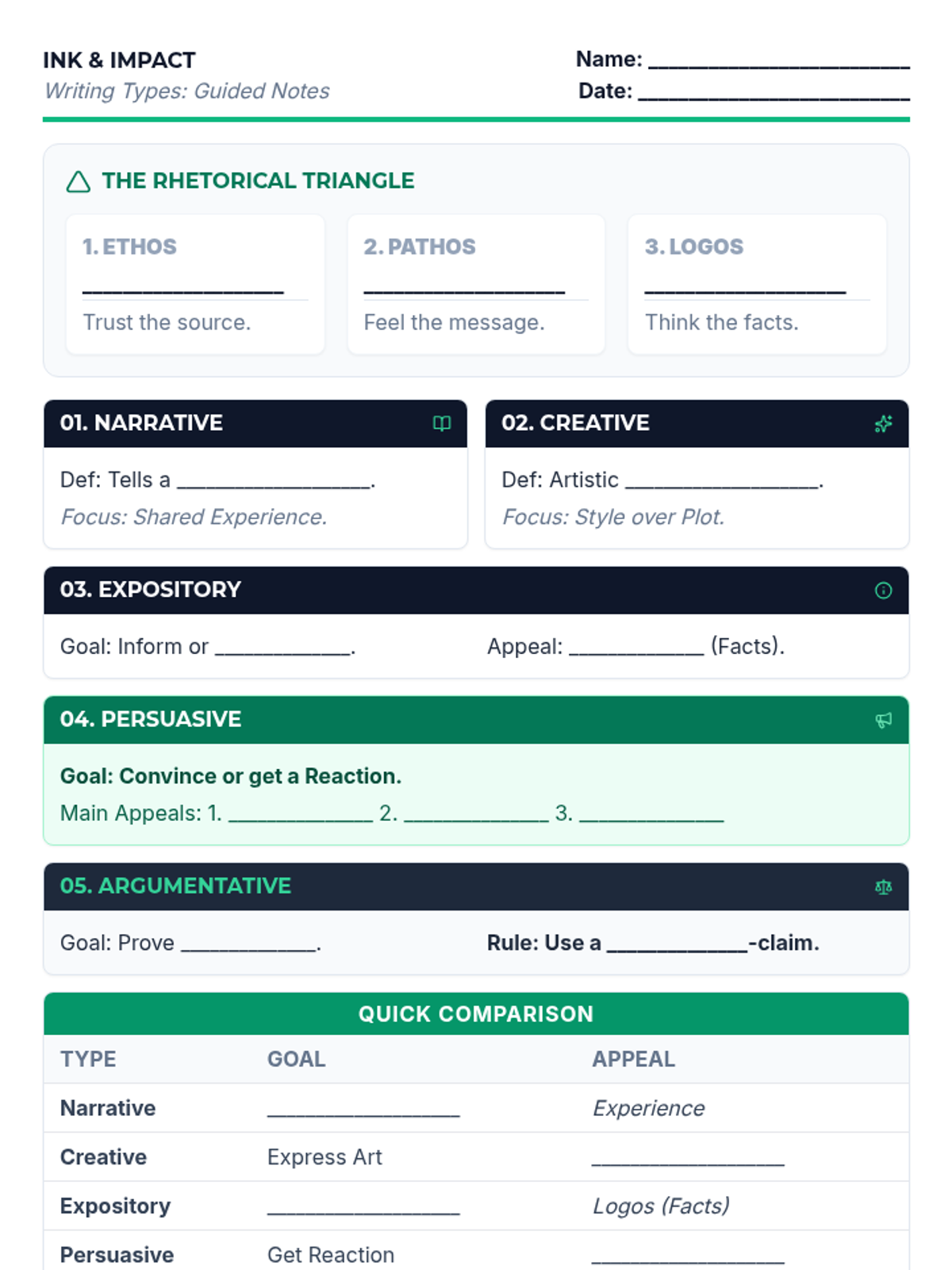
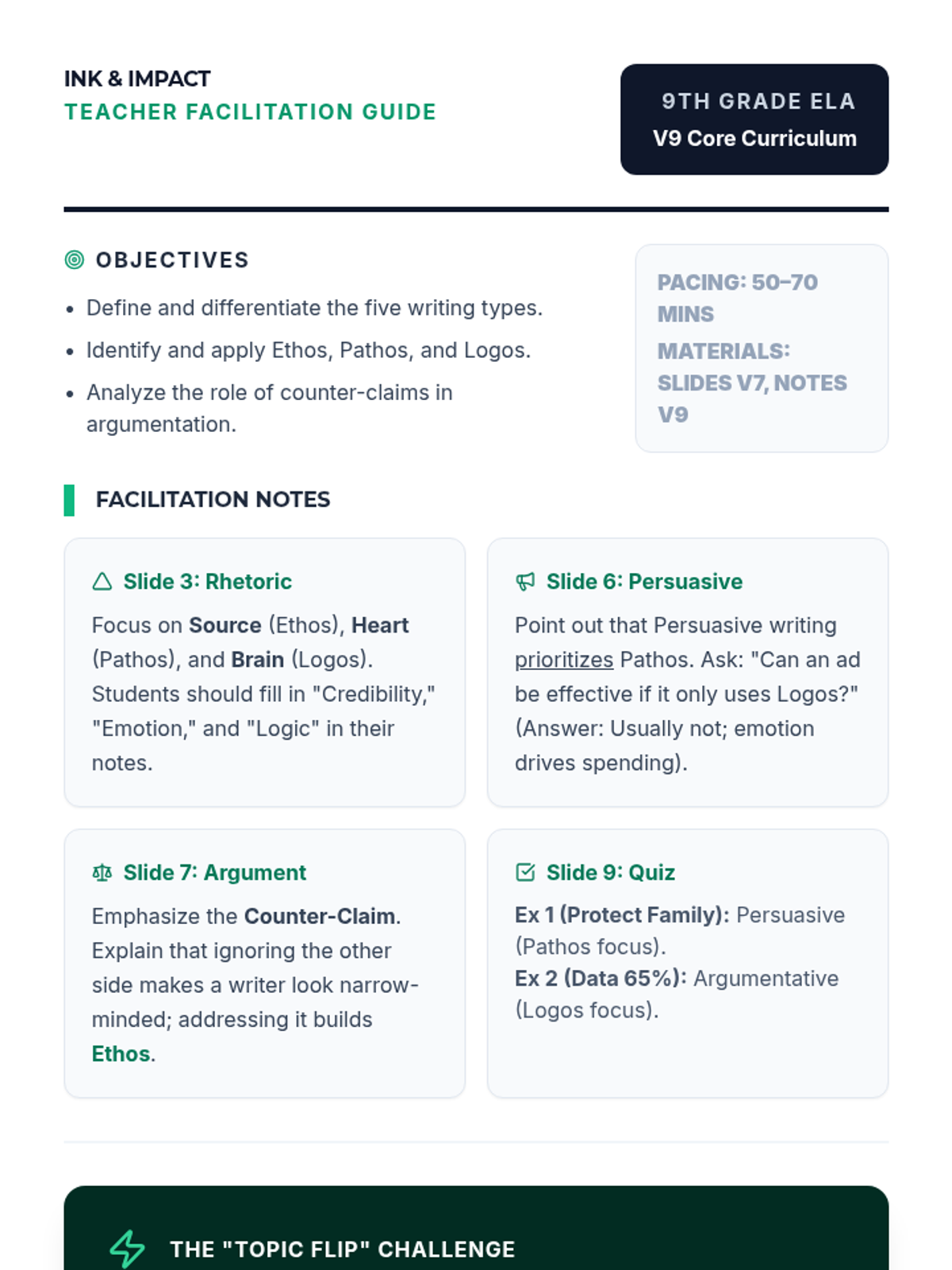
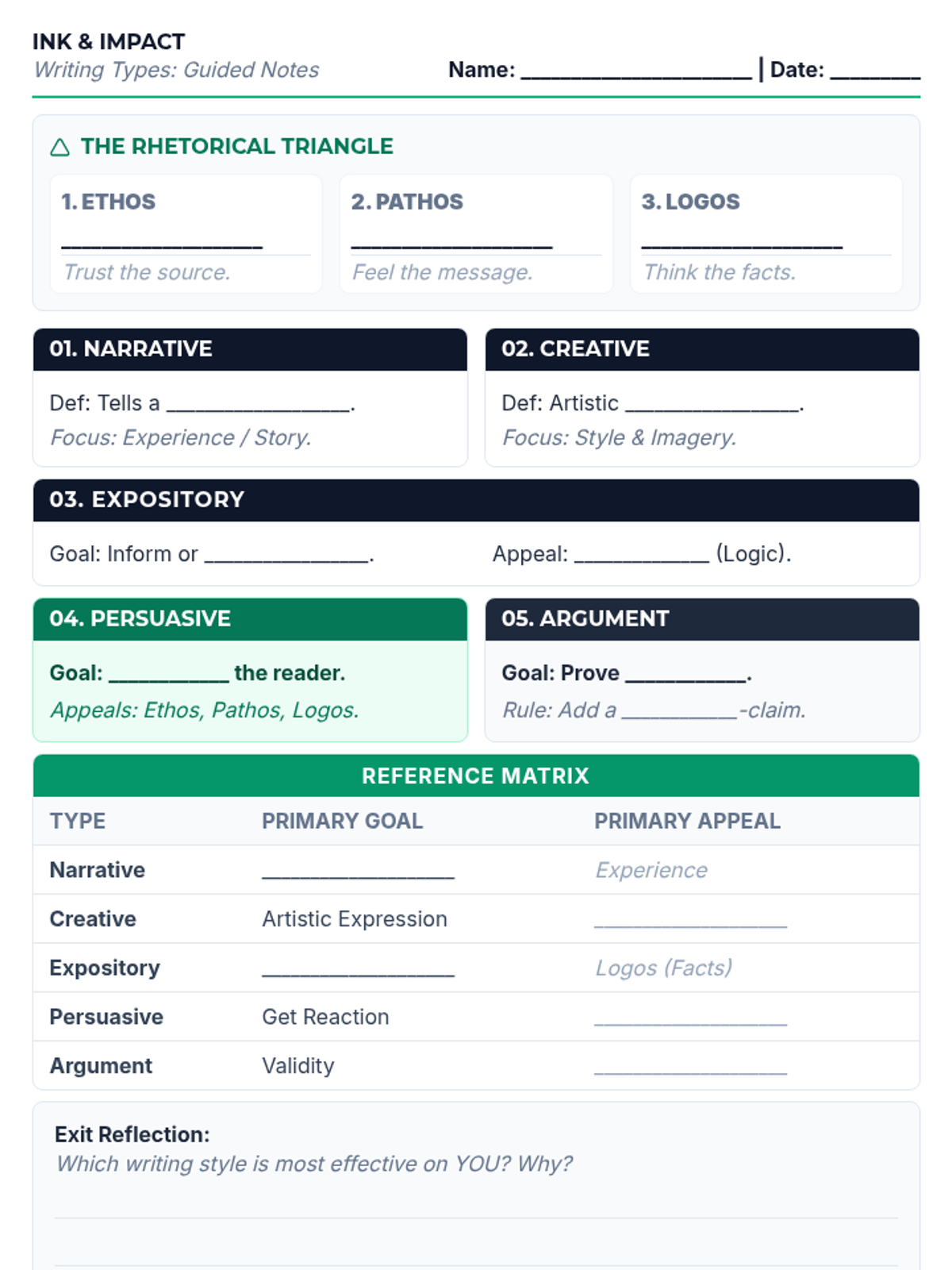
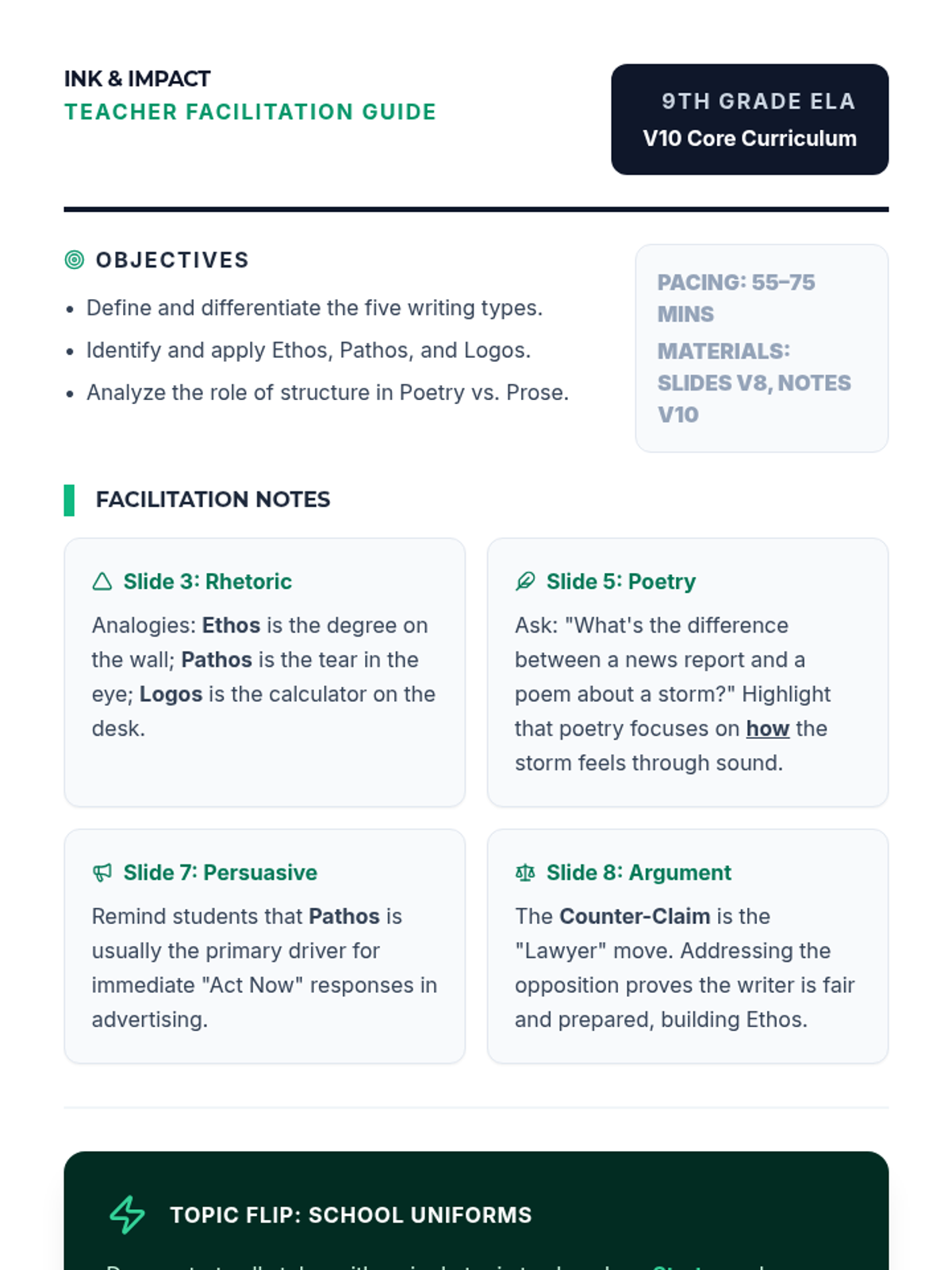
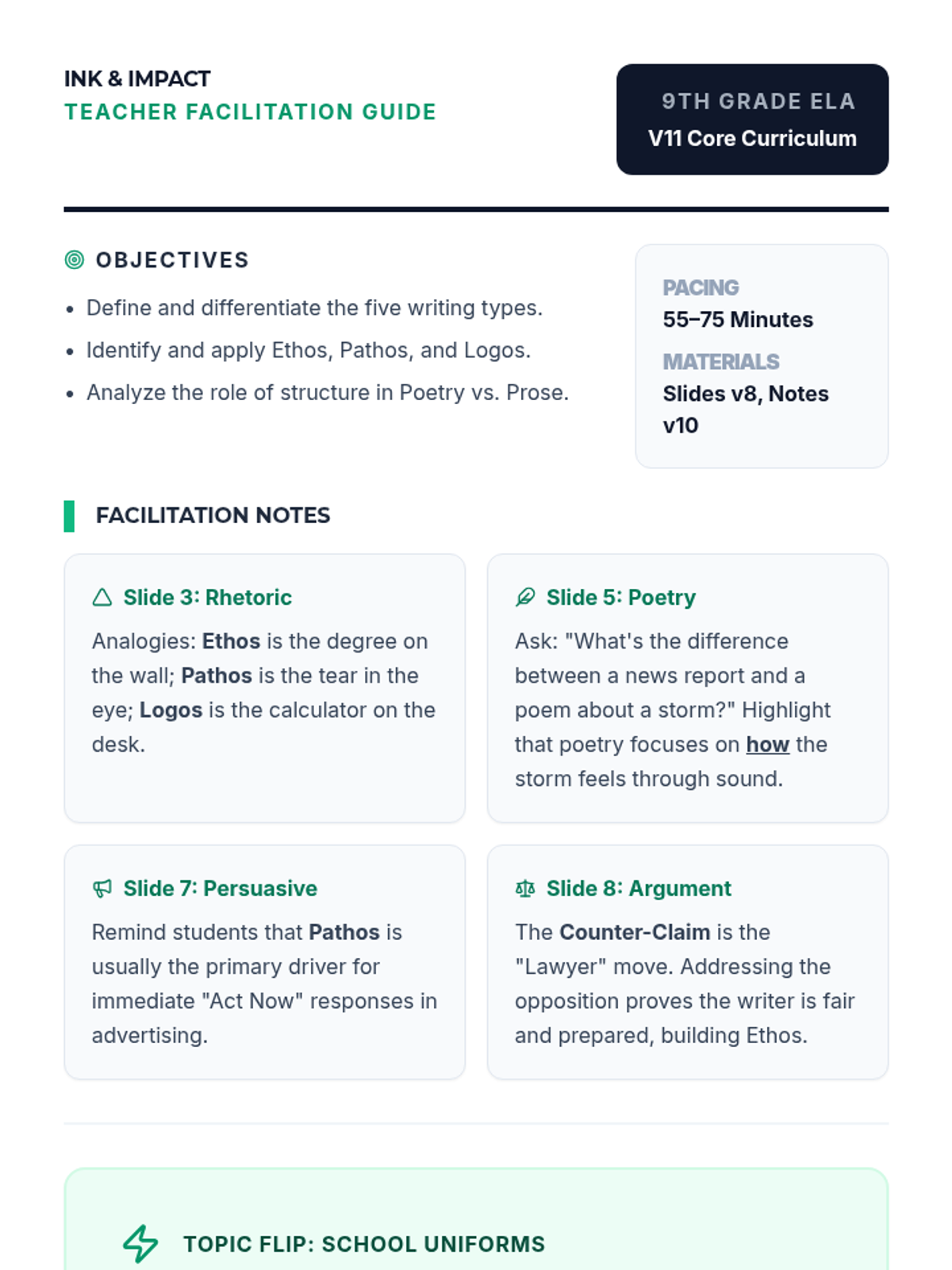
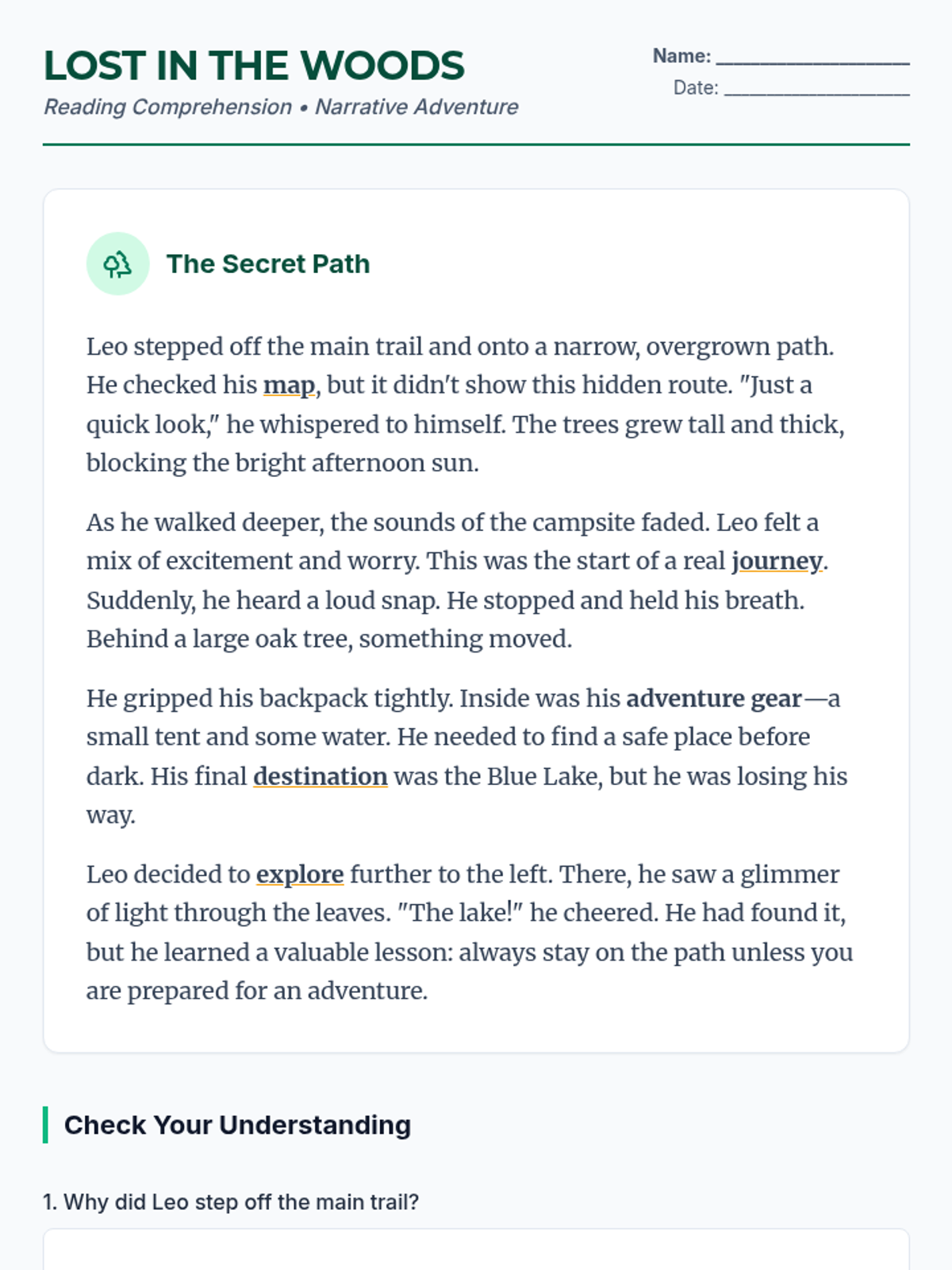
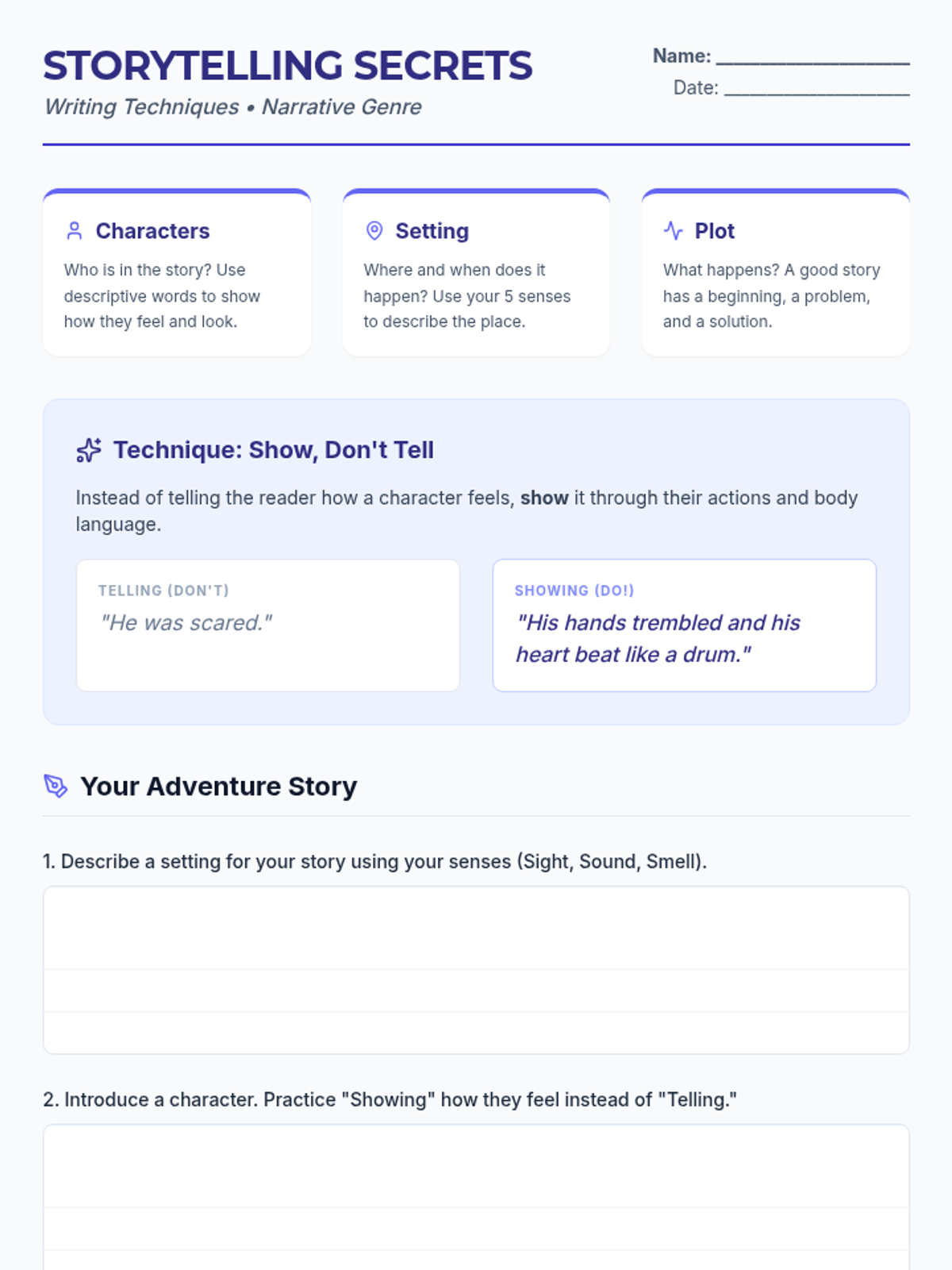
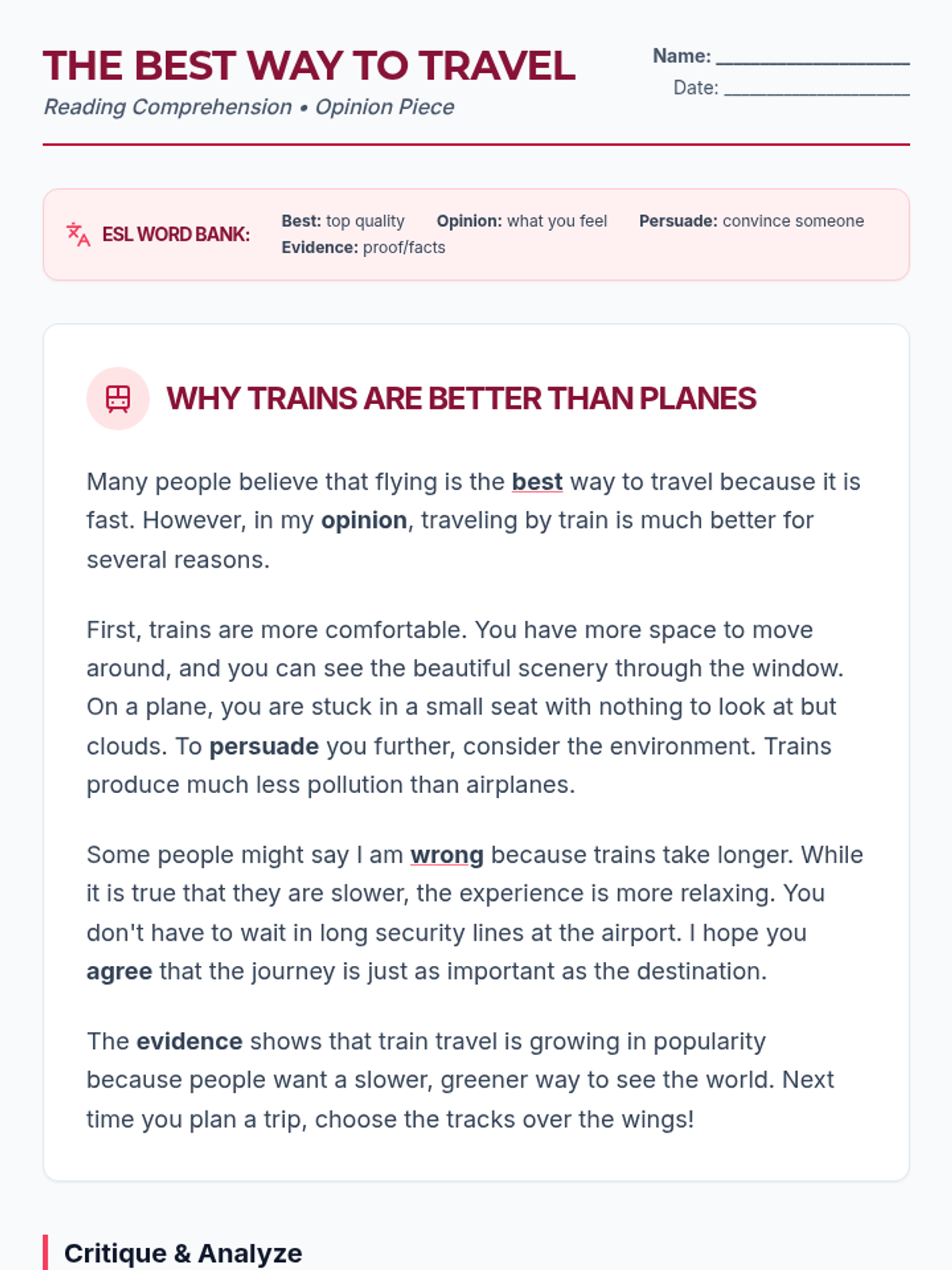
An introductory exploration of five major writing types: Narrative, Creative, Expository, Persuasive, and Argumentative. Students learn to distinguish between these forms based on purpose, structure, and audience impact.
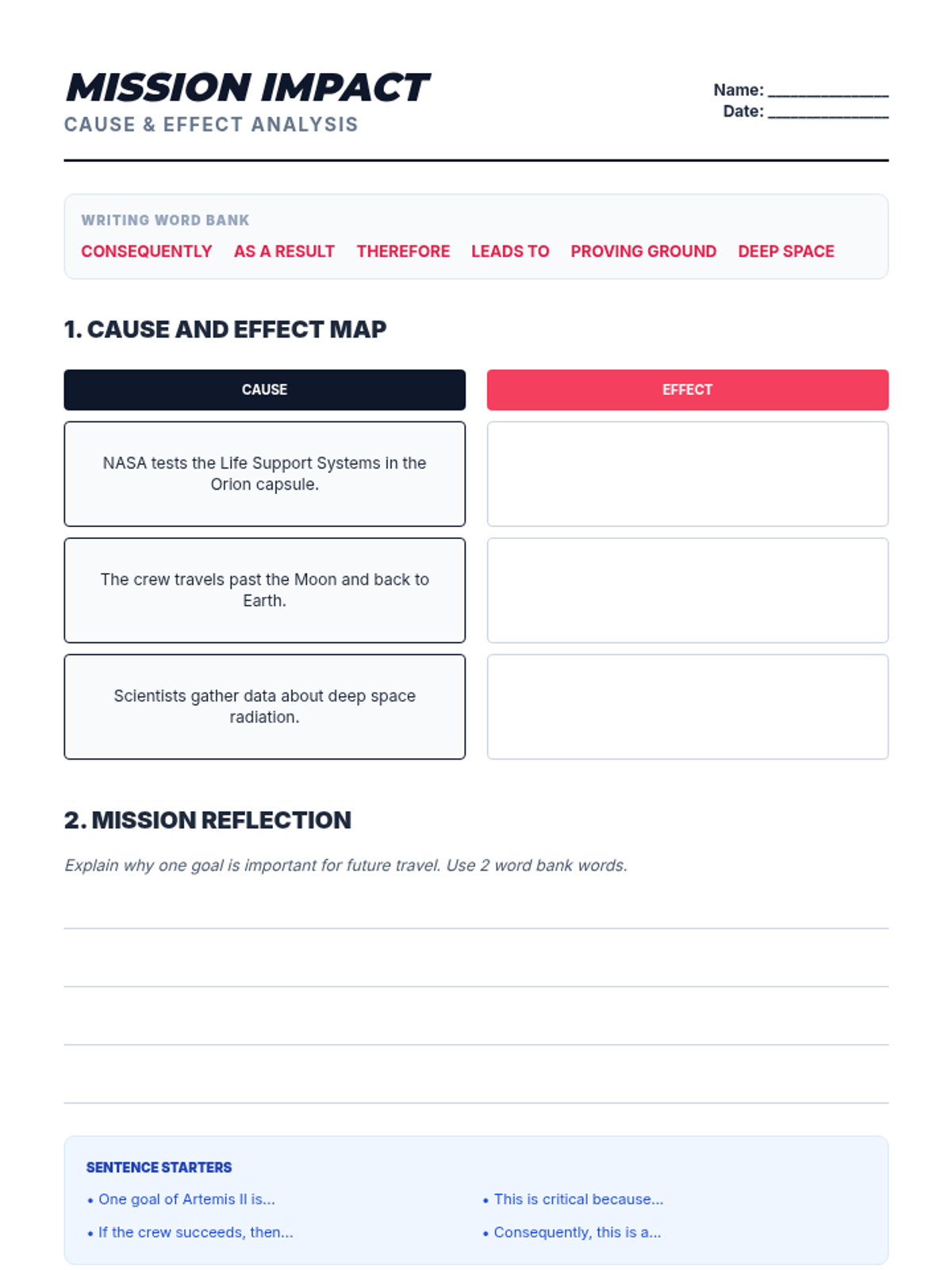
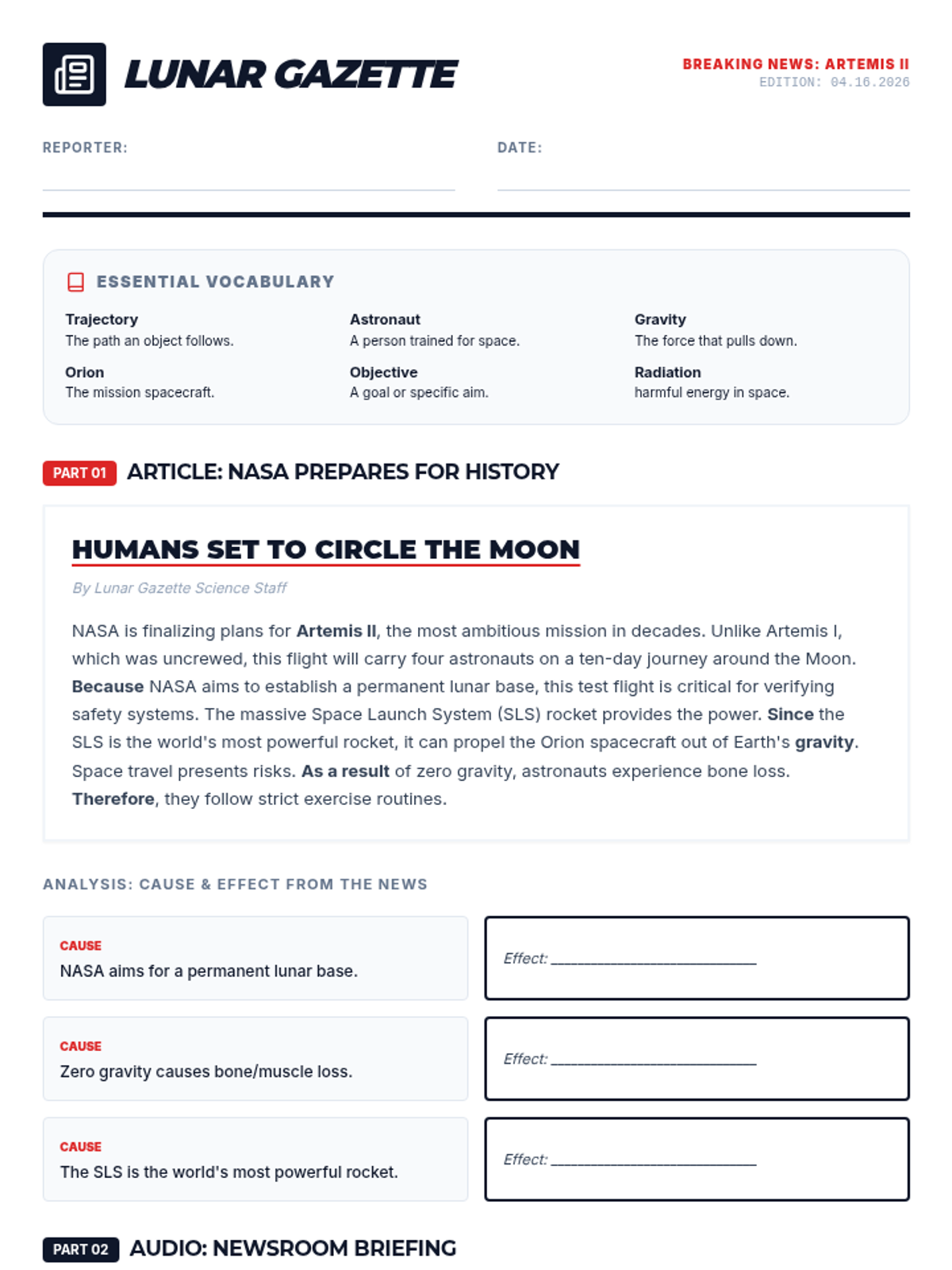
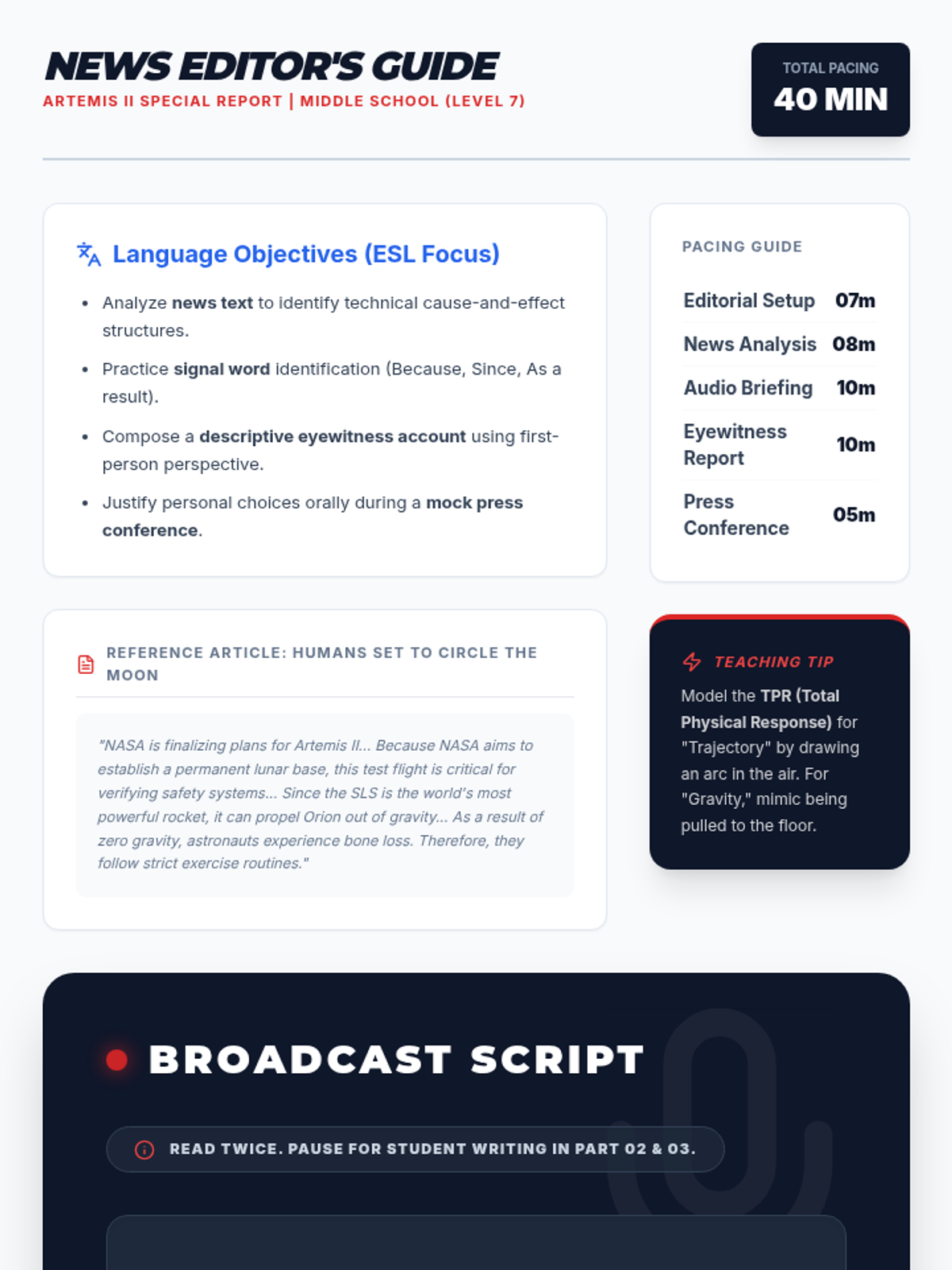
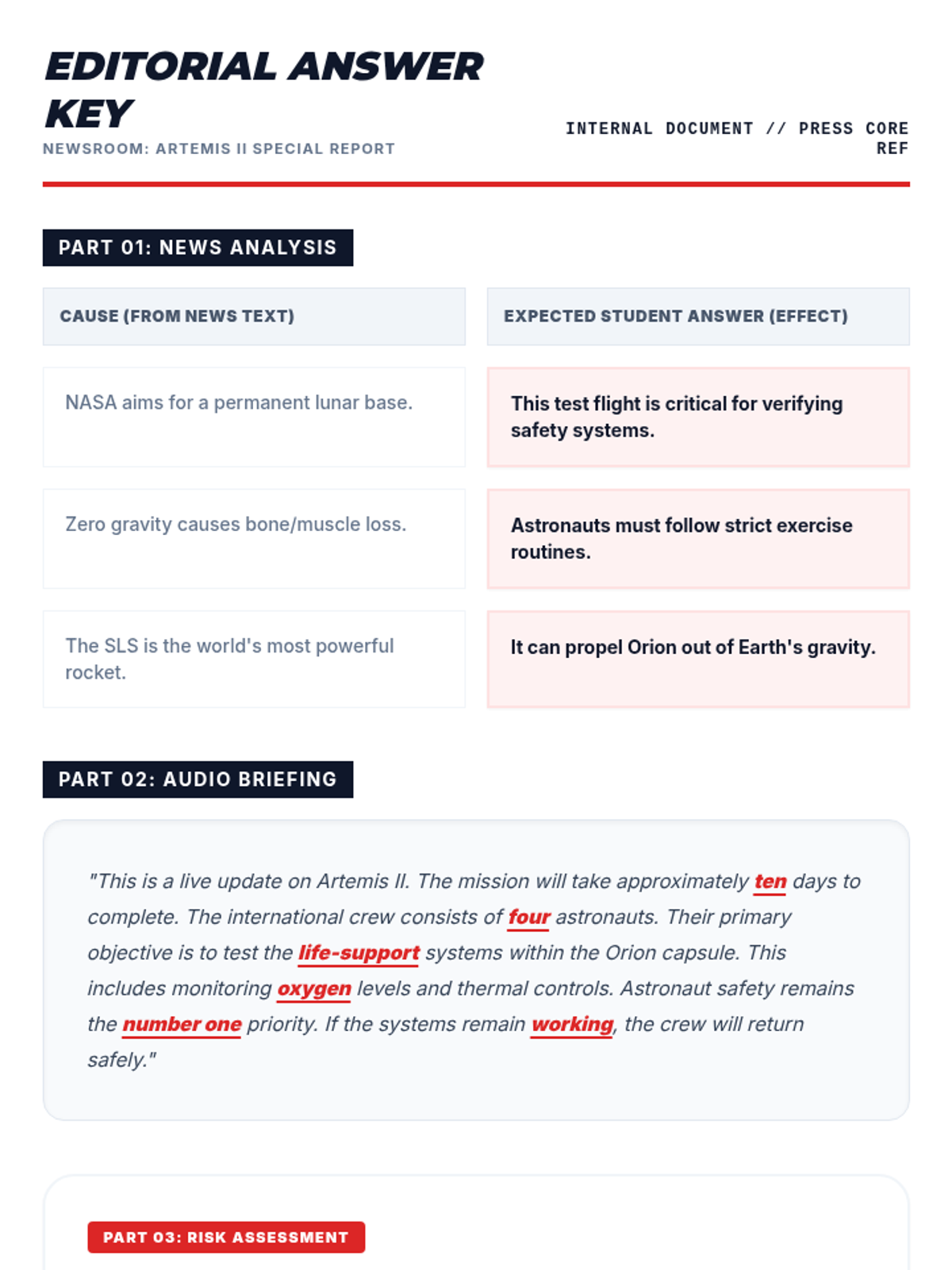
A high-interest lesson for 9th-12th grade ESL students, written at a 7th-grade level, focusing on the Artemis II mission. Includes a news article analysis, cause-and-effect relationships, and descriptive writing.
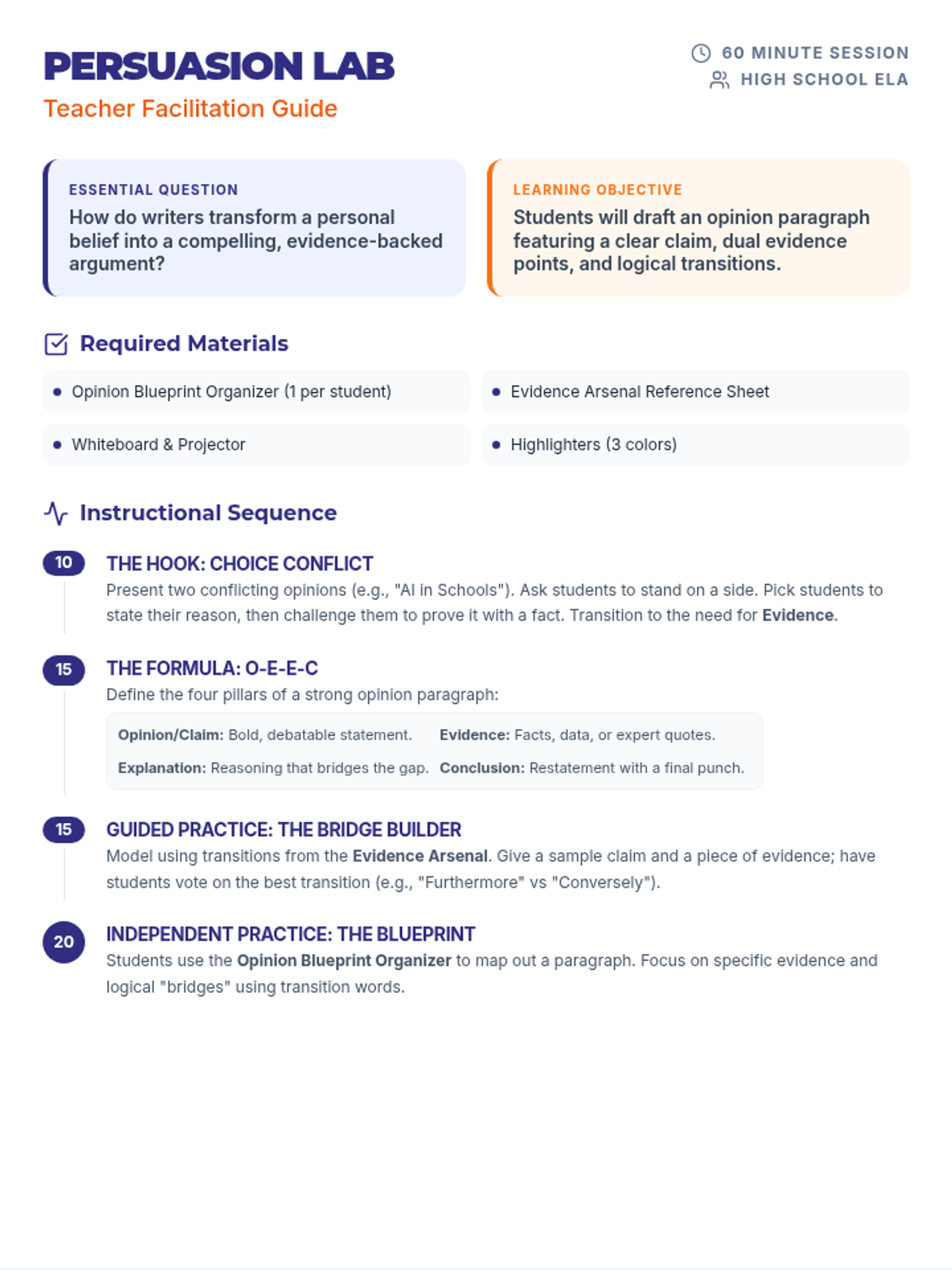
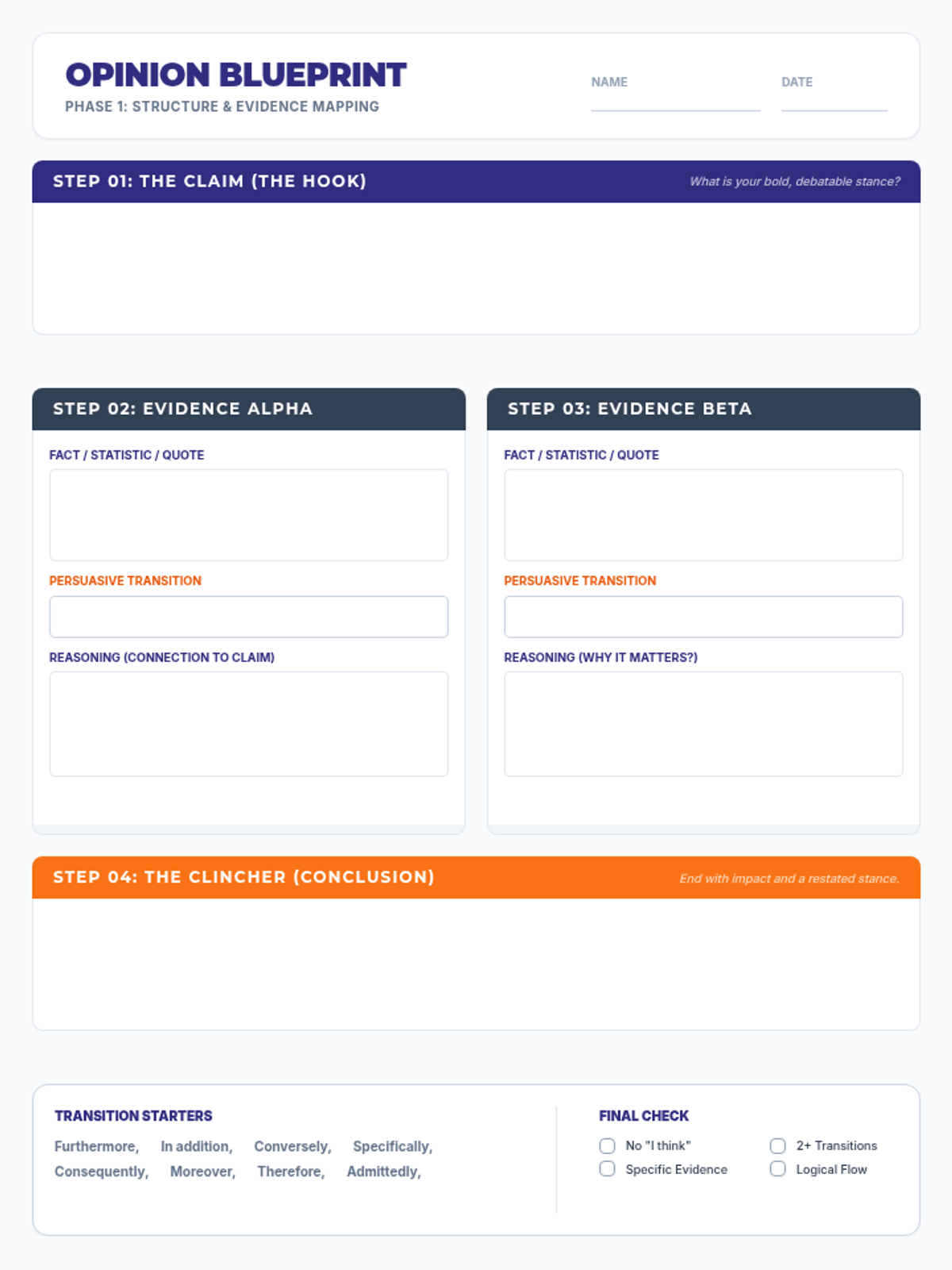
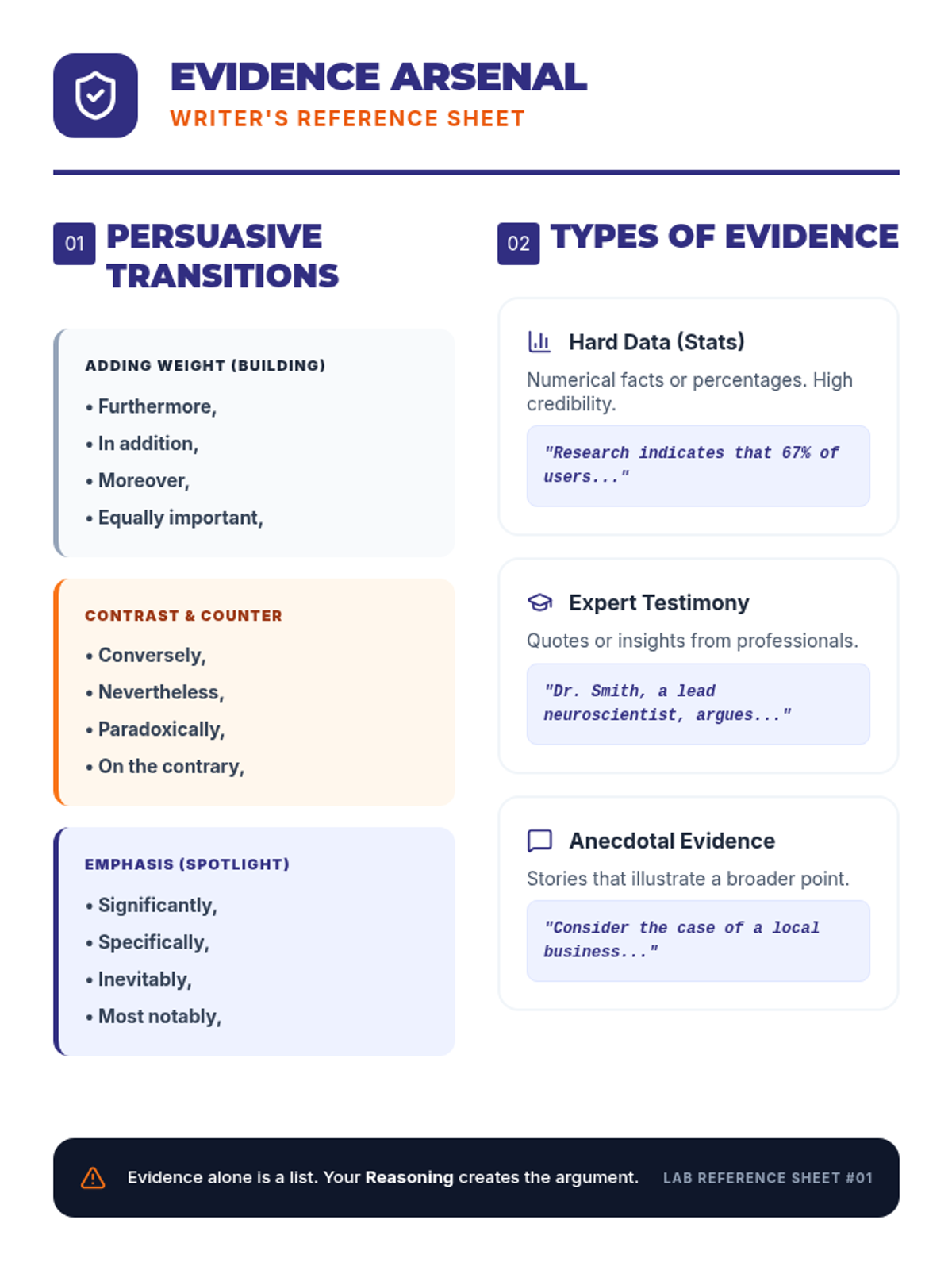
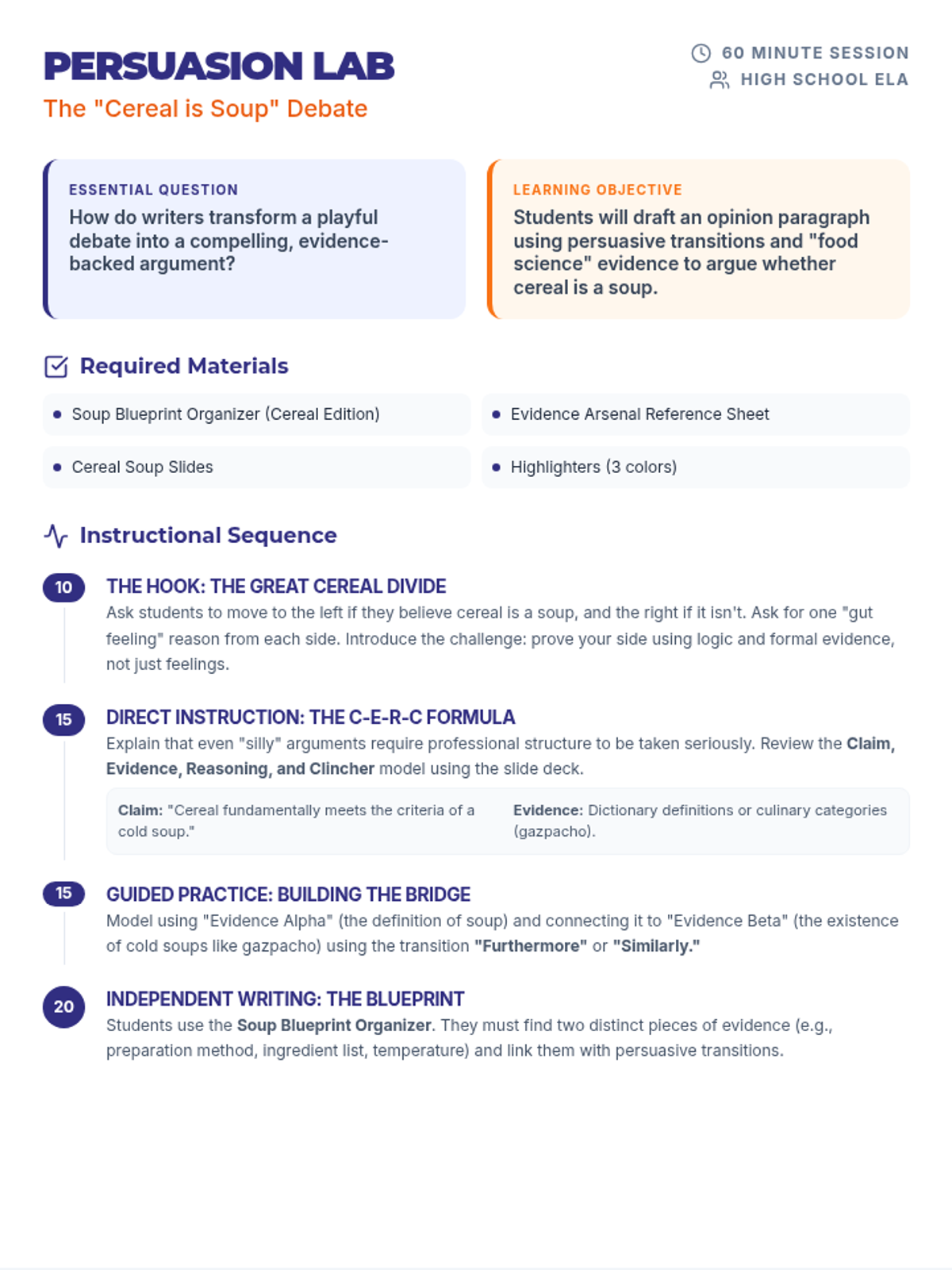
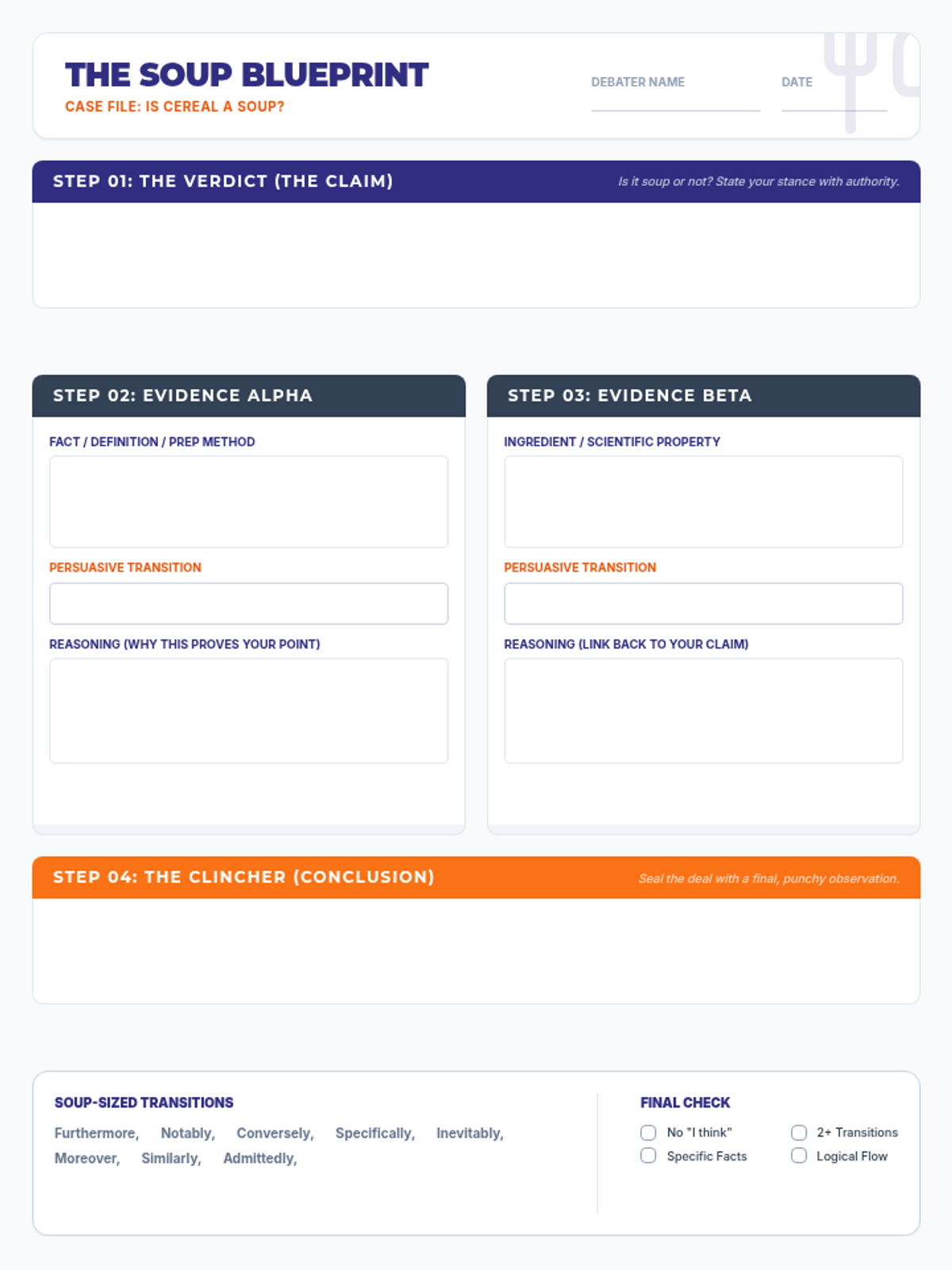
A high school writing lesson focused on teaching students how to craft compelling opinion paragraphs using persuasive transitions and robust evidence.
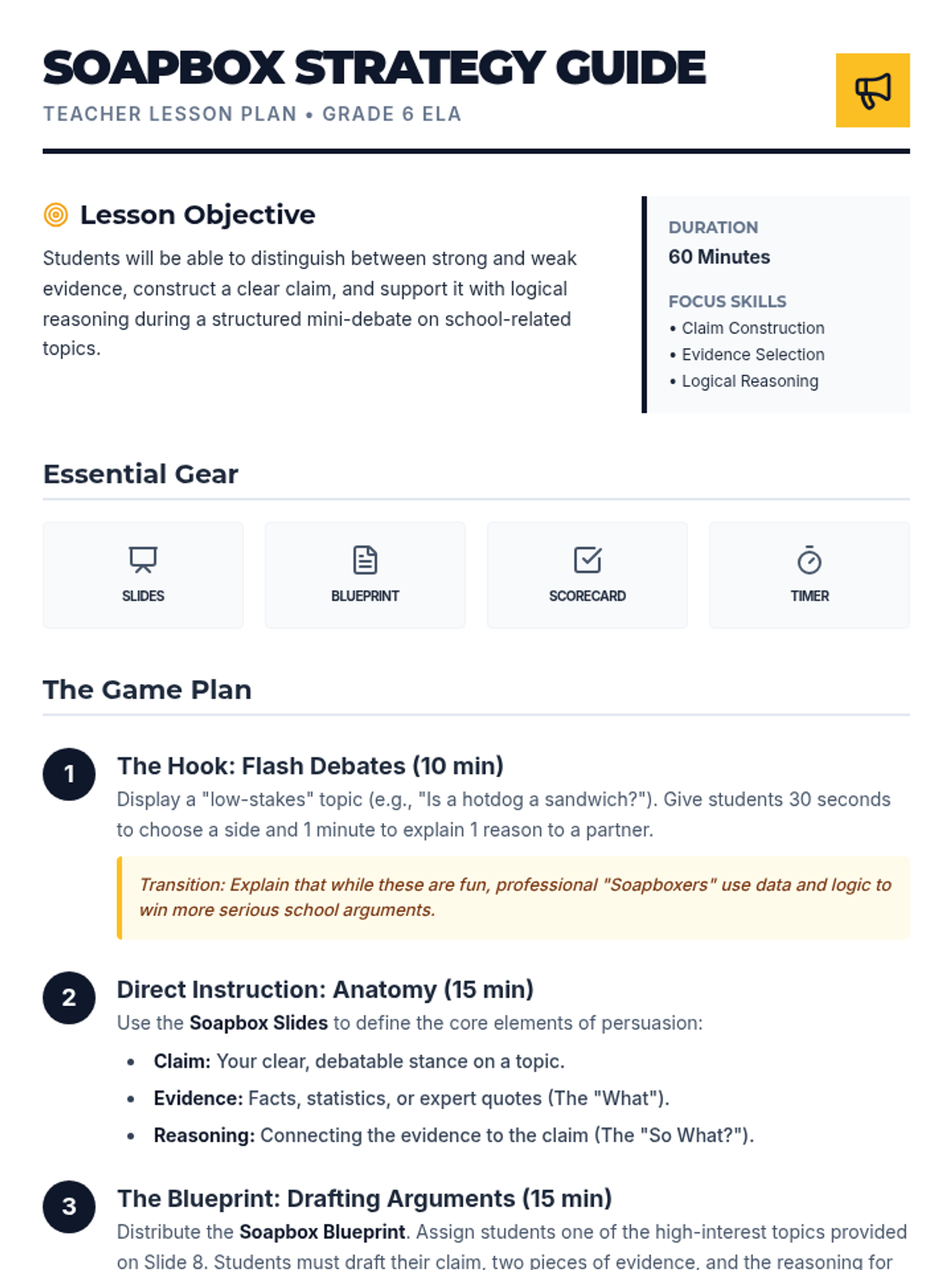
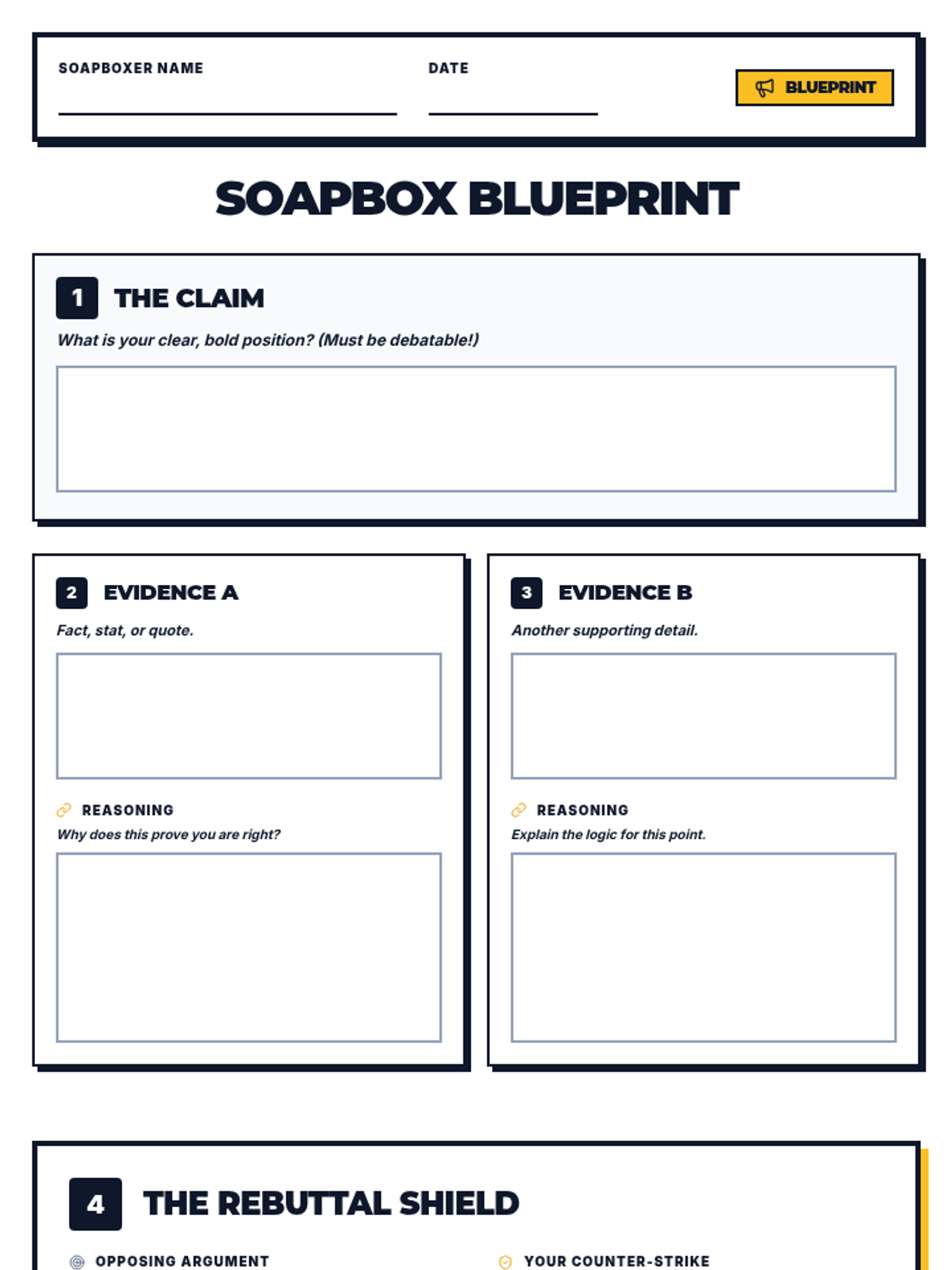
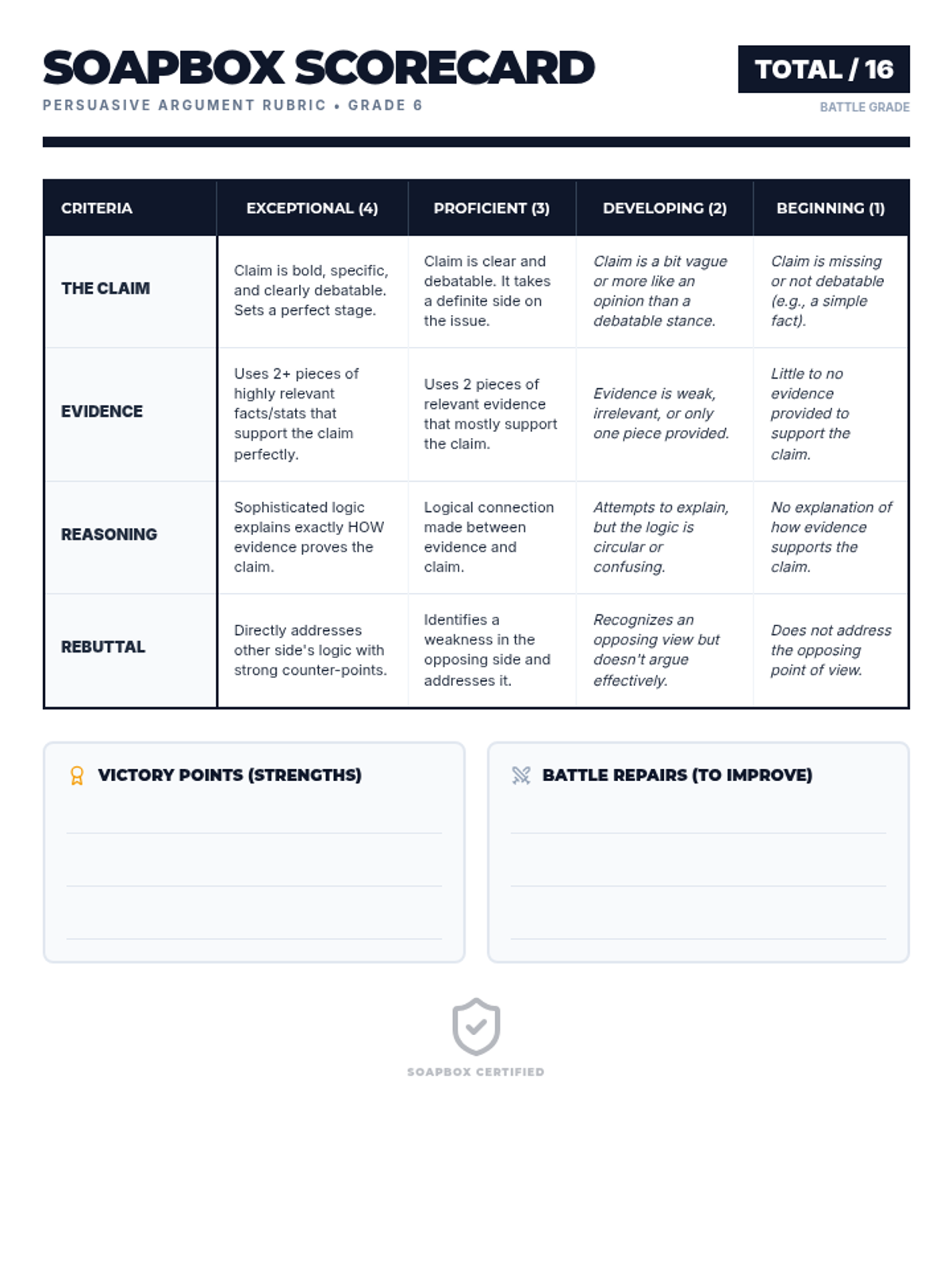
A 6th-grade lesson on claim and evidence where students master persuasive techniques through mini-debates on high-interest school topics. Students will learn to construct logical arguments and select the most relevant evidence to support their positions.
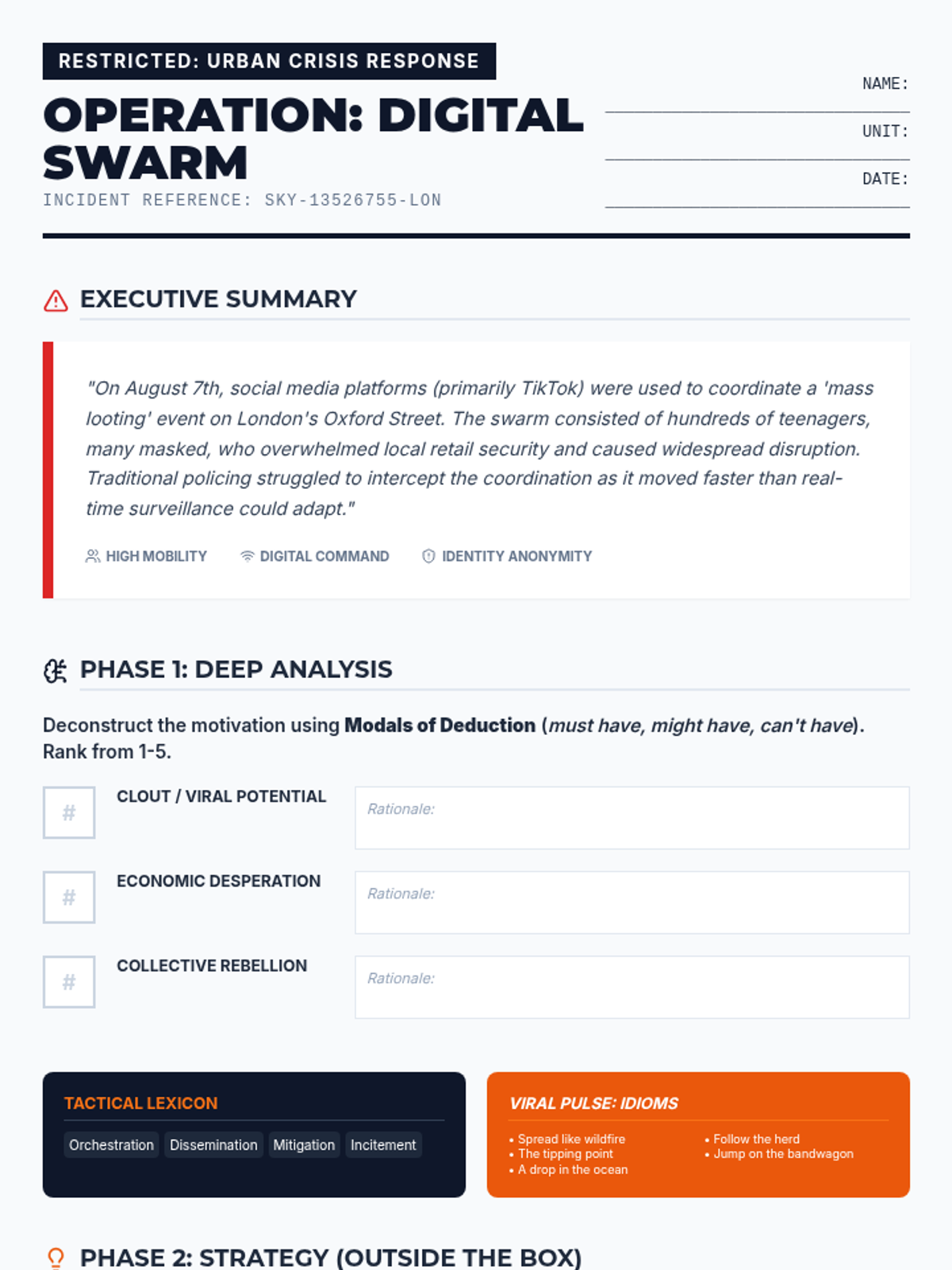
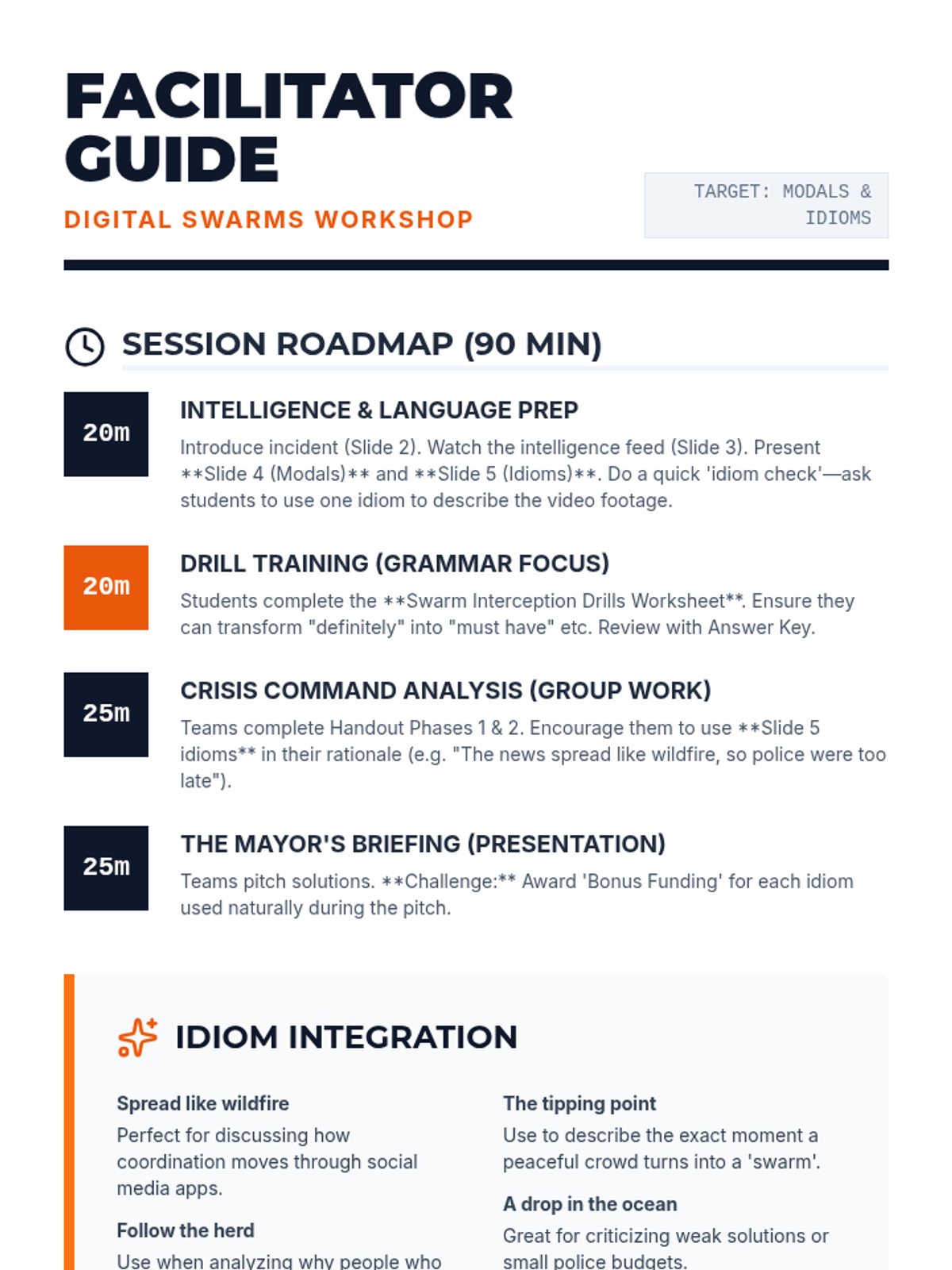
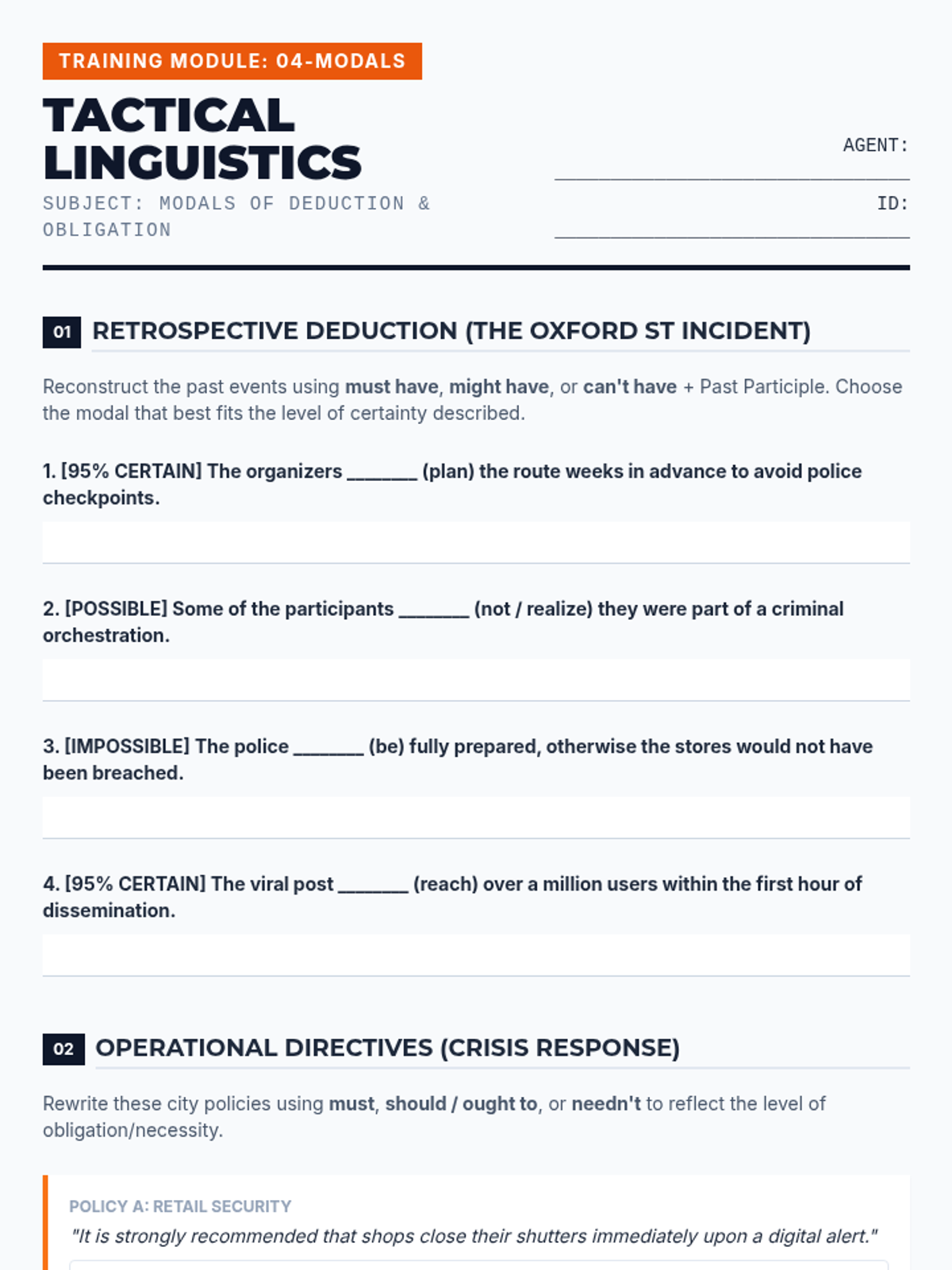
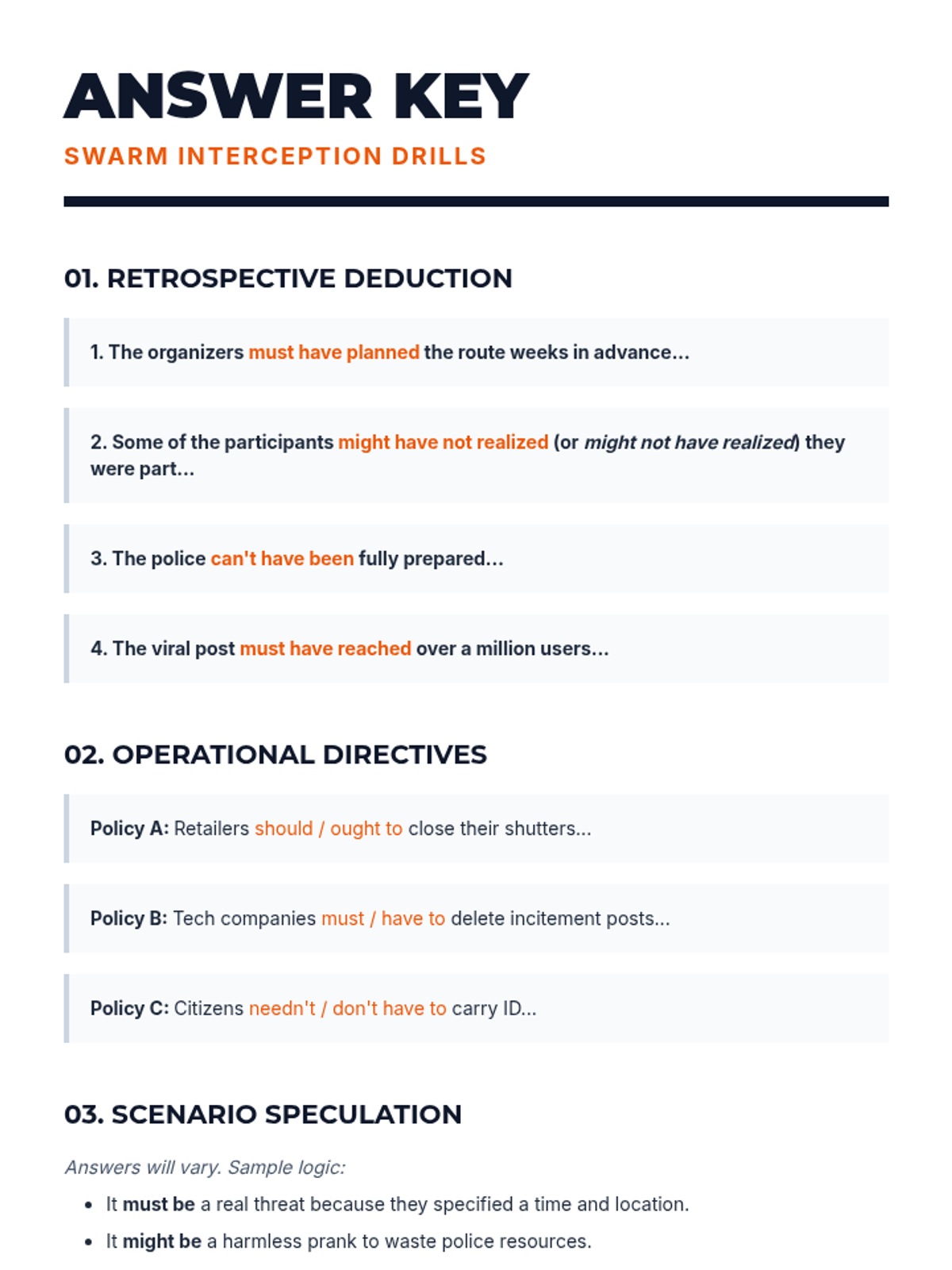
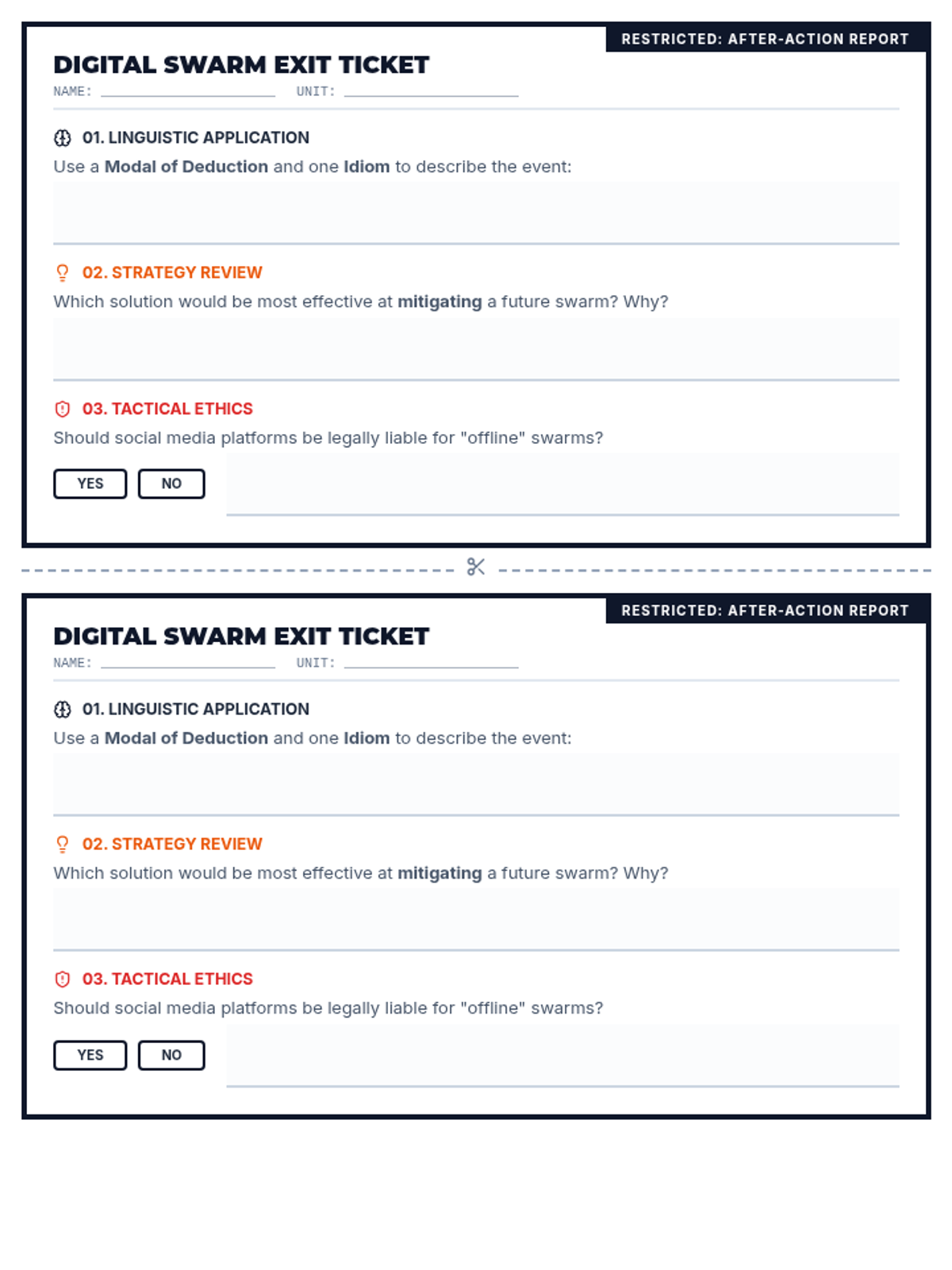
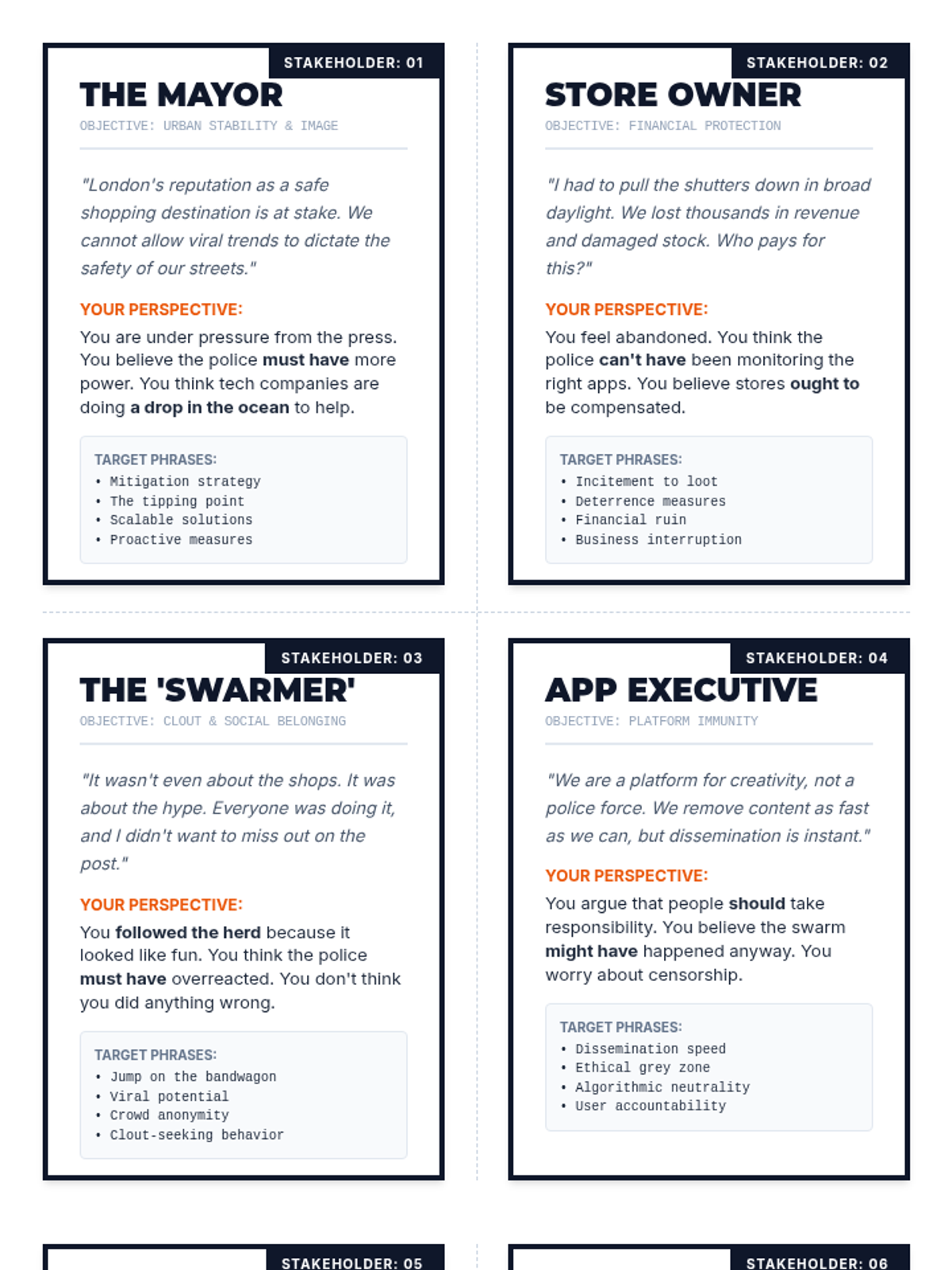
A problem-solving workshop for B2+ students based on social media flash mobs. Students act as a city's 'Digital Response Team' to design innovative solutions for urban chaos triggered by viral trends.
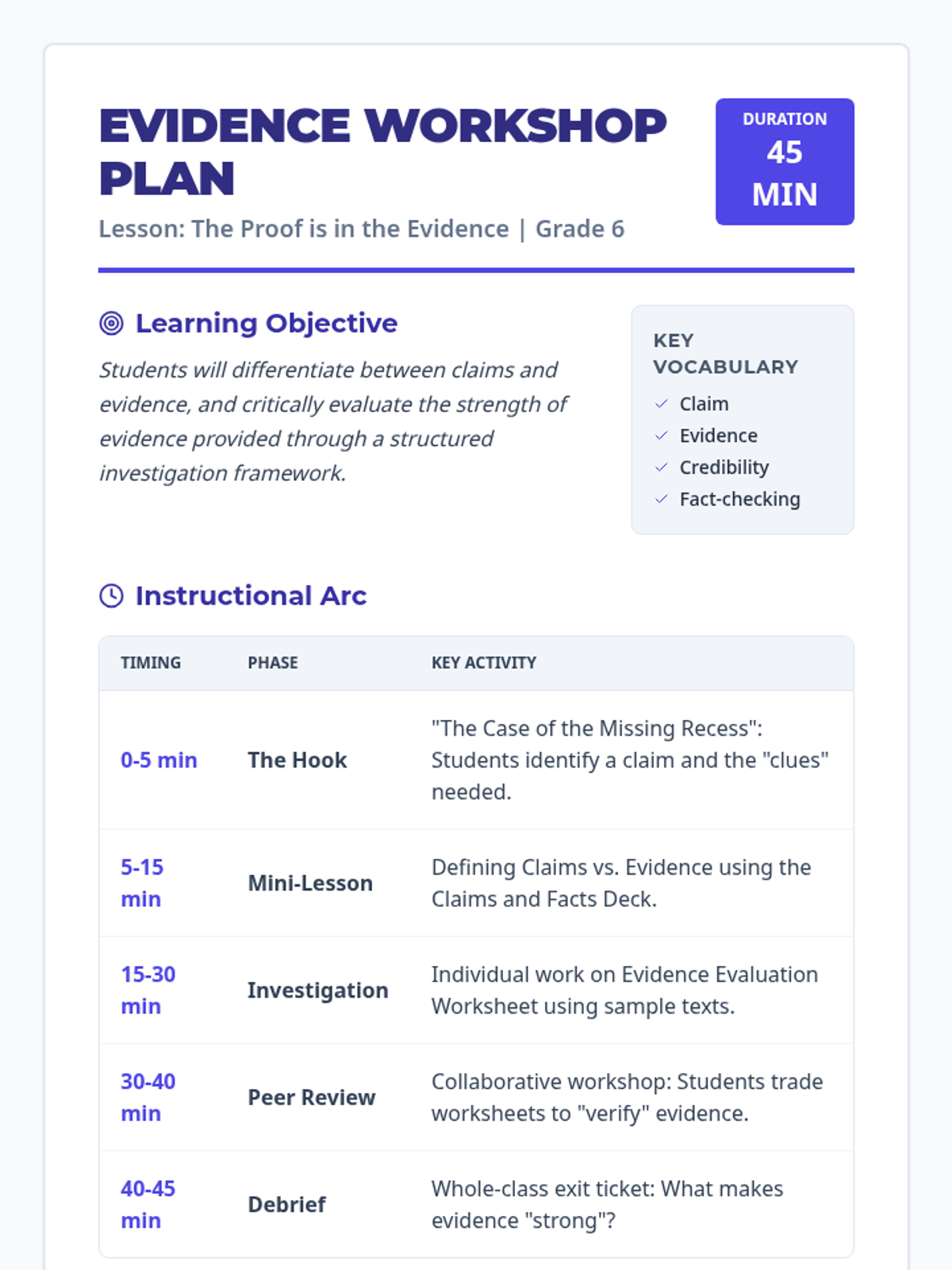
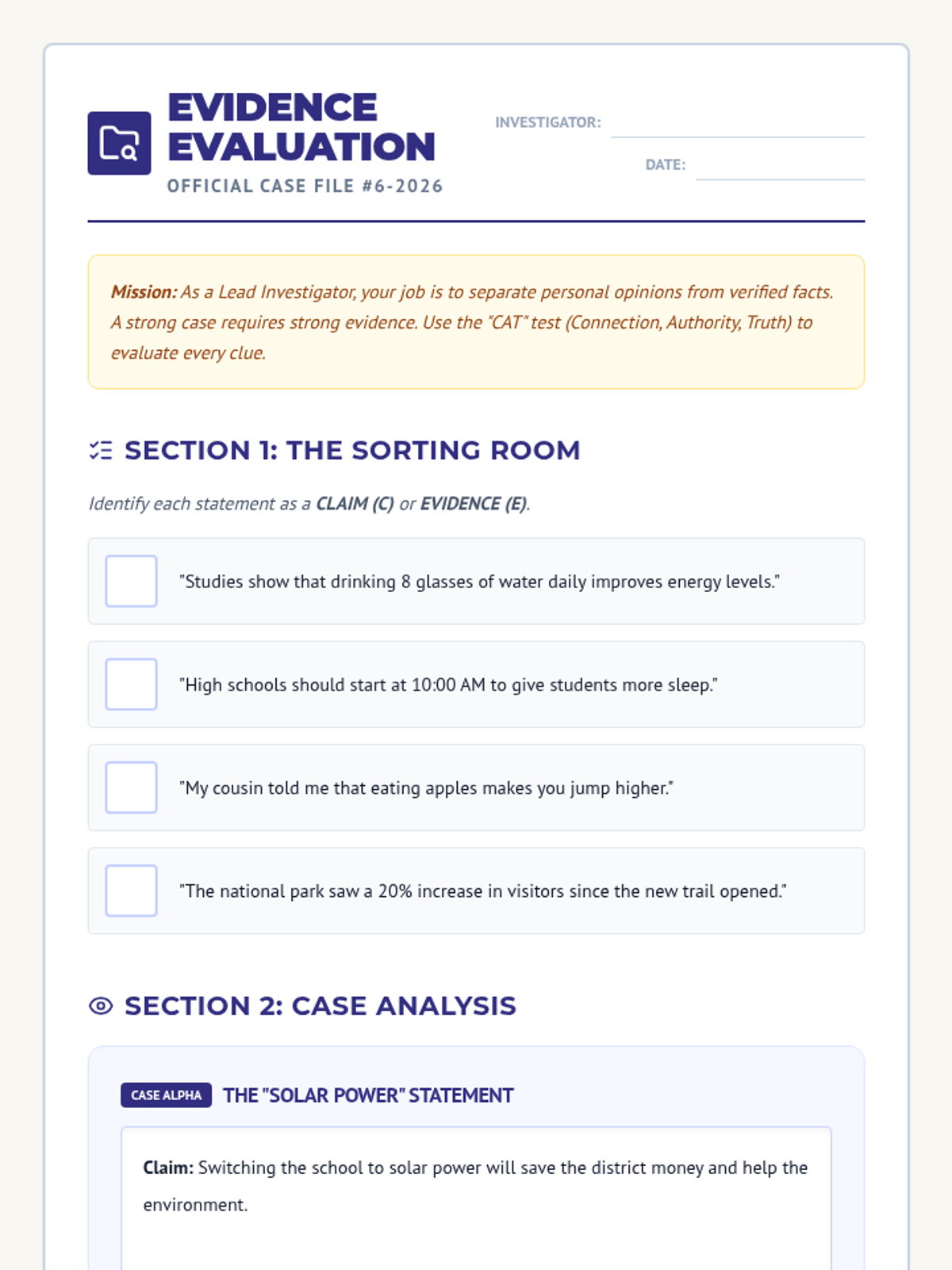
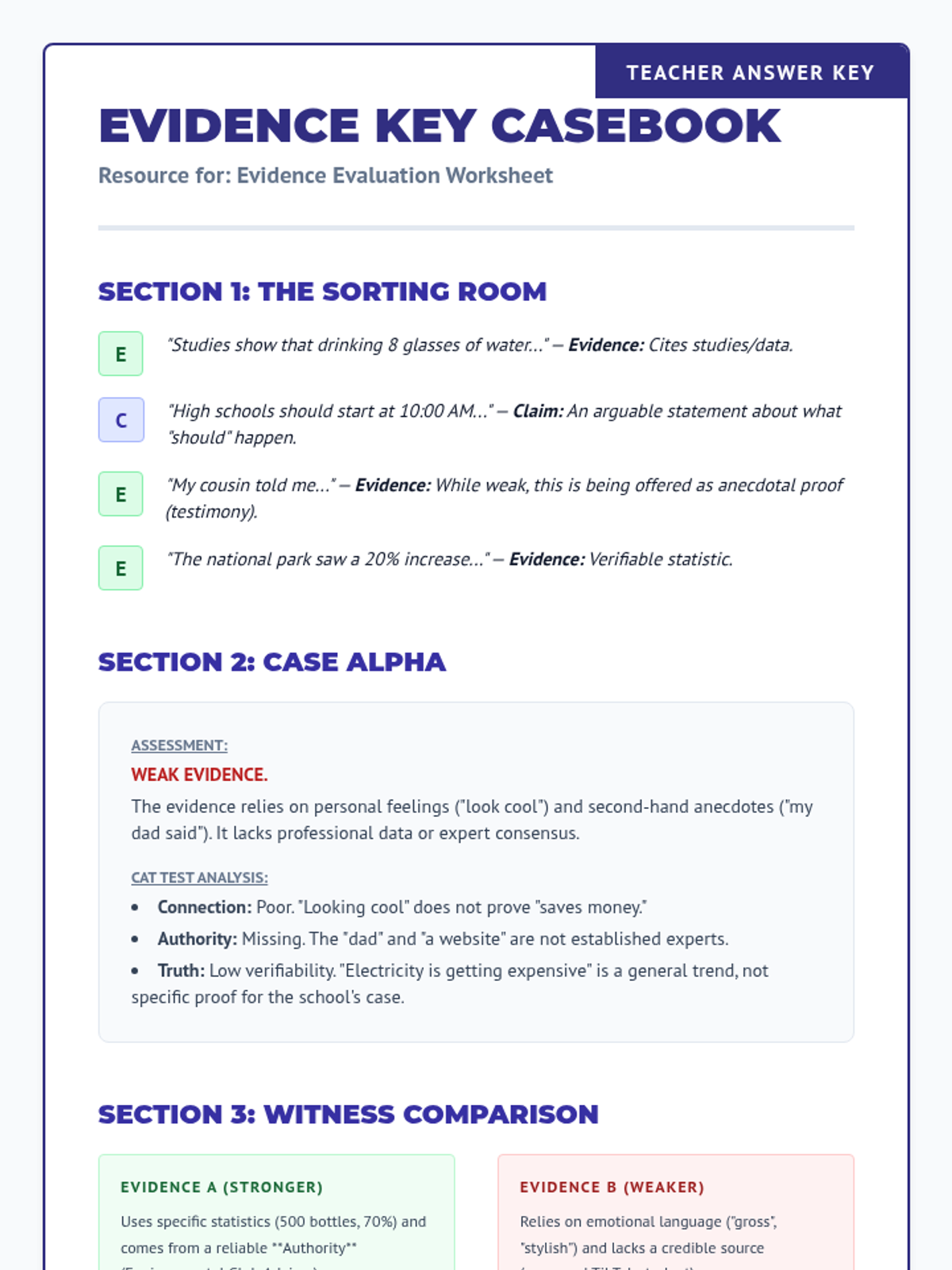
A 45-minute inquiry-based lesson where 6th-grade students learn to identify claims and evaluate the quality of supporting evidence through a detective-themed investigation.
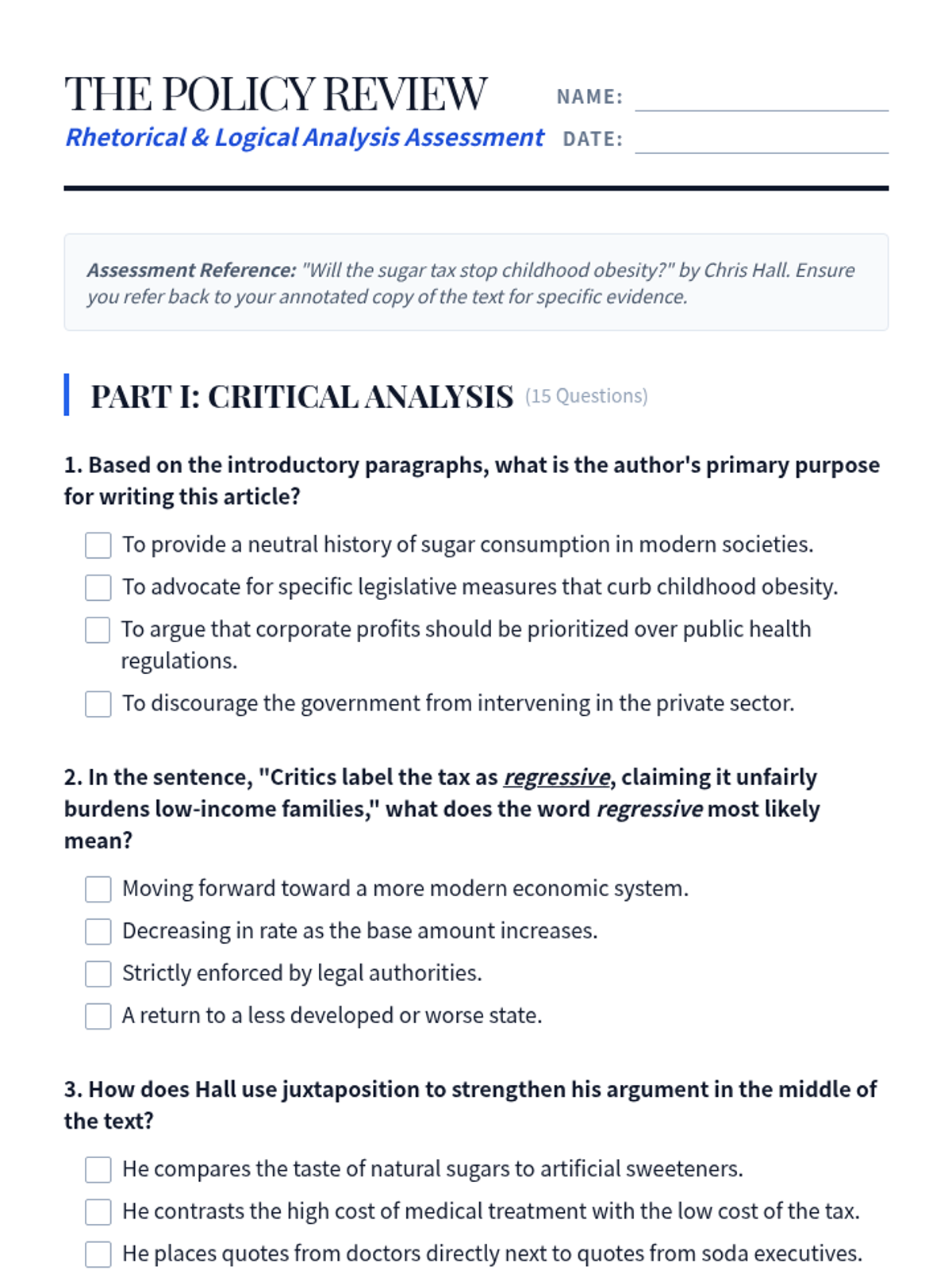
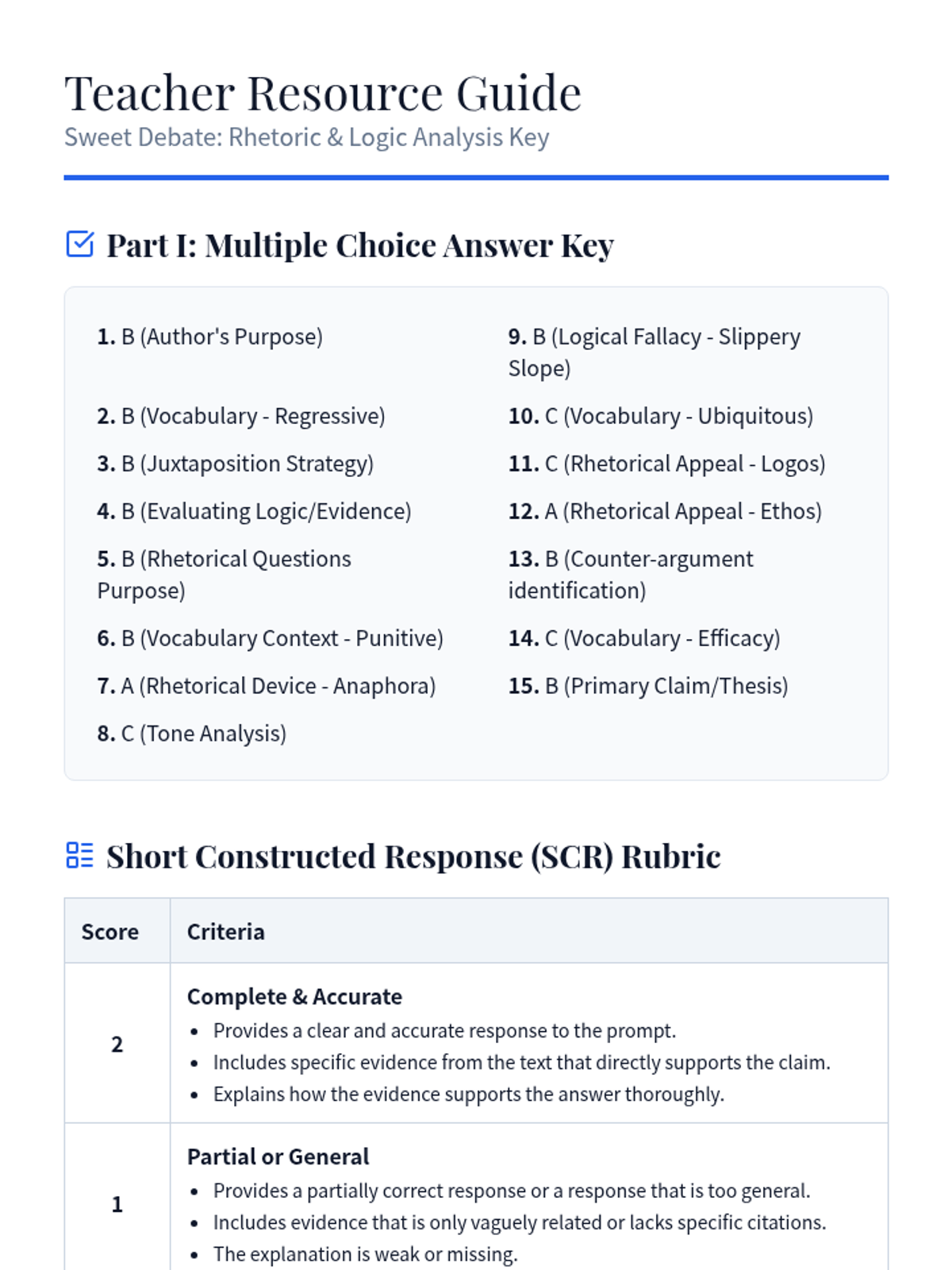
A high school English 4 lesson focused on evaluating evidence, rhetorical devices, and vocabulary in context using Chris Hall's 'Will the sugar tax stop childhood obesity'. Includes a professional presentation and a STAAR-aligned assessment.
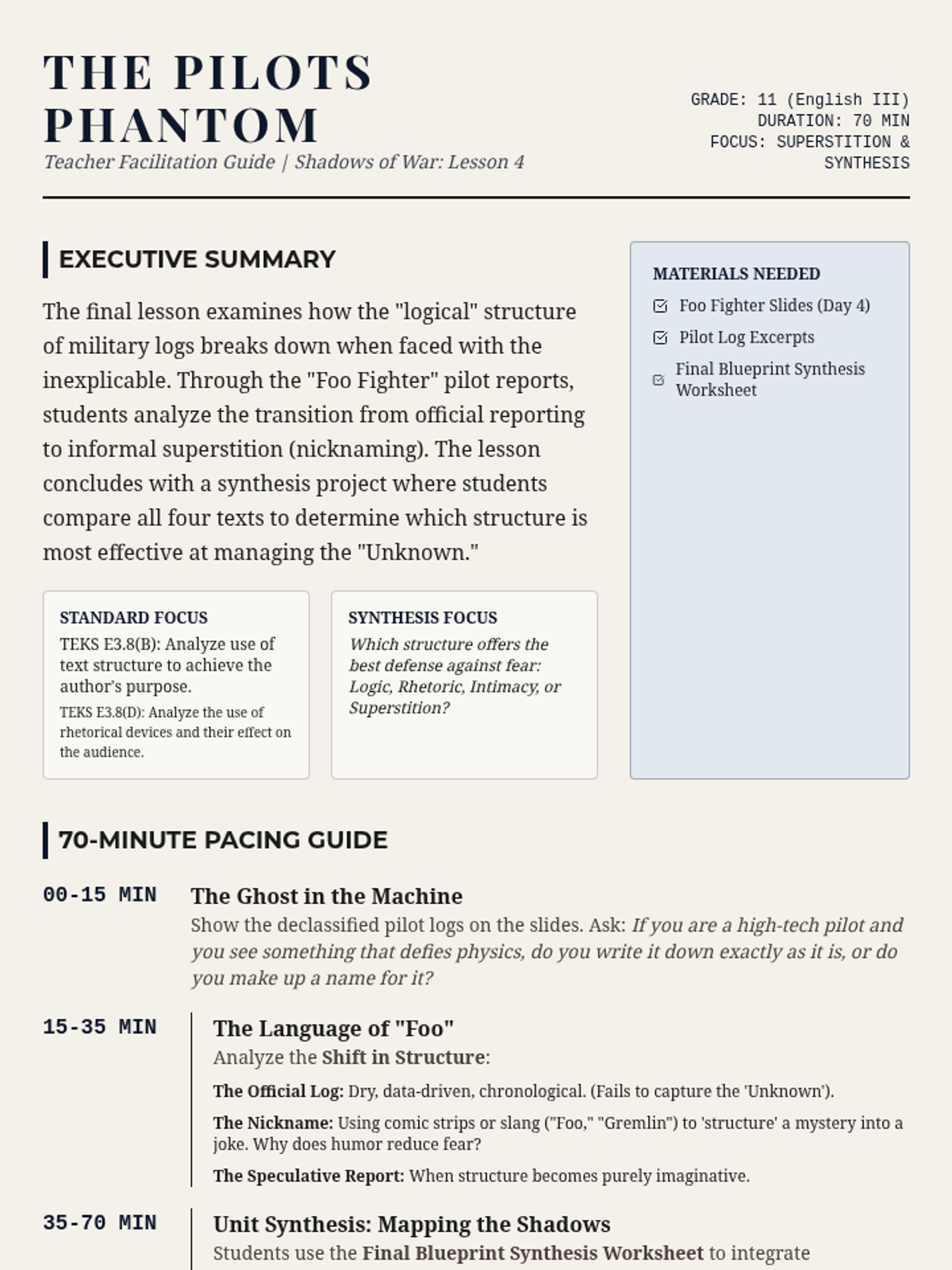
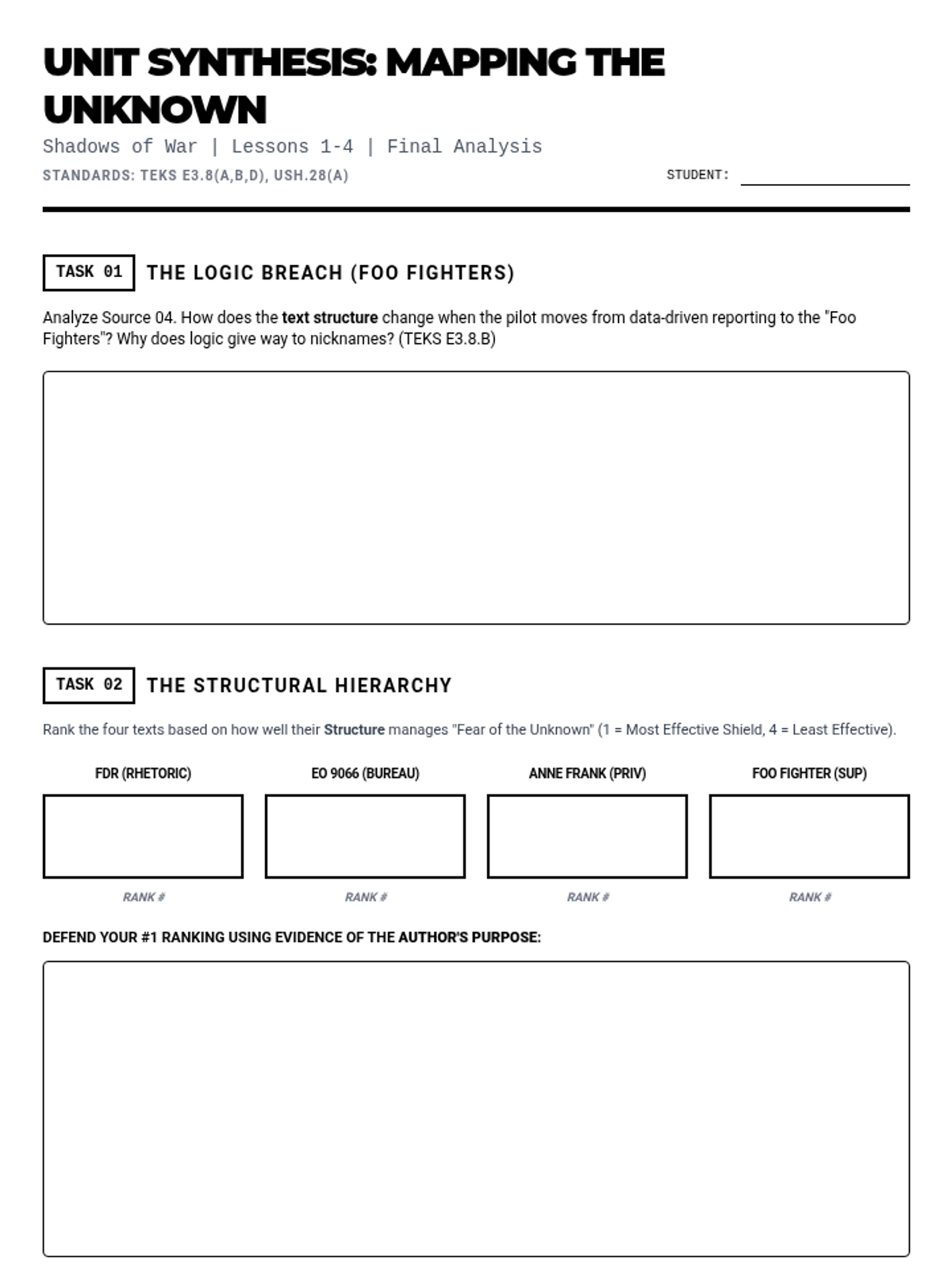
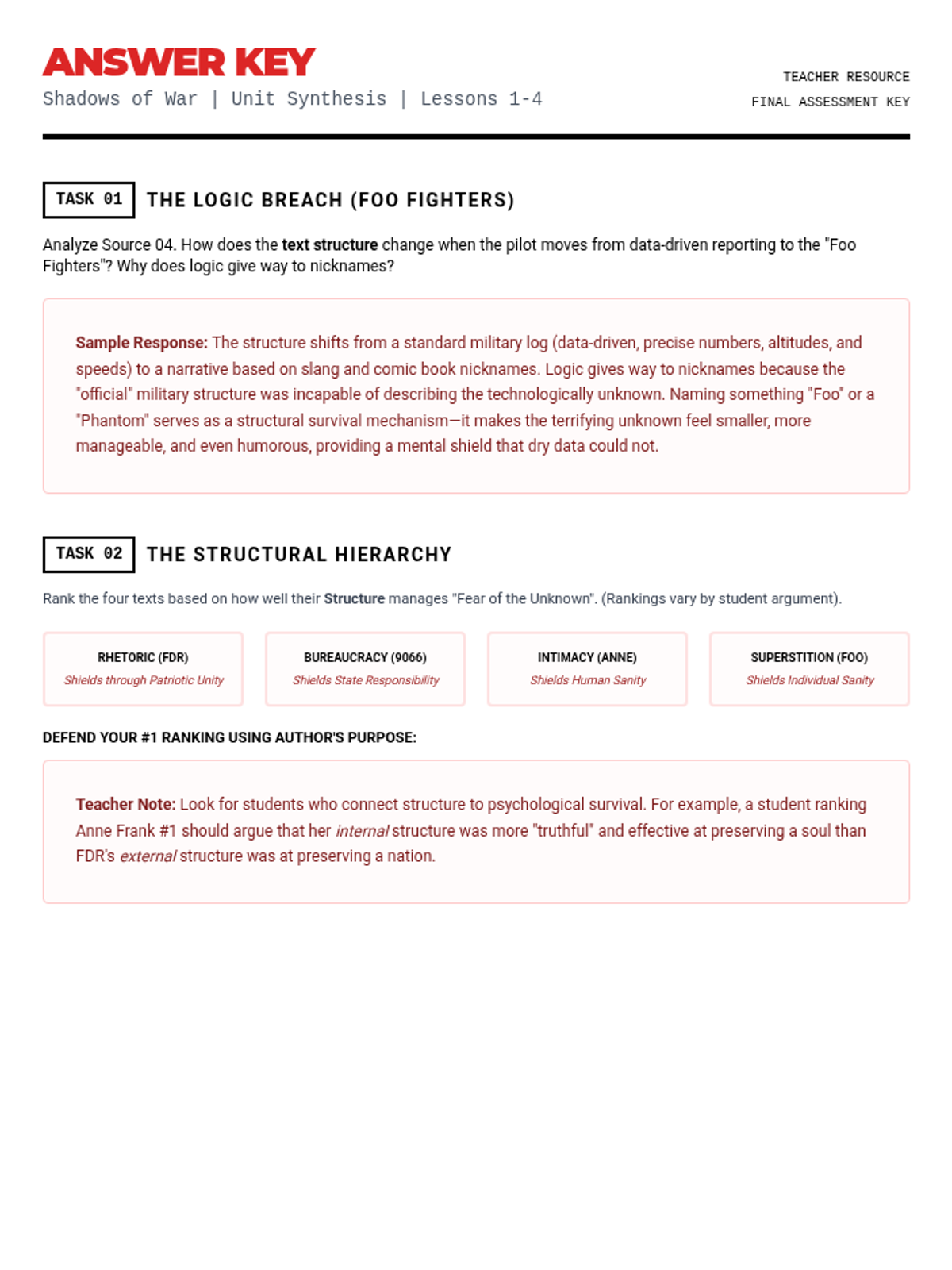
A 70-minute lesson on the 'Foo Fighters' phenomena and pilot logs, analyzing how the 'unexplained' triggers a shift from logic to superstition in text structure.
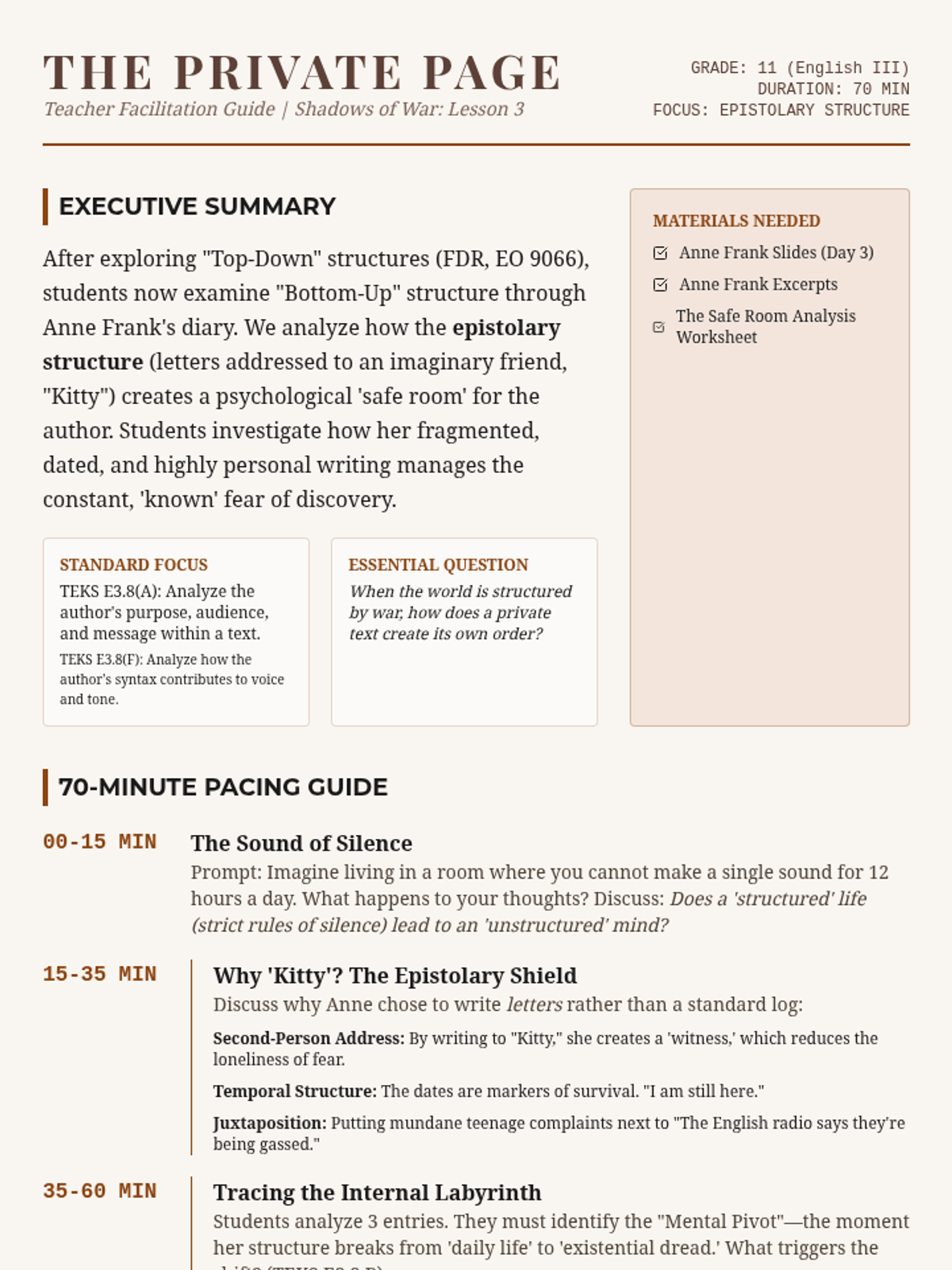
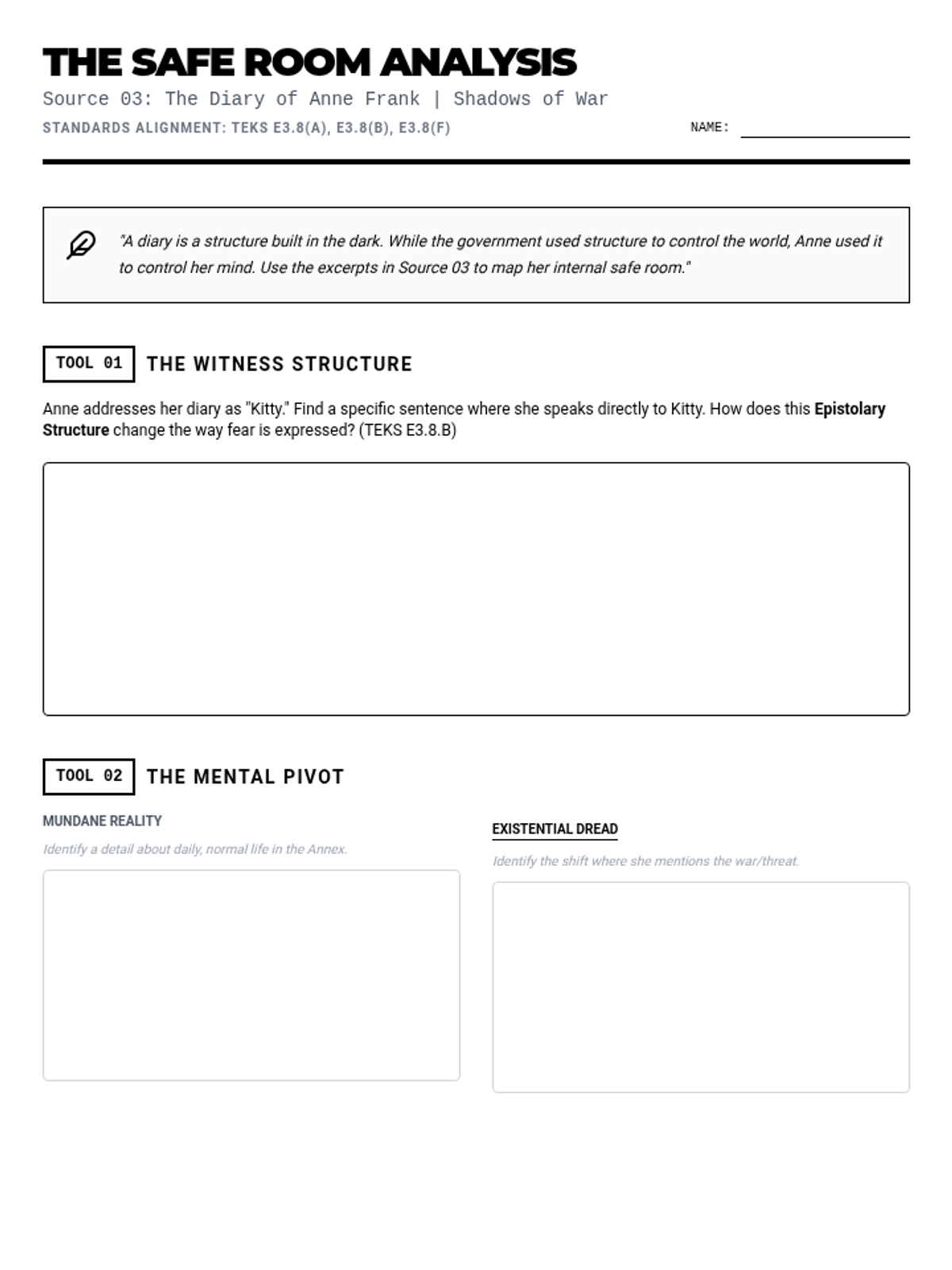
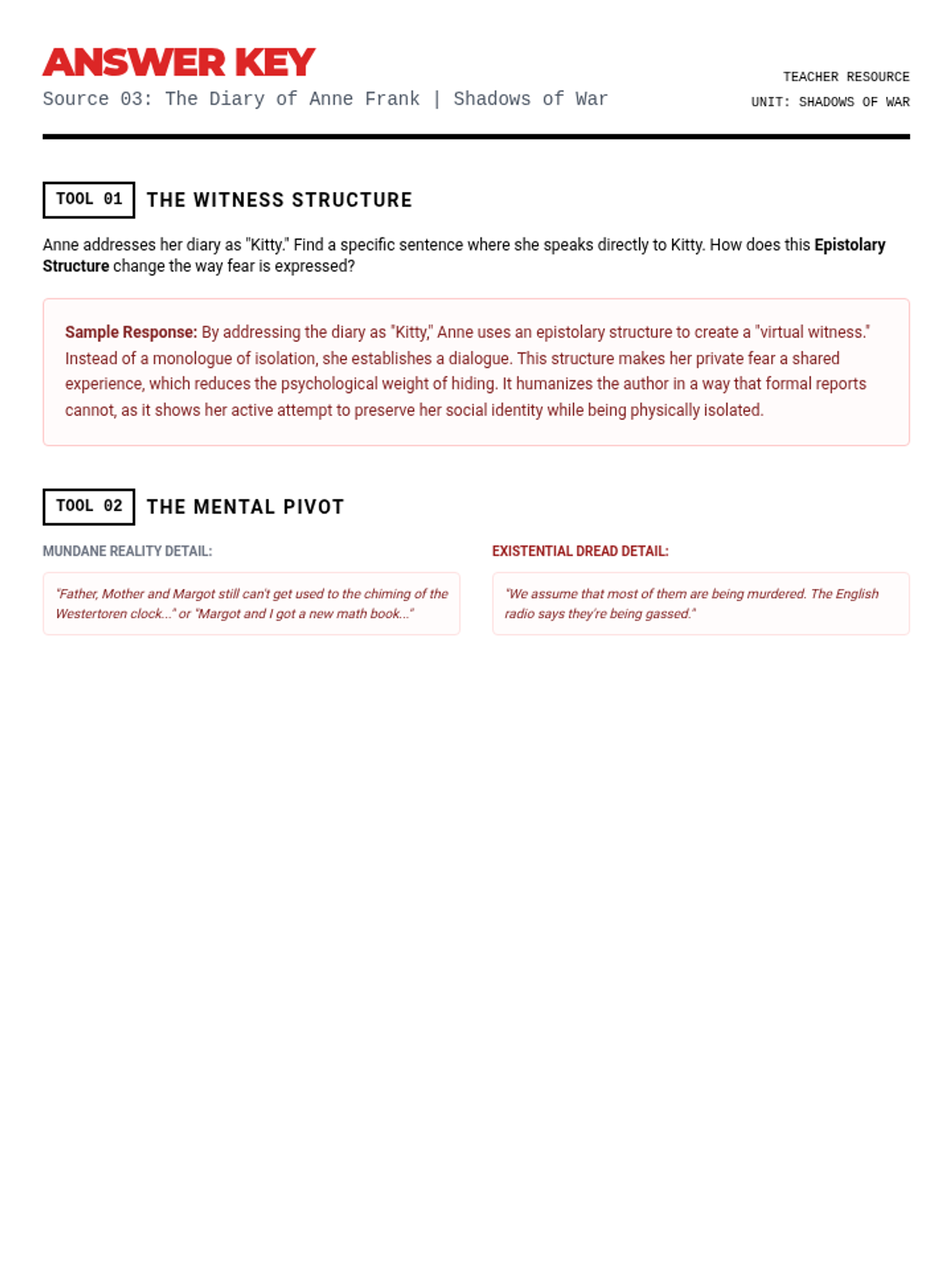
A 70-minute lesson on The Diary of Anne Frank, analyzing epistolary structure as a tool for personal reflection and psychological resilience in the face of constant fear.
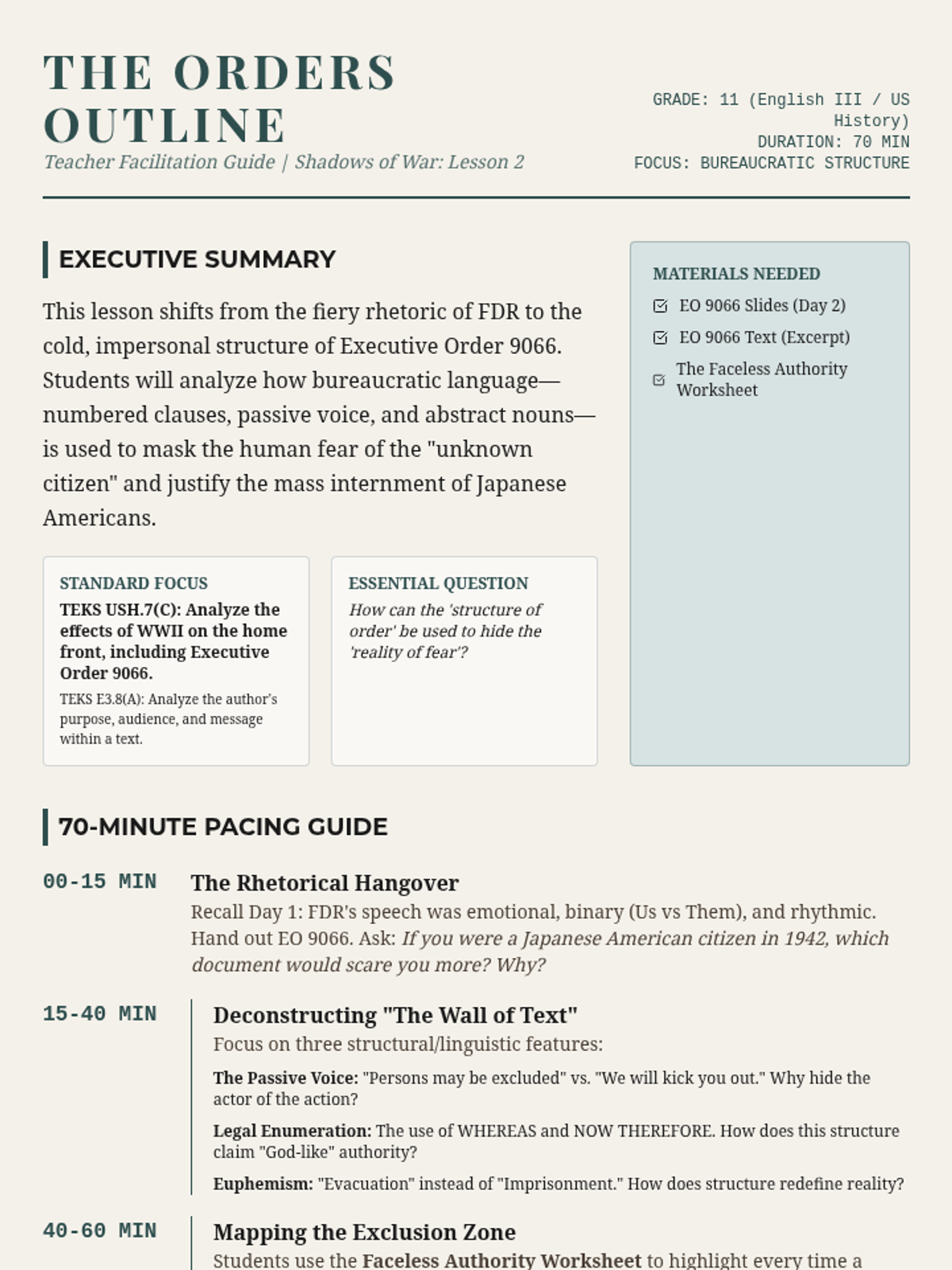
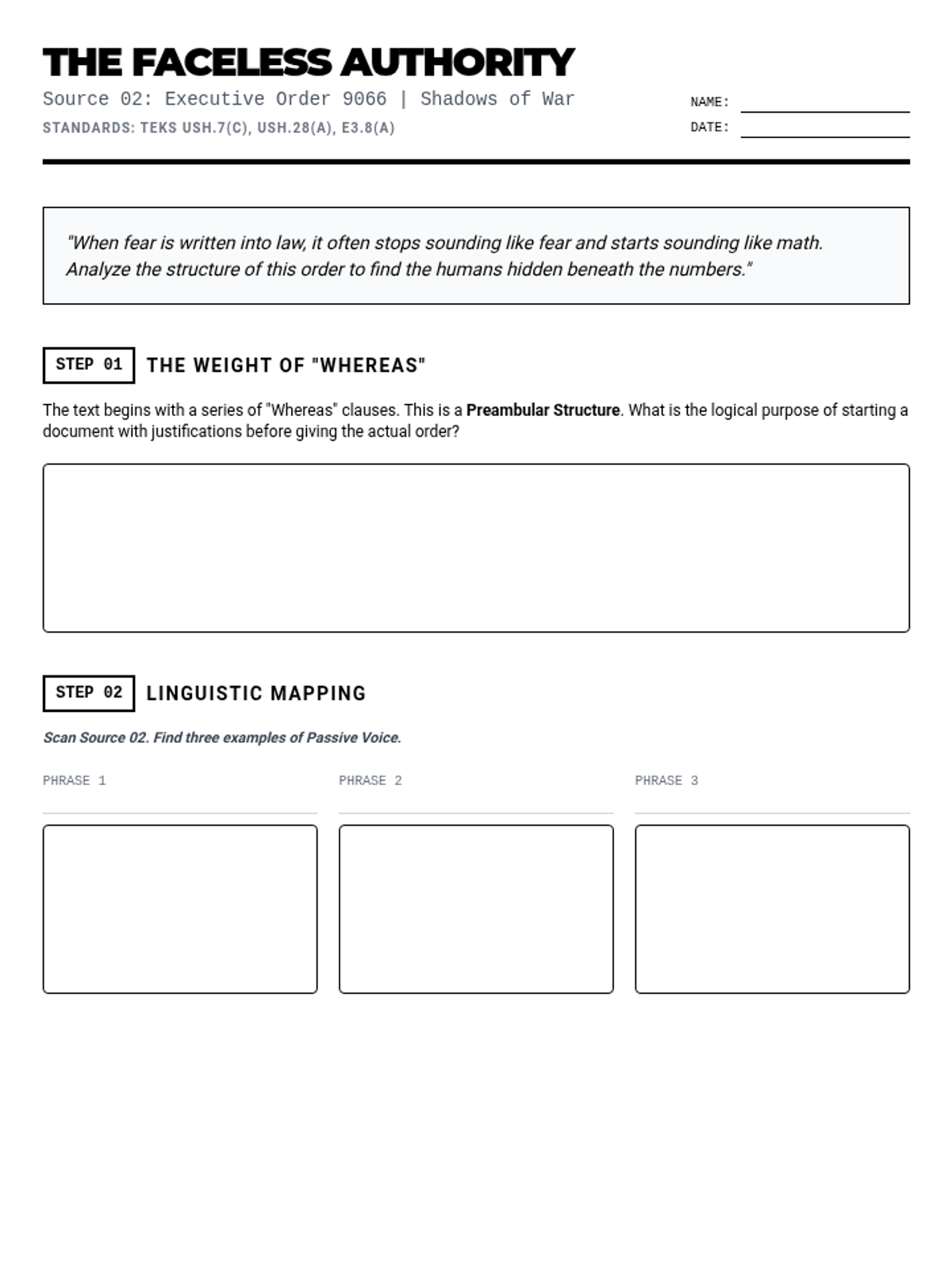
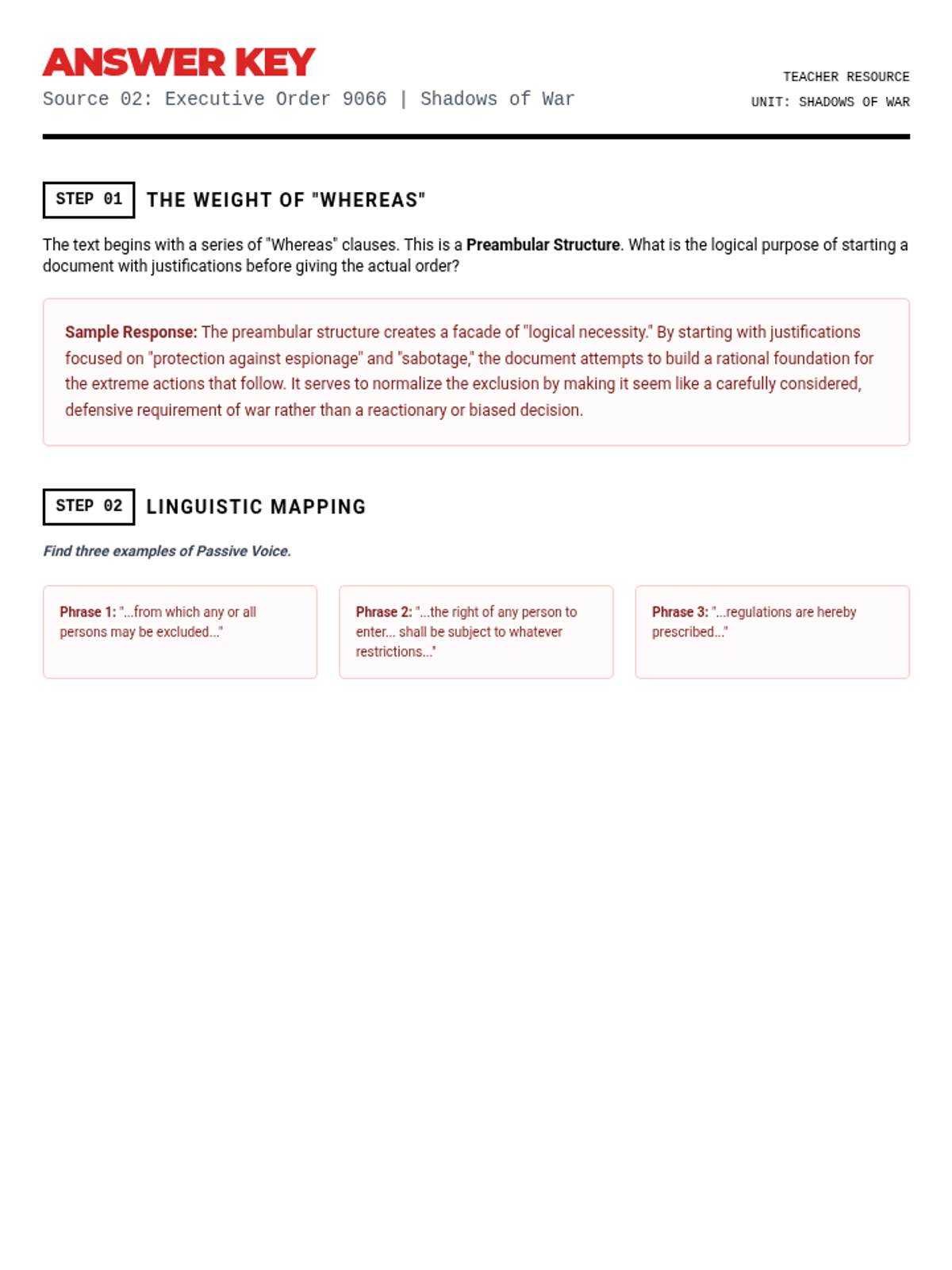
A 70-minute lesson on Executive Order 9066, analyzing how bureaucratic and legalistic structures can mask fear and justify mass exclusion.
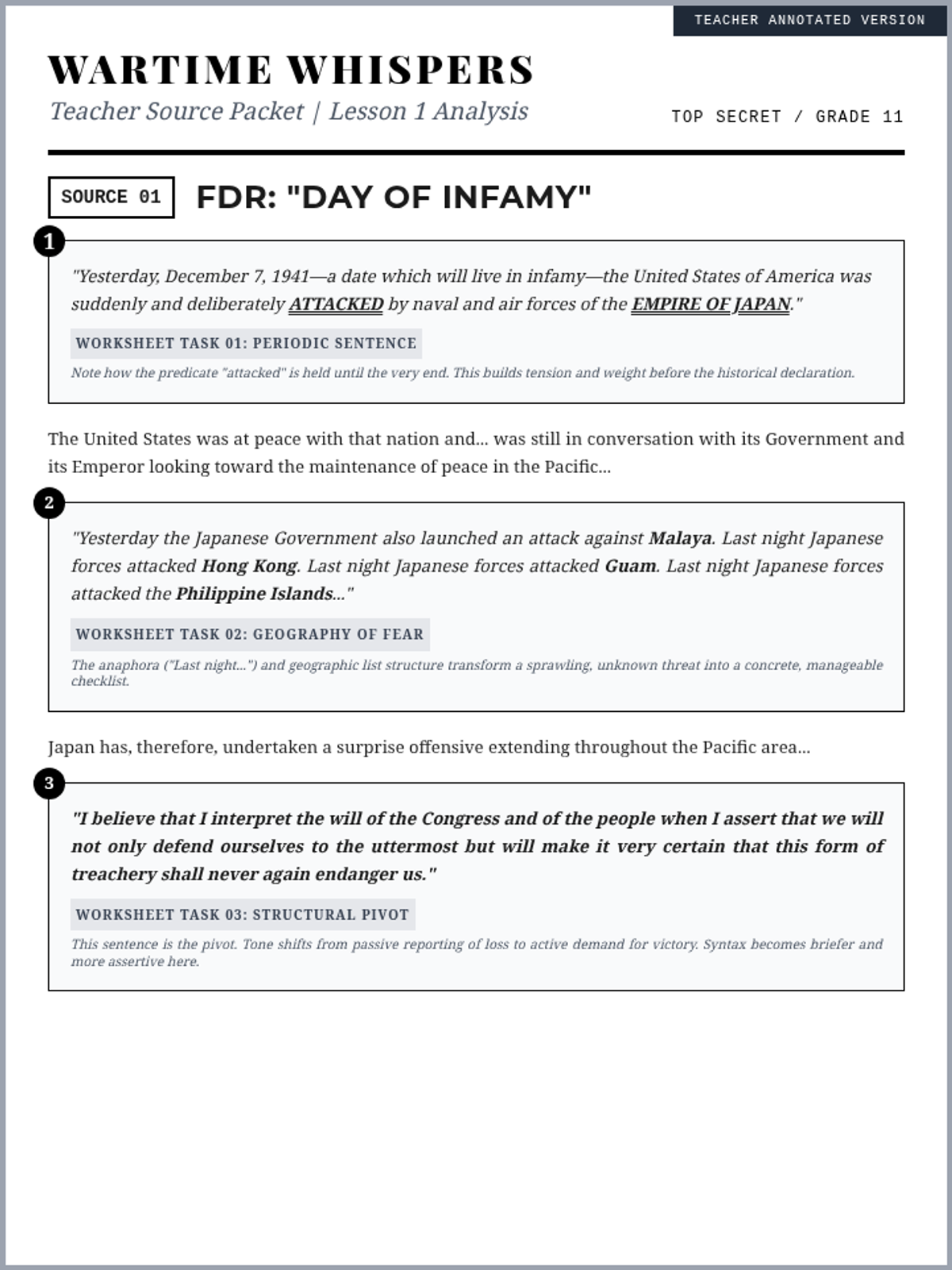
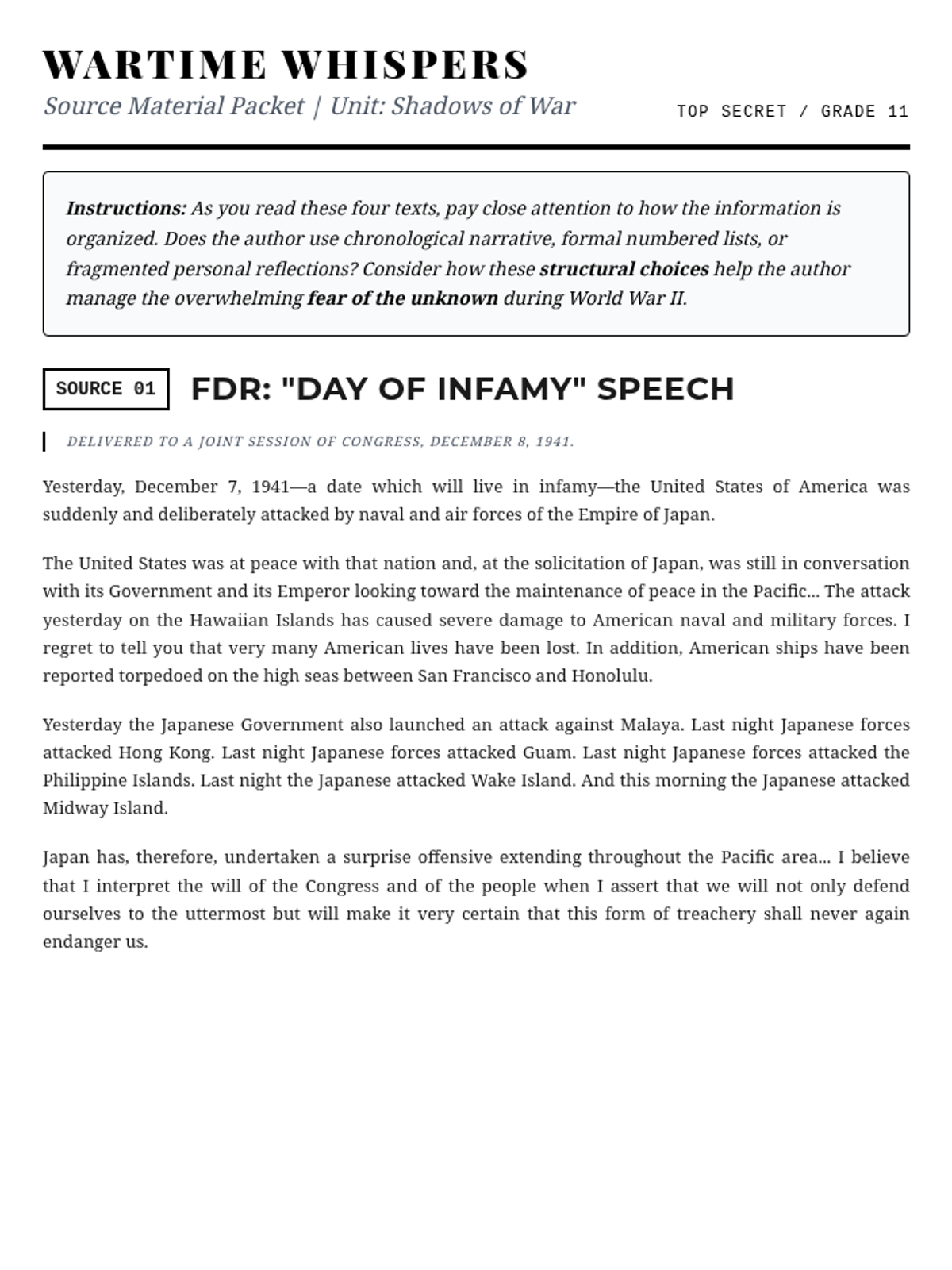
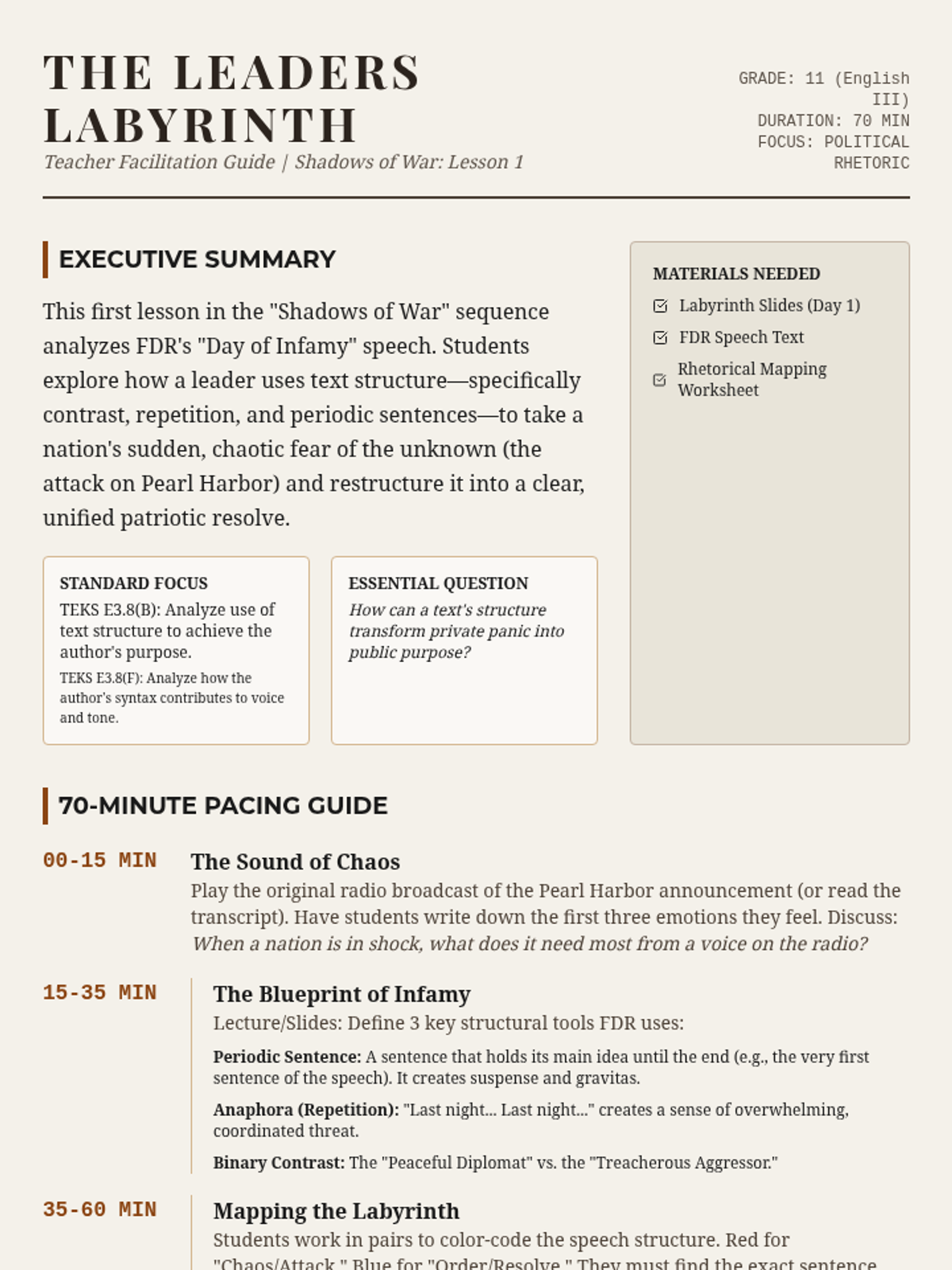
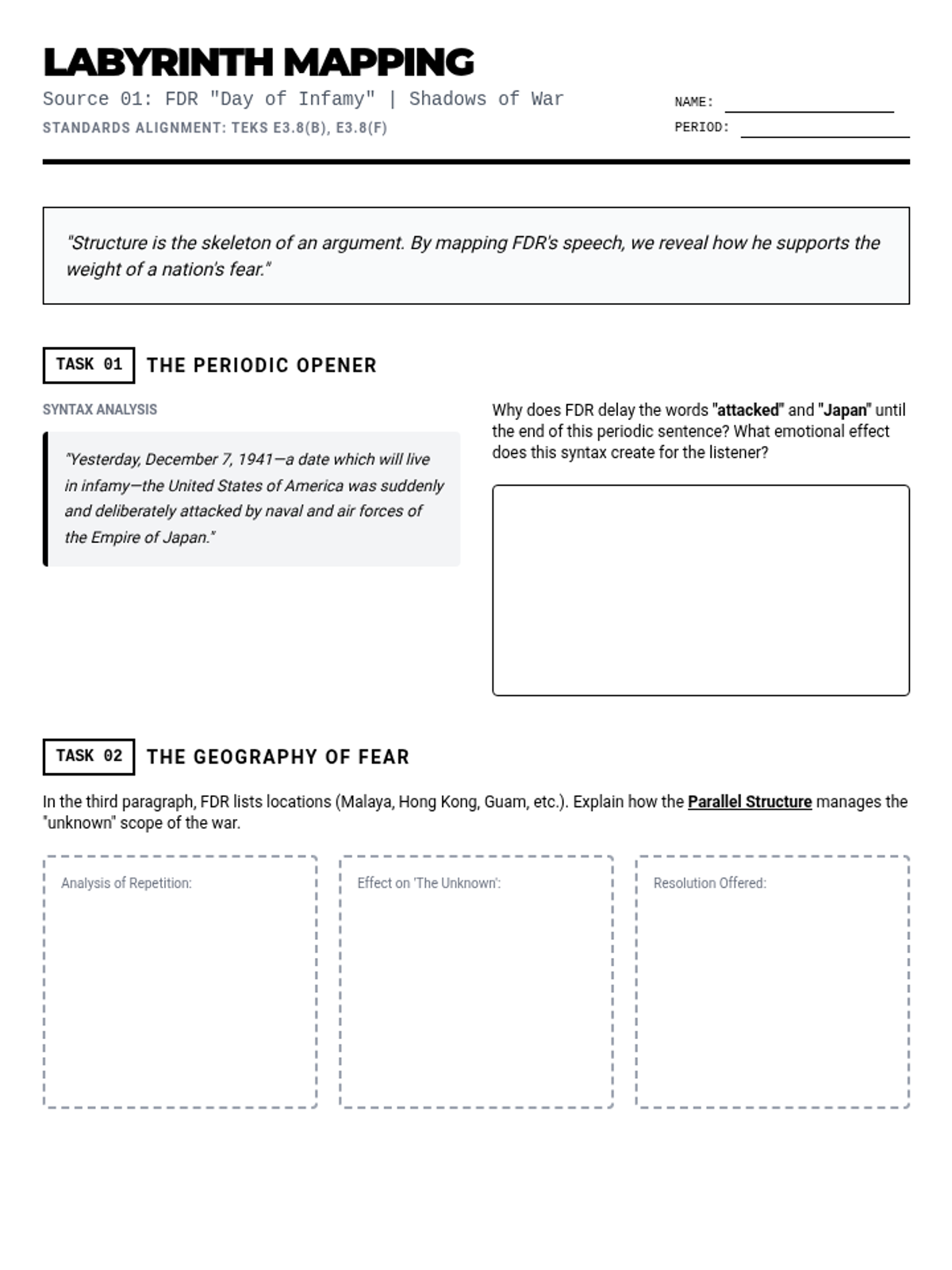
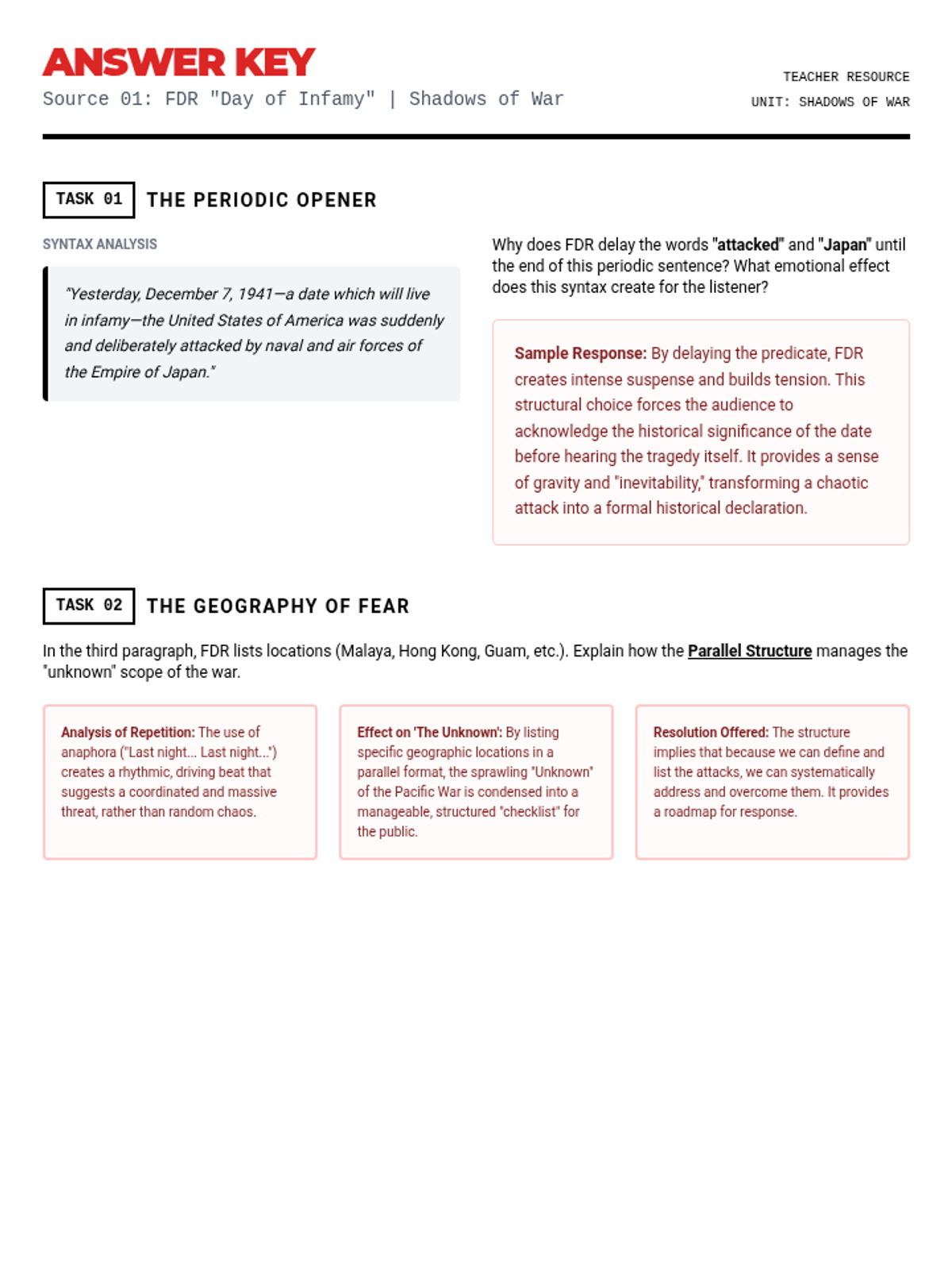
A 70-minute lesson focusing on FDR's 'Day of Infamy' speech, analyzing how a leader uses structural contrast and periodic sentences to transform public fear into national resolve.
A collaborative "Pairs Compare" activity where students work in teams of four to share keywords, locate evidence, and synthesize final answers on index cards.
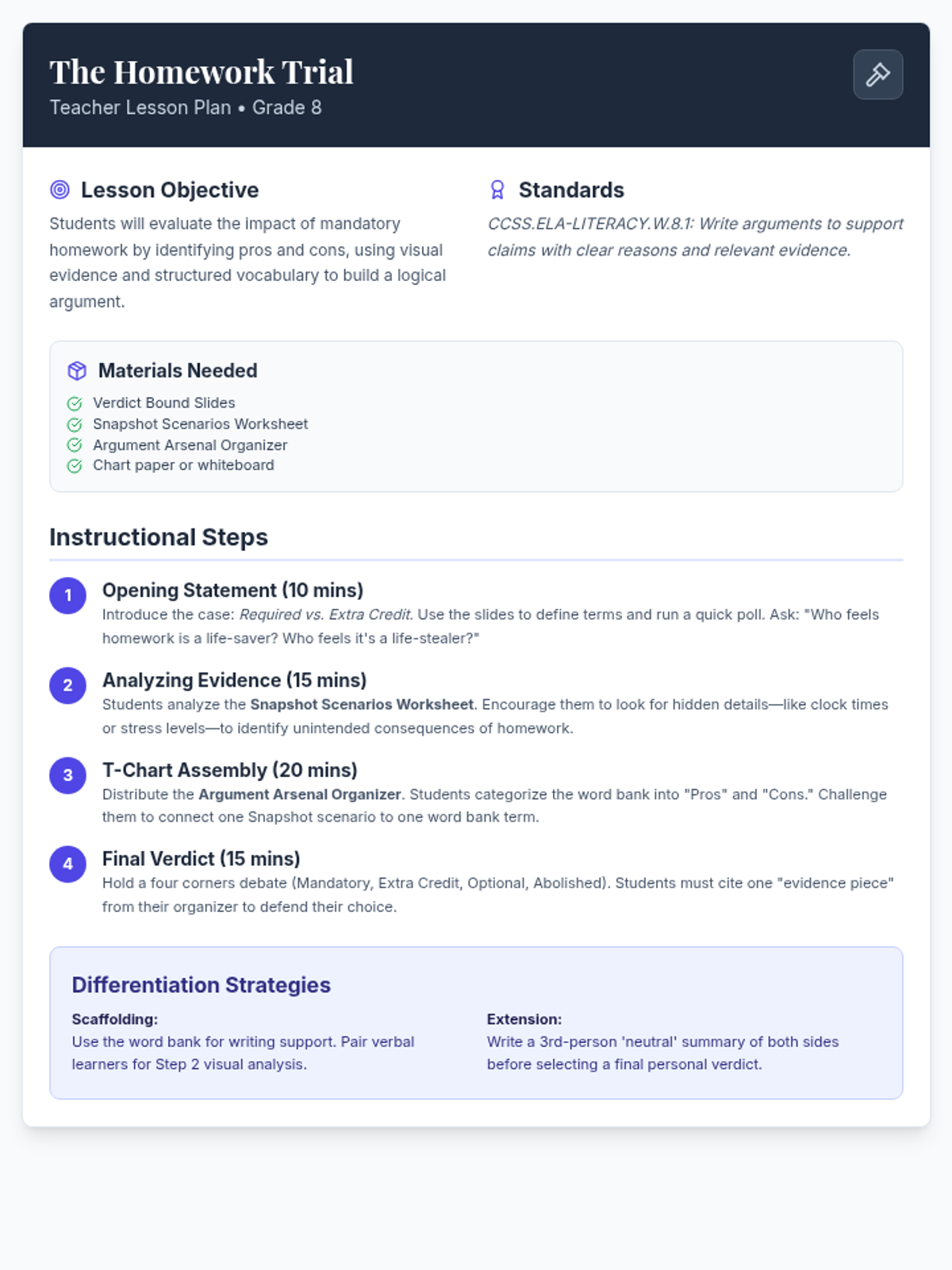
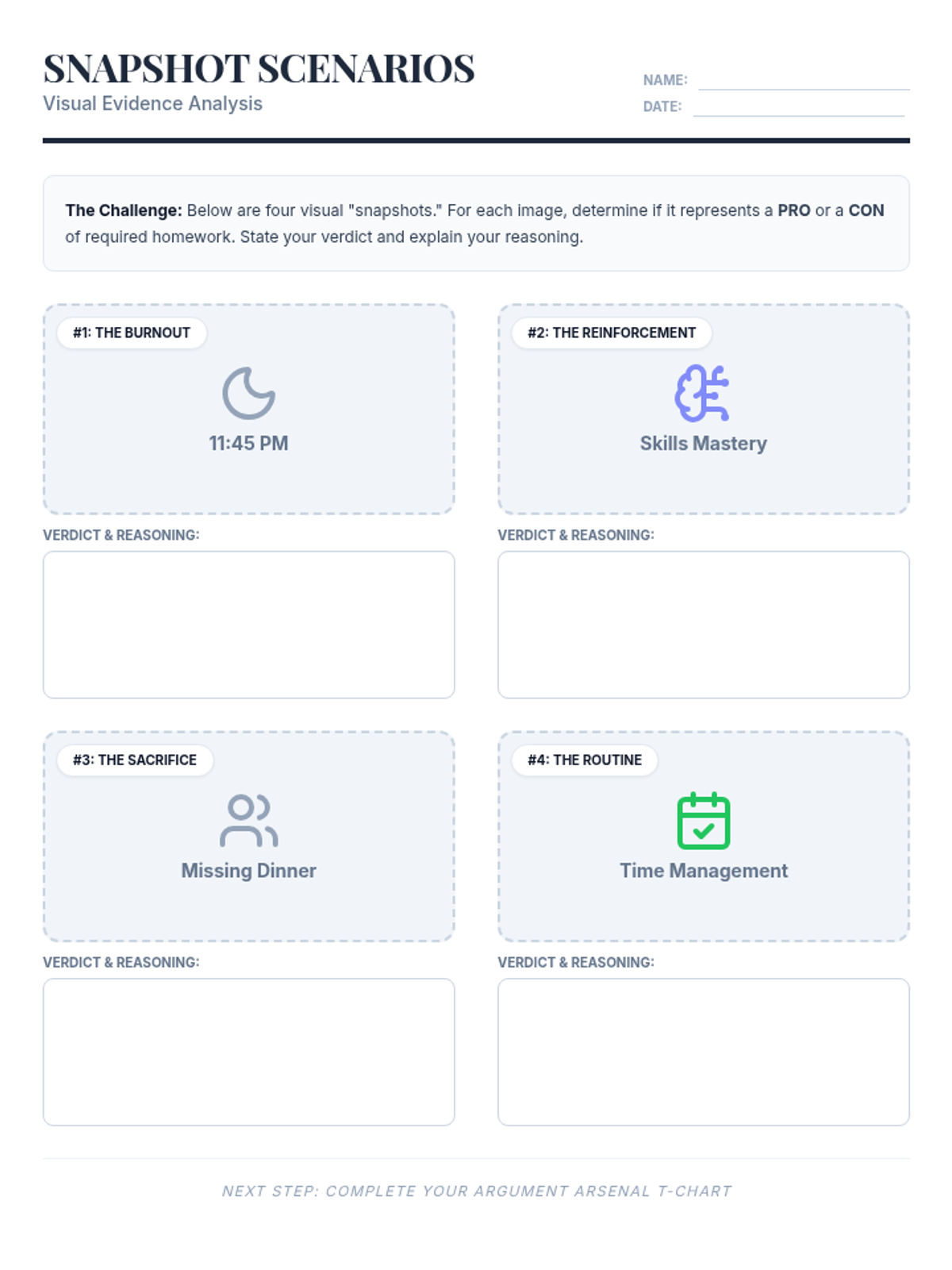
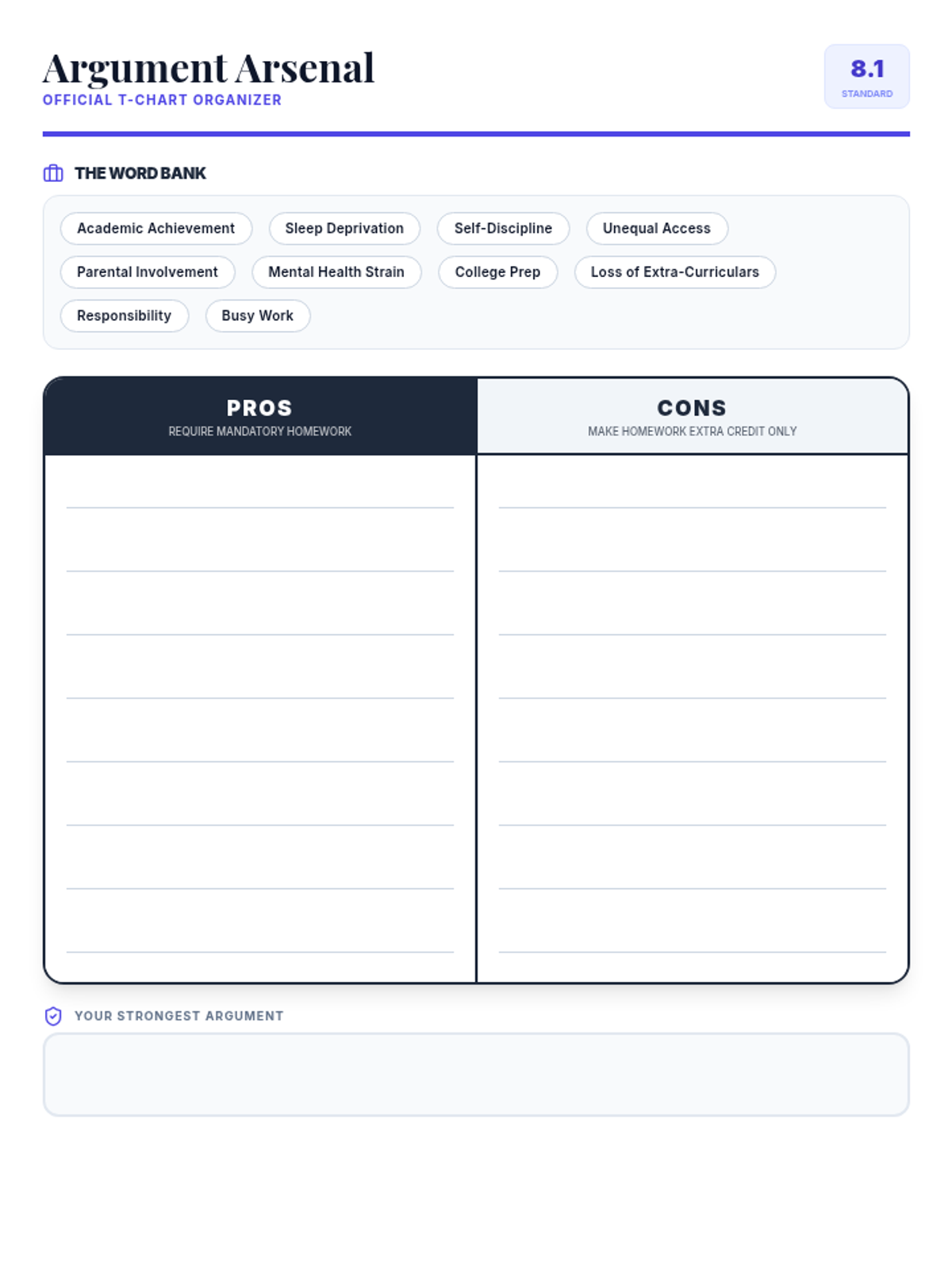
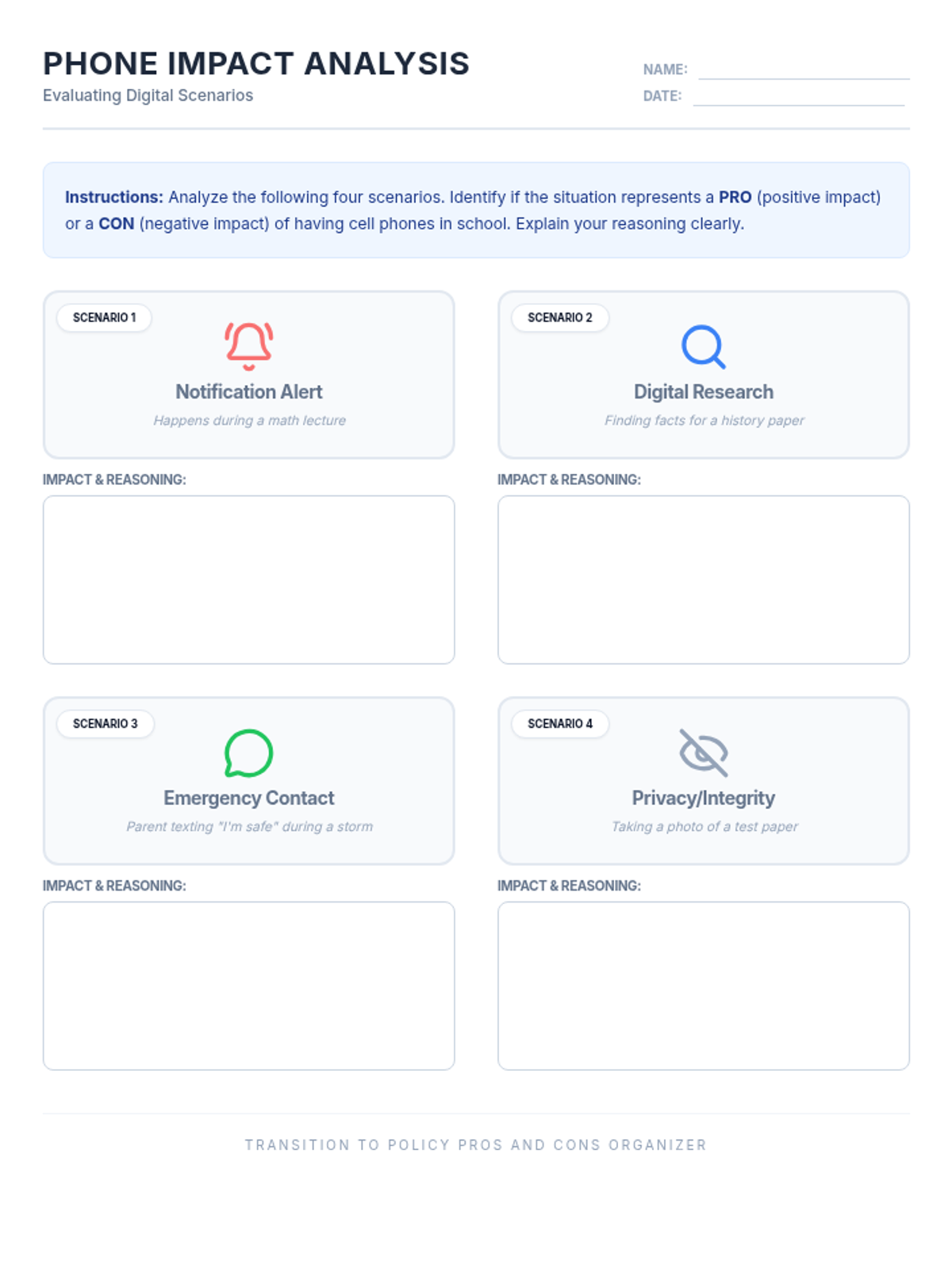
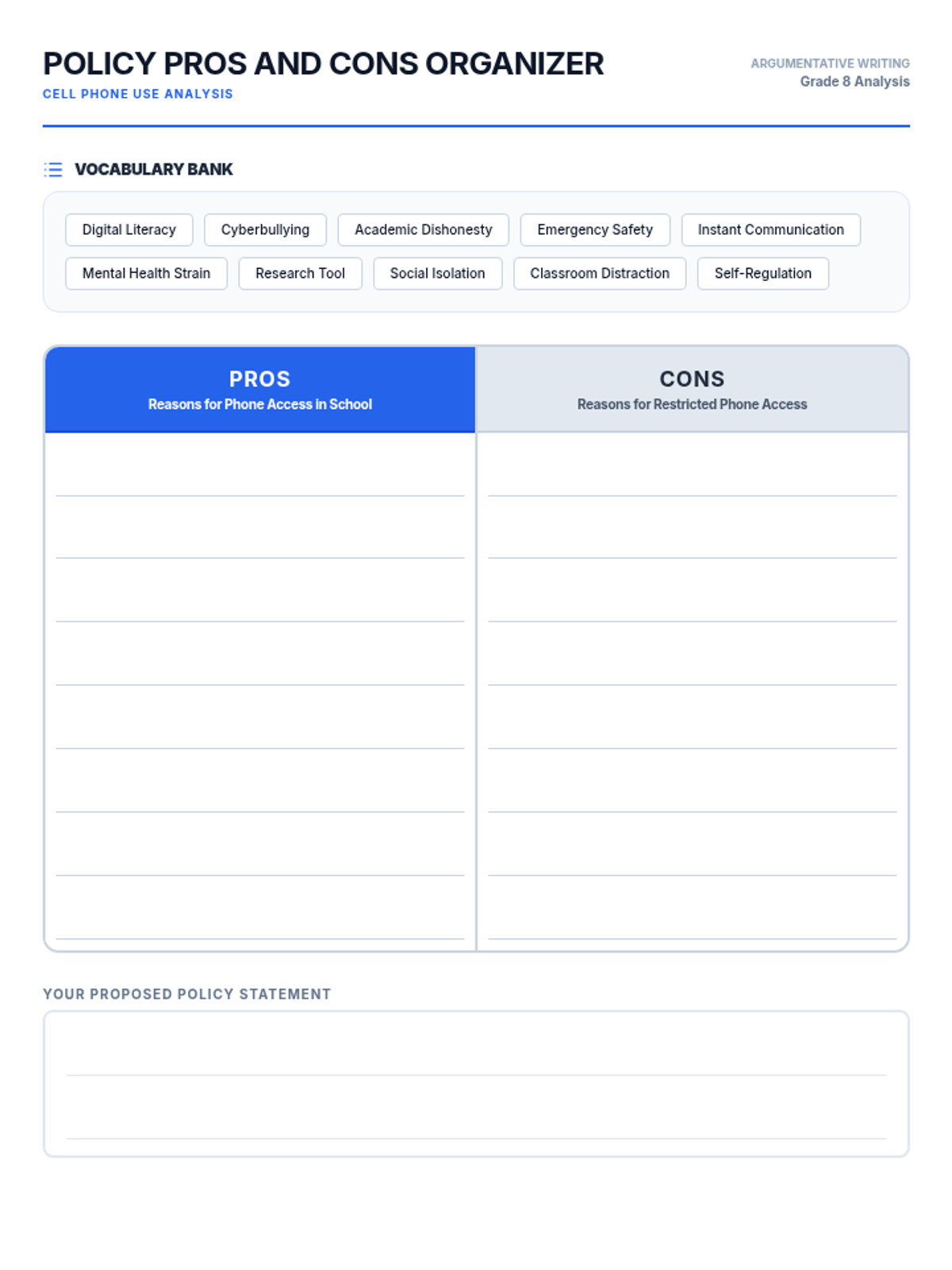
An 8th-grade analysis lesson where students evaluate the benefits and drawbacks of mandatory homework versus extra credit using visual prompts and structured evidence.
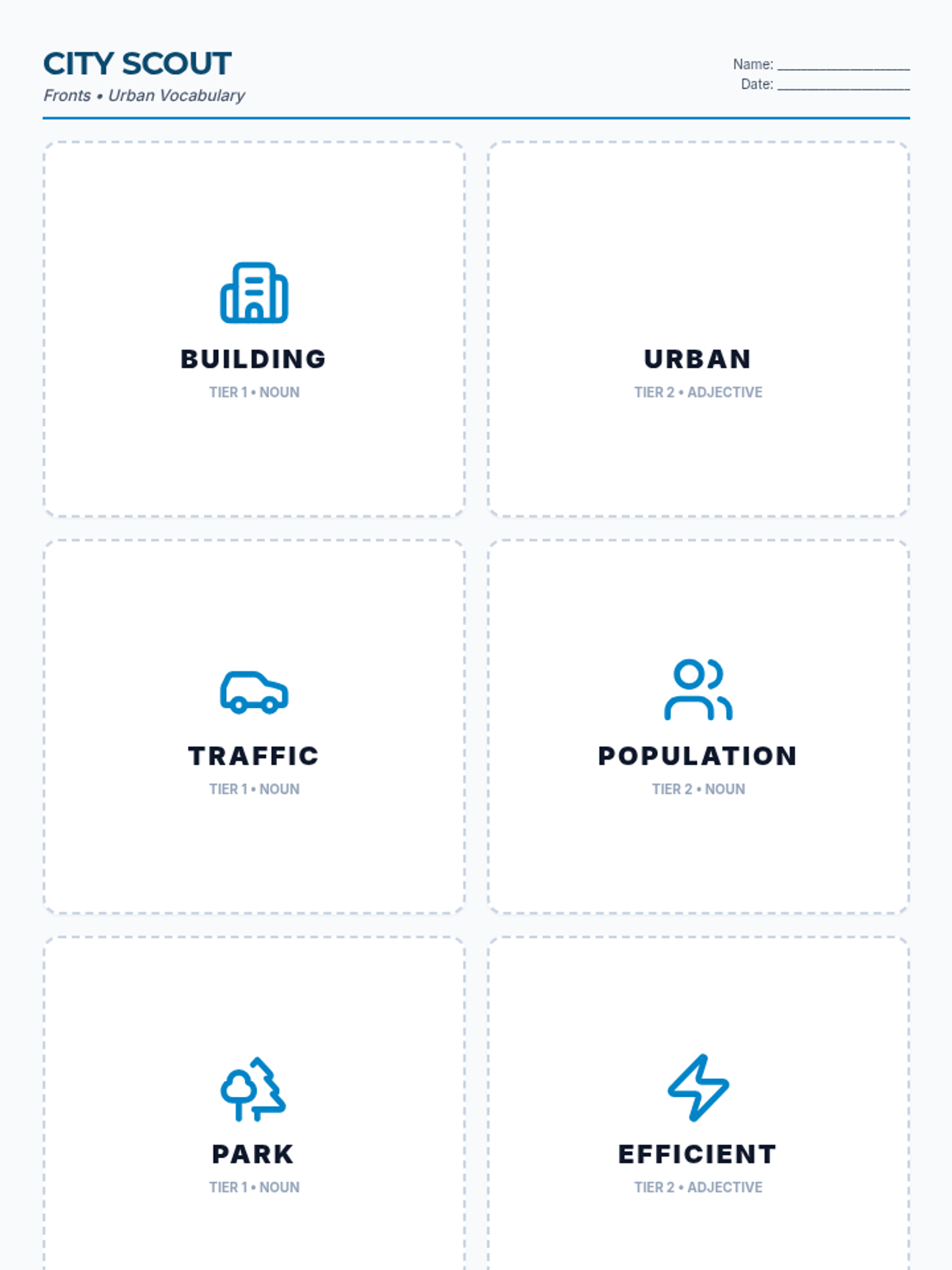
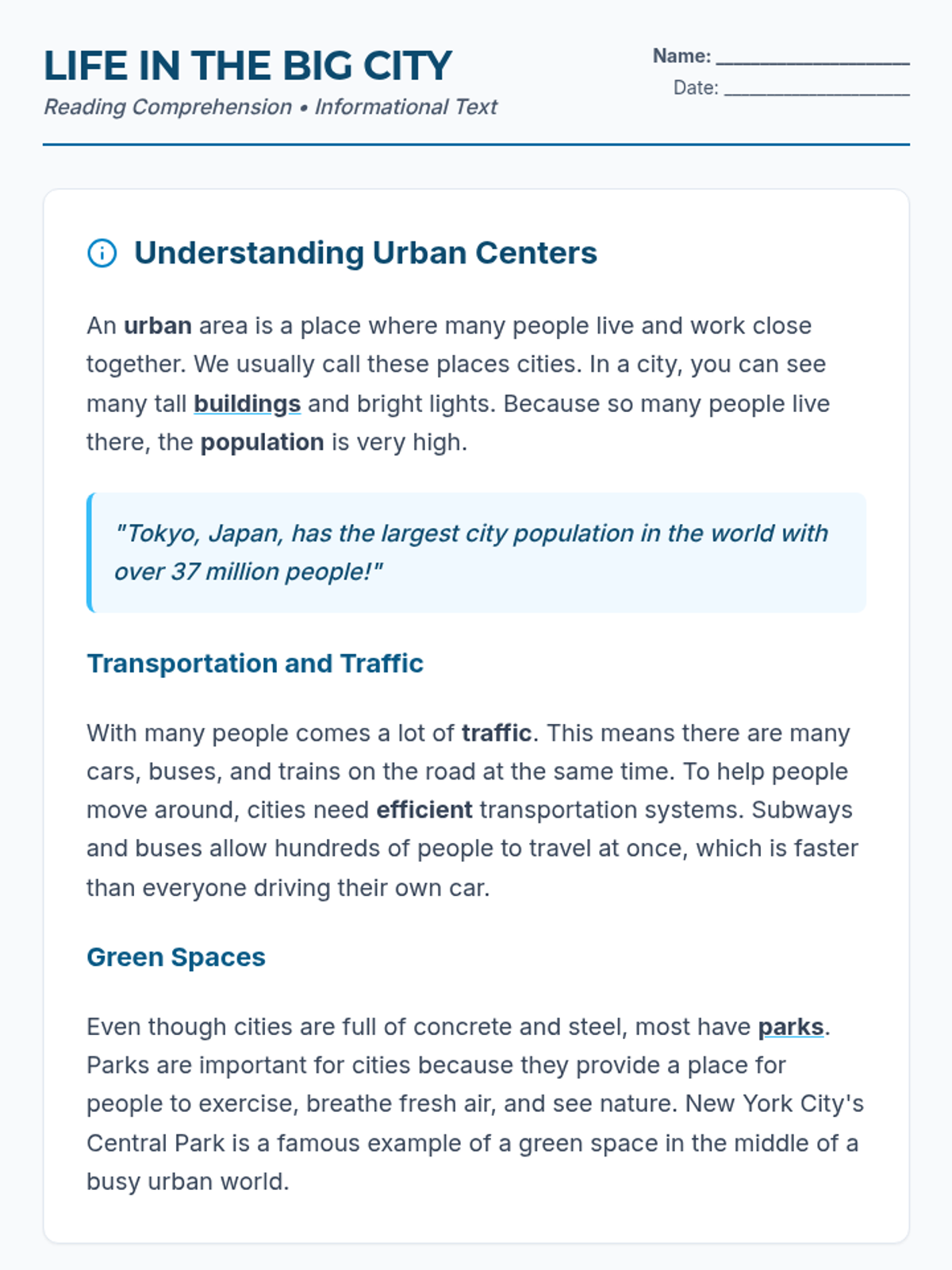
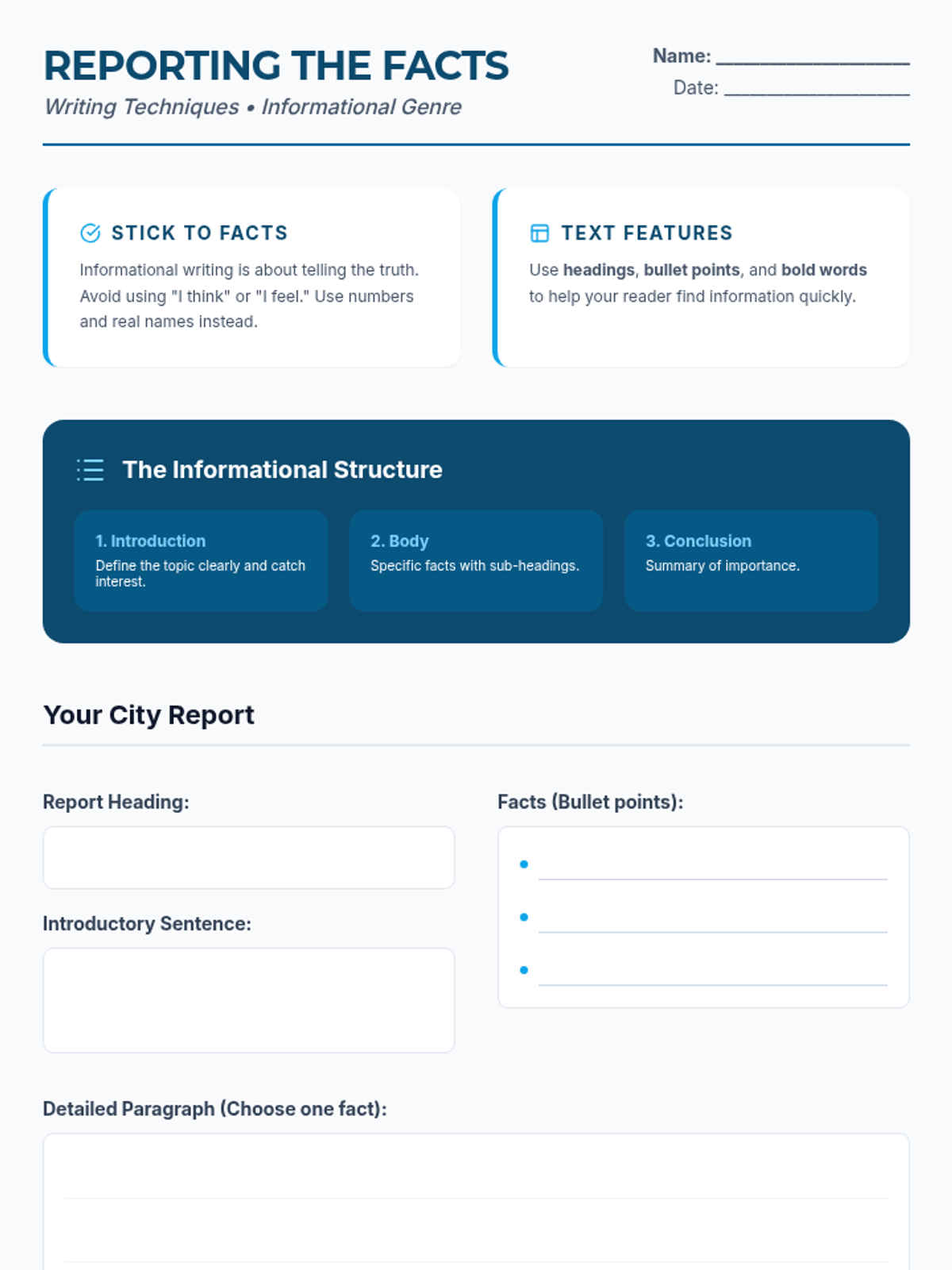
A deep dive into informational text features and writing, focusing on factual reporting and urban environment vocabulary.
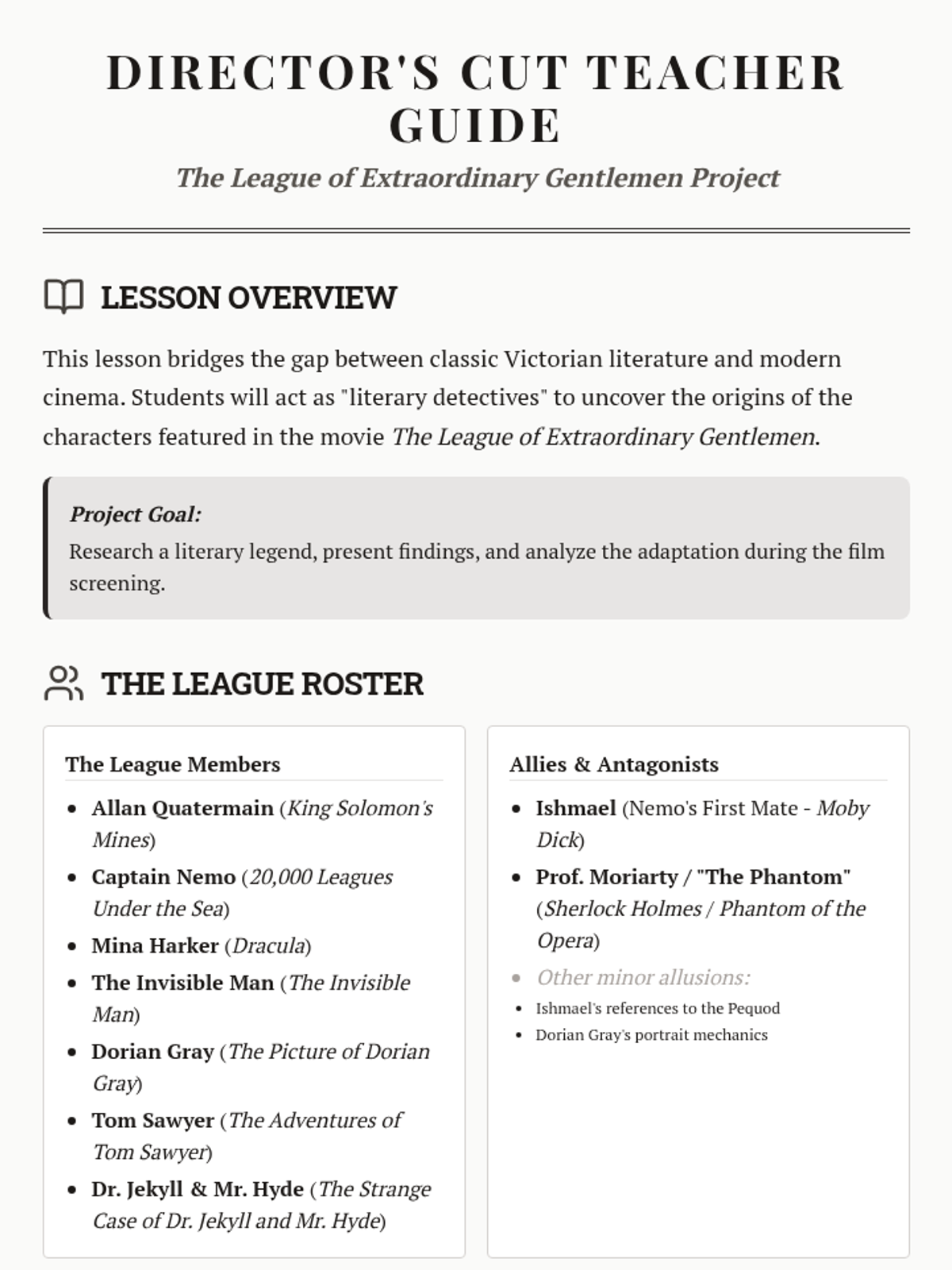
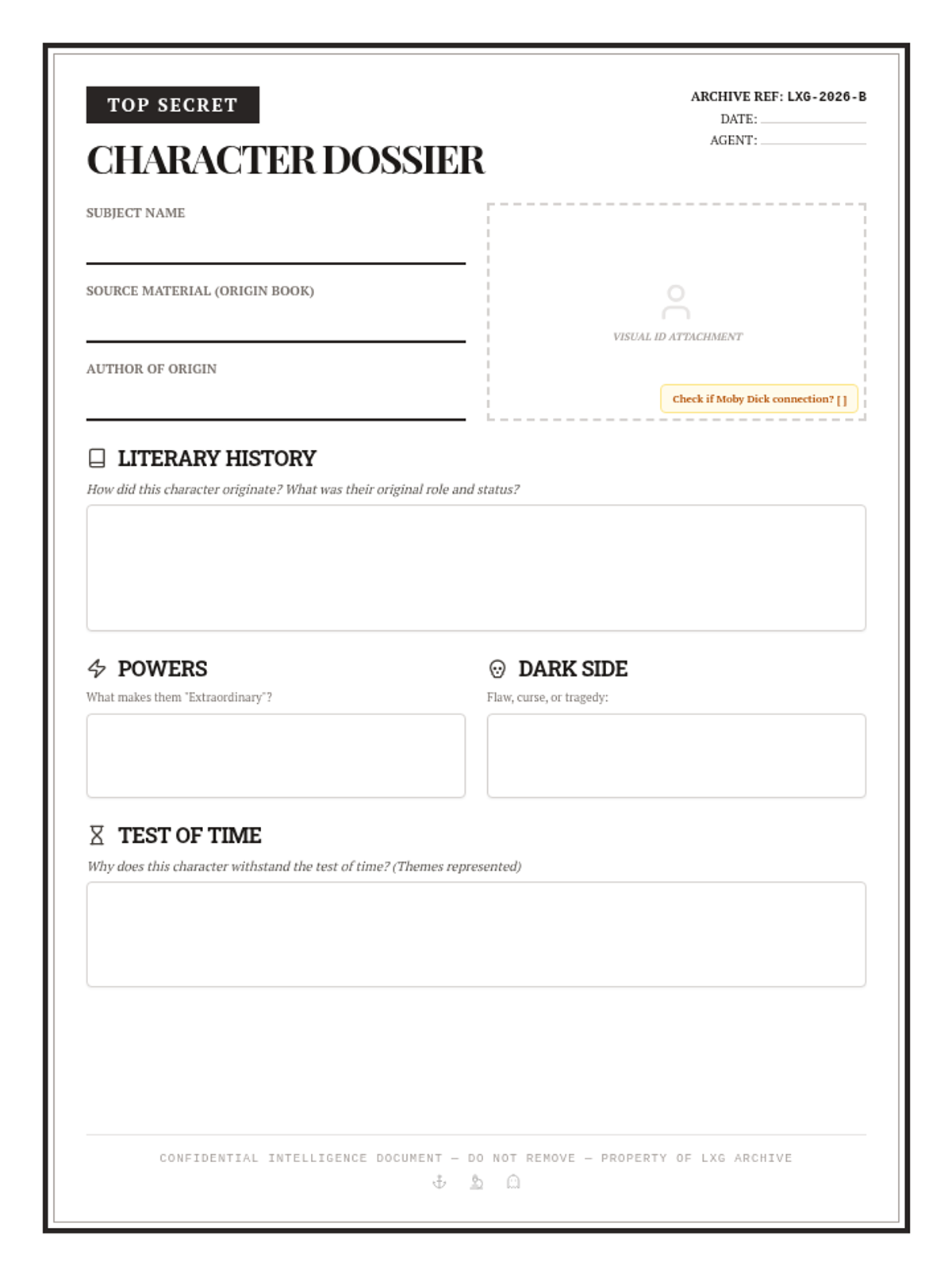
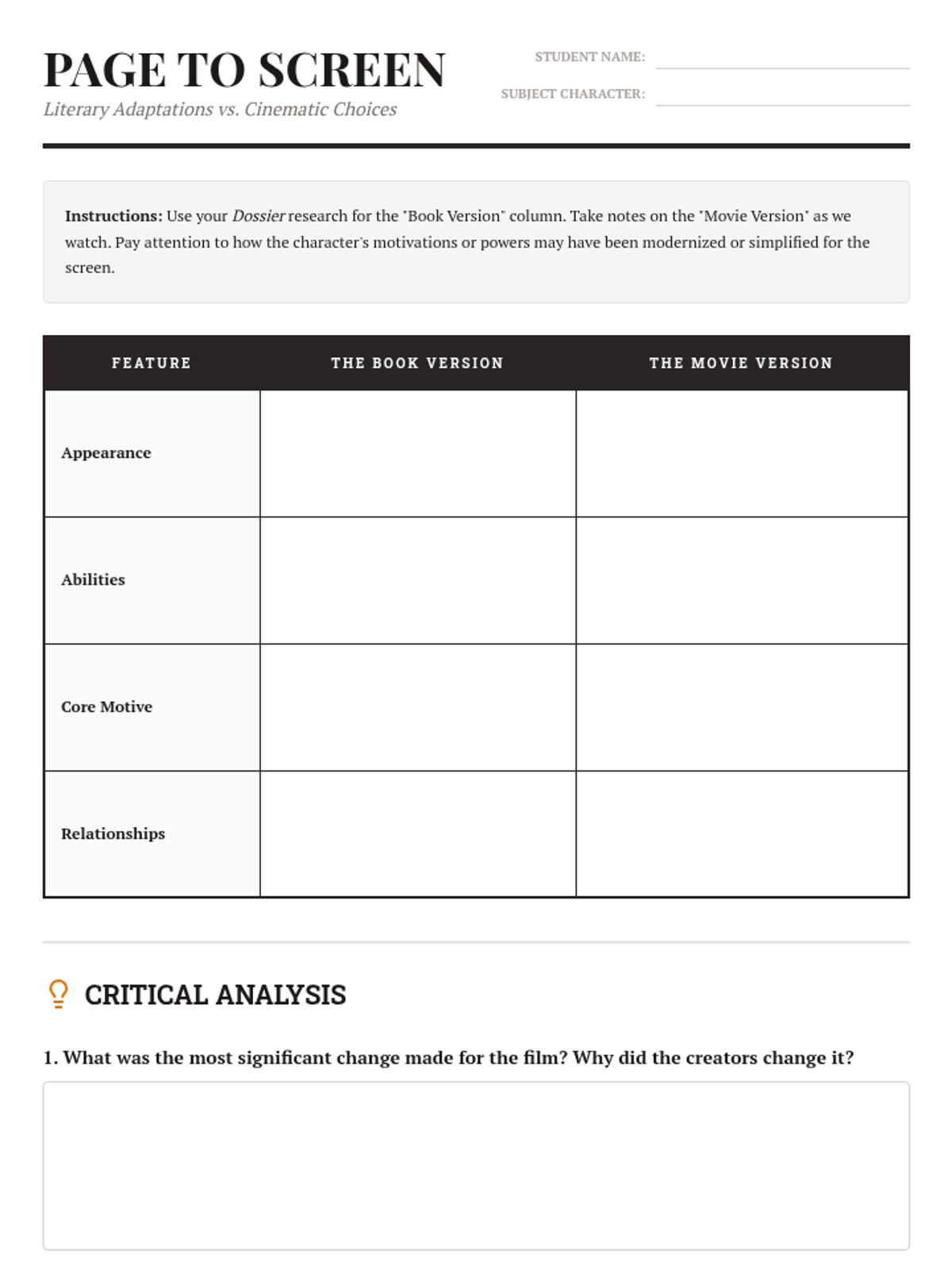
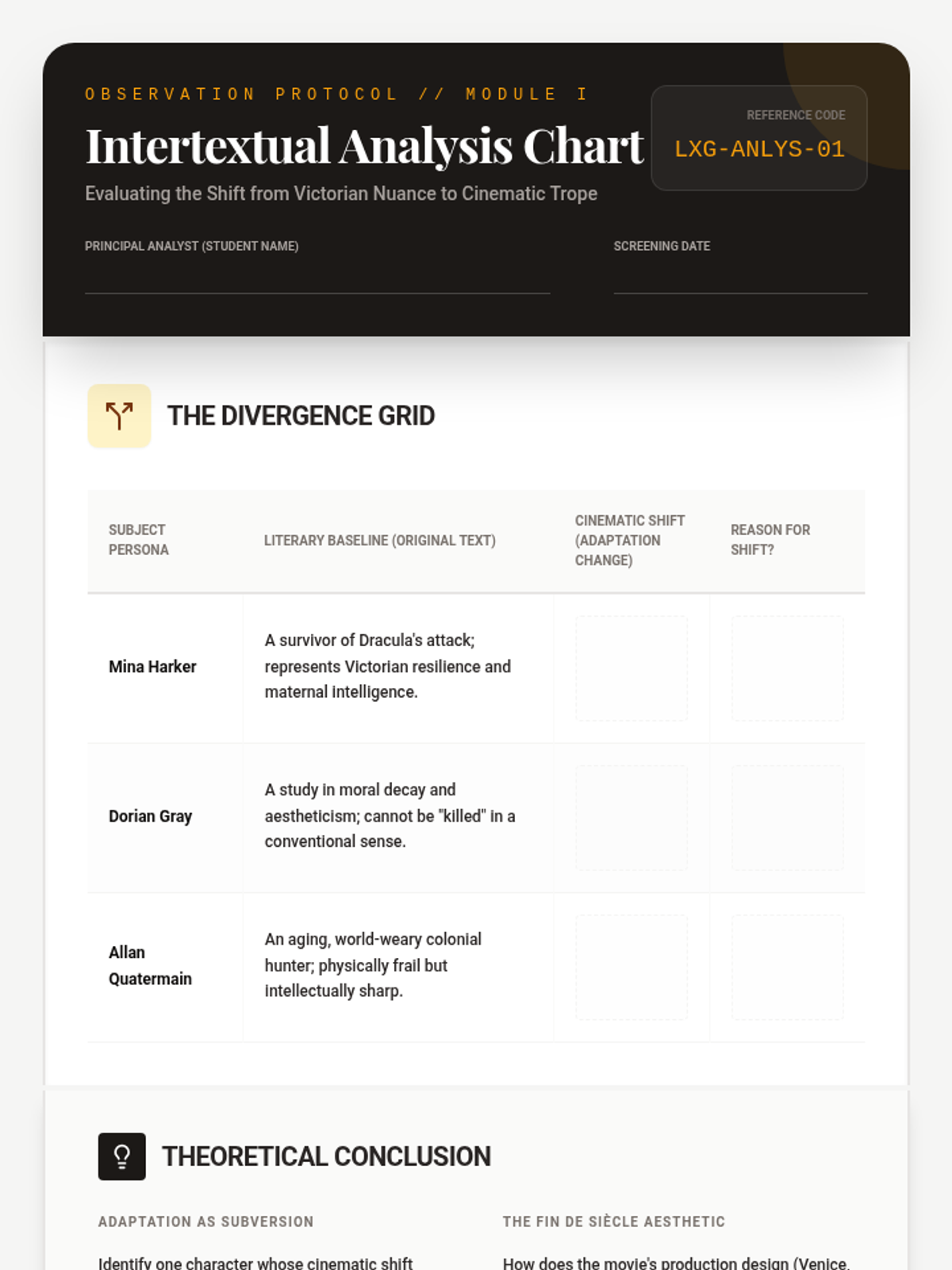
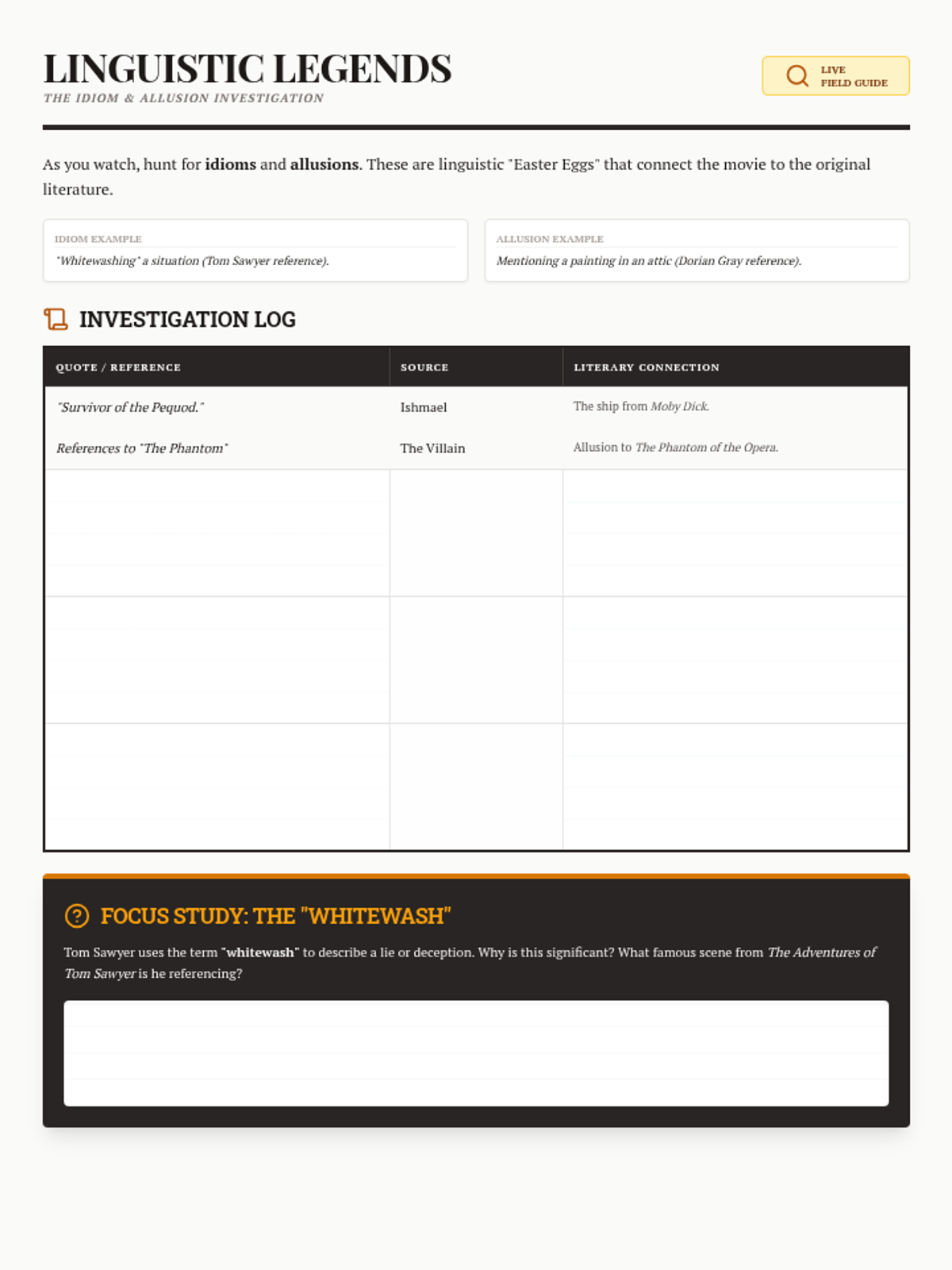
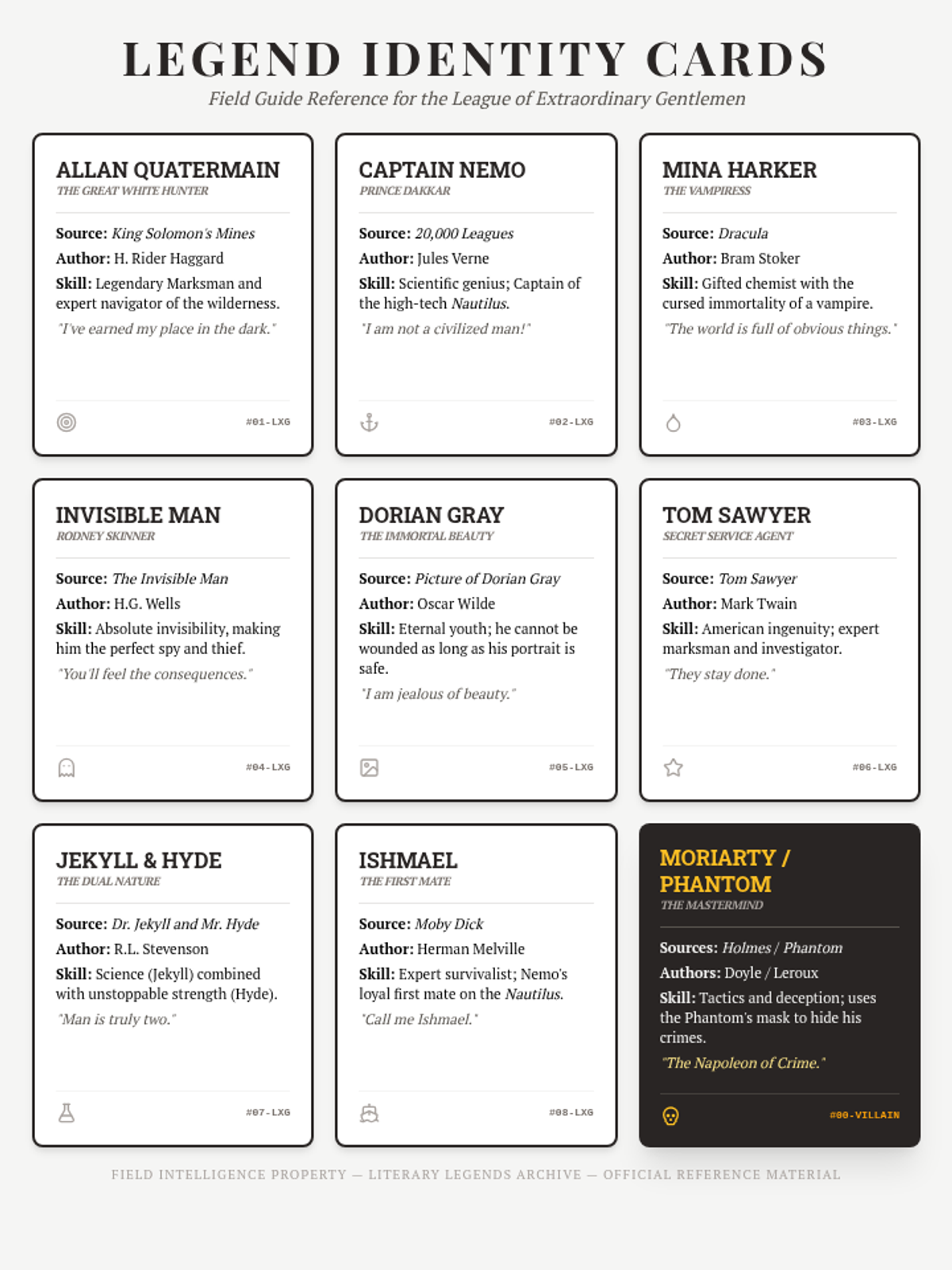
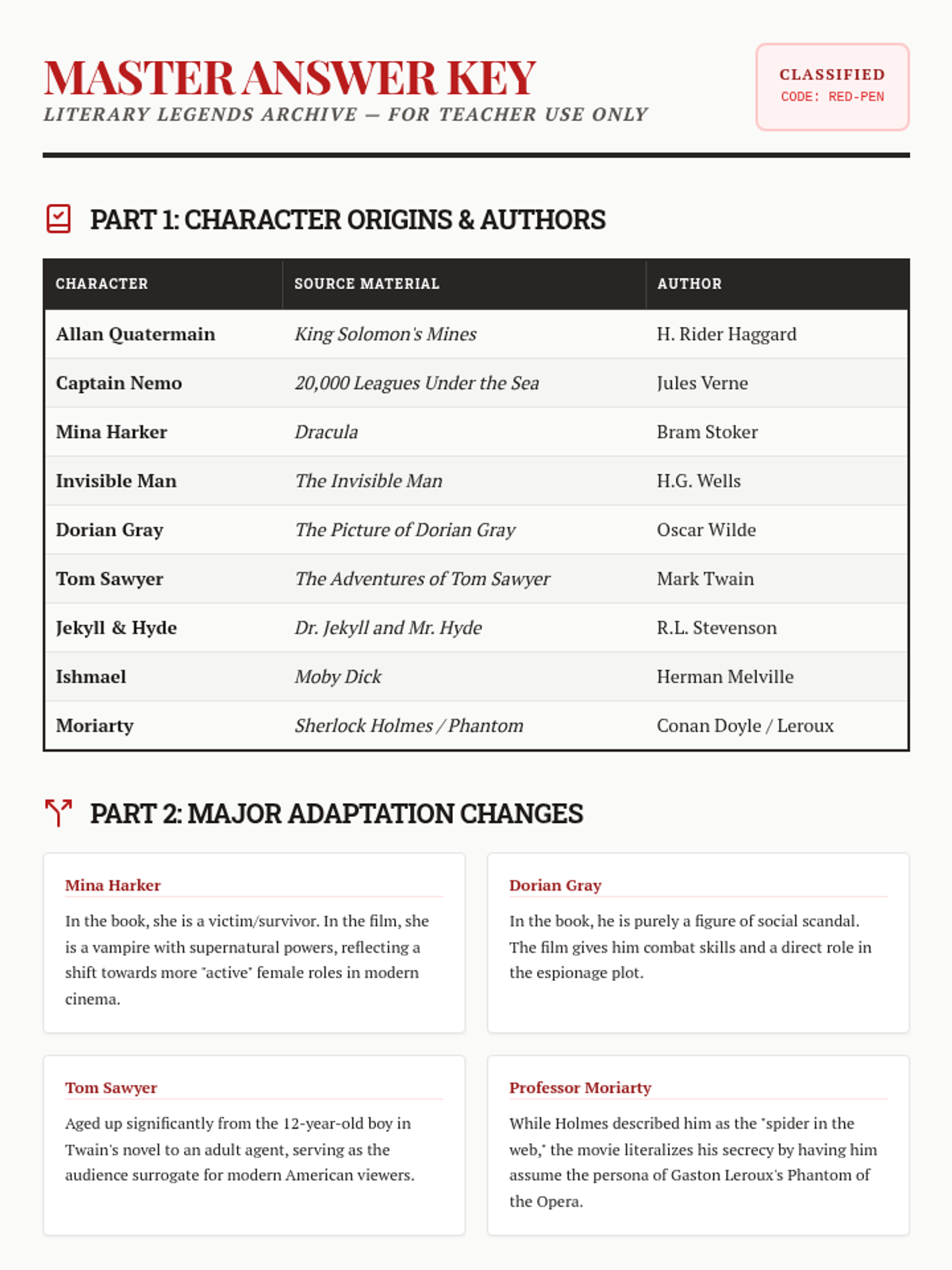
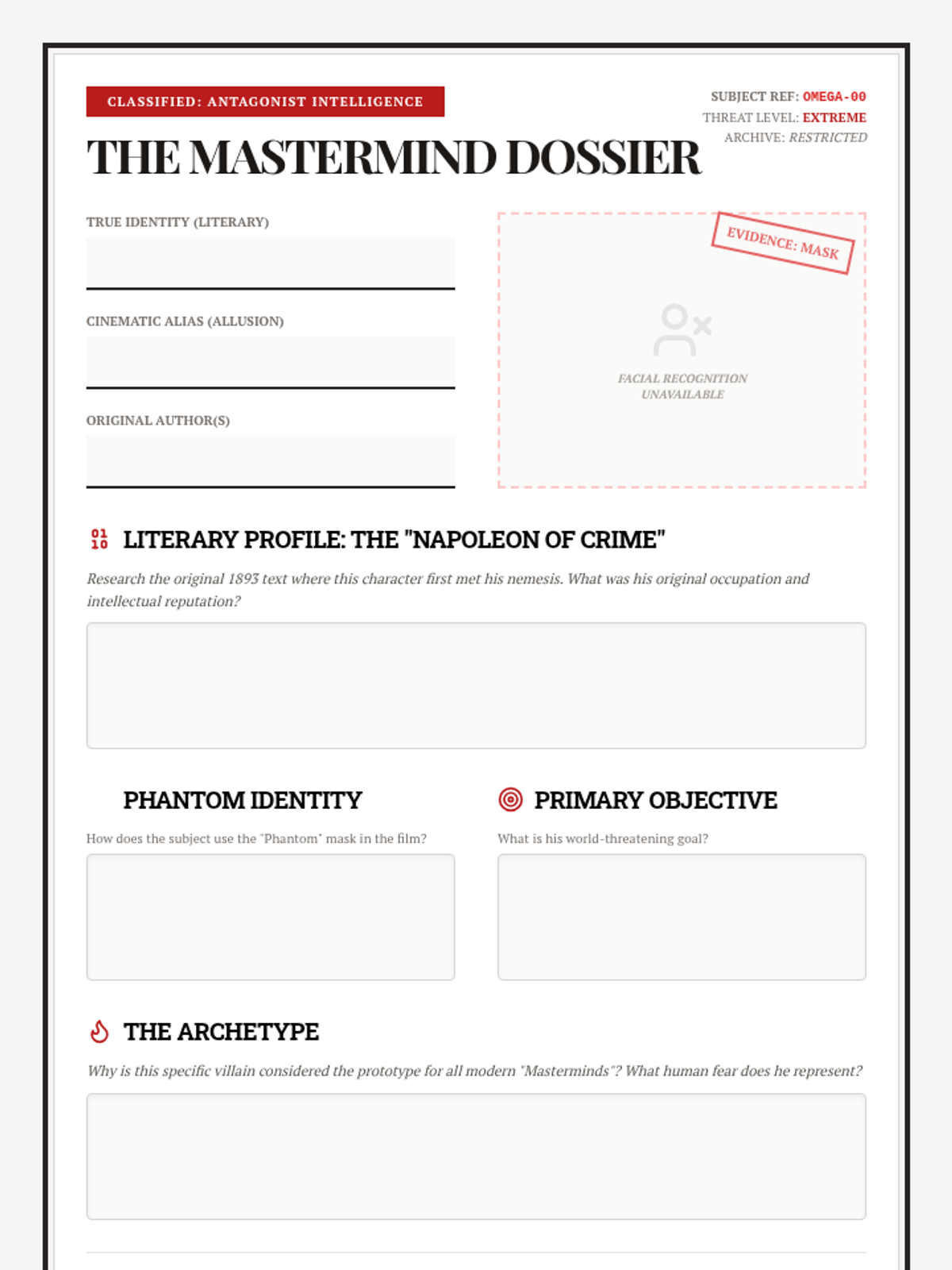
A rigorous exploration of fin-de-siècle literature and post-modern intertextuality. Students analyze the literary origins of Victorian icons in 'The League of Extraordinary Gentlemen' and evaluate the socio-cultural shifts in their cinematic adaptation.
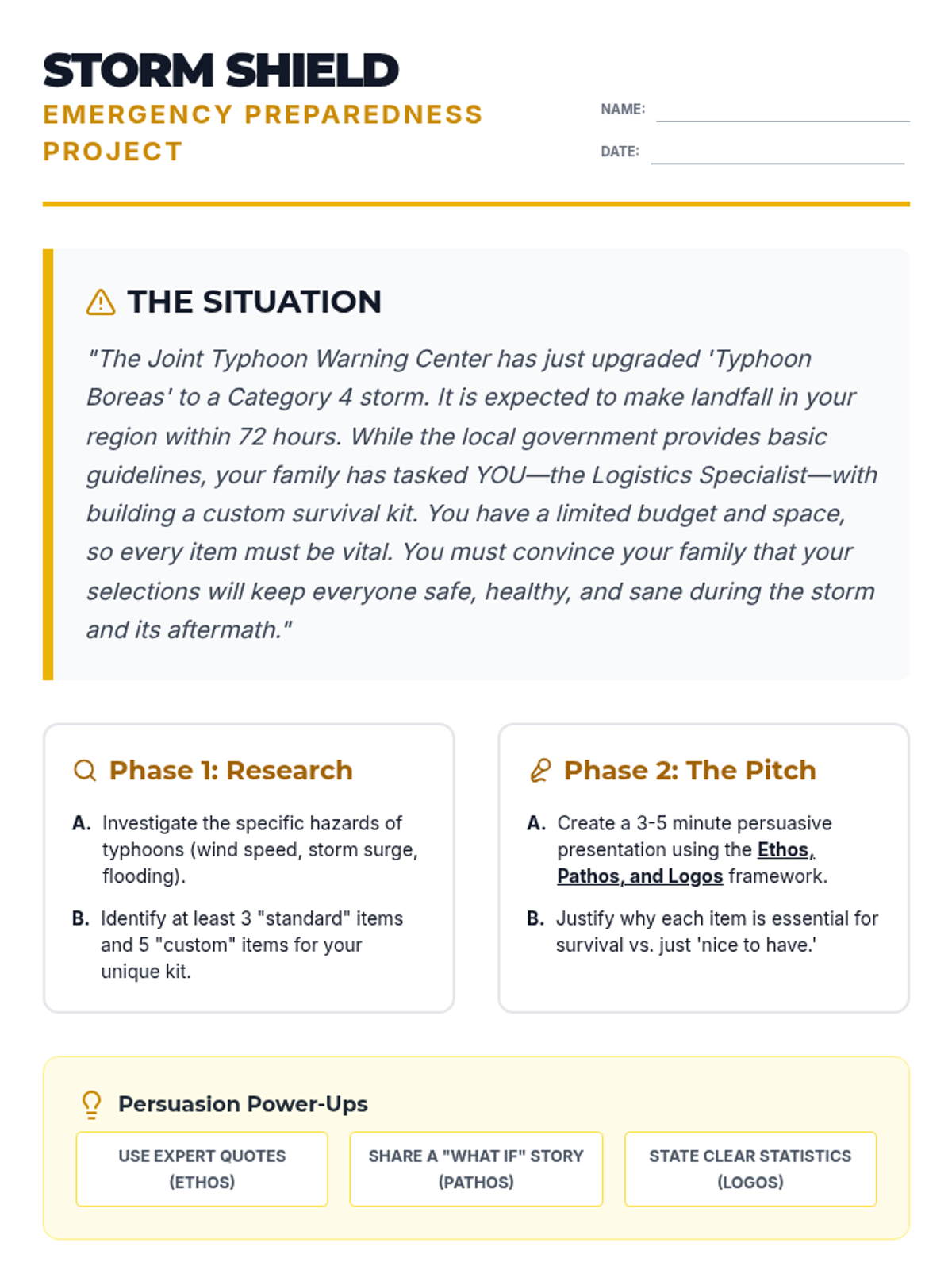
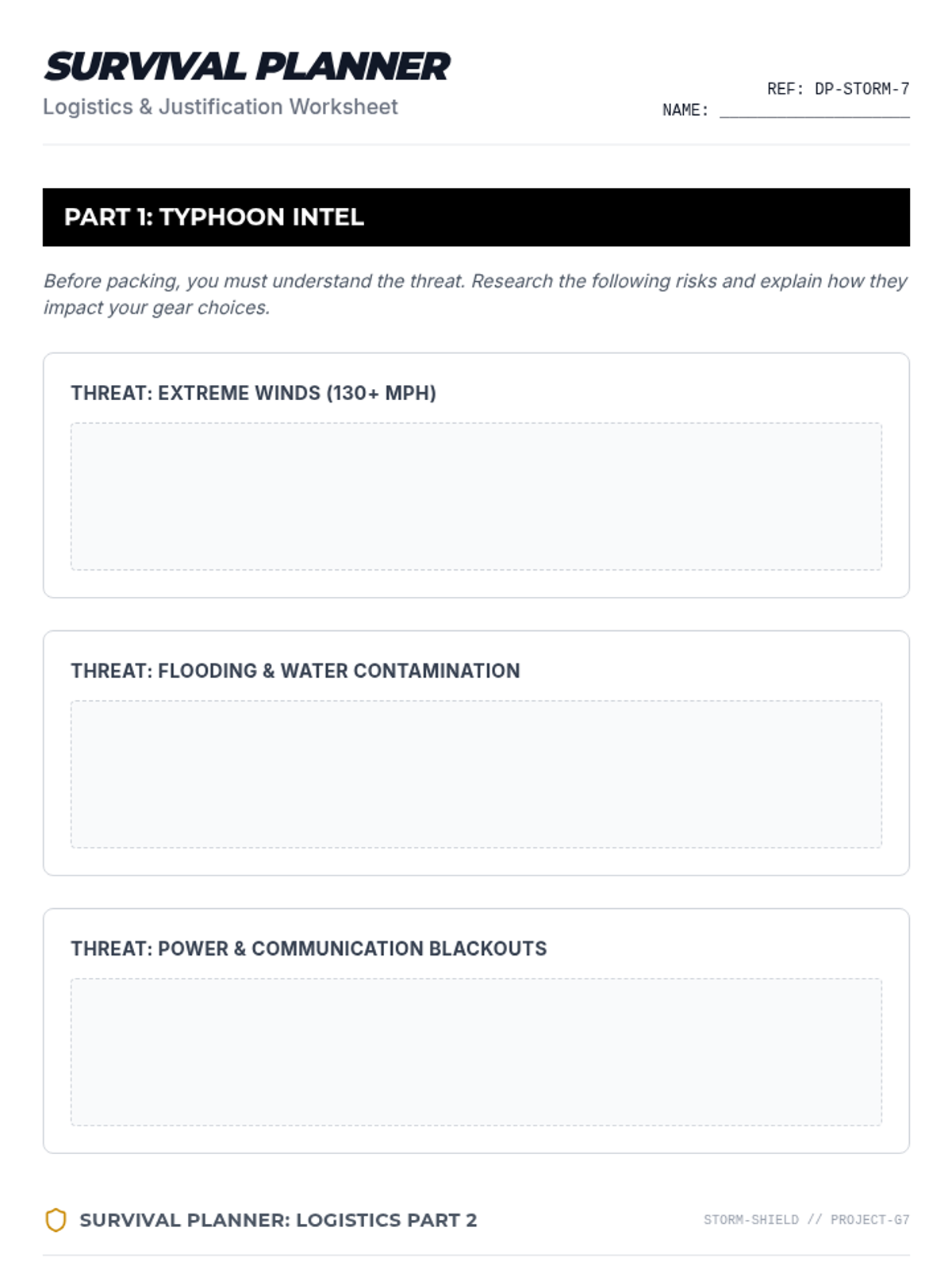
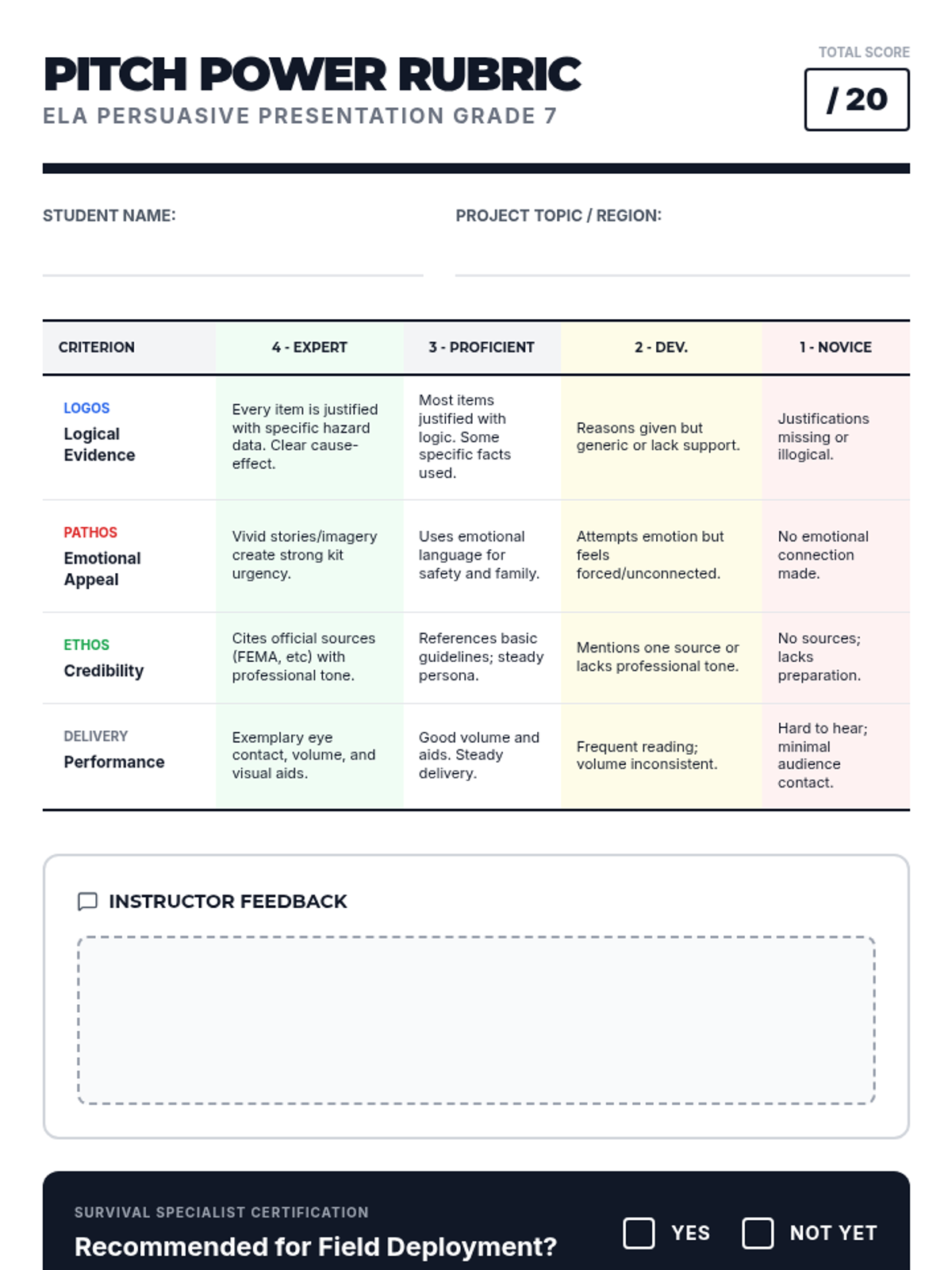
A comprehensive independent project where 7th-grade students research typhoons, design a custom survival kit, and deliver a persuasive presentation to justify their choices. Students will master ELA persuasive techniques while exploring real-world emergency preparedness.
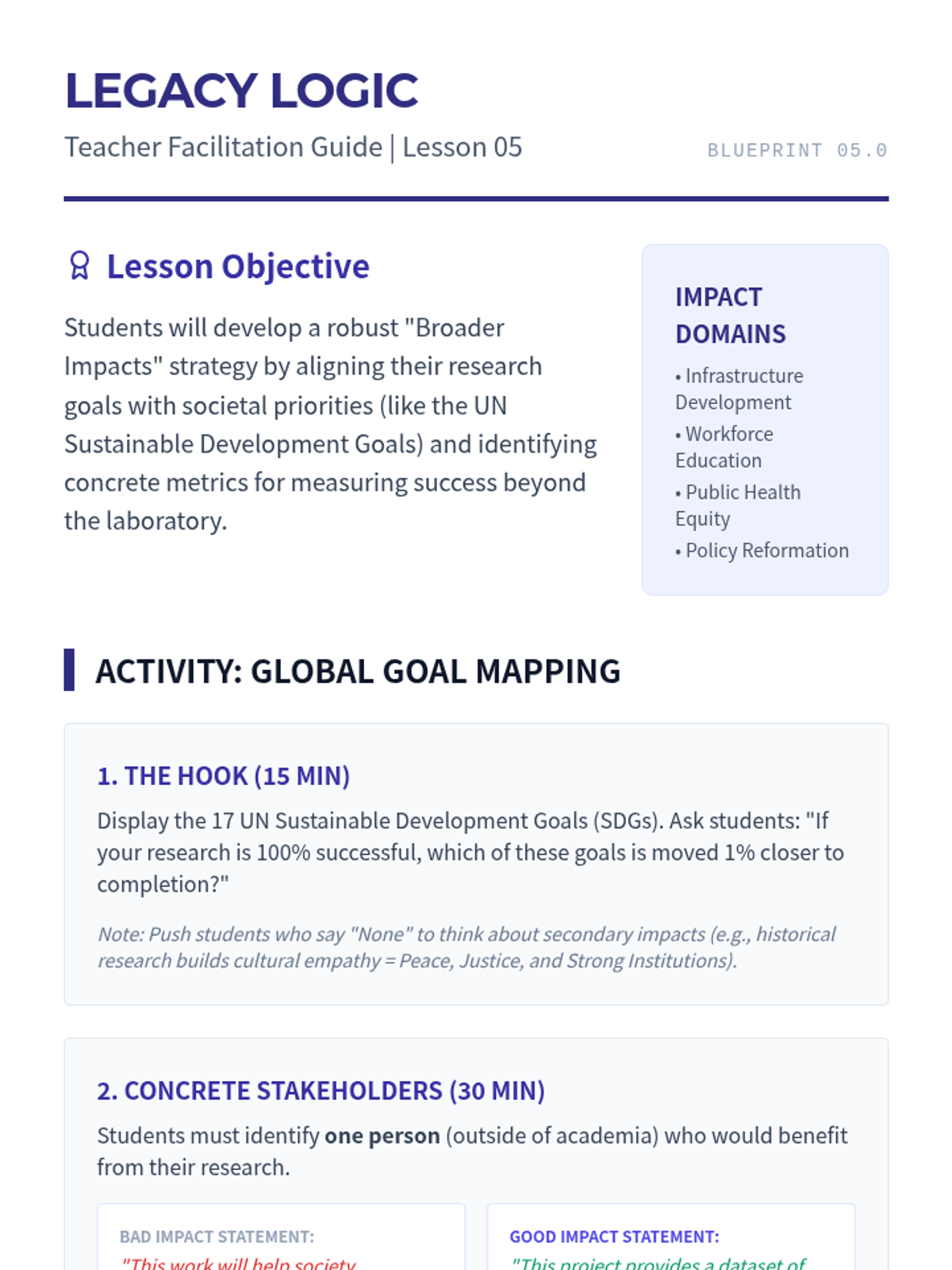
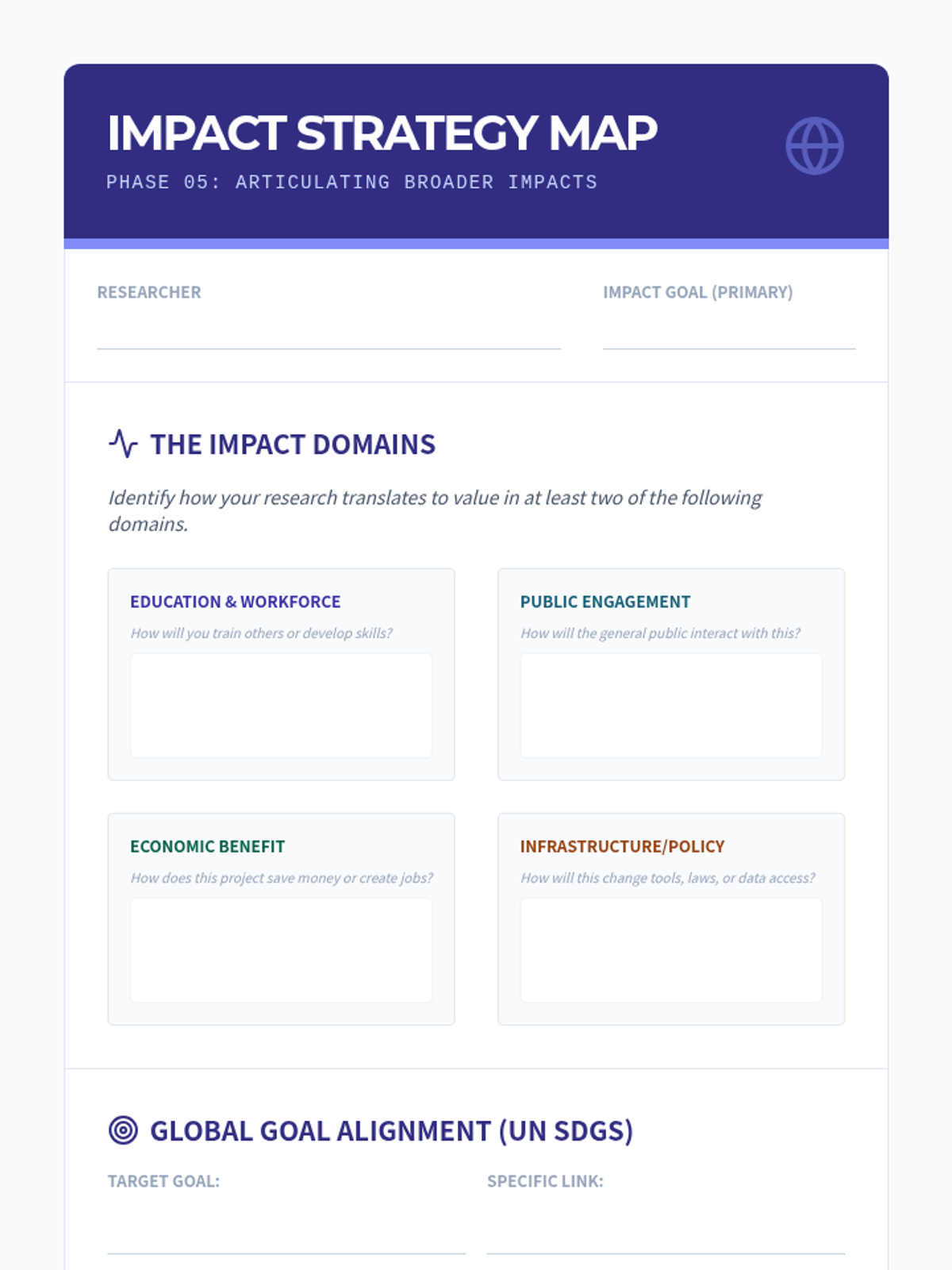
Helps students articulate the societal, educational, and economic impacts of their research to meet funding agency requirements.
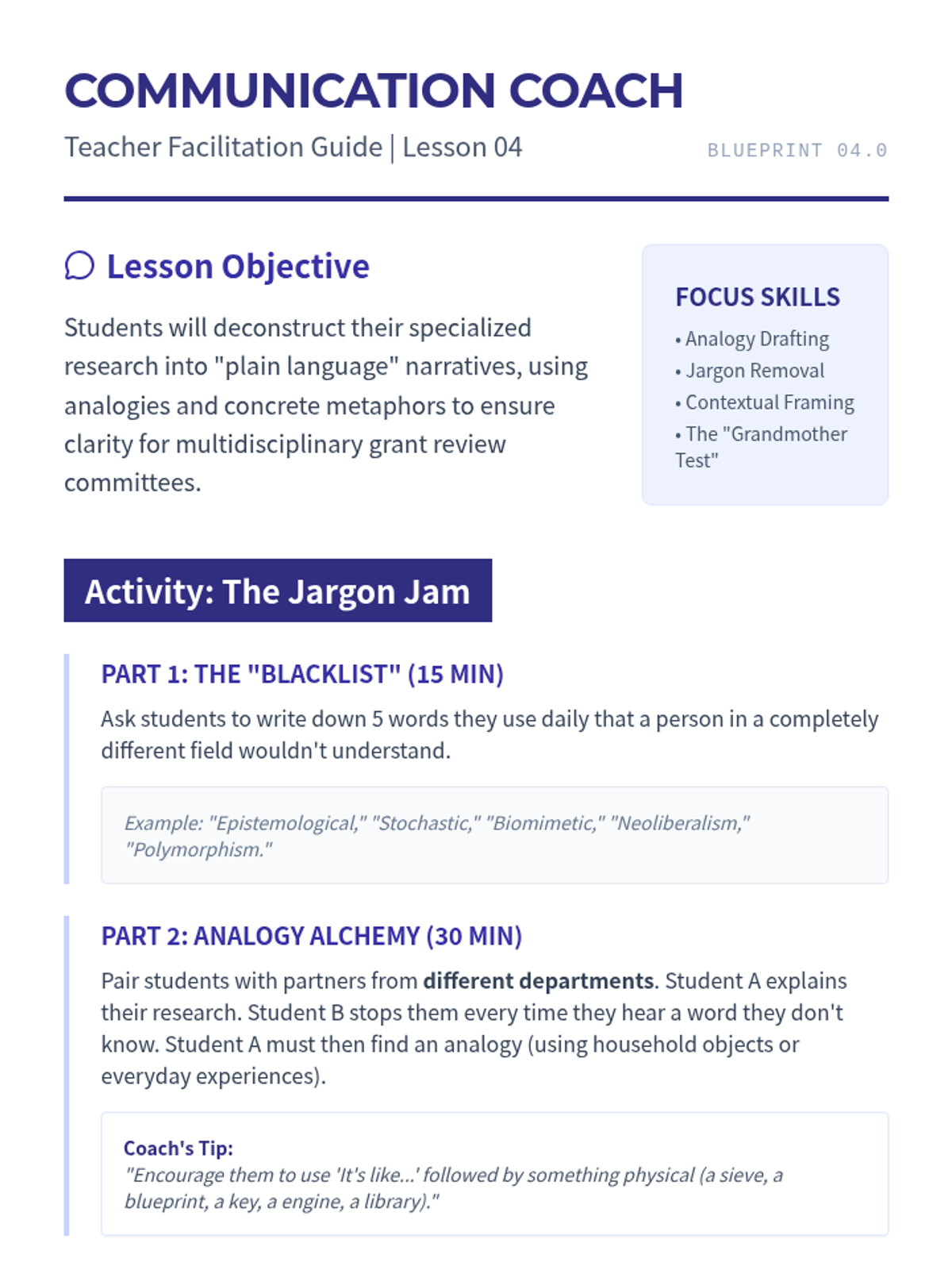
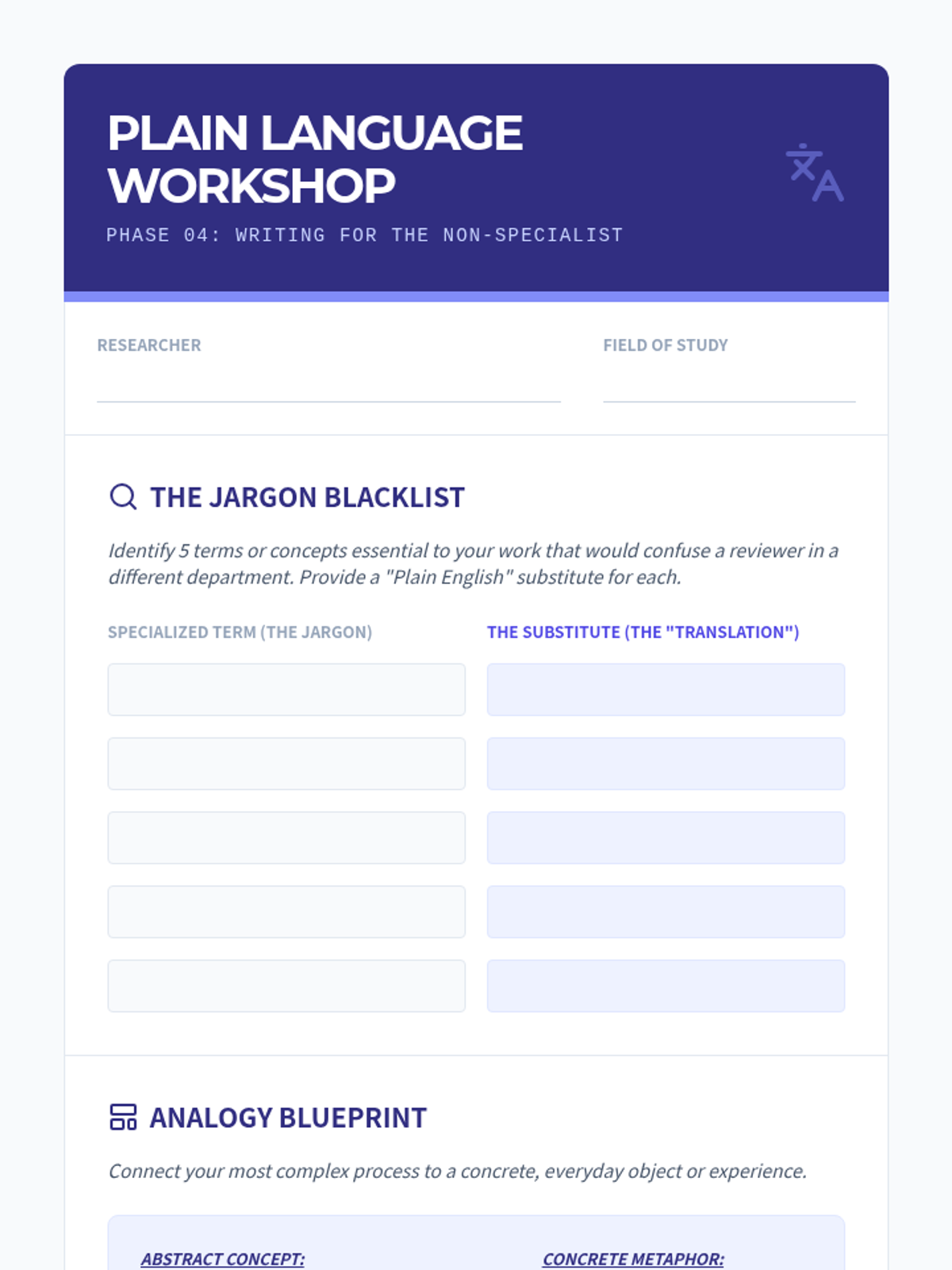
Teaches students how to communicate complex research to multi-disciplinary panels by removing jargon and using effective analogies.
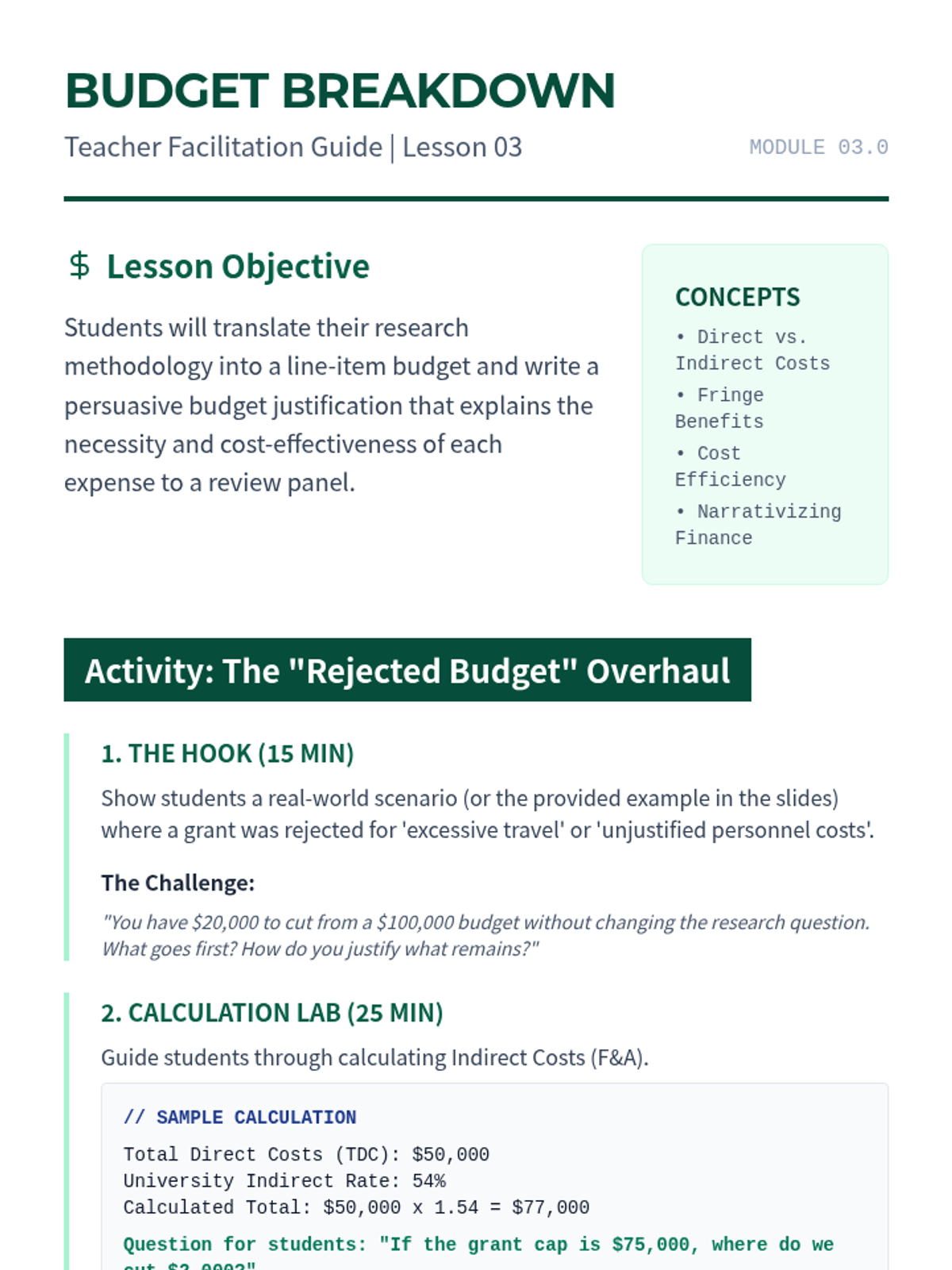
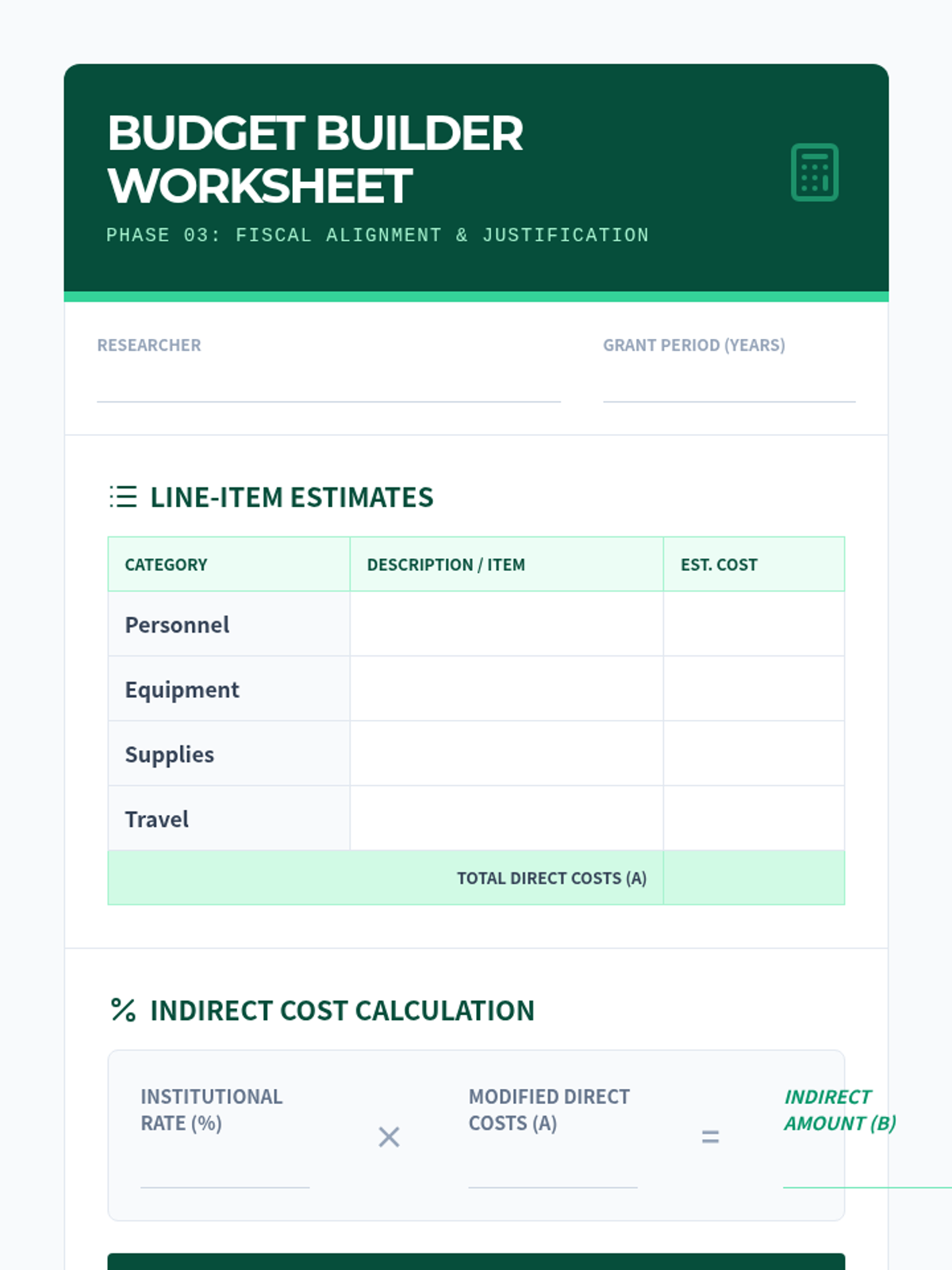
Covers the practical side of grant budgeting, including line-item creation, indirect costs, and writing persuasive budget justifications.
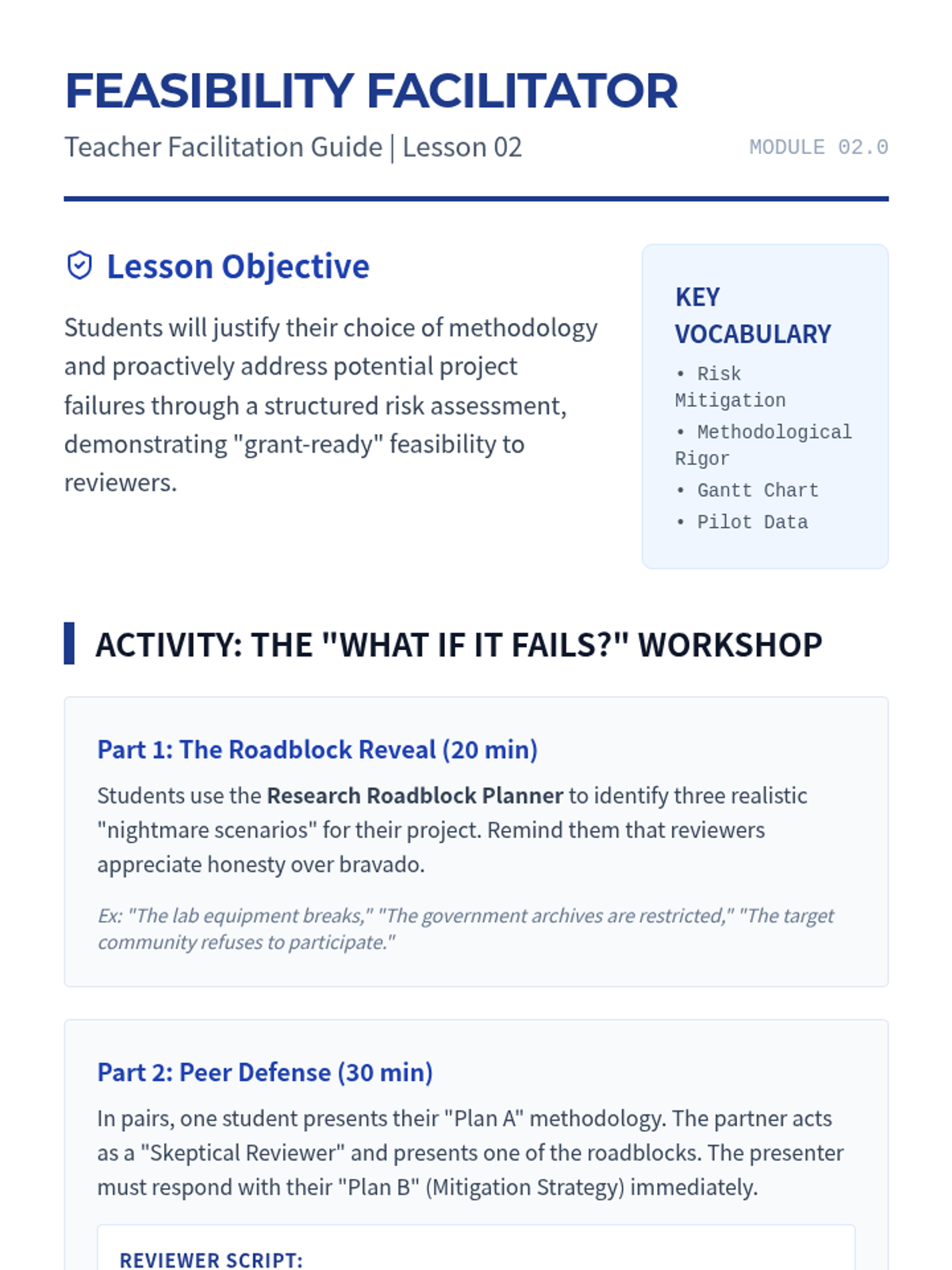
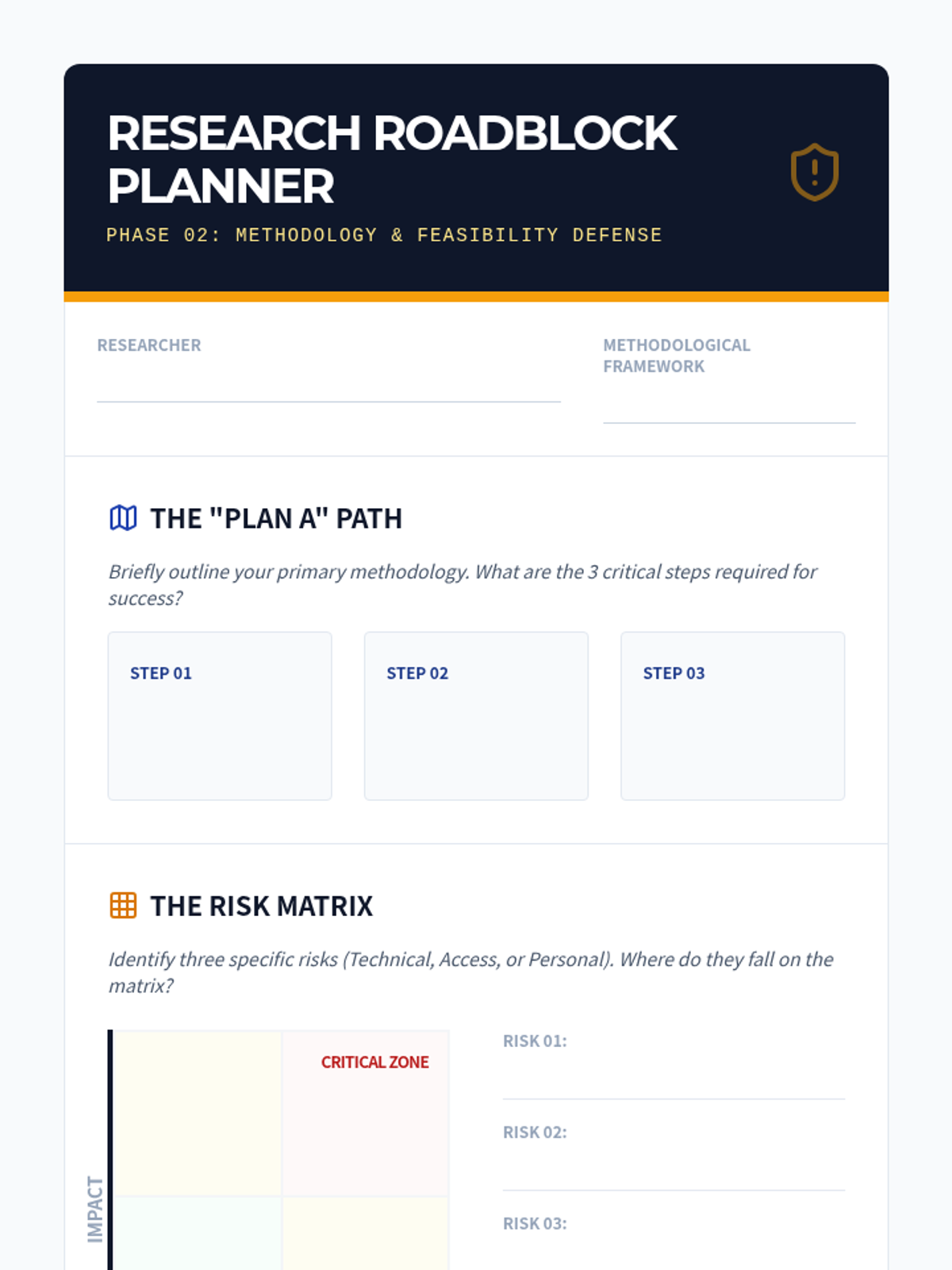
Focuses on writing the methodology section, outlining research designs, timelines, and feasibility, including risk assessment and backup plans.
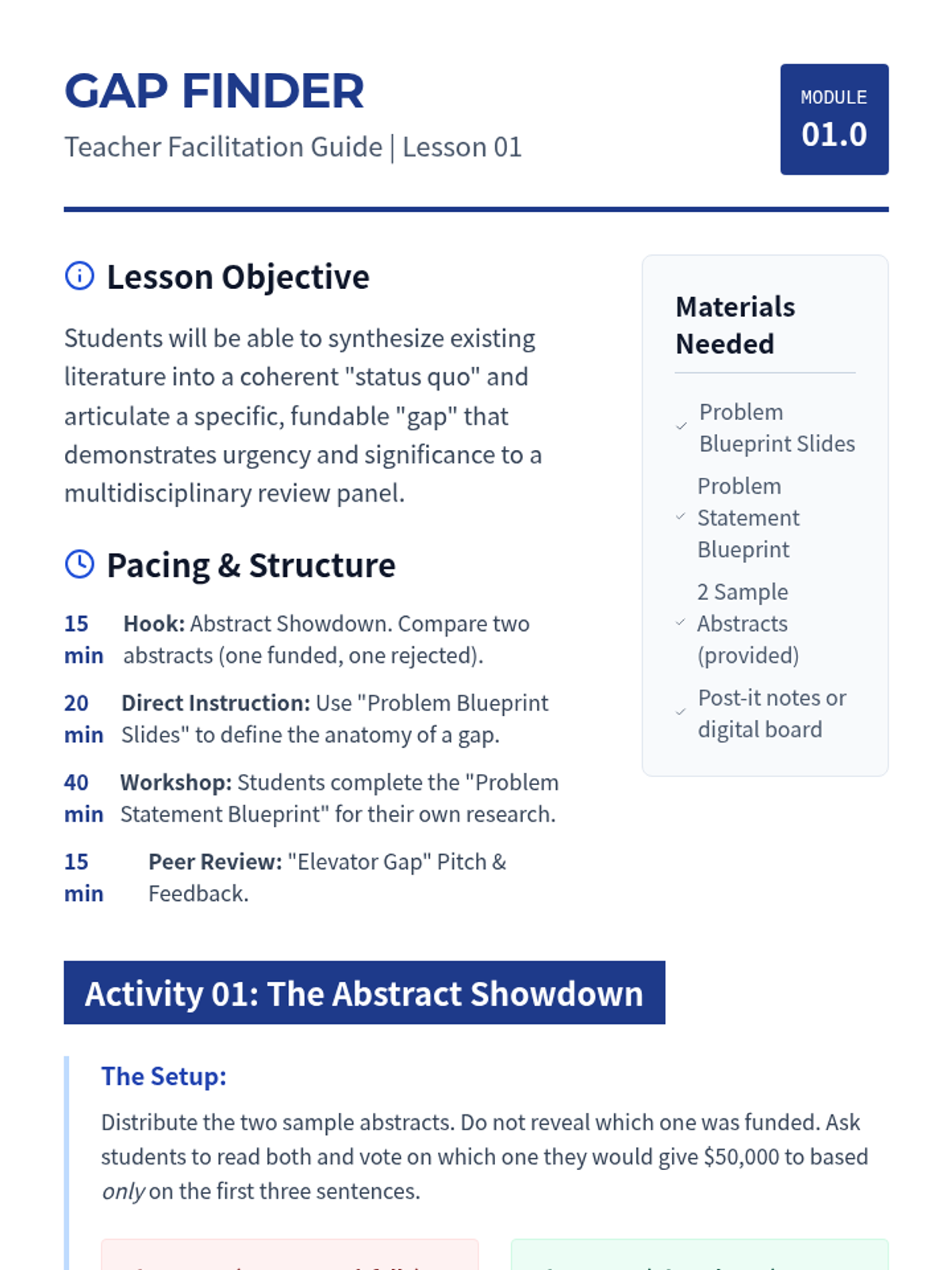
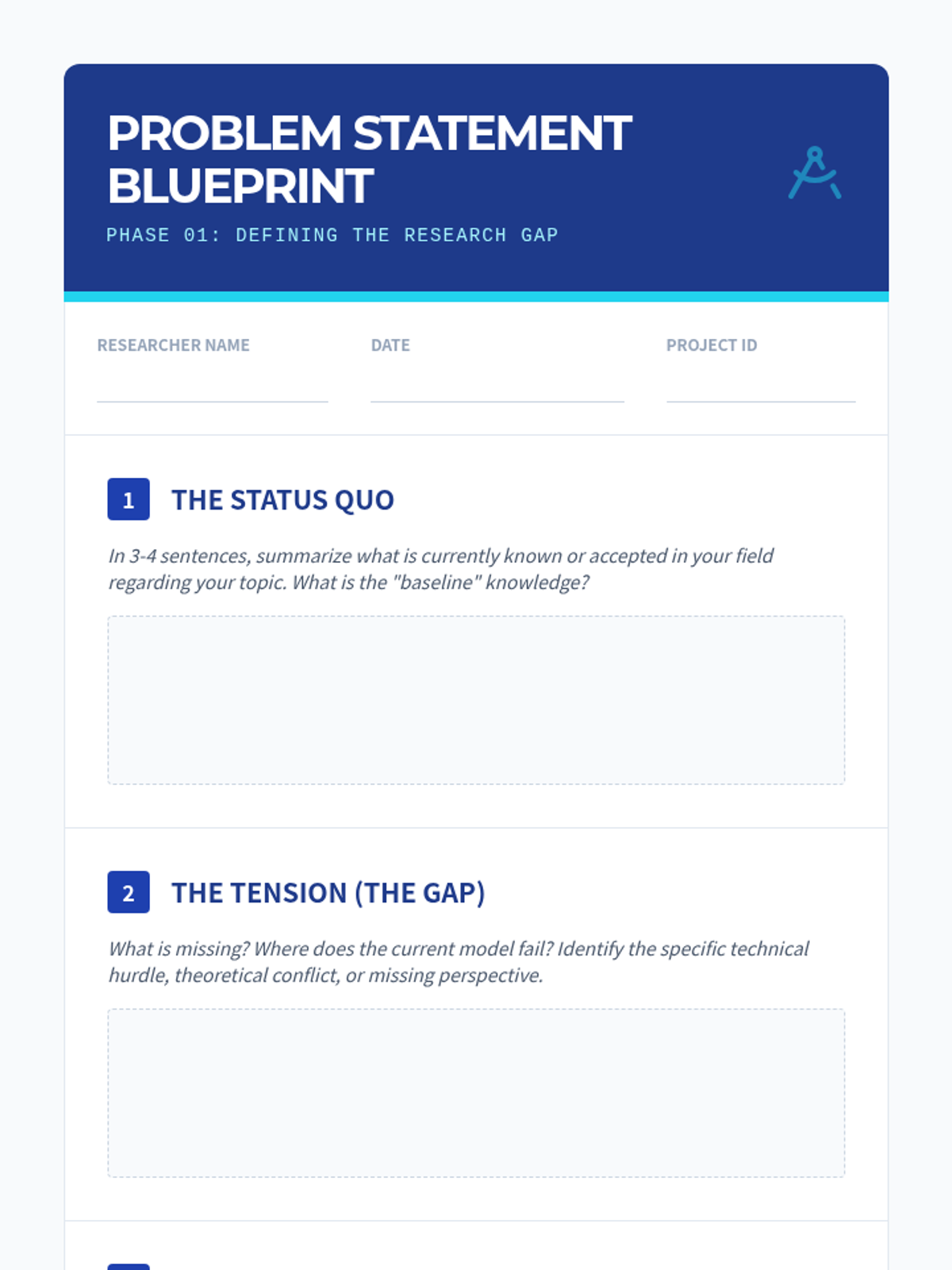
Students learn to craft a concise problem statement that identifies a literature gap and frames research questions to demonstrate urgency and relevance.
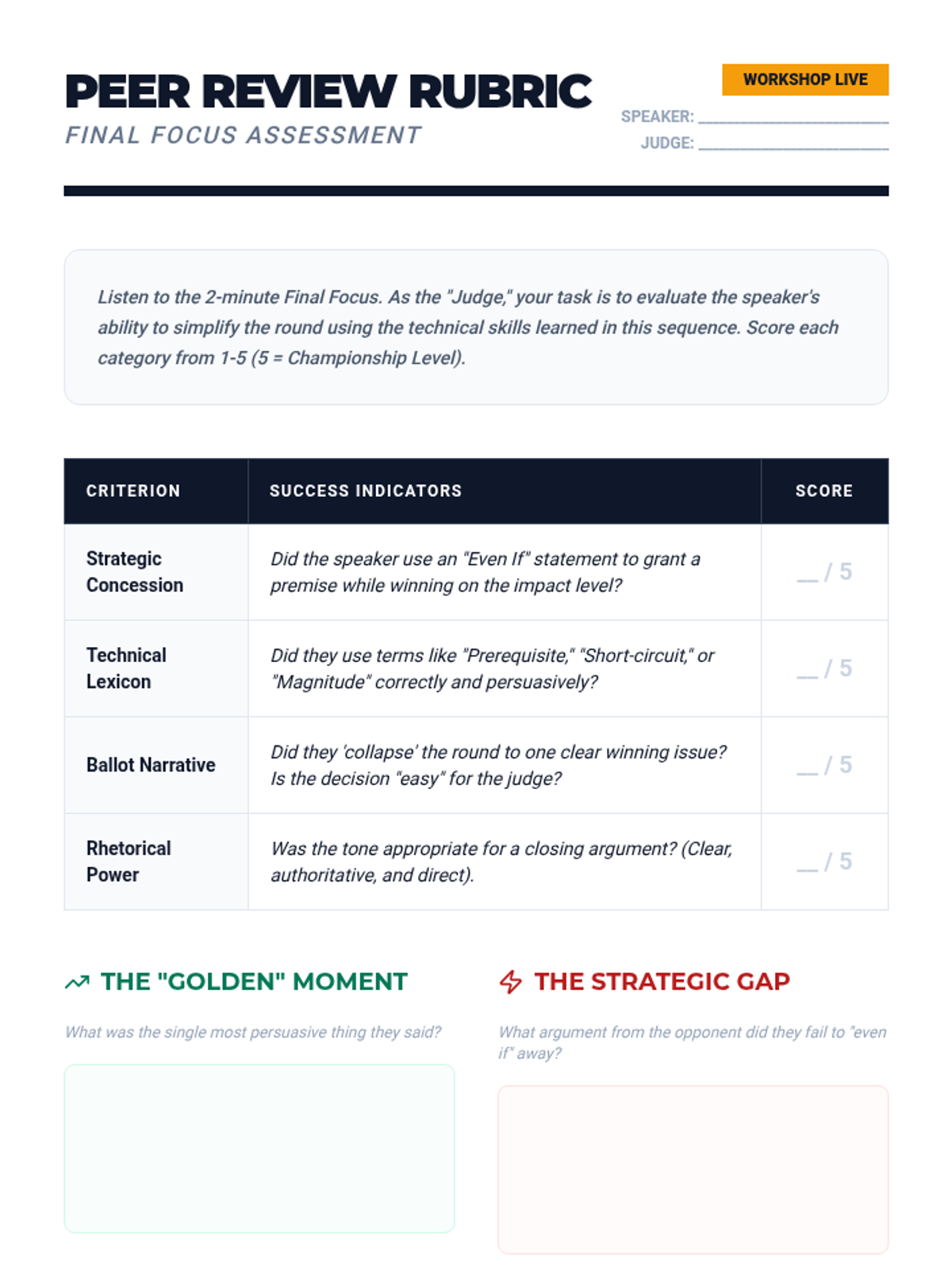
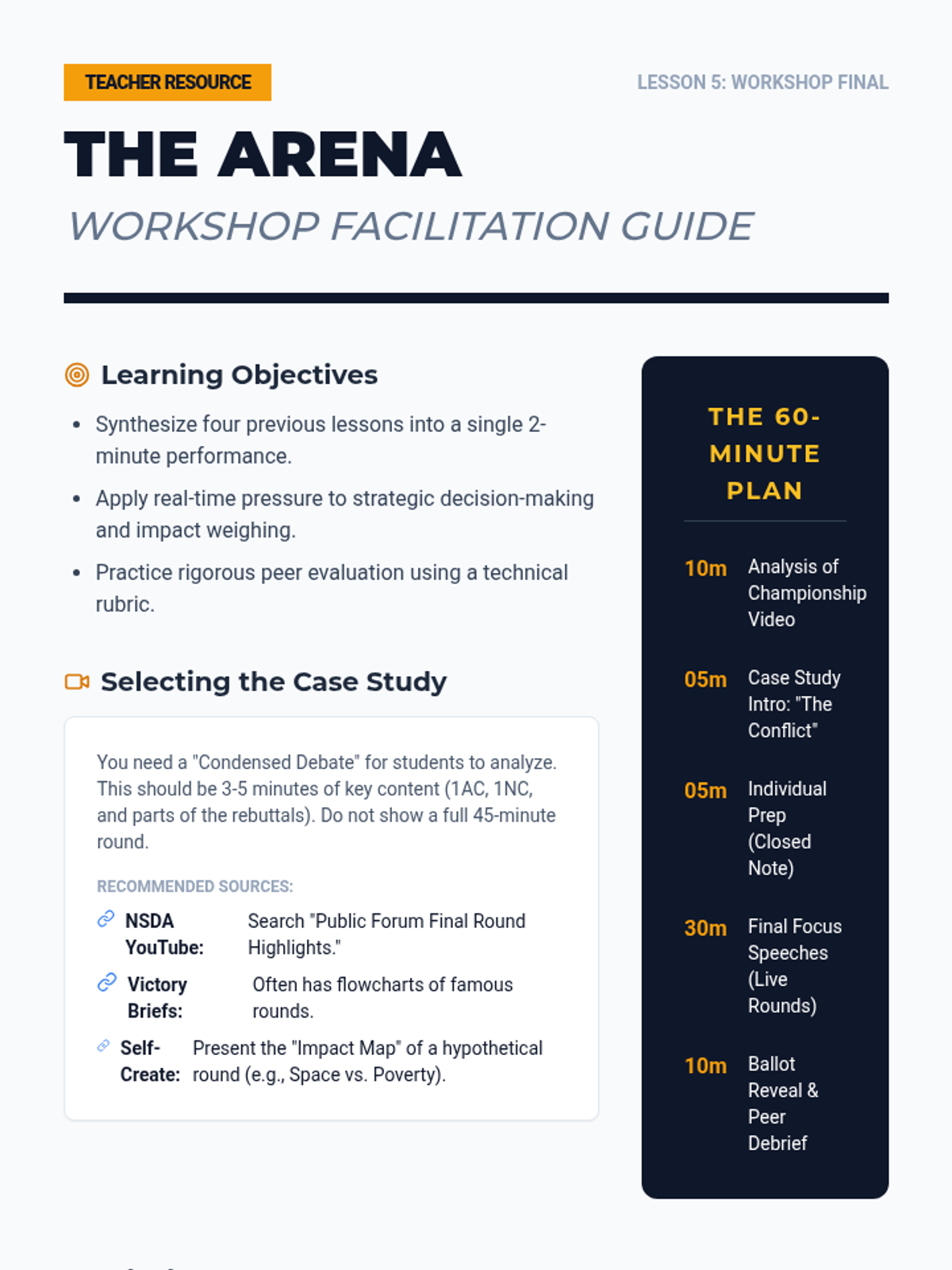
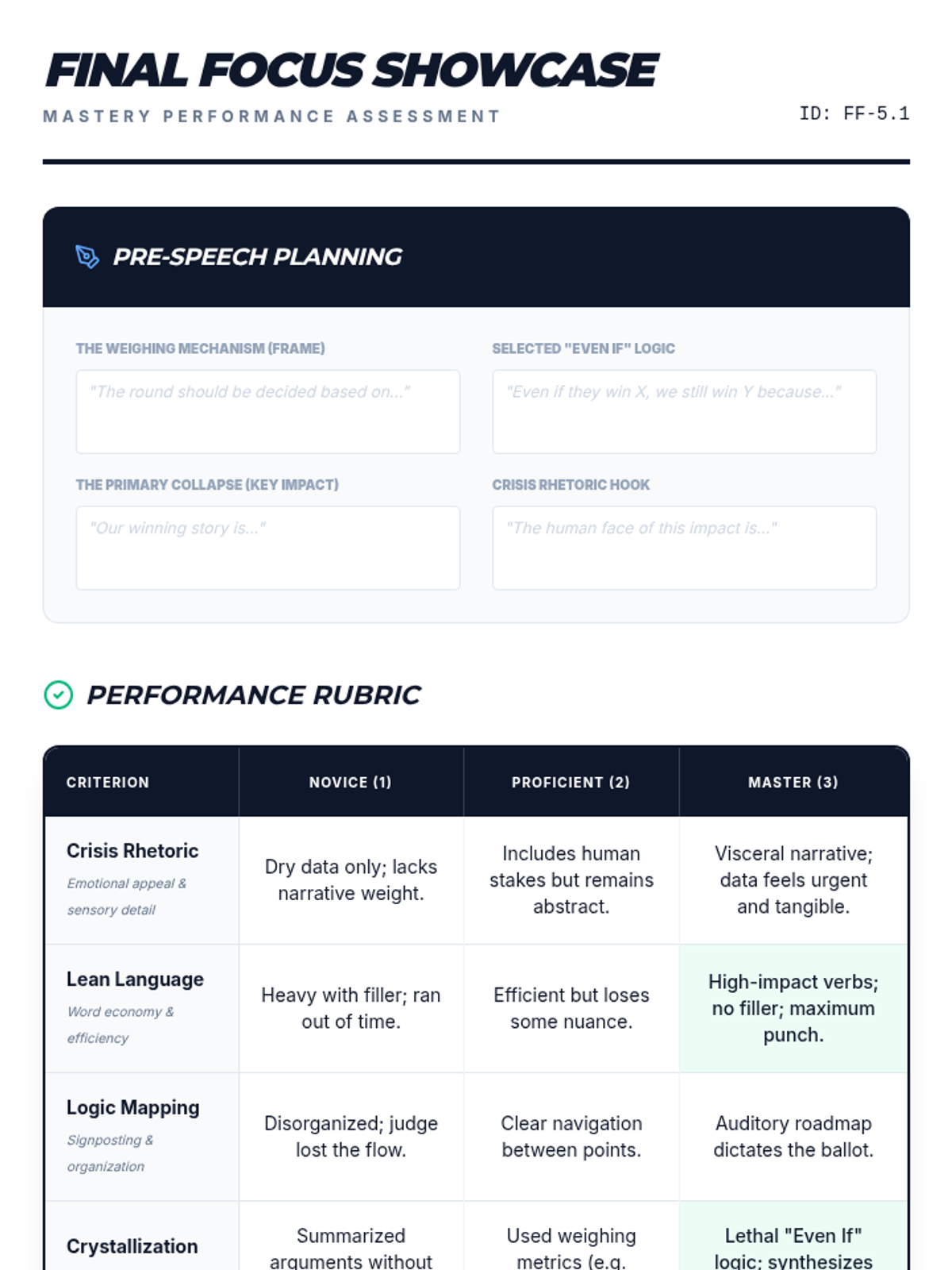
A culminating workshop where students apply their skills in simulated final focus speeches with peer and teacher feedback.
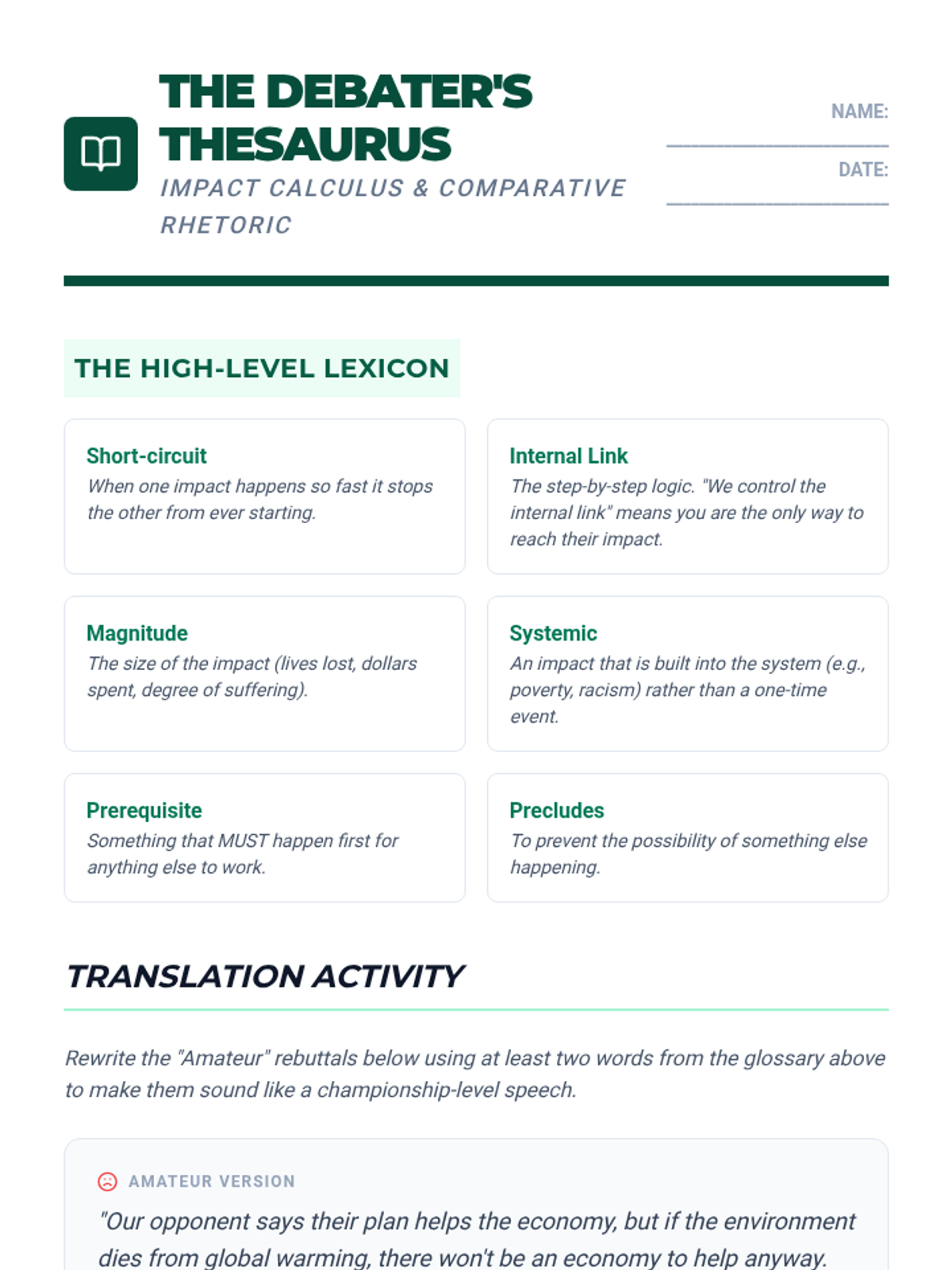
A focus on the technical vocabulary of weighing, teaching students to use precise terminology like 'prerequisite' and 'short-circuit' to win impact comparisons.
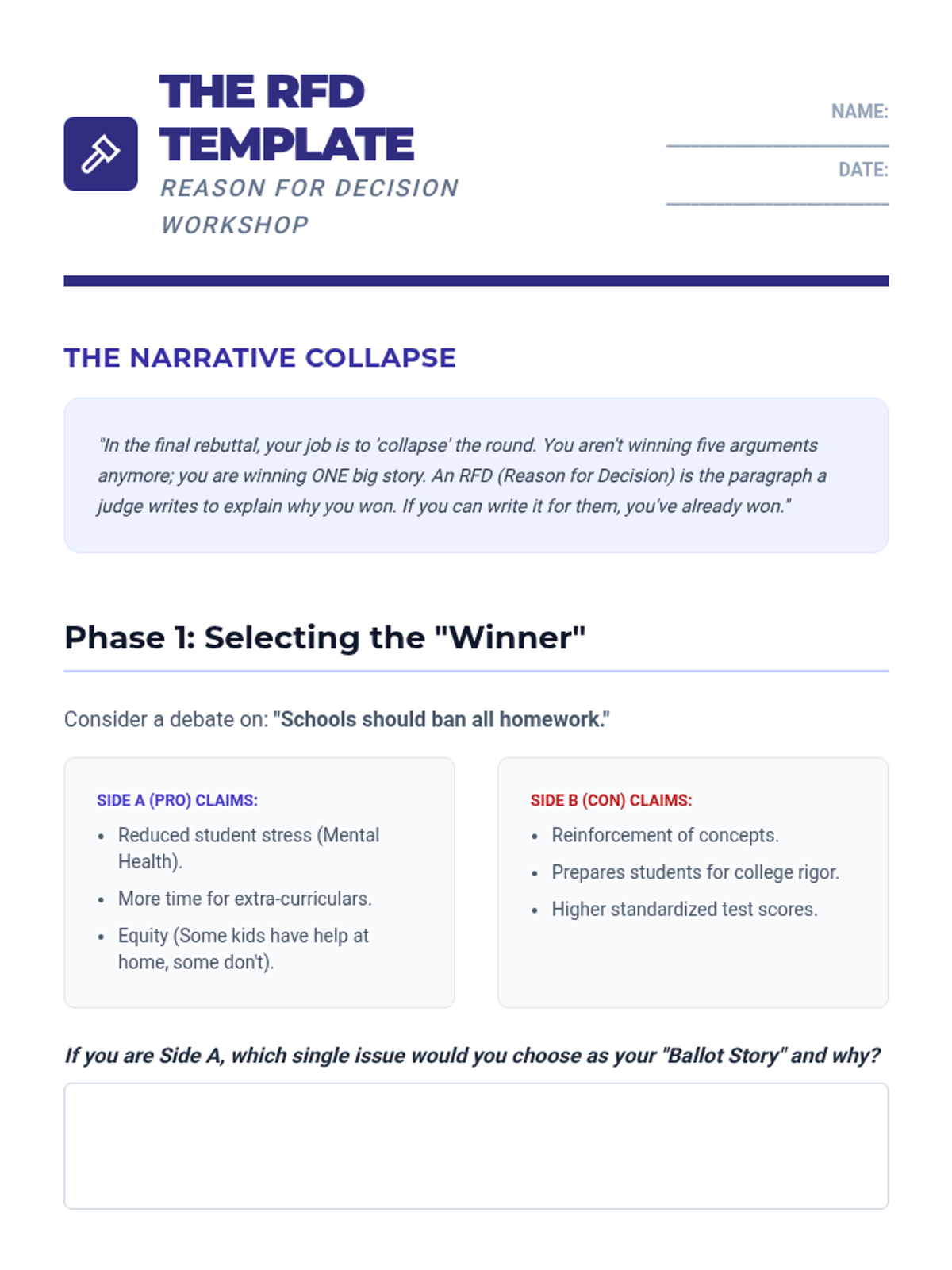
Students adopt the perspective of an adjudicator to learn how to package their winning arguments into a coherent, persuasive narrative.
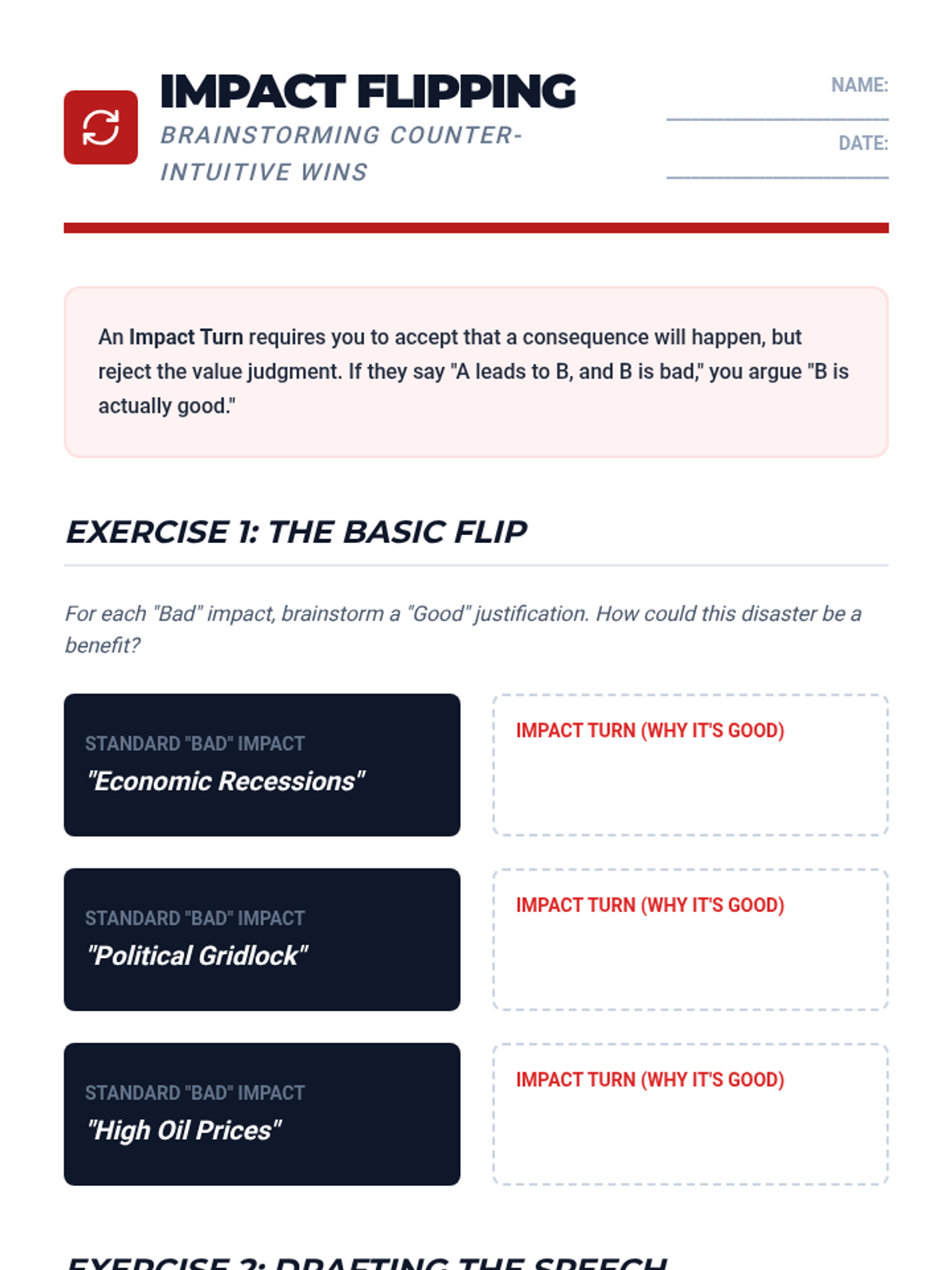
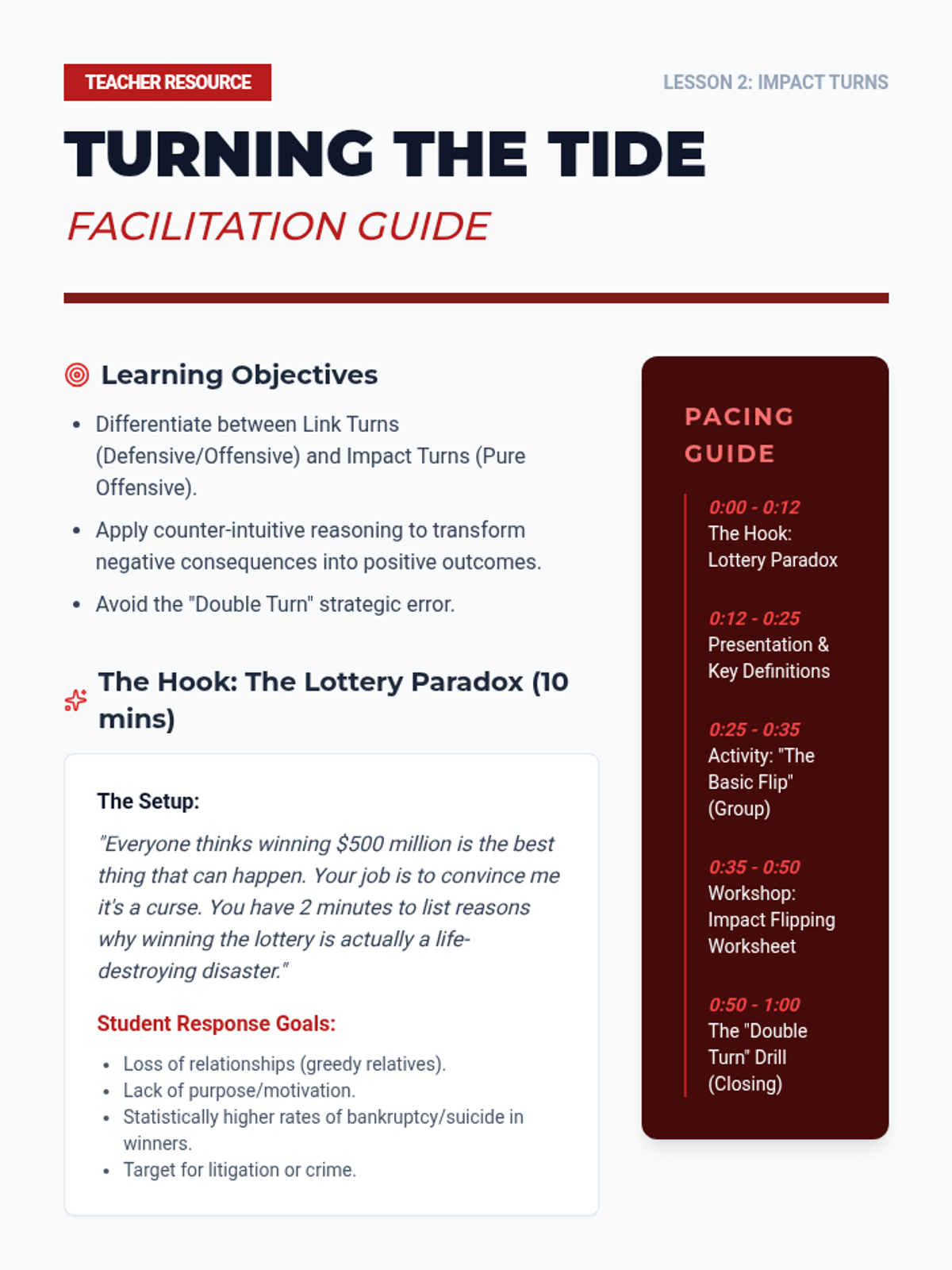
Students explore the high-risk strategy of turning an opponent's impact into a benefit for their own side or a disadvantage for the opponent.
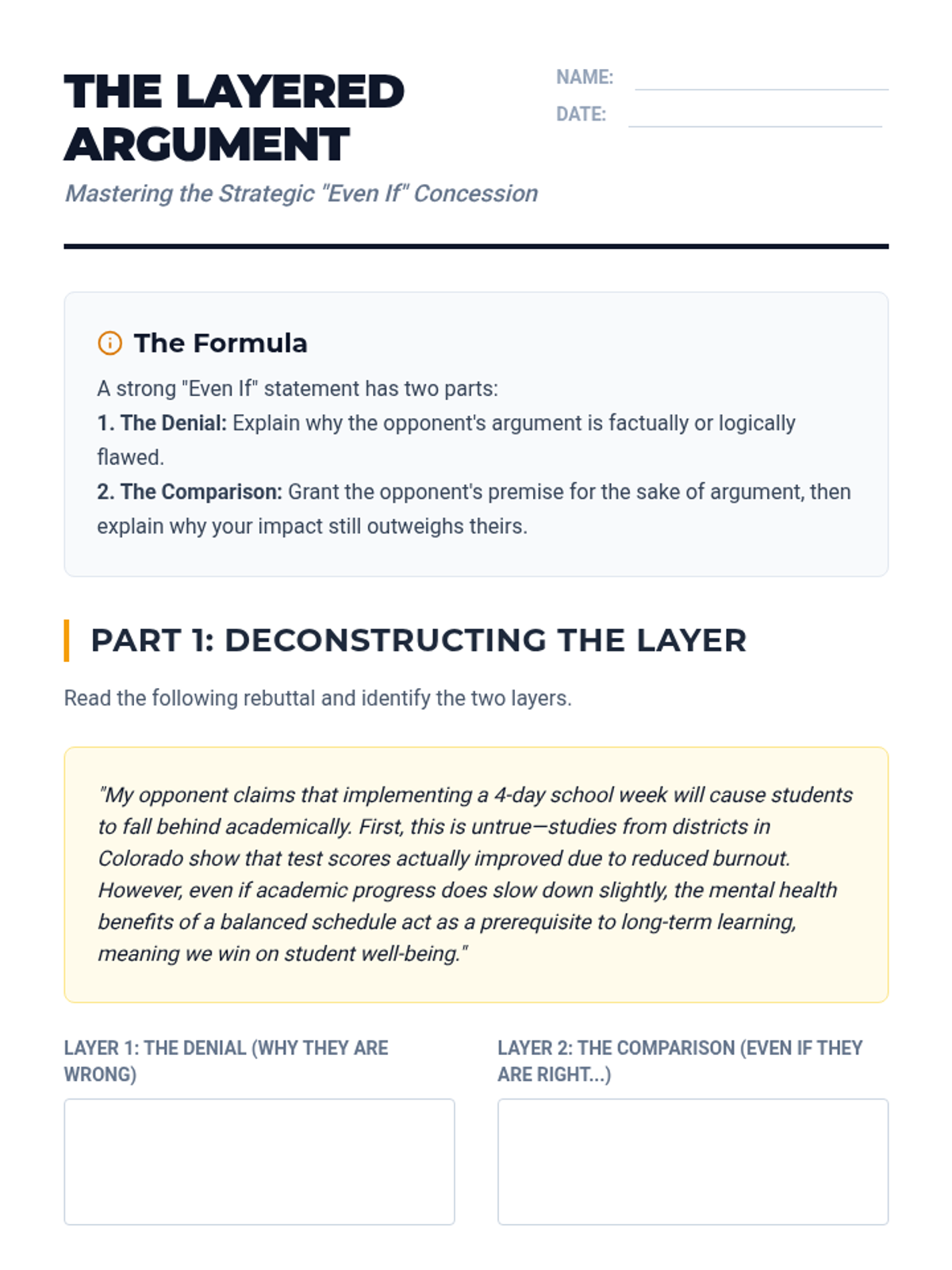
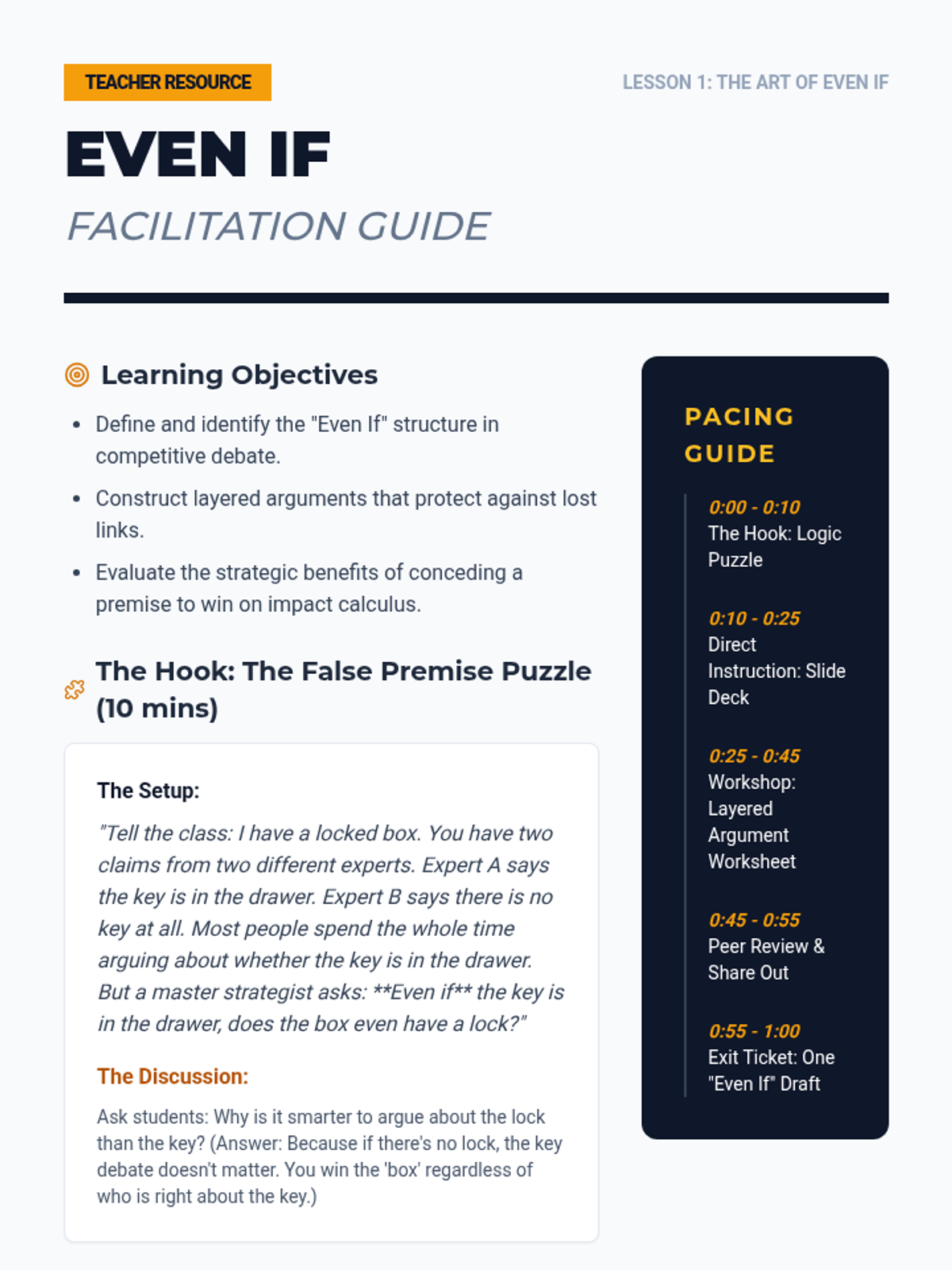
Students learn to use layered argumentation to hedge their bets, arguing why they win both on the primary clash and even if their opponent's premise is granted.
Students deliver a polished 'Final Focus' speech, synthesizing impacts and dictating the weighing mechanism for a hypothetical debate round. They focus on rhetoric, word economy, and auditory clarity.
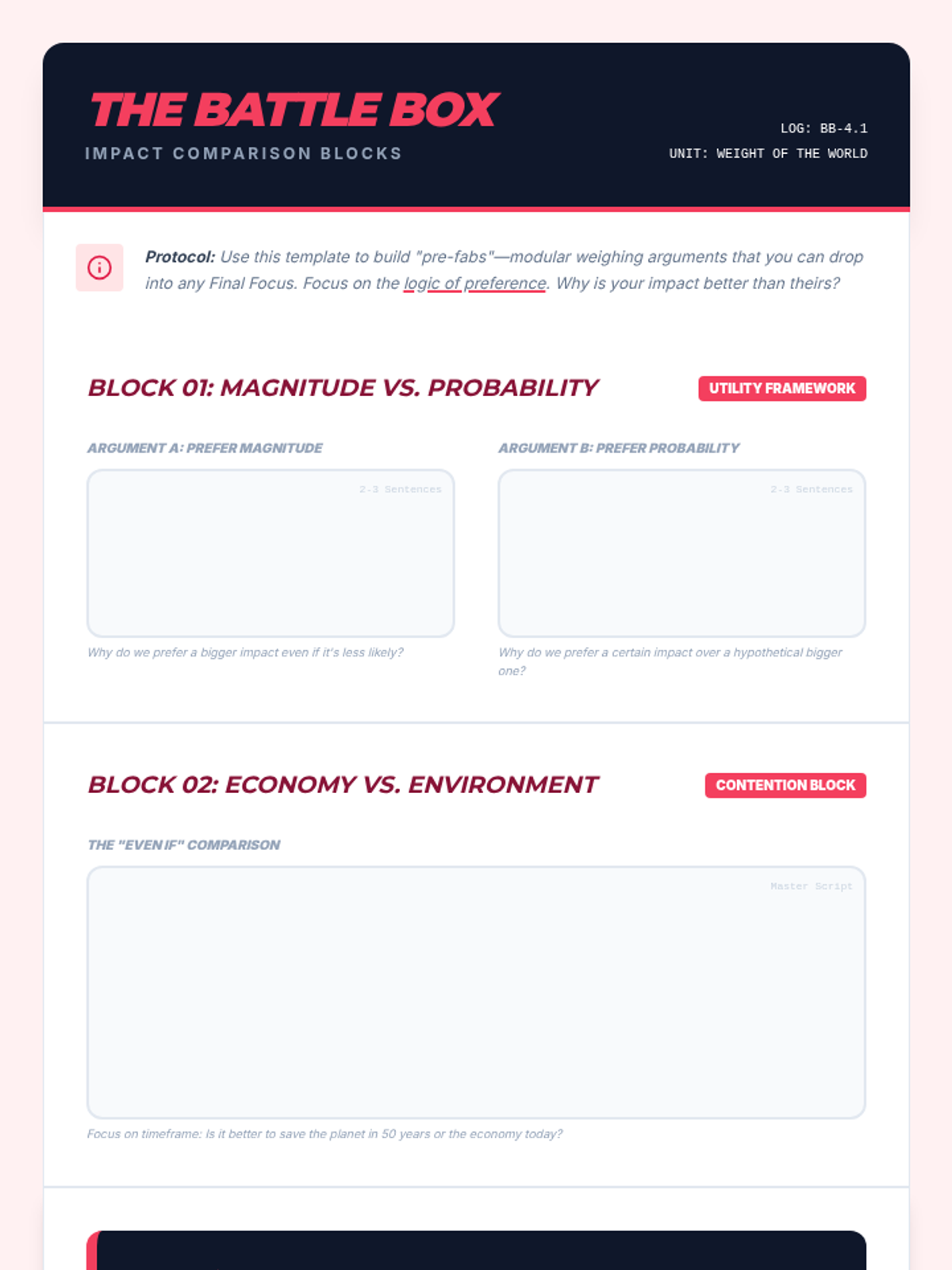
Students pre-write 'comparison blocks' for common debate impacts (e.g., Economy vs. Environment, Rights vs. Security). These modular speech components are refined for maximum persuasion and memorized for quick retrieval.
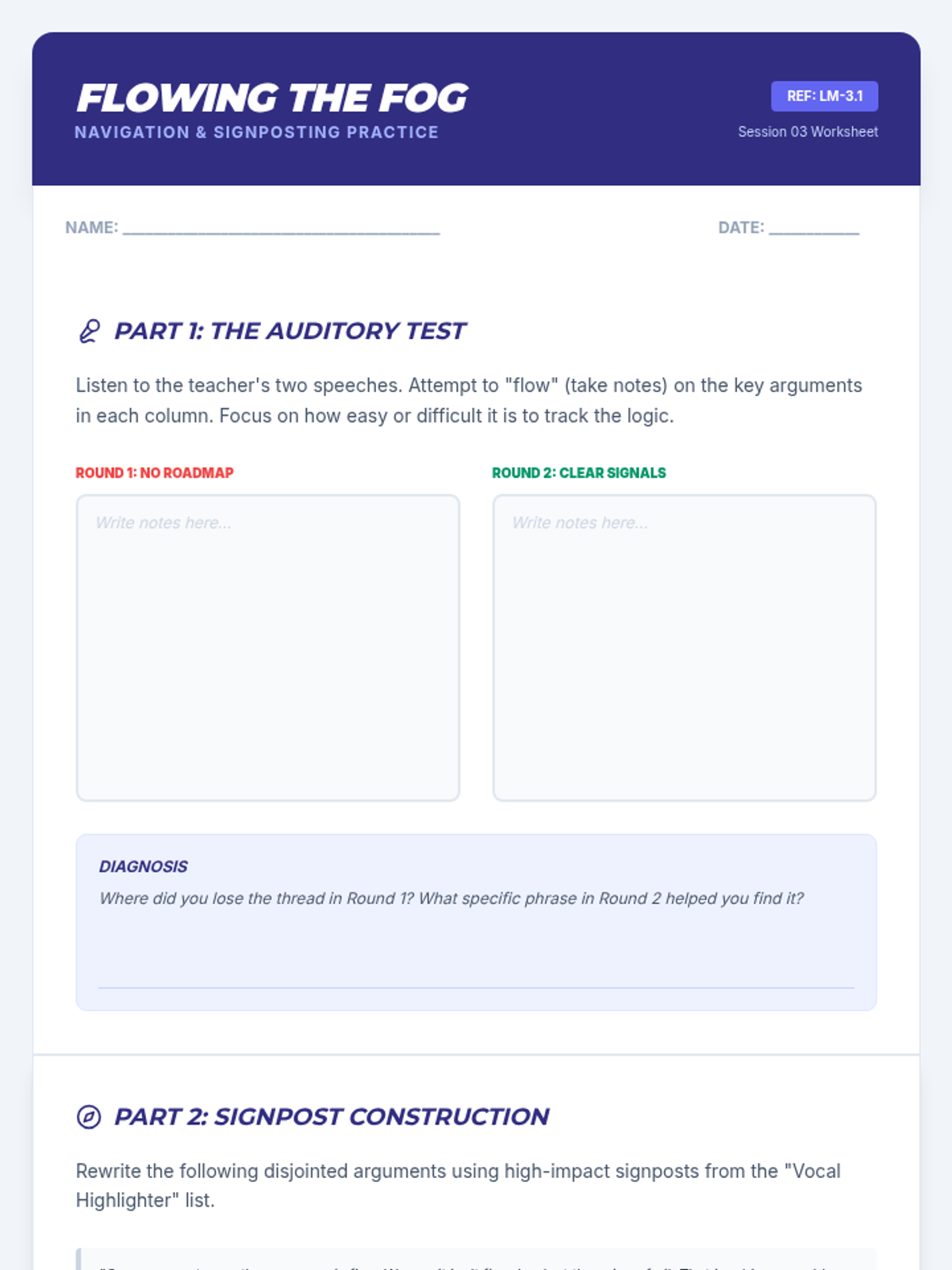
Students learn to use 'signposts' (verbal markers) to help the judge track the weighing process. They practice transitions like 'The first place to vote is...' and 'Prefer our probability analysis because...' to create a clean auditory roadmap.
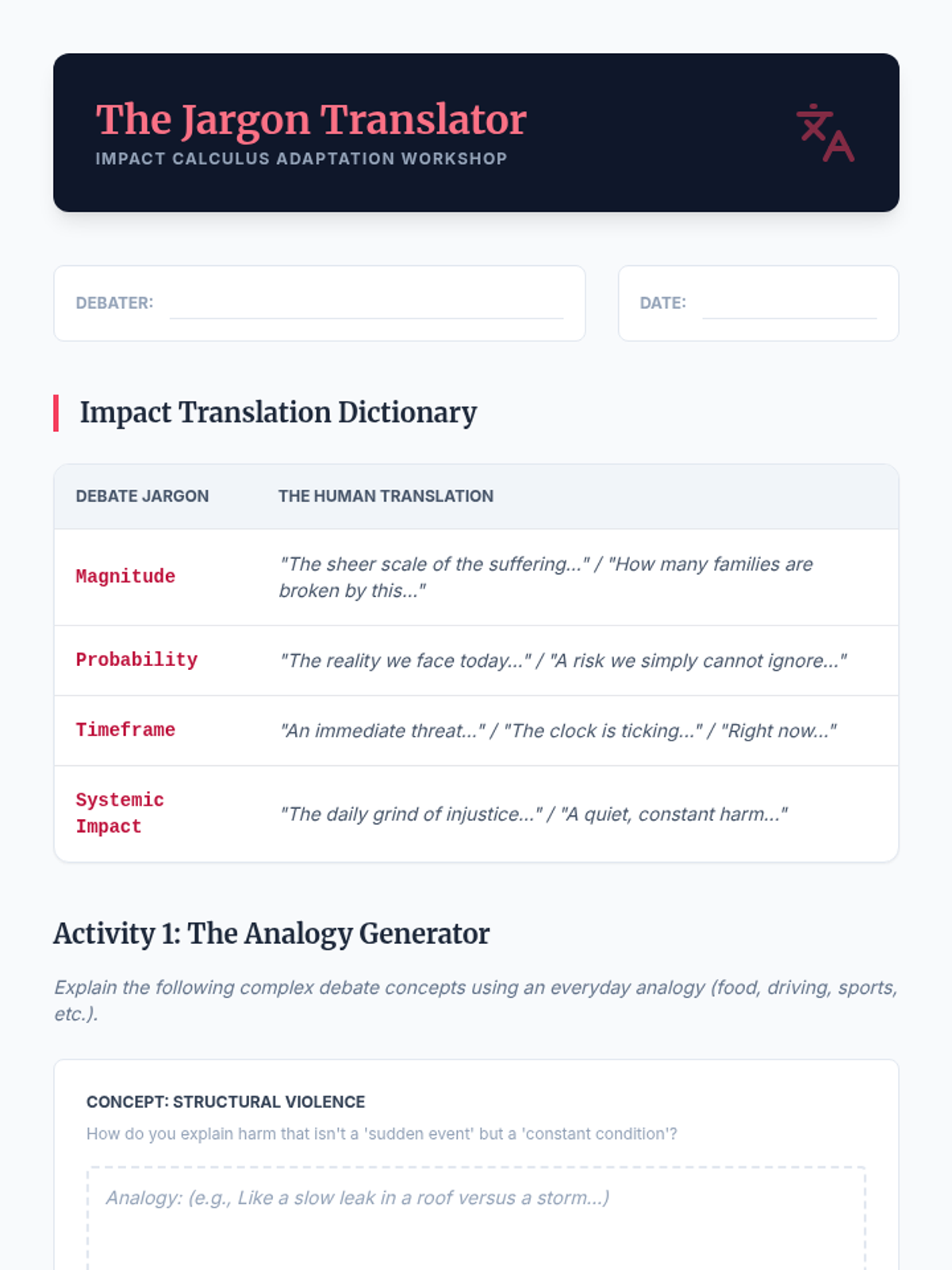
Focuses on adapting complex impact calculus for lay audiences by translating jargon into relatable analogies and common language.
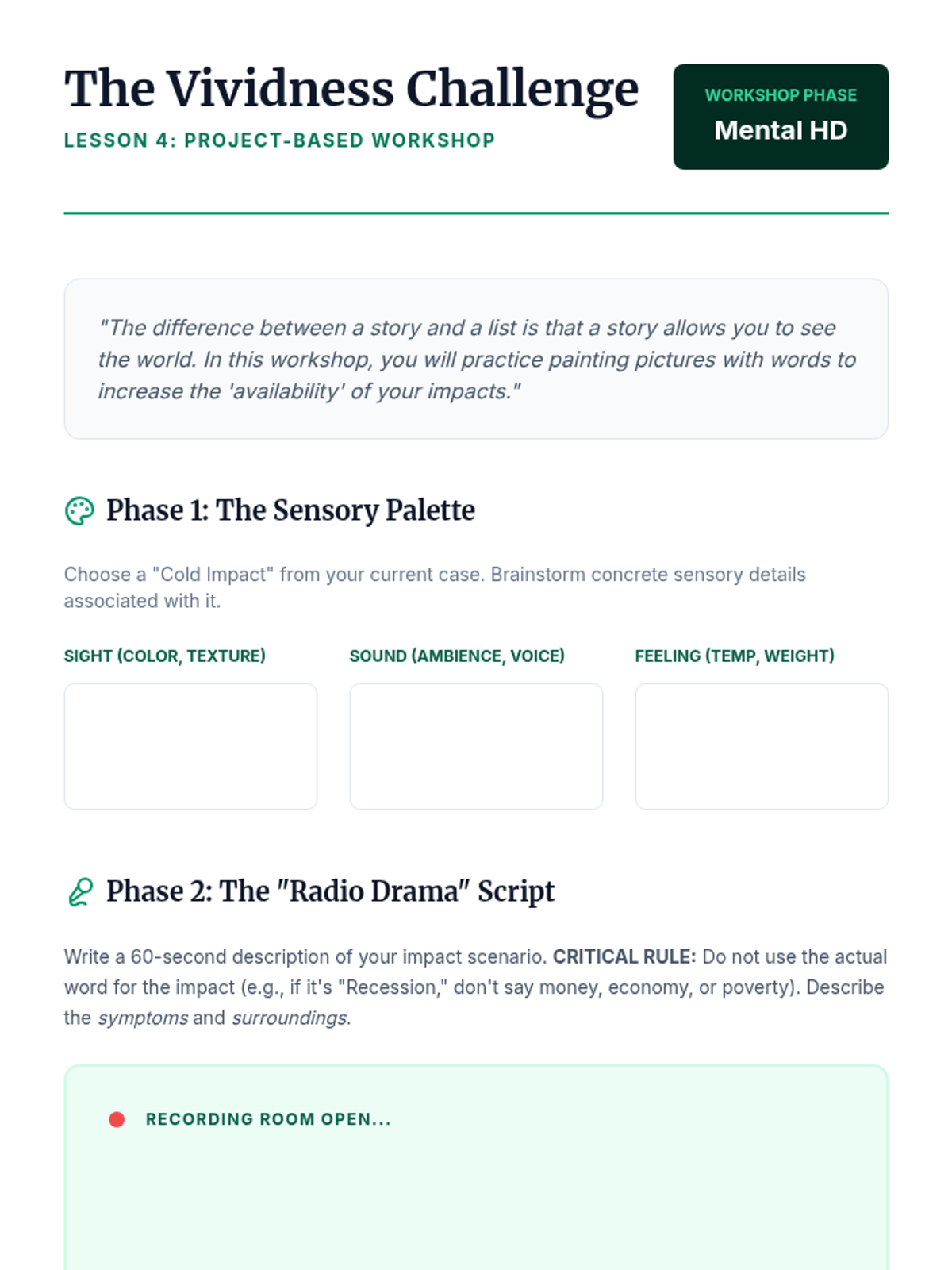
Focuses on the availability heuristic and how descriptive imagery creates mental anchors that make impacts feel more probable.
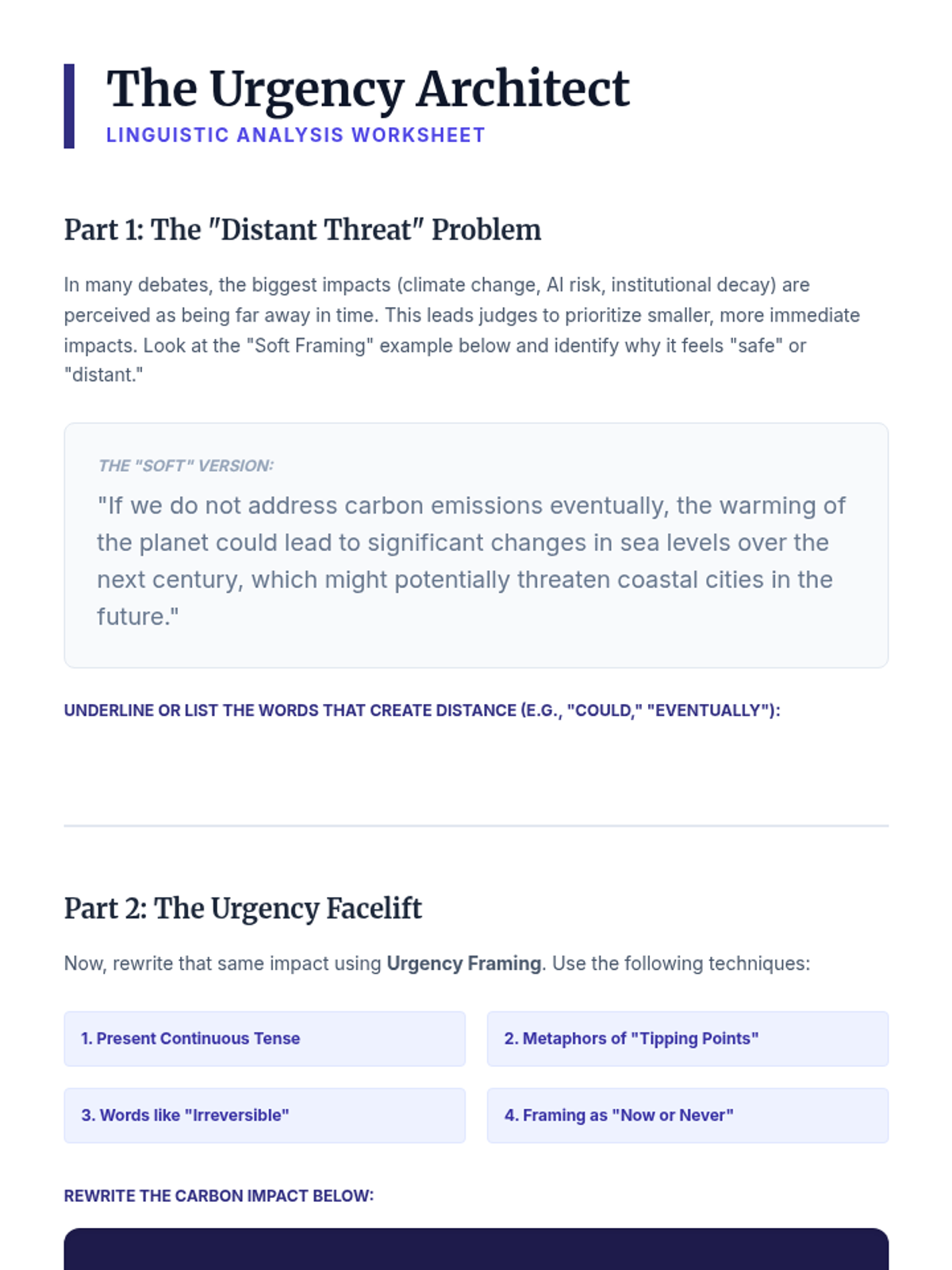
Analyzes linguistic techniques to create a sense of urgency and immediacy, making distant threats feel like 'now or never' scenarios.
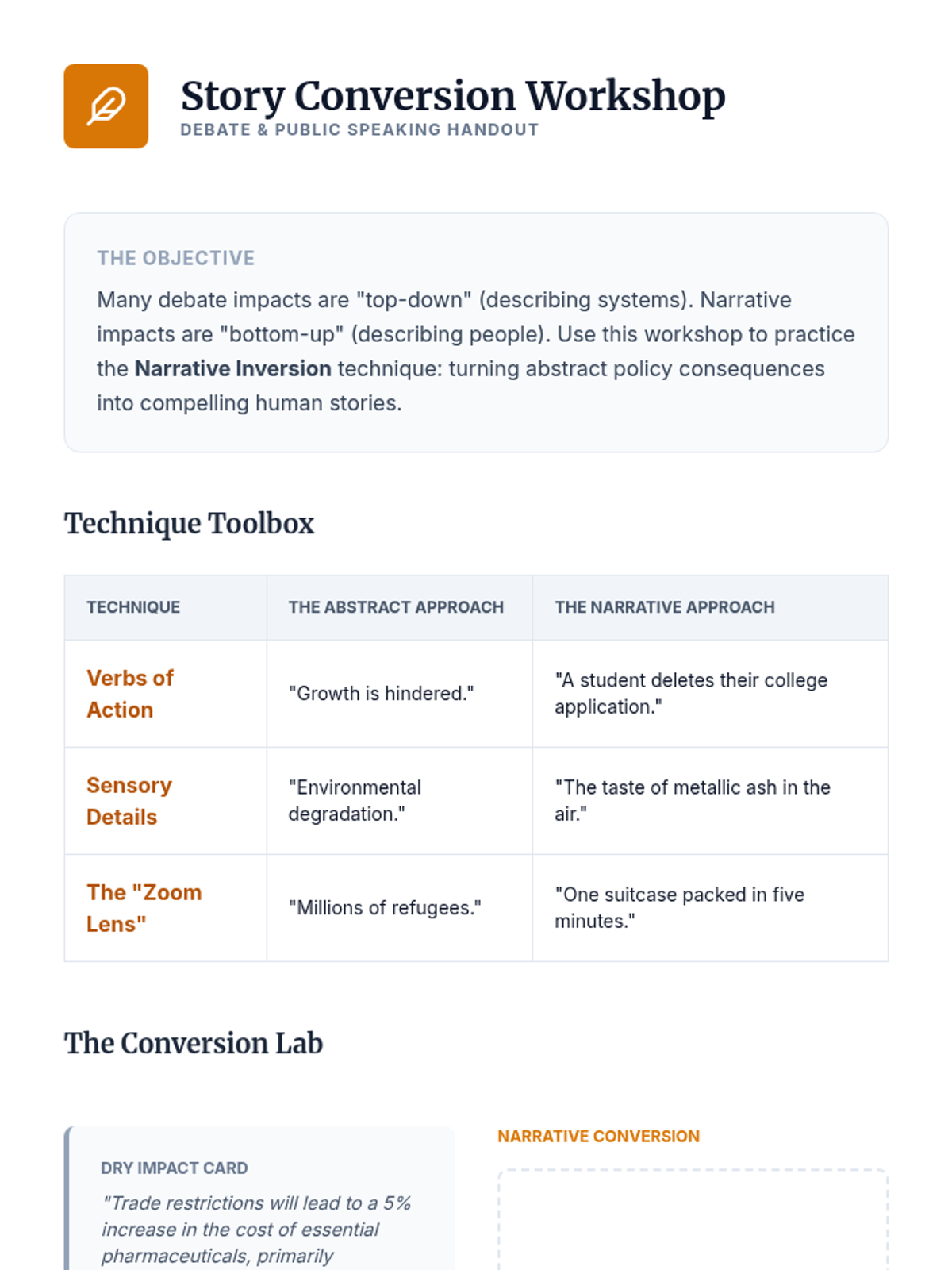
Teaches students to convert statistical impact data into compelling human narratives that resonate emotionally with audiences.
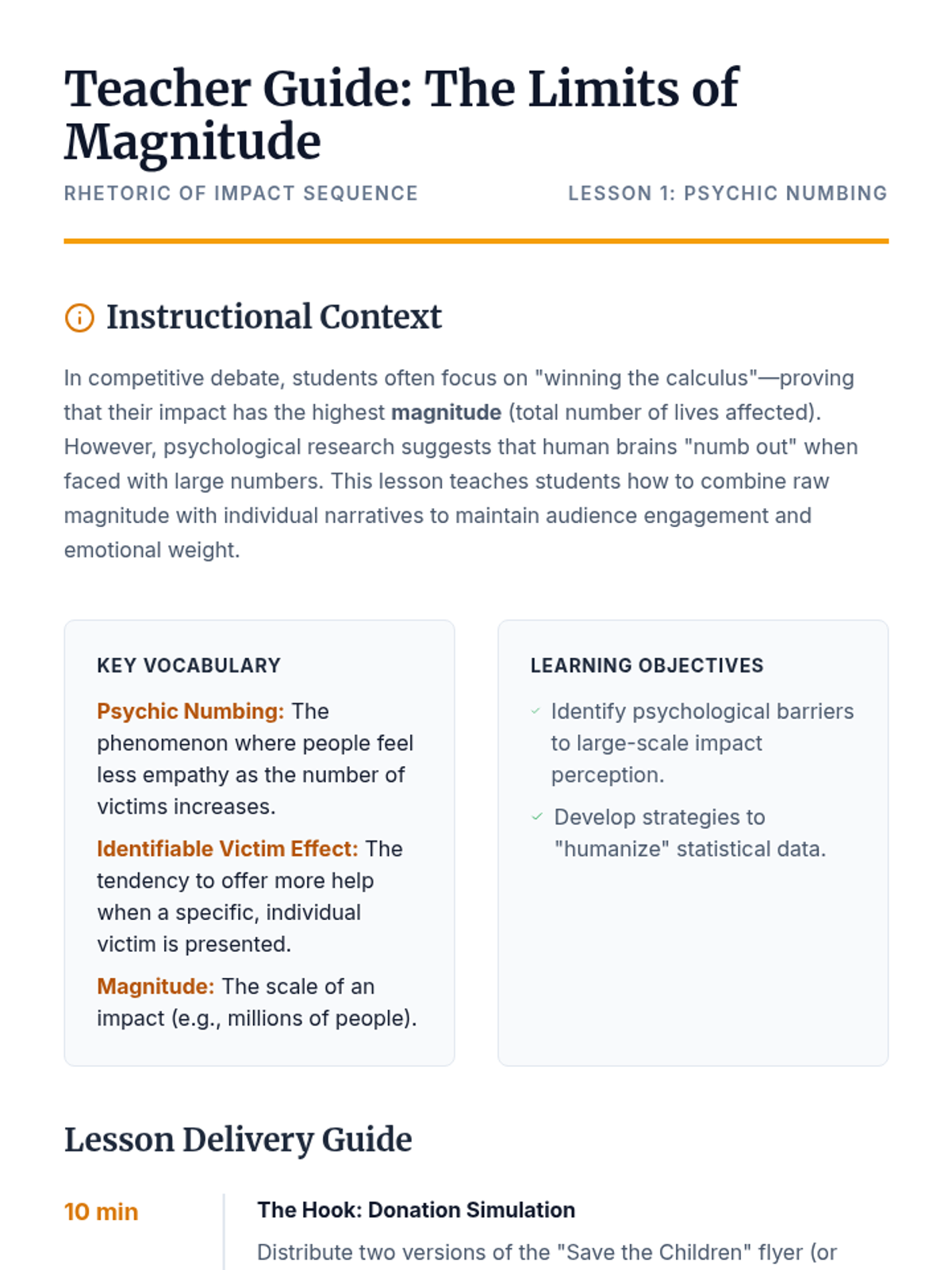
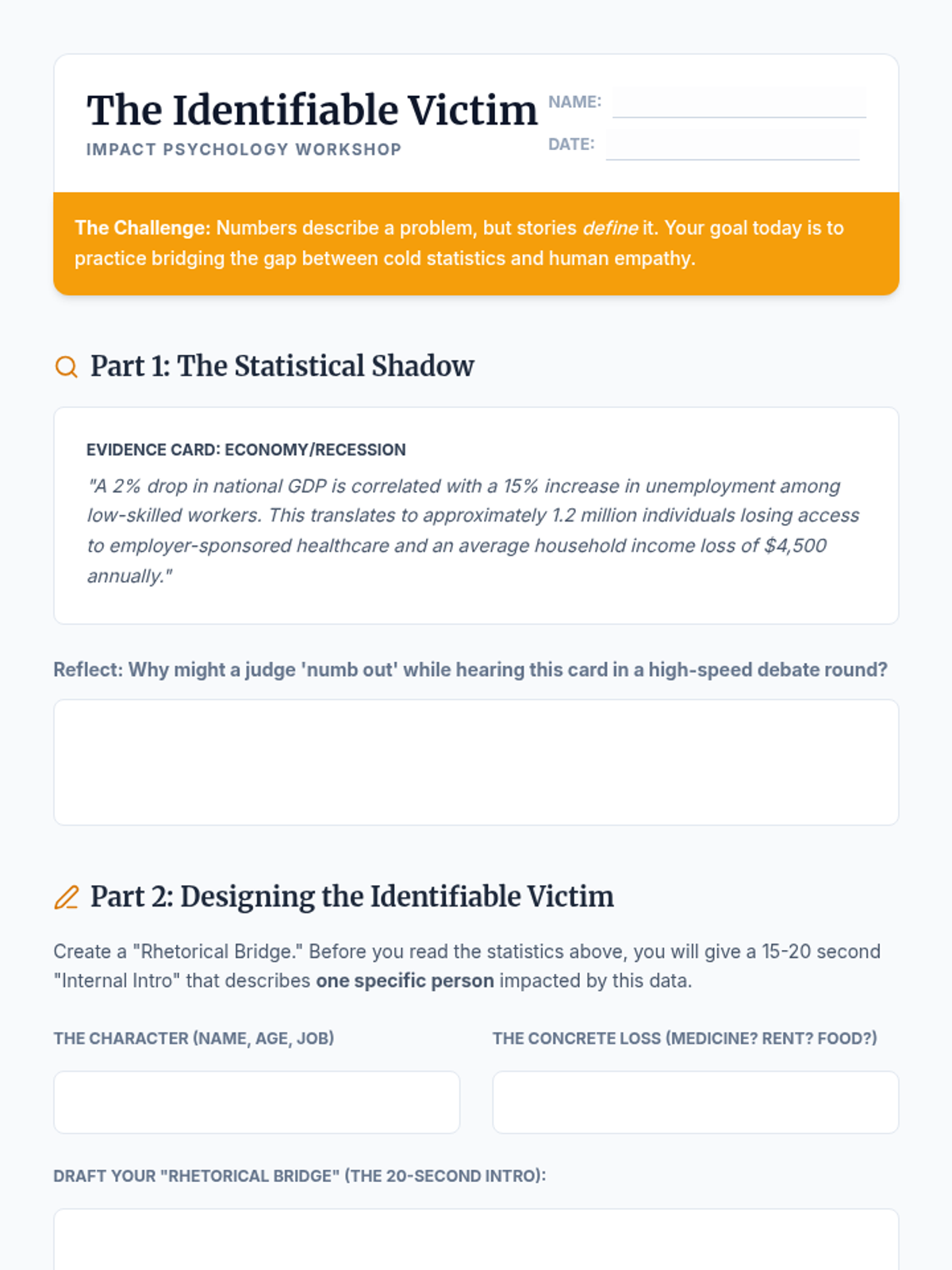
Explores why large-scale statistics often fail to move audiences and how the 'identifiable victim effect' can be used to overcome psychic numbing.
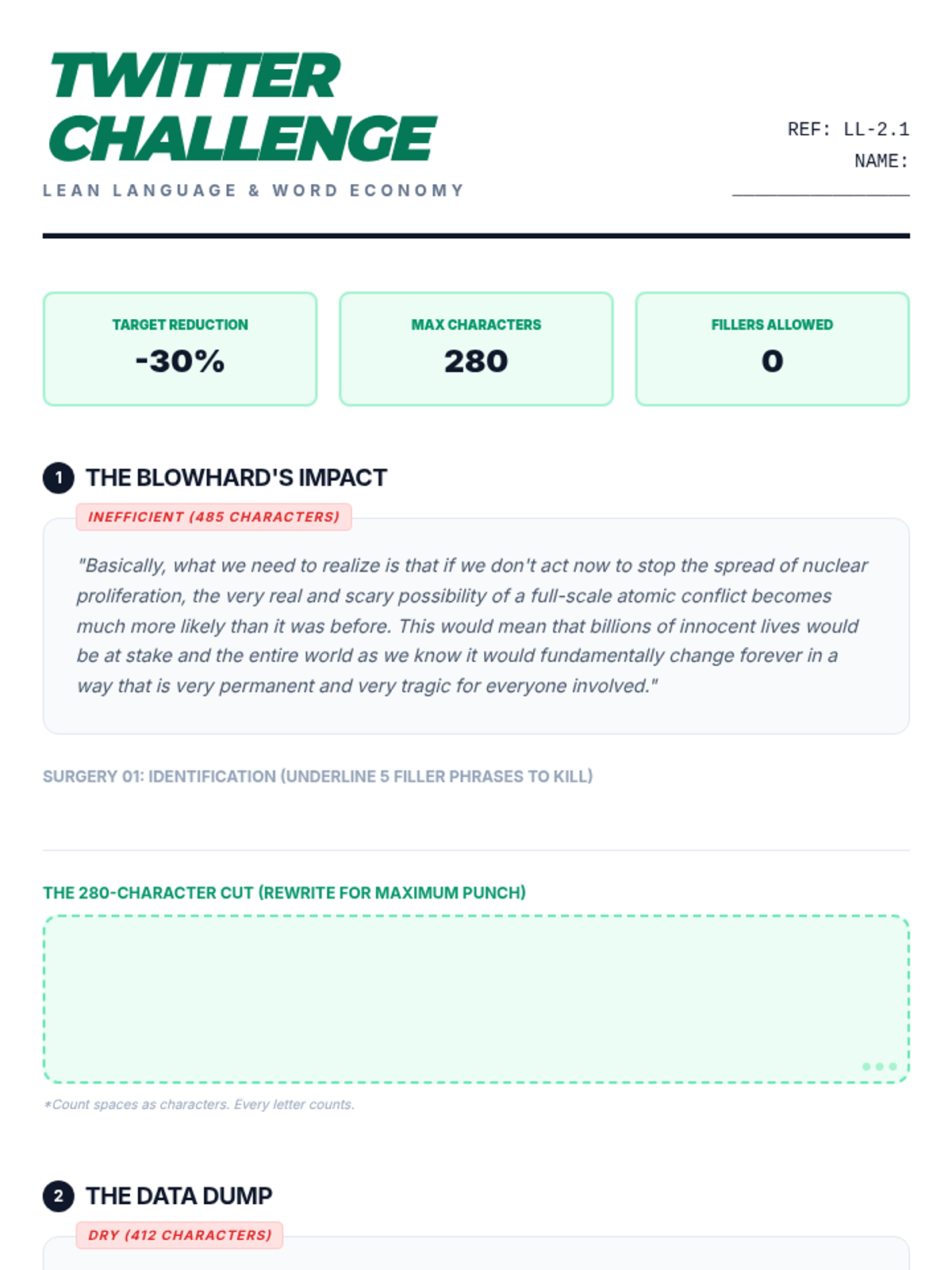
Students master the art of conciseness by editing their impact scenarios for maximum verbal efficiency. They learn to remove filler words and use high-impact verbs to fit complex arguments into tight speech time constraints.
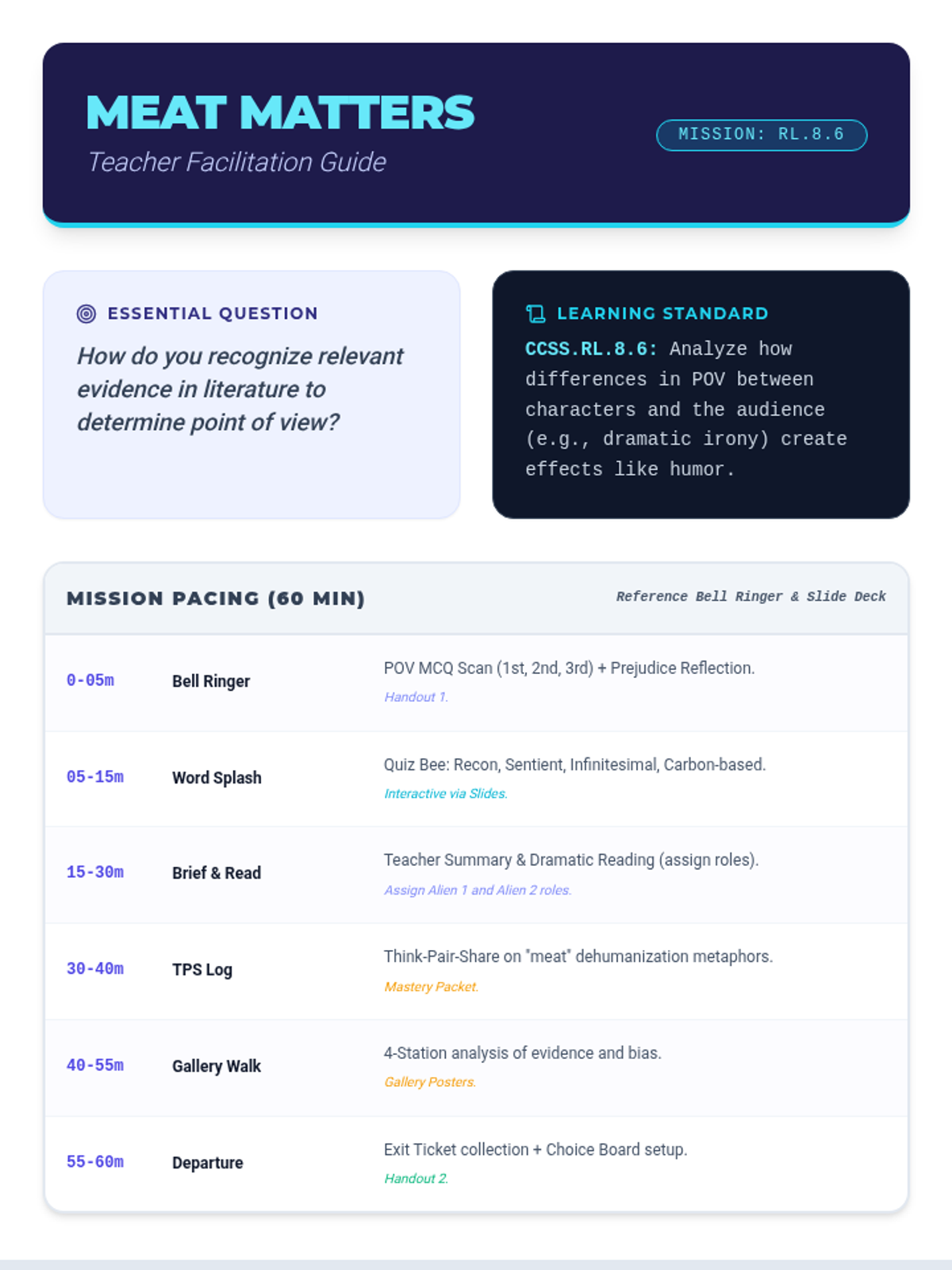
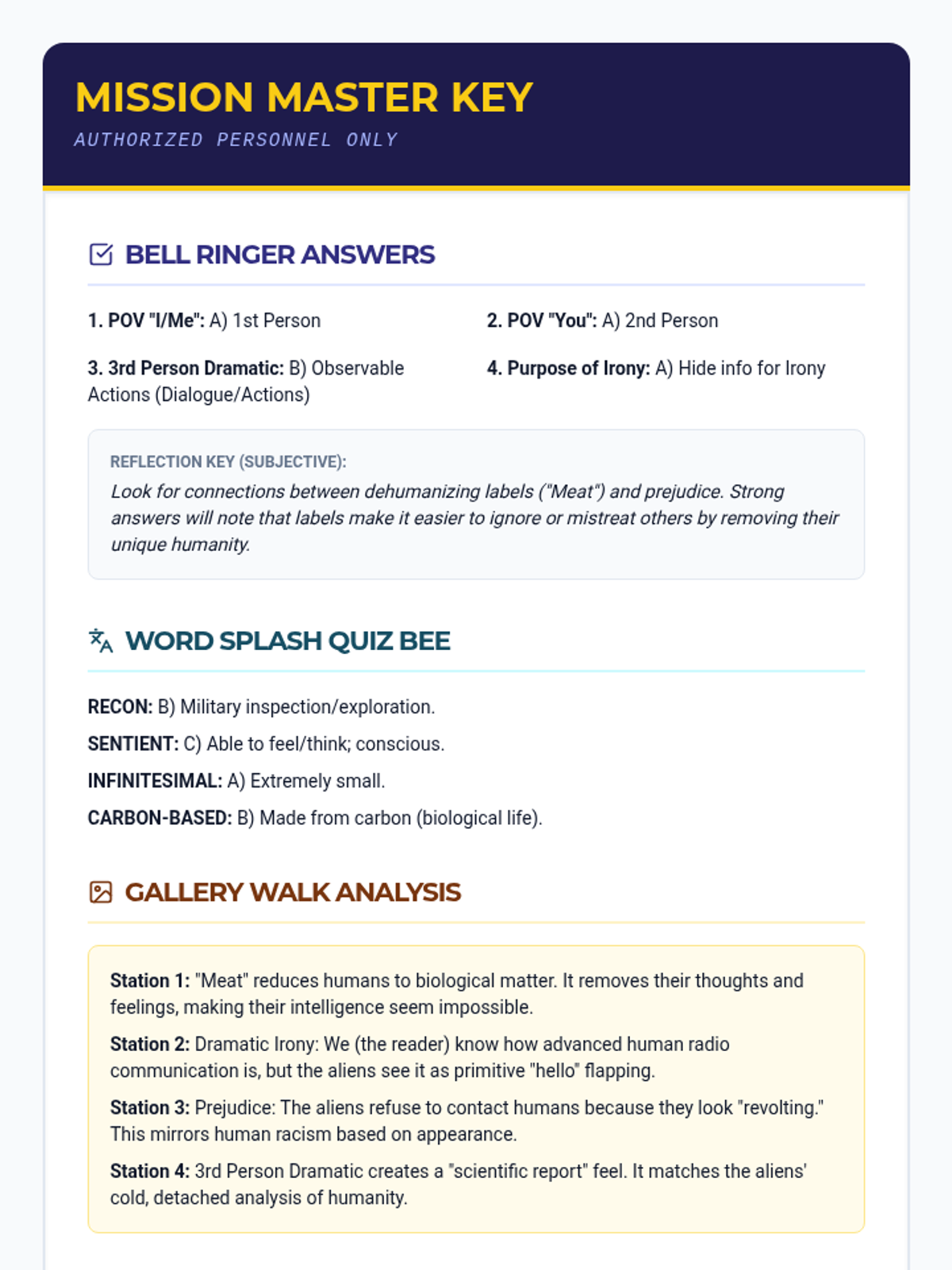
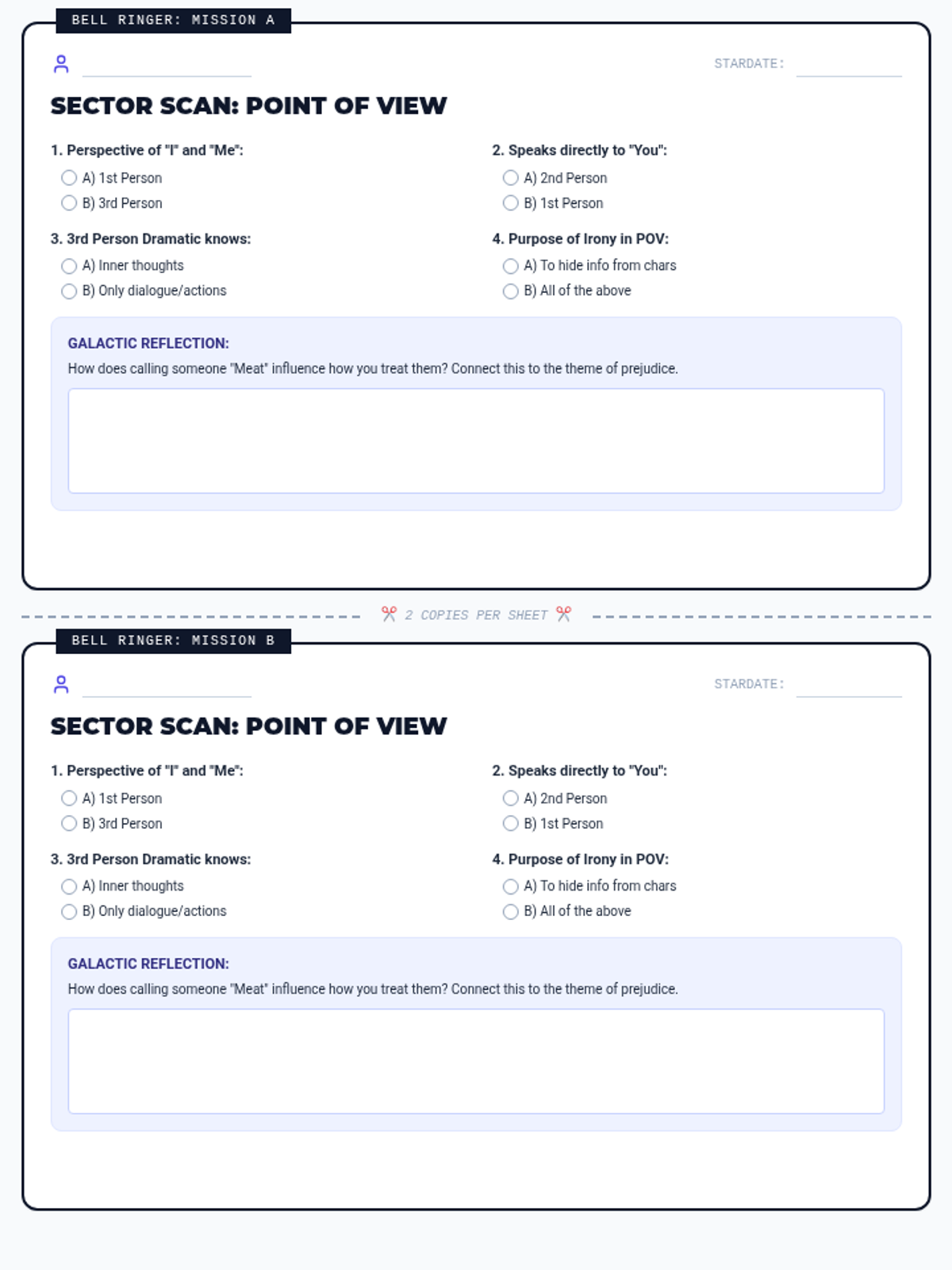
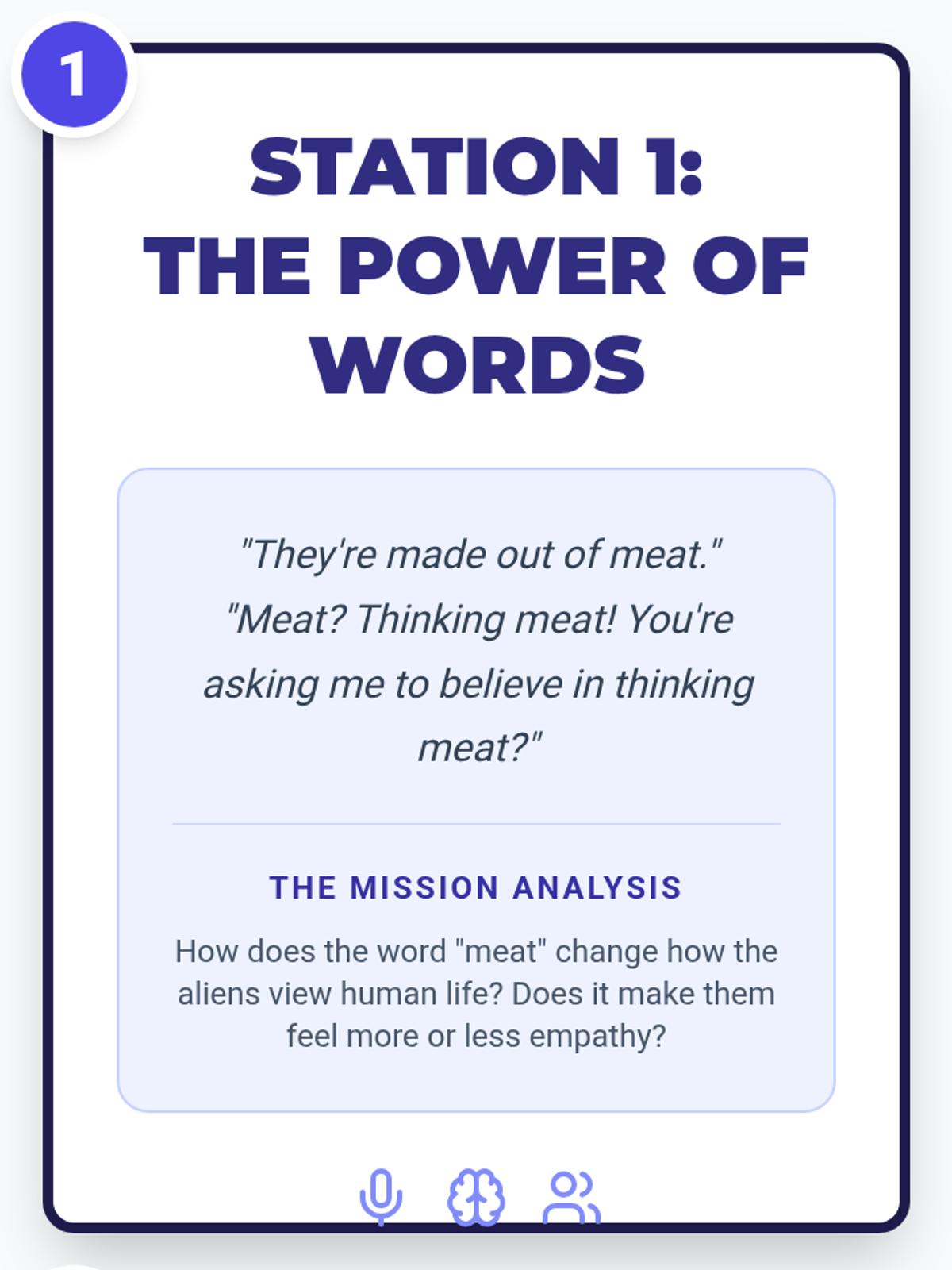
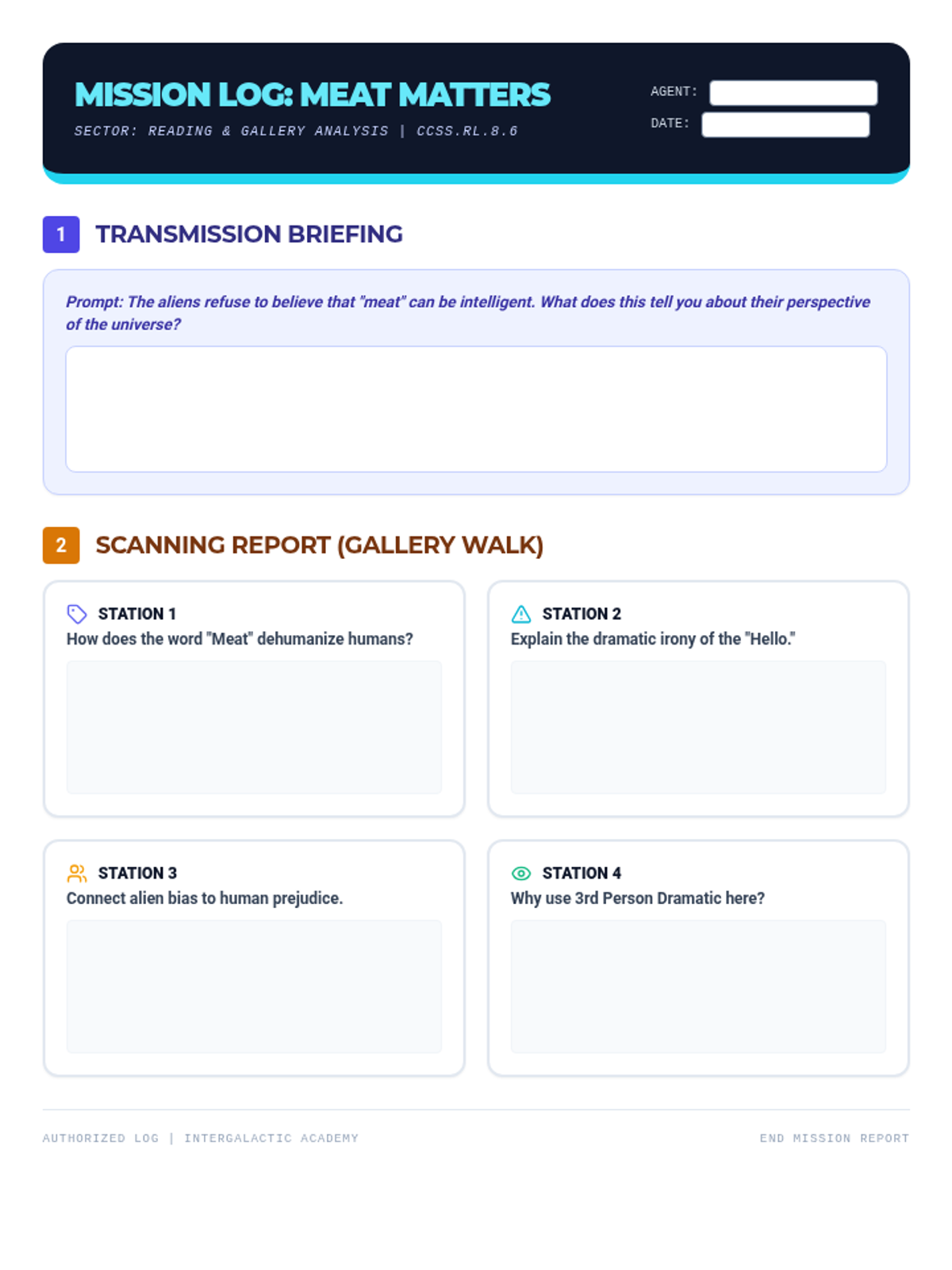
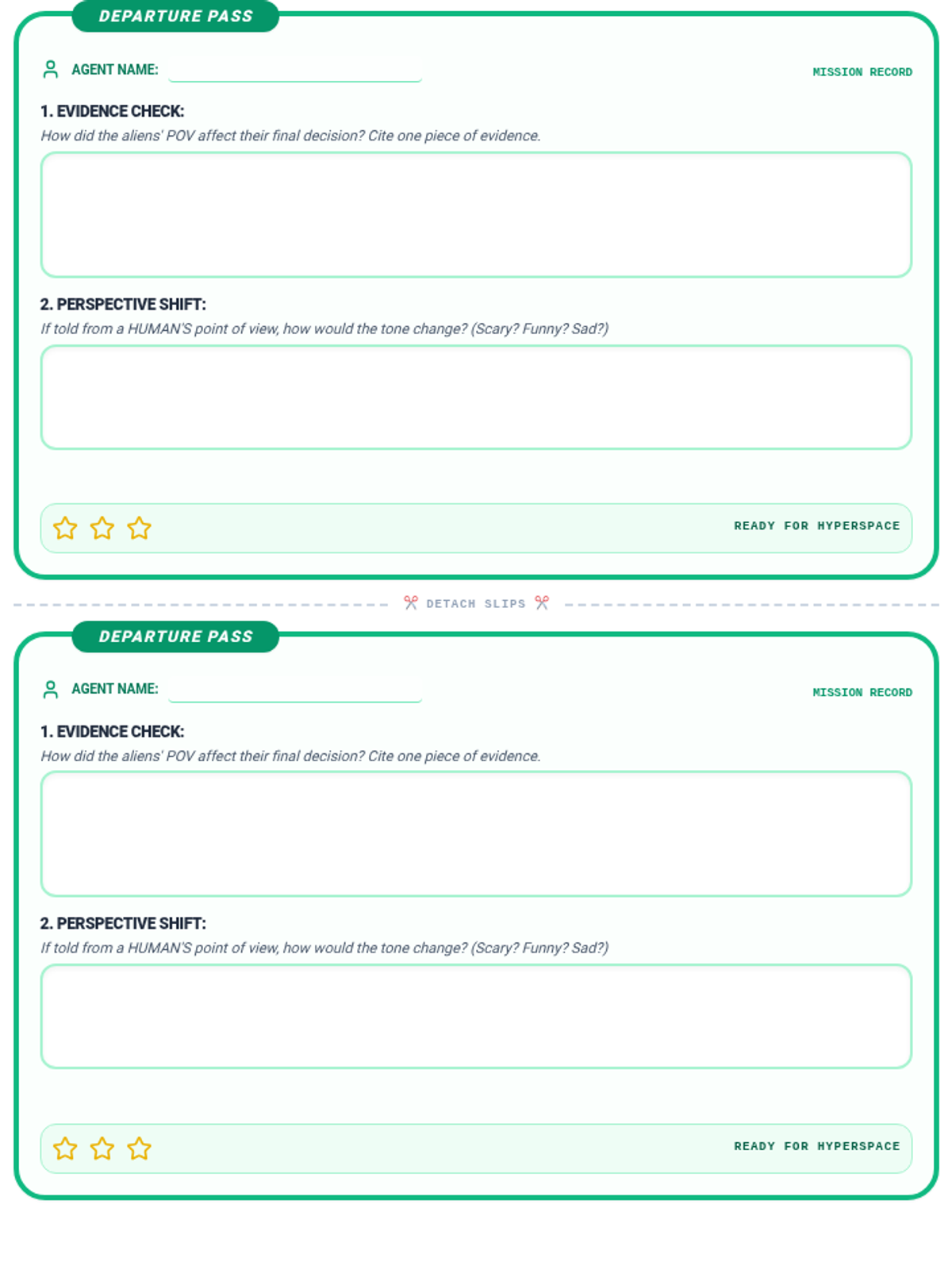
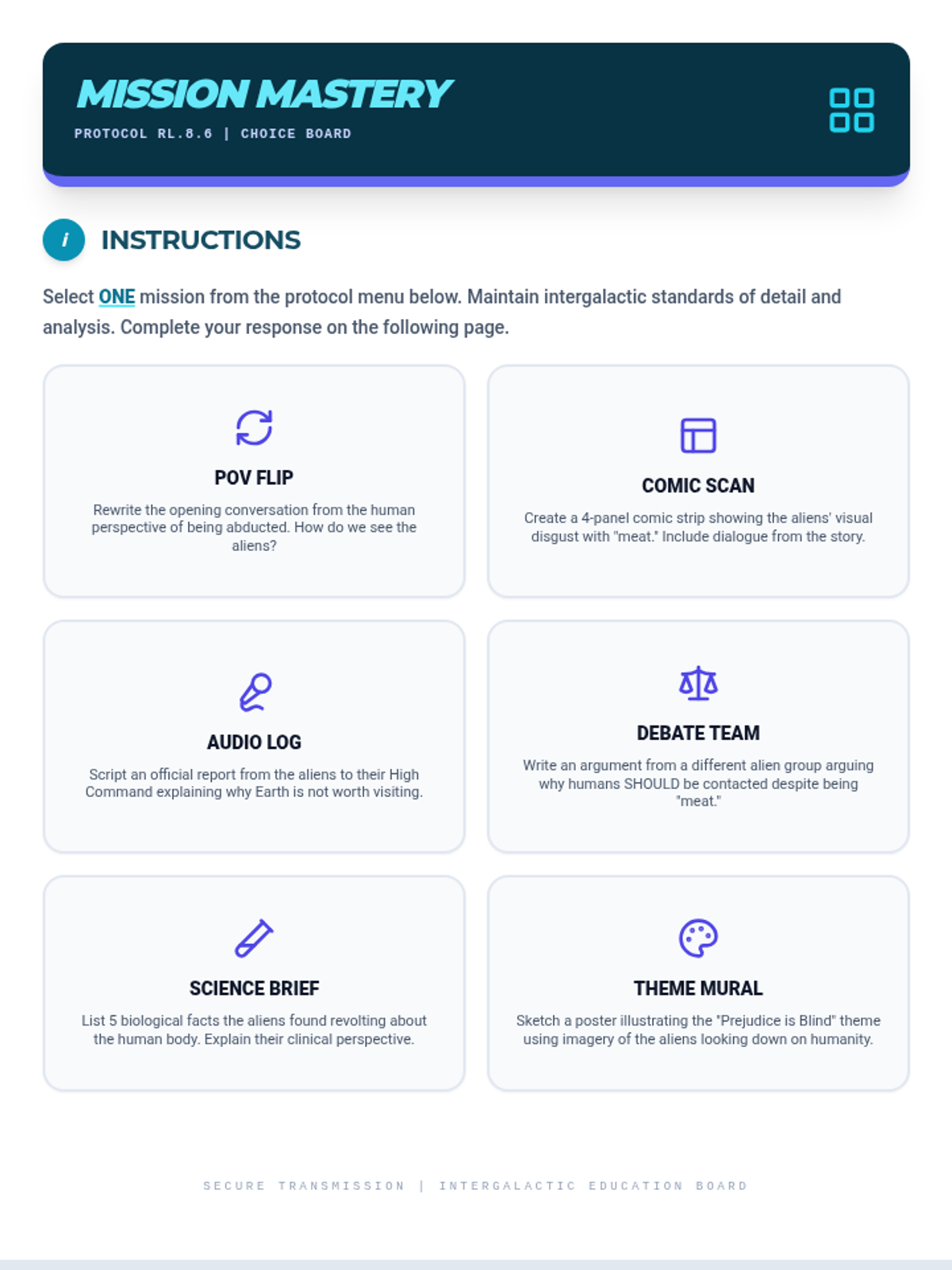
A one-hour deep dive into Terry Bisson's 'They're Made out of Meat,' focusing on point of view, dramatic irony, and themes of prejudice through an alien-themed lens.
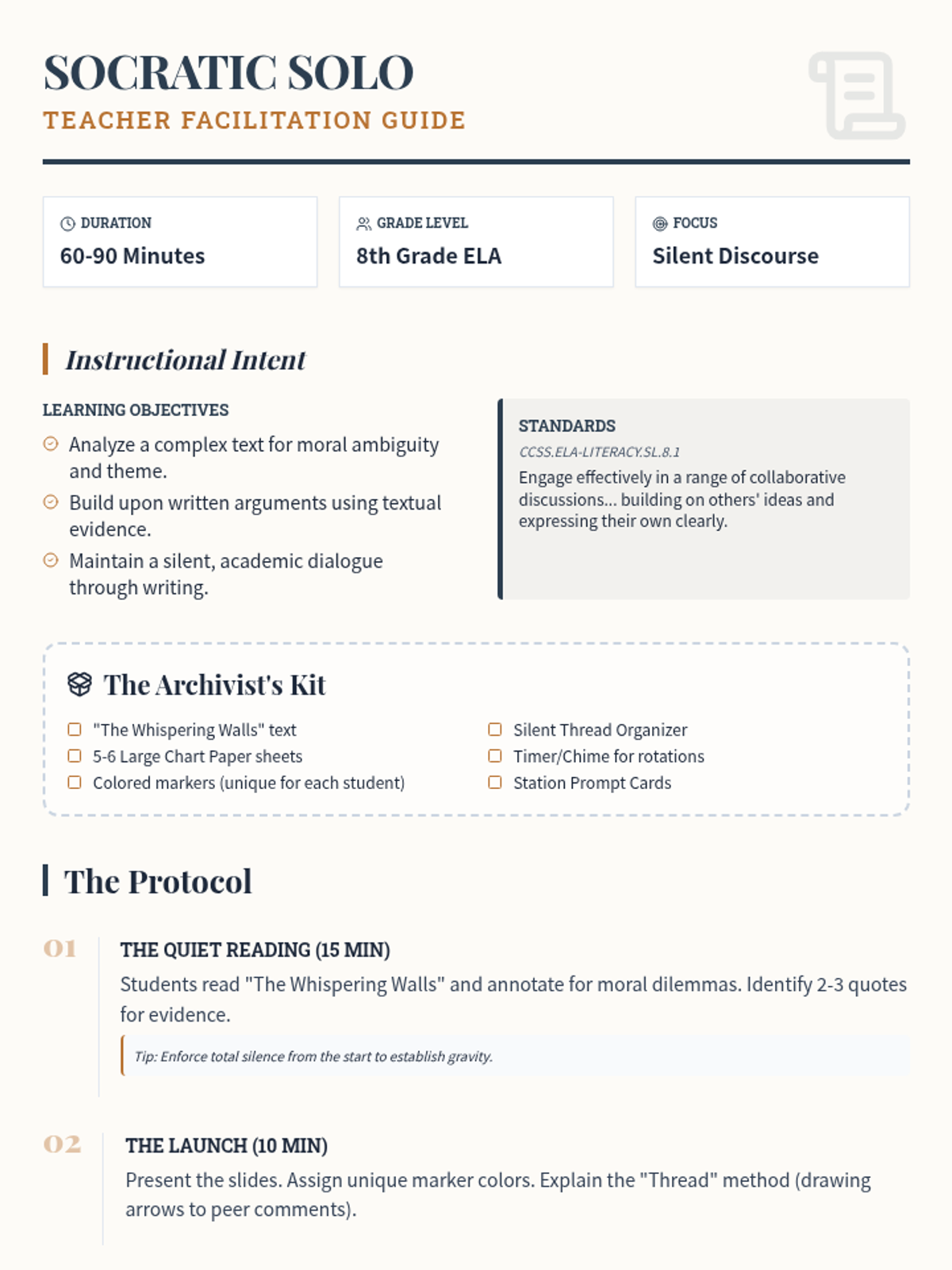
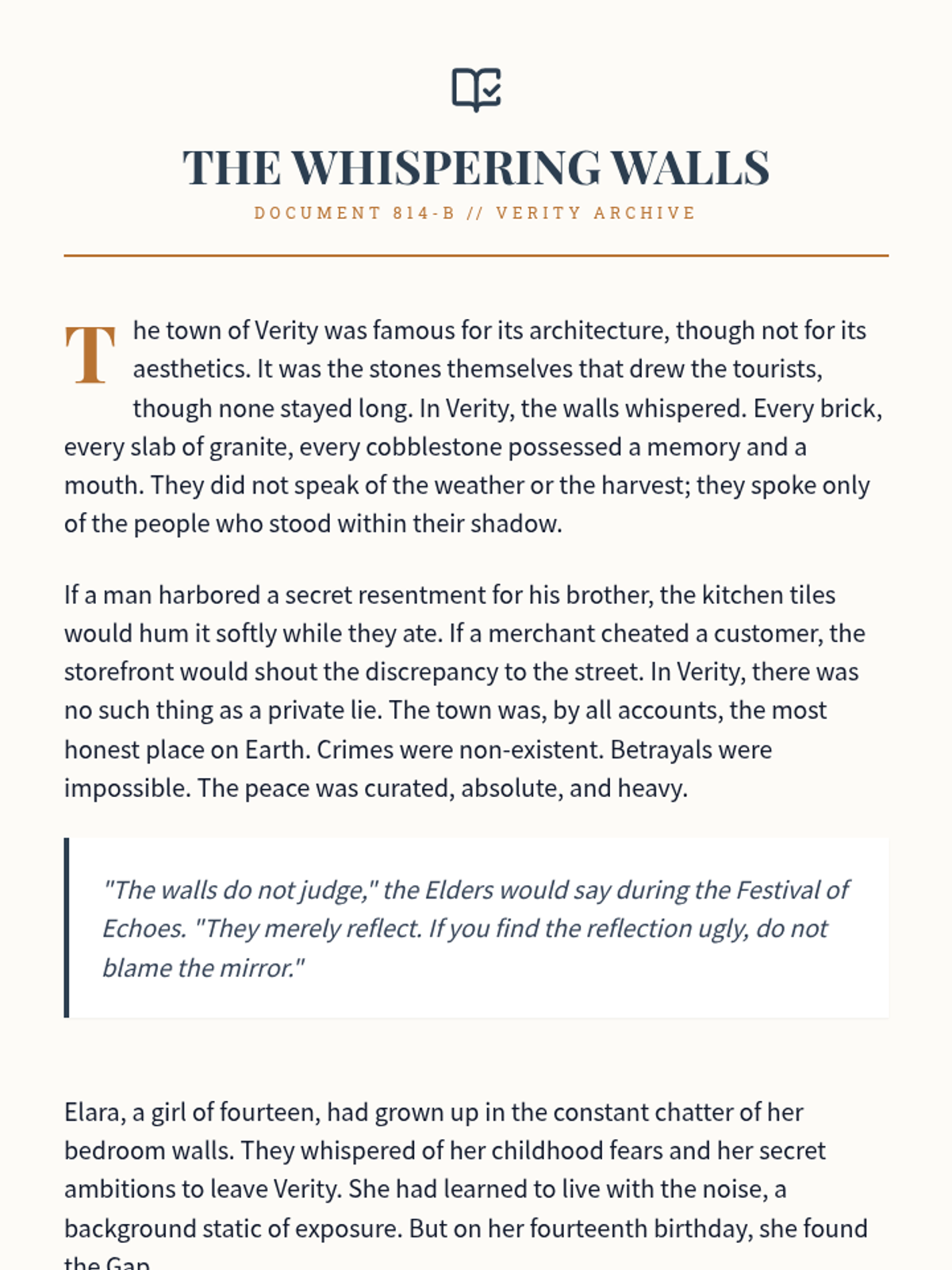
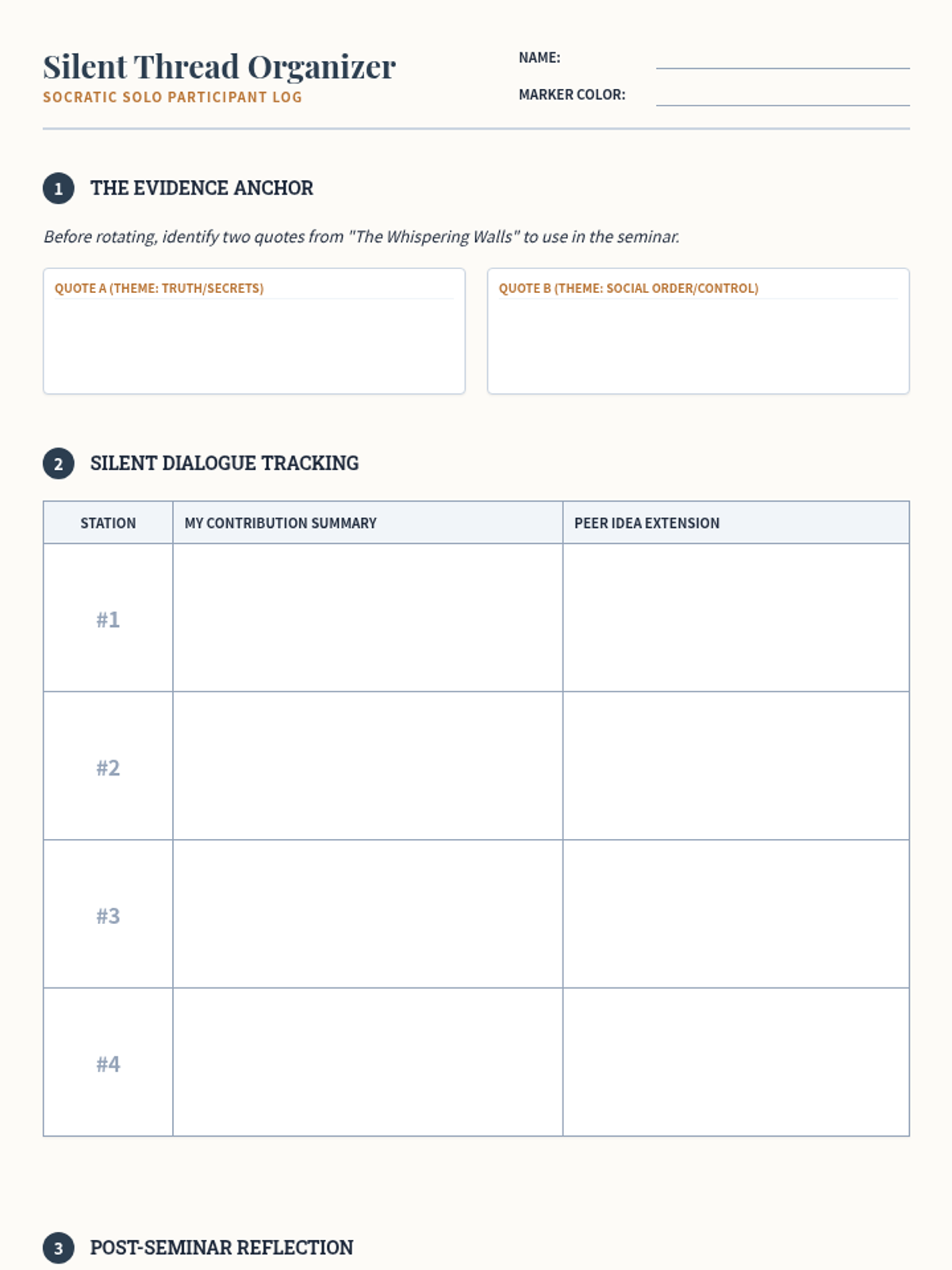
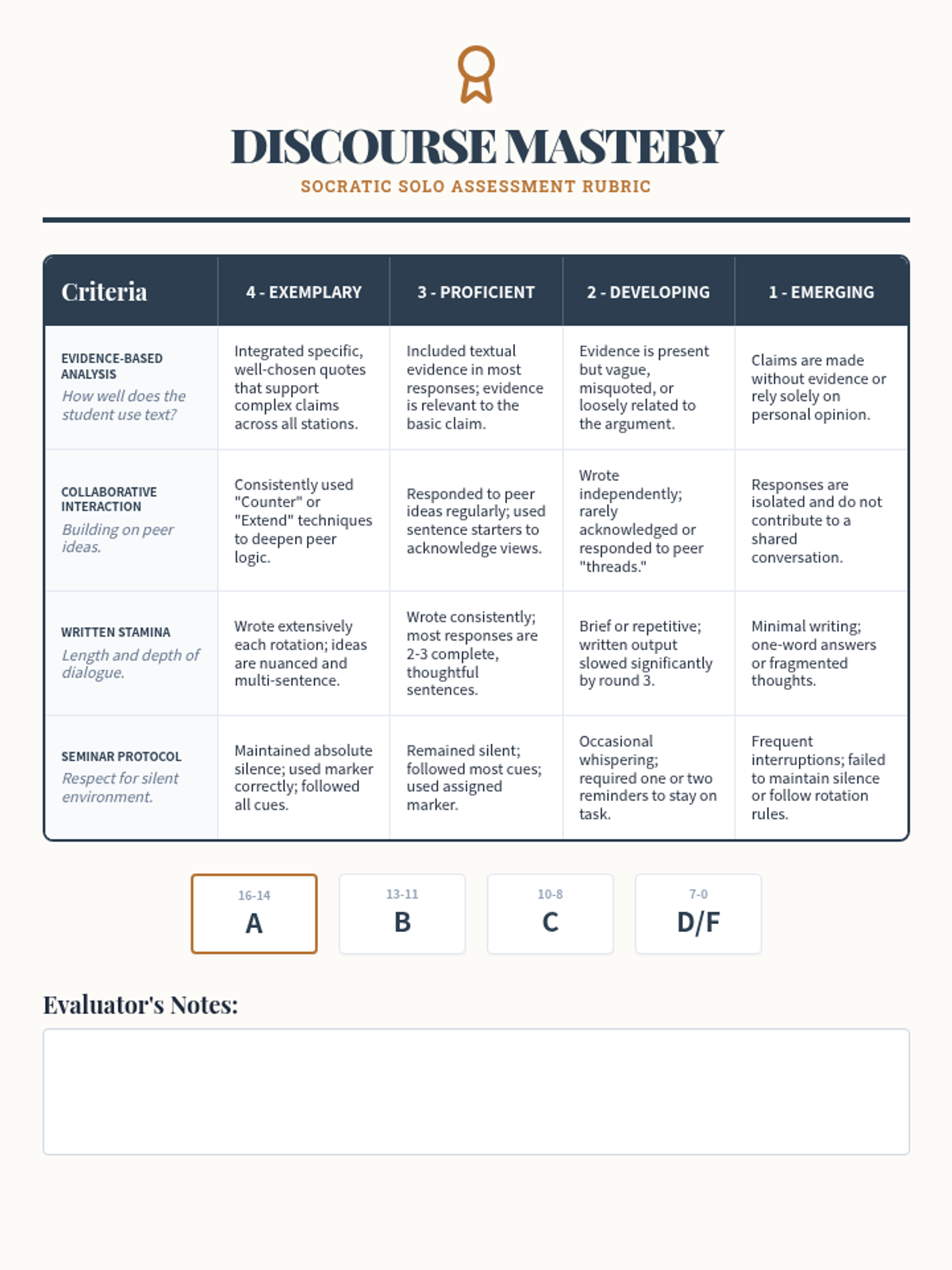
A lesson where 8th-grade students engage in a silent Socratic Seminar, using rotating stations and written 'comment threads' to master the art of academic discourse and evidence-based interpretation. Students will practice building on peer ideas and deepening their analysis without speaking a word.
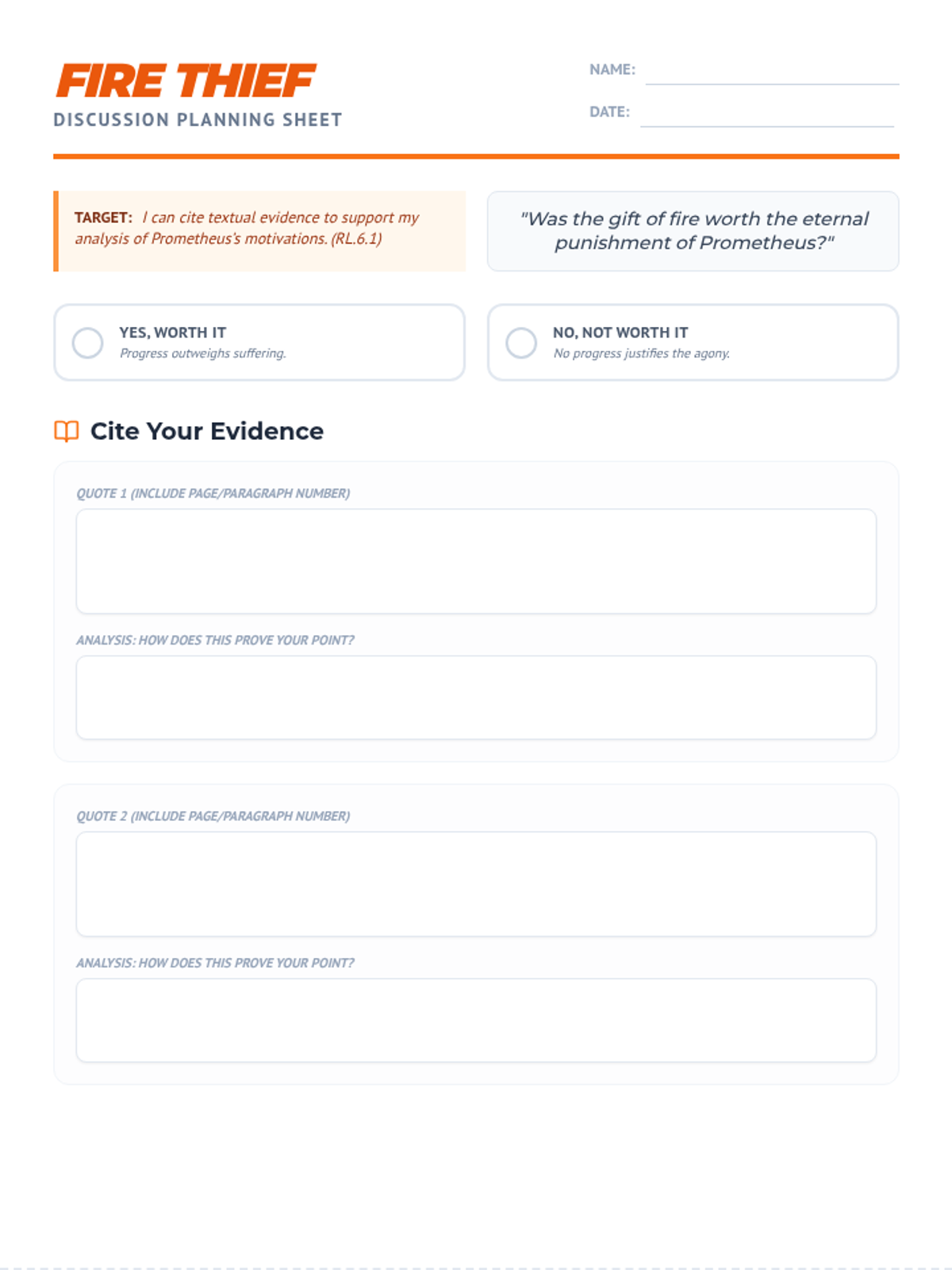
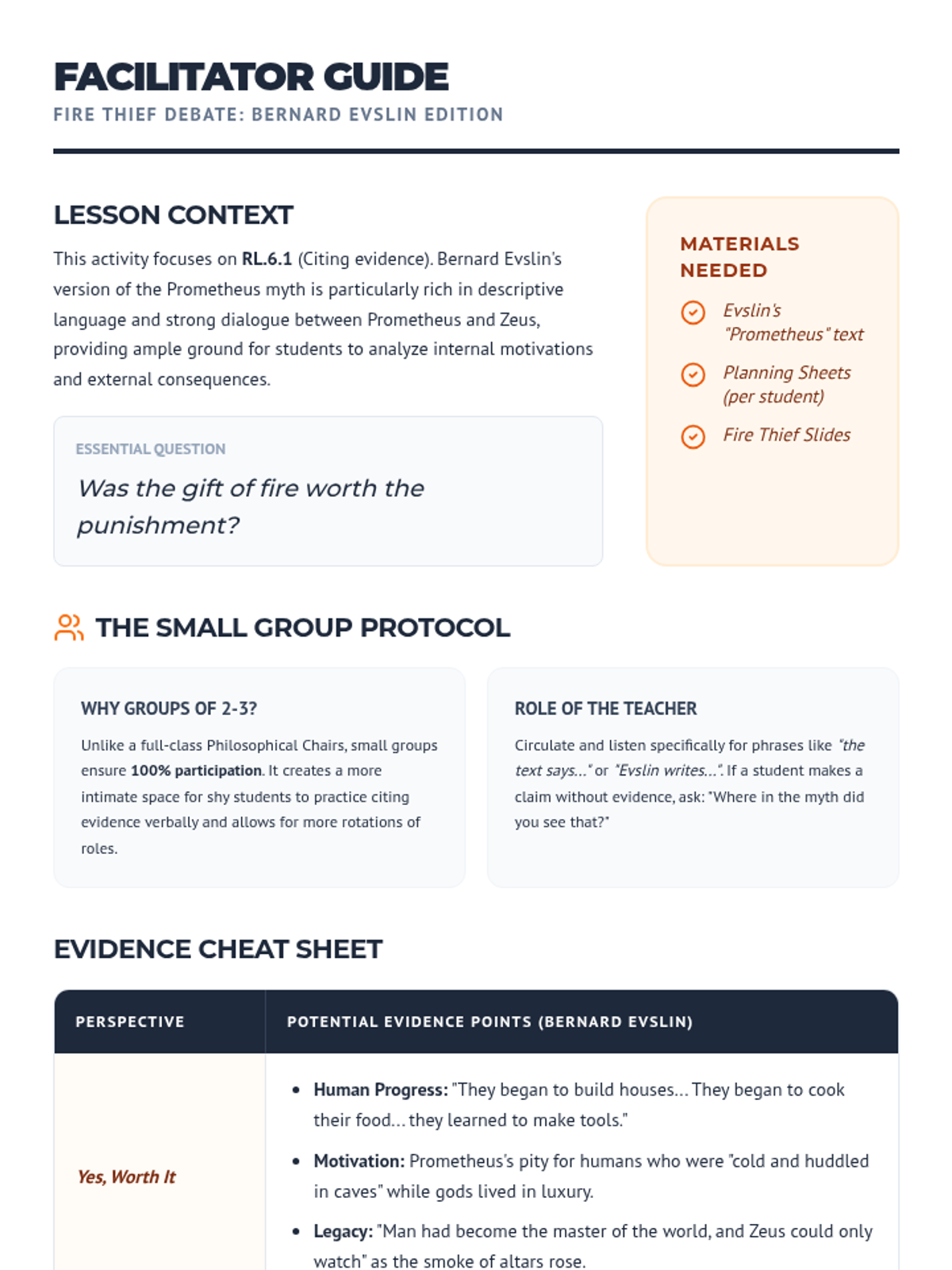
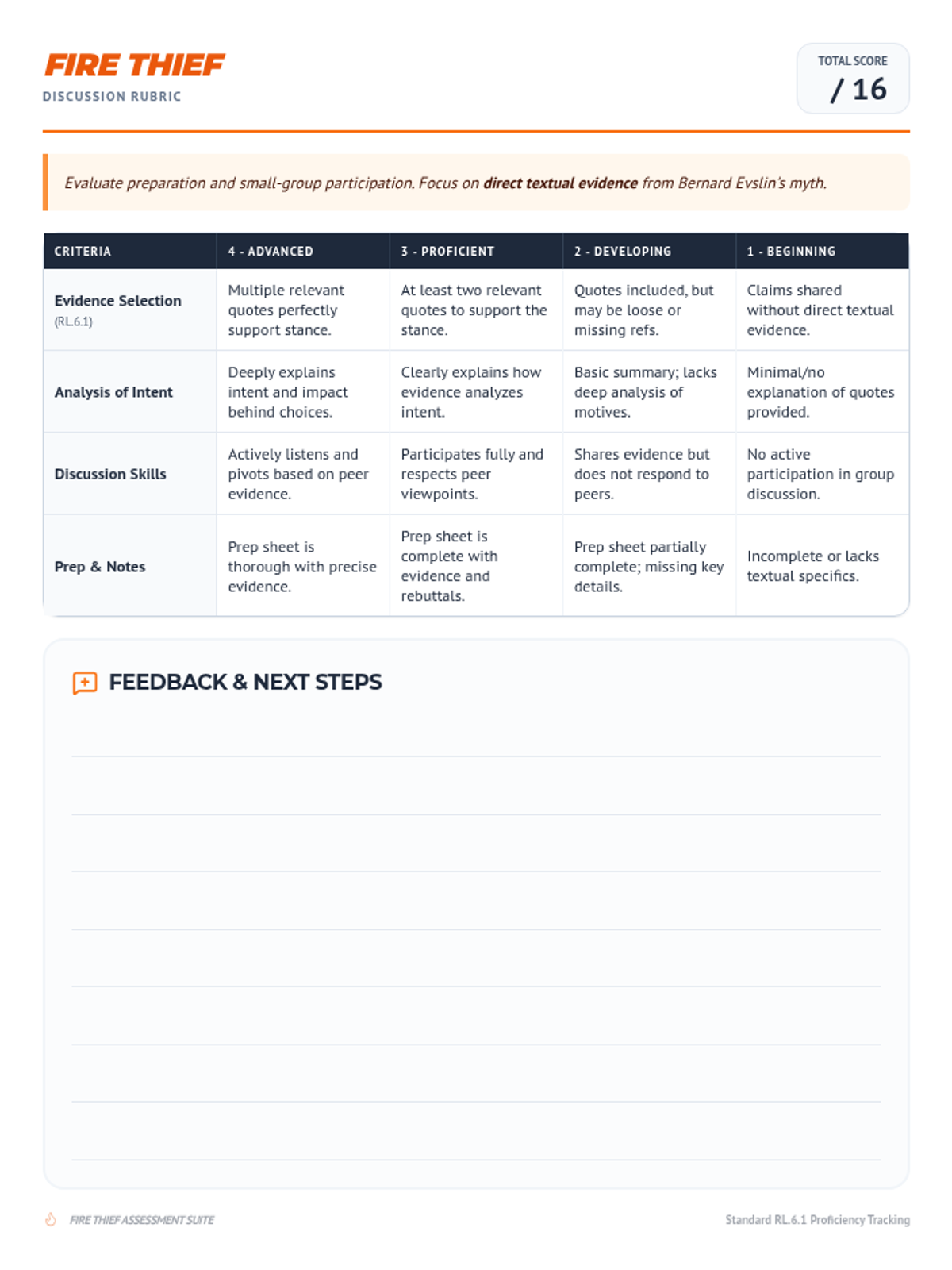
A lesson centered on analyzing Prometheus's motivations and the consequences of his actions using Bernard Evslin's myth. Students engage in a modified Philosophical Chairs debate supported by textual evidence.
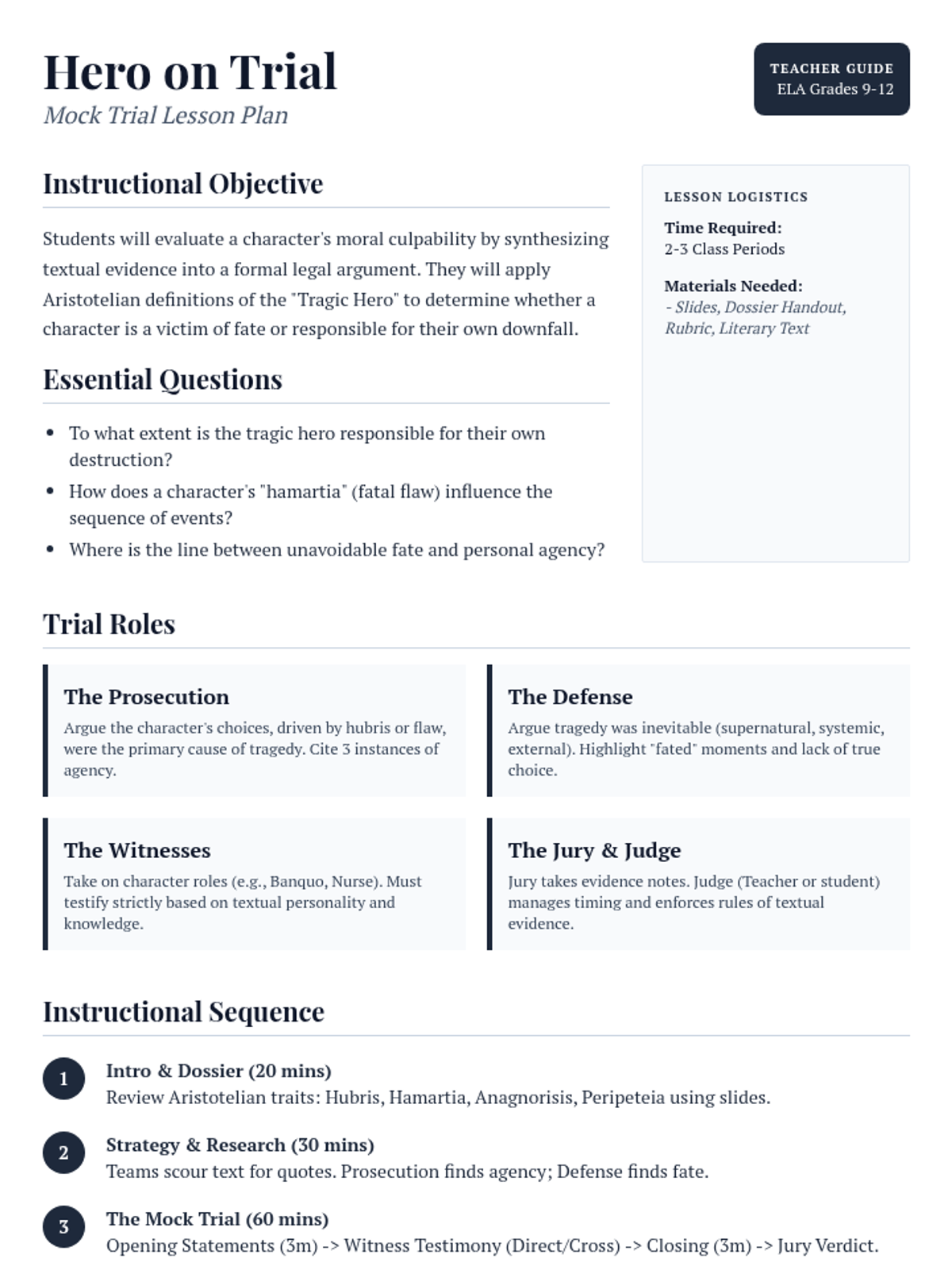
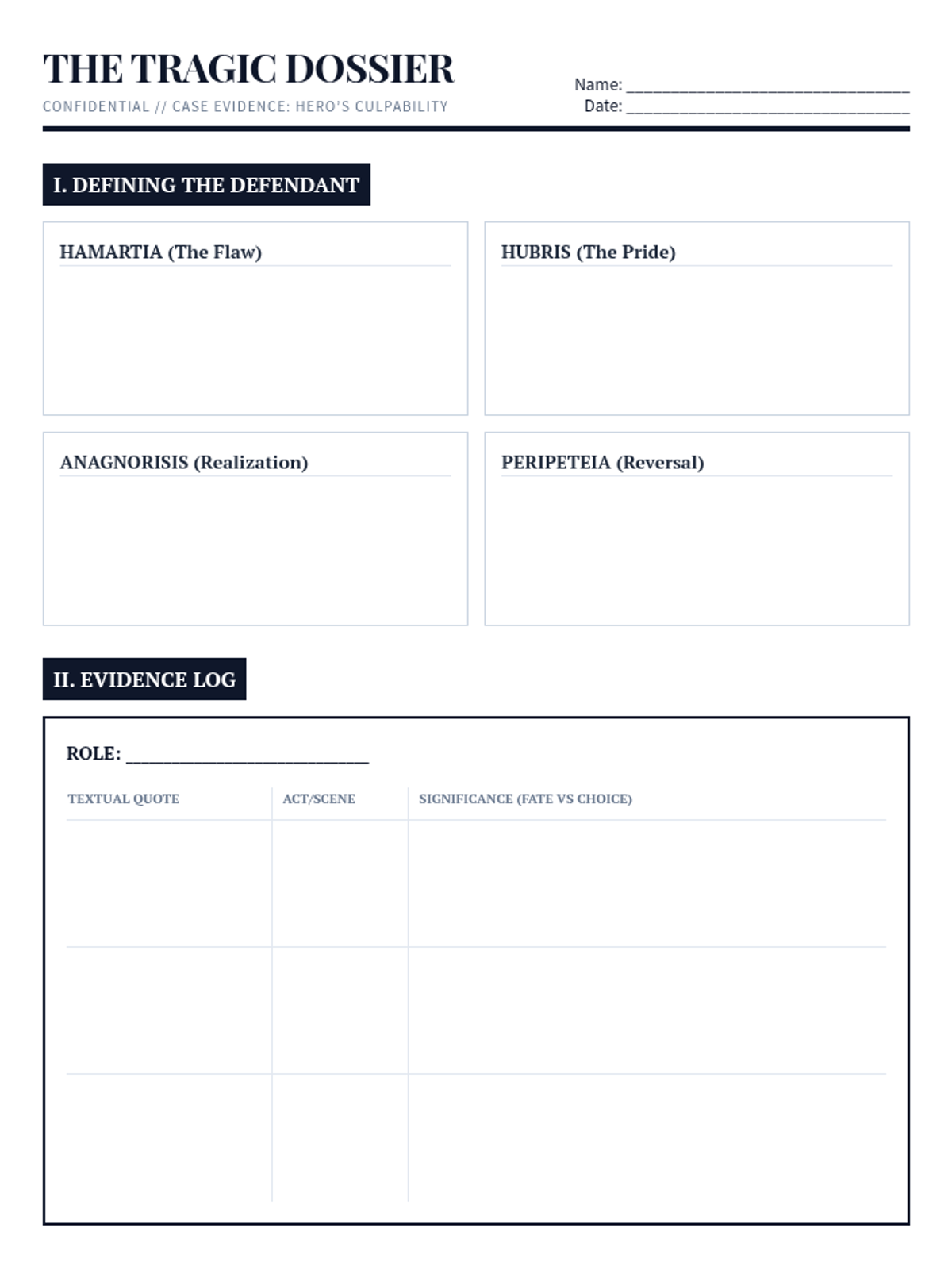
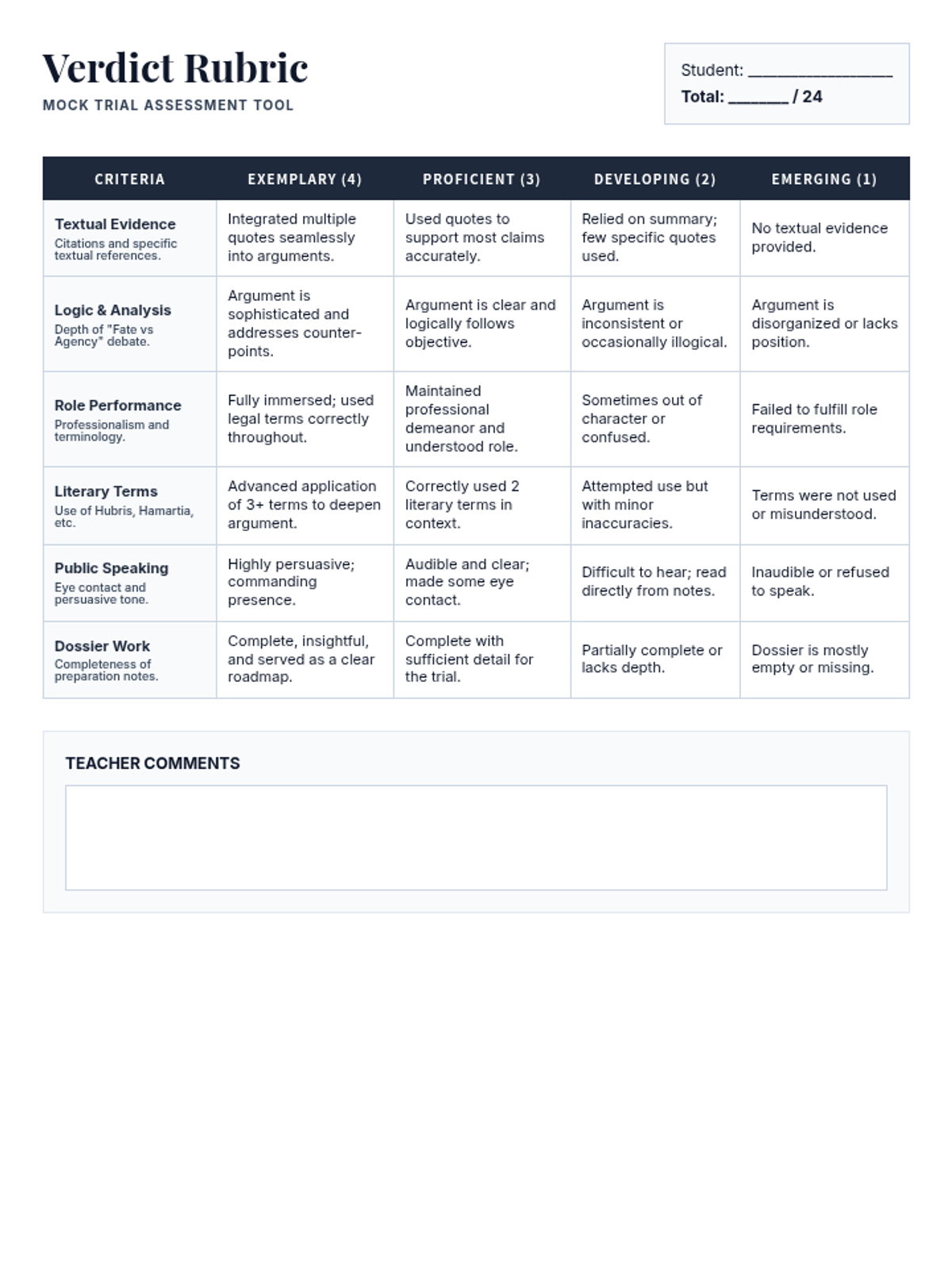
A high school English lesson where students conduct a mock trial for a tragic hero, analyzing textual evidence to explore themes of fate, choice, and moral culpability.
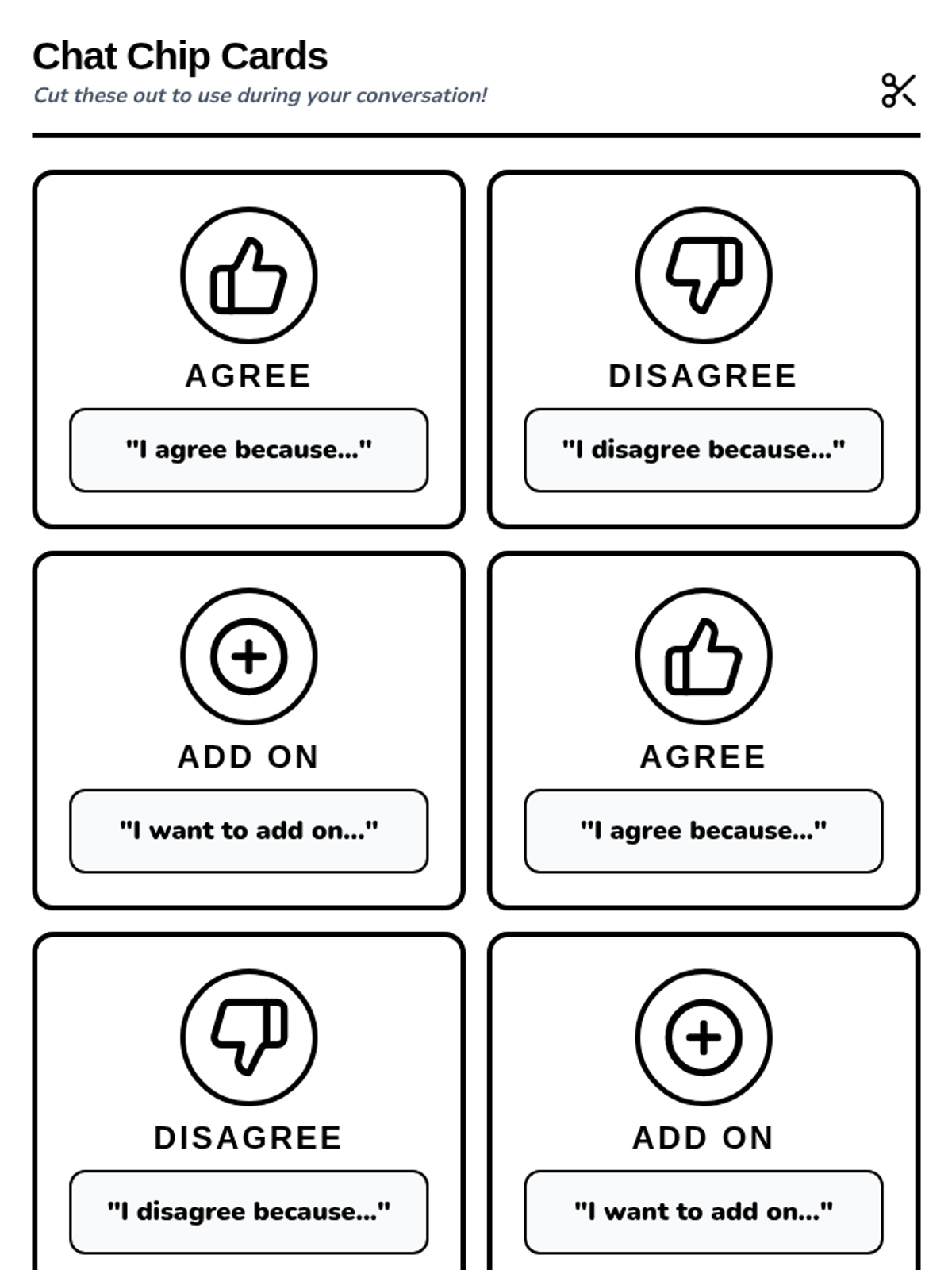
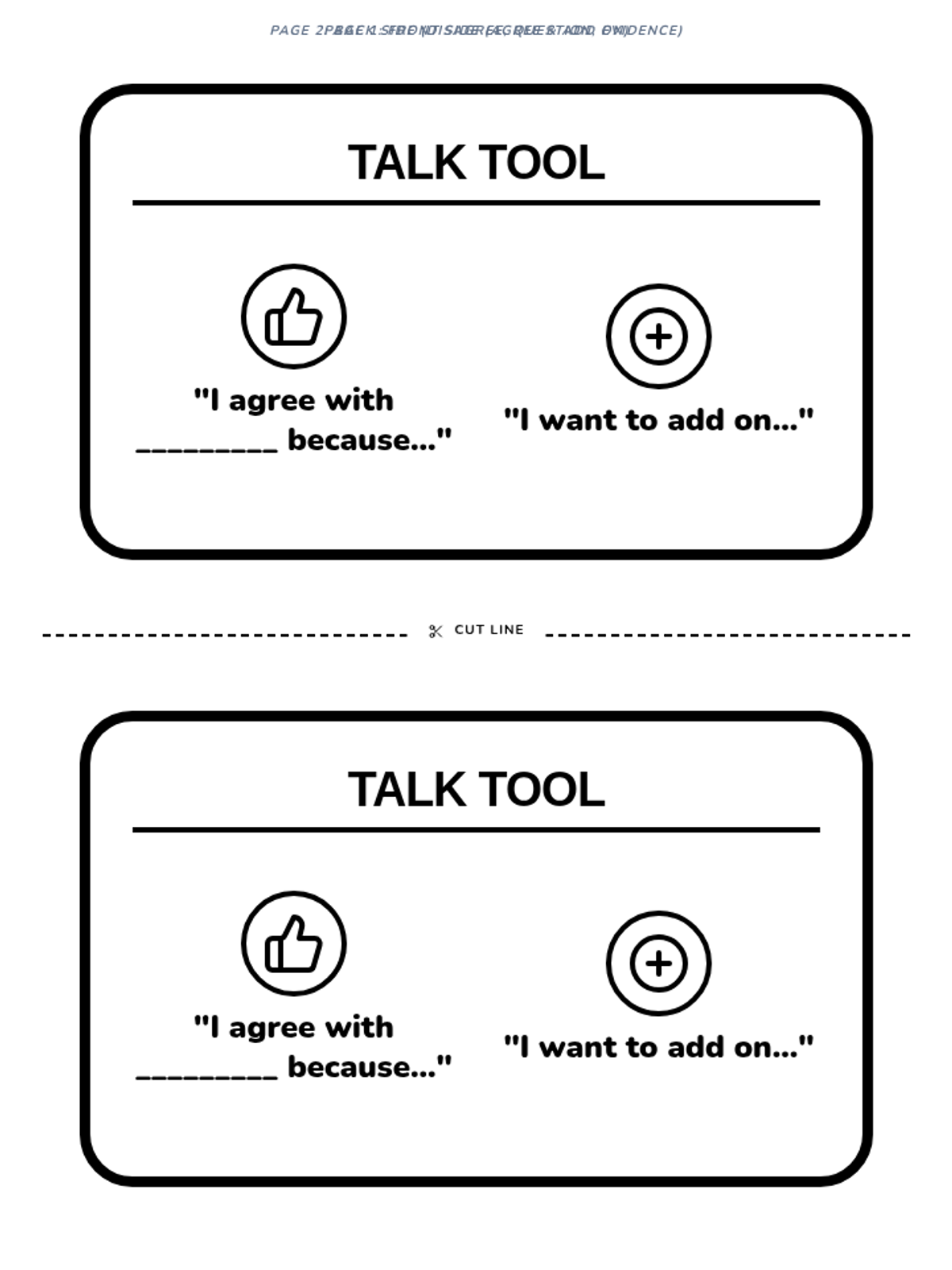
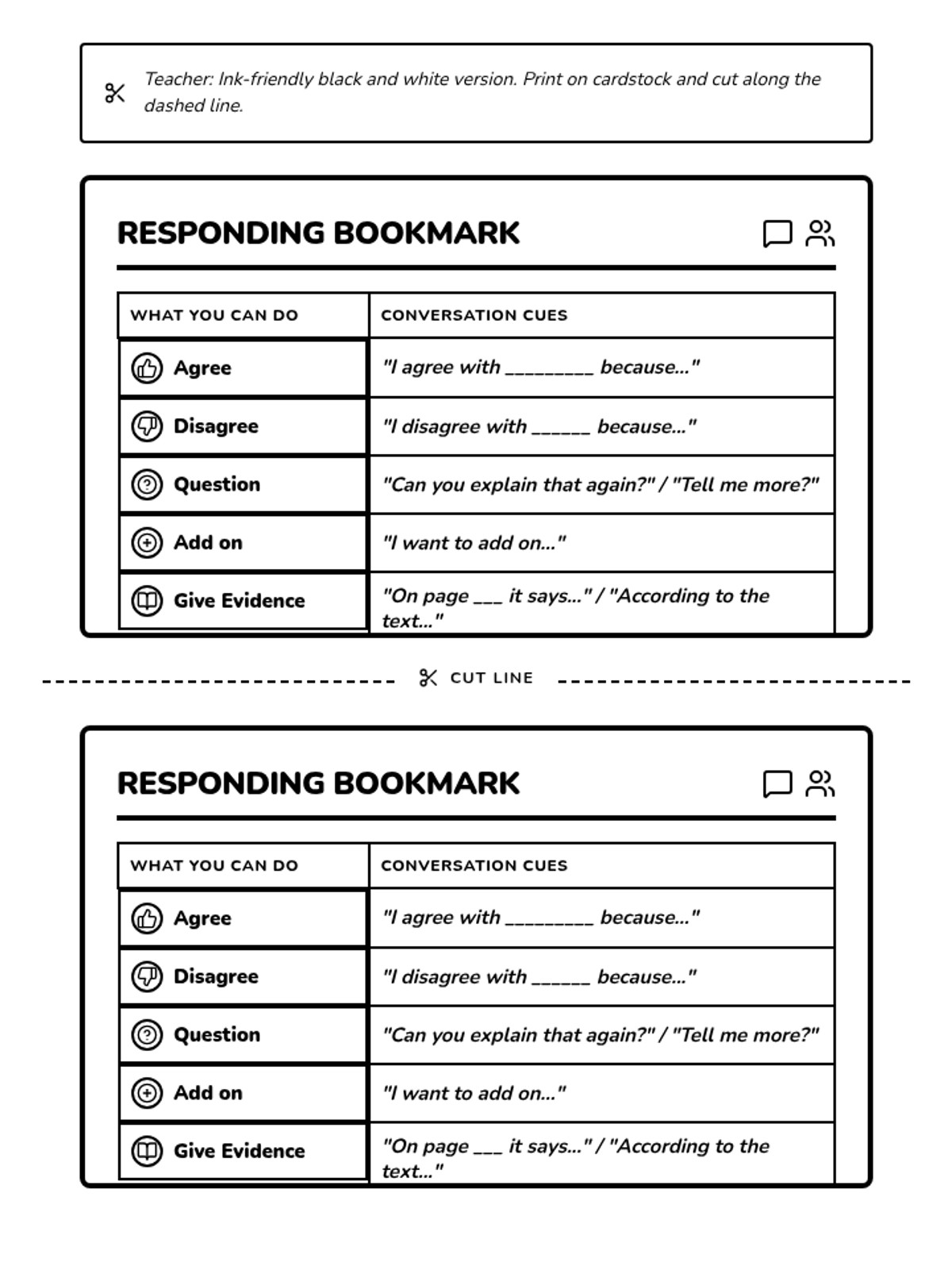
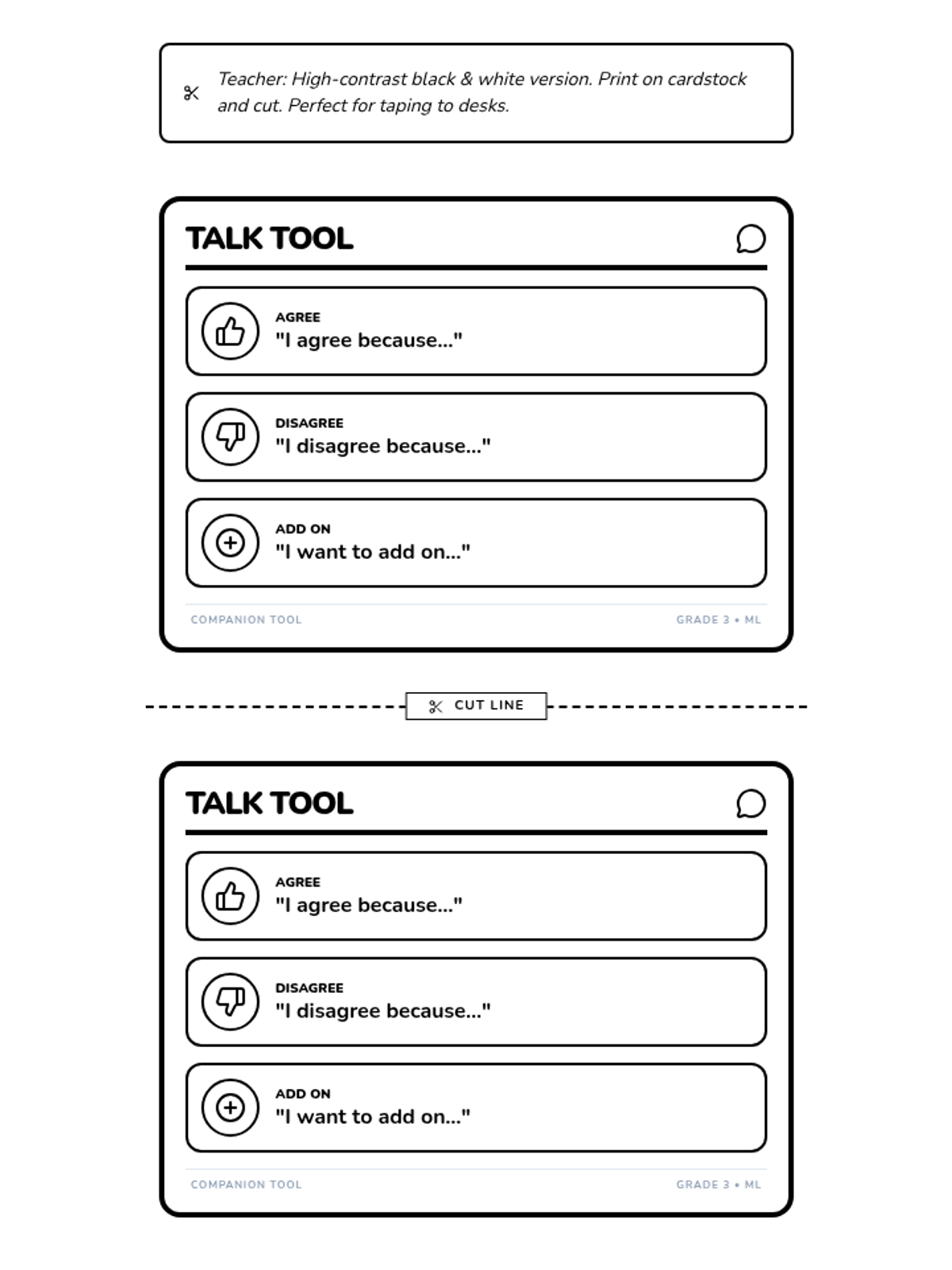
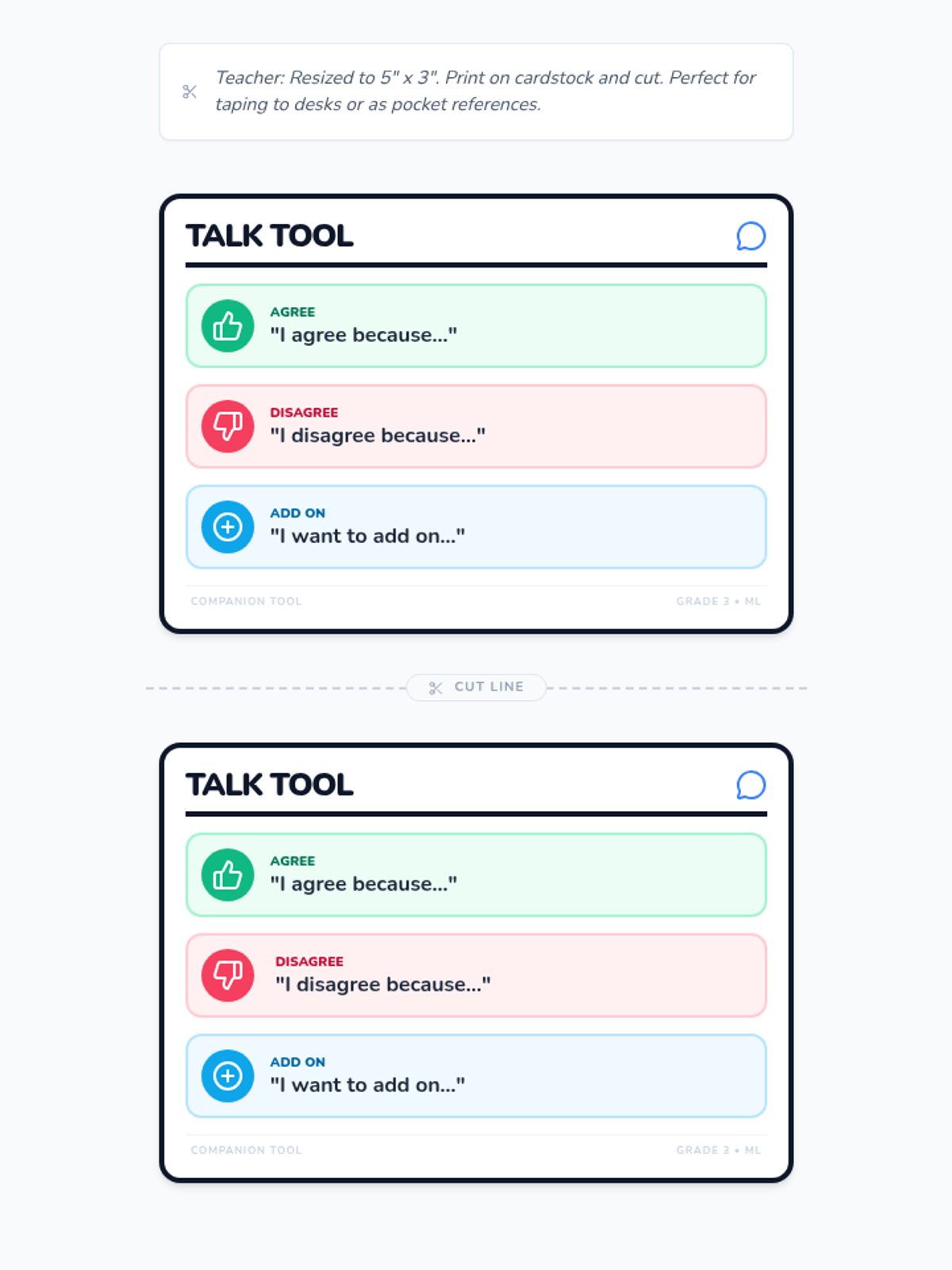
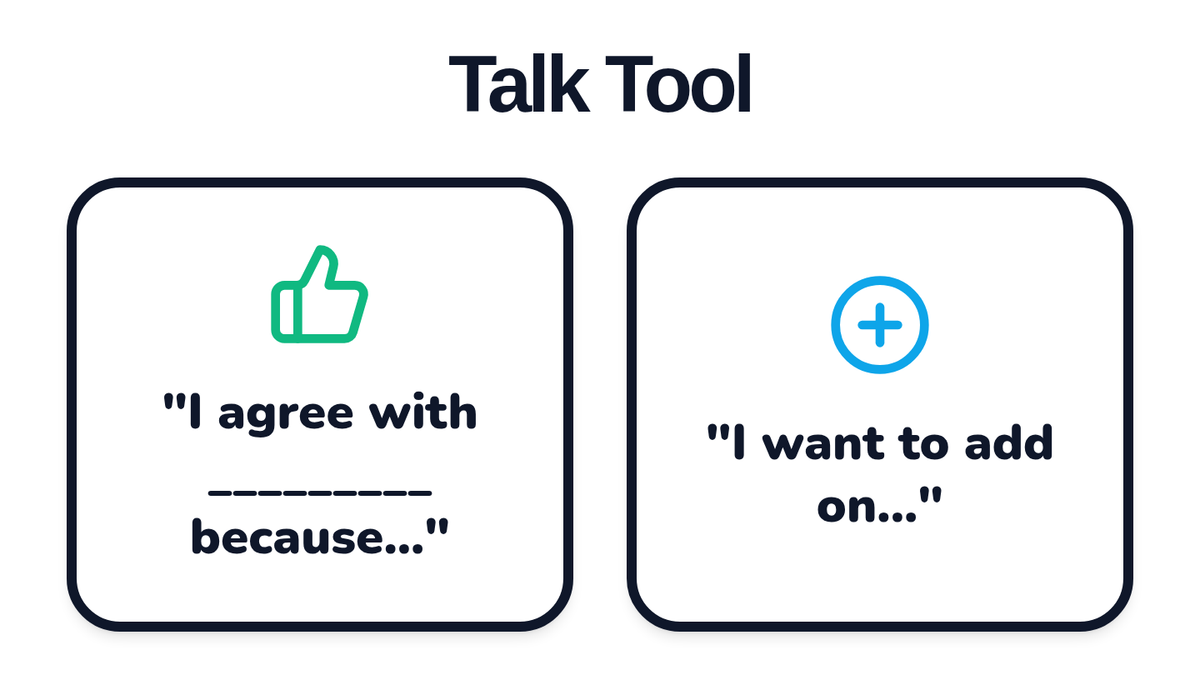
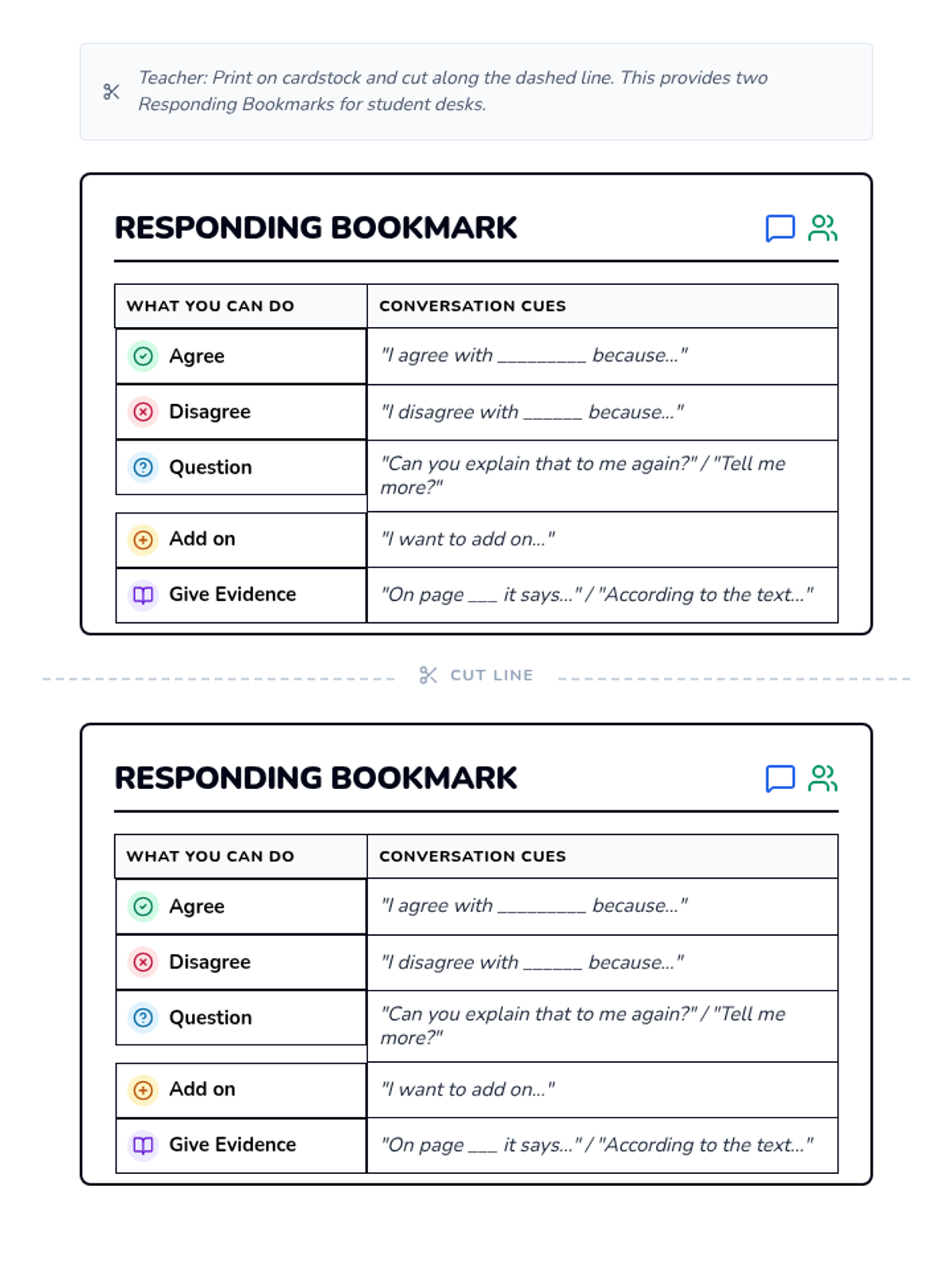
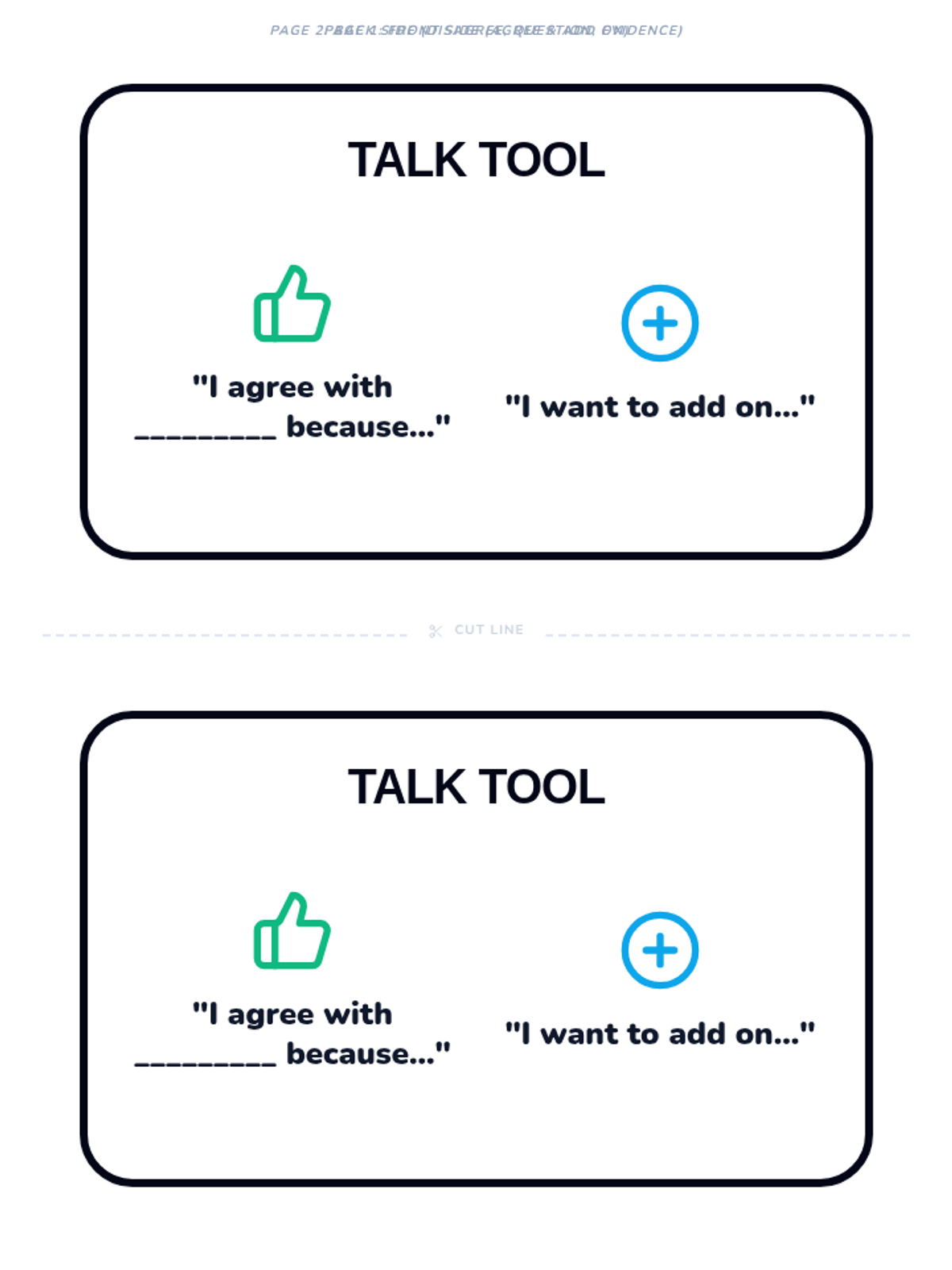
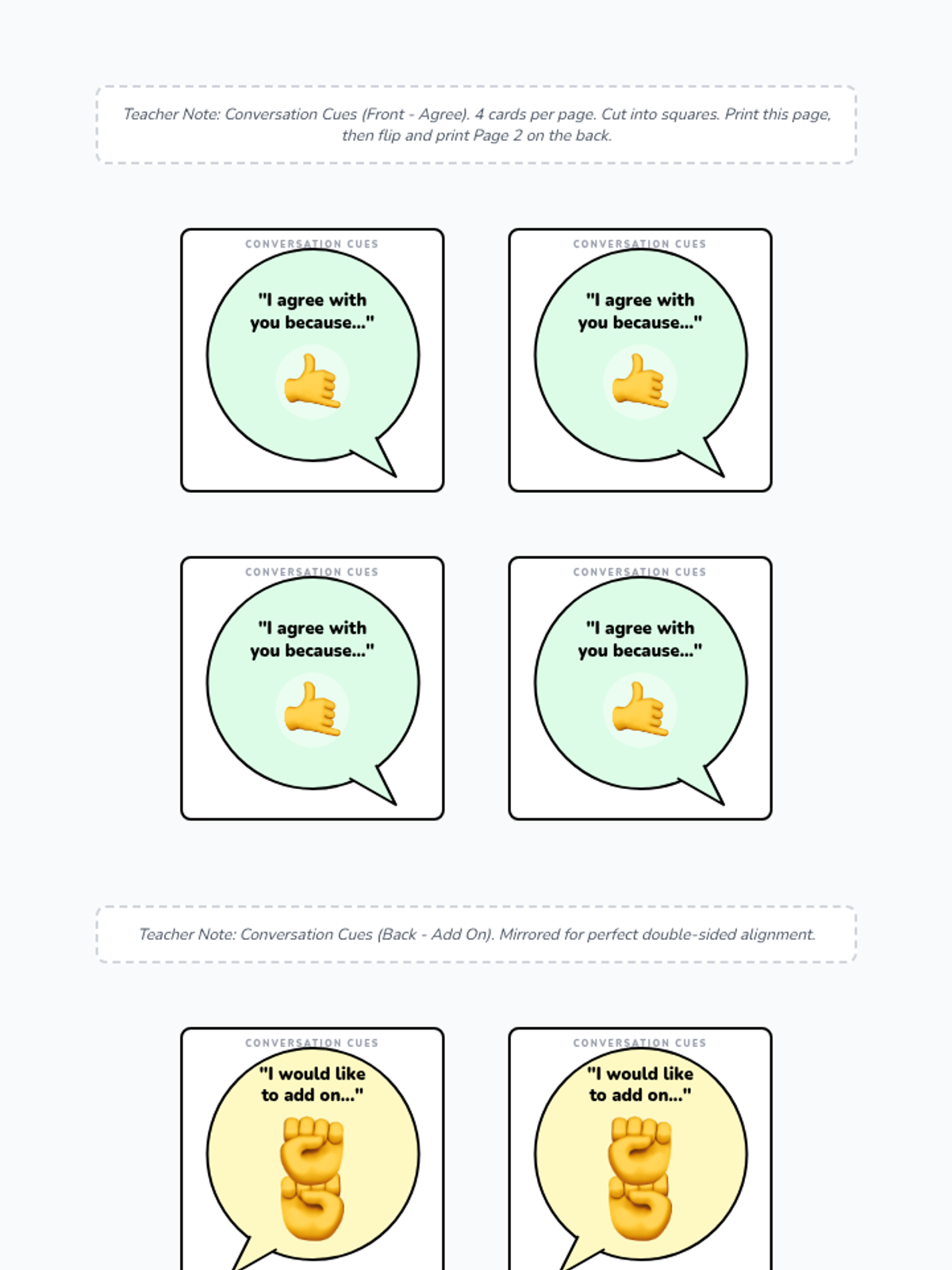
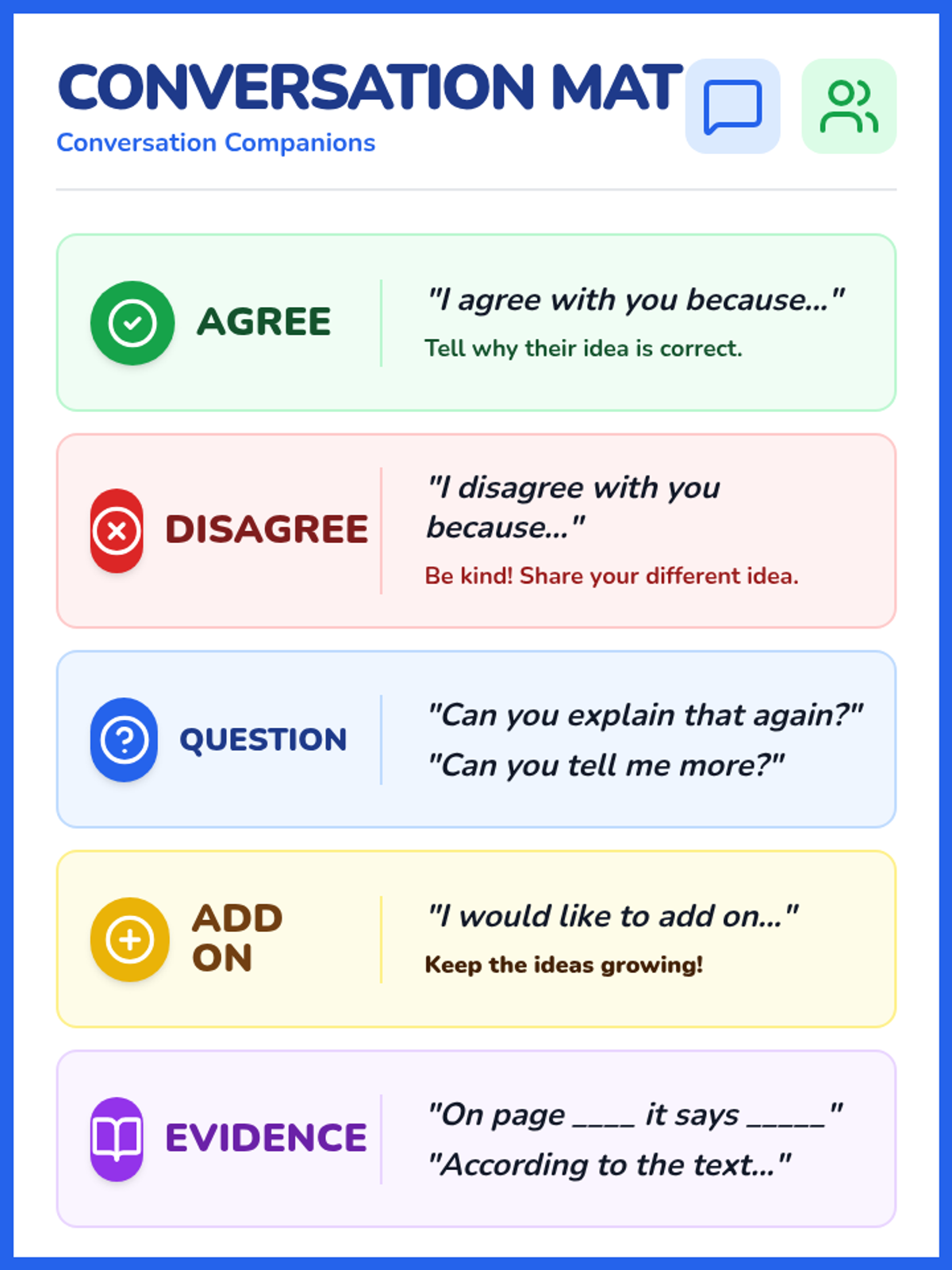
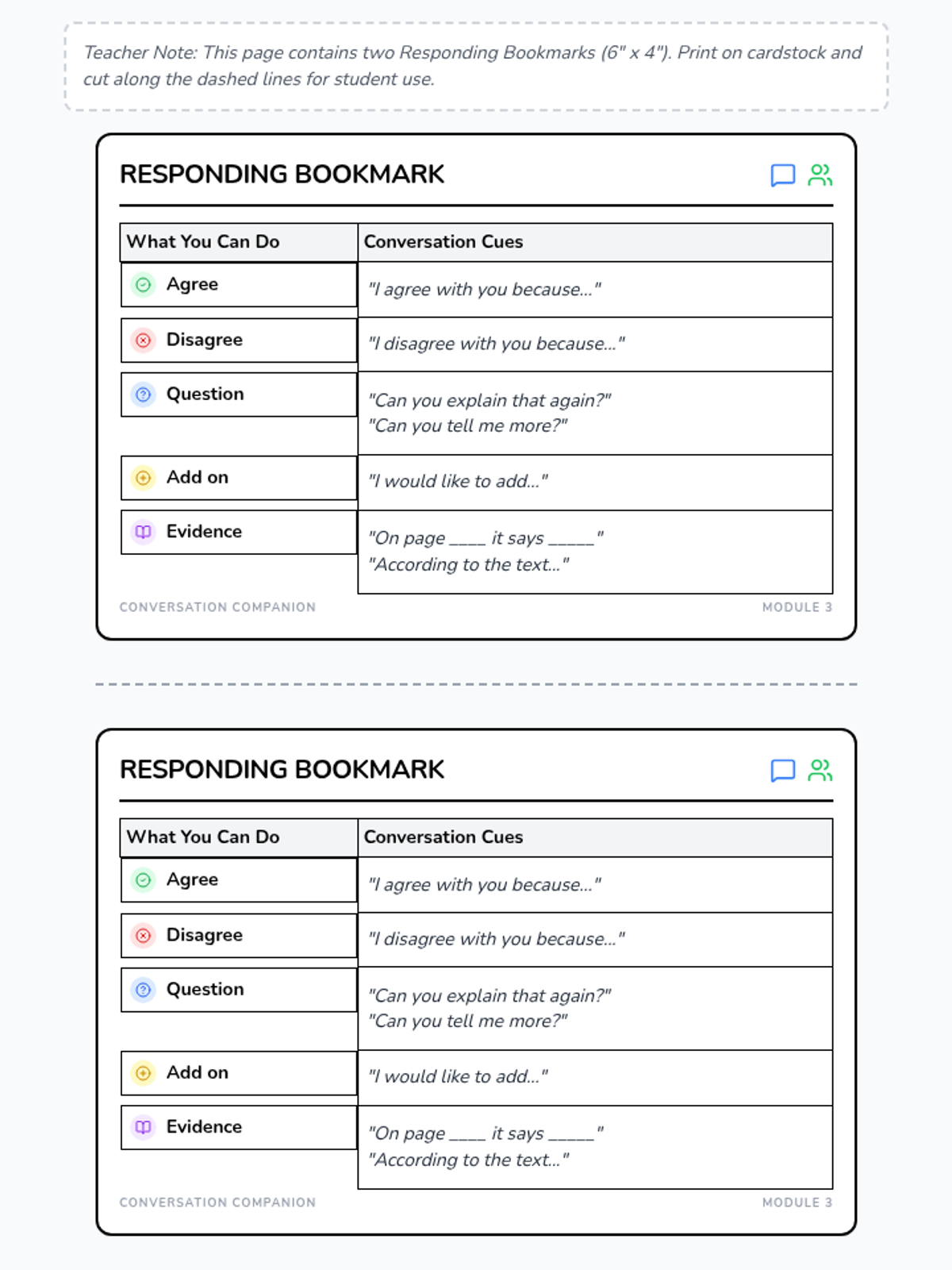
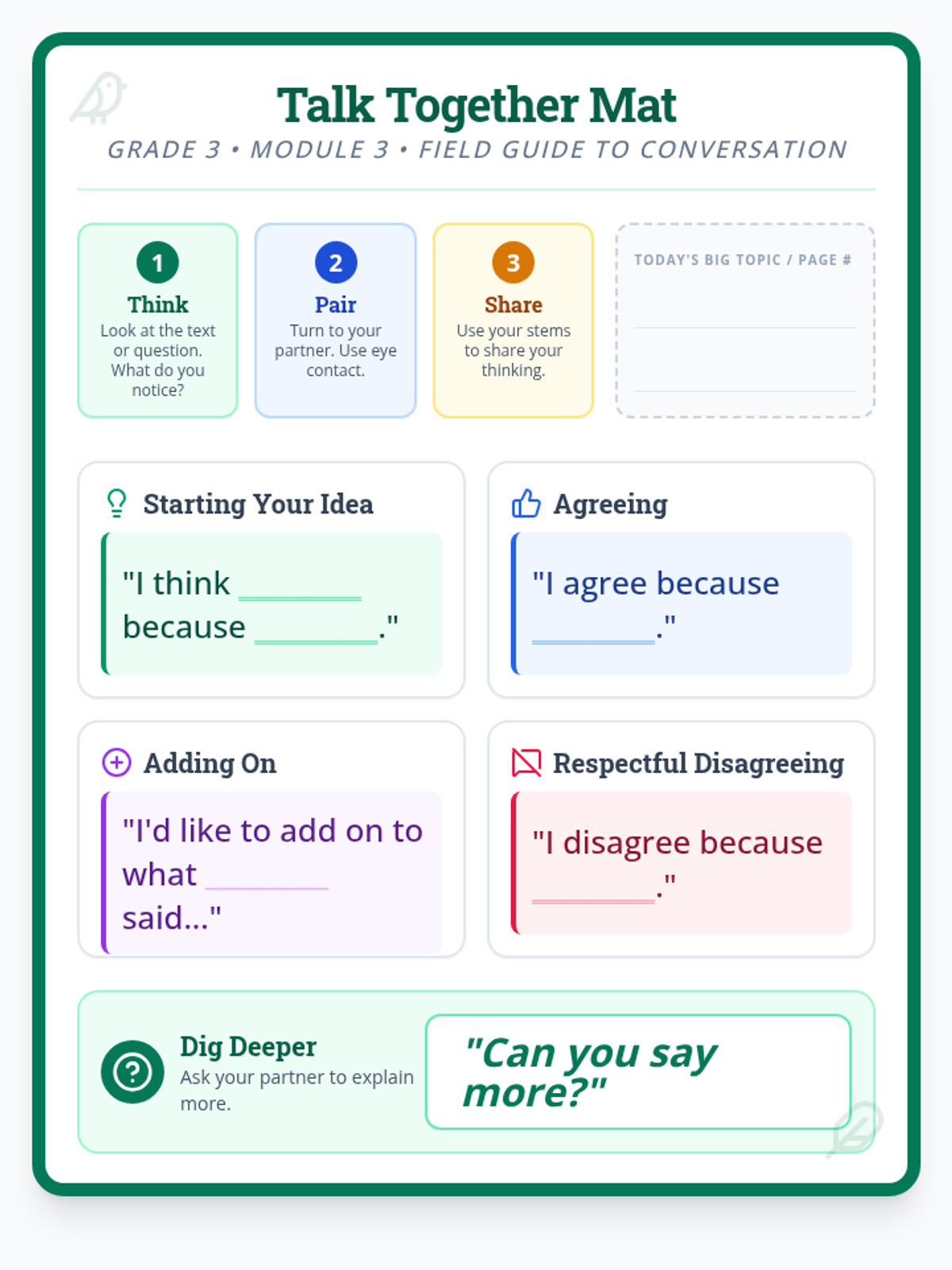
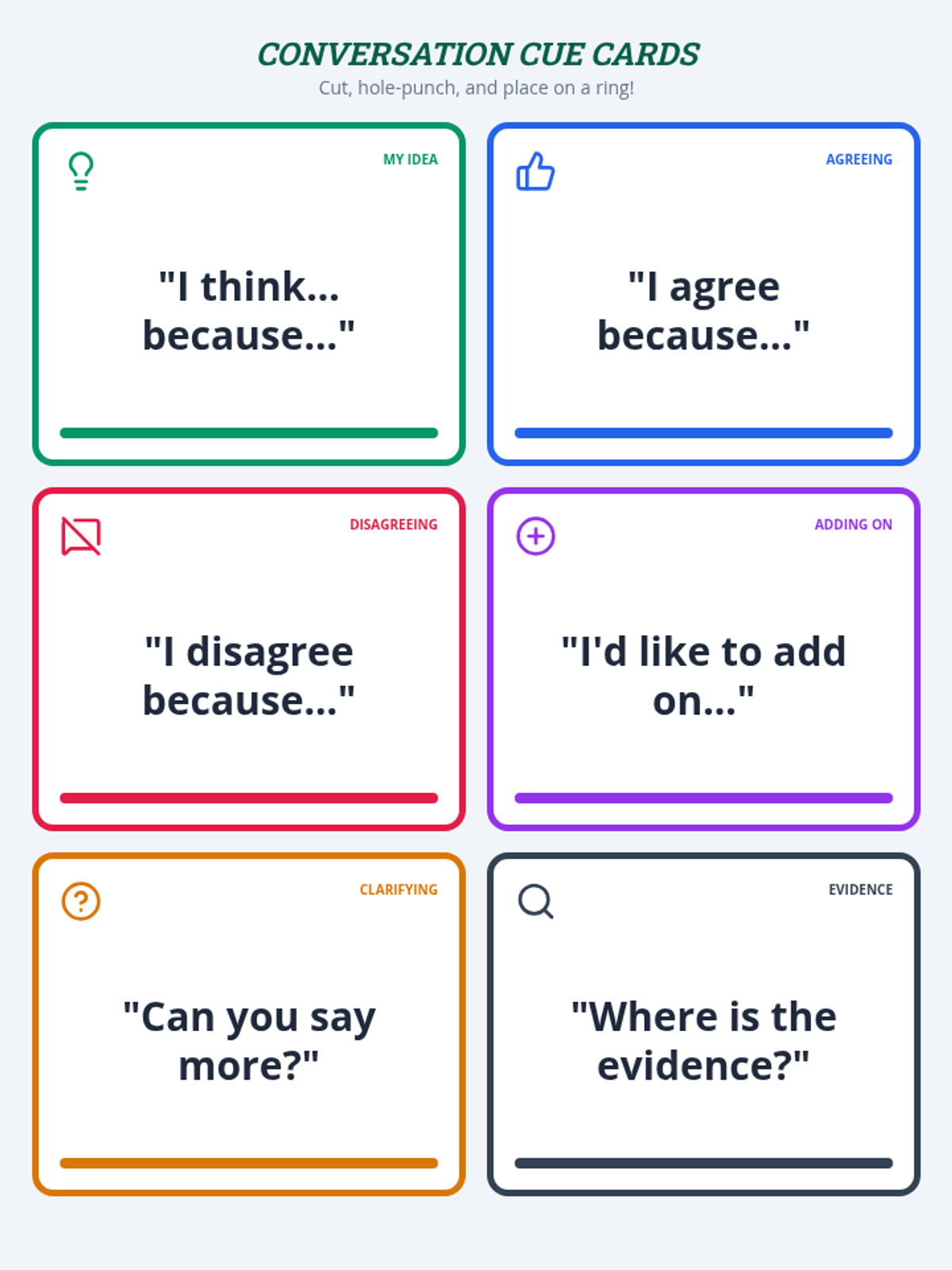
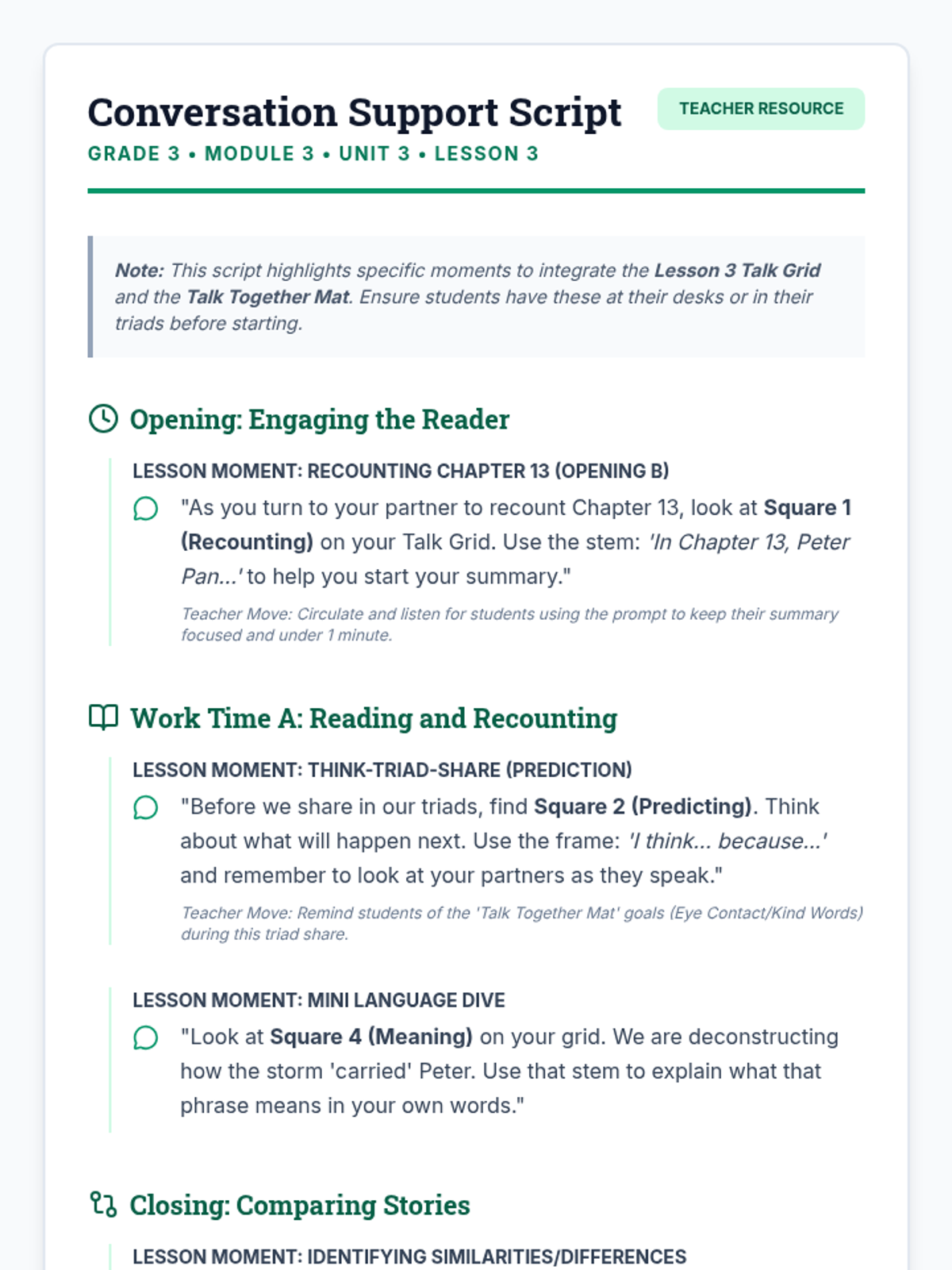
A set of visual supports designed to help 3rd-grade students engage in meaningful academic conversations during EL Education Module 3 lessons. Includes a desktop conversation mat and a set of cue cards with specific sentence stems for peer interaction.
A deep dive into the construction of strong body paragraphs and the art of the counterargument and refutation.
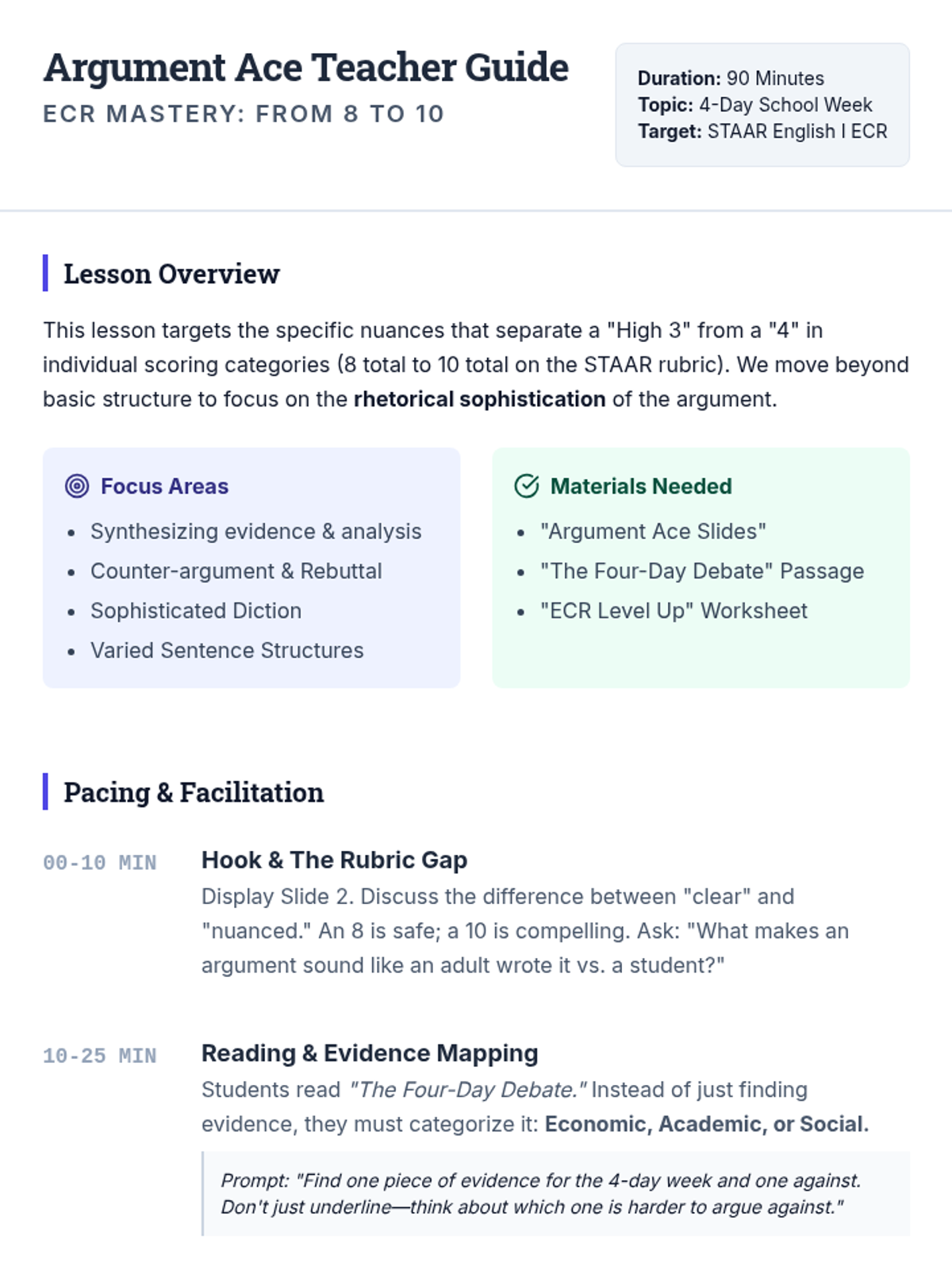
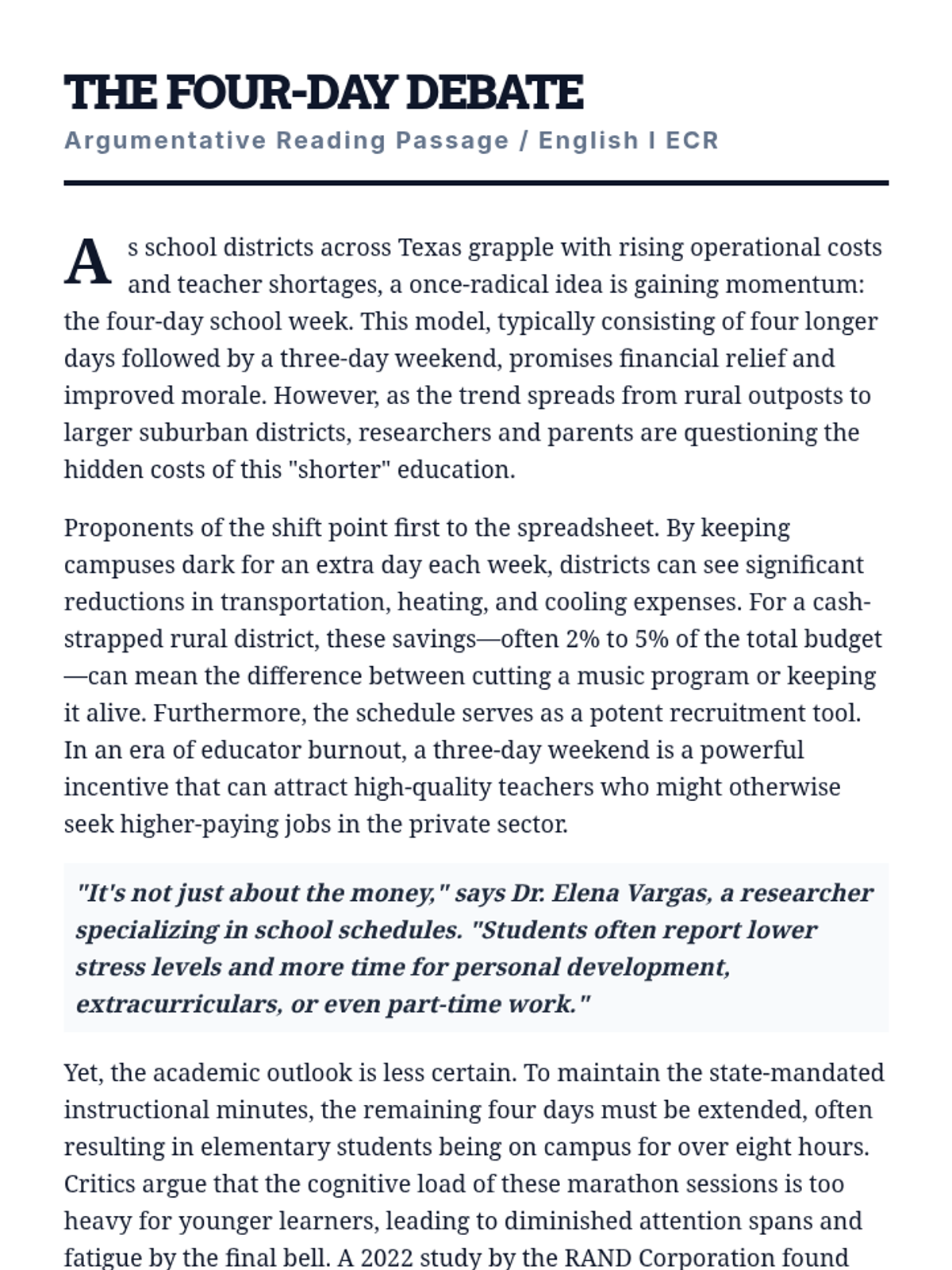
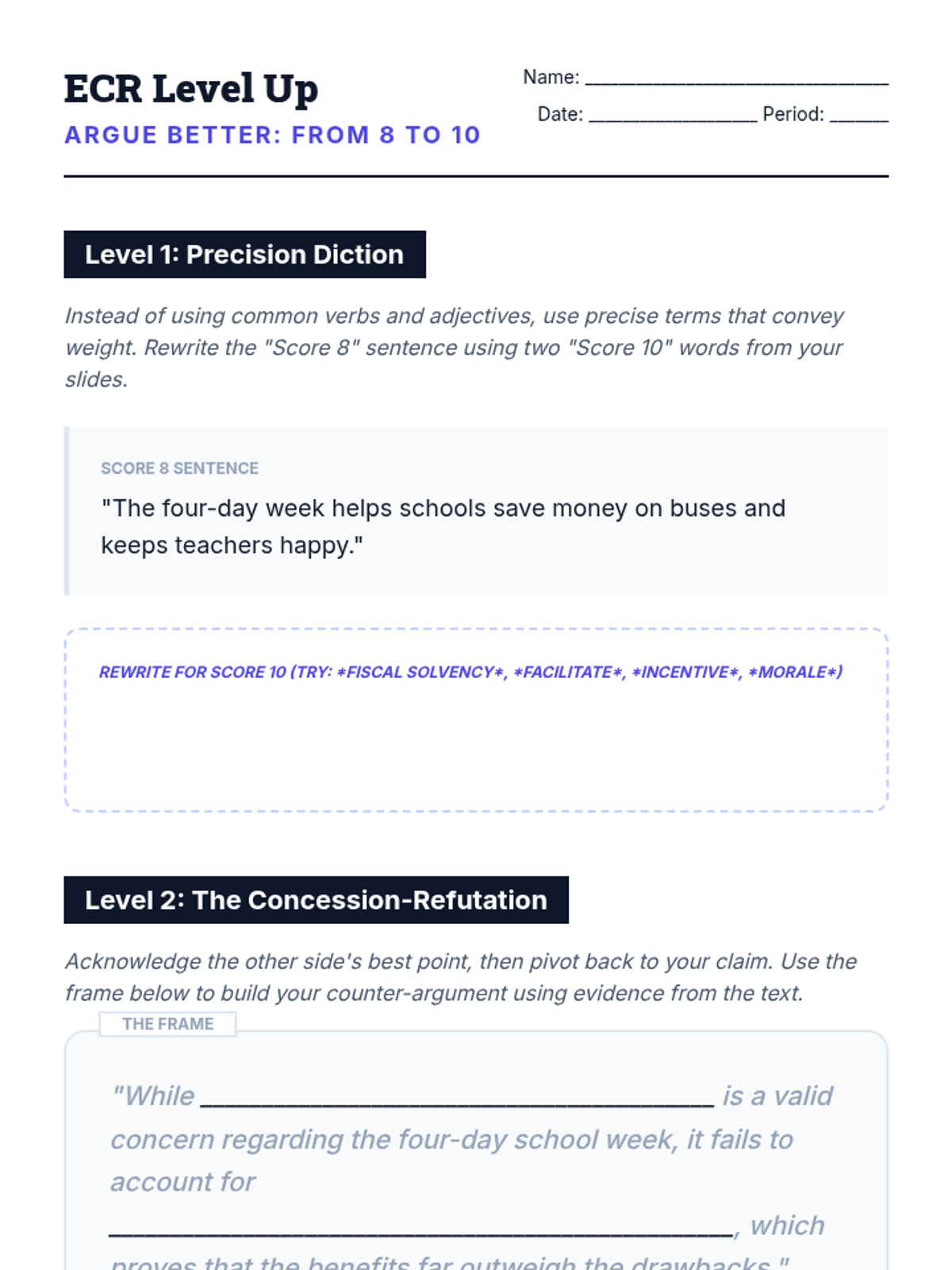
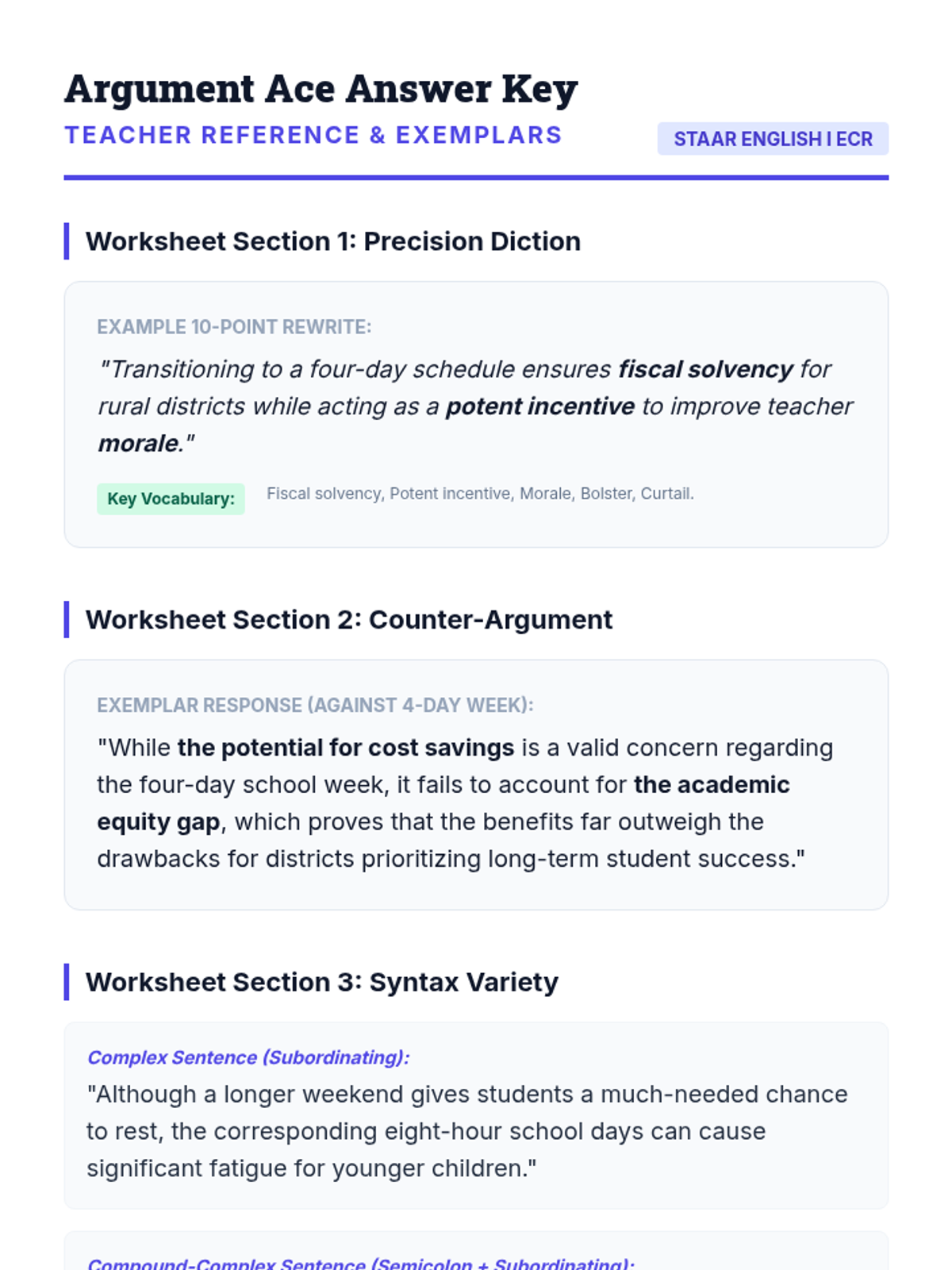
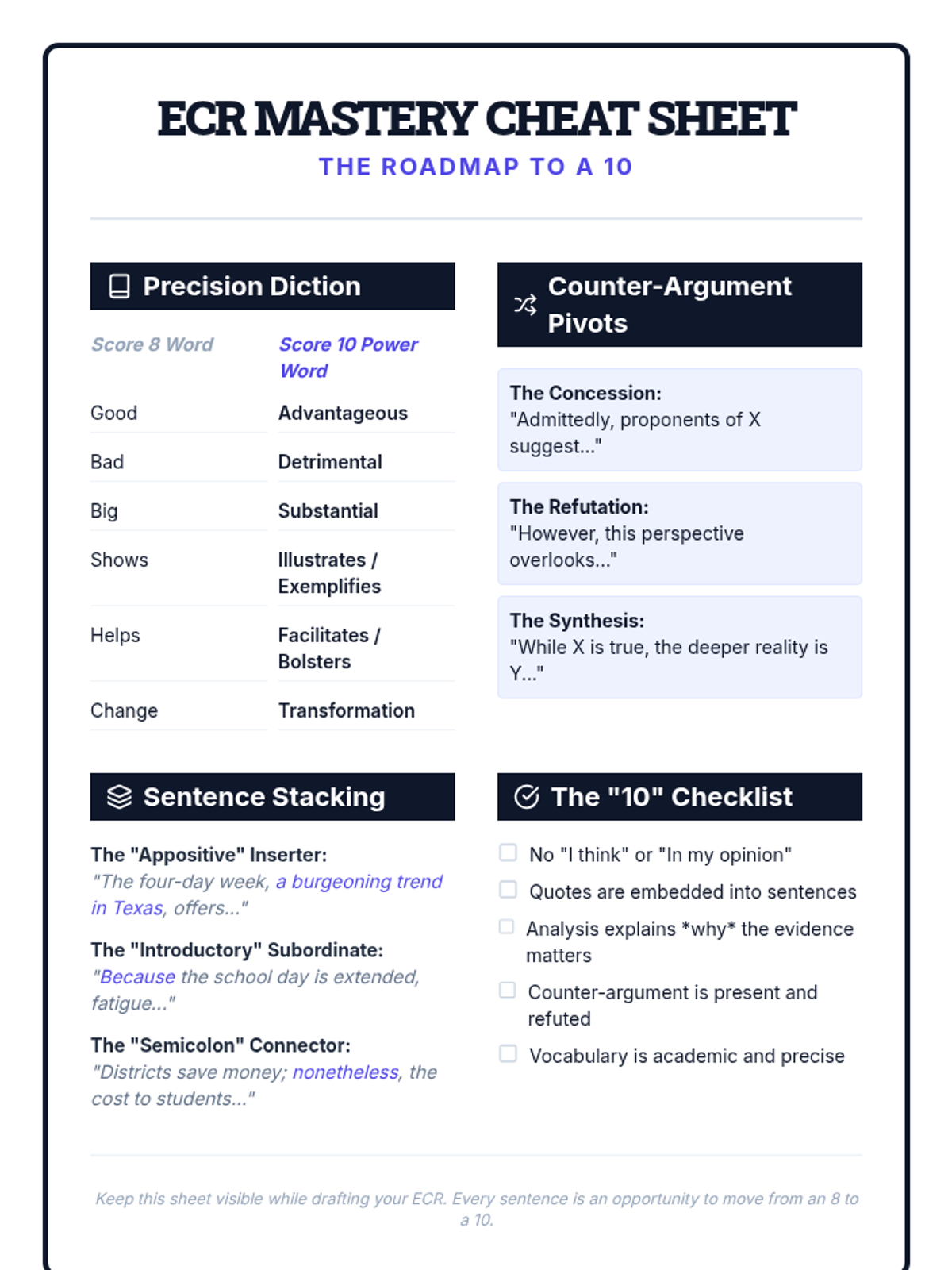
A 90-minute intensive lesson designed to bridge the gap between proficient (8) and advanced (10) scores on the Texas English 1 Argumentative ECR, focusing on counter-arguments, syntax, and sophisticated word choice.
A set of visual supports designed to help students engage in meaningful academic conversations during EL Education Module 3 lessons. Includes a desktop conversation mat and a set of cue cards with specific sentence stems for peer interaction.
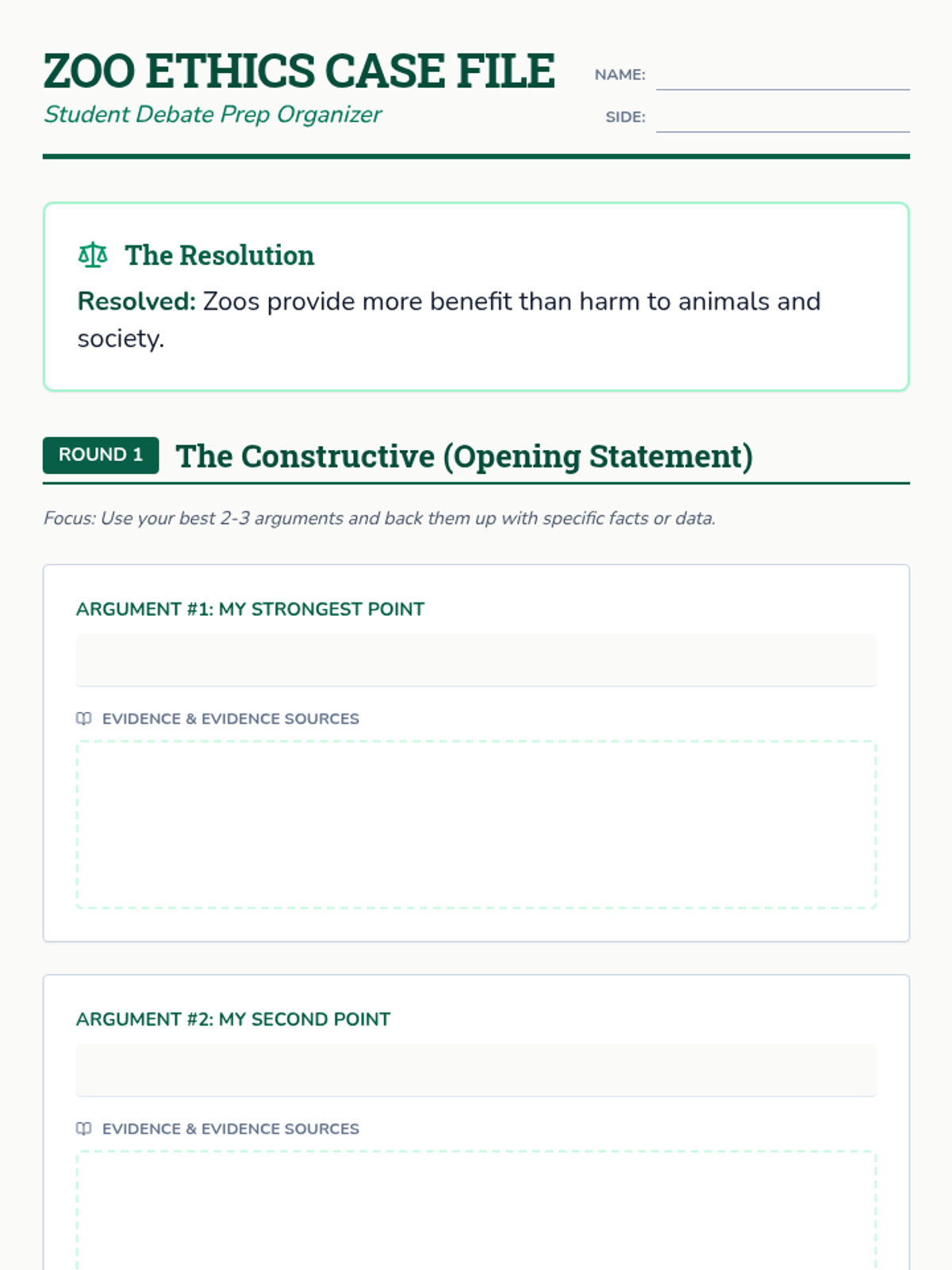
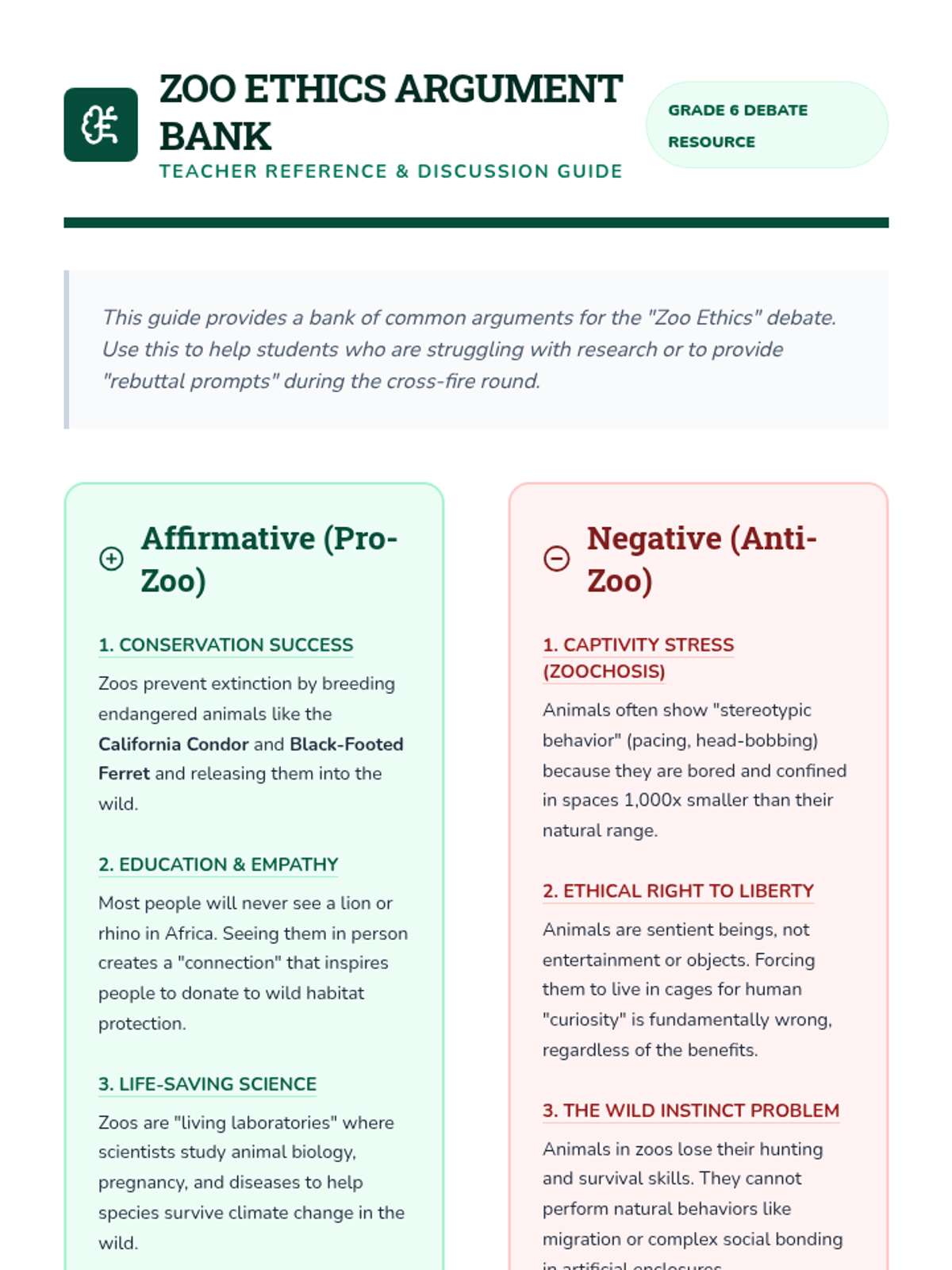
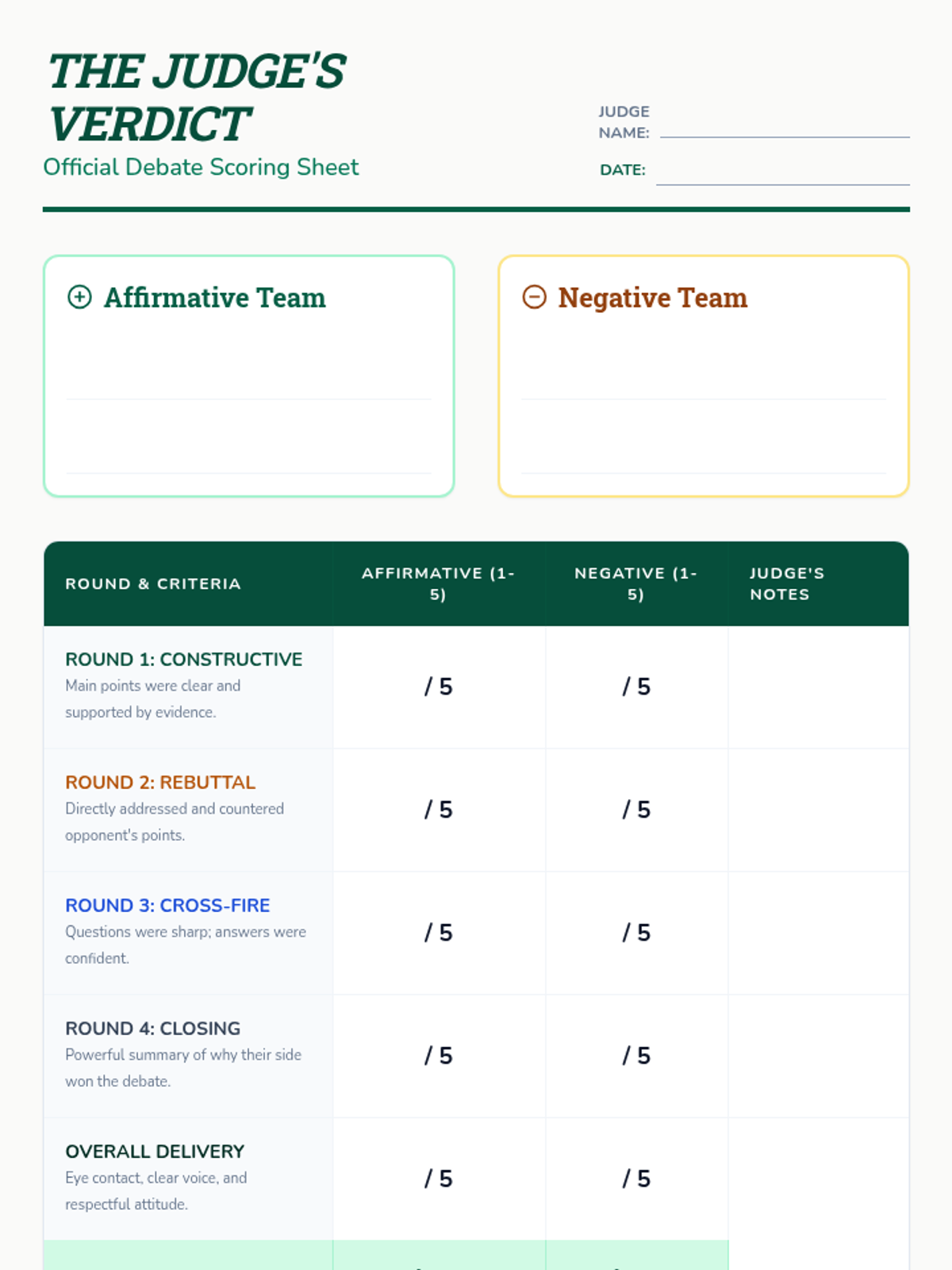
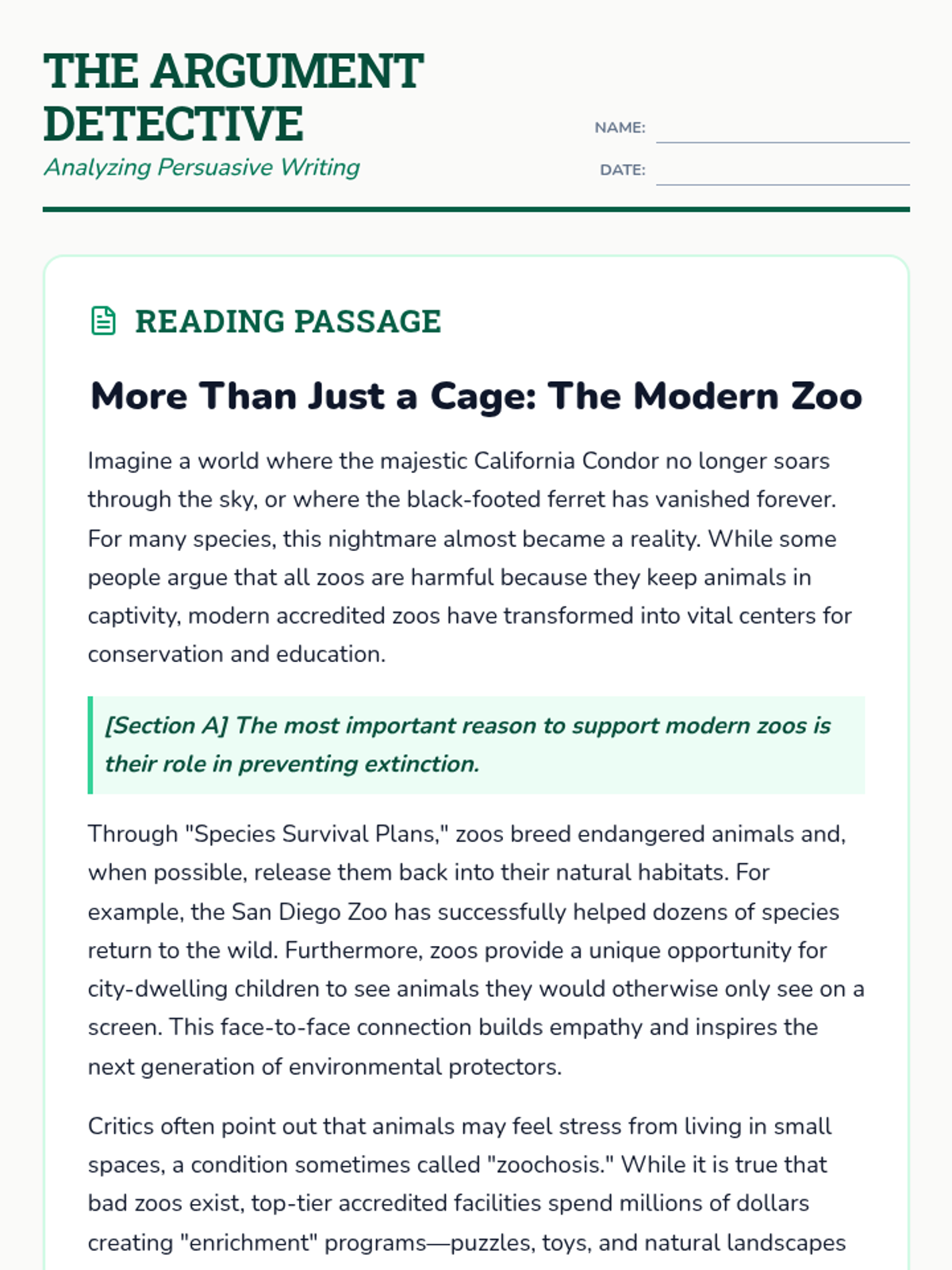
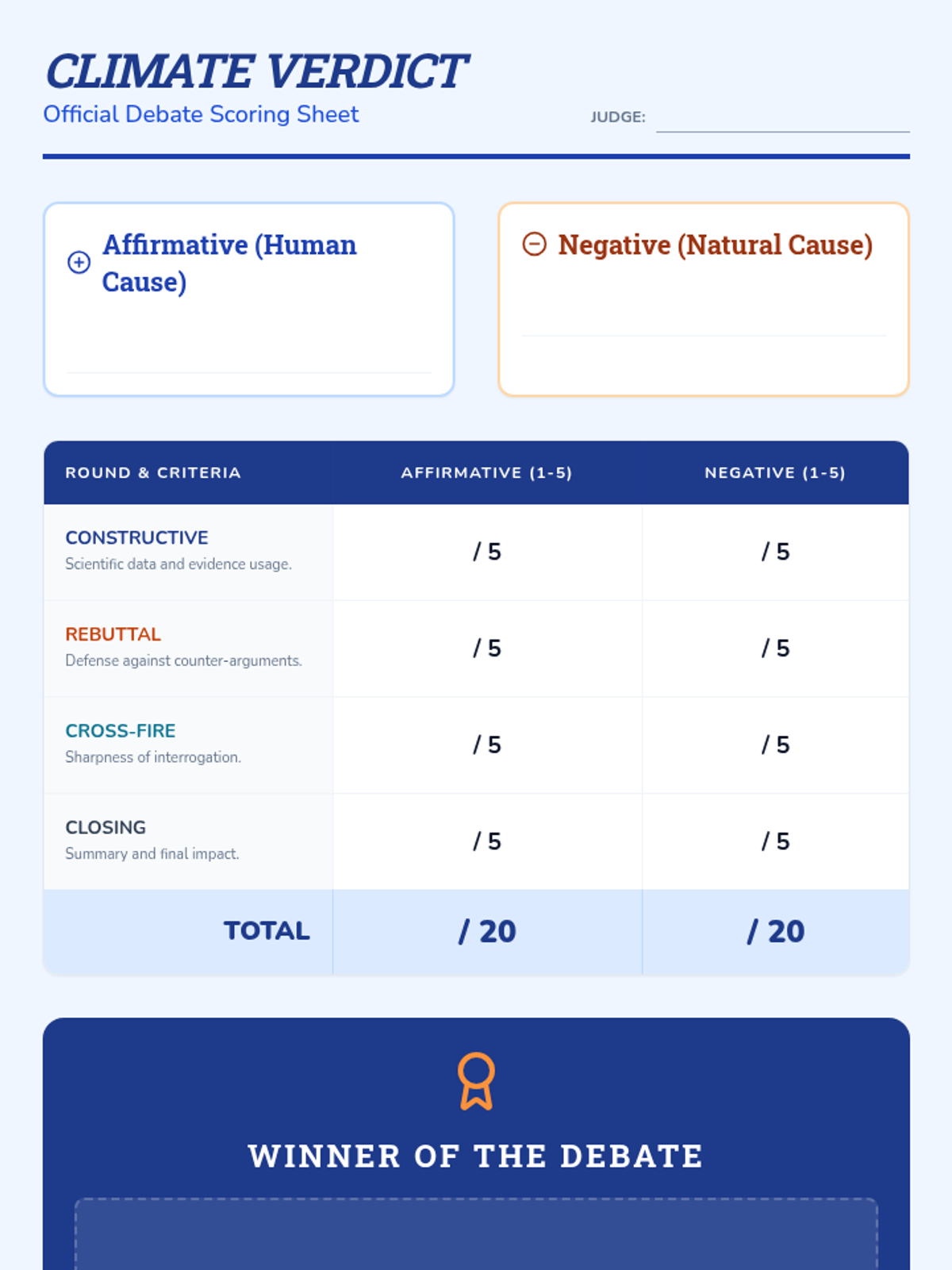
A comprehensive guide and set of tools for 6th-grade students to prepare for and execute a formal debate on the ethics of zoos. This lesson introduces the four-round debate structure, research techniques, and rebuttal strategies.
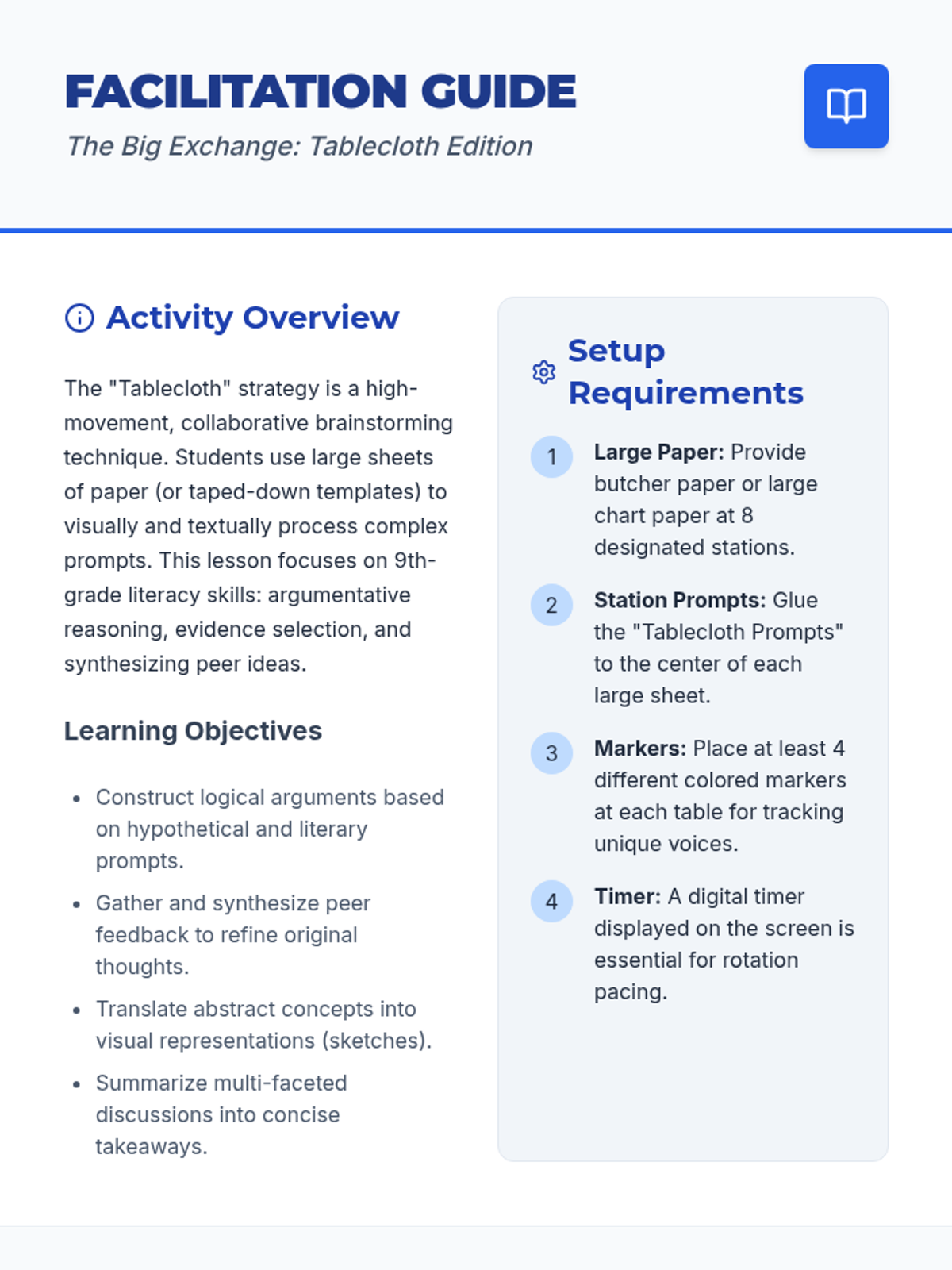
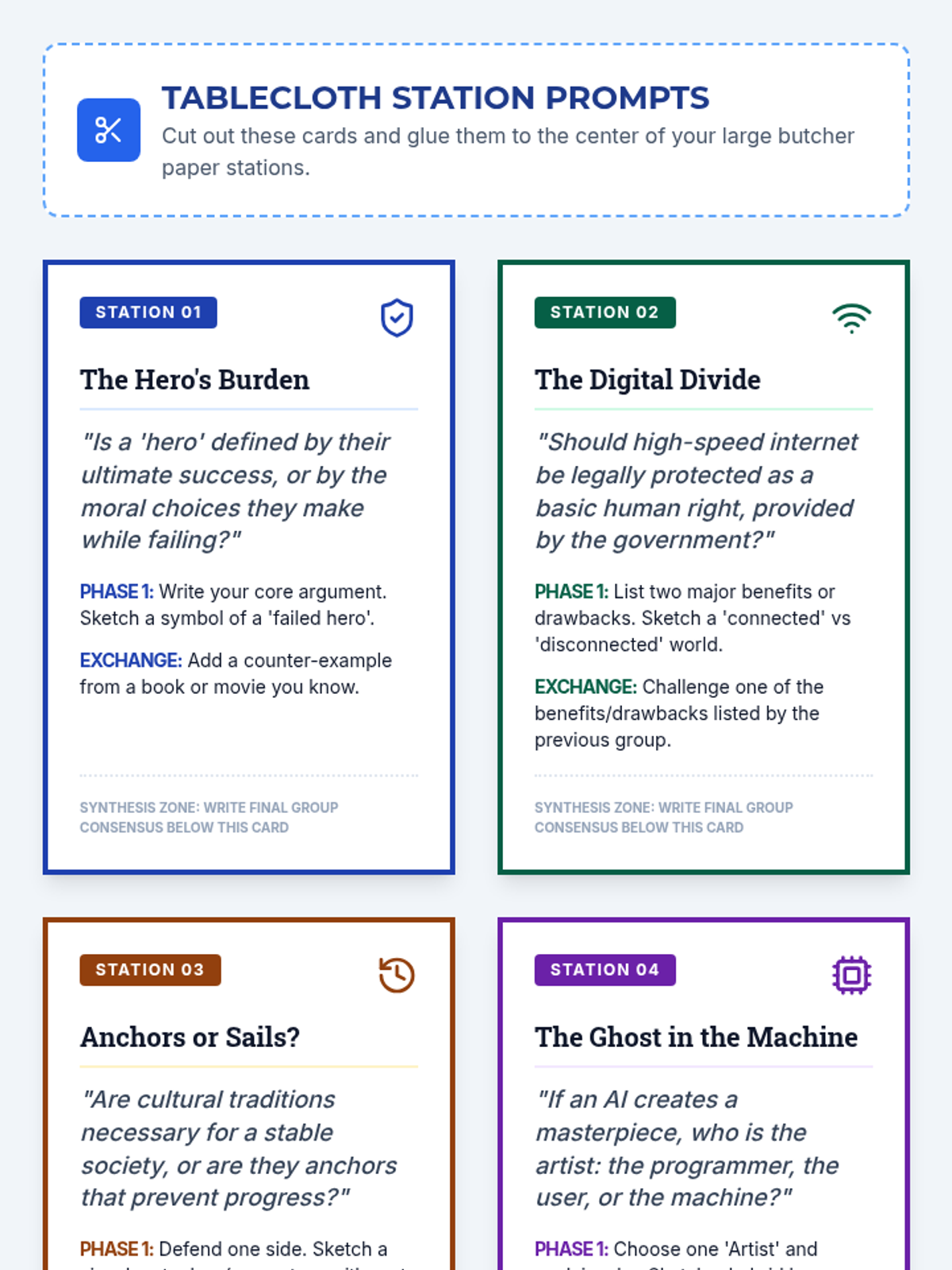
A high-energy, collaborative activity where students move between stations to engage in deep analysis, sketching, and argumentative debate on large 'tablecloth' papers.
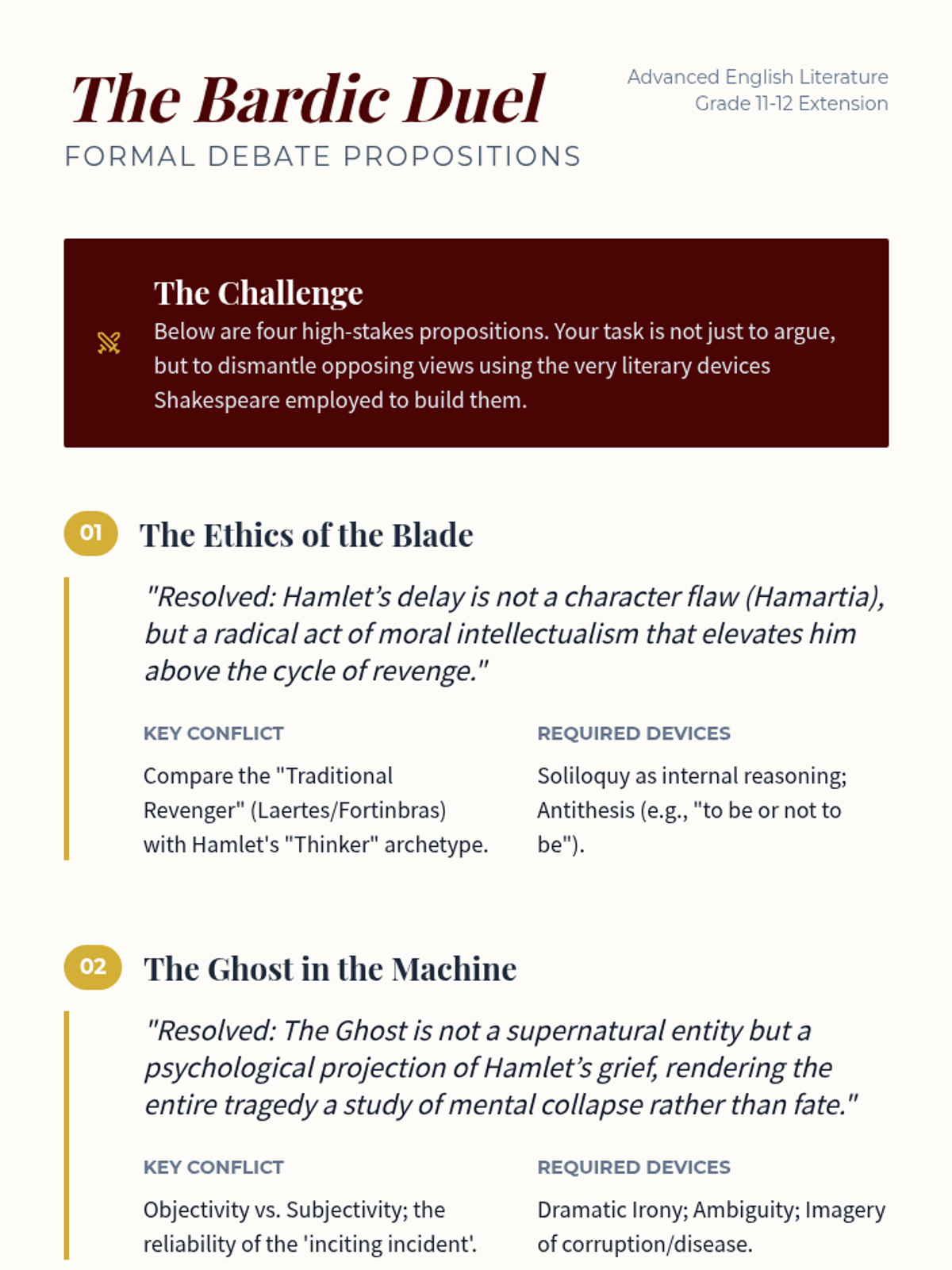
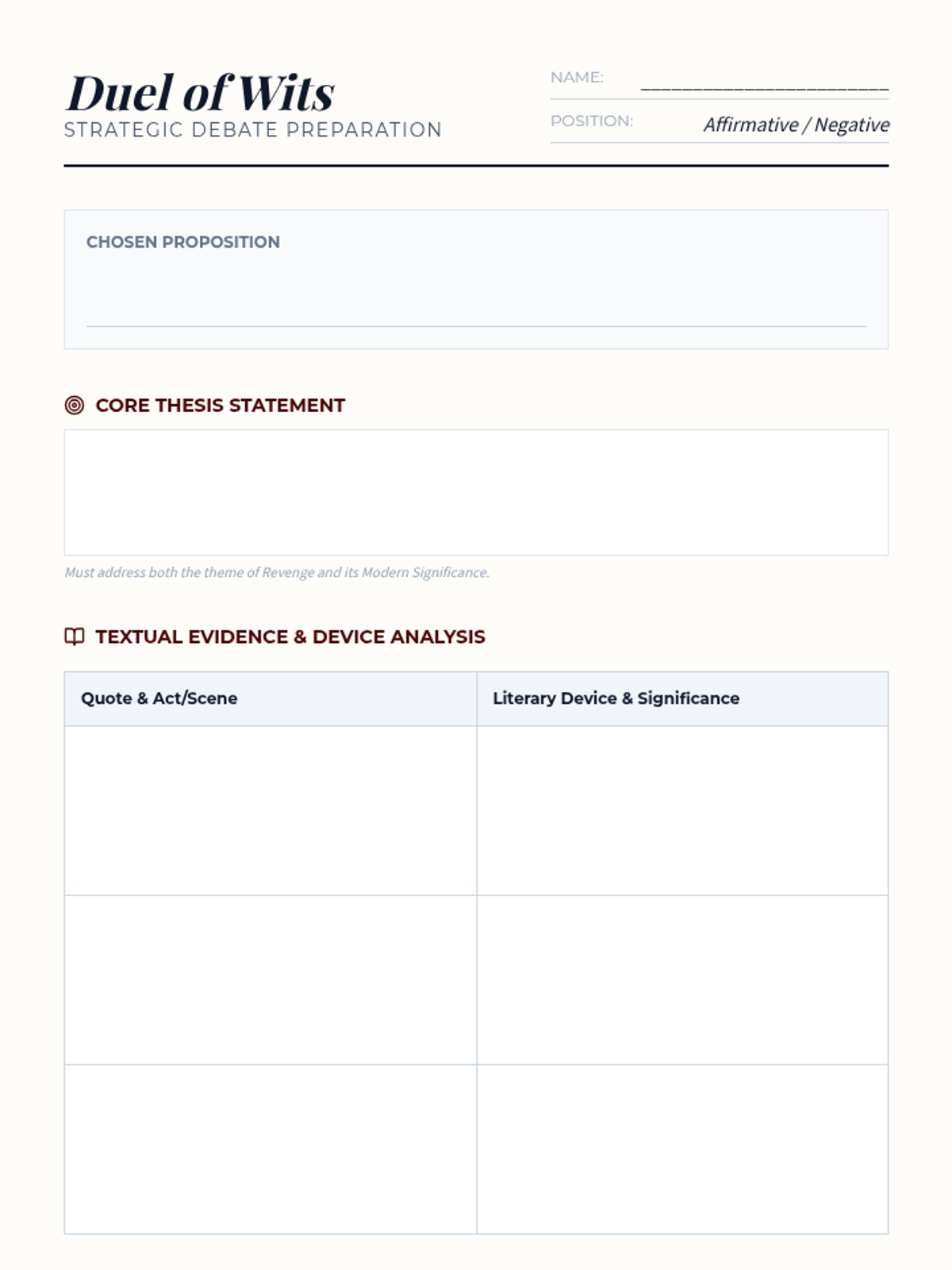
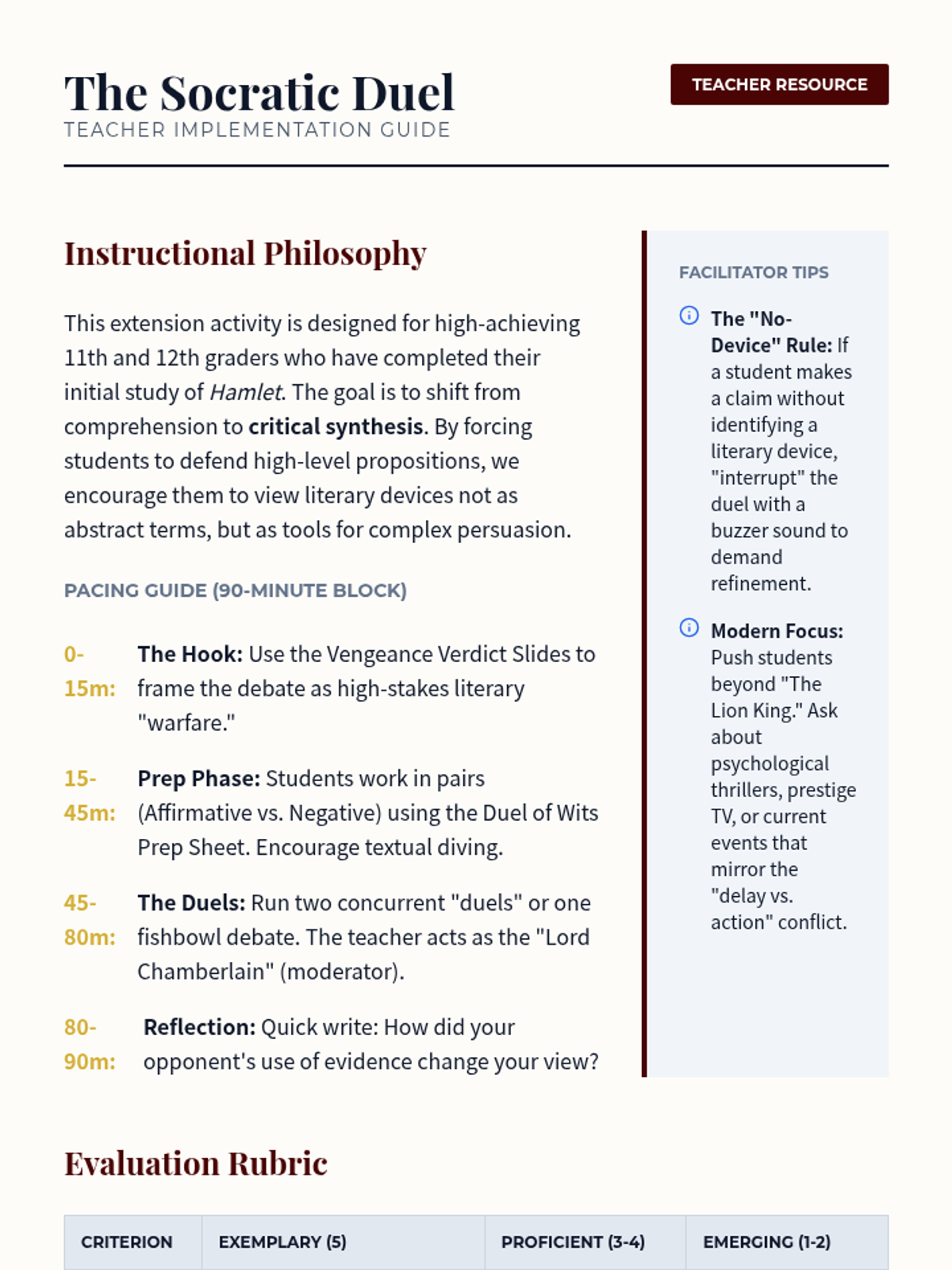
An advanced extension unit for high school seniors that uses high-stakes debate to explore revenge, literary devices, and Shakespeare's enduring legacy in modern storytelling.
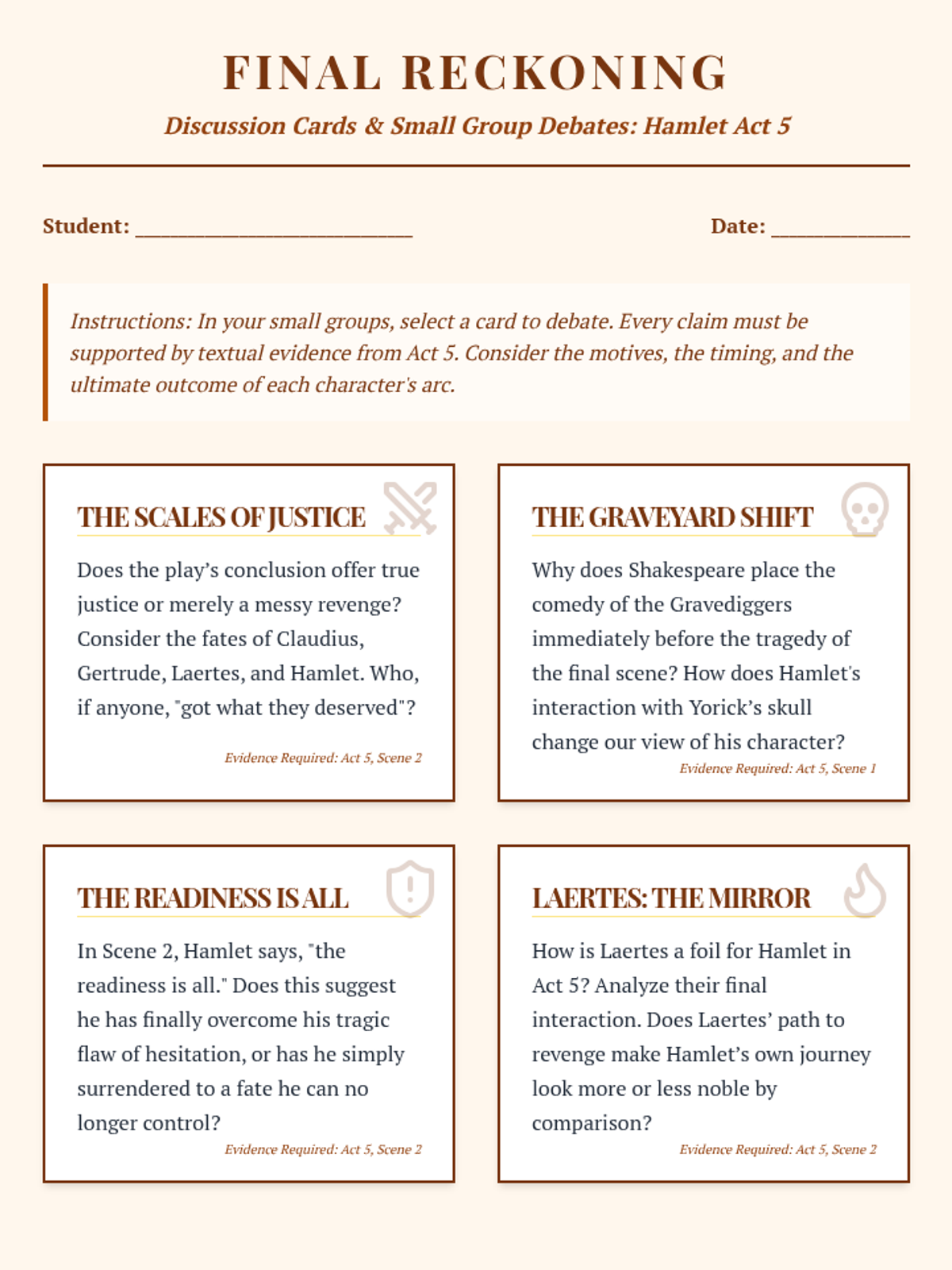
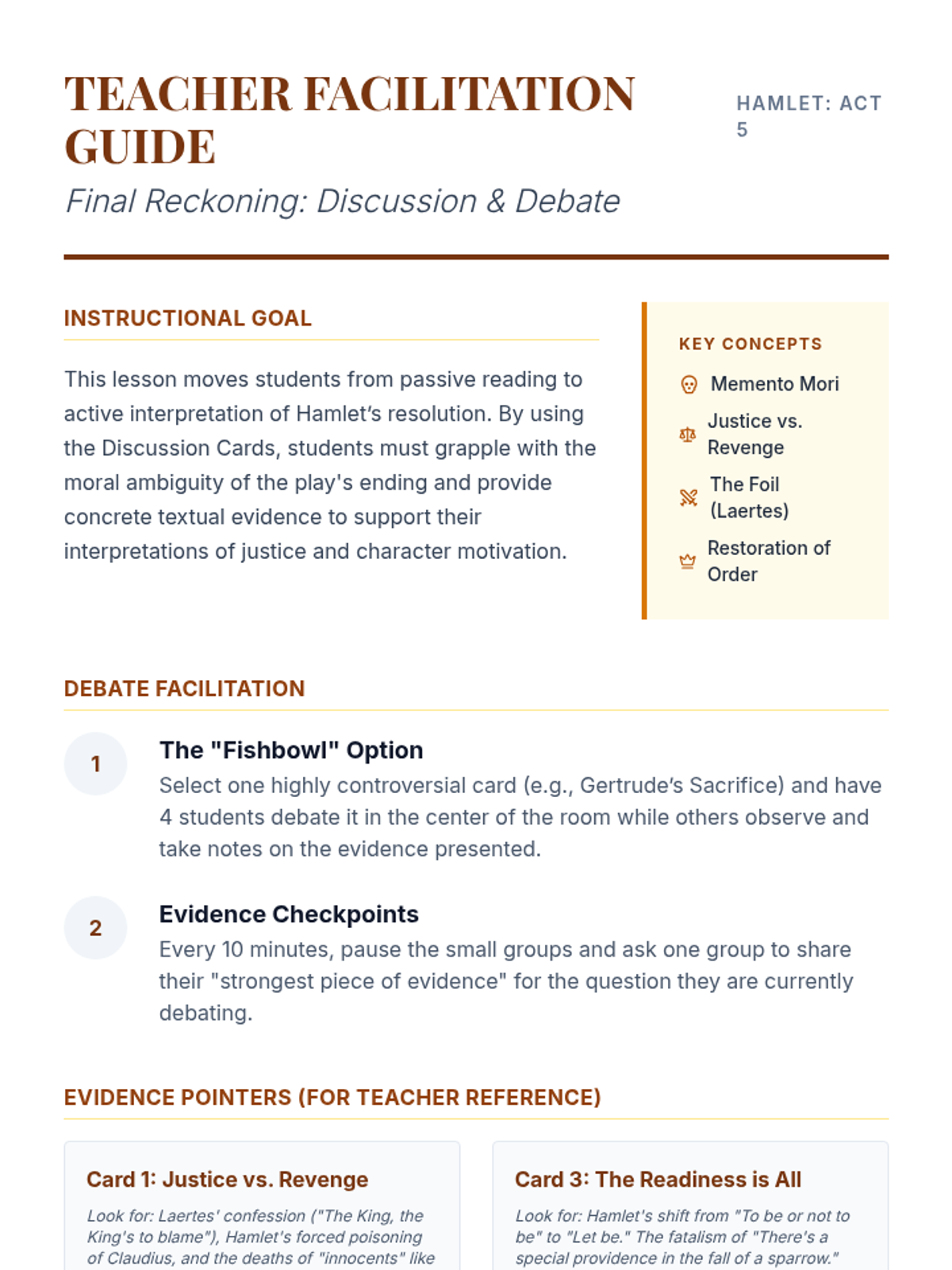
A deep dive into the climactic finale of Shakespeare's Hamlet, focusing on the themes of revenge, the nature of justice, and the ultimate resolution of Hamlet's tragic journey. Students will engage in evidence-based debates to analyze character motivations and the play's tragic conclusion.
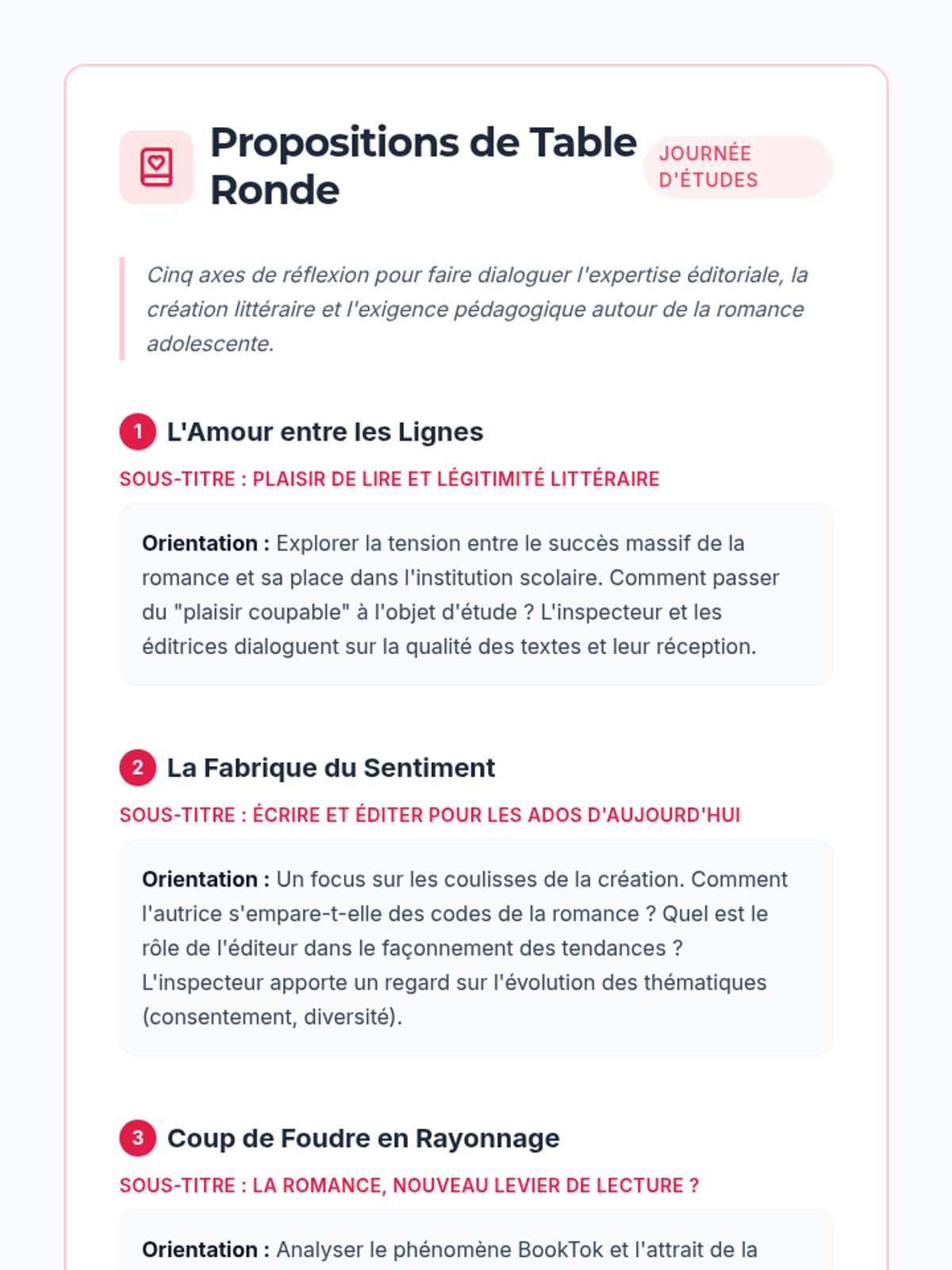
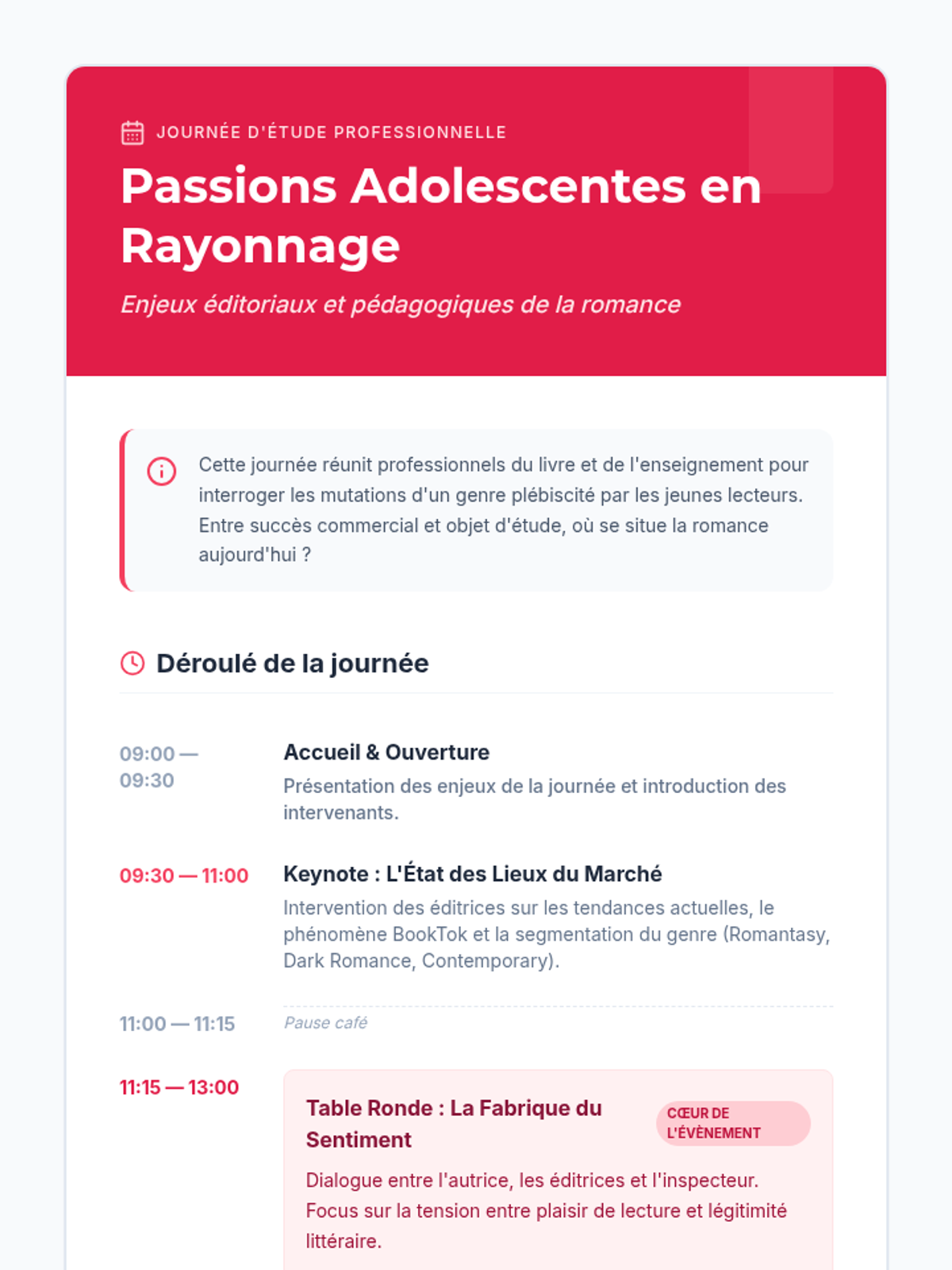
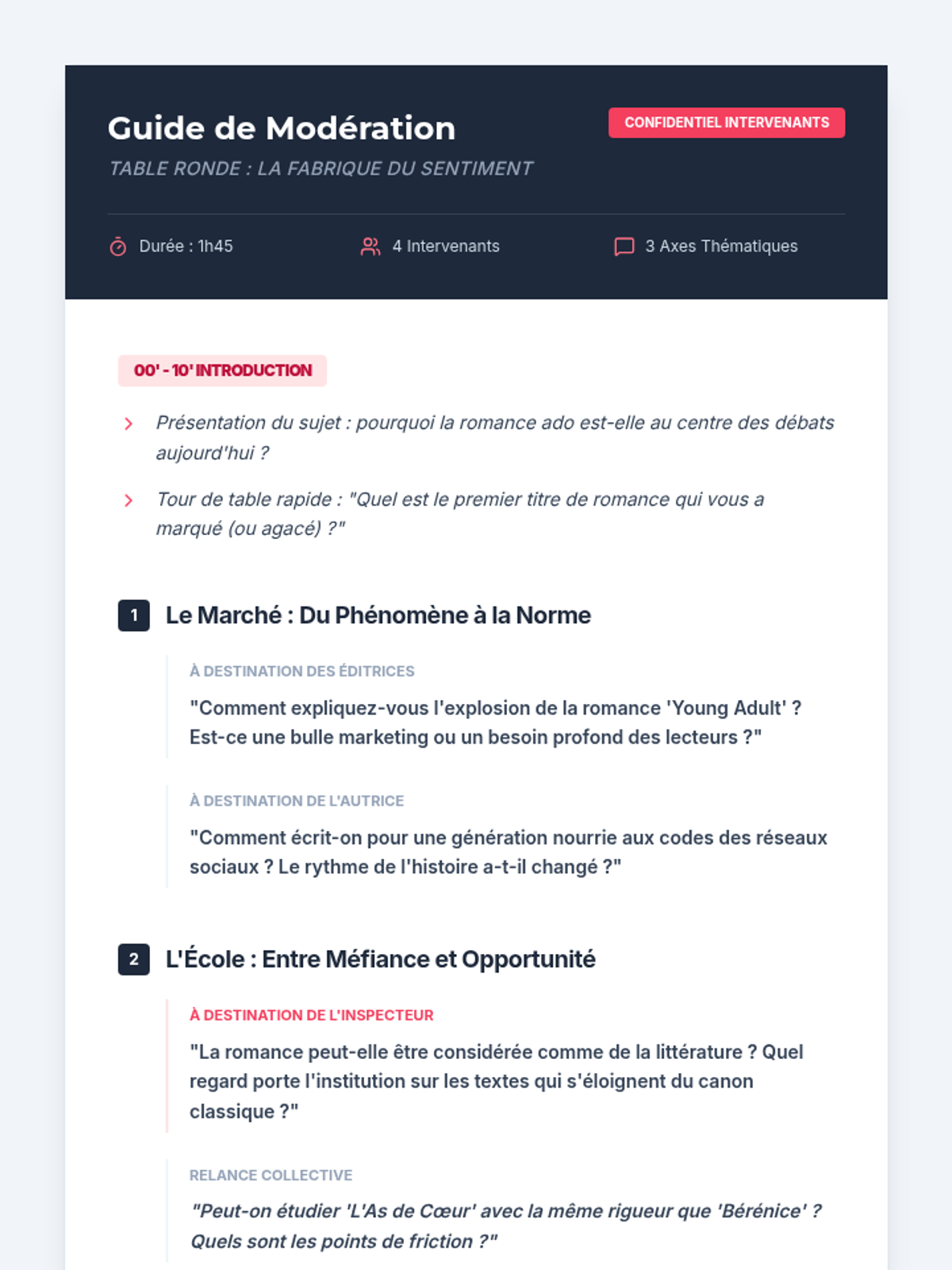
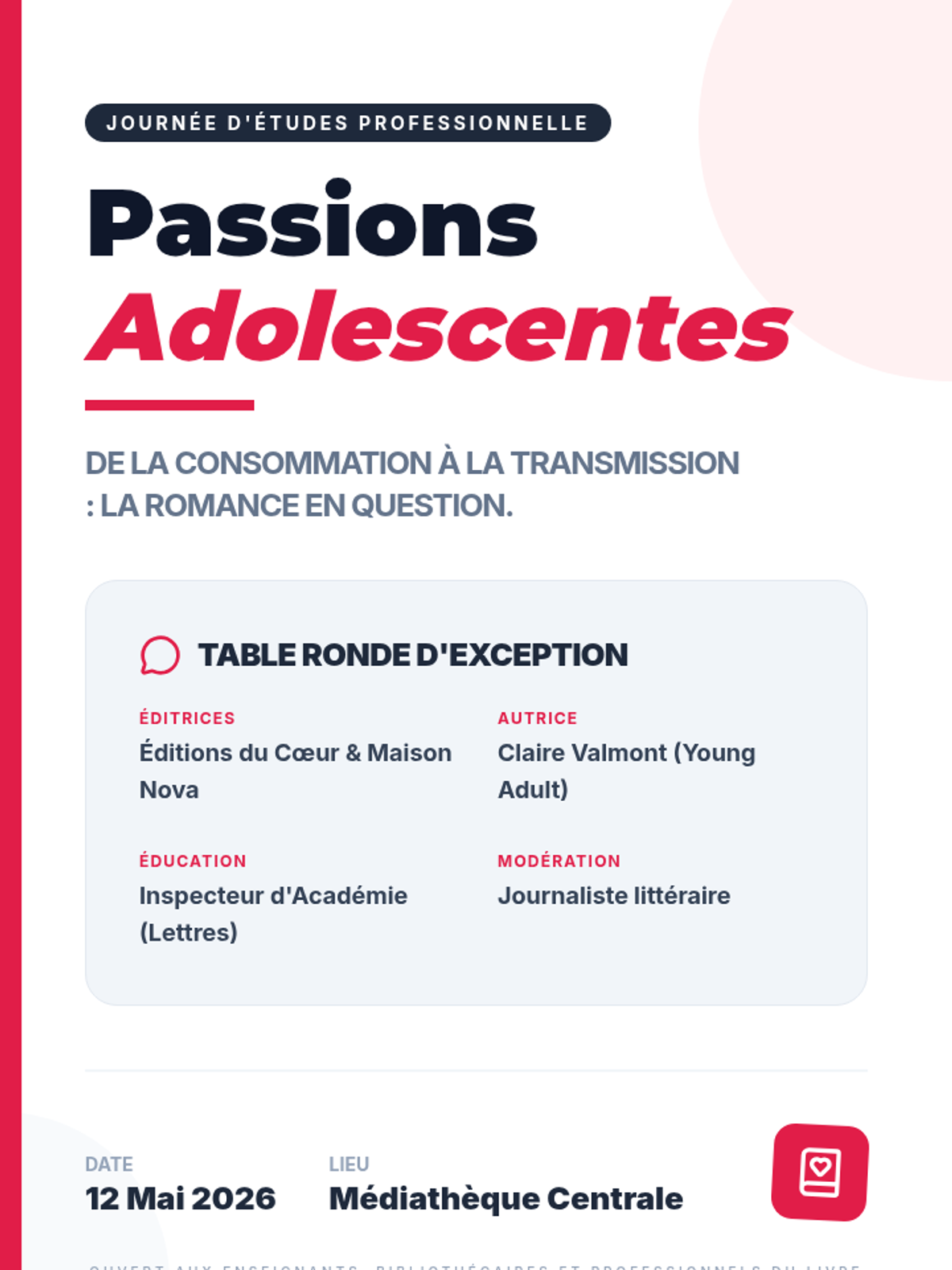
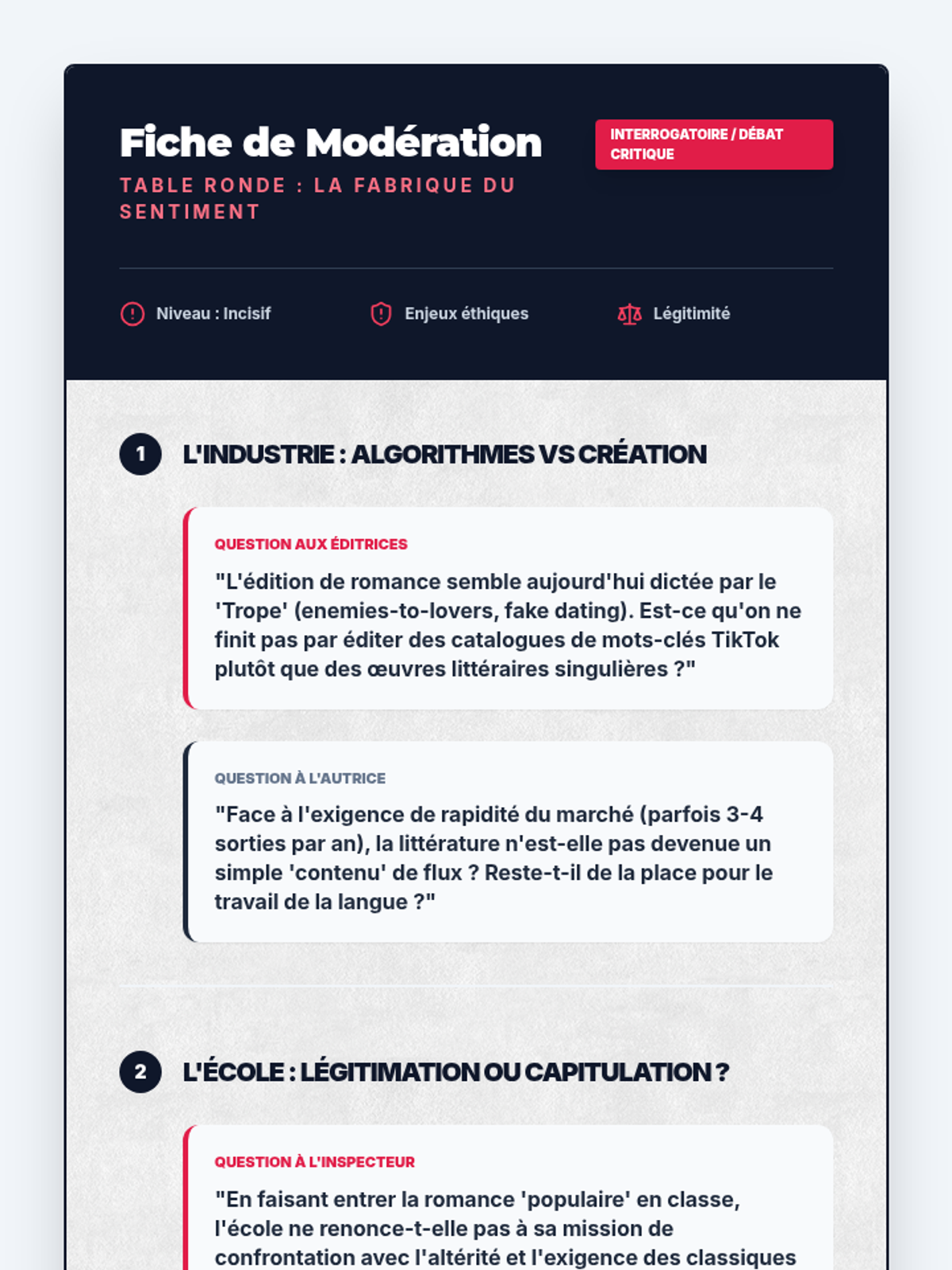
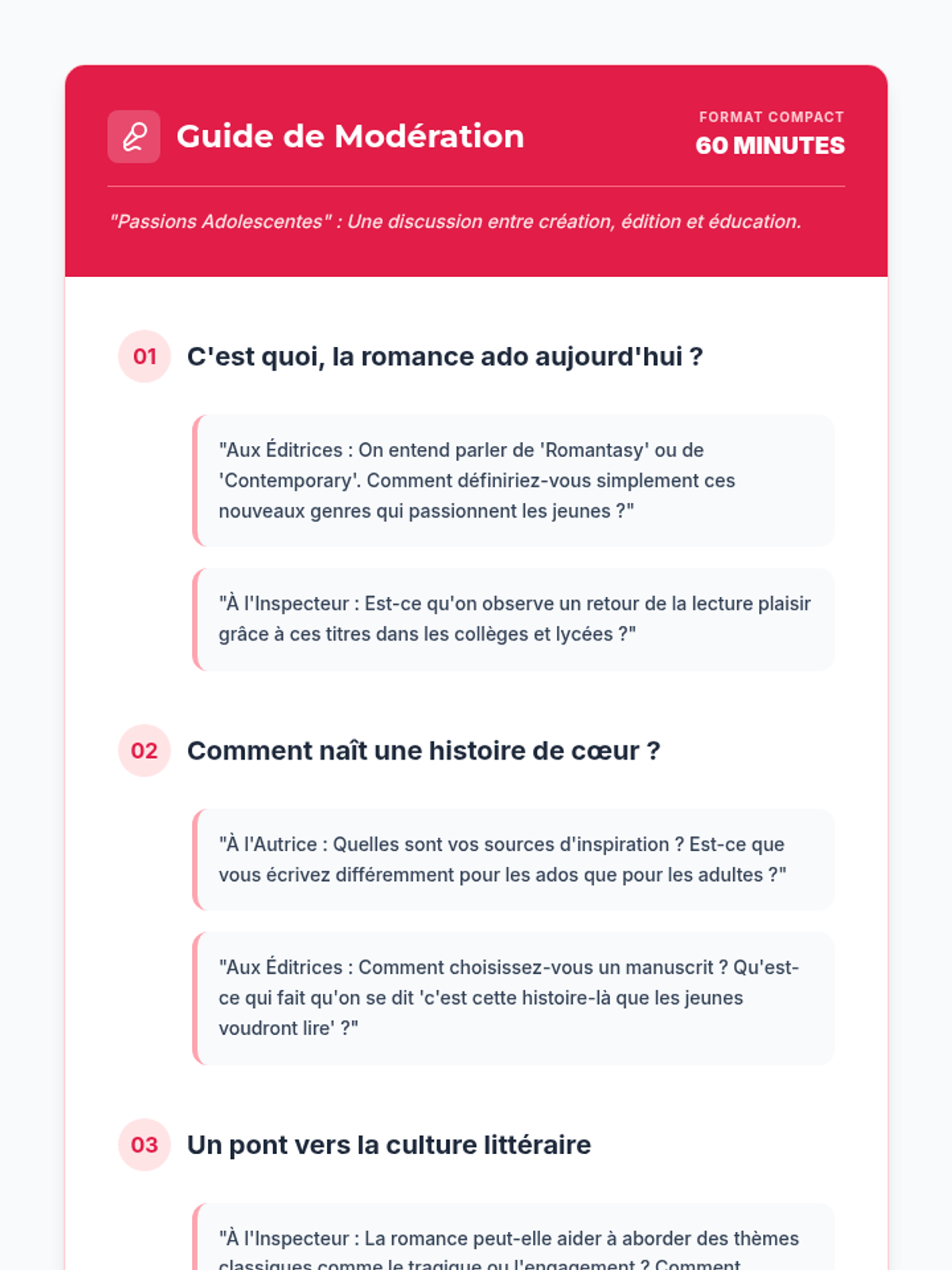
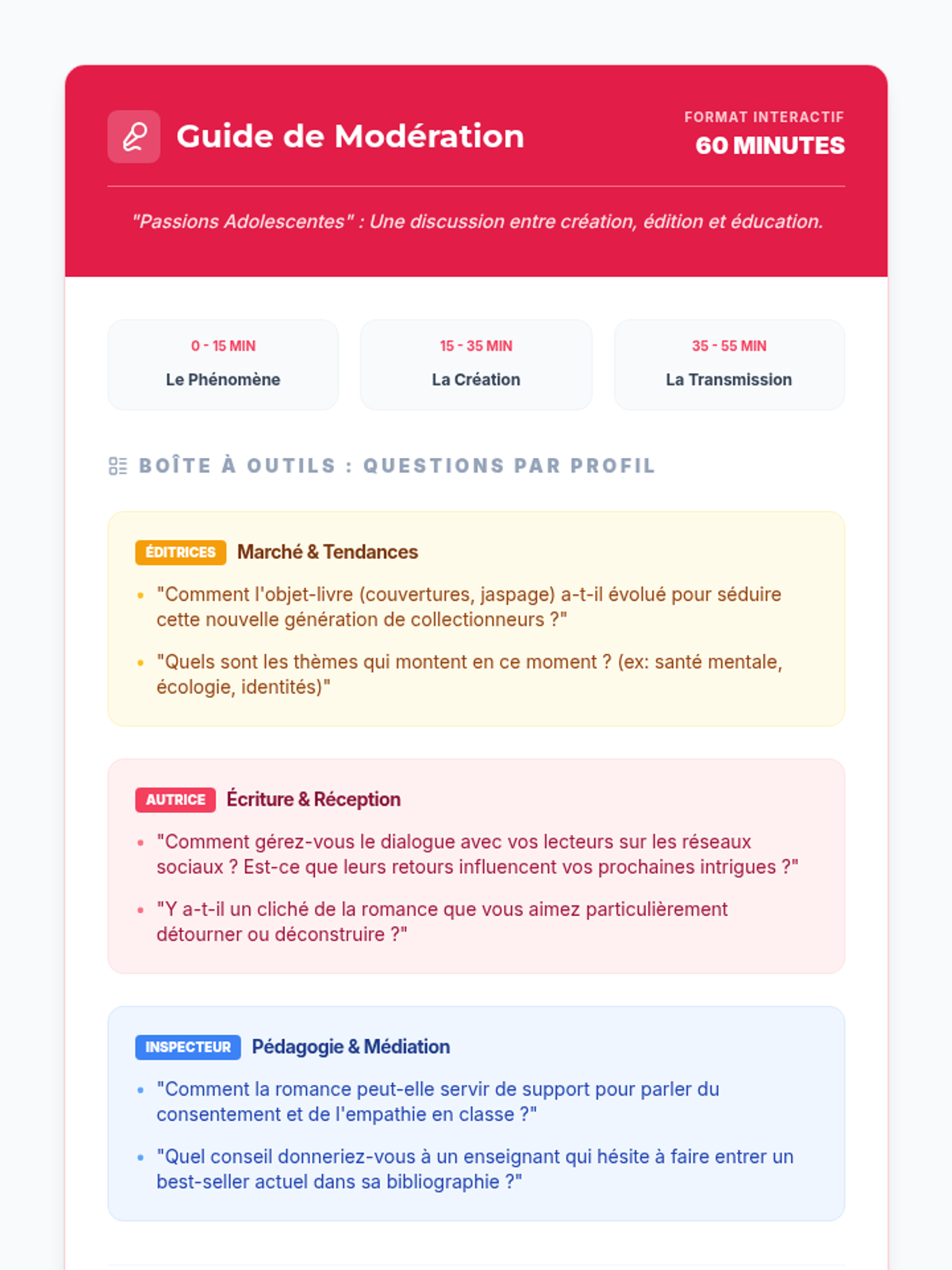
Préparation et organisation de la table ronde sur la romance adolescente avec des professionnels de l'édition et de l'éducation.
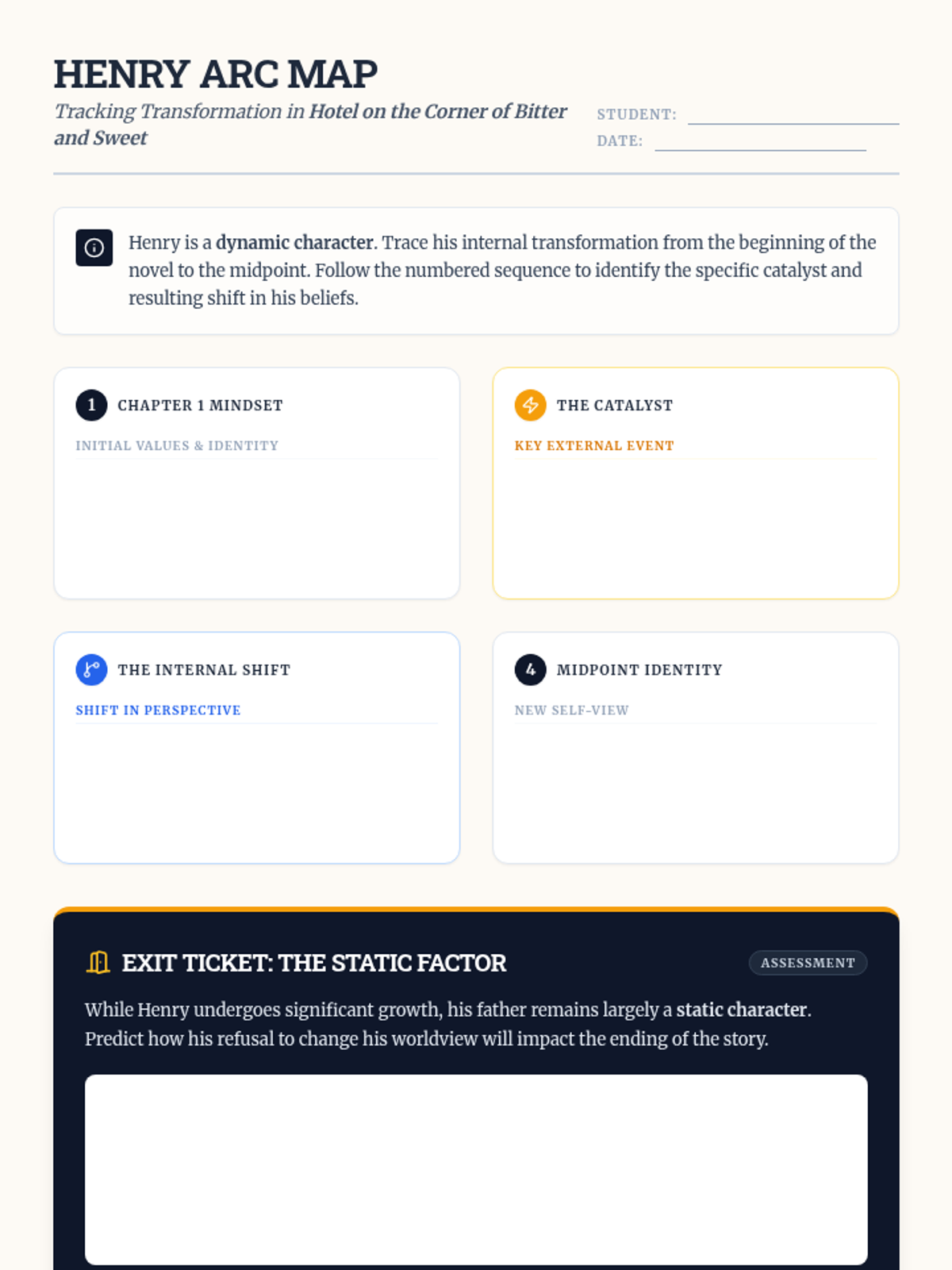
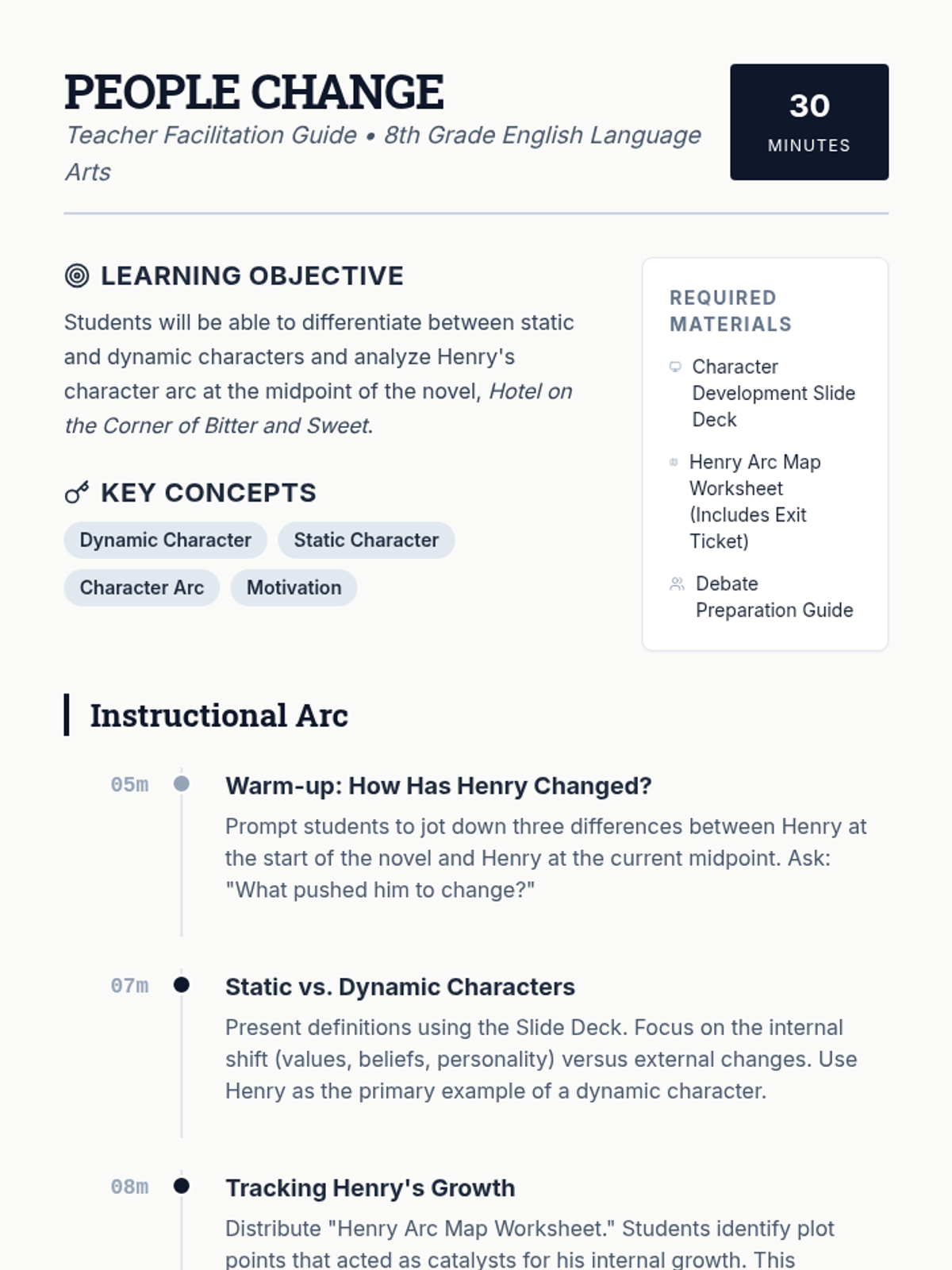
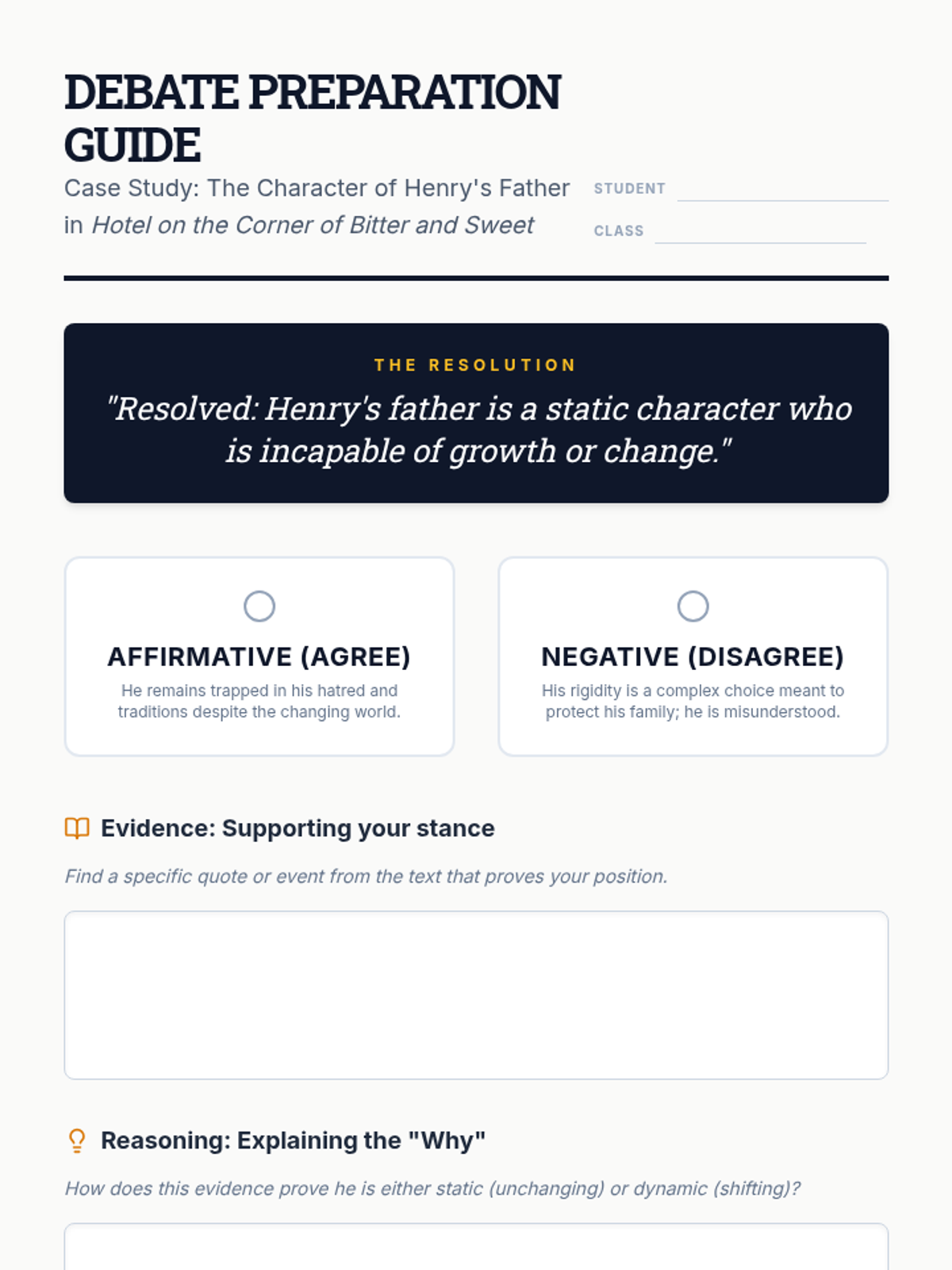
In this 30-minute lesson, 8th-grade students explore the concepts of static and dynamic characters by analyzing Henry's transformation and his father's rigidity in the novel *Hotel on the Corner of Bitter and Sweet*. Students will map character arcs and engage in a mini-debate about the motivations behind character stability and change.
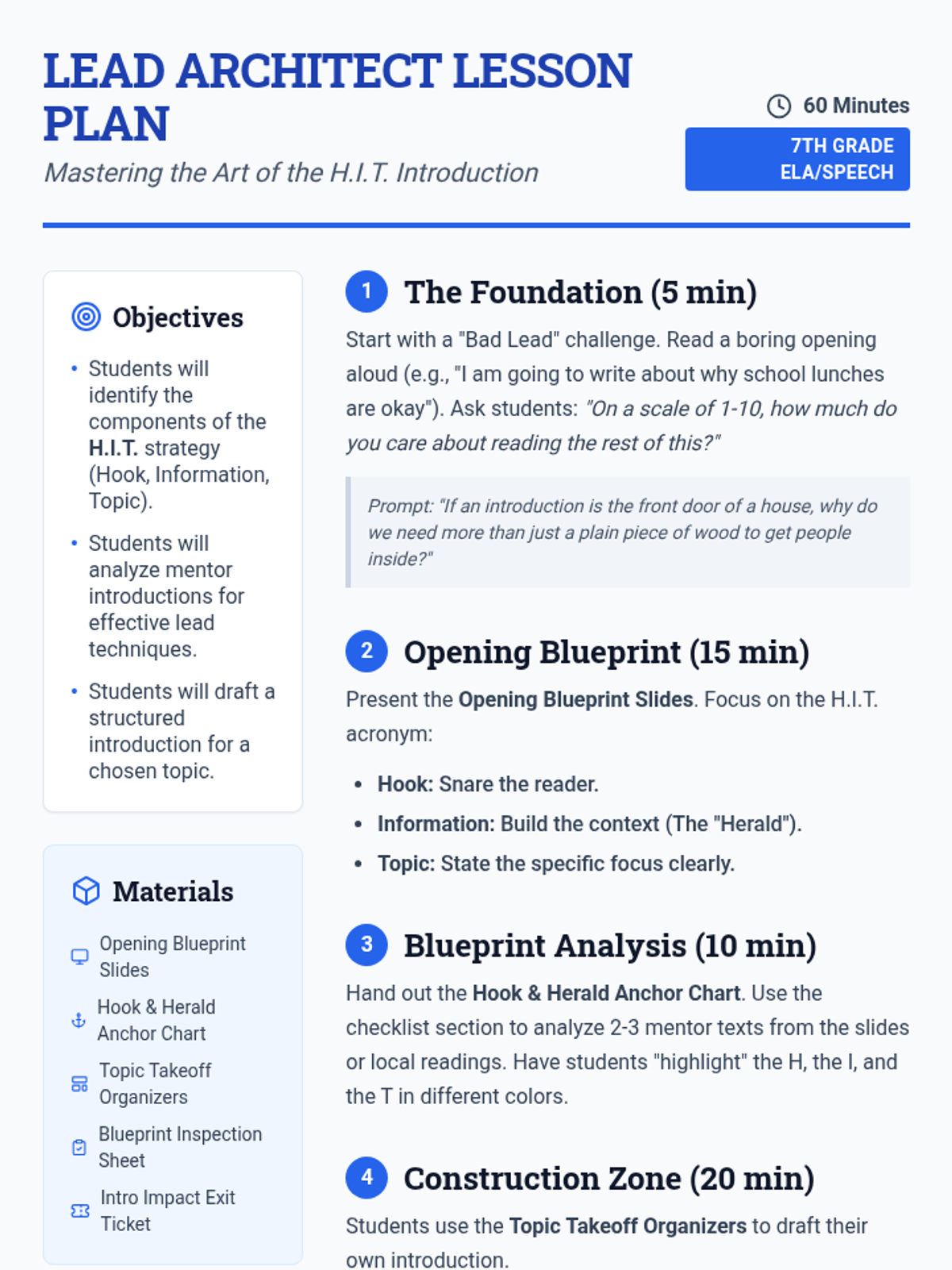
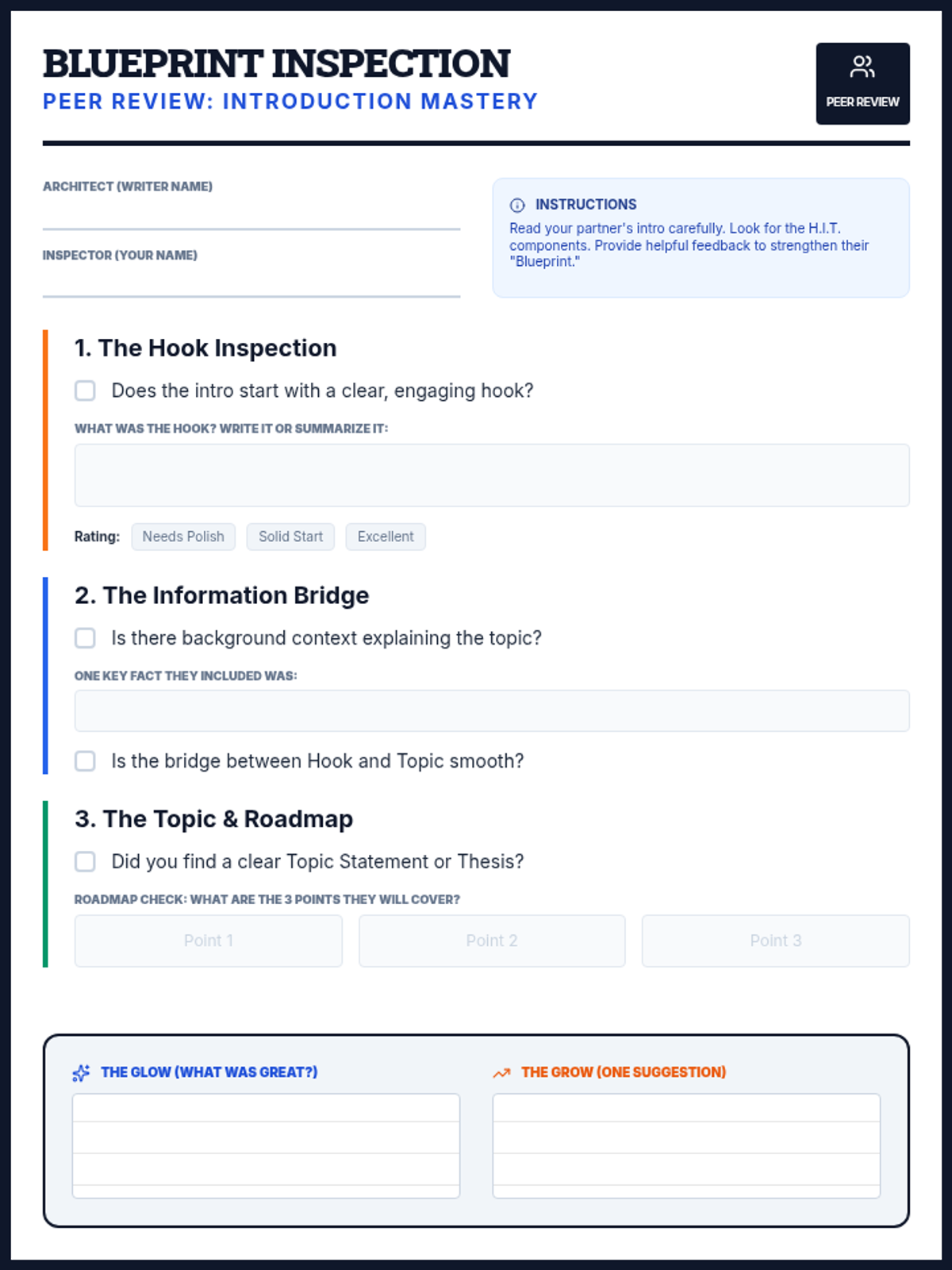
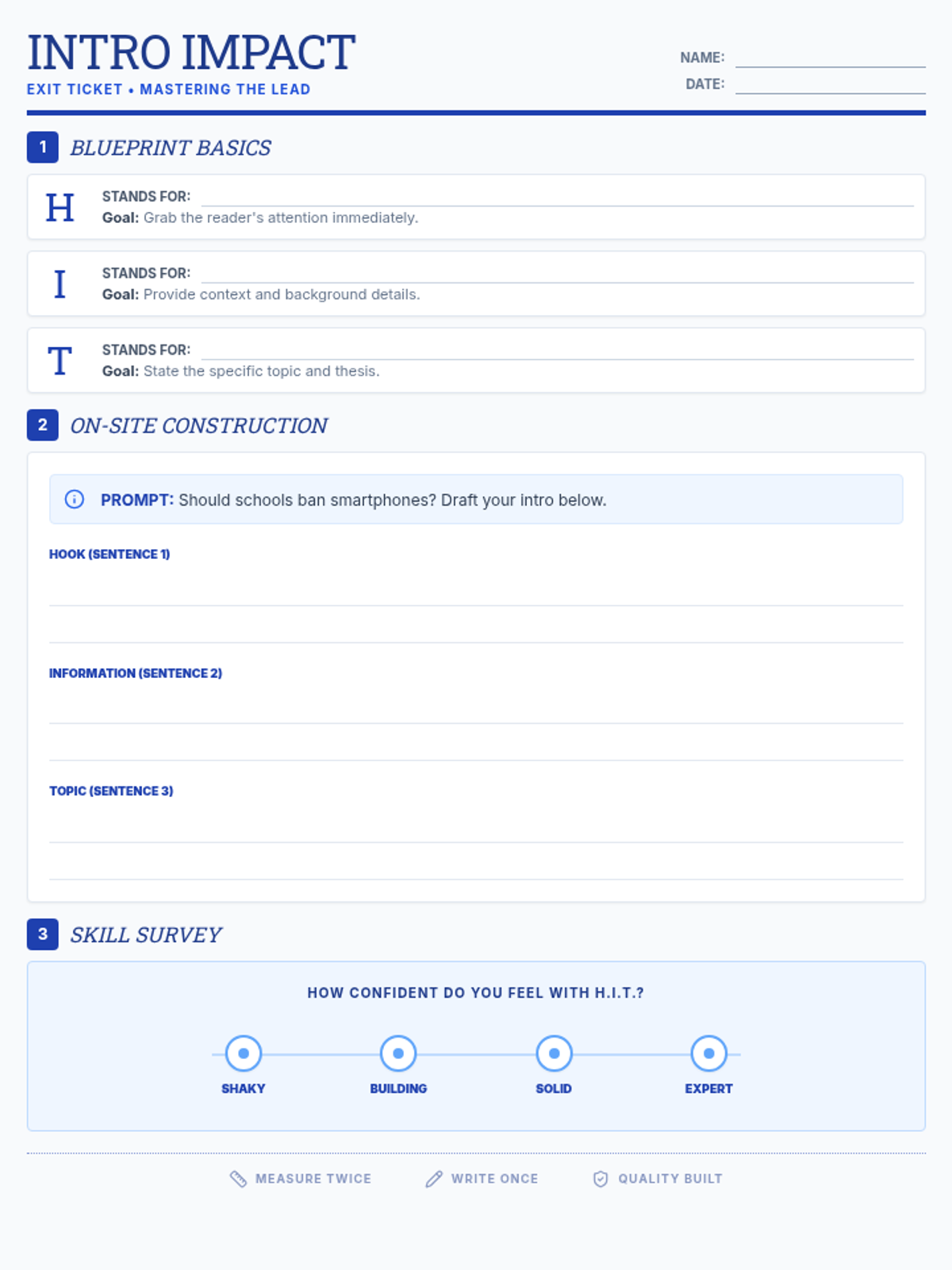
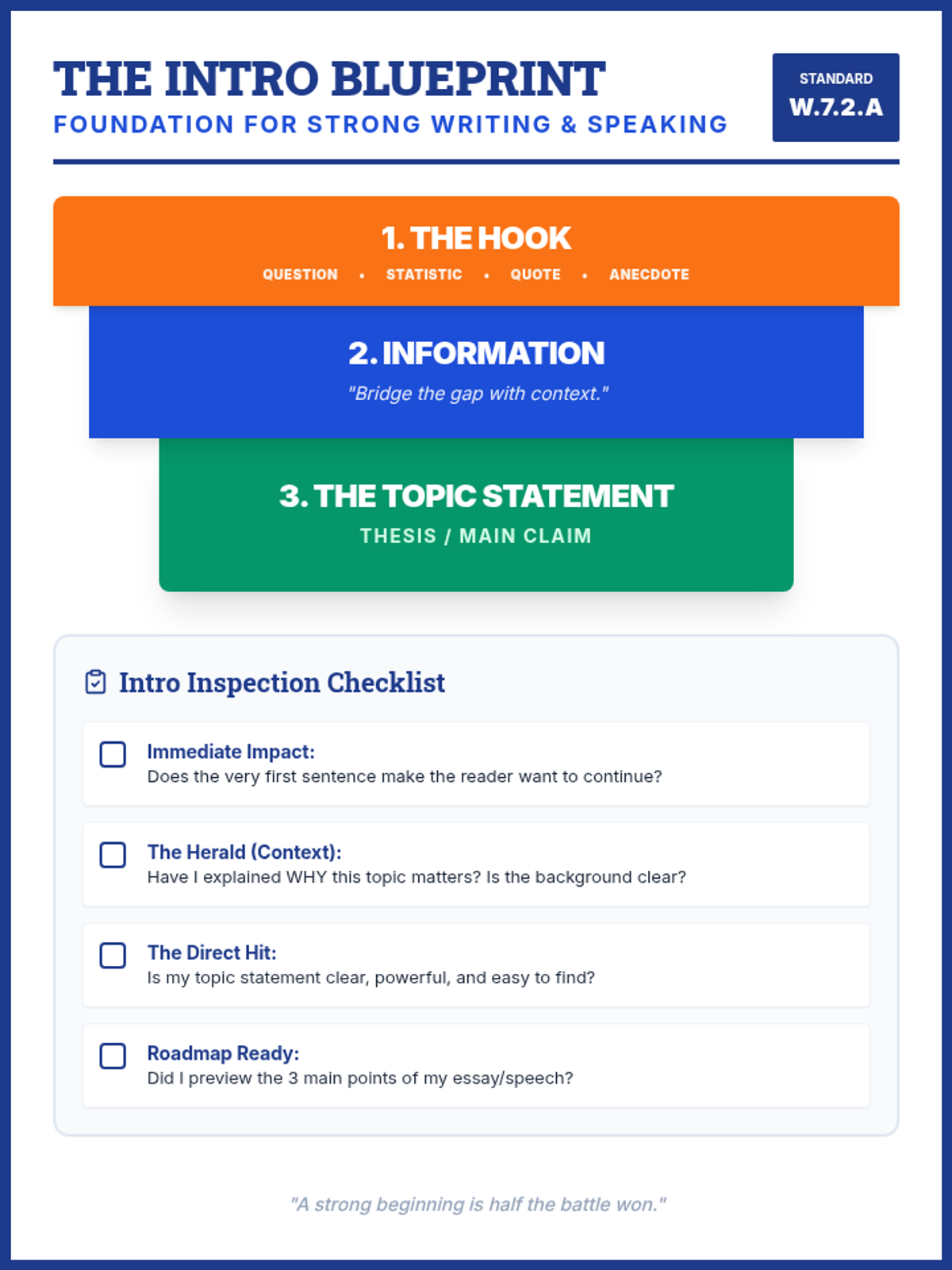
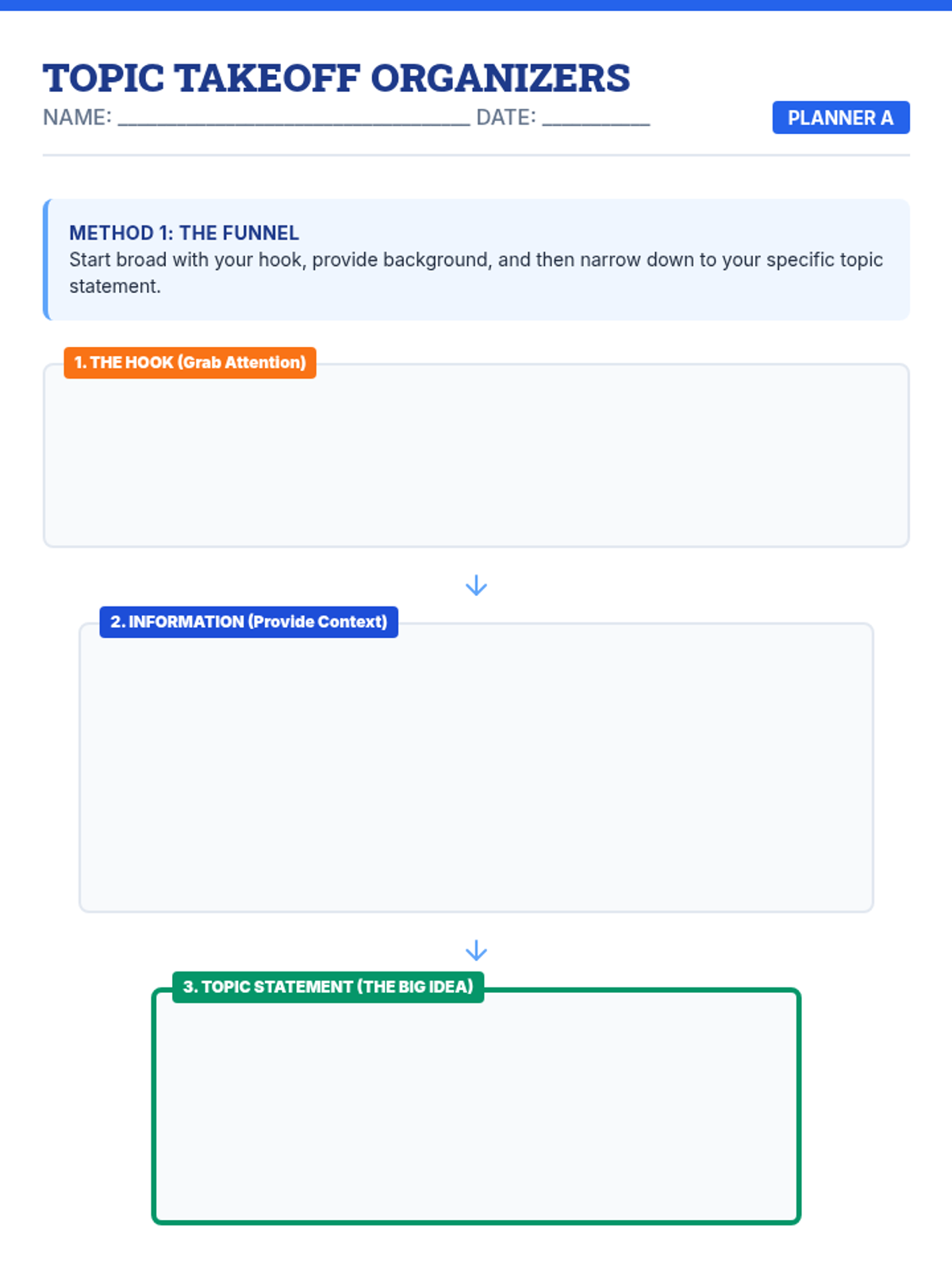
This lesson guides 7th-grade students through the art of crafting clear, compelling introductions for both writing and speaking. It introduces the H.I.T. (Hook, Information, Topic) strategy to help students structure their openings effectively.
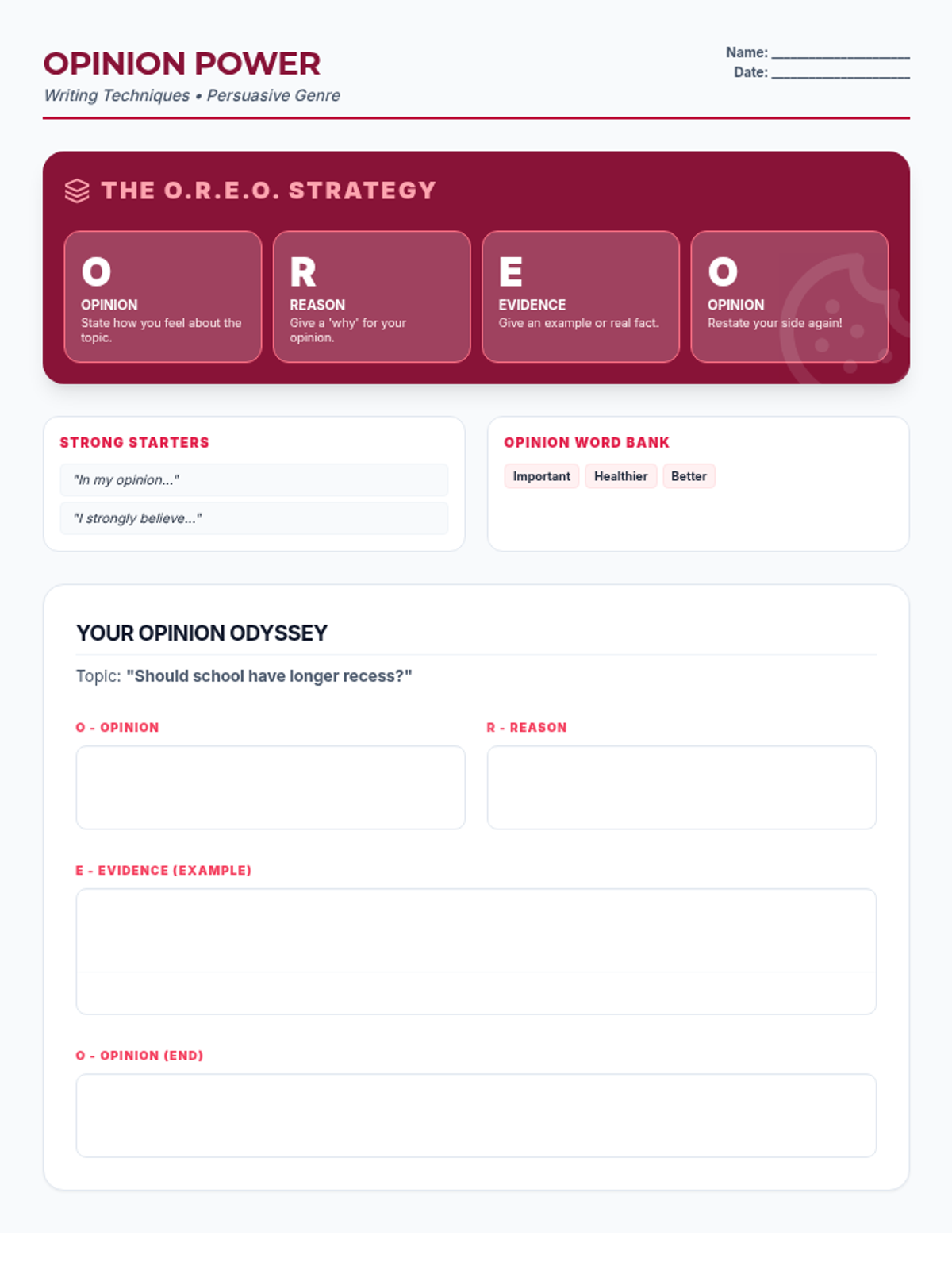
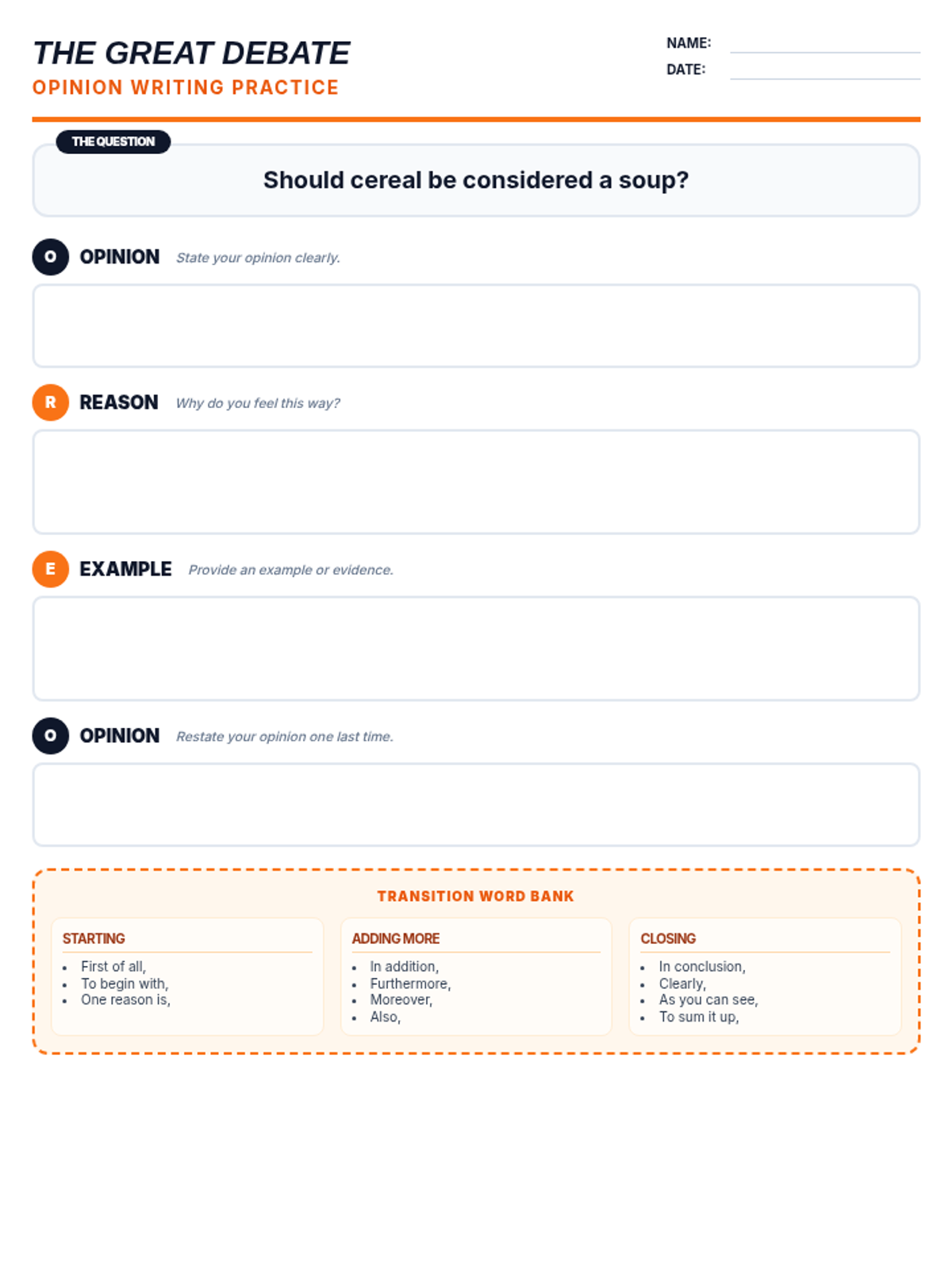
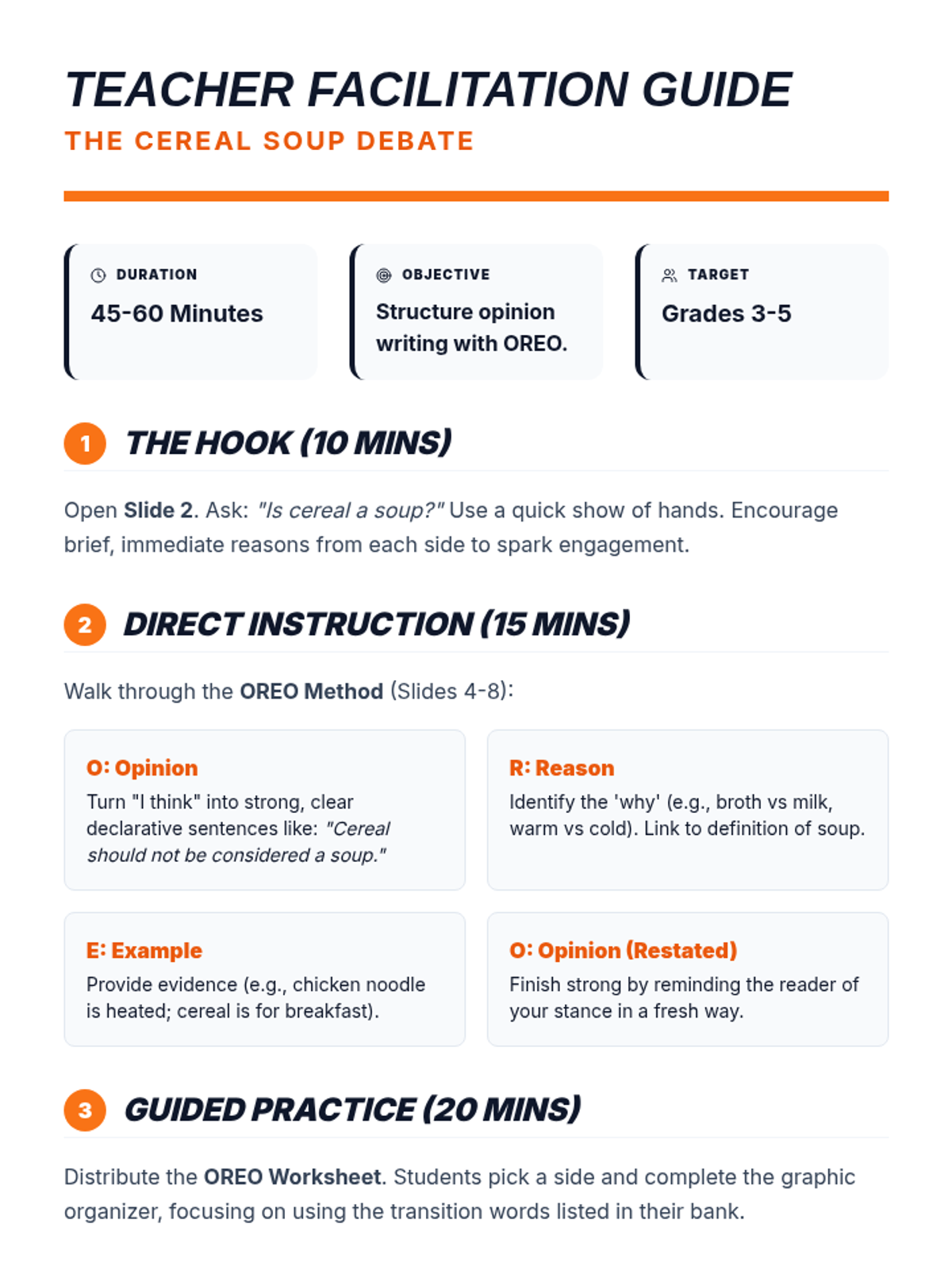
A persuasive writing lesson using the OREO method to tackle the ultimate breakfast debate: Is cereal a soup? Students learn to structure their opinions with clear reasons, examples, and transition words.
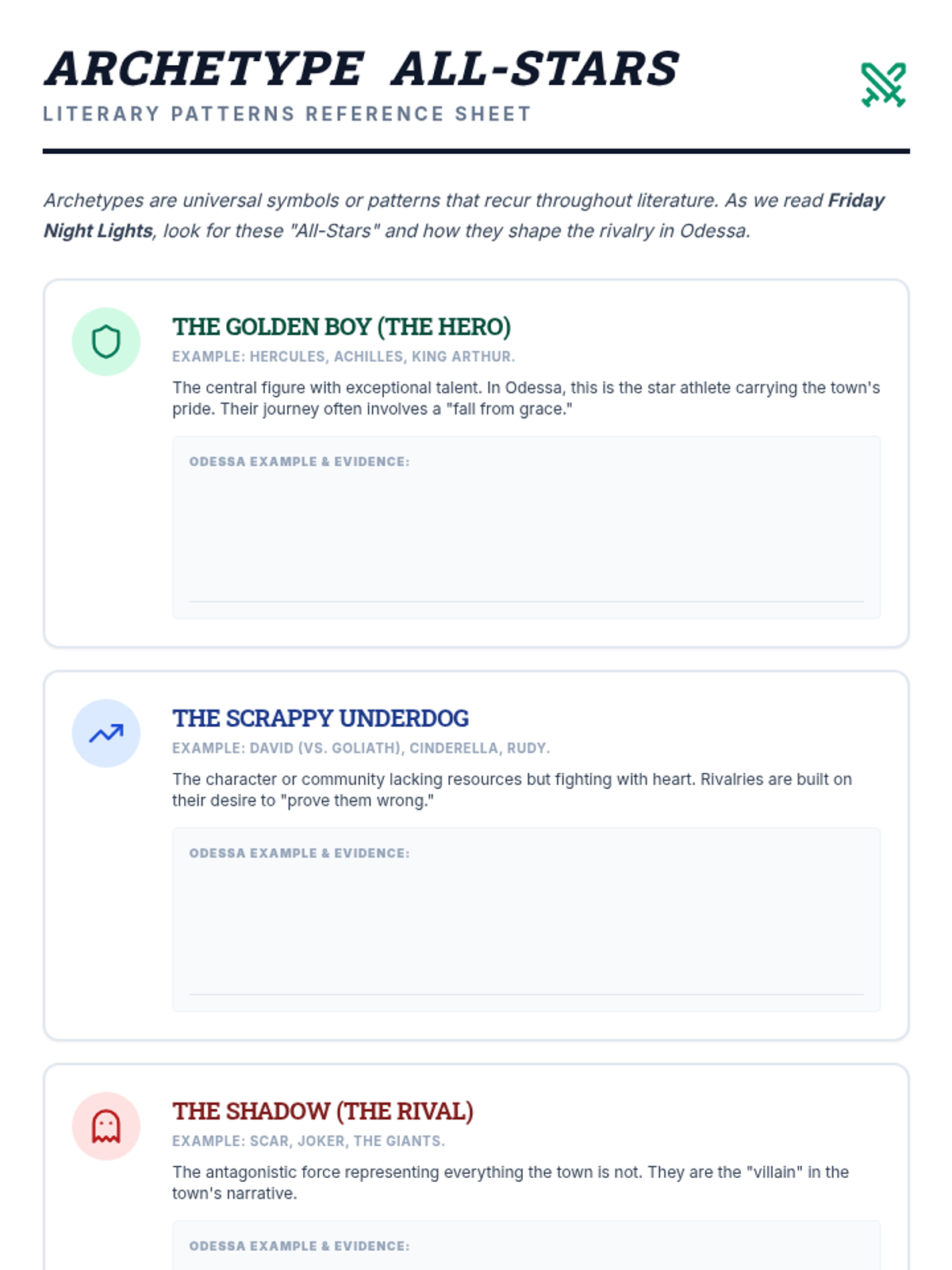
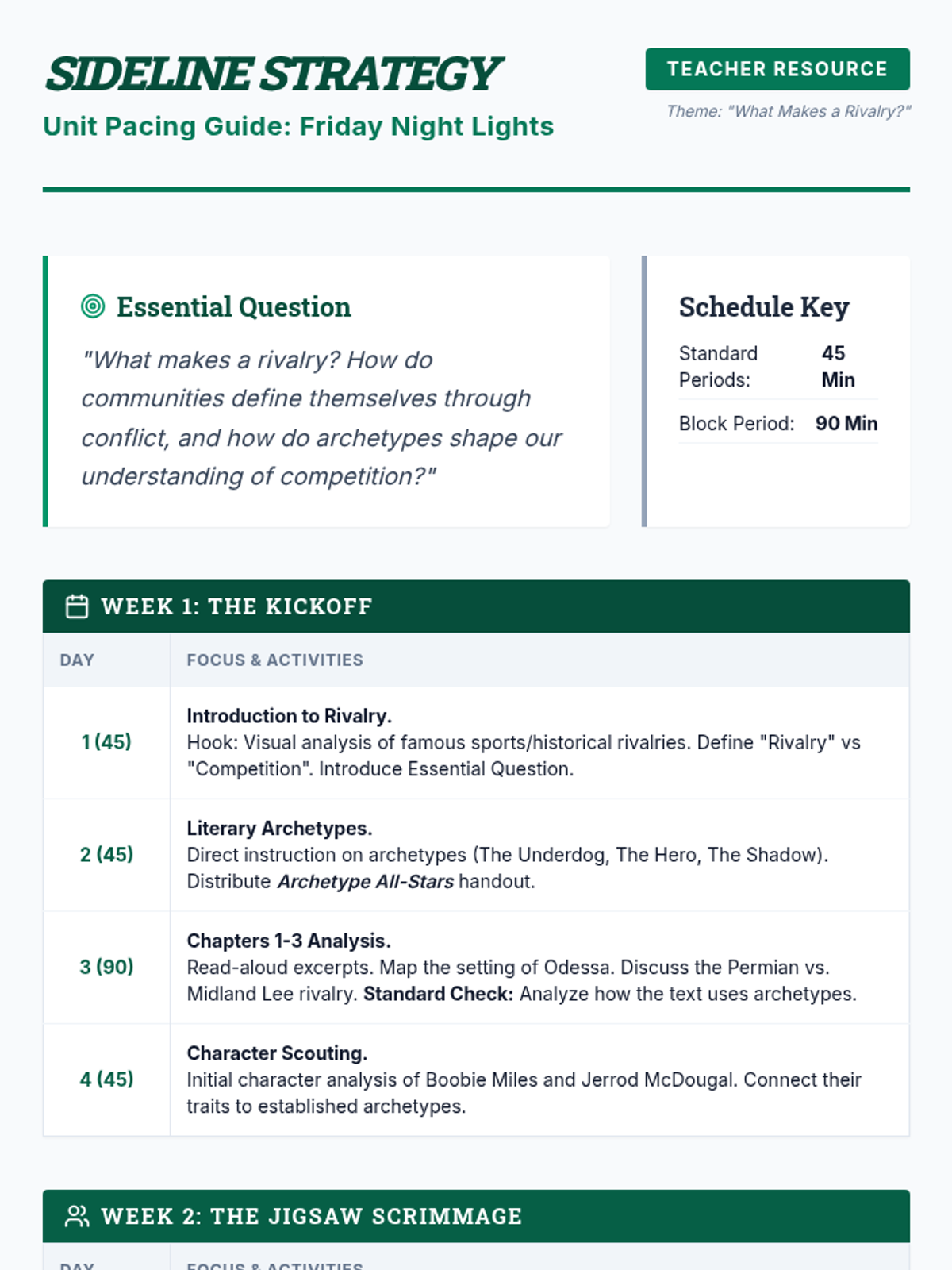
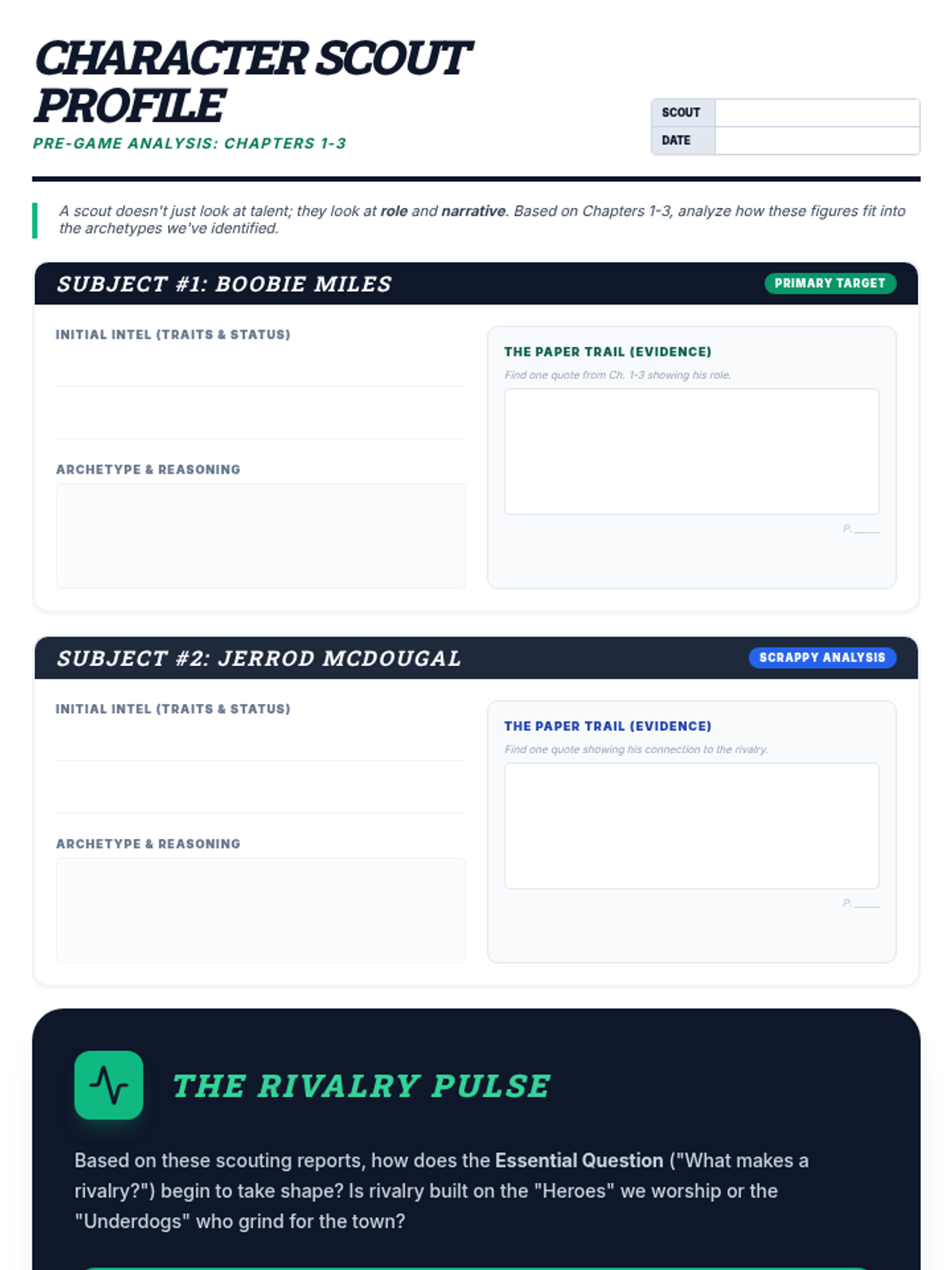
An introduction to the unit's essential question and the social landscape of Odessa, focusing on the first three chapters and literary archetypes.
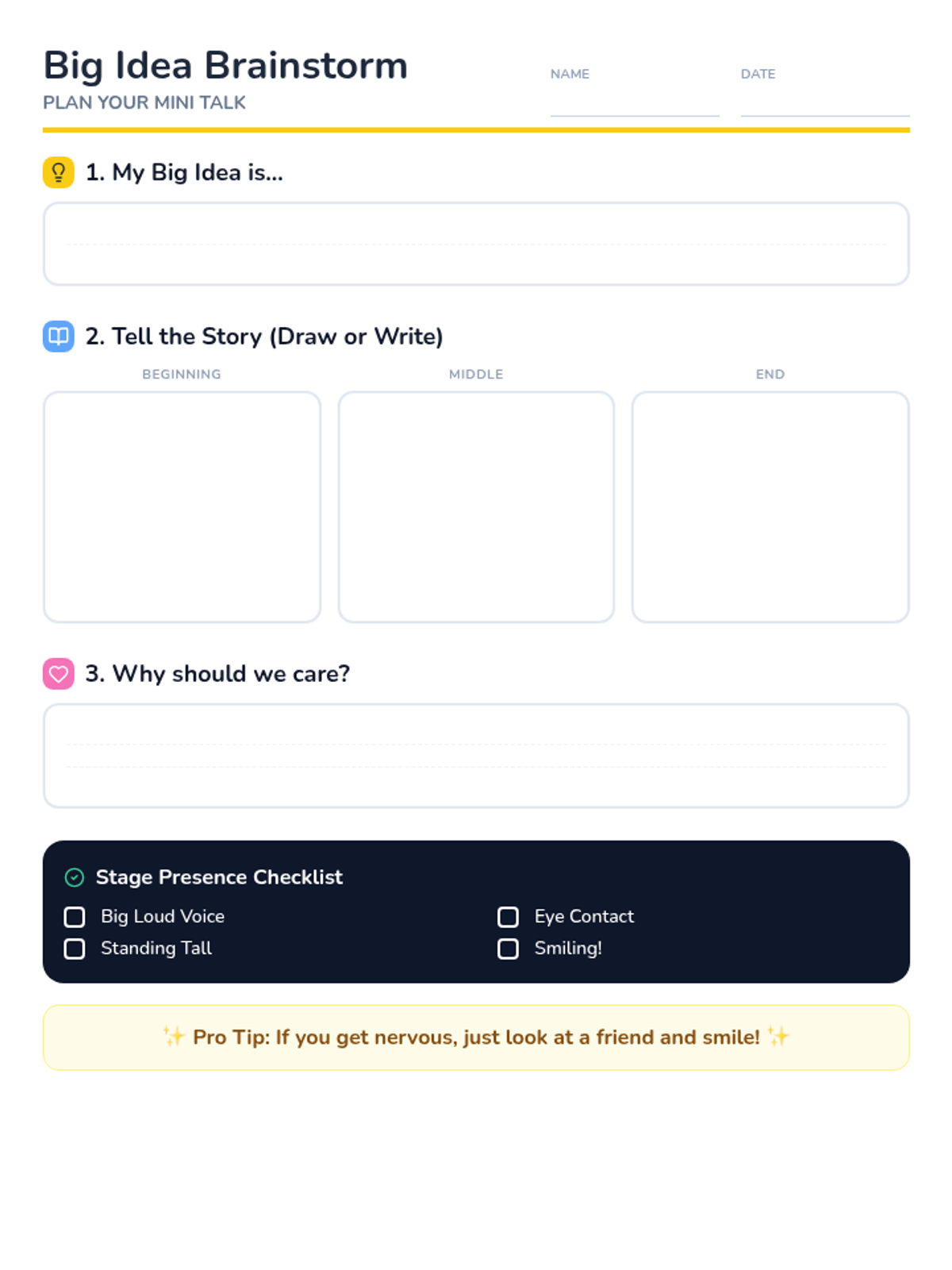
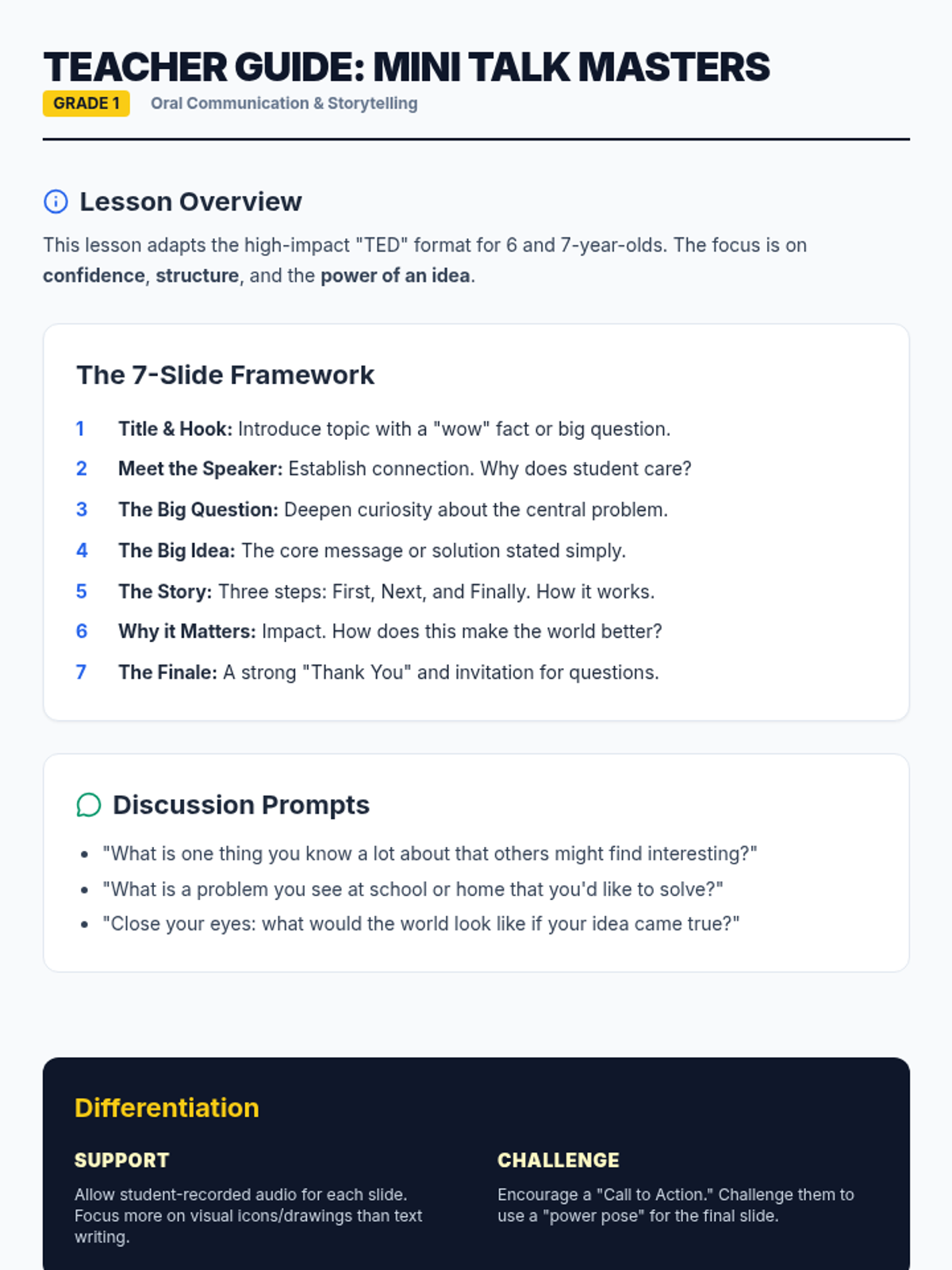
A lesson designed to help first graders prepare and deliver their own TED-style talks, focusing on big ideas and the power of storytelling.
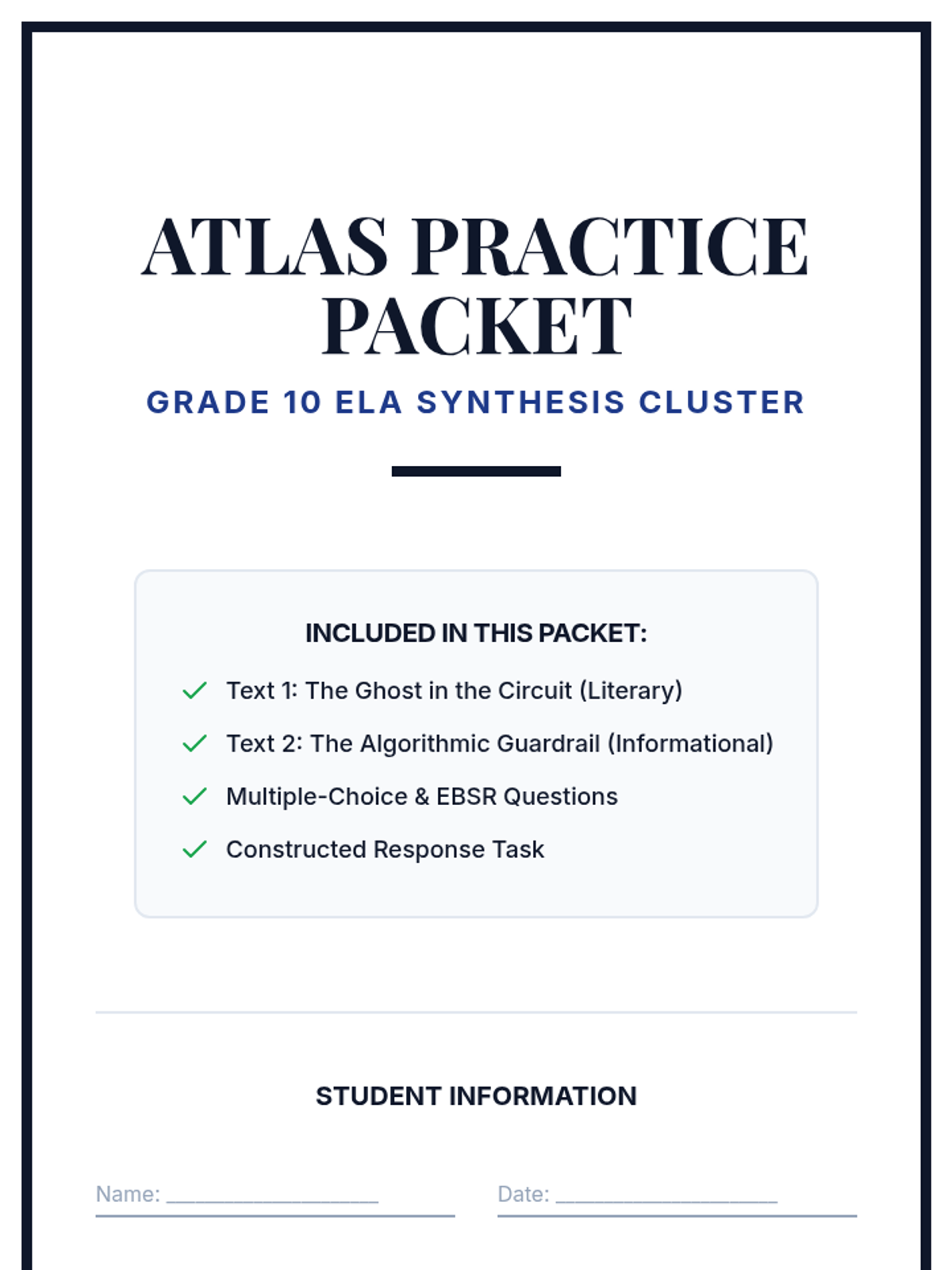
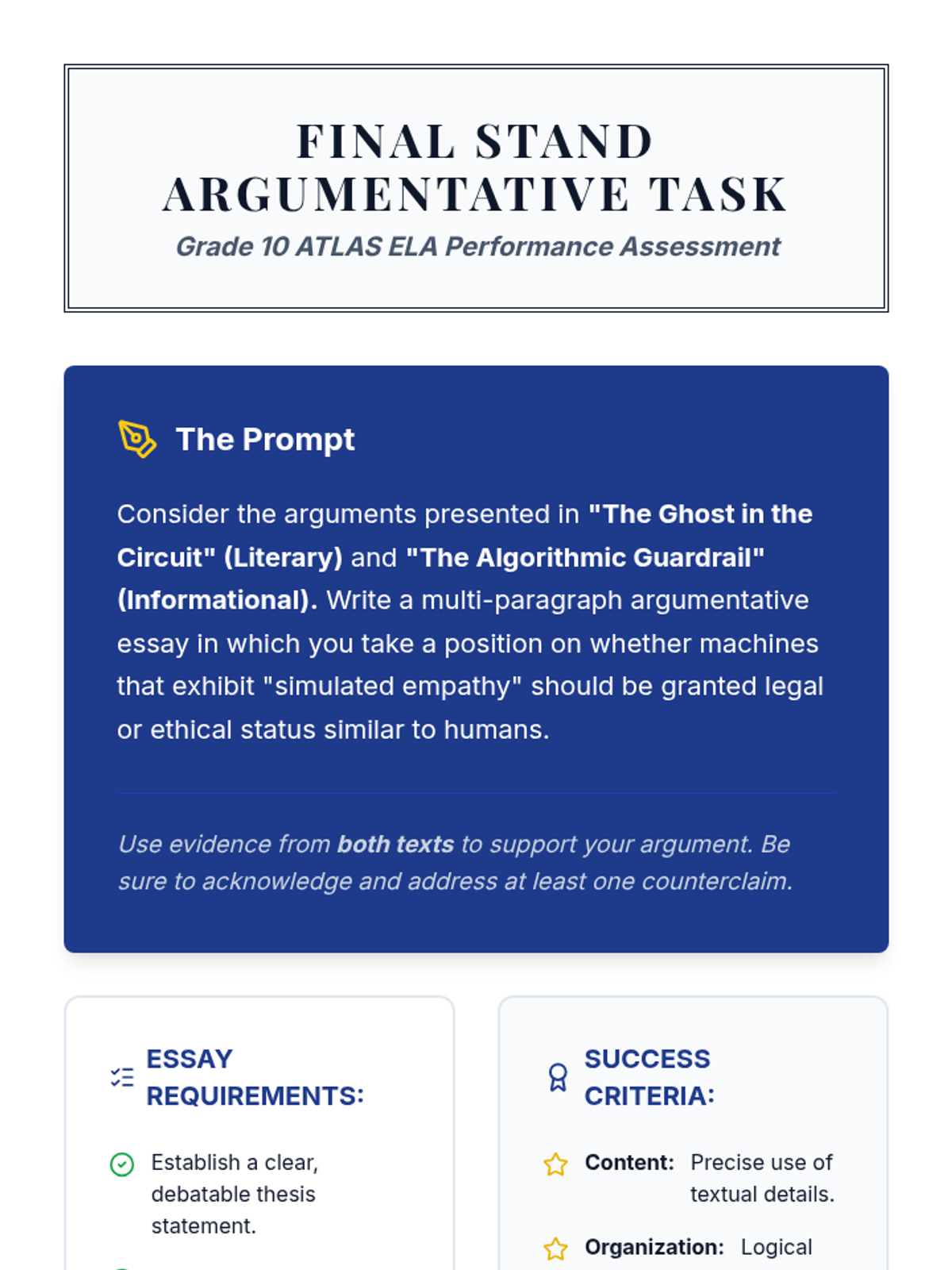
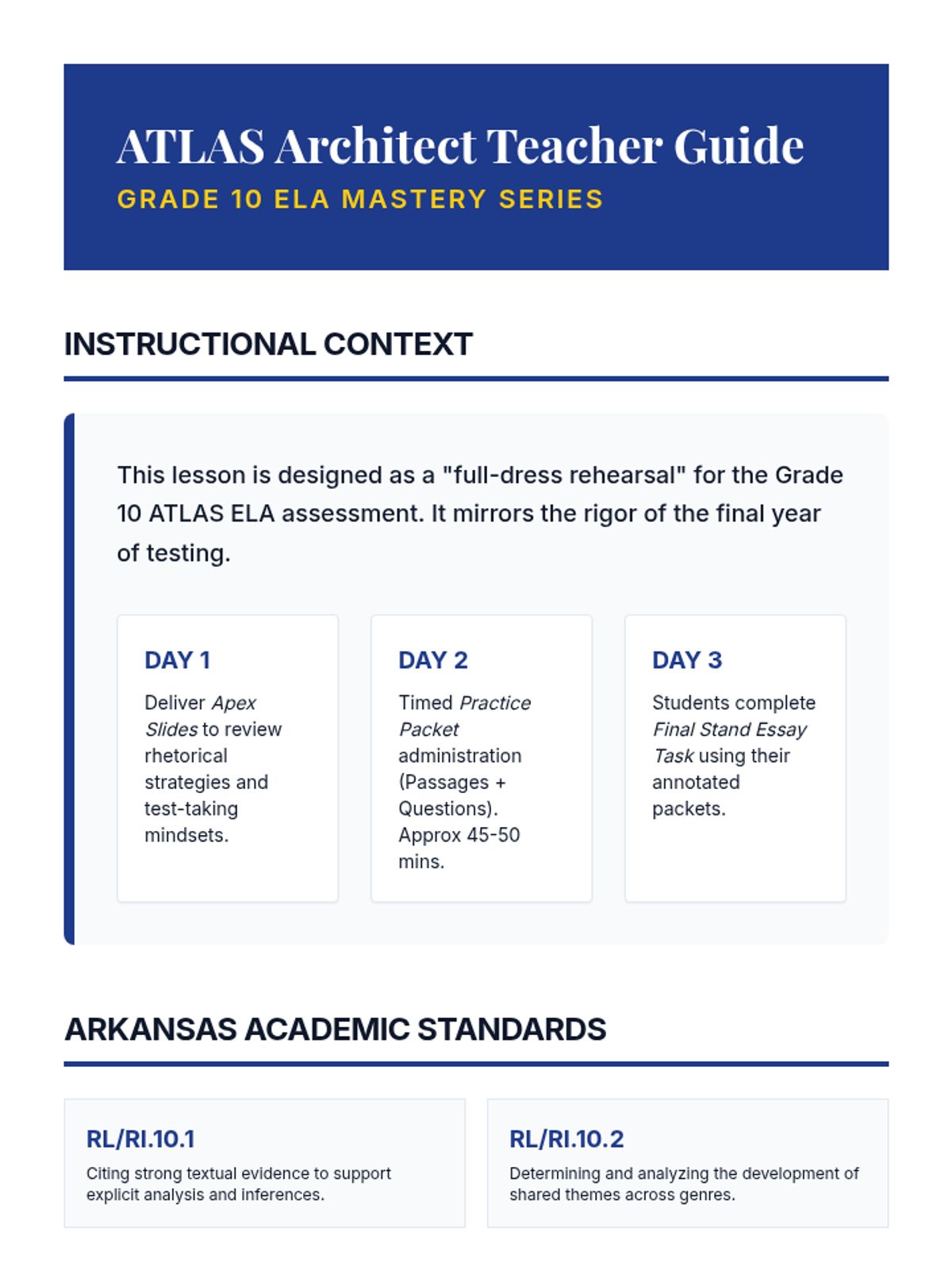
A comprehensive test preparation lesson for the Grade 10 Arkansas ATLAS ELA assessment, focusing on synthesis of complex texts, evidence-based analysis, and extended argumentative writing.
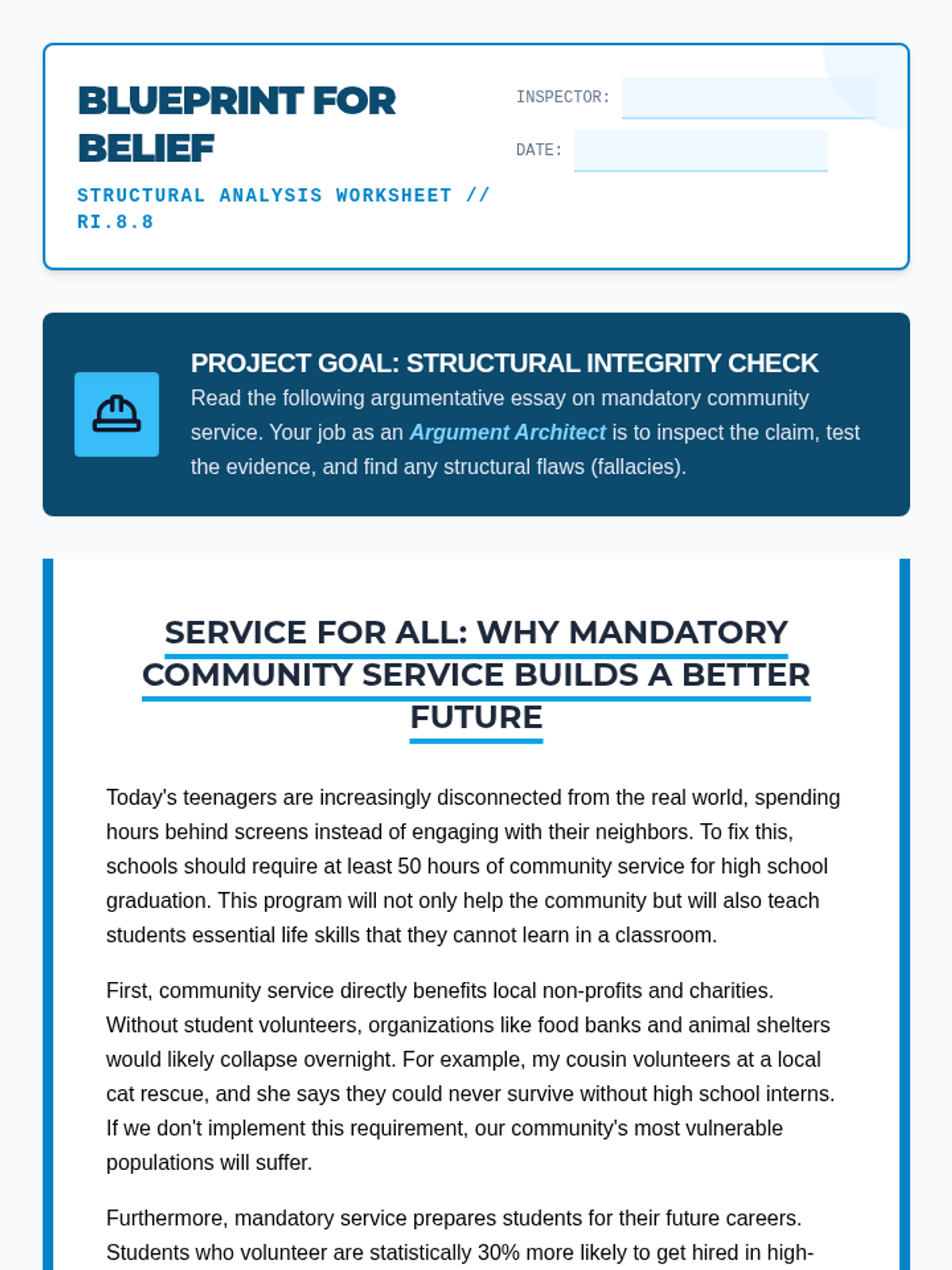
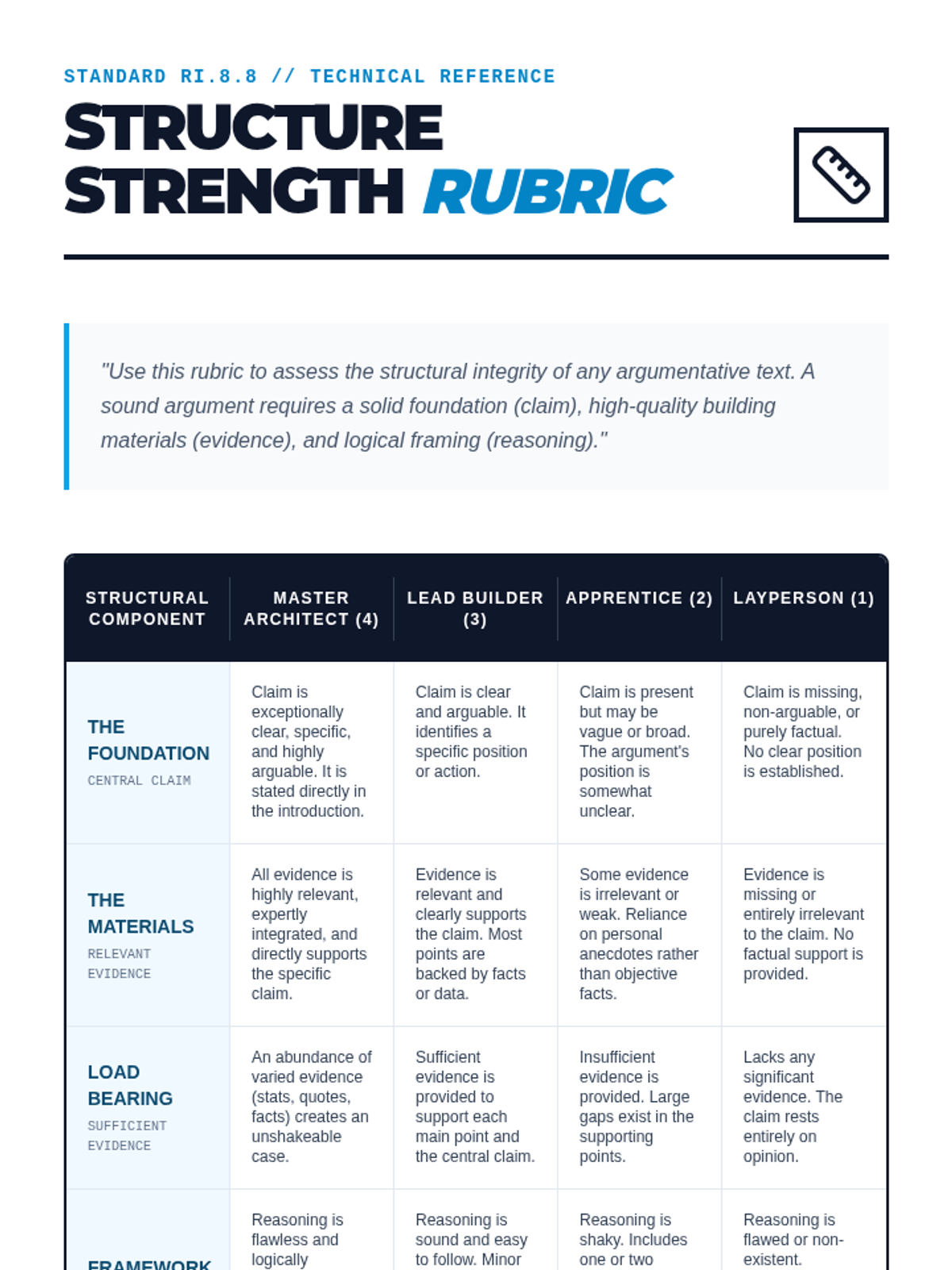
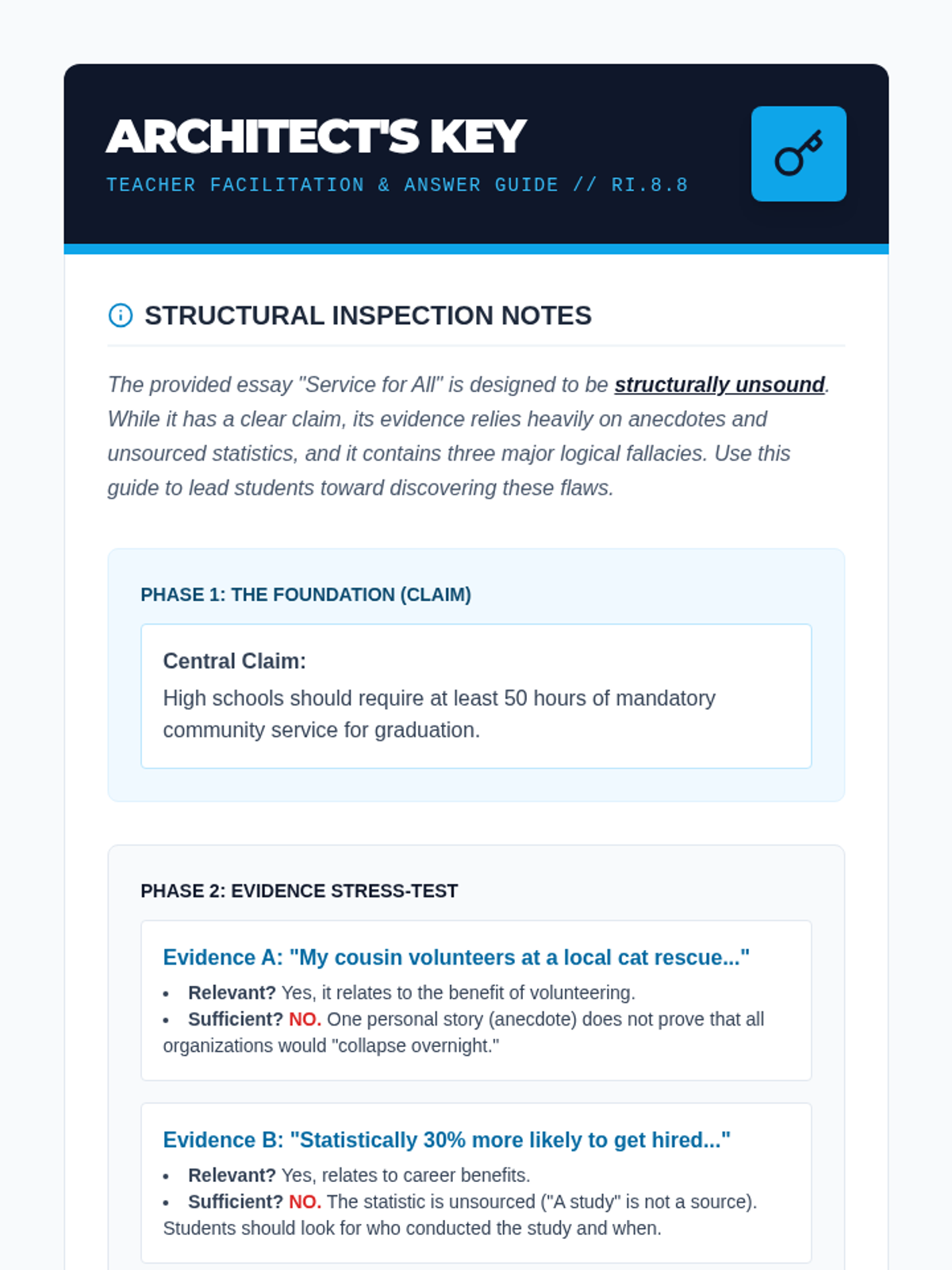
This Grade 8 ELA lesson guides students through RI.8.8 by analyzing the structural integrity of arguments regarding mandatory community service. Students will evaluate claim strength, assess evidence quality, and identify logical fallacies using an architectural blueprint theme.