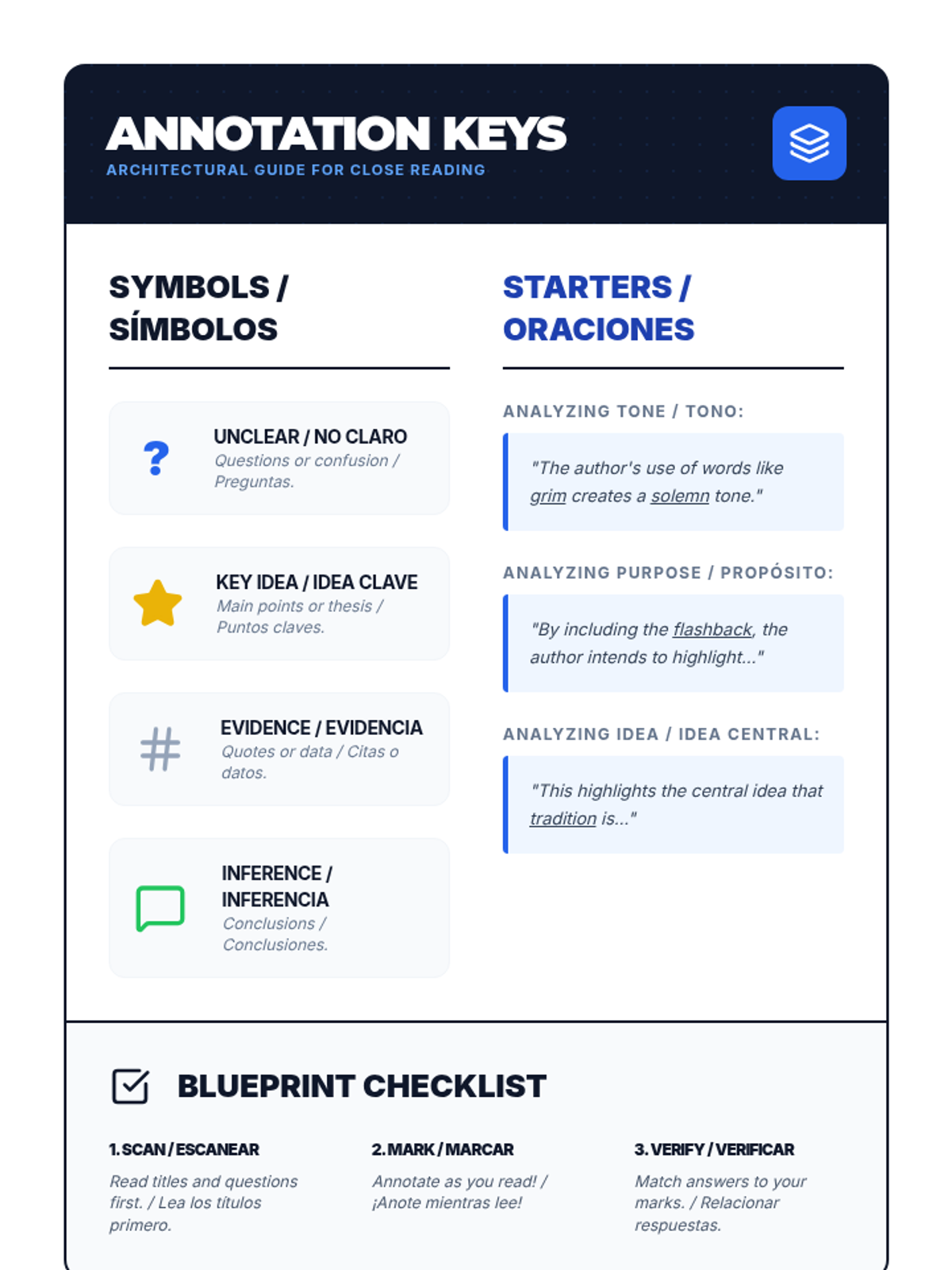
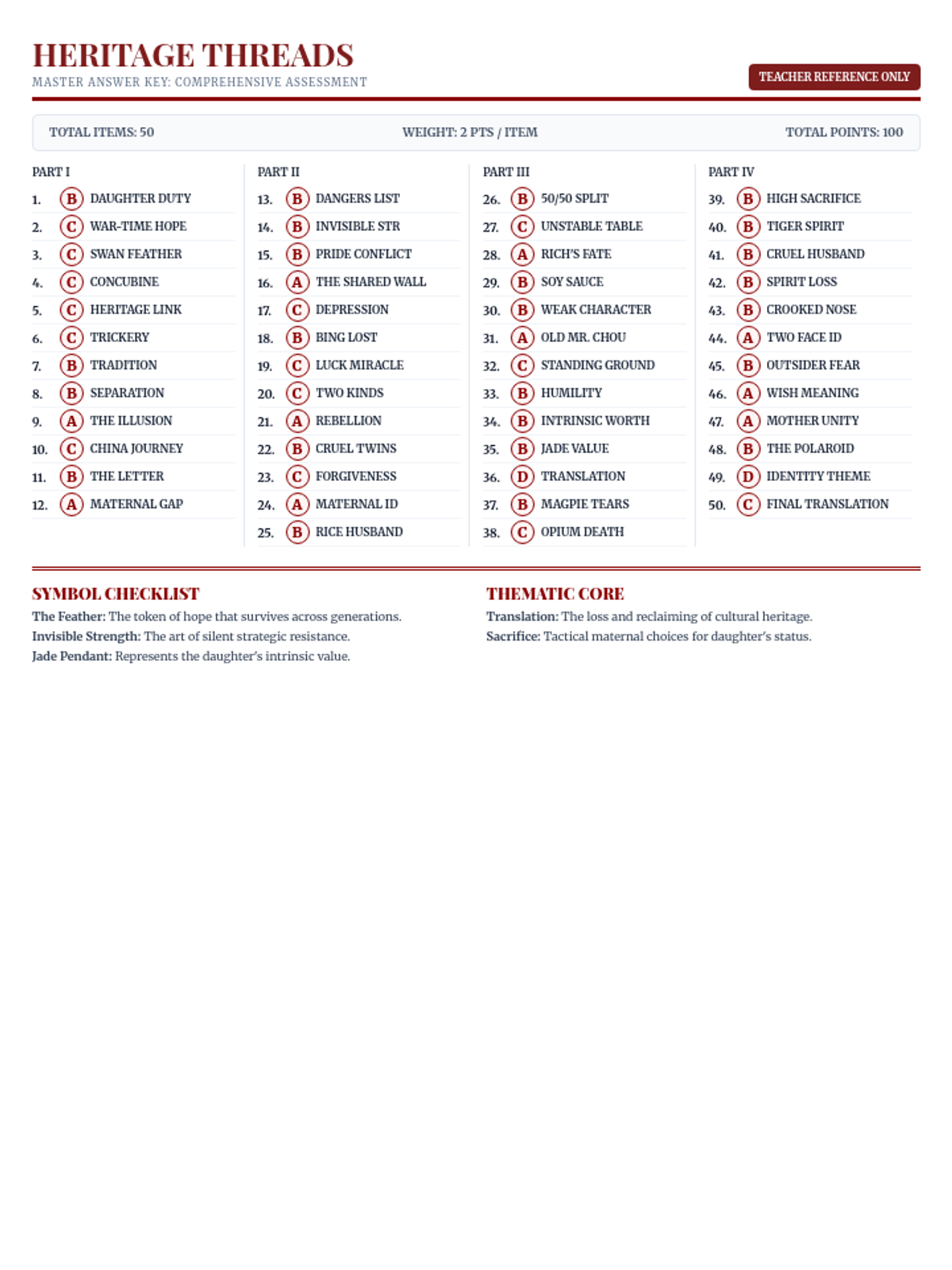
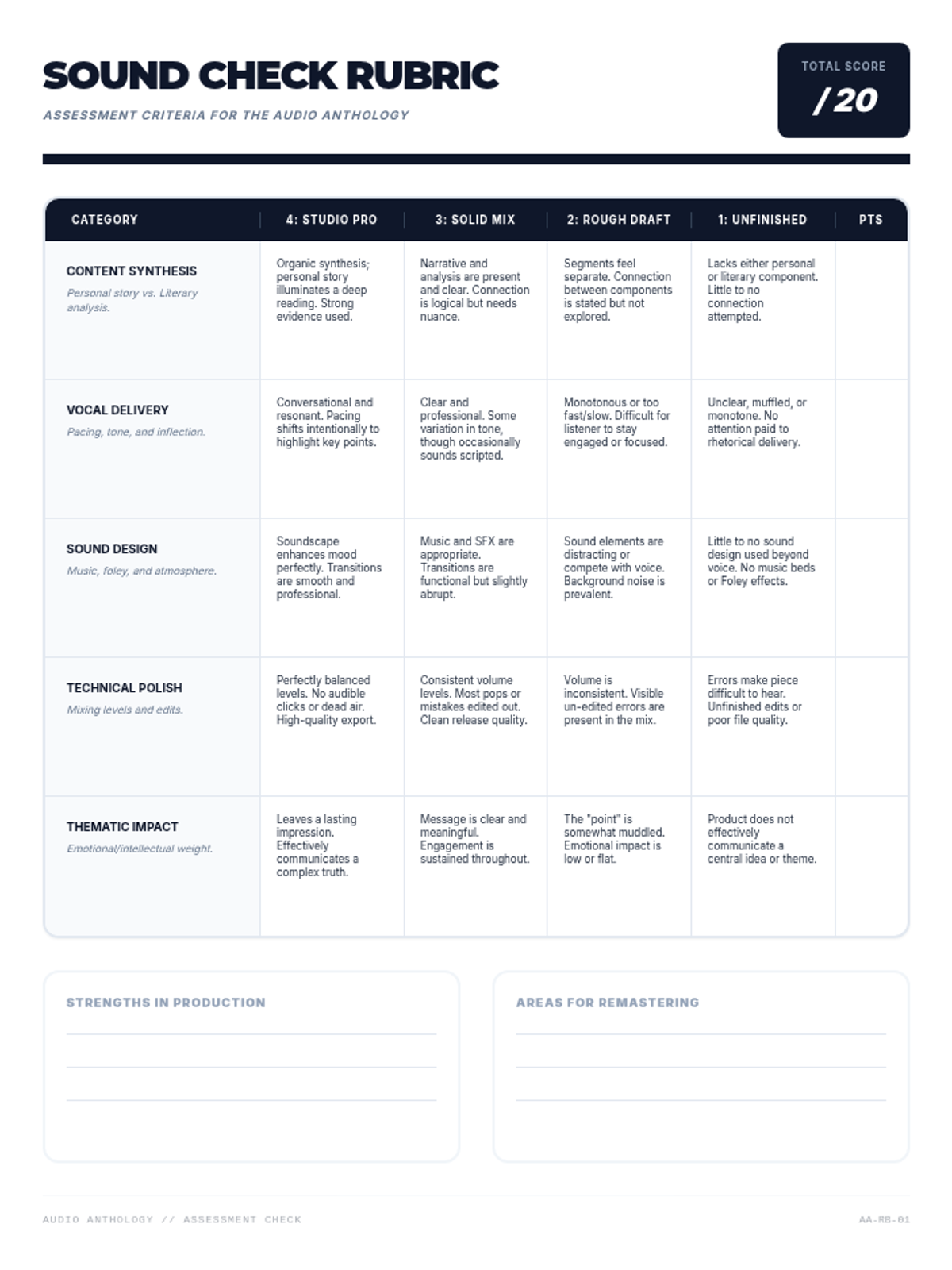
Students participate in a Socratic Seminar where they must rely on their annotations to drive the dialogue, followed by a reflection on the utility of their notes.
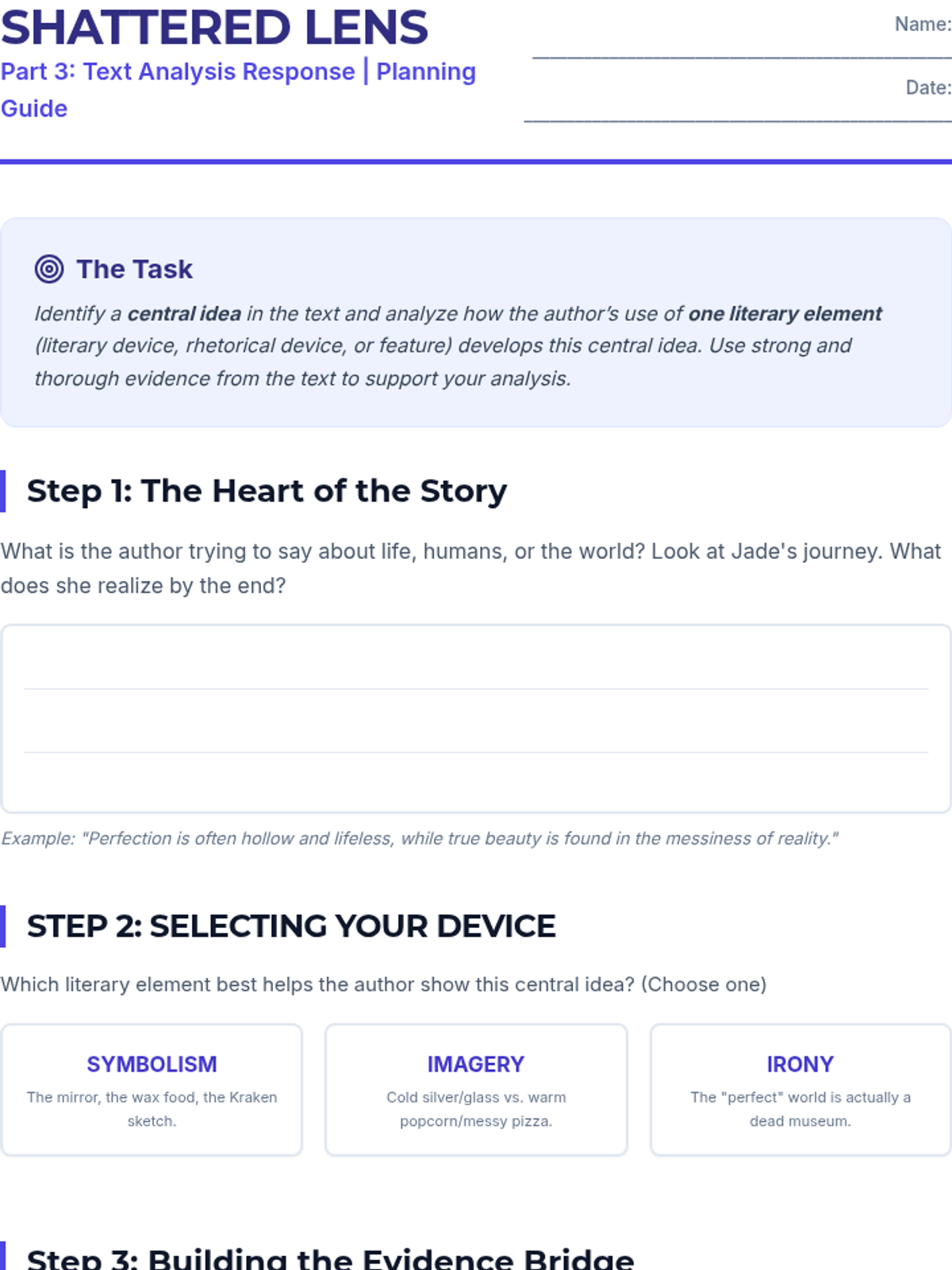
This lesson prepares students for the English 1 EOC exam by analyzing a poem and an informational text about nature and ecosystems. It includes test-style questions, a short constructed response, and a collaborative speaking activity.
A conclusion to the unit exploring the tragic resolution in Chapter 8. Students analyze themes of loyalty, consequence, and the ultimate failure of a corrupted American Dream.
An analysis of the narrative climax in Chapter 7, focusing on the various types of conflict that erupt during the confrontation at the Plaza Hotel. Students identify the turning points for the main characters.
An exploration of Gatsby's true origins revealed in Chapter 6. Students analyze the theme of illusion versus reality and the clash between 'old money' and 'new money' social worlds.
A thematic analysis of Chapter 5, centered on the reunion of Gatsby and Daisy. Students explore themes of the past, hope, and the fine line between dreams and illusions.
An analysis of Jay Gatsby's character development in Chapter 4, focusing on the tension between his self-presentation and Nick's perception. Students explore direct and indirect characterization techniques.
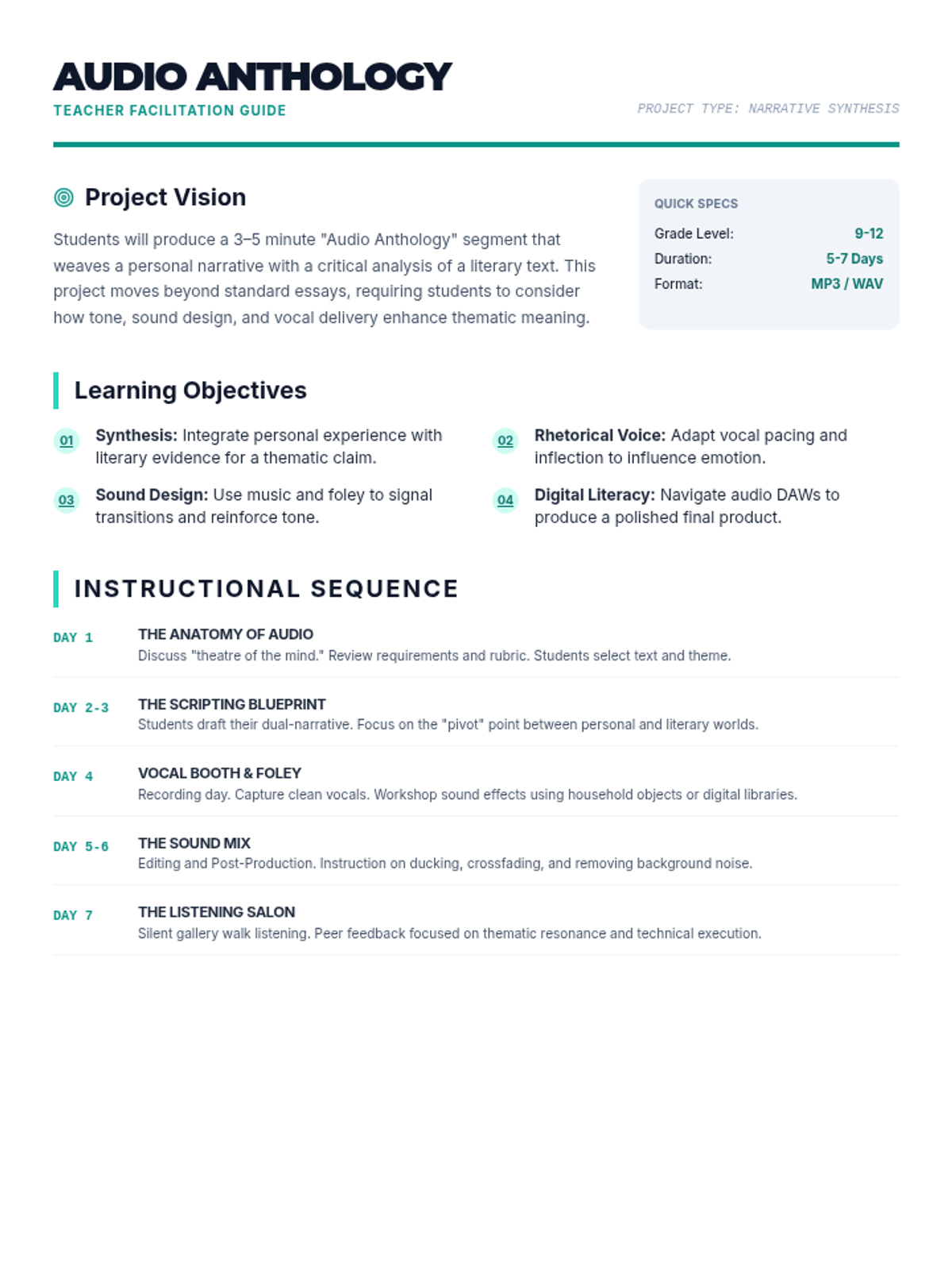
An investigation into the rich symbolism present in Chapter 3 during one of Gatsby's lavish parties. Students decode the meaning behind objects like the library books and the yellow car to understand the era's superficiality.


An exploration of the contrasting settings in Chapter 2, specifically the Valley of Ashes and Myrtle Wilson's apartment. Students analyze how setting contributes to mood, characterization, and emerging themes of social decay.