Lenny LearningLenny
Create
Explore
Workspace
LoginSign up
MathEnglish Language ArtsScience & EngineeringSocial StudiesGlobal LanguagesHealth & Physical EducationSpecial EducationCounseling & Life SkillsArts & CreativityESL
Lenny LearningLenny
Lenny Learning
About
Training
Pricing
Support
Contact
© 2026 Lenny Learning Inc.
English Language ArtsPhonics & Reading FoundationsLetter IdentificationLearn Letters A-ZLowercase and Uppercase LettersConsonants and VowelsLetter-Sound AssociationsLetter-Sound Associations: LowercaseLetter-Sound Associations: UppercaseBeginning and Ending SoundsRhymingBlending And SegmentingShort VowelsShort Vowel SoundsConsonant BlendsConsonant DigraphsBlends, Digraphs, and TrigraphsDigraphs, Blends, and Silent LettersLong Vowel SoundsLong Vowel PatternsShort and Long VowelsShort and Long Vowel PatternsSilent EVowel SoundsVowel TeamsR-Controlled VowelsDiphthongs: Oi, Oy, Ou, OwVariant VowelsVariant, Diphthong, And R Vowel PatternsSoft G And CSight WordsIrregular WordsWord RecognitionSyllablesSyllable TypesTwo-Syllable WordsMultisyllabic WordsPhoneme ManipulationDecodable TextsVocabularyAction WordsQuestion WordsNouns and AdjectivesClassify WordsCompound WordsSynonyms and AntonymsHomophonesHomophones and HomonymsShades of MeaningContext CluesPrefixes and SuffixesGreek and Latin RootsAnalogiesIdioms and AdagesForeign Words and ExpressionsWord Choice and UsageReference SkillsReading ComprehensionRead-Along Literary TextsRead-Along Informational TextsReality vs. FictionStory ElementsCharacterSequenceMain IdeaCause And EffectCompare And ContrastReading StrategiesText StructureAuthor's PurposeAuthor's Purpose And ToneAuthor's PerspectivePoint Of ViewThemeInference And ThemeInference And AnalysisPoetry ElementsLiterary DevicesAnalyzing LiteratureAnalyzing Informational TextsComparing TextsAudience, Purpose, And ToneBusiness DocumentsNovel StudyNonfiction Book StudyGrammar & MechanicsSentencesNounsVerbsAdjectivesPronounsCapitalizationPunctuationContractionsConjunctionsPrepositionsArticlesAdjectives And AdverbsVerb TypesVerb TensePronouns And AntecedentsPronoun TypesSubject-Verb AgreementDirect And Indirect ObjectsSentences, Fragments, And Run-OnsPhrases And ClausesCommasSemicolons, Colons, And CommasDashes, Hyphens, And EllipsesSpellingAbbreviationsFormattingVerb Tense And MoodMisplaced ModifiersWritingDescriptive DetailsCreative WritingOpinion WritingTopic SentencesOrganizing WritingLinking WordsSentence VarietyIntroductions And ConclusionsPersuasive And Opinion WritingExpository WritingPersuasive StrategiesDeveloping And Supporting ArgumentsTopic Sentences And Thesis StatementsSummarizingResearch SkillsEditing And RevisingActive And Passive Voice=Writing Clearly And ConciselyDebate & Public SpeakingPublic Speaking BasicsPersuasive TechniquesClaims and EvidenceTypes of ArgumentsReasoning TypesLogical FallaciesTopic ResearchOrganizing EvidenceDebate Speech OrganizationAttacking and Defending ArgumentsClash and EngagementImpact CalculusQuestioning and Cross-ExaminationCritical ThinkingInformal LogicFormal LogicInductive Reasoning

Debate & Public Speaking

SequencesLessonsMaterialsVideos
  1. English Language Arts

Debate & Public Speaking

SequencesLessonsMaterialsVideos

Systematic research, evidence evaluation, and logical reasoning skills for formal discourse. Equips speakers to organize persuasive arguments, identify fallacies, and execute strategic impact calculus during competitive engagement.

Public Speaking BasicsFundamental techniques for vocal projection, body language, and effective eye contact. Builds confidence through speech structure, delivery exercises, and strategies for managing performance anxiety.
Persuasive TechniquesClassical rhetorical appeals, structural argument development, and identification of common logical fallacies. Equips learners with tools for crafting compelling narratives and evidence-based rebuttals.
Claims and EvidenceIdentification of central arguments and the selection of supporting data from diverse texts. Develops the ability to evaluate source credibility and connect evidence through logical reasoning.
Types of ArgumentsDistinguishes between logical, emotional, and ethical appeals used in persuasive communication. Examines deductive and inductive reasoning structures to strengthen case construction and rebuttal strategies.
Reasoning TypesDeductive, inductive, and analogical frameworks for constructing logical arguments. Identifies common fallacies and evaluates the structural integrity of persuasive claims.
Logical FallaciesIdentification and analysis of flawed reasoning in spoken and written arguments. Categorizes common errors like ad hominem, straw man, and slippery slope to strengthen critical thinking and rhetorical skills.
Topic ResearchAdvanced techniques for identifying credible sources, evaluating evidence, and organizing information into structured debate briefs. Develops critical digital literacy and data synthesis skills necessary for building evidence-based arguments.
Organizing EvidenceStrategic categorization of research data, logical flow structures, and the claim-evidence-warrant model. Equips speakers to integrate diverse sources into cohesive, persuasive arguments.
Debate Speech OrganizationStructural frameworks for formal arguments including claim, warrant, and impact models. Equips speakers to organize constructive speeches, rebuttals, and summaries for logical flow and persuasive clarity.
Attacking and Defending ArgumentsRebuttal structures, logical fallacy identification, and impact weighing techniques. Equips speakers to systematically dismantle opposing claims while reinforcing their own positions through evidence-based defense.
Clash and EngagementRefutation techniques and direct response strategies for competitive debate. Addresses argument weighing, impact analysis, and the systematic breakdown of opposing claims.
Impact CalculusComparative analysis techniques used in competitive debate to weigh competing claims through magnitude, probability, and timeframe. Equips students with frameworks to prioritize arguments and evaluate net benefits or harms.
Questioning and Cross-ExaminationStrategic techniques for posing targeted questions and responding under pressure during formal debates. Refines skills in identifying logical fallacies, clarifying opponent arguments, and exposing evidentiary weaknesses.
Video
Comparing Written Text to Audio Performance

Comparing Written Text to Audio Performance

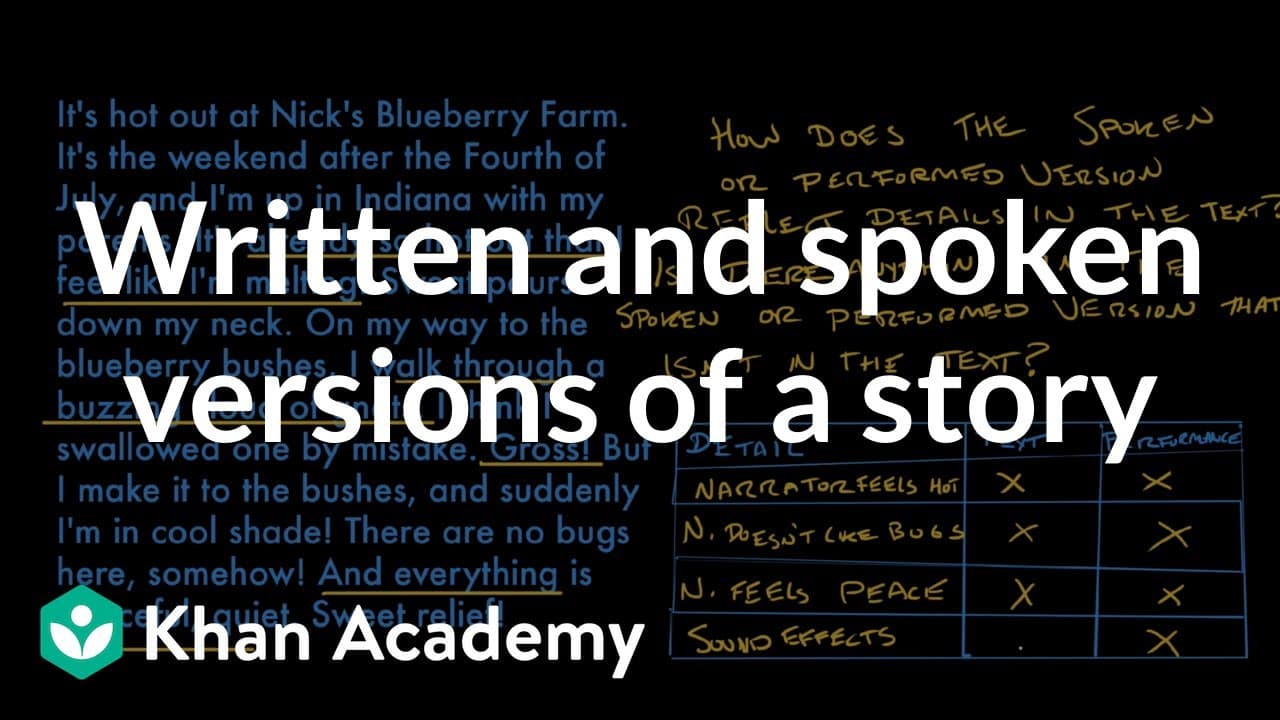
This video serves as an engaging English Language Arts lesson that explores the differences between reading a text silently and experiencing it as an oral performance. The narrator guides students through a comparative analysis using a short story set on a blueberry farm, first asking them to read it to themselves, and then performing it with expressive vocal modulation and sound effects. This side-by-side comparison helps illuminate how a reader's internal experience differs from an external performance. The content focuses on key literary and dramatic concepts such as tone, mood, pacing, and sensory details. It specifically highlights how a performer makes creative choices—such as stretching out words to indicate heat or tightening lips to show disgust—to reflect the narrator's feelings. Additionally, the video introduces the concept of non-textual elements, like sound effects, and how they contribute to atmosphere and storytelling without changing the actual words of the text. For educators, this video is an excellent tool for teaching standards related to comparing and contrasting different versions of a story (text vs. audio). It models critical thinking by using a T-chart to map textual details to performance choices, providing a clear framework for students to analyze media. It can spark lessons on reading fluency, the importance of expression in oral reading, and how multimedia elements influence a viewer's understanding and emotional engagement with a narrative.

Khan AcademyKhan Academy

3mins 56s

Video
Why the Earthworm Should Be Our Mascot: A Persuasive Speech

Why the Earthworm Should Be Our Mascot: A Persuasive Speech

This video features a spirited persuasive speech delivered by a young woman advocating for an earthworm to become the new mascot for the fictional town of 'Persuasia'. The speaker systematically addresses potential skepticism about choosing a humble worm, transforming its perceived weaknesses into strengths such as uniqueness, ecological importance, and resilience. She uses a blend of scientific facts—like soil aeration and regeneration—and emotional appeals to community identity to build a compelling case. The content explores key themes of persuasive rhetoric, including the use of logical arguments (logos), emotional connection (pathos), and credibility (ethos). It highlights how to structure an argument by introducing a thesis, supporting it with distinct points (inclusivity, practicality, scientific wonder, and hard work), and concluding with a strong call to action. Additionally, the video touches upon biological concepts regarding the earthworm's vital role in the ecosystem. For educators, this video serves as an excellent model text for teaching persuasive writing and public speaking. It demonstrates clear organizational structure, effective use of rhetorical questions, and the power of reframing a topic. Teachers can use it to have students analyze argument strength, identify transition words, discuss the speaker's delivery techniques, or launch a cross-curricular unit combining English Language Arts with life science.

Miacademy & MiaPrep Learning ChannelMiacademy & MiaPrep Learning Channel

2mins 28s

Video
Understanding and Performing Spoken Word Poetry

Understanding and Performing Spoken Word Poetry

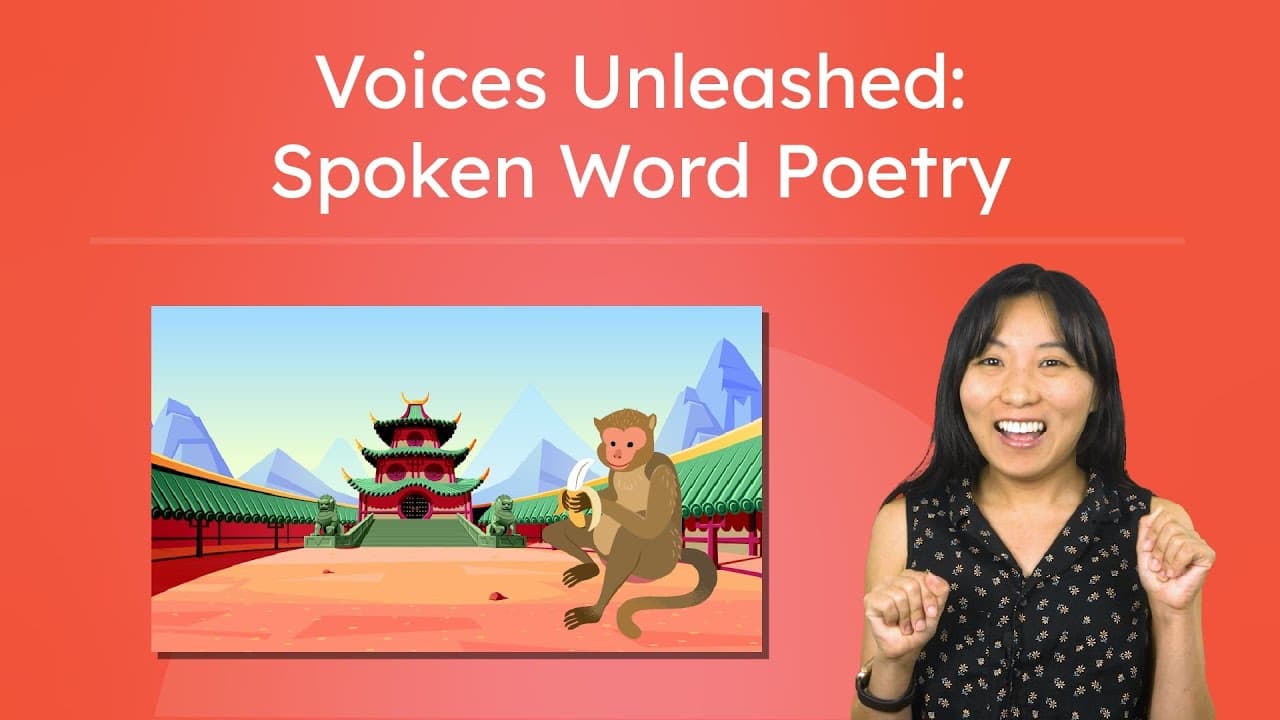
In this engaging Language Arts lesson, students join a narrator on a quest to wake the sleeping "Guardian of Voice" by learning the art of spoken word poetry. The video contrasts a flat, monotonous reading of a poem with a dynamic spoken word performance, vividly demonstrating how delivery transforms meaning. It breaks down the essential components of spoken word, defining it as a performance art that merges poetry with theatrical elements like facial expressions, body language, and vocal modulation. The content dives into specific literary devices common in the genre, such as alliteration, assonance, consonance, and internal rhyme. It explains how these sound devices enhance the musicality of a performance. Students are guided through the specific "tools" a performer has—voice (volume, pacing, pauses), body (posture, gestures), and face (expressions)—to convey emotion and connect with an audience. Ideal for middle school English classrooms, this video serves as both an introduction to the genre and a practical tutorial on public speaking and performance. It encourages students to move beyond merely reading words on a page to embodying them, helping them understand how performance can emphasize emotions, create drama, and bring a poet's message to life.

Miacademy & MiaPrep Learning ChannelMiacademy & MiaPrep Learning Channel

11mins 19s

Video
How Delivery Shapes Meaning in Public Speaking

How Delivery Shapes Meaning in Public Speaking

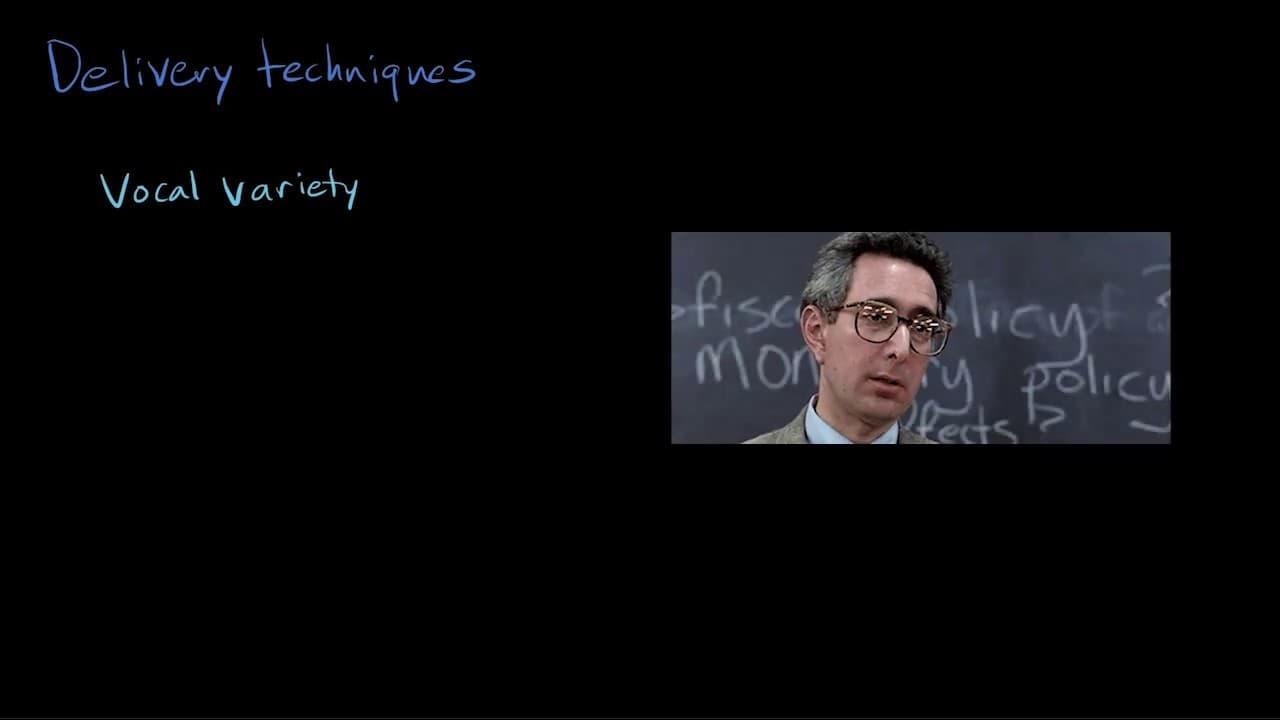
This video explores the critical role of delivery in public speaking, demonstrating how *how* something is said can be just as important as *what* is said. It begins with a relatable modern example of a text message to illustrate how the absence of tone can lead to misunderstandings, before breaking down specific public speaking techniques including vocal variety, language choice, and physical presence. The narrator explains concepts like monotone vs. dynamic speech, formal vs. informal language, and the strategic use of rhetorical devices like repetition. The second half of the video applies these concepts through a detailed case study of Ann Richards' keynote address at the 1988 Democratic National Convention. The narrator pauses the speech at key moments to analyze Richards' use of gestures to create imagery, her use of props (a folded letter) to establish authenticity, her pacing to convey emotion, and her use of repetition to build persuasive momentum. This practical application bridges the gap between theory and practice. For educators, this resource is an excellent tool for English Language Arts, Speech, and Debate classes. It provides students with a vocabulary for critiquing oral presentations and concrete strategies for improving their own speaking skills. By dissecting a historical speech, it also serves as a model for how students can analyze media and political rhetoric, fostering media literacy and critical listening skills.

Khan AcademyKhan Academy

8mins 54s

Video
Structuring and Presenting Your Research Project

Structuring and Presenting Your Research Project

This educational video guides high school students through the final stages of a research writing unit: structuring the presentation slides and delivering the oral presentation. The host, who initially expresses anxiety about public speaking, uses a friendly robot character named Mia to introduce strategies for overcoming nerves and organizing content effectively. The video is divided into two main sections: a slide-by-slide breakdown of the research presentation structure and a set of practical tips for public speaking.

Miacademy & MiaPrep Learning ChannelMiacademy & MiaPrep Learning Channel

7mins 39s

Video
How to Write a Persuasive Creative Writing Pitch

How to Write a Persuasive Creative Writing Pitch

This video provides a comprehensive guide on how to write a persuasive pitch for a creative writing project, specifically focusing on multimedia formats like movies, plays, or video games. Hosted by an engaging instructor with animated segments featuring "Mr. Mark Up," the lesson defines what a pitch is and why it is a critical skill for writers who want to see their ideas produced. It breaks down the pitch into five essential components: the Hook, Synopsis, Target Audience, Unique Selling Points, and Call to Action. The video uses a concrete example—a dystopian sci-fi adaptation of Romeo and Juliet—to illustrate each component in action. This example helps clarify abstract concepts, showing students exactly what a "unique selling point" looks like compared to a general synopsis. The lesson emphasizes the function of each section, explaining not just *what* to write, but *why* it matters for persuading a producer or audience to invest in the story. Ideally suited for middle and high school English Language Arts and creative writing curriculums, this video serves as an excellent launchpad for project-based learning. It connects creative storytelling with real-world professional skills like persuasion, marketing, and public speaking. Teachers can use this video to introduce a capstone writing project where students must not only write a story but also "sell" it to their peers or a panel, fostering skills in audience analysis and concise communication.

Miacademy & MiaPrep Learning ChannelMiacademy & MiaPrep Learning Channel

9mins 22s

Video
How to Present Poetry with Confidence

How to Present Poetry with Confidence

This engaging video lesson guides students through the process of effectively presenting poetry to an audience. Set in the fictional "Verse Valley," the host, Caroline, overcomes her own stage fright by breaking down essential public speaking techniques such as voice projection, enunciation, and eye contact, as well as specific strategies for performing poetry like utilizing body language and timing pauses for impact rather than just at line breaks. The video explores three distinct types of poetry—lyric, ballad, and spoken word—demonstrating how the performance style should shift to match the genre. Through clear examples, Caroline models a "bad" presentation versus a polished one, and subsequently performs three original poems, showcasing the unique rhythm, emotion, and delivery required for each style. The lesson also addresses the psychology of performance, offering tips like "power posing" to build confidence. Ideal for Language Arts classrooms, this resource transforms the often-intimidating task of public speaking into a manageable skill set. It provides built-in pause points for students to practice immediately, making it a ready-to-use interactive workshop. Teachers can use this video to prepare students for poetry slams, recitations, or oral presentations, helping them move from simply reading words on a page to bringing literature to life through performance.

Miacademy & MiaPrep Learning ChannelMiacademy & MiaPrep Learning Channel

11mins 21s

Video
Mastering the Art of Persuasion: Rhetoric, Devices, and Appeals

Mastering the Art of Persuasion: Rhetoric, Devices, and Appeals

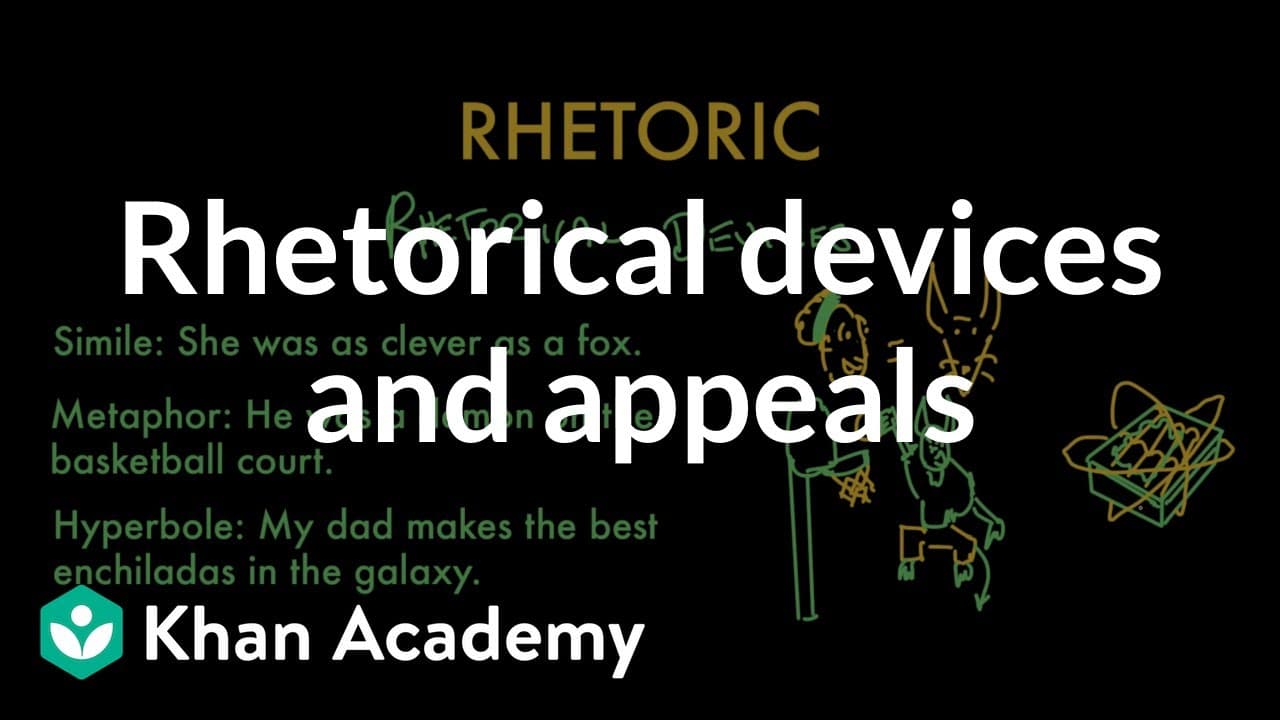
This educational video introduces students to the concept of rhetoric, defined as the art of persuasion. The narrator breaks down the subject into two main categories: rhetorical devices (figures of speech like similes, metaphors, and hyperbole) and rhetorical appeals (strategic modes of persuasion). Through clear narration and simple hand-drawn illustrations, the video explains how these tools are used to construct arguments and influence audiences. The content covers key rhetorical terminology including specific devices and the three classical appeals: Logos (logic/reason), Pathos (emotion), and Ethos (authority/credibility). The narrator uses relatable, humorous examples—such as "galactic enchiladas" for hyperbole and a sad puppy for pathos—to make abstract concepts concrete. It also touches on more complex ideas like apophasis to show the depth of the field. For educators, this video serves as an excellent foundational tool for English Language Arts units on persuasive writing, speech analysis, or media literacy. It empowers students not only to craft more effective arguments themselves but also to critically analyze the messages they encounter in the world. By understanding these mechanisms, students become more discerning consumers of information and more powerful communicators.

Khan AcademyKhan Academy

4mins 3s

Video
Strengthening Arguments by Addressing Opposing Viewpoints

Strengthening Arguments by Addressing Opposing Viewpoints

This video explores the rhetorical strategy of acknowledging and incorporating opposing viewpoints to strengthen argumentative writing. Using a martial arts analogy, the narrator explains that effective arguments do not simply "steamroll" opposition but rather engage with it constructively. The video outlines two primary applications for this technique: maintaining neutrality in journalistic reporting and fortifying persuasive arguments by anticipating and dismantling counter-claims. The video uses two distinct examples to illustrate these concepts. First, a humorous dispute over stolen cookies between fictional characters (Ms. Adeyemi and Mr. Dupont) demonstrates how to describe a conflict neutrally without injecting personal bias. Second, the historical mystery of the Lost Colony of Roanoke is used to show how addressing alternative theories (like disease or violence) and refuting them with evidence actually supports the author's main thesis that the colony's fate remains unknown. This resource is highly valuable for English Language Arts classrooms focusing on persuasive writing, debate, and media literacy. It provides a concrete framework (the "Block and Strike" method) for students to understand the function of counter-arguments and rebuttals. It also encourages critical reading by teaching students to be suspicious of authors who ignore opposing viewpoints entirely.

Khan AcademyKhan Academy

5mins 35s

Video
How to Win Arguments Using Claims and Evidence

How to Win Arguments Using Claims and Evidence

This engaging video lesson breaks down the components of a persuasive argument using a relatable scenario: a teenager negotiating with her mother via text message for a new phone. The narrator analyzes the conversation in real-time, highlighting how the character, Liz, effectively uses rhetorical strategies to make her case. The video transforms a common daily interaction into a clear model for argumentative thinking. The content focuses on three core concepts of argumentation: Claims (stating a position), Evidence (providing specific facts to support the position), and Counterclaims (anticipating and addressing opposing arguments before they are fully raised). It specifically highlights how to evaluate the strength of different types of evidence, demonstrating why connecting the problem to schoolwork is more persuasive to a parent than connecting it to gaming. For educators, this video serves as an excellent hook or modeling tool for units on argumentative writing or speech. It takes abstract terms like 'counterclaim' and 'preemptive argument' and grounds them in a context every student understands. It is particularly useful for visual learners who benefit from seeing the argument structure unfold as a text message thread.

Miacademy & MiaPrep Learning ChannelMiacademy & MiaPrep Learning Channel

4mins 50s

Video
How Delivery Shapes Meaning in Public Speaking

How Delivery Shapes Meaning in Public Speaking

This video explores the critical role of delivery in public speaking, demonstrating how *how* something is said can be just as important as *what* is said. It begins with a relatable modern example of a text message to illustrate how the absence of tone can lead to misunderstandings, before breaking down specific public speaking techniques including vocal variety, language choice, and physical presence. The narrator explains concepts like monotone vs. dynamic speech, formal vs. informal language, and the strategic use of rhetorical devices like repetition. The second half of the video applies these concepts through a detailed case study of Ann Richards' keynote address at the 1988 Democratic National Convention. The narrator pauses the speech at key moments to analyze Richards' use of gestures to create imagery, her use of props (a folded letter) to establish authenticity, her pacing to convey emotion, and her use of repetition to build persuasive momentum. This practical application bridges the gap between theory and practice. For educators, this resource is an excellent tool for English Language Arts, Speech, and Debate classes. It provides students with a vocabulary for critiquing oral presentations and concrete strategies for improving their own speaking skills. By dissecting a historical speech, it also serves as a model for how students can analyze media and political rhetoric, fostering media literacy and critical listening skills.

Khan AcademyKhan Academy

8mins 54s

Video
Mastering Persuasion: Ethos, Logos, and Pathos

Mastering Persuasion: Ethos, Logos, and Pathos

In this engaging Language Arts lesson, students visit the fictional town of "Persuasia" where a heated debate is unfolding regarding the potential replacement of their beloved warthog mascot, Wartimer. Through this narrative framework, the video introduces the fundamental concepts of persuasive text analysis. Viewers are tasked with helping the host and her robot companion, Mia, sort through mixed-up debate notes to identify which arguments belong to which debater based on their content and style.

Miacademy & MiaPrep Learning ChannelMiacademy & MiaPrep Learning Channel

10mins 55s

Video
Why the Earthworm Should Be Our Mascot: A Persuasive Speech

Why the Earthworm Should Be Our Mascot: A Persuasive Speech

This video features a spirited persuasive speech delivered by a young woman advocating for an earthworm to become the new mascot for the fictional town of 'Persuasia'. The speaker systematically addresses potential skepticism about choosing a humble worm, transforming its perceived weaknesses into strengths such as uniqueness, ecological importance, and resilience. She uses a blend of scientific facts—like soil aeration and regeneration—and emotional appeals to community identity to build a compelling case. The content explores key themes of persuasive rhetoric, including the use of logical arguments (logos), emotional connection (pathos), and credibility (ethos). It highlights how to structure an argument by introducing a thesis, supporting it with distinct points (inclusivity, practicality, scientific wonder, and hard work), and concluding with a strong call to action. Additionally, the video touches upon biological concepts regarding the earthworm's vital role in the ecosystem. For educators, this video serves as an excellent model text for teaching persuasive writing and public speaking. It demonstrates clear organizational structure, effective use of rhetorical questions, and the power of reframing a topic. Teachers can use it to have students analyze argument strength, identify transition words, discuss the speaker's delivery techniques, or launch a cross-curricular unit combining English Language Arts with life science.

Miacademy & MiaPrep Learning ChannelMiacademy & MiaPrep Learning Channel

2mins 28s

Video
How to Write a Persuasive Creative Writing Pitch

How to Write a Persuasive Creative Writing Pitch

This video provides a comprehensive guide on how to write a persuasive pitch for a creative writing project, specifically focusing on multimedia formats like movies, plays, or video games. Hosted by an engaging instructor with animated segments featuring "Mr. Mark Up," the lesson defines what a pitch is and why it is a critical skill for writers who want to see their ideas produced. It breaks down the pitch into five essential components: the Hook, Synopsis, Target Audience, Unique Selling Points, and Call to Action. The video uses a concrete example—a dystopian sci-fi adaptation of Romeo and Juliet—to illustrate each component in action. This example helps clarify abstract concepts, showing students exactly what a "unique selling point" looks like compared to a general synopsis. The lesson emphasizes the function of each section, explaining not just *what* to write, but *why* it matters for persuading a producer or audience to invest in the story. Ideally suited for middle and high school English Language Arts and creative writing curriculums, this video serves as an excellent launchpad for project-based learning. It connects creative storytelling with real-world professional skills like persuasion, marketing, and public speaking. Teachers can use this video to introduce a capstone writing project where students must not only write a story but also "sell" it to their peers or a panel, fostering skills in audience analysis and concise communication.

Miacademy & MiaPrep Learning ChannelMiacademy & MiaPrep Learning Channel

9mins 22s

Video
How to Win Arguments Using Claims and Evidence

How to Win Arguments Using Claims and Evidence

This engaging video lesson breaks down the components of a persuasive argument using a relatable scenario: a teenager negotiating with her mother via text message for a new phone. The narrator analyzes the conversation in real-time, highlighting how the character, Liz, effectively uses rhetorical strategies to make her case. The video transforms a common daily interaction into a clear model for argumentative thinking. The content focuses on three core concepts of argumentation: Claims (stating a position), Evidence (providing specific facts to support the position), and Counterclaims (anticipating and addressing opposing arguments before they are fully raised). It specifically highlights how to evaluate the strength of different types of evidence, demonstrating why connecting the problem to schoolwork is more persuasive to a parent than connecting it to gaming. For educators, this video serves as an excellent hook or modeling tool for units on argumentative writing or speech. It takes abstract terms like 'counterclaim' and 'preemptive argument' and grounds them in a context every student understands. It is particularly useful for visual learners who benefit from seeing the argument structure unfold as a text message thread.

Miacademy & MiaPrep Learning ChannelMiacademy & MiaPrep Learning Channel

4mins 50s

Video
Strengthening Arguments by Addressing Opposing Viewpoints

Strengthening Arguments by Addressing Opposing Viewpoints

This video explores the rhetorical strategy of acknowledging and incorporating opposing viewpoints to strengthen argumentative writing. Using a martial arts analogy, the narrator explains that effective arguments do not simply "steamroll" opposition but rather engage with it constructively. The video outlines two primary applications for this technique: maintaining neutrality in journalistic reporting and fortifying persuasive arguments by anticipating and dismantling counter-claims. The video uses two distinct examples to illustrate these concepts. First, a humorous dispute over stolen cookies between fictional characters (Ms. Adeyemi and Mr. Dupont) demonstrates how to describe a conflict neutrally without injecting personal bias. Second, the historical mystery of the Lost Colony of Roanoke is used to show how addressing alternative theories (like disease or violence) and refuting them with evidence actually supports the author's main thesis that the colony's fate remains unknown. This resource is highly valuable for English Language Arts classrooms focusing on persuasive writing, debate, and media literacy. It provides a concrete framework (the "Block and Strike" method) for students to understand the function of counter-arguments and rebuttals. It also encourages critical reading by teaching students to be suspicious of authors who ignore opposing viewpoints entirely.

Khan AcademyKhan Academy

5mins 35s

Video
Thinking Like a Detective: Assessing Logic and Evidence

Thinking Like a Detective: Assessing Logic and Evidence

This engaging educational video uses a relatable scenario—interpreting a text message conversation about a crush—to teach students the fundamentals of logical reasoning and evidence evaluation. The host begins by referencing Sherlock Holmes to introduce the concept of using facts to build a logical conclusion. The core of the video analyzes a dialogue between two friends, Liz and Maya, where Liz jumps to conclusions based on weak evidence, allowing the narrator to demonstrate the difference between insufficient facts and a solid argument. Key themes include critical thinking, distinguishing relevant from irrelevant details, identifying sufficient evidence, and assessing the validity of an argument. The video explicitly connects these skills to reading comprehension strategies like finding the main idea and analyzing word choice. It models the internal monologue of a critical thinker who questions whether the "pieces of the puzzle" actually fit together. For educators, this video serves as an excellent hook for units on argumentative writing, debate, or reading comprehension. It takes an abstract concept (assessing reasoning) and applies it to a social situation students instinctively understand, making the learning concrete. It can be used to spark discussions about what constitutes "proof" in both literature and real-world arguments, helping students move beyond surface-level assumptions.

Miacademy & MiaPrep Learning ChannelMiacademy & MiaPrep Learning Channel

5mins 33s

Video
Mastering Persuasion: Ethos, Logos, and Pathos

Mastering Persuasion: Ethos, Logos, and Pathos

In this engaging Language Arts lesson, students visit the fictional town of "Persuasia" where a heated debate is unfolding regarding the potential replacement of their beloved warthog mascot, Wartimer. Through this narrative framework, the video introduces the fundamental concepts of persuasive text analysis. Viewers are tasked with helping the host and her robot companion, Mia, sort through mixed-up debate notes to identify which arguments belong to which debater based on their content and style.

Miacademy & MiaPrep Learning ChannelMiacademy & MiaPrep Learning Channel

10mins 55s

Video
Structuring and Presenting Your Research Project

Structuring and Presenting Your Research Project

This educational video guides high school students through the final stages of a research writing unit: structuring the presentation slides and delivering the oral presentation. The host, who initially expresses anxiety about public speaking, uses a friendly robot character named Mia to introduce strategies for overcoming nerves and organizing content effectively. The video is divided into two main sections: a slide-by-slide breakdown of the research presentation structure and a set of practical tips for public speaking.

Miacademy & MiaPrep Learning ChannelMiacademy & MiaPrep Learning Channel

7mins 39s

Video
Evaluating Evidence: Did the Dog Eat the Homework?

Evaluating Evidence: Did the Dog Eat the Homework?

This engaging video uses a relatable scenario—the classic "my dog ate my homework" excuse—to teach students how to evaluate the strength and validity of evidence. Through a reenacted text message conversation, the host breaks down different types of claims, distinguishing between personal opinions, anecdotal evidence, and solid proof. The video illustrates that while stories and past behaviors can support a theory, they do not constitute definitive proof. The core educational themes focus on critical thinking, media literacy, and argumentative reasoning. It introduces key vocabulary such as "anecdotal evidence," "interpretation," and "solid evidence" in a way that is accessible to upper elementary and middle school students. The visual metaphor of detective work helps frame the importance of looking beyond surface-level assumptions to find facts that truly support a claim. For teachers, this video serves as an excellent hook for units on persuasive writing, debate, or reading comprehension. It provides a clear, low-stakes example of how to scrutinize information, a skill that students can then apply to more complex texts, research projects, or real-world media analysis. It is particularly useful for helping students understand why "I heard someone say it" is less powerful than data or direct documentation.

Miacademy & MiaPrep Learning ChannelMiacademy & MiaPrep Learning Channel

5mins 58s

Video
How to Write a Persuasive Creative Writing Pitch

How to Write a Persuasive Creative Writing Pitch

This video provides a comprehensive guide on how to write a persuasive pitch for a creative writing project, specifically focusing on multimedia formats like movies, plays, or video games. Hosted by an engaging instructor with animated segments featuring "Mr. Mark Up," the lesson defines what a pitch is and why it is a critical skill for writers who want to see their ideas produced. It breaks down the pitch into five essential components: the Hook, Synopsis, Target Audience, Unique Selling Points, and Call to Action. The video uses a concrete example—a dystopian sci-fi adaptation of Romeo and Juliet—to illustrate each component in action. This example helps clarify abstract concepts, showing students exactly what a "unique selling point" looks like compared to a general synopsis. The lesson emphasizes the function of each section, explaining not just *what* to write, but *why* it matters for persuading a producer or audience to invest in the story. Ideally suited for middle and high school English Language Arts and creative writing curriculums, this video serves as an excellent launchpad for project-based learning. It connects creative storytelling with real-world professional skills like persuasion, marketing, and public speaking. Teachers can use this video to introduce a capstone writing project where students must not only write a story but also "sell" it to their peers or a panel, fostering skills in audience analysis and concise communication.

Miacademy & MiaPrep Learning ChannelMiacademy & MiaPrep Learning Channel

9mins 22s

Video
How to Win Arguments Using Claims and Evidence

How to Win Arguments Using Claims and Evidence

This engaging video lesson breaks down the components of a persuasive argument using a relatable scenario: a teenager negotiating with her mother via text message for a new phone. The narrator analyzes the conversation in real-time, highlighting how the character, Liz, effectively uses rhetorical strategies to make her case. The video transforms a common daily interaction into a clear model for argumentative thinking. The content focuses on three core concepts of argumentation: Claims (stating a position), Evidence (providing specific facts to support the position), and Counterclaims (anticipating and addressing opposing arguments before they are fully raised). It specifically highlights how to evaluate the strength of different types of evidence, demonstrating why connecting the problem to schoolwork is more persuasive to a parent than connecting it to gaming. For educators, this video serves as an excellent hook or modeling tool for units on argumentative writing or speech. It takes abstract terms like 'counterclaim' and 'preemptive argument' and grounds them in a context every student understands. It is particularly useful for visual learners who benefit from seeing the argument structure unfold as a text message thread.

Miacademy & MiaPrep Learning ChannelMiacademy & MiaPrep Learning Channel

4mins 50s

Video
Why the Earthworm Should Be Our Mascot: A Persuasive Speech

Why the Earthworm Should Be Our Mascot: A Persuasive Speech

This video features a spirited persuasive speech delivered by a young woman advocating for an earthworm to become the new mascot for the fictional town of 'Persuasia'. The speaker systematically addresses potential skepticism about choosing a humble worm, transforming its perceived weaknesses into strengths such as uniqueness, ecological importance, and resilience. She uses a blend of scientific facts—like soil aeration and regeneration—and emotional appeals to community identity to build a compelling case. The content explores key themes of persuasive rhetoric, including the use of logical arguments (logos), emotional connection (pathos), and credibility (ethos). It highlights how to structure an argument by introducing a thesis, supporting it with distinct points (inclusivity, practicality, scientific wonder, and hard work), and concluding with a strong call to action. Additionally, the video touches upon biological concepts regarding the earthworm's vital role in the ecosystem. For educators, this video serves as an excellent model text for teaching persuasive writing and public speaking. It demonstrates clear organizational structure, effective use of rhetorical questions, and the power of reframing a topic. Teachers can use it to have students analyze argument strength, identify transition words, discuss the speaker's delivery techniques, or launch a cross-curricular unit combining English Language Arts with life science.

Miacademy & MiaPrep Learning ChannelMiacademy & MiaPrep Learning Channel

2mins 28s

Video
Mastering Persuasion: Ethos, Logos, and Pathos

Mastering Persuasion: Ethos, Logos, and Pathos

In this engaging Language Arts lesson, students visit the fictional town of "Persuasia" where a heated debate is unfolding regarding the potential replacement of their beloved warthog mascot, Wartimer. Through this narrative framework, the video introduces the fundamental concepts of persuasive text analysis. Viewers are tasked with helping the host and her robot companion, Mia, sort through mixed-up debate notes to identify which arguments belong to which debater based on their content and style.

Miacademy & MiaPrep Learning ChannelMiacademy & MiaPrep Learning Channel

10mins 55s

Video
Mastering the Art of Persuasion: Rhetoric, Devices, and Appeals

Mastering the Art of Persuasion: Rhetoric, Devices, and Appeals

This educational video introduces students to the concept of rhetoric, defined as the art of persuasion. The narrator breaks down the subject into two main categories: rhetorical devices (figures of speech like similes, metaphors, and hyperbole) and rhetorical appeals (strategic modes of persuasion). Through clear narration and simple hand-drawn illustrations, the video explains how these tools are used to construct arguments and influence audiences. The content covers key rhetorical terminology including specific devices and the three classical appeals: Logos (logic/reason), Pathos (emotion), and Ethos (authority/credibility). The narrator uses relatable, humorous examples—such as "galactic enchiladas" for hyperbole and a sad puppy for pathos—to make abstract concepts concrete. It also touches on more complex ideas like apophasis to show the depth of the field. For educators, this video serves as an excellent foundational tool for English Language Arts units on persuasive writing, speech analysis, or media literacy. It empowers students not only to craft more effective arguments themselves but also to critically analyze the messages they encounter in the world. By understanding these mechanisms, students become more discerning consumers of information and more powerful communicators.

Khan AcademyKhan Academy

4mins 3s

Video
Thinking Like a Detective: Assessing Logic and Evidence

Thinking Like a Detective: Assessing Logic and Evidence

This engaging educational video uses a relatable scenario—interpreting a text message conversation about a crush—to teach students the fundamentals of logical reasoning and evidence evaluation. The host begins by referencing Sherlock Holmes to introduce the concept of using facts to build a logical conclusion. The core of the video analyzes a dialogue between two friends, Liz and Maya, where Liz jumps to conclusions based on weak evidence, allowing the narrator to demonstrate the difference between insufficient facts and a solid argument. Key themes include critical thinking, distinguishing relevant from irrelevant details, identifying sufficient evidence, and assessing the validity of an argument. The video explicitly connects these skills to reading comprehension strategies like finding the main idea and analyzing word choice. It models the internal monologue of a critical thinker who questions whether the "pieces of the puzzle" actually fit together. For educators, this video serves as an excellent hook for units on argumentative writing, debate, or reading comprehension. It takes an abstract concept (assessing reasoning) and applies it to a social situation students instinctively understand, making the learning concrete. It can be used to spark discussions about what constitutes "proof" in both literature and real-world arguments, helping students move beyond surface-level assumptions.

Miacademy & MiaPrep Learning ChannelMiacademy & MiaPrep Learning Channel

5mins 33s

No videos found
There are no videos available for this topic yet.
No videos found
There are no videos available for this topic yet.
Video
Structuring and Presenting Your Research Project

Structuring and Presenting Your Research Project

This educational video guides high school students through the final stages of a research writing unit: structuring the presentation slides and delivering the oral presentation. The host, who initially expresses anxiety about public speaking, uses a friendly robot character named Mia to introduce strategies for overcoming nerves and organizing content effectively. The video is divided into two main sections: a slide-by-slide breakdown of the research presentation structure and a set of practical tips for public speaking.

Miacademy & MiaPrep Learning ChannelMiacademy & MiaPrep Learning Channel

7mins 39s

Video
How to Write a Persuasive Creative Writing Pitch

How to Write a Persuasive Creative Writing Pitch

This video provides a comprehensive guide on how to write a persuasive pitch for a creative writing project, specifically focusing on multimedia formats like movies, plays, or video games. Hosted by an engaging instructor with animated segments featuring "Mr. Mark Up," the lesson defines what a pitch is and why it is a critical skill for writers who want to see their ideas produced. It breaks down the pitch into five essential components: the Hook, Synopsis, Target Audience, Unique Selling Points, and Call to Action. The video uses a concrete example—a dystopian sci-fi adaptation of Romeo and Juliet—to illustrate each component in action. This example helps clarify abstract concepts, showing students exactly what a "unique selling point" looks like compared to a general synopsis. The lesson emphasizes the function of each section, explaining not just *what* to write, but *why* it matters for persuading a producer or audience to invest in the story. Ideally suited for middle and high school English Language Arts and creative writing curriculums, this video serves as an excellent launchpad for project-based learning. It connects creative storytelling with real-world professional skills like persuasion, marketing, and public speaking. Teachers can use this video to introduce a capstone writing project where students must not only write a story but also "sell" it to their peers or a panel, fostering skills in audience analysis and concise communication.

Miacademy & MiaPrep Learning ChannelMiacademy & MiaPrep Learning Channel

9mins 22s

Video
Why the Earthworm Should Be Our Mascot: A Persuasive Speech

Why the Earthworm Should Be Our Mascot: A Persuasive Speech

This video features a spirited persuasive speech delivered by a young woman advocating for an earthworm to become the new mascot for the fictional town of 'Persuasia'. The speaker systematically addresses potential skepticism about choosing a humble worm, transforming its perceived weaknesses into strengths such as uniqueness, ecological importance, and resilience. She uses a blend of scientific facts—like soil aeration and regeneration—and emotional appeals to community identity to build a compelling case. The content explores key themes of persuasive rhetoric, including the use of logical arguments (logos), emotional connection (pathos), and credibility (ethos). It highlights how to structure an argument by introducing a thesis, supporting it with distinct points (inclusivity, practicality, scientific wonder, and hard work), and concluding with a strong call to action. Additionally, the video touches upon biological concepts regarding the earthworm's vital role in the ecosystem. For educators, this video serves as an excellent model text for teaching persuasive writing and public speaking. It demonstrates clear organizational structure, effective use of rhetorical questions, and the power of reframing a topic. Teachers can use it to have students analyze argument strength, identify transition words, discuss the speaker's delivery techniques, or launch a cross-curricular unit combining English Language Arts with life science.

Miacademy & MiaPrep Learning ChannelMiacademy & MiaPrep Learning Channel

2mins 28s

Video
Strengthening Arguments by Addressing Opposing Viewpoints

Strengthening Arguments by Addressing Opposing Viewpoints

This video explores the rhetorical strategy of acknowledging and incorporating opposing viewpoints to strengthen argumentative writing. Using a martial arts analogy, the narrator explains that effective arguments do not simply "steamroll" opposition but rather engage with it constructively. The video outlines two primary applications for this technique: maintaining neutrality in journalistic reporting and fortifying persuasive arguments by anticipating and dismantling counter-claims. The video uses two distinct examples to illustrate these concepts. First, a humorous dispute over stolen cookies between fictional characters (Ms. Adeyemi and Mr. Dupont) demonstrates how to describe a conflict neutrally without injecting personal bias. Second, the historical mystery of the Lost Colony of Roanoke is used to show how addressing alternative theories (like disease or violence) and refuting them with evidence actually supports the author's main thesis that the colony's fate remains unknown. This resource is highly valuable for English Language Arts classrooms focusing on persuasive writing, debate, and media literacy. It provides a concrete framework (the "Block and Strike" method) for students to understand the function of counter-arguments and rebuttals. It also encourages critical reading by teaching students to be suspicious of authors who ignore opposing viewpoints entirely.

Khan AcademyKhan Academy

5mins 35s

Video
How to Win Arguments Using Claims and Evidence

How to Win Arguments Using Claims and Evidence

This engaging video lesson breaks down the components of a persuasive argument using a relatable scenario: a teenager negotiating with her mother via text message for a new phone. The narrator analyzes the conversation in real-time, highlighting how the character, Liz, effectively uses rhetorical strategies to make her case. The video transforms a common daily interaction into a clear model for argumentative thinking. The content focuses on three core concepts of argumentation: Claims (stating a position), Evidence (providing specific facts to support the position), and Counterclaims (anticipating and addressing opposing arguments before they are fully raised). It specifically highlights how to evaluate the strength of different types of evidence, demonstrating why connecting the problem to schoolwork is more persuasive to a parent than connecting it to gaming. For educators, this video serves as an excellent hook or modeling tool for units on argumentative writing or speech. It takes abstract terms like 'counterclaim' and 'preemptive argument' and grounds them in a context every student understands. It is particularly useful for visual learners who benefit from seeing the argument structure unfold as a text message thread.

Miacademy & MiaPrep Learning ChannelMiacademy & MiaPrep Learning Channel

4mins 50s

Video
Strengthening Arguments by Addressing Opposing Viewpoints

Strengthening Arguments by Addressing Opposing Viewpoints

This video explores the rhetorical strategy of acknowledging and incorporating opposing viewpoints to strengthen argumentative writing. Using a martial arts analogy, the narrator explains that effective arguments do not simply "steamroll" opposition but rather engage with it constructively. The video outlines two primary applications for this technique: maintaining neutrality in journalistic reporting and fortifying persuasive arguments by anticipating and dismantling counter-claims. The video uses two distinct examples to illustrate these concepts. First, a humorous dispute over stolen cookies between fictional characters (Ms. Adeyemi and Mr. Dupont) demonstrates how to describe a conflict neutrally without injecting personal bias. Second, the historical mystery of the Lost Colony of Roanoke is used to show how addressing alternative theories (like disease or violence) and refuting them with evidence actually supports the author's main thesis that the colony's fate remains unknown. This resource is highly valuable for English Language Arts classrooms focusing on persuasive writing, debate, and media literacy. It provides a concrete framework (the "Block and Strike" method) for students to understand the function of counter-arguments and rebuttals. It also encourages critical reading by teaching students to be suspicious of authors who ignore opposing viewpoints entirely.

Khan AcademyKhan Academy

5mins 35s

No videos found
There are no videos available for this topic yet.
No videos found
There are no videos available for this topic yet.