Lenny LearningLenny
Create
Explore
Workspace
LoginSign up
MathEnglish Language ArtsScience & EngineeringSocial StudiesGlobal LanguagesHealth & Physical EducationSpecial EducationCounseling & Life SkillsArts & CreativityESL
Lenny LearningLenny
Lenny Learning
About
Training
Pricing
Support
Contact
© 2026 Lenny Learning Inc.

Phonics & Reading Foundations

SequencesLessonsMaterialsVideos
  1. English Language Arts

Phonics & Reading Foundations

SequencesLessonsMaterialsVideos

Letter identification, phonemic awareness, and decoding skills ranging from simple letter-sound associations to complex multisyllabic patterns. Develops reading fluency through systematic instruction in vowel teams, consonant blends, and word recognition strategies using decodable texts.

English Language ArtsPhonics & Reading FoundationsLetter IdentificationLearn Letters A-ZLowercase and Uppercase LettersConsonants and VowelsLetter-Sound AssociationsLetter-Sound Associations: LowercaseLetter-Sound Associations: UppercaseBeginning and Ending SoundsRhymingBlending And SegmentingShort VowelsShort Vowel SoundsConsonant BlendsConsonant DigraphsBlends, Digraphs, and TrigraphsDigraphs, Blends, and Silent LettersLong Vowel SoundsLong Vowel PatternsShort and Long VowelsShort and Long Vowel PatternsSilent EVowel SoundsVowel TeamsR-Controlled VowelsDiphthongs: Oi, Oy, Ou, OwVariant VowelsVariant, Diphthong, And R Vowel PatternsSoft G And CSight WordsIrregular WordsWord RecognitionSyllablesSyllable TypesTwo-Syllable WordsMultisyllabic WordsPhoneme ManipulationDecodable TextsVocabularyAction WordsQuestion WordsNouns and AdjectivesClassify WordsCompound WordsSynonyms and AntonymsHomophonesHomophones and HomonymsShades of MeaningContext CluesPrefixes and SuffixesGreek and Latin RootsAnalogiesIdioms and AdagesForeign Words and ExpressionsWord Choice and UsageReference SkillsReading ComprehensionRead-Along Literary TextsRead-Along Informational TextsReality vs. FictionStory ElementsCharacterSequenceMain IdeaCause And EffectCompare And ContrastReading StrategiesText StructureAuthor's PurposeAuthor's Purpose And ToneAuthor's PerspectivePoint Of ViewThemeInference And ThemeInference And AnalysisPoetry ElementsLiterary DevicesAnalyzing LiteratureAnalyzing Informational TextsComparing TextsAudience, Purpose, And ToneBusiness DocumentsNovel StudyNonfiction Book StudyGrammar & MechanicsSentencesNounsVerbsAdjectivesPronounsCapitalizationPunctuationContractionsConjunctionsPrepositionsArticlesAdjectives And AdverbsVerb TypesVerb TensePronouns And AntecedentsPronoun TypesSubject-Verb AgreementDirect And Indirect ObjectsSentences, Fragments, And Run-OnsPhrases And ClausesCommasSemicolons, Colons, And CommasDashes, Hyphens, And EllipsesSpellingAbbreviationsFormattingVerb Tense And MoodMisplaced ModifiersWritingDescriptive DetailsCreative WritingOpinion WritingTopic SentencesOrganizing WritingLinking WordsSentence VarietyIntroductions And ConclusionsPersuasive And Opinion WritingExpository WritingPersuasive StrategiesDeveloping And Supporting ArgumentsTopic Sentences And Thesis StatementsSummarizingResearch SkillsEditing And RevisingActive And Passive Voice=Writing Clearly And ConciselyDebate & Public SpeakingPublic Speaking BasicsPersuasive TechniquesClaims and EvidenceTypes of ArgumentsReasoning TypesLogical FallaciesTopic ResearchOrganizing EvidenceDebate Speech OrganizationAttacking and Defending ArgumentsClash and EngagementImpact CalculusQuestioning and Cross-ExaminationCritical ThinkingInformal LogicFormal LogicInductive Reasoning
Letter IdentificationRecognition of uppercase and lowercase letterforms, alphabetic order, and visual discrimination between similar characters. Builds the essential foundation for phonemic awareness and early literacy skills.
Learn Letters A-ZUppercase and lowercase letter recognition, phonemic awareness, and foundational handwriting skills. Focuses on letter-shape formation and initial sound identification for early literacy development.
Lowercase and Uppercase LettersLetter recognition and formation for all 26 uppercase and lowercase characters. Connects capital letters with their small counterparts to build alphabetic fluency.
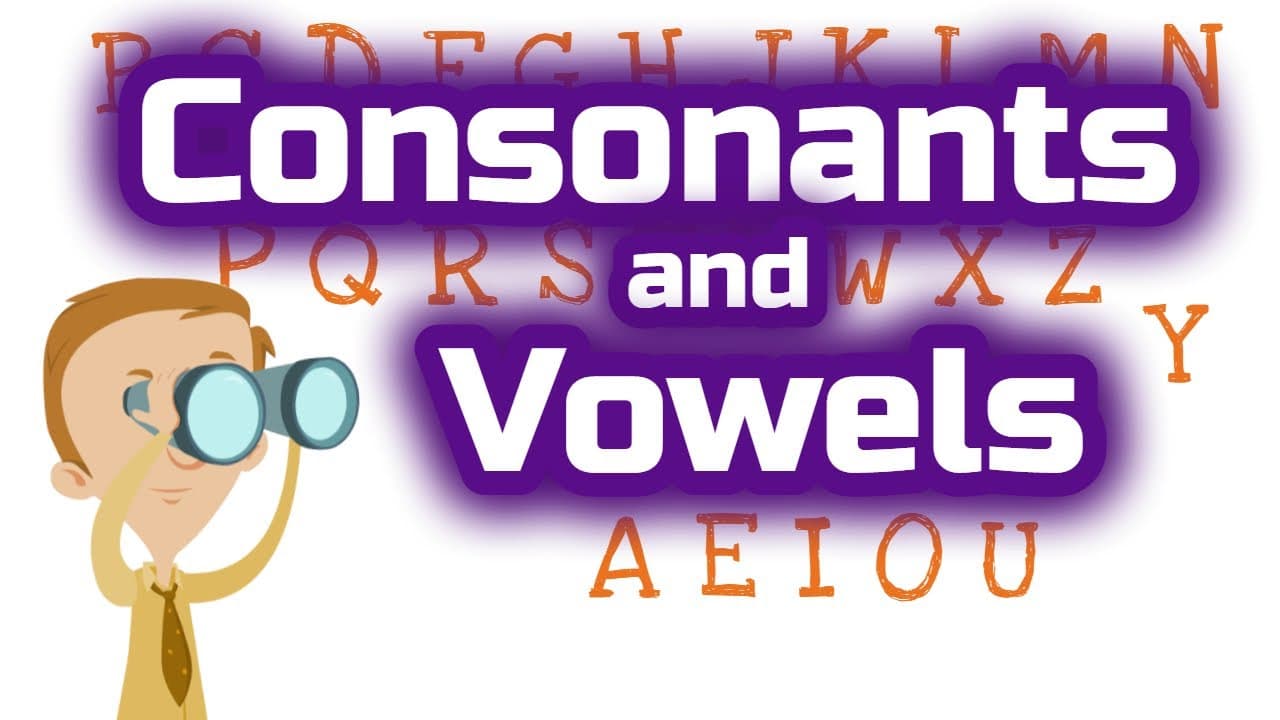
Consonants and VowelsDistinguishes between speech sounds and their written representations, focusing on vowel production and consonant articulation. Builds foundational phonics skills through syllable formation and sound-symbol correspondence.
Letter-Sound AssociationsGrapheme-phoneme mapping and blending techniques for early literacy. Strengthens decoding skills by connecting visual symbols to their corresponding spoken sounds.
Letter-Sound Associations: LowercaseIdentification of lowercase letter forms and their primary phonetic sounds. Strengthens foundational decoding skills through consistent visual-auditory mapping.
Letter-Sound Associations: UppercaseIdentification of uppercase letters and their corresponding primary phonemes. Builds foundational decoding skills through visual recognition and auditory association.
Beginning and Ending SoundsPhonemic awareness through the isolation of initial and final sounds in spoken words. Strengthens letter-sound correspondence and prepares students for decoding CVC words.
RhymingPhonological awareness through the identification and generation of matching end sounds. Develops auditory discrimination skills and strengthens foundational reading readiness using word families.
Blending And SegmentingPhonemic awareness techniques for merging individual sounds into whole words and isolating sounds within spoken language. Develops foundational decoding and encoding skills essential for early literacy.
Short VowelsPhonemic recognition and production of the five short vowel sounds within CVC word patterns. Builds foundational decoding skills for early readers through word blending and segmenting.
Short Vowel SoundsIdentification and pronunciation of /a/, /e/, /i/, /o/, and /u/ in CVC words. Builds phonemic awareness through systematic segmenting and blending exercises.
Consonant BlendsPhonemic awareness and decoding strategies for two- and three-letter consonant clusters. Strengthens word recognition and spelling accuracy by isolating individual sounds within initial and final blends.
Consonant DigraphsIdentification and pronunciation of letter pairs like ch, sh, th, and wh that represent a single phoneme. Strengthens decoding skills and phonetic awareness in early readers.
Blends, Digraphs, and TrigraphsIdentification and pronunciation of consonant blends, digraphs, and three-letter trigraphs. Develops phonemic awareness and decoding skills essential for early reading fluency.
Digraphs, Blends, and Silent LettersPhonetic patterns including consonant digraphs, multi-letter blends, and common silent letter combinations. Develops decoding accuracy and spelling proficiency for complex word structures.
Long Vowel SoundsPhonetic identification of long vowel patterns including silent e, vowel teams, and open syllables. Strengthens decoding skills and reading fluency through targeted practice with vowel sounds.
Long Vowel PatternsVowel teams, silent-e patterns, and common spelling generalizations for long vowel sounds. Strengthens phonemic awareness and decoding skills through word family analysis and orthographic mapping.
Short and Long VowelsPhonemic differentiation between short and long vowel sounds across common word patterns. Strengthens decoding skills through CVC and CVCe word analysis.
Short and Long Vowel PatternsPhonetic identification of CVC, CVCe, and common vowel team structures. Strengthens decoding fluency and spelling accuracy through contrasting sound patterns.
Silent EPhonetic patterns involving the silent final 'e' and its role in transforming short vowel sounds into long ones. Strengthens decoding and spelling skills through CVCe word analysis.
Vowel SoundsIdentification and pronunciation of long and short vowel sounds within common word patterns. Supports phonemic awareness and decoding skills through targeted practice with CVC and CVCe structures.
Vowel TeamsPhonetic patterns where two vowels work together to represent a single sound, such as long A in "rain" or long E in "leaf." Strengthens decoding skills and spelling proficiency through systematic practice with common vowel combinations.
R-Controlled VowelsIdentification and pronunciation of vowel-r combinations including ar, er, ir, or, and ur. Strengthens decoding and spelling skills by examining how the letter 'r' modifies preceding vowel sounds.
Diphthongs: Oi, Oy, Ou, OwVowel glides and spelling patterns for the /oi/ and /ou/ sounds using letter combinations oi, oy, ou, and ow. Strengthens decoding and spelling accuracy through word analysis and phonemic awareness.
Variant VowelsPhonic patterns and unique sounds that deviate from standard long or short vowel rules, such as /au/, /aw/, /oi/, and /oy/. Develops decoding skills and spelling accuracy for complex vowel teams and diphthongs.
Variant, Diphthong, And R Vowel PatternsDecodes complex vowel sounds including diphthongs, variant patterns, and r-controlled vowels. Strengthens word recognition and spelling accuracy through targeted sound-symbol identification.
Soft G And CPhonemic patterns for the soft sounds of 'g' and 'c' triggered by the vowels e, i, and y. Strengthens reading fluency and spelling accuracy through word-level analysis.
Sight WordsHigh-frequency word recognition and spelling strategies for non-decodable terms. Strengthens reading fluency through systematic practice with Dolch and Fry word lists.
Irregular WordsHigh-frequency words with non-phonetic spellings that do not follow standard decoding rules. Targets recognition and orthographic mapping for common sight words such as 'said,' 'the,' and 'of'.
Word RecognitionPhonological awareness, decoding patterns, and automatic sight word identification. Strengthens the ability to translate graphemes to phonemes for fluent reading.
SyllablesPhonological awareness skills through segmenting and blending word parts. Targets the six major syllable types and division rules to support decoding and spelling proficiency.
Syllable TypesIdentification and application of the six major syllable types, including closed, open, silent e, vowel teams, r-controlled, and consonant-le patterns. Equips students with strategies for decoding multisyllabic words and improving spelling accuracy.
Two-Syllable WordsSyllable division patterns and decoding strategies for multisyllabic vocabulary. Targets phonological awareness and reading fluency through systematic practice with VCCV and VCV structures.
Multisyllabic WordsDecoding strategies for complex words using syllable types and morphological patterns. Strengthens reading fluency through systematic blending and word-part analysis.
Phoneme ManipulationAdding, deleting, and substituting individual sounds within spoken words to develop advanced phonological awareness. Strengthens the mental processing required for decoding and encoding complex language structures.
Decodable TextsPhonics-based reading materials aligned with specific sound-spelling patterns taught in a systematic sequence. Strengthens decoding skills and reading fluency by ensuring students practice only the phoneme-grapheme correspondences they have learned.
Video
Mastering the Reverse Alphabet Challenge

Mastering the Reverse Alphabet Challenge

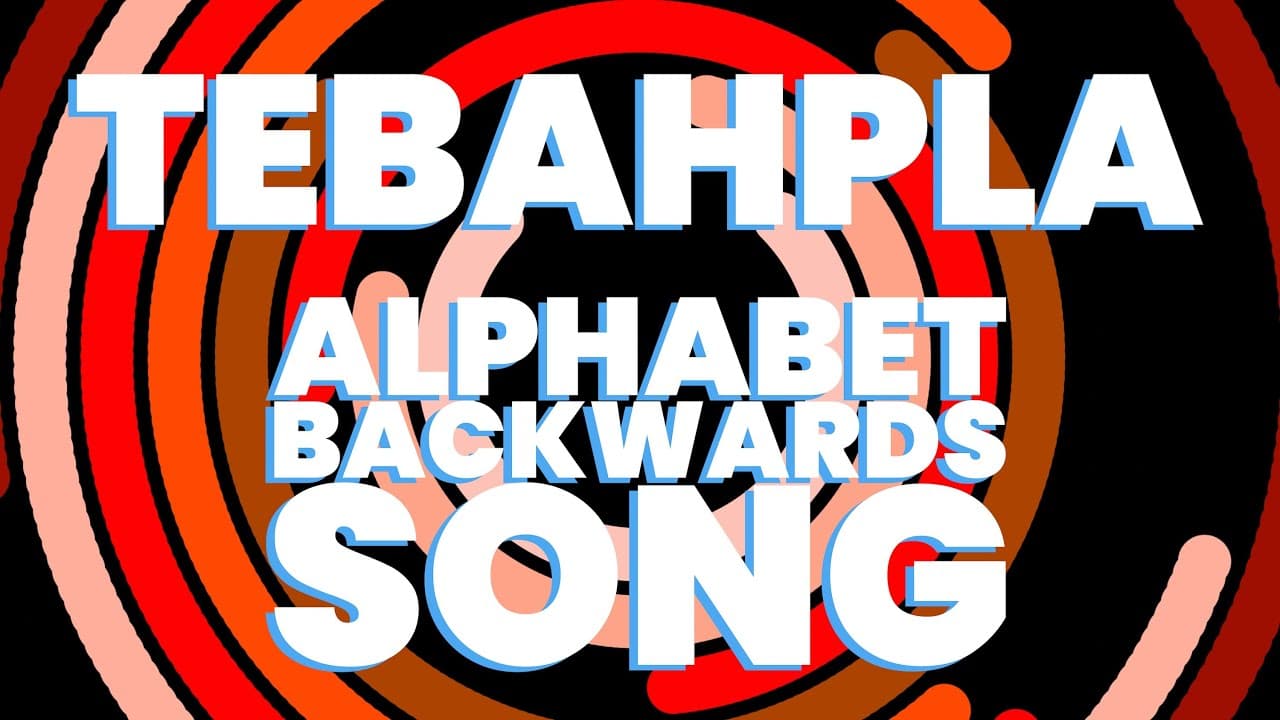
A high-energy, pop-infused music video that challenges students to learn the alphabet in reverse order. Through the catchy concept of the "Tebahpla" (alphabet spelled backwards), the video transforms a difficult cognitive task into an engaging song. The visual style features pulsing, colorful motion graphics that display letters clearly as they are sung, aiding in visual recognition. This video explores themes of sequencing, pattern recognition, and memory. By reversing a familiar sequence, students are forced to think critically about letter order rather than relying on rote muscle memory. The song breaks the reverse alphabet into rhythmic chunks, making the complex string of letters easier to digest and memorize. Ideally suited for early elementary classrooms, this video serves as an excellent brain break or cognitive warm-up. Teachers can use it to strengthen letter recognition, introduce the concept of reverse sequencing, or simply as a fun "challenge" activity. The catchy "Tebahpla" chorus gives students a mnemonic hook, turning the abstract task of reverse recitation into a named character or concept they can master.

Have Fun TeachingHave Fun Teaching

2mins 31s

Video
Dancing Through the Alphabet: Letters, Sounds, and Vowels

Dancing Through the Alphabet: Letters, Sounds, and Vowels

This high-energy animated video features a purple, furry, spherical creature dancing to an upbeat pop song about the alphabet. The video combines catchy music with on-screen text to guide viewers through the English alphabet sequence, while the character performs various dance moves against a changing colorful background. The visual style is modern and 3D-animated, appealing to young visual learners who enjoy music and movement. The content covers three main areas: the sequential recitation of letters A through Z, the categorization of letters into consonants and vowels, and the functional purpose of letters (reading, writing, and making sounds). It transitions from a cool blue aesthetic to a high-contrast, psychedelic color palette as the song intensifies, helping to maintain student attention through visual stimulation. For educators, this video serves as an excellent "brain break" or energizer that reinforces literacy skills. It is particularly useful for auditory and kinesthetic learners in early childhood classrooms. The song's lyrics explicitly connect abstract letters to the concrete actions of reading and writing, making it a strong opening hook for a literacy block or a fun transition activity between lessons.

Have Fun TeachingHave Fun Teaching

54s

Video
Dancing to the Alphabet Party Song

Dancing to the Alphabet Party Song

A high-energy, pop-style music video featuring an animated character dancing to a catchy rendition of the alphabet song. The video focuses on auditory learning and memorization of the English letter sequence through repetition and rhythm, set against a vibrant background of dancing stars. The upbeat tempo differentiates it from traditional, slower lullaby-style ABC songs, making it an energetic "party" version. Themes include the English alphabet sequence, rhythm, dance, and music. The video utilizes a modern dance-pop backing track to engage young learners, encouraging them to move and sing along rather than passively watch. The repetitive structure allows for multiple opportunities to practice the letter sequence within a single viewing. This resource is primarily useful as a "brain break" or active learning tool in Early Childhood classrooms. While it does not display the letters visually on screen for reading practice, its auditory focus makes it excellent for reinforcing letter names, sequencing, and memorization through movement. Teachers can use it to transition between activities, burn off energy while reviewing content, or as a background track for alphabet-related games.

Have Fun TeachingHave Fun Teaching

2mins 36s

Video
Grooving to the Alphabet: A Reggae ABC Song

Grooving to the Alphabet: A Reggae ABC Song

This animated music video presents the English alphabet set to a relaxed, catchy reggae-style rhythm. An animated blue character dances on screen while singing the traditional ABC sequence, interspersed with a chorus about the enduring nature of the alphabet. The video provides a musical mnemonic device to help young learners memorize the order of letters. The key themes are early literacy fundamentals, specifically letter sequencing and memorization through music. The song repeats the alphabet sequence four distinct times, allowing for multiple opportunities for practice within a single viewing. The chorus introduces the concept of the alphabet being a constant tool for communication "today, tomorrow, always and forever." For educators, this video serves as an excellent auditory anchor for Pre-K and Kindergarten classrooms. Unlike traditional nursery rhyme versions, the syncopated reggae beat offers a fresh auditory experience that can help engage students who might be bored with the standard melody. Because the video features a dancing character rather than displaying the letters on screen, it is best used as a background track for movement activities, clean-up times, or while pointing to a physical alphabet chart in the classroom.

Have Fun TeachingHave Fun Teaching

2mins 9s

Video
Targeting the Letter A with the Archery Game Song

Targeting the Letter A with the Archery Game Song

This high-energy, interactive animated music video turns learning the letter 'A' into an engaging archery game. Hosted by a friendly green character named Funz, the video uses a 'call and response' format where students are encouraged to physically pretend to shoot a bow and arrow at the target letter whenever it appears on screen. The song has a catchy pop beat that keeps the energy high while systematically drilling letter recognition. The content is divided into three distinct gameplay sections: recognizing uppercase 'A' amidst distractors, identifying lowercase 'a' within simple words, and a speed round that mixes contexts. Between rounds, a melodic chorus reinforces key concepts, explicitly stating that 'A' has both uppercase and lowercase forms and identifying it as a vowel. The visual style mimics a video game interface, complete with life bars and score indicators, appealing to digital-native students. For educators, this video serves as an excellent kinetic learning tool for early literacy. It moves beyond passive watching by requiring physical movement (miming archery) and active discrimination (finding the letter). It introduces essential vocabulary like "uppercase," "lowercase," and "vowel" while providing numerous examples of words containing the letter 'A' (e.g., cat, ham, fan), making it a versatile resource for introducing phonics, letter forms, and sight words.

Have Fun TeachingHave Fun Teaching

3mins 37s

Video
Pop the Letter D Balloons: A Carnival Phonics Game

Pop the Letter D Balloons: A Carnival Phonics Game

A high-energy, animated musical video set in a colorful carnival atmosphere designed to teach young learners how to recognize the letter 'D'. Guided by a friendly blue character, students participate in a virtual balloon-popping game where they must visually discriminate the letter 'D' from other letters of the alphabet. The video is divided into three distinct segments: uppercase recognition, lowercase recognition, and a rapid-fire review round.

Have Fun TeachingHave Fun Teaching

3mins 5s

Video
Singing the Alphabet with Playful Kittens

Singing the Alphabet with Playful Kittens

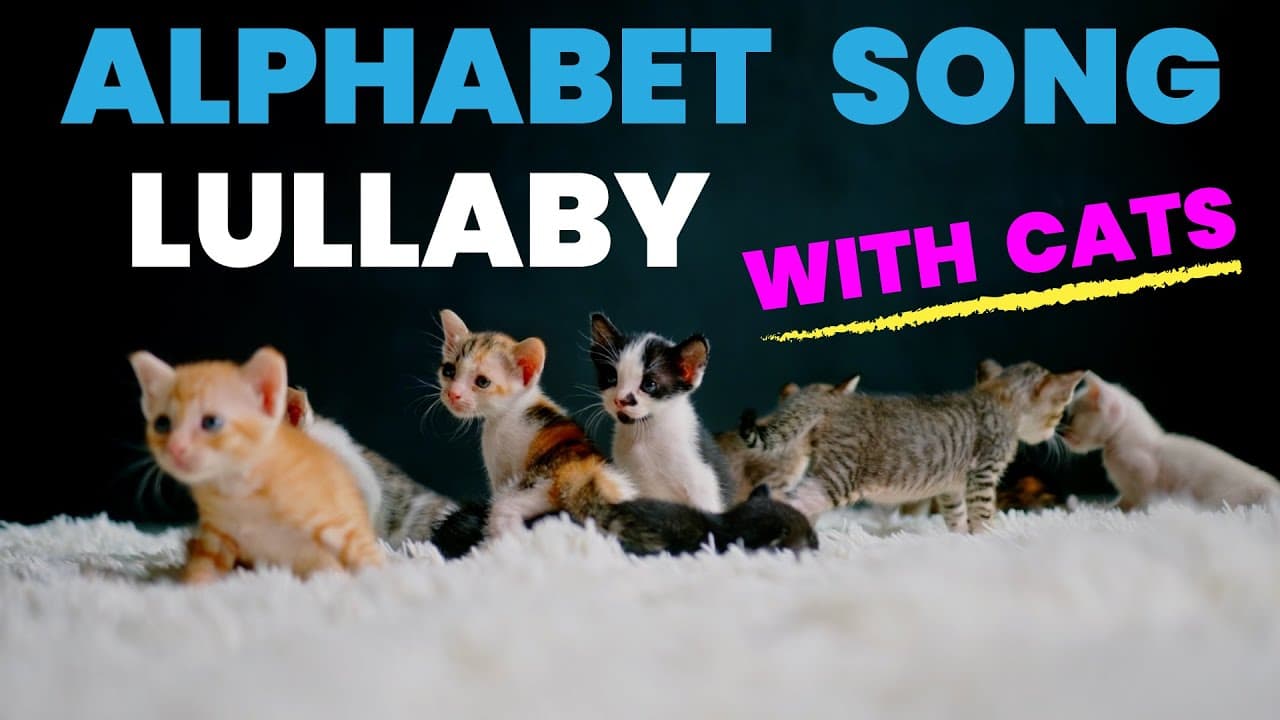
This soothing video features a litter of adorable kittens playing on a soft white rug against a stark black background, set to a gentle, lullaby-style rendition of the Alphabet Song. The camera captures the kittens in various states of activity, from playful wrestling and grooming to curious exploration and looking directly at the lens. The contrast between the playful visual antics of the kittens and the slow, melodic song creates a calming atmosphere. The key themes center on early literacy (alphabet recognition) and animal observation. While the primary audio content is the traditional ABC song, the visuals provide a rich opportunity to observe young animal behaviors, social interaction among littermates, and physical characteristics of cats. The repetition of the song reinforces the sequence of the alphabet letters in a low-stress, auditory manner. For educators, this video serves as an excellent dual-purpose tool: it functions as a calming transition activity to help students regulate their energy, and as an engaging hook for early literacy lessons. It is particularly useful in Pre-K and Kindergarten classrooms for introducing the alphabet song, practicing listening skills, or as a serene 'brain break' that keeps students focused through the universal appeal of baby animals.

Have Fun TeachingHave Fun Teaching

2mins 29s

Video
Pop the Bubbles to Learn Letter B

Pop the Bubbles to Learn Letter B

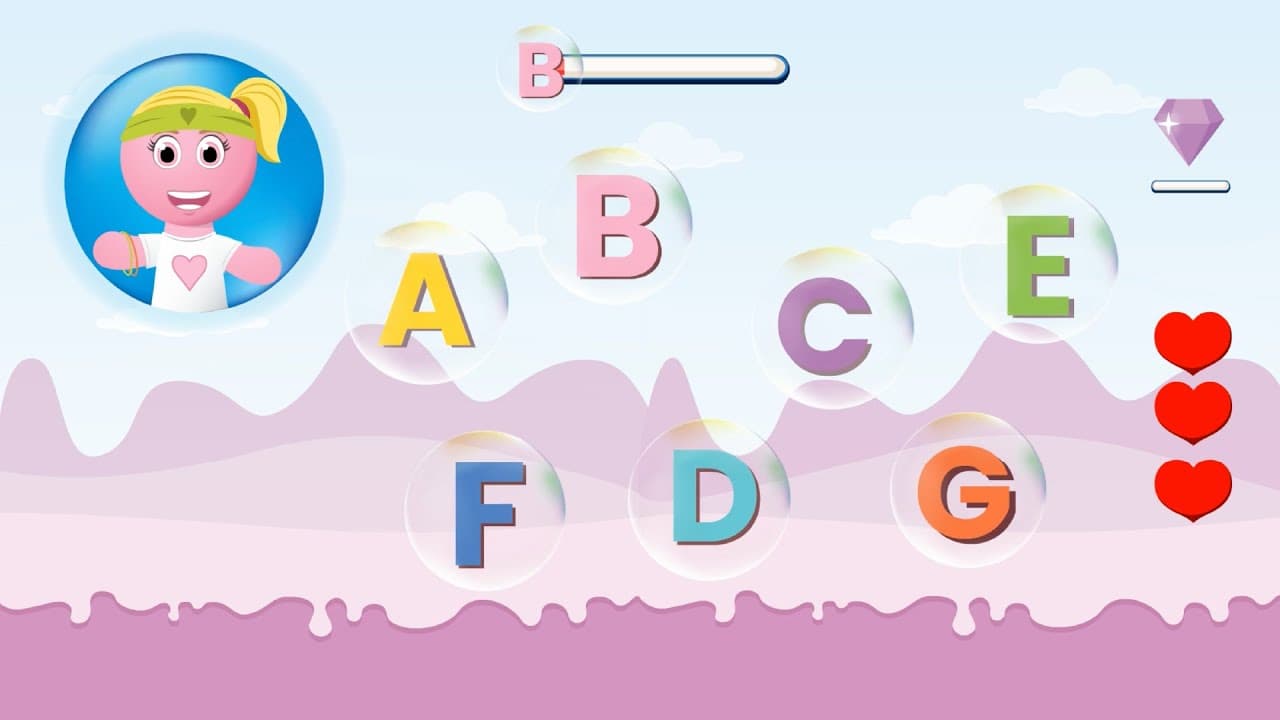
This engaging animated music video transforms letter recognition into an interactive game, specifically focusing on the letter "B". Set to a catchy pop soundtrack, the video features a pink character named "Lette" who guides viewers through a challenge to save gems trapped in bubbles by identifying and "popping" bubbles containing the letter B. The narrative builds excitement by presenting letter identification as a rescue mission, encouraging active participation from young learners. The content covers both uppercase "B" and lowercase "b", providing distinct visual mnemonics to help children distinguish between the two forms. A key educational segment explains that uppercase B looks like "two big bubbles" stacked on top of each other, while lowercase b has just a "bottom baby bubble." The video cycles through gameplay rounds where various letters float by, and the viewer must discriminate the target letter B from distractors like A, C, E, P, and D. Designed for early childhood classrooms, this video is an excellent resource for introducing or reinforcing alphabet knowledge. It can be used as a high-energy warm-up, a transition activity, or a fun review tool for phonics lessons. The "pop the bubble" mechanic naturally lends itself to interactive whiteboard use or physical movement activities where students jump or clap when they see the target letter, helping to develop visual discrimination skills in a playful, low-pressure environment.

Have Fun TeachingHave Fun Teaching

2mins 57s

Video
Singing the Alphabet from A to Z

Singing the Alphabet from A to Z

This energetic music video features a catchy, pop-style rendition of the alphabet song designed to help early learners memorize letter names and sequencing. The video centers on an animated green character named Fumz who dances against a vibrant background of pink, purple, and green stars while singing the ABCs. Large, clear text displays each letter on the screen in sync with the lyrics, providing visual reinforcement alongside the auditory cues. The content focuses entirely on the foundational literacy skill of letter recognition and sequencing. By repeating the alphabet multiple times within a single song, the video utilizes the pedagogical strategy of repetition to strengthen memory retention. The upbeat tempo and modern musical style aim to keep young students engaged and moving, transforming a rote memorization task into a fun, physical activity. For educators, this video serves as an excellent warm-up or transition tool for Pre-K and Kindergarten classrooms. It supports auditory learners through the song and visual learners through the on-screen text. Teachers can use it to introduce the alphabet, practice letter ordering, or simply as a 'brain break' that incorporates educational content. The repetitive nature allows for multiple opportunities to catch specific letters or sing along without restarting the video.

Have Fun TeachingHave Fun Teaching

2mins 6s

Video
Mastering the Alphabet Sequence with Music

Mastering the Alphabet Sequence with Music

This energetic educational video features a catchy, pop-style rendition of the classic alphabet song, designed to help early learners memorize the sequence of the 26 letters of the English alphabet. Hosted by a friendly, animated pink character in activewear, the video uses music and movement to engage young viewers. The song follows a repetitive structure, alternating between a motivating chorus about how letters are fun and the recitation of the alphabet itself. The key theme of the video is foundational literacy through rote memorization and rhythm. By setting the alphabet to an upbeat dance track rather than the traditional 'Twinkle Twinkle Little Star' melody, it offers a fresh auditory hook for students who might benefit from a more rhythmic approach. The repetition ensures multiple opportunities for practice within a single viewing session. In the classroom, this video serves as an excellent energizer, transition tool, or introduction to literacy blocks. It is particularly useful for kinesthetic learners who need to move while learning, as the beat encourages dancing. Teachers can use it to build phonemic awareness, support letter sequencing skills, and create a positive, high-energy atmosphere for early reading instruction.

Have Fun TeachingHave Fun Teaching

2mins 1s

Video
Mastering the Alphabet: Letters, Sounds, and Vowels

Mastering the Alphabet: Letters, Sounds, and Vowels

This engaging animated video introduces young learners to the fundamental concepts of the alphabet, moving beyond a simple song to explain the mechanics of language. It breaks down the alphabet into a set of 26 letters that represent sounds, which combine to form words, sentences, and stories. The video specifically distinguishes between vowels (A, E, I, O, U) and consonants, and demonstrates the difference between uppercase and lowercase letters visually.

Have Fun TeachingHave Fun Teaching

2mins 59s

Video
Grooving with the ABCs: An Alphabet Dance Party

Grooving with the ABCs: An Alphabet Dance Party

This energetic music video features a vibrant, animated furry creature performing a dance routine to an original pop song about the alphabet. The video guides young viewers through the A-Z sequence multiple times while introducing fundamental literacy concepts such as the distinction between consonants and vowels, and the relationship between letters and sounds. Key themes include alphabet recognition, phonemic awareness, and the joy of learning through movement and music. The catchy lyrics emphasize the practical applications of the alphabet—writing and reading—while the recurring chorus reinforces the structure of language in a way that is accessible to early learners. Ideally suited for early childhood classrooms, this video serves as an excellent "brain break," morning meeting energizer, or transition activity. It supports kinesthetic learning by encouraging students to dance along, auditory learning through rhyme and rhythm, and visual engagement through the character's expressive movements. Teachers can use it to introduce letter sequencing or simply to build excitement around literacy.

Have Fun TeachingHave Fun Teaching

2mins 49s

Video
Sing and Dance the Alphabet: Upbeat ABC Song

Sing and Dance the Alphabet: Upbeat ABC Song

A high-energy, animated music video designed to help early learners memorize the English alphabet through song and dance. Featuring a friendly animated character in a superhero cape, the video presents the alphabet in a modern pop-style format that differs from the traditional nursery rhyme melody, offering a fresh way to engage students. The visual presentation includes clear, on-screen text of the letters as they are sung, supporting letter recognition and literacy skills. The video explores the fundamental sequence of the 26 letters of the English alphabet. It breaks the alphabet down into rhythmic chunks (A-G, H-P, Q-V, W-Z) that assist with memorization through musical phrasing. The repetitive structure ensures students have multiple opportunities to practice singing and identifying the letters within a single viewing. This resource is highly valuable for Pre-K and Kindergarten classrooms as a transition tool, brain break, or active learning component. It encourages physical movement and singing, helping kinesthetic and musical learners internalize the alphabet sequence. Teachers can use it to introduce letter order, check for letter recognition during pause points, or simply as a fun, community-building morning routine to get students energized for the day.

Have Fun TeachingHave Fun Teaching

2mins 59s

Video
Sing and Dance to the ABC Pop Song

Sing and Dance to the ABC Pop Song

A high-energy, pop-infused music video designed to help young learners memorize the English alphabet through rhythm and repetition. Featuring an animated character dancing to a catchy beat, the video transforms the traditional ABC song into a modern dance anthem with a memorable 'What! What!' hook. The song recites the alphabet multiple times, allowing for repeated practice within a single viewing session. Key themes include alphabet sequencing, auditory memory, and rhythm. The video specifically focuses on the names of the letters rather than their sounds (phonics), making it a tool for rote memorization of the alphabetic order. The upbeat tempo and modern musical style engage students who might find traditional nursery rhymes less stimulating. For educators, this video serves as an excellent 'brain break' or energizer that sneaks in educational content. Because the video relies on audio recitation without displaying the letters on screen, it is best used as a background track for movement activities, or paired with a physical alphabet chart in the classroom where the teacher or students point to letters as they are sung.

Have Fun TeachingHave Fun Teaching

1min 51s

Video
Finding the Letter C at a Birthday Party

Finding the Letter C at a Birthday Party

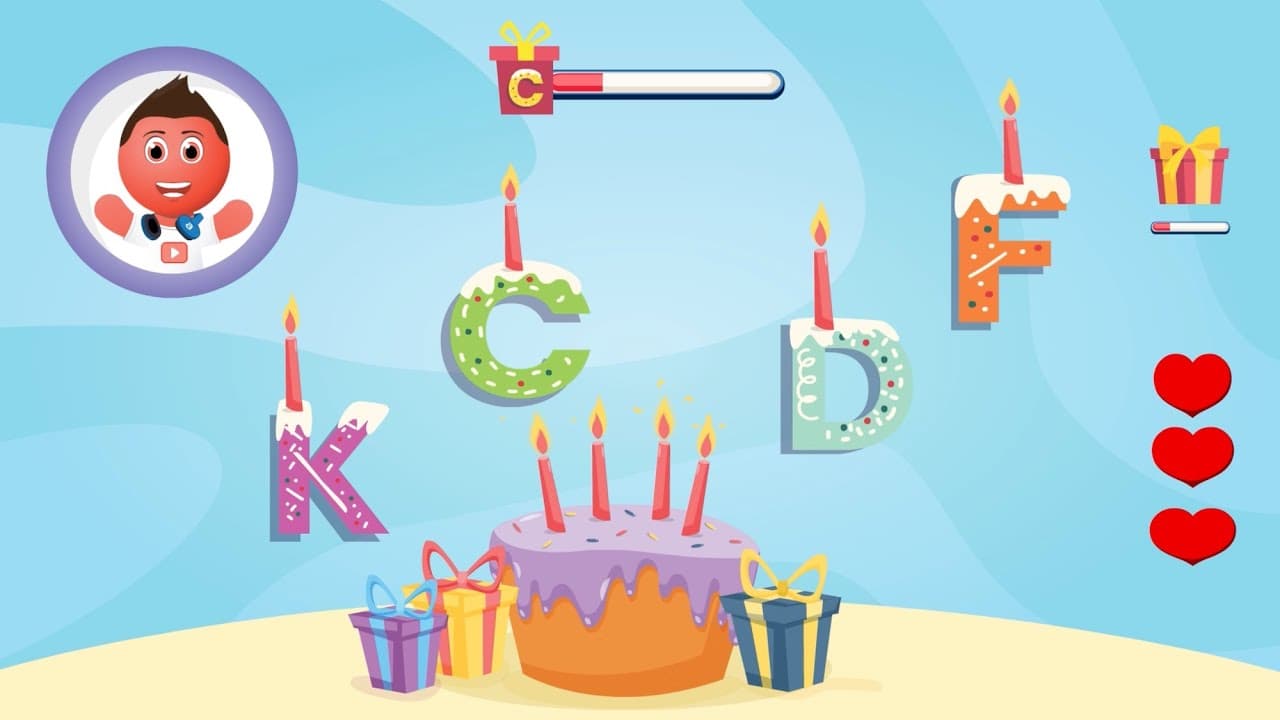
This engaging animated music video introduces young learners to the letter "C" through a high-energy birthday party theme. An animated character invites viewers to celebrate by finding the letter "C" among various candle shapes on a birthday cake and "blowing" them out. The video utilizes a catchy pop-dance song to reinforce letter recognition and visual discrimination.

Have Fun TeachingHave Fun Teaching

3mins 47s

Video
Rapping the Alphabet: I Know My ABCs

Rapping the Alphabet: I Know My ABCs

This energetic music video transforms the traditional alphabet song into an engaging rap performance designed to get young learners moving and singing. Set in a recording studio, the video features two performers—a rapper and a dancer—who bring a cool, modern vibe to fundamental literacy skills. The catchy beat and call-to-response structure encourage active participation rather than passive listening. The content focuses entirely on the sequence of the English alphabet, breaking the 26 letters down into rhythmic chunks that make memorization easier. The video utilizes a parody style reminiscent of 90s hip-hop to make the learning process fun and memorable. It emphasizes oral language skills, rhythm, and auditory sequencing of letters from A to Z. For educators, this video serves as an excellent alternative to slow-paced nursery rhymes, particularly for energetic classes or students who need kinesthetic engagement. It is perfect for brain breaks, morning meeting warm-ups, or transitioning into literacy blocks. The strong rhythmic beat helps students internalize the letter order, while the "stop and listen" segment models attention-getting techniques useful for classroom management.

Have Fun TeachingHave Fun Teaching

1min 30s

Video
Mastering Letter A: Air Writing and Recognition

Mastering Letter A: Air Writing and Recognition

This high-energy, rhythmic video serves as a kinetic guide for early learners to practice forming the letter "A". Through a repetitive chant and clear visual animations, the video instructs viewers to practice "air writing"—a gross motor skill activity that reinforces muscle memory for handwriting. It covers both the uppercase "A" and lowercase "a", demonstrating the correct stroke order and directionality for each. The content focuses on three primary themes: letter recognition, handwriting mechanics (stroke order), and the classification of "A" as a vowel. The visual design uses high-contrast colors—yellow outlines on a blue background—to clearly delineate the shape of the letter, while a white fill animation highlights the path the pencil should take. The final segment introduces the wider alphabet context, identifying "A" as a vowel among other lowercase letters. For educators, this video is an excellent tool for transitioning students from passive listening to active participation. It works well as a "brain break" or a warm-up for a handwriting lesson, encouraging students to stand up and use their whole arms to trace the letter shapes. The repetitive auditory cues ("Write an uppercase A in the air") combined with the visual filling of the letter support multi-sensory learning, making it highly effective for Pre-K and Kindergarten classrooms focusing on early literacy.

Have Fun TeachingHave Fun Teaching

58s

Video
The Alphabet Song: A High-Energy ABC Sing-Along

The Alphabet Song: A High-Energy ABC Sing-Along

This energetic music video features an animated character leading viewers through a high-tempo, pop-style rendition of the classic Alphabet Song. Set against a vibrant backdrop of pinks, purples, and neon stars, the video combines auditory learning with visual reinforcement as letters appear on screen in synchronization with the lyrics. The catchy beat and repetitive "Woop! Woop!" chorus add a modern, danceable twist to traditional rote memorization methods. The content focuses entirely on the sequence and recognition of the 26 letters of the English alphabet. Through three full repetitions of the ABCs, the video reinforces letter names and their specific order. The visual presentation highlights the letters clearly, allowing early learners to associate the spoken letter names with their written symbols. For educators, this video serves as an excellent tool for early literacy instruction, specifically for Pre-K and Kindergarten students. It can be utilized as a lively morning warm-up to energize the class, a transition activity between lessons, or a fun way to practice letter sequencing. The rhythmic nature of the song aids in memory retention, while the visual cues support letter identification skills.

Have Fun TeachingHave Fun Teaching

2mins 16s

No videos found
There are no videos available for this topic yet.
No videos found
There are no videos available for this topic yet.
No videos found
There are no videos available for this topic yet.
No videos found
There are no videos available for this topic yet.
No videos found
There are no videos available for this topic yet.
No videos found
There are no videos available for this topic yet.
No videos found
There are no videos available for this topic yet.
No videos found
There are no videos available for this topic yet.
No videos found
There are no videos available for this topic yet.
No videos found
There are no videos available for this topic yet.
Video
Pop the Letter D Balloons: A Carnival Phonics Game

Pop the Letter D Balloons: A Carnival Phonics Game

A high-energy, animated musical video set in a colorful carnival atmosphere designed to teach young learners how to recognize the letter 'D'. Guided by a friendly blue character, students participate in a virtual balloon-popping game where they must visually discriminate the letter 'D' from other letters of the alphabet. The video is divided into three distinct segments: uppercase recognition, lowercase recognition, and a rapid-fire review round.

Have Fun TeachingHave Fun Teaching

3mins 5s

Video
Pop the Bubbles to Learn Letter B

Pop the Bubbles to Learn Letter B

This engaging animated music video transforms letter recognition into an interactive game, specifically focusing on the letter "B". Set to a catchy pop soundtrack, the video features a pink character named "Lette" who guides viewers through a challenge to save gems trapped in bubbles by identifying and "popping" bubbles containing the letter B. The narrative builds excitement by presenting letter identification as a rescue mission, encouraging active participation from young learners. The content covers both uppercase "B" and lowercase "b", providing distinct visual mnemonics to help children distinguish between the two forms. A key educational segment explains that uppercase B looks like "two big bubbles" stacked on top of each other, while lowercase b has just a "bottom baby bubble." The video cycles through gameplay rounds where various letters float by, and the viewer must discriminate the target letter B from distractors like A, C, E, P, and D. Designed for early childhood classrooms, this video is an excellent resource for introducing or reinforcing alphabet knowledge. It can be used as a high-energy warm-up, a transition activity, or a fun review tool for phonics lessons. The "pop the bubble" mechanic naturally lends itself to interactive whiteboard use or physical movement activities where students jump or clap when they see the target letter, helping to develop visual discrimination skills in a playful, low-pressure environment.

Have Fun TeachingHave Fun Teaching

2mins 57s

Video
Mastering Letter Sounds A to Z

Mastering Letter Sounds A to Z

This comprehensive educational video provides a complete introduction to phonics for early learners, using an engaging puzzle metaphor to explain how letter sounds combine to create words. The video systematically guides students through the entire alphabet from A to Z, introducing the primary sound for each letter using clear pronunciation, visual text support, and memorable animal or object associations (e.g., A for Alligator, B for Bear). The narrator emphasizes that learning these "puzzle pieces" is the key to unlocking the skill of reading. Key themes include letter-sound correspondence, decoding strategies, and phonemic awareness. The video breaks the alphabet into manageable chunks, interspersed with interactive checks for understanding. Notable sections include a blending demonstration where the sounds c-a-b are combined to form "cab," and a gamified segment called "Top, Middle, or Bottom?" where students must identify written CVC (consonant-vowel-consonant) words based on auditory cues. A humorous segment titled "Phonics with Mr. Whiskers" encourages students to "teach" a cat, reinforcing their own learning through retrieval practice. For educators, this video serves as an excellent core resource for introducing or reviewing the alphabet's phonetic sounds. The "puzzle" analogy provides a concrete framework for understanding why phonics matters, helping students grasp that reading is an active process of assembling sounds. The video's pacing allows for pausing and repeating sounds, making it ideal for whole-class choral response activities, small group intervention for struggling readers, or independent practice stations. The inclusion of assessment games within the video itself provides immediate feedback opportunities for teachers to gauge student progress.

Homeschool PopHomeschool Pop

27mins 7s

Video
Learning the CH Sound with Happy Cheese

Learning the CH Sound with Happy Cheese

This engaging animated video introduces early learners to the "ch" digraph through the character of Happy Cheese. Using humor and clear visual cues, the video breaks down how the letters C and H, which normally make separate sounds, combine to create a new, distinct sound. The character demonstrates the pronunciation using a memorable train analogy ("ch-ch-ch") that helps students physically produce the sound correctly. The content is structured to scaffold learning by first introducing the sound itself, then presenting words that begin with "ch" (chair, chicken, cheese), followed by words that end with "ch" (ouch, wrench, sandwich). The video includes built-in interactive segments with a countdown timer, encouraging students to actively participate by generating their own vocabulary words during the lesson. Teachers can use this video as a core component of a phonics lesson introducing digraphs. Its pacing allows for natural pauses where educators can check for understanding. The distinct separation of beginning and ending sounds makes it an excellent tool for phonemic awareness practice, specifically for identifying sound positioning within words. The humorous ending with falling cherries reinforces the sound in a memorable way.

Scratch GardenScratch Garden

2mins 46s

Video
How to Read and Say the SH Sound

How to Read and Say the SH Sound

This engaging animated video introduces early learners to the 'sh' digraph through the character of Happy Cheese. The video breaks down how the letters 'S' and 'H' combine to form a new sound, distinct from their individual phonetic sounds. Through humor, visual examples, and interactive pauses, students practice identifying the 'sh' sound at both the beginning and end of words. The content focuses on phonological awareness and phonics, specifically the concept of digraphs—where two letters work together to make one sound. Key themes include letter recognition, sound blending, and vocabulary building. The video uses repetition and clear audio cues to reinforce the specific auditory characteristics of the 'sh' phoneme. For educators, this video serves as an excellent hook or review for phonics lessons. It explicitly invites classroom participation by pausing for students to brainstorm their own words and even addresses the teacher directly, making it a perfect tool for a 'pause-and-discuss' teaching strategy. The humor and bright animations keep young students engaged while delivering foundational literacy skills.

Scratch GardenScratch Garden

2mins 38s

Video
Learning the Short A Sound: A Phonics Song

Learning the Short A Sound: A Phonics Song

This energetic, musical animation introduces early learners to the letter 'A' as a vowel, specifically focusing on its short vowel sound /æ/. Through a catchy, rhythmic song, the video establishes that 'A' is a letter in the alphabet and a vowel, before transitioning into a repetitive auditory drill of the sound itself. The visual style uses high-contrast colors and simple cartoon animations to maintain engagement while reinforcing letter recognition. The content moves from isolation to application by introducing simple CVC (consonant-vowel-consonant) words that utilize the short 'A' sound. A brief narrative sequence illustrates the words 'cat', 'hat', 'nap', and 'lap' in a rhyming context, helping students hear the target sound within words. This section uses visual cues—like a cat putting on a top hat and falling asleep on a character's lap—to cement word meaning alongside phonological awareness. For educators, this video serves as an excellent hook or review for phonics lessons centered on short vowels. Its repetitive structure allows for choral response, making it ideal for whole-group instruction in Pre-K through 1st grade. The clear connection between the isolated sound and its use in rhyming words supports phonemic awareness, vocabulary development, and early reading skills.

Have Fun TeachingHave Fun Teaching

1min 20s

Video
Singing and Spelling the Sight Word 'Cut'

Singing and Spelling the Sight Word 'Cut'

This high-energy educational music video is designed to help early readers master the high-frequency sight word "cut." Through a catchy, rhythmic song, the video guides students through recognizing the word, pronouncing it correctly, spelling it letter-by-letter, and understanding its usage in context. The visual design is intentionally simple, featuring large, clear text on a green background to focus student attention specifically on the literacy concepts being presented. The content moves systematically from word recognition to spelling (C-U-T) and finally to sentence application. It provides concrete, relatable examples of objects that can be cut, such as paper, cake, pie, and pizza. These examples help ground the abstract concept of the word in familiar real-world activities, bridging the gap between decoding text and comprehending meaning. The repetitive nature of the song ensures that the spelling and pronunciation are reinforced multiple times for maximum retention. For educators, this video is a versatile tool for early literacy instruction. It can be effectively used as a warm-up for reading groups, a transition activity, or part of a daily sight word routine. It specifically supports phonics instruction regarding the short 'u' vowel sound and helps students practice reading simple declarative sentences. The musical format makes it particularly effective for auditory learners and students who benefit from kinesthetic engagement like clapping or moving to a beat while learning.

Have Fun TeachingHave Fun Teaching

2mins 18s

Video
Learning the Short A Sound: A Phonics Song

Learning the Short A Sound: A Phonics Song

This energetic, musical animation introduces early learners to the letter 'A' as a vowel, specifically focusing on its short vowel sound /æ/. Through a catchy, rhythmic song, the video establishes that 'A' is a letter in the alphabet and a vowel, before transitioning into a repetitive auditory drill of the sound itself. The visual style uses high-contrast colors and simple cartoon animations to maintain engagement while reinforcing letter recognition. The content moves from isolation to application by introducing simple CVC (consonant-vowel-consonant) words that utilize the short 'A' sound. A brief narrative sequence illustrates the words 'cat', 'hat', 'nap', and 'lap' in a rhyming context, helping students hear the target sound within words. This section uses visual cues—like a cat putting on a top hat and falling asleep on a character's lap—to cement word meaning alongside phonological awareness. For educators, this video serves as an excellent hook or review for phonics lessons centered on short vowels. Its repetitive structure allows for choral response, making it ideal for whole-group instruction in Pre-K through 1st grade. The clear connection between the isolated sound and its use in rhyming words supports phonemic awareness, vocabulary development, and early reading skills.

Have Fun TeachingHave Fun Teaching

1min 20s

Video
Fun With Rhyming Words: The Monsters Learn English Show

Fun With Rhyming Words: The Monsters Learn English Show

This energetic animated episode of "The Monsters Learn English Show" introduces young learners to the concept of rhyming words through a variety of entertaining segments. Hosted by a friendly blue monster against a city skyline backdrop, the video explains that rhyming words share the same ending sound. The lesson uses humor, visual gags, and a game-show format to keep students engaged while reinforcing phonological awareness. The video explores rhyming through several distinct segments: a "knock-knock" joke intro, direct instruction with examples (cake/snake/bake) and non-examples (banana/elephant), a "sponsor" segment featuring a poem about cheese, a "news" segment that plays with visual rhymes (shirt/dirt, coat/boat), and an interactive multiple-choice quiz. It concludes with a guest appearance by "Red Square" who helps demonstrate rhymes through stuttering (there/air/bear). Teachers can use this video as a high-energy hook to start a unit on poetry or phonics. The clear visual text makes it excellent for early readers to connect sounds to spelling patterns (word families), while the auditory focus supports phonemic awareness for pre-readers. The "quiz time" segment is particularly useful for whole-class participation, allowing teachers to pause and check for understanding in real-time.

Scratch GardenScratch Garden

5mins 9s

Video
Rapping the First 100 High-Frequency Sight Words

Rapping the First 100 High-Frequency Sight Words

This energetic educational music video transforms high-frequency word practice into an engaging rap battle between two animated microphones. Hosted by a slow-speaking sloth in a foggy forest, the video transitions into a fast-paced musical performance that integrates 100 common sight words into rhyming verses. As the characters rap, the lyrics appear on screen with the specific target sight words highlighted in bright white text against a darker sentence structure, helping students distinguish and focus on the key vocabulary. The content focuses entirely on early literacy and reading fluency, specifically targeting the 'Fry' or 'Dolch' high-frequency word lists commonly used in primary education. The video explores phonological awareness through rhyming couplets and demonstrates how these standalone words function within the context of full sentences. The contrast between the sloth's slow introduction and the rapid-fire rap offers a unique lesson in pacing and fluency. For teachers, this video serves as a high-energy review tool or a 'brain break' that reinforces literacy skills. It is particularly useful for auditory learners who benefit from rhythm and rhyme to memorize spelling and pronunciation. The 'rap battle' format encourages students to read quickly and builds automaticity—the ability to recognize words instantly without sounding them out—which is a critical step in developing reading comprehension.

Scratch GardenScratch Garden

2mins 44s

Video
Compound Words: Glued Together for New Meanings

Compound Words: Glued Together for New Meanings

This educational video introduces elementary students to the concept of compound words through a clear, step-by-step explanation using whiteboard-style animation. It begins by distinguishing compound words from contractions, explaining that compound words combine two full words without losing any letters. The narrator provides numerous examples illustrating how nouns, verbs, and adjectives can combine to form new words with distinct meanings, such as "mailbox," "playground," and the humorous example of "hotdog." The video emphasizes practical reading strategies, encouraging students not to be intimidated by long words but instead to look for smaller, familiar words inside them. It demonstrates this strategy with sentences involving "butterfly" and "sunflower." The lesson concludes with a guided reading activity where the narrator and student characters read a short story about a beach trip, pausing to identify and decode compound words like "lifeguard," "sandcastle," and "jellyfish." Ideally suited for early elementary language arts curriculums, this video supports vocabulary development, decoding skills, and morphological awareness. It effectively uses visual metaphors—like gluing words together—to make abstract grammatical concepts concrete. Teachers can use this resource to introduce the unit on compound words or as a specific intervention for students struggling to read multi-syllabic words.

GrammarSongs by MelissaGrammarSongs by Melissa

5mins 14s

Video
Counting Syllables by Clapping to the Beat

Counting Syllables by Clapping to the Beat

This engaging animated video introduces early learners to the concept of syllables through rhythm and visualization. Hosted by a quirky red circle character, the lesson breaks down the definition of a syllable as a "beat" within a word, using clapping as a physical method to identify these beats. The video progresses from simple one-syllable words to more complex four-syllable words, providing scaffolded practice at each step. Key themes include phonological awareness, word segmentation, and rhythm in language. The video explicitly connects oral language to visual text by showing words physically breaking apart into their constituent syllables. It covers words with one, two, three, and four syllables, offering repetitive practice opportunities for students to clap along and master the skill of counting beats. This resource is highly valuable for early childhood and lower elementary classrooms as a dynamic introduction or review of syllables. The combination of auditory cues (clapping/drums), visual aids (words splitting apart), and humor makes abstract phonics concepts concrete and memorable. Teachers can use this video to launch a literacy block, support struggling readers with segmentation, or as an energetic "brain break" that reinforces core language skills.

Scratch GardenScratch Garden

5mins 8s

Video
Mastering Letter Sounds A to Z

Mastering Letter Sounds A to Z

This comprehensive educational video provides a complete introduction to phonics for early learners, using an engaging puzzle metaphor to explain how letter sounds combine to create words. The video systematically guides students through the entire alphabet from A to Z, introducing the primary sound for each letter using clear pronunciation, visual text support, and memorable animal or object associations (e.g., A for Alligator, B for Bear). The narrator emphasizes that learning these "puzzle pieces" is the key to unlocking the skill of reading. Key themes include letter-sound correspondence, decoding strategies, and phonemic awareness. The video breaks the alphabet into manageable chunks, interspersed with interactive checks for understanding. Notable sections include a blending demonstration where the sounds c-a-b are combined to form "cab," and a gamified segment called "Top, Middle, or Bottom?" where students must identify written CVC (consonant-vowel-consonant) words based on auditory cues. A humorous segment titled "Phonics with Mr. Whiskers" encourages students to "teach" a cat, reinforcing their own learning through retrieval practice. For educators, this video serves as an excellent core resource for introducing or reviewing the alphabet's phonetic sounds. The "puzzle" analogy provides a concrete framework for understanding why phonics matters, helping students grasp that reading is an active process of assembling sounds. The video's pacing allows for pausing and repeating sounds, making it ideal for whole-class choral response activities, small group intervention for struggling readers, or independent practice stations. The inclusion of assessment games within the video itself provides immediate feedback opportunities for teachers to gauge student progress.

Homeschool PopHomeschool Pop

27mins 7s

Video
Counting Syllables by Clapping to the Beat

Counting Syllables by Clapping to the Beat

This engaging animated video introduces early learners to the concept of syllables through rhythm and visualization. Hosted by a quirky red circle character, the lesson breaks down the definition of a syllable as a "beat" within a word, using clapping as a physical method to identify these beats. The video progresses from simple one-syllable words to more complex four-syllable words, providing scaffolded practice at each step. Key themes include phonological awareness, word segmentation, and rhythm in language. The video explicitly connects oral language to visual text by showing words physically breaking apart into their constituent syllables. It covers words with one, two, three, and four syllables, offering repetitive practice opportunities for students to clap along and master the skill of counting beats. This resource is highly valuable for early childhood and lower elementary classrooms as a dynamic introduction or review of syllables. The combination of auditory cues (clapping/drums), visual aids (words splitting apart), and humor makes abstract phonics concepts concrete and memorable. Teachers can use this video to launch a literacy block, support struggling readers with segmentation, or as an energetic "brain break" that reinforces core language skills.

Scratch GardenScratch Garden

5mins 8s

Video
Vowel Teams: Spelling the Long A Sound

Vowel Teams: Spelling the Long A Sound

This animated music video provides an engaging phonics lesson focused specifically on the various vowel teams that produce the "Long A" sound (/eɪ/). Through a catchy song and a recurring visual motif of a train traveling through a landscape, the video systematically introduces different letter combinations—ai, ay, ea, ey, ei, and eigh—demonstrating how they all create the same phonetic sound in different words. The content explores advanced spelling patterns for early readers, moving beyond basic phonics to tackle complex graphemes. It addresses the challenge of English orthography where one sound can be represented by multiple spelling variations. Each section of the song highlights a specific vowel team, provides the sound it makes, and offers three distinct vocabulary examples illustrated with clear graphics (e.g., "mail," "play," "steak," "eight"). This video is a highly effective tool for 1st and 2nd grade literacy instruction. It helps students transition from simple CVC words to more complex spelling patterns. Teachers can use it to introduce the concept of vowel teams, support spelling lists that focus on the Long A sound, or as a review tool for students struggling with these specific irregular spelling patterns.

Scratch GardenScratch Garden

4mins 15s

Video
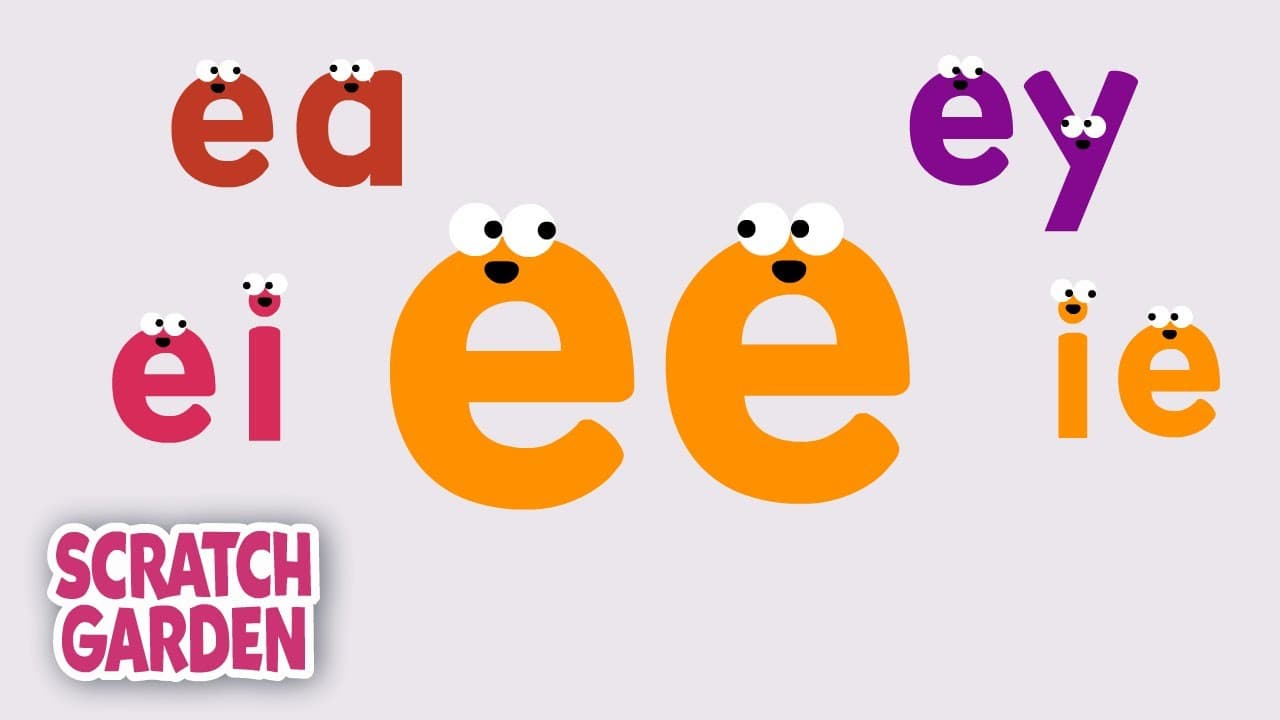
Mastering the Long E Sound with Vowel Teams

Mastering the Long E Sound with Vowel Teams

This engaging animated music video introduces students to the concept of "vowel teams," specifically focusing on combinations that produce the long "E" sound. Through a catchy, repetitive song, the video systematically breaks down five distinct letter pairs: EE, EA, EY, EI, and IE. Each section features animated letters riding a train and presents three clear vocabulary words with accompanying illustrations to reinforce the spelling patterns. The video serves as an excellent phonics resource, moving from common pairs like "ee" and "ea" to more complex endings like "ey" and tricky internal spellings like "ei" and "ie." It explicitly addresses the spelling variability of the long "E" sound, helping students transition from simple phonetic decoding to recognizing recurring orthographic patterns in English spelling. Ideally suited for early elementary literacy instruction, this video can be used to introduce the concept of digraphs or review spelling rules. The visual metaphor of letters "getting together" to make a team provides a memorable hook for young learners. Teachers can use the distinct sections to scaffold learning, pausing to discuss each vowel team individually or using the whole song for cumulative review.

Scratch GardenScratch Garden

3mins 48s

Video
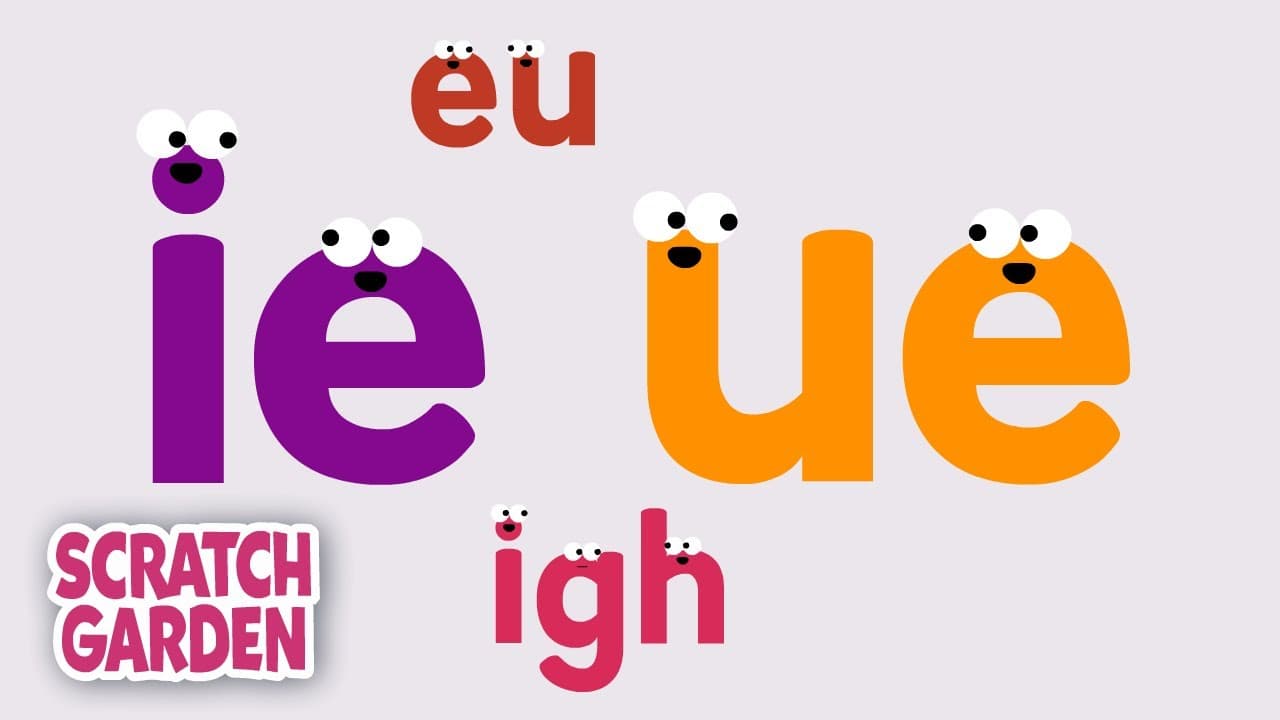
Mastering Vowel Teams: ie, igh, ue, and eu

Mastering Vowel Teams: ie, igh, ue, and eu

This engaging animated music video introduces students to advanced vowel teams, specifically focusing on 'ie', 'igh', 'ue', and 'eu'. Set against a catchy folk-rock tune, animated letters ride a train through a colorful landscape, demonstrating how vowels (and sometimes consonants) work together to create specific sounds. The video explicitly moves beyond simple vowel pairs to explore complex graphemes, including trigraphs like 'igh', helping students visualize the spelling patterns associated with long vowel sounds. Key themes include phonemic awareness, spelling patterns, and the concept that letters can team up to make new sounds or support a vowel sound. The video breaks down four specific teams: 'ie' and 'igh' (both making the long 'i' sound), and 'ue' and 'eu' (making the long 'u' or 'yoo' sound). Each segment provides clear visual examples of words containing these patterns, reinforcing the connection between the letter combination and its pronunciation. For educators, this video is an excellent tool for introducing or reviewing complex phonics rules that often trip up early readers. The catchy melody aids in memorization, while the 'train' visual provides a concrete metaphor for letter grouping. It is particularly useful for differentiating between alternative spellings for the same sound (e.g., why we use 'igh' in 'night' but 'ie' in 'tie'), supporting spelling accuracy and reading fluency in elementary classrooms.

Scratch GardenScratch Garden

3mins 20s

Video
Compound Words: Glued Together for New Meanings

Compound Words: Glued Together for New Meanings

This educational video introduces elementary students to the concept of compound words through a clear, step-by-step explanation using whiteboard-style animation. It begins by distinguishing compound words from contractions, explaining that compound words combine two full words without losing any letters. The narrator provides numerous examples illustrating how nouns, verbs, and adjectives can combine to form new words with distinct meanings, such as "mailbox," "playground," and the humorous example of "hotdog." The video emphasizes practical reading strategies, encouraging students not to be intimidated by long words but instead to look for smaller, familiar words inside them. It demonstrates this strategy with sentences involving "butterfly" and "sunflower." The lesson concludes with a guided reading activity where the narrator and student characters read a short story about a beach trip, pausing to identify and decode compound words like "lifeguard," "sandcastle," and "jellyfish." Ideally suited for early elementary language arts curriculums, this video supports vocabulary development, decoding skills, and morphological awareness. It effectively uses visual metaphors—like gluing words together—to make abstract grammatical concepts concrete. Teachers can use this resource to introduce the unit on compound words or as a specific intervention for students struggling to read multi-syllabic words.

GrammarSongs by MelissaGrammarSongs by Melissa

5mins 14s

Video
Building New Words with Affixes

Building New Words with Affixes

This educational video provides a clear and engaging introduction to affixes, specifically focusing on prefixes and suffixes in the English language. The narrator explains how the English language is flexible, allowing for the creation of new words by attaching these word parts to existing roots. Through step-by-step examples like "reread," "unhappy," and "joyful," the video demonstrates how adding a prefix changes a word's meaning or how a suffix can transform a word's grammatical function, such as turning an adjective into a noun (e.g., "happy" to "happiness"). The video explores key themes of morphology, vocabulary building, and language mechanics. It categorizes common affixes, defining prefixes like 'un-', 're-', 'dis-', and 'mis-', as well as suffixes like '-ful', '-less', '-ly', and '-ness'. The narrator also introduces the concept of stacking affixes to create complex words, using "hopefulness" as a prime example of how a root word can accept both a suffix that makes it an adjective and another that turns it into an abstract noun. For educators, this video serves as an excellent anchor for lessons on word analysis and decoding strategies. It concludes with a creative study strategy where the narrator uses index cards to mix and match roots and affixes, creating nonsense words like "dispetrographic" to deduce meaning. This practical application encourages students to treat language learning as a playful experiment, making it a valuable resource for 2nd through 5th-grade classrooms focusing on reading comprehension and vocabulary acquisition.

Khan AcademyKhan Academy

3mins 7s

Video
Counting Syllables by Clapping to the Beat

Counting Syllables by Clapping to the Beat

This engaging animated video introduces early learners to the concept of syllables through rhythm and visualization. Hosted by a quirky red circle character, the lesson breaks down the definition of a syllable as a "beat" within a word, using clapping as a physical method to identify these beats. The video progresses from simple one-syllable words to more complex four-syllable words, providing scaffolded practice at each step. Key themes include phonological awareness, word segmentation, and rhythm in language. The video explicitly connects oral language to visual text by showing words physically breaking apart into their constituent syllables. It covers words with one, two, three, and four syllables, offering repetitive practice opportunities for students to clap along and master the skill of counting beats. This resource is highly valuable for early childhood and lower elementary classrooms as a dynamic introduction or review of syllables. The combination of auditory cues (clapping/drums), visual aids (words splitting apart), and humor makes abstract phonics concepts concrete and memorable. Teachers can use this video to launch a literacy block, support struggling readers with segmentation, or as an energetic "brain break" that reinforces core language skills.

Scratch GardenScratch Garden

5mins 8s

Video
Learning Short and Long Vowel Sounds

Learning Short and Long Vowel Sounds

This engaging animated music video introduces early learners to the fundamental concept that every vowel has two distinct sounds: a short sound and a long sound. Through a catchy, rhythmic song performed by two animated frogs, students are guided through each vowel (A, E, I, O, U) with clear auditory examples and visual cues. The video explicitly teaches the rule that the long vowel sound "says its name," providing a simple mnemonic device for young readers to remember the difference between phonemes. The video covers all five vowels, providing two specific vocabulary examples for each letter—one demonstrating the short sound (e.g., apple, elephant, insect) and one demonstrating the long sound (e.g., acorn, eagle, island). The format alternates between a chorus explaining the general rule and specific verses dedicated to each letter, using a "call and response" style where the sound is repeated rhythmically to reinforce auditory memory. A brief musical interlude breaks up the content to maintain engagement before finishing the final two vowels. For educators, this video serves as an excellent hook or review tool for phonics lessons in early elementary classrooms. The combination of music, rhythm, and clear visual association helps cement phonemic awareness, particularly for auditory learners. It addresses the common stumbling block of distinguishing between vowel sounds by providing concrete anchor words (like "umbrella" vs. "unicorn") that teachers can reference throughout future reading instruction. The beatboxing intro and outro also make phonics practice feel modern and fun rather than repetitive drills.

Scratch GardenScratch Garden

1min 56s

Video
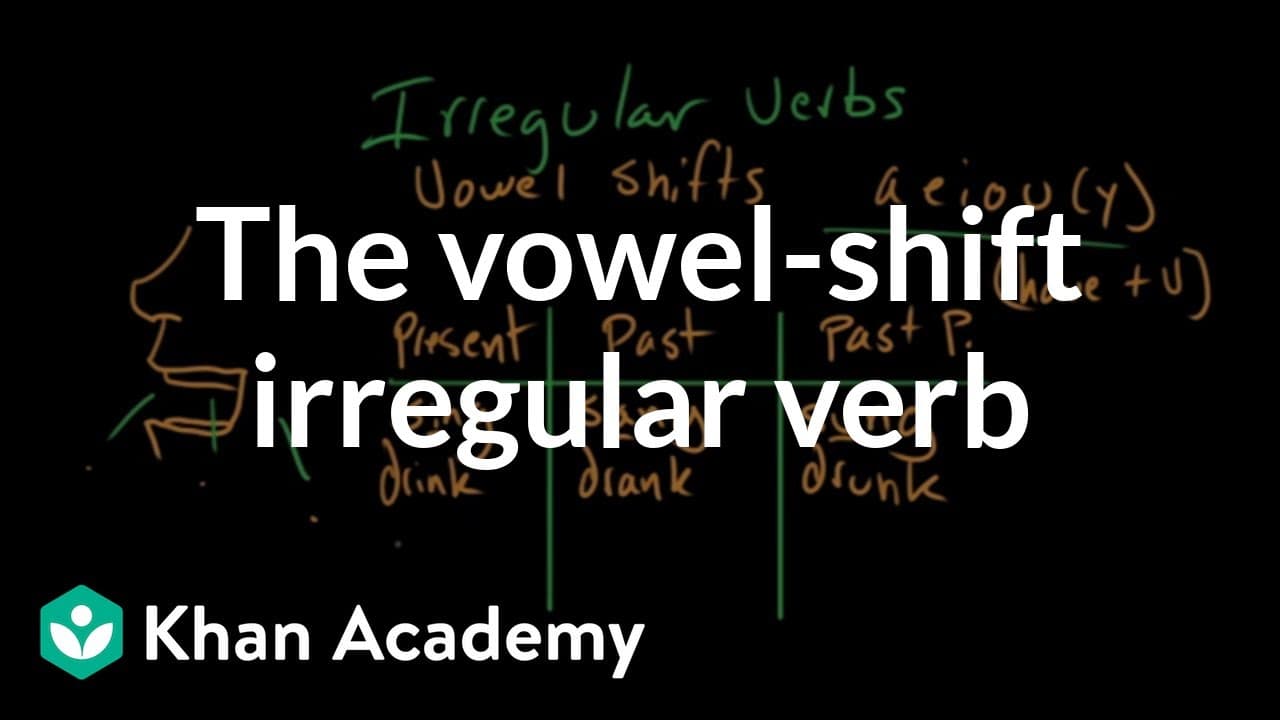
Understanding Irregular Verbs Through Vowel Shifts

Understanding Irregular Verbs Through Vowel Shifts

This educational video explores the linguistic patterns behind English irregular verbs, specifically focusing on vowel shifts. The narrator breaks down how the physical production of vowel sounds moves from the front to the back of the mouth (e.g., from 'i' to 'a' to 'u') and how this corresponds to the grammatical shift from Present to Past to Past Perfect tense. Key themes include English grammar, verb conjugation, phonetics, and the mechanics of speech. The video specifically examines common irregular patterns found in words like 'sing,' 'drink,' and 'begin,' providing a tangible, physical way to understand abstract grammatical rules. For the classroom, this video is an excellent resource for demystifying irregular verbs, which often seem random to students. By connecting grammar to the physical sensation of speaking, it provides a unique mnemonic device for visual and kinesthetic learners. Teachers can use this to introduce the Past Perfect tense or to deepen students' understanding of phonics and language structure.

Khan AcademyKhan Academy

3mins 11s

Video
Learning Short and Long Vowel Sounds

Learning Short and Long Vowel Sounds

This engaging animated music video introduces early learners to the fundamental concept that every vowel has two distinct sounds: a short sound and a long sound. Through a catchy, rhythmic song performed by two animated frogs, students are guided through each vowel (A, E, I, O, U) with clear auditory examples and visual cues. The video explicitly teaches the rule that the long vowel sound "says its name," providing a simple mnemonic device for young readers to remember the difference between phonemes. The video covers all five vowels, providing two specific vocabulary examples for each letter—one demonstrating the short sound (e.g., apple, elephant, insect) and one demonstrating the long sound (e.g., acorn, eagle, island). The format alternates between a chorus explaining the general rule and specific verses dedicated to each letter, using a "call and response" style where the sound is repeated rhythmically to reinforce auditory memory. A brief musical interlude breaks up the content to maintain engagement before finishing the final two vowels. For educators, this video serves as an excellent hook or review tool for phonics lessons in early elementary classrooms. The combination of music, rhythm, and clear visual association helps cement phonemic awareness, particularly for auditory learners. It addresses the common stumbling block of distinguishing between vowel sounds by providing concrete anchor words (like "umbrella" vs. "unicorn") that teachers can reference throughout future reading instruction. The beatboxing intro and outro also make phonics practice feel modern and fun rather than repetitive drills.

Scratch GardenScratch Garden

1min 56s

Video
Counting Syllables by Clapping to the Beat

Counting Syllables by Clapping to the Beat

This engaging animated video introduces early learners to the concept of syllables through rhythm and visualization. Hosted by a quirky red circle character, the lesson breaks down the definition of a syllable as a "beat" within a word, using clapping as a physical method to identify these beats. The video progresses from simple one-syllable words to more complex four-syllable words, providing scaffolded practice at each step. Key themes include phonological awareness, word segmentation, and rhythm in language. The video explicitly connects oral language to visual text by showing words physically breaking apart into their constituent syllables. It covers words with one, two, three, and four syllables, offering repetitive practice opportunities for students to clap along and master the skill of counting beats. This resource is highly valuable for early childhood and lower elementary classrooms as a dynamic introduction or review of syllables. The combination of auditory cues (clapping/drums), visual aids (words splitting apart), and humor makes abstract phonics concepts concrete and memorable. Teachers can use this video to launch a literacy block, support struggling readers with segmentation, or as an energetic "brain break" that reinforces core language skills.

Scratch GardenScratch Garden

5mins 8s

Video
Pop the Letter D Balloons: A Carnival Phonics Game

Pop the Letter D Balloons: A Carnival Phonics Game

A high-energy, animated musical video set in a colorful carnival atmosphere designed to teach young learners how to recognize the letter 'D'. Guided by a friendly blue character, students participate in a virtual balloon-popping game where they must visually discriminate the letter 'D' from other letters of the alphabet. The video is divided into three distinct segments: uppercase recognition, lowercase recognition, and a rapid-fire review round.

Have Fun TeachingHave Fun Teaching

3mins 5s

Video
Pop the Bubbles to Learn Letter B

Pop the Bubbles to Learn Letter B

This engaging animated music video transforms letter recognition into an interactive game, specifically focusing on the letter "B". Set to a catchy pop soundtrack, the video features a pink character named "Lette" who guides viewers through a challenge to save gems trapped in bubbles by identifying and "popping" bubbles containing the letter B. The narrative builds excitement by presenting letter identification as a rescue mission, encouraging active participation from young learners. The content covers both uppercase "B" and lowercase "b", providing distinct visual mnemonics to help children distinguish between the two forms. A key educational segment explains that uppercase B looks like "two big bubbles" stacked on top of each other, while lowercase b has just a "bottom baby bubble." The video cycles through gameplay rounds where various letters float by, and the viewer must discriminate the target letter B from distractors like A, C, E, P, and D. Designed for early childhood classrooms, this video is an excellent resource for introducing or reinforcing alphabet knowledge. It can be used as a high-energy warm-up, a transition activity, or a fun review tool for phonics lessons. The "pop the bubble" mechanic naturally lends itself to interactive whiteboard use or physical movement activities where students jump or clap when they see the target letter, helping to develop visual discrimination skills in a playful, low-pressure environment.

Have Fun TeachingHave Fun Teaching

2mins 57s

Video
Learning the Short A Sound: A Phonics Song

Learning the Short A Sound: A Phonics Song

This energetic, musical animation introduces early learners to the letter 'A' as a vowel, specifically focusing on its short vowel sound /æ/. Through a catchy, rhythmic song, the video establishes that 'A' is a letter in the alphabet and a vowel, before transitioning into a repetitive auditory drill of the sound itself. The visual style uses high-contrast colors and simple cartoon animations to maintain engagement while reinforcing letter recognition. The content moves from isolation to application by introducing simple CVC (consonant-vowel-consonant) words that utilize the short 'A' sound. A brief narrative sequence illustrates the words 'cat', 'hat', 'nap', and 'lap' in a rhyming context, helping students hear the target sound within words. This section uses visual cues—like a cat putting on a top hat and falling asleep on a character's lap—to cement word meaning alongside phonological awareness. For educators, this video serves as an excellent hook or review for phonics lessons centered on short vowels. Its repetitive structure allows for choral response, making it ideal for whole-group instruction in Pre-K through 1st grade. The clear connection between the isolated sound and its use in rhyming words supports phonemic awareness, vocabulary development, and early reading skills.

Have Fun TeachingHave Fun Teaching

1min 20s

Video
Mastering Letter Sounds A to Z

Mastering Letter Sounds A to Z

This comprehensive educational video provides a complete introduction to phonics for early learners, using an engaging puzzle metaphor to explain how letter sounds combine to create words. The video systematically guides students through the entire alphabet from A to Z, introducing the primary sound for each letter using clear pronunciation, visual text support, and memorable animal or object associations (e.g., A for Alligator, B for Bear). The narrator emphasizes that learning these "puzzle pieces" is the key to unlocking the skill of reading. Key themes include letter-sound correspondence, decoding strategies, and phonemic awareness. The video breaks the alphabet into manageable chunks, interspersed with interactive checks for understanding. Notable sections include a blending demonstration where the sounds c-a-b are combined to form "cab," and a gamified segment called "Top, Middle, or Bottom?" where students must identify written CVC (consonant-vowel-consonant) words based on auditory cues. A humorous segment titled "Phonics with Mr. Whiskers" encourages students to "teach" a cat, reinforcing their own learning through retrieval practice. For educators, this video serves as an excellent core resource for introducing or reviewing the alphabet's phonetic sounds. The "puzzle" analogy provides a concrete framework for understanding why phonics matters, helping students grasp that reading is an active process of assembling sounds. The video's pacing allows for pausing and repeating sounds, making it ideal for whole-class choral response activities, small group intervention for struggling readers, or independent practice stations. The inclusion of assessment games within the video itself provides immediate feedback opportunities for teachers to gauge student progress.

Homeschool PopHomeschool Pop

27mins 7s

Video
Learning Short and Long Vowel Sounds

Learning Short and Long Vowel Sounds

This engaging animated music video introduces early learners to the fundamental concept that every vowel has two distinct sounds: a short sound and a long sound. Through a catchy, rhythmic song performed by two animated frogs, students are guided through each vowel (A, E, I, O, U) with clear auditory examples and visual cues. The video explicitly teaches the rule that the long vowel sound "says its name," providing a simple mnemonic device for young readers to remember the difference between phonemes. The video covers all five vowels, providing two specific vocabulary examples for each letter—one demonstrating the short sound (e.g., apple, elephant, insect) and one demonstrating the long sound (e.g., acorn, eagle, island). The format alternates between a chorus explaining the general rule and specific verses dedicated to each letter, using a "call and response" style where the sound is repeated rhythmically to reinforce auditory memory. A brief musical interlude breaks up the content to maintain engagement before finishing the final two vowels. For educators, this video serves as an excellent hook or review tool for phonics lessons in early elementary classrooms. The combination of music, rhythm, and clear visual association helps cement phonemic awareness, particularly for auditory learners. It addresses the common stumbling block of distinguishing between vowel sounds by providing concrete anchor words (like "umbrella" vs. "unicorn") that teachers can reference throughout future reading instruction. The beatboxing intro and outro also make phonics practice feel modern and fun rather than repetitive drills.

Scratch GardenScratch Garden

1min 56s

Video
Sing and Dance the Alphabet: Upbeat ABC Song

Sing and Dance the Alphabet: Upbeat ABC Song

A high-energy, animated music video designed to help early learners memorize the English alphabet through song and dance. Featuring a friendly animated character in a superhero cape, the video presents the alphabet in a modern pop-style format that differs from the traditional nursery rhyme melody, offering a fresh way to engage students. The visual presentation includes clear, on-screen text of the letters as they are sung, supporting letter recognition and literacy skills. The video explores the fundamental sequence of the 26 letters of the English alphabet. It breaks the alphabet down into rhythmic chunks (A-G, H-P, Q-V, W-Z) that assist with memorization through musical phrasing. The repetitive structure ensures students have multiple opportunities to practice singing and identifying the letters within a single viewing. This resource is highly valuable for Pre-K and Kindergarten classrooms as a transition tool, brain break, or active learning component. It encourages physical movement and singing, helping kinesthetic and musical learners internalize the alphabet sequence. Teachers can use it to introduce letter order, check for letter recognition during pause points, or simply as a fun, community-building morning routine to get students energized for the day.

Have Fun TeachingHave Fun Teaching

2mins 59s

Video
Targeting the Letter A with the Archery Game Song

Targeting the Letter A with the Archery Game Song

This high-energy, interactive animated music video turns learning the letter 'A' into an engaging archery game. Hosted by a friendly green character named Funz, the video uses a 'call and response' format where students are encouraged to physically pretend to shoot a bow and arrow at the target letter whenever it appears on screen. The song has a catchy pop beat that keeps the energy high while systematically drilling letter recognition. The content is divided into three distinct gameplay sections: recognizing uppercase 'A' amidst distractors, identifying lowercase 'a' within simple words, and a speed round that mixes contexts. Between rounds, a melodic chorus reinforces key concepts, explicitly stating that 'A' has both uppercase and lowercase forms and identifying it as a vowel. The visual style mimics a video game interface, complete with life bars and score indicators, appealing to digital-native students. For educators, this video serves as an excellent kinetic learning tool for early literacy. It moves beyond passive watching by requiring physical movement (miming archery) and active discrimination (finding the letter). It introduces essential vocabulary like "uppercase," "lowercase," and "vowel" while providing numerous examples of words containing the letter 'A' (e.g., cat, ham, fan), making it a versatile resource for introducing phonics, letter forms, and sight words.

Have Fun TeachingHave Fun Teaching

3mins 37s

Video
Mastering Letter A: Air Writing and Recognition

Mastering Letter A: Air Writing and Recognition

This high-energy, rhythmic video serves as a kinetic guide for early learners to practice forming the letter "A". Through a repetitive chant and clear visual animations, the video instructs viewers to practice "air writing"—a gross motor skill activity that reinforces muscle memory for handwriting. It covers both the uppercase "A" and lowercase "a", demonstrating the correct stroke order and directionality for each. The content focuses on three primary themes: letter recognition, handwriting mechanics (stroke order), and the classification of "A" as a vowel. The visual design uses high-contrast colors—yellow outlines on a blue background—to clearly delineate the shape of the letter, while a white fill animation highlights the path the pencil should take. The final segment introduces the wider alphabet context, identifying "A" as a vowel among other lowercase letters. For educators, this video is an excellent tool for transitioning students from passive listening to active participation. It works well as a "brain break" or a warm-up for a handwriting lesson, encouraging students to stand up and use their whole arms to trace the letter shapes. The repetitive auditory cues ("Write an uppercase A in the air") combined with the visual filling of the letter support multi-sensory learning, making it highly effective for Pre-K and Kindergarten classrooms focusing on early literacy.

Have Fun TeachingHave Fun Teaching

58s

Video
Mastering the Alphabet: Letters, Sounds, and Vowels

Mastering the Alphabet: Letters, Sounds, and Vowels

This engaging animated video introduces young learners to the fundamental concepts of the alphabet, moving beyond a simple song to explain the mechanics of language. It breaks down the alphabet into a set of 26 letters that represent sounds, which combine to form words, sentences, and stories. The video specifically distinguishes between vowels (A, E, I, O, U) and consonants, and demonstrates the difference between uppercase and lowercase letters visually.

Have Fun TeachingHave Fun Teaching

2mins 59s

Video
Finding the Letter C at a Birthday Party

Finding the Letter C at a Birthday Party

This engaging animated music video introduces young learners to the letter "C" through a high-energy birthday party theme. An animated character invites viewers to celebrate by finding the letter "C" among various candle shapes on a birthday cake and "blowing" them out. The video utilizes a catchy pop-dance song to reinforce letter recognition and visual discrimination.

Have Fun TeachingHave Fun Teaching

3mins 47s

Video
Pop the Bubbles to Learn Letter B

Pop the Bubbles to Learn Letter B

This engaging animated music video transforms letter recognition into an interactive game, specifically focusing on the letter "B". Set to a catchy pop soundtrack, the video features a pink character named "Lette" who guides viewers through a challenge to save gems trapped in bubbles by identifying and "popping" bubbles containing the letter B. The narrative builds excitement by presenting letter identification as a rescue mission, encouraging active participation from young learners. The content covers both uppercase "B" and lowercase "b", providing distinct visual mnemonics to help children distinguish between the two forms. A key educational segment explains that uppercase B looks like "two big bubbles" stacked on top of each other, while lowercase b has just a "bottom baby bubble." The video cycles through gameplay rounds where various letters float by, and the viewer must discriminate the target letter B from distractors like A, C, E, P, and D. Designed for early childhood classrooms, this video is an excellent resource for introducing or reinforcing alphabet knowledge. It can be used as a high-energy warm-up, a transition activity, or a fun review tool for phonics lessons. The "pop the bubble" mechanic naturally lends itself to interactive whiteboard use or physical movement activities where students jump or clap when they see the target letter, helping to develop visual discrimination skills in a playful, low-pressure environment.

Have Fun TeachingHave Fun Teaching

2mins 57s

Video
Pop the Letter D Balloons: A Carnival Phonics Game

Pop the Letter D Balloons: A Carnival Phonics Game

A high-energy, animated musical video set in a colorful carnival atmosphere designed to teach young learners how to recognize the letter 'D'. Guided by a friendly blue character, students participate in a virtual balloon-popping game where they must visually discriminate the letter 'D' from other letters of the alphabet. The video is divided into three distinct segments: uppercase recognition, lowercase recognition, and a rapid-fire review round.

Have Fun TeachingHave Fun Teaching

3mins 5s

Video
Learning the Two Sounds of the TH Digraph

Learning the Two Sounds of the TH Digraph

This engaging animated video introduces early readers to the digraph "TH" and its two distinct pronunciations in the English language: the unvoiced sound (as in "think") and the voiced sound (as in "this"). Hosted by a character named Happy Cheese, the lesson breaks down complex phonics rules into simple, humorous segments using clear visual aids and examples. The video explores the concept that when the letters T and H are combined, they create a new sound rather than keeping their individual sounds. It specifically highlights the difference between the "soft" unvoiced sound and the "buzzy" voiced sound. To help students distinguish between the two, the video uses a clever visual cue: the letters representing the voiced sound wear mustaches, helping learners associate the visual difference with the auditory difference. Ideally suited for early elementary literacy blocks or English Language Learners, this resource provides excellent classroom utility. It includes built-in pause points with a countdown timer, encouraging active participation where students are asked to brainstorm their own words. Teachers can use this video to introduce the TH digraph, review pronunciation, or as a hook for a word sorting activity focusing on voiced versus unvoiced consonants.

Scratch GardenScratch Garden

4mins 1s

Video
Learning the CK Digraph Sound

Learning the CK Digraph Sound

This engaging animated phonics video features a character named Happy Cheese who teaches young viewers about the "ck" digraph sound. Through humor and clear visual examples, the video breaks down how the letters 'c' and 'k' combine to make a single /k/ sound. It specifically addresses the phonics rule regarding where this letter combination appears in words, differentiating it from initial sounds. The video focuses on key literacy concepts including letter identification, sound blending, and spelling patterns. It provides concrete examples of common words containing the digraph, such as "brick," "pickle," and "backpack," visualizing the spelling to reinforce retention. A built-in interactive segment challenges students to recall or generate their own words before a timer runs out. For educators, this resource is an excellent tool for introducing or reviewing digraphs in early elementary classrooms. The clear audio and distinct visual text make it accessible for beginning readers. It can be used to launch a spelling unit, support struggling readers with specific phonics rules, or serve as a fun review activity during literacy centers. The inclusion of a specific rule—that 'ck' never starts a word—helps clarify a common confusion for young spellers.

Scratch GardenScratch Garden

2mins 31s

Video
How the Letters P and H Make the F Sound

How the Letters P and H Make the F Sound

This entertaining animated video introduces young learners to the "ph" digraph, explaining how the letters P and H combine to create the /f/ sound. Hosted by a quirky character named Happy Cheese, the video uses humor and clear visual aids to demonstrate phonics concepts that are often tricky for beginning readers. The energetic pacing and memorable character help solidify the connection between the visual letter pair and its corresponding sound. Key themes include letter recognition, phonemic awareness, and the specific mechanics of digraphs in English spelling. The video specifically contrasts the individual sounds of P and H (as in "pot" and "hot") with their combined sound, providing a clear and memorable rule for students to follow. It provides numerous vocabulary examples ranging from common words like "phone" to more complex terms like "philosophers" and "arachnophobia." Ideally suited for early elementary literacy lessons, this video serves as an engaging hook or review for phonics units. Teachers can use the built-in pause points and interactive guessing game to check for understanding and encourage active participation. The humorous ending, which highlights the confusion between "ph" and "f" spellings, offers a perfect transition into a lesson on spelling rules and exceptions.

Scratch GardenScratch Garden

2mins 51s

Video
Learning the CH Sound with Happy Cheese

Learning the CH Sound with Happy Cheese

This engaging animated video introduces early learners to the "ch" digraph through the character of Happy Cheese. Using humor and clear visual cues, the video breaks down how the letters C and H, which normally make separate sounds, combine to create a new, distinct sound. The character demonstrates the pronunciation using a memorable train analogy ("ch-ch-ch") that helps students physically produce the sound correctly. The content is structured to scaffold learning by first introducing the sound itself, then presenting words that begin with "ch" (chair, chicken, cheese), followed by words that end with "ch" (ouch, wrench, sandwich). The video includes built-in interactive segments with a countdown timer, encouraging students to actively participate by generating their own vocabulary words during the lesson. Teachers can use this video as a core component of a phonics lesson introducing digraphs. Its pacing allows for natural pauses where educators can check for understanding. The distinct separation of beginning and ending sounds makes it an excellent tool for phonemic awareness practice, specifically for identifying sound positioning within words. The humorous ending with falling cherries reinforces the sound in a memorable way.

Scratch GardenScratch Garden

2mins 46s

Video
Mastering Vowel Teams: ie, igh, ue, and eu

Mastering Vowel Teams: ie, igh, ue, and eu

This engaging animated music video introduces students to advanced vowel teams, specifically focusing on 'ie', 'igh', 'ue', and 'eu'. Set against a catchy folk-rock tune, animated letters ride a train through a colorful landscape, demonstrating how vowels (and sometimes consonants) work together to create specific sounds. The video explicitly moves beyond simple vowel pairs to explore complex graphemes, including trigraphs like 'igh', helping students visualize the spelling patterns associated with long vowel sounds. Key themes include phonemic awareness, spelling patterns, and the concept that letters can team up to make new sounds or support a vowel sound. The video breaks down four specific teams: 'ie' and 'igh' (both making the long 'i' sound), and 'ue' and 'eu' (making the long 'u' or 'yoo' sound). Each segment provides clear visual examples of words containing these patterns, reinforcing the connection between the letter combination and its pronunciation. For educators, this video is an excellent tool for introducing or reviewing complex phonics rules that often trip up early readers. The catchy melody aids in memorization, while the 'train' visual provides a concrete metaphor for letter grouping. It is particularly useful for differentiating between alternative spellings for the same sound (e.g., why we use 'igh' in 'night' but 'ie' in 'tie'), supporting spelling accuracy and reading fluency in elementary classrooms.

Scratch GardenScratch Garden

3mins 20s

Video
Mastering the WH Digraph Sound

Mastering the WH Digraph Sound

This engaging animated video introduces early learners to the "wh" digraph through humor and clear visual examples. Hosted by a character named "Happy Cheese," the lesson breaks down how the letters W and H function individually versus how they sound when combined. The video explicitly teaches the concept of silent letters, demonstrating that in the "wh" digraph, the H is silent, resulting in the /w/ sound.

Scratch GardenScratch Garden

2mins 37s

Video
How to Read and Say the SH Sound

How to Read and Say the SH Sound

This engaging animated video introduces early learners to the 'sh' digraph through the character of Happy Cheese. The video breaks down how the letters 'S' and 'H' combine to form a new sound, distinct from their individual phonetic sounds. Through humor, visual examples, and interactive pauses, students practice identifying the 'sh' sound at both the beginning and end of words. The content focuses on phonological awareness and phonics, specifically the concept of digraphs—where two letters work together to make one sound. Key themes include letter recognition, sound blending, and vocabulary building. The video uses repetition and clear audio cues to reinforce the specific auditory characteristics of the 'sh' phoneme. For educators, this video serves as an excellent hook or review for phonics lessons. It explicitly invites classroom participation by pausing for students to brainstorm their own words and even addresses the teacher directly, making it a perfect tool for a 'pause-and-discuss' teaching strategy. The humor and bright animations keep young students engaged while delivering foundational literacy skills.

Scratch GardenScratch Garden

2mins 38s

Video
Vowel Teams: Spelling the Long A Sound

Vowel Teams: Spelling the Long A Sound

This animated music video provides an engaging phonics lesson focused specifically on the various vowel teams that produce the "Long A" sound (/eɪ/). Through a catchy song and a recurring visual motif of a train traveling through a landscape, the video systematically introduces different letter combinations—ai, ay, ea, ey, ei, and eigh—demonstrating how they all create the same phonetic sound in different words. The content explores advanced spelling patterns for early readers, moving beyond basic phonics to tackle complex graphemes. It addresses the challenge of English orthography where one sound can be represented by multiple spelling variations. Each section of the song highlights a specific vowel team, provides the sound it makes, and offers three distinct vocabulary examples illustrated with clear graphics (e.g., "mail," "play," "steak," "eight"). This video is a highly effective tool for 1st and 2nd grade literacy instruction. It helps students transition from simple CVC words to more complex spelling patterns. Teachers can use it to introduce the concept of vowel teams, support spelling lists that focus on the Long A sound, or as a review tool for students struggling with these specific irregular spelling patterns.

Scratch GardenScratch Garden

4mins 15s

Video
Mastering Vowel Teams: ie, igh, ue, and eu

Mastering Vowel Teams: ie, igh, ue, and eu

This engaging animated music video introduces students to advanced vowel teams, specifically focusing on 'ie', 'igh', 'ue', and 'eu'. Set against a catchy folk-rock tune, animated letters ride a train through a colorful landscape, demonstrating how vowels (and sometimes consonants) work together to create specific sounds. The video explicitly moves beyond simple vowel pairs to explore complex graphemes, including trigraphs like 'igh', helping students visualize the spelling patterns associated with long vowel sounds. Key themes include phonemic awareness, spelling patterns, and the concept that letters can team up to make new sounds or support a vowel sound. The video breaks down four specific teams: 'ie' and 'igh' (both making the long 'i' sound), and 'ue' and 'eu' (making the long 'u' or 'yoo' sound). Each segment provides clear visual examples of words containing these patterns, reinforcing the connection between the letter combination and its pronunciation. For educators, this video is an excellent tool for introducing or reviewing complex phonics rules that often trip up early readers. The catchy melody aids in memorization, while the 'train' visual provides a concrete metaphor for letter grouping. It is particularly useful for differentiating between alternative spellings for the same sound (e.g., why we use 'igh' in 'night' but 'ie' in 'tie'), supporting spelling accuracy and reading fluency in elementary classrooms.

Scratch GardenScratch Garden

3mins 20s

Video
Mastering the Long E Sound with Vowel Teams

Mastering the Long E Sound with Vowel Teams

This engaging animated music video introduces students to the concept of "vowel teams," specifically focusing on combinations that produce the long "E" sound. Through a catchy, repetitive song, the video systematically breaks down five distinct letter pairs: EE, EA, EY, EI, and IE. Each section features animated letters riding a train and presents three clear vocabulary words with accompanying illustrations to reinforce the spelling patterns. The video serves as an excellent phonics resource, moving from common pairs like "ee" and "ea" to more complex endings like "ey" and tricky internal spellings like "ei" and "ie." It explicitly addresses the spelling variability of the long "E" sound, helping students transition from simple phonetic decoding to recognizing recurring orthographic patterns in English spelling. Ideally suited for early elementary literacy instruction, this video can be used to introduce the concept of digraphs or review spelling rules. The visual metaphor of letters "getting together" to make a team provides a memorable hook for young learners. Teachers can use the distinct sections to scaffold learning, pausing to discuss each vowel team individually or using the whole song for cumulative review.

Scratch GardenScratch Garden

3mins 48s

Video
Vowel Teams: Spelling the Long A Sound

Vowel Teams: Spelling the Long A Sound

This animated music video provides an engaging phonics lesson focused specifically on the various vowel teams that produce the "Long A" sound (/eɪ/). Through a catchy song and a recurring visual motif of a train traveling through a landscape, the video systematically introduces different letter combinations—ai, ay, ea, ey, ei, and eigh—demonstrating how they all create the same phonetic sound in different words. The content explores advanced spelling patterns for early readers, moving beyond basic phonics to tackle complex graphemes. It addresses the challenge of English orthography where one sound can be represented by multiple spelling variations. Each section of the song highlights a specific vowel team, provides the sound it makes, and offers three distinct vocabulary examples illustrated with clear graphics (e.g., "mail," "play," "steak," "eight"). This video is a highly effective tool for 1st and 2nd grade literacy instruction. It helps students transition from simple CVC words to more complex spelling patterns. Teachers can use it to introduce the concept of vowel teams, support spelling lists that focus on the Long A sound, or as a review tool for students struggling with these specific irregular spelling patterns.

Scratch GardenScratch Garden

4mins 15s

Video
Understanding Irregular Verbs Through Vowel Shifts

Understanding Irregular Verbs Through Vowel Shifts

This educational video explores the linguistic patterns behind English irregular verbs, specifically focusing on vowel shifts. The narrator breaks down how the physical production of vowel sounds moves from the front to the back of the mouth (e.g., from 'i' to 'a' to 'u') and how this corresponds to the grammatical shift from Present to Past to Past Perfect tense. Key themes include English grammar, verb conjugation, phonetics, and the mechanics of speech. The video specifically examines common irregular patterns found in words like 'sing,' 'drink,' and 'begin,' providing a tangible, physical way to understand abstract grammatical rules. For the classroom, this video is an excellent resource for demystifying irregular verbs, which often seem random to students. By connecting grammar to the physical sensation of speaking, it provides a unique mnemonic device for visual and kinesthetic learners. Teachers can use this to introduce the Past Perfect tense or to deepen students' understanding of phonics and language structure.

Khan AcademyKhan Academy

3mins 11s

Video
Learning Short and Long Vowel Sounds

Learning Short and Long Vowel Sounds

This engaging animated music video introduces early learners to the fundamental concept that every vowel has two distinct sounds: a short sound and a long sound. Through a catchy, rhythmic song performed by two animated frogs, students are guided through each vowel (A, E, I, O, U) with clear auditory examples and visual cues. The video explicitly teaches the rule that the long vowel sound "says its name," providing a simple mnemonic device for young readers to remember the difference between phonemes. The video covers all five vowels, providing two specific vocabulary examples for each letter—one demonstrating the short sound (e.g., apple, elephant, insect) and one demonstrating the long sound (e.g., acorn, eagle, island). The format alternates between a chorus explaining the general rule and specific verses dedicated to each letter, using a "call and response" style where the sound is repeated rhythmically to reinforce auditory memory. A brief musical interlude breaks up the content to maintain engagement before finishing the final two vowels. For educators, this video serves as an excellent hook or review tool for phonics lessons in early elementary classrooms. The combination of music, rhythm, and clear visual association helps cement phonemic awareness, particularly for auditory learners. It addresses the common stumbling block of distinguishing between vowel sounds by providing concrete anchor words (like "umbrella" vs. "unicorn") that teachers can reference throughout future reading instruction. The beatboxing intro and outro also make phonics practice feel modern and fun rather than repetitive drills.

Scratch GardenScratch Garden

1min 56s

Video
The Letter A Vowel Song

The Letter A Vowel Song

This energetic, musical video introduces young learners to the letter 'A' specifically identified as a vowel. Through a catchy, rhythmic song, the video reinforces letter recognition and introduces the concept that 'A' is a specific type of letter called a vowel. The visual narrative features animated characters—a friendly green snake and a mouse—who act out simple scenarios in a desert setting to illustrate words containing the long 'A' sound.

Have Fun TeachingHave Fun Teaching

1min 31s

Video
Vowel Teams: Spelling the Long A Sound

Vowel Teams: Spelling the Long A Sound

This animated music video provides an engaging phonics lesson focused specifically on the various vowel teams that produce the "Long A" sound (/eɪ/). Through a catchy song and a recurring visual motif of a train traveling through a landscape, the video systematically introduces different letter combinations—ai, ay, ea, ey, ei, and eigh—demonstrating how they all create the same phonetic sound in different words. The content explores advanced spelling patterns for early readers, moving beyond basic phonics to tackle complex graphemes. It addresses the challenge of English orthography where one sound can be represented by multiple spelling variations. Each section of the song highlights a specific vowel team, provides the sound it makes, and offers three distinct vocabulary examples illustrated with clear graphics (e.g., "mail," "play," "steak," "eight"). This video is a highly effective tool for 1st and 2nd grade literacy instruction. It helps students transition from simple CVC words to more complex spelling patterns. Teachers can use it to introduce the concept of vowel teams, support spelling lists that focus on the Long A sound, or as a review tool for students struggling with these specific irregular spelling patterns.

Scratch GardenScratch Garden

4mins 15s

Video
Learning Short and Long Vowel Sounds

Learning Short and Long Vowel Sounds

This engaging animated music video introduces early learners to the fundamental concept that every vowel has two distinct sounds: a short sound and a long sound. Through a catchy, rhythmic song performed by two animated frogs, students are guided through each vowel (A, E, I, O, U) with clear auditory examples and visual cues. The video explicitly teaches the rule that the long vowel sound "says its name," providing a simple mnemonic device for young readers to remember the difference between phonemes. The video covers all five vowels, providing two specific vocabulary examples for each letter—one demonstrating the short sound (e.g., apple, elephant, insect) and one demonstrating the long sound (e.g., acorn, eagle, island). The format alternates between a chorus explaining the general rule and specific verses dedicated to each letter, using a "call and response" style where the sound is repeated rhythmically to reinforce auditory memory. A brief musical interlude breaks up the content to maintain engagement before finishing the final two vowels. For educators, this video serves as an excellent hook or review tool for phonics lessons in early elementary classrooms. The combination of music, rhythm, and clear visual association helps cement phonemic awareness, particularly for auditory learners. It addresses the common stumbling block of distinguishing between vowel sounds by providing concrete anchor words (like "umbrella" vs. "unicorn") that teachers can reference throughout future reading instruction. The beatboxing intro and outro also make phonics practice feel modern and fun rather than repetitive drills.

Scratch GardenScratch Garden

1min 56s

Video
The Letter A Vowel Song

The Letter A Vowel Song

This energetic, musical video introduces young learners to the letter 'A' specifically identified as a vowel. Through a catchy, rhythmic song, the video reinforces letter recognition and introduces the concept that 'A' is a specific type of letter called a vowel. The visual narrative features animated characters—a friendly green snake and a mouse—who act out simple scenarios in a desert setting to illustrate words containing the long 'A' sound.

Have Fun TeachingHave Fun Teaching

1min 31s

Video
Mastering Vowel Teams: ie, igh, ue, and eu

Mastering Vowel Teams: ie, igh, ue, and eu

This engaging animated music video introduces students to advanced vowel teams, specifically focusing on 'ie', 'igh', 'ue', and 'eu'. Set against a catchy folk-rock tune, animated letters ride a train through a colorful landscape, demonstrating how vowels (and sometimes consonants) work together to create specific sounds. The video explicitly moves beyond simple vowel pairs to explore complex graphemes, including trigraphs like 'igh', helping students visualize the spelling patterns associated with long vowel sounds. Key themes include phonemic awareness, spelling patterns, and the concept that letters can team up to make new sounds or support a vowel sound. The video breaks down four specific teams: 'ie' and 'igh' (both making the long 'i' sound), and 'ue' and 'eu' (making the long 'u' or 'yoo' sound). Each segment provides clear visual examples of words containing these patterns, reinforcing the connection between the letter combination and its pronunciation. For educators, this video is an excellent tool for introducing or reviewing complex phonics rules that often trip up early readers. The catchy melody aids in memorization, while the 'train' visual provides a concrete metaphor for letter grouping. It is particularly useful for differentiating between alternative spellings for the same sound (e.g., why we use 'igh' in 'night' but 'ie' in 'tie'), supporting spelling accuracy and reading fluency in elementary classrooms.

Scratch GardenScratch Garden

3mins 20s

Video
Mastering the Long E Sound with Vowel Teams

Mastering the Long E Sound with Vowel Teams

This engaging animated music video introduces students to the concept of "vowel teams," specifically focusing on combinations that produce the long "E" sound. Through a catchy, repetitive song, the video systematically breaks down five distinct letter pairs: EE, EA, EY, EI, and IE. Each section features animated letters riding a train and presents three clear vocabulary words with accompanying illustrations to reinforce the spelling patterns. The video serves as an excellent phonics resource, moving from common pairs like "ee" and "ea" to more complex endings like "ey" and tricky internal spellings like "ei" and "ie." It explicitly addresses the spelling variability of the long "E" sound, helping students transition from simple phonetic decoding to recognizing recurring orthographic patterns in English spelling. Ideally suited for early elementary literacy instruction, this video can be used to introduce the concept of digraphs or review spelling rules. The visual metaphor of letters "getting together" to make a team provides a memorable hook for young learners. Teachers can use the distinct sections to scaffold learning, pausing to discuss each vowel team individually or using the whole song for cumulative review.

Scratch GardenScratch Garden

3mins 48s

Video
Mastering the 'Qu' Sound: Why Q Loves U

Mastering the 'Qu' Sound: Why Q Loves U

This engaging animated video introduces early readers to the specific phonics rule connecting the letters 'Q' and 'U'. Hosted by a humorous cheese character, the video explains that while these letters have individual sounds, they almost always appear together in English to form the /kw/ sound. The narrative uses the metaphor of the letters 'liking' each other to help students remember this spelling convention. The video explores the sounds associated with the digraph 'qu' through clear visual examples and repetition. Key vocabulary words such as 'quack', 'queen', 'quarrel', 'quiet', and 'quit' are illustrated with amusing animations involving a duck and a queen character. A specific interactive segment invites viewers to brainstorm their own words, encouraging active participation. For educators, this resource is an excellent tool for introducing or reviewing phonics and spelling rules. It simplifies an abstract concept (digraphs) into a memorable social relationship between letters. The video effectively combines auditory learning (sound repetition) with visual cues (text on screen) and context (skits defining words like 'quarrel'), making it highly suitable for early literacy instruction in Kindergarten through 2nd grade.

Scratch GardenScratch Garden

2mins 30s

Video
Learning the CK Digraph Sound

Learning the CK Digraph Sound

This engaging animated phonics video features a character named Happy Cheese who teaches young viewers about the "ck" digraph sound. Through humor and clear visual examples, the video breaks down how the letters 'c' and 'k' combine to make a single /k/ sound. It specifically addresses the phonics rule regarding where this letter combination appears in words, differentiating it from initial sounds. The video focuses on key literacy concepts including letter identification, sound blending, and spelling patterns. It provides concrete examples of common words containing the digraph, such as "brick," "pickle," and "backpack," visualizing the spelling to reinforce retention. A built-in interactive segment challenges students to recall or generate their own words before a timer runs out. For educators, this resource is an excellent tool for introducing or reviewing digraphs in early elementary classrooms. The clear audio and distinct visual text make it accessible for beginning readers. It can be used to launch a spelling unit, support struggling readers with specific phonics rules, or serve as a fun review activity during literacy centers. The inclusion of a specific rule—that 'ck' never starts a word—helps clarify a common confusion for young spellers.

Scratch GardenScratch Garden

2mins 31s

Video
Learning the Two Sounds of the TH Digraph

Learning the Two Sounds of the TH Digraph

This engaging animated video introduces early readers to the digraph "TH" and its two distinct pronunciations in the English language: the unvoiced sound (as in "think") and the voiced sound (as in "this"). Hosted by a character named Happy Cheese, the lesson breaks down complex phonics rules into simple, humorous segments using clear visual aids and examples. The video explores the concept that when the letters T and H are combined, they create a new sound rather than keeping their individual sounds. It specifically highlights the difference between the "soft" unvoiced sound and the "buzzy" voiced sound. To help students distinguish between the two, the video uses a clever visual cue: the letters representing the voiced sound wear mustaches, helping learners associate the visual difference with the auditory difference. Ideally suited for early elementary literacy blocks or English Language Learners, this resource provides excellent classroom utility. It includes built-in pause points with a countdown timer, encouraging active participation where students are asked to brainstorm their own words. Teachers can use this video to introduce the TH digraph, review pronunciation, or as a hook for a word sorting activity focusing on voiced versus unvoiced consonants.

Scratch GardenScratch Garden

4mins 1s

Video
How the Letters P and H Make the F Sound

How the Letters P and H Make the F Sound

This entertaining animated video introduces young learners to the "ph" digraph, explaining how the letters P and H combine to create the /f/ sound. Hosted by a quirky character named Happy Cheese, the video uses humor and clear visual aids to demonstrate phonics concepts that are often tricky for beginning readers. The energetic pacing and memorable character help solidify the connection between the visual letter pair and its corresponding sound. Key themes include letter recognition, phonemic awareness, and the specific mechanics of digraphs in English spelling. The video specifically contrasts the individual sounds of P and H (as in "pot" and "hot") with their combined sound, providing a clear and memorable rule for students to follow. It provides numerous vocabulary examples ranging from common words like "phone" to more complex terms like "philosophers" and "arachnophobia." Ideally suited for early elementary literacy lessons, this video serves as an engaging hook or review for phonics units. Teachers can use the built-in pause points and interactive guessing game to check for understanding and encourage active participation. The humorous ending, which highlights the confusion between "ph" and "f" spellings, offers a perfect transition into a lesson on spelling rules and exceptions.

Scratch GardenScratch Garden

2mins 51s

Video
Mastering the Silent W in WR Words

Mastering the Silent W in WR Words

This engaging animated phonics lesson introduces young learners to the "WR" digraph, specifically focusing on the concept of the silent "W". Hosted by a character named Happy Cheese, the video breaks down how the letters W and R interact when placed together at the beginning of a word. Through humor and clear visual demonstrations, it explains that while W usually makes a "wuh" sound, it becomes completely silent when paired with R, leaving only the "rrr" sound audible. The content explores key spelling and reading themes, specifically digraphs and silent letters in the English language. It provides concrete vocabulary examples such as "wrench," "wrap," "wrist," and "wrong" to reinforce the rule. The video uses a playful tone, including a segment where the letter W is tickled but remains silent, to help students memorize the concept through a memorable visual metaphor. For educators, this video serves as an excellent hook or reinforcement tool for early literacy lessons. It simplifies a tricky phonics rule that often trips up beginning readers. The clear audio and visual cues make it suitable for whole-class instruction or independent review stations. It naturally leads into activities involving word sorting, spelling practice, and identifying other silent letter combinations.

Scratch GardenScratch Garden

2mins 46s

Video
Understanding the Silent K in KN Words

Understanding the Silent K in KN Words

This engaging animated video features a character named "Happy Cheese" who guides young learners through the phonics rule of the "kn" digraph, specifically focusing on the silent "k". Through humor and visual metaphors, the video explains that when "k" and "n" appear together at the start of a word, the "k" is silent and only the "n" sound is pronounced. The video uses absurdity, such as a "ballerina vampire," to keep students entertained while reinforcing the concept. The video provides clear examples of high-frequency words that follow this rule, including "knob," "knock," "knee," and "know." It breaks down the sounds of the individual letters before showing how they interact as a pair. The lesson concludes with a humorous tongue twister visual involving a "knight in a knot with a knife" and a "knuckleball," reinforcing vocabulary through context and comedy. Teachers can use this video as a hook to introduce silent letters or as a review tool for phonics and spelling units. It effectively addresses the common mistake of pronouncing the "k" in these words. The video's interactive "quiz" element and memorable visual mnemonics make it an excellent resource for visual and auditory learners in early elementary grades.

Scratch GardenScratch Garden

2mins 48s

Video
How to Read and Pronounce the NG Sound

How to Read and Pronounce the NG Sound

This engaging phonics video features the character "Happy Cheese" introducing young learners to the "ng" digraph. Through humor and clear visual aids, the video demonstrates how the individual letters 'n' and 'g' combine to form a unique nasal sound found at the end of words like "sing" and "tongue," or in the middle of words like "flamingo." The video breaks down the concept by first reviewing the individual sounds of the letters, then playfully blending them (including a humorous false start), and finally providing concrete vocabulary examples. It explicitly addresses the phonics rule that when these two letters stand together, they create a specific new sound rather than just a blend of their individual parts. Ideally suited for early elementary literacy instruction, this resource includes an interactive segment that challenges students to brainstorm their own words ending in "-ing." The content supports phonemic awareness, spelling patterns, and vocabulary development, making it an excellent tool for introducing digraphs or reviewing the specific "ng" sound in a fun, memorable way.

Scratch GardenScratch Garden

2mins 26s

Video
Mastering the WH Digraph Sound

Mastering the WH Digraph Sound

This engaging animated video introduces early learners to the "wh" digraph through humor and clear visual examples. Hosted by a character named "Happy Cheese," the lesson breaks down how the letters W and H function individually versus how they sound when combined. The video explicitly teaches the concept of silent letters, demonstrating that in the "wh" digraph, the H is silent, resulting in the /w/ sound.

Scratch GardenScratch Garden

2mins 37s

Video
Dancing Through the Alphabet: Letters, Sounds, and Vowels

Dancing Through the Alphabet: Letters, Sounds, and Vowels

This high-energy animated video features a purple, furry, spherical creature dancing to an upbeat pop song about the alphabet. The video combines catchy music with on-screen text to guide viewers through the English alphabet sequence, while the character performs various dance moves against a changing colorful background. The visual style is modern and 3D-animated, appealing to young visual learners who enjoy music and movement. The content covers three main areas: the sequential recitation of letters A through Z, the categorization of letters into consonants and vowels, and the functional purpose of letters (reading, writing, and making sounds). It transitions from a cool blue aesthetic to a high-contrast, psychedelic color palette as the song intensifies, helping to maintain student attention through visual stimulation. For educators, this video serves as an excellent "brain break" or energizer that reinforces literacy skills. It is particularly useful for auditory and kinesthetic learners in early childhood classrooms. The song's lyrics explicitly connect abstract letters to the concrete actions of reading and writing, making it a strong opening hook for a literacy block or a fun transition activity between lessons.

Have Fun TeachingHave Fun Teaching

54s

Video
Learning the Short A Sound: A Phonics Song

Learning the Short A Sound: A Phonics Song

This energetic, musical animation introduces early learners to the letter 'A' as a vowel, specifically focusing on its short vowel sound /æ/. Through a catchy, rhythmic song, the video establishes that 'A' is a letter in the alphabet and a vowel, before transitioning into a repetitive auditory drill of the sound itself. The visual style uses high-contrast colors and simple cartoon animations to maintain engagement while reinforcing letter recognition. The content moves from isolation to application by introducing simple CVC (consonant-vowel-consonant) words that utilize the short 'A' sound. A brief narrative sequence illustrates the words 'cat', 'hat', 'nap', and 'lap' in a rhyming context, helping students hear the target sound within words. This section uses visual cues—like a cat putting on a top hat and falling asleep on a character's lap—to cement word meaning alongside phonological awareness. For educators, this video serves as an excellent hook or review for phonics lessons centered on short vowels. Its repetitive structure allows for choral response, making it ideal for whole-group instruction in Pre-K through 1st grade. The clear connection between the isolated sound and its use in rhyming words supports phonemic awareness, vocabulary development, and early reading skills.

Have Fun TeachingHave Fun Teaching

1min 20s

Video
Targeting the Letter A with the Archery Game Song

Targeting the Letter A with the Archery Game Song

This high-energy, interactive animated music video turns learning the letter 'A' into an engaging archery game. Hosted by a friendly green character named Funz, the video uses a 'call and response' format where students are encouraged to physically pretend to shoot a bow and arrow at the target letter whenever it appears on screen. The song has a catchy pop beat that keeps the energy high while systematically drilling letter recognition. The content is divided into three distinct gameplay sections: recognizing uppercase 'A' amidst distractors, identifying lowercase 'a' within simple words, and a speed round that mixes contexts. Between rounds, a melodic chorus reinforces key concepts, explicitly stating that 'A' has both uppercase and lowercase forms and identifying it as a vowel. The visual style mimics a video game interface, complete with life bars and score indicators, appealing to digital-native students. For educators, this video serves as an excellent kinetic learning tool for early literacy. It moves beyond passive watching by requiring physical movement (miming archery) and active discrimination (finding the letter). It introduces essential vocabulary like "uppercase," "lowercase," and "vowel" while providing numerous examples of words containing the letter 'A' (e.g., cat, ham, fan), making it a versatile resource for introducing phonics, letter forms, and sight words.

Have Fun TeachingHave Fun Teaching

3mins 37s

Video
Understanding Irregular Verbs Through Vowel Shifts

Understanding Irregular Verbs Through Vowel Shifts

This educational video explores the linguistic patterns behind English irregular verbs, specifically focusing on vowel shifts. The narrator breaks down how the physical production of vowel sounds moves from the front to the back of the mouth (e.g., from 'i' to 'a' to 'u') and how this corresponds to the grammatical shift from Present to Past to Past Perfect tense. Key themes include English grammar, verb conjugation, phonetics, and the mechanics of speech. The video specifically examines common irregular patterns found in words like 'sing,' 'drink,' and 'begin,' providing a tangible, physical way to understand abstract grammatical rules. For the classroom, this video is an excellent resource for demystifying irregular verbs, which often seem random to students. By connecting grammar to the physical sensation of speaking, it provides a unique mnemonic device for visual and kinesthetic learners. Teachers can use this to introduce the Past Perfect tense or to deepen students' understanding of phonics and language structure.

Khan AcademyKhan Academy

3mins 11s

Video
Grooving with the ABCs: An Alphabet Dance Party

Grooving with the ABCs: An Alphabet Dance Party

This energetic music video features a vibrant, animated furry creature performing a dance routine to an original pop song about the alphabet. The video guides young viewers through the A-Z sequence multiple times while introducing fundamental literacy concepts such as the distinction between consonants and vowels, and the relationship between letters and sounds. Key themes include alphabet recognition, phonemic awareness, and the joy of learning through movement and music. The catchy lyrics emphasize the practical applications of the alphabet—writing and reading—while the recurring chorus reinforces the structure of language in a way that is accessible to early learners. Ideally suited for early childhood classrooms, this video serves as an excellent "brain break," morning meeting energizer, or transition activity. It supports kinesthetic learning by encouraging students to dance along, auditory learning through rhyme and rhythm, and visual engagement through the character's expressive movements. Teachers can use it to introduce letter sequencing or simply to build excitement around literacy.

Have Fun TeachingHave Fun Teaching

2mins 49s

Video
The Letter A Vowel Song

The Letter A Vowel Song

This energetic, musical video introduces young learners to the letter 'A' specifically identified as a vowel. Through a catchy, rhythmic song, the video reinforces letter recognition and introduces the concept that 'A' is a specific type of letter called a vowel. The visual narrative features animated characters—a friendly green snake and a mouse—who act out simple scenarios in a desert setting to illustrate words containing the long 'A' sound.

Have Fun TeachingHave Fun Teaching

1min 31s

Video
Mastering the Alphabet: Letters, Sounds, and Vowels

Mastering the Alphabet: Letters, Sounds, and Vowels

This engaging animated video introduces young learners to the fundamental concepts of the alphabet, moving beyond a simple song to explain the mechanics of language. It breaks down the alphabet into a set of 26 letters that represent sounds, which combine to form words, sentences, and stories. The video specifically distinguishes between vowels (A, E, I, O, U) and consonants, and demonstrates the difference between uppercase and lowercase letters visually.

Have Fun TeachingHave Fun Teaching

2mins 59s

Video
Learning Consonants, Vowels, and the Rules for Letter Y

Learning Consonants, Vowels, and the Rules for Letter Y

This engaging animated video introduces students to the fundamental building blocks of the English alphabet: consonants and vowels. Using a friendly narrator named Daniel and a helpful "team" analogy, the video breaks down the 26 letters into two distinct groups. It establishes the "Vowel Team" as a small group consisting of A, E, I, O, U, and the "Consonant Team" as the larger group containing the rest of the letters. The content uses repetition, catchy chants, and vibrant animal footage to reinforce these categories, making abstract phonics concepts concrete for young learners. The video delves into one of the trickier rules of early phonics: the letter "Y". It explicitly addresses the "sometimes Y" rule by explaining that Y acts as a consonant when it starts a word (like "yarn") but usually acts as a vowel when it appears in the middle or end of a word (like "gym" or "city"). Real-world examples accompany every concept, from alligators to umbrellas, ensuring students see these letters in action within familiar vocabulary. Ideally suited for early elementary classrooms, this video serves as an excellent core resource for literacy and phonics units. It includes a built-in interactive review game where students must count the vowels in various words, allowing teachers to check for understanding in real-time. The clear visual distinction between red consonant figures and blue vowel figures helps visual learners grasp the concept of word construction and spelling patterns.

Homeschool PopHomeschool Pop

17mins 6s

Video
Mastering Letter A: Air Writing and Recognition

Mastering Letter A: Air Writing and Recognition

This high-energy, rhythmic video serves as a kinetic guide for early learners to practice forming the letter "A". Through a repetitive chant and clear visual animations, the video instructs viewers to practice "air writing"—a gross motor skill activity that reinforces muscle memory for handwriting. It covers both the uppercase "A" and lowercase "a", demonstrating the correct stroke order and directionality for each. The content focuses on three primary themes: letter recognition, handwriting mechanics (stroke order), and the classification of "A" as a vowel. The visual design uses high-contrast colors—yellow outlines on a blue background—to clearly delineate the shape of the letter, while a white fill animation highlights the path the pencil should take. The final segment introduces the wider alphabet context, identifying "A" as a vowel among other lowercase letters. For educators, this video is an excellent tool for transitioning students from passive listening to active participation. It works well as a "brain break" or a warm-up for a handwriting lesson, encouraging students to stand up and use their whole arms to trace the letter shapes. The repetitive auditory cues ("Write an uppercase A in the air") combined with the visual filling of the letter support multi-sensory learning, making it highly effective for Pre-K and Kindergarten classrooms focusing on early literacy.

Have Fun TeachingHave Fun Teaching

58s

Video
Mastering the 'Qu' Sound: Why Q Loves U

Mastering the 'Qu' Sound: Why Q Loves U

This engaging animated video introduces early readers to the specific phonics rule connecting the letters 'Q' and 'U'. Hosted by a humorous cheese character, the video explains that while these letters have individual sounds, they almost always appear together in English to form the /kw/ sound. The narrative uses the metaphor of the letters 'liking' each other to help students remember this spelling convention. The video explores the sounds associated with the digraph 'qu' through clear visual examples and repetition. Key vocabulary words such as 'quack', 'queen', 'quarrel', 'quiet', and 'quit' are illustrated with amusing animations involving a duck and a queen character. A specific interactive segment invites viewers to brainstorm their own words, encouraging active participation. For educators, this resource is an excellent tool for introducing or reviewing phonics and spelling rules. It simplifies an abstract concept (digraphs) into a memorable social relationship between letters. The video effectively combines auditory learning (sound repetition) with visual cues (text on screen) and context (skits defining words like 'quarrel'), making it highly suitable for early literacy instruction in Kindergarten through 2nd grade.

Scratch GardenScratch Garden

2mins 30s

Video
Learning the Two Sounds of the TH Digraph

Learning the Two Sounds of the TH Digraph

This engaging animated video introduces early readers to the digraph "TH" and its two distinct pronunciations in the English language: the unvoiced sound (as in "think") and the voiced sound (as in "this"). Hosted by a character named Happy Cheese, the lesson breaks down complex phonics rules into simple, humorous segments using clear visual aids and examples. The video explores the concept that when the letters T and H are combined, they create a new sound rather than keeping their individual sounds. It specifically highlights the difference between the "soft" unvoiced sound and the "buzzy" voiced sound. To help students distinguish between the two, the video uses a clever visual cue: the letters representing the voiced sound wear mustaches, helping learners associate the visual difference with the auditory difference. Ideally suited for early elementary literacy blocks or English Language Learners, this resource provides excellent classroom utility. It includes built-in pause points with a countdown timer, encouraging active participation where students are asked to brainstorm their own words. Teachers can use this video to introduce the TH digraph, review pronunciation, or as a hook for a word sorting activity focusing on voiced versus unvoiced consonants.

Scratch GardenScratch Garden

4mins 1s

Video
Learning the CK Digraph Sound

Learning the CK Digraph Sound

This engaging animated phonics video features a character named Happy Cheese who teaches young viewers about the "ck" digraph sound. Through humor and clear visual examples, the video breaks down how the letters 'c' and 'k' combine to make a single /k/ sound. It specifically addresses the phonics rule regarding where this letter combination appears in words, differentiating it from initial sounds. The video focuses on key literacy concepts including letter identification, sound blending, and spelling patterns. It provides concrete examples of common words containing the digraph, such as "brick," "pickle," and "backpack," visualizing the spelling to reinforce retention. A built-in interactive segment challenges students to recall or generate their own words before a timer runs out. For educators, this resource is an excellent tool for introducing or reviewing digraphs in early elementary classrooms. The clear audio and distinct visual text make it accessible for beginning readers. It can be used to launch a spelling unit, support struggling readers with specific phonics rules, or serve as a fun review activity during literacy centers. The inclusion of a specific rule—that 'ck' never starts a word—helps clarify a common confusion for young spellers.

Scratch GardenScratch Garden

2mins 31s

Video
Learning the CH Sound with Happy Cheese

Learning the CH Sound with Happy Cheese

This engaging animated video introduces early learners to the "ch" digraph through the character of Happy Cheese. Using humor and clear visual cues, the video breaks down how the letters C and H, which normally make separate sounds, combine to create a new, distinct sound. The character demonstrates the pronunciation using a memorable train analogy ("ch-ch-ch") that helps students physically produce the sound correctly. The content is structured to scaffold learning by first introducing the sound itself, then presenting words that begin with "ch" (chair, chicken, cheese), followed by words that end with "ch" (ouch, wrench, sandwich). The video includes built-in interactive segments with a countdown timer, encouraging students to actively participate by generating their own vocabulary words during the lesson. Teachers can use this video as a core component of a phonics lesson introducing digraphs. Its pacing allows for natural pauses where educators can check for understanding. The distinct separation of beginning and ending sounds makes it an excellent tool for phonemic awareness practice, specifically for identifying sound positioning within words. The humorous ending with falling cherries reinforces the sound in a memorable way.

Scratch GardenScratch Garden

2mins 46s

Video
How the Letters P and H Make the F Sound

How the Letters P and H Make the F Sound

This entertaining animated video introduces young learners to the "ph" digraph, explaining how the letters P and H combine to create the /f/ sound. Hosted by a quirky character named Happy Cheese, the video uses humor and clear visual aids to demonstrate phonics concepts that are often tricky for beginning readers. The energetic pacing and memorable character help solidify the connection between the visual letter pair and its corresponding sound. Key themes include letter recognition, phonemic awareness, and the specific mechanics of digraphs in English spelling. The video specifically contrasts the individual sounds of P and H (as in "pot" and "hot") with their combined sound, providing a clear and memorable rule for students to follow. It provides numerous vocabulary examples ranging from common words like "phone" to more complex terms like "philosophers" and "arachnophobia." Ideally suited for early elementary literacy lessons, this video serves as an engaging hook or review for phonics units. Teachers can use the built-in pause points and interactive guessing game to check for understanding and encourage active participation. The humorous ending, which highlights the confusion between "ph" and "f" spellings, offers a perfect transition into a lesson on spelling rules and exceptions.

Scratch GardenScratch Garden

2mins 51s

Video
How to Read and Pronounce the NG Sound

How to Read and Pronounce the NG Sound

This engaging phonics video features the character "Happy Cheese" introducing young learners to the "ng" digraph. Through humor and clear visual aids, the video demonstrates how the individual letters 'n' and 'g' combine to form a unique nasal sound found at the end of words like "sing" and "tongue," or in the middle of words like "flamingo." The video breaks down the concept by first reviewing the individual sounds of the letters, then playfully blending them (including a humorous false start), and finally providing concrete vocabulary examples. It explicitly addresses the phonics rule that when these two letters stand together, they create a specific new sound rather than just a blend of their individual parts. Ideally suited for early elementary literacy instruction, this resource includes an interactive segment that challenges students to brainstorm their own words ending in "-ing." The content supports phonemic awareness, spelling patterns, and vocabulary development, making it an excellent tool for introducing digraphs or reviewing the specific "ng" sound in a fun, memorable way.

Scratch GardenScratch Garden

2mins 26s

Video
How to Read and Say the SH Sound

How to Read and Say the SH Sound

This engaging animated video introduces early learners to the 'sh' digraph through the character of Happy Cheese. The video breaks down how the letters 'S' and 'H' combine to form a new sound, distinct from their individual phonetic sounds. Through humor, visual examples, and interactive pauses, students practice identifying the 'sh' sound at both the beginning and end of words. The content focuses on phonological awareness and phonics, specifically the concept of digraphs—where two letters work together to make one sound. Key themes include letter recognition, sound blending, and vocabulary building. The video uses repetition and clear audio cues to reinforce the specific auditory characteristics of the 'sh' phoneme. For educators, this video serves as an excellent hook or review for phonics lessons. It explicitly invites classroom participation by pausing for students to brainstorm their own words and even addresses the teacher directly, making it a perfect tool for a 'pause-and-discuss' teaching strategy. The humor and bright animations keep young students engaged while delivering foundational literacy skills.

Scratch GardenScratch Garden

2mins 38s

Video
Mastering the WH Digraph Sound

Mastering the WH Digraph Sound

This engaging animated video introduces early learners to the "wh" digraph through humor and clear visual examples. Hosted by a character named "Happy Cheese," the lesson breaks down how the letters W and H function individually versus how they sound when combined. The video explicitly teaches the concept of silent letters, demonstrating that in the "wh" digraph, the H is silent, resulting in the /w/ sound.

Scratch GardenScratch Garden

2mins 37s

Video
Mastering the 'Qu' Sound: Why Q Loves U

Mastering the 'Qu' Sound: Why Q Loves U

This engaging animated video introduces early readers to the specific phonics rule connecting the letters 'Q' and 'U'. Hosted by a humorous cheese character, the video explains that while these letters have individual sounds, they almost always appear together in English to form the /kw/ sound. The narrative uses the metaphor of the letters 'liking' each other to help students remember this spelling convention. The video explores the sounds associated with the digraph 'qu' through clear visual examples and repetition. Key vocabulary words such as 'quack', 'queen', 'quarrel', 'quiet', and 'quit' are illustrated with amusing animations involving a duck and a queen character. A specific interactive segment invites viewers to brainstorm their own words, encouraging active participation. For educators, this resource is an excellent tool for introducing or reviewing phonics and spelling rules. It simplifies an abstract concept (digraphs) into a memorable social relationship between letters. The video effectively combines auditory learning (sound repetition) with visual cues (text on screen) and context (skits defining words like 'quarrel'), making it highly suitable for early literacy instruction in Kindergarten through 2nd grade.

Scratch GardenScratch Garden

2mins 30s

Video
Dancing Through the Alphabet: Letters, Sounds, and Vowels

Dancing Through the Alphabet: Letters, Sounds, and Vowels

This high-energy animated video features a purple, furry, spherical creature dancing to an upbeat pop song about the alphabet. The video combines catchy music with on-screen text to guide viewers through the English alphabet sequence, while the character performs various dance moves against a changing colorful background. The visual style is modern and 3D-animated, appealing to young visual learners who enjoy music and movement. The content covers three main areas: the sequential recitation of letters A through Z, the categorization of letters into consonants and vowels, and the functional purpose of letters (reading, writing, and making sounds). It transitions from a cool blue aesthetic to a high-contrast, psychedelic color palette as the song intensifies, helping to maintain student attention through visual stimulation. For educators, this video serves as an excellent "brain break" or energizer that reinforces literacy skills. It is particularly useful for auditory and kinesthetic learners in early childhood classrooms. The song's lyrics explicitly connect abstract letters to the concrete actions of reading and writing, making it a strong opening hook for a literacy block or a fun transition activity between lessons.

Have Fun TeachingHave Fun Teaching

54s

Video
Learning the Short A Sound: A Phonics Song

Learning the Short A Sound: A Phonics Song

This energetic, musical animation introduces early learners to the letter 'A' as a vowel, specifically focusing on its short vowel sound /æ/. Through a catchy, rhythmic song, the video establishes that 'A' is a letter in the alphabet and a vowel, before transitioning into a repetitive auditory drill of the sound itself. The visual style uses high-contrast colors and simple cartoon animations to maintain engagement while reinforcing letter recognition. The content moves from isolation to application by introducing simple CVC (consonant-vowel-consonant) words that utilize the short 'A' sound. A brief narrative sequence illustrates the words 'cat', 'hat', 'nap', and 'lap' in a rhyming context, helping students hear the target sound within words. This section uses visual cues—like a cat putting on a top hat and falling asleep on a character's lap—to cement word meaning alongside phonological awareness. For educators, this video serves as an excellent hook or review for phonics lessons centered on short vowels. Its repetitive structure allows for choral response, making it ideal for whole-group instruction in Pre-K through 1st grade. The clear connection between the isolated sound and its use in rhyming words supports phonemic awareness, vocabulary development, and early reading skills.

Have Fun TeachingHave Fun Teaching

1min 20s

Video
Mastering Letter Sounds A to Z

Mastering Letter Sounds A to Z

This comprehensive educational video provides a complete introduction to phonics for early learners, using an engaging puzzle metaphor to explain how letter sounds combine to create words. The video systematically guides students through the entire alphabet from A to Z, introducing the primary sound for each letter using clear pronunciation, visual text support, and memorable animal or object associations (e.g., A for Alligator, B for Bear). The narrator emphasizes that learning these "puzzle pieces" is the key to unlocking the skill of reading. Key themes include letter-sound correspondence, decoding strategies, and phonemic awareness. The video breaks the alphabet into manageable chunks, interspersed with interactive checks for understanding. Notable sections include a blending demonstration where the sounds c-a-b are combined to form "cab," and a gamified segment called "Top, Middle, or Bottom?" where students must identify written CVC (consonant-vowel-consonant) words based on auditory cues. A humorous segment titled "Phonics with Mr. Whiskers" encourages students to "teach" a cat, reinforcing their own learning through retrieval practice. For educators, this video serves as an excellent core resource for introducing or reviewing the alphabet's phonetic sounds. The "puzzle" analogy provides a concrete framework for understanding why phonics matters, helping students grasp that reading is an active process of assembling sounds. The video's pacing allows for pausing and repeating sounds, making it ideal for whole-class choral response activities, small group intervention for struggling readers, or independent practice stations. The inclusion of assessment games within the video itself provides immediate feedback opportunities for teachers to gauge student progress.

Homeschool PopHomeschool Pop

27mins 7s

Video
Learning the CK Digraph Sound

Learning the CK Digraph Sound

This engaging animated phonics video features a character named Happy Cheese who teaches young viewers about the "ck" digraph sound. Through humor and clear visual examples, the video breaks down how the letters 'c' and 'k' combine to make a single /k/ sound. It specifically addresses the phonics rule regarding where this letter combination appears in words, differentiating it from initial sounds. The video focuses on key literacy concepts including letter identification, sound blending, and spelling patterns. It provides concrete examples of common words containing the digraph, such as "brick," "pickle," and "backpack," visualizing the spelling to reinforce retention. A built-in interactive segment challenges students to recall or generate their own words before a timer runs out. For educators, this resource is an excellent tool for introducing or reviewing digraphs in early elementary classrooms. The clear audio and distinct visual text make it accessible for beginning readers. It can be used to launch a spelling unit, support struggling readers with specific phonics rules, or serve as a fun review activity during literacy centers. The inclusion of a specific rule—that 'ck' never starts a word—helps clarify a common confusion for young spellers.

Scratch GardenScratch Garden

2mins 31s

Video
Grooving with the ABCs: An Alphabet Dance Party

Grooving with the ABCs: An Alphabet Dance Party

This energetic music video features a vibrant, animated furry creature performing a dance routine to an original pop song about the alphabet. The video guides young viewers through the A-Z sequence multiple times while introducing fundamental literacy concepts such as the distinction between consonants and vowels, and the relationship between letters and sounds. Key themes include alphabet recognition, phonemic awareness, and the joy of learning through movement and music. The catchy lyrics emphasize the practical applications of the alphabet—writing and reading—while the recurring chorus reinforces the structure of language in a way that is accessible to early learners. Ideally suited for early childhood classrooms, this video serves as an excellent "brain break," morning meeting energizer, or transition activity. It supports kinesthetic learning by encouraging students to dance along, auditory learning through rhyme and rhythm, and visual engagement through the character's expressive movements. Teachers can use it to introduce letter sequencing or simply to build excitement around literacy.

Have Fun TeachingHave Fun Teaching

2mins 49s

Video
How the Letters P and H Make the F Sound

How the Letters P and H Make the F Sound

This entertaining animated video introduces young learners to the "ph" digraph, explaining how the letters P and H combine to create the /f/ sound. Hosted by a quirky character named Happy Cheese, the video uses humor and clear visual aids to demonstrate phonics concepts that are often tricky for beginning readers. The energetic pacing and memorable character help solidify the connection between the visual letter pair and its corresponding sound. Key themes include letter recognition, phonemic awareness, and the specific mechanics of digraphs in English spelling. The video specifically contrasts the individual sounds of P and H (as in "pot" and "hot") with their combined sound, providing a clear and memorable rule for students to follow. It provides numerous vocabulary examples ranging from common words like "phone" to more complex terms like "philosophers" and "arachnophobia." Ideally suited for early elementary literacy lessons, this video serves as an engaging hook or review for phonics units. Teachers can use the built-in pause points and interactive guessing game to check for understanding and encourage active participation. The humorous ending, which highlights the confusion between "ph" and "f" spellings, offers a perfect transition into a lesson on spelling rules and exceptions.

Scratch GardenScratch Garden

2mins 51s

Video
How to Read and Pronounce the NG Sound

How to Read and Pronounce the NG Sound

This engaging phonics video features the character "Happy Cheese" introducing young learners to the "ng" digraph. Through humor and clear visual aids, the video demonstrates how the individual letters 'n' and 'g' combine to form a unique nasal sound found at the end of words like "sing" and "tongue," or in the middle of words like "flamingo." The video breaks down the concept by first reviewing the individual sounds of the letters, then playfully blending them (including a humorous false start), and finally providing concrete vocabulary examples. It explicitly addresses the phonics rule that when these two letters stand together, they create a specific new sound rather than just a blend of their individual parts. Ideally suited for early elementary literacy instruction, this resource includes an interactive segment that challenges students to brainstorm their own words ending in "-ing." The content supports phonemic awareness, spelling patterns, and vocabulary development, making it an excellent tool for introducing digraphs or reviewing the specific "ng" sound in a fun, memorable way.

Scratch GardenScratch Garden

2mins 26s

Video
Pop the Letter D Balloons: A Carnival Phonics Game

Pop the Letter D Balloons: A Carnival Phonics Game

A high-energy, animated musical video set in a colorful carnival atmosphere designed to teach young learners how to recognize the letter 'D'. Guided by a friendly blue character, students participate in a virtual balloon-popping game where they must visually discriminate the letter 'D' from other letters of the alphabet. The video is divided into three distinct segments: uppercase recognition, lowercase recognition, and a rapid-fire review round.

Have Fun TeachingHave Fun Teaching

3mins 5s

Video
Pop the Bubbles to Learn Letter B

Pop the Bubbles to Learn Letter B

This engaging animated music video transforms letter recognition into an interactive game, specifically focusing on the letter "B". Set to a catchy pop soundtrack, the video features a pink character named "Lette" who guides viewers through a challenge to save gems trapped in bubbles by identifying and "popping" bubbles containing the letter B. The narrative builds excitement by presenting letter identification as a rescue mission, encouraging active participation from young learners. The content covers both uppercase "B" and lowercase "b", providing distinct visual mnemonics to help children distinguish between the two forms. A key educational segment explains that uppercase B looks like "two big bubbles" stacked on top of each other, while lowercase b has just a "bottom baby bubble." The video cycles through gameplay rounds where various letters float by, and the viewer must discriminate the target letter B from distractors like A, C, E, P, and D. Designed for early childhood classrooms, this video is an excellent resource for introducing or reinforcing alphabet knowledge. It can be used as a high-energy warm-up, a transition activity, or a fun review tool for phonics lessons. The "pop the bubble" mechanic naturally lends itself to interactive whiteboard use or physical movement activities where students jump or clap when they see the target letter, helping to develop visual discrimination skills in a playful, low-pressure environment.

Have Fun TeachingHave Fun Teaching

2mins 57s

Video
Mastering the Sight Word 'By' Through Song

Mastering the Sight Word 'By' Through Song

This energetic educational music video focuses on teaching the high-frequency sight word "by" to early readers. set to an upbeat electronic backing track, the video utilizes a repetitive structure common in effective literacy instruction: introducing the word, spelling it out, and then using it in context. The visual presentation is clean and focused, using high-contrast white text against a blue gradient background to ensure student attention remains on the literacy content without unnecessary distractions. The content explores three key aspects of the word: recognition, spelling, and usage. The song cycles through rhythmic chants of the word itself to build auditory recognition, a spelling section where "B-Y" is chanted to the beat to reinforce orthography, and a sentence section. The sentences chosen—"I stand by you," "You stand by me"—introduce the prepositional meaning of the word in a context of friendship and support, adding a layer of social-emotional learning to the literacy lesson. For educators, this video serves as an excellent engaging resource for daily sight word drills, morning meeting warm-ups, or transitional activities. The catchy rhythm aids in memory retention, helping students internalize the spelling of this non-phonetic "tricky" word. The repetitive nature allows for immediate student participation, making it a low-barrier entry point for diverse learners, including English Language Learners, to practice pronunciation and sentence structure.

Have Fun TeachingHave Fun Teaching

2mins 14s

Video
Sing and Learn: First Grade Sight Words with Sentences

Sing and Learn: First Grade Sight Words with Sentences

This engaging animated music video introduces and reinforces a comprehensive list of First Grade level sight words through rhythm and repetition. Set to an energetic pop beat, the video systematically presents high-frequency words that are essential for early reading fluency. For each word, the video displays the text clearly on a colorful background, pronounces the word, and then immediately applies it in a simple, relatable sentence that is read aloud. This structure helps students bridge the gap between recognizing isolated words and understanding them in context. Key themes focus on early literacy development, specifically reading fluency, vocabulary acquisition, and sentence structure. The video targets 'sight words'—words that often defy standard phonetic rules or appear so frequently that instant recognition is necessary for smooth reading. By pairing the visual word with its auditory pronunciation and a meaningful context sentence, the video supports multiple learning modalities, helping students move from decoding to automatic recognition. For educators, this video serves as an excellent daily warm-up or review tool for first-grade classrooms. It transforms rote memorization into a fun, musical activity that helps students retain information more effectively. The clear, uncluttered visuals allow for focused attention on the text, making it suitable for whole-class projection where students can chant along. It effectively demonstrates usage, helping students understand not just how to say a word, but how it functions grammatically within a sentence.

Have Fun TeachingHave Fun Teaching

4mins 3s

Video
Mastering High-Frequency Sight Words Through Song: List 3

Mastering High-Frequency Sight Words Through Song: List 3

This engaging educational music video is designed to help early elementary students master a specific set of high-frequency sight words often found in "List 3" of common sight word curriculums. Through a catchy, rhythmic song, the video visually presents each word on a colorful background while the narrator sings the word clearly multiple times. This multisensory approach helps reinforce word recognition, spelling, and pronunciation for developing readers. The video focuses on key literacy themes including reading fluency, word recognition, and vocabulary development. It covers a diverse list of functional words ranging from number words like "six" and "seven" to common verbs like "grow," "laugh," and "carry," as well as abstract concepts like "about" and "if." The repetition built into the song structure ensures that students have ample opportunity to encode these words into their visual memory. For the classroom, this video serves as an excellent warm-up, transition activity, or center station for literacy blocks. It supports differentiated learning by providing auditory cues for students who struggle with traditional flashcards. Teachers can use this video to introduce new vocabulary, review previously taught words, or as a fun "brain break" that keeps the focus on learning. The steady pacing allows students to read along, making it a valuable tool for building confidence in reading aloud.

Have Fun TeachingHave Fun Teaching

4mins 5s

Video
Mastering Sight Words Set 3: Reading Practice with Music

Mastering Sight Words Set 3: Reading Practice with Music

This engaging musical video introduces students to a specific set of high-frequency sight words (List 3), combining auditory and visual learning styles to support reading fluency. Set to an energetic beat, the video systematically presents each word individually, followed by a simple sentence that uses the word in context. This structure helps early readers not only memorize the spelling and pronunciation of the words but also understand how they function within a sentence structure. Key themes include reading readiness, vocabulary development, and sentence comprehension. The video covers over 40 essential sight words ranging from simple two-letter words like "if" to more complex words like "together" and "laugh." By repeating the pattern of Word -> Sentence -> Reading, it reinforces recognition through repetition and context, which are critical strategies for developing literacy skills in young learners. For educators, this video serves as an excellent tool for daily warm-ups, transition activities, or a fun review session for spelling and reading blocks. It transforms rote memorization into a rhythmic activity that encourages active participation. Teachers can use this resource to support differentiated instruction, allowing students to practice reading along with the narrator or challenging them to read the words before the audio cue.

Have Fun TeachingHave Fun Teaching

4mins 4s

Video
Singing and Spelling Common Sight Words

Singing and Spelling Common Sight Words

This energetic music video is designed to help early readers master the Dolch Primer sight word list through repetition, rhythm, and spelling. Set to an upbeat pop track, the video introduces over 50 essential high-frequency words that are critical for reading fluency in Kindergarten and First Grade. Each word is presented visually, spoken aloud, spelled out letter-by-letter, and then repeated, creating a multi-sensory learning experience that aids memorization.

Have Fun TeachingHave Fun Teaching

4mins 51s

Video
Learning to Spell and Use the Sight Word 'Buy'

Learning to Spell and Use the Sight Word 'Buy'

This high-energy music video is designed to teach early learners the sight word "buy." Through a catchy, repetitive song, students are guided to recognize the word by sight, spell it aloud letter-by-letter, and understand its meaning through context sentences. The video utilizes simple, high-contrast visuals with white text against a purple background to focus student attention specifically on the target vocabulary. The content covers three main literacy skills: word recognition, spelling (B-U-Y), and usage in sentences. The song introduces the conditional phrase structure "If I had some money, I would buy..." followed by rhyming or humorous animal examples like a puppy, pony, monkey, and donkey. This helps students associate the word "buy" with the concept of purchasing items using money. For educators, this video serves as an engaging hook or review tool for literacy lessons. It transforms rote memorization into a kinetic and auditory experience, making it particularly effective for auditory learners and students who benefit from musical mnemonics. The predictable pattern of the song allows for immediate student participation, while the sentence frames provide excellent models for writing activities.

Have Fun TeachingHave Fun Teaching

2mins 17s

Video
Singing and Spelling the Sight Word Both

Singing and Spelling the Sight Word Both

This engaging literacy video introduces young readers to the high-frequency sight word "both" through music and repetition. Set to a catchy, rhythmic beat, the video focuses on auditory and visual recognition by repeatedly displaying the word on screen while a narrator pronounces it clearly. The content transitions from simple word recognition to spelling practice, chanting the letters "B-O-T-H" to help students memorize the orthography. To deepen understanding, the song provides concrete examples of how to use "both" in sentences, employing a comparative structure that highlights shared characteristics between two nouns. Examples like "Dogs and cats. They both are pets" and "Apples and bananas. They both are fruit" demonstrate the word's meaning in a context that is familiar and accessible to early learners. The simple, high-contrast visuals ensure that students' attention remains focused on the text. This resource is an excellent tool for early childhood and elementary classrooms focusing on literacy and reading fluency. It effectively combines phonics, spelling, and vocabulary instruction in a format that appeals to auditory and visual learners. Teachers can use this video as a warm-up activity during morning meetings, a transition tool, or a core component of a sight word curriculum to reinforce reading skills in a fun, low-pressure environment.

Have Fun TeachingHave Fun Teaching

2mins 19s

Video
Singing the Primer Sight Words: A Reading Practice Song

Singing the Primer Sight Words: A Reading Practice Song

This educational music video is a comprehensive drill-and-practice resource designed to help early readers master 'Primer' level sight words. Set to an energetic, rhythmic beat, the video systematically introduces over 50 essential high-frequency words. For each word, the video displays the text clearly on screen, pronounces it, and then incorporates it into a simple, age-appropriate sentence which is also read aloud. This multimodal approach—seeing, hearing, and reading in context—reinforces word recognition and reading fluency. The content covers a wide range of Primer Dolch sight words including pronouns (he, she, they), prepositions (on, at, with, under), verbs (was, went, ate, ride), and adjectives (good, pretty, brown, black, white). The repetitive structure allows students to anticipate the pattern, encouraging them to read along. The sentences provided offer context clues that help ground the abstract words in concrete meaning, such as "I ride my bike" for 'ride' or "A square has four sides" for 'four'. For teachers, this video serves as an excellent warm-up activity, a transition tool, or a dedicated phonics center station. It is particularly useful for building automaticity in word recognition, which is a critical step toward reading fluency. The catchy rhythm helps with engagement and memory retention, while the clear, uncluttered visuals ensure that students focus specifically on the orthography of the words being taught.
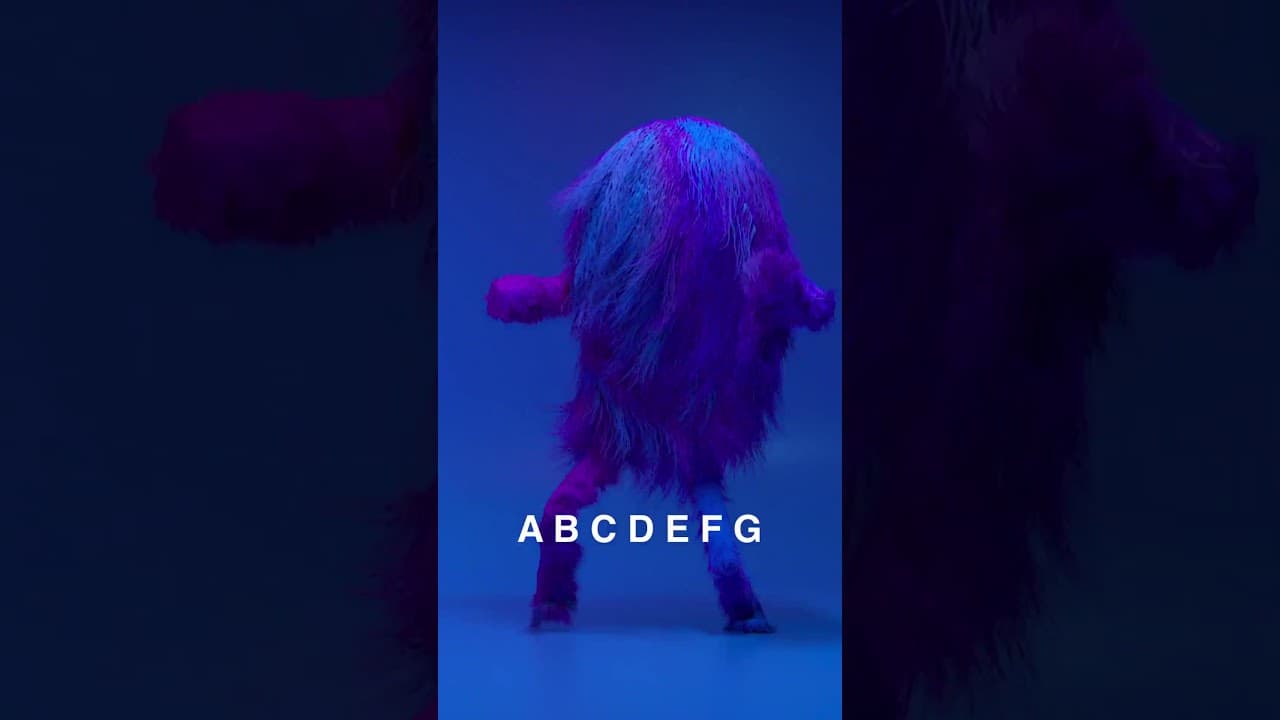
Have Fun TeachingHave Fun Teaching

4mins 51s

Video
Pre-Primer Sight Word Sing-Along

Pre-Primer Sight Word Sing-Along

This high-energy educational music video introduces young learners to essential pre-primer sight words through a rhythmic call-and-response format. The video functions as a digital flashcard drill set to a catchy beat, presenting forty common high-frequency words that early readers need to recognize instantly. Each word is displayed individually, pronounced clearly, and then immediately used in a simple, age-appropriate sentence to demonstrate context and usage. The content covers the standard Dolch pre-primer word list, moving briskly from basic articles and pronouns (the, a, I, you) to action verbs (jump, run, play) and descriptive adjectives (big, little, red, blue). The visual design is intentionally clean and uncluttered, using large white text against solid colored backgrounds to ensure students focus entirely on word recognition without distraction. The repetition of the word in isolation followed by its application in a sentence reinforces both decoding skills and reading comprehension. For educators, this video serves as an excellent warm-up activity, transition tool, or review drill for literacy blocks. The consistent pacing allows teachers to pause the video before the narrator speaks, giving students a chance to "beat the teacher" by reading the word first. The inclusion of full sentences also allows for instruction on sentence mechanics, such as capitalization and punctuation, while helping students understand that sight words are the building blocks of fluent reading.

Have Fun TeachingHave Fun Teaching

3mins 59s

Video
Singing and Spelling 40 Common Sight Words

Singing and Spelling 40 Common Sight Words

This high-energy educational music video is designed to help students master reading and spelling over 40 essential sight words. Set to an upbeat electronic rhythm, the video presents each word visually while a narrator pronounces it, spells it out letter-by-letter, and repeats it, creating a multi-sensory learning experience that aids memory retention through music and repetition. The video covers a wide range of high-frequency vocabulary commonly found in second and third-grade texts, including words like "about," "myself," "together," and "laugh." It reinforces the concept that sight words are foundational building blocks for reading fluency that often cannot be sounded out phonetically and must be recognized instantly. Teachers can use this video as a lively warm-up to a literacy block, a transition activity, or a fun way to practice spelling. The rhythmic nature of the content allows for active participation, where students can chant along, clap to the beat of the letters, or use the video as a self-checking tool for spelling practice. It is particularly effective for visual and auditory learners who benefit from musical mnemonics.

Have Fun TeachingHave Fun Teaching

4mins 4s

Video
Sing, Spell, and Read the Sight Word "Call"

Sing, Spell, and Read the Sight Word "Call"

This high-energy music video is designed to help early readers master the specific high-frequency sight word "call." Utilizing a catchy pop beat and repetition, the video employs a multi-sensory approach to literacy instruction. It breaks down the learning process into three distinct phases: word recognition through repeated visual exposure, orthographic mapping through rhythmic spelling (C-A-L-L), and contextual application through simple sentences. The content focuses entirely on the word "call," anchoring it as a core vocabulary term. The video demonstrates the word's usage in everyday contexts, such as calling a school, a zoo, a bank, and a friend. This contextualization helps students move beyond simple memorization to understanding how the word functions within a sentence structure. The consistent visual formatting—white text on a pink background—reduces cognitive load, allowing students to focus solely on the text. For educators, this video serves as an excellent tool for phonics warm-ups, transition times, or literacy centers. Its repetitive nature makes it ideal for "choral reading" and active participation, helping to cement the spelling and pronunciation of the word for auditory and visual learners alike. It can be used to introduce the word, reinforce spelling patterns, or support remediation for students struggling with basic sight word fluency.

Have Fun TeachingHave Fun Teaching

2mins 5s

Video
Singing the Pre-Primer Sight Words

Singing the Pre-Primer Sight Words

This engaging musical video introduces young learners to the Pre-Primer level Dolch sight words through a catchy, rhythmic song. Designed to support early literacy, the video features clear text on uncluttered backgrounds, allowing students to focus entirely on word recognition while the music aids in memorization. The content follows a simple structure where an upbeat introduction defines the purpose of sight words before presenting a sequence of 40 essential high-frequency words. The video systematically covers the entire Dolch Pre-Primer list, including foundational words such as 'the,' 'to,' 'and,' 'said,' 'look,' and color words like 'blue' and 'yellow.' Each word is displayed individually on the screen for several seconds, giving students time to read the word visually before and after hearing it sung. The steady tempo creates a predictable pattern that encourages students to sing along and actively participate in the reading process. Teachers can utilize this video as a daily warm-up routine, a transition activity, or a digital center for independent practice. It effectively turns rote memorization into a fun, auditory learning experience, helping students build the automaticity required for fluent reading. The video is particularly useful for visual and auditory learners in Pre-K, Kindergarten, and 1st Grade who are just beginning their reading journey.

Have Fun TeachingHave Fun Teaching

3mins 59s

Video
Learning the Sight Word 'Came' Through Song

Learning the Sight Word 'Came' Through Song

This energetic music video focuses on teaching early readers the high-frequency sight word "came." Through a catchy, rhythmic song, the video utilizes repetition to help students memorize both the pronunciation and spelling of the word. The visual design is intentionally simple, featuring large white text against a blue background to keep the learner's focus entirely on the word form and its constituent letters. The content moves through three distinct phases: whole word recognition, letter-by-letter spelling, and contextual usage within sentences. The sentence section introduces a brief narrative about a character at the ocean, reinforcing the word's meaning while demonstrating its grammatical function. By combining auditory cues with visual text, the video supports multi-sensory learning strategies effective for foundational literacy. Teachers can use this video as a high-energy warm-up or a transitional activity during literacy blocks. It serves as an excellent tool for introducing the specific sight word or reviewing the concept of past tense verbs. The musical element aids memory retention, making it particularly useful for students who benefit from mnemonic devices or kinetic learning styles.

Have Fun TeachingHave Fun Teaching

2mins 47s

Video
Rhythmic Reading: High-Frequency Sight Words in Context

Rhythmic Reading: High-Frequency Sight Words in Context

This educational music video features a high-energy, rhythmic song designed to teach early readers common sight words (high-frequency words) that often cannot be sounded out phonetically. Through a structured call-and-response format, the video introduces words individually, pronouncing them clearly, and then immediately places them into a simple, relatable sentence to demonstrate proper usage and context. The content covers a vast array of essential sight words found in early literacy curriculums (like Dolch and Fry lists), grouped into color-coded sections (Blue, Pink, Green, and Orange backgrounds) to help with visual categorization. Key themes include reading fluency, vocabulary acquisition, sentence structure, and word recognition. The repetition and catchy beat utilize the 'earworm' effect to aid memorization. For educators, this video serves as a versatile classroom tool. It can be used as a daily warm-up to build reading confidence, a transition activity to settle students, or a direct instructional tool for introducing new vocabulary. The consistent visual pattern—word, then sentence—makes it accessible for non-readers to follow along, bridging the gap between isolated word recognition and fluent reading comprehension.

Have Fun TeachingHave Fun Teaching

18mins 12s

Video
Learning to Read and Spell the Sight Word "Did"

Learning to Read and Spell the Sight Word "Did"

This high-energy music video focuses on teaching early readers the high-frequency sight word "did." Through a catchy, rhythmic electronic beat, the video utilizes repetition and visual cues to help students recognize, read, and spell this essential auxiliary verb. The content is designed to support phonics instruction and early literacy development by isolating a single target word and exploring its spelling and usage in context. The video follows a structured approach: first introducing the word visually and auditorily, then breaking it down into its individual letters (D-I-D) for spelling practice. It then progresses to using the word in common question-and-answer sentence structures, such as "Did you clean up your room?" and "Yes I did." This contextualizes the word, showing students how it functions at the beginning of questions and in short affirmative responses. For educators, this video serves as an engaging hook or review activity for sight word lessons. It is particularly useful for kinesthetic learners who benefit from moving to the beat while chanting the word. The clear text on screen supports print awareness, while the question-and-answer segment provides an excellent model for oral language practice and sentence structure, making it valuable for both general education classrooms and ESL/ELL instruction.

Have Fun TeachingHave Fun Teaching

2mins 21s

Video
Learning to Read and Spell the Sight Word "Come"

Learning to Read and Spell the Sight Word "Come"

This engaging music video focuses on teaching early readers the high-frequency sight word "come." Through a catchy, rhythmic song, the video utilizes repetition and spelling exercises to help students recognize, pronounce, and spell the word. The visual design is simple and focused, featuring the word clearly displayed on a purple background to minimize distractions and maximize word recognition. The content alternates between simple repetition of the target word, rhythmic spelling sequences ("C-O-M-E"), and contextual sentences that encourage physical movement. The narrative incorporates action verbs like walk, run, skip, and hop, connecting the abstract word "come" to concrete physical actions that children can perform. This multisensory approach aids in memory retention by linking the sight word to auditory rhythms and kinesthetic responses. For educators, this video serves as an excellent tool for introducing or reviewing sight words in early literacy instruction. It can be effectively used during circle time, as a transition activity involving movement, or as part of a dedicated phonics lesson. The clear audio and distinct spelling segments allow for "call and response" activities where students can spell along or act out the movements mentioned, making it a highly interactive classroom resource.

Have Fun TeachingHave Fun Teaching

2mins 20s

Video
Sing, Spell, and Use the Sight Word "But"

Sing, Spell, and Use the Sight Word "But"

This energetic music video focuses on teaching early readers the high-frequency sight word "but." Through a catchy, rhythmic song, students are guided to recognize, spell, and understand the usage of this common conjunction. The video employs a simple visual style with clear text on a contrasting background to minimize distractions and focus attention on literacy acquisition. The content is structured around three key learning modalities: recognition, spelling, and context. The song repeatedly introduces the word "but" visually and auditorily, breaks it down into its constituent letters (B-U-T) for spelling practice, and then integrates it into complete sentences. The sentence examples specifically demonstrate the word's grammatical function as a conjunction that introduces a contrast or exception (e.g., wanting to go somewhere vs. not being able to go). For educators, this video serves as an engaging tool for phonics and sight word instruction in early elementary classrooms. It is particularly useful for introducing the concept of conjunctions to young learners, modeling proper sentence structure, and building reading fluency through repetition. The song's steady beat makes it ideal for whole-class participation, where students can chant along, clap to the rhythm of the spelling, or practice reading the sentences aloud as they appear on screen.

Have Fun TeachingHave Fun Teaching

2mins 18s

Video
Rapping the First 100 High-Frequency Sight Words

Rapping the First 100 High-Frequency Sight Words

This energetic educational music video transforms high-frequency word practice into an engaging rap battle between two animated microphones. Hosted by a slow-speaking sloth in a foggy forest, the video transitions into a fast-paced musical performance that integrates 100 common sight words into rhyming verses. As the characters rap, the lyrics appear on screen with the specific target sight words highlighted in bright white text against a darker sentence structure, helping students distinguish and focus on the key vocabulary. The content focuses entirely on early literacy and reading fluency, specifically targeting the 'Fry' or 'Dolch' high-frequency word lists commonly used in primary education. The video explores phonological awareness through rhyming couplets and demonstrates how these standalone words function within the context of full sentences. The contrast between the sloth's slow introduction and the rapid-fire rap offers a unique lesson in pacing and fluency. For teachers, this video serves as a high-energy review tool or a 'brain break' that reinforces literacy skills. It is particularly useful for auditory learners who benefit from rhythm and rhyme to memorize spelling and pronunciation. The 'rap battle' format encourages students to read quickly and builds automaticity—the ability to recognize words instantly without sounding them out—which is a critical step in developing reading comprehension.

Scratch GardenScratch Garden

2mins 44s

Video
Complete Sight Word Collection: Pre-Primer to Third Grade

Complete Sight Word Collection: Pre-Primer to Third Grade

This comprehensive educational video serves as an extensive drill and practice resource for mastering Dolch sight words ranging from Pre-Primer to Third Grade levels. The video is divided into two distinct halves: the first half focuses solely on word recognition, displaying each word on a solid colored background while the narrator pronounces it clearly twice. This repetition helps students build immediate visual recognition and phonological memory of high-frequency words essential for early reading fluency. The second half of the video revisits all the word lists but adds a critical layer of context by incorporating simple sentences. For each sight word, the narrator reads the word, and then a sentence appears and is read aloud, demonstrating the word's usage in everyday language. This structure supports the transition from isolated word identification to reading comprehension, helping students understand how these abstract words function within reading and writing. Teachers can use this video as a versatile tool for various grade levels (K-3) or for differentiation within a single classroom. The clear segmentation by difficulty level allows educators to jump to specific sections relevant to their students' needs. It is excellent for daily warm-ups, independent literacy centers, or whole-class choral reading practice. The catchy, rhythmic background music keeps engagement high without distracting from the core learning objective.

Have Fun TeachingHave Fun Teaching

58mins 41s

Video
Sing and Learn: The First Collection of Common Sight Words

Sing and Learn: The First Collection of Common Sight Words

This engaging musical video introduces young learners to a fundamental list of 'sight words'—high-frequency words that are essential for reading fluency but often cannot be sounded out phonetically. Through a catchy, upbeat pop song, the video presents each word visually on screen while verbally pronouncing it twice, allowing time for students to repeat and memorize the pronunciation and spelling pattern.

Have Fun TeachingHave Fun Teaching

4mins 3s

Video
Mastering the Sight Word 'By' Through Song

Mastering the Sight Word 'By' Through Song

This energetic educational music video focuses on teaching the high-frequency sight word "by" to early readers. set to an upbeat electronic backing track, the video utilizes a repetitive structure common in effective literacy instruction: introducing the word, spelling it out, and then using it in context. The visual presentation is clean and focused, using high-contrast white text against a blue gradient background to ensure student attention remains on the literacy content without unnecessary distractions. The content explores three key aspects of the word: recognition, spelling, and usage. The song cycles through rhythmic chants of the word itself to build auditory recognition, a spelling section where "B-Y" is chanted to the beat to reinforce orthography, and a sentence section. The sentences chosen—"I stand by you," "You stand by me"—introduce the prepositional meaning of the word in a context of friendship and support, adding a layer of social-emotional learning to the literacy lesson. For educators, this video serves as an excellent engaging resource for daily sight word drills, morning meeting warm-ups, or transitional activities. The catchy rhythm aids in memory retention, helping students internalize the spelling of this non-phonetic "tricky" word. The repetitive nature allows for immediate student participation, making it a low-barrier entry point for diverse learners, including English Language Learners, to practice pronunciation and sentence structure.

Have Fun TeachingHave Fun Teaching

2mins 14s

Video
Mastering Letter Sounds A to Z

Mastering Letter Sounds A to Z

This comprehensive educational video provides a complete introduction to phonics for early learners, using an engaging puzzle metaphor to explain how letter sounds combine to create words. The video systematically guides students through the entire alphabet from A to Z, introducing the primary sound for each letter using clear pronunciation, visual text support, and memorable animal or object associations (e.g., A for Alligator, B for Bear). The narrator emphasizes that learning these "puzzle pieces" is the key to unlocking the skill of reading. Key themes include letter-sound correspondence, decoding strategies, and phonemic awareness. The video breaks the alphabet into manageable chunks, interspersed with interactive checks for understanding. Notable sections include a blending demonstration where the sounds c-a-b are combined to form "cab," and a gamified segment called "Top, Middle, or Bottom?" where students must identify written CVC (consonant-vowel-consonant) words based on auditory cues. A humorous segment titled "Phonics with Mr. Whiskers" encourages students to "teach" a cat, reinforcing their own learning through retrieval practice. For educators, this video serves as an excellent core resource for introducing or reviewing the alphabet's phonetic sounds. The "puzzle" analogy provides a concrete framework for understanding why phonics matters, helping students grasp that reading is an active process of assembling sounds. The video's pacing allows for pausing and repeating sounds, making it ideal for whole-class choral response activities, small group intervention for struggling readers, or independent practice stations. The inclusion of assessment games within the video itself provides immediate feedback opportunities for teachers to gauge student progress.

Homeschool PopHomeschool Pop

27mins 7s

Video
Singing the Primer Sight Words: A Reading Practice Song

Singing the Primer Sight Words: A Reading Practice Song

This educational music video is a comprehensive drill-and-practice resource designed to help early readers master 'Primer' level sight words. Set to an energetic, rhythmic beat, the video systematically introduces over 50 essential high-frequency words. For each word, the video displays the text clearly on screen, pronounces it, and then incorporates it into a simple, age-appropriate sentence which is also read aloud. This multimodal approach—seeing, hearing, and reading in context—reinforces word recognition and reading fluency. The content covers a wide range of Primer Dolch sight words including pronouns (he, she, they), prepositions (on, at, with, under), verbs (was, went, ate, ride), and adjectives (good, pretty, brown, black, white). The repetitive structure allows students to anticipate the pattern, encouraging them to read along. The sentences provided offer context clues that help ground the abstract words in concrete meaning, such as "I ride my bike" for 'ride' or "A square has four sides" for 'four'. For teachers, this video serves as an excellent warm-up activity, a transition tool, or a dedicated phonics center station. It is particularly useful for building automaticity in word recognition, which is a critical step toward reading fluency. The catchy rhythm helps with engagement and memory retention, while the clear, uncluttered visuals ensure that students focus specifically on the orthography of the words being taught.
Have Fun TeachingHave Fun Teaching

4mins 51s

Video
Mastering High-Frequency Sight Words Through Song: List 3

Mastering High-Frequency Sight Words Through Song: List 3

This engaging educational music video is designed to help early elementary students master a specific set of high-frequency sight words often found in "List 3" of common sight word curriculums. Through a catchy, rhythmic song, the video visually presents each word on a colorful background while the narrator sings the word clearly multiple times. This multisensory approach helps reinforce word recognition, spelling, and pronunciation for developing readers. The video focuses on key literacy themes including reading fluency, word recognition, and vocabulary development. It covers a diverse list of functional words ranging from number words like "six" and "seven" to common verbs like "grow," "laugh," and "carry," as well as abstract concepts like "about" and "if." The repetition built into the song structure ensures that students have ample opportunity to encode these words into their visual memory. For the classroom, this video serves as an excellent warm-up, transition activity, or center station for literacy blocks. It supports differentiated learning by providing auditory cues for students who struggle with traditional flashcards. Teachers can use this video to introduce new vocabulary, review previously taught words, or as a fun "brain break" that keeps the focus on learning. The steady pacing allows students to read along, making it a valuable tool for building confidence in reading aloud.

Have Fun TeachingHave Fun Teaching

4mins 5s

Video
Singing and Spelling 40 Common Sight Words

Singing and Spelling 40 Common Sight Words

This high-energy educational music video is designed to help students master reading and spelling over 40 essential sight words. Set to an upbeat electronic rhythm, the video presents each word visually while a narrator pronounces it, spells it out letter-by-letter, and repeats it, creating a multi-sensory learning experience that aids memory retention through music and repetition. The video covers a wide range of high-frequency vocabulary commonly found in second and third-grade texts, including words like "about," "myself," "together," and "laugh." It reinforces the concept that sight words are foundational building blocks for reading fluency that often cannot be sounded out phonetically and must be recognized instantly. Teachers can use this video as a lively warm-up to a literacy block, a transition activity, or a fun way to practice spelling. The rhythmic nature of the content allows for active participation, where students can chant along, clap to the beat of the letters, or use the video as a self-checking tool for spelling practice. It is particularly effective for visual and auditory learners who benefit from musical mnemonics.

Have Fun TeachingHave Fun Teaching

4mins 4s

Video
Sing, Spell, and Read the Sight Word "Call"

Sing, Spell, and Read the Sight Word "Call"

This high-energy music video is designed to help early readers master the specific high-frequency sight word "call." Utilizing a catchy pop beat and repetition, the video employs a multi-sensory approach to literacy instruction. It breaks down the learning process into three distinct phases: word recognition through repeated visual exposure, orthographic mapping through rhythmic spelling (C-A-L-L), and contextual application through simple sentences. The content focuses entirely on the word "call," anchoring it as a core vocabulary term. The video demonstrates the word's usage in everyday contexts, such as calling a school, a zoo, a bank, and a friend. This contextualization helps students move beyond simple memorization to understanding how the word functions within a sentence structure. The consistent visual formatting—white text on a pink background—reduces cognitive load, allowing students to focus solely on the text. For educators, this video serves as an excellent tool for phonics warm-ups, transition times, or literacy centers. Its repetitive nature makes it ideal for "choral reading" and active participation, helping to cement the spelling and pronunciation of the word for auditory and visual learners alike. It can be used to introduce the word, reinforce spelling patterns, or support remediation for students struggling with basic sight word fluency.

Have Fun TeachingHave Fun Teaching

2mins 5s

Video
Mastering the Sight Word Does Through Music and Spelling

Mastering the Sight Word Does Through Music and Spelling

This energetic educational music video focuses on teaching the high-frequency sight word "does." Through a catchy, rhythmic song, the video uses repetition to help students recognize, read, and spell the word. The visual presentation features the word prominently against a colorful background, reinforcing visual memory alongside auditory learning. The video breaks down the word in two key ways: first by spelling it out letter-by-letter ("D-O-E-S") to establish orthographic knowledge, and second by using it in context within interrogative sentences. The lyrical content cleverly builds a conceptual hierarchy of literacy, asking if a story needs a sentence, if a sentence needs a word, if a word needs a letter, and if a letter needs a sound—answering "Yes it does" each time. Teachers can use this video as a high-energy hook for a literacy lesson, a transition activity, or a tool for sight word reinforcement. Its combination of spelling practice and contextual usage makes it excellent for early readers who are just beginning to understand sentence structure and the role of auxiliary verbs in forming questions.

Have Fun TeachingHave Fun Teaching

2mins 32s

Video
Learning to Spell and Use the Sight Word 'Buy'

Learning to Spell and Use the Sight Word 'Buy'

This high-energy music video is designed to teach early learners the sight word "buy." Through a catchy, repetitive song, students are guided to recognize the word by sight, spell it aloud letter-by-letter, and understand its meaning through context sentences. The video utilizes simple, high-contrast visuals with white text against a purple background to focus student attention specifically on the target vocabulary. The content covers three main literacy skills: word recognition, spelling (B-U-Y), and usage in sentences. The song introduces the conditional phrase structure "If I had some money, I would buy..." followed by rhyming or humorous animal examples like a puppy, pony, monkey, and donkey. This helps students associate the word "buy" with the concept of purchasing items using money. For educators, this video serves as an engaging hook or review tool for literacy lessons. It transforms rote memorization into a kinetic and auditory experience, making it particularly effective for auditory learners and students who benefit from musical mnemonics. The predictable pattern of the song allows for immediate student participation, while the sentence frames provide excellent models for writing activities.

Have Fun TeachingHave Fun Teaching

2mins 17s

Video
Building New Words with Affixes

Building New Words with Affixes

This educational video provides a clear and engaging introduction to affixes, specifically focusing on prefixes and suffixes in the English language. The narrator explains how the English language is flexible, allowing for the creation of new words by attaching these word parts to existing roots. Through step-by-step examples like "reread," "unhappy," and "joyful," the video demonstrates how adding a prefix changes a word's meaning or how a suffix can transform a word's grammatical function, such as turning an adjective into a noun (e.g., "happy" to "happiness"). The video explores key themes of morphology, vocabulary building, and language mechanics. It categorizes common affixes, defining prefixes like 'un-', 're-', 'dis-', and 'mis-', as well as suffixes like '-ful', '-less', '-ly', and '-ness'. The narrator also introduces the concept of stacking affixes to create complex words, using "hopefulness" as a prime example of how a root word can accept both a suffix that makes it an adjective and another that turns it into an abstract noun. For educators, this video serves as an excellent anchor for lessons on word analysis and decoding strategies. It concludes with a creative study strategy where the narrator uses index cards to mix and match roots and affixes, creating nonsense words like "dispetrographic" to deduce meaning. This practical application encourages students to treat language learning as a playful experiment, making it a valuable resource for 2nd through 5th-grade classrooms focusing on reading comprehension and vocabulary acquisition.

Khan AcademyKhan Academy

3mins 7s

Video
Compound Words: Glued Together for New Meanings

Compound Words: Glued Together for New Meanings

This educational video introduces elementary students to the concept of compound words through a clear, step-by-step explanation using whiteboard-style animation. It begins by distinguishing compound words from contractions, explaining that compound words combine two full words without losing any letters. The narrator provides numerous examples illustrating how nouns, verbs, and adjectives can combine to form new words with distinct meanings, such as "mailbox," "playground," and the humorous example of "hotdog." The video emphasizes practical reading strategies, encouraging students not to be intimidated by long words but instead to look for smaller, familiar words inside them. It demonstrates this strategy with sentences involving "butterfly" and "sunflower." The lesson concludes with a guided reading activity where the narrator and student characters read a short story about a beach trip, pausing to identify and decode compound words like "lifeguard," "sandcastle," and "jellyfish." Ideally suited for early elementary language arts curriculums, this video supports vocabulary development, decoding skills, and morphological awareness. It effectively uses visual metaphors—like gluing words together—to make abstract grammatical concepts concrete. Teachers can use this resource to introduce the unit on compound words or as a specific intervention for students struggling to read multi-syllabic words.

GrammarSongs by MelissaGrammarSongs by Melissa

5mins 14s

Video
Mastering Sight Words Set 3: Reading Practice with Music

Mastering Sight Words Set 3: Reading Practice with Music

This engaging musical video introduces students to a specific set of high-frequency sight words (List 3), combining auditory and visual learning styles to support reading fluency. Set to an energetic beat, the video systematically presents each word individually, followed by a simple sentence that uses the word in context. This structure helps early readers not only memorize the spelling and pronunciation of the words but also understand how they function within a sentence structure. Key themes include reading readiness, vocabulary development, and sentence comprehension. The video covers over 40 essential sight words ranging from simple two-letter words like "if" to more complex words like "together" and "laugh." By repeating the pattern of Word -> Sentence -> Reading, it reinforces recognition through repetition and context, which are critical strategies for developing literacy skills in young learners. For educators, this video serves as an excellent tool for daily warm-ups, transition activities, or a fun review session for spelling and reading blocks. It transforms rote memorization into a rhythmic activity that encourages active participation. Teachers can use this resource to support differentiated instruction, allowing students to practice reading along with the narrator or challenging them to read the words before the audio cue.

Have Fun TeachingHave Fun Teaching

4mins 4s

Video
Singing and Spelling Common Sight Words

Singing and Spelling Common Sight Words

This energetic music video is designed to help early readers master the Dolch Primer sight word list through repetition, rhythm, and spelling. Set to an upbeat pop track, the video introduces over 50 essential high-frequency words that are critical for reading fluency in Kindergarten and First Grade. Each word is presented visually, spoken aloud, spelled out letter-by-letter, and then repeated, creating a multi-sensory learning experience that aids memorization.

Have Fun TeachingHave Fun Teaching

4mins 51s

Video
Pre-Primer Sight Word Sing-Along

Pre-Primer Sight Word Sing-Along

This high-energy educational music video introduces young learners to essential pre-primer sight words through a rhythmic call-and-response format. The video functions as a digital flashcard drill set to a catchy beat, presenting forty common high-frequency words that early readers need to recognize instantly. Each word is displayed individually, pronounced clearly, and then immediately used in a simple, age-appropriate sentence to demonstrate context and usage. The content covers the standard Dolch pre-primer word list, moving briskly from basic articles and pronouns (the, a, I, you) to action verbs (jump, run, play) and descriptive adjectives (big, little, red, blue). The visual design is intentionally clean and uncluttered, using large white text against solid colored backgrounds to ensure students focus entirely on word recognition without distraction. The repetition of the word in isolation followed by its application in a sentence reinforces both decoding skills and reading comprehension. For educators, this video serves as an excellent warm-up activity, transition tool, or review drill for literacy blocks. The consistent pacing allows teachers to pause the video before the narrator speaks, giving students a chance to "beat the teacher" by reading the word first. The inclusion of full sentences also allows for instruction on sentence mechanics, such as capitalization and punctuation, while helping students understand that sight words are the building blocks of fluent reading.

Have Fun TeachingHave Fun Teaching

3mins 59s

Video
Singing the Pre-Primer Sight Words

Singing the Pre-Primer Sight Words

This engaging musical video introduces young learners to the Pre-Primer level Dolch sight words through a catchy, rhythmic song. Designed to support early literacy, the video features clear text on uncluttered backgrounds, allowing students to focus entirely on word recognition while the music aids in memorization. The content follows a simple structure where an upbeat introduction defines the purpose of sight words before presenting a sequence of 40 essential high-frequency words. The video systematically covers the entire Dolch Pre-Primer list, including foundational words such as 'the,' 'to,' 'and,' 'said,' 'look,' and color words like 'blue' and 'yellow.' Each word is displayed individually on the screen for several seconds, giving students time to read the word visually before and after hearing it sung. The steady tempo creates a predictable pattern that encourages students to sing along and actively participate in the reading process. Teachers can utilize this video as a daily warm-up routine, a transition activity, or a digital center for independent practice. It effectively turns rote memorization into a fun, auditory learning experience, helping students build the automaticity required for fluent reading. The video is particularly useful for visual and auditory learners in Pre-K, Kindergarten, and 1st Grade who are just beginning their reading journey.

Have Fun TeachingHave Fun Teaching

3mins 59s

Video
Singing and Spelling Common Sight Words

Singing and Spelling Common Sight Words

This high-energy educational music video introduces young learners to essential pre-primer sight words through song, rhythm, and repetition. Set to a catchy, upbeat electronic track, the video presents a sequence of high-frequency words that are foundational for early reading fluency. Each word is displayed clearly on screen, pronounced aloud, spelled out letter-by-letter, and then pronounced again, utilizing a multi-sensory approach to aid memorization.

Have Fun TeachingHave Fun Teaching

3mins 59s

Video
Singing, Spelling, and Acting Out the Sight Word 'Can'

Singing, Spelling, and Acting Out the Sight Word 'Can'

This engaging music video introduces early learners to the high-frequency sight word "can" through repetition, spelling, and movement. Set to an upbeat rhythm, the video focuses visually on the word itself, presenting it clearly on a bright yellow background to ensure students connect the auditory sound with the visual text representation. The song breaks down the spelling of the word (C-A-N) using a call-and-response format that encourages classroom participation. Beyond simple recognition, the video contextualizes the word by building simple sentences that connect "can" to action verbs like "jump," "clap," "swim," and "shake." This section acts as a "brain break," encouraging students to physically perform the actions while reading the sentences on screen. This kinesthetic approach reinforces the meaning of the word as expressing ability. Teachers can use this video as a daily warm-up during literacy blocks, a transition activity to get wiggles out while learning, or as part of a dedicated sight word lesson. Its repetitive structure makes it ideal for developing phonemic awareness and spelling skills in Pre-K through 1st-grade students, while the high-contrast visuals support students with visual processing needs.

Have Fun TeachingHave Fun Teaching

2mins 55s

Video
Learning the Sight Word 'Came' Through Song

Learning the Sight Word 'Came' Through Song

This energetic music video focuses on teaching early readers the high-frequency sight word "came." Through a catchy, rhythmic song, the video utilizes repetition to help students memorize both the pronunciation and spelling of the word. The visual design is intentionally simple, featuring large white text against a blue background to keep the learner's focus entirely on the word form and its constituent letters. The content moves through three distinct phases: whole word recognition, letter-by-letter spelling, and contextual usage within sentences. The sentence section introduces a brief narrative about a character at the ocean, reinforcing the word's meaning while demonstrating its grammatical function. By combining auditory cues with visual text, the video supports multi-sensory learning strategies effective for foundational literacy. Teachers can use this video as a high-energy warm-up or a transitional activity during literacy blocks. It serves as an excellent tool for introducing the specific sight word or reviewing the concept of past tense verbs. The musical element aids memory retention, making it particularly useful for students who benefit from mnemonic devices or kinetic learning styles.

Have Fun TeachingHave Fun Teaching

2mins 47s

Video
Complete Sight Word Collection: Pre-Primer to Third Grade

Complete Sight Word Collection: Pre-Primer to Third Grade

This comprehensive educational video serves as an extensive drill and practice resource for mastering Dolch sight words ranging from Pre-Primer to Third Grade levels. The video is divided into two distinct halves: the first half focuses solely on word recognition, displaying each word on a solid colored background while the narrator pronounces it clearly twice. This repetition helps students build immediate visual recognition and phonological memory of high-frequency words essential for early reading fluency. The second half of the video revisits all the word lists but adds a critical layer of context by incorporating simple sentences. For each sight word, the narrator reads the word, and then a sentence appears and is read aloud, demonstrating the word's usage in everyday language. This structure supports the transition from isolated word identification to reading comprehension, helping students understand how these abstract words function within reading and writing. Teachers can use this video as a versatile tool for various grade levels (K-3) or for differentiation within a single classroom. The clear segmentation by difficulty level allows educators to jump to specific sections relevant to their students' needs. It is excellent for daily warm-ups, independent literacy centers, or whole-class choral reading practice. The catchy, rhythmic background music keeps engagement high without distracting from the core learning objective.

Have Fun TeachingHave Fun Teaching

58mins 41s

Video
Sing and Spell the Sight Word 'Cold'

Sing and Spell the Sight Word 'Cold'

This engaging music video introduces early learners to the sight word "cold" through a catchy, repetitive song. The video focuses on spelling the word aloud ("C-O-L-D") and recognizing it visually on screen, utilizing a high-contrast format with white text against a purple background to aid in visual memory retention. The simple melody and clear pronunciation help students memorize both the spelling and the pronunciation of the word. The content explores literacy and basic sentence structure by integrating the target word into meaningful contexts. Specifically, it connects the concept of "cold" to Arctic and Antarctic animals, teaching students that Penguins, Puffins, Polar Bears, and Beluga Whales thrive in cold environments. This provides a subtle cross-curricular link to science and animal habitats while reinforcing the core literacy skill. For educators, this video serves as an excellent tool for introducing or reviewing high-frequency sight words. It is particularly useful for auditory and musical learners who benefit from rhythm and rhyme. Teachers can use this video during morning meetings, literacy centers, or transition times to practice spelling, reading, and vocabulary development in a low-stress, fun manner.

Have Fun TeachingHave Fun Teaching

2mins 33s

Video
Learning to Read and Spell the Sight Word "Did"

Learning to Read and Spell the Sight Word "Did"

This high-energy music video focuses on teaching early readers the high-frequency sight word "did." Through a catchy, rhythmic electronic beat, the video utilizes repetition and visual cues to help students recognize, read, and spell this essential auxiliary verb. The content is designed to support phonics instruction and early literacy development by isolating a single target word and exploring its spelling and usage in context. The video follows a structured approach: first introducing the word visually and auditorily, then breaking it down into its individual letters (D-I-D) for spelling practice. It then progresses to using the word in common question-and-answer sentence structures, such as "Did you clean up your room?" and "Yes I did." This contextualizes the word, showing students how it functions at the beginning of questions and in short affirmative responses. For educators, this video serves as an engaging hook or review activity for sight word lessons. It is particularly useful for kinesthetic learners who benefit from moving to the beat while chanting the word. The clear text on screen supports print awareness, while the question-and-answer segment provides an excellent model for oral language practice and sentence structure, making it valuable for both general education classrooms and ESL/ELL instruction.

Have Fun TeachingHave Fun Teaching

2mins 21s

Video
Mastering the Reverse Alphabet Challenge

Mastering the Reverse Alphabet Challenge

A high-energy, pop-infused music video that challenges students to learn the alphabet in reverse order. Through the catchy concept of the "Tebahpla" (alphabet spelled backwards), the video transforms a difficult cognitive task into an engaging song. The visual style features pulsing, colorful motion graphics that display letters clearly as they are sung, aiding in visual recognition. This video explores themes of sequencing, pattern recognition, and memory. By reversing a familiar sequence, students are forced to think critically about letter order rather than relying on rote muscle memory. The song breaks the reverse alphabet into rhythmic chunks, making the complex string of letters easier to digest and memorize. Ideally suited for early elementary classrooms, this video serves as an excellent brain break or cognitive warm-up. Teachers can use it to strengthen letter recognition, introduce the concept of reverse sequencing, or simply as a fun "challenge" activity. The catchy "Tebahpla" chorus gives students a mnemonic hook, turning the abstract task of reverse recitation into a named character or concept they can master.

Have Fun TeachingHave Fun Teaching

2mins 31s

Video
Dancing Through the Alphabet: Letters, Sounds, and Vowels

Dancing Through the Alphabet: Letters, Sounds, and Vowels

This high-energy animated video features a purple, furry, spherical creature dancing to an upbeat pop song about the alphabet. The video combines catchy music with on-screen text to guide viewers through the English alphabet sequence, while the character performs various dance moves against a changing colorful background. The visual style is modern and 3D-animated, appealing to young visual learners who enjoy music and movement. The content covers three main areas: the sequential recitation of letters A through Z, the categorization of letters into consonants and vowels, and the functional purpose of letters (reading, writing, and making sounds). It transitions from a cool blue aesthetic to a high-contrast, psychedelic color palette as the song intensifies, helping to maintain student attention through visual stimulation. For educators, this video serves as an excellent "brain break" or energizer that reinforces literacy skills. It is particularly useful for auditory and kinesthetic learners in early childhood classrooms. The song's lyrics explicitly connect abstract letters to the concrete actions of reading and writing, making it a strong opening hook for a literacy block or a fun transition activity between lessons.

Have Fun TeachingHave Fun Teaching

54s

Video
Dancing to the Alphabet Party Song

Dancing to the Alphabet Party Song

A high-energy, pop-style music video featuring an animated character dancing to a catchy rendition of the alphabet song. The video focuses on auditory learning and memorization of the English letter sequence through repetition and rhythm, set against a vibrant background of dancing stars. The upbeat tempo differentiates it from traditional, slower lullaby-style ABC songs, making it an energetic "party" version. Themes include the English alphabet sequence, rhythm, dance, and music. The video utilizes a modern dance-pop backing track to engage young learners, encouraging them to move and sing along rather than passively watch. The repetitive structure allows for multiple opportunities to practice the letter sequence within a single viewing. This resource is primarily useful as a "brain break" or active learning tool in Early Childhood classrooms. While it does not display the letters visually on screen for reading practice, its auditory focus makes it excellent for reinforcing letter names, sequencing, and memorization through movement. Teachers can use it to transition between activities, burn off energy while reviewing content, or as a background track for alphabet-related games.

Have Fun TeachingHave Fun Teaching

2mins 36s

Video
Grooving to the Alphabet: A Reggae ABC Song

Grooving to the Alphabet: A Reggae ABC Song

This animated music video presents the English alphabet set to a relaxed, catchy reggae-style rhythm. An animated blue character dances on screen while singing the traditional ABC sequence, interspersed with a chorus about the enduring nature of the alphabet. The video provides a musical mnemonic device to help young learners memorize the order of letters. The key themes are early literacy fundamentals, specifically letter sequencing and memorization through music. The song repeats the alphabet sequence four distinct times, allowing for multiple opportunities for practice within a single viewing. The chorus introduces the concept of the alphabet being a constant tool for communication "today, tomorrow, always and forever." For educators, this video serves as an excellent auditory anchor for Pre-K and Kindergarten classrooms. Unlike traditional nursery rhyme versions, the syncopated reggae beat offers a fresh auditory experience that can help engage students who might be bored with the standard melody. Because the video features a dancing character rather than displaying the letters on screen, it is best used as a background track for movement activities, clean-up times, or while pointing to a physical alphabet chart in the classroom.

Have Fun TeachingHave Fun Teaching

2mins 9s

Video
Mastering Letter A: Air Writing and Recognition

Mastering Letter A: Air Writing and Recognition

This high-energy, rhythmic video serves as a kinetic guide for early learners to practice forming the letter "A". Through a repetitive chant and clear visual animations, the video instructs viewers to practice "air writing"—a gross motor skill activity that reinforces muscle memory for handwriting. It covers both the uppercase "A" and lowercase "a", demonstrating the correct stroke order and directionality for each. The content focuses on three primary themes: letter recognition, handwriting mechanics (stroke order), and the classification of "A" as a vowel. The visual design uses high-contrast colors—yellow outlines on a blue background—to clearly delineate the shape of the letter, while a white fill animation highlights the path the pencil should take. The final segment introduces the wider alphabet context, identifying "A" as a vowel among other lowercase letters. For educators, this video is an excellent tool for transitioning students from passive listening to active participation. It works well as a "brain break" or a warm-up for a handwriting lesson, encouraging students to stand up and use their whole arms to trace the letter shapes. The repetitive auditory cues ("Write an uppercase A in the air") combined with the visual filling of the letter support multi-sensory learning, making it highly effective for Pre-K and Kindergarten classrooms focusing on early literacy.

Have Fun TeachingHave Fun Teaching

58s

Video
Mastering Letter Sounds A to Z

Mastering Letter Sounds A to Z

This comprehensive educational video provides a complete introduction to phonics for early learners, using an engaging puzzle metaphor to explain how letter sounds combine to create words. The video systematically guides students through the entire alphabet from A to Z, introducing the primary sound for each letter using clear pronunciation, visual text support, and memorable animal or object associations (e.g., A for Alligator, B for Bear). The narrator emphasizes that learning these "puzzle pieces" is the key to unlocking the skill of reading. Key themes include letter-sound correspondence, decoding strategies, and phonemic awareness. The video breaks the alphabet into manageable chunks, interspersed with interactive checks for understanding. Notable sections include a blending demonstration where the sounds c-a-b are combined to form "cab," and a gamified segment called "Top, Middle, or Bottom?" where students must identify written CVC (consonant-vowel-consonant) words based on auditory cues. A humorous segment titled "Phonics with Mr. Whiskers" encourages students to "teach" a cat, reinforcing their own learning through retrieval practice. For educators, this video serves as an excellent core resource for introducing or reviewing the alphabet's phonetic sounds. The "puzzle" analogy provides a concrete framework for understanding why phonics matters, helping students grasp that reading is an active process of assembling sounds. The video's pacing allows for pausing and repeating sounds, making it ideal for whole-class choral response activities, small group intervention for struggling readers, or independent practice stations. The inclusion of assessment games within the video itself provides immediate feedback opportunities for teachers to gauge student progress.

Homeschool PopHomeschool Pop

27mins 7s

Video
Singing the Alphabet from A to Z

Singing the Alphabet from A to Z

This energetic music video features a catchy, pop-style rendition of the alphabet song designed to help early learners memorize letter names and sequencing. The video centers on an animated green character named Fumz who dances against a vibrant background of pink, purple, and green stars while singing the ABCs. Large, clear text displays each letter on the screen in sync with the lyrics, providing visual reinforcement alongside the auditory cues. The content focuses entirely on the foundational literacy skill of letter recognition and sequencing. By repeating the alphabet multiple times within a single song, the video utilizes the pedagogical strategy of repetition to strengthen memory retention. The upbeat tempo and modern musical style aim to keep young students engaged and moving, transforming a rote memorization task into a fun, physical activity. For educators, this video serves as an excellent warm-up or transition tool for Pre-K and Kindergarten classrooms. It supports auditory learners through the song and visual learners through the on-screen text. Teachers can use it to introduce the alphabet, practice letter ordering, or simply as a 'brain break' that incorporates educational content. The repetitive nature allows for multiple opportunities to catch specific letters or sing along without restarting the video.

Have Fun TeachingHave Fun Teaching

2mins 6s

Video
Grooving to the ABCs: An Alphabet Pop Song

Grooving to the ABCs: An Alphabet Pop Song

This energetic music video features a catchy, pop-style song designed to help early learners memorize the English alphabet. A stylish, animated yellow character with sunglasses leads students through a rhythmic repetition of the letters A through Z, sandwiched between a motivating chorus about knowing the alphabet. The video utilizes a high-energy musical format to engage young children and make rote memorization enjoyable. The content focuses entirely on the sequence of the alphabet (A-Z) and the confidence of mastering this foundational literacy skill. The lyrics are simple and repetitive, reinforcing the correct order of letters through melody and rhythm. The visual presentation remains consistent throughout, featuring the animated character against a colorful, starry background, serving as a friendly companion for the singing exercise. For educators, this video serves as an excellent auditory anchor for daily morning meetings or transitions. Because the video focuses on the audio rather than displaying the letters on screen, it is best used as a background track for physical activities—such as pointing to a classroom alphabet chart, passing letter flashcards in a circle, or cleaning up. Its upbeat tempo provides a modern alternative to the traditional 'Twinkle Twinkle Little Star' melody often used for the ABCs.

Have Fun TeachingHave Fun Teaching

1min 47s

Video
Targeting the Letter A with the Archery Game Song

Targeting the Letter A with the Archery Game Song

This high-energy, interactive animated music video turns learning the letter 'A' into an engaging archery game. Hosted by a friendly green character named Funz, the video uses a 'call and response' format where students are encouraged to physically pretend to shoot a bow and arrow at the target letter whenever it appears on screen. The song has a catchy pop beat that keeps the energy high while systematically drilling letter recognition. The content is divided into three distinct gameplay sections: recognizing uppercase 'A' amidst distractors, identifying lowercase 'a' within simple words, and a speed round that mixes contexts. Between rounds, a melodic chorus reinforces key concepts, explicitly stating that 'A' has both uppercase and lowercase forms and identifying it as a vowel. The visual style mimics a video game interface, complete with life bars and score indicators, appealing to digital-native students. For educators, this video serves as an excellent kinetic learning tool for early literacy. It moves beyond passive watching by requiring physical movement (miming archery) and active discrimination (finding the letter). It introduces essential vocabulary like "uppercase," "lowercase," and "vowel" while providing numerous examples of words containing the letter 'A' (e.g., cat, ham, fan), making it a versatile resource for introducing phonics, letter forms, and sight words.

Have Fun TeachingHave Fun Teaching

3mins 37s

Video
The Letter A Vowel Song

The Letter A Vowel Song

This energetic, musical video introduces young learners to the letter 'A' specifically identified as a vowel. Through a catchy, rhythmic song, the video reinforces letter recognition and introduces the concept that 'A' is a specific type of letter called a vowel. The visual narrative features animated characters—a friendly green snake and a mouse—who act out simple scenarios in a desert setting to illustrate words containing the long 'A' sound.

Have Fun TeachingHave Fun Teaching

1min 31s

Video
Singing the Alphabet with Playful Kittens

Singing the Alphabet with Playful Kittens

This soothing video features a litter of adorable kittens playing on a soft white rug against a stark black background, set to a gentle, lullaby-style rendition of the Alphabet Song. The camera captures the kittens in various states of activity, from playful wrestling and grooming to curious exploration and looking directly at the lens. The contrast between the playful visual antics of the kittens and the slow, melodic song creates a calming atmosphere. The key themes center on early literacy (alphabet recognition) and animal observation. While the primary audio content is the traditional ABC song, the visuals provide a rich opportunity to observe young animal behaviors, social interaction among littermates, and physical characteristics of cats. The repetition of the song reinforces the sequence of the alphabet letters in a low-stress, auditory manner. For educators, this video serves as an excellent dual-purpose tool: it functions as a calming transition activity to help students regulate their energy, and as an engaging hook for early literacy lessons. It is particularly useful in Pre-K and Kindergarten classrooms for introducing the alphabet song, practicing listening skills, or as a serene 'brain break' that keeps students focused through the universal appeal of baby animals.

Have Fun TeachingHave Fun Teaching

2mins 29s

Video
Mastering the Alphabet Sequence with Music

Mastering the Alphabet Sequence with Music

This energetic educational video features a catchy, pop-style rendition of the classic alphabet song, designed to help early learners memorize the sequence of the 26 letters of the English alphabet. Hosted by a friendly, animated pink character in activewear, the video uses music and movement to engage young viewers. The song follows a repetitive structure, alternating between a motivating chorus about how letters are fun and the recitation of the alphabet itself. The key theme of the video is foundational literacy through rote memorization and rhythm. By setting the alphabet to an upbeat dance track rather than the traditional 'Twinkle Twinkle Little Star' melody, it offers a fresh auditory hook for students who might benefit from a more rhythmic approach. The repetition ensures multiple opportunities for practice within a single viewing session. In the classroom, this video serves as an excellent energizer, transition tool, or introduction to literacy blocks. It is particularly useful for kinesthetic learners who need to move while learning, as the beat encourages dancing. Teachers can use it to build phonemic awareness, support letter sequencing skills, and create a positive, high-energy atmosphere for early reading instruction.

Have Fun TeachingHave Fun Teaching

2mins 1s

Video
Pop the Bubbles to Learn Letter B

Pop the Bubbles to Learn Letter B

This engaging animated music video transforms letter recognition into an interactive game, specifically focusing on the letter "B". Set to a catchy pop soundtrack, the video features a pink character named "Lette" who guides viewers through a challenge to save gems trapped in bubbles by identifying and "popping" bubbles containing the letter B. The narrative builds excitement by presenting letter identification as a rescue mission, encouraging active participation from young learners. The content covers both uppercase "B" and lowercase "b", providing distinct visual mnemonics to help children distinguish between the two forms. A key educational segment explains that uppercase B looks like "two big bubbles" stacked on top of each other, while lowercase b has just a "bottom baby bubble." The video cycles through gameplay rounds where various letters float by, and the viewer must discriminate the target letter B from distractors like A, C, E, P, and D. Designed for early childhood classrooms, this video is an excellent resource for introducing or reinforcing alphabet knowledge. It can be used as a high-energy warm-up, a transition activity, or a fun review tool for phonics lessons. The "pop the bubble" mechanic naturally lends itself to interactive whiteboard use or physical movement activities where students jump or clap when they see the target letter, helping to develop visual discrimination skills in a playful, low-pressure environment.

Have Fun TeachingHave Fun Teaching

2mins 57s

Video
Mastering the Alphabet: Letters, Sounds, and Vowels

Mastering the Alphabet: Letters, Sounds, and Vowels

This engaging animated video introduces young learners to the fundamental concepts of the alphabet, moving beyond a simple song to explain the mechanics of language. It breaks down the alphabet into a set of 26 letters that represent sounds, which combine to form words, sentences, and stories. The video specifically distinguishes between vowels (A, E, I, O, U) and consonants, and demonstrates the difference between uppercase and lowercase letters visually.

Have Fun TeachingHave Fun Teaching

2mins 59s

Video
Grooving with the ABCs: An Alphabet Dance Party

Grooving with the ABCs: An Alphabet Dance Party

This energetic music video features a vibrant, animated furry creature performing a dance routine to an original pop song about the alphabet. The video guides young viewers through the A-Z sequence multiple times while introducing fundamental literacy concepts such as the distinction between consonants and vowels, and the relationship between letters and sounds. Key themes include alphabet recognition, phonemic awareness, and the joy of learning through movement and music. The catchy lyrics emphasize the practical applications of the alphabet—writing and reading—while the recurring chorus reinforces the structure of language in a way that is accessible to early learners. Ideally suited for early childhood classrooms, this video serves as an excellent "brain break," morning meeting energizer, or transition activity. It supports kinesthetic learning by encouraging students to dance along, auditory learning through rhyme and rhythm, and visual engagement through the character's expressive movements. Teachers can use it to introduce letter sequencing or simply to build excitement around literacy.

Have Fun TeachingHave Fun Teaching

2mins 49s

Video
Pop the Letter D Balloons: A Carnival Phonics Game

Pop the Letter D Balloons: A Carnival Phonics Game

A high-energy, animated musical video set in a colorful carnival atmosphere designed to teach young learners how to recognize the letter 'D'. Guided by a friendly blue character, students participate in a virtual balloon-popping game where they must visually discriminate the letter 'D' from other letters of the alphabet. The video is divided into three distinct segments: uppercase recognition, lowercase recognition, and a rapid-fire review round.

Have Fun TeachingHave Fun Teaching

3mins 5s

Video
Sing and Dance to the ABC Pop Song

Sing and Dance to the ABC Pop Song

A high-energy, pop-infused music video designed to help young learners memorize the English alphabet through rhythm and repetition. Featuring an animated character dancing to a catchy beat, the video transforms the traditional ABC song into a modern dance anthem with a memorable 'What! What!' hook. The song recites the alphabet multiple times, allowing for repeated practice within a single viewing session. Key themes include alphabet sequencing, auditory memory, and rhythm. The video specifically focuses on the names of the letters rather than their sounds (phonics), making it a tool for rote memorization of the alphabetic order. The upbeat tempo and modern musical style engage students who might find traditional nursery rhymes less stimulating. For educators, this video serves as an excellent 'brain break' or energizer that sneaks in educational content. Because the video relies on audio recitation without displaying the letters on screen, it is best used as a background track for movement activities, or paired with a physical alphabet chart in the classroom where the teacher or students point to letters as they are sung.

Have Fun TeachingHave Fun Teaching

1min 51s

Video
Finding the Letter C at a Birthday Party

Finding the Letter C at a Birthday Party

This engaging animated music video introduces young learners to the letter "C" through a high-energy birthday party theme. An animated character invites viewers to celebrate by finding the letter "C" among various candle shapes on a birthday cake and "blowing" them out. The video utilizes a catchy pop-dance song to reinforce letter recognition and visual discrimination.

Have Fun TeachingHave Fun Teaching

3mins 47s

Video
Rapping the Alphabet: I Know My ABCs

Rapping the Alphabet: I Know My ABCs

This energetic music video transforms the traditional alphabet song into an engaging rap performance designed to get young learners moving and singing. Set in a recording studio, the video features two performers—a rapper and a dancer—who bring a cool, modern vibe to fundamental literacy skills. The catchy beat and call-to-response structure encourage active participation rather than passive listening. The content focuses entirely on the sequence of the English alphabet, breaking the 26 letters down into rhythmic chunks that make memorization easier. The video utilizes a parody style reminiscent of 90s hip-hop to make the learning process fun and memorable. It emphasizes oral language skills, rhythm, and auditory sequencing of letters from A to Z. For educators, this video serves as an excellent alternative to slow-paced nursery rhymes, particularly for energetic classes or students who need kinesthetic engagement. It is perfect for brain breaks, morning meeting warm-ups, or transitioning into literacy blocks. The strong rhythmic beat helps students internalize the letter order, while the "stop and listen" segment models attention-getting techniques useful for classroom management.

Have Fun TeachingHave Fun Teaching

1min 30s

Video
The Alphabet Song: A High-Energy ABC Sing-Along

The Alphabet Song: A High-Energy ABC Sing-Along

This energetic music video features an animated character leading viewers through a high-tempo, pop-style rendition of the classic Alphabet Song. Set against a vibrant backdrop of pinks, purples, and neon stars, the video combines auditory learning with visual reinforcement as letters appear on screen in synchronization with the lyrics. The catchy beat and repetitive "Woop! Woop!" chorus add a modern, danceable twist to traditional rote memorization methods. The content focuses entirely on the sequence and recognition of the 26 letters of the English alphabet. Through three full repetitions of the ABCs, the video reinforces letter names and their specific order. The visual presentation highlights the letters clearly, allowing early learners to associate the spoken letter names with their written symbols. For educators, this video serves as an excellent tool for early literacy instruction, specifically for Pre-K and Kindergarten students. It can be utilized as a lively morning warm-up to energize the class, a transition activity between lessons, or a fun way to practice letter sequencing. The rhythmic nature of the song aids in memory retention, while the visual cues support letter identification skills.

Have Fun TeachingHave Fun Teaching

2mins 16s

Video
Mastering the Sight Word 'By' Through Song

Mastering the Sight Word 'By' Through Song

This energetic educational music video focuses on teaching the high-frequency sight word "by" to early readers. set to an upbeat electronic backing track, the video utilizes a repetitive structure common in effective literacy instruction: introducing the word, spelling it out, and then using it in context. The visual presentation is clean and focused, using high-contrast white text against a blue gradient background to ensure student attention remains on the literacy content without unnecessary distractions. The content explores three key aspects of the word: recognition, spelling, and usage. The song cycles through rhythmic chants of the word itself to build auditory recognition, a spelling section where "B-Y" is chanted to the beat to reinforce orthography, and a sentence section. The sentences chosen—"I stand by you," "You stand by me"—introduce the prepositional meaning of the word in a context of friendship and support, adding a layer of social-emotional learning to the literacy lesson. For educators, this video serves as an excellent engaging resource for daily sight word drills, morning meeting warm-ups, or transitional activities. The catchy rhythm aids in memory retention, helping students internalize the spelling of this non-phonetic "tricky" word. The repetitive nature allows for immediate student participation, making it a low-barrier entry point for diverse learners, including English Language Learners, to practice pronunciation and sentence structure.

Have Fun TeachingHave Fun Teaching

2mins 14s

Video
Mastering Sight Words Set 3: Reading Practice with Music

Mastering Sight Words Set 3: Reading Practice with Music

This engaging musical video introduces students to a specific set of high-frequency sight words (List 3), combining auditory and visual learning styles to support reading fluency. Set to an energetic beat, the video systematically presents each word individually, followed by a simple sentence that uses the word in context. This structure helps early readers not only memorize the spelling and pronunciation of the words but also understand how they function within a sentence structure. Key themes include reading readiness, vocabulary development, and sentence comprehension. The video covers over 40 essential sight words ranging from simple two-letter words like "if" to more complex words like "together" and "laugh." By repeating the pattern of Word -> Sentence -> Reading, it reinforces recognition through repetition and context, which are critical strategies for developing literacy skills in young learners. For educators, this video serves as an excellent tool for daily warm-ups, transition activities, or a fun review session for spelling and reading blocks. It transforms rote memorization into a rhythmic activity that encourages active participation. Teachers can use this resource to support differentiated instruction, allowing students to practice reading along with the narrator or challenging them to read the words before the audio cue.

Have Fun TeachingHave Fun Teaching

4mins 4s

Video
Sing and Learn: First Grade Sight Words with Sentences

Sing and Learn: First Grade Sight Words with Sentences

This engaging animated music video introduces and reinforces a comprehensive list of First Grade level sight words through rhythm and repetition. Set to an energetic pop beat, the video systematically presents high-frequency words that are essential for early reading fluency. For each word, the video displays the text clearly on a colorful background, pronounces the word, and then immediately applies it in a simple, relatable sentence that is read aloud. This structure helps students bridge the gap between recognizing isolated words and understanding them in context. Key themes focus on early literacy development, specifically reading fluency, vocabulary acquisition, and sentence structure. The video targets 'sight words'—words that often defy standard phonetic rules or appear so frequently that instant recognition is necessary for smooth reading. By pairing the visual word with its auditory pronunciation and a meaningful context sentence, the video supports multiple learning modalities, helping students move from decoding to automatic recognition. For educators, this video serves as an excellent daily warm-up or review tool for first-grade classrooms. It transforms rote memorization into a fun, musical activity that helps students retain information more effectively. The clear, uncluttered visuals allow for focused attention on the text, making it suitable for whole-class projection where students can chant along. It effectively demonstrates usage, helping students understand not just how to say a word, but how it functions grammatically within a sentence.

Have Fun TeachingHave Fun Teaching

4mins 3s

Video
Mastering the Sight Word Does Through Music and Spelling

Mastering the Sight Word Does Through Music and Spelling

This energetic educational music video focuses on teaching the high-frequency sight word "does." Through a catchy, rhythmic song, the video uses repetition to help students recognize, read, and spell the word. The visual presentation features the word prominently against a colorful background, reinforcing visual memory alongside auditory learning. The video breaks down the word in two key ways: first by spelling it out letter-by-letter ("D-O-E-S") to establish orthographic knowledge, and second by using it in context within interrogative sentences. The lyrical content cleverly builds a conceptual hierarchy of literacy, asking if a story needs a sentence, if a sentence needs a word, if a word needs a letter, and if a letter needs a sound—answering "Yes it does" each time. Teachers can use this video as a high-energy hook for a literacy lesson, a transition activity, or a tool for sight word reinforcement. Its combination of spelling practice and contextual usage makes it excellent for early readers who are just beginning to understand sentence structure and the role of auxiliary verbs in forming questions.

Have Fun TeachingHave Fun Teaching

2mins 32s

Video
Learning to Spell and Use the Sight Word 'Buy'

Learning to Spell and Use the Sight Word 'Buy'

This high-energy music video is designed to teach early learners the sight word "buy." Through a catchy, repetitive song, students are guided to recognize the word by sight, spell it aloud letter-by-letter, and understand its meaning through context sentences. The video utilizes simple, high-contrast visuals with white text against a purple background to focus student attention specifically on the target vocabulary. The content covers three main literacy skills: word recognition, spelling (B-U-Y), and usage in sentences. The song introduces the conditional phrase structure "If I had some money, I would buy..." followed by rhyming or humorous animal examples like a puppy, pony, monkey, and donkey. This helps students associate the word "buy" with the concept of purchasing items using money. For educators, this video serves as an engaging hook or review tool for literacy lessons. It transforms rote memorization into a kinetic and auditory experience, making it particularly effective for auditory learners and students who benefit from musical mnemonics. The predictable pattern of the song allows for immediate student participation, while the sentence frames provide excellent models for writing activities.

Have Fun TeachingHave Fun Teaching

2mins 17s

Video
Sing, Spell, and Read the Sight Word "Call"

Sing, Spell, and Read the Sight Word "Call"

This high-energy music video is designed to help early readers master the specific high-frequency sight word "call." Utilizing a catchy pop beat and repetition, the video employs a multi-sensory approach to literacy instruction. It breaks down the learning process into three distinct phases: word recognition through repeated visual exposure, orthographic mapping through rhythmic spelling (C-A-L-L), and contextual application through simple sentences. The content focuses entirely on the word "call," anchoring it as a core vocabulary term. The video demonstrates the word's usage in everyday contexts, such as calling a school, a zoo, a bank, and a friend. This contextualization helps students move beyond simple memorization to understanding how the word functions within a sentence structure. The consistent visual formatting—white text on a pink background—reduces cognitive load, allowing students to focus solely on the text. For educators, this video serves as an excellent tool for phonics warm-ups, transition times, or literacy centers. Its repetitive nature makes it ideal for "choral reading" and active participation, helping to cement the spelling and pronunciation of the word for auditory and visual learners alike. It can be used to introduce the word, reinforce spelling patterns, or support remediation for students struggling with basic sight word fluency.

Have Fun TeachingHave Fun Teaching

2mins 5s

Video
Singing and Spelling the Sight Word Both

Singing and Spelling the Sight Word Both

This engaging literacy video introduces young readers to the high-frequency sight word "both" through music and repetition. Set to a catchy, rhythmic beat, the video focuses on auditory and visual recognition by repeatedly displaying the word on screen while a narrator pronounces it clearly. The content transitions from simple word recognition to spelling practice, chanting the letters "B-O-T-H" to help students memorize the orthography. To deepen understanding, the song provides concrete examples of how to use "both" in sentences, employing a comparative structure that highlights shared characteristics between two nouns. Examples like "Dogs and cats. They both are pets" and "Apples and bananas. They both are fruit" demonstrate the word's meaning in a context that is familiar and accessible to early learners. The simple, high-contrast visuals ensure that students' attention remains focused on the text. This resource is an excellent tool for early childhood and elementary classrooms focusing on literacy and reading fluency. It effectively combines phonics, spelling, and vocabulary instruction in a format that appeals to auditory and visual learners. Teachers can use this video as a warm-up activity during morning meetings, a transition tool, or a core component of a sight word curriculum to reinforce reading skills in a fun, low-pressure environment.

Have Fun TeachingHave Fun Teaching

2mins 19s

Video
Learning to Spell and Read the Sight Word Brown

Learning to Spell and Read the Sight Word Brown

This high-energy music video focuses on teaching early learners how to recognize, spell, and read the sight word "brown." Through a catchy, rhythmic song, the video repeats the word and its spelling multiple times, helping students memorize the letter sequence B-R-O-W-N. The visual design consistently features the color brown in the background and text, reinforcing the association between the word and the color it represents. The content explores key early literacy themes including sight word recognition, spelling, and sentence fluency. It bridges the gap between isolated word memorization and reading in context by introducing simple sentences like "Look! I see a big brown bear." The video also incorporates vocabulary for common objects (ball, balloon, bear) associated with the color, providing concrete examples for young learners. For educators, this video is an excellent tool for multisensory learning in Pre-K and Kindergarten classrooms. The repetitive beat encourages movement and singing along, which aids in retention. It can serve as a lively hook for a lesson on colors, a mid-lesson brain break to practice spelling, or a review tool for sight word assessments. The clear, large text and high-contrast visuals make it accessible for whole-class viewing and reading practice.

Have Fun TeachingHave Fun Teaching

2mins 17s

Video
Mastering High-Frequency Sight Words Set 2

Mastering High-Frequency Sight Words Set 2

This engaging animated music video introduces and drills a specific set of high-frequency sight words commonly found in early elementary reading materials. Through a catchy, rhythmic song, the video presents words visually and auditorily, allowing students to see the spelling while hearing the correct pronunciation twice for reinforcement. The video covers a wide range of words including 'would', 'very', 'because', 'does', and 'write', making it an excellent tool for building reading fluency. The content focuses on the 'whole word' approach to reading instruction, targeting words that often defy standard phonetic decoding rules or appear so frequently that instant recognition is necessary for fluent reading. The video utilizes high-contrast text against changing colored backgrounds to maintain visual interest without distracting from the word forms themselves. The recurring chorus contextualizes the learning by explaining that sight words are essential tools for learning how to read. For educators, this video serves as a versatile resource for warm-ups, transitions, or direct instruction in literacy blocks. It can be used for whole-class choral reading, individual practice stations, or active movement breaks where students read and act out words. The rhythmic nature of the content helps anchor the vocabulary in students' memory, supporting both reading recognition and spelling accuracy for Kindergarten through 2nd-grade students.

Have Fun TeachingHave Fun Teaching

4mins 25s

Video
Singing and Spelling Common Sight Words

Singing and Spelling Common Sight Words

This energetic music video is designed to help early readers master the Dolch Primer sight word list through repetition, rhythm, and spelling. Set to an upbeat pop track, the video introduces over 50 essential high-frequency words that are critical for reading fluency in Kindergarten and First Grade. Each word is presented visually, spoken aloud, spelled out letter-by-letter, and then repeated, creating a multi-sensory learning experience that aids memorization.

Have Fun TeachingHave Fun Teaching

4mins 51s

Video
Singing the Primer Sight Words: A Reading Practice Song

Singing the Primer Sight Words: A Reading Practice Song

This educational music video is a comprehensive drill-and-practice resource designed to help early readers master 'Primer' level sight words. Set to an energetic, rhythmic beat, the video systematically introduces over 50 essential high-frequency words. For each word, the video displays the text clearly on screen, pronounces it, and then incorporates it into a simple, age-appropriate sentence which is also read aloud. This multimodal approach—seeing, hearing, and reading in context—reinforces word recognition and reading fluency. The content covers a wide range of Primer Dolch sight words including pronouns (he, she, they), prepositions (on, at, with, under), verbs (was, went, ate, ride), and adjectives (good, pretty, brown, black, white). The repetitive structure allows students to anticipate the pattern, encouraging them to read along. The sentences provided offer context clues that help ground the abstract words in concrete meaning, such as "I ride my bike" for 'ride' or "A square has four sides" for 'four'. For teachers, this video serves as an excellent warm-up activity, a transition tool, or a dedicated phonics center station. It is particularly useful for building automaticity in word recognition, which is a critical step toward reading fluency. The catchy rhythm helps with engagement and memory retention, while the clear, uncluttered visuals ensure that students focus specifically on the orthography of the words being taught.
Have Fun TeachingHave Fun Teaching

4mins 51s

Video
Pre-Primer Sight Word Sing-Along

Pre-Primer Sight Word Sing-Along

This high-energy educational music video introduces young learners to essential pre-primer sight words through a rhythmic call-and-response format. The video functions as a digital flashcard drill set to a catchy beat, presenting forty common high-frequency words that early readers need to recognize instantly. Each word is displayed individually, pronounced clearly, and then immediately used in a simple, age-appropriate sentence to demonstrate context and usage. The content covers the standard Dolch pre-primer word list, moving briskly from basic articles and pronouns (the, a, I, you) to action verbs (jump, run, play) and descriptive adjectives (big, little, red, blue). The visual design is intentionally clean and uncluttered, using large white text against solid colored backgrounds to ensure students focus entirely on word recognition without distraction. The repetition of the word in isolation followed by its application in a sentence reinforces both decoding skills and reading comprehension. For educators, this video serves as an excellent warm-up activity, transition tool, or review drill for literacy blocks. The consistent pacing allows teachers to pause the video before the narrator speaks, giving students a chance to "beat the teacher" by reading the word first. The inclusion of full sentences also allows for instruction on sentence mechanics, such as capitalization and punctuation, while helping students understand that sight words are the building blocks of fluent reading.
Have Fun TeachingHave Fun Teaching

3mins 59s

Video
Singing the Pre-Primer Sight Words

Singing the Pre-Primer Sight Words

This engaging musical video introduces young learners to the Pre-Primer level Dolch sight words through a catchy, rhythmic song. Designed to support early literacy, the video features clear text on uncluttered backgrounds, allowing students to focus entirely on word recognition while the music aids in memorization. The content follows a simple structure where an upbeat introduction defines the purpose of sight words before presenting a sequence of 40 essential high-frequency words. The video systematically covers the entire Dolch Pre-Primer list, including foundational words such as 'the,' 'to,' 'and,' 'said,' 'look,' and color words like 'blue' and 'yellow.' Each word is displayed individually on the screen for several seconds, giving students time to read the word visually before and after hearing it sung. The steady tempo creates a predictable pattern that encourages students to sing along and actively participate in the reading process. Teachers can utilize this video as a daily warm-up routine, a transition activity, or a digital center for independent practice. It effectively turns rote memorization into a fun, auditory learning experience, helping students build the automaticity required for fluent reading. The video is particularly useful for visual and auditory learners in Pre-K, Kindergarten, and 1st Grade who are just beginning their reading journey.

Have Fun TeachingHave Fun Teaching

3mins 59s

Video
Singing and Spelling 40 Common Sight Words

Singing and Spelling 40 Common Sight Words

This high-energy educational music video is designed to help students master reading and spelling over 40 essential sight words. Set to an upbeat electronic rhythm, the video presents each word visually while a narrator pronounces it, spells it out letter-by-letter, and repeats it, creating a multi-sensory learning experience that aids memory retention through music and repetition. The video covers a wide range of high-frequency vocabulary commonly found in second and third-grade texts, including words like "about," "myself," "together," and "laugh." It reinforces the concept that sight words are foundational building blocks for reading fluency that often cannot be sounded out phonetically and must be recognized instantly. Teachers can use this video as a lively warm-up to a literacy block, a transition activity, or a fun way to practice spelling. The rhythmic nature of the content allows for active participation, where students can chant along, clap to the beat of the letters, or use the video as a self-checking tool for spelling practice. It is particularly effective for visual and auditory learners who benefit from musical mnemonics.

Have Fun TeachingHave Fun Teaching

4mins 4s

Video
Mastering High-Frequency Sight Words Through Song: List 3

Mastering High-Frequency Sight Words Through Song: List 3

This engaging educational music video is designed to help early elementary students master a specific set of high-frequency sight words often found in "List 3" of common sight word curriculums. Through a catchy, rhythmic song, the video visually presents each word on a colorful background while the narrator sings the word clearly multiple times. This multisensory approach helps reinforce word recognition, spelling, and pronunciation for developing readers. The video focuses on key literacy themes including reading fluency, word recognition, and vocabulary development. It covers a diverse list of functional words ranging from number words like "six" and "seven" to common verbs like "grow," "laugh," and "carry," as well as abstract concepts like "about" and "if." The repetition built into the song structure ensures that students have ample opportunity to encode these words into their visual memory. For the classroom, this video serves as an excellent warm-up, transition activity, or center station for literacy blocks. It supports differentiated learning by providing auditory cues for students who struggle with traditional flashcards. Teachers can use this video to introduce new vocabulary, review previously taught words, or as a fun "brain break" that keeps the focus on learning. The steady pacing allows students to read along, making it a valuable tool for building confidence in reading aloud.

Have Fun TeachingHave Fun Teaching

4mins 5s

Video
Complete Sight Word Collection: Pre-Primer to Third Grade

Complete Sight Word Collection: Pre-Primer to Third Grade

This comprehensive educational video serves as an extensive drill and practice resource for mastering Dolch sight words ranging from Pre-Primer to Third Grade levels. The video is divided into two distinct halves: the first half focuses solely on word recognition, displaying each word on a solid colored background while the narrator pronounces it clearly twice. This repetition helps students build immediate visual recognition and phonological memory of high-frequency words essential for early reading fluency. The second half of the video revisits all the word lists but adds a critical layer of context by incorporating simple sentences. For each sight word, the narrator reads the word, and then a sentence appears and is read aloud, demonstrating the word's usage in everyday language. This structure supports the transition from isolated word identification to reading comprehension, helping students understand how these abstract words function within reading and writing. Teachers can use this video as a versatile tool for various grade levels (K-3) or for differentiation within a single classroom. The clear segmentation by difficulty level allows educators to jump to specific sections relevant to their students' needs. It is excellent for daily warm-ups, independent literacy centers, or whole-class choral reading practice. The catchy, rhythmic background music keeps engagement high without distracting from the core learning objective.

Have Fun TeachingHave Fun Teaching

58mins 41s

Video
Learning to Read and Spell the Sight Word "Come"

Learning to Read and Spell the Sight Word "Come"

This engaging music video focuses on teaching early readers the high-frequency sight word "come." Through a catchy, rhythmic song, the video utilizes repetition and spelling exercises to help students recognize, pronounce, and spell the word. The visual design is simple and focused, featuring the word clearly displayed on a purple background to minimize distractions and maximize word recognition. The content alternates between simple repetition of the target word, rhythmic spelling sequences ("C-O-M-E"), and contextual sentences that encourage physical movement. The narrative incorporates action verbs like walk, run, skip, and hop, connecting the abstract word "come" to concrete physical actions that children can perform. This multisensory approach aids in memory retention by linking the sight word to auditory rhythms and kinesthetic responses. For educators, this video serves as an excellent tool for introducing or reviewing sight words in early literacy instruction. It can be effectively used during circle time, as a transition activity involving movement, or as part of a dedicated phonics lesson. The clear audio and distinct spelling segments allow for "call and response" activities where students can spell along or act out the movements mentioned, making it a highly interactive classroom resource.

Have Fun TeachingHave Fun Teaching

2mins 20s

Video
Singing, Spelling, and Acting Out the Sight Word 'Can'

Singing, Spelling, and Acting Out the Sight Word 'Can'

This engaging music video introduces early learners to the high-frequency sight word "can" through repetition, spelling, and movement. Set to an upbeat rhythm, the video focuses visually on the word itself, presenting it clearly on a bright yellow background to ensure students connect the auditory sound with the visual text representation. The song breaks down the spelling of the word (C-A-N) using a call-and-response format that encourages classroom participation. Beyond simple recognition, the video contextualizes the word by building simple sentences that connect "can" to action verbs like "jump," "clap," "swim," and "shake." This section acts as a "brain break," encouraging students to physically perform the actions while reading the sentences on screen. This kinesthetic approach reinforces the meaning of the word as expressing ability. Teachers can use this video as a daily warm-up during literacy blocks, a transition activity to get wiggles out while learning, or as part of a dedicated sight word lesson. Its repetitive structure makes it ideal for developing phonemic awareness and spelling skills in Pre-K through 1st-grade students, while the high-contrast visuals support students with visual processing needs.

Have Fun TeachingHave Fun Teaching

2mins 55s

Video
Learning the Sight Word 'Came' Through Song

Learning the Sight Word 'Came' Through Song

This energetic music video focuses on teaching early readers the high-frequency sight word "came." Through a catchy, rhythmic song, the video utilizes repetition to help students memorize both the pronunciation and spelling of the word. The visual design is intentionally simple, featuring large white text against a blue background to keep the learner's focus entirely on the word form and its constituent letters. The content moves through three distinct phases: whole word recognition, letter-by-letter spelling, and contextual usage within sentences. The sentence section introduces a brief narrative about a character at the ocean, reinforcing the word's meaning while demonstrating its grammatical function. By combining auditory cues with visual text, the video supports multi-sensory learning strategies effective for foundational literacy. Teachers can use this video as a high-energy warm-up or a transitional activity during literacy blocks. It serves as an excellent tool for introducing the specific sight word or reviewing the concept of past tense verbs. The musical element aids memory retention, making it particularly useful for students who benefit from mnemonic devices or kinetic learning styles.

Have Fun TeachingHave Fun Teaching

2mins 47s

Video
Sing and Spell the Sight Word 'Cold'

Sing and Spell the Sight Word 'Cold'

This engaging music video introduces early learners to the sight word "cold" through a catchy, repetitive song. The video focuses on spelling the word aloud ("C-O-L-D") and recognizing it visually on screen, utilizing a high-contrast format with white text against a purple background to aid in visual memory retention. The simple melody and clear pronunciation help students memorize both the spelling and the pronunciation of the word. The content explores literacy and basic sentence structure by integrating the target word into meaningful contexts. Specifically, it connects the concept of "cold" to Arctic and Antarctic animals, teaching students that Penguins, Puffins, Polar Bears, and Beluga Whales thrive in cold environments. This provides a subtle cross-curricular link to science and animal habitats while reinforcing the core literacy skill. For educators, this video serves as an excellent tool for introducing or reviewing high-frequency sight words. It is particularly useful for auditory and musical learners who benefit from rhythm and rhyme. Teachers can use this video during morning meetings, literacy centers, or transition times to practice spelling, reading, and vocabulary development in a low-stress, fun manner.

Have Fun TeachingHave Fun Teaching

2mins 33s