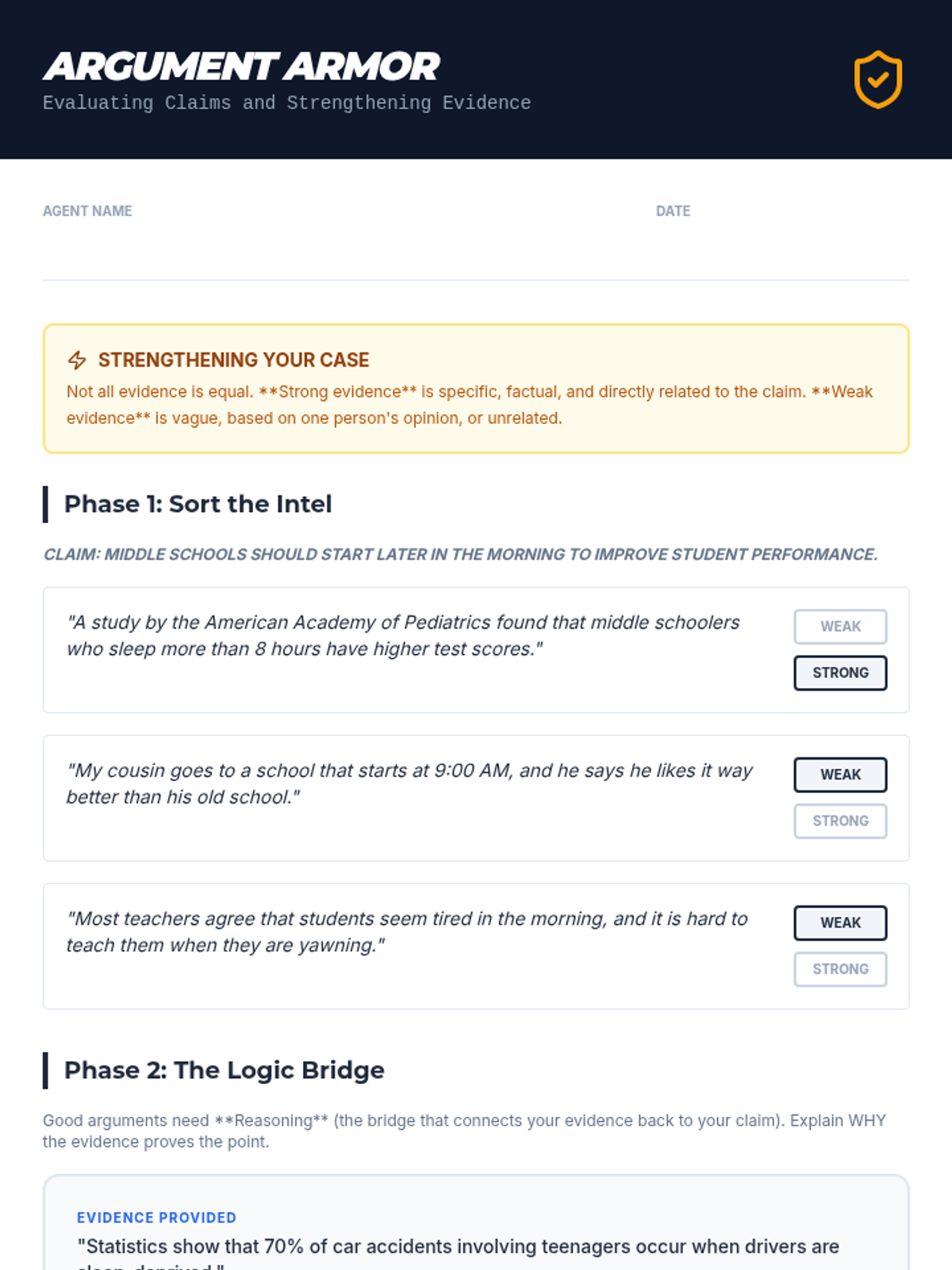
A 6th-grade lesson on distinguishing between anecdotal and solid evidence to build persuasive arguments. Students analyze a video case study, evaluate evidence types, and write a courtroom-style closing argument for a fictional 'crime.'

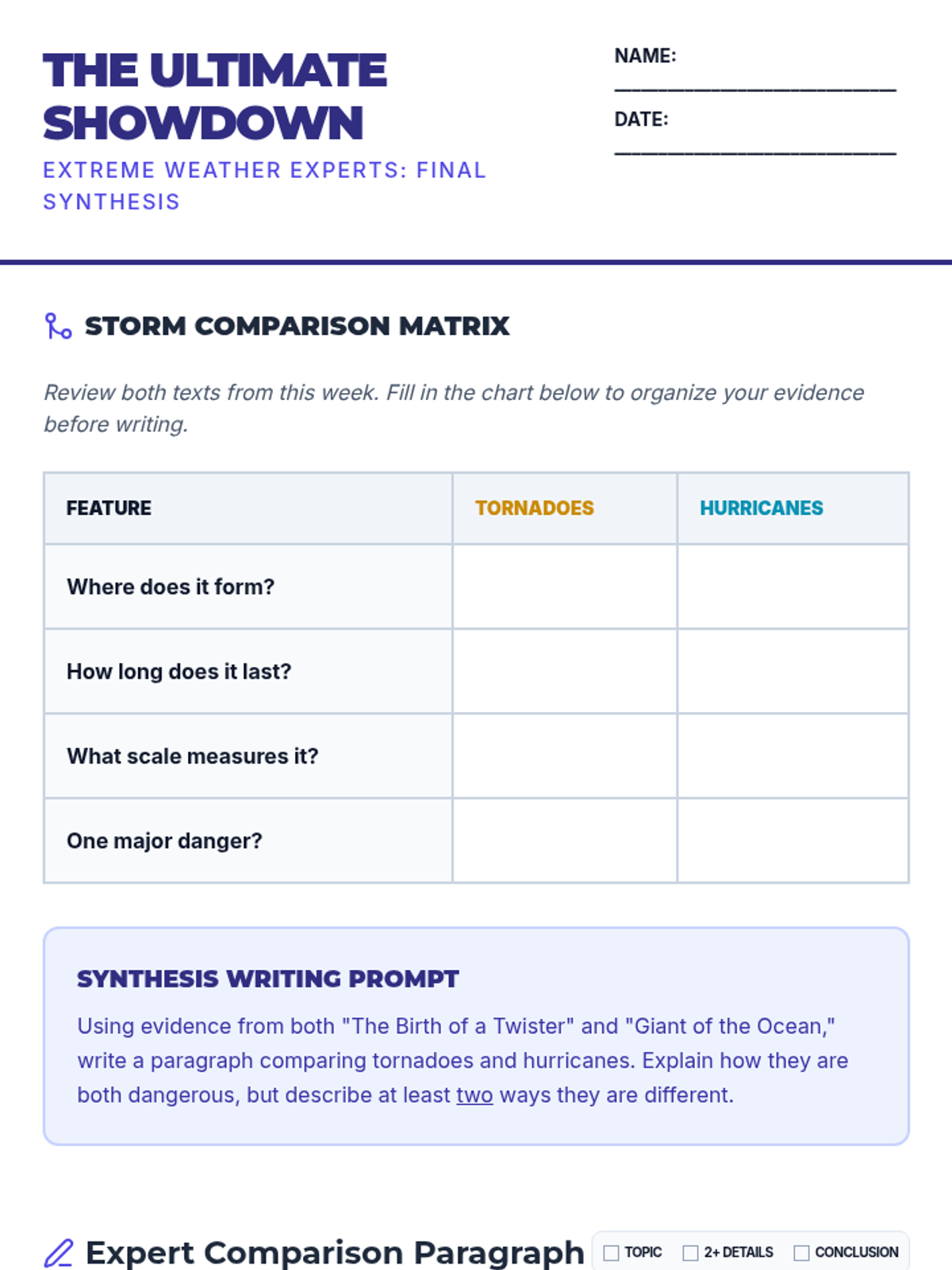
Students synthesize information from multiple texts to create a comprehensive comparison and write a final evidentiary paragraph.
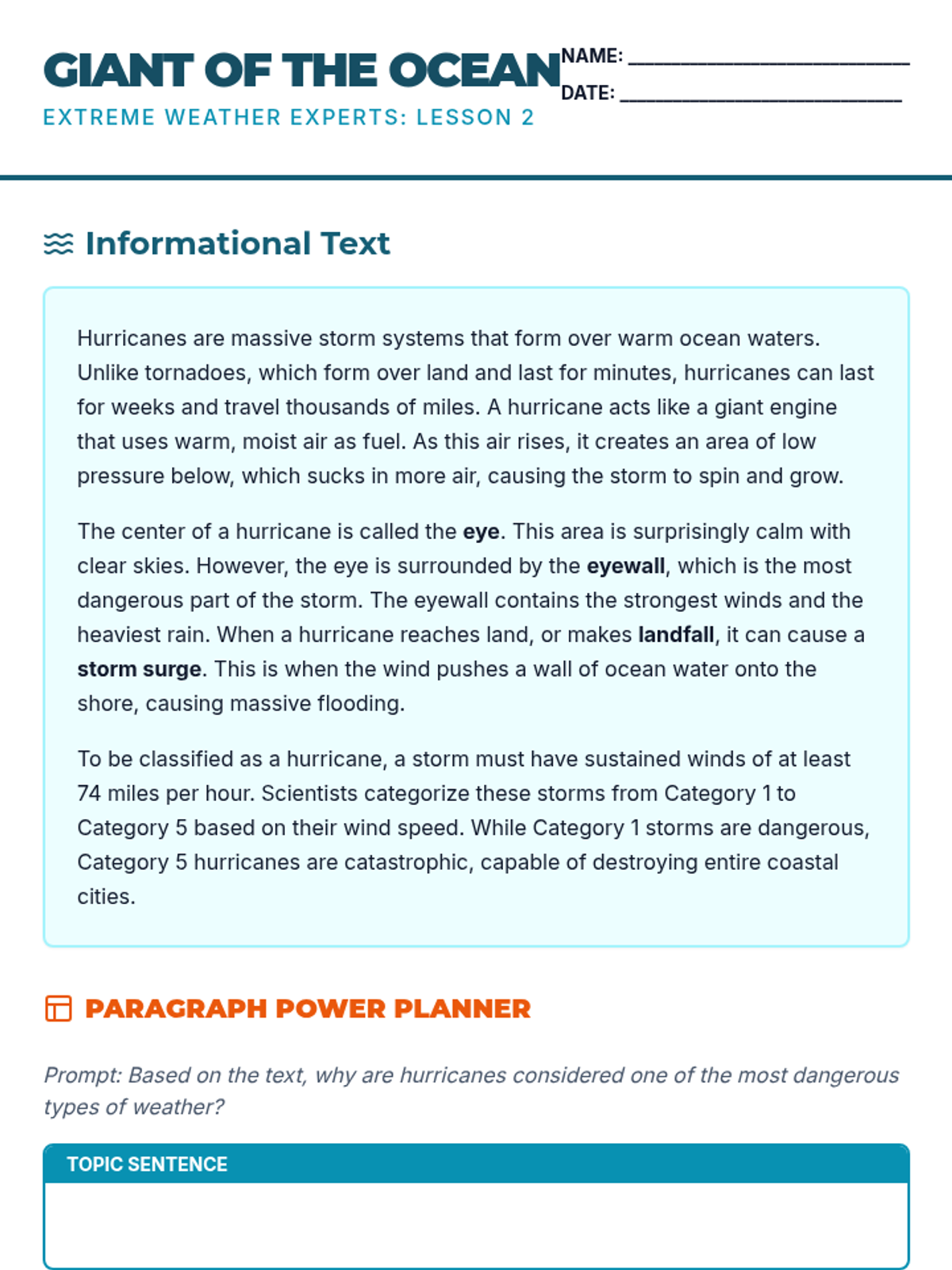
Students learn about hurricanes and practice organizing information into a structured paragraph with a clear topic sentence, supporting details, and a conclusion.
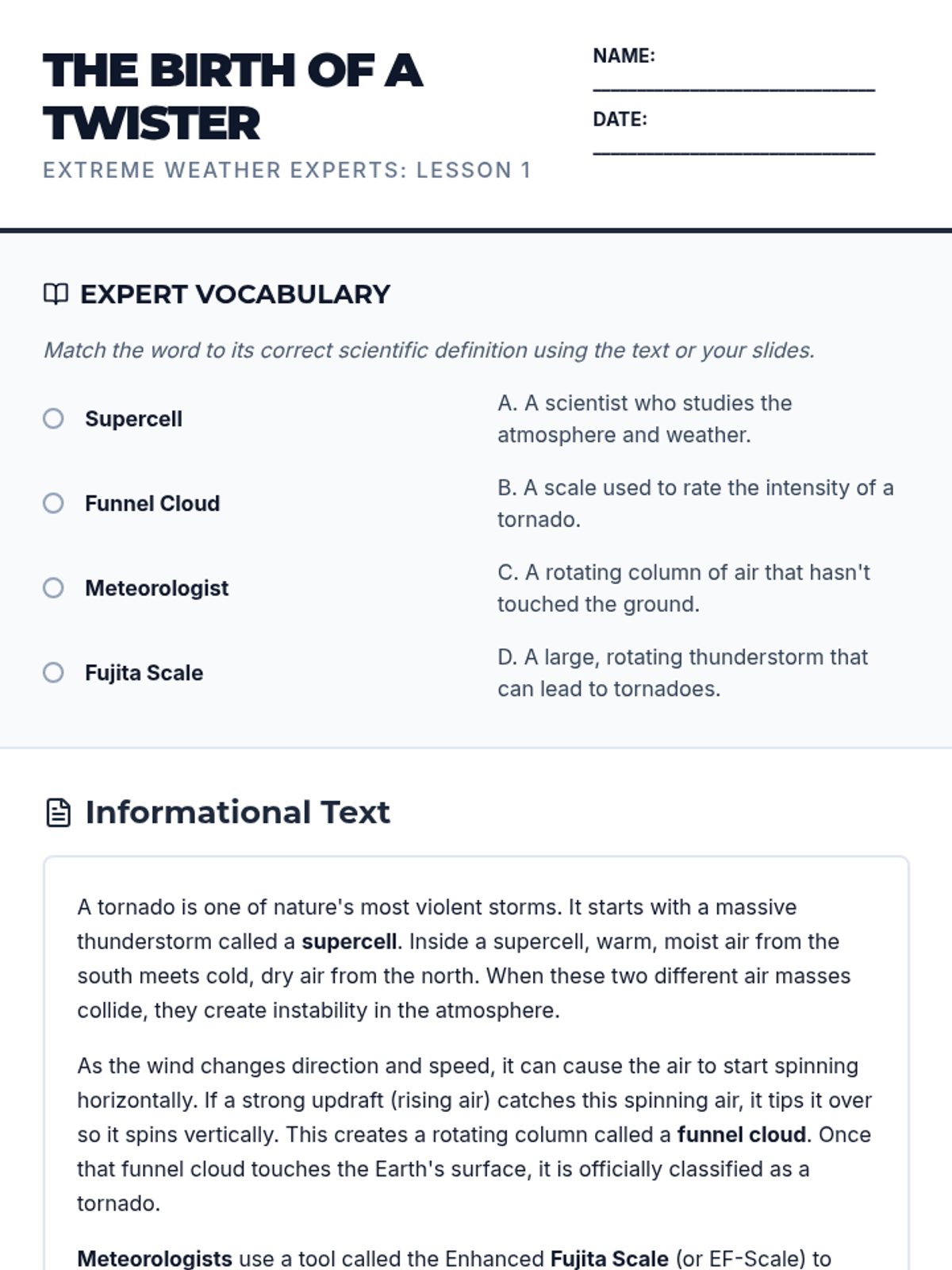
Students explore the science of tornadoes while focusing on identifying key details and mastering domain-specific vocabulary.
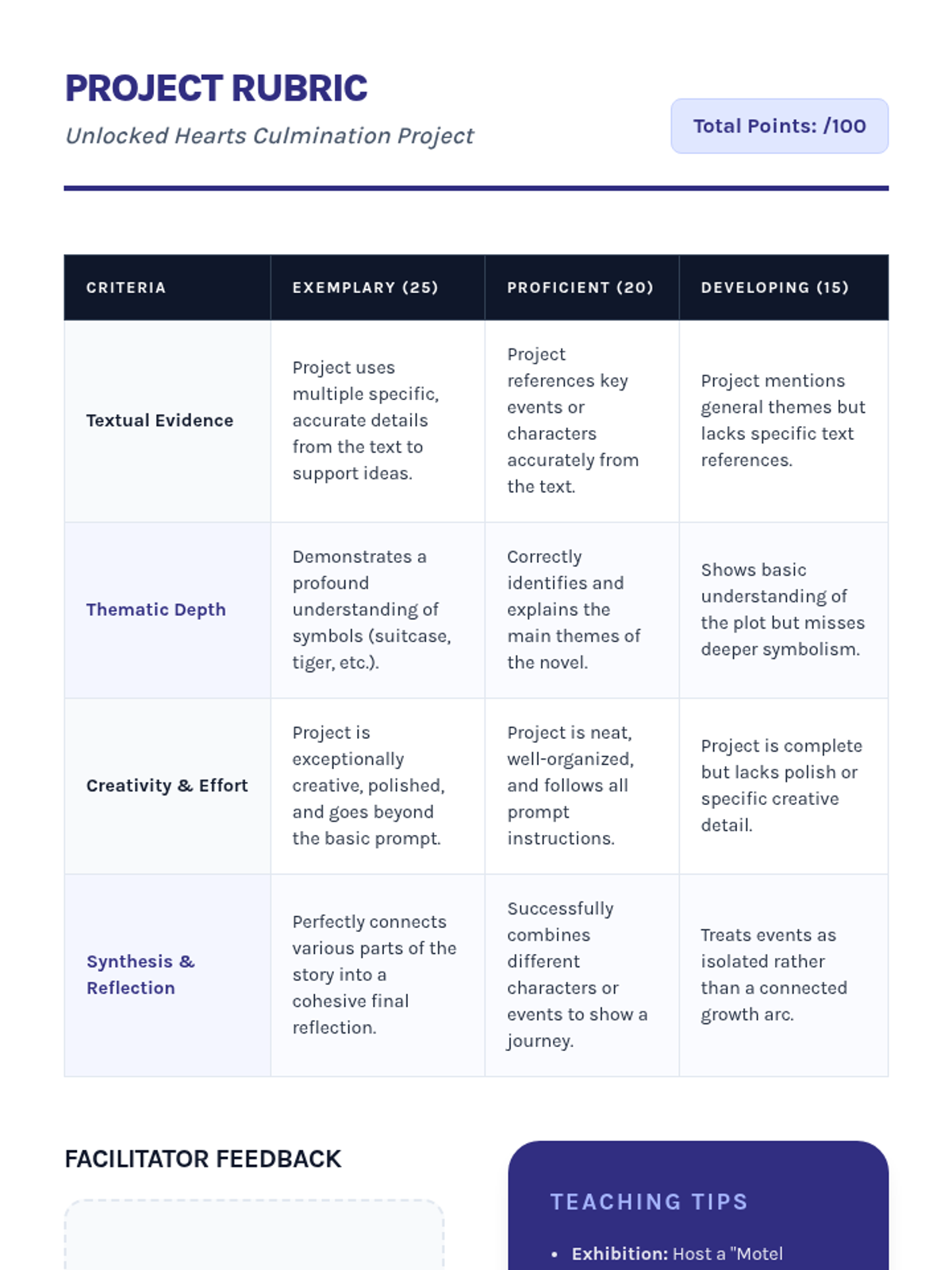
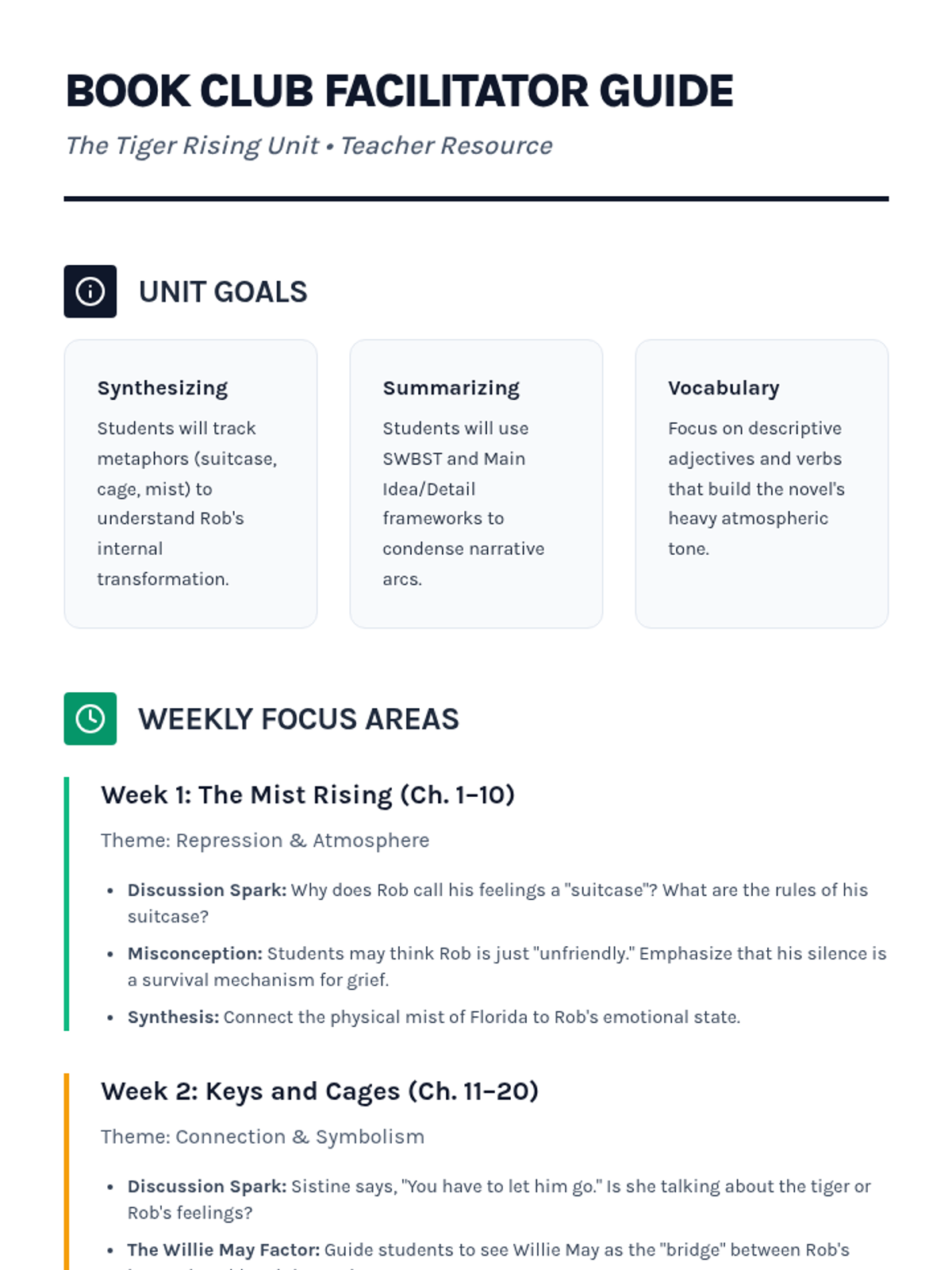
A final culmination of the book club unit, where students synthesize the entire novel through creative projects and thematic reflections.
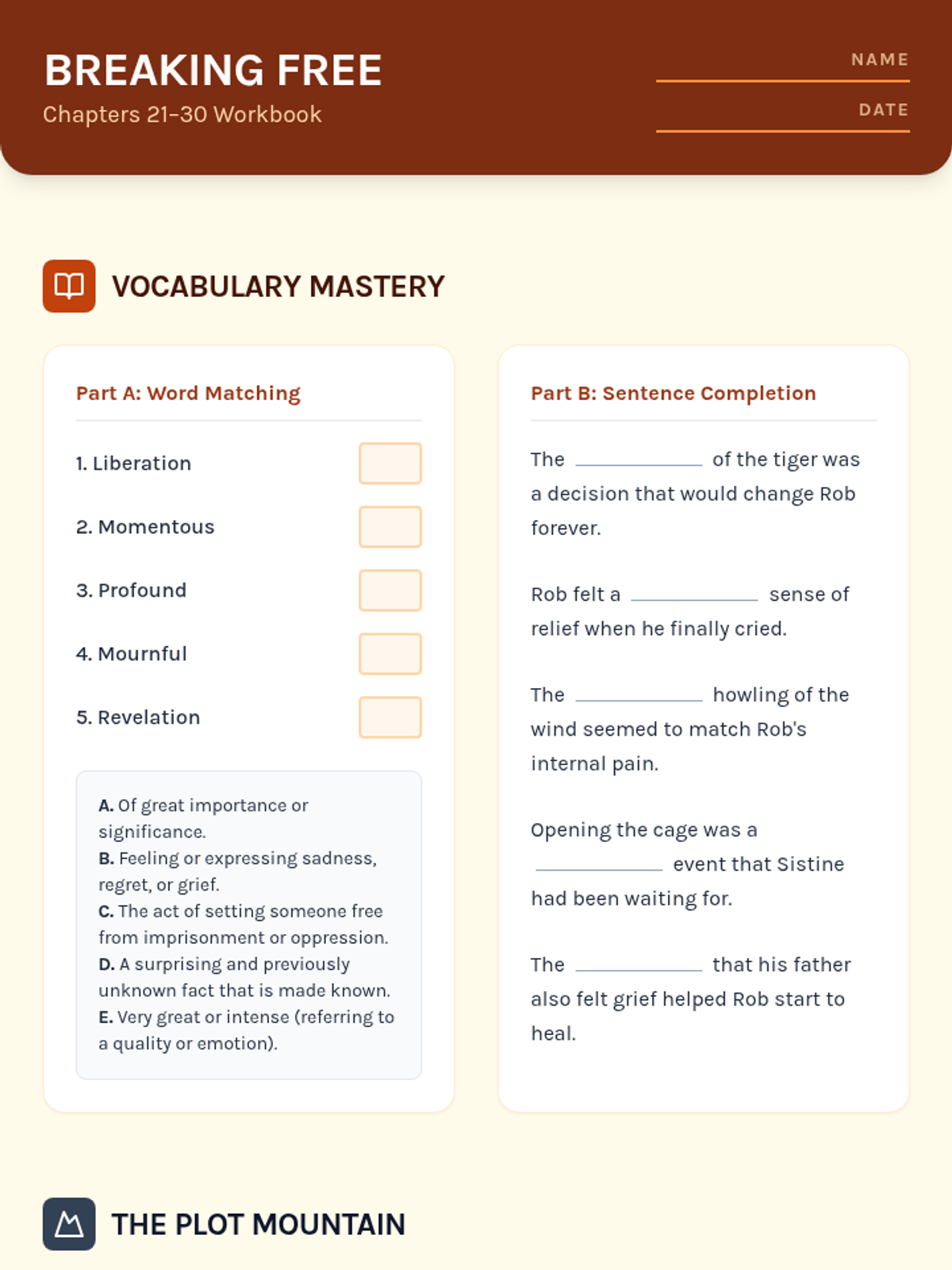
The emotional climax and resolution of the story as the tiger is released and Rob finally opens his suitcase, covering chapters twenty-one through thirty.
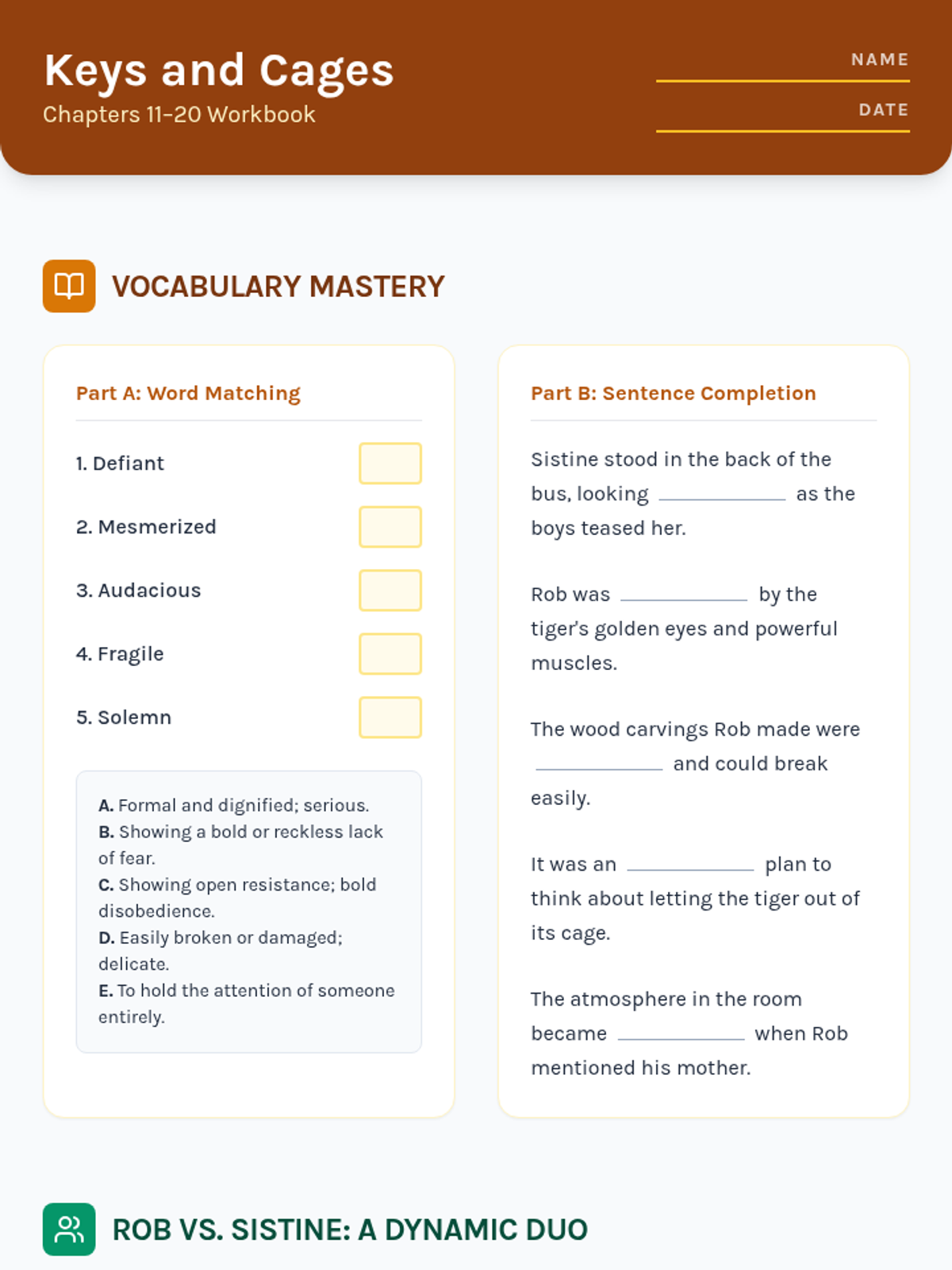
Exploring the developing friendship between Rob and Sistine and the growing pressure of the tiger's presence, covering chapters eleven through twenty.
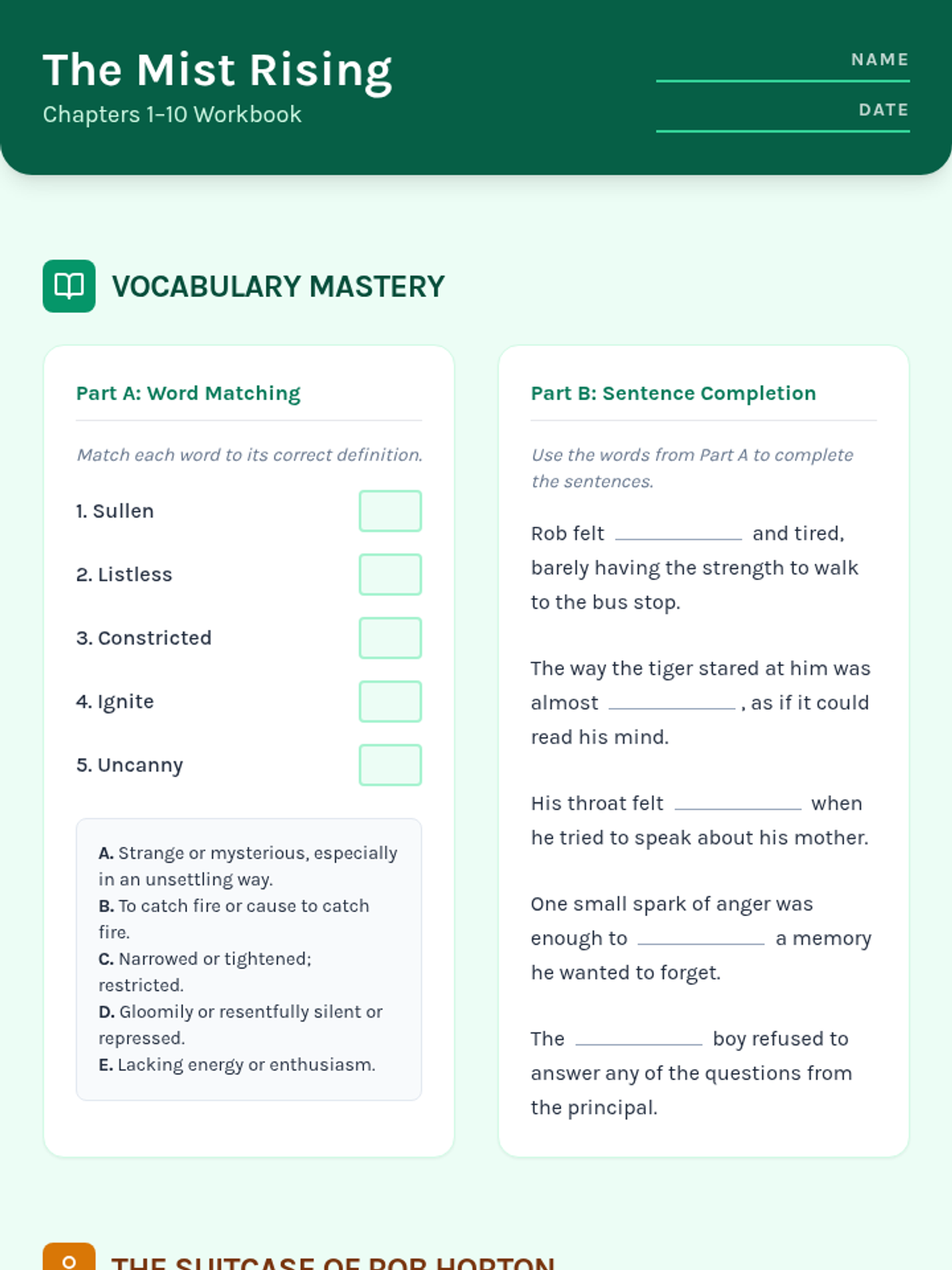
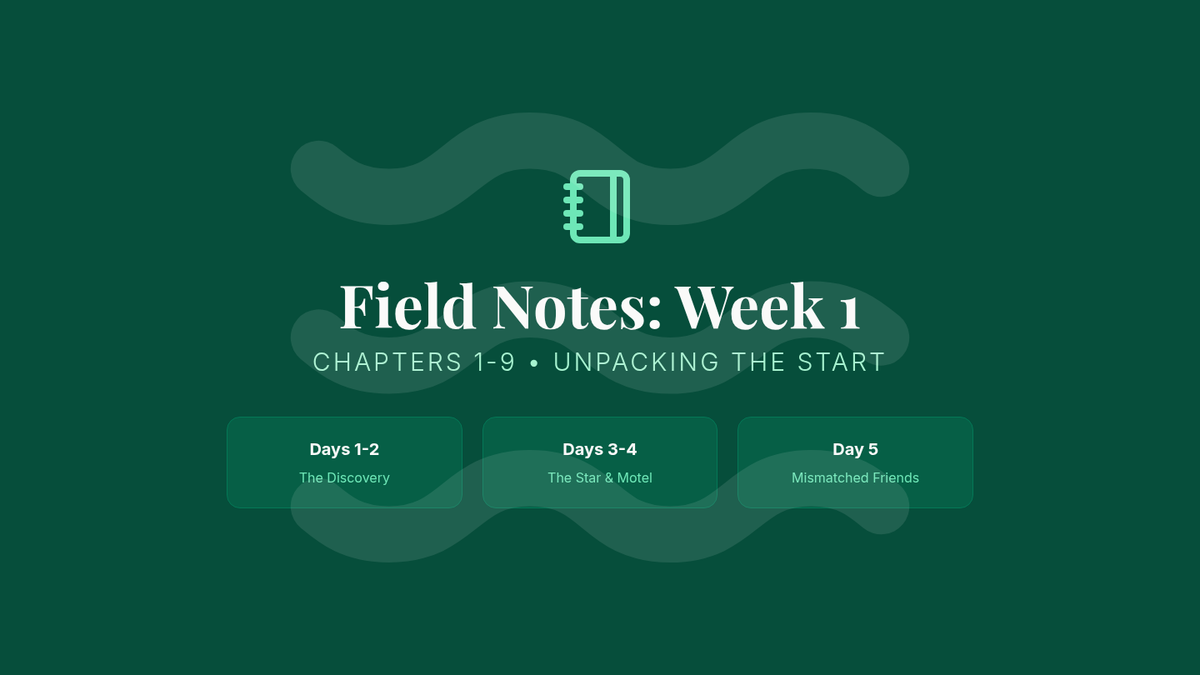
An introduction to the Lister Motel and Rob Horton's 'suitcase', covering the first ten chapters of the novel.
Book club celebration with discussion and a creative 'Carving' activity.
Exploring the symbolism of Sistine's name and her character growth.
Reading Chapter 30, focusing on the resolution and the sun coming out.
Reading Chapters 20-21, analyzing the encounter with the tiger and vocabulary.
Reading Chapters 10-11, focusing on the wood-carving imagery and vocabulary.
Deep dive into summarizing the entire narrative arc using a 'Story Suitcase' organizer.
Final vocabulary review with a comprehensive matching and sentence challenge.
Reading Chapters 2-3, focusing on Rob's character and the introduction of Sistine.
Introduction to the book club, building background knowledge about the setting and the tiger, and reading Chapter 1.
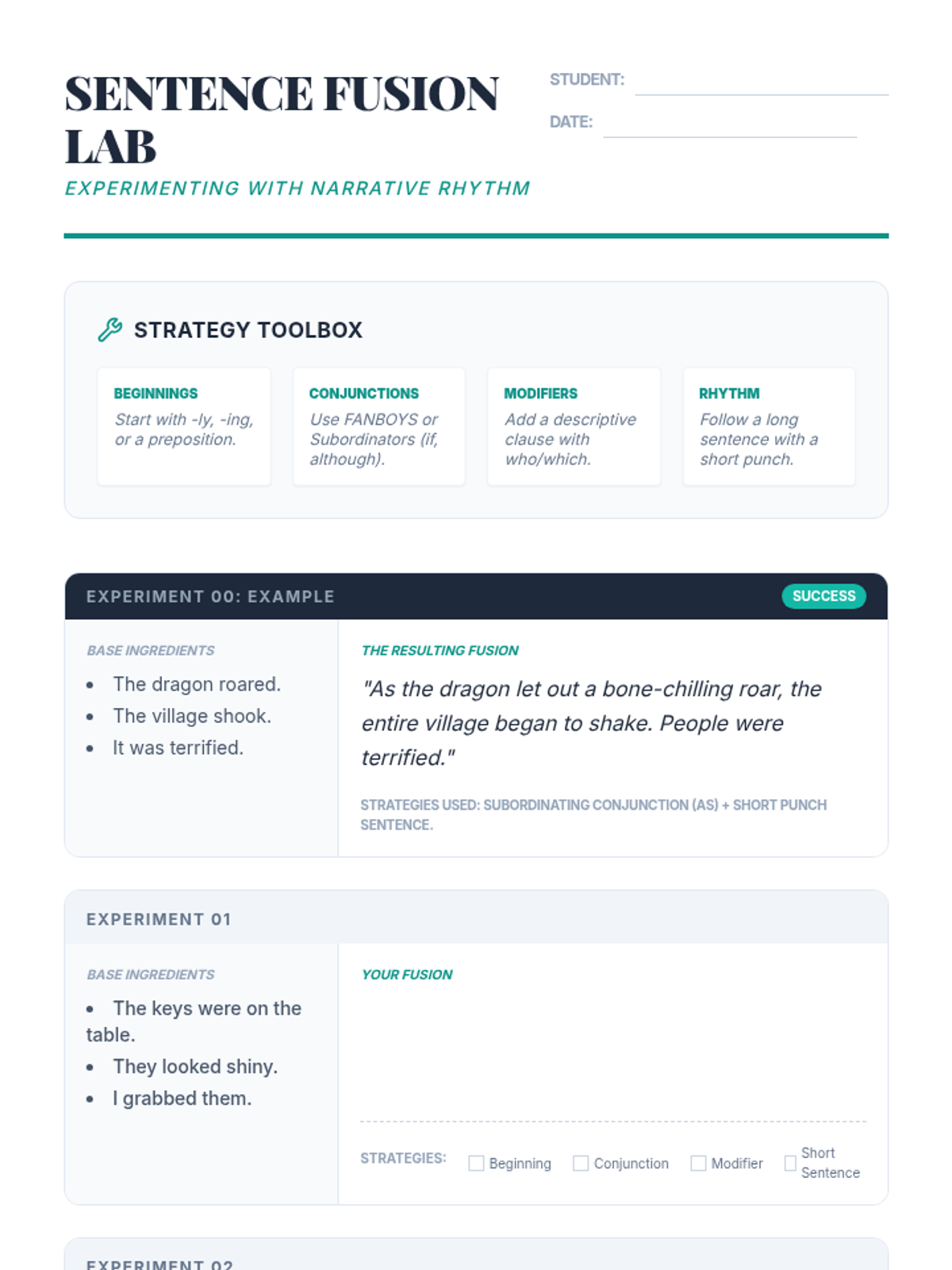
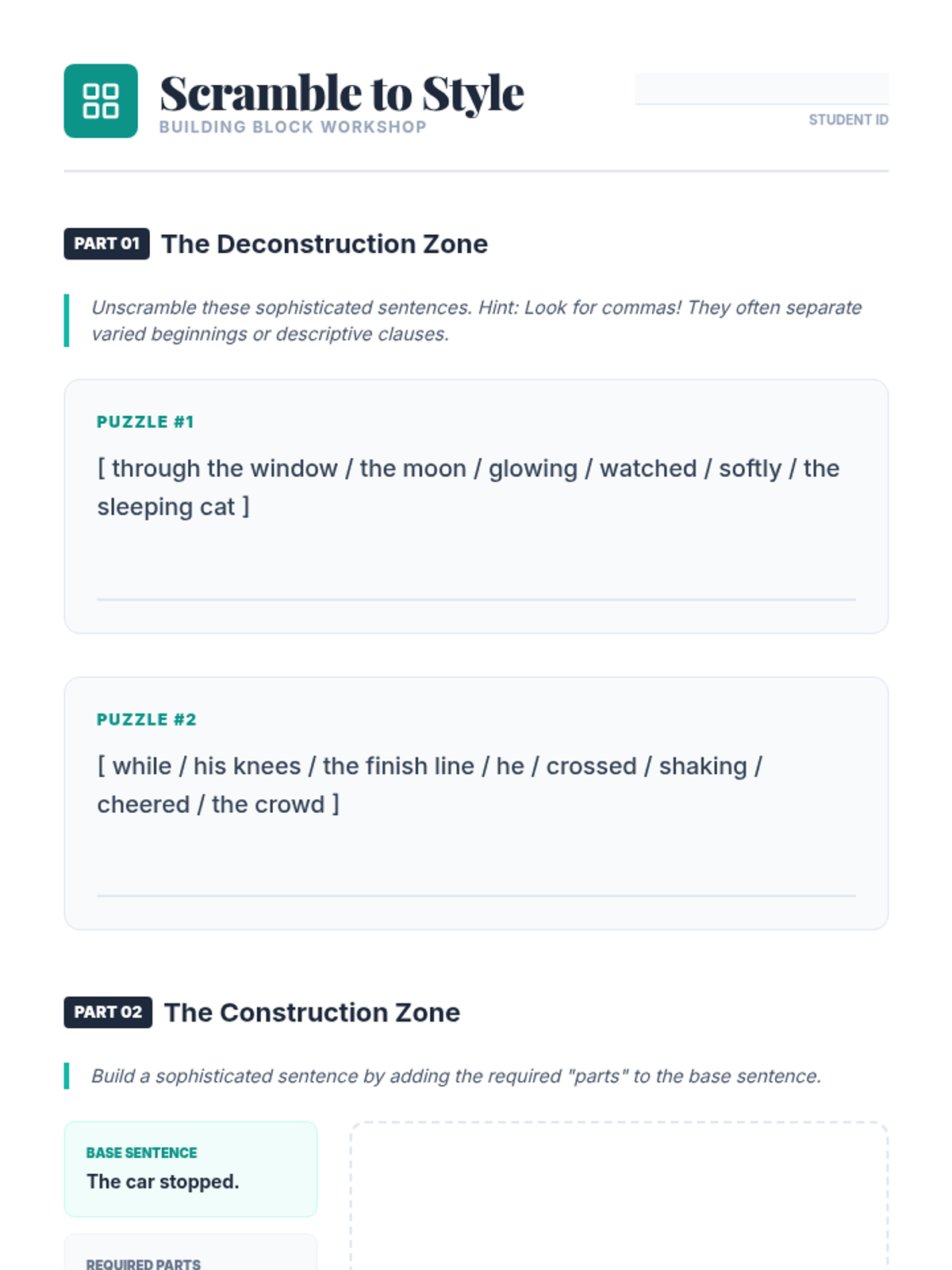
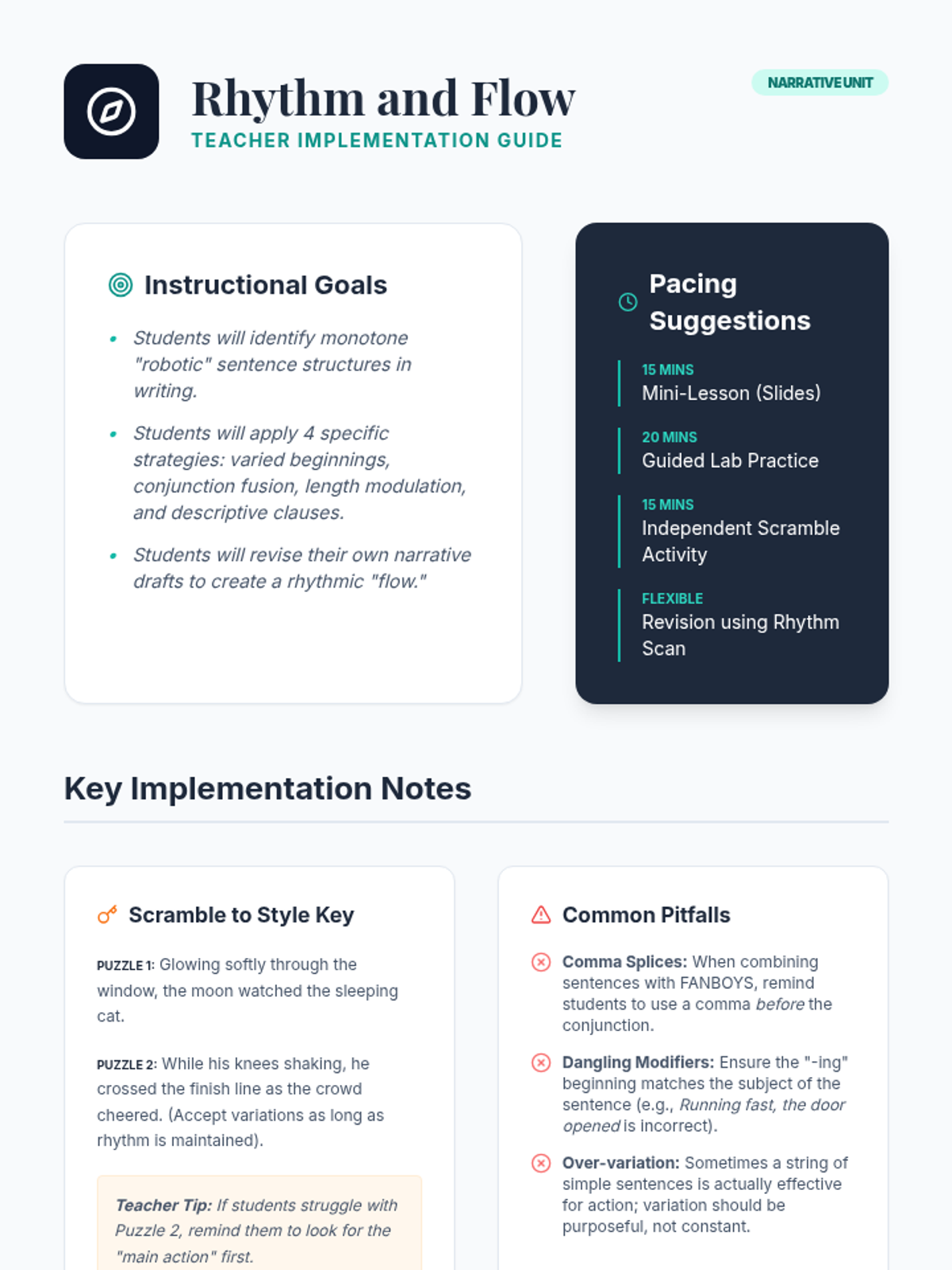
A comprehensive lesson on narrative sentence variation focusing on varied beginnings, sentence combining, length modulation, and descriptive clauses. Students move from identifying monotone rhythms to crafting dynamic, flowing prose.
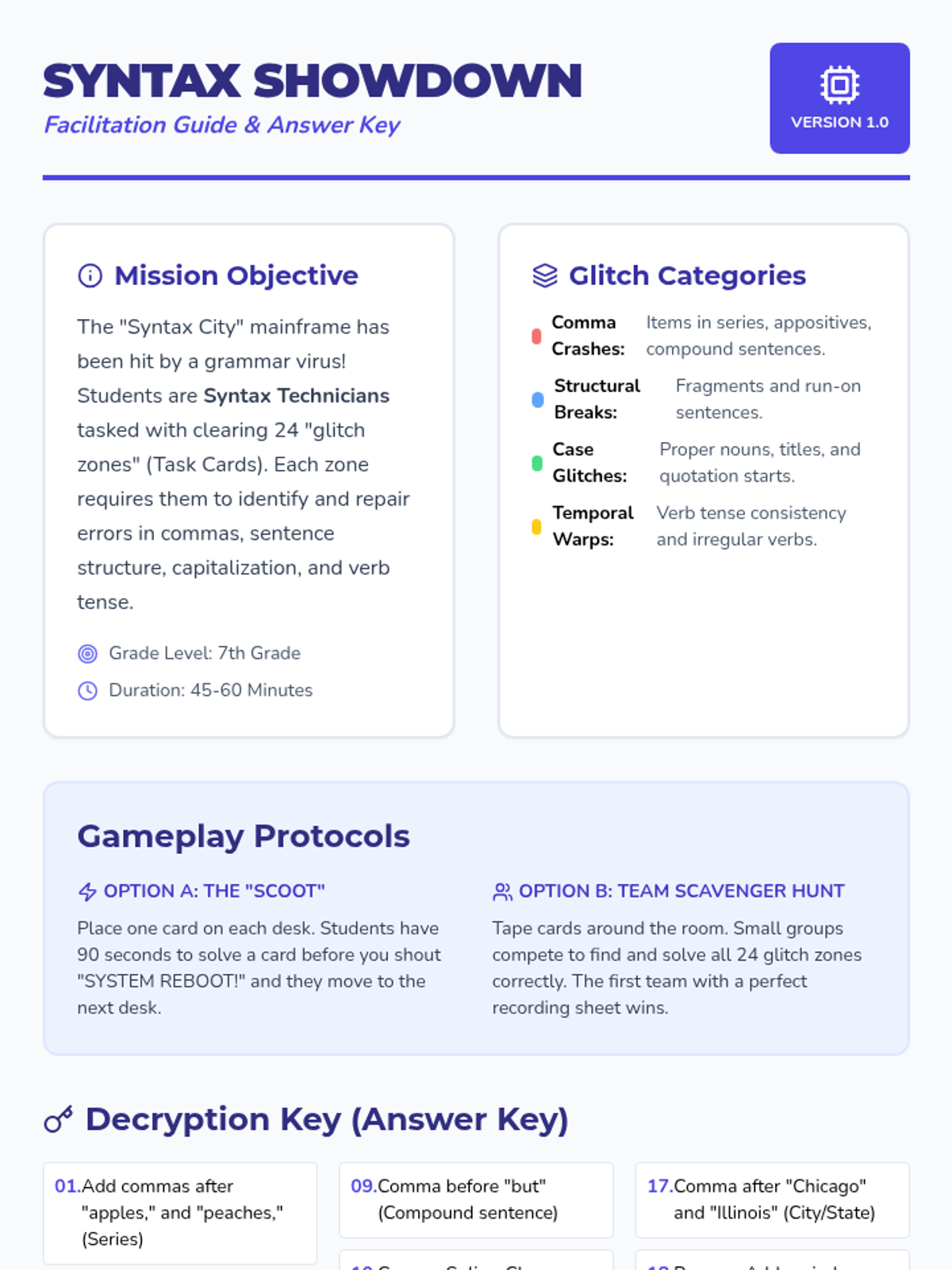
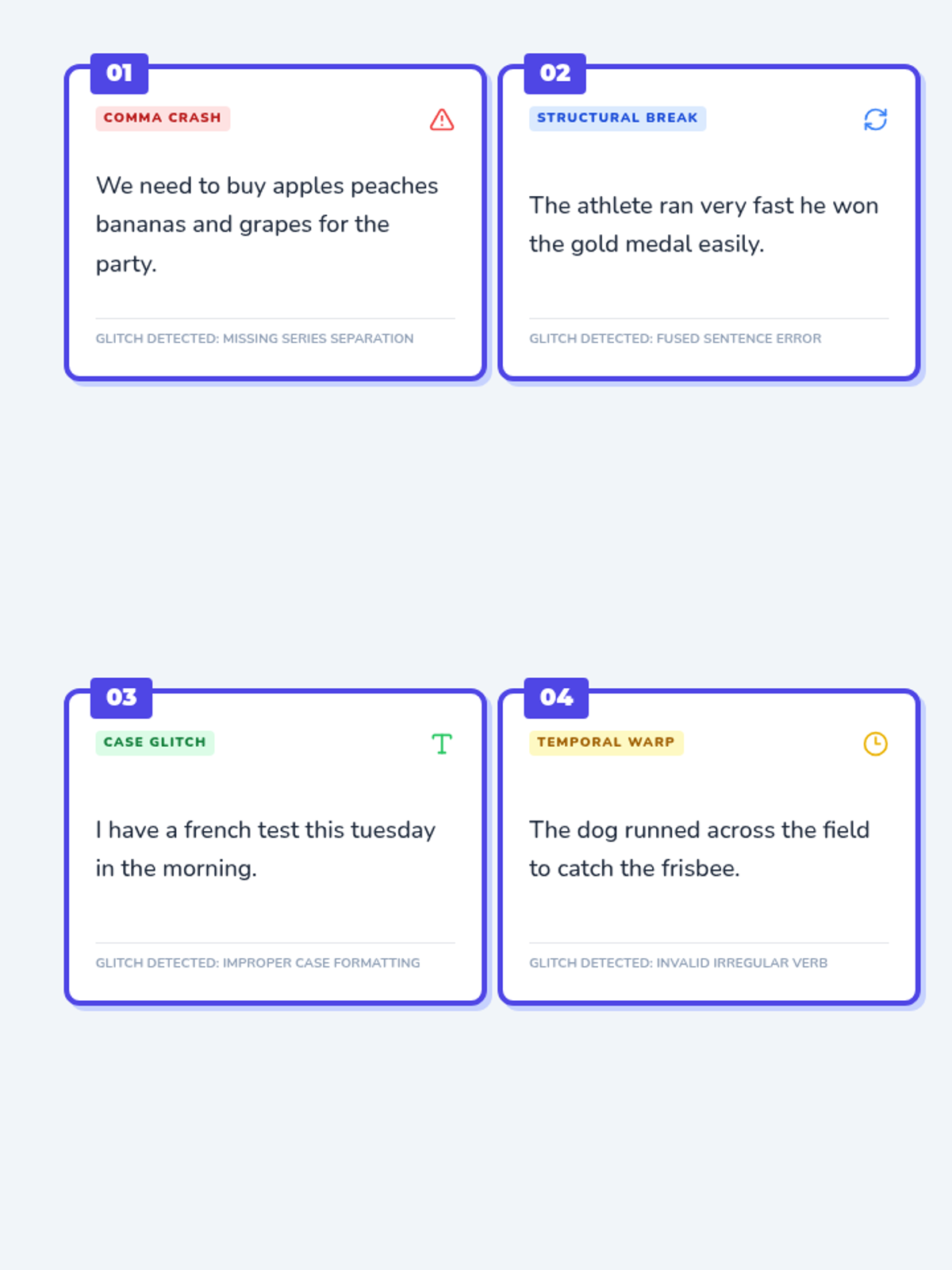
A high-energy grammar review game where students act as 'Syntax Technicians' to fix glitches in a virtual world. This lesson focuses on mastering commas, sentence errors, capitalization, and verb tense through collaborative task card challenges.
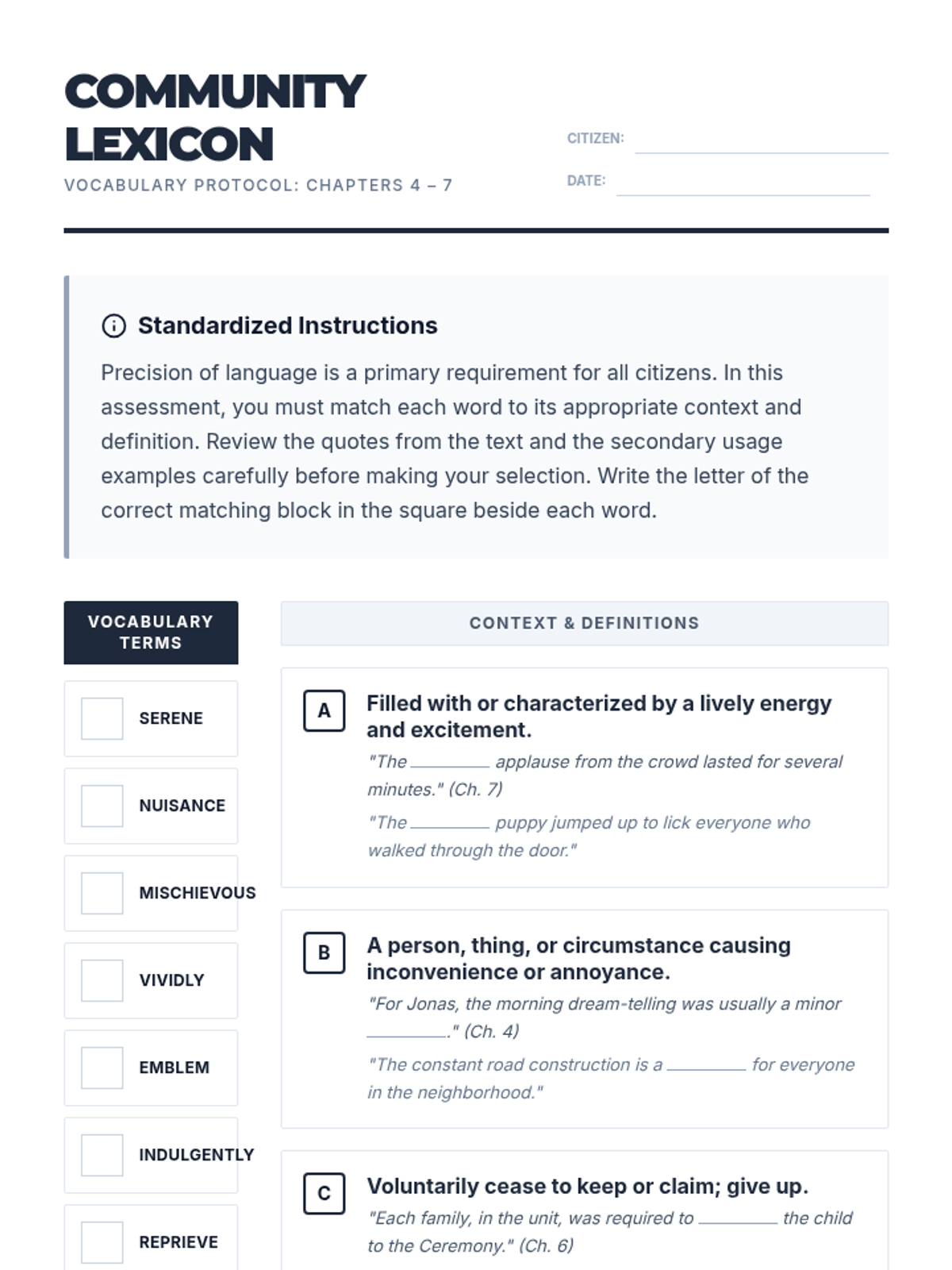
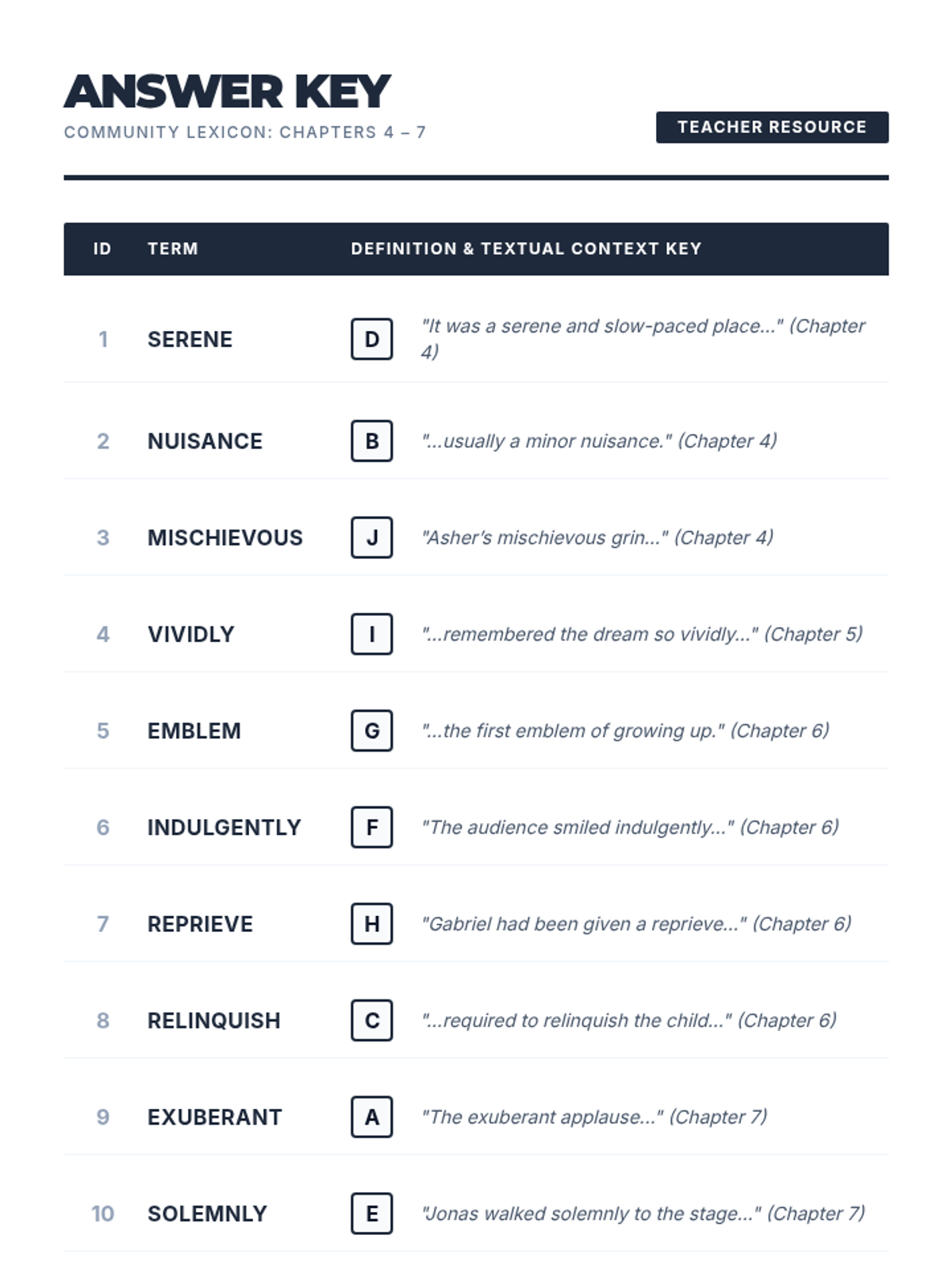
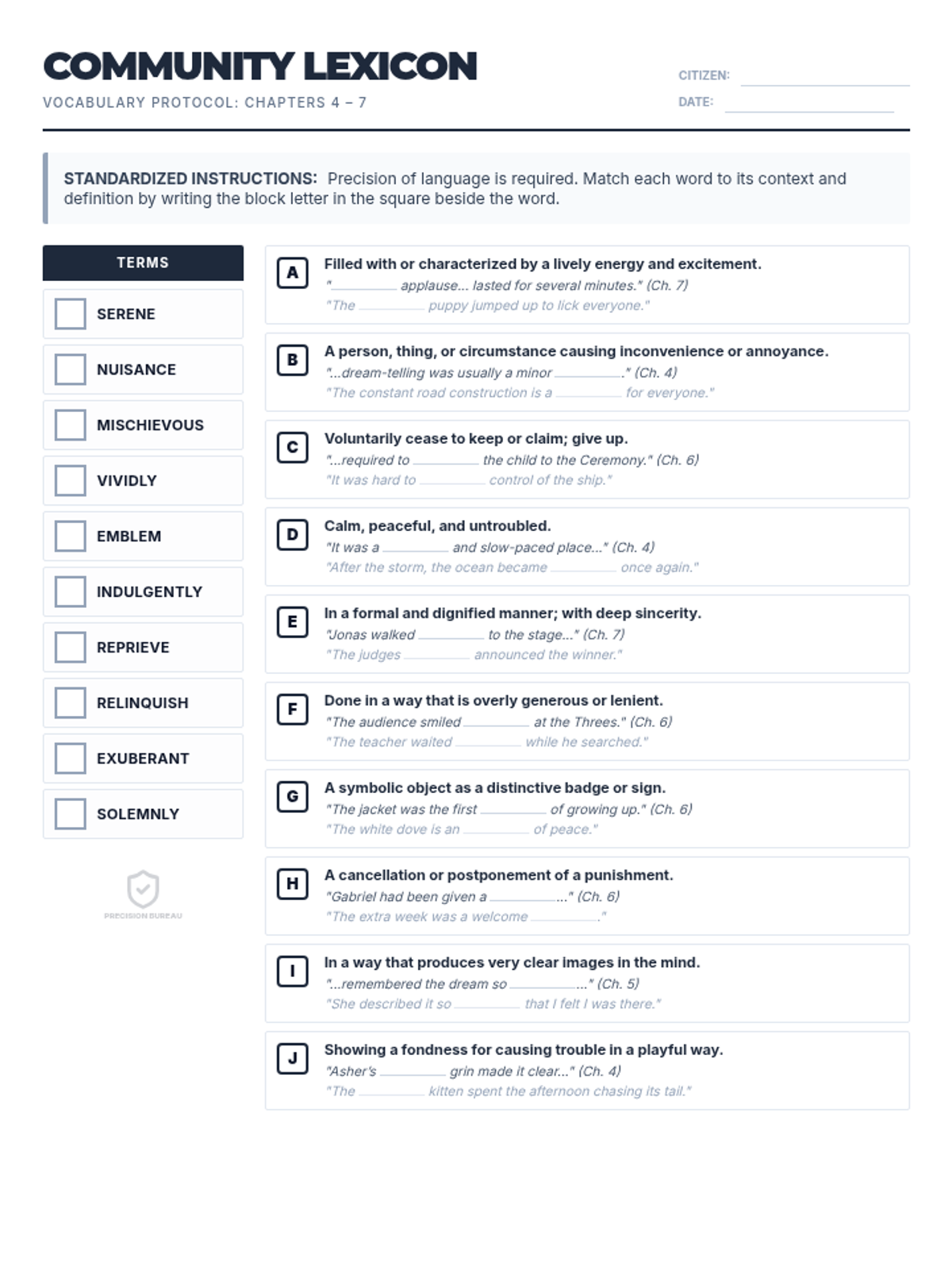
A vocabulary focused lesson on Chapters 4-7 of Lois Lowry's The Giver, exploring key terms through textual context and modern application.
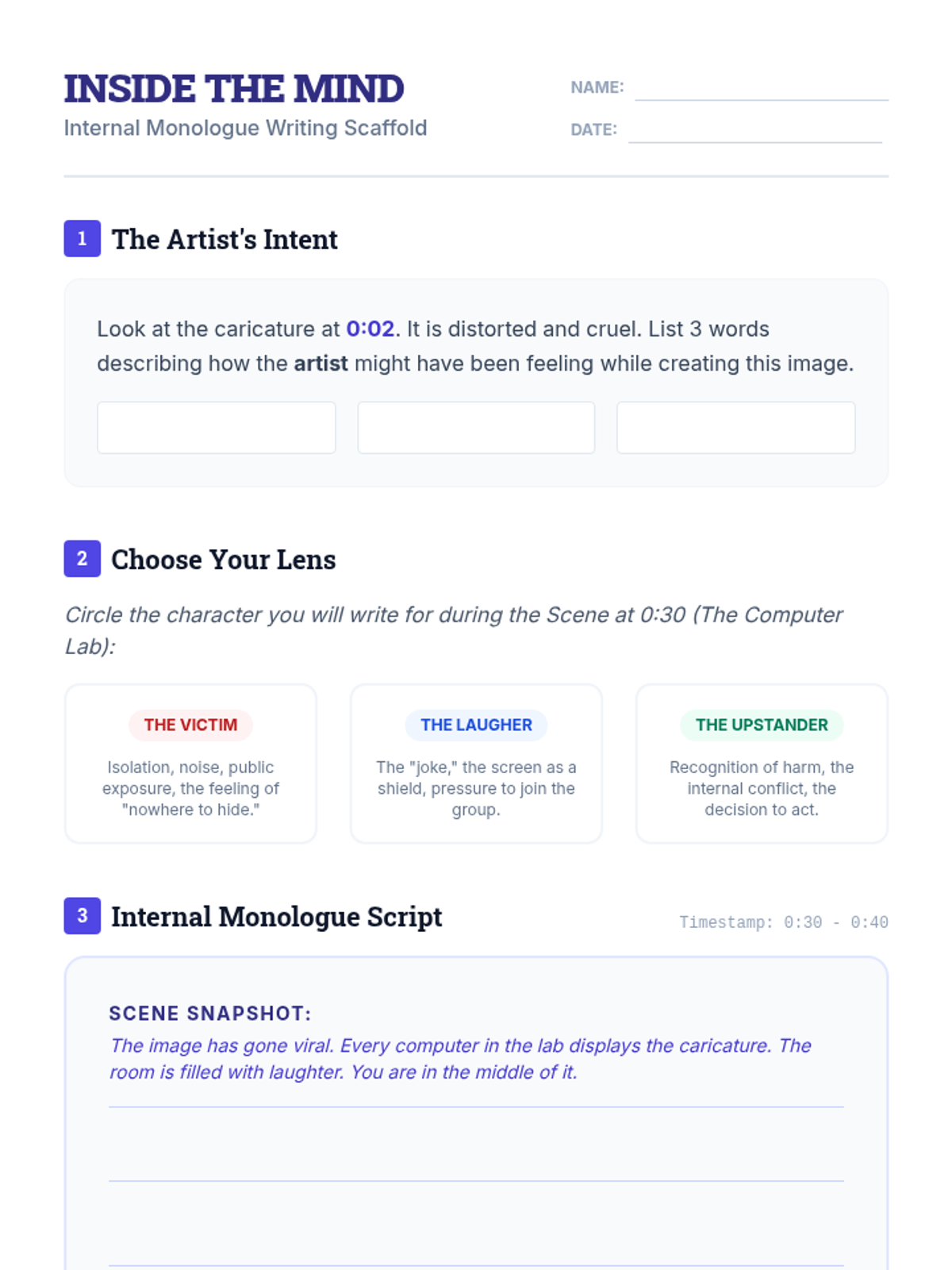
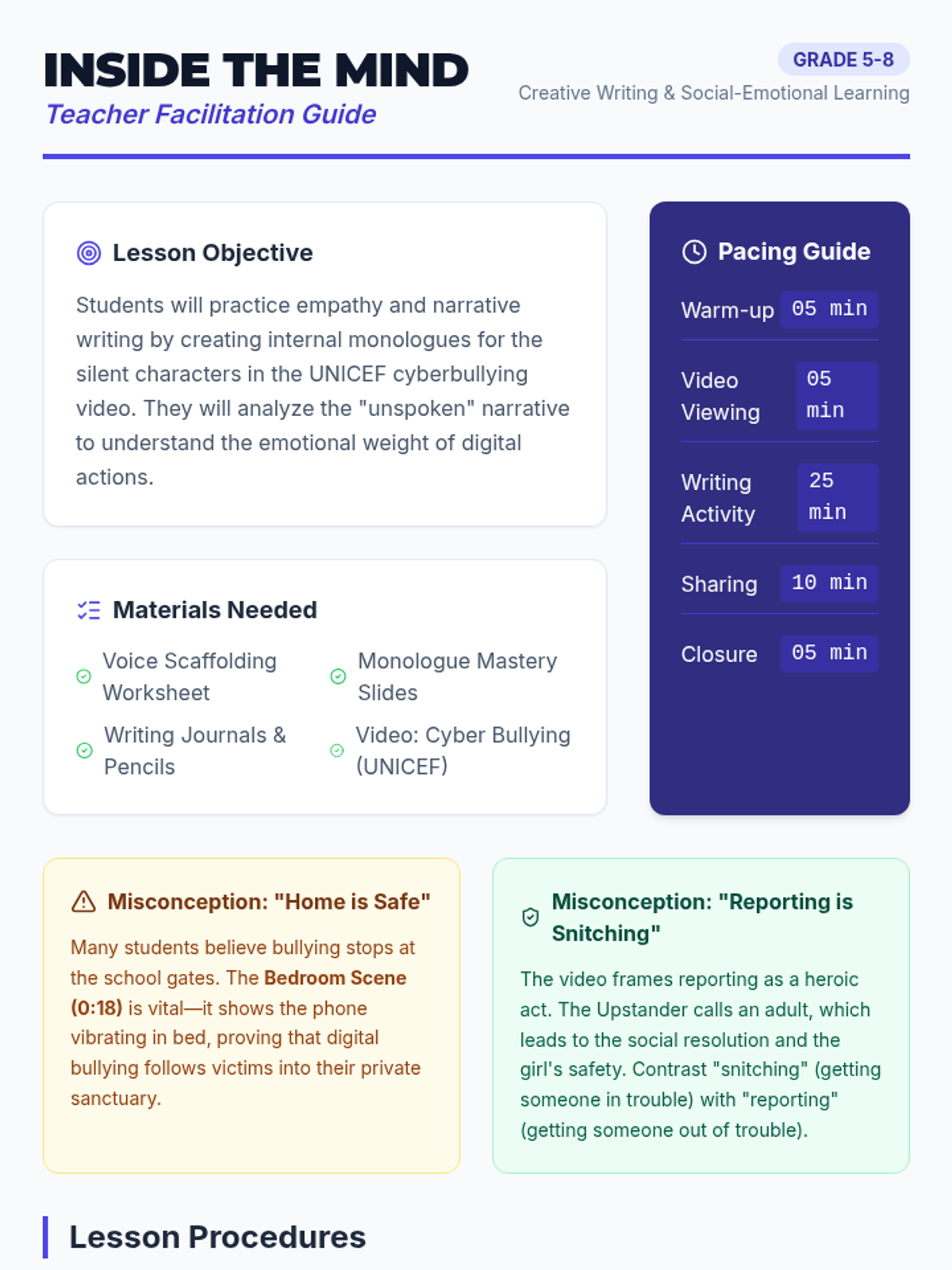
A creative writing lesson for middle school students exploring empathy and perspective-taking through the medium of internal monologues. Using a poignant animated video about cyberbullying, students analyze character motivations and the impact of digital actions.
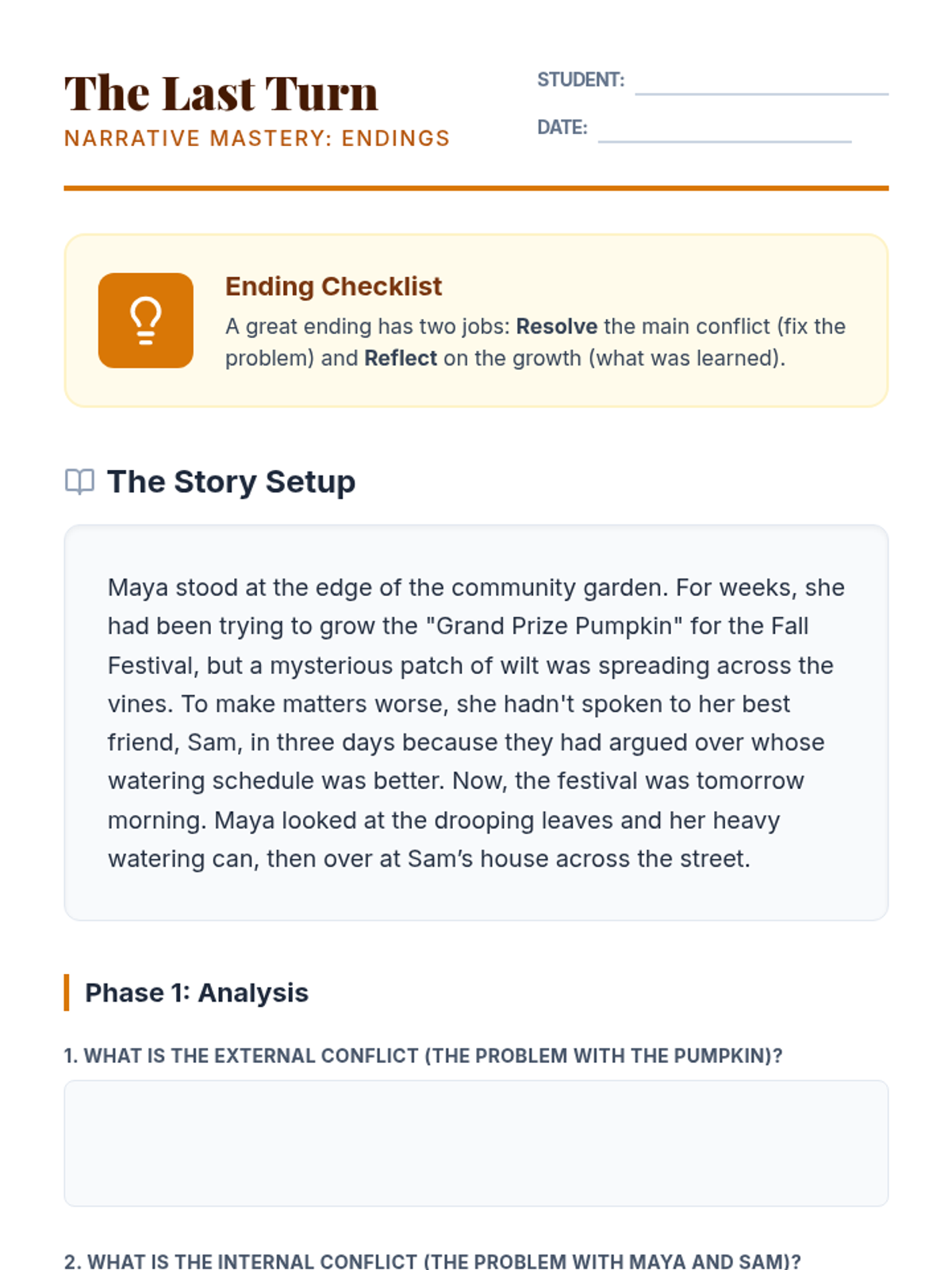
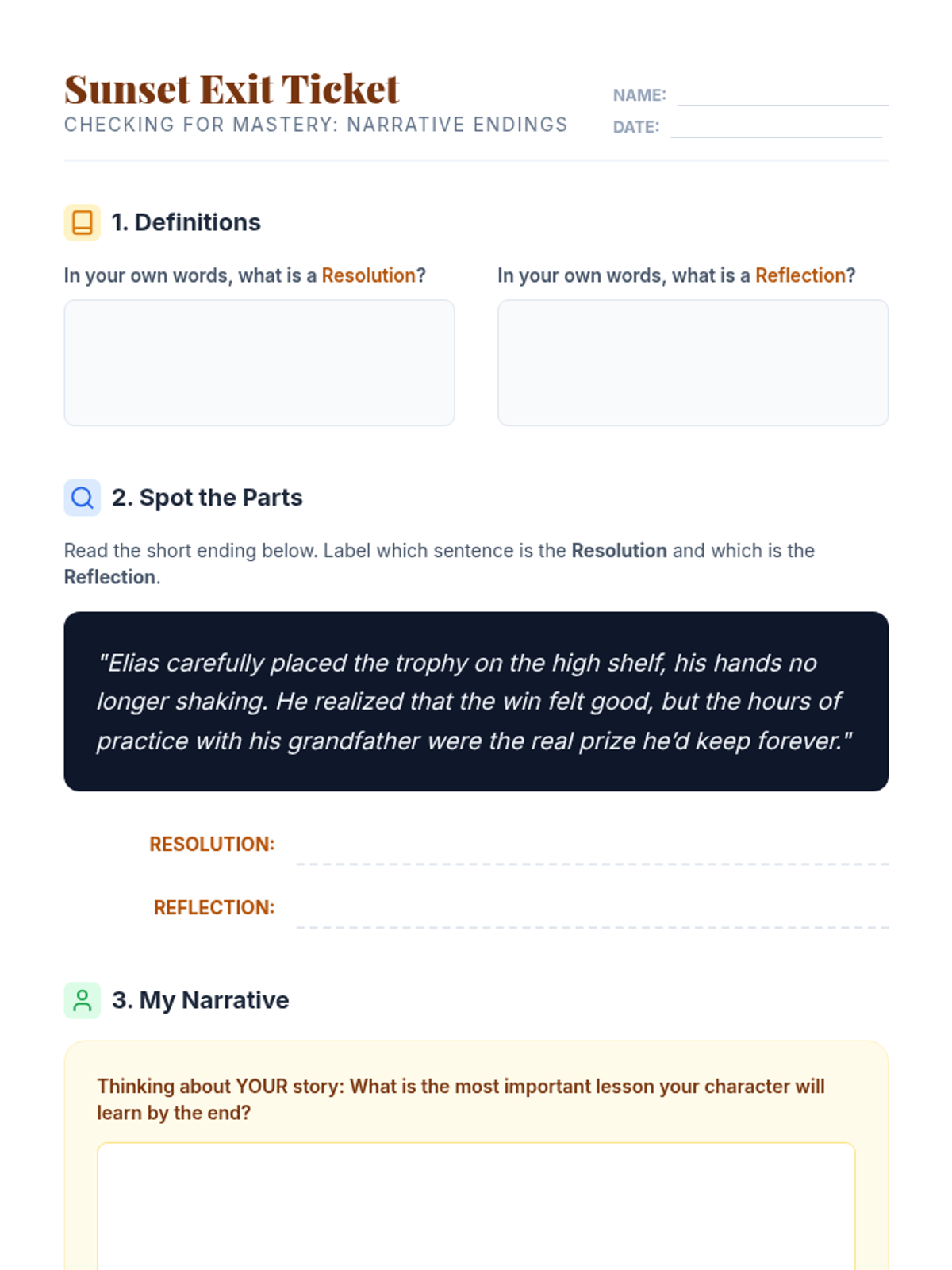
A mini-lesson focused on the art of crafting narrative endings that effectively resolve conflict and showcase character growth and reflection. Students learn to move beyond simply 'stopping' a story to 'finishing' it with a meaningful theme or lesson learned.
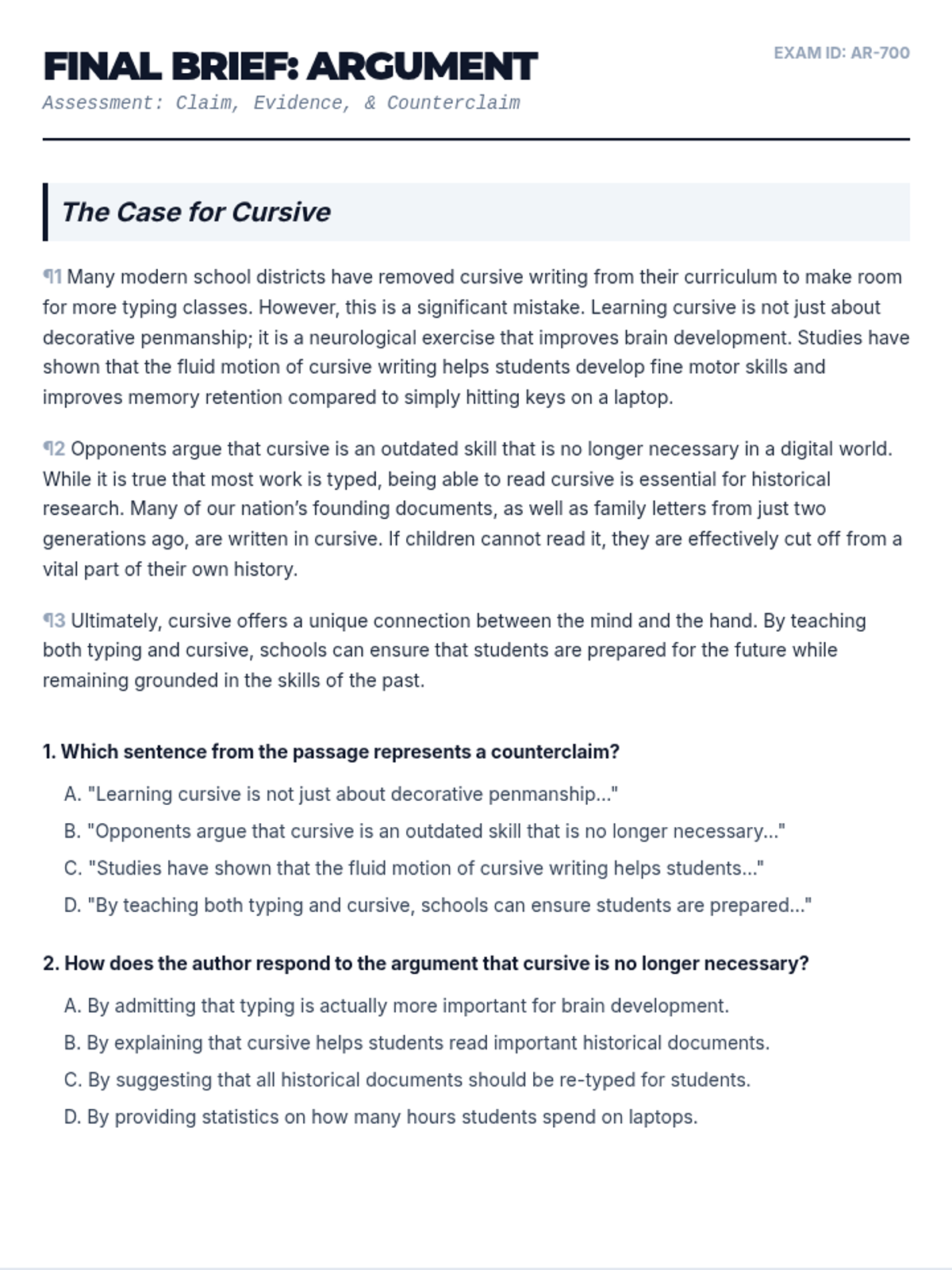
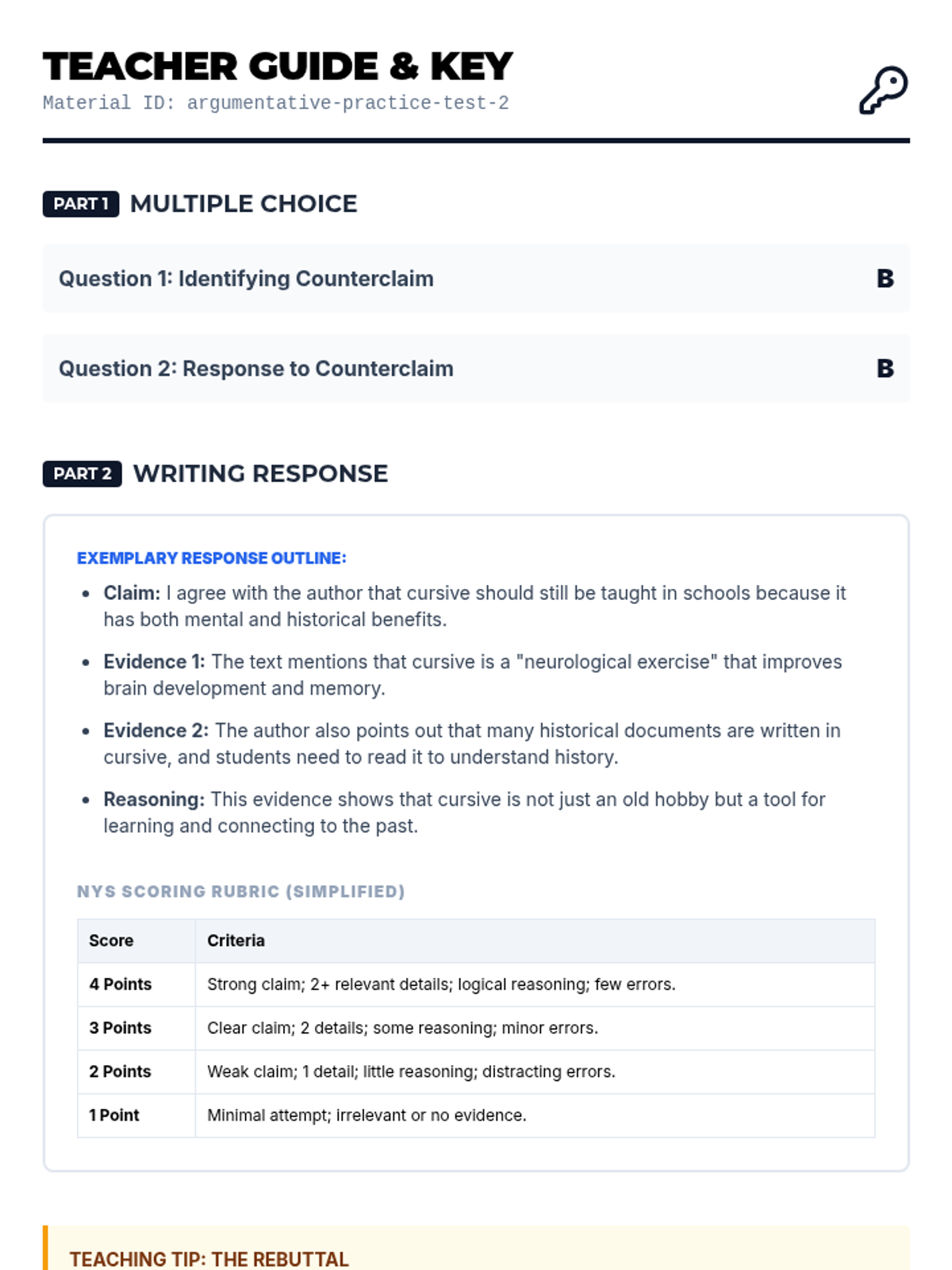
Teaches students to evaluate claims, analyze evidence, and craft strong argumentative responses for the NYS ELA exam.