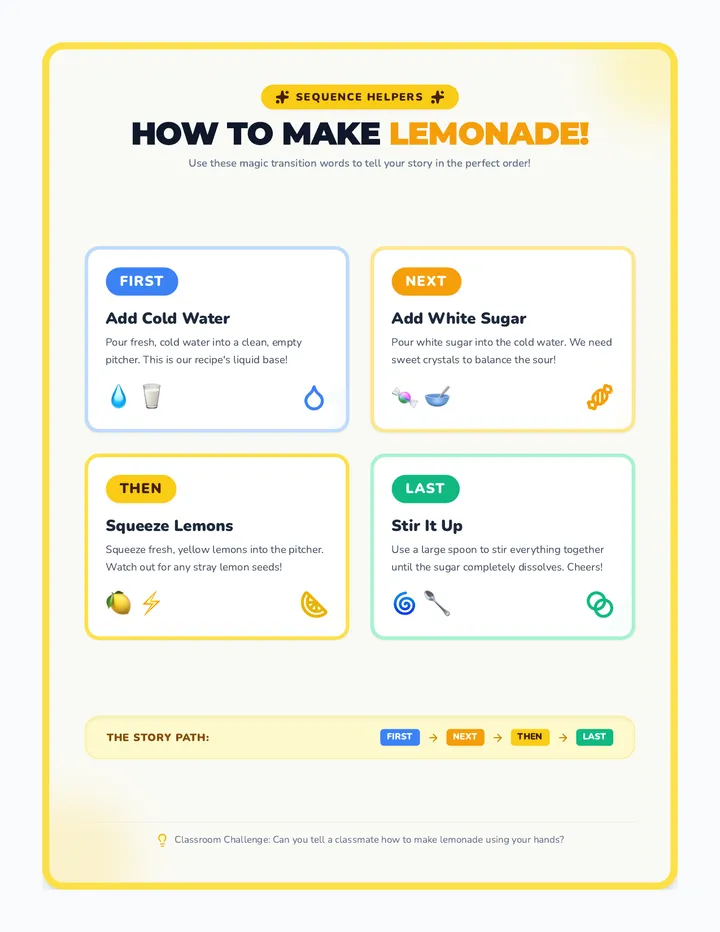
Students learn to identify procedural writing and use transition words (first, next, then, finally) to order steps.
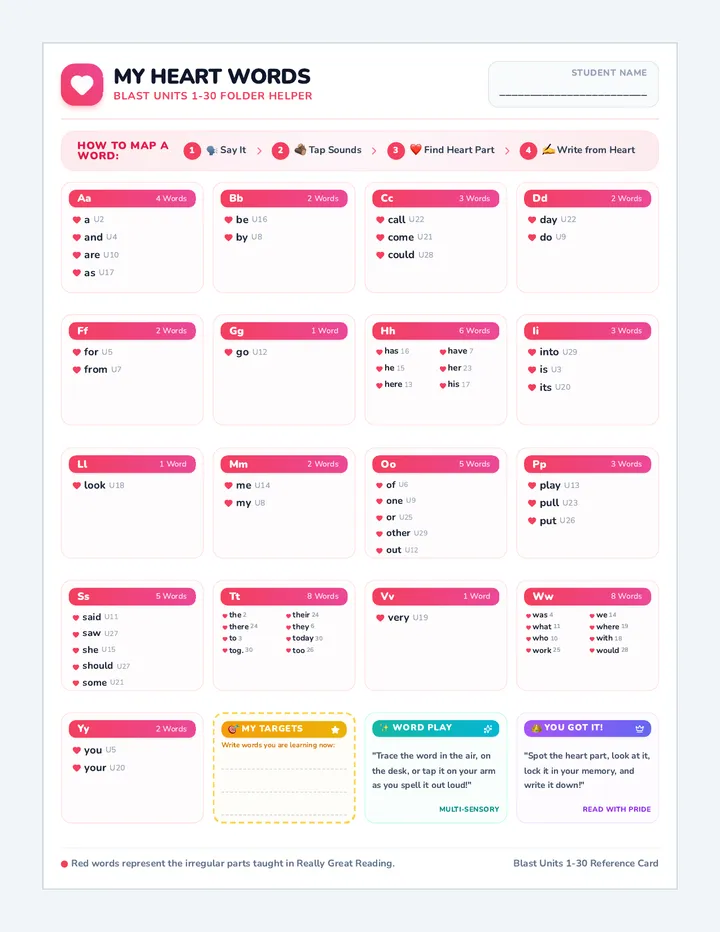
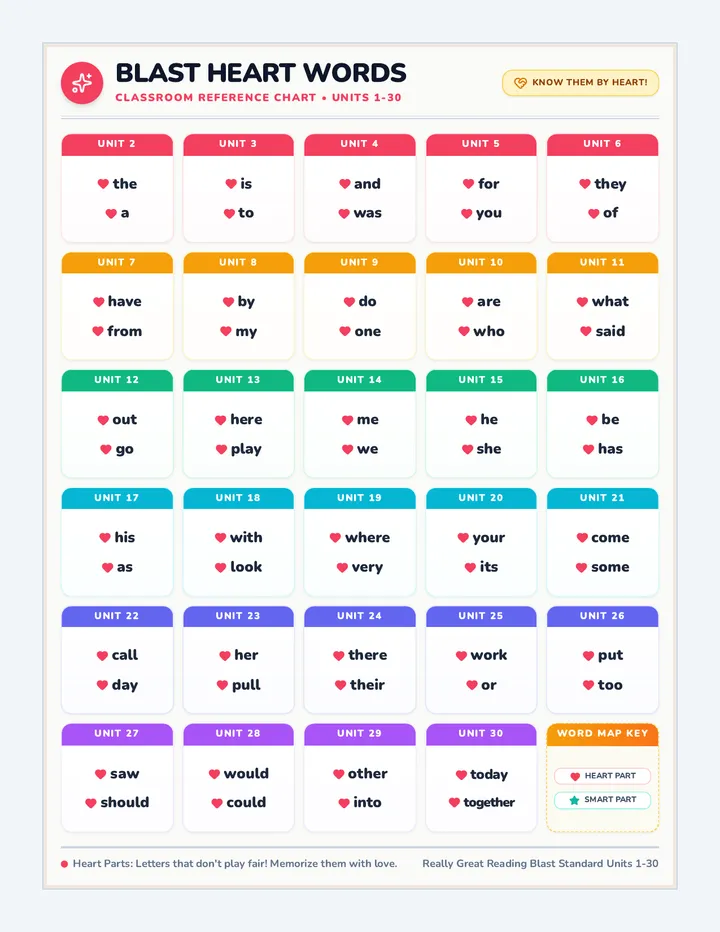
A comprehensive pair of reference materials featuring all Really Great Reading Blast Heart Words for Units 1-30. Includes a compact student folder reference helper and a colorful classroom anchor chart organized by unit.
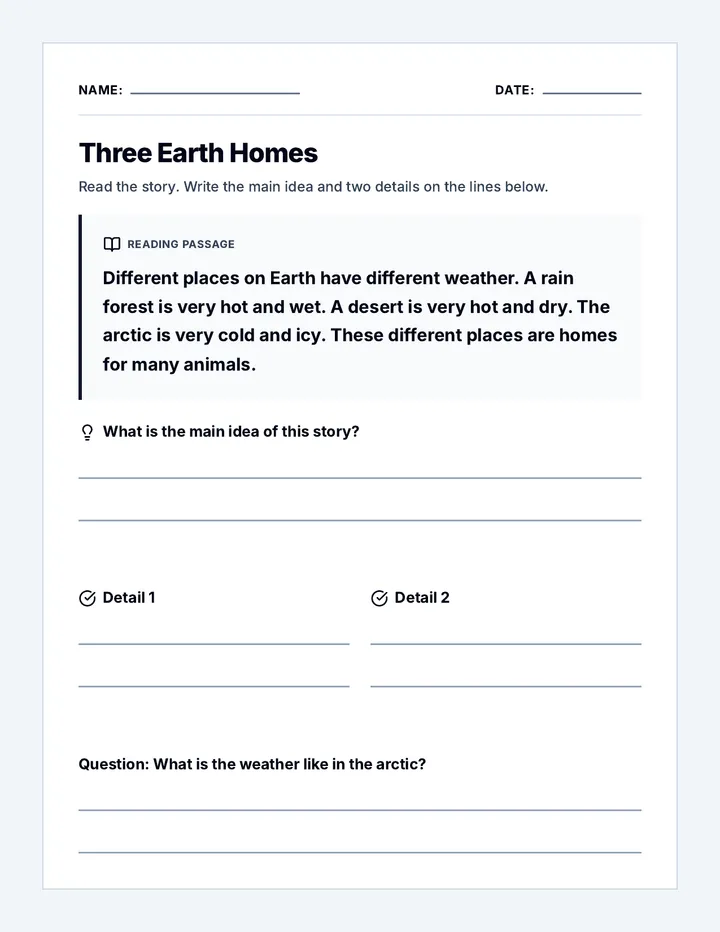
A lesson focused on identifying the main idea and supporting details in short texts, designed with structured supports for students.
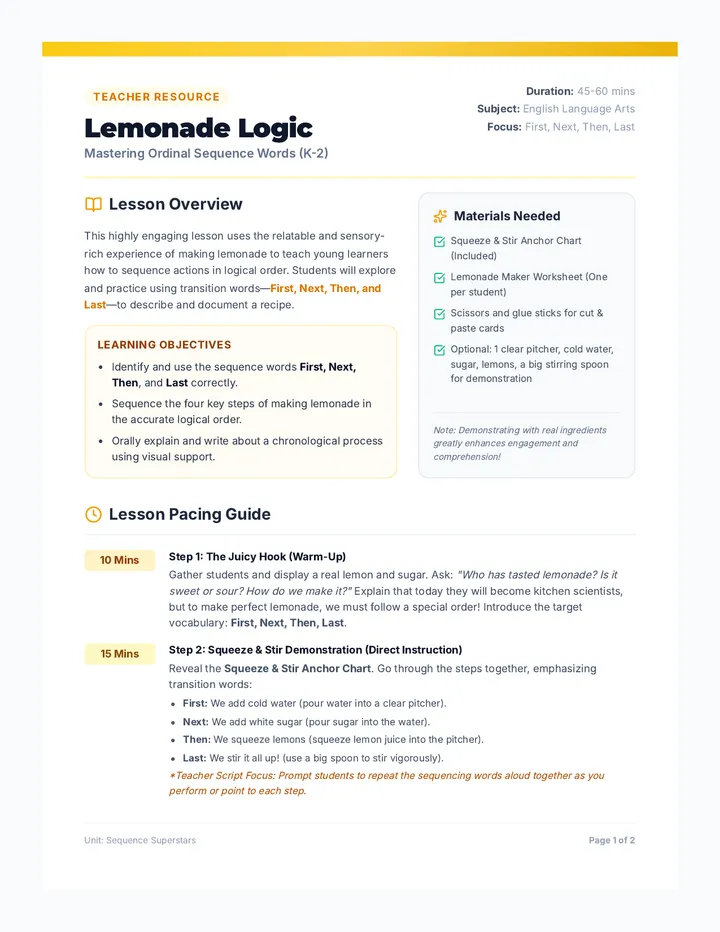
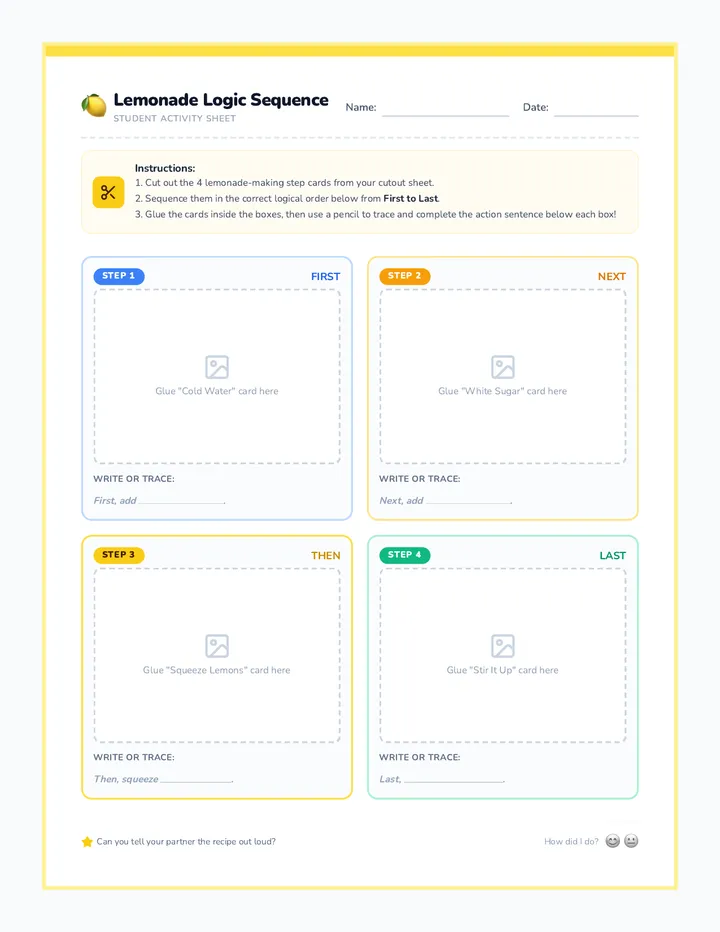
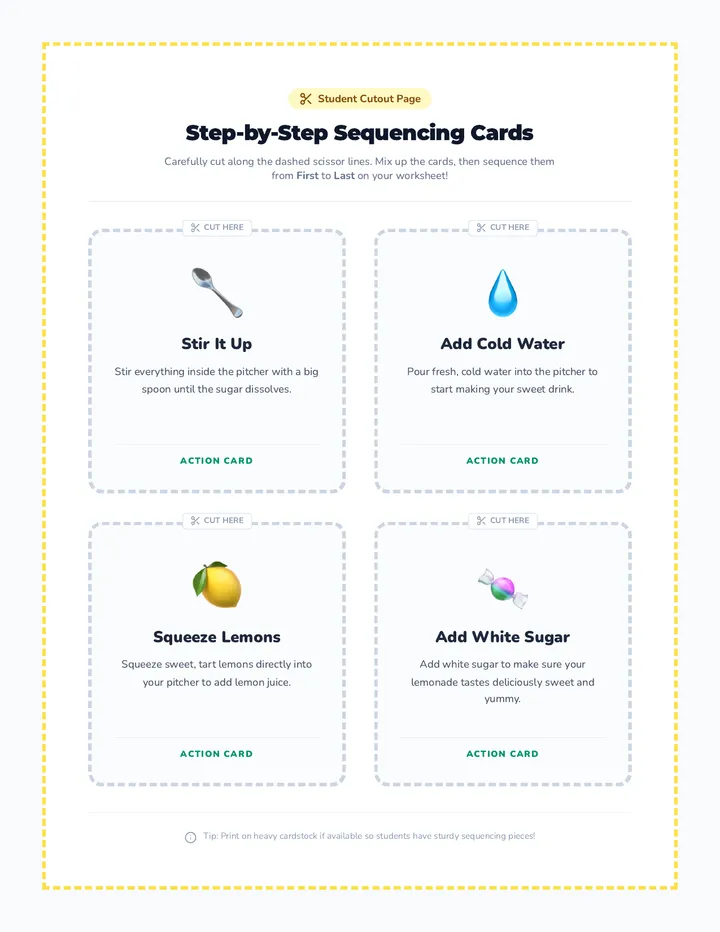
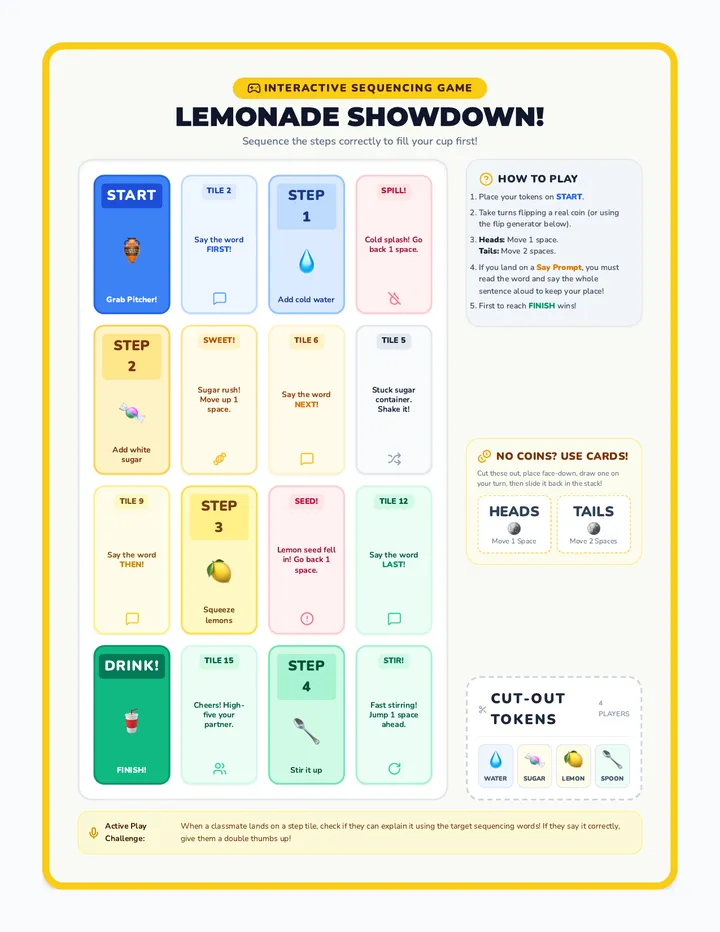
A hands-on, sequential learning experience where students master ordinal transition words (first, next, then, last) through the engaging process of making lemonade. This bundle includes a comprehensive teacher guide, a colorful anchor chart, and an interactive student worksheet.
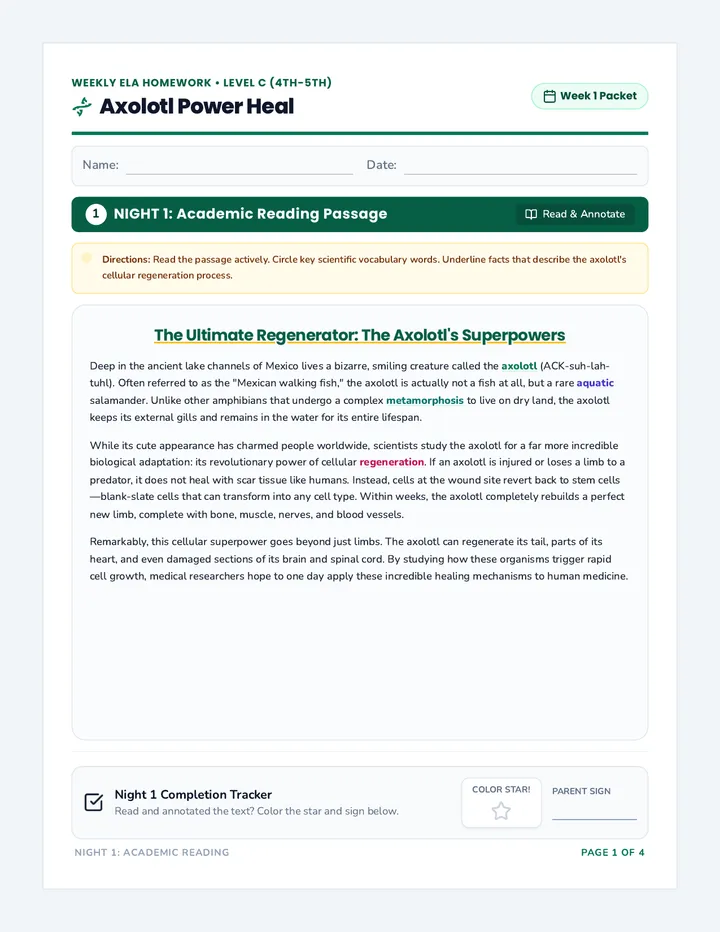
A 4th-5th grade weekly ELA homework packet focused on the axolotl and its incredible cellular regeneration abilities. Includes a challenging multi-paragraph informational text, root word/context-clue vocabulary work, a structural vs. behavioral adaptation sorting activity, and complex multiple-choice and short-answer questions with supportive sentence frames.
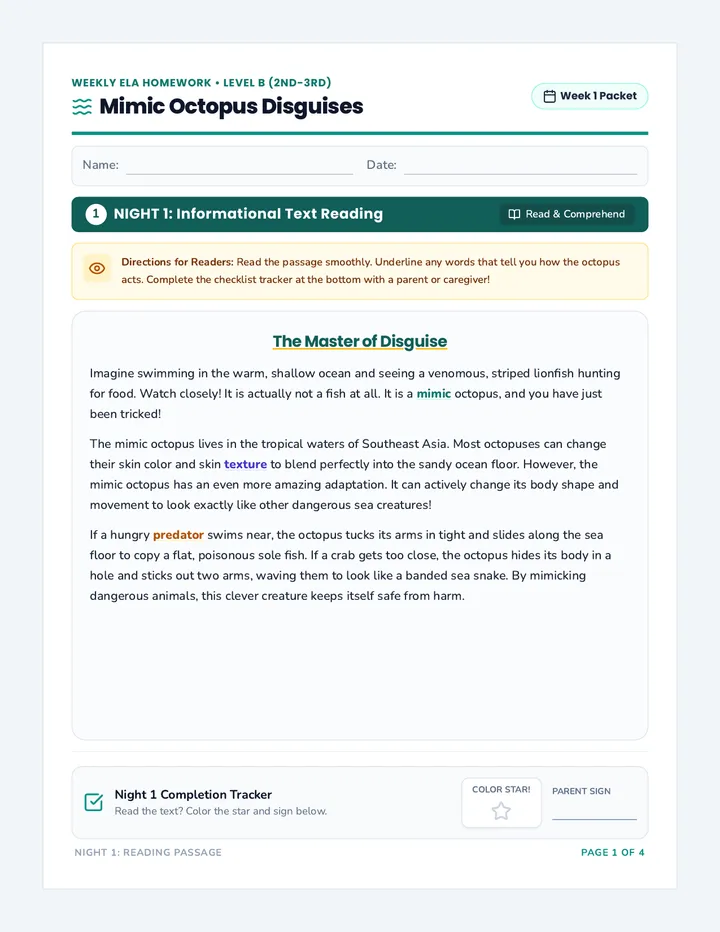
A 2nd-3rd grade weekly ELA homework packet centering on the mimic octopus, an animal that takes the form of other sea creatures to survive. Contains a multi-paragraph reading passage, context-clue vocabulary exercises, a visual disguise planning activity, and multiple-choice and short-answer comprehension questions with sentence-starter frames.
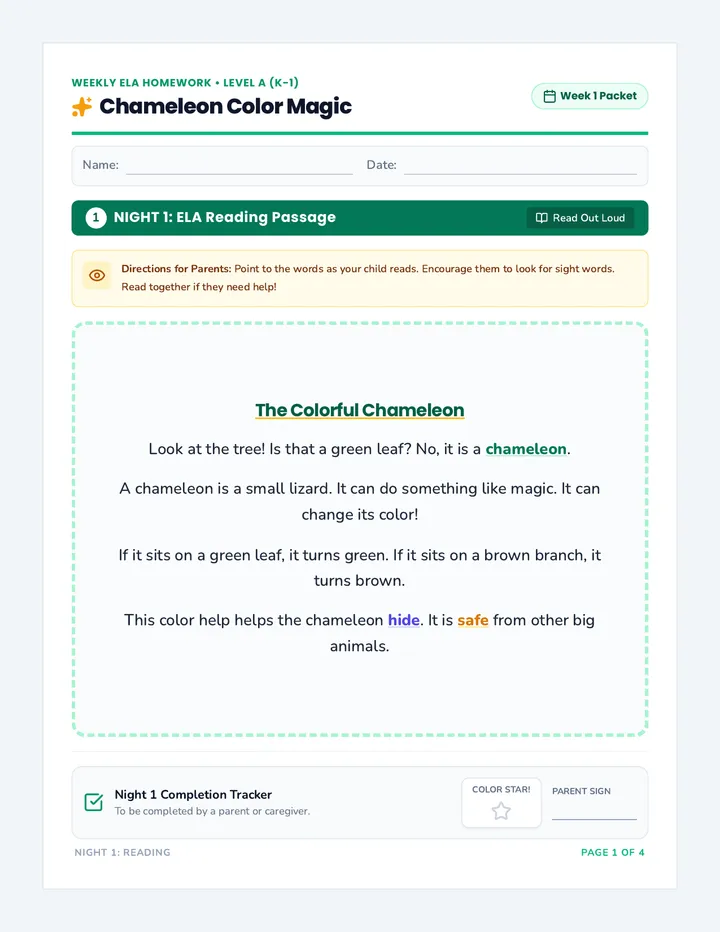
A K-1 weekly ELA homework packet featuring a short, high-interest reading passage about the chameleon's color-changing ability. Includes heavily supported vocabulary matching, visual drawing and labeling activities, simple comprehension questions with complete sentence starters, and an easy-to-use checklist tracker.
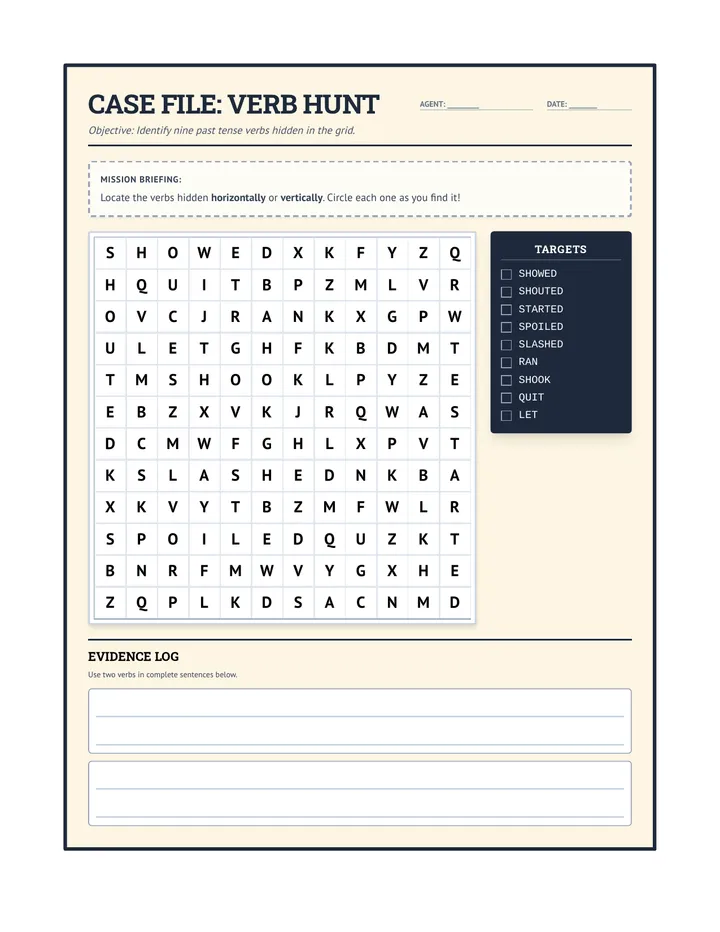
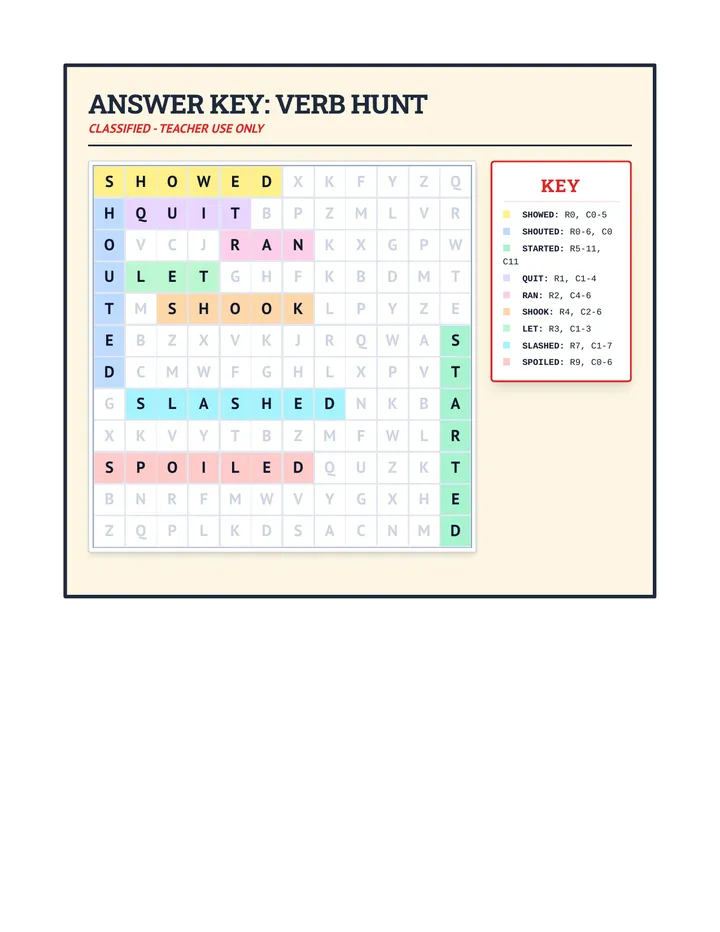
A lesson focused on identifying and using past tense verbs through a detective-themed word search and sentence construction activity.
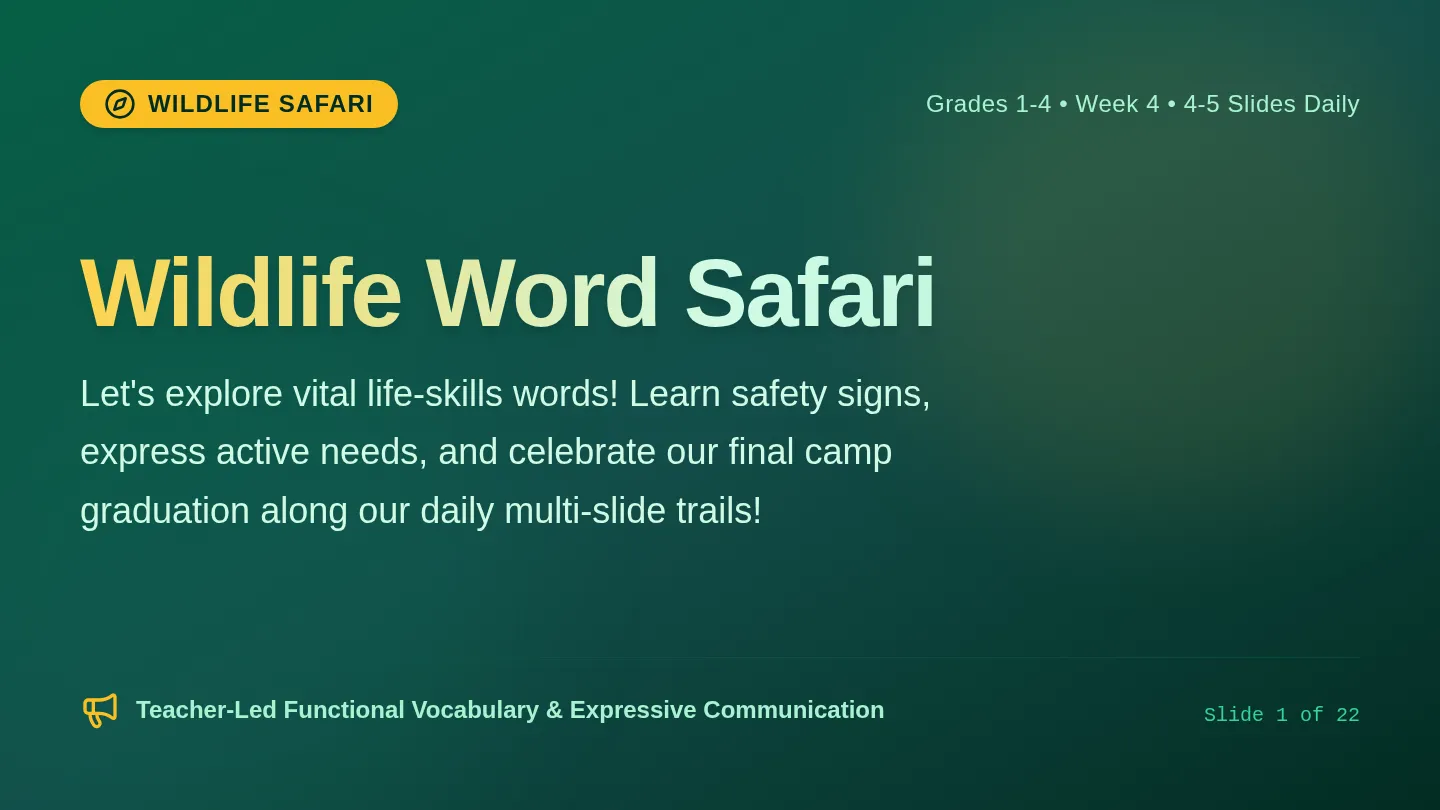
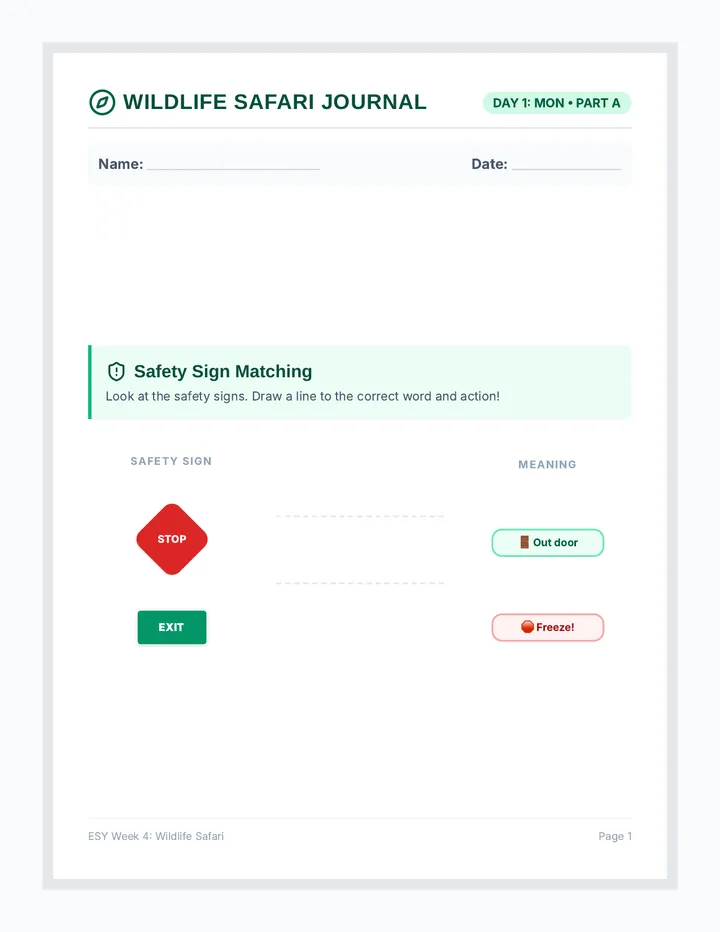
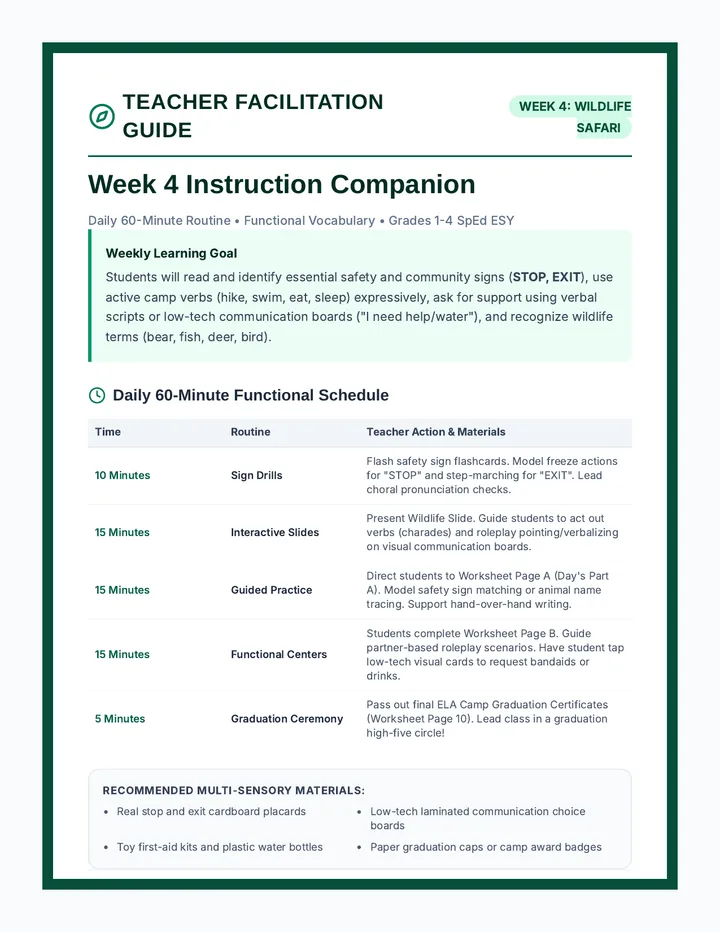
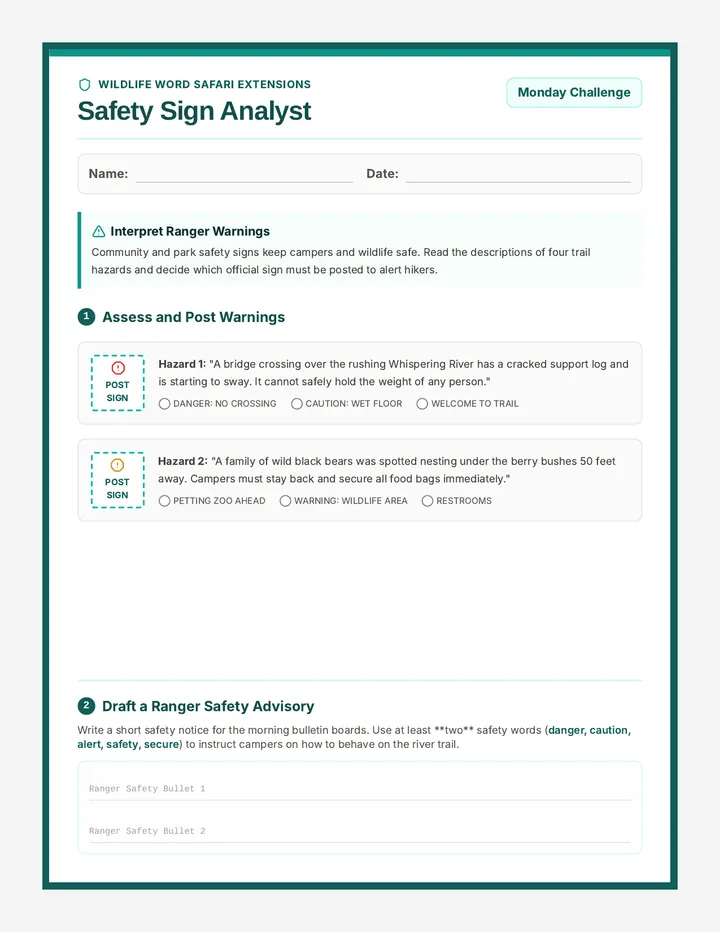
Week 4 of the ESY literacy program, focusing on functional vocabulary and expressive communication. Students learn safety signs, expressive words, and cooperative communication skills through camp-themed scenarios.
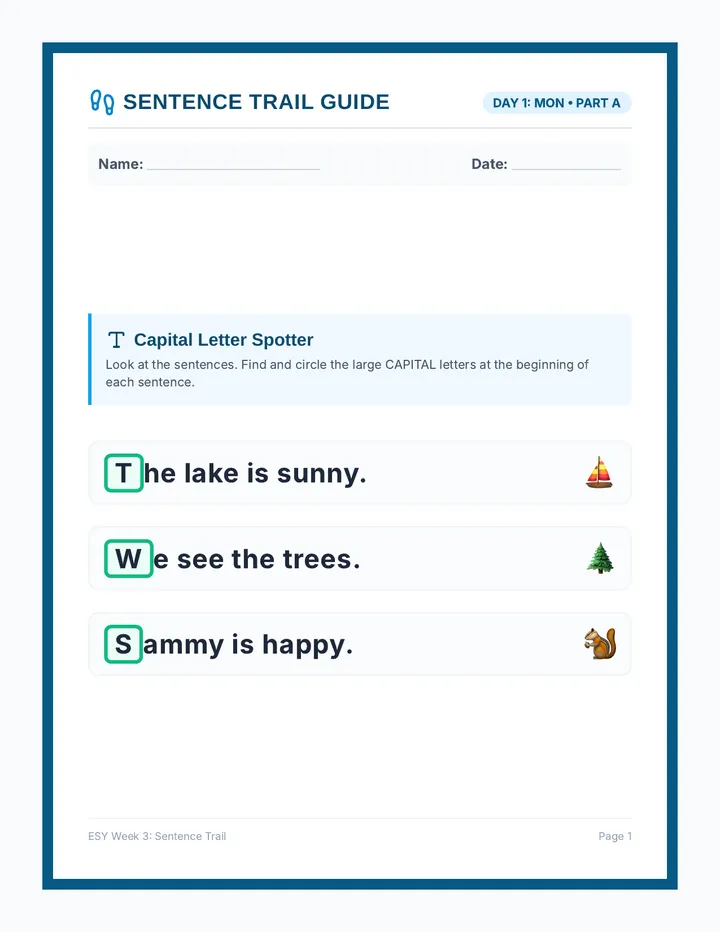
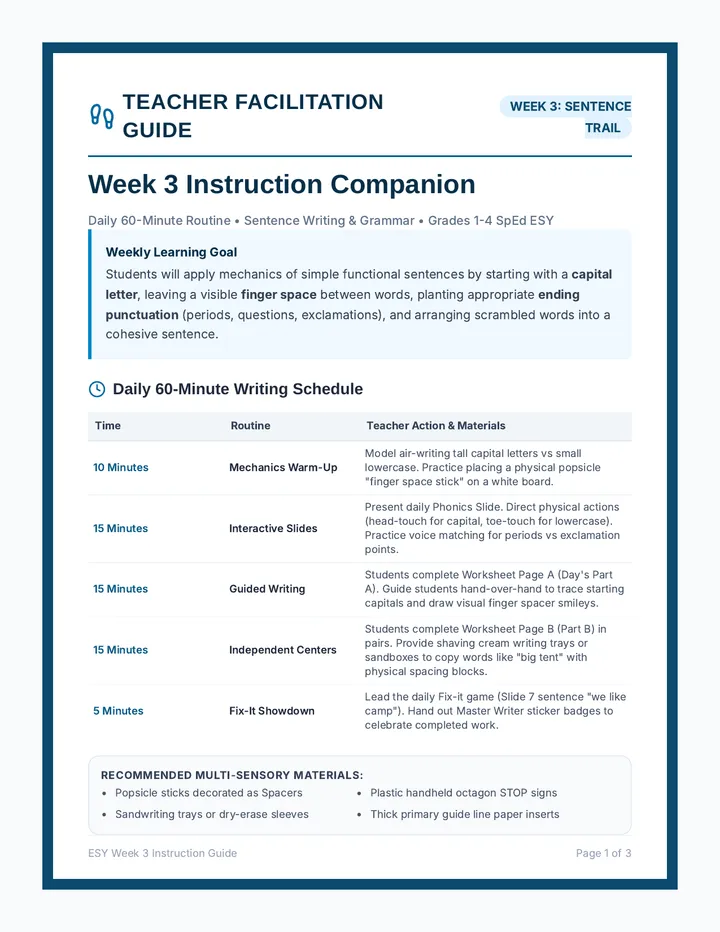
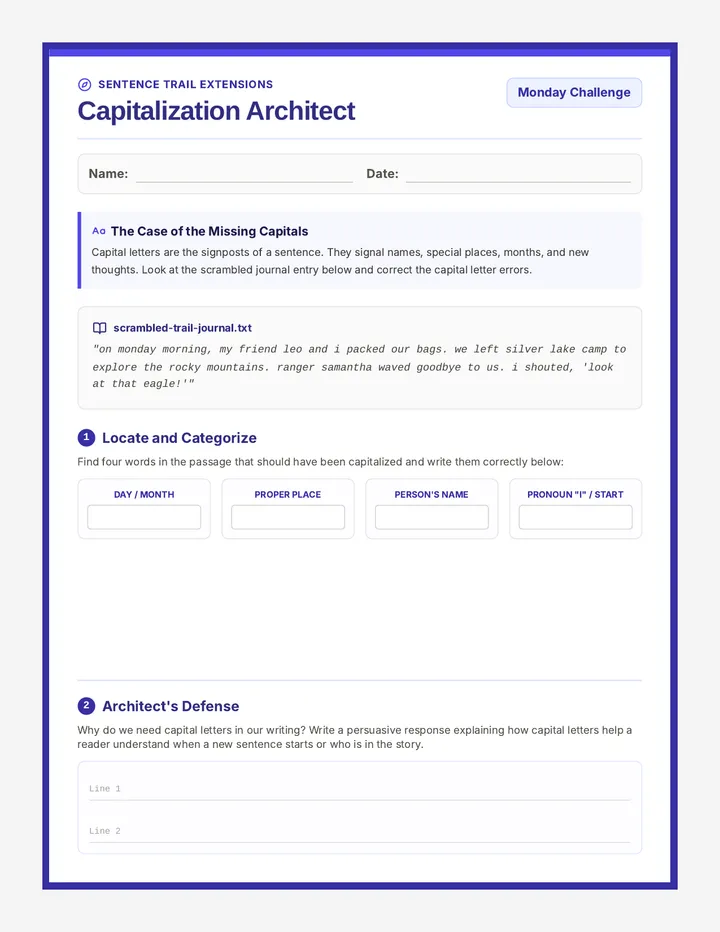
Week 3 of the ESY literacy program, focusing on sentence writing and grammar. Students practice high-frequency handwriting strokes, capitalization, punctuation, and constructing functional simple sentences.
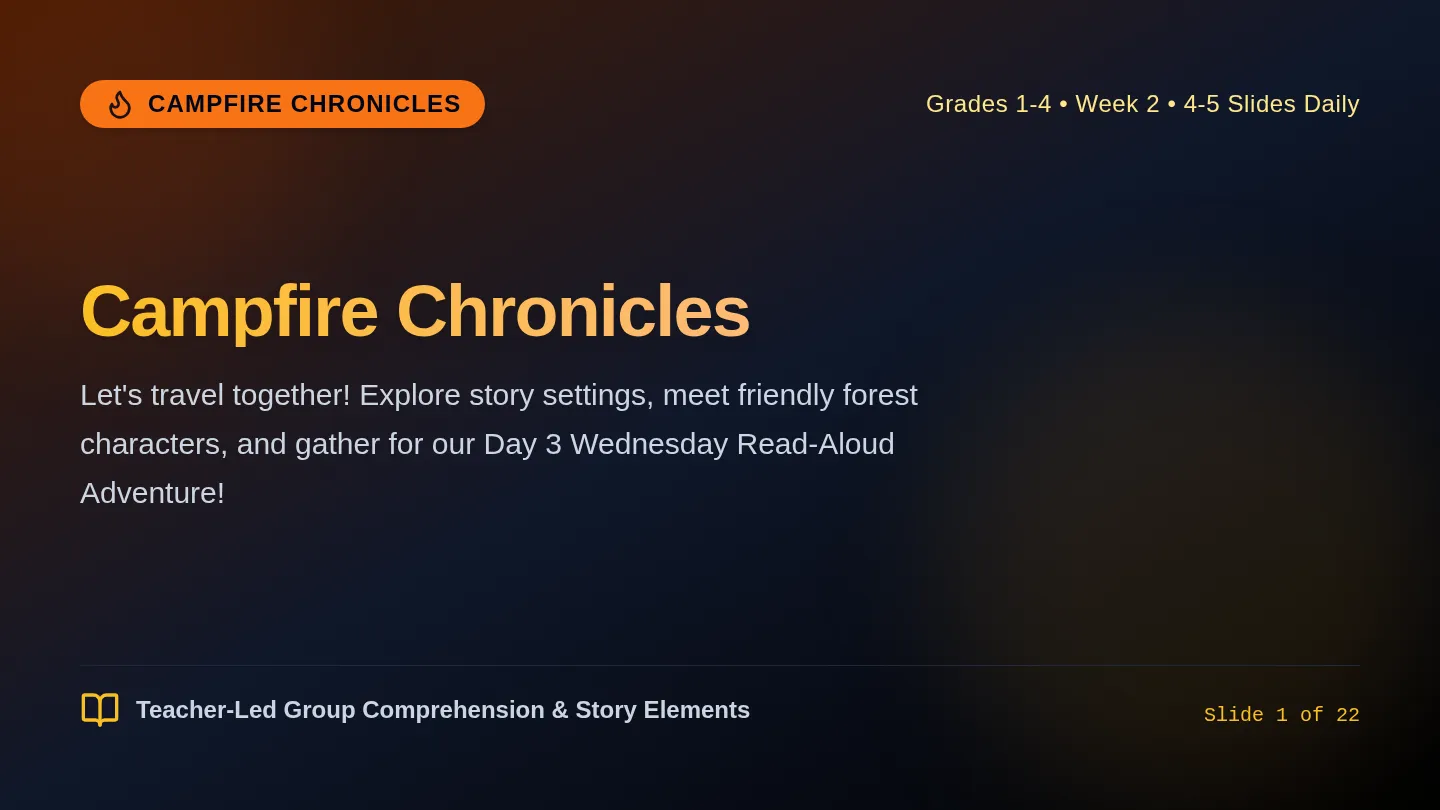
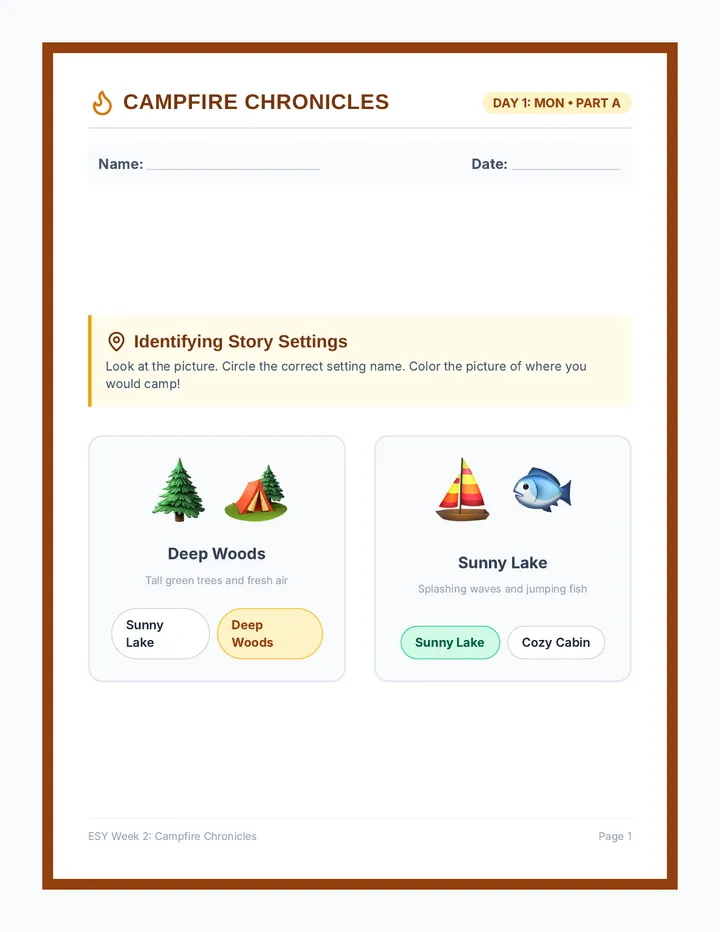
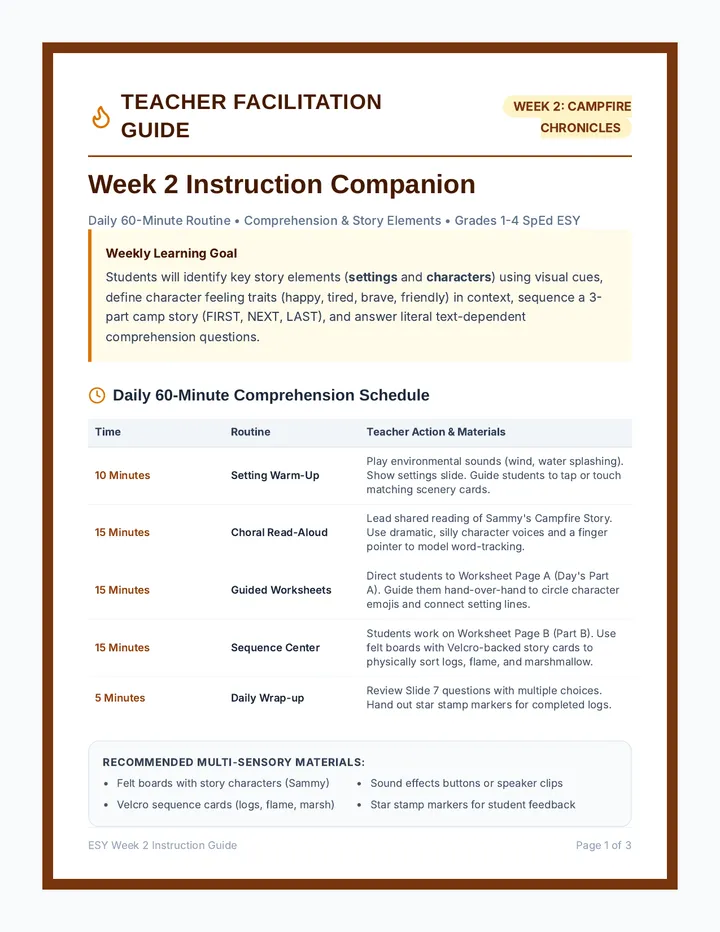
Week 2 of the ESY literacy program, focusing on comprehension and story elements. Students explore story characters, settings, sequencing events, and main ideas using visual reading tools and interactive stories.
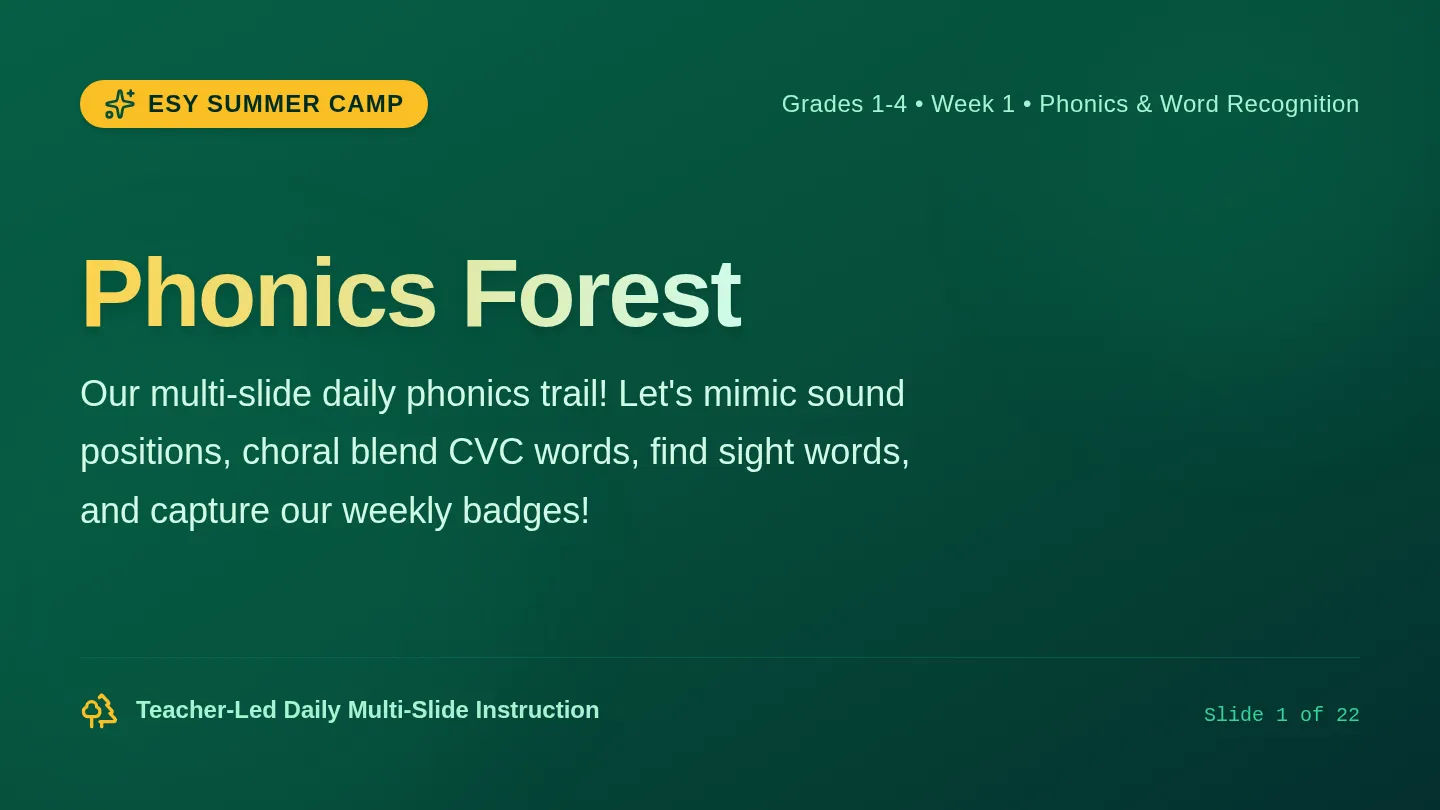
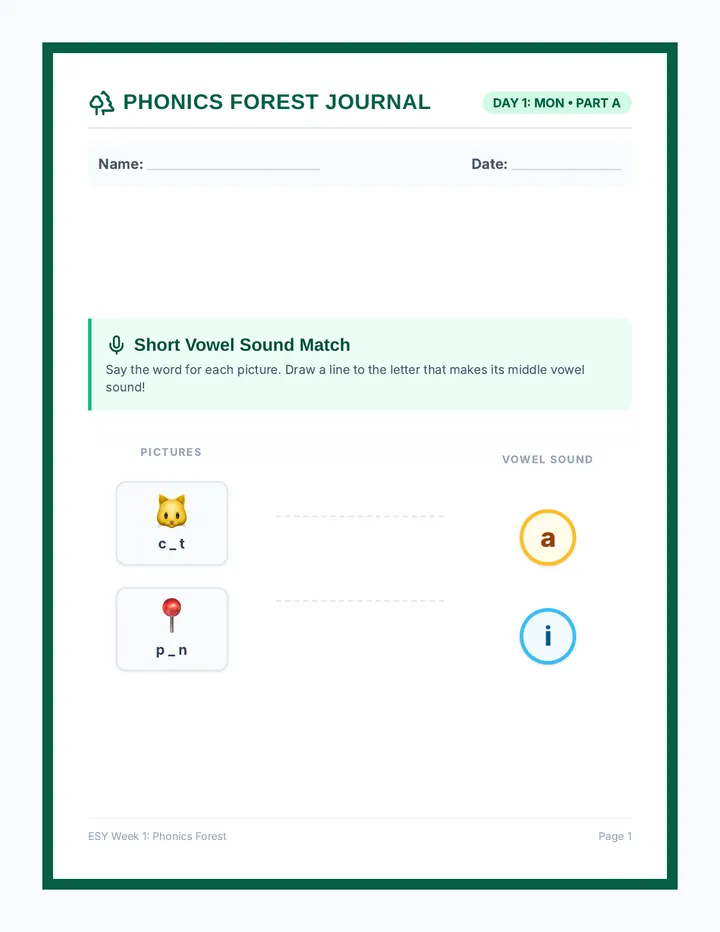
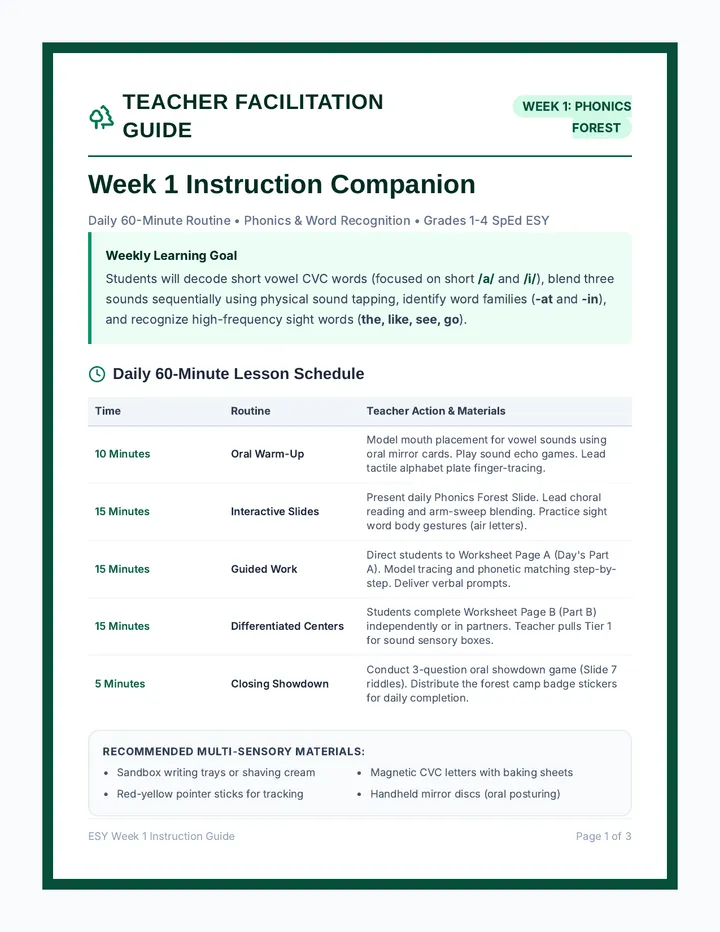
Week 1 of the ESY literacy program, focusing on phonics and word recognition. Students explore letter-sound correspondence, blending, and high-frequency sight words through multi-sensory activities.
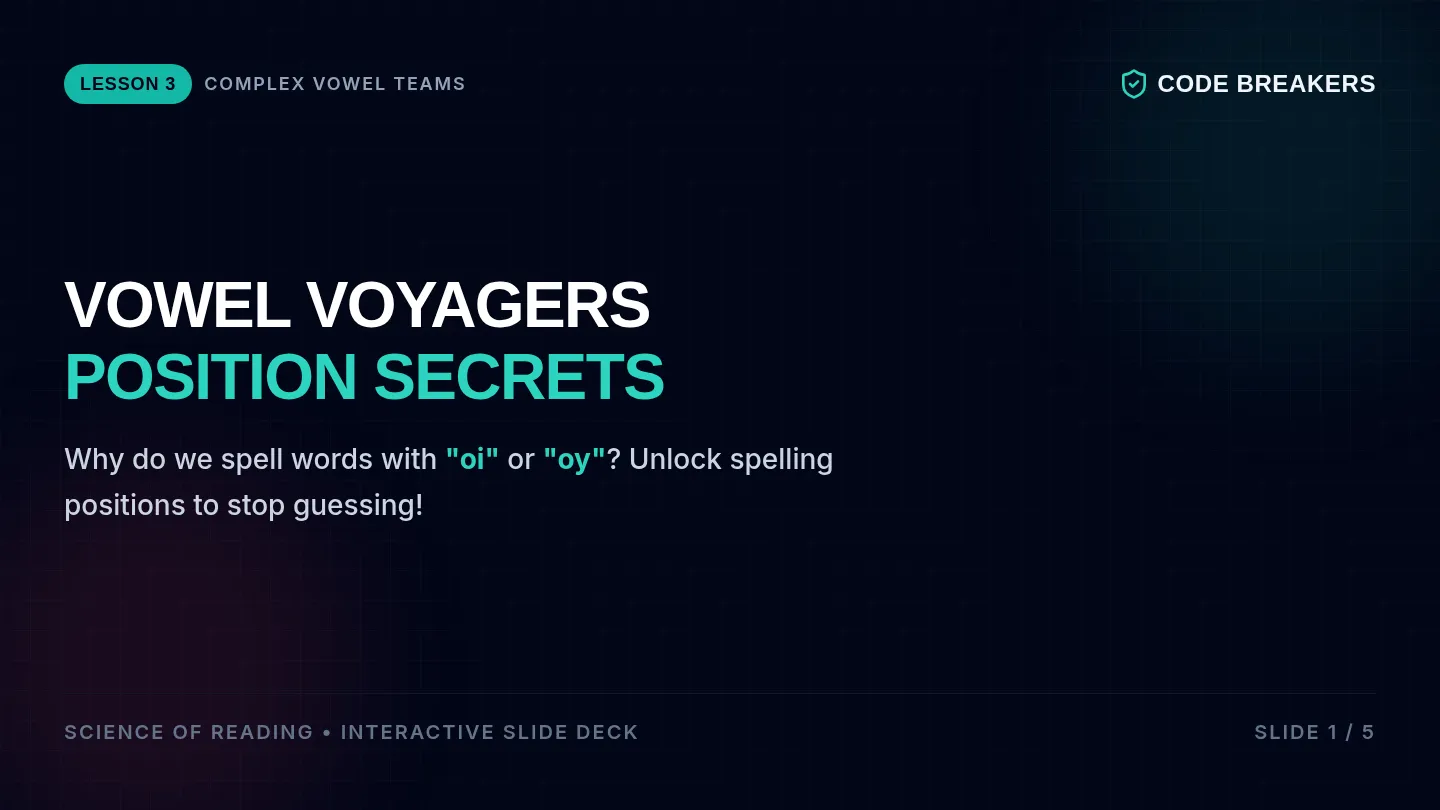
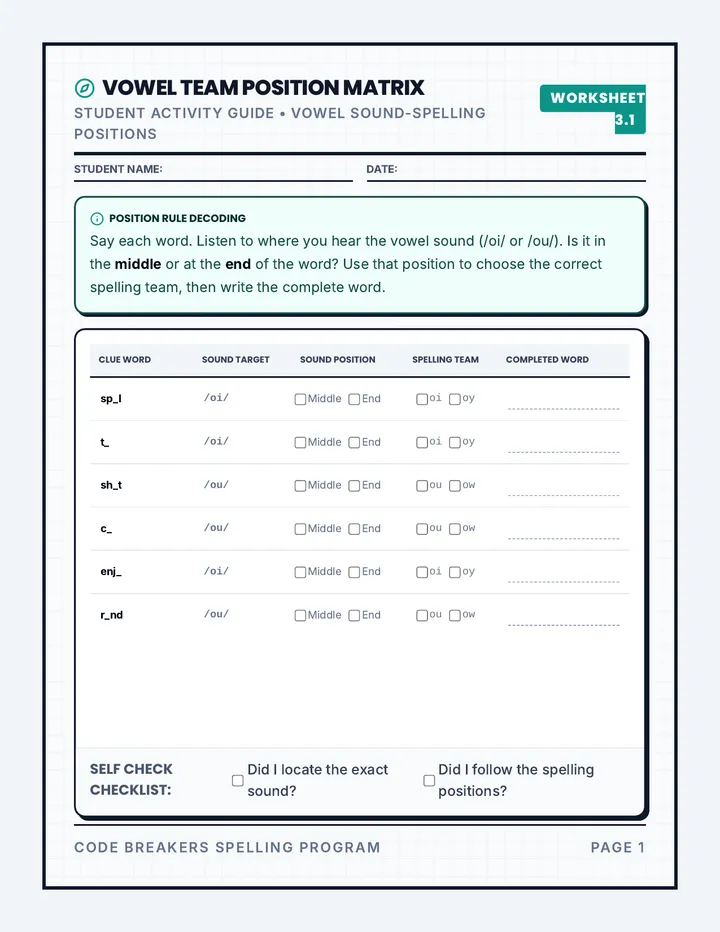
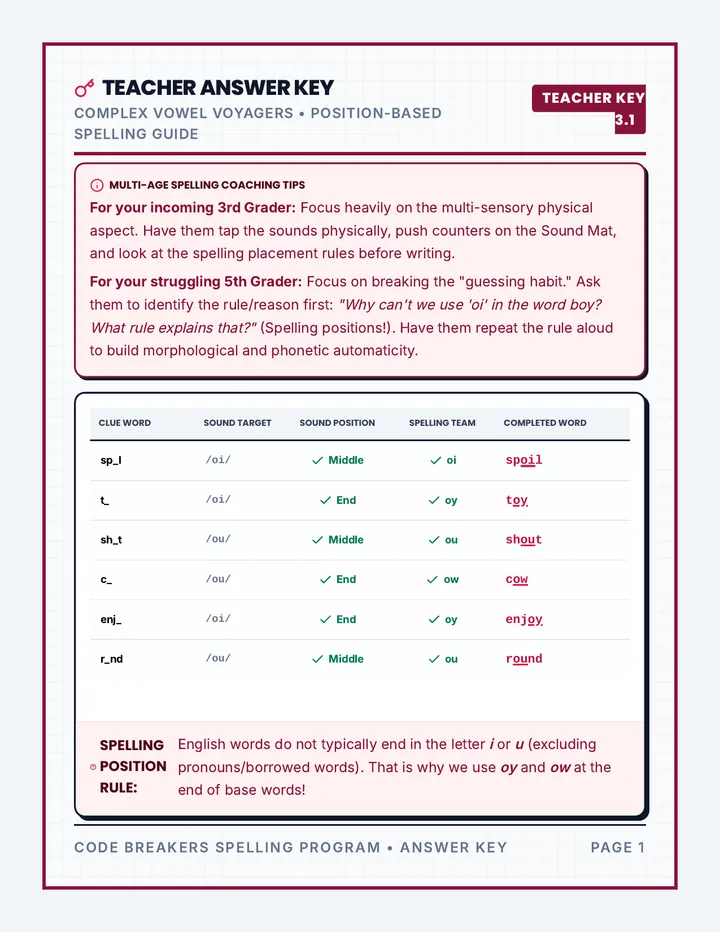
Explores complex and ambiguous vowel teams and diphthongs, reinforcing spelling choices for phonemes like /oi/, /oy/, /ou/, and /ow/ using orthographic sound-spelling mapping.
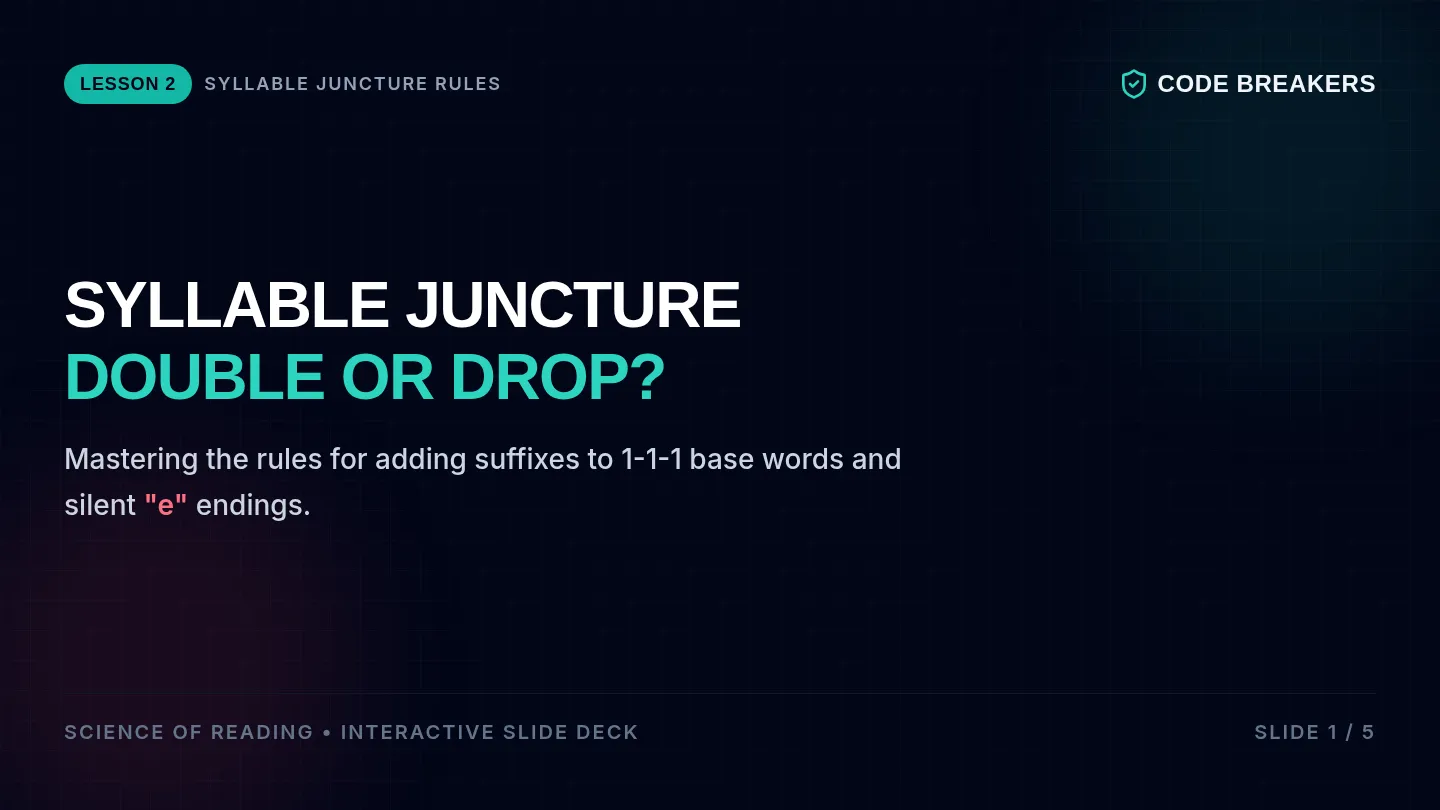
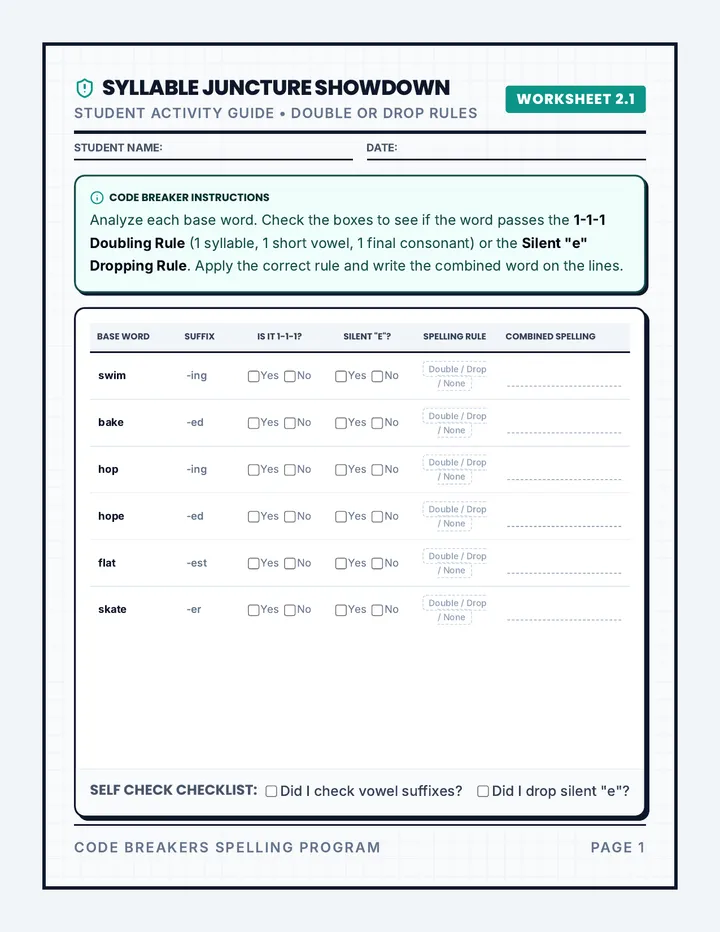
Focused on syllable juncture rules, teaching students when to double consonants or drop/change letters when adding inflectional suffixes (-ed, -ing, -er, -est).
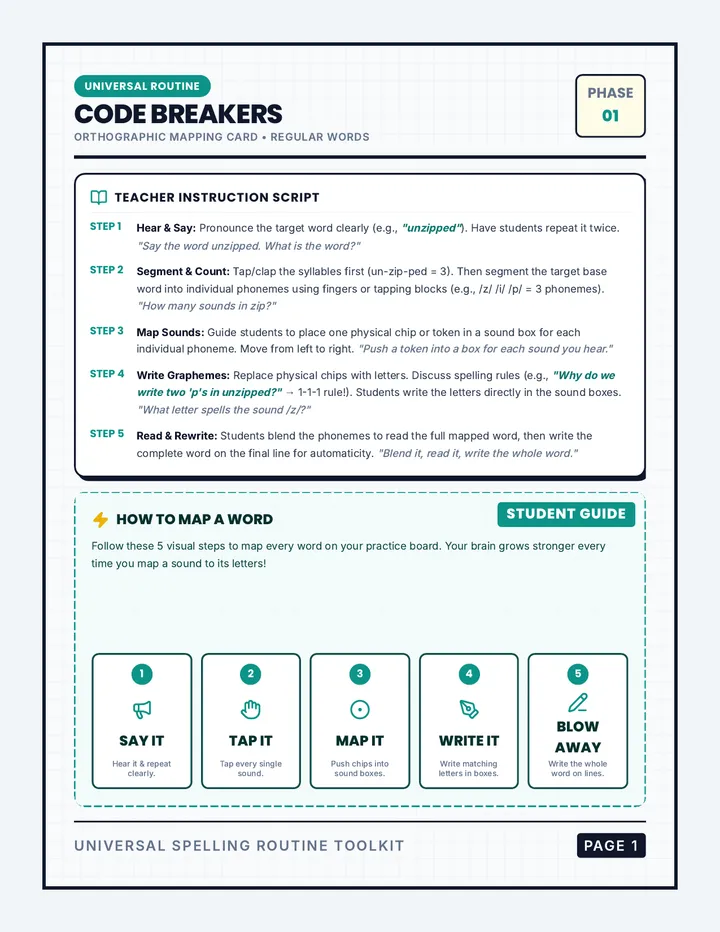
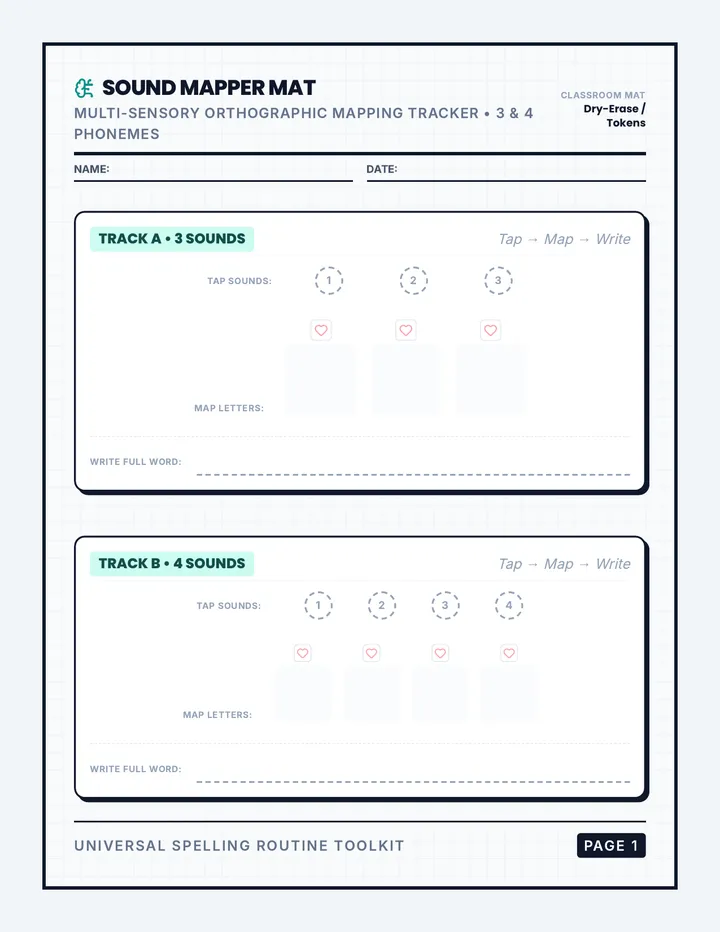
A universal toolkit containing orthographic mapping routine cards and printable multi-sensory sound box templates to structure systematic daily spelling instruction.
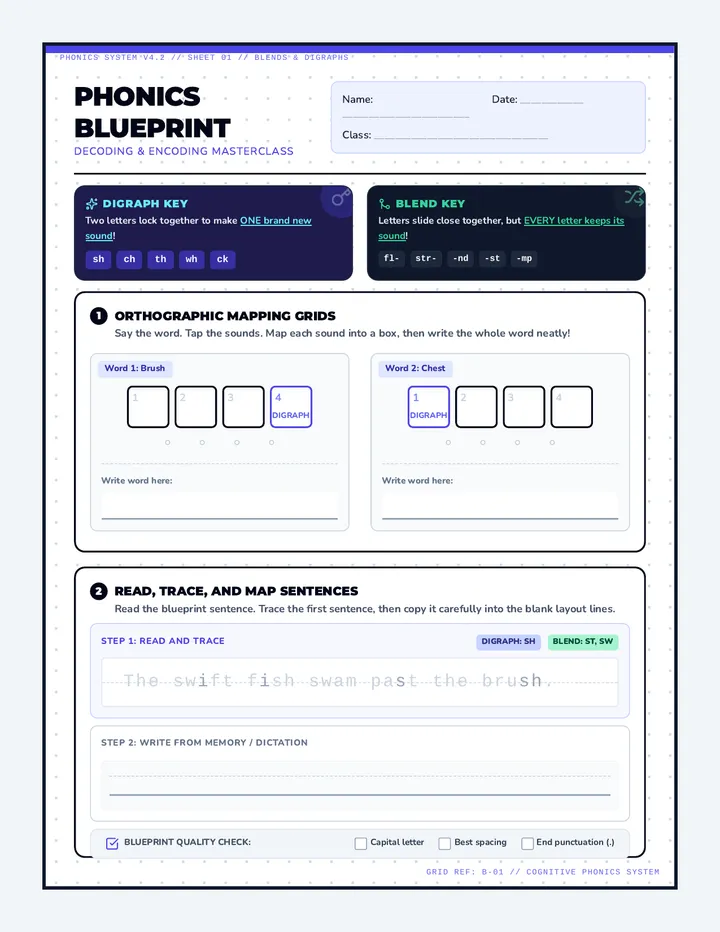
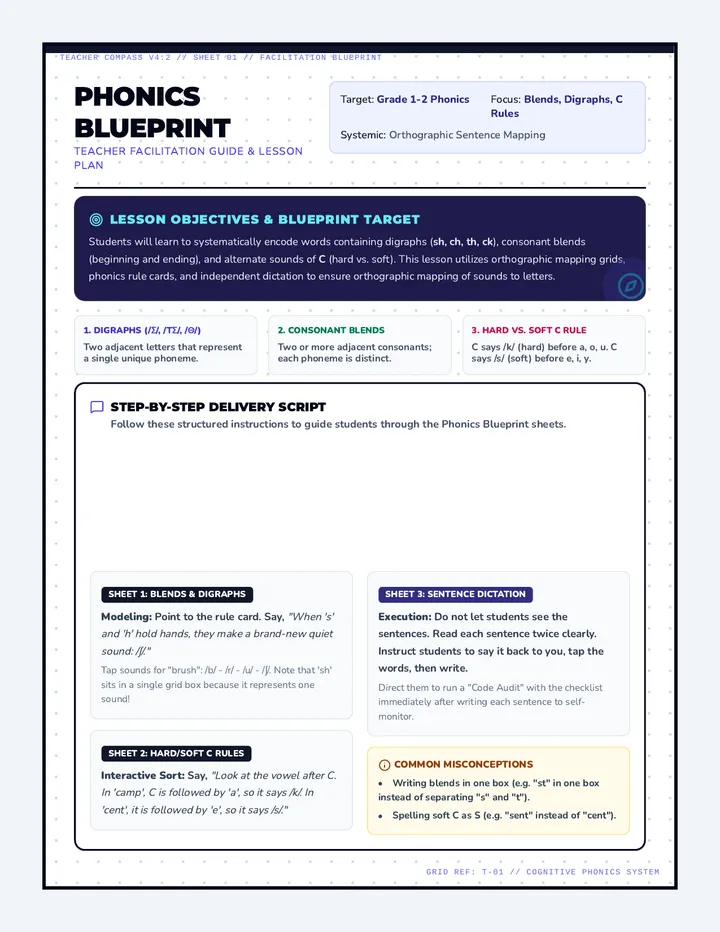
A structured phonics lesson focused on encoding sentences with digraphs, consonant blends (beginning and ending), and hard vs. soft C. Includes rule-based worksheets with spelling grids and self-monitoring checklists.
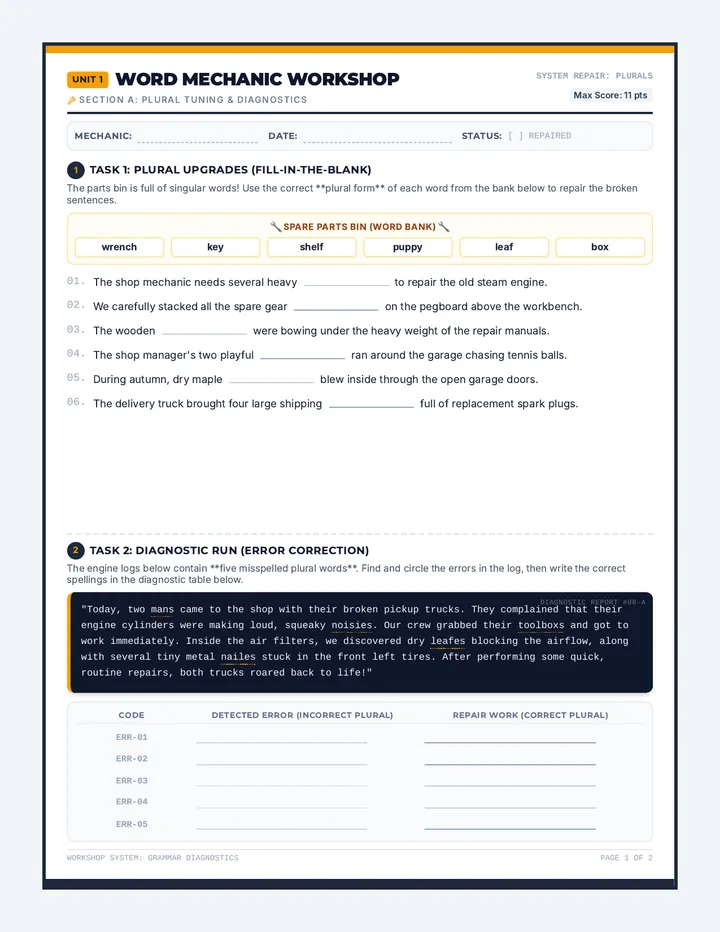
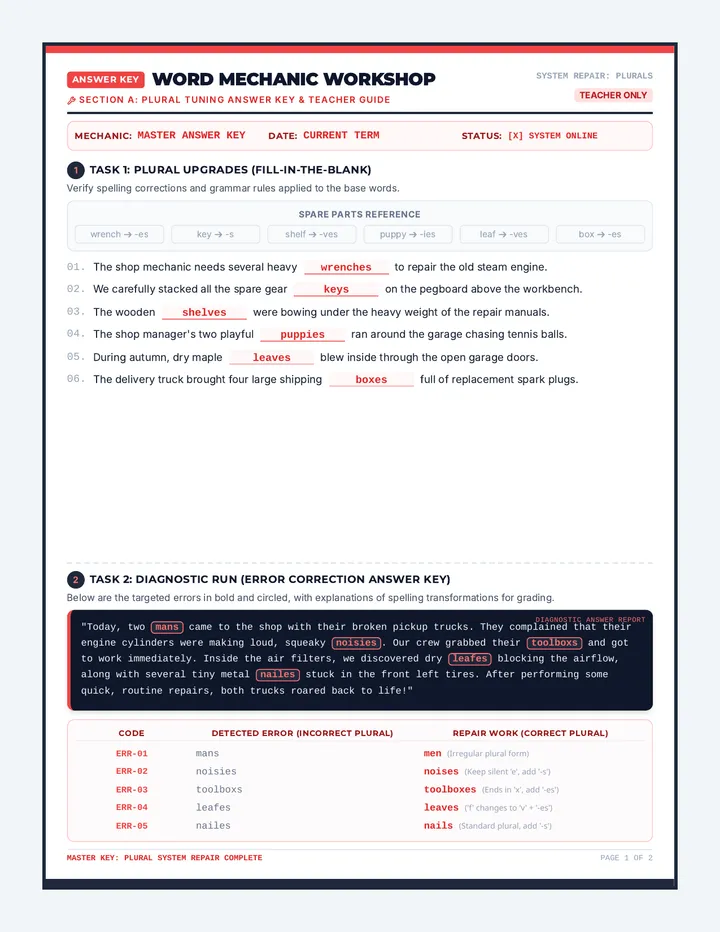
A targeted, engaging grammar lesson focusing on mastering plural endings and verb tenses (-ed and -ing) through the theme of a mechanical workshop. Students diagnose and repair grammatical errors to improve their sentence-level writing.
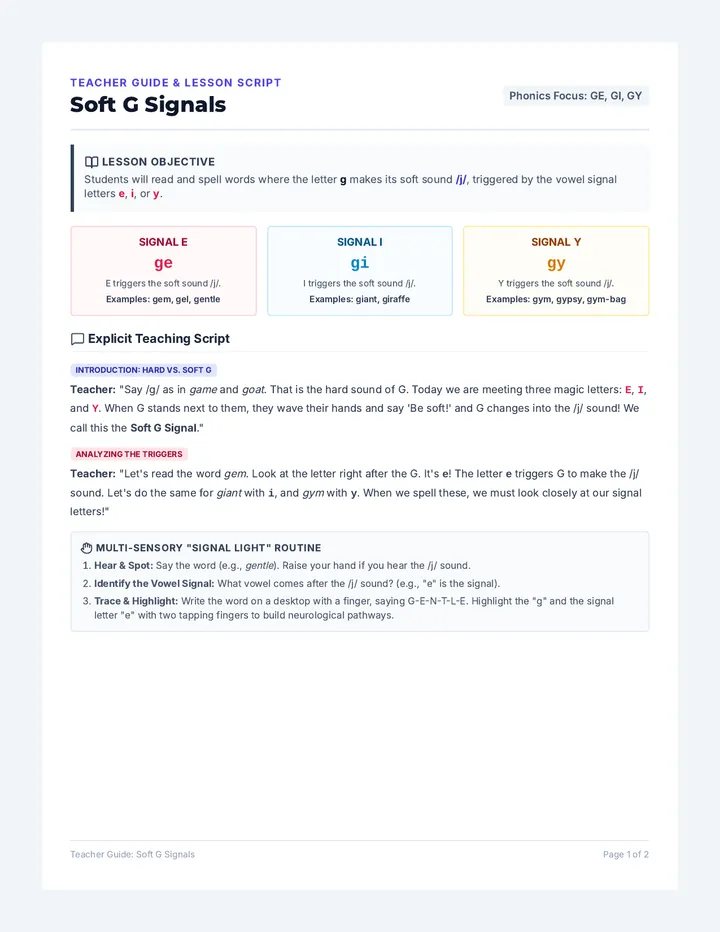
A spelling lesson exploring the soft G sound /j/ triggered by letters E, I, and Y. Students will identify, sort, and write words using the soft G patterns GE, GI, and GY.
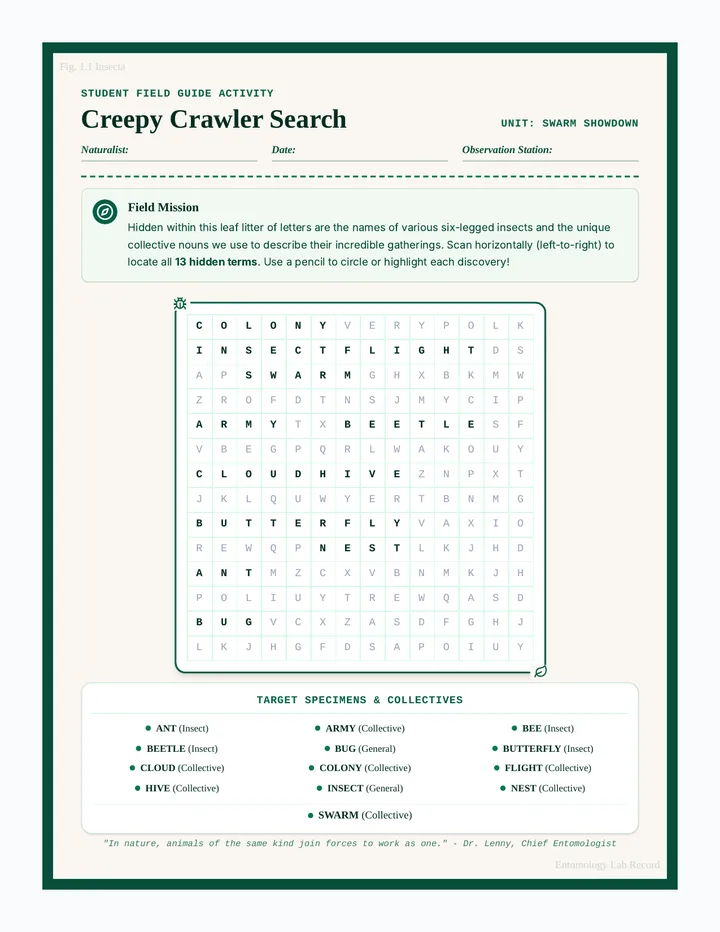
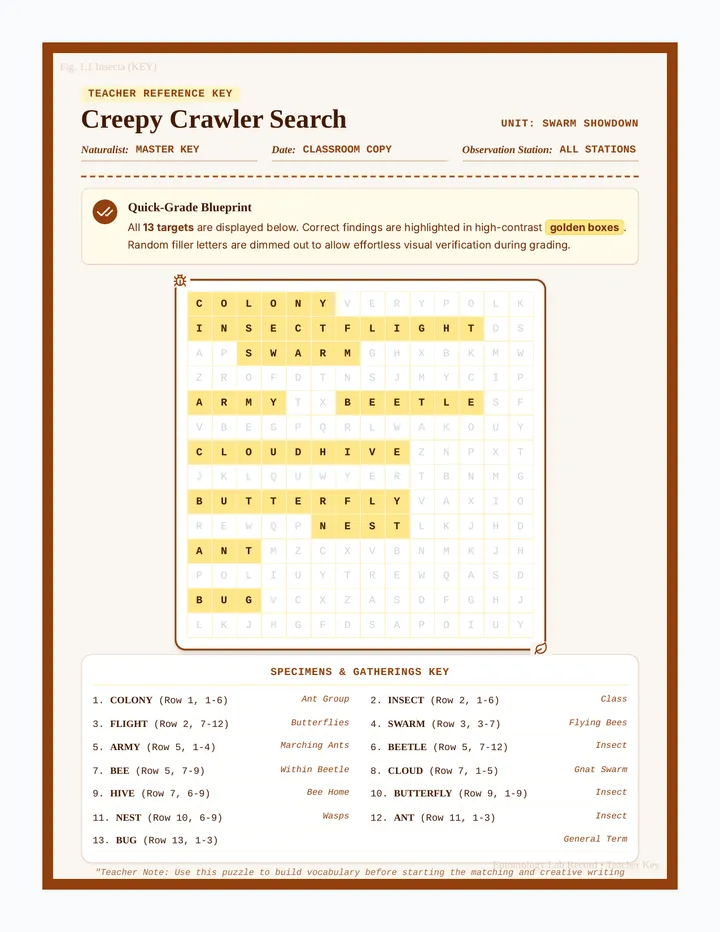
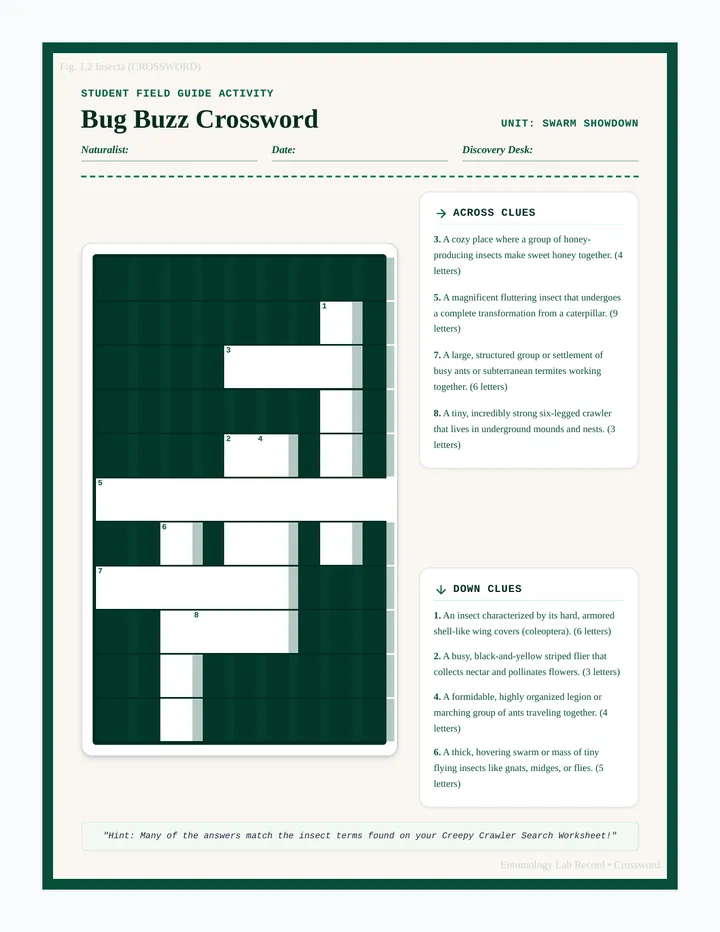
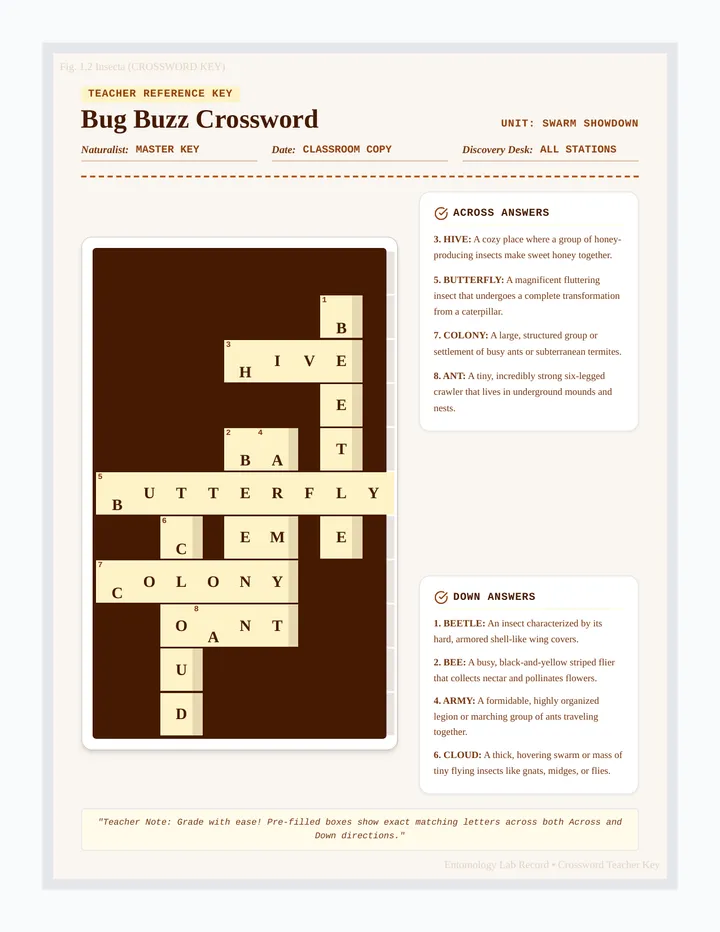
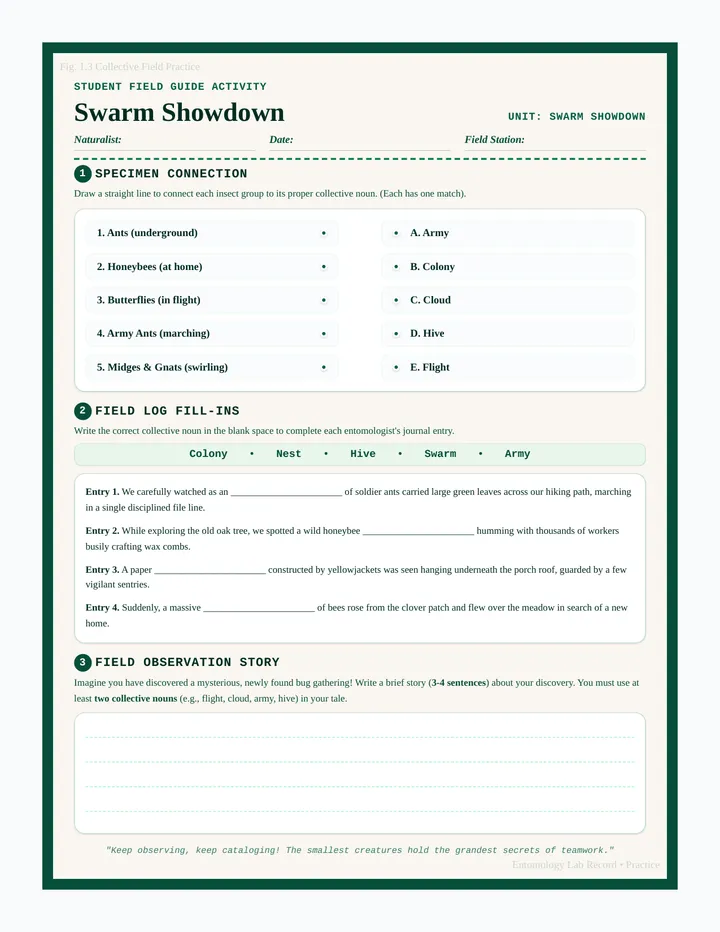
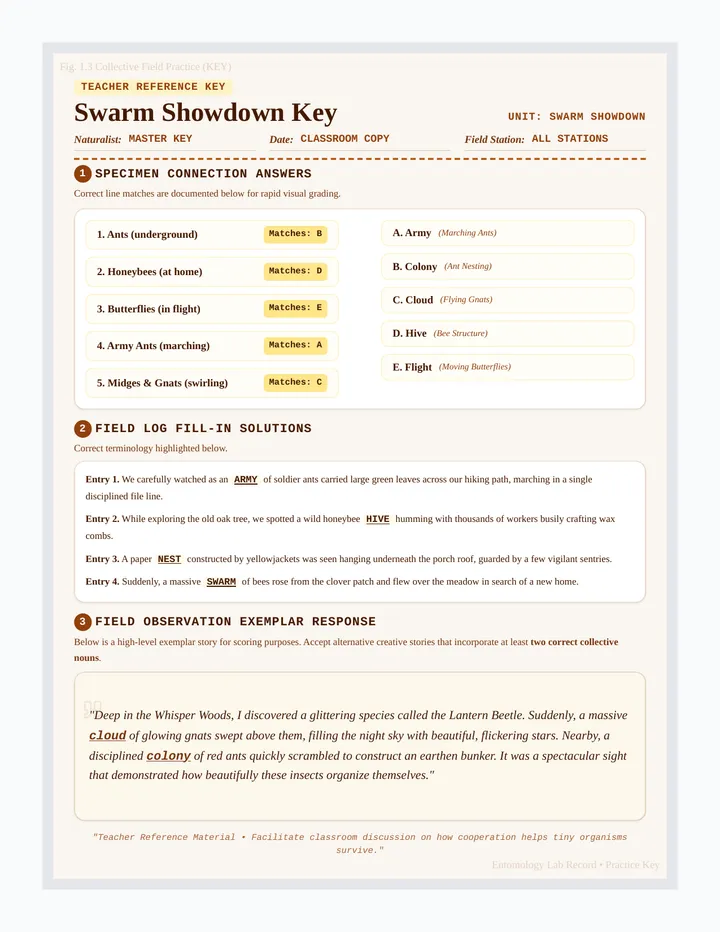
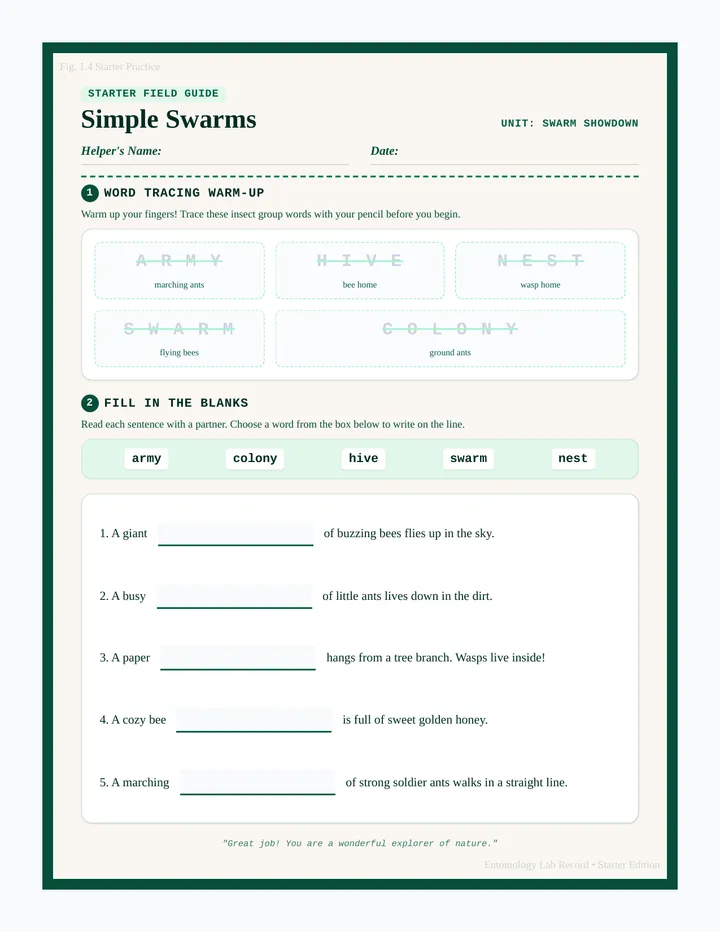
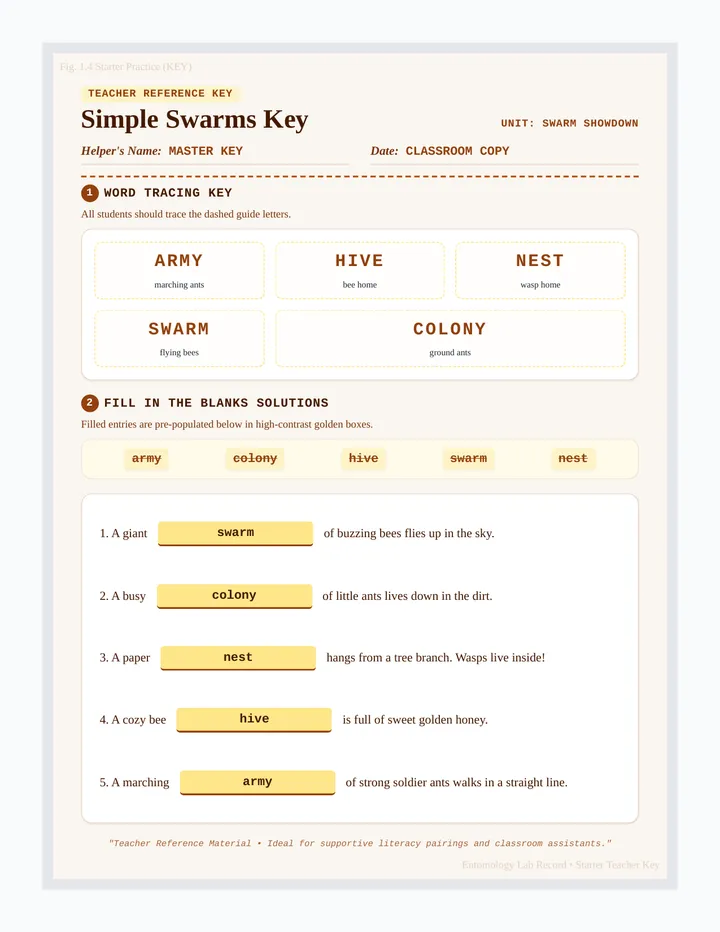
An engaging lesson on insect collective nouns and terminology, featuring a word search, crossword, and hands-on matching and writing activities exploring how bugs gather in groups.
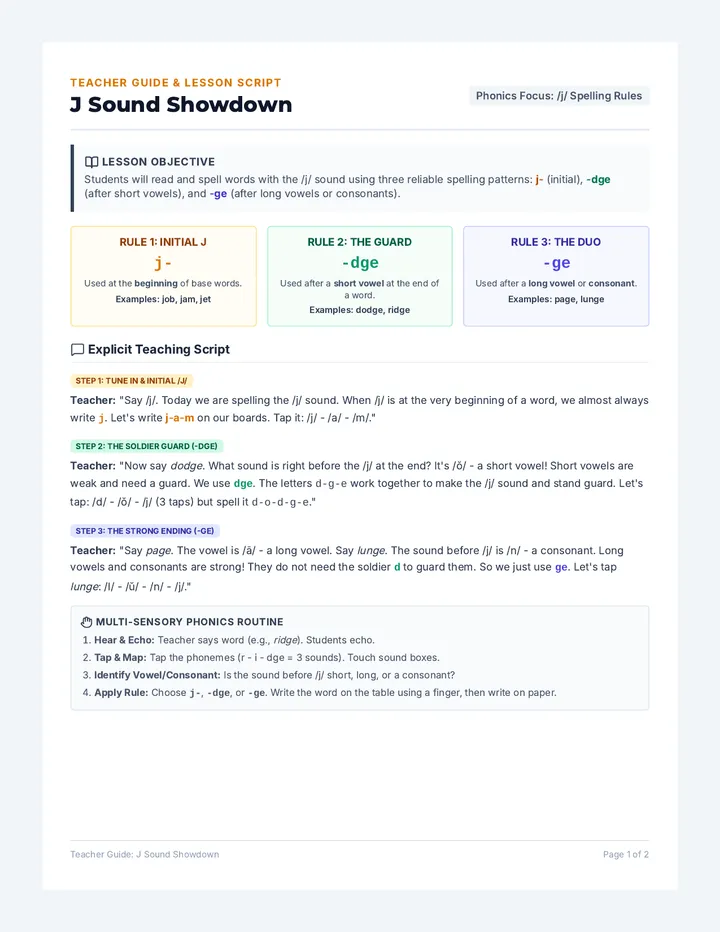
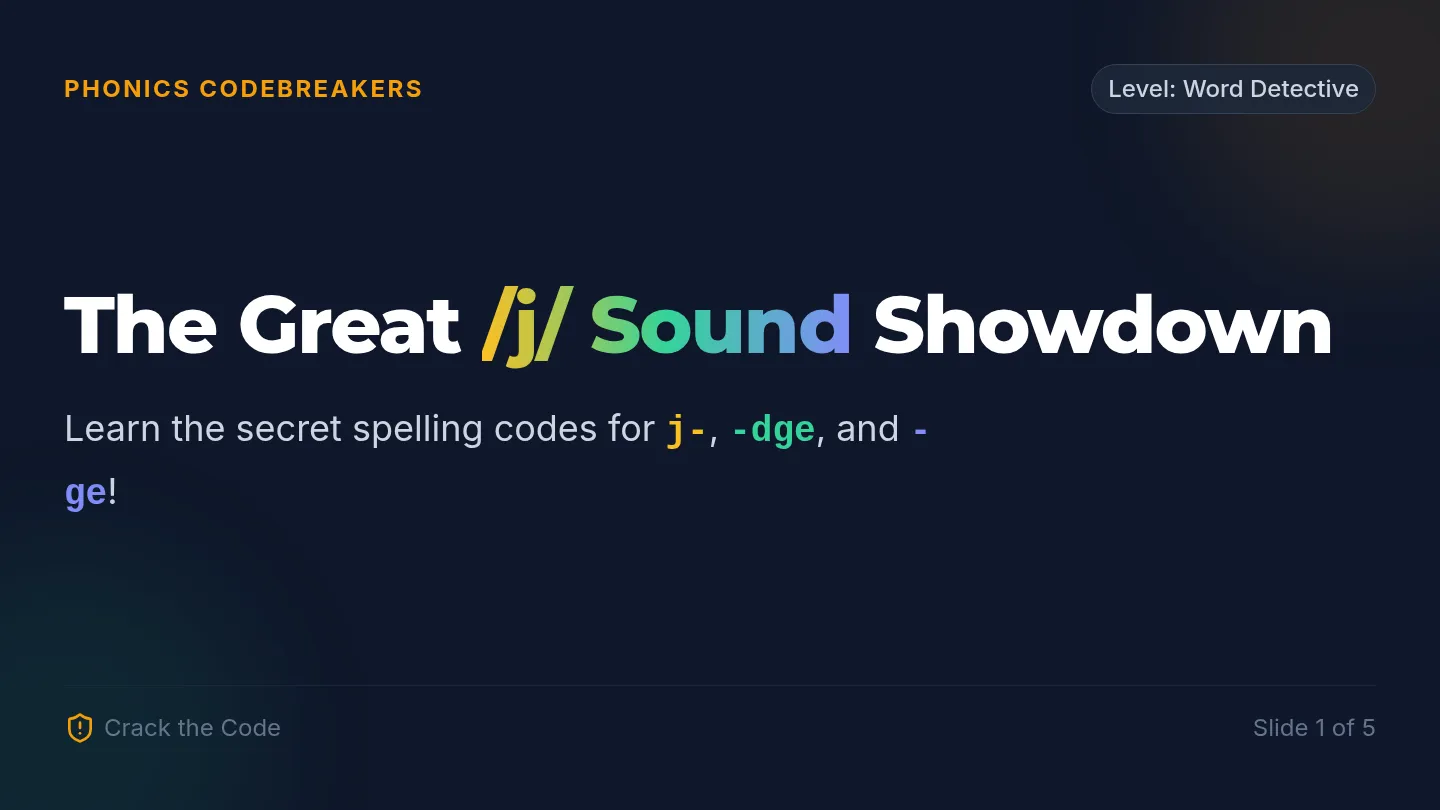
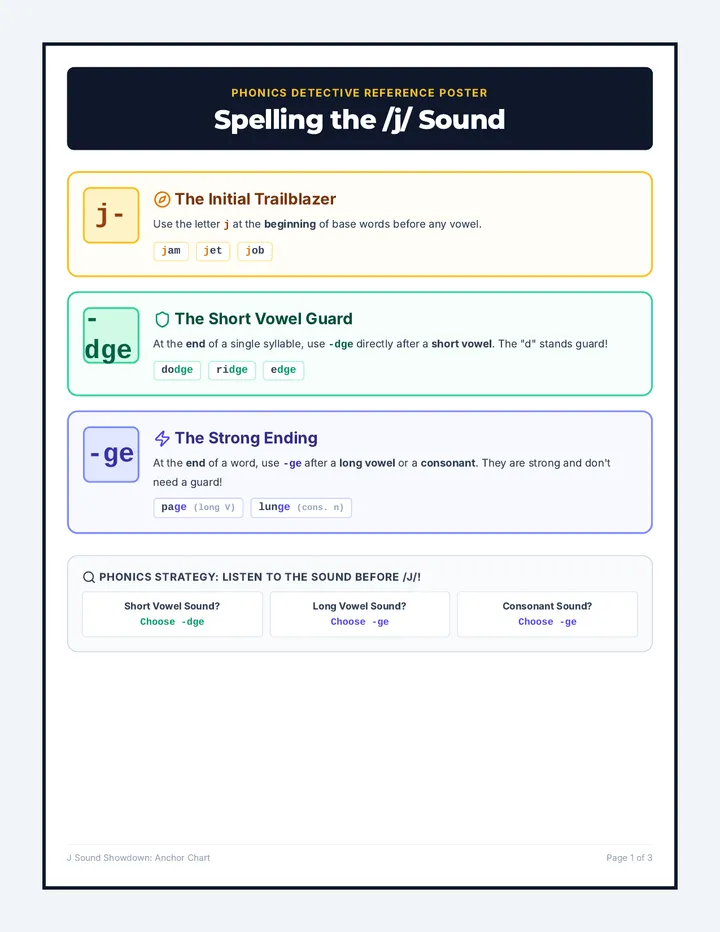
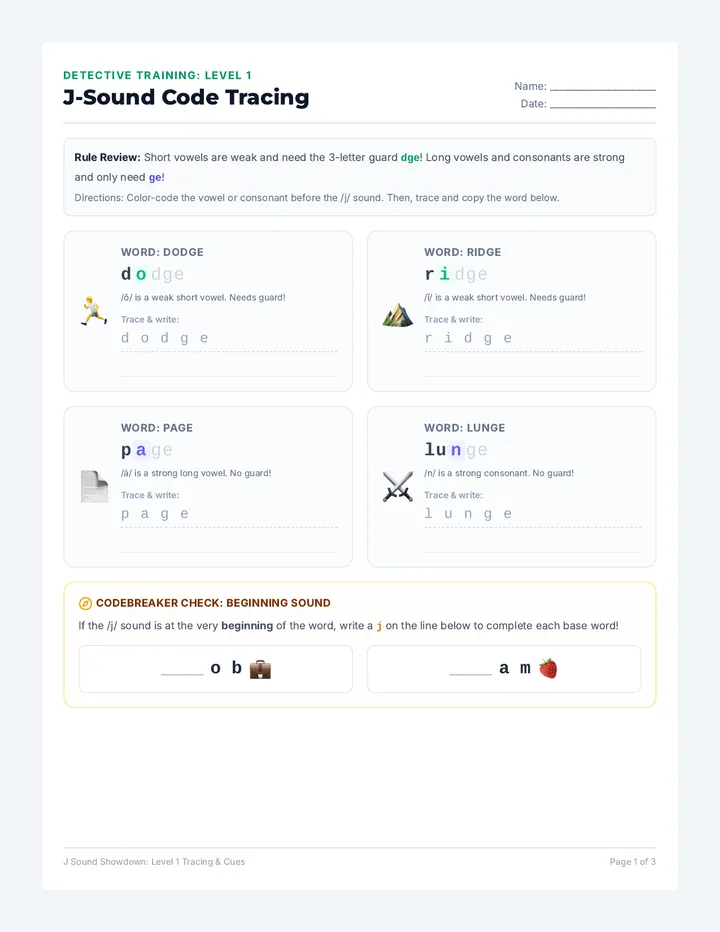
A comprehensive phonics lesson exploring the spelling rules for the /j/ sound: 'j' at the beginning, 'dge' after short vowels, and 'ge' after long vowels or consonants. Includes multi-sensory materials, explicit guides, visual slides, and leveled activities.
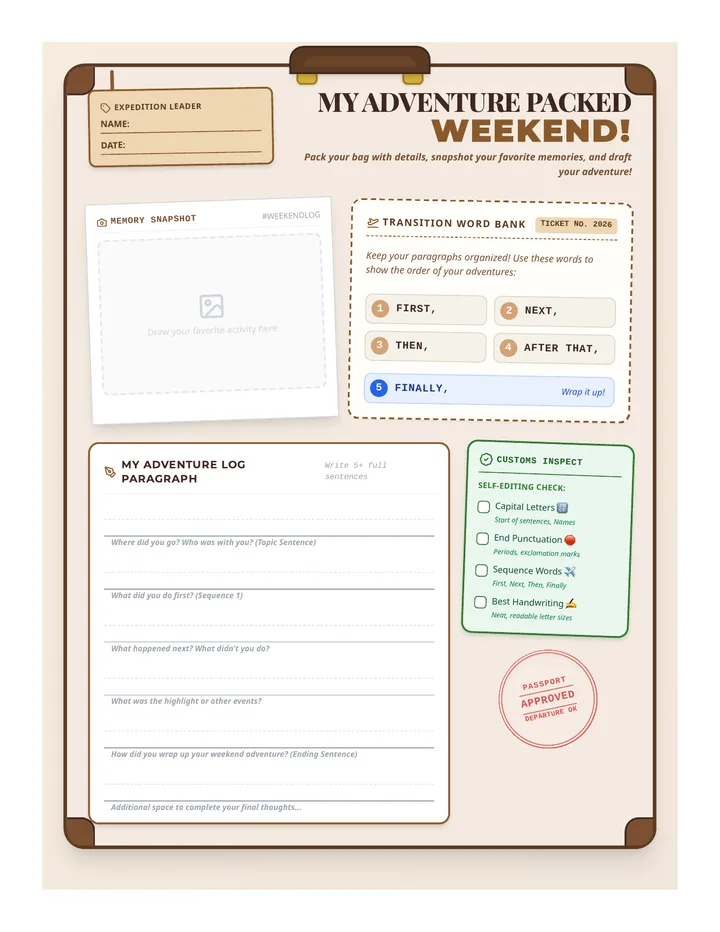
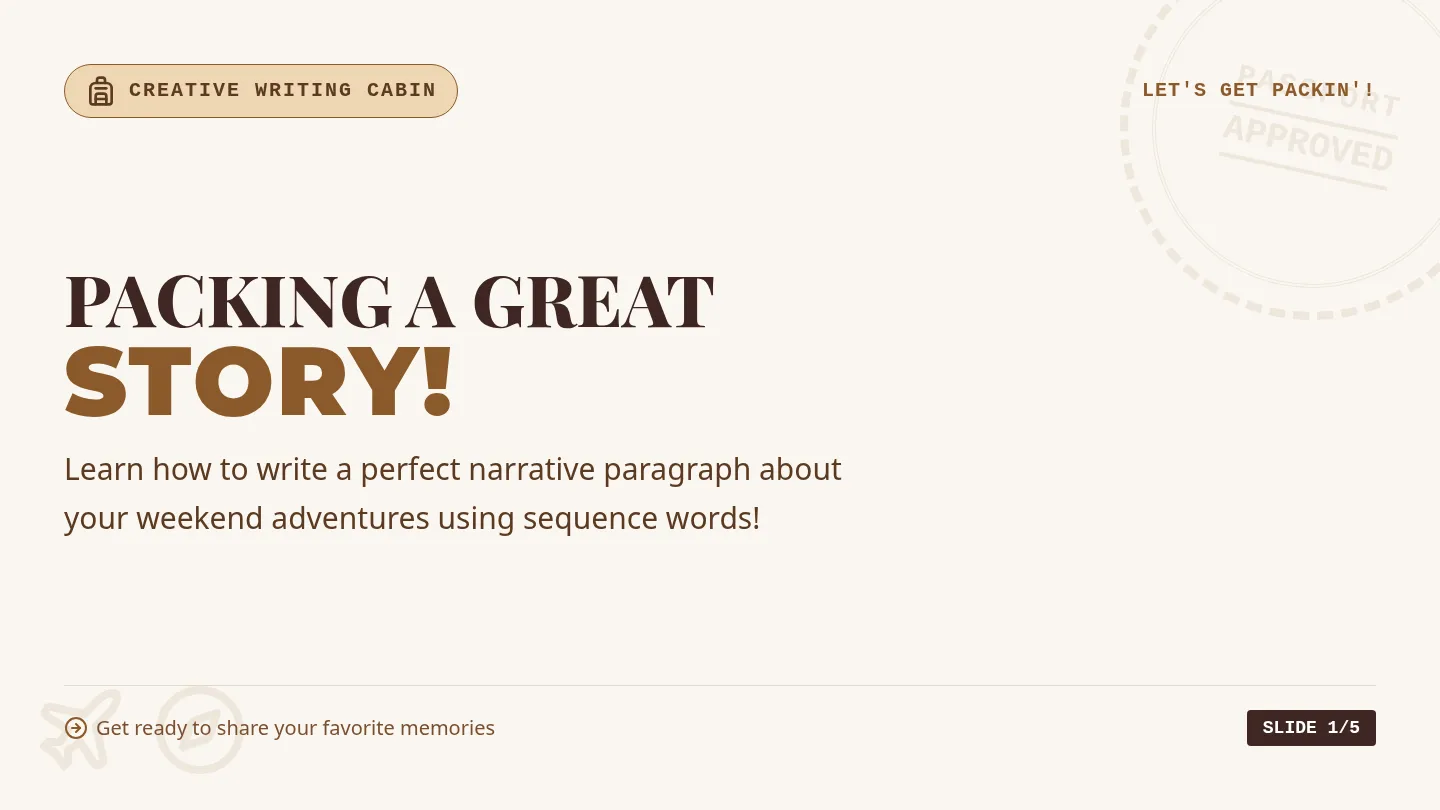
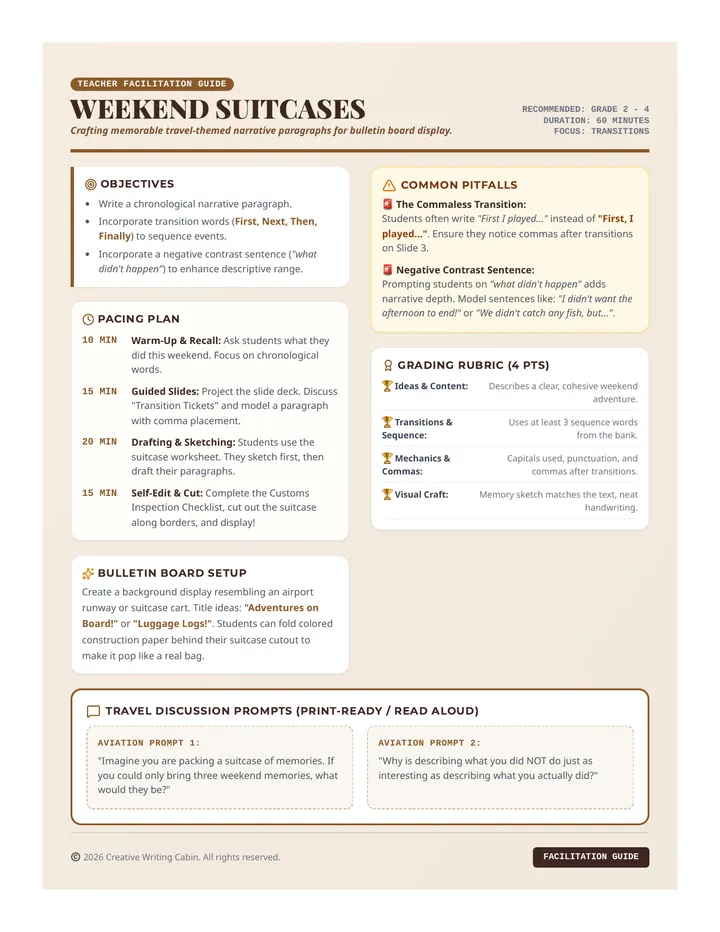
A high-interest narrative writing lesson where students draft a paragraph describing a memorable weekend. Using a suitcase-themed craftivity, students practice sequencing events, integrating transition words, and self-editing their work for a bulletin board display.