Students learn the essential components of a sentence—subject and predicate—through an architectural lens. They analyze model 'blueprints' and construct their own sturdy, descriptive sentences.
Covers the climax and resolution, final character evolution, and a cumulative synthesis of the book's message.
Focuses on synthesizing themes of resilience and fragility as the community reacts to Winslow.
Explores Nora's character, Winslow's growth, and practices summarizing key plot events from the middle of the book.
Focuses on the introduction of Winslow and Louie, establishing the setting, and initial character analysis of Louie's motivations.
Students synthesize information from multiple texts to create a comprehensive comparison and write a final evidentiary paragraph.
Students learn about hurricanes and practice organizing information into a structured paragraph with a clear topic sentence, supporting details, and a conclusion.
Students explore the science of tornadoes while focusing on identifying key details and mastering domain-specific vocabulary.
A collection of short stories designed for verbal story retell, featuring story grammar elements and inferencing questions. Includes stories with kids, animals, and fantasy creatures at two different complexity levels.
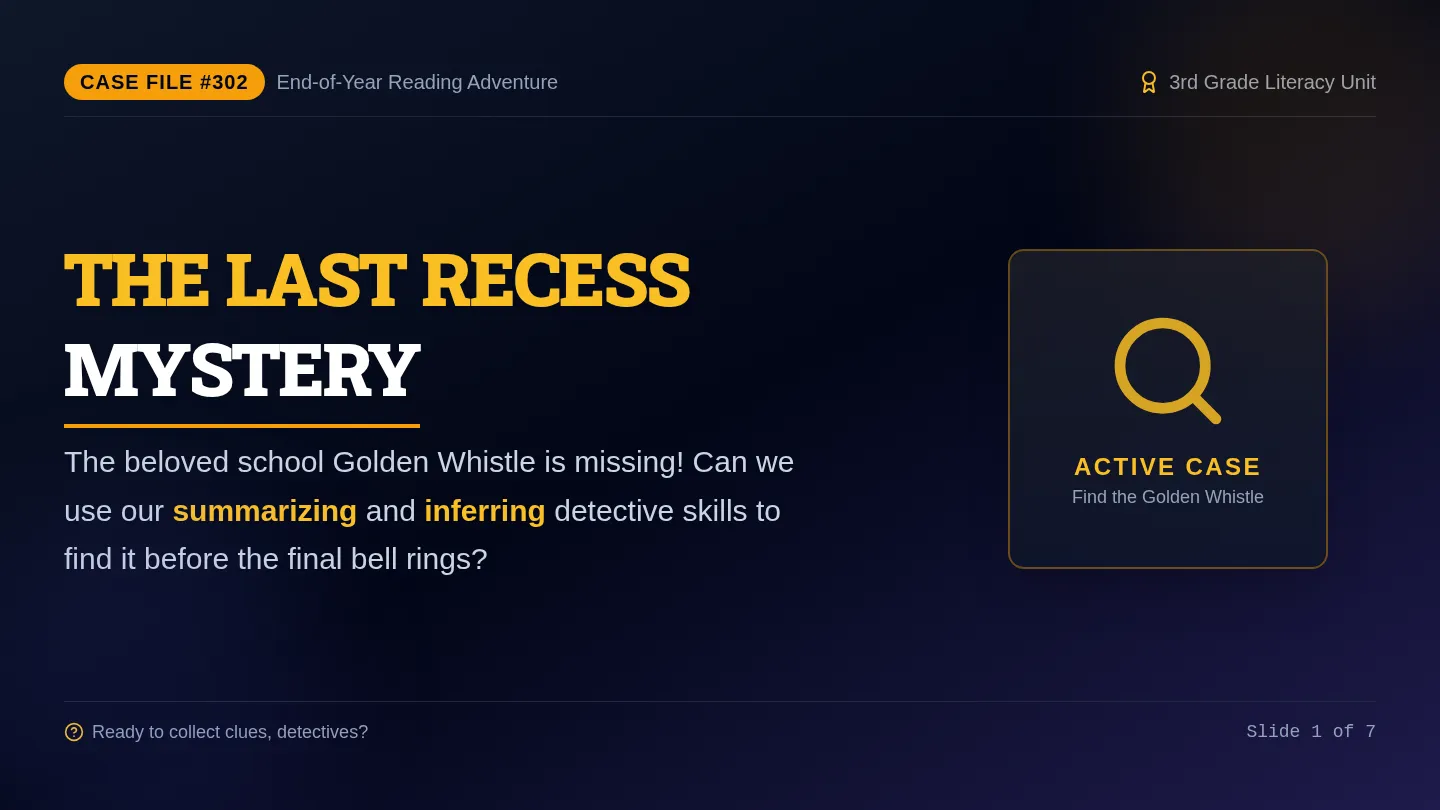
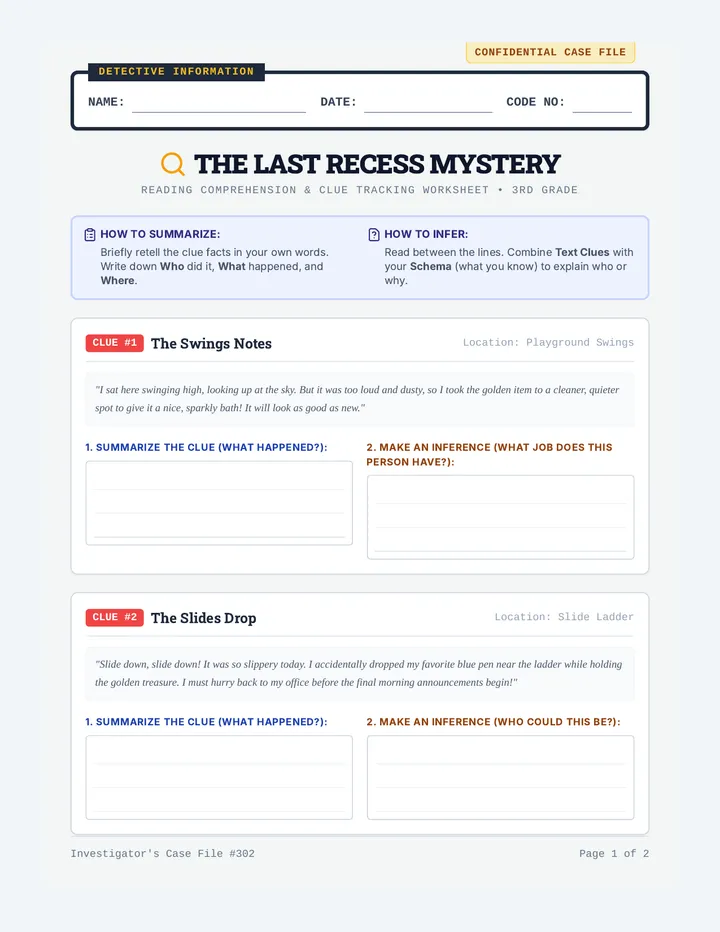
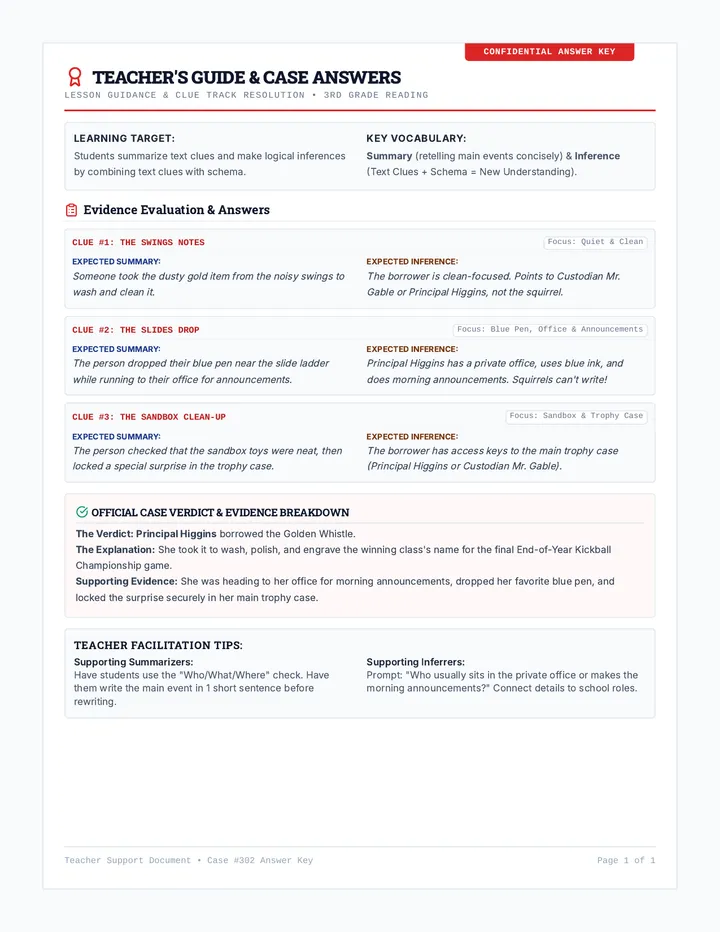
A high-energy, 25-minute reading escape room where students act as secret agents to solve 'The Case of the Golden Trophy' using inference and key idea evaluation skills.
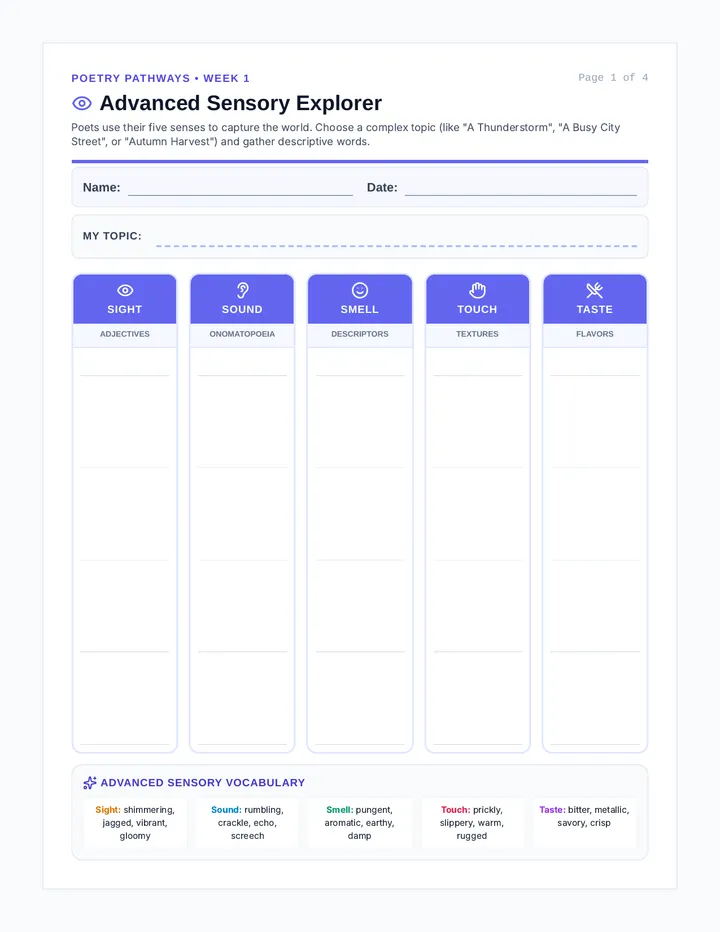
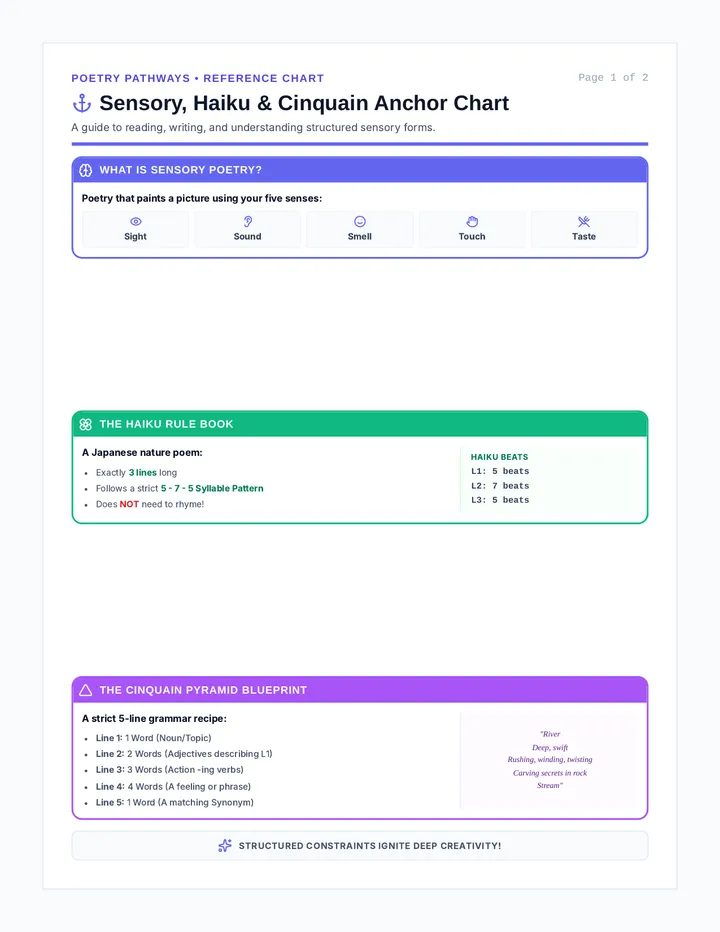
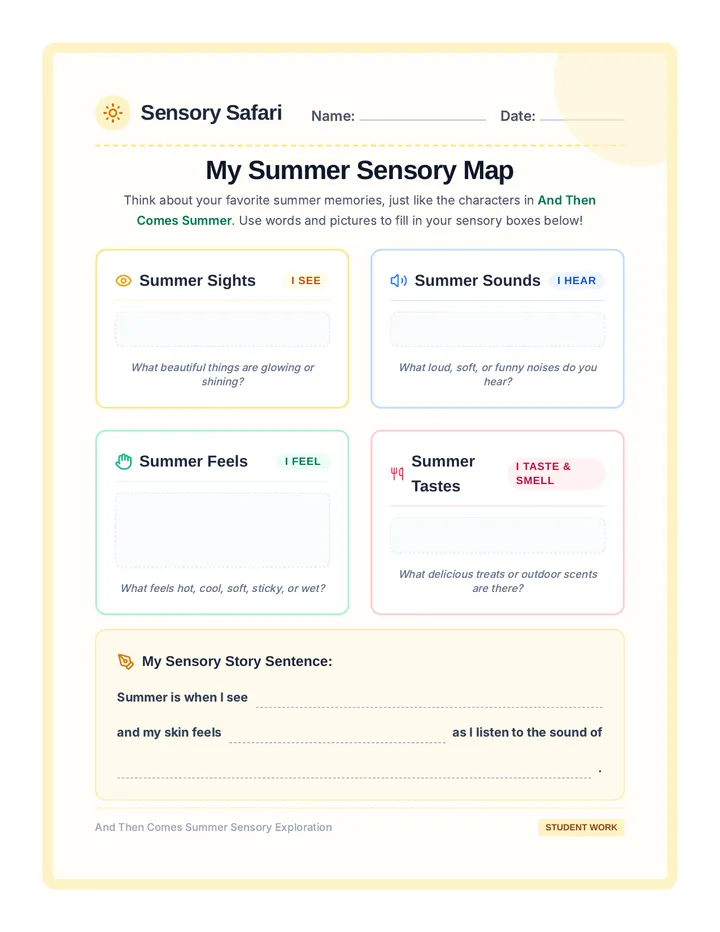
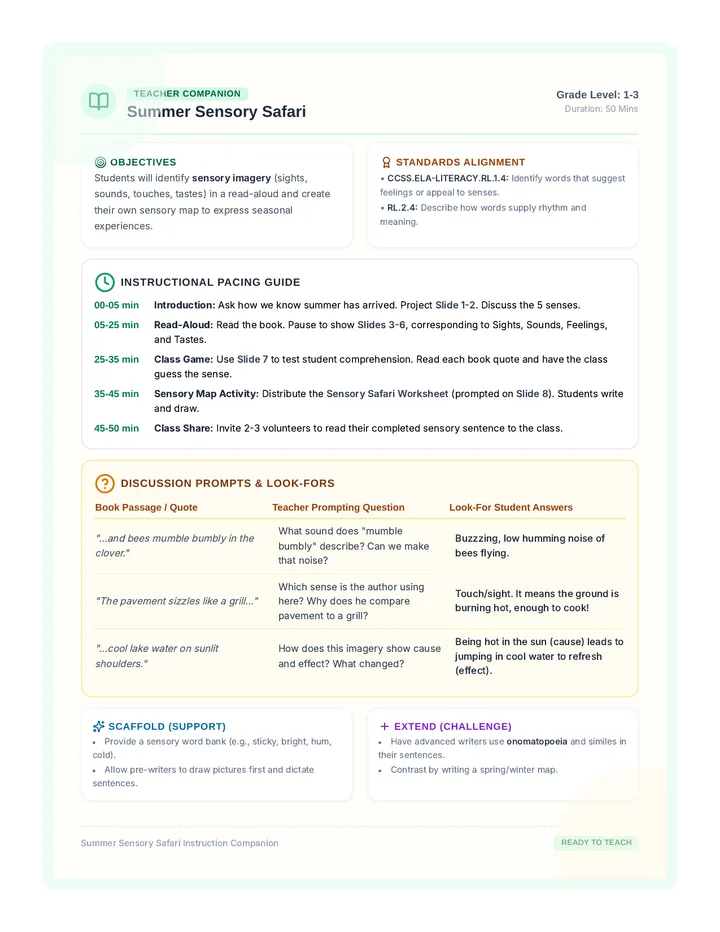
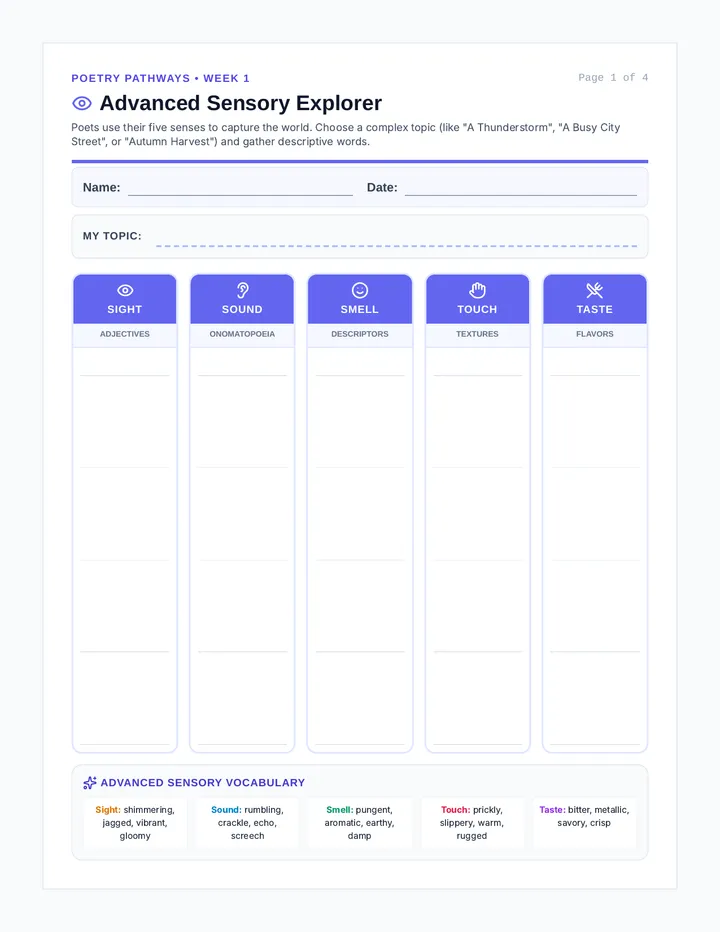
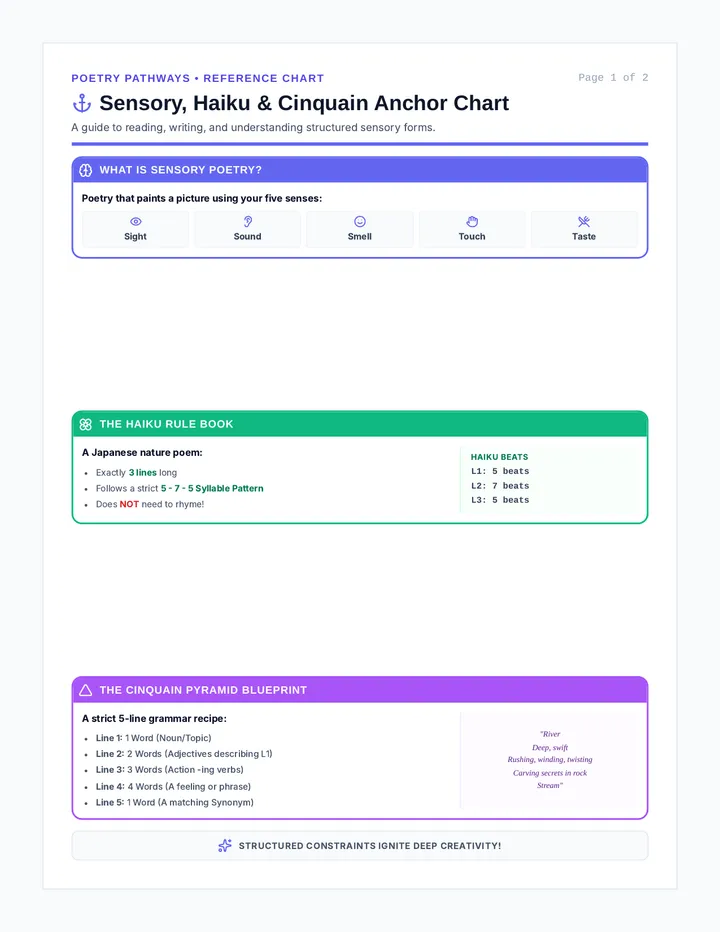
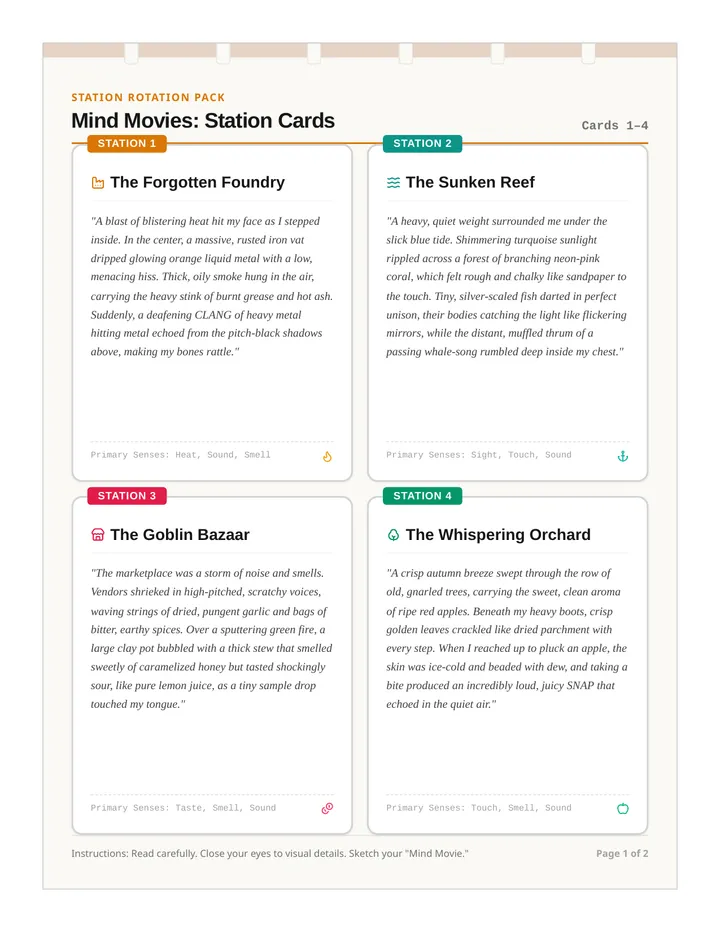
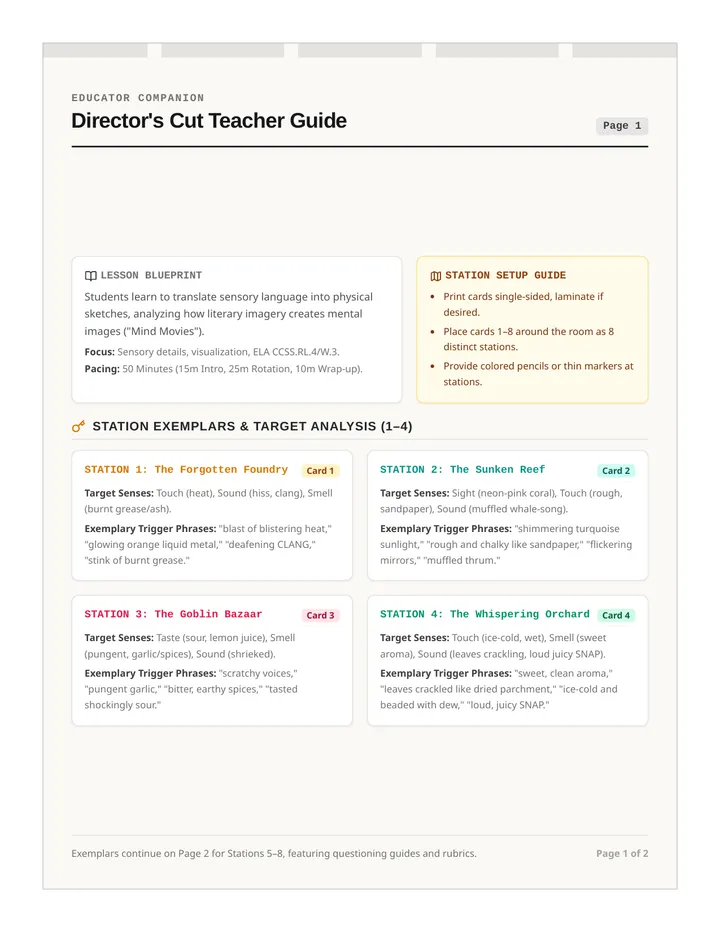
A comprehensive lesson designed to help students master the use of the five senses in their narrative writing, moving from simple descriptions to immersive storytelling.
A series of three ELA homework assignments based on the story 'Oakley’s Azure Acorn,' focusing on phonics, vocabulary, comprehension, and grammar.
A 20-minute mini-lesson introducing students to the basic structure of a simple sentence, focusing on identifying the subject (who or what) and the predicate (what is happening).
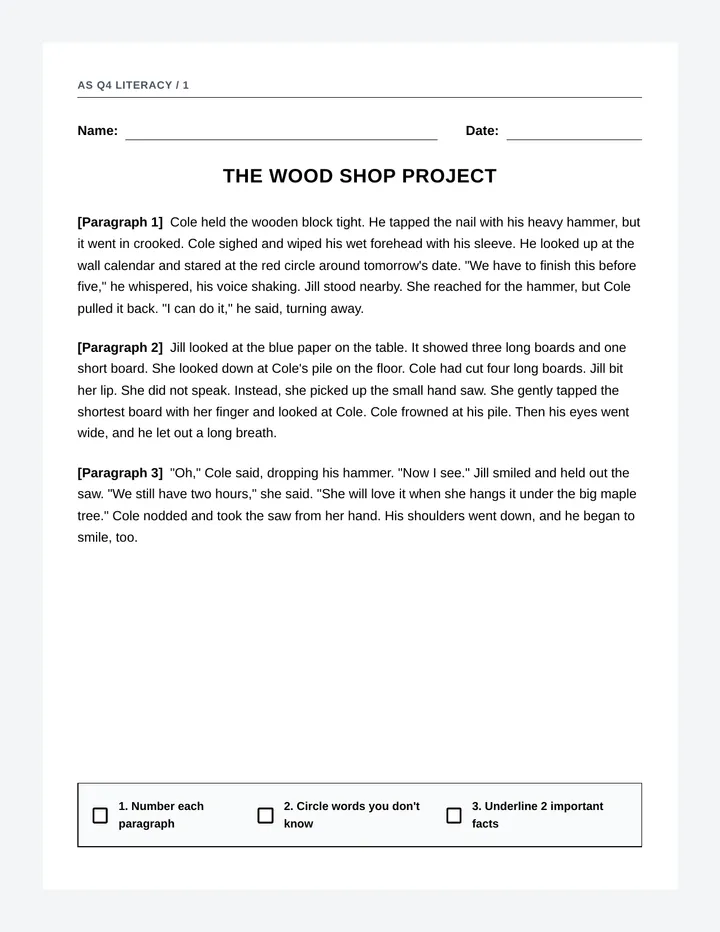
A reading comprehension lesson focusing on sequencing events through a DIBELS-style maze task featuring a story about building a secret fort.
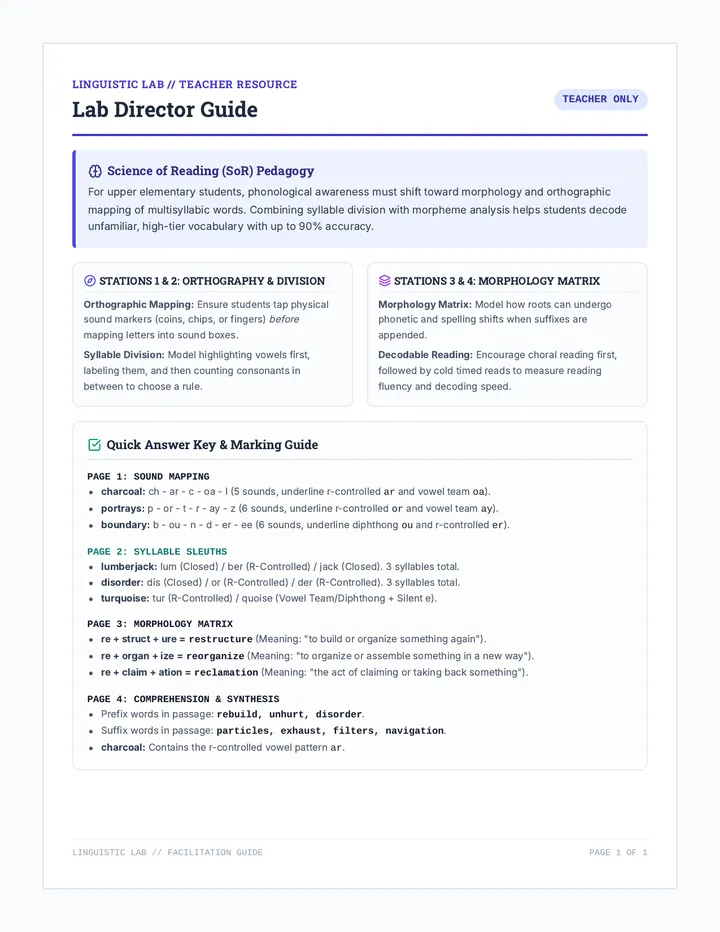
A lesson focused on decoding and dividing multisyllabic words with closed syllables through a hands-on cut-and-paste activity.
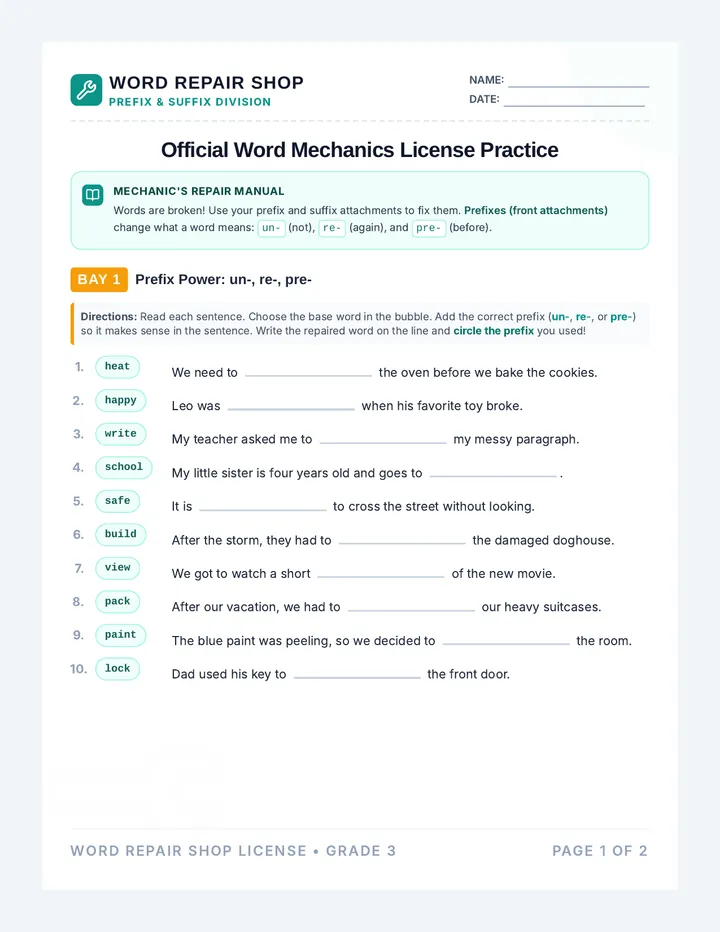
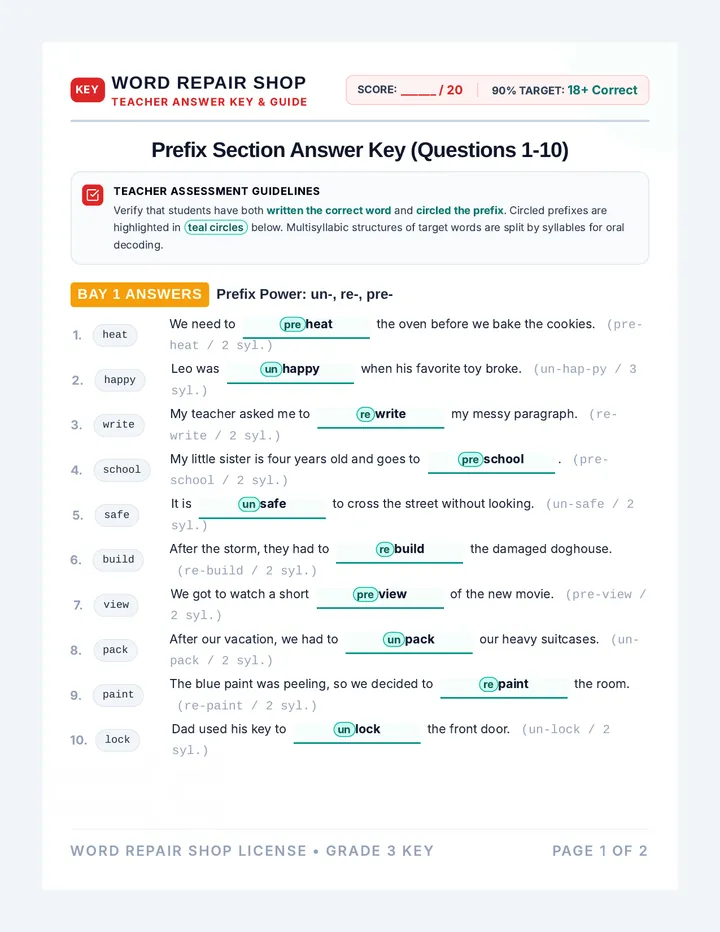
A comprehensive lesson for 2nd-3rd graders on decoding unfamiliar words using context clues, prefixes, suffixes, and root words, all framed within an engaging detective theme.
A quiz assessing phonogram patterns (oke/ake), double consonant endings, and simple/compound sentence construction for a diverse range of primary reading levels.
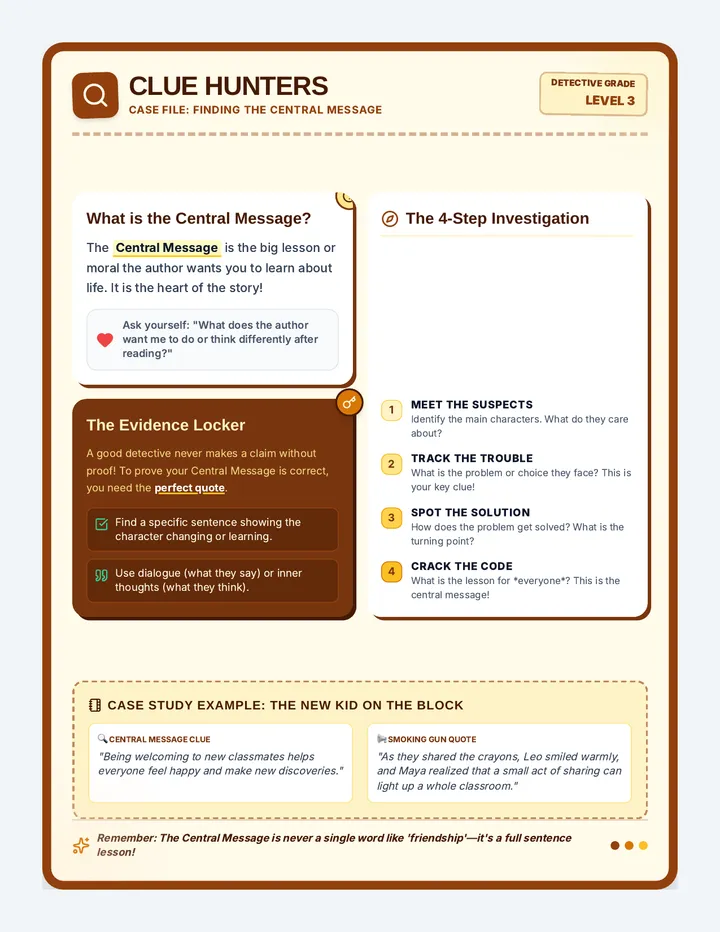
A lesson focused on identifying the 'gist' of short informational texts using a detective-themed approach to help students synthesize key information into a single sentence.
A comprehensive mini-lesson on teaching students how to integrate internal monologue into their narrative writing to reveal character traits and react to plot events.
This lesson guides students through the process of crafting topic sentences that directly respond to a writing prompt about Wilma Rudolph's perseverance. It emphasizes the integration of prompt language, previews of text evidence, and the foundation for analytical explanation.
Students become POV Detectives to identify first-person and third-person points of view using evidence-based sorting and analysis.
A targeted small group lesson designed to help students slow down pivotal moments in their rainforest narratives by incorporating sensory details, internal monologue, and dialogue.
This lesson teaches students how to craft a strong paragraph by combining a clear focus statement with specific supporting details, using the fascinating world of frogs as a model.
Students identify a topic they are experts in (sport, hobby, or activity) and develop a focused research question to guide the writing of an informational paragraph.
A hands-on literacy center where students use building blocks to construct 'Word Towers' using prefixes, suffixes, and root words found in 'The Most Beautiful Roof in the World'. Students act as canopy architects, assembling complex scientific terms and documenting their meanings in a field log.
A comprehensive guide to the 1-1-1 doubling rule, helping students identify when to double the final consonant before adding -ing. Includes instructional slides, a practice worksheet, an exit ticket, and an answer key.
A fun, sky-themed lesson for Grade 3 students to master tricky homophones through visual presentation, a collaborative board game, and targeted practice.
A fast-paced, 20-minute cross-curricular lesson on writing summaries using the GIST method. Students learn to distill complex information into a concise 'highlight reel' of exactly 20 words.
A comic-themed lesson teaching students how to identify and construct the beginning, middle, and end of a story using the visual and narrative structure of comic strips.
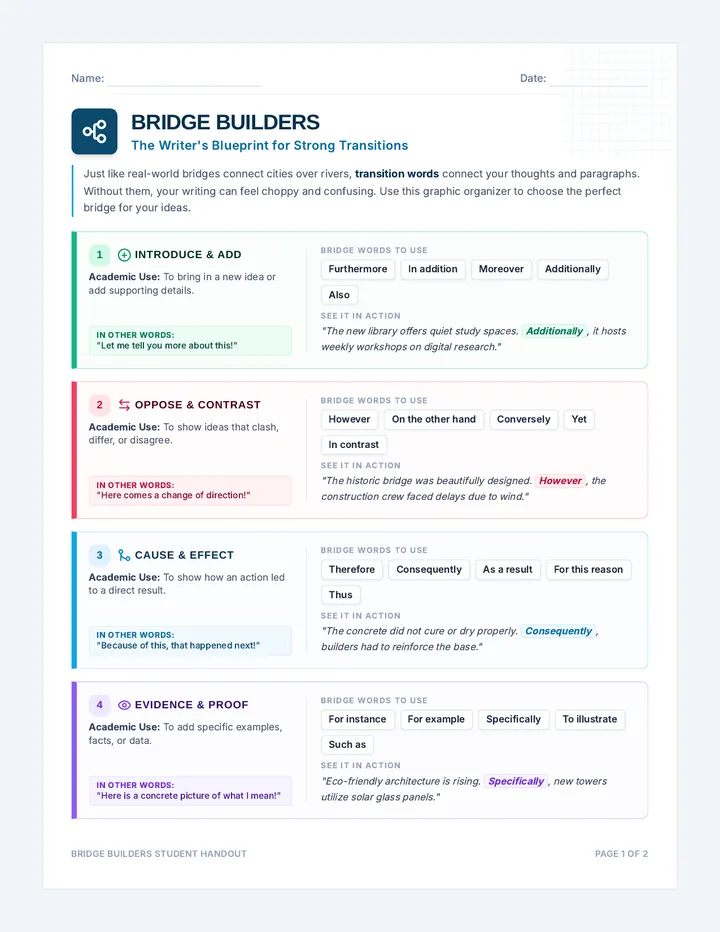
A Grade 3 writing lesson focused on teaching students how to elaborate on facts in informational writing about frogs using specific transition phrases to add depth and clarity.
The initial diagnostic session where the tutor assesses the student's phonics knowledge, oral reading fluency, and reading comprehension.
A fun, interactive phonics lesson centered around a 'Battleship' style game where Grade 3 students identify and read multisyllabic words containing the schwa sound. Students practice decoding and identifying the unstressed vowel sound in a nautical-themed setting.
A word study lesson focused on the vowel patterns 'ue', 'ew', and 'tu' representing /u/ and /ju/ sounds, including syllable division and definitions.
Focuses on the first book in the Roscoe Riley Rules series, covering reading comprehension, vocabulary, and creative response activities.
A 15-minute high-energy mini-lesson designed to build writing stamina using the Gradual Release of Responsibility framework, featuring penguin-themed motivation.
A comprehensive set of materials for Chapter 14 of 'The Westing Game', focusing on plot analysis, character relationships during the snowbound investigation, and making inferences about the Westing heirs.
A 3rd-4th grade ELA lesson that explores character development and setting through play scripts and dramatic performance. Students analyze dialogue and stage directions to bring characters to life.
A lesson focused on descriptive language and sensory observations of the jungle, guiding students through a brainstorming process for creative writing or science observation.
A comprehensive lesson on auxiliary verbs (be, do, have) using a 'Verb Pit Crew' theme to explain how helping verbs support main verbs in sentences. Includes a detailed lesson plan, anchor chart, graphic organizer, and practice worksheet.
A lesson focused on the prefix 'semi-' through a high-stakes sports narrative and analytical comprehension questions.