A 7th-grade grammar lesson focused on identifying and correcting misplaced modifiers to resolve ambiguity, featuring a 'Sentence Surgery' workshop and a creative illustration activity.
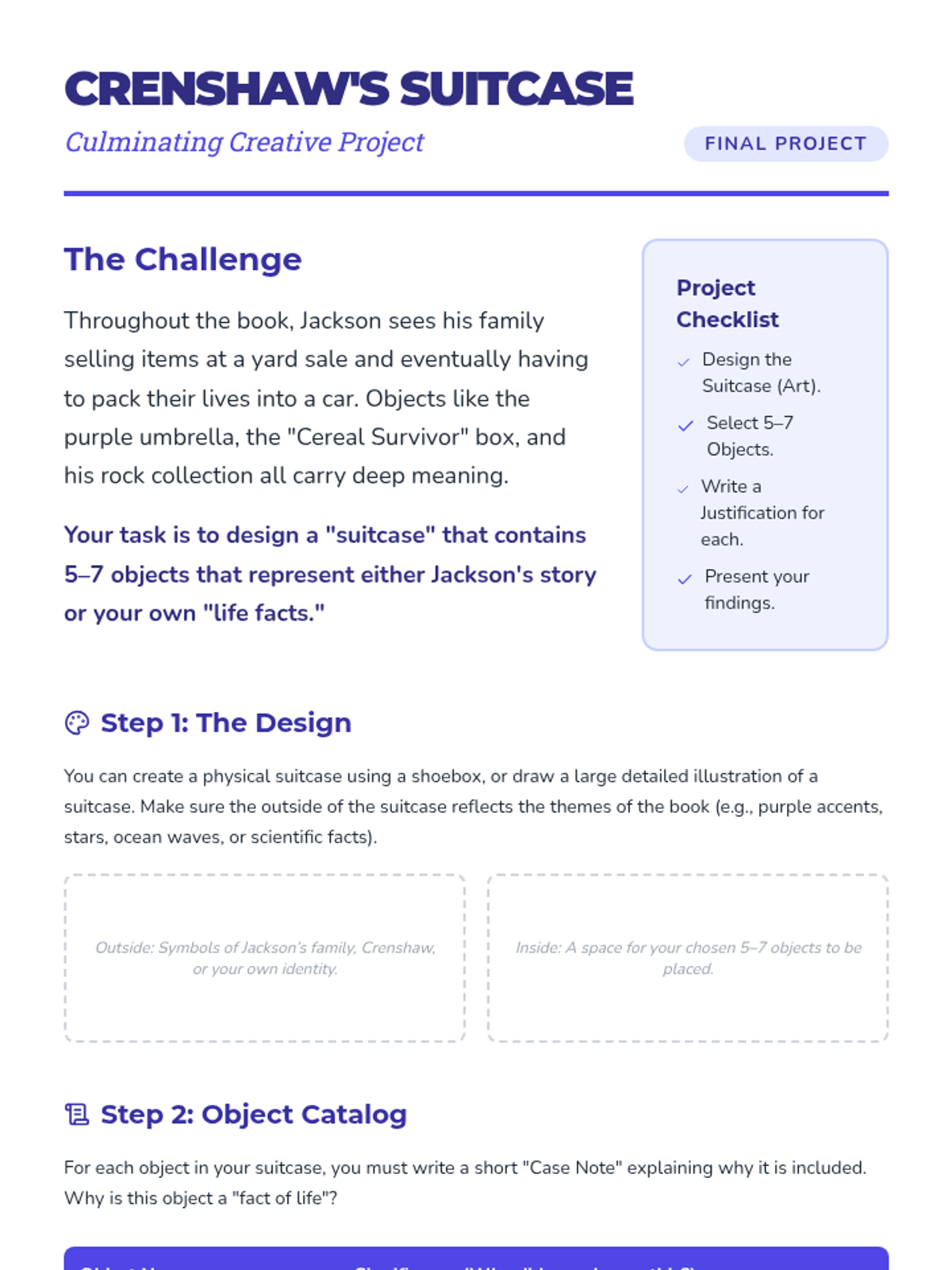
A final culmination of the book club unit, where students synthesize the entire novel through creative projects and thematic reflections.
The emotional climax and resolution of the story as the tiger is released and Rob finally opens his suitcase, covering chapters twenty-one through thirty.
Exploring the developing friendship between Rob and Sistine and the growing pressure of the tiger's presence, covering chapters eleven through twenty.
An introduction to the Lister Motel and Rob Horton's 'suitcase', covering the first ten chapters of the novel.
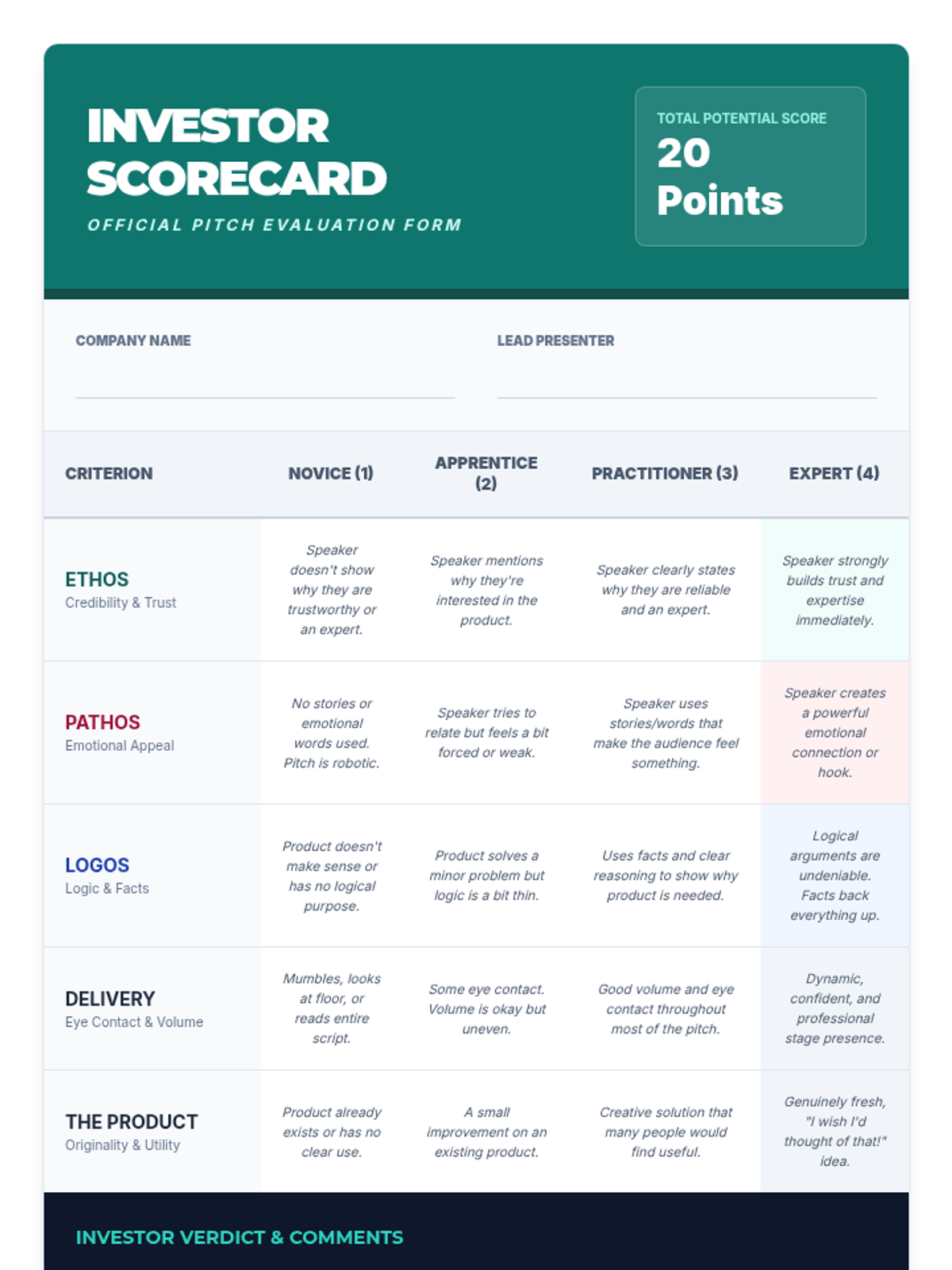
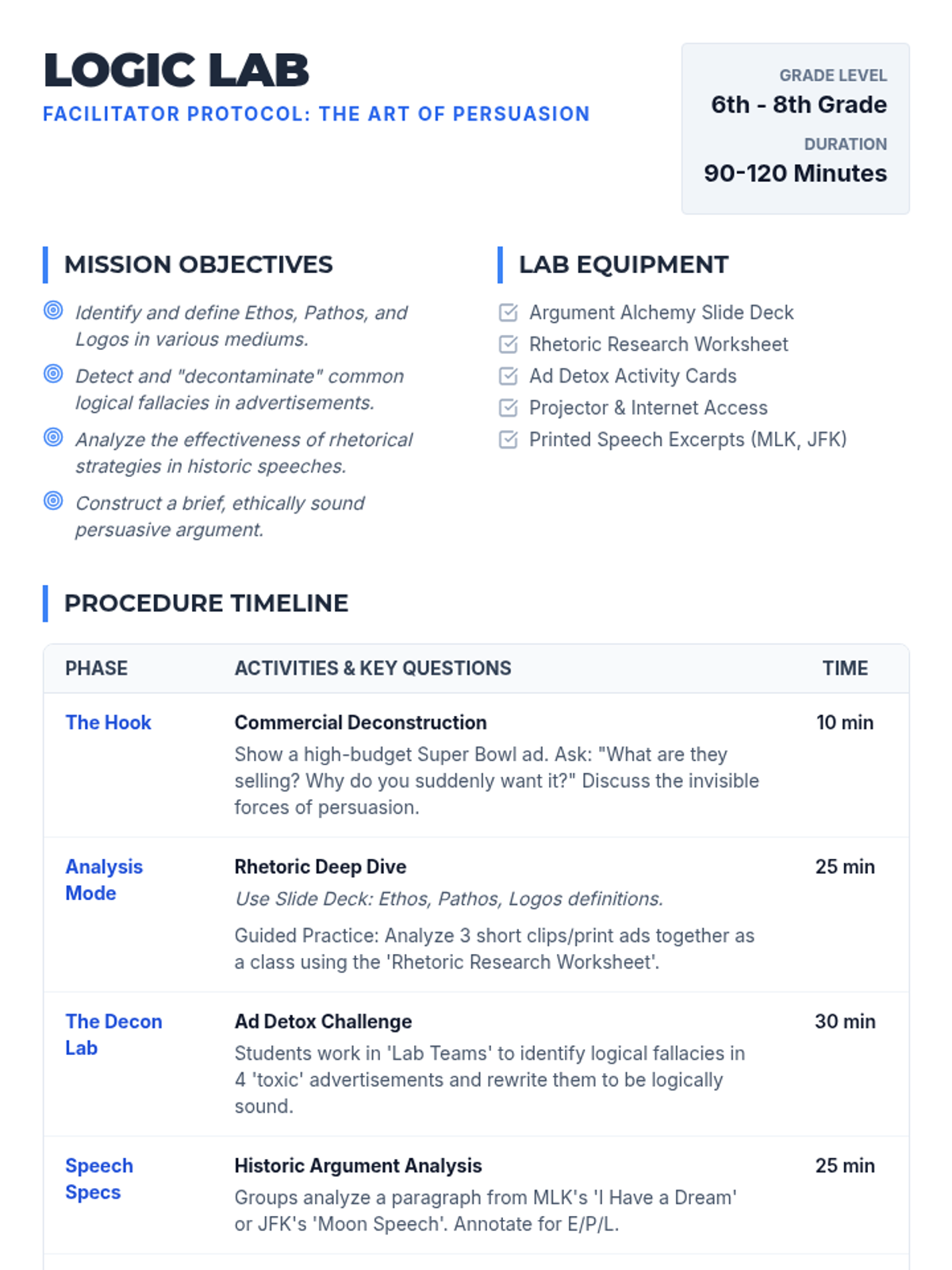
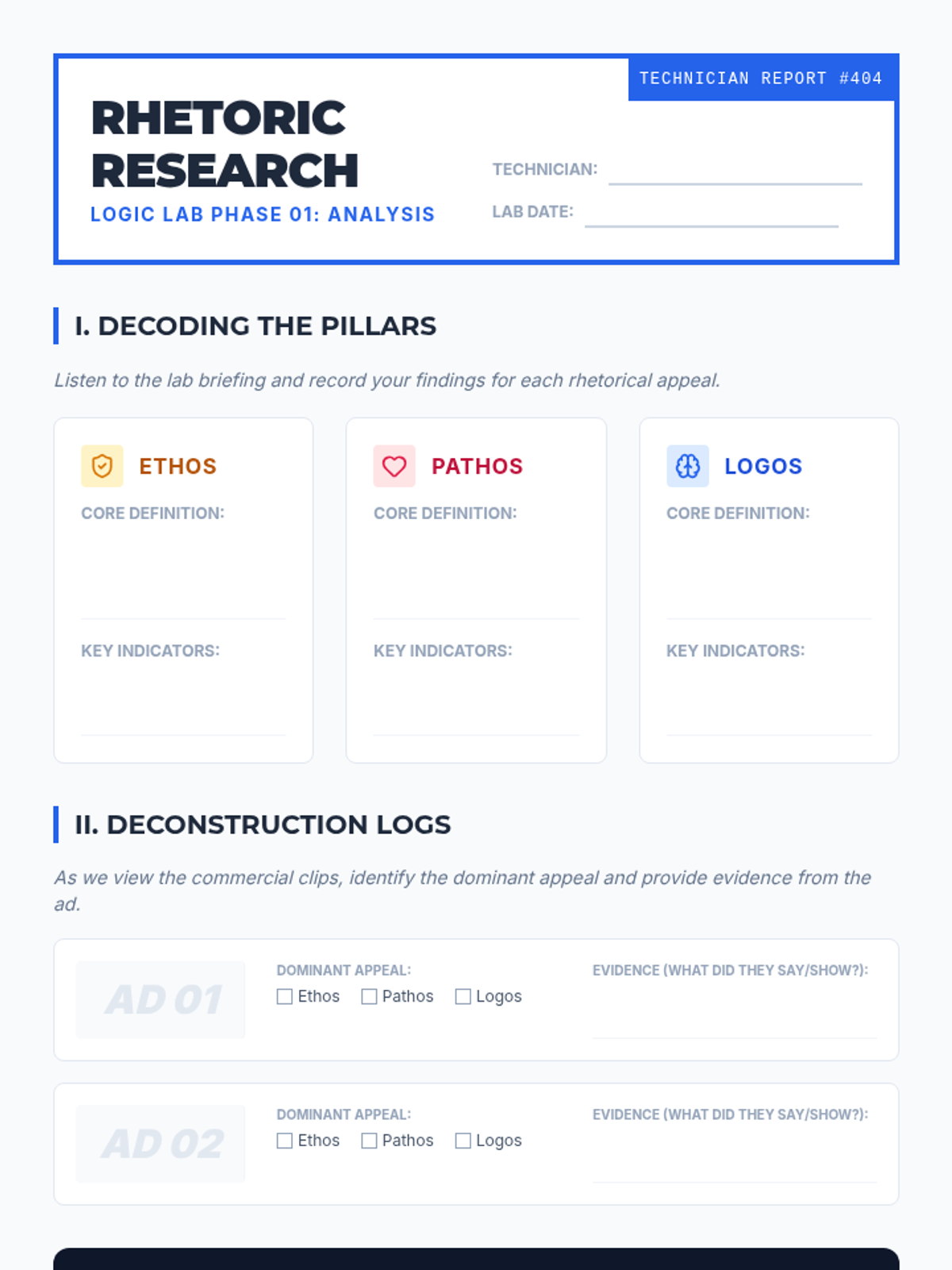
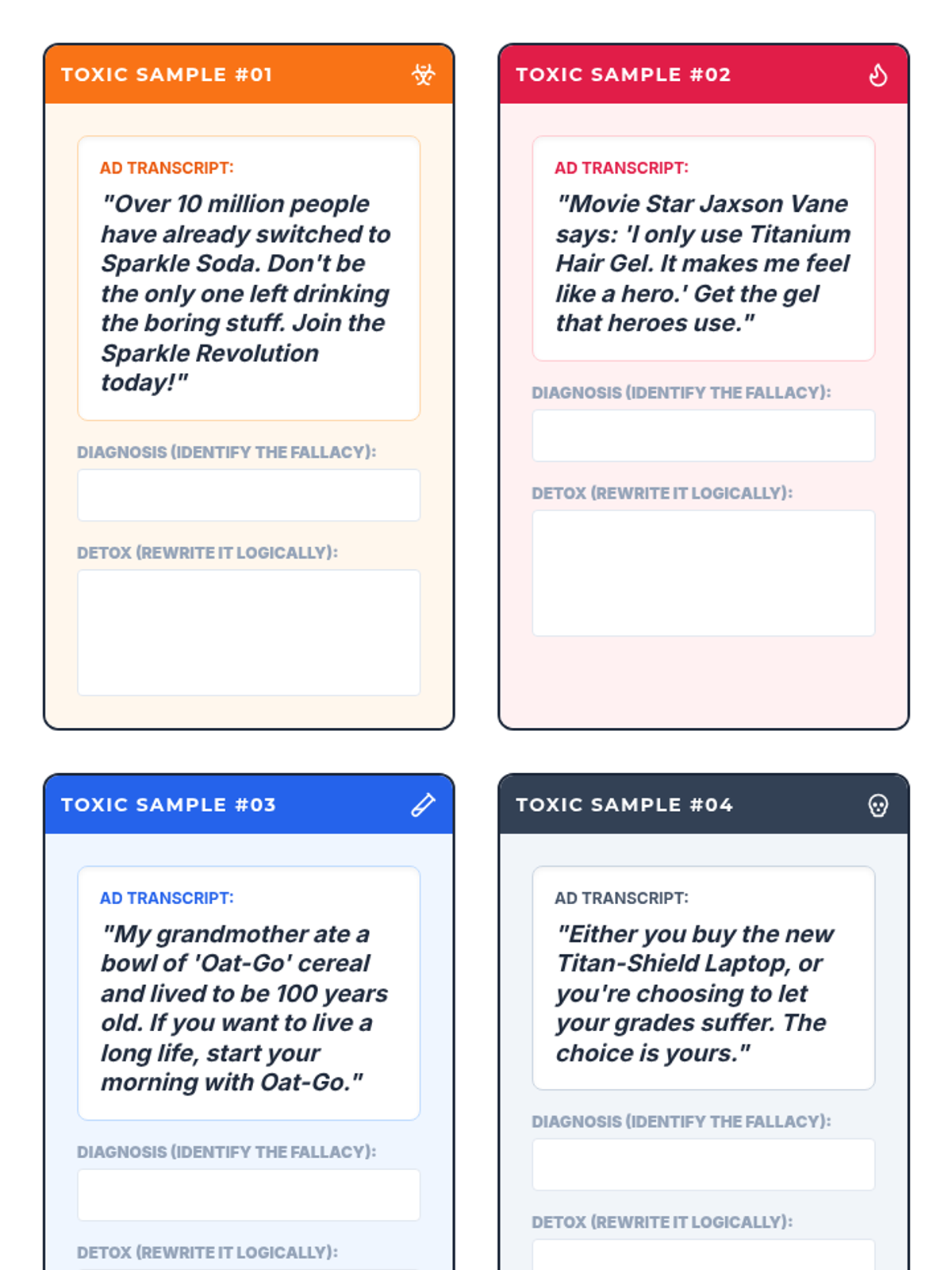
A comprehensive lesson on narrative sentence variation focusing on varied beginnings, sentence combining, length modulation, and descriptive clauses. Students move from identifying monotone rhythms to crafting dynamic, flowing prose.
Students explore the magical world of figurative language, learning to identify and craft similes, metaphors, personification, and more through creative 'alchemy' themed exercises.
A high-energy grammar review game where students act as 'Syntax Technicians' to fix glitches in a virtual world. This lesson focuses on mastering commas, sentence errors, capitalization, and verb tense through collaborative task card challenges.
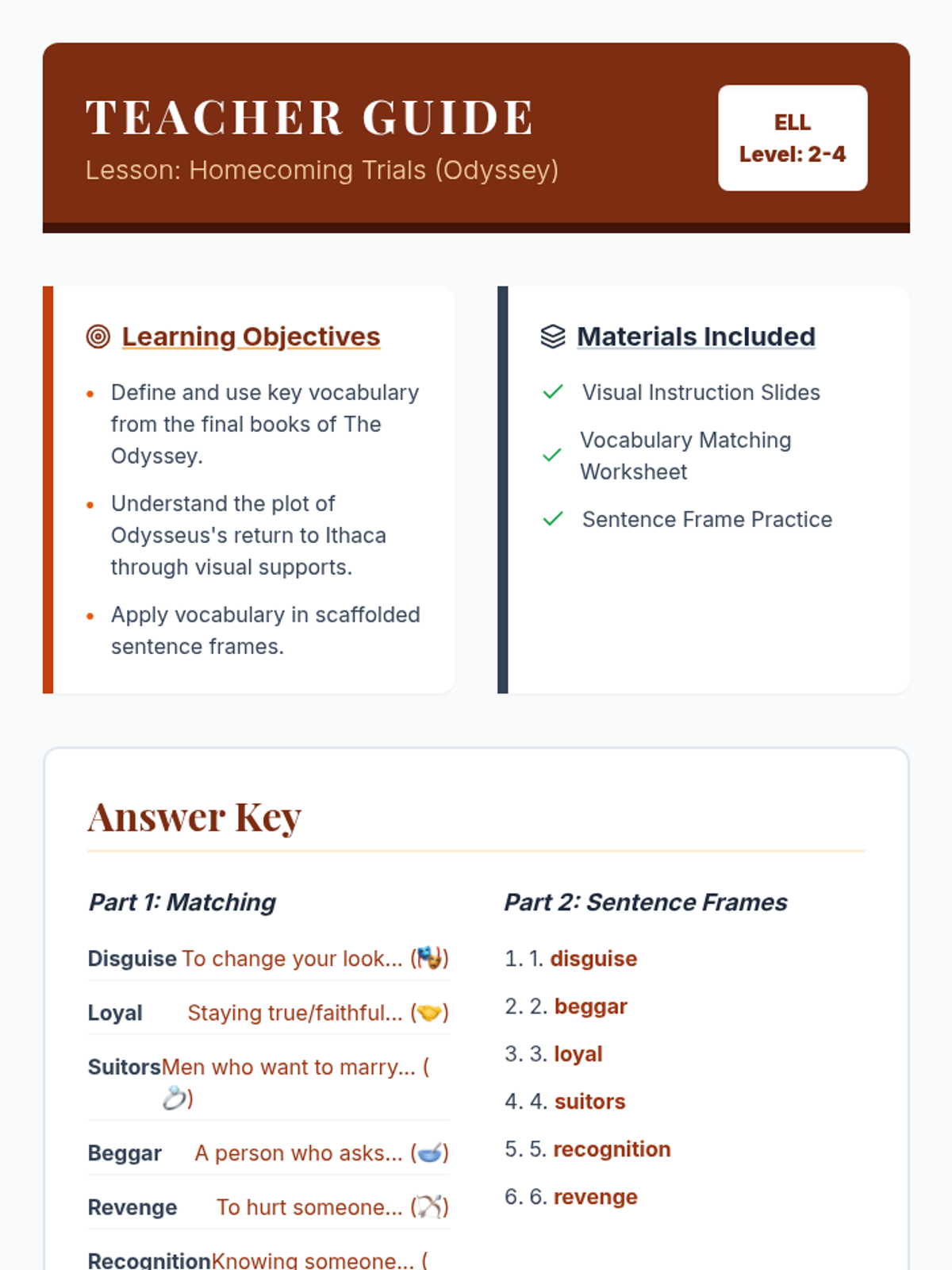
A vocabulary focused lesson on Chapters 4-7 of Lois Lowry's The Giver, exploring key terms through textual context and modern application.
A creative writing lesson for middle school students exploring empathy and perspective-taking through the medium of internal monologues. Using a poignant animated video about cyberbullying, students analyze character motivations and the impact of digital actions.
A mini-lesson focused on the art of crafting narrative endings that effectively resolve conflict and showcase character growth and reflection. Students learn to move beyond simply 'stopping' a story to 'finishing' it with a meaningful theme or lesson learned.
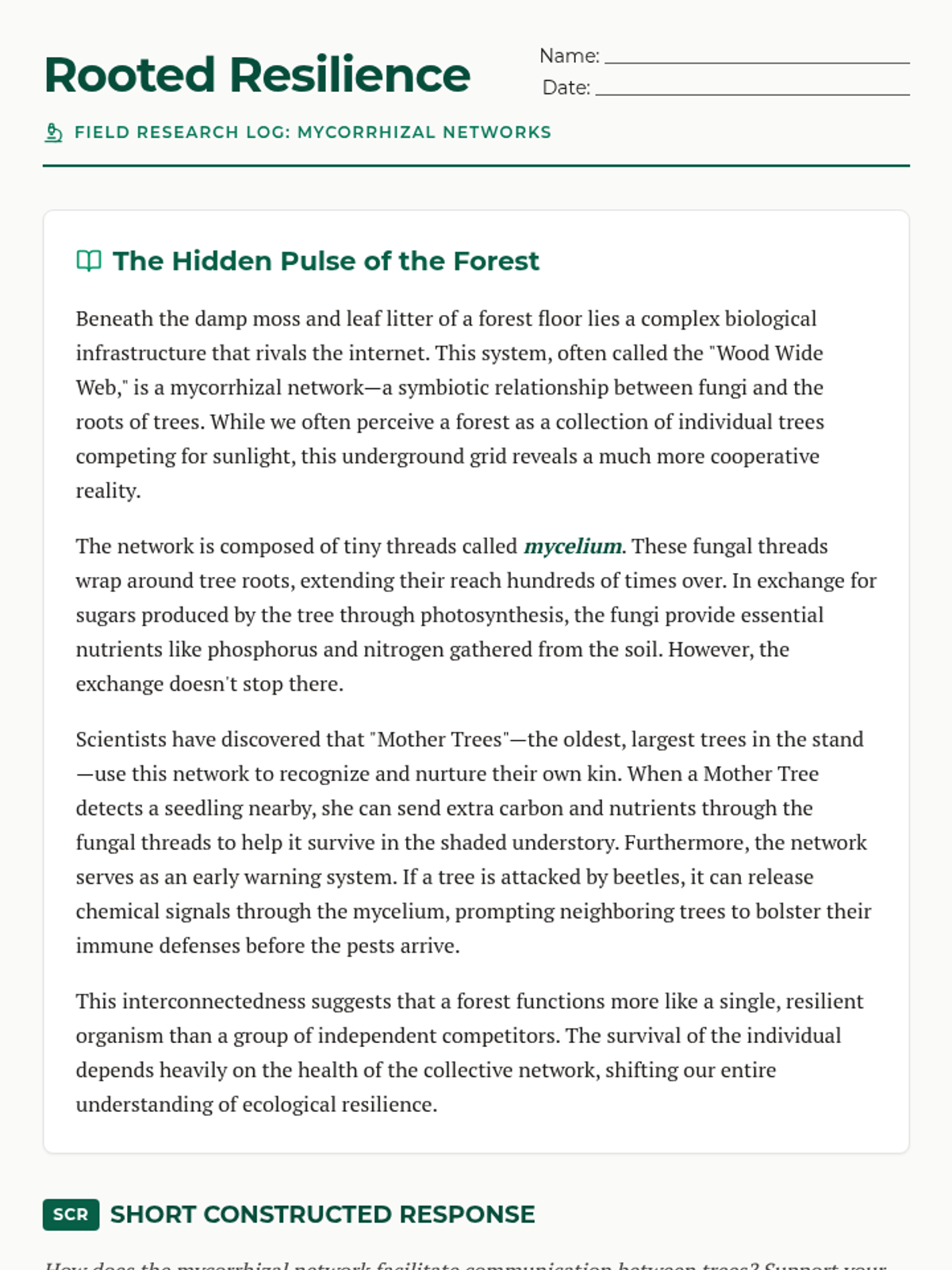
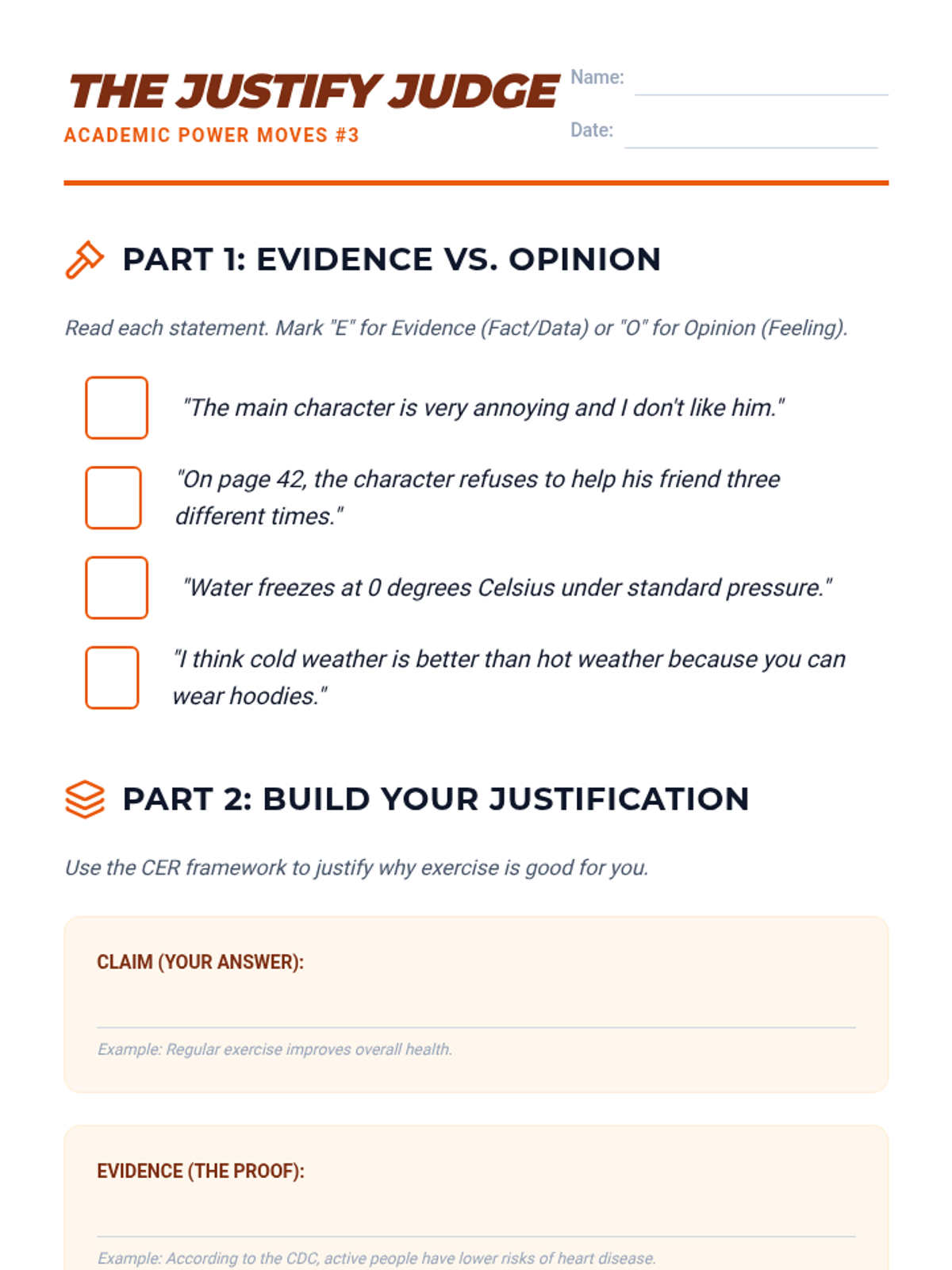
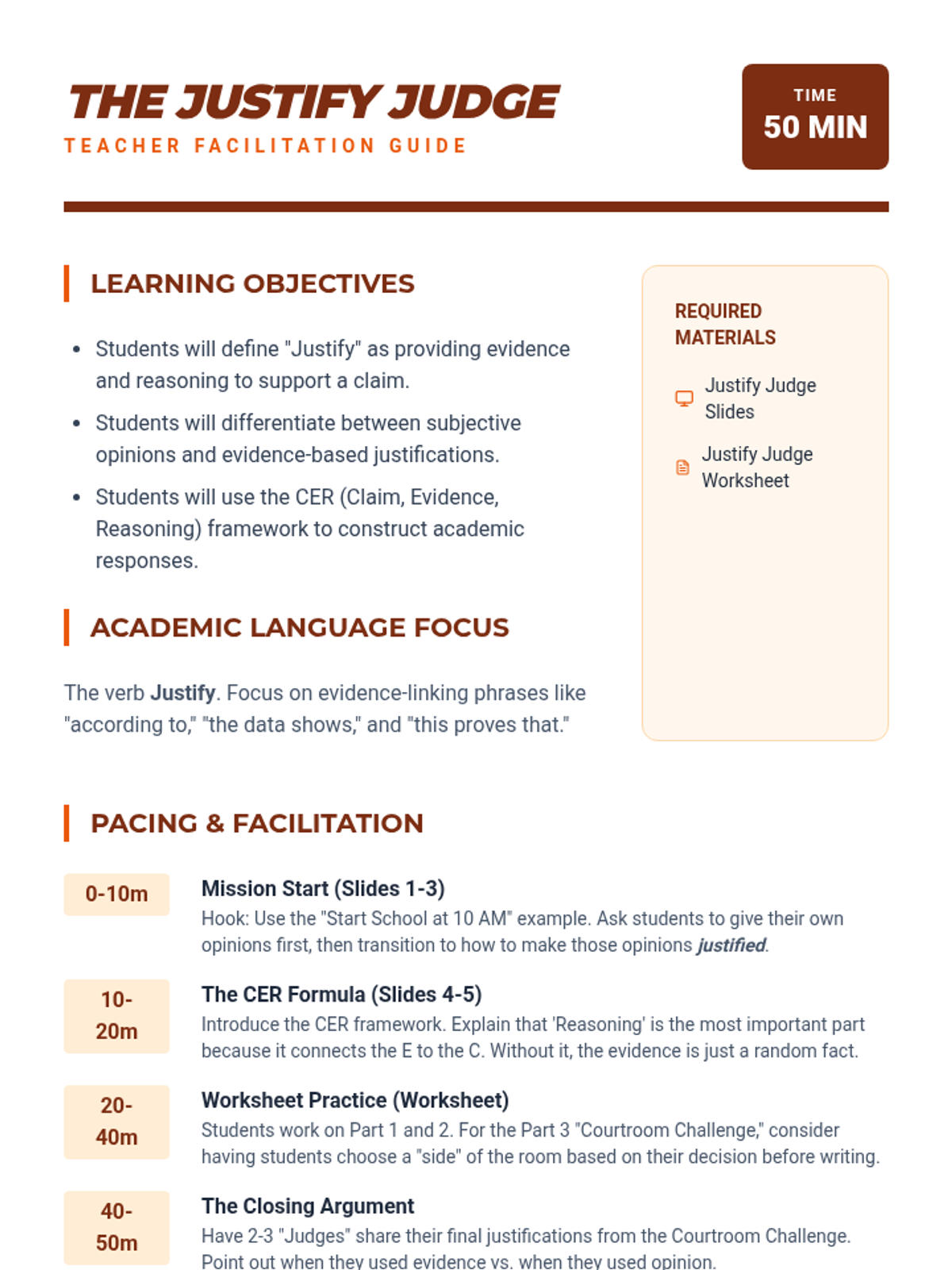
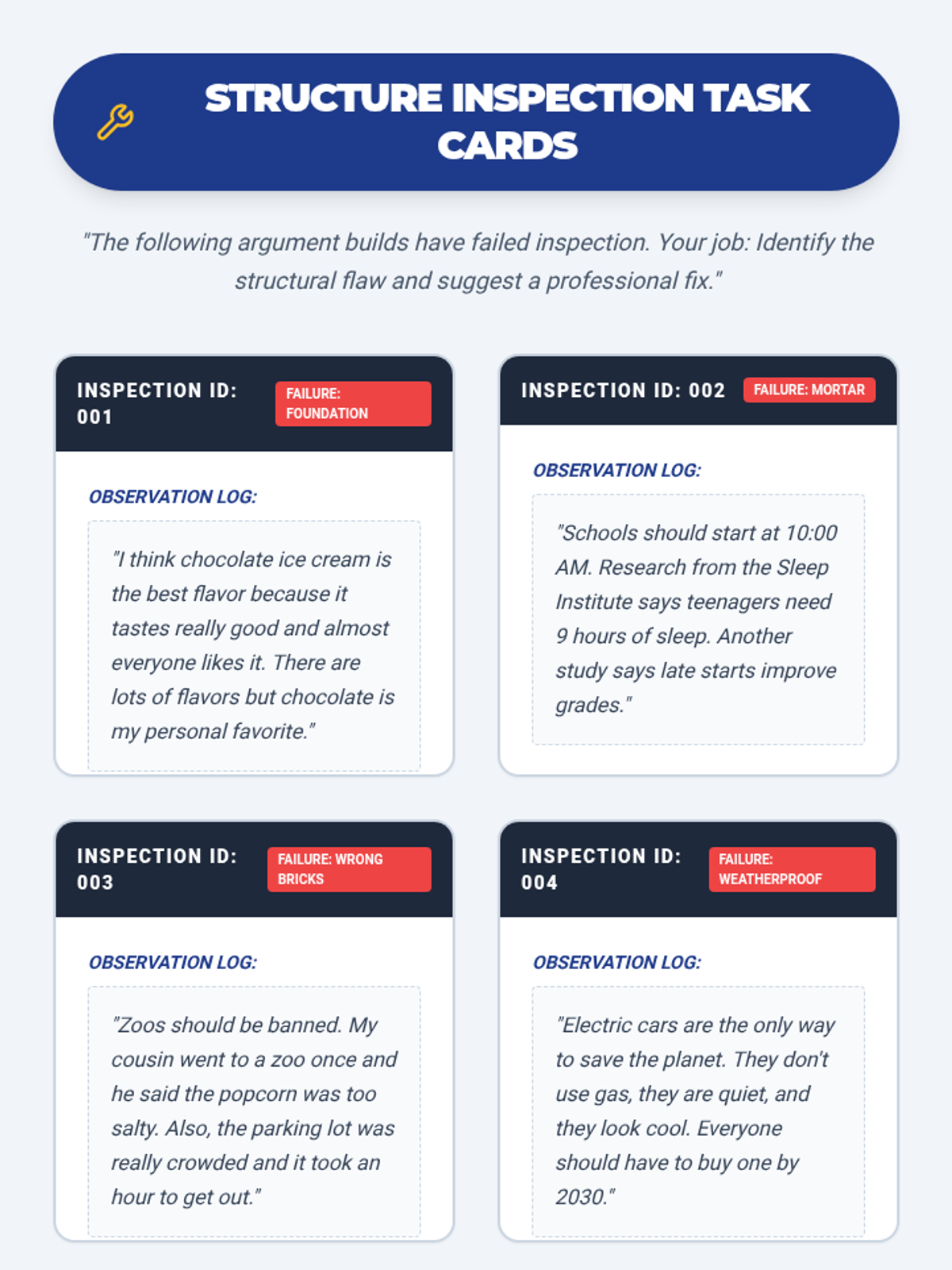
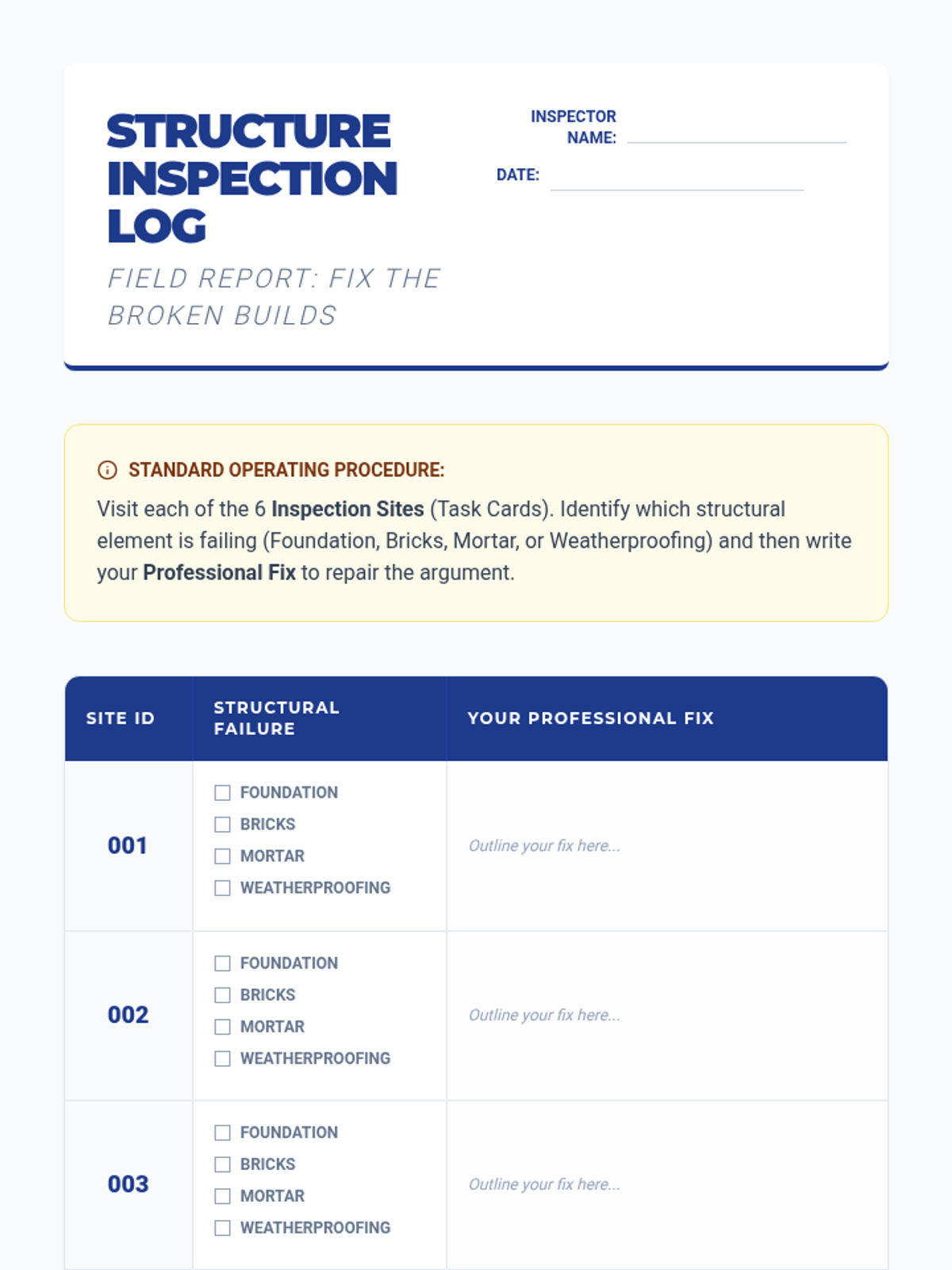
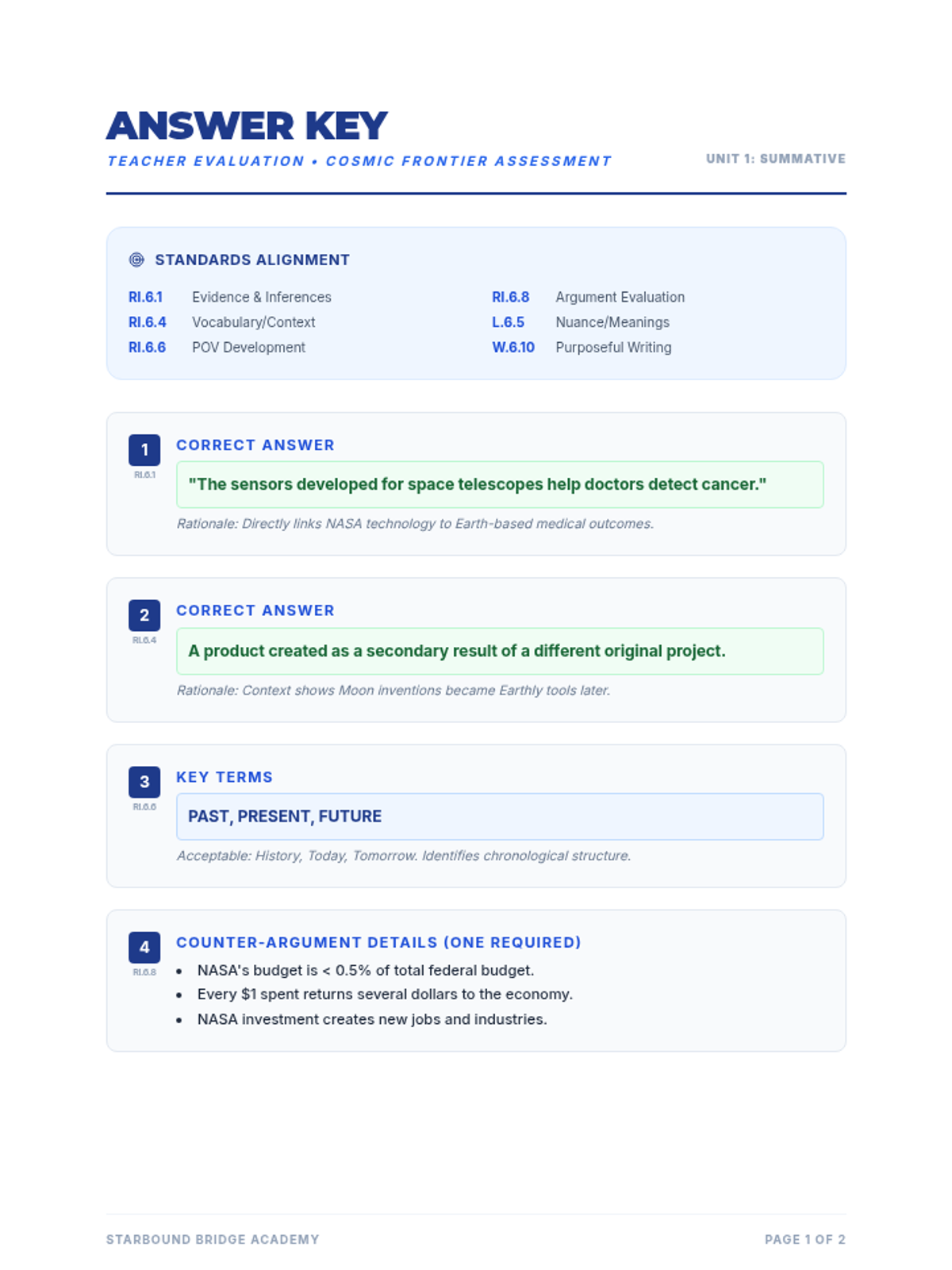
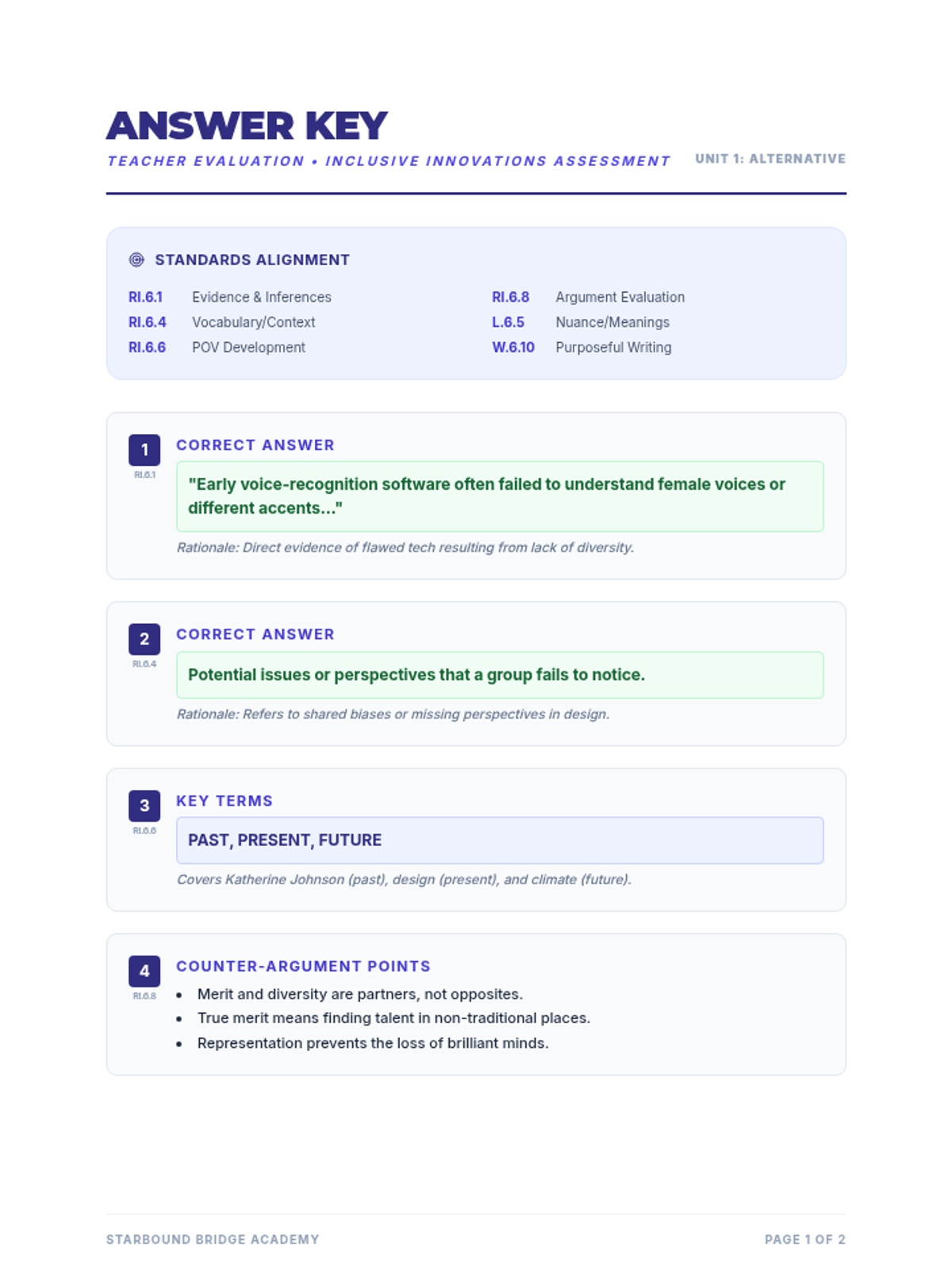
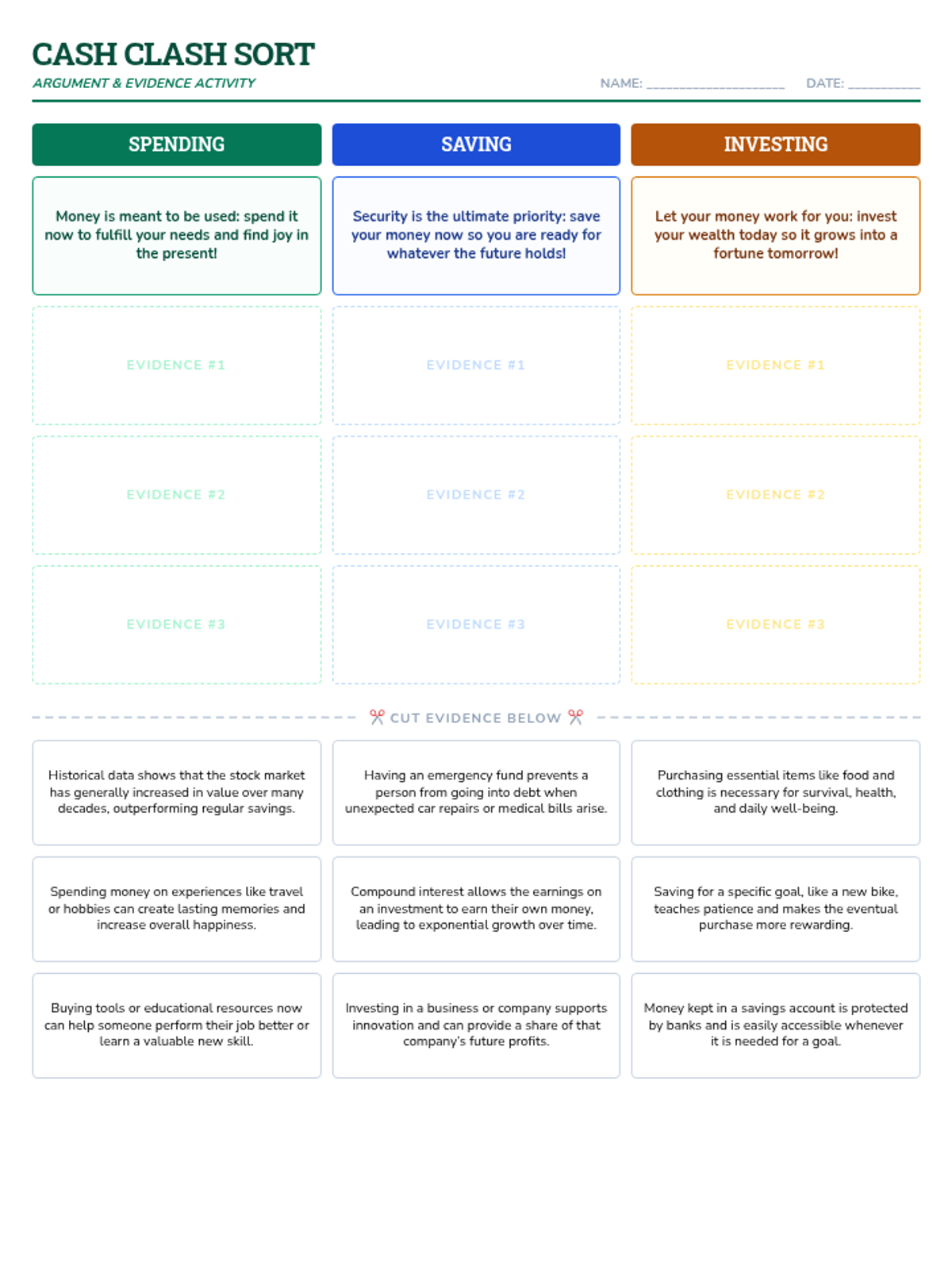
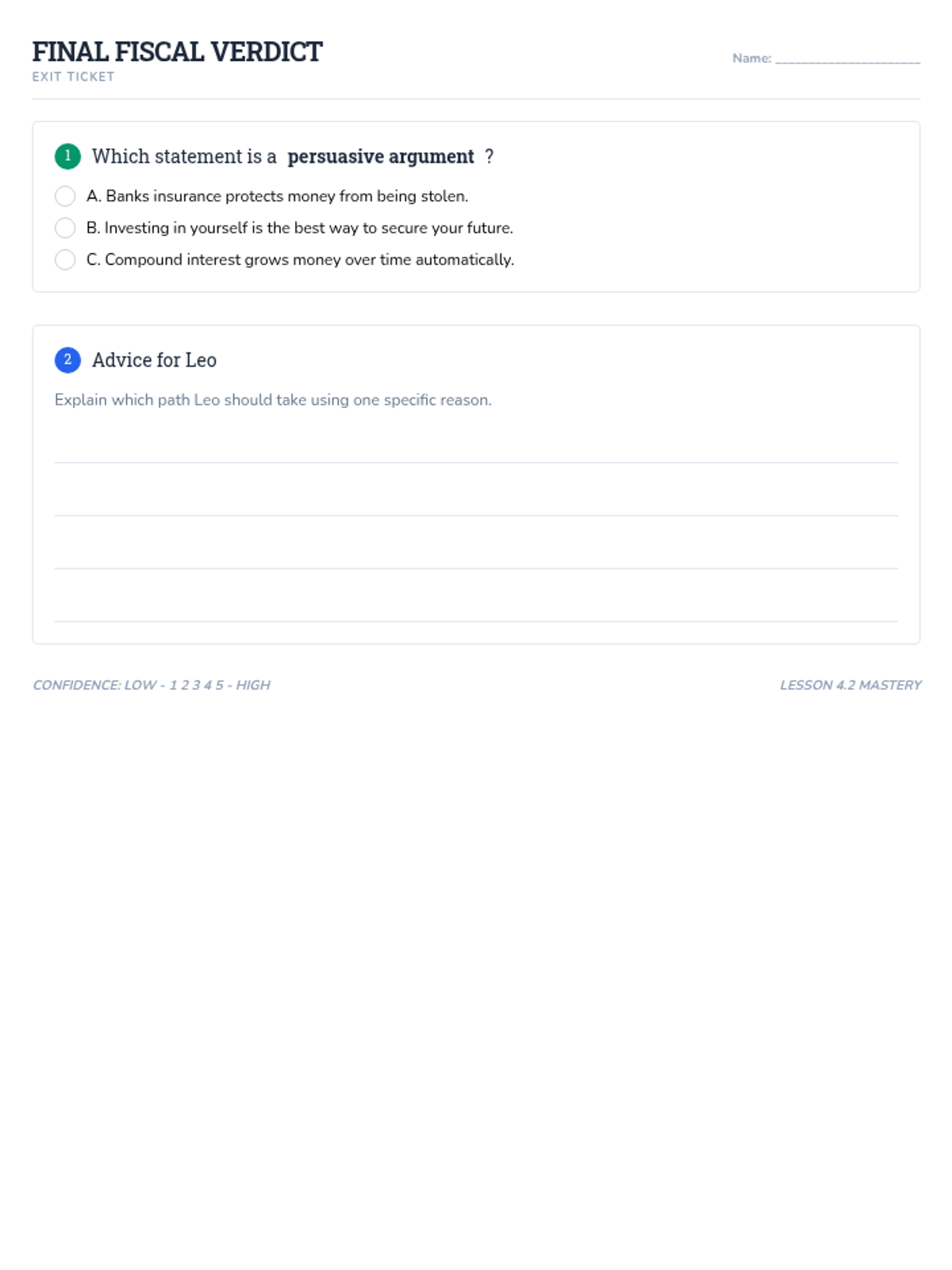
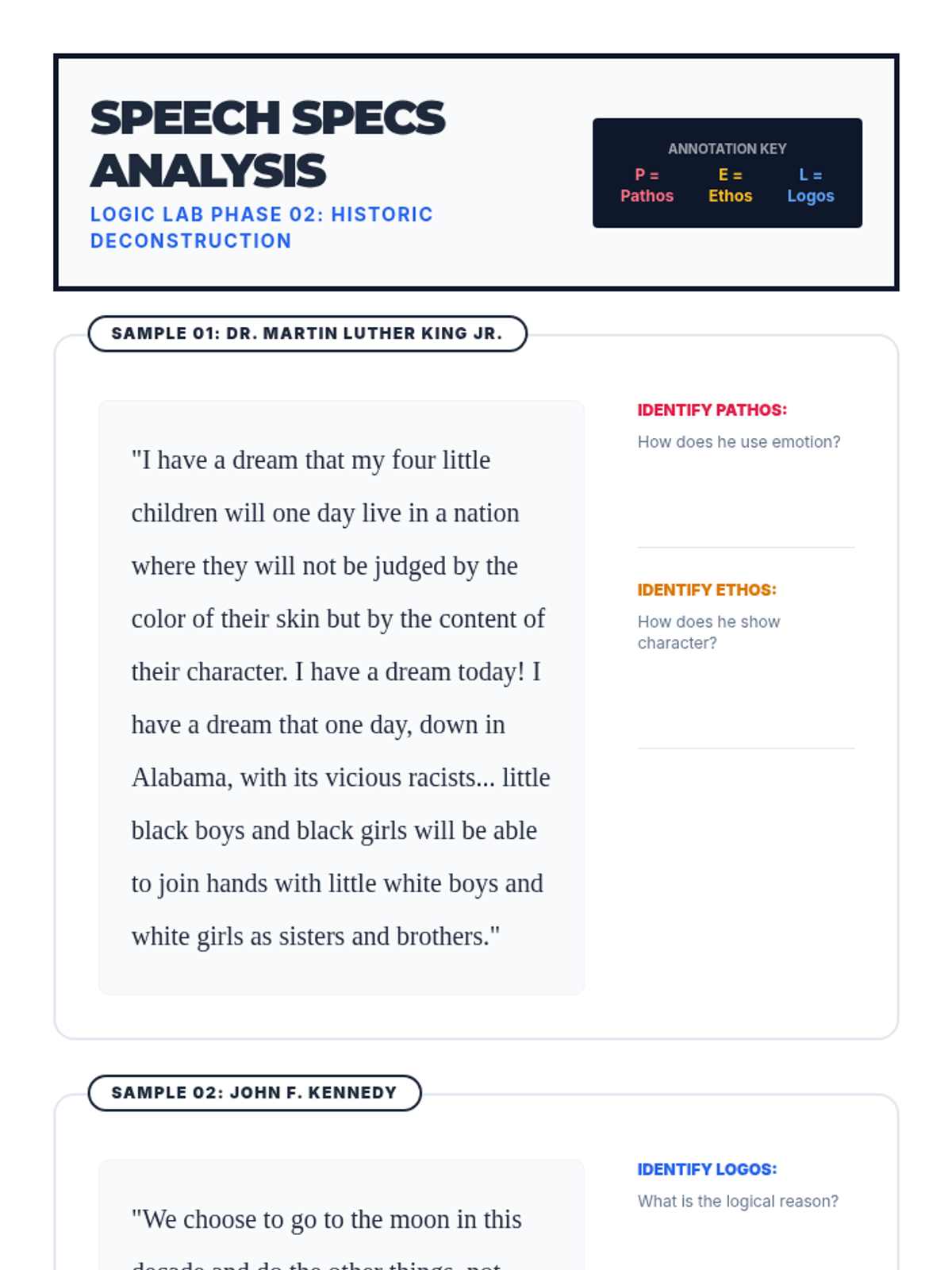
Teaches students to evaluate claims, analyze evidence, and craft strong argumentative responses for the NYS ELA exam.
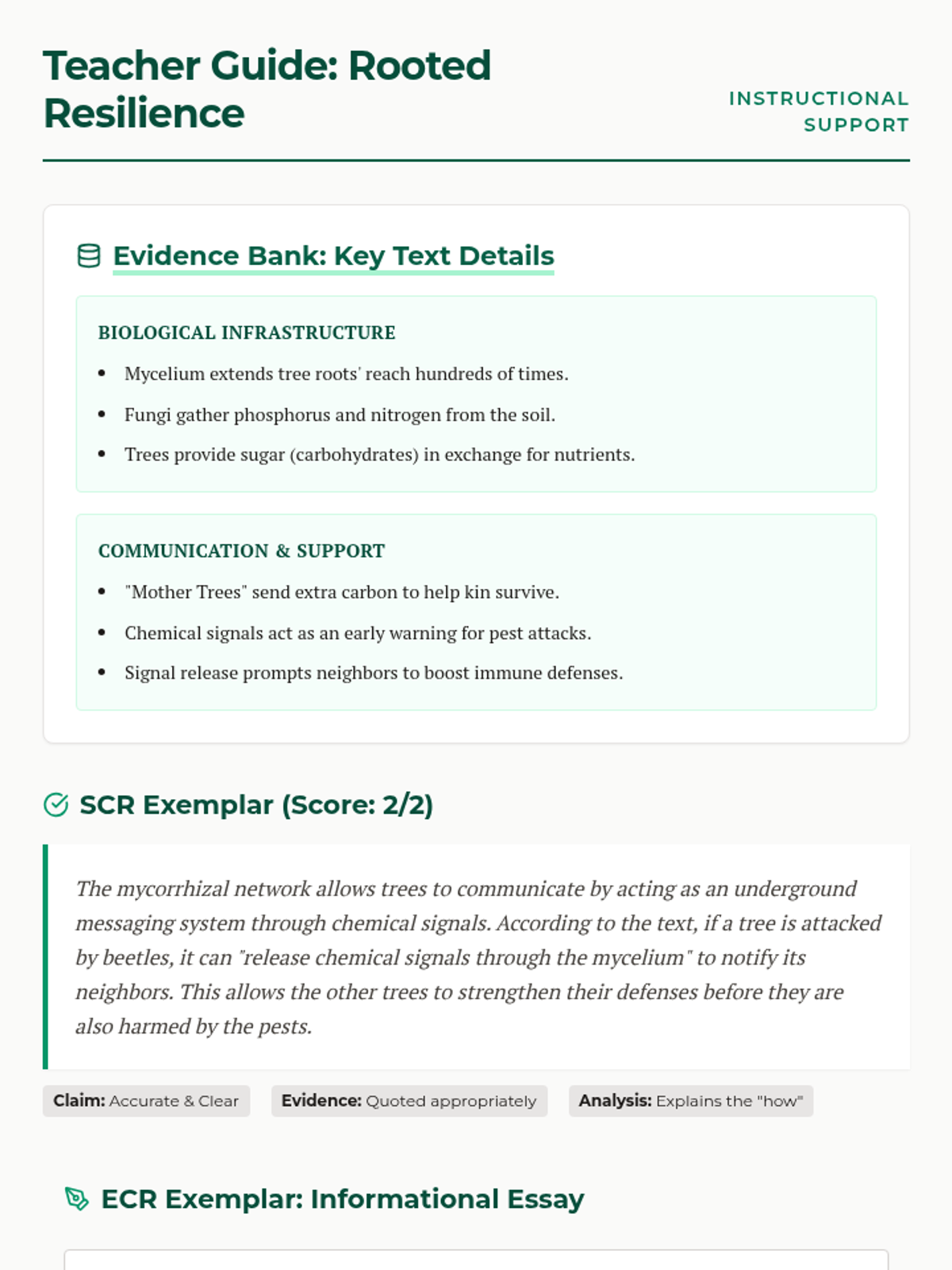
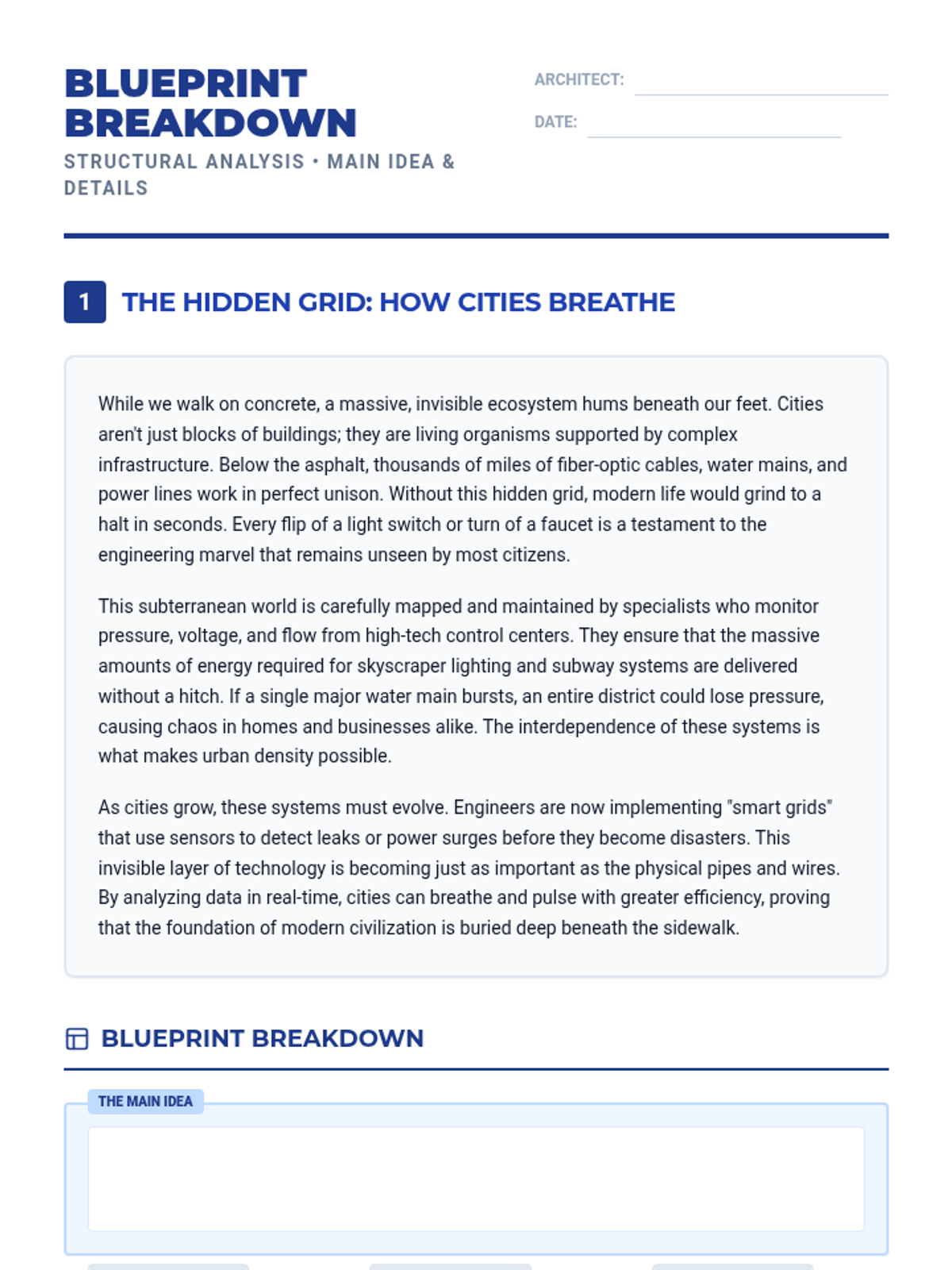
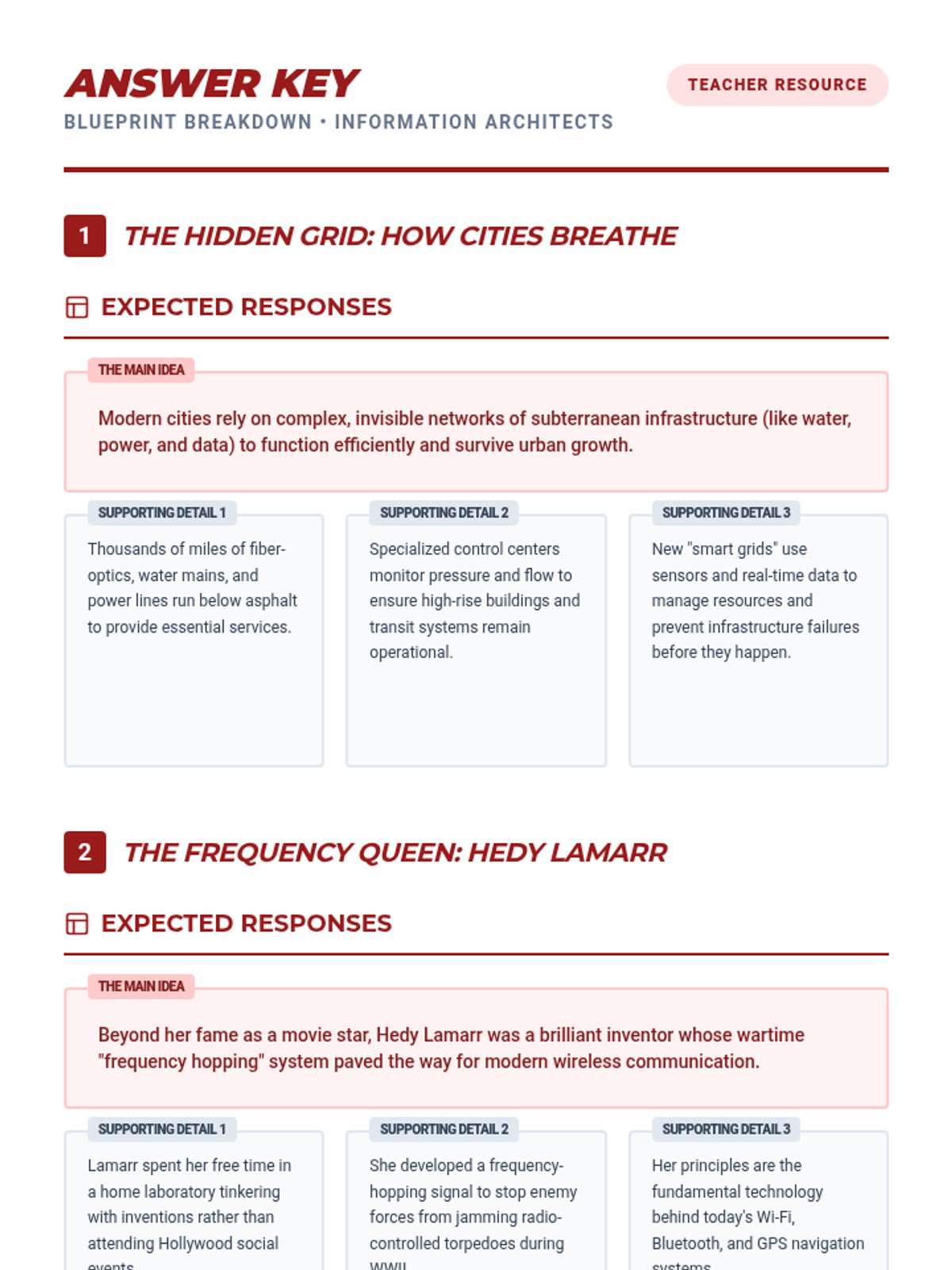
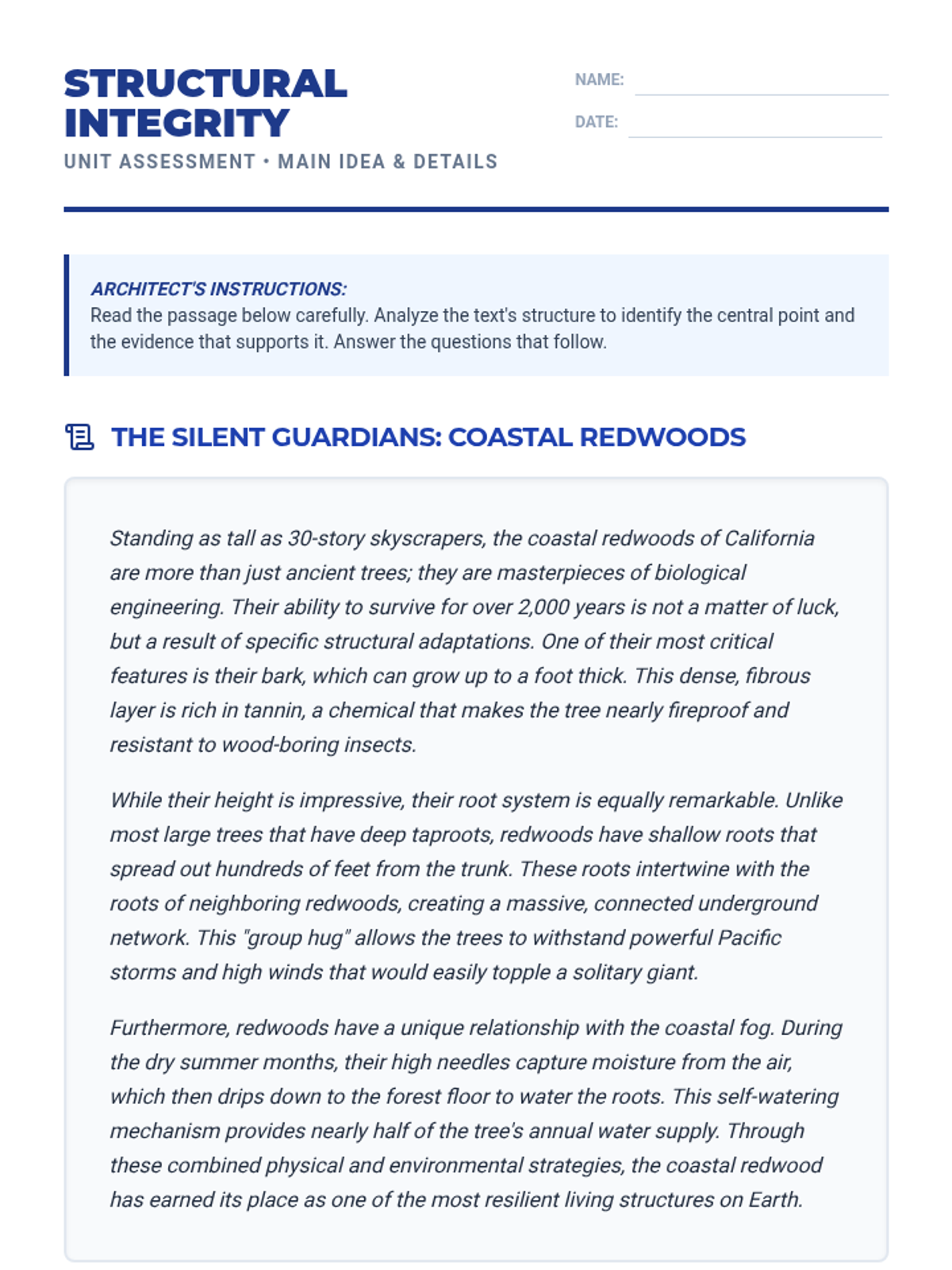
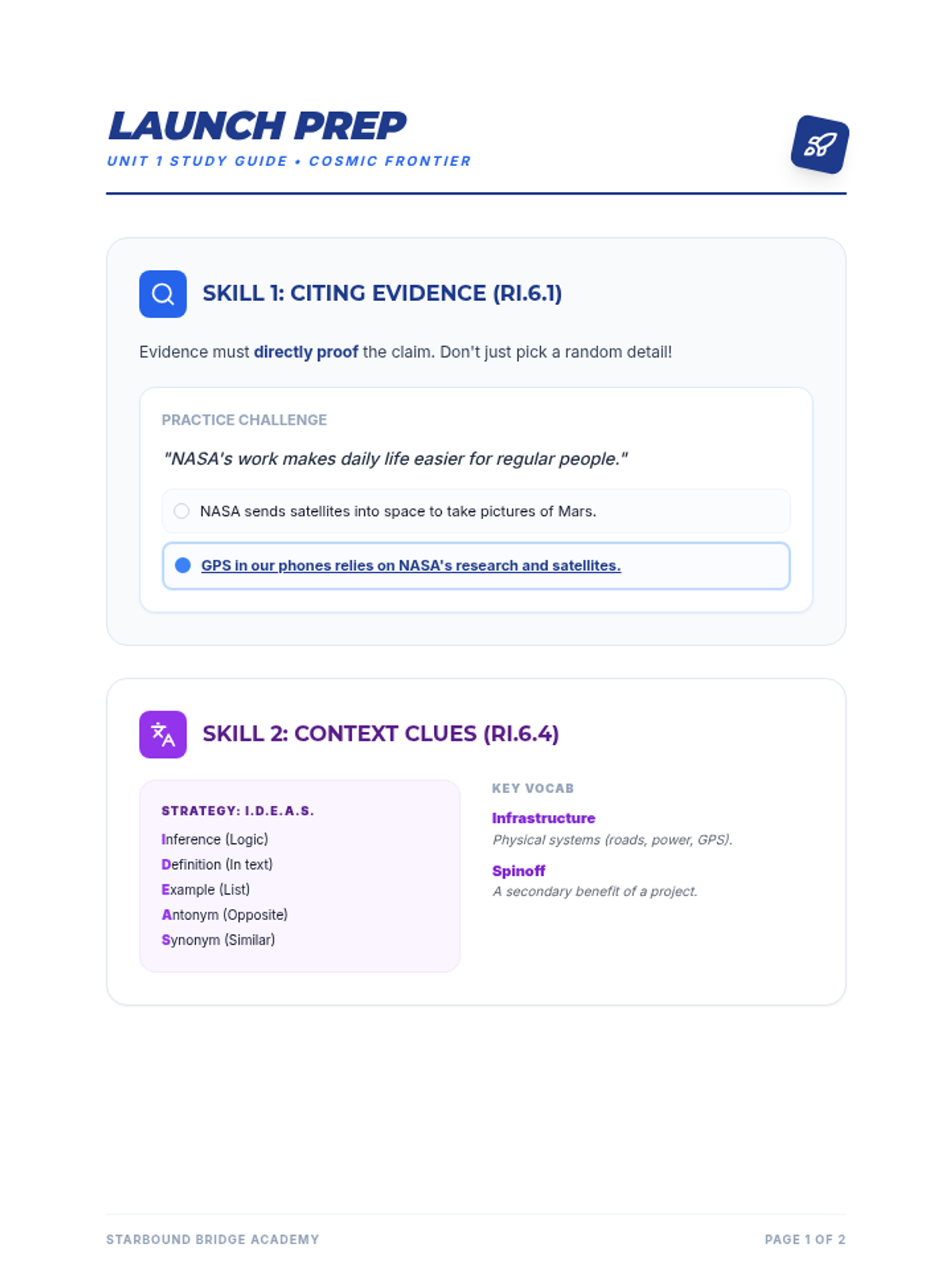
Develops students' ability to identify central ideas and the specific evidence that supports them in informational texts.
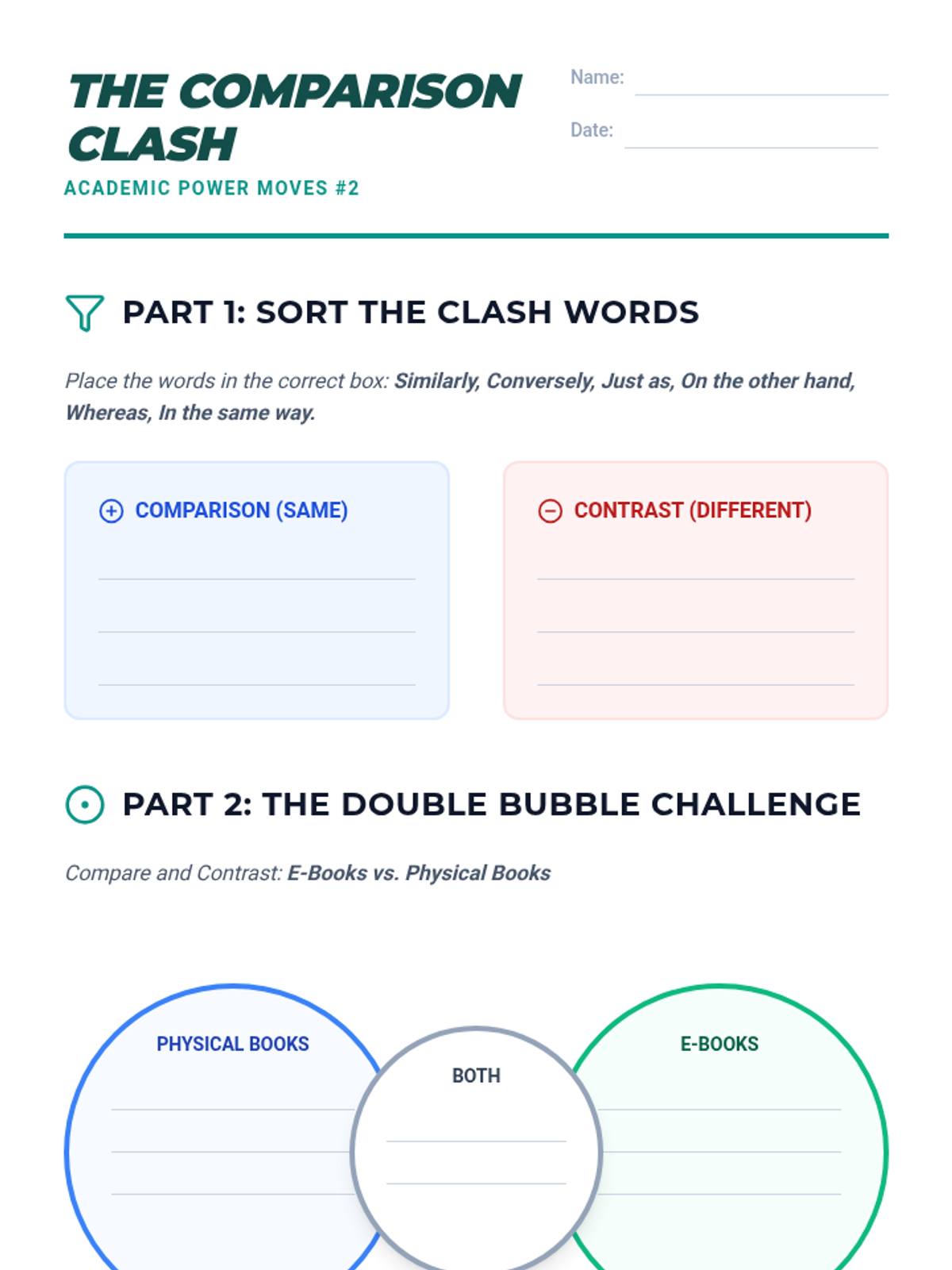
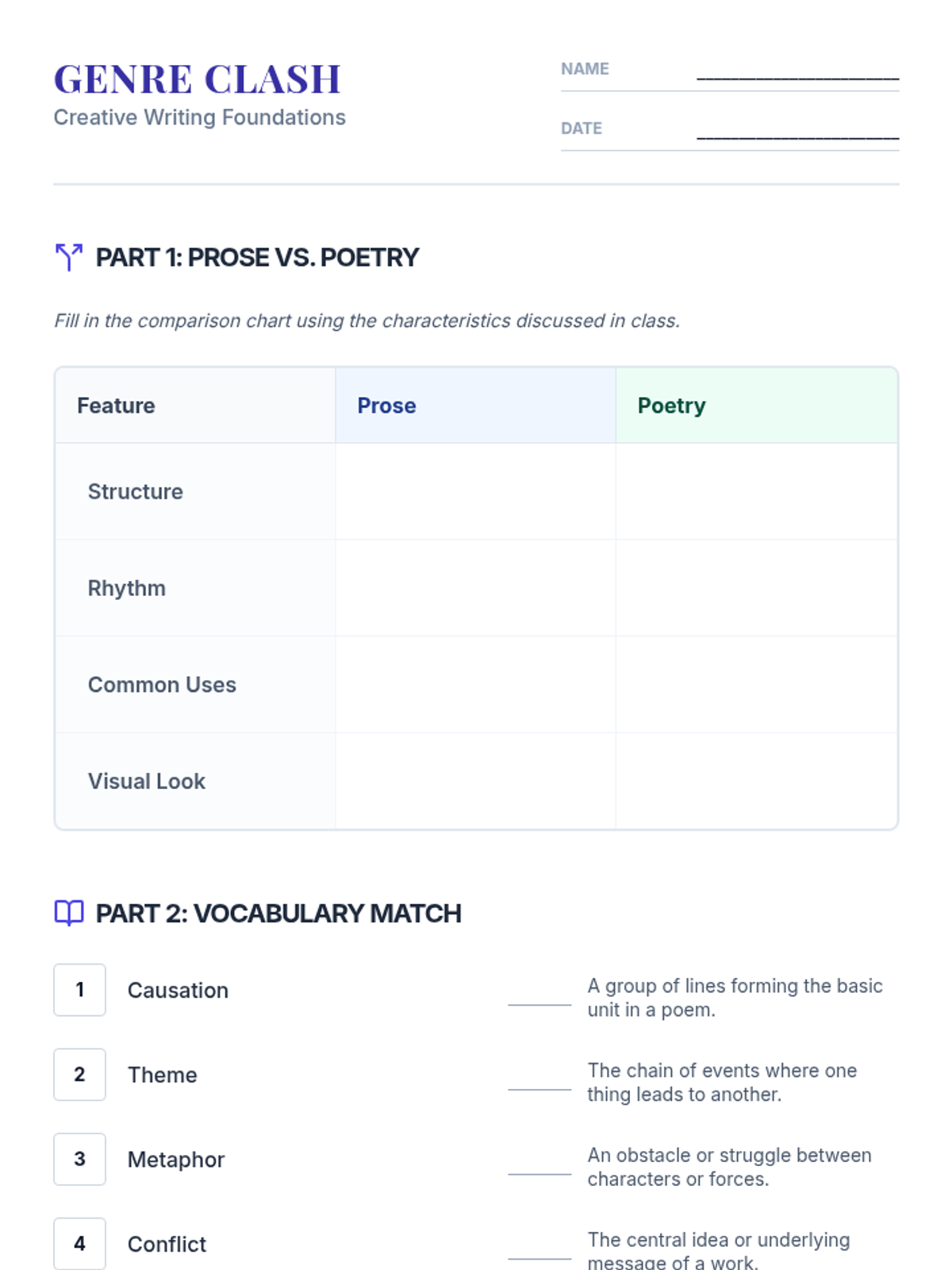
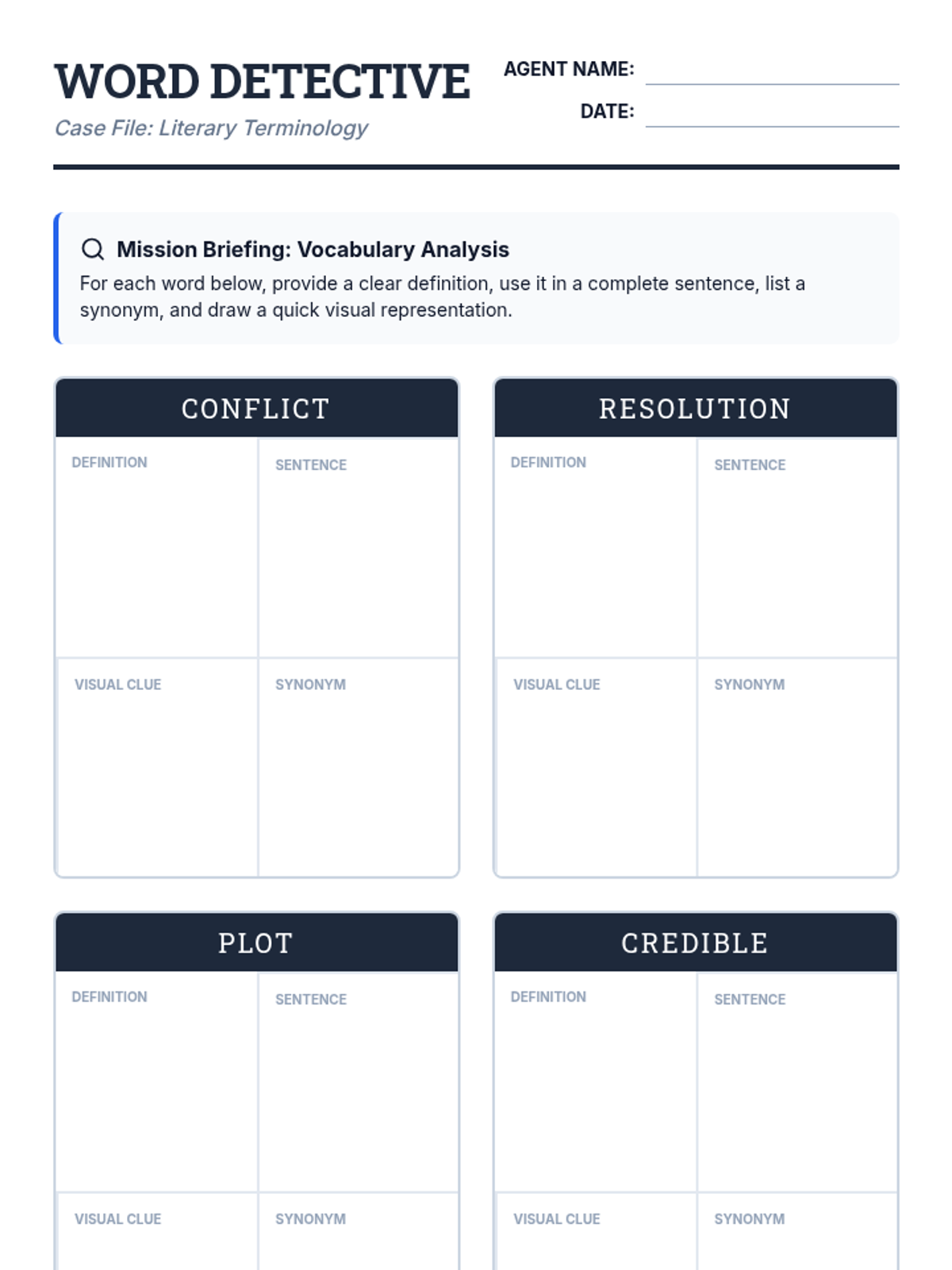
Focuses on the essential vocabulary and structural frameworks needed to analyze complex middle school texts.
A lesson focused on teaching students how to incorporate internal dialogue into narrative writing to reveal character traits and deepen the connection to story events.
A comprehensive mini-lesson on teaching students how to integrate internal monologue into their narrative writing to reveal character traits and react to plot events.
A 45-minute lesson focused on analyzing author's purpose, tone, and word choice using a biographical text about Selena Quintanilla, culminating in a CER (Claim, Evidence, Reasoning) response.
A lesson focused on the life of Selena Quintanilla, using the past tense to analyze how an author's diction and syntax build mood and tone in a biographical text.
This lesson guides students through the process of crafting topic sentences that directly respond to a writing prompt about Wilma Rudolph's perseverance. It emphasizes the integration of prompt language, previews of text evidence, and the foundation for analytical explanation.
Focuses on writing a high-tension introduction for a Choose Your Own Adventure story that culminates in a critical survival decision based on animal defense mechanisms.
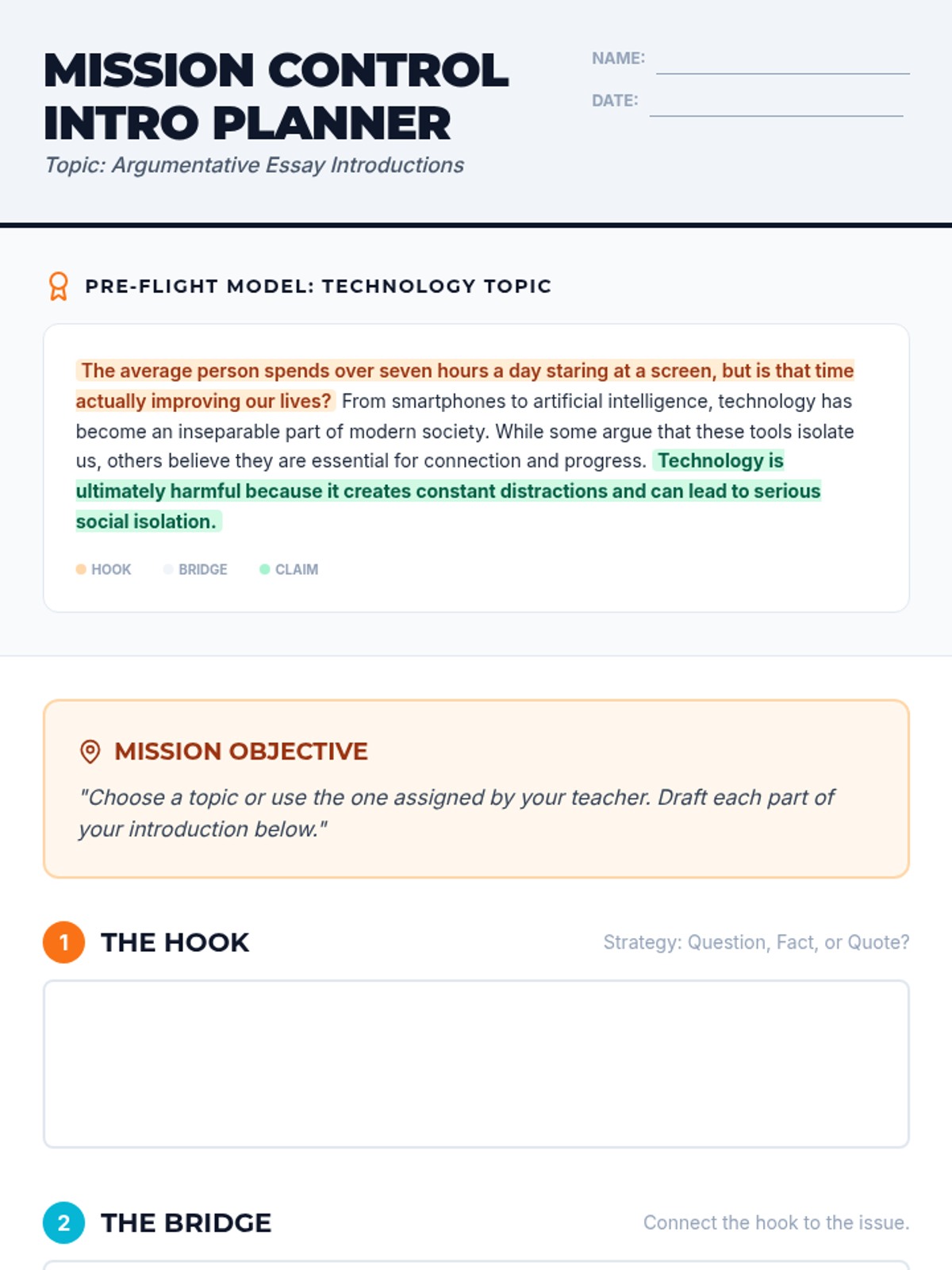
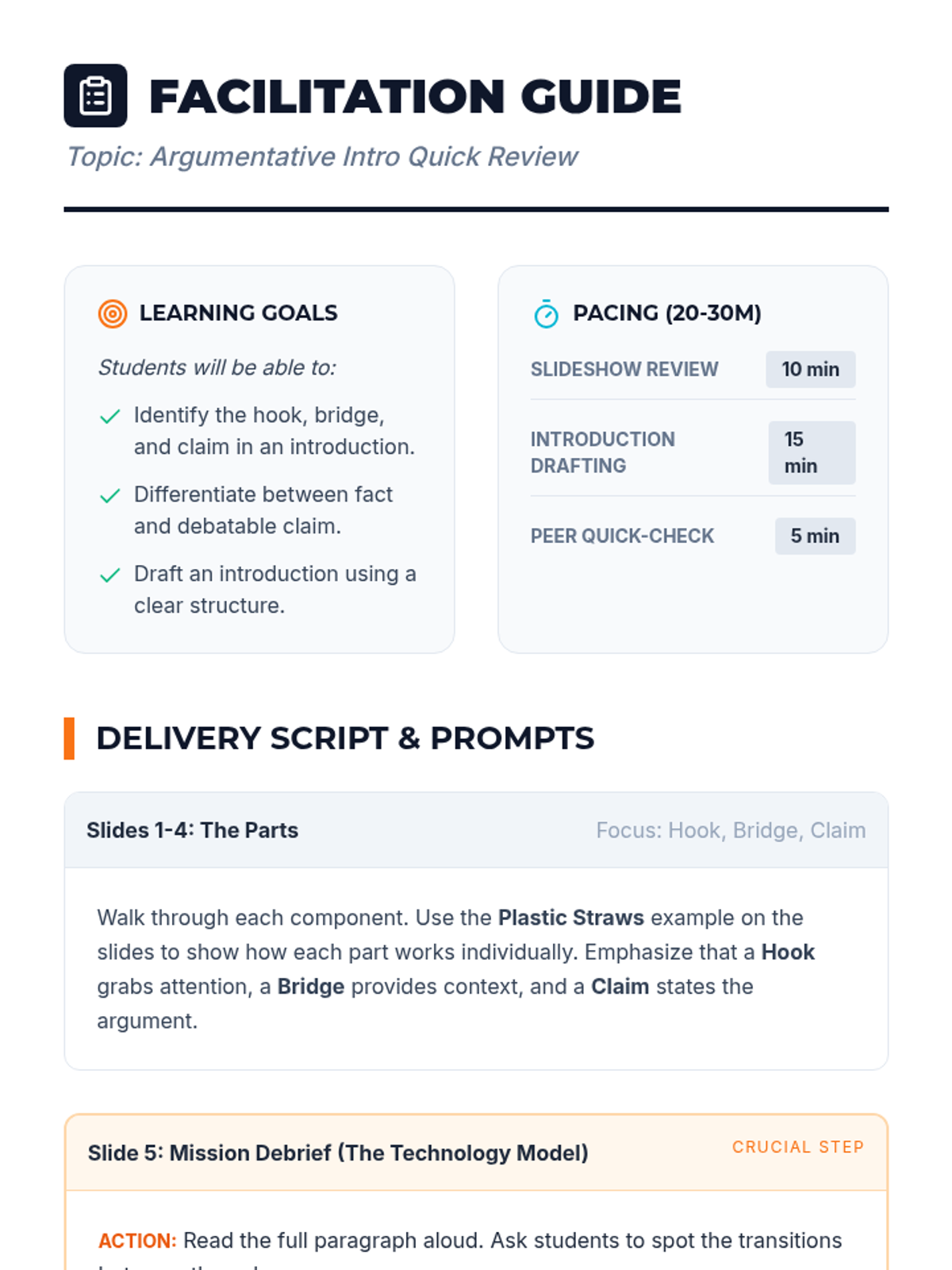
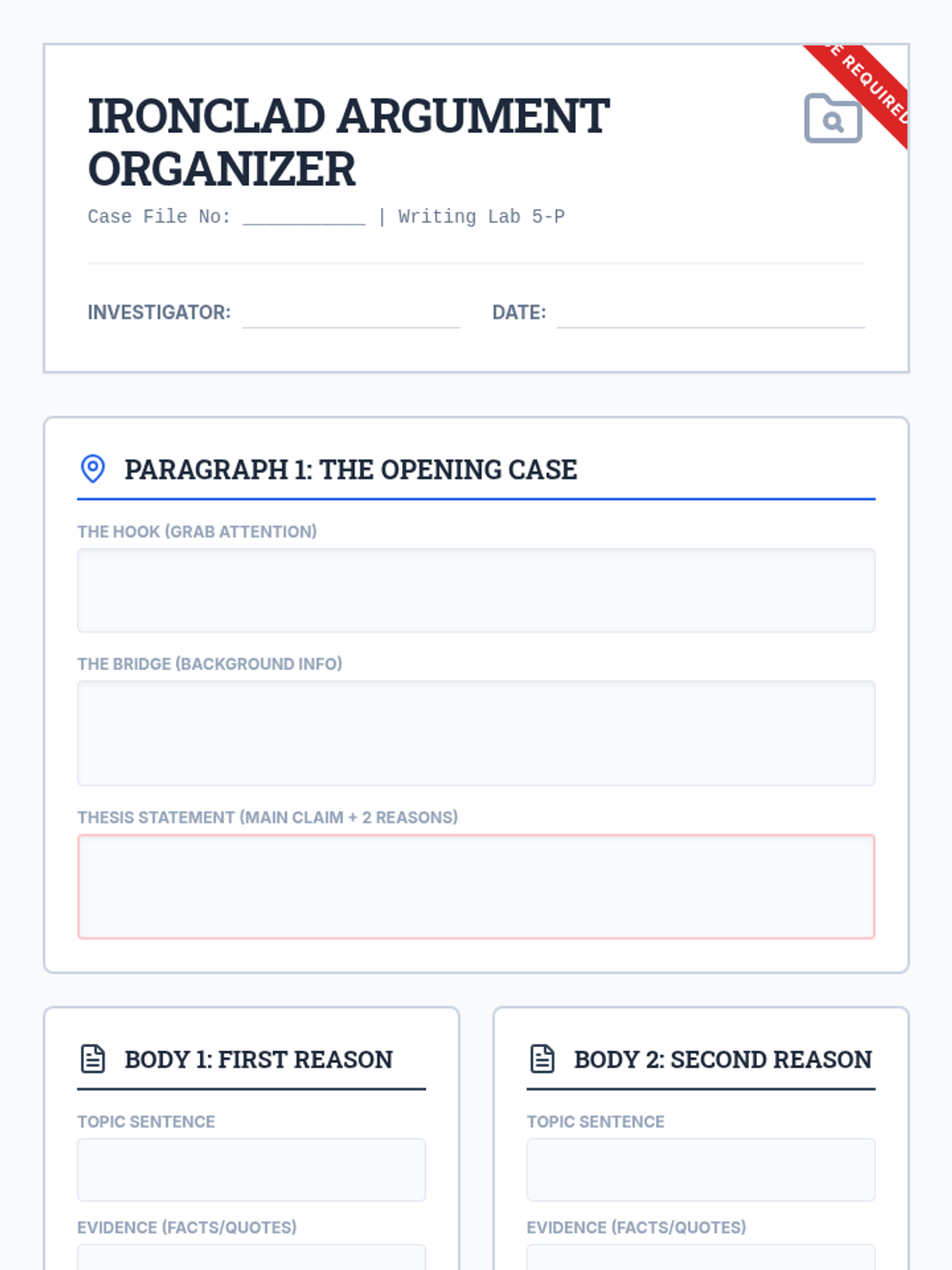
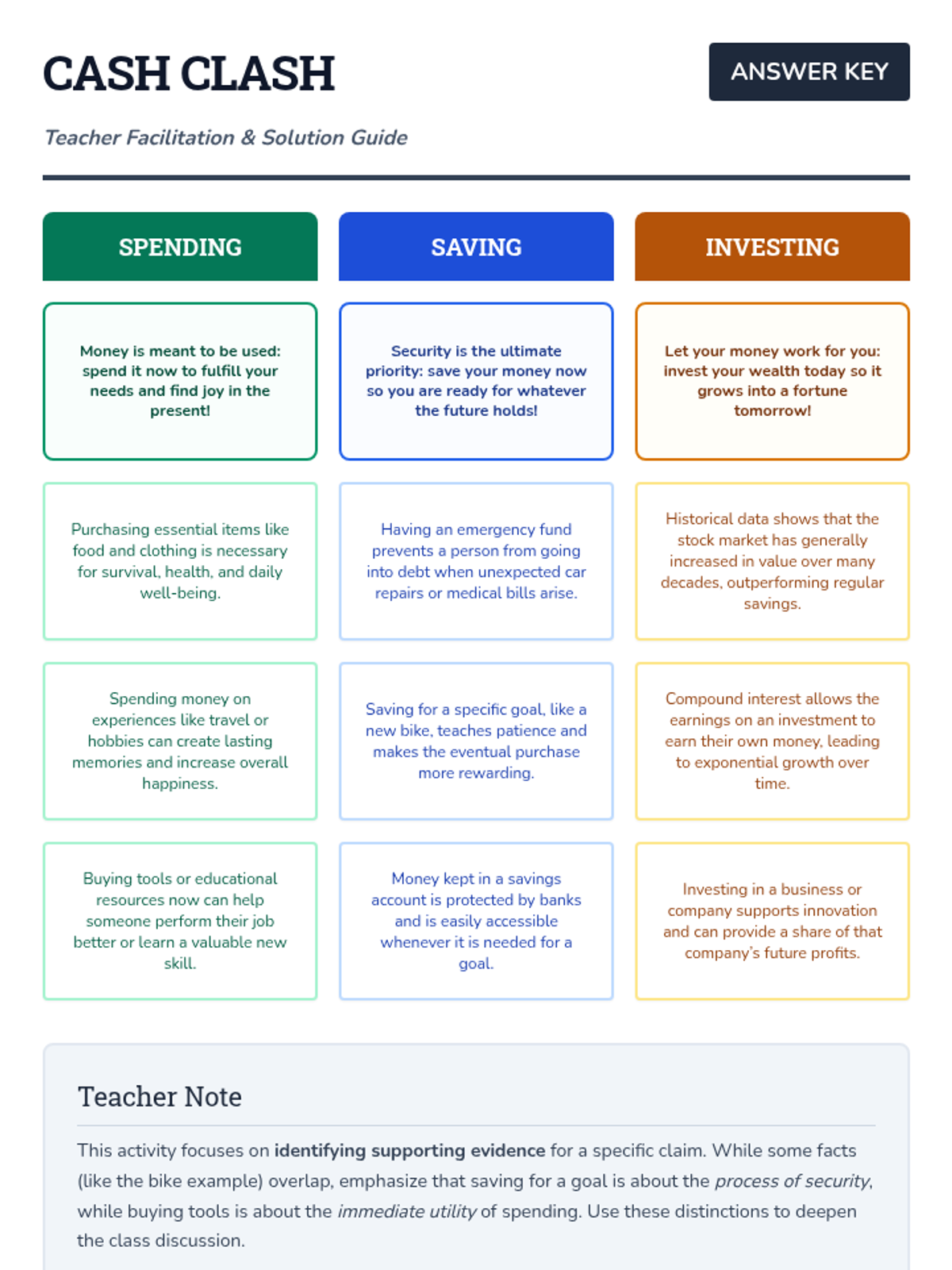
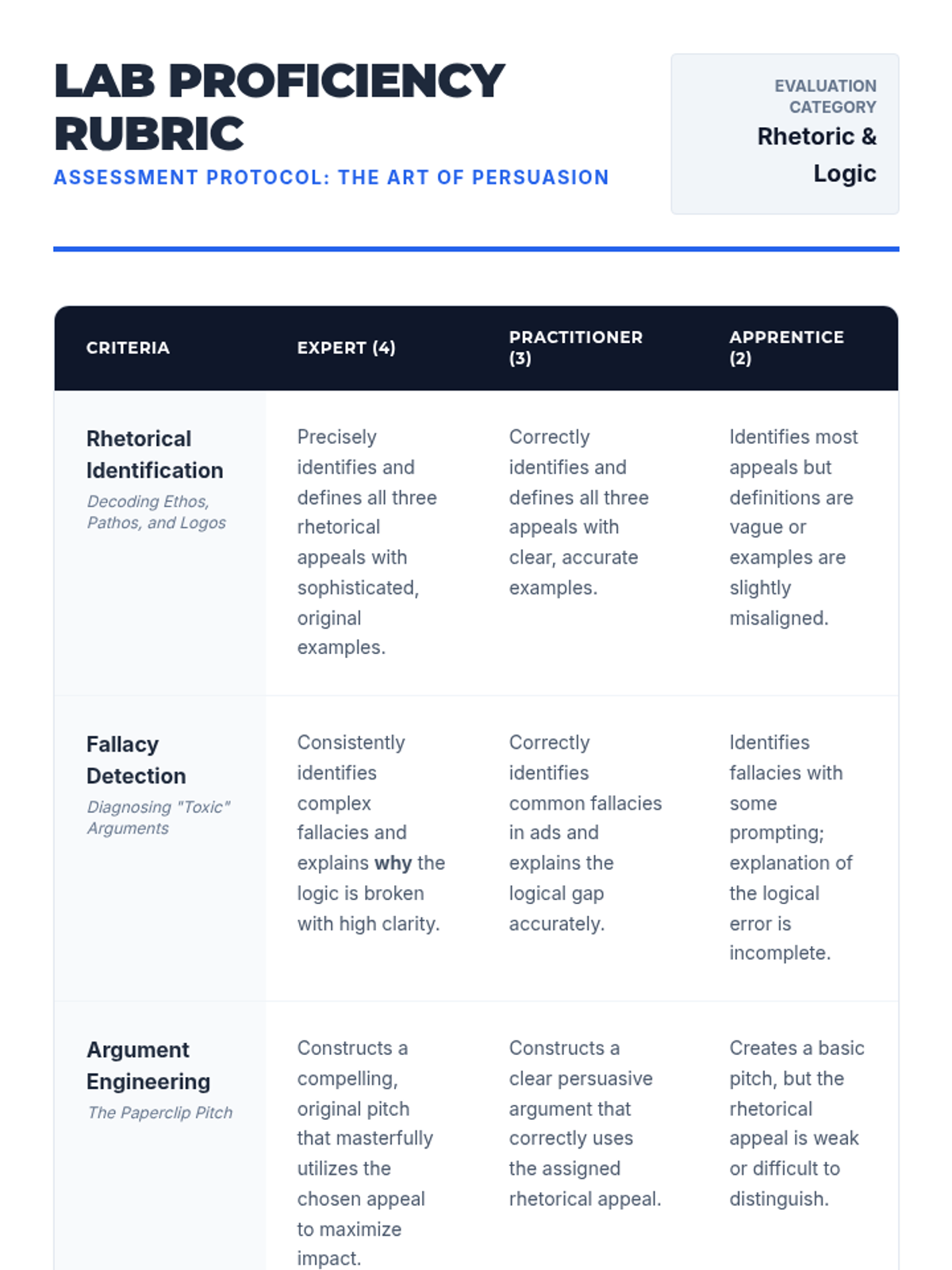
A lesson where students learn to decode and apply rubrics to argumentative writing, treating the rubric as a blueprint for forging strong, defensible arguments.
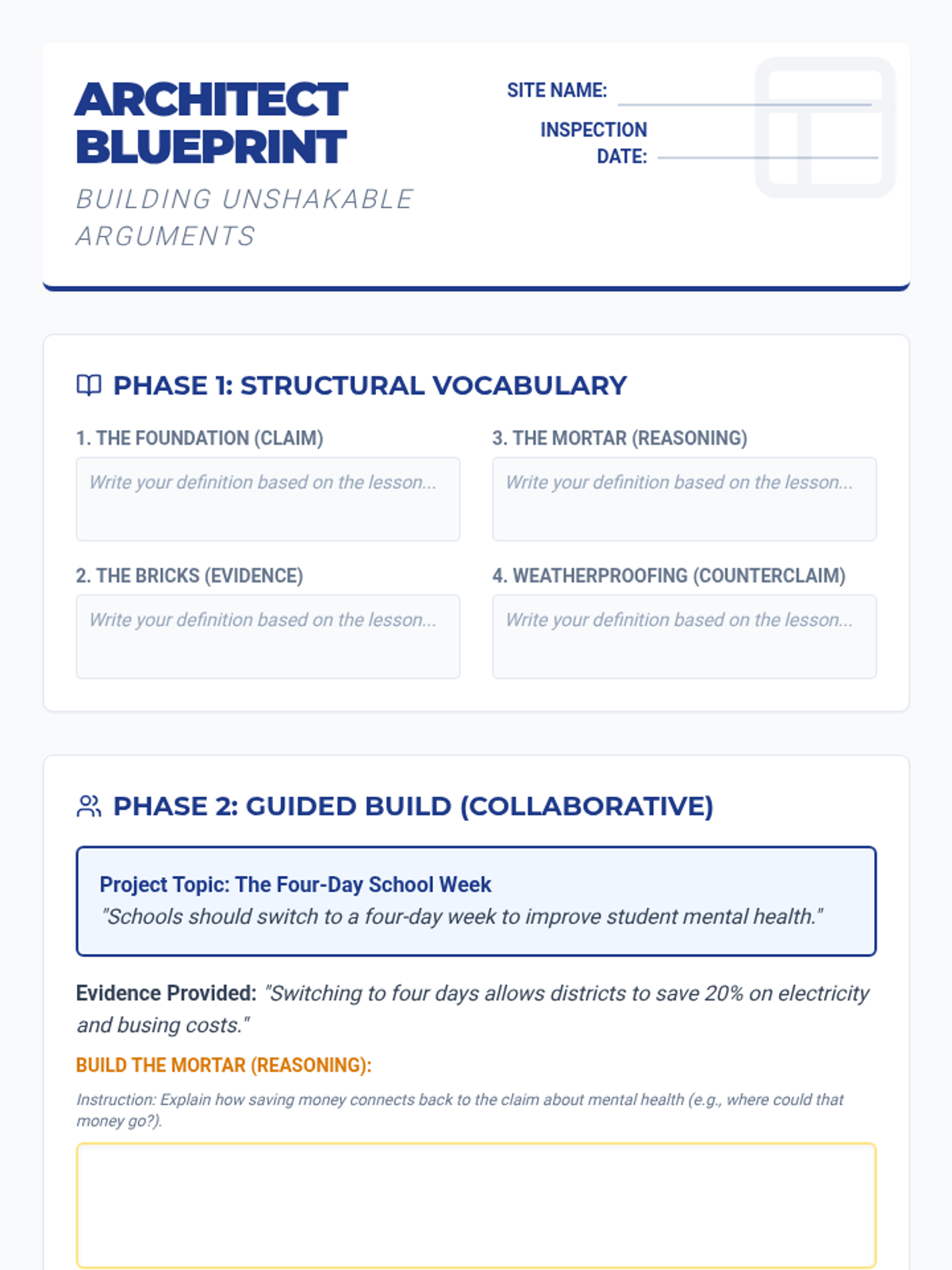
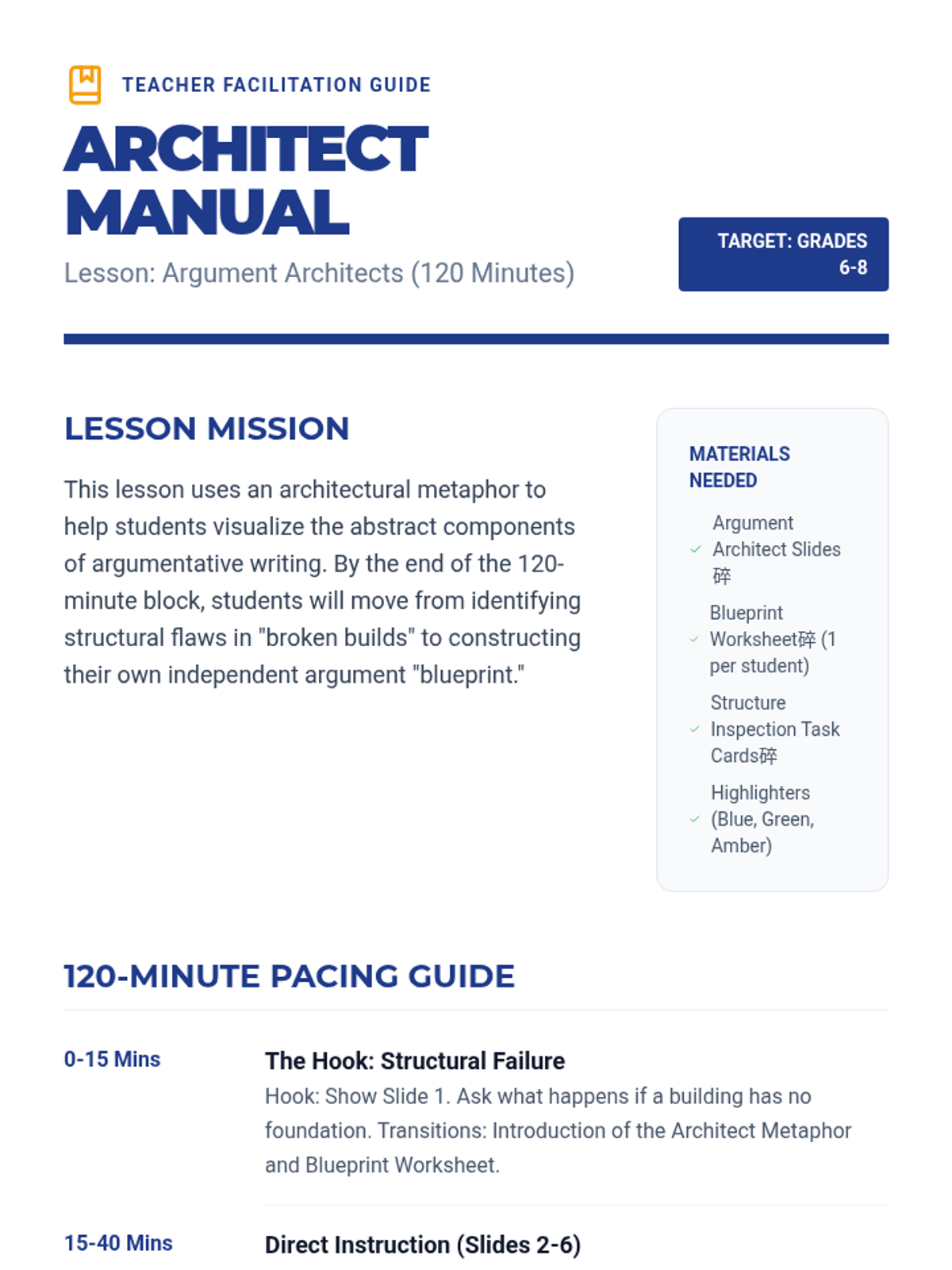
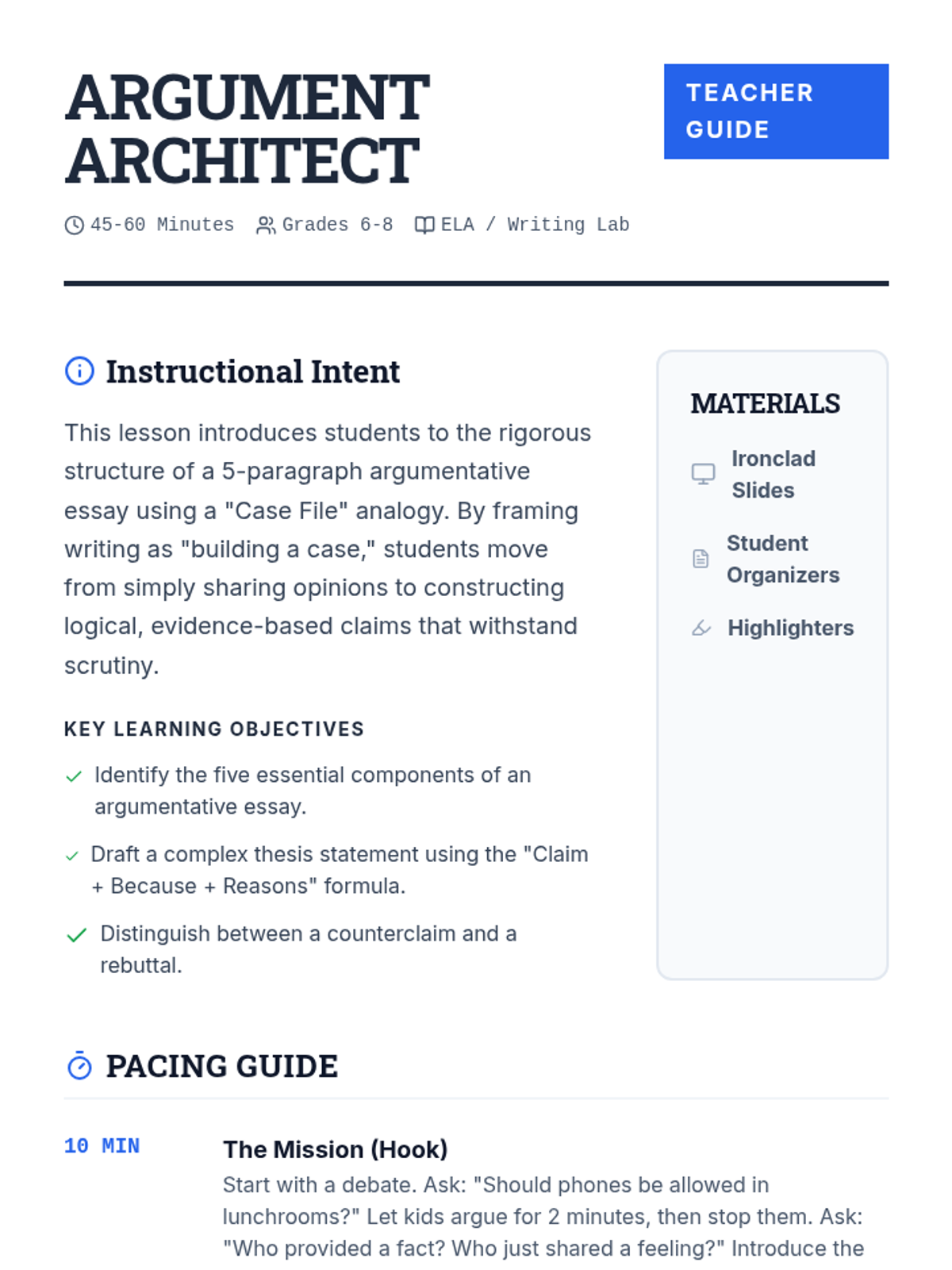
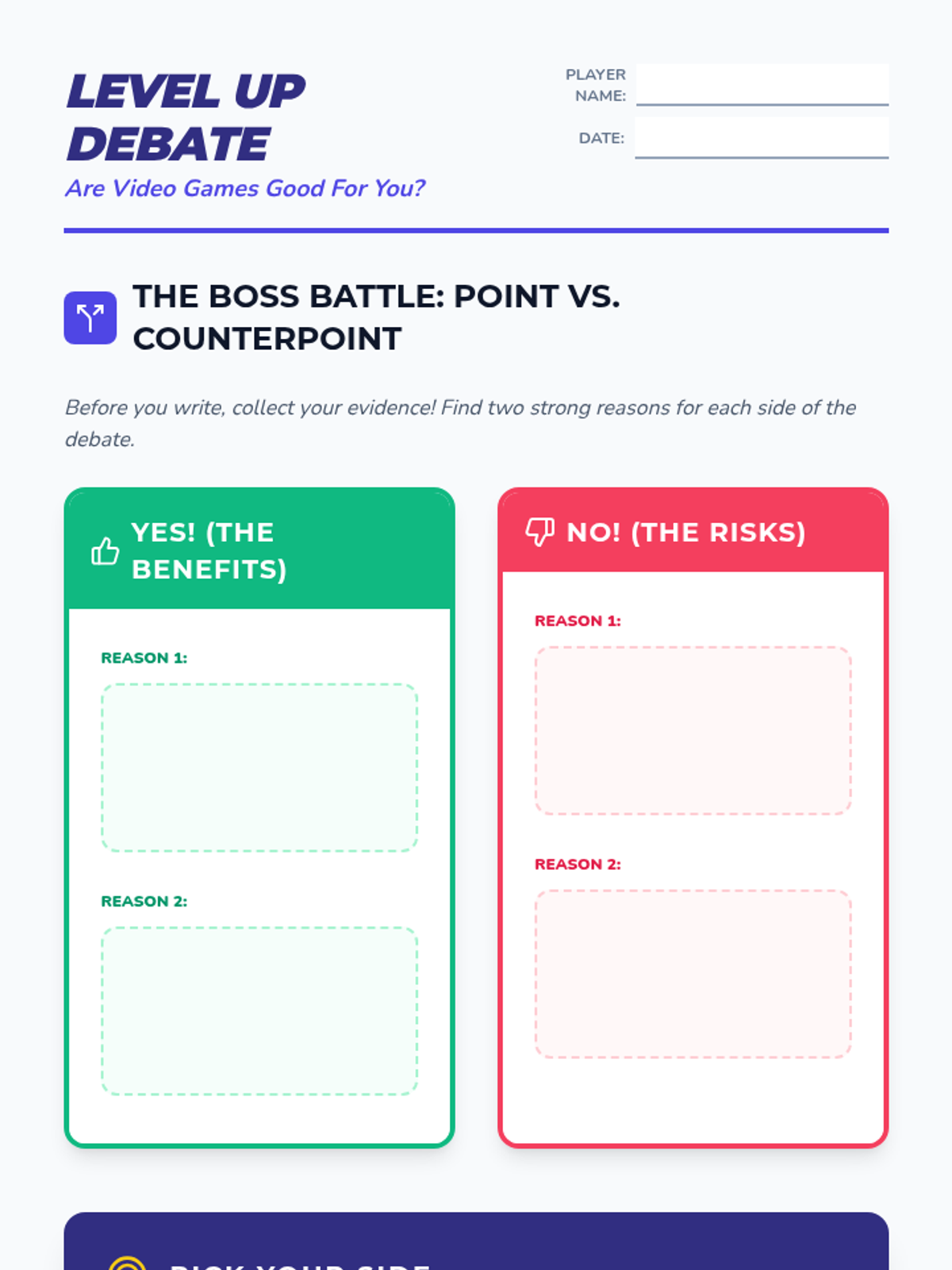
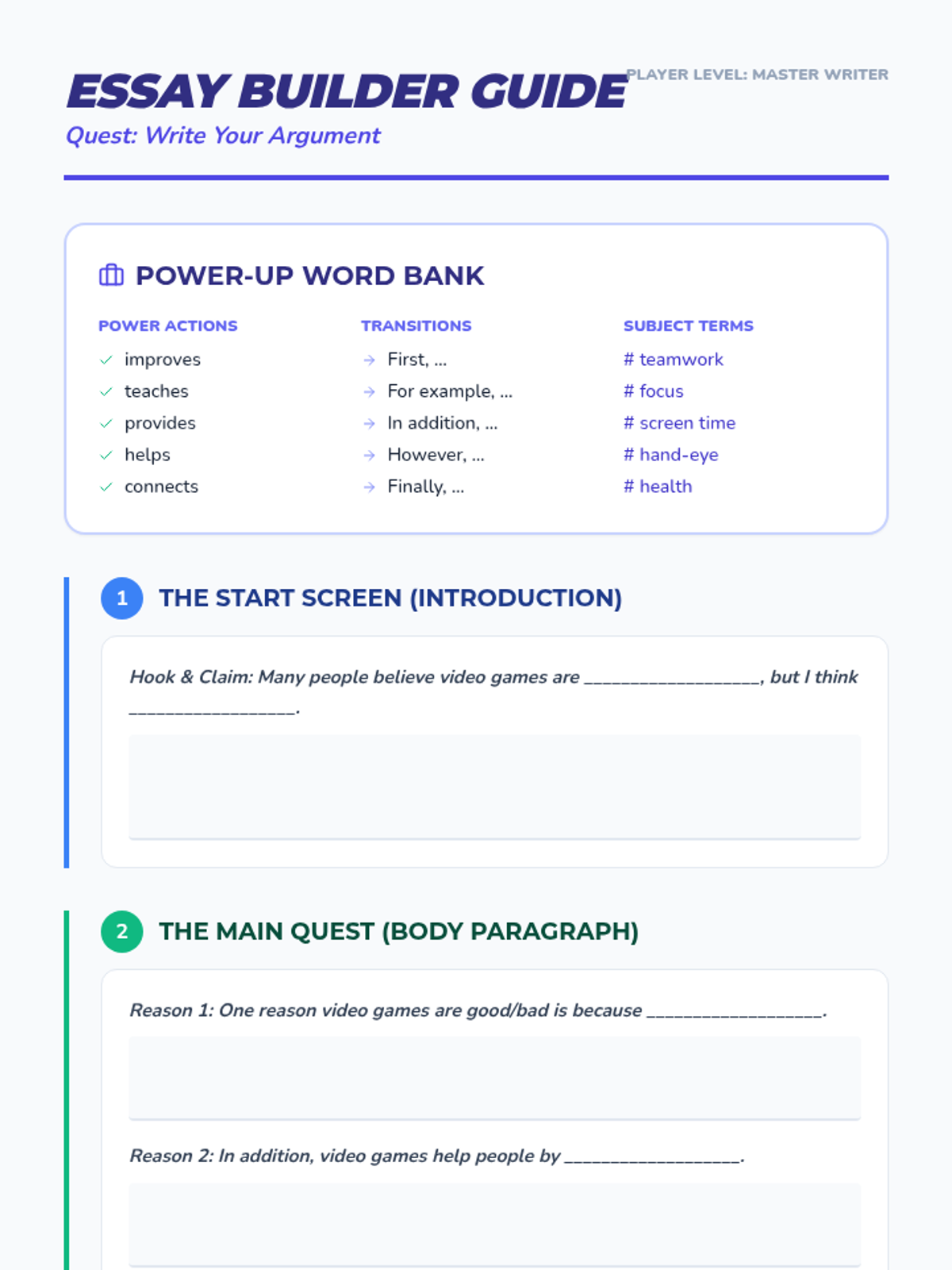
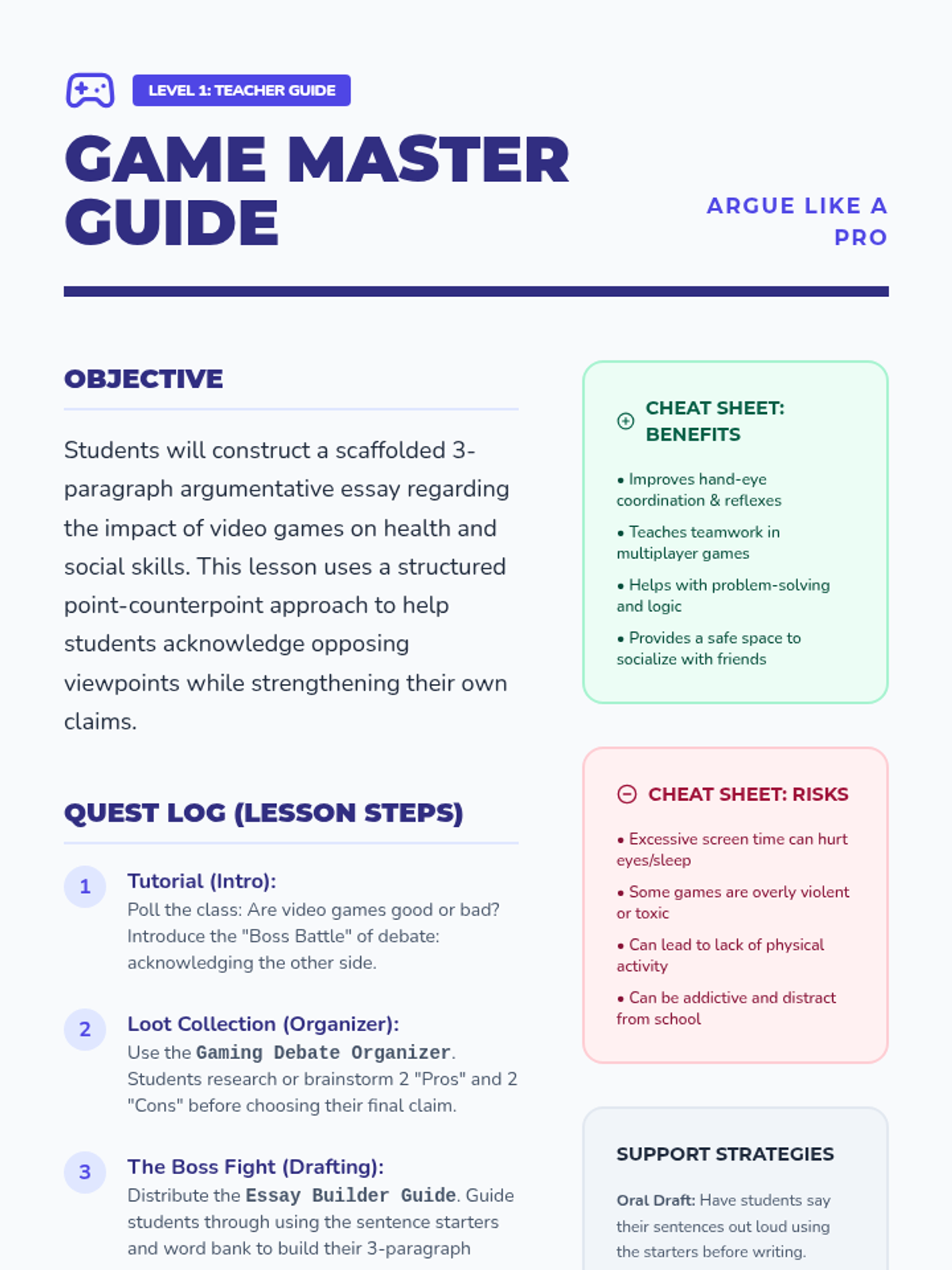
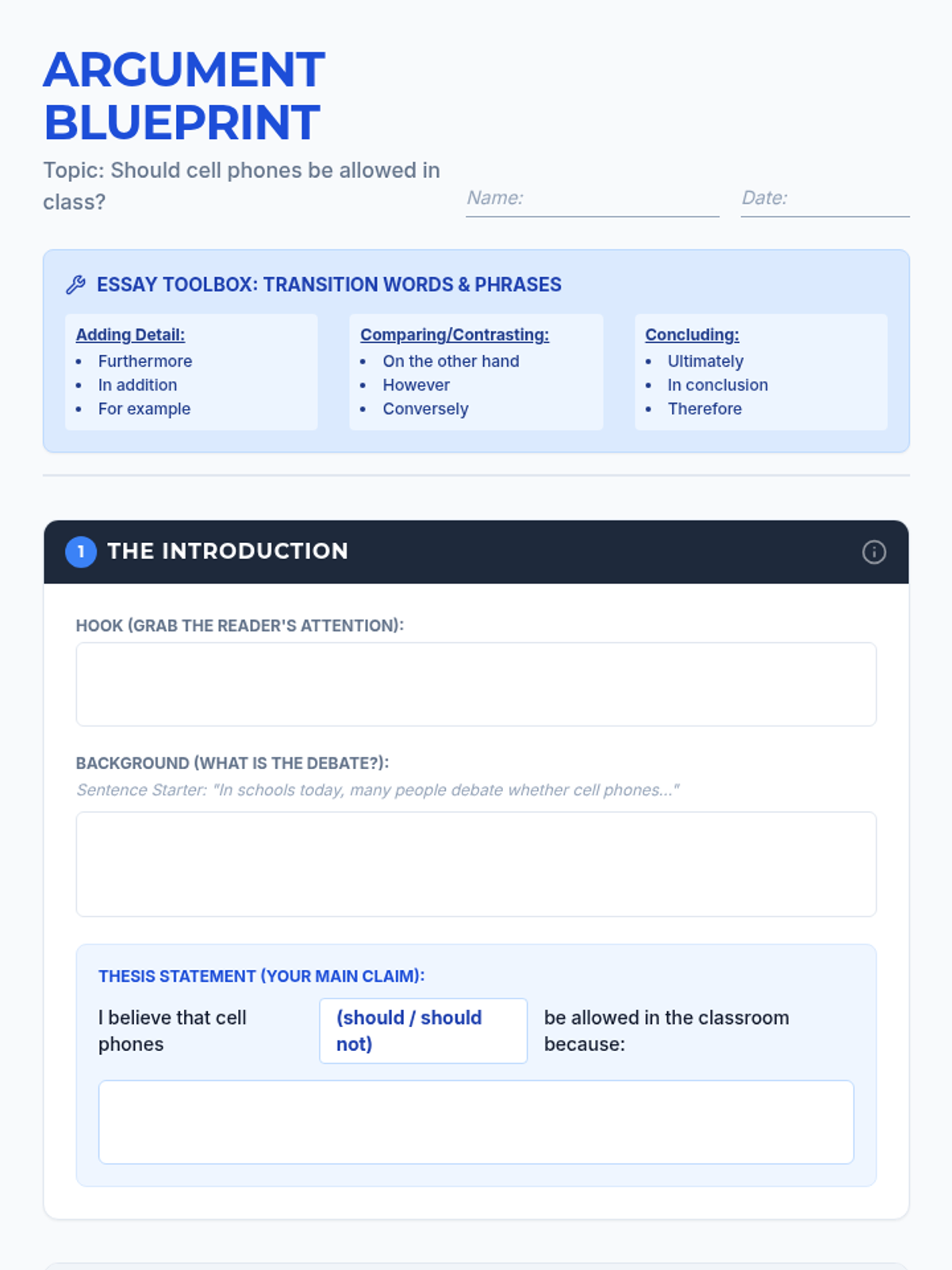
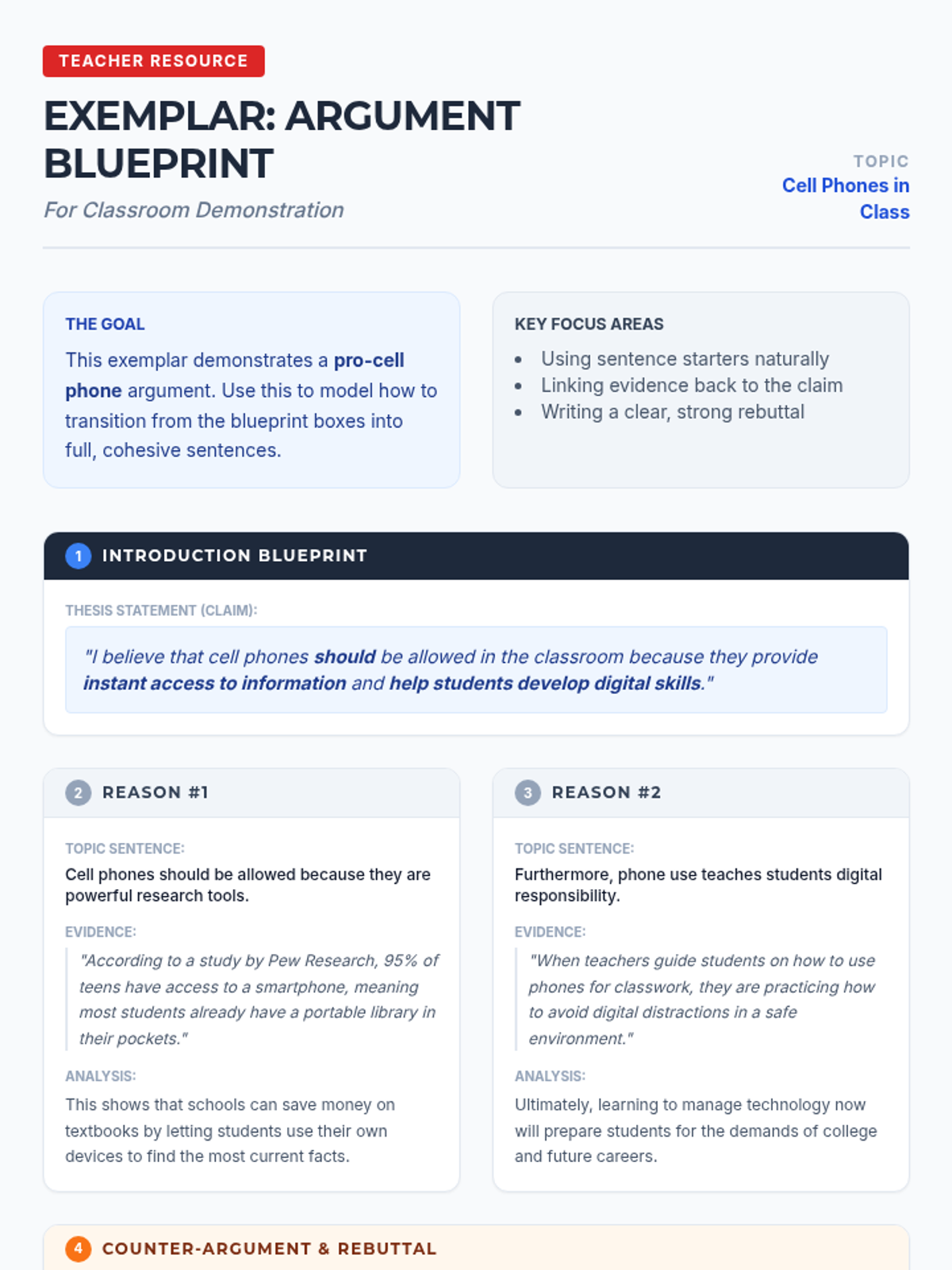
A foundational lesson on argumentative writing, covering essential terminology like claims, evidence, and counterclaims through a 'blueprint' architectural theme.
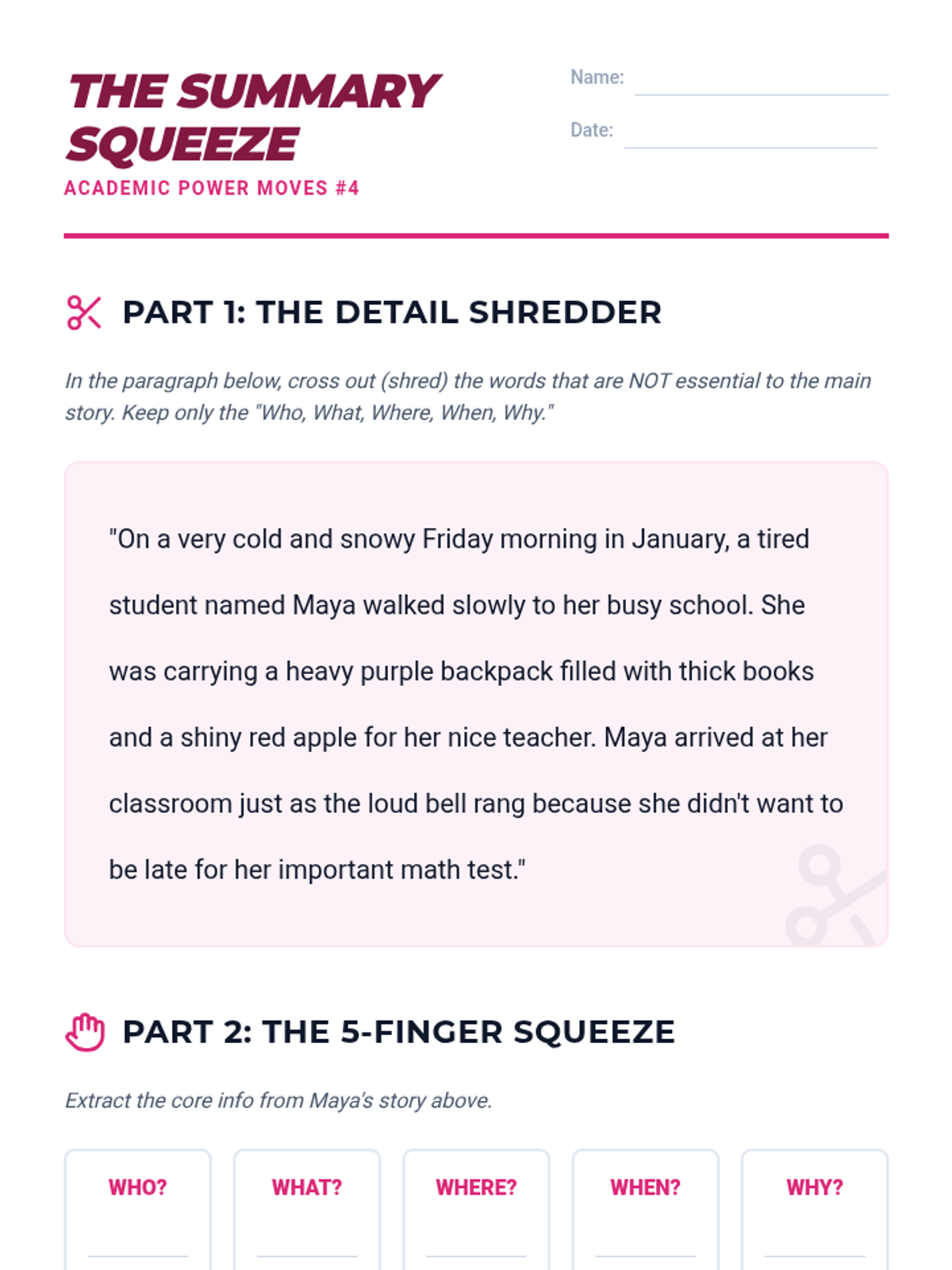
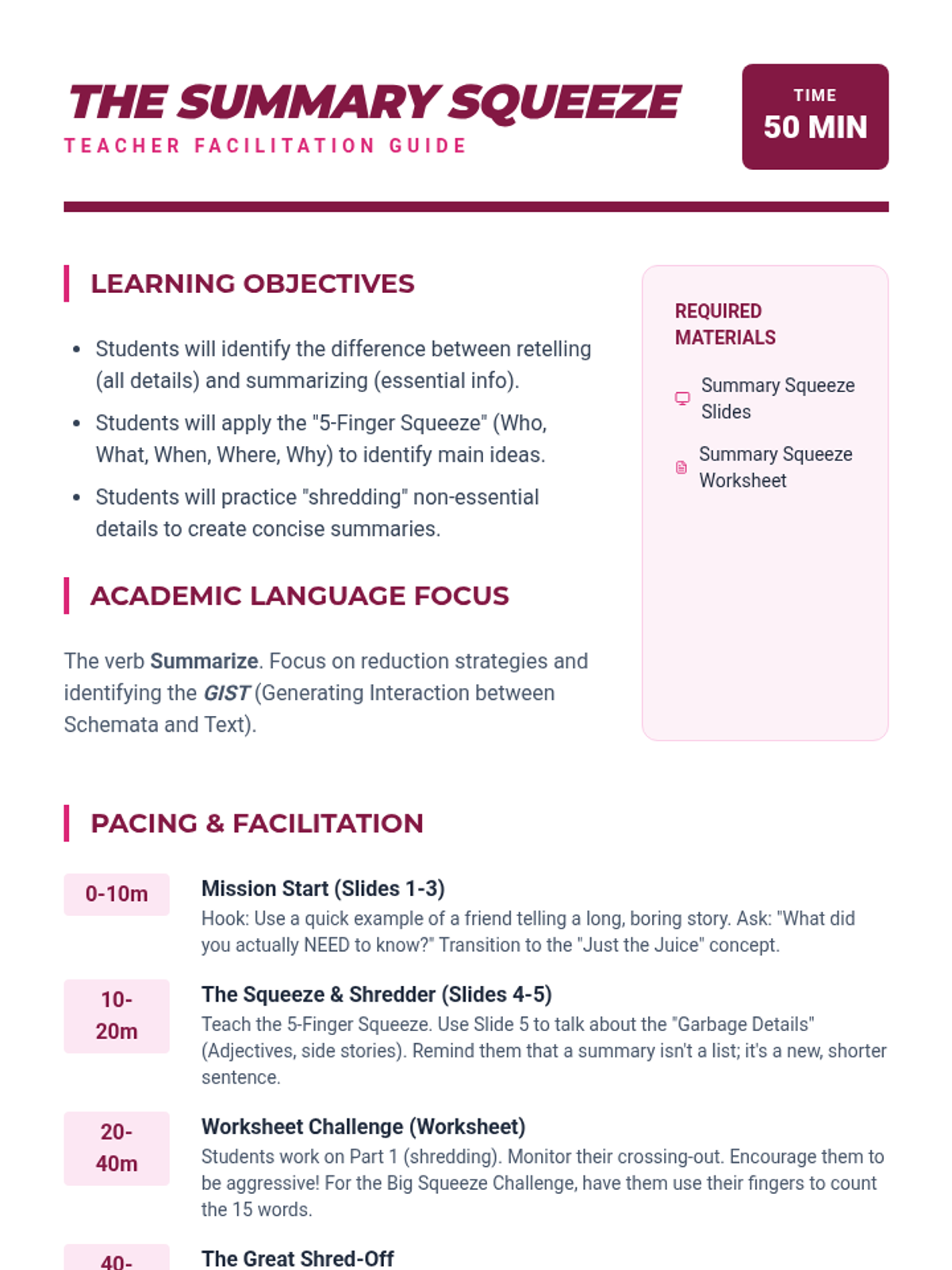
A fast-paced, 20-minute cross-curricular lesson on writing summaries using the GIST method. Students learn to distill complex information into a concise 'highlight reel' of exactly 20 words.
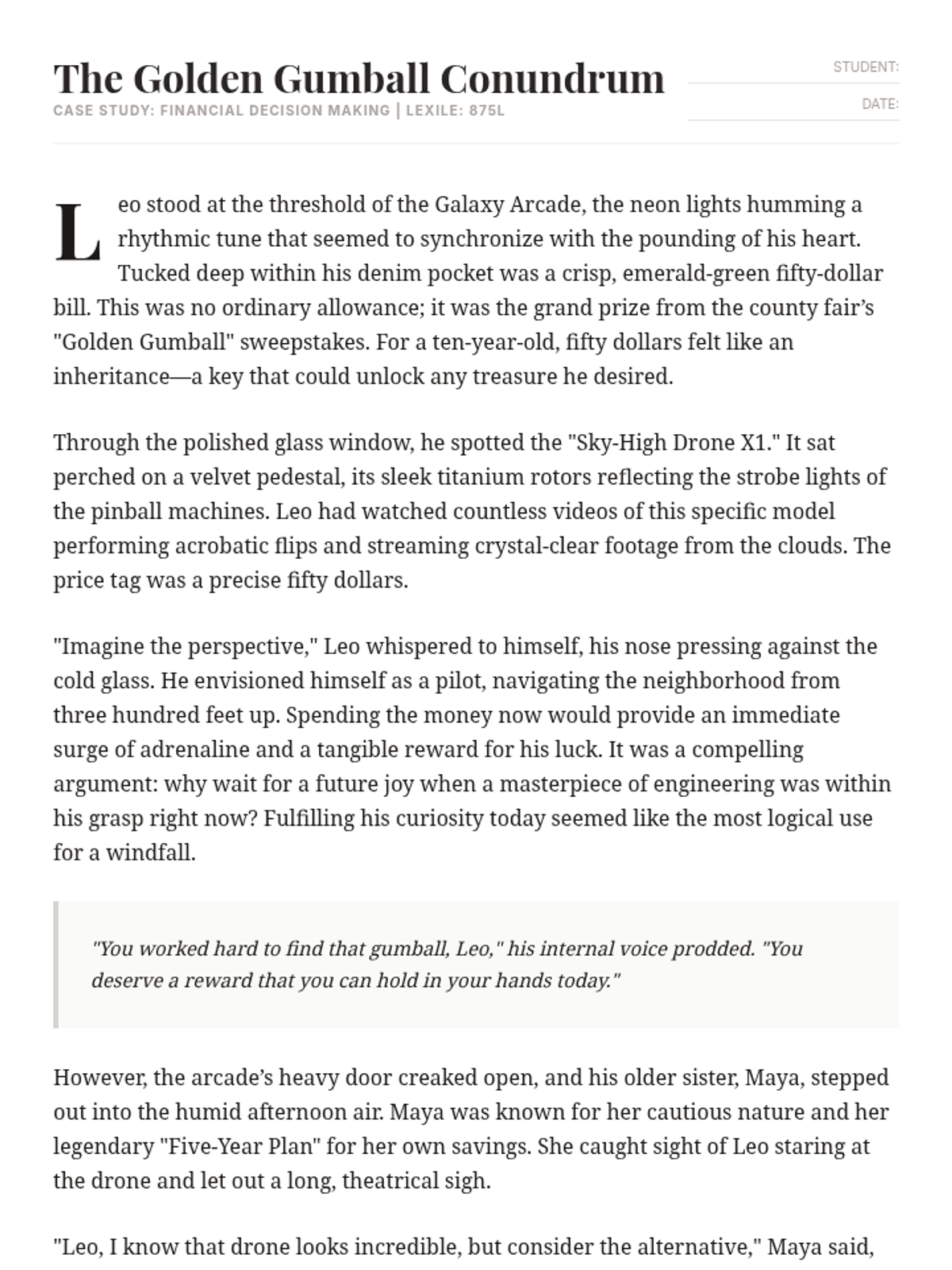
A 7th-grade ELA lesson where students learn the components of independence through a multimedia source and apply their knowledge by writing a persuasive advice column response. Students will practice citing evidence from a video to support their claims.
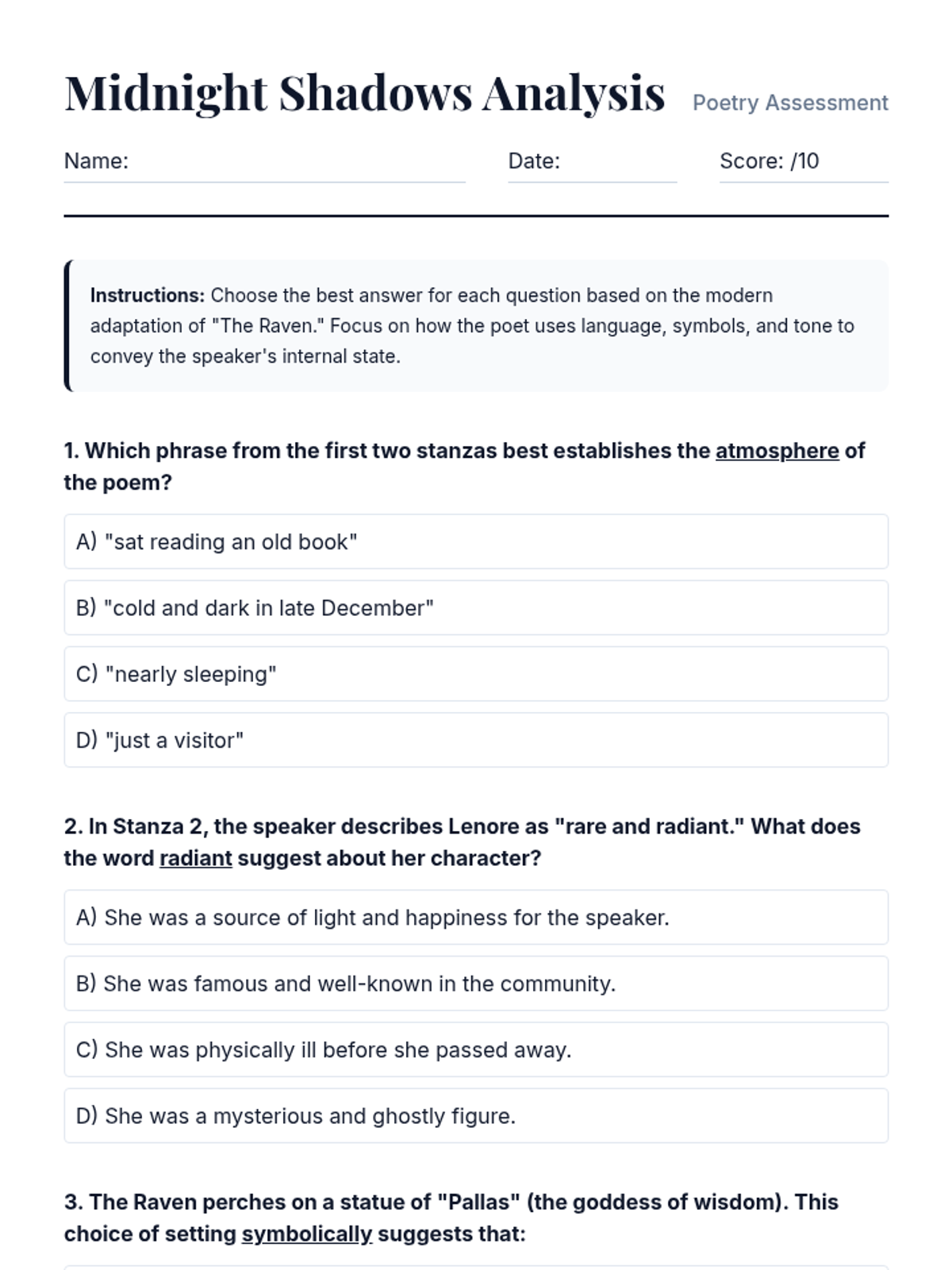
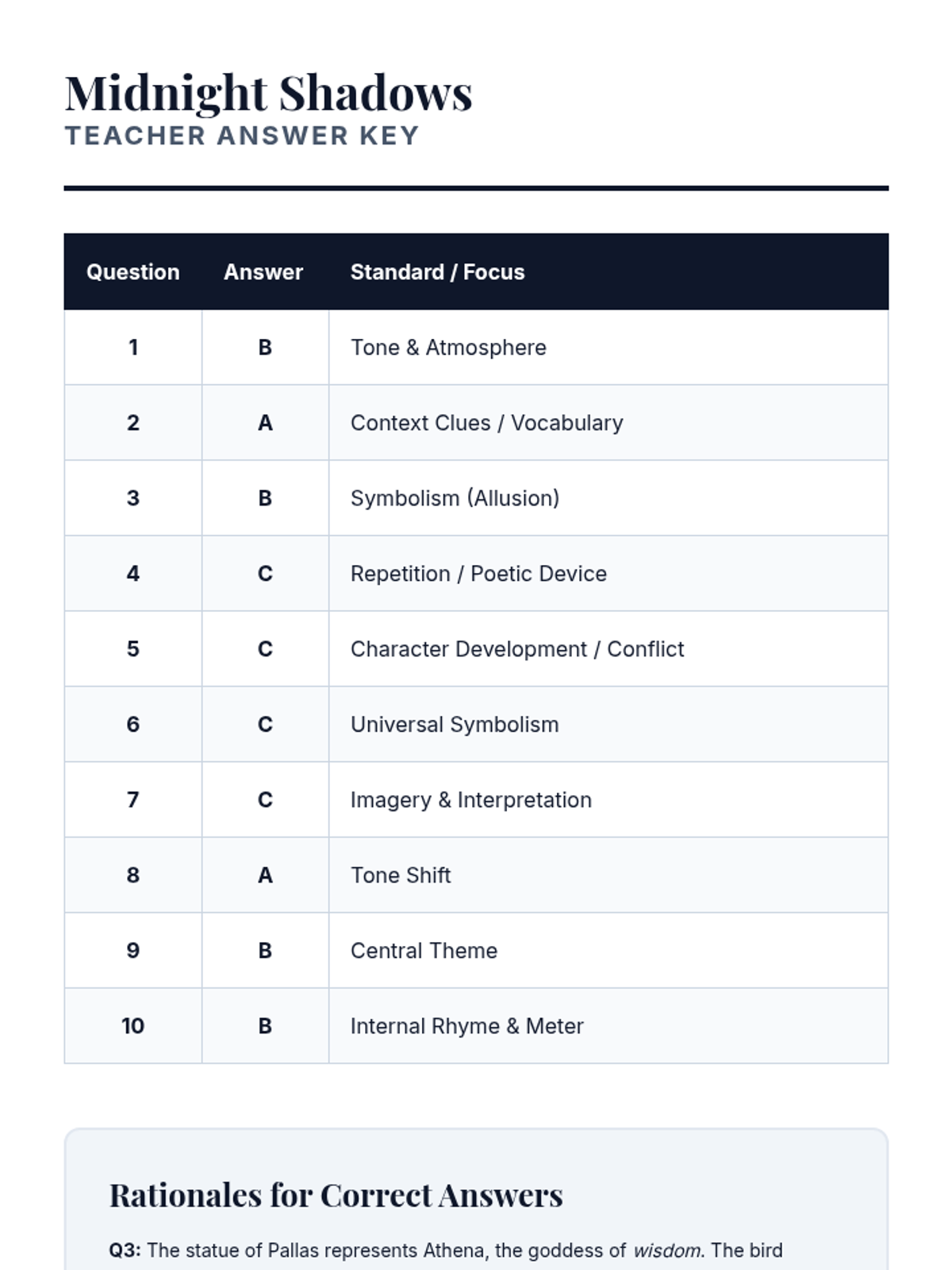
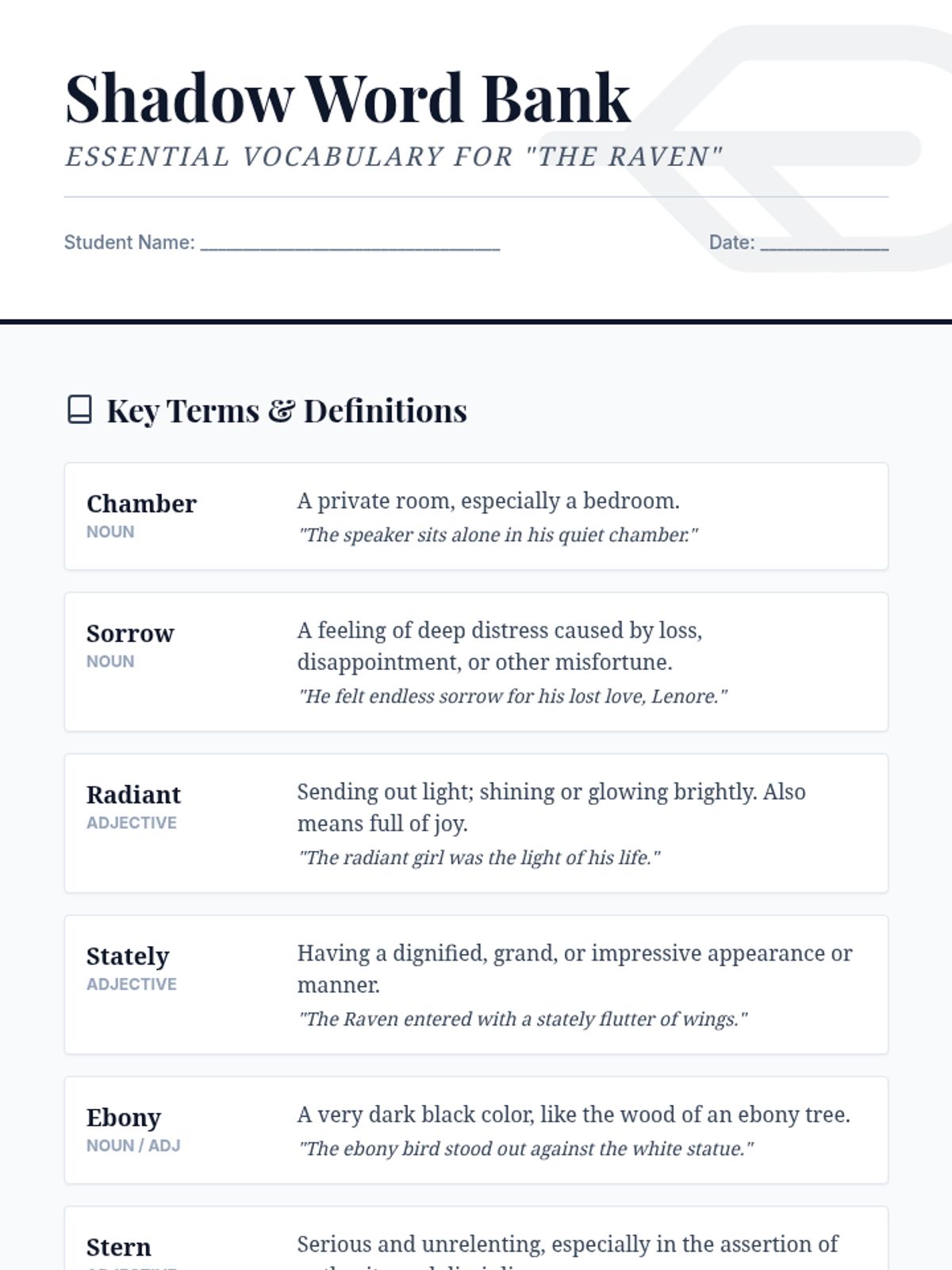
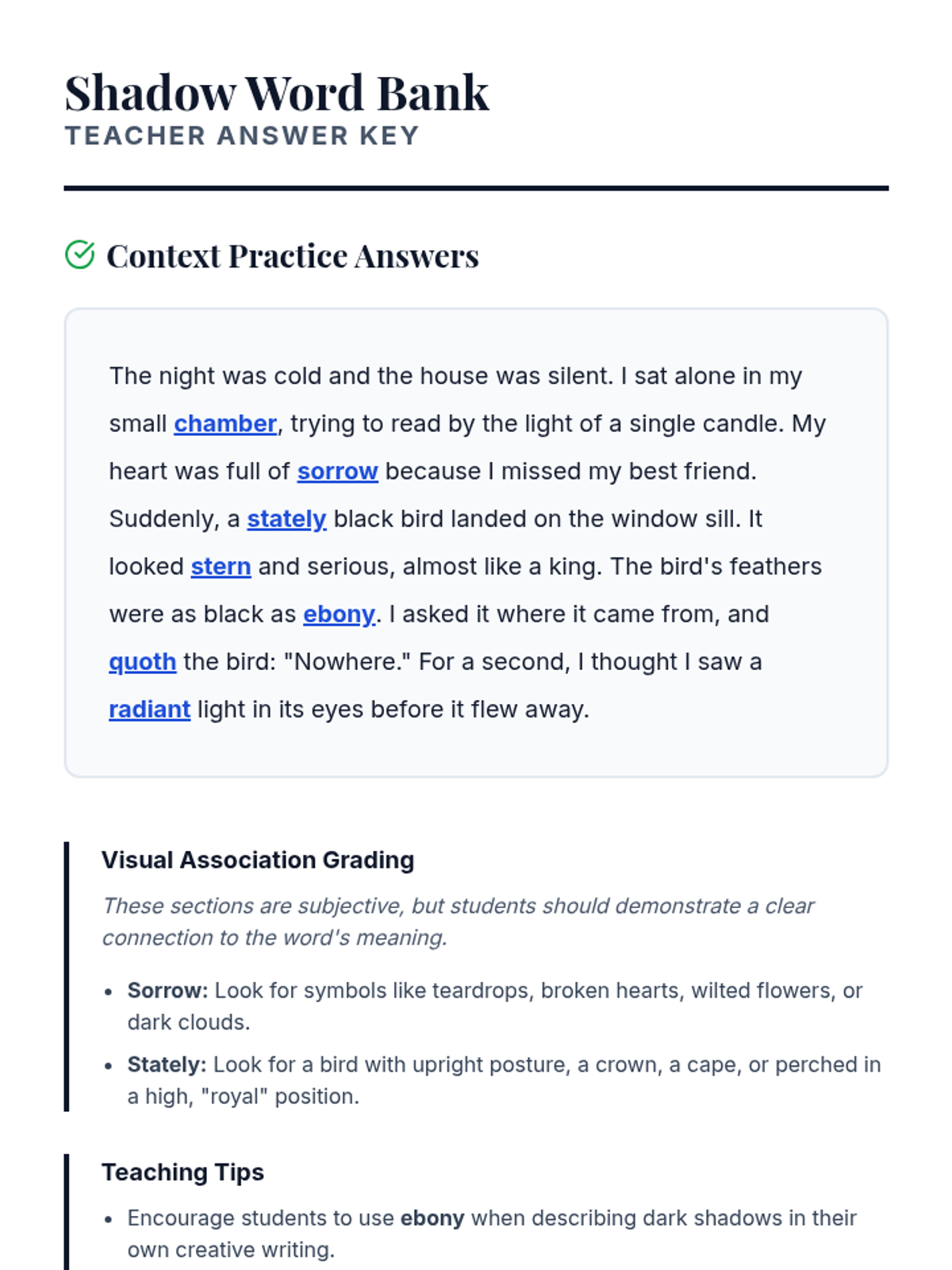
A quick vocabulary boost focusing on four powerful literary words: Fiend, Reverberate, Rapturous, and Ineffable. This lesson provides reference materials and practice to master these evocative terms.
In this lesson, students analyze Chapter 2 of Frederick Douglass's Narrative, focusing on his use of irony regarding slave songs, sleeping conditions, and the hierarchy of the Great House Farm. They will produce a written response citing two specific examples of irony.
A high-energy, kinesthetic writing game called 'The Hall of Echoes Scramble.' Students act as 'Echo Hunters' who must find hidden 'Memory Vibrations' (prompts) around the room and collaboratively write creative responses on a 'Legacy Scroll' to reconstruct a character's life.
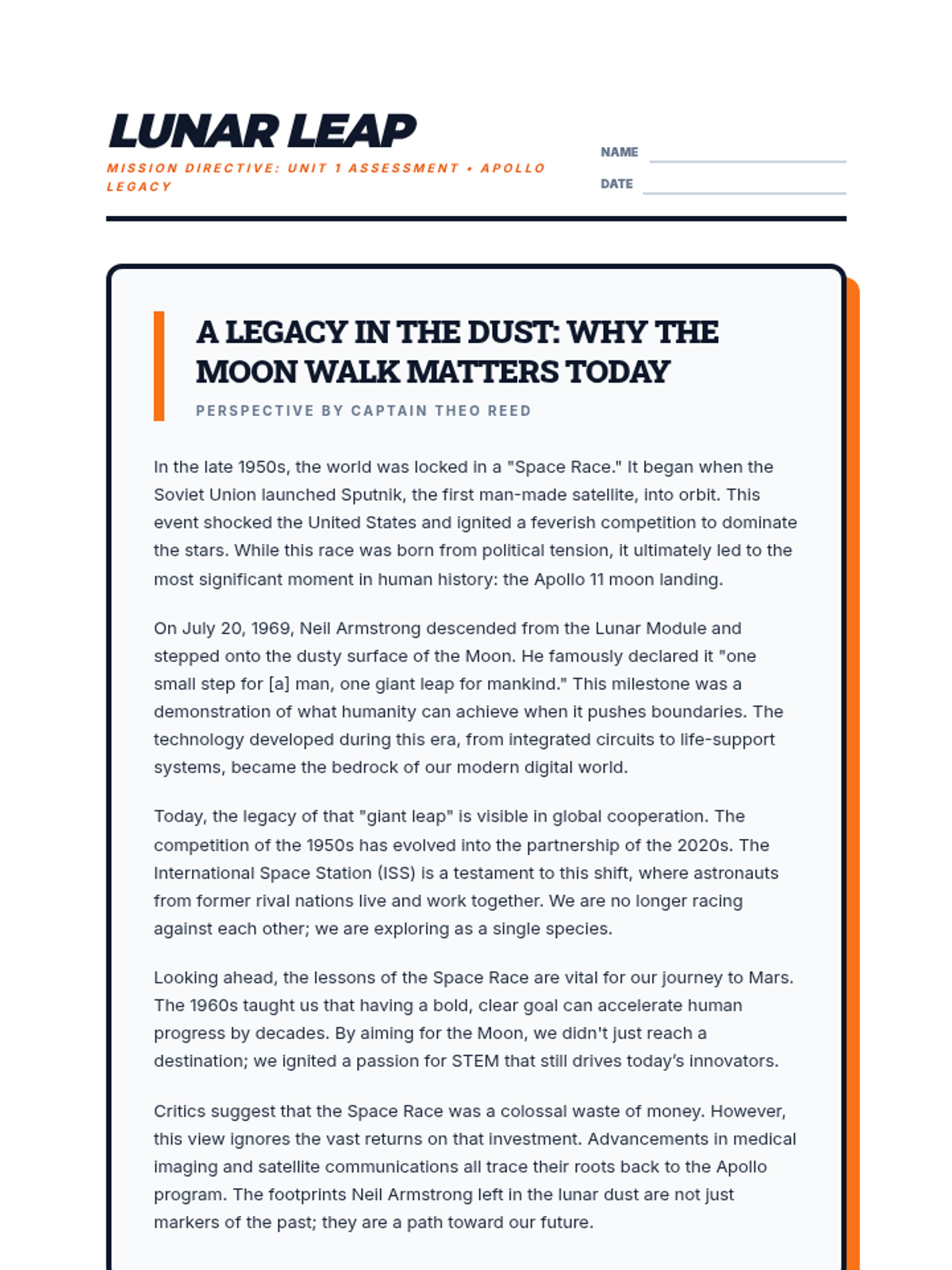
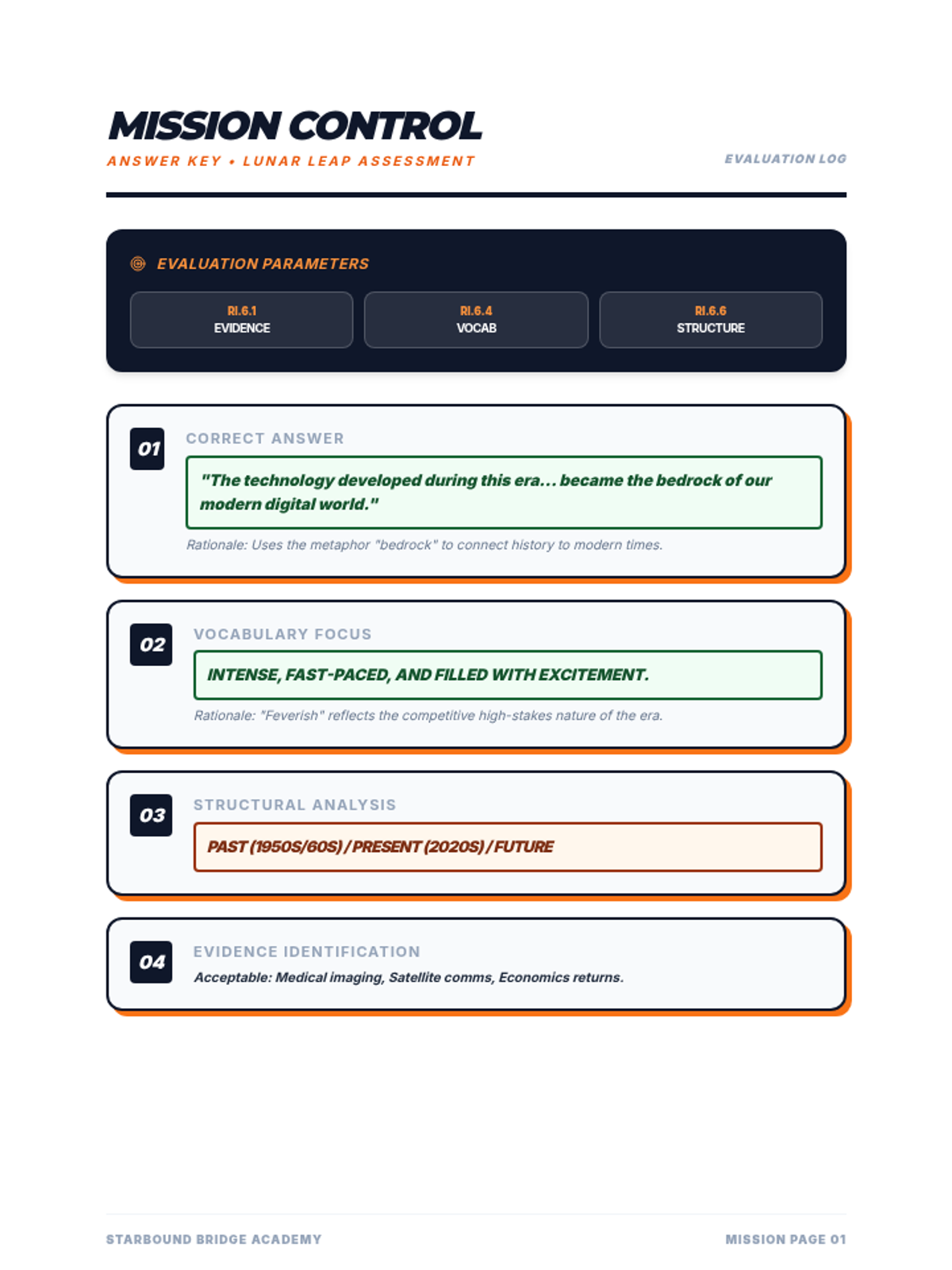
Focuses on grade 6 NYS ELA standards for informational text, emphasizing text structure and identifying an author's argument. Features a passage on ocean plastic pollution.
Book club celebration with discussion and a creative 'Carving' activity.
Preparing for the book club celebration and final reflection.
Synthesizing the theme of 'letting go' across the various characters.
Final vocabulary review with a comprehensive matching and sentence challenge.
Exploring the symbolism of Sistine's name and her character growth.
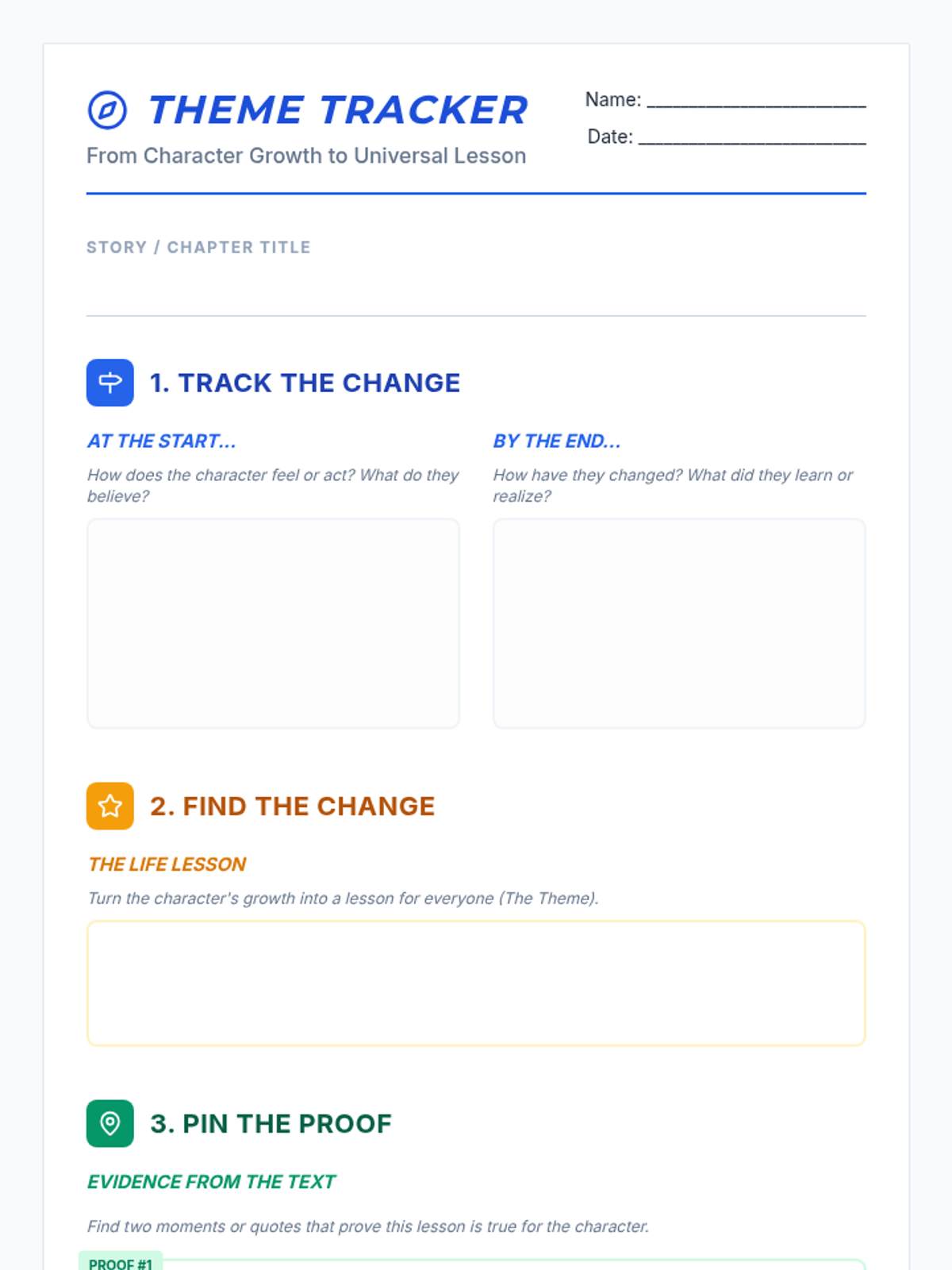
Synthesizing how Rob's character changed from the first chapter to the last.
Analyzing the symbolism of the tiger and what it represents for each character.
Synthesizing the theme of friendship between Rob, Sistine, and Willie May.
Deep dive into summarizing the entire narrative arc using a 'Story Suitcase' organizer.

Reading Chapter 30, focusing on the resolution and the sun coming out.
Reading Chapters 28-29, summarizing the release and the immediate aftermath.
Reading Chapters 26-27, focusing on the climax of the decision to free the tiger.
Reading Chapters 24-25, synthesizing the concept of the 'sadness' in the legs.
Reading Chapters 22-23, focusing on Sistine's desire to let the tiger go.
Reading Chapters 20-21, analyzing the encounter with the tiger and vocabulary.
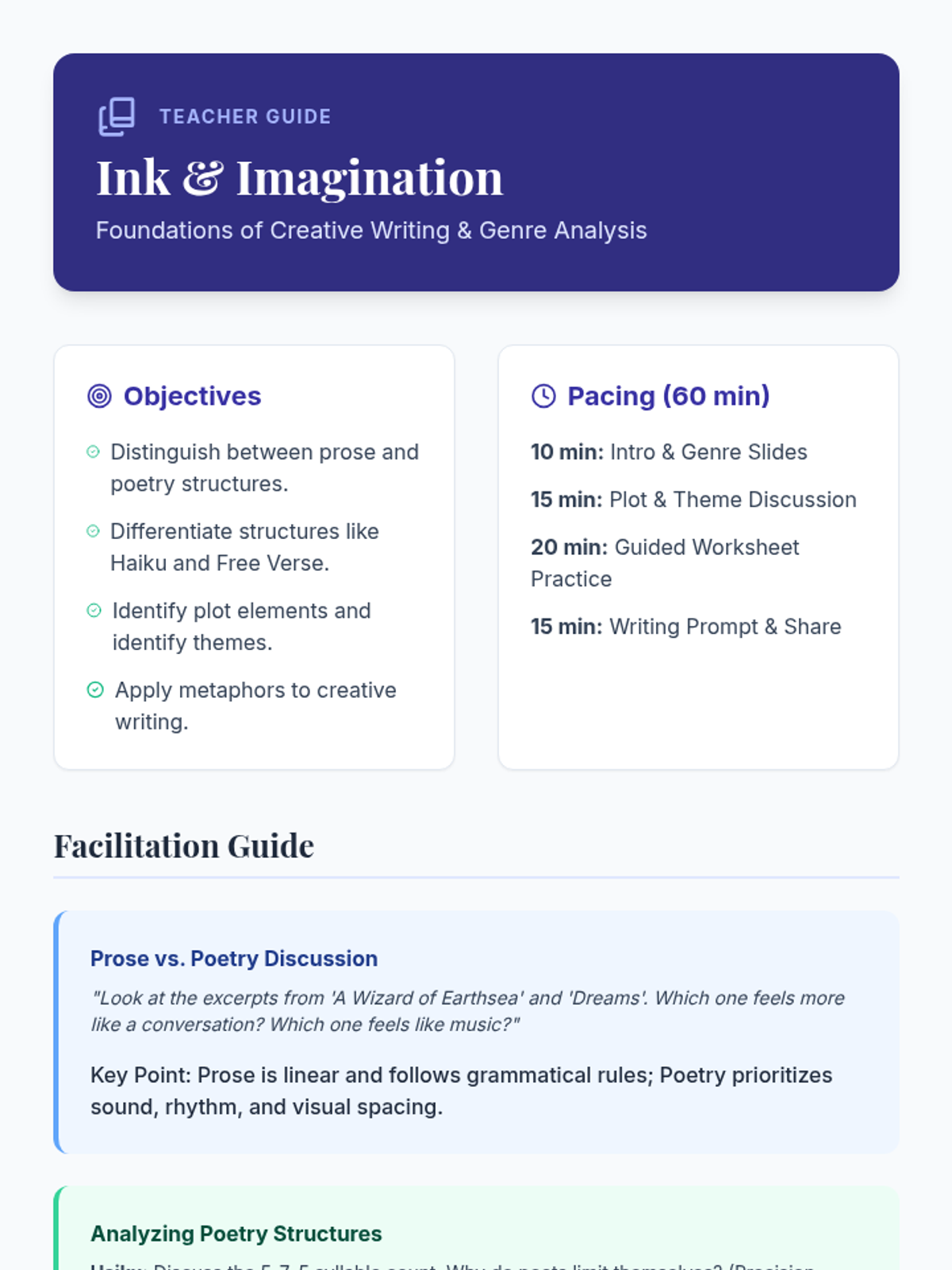
Reading Chapters 18-19, focusing on the secret of the tiger being shared.
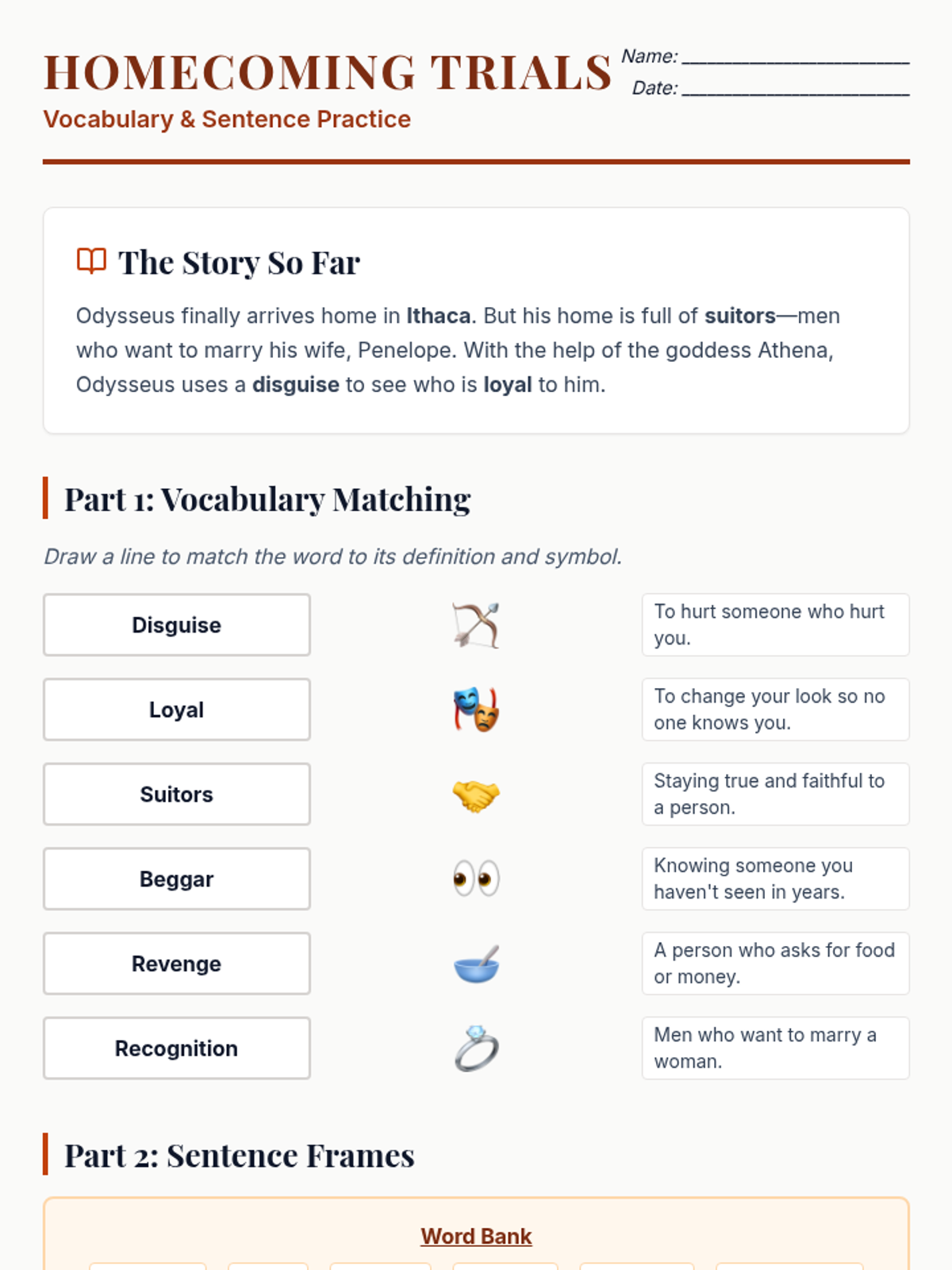
Reading Chapters 16-17, synthesizing the theme of freedom and cages.
Reading Chapters 14-15, focusing on the first mention of Willie May and vocabulary sentences.