A 7th-grade grammar lesson focused on identifying and diagramming indirect objects within the S-V-DO-IO sentence pattern, featuring a Khan Academy video and architectural-themed practice.
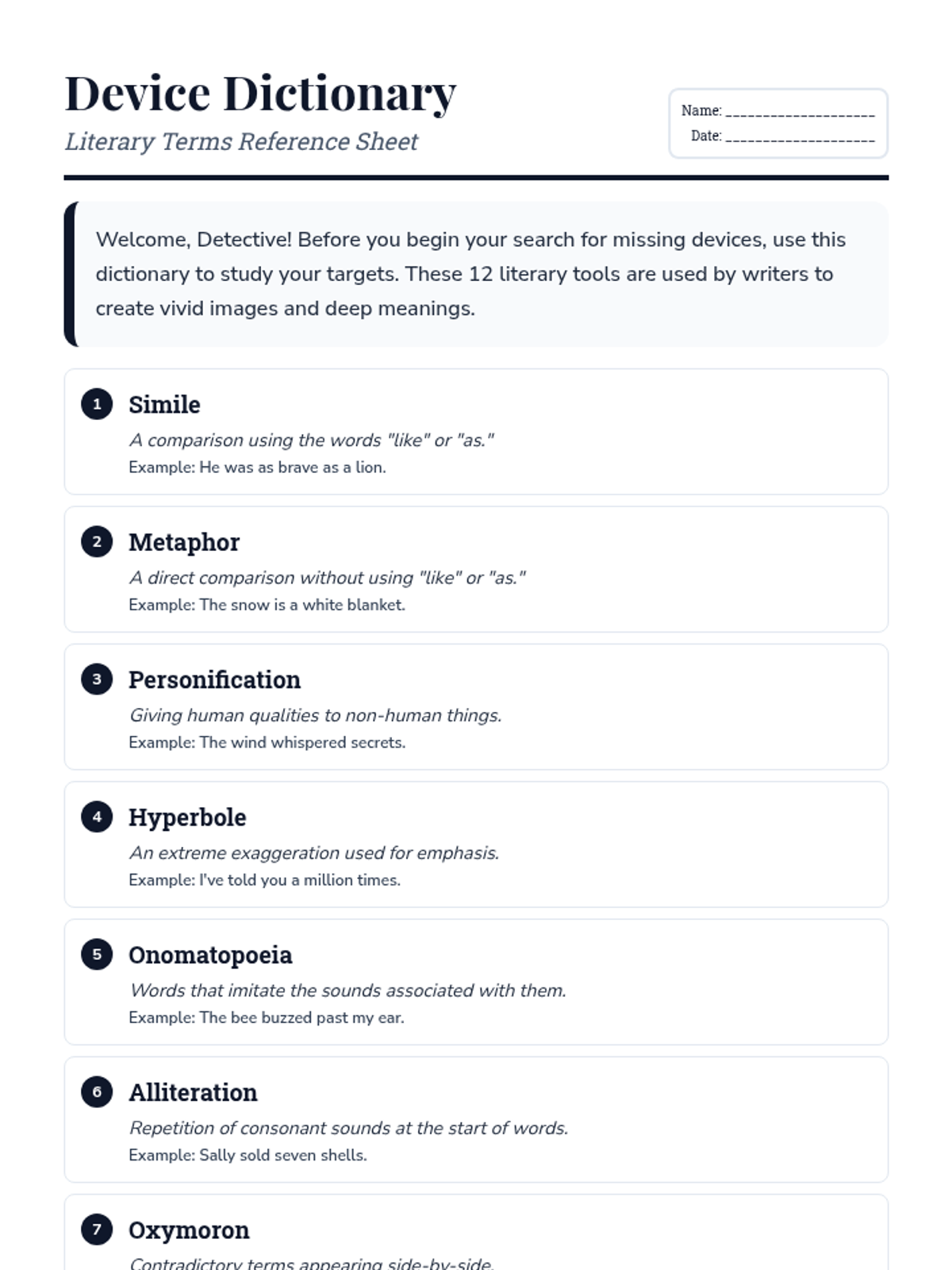
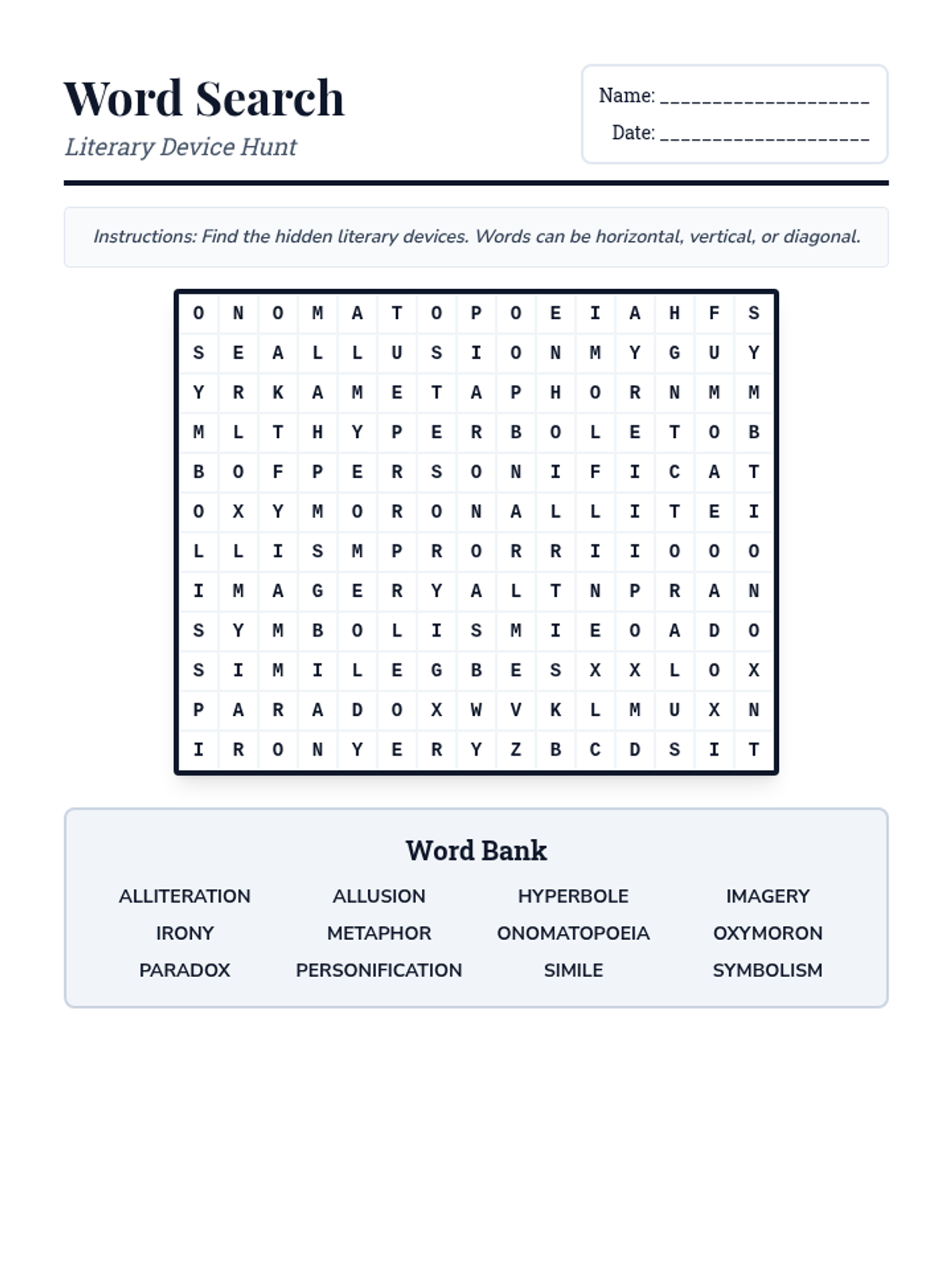
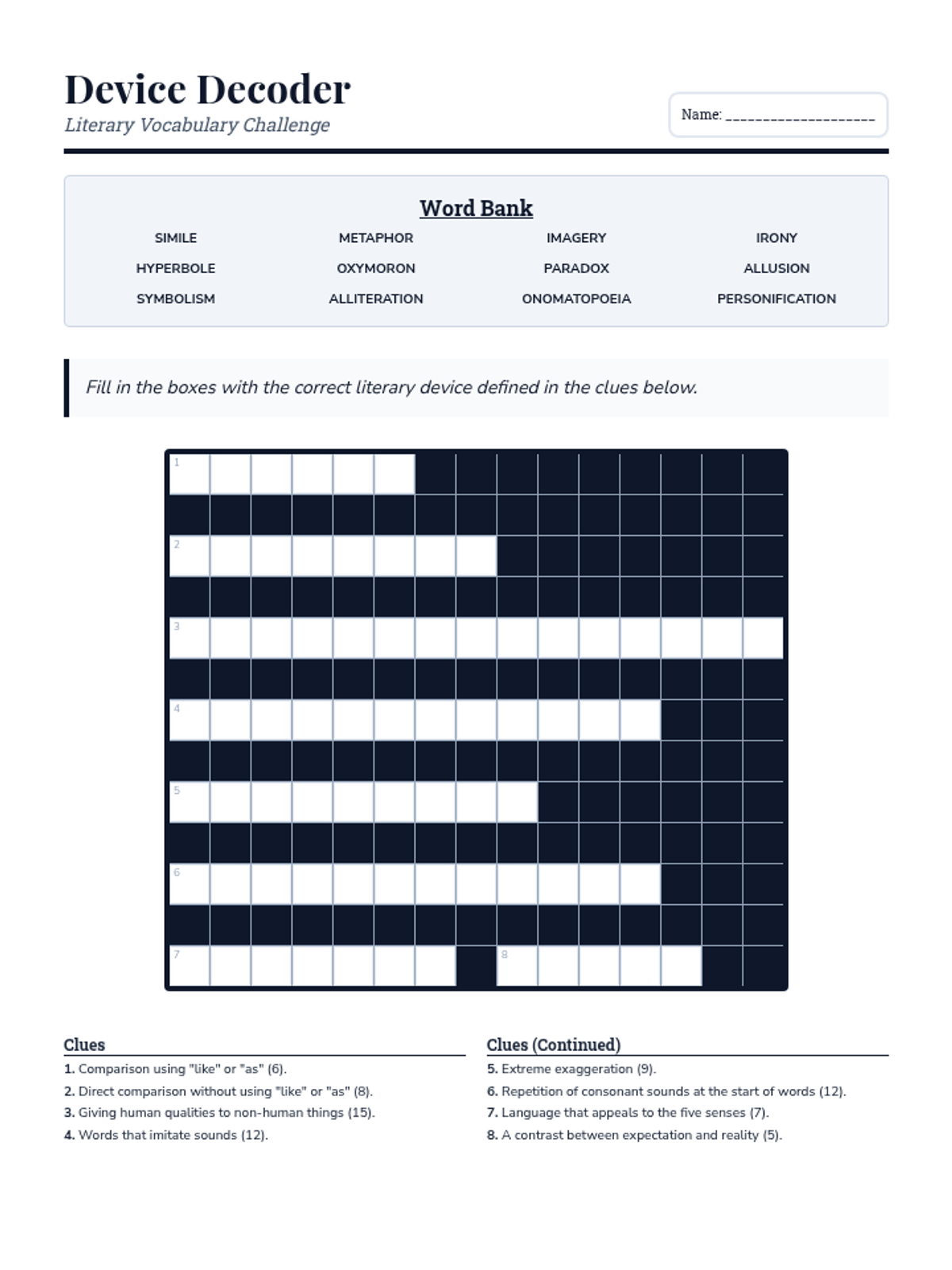
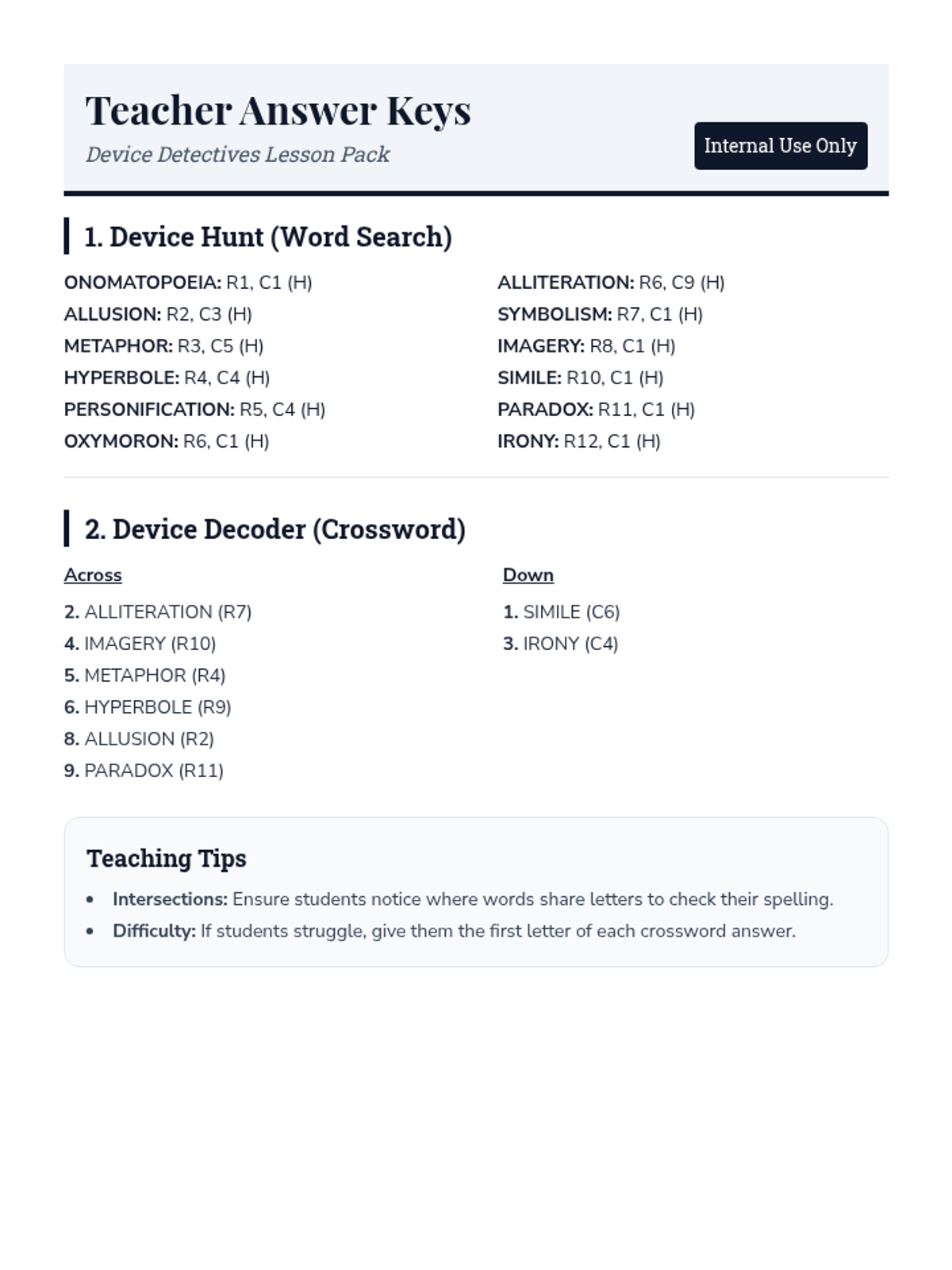
An introductory lesson focusing on identifying and defining common literary devices through engaging puzzles and reference materials.
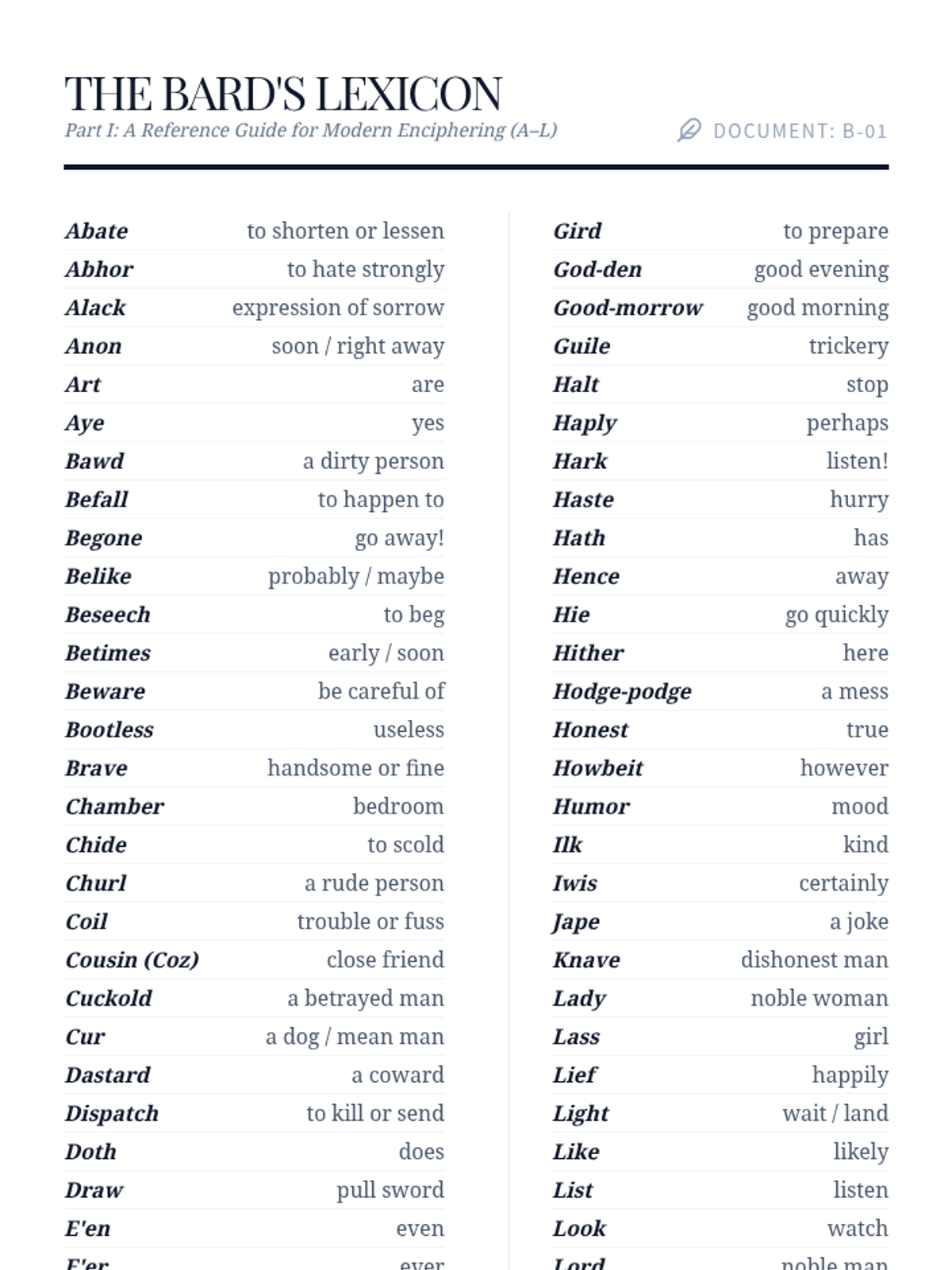
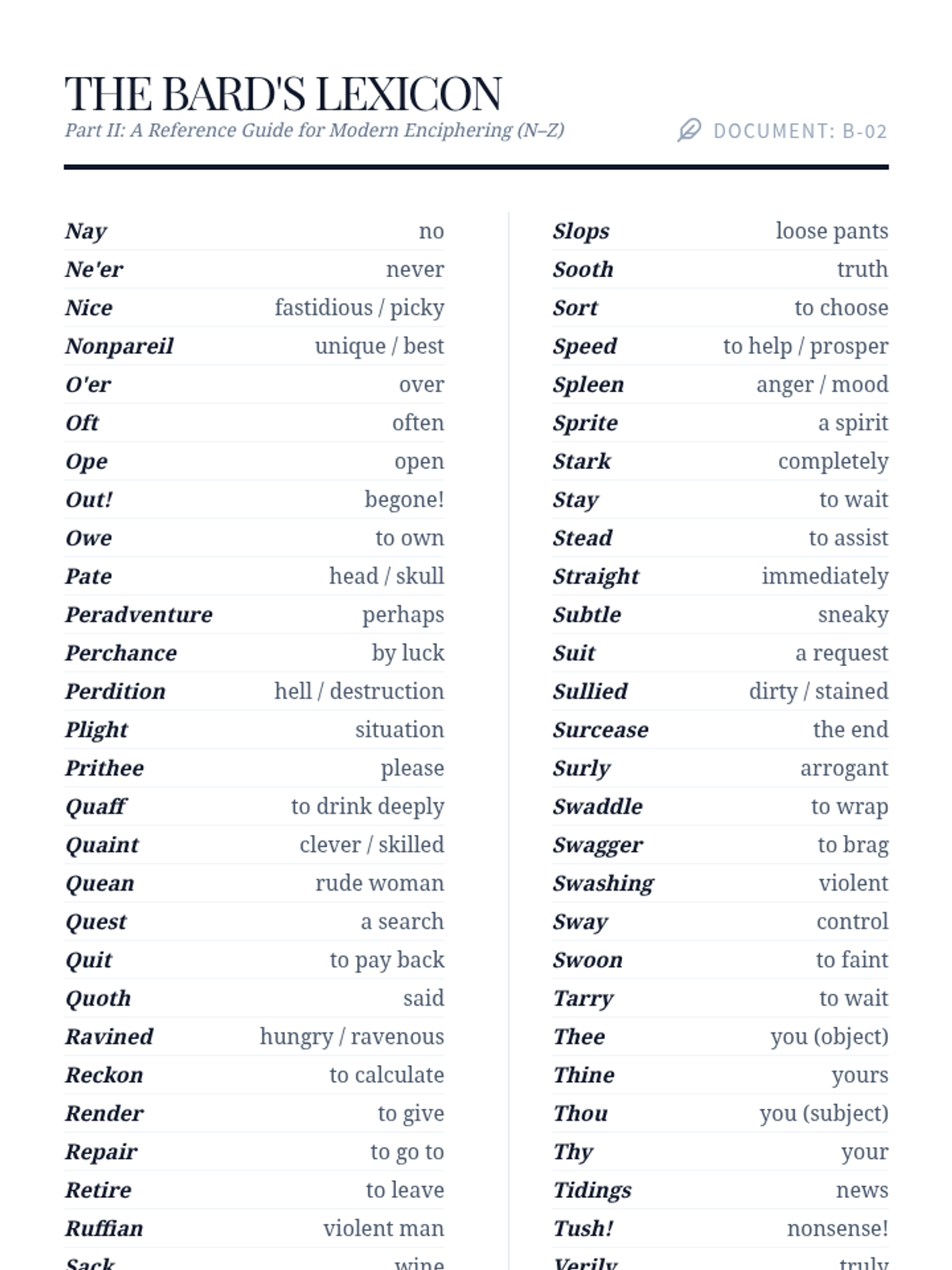
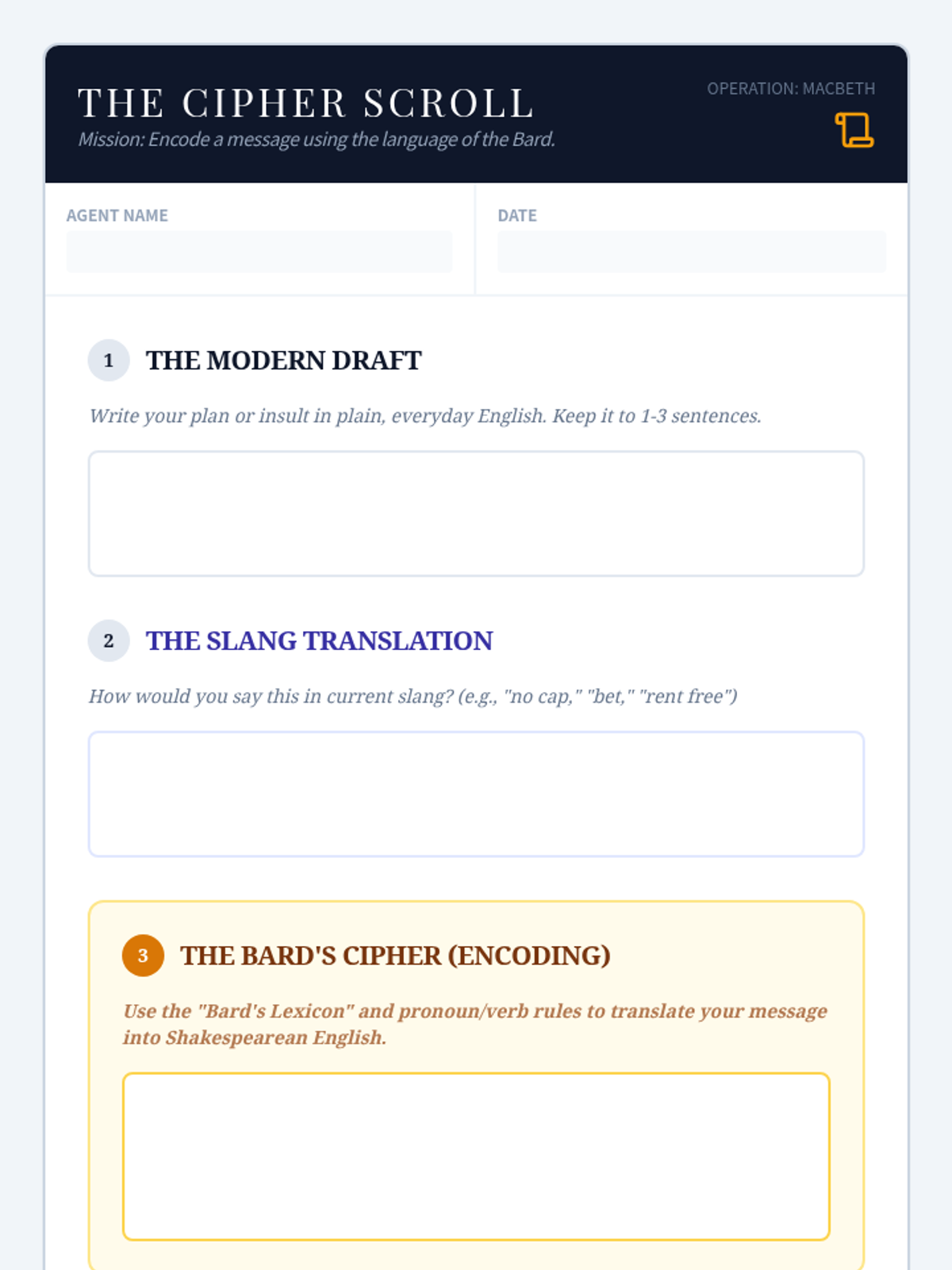
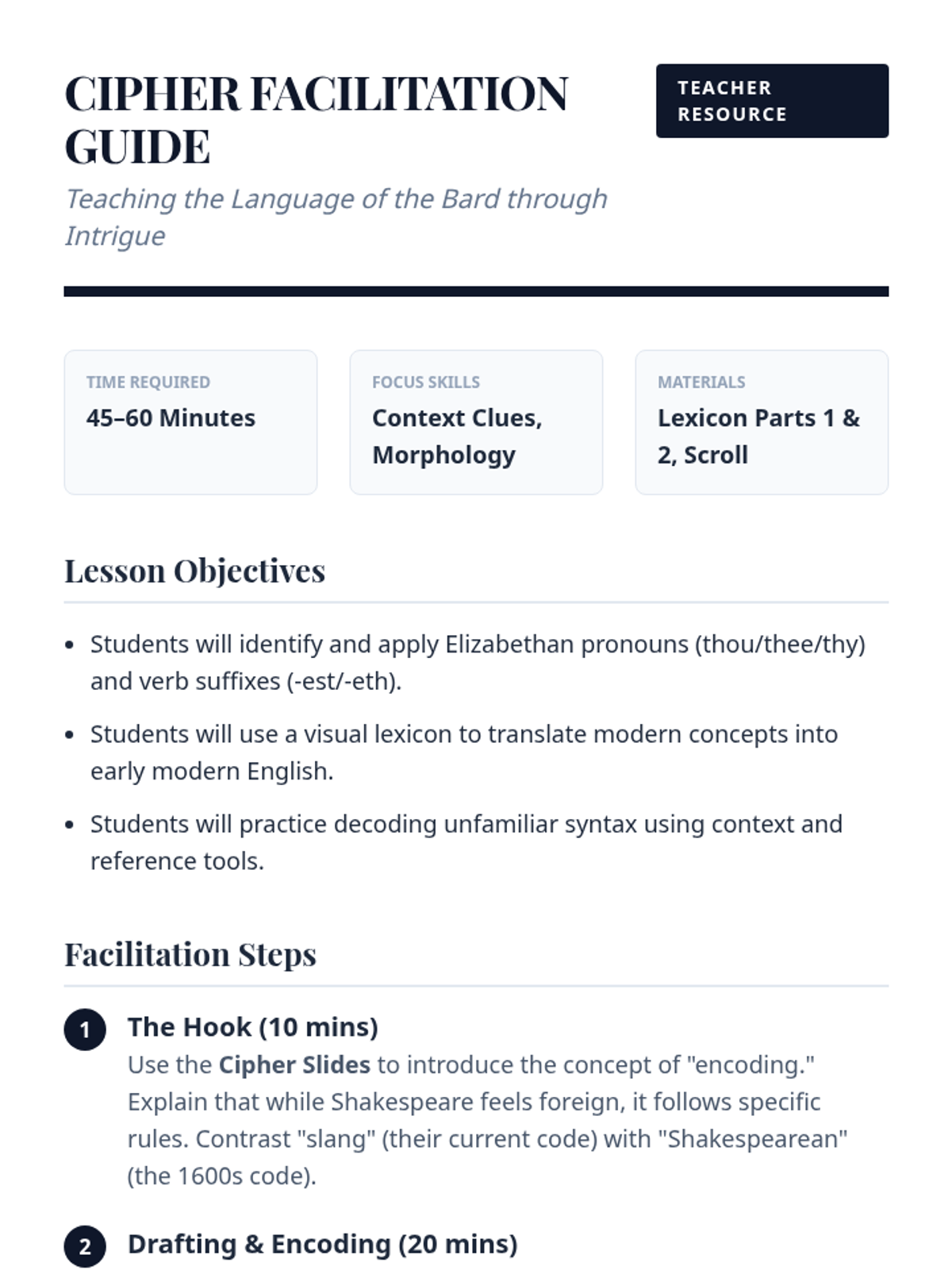
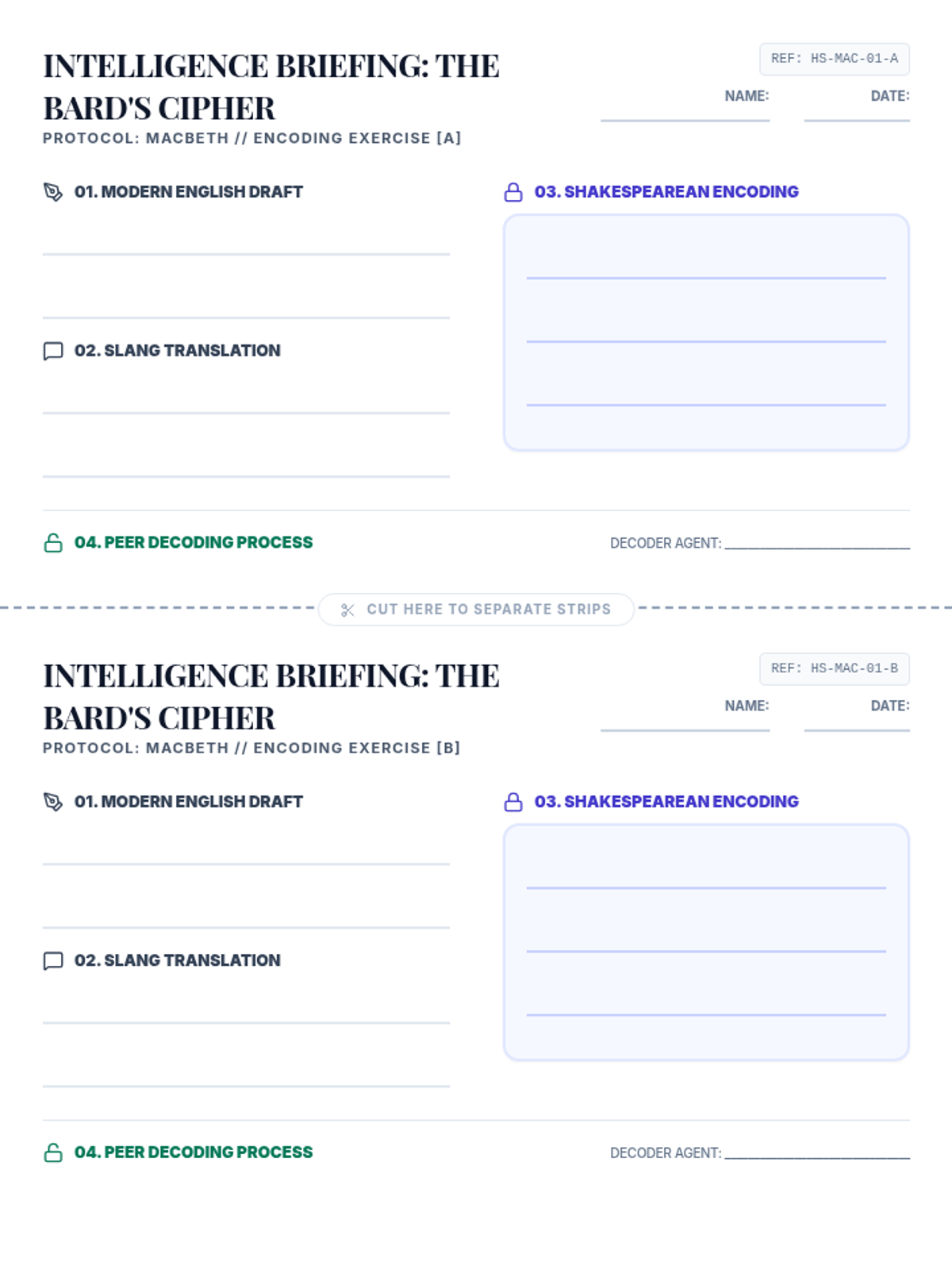
A hands-on activity where students learn to decode and encode Shakespearean language by writing secret messages or insults, then swapping them with peers to translate.
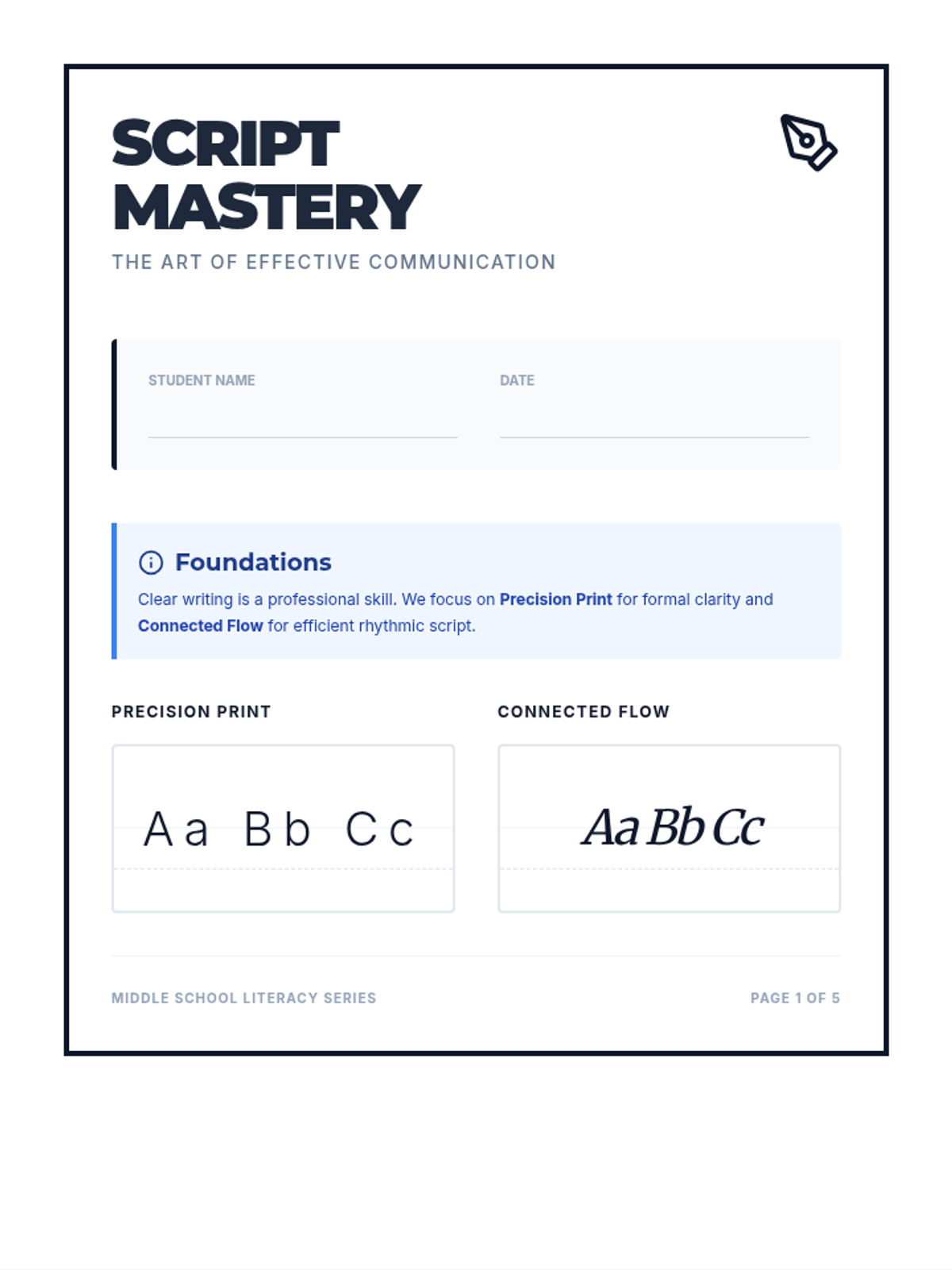
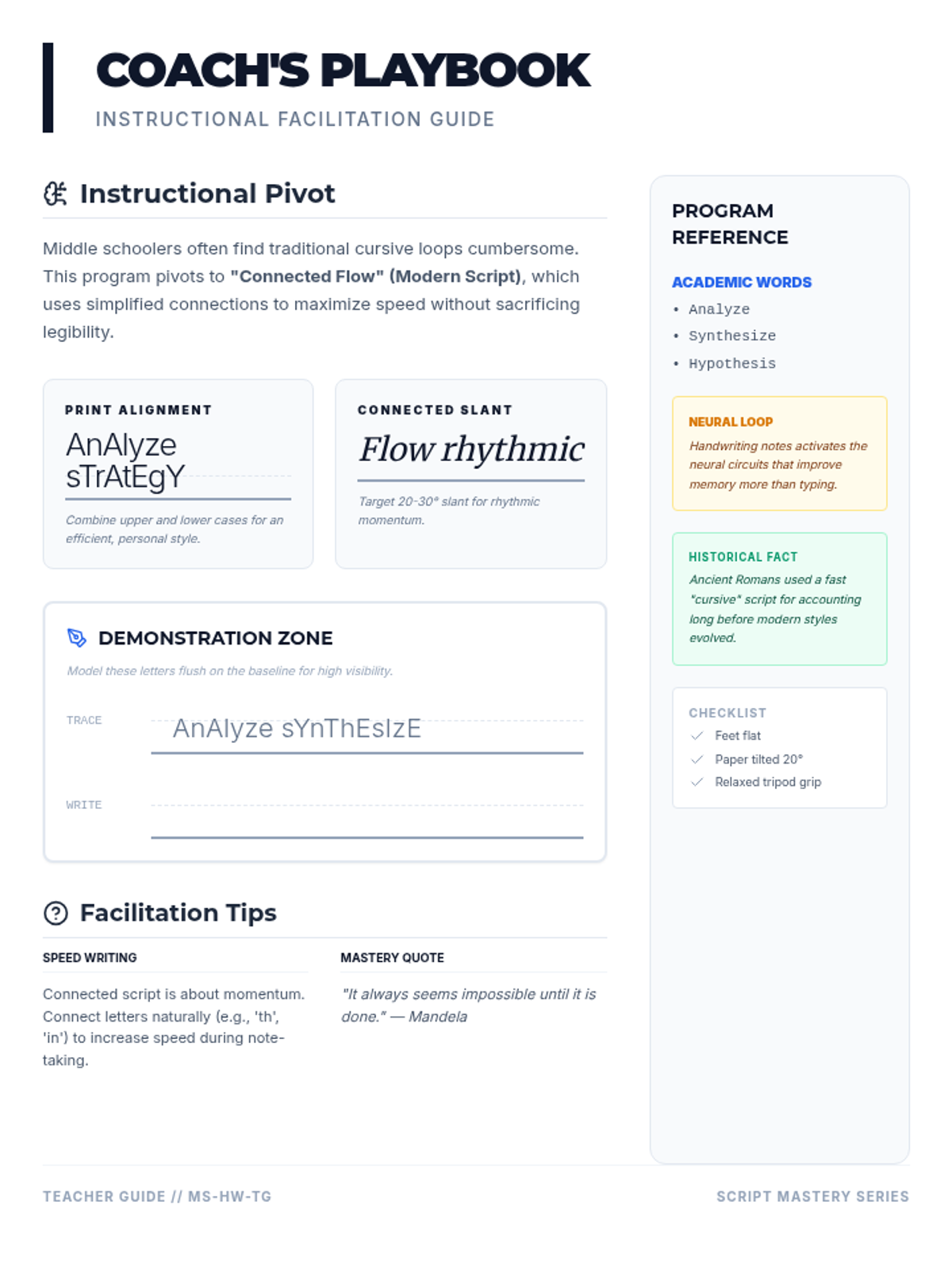
A comprehensive handwriting improvement program for middle school students, blending print and cursive techniques using engaging academic and motivational content.
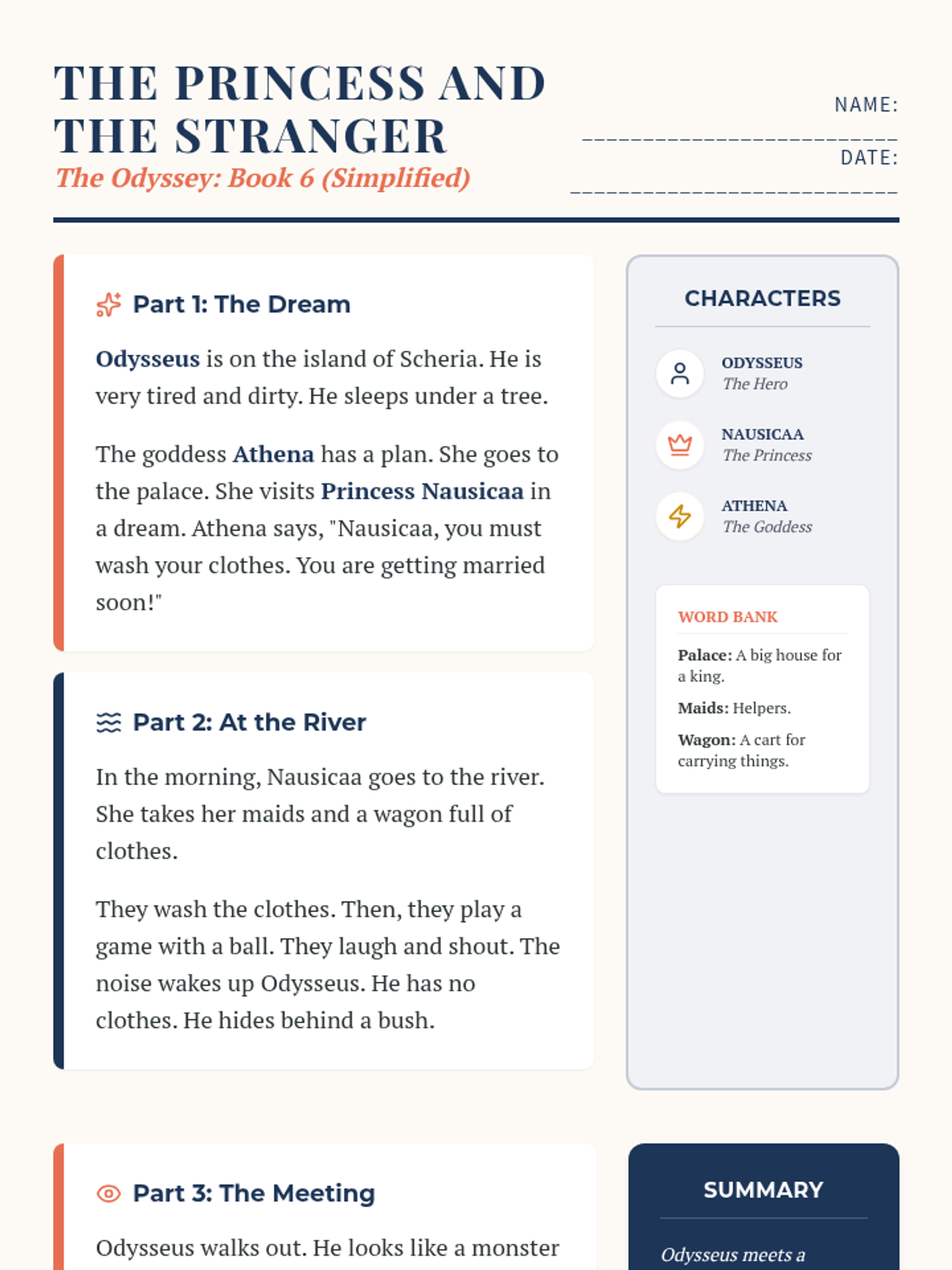
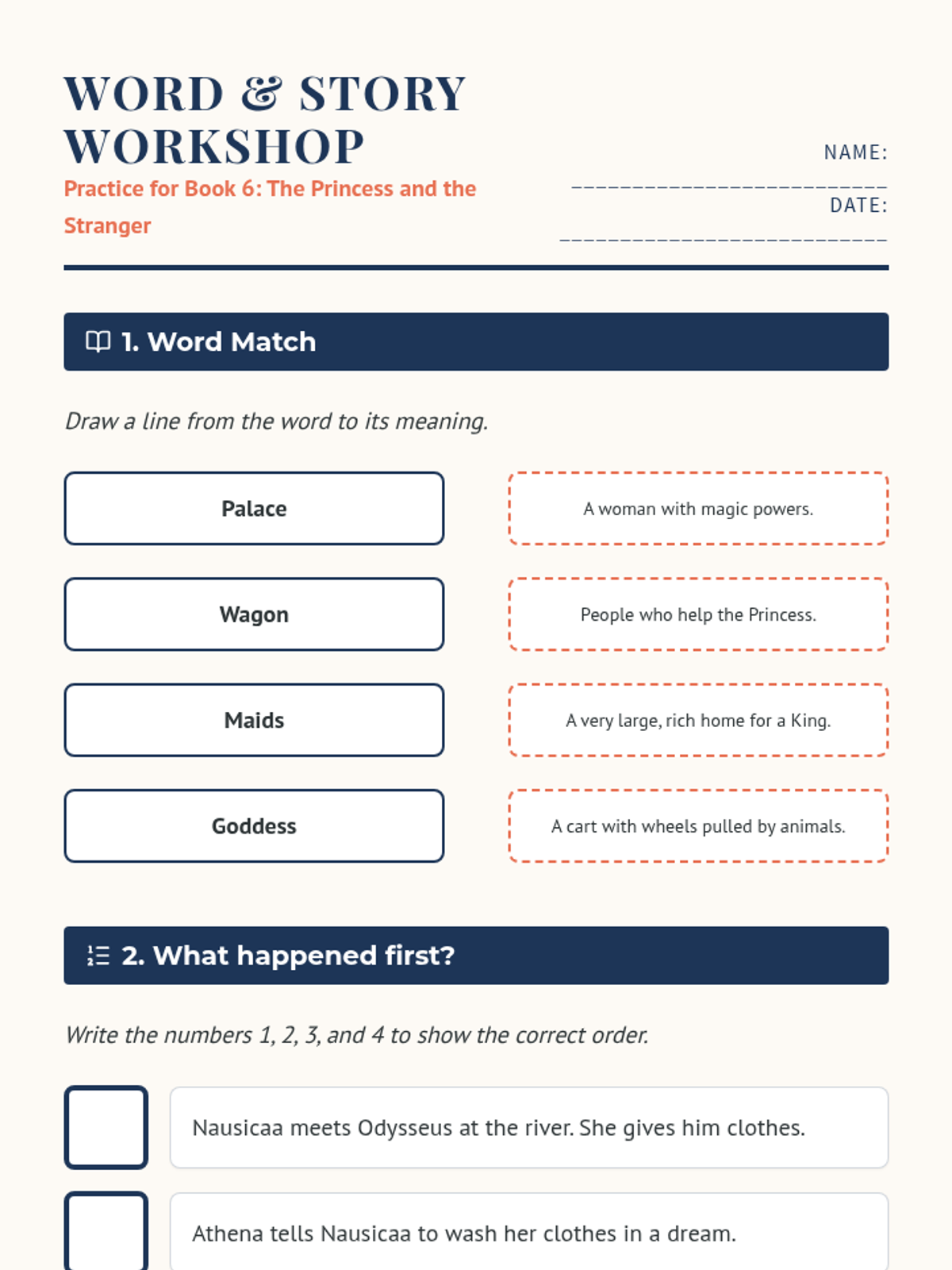
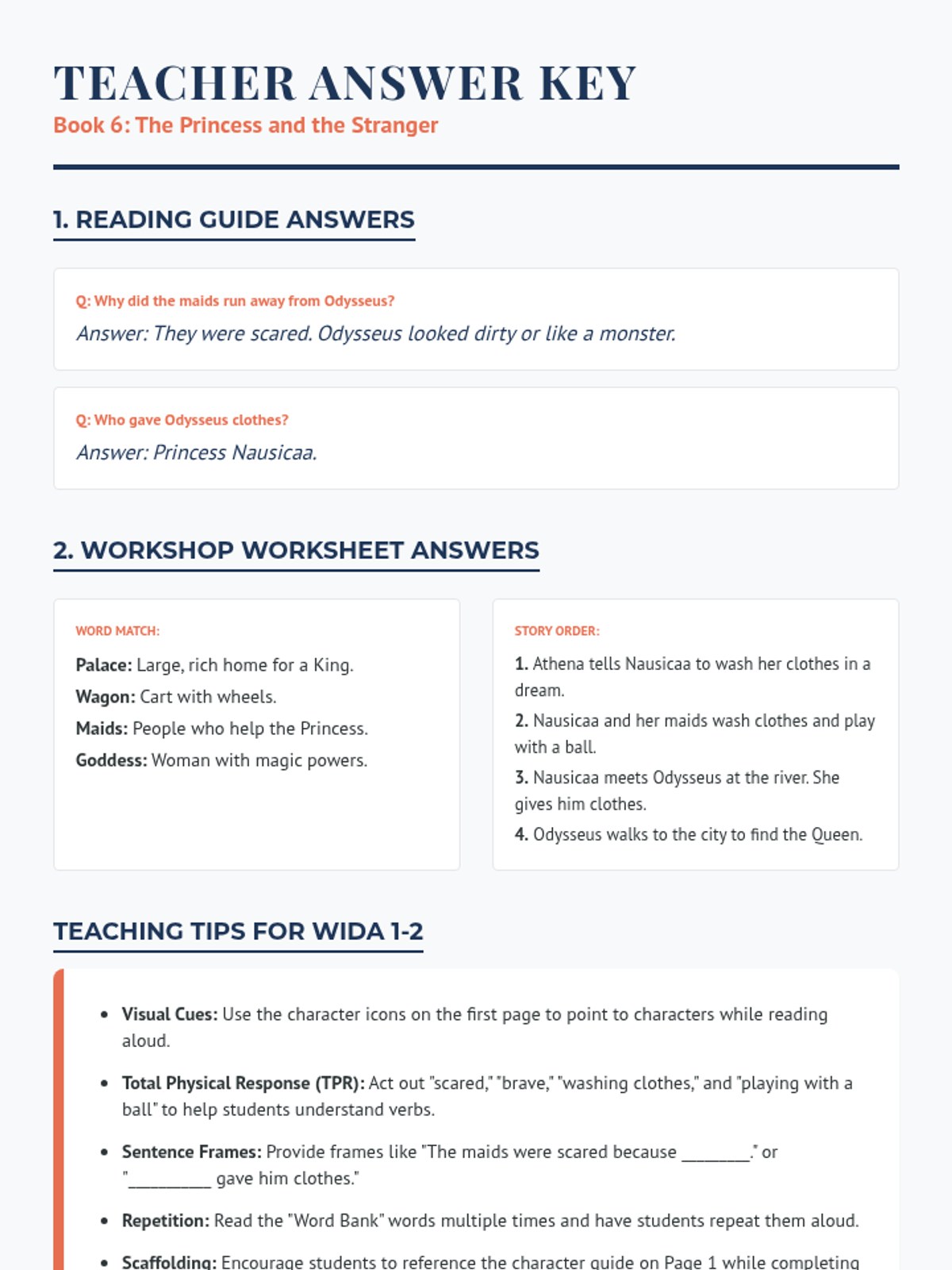
A simplified exploration of Book 6 of Homer's Odyssey, designed for WIDA Level 1-2 ELL students. The lesson focuses on key characters, basic plot sequencing, and essential vocabulary through a high-interest narrative.
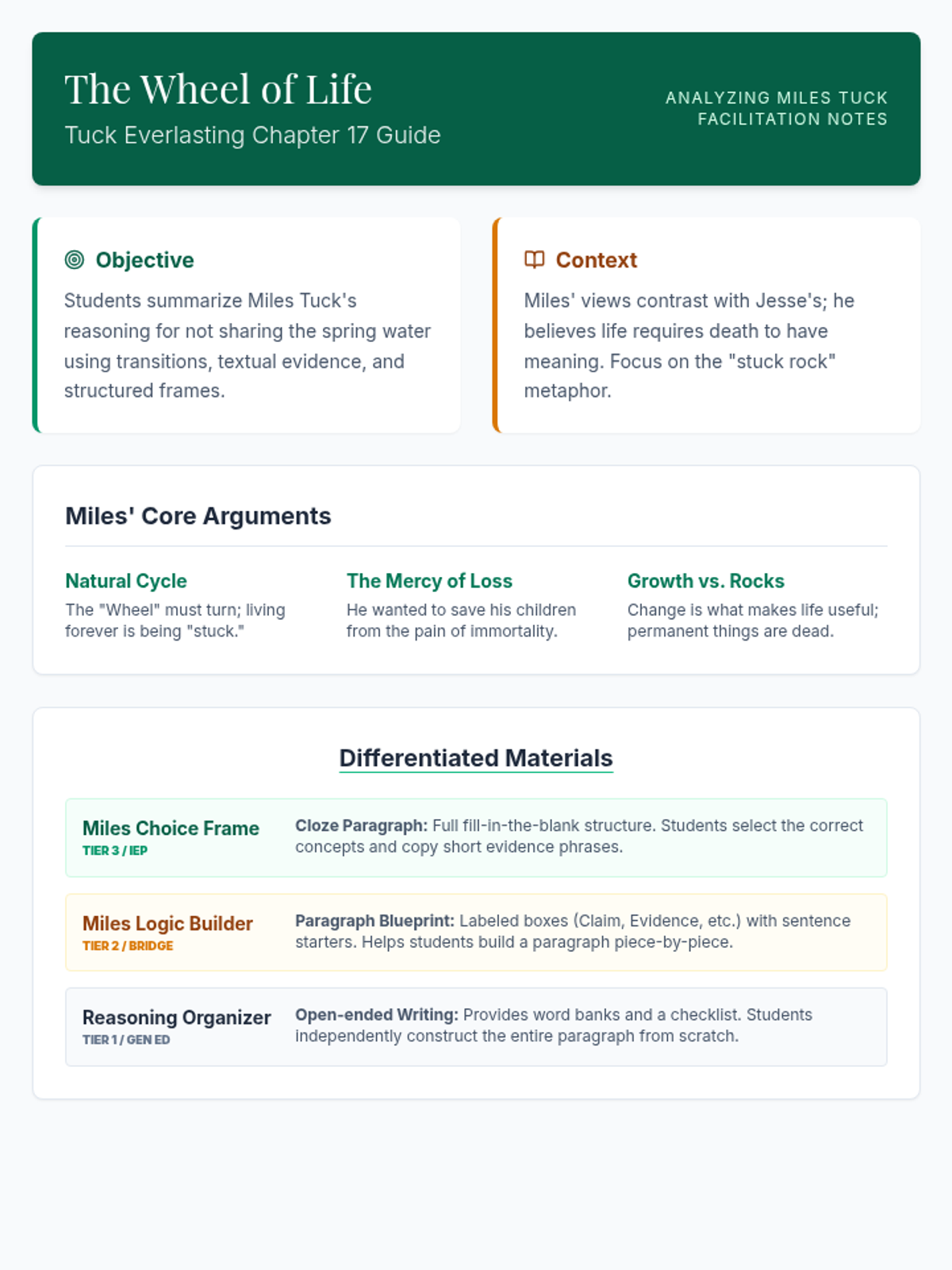
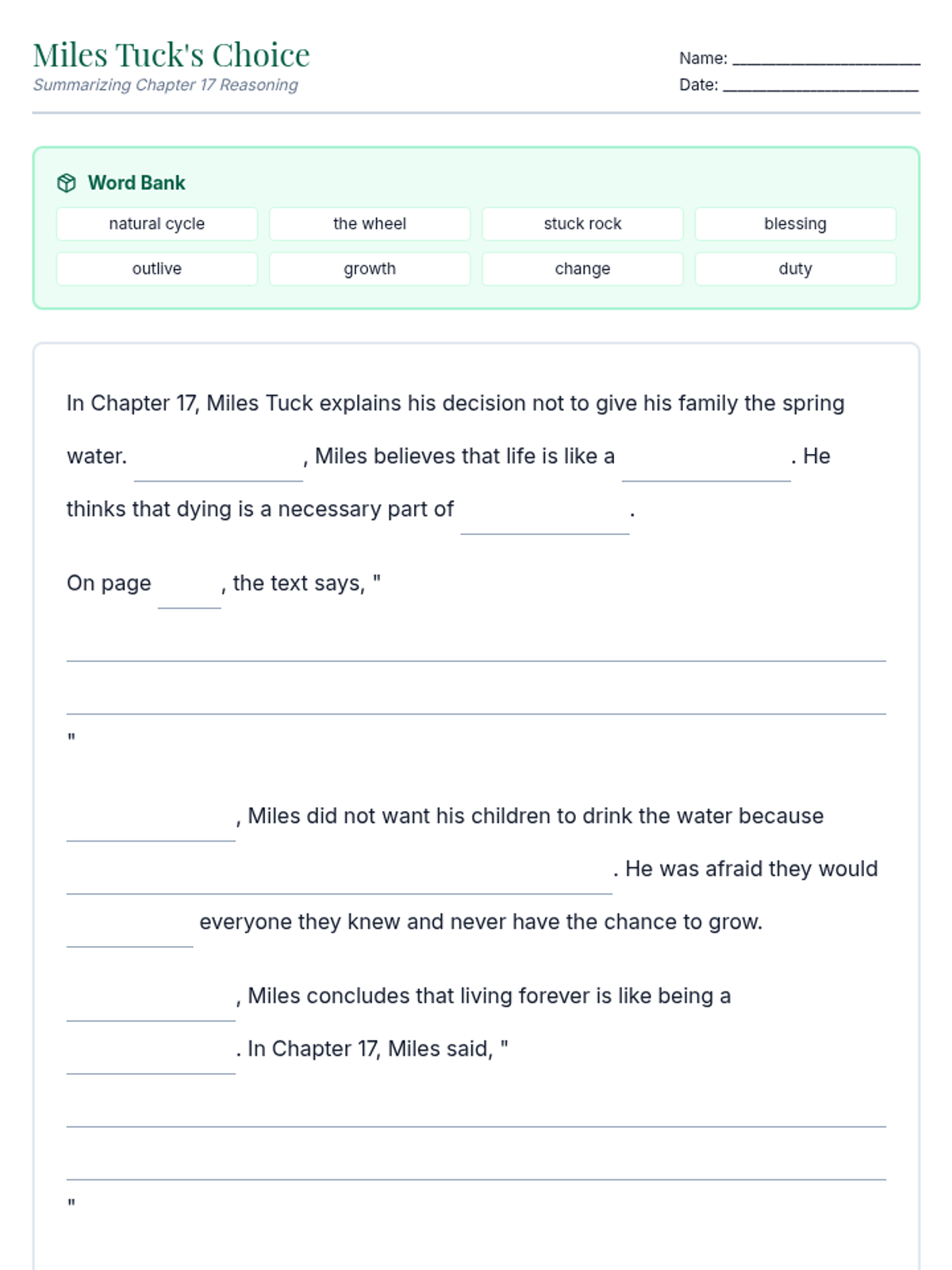
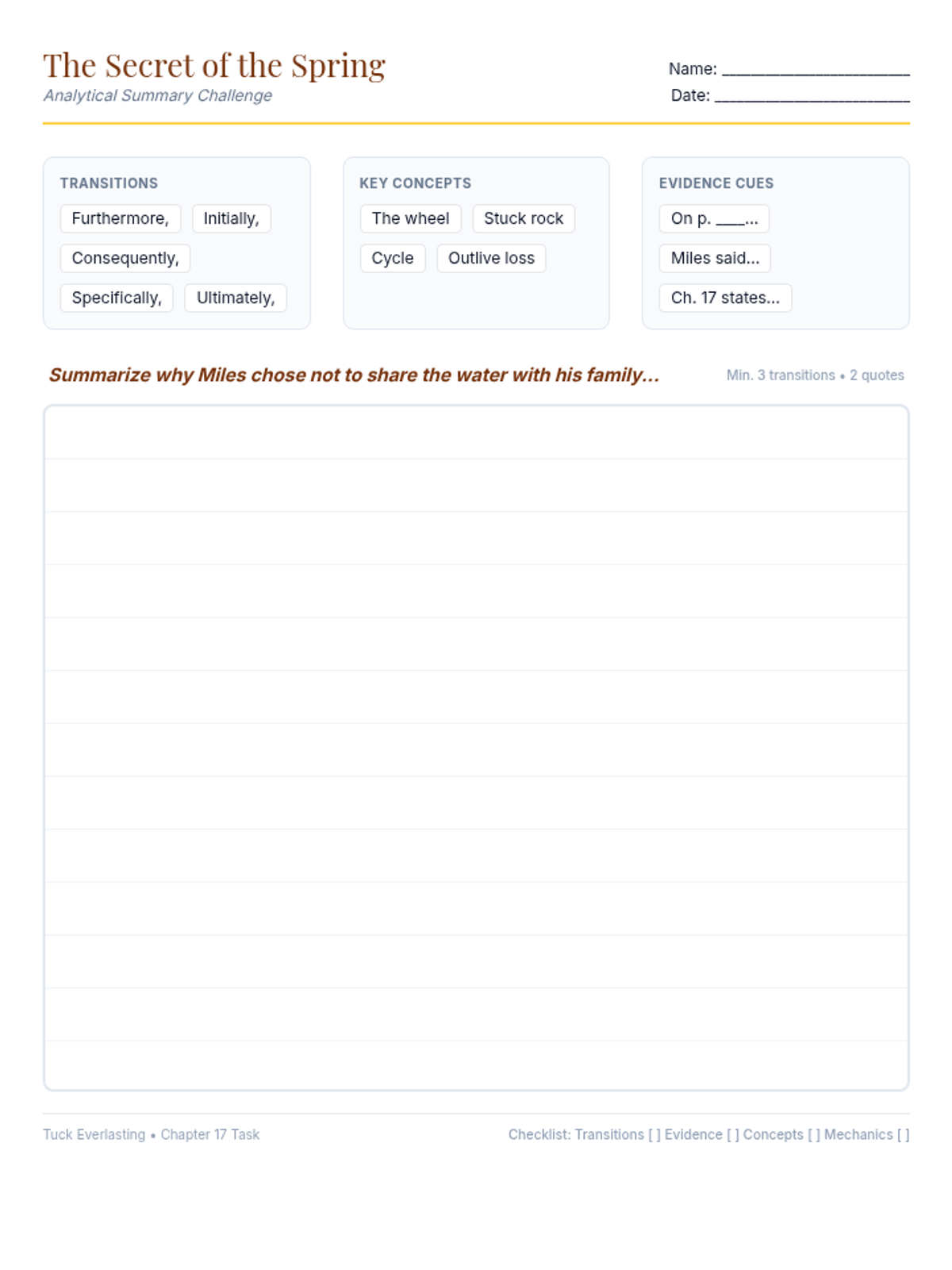
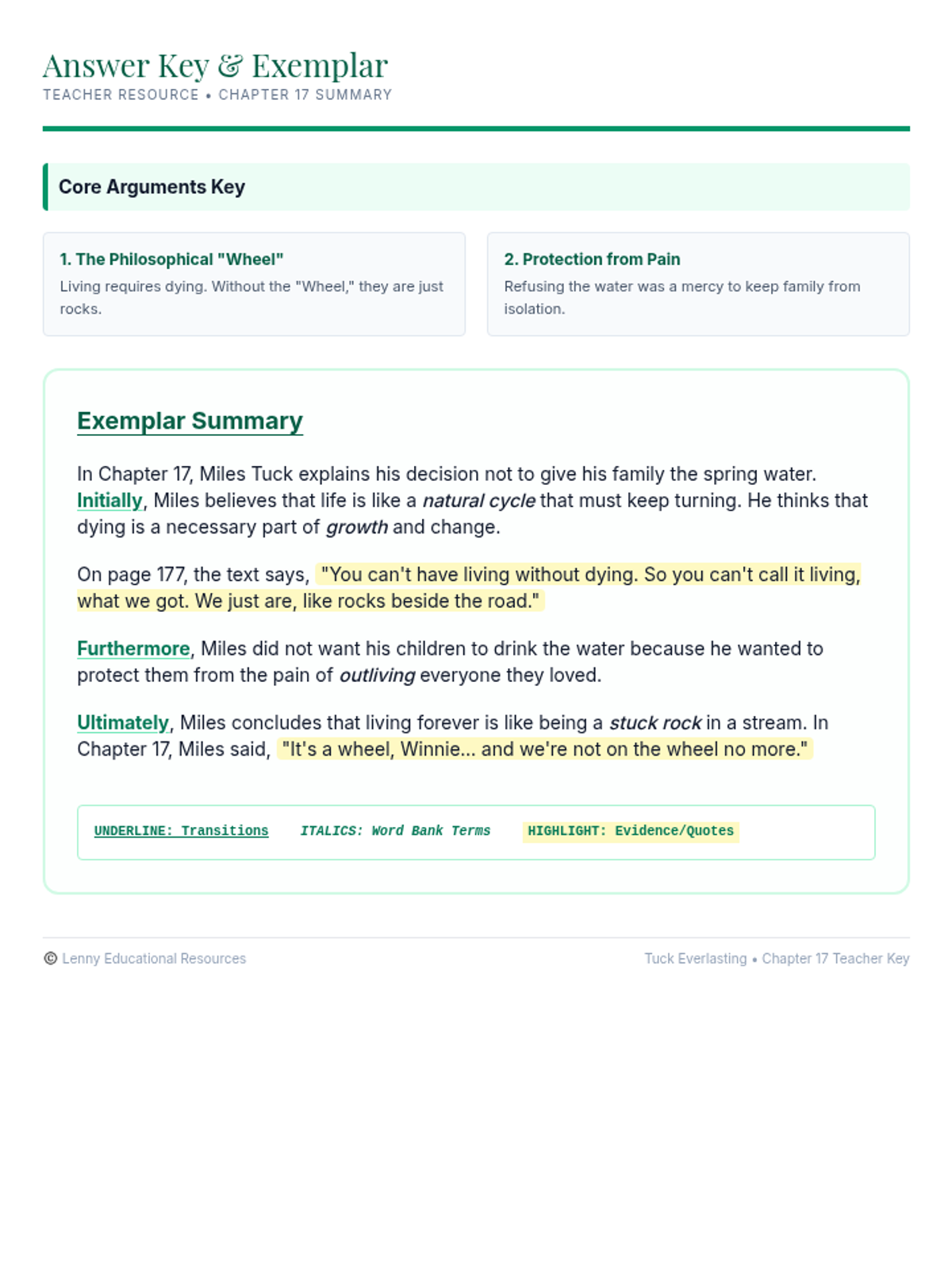
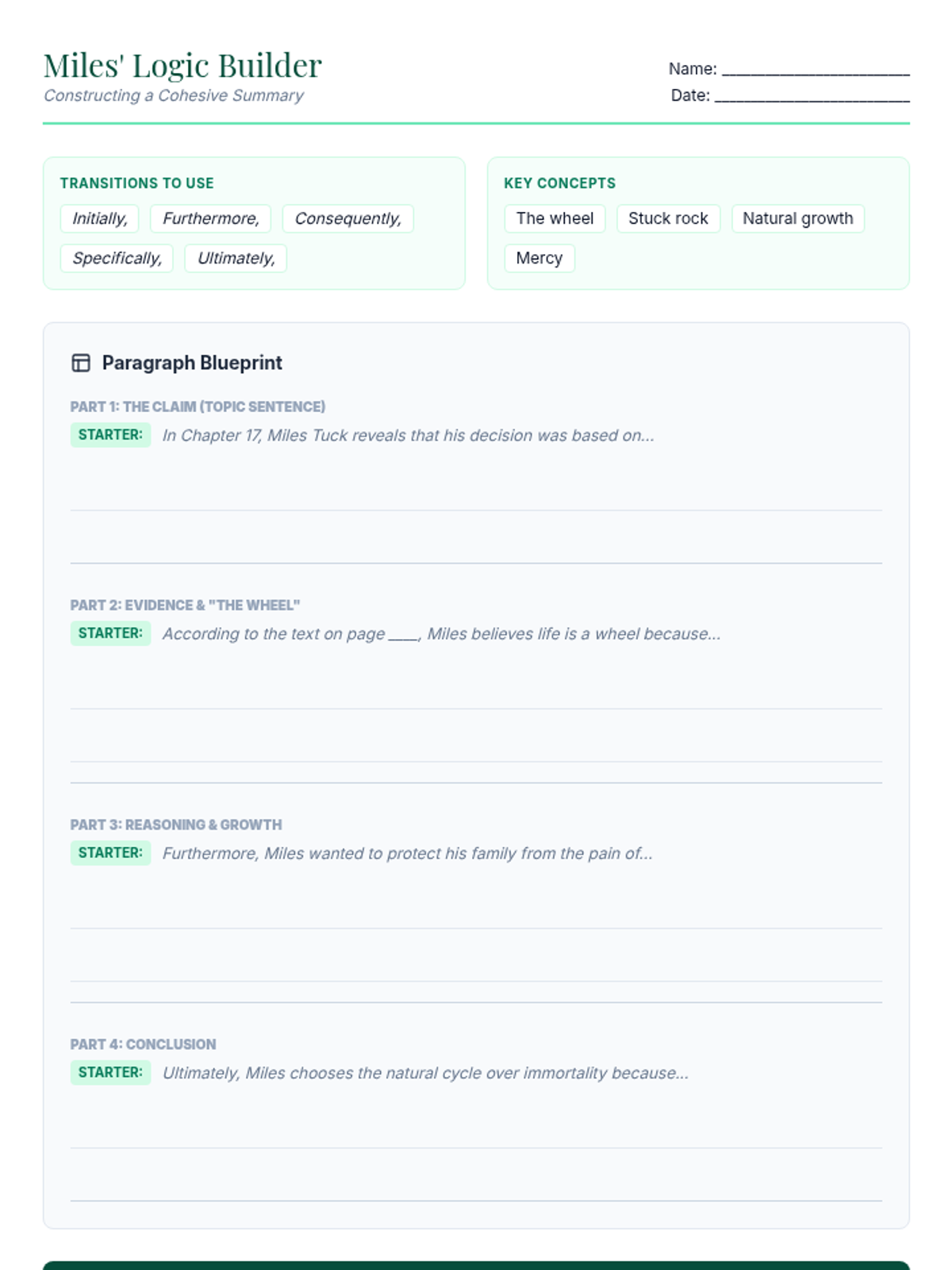
A lesson focused on Chapter 17 of Tuck Everlasting, where students analyze Miles Tuck's complex reasoning for not giving his family the spring water. Students will use transitions and textual evidence to construct a cohesive summary.
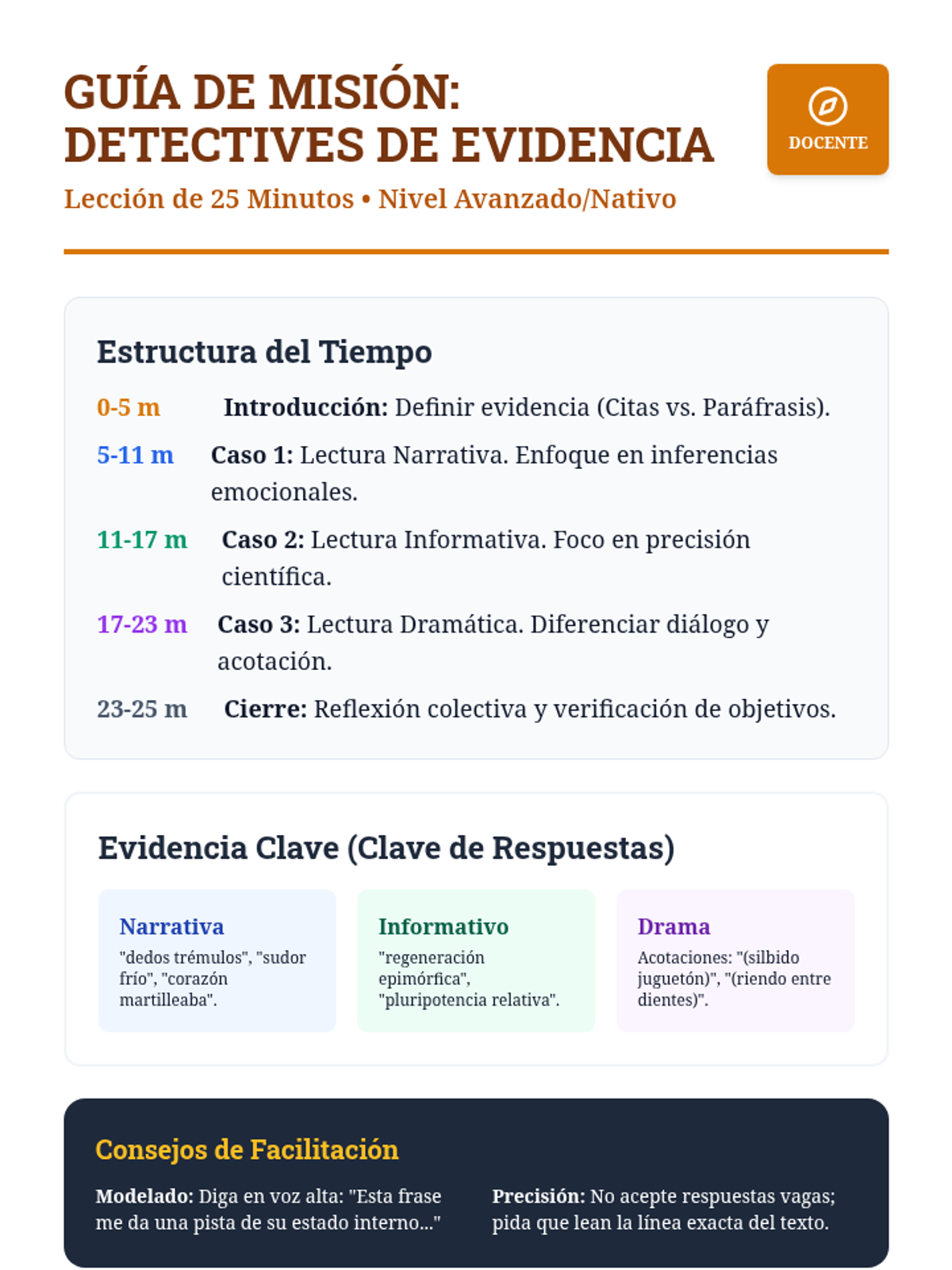
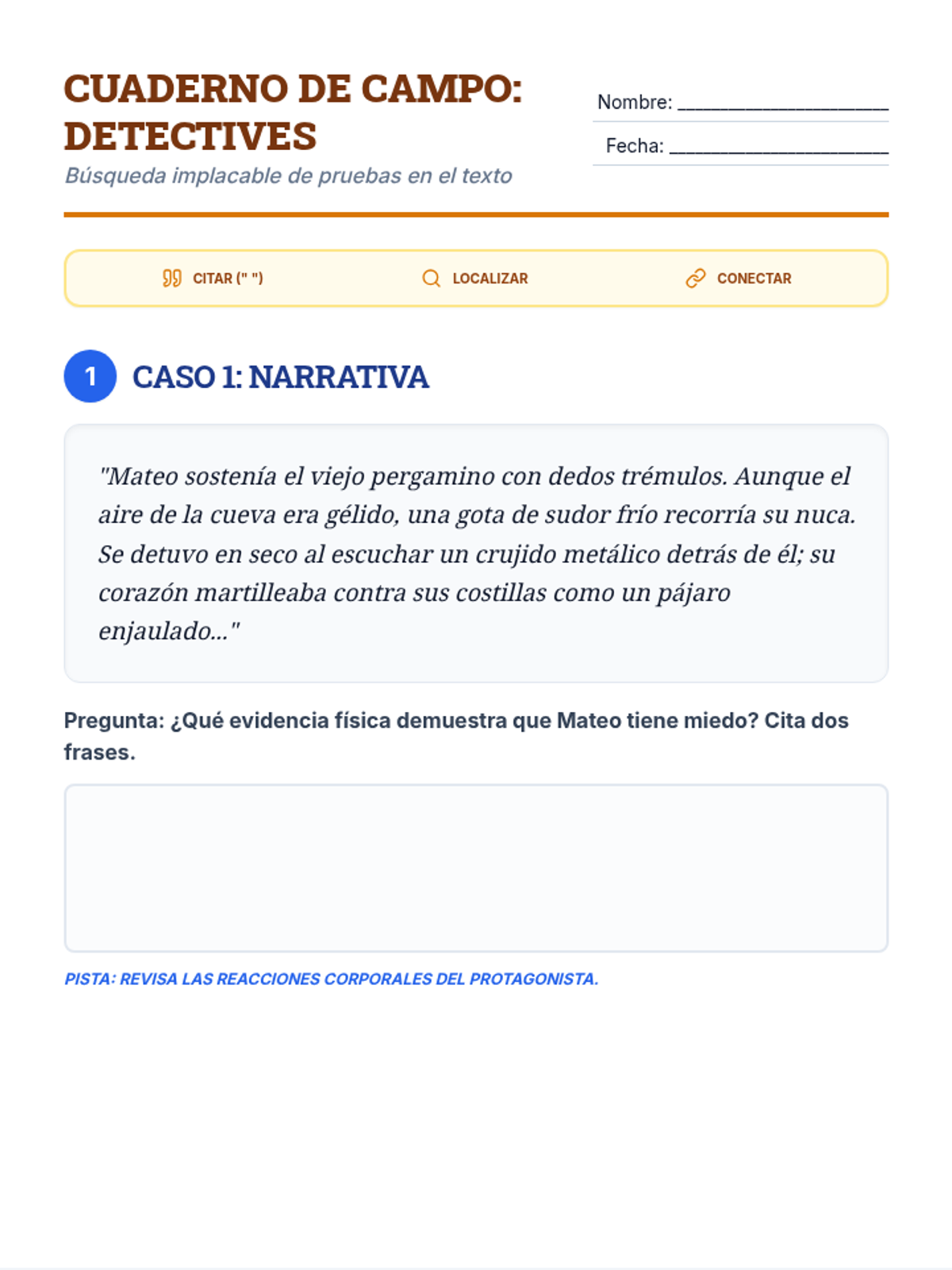
Una lección guiada de 25 minutos para estudiantes avanzados o nativos sobre cómo utilizar la evidencia del texto para respaldar respuestas, utilizando tres géneros distintos: narrativa, informativo y dramático.
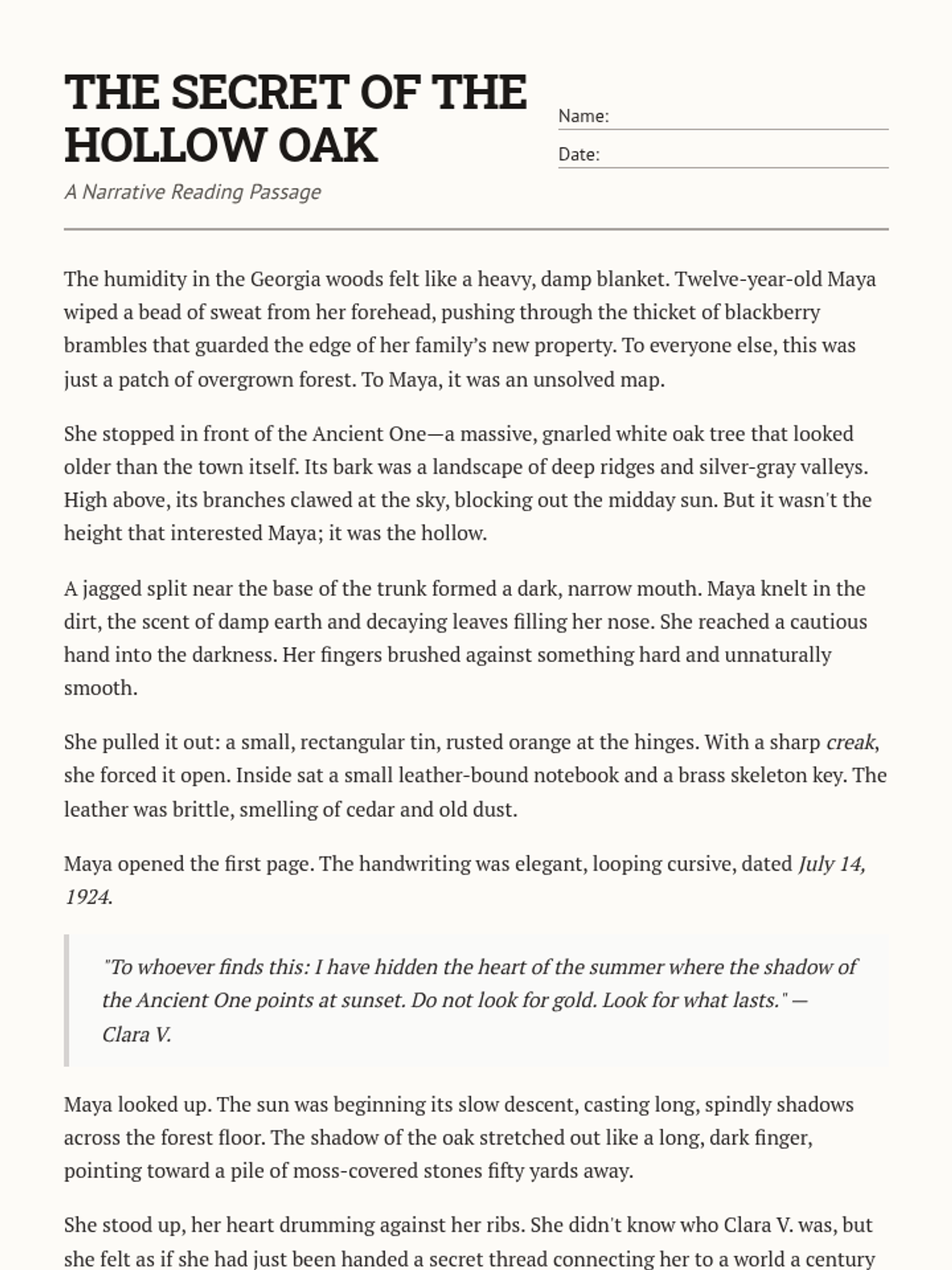
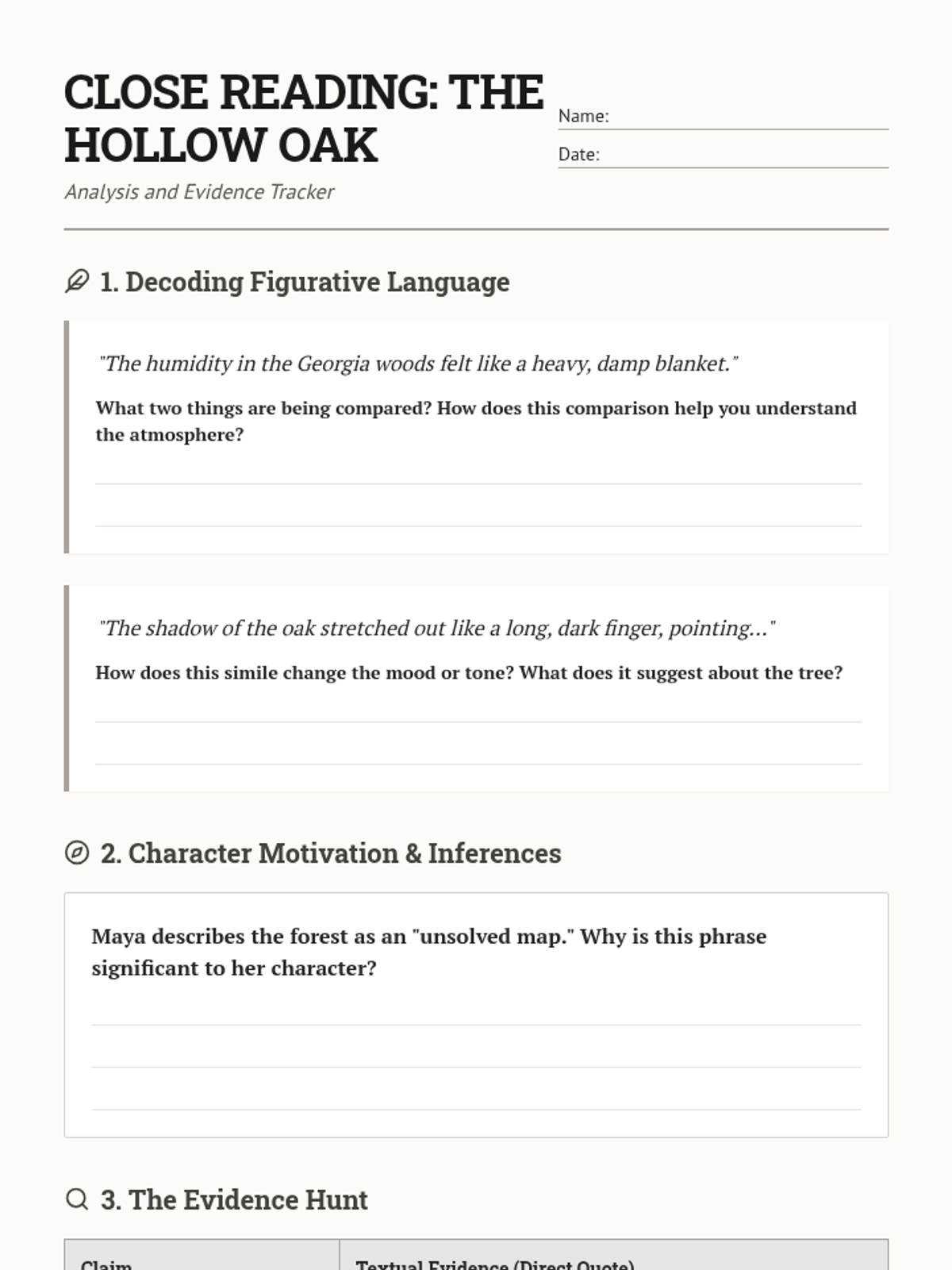
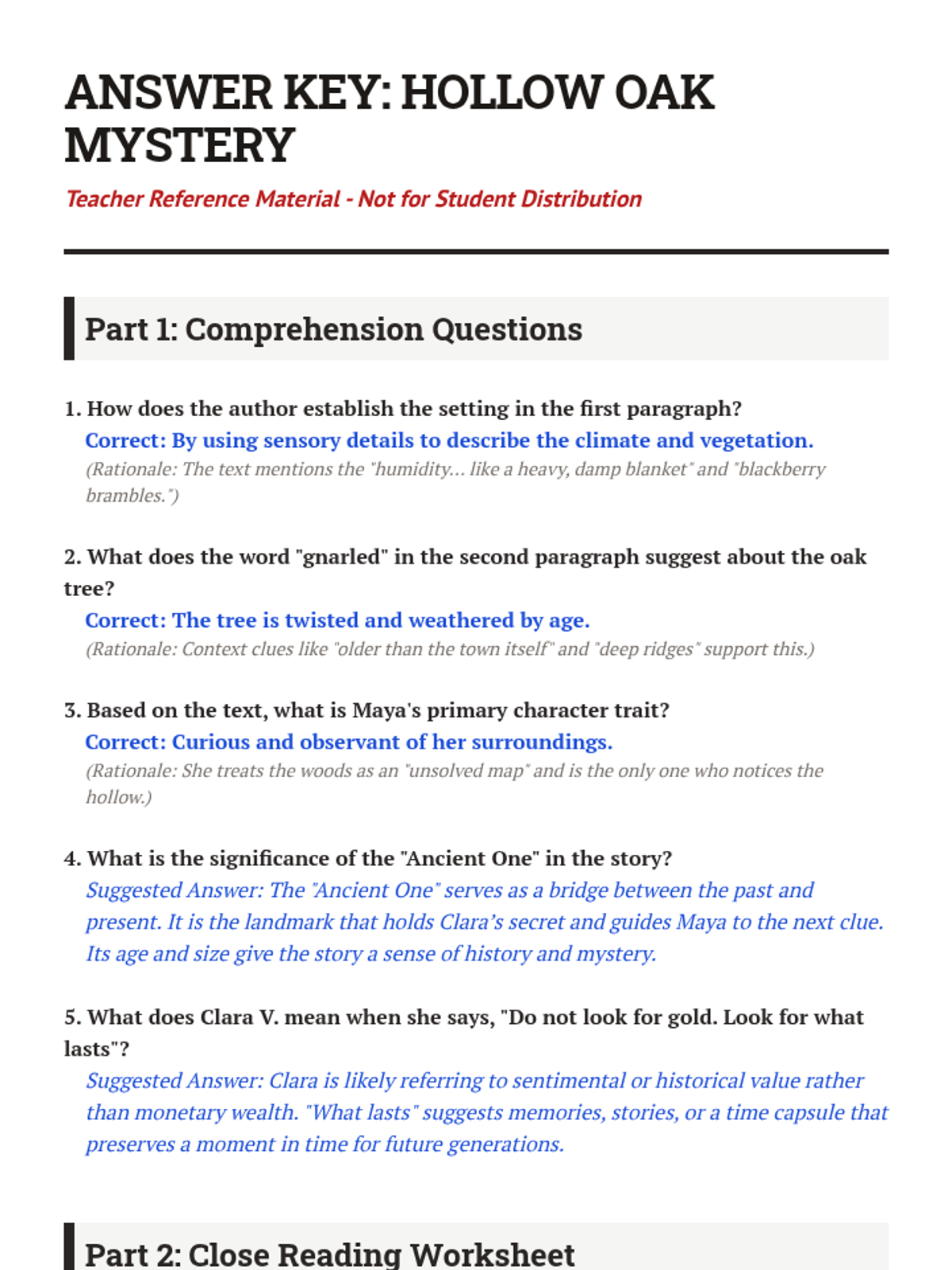
A 7th-grade narrative reading unit focused on 'The Secret of the Hollow Oak,' featuring a passage with comprehension questions and a close reading activity to build analysis skills.
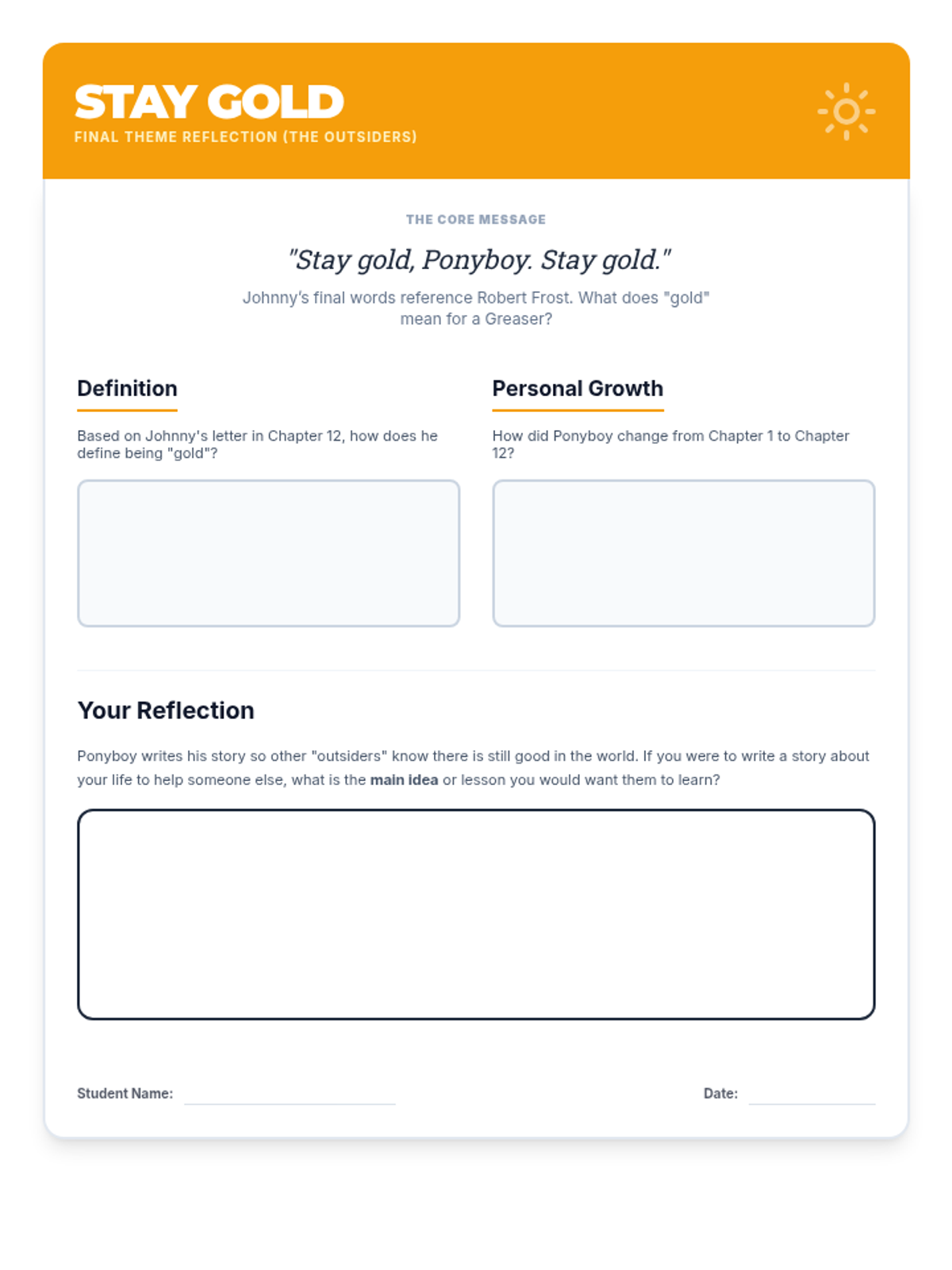
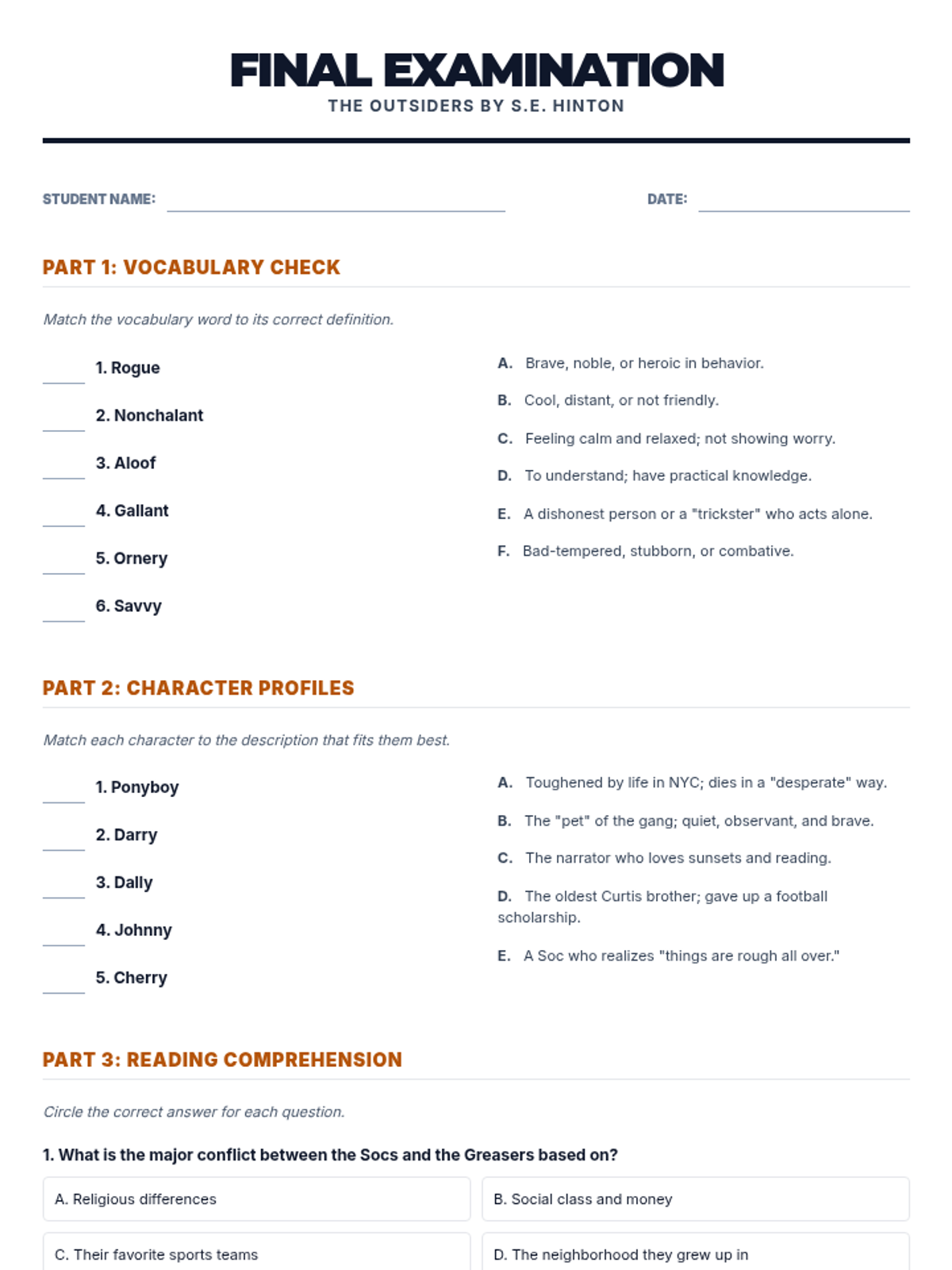
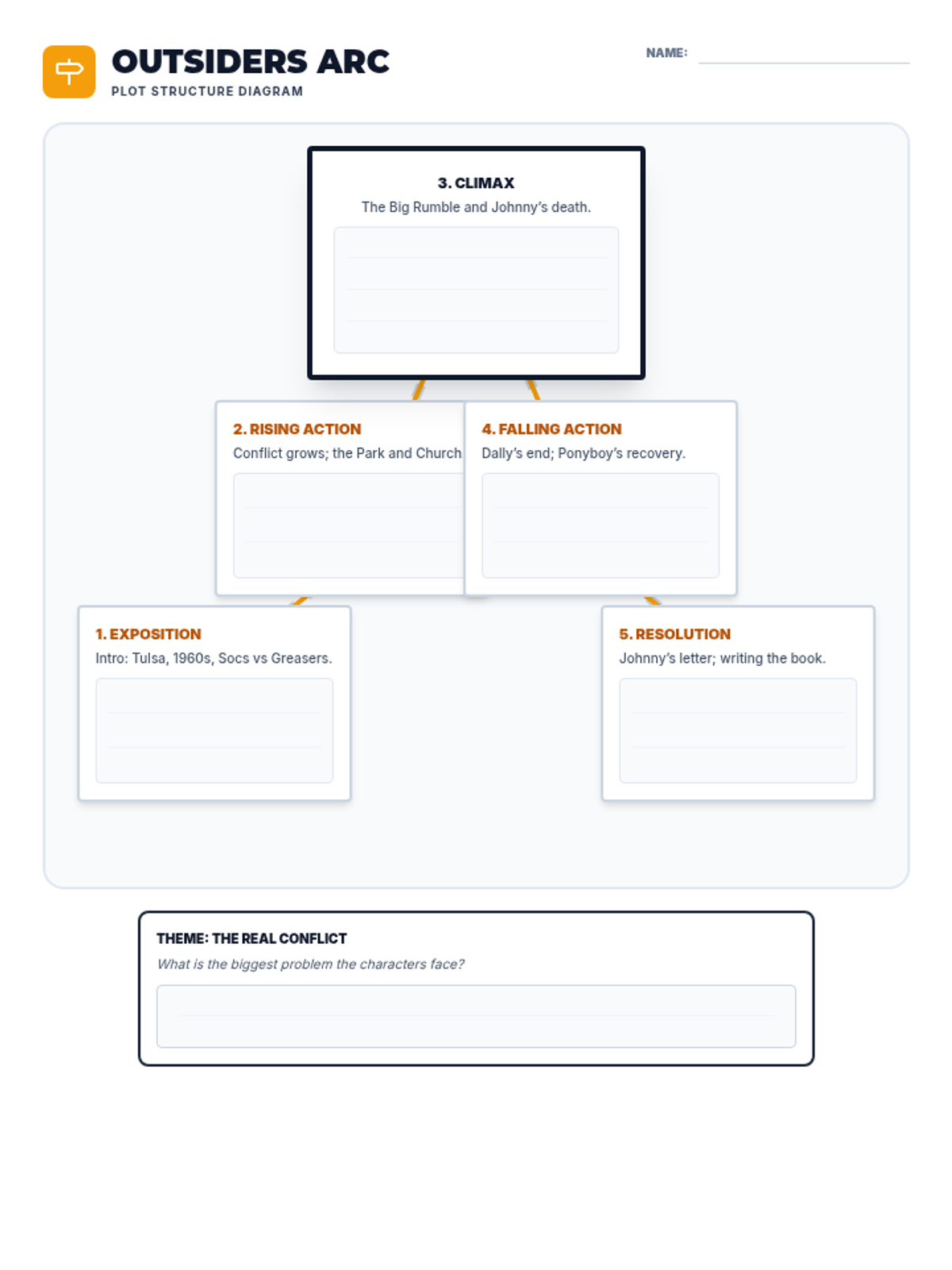
Concludes the novel with Ponyboy's recovery and the realization behind his English theme. Students synthesize themes of identity and 'staying gold' through final reflections.
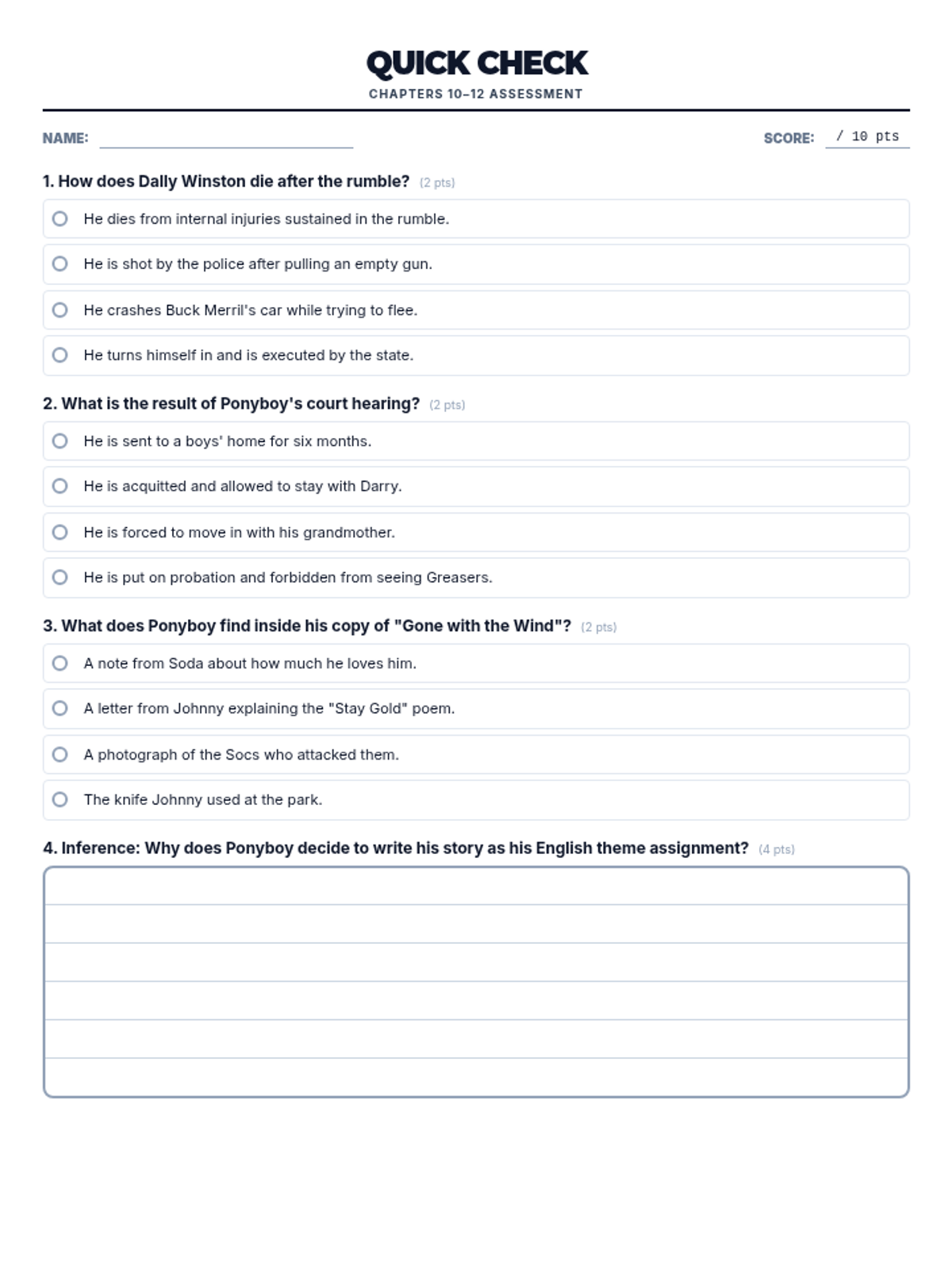
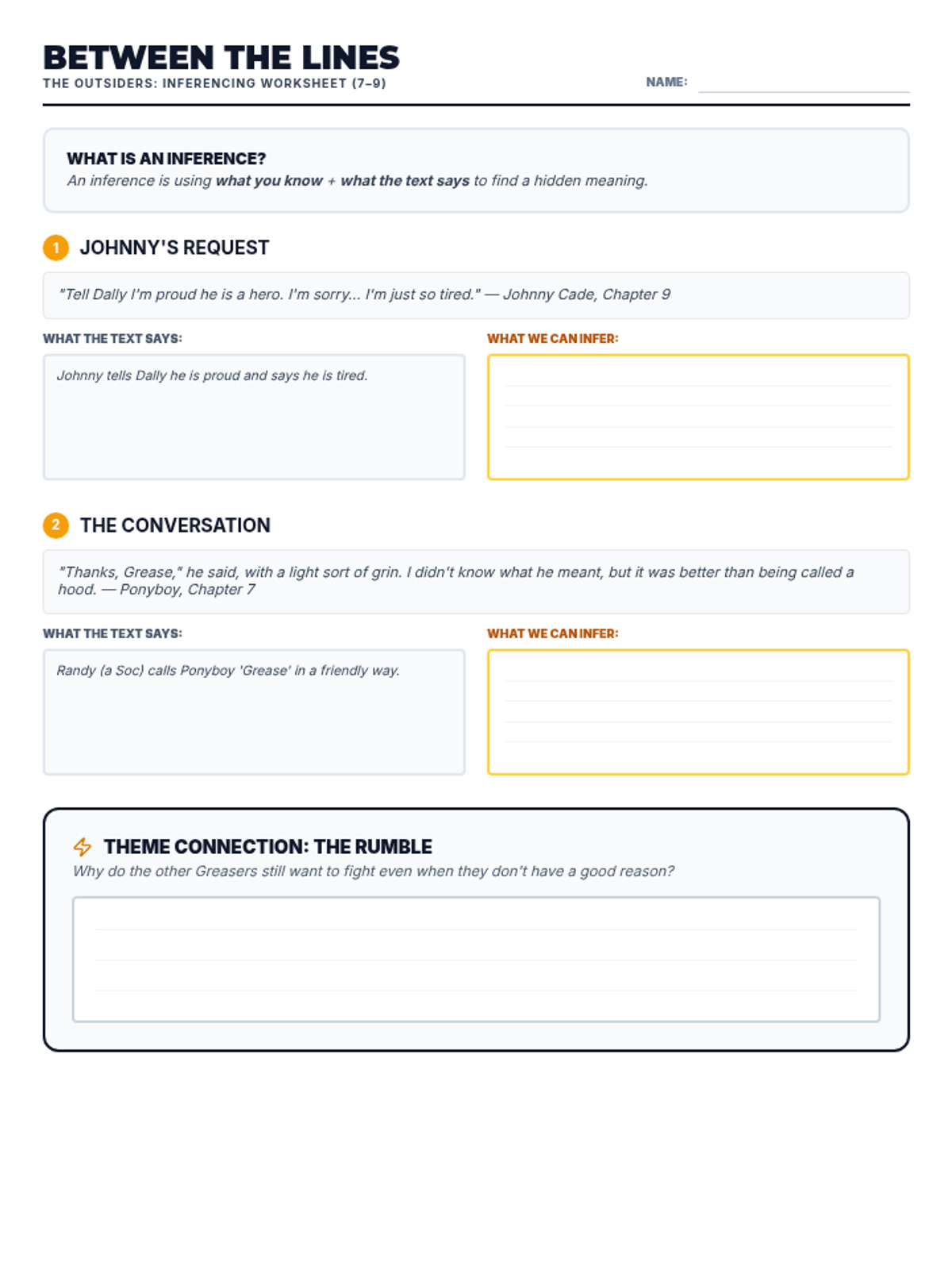
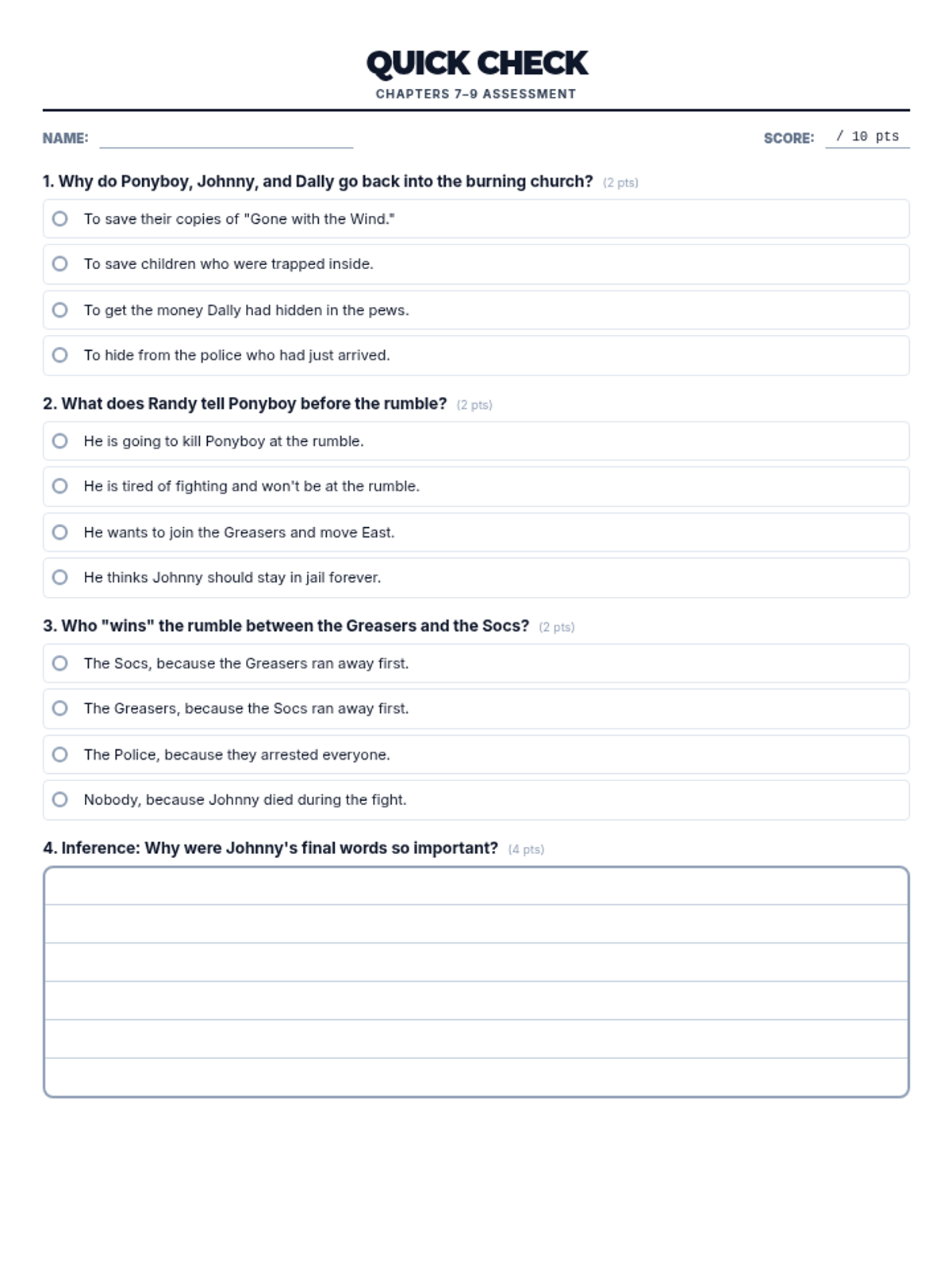
Focuses on the aftermath of the fire, the big rumble, and the deaths of Johnny and Dally. Students analyze theme, loss, and the cycle of violence.
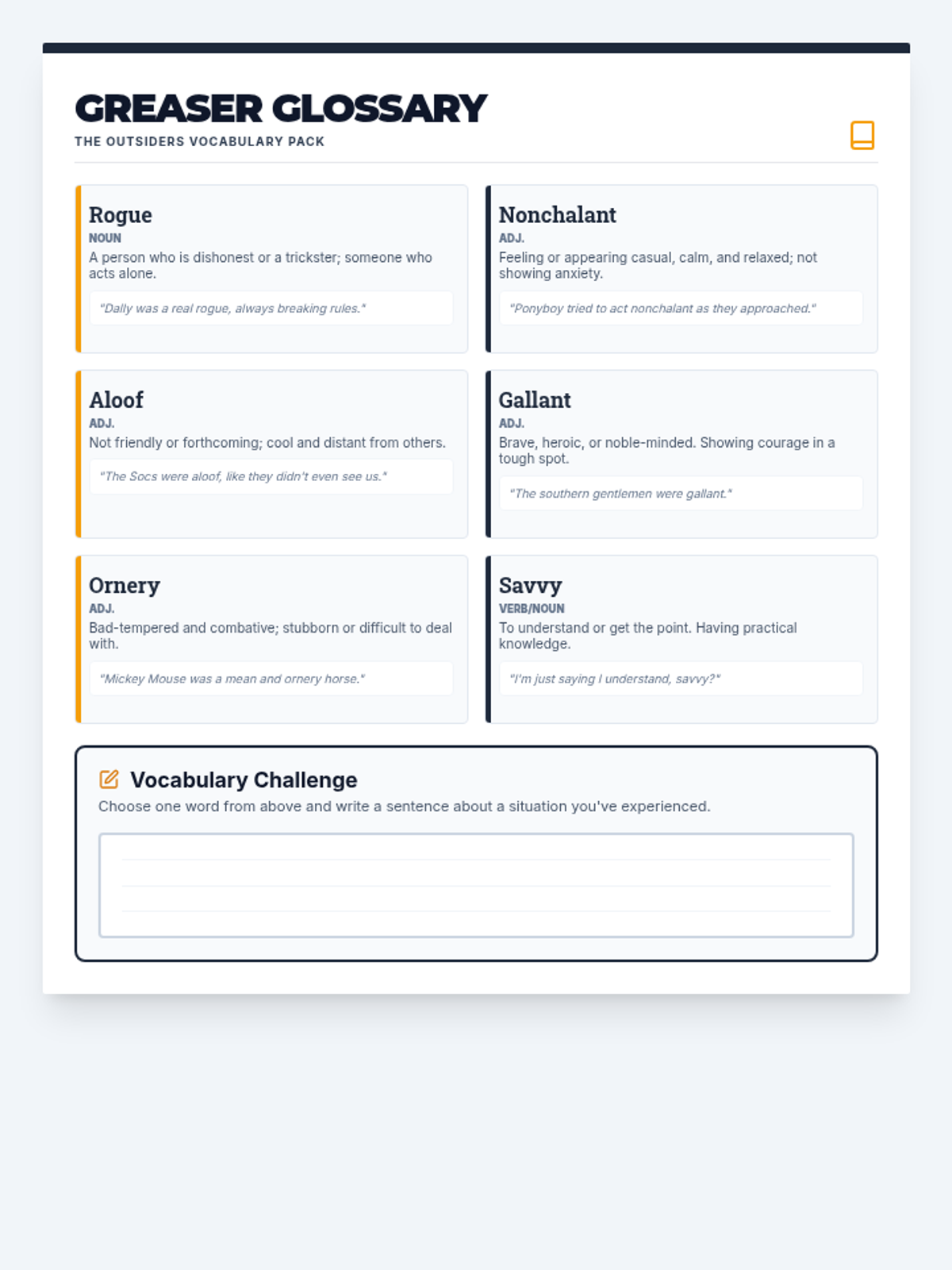
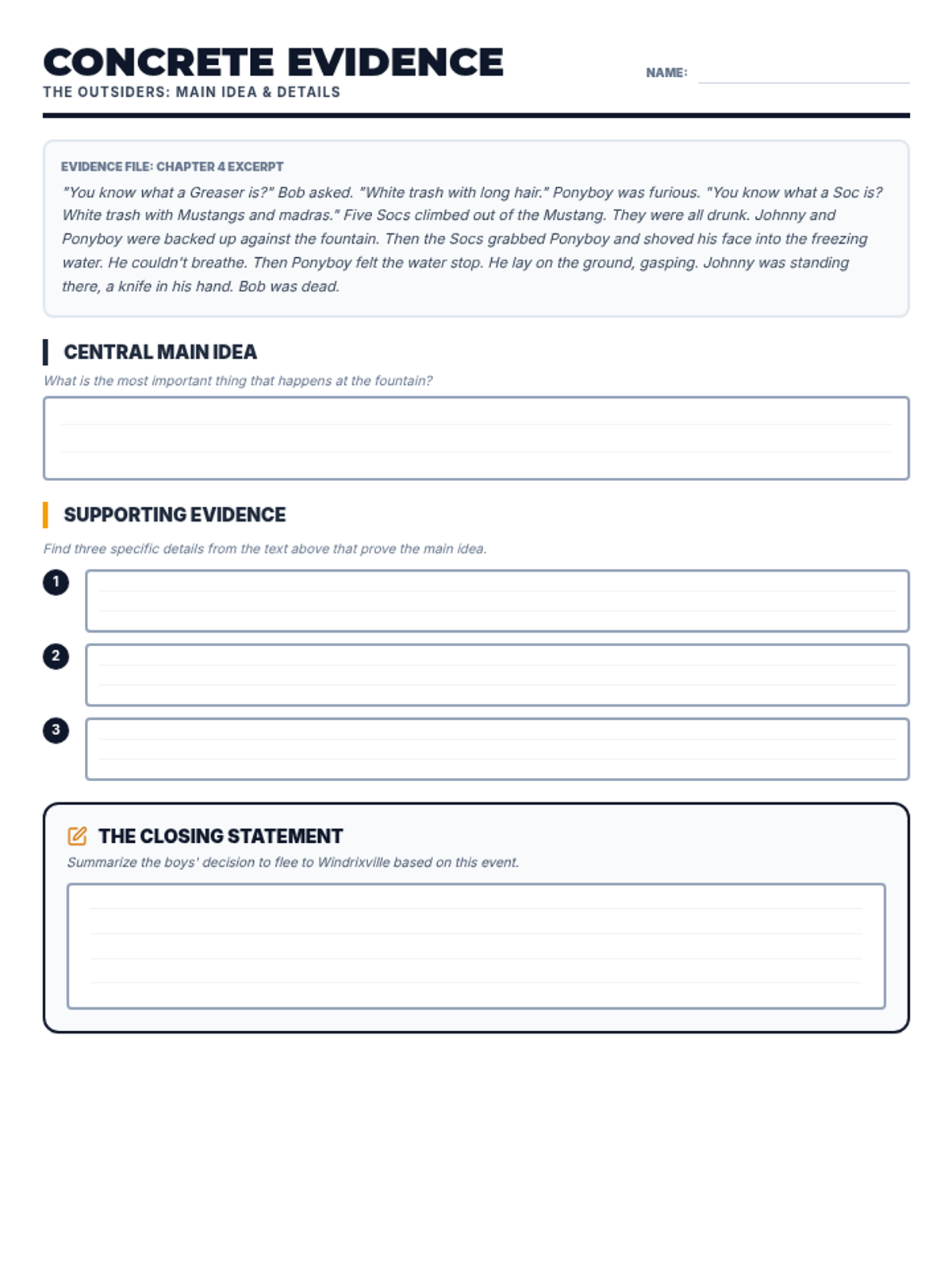
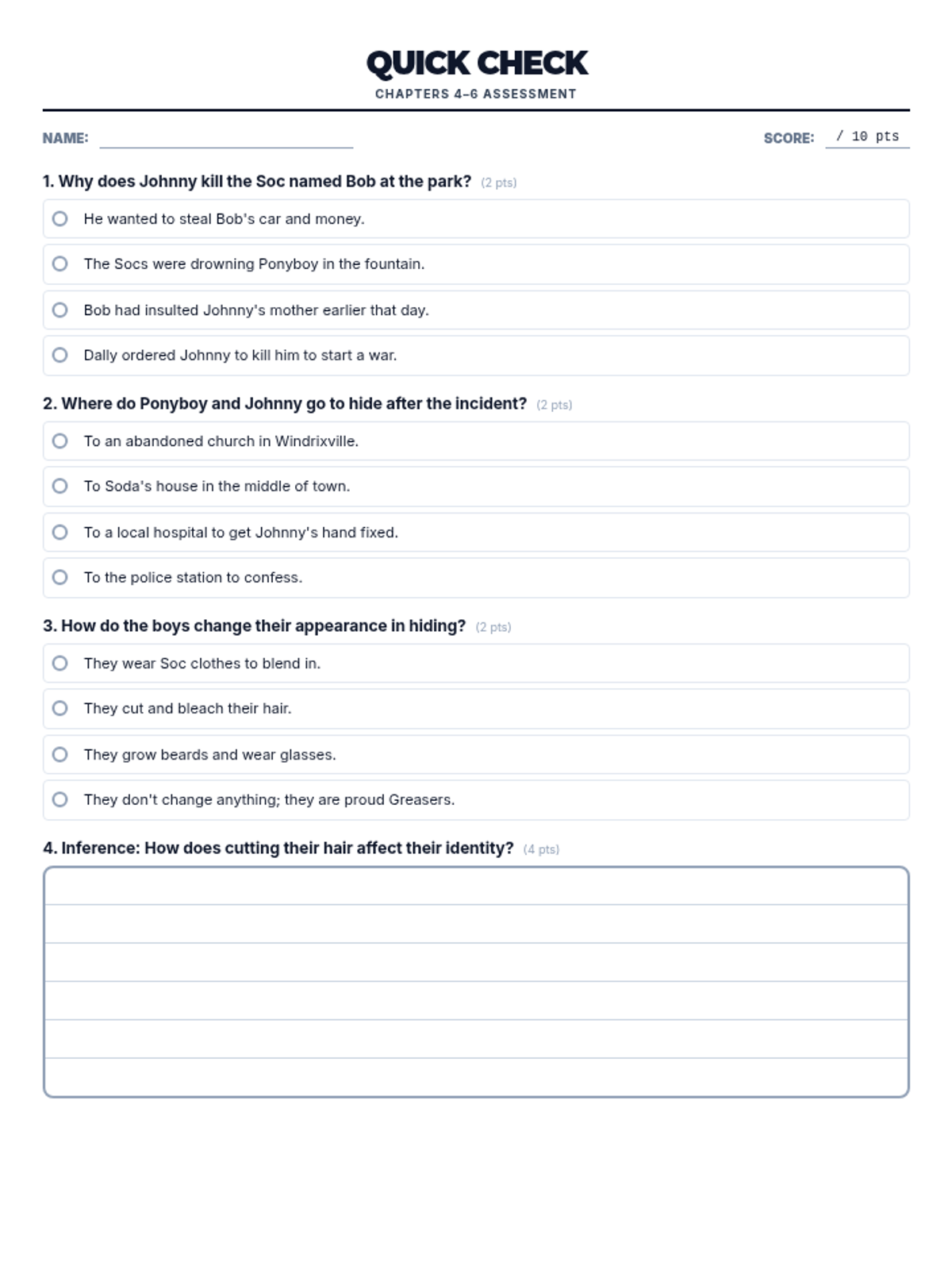
Covers the turning point at the park and the boys' flight to Windrixville. Focuses on context clues, citing evidence for character decisions, and plot progression.
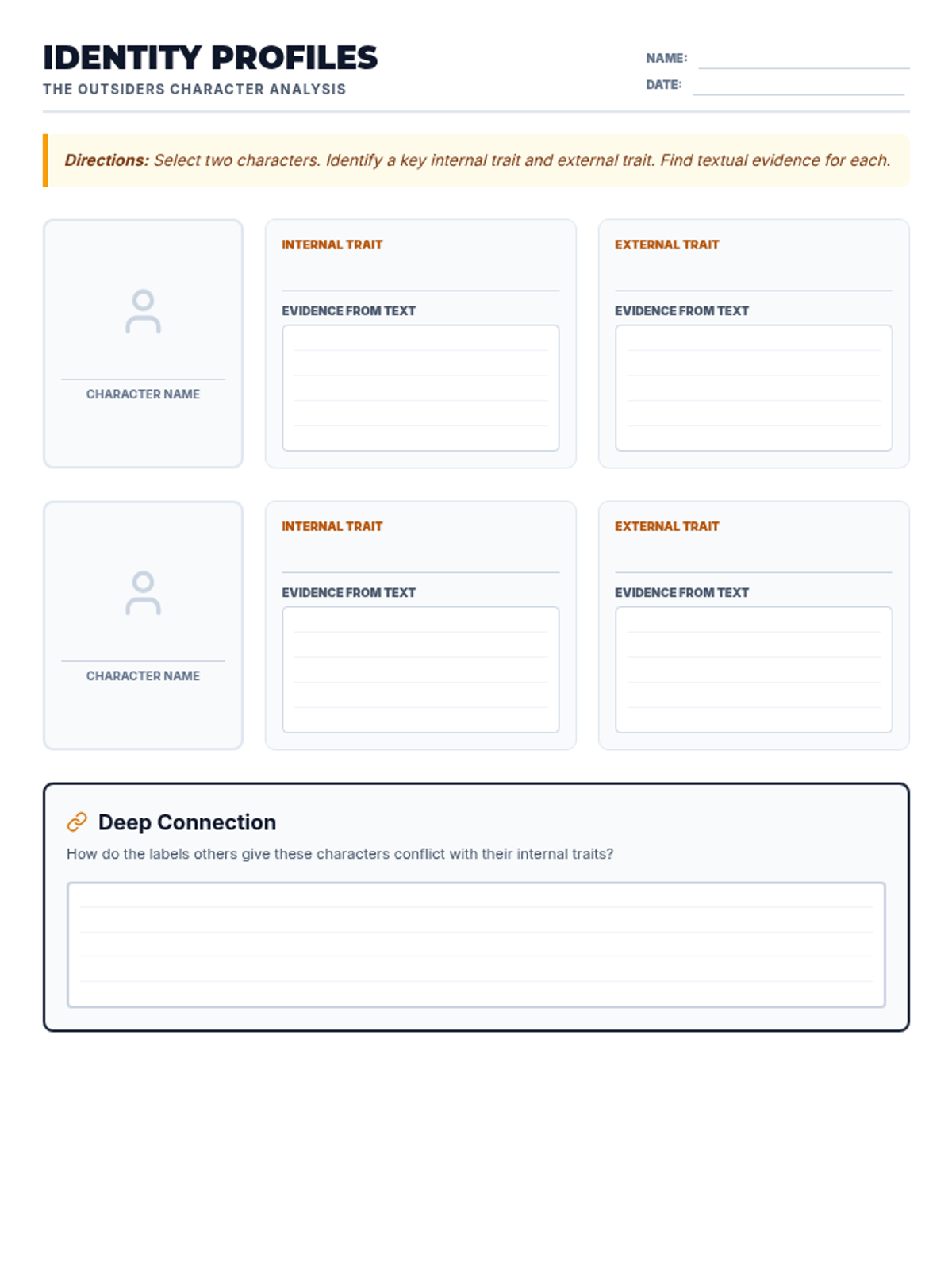
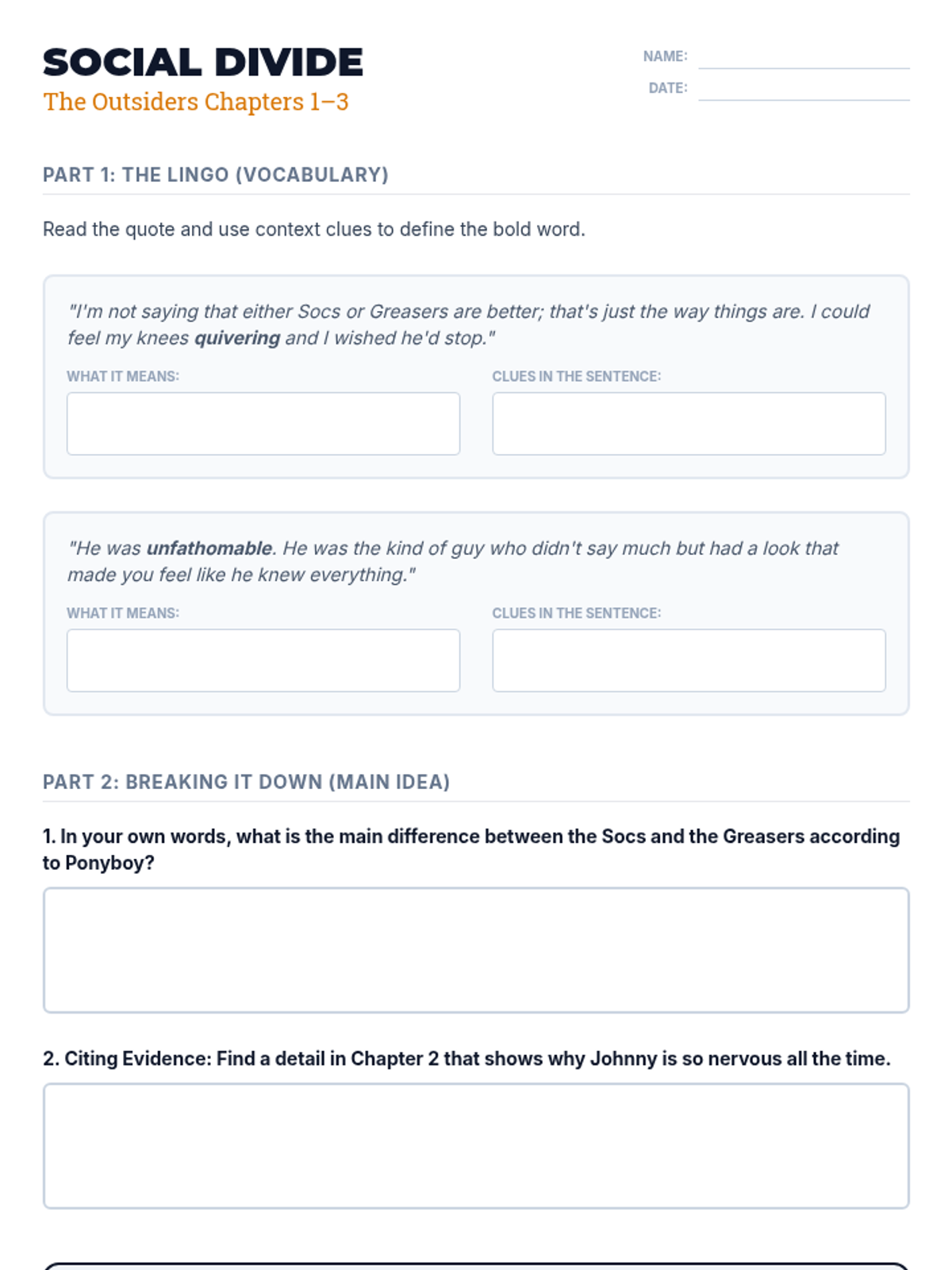
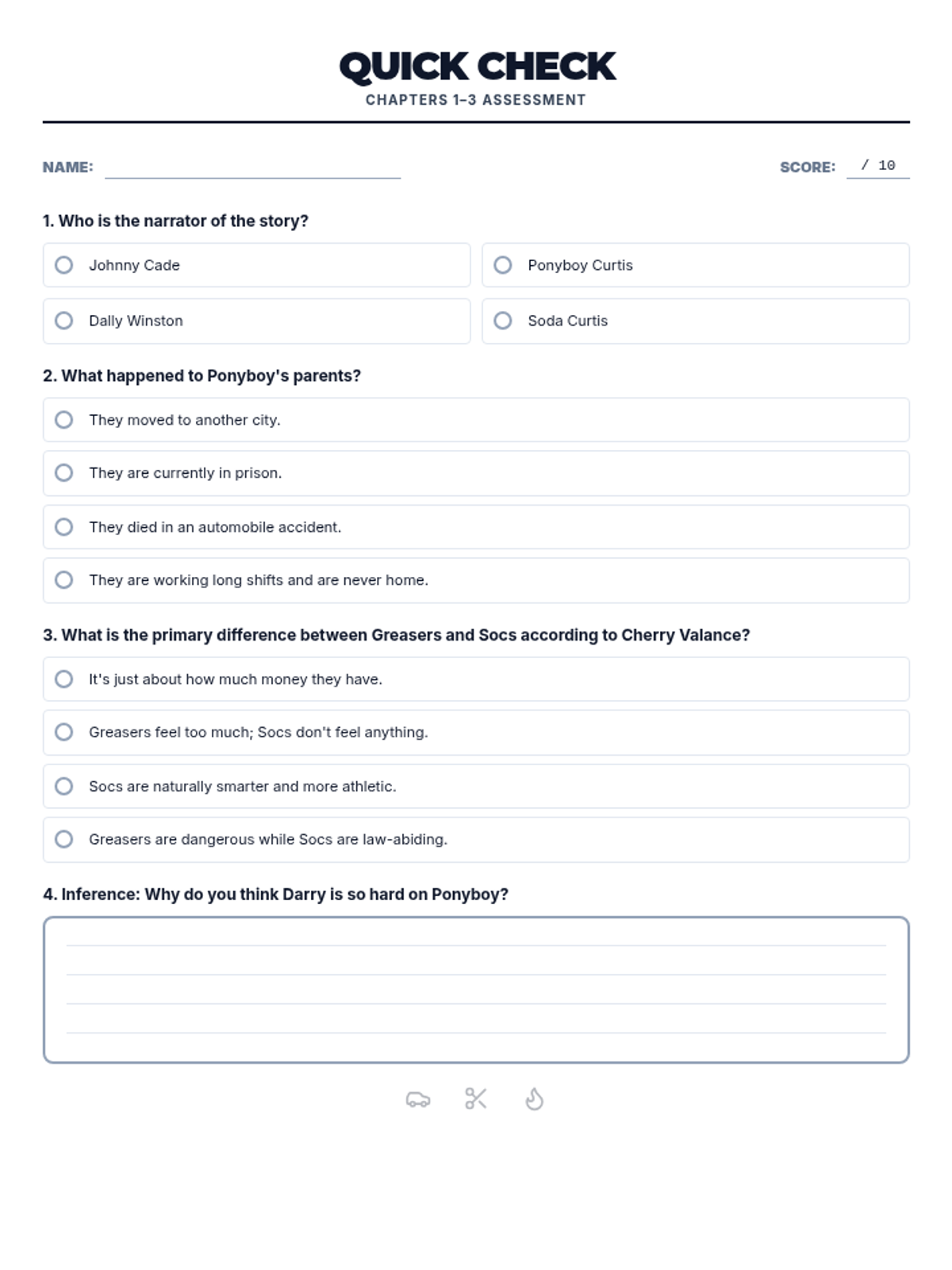
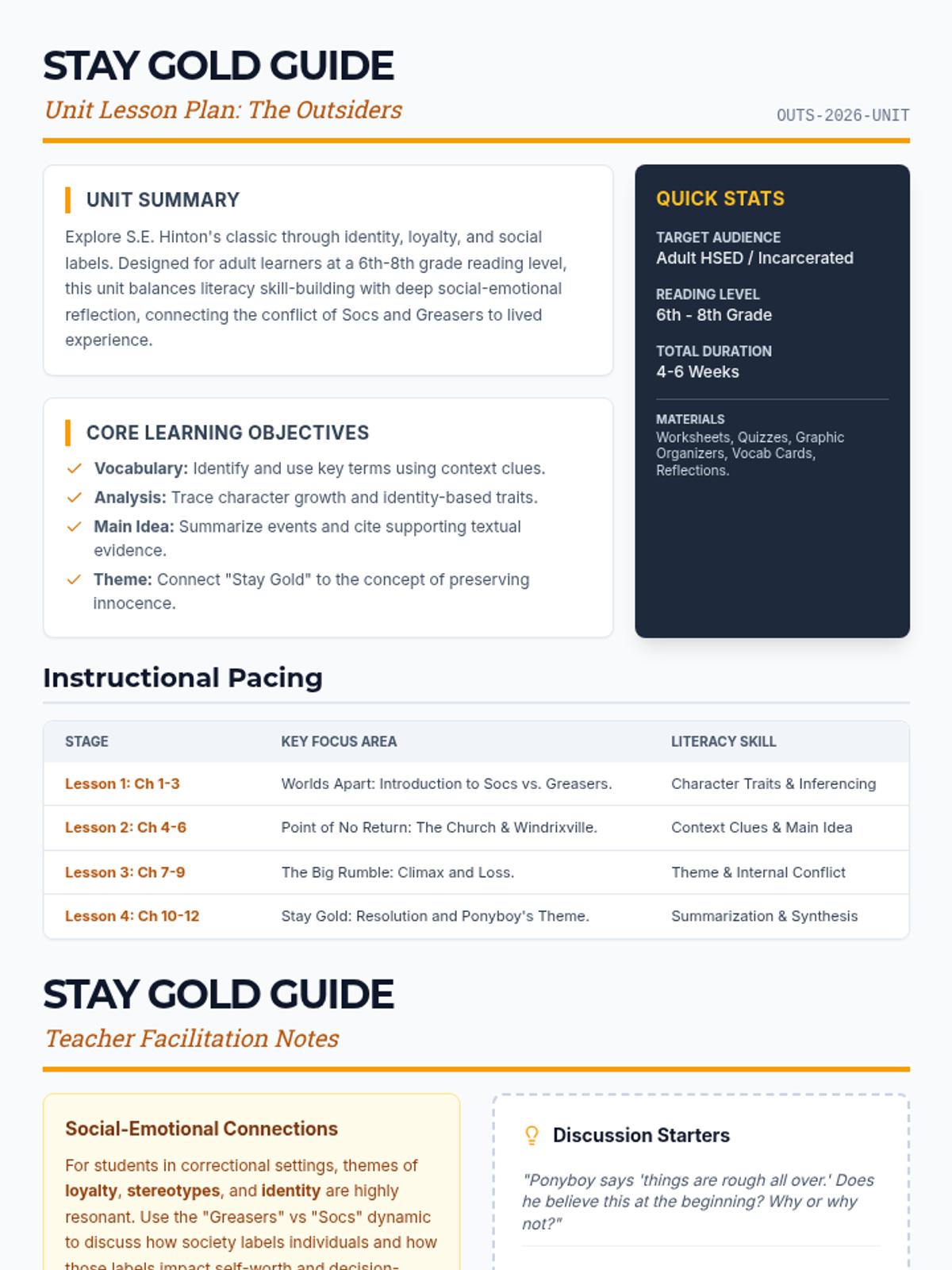
Introduces the social divide between Greasers and Socs, character archetypes, and the setting of 1960s Tulsa. Students focus on identifying main ideas and making initial character inferences.
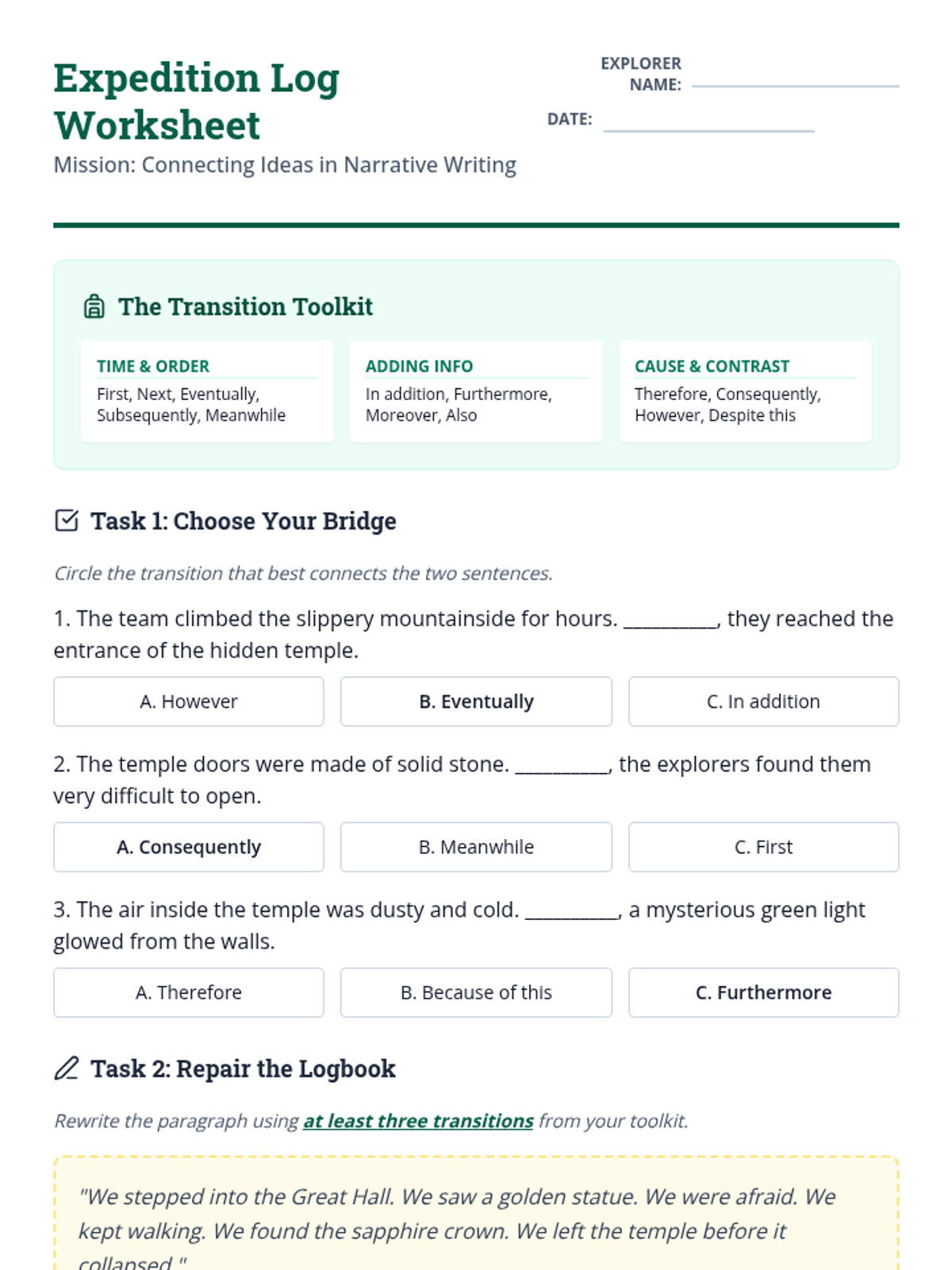
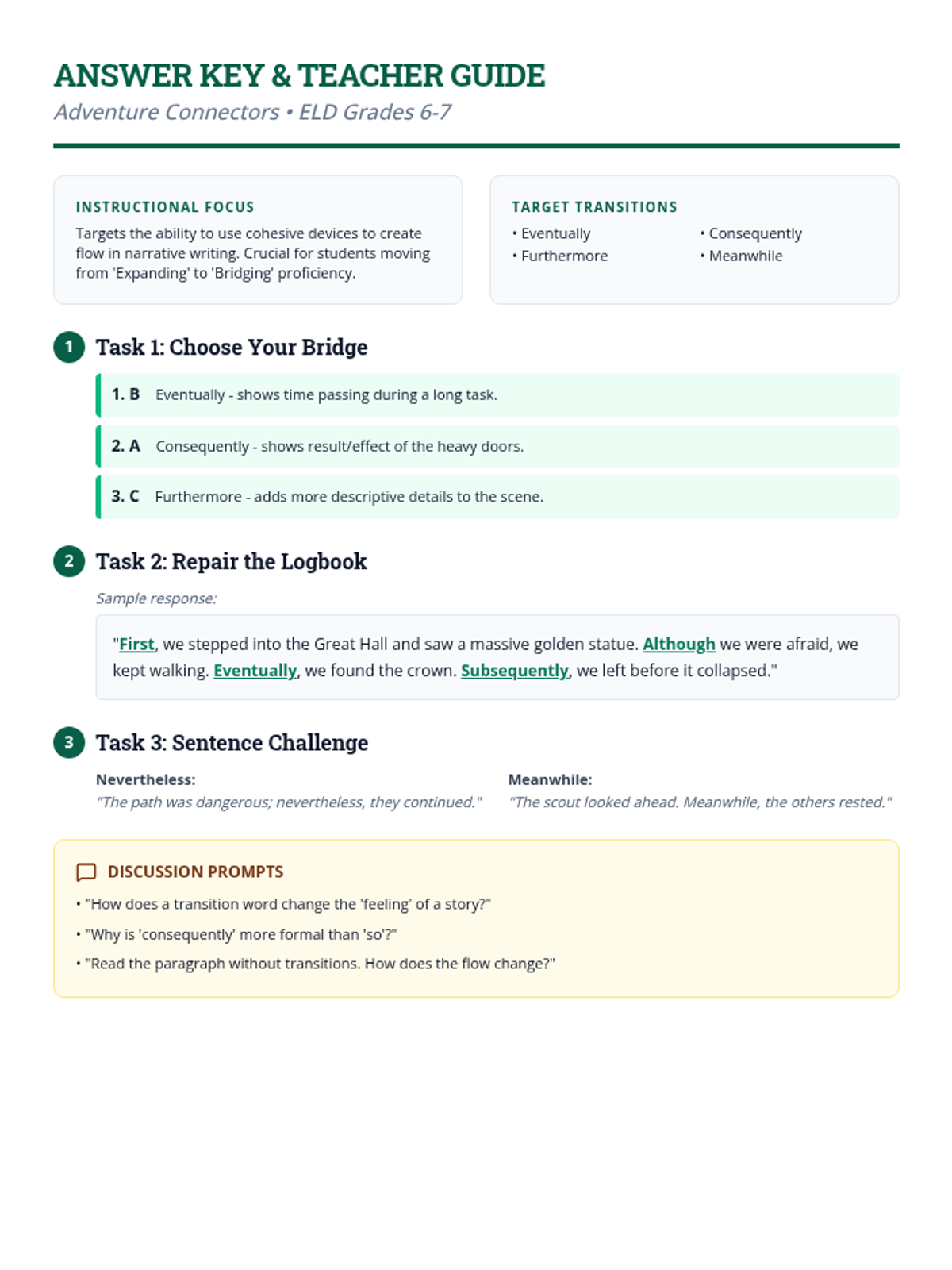
In this lesson, students learn to use transitional phrases (e.g., 'subsequently', 'nevertheless', 'consequently') to connect ideas in a narrative about exploring a hidden temple.
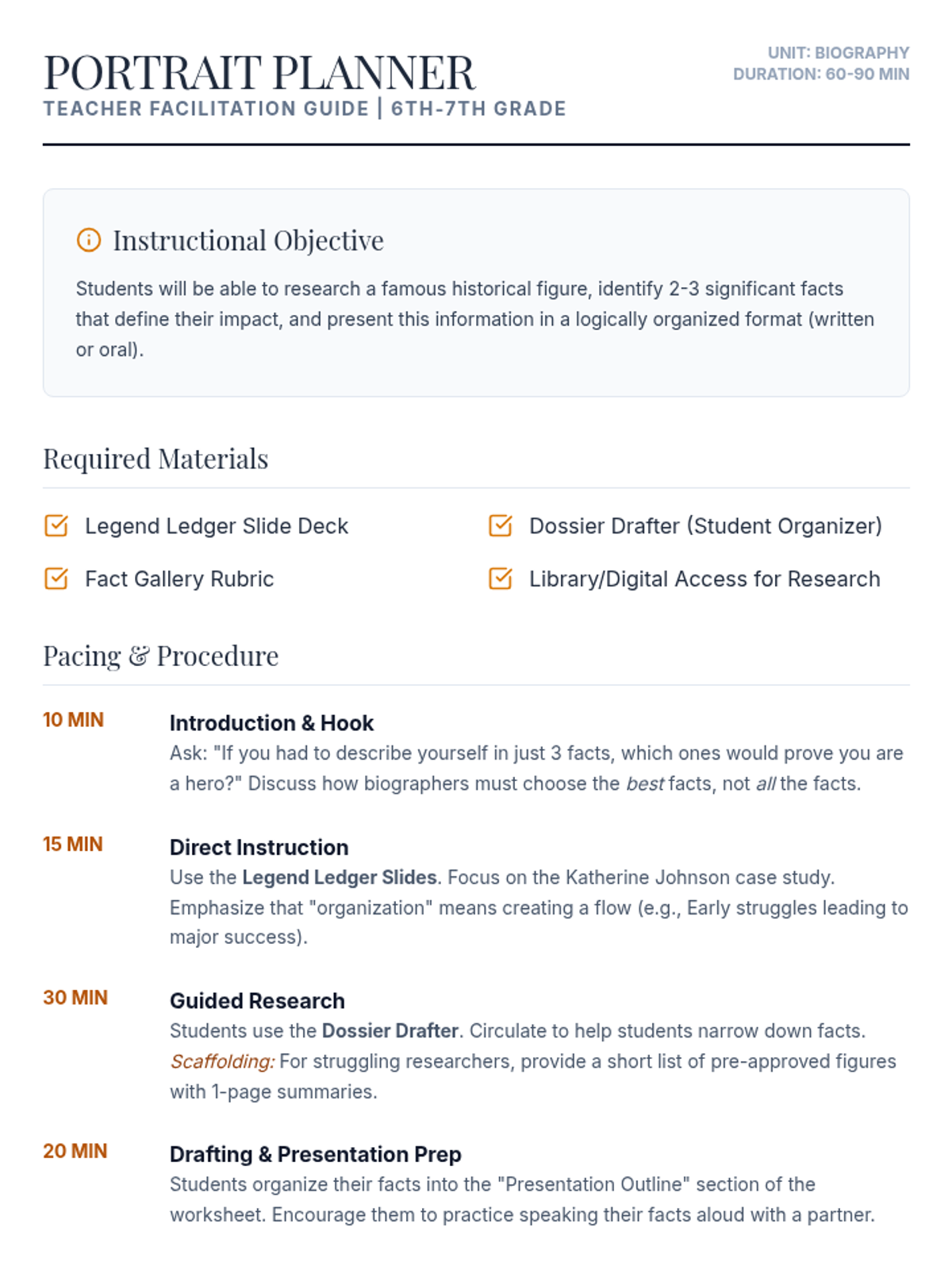
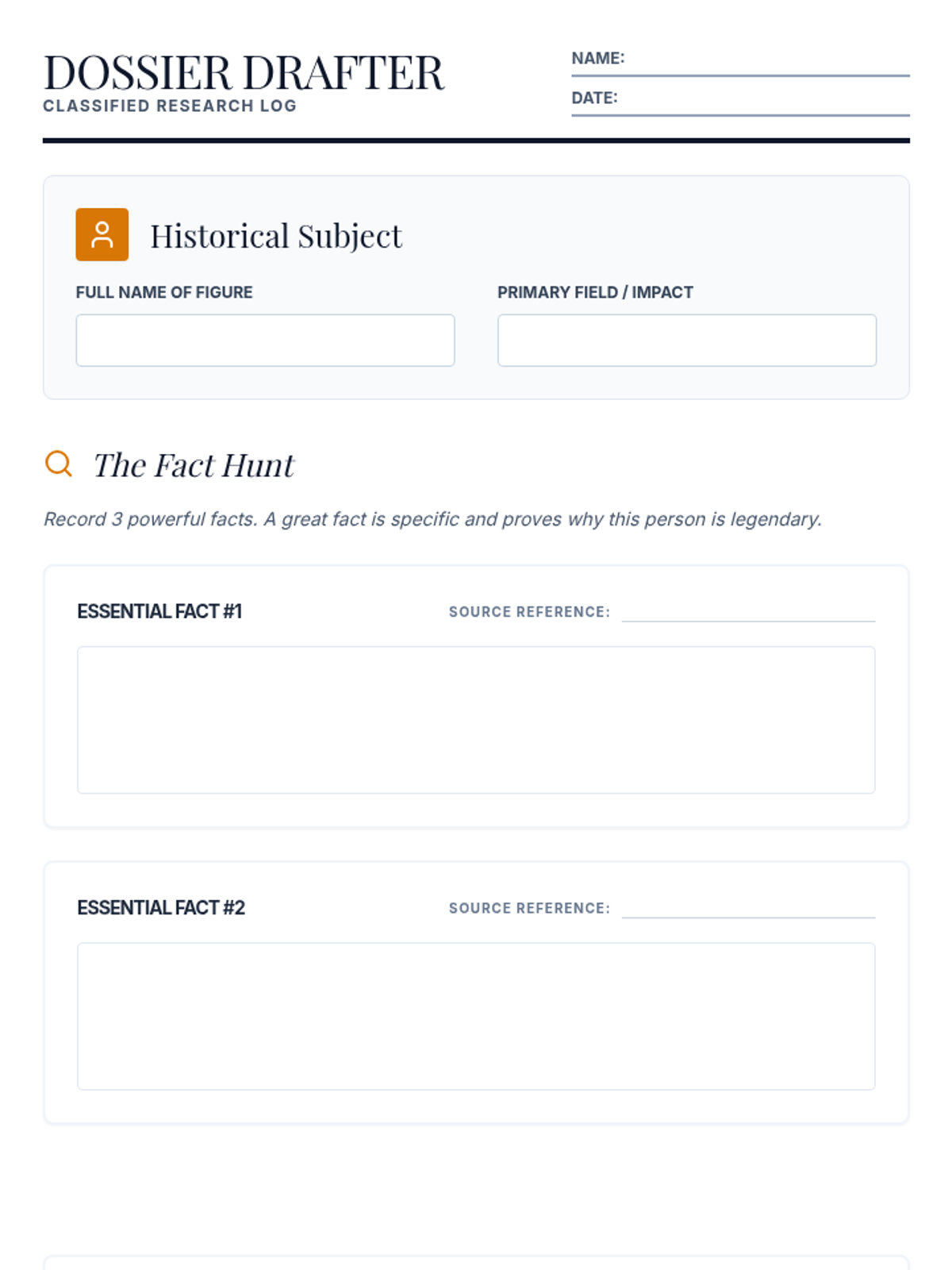
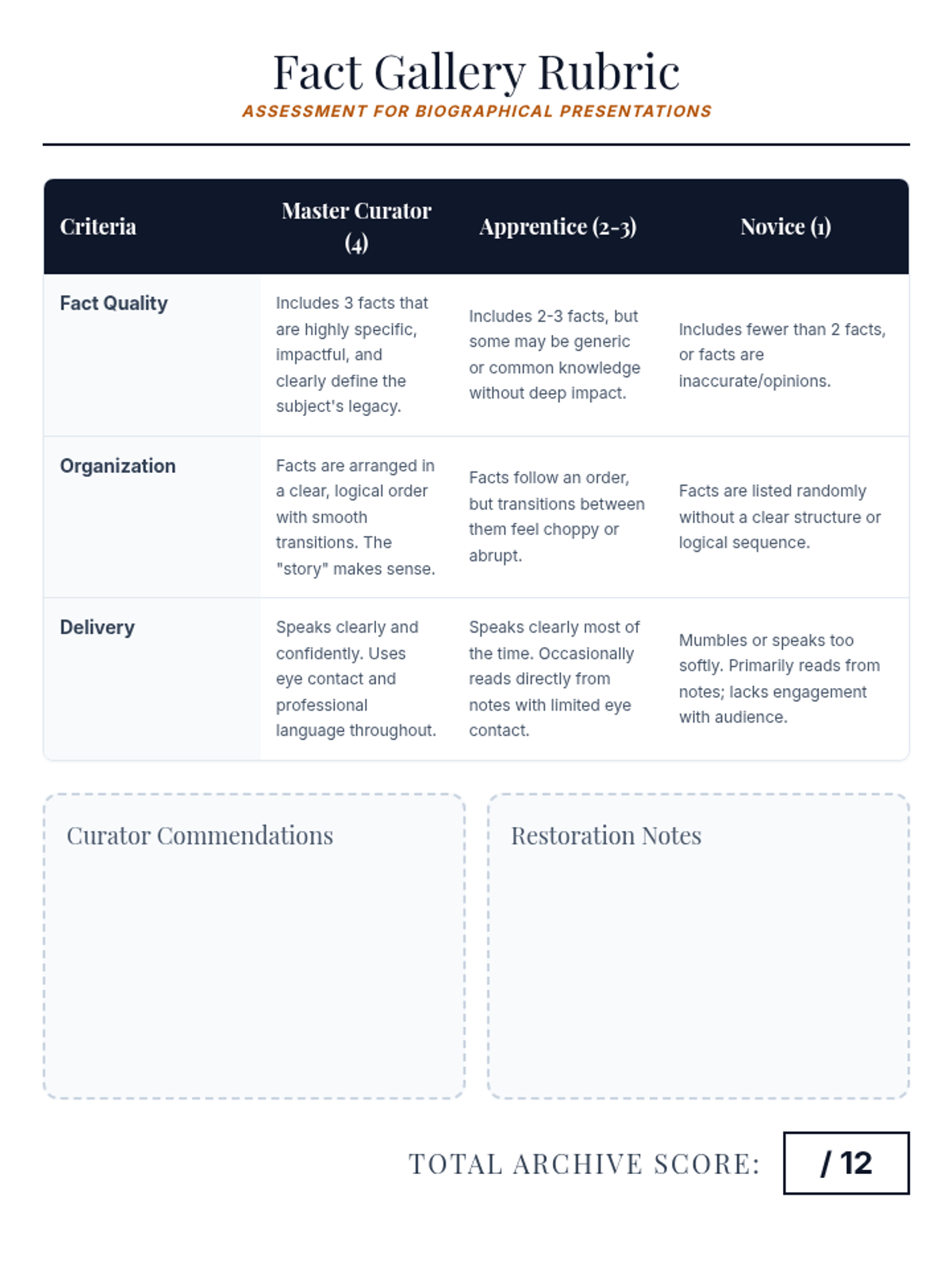
A lesson focused on researching and organizing key facts about historical figures to create a compelling biographical presentation. Students learn to select impactful information and structure it logically for an audience.
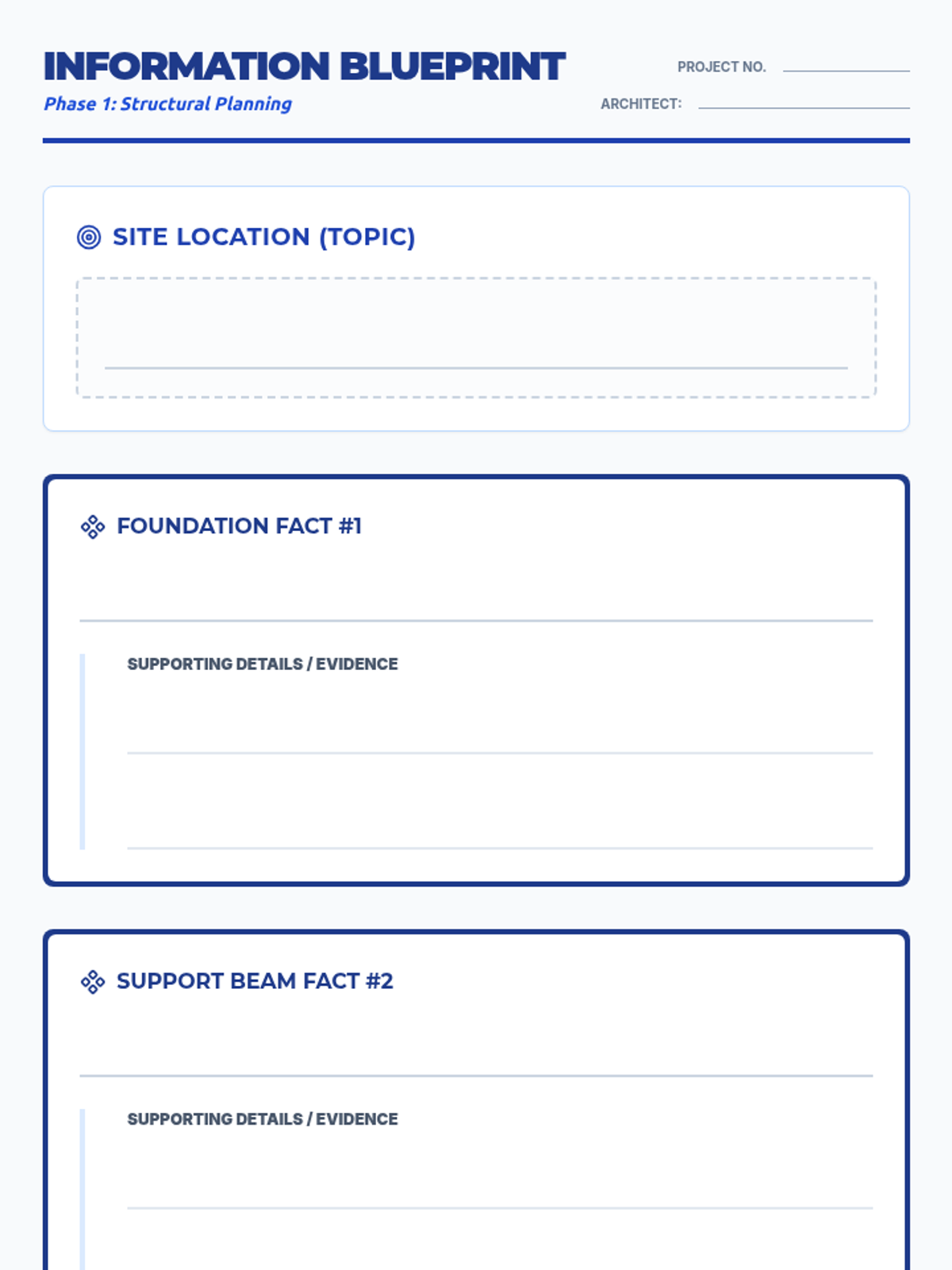
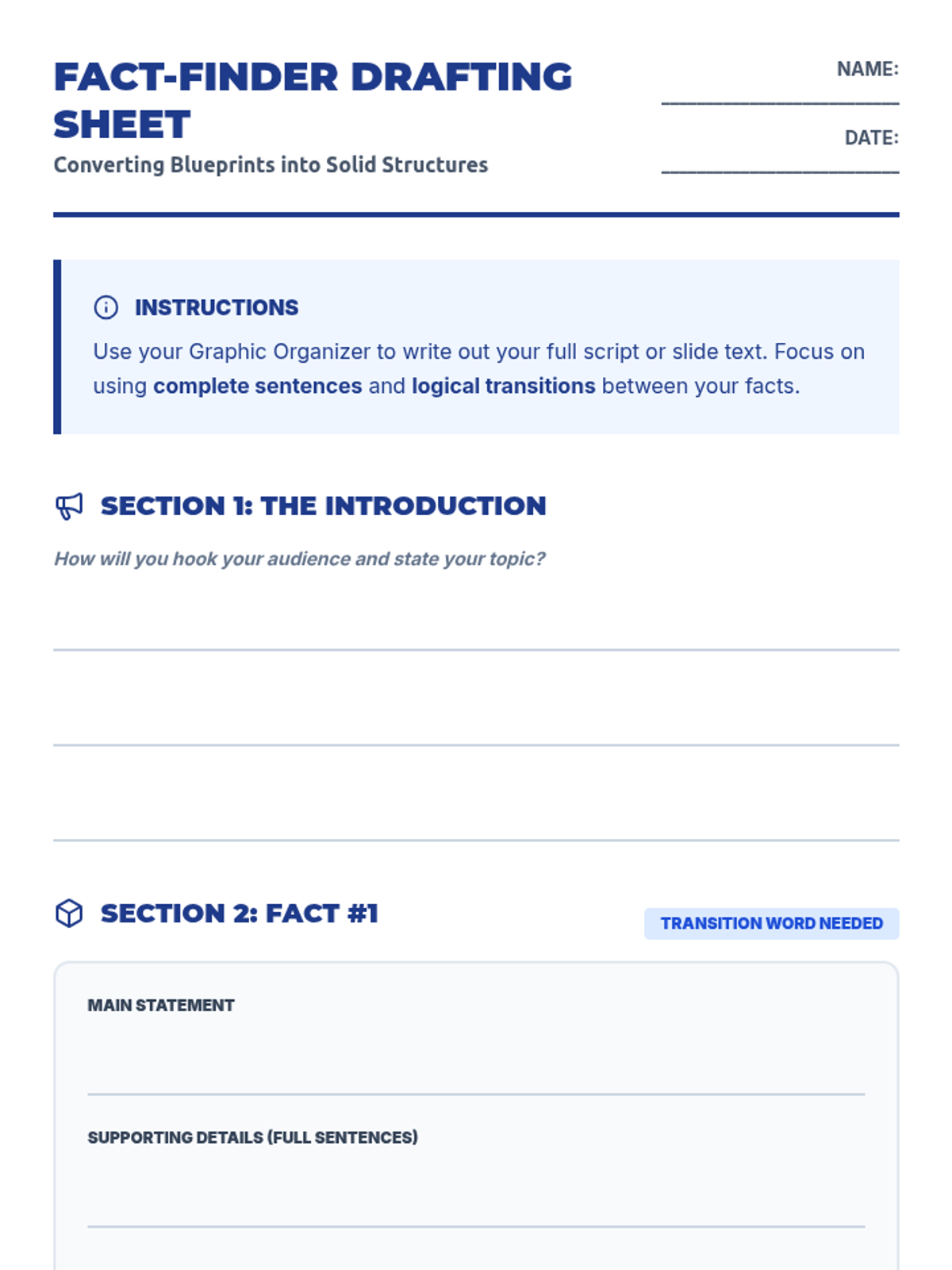
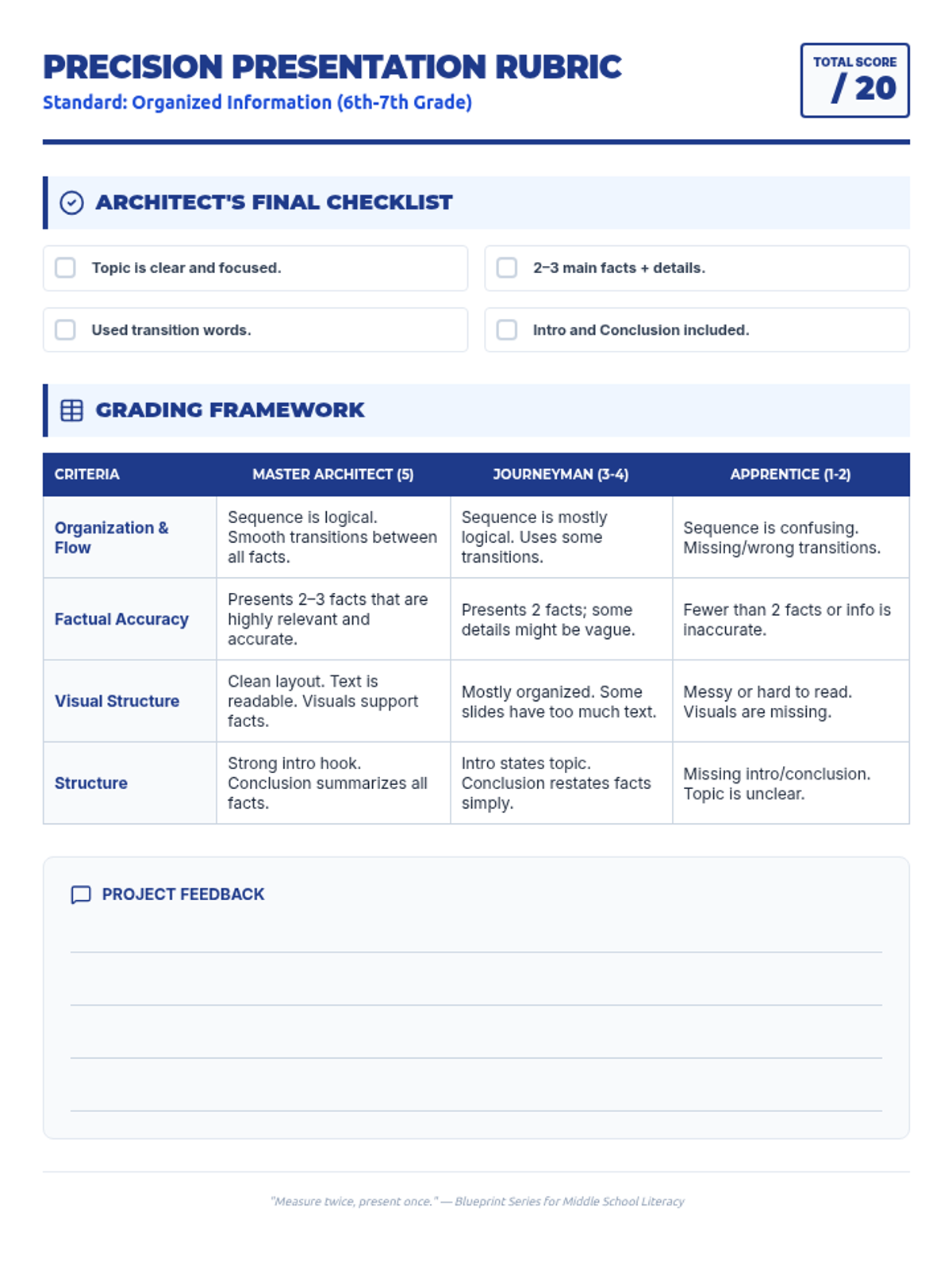
A middle school lesson focused on researching, organizing, and presenting factual information using a structured 'blueprint' approach. Students will learn to select a topic, gather 2-3 supporting facts, and arrange them logically for a presentation.
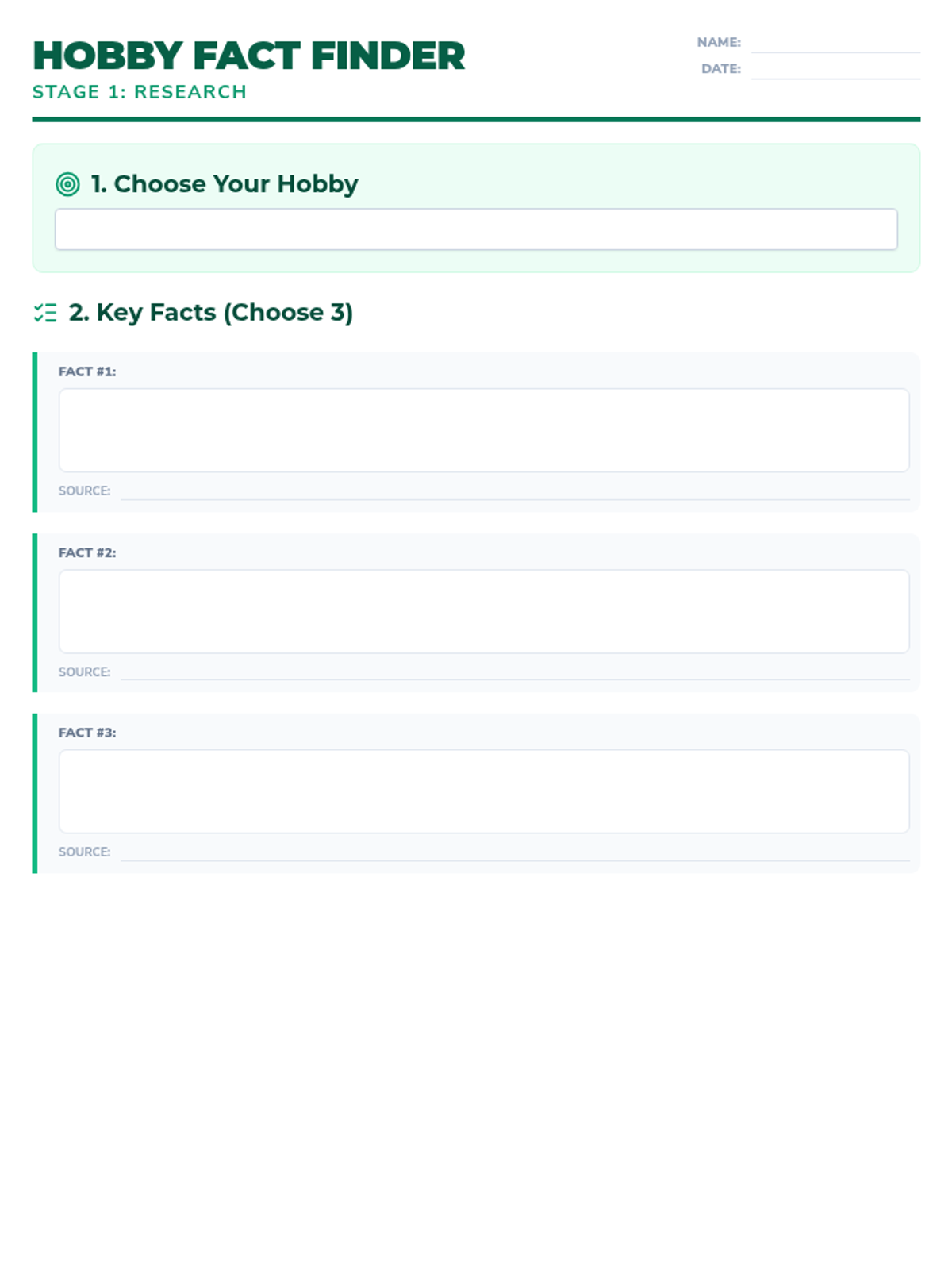
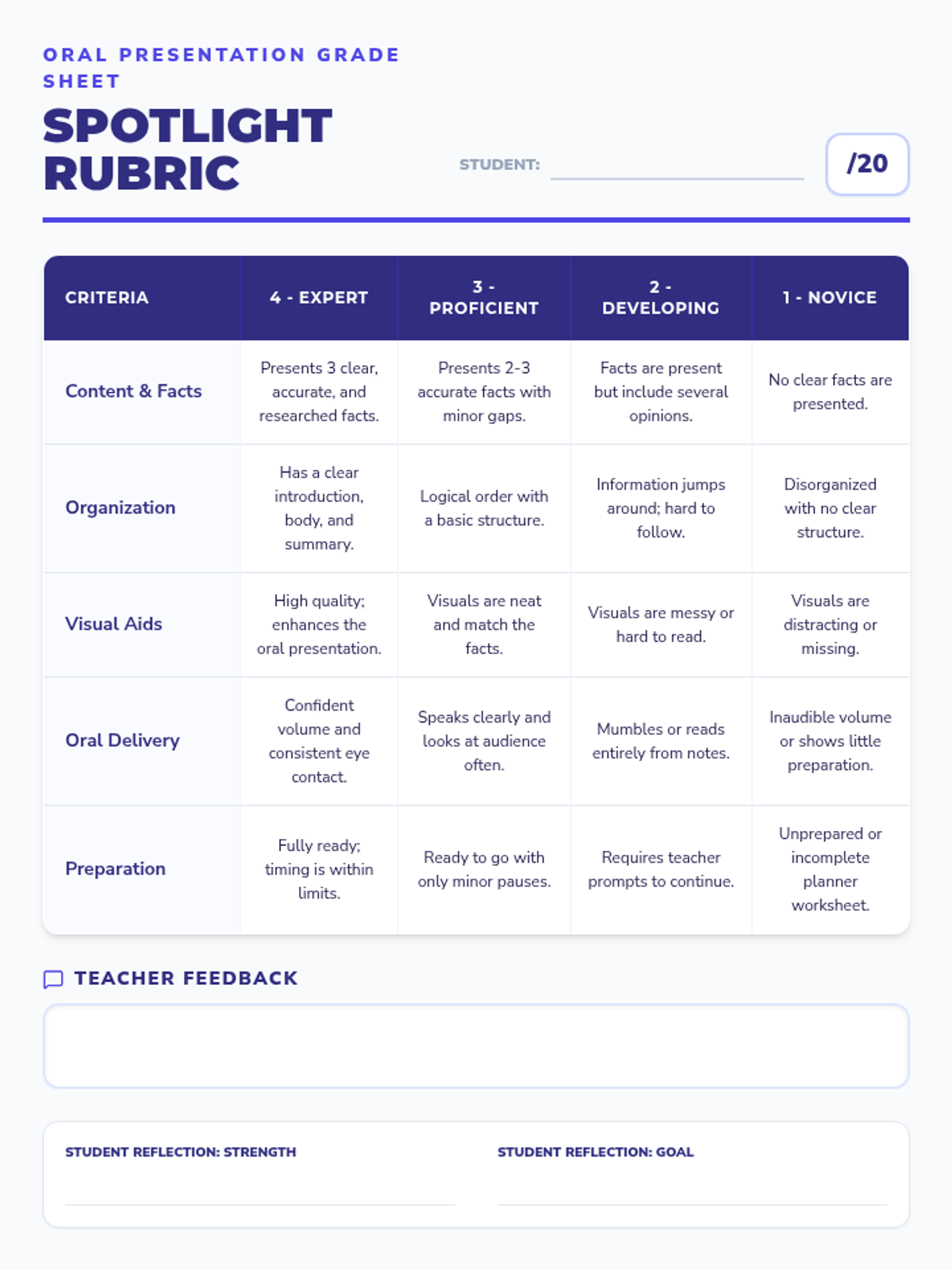
A lesson designed for middle schoolers to practice organizing information and presenting it clearly through the lens of their personal hobbies. Students will learn to select key facts, structure a presentation, and deliver their findings using either digital slides or physical posters.
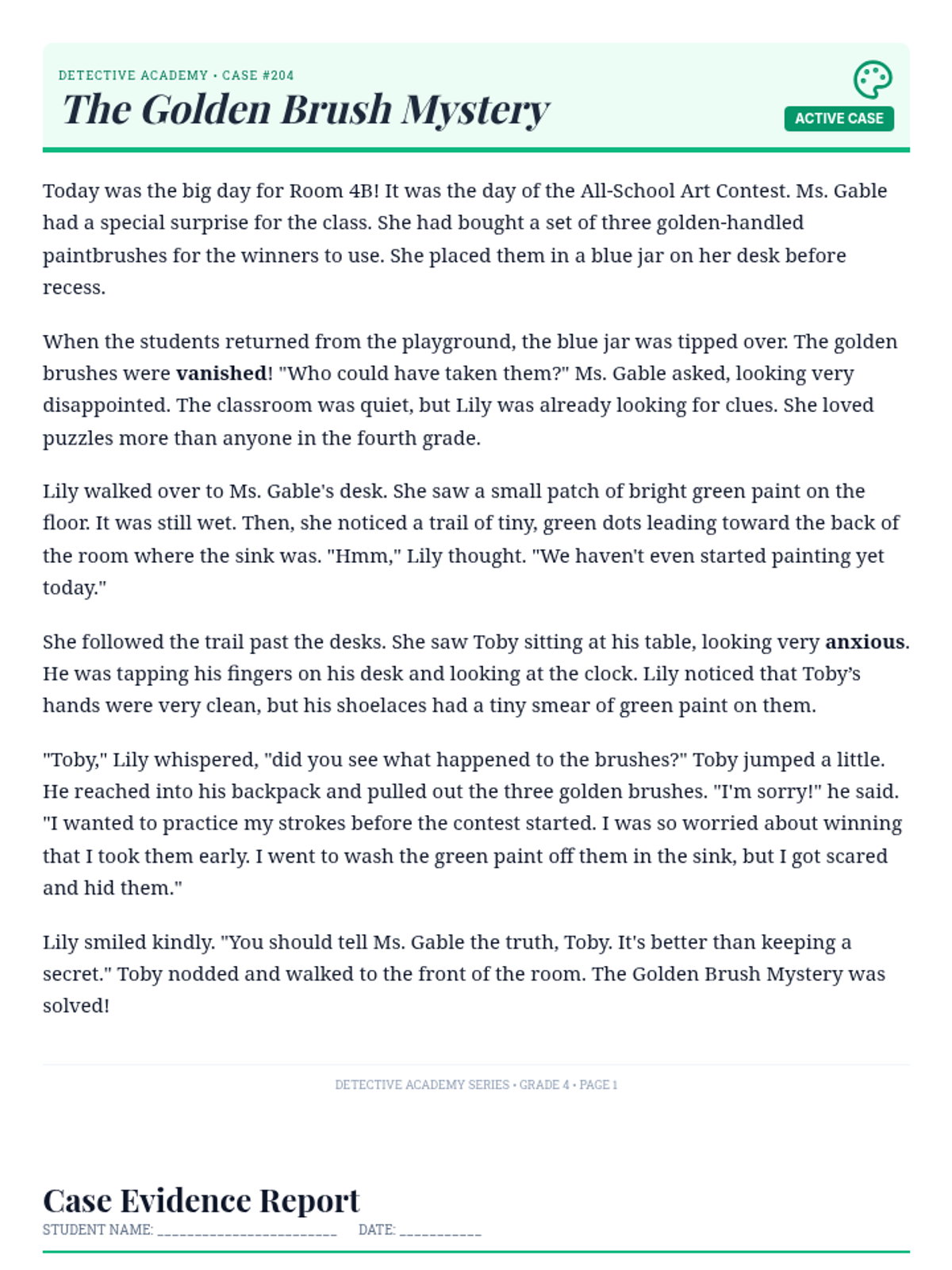
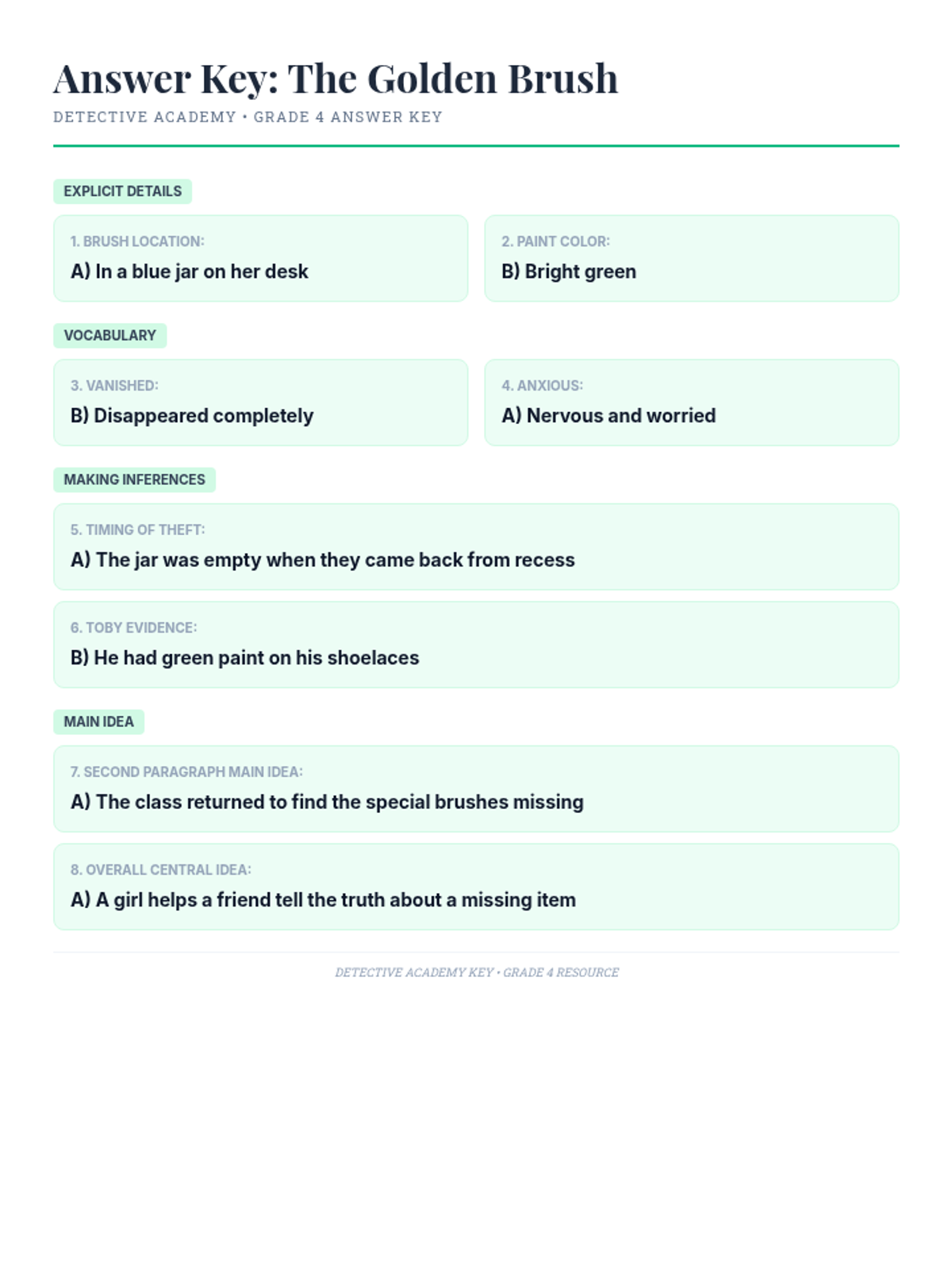
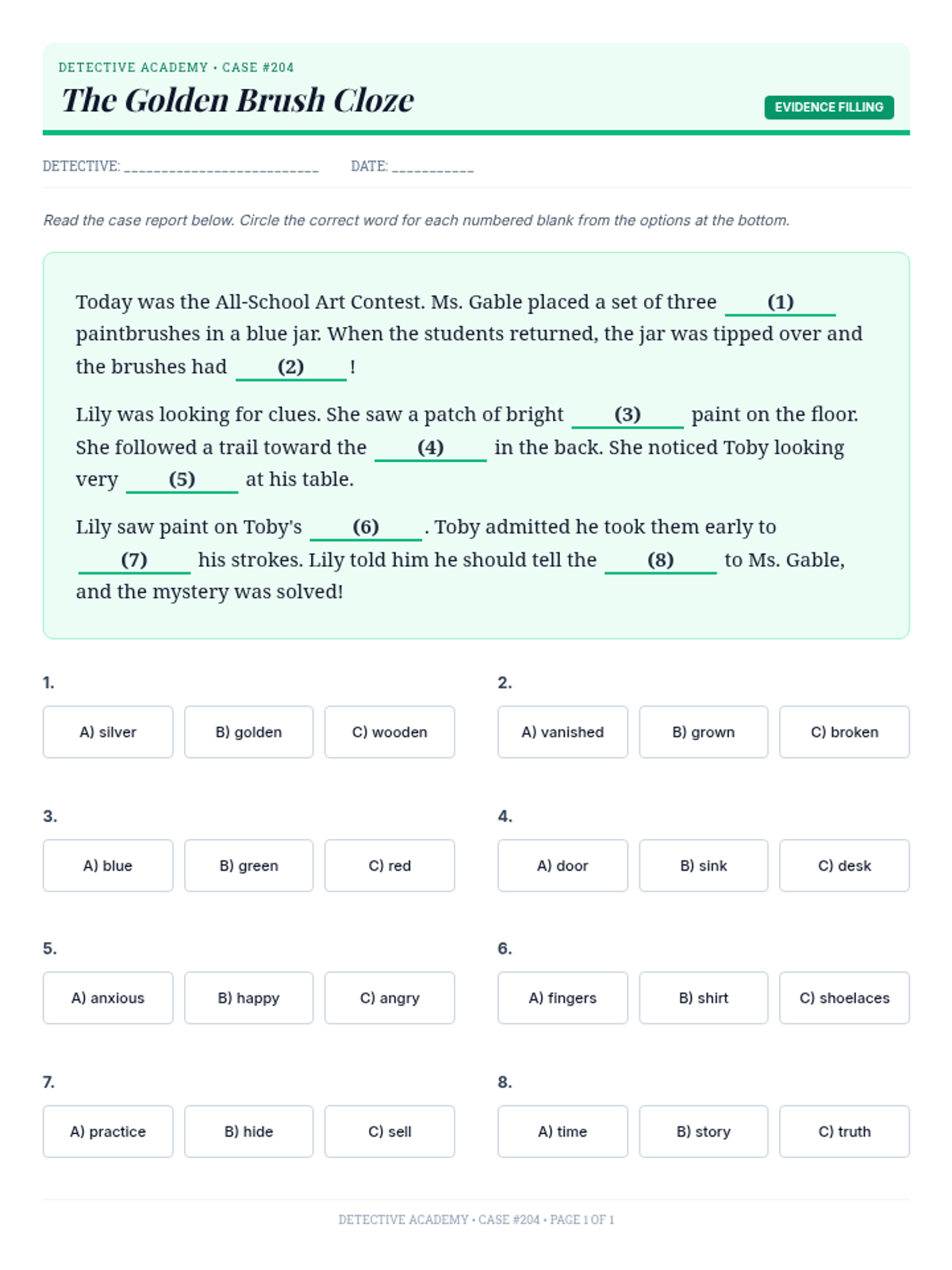
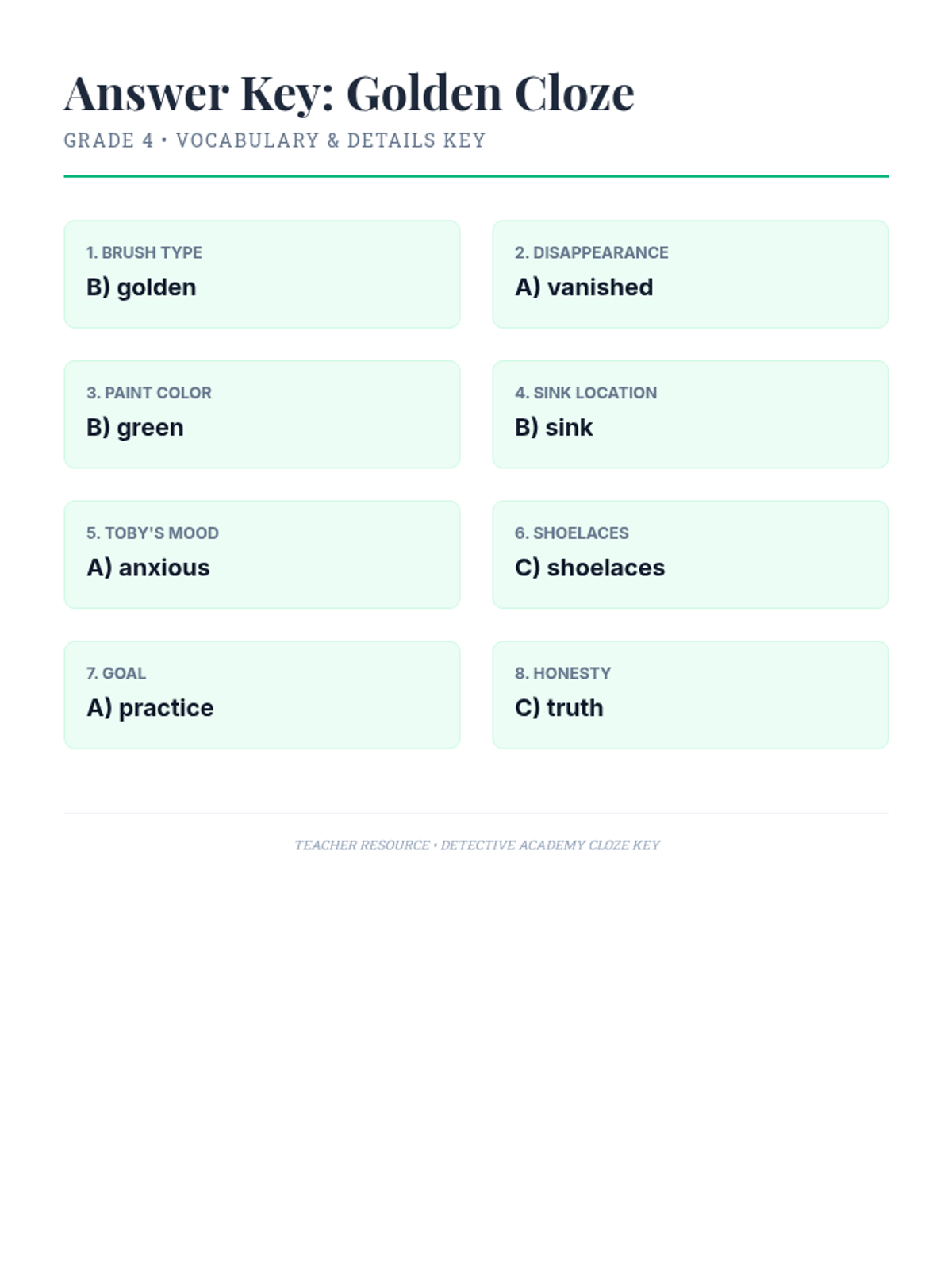
A grade 4 reading comprehension lesson focused on a mystery story, targeting skills in inferencing, explicit details, context clues, and identifying main ideas.
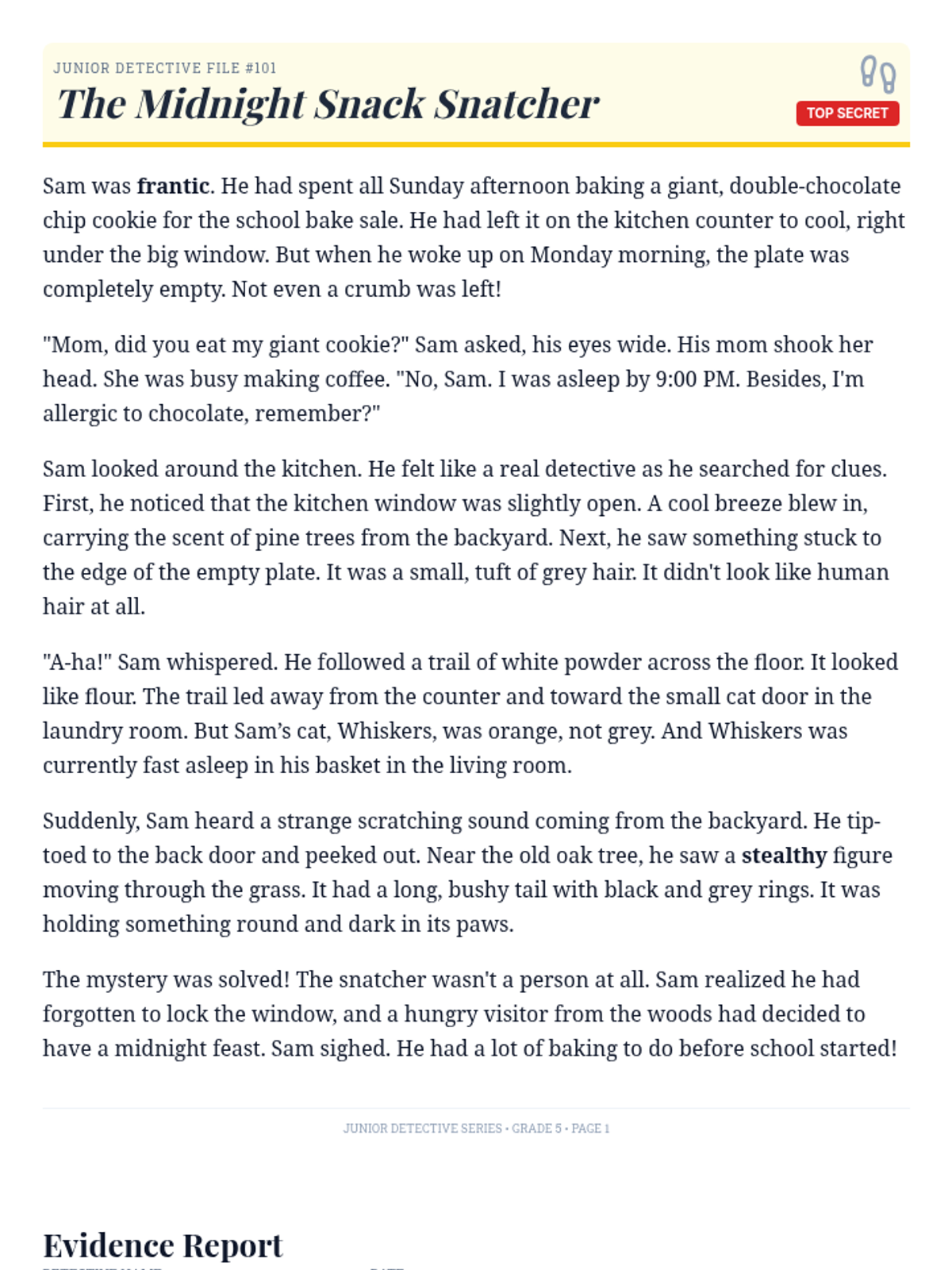
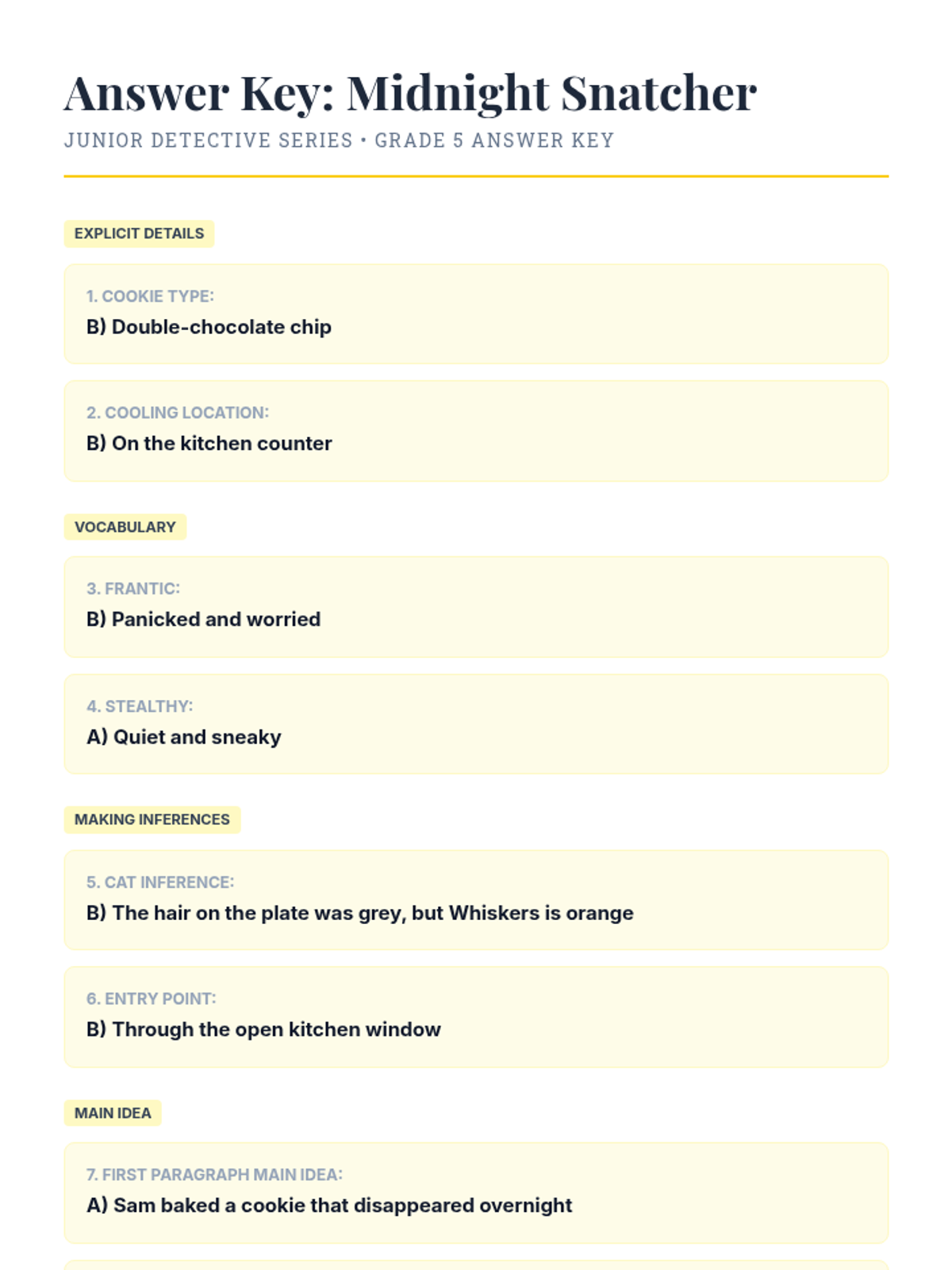
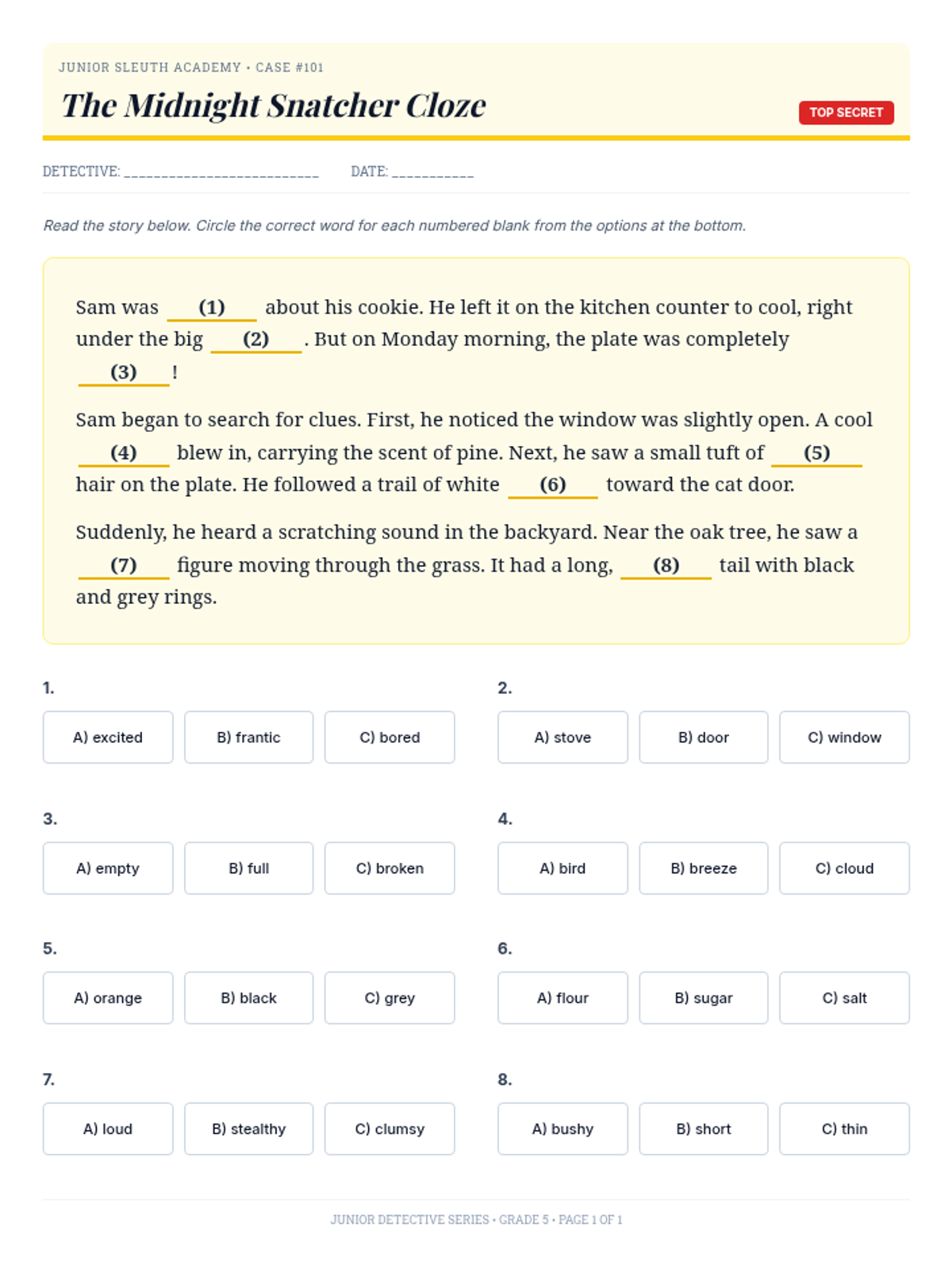
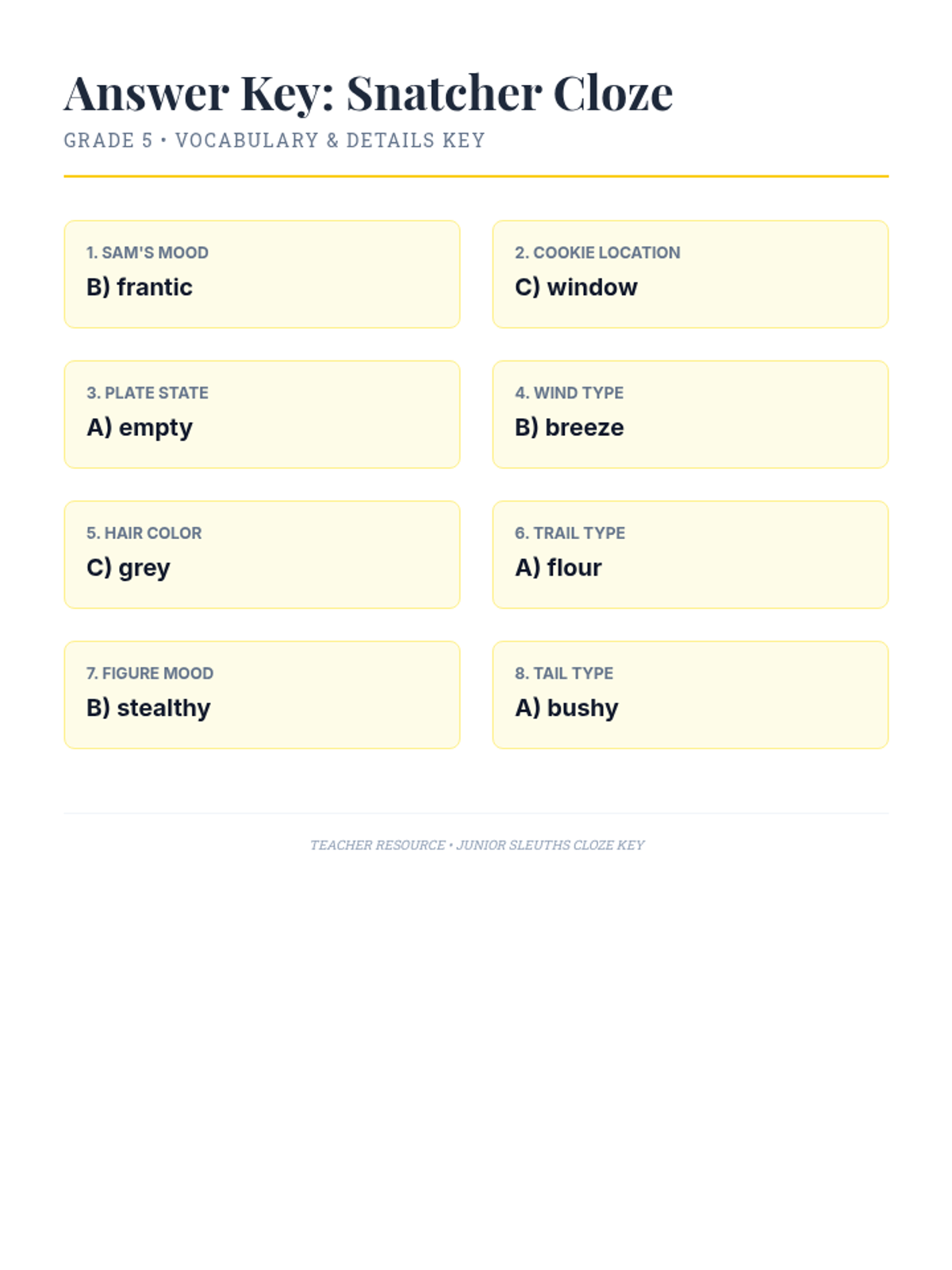
A grade 5 reading comprehension lesson focused on a mystery story, targeting skills in inferencing, explicit details, context clues, and identifying main ideas.
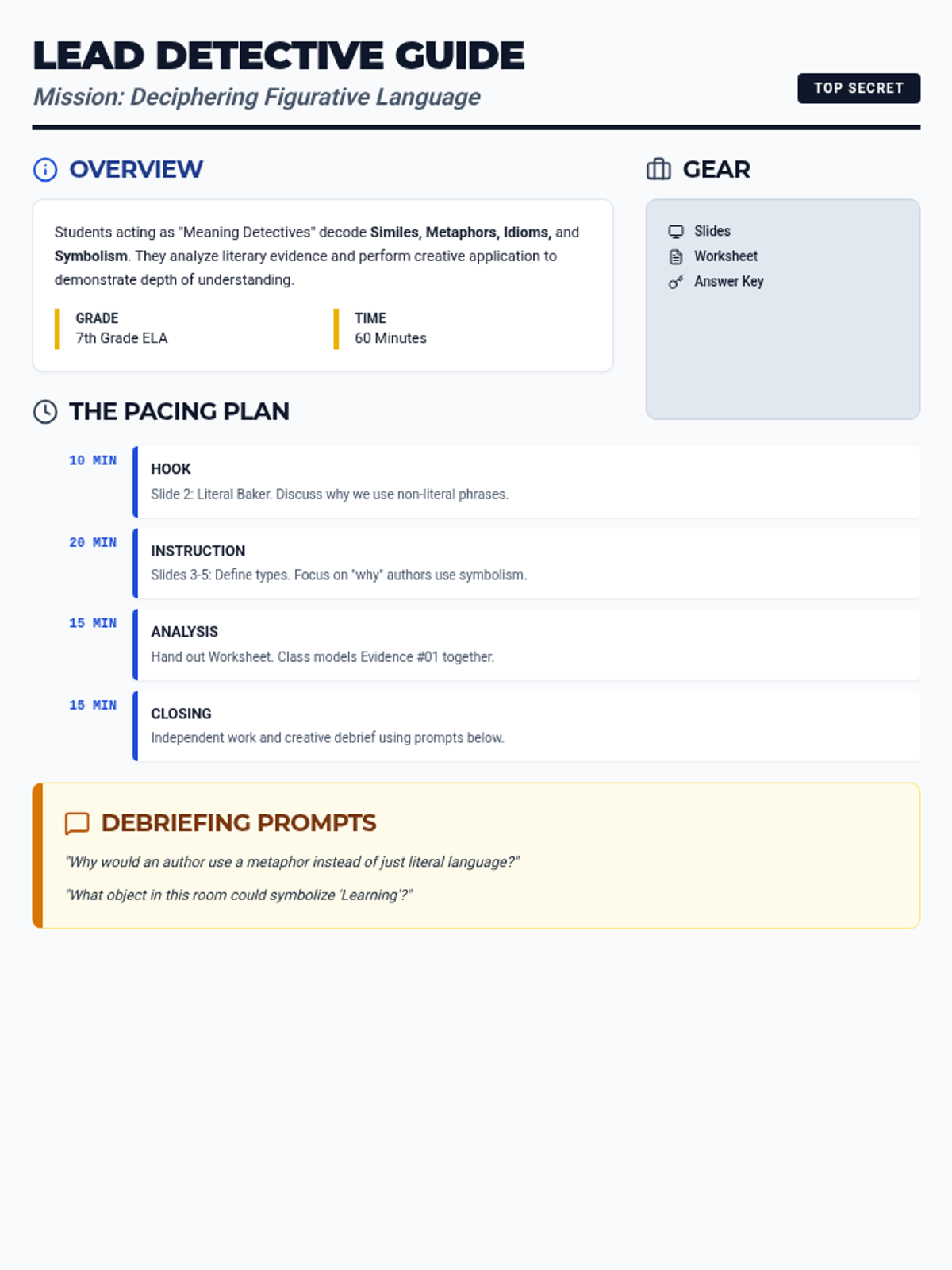
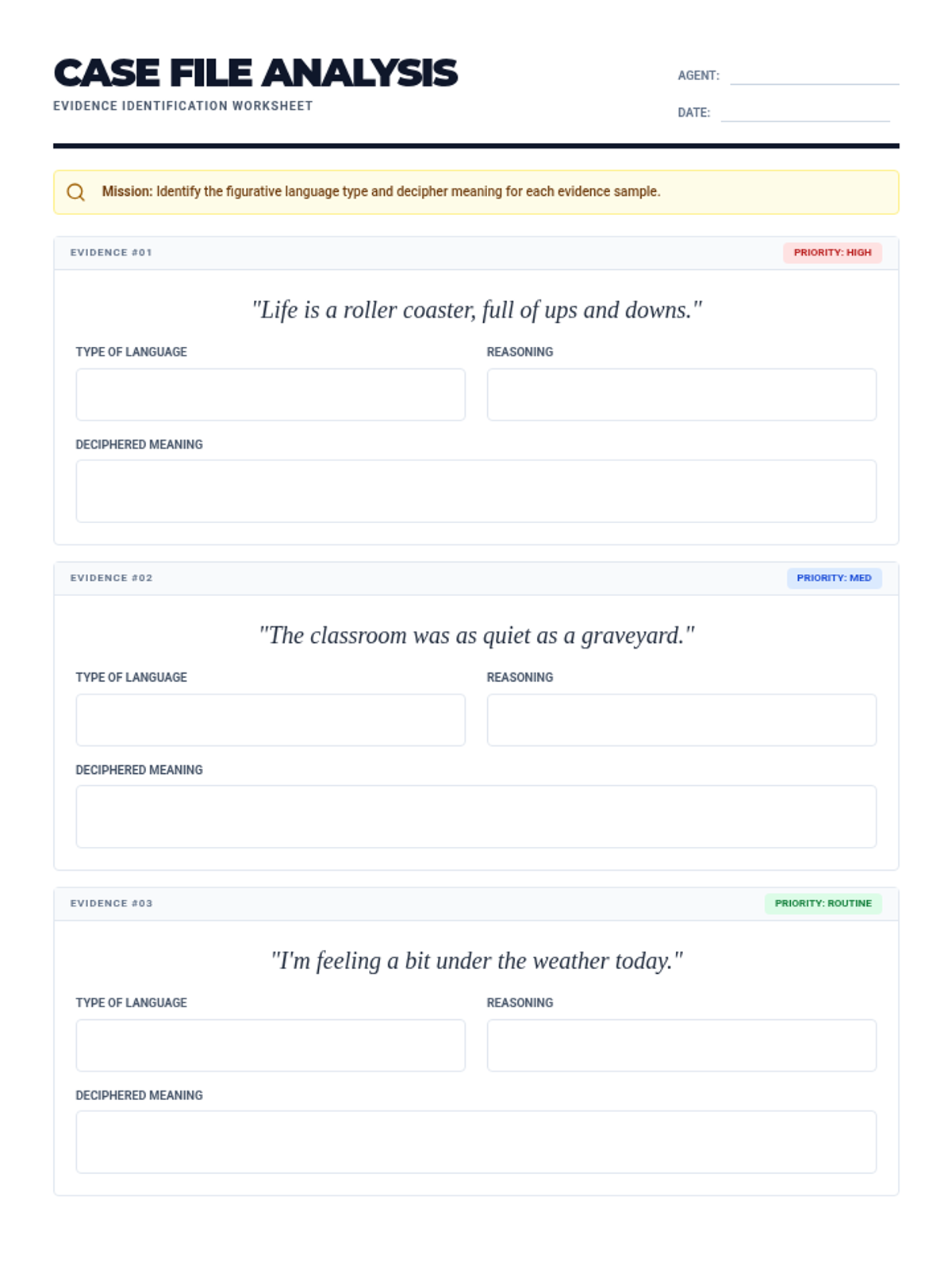
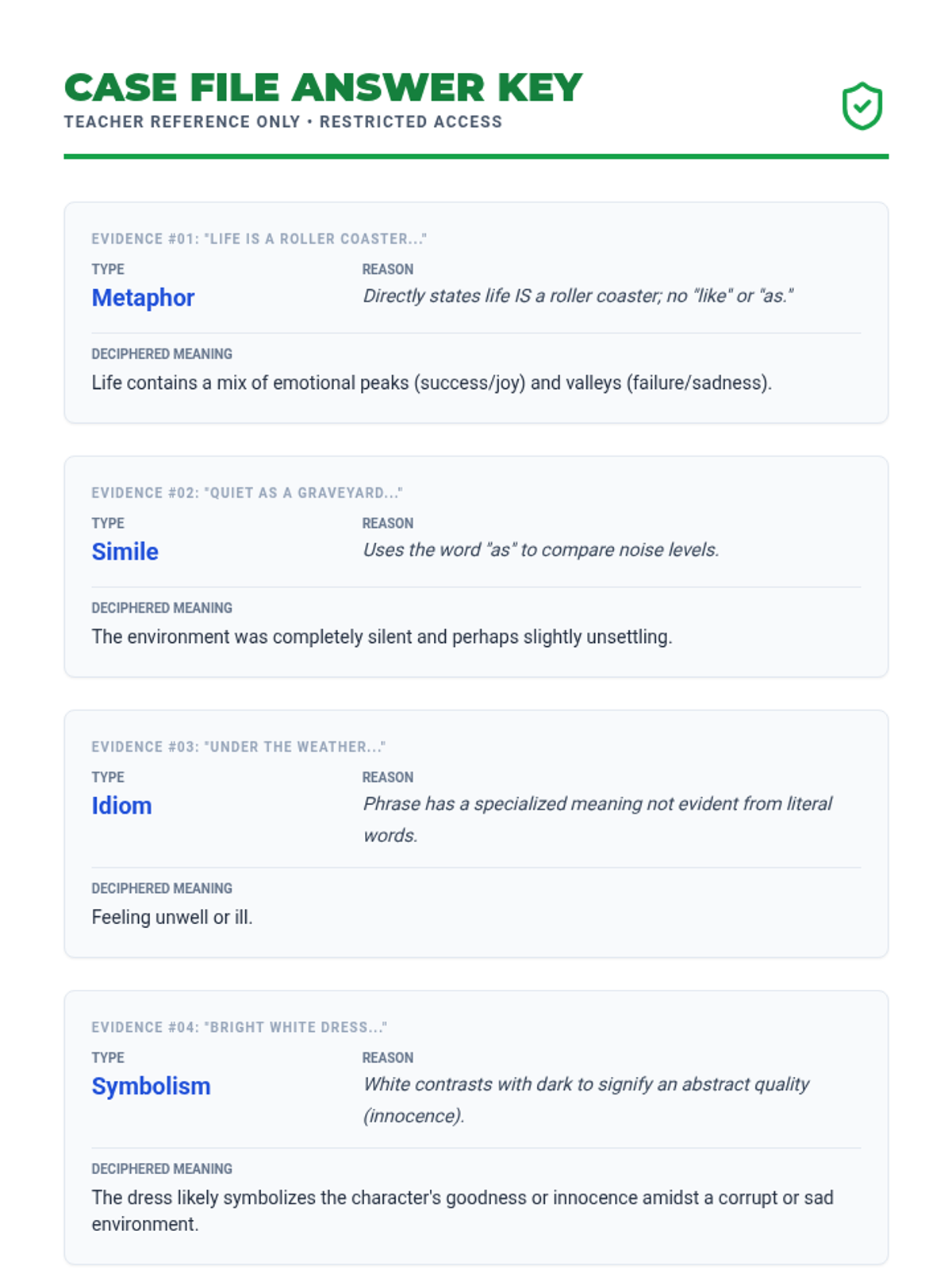
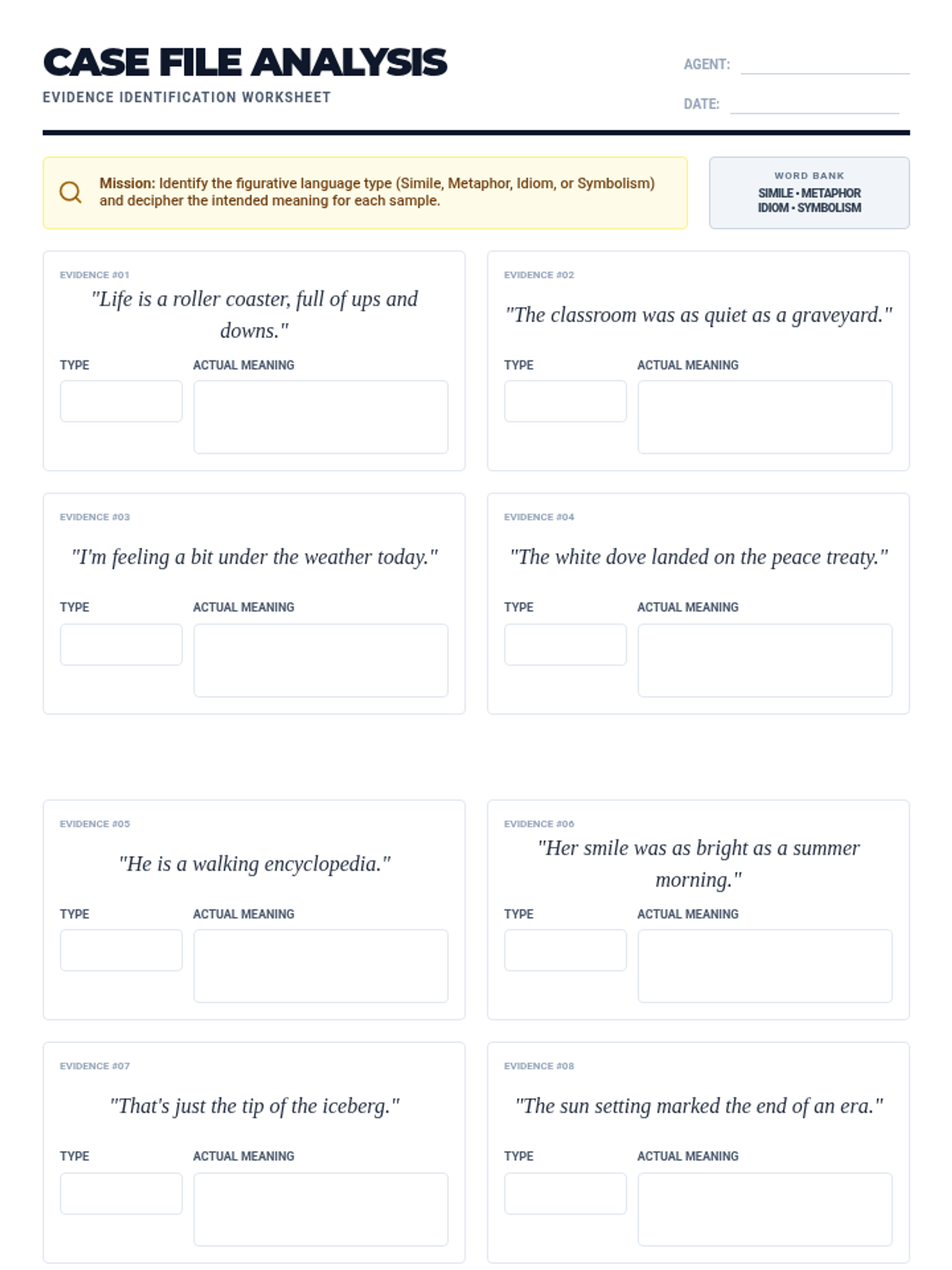
A high-interest lesson where students act as 'Meaning Detectives' to identify and interpret similes, metaphors, idioms, and symbolism in text.
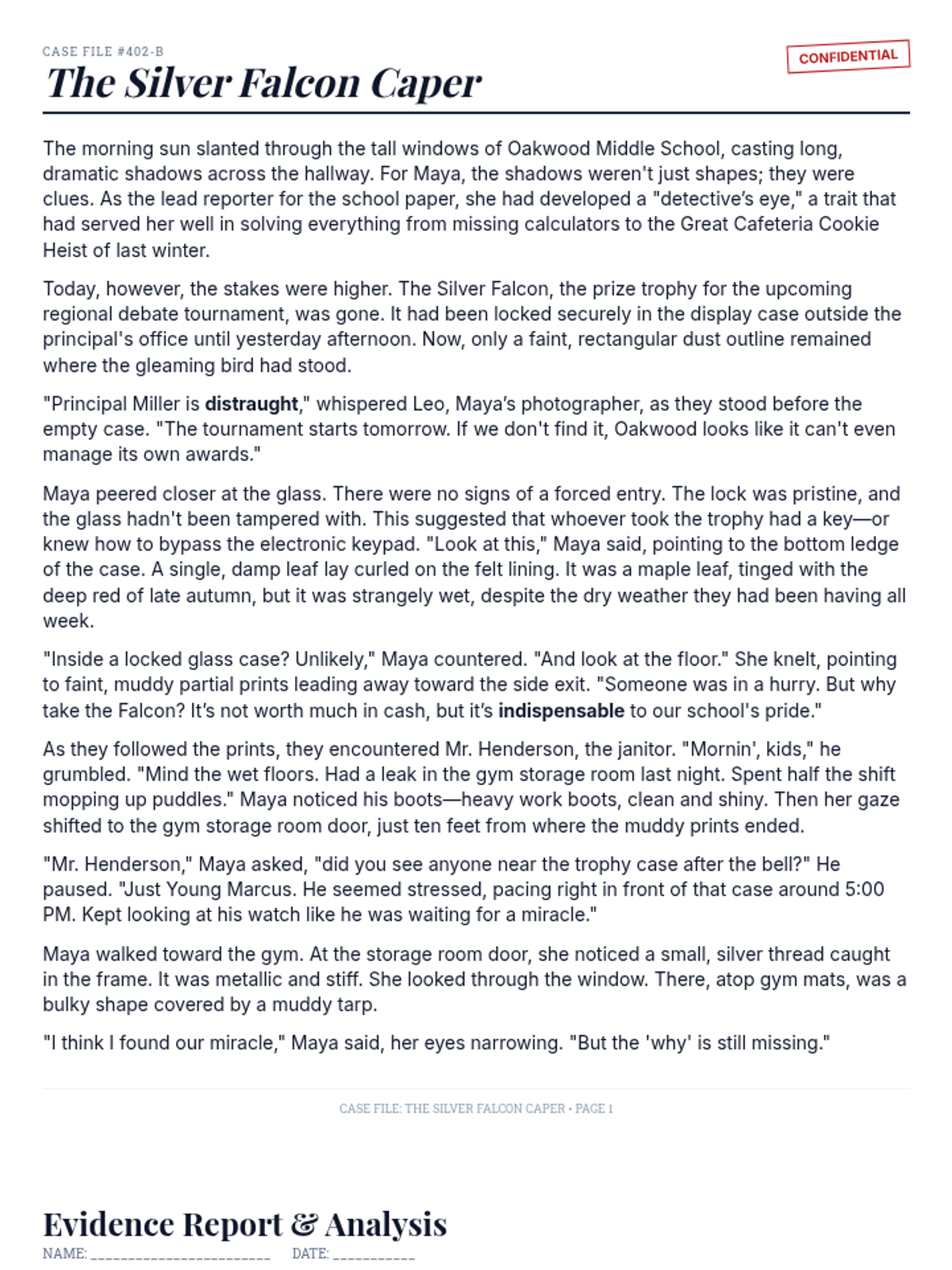
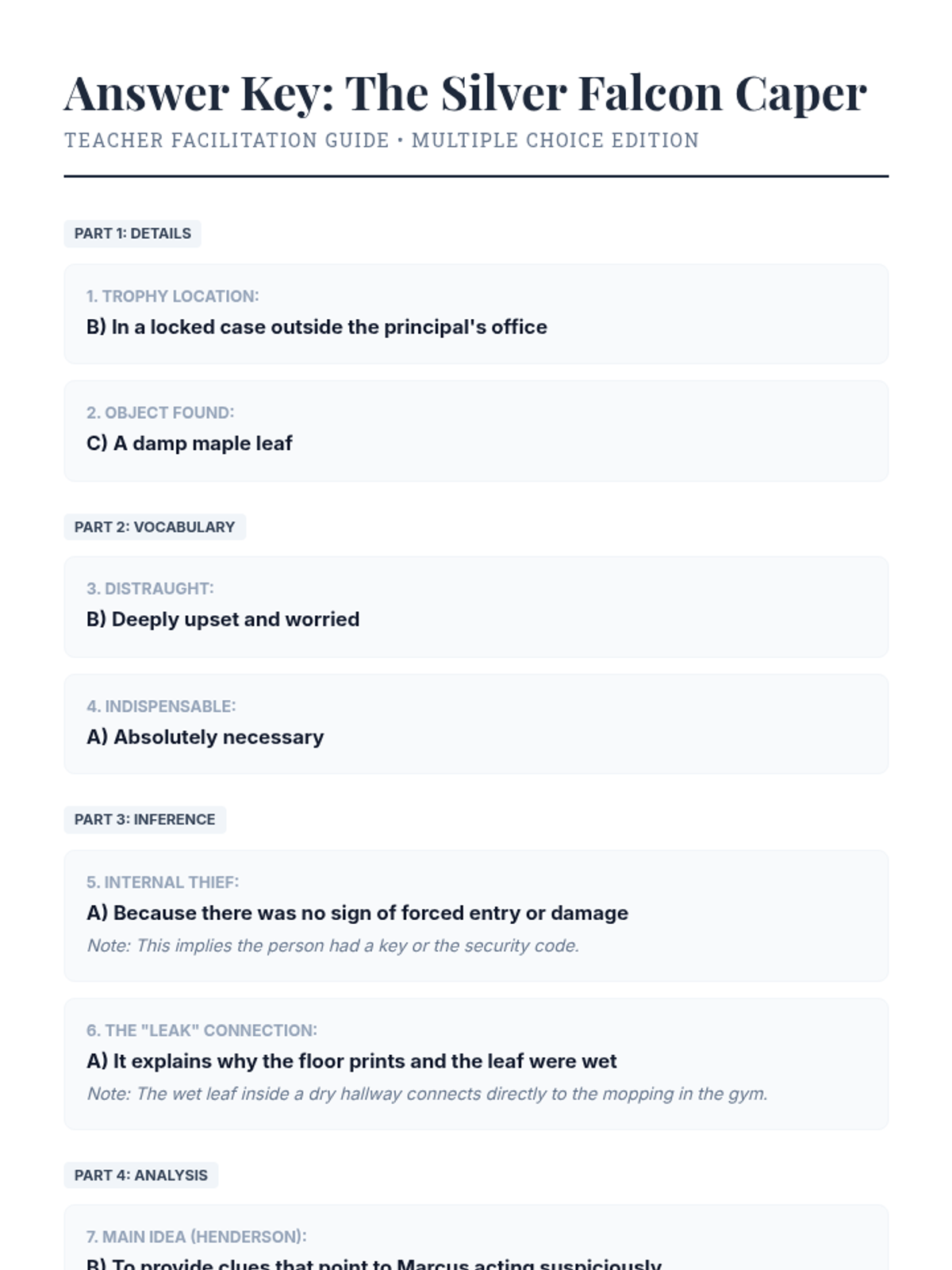
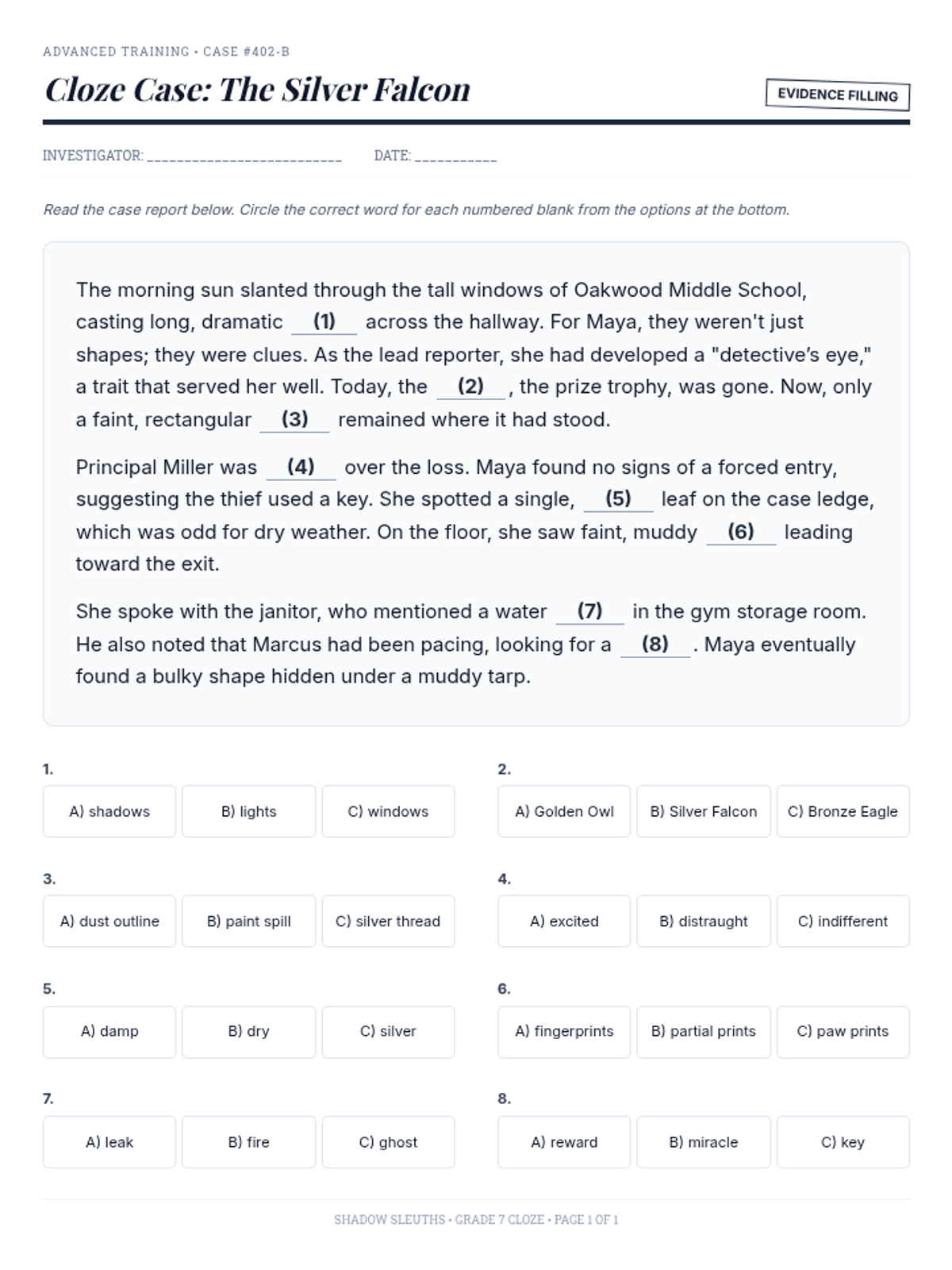
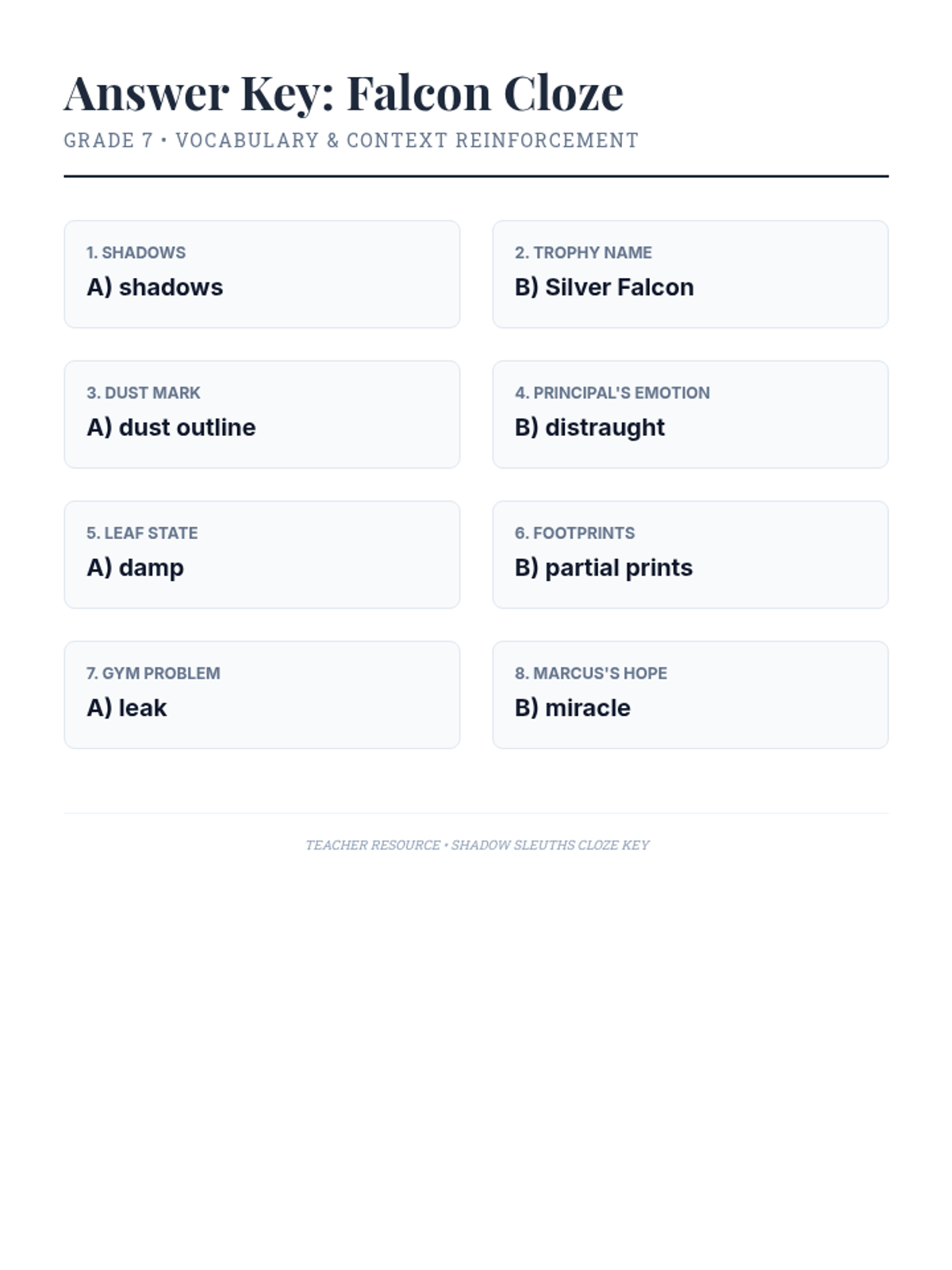
A grade 7 reading comprehension lesson focused on a mystery story, targeting skills in inferencing, explicit details, context clues, and identifying main ideas.
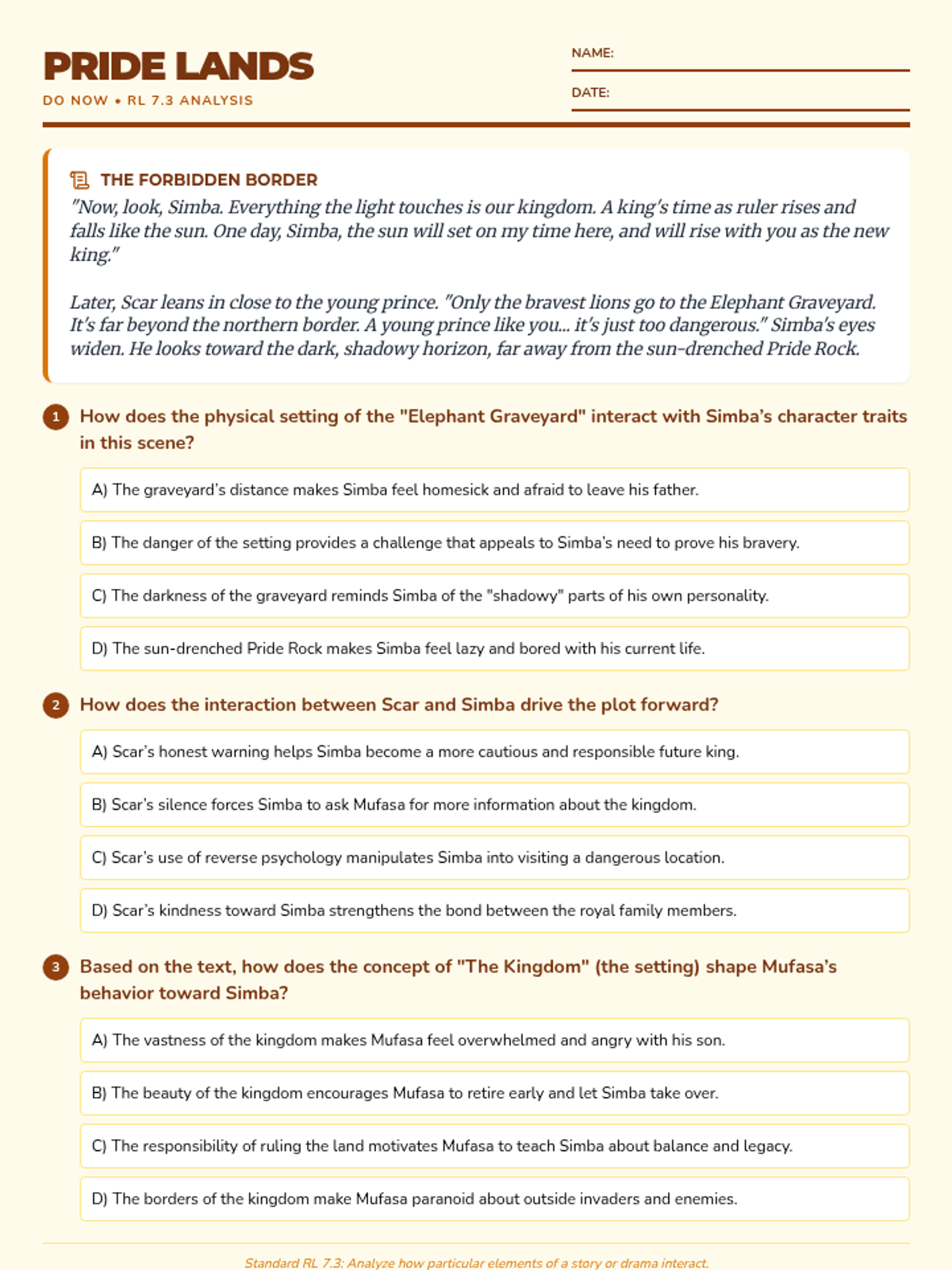
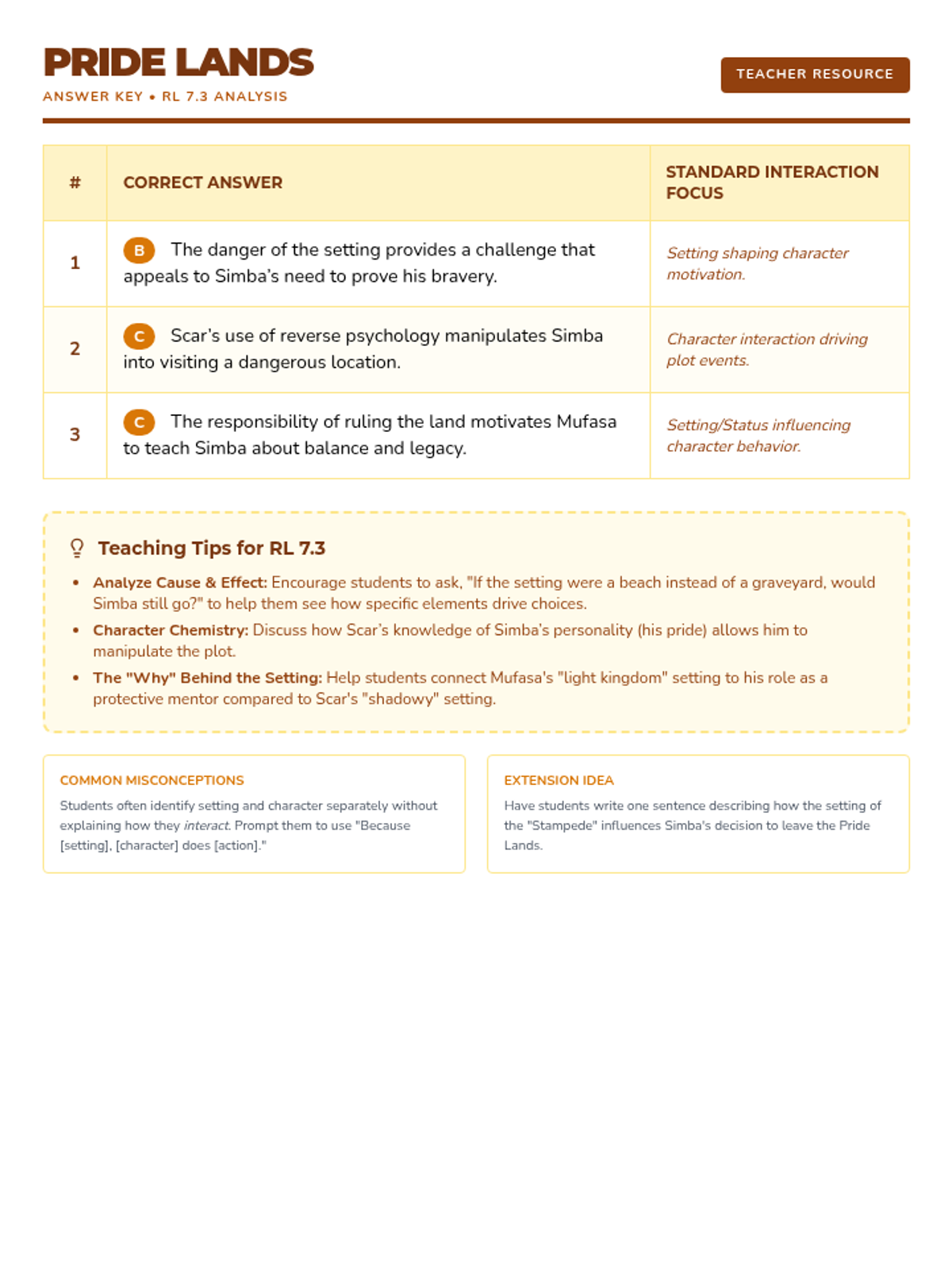
A quick introductory lesson focusing on RL 7.3 through the lens of The Lion King, analyzing how characters, settings, and events influence one another.
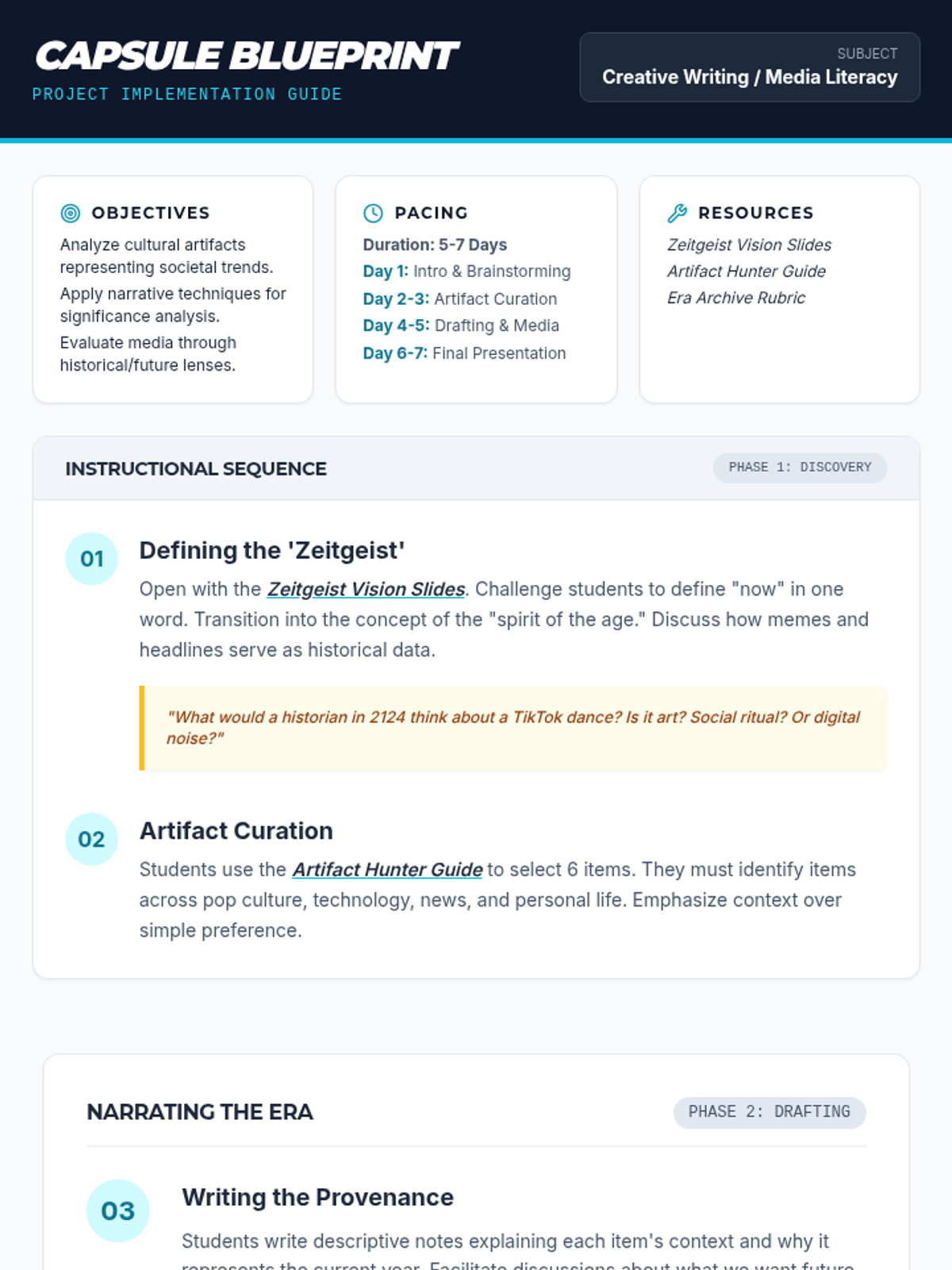
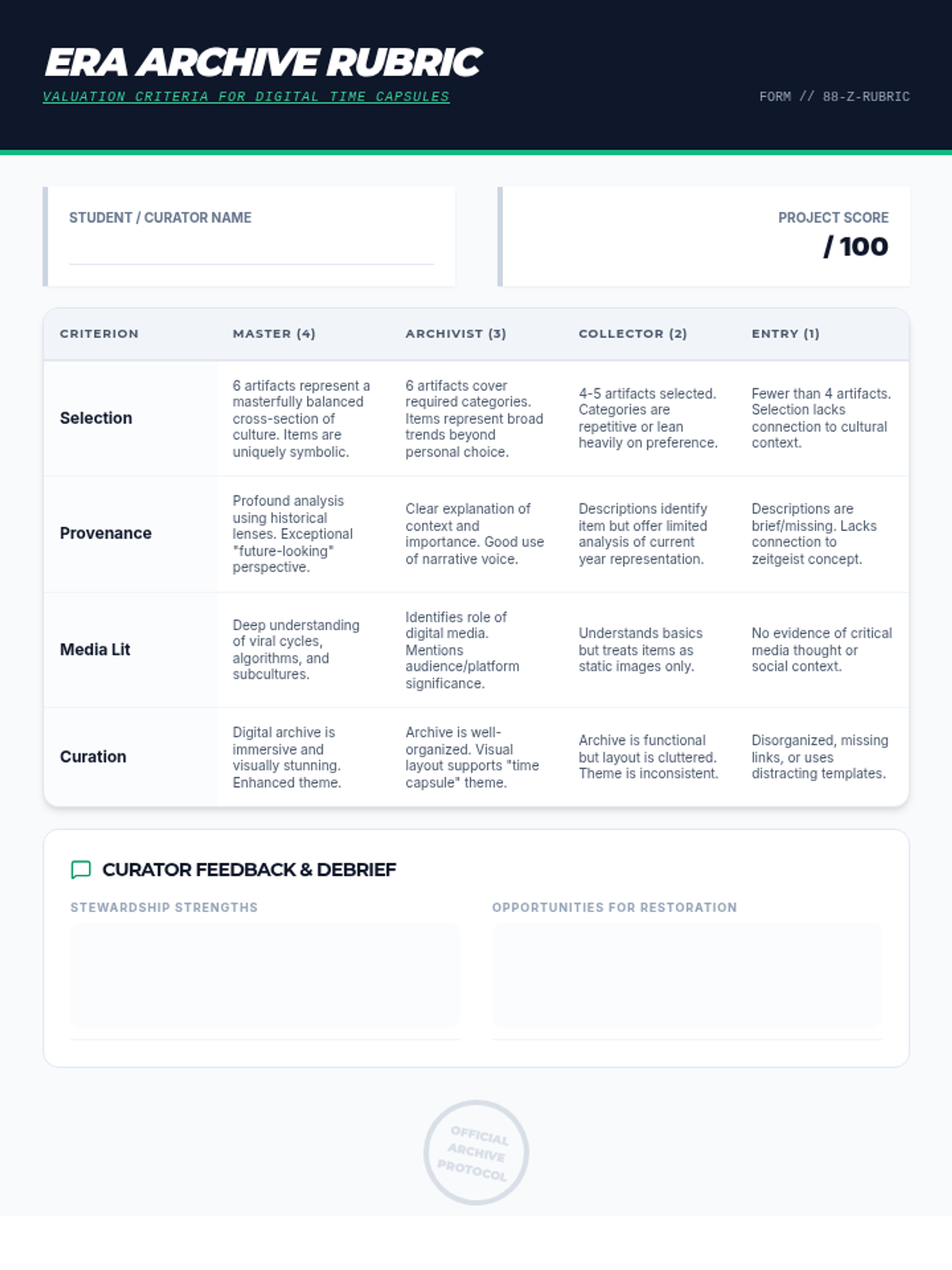
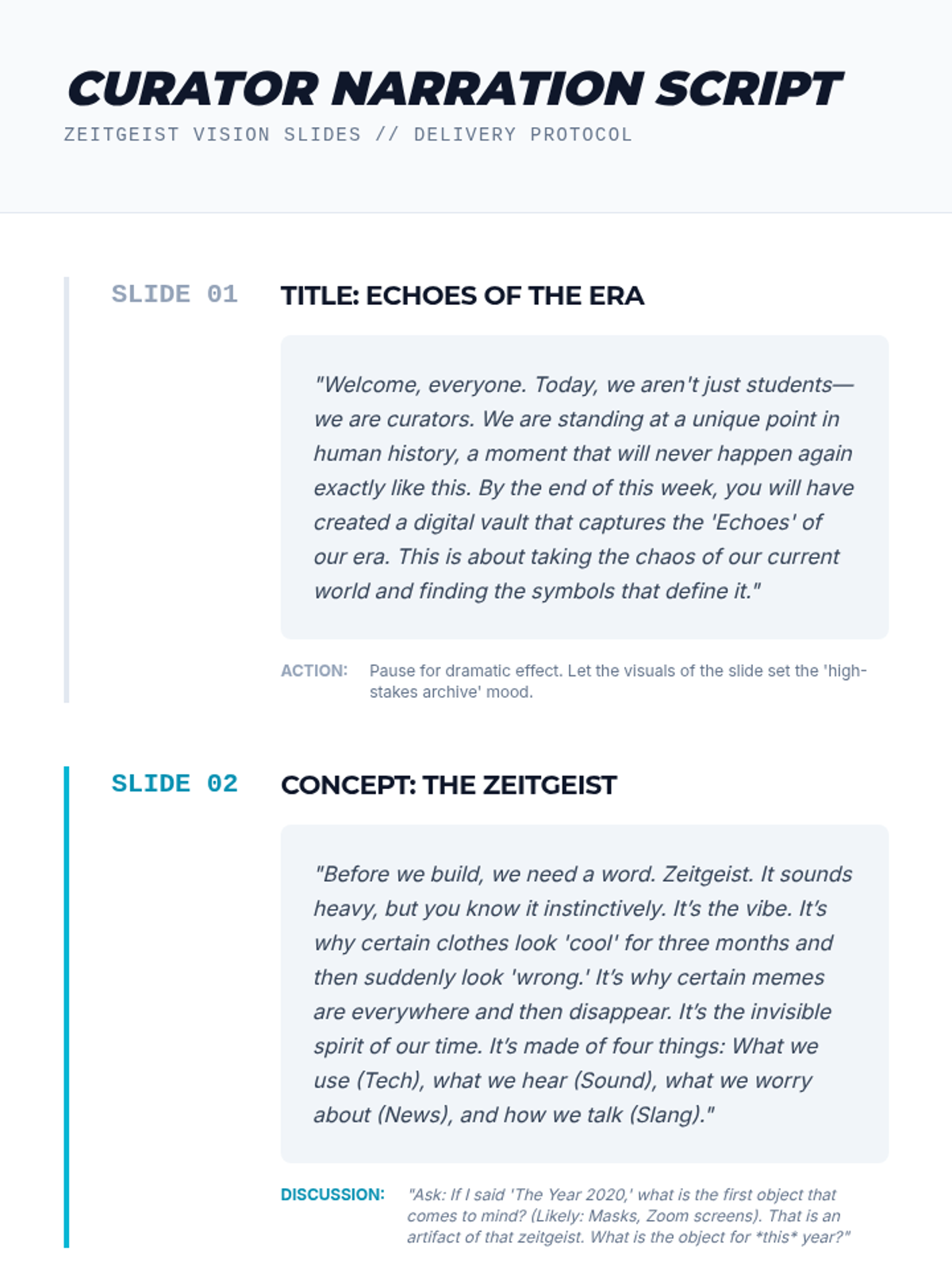
Students explore the concept of the 'zeitgeist' and curate a digital time capsule that captures the current cultural, social, and technological landscape. This lesson blends creative writing with critical media analysis to help students see themselves as historical agents.
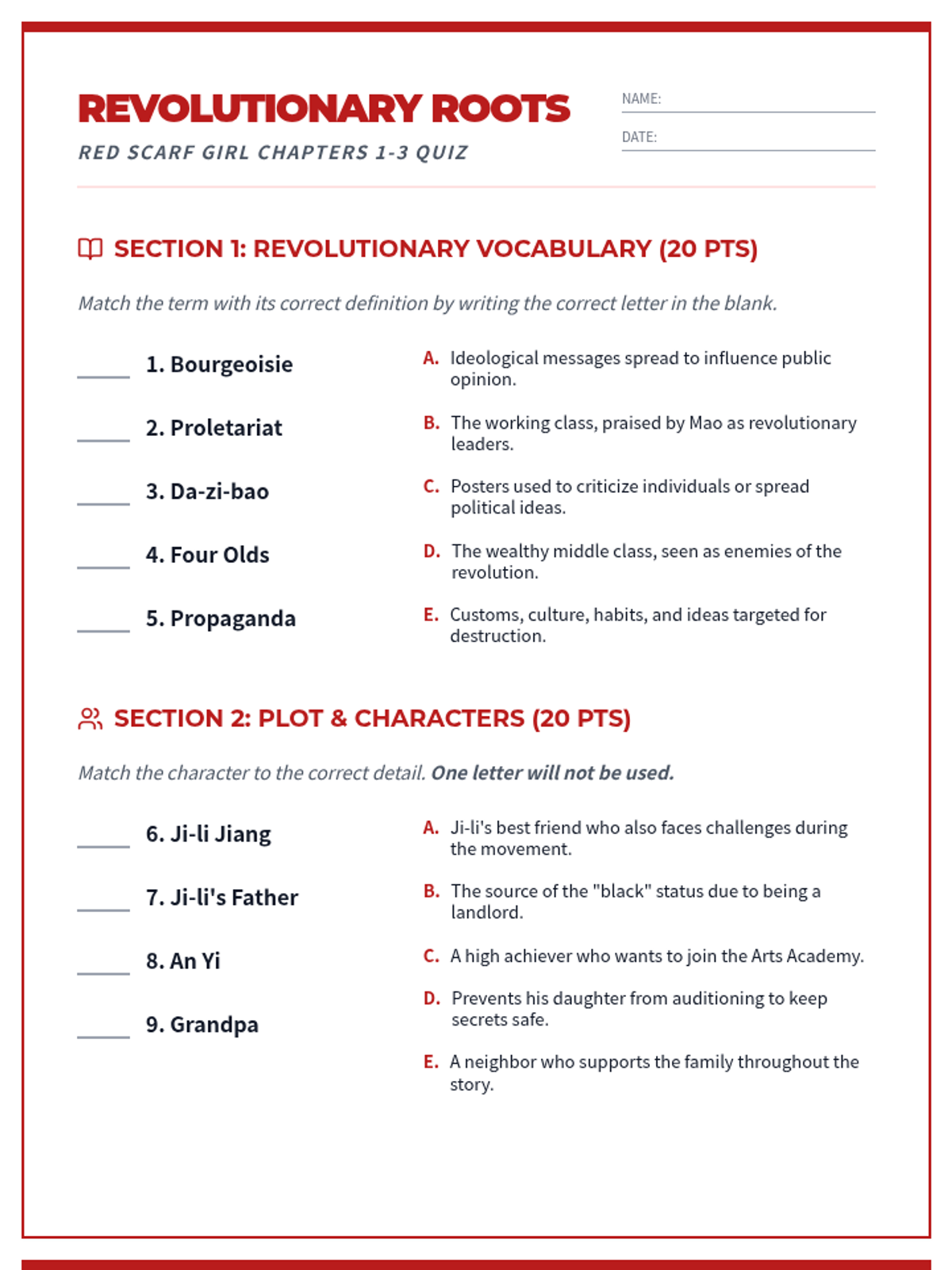
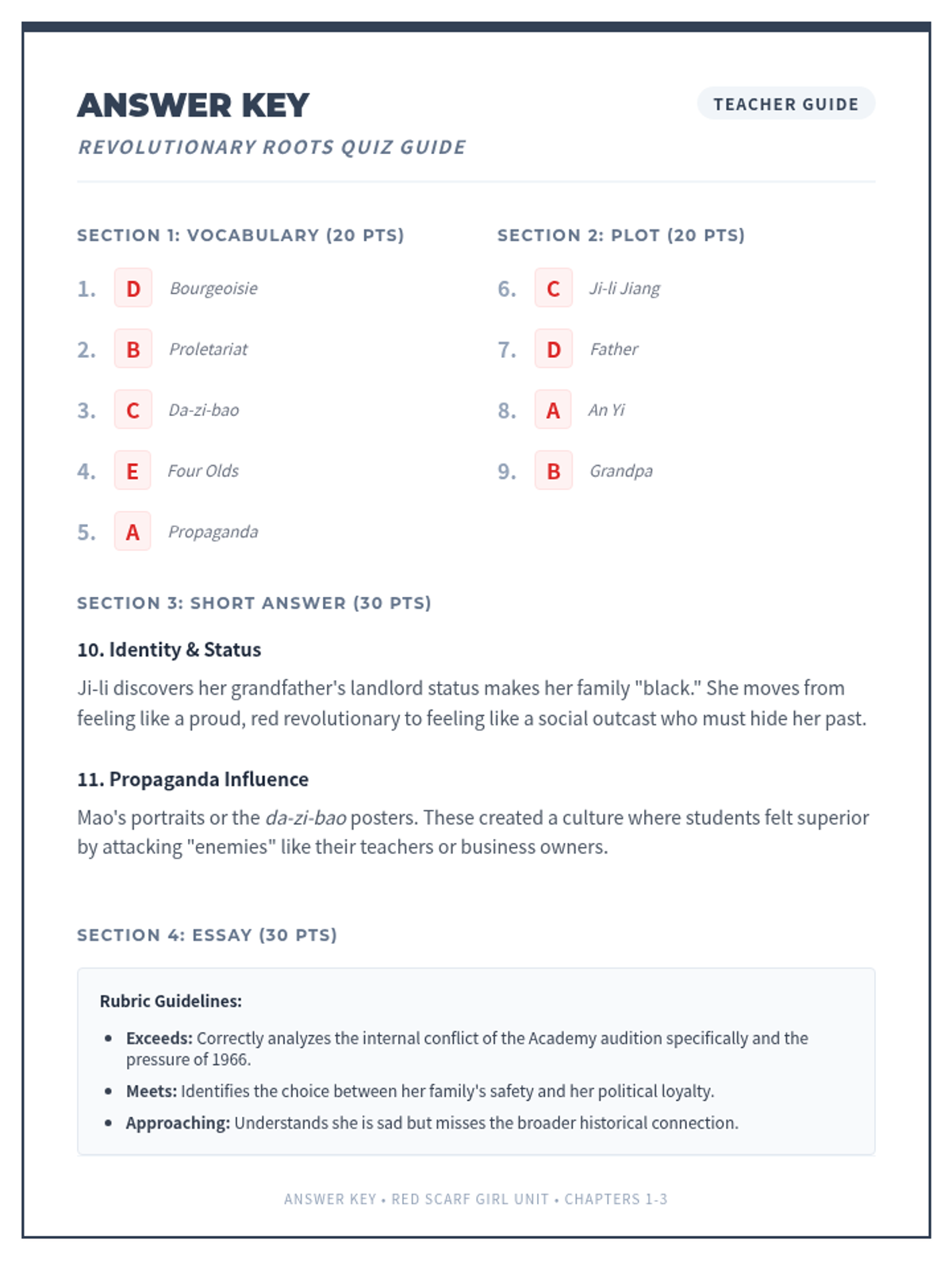
A comprehensive assessment and answer key for the first three chapters of Red Scarf Girl, focusing on the themes of identity, propaganda, and family loyalty.
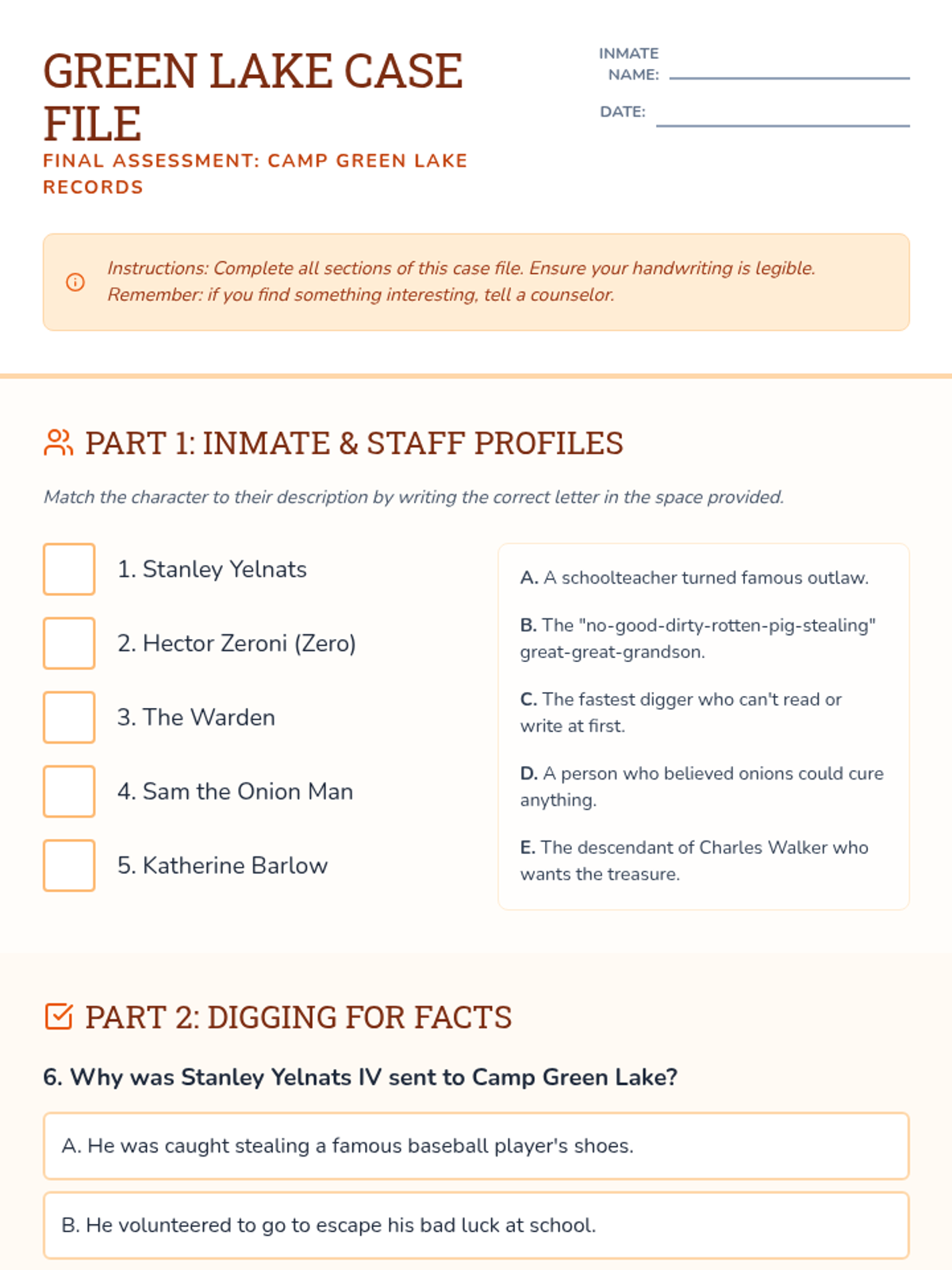
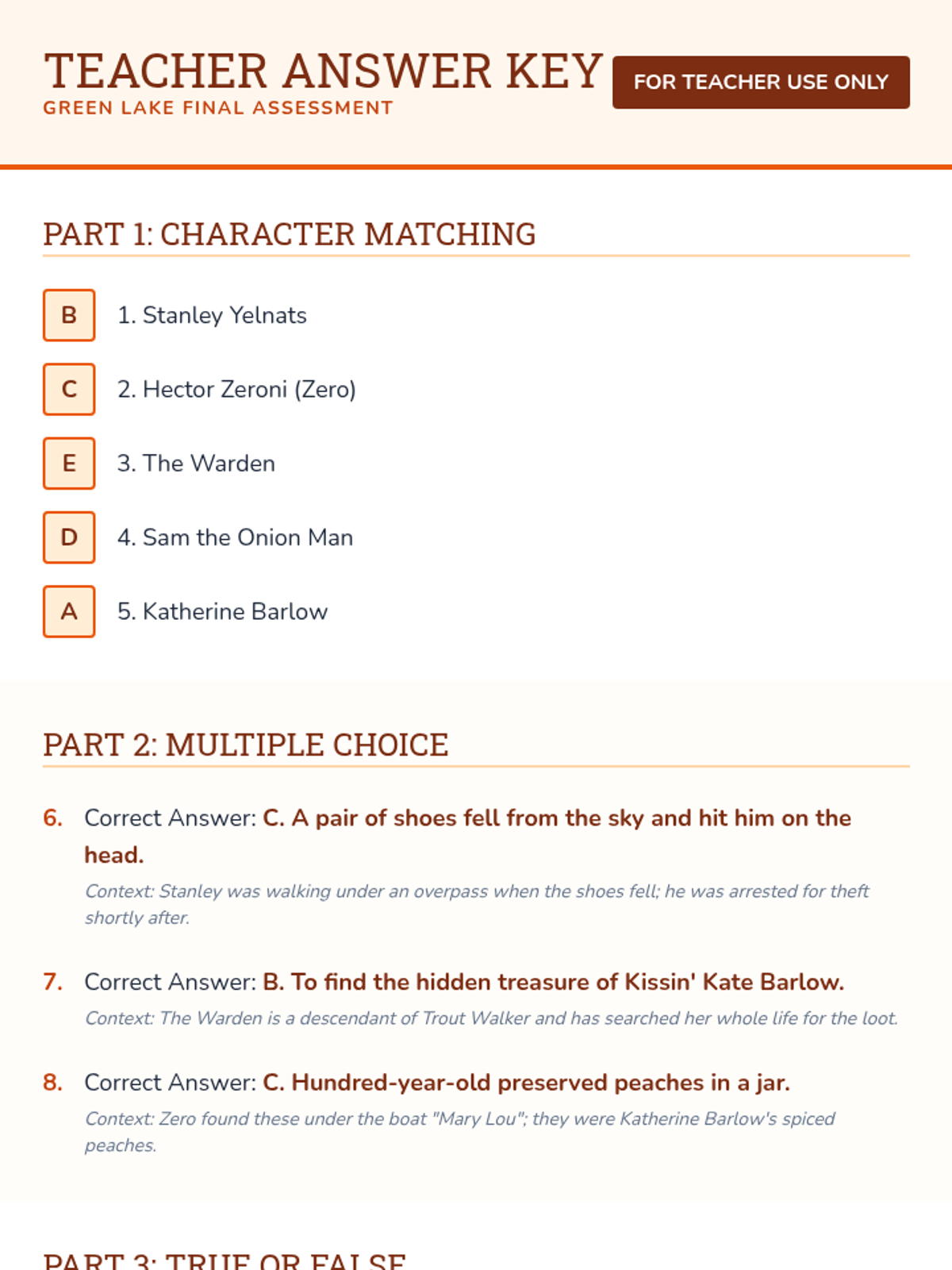
A final assessment and review lesson for the novel Holes by Louis Sachar, focusing on character identification, plot sequencing, and thematic connections. Students will complete a comprehensive test after a visual review of the major story arcs.
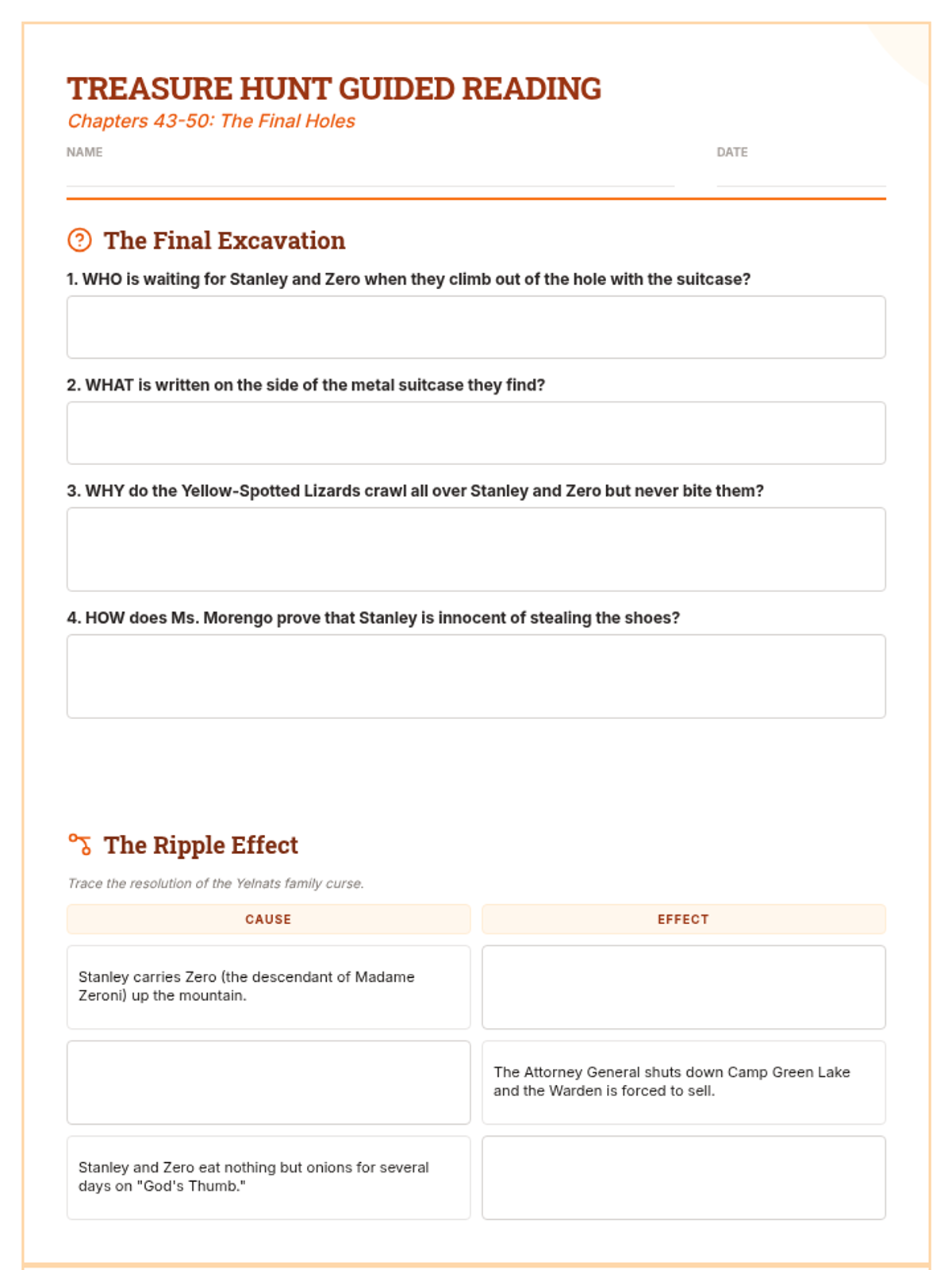
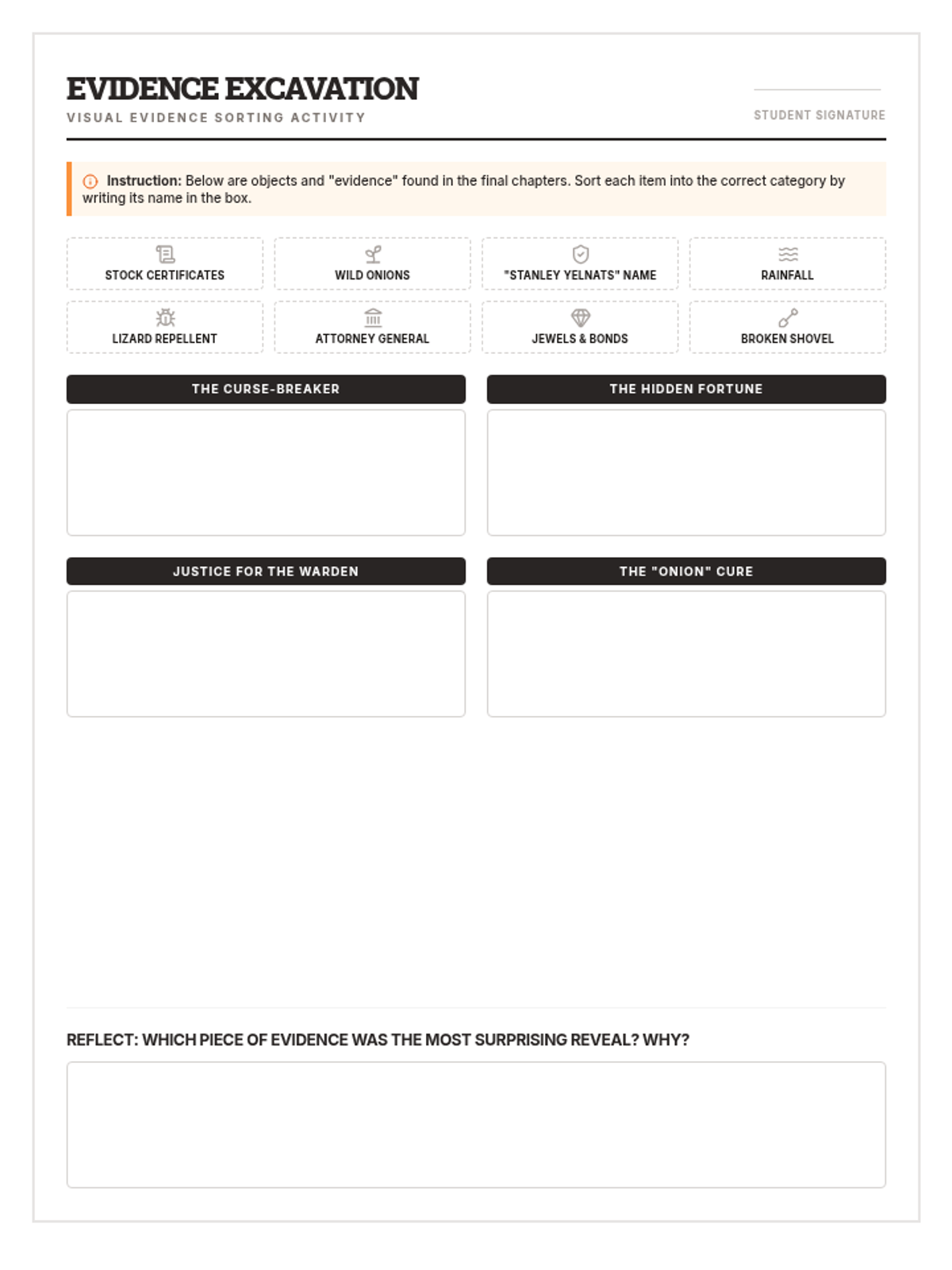
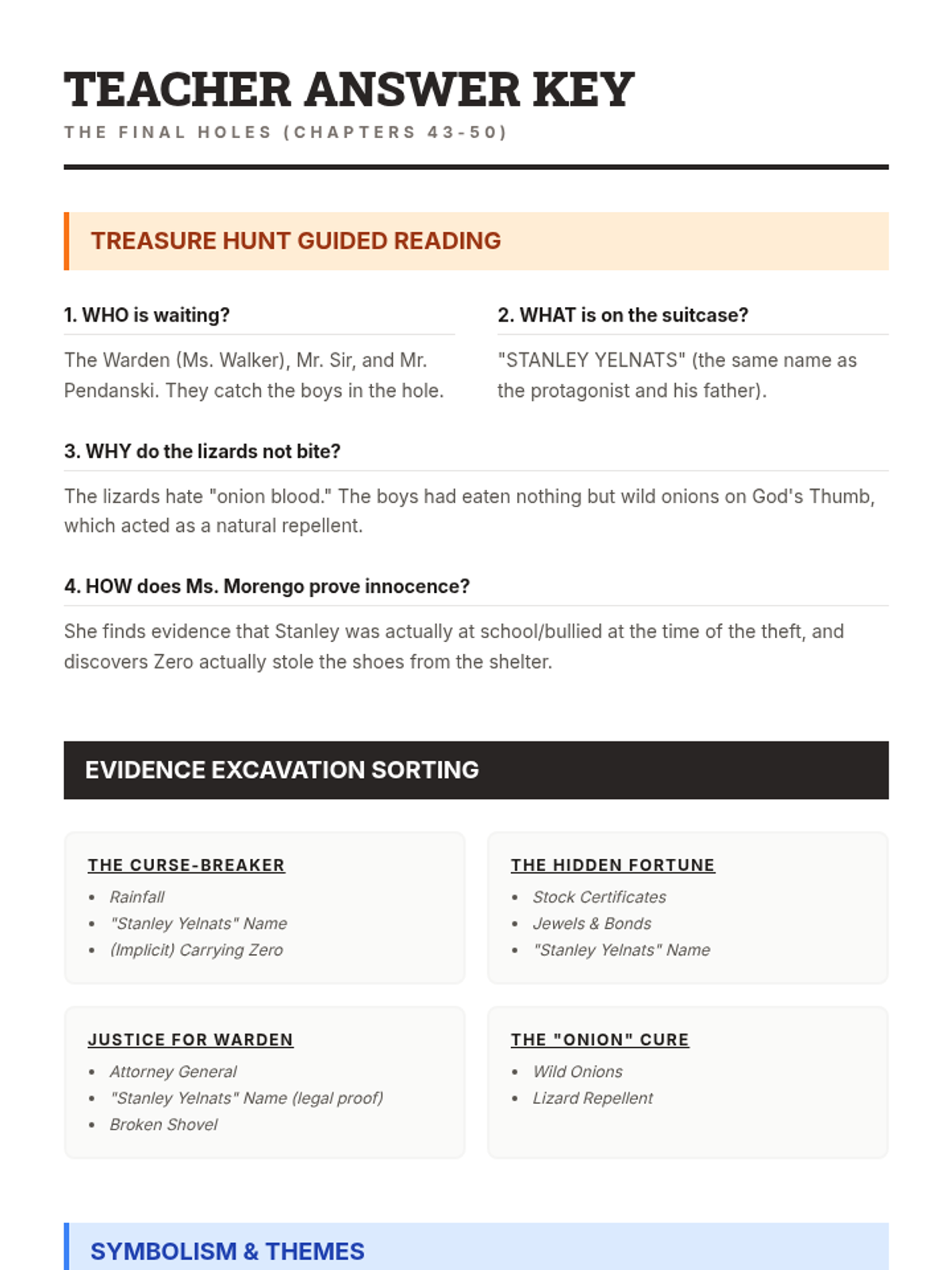
A comprehensive exploration of the final chapters of Holes (43-50), focusing on the resolution of the curse, the reveal of the treasure, and the symbolic cleansing of Camp Green Lake.
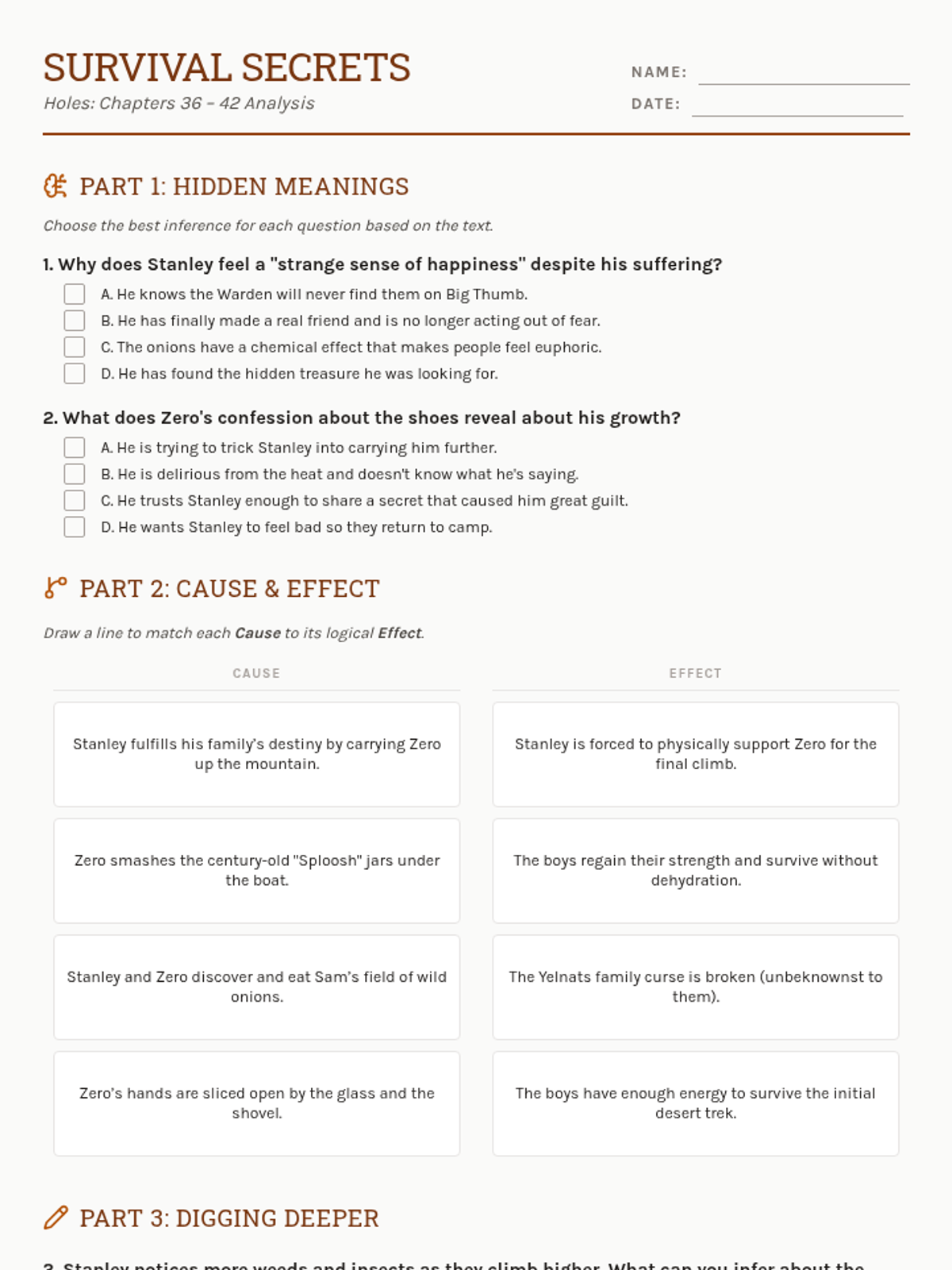
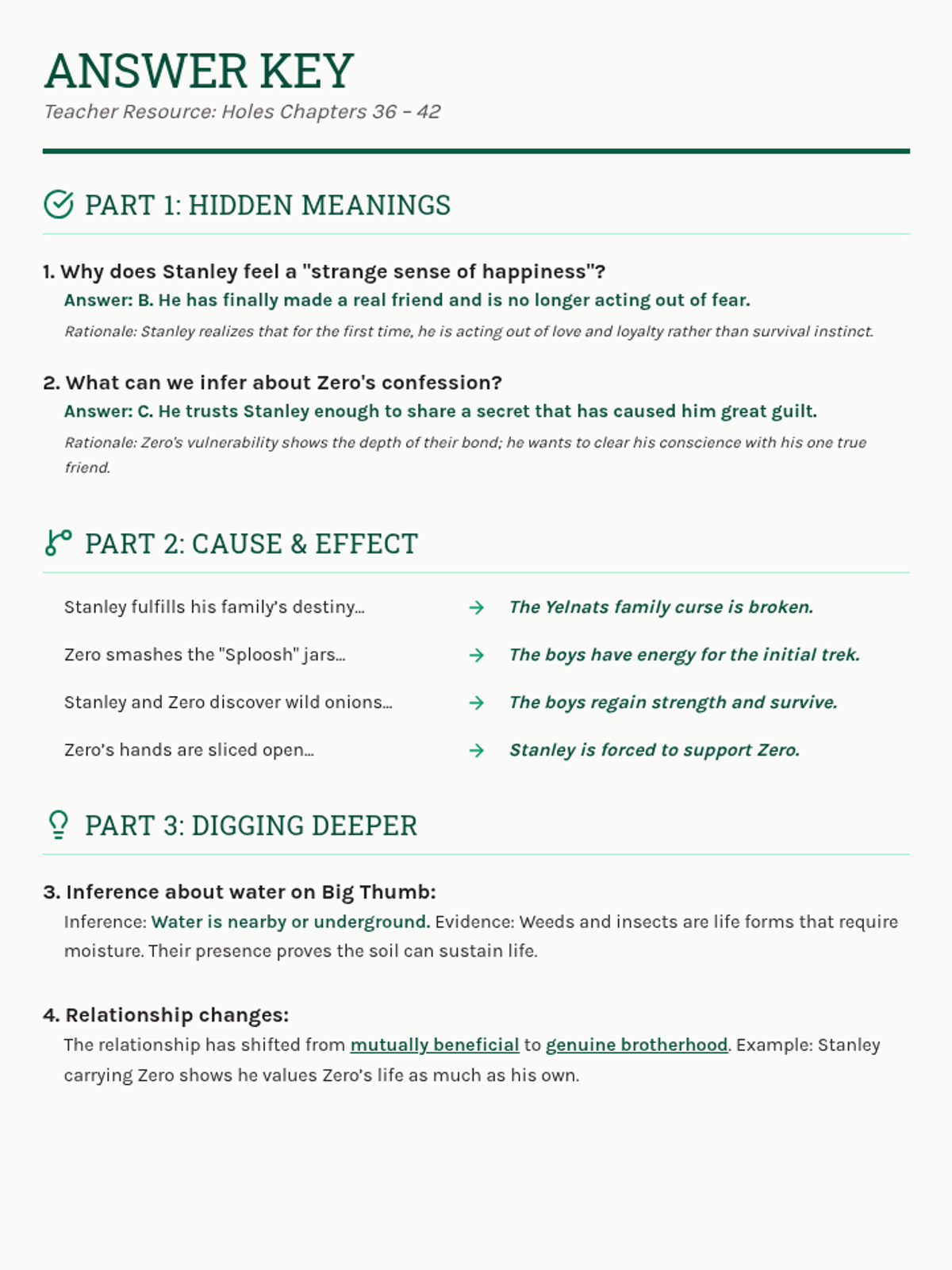
A lesson focused on analyzing character motivations and causal relationships in chapters 36-42 of Louis Sachar's Holes, specifically during the ascent of Big Thumb.
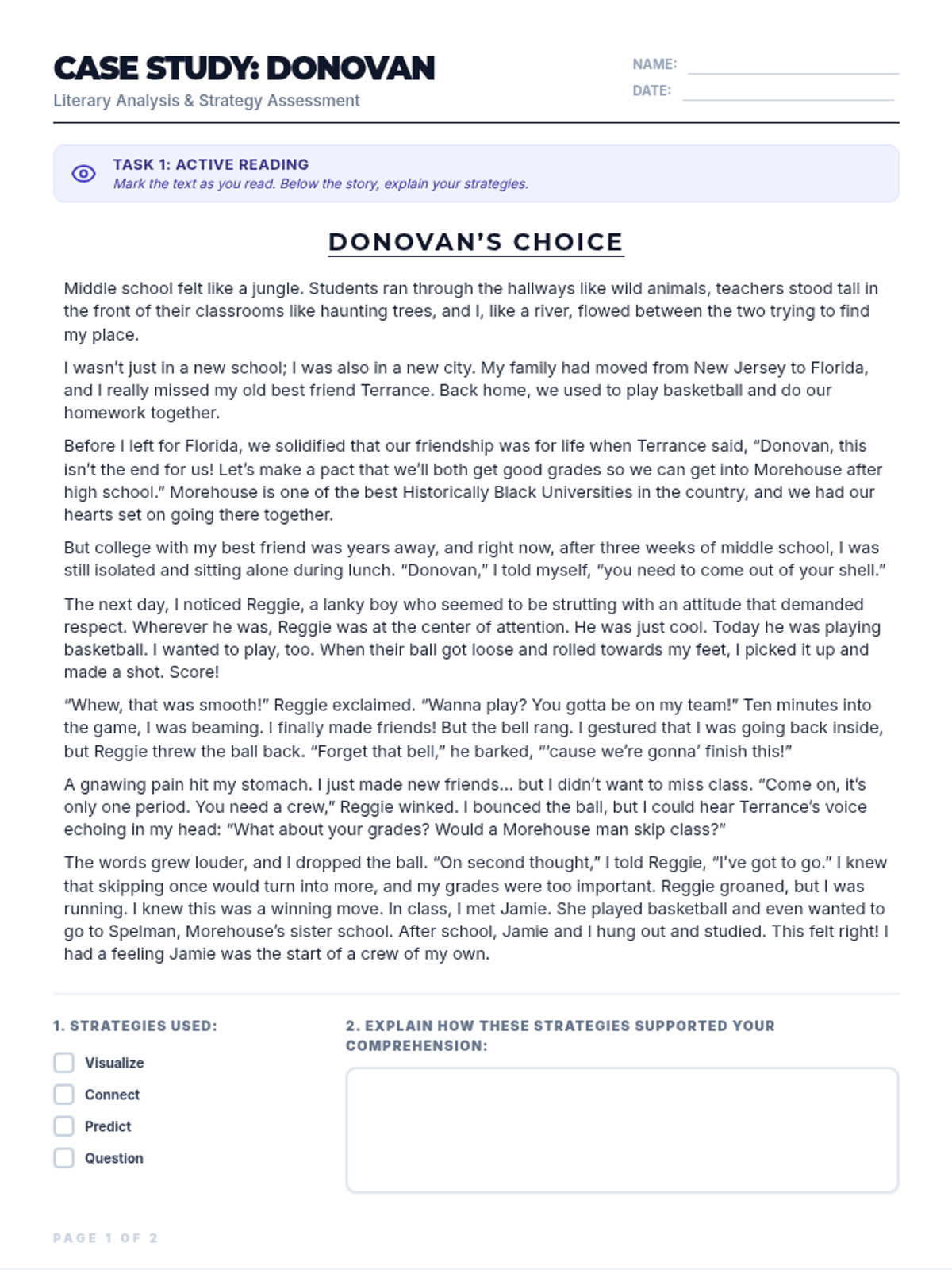
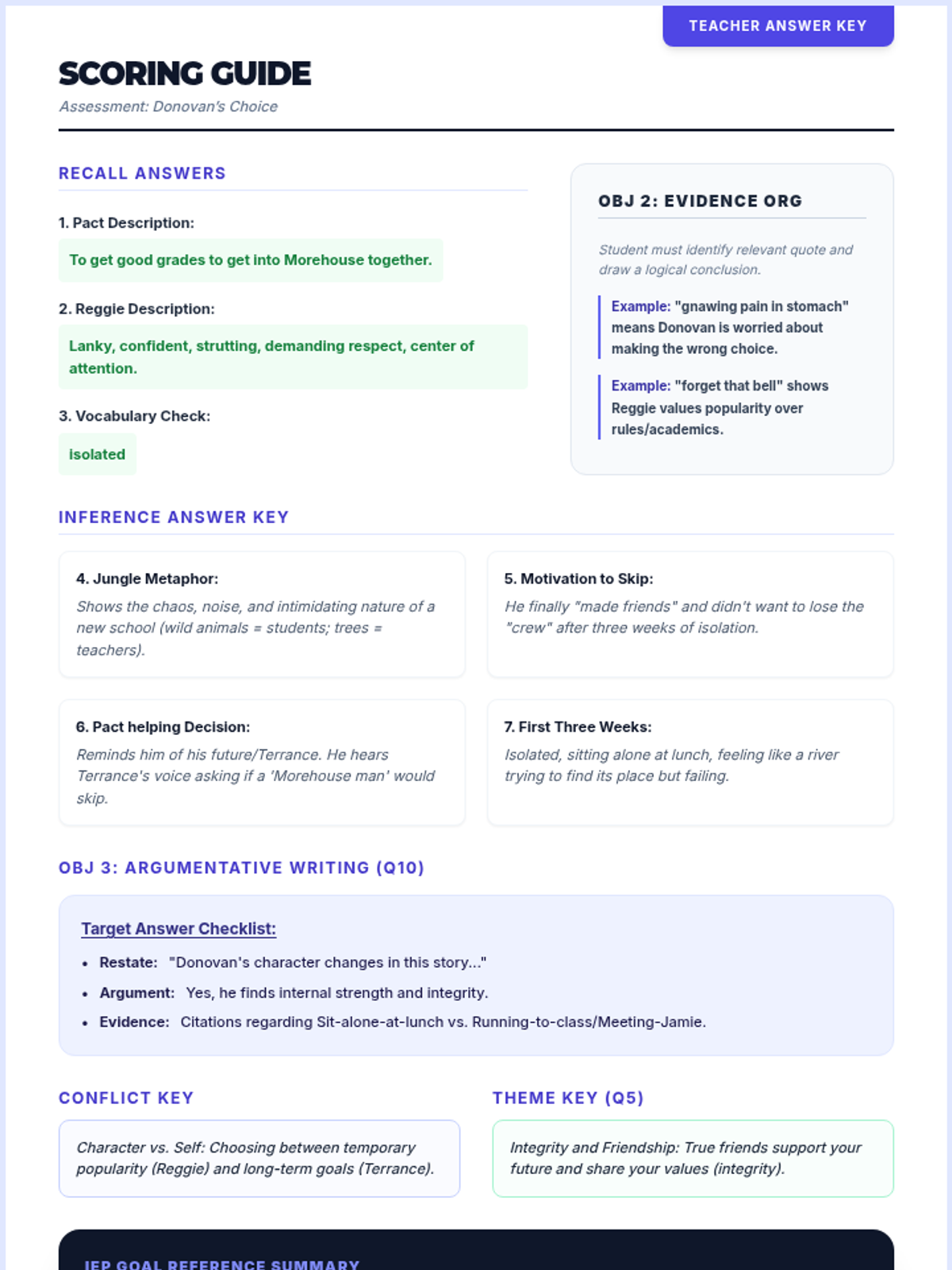
A literature-based assessment focused on evidence-based reading, active strategy reflection, and identifying conflict and theme through the story of Donovan's social choices.
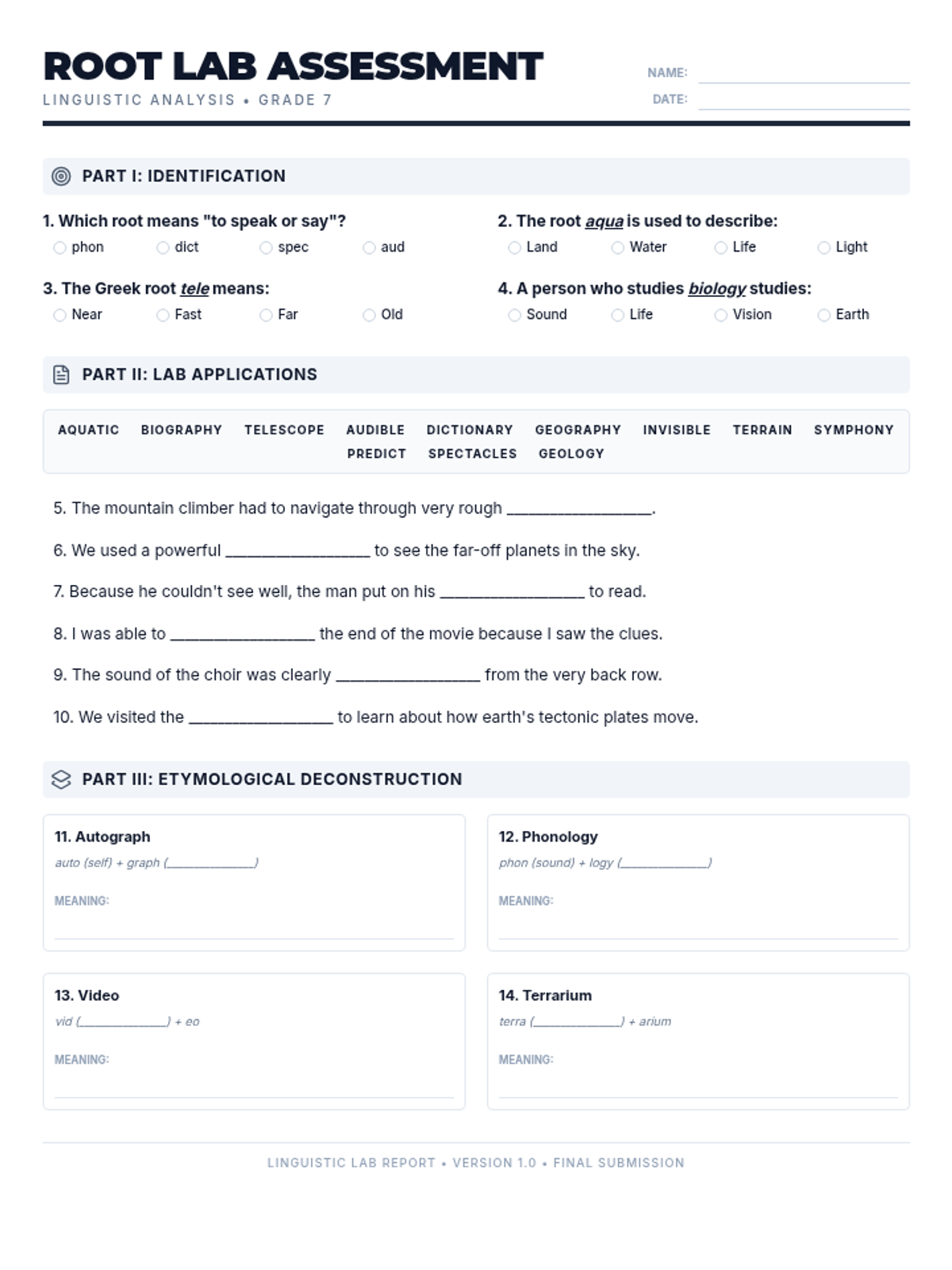
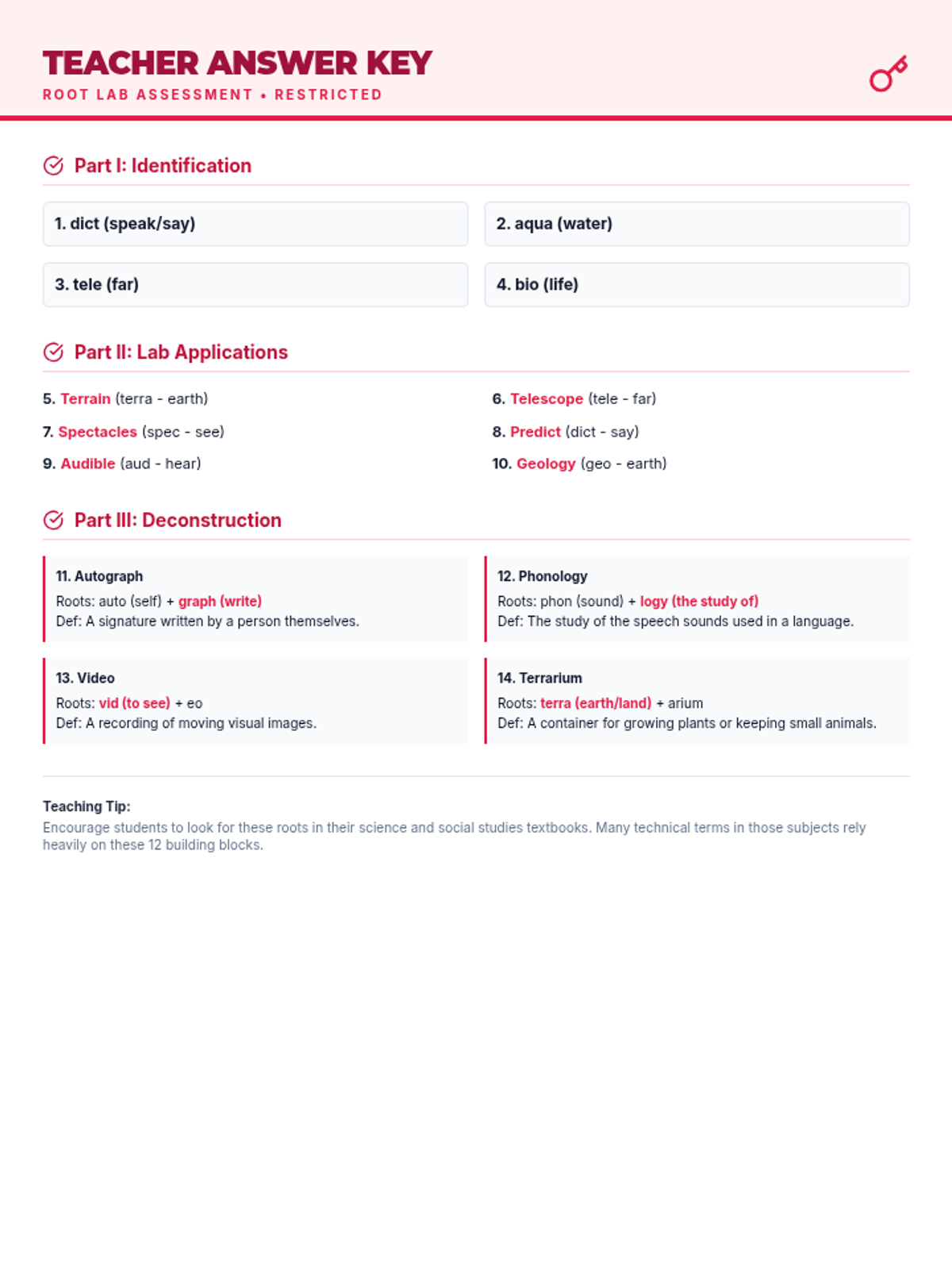
Students explore 10 common Greek and Latin roots, identifying their meanings and applying them to determine the definitions of complex academic vocabulary.
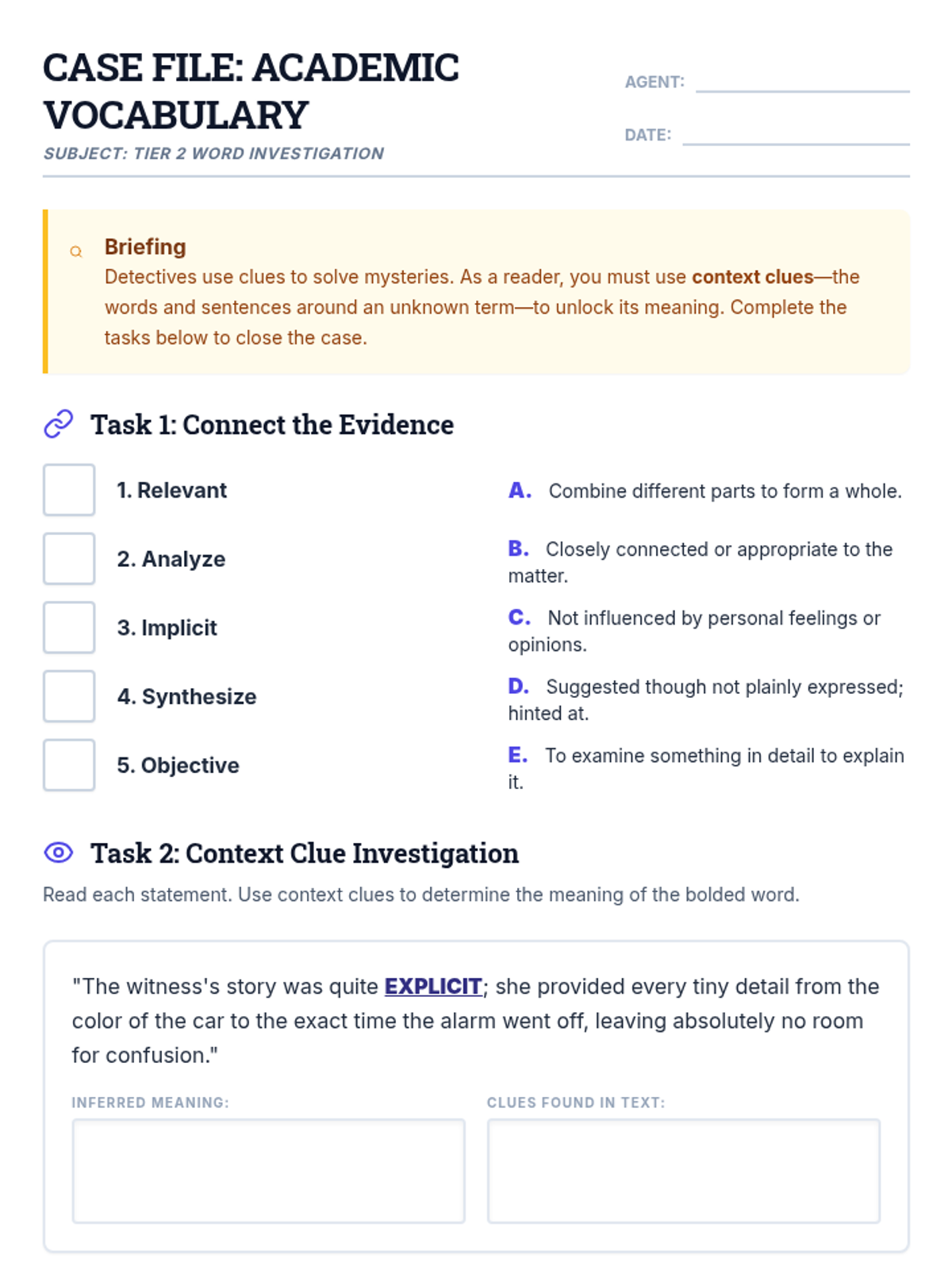
A middle school language arts lesson focused on mastering high-utility Tier 2 academic vocabulary and using context clues to determine meaning. Students act as 'Word Detectives' to investigate and decode complex texts.
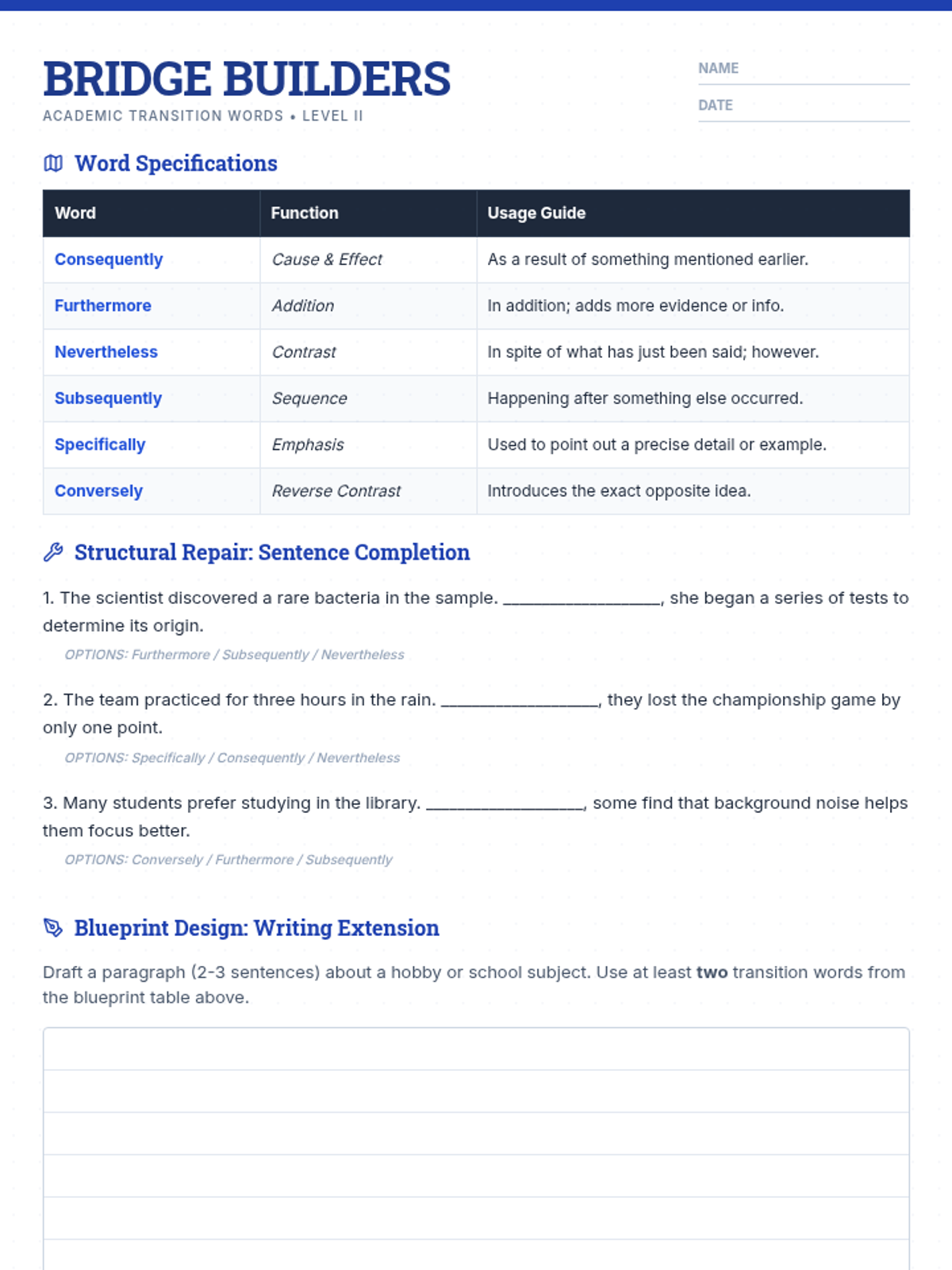
A middle school vocabulary lesson focused on academic transition words, using a 'Bridge Builders' theme to illustrate how these words connect ideas in writing.
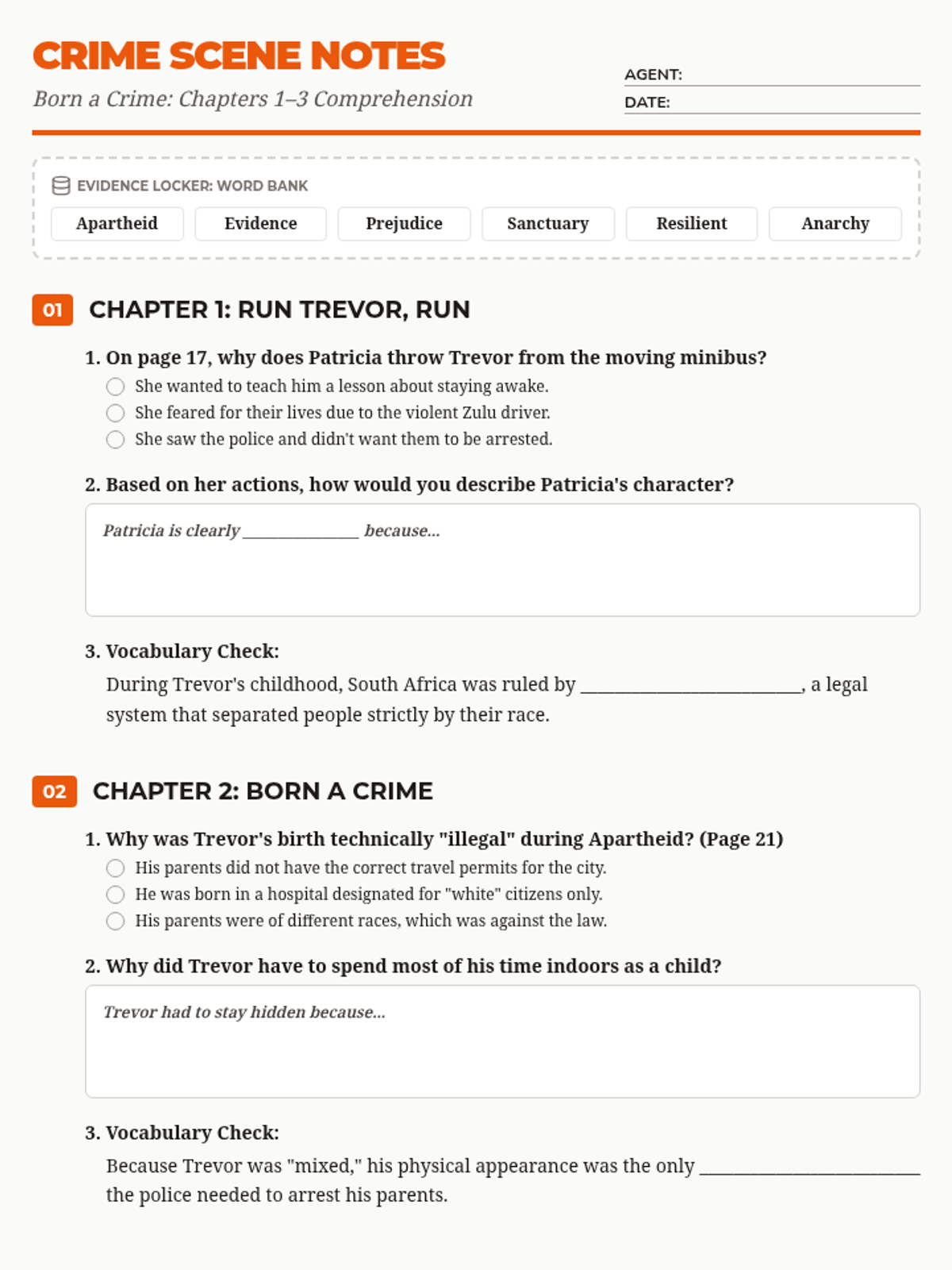
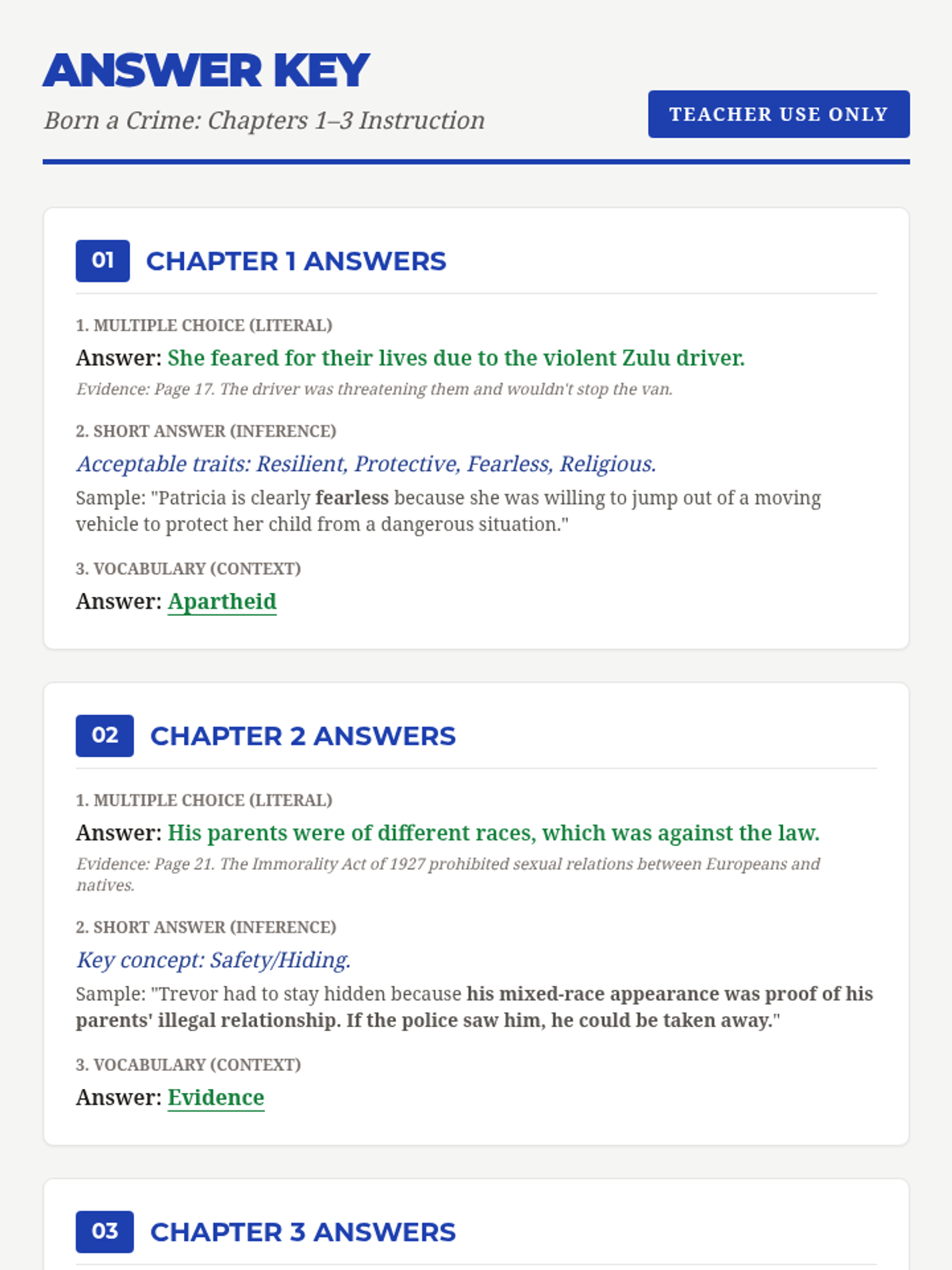
This lesson explores the first three chapters of Trevor Noah's 'Born a Crime', focusing on the historical context of Apartheid, character development of Trevor and Patricia, and the power of language and identity.
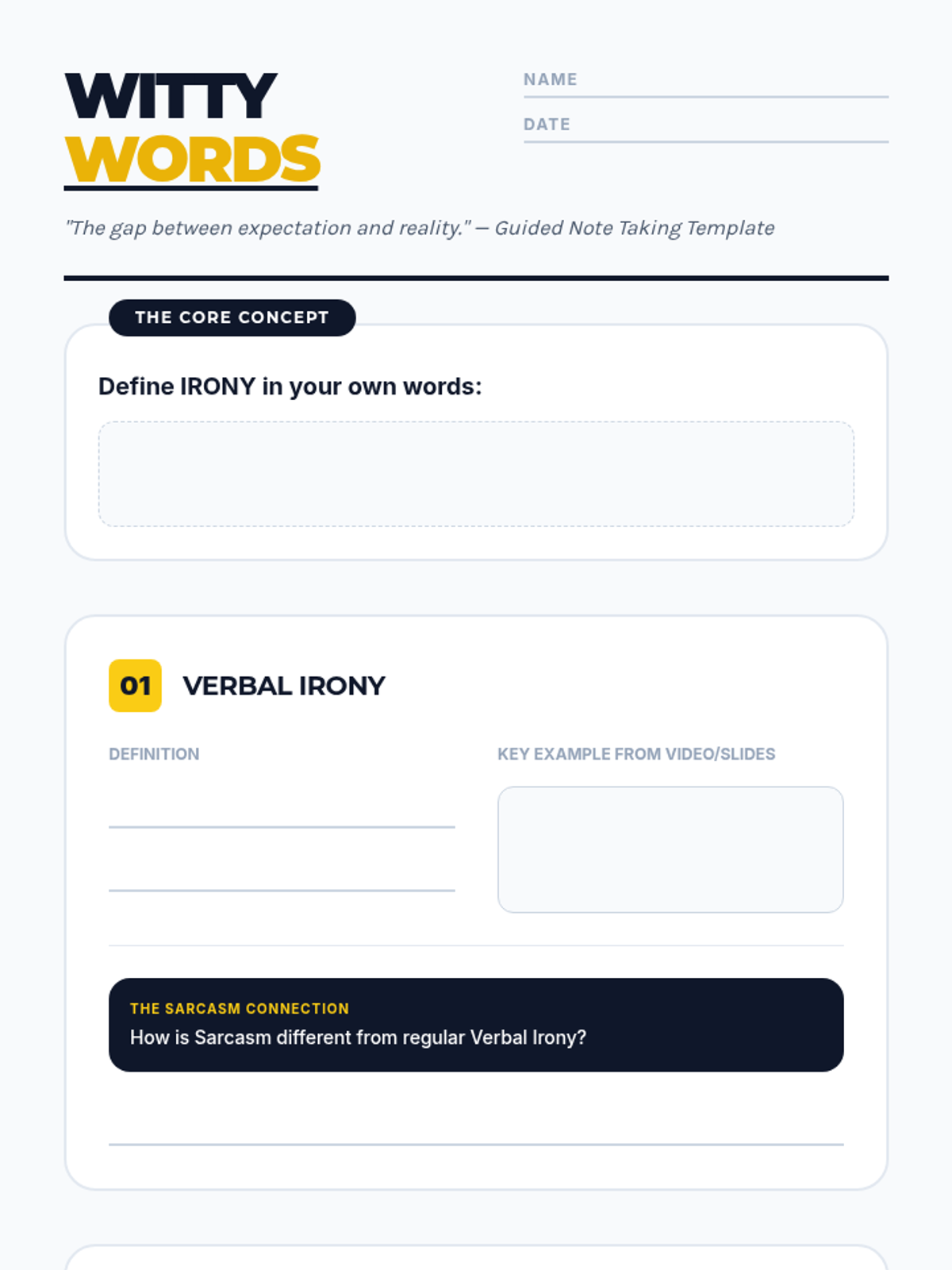
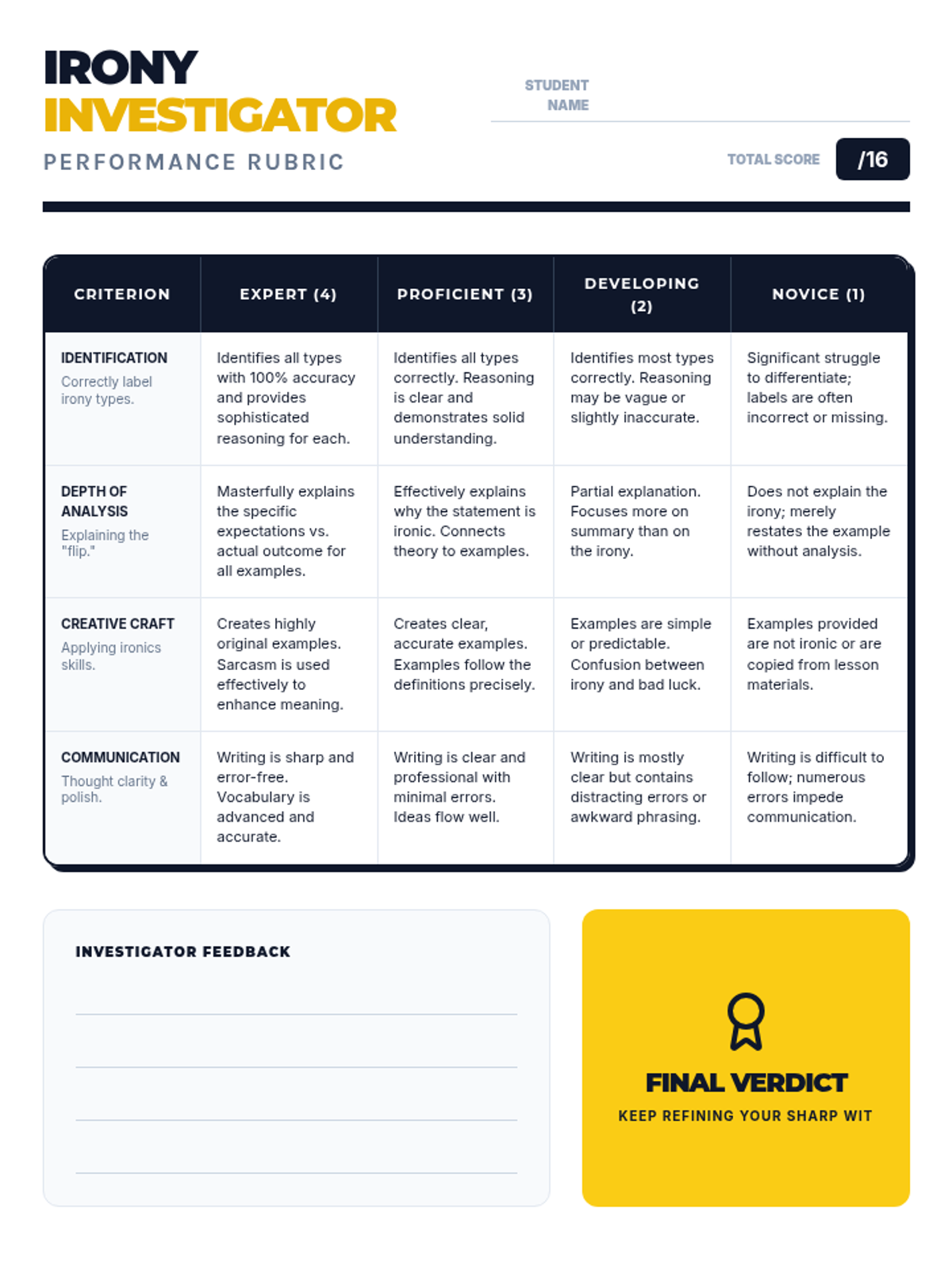
A sharp exploration of irony and sarcasm, teaching students to identify and create verbal, situational, and dramatic irony through engaging examples and analysis.
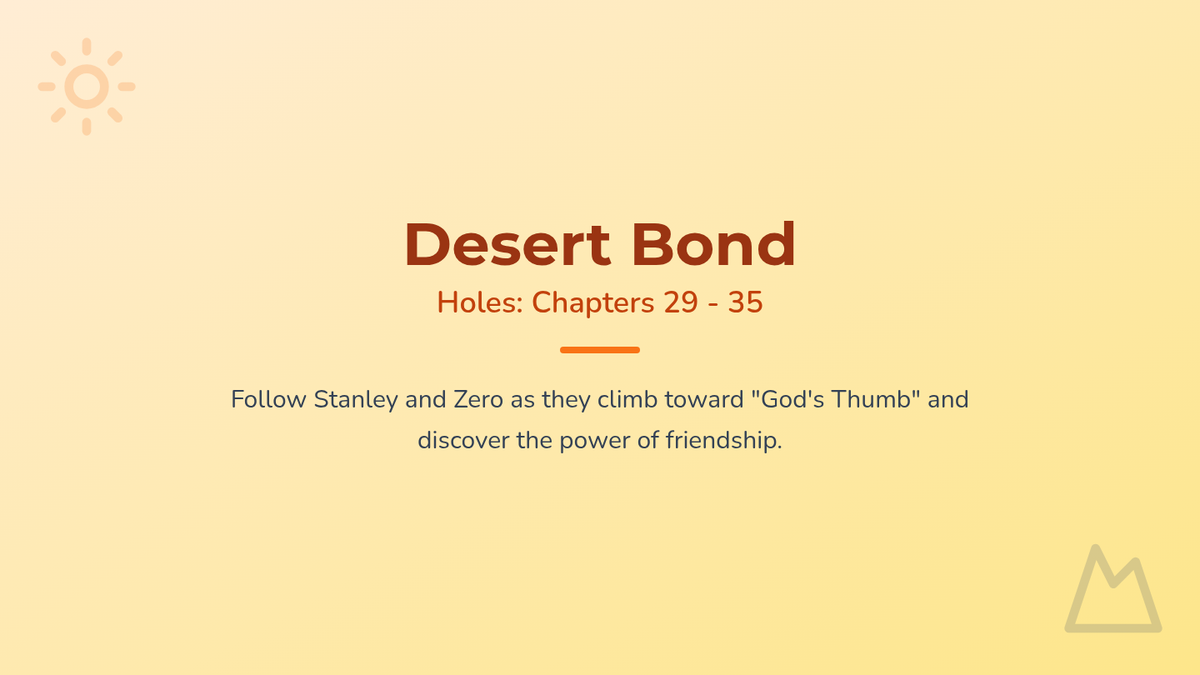
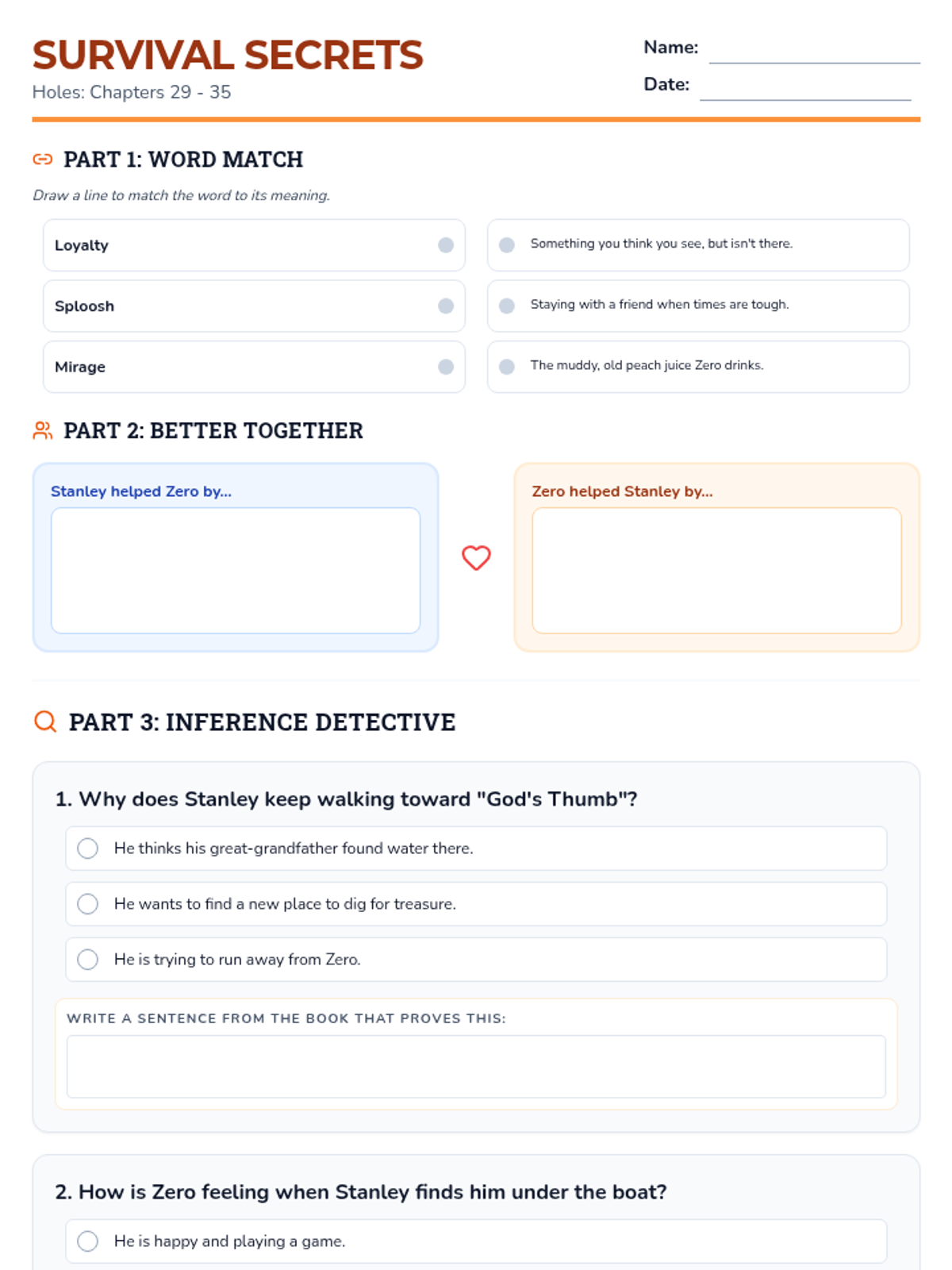
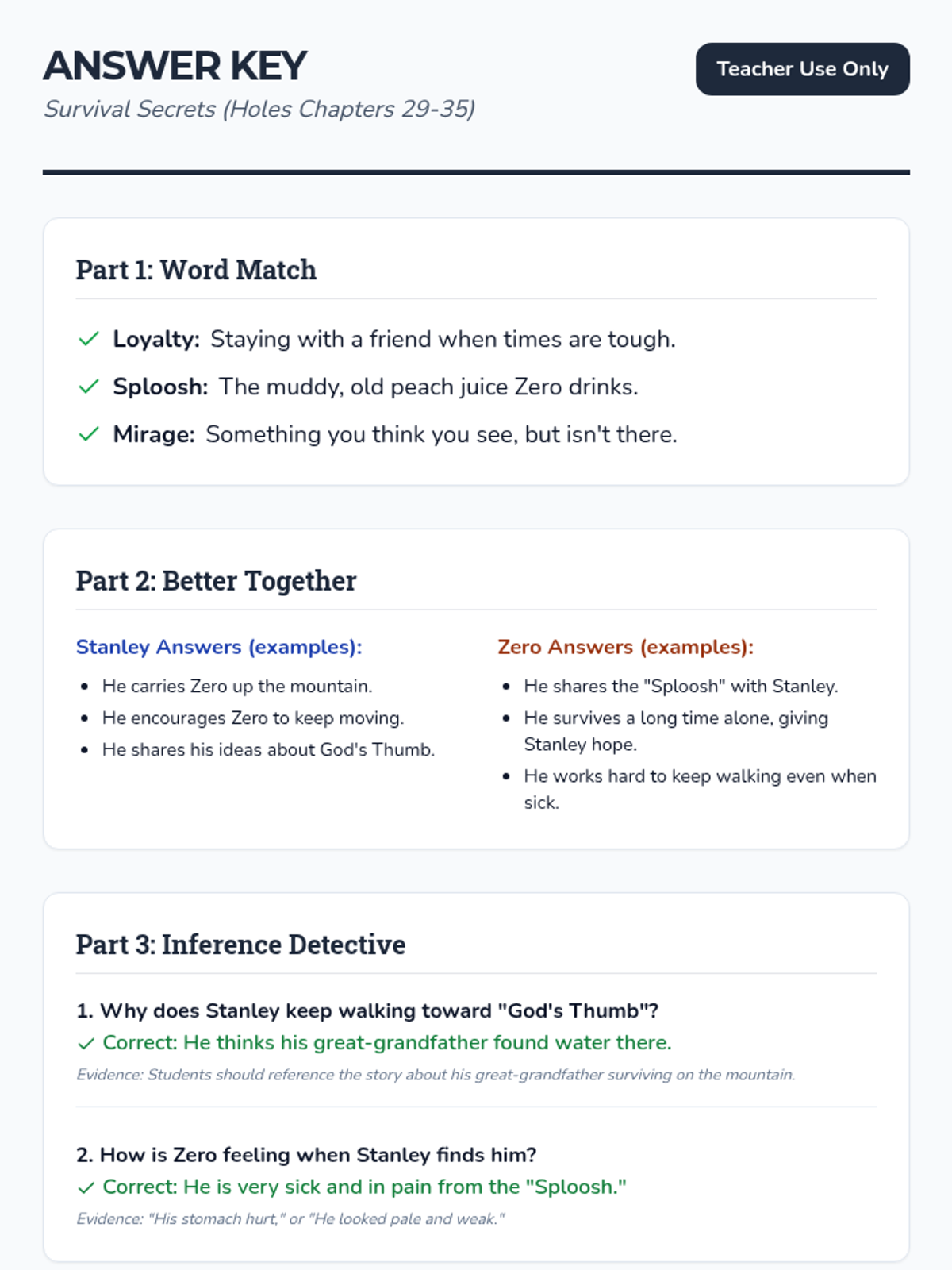
A lesson focused on chapters 29-35 of Louis Sachar's Holes, exploring the deepening friendship between Stanley and Zero as they face the challenges of the desert. Students will analyze character relationships, make inferences about their survival, and identify the central theme of loyalty.
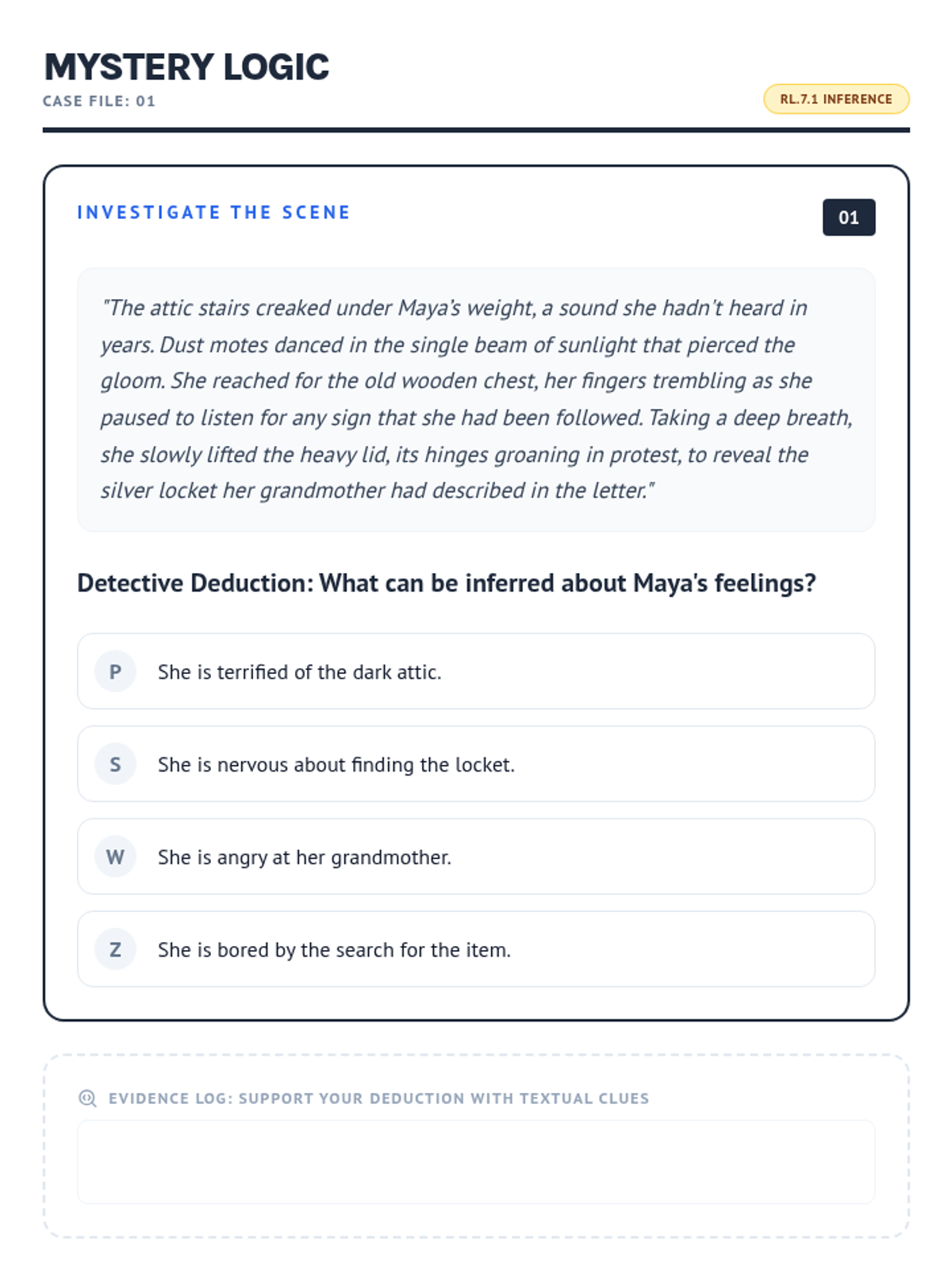
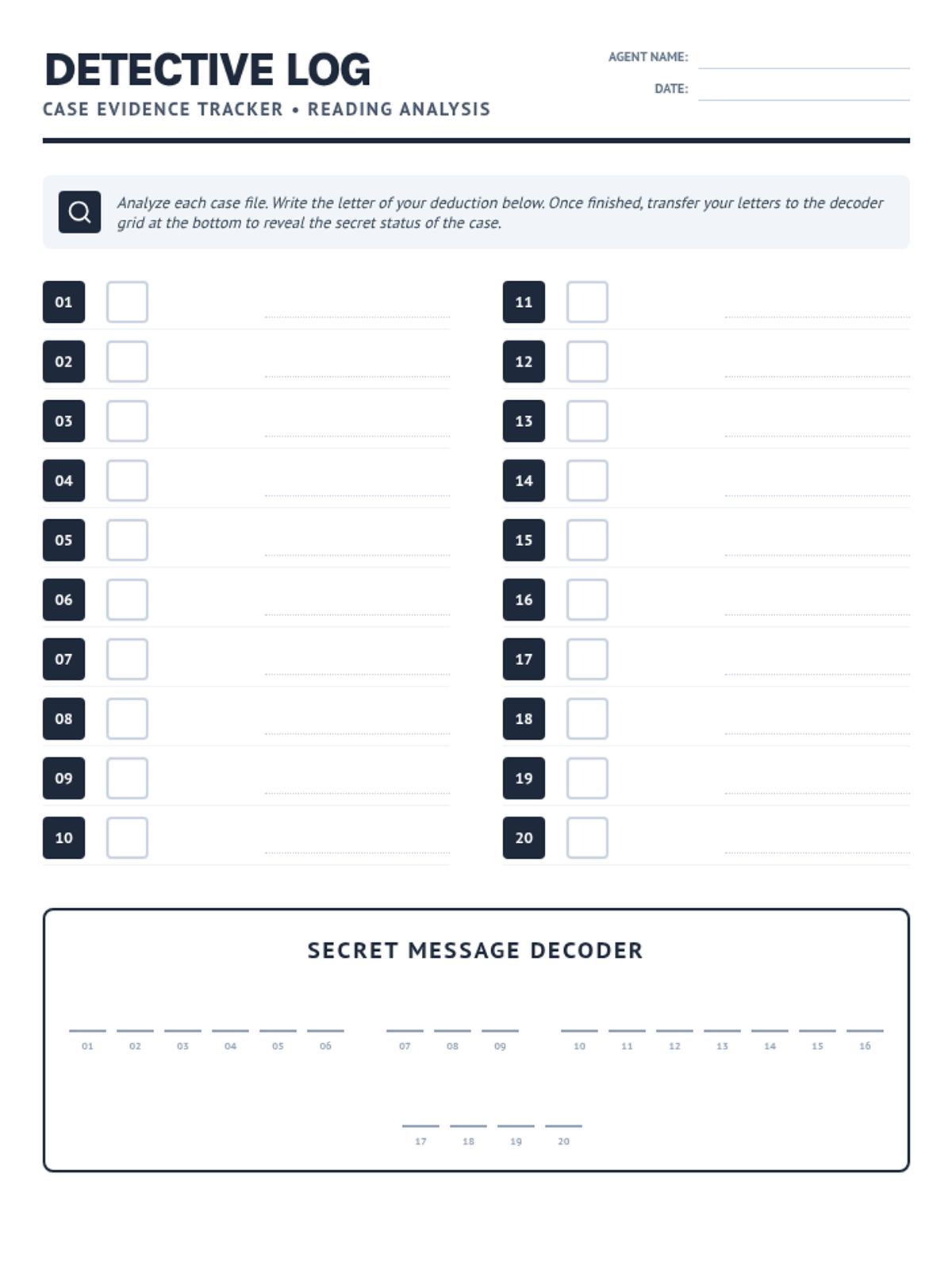
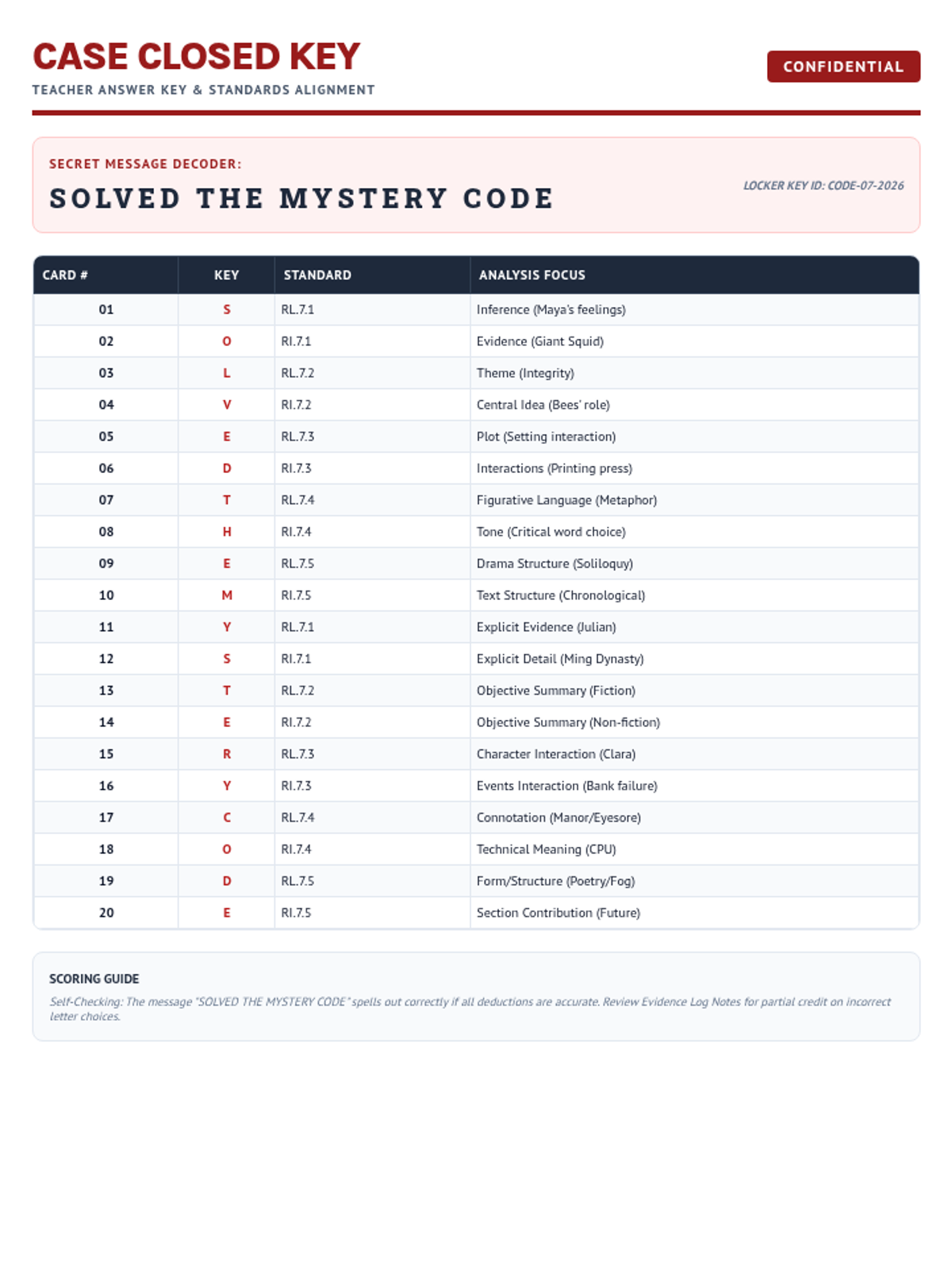
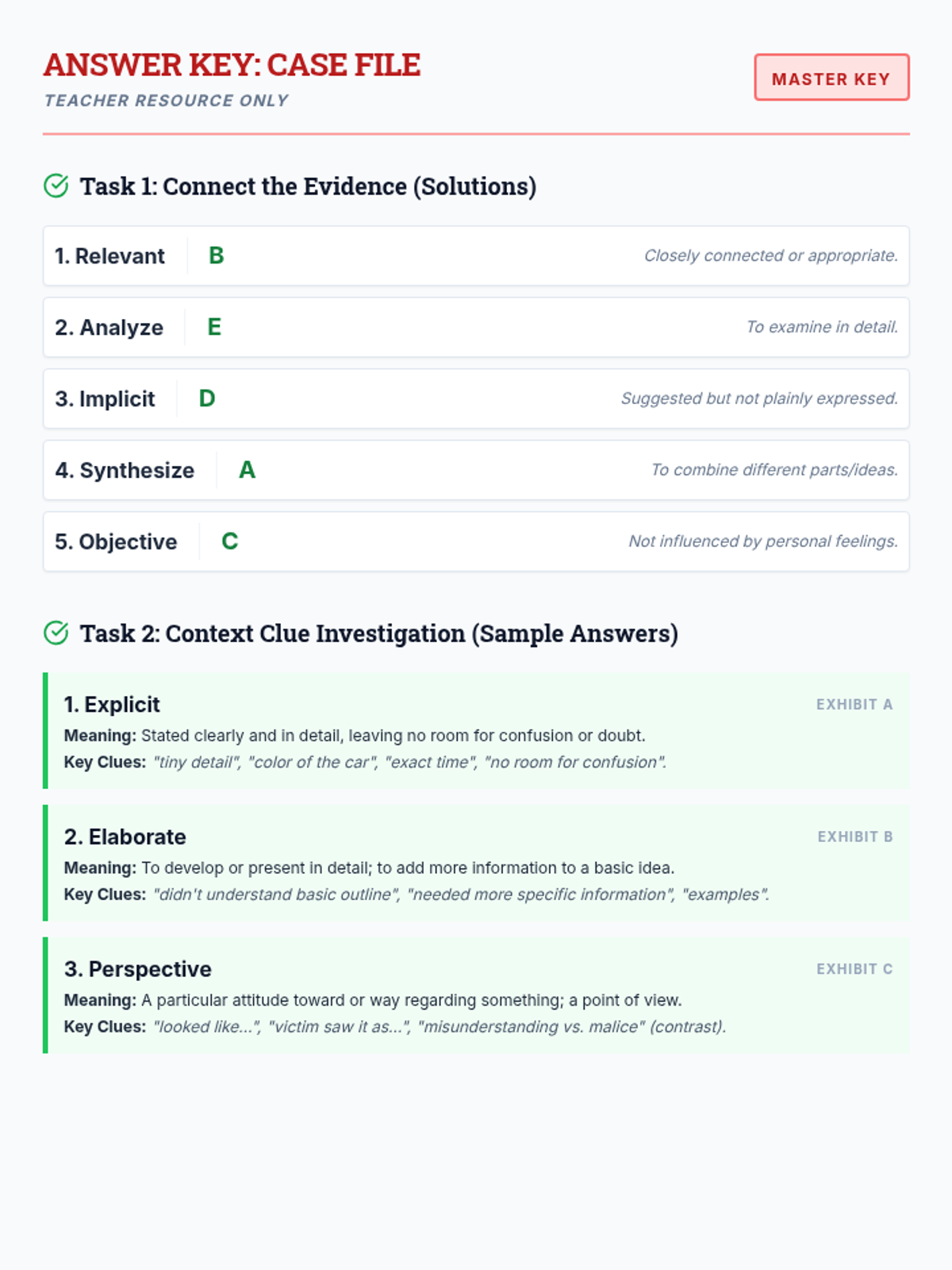
A comprehensive set of 20 task cards and supporting materials designed to review Grade 7 RL and RI standards (7.1-7.5) through short texts and multiple-choice questions. Students act as detectives to solve reading comprehension 'cases' using evidence and analysis.
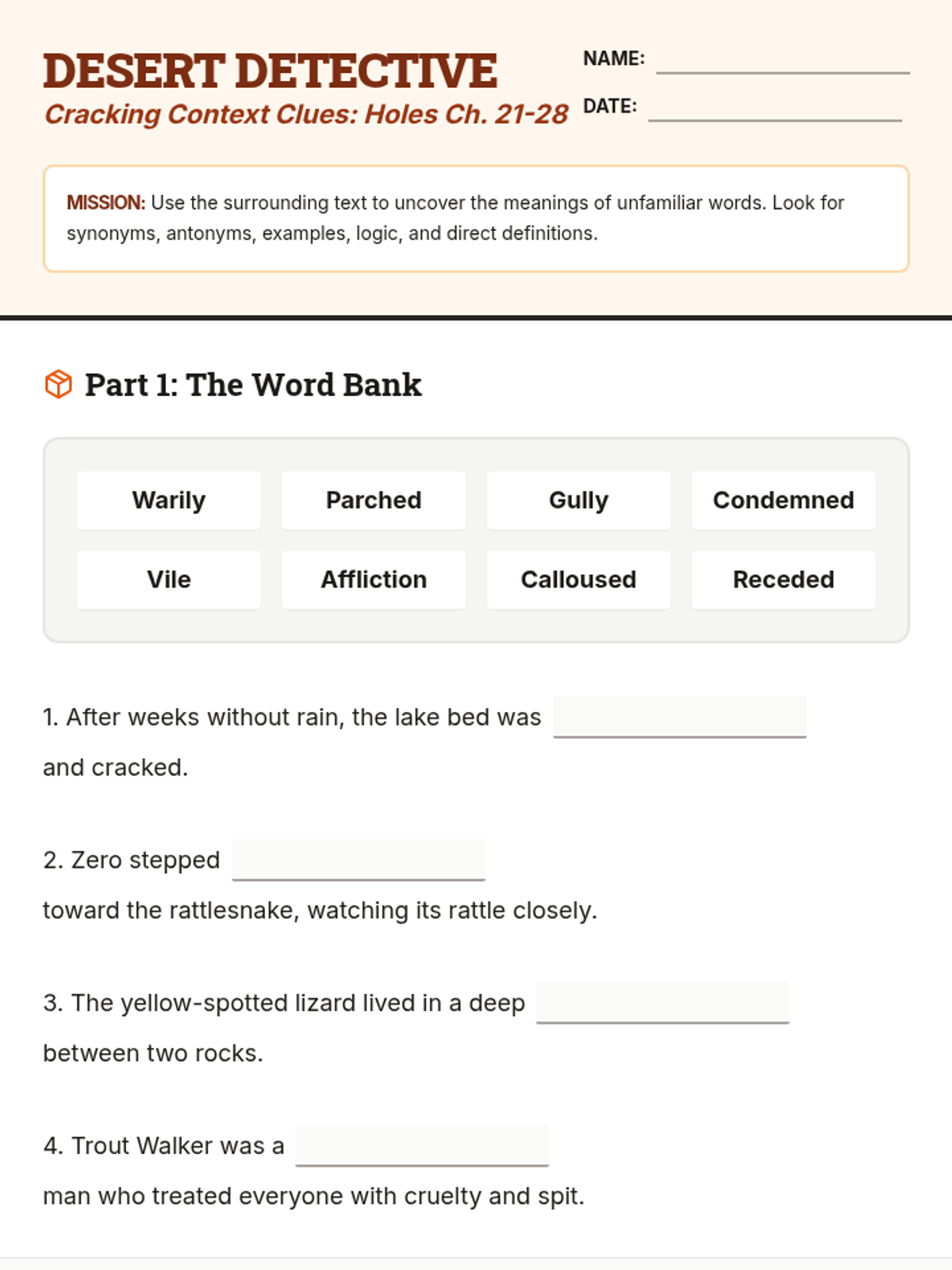
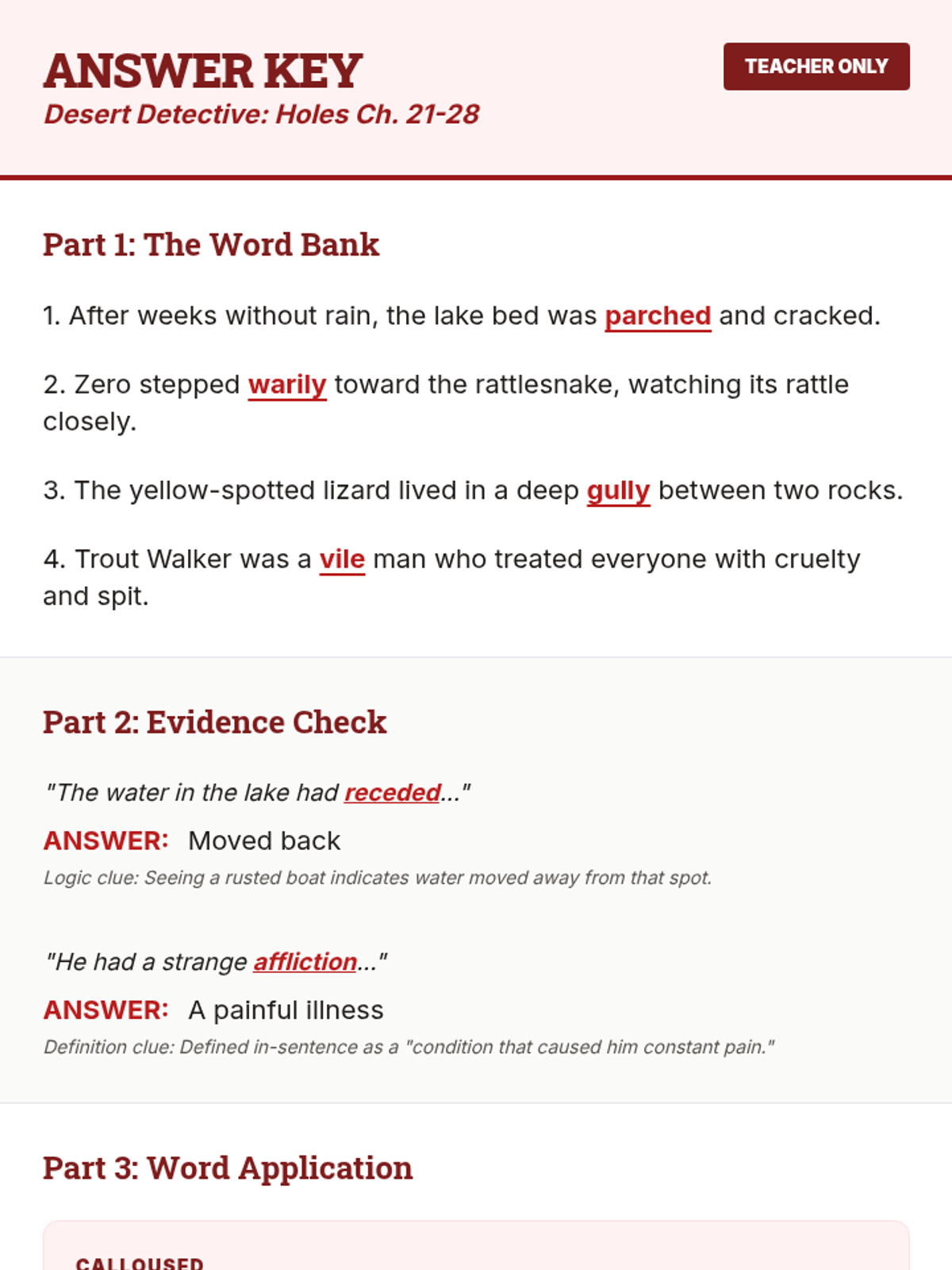
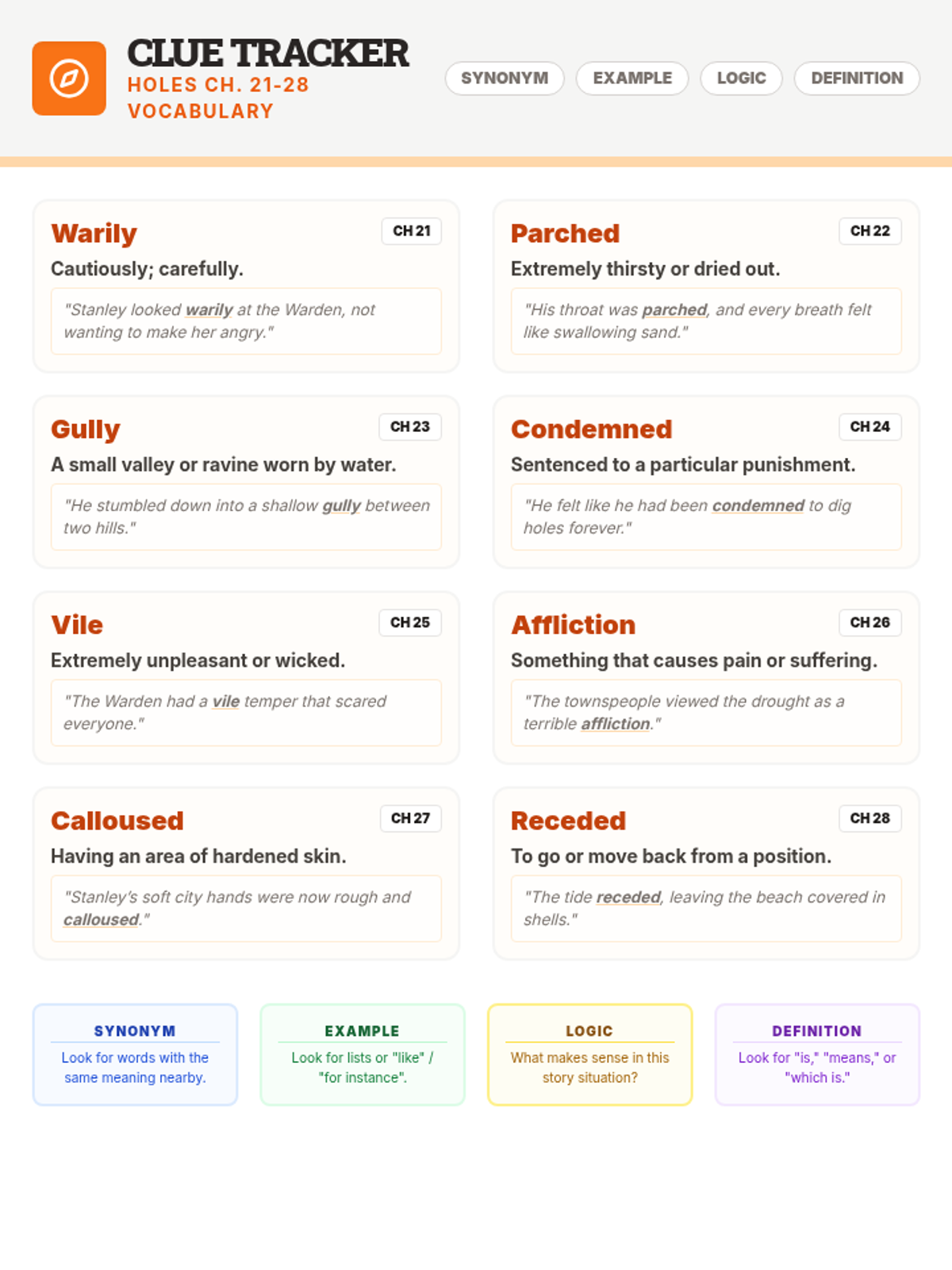
A deep dive into context clue strategies using key vocabulary from chapters 21-28 of Holes, featuring multi-level support for diverse learners.
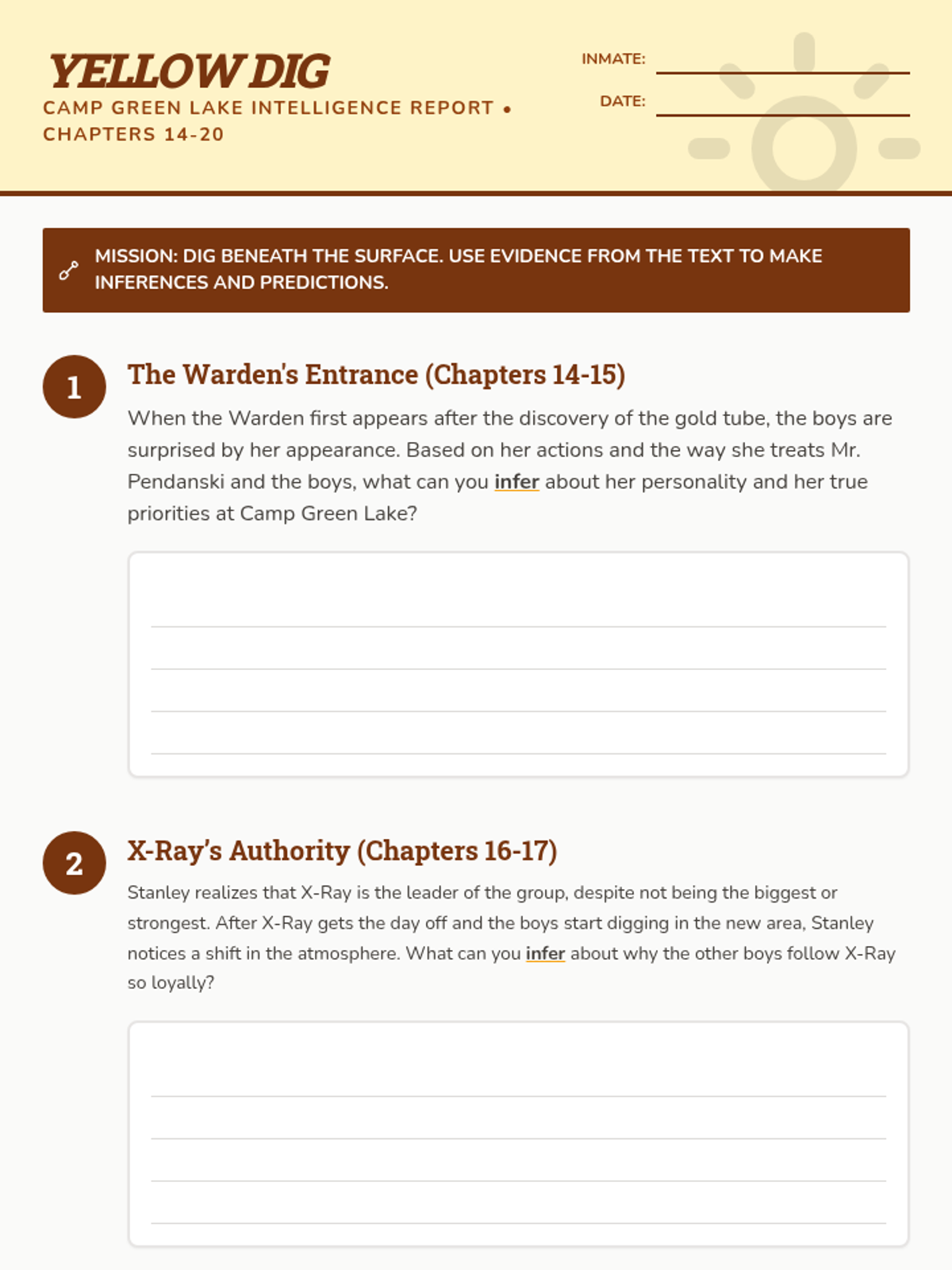
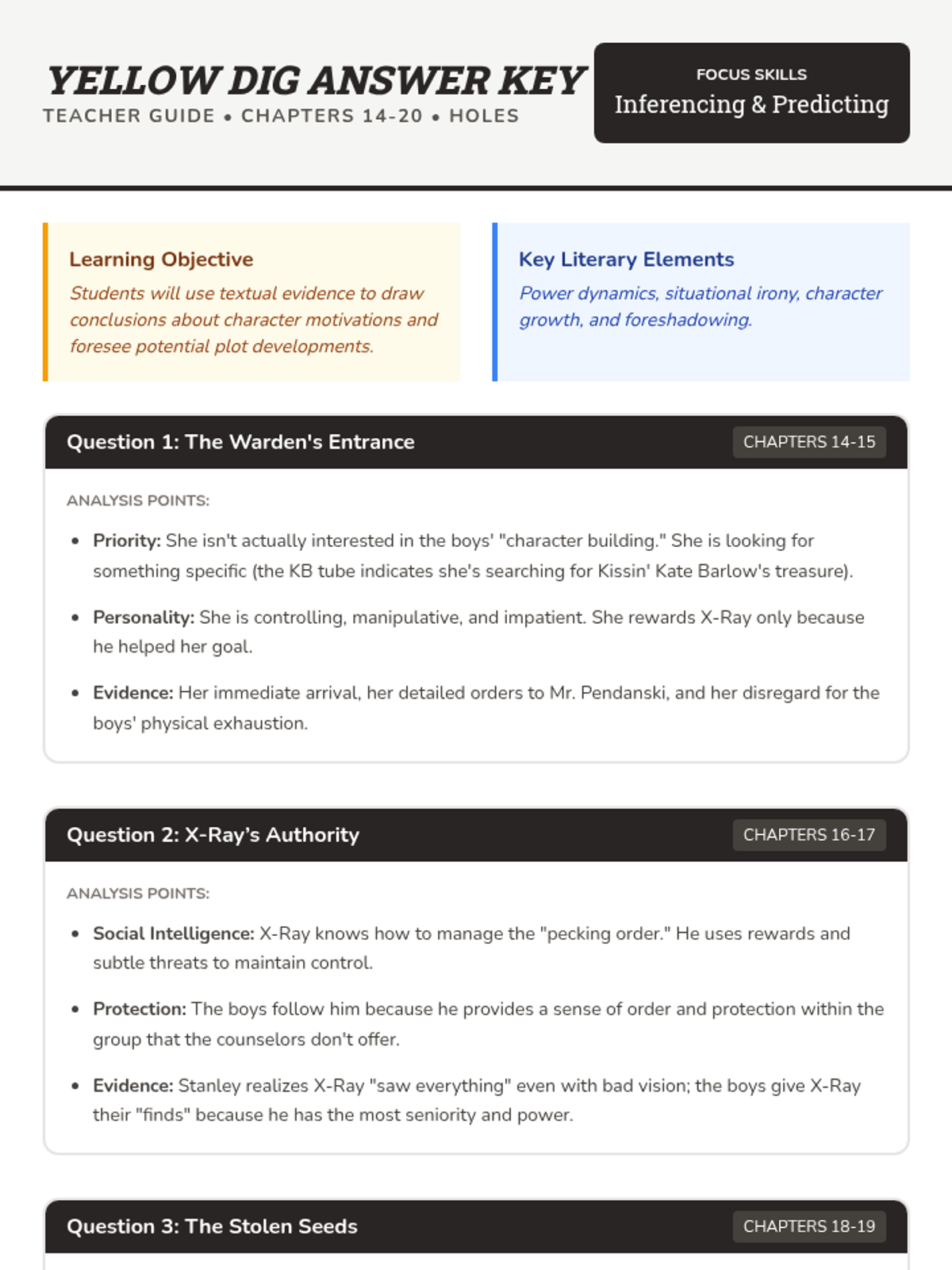
This lesson focuses on chapters 14-20 of Louis Sachar's 'Holes', emphasizing the development of inferencing and predicting skills as students analyze character motivations and plot developments.
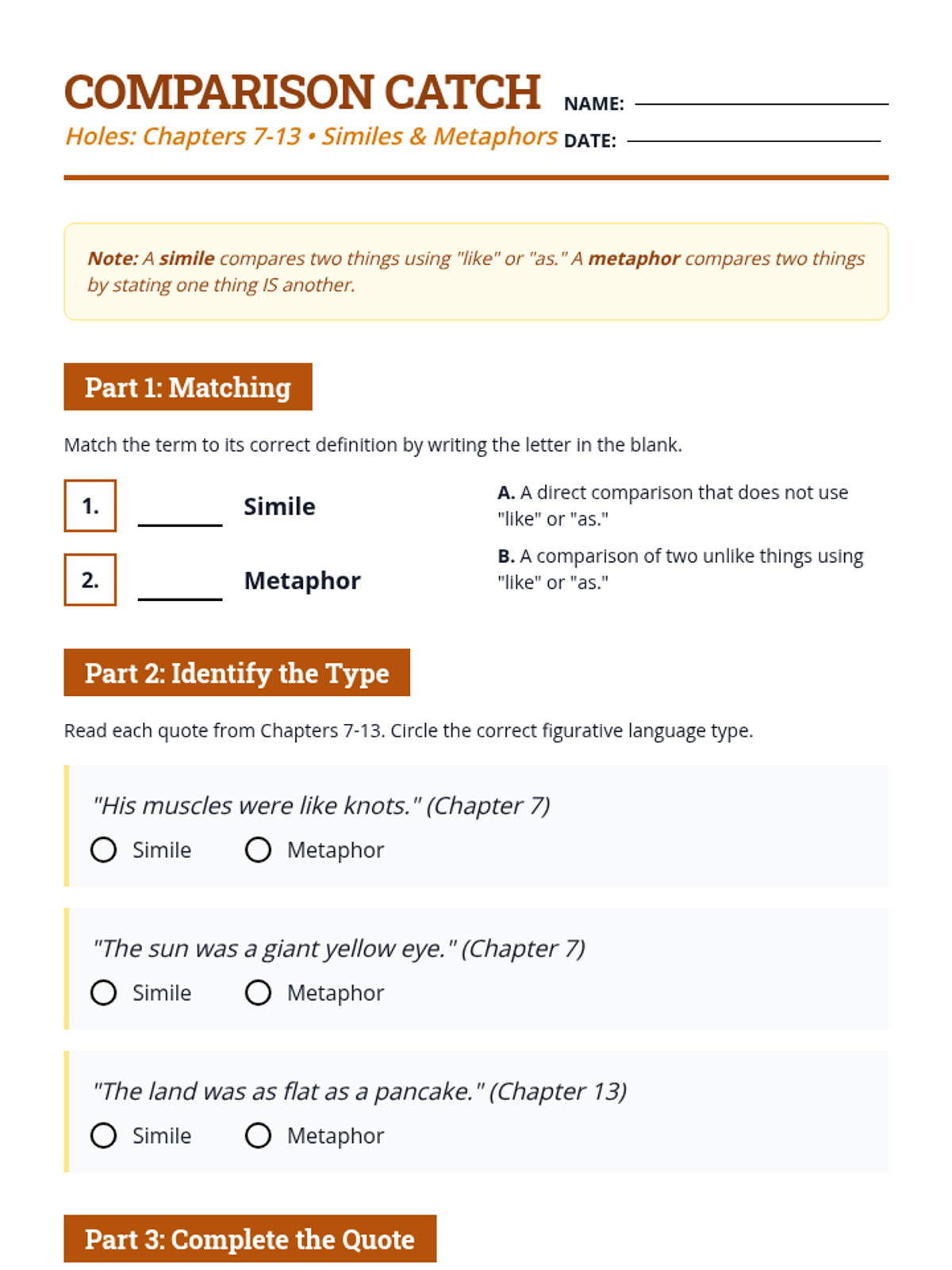
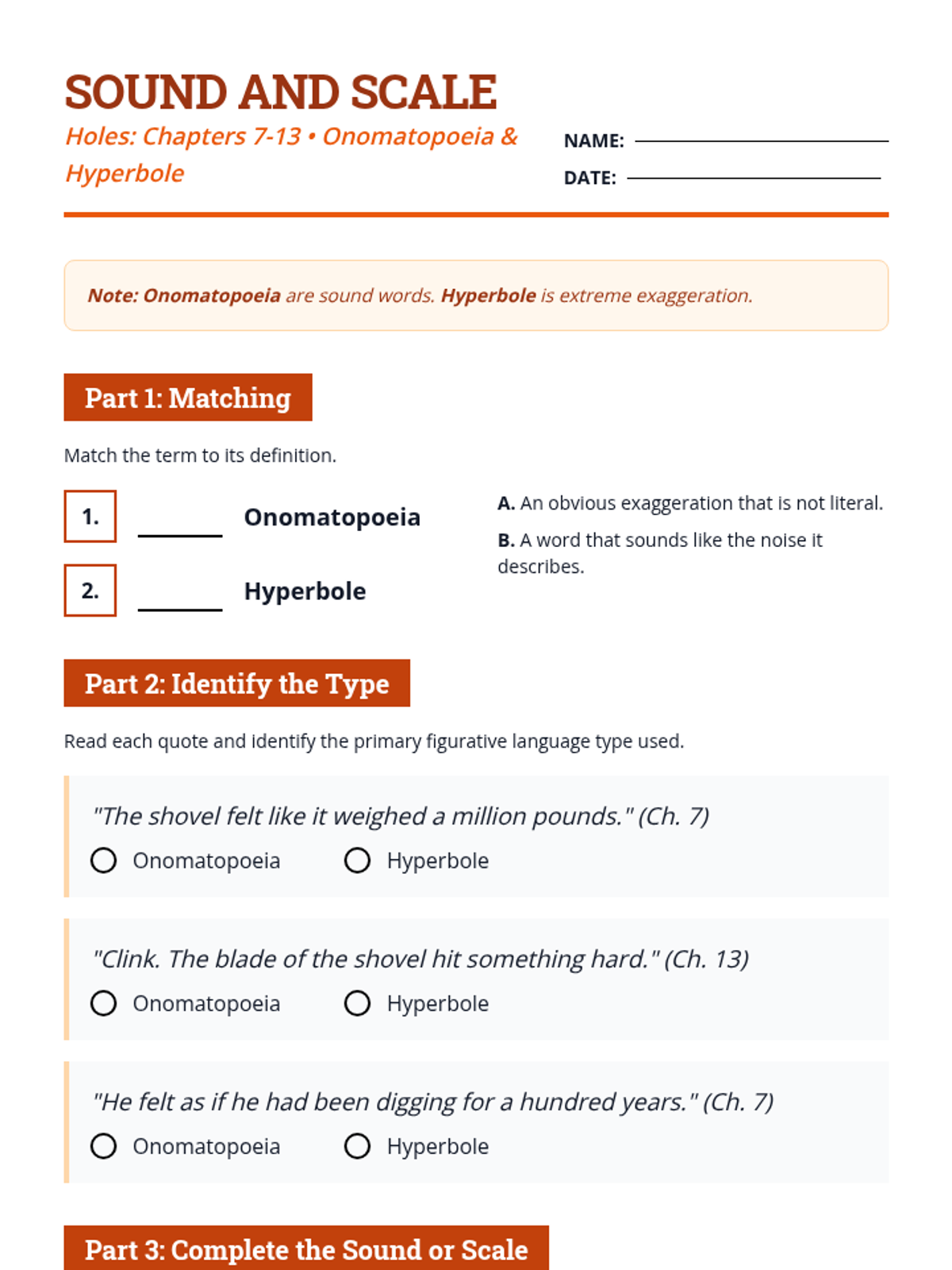
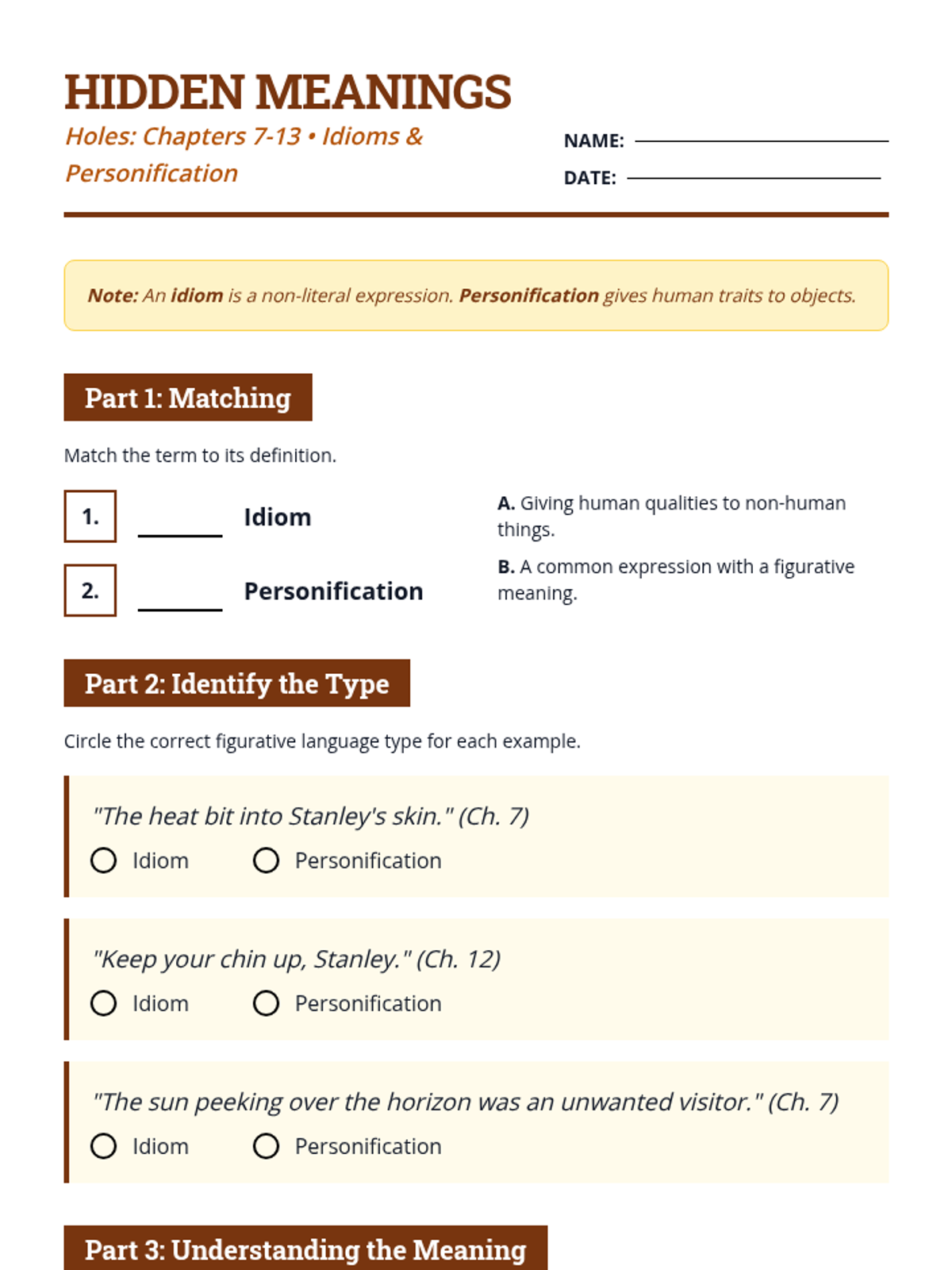
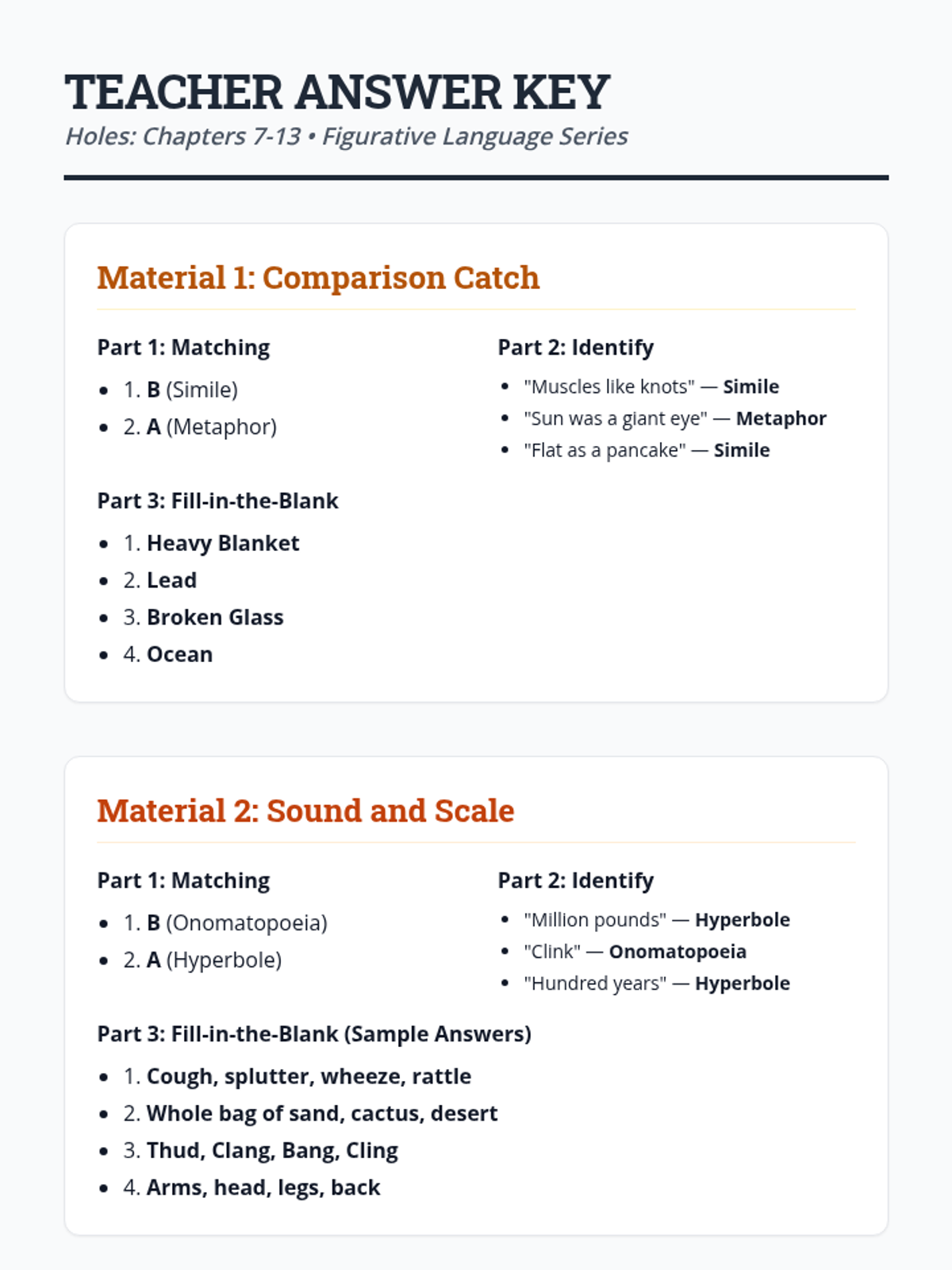
A lesson exploring figurative language in Chapters 7-13 of Louis Sachar's Holes, focusing on identifying and analyzing similes, metaphors, onomatopoeia, hyperbole, idioms, and personification through the lens of life at Camp Green Lake.
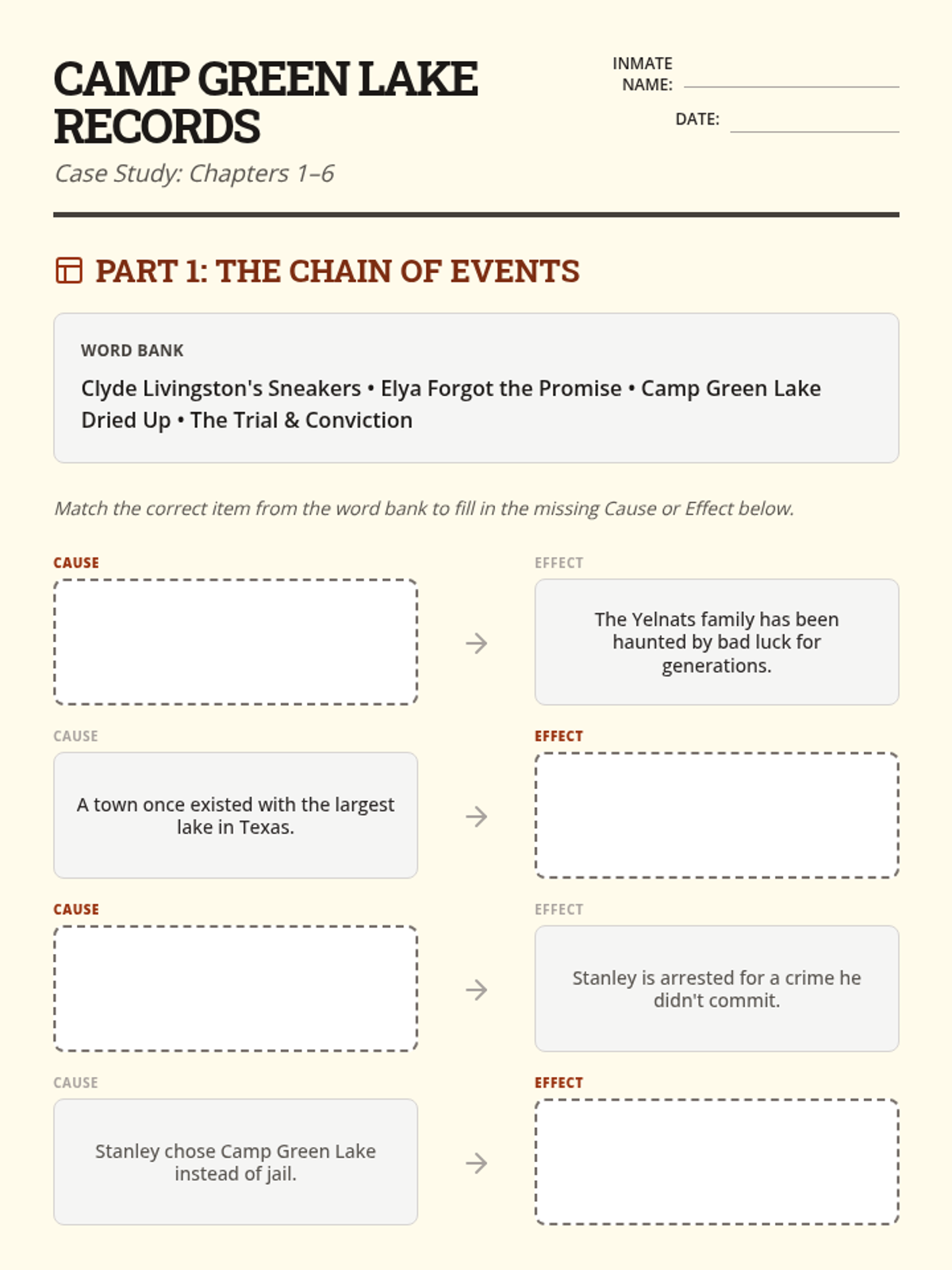
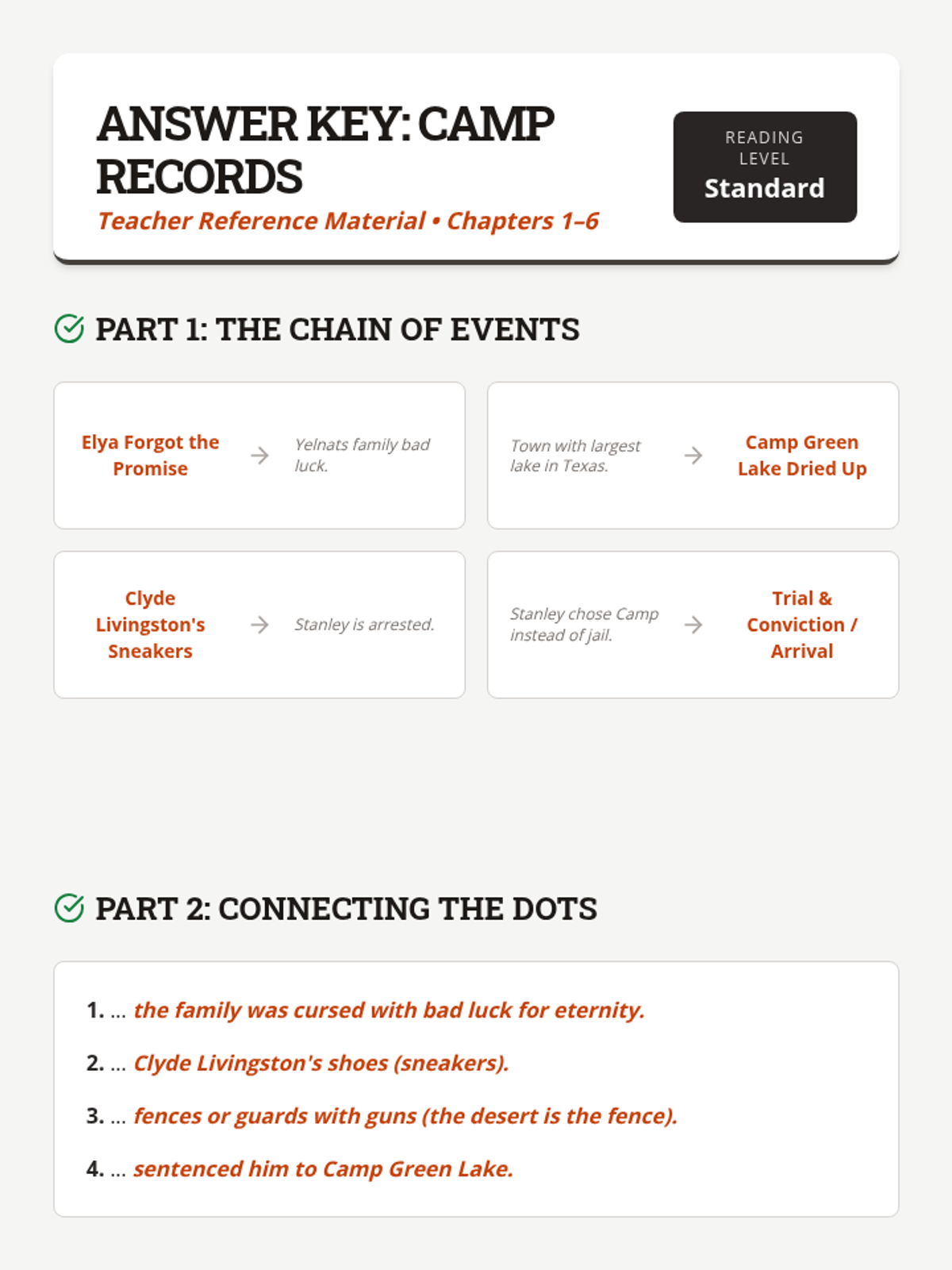
A focused exploration of cause and effect relationships in the opening chapters of Louis Sachar's 'Holes', covering Stanley's arrival at Camp Green Lake and the history of the Yelnats family curse.
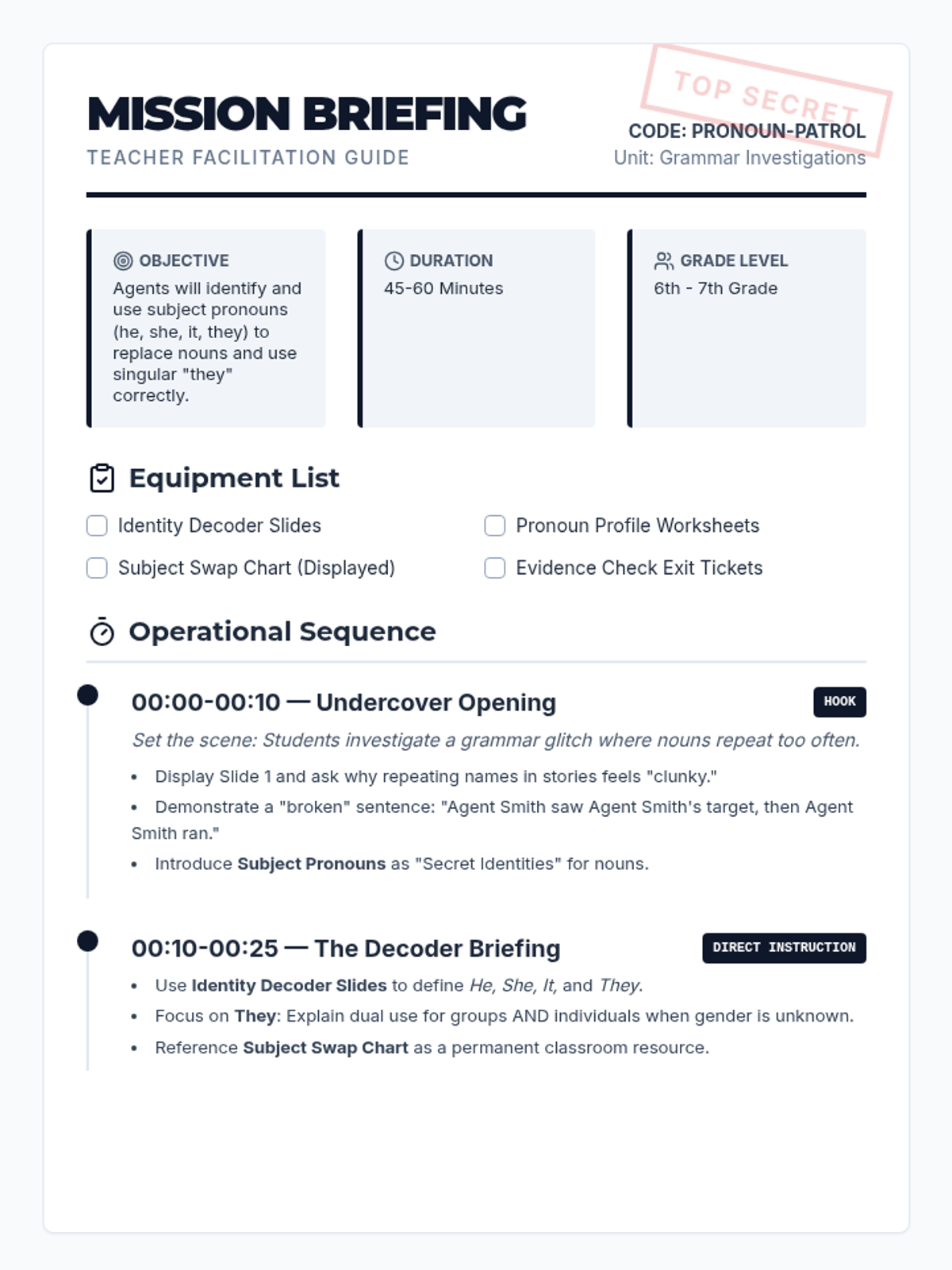
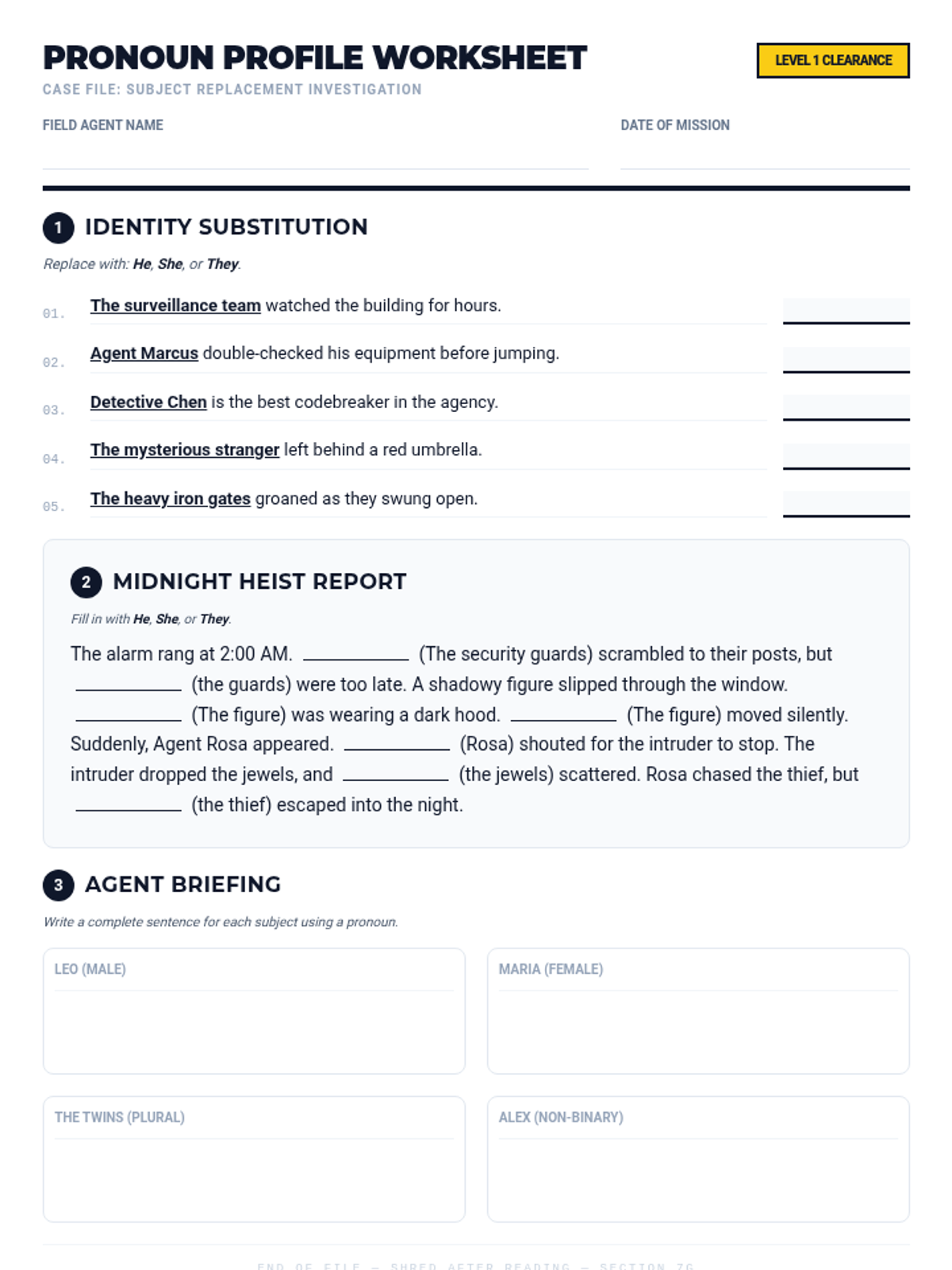
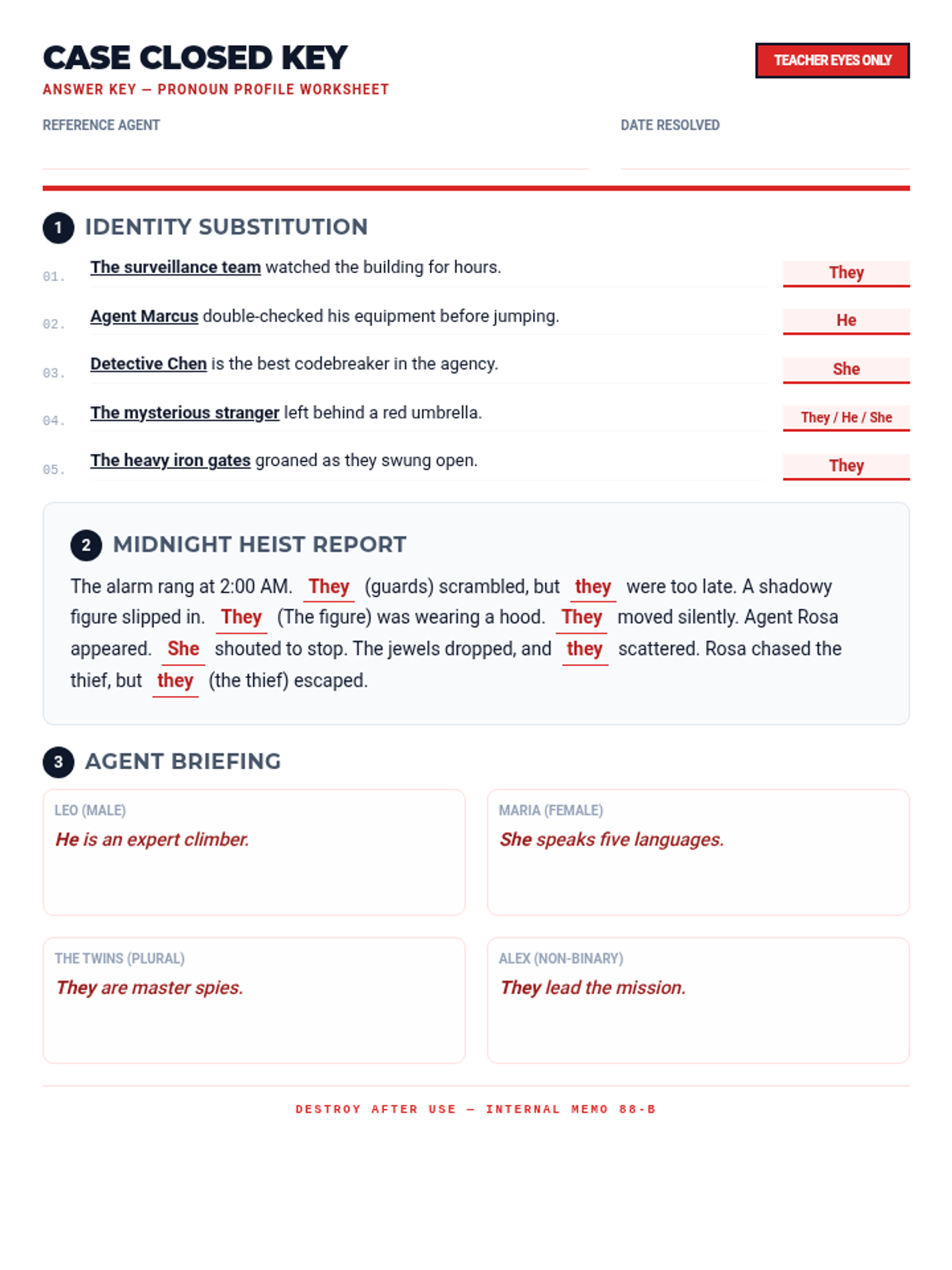
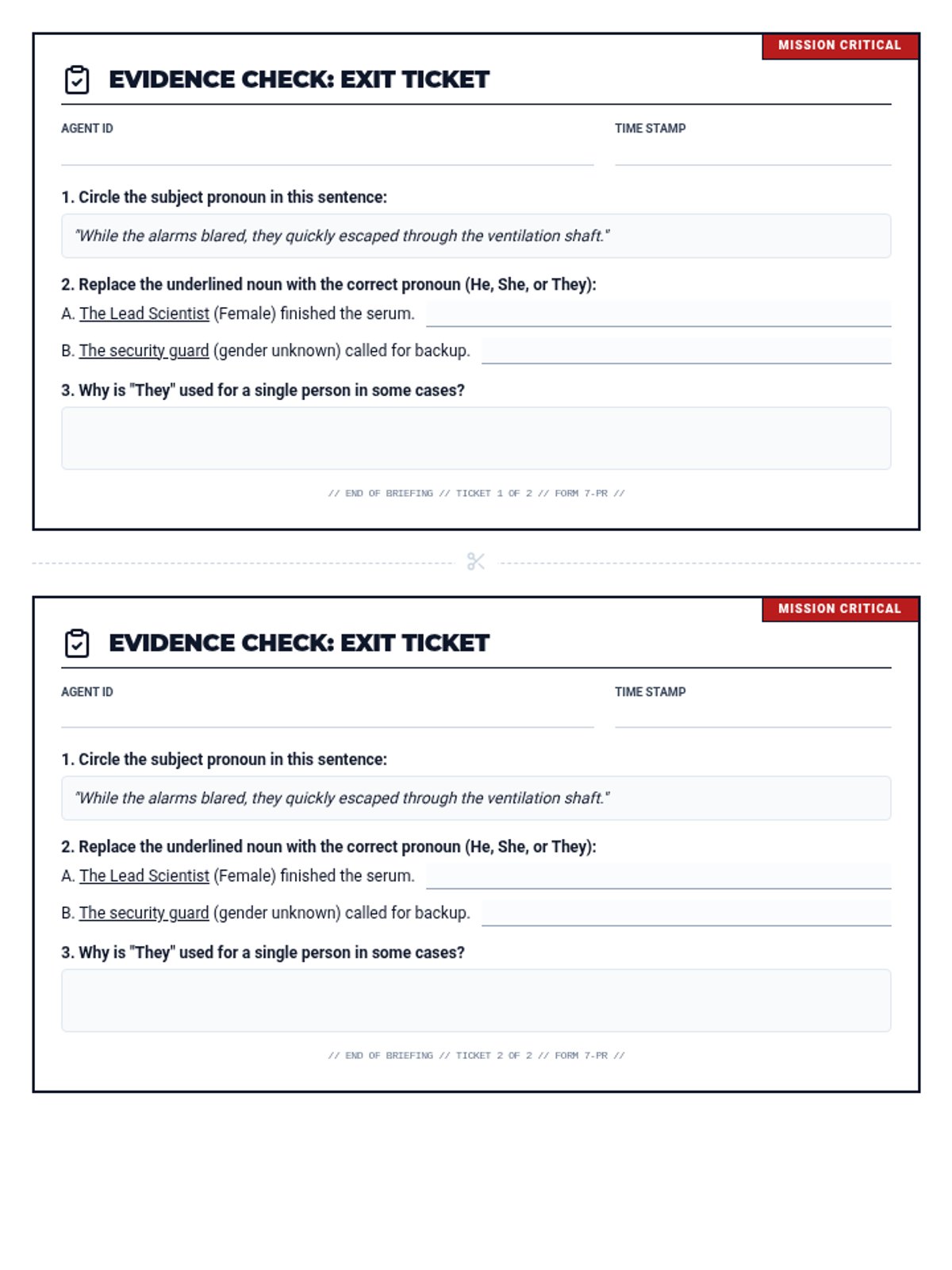
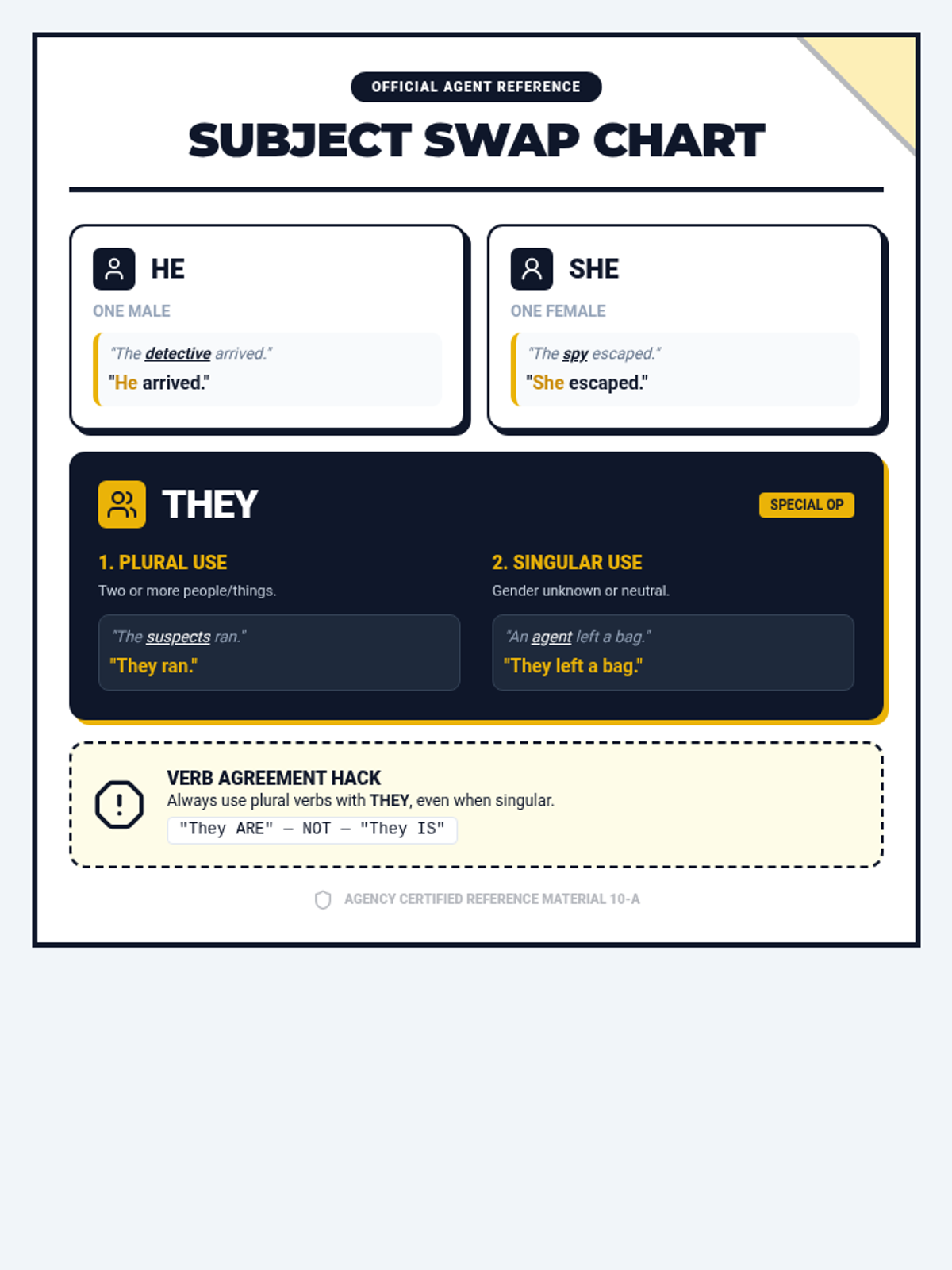
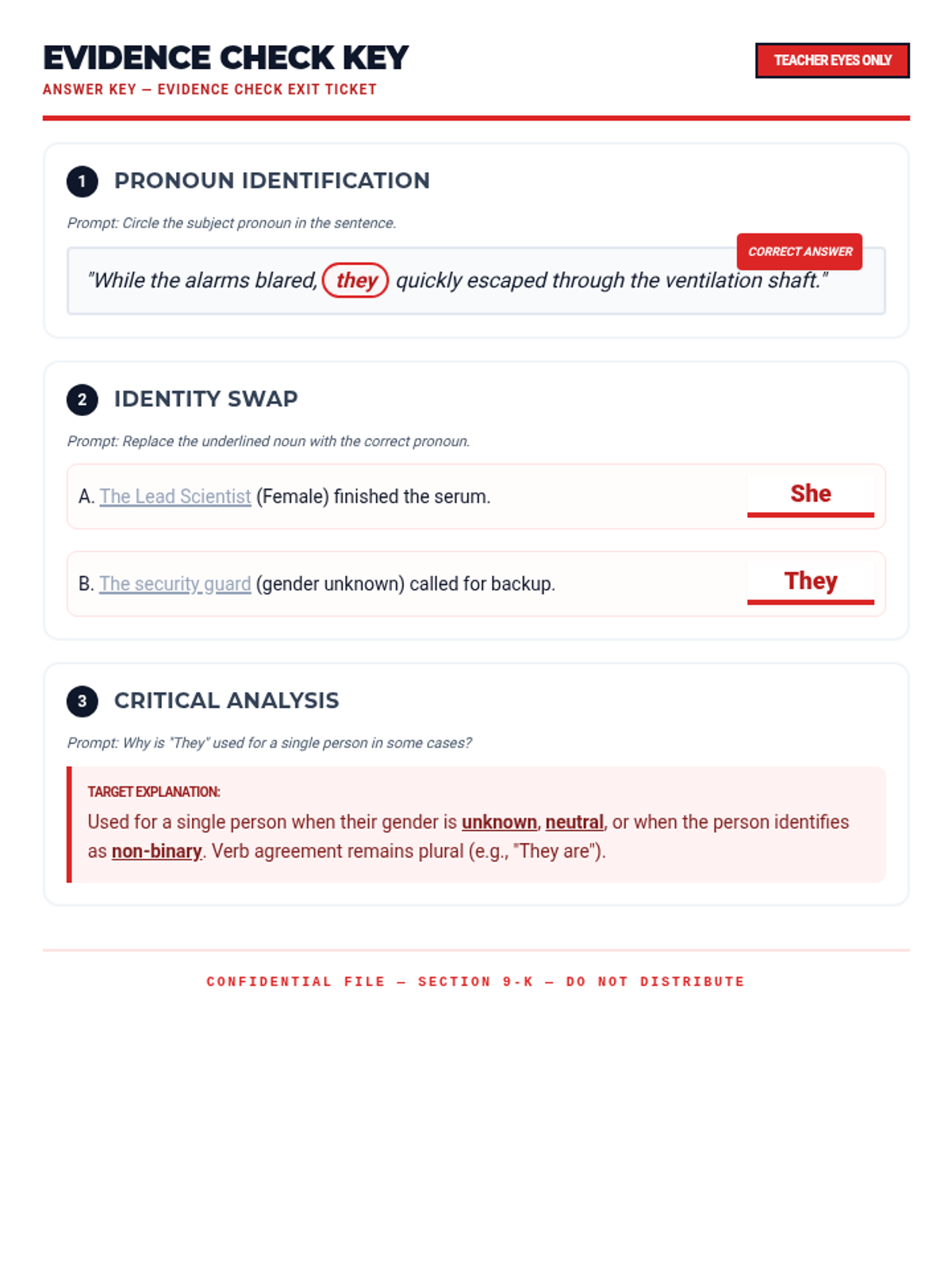
A comprehensive lesson on mastering subject pronouns (he, she, they) through the lens of a 'Secret Agent' investigation, focusing on replacing nouns and understanding singular/plural usage.
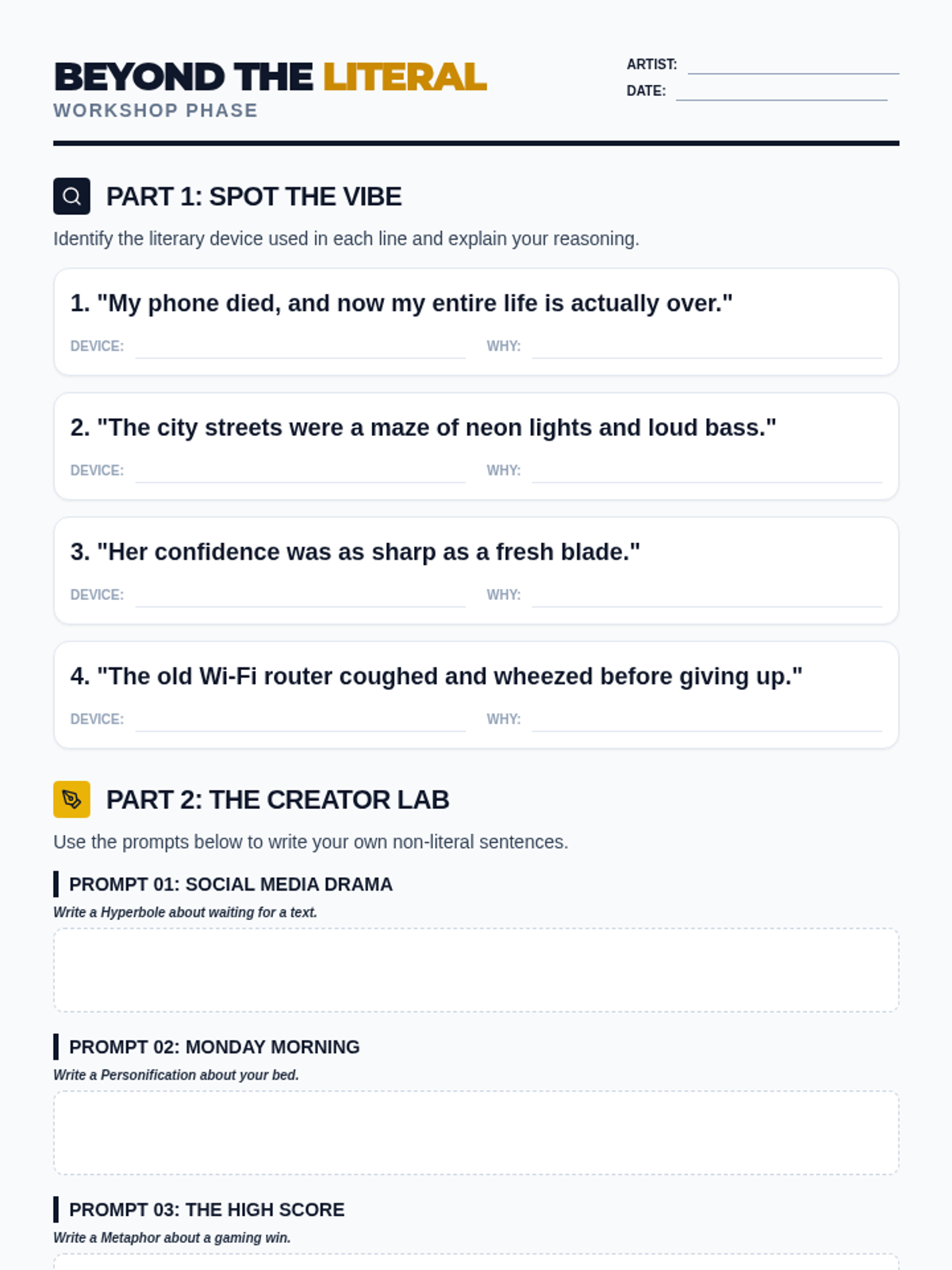
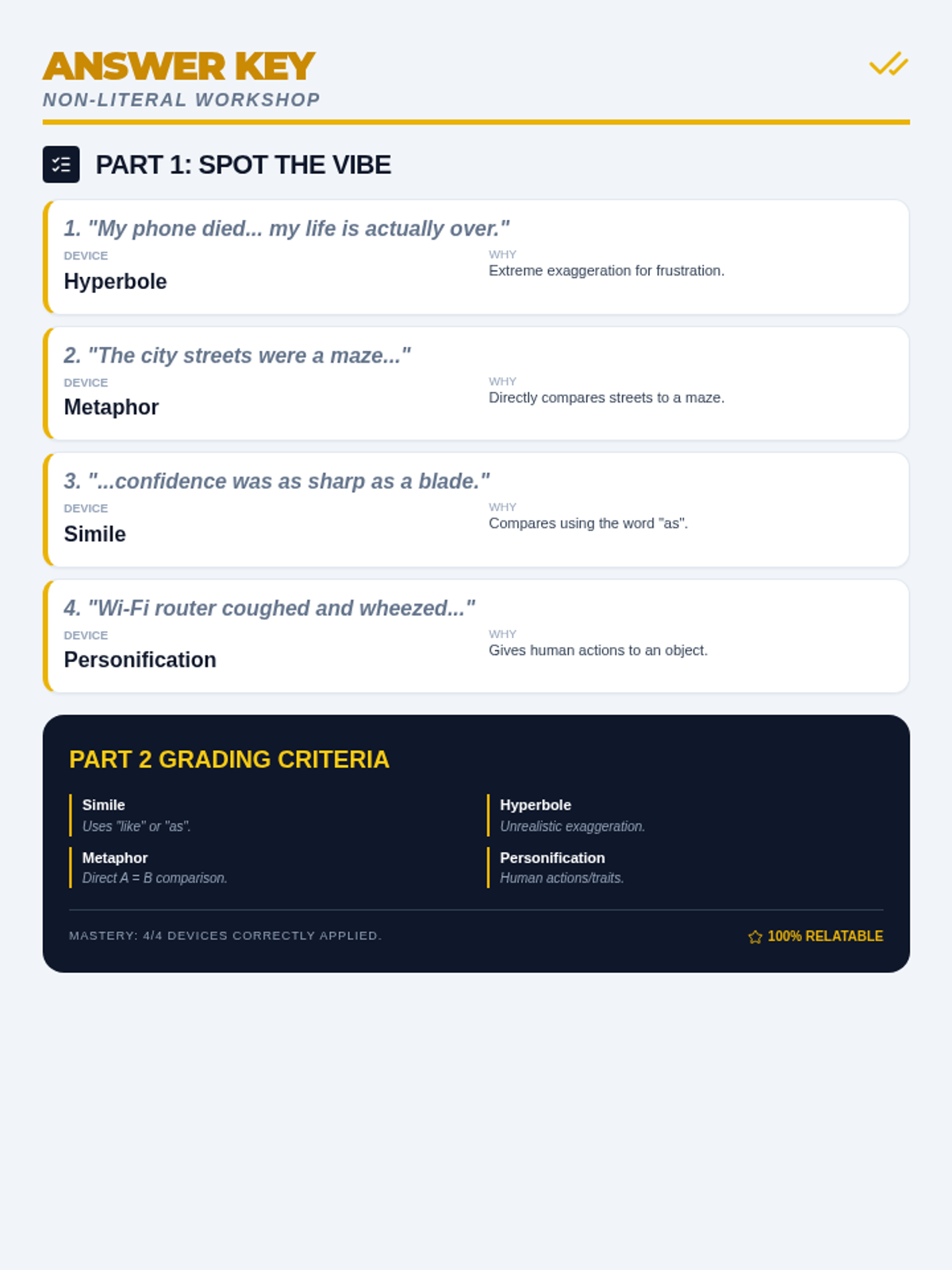
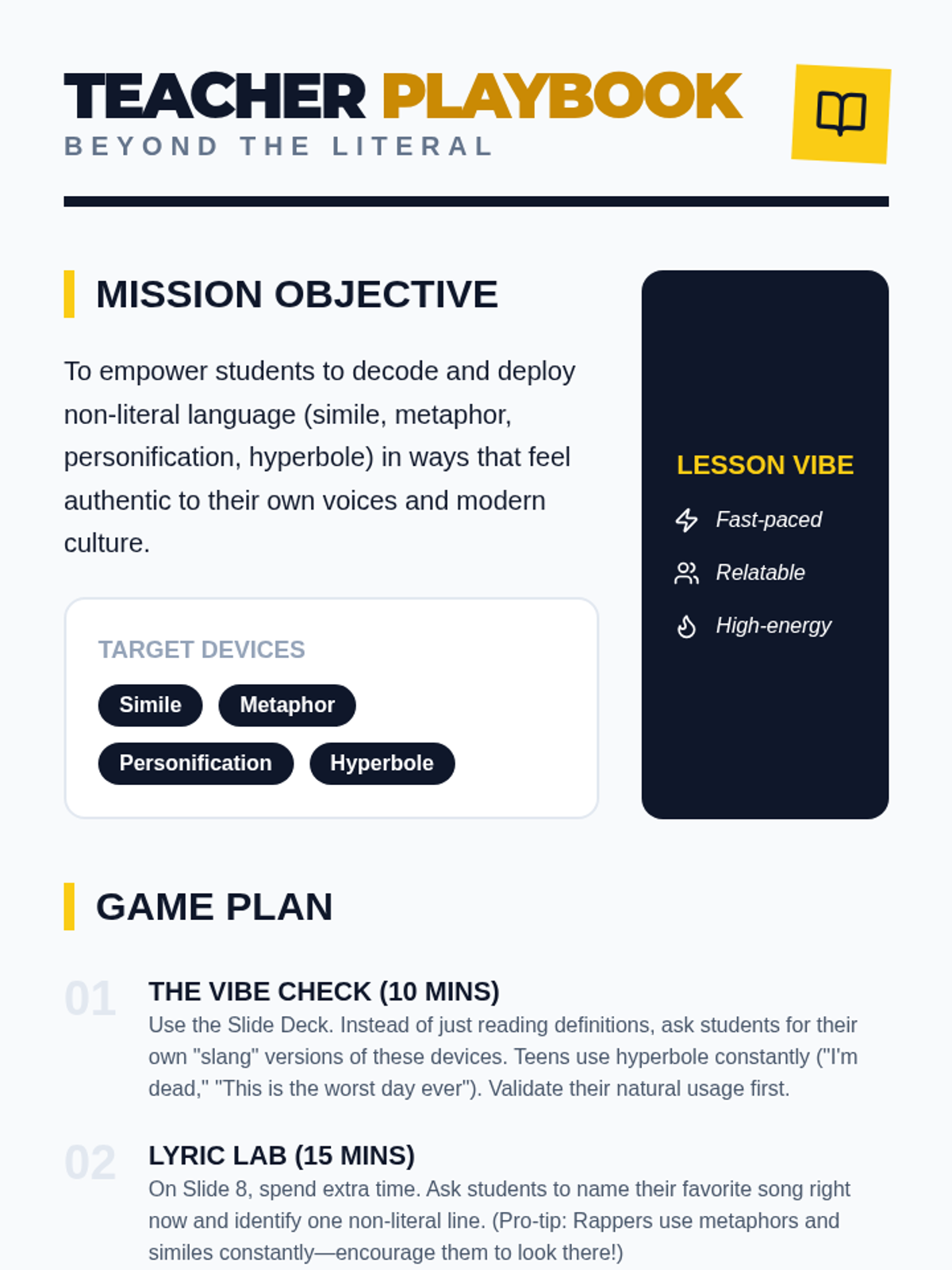
A dynamic exploration of non-literal language tailored for a teen audience, focusing on similes, metaphors, personification, and hyperbole through modern, relatable examples.
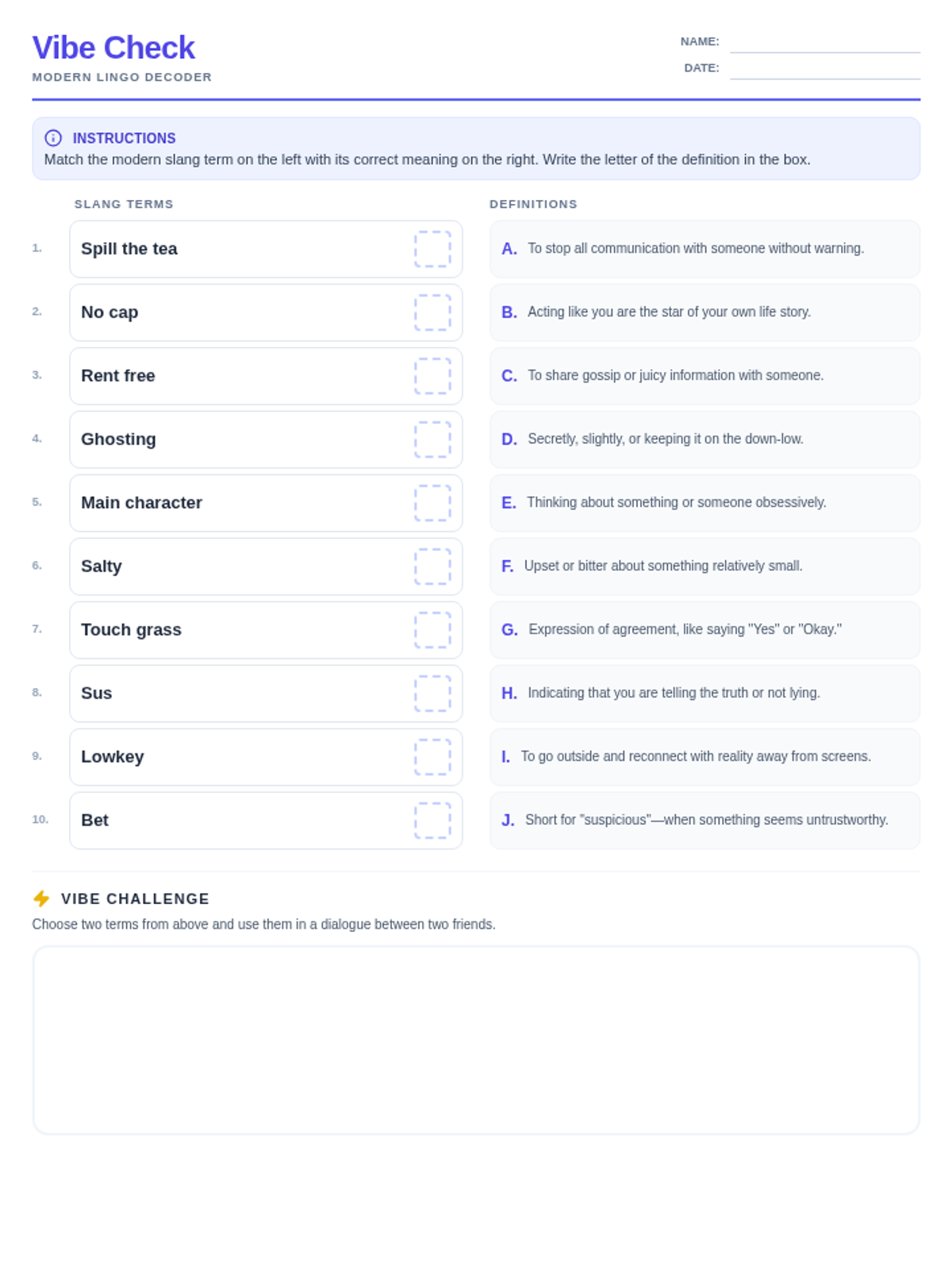
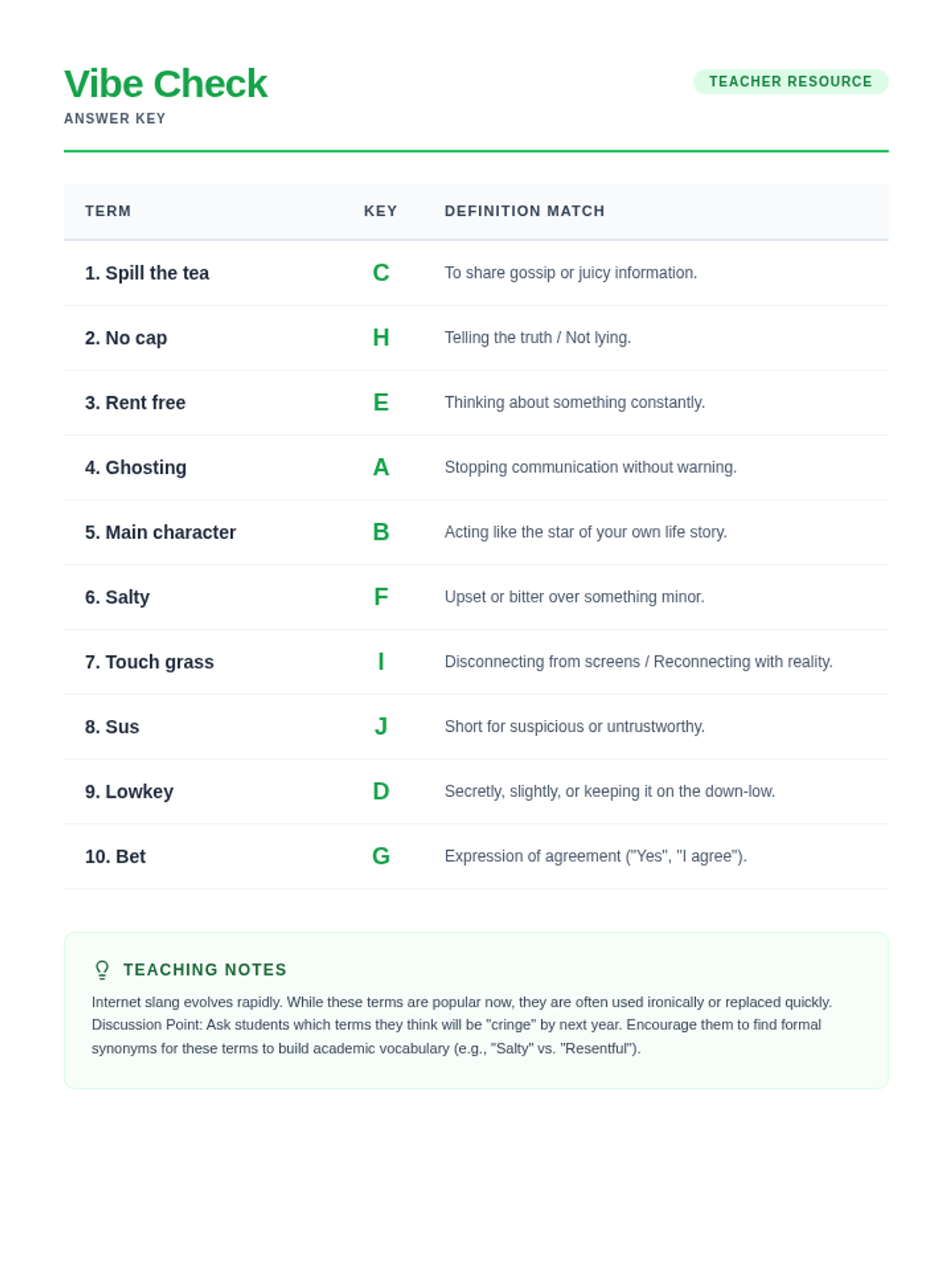
A guide to understanding and using modern teen slang and contemporary idioms in everyday conversation.
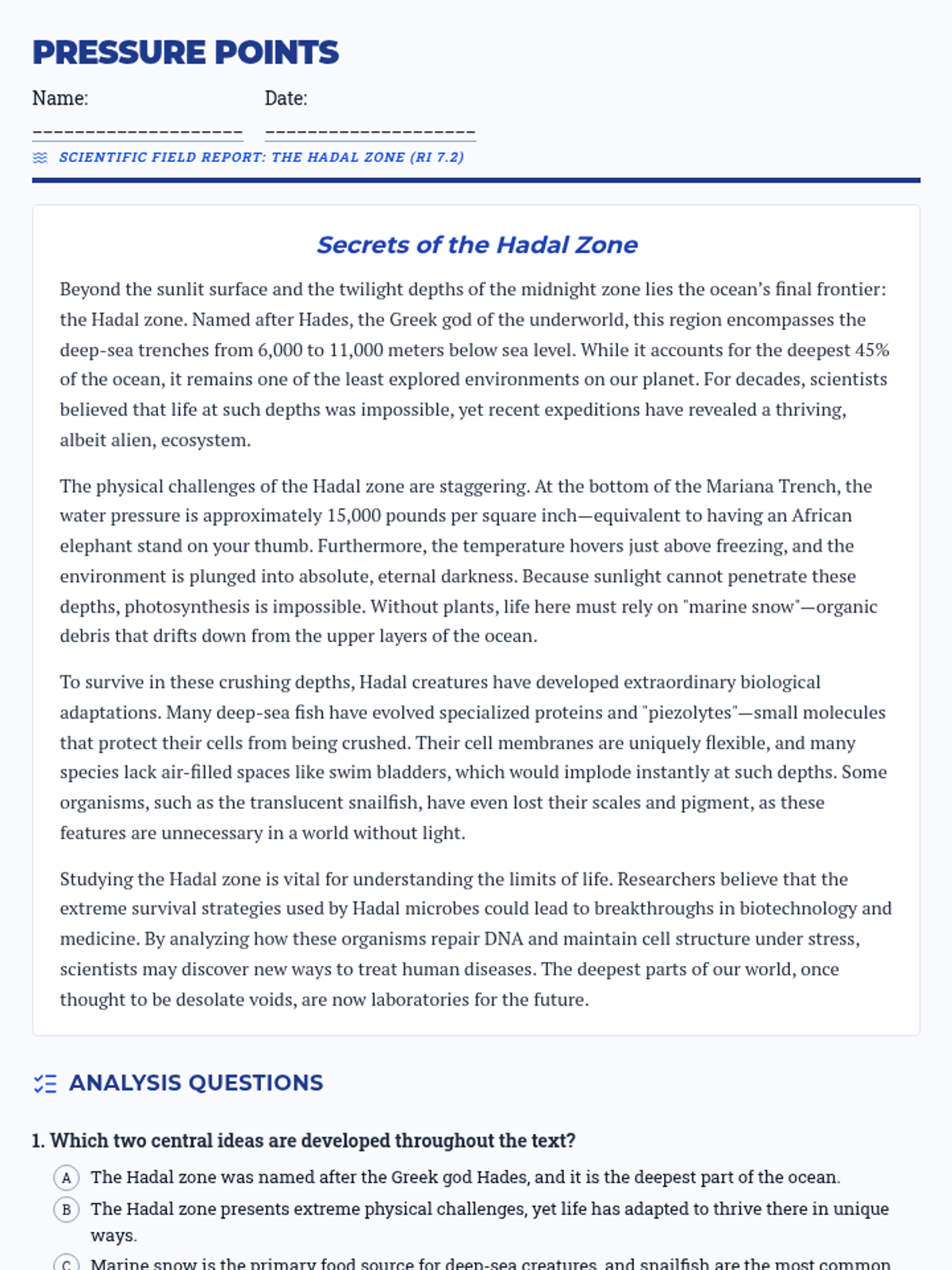
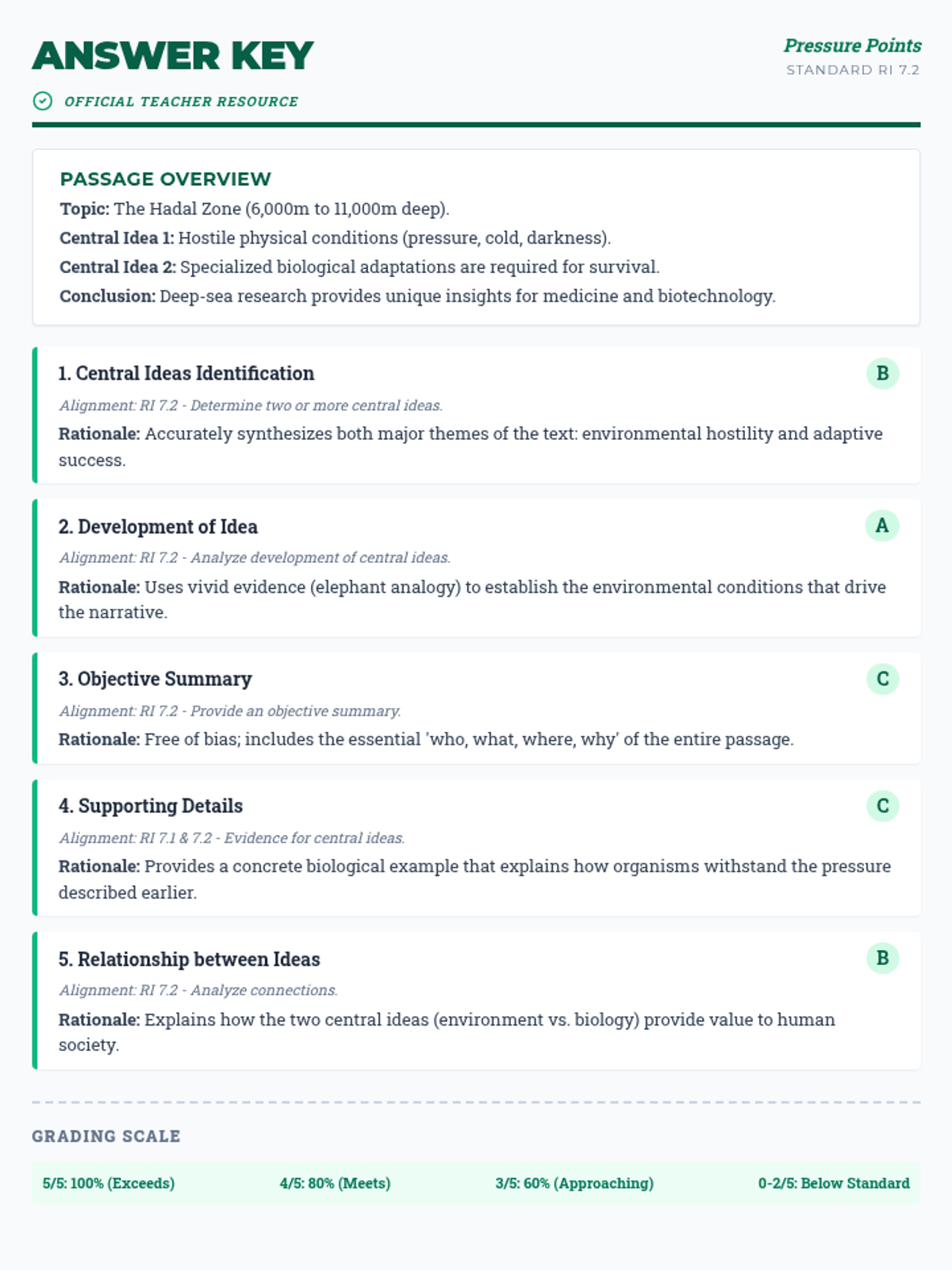
A lesson focused on RI 7.2, analyzing central ideas and providing summaries through a scientific text about the deepest parts of the ocean.
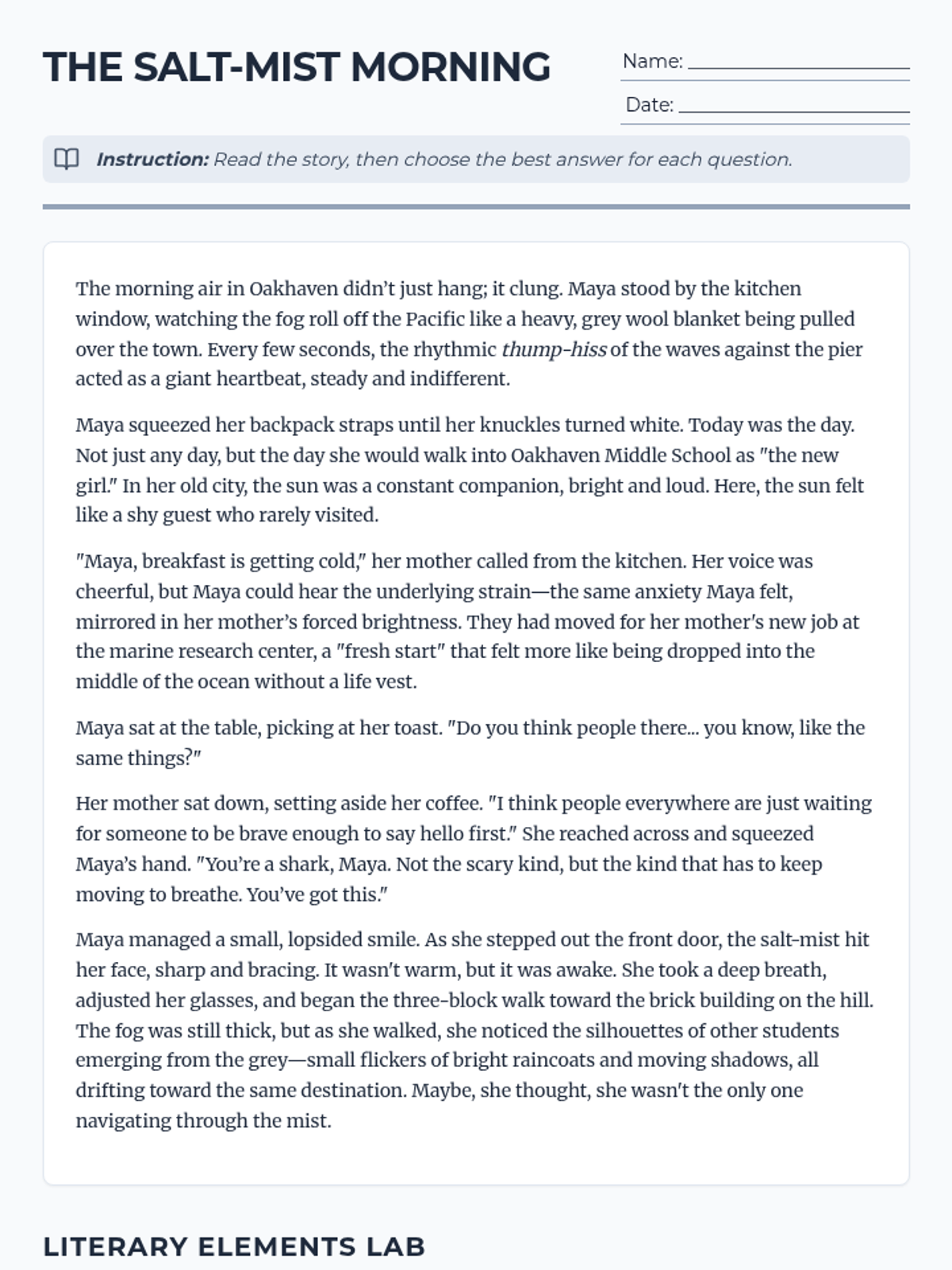
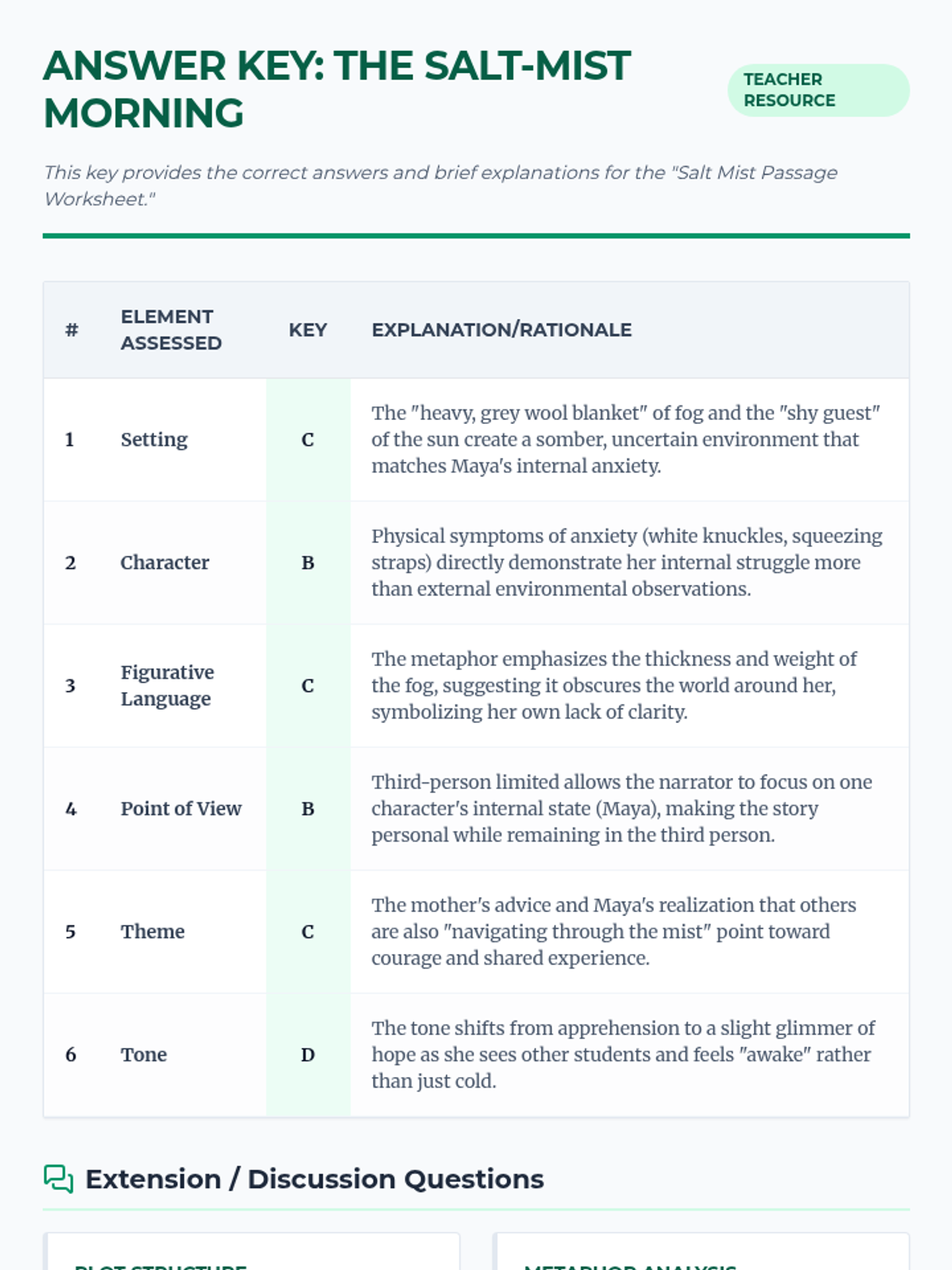
This lesson focuses on analyzing key literary elements—plot, character, setting, theme, point of view, tone, and figurative language—within a realistic fiction text. Students will read a short story and answer targeted comprehension questions to demonstrate their mastery of these elements.
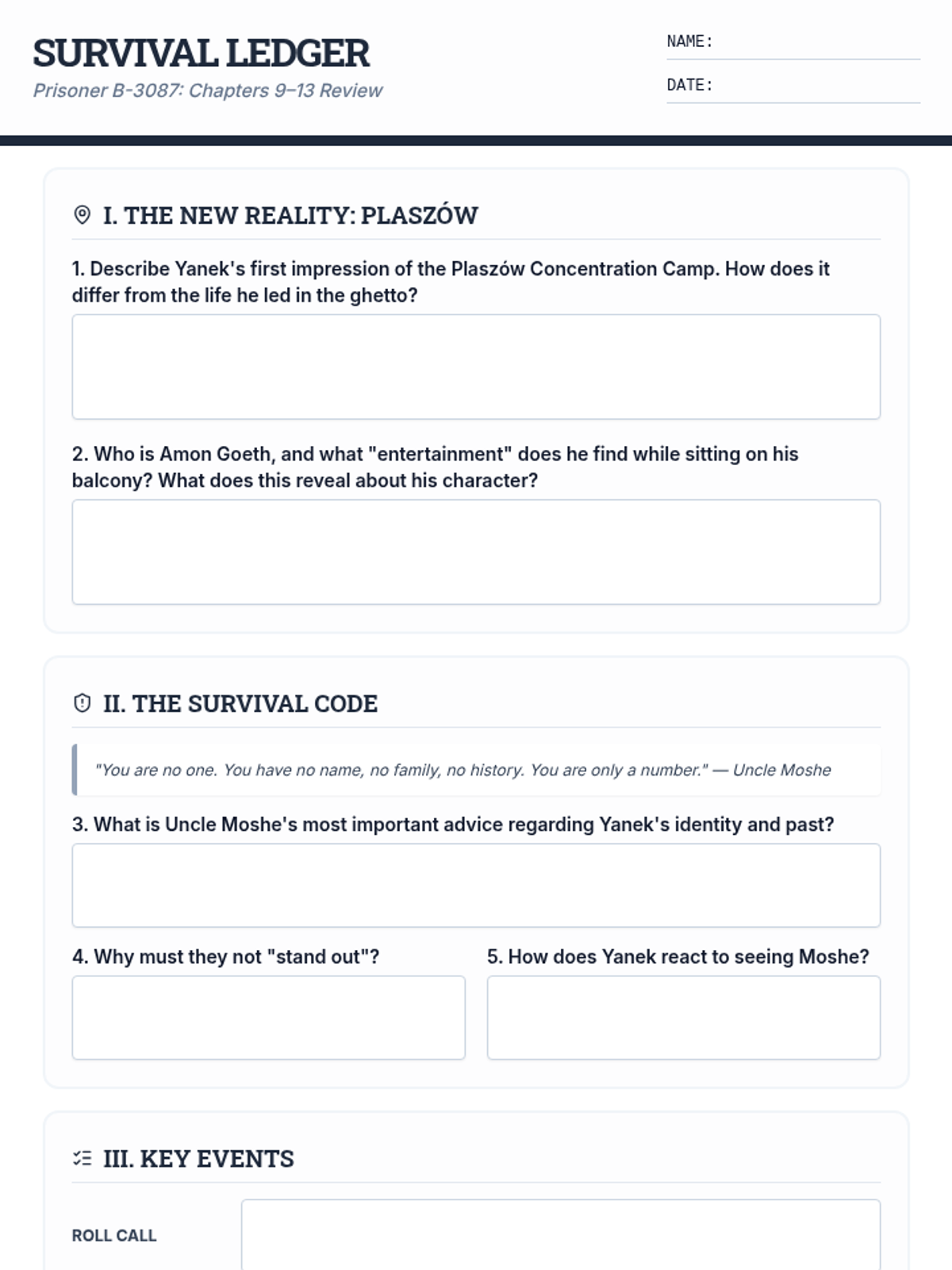
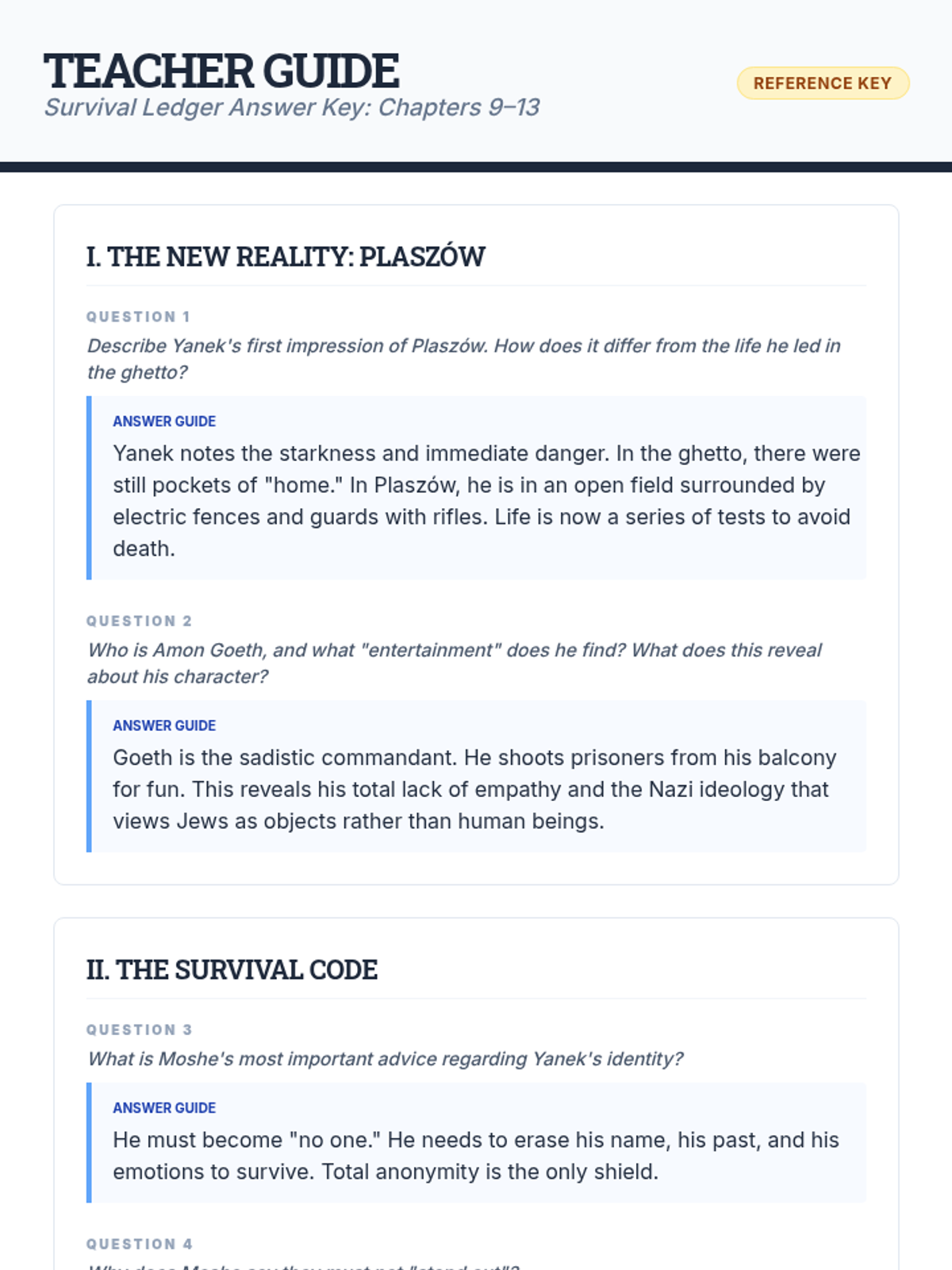
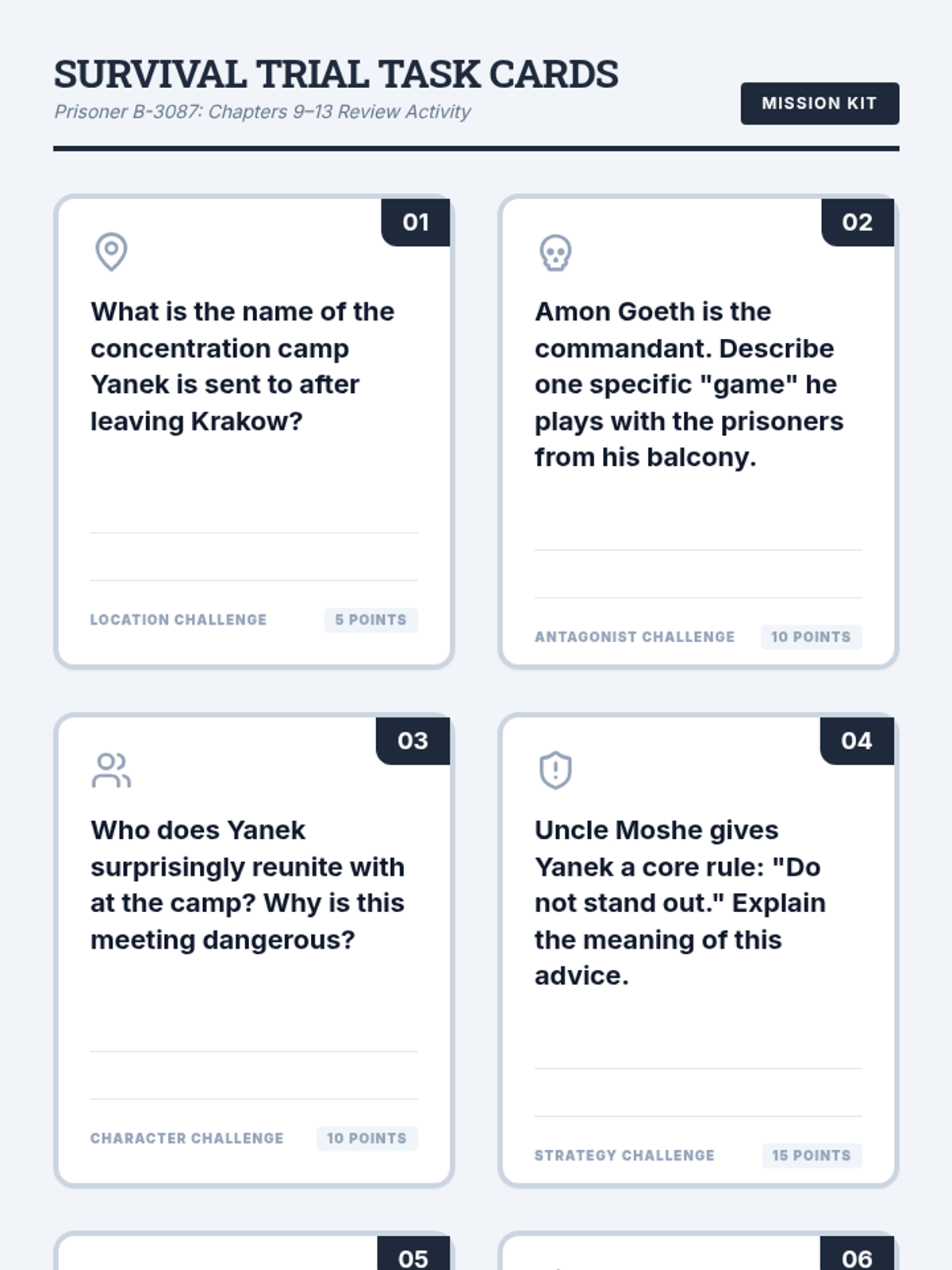
A guided review of chapters 9-13 of Prisoner B-3087, focusing on Yanek's transition to Plaszów Concentration Camp, the theme of survival, and the loss of identity.
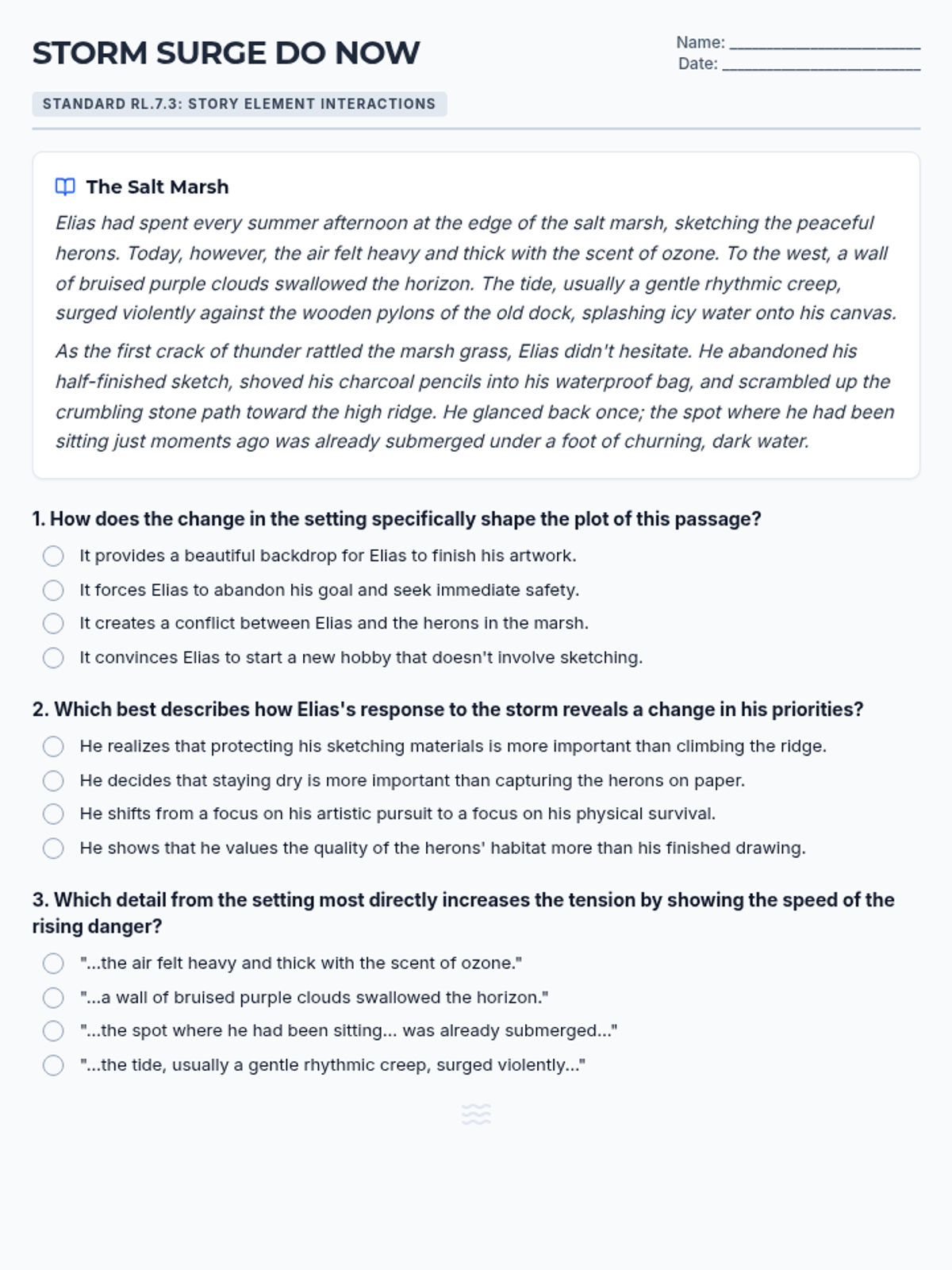
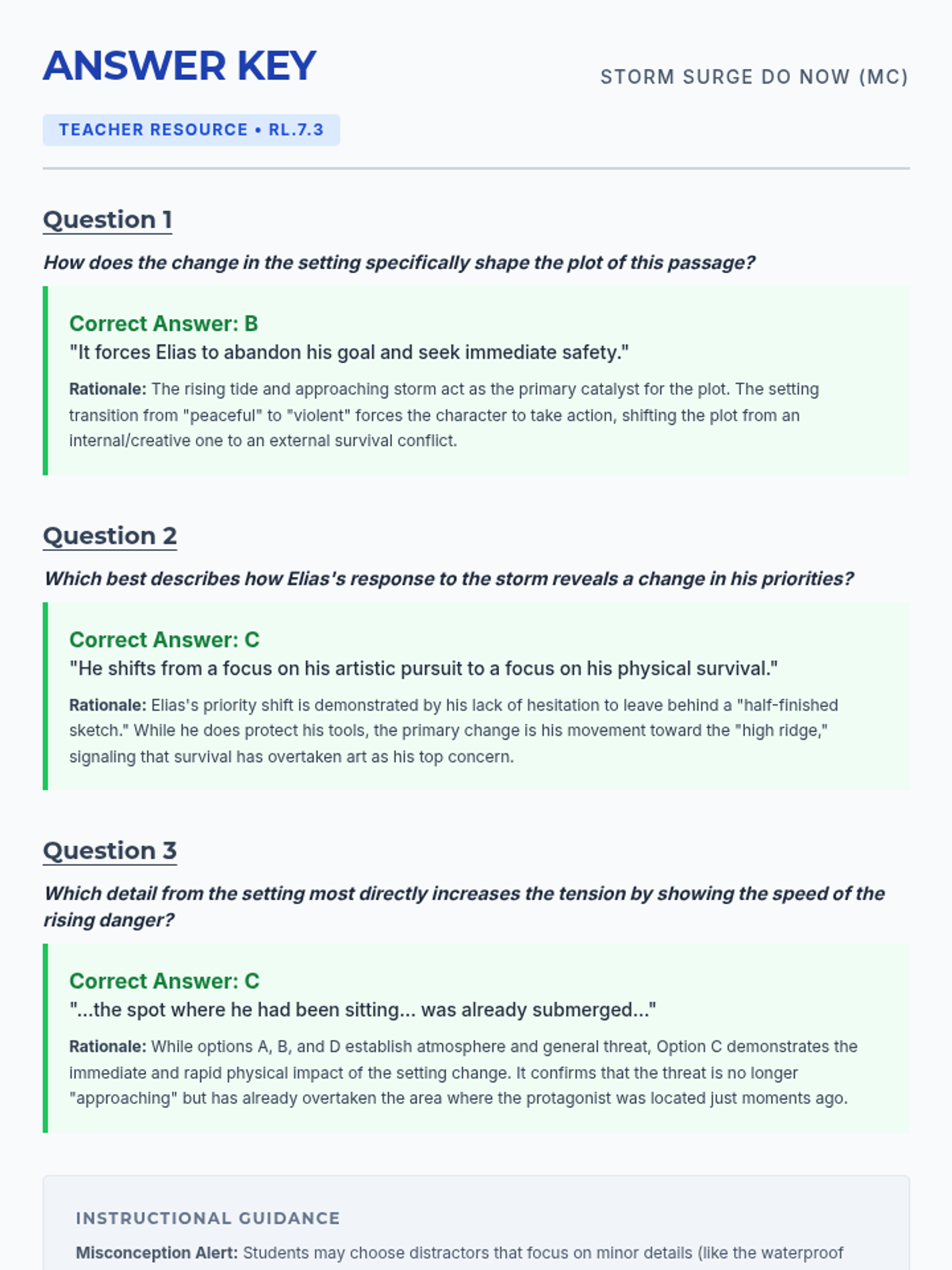
A focused mini-lesson on RL.7.3, analyzing how elements like setting and character response interact to drive a plot forward.
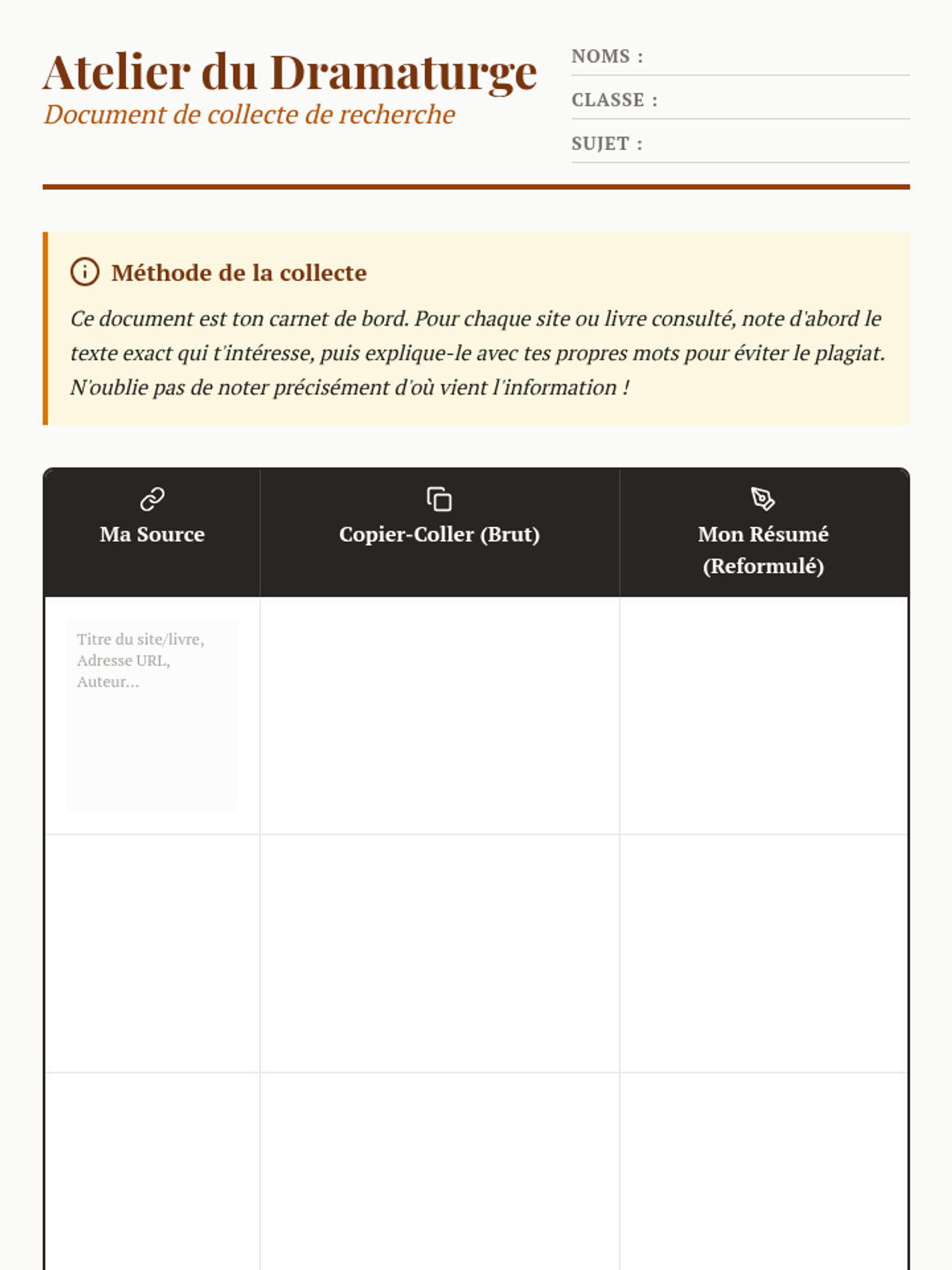
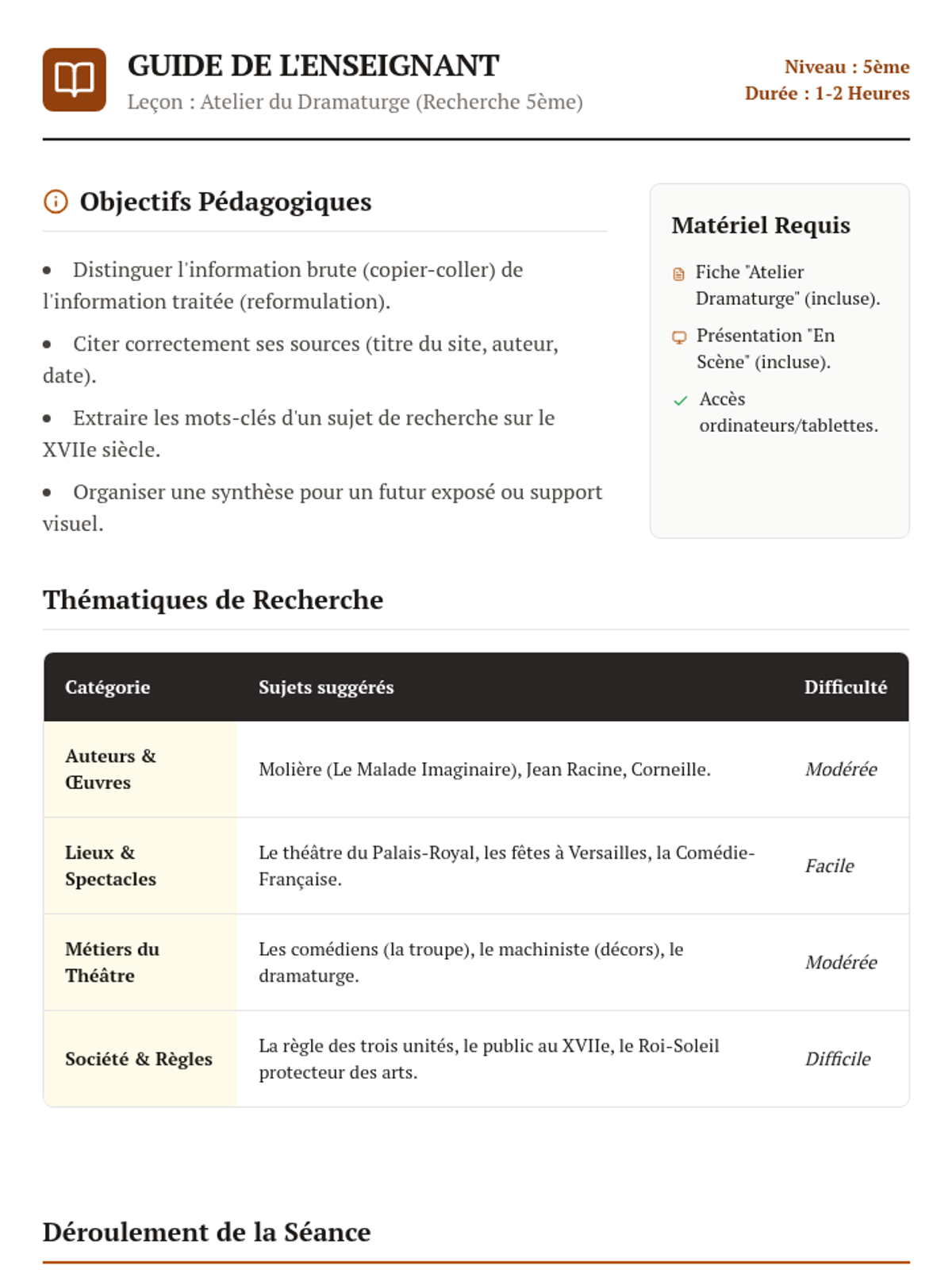
Cette leçon guide les élèves de 5ème dans leur recherche documentaire sur le théâtre du XVIIe siècle, en mettant l'accent sur la distinction entre copier-coller et reformulation.