A comprehensive lesson on mastering subject pronouns (he, she, they) through the lens of a 'Secret Agent' investigation, focusing on replacing nouns and understanding singular/plural usage.
A sharp exploration of irony and sarcasm, teaching students to identify and create verbal, situational, and dramatic irony through engaging examples and analysis.
A lesson focused on chapters 29-35 of Louis Sachar's Holes, exploring the deepening friendship between Stanley and Zero as they face the challenges of the desert. Students will analyze character relationships, make inferences about their survival, and identify the central theme of loyalty.
A comprehensive set of 20 task cards and supporting materials designed to review Grade 7 RL and RI standards (7.1-7.5) through short texts and multiple-choice questions. Students act as detectives to solve reading comprehension 'cases' using evidence and analysis.
A deep dive into context clue strategies using key vocabulary from chapters 21-28 of Holes, featuring multi-level support for diverse learners.
This lesson focuses on chapters 14-20 of Louis Sachar's 'Holes', emphasizing the development of inferencing and predicting skills as students analyze character motivations and plot developments.
A lesson exploring figurative language in Chapters 7-13 of Louis Sachar's Holes, focusing on identifying and analyzing similes, metaphors, onomatopoeia, hyperbole, idioms, and personification through the lens of life at Camp Green Lake.
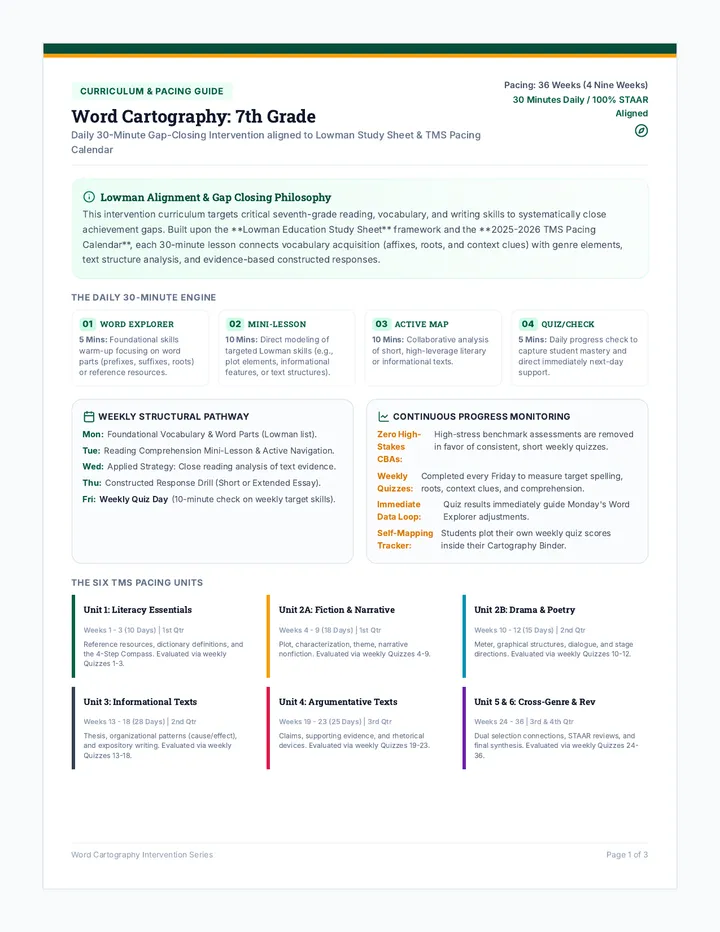
Deep dive into speculative worlds through 'Gathering Blue' and 'A Wrinkle in Time', followed by the unit assessment.
Investigating morality and language through 'Good Samaritan' and 'Jabberwocky'.
Analyzing integrity and peer pressure through 'The Magic Marker Mystery' and 'Scout’s Honor'.
Exploring cultural pressure and physical survival through 'Red Scarf Girl' and 'Hatchet'.
Introductory week focusing on emotional and familial limits through 'Eleven' and 'The Mighty Miss Malone'.
A focused exploration of cause and effect relationships in the opening chapters of Louis Sachar's 'Holes', covering Stanley's arrival at Camp Green Lake and the history of the Yelnats family curse.
Unit review, performance task preparation, and final assessment.
Comparative analysis of themes across different genres, including poetry and short stories.
Analysis of informational texts focusing on real-world challenges, including 'The Great Fire'.
Deep dive into narrative structure and voice through excerpts from 'The Lightning Thief' and memoir pieces.
Introductory week focusing on unit themes, 'Eleven' by Sandra Cisneros, and establishing the concept of resilience.
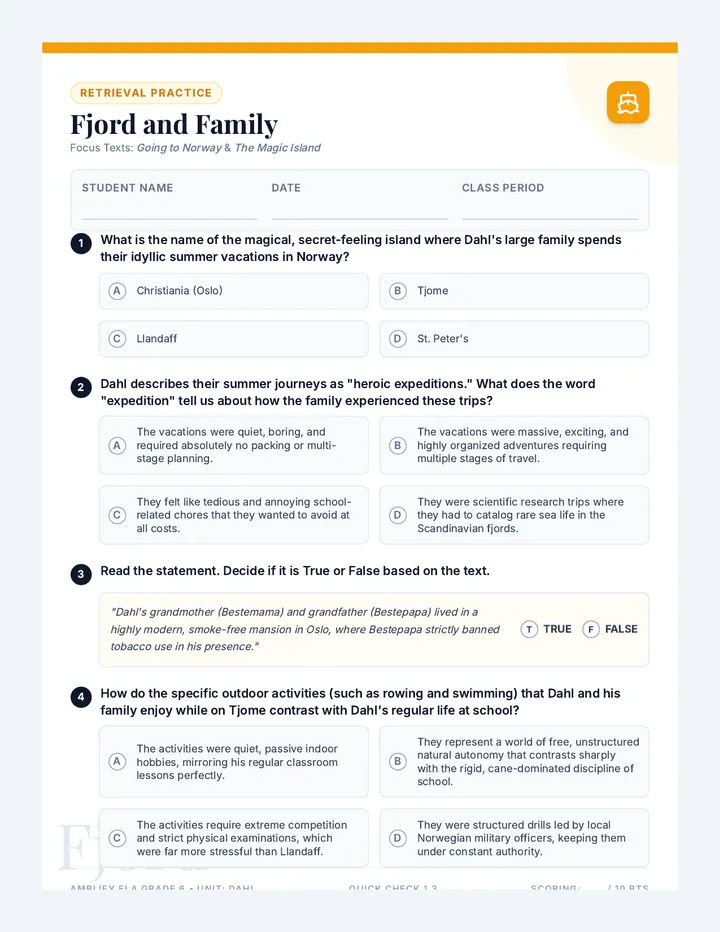
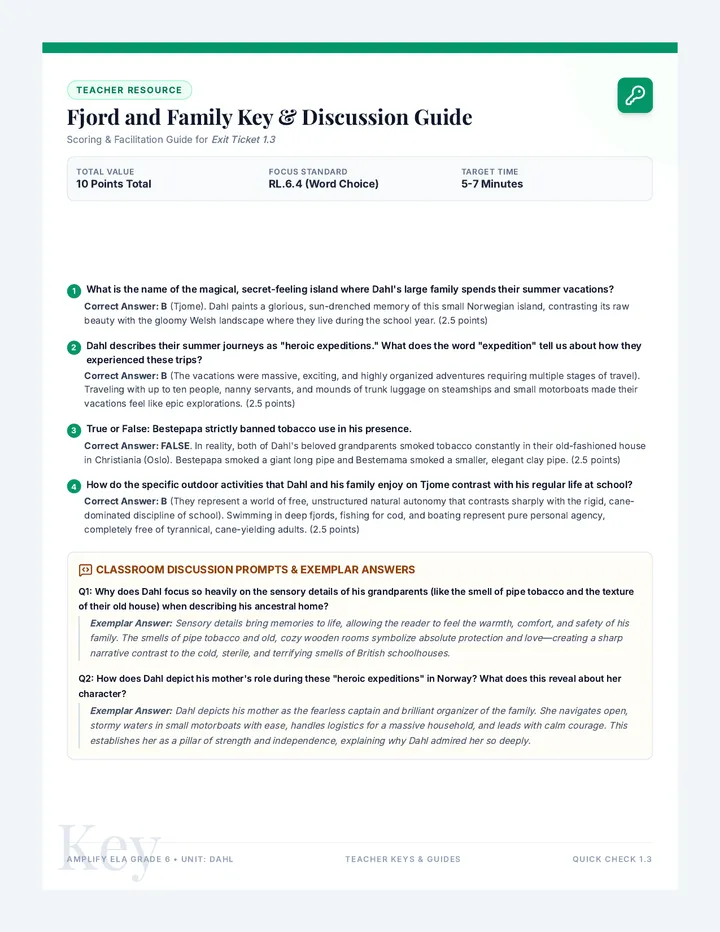
A targeted practice session focusing on RL.6.4 standards, including figurative language, connotative meanings, and the impact of word choice across three distinct text types.
A dynamic exploration of non-literal language tailored for a teen audience, focusing on similes, metaphors, personification, and hyperbole through modern, relatable examples.
A lesson focusing on identifying nouns, verbs, adjectives, adverbs, prepositions, conjunctions, and interjections using athletic and academic contexts.
A guide to understanding and using modern teen slang and contemporary idioms in everyday conversation.
A lesson focused on RI 7.2, analyzing central ideas and providing summaries through a scientific text about the deepest parts of the ocean.
This lesson focuses on analyzing key literary elements—plot, character, setting, theme, point of view, tone, and figurative language—within a realistic fiction text. Students will read a short story and answer targeted comprehension questions to demonstrate their mastery of these elements.
A guided review of chapters 9-13 of Prisoner B-3087, focusing on Yanek's transition to Plaszów Concentration Camp, the theme of survival, and the loss of identity.
A focused mini-lesson on RL.7.3, analyzing how elements like setting and character response interact to drive a plot forward.
Cette leçon guide les élèves de 5ème dans leur recherche documentaire sur le théâtre du XVIIe siècle, en mettant l'accent sur la distinction entre copier-coller et reformulation.
A 3-day small group lesson plan (30 minutes per day) focusing on determining theme, tracking its development, and writing objective summaries using SWBST scaffolds.
Students practice combining simple sentences with the same subjects into compound sentences using pronouns and adding descriptive predicate expanders (where, when, why, and how).
A lesson focused on identifying central ideas and morals within realistic fiction through a story about responsibility and growth.
A comprehensive 5-day lesson guiding students through the process of writing a personal essay about their multiple intelligences, skills, and future career paths.
A focused study of Chapters 11 and 12 of Hatchet, examining Brian's deepening relationship with fire and his internal struggle following the missed rescue opportunity. Students will analyze text evidence and identify various forms of conflict.
A literary analysis lesson for Chapters 16-17 of *The Giver*, focusing on the depth of human emotion, the concept of 'Love', and the skill of making evidence-based claims.
A high-energy, detective-themed lesson exploring how gerunds function as nouns while maintaining their verb-like properties. Designed for advanced students to master identification and usage in various sentence roles.
A lesson exploring the arrival of the Manager in Chapter 1 of 'The Metamorphosis'. Students analyze the immediate dehumanization of Gregor by his family and superiors, focusing on word choice and the conflict between individual humanity and bureaucratic authority.
A deep dive into morphology and common word endings (-able, -ible, -ary, -ery, -ory, -ant, -ent), focusing on how Latin roots and base words determine spelling patterns.
A comprehensive ELA assessment featuring informational and literary texts about Southwest Native American tribes, aligned to 5th-6th grade standards. Students will analyze text structure, theme, and main ideas while exploring the cultures of the Pueblo and Diné people.
A deep dive into Sheila Burnford's classic adventure, focusing on the trio's survival through the Canadian wilderness. Students explore character motivations, analyze the atmospheric setting, and practice collaborative discussion techniques.
A sports-themed mystery story and comprehension activity designed for 3rd-4th grade reading levels, focusing on making inferences and identifying key details.
A mystery-themed reading comprehension lesson featuring a 2-page original fiction story and a comprehensive assessment focused on Tier 2 vocabulary and analytical skills.
A comprehensive introduction to Reed-Kellogg sentence diagramming, covering subjects, verbs, direct objects, and prepositional phrases through a structural engineering lens.
Students learn to identify the theme or main message of a story by analyzing character choices and outcomes, framed through a "Cinema" or "Movie Theatre" lens to help ELL students distinguish between topic and theme.