A focused exploration of cause and effect relationships in the opening chapters of Louis Sachar's 'Holes', covering Stanley's arrival at Camp Green Lake and the history of the Yelnats family curse.
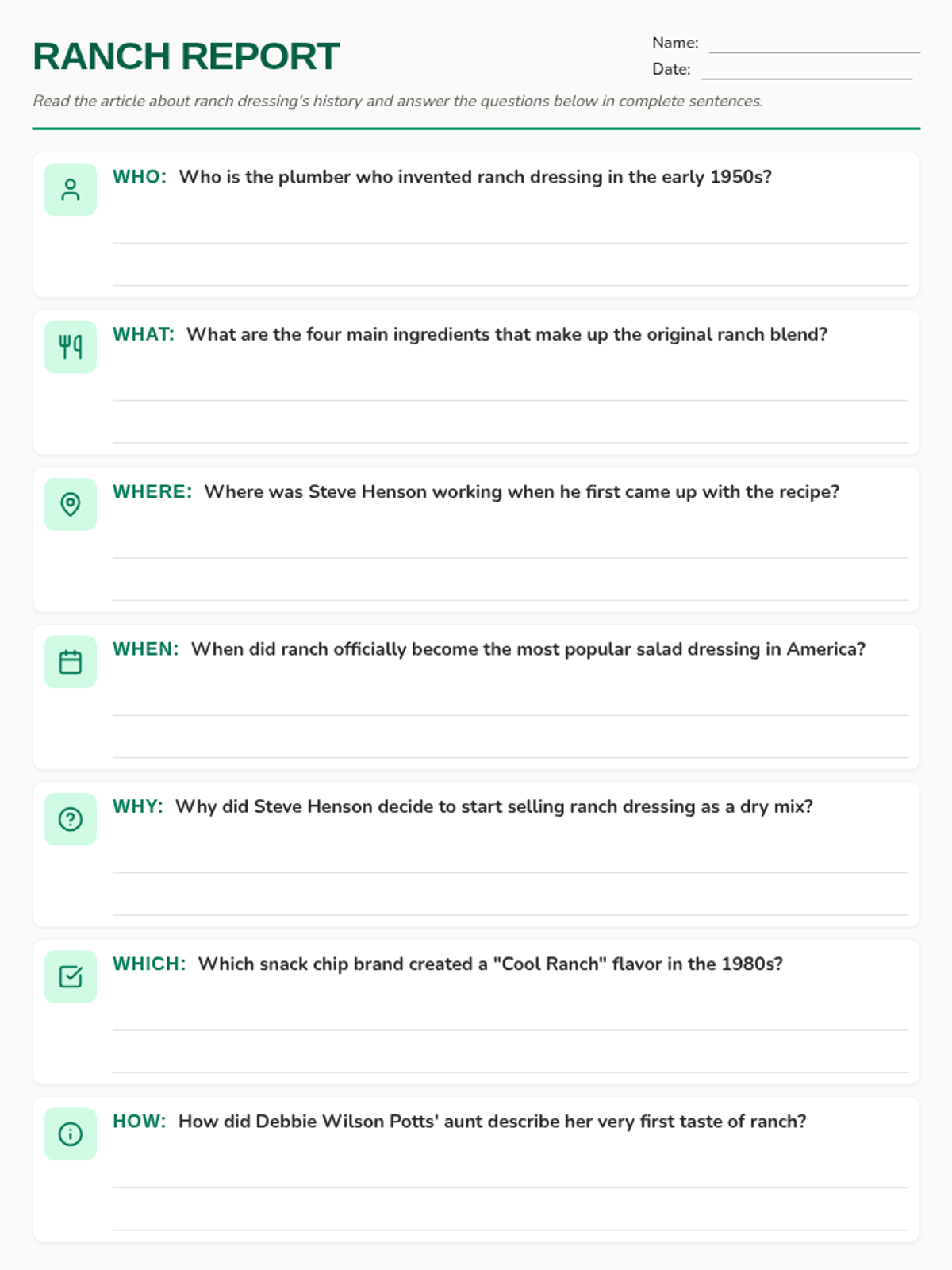
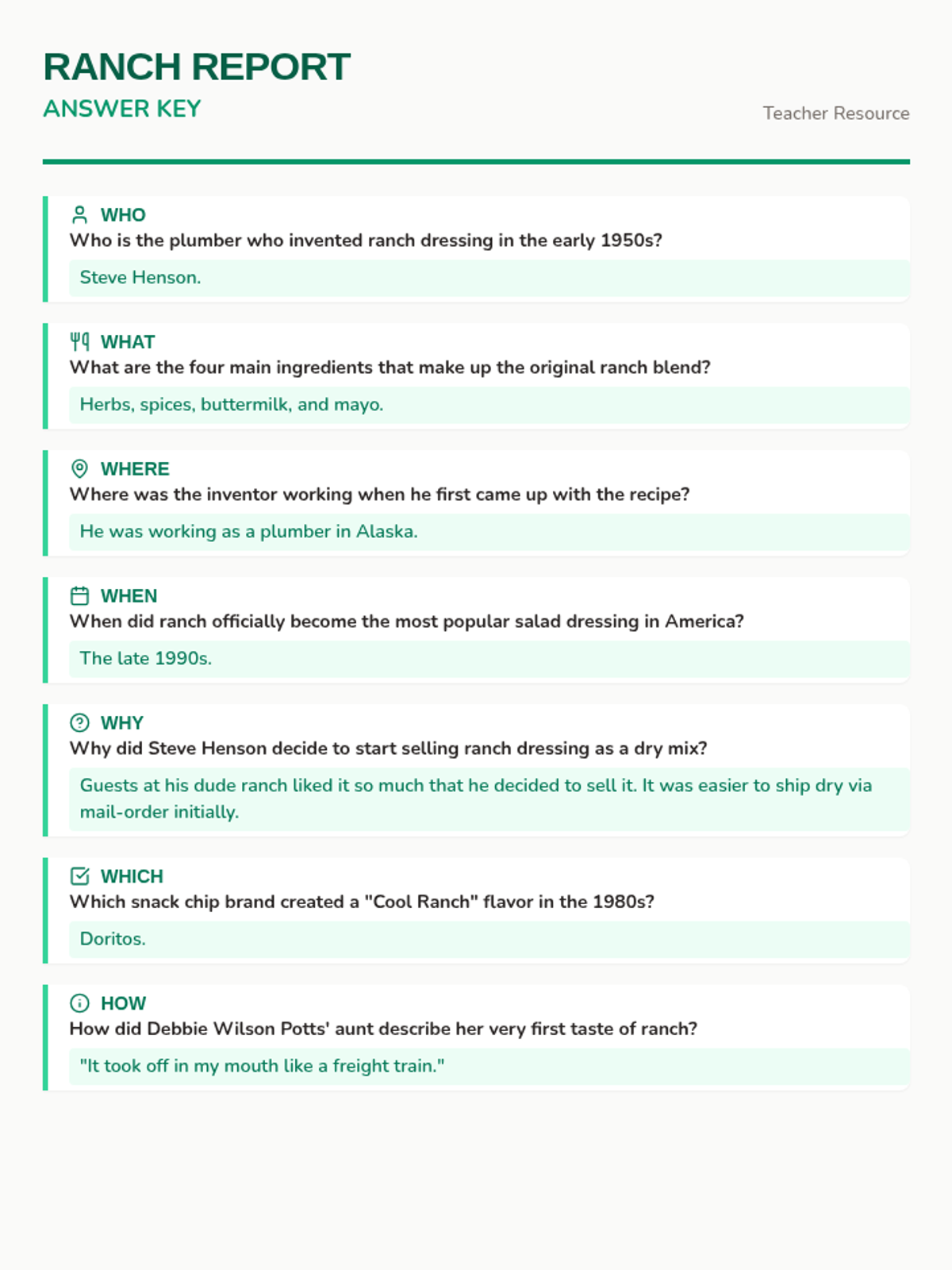
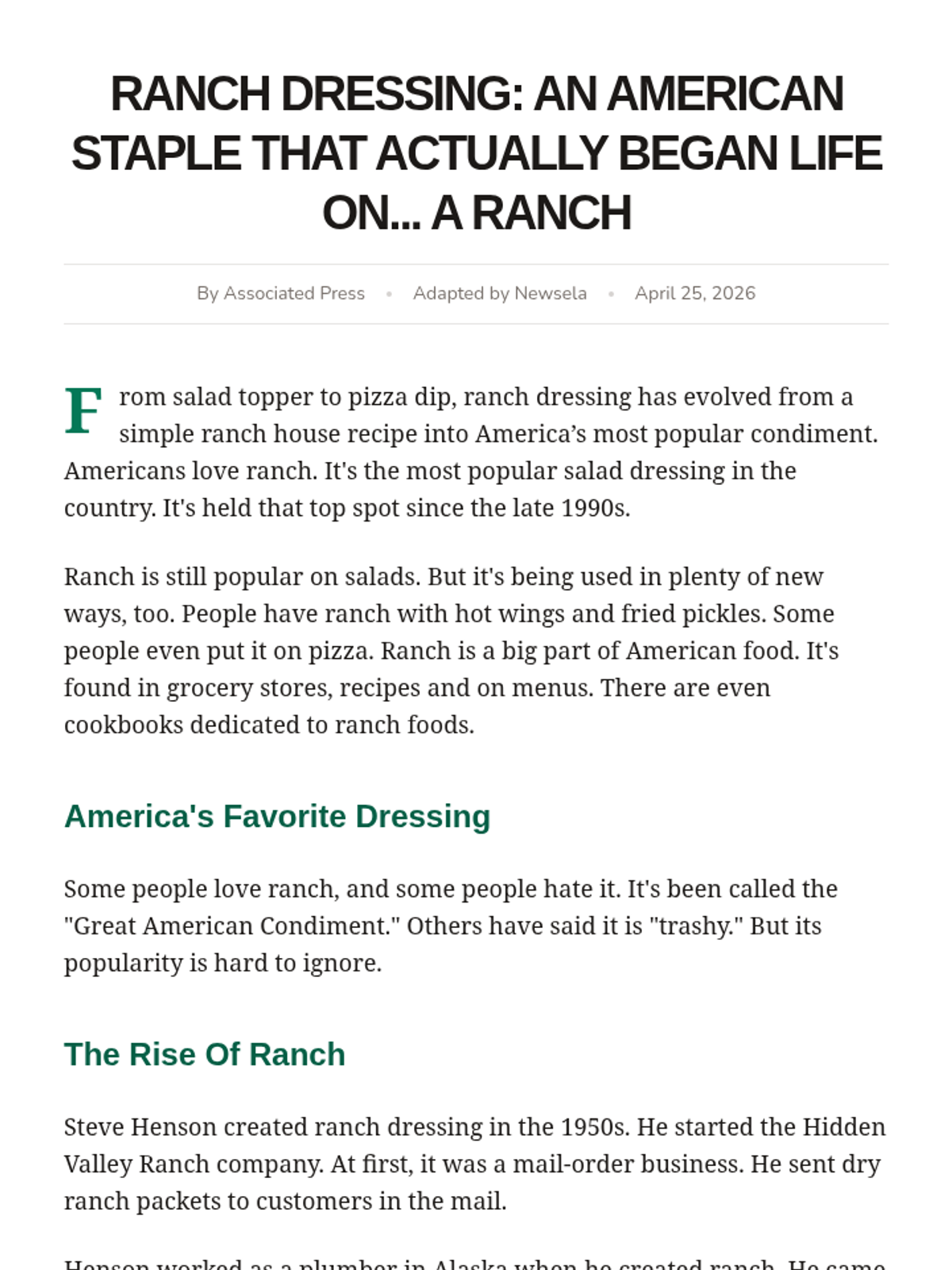
A lesson exploring the history and cultural impact of ranch dressing based on a Newsela article, featuring a reading comprehension worksheet and answer key.
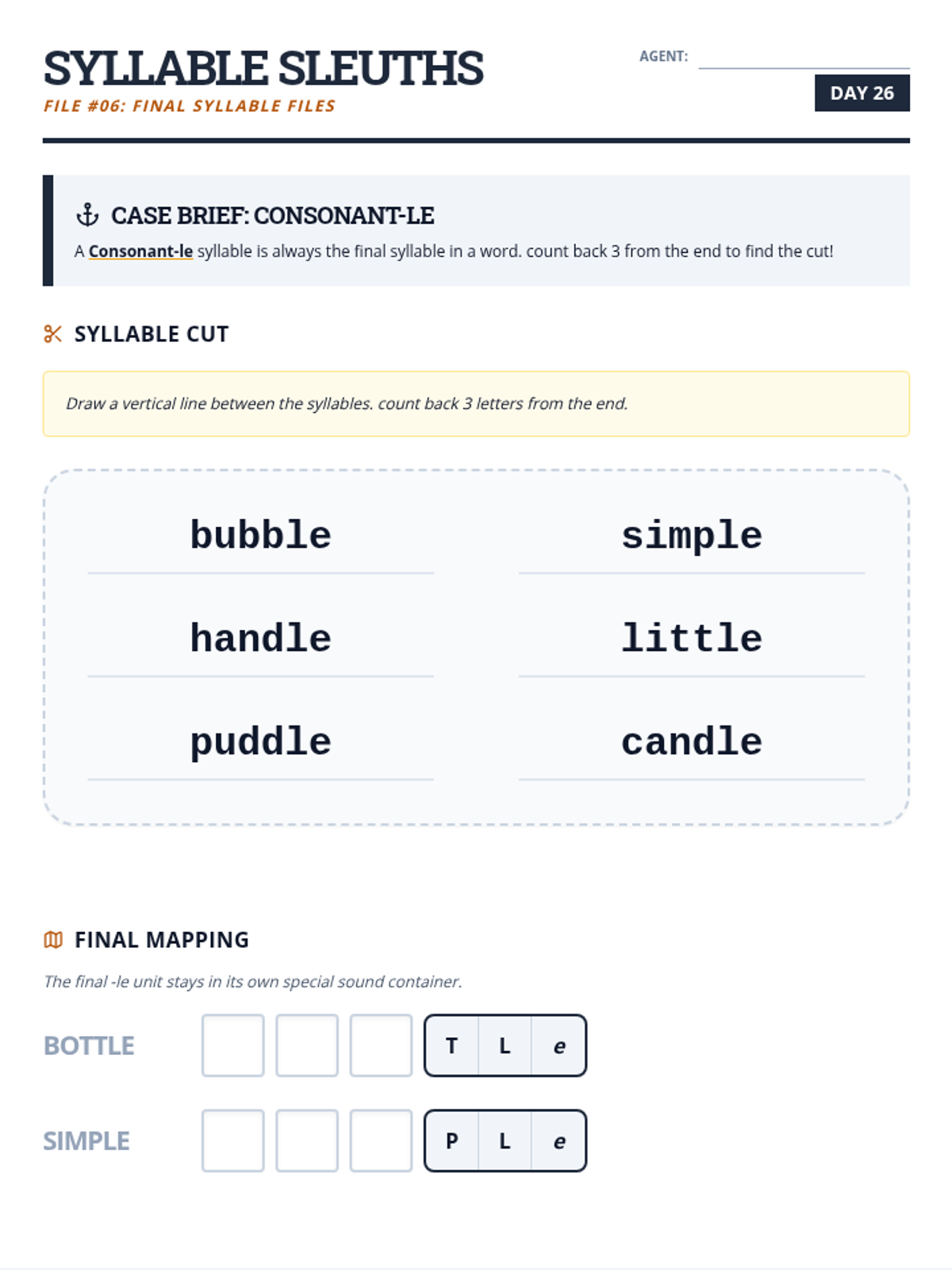
Mastering the final stable syllable 'Consonant-le' found at the end of multi-syllabic words.
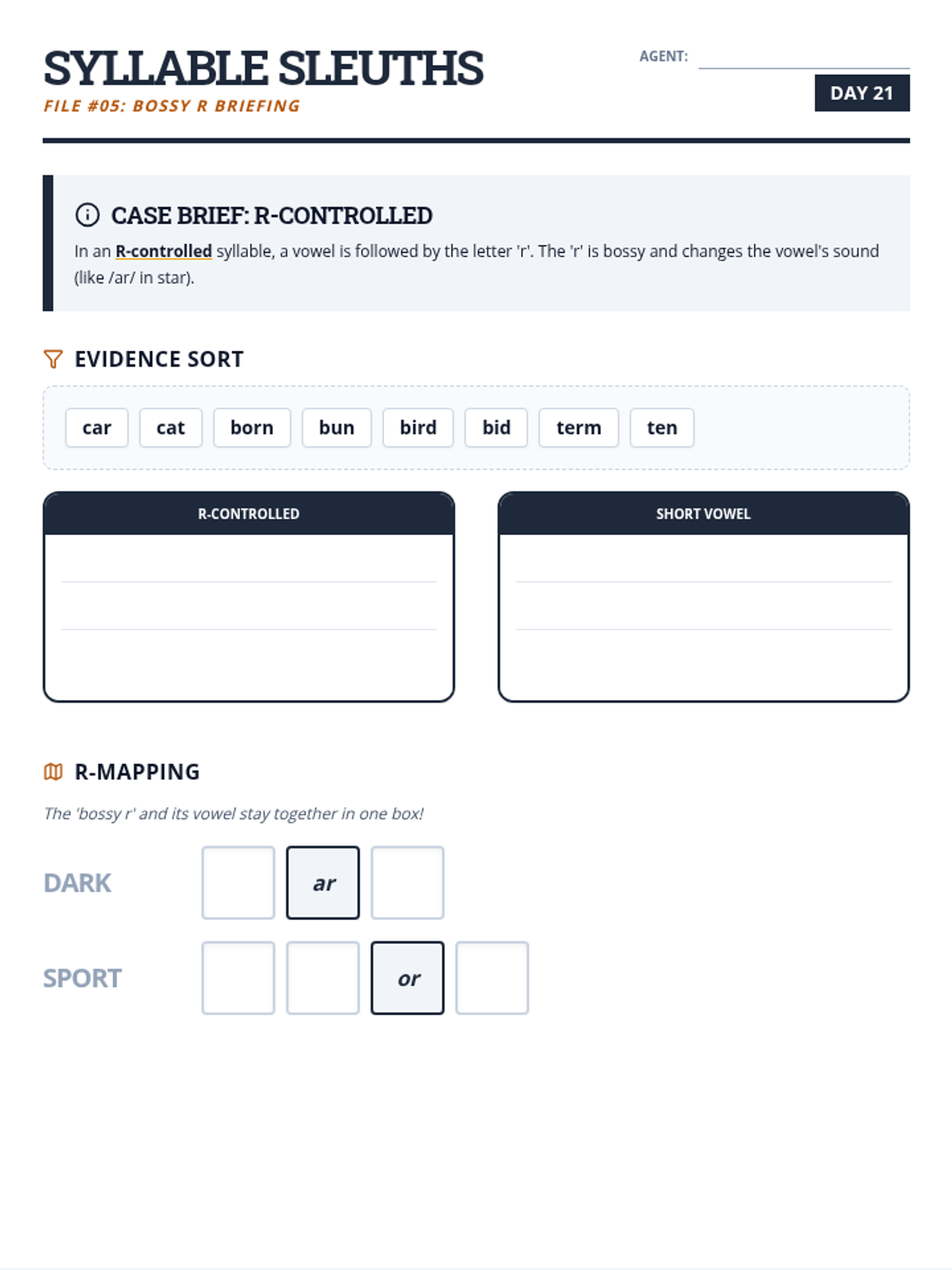
Analyzing how the 'Bossy R' influences the sound of the preceding vowel in R-controlled syllables.
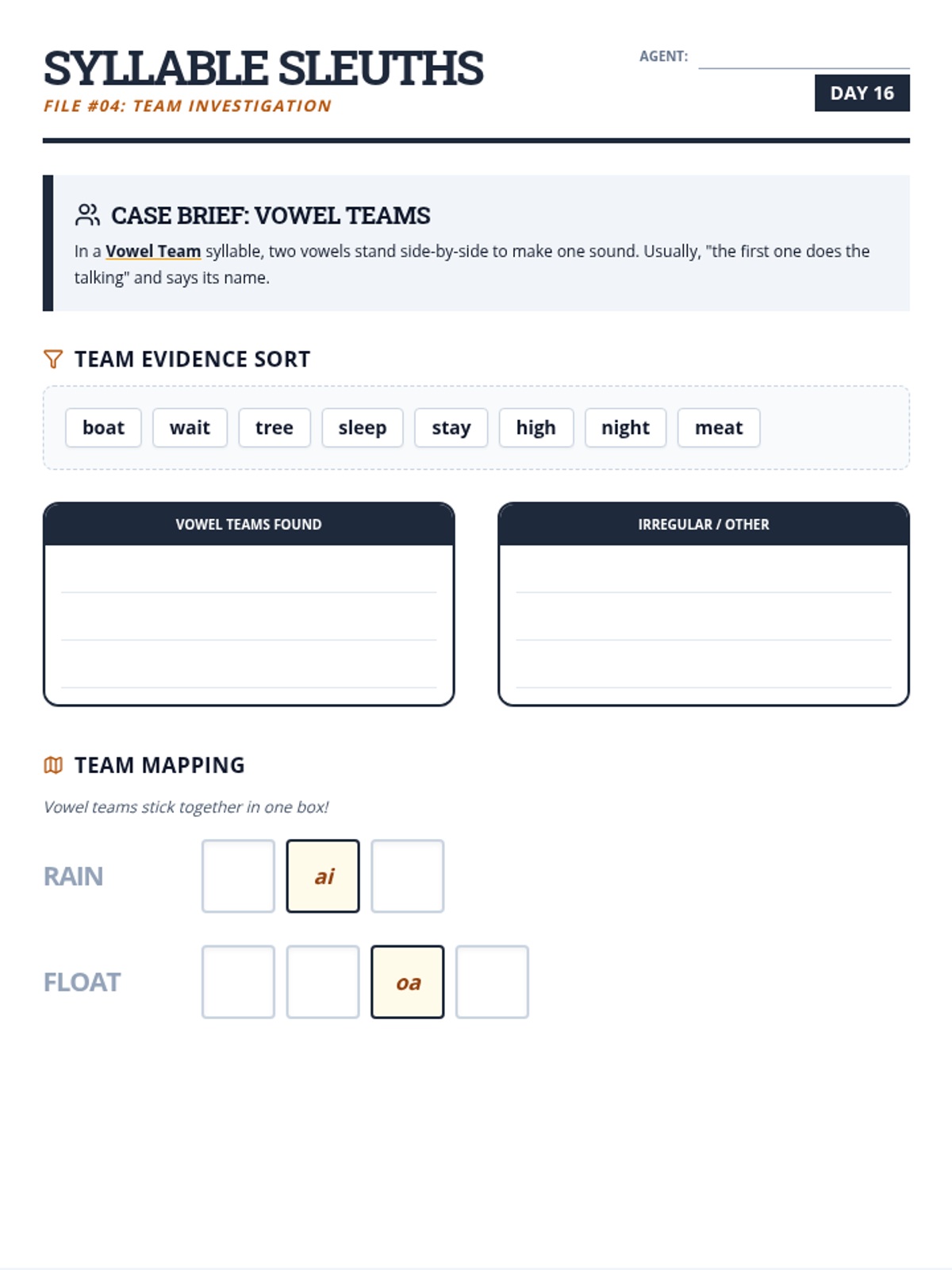
Tracking down vowel teams where two vowels work together to create a specific long or unique vowel sound.
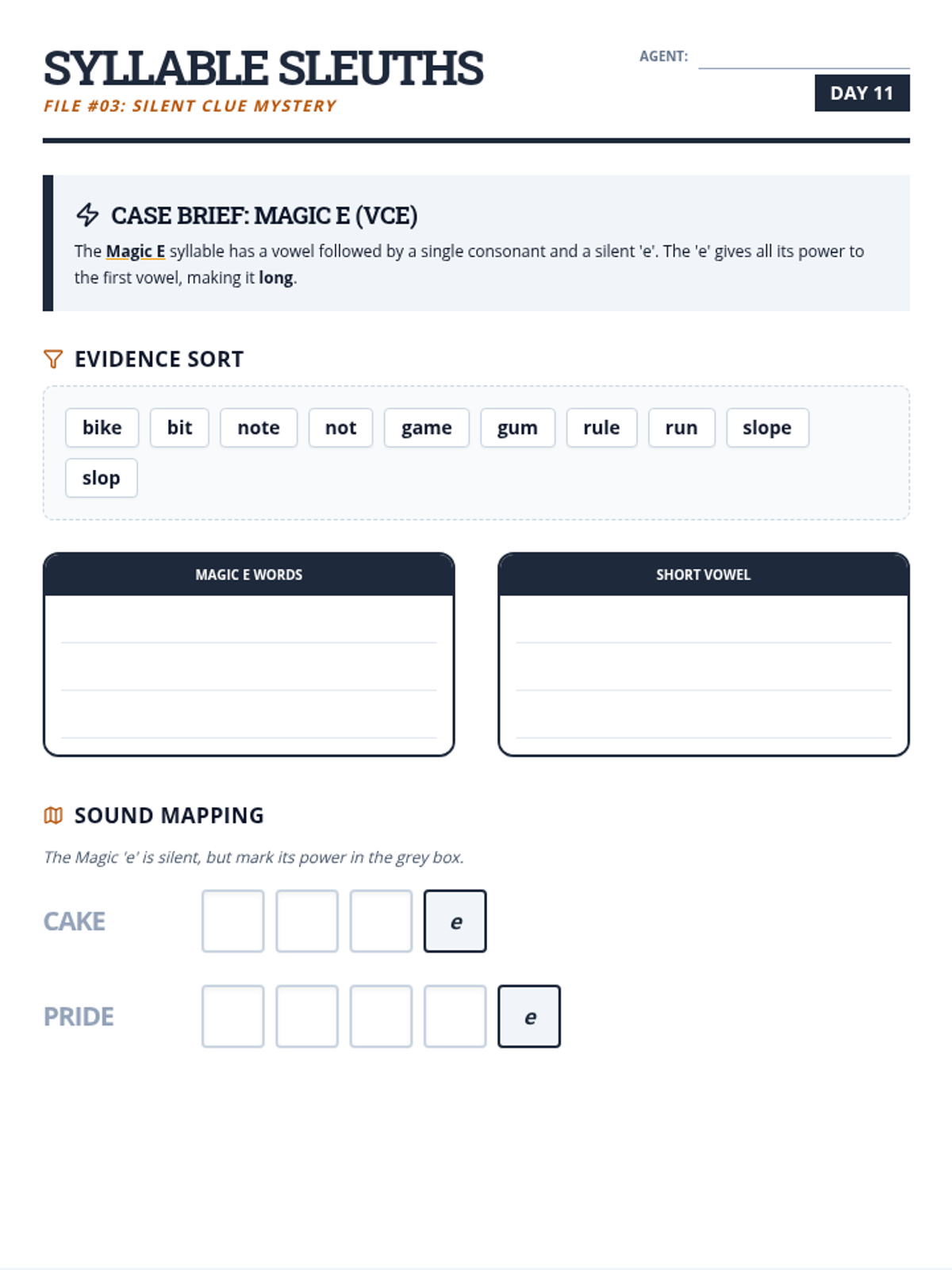
Deciphering the Magic E (VCe) pattern where a silent 'e' at the end of a syllable makes the preceding vowel long.
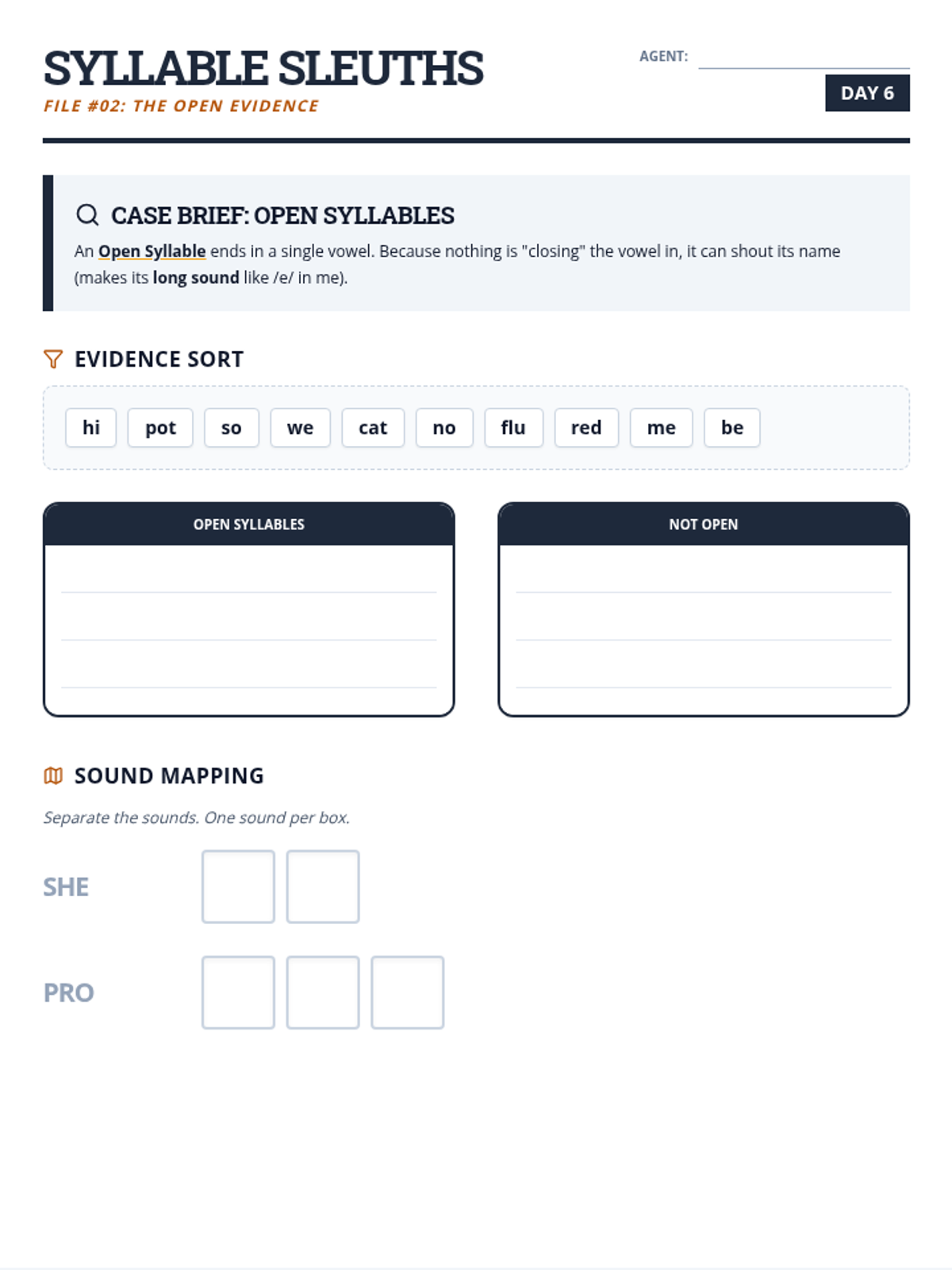
Exploring open syllables that end in a single vowel, which typically makes its long sound.
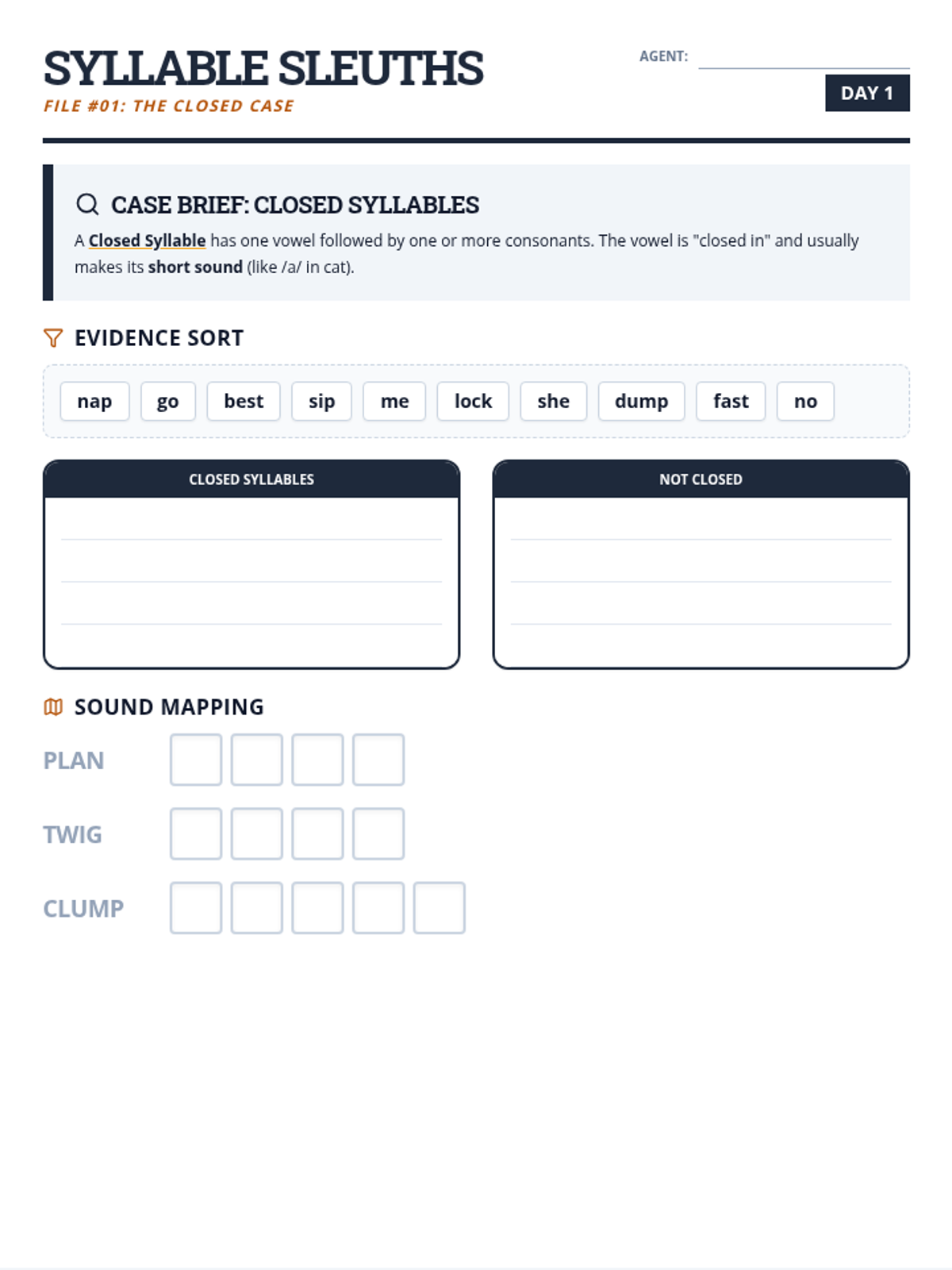
Investigation of closed syllables where a single vowel is followed by one or more consonants, resulting in a short vowel sound.
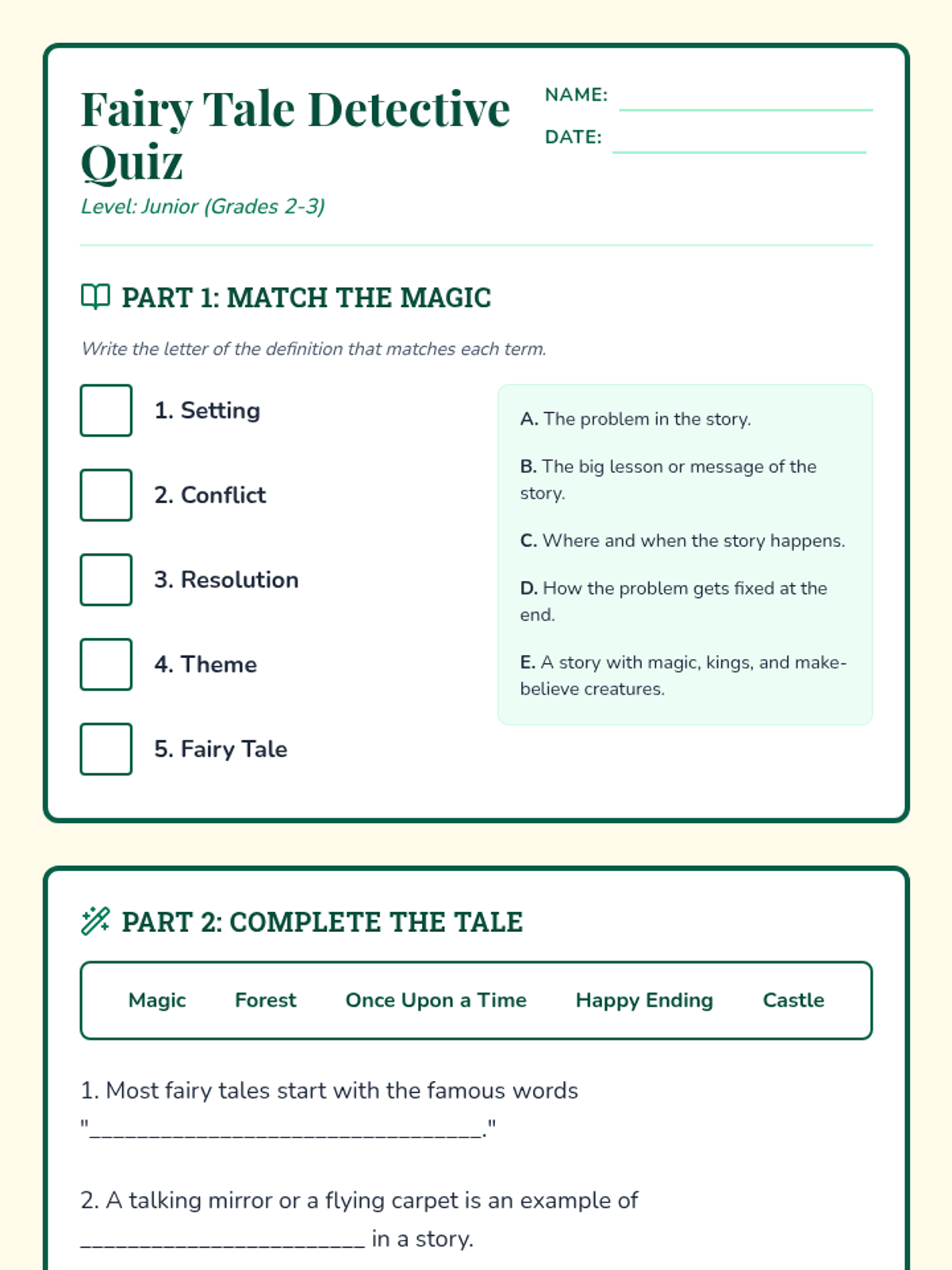
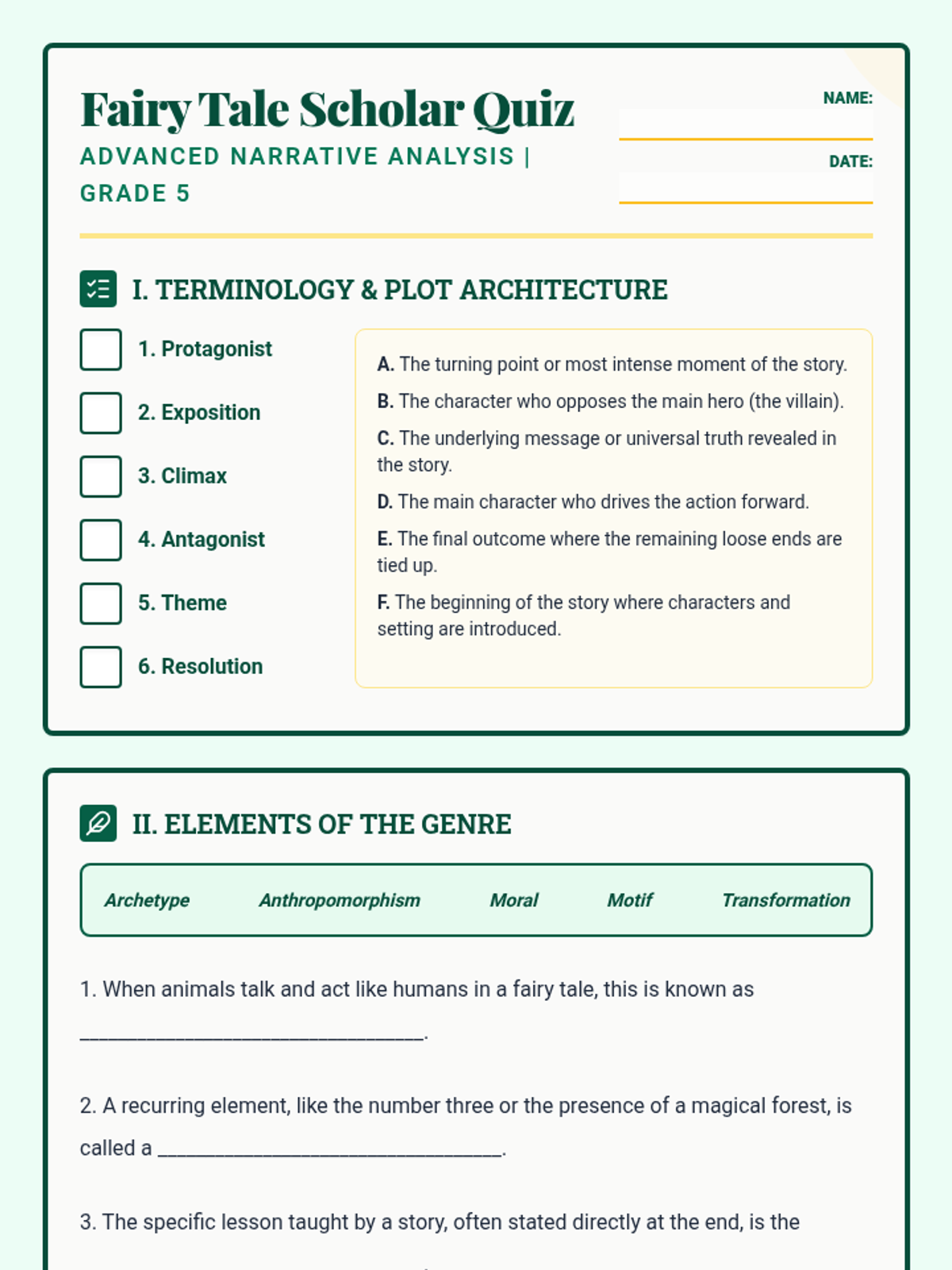
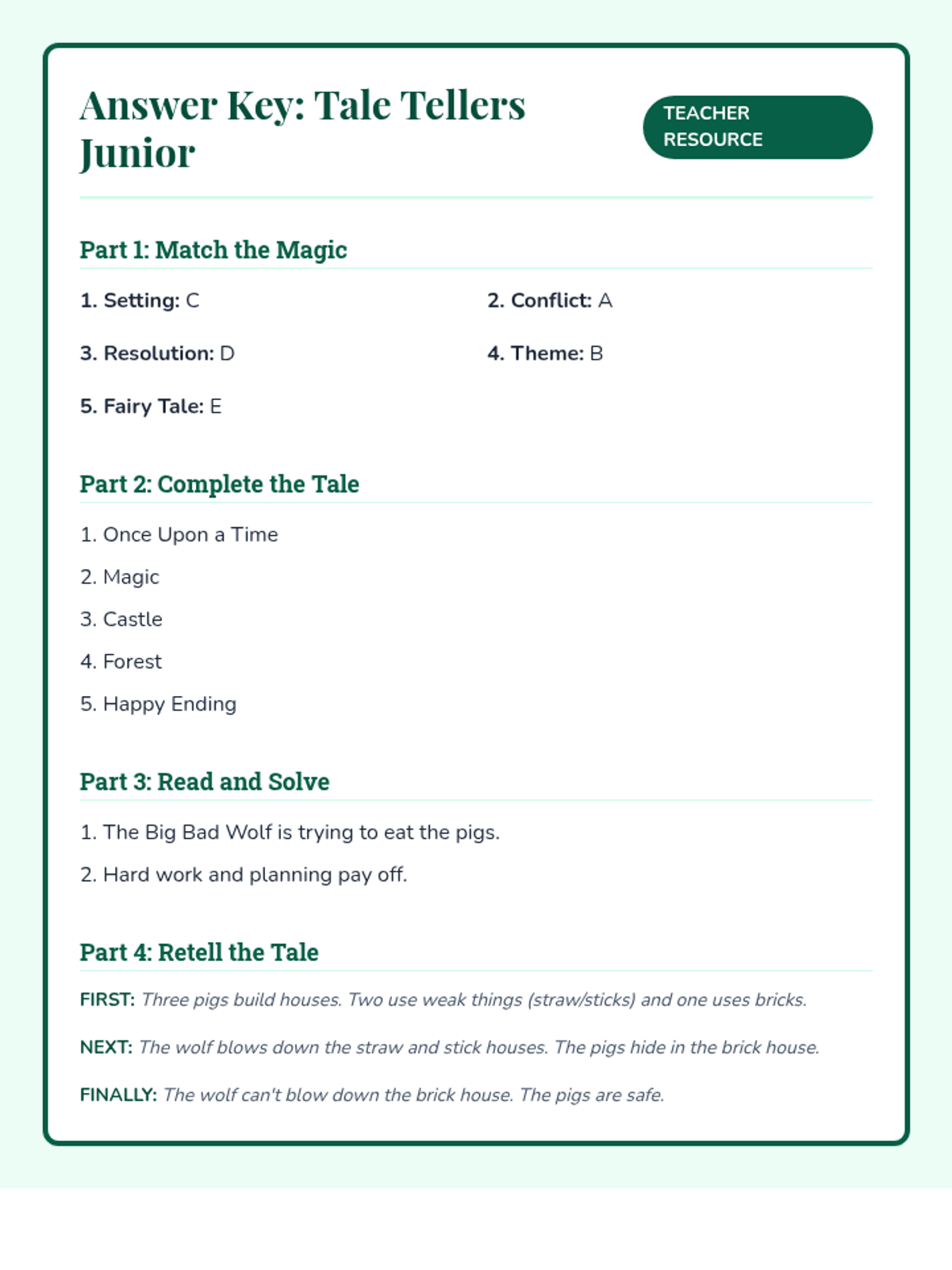
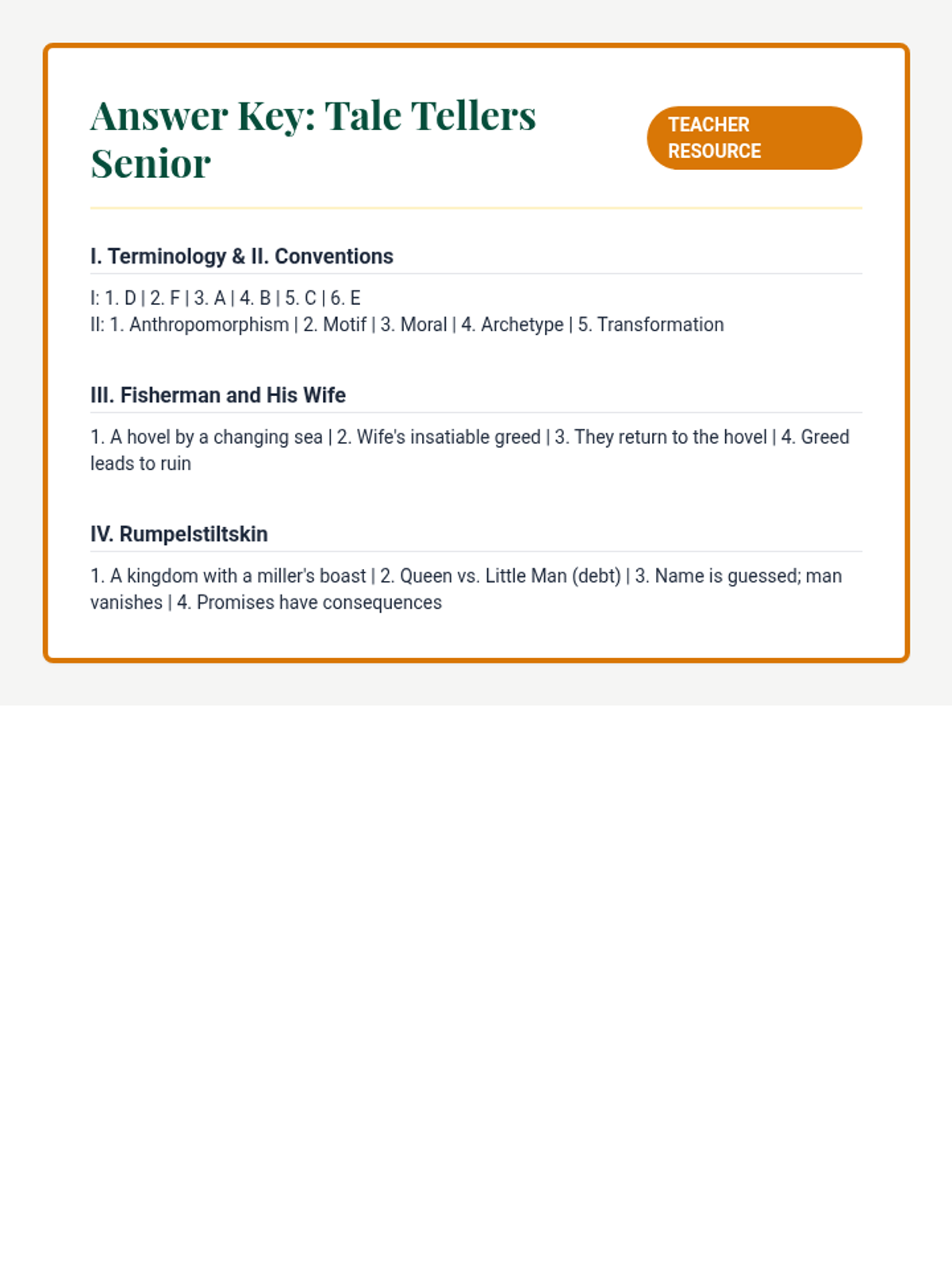
A comprehensive assessment on fairy tale elements and plot structures for elementary students, featuring two differentiated levels to meet specific grade-level standards.
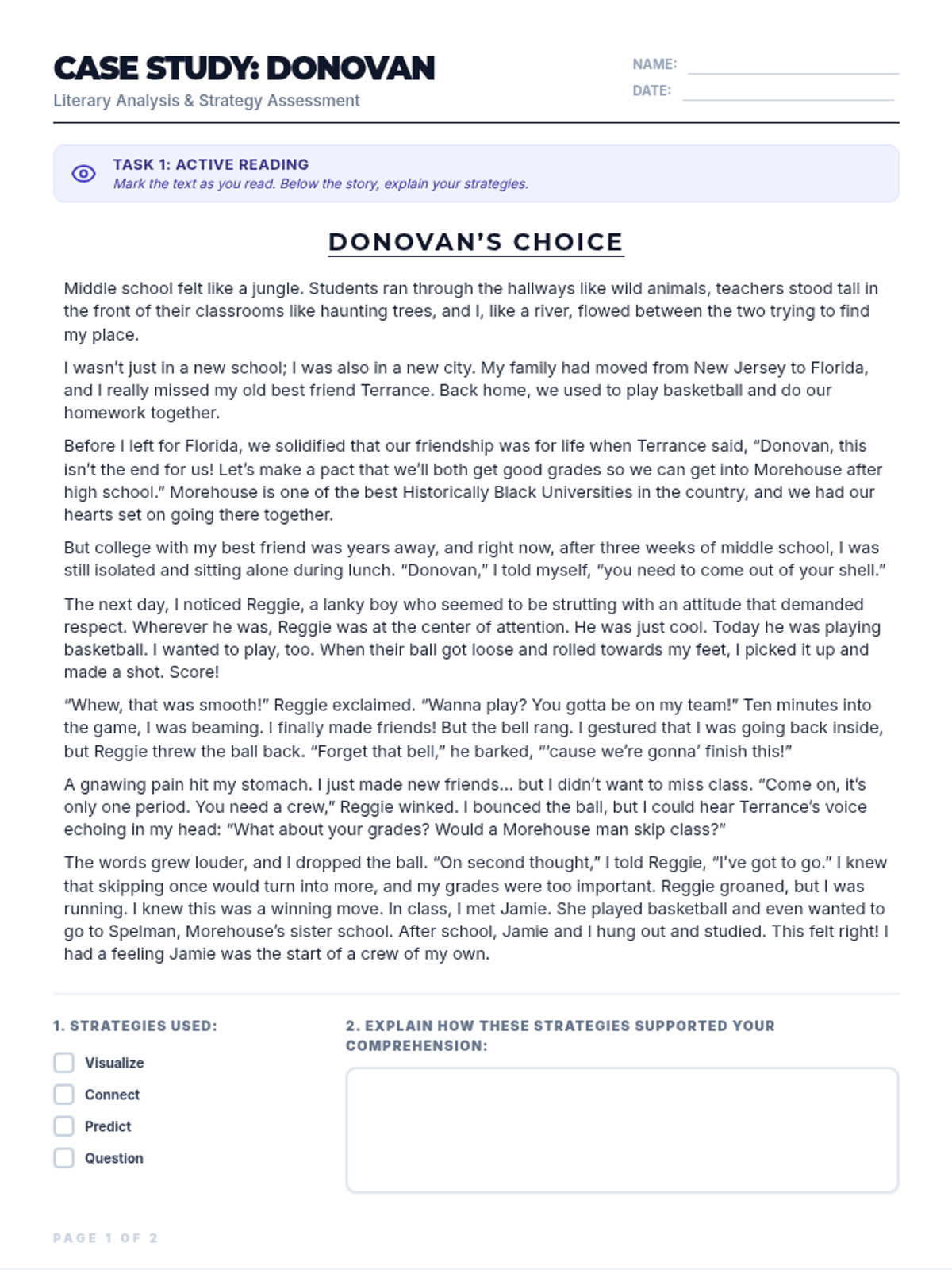
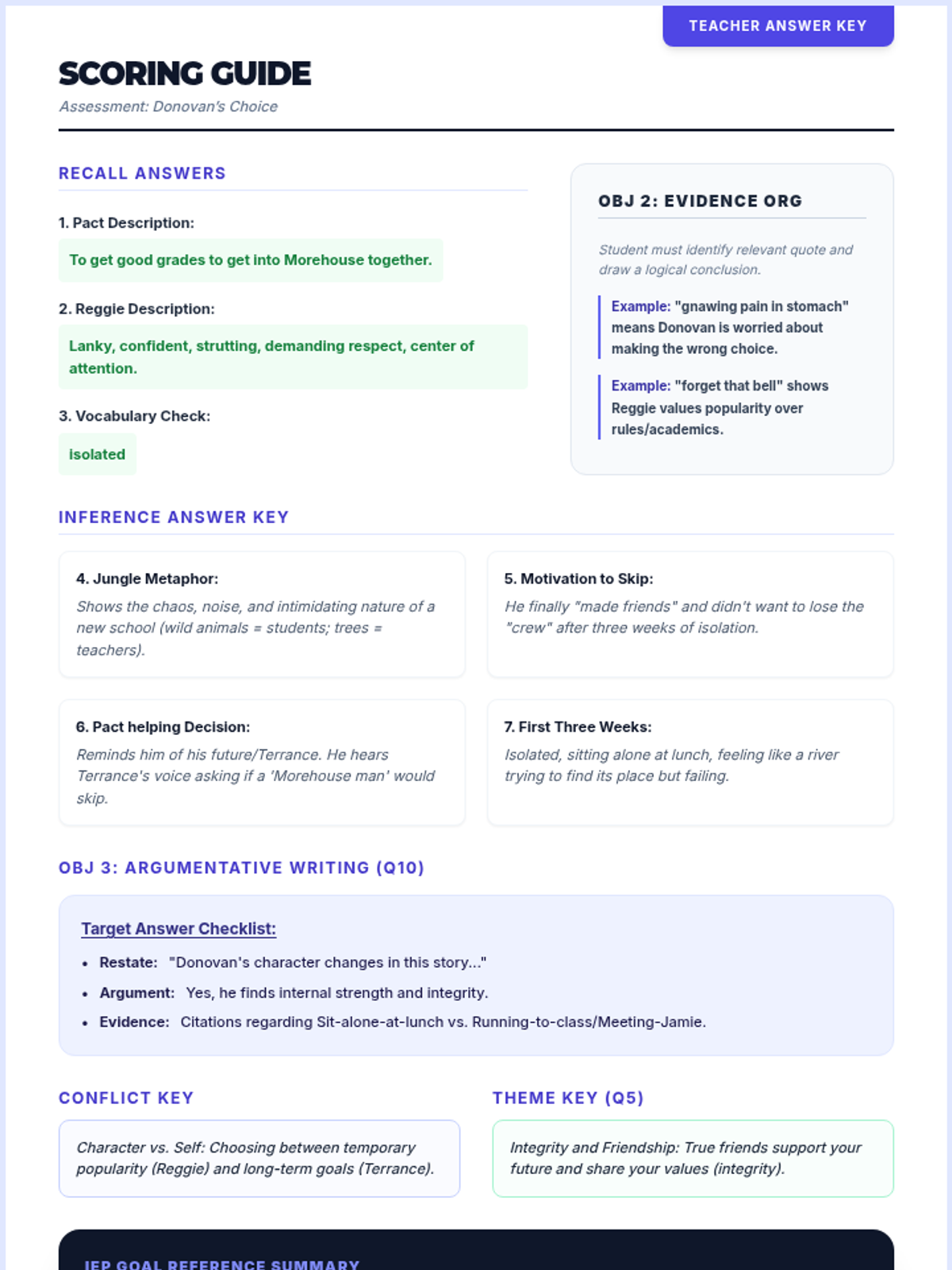
A literature-based assessment focused on evidence-based reading, active strategy reflection, and identifying conflict and theme through the story of Donovan's social choices.
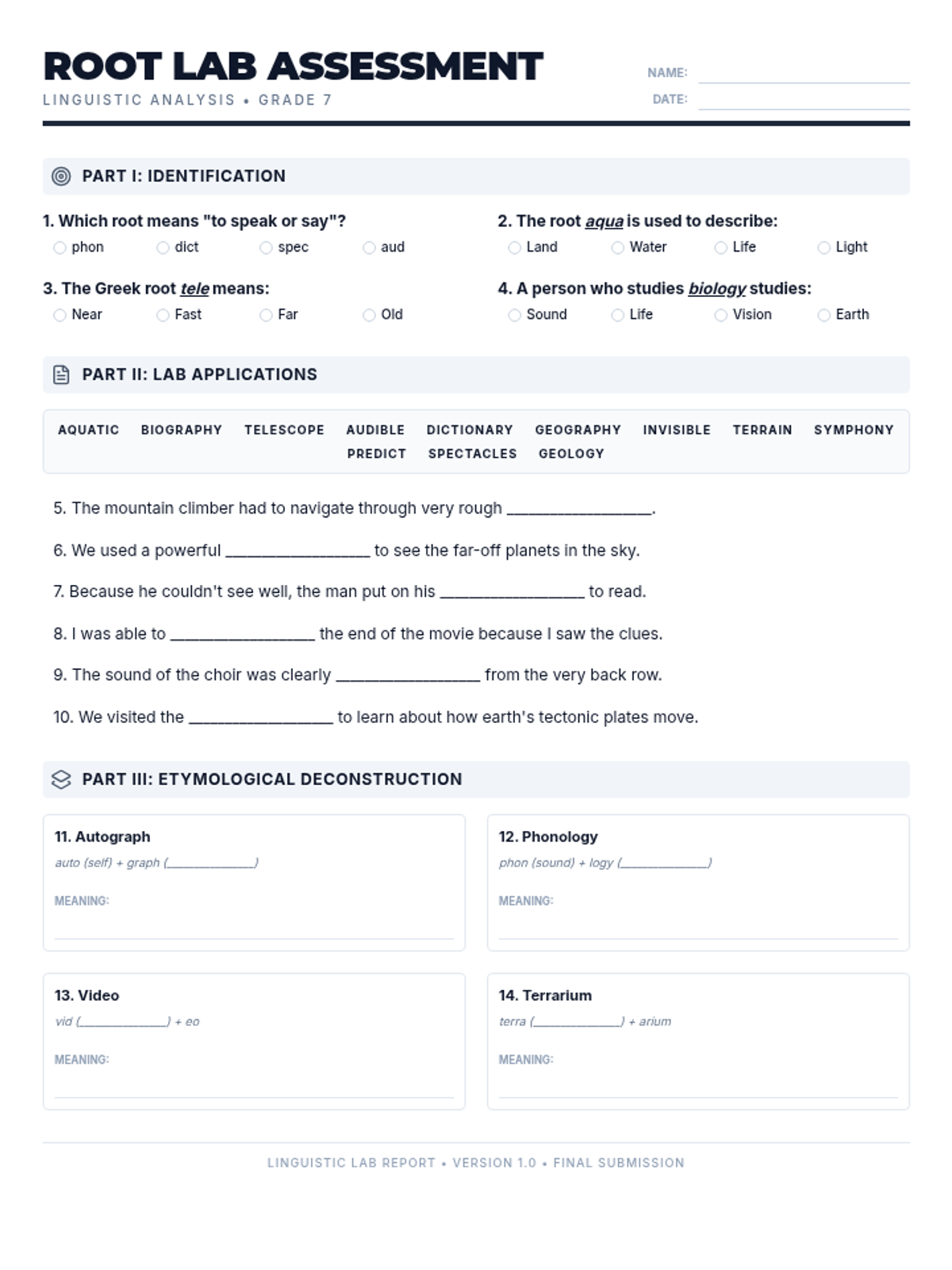
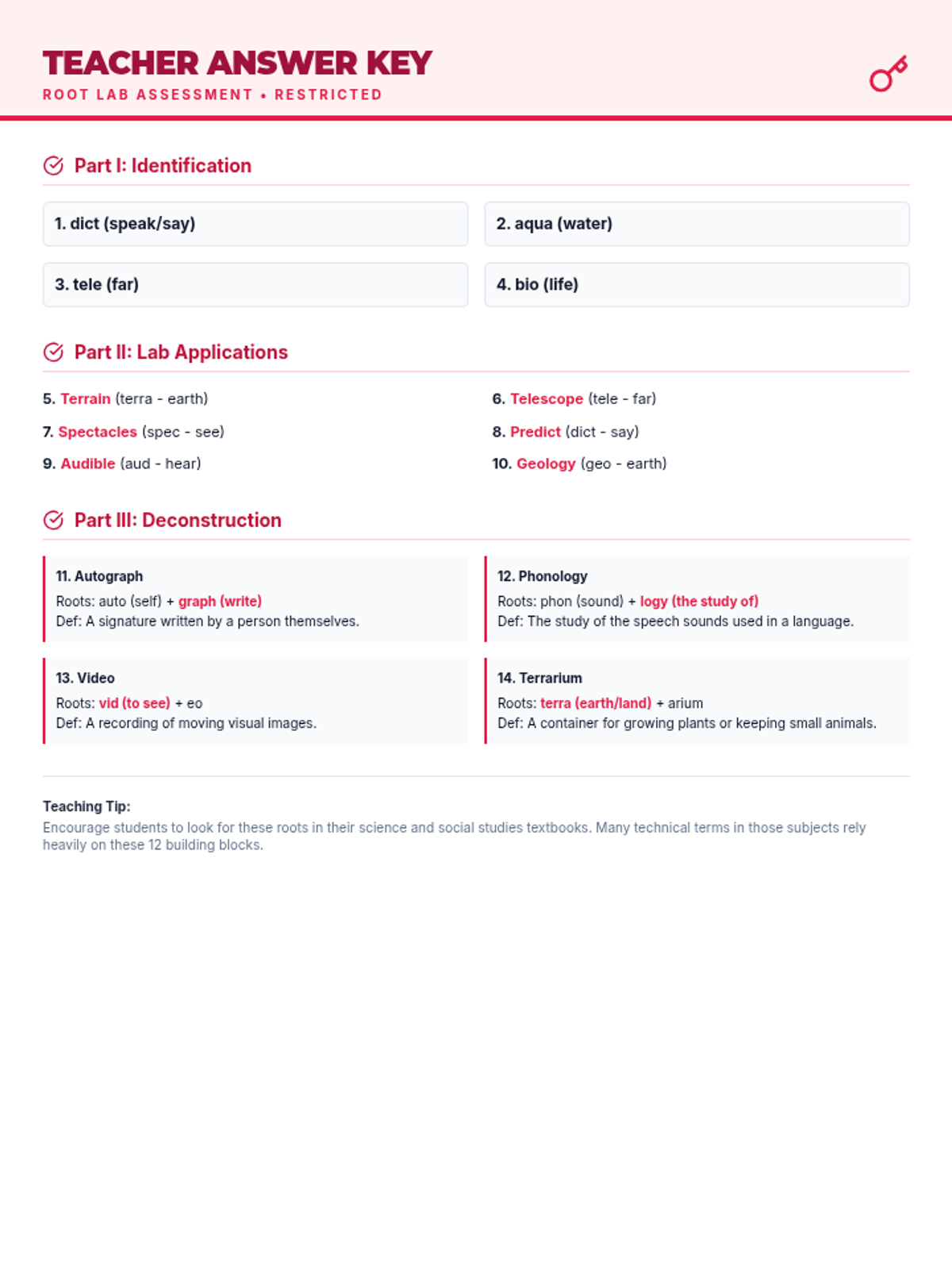
Students explore 10 common Greek and Latin roots, identifying their meanings and applying them to determine the definitions of complex academic vocabulary.
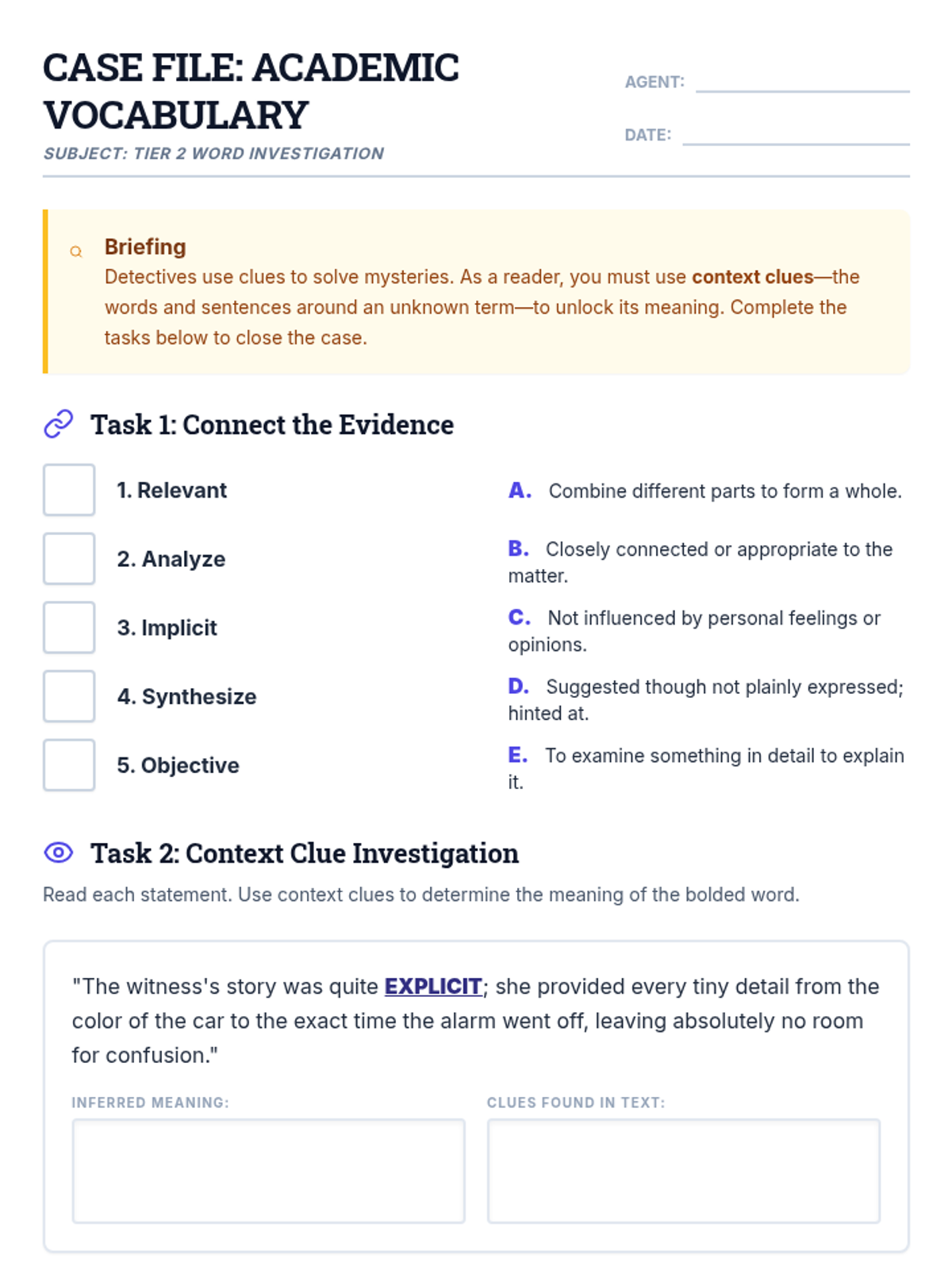
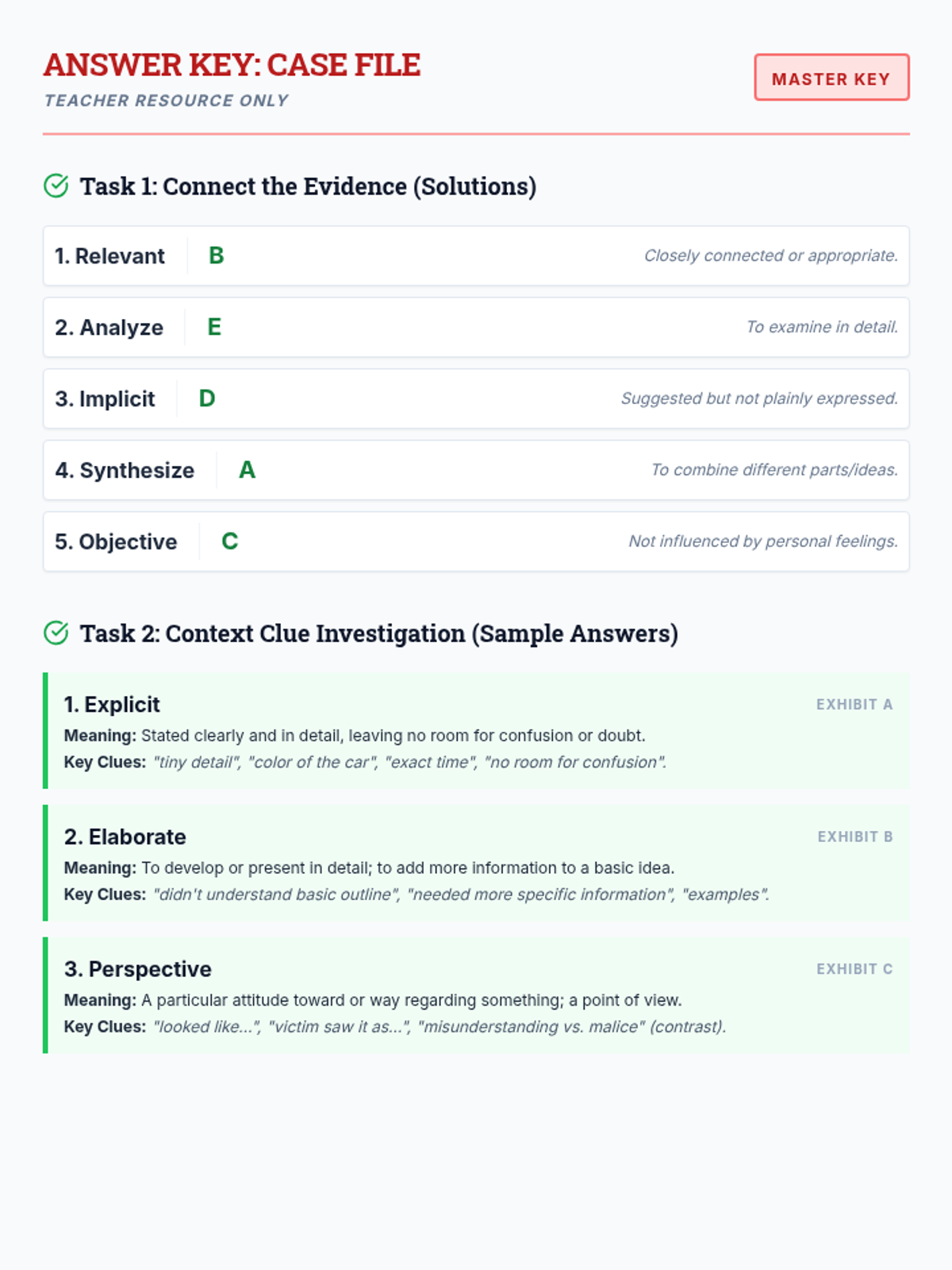
A middle school language arts lesson focused on mastering high-utility Tier 2 academic vocabulary and using context clues to determine meaning. Students act as 'Word Detectives' to investigate and decode complex texts.
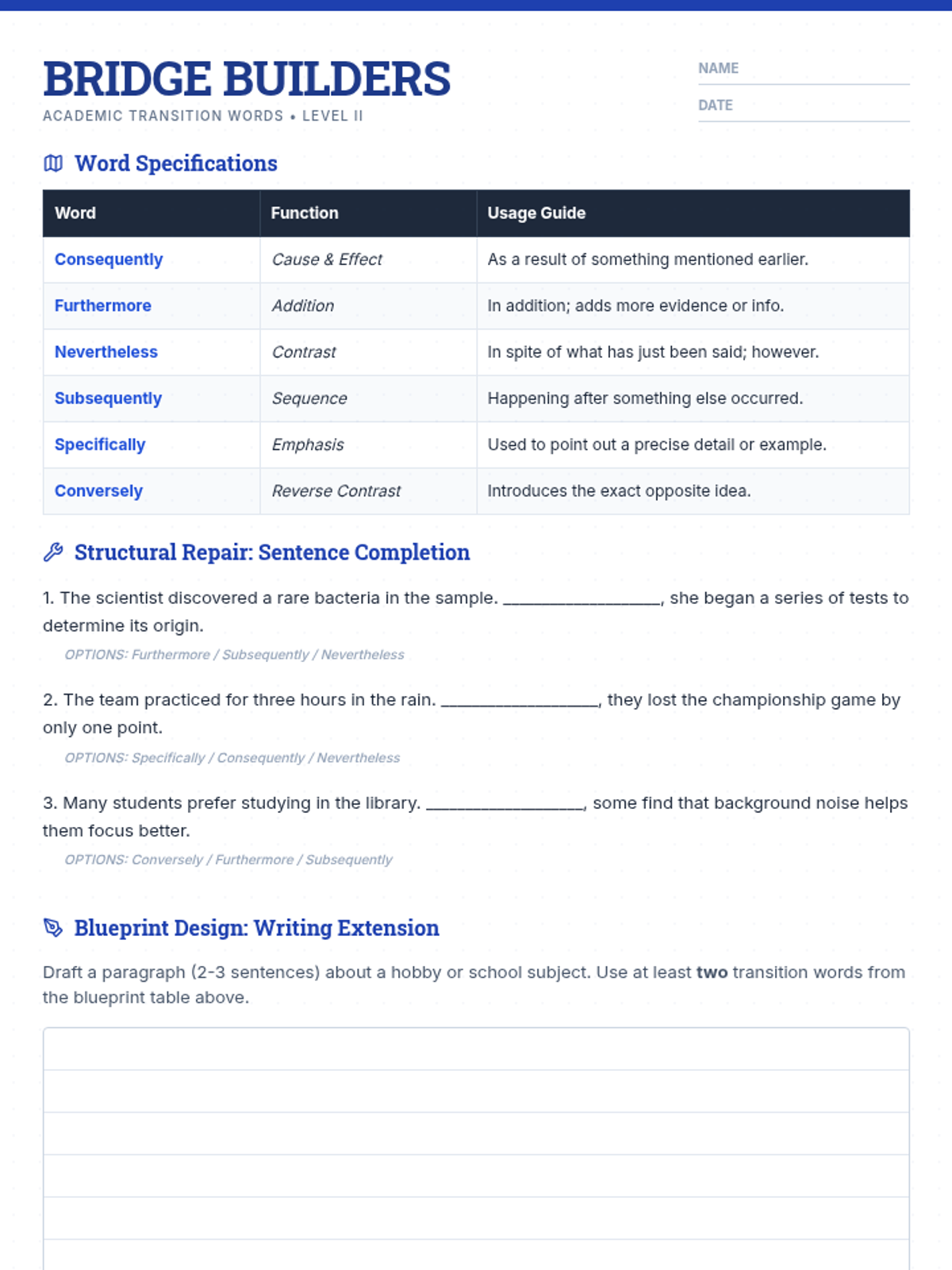
A middle school vocabulary lesson focused on academic transition words, using a 'Bridge Builders' theme to illustrate how these words connect ideas in writing.
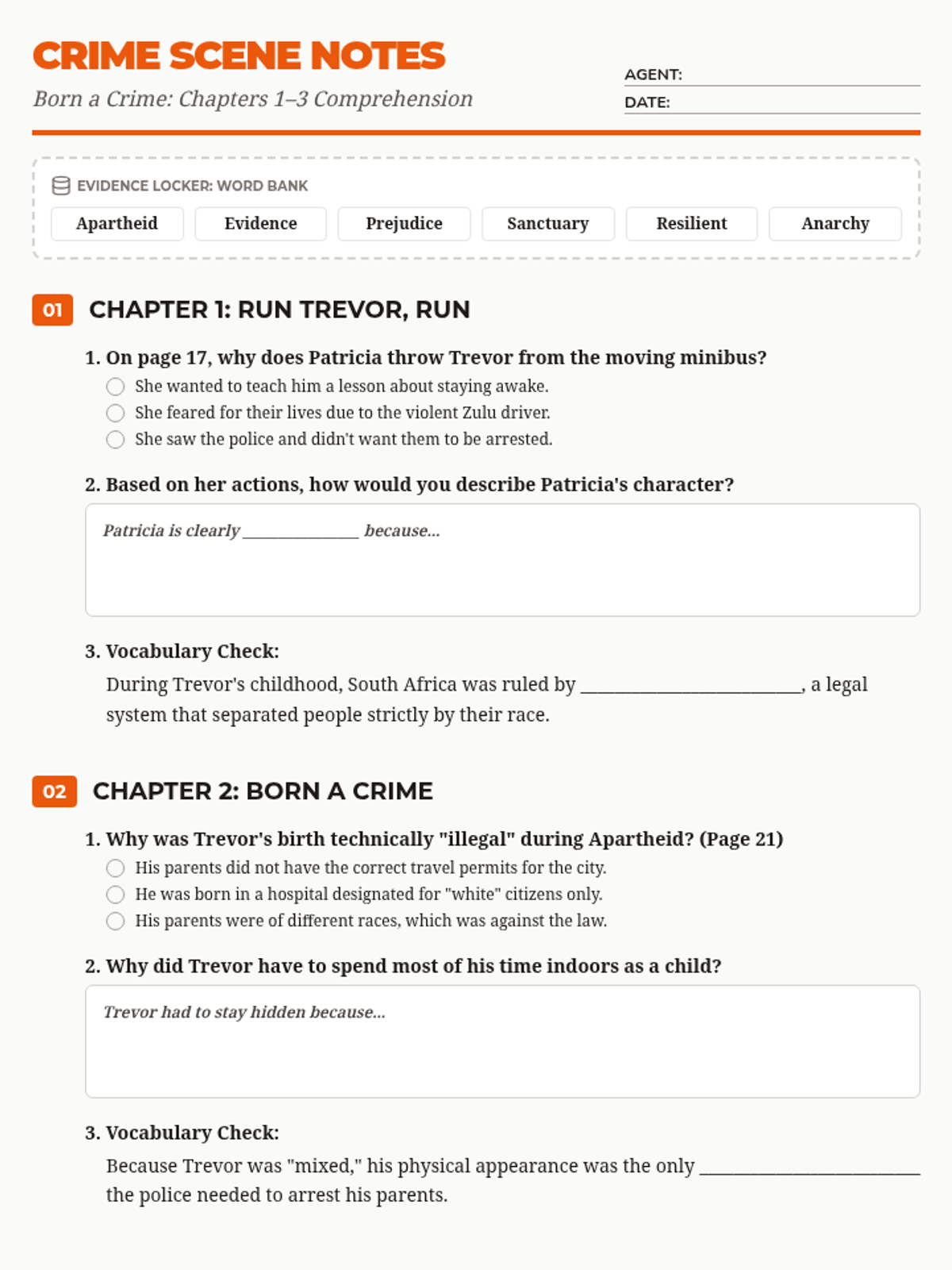
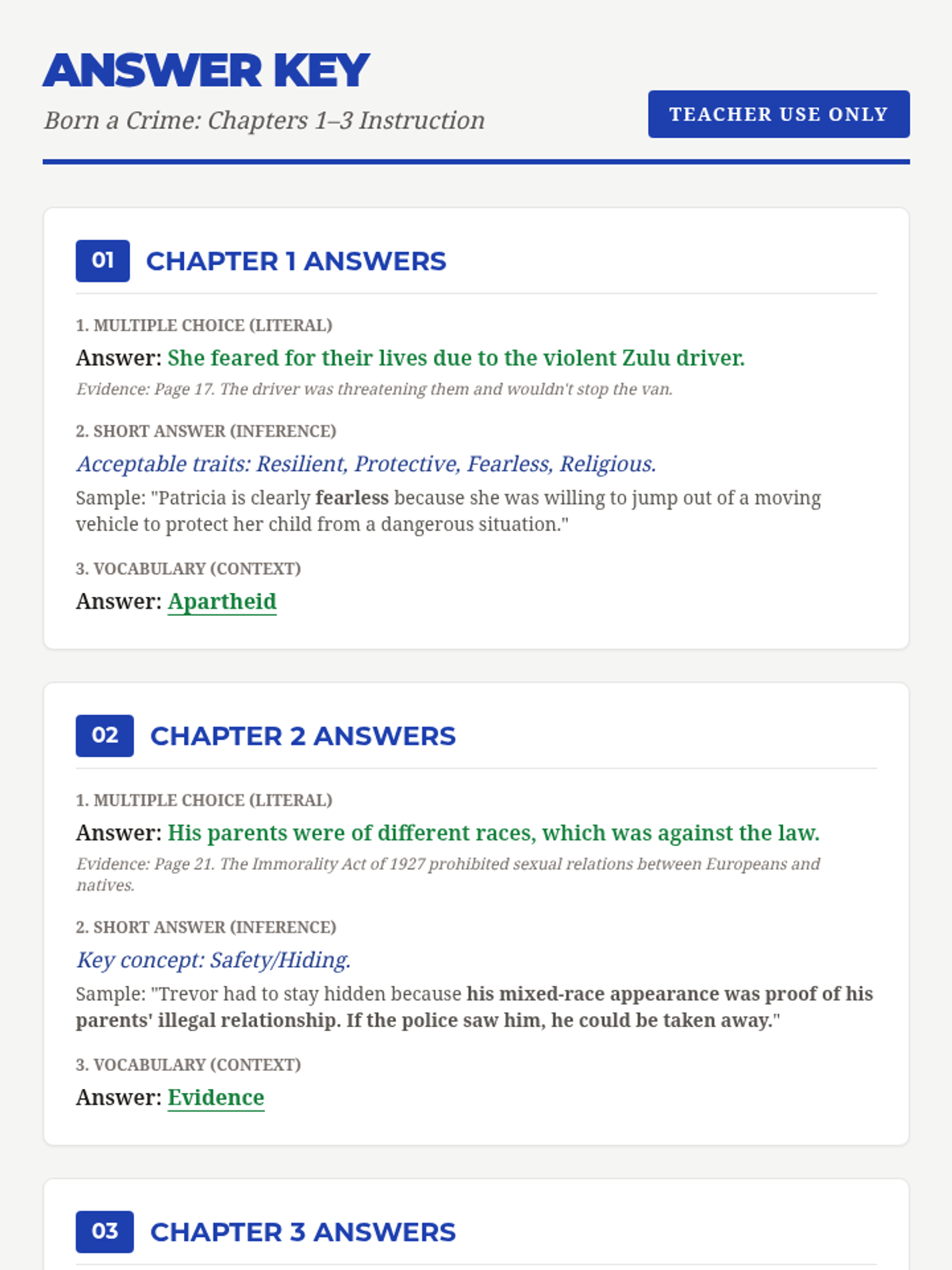
This lesson explores the first three chapters of Trevor Noah's 'Born a Crime', focusing on the historical context of Apartheid, character development of Trevor and Patricia, and the power of language and identity.
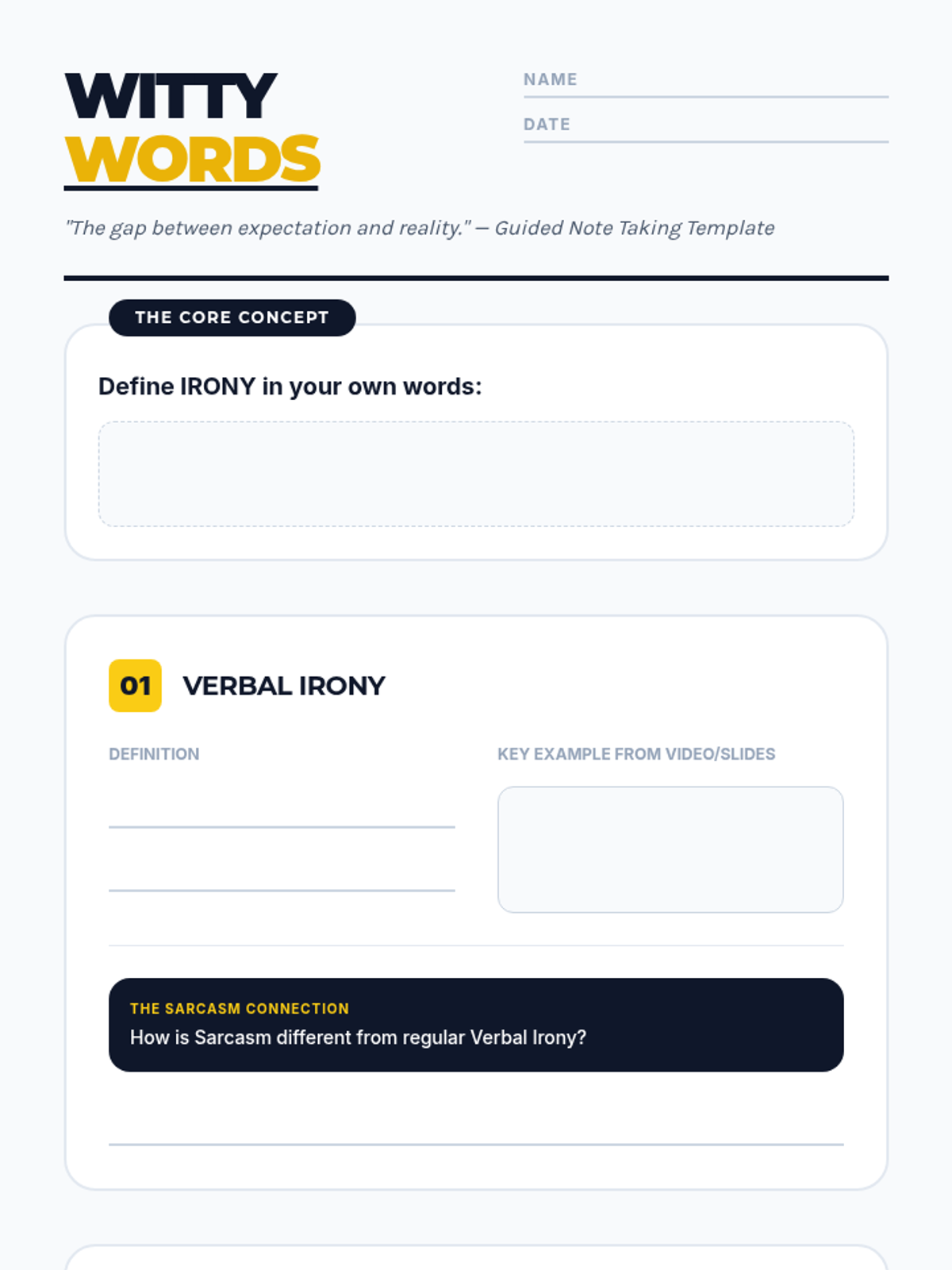
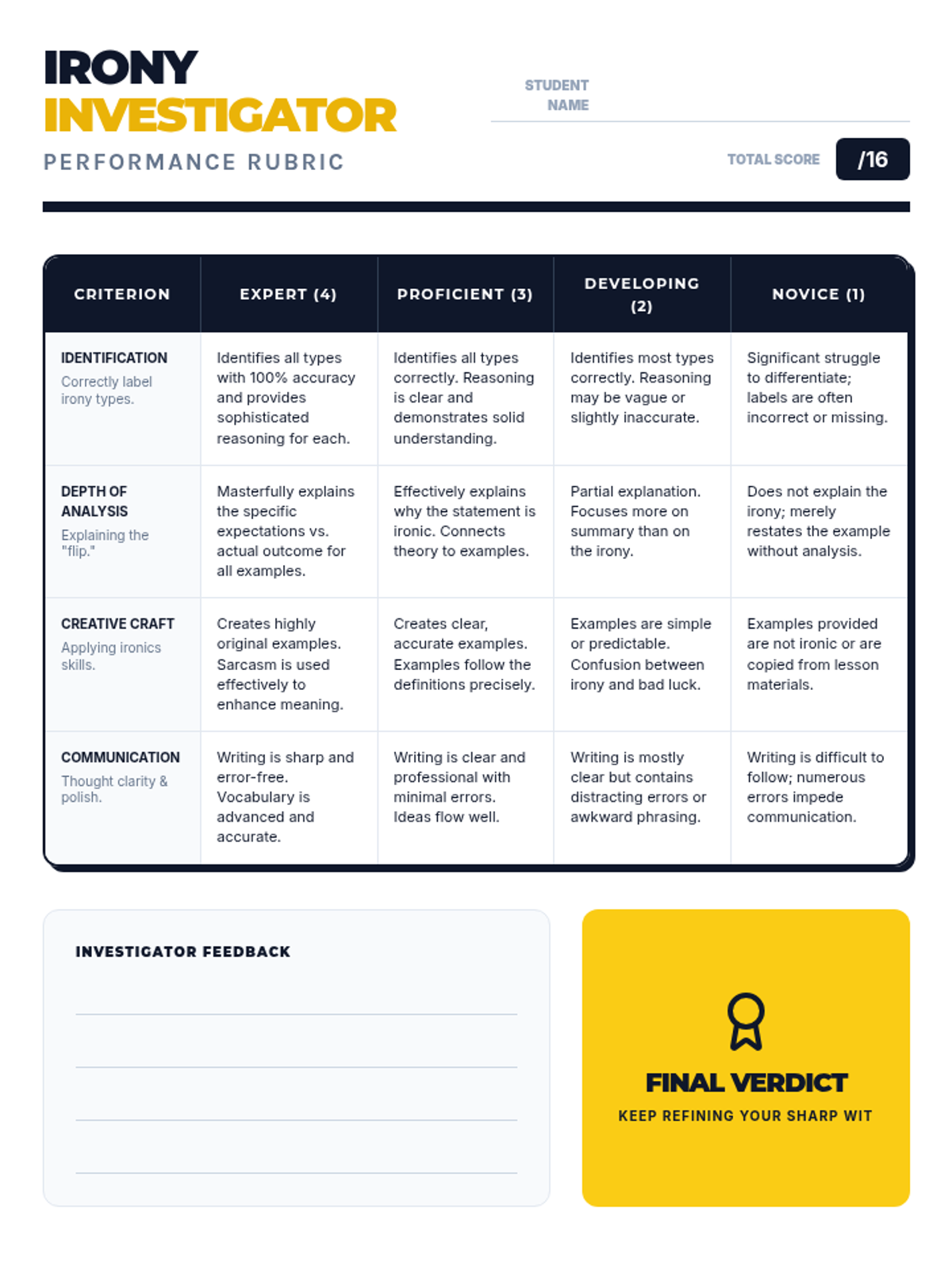
A sharp exploration of irony and sarcasm, teaching students to identify and create verbal, situational, and dramatic irony through engaging examples and analysis.