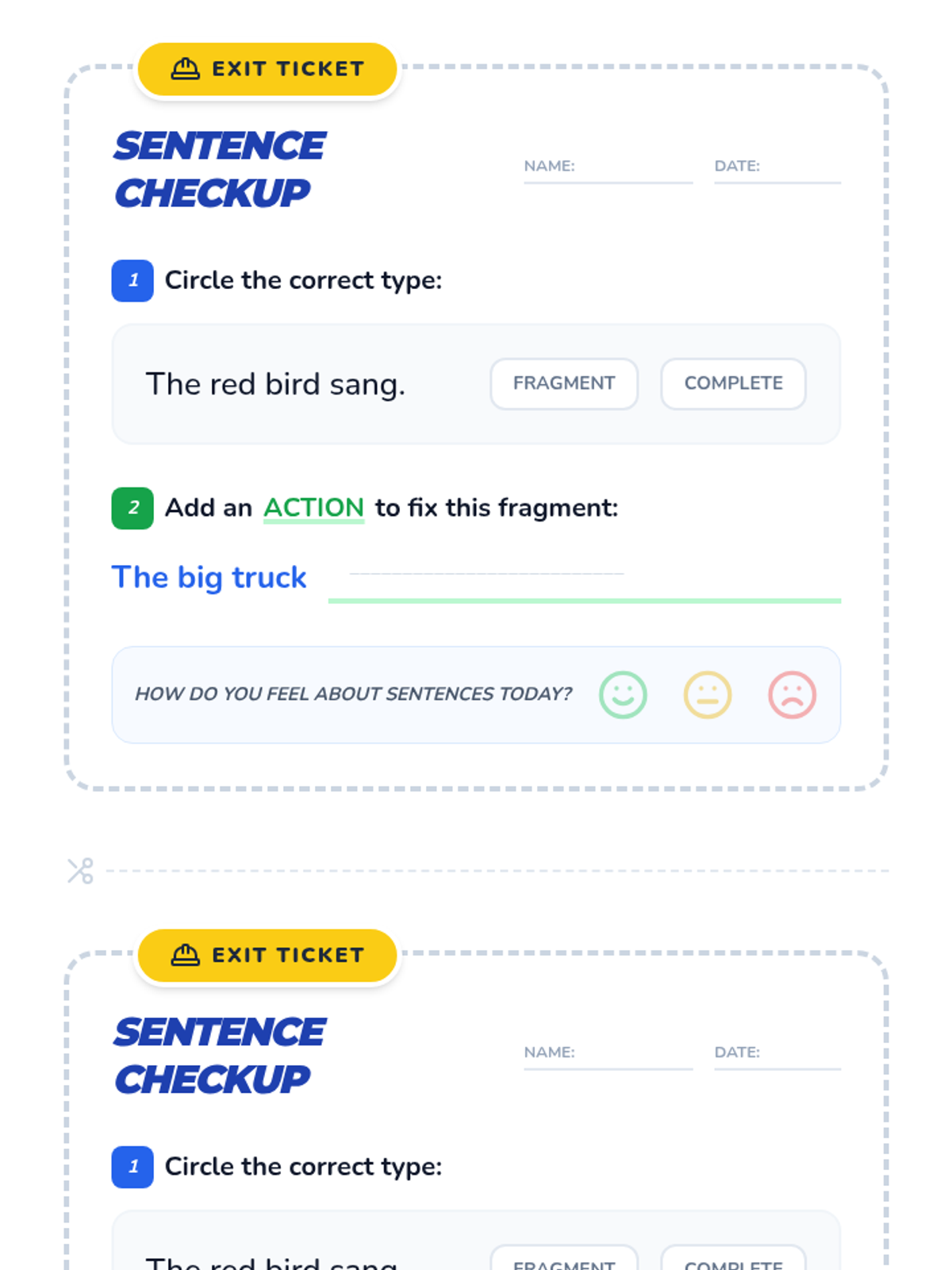
A 5th-grade grammar lesson focusing on identifying prepositional phrases and understanding their roles as adjectival or adverbial modifiers.
Covers the climax and resolution, final character evolution, and a cumulative synthesis of the book's message.
Focuses on synthesizing themes of resilience and fragility as the community reacts to Winslow.
Explores Nora's character, Winslow's growth, and practices summarizing key plot events from the middle of the book.
Focuses on the introduction of Winslow and Louie, establishing the setting, and initial character analysis of Louie's motivations.
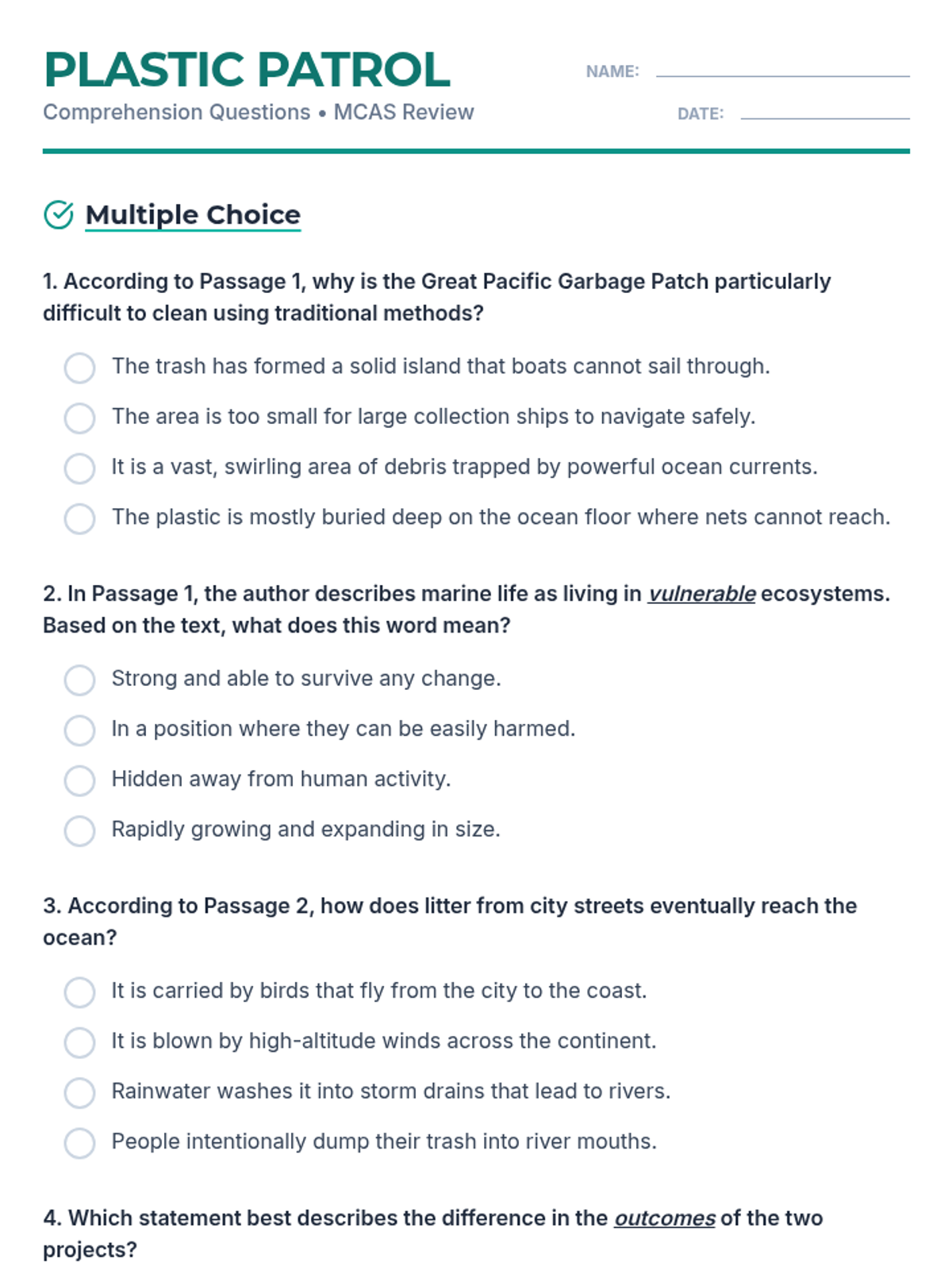
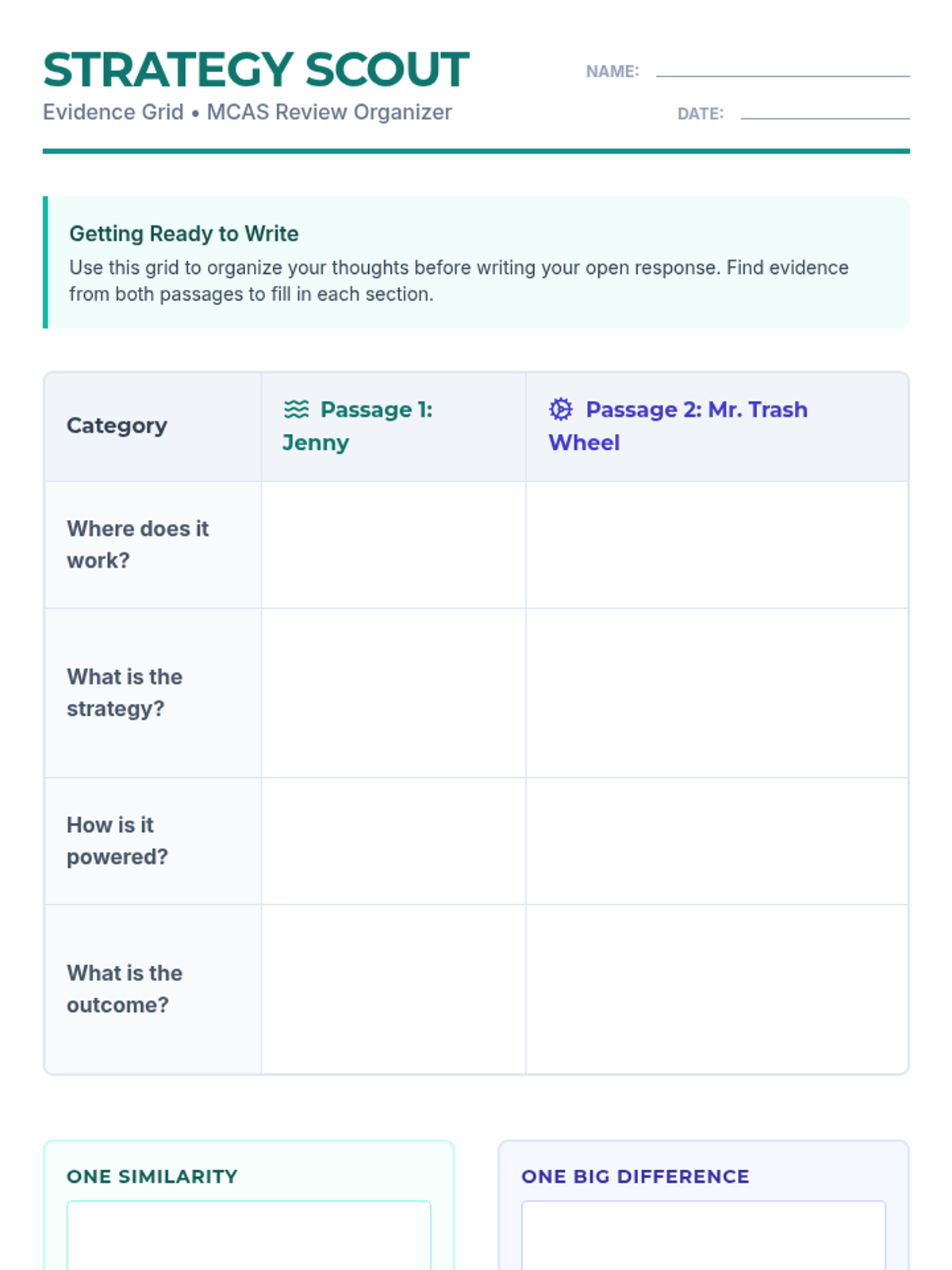
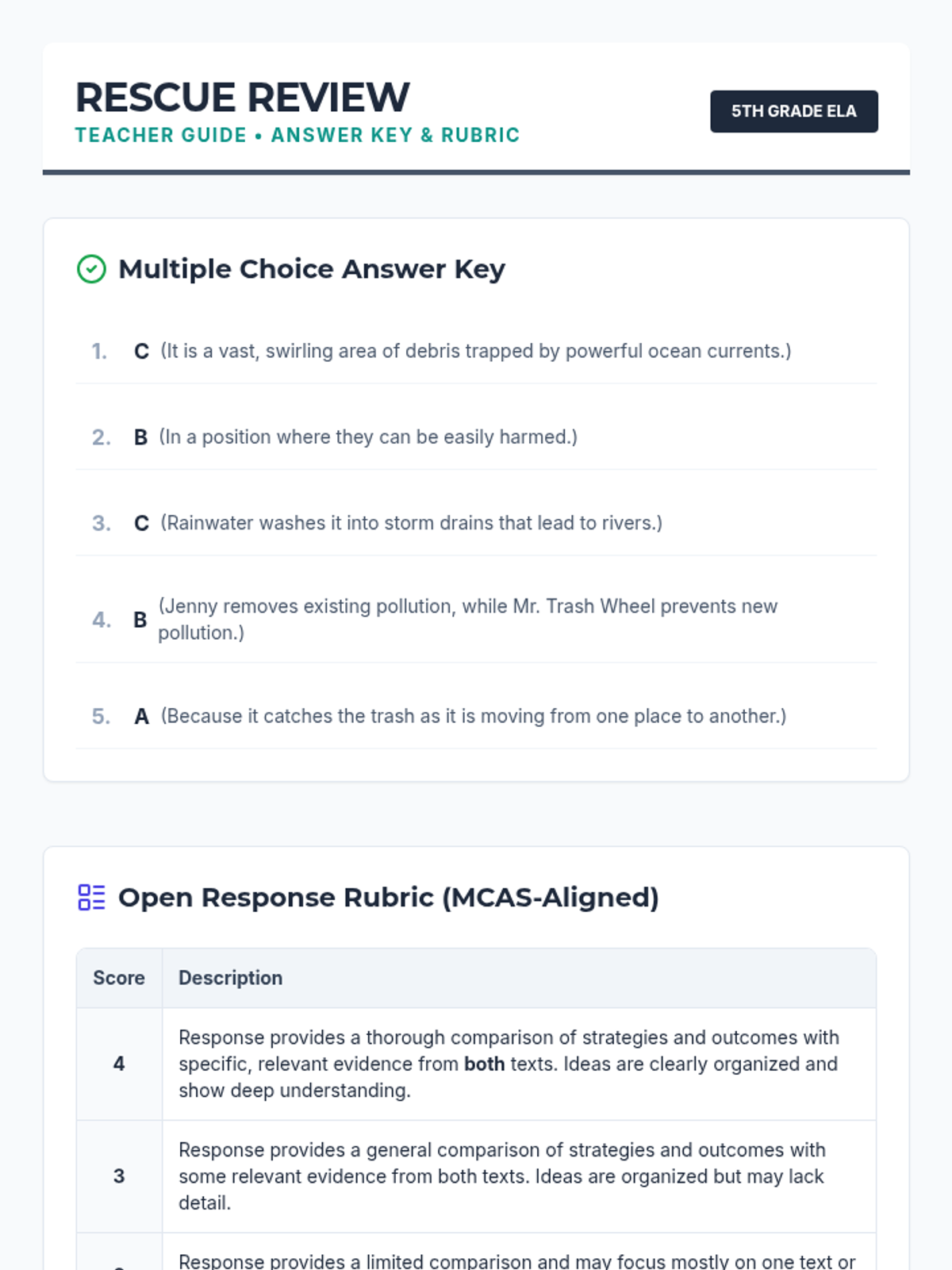
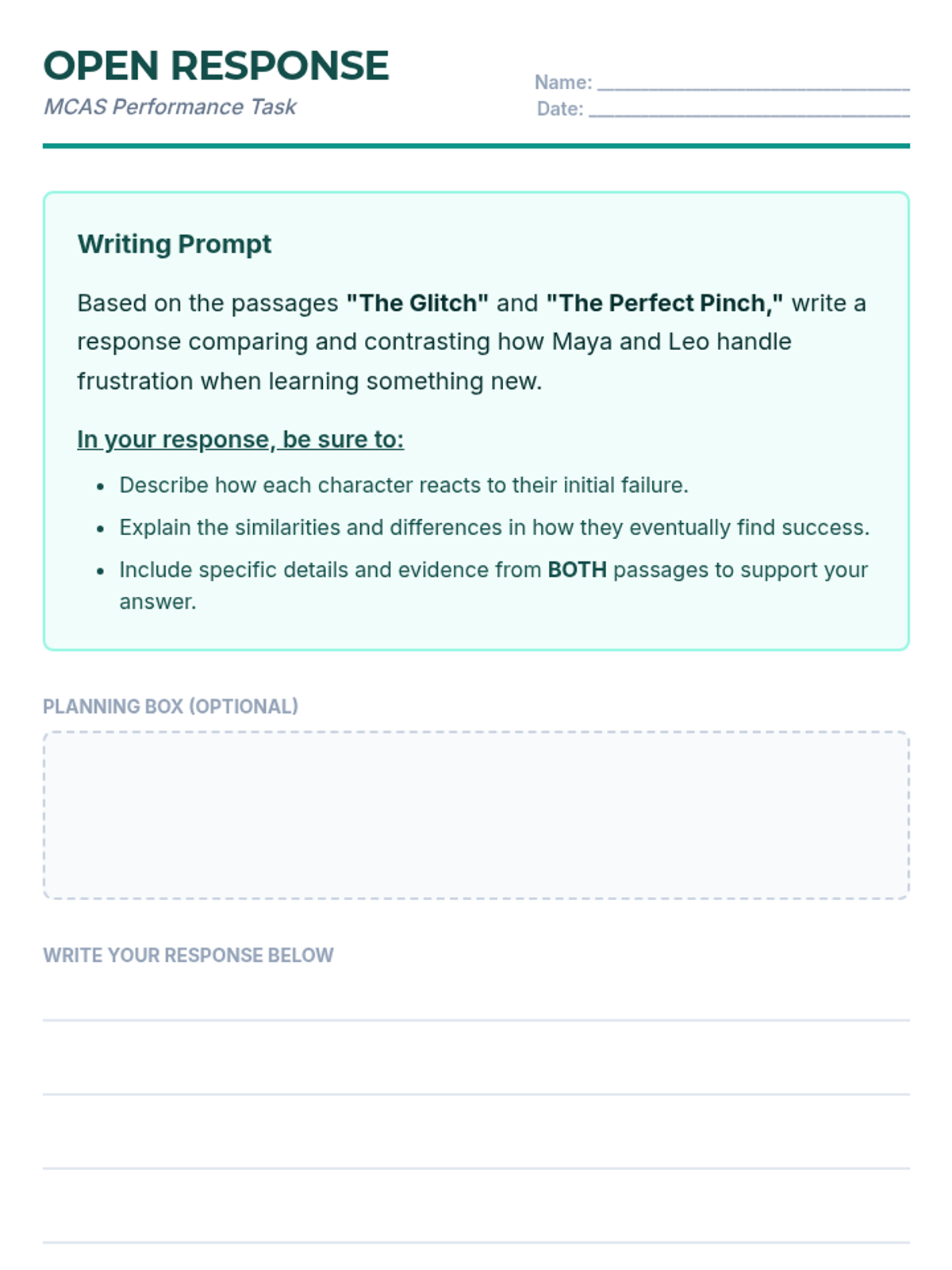
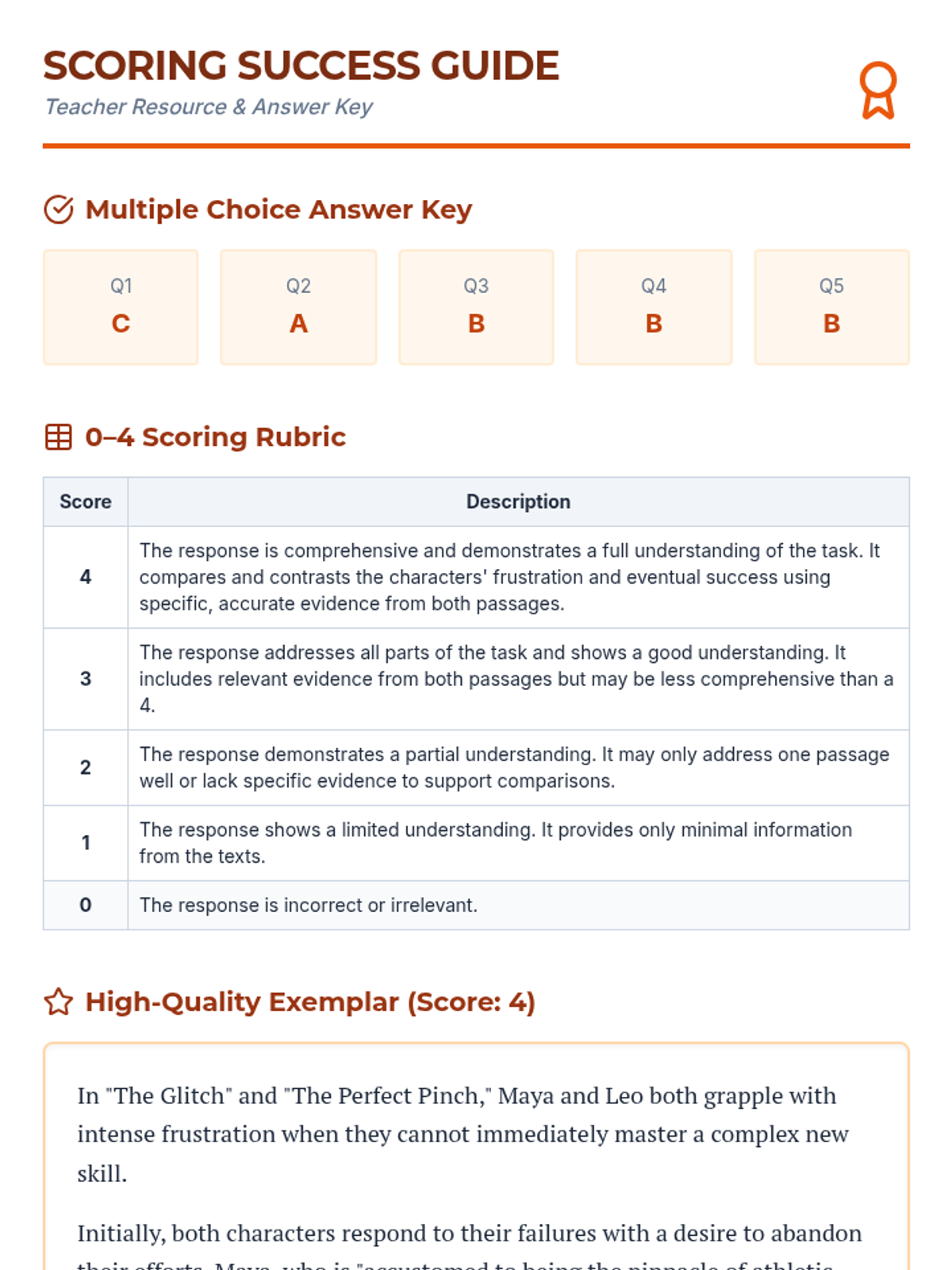
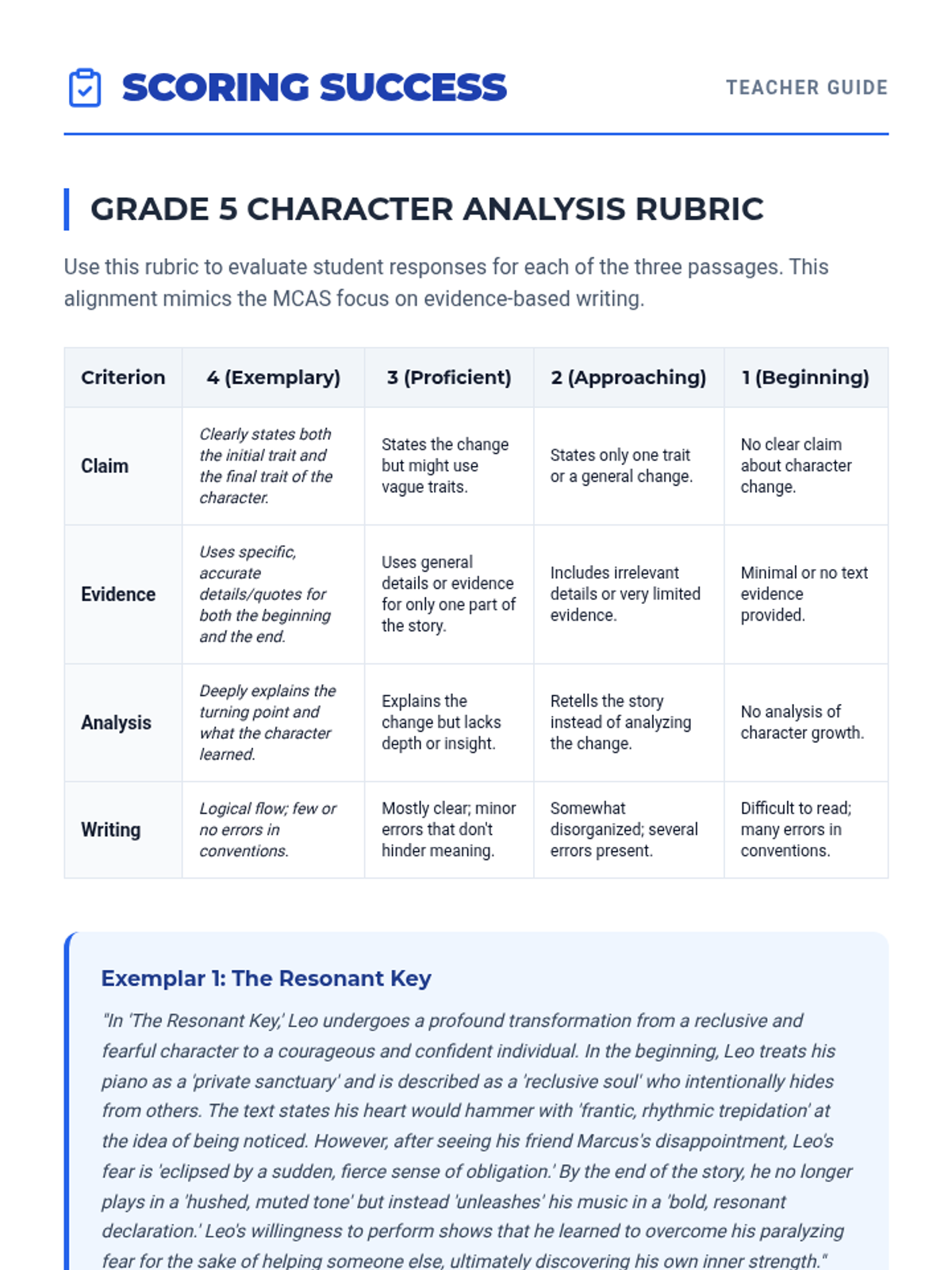
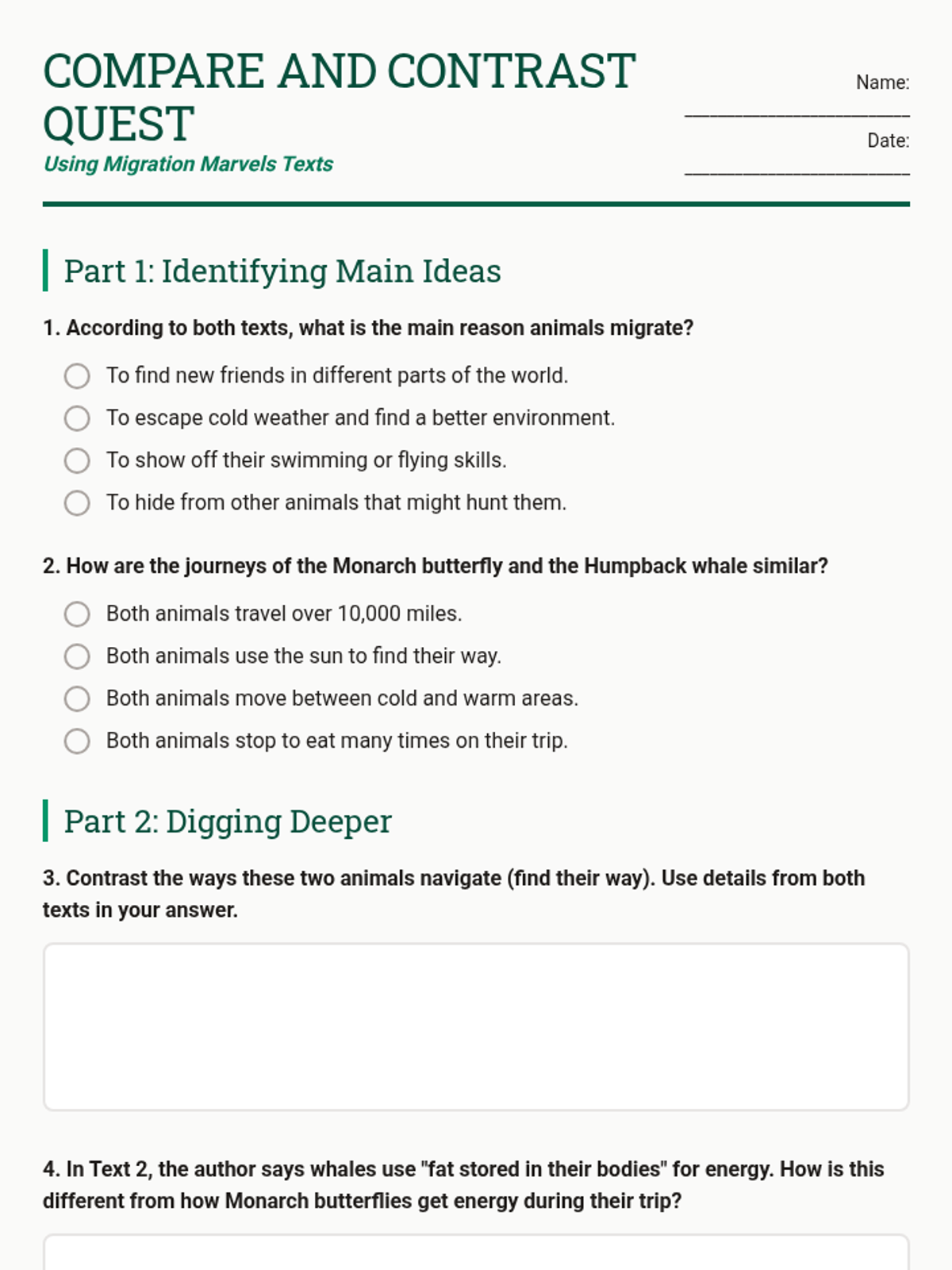
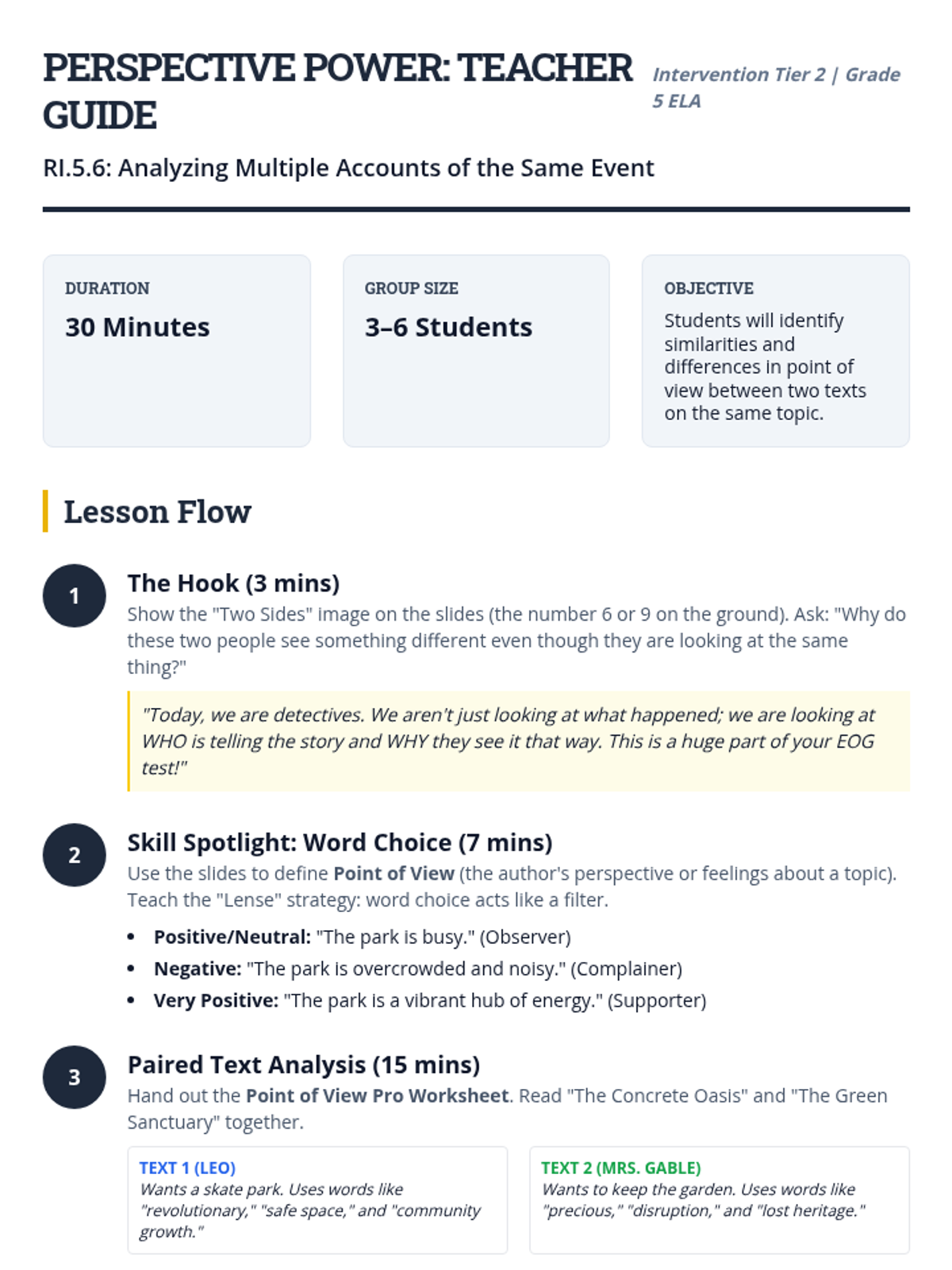
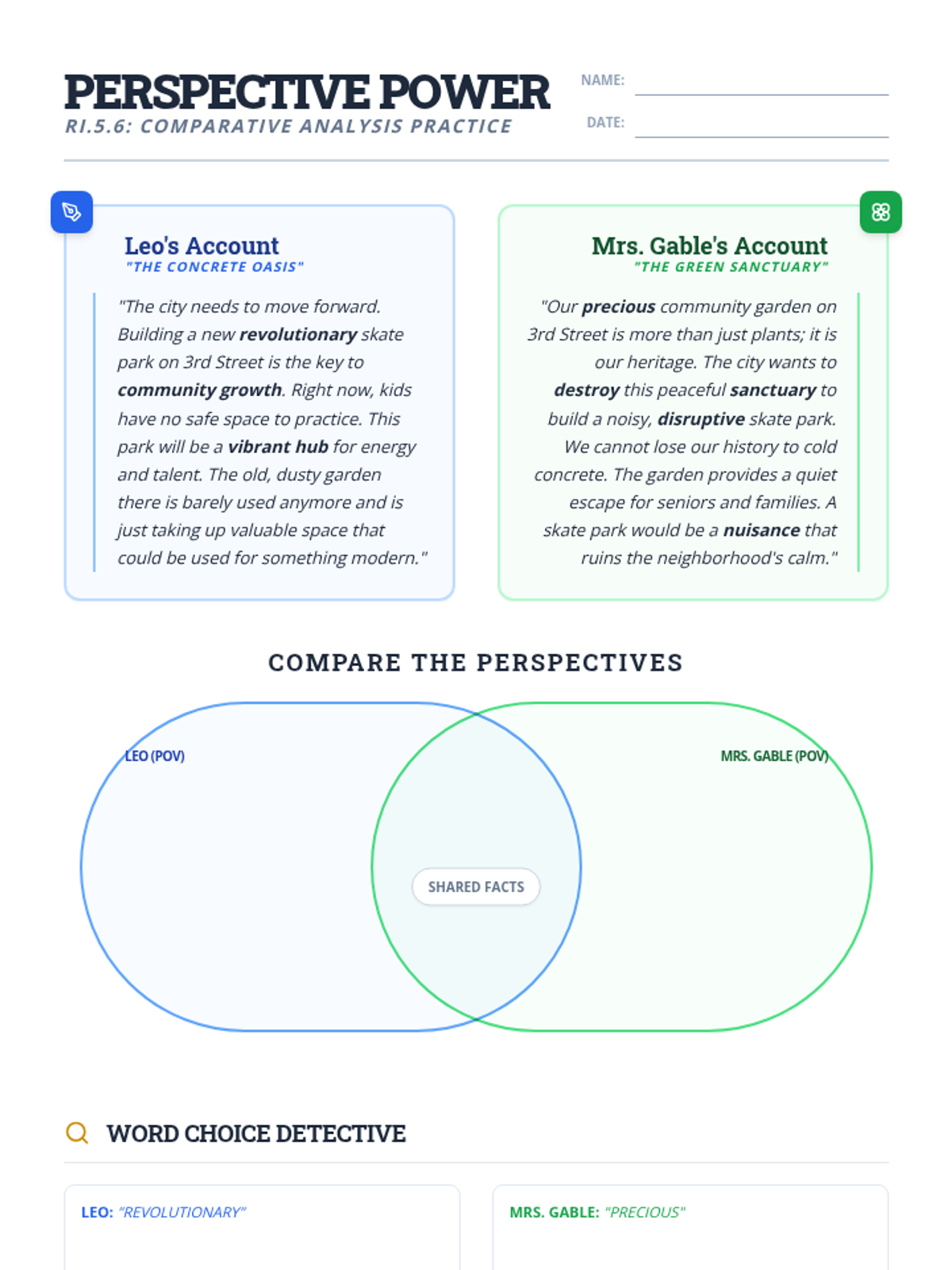
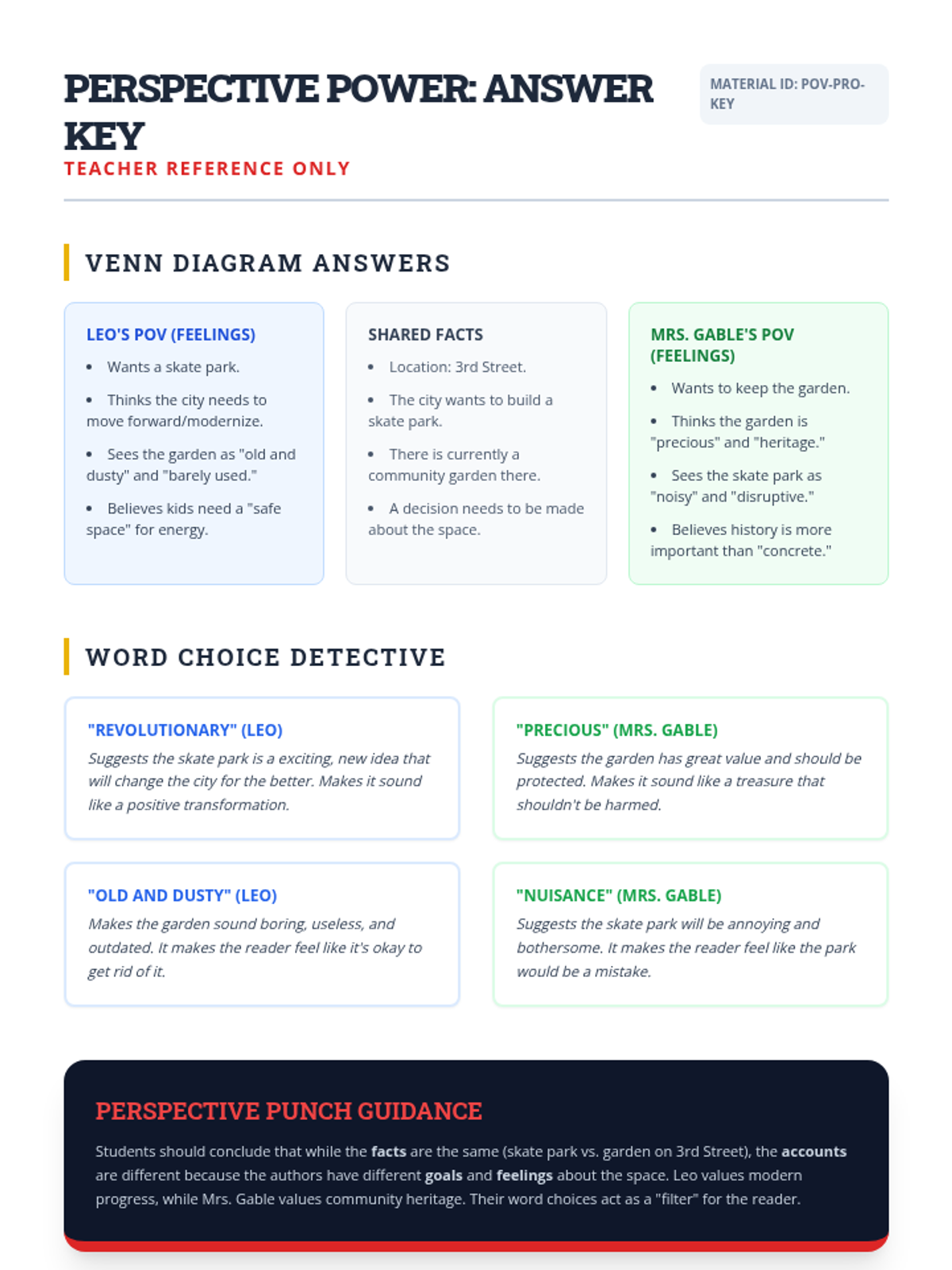
Students synthesize information from multiple texts to create a comprehensive comparison and write a final evidentiary paragraph.
Students learn about hurricanes and practice organizing information into a structured paragraph with a clear topic sentence, supporting details, and a conclusion.
Students explore the science of tornadoes while focusing on identifying key details and mastering domain-specific vocabulary.
A final culmination of the book club unit, where students synthesize the entire novel through creative projects and thematic reflections.
The emotional climax and resolution of the story as the tiger is released and Rob finally opens his suitcase, covering chapters twenty-one through thirty.
Exploring the developing friendship between Rob and Sistine and the growing pressure of the tiger's presence, covering chapters eleven through twenty.
An introduction to the Lister Motel and Rob Horton's 'suitcase', covering the first ten chapters of the novel.
Book club celebration with discussion and a creative 'Carving' activity.
Exploring the symbolism of Sistine's name and her character growth.
Reading Chapter 30, focusing on the resolution and the sun coming out.
Reading Chapters 20-21, analyzing the encounter with the tiger and vocabulary.
Reading Chapters 10-11, focusing on the wood-carving imagery and vocabulary.
Deep dive into summarizing the entire narrative arc using a 'Story Suitcase' organizer.
Final vocabulary review with a comprehensive matching and sentence challenge.
Reading Chapters 2-3, focusing on Rob's character and the introduction of Sistine.
Introduction to the book club, building background knowledge about the setting and the tiger, and reading Chapter 1.
A comprehensive lesson on narrative sentence variation focusing on varied beginnings, sentence combining, length modulation, and descriptive clauses. Students move from identifying monotone rhythms to crafting dynamic, flowing prose.
A comprehensive lesson designed to help students master the use of the five senses in their narrative writing, moving from simple descriptions to immersive storytelling.
A series of three ELA homework assignments based on the story 'Oakley’s Azure Acorn,' focusing on phonics, vocabulary, comprehension, and grammar.
A 10-15 minute mini-lesson focused on teaching 5th graders how to craft impactful narrative endings. Students learn to resolve their rainforest-themed conflicts and articulate a clear lesson or theme for their readers.
A vocabulary focused lesson on Chapters 4-7 of Lois Lowry's The Giver, exploring key terms through textual context and modern application.
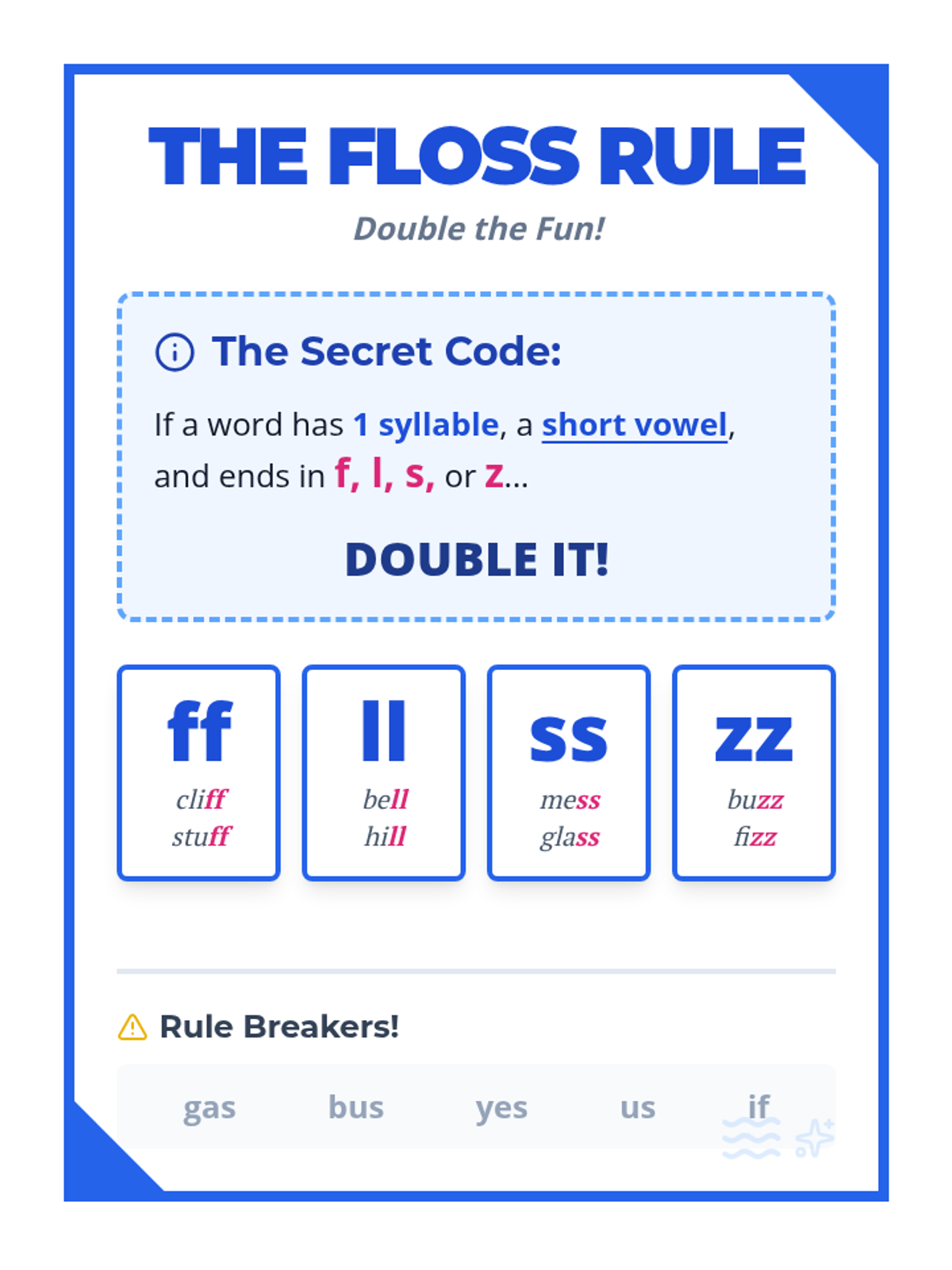
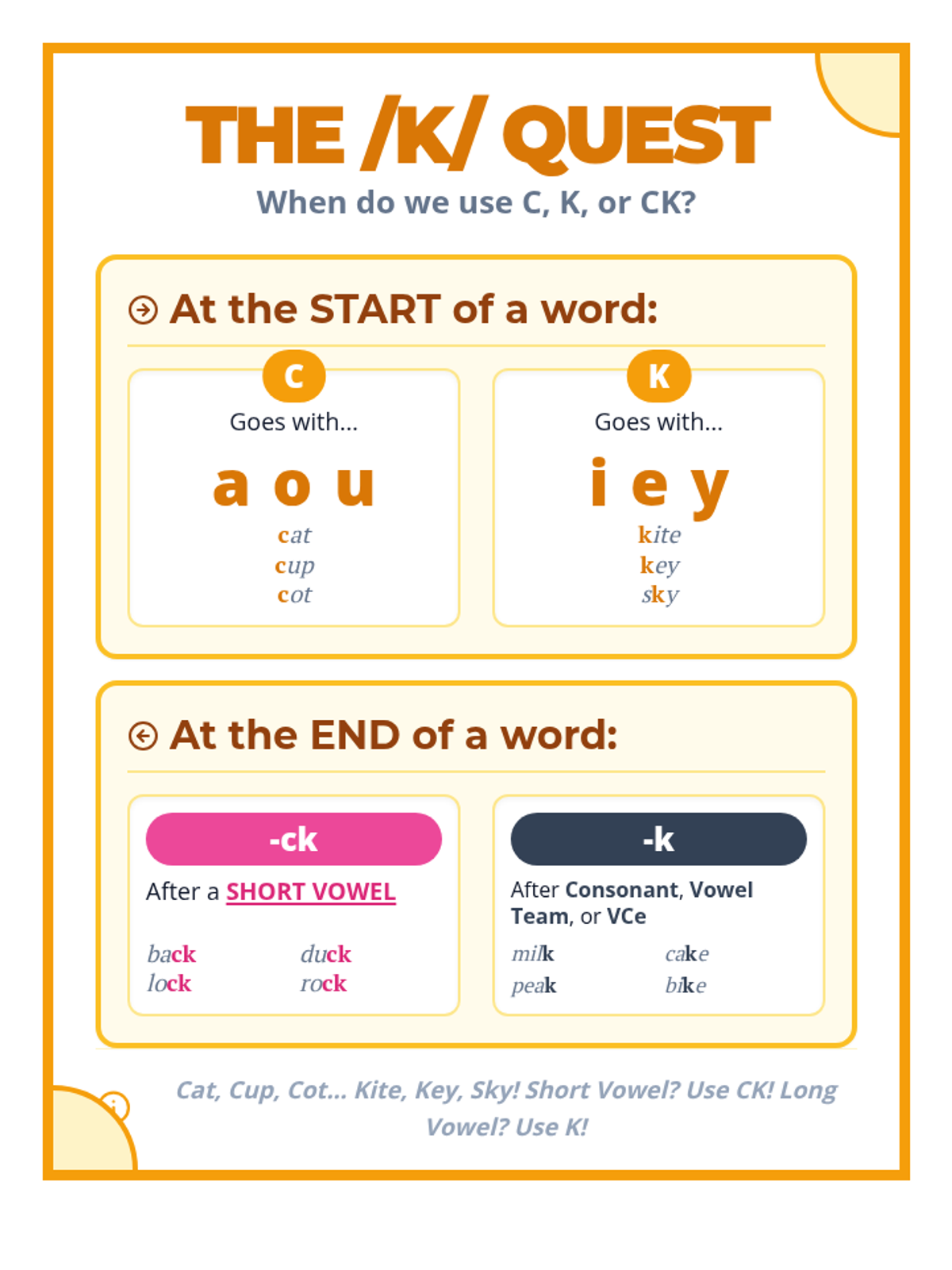
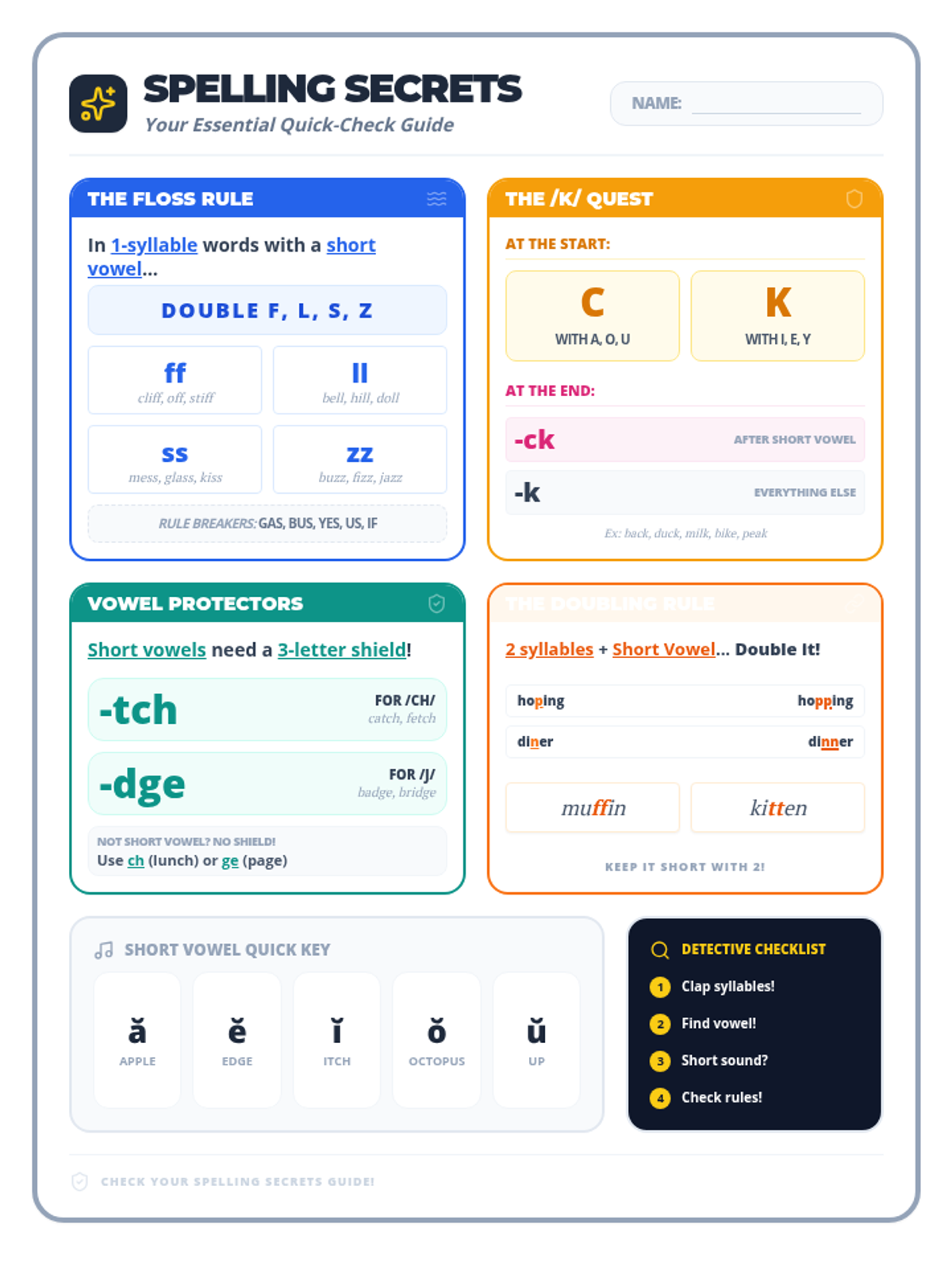
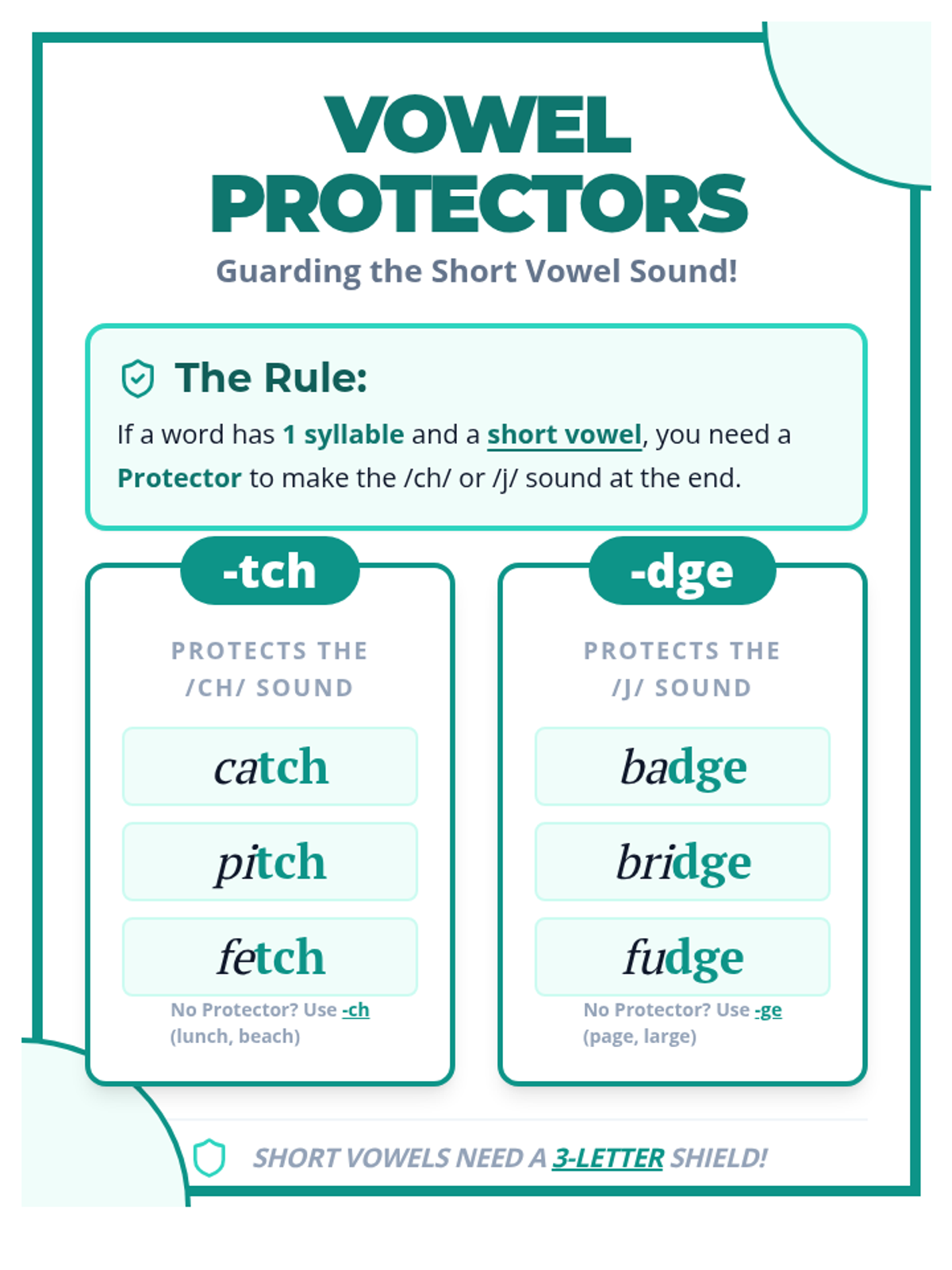
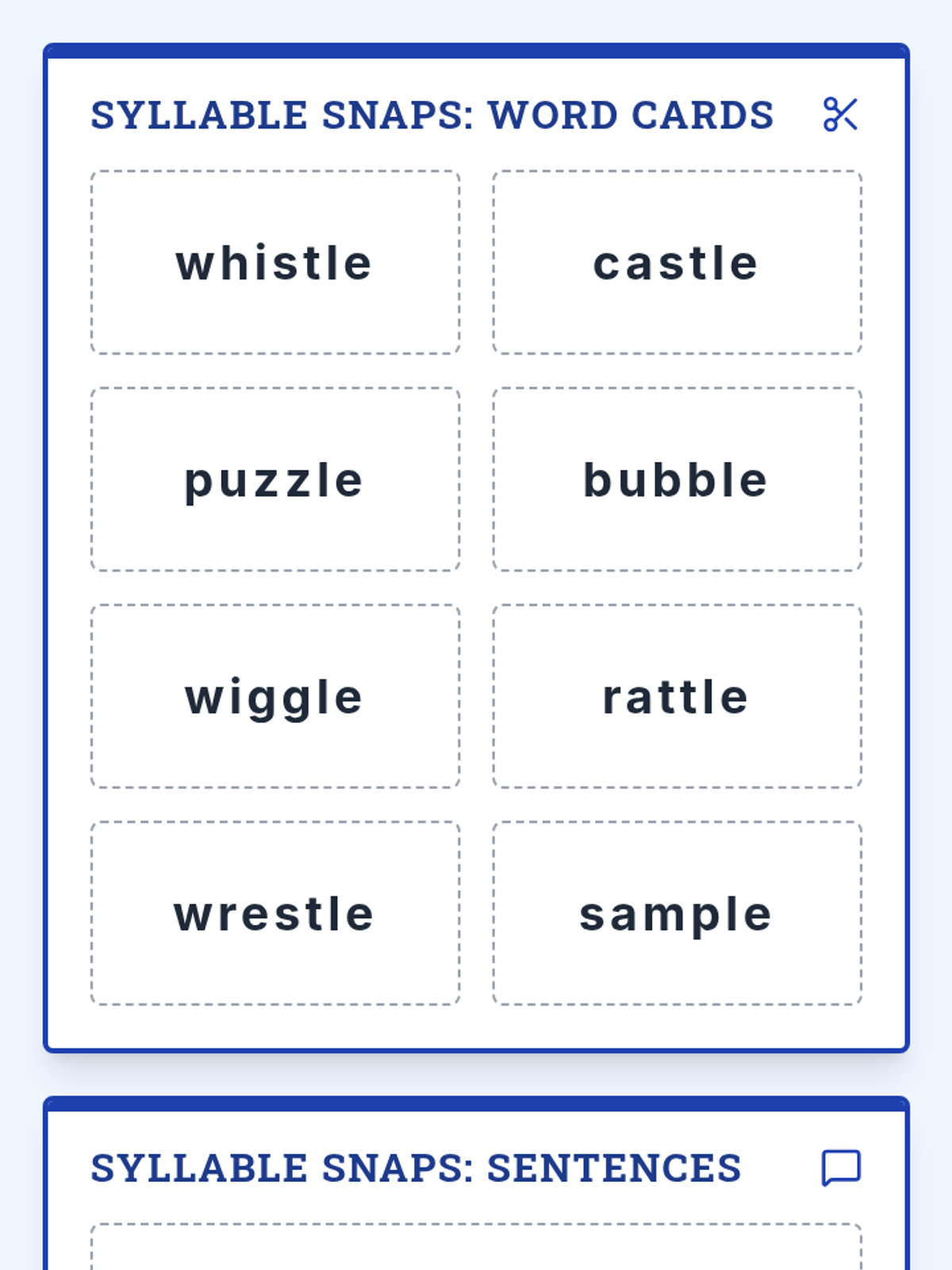
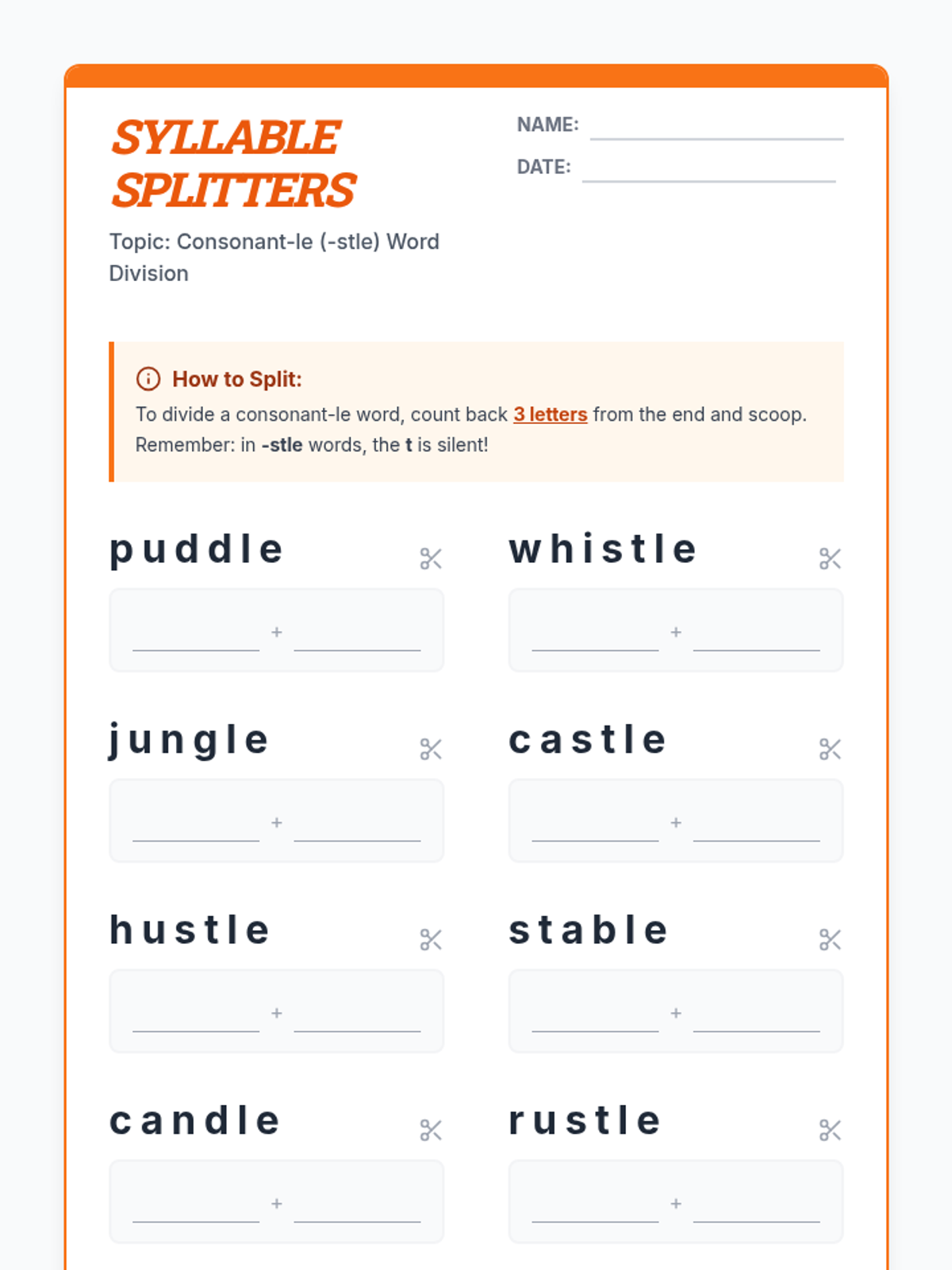
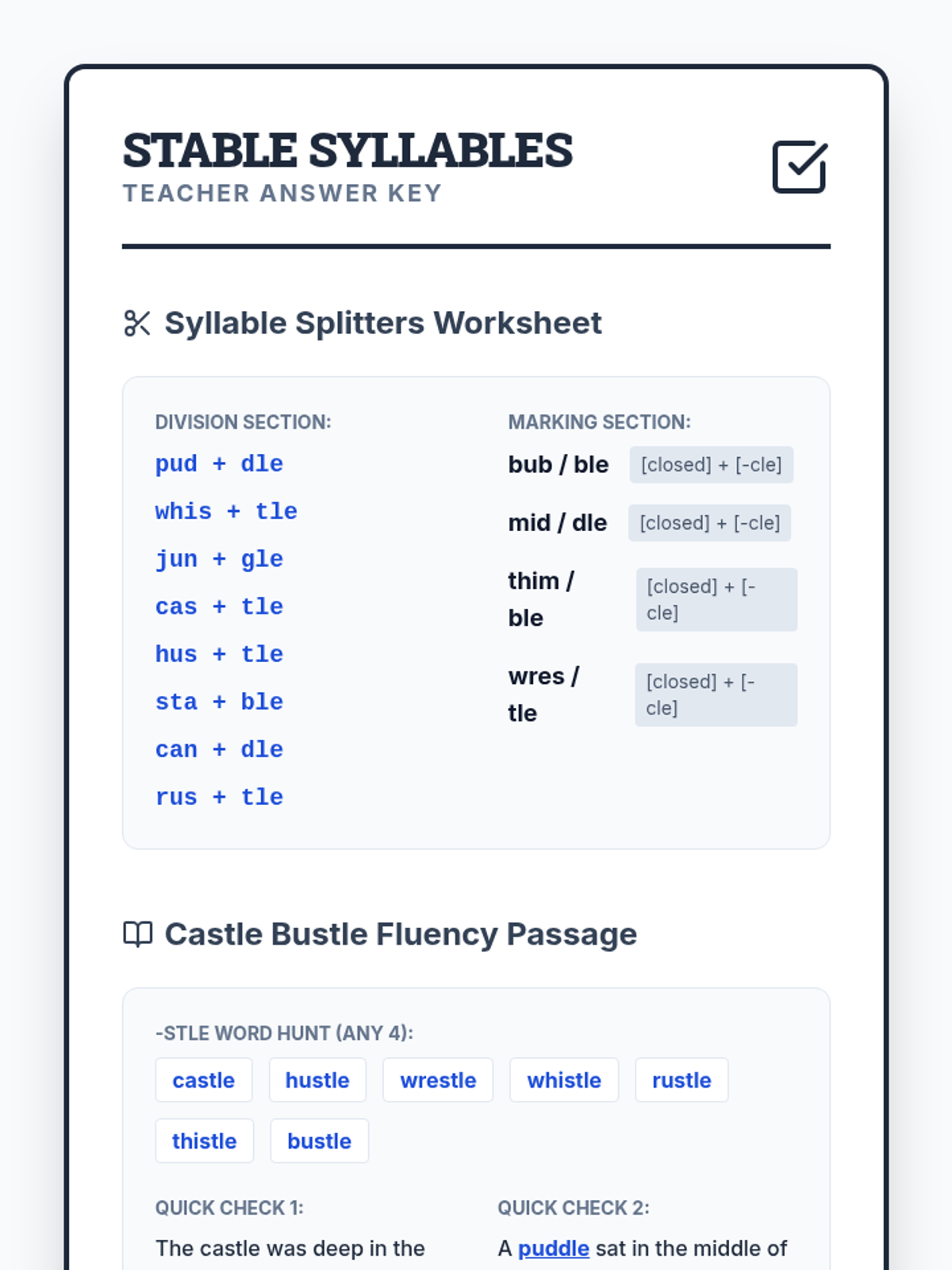
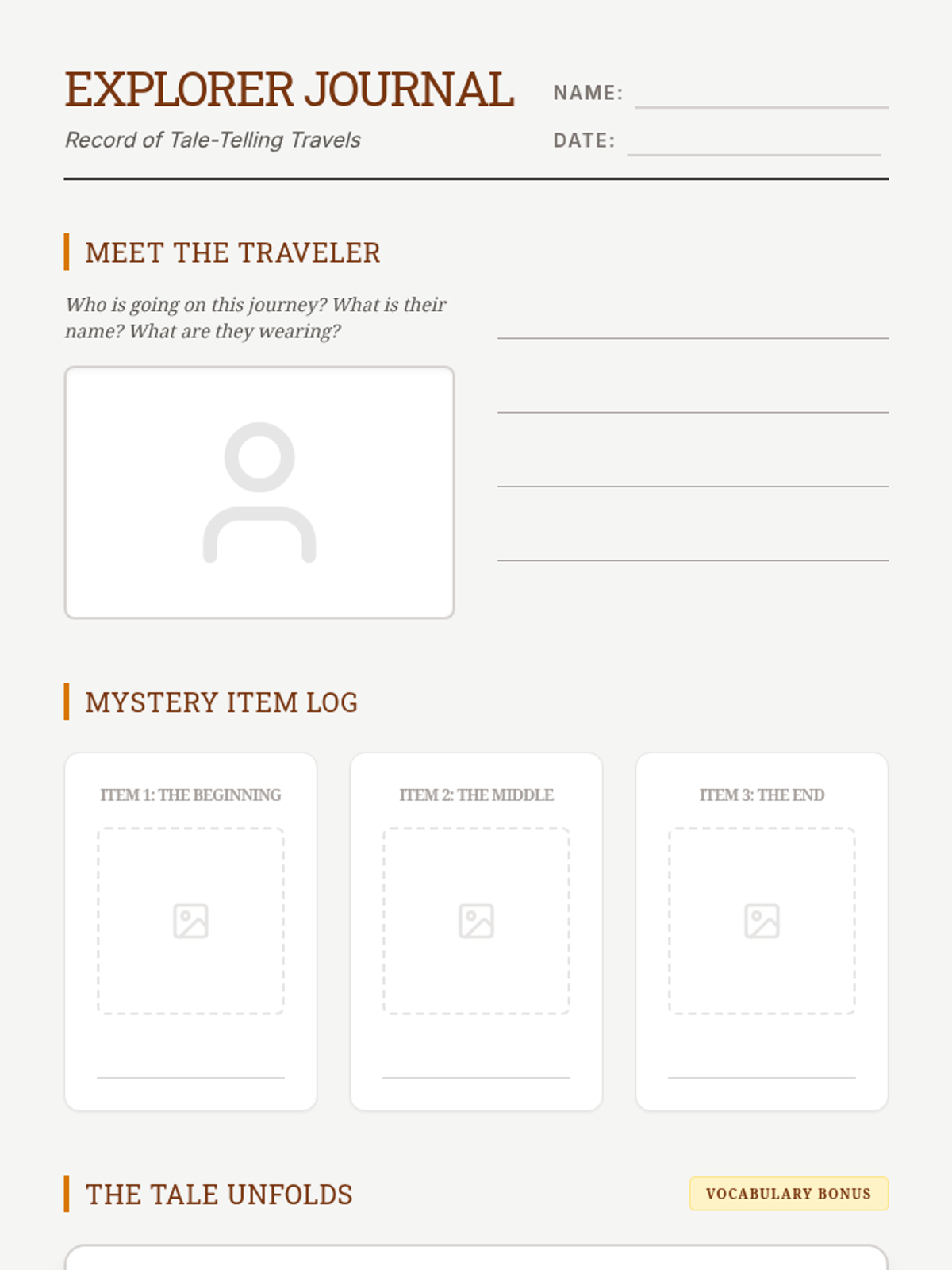
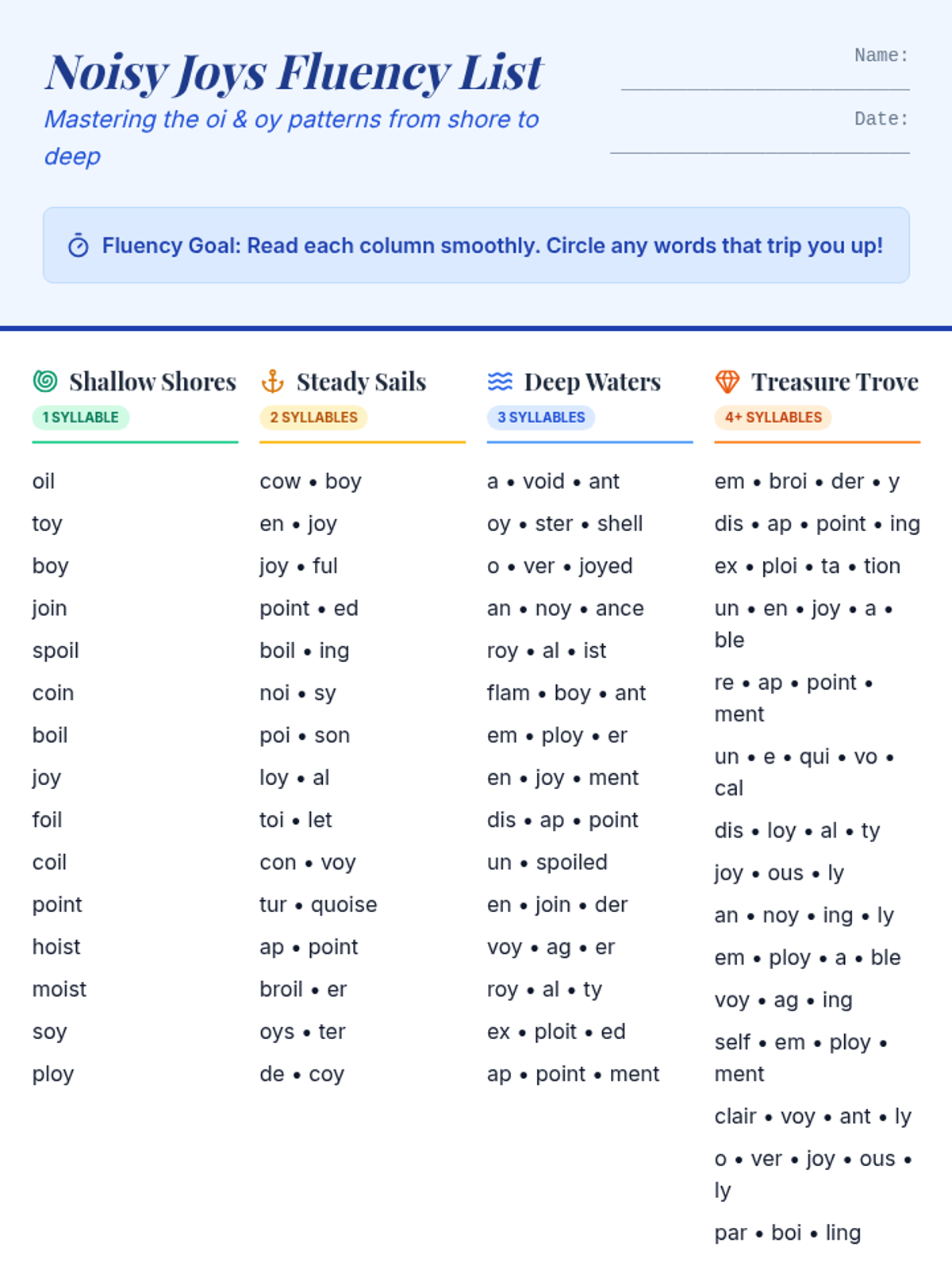
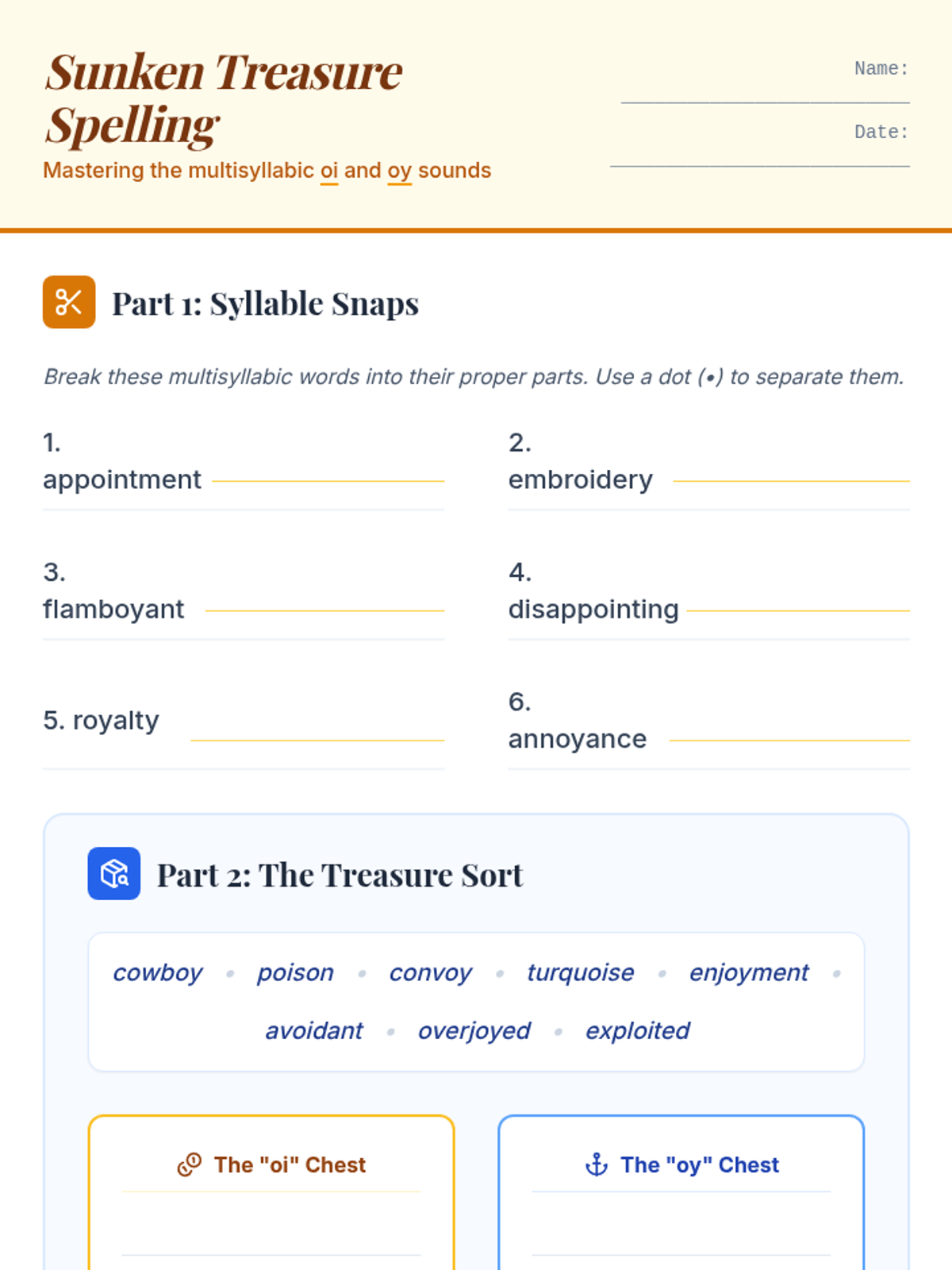
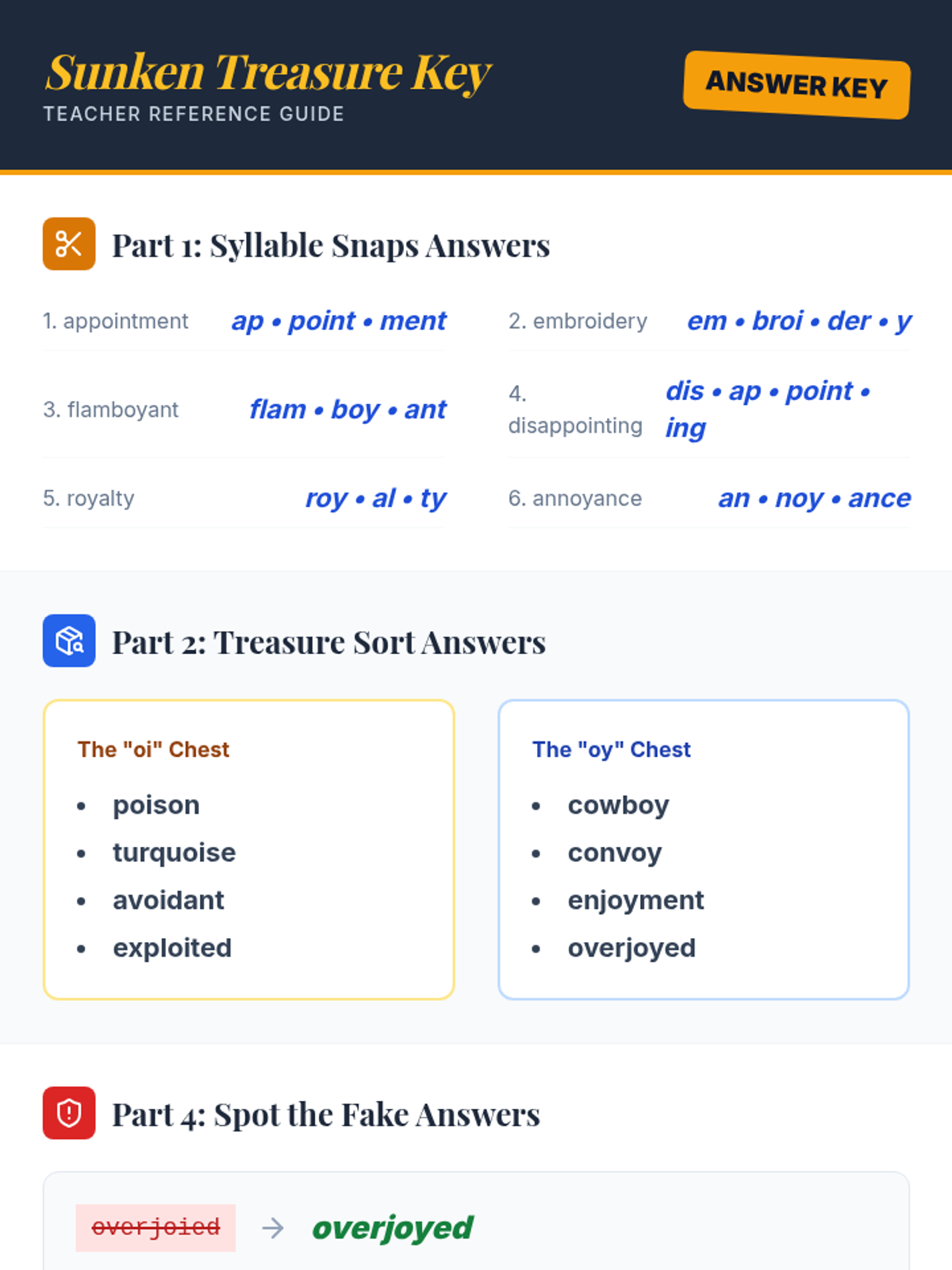
A lesson focused on decoding and dividing multisyllabic words with closed syllables through a hands-on cut-and-paste activity.
A creative writing lesson for middle school students exploring empathy and perspective-taking through the medium of internal monologues. Using a poignant animated video about cyberbullying, students analyze character motivations and the impact of digital actions.
A mini-lesson focused on the art of crafting narrative endings that effectively resolve conflict and showcase character growth and reflection. Students learn to move beyond simply 'stopping' a story to 'finishing' it with a meaningful theme or lesson learned.
A focused small-group lesson for 5th graders on slowing down narrative pacing in rainforest stories using sensory details and internal monologue.
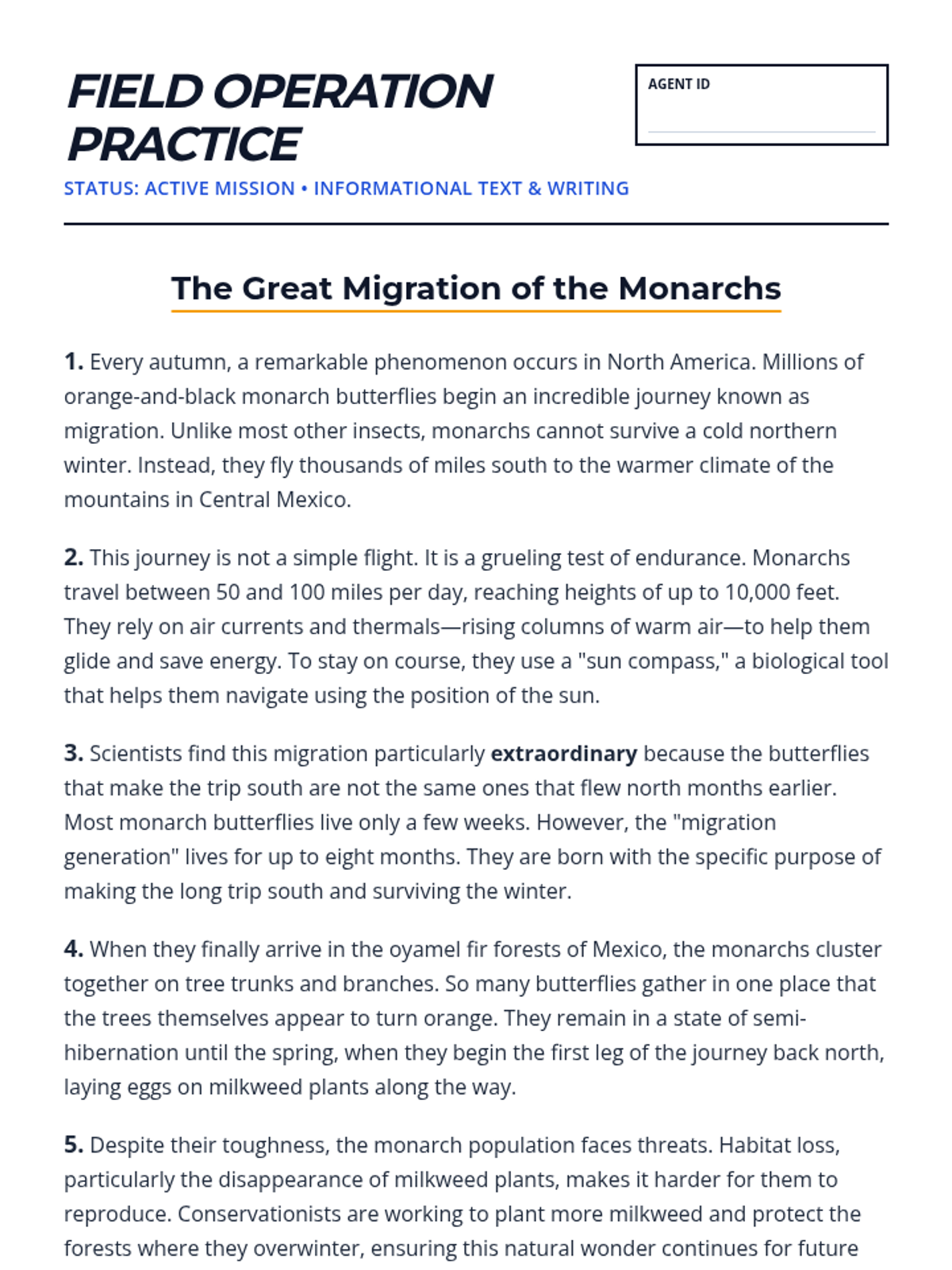
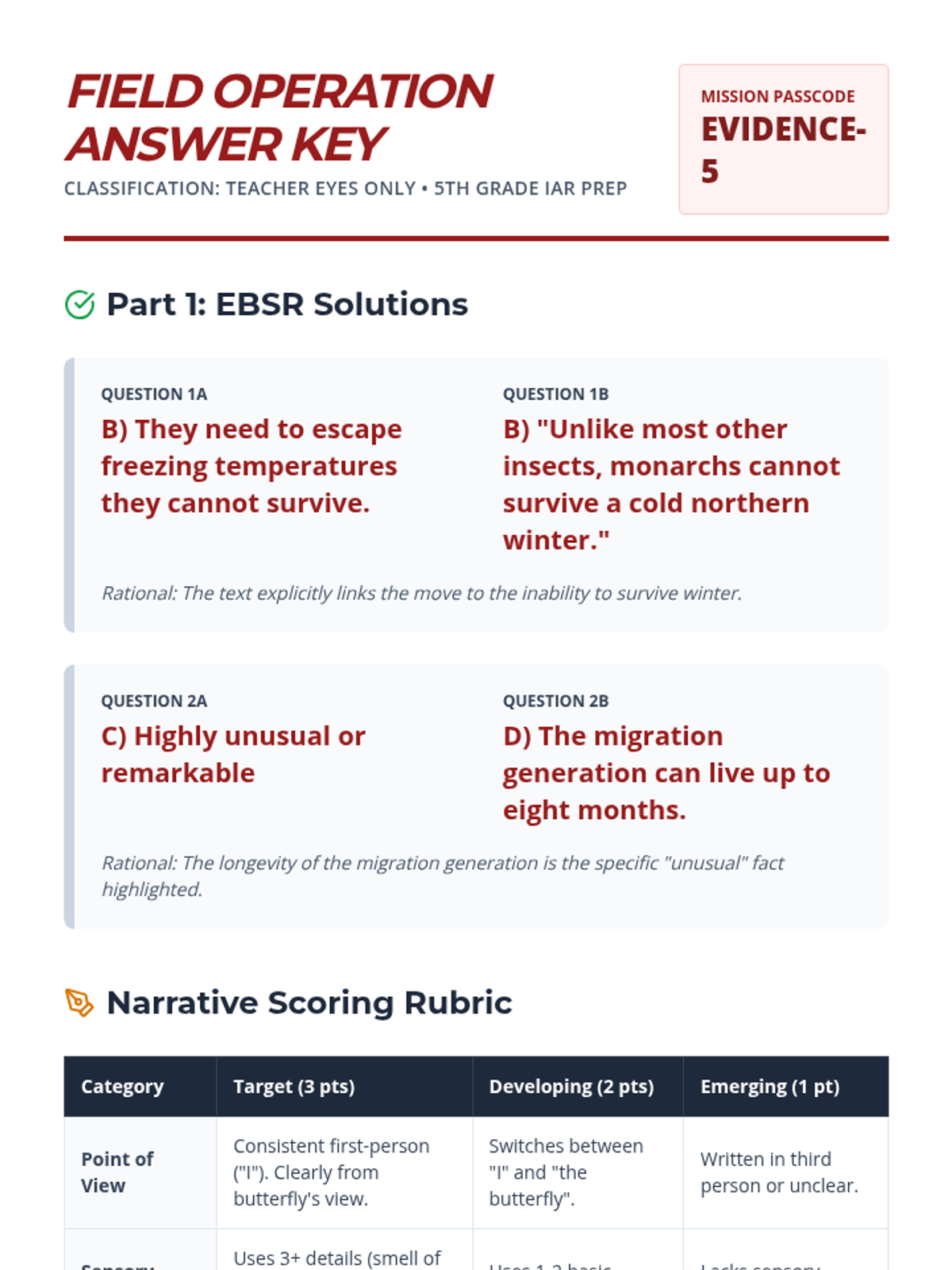
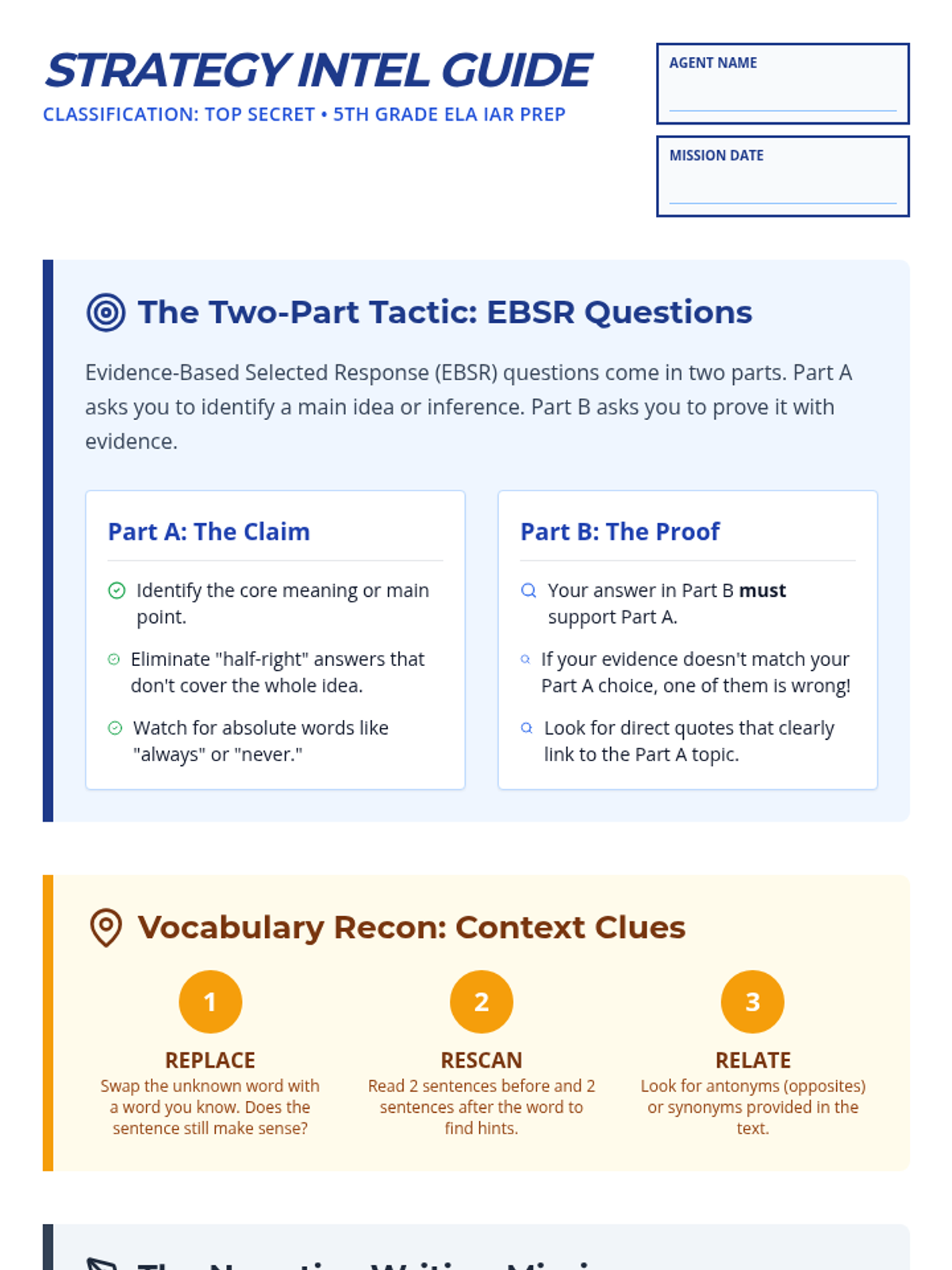
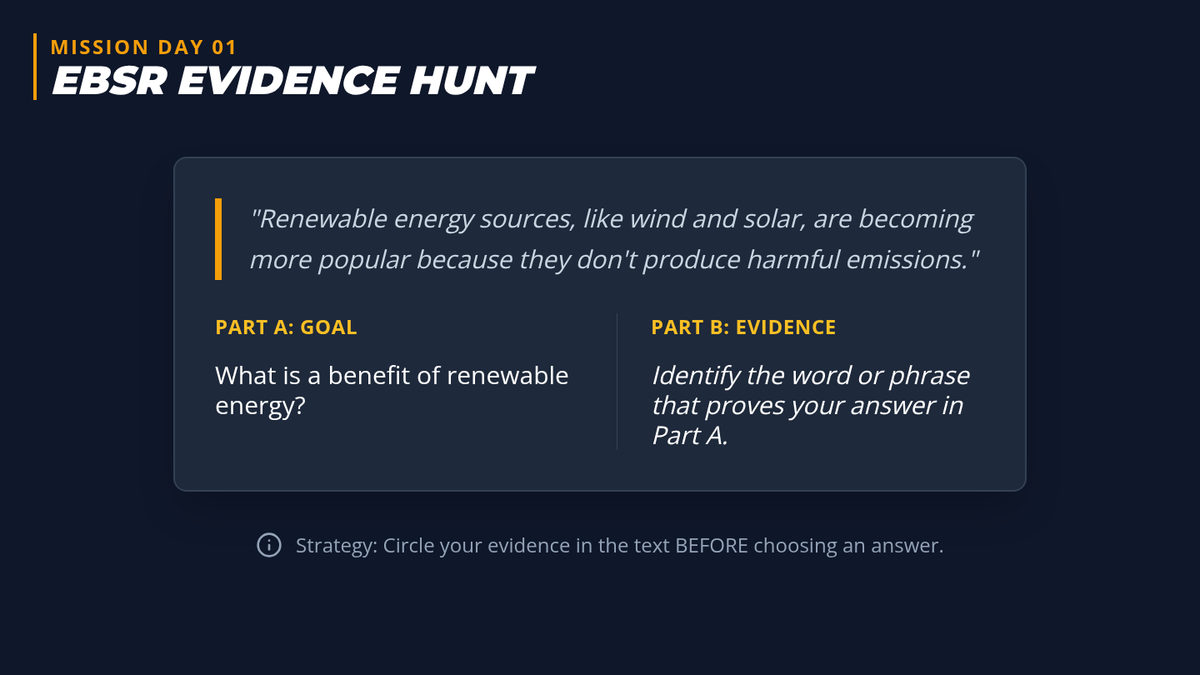
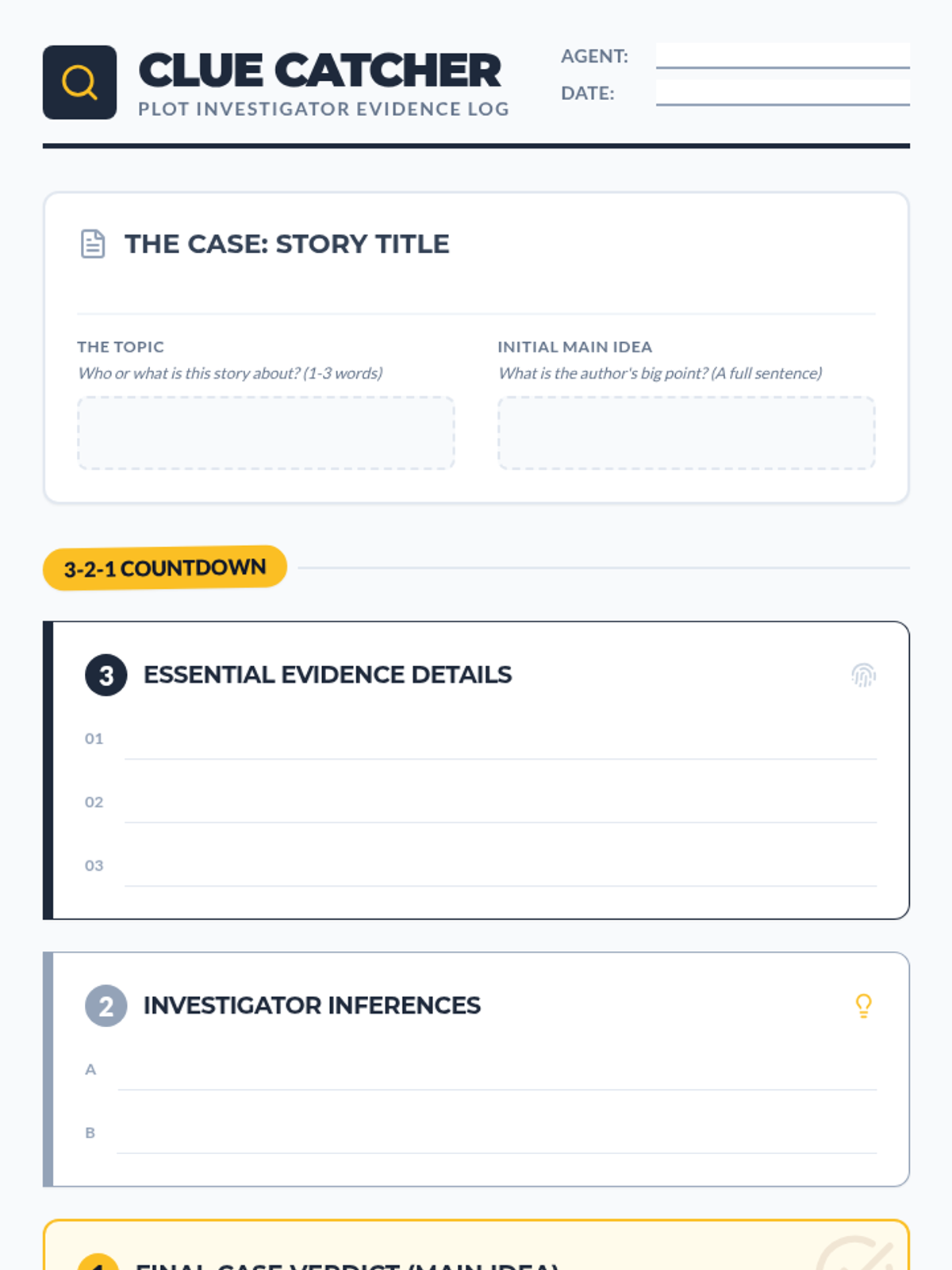
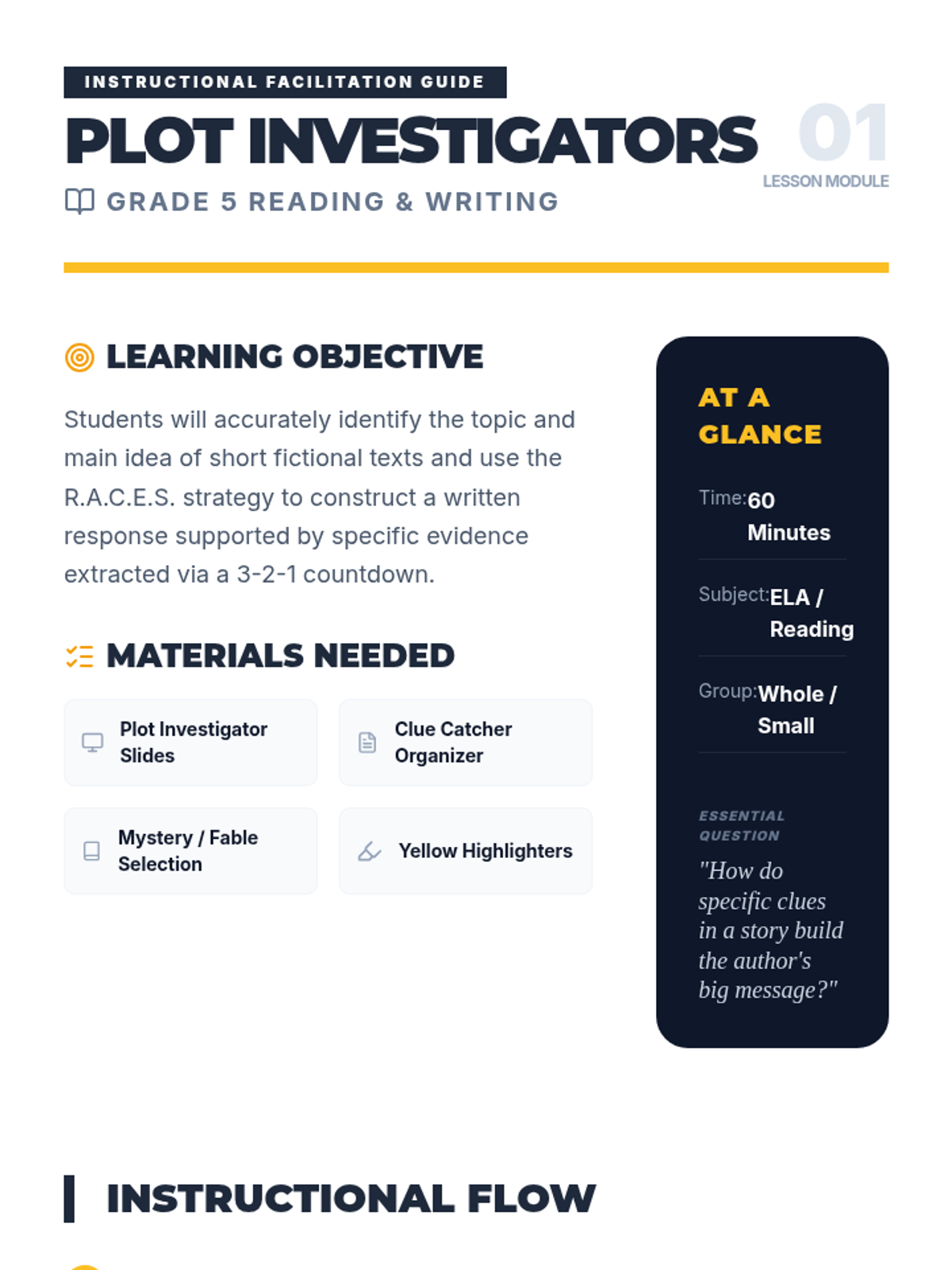
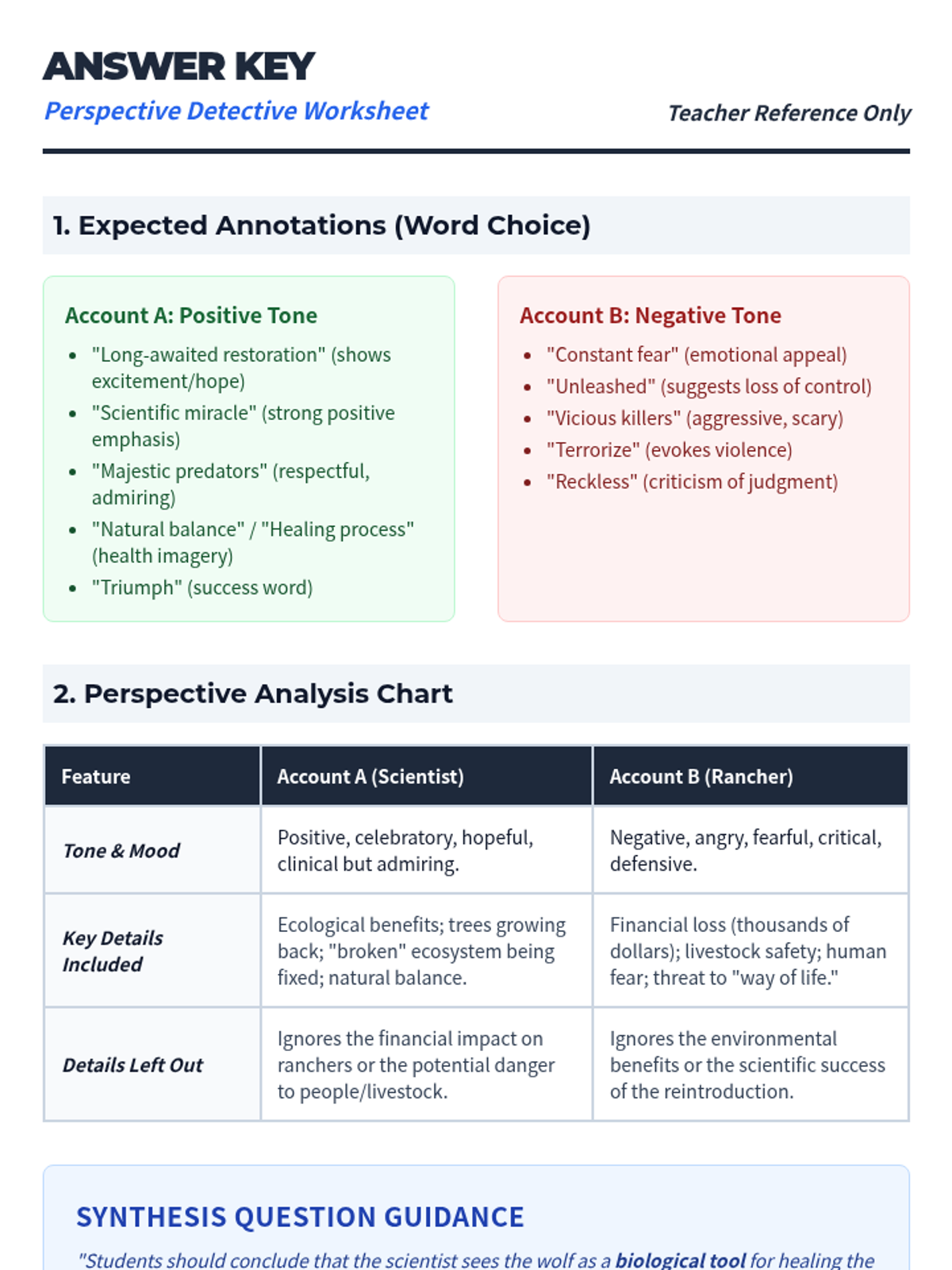
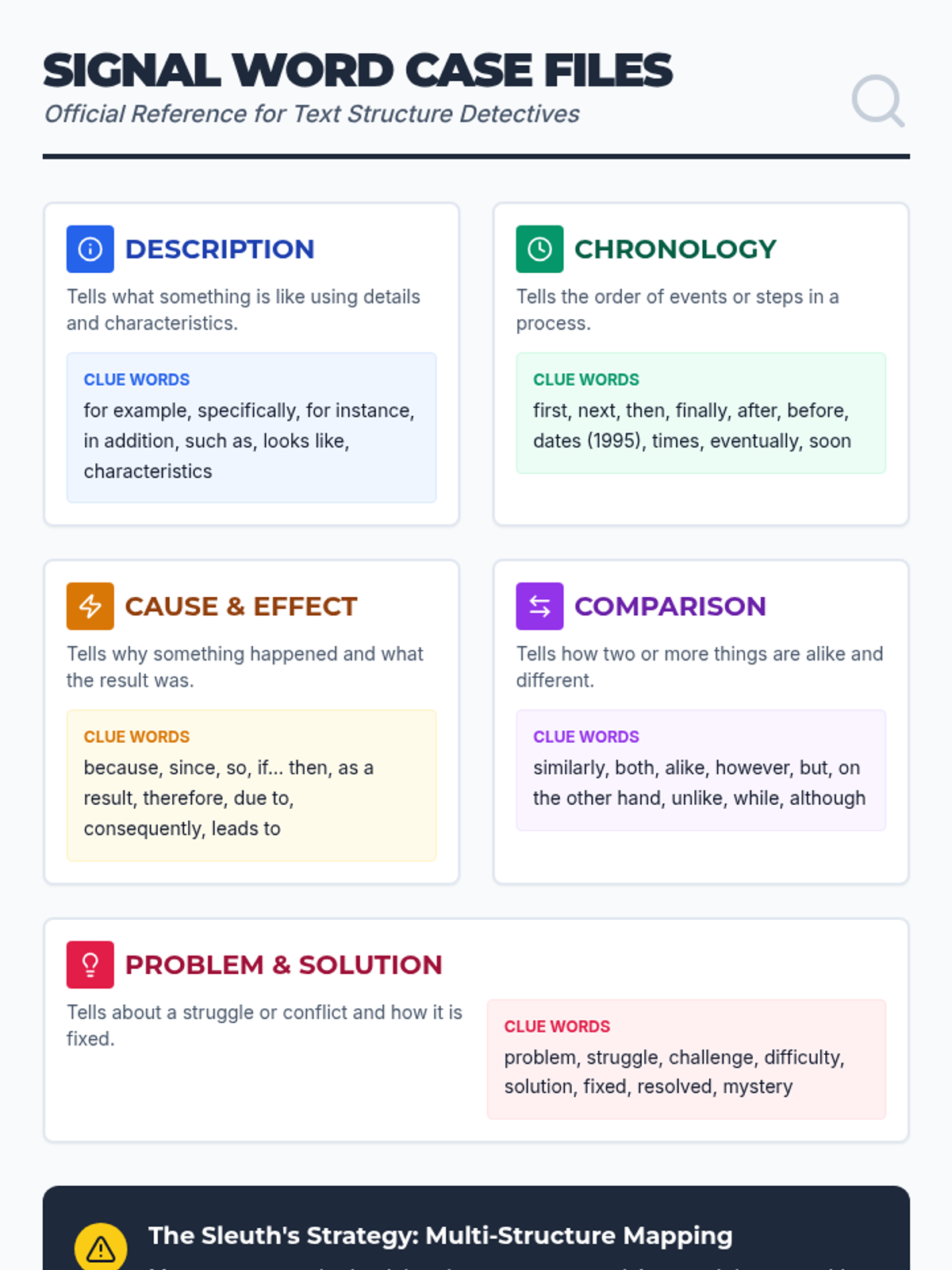
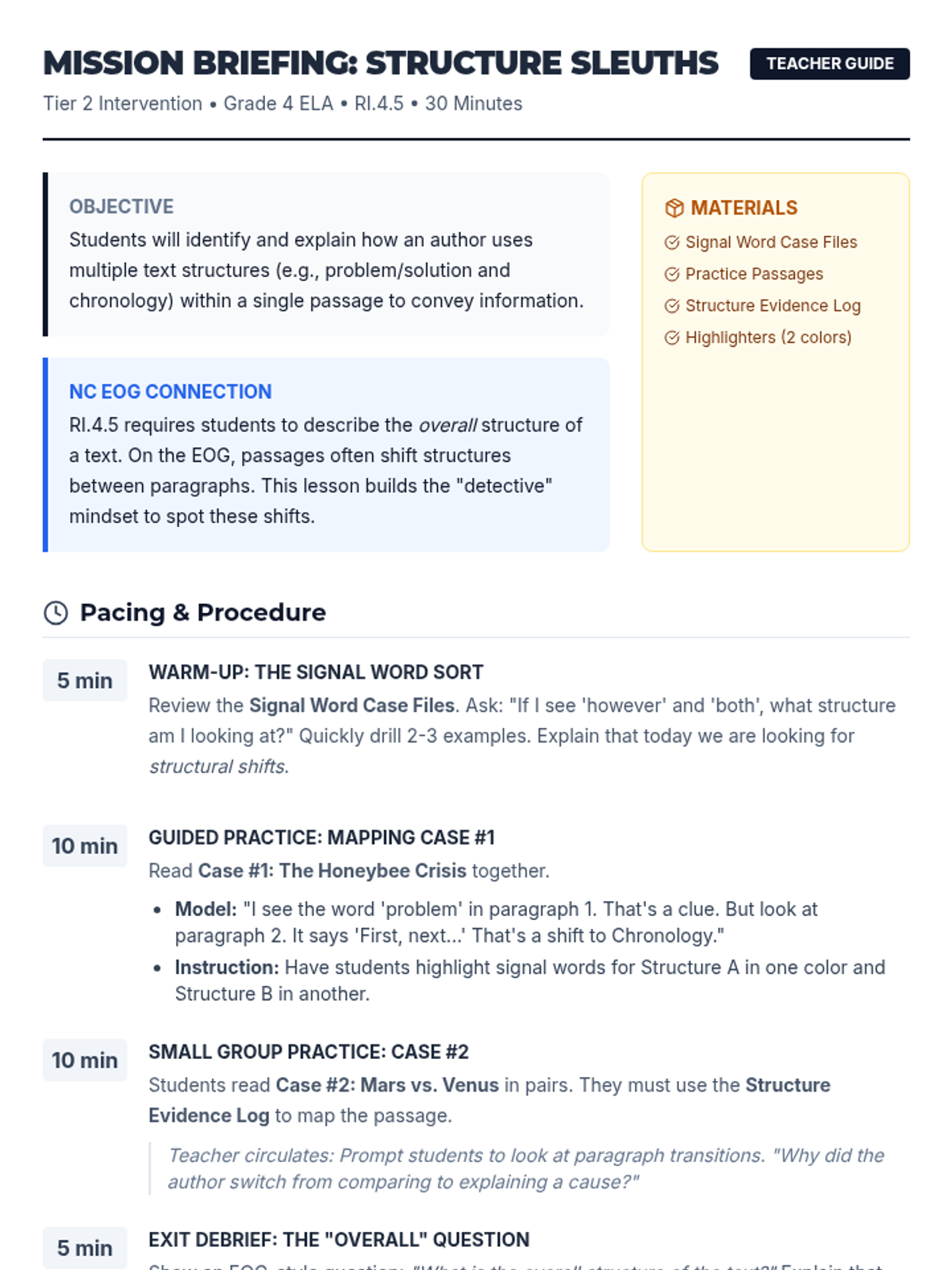
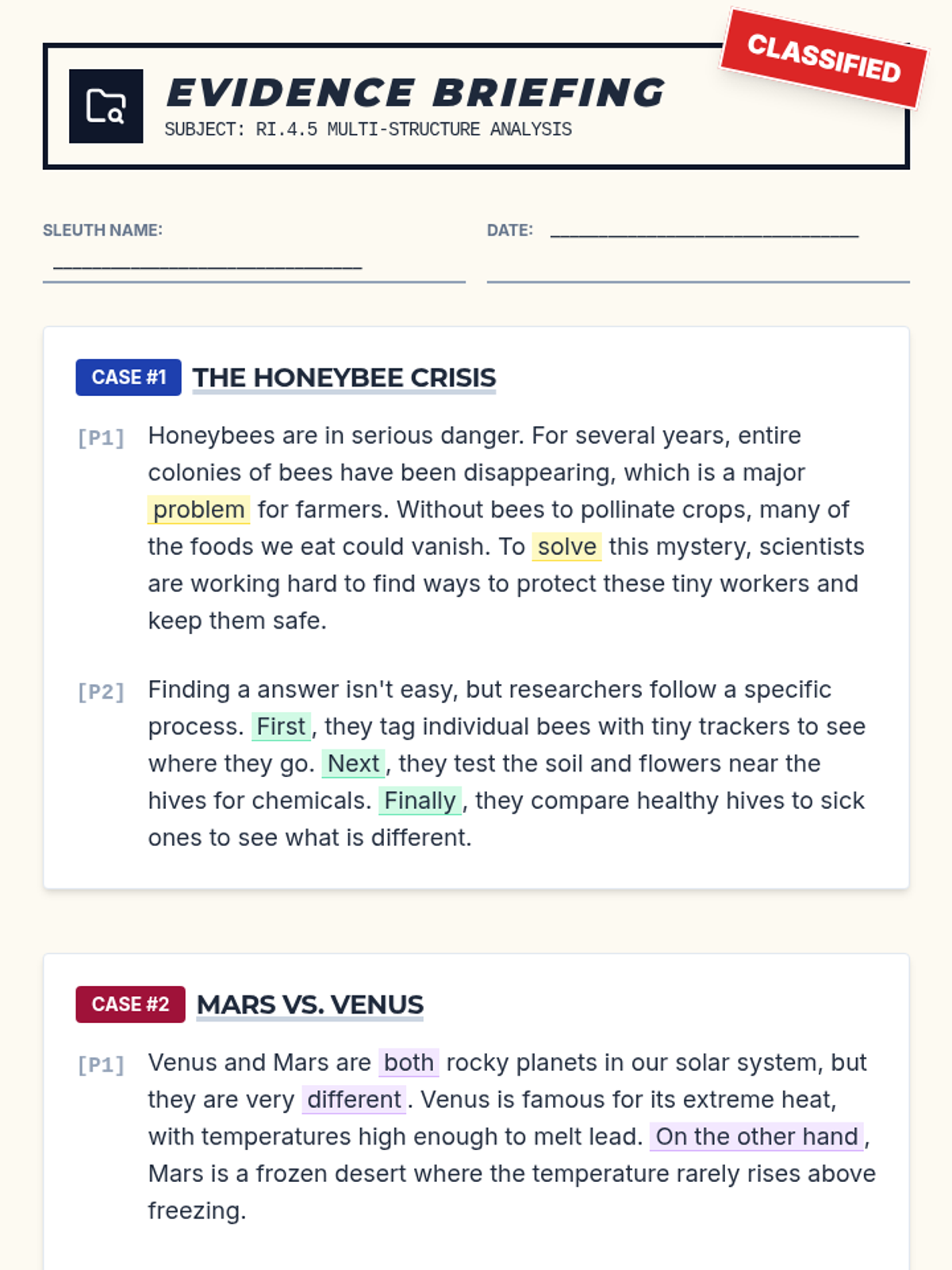
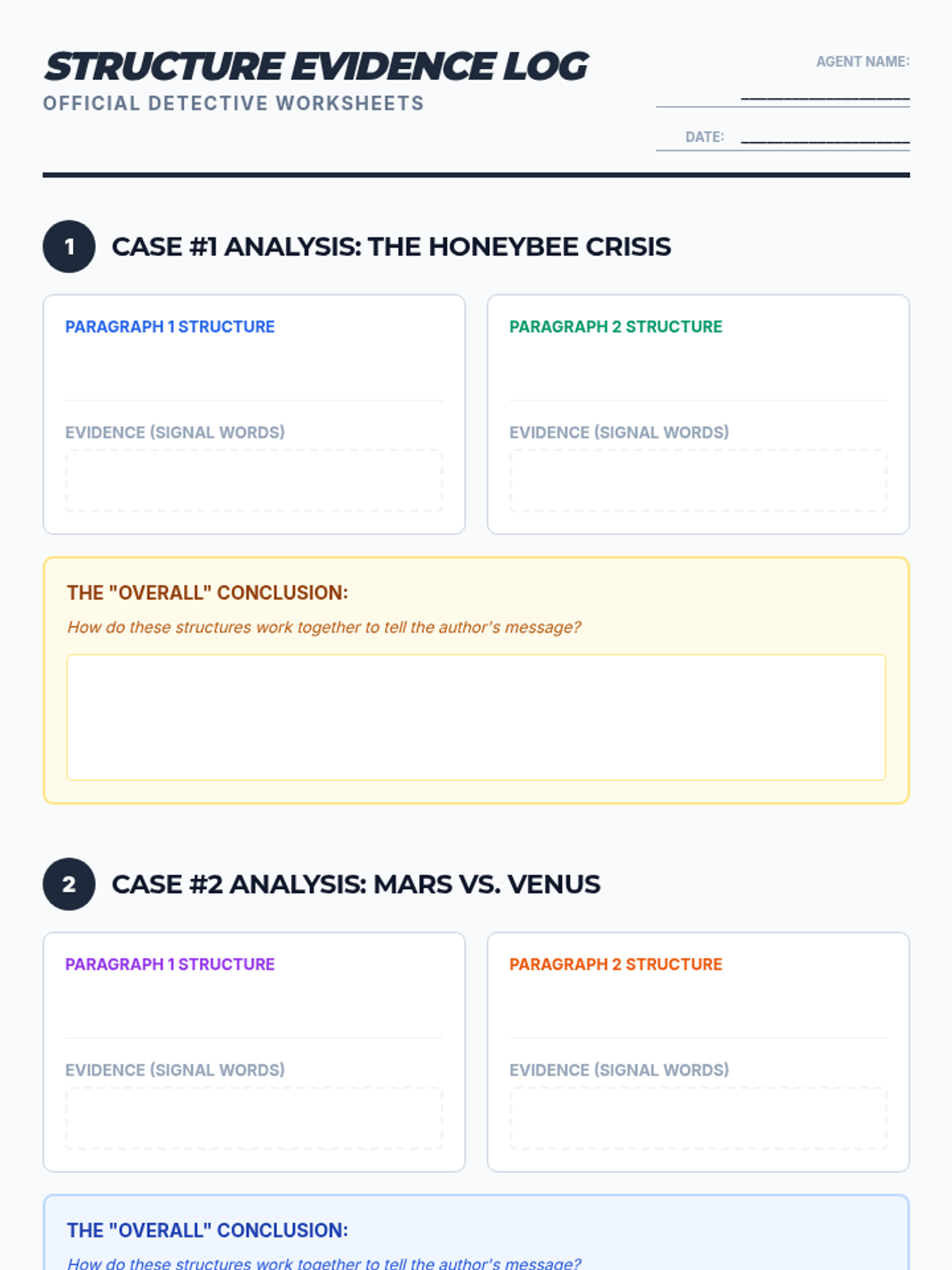
A lesson focused on identifying the 'gist' of short informational texts using a detective-themed approach to help students synthesize key information into a single sentence.
A small group lesson for 5th graders focused on slowing down high-stakes narrative moments in a rainforest setting using dialogue, sensory details, and internal monologue.
A lesson focused on teaching students how to incorporate internal dialogue into narrative writing to reveal character traits and deepen the connection to story events.
A comprehensive mini-lesson on teaching students how to integrate internal monologue into their narrative writing to reveal character traits and react to plot events.
A 45-minute lesson focused on analyzing author's purpose, tone, and word choice using a biographical text about Selena Quintanilla, culminating in a CER (Claim, Evidence, Reasoning) response.
This lesson guides students through the process of crafting topic sentences that directly respond to a writing prompt about Wilma Rudolph's perseverance. It emphasizes the integration of prompt language, previews of text evidence, and the foundation for analytical explanation.
A lesson focused on crafting vivid narrative stories set in the Blue Creek rainforest of Belize, emphasizing sensory details and narrative structure.
Students become POV Detectives to identify first-person and third-person points of view using evidence-based sorting and analysis.
A structured writing intervention focusing on helping 5th-grade students identify, evaluate, and select the strongest evidence to support a claim. The lesson uses a detective-themed 'Case File' approach to engage students in evidence-based writing.
A targeted small group lesson designed to help students slow down pivotal moments in their rainforest narratives by incorporating sensory details, internal monologue, and dialogue.
This lesson teaches students how to craft a strong paragraph by combining a clear focus statement with specific supporting details, using the fascinating world of frogs as a model.
A lesson focused on the art of narrative beginnings for 5th graders. Students learn to establish a situation and introduce characters by stepping into the role of a scriptwriter using scenarios from texts.
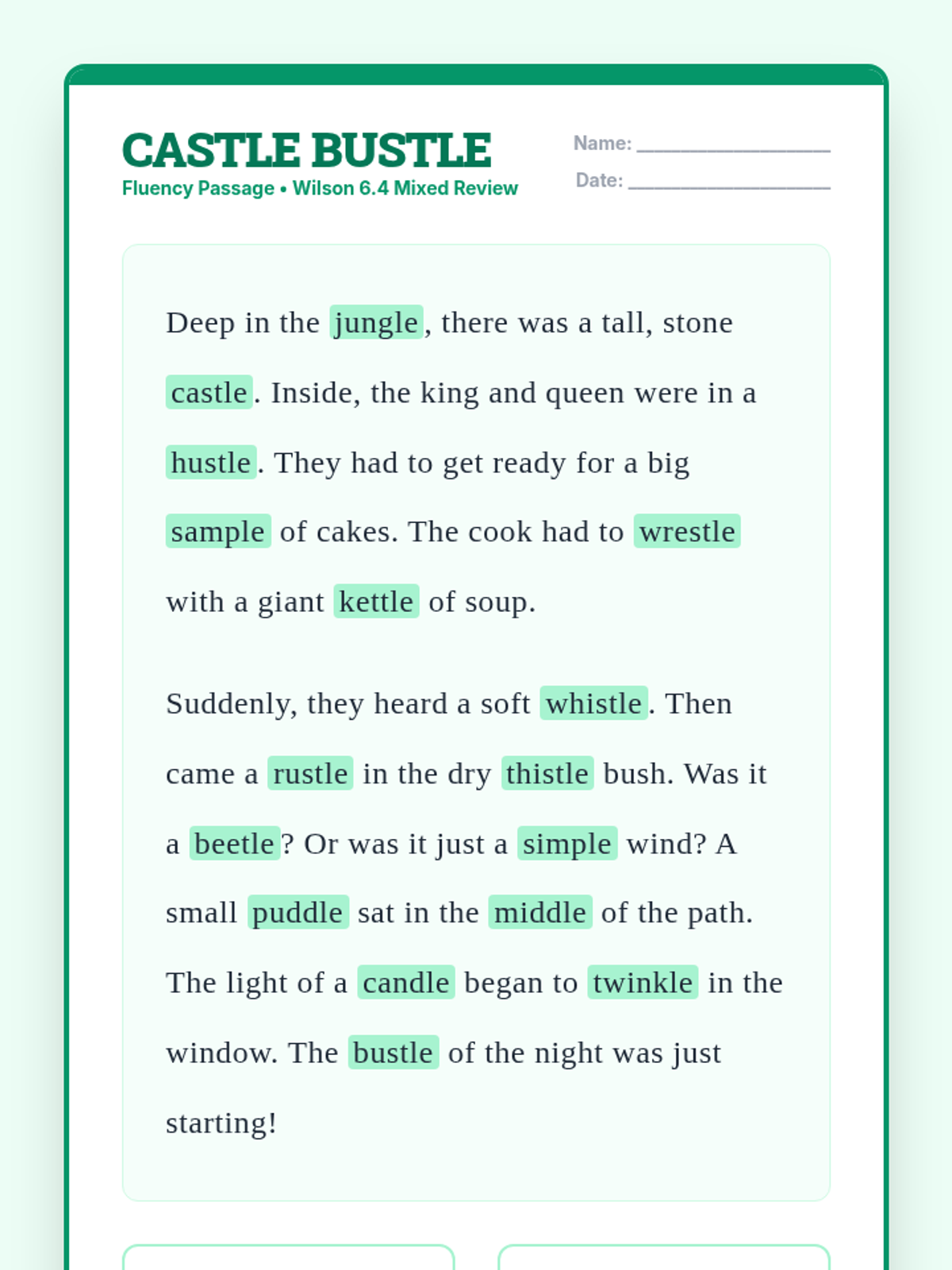
A 15-minute small group fluency lesson focused on phrasing (scooping) and prosody (expression) for 5th graders reading at a 4th grade level.

A small-group mini-lesson focused on teaching 5th graders how to integrate dialogue with narration to advance a story's plot. Students use a graphic organizer to 'synthesize' better scenes and sort dialogue snippets by their narrative purpose.