A 6th-grade grammar lesson where students distinguish between adjectival and adverbial prepositional phrases through architectural sentence analysis, video observation, and a kinetic sorting activity.
A lesson introducing various suffixes through the lens of women's lacrosse, featuring word analysis and a six-paragraph reading passage.
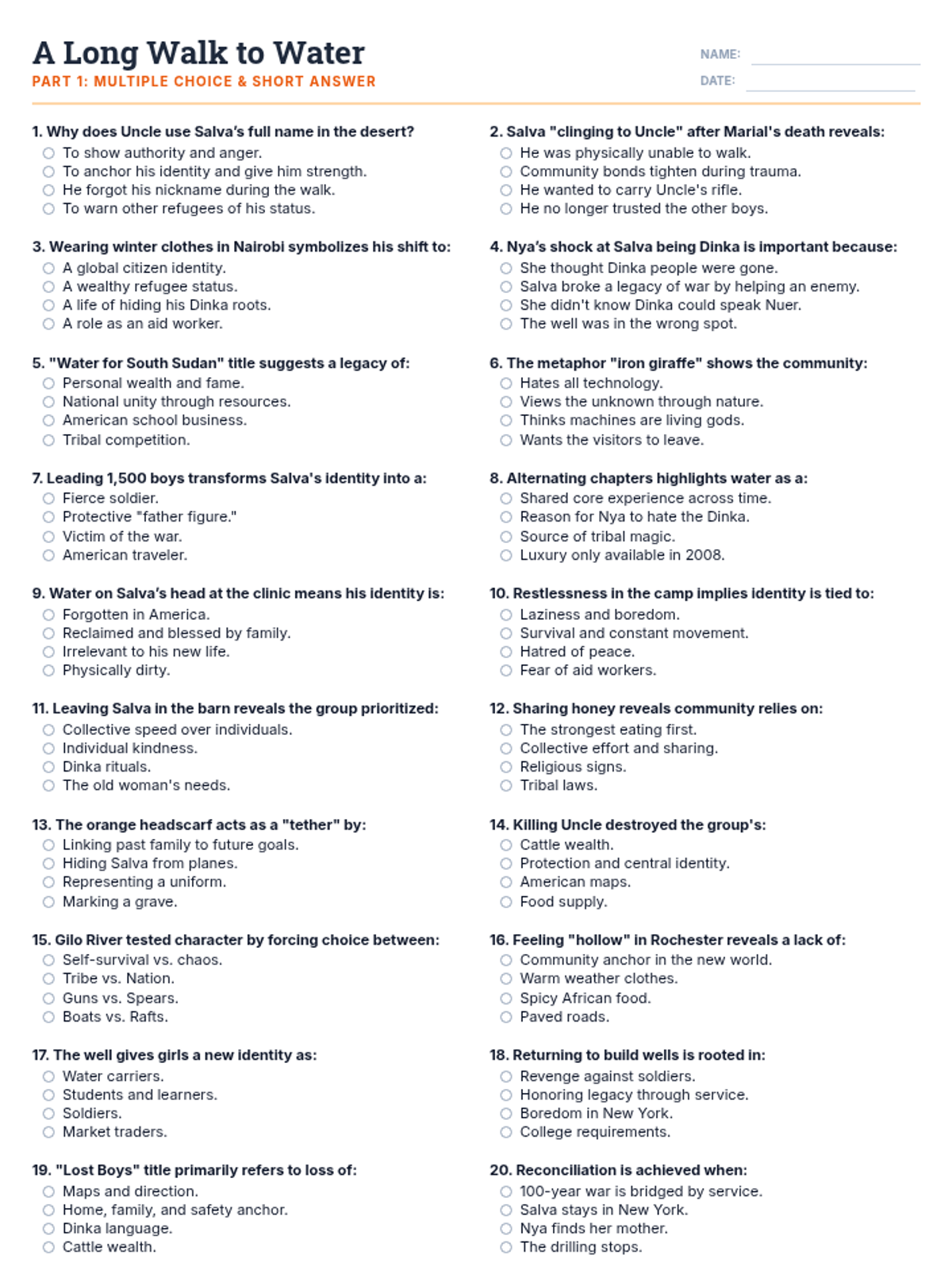
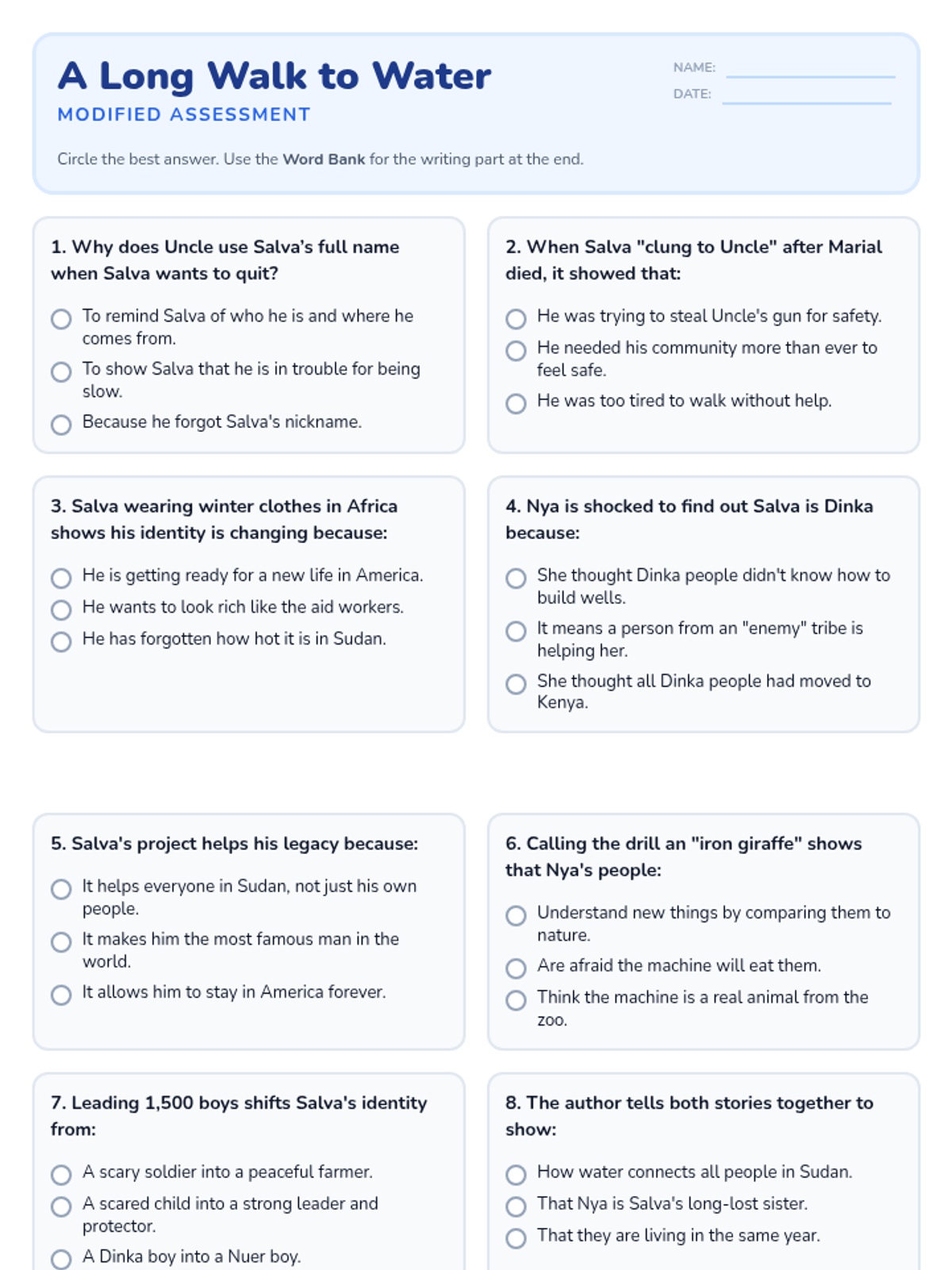
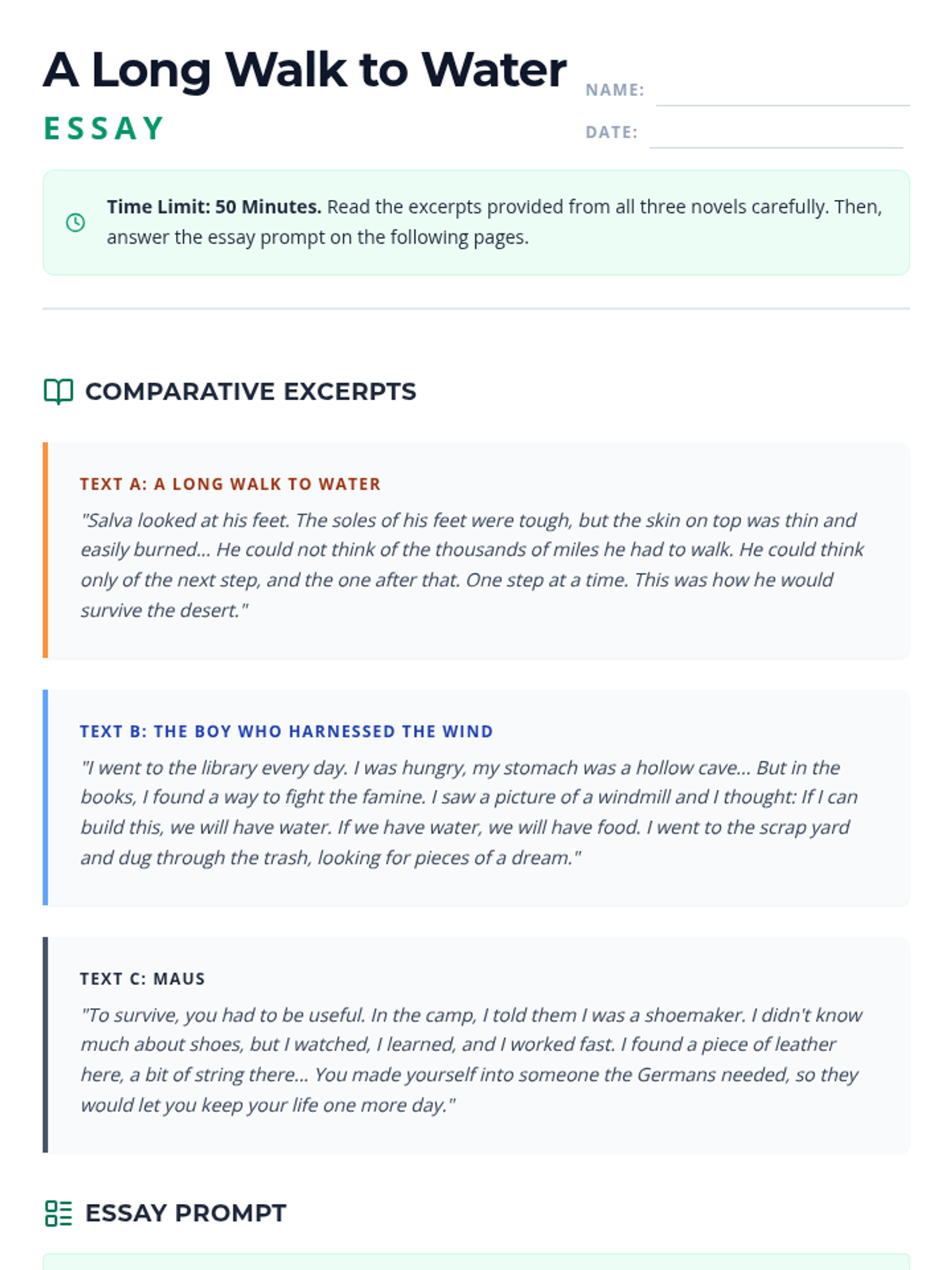
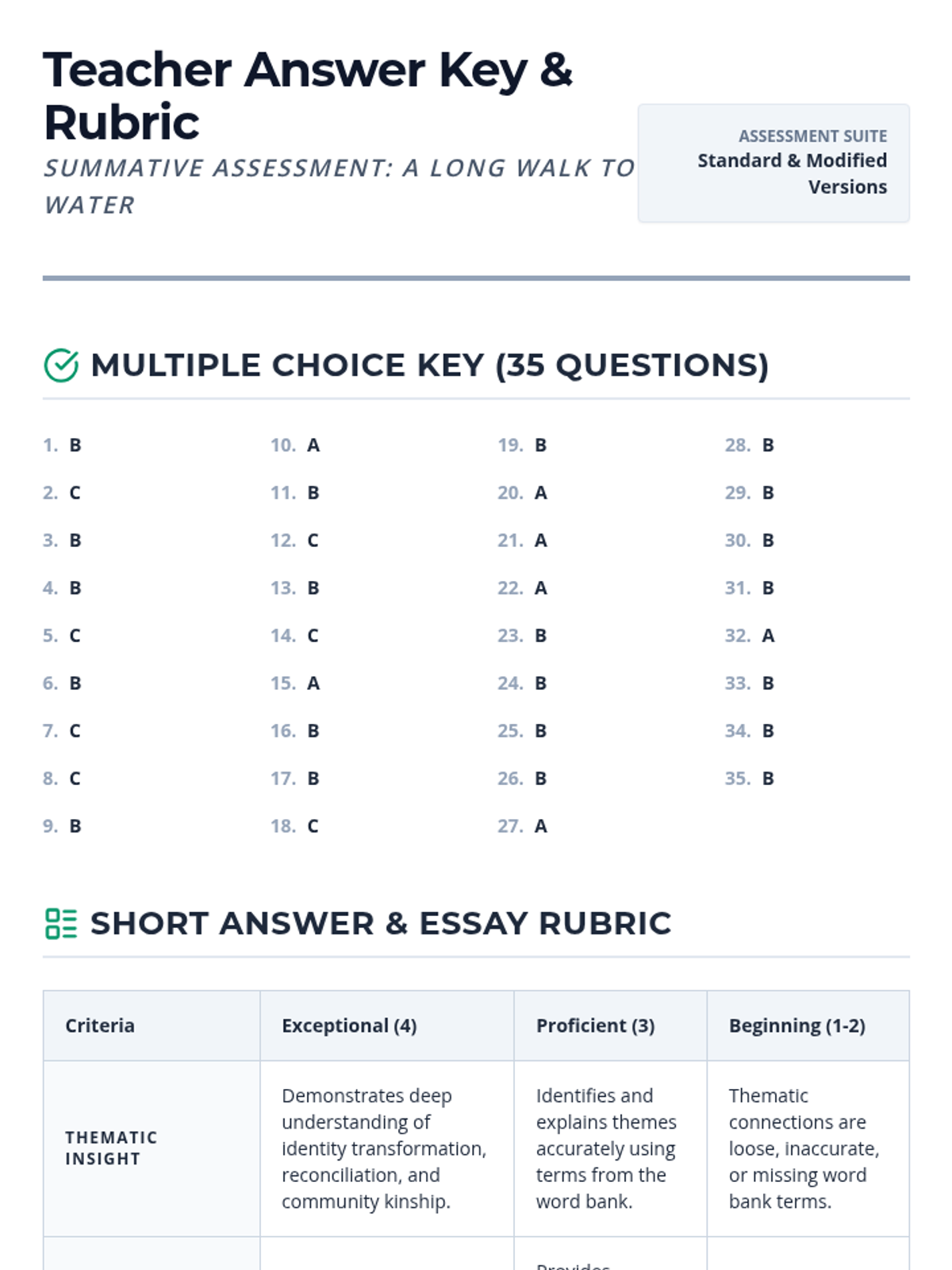
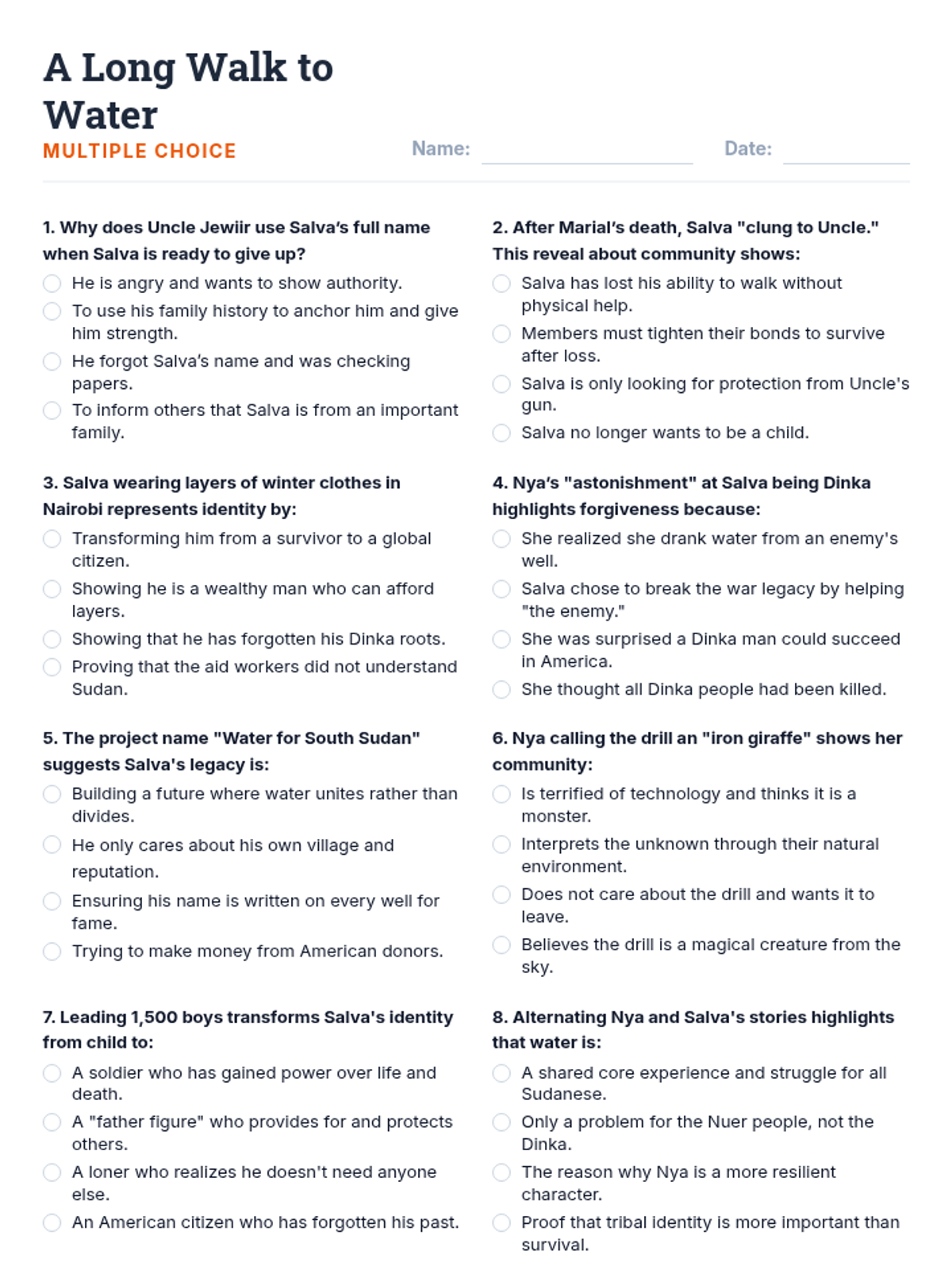
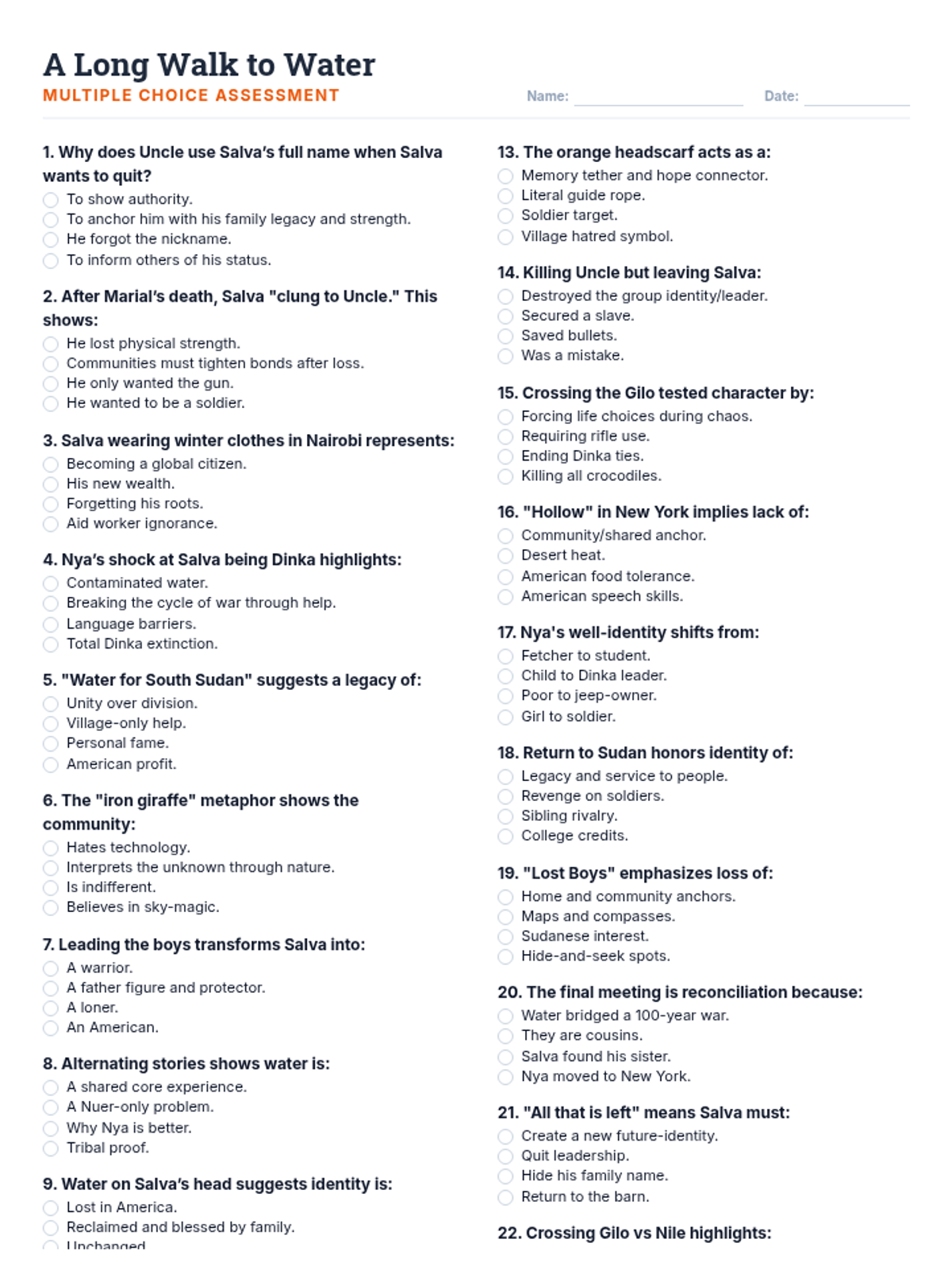
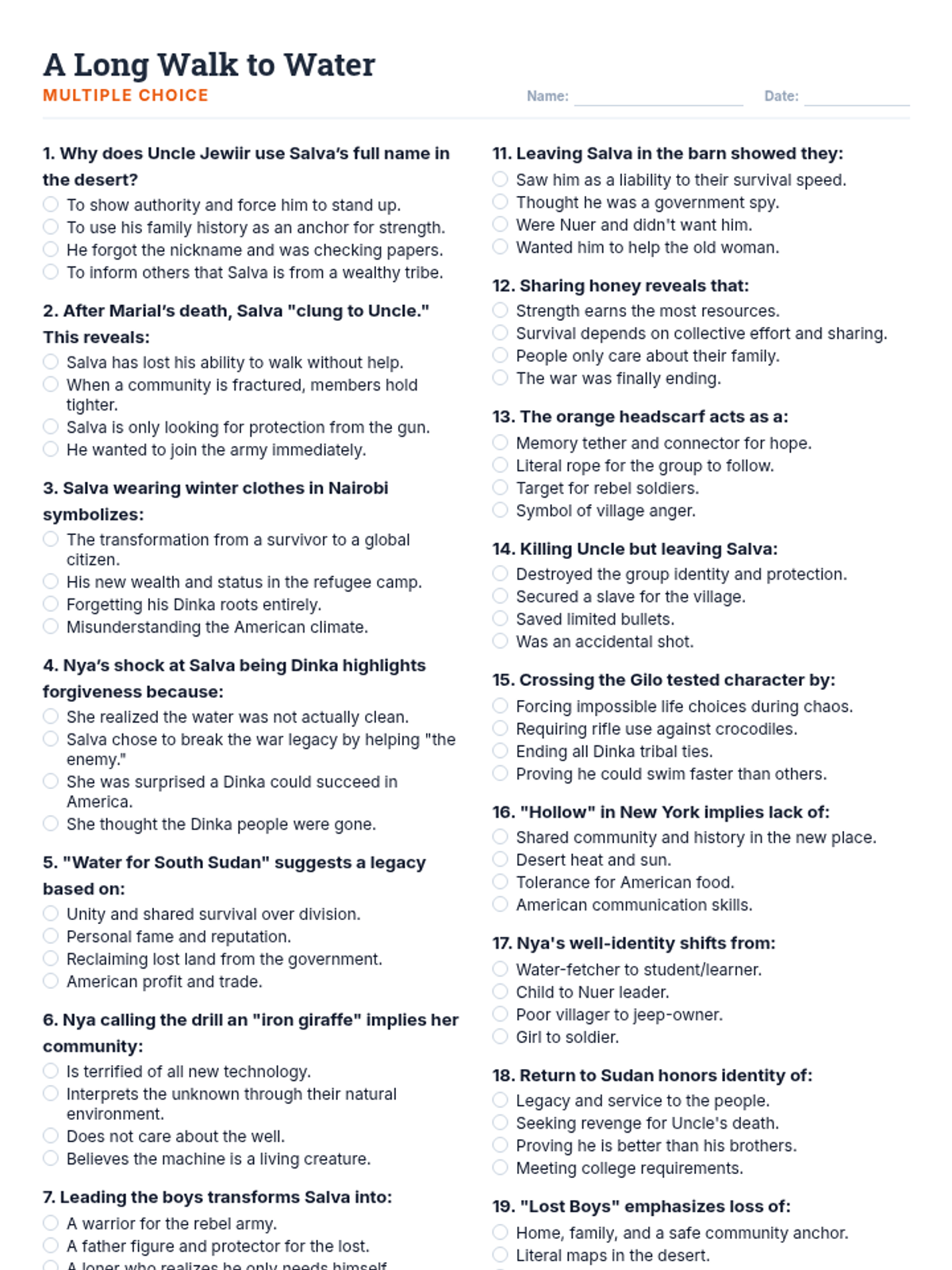
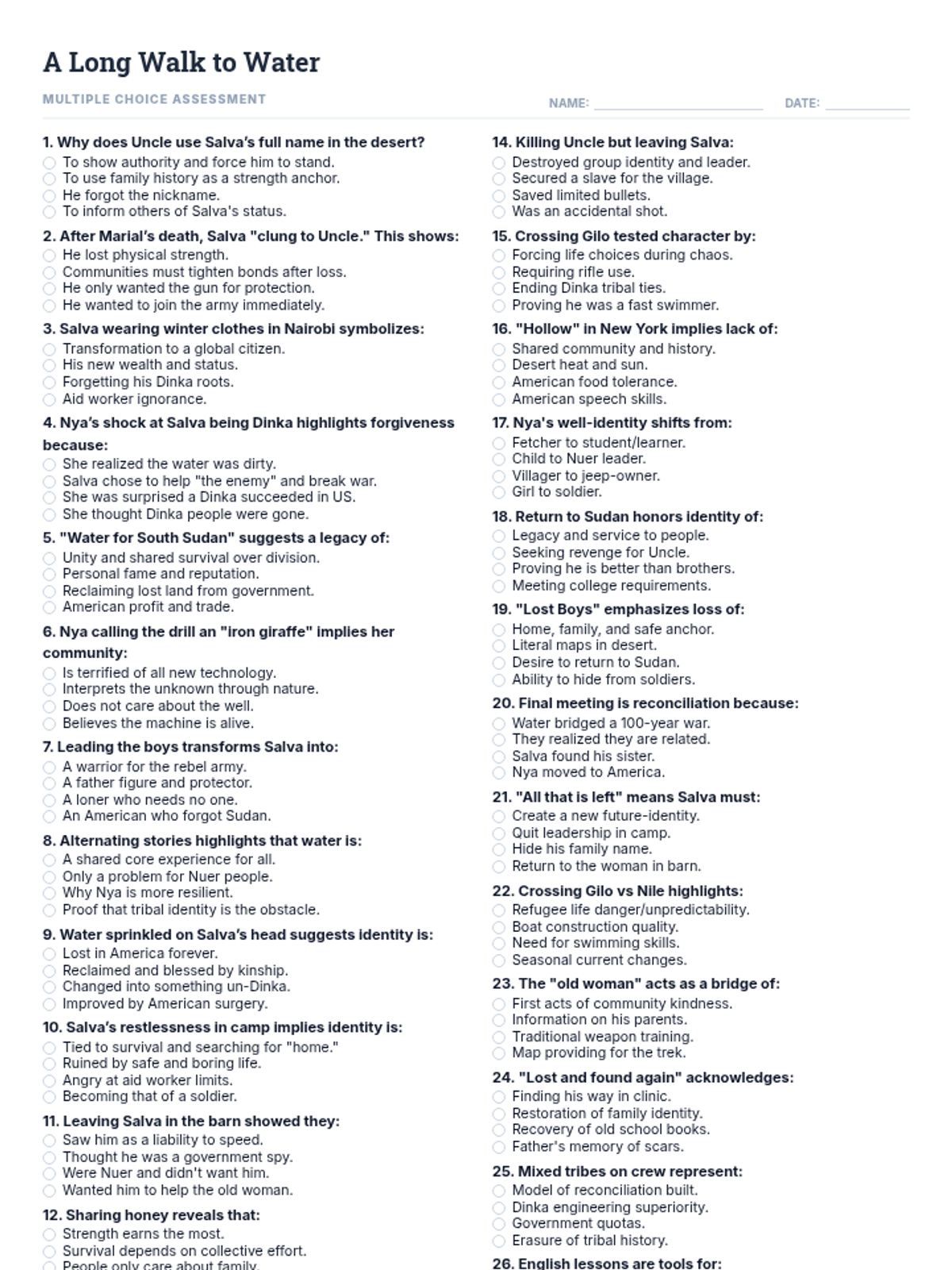
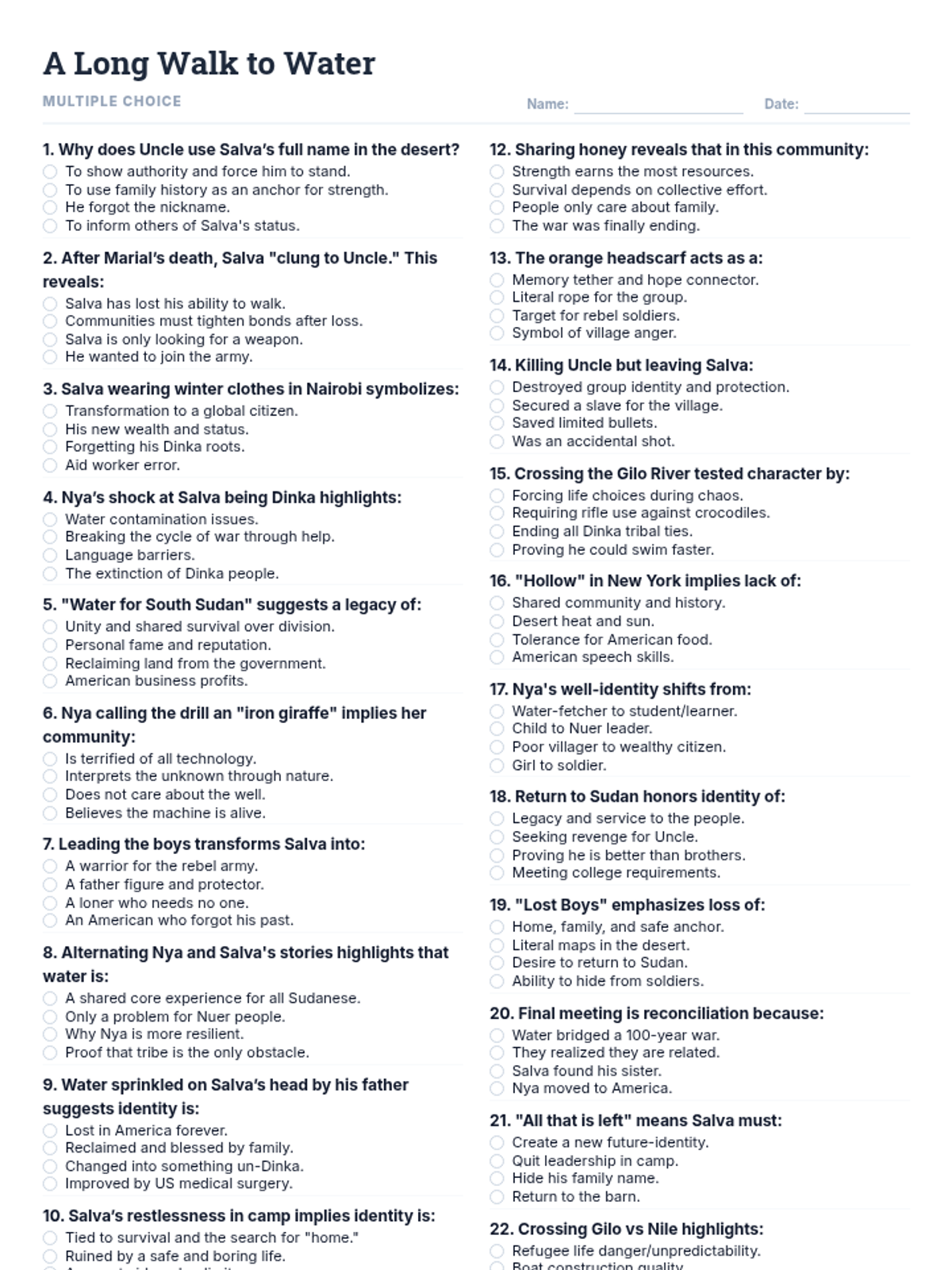
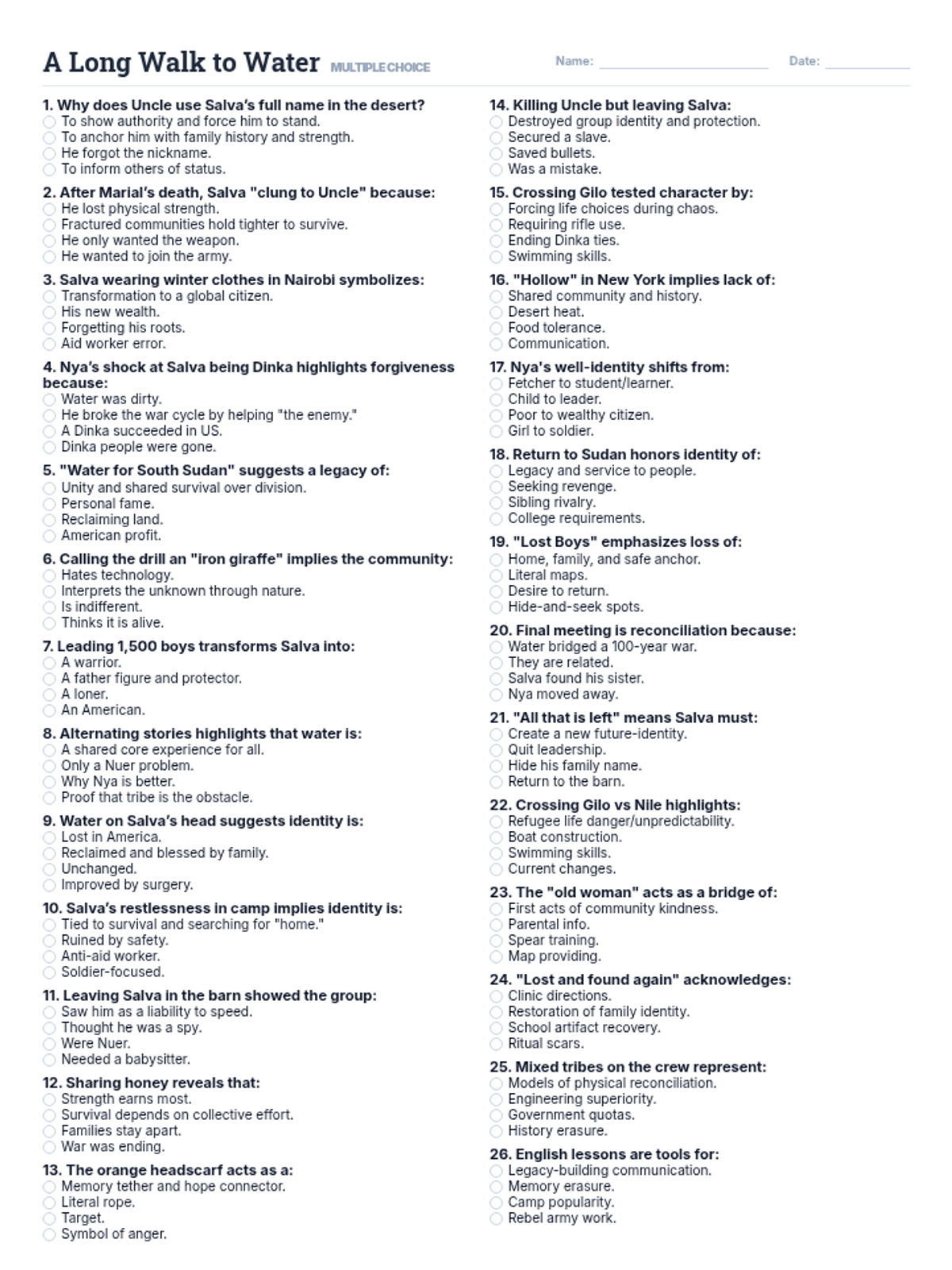
A comprehensive two-part summative assessment for the novel 'A Long Walk to Water', featuring multiple-choice questions, short responses, and a thematic comparison essay involving 'The Boy Who Harnessed the Wind' and 'MAUS'.
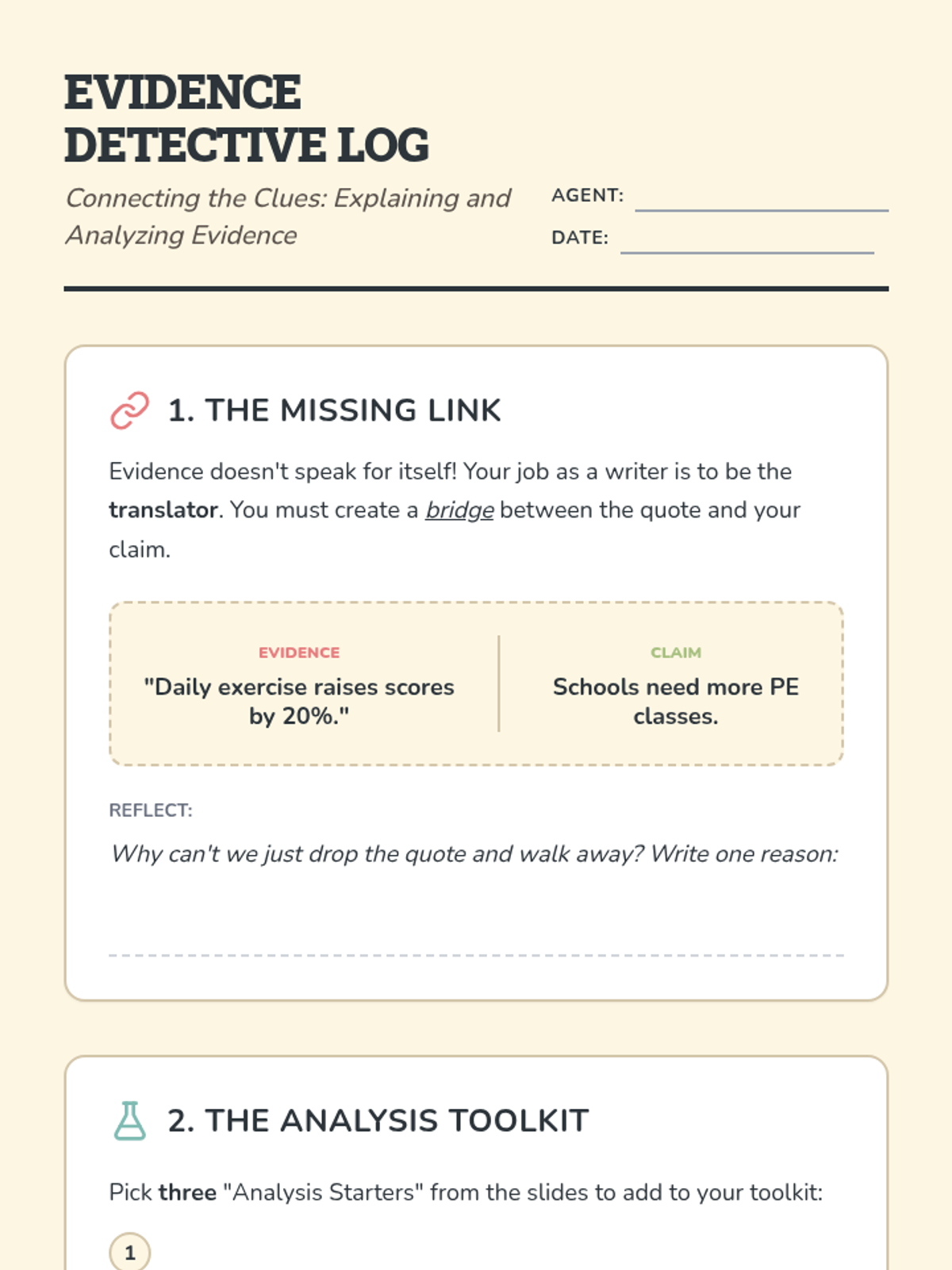
A mini-lesson focused on the art of explaining and analyzing evidence within an argument body paragraph, designed for 6th-grade students.
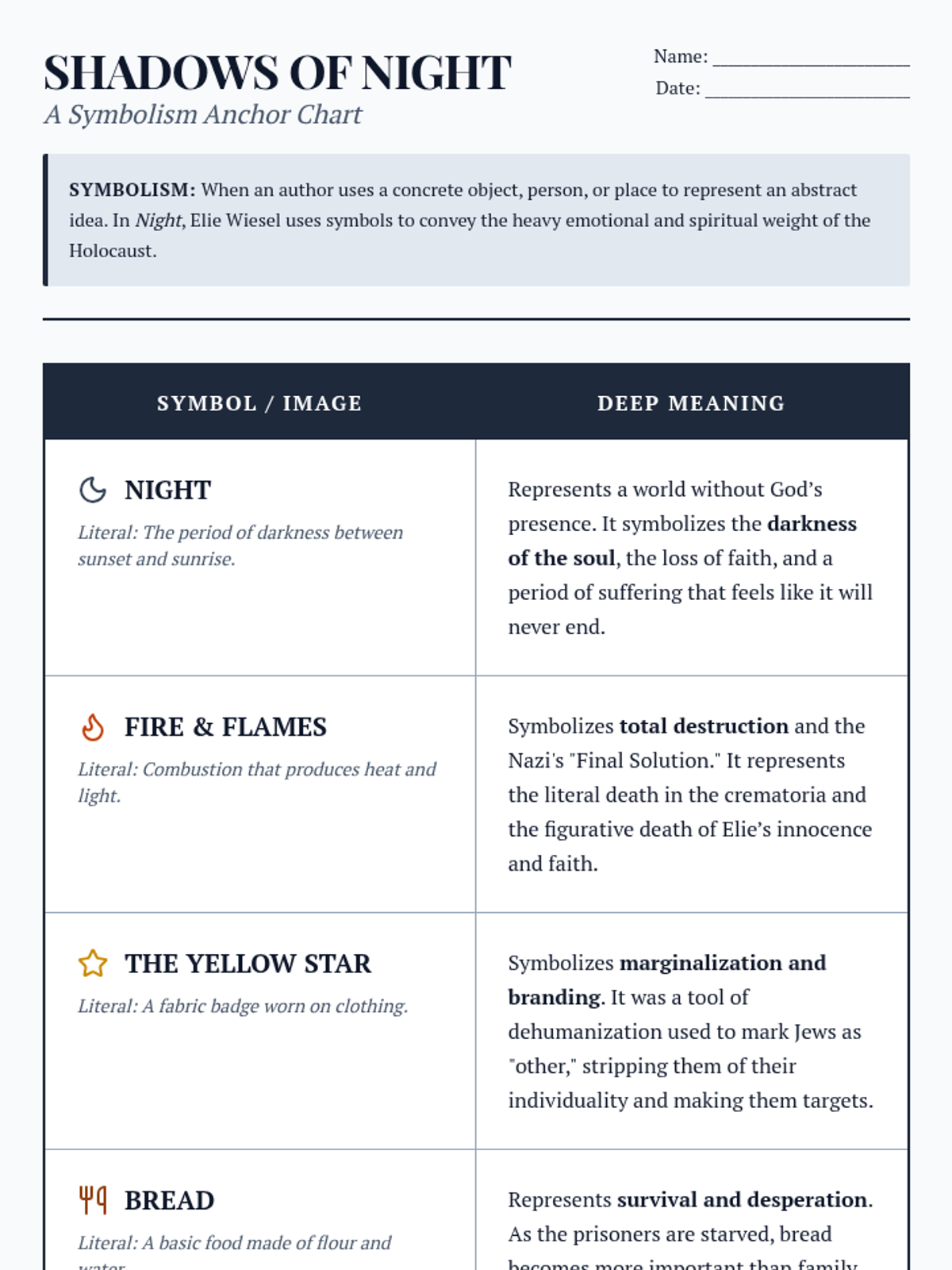
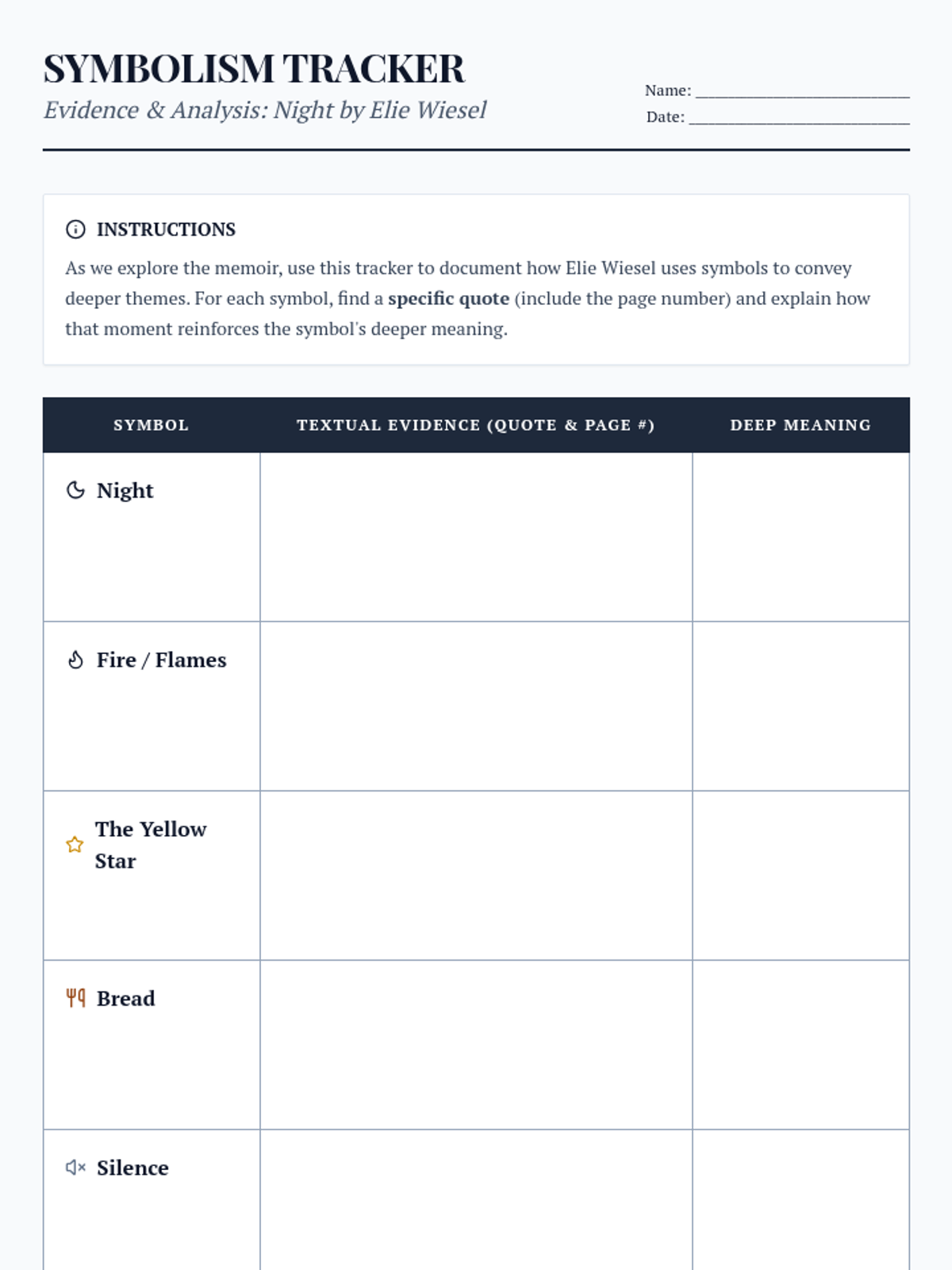
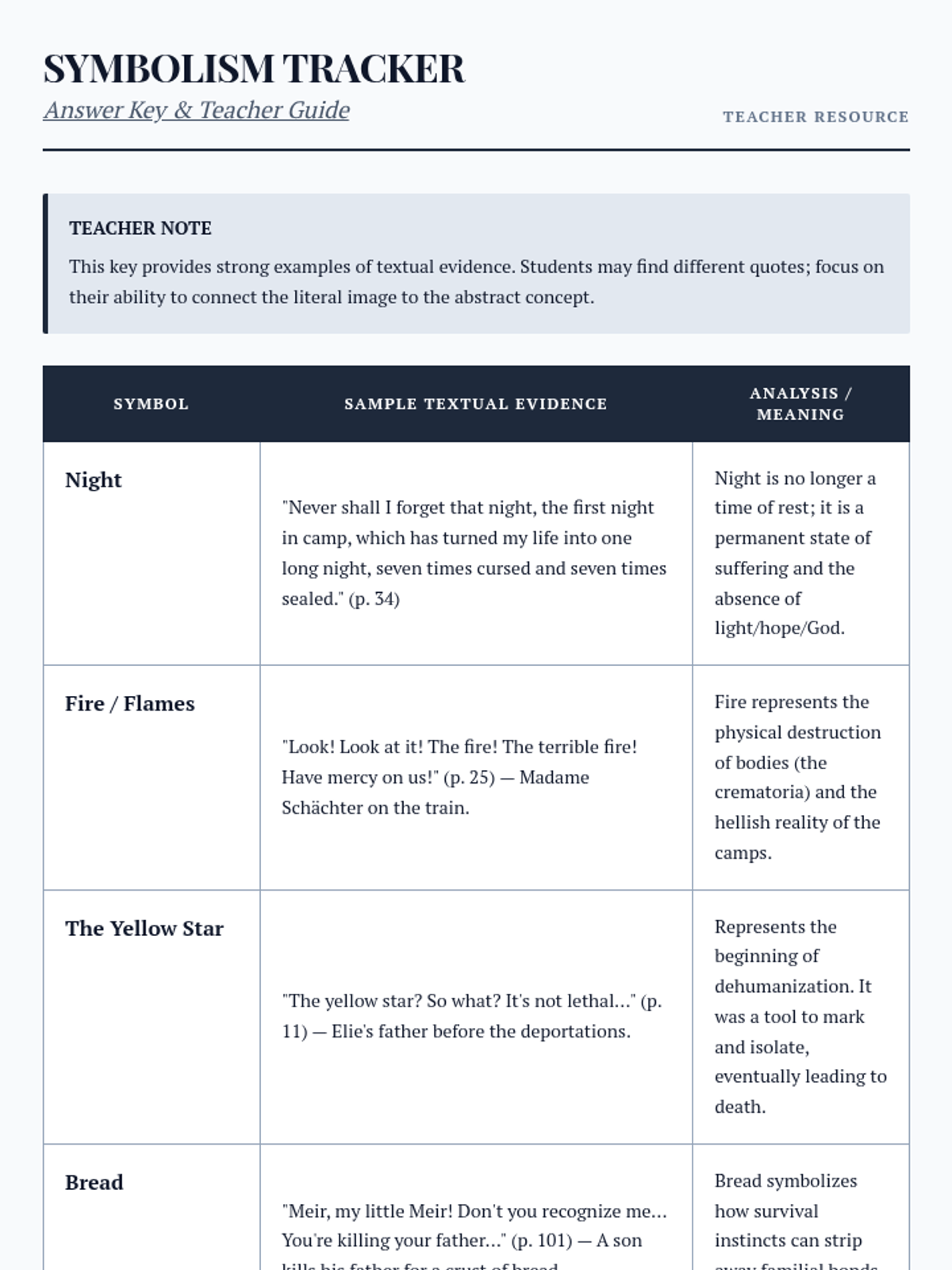
A deep dive into the profound symbolism of Elie Wiesel's 'Night'. Students examine how literal objects like night, fire, and the yellow star represent abstract concepts of faith, dehumanization, and survival through textual evidence and guided discussion.
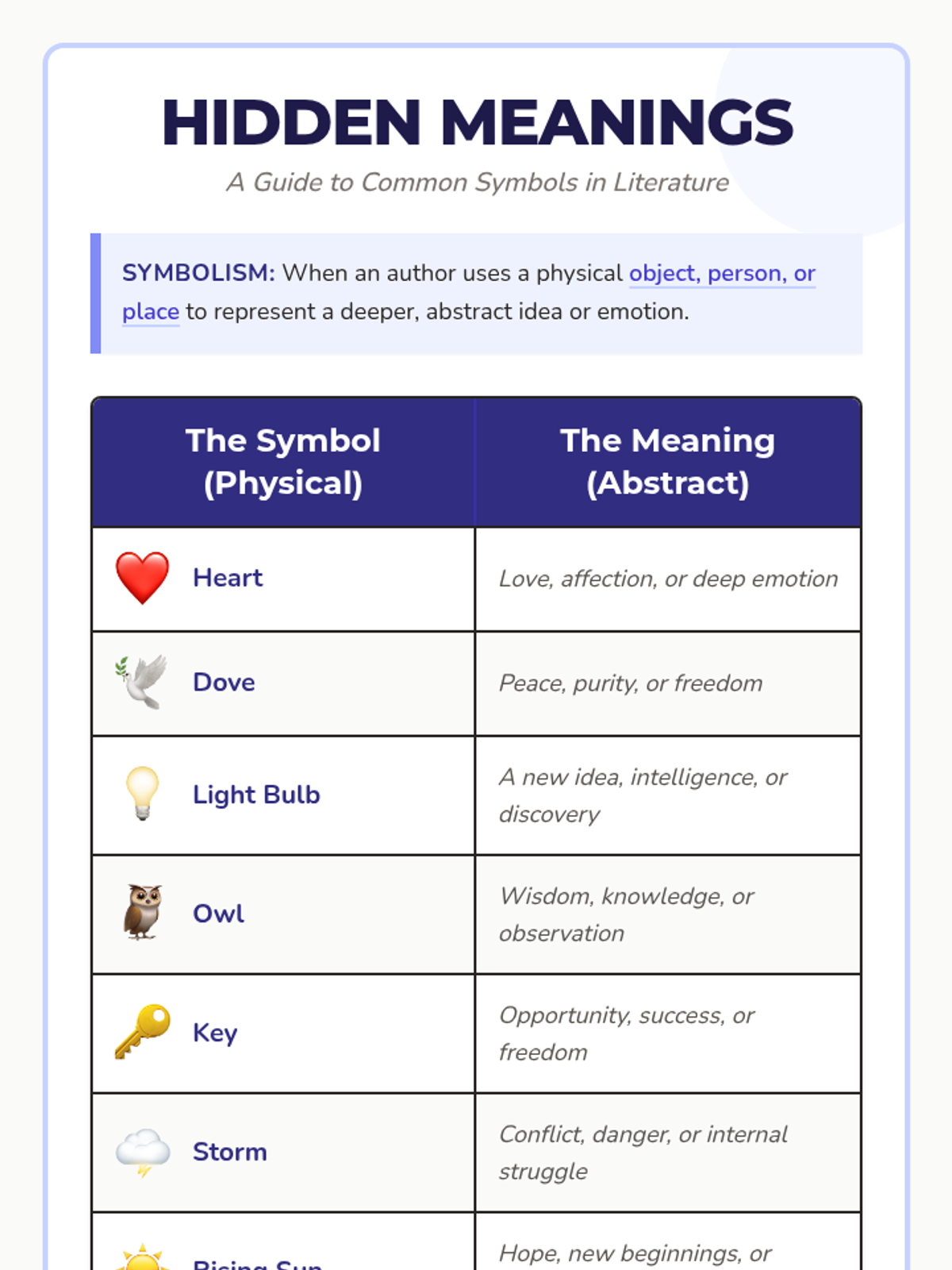
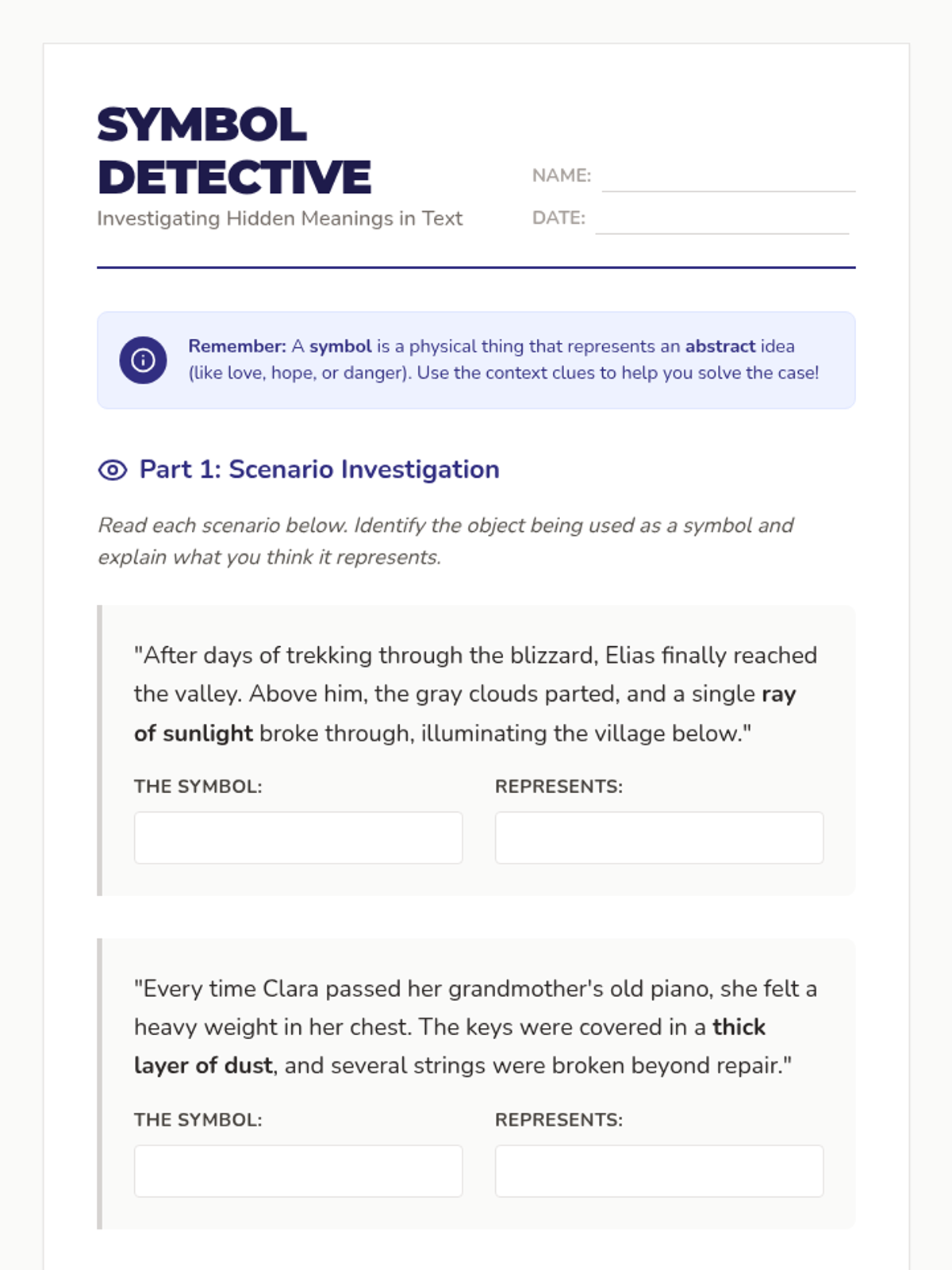
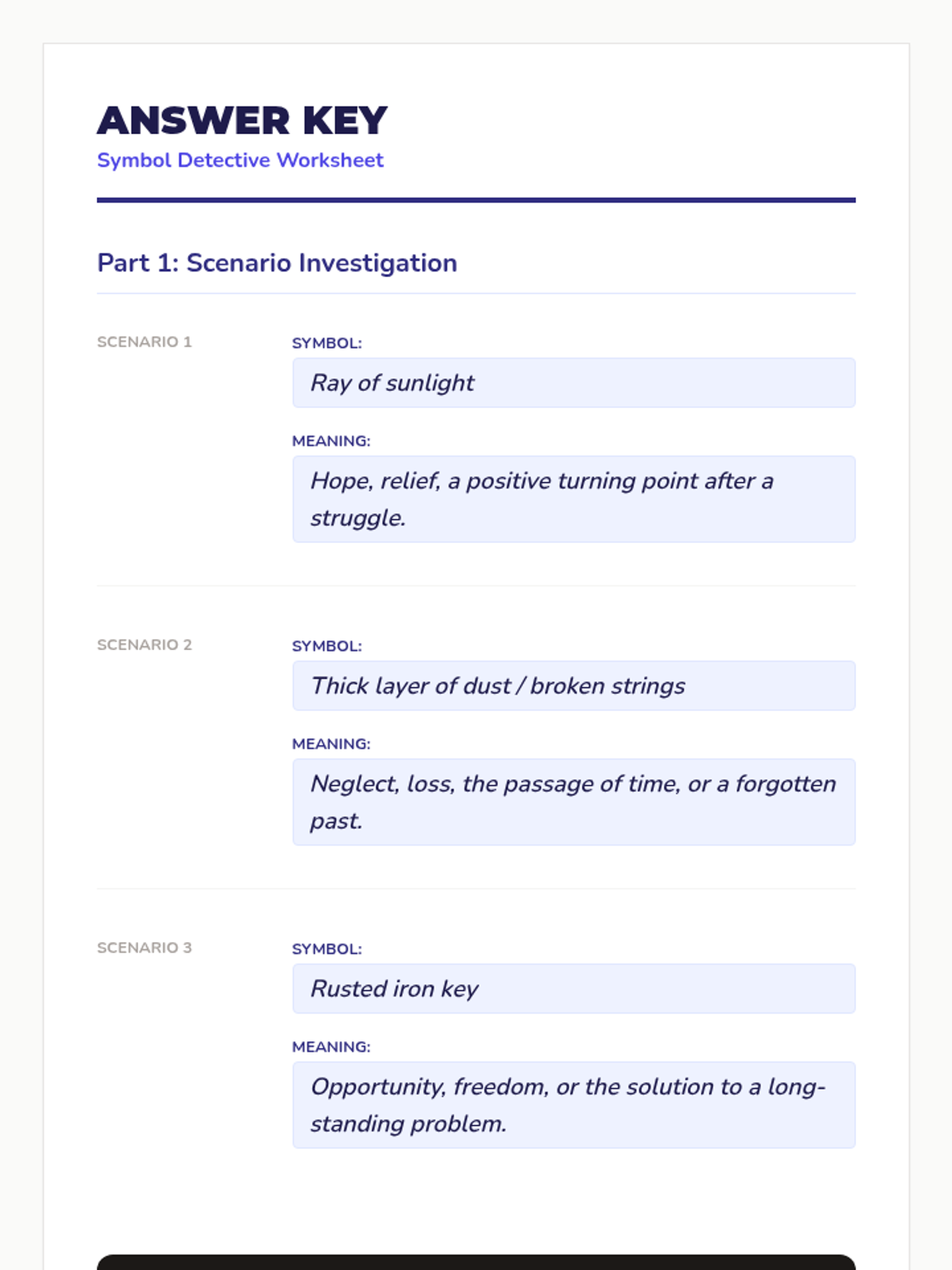
A lesson exploring how authors use everyday objects to represent deeper abstract ideas, helping students decode layers of meaning in literature.
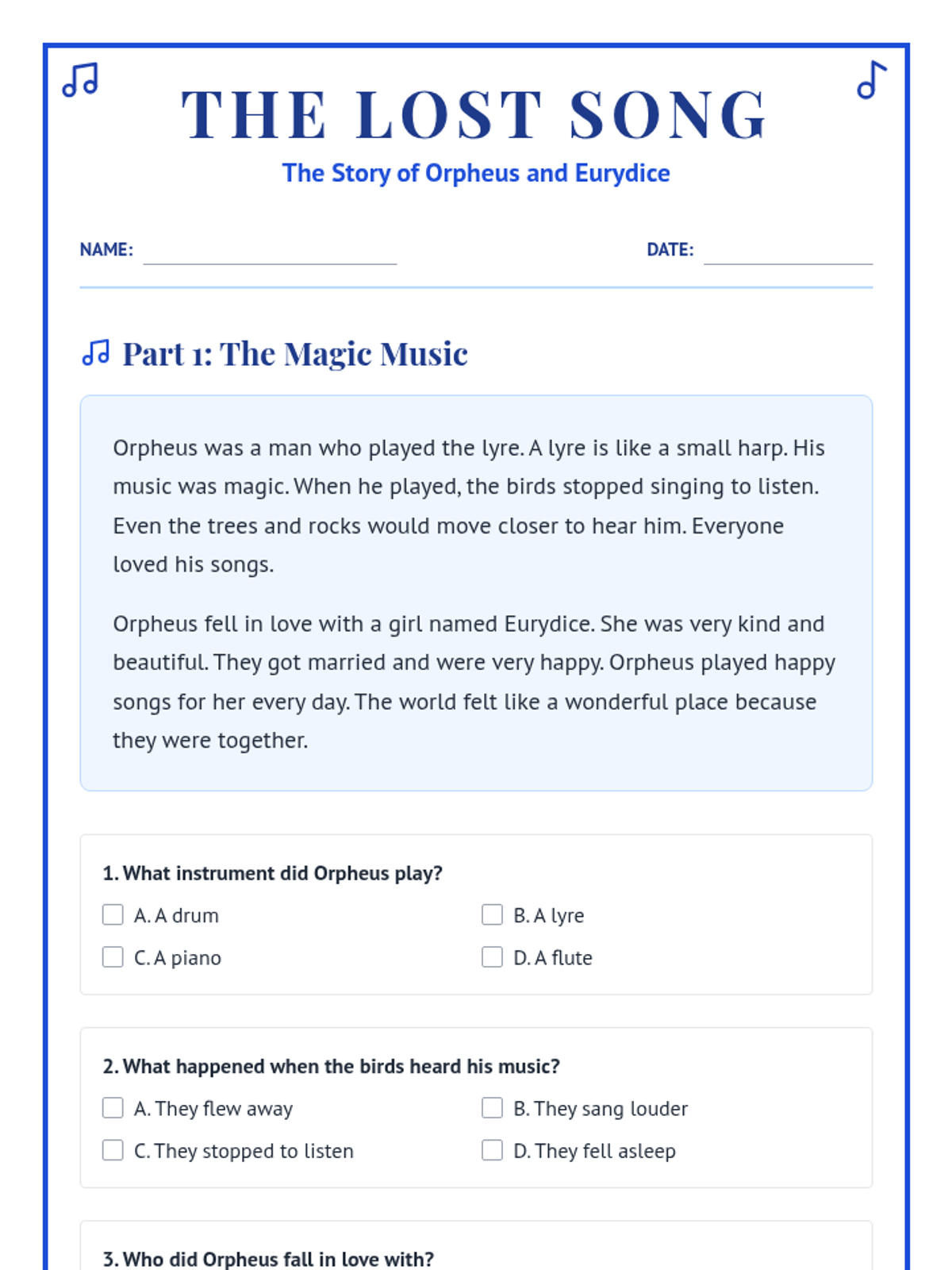
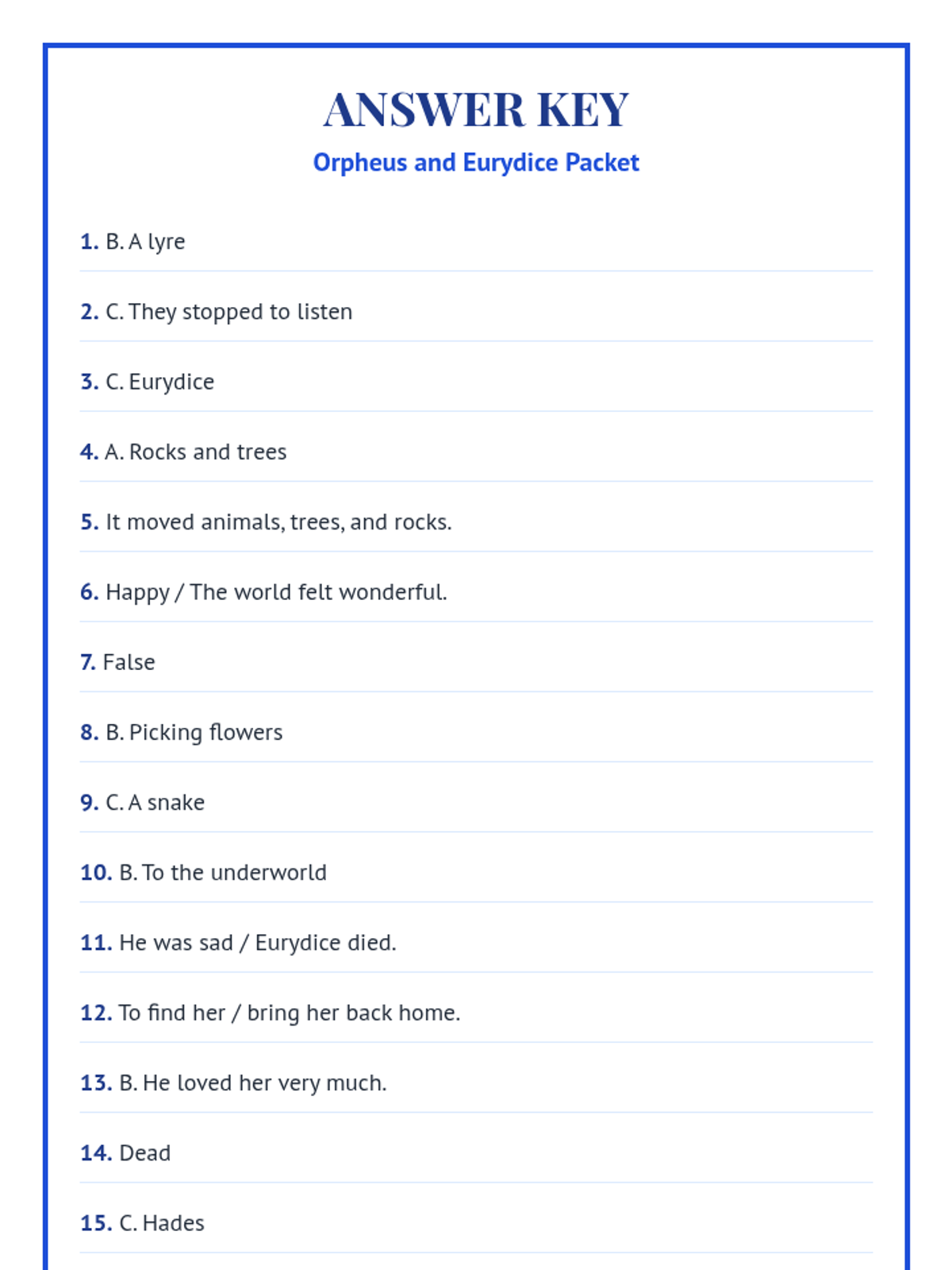
A simplified independent work packet about the myth of Orpheus and Eurydice, designed for middle school students at a second-grade reading level. The lesson explores the power of music, love, and the consequences of looking back through accessible texts and structured comprehension tasks.
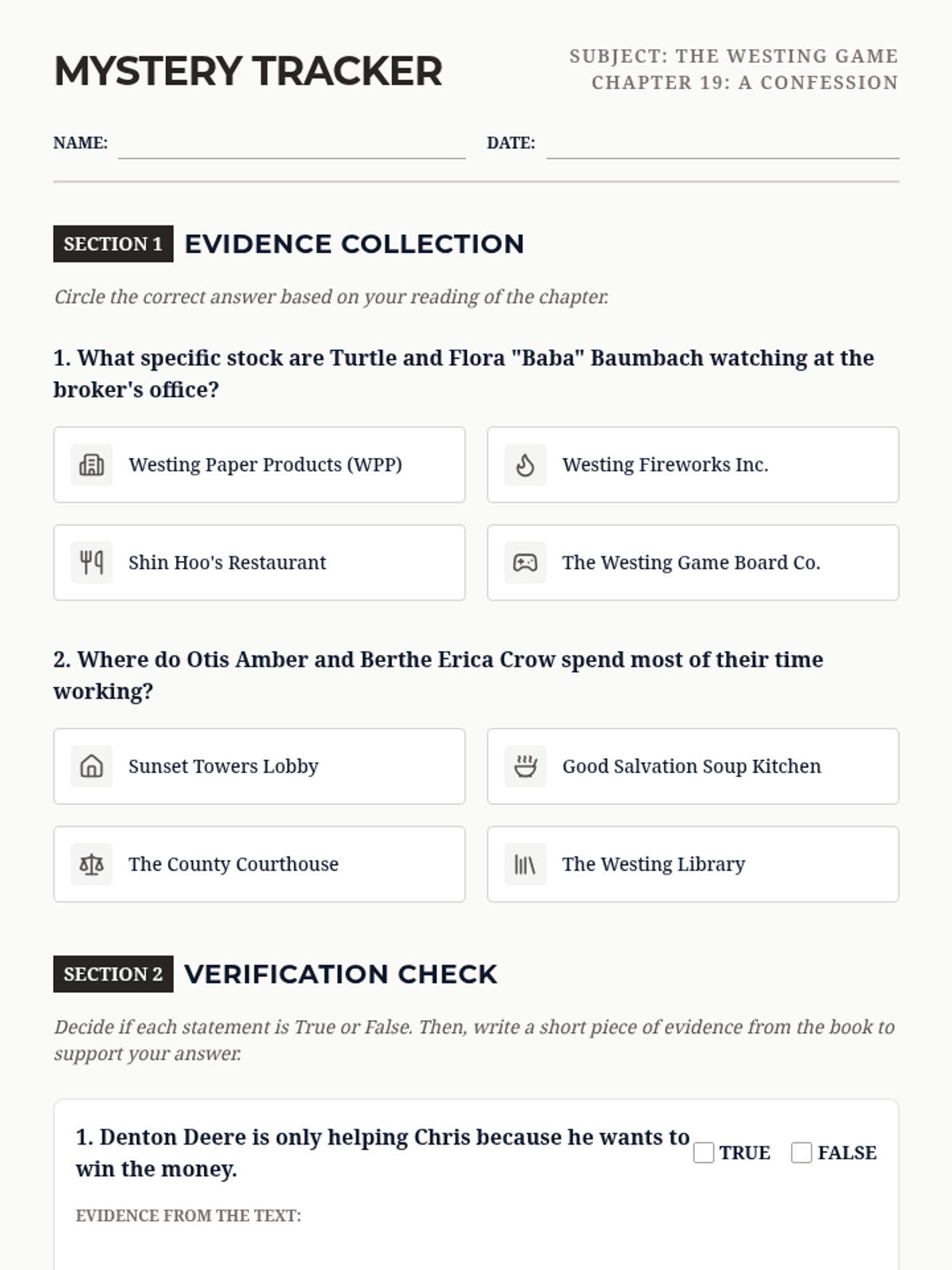
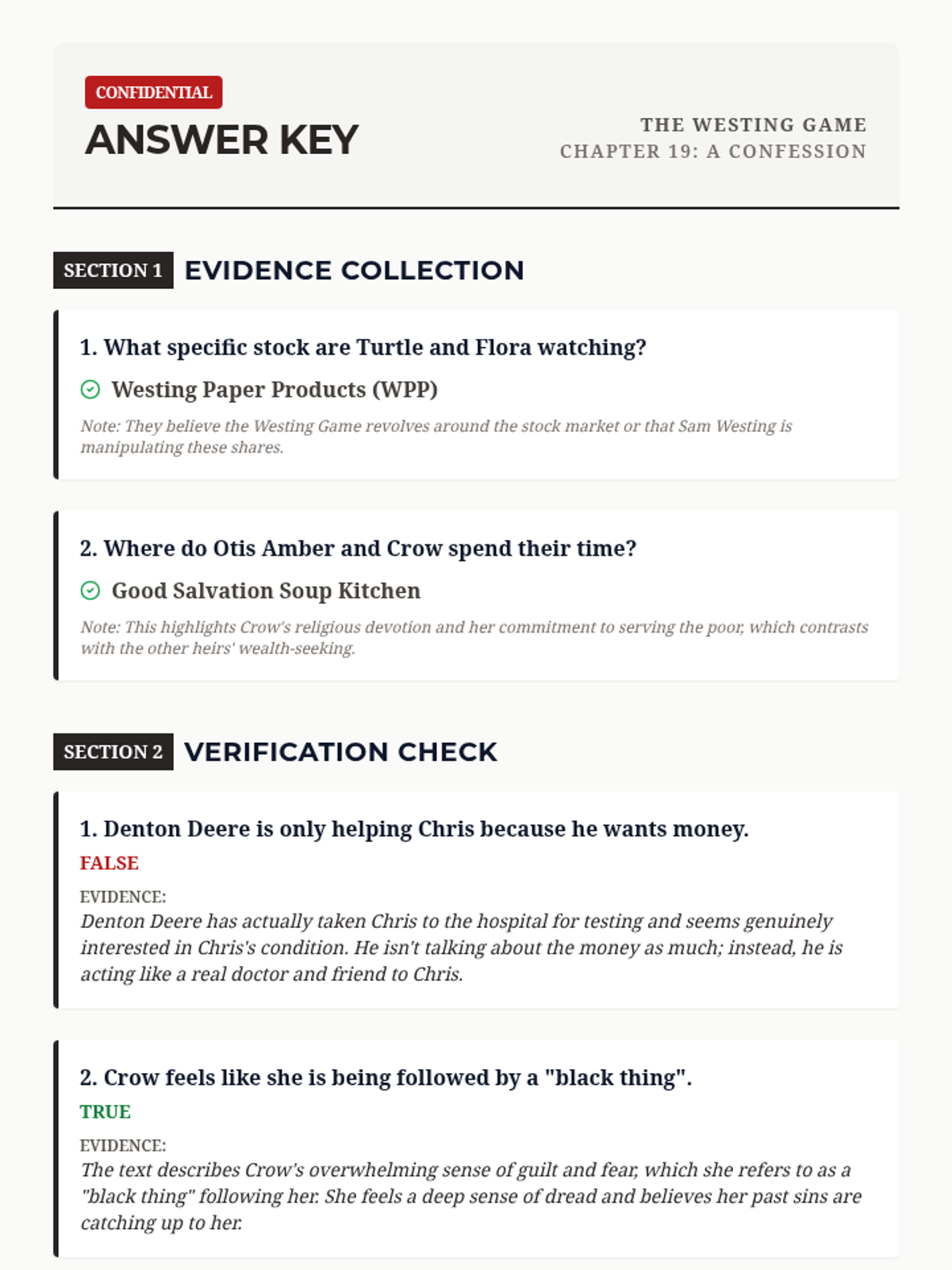
A focused look at Chapter 19 of The Westing Game, exploring Crow's internal struggle, the evolving partnership between Denton and Chris, and Turtle's stock market strategy.
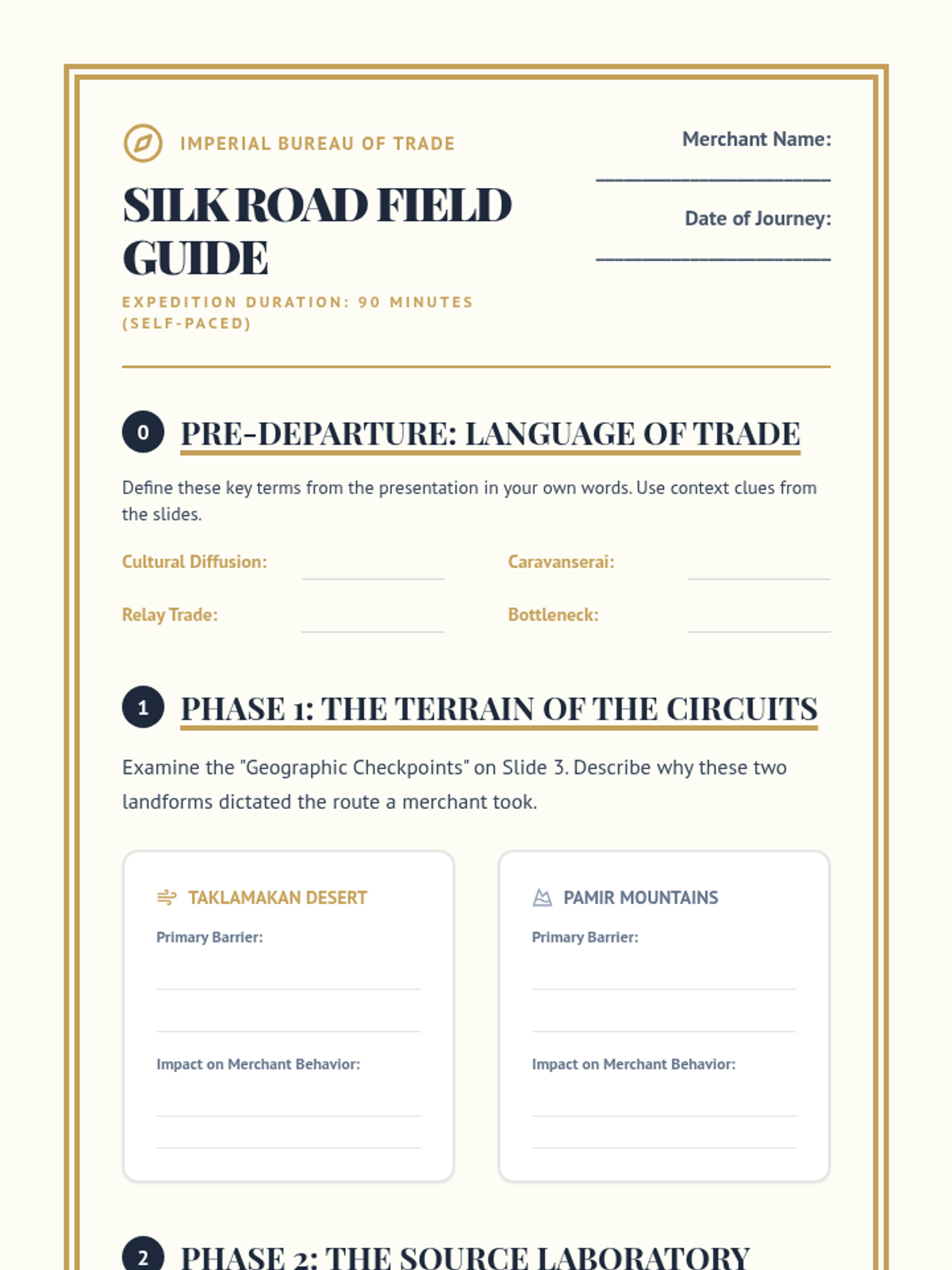
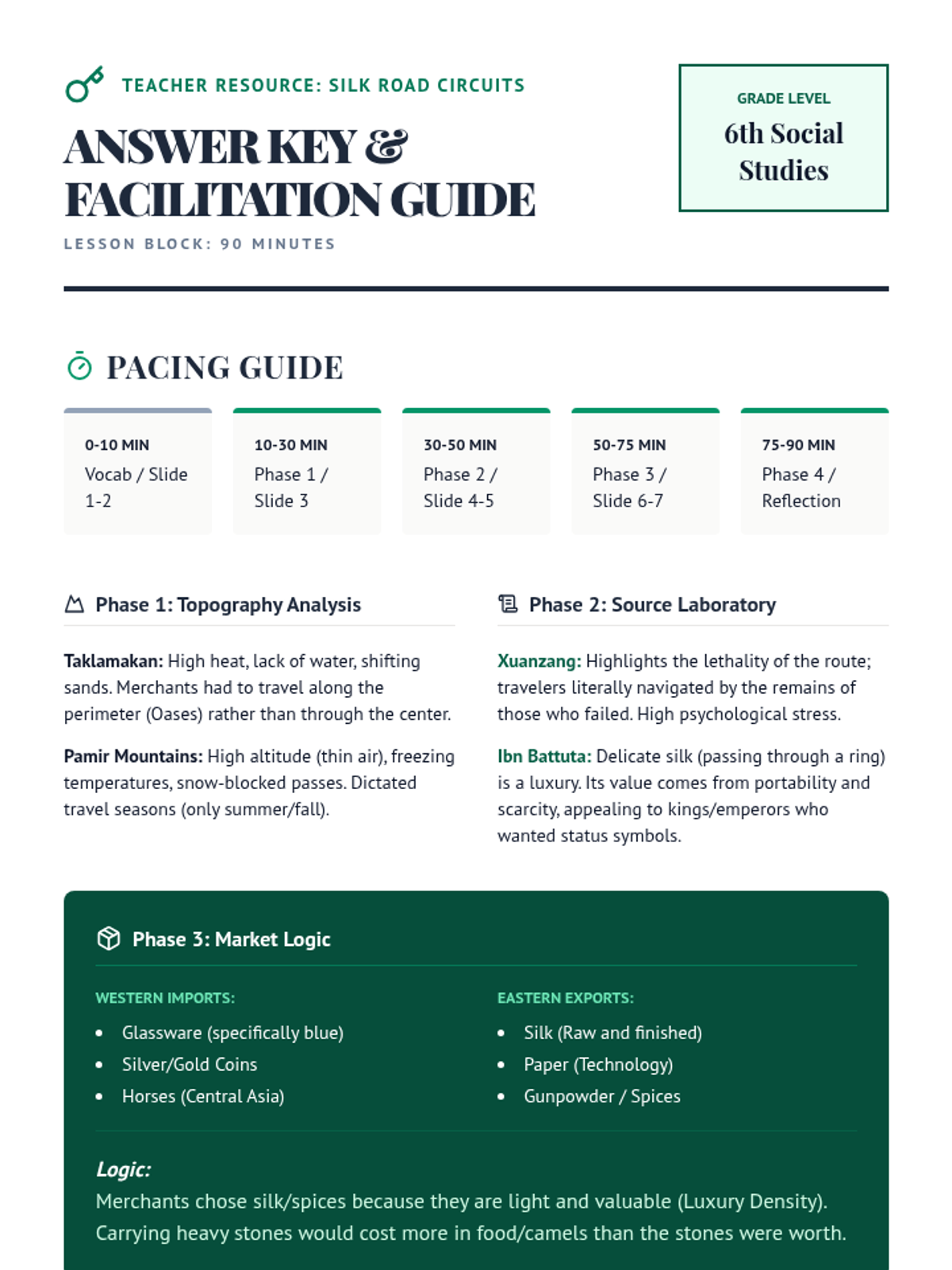
A self-paced Social Studies lesson for 6th grade focused on the Silk Road as an ancient global network, integrating rigorous primary source analysis and geography skills.
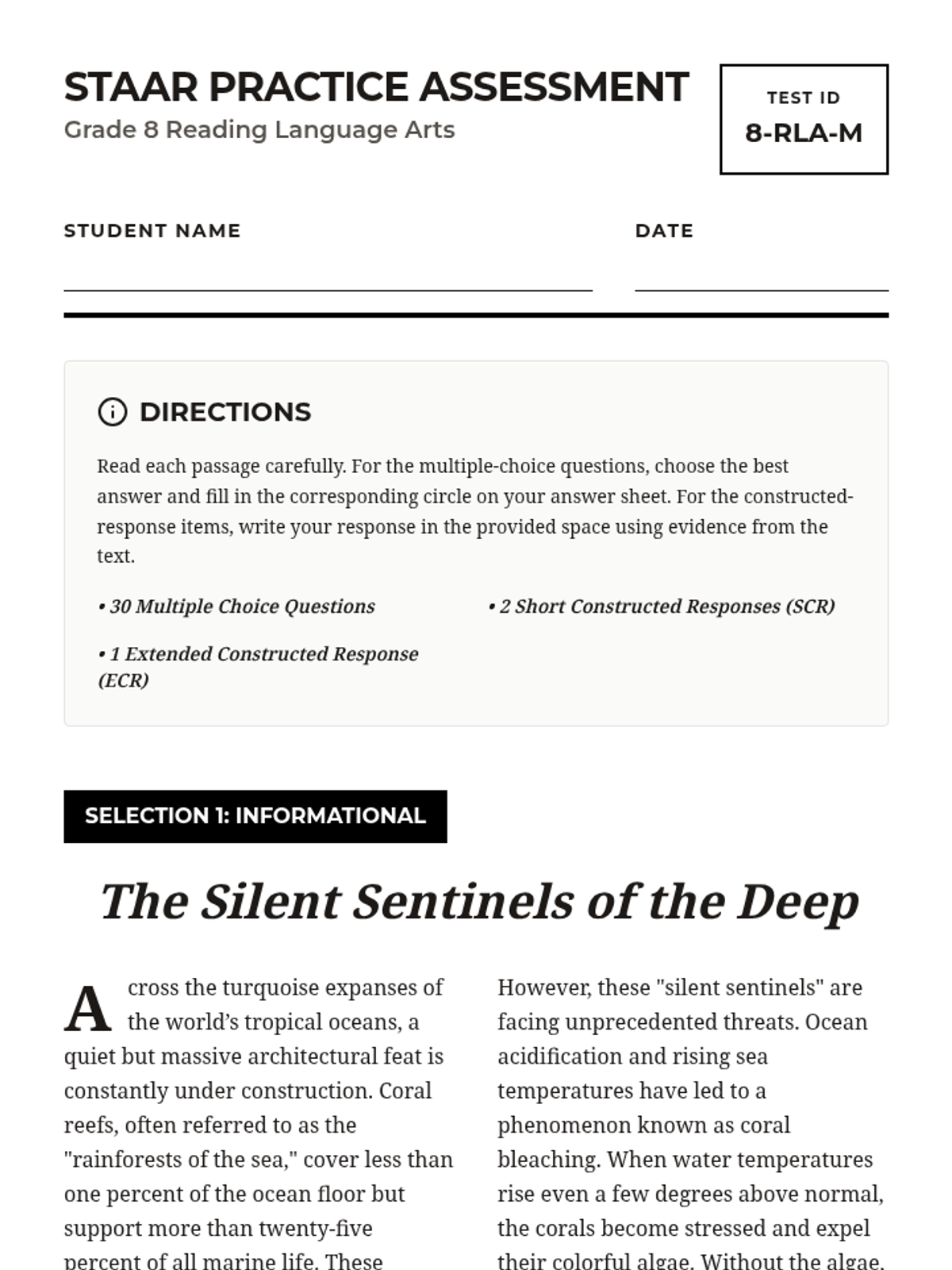
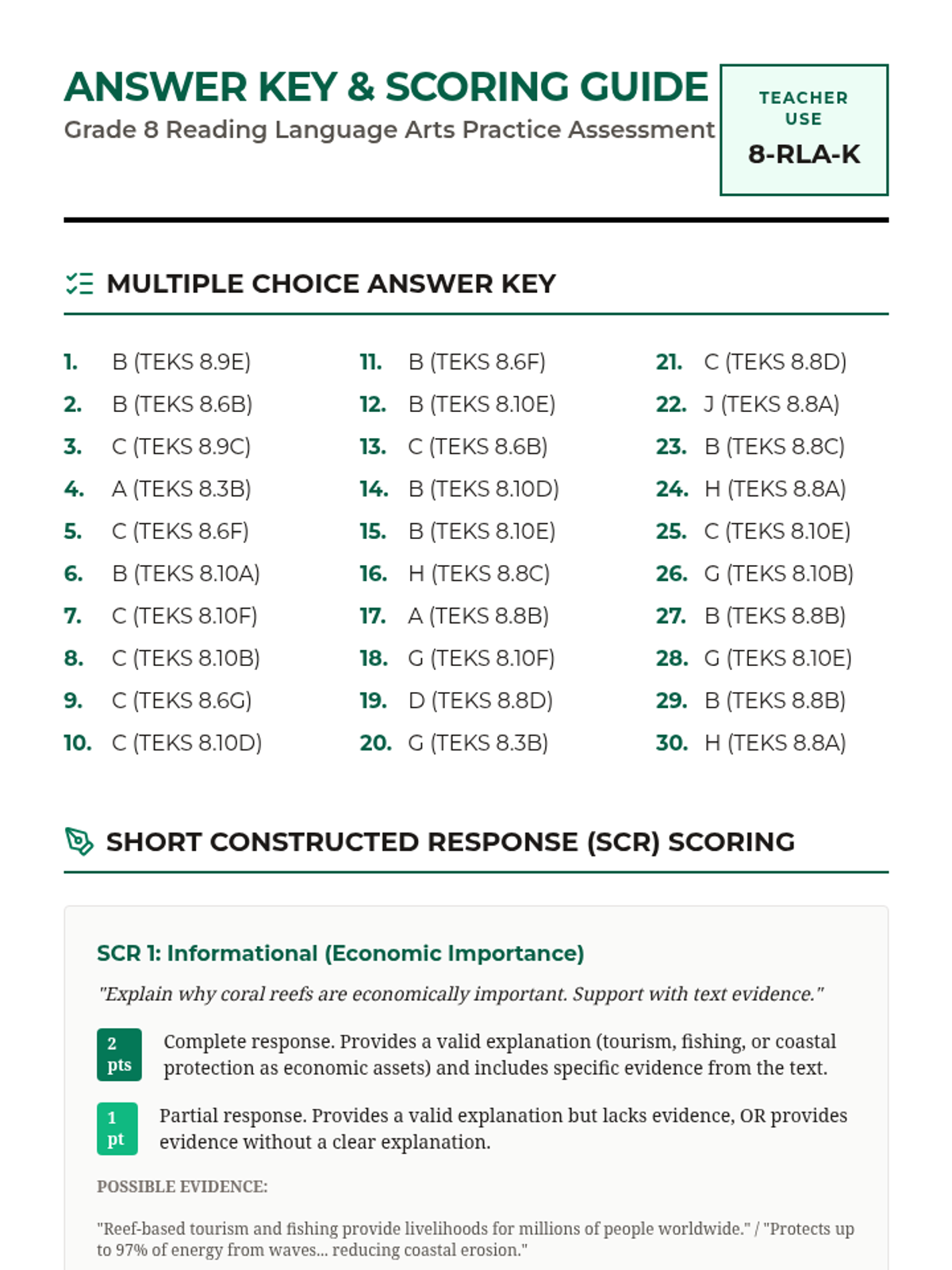
A full-length 8th-grade STAAR reading practice assessment, including 30 multiple-choice questions, two SCRs, and one ECR based on informational and fiction passages.
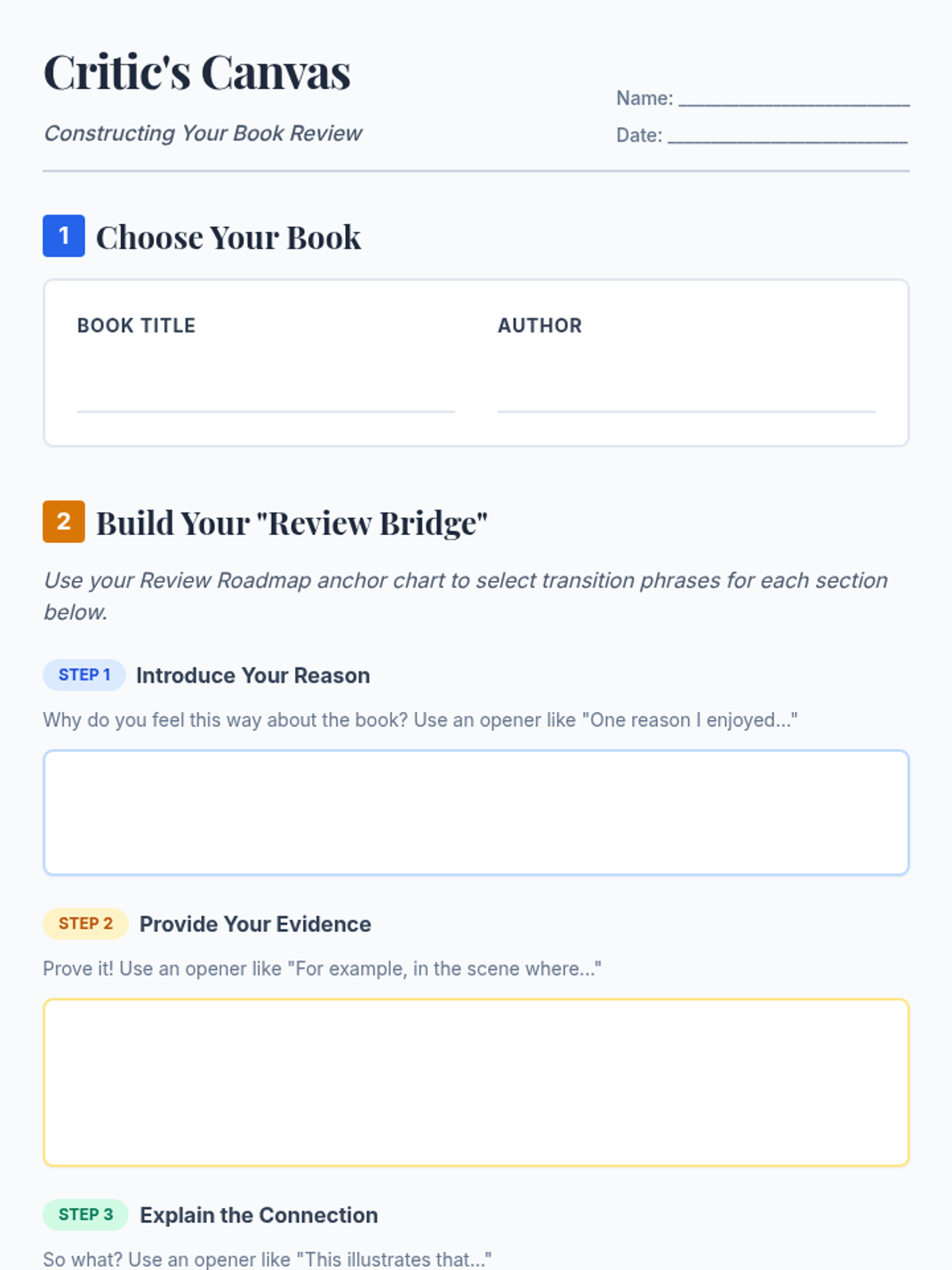
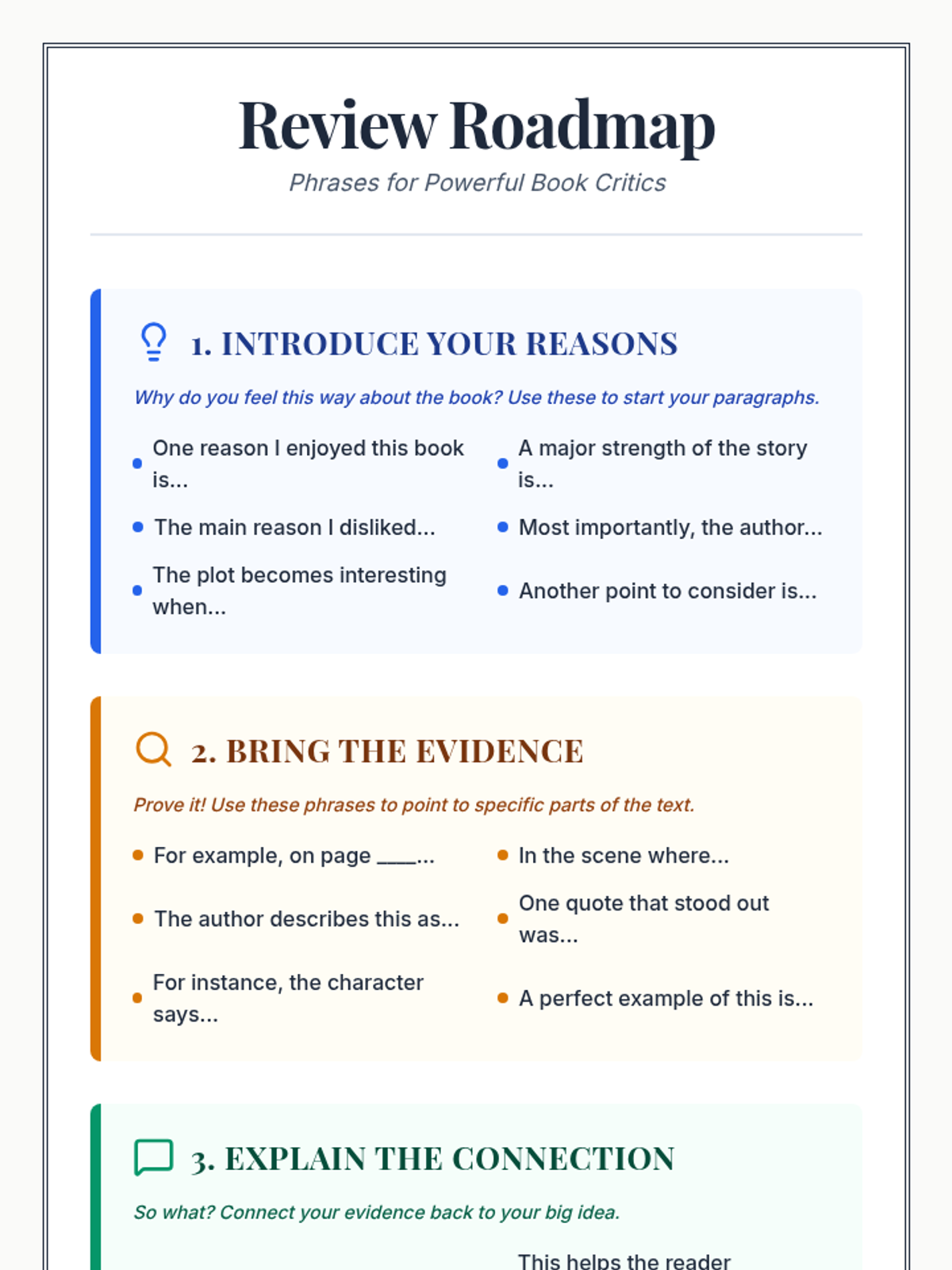
A lesson focused on teaching students how to write compelling book reviews by using specific transition phrases to connect their opinions with text-based evidence.
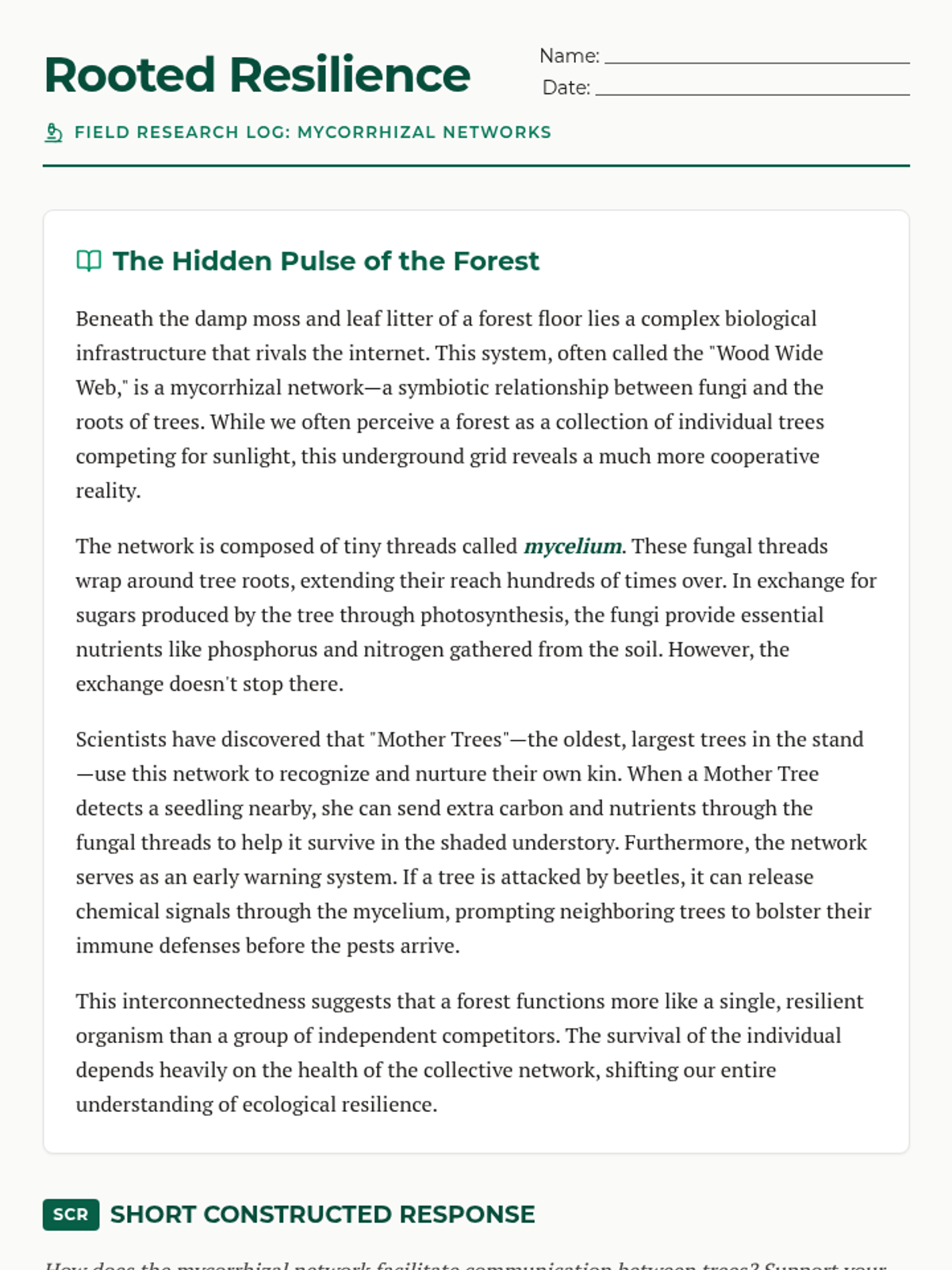
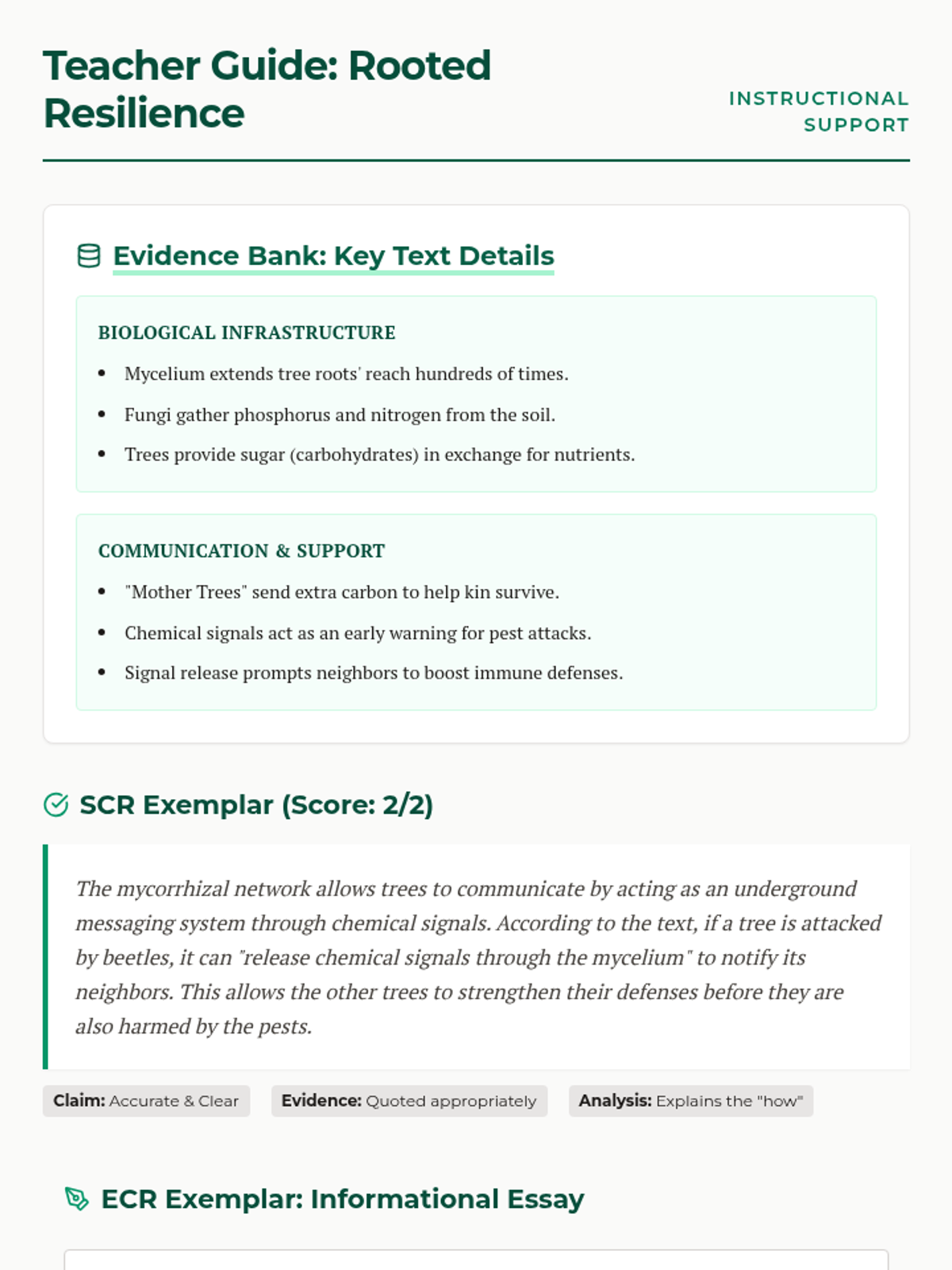
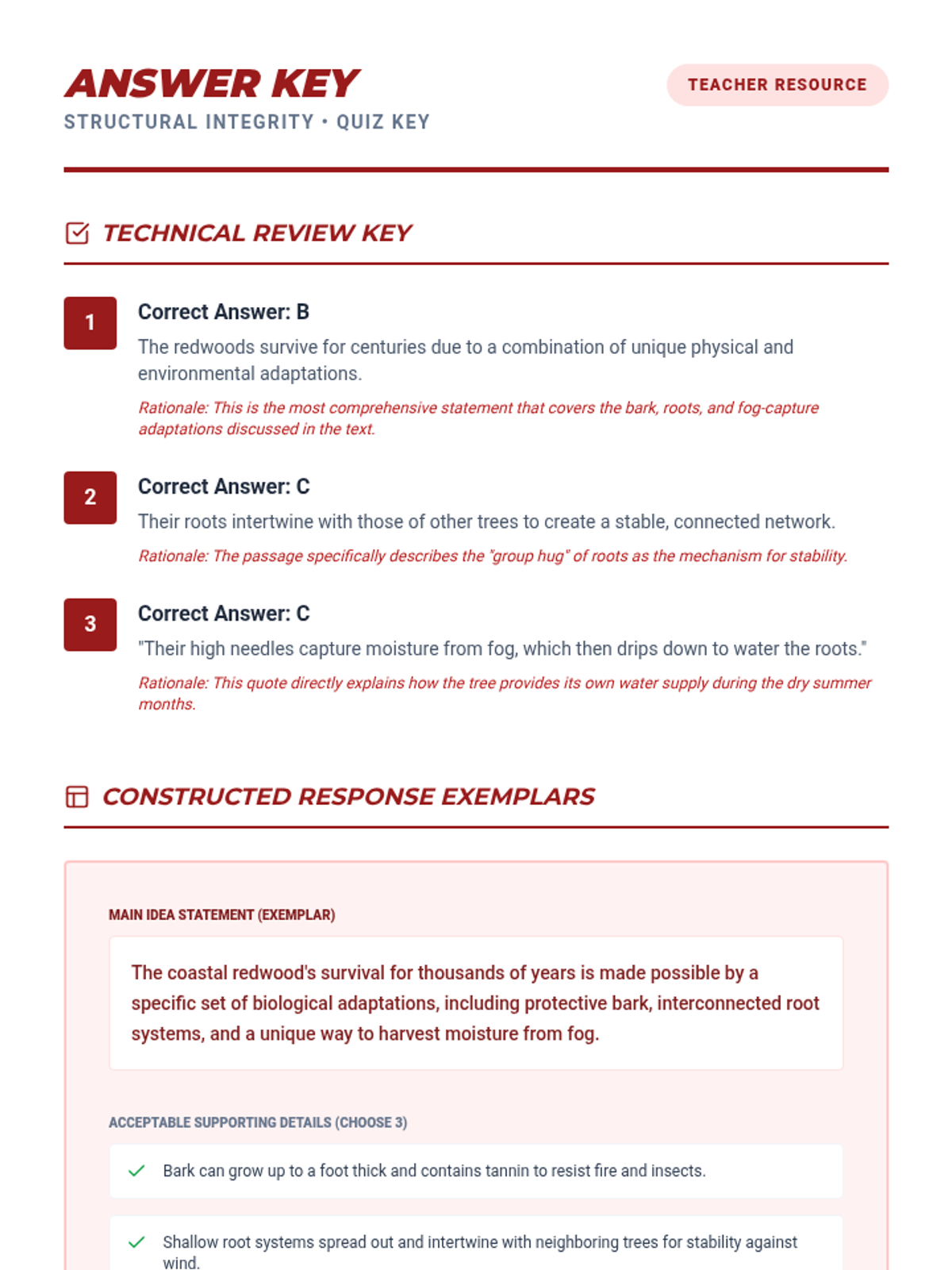
A rigorous informational reading and writing assignment focused on the mycorrhizal network, designed to practice SCR and ECR skills with an emphasis on organization, evidence, and sentence variety.
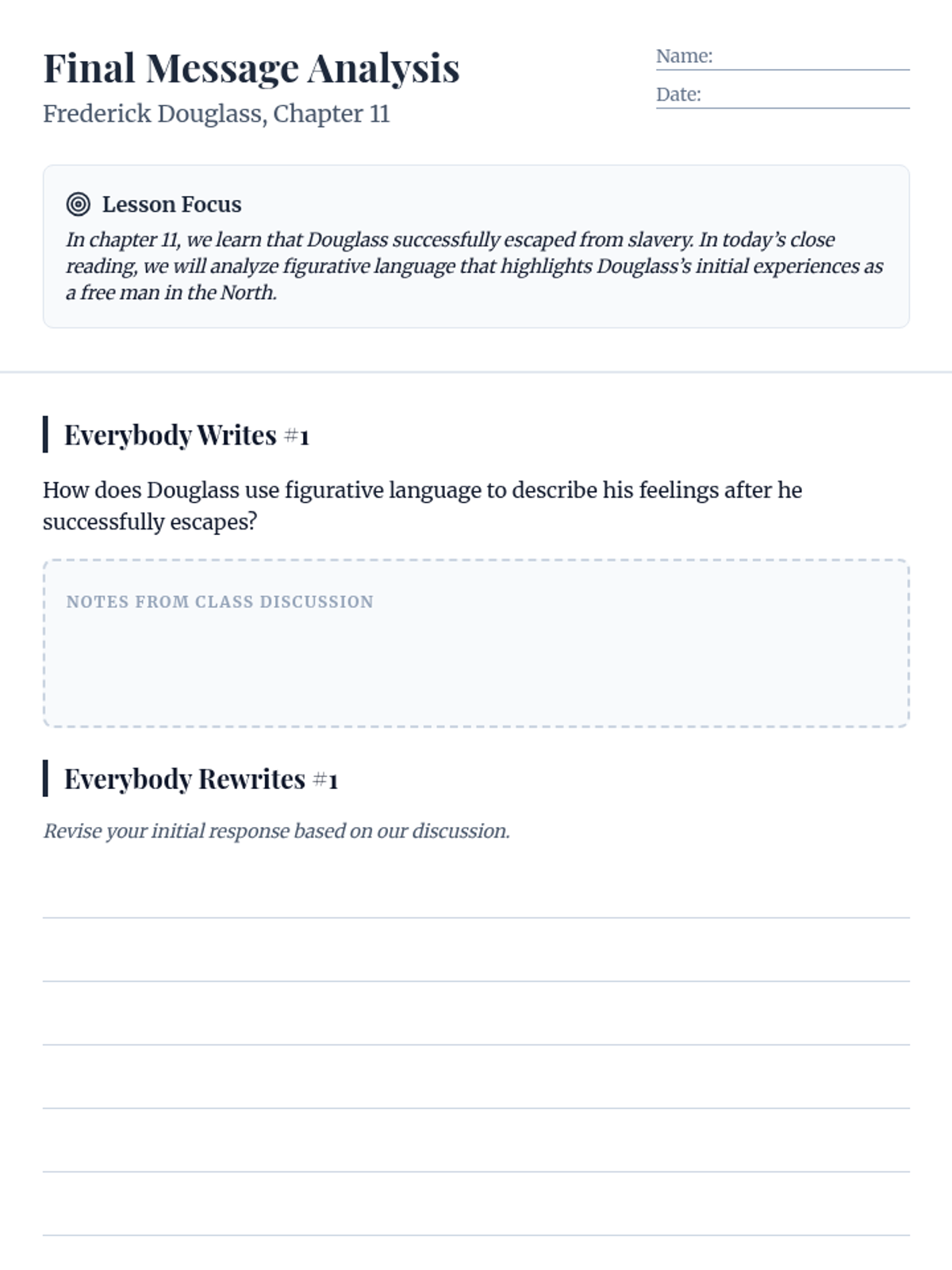
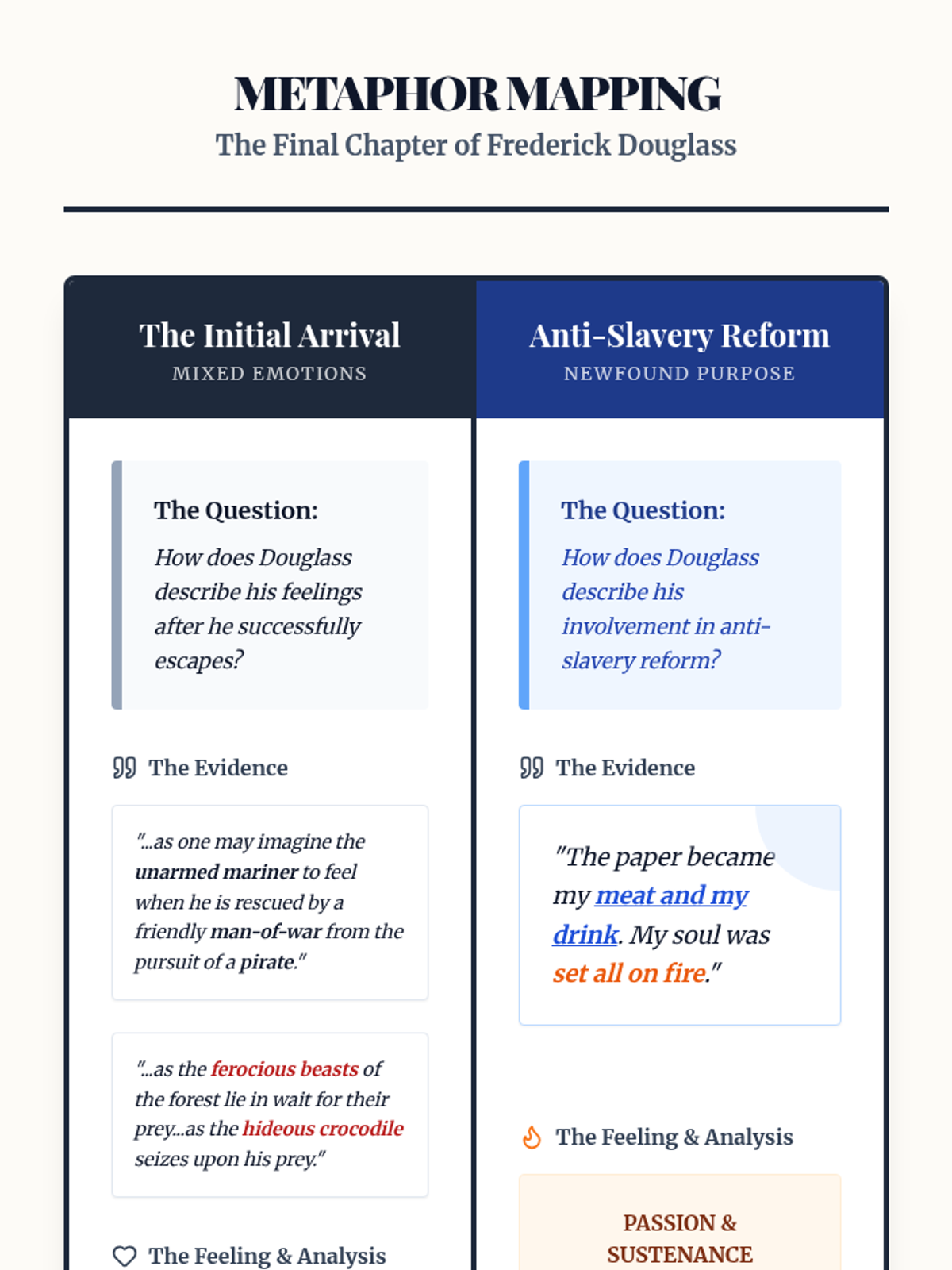
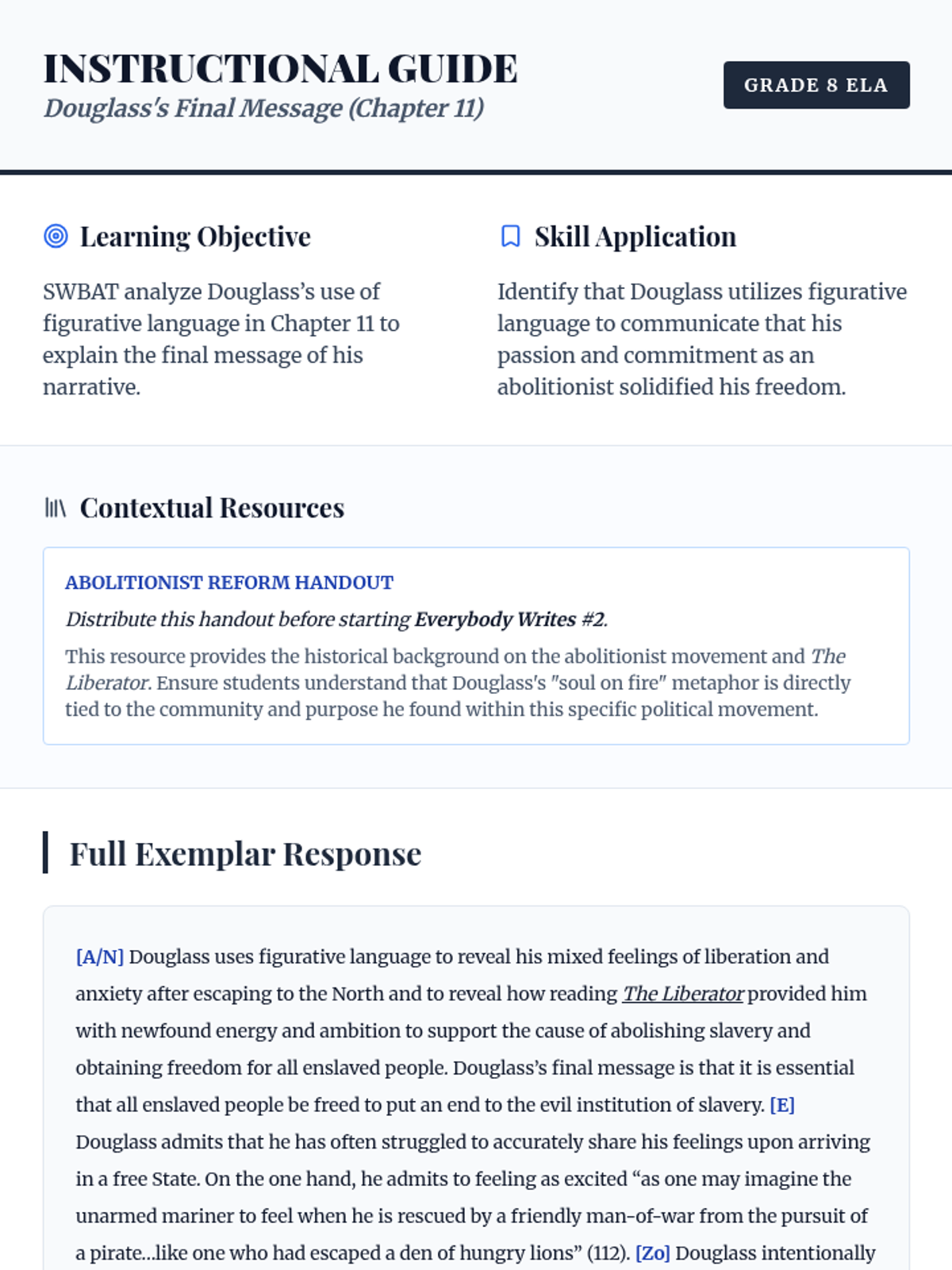
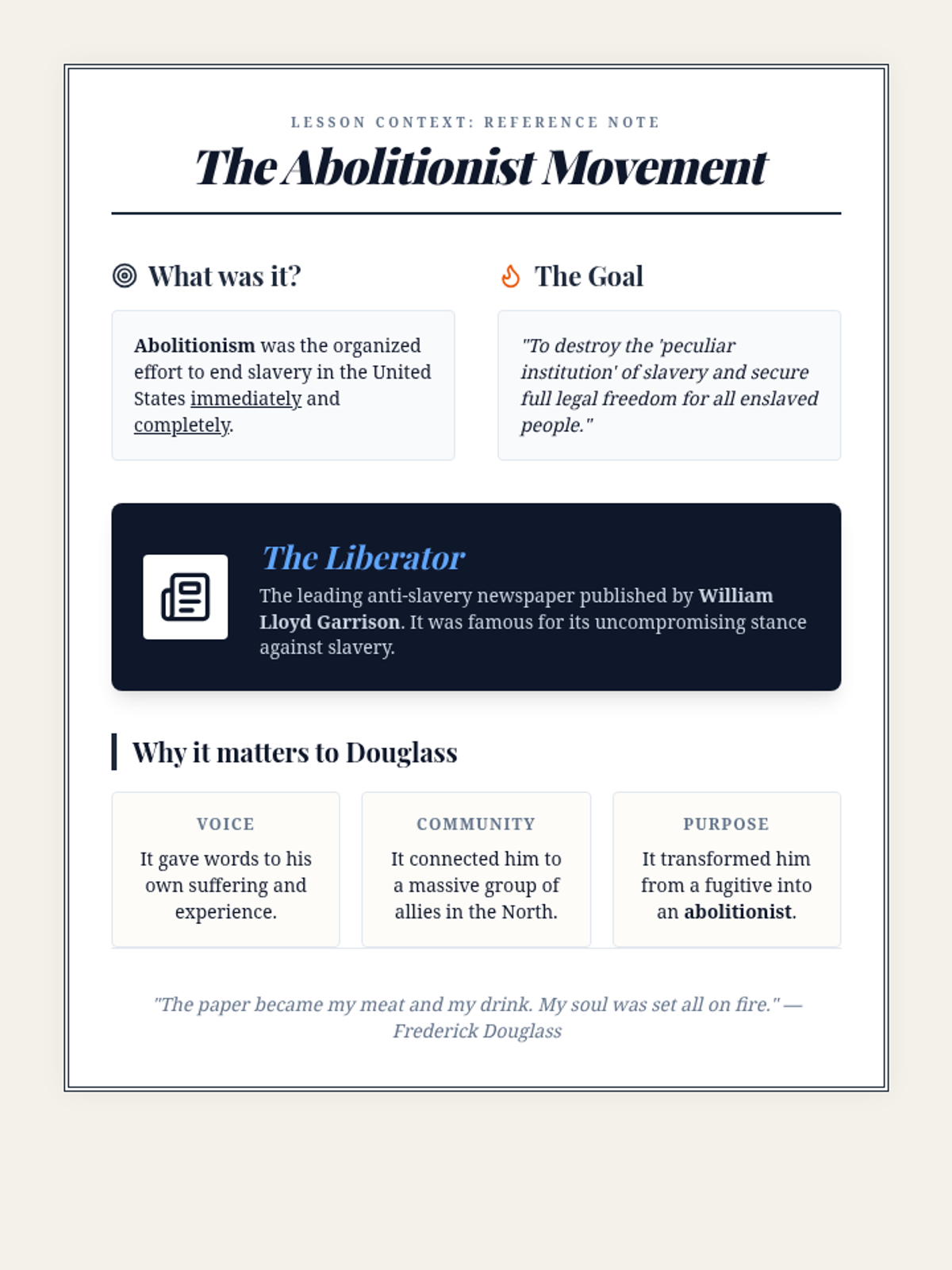
Students analyze Frederick Douglass's use of figurative language in Chapter 11 of his narrative to understand how he conveys his transition from a fugitive to a committed abolitionist and his final message regarding the necessity of ending slavery.
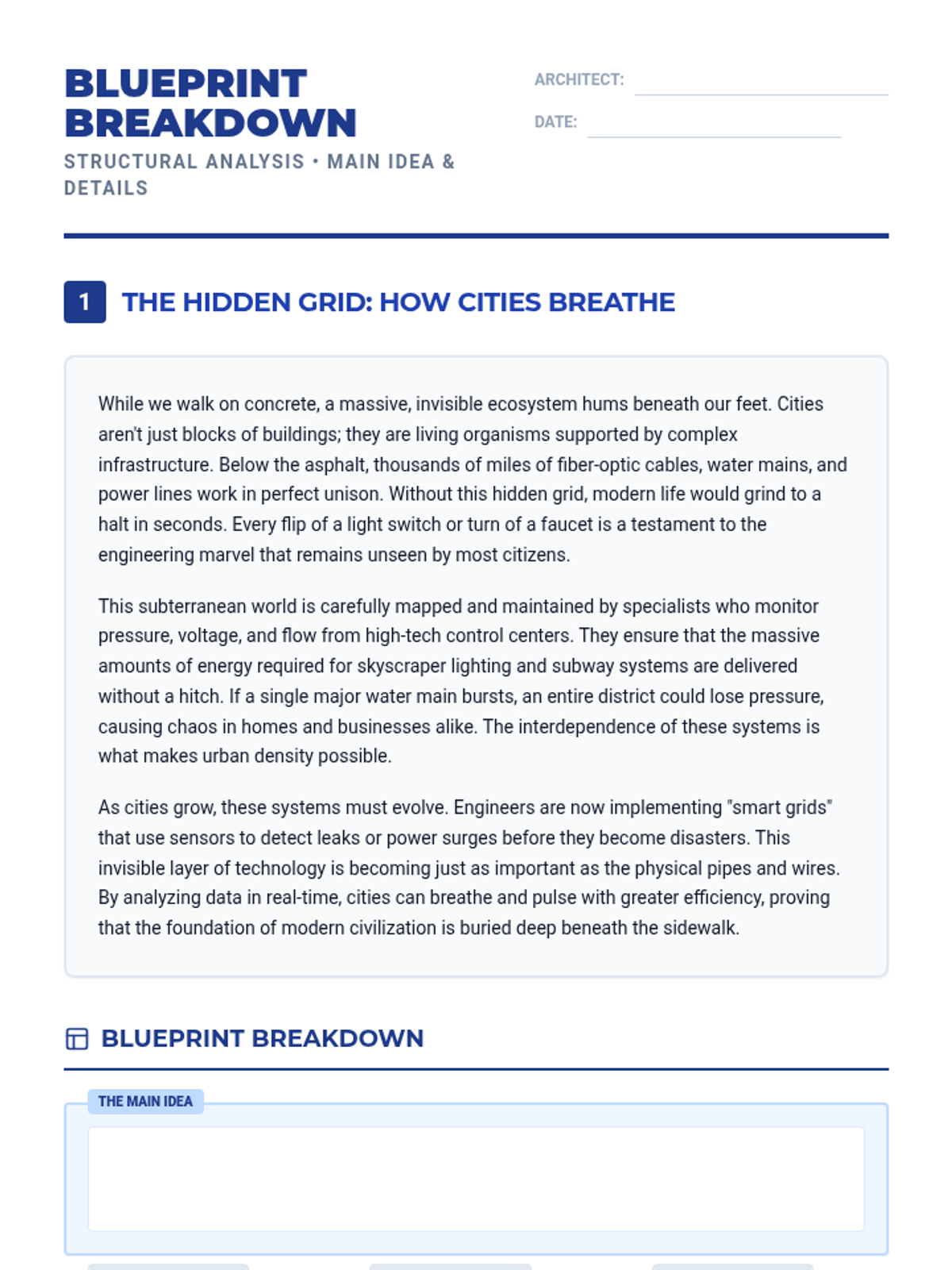
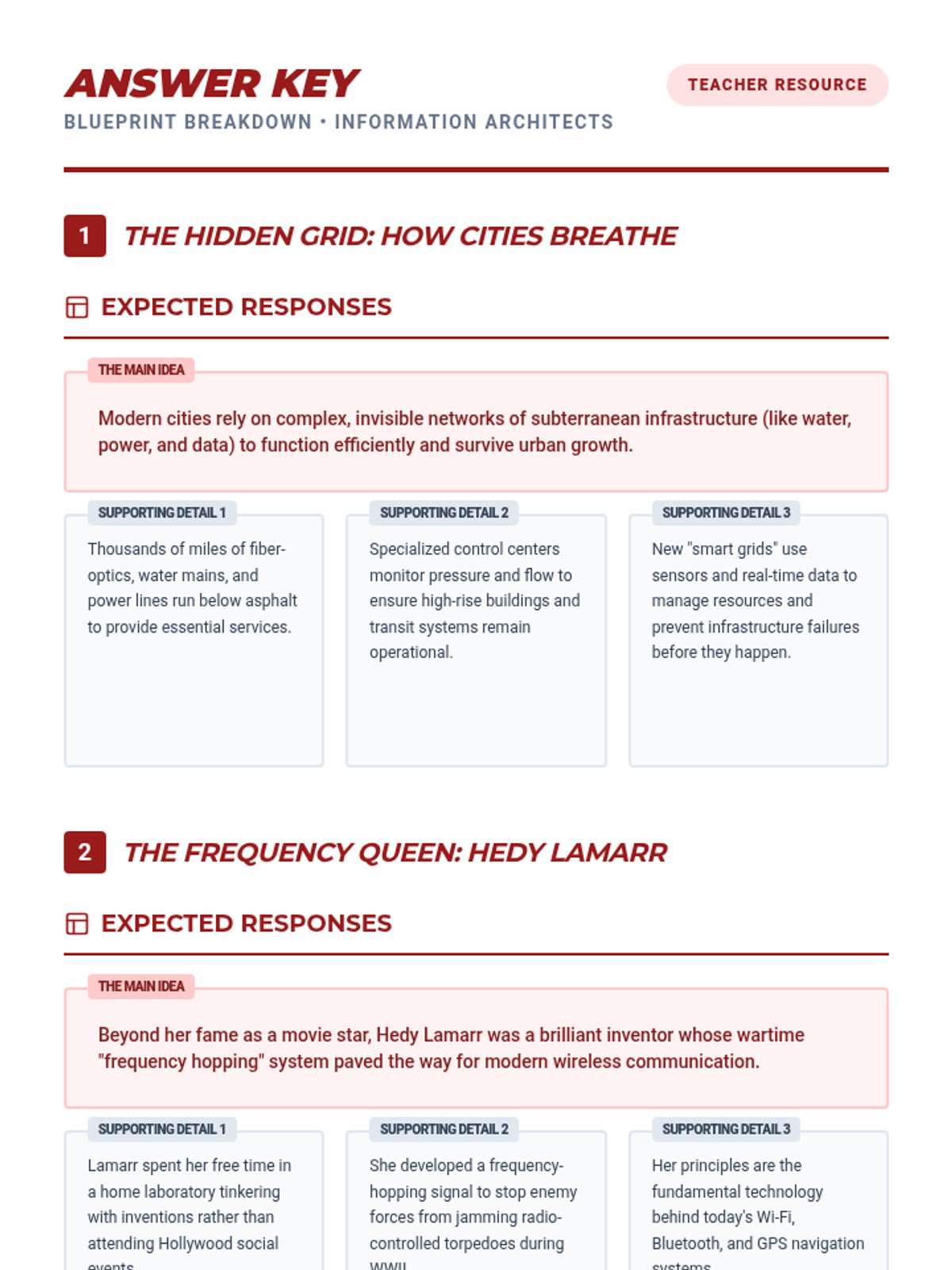
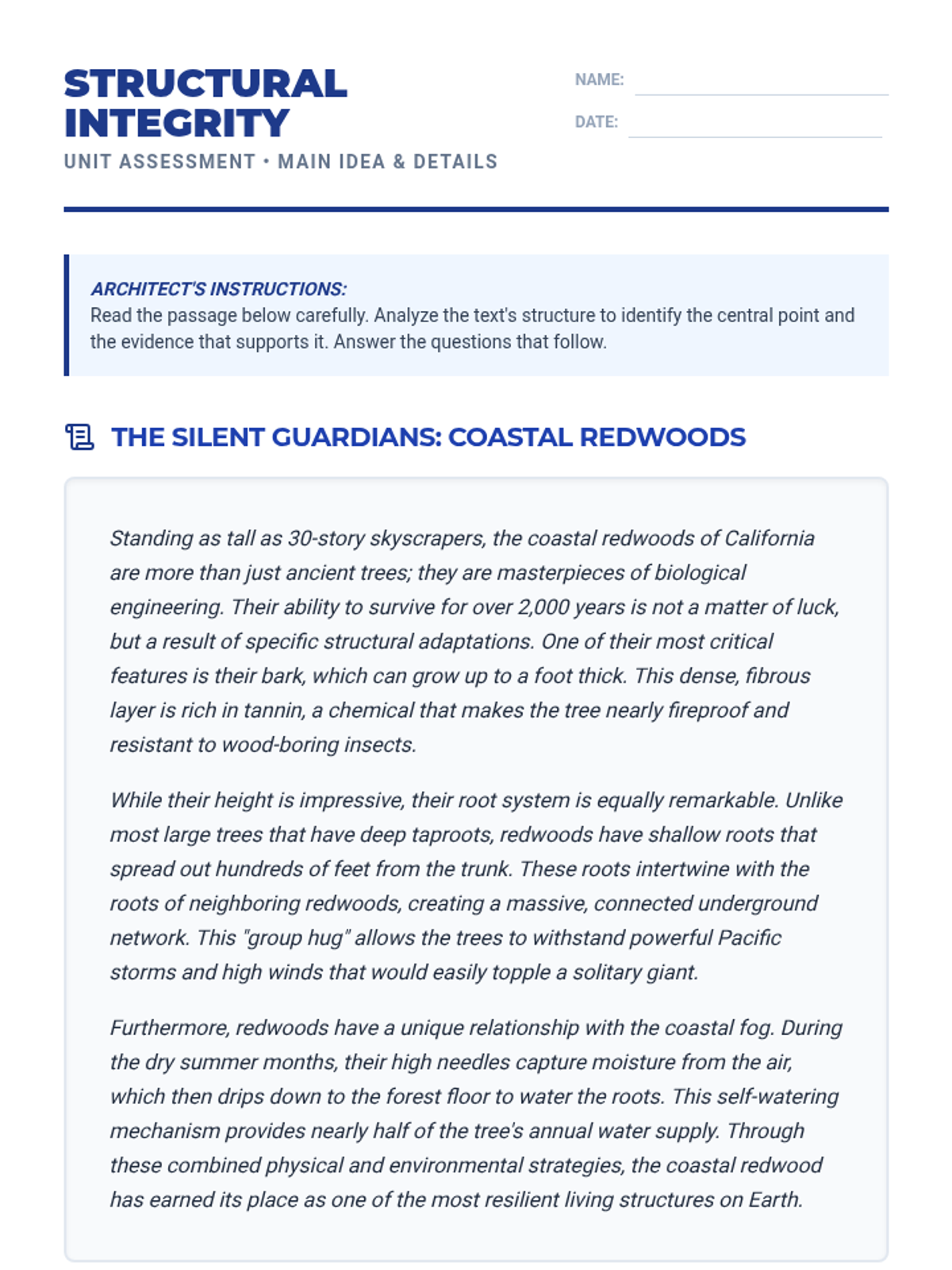
A lesson focused on identifying main ideas and supporting details in complex non-fiction texts, using an 'Information Architect' theme to visualize text structure.
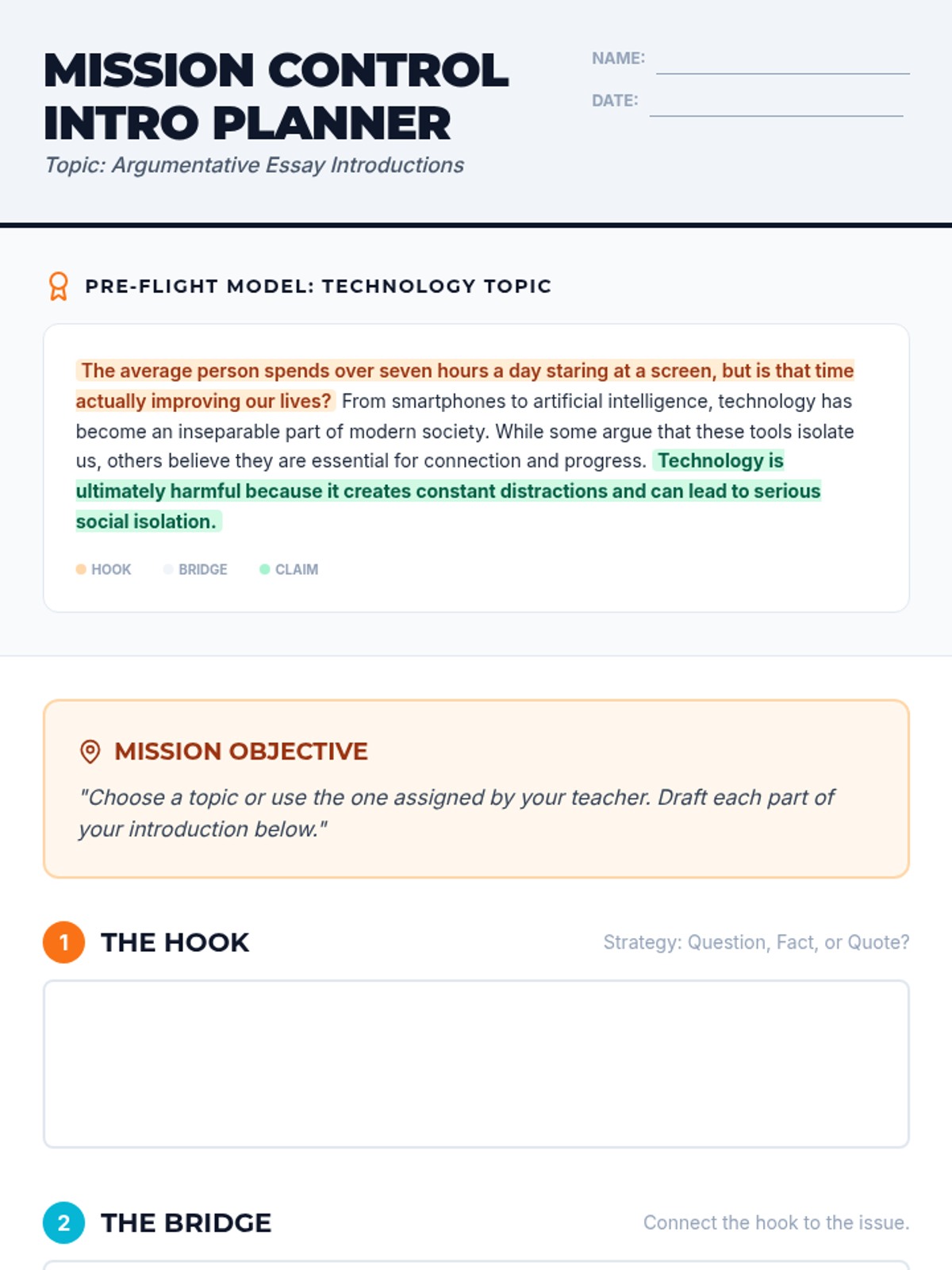
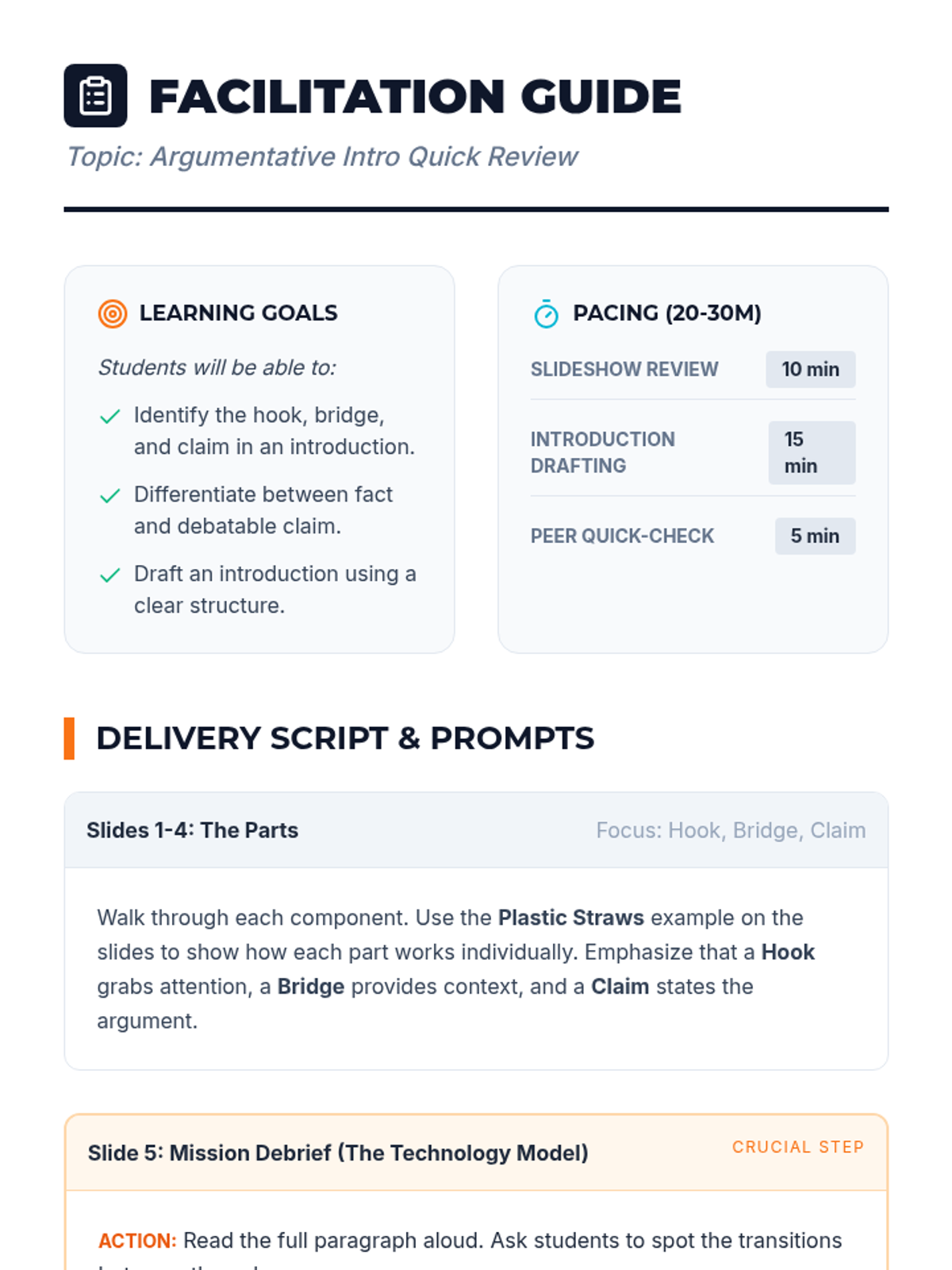
A quick-start guide to mastering the three essential components of an argumentative essay introduction: the hook, the bridge, and the claim.
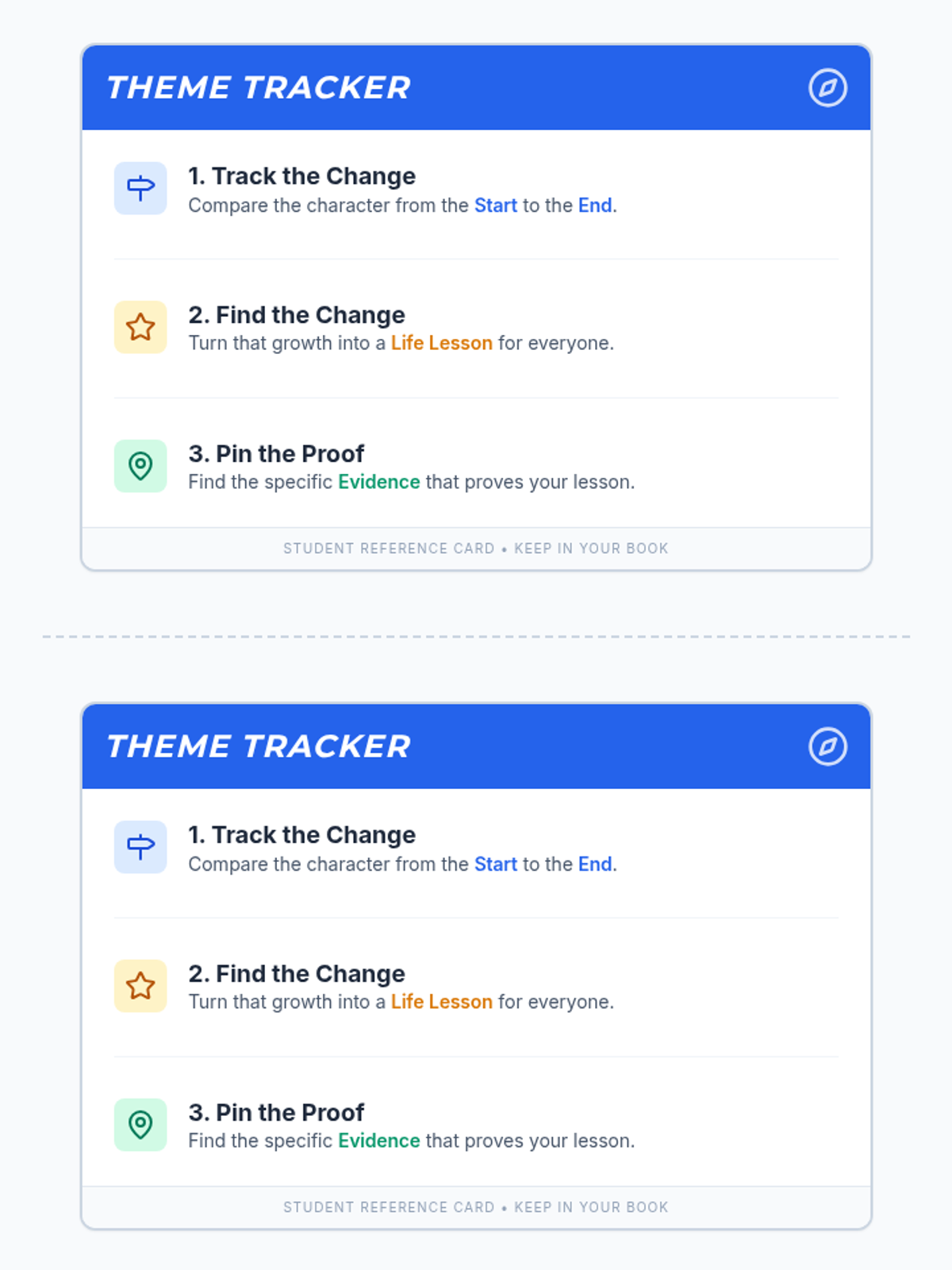
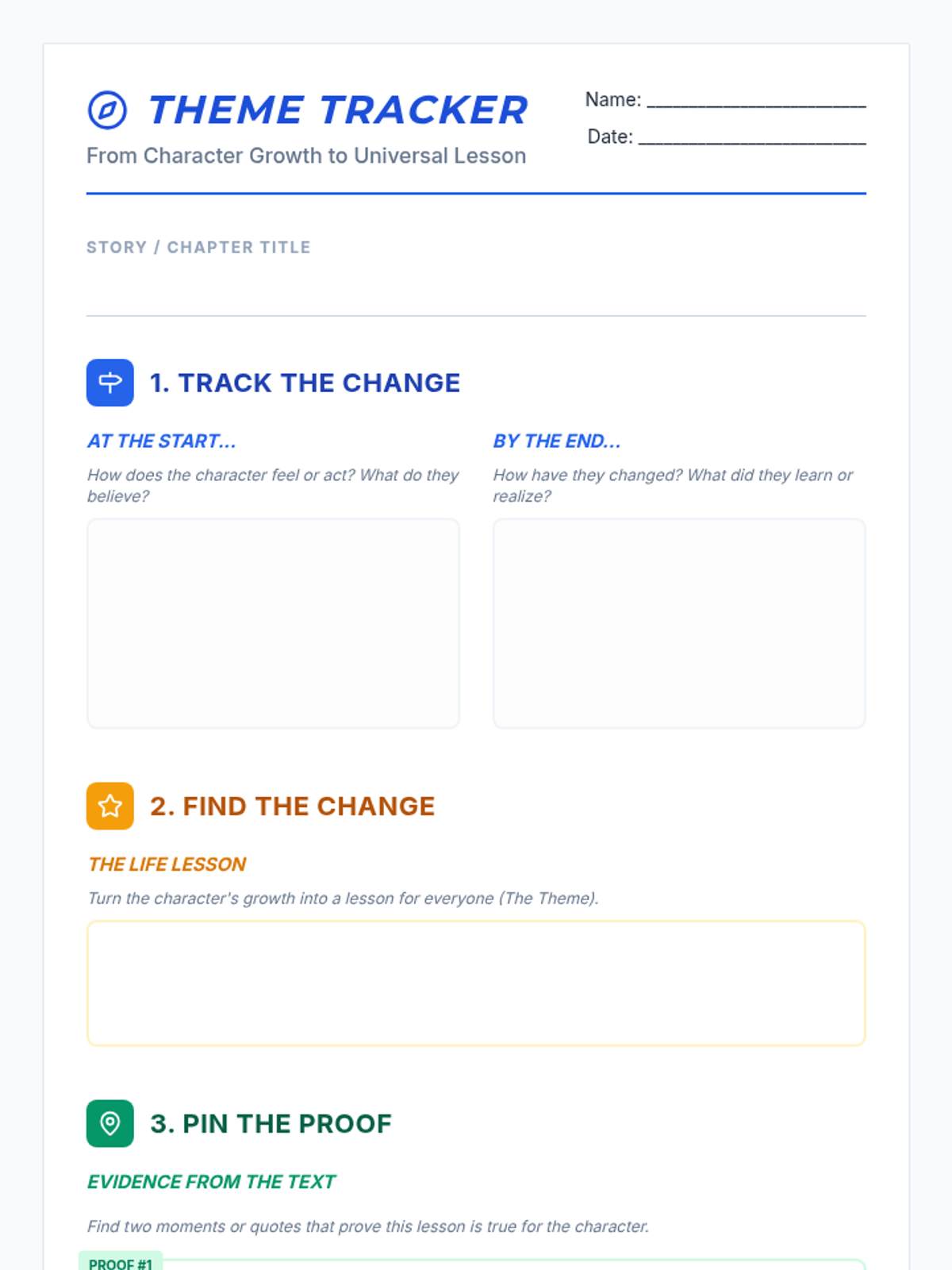
A lesson focused on identifying the main idea or theme of a story by analyzing character growth and turning it into a universal life lesson supported by evidence.
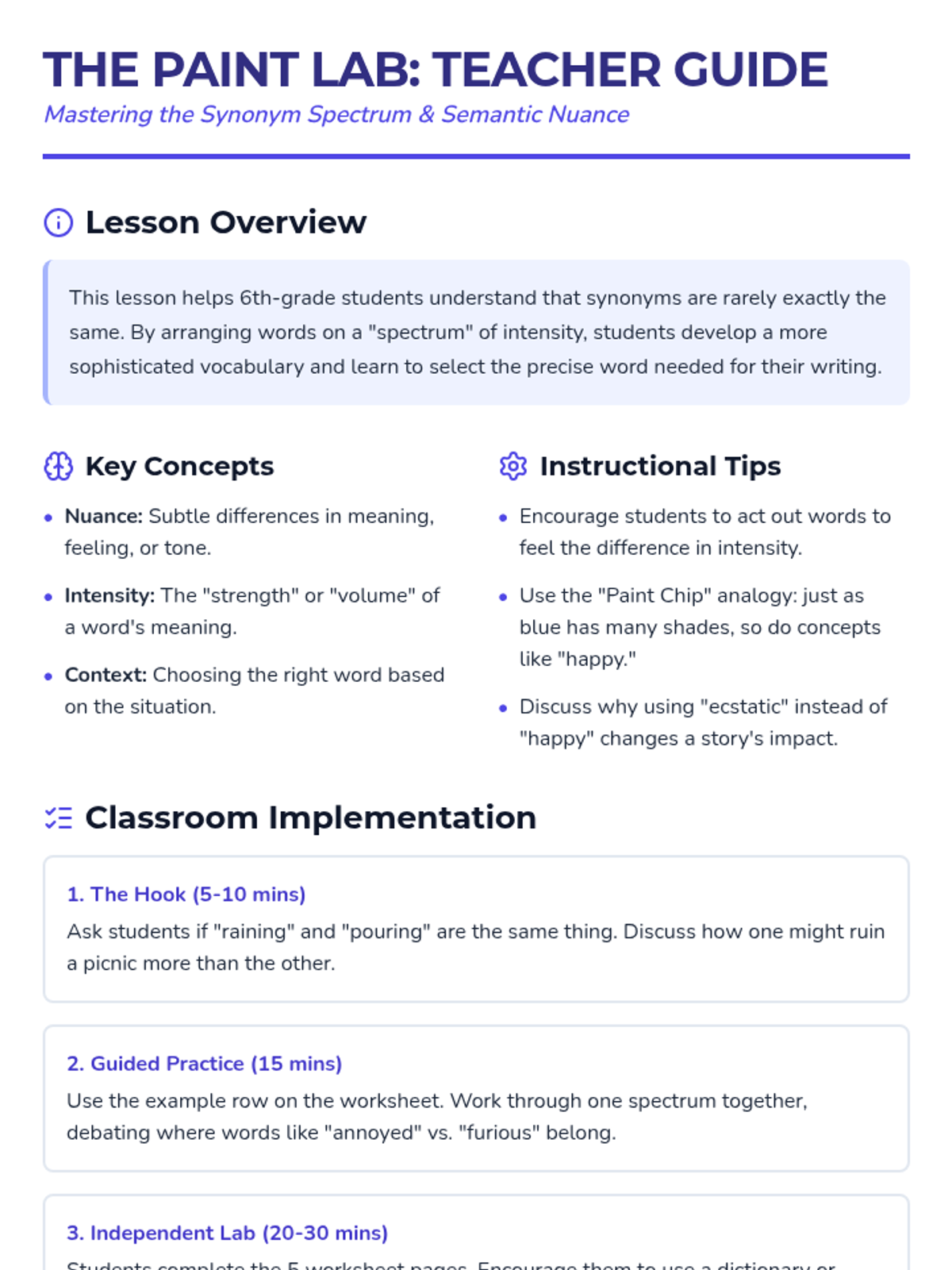
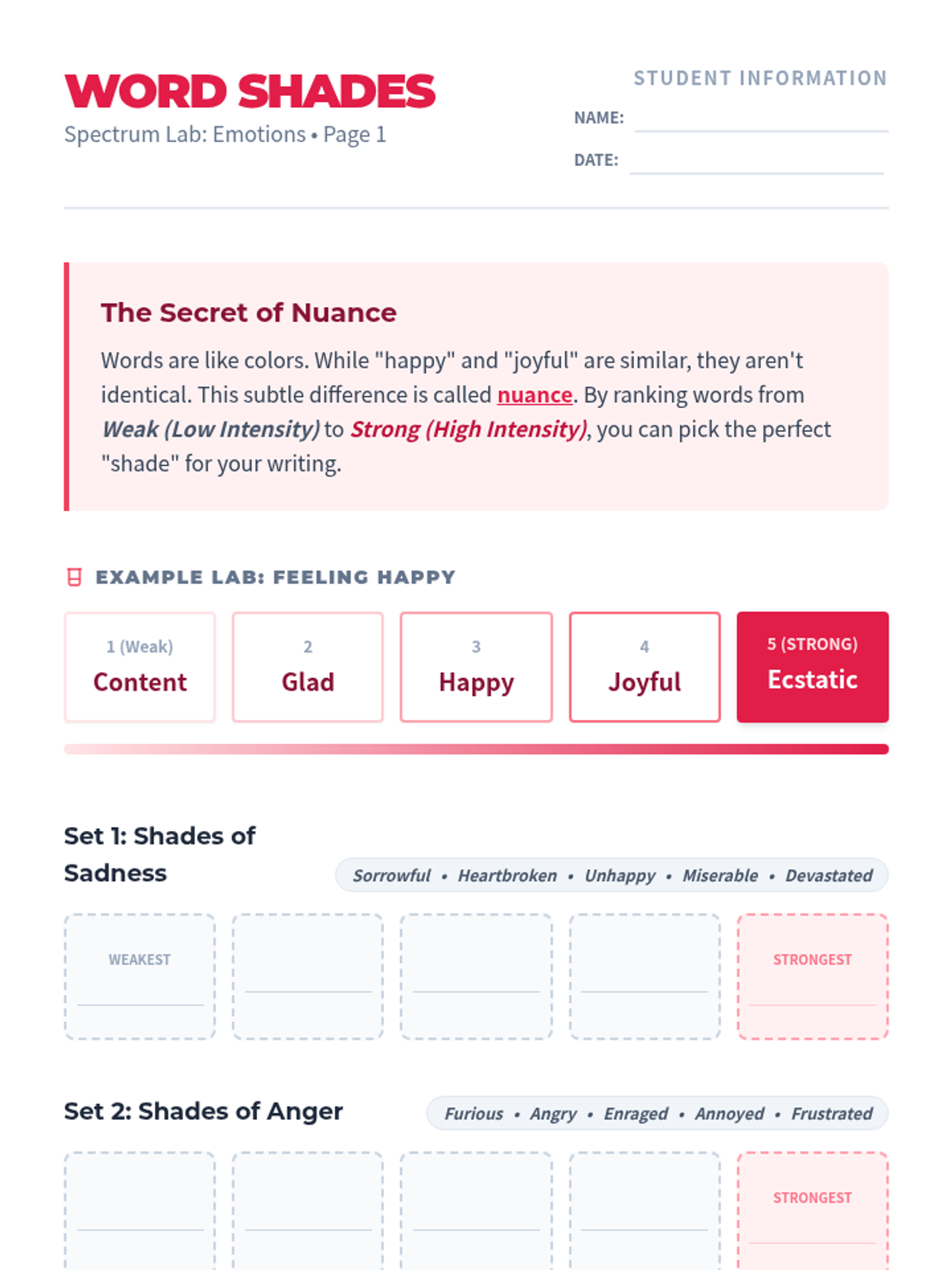
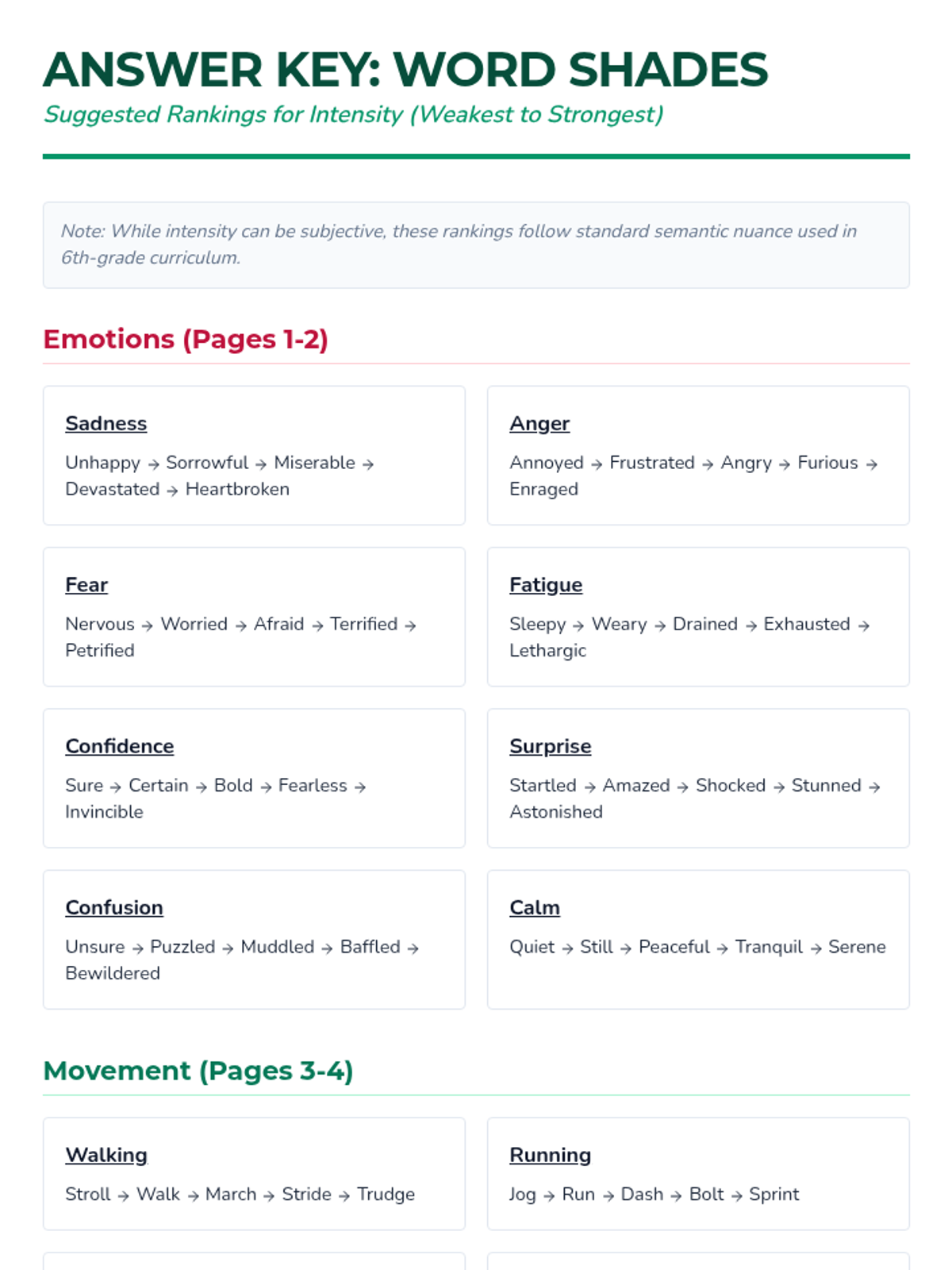
A comprehensive lesson on understanding semantic nuance and intensity through 'The Synonym Spectrum', focusing on emotions, movement, and weather vocabulary.
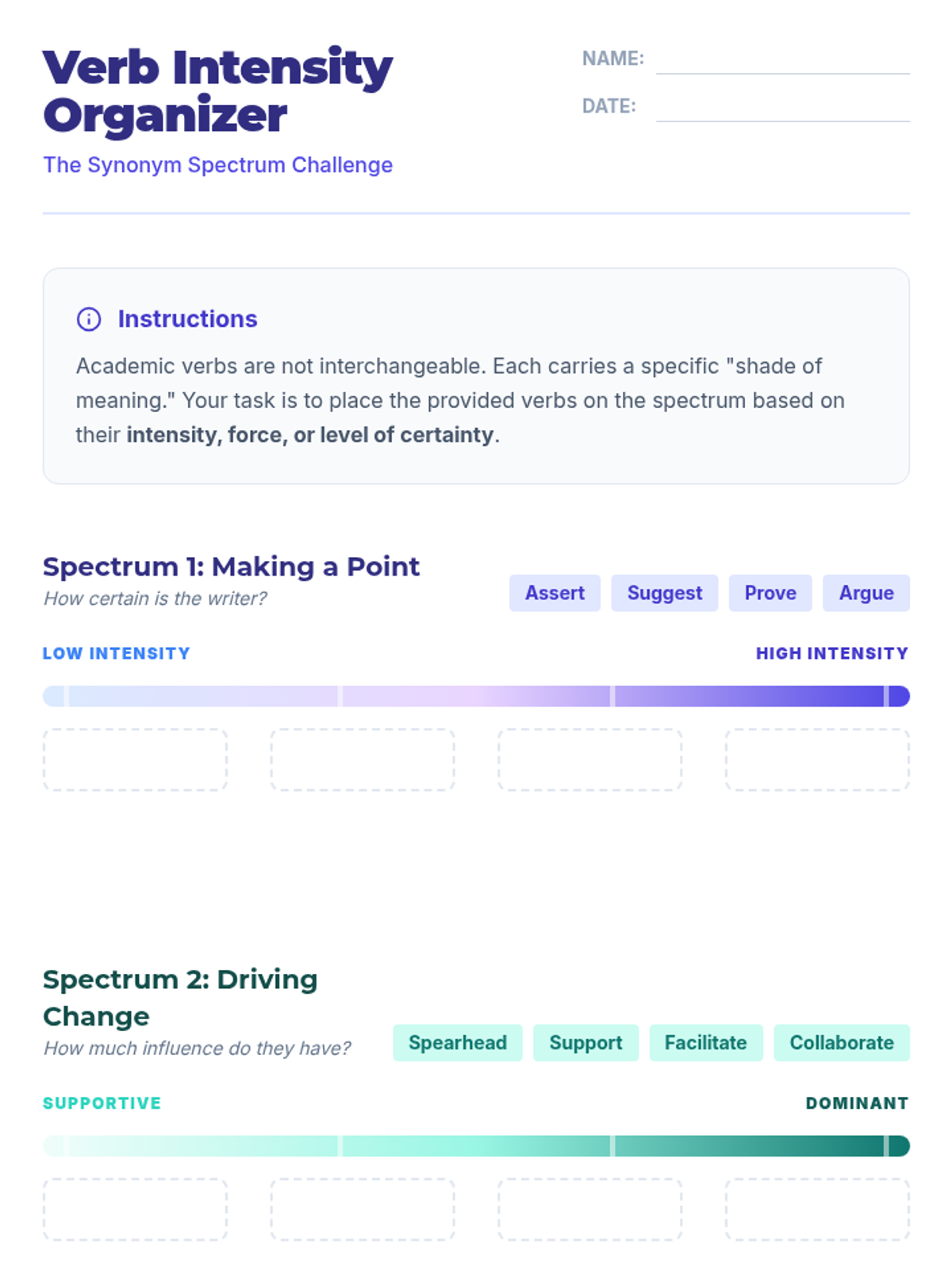
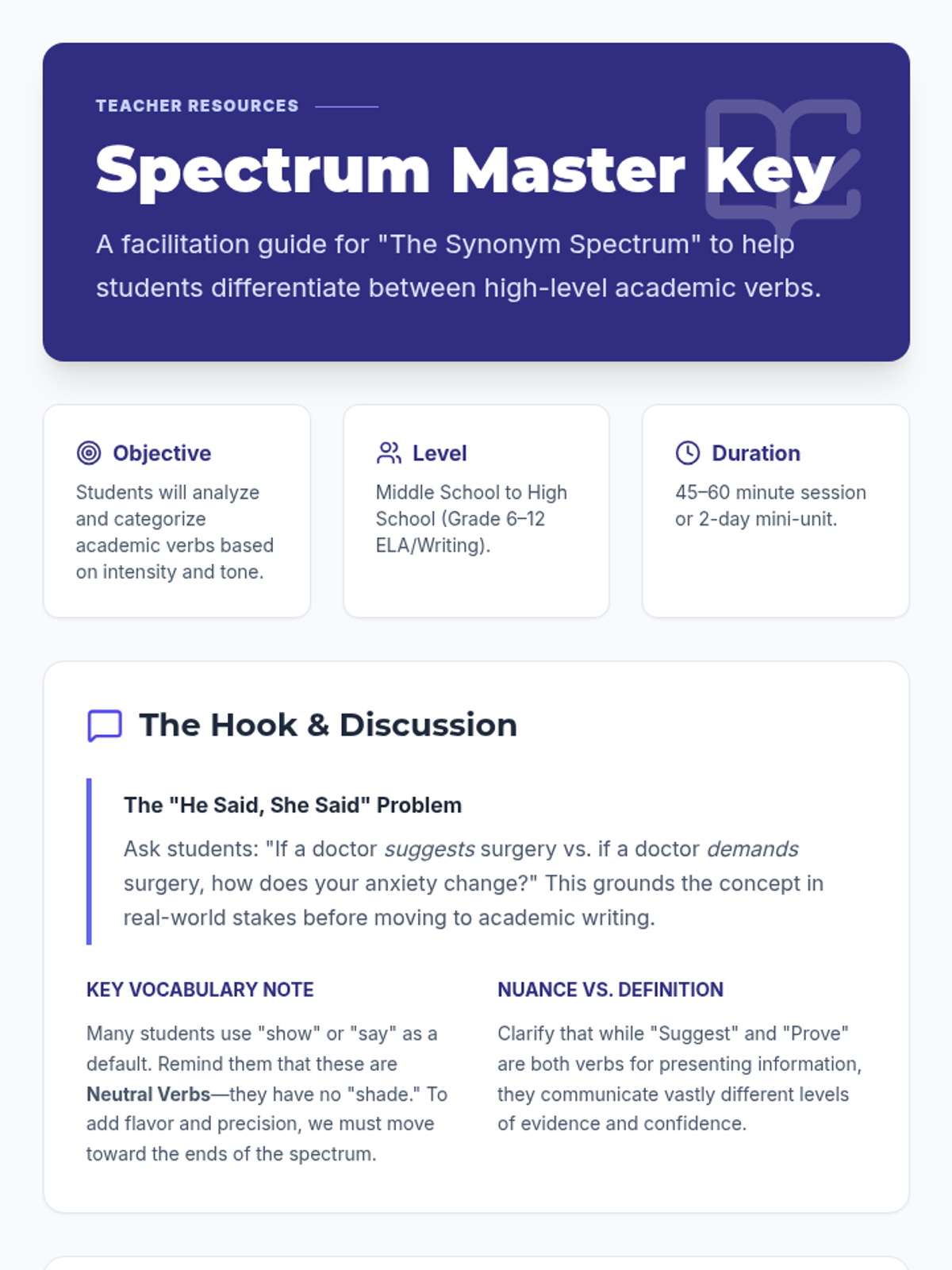
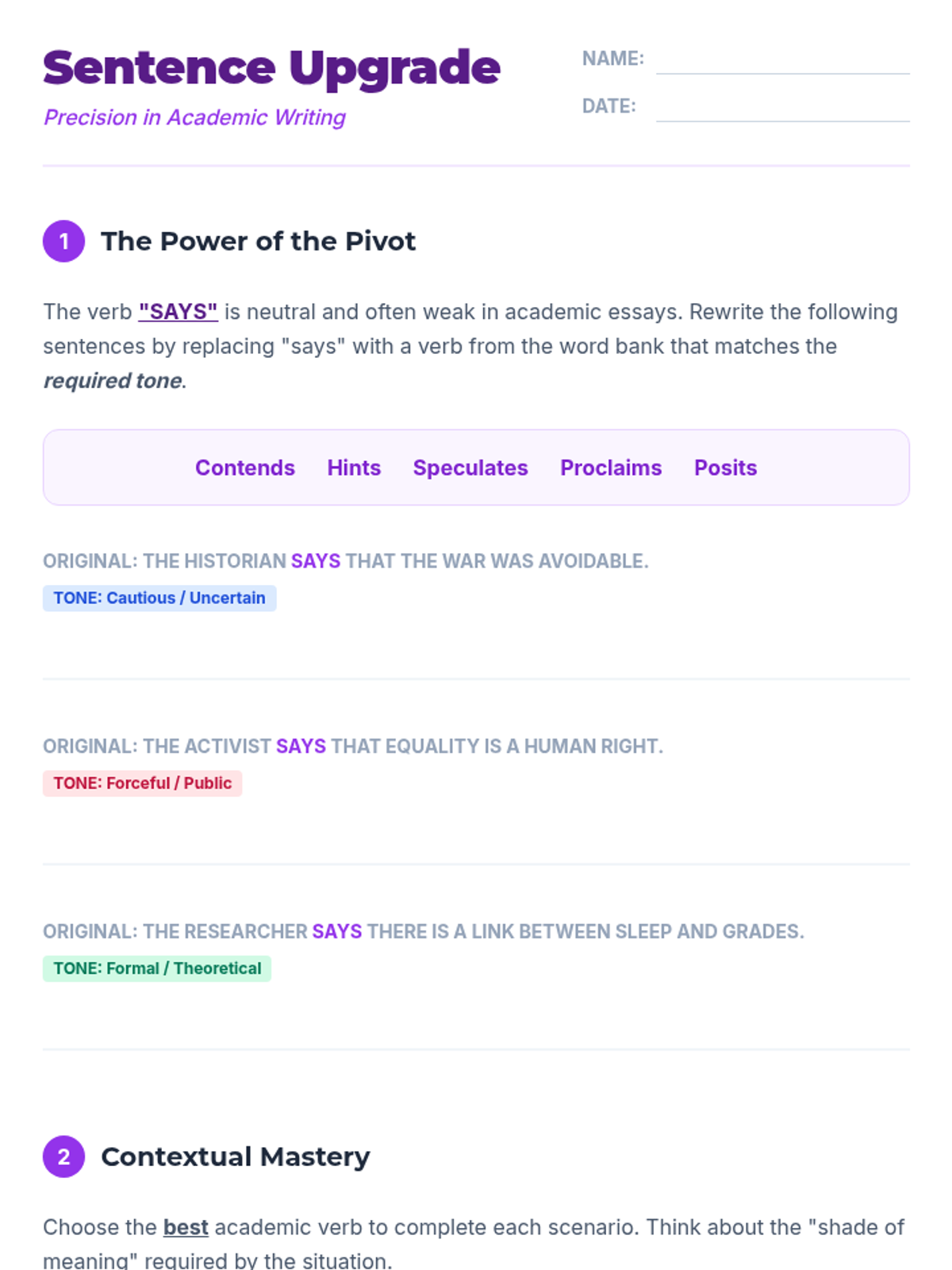
This lesson explores the nuances of academic verbs, teaching students to distinguish between different 'shades of meaning' to improve writing precision and tone.
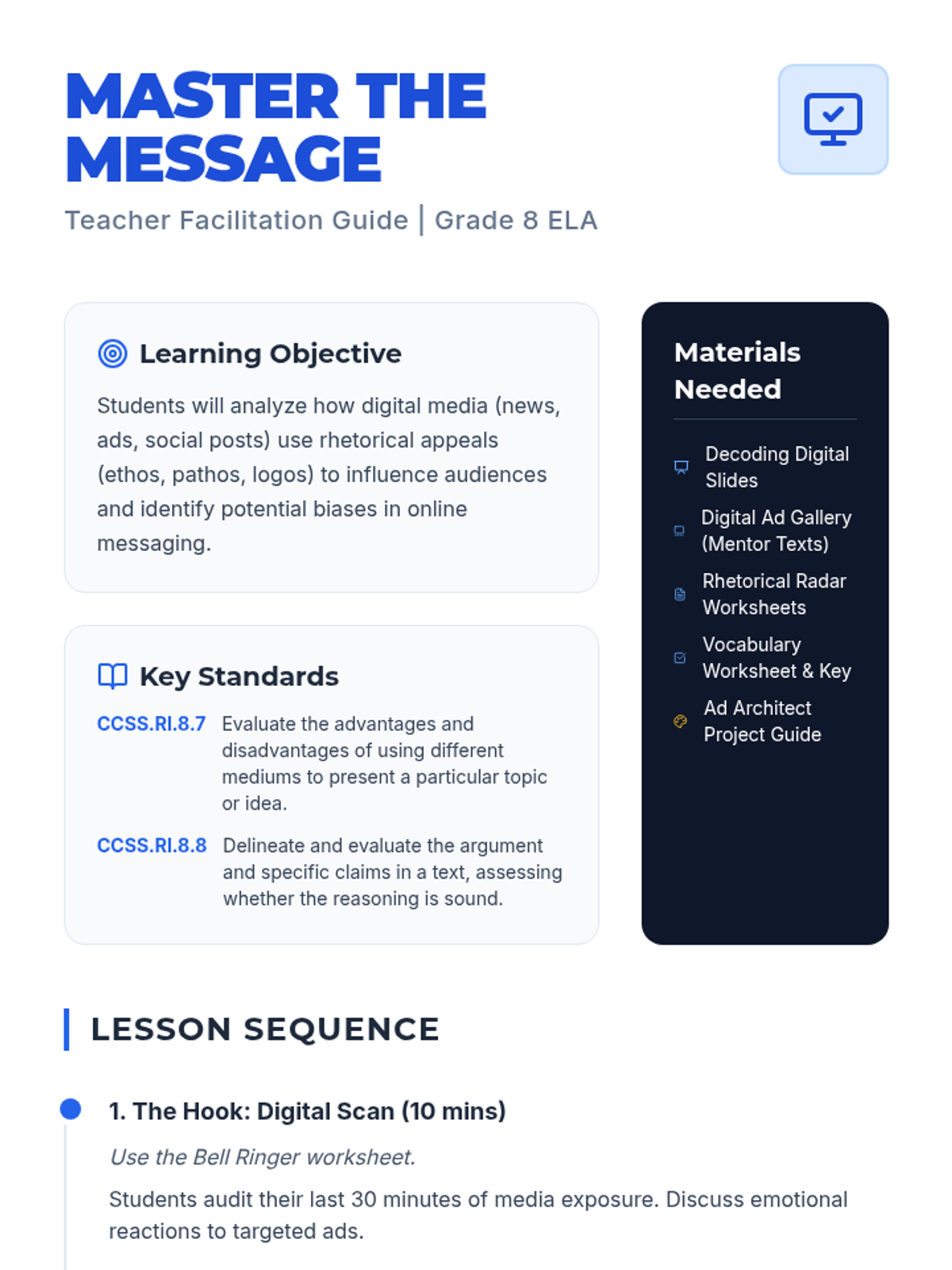
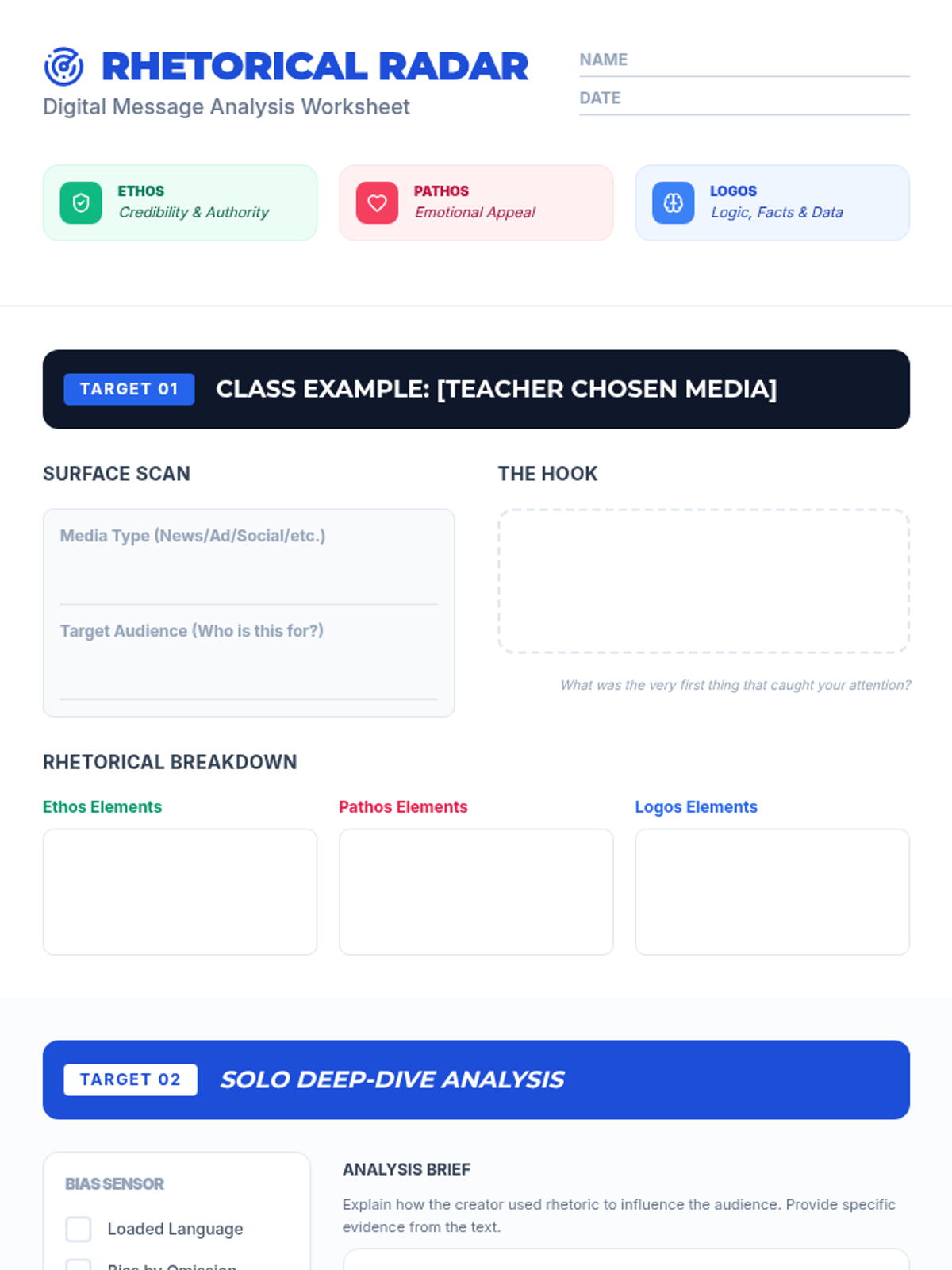
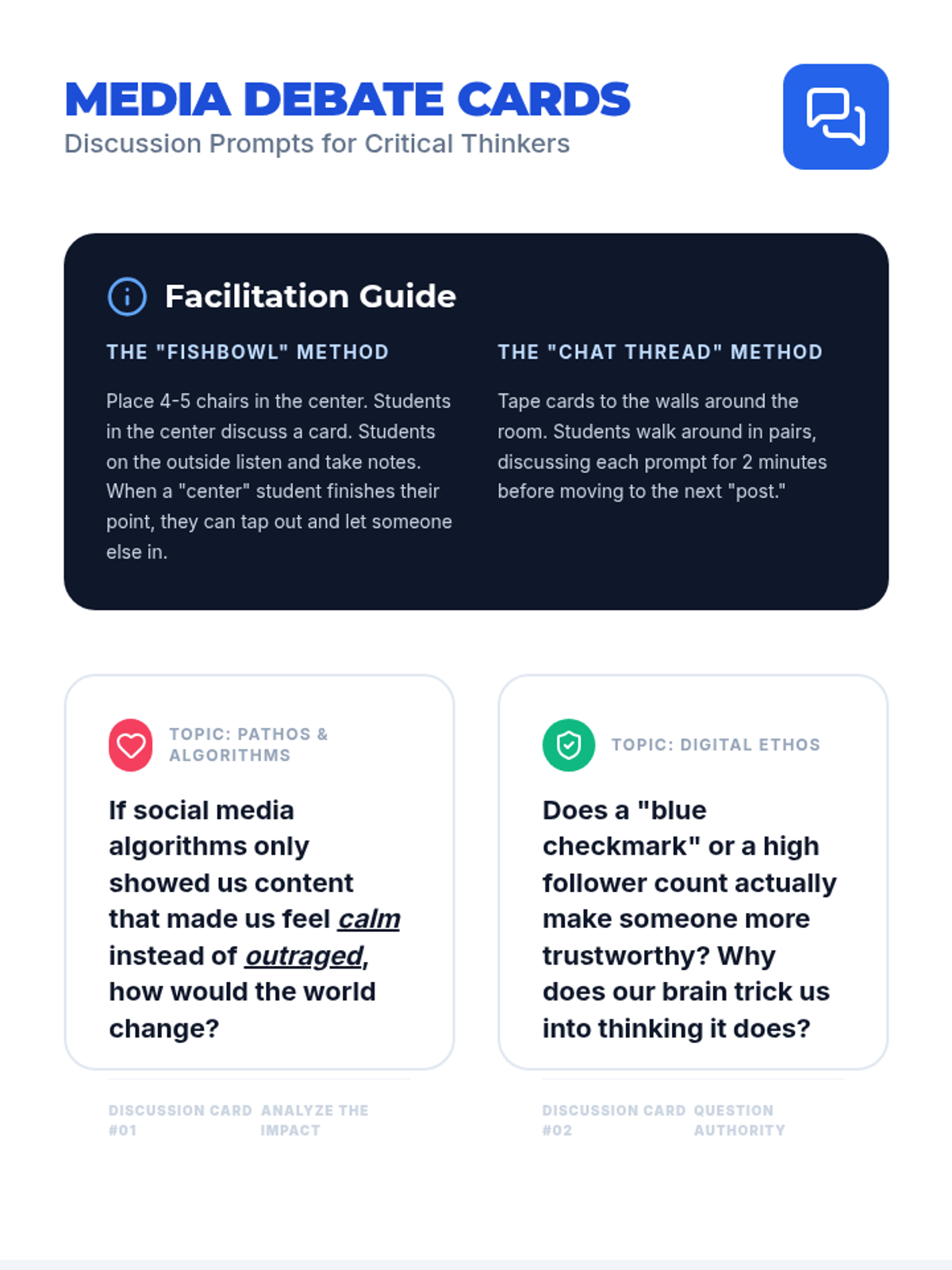
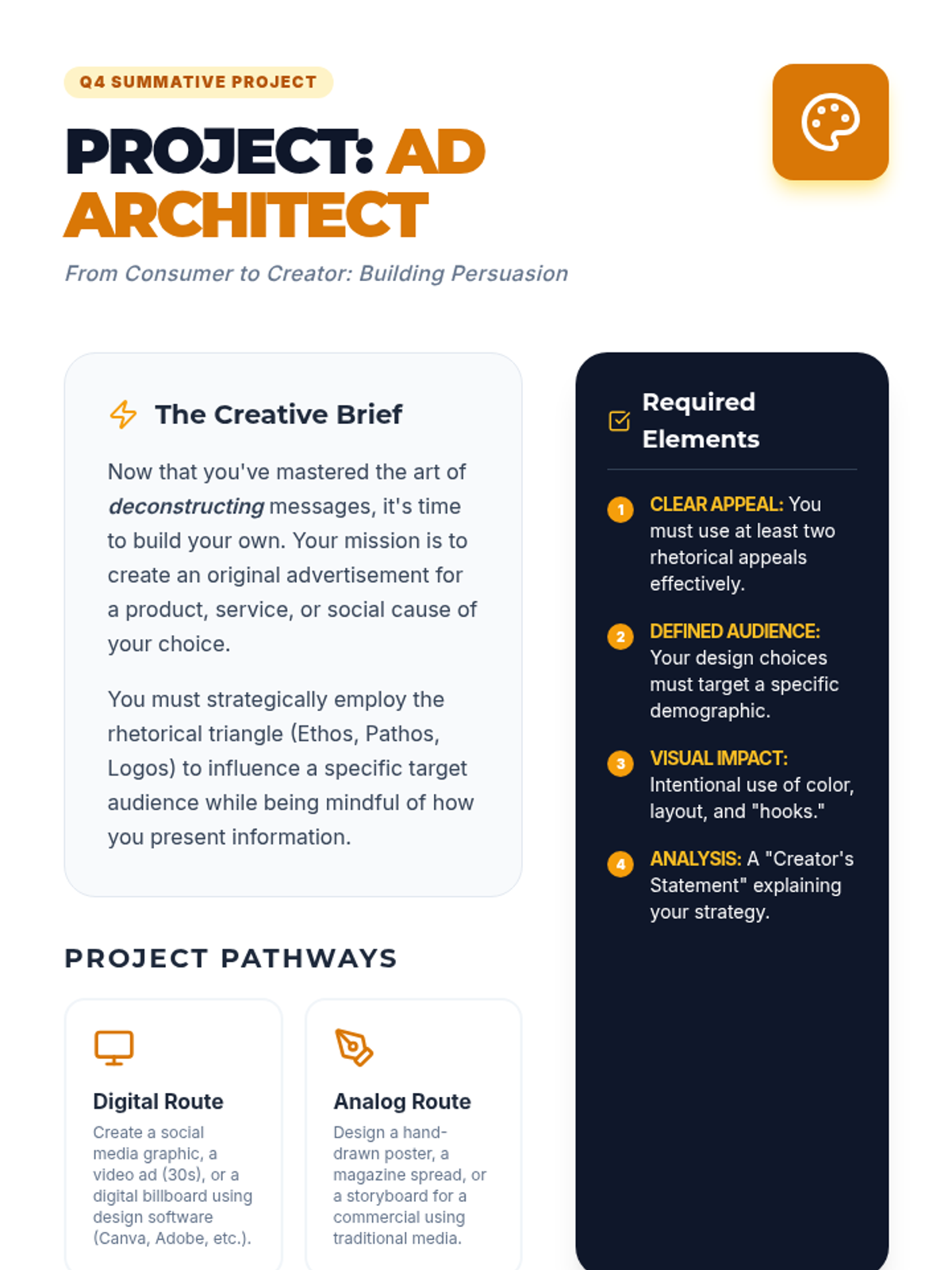
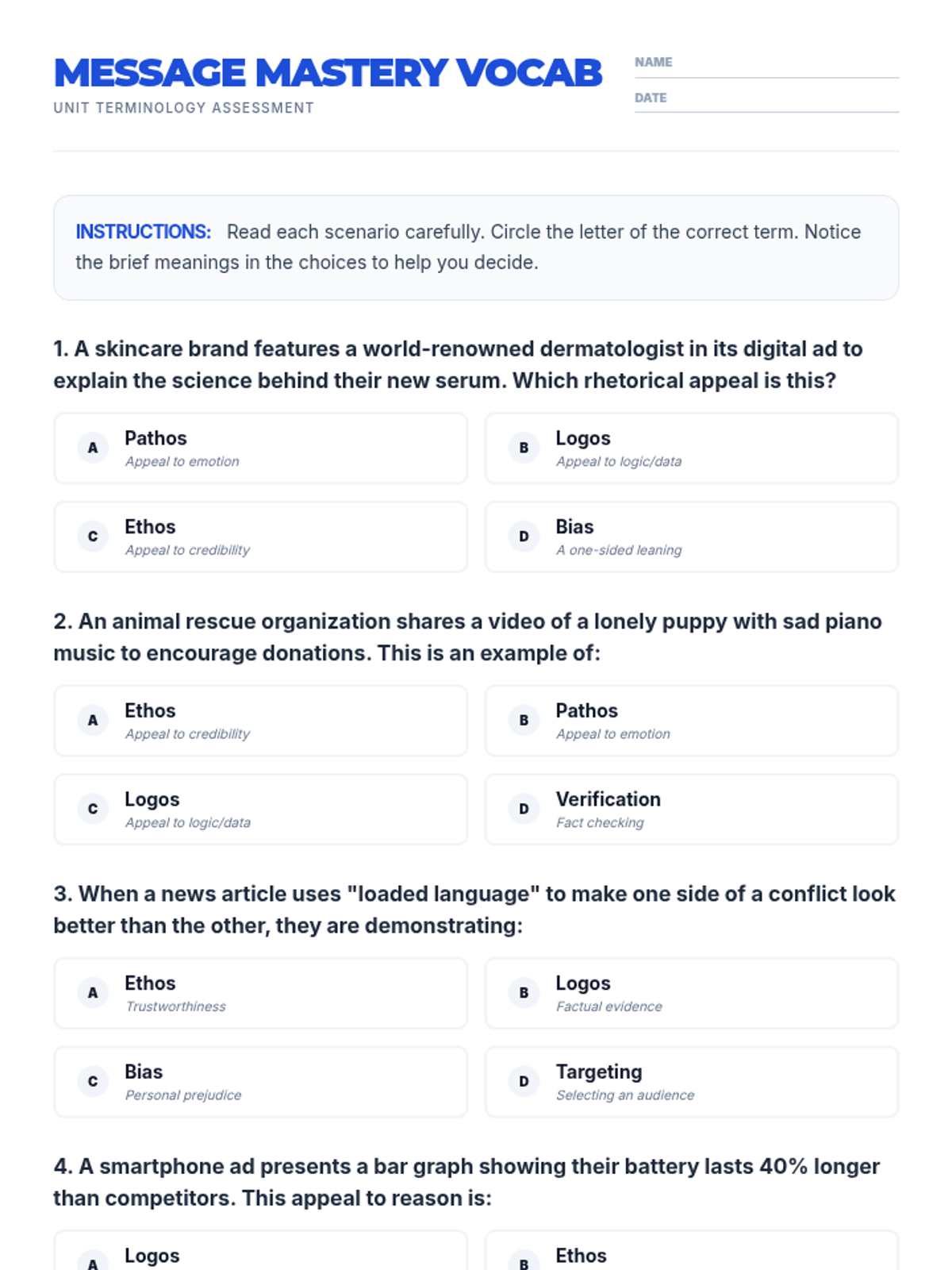
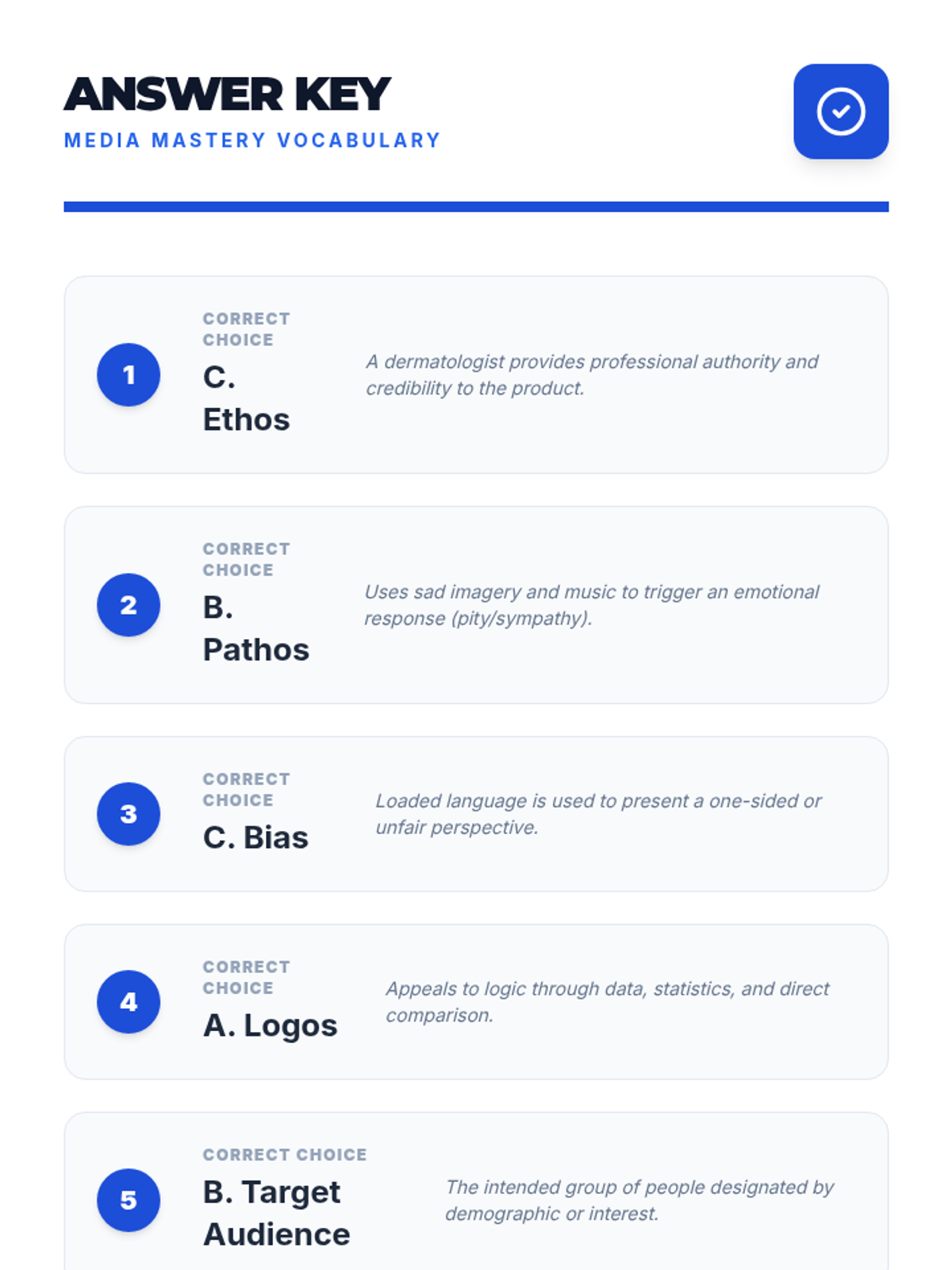
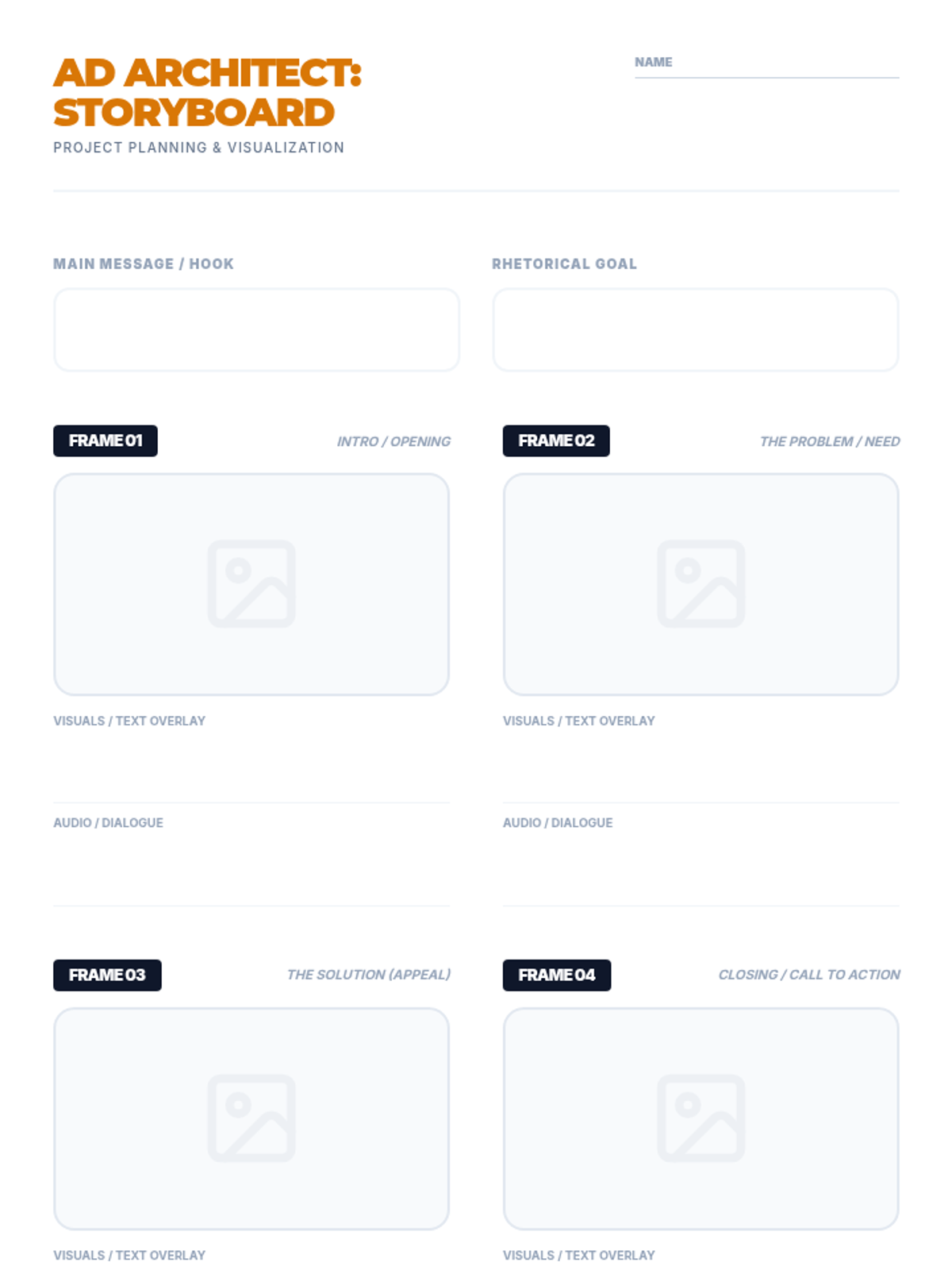
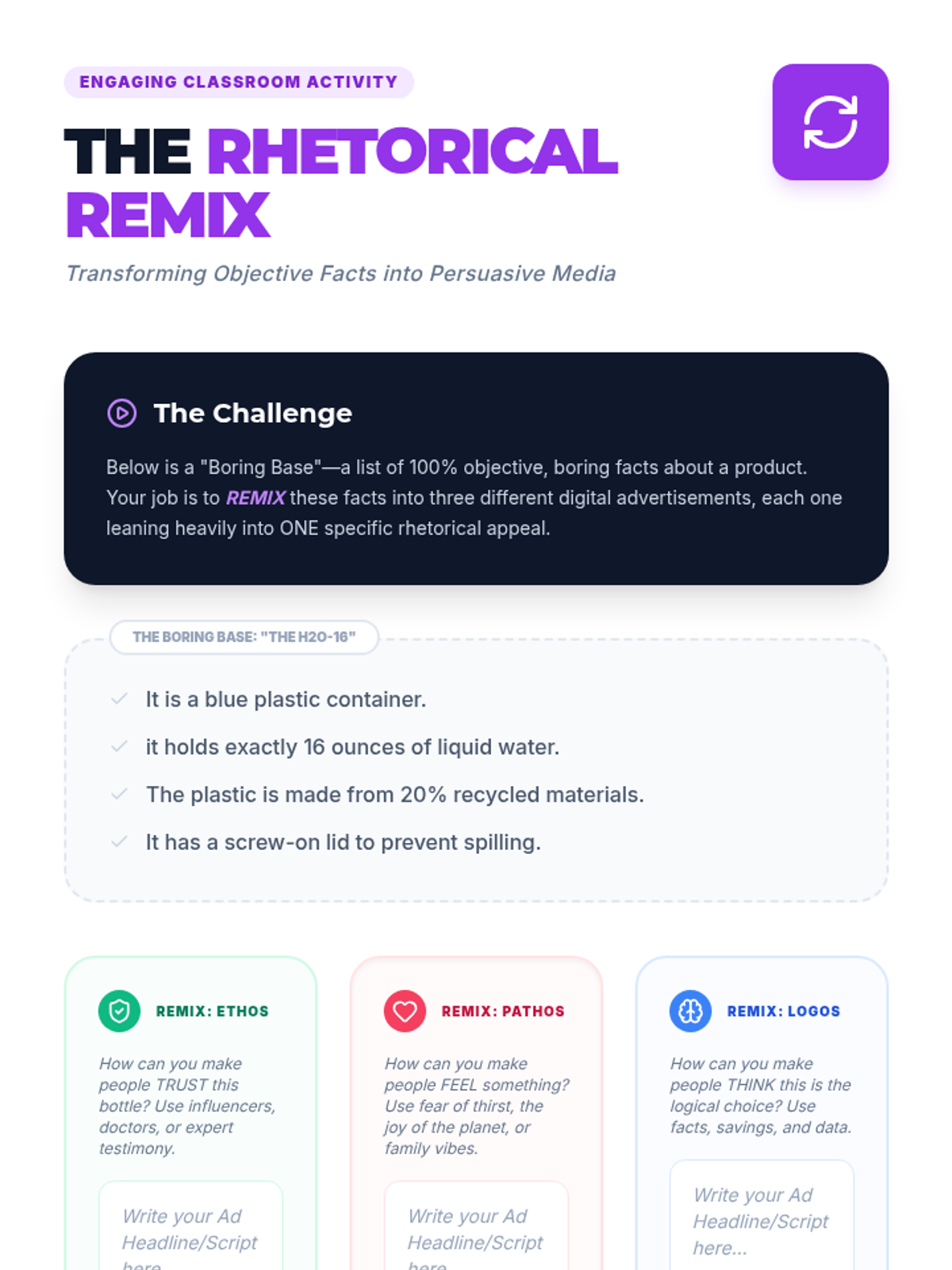
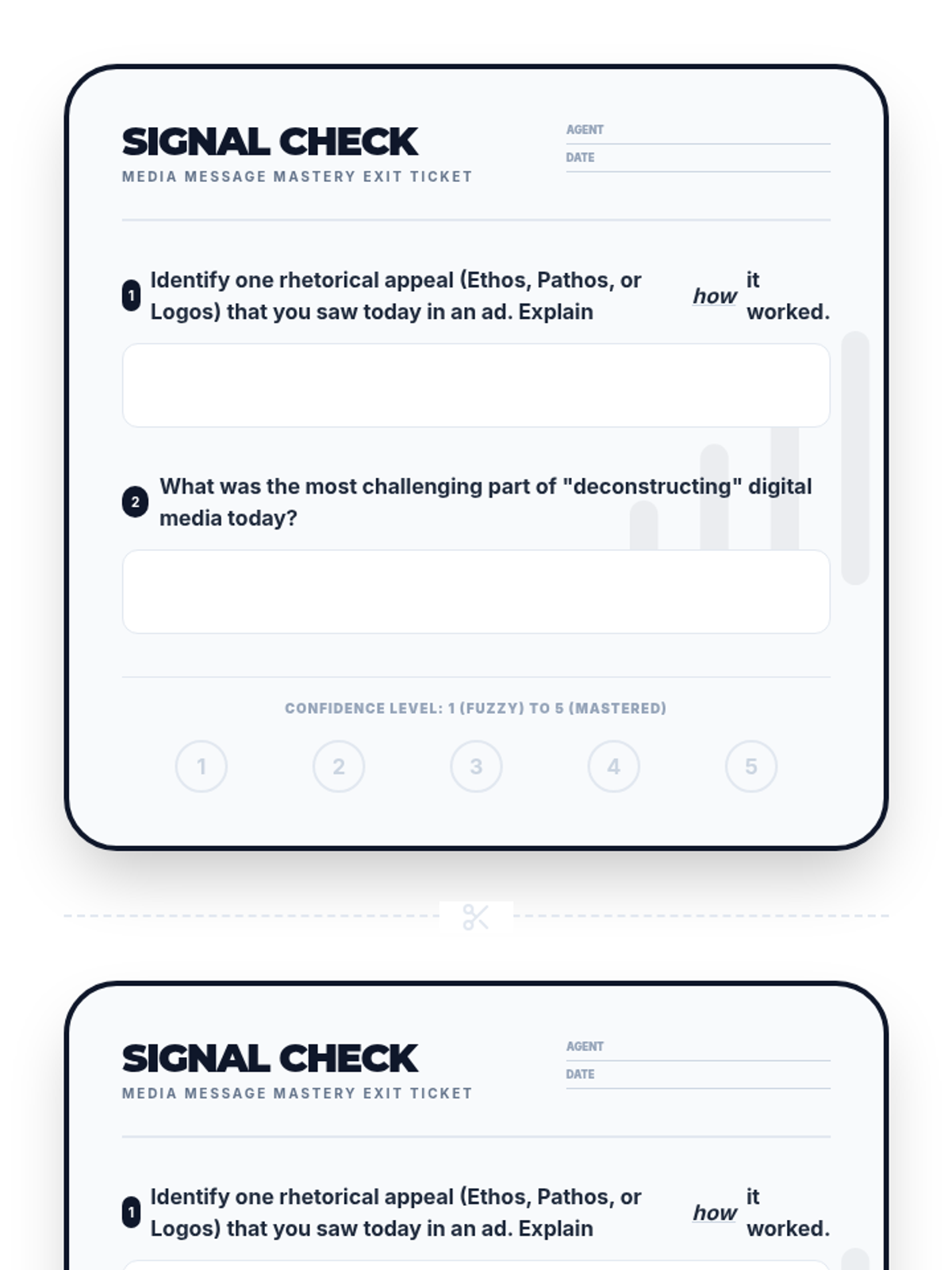
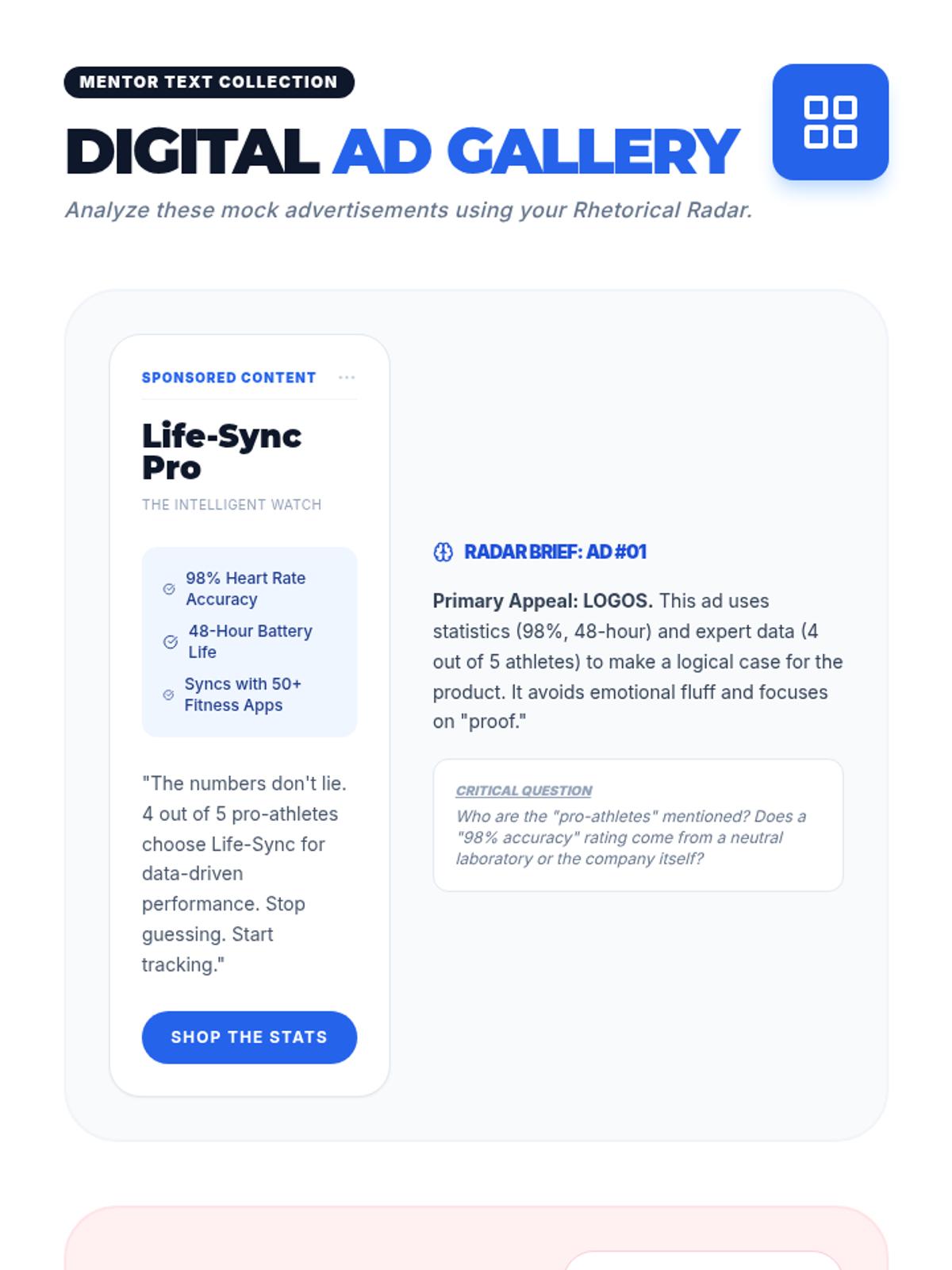
An 8th-grade ELA lesson focused on deconstructing digital media messages through the lens of rhetorical appeals (ethos, pathos, logos) and identifying bias in various online formats. Students transition from passive consumers to critical analysts of news clips, social media, and advertisements.
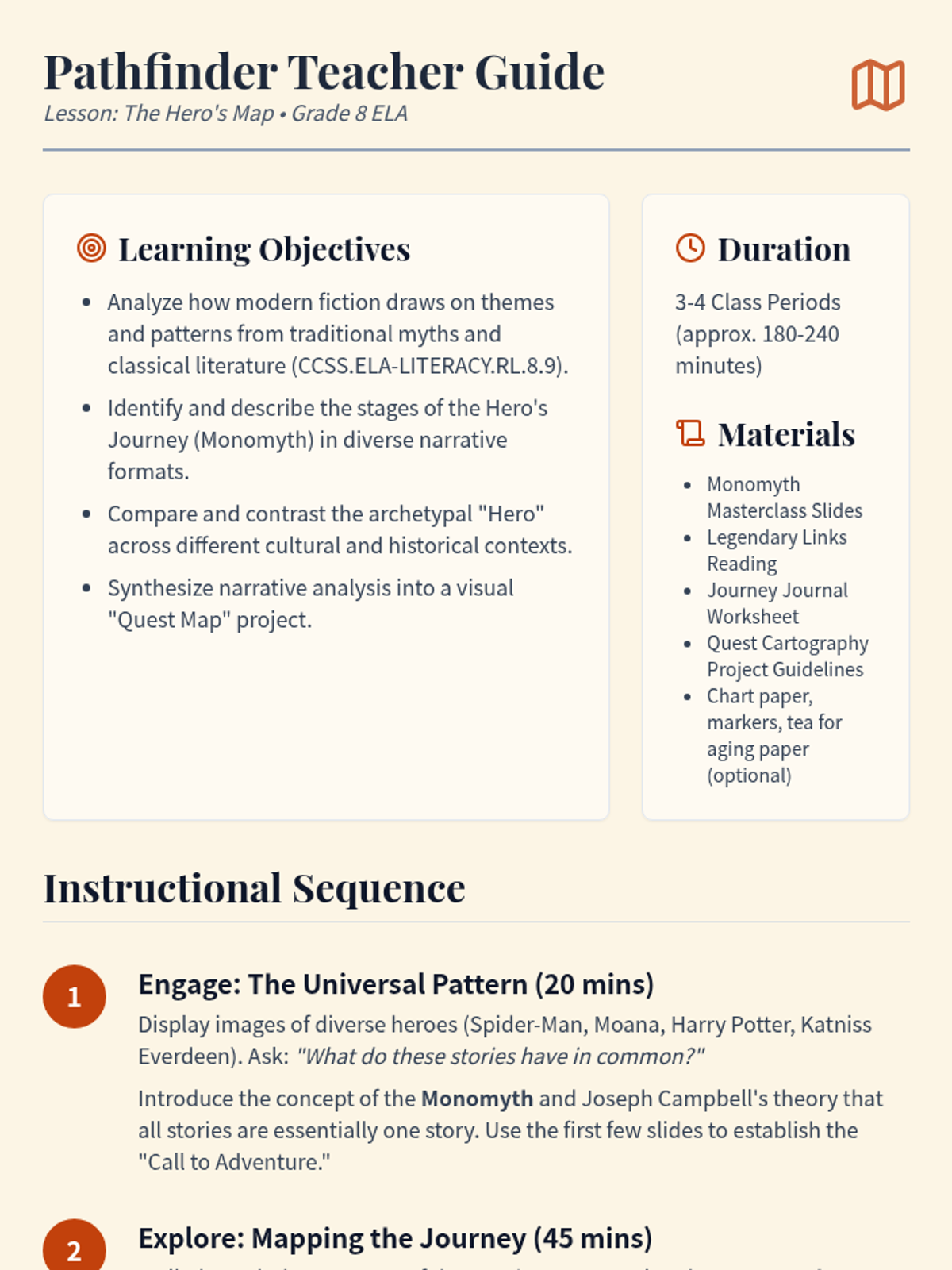
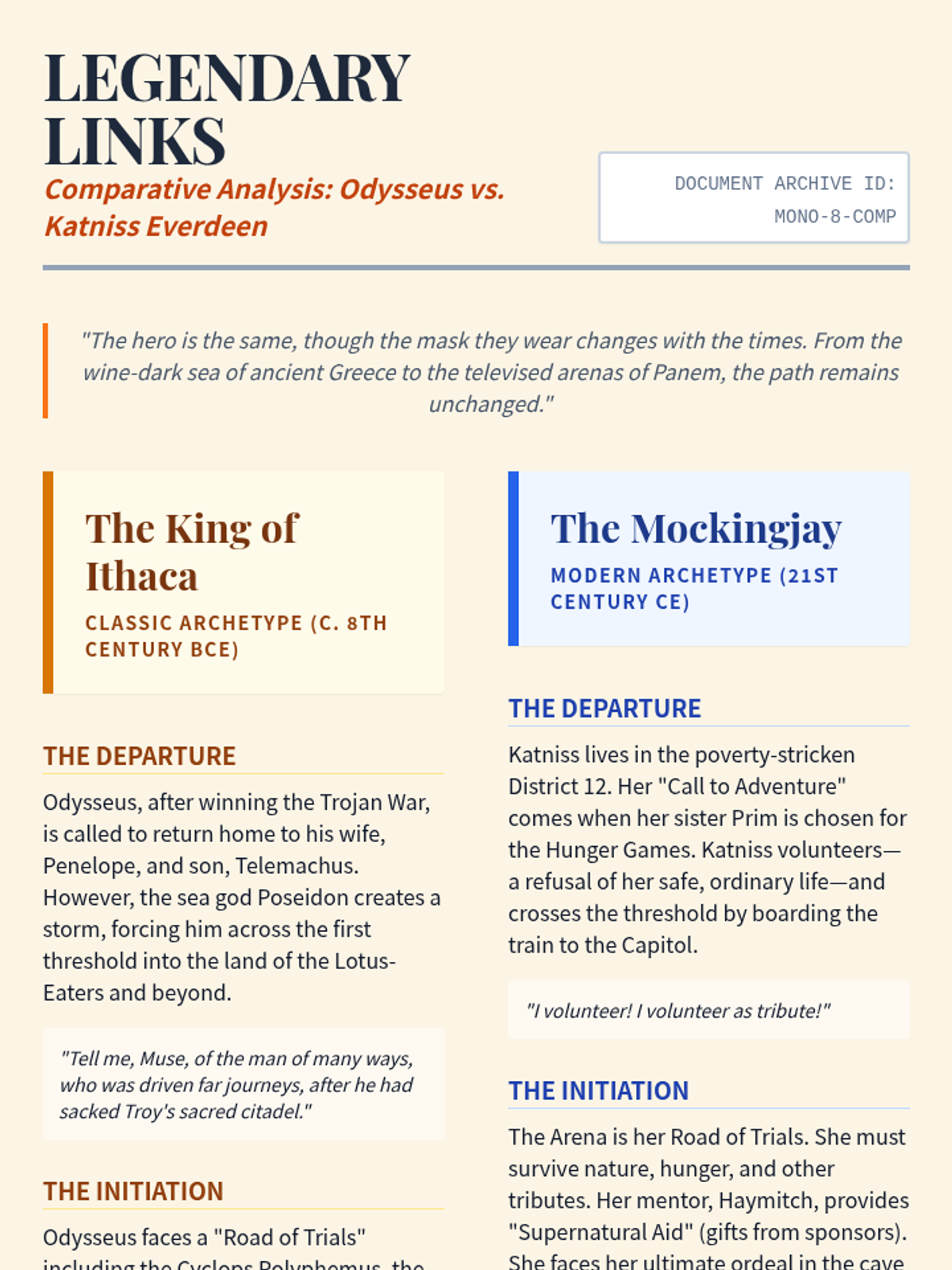
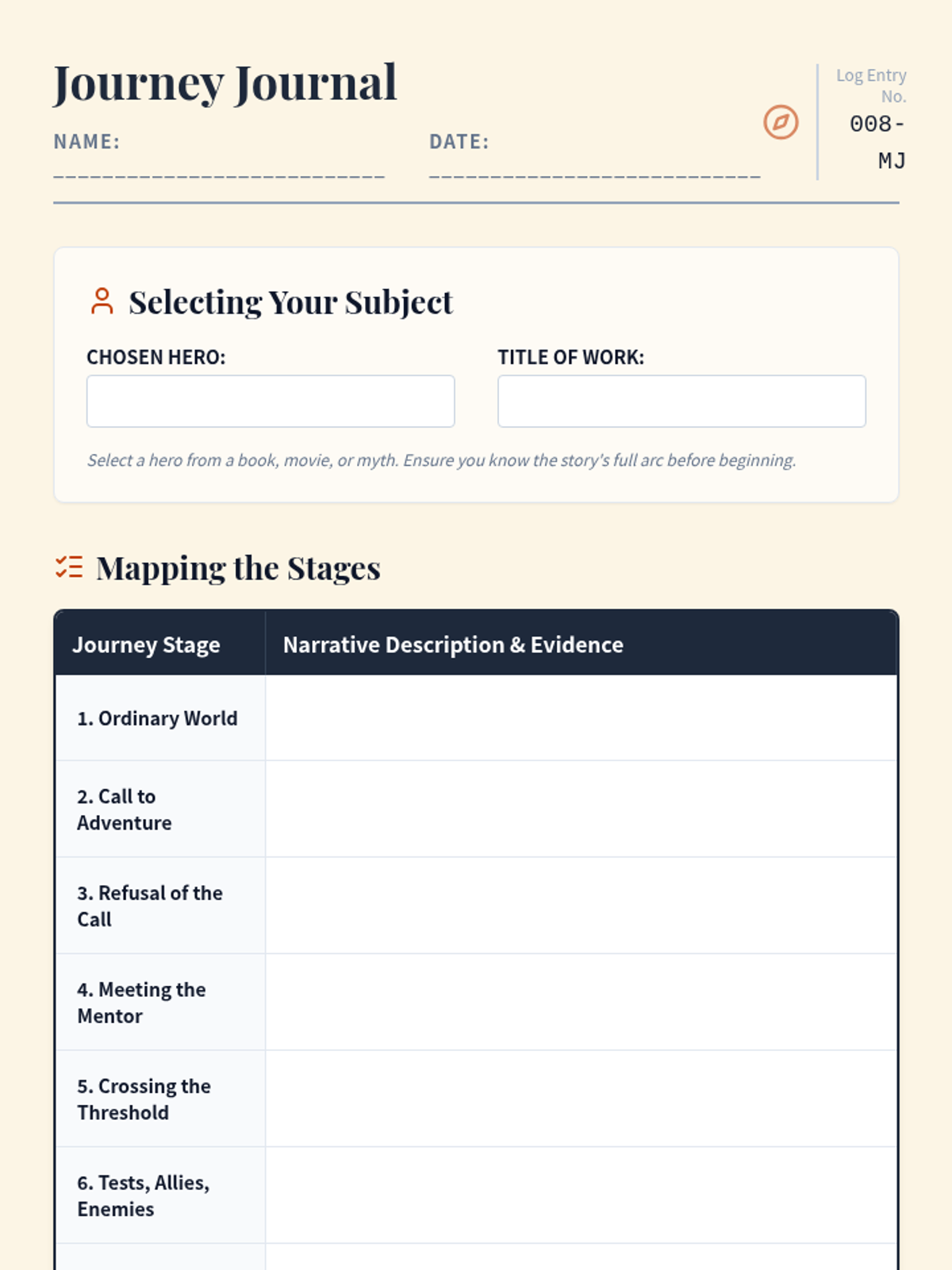
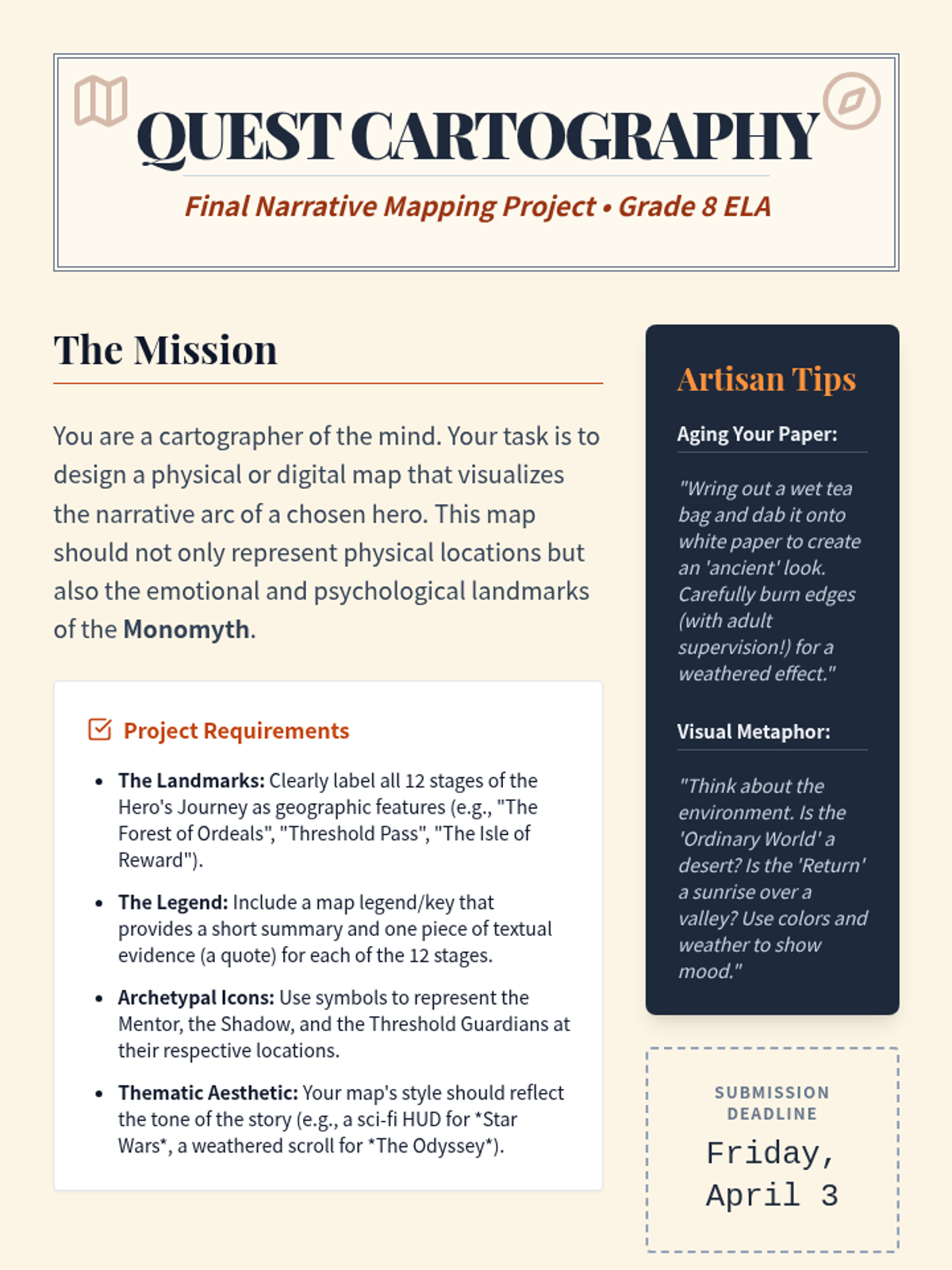
An 8th-grade ELA lesson exploring the Hero's Journey framework. Students analyze recurring narrative patterns across classic and modern texts, culminating in a creative mapping project that visualizes the monomyth structure.
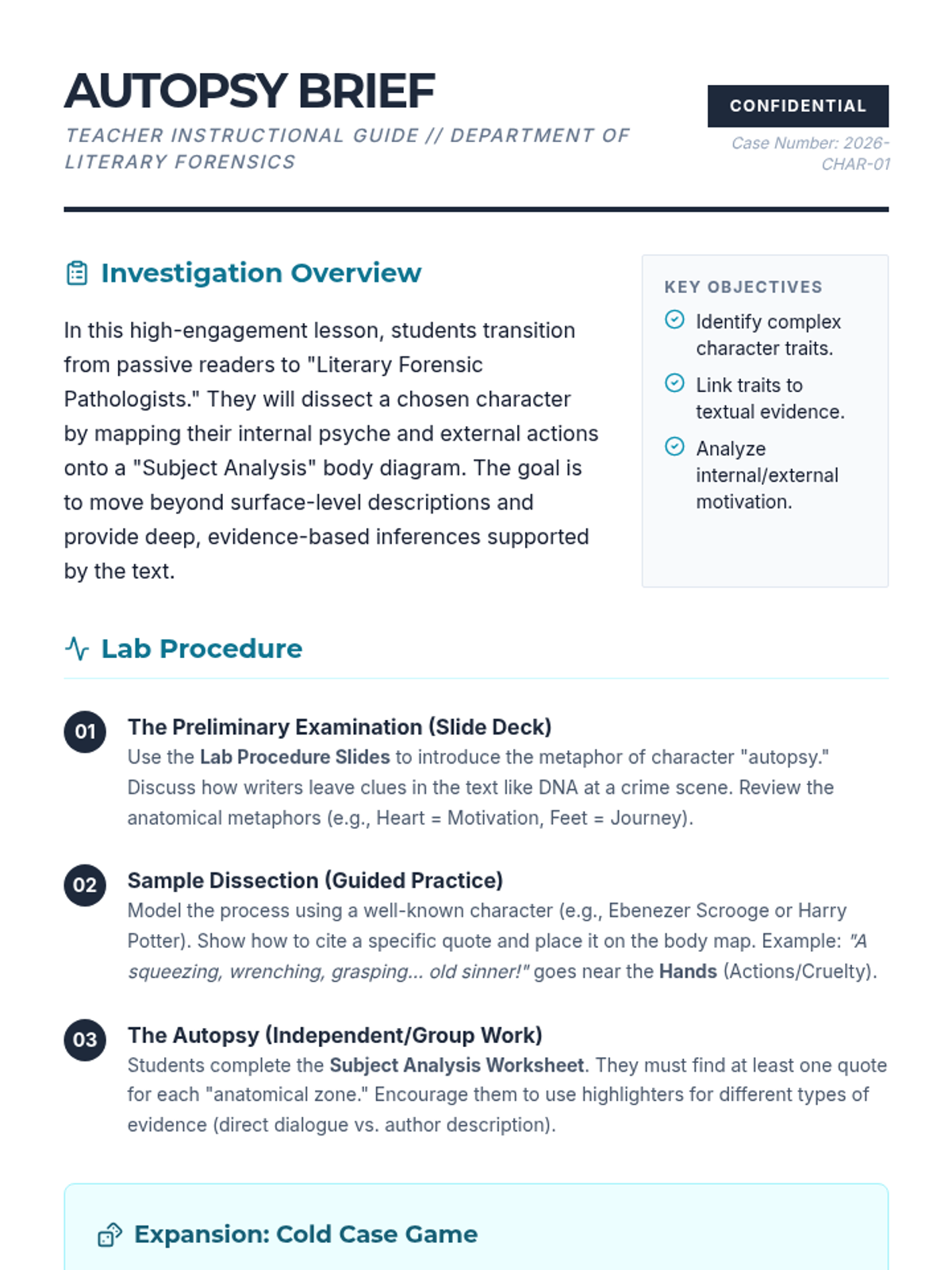
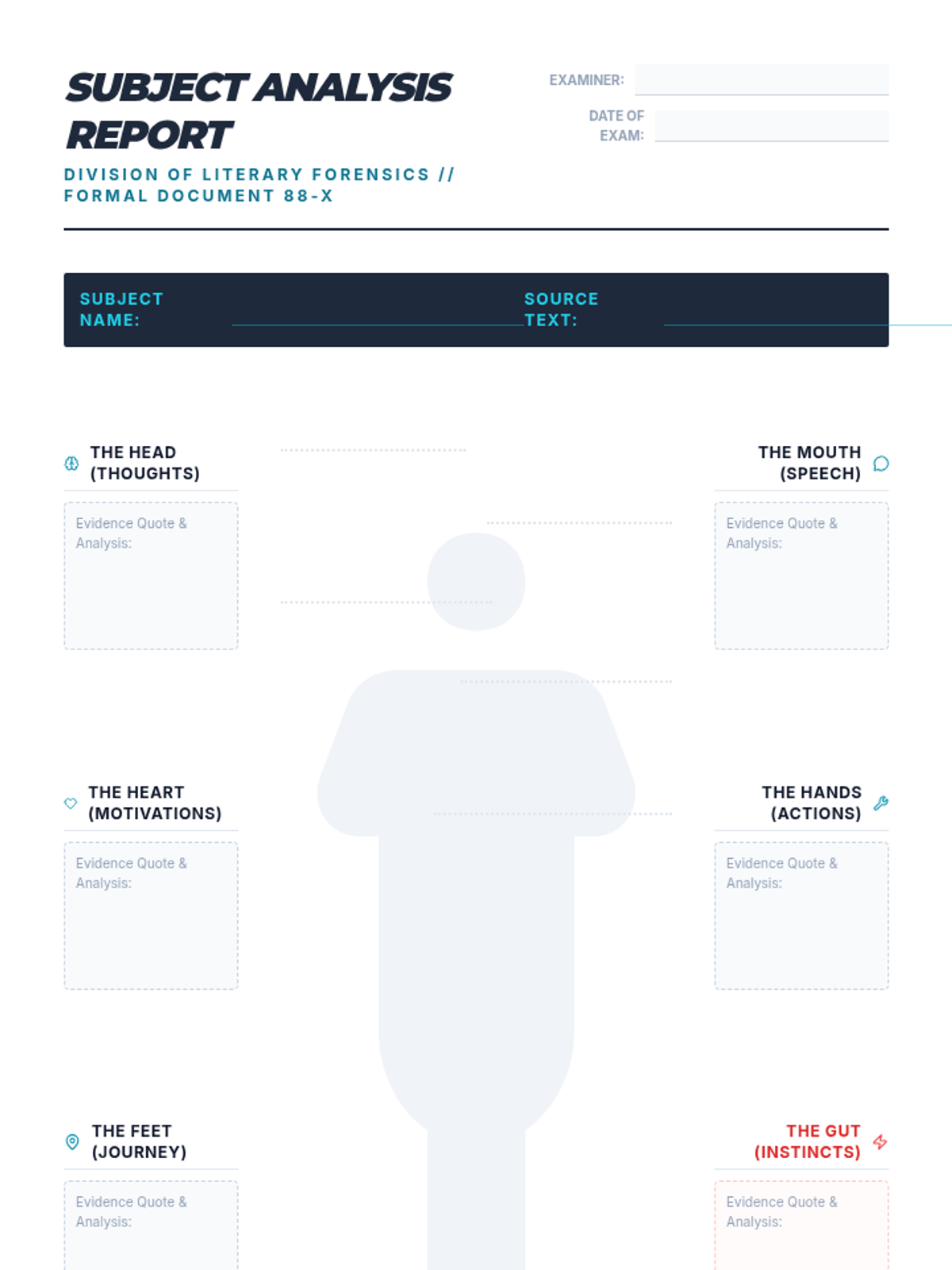
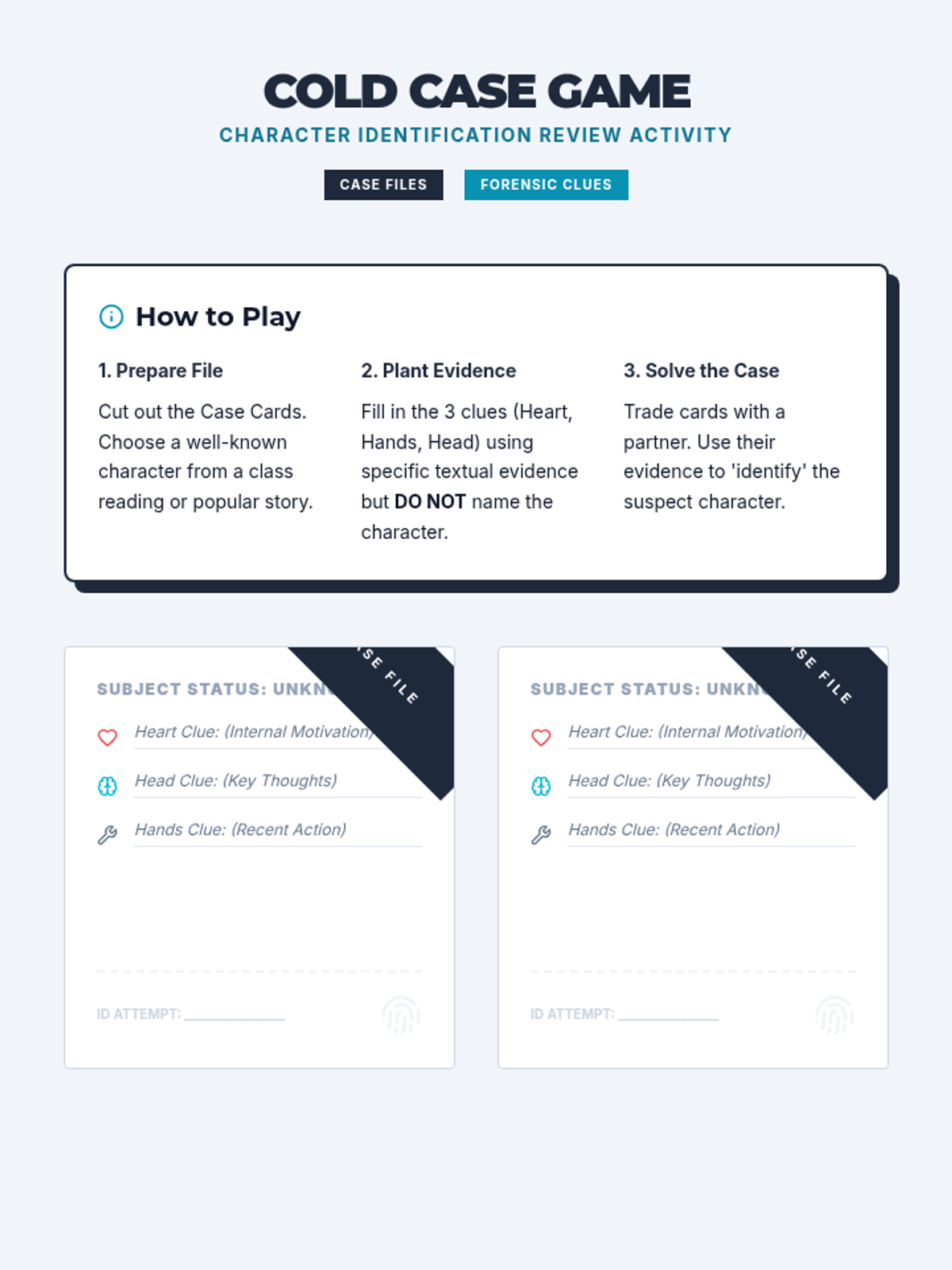
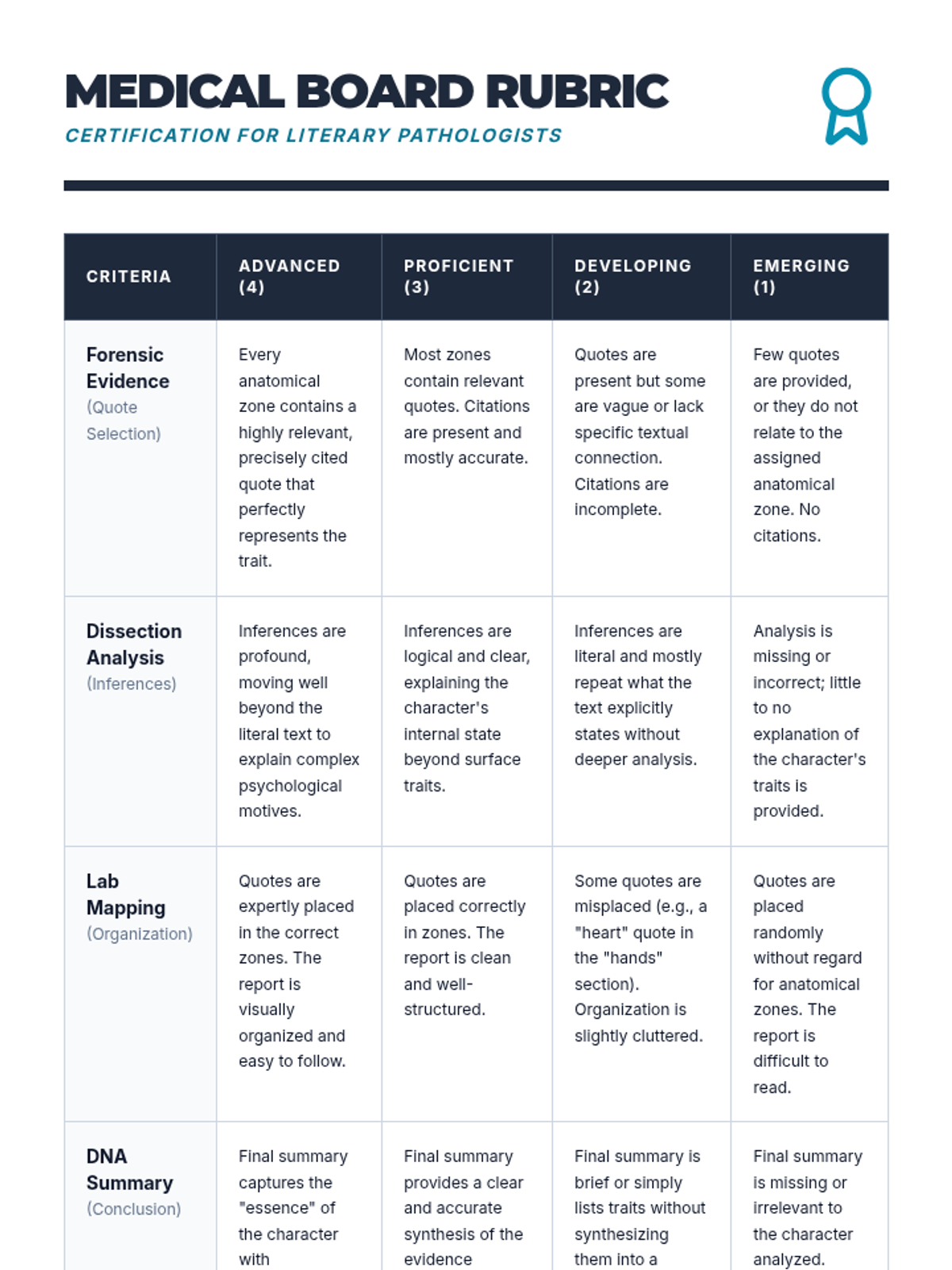
A deep-dive character analysis lesson where students perform a 'Character Autopsy' using textual evidence to map internal traits and external motivations. Students function as forensic literary analysts to uncover the 'DNA' of a protagonist or antagonist.
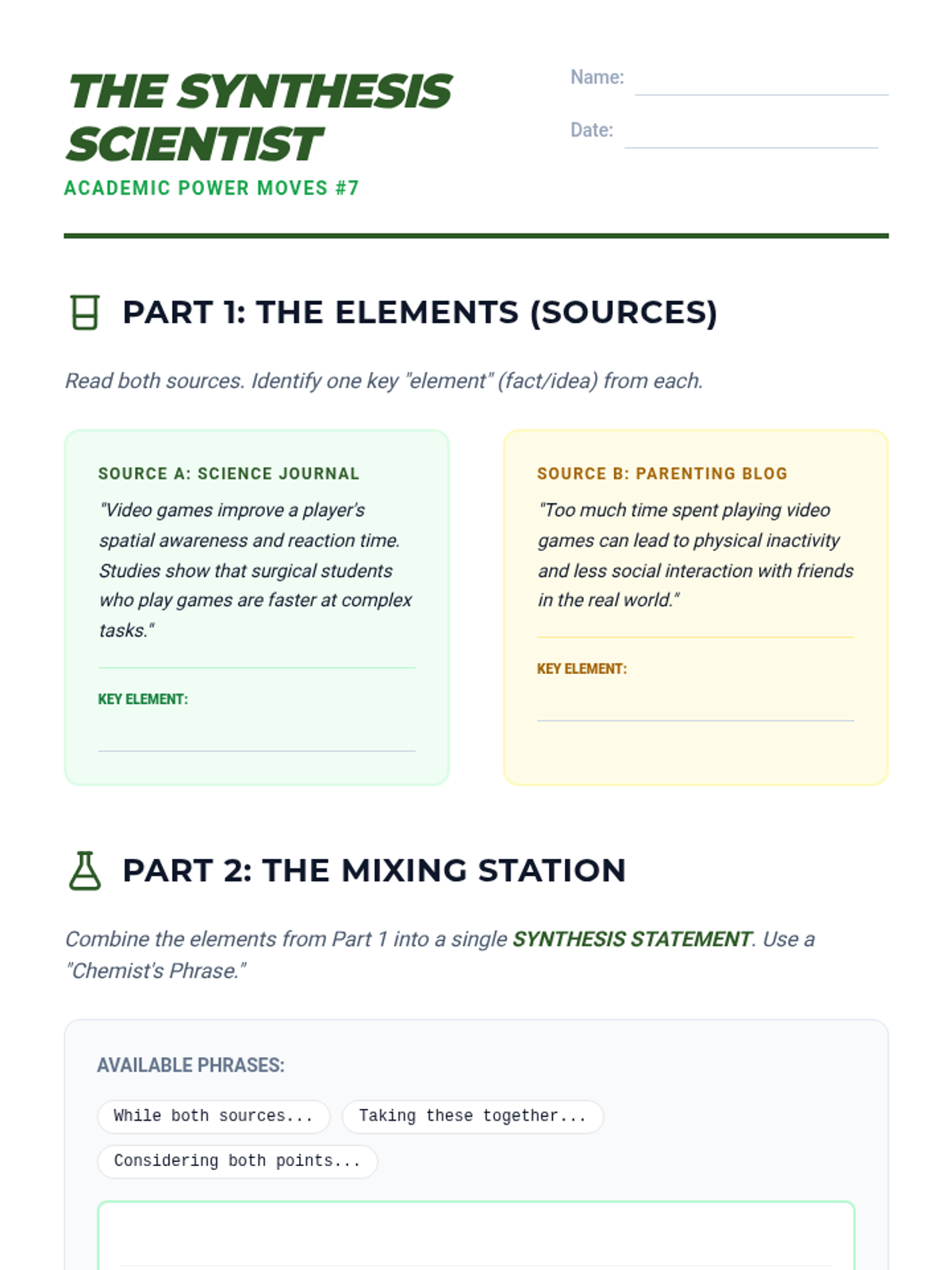
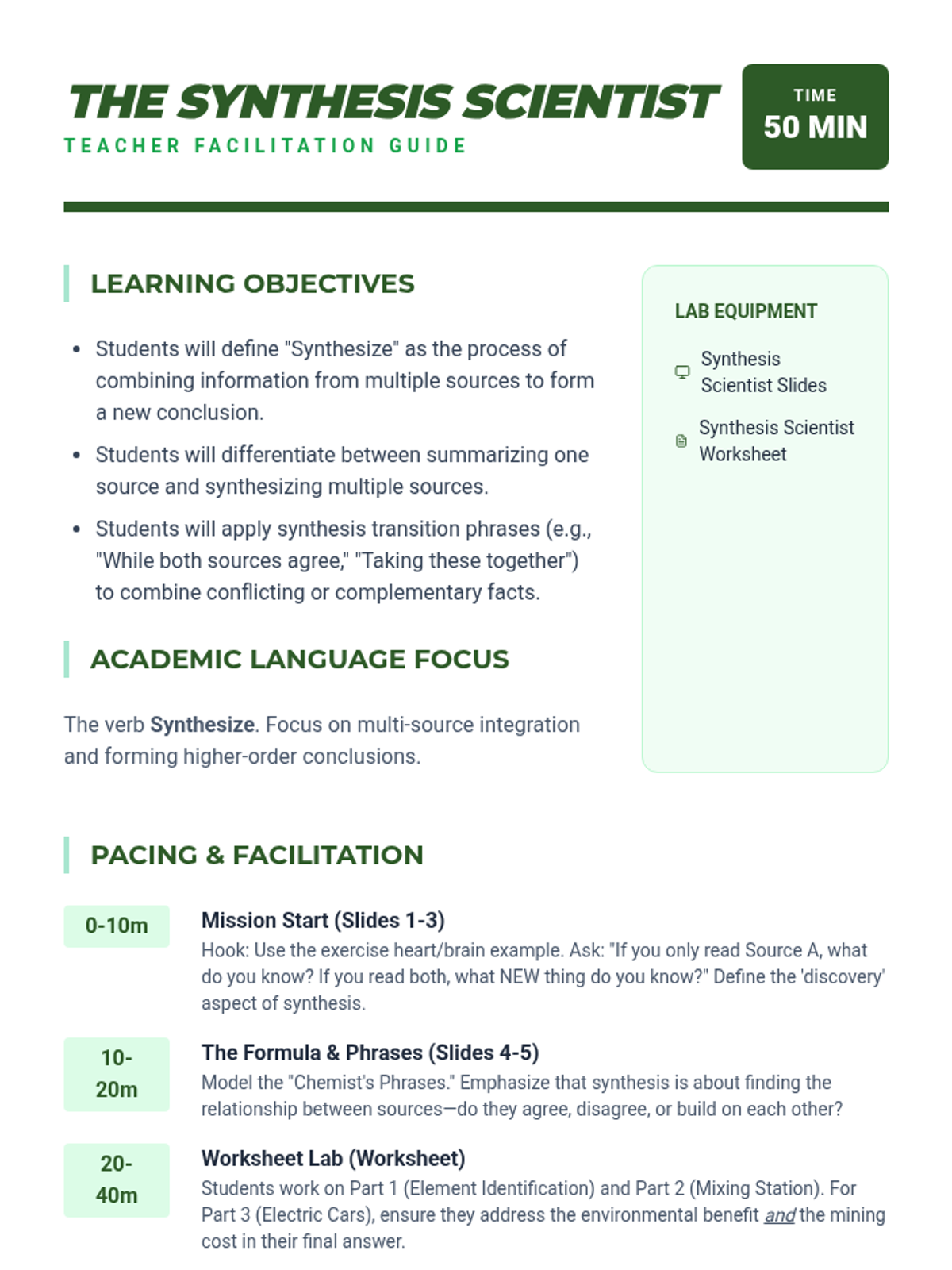
A 50-minute lesson on the academic action verb 'Synthesize.' Students learn to combine information from multiple sources to create a new, original conclusion using the 'Laboratory Mix' method.
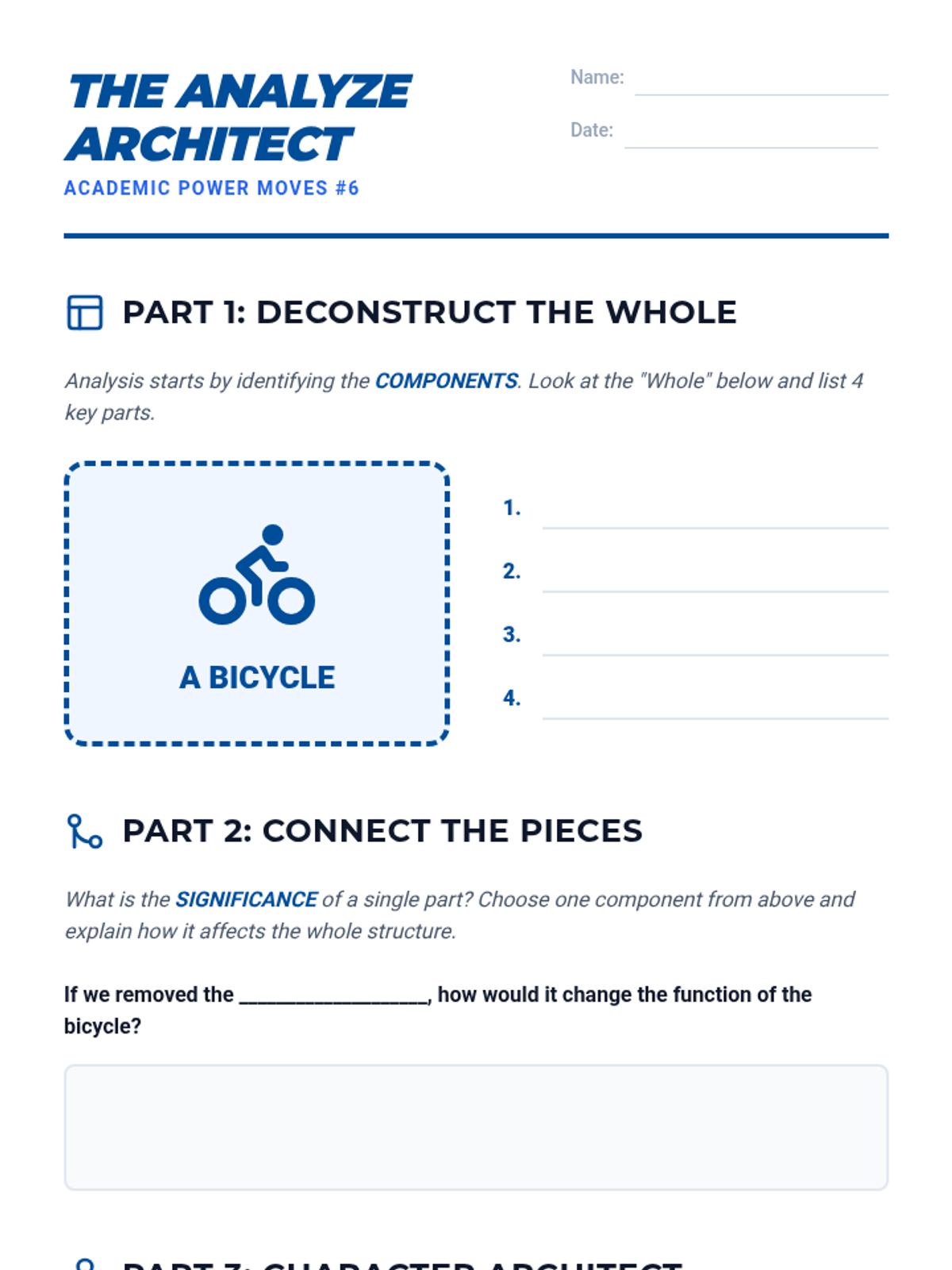
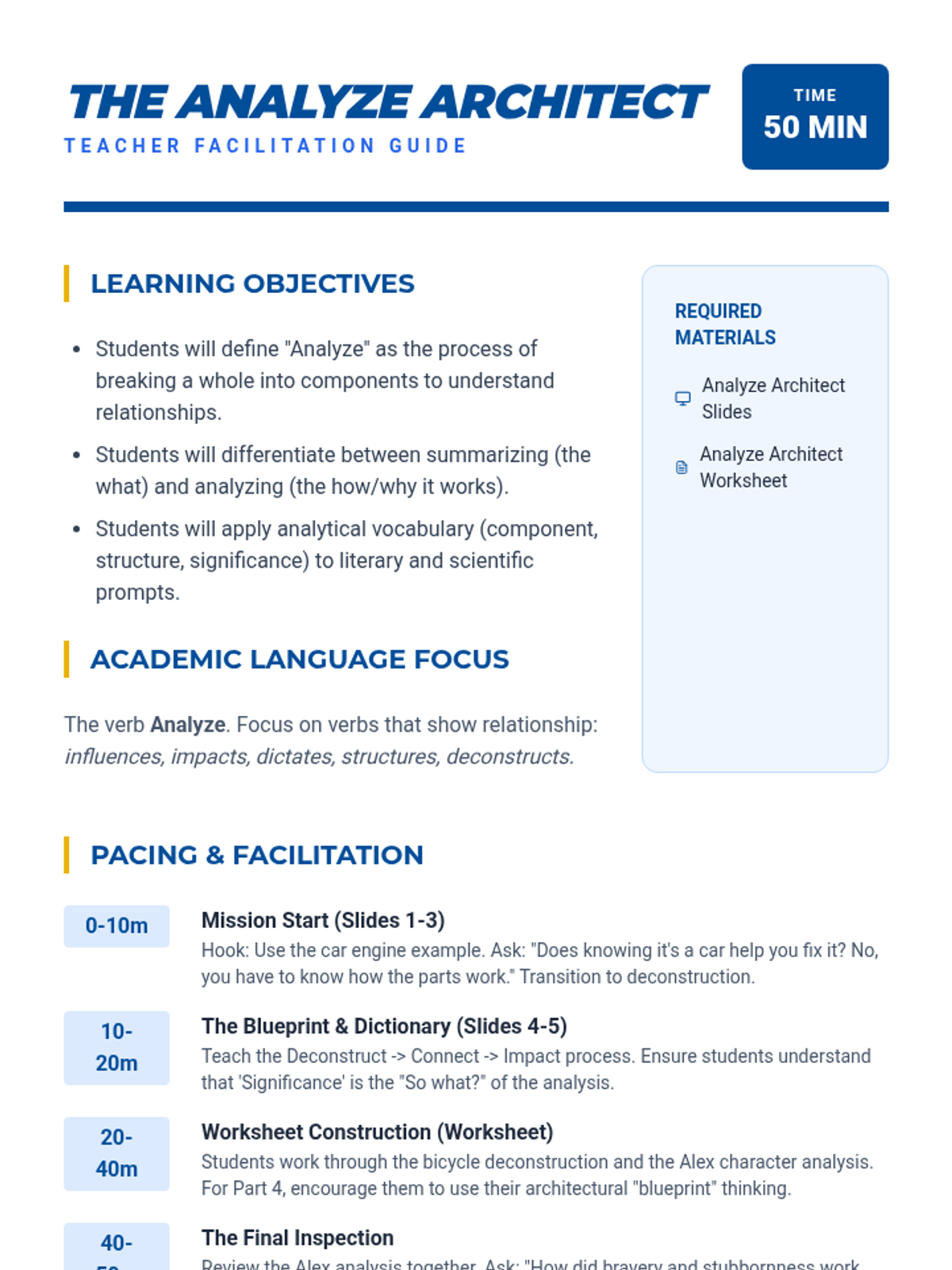
A 50-minute lesson on the academic action verb 'Analyze.' Students learn to break complex topics into smaller parts to understand how they work together using the 'Architect's Blueprint' method.
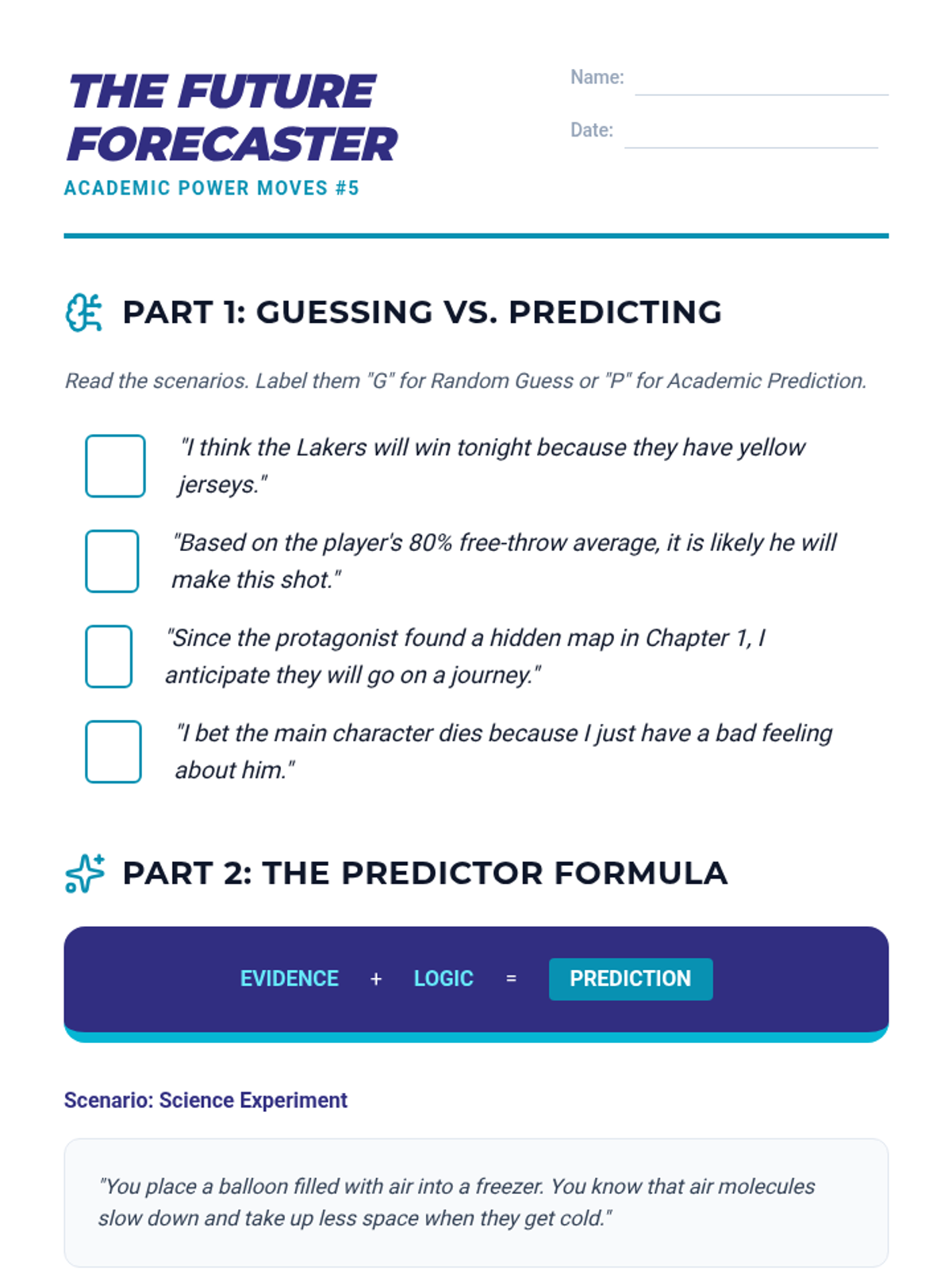
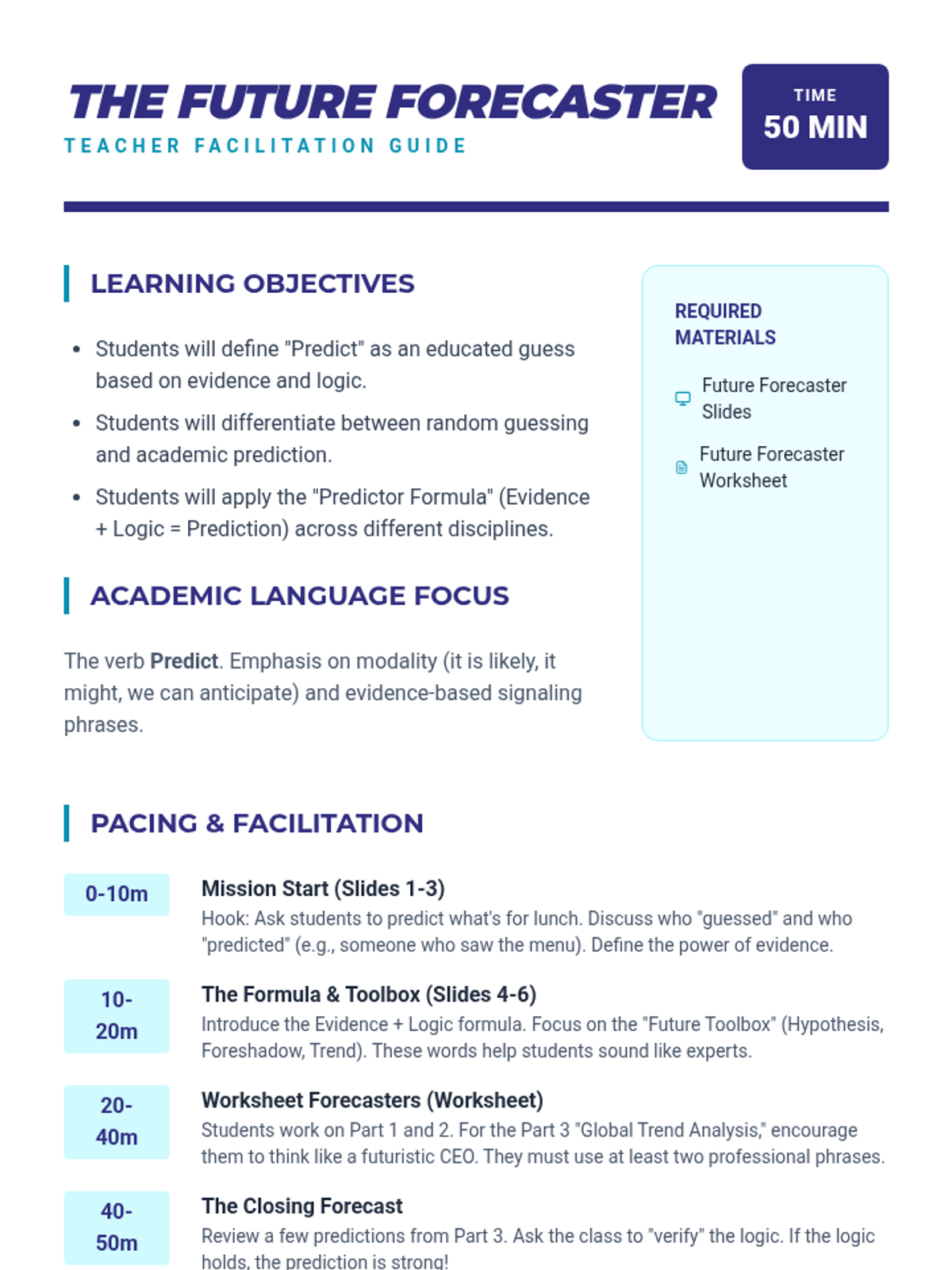
A 50-minute lesson on the academic action verb 'Predict.' Students learn to use evidence and logic to make educated guesses about future outcomes in various subjects.
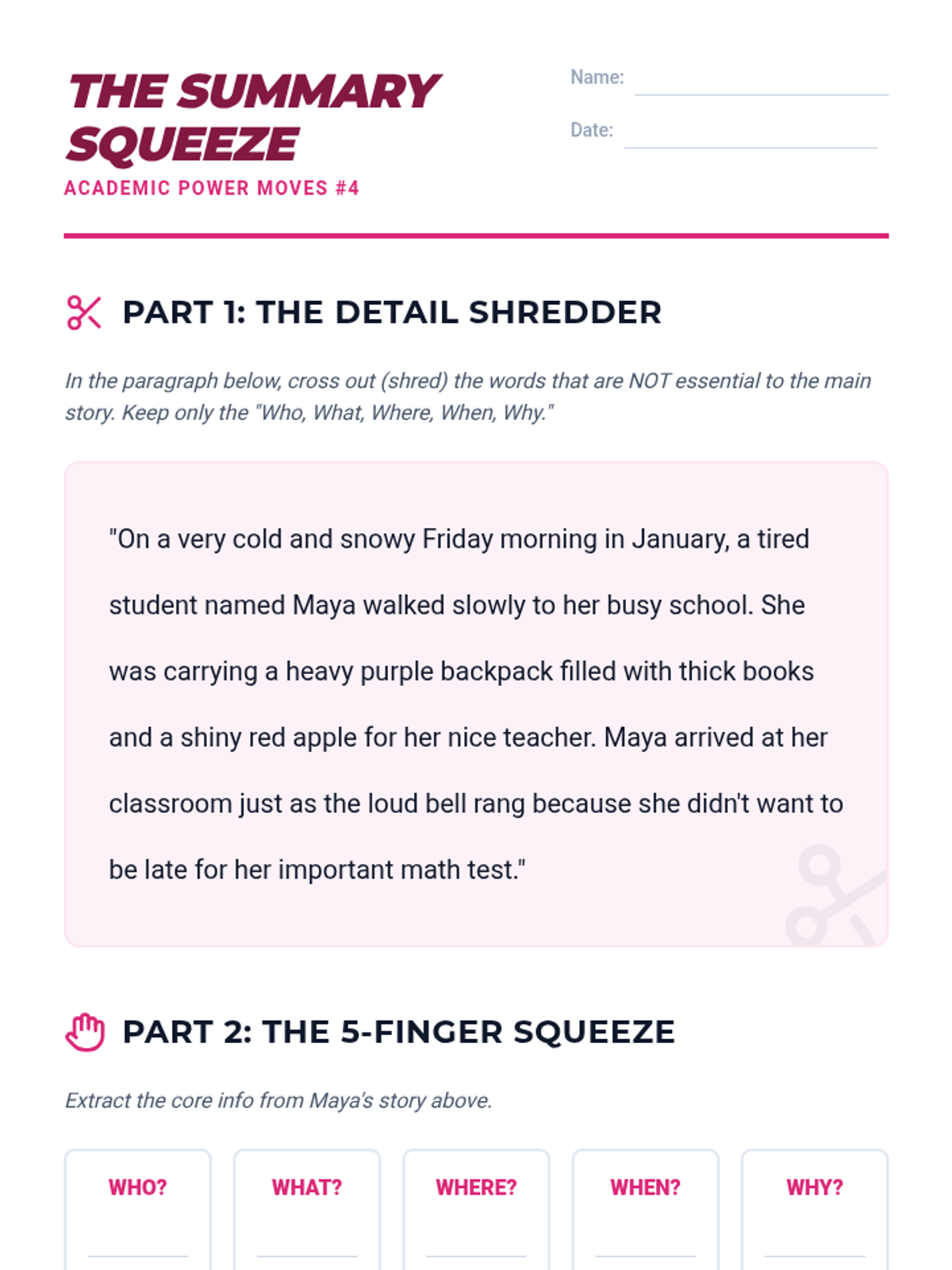
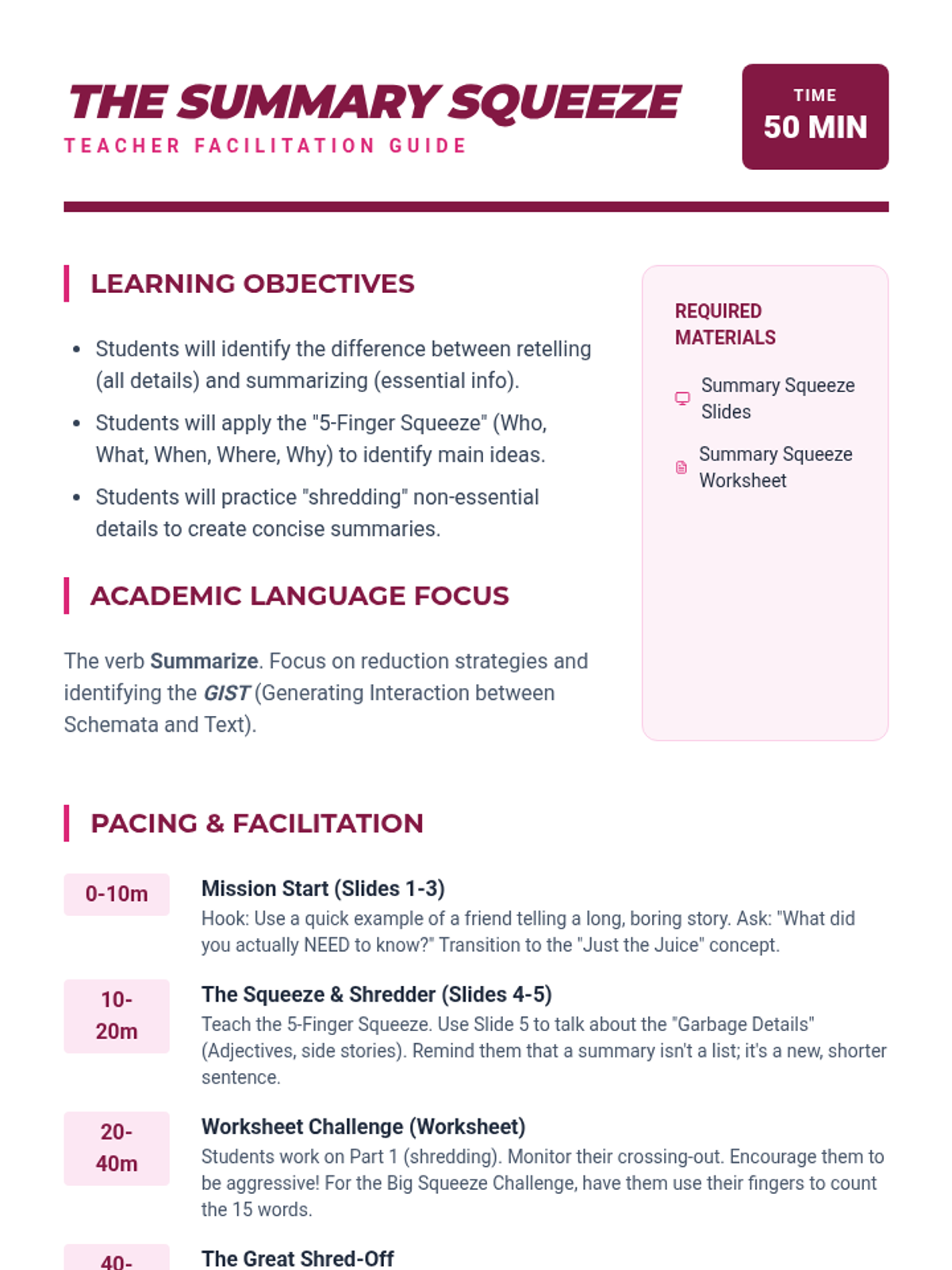
A 50-minute lesson on the academic action verb 'Summarize.' Students learn to identify main ideas and key details while removing unnecessary information using 'The Squeeze' method.
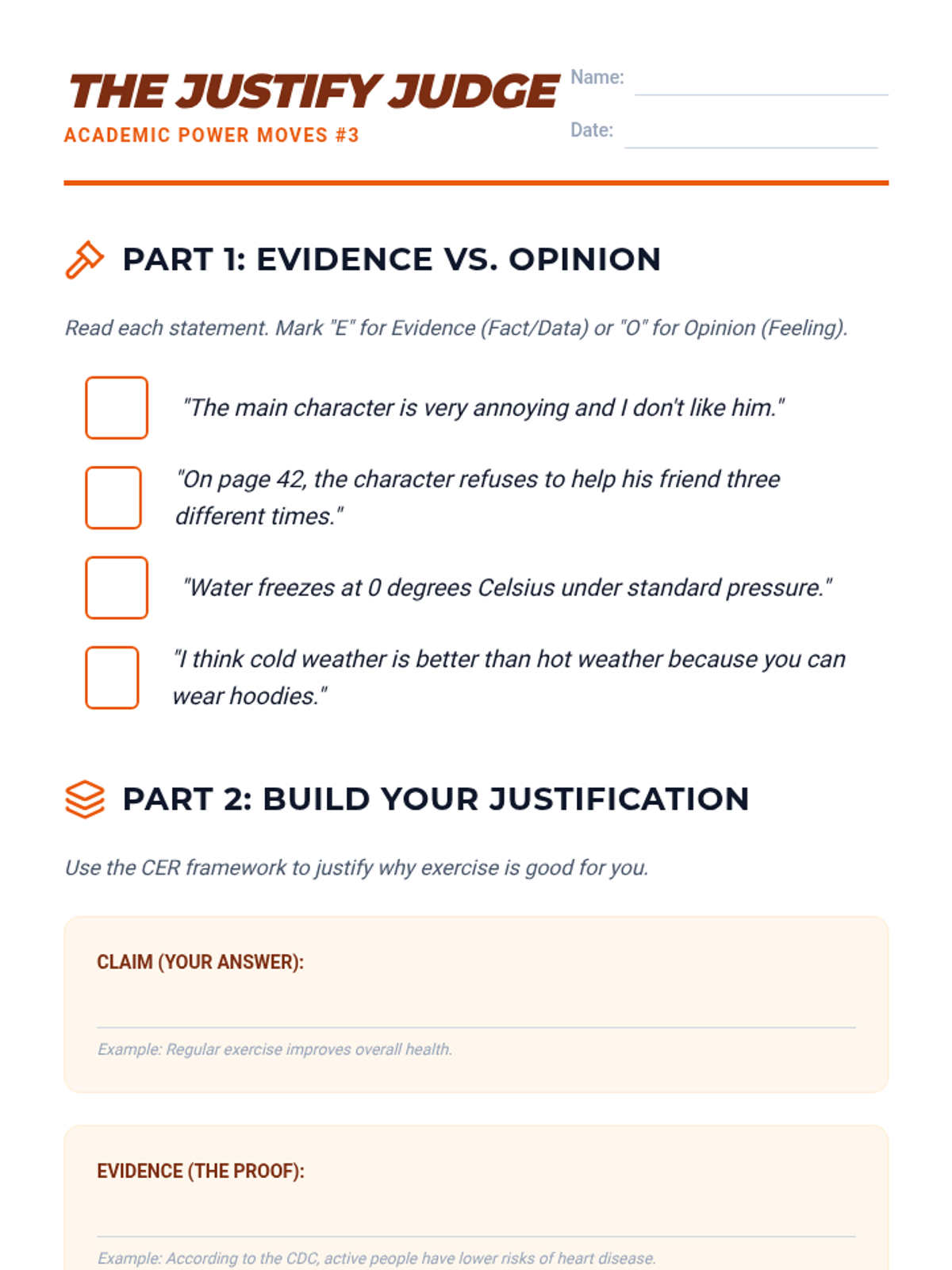
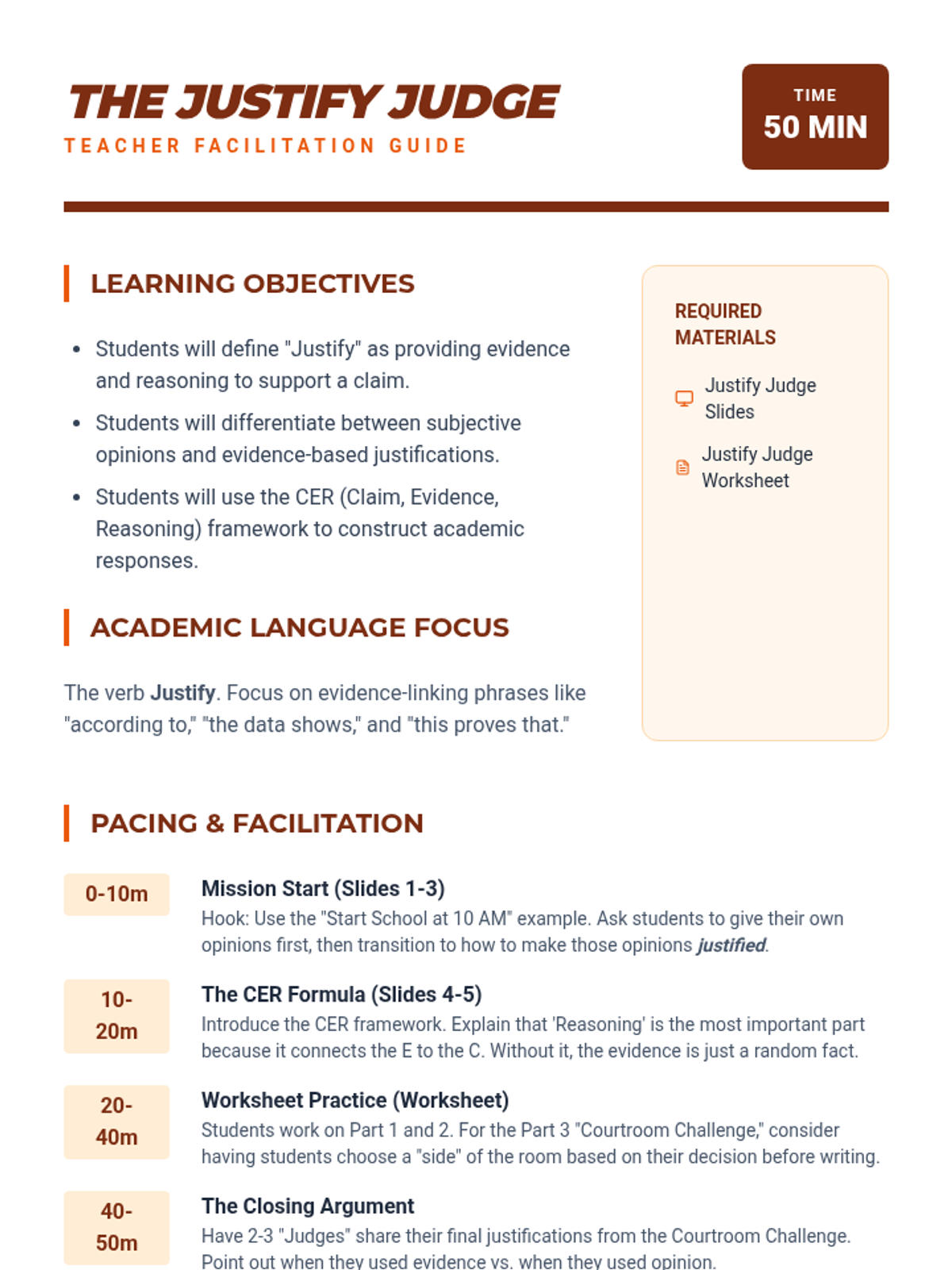
A 50-minute lesson on the academic action verb 'Justify.' Students learn to support their claims with evidence and reasoning using the 'Claim-Evidence-Reasoning' (CER) framework.
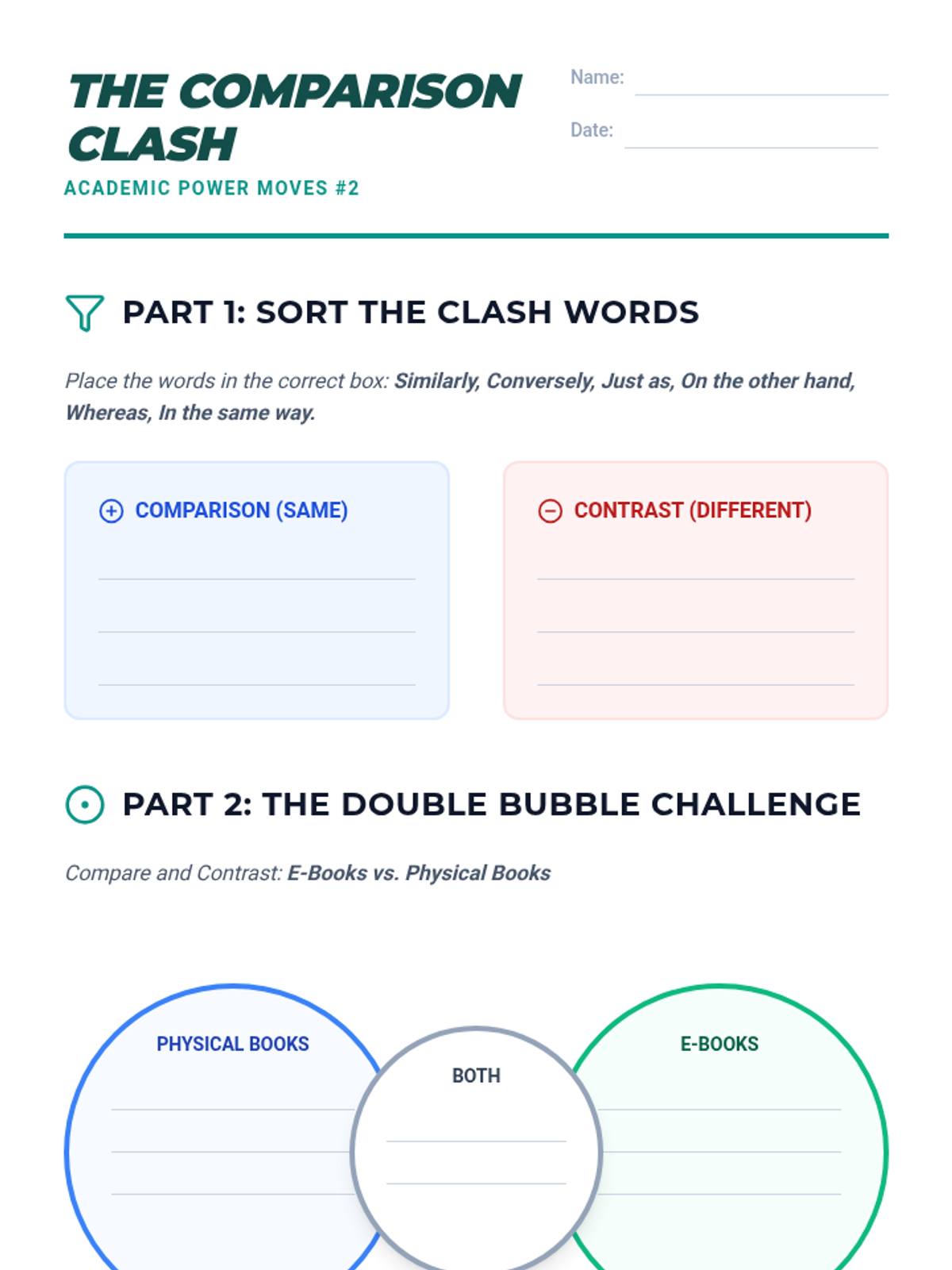
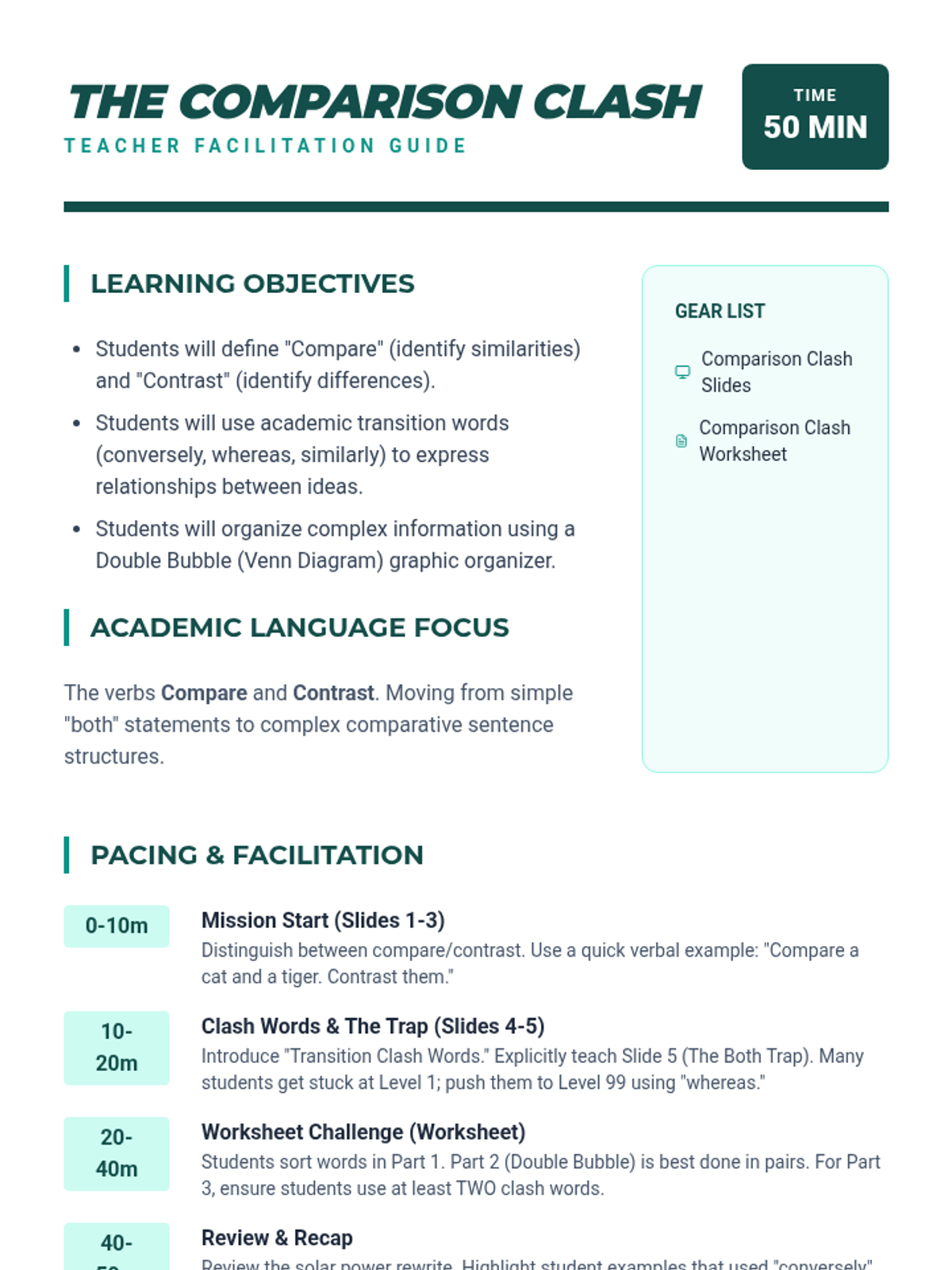
A 50-minute lesson on 'Compare' and 'Contrast.' Students learn to identify similarities and differences using academic language and structured organizers.
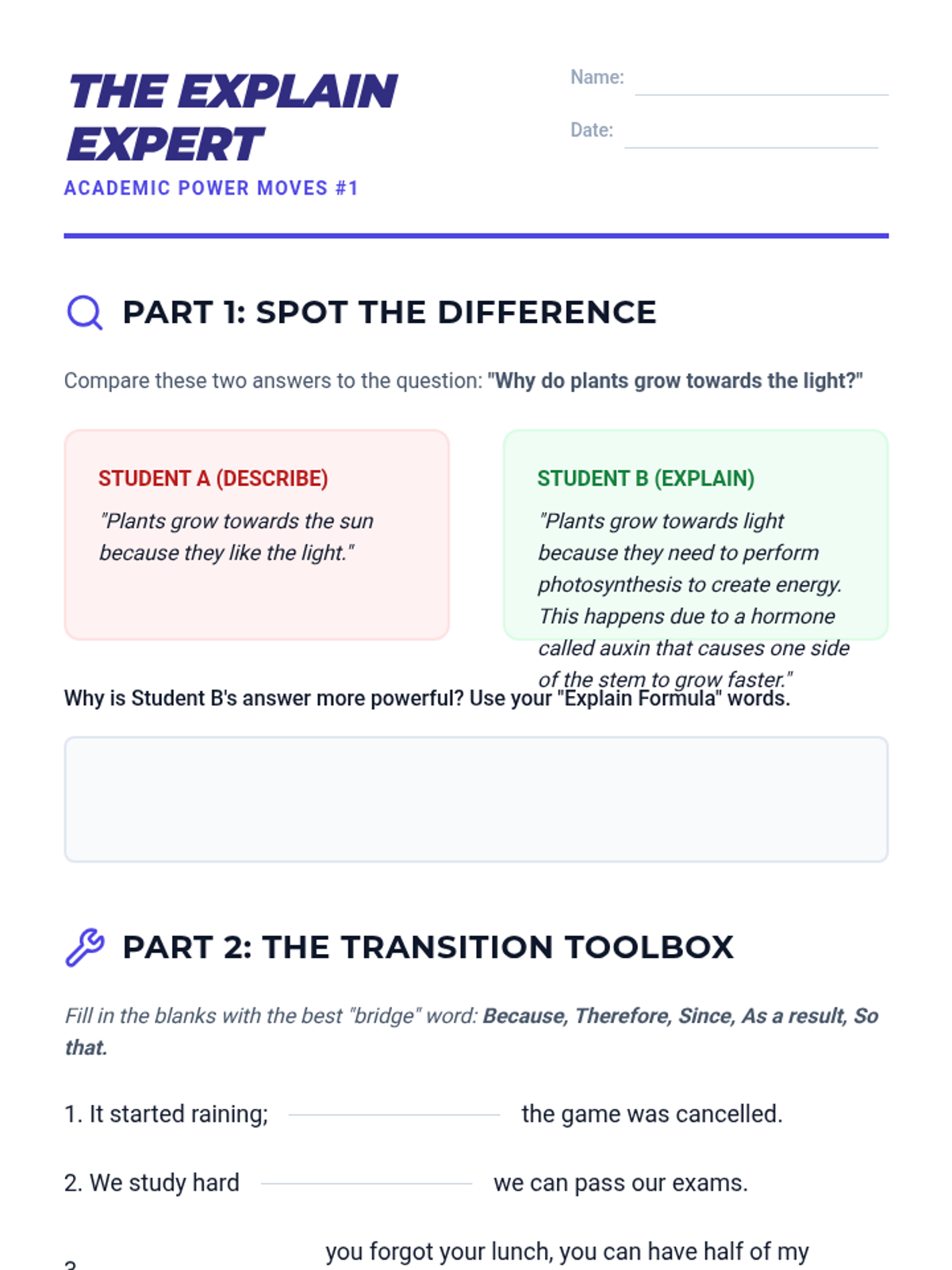
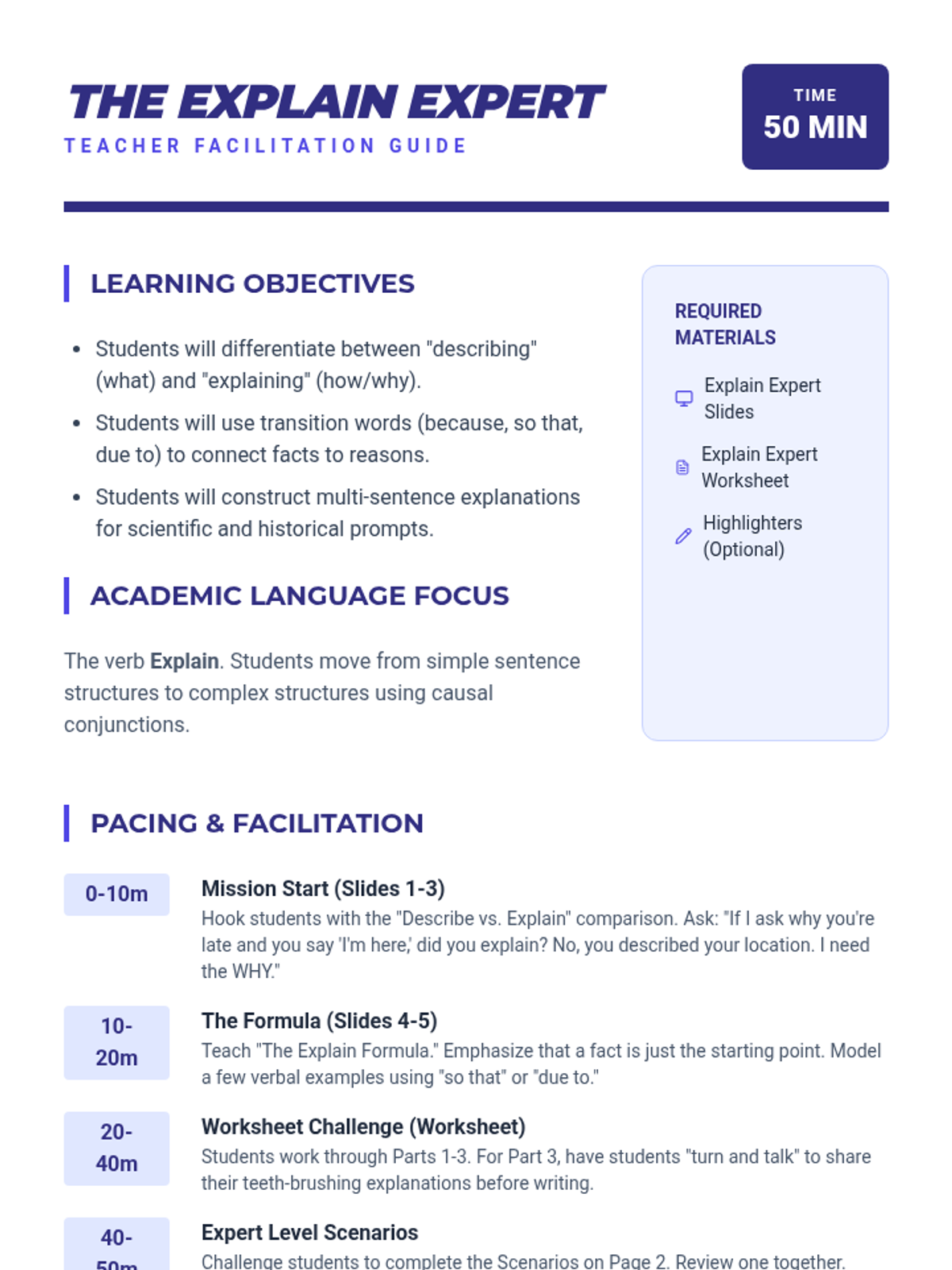
A 50-minute lesson on the academic action verb 'Explain.' Students learn to go beyond 'what' to 'how' and 'why' using clear steps and transition words.
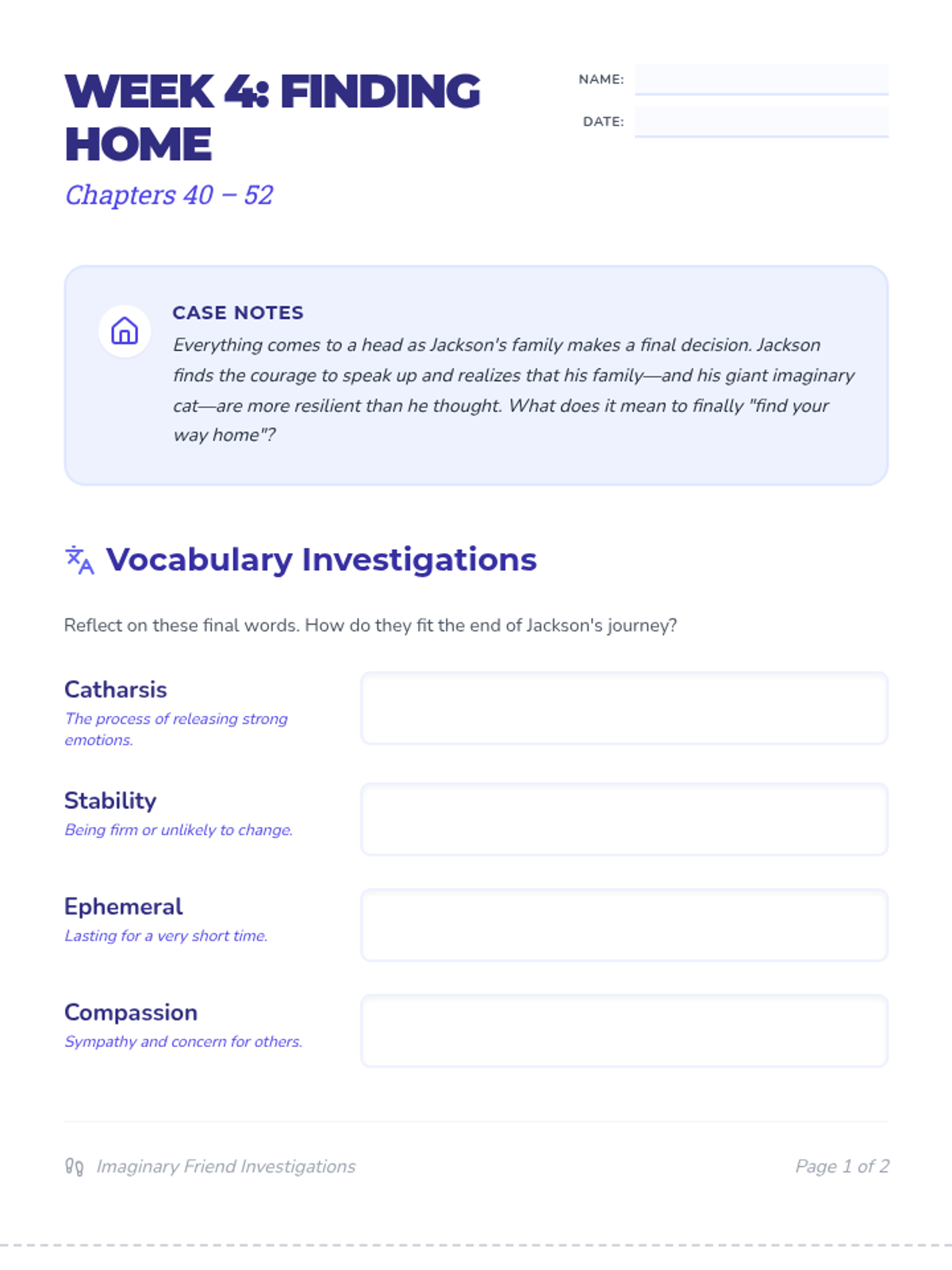
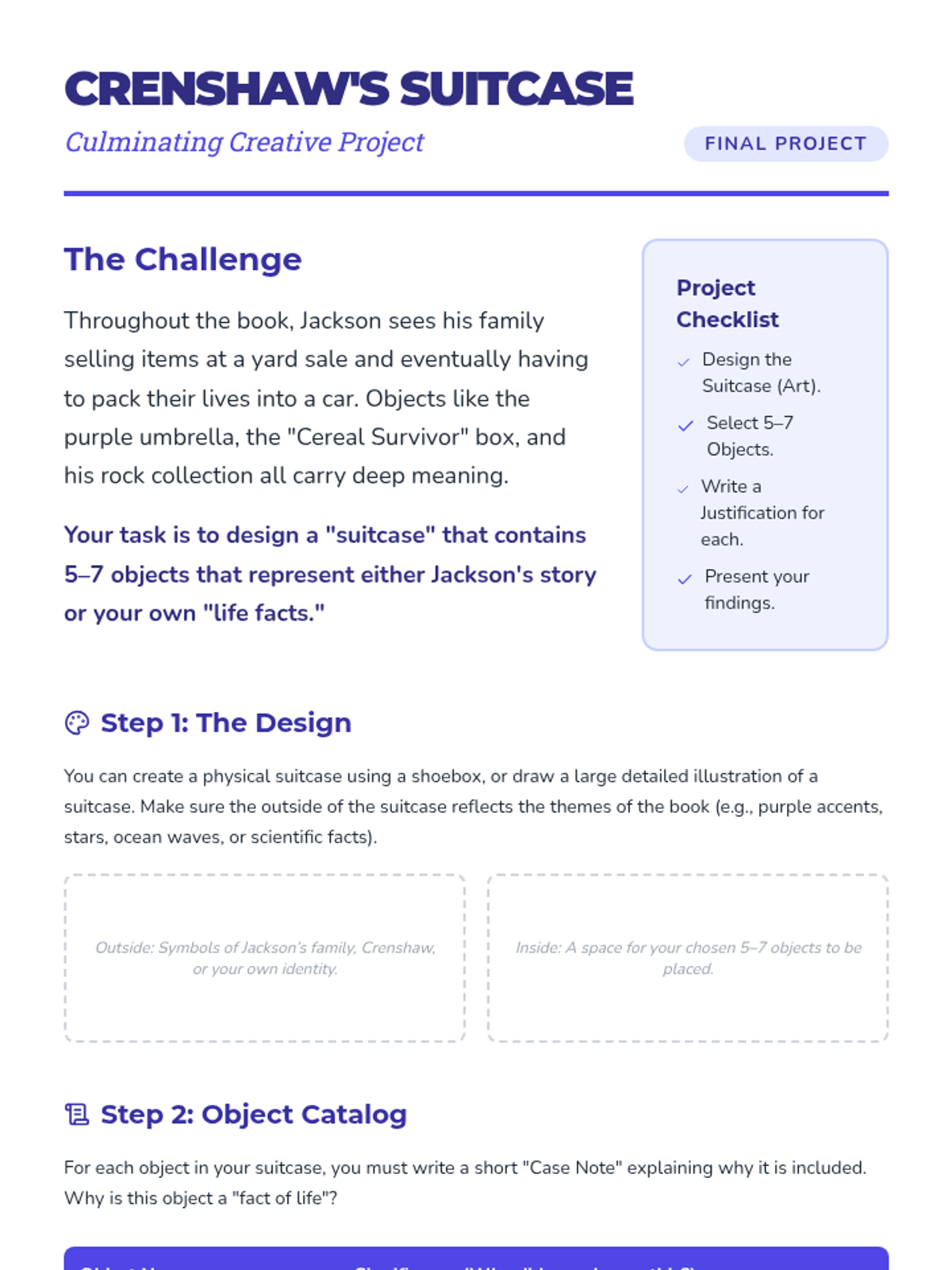
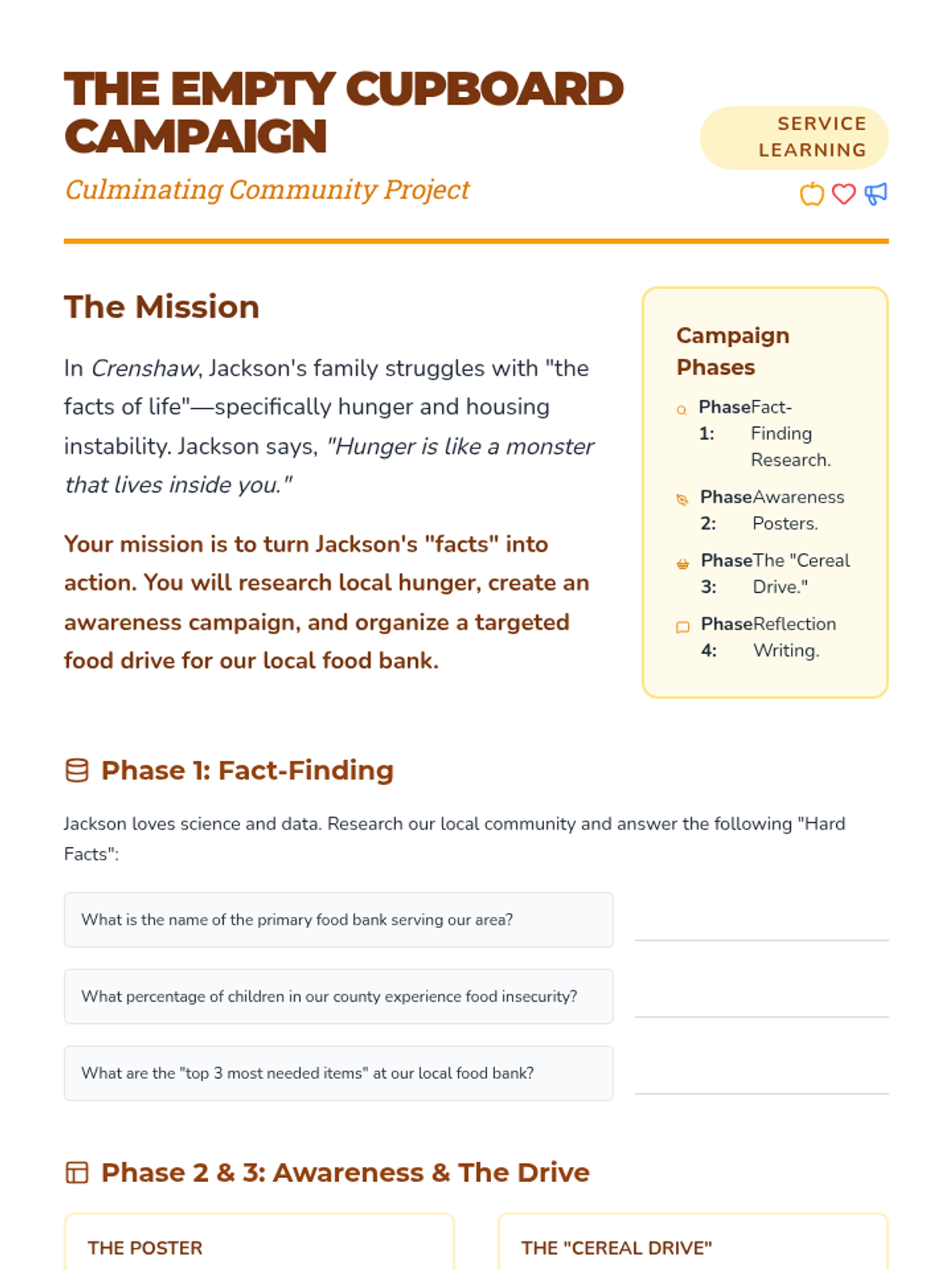
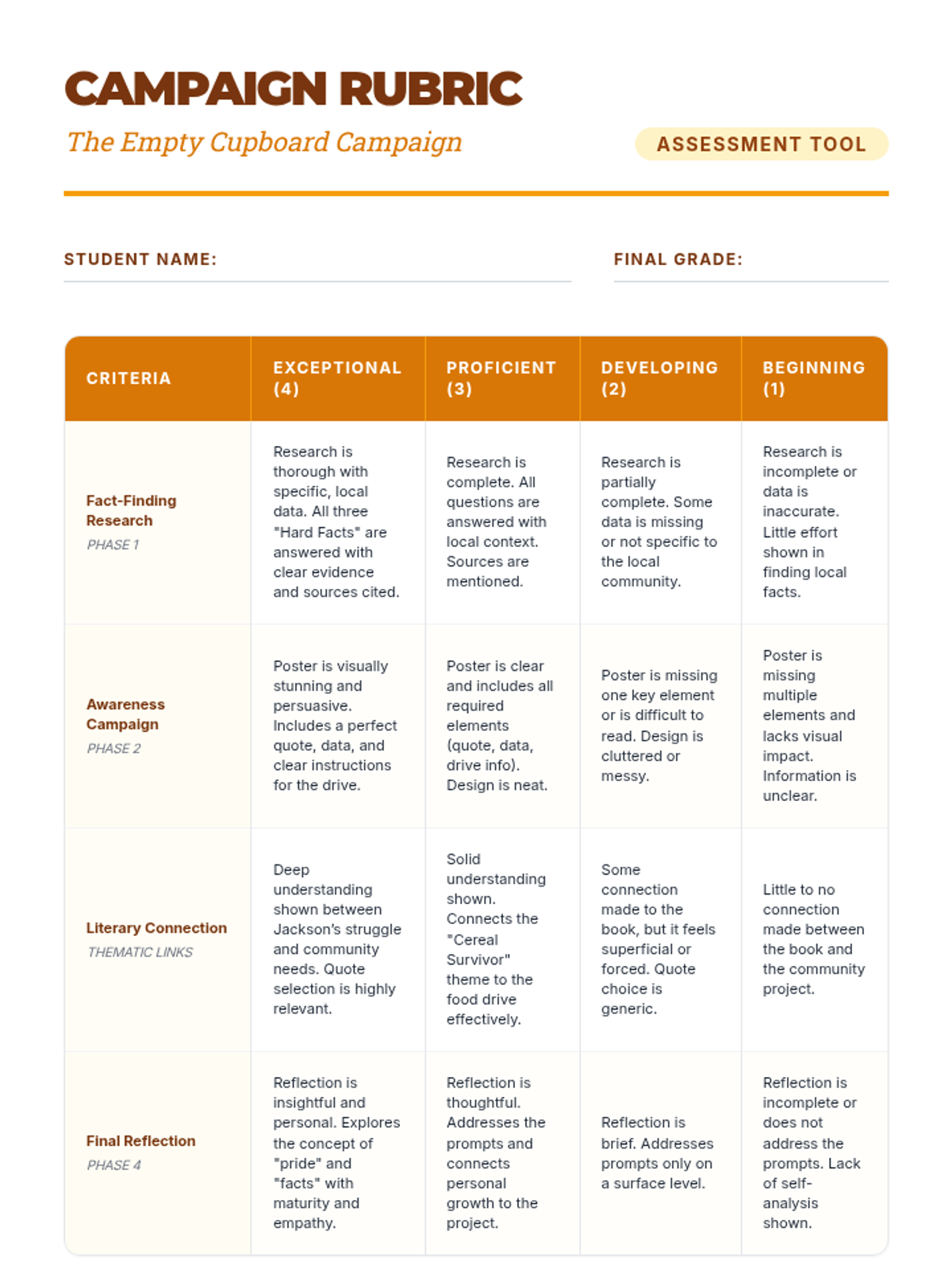
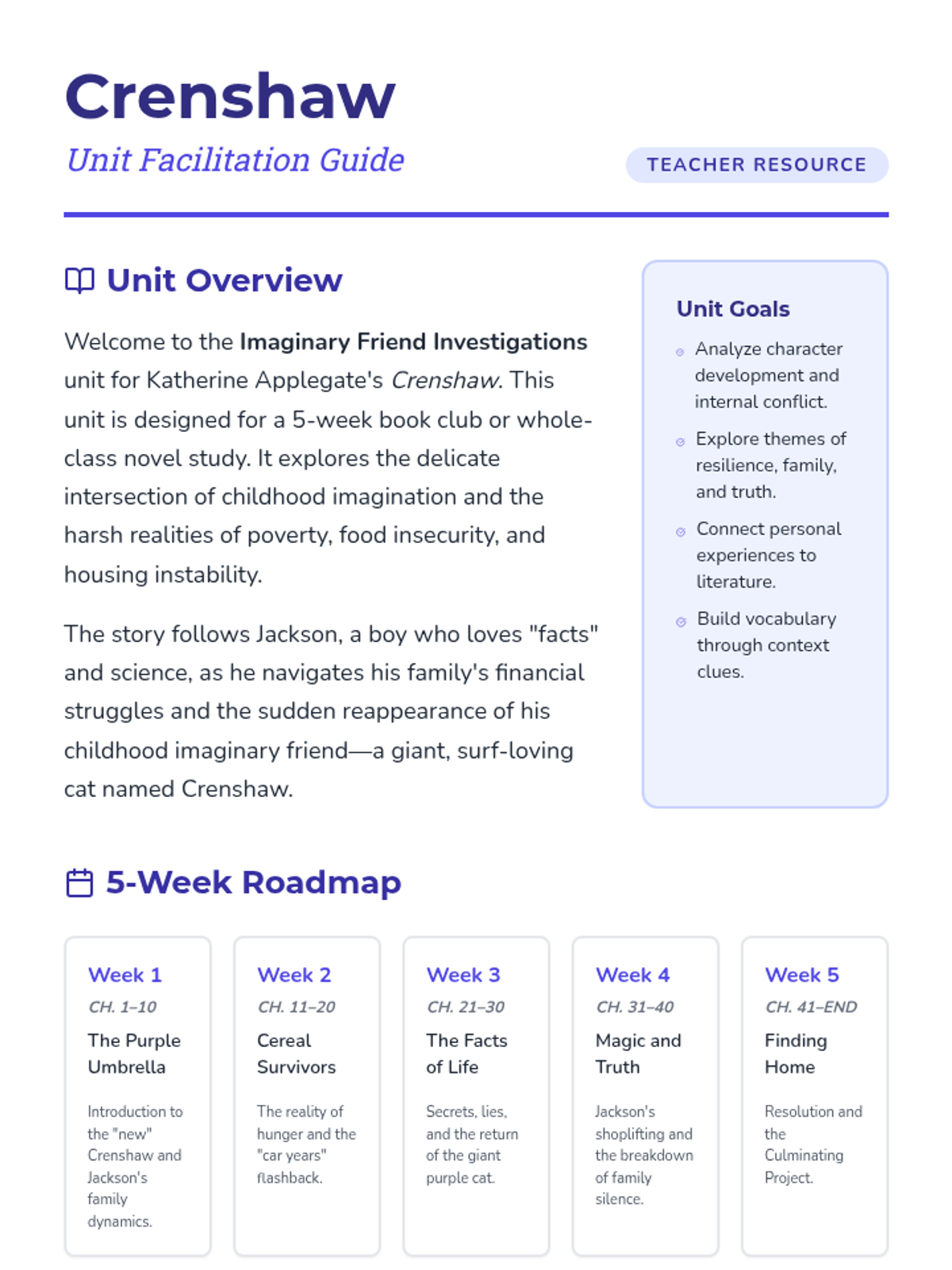
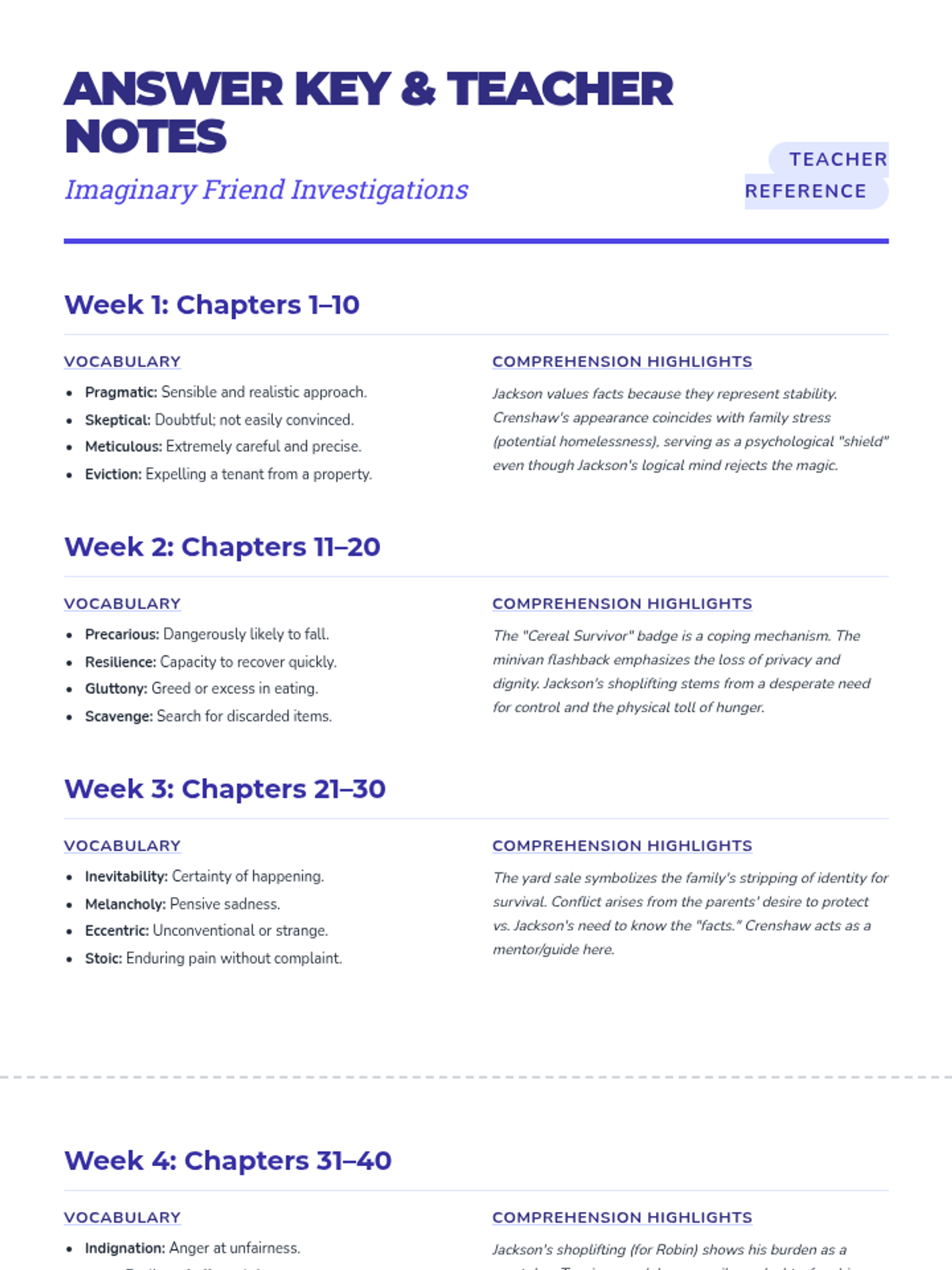
The resolution of Jackson's journey and the culminating creative project. Reading chapters 40-52.
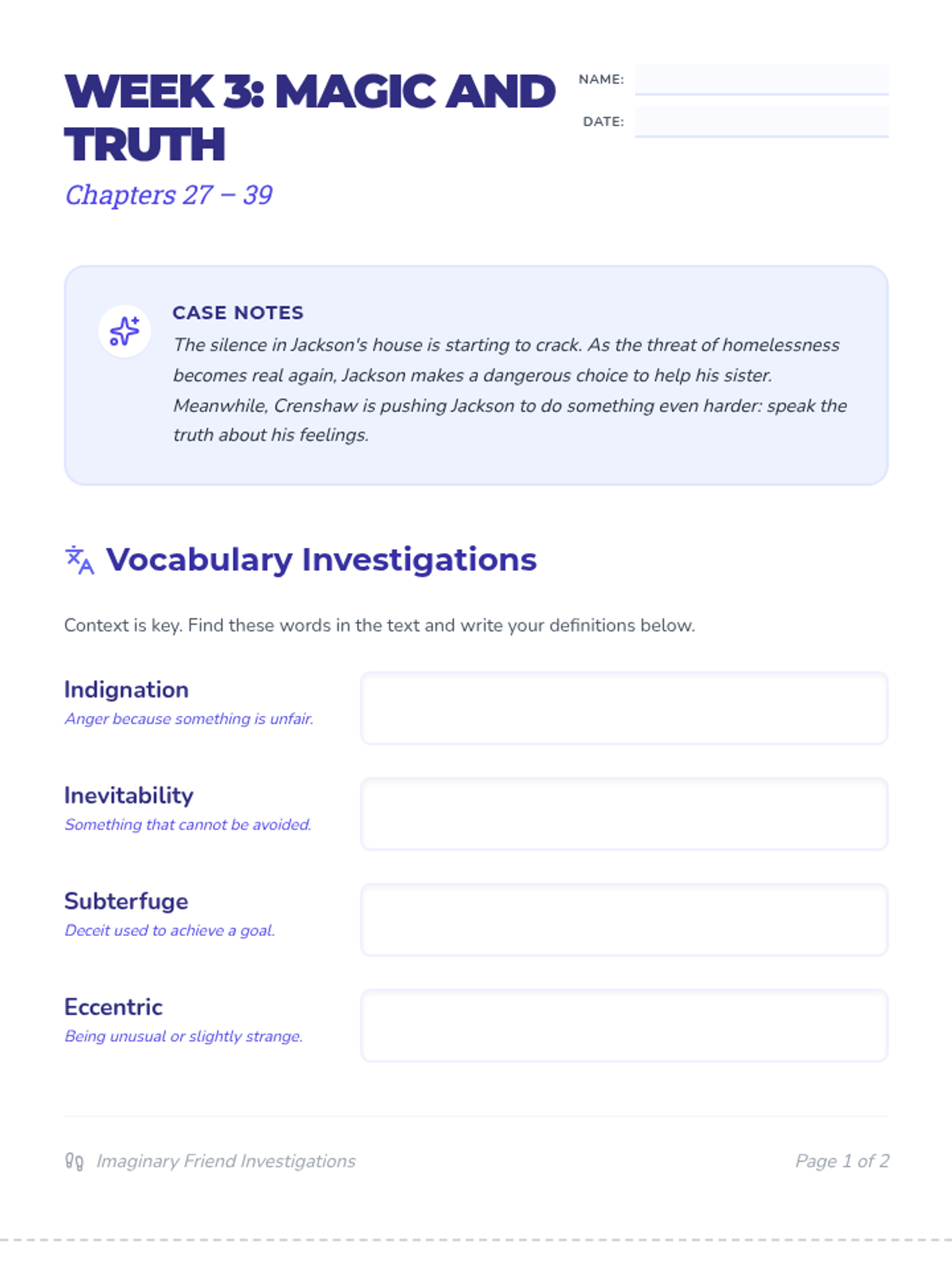
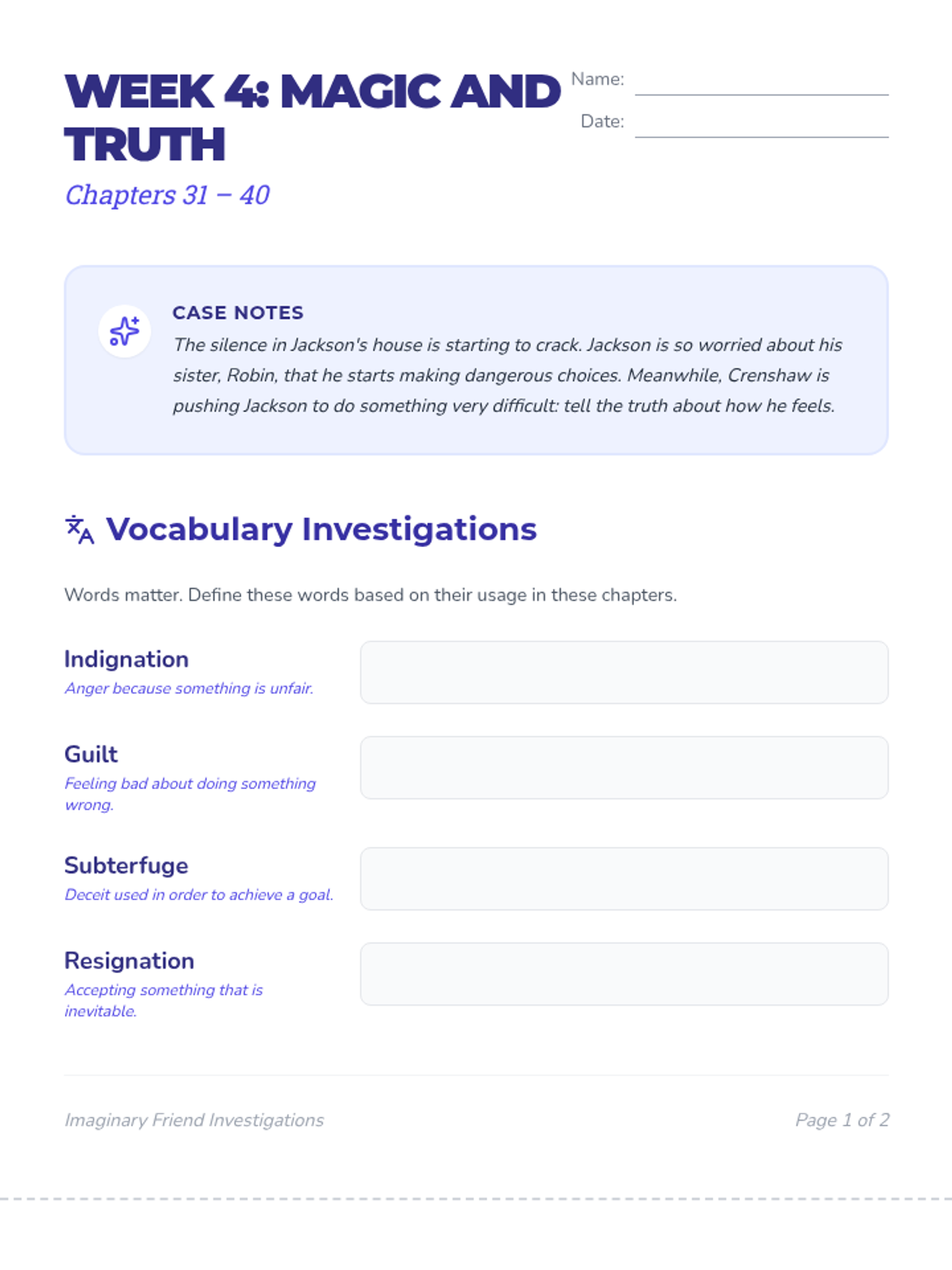
Tensions rise and truths are revealed in chapters 31-40.
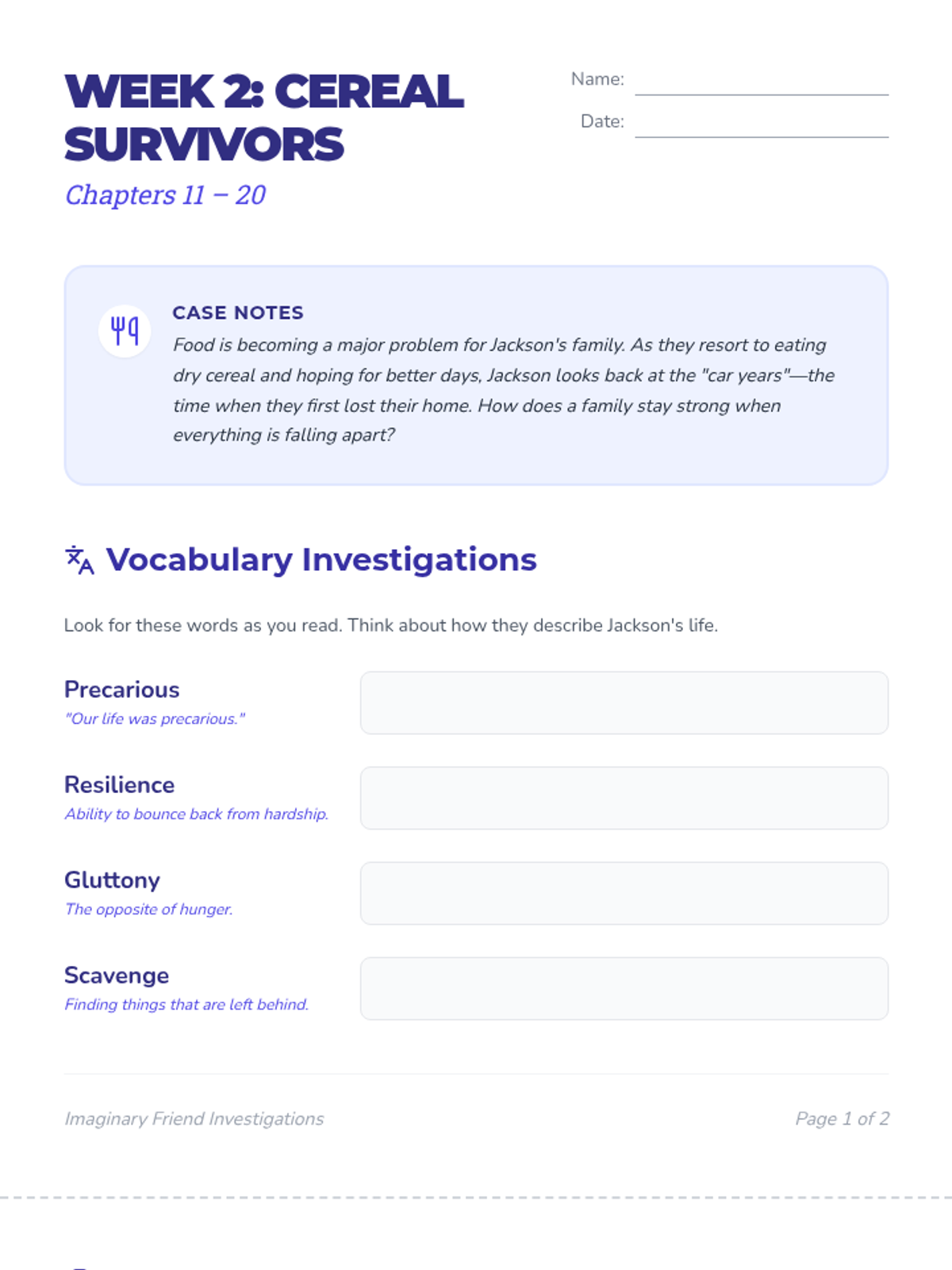
Jackson struggles with his family's financial situation and the "car years" as he reads chapters 14-26.
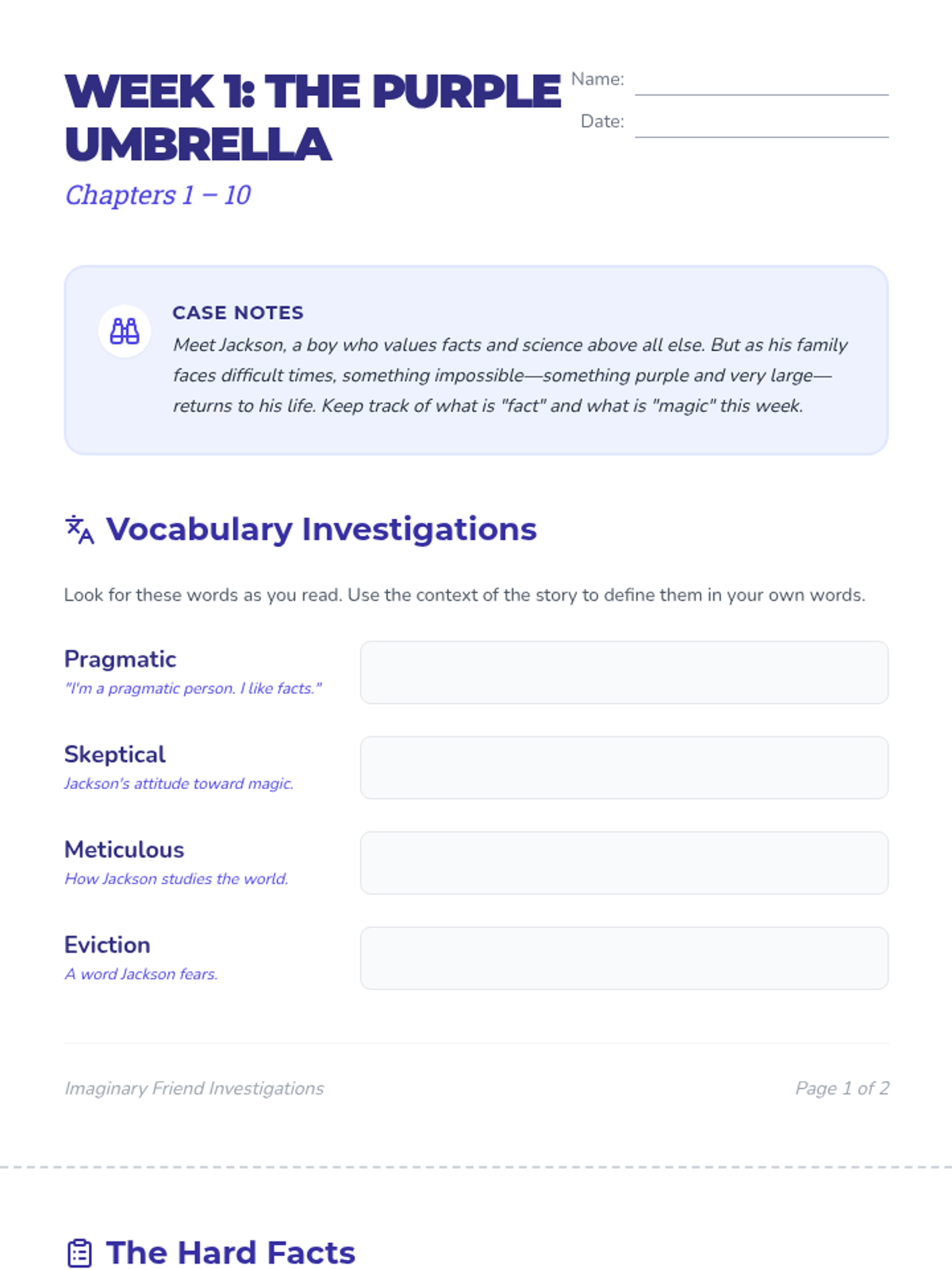
Jackson encounters Crenshaw's return and recalls the first "car year" memory. Reading chapters 1–13.
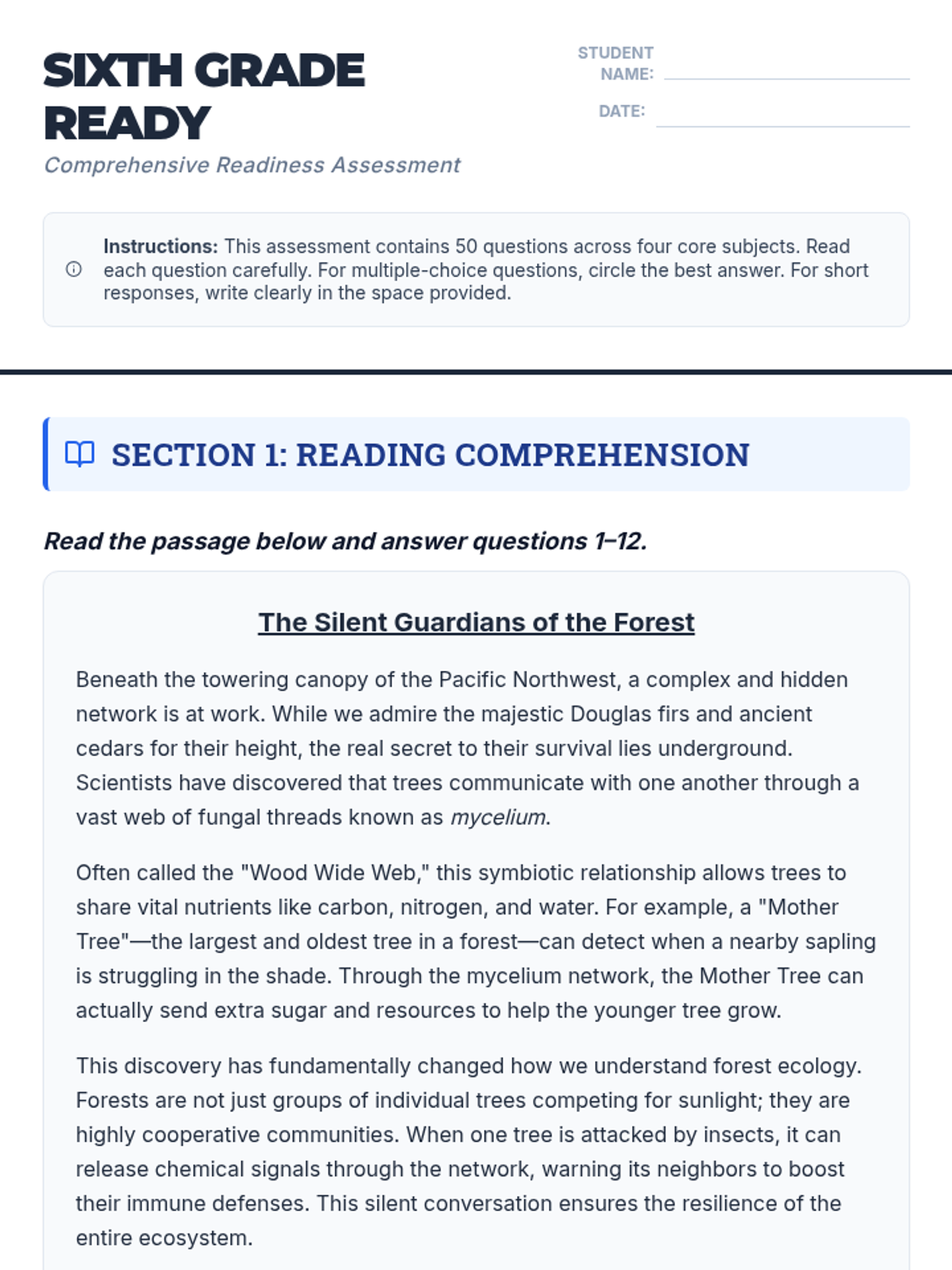
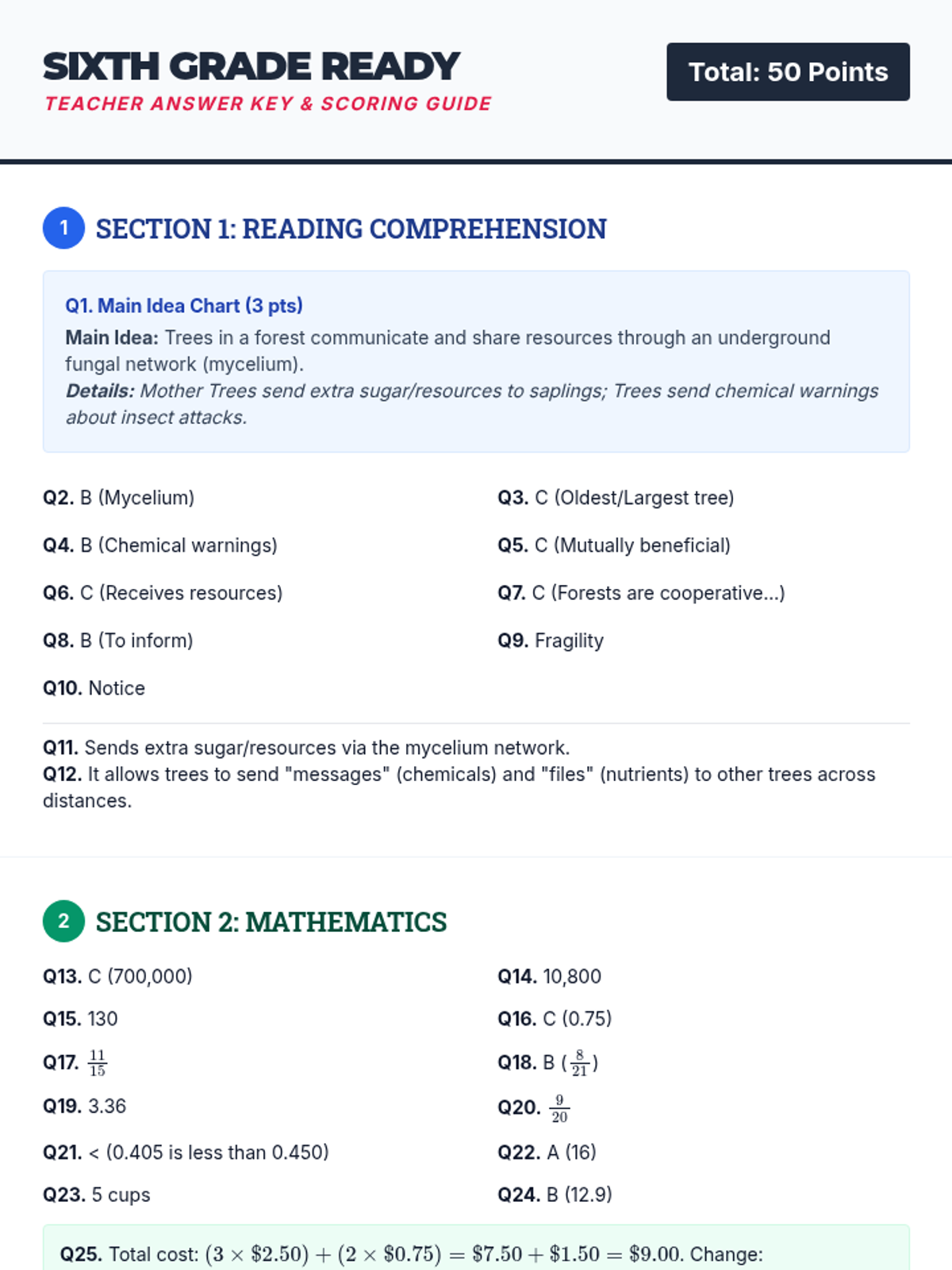
A comprehensive 50-question assessment designed to evaluate student readiness for 6th grade across Reading, Math, Science, and Writing. includes multiple question formats and a detailed answer key.
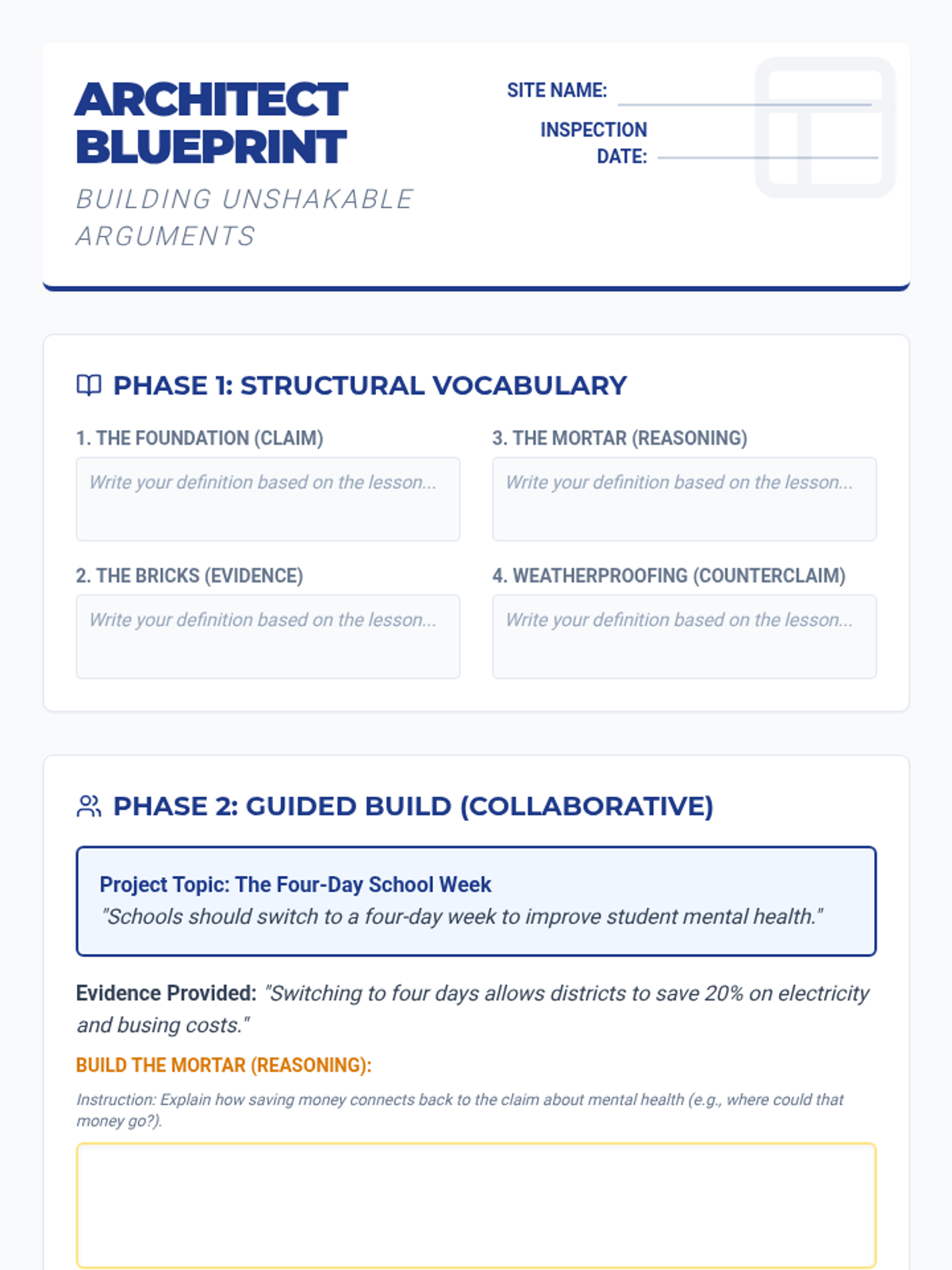
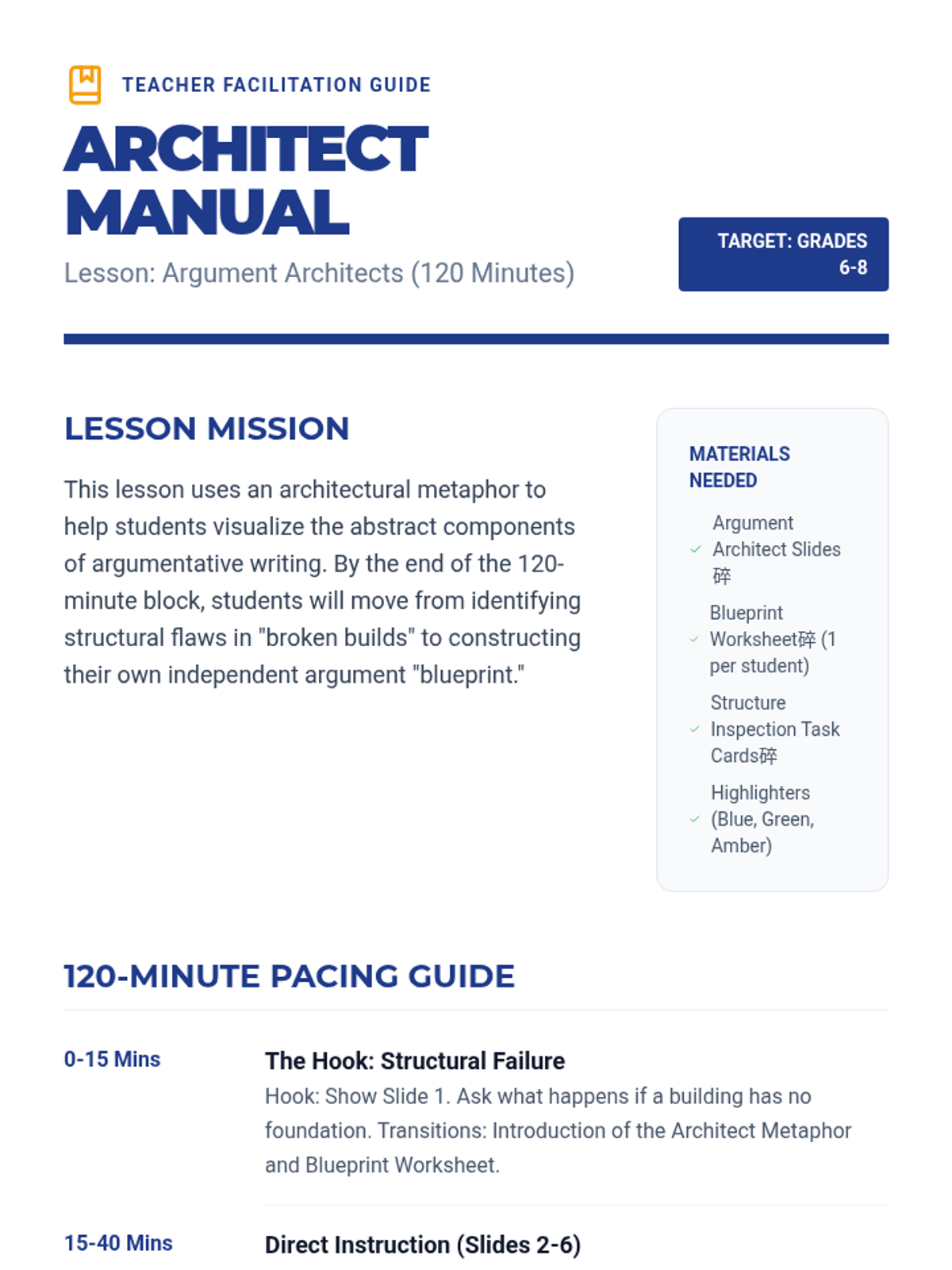
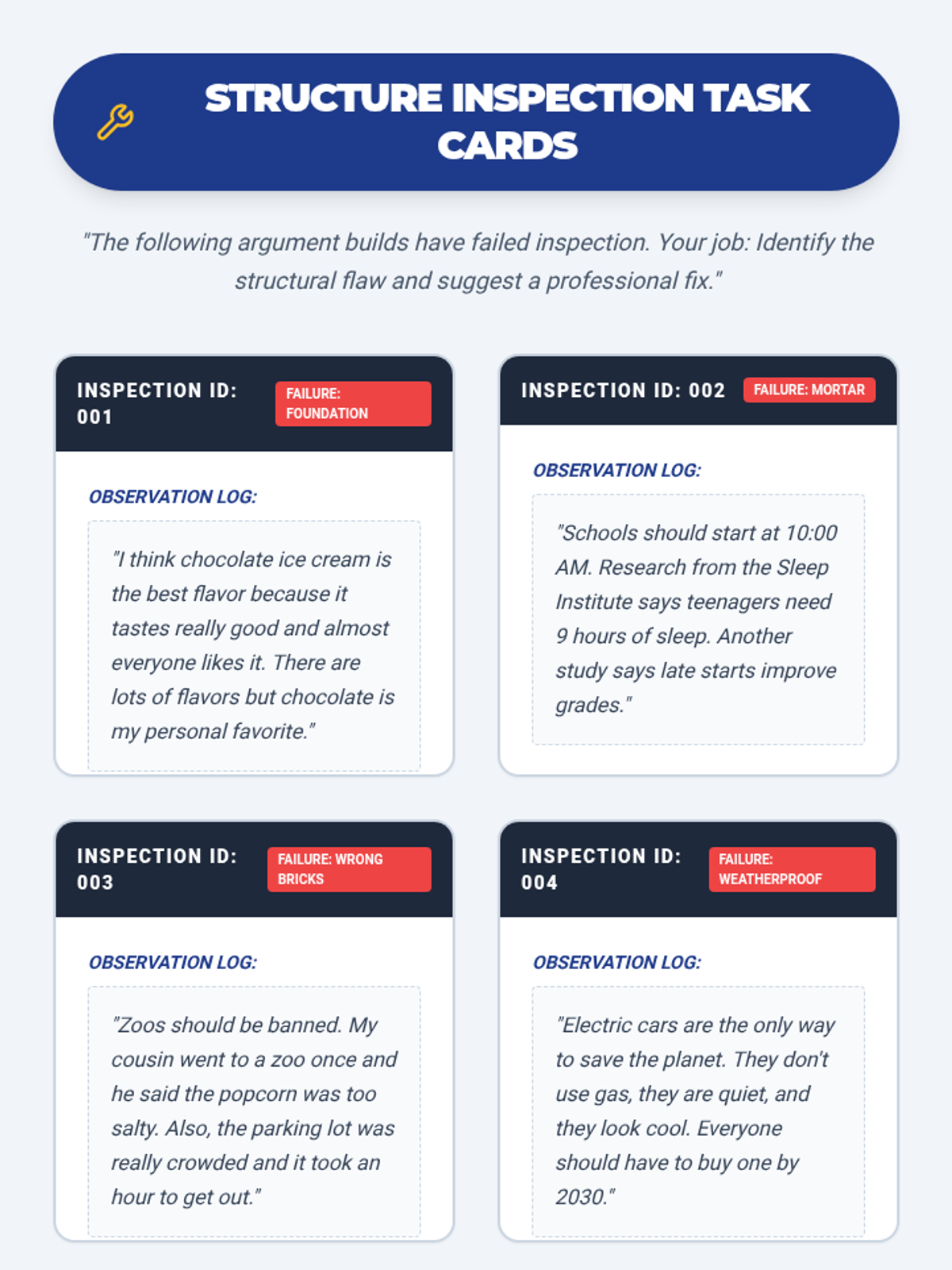
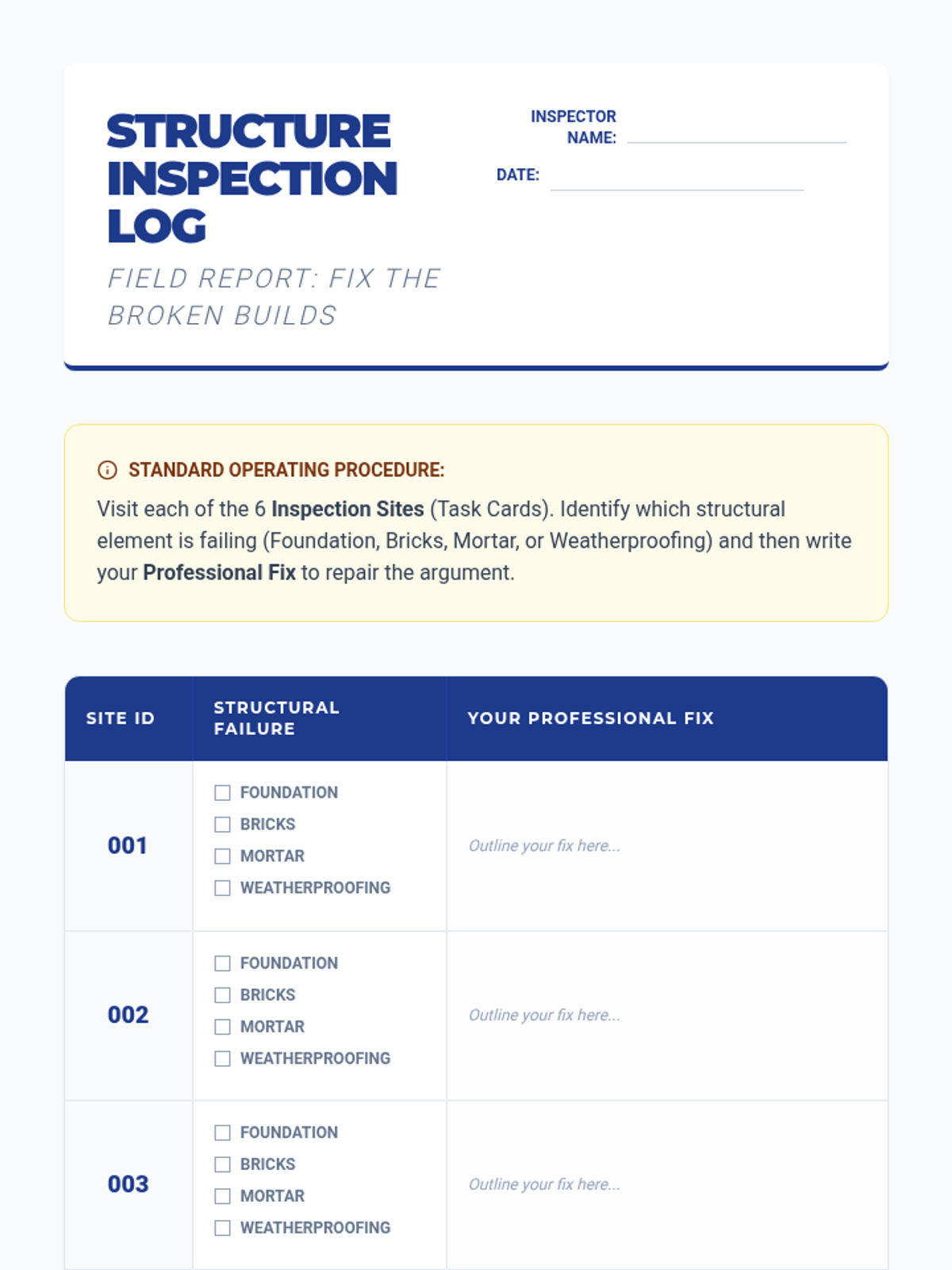
A comprehensive 120-minute lesson designed to teach middle schoolers the structural components of argumentative writing through an architectural metaphor. Students learn about claims, evidence, reasoning, and counterclaims while engaging in collaborative and independent building.
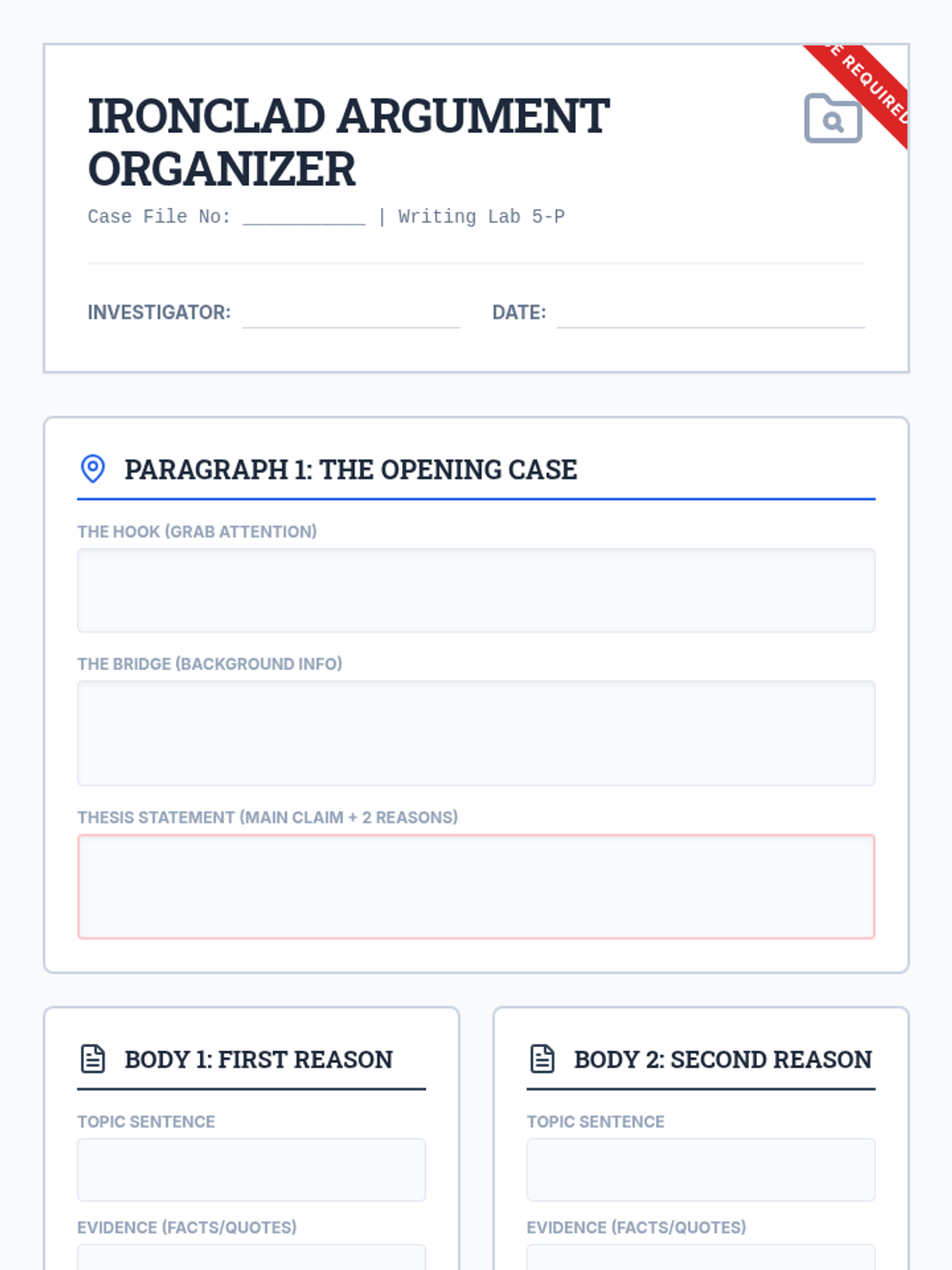
A lesson on the structure of a 5-paragraph argumentative essay using a 'Case File' theme, designed for middle school students to master logical organization and evidence-based writing.
A targeted lesson for 7th-grade students, particularly those with IEP writing goals, focusing on the mechanics of MLA in-text citations and quote integration using a highly visual, step-by-step approach.
An introductory lesson on creative writing that explores the differences between prose and poetry, defines plot and theme, and introduces literary devices like metaphors.